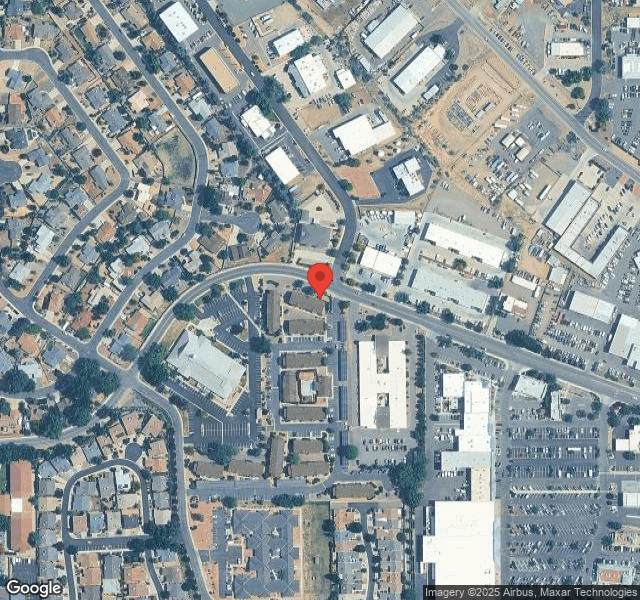
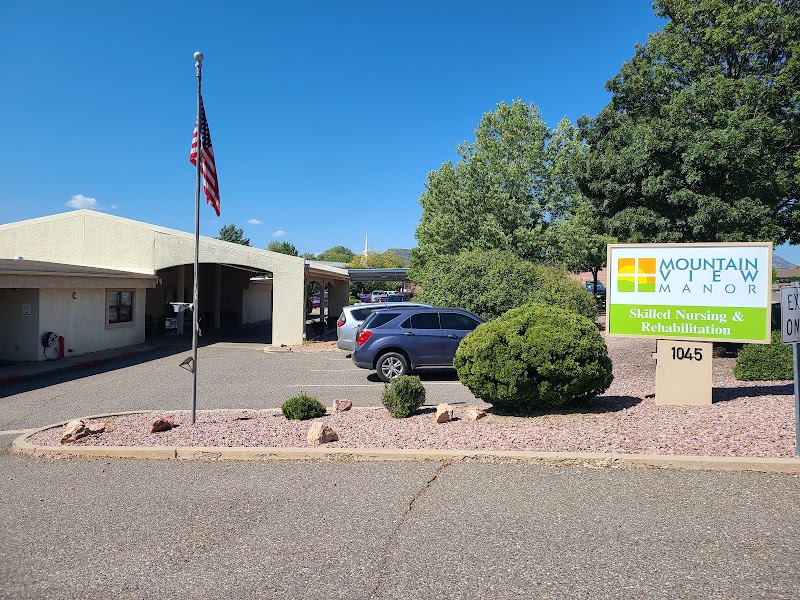
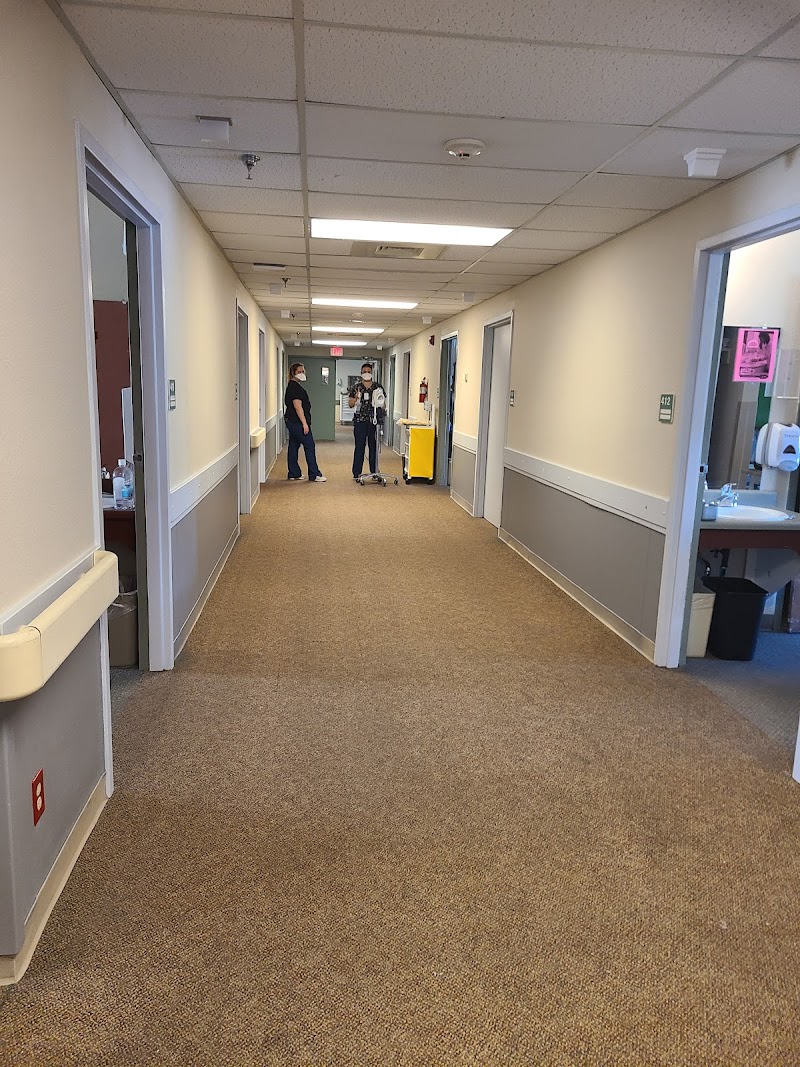
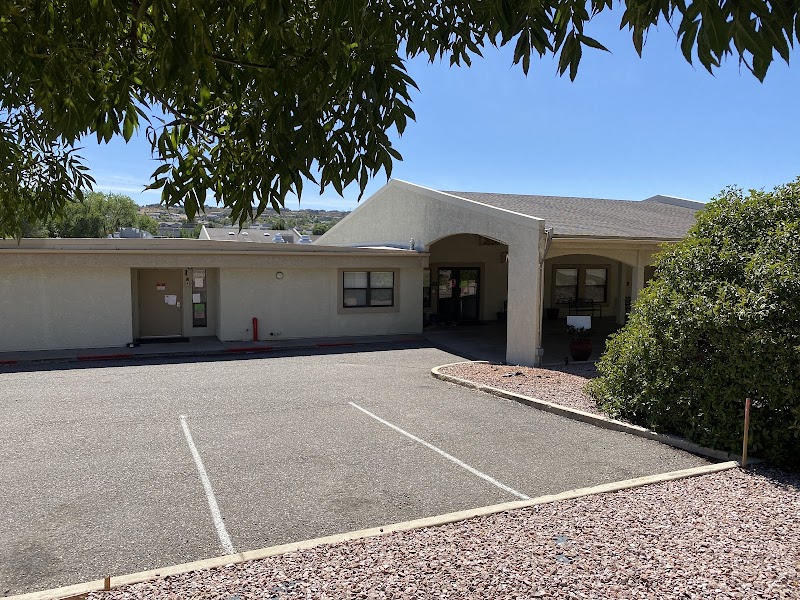
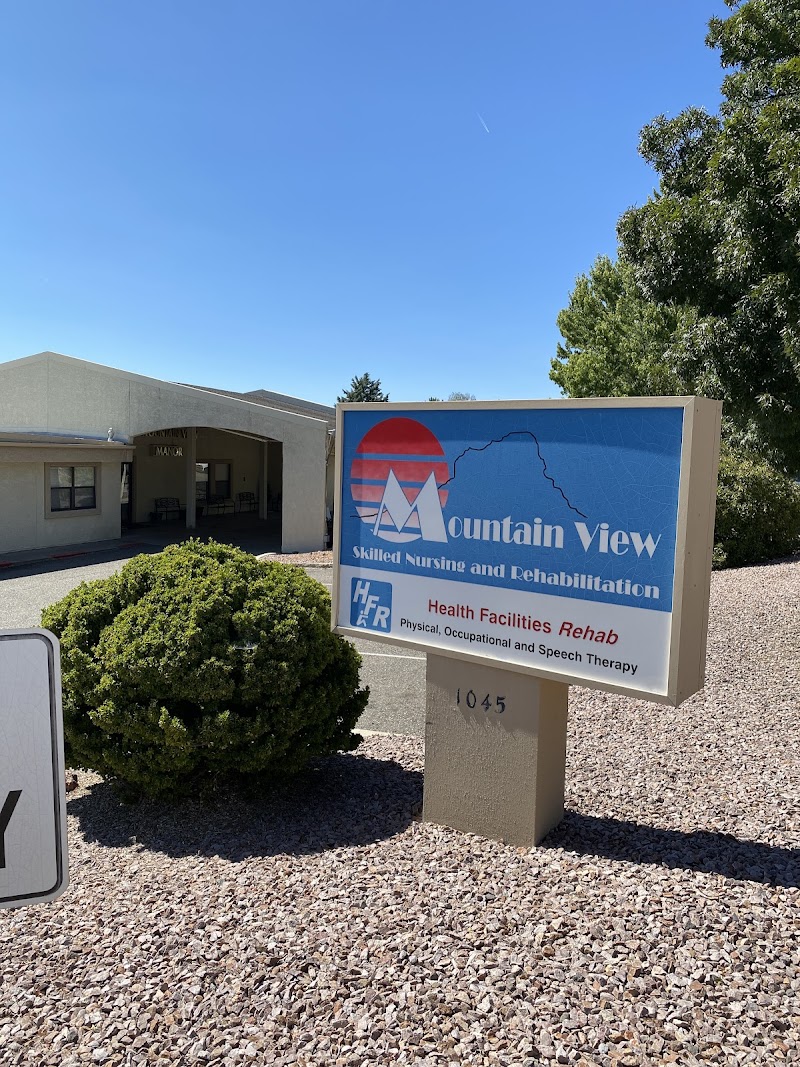
MOUNTAIN VIEW MANOR

1045 SANDRETTO DRIVE, PRESCOTT, AZ 86305 (928) 778-4837
For profit - Individual 116 Beds CIRCLE B ENTERPRISES Data: November 2025
Trust Grade
13/100
#133 of 139 in AZ
Last Inspection: February 2025

Within standard 12-15 month inspection cycle. Federal law requires annual inspections.

Overview

Mountain View Manor in Prescott, Arizona has received a Trust Grade of F, indicating significant concerns and a poor quality of care. Ranking #133 out of 139 facilities in the state places it in the bottom half, and it is the least favorable option in Yavapai County. The facility is showing a trend of improvement, with the number of issues decreasing from 19 in 2023 to 17 in 2025. However, staffing remains a major concern with a troubling 64% turnover rate, far exceeding the state average of 48%. Additionally, the facility has incurred fines of $7,443, which is higher than 82% of Arizona facilities, suggesting ongoing compliance issues. Specific incidents noted include a failure to monitor pressure ulcer care for a resident at high risk of developing one, and inadequate monitoring of psychotropic medication effects for several residents, which could lead to unnecessary side effects. Overall, while there are some signs of improvement, families should be aware of the serious deficiencies and high turnover that may impact resident care.

Trust Score
F
13/100
In Arizona
#133/139
Bottom 5%
Safety Record
High Risk
Review needed
Inspections
Getting Better
19 → 17 violations
Staff Stability
⚠ Watch
64% turnover. Above average. Higher turnover means staff may not know residents' routines.
Penalties
✓ Good
$7,443 in fines. Lower than most Arizona facilities. Relatively clean record.
Skilled Nurses
○ Average
RN staffing data not reported for this facility.
Violations
⚠ Watch
46 deficiencies on record. Higher than average. Multiple issues found across inspections.
★☆☆☆☆
1.0
Overall Rating
★☆☆☆☆
1.0
Staff Levels
★★☆☆☆
2.0
Care Quality
★☆☆☆☆
1.0
Inspection Score
Stable
2023: 19 issues
2025: 17 issues

The Good

  • Full Sprinkler Coverage · Fire safety systems throughout facility
  • No fines on record

Facility shows strength in fire safety.

The Bad

1-Star Overall Rating

Below Arizona average (3.3)

Significant quality concerns identified by CMS

Staff Turnover: 64%

18pts above Arizona avg (46%)

Frequent staff changes - ask about care continuity

Federal Fines: $7,443

Below median ($33,413)

Minor penalties assessed

Chain: CIRCLE B ENTERPRISES

Part of a multi-facility chain

Ask about local staffing decisions and management

Staff turnover is elevated (64%)

16 points above Arizona average of 48%

The Ugly 46 deficiencies on record

1 actual harm
Apr 2025 1 deficiency
CONCERN (D) 📢 Someone Reported This

A family member, employee, or ombudsman was alarmed enough to file a formal complaint

Potential for Harm - no one hurt, but risky conditions existed

Accident Prevention (Tag F0689)

Could have caused harm · This affected 1 resident

**NOTE- TERMS IN BRACKETS HAVE BEEN EDITED TO PROTECT CONFIDENTIALITY** Based on observation, clinical record review, facility documentation, and staff interviews, the facility failed to ensure that a...

Read full inspector narrative →
**NOTE- TERMS IN BRACKETS HAVE BEEN EDITED TO PROTECT CONFIDENTIALITY** Based on observation, clinical record review, facility documentation, and staff interviews, the facility failed to ensure that adequate supervision was provided to prevent one resident (#3) from wandering into other resident rooms. The deficient practice may result in higher liklihood of wandering and reduced safety for the residents. Findings include: -Resident #3 was admitted to the facility on [DATE] with diagnoses including Traumatic hemorrhage of left cerebrum, delirium due to known physiological condition, other symptoms and signs involving cognitive functions and awareness. A review of the minimum data set (MDS) dated [DATE] revealed a brief interview mental status (BIMS) score of 08, indicating that the resident had moderate cognitive impairment. A review of the resident's care plan initiated April 03, 2025 revealed a focus that the resident was an elopement risk/wanderer related to disoriented to place. History of attempts to leave facility unattended. Impaired safety awareness, entering other resident rooms. Interventions that were initiated on April 03, 2025 included distract resident from wandering by offering pleasant diversions, structed activities, food, conversation, television, book. Resident #3's triggers for wandering/eloping are wants to go to his car, the behaviors are de-escalated by redirection, snacks and TV (westerns). Identify patterns of wandering: Is wandering purposeful, aimless, or escapist? Is resident looking for something? Does it indicate the need for more exercise? Intervene as appropriate. The final intervention was added on April 04, 2025 and was monitor location every 15 minutes, document wandering behavior and attempted diversional interventions in behavior log. -Resident #1 was admitted to the facility on [DATE] with diagnoses including wedge compression fracture of first lumbar vertebra, low back pain, difficulty walking, and history of traumatic brain injury. A review of the minimum data set (MDS) dated [DATE] revealed a brief interview mental status (BIMS) score of 10, indicating that the resident had moderate cognitive impairment. A review of a progress note dated April 6, 2025 at 02:00 a.m. by Licensed Practical Nurse (LPN) Staff #3 revealed that a confused male resident entered Resident #1's room and approached her bed. This was witnessed by a staff member that responded to her room. Staff intercepted the male resident and directed that resident out of the room. No physical contact occurred and Resident #1 felt unsafe and called 911 to report an attempted sexual assault. Police Department arrived to file a report. Resident #1 stated she was emotionally distraught and in need of reassurance for her safety. Emotional support was provided by staff. A staff member was then posted outside her door and was visible to her. A progress note dated April 6, 2025 at 12:04 revealed that Licensed Practical Nurse (LPN) Staff #2 documented that she spoke to Resident #3's wife, face to face about the police report related to sexual assault. A psychological evaluation would be done, a care conference and 15 minute checks would be conducted. An interview was conducted on April 22, at 11:11 a.m. with Resident #1 who stated that a male resident (Resident #3) came into her room and had on a diaper brief with one hand in the brief and kept on touching her walker. Resident #1 stated that when you are flat on your back and can't sit up it is scary. Resident #1 also revealed that she was afraid that he was going to crawl up and get her. Resident #1 confirmed that she called the police. An interview was attempted on April 22 2025 at 11:56 a.m. with Licensed Practical Nurse (LPN) Staff #3, after the list of phone numbers was completed and returned. However, when attempting to call Staff #3, was told wrong number by the person who answered. An interview was attempted on April 22, 2025 at 12:27 p.m. with Licensed Practical Nurse (LPN) Staff #2. Staff #2 did not answer and a voicemail message was left, asking Staff #2 to return the call. An interview was conducted on April 22, 2025 at 12:35 p.m. with Certified Nursing Assistant (CNA) Staff #1 who revealed that when residents tend to wander into other resident rooms, you need to know their schedules and if the resident likes cartoons, turn on cartoons. Then bring the resident to the common areas to interact with other residents. An interview was conducted on April 22, 2025 at 12:37 p.m. with LPN Staff #5 who revealed that there are a couple residents in the building that like to go into other resident rooms. One of them is not mentally capable to understand not to go in. Sometimes rooms are changed and the resident might wander back to the old room. The best way to prevent them is to keep an eye on them, redirect them. Say why don't we watch T.V. An interview was conducted on April 22, 2025 at 12:41 p.m. with Director of Nursing (DON) Staff #4 who stated that she had heard of the incident; and that, a man went to Resident #1's door and did not actually enter the room. However, Staff #4 admitted was out of town when the incident happened. When asked how to prevent residents from going into other resident rooms, Staff #4 revealed that it's a challenge and depends on the resident's cognition. Educate and redirect, care plan, meet with family. Keep an eye on them. An interview was conducted April 22, 2025 at 12:57 p.m. with Staff #2 and revealed was the nurse to follow night LPN Staff #3. Staff #2 was the person who informed the family/wife and the Nurse Practitioner (NP), that Resident #3 went into resident #1's room. Resident #3 would wander and take off his pants. Resident #1 had been sexually assaulted in the past. Resident #1 called the police. While the police were there interviewing Resident #1, Resident #3 attempted to go into Resident #1's room again and the police observed the resident attempting to come back in. Review of the policy Abuse Prevention Program (revised September 2021) revealed that employees will be annually trained to recognize situations in which abuse is more likely to occur and how to intervene for prevention, such as characteristics of residents which have the potential to trigger an abusive incident like wandering into other resident rooms.
Apr 2025 4 deficiencies
CONCERN (D) 📢 Someone Reported This

A family member, employee, or ombudsman was alarmed enough to file a formal complaint

Potential for Harm - no one hurt, but risky conditions existed

Abuse Prevention Policies (Tag F0607)

Could have caused harm · This affected 1 resident

**NOTE- TERMS IN BRACKETS HAVE BEEN EDITED TO PROTECT CONFIDENTIALITY** Based on observation, interviews, review of clinical record, and review of facility policy and procedure, the facility failed to...

Read full inspector narrative →
**NOTE- TERMS IN BRACKETS HAVE BEEN EDITED TO PROTECT CONFIDENTIALITY** Based on observation, interviews, review of clinical record, and review of facility policy and procedure, the facility failed to implement their policy on sexual contact between two residents (#7 and #9) who were not adequately assessed for capacity and consent. The deficient practice could allow for ongoing incidents which could lead to harm of a resident. Findings include: -Resident #7 was re-admitted to the facility on [DATE], with diagnoses that included peripheral vascular disease, unspecified dementia, anxiety disorder, paroxysmal atrial fibrillation, polyneuropathy, alcohol abuse, tobacco use, and long-term use of anticoagulants. A brief interview for mental status (BIMS) assessment dated [DATE], revealed the resident had a score of 9, indicating the resident had a moderate cognitive impairment. A quarterly MDS (minimum data set) assessment dated [DATE], revealed the resident had a BIMS assessment score of 11, indicating the resident had a moderate cognitive impairment. A BIMS assessment dated [DATE], revealed the resident had a score of 3, indicating severe cognitive impairment. A care plan dated September 16, 2024, revealed Resident #7 had impaired cognitive function/dementia or impaired thought processes due to dementia. Interventions included to communicate with the resident/family/caregivers regarding resident's capabilities and needs, and to ask yes/no questions. The clinical record was reviewed and there was no evidence of a capacity evaluation or a determination of decision-making ability from a physician. A Healthcare (Medical) Power of Attorney (POA) with Mental Health Authority document, dated May 17, 2023, revealed the resident appointed a friend to represent the resident's choices and healthcare decisions in the event that Resident #7 would be unable to communicate wishes and healthcare decisions due to incapacities, or if the resident's doctor determines the resident unable to make healthcare decisions. An Alert Note dated December 19, 2024, revealed Resident #7 was noted to be holding hands with a female resident in the TV room. The writer kept close eye on the residents, and noted that both residents are engaged in kissing. The writer redirected the residents multiple times. Residents are both still sitting in TV room conversating and holding hands. Will notify social services and Assistant Director of Nursing (ADON). A Health Status Note dated December 23, 2024, revealed upper management was notified of a possible romantic relationship with another resident. Social services will contact the resident's wife and set a time for a care plan meeting. The residents are being redirected when behavior is noticed and a possible move to another hall is being considered for one resident. A Behavior Note dated December 23, 2024, revealed Resident #7 was noted to be making out with a female resident. The writer tried redirecting the residents several times, but the behavior continued. Resident #7 was noted to have his hand down the female resident's pants and the other hand up her shirt. A call was placed to the ADON who stated to move the female resident to a different hallway and to keep the residents separated. The writer spoke to both residents. Resident #7 stated, ok, and the female resident, just gave a dirty look. A Communication with Resident Note dated December 23, 2024, revealed the ADON came into the building and sat with Resident #7, and spoke with the resident about the behaviors of his hands being inappropriate with a female resident. Resident #7 put his head down and said he agreed that he was not following the building's protocol and apologized for this behavior. The ADON also instructed the resident to not touch other residents while at the facility, and then notified administration of this occurrence as well. The ADON was instructed to separate the residents and have them not on the same hall moving forward. The female resident was moved to the other side of the building and both residents were placed on close monitoring. There was no evidence that the resident's physician was notified regarding the incidents, or to determine the resident's decision-making ability, or that assessment was conducted to determine that the sexual contact was consensual. -Resident #9 was admitted to the facility October 30, 2024, with diagnoses that included unspecified dementia, schizophrenia, anxiety disorder, major depressive disorder, drug induced subacute dyskinesia, unspecified disorder of adult personality and behavior, aphasia, and other seizures. An admission MDS assessment dated [DATE], revealed that the resident was coded as having clear speech with distinct intelligible words, and the resident's ability to express ideas and wants which was coded as understood. Additionally, the resident was coded as having clear comprehension in the ability to understand others. However, a discrepancy was noted, as the assessment revealed that no the BIMS assessment should not be conducted due to the resident being rarely/never understood. Additionally, in the Staff Assessment for Mental Status, the resident was coded as having, moderately impaired decision-making regarding tasks of daily life, with, decision poor; cues/supervision required. A care plan dated November 12, 2024, revealed that the resident had impaired cognitive function/dementia or impaired thought processes due to dementia, and difficulty making decisions. Interventions included to ask yes/no questions to determine the resident's needs, and communicate with the resident/family regarding the resident's capabilities and needs. Additionally, an intervention was listed that the resident needs assistance with all decision making. An Alert Note dated December 19, 2024, revealed that the resident was noted to be holding hands with a male resident (#7) in the TV room. The writer kept a close eye on the residents, and both residents are engaged in kissing. The staff redirected the residents multiple times, and the residents are both still sitting in the TV room conversating and holding hands. The ADON and social services will be notified. A BIMS evaluation dated December 19, 2024, revealed the resident had a score of 15, indicating intact cognition. There was no evidence of notification to the physician or the resident's POA/representative regarding the incident or to determine the resident's decision-making ability on December 19, 2024. A Health Status Note dated December 23, 2024, revealed the Resident #9's POA was notified of a romantic relationship with another resident. The POA was notified that the facility staff were redirecting the resident when the residents were observed together, but that Resident #9 might have to be moved to another hall. The note revealed the POA was fine with moving her if necessary. A Behavior Note dated December 23, 2024, revealed Resident #9 was noted to be, making out with the male resident (#7). The writer tried to redirect several times, and the male resident was observed with his hands down the female's pants and up her shirt. The ADON was notified, who stated to move Resident #9 to a different hallway. The resident gave the writer a dirty look when escorted to her new room. There was no evidence of communication with the resident's physician regarding the sexual incident on December 23, 2025, to determine the resident's decision-making ability, or that assessment was conducted to determine that the sexual contact was consensual. An Alert Note dated December 29, 2024 revealed Resident #9 has displayed inappropriate sexual behaviors towards and with other residents this shift, and was observed being physically and verbally inappropriate several times. Staff have attempted to separate patients several times, ineffectively. The resident was medicated for anxiety, which was ineffective. The physician and nursing management were made aware to follow up. No patients were injured and no patients complained about the behavior. The note indicated the writer will communicate with family. A Behavior Note dated December 31, 2024, revealed Resident #9 was caught by a certified nursing assistant (CNA) kissing the male resident (#7) by the nursing station. The resident had her hands down the male resident's pants. Resident #9 was encouraged to go to her side of the building but preferred to stay in the TV room. There was no evidence of physician notification, POA notification, administrative notification, or further assessment to determine decision-making ability or consent from both residents for this incident. On April 1, 2025, a formal request was made to the facility for a log of any reportable events occurring in 2024. The administrator signed a statement that there were none in 2024. On April 1, 2025, at 12:40 PM, an interview was conducted with a Licensed Practical Nurse (LPN / Staff #51), who stated she was aware that Resident #7 and Resident #9 had a relationship, and the residents were told by facility staff that they could not see each other anymore. Staff #51 stated that Resident #9 was behavioral and had a POA, and that Resident #7 was not cognitively intact. She stated that the residents were observed being sexually inappropriate in the dining room, and that Resident #9 was moved to another hall, and that staff were told to monitor the residents. An interview was conducted on April 1, 2025, at 1:33 PM, with the Assistant Director of Nursing (ADON / Staff #45) who stated if staff were to notice possible sexual abuse, to report it to the Director of Nursing, to the physician, and remove the resident from the situation. The ADON stated that allegations of sexual abuse must be reported to mandatory sources within 2 hours. The ADON stated that Resident #7 was holding hands with another resident, and that, staff didn't report anything else. Further, she stated that, we did separate them. Additionally, the ADON stated Resident #9 was, very hypersexual, and that she was not sure if the resident was able to make her own decisions; and that, the resident's sister was her POA and decision maker. Also, the ADON stated that, I don't know if any assessments were done on the residents at the time of the incidents, or if the facility investigated the incidents for possible sexual abuse. A telephonic interview was conducted with an LPN (Staff #65) on April 1, 2025, at 2:31 PM who stated that she was familiar with Resident #9 and that, she was behavioral, and flirty with all the gentleman in the building. Staff #65 stated that Resident #9 was following a male resident around the building, and when asked for further details, Staff #65 stated, I don't want to have to repeat myself and, I'm not answering any more questions. The call was ended. A telephonic interview was conducted with an LPN (Staff #29), on April 1, 2025, at 2:35 PM who stated that Resident #7 has cognitively declined over the past several months. Staff #29 stated that she believed Resident #7 and Resident #9 liked each other; and that, they were caught by staff making out, and that facility staff took steps to keep them separated. Staff #29 stated that she reported the incident to management. Staff #29 stated it was in everybody's best interest if we didn't allow that. An interview was conducted with the Administrator (Staff #3) on April 1, 2025, at 3:00 PM who stated that any allegation of sexual abuse is to be reported within 2 hours and needs to be investigated by the administrator, and the residents need to be protected. Staff #3 stated it was his expectation that residents involved in allegations of abuse would not have access to each other during the investigation process; and that, staff would keep them separated to protect them. Additionally, Staff #3 stated that the physician would be notified to assess the residents. A telephonic interview was conducted with the Social Services Director (Staff #17) on April 1, 2025, at 3:27 PM. Staff #17 stated that she was not employed at the facility during the time frame of the sexual incidents between Residents #7 and #9, however she believed Resident #7's wife was his decision maker. She stated she was aware that Resident #7 had sexual behavior with Resident #9. Staff #17 stated that Resident #9 made her own decisions, and that Adult Protective Services (APS) was involved and stepping in to make decisions for the resident. An interview was conducted with the Director of Nursing (DON / Staff #49) on April 1, 2025, at 3:58 PM. The DON stated if a reportable incident occurs, that she would expect staff to notify leadership and notify the administrator, and report to mandatory sources within 2 hours. The DON stated that the importance of reporting is to have an outside unbiased source investigate the incident. Also, if an allegation of abuse occurred, that staff would be expected to report it, and the facility to investigate and determine whether it happened or not. Regarding Residents #7 and #9, the DON stated that there was sexual contact between the two residents, but never any allegations of sexual abuse. The DON stated that the resident' BIMS scores were appropriate and that they were cognitively intact and consenting adults, and that neither resident had a POA. The DON stated that her understanding was that the resident's had rights to have a relationship, but not to demonstrate their sexual behaviors in public places that would make other residents uncomfortable. The DON stated that she did not know if the physician was consulted to make a determination of whether the residents had capacity for decision making and could consent. The BIMS scores of Resident #7 were reviewed, and the DON stated that the resident had scores indicating moderate to severe cognitive impairment. Additionally, the DON reviewed the clinical record for Resident #7 and stated that a friend was listed as medical POA, and that the DON could not see any note that the POA was contacted for Resident #7 at the start of the incidents. Additionally, the DON stated she could not find any assessment determining ability for decision making from a physician for Resident #7. Further, the DON reviewed the clinical record for Resident #9, and stated that there was a POA listed, and that she did not see any note indicating that the physician or POA were consulted on December 19, 2024 regarding the sexual incidents. The DON stated that she did not believe the facility reported the incident as an allegation of possible sexual abuse, and that she did not know if the facility conducted an investigation. The DON stated that the incidents should have been investigated to determine the residents' decision-making ability and consent. Review of the facility policy titled Abuse Prevention Program, revised September 2021, revealed the facility will not tolerate verbal, sexual, physical and mental abuse. The objective of the policy is to develop and implement a system for identifying, investigating, preventing and reporting any incident, or suspected incident, of abuse. Sexual abuse is non-consensual sexual contact of any type with a resident. All witnessed or suspected events as defined by this policy are to be reported regardless of who is involved or suspected. Abusive examples include various forms of sexual abuse including rape, forced sexual acts, fondling, and sexual harassment. If an incident occurs, or there is an allegation that an incident might have occurred of abuse, the Administrator, or designee will investigate. The person doing the investigation will complete a Resident Abuse/Neglect Investigation Report. The administrator will sign and maintain all reports, and findings will be reported according to state requirements.
CONCERN (D) 📢 Someone Reported This

A family member, employee, or ombudsman was alarmed enough to file a formal complaint

Potential for Harm - no one hurt, but risky conditions existed

Report Alleged Abuse (Tag F0609)

Could have caused harm · This affected 1 resident

**NOTE- TERMS IN BRACKETS HAVE BEEN EDITED TO PROTECT CONFIDENTIALITY** Based on observation, interviews, review of clinical record, and review of facility policy and procedure, the facility failed to...

Read full inspector narrative →
**NOTE- TERMS IN BRACKETS HAVE BEEN EDITED TO PROTECT CONFIDENTIALITY** Based on observation, interviews, review of clinical record, and review of facility policy and procedure, the facility failed to report to the state agency that two residents (#7 and #9) who were not adequately assessed for capacity and consent had sexual contact. The deficient practice could allow for ongoing incidents not being reported which could lead to harm. Findings include: -Resident #7 was re-admitted to the facility on [DATE], with diagnoses that included peripheral vascular disease, unspecified dementia, anxiety disorder, paroxysmal atrial fibrillation, polyneuropathy, alcohol abuse, tobacco use, and long-term use of anticoagulants. A brief interview for mental status (BIMS) assessment dated [DATE], revealed the resident had a score of 9, indicating the resident had a moderate cognitive impairment. A quarterly MDS (minimum data set) assessment dated [DATE], revealed the resident had a BIMS assessment score of 11, indicating the resident had a moderate cognitive impairment. A BIMS assessment dated [DATE], revealed the resident had a score of 3, indicating severe cognitive impairment. A care plan dated September 16, 2024, revealed Resident #7 had impaired cognitive function/dementia or impaired thought processes due to dementia. Interventions included to communicate with the resident/family/caregivers regarding resident's capabilities and needs, and to ask yes/no questions. The clinical record was reviewed and there was no evidence of a capacity evaluation or a determination of decision-making ability from a physician. A Healthcare (Medical) Power of Attorney (POA) with Mental Health Authority document, dated May 17, 2023, revealed the resident appointed a friend to represent the resident's choices and healthcare decisions in the event that Resident #7 would be unable to communicate wishes and healthcare decisions due to incapacities, or if the resident's doctor determines the resident unable to make healthcare decisions. An Alert Note dated December 19, 2024, revealed Resident #7 was noted to be holding hands with a female resident in the TV room. The writer kept close eye on the residents, and noted that both residents are engaged in kissing. The writer redirected the residents multiple times. Residents are both still sitting in TV room conversating and holding hands. Will notify social services and Assistant Director of Nursing (ADON). A Health Status Note dated December 23, 2024, revealed upper management was notified of a possible romantic relationship with another resident. Social services will contact the resident's wife and set a time for a care plan meeting. The residents are being redirected when behavior is noticed and a possible move to another hall is being considered for one resident. A Behavior Note dated December 23, 2024, revealed Resident #7 was noted to be making out with a female resident. The writer tried redirecting the residents several times, but the behavior continued. Resident #7 was noted to have his hand down the female resident's pants and the other hand up her shirt. A call was placed to the ADON who stated to move the female resident to a different hallway and to keep the residents separated. The writer spoke to both residents. Resident #7 stated, ok, and the female resident, just gave a dirty look. A Communication with Resident Note dated December 23, 2024, revealed the ADON came into the building and sat with Resident #7, and spoke with the resident about the behaviors of his hands being inappropriate with a female resident. Resident #7 put his head down and said he agreed that he was not following the building's protocol and apologized for this behavior. The ADON also instructed the resident to not touch other residents while at the facility, and then notified administration of this occurrence as well. The ADON was instructed to separate the residents and have them not on the same hall moving forward. The female resident was moved to the other side of the building and both residents were placed on close monitoring. There was no evidence that the resident's physician was notified regarding the incidents, or to determine the resident's decision-making ability, or that assessment was conducted to determine that the sexual contact was consensual. -Resident #9 was admitted to the facility October 30, 2024, with diagnoses that included unspecified dementia, schizophrenia, anxiety disorder, major depressive disorder, drug induced subacute dyskinesia, unspecified disorder of adult personality and behavior, aphasia, and other seizures. An admission MDS assessment dated [DATE], revealed that the resident was coded as having clear speech with distinct intelligible words, and the resident's ability to express ideas and wants which was coded as understood. Additionally, the resident was coded as having clear comprehension in the ability to understand others. However, a discrepancy was noted, as the assessment revealed that no the BIMS assessment should not be conducted due to the resident being rarely/never understood. Additionally, in the Staff Assessment for Mental Status, the resident was coded as having, moderately impaired decision-making regarding tasks of daily life, with, decision poor; cues/supervision required. A care plan dated November 12, 2024, revealed that the resident had impaired cognitive function/dementia or impaired thought processes due to dementia, and difficulty making decisions. Interventions included to ask yes/no questions to determine the resident's needs, and communicate with the resident/family regarding the resident's capabilities and needs. Additionally, an intervention was listed that the resident needs assistance with all decision making. An Alert Note dated December 19, 2024, revealed that the resident was noted to be holding hands with a male resident (#7) in the TV room. The writer kept a close eye on the residents, and both residents are engaged in kissing. The staff redirected the residents multiple times, and the residents are both still sitting in the TV room conversating and holding hands. The ADON and social services will be notified. A BIMS evaluation dated December 19, 2024, revealed the resident had a score of 15, indicating intact cognition. There was no evidence of notification to the physician or the resident's POA/representative regarding the incident or to determine the resident's decision-making ability on December 19, 2024. A Health Status Note dated December 23, 2024, revealed the Resident #9's POA was notified of a romantic relationship with another resident. The POA was notified that the facility staff were redirecting the resident when the residents were observed together, but that Resident #9 might have to be moved to another hall. The note revealed the POA was fine with moving her if necessary. A Behavior Note dated December 23, 2024, revealed Resident #9 was noted to be, making out with the male resident (#7). The writer tried to redirect several times, and the male resident was observed with his hands down the female's pants and up her shirt. The ADON was notified, who stated to move Resident #9 to a different hallway. The resident gave the writer a dirty look when escorted to her new room. There was no evidence of communication with the resident's physician regarding the sexual incident on December 23, 2025, to determine the resident's decision-making ability, or that assessment was conducted to determine that the sexual contact was consensual. An Alert Note dated December 29, 2024 revealed Resident #9 has displayed inappropriate sexual behaviors towards and with other residents this shift, and was observed being physically and verbally inappropriate several times. Staff have attempted to separate patients several times, ineffectively. The resident was medicated for anxiety, which was ineffective. The physician and nursing management were made aware to follow up. No patients were injured and no patients complained about the behavior. The note indicated the writer will communicate with family. A Behavior Note dated December 31, 2024, revealed Resident #9 was caught by a certified nursing assistant (CNA) kissing the male resident (#7) by the nursing station. The resident had her hands down the male resident's pants. Resident #9 was encouraged to go to her side of the building but preferred to stay in the TV room. There was no evidence of physician notification, POA notification, administrative notification, or further assessment to determine decision-making ability or consent from both residents for this incident. On April 1, 2025, a formal request was made to the facility for a log of any reportable events occurring in 2024. The administrator signed a statement that there were none in 2024. On April 1, 2025, at 12:40 PM, an interview was conducted with a Licensed Practical Nurse (LPN / Staff #51), who stated she was aware that Resident #7 and Resident #9 had a relationship, and the residents were told by facility staff that they could not see each other anymore. Staff #51 stated that Resident #9 was behavioral and had a POA, and that Resident #7 was not cognitively intact. She stated that the residents were observed being sexually inappropriate in the dining room, and that Resident #9 was moved to another hall, and that staff were told to monitor the residents. An interview was conducted on April 1, 2025, at 1:33 PM, with the Assistant Director of Nursing (ADON / Staff #45) who stated if staff were to notice possible sexual abuse, to report it to the Director of Nursing, to the physician, and remove the resident from the situation. The ADON stated that allegations of sexual abuse must be reported to mandatory sources within 2 hours. The ADON stated that Resident #7 was holding hands with another resident, and that, staff didn't report anything else. Further, she stated that, we did separate them. Additionally, the ADON stated Resident #9 was, very hypersexual, and that she was not sure if the resident was able to make her own decisions; and that, the resident's sister was her POA and decision maker. Also, the ADON stated that, I don't know if any assessments were done on the residents at the time of the incidents, or if the facility investigated the incidents for possible sexual abuse. A telephonic interview was conducted with an LPN (Staff #65) on April 1, 2025, at 2:31 PM who stated that she was familiar with Resident #9 and that, she was behavioral, and flirty with all the gentleman in the building. Staff #65 stated that Resident #9 was following a male resident around the building, and when asked for further details, Staff #65 stated, I don't want to have to repeat myself and, I'm not answering any more questions. The call was ended. A telephonic interview was conducted with an LPN (Staff #29), on April 1, 2025, at 2:35 PM who stated that Resident #7 has cognitively declined over the past several months. Staff #29 stated that she believed Resident #7 and Resident #9 liked each other; and that, they were caught by staff making out, and that facility staff took steps to keep them separated. Staff #29 stated that she reported the incident to management. Staff #29 stated it was in everybody's best interest if we didn't allow that. An interview was conducted with the Administrator (Staff #3) on April 1, 2025, at 3:00 PM who stated that any allegation of sexual abuse is to be reported within 2 hours and needs to be investigated by the administrator, and the residents need to be protected. Staff #3 stated it was his expectation that residents involved in allegations of abuse would not have access to each other during the investigation process; and that, staff would keep them separated to protect them. Additionally, Staff #3 stated that the physician would be notified to assess the residents. A telephonic interview was conducted with the Social Services Director (Staff #17) on April 1, 2025, at 3:27 PM. Staff #17 stated that she was not employed at the facility during the time frame of the sexual incidents between Residents #7 and #9, however she believed Resident #7's wife was his decision maker. She stated she was aware that Resident #7 had sexual behavior with Resident #9. Staff #17 stated that Resident #9 made her own decisions, and that Adult Protective Services (APS) was involved and stepping in to make decisions for the resident. An interview was conducted with the Director of Nursing (DON / Staff #49) on April 1, 2025, at 3:58 PM. The DON stated if a reportable incident occurs, that she would expect staff to notify leadership and notify the administrator, and report to mandatory sources within 2 hours. The DON stated that the importance of reporting is to have an outside unbiased source investigate the incident. Also, if an allegation of abuse occurred, that staff would be expected to report it, and the facility to investigate and determine whether it happened or not. Regarding Residents #7 and #9, the DON stated that there was sexual contact between the two residents, but never any allegations of sexual abuse. The DON stated that the resident' BIMS scores were appropriate and that they were cognitively intact and consenting adults, and that neither resident had a POA. The DON stated that her understanding was that the resident's had rights to have a relationship, but not to demonstrate their sexual behaviors in public places that would make other residents uncomfortable. The DON stated that she did not know if the physician was consulted to make a determination of whether the residents had capacity for decision making and could consent. The BIMS scores of Resident #7 were reviewed, and the DON stated that the resident had scores indicating moderate to severe cognitive impairment. Additionally, the DON reviewed the clinical record for Resident #7 and stated that a friend was listed as medical POA, and that the DON could not see any note that the POA was contacted for Resident #7 at the start of the incidents. Additionally, the DON stated she could not find any assessment determining ability for decision making from a physician for Resident #7. Further, the DON reviewed the clinical record for Resident #9, and stated that there was a POA listed, and that she did not see any note indicating that the physician or POA were consulted on December 19, 2024 regarding the sexual incidents. The DON stated that she did not believe the facility reported the incident as an allegation of possible sexual abuse, and that she did not know if the facility conducted an investigation. The DON stated that the incidents should have been investigated to determine the residents' decision-making ability and consent. Review of the facility policy titled Abuse Prevention Program, revised September 2021, revealed the facility will not tolerate verbal, sexual, physical and mental abuse. The objective of the policy is to develop and implement a system for identifying, investigating, preventing and reporting any incident, or suspected incident, of abuse. Sexual abuse is non-consensual sexual contact of any type with a resident. All witnessed or suspected events as defined by this policy are to be reported regardless of who is involved or suspected. Abusive examples include various forms of sexual abuse including rape, forced sexual acts, fondling, and sexual harassment. If an incident occurs, or there is an allegation that an incident might have occurred of abuse, the Administrator, or designee will investigate. The person doing the investigation will complete a Resident Abuse/Neglect Investigation Report. The administrator will sign and maintain all reports, and findings will be reported according to state requirements. If the events that cause the allegation involve abuse, a report must be made to the state survey agency and local law enforcement, immediately and not later than 2 hours after receiving the allegation.
CONCERN (D) 📢 Someone Reported This

A family member, employee, or ombudsman was alarmed enough to file a formal complaint

Potential for Harm - no one hurt, but risky conditions existed

Investigate Abuse (Tag F0610)

Could have caused harm · This affected 1 resident

**NOTE- TERMS IN BRACKETS HAVE BEEN EDITED TO PROTECT CONFIDENTIALITY** Based on observation, interviews, review of clinical record, and review of facility policy and procedure, the facility failed to...

Read full inspector narrative →
**NOTE- TERMS IN BRACKETS HAVE BEEN EDITED TO PROTECT CONFIDENTIALITY** Based on observation, interviews, review of clinical record, and review of facility policy and procedure, the facility failed to investigate sexual contact between two residents (#7 and #9) who were not adequately assessed for capacity and consent. The deficient practice could allow for ongoing incidents of sexual abuse, which could lead to harm of a resident. Findings include: -Resident #7 was re-admitted to the facility on [DATE], with diagnoses that included peripheral vascular disease, unspecified dementia, anxiety disorder, paroxysmal atrial fibrillation, polyneuropathy, alcohol abuse, tobacco use, and long-term use of anticoagulants. A brief interview for mental status (BIMS) assessment dated [DATE], revealed the resident had a score of 9, indicating the resident had a moderate cognitive impairment. A quarterly MDS (minimum data set) assessment dated [DATE], revealed the resident had a BIMS assessment score of 11, indicating the resident had a moderate cognitive impairment. A BIMS assessment dated [DATE], revealed the resident had a score of 3, indicating severe cognitive impairment. A care plan dated September 16, 2024, revealed Resident #7 had impaired cognitive function/dementia or impaired thought processes due to dementia. Interventions included to communicate with the resident/family/caregivers regarding resident's capabilities and needs, and to ask yes/no questions. The clinical record was reviewed and there was no evidence of a capacity evaluation or a determination of decision-making ability from a physician. A Healthcare (Medical) Power of Attorney (POA) with Mental Health Authority document, dated May 17, 2023, revealed the resident appointed a friend to represent the resident's choices and healthcare decisions in the event that Resident #7 would be unable to communicate wishes and healthcare decisions due to incapacities, or if the resident's doctor determines the resident unable to make healthcare decisions. An Alert Note dated December 19, 2024, revealed Resident #7 was noted to be holding hands with a female resident in the TV room. The writer kept close eye on the residents, and noted that both residents are engaged in kissing. The writer redirected the residents multiple times. Residents are both still sitting in TV room conversating and holding hands. Will notify social services and Assistant Director of Nursing (ADON). A Health Status Note dated December 23, 2024, revealed upper management was notified of a possible romantic relationship with another resident. Social services will contact the resident's wife and set a time for a care plan meeting. The residents are being redirected when behavior is noticed and a possible move to another hall is being considered for one resident. A Behavior Note dated December 23, 2024, revealed Resident #7 was noted to be making out with a female resident. The writer tried redirecting the residents several times, but the behavior continued. Resident #7 was noted to have his hand down the female resident's pants and the other hand up her shirt. A call was placed to the ADON who stated to move the female resident to a different hallway and to keep the residents separated. The writer spoke to both residents. Resident #7 stated, ok, and the female resident, just gave a dirty look. A Communication with Resident Note dated December 23, 2024, revealed the ADON came into the building and sat with Resident #7, and spoke with the resident about the behaviors of his hands being inappropriate with a female resident. Resident #7 put his head down and said he agreed that he was not following the building's protocol and apologized for this behavior. The ADON also instructed the resident to not touch other residents while at the facility, and then notified administration of this occurrence as well. The ADON was instructed to separate the residents and have them not on the same hall moving forward. The female resident was moved to the other side of the building and both residents were placed on close monitoring. There was no evidence that the resident's physician was notified regarding the incidents, or to determine the resident's decision-making ability, or that assessment was conducted to determine that the sexual contact was consensual. Regarding Resident #9: Resident #9 was admitted to the facility October 30, 2024, with diagnoses that included unspecified dementia, schizophrenia, anxiety disorder, major depressive disorder, drug induced subacute dyskinesia, unspecified disorder of adult personality and behavior, aphasia, and other seizures. An admission MDS assessment dated [DATE], revealed the resident was coded as having clear speech with distinct intelligible words, and the resident's ability to express ideas and wants was coded as understood. Additionally, the resident was coded as having clear comprehension in the ability to understand others. However, a discrepancy was noted, as the assessment revealed that no the BIMS assessment should not be conducted due to the resident being rarely/never understood. Additionally, in the Staff Assessment for Mental Status, the resident was coded as having moderately impaired decision-making regarding tasks of daily life, with decision poor; cues/supervision required. A care plan dated November 12, 2024, revealed the resident has impaired cognitive function/dementia or impaired thought processes due to dementia, and difficulty making decisions. Interventions included to ask yes/no questions to determine the resident's needs, and communicate with the resident/family regarding the resident's capabilities and needs. Additionally, an intervention was listed that the resident needs assistance with all decision making. An Alert Note dated December 19, 2024, revealed the resident was noted to be holding hands with a male resident (#7) in the TV room. The writer kept a close eye on the residents, and both residents are engaged in kissing. The staff redirected the residents multiple times, and the residents are both still sitting in the TV room conversating and holding hands. The ADON and social services will be notified. A BIMS evaluation dated December 19, 2024, revealed the resident had a score of 15, indicating intact cognition. There was no evidence of notification to the physician or the resident's POA/representative regarding the incident or to determine the resident's decision-making ability on December 19, 2024. A Health Status Note dated December 23, 2024, revealed the Resident #9's POA was notified of a romantic relationship with another resident. The POA was notified that the facility staff were redirecting the resident when the residents were observed together, but that Resident #9 might have to be moved to another hall. The note revealed the POA was fine with moving her if necessary. A Behavior Note dated December 23, 2024, revealed Resident #9 was noted to be making out with the male resident (#7). The writer tried to redirect several times, and the male resident was observed with his hands down the female's pants and up her shirt. The ADON was notified, who stated to move Resident #9 to a different hallway. The resident gave the writer a dirty look when escorted to her new room. There was no evidence of communication with the resident's physician regarding the sexual incident on December 23, 2025, to determine the resident's decision-making ability, or that assessment was conducted to determine that the sexual contact was consensual. An Alert Note dated December 29, 2024 revealed Resident #9 has displayed inappropriate sexual behaviors towards and with other residents this shift, and was observed being physically and verbally inappropriate several times. Staff have attempted to separate patients several times, ineffectively. The resident was medicated for anxiety, which was ineffective. The physician and nursing management were made aware to follow up. No patients were injured and no patients complained about the behavior. The note indicated the writer will communicate with family. A Behavior Note dated December 31, 2024, revealed Resident #9 was caught by a certified nursing assistant (CNA) kissing the male resident (#7) by the nursing station. The resident had her hands down the male resident's pants. Resident #9 was encouraged to go to her side of the building but preferred to stay in the TV room. There was no evidence of physician notification, POA notification, administrative notification, or further assessment to determine decision-making ability or consent from both residents for this incident. On April 1, 2025, a formal request was made to the facility for a log of any reportable events occurring in 2024. The administrator signed a statement that there were none in 2024. On April 1, 2025, at 12:40 PM, an interview was conducted with a Licensed Practical Nurse (LPN / Staff #51), who stated she was aware that Resident #7 and Resident #9 had a relationship, and the residents were told by facility staff that they could not see each other anymore. Staff #51 stated that Resident #9 was behavioral and had a POA, and that Resident #7 was not cognitively intact. She stated that the residents were observed being sexually inappropriate in the dining room, and that Resident #9 was moved to another hall, and that staff were told to monitor the residents. An interview was conducted on April 1, 2025, at 1:33 PM, with the Assistant Director of Nursing (ADON / Staff #45) who stated if staff were to notice possible sexual abuse, to report it to the Director of Nursing, to the physician, and remove the resident from the situation. The ADON stated that Resident #7 was holding hands with another resident, and that staff didn't report anything else. Further, she stated that we did separate them. Additionally, the ADON stated Resident #9 was very hypersexual, and that she was not sure if the resident was able to make her own decisions, and that the resident's sister was her POA and decision maker. Also, the ADON stated that I don't know if any assessments were done on the residents at the time of the incidents, or if the facility investigated the incidents for possible sexual abuse. A telephonic interview was conducted with an LPN (Staff #65) on April 1, 2025, at 2:31 PM. Staff #65 stated that she was familiar with Resident #9 and that she was behavioral, and flirty with all the gentleman in the building. Staff #65 stated that Resident #9 was following a male resident around the building, and when asked for further details, Staff #65 stated I don't want to have to repeat myself and I'm not answering any more questions. The call was ended. A telephonic interview was conducted with an LPN (Staff #29), on April 1, 2025, at 2:35 PM. Staff #29 stated that Resident #7 has had a cognitive decline over the past several months. Staff #29 stated that she believed Resident #7 and Resident #9 liked each other and that they were caught by staff making out, and that facility staff took steps to keep them separated. Staff #29 stated that she reported the incident to management and that staff separated the residents. Staff #29 stated it was in everybody's best interest if we didn't allow that. An interview was conducted with the Administrator (Staff #3) on April 1, 2025, at 3:00 PM. Staff #3 stated that any allegation of sexual abuse needs to be investigated by the administrator, and the residents need to be protected from further abuse. Staff #3 stated it was his expectation that residents involved in allegations of abuse would not have access to each other during the investigation process, and that staff would keep them separated to protect them. Additionally, that the physician would be notified to assess the residents. Staff #3 stated he was not aware of any allegations of sexual abuse regarding Resident #7. He stated he was aware that Resident #7 was trying to be more than friends with another resident, and that she was fond of him, but that Staff #3 did not know who the female resident was. A telephonic interview was conducted with the Social Services Director (Staff #17) on April 1, 2025, at 3:27 PM. Staff #17 stated that the sexual contact between Resident #7 and #9 was consensual and that the residents were coherent enough to make their own decisions, and that is why the facility decided not to call it sexual abuse. An interview was conducted with the Director of Nursing (DON / Staff #49) on April 1, 2025, at 3:58 PM. The DON stated if an allegation of abuse occurred, that staff would be expected to report it, and the facility to investigate and determine whether it happened or not. Regarding Residents #7 and #9, the DON stated that there was sexual contact between the two residents, but never any allegations of sexual abuse. The DON stated that the resident' BIMS scores were appropriate and that they were cognitively intact and consenting adults, and that neither resident had a POA. The DON stated that she did not know if the physician was consulted to make a determination of whether the residents had capacity for decision making and could consent. The interview with the DON continued and the BIMS scores of Resident #7 were reviewed, and the DON stated that the resident had scores indicating moderate to severe cognitive impairment. Additionally, the DON reviewed the clinical record for Resident #7 and stated that a friend was listed as medical POA, and that the DON could not see any note that the POA was contacted for Resident #7 at the start of the incidents. Additionally, the DON stated she could not find any assessment determining ability for decision making from a physician for Resident #7. Further, the DON reviewed the clinical record for Resident #9, and stated that there was a POA listed, and that she did not see any note indicating that the physician or POA were consulted on December 19, 2024 regarding the sexual incidents. The DON stated that she did not know if the facility conducted an investigation on the incident. The DON stated that the incidents should have been investigated to determine the residents' decision-making ability and consent. Review of the facility policy titled Abuse Prevention Program, revised September 2021, revealed the facility will not tolerate verbal, sexual, physical and mental abuse. The objective of the policy is to develop and implement a system for identifying, investigating, preventing and reporting any incident, or suspected incident, of abuse. Sexual abuse is non-consensual sexual contact of any type with a resident. All witnessed or suspected events as defined by this policy are to be reported regardless of who is involved or suspected. Abusive examples include various forms of sexual abuse including rape, forced sexual acts, fondling, and sexual harassment. If an incident occurs, or there is an allegation that an incident might have occurred of abuse, the Administrator, or designee will investigate. The person doing the investigation will complete a Resident Abuse/Neglect Investigation Report. The administrator will sign and maintain all reports, and findings will be reported according to state requirements. The facility must have evidence that all alleged violations are thoroughly investigated, and must prevent further potential abuse while the investigation is in process. The results of all investigations must be reported to officials in accordance with State law within 5 working days of the incident.
CONCERN (D) 📢 Someone Reported This

A family member, employee, or ombudsman was alarmed enough to file a formal complaint

Potential for Harm - no one hurt, but risky conditions existed

Accident Prevention (Tag F0689)

Could have caused harm · This affected 1 resident

**NOTE- TERMS IN BRACKETS HAVE BEEN EDITED TO PROTECT CONFIDENTIALITY** Based on observation, interviews, review of clinical record, and review of facility policy and procedure, the facility failed to...

Read full inspector narrative →
**NOTE- TERMS IN BRACKETS HAVE BEEN EDITED TO PROTECT CONFIDENTIALITY** Based on observation, interviews, review of clinical record, and review of facility policy and procedure, the facility failed to ensure one resident (#7) was free from an accident of elopement. The deficient practice could lead to accidents resulting in harm to residents. Findings include: Resident #7 was re-admitted to the facility on [DATE], with diagnoses that included peripheral vascular disease, unspecified dementia, anxiety disorder, paroxysmal atrial fibrillation, polyneuropathy, alcohol abuse, tobacco use, and long-term use of anticoagulants. The clinical record was reviewed and there was no evidence of an elopement risk assessment upon re-admission in October 2023 for Resident #7. An Elopement Risk Tool dated January 13, 2024, revelealed, No the resident does not display cognitive deficits, disorientation, intermittent confusion, or any other cognitive impairments that contribute to poor decision making skills. A quarterly MDS (minimum data set) assessment dated [DATE], revealed the resident had a brief interview for mental status (BIMS) assessment score of 11, indicating the resident had a moderate cognitive impairment. An additional BIMS assessment dated [DATE], at 10:21 AM, revealed the resident had a score of 3, indicting the resident was severely cognitively impaired. There was no evidence of a re-assessment of the resident's elopement risk with the resident's decline in cognitive status. A progress note dated March 25, 2025, at 1:05 AM, revealed facility staff were, unable to locate resident, and a search was started by facility staff. The resident was found outside, on the opposite side of the parking lot, on the ground, away from his wheelchair. The resident stated that he went to smoke a cigarette. The resident was assessed, and was brought back in the facility. The resident had a new cut over the right eye and a small abrasion to the right ankle and foot. An Elopement Evaluation dated March 25, 2025, at 2:12 AM, revealed that the resident scored 1.0, indicating the resident was at risk of elopement. A care plan dated March 25, 2025, revealed Resident #7 was an elopement risk due to disorientation to place and impaired safety awareness, with an intervention to assess for fall risk, identify pattern of wandering, and monitor for fatigue and weight loss. There was no evidence of a care plan for elopement risk prior to March 25, 2025. On April 1, 2025, a formal request was made to the facility for any elopement risk assessments for Resident #7 prior to March 25, 2025. The administrator signed a statement that there were none. An observation was conducted with the Administrator (Staff #3) on April 1, 2025, at 2:56 PM, the administrator indicated the spot in the parking lot where Resident #7 was found during the elopement incident, and estimated that the distance the resident had traveled from the door to where he was found lying down was approximately 50 to 100 feet. An interview was conducted with a Certified Nursing Assistant (CNA / Staff #22) on April 1, 2025, at 12:31 PM who stated that the facility's process for monitoring residents for elopement or wandering is that if the staff know a resident is a wanderer, then closely monitor the resident or place an additional staff member with the resident. Staff #22 stated that this is usually communicated through verbal report. Staff #22 stated that she was notified after the incident of Resident #7's elopement that the 300 hall door was not locking, and that now it is locked. Staff #22 stated that she believed she saw repairs being done to the door today. Regarding Resident #7's elopement, Staff #22 states that she was informed that a resident had gotten out of the building, a couple minutes, and that she was instructed not to use the 300 hall door. Staff #22 stated that normally, that door is locked at all times and you need a code to open the door. After the incident, on March 25, 2025, there was a staff meeting, and Staff #22 was informed that whoever had used that door must not have shut it all the way, and all staff were instructed not to use that door. On April 1, 2025, at 12:40 PM, an interview was conducted with a Licensed Practical Nurse (LPN / Staff #51), who stated the facility's process for assessing a resident's risk for elopement is for nursing staff to complete an elopement assessment. Staff #51 stated that the facility does the elopement assessment for each resident on admission; and that, it is also triggered to complete periodically. Staff #51 stated that facility staff perform frequent checks on residents, and are alerted to which residents have wandering behaviors, and this is communicated during verbal report. Staff #51 stated that every exterior door in the facility is a locked door that requires a code to open. Staff #51 stated that about a week ago, Resident #7 had an incident of elopement. She stated that she was the day shift nurse on March 24, 2025; and that, the incident happened later that day after her shift was over. She stated that she noticed the resident was more active that day, and that he was up in his wheelchair. She stated that she came to work on March 25, 2025, and heard about the incident at the staff meeting that day; and that, she was informed Resident #7 had gotten out of the facility and fallen. She stated staff were instructed not to use the 300 hall door because a resident had gotten out, and that the staff were checking the door. An interview was conducted on April 1, 2025, at 1:33 PM, with the Assistant Director of Nursing (ADON / Staff #45) who stated that the facility had a screening process to assess resident's for elopement risk; and that, the assessment gives a score, and the resident's care plan is adjusted according to the risk score. The ADON stated that if a resident were to have an elopement incident, that the facility staff must locate the resident, notify the provider and responsible parties, the nurse reports to the director of nursing, and the interdisciplinary team would investigate the incident. Regarding Resident #7's elopement incident, Staff #45 stated that she received a text message at 12:33 AM from the floor nurse that the resident fell on pavement, during night shift between March 24-25, 2025. The ADON stated she did not receive a response, when she questioned the nurse further regarding the incident. The ADON stated she came to work the following morning around 8:30 AM, and was told that the resident had gotten out of the 300 hall coded door, and that staff found the resident approximately 30 minutes after they had last rounded on the resident. Staff #45 stated that the administrator was completing the investigation into the incident to see what happened with the door. Regarding Resident #7, the ADON stated she was told, he scratched his face when he fell in the parking lot. The clinical record was reviewed together and the ADON stated that she could not see any elopement risk assessments completed for Resident #7 prior to the incident. A telephonic interview was conducted with an LPN (Staff #29), on April 1, 2025, at 2:35 PM who stated that she was Resident #7's nurse on the night of the incident; and that, she noticed the resident had a cognitive decline over the past few months. Staff #29 stated that recently, Resident #7 had been spending more time in bed, however on the date of the incident, the resident had been more active and had been, going around the building, and walking around the halls by his bedroom. Staff #29 stated that night, the staff had noticed approximately 15 minutes after rounding on the resident, that he was unable to be located. Staff #29 sent the 100 hall nurse outside to search for the resident, and that is where the resident was found. Staff #29 stated that at the back of the facility parking lot, there is a space between the facility's parking lot and the apartment next door, where the resident was laying, and his wheelchair was still on the pavement. The resident had a laceration above his eye, and Staff #29 did an assessment and noted no other injuries. Staff #29 stated she informed the provider, the facility management, and the resident's responsible party. An interview was conducted with the Administrator (Staff #3) on April 1, 2025, at 3:00 PM who stated that he was informed of Resident #7's elopement incident on March 25, 2025, at approximately 7:00 AM, and that the resident had gotten out the 300 hall door. Since the incident, Staff #3 stated that the facility has ordered alarms for the doors, and that a door repairman had replaced the magnets on the door that were starting to give. The administrator also stated that a staff or visitor could have used the door and the wind could have kept it open. Additionally, since the incident, visitors and staff had been instructed to use an alternate door. Staff #3 stated that his expectation for staff is to look at things all the time to make sure accidents are preventable. Also, Staff #3 stated that he did an in-service with staff on reporting incidents right away. An interview was conducted with the Director of Nursing (DON / Staff #49) on April 1, 2025, at 3:58 PM. The DON stated her expectation for the facility preventing accidents is that staff do everything they can immediately to address items that are identified. The DON stated the facility screens residents for elopement risk to try to prevent incidents, on admission and quarterly on the MDS assessment. If there was a significant change in a resident, then staff would try to arrange a care plan to address the changes. The DON stated that regarding Resident #7's incident, that staff had rounded on the resident around 11:30 PM on March 24, 2025, and about 15 minutes later the resident was unable to be located. The DON stated the resident was located in the rear parking lot, and that the resident was assessed for injury and brought back inside the building with all responsible parties notified. The DON stated that she is aware the resident is cognitively impaired and has had a decline in his health recently. The DON stated that the door was assessed, and it was determined that the magnet holding the top of the door started to fail, and that likely somebody went through the door and failed to double check that the door closed properly. The DON stated that the facility replaced the magnet for the door. Review of the facility policy titled Elopement Precautions / Missing Resident, revised 2007, revealed the objective of the policy is the prevention of residents leaving facility without supervision when assessed to be an elopement risk and measures to take when a resident is found missing. All residents at the time of admission will be identified as an elopement risk if it is reported that there has been elopement incidents in the prior living arrangement. Any resident that demonstrates or verbalizes elopement will immediately be considered an elopement risk and immediate care interventions will be adopted to prevent unplanned elopement. If a resident is found to be an elopement risk and if the facility has a Special Care Unit, placement of the resident in the unit will be considered. If the resident demonstrates behaviors that cause the facility to believe the resident is at significant risk, the resident may be placed in the unit until further notification of physician, family, legal authority, and case worker, if applicable, can be made and a more permanent interdisciplinary team decision can be determined. For facilities that do not have a Special Care Unit, or for areas of the facility outside of the Special Care Unit in order to manage residents in the general facility population and assure the safe whereabouts of each resident at all times, the following physical plant features are to be in place: All exit doors from the facility that are not under direct observation shall be alarmed. In this facility, the following doors are alarmed: all exit doors are alarmed. Additionally, exit doors that are not alarmed are to remain under direct observation when there is any resident in the facility deemed to be an elopement risk in this facility, the following doors remain unsecured and without alarm with direct observation: Include which doors, how direct observation is provided, hours doors are unsecured and observed, and how periods of time when assigned individual is not available, the observation continues.
Feb 2025 12 deficiencies
CONCERN (D)

Potential for Harm - no one hurt, but risky conditions existed

Resident Rights (Tag F0550)

Could have caused harm · This affected 1 resident

**NOTE- TERMS IN BRACKETS HAVE BEEN EDITED TO PROTECT CONFIDENTIALITY** Based on observations, clinical record review, resident and staff interviews, and facility policy, the facility failed to ensure...

Read full inspector narrative →
**NOTE- TERMS IN BRACKETS HAVE BEEN EDITED TO PROTECT CONFIDENTIALITY** Based on observations, clinical record review, resident and staff interviews, and facility policy, the facility failed to ensure 2 residents (#36, #7) were treated with dignity and respect. The deficient practice has the potential for additional residents to be treated with a lack of dignity and respect. Findings include: -Regarding Resident #36 Resident #36 was admitted on [DATE] with diagnoses that included atrial fibrillation, sequelae of cerebral infarction (stroke), aphasia, dysphagia, anxiety disorder, major depressive disorder, and right hip pain. A quarterly Minimum Data Set (MDS) assessment dated [DATE], revealed that the resident was independent in cognitive skills for daily decision making, and her decisions are consistent and reasonable with no behavioral concerns. A care plan revised on February 19, 2025, revealed the following areas of focus ADL self-care performance deficit related to hemiplegia, impaired balance, limited mobility, musculoskeletal impairment, and that bed mobility required substantial assistance by one staff to reposition in bed; communication problem related to slurring and stroke, with interventions to allow adequate time to respond, repeat as necessary, do not rush, request clarification from the resident to ensure understanding, respond to the feeling resident is trying to express; chronic pain related to right hip dislocation. An interview was conducted on February 25, 2025 at 10:36 AM with Resident #36, who stated that at 4:00 AM this morning she was awakened for a brief-change by a Certified Nursing Assistant (CNA/staff #23), who called her a fat lady. The resident stated that the CNA was new to her, and was not wearing a name badge. The resident also stated that staff #23 would not listen to her and was rough when the staff member, quickly rolled her over and, threw the resident against the wall. The resident relayed that when she expressed her pain -- the CNA called her a cry baby. The resident continued, stating that as the CNA pulled her over onto the other side of bed, the resident grabbed the bed frame to keep from falling off the bed and onto the floor. The resident further relayed that the CNA grabbed the resident's legs and threw them over the edge of bed, and her feet could not touch the floor. The resident stated to surveyor, I do not feel safe here! The Resident also stated that this interaction made her feel afraid of falling. An observation of the room revealed that the resident's bed was placed against the wall having one-side to exit from, and there was no evidence of a half-rail grab bar. Following the initial interview with Resident #36, the allegation of abuse was reported to facility's Administrator (staff #100) at 11:01 AM. -Regarding Resident #7: Resident #7 was admitted on [DATE] with diagnoses of multiple sclerosis, functional quadriplegia, and adult failure to thrive. A quarterly MDS assessment dated [DATE], included a Brief Interview of Mental Status (BIMS) score of 11/15 which indicated moderately impaired cognition. The assessment also included that there were no behaviors identified. A care plan initiated on September 13, 2024 revealed Resident #7 a dining experience focus that included that the resident was going to the dining room for meal service and have the other assisted residents fed first, so he can have his meal served hot, receive more direct care, and will have time to enjoy his meal without feeling rushed. During an initial facility observation conducted on February 25, 2025 at 11:17 AM, while in dining area, a surveyor heard a CNA (CNA/staff #10) called Resident #7 a feeder. The CNA was observed walking around dining room directing other staff and stated four more times we have a feeder over there while pointing at Resident #7. An interview was conducted with the CNA (staff #10) who proceeded to point towards resident #7 and stated, he is a feeder and called him a feeder 3 more times. An interview was conducted on February 26, 2025 at 11:49 AM with a Certified Nursing Assistant (CNA/ staff #7), who stated that there were two people in the building that required feeding assistance with meals which included Resident #7, who required feeding assistance for all meals. Staff #7 stated that residents who require assistance with meals will have on the meal ticket the words, Assisted Dining so all new staff will know which resident will need assistance with meal intake. The CNA stated that the facility's expectations are that staff call residents by their preferred name, and said we do not allow staff to use the word feeder. An interview was conducted on February 27, 2025 at 12:31 PM with a Licensed Practical Nurse (LPN staff #36) who stated that residents that require assistance with feeding should not be called a feeder. She stated that nurses are trained to identify a resident as, needing assistance with feeding, and that she would correct or educate a staff member if they used the word, feeder, and report the concern to the DON. The LPN stated that the risk of calling a resident a, feeder could result in harm to the resident's self-esteem and dignity, and it could hurt the facility's reputation. An interview was conducted on February 27, 2025 at 02:16 PM with the Director of Nursing (DON staff #105), who stated the facility's computer trainings include a dignity or communication-courtesy education, and it is unacceptable to call a person by anything but their preferred name. She stated that her expectation is that staff will use the resident's preferred name; and that, calling a resident a feeder could result in making the resident feel insulted or angry. The DON also stated that the CNA (CNA/staff #10) was educated by management regarding calling residents, a feeder. A facility policy titled, Dignity, revised February 2021, revealed that each resident shall be cared for in a manner that promotes and enhances his or her sense of well-being, level of satisfaction with life, and feelings of self-worth and self-esteem. Staff speak respectfully to residents at all times, including addressing the resident by his or her name of choice and not labeling or referring to the resident by his or her room number, diagnosis, or care needs.
CONCERN (D)

Potential for Harm - no one hurt, but risky conditions existed

Deficiency F0578 (Tag F0578)

Could have caused harm · This affected 1 resident

**NOTE- TERMS IN BRACKETS HAVE BEEN EDITED TO PROTECT CONFIDENTIALITY** Based on clinical record review, resident and staff interviews, and policy review, the facility failed to ensure advance directi...

Read full inspector narrative →
**NOTE- TERMS IN BRACKETS HAVE BEEN EDITED TO PROTECT CONFIDENTIALITY** Based on clinical record review, resident and staff interviews, and policy review, the facility failed to ensure advance directives were completed and maintained for one of three sampled residents (#10). The deficient practice could result in residents not receiving proper care according to their preferences or potential harm to the resident's life. Findings include: Resident #10 was admitted to the facility on [DATE] with diagnoses that included unspecified dementia with agitation, anterograde amnesia, hypertension, and white matter disease. A physician's order dated December 19, 2024 was written for DNR (Do Not Resuscitate). An admission Minimum Data Set (MDS) assessment dated [DATE], revealed a Brief Interview for Mental Status (BIMS) score was 08, which indicated moderately impaired cognition. Resident #10's clinical record review revealed no electronic or physical evidence of a signed advance directive or acknowledgement. An interview was conducted on February 27, 2025 at 8:29 a.m. with Licensed Practical Nurse (LPN/Staff#36) who stated that either the resident or power of attorney should sign the paperwork that confirm their advance directives upon admission to the facility. Staff #36 stated that it was the facility's expectation that there's a hard copy of the advance directive in the building, but that the facility was still getting used to the electronic charting system so it might not be in the electronic medical record (EMR). Staff #36 further stated that a signed copy of the advance directive paperwork was needed prior to placing the order in the EMR. Staff #36 reviewed the clinical record and stated that there was no evidence of an advance directive in the EMR, or of a paper chart with a paper copy of the advance directive. The LPN looked for the paper chart in the hall where the resident had lived previously, and could not locate a hard copy of the advance directive paperwork. Staff #36 stated that the chart should have been moved to the new hall when he moved rooms. Staff #36 also stated that she felt it was a problem and the risk of not having a resident's advance directives accessible could result in conflicting direction in the event that the resident coded, and without paperwork the facility considers the resident a full code. At this time, the resident's POA (Power of Attorney) walked by and Staff #36 asked if he had ever signed the advance directives paperwork to which he stated, I don't know what advanced directives are, so no. Staff #36 then asked the POA to sign the advance directives paperwork on February 27, 2025 at 8:47 a.m. An interview was conducted on February 27, 2025 at 8:41 a.m. with the Medical Records Director (MRD/Staff#29), who stated that she could not find any evidence of the resident's advance directives in the EMR. Staff #29 also stated that the facility's expectation is to maintain a hard copy and scanned version of consents obtained from nursing on admission. Staff #29 further stated that the risk of not maintaining the advance directive records could result in a delay of care in an emergency because you only have a few seconds to retrieve the information, and it would be a problem. An interview was conducted on February 27, 2025 at 8:55 a.m. with the Director of Nursing (DON/Staff#105), who stated that the facility's advance directives process included the POA and resident signing the form upon admission, medical records would then scan them into the EMR, and maintaining a hard copy at the nurses station. The DON stated that the facility had weekly audits for advance directives. She stated that the risk of not properly conducting procedures, or maintaining advance directives, could result in residents having, or not having, life saving measures performed that meet their wishes. The DON also stated that residents come to the facility with an established code status, however regardless must address the consents because their wishes may have changed. Staff #105 further stated that in the event that the code status order was wrong they would refer to the paper copy upon admission and scan it into the EMR. Staff #105 stated that Resident #10 did not have advance directives paperwork but he had an order for DNR on December 19, 2024; and that, should have advance directive paperwork. Review of a policy titled, Advance Directives, revealed that the social services director or designee inquire about the existence of a written advance directive prior to, or upon admission; the resident or representative would have to be provided with written information concerning the right to refuse or accept treatment in a way that was easily understood and to formulate an advance directive; if a resident did have an advance directive, a copy of the document would have to be obtained and maintained in the same section of the resident's medical record and readily retrievable by any facility staff. The policy also revealed that the residents wishes were to be communicated to direct care staff and physicians by placing the advance directive documents in a prominent, accessible location in the medical record.
CONCERN (D)

Potential for Harm - no one hurt, but risky conditions existed

Report Alleged Abuse (Tag F0609)

Could have caused harm · This affected 1 resident

**NOTE- TERMS IN BRACKETS HAVE BEEN EDITED TO PROTECT CONFIDENTIALITY** Based on clinical record review, interviews, observations, facility documentation, and policies, the facility failed to ensure t...

Read full inspector narrative →
**NOTE- TERMS IN BRACKETS HAVE BEEN EDITED TO PROTECT CONFIDENTIALITY** Based on clinical record review, interviews, observations, facility documentation, and policies, the facility failed to ensure that an allegation of abuse was reported to mandatory reporting agencies within the required timeframe for one resident (#49). The deficient practice could result in abuse allegations not being reported. Findings include: -Resident #49 was admitted to the facility on [DATE] with diagnoses that included myelodysplastic syndrome, unspecified and anemia, unspecified. A quarterly Minimum Data Set (MDS) assessment dated [DATE] documented a Brief Interview for Mental Status (BIMS) score of 15, which indicated the resident was cognitively intact. The MDS further revealed that the resident needed partial to moderate assistance rolling left and right, and the helper does less than half of the effort in the process. During an interview with resident #49 on February 28, 2025 at 9:26 AM it was revealed that on the night of Monday, February 24, 2025 at 11:02 PM the resident pushed her call light button and the Certified Nursing Assistant (CNA/staff #23) responded ten minutes later. Upon entering the room, staff #23 opened the door and turned on the light. Resident #49 stated that they introduced themselves to staff #23; and that, and staff #23 expressed frustration and stated that they were unhappy about the workload in this hall having to deal with fifteen incontinent and senile people. Resident #49 stated that then they had requested a brief change, after a bowel movement, and staff #23 proceeded to use both hands - she aggressively pushed resident to her side. This caused resident #49 to knock the items off the bedside table with her left arm and grab ahold of the bed frame with their right hand. Resident #49 stated, don't be so rough with me. Resident #49 was then cleaned on her backside and asked staff #23 to clean her genital area. Resident #49 stated that she had just recovered from a urinary tract infection and did not want to go through that again. Staff #23 stated that the cleaning and wiping was good enough and left the room. Resident #49 stated that on February 25, 2025 at 3:38 AM, she was awakened by staff #23 who opened the door without knocking, turned on the lights, and said, wake up grandma. Resident #49 replied, Please don't call me that. I told you my name. Resident stated she felt extremely uncomfortable with the physical and verbal interactions with staff #23. Resident #49 stated that at 8:00 AM, on the same morning, resident #49 was visited by another CNA (staff #13). Resident #49 expressed her concerns and told staff #13 about what happened with staff #23. Resident #49 then asked staff #13 to check her body for visible injuries and no physical injuries were observed. Staff #13 then wiped and cleaned the areas of concern to the resident and told resident #49 that the allegations would be reported. Resident #49 stated that the director of nursing (DON/staff #80) and assistant director of nursing (ADON/staff #37) came to the room for an interview at 11:30 AM on February 25, 2025. Record review regarding other abuse allegations revealed a statement signed by ADON/staff #37 and dated February 25, 2025. The document stated that the resident was upset with staff and that the resident was turned abruptly and felt as if she may fall. The document stated that staff #80 and facility administrator (Staff #100) notified this staff #23 about these concerns and that staff #23 would be immediately taken off the schedule, pending an investigation and the outcomes. Further record review revealed no progress note in resident #49's clinical record or facility reported incident to the state agency until March 4, 2025 at 5:48 PM. An interview with licensed practical nurse (LPN/staff #48) on February 28, 2025 at 10:07 AM revealed the process of responding to an abuse allegation that that whether verbal or physical abuse the resident should be separated from the alleged perpetrator; and that, the DON and facility administrator should be notified immediately. The incident would then be documented in the clinical record by the nurse, and the administrator and DON would conduct an investigation. An interview with DON/staff #80 on February 28, 2025 at 10:34 AM revealed that staff #80 had been alerted to visit with resident #49 because of abuse allegations and issues regarding other residents and the care that they had received by staff #23 during the prior shift. She went with staff #37 to visit with all residents, but stated that the concerns reported by resident #49, were not consistent with her definition of abuse. The DON stated that in her opinion rough treatment by staff and calling the resident grandma did not meet her definition of abuse, but that a resident's perception would ultimately dictate if abuse had occurred. In the interview, staff #80 stated that the actions of staff #23 did not meet facility standards for care at the facility. Staff #80 further explained the investigation process. She stated that once an allegation was made it was reported to the leadership team. Reports must be made to the state agencies. All allegations are to be entered into the clinical record by nursing staff. Staff #80 then stated that staff #23 would be terminated from the facility on February 28, 2025 for not meeting the expectations of the facility. The facility policy titled Abuse Prevention Program, revised September 2021, revealed: - The facility will not tolerate verbal, sexual, physical and mental abuse, corporal punishment, involuntary seclusion, neglect, or misappropriation of resident ' s property, by employees, family members, visitors or other residents. -The Administrator, or a person designated by the Administrator, shall be responsible for transmitting reports concerning residents in this facility to ensure timely reporting to the various government agencies that receive such reports. -If the events that cause the allegation involve abuse or result in serious bodily injury to a resident, a report must be made immediately and not later than 2 hours after receiving the allegations, If the events that cause the allegation do not involve abuse and do not result in serious bodily injury, the report must be made within 24 hours of receiving the allegation. The facility must report the allegation and not wait until confirmed with an investigative process. -Reports shall be made to the State Survey Agency and at least one law enforcement entity. -The charge nurse will immediately assess the resident and determine and provide for any care needs. Any findings from the assessment of the resident are to be recorded in the nurse's notes in the medical record. -Auditing should be done on a regular basis to track the quality and accuracy of incident follow up charting.
CONCERN (D)

Potential for Harm - no one hurt, but risky conditions existed

Transfer Notice (Tag F0623)

Could have caused harm · This affected 1 resident

Based on staff interviews and policy review, the facility failed to ensure a list of monthly resident discharges was submitted to a representative of the Office of the State Long-Term Ombudsman. The d...

Read full inspector narrative →
Based on staff interviews and policy review, the facility failed to ensure a list of monthly resident discharges was submitted to a representative of the Office of the State Long-Term Ombudsman. The deficient practice resulted in the ombudsman not being notified of transfers or discharges. Findings include: An interview was conducted with the administrator (Staff #100) on February 26, 2025, at 09:00 AM who stated that the discharge report is submitted to the ombudsman quarterly instead of monthly. Additionally, if any problems arise, such as resident insurance concerns during discharge, the facility promptly informs the ombudsman. An interview was conducted with the Social Service (Staff #160) on February 27, 2025 at 8:42 AM who stated that the facility provides written notification to the resident and their family or legal representative. This notice must be given at least thirty days before discharge. However, she also noted that she does not prepare the monthly status report for the ombudsman. Instead, her role involves developing the discharge plan each month and submitting it accordingly to the administrator. An interview was conducted with the admission Manager (Staff #9) on February 27, 2025 who confirmed had a role in receiving and reviewing discharge referral packets. Staff #9 added that social service staff completed resident referrals, and submits them to admissions to be reviewed for completion. Admissions then uploads completed packet to the resident's chart so they are able to be reviewed by nurses and nurse practitioner. However, she added that she doesn't participation in sending the discharge report to the ombudsman, which is a social service and administrator task. A review of the facility's policy titled Admissions, Transfers, and Discharges, revealed the facility must send a copy of the notice to a representative of the office of the State Long-Term Care Ombudsman.
CONCERN (D)

Potential for Harm - no one hurt, but risky conditions existed

Deficiency F0646 (Tag F0646)

Could have caused harm · This affected 1 resident

**NOTE- TERMS IN BRACKETS HAVE BEEN EDITED TO PROTECT CONFIDENTIALITY** Based on clinical record review, resident and staff interviews, and policy review, the facility failed to ensure that the state ...

Read full inspector narrative →
**NOTE- TERMS IN BRACKETS HAVE BEEN EDITED TO PROTECT CONFIDENTIALITY** Based on clinical record review, resident and staff interviews, and policy review, the facility failed to ensure that the state mental health authority was notified of a resident's change in mental condition for one resident of two sampled residents (#31). The deficient practice could result in residents not receiving the proper level of care to meet their needs. Findings include: Resident #31 was admitted to the facility on [DATE] with diagnoses that included heart failure, unspecified dementia, hypertension, and chronic obstructive pulmonary disorder. A Level 1 Pre-admission Screening and Resident Review (PASRR) dated July 24, 2023 was completed with no referral necessary for a PASRR Level 2. An admission Minimum Data Set (MDS) assessment dated [DATE], revealed a Brief Interview for Mental Status (BIMS) score of 12, which indicated that the resident was moderately cognitively impaired, and no evidence of an active diagnosis for schizoaffective disorder. An MDS assessment dated [DATE] revealed an active diagnosis for schizoaffective disorder. There was no evidence in Resident #31's clinical record of psychiatric services provided after February 13, 2024. A new medical diagnosis of schizoaffective disorder was initiated on February 14, 2024. An MDS assessment dated [DATE], revealed a BIMS score of 11, which indicated the resident was moderately cognitively impaired. A care plan initiated on September 18, 2024 revealed that Resident #31 had a communication deficit related to schizoaffective disorder. An order for Depakote 250 milligram to treat schizoaffective disorder was initiated on November 13, 2024. There was no evidence in the resident's clinical records of an updated Level 1 PASRR Screening following a new diagnosis for serious mental illness. An interview was conducted on February 27, 2025 at 9:54 a.m. with the Social Services Director (SSD/Staff#14) who stated that she did not complete PASRRs and that it was the responsibility of the MDS coordinator because she had not been trained to do them. An interview was conducted on February 27, 2025 at 10:06 a.m. with the MDS Coordinator (Staff#99), who stated that he was not responsible for completing PASRRs, and that it was the social service director's job to send the paperwork to the state when a resident received a new diagnosis. He stated that the only part of his job that plays a role in the PASRR was the entry of a new diagnosis into the system. An interview was conducted on February 27, 2025 at 10:19 a.m. with the Administrator (Staff#100) who stated that he did not have anyone in the building who was trained to do PASRRs. The Administrator stated that he did not know who was responsible for the PASRRs but usually it was social services, and he stated that his explanation was confusing and unclear. The administrator stated that he would hope that the Director of Nursing (DON) would be able to complete PASRRs if there were a change in a resident's diagnoses; and that, she would work with the regional nurse to send the paperwork to the state agency. An interview was conducted on February 27, 2025 at 10:40 a.m. with the DON (Staff #105) who stated that she had very limited knowledge regarding PASRR; and that, they only would come through her office, and she did not look through them. The DON stated that she had only been trained once regarding PASRRs and did not know who was responsible for handling the PASRR if a resident received a new diagnosis, stating, I won't pretend to know. The DON also stated that her expectation would be that the new diagnosis would start with the physician, go to the MDS coordinator, and from there, the facility, does not do PASRR Level 2. The DON further stated that she was not handling PASRRs, she would not work with the regional nurse to do PASRRs, and she had not been told it was her responsibility because she did not remember reading that in her job description. The DON opened her job description and stated that she could not find anything in her job description relating to PASRRs being her responsibility, and from her understanding, PASRRs were supposed to be done in a timely manner. The DON stated that the risk of not appropriately completing the PASRR paperwork could result in a patient not being treated appropriately as per their diagnosis. An interview was conducted on February 27, 2025 at 12:35 p.m. with the Medical Director (MD/Staff#165), who confirmed that Resident #31 was admitted to the facility on [DATE] with diagnoses that included dementia, hypertension, and neuralgia. The MD stated that Resident #31 received a diagnosis for bipolar type schizoaffective disorder on February 14, 2024 and delusional disorder on September 13, 2024. The MD stated that Resident #31 probably fit the criteria for a PASRR Level 2 if a diagnosis of schizoaffective bipolar fit the criteria, and that he had no concern regarding paperwork being sent to the state because his only concern was that residents were being treated properly and receiving the appropriate level of care. Review of a policy titled, admission Criteria, revealed that if a Level 1 Screening indicated that the individual might meet the criteria for a MD, ID, or RD, he or she would be referred to the state PASRR representative for a Level 2 Screening process, and that the social worker was responsible for making referrals to the appropriate state-designated authority. The policy revealed that the state PASRR representative would provide a copy of the report to the facility. Review of a policy titled, AHCCCS Medical Policy Manual - Pre-admission Screening and Resident Review (PASRR), revealed that the facility was required to request Resident Reviews for individuals experiencing a Significant Change in condition as specified in Section 1919(e)(7)(B)(iii) of the Social Security Act. The policy revealed that the facility was required to submit a new Level 1 Screening to AHCCCS or DES/DDD within 14 calendar days after the facility determined through the MDS assessment that there had been a Significant Change in the resident ' s mental condition (42 CFR 483.20). The policy revealed that the submitted documentation would be reviewed to determine if another PASRR Level 2 evaluation was needed.
CONCERN (D)

Potential for Harm - no one hurt, but risky conditions existed

Deficiency F0658 (Tag F0658)

Could have caused harm · This affected 1 resident

**NOTE- TERMS IN BRACKETS HAVE BEEN EDITED TO PROTECT CONFIDENTIALITY** Based on clinical record review, staff interviews and policy review and AHCCCS Medical Policy Manual, the facility failed to ens...

Read full inspector narrative →
**NOTE- TERMS IN BRACKETS HAVE BEEN EDITED TO PROTECT CONFIDENTIALITY** Based on clinical record review, staff interviews and policy review and AHCCCS Medical Policy Manual, the facility failed to ensure that a staff member was responsible to complete the required assessments for PASRR to meet the residents' needs. The deficient practice could result in residents not receiving appropriate care and treatment related to Serious Mental Illness (SMI) and Mental Illness (MI). Findings include: Review of a policy titled, admission Criteria, revealed that if a Level 1 Screening indicated that the individual might meet the criteria for a MD, ID, or RD, he or she would be referred to the state PASRR representative for a Level 2 Screening process, and that the social worker was responsible for making referrals to the appropriate state-designated authority. The policy revealed that the state PASRR representative would provide a copy of the report to the facility. Review of a policy titled, AHCCCS Medical Policy Manual - Pre-admission Screening and Resident Review (PASRR), revealed that the facility was required to request Resident Reviews for individuals experiencing a Significant Change in condition as specified in Section 1919(e)(7)(B)(iii) of the Social Security Act. The policy revealed that the facility was required to submit a new Level 1 Screening to AHCCCS or DES/DDD within 14 calendar days after the facility determined through the MDS assessment that there had been a Significant Change in the resident ' s mental condition (42 CFR 483.20). The policy revealed that the submitted documentation would be reviewed to determine if another PASRR Level 2 evaluation was needed. During clinical record review of PASRR for one resident there was no evidence that a PASRR assessment had been updated to reflect a new psychiatric diagnosis. An interview was conducted on February 27, 2025 at 9:54 a.m. with the Social Services Director (SSD/Staff#14) who stated that she did not complete PASRRs and that it was the responsibility of the MDS coordinator because she had not been trained to do them. An interview was conducted on February 27, 2025 at 10:06 a.m. with the MDS Coordinator (Staff#99), who stated that he was not responsible for completing PASRRs, and that it was the social service director's job to send the paperwork to the state when a resident received a new diagnosis. He stated that the only part of his job that plays a role in the PASRR was the entry of a new diagnosis into the system. An interview was conducted on February 27, 2025 at 10:19 a.m. with the Administrator (Staff#100) who stated that he did not have anyone in the building who was trained to do PASRRs. The Administrator stated that he did not know who was responsible for completing/reviewing PASRRs but usually it was social services, and he stated that his explanation was confusing and unclear. The administrator stated that he would hope that the Director of Nursing (DON) would be able to complete PASRRs if there were a change in a resident ' s diagnoses and that she would work with the regional nurse to send the paperwork to the state agency. An interview was conducted on February 27, 2025 at 10:40 a.m. with the DON (Staff #105) who stated that she had very limited knowledge regarding PASRRs, they only would come through her office, and she did not look through them. The DON stated that she had only been trained once regarding PASRRs and she did not know who was responsible for handling the PASRR if a resident received a new diagnosis, stating I won ' t pretend to know. The DON also stated that her expectation would be that the new diagnosis would start with the physician, go to the MDS coordinator, and from there, the facility does not do PASRR Level 2 ' s. The DON further stated that she was not handling PASRRs at all, she would not work with the regional nurse to do PASRRs, and she had not been told it was her responsibility because she did not remember reading that in her job description. The DON opened her job description and stated that she could not find anything in her job description relating to PASRRs being her responsibility, and from her understanding, PASRRs were supposed to be done in a timely manner. The DON stated that risk of not appropriately completing the PASRR paperwork could result in a patient not being treated appropriately as per their diagnosis. An interview was conducted on February 27, 2025 at 12:35 p.m. with the Medical Director (MD/Staff#165), who stated Resident #31 was admitted to the facility on [DATE] with diagnoses that included dementia, hypertension, and neuralgia. The MD stated that one resident received a diagnosis for bipolar type schizoaffective disorder on February 14, 2024 and delusional disorder on September 13, 2024. The MD stated that the resident probably fit the criteria for a PASRR Level 2 if a diagnosis of schizoaffective bipolar fit the criteria, and that he had no concern regarding paperwork being sent to the state because his only concern was that residents were being treated properly and receiving the appropriate level of care. Review of §483.21(b)(3) Comprehensive Care Plans in the State Operations Manual, Appendix PP, revealed the services provided or arranged by the facility, as outlined by the comprehensive care plan, must meet professional standards of quality. The regulation also revealed that standards may apply to care provided by a particular clinical discipline or in a specific clinical situation or setting.
CONCERN (D)

Potential for Harm - no one hurt, but risky conditions existed

Quality of Care (Tag F0684)

Could have caused harm · This affected 1 resident

**NOTE- TERMS IN BRACKETS HAVE BEEN EDITED TO PROTECT CONFIDENTIALITY** -Resident #224 was admitted to the facility on [DATE] and discharged to the hospital February 25, 2025 with diagnoses of acute r...

Read full inspector narrative →
**NOTE- TERMS IN BRACKETS HAVE BEEN EDITED TO PROTECT CONFIDENTIALITY** -Resident #224 was admitted to the facility on [DATE] and discharged to the hospital February 25, 2025 with diagnoses of acute respiratory failure with hypoxia, chronic diastolic (congestive) heart failure, other supraventricular tachycardia, atherosclerotic heart disease of native coronary artery without angina pectoris. human metapneumovirus pneumonia. Review of physician orders revealed a physician order dated February 13, 2025 for oxygen administration 54 liters per minute (LPM) via nasal cannula every shift related to acute respiratory failure with hypoxia. An admission Minimum Data Set (MDS) assessment dated [DATE] included a Brief Interview of Mental Status (BIMS) score of 15 which indicated the resident had severe cognitive impairment. The MDS assessment also included the resident received oxygen therapy. A care plan initiated on February 24, 2025 revealed the resident had congestive heart failure and Acute respiratory failure with hypoxia, PNA and that oxygen was in use. The interventions included oxygen settings via nasal cannula at 4 LPM continuous. Review of the Oxygen (O2) Saturation (Sats) Summary documentation revealed the following: 2/24/2025 23:35 92.0% @ 3 L/Min Oxygen via Nasal Cannula 2/18/2025 23:22 97.0% @ 2 L/Min Oxygen via Nasal Cannula 2/17/2025 23:20 100.0% @ 5 L/Min Oxygen via Nasal Cannula 2/13/2025 19:00 91.0% @ 5 L/Min Oxygen via Nasal Cannula 2/12/2025 23:24 95.0% @ 5 L/Min Oxygen via Nasal Cannula Review of the Medication Administration Records (MAR) for February 2025, revealed the resident was administered oxygen at 4 LPM via nasal cannula February 13, 2025 , February 17, 2025 , February 18, 2025 and February 24, 2025 . However, continued review of the clinical record did not reveal orders for oxygen titration for resident #224. During an observation conducted on February 25, 2025 at 12:42 PM, the resident was observed receiving oxygen via NC at 2 LPM. There was no date on the oxygen tubing. An interview was conducted on February 25, 2025 at 12:42 PM with family member who stated the facility was not refilling the resident's humidifier and runs dry, the family member stated resident #224 was on 5LPM for two weeks and was supposed to be on 2-3 LPM which was her baseline. An interview was conducted on February 26, 2025 at 12:25 PM with Certified Nursing Assistant (CNA/Staff#16). Staff #16 stated as a CNA she allowed to set up the oxygen for the resident, but is not allowed to open or administer the oxygen because it is considered a drug and are not allowed to carry the portable tanks. An interview was conducted on February 26, 2025 at 12:12 PM with a Licensed Practical Nurse (LPN/staff #48), who stated physician orders are needed to administer and titrate oxygen. Staff #48 stated resident #224 had orders for 4LPM continuous via nasal cannula. Staff #48 review the O2 Saturations Summary stating, on 2/18/25 resident #224 received 2 LPM's and order reads 4 LPM continuous, on 2/17/25 resident #224 received 5LPM, order reads 4 L; on 2/13/25 resident #224 received 5 LPM, orders reads 4 L continuous; on 2/12/25 resident #224 received 5LPM, order reads 4 LPM. Staff #48 stated the nurses are responsible for ensuring the residents oxygen is per the physician's orders and that CAN's can place the tubing in a resident's nose, but cannot adjust the LPM. Staff #48 stated the risks of not administering oxygen per physicians' orders can increase the residents Co2 levels leading to confusion, nausea and vomiting. In an interview conducted with the Director of Nursing (DON/staff #80) on February 26, 2025 at 12:29 PM, the DON stated oxygen tubing should be changed by the facility nurses and that facility practice is that the tubing should be changed every Sunday and as needed. The DON reviewed the treatment order for resident #224 revealing no orders for changing of the residents tubing. She stated the expectation is that there would be a physician order for oxygen tubing changes and that the order would be on the Medication Administration Record (MAR). The DON stated it would be impossible to know if the tubing had been changed if the order was not on the MAR and if the tubing was not tagged with a date. The DON also stated there would be a risk of infection if the oxygen tubing was not changed. The DON reviewed the resident's clinical record and stated that she did not see any order to change the oxygen tubing in the clinical record. The DON further reviewed the resident clinical record stating that resident #224 orders are for oxygen at 4LPM via nasal cannula and per the documentation resident was receiving oxygen outside of the physician's ordered parameters. DON reviewed orders and revealed no orders were found to titrate and that the nurse should have contacted the physician to see what the physician wanted to do. The DON stated that the risks of administering oxygen outside of the ordered rate can cause carbon dioxide (CO2) retention or air hunger. Review of the facility policy titled Administering Medication, dated April 2019 states the medications are administered in a safe and timely manner, and as prescribed. Also, the individual administering the medication checks the label to verify the right resident, right medication, right dosage, right time, right documentation and right method (route) of administration before giving the medication. Based on clinical record review, staff and resident interviews, and policy and procedure, the facility failed to ensure that pain medication was administered according to physician orders for two of seventeen sampled residents (#224 and #12). The deficient practice could result in overmedication for residents. Findings include: Resident #12 was admitted to the facility on [DATE] with diagnoses that included unspecified systolic (congestive) heart failure, unspecified sequelae of unspecified cerebrovascular disease, and fibromyalgia. Resident #12's most recent care plan dated August 27, 2024 revealed that the facility must anticipate the resident's need for pain relief and respond immediately to any complaint of pain. During every shift, the facility is expected to evaluate the effectiveness of pain interventions, review for compliance, alleviating of symptoms, dosing schedules and resident satisfaction with results, impact on functional ability and impact on cognition. Review of the physician's order dated September 7, 2024 revealed that Hydrocodone-Acetaminophen Oral Tablet 5-325 milligram, should be administered as needed, every six hours for pain levels of seven to ten, and not to exceed three doses in a twenty-four-hour period. Review of the Medication Administration Record (MAR) dated December 2024, January 2025 and February 2025 revealed that thirteen times, Hydrocodone was administered at a pain level below seven. Those dates and reported pain levels included: December 2, 2024 - Pain level 5 - Hydrocodone administered December 10, 2024 - Pain level 6 - Hydrocodone administered December 12, 2024 - Pain level 5 - Hydrocodone administered December 18, 2024- Pain level 5 - Hydrocodone administered December 19, 2024- Pain level 5 - Hydrocodone administered December 22, 2024 - Pain level 6 - Hydrocodone administered December 23, 2024 - Pain level 5 - Hydrocodone administered January 1, 2025 - Pain level 5 - Hydrocodone administered January 7, 2025 - Pain level 6 - Hydrocodone administered January 23, 2025 - Pain level 5 - Hydrocodone administered January 27, 2025 - Pain level 5 - Hydrocodone administered February 15, 2025 - Pain level 5 - Hydrocodone administered February 22, 2025 - Pain level 4 - Hydrocodone administered An interview with Licensed Practical Nurse (LPN/staff #48) on February 26, 2025 at 9:12 am revealed that the process for administration of Hydrocodone to the resident included the nurse asking the resident to rate their level of pain on a scale of one to ten and administering the proper medication based on the resident's response. Upon review of the MAR for resident #12, staff #48 stated that the hydrocodone was administered outside of the pain level parameters. The Director of Nursing (DON/staff #80) stated during an interview on February 26, 2025 at 9:31 am that the expectation of the facility is to administer medication as ordered by the physician. Upon review of the MAR for resident #12, the administration of Hydrocodone did not meet the expectation. DON #80 stated that this risks oversedation to the resident.
CONCERN (D)

Potential for Harm - no one hurt, but risky conditions existed

Accident Prevention (Tag F0689)

Could have caused harm · This affected 1 resident

**NOTE- TERMS IN BRACKETS HAVE BEEN EDITED TO PROTECT CONFIDENTIALITY** -Regarding medication found on floor On February 27, 2025, at 09:15 AM, a medication was observed laying on the carpet floor at ...

Read full inspector narrative →
**NOTE- TERMS IN BRACKETS HAVE BEEN EDITED TO PROTECT CONFIDENTIALITY** -Regarding medication found on floor On February 27, 2025, at 09:15 AM, a medication was observed laying on the carpet floor at the nursing station between hallways three hundred and four hundred. Following the observation, the Licensed Practical Nurse (staff#36) was interviewed who stated if the residents saw the medication on the carpet and picked it up the risk could be that one of the residents might pick it up from the carpet and take it. The nurse added that she could not identify the type of medication and that it was hard to know which resident had that medication. An interview was conducted on February 27, 2025, at 11:53 AM, with CNA (staff#13) who stated if he sees medication on the resident's bedside or the floor, he will take it to the nurse to identify it. The CNA added thatthe risk of the resident finding medication at the bedside or on the floor isthat the resident might mistake it for candy and eat it. An interview was conducted on February 27, 2025, at 11:59 AM, with CNA (Staff#16) who stated, I never saw it on the floor, but I observed the medication in the resident's room. Staff #16 stated that she had seen medication on the resident's bedside table two or three times; and that, this could put many residents at risk - potentially the resident might take a double dose of drugs or accidentally take a medication that they are allergic to. An interview was conducted on February 27, 2025, at 12:10 PM, with DON (staff#105) who stated that there was a previous report regarding medication found at the resident's bedside. Staff #105 stated that if the resident finds a medication on the floor or at the bedside, it poses a lot of risks to the resident; and that, if the nurse finds medication at the resident's bedside or on the floor, she would expect the nurse to identify it, report the incident to her, and offer training and education to the staff. Review of facility policy titled Storage of Medications indicated that compartments (including carts) containing drugs and biologicals shall be locked when not in use, and trays and carts used to transport such items shall not be left unattended if open or otherwise available to others. Review of a facility policy titled, Self-Administration of Medications, revealed that self-administered medications are stored in a safe and secure place, which is not accessible by other residents. Any medications found at bedside that are not authorized for self-administration are turned over to the nurse in charge for return to the family or responsible party. As part of the comprehensive assessment, the interdisciplinary team (IDT) assesses each resident ' s cognitive and physical abilities to determine whether self-administering medications is safe and clinically appropriate for the resident. Based on clinical record review, staff interviews, observations, and policy review, the facility failed to ensure that medications were not left unattended on a bedside table for one of 22 sampled residents (#423); and failed to ensure that medications were stored in a secure manner that would prevent accident hazards. The deficient practice may result in accidental self-administration and/or undesirable medication induced harm. Findings include: Resident #423 was admitted on [DATE] with diagnoses that included pneumonia, acute chronic respiratory failure with hypoxia, Sjogren syndrome and anxiety disorder. An admission Minimum Data Set (MDS) dated [DATE], revealed a Brief interview for Mental Status (BIMS) score of 15, which indicated resident was cognitively intact. During an observation conducted on February 23, 2025 at 1:39 p.m. of the resident #423's room, a dry mouth spray, a tube of Triamcinolone Acetonide Cream, Systane ultra dry eye drops and an Albuterol Sulfate Inhaler were observed on top of the resident #423's bedside table. The resident stated she liked her inhaler right next to her just in case she felt the need for it. The resident stated that her husband brought the medications in on Friday, February 21, 2025, and that none of the staff commented about the medications being on her bedside table. Review of clinical records dated February 21, 2025 through February 28, 2025 revealed no evidence of a medication self-administration assessment. Review of progress notes dated February 21, 2025 through February 28, 2025, revealed no evidence of an Interdisciplinary Team Meeting (IDT) regarding the resident's ability to safely self-administer medications. A care plan initiated on February 21, 2025 revealed no evidence of a focus or interventions regarding self-administration of medications. A physician order dated February 22, 2025 revealed the following: Albuterol Sulfate Hydrofluoroalkane Inhalation Aerosol solution 108 micrograms/ACT- inhale two puffs orally every 6 hours as needed for wheezing; may use house stock medications and start medications when available. Further review of physicians orders revealed no evidence of orders for Triamcinolone Acetonide Cream. Further review of physician orders dated on February 23, 2025, revealed that a new order had been initiated relaying that, The patient has displayed understanding of albuterol inhaler and may have it at the bedside. This order was placed in the clinical records after the unattended medications were brought to the Director of Nursing's (DON staff# 105) attention. An interview was conducted on February 23, 2025 at 11:28 a.m with a Licensed Practical Nurse (LPN /staff #6) immediately after the observation. The LPN (staff #6) also stated the resident cannot have medications unattended in her room, and stated that all self-administration medicines should be kept in a lockbox to prevent other residents from ingesting the medication. An interview was conducted on February 23, 2025, at 11:47 a.m with a Registered Nurse (RN/Staff #11), who stated that the risk of medications being left unattended at the bedside could result in other residents taking the medications, and staff not being aware. An interview was conducted on February 27, 2025 at 12:10 p.m with the DON (staff #105), who stated that when a nurse observes medication unattended on a resident's bedside table, she would expect the nurse to identify the medication, report the occurrence to the DON, and offer the resident training and education to the staff. The DON further stated that the risk of leaving medications unattended in resident rooms could result in a risk to the resident.
CONCERN (D)

Potential for Harm - no one hurt, but risky conditions existed

Respiratory Care (Tag F0695)

Could have caused harm · This affected 1 resident

**NOTE- TERMS IN BRACKETS HAVE BEEN EDITED TO PROTECT CONFIDENTIALITY** Based on clinical record review, staff interviews, and policy and procedures, the facility failed to ensure one resident (#224) ...

Read full inspector narrative →
**NOTE- TERMS IN BRACKETS HAVE BEEN EDITED TO PROTECT CONFIDENTIALITY** Based on clinical record review, staff interviews, and policy and procedures, the facility failed to ensure one resident (#224) was provided respiratory care consistent with professional standards. The deficient practice could result in respiratory complications. Findings include: Resident #224 was admitted to the facility on [DATE] and discharged to the hospital February 25, 2025 with diagnoses of acute respiratory failure with hypoxia, chronic diastolic (congestive) heart failure, other supraventricular tachycardia, atherosclerotic heart disease of native coronary artery without angina pectoris. human metapneumovirus pneumonia. Review of physician orders revealed a physician order dated February 13, 2025 for oxygen administration 54 liters per minute (LPM) via nasal cannula every shift related to acute respiratory failure with hypoxia. An admission Minimum Data Set (MDS) assessment dated [DATE] included a Brief Interview of Mental Status (BIMS) score of 15 which indicated the resident had severe cognitive impairment. The MDS assessment also included the resident received oxygen therapy. A care plan initiated on February 24, 2025 revealed the resident had congestive heart failure and Acute respiratory failure with hypoxia, PNA and that oxygen was in use. The interventions included oxygen settings via nasal cannula at 4 LPM continuous. Review of the Oxygen (O2) Saturation (Sats) Summary documentation revealed the following: 2/24/2025 23:35 92.0% @ 3 L/Min Oxygen via Nasal Cannula 2/18/2025 23:22 97.0% @ 2 L/Min Oxygen via Nasal Cannula 2/17/2025 23:20 100.0% @ 5 L/Min Oxygen via Nasal Cannula 2/13/2025 19:00 91.0% @ 5 L/Min Oxygen via Nasal Cannula 2/12/2025 23:24 95.0% @ 5 L/Min Oxygen via Nasal Cannula Review of the Medication Administration Records (MAR) for February 2025, revealed the resident was administered oxygen at 4 LPM via nasal cannula February 13, 2025 , February 17, 2025 , February 18, 2025 and February 24, 2025 . However, continued review of the clinical record did not reveal orders for oxygen titration for resident #224. During an observation conducted on February 25, 2025 at 12:42 PM, the resident was observed receiving oxygen via NC at 2 LPM. There was no date on the oxygen tubing. An interview was conducted on February 25, 2025 at 12:42 PM with family member who stated the facility was not refilling the resident's humidifier and runs dry, the family member stated resident #224 was on 5LPM for two weeks and was supposed to be on 2-3 LPM which was her baseline. An interview was conducted on February 26, 2025 at 12:25 PM with Certified Nursing Assistant (CNA/Staff#16). Staff #16 stated as a CNA she allowed to set up the oxygen for the resident, but is not allowed to open or administer the oxygen because it is considered a drug and are not allowed to carry the portable tanks. An interview was conducted on February 26, 2025 at 12:12 PM with a Licensed Practical Nurse (LPN/staff #48), who stated physician orders are needed to administer and titrate oxygen. Staff #48 stated resident #224 had orders for 4LPM continuous via nasal cannula. Staff #48 review the O2 Saturations Summary stating, on 2/18/25 resident #224 received 2 LPM's and order reads 4 LPM continuous, on 2/17/25 resident #224 received 5LPM, order reads 4 L; on 2/13/25 resident #224 received 5 LPM, orders reads 4 L continuous; on 2/12/25 resident #224 received 5LPM, order reads 4 LPM. Staff #48 stated the nurses are responsible for ensuring the residents oxygen is per the physician's orders and that CAN's can place the tubing in a resident's nose, but cannot adjust the LPM. Staff #48 stated the risks of not administering oxygen per physicians' orders can increase the residents Co2 levels leading to confusion, nausea and vomiting. In an interview conducted with the Director of Nursing (DON/staff #80) on February 26, 2025 at 12:29 PM, the DON stated oxygen tubing should be changed by the facility nurses and that facility practice is that the tubing should be changed every Sunday and as needed. The DON reviewed the treatment order for resident #224 revealing no orders for changing of the residents tubing. She stated the expectation is that there would be a physician order for oxygen tubing changes and that the order would be on the Medication Administration Record (MAR). The DON stated it would be impossible to know if the tubing had been changed if the order was not on the MAR and if the tubing was not tagged with a date. The DON also stated there would be a risk of infection if the oxygen tubing was not changed. The DON reviewed the resident's clinical record and stated that she did not see any order to change the oxygen tubing in the clinical record. The DON further reviewed the resident clinical record stating that resident #224 orders are for oxygen at 4LPM via nasal cannula and per the documentation resident was receiving oxygen outside of the physician's ordered parameters. DON reviewed orders and revealed no orders were found to titrate and that the nurse should have contacted the physician to see what the physician wanted to do. The DON stated that the risks of administering oxygen outside of the ordered rate can cause carbon dioxide (CO2) retention or air hunger. Review of the facility policy titled Administering Medication, dated April 2019 states the medications are administered in a safe and timely manner, and as prescribed. Also, the individual administering the medication checks the label to verify the right resident, right medication, right dosage, right time, right documentation and right method (route) of administration before giving the medication.
CONCERN (E)

Potential for Harm - no one hurt, but risky conditions existed

Free from Abuse/Neglect (Tag F0600)

Could have caused harm · This affected multiple residents

**NOTE- TERMS IN BRACKETS HAVE BEEN EDITED TO PROTECT CONFIDENTIALITY** -Resident #223 was admitted to the facility on [DATE] with diagnoses that included unspecified fracture of shaft of right femur,...

Read full inspector narrative →
**NOTE- TERMS IN BRACKETS HAVE BEEN EDITED TO PROTECT CONFIDENTIALITY** -Resident #223 was admitted to the facility on [DATE] with diagnoses that included unspecified fracture of shaft of right femur, subsequent encounter for closed fracture with routine healing, chronic obstructive pulmonary disease, unspecified, chronic respiratory failure, unspecified whether with hypoxia or hypercapnia. An admission Minimum Data Set (MDS) assessment dated [DATE] revealed a Brief Interview for Mental Status (BIMS) score of 15, which indicated resident was cognitively intact. The MDS further revealed no indicators for mood or behaviors and that the resident had upper extremity impairment on both sides and lower extremity impairment on one side; required partial/moderate assistance with toileting hygiene, personal hygiene and substantial/maximal assistance rolling left and right. The MDS further revealed the resident has frequent urinary incontinence and is incontinent of bowel. Review of the care plan-initiated February 24, 2025 revealed a focus on assistance with activities of daily living (ADL) related to right femur fracture, COPD, chronic respiratory failure, neuropathy, foot drop, difficulty in walking and weakness. Interventions included max assist with bed mobility, and moderate assist with toileting and personal hygiene. Further review of the care plan revealed a focus for risk for skin breakdown related to right femur fracture COPD, chronic respiratory failure, neuropathy, foot drop, difficulty in walking, weakness and incontinence of bladder. Interventions included using a draw sheet or lifting device to move resident and caution during transfers and bed mobility to prevent striking arms, legs, and hands against any sharp or hard surface. An interview was conducted on February 25, 2025 at 01:38 PM with resident #223. Resident #223 reported that certified nursing assistant (CNA/Staff #23) had inflicted pain and belittled both roommate and resident #223; and that, the CNA's behavior was, abusive. Resident #223 could not recall to whom she had reported the CNA's behavior to, but recalled that she did report it. Resident #223 stated that the CNA had recently passed by her room, and made a childish gesture putting her hand to her nose and making a noise. Resident #223 stated it was, childish and immature. On February 25, 2025 at 1:49 PM the allegation of abuse was reported to facility administrator (Admin/Staff #85). On February 25, 2025 at approximately 3:00pm Administrator (Staff #85) provided an interview statement regarding resident #223. The statement revealed, Asisstant Direcctor of Nursing (ADON/Staff #37) and Director of Nursing (DON/Staff #80) interviewed resident #22 regarding concerns with the CNA/Staff #23. Resident #223 stated, CNA doesn't listen and when she changed the resident, the resident felt as if they were up against the table and could have fallen. On February 27, 2025 at 02:34 PM an interview was conducted with alleged perpetrator, certified Nursing Assistant (CNA/Staff #23) who stated she had been employed with the facility for approximately three weeks and her last shift was February 24, 2025. Staff #23 stated she arrived to the facility at 9pm, but worked the 6pm- 6am shift. Staff #23 stated she was assigned the 200 unit and had only worked the 200 unit. Staff #23 stated she did not assist resident #223 during her sift on February 24, 2025, and was unsure why she was suspended. Staff #23 stated she had informed the Director of Nursing (DON/Staff #80) of her interactions with resident #36. Staff #23 stated she had not received abuse training while an employee at the facility, and her last abuse training was October 2024. A review of the facility staff sign-in sheets dated Monday, February 24, 2025 revealed CNA/Staff#23 was assigned to units 100/200 hall and units 300/400 hall. Resident #223 resided on the 100 halls. Staff #23 signed her signature for both areas. An interview was conducted on February 27, 2025 at 03:26 PM with Administrator (Staff #85) who stated that when he was informed of the allegations of abuse he checked on the resident. Then DON (Staff#80) and ADON (Staff#37) interviewed resident #223. Staff #85 stated immediately following the report of abuse that resident interviews were conducted, CNA/Staff #23 was interviewed over the phone regarding both residents #223 and #36 and was suspended during the investigation. Staff #85 stated that the CNA provided care to both residents on night shift February 24, 2025. Staff #85 stated safety interviews were conducted for the 100 and 200 halls to ensure the residents felt safe and for any issues. Staff #85 stated all the residents reported feeling safe and no further interviews were conducted. Staff #85 stated the results of the investigations were, basically CNA/#23 was in a rush and a little abrupt with the residents #223 and #36. According to the CNA #23, they were both messy and was in a rush, to get them cleaned. Staff #85 stated he did not consider the events as abuse and would unsubstantiated the report however, are terminating the employee tomorrow. Staff #85 stated social services met with residents #223 and #36 and have been monitoring the residents daily. Further record review revealed no progress note in resident #223's clinical record regarding the alleged abuse incident. An interview with licensed practical nurse (LPN/staff #48) was conducted on February 28, 2025 at 10:07 AM who stated that if an allegation of verbal or physical abuse occurs, that the resident should be separated from the alleged perpetrator and the DON and facility administrator should be notified immediately. The incident would then be documented in the clinical record by the nurse, and the administrator and DON would investigate. An interview was conducted on with DON/staff #80 on February 27, 2025 at 03:42 PM who stated the process for any abuse allegations involves conducting investigations, interviewing the resident, gathering statements, reaching out to the person it was alleged against, and conduct additional staff interviews. Staff #80 stated the night nurse was supposed to email her, but had not. Staff #80 stated the process also involves a safe sweep by asking the residents if there are any concerns and are safe; once all put together, if there is an allegation for abuse to do a self- report. Staff #80 stated the investigation for resident #223 was completed. Staff #80 stated, I feel that the investigation was complete, spoke to staff, resident, employee and do not feel that there was any actual abuse- it was the manner in which the care was given to both residents, she could have been kinder in her delivery of care and her manner in which she delivered her care. Staff #80 stated CNA #23 is currently suspended due to the allegations, but would have a conversation, informing her that the facility does not feel that she is a good fit for the facility. Based on clinical record review, facility documentation, observation, staff interviews, and policy review, the facility failed to ensure that three residents (#36, #223, and #49) were free from abuse. The deficient practice may result in further staff to resident abuse. Findings Include: Resident #36 was admitted on [DATE] with diagnoses that included atrial fibrillation, sequelae of cerebral infarction (stroke), aphasia, dysphagia, anxiety disorder, major depressive disorder, and right hip pain. A quarterly Minimum Data Set (MDS) assessment dated [DATE], revealed that the resident was independent in cognitive skills for daily decision making, and her decisions are consistent and reasonable with no behavioral concerns. A care plan revised on February 19, 2025, revealed the following areas of focus ADL self-care performance deficit related to hemiplegia, impaired balance, limited mobility, musculoskeletal impairment, and that bed mobility required substantial assistance by one staff to reposition in bed; communication problem related to slurring and stroke, with interventions to allow adequate time to respond, repeat as necessary, do not rush, request clarification from the resident to ensure understanding, respond to the feeling resident is trying to express; chronic pain related to right hip dislocation. An interview was conducted on February 25, 2025 at 10:36 AM with Resident #36, who stated that at 4:00 AM this morning she was awakened for a brief-change by a Certified Nursing Assistant (CNA/staff #23), who called her a fat lady. The resident stated that the CNA was new to her, and was not wearing a name badge. The resident also stated that staff #23 would not listen to her and was rough when the staff member, quickly rolled her over and, threw the resident against the wall. The resident relayed that when she expressed her pain -- the CNA called her a cry baby. The resident continued, stating that as the CNA pulled her over onto the other side of bed, the resident grabbed the bed frame to keep from falling off the bed and onto the floor. The resident further relayed that the CNA grabbed the resident's legs and threw them over the edge of bed, and her feet could not touch the floor. The resident stated to surveyor, I do not feel safe here! The Resident also stated that this interaction made her feel afraid of falling. An observation of the room revealed that the resident's bed was placed against the wall having one-side to exit from, and there was no evidence of a half-rail grab bar. Following the initial interview with Resident #36, the allegation of abuse was reported to facility's Administrator (staff #100) at 11:01 AM. Review of resident #36's progress notes revealed no evidence that the incident was reported on February 25, 2025. Review of facility reported incident form dated February 25, 2025, revealed that the complaint of abuse was unsubstantiated, despite reporting that the care was being done abruptly. The report included a written e-mail statement from the CNA (staff #23) that revealed the resident was messy, and as she was cleaning the resident the resident stated that she was uncomfortable. The CNA wrote that she apologized, explained the procedure and tried to be gently. The CNA further wrote that the resident sounded like she was in pain, and that she told the nurse that the resident needed some pain pills. A telephonic interview was conducted on February 27, 2025 at 2:34 PM with CNA (staff #23), who confirmed that she went to change Resident #36 during the last rounds. The CNA further stated that the resident is a larger woman, and she is strong and felt confident in changing the resident. The CNA continued stating that when she rolled the resident, the resident complained of pain. The CNA stated that she apologized to the resident for making her uncomfortable, but told the resident that she needed to change the resident. The CNA further stated that when she had completed the brief change she told the resident she would let the nurse know about the resident's pain. She further stated that she reported to a Licensed Practical Nurse (LPN/staff #34) that the resident was having pain. An interview was conducted February 27, 2025 at 02:35 PM with a CNA (staff #16), who stated that she had recently taken training classes on abuse and neglect, and knows that all new bruises or skin tears are reported to a nurse or anything related to possible signs of abuse, and that any allegation of physical abuse is reported immediately. An interview was conducted February 27, 2025 at 02:43 PM with an LPN (Staff #48), who stated that staff are educated monthly regarding the abuse allegations process and procedures. She also stated that when abuse is suspected, the process is to separate those that are doing the behavior or remove the perpetrator, then contact the DON. If it is a staff to resident -- remove the staff, and call the Director of Nursing (DON/staff #105) and the Administrator. Staff #48 stated that physical abuse is reported right away within two-hours. Staff #48 stated that the risk of not reported abuse could result in additional residents being harmed. Staff #16 stated that the focus of reporting abuse is to protect the residents. An interview was conducted on February 27, 2025 at 02:55 PM with the DON (staff #105), who stated that abuse policy and procedure and education are conducted at monthly staff meetings, during unit huddles, one-on-one with staff that missed the all-staff meetings, and through monthly computer training. The DON further stated that they spoke with Resident #36, and even though the resident is difficult to understand and has several stories, they were able to identify what happened. The DON stated that the resident expressed her main concern was the violation of her right to be heard, and that the CNA (staff #23) was not listening when the resident asked her to slow down during the care, and that there are no bed rails to grab. The DON also relayed that the resident stated she was afraid of falling out of bed, expressed feeling vulnerable, and that the resident did not know the staff member that was performing the care. The DON stated that they found through the investigation that the CNA was new, and did not listen to the resident's concerns about her care, and that the CNA (staff #23) had been terminated. On February 27, 2025 at 04:16 PM the Assistant Director of Nursing (ADON/staff #37) stated that CNA (staff #23) had multiple residents upset with her because the CNA was a little rough and rushed with their care. -Resident #49 was admitted to the facility on [DATE] with diagnoses that included myelodysplastic syndrome, unspecified and anemia, unspecified. A quarterly Minimum Data Set (MDS) assessment dated [DATE] documented a Brief Interview for Mental Status (BIMS) score of 15, which indicated the resident was cognitively intact. The MDS further revealed that the resident needed partial to moderate assistance rolling left and right, and the helper does less than half of the effort in the process. During an interview with resident #49 on February 28, 2025 at 9:26 AM it was revealed that on the night of Monday, February 24, 2025 at 11:02 PM the resident pushed her call light button and the Certified Nursing Assistant (CNA/staff #23) responded ten minutes later. Upon entering the room, staff #23 opened the door and turned on the light. Resident #49 stated that they introduced themselves to staff #23; and that, and staff #23 expressed frustration and stated that they were unhappy about the workload in this hall having to deal with fifteen incontinent and senile people. Resident #49 stated that then they had requested a brief change, after a bowel movement, and staff #23 proceeded to use both hands - she aggressively pushed resident to her side. This caused resident #49 to knock the items off the bedside table with her left arm and grab ahold of the bed frame with their right hand. Resident #49 stated, don't be so rough with me. Resident #49 was then cleaned on her backside and asked staff #23 to clean her genital area. Resident #49 stated that she had just recovered from a urinary tract infection and did not want to go through that again. Staff #23 stated that the cleaning and wiping was good enough and left the room. Resident #49 stated that on February 25, 2025 at 3:38 AM, she was awakened by staff #23 who opened the door without knocking, turned on the lights, and said, wake up grandma. Resident #49 replied, Please don't call me that. I told you my name. Resident stated she felt extremely uncomfortable with the physical and verbal interactions with staff #23. Resident #49 stated that at 8:00 AM, on the same morning, resident #49 was visited by another CNA (staff #13). Resident #49 expressed her concerns and told staff #13 about what happened with staff #23. Resident #49 then asked staff #13 to check her body for visible injuries and no physical injuries were observed. Staff #13 then wiped and cleaned the areas of concern to the resident and told resident #49 that the allegations would be reported. Resident #49 stated that the director of nursing (DON/staff #80) and assistant director of nursing (ADON/staff #37) came to the room for an interview at 11:30 AM on February 25, 2025. Record review regarding other abuse allegations revealed a statement signed by ADON/staff #37 and dated February 25, 2025. The document stated that the resident was upset with staff and that the resident was turned abruptly and felt as if she may fall. The document stated that staff #80 and facility administrator (Staff #100) notified this staff #23 about these concerns and that staff #23 would be immediately taken off the schedule, pending an investigation and the outcomes. Further record review revealed no progress note in resident #49's clinical record or facility reported incident to the state agency until March 4, 2025 at 5:48 PM. An interview with licensed practical nurse (LPN/staff #48) on February 28, 2025 at 10:07 AM revealed the process of responding to an abuse allegation that that whether verbal or physical abuse the resident should be separated from the alleged perpetrator; and that, the DON and facility administrator should be notified immediately. The incident would then be documented in the clinical record by the nurse, and the administrator and DON would conduct an investigation. An interview with DON/staff #80 on February 28, 2025 at 10:34 AM revealed that staff #80 had been alerted to visit with resident #49 because of abuse allegations and issues regarding other residents and the care that they had received by staff #23 during the prior shift. She went with staff #37 to visit with all residents, but stated that the concerns reported by resident #49, were not consistent with her definition of abuse. The DON stated that in her opinion rough treatment by staff and calling the resident grandma did not meet her definition of abuse, but that a resident's perception would ultimately dictate if abuse had occurred. In the interview, staff #80 stated that the actions of staff #23 did not meet facility standards for care at the facility. Staff #80 further explained the investigation process. She stated that once an allegation was made it was reported to the leadership team. Reports must be made to the state agencies. All allegations are to be entered into the clinical record by nursing staff. Staff #80 then stated that staff #23 would be terminated from the facility on February 28, 2025 for not meeting the expectations of the facility. The facility policy titled Abuse Prevention Program, revised September 2021, defined abuse as willful infliction of injury, unreasonable confinement, intimidation, or punishment with resulting physical harm, pain or mental anguish. Verbal abuse is defined as any use of oral, written, or gestured language that willfully includes disparaging and derogatory terms to a resident.
CONCERN (E)

Potential for Harm - no one hurt, but risky conditions existed

Abuse Prevention Policies (Tag F0607)

Could have caused harm · This affected multiple residents

**NOTE- TERMS IN BRACKETS HAVE BEEN EDITED TO PROTECT CONFIDENTIALITY** -Resident #49 was admitted to the facility on [DATE] with diagnoses that included myelodysplastic syndrome, unspecified and anem...

Read full inspector narrative →
**NOTE- TERMS IN BRACKETS HAVE BEEN EDITED TO PROTECT CONFIDENTIALITY** -Resident #49 was admitted to the facility on [DATE] with diagnoses that included myelodysplastic syndrome, unspecified and anemia, unspecified. A quarterly Minimum Data Set (MDS) assessment dated [DATE] documented a Brief Interview for Mental Status (BIMS) score of 15, which indicated the resident was cognitively intact. The MDS further revealed that the resident needed partial to moderate assistance rolling left and right, and the helper does less than half of the effort in the process. During an interview with resident #49 on February 28, 2025 at 9:26 AM it was revealed that on the night of Monday, February 24, 2025 at 11:02 PM the resident pushed her call light button and the Certified Nursing Assistant (CNA/staff #23) responded ten minutes later. Upon entering the room, staff #23 opened the door and turned on the light. Resident #49 stated that they introduced themselves to staff #23; and that, and staff #23 expressed frustration and stated that they were unhappy about the workload in this hall having to deal with fifteen incontinent and senile people. Resident #49 stated that then they had requested a brief change, after a bowel movement, and staff #23 proceeded to use both hands - she aggressively pushed resident to her side. This caused resident #49 to knock the items off the bedside table with her left arm and grab ahold of the bed frame with their right hand. Resident #49 stated, don't be so rough with me. Resident #49 was then cleaned on her backside and asked staff #23 to clean her genital area. Resident #49 stated that she had just recovered from a urinary tract infection and did not want to go through that again. Staff #23 stated that the cleaning and wiping was good enough and left the room. Resident #49 stated that on February 25, 2025 at 3:38 AM, she was awakened by staff #23 who opened the door without knocking, turned on the lights, and said, wake up grandma. Resident #49 replied, Please don't call me that. I told you my name. Resident stated she felt extremely uncomfortable with the physical and verbal interactions with staff #23. Resident #49 stated that at 8:00 AM, on the same morning, resident #49 was visited by another CNA (staff #13). Resident #49 expressed her concerns and told staff #13 about what happened with staff #23. Resident #49 then asked staff #13 to check her body for visible injuries and no physical injuries were observed. Staff #13 then wiped and cleaned the areas of concern to the resident and told resident #49 that the allegations would be reported. Resident #49 stated that the director of nursing (DON/staff #80) and assistant director of nursing (ADON/staff #37) came to the room for an interview at 11:30 AM on February 25, 2025. Record review regarding other abuse allegations revealed a statement signed by ADON/staff #37 and dated February 25, 2025. The document stated that the resident was upset with staff and that the resident was turned abruptly and felt as if she may fall. The document stated that staff #80 and facility administrator (Staff #100) notified this staff #23 about these concerns and that staff #23 would be immediately taken off the schedule, pending an investigation and the outcomes. Further record review revealed no progress note in resident #49's clinical record or facility reported incident to the state agency until March 4, 2025 at 5:48 PM. An interview with licensed practical nurse (LPN/staff #48) on February 28, 2025 at 10:07 AM revealed the process of responding to an abuse allegation that that whether verbal or physical abuse the resident should be separated from the alleged perpetrator; and that, the DON and facility administrator should be notified immediately. The incident would then be documented in the clinical record by the nurse, and the administrator and DON would conduct an investigation. An interview with DON/staff #80 on February 28, 2025 at 10:34 AM revealed that staff #80 had been alerted to visit with resident #49 because of abuse allegations and issues regarding other residents and the care that they had received by staff #23 during the prior shift. She went with staff #37 to visit with all residents, but stated that the concerns reported by resident #49, were not consistent with her definition of abuse. The DON stated that in her opinion rough treatment by staff and calling the resident grandma did not meet her definition of abuse, but that a resident's perception would ultimately dictate if abuse had occurred. In the interview, staff #80 stated that the actions of staff #23 did not meet facility standards for care at the facility. Staff #80 further explained the investigation process. She stated that once an allegation was made it was reported to the leadership team. Reports must be made to the state agencies. All allegations are to be entered into the clinical record by nursing staff. Staff #80 then stated that staff #23 would be terminated from the facility on February 28, 2025 for not meeting the expectations of the facility. The facility policy titled Abuse Prevention Program, revised September 2021, revealed: - The facility will not tolerate verbal, sexual, physical and mental abuse, corporal punishment, involuntary seclusion, neglect, or misappropriation of resident ' s property, by employees, family members, visitors or other residents. -Verbal abuse is defined as any use of oral, written, or gestured language that willfully includes disparaging and derogatory terms to a resident. -The Administrator, or a person designated by the Administrator, shall be responsible for transmitting reports concerning residents in this facility to ensure timely reporting to the various government agencies that receive such reports. -If the events that cause the allegation involve abuse or result in serious bodily injury to a resident, a report must be made immediately and not later than 2 hours after receiving the allegations, If the events that cause the allegation do not involve abuse and do not result in serious bodily injury, the report must be made within 24 hours of receiving the allegation. The facility must report the allegation and not wait until confirmed with an investigative process. -Reports shall be made to the State Survey Agency and at least one law enforcement entity. -The charge nurse will immediately assess the resident and determine and provide for any care needs. Any findings from the assessment of the resident are to be recorded in the nurse's notes in the medical record. -Auditing should be done on a regular basis to track the quality and accuracy of incident follow up charting. Resident #36 was admitted on [DATE] with diagnoses that included atrial fibrillation, sequelae of cerebral infarction (stroke), aphasia, dysphagia, anxiety disorder, major depressive disorder, and right hip pain. A quarterly Minimum Data Set (MDS) assessment dated [DATE], revealed that the resident was independent in cognitive skills for daily decision making, and her decisions are consistent and reasonable with no behavioral concerns. A care plan revised on February 19, 2025, revealed the following areas of focus ADL self-care performance deficit related to hemiplegia, impaired balance, limited mobility, musculoskeletal impairment, and that bed mobility required substantial assistance by one staff to reposition in bed; communication problem related to slurring and stroke, with interventions to allow adequate time to respond, repeat as necessary, do not rush, request clarification from the resident to ensure understanding, respond to the feeling resident is trying to express; chronic pain related to right hip dislocation. An interview was conducted on February 25, 2025 at 10:36 AM with Resident #36, who stated that at 4:00 AM this morning she was awakened for a brief-change by a Certified Nursing Assistant (CNA/staff #23), who called her a fat lady. The resident stated that the CNA was new to her, and was not wearing a name badge. The resident also stated that staff #23 would not listen to her and was rough when the staff member, quickly rolled her over and, threw the resident against the wall. The resident relayed that when she expressed her pain -- the CNA called her a cry baby. The resident continued, stating that as the CNA pulled her over onto the other side of bed, the resident grabbed the bed frame to keep from falling off the bed and onto the floor. The resident further relayed that the CNA grabbed the resident's legs and threw them over the edge of bed, and her feet could not touch the floor. The resident stated to surveyor, I do not feel safe here! The Resident also stated that this interaction made her feel afraid of falling. An observation of the room revealed that the resident's bed was placed against the wall having one-side to exit from, and there was no evidence of a half-rail grab bar. Following the initial interview with Resident #36, the allegation of abuse was reported to facility's Administrator (staff #100) at 11:01 AM. Review of resident #36's progress notes revealed no evidence that the incident was reported on February 25, 2025. Review of facility reported incident form dated February 25, 2025, revealed that the complaint of abuse was unsubstantiated, despite reporting that the care was being done abruptly. The report included a written e-mail statement from the CNA (staff #23) that revealed the resident was messy, and as she was cleaning the resident the resident stated that she was uncomfortable. The CNA wrote that she apologized, explained the procedure and tried to be gently. The CNA further wrote that the resident sounded like she was in pain, and that she told the nurse that the resident needed some pain pills. A telephonic interview was conducted on February 27, 2025 at 2:34 PM with CNA (staff #23), who confirmed that she went to change Resident #36 during the last rounds. The CNA further stated that the resident is a larger woman, and she is strong and felt confident in changing the resident. The CNA continued stating that when she rolled the resident, the resident complained of pain. The CNA stated that she apologized to the resident for making her uncomfortable, but told the resident that she needed to change the resident. The CNA further stated that when she had completed the brief change she told the resident she would let the nurse know about the resident's pain. She further stated that she reported to a Licensed Practical Nurse (LPN/staff #34) that the resident was having pain. An interview was conducted February 27, 2025 at 02:35 PM with a CNA (staff #16), who stated that she had recently taken training classes on abuse and neglect, and knows that all new bruises or skin tears are reported to a nurse or anything related to possible signs of abuse, and that any allegation of physical abuse is reported immediately. An interview was conducted February 27, 2025 at 02:43 PM with an LPN (Staff #48), who stated that staff are educated monthly regarding the abuse allegations process and procedures. She also stated that when abuse is suspected, the process is to separate those that are doing the behavior or remove the perpetrator, then contact the DON. If it is a staff to resident -- remove the staff, and call the Director of Nursing (DON/staff #105) and the Administrator. Staff #48 stated that physical abuse is reported right away within two-hours. Staff #48 stated that the risk of not reported abuse could result in additional residents being harmed. Staff #16 stated that the focus of reporting abuse is to protect the residents. An interview was conducted February 28, 2025 at 09:39 AM with LPN Staff #41 who explained the process and procedure for abuse was to make sure the residents are safe, report incident right away, and document per verbatim. Staff #41 stated, if there is injury, the State has to be reported within two hours. The nurse stated the charting task process requires creating an incident report within electronic medical records under risk management. Within risk management site, the nurse will document that the DON and Administrator have been notified, chart all calls made, and write an incident report note that will populate into electronic medical records as a progress note. The nurse responsibilities are to update the care plan's goals and interventions for patient safety and ensure communication with staff on how resident wants their care performed. Staff #41 stated staff should not to be in a rush during the care process because it can lead to being rough. An interview was conducted on February 28, 2025 at 09:51 AM with Licensed Practical Nurse (Staff #171) who stated had received updated education on abuse. Staff #171 stated that the process involves abuse reporting and safety of the patients, then notifying supervisor, reporting to the abuse coordinator, documenting the incident within risk management assessment that will include a note on whom was notified. Staff #171 stated that if the situation was physical abuse, the nurse calls 911 and documents the police report number. The nurse will notify the doctor, and doctor makes the decision to send the patient to the hospital. If unable to contact the doctor, the nurse would send patient to the hospital, and document. The nurse stated, if I received a report that abuse had occurred and I do not see a risk management documentation, I would start the process as being a new incident. The risk management document is within the electronic medical records, and once the incident data is entered and saved, the risk management note populates into electronic medical records progress note section. My expectation is that the allegation would be documented in the risk management section, reported to management, and completed in the way I was trained to process an abuse allegation. The risk of not documenting abuse is the risk of losing my job. I am required to report. The risk of not reporting the abuse, is that abuse will continue. The risk management person or abuse coordinator does the reporting or makes sure that the incident was reported to the State surveyors, State board, doctor, family, APS, and Ombudsman. The Medical Records staff would update the care plan. Staff #171 confirmed no updated care plan at this facility for this resident. An interview was conducted on February 27, 2025 at 02:55 PM with the DON (staff #105), who stated that abuse policy and procedure and education are conducted at monthly staff meetings, during unit huddles, one-on-one with staff that missed the all-staff meetings, and through monthly computer training. The DON further stated that they spoke with Resident #36, and even though the resident is difficult to understand and comes up with several stories, they were able to identify what happened. The DON stated that the resident expressed her main concern was the violation of her right to be heard, and that the CNA (staff #23) was not listening when the resident asked her to slow down during the care, and that there are no bed-rails to grab. The DON also relayed that the resident stated she was afraid of falling out of bed, expressed feeling vulnerable, and that the resident did not know the staff member that was performing the care. The DON stated that they found through the investigation that the CNA was new, and did not listen to the resident's concerns about her care, and that the CNA (staff #23) had been terminated. On February 27, 2025 at 04:16 PM the Assistant Director of Nursing (ADON/staff #37) stated that CNA (staff #23) had multiple residents upset with her because the CNA was a little rough and rushed with their care. Based on staff interviews, review of facility documentation, policy and procedures and the State Agency (SA) database, the facility failed to implement their policy to effectively prevent abuse for three residents (#223, #36, and #49). The deficient practice could result in abuse continuing and not being prevented. Findings include: Resident #223 was admitted to the facility on [DATE] with diagnoses that included unspecified fracture of shaft of right femur, subsequent encounter for closed fracture with routine healing, chronic obstructive pulmonary disease, unspecified, chronic respiratory failure, unspecified whether with hypoxia or hypercapnia. An admission Minimum Data Set (MDS) assessment dated [DATE] revealed a Brief Interview for Mental Status (BIMS) score of 15, which indicated resident was cognitively intact. The MDS further revealed no indicators for mood or behaviors and that the resident had upper extremity impairment on both sides and lower extremity impairment on one side; required partial/moderate assistance with toileting hygiene, personal hygiene and substantial/maximal assistance rolling left and right. The MDS further revealed the resident has frequent urinary incontinence and is incontinent of bowel. Review of the care plan-initiated February 24, 2025 revealed a focus on assistance with activities of daily living (ADL) related to right femur fracture, COPD, chronic respiratory failure, neuropathy, foot drop, difficulty in walking and weakness. Interventions included max assist with bed mobility, and moderate assist with toileting and personal hygiene. Further review of the care plan revealed a focus for risk for skin breakdown related to right femur fracture COPD, chronic respiratory failure, neuropathy, foot drop, difficulty in walking, weakness and incontinence of bladder. Interventions included using a draw sheet or lifting device to move resident and caution during transfers and bed mobility to prevent striking arms, legs, and hands against any sharp or hard surface. An interview was conducted on February 25, 2025 at 01:38 PM with resident #223. Resident #223 reported that certified nursing assistant (CNA/Staff #23) had inflicted pain and belittled both roommate and resident #223; and that, the CNA's behavior was, abusive. Resident #223 could not recall to whom she had reported the CNA's behavior to, but recalled that she did report it. Resident #223 stated that the CNA had recently passed by her room, and made a childish gesture putting her hand to her nose and making a noise. Resident #223 stated it was, childish and immature. On February 25, 2025 at 1:49 PM the allegation of abuse was reported to facility administrator (Admin/Staff #85). On February 25, 2025 at approximately 3:00pm Administrator (Staff #85) provided an interview statement regarding resident #223. The statement revealed, Asisstant Direcctor of Nursing (ADON/Staff #37) and Director of Nursing (DON/Staff #80) interviewed resident #22 regarding concerns with the CNA/Staff #23. Resident #223 stated, CNA doesn't listen and when she changed the resident, the resident felt as if they were up against the table and could have fallen. On February 27, 2025 at 02:34 PM an interview was conducted with alleged perpetrator, certified Nursing Assistant (CNA/Staff #23) who stated she had been employed with the facility for approximately three weeks and her last shift was February 24, 2025. Staff #23 stated she arrived to the facility at 9pm, but worked the 6pm- 6am shift. Staff #23 stated she was assigned the 200 unit and had only worked the 200 unit. Staff #23 stated she did not assist resident #223 during her sift on February 24, 2025, and was unsure why she was suspended. Staff #23 stated she had informed the Director of Nursing (DON/Staff #80) of her interactions with resident #36. Staff #23 stated she had not received abuse training while an employee at the facility, and her last abuse training was October 2024. A review of the facility staff sign-in sheets dated Monday, February 24, 2025 revealed CNA/Staff#23 was assigned to units 100/200 hall and units 300/400 hall. Resident #223 resided on the 100 halls. Staff #23 signed her signature for both areas. An interview was conducted on February 27, 2025 at 03:26 PM with Administrator (Staff #85) who stated that when he was informed of the allegations of abuse he checked on the resident. Then DON (Staff#80) and ADON (Staff#37) interviewed resident #223. Staff #85 stated immediately following the report of abuse that resident interviews were conducted, CNA/Staff #23 was interviewed over the phone regarding both residents #223 and #36 and was suspended during the investigation. Staff #85 stated that the CNA provided care to both residents on night shift February 24, 2025. Staff #85 stated safety interviews were conducted for the 100 and 200 halls to ensure the residents felt safe and for any issues. Staff #85 stated all the residents reported feeling safe and no further interviews were conducted. Staff #85 stated the results of the investigations were, basically CNA/#23 was in a rush and a little abrupt with the residents #223 and #36. According to the CNA #23, they were both messy and was in a rush, to get them cleaned. Staff #85 stated he did not consider the events as abuse and would unsubstantiated the report however, are terminating the employee tomorrow. Staff #85 stated social services met with residents #223 and #36 and have been monitoring the residents daily. Further record review revealed no progress note in resident #223's clinical record regarding the alleged abuse incident. An interview with licensed practical nurse (LPN/staff #48) was conducted on February 28, 2025 at 10:07 AM who stated that if an allegation of verbal or physical abuse occurs, that the resident should be separated from the alleged perpetrator and the DON and facility administrator should be notified immediately. The incident would then be documented in the clinical record by the nurse, and the administrator and DON would investigate. An interview was conducted on with DON/staff #80 on February 27, 2025 at 03:42 PM who stated the process for any abuse allegations involves conducting investigations, interviewing the resident, gathering statements, reaching out to the person it was alleged against, and conduct additional staff interviews. Staff #80 stated the night nurse was supposed to email her, but had not. Staff #80 stated the process also involves a safe sweep by asking the residents if there are any concerns and are safe; once all put together, if there is an allegation for abuse to do a self- report. Staff #80 stated the investigation for resident #223 was completed. Staff #80 stated, I feel that the investigation was complete, spoke to staff, resident, employee and do not feel that there was any actual abuse- it was the manner in which the care was given to both residents, she could have been kinder in her delivery of care and her manner in which she delivered her care. Staff #80 stated CNA #23 is currently suspended due to the allegations, but would have a conversation, informing her that the facility does not feel that she is a good fit for the facility.
CONCERN (E)

Potential for Harm - no one hurt, but risky conditions existed

Medical Records (Tag F0842)

Could have caused harm · This affected multiple residents

**NOTE- TERMS IN BRACKETS HAVE BEEN EDITED TO PROTECT CONFIDENTIALITY** Based on clinical record review, interviews and facility policy review, the facility failed to ensure medical records were compl...

Read full inspector narrative →
**NOTE- TERMS IN BRACKETS HAVE BEEN EDITED TO PROTECT CONFIDENTIALITY** Based on clinical record review, interviews and facility policy review, the facility failed to ensure medical records were completed and accurately documented for three residents (#49, #36, and #223). The deficient practice may result in the incompletely kept medical records and not being accurate. -Findings include: Resident #223 was admitted to the facility on [DATE] with diagnoses that included unspecified fracture of shaft of right femur, subsequent encounter for closed fracture with routine healing, chronic obstructive pulmonary disease, unspecified, chronic respiratory failure, unspecified whether with hypoxia or hypercapnia. An admission Minimum Data Set (MDS) assessment dated [DATE] revealed a Brief Interview for Mental Status (BIMS) score of 15, which indicated resident was cognitively intact. The MDS further revealed no indicators for mood or behaviors and that the resident had upper extremity impairment on both sides and lower extremity impairment on one side; required partial/moderate assistance with toileting hygiene, personal hygiene and substantial/maximal assistance rolling left and right. The MDS further revealed the resident has frequent urinary incontinence and is incontinent of bowel. Review of the care plan-initiated February 24, 2025 revealed a focus on assistance with activities of daily living (ADL) related to right femur fracture, COPD, chronic respiratory failure, neuropathy, foot drop, difficulty in walking and weakness. Interventions included max assist with bed mobility, and moderate assist with toileting and personal hygiene. Further review of the care plan revealed a focus for risk for skin breakdown related to right femur fracture COPD, chronic respiratory failure, neuropathy, foot drop, difficulty in walking, weakness and incontinence of bladder. Interventions included using a draw sheet or lifting device to move resident and caution during transfers and bed mobility to prevent striking arms, legs, and hands against any sharp or hard surface. An interview was conducted on February 25, 2025 at 01:38 PM with resident #223. Resident #223 reported that certified nursing assistant (CNA/Staff #23) had inflicted pain and belittled both roommate and resident #223; and that, the CNA's behavior was, abusive. Resident #223 could not recall to whom she had reported the CNA's behavior to, but recalled that she did report it. Resident #223 stated that the CNA had recently passed by her room, and made a childish gesture putting her hand to her nose and making a noise. Resident #223 stated it was, childish and immature. On February 25, 2025 at 1:49 PM the allegation of abuse was reported to facility administrator (Admin/Staff #85). On February 25, 2025 at approximately 3:00pm Administrator (Staff #85) provided an interview statement regarding resident #223. The statement revealed, Asisstant Direcctor of Nursing (ADON/Staff #37) and Director of Nursing (DON/Staff #80) interviewed resident #22 regarding concerns with the CNA/Staff #23. Resident #223 stated, CNA doesn't listen and when she changed the resident, the resident felt as if they were up against the table and could have fallen. On February 27, 2025 at 02:34 PM an interview was conducted with alleged perpetrator, certified Nursing Assistant (CNA/Staff #23) who stated she had been employed with the facility for approximately three weeks and her last shift was February 24, 2025. Staff #23 stated she arrived to the facility at 9pm, but worked the 6pm- 6am shift. Staff #23 stated she was assigned the 200 unit and had only worked the 200 unit. Staff #23 stated she did not assist resident #223 during her sift on February 24, 2025, and was unsure why she was suspended. Staff #23 stated she had informed the Director of Nursing (DON/Staff #80) of her interactions with resident #36. Staff #23 stated she had not received abuse training while an employee at the facility, and her last abuse training was October 2024. A review of the facility staff sign-in sheets dated Monday, February 24, 2025 revealed CNA/Staff#23 was assigned to units 100/200 hall and units 300/400 hall. Resident #223 resided on the 100 halls. Staff #23 signed her signature for both areas. An interview was conducted on February 27, 2025 at 03:26 PM with Administrator (Staff #85) who stated that when he was informed of the allegations of abuse he checked on the resident. Then DON (Staff#80) and ADON (Staff#37) interviewed resident #223. Staff #85 stated immediately following the report of abuse that resident interviews were conducted, CNA/Staff #23 was interviewed over the phone regarding both residents #223 and #36 and was suspended during the investigation. Staff #85 stated that the CNA provided care to both residents on night shift February 24, 2025. Staff #85 stated safety interviews were conducted for the 100 and 200 halls to ensure the residents felt safe and for any issues. Staff #85 stated all the residents reported feeling safe and no further interviews were conducted. Staff #85 stated the results of the investigations were, basically CNA/#23 was in a rush and a little abrupt with the residents #223 and #36. According to the CNA #23, they were both messy and was in a rush, to get them cleaned. Staff #85 stated he did not consider the events as abuse and would unsubstantiated the report however, are terminating the employee tomorrow. Staff #85 stated social services met with residents #223 and #36 and have been monitoring the residents daily. Further record review revealed no progress note in resident #223's clinical record regarding the alleged abuse incident. An interview with licensed practical nurse (LPN/staff #48) was conducted on February 28, 2025 at 10:07 AM who stated that if an allegation of verbal or physical abuse occurs, that the resident should be separated from the alleged perpetrator and the DON and facility administrator should be notified immediately. The incident would then be documented in the clinical record by the nurse, and the administrator and DON would investigate. An interview was conducted on with DON/staff #80 on February 27, 2025 at 03:42 PM who stated the process for any abuse allegations involves conducting investigations, interviewing the resident, gathering statements, reaching out to the person it was alleged against, and conduct additional staff interviews. Staff #80 stated the night nurse was supposed to email her, but had not. Staff #80 stated the process also involves a safe sweep by asking the residents if there are any concerns and are safe; once all put together, if there is an allegation for abuse to do a self- report. Staff #80 stated the investigation for resident #223 was completed. Staff #80 stated, I feel that the investigation was complete, spoke to staff, resident, employee and do not feel that there was any actual abuse- it was the manner in which the care was given to both residents, she could have been kinder in her delivery of care and her manner in which she delivered her care. Staff #80 stated CNA #23 is currently suspended due to the allegations, but would have a conversation, informing her that the facility does not feel that she is a good fit for the facility. -Resident #36 was admitted on [DATE] with diagnoses that included atrial fibrillation, sequelae of cerebral infarction (stroke), aphasia, dysphagia, anxiety disorder, major depressive disorder, and right hip pain. A quarterly Minimum Data Set (MDS) assessment dated [DATE], revealed that the resident was independent in cognitive skills for daily decision making, and her decisions are consistent and reasonable with no behavioral concerns. A care plan revised on February 19, 2025, revealed the following areas of focus ADL self-care performance deficit related to hemiplegia, impaired balance, limited mobility, musculoskeletal impairment, and that bed mobility required substantial assistance by one staff to reposition in bed; communication problem related to slurring and stroke, with interventions to allow adequate time to respond, repeat as necessary, do not rush, request clarification from the resident to ensure understanding, respond to the feeling resident is trying to express; chronic pain related to right hip dislocation. An interview was conducted on February 25, 2025 at 10:36 AM with Resident #36, who stated that at 4:00 AM this morning she was awakened for a brief-change by a Certified Nursing Assistant (CNA/staff #23), who called her a fat lady. The resident stated that the CNA was new to her, and was not wearing a name badge. The resident also stated that staff #23 would not listen to her and was rough when the staff member, quickly rolled her over and, threw the resident against the wall. The resident relayed that when she expressed her pain -- the CNA called her a cry baby. The resident continued, stating that as the CNA pulled her over onto the other side of bed, the resident grabbed the bed frame to keep from falling off the bed and onto the floor. The resident further relayed that the CNA grabbed the resident's legs and threw them over the edge of bed, and her feet could not touch the floor. The resident stated to surveyor, I do not feel safe here! The Resident also stated that this interaction made her feel afraid of falling. An observation of the room revealed that the resident's bed was placed against the wall having one-side to exit from, and there was no evidence of a half-rail grab bar. Following the initial interview with Resident #36, the allegation of abuse was reported to facility's Administrator (staff #100) at 11:01 AM. Review of resident #36's progress notes revealed no evidence that the incident was reported on February 25, 2025. Review of facility reported incident form dated February 25, 2025, revealed that the complaint of abuse was unsubstantiated, despite reporting that the care was being done abruptly. The report included a written e-mail statement from the CNA (staff #23) that revealed the resident was messy, and as she was cleaning the resident the resident stated that she was uncomfortable. The CNA wrote that she apologized, explained the procedure and tried to be gently. The CNA further wrote that the resident sounded like she was in pain, and that she told the nurse that the resident needed some pain pills. A telephonic interview was conducted on February 27, 2025 at 2:34 PM with CNA (staff #23), who confirmed that she went to change Resident #36 during the last rounds. The CNA further stated that the resident is a larger woman, and she is strong and felt confident in changing the resident. The CNA continued stating that when she rolled the resident, the resident complained of pain. The CNA stated that she apologized to the resident for making her uncomfortable, but told the resident that she needed to change the resident. The CNA further stated that when she had completed the brief change she told the resident she would let the nurse know about the resident's pain. She further stated that she reported to a Licensed Practical Nurse (LPN/staff #34) that the resident was having pain. An interview was conducted February 27, 2025 at 02:35 PM with a CNA (staff #16), who stated that she had recently taken training classes on abuse and neglect, and knows that all new bruises or skin tears are reported to a nurse or anything related to possible signs of abuse, and that any allegation of physical abuse is reported immediately. An interview was conducted February 27, 2025 at 02:43 PM with an LPN (Staff #48), who stated that staff are educated monthly regarding the abuse allegations process and procedures. She also stated that when abuse is suspected, the process is to separate those that are doing the behavior or remove the perpetrator, then contact the DON. If it is a staff to resident -- remove the staff, and call the Director of Nursing (DON/staff #105) and the Administrator. Staff #48 stated that physical abuse is reported right away within two-hours. Staff #48 stated that the risk of not reported abuse could result in additional residents being harmed. Staff #16 stated that the focus of reporting abuse is to protect the residents. An interview was conducted February 28, 2025 at 09:39 AM with LPN Staff #41 who explained the process and procedure for abuse was to make sure the residents are safe, report incident right away, and document per verbatim. Staff #41 stated, if there is injury, the State has to be reported within two hours. The nurse stated the charting task process requires creating an incident report within electronic medical records under risk management. Within risk management site, the nurse will document that the DON and Administrator have been notified, chart all calls made, and write an incident report note that will populate into electronic medical records as a progress note. The nurse responsibilities are to update the care plan's goals and interventions for patient safety and ensure communication with staff on how resident wants their care performed. Staff #41 stated staff should not to be in a rush during the care process because it can lead to being rough. An interview was conducted on February 28, 2025 at 09:51 AM with Licensed Practical Nurse (Staff #171) who stated had received updated education on abuse. Staff #171 stated that the process involves abuse reporting and safety of the patients, then notifying supervisor, reporting to the abuse coordinator, documenting the incident within risk management assessment that will include a note on whom was notified. Staff #171 stated that if the situation was physical abuse, the nurse calls 911 and documents the police report number. The nurse will notify the doctor, and doctor makes the decision to send the patient to the hospital. If unable to contact the doctor, the nurse would send patient to the hospital, and document. The nurse stated, if I received a report that abuse had occurred and I do not see a risk management documentation, I would start the process as being a new incident. The risk management document is within the electronic medical records, and once the incident data is entered and saved, the risk management note populates into electronic medical records progress note section. My expectation is that the allegation would be documented in the risk management section, reported to management, and completed in the way I was trained to process an abuse allegation. The risk of not documenting abuse is the risk of losing my job. I am required to report. The risk of not reporting the abuse, is that abuse will continue. The risk management person or abuse coordinator does the reporting or makes sure that the incident was reported to the State surveyors, State board, doctor, family, APS, and Ombudsman. The Medical Records staff would then update the care plan. Staff #171 confirmed no updated care plan at this facility for this resident. -Resident #49 was admitted to the facility on [DATE] with diagnoses that included myelodysplastic syndrome, unspecified and anemia, unspecified. A quarterly Minimum Data Set (MDS) assessment dated [DATE] documented a Brief Interview for Mental Status (BIMS) score of 15, which indicated the resident was cognitively intact. The MDS further revealed that the resident needed partial to moderate assistance rolling left and right, and the helper does less than half of the effort in the process. During an interview with resident #49 on February 28, 2025 at 9:26 AM it was revealed that on the night of Monday, February 24, 2025 at 11:02 PM the resident pushed her call light button and the Certified Nursing Assistant (CNA/staff #23) responded ten minutes later. Upon entering the room, staff #23 opened the door and turned on the light. Resident #49 stated that they introduced themselves to staff #23; and that, and staff #23 expressed frustration and stated that they were unhappy about the workload in this hall having to deal with fifteen incontinent and senile people. Resident #49 stated that then they had requested a brief change, after a bowel movement, and staff #23 proceeded to use both hands - she aggressively pushed resident to her side. This caused resident #49 to knock the items off the bedside table with her left arm and grab ahold of the bed frame with their right hand. Resident #49 stated, don't be so rough with me. Resident #49 was then cleaned on her backside and asked staff #23 to clean her genital area. Resident #49 stated that she had just recovered from a urinary tract infection and did not want to go through that again. Staff #23 stated that the cleaning and wiping was good enough and left the room. Resident #49 stated that on February 25, 2025 at 3:38 AM, she was awakened by staff #23 who opened the door without knocking, turned on the lights, and said, wake up grandma. Resident #49 replied, Please don't call me that. I told you my name. Resident stated she felt extremely uncomfortable with the physical and verbal interactions with staff #23. Resident #49 stated that at 8:00 AM, on the same morning, resident #49 was visited by another CNA (staff #13). Resident #49 expressed her concerns and told staff #13 about what happened with staff #23. Resident #49 then asked staff #13 to check her body for visible injuries and no physical injuries were observed. Staff #13 then wiped and cleaned the areas of concern to the resident and told resident #49 that the allegations would be reported. Resident #49 stated that the director of nursing (DON/staff #80) and assistant director of nursing (ADON/staff #37) came to the room for an interview at 11:30 AM on February 25, 2025. Record review regarding other abuse allegations revealed a statement signed by ADON/staff #37 and dated February 25, 2025. The document stated that the resident was upset with staff and that the resident was turned abruptly and felt as if she may fall. The document stated that staff #80 and facility administrator (Staff #100) notified this staff #23 about these concerns and that staff #23 would be immediately taken off the schedule, pending an investigation and the outcomes. Further record review revealed no progress note in resident #49's clinical record or facility reported incident to the state agency until March 4, 2025 at 5:48 PM. An interview with licensed practical nurse (LPN/staff #48) on February 28, 2025 at 10:07 AM revealed the process of responding to an abuse allegation that that whether verbal or physical abuse the resident should be separated from the alleged perpetrator; and that, the DON and facility administrator should be notified immediately. The incident would then be documented in the clinical record by the nurse, and the administrator and DON would conduct an investigation. An interview with DON/staff #80 on February 28, 2025 at 10:34 AM revealed that staff #80 had been alerted to visit with resident #49 because of abuse allegations and issues regarding other residents and the care that they had received by staff #23 during the prior shift. She went with staff #37 to visit with all residents, but stated that the concerns reported by resident #49, were not consistent with her definition of abuse. The DON stated that in her opinion rough treatment by staff and calling the resident grandma did not meet her definition of abuse, but that a resident's perception would ultimately dictate if abuse had occurred. In the interview, staff #80 stated that the actions of staff #23 did not meet facility standards for care at the facility. Staff #80 further explained the investigation process. She stated that once an allegation was made it was reported to the leadership team. Reports must be made to the state agencies. All allegations are to be entered into the clinical record by nursing staff. Staff #80 then stated that staff #23 would be terminated from the facility on February 28, 2025 for not meeting the expectations of the facility. The facility policy titled Abuse Prevention Program, revised September 2021, revealed: - The facility will not tolerate verbal, sexual, physical and mental abuse, corporal punishment, involuntary seclusion, neglect, or misappropriation of resident ' s property, by employees, family members, visitors or other residents. -The Administrator, or a person designated by the Administrator, shall be responsible for transmitting reports concerning residents in this facility to ensure timely reporting to the various government agencies that receive such reports. -If the events that cause the allegation involve abuse or result in serious bodily injury to a resident, a report must be made immediately and not later than 2 hours after receiving the allegations, If the events that cause the allegation do not involve abuse and do not result in serious bodily injury, the report must be made within 24 hours of receiving the allegation. The facility must report the allegation and not wait until confirmed with an investigative process. -Reports shall be made to the State Survey Agency and at least one law enforcement entity. -The charge nurse will immediately assess the resident and determine and provide for any care needs. Any findings from the assessment of the resident are to be recorded in the nurse's notes in the medical record. -Auditing should be done on a regular basis to track the quality and accuracy of incident follow up charting. A facility policy titled, Documentation (undated), revealed documentation auditing should be done on a regular basis to track the quality and accuracy of incident follow up charting.
Mar 2023 1 deficiency 1 Harm
SERIOUS (G) 📢 Someone Reported This

A family member, employee, or ombudsman was alarmed enough to file a formal complaint

Actual Harm - a resident was hurt due to facility failures

Pressure Ulcer Prevention (Tag F0686)

A resident was harmed · This affected 1 resident

**NOTE- TERMS IN BRACKETS HAVE BEEN EDITED TO PROTECT CONFIDENTIALITY** Based on clinical record review, staff interviews, and policy and procedure, the facility failed to ensure that care and service...

Read full inspector narrative →
**NOTE- TERMS IN BRACKETS HAVE BEEN EDITED TO PROTECT CONFIDENTIALITY** Based on clinical record review, staff interviews, and policy and procedure, the facility failed to ensure that care and services related to pressure ulcer was provided for 1 of 3 sampled residents (#1). The deficient practice could result in developing and/or worsening of the pressure ulcer. Findings include: Resident #1 was admitted on [DATE] with diagnoses that included cerebrovascular disease, congestive heart failure, severe protein-calorie malnutrition, and type II diabetes. A skin/wound observation dated February 23, 2023 included the skin was intact. A Braden Scale Risk assessment dated [DATE] revealed the resident's sensory perception was slightly limited, the skin was often moist and the resident's activity level was bedfast with very limited mobility. The assessment also included that nutrition was very poor; and, the resident was at high risk for developing pressure ulcers. The clinical record revealed the resident was admitted to hospice care on February 23, 2023. An MDS (Minimum Data Set) assessment dated [DATE] included the resident had no unhealed pressure injuries. Another Braden Scale Risk assessment dated [DATE] revealed sensory perception was slightly limited, the skin was often moist, the activity level was bedfast with very limited mobility, nutrition was very poor; and, the resident was at high risk for developing pressure ulcers. A nursing progress note dated [DATE] included that the nurse requested from hospice documentation on assessments, measurements, wound orders for the resident's wound to the coccyx. Per the documentation, the nurse was informed that hospice does not measure wounds as they do not treat wounds, they just do care/orders to help protect the wounds . A physician order dated [DATE] included to cleanse the unstageable wound to the sacrum with normal saline and cover with foam dressing daily and as needed if soiled. The progress note dated [DATE] included that the nurse did the wound care on the coccyx area which had a lot of sloughing noted. Per the documentation, hospice came in about 10 minutes after and assessed the wound to the coccyx and heels. It also included that hospice said that there was no change to the wound just that the wound bed was basically debriding itself. Per the documentation, hospice will be coming daily to do wound care and to change dressing as needed when soiled. Despite documentation that the resident had an unstageable pressure ulcer to the coccyx/sacral area, there was no evidence found in the clinical record that the wound was assessed to include measurement, description of the wound bed, wound edges, presence of exudate, odor, tunneling or undermining and surrounding area From [DATE] through 15, 2023. A Weekly Skin Report dated [DATE] through [DATE] included an unstageable coccyx/sacral wound that measured 9 cm (centimeters) by 7 cm by 2.8 cm.; had 2 cm undermining at 11 o'clock, 3.5 cm at 12 o'clock, and 4 cm at 2 o'clock. Per the documentation, the wound had an onset date of February 22, 2023. The report did not include documentation on the appearance of the wound bed, surrounding skin, and drainage/exudate. A care plan initiated on [DATE] revealed the resident was high risk for pressure ulcers and had a stage 4 pressure injury to the sacrum. The goals were that the resident would have optimum skin management and that the pressure injury would improve. Interventions included to provide pressure reducing surfaces on bed and chair, provide pillows or other supportive/protective devices to assist with positioning, repositioning every two hours, pressure reducing device, and two-person assist to avoid friction/sheering. Review of the TAR (treatment administration record) for [DATE] revealed a treatment order for the unstageable wound to the sacrum was transcribed. Further review of the TAR revealed that the treatment was not documented as administered on [DATE],12, 17, 18 and 21, 2023. There was no documentation on the clinical record of reason why treatment was not completed on dates not marked in the TAR; and that, the physician was notified. Continued review of the clinical record revealed that the resident #1 expired on [DATE] at approximately 3:30 pm. During an interview conducted with a Certified Nursing Assistant (CNA/staff #13) on [DATE] at approximately 10:00 a.m., the CNA stated that residents on hospice are turned every two hours if they have bed sores; and that, anytime she assists a resident on hospice she looks them over. Staff #13 stated that hospice staff does the showers or bed baths and wound care; and, hospice will tell the facility staff if there were any skin issues and what care hospice had provided. Regarding resident #1, The CNA stated that the resident had a sore on the coccyx on admission that kept getting larger and it was smelly. Staff #13 stated they assisted the hospice nurse with wound care twice; and that, the last time she assisted with wound care was one week before the resident expired. An interview was conducted on [DATE] at approximately 10:15 a.m. with another CNA (staff #22) who stated that resident #1 arrived with a gnarly sore and needed to be repositioned every two hours. Staff #22 stated the wound would constantly leak requiring a full bed linen change regularly. Staff #22 stated the wound did not grow in size because the skin was dying and nothing can be done for a dying skin. Staff #22 stated the odor got better for a while but there were days when the wound would drain and leak. During an interview conducted with the Director of Nursing (DON/staff #31) on [DATE] at approximately 10:20 a.m., the DON stated that hospice residents are provided care in collaboration with the facility. The DON stated that the residents on hospice were still the facility's resident; and that, the facility should make sure skin care was provided and assessed. The DON stated that hospice would provide wound care supplies for the staff who should be assessing and documenting care. The DON stated that wounds should be care planned, should have provider orders for care and assessments documented. The DON further stated that wound care provided should be documented in the clinical record. An interview was conducted on [DATE] at approximately 10:30 am with a Registered Nurse/Wound Nurse (RN/staff #40) who stated that even if a resident was on hospice, it is their responsibility to provide wound care. Staff #40 stated that hospice will order treatments and if there are changes to treatment they will let the facility know. Staff #40 stated that any assessments that hospice does should be given to the facility including measurements. Regarding resident #1, the RN stated that they were not notified on admission that the resident had a wound on the coccyx area; and that, hospice had something documented on [DATE] or 6, 2023 about the resident's wound. Staff #40 stated they attempted to reach out to hospice on the [DATE] for the assessment or information about the coccyx wound. Further, staff #40 stated that the first time she assessed the coccyx wound was on [DATE]; however, she did not get measurements. Staff #40 said that this was because she was told by hospice that they (hospice) do not measure or treat pressure wounds on hospice residents, only protect them. Staff #40 stated that the first documented measurements by the facility was on [DATE] (one day before the resident passed); and that, the staff was providing wound care with saline cleanser and a foam dressing. Staff #40 stated they saw additional wound care supplies in the room from hospice; but, the facility did not have orders for it so they did not use it. Staff #40 stated they just had orders to protect it and that the idea was that hospice was managing (the resident's) skin and we were waiting on instructions. A facility Wound and Skin Care Protocols and Procedures (revised 1/2012) included that the purpose was to promote a systematic approach and monitoring process for the care of residents with existing wounds and for those who are at risk for skin breakdown. This included that the Director of Nursing will be responsible for reviewing weekly wound report and monitoring progress/decline of any wound and assuring compliance with current standards of wound care practices. The protocol included that a complete wound assessment and documentation will be done weekly on all pressure ulcers untiled healed. The criteria include site/location, stage, size, appearance of wound bed, undermining/tunneling, surrounding skin, and drainage.
Feb 2023 18 deficiencies
CONCERN (D)

Potential for Harm - no one hurt, but risky conditions existed

Deficiency F0552 (Tag F0552)

Could have caused harm · This affected 1 resident

Based on clinical record review, staff interviews and review of policy, the facility failed to ensure one resident and/or their representative (#110) were informed regarding the risks, benefits and al...

Read full inspector narrative →
Based on clinical record review, staff interviews and review of policy, the facility failed to ensure one resident and/or their representative (#110) were informed regarding the risks, benefits and alternatives to psychotropic medication prior to administration. The sample size was 16. The deficient practice could result in residents and/or their representatives not being fully informed of the risks, benefits and alternatives to proposed treatment. Findings include: Resident #110 admitted to the facility 01/24/23 with diagnoses including unspecified convulsions, pressure ulcer of the sacral region and primary hypertension. Review of a physician 's order dated 02/14/23 revealed mirtazapine (antidepressant) 15 mg (milligrams) daily. Review of the February 2023 Medication Administration Record (MAR) revealed mirtazapine was administered in accordance with the physician 's order. However, the Psychoactive Drug Use Authorization dated 02/21/23, which included mirtazapine/antidepressant medication, indicated the resident had not been fully informed of the risks and benefits related to the use of psychoactive drugs until after the medication had been administered. On 02/22/23 at 10:25 a.m. an interview was conducted with a Registered Nurse (RN/staff #3). She stated that before she administered a new psychotropic medication, she would ensure the resident and/or their representative had been educated regarding the risks and benefits of the medication and that she would obtain a signed consent. An interview was conducted on 02/22/23 at 11:02 a.m. with a Licensed Practical Nurse (LPN/staff #5). She stated that ultimately, the nurses are responsible to educate the resident regarding the risks and benefits of medication. She stated that it would be nursing's responsibility to obtain informed consent. On 02/22/23 at 1:19 p.m. an interview was conducted with the Director of Nursing (DON/staff #67). She stated that informed consents are obtained upon admission, or prior to administration of medications. She stated that her expectation was to not give the medication unless consent has been obtained. She stated that it was a resident's right to be informed of a proposed treatment, risks and benefits, and side-effects. The Resident Rights policy, revised August 2009, included that federal and state laws guarantee certain basic rights to all residents of the facility. These rights include the resident's right to be informed of what rights and responsibilities he or she has, to choose a physician and treatment and participate in decisions and care planning.
CONCERN (D) 📢 Someone Reported This

A family member, employee, or ombudsman was alarmed enough to file a formal complaint

Potential for Harm - no one hurt, but risky conditions existed

Deficiency F0573 (Tag F0573)

Could have caused harm · This affected 1 resident

**NOTE- TERMS IN BRACKETS HAVE BEEN EDITED TO PROTECT CONFIDENTIALITY** Based on clinical record review, staff interviews, and the facility policy and process, the facility failed to provide one resid...

Read full inspector narrative →
**NOTE- TERMS IN BRACKETS HAVE BEEN EDITED TO PROTECT CONFIDENTIALITY** Based on clinical record review, staff interviews, and the facility policy and process, the facility failed to provide one resident (#28) with a copy of his medical records within the required timeframe. The deficient practice could result in residents not being aware of medical conditions and health care needs. Findings include: Review of the clinical record revealed a letter signed and dated October 16, 2022 by resident #28 stating that he had hired a Care Coordinator and Patient Advocate (#82). Resident #28 was admitted to the facility on [DATE] with diagnoses that included Cerebral Palsy, abnormalities of gait and mobility, generalized muscle weakness, and depression. The Minimum Data Set (MDS) dated [DATE] included a brief interview for mental status score of seven indicating the resident has a severe cognitive impairment. A progress note dated February 2, 2023 revealed that the resident has a urology appointment set for February 15, 2023 at 8:30 a.m. The resident's Care Coordinator and Patient Advocate (#82) is going to accompany the resident to his appointment as it is in Glendale. Review of an Authorization for Use or Discloser of Protected Health Information form signed by the resident and dated February 7, 2023 revealed that the resident requested his health care records and stated that his Care Coordinator and Patient Advocate (#82) would pick the records up. An interview was conducted on February 14, 2023 at 9:30 a.m. with the resident's Care Coordinator and Patient Advocate (#82) who stated that resident (#28) is scheduled to see a specialist on February 15, 2022 at 10:00 a.m. and she has requested his medical records 3 times and still has not received them. She stated that resident #28 requested the records a week ago. An interview was conducted on February 17, 2023 at 8:23 a.m. with the Administrator (staff #46). She stated that a resident can request records by completing a form. The form goes to medical records and then to her for review. She stated that based on the policy, the facility has 24 hours to get the records to the resident and resident #28's medical records were not provided timely. The facility's policy, Access to Personal and Medical Records, revised May 2017 states that the resident may obtain a copy of his or her personal or medical records within two business days of an oral or written request.
CONCERN (D) 📢 Someone Reported This

A family member, employee, or ombudsman was alarmed enough to file a formal complaint

Potential for Harm - no one hurt, but risky conditions existed

Free from Abuse/Neglect (Tag F0600)

Could have caused harm · This affected 1 resident

**NOTE- TERMS IN BRACKETS HAVE BEEN EDITED TO PROTECT CONFIDENTIALITY** Based on clinical record review, staff and resident interviews, and the facility policy and process, the facility failed to ensu...

Read full inspector narrative →
**NOTE- TERMS IN BRACKETS HAVE BEEN EDITED TO PROTECT CONFIDENTIALITY** Based on clinical record review, staff and resident interviews, and the facility policy and process, the facility failed to ensure one resident (#28) was not abused by a staff (#18). The deficient practice could result in other residents being abused. Findings include: Review of the clinical record revealed a letter signed and dated October 16, 2022 by resident #28 stating that he had hired a Care Coordinator and Patient Advocate (#82). Resident #28 was admitted to the facility on [DATE] with diagnoses that included Cerebral Palsy, abnormalities of gait and mobility, generalized muscle weakness, and depression. Review of a skilled daily note dated December 14, 2022 revealed that the resident has a diagnosis of Cerebral Palsy and the resident's hands are always closed. The Minimum Data Set (MDS) dated [DATE] included a brief interview for mental status score of seven indicating the resident has a severe cognitive impairment. It also included that the resident uses a wheelchair and is totally dependent when ambulating on the unit. The care plan dated December 16, 2022 did not reveal a plan for assistance with activities of daily living. All shower sheets were requested to determine if a bruise on dorsal side of left hand was documented. The facility only provided two shower sheets dated January 19, 2023 and February 14, 2023. -Resident #11 was admitted with diagnoses that included hypertension, benign prostatic hyperplasia, schizophrenia, and anxiety disorder. The admission Minimum Data Set (MDS) dated [DATE] included a brief mental status score of 14 indicating the resident was cognitively intact. An interview was conducted on February 14, 2023 at 9:30 a.m. with the resident's Care Coordinator and Patient Advocate (#82) who stated that roommate (resident #11) of resident #28 reported that he witnessed a certified nursing assistant (CNA/staff #18) trying to put resident #28 in his wheelchair and force him out of his room to the dining room. She stated that resident #11 reported that resident #28 was grabbing at the foot board of resident 11's bed, while the CNA continued to try and push him out of the room. She stated she observed a bruise on resident #28's left hand about the size of a quarter and his hand was swollen. She stated that this occurred on a weekend within the last 2 to 3 weeks and she reported it to the Director of Nursing (DON/staff #67), who told her that CNA/staff #18 would not be going into the resident's room any longer. She also stated that resident (#11) told her that he reported the incident to a staff member. An interview was conducted on February 16, 2023 at 12:00 p.m. with resident #11, who stated that (CNA/staff #18) came to their room around 7:00 a.m. to take resident #28 to the dining room for breakfast. He stated that resident #28 told the CNA that he would go to the dining room at 7:30 a.m. He stated that he observed staff #18 trying to forcibly push the resident's wheelchair out of the room, while the resident was yelling no and trying to grab onto the foot board of resident #11's bed with his left hand and the dresser with his right hand. Resident #11 stated that when staff #18 could not get him out of the room, she pulled the wheelchair backwards, turned the wheelchair around and pulled the resident out of the room backwards. He said that resident #28 then was not able to grab on to anything, but he was still yelling no. He stated that he did not know if resident #28 had any injuries. Resident #11 stated that 2 to 3 days after the incident, resident #28 pushed his call-light and staff #18 came to the room, peeked around the curtain at resident #28 and told resident #28, No, this is my Friday, and I am not going to deal with this and left. He stated that he then pushed his call-light and (CNA/staff #83) came and repositioned resident #28. Resident #11 stated that he reported all of these incidents to the Care Coordinator and Patient Advocate (staff #82) for resident #28; and thinks it was the same day because staff #82 visited the resident almost every other day. He stated that staff #82 went to report it to the nurse and he reported it to the Director of Nursing (DON/staff #67) who wrote down the incident. He stated that after the incidents were reported, (CNA/staff #18) was no longer allowed in their room. Further, he stated that when staff #18 returned to work, she stood by the door of their room, made a heart with her hands and said sorry to resident #28 and she will do anything he wants. On February 16, 2023 at 12:22 p.m., an interview was conducted with resident #28 who stated that he remembered trying to grab on to things because he did not want to leave his room; and that, he was saying no to (CNA/staff #18). He said that he did not want her to take him where he did not want to go. Further, resident #28 stated that staff #18 would not push him when he wanted to come back to his room from the dining room. He stated that he was not injured and he did not report it to anyone, but his roommate, (resident #11) who was present at the time of the incident. However, resident #28 stated hhe did not know whether his roommate had reported the incident. An interview was conducted on February 16, 2023 at 12:53 p.m. with (CNA/staff #83) who stated that she had overheard staff saying that residents complain about (CNA/staff #18). She stated that she had heard that staff #18 gets a little loud and rough with the residents. Regarding resident #11, the CNA stated that resident #11 often pushed his call-light when resident #28 needs assistance because it was difficult for resident #28 to push his call-light. She stated that she had helped resident #28, but did not know anything about staff #18 refusing to help resident #28. Regarding staff #18, the CNA stated that about three months ago, staff #18 was assigned to resident #10. She said that she told staff #18 that the resident was blind, did not like to take showers; and that, staff cannot force him into the shower. She stated that staff #18 basically bribe the resident with candy or a Pepsi, told the resident they were going for a walk and took the resident to the shower room. She stated that the resident refused to take off his clothes and staff #18 came out of the shower room and told her that she could not get the resident to take his clothes off and thought she would be able to get the resident to shower once they were in the shower room. Staff #83 stated that she told staff #18 that no means no. She said that when she went into the shower room, the resident said that he was blind but he was not stupid. She stated that the resident refused to leave the shower room and she had to explain that she was trying to help the resident get back to his room. Staff #83 stated that she reported the incident to the nurse. An interview was conducted on February 16, 2023 at 1:08 p.m. with the (DON/staff #67), who stated that she interviewed resident #11 on February 13 or 14, 2023 and he reported that (CNA/staff #18) came to the room to take resident #28 to breakfast, which was usually at 7:00 a.m., in the dining room. The DON said that resident #28 was upset and was saying that he did not want to go. She stated that if someone says no, the appropriate response was to come back and get the resident later. She also stated that resident #11 was competent and did not have any history of telling stories or making things up. She stated that she also interviewed resident #28, who stated that he told staff #18 that he wanted to go back to his room from the dining room, but could not give any details. An interview was conducted on February 20, 2023 at 10:35 a.m. with a certified nursing assistant (CNA/staff #18), who stated that she was moved from Hall 300 where the resident's room is located, about two weeks ago and thought the move was related to resident #28 saying that she was swearing around him. Staff #18 stated that the DON had reminded her to be careful of her language. Regarding resident #28, she stated that it was her understanding that the resident was supposed to be up for 3 meals. She stated the resident was a fall risk and fall risk residents have to go to the dining room. She said that the resident's Care Coordinator and Patient Advocate (staff #82) said he needed to be up for three meals to socialize with the other residents. She stated that resident #28 hollers and screams this is BS and he does not want to go in the dining room when he was in his room. She stated that she always pushes the resident's backwards out of the rooms with the wheelchair, because the rooms were cluttered and it helps to ensure that the residents do not hit their feet, shins, hands/arms. She stated that she had never physically forced him out of his room. The facility's policy, Abuse Prevention Program, revised August 2017 states that the facility has zero tolerance of verbal, sexual, physical and mental abuse, corporal punishment, involuntary seclusion, neglect, or misappropriation of resident property, by employees, family members, visitors, or other residents.
CONCERN (D) 📢 Someone Reported This

A family member, employee, or ombudsman was alarmed enough to file a formal complaint

Potential for Harm - no one hurt, but risky conditions existed

Deficiency F0658 (Tag F0658)

Could have caused harm · This affected 1 resident

**NOTE- TERMS IN BRACKETS HAVE BEEN EDITED TO PROTECT CONFIDENTIALITY** Based on clinical record review, staff interviews, and review of policy and procedure, the facility failed to provide care that ...

Read full inspector narrative →
**NOTE- TERMS IN BRACKETS HAVE BEEN EDITED TO PROTECT CONFIDENTIALITY** Based on clinical record review, staff interviews, and review of policy and procedure, the facility failed to provide care that met professional standards for respiratory equipment for one resident (#19) and the facility failed to ensure medications were administered as ordered for one resident (#11). The deficient practice could interfere with the flow of oxygen and adverse effects for residents; and could result in inadequte treatment of diagnosed conditions. Findings include: -Resident #19 admitted on [DATE] with diagnosis that included dependence on supplemental oxygen, heart failure, fall and acute and chronic respiratory failure with hypoxia. The MDS (minimum data set revealed) dated October 10, 2022 revealed a BIMS (brief interview for mental status) score of 11 indicating the resident had moderate cognitive impairment. It also inlcuded thta the resident received oxygen therapy treatment. A physician order dated November 23, 2022 included for oxygen at 3LPM (liters per minute) via NC (nasal cannula) continuously; and to change tubing weekly on Tuesday nights. Review of the Care Plan with a start date of November 23, 20233 revealed the resident was receiving oxygen therapy with humidification. Interventions included to change tubing per protocol and to administer oxygen therapy as ordered. The Medication Administration Record (MAR) for December 2022 through February 2023 revealed a transcribed order for nasal cannula tubing to be changed weekly on Tuesday nights. The corresponding e-MAR (electronic MAR) note for February 2023 revealed the nasal cannula was not changed on February 7 and February 14 2023. An interview was conducted on February 13 at 03:19 p.m. with resident #19 who complained about her nasal cannula and stated that the nasal cannula had last been changed three weeks prior. The resident pulled off her nasal cannula and stated that it was hard, un-pliable and discolored. An observation was conducted during the interview and revealed that the resident's nasal cannula was dark in color with a dark brown film inside the length of the tubing leading to the nasal tubing that inserts into the resident's nose. Further, resident #19 stated the air did not seem to be flowing well in the cannula. An interview was conducted on February 16, 2023 at 9:30 AM with a Licensed Practical Nurse (LPN/staff #7) who stated that oxygen NC should be changed weekly; and that, it was a task that was completed by the night shift. She stated risks of not changing the nasal cannula includes interference with the flow of oxygen and bacteria buildup. She stated it could also cause difficulty with breathing, hypoxia, confusion which can lead to falls and infection with the need for antibiotics. Regarding resident #19, she stated that the orders were to change NC tubing on Tuesday nights; and that, the nasal canula for resident #19 was changed on January 31, 2023. Further, the LPN said that the resident's NC should have been changed February 7, 2023 and February 14, 2023. In an observation of the resident's NC conducted with MDS Coordinator (Staff #29) on February 16, 2023 at 09:46 AM, the MDS Coordinator stated that the resident's nasal cannula was discolored. She stated that she did not like the way it looked and she would be changing it now. The MDS cordinator also said that the risks with not changing the nasal cannulas could be respiratory infections and decreased flow of oxygen to the patient. During an interview conducted with the Assistant Director of Nursing (ADON/staff #31) on February 16, 2022 at 11:37 AM, the ADON stated it was important to change the patient's nasal cannulas as ordered to prevent infections and possible hypoxia. She stated the expectation was for staff to follow the orders and document when care was provided. She stated the nurses were also supposed to date the tubing to indicate the last date changed. Further, The ADON said that she would follow-up with the Director of Nursing and ensure all orders are followed as written. The facility policy titled Protocol for Care and Cleaning of Oxygen Concentrator stated Oxygen tubing, tubing connectors, nasal cannula/mask, humidifier bottle are to be replaced and not cleaned every 7 days and between residents. -Resident #11 was admitted to the facility on [DATE] and re-admitted on [DATE] with diagnoses that included sedative, hypnotic, or anxiolytic use with mood disorder, schizoaffective disorder, and major depressive disorder. Review of a physician's order dated January 14, 2022 Rozerem (ramelteon) (sedative) 8 milligram (mg) tablet, take one tablet by mouth at bedtime. The Psychoactive Drug Use Authorization form dated January 18, 2022, included for Rozerem which was being used for insomnia. A nurse progress note dated April 15, 2022 revealed that Rozerem was no longer in stock; and that, an attempt was made to order through pharmacy but it was not listed. The Medication Administration Record (MAR) for April of 2022 included the Rozerem was not administered on April 16, 17, 21, 22, 23, or 25, the documentation included an N/Not administered. The progress note dated April 28, 2022 included the resident reported a lack of taking psychiatric medications as the reason he was irritated and had insomnia. There were no further progress notes regarding the ramelteon administration and no documentation that the physician was notified that the medication was not being received. Review of a provider note dated May 3, 2022 included the resident had insomnia, failed high dose of melatonin, and now Rozerem 8 mg by mouth prior to bedtime. A progress note dated May 13, 2022 included the resident had concerns regarding his psychiatric medications and depression. Resident reported suicidal ideation (SI) with no plan or means. Resident reached out to the ombudsman who spoke to nurse, resident told he ombudsman that he felt like wrapping a cord around his neck. Resident stated he did not feel safe related to medication change and how he was feeling. Review of the physician's orders for May 2022 included: -May 27, 2022 Nortriptyline hydrochloride (HCL) 75 mg capsule, give 3 capsules by mouth every evening. -May 28, 2022 Nortriptyline HCL 75 mg capsule, each day in the evening. Neither nortriptyline order included a diagnoses. A physician progress note dated May 27, 2022 included to decrease nortriptyline to 75 mg each day at hour of sleep times 1 week, then discontinue. The MAR for May and June of 2022 revealed documentation that Nortriptyline was not administered May 27-31, 2022, or June 1-2, 2022, the documentation included an N/ Not Administered. Review of the progress notes did not reveal documentation related to the nortriptyline not being administered and there was not documentation that the physician was notified that the resident was not receiving the medication. The quarterly Minimum Data Set (MDS) assessment dated [DATE] revealed the resident had a Brief Interview for Mental Status (BIMS) score of 15 indicating the resident's cognition was intact. The assessment included the resident had inattention and disorganized thinking and a Patient Health Questionnaire (PHQ-9) score of 20 that indicated severe depression. The resident was noted to have a behavior of rejection of care and diagnoses of depression, schizophrenia, and schizoaffective disorder. The assessment included use of antipsychotic and antidepressant medications. An interview was conducted on February 17, 2023 at 8:33 a.m. with a Registered Nurse (RN/staff #2) who stated staff was expected to follow the physicians orders as written. She stated if the medication was not available and not on the pharmacy list, the nurse was supposed to call the doctor so the doctor could change the medication to something else. She stated there should be documentation in the progress notes that the nurse called the doctor to notify that the resident was not receiving ordered medication. She stated the nurses should not continue to mark N or not administered. She stated there should be a documented reason for the medication not being administered and a noted each time the nurse marks N on the MAR. She stated there was a risk that the resident would not get therapeutic effect from medication if it was not administered. An interview was conducted on February 17, 2023 at 8:46 a.m. with the Director of Nursing (DON/staff #67) who stated she expected staff to follow the physician's orders as written. She stated if the nurse marked that the medication was not administered, not on pharmacy list she would expect the nurse to contact the physician and clarify the order. She stated if the medication was not given and there was no progress note of doctor communication, the nurse did not meet her expectation. She stated there was a risk that the resident would not get the therapeutic effect of the ordered medication. Review of a facility policy for Administering Medications. revised April 2019, included: Medications are administered in a safe and timely manner, and as prescribed. Medications are administered in accordance with prescriber orders, including any required time frame. Review of a facility policy for Physician's Services, revised February 2021, included: The medical care of each resident is supervised by a licensed physician. Supervising the medical care of residents included; participating in the resident's assessment and care planning, monitoring changes in the resident's medical status, providing consultation or treatment, prescribing medication, and overseeing a relevant plan of care for the resident.
CONCERN (D)

Potential for Harm - no one hurt, but risky conditions existed

Respiratory Care (Tag F0695)

Could have caused harm · This affected 1 resident

**NOTE- TERMS IN BRACKETS HAVE BEEN EDITED TO PROTECT CONFIDENTIALITY** Based on observations, review of the clinical record, staff interviews, and review of facility policy, the facility failed to pr...

Read full inspector narrative →
**NOTE- TERMS IN BRACKETS HAVE BEEN EDITED TO PROTECT CONFIDENTIALITY** Based on observations, review of the clinical record, staff interviews, and review of facility policy, the facility failed to provide respiratory care according to the physician order for one resident (#110). The deficient practice could result in adverse respiratory outcomes for residents. Findings include: Resident #110 was admitted to the facility on [DATE] with diagnoses that included post COVID-19 condition, chronic obstructive pulmonary disease with acute exacerbation, shortness of breath (SOB), and pneumonia. Review of a physician's order dated January 24, 2023 revealed an order for oxygen at 4 liters per minute (LPM) via nasal cannula (NC) to keep saturations greater than 90%, for hypoxia/SOB. A nursing progress note dated January 26, 2023 included the resident presented with severe SOB and respiratory congestion as evidenced by desaturation of oxygen less than 84% on 5 LPM via NC. Per the documentation the nurse practitioner (NP) was notified and a verbal treatment order was received for albuterol (bronchodilator) 0.08% SVN (nebulizer treatment) every 6-8 hours as needed (PRN) for SOB and to keep saturation of oxygen at/above 90% on 5 LPM via NC. Further, the note included that all orders were written/faxed to the pharmacy. However, the physician orders in the clinical record were not changed to increase oxygen to 5 LPM. Review of the Treatment Administration Record (TAR) for January of 2023 revealed a transcribed for oxygen at 4 LPM order. The MAR also revealed that this was administered 10 of 15 scheduled administration periods Further, the MAR revealed that oxygen was not documented as administered for 5 of 15 administration periods. Review of the TAR for February of 2023 revealed that oxygen was continued to be transcribed in the TAR for 4LPM. It also included that it was not marked as administered for 11 of 29 administration periods. The oxygen saturations were over 90% on all recorded checks, except for the 5:00 p.m. to 10:00 p.m. check on February 3, 2023 at which time the saturation was 88%. In an observation conducted on February 13, 2023 at 3:35 p.m., the resident was receiving oxygen via oxygen concentrator at 5.5 liters per minute via NC. In another observation conducted on February 16, 2023 at 11:24 a.m. the resident was receiving oxygen via oxygen concentrator at 5 liters per minute via NC. An observation was conducted on February 17, 2023 at 8:30 a.m. and revealed that the resident was receiving oxygen via oxygen concentrator at 5.5 liters per minute via NC. An interview was conducted on February 17, 2023 at 8:33 a.m. with a Registered Nurse (RN/staff #2) who stated that staff were expected to follow the physician's orders as written. She stated that if the oxygen order was for 4 liters to keep saturations over 90% and the nurse was unable to maintain the resident's saturations with 4 liters, she would call the doctor and would document the call and follow the directions received. The RN stated if the resident was being administered oxygen at a higher level than ordered, it would be considered a medication error. In an interview with a RN (staff #31) conducted on February 17, 2023 at 8:40 a.m., the RN reviewed the oxygen order for resident #110 and stated the order was for 4 LPM via NC to keep saturations greater than 90% for hypoxia/shortness of breath (SOB). The RN said that if 4 LPM was not keeping the resident's saturations over 90% it would be documented in the progress notes and the nurse would add any orders from the provider. She stated the doctor should be notified as it would be a change in condition (COC); and that, the nurse would obtain any orders needed to change rate based on nursing clinical judgement. During the interview, an observation of resident #110 was conducted with the RN who stated the resident was receiving oxygen at 5.5 LPM. The RN then told the resident that she was lowering his oxygen to 4 liters and would re-check the saturations in a little while. During an interview with the Director of Nursing (DON/staff #67) conducted on February 17, 2023 at 8:46 a.m., the DON stated she expected staff to follow the physician's orders as written. She stated if oxygen was ordered at 4 LPM to keep saturations over 90% and the 4 liters was not maintaining the oxygen saturations, the nurse would need to call the provider, document the call, and obtain any new orders before changing the oxygen liters administered. She stated if the resident was receiving more than the ordered oxygen the staff did not follow the physician's orders or expectations. She stated there was a risk that the resident was getting too much oxygen, depending on the resident's diagnosis. Review of a facility policy for Medication Orders, revised in November 2020 revealed that a current list of orders must be maintained in the clinical record or each resident. Orders must be written and maintained in chronological order. Physician's orders/progress notes must be signed and dated every 30 days. When recording orders for oxygen, specify the rate of flow, route and rationale. The facility policy on Administering Medications revised in April 2019 included that medications are administered in a safe and timely manner, and as prescribed. Medications are administered in accordance with prescriber orders, including any required time frame. If a drug is withheld, refused, or given at a time other than the scheduled time, the individual administering the medication shall initial and circle the MAR space provided for that drug and dose. The individual administering the mediation initials the resident's MAR on the appropriate line after giving each medication and before administering the next ones. A review of a facility policy for Documentation of Medication Administration, revised April 2007, included that the facility shall maintain a medication administration record to document all medications administered. A nurse, or certified medication aide (where applicable) shall document all medications administered to each resident on the resident's MAR. The facility policy on Verbal Orders, revised February 2014 revealed that the individual receiving the verbal order must write it on the physician's order sheet as v.o. (verbal order) or t.o. (telephone order). The practitioner will review and countersign verbal orders during next visit. Review of a facility policy for Telephone orders, revised February 2014 included that orders must be reduced to writing, by the person receiving the order, and recorded in the resident's medical record. The entry must contain the instruction from the physician, date, time, and the signature and title to the person transcribing the information. Telephone orders must be countersigned by the physician during his/her next visit.
CONCERN (D)

Potential for Harm - no one hurt, but risky conditions existed

Drug Regimen Review (Tag F0756)

Could have caused harm · This affected 1 resident

**NOTE- TERMS IN BRACKETS HAVE BEEN EDITED TO PROTECT CONFIDENTIALITY** Based on record review, staff interviews, and facility policy and procedures, the facility failed to ensure a pharmacist recomme...

Read full inspector narrative →
**NOTE- TERMS IN BRACKETS HAVE BEEN EDITED TO PROTECT CONFIDENTIALITY** Based on record review, staff interviews, and facility policy and procedures, the facility failed to ensure a pharmacist recommendation related to the PRN (as needed) antipsychotic medication was reviewed and acted upon for one resident (#38). The sample size was 5 residents. The deficient practice could result in medication irregularities that go unnoticed or are not acted upon. Findings include: Resident #38 was admitted on [DATE] with diagnoses of dementia with behavioral disturbances, major depressive disorder, anxiety disorder, and senile degeneration of the brain. A physician order dated August 9, 2022 revealed for Haldol (antipsychotic) 2 milligrams/cubic centimeter, give 0.5 milliliter every 6 hours as needed for nausea, vomiting, agitation, and/ or hallucination. A comprehensive care plan initiated on August 22, 2022 included a problem for psychosocial well-being that included a history of dementia with behavioral disturbances. Interventions included pharmacy consultant initiation of gradual antipsychotic medication dose reductions, pharmacy consultant review of medication uses and potential side effects and to assess effectiveness of antipsychotic medication therapy by nursing. Review of Medication Regimen Review (MRR) dated September 1, October 4, and November 4, 2022 revealed that antipsychotic medication, Haldol was ordered as needed (PRN). Per the MRR, psychotropic medication used PRN have regulations for how they can be used; and that, PRN antipsychotic medications are limited to 14 days of use only. The MRR included physician evaluation was needed before any additional use of PRN antipsychotics. Recommendation included to continue the PRN medication Haldol for 14 days then discontinuing the order. Per the MRR, if the physician feels it cannot be discontinued, the physician was asked to provide clinical rationale and anticipated duration of use to satisfy the requirements. However, review of the clinical record did not indicate the recommendations had been acknowledged or implemented. Continued review of the clinical record revealed the Haldol was available for use as needed from August 9, 2022 through March 8, 2023. Review of Medication Administration Record (MAR) dated December 2022 revealed the Haldol was documented as administered eleven times. The February 2023 MAR revealed the Haldol was documented as administered eight times. An interview was conducted on February 22, 2023 at 1:19 p.m. with the Director of Nursing (DON/ staff #67) who stated she expects pharmacy review and recommendations monthly. She stated she expects the pharmacy to identify whether or not the medication has an appropriate diagnosis, and that specific behaviors are being monitored. She stated the PRN psychotropic medications should include the duration of treatment which is 14 days; and that, residents receiving hospice care are no exemption. She stated PRN psychotropic medications should have a stop date of 14 days from the order date, and reevaluated if necessary. An interview was conducted on February 22, 2023 at 4:15 p.m. with the Pharmacist (staff #86) who stated that part of the MRR was to evaluate the PRN psychotropic medications to ensure the physician order was not written without duration of use such as antipsychotic and antianxiety medications. She stated it was not acceptable to use PRN psychotropic medications greater than 14 days, even if the resident was receiving hospice care. She stated hospice is not an exclusion for the psychotropic drugs regulations. She stated during the monthly MRR, she made recommendations to the nurse and physician regarding psychotropic drugs behavior monitoring, adverse effects and indication of use. She stated she made recommendations that PRN psychotropic drugs are only for 14 days and needed to be discontinued or re-evaluated for continued use. The facility policy on Pharmacy Services-Role of the Provider Pharmacy revised in April 2019, the facility has a written agreement with a provider pharmacy to provide regular and reliable pharmacy services to residents, including medications, and services. The policy interpretation and implementation included a written agreement to help the facility comply with its legal and regulatory requirements related to medications and medication management.
CONCERN (D) 📢 Someone Reported This

A family member, employee, or ombudsman was alarmed enough to file a formal complaint

Potential for Harm - no one hurt, but risky conditions existed

Deficiency F0825 (Tag F0825)

Could have caused harm · This affected 1 resident

**NOTE- TERMS IN BRACKETS HAVE BEEN EDITED TO PROTECT CONFIDENTIALITY** Based on clinical record review, staff interviews, and the facility policy and process, the facility failed to ensure rehabilita...

Read full inspector narrative →
**NOTE- TERMS IN BRACKETS HAVE BEEN EDITED TO PROTECT CONFIDENTIALITY** Based on clinical record review, staff interviews, and the facility policy and process, the facility failed to ensure rehabilitation services was provided to one resident (#28) as ordered by the physician. The deficient practice could result in residents not receiving rehabilitation needed to maintain or improve their physical health. Findings include: Resident #28 was admitted to the facility on [DATE] with diagnoses of cerebral palsy, abnormalities of gait and mobility, generalized muscle weakness, and depression. A physician order dated December 9, 2022 included for physical therapy for TA (therapeutic activity), TE (therapeutic exercises), NMR (neuromuscular re-education), gait training, manual group and wheelchair management for 60 visits x 90 days. The treatment therapy note dated December 9, 2022 revealed that evaluation was completed. Per the documentation, the resident needed assistance with keeping himself at the edge of the bed (EOB) and he was unable to effectively us his left upper extremity (LUE). Patient completed bed mobility and transfer with maximum assist and wheelchair mobility with contact guard assist (CGA) in a very slow and inconsistent manner for 20 feet. The treatment therapy note dated December 12, 2022 included the resident reported he was too tired and wanting therapy earlier tomorrow morning. In another treatment therapy note dated December 13, 2022, the resident reported that he wanted to try in the afternoon instead, then refused stating he was having bowel concerns and relayed information to his nurse. The physician order dated December 14, 2022 revealed for physical therapy clarification to treat for 60 visits x 90 days for group, wheelchair management, therapeutic activities, therapeutic exercises, manual, and gait training. The Minimum Data Set (MDS) dated [DATE] included a brief interview for mental status score of seven indicating the resident has a severe cognitive impairment. The clinical record revealed no documentation that physical therapy was provided to the resident from December 14, 2022 through December 30, 2022. A physical therapy (PT) Discharge summary dated [DATE] revealed dates of service from December 9, 2022 to December 30, 2022 and the reason for discharge was a change in payor source. During an interview with the resident's Care Coordinator and Patient Advocate (staff #82) conducted on February 14, 2023 at 9:30 a.m. revealed that the resident should have an order for physical therapy 5 times a week, which the resident was not getting. An interview was conducted on February 15, 2023 at 1:22 p.m. with the area regional manager for therapy (staff #85) who stated that they have one physical therapy assistant (PTA/staff #72) and PT was being provided through telehealth prior to the new physical therapist being hired on February 6, 2023. Regarding resident #28, she stated that based on the PT order dated December 14, 2022, the resident was supposed to have 60 visits x 90 days and that, the expectation was that the resident would receive therapy 1 to 2 times a week. She also said that the she did not have any other PT records; and that, as of December 14, 2022, the resident should have had PT one to two times a week until he was discharged from therapy on December 30, 2022. Staff #85 stated that if a resident does not receive therapy as ordered, there is a risk of further decline. The PTA (staff #72) joined the interview and stated that she stopped providing PT for resident#28 approximately two weeks ago. The PTA stated that she could only find documentation for one session for PT on December 12, 2022; and that, there was no other documentation of PT being provided in December 2022. The PTA reviewed the therapy order for resident #28 and stated that the resident should have received therapy 3 times a week. An interview was conducted on February 15, 2023 at 2:46 p.m. with the Director of Nursing (DON/staff #67), who stated that residents are evaluated for therapy, the nurse gets the order for therapy from the practitioner and the therapist and physical therapy assistant should follow the order. During the interview the DON conducted a review of the clinical record and said that the PT order dated December 14, 2022 included that PT should have been provided at least 60 visits for 90 days. She stated that if the resident only received one session of therapy from December 14, 2022 to December 30, 2022, it was insufficient. She stated that when therapy is not provided, there is a risk of the resident not building strength and not improving mobility, which may lead to accidents. The facility's policy on Physician Services, revised February 2022 included that the medical care of each resident is supervised by a licensed physician. Once a resident is admitted , orders for the resident's immediate care and needs can be provided by a physician, physician assistant (PA), nurse practitioner (NP), or clinical nurse specialist (CNS). Supervising the medical care of residents includes prescribing medications and therapy.
CONCERN (D) 📢 Someone Reported This

A family member, employee, or ombudsman was alarmed enough to file a formal complaint

Potential for Harm - no one hurt, but risky conditions existed

Deficiency F0947 (Tag F0947)

Could have caused harm · This affected 1 resident

Based on personnel file review, interviews, and Federal guidelines, the facility failed to ensure 2 of 2 sampled staff (#13 and #39) had evidence of continuing competencies of no less than 12 hours pe...

Read full inspector narrative →
Based on personnel file review, interviews, and Federal guidelines, the facility failed to ensure 2 of 2 sampled staff (#13 and #39) had evidence of continuing competencies of no less than 12 hours per year of required in-service training. The facility census was 63. The deficient practice could result in inadequate care for residents. Findings include: The personnel file for a certified nurse assistant (CNA/staff #13) revealed a hire date of July 29, 2022. According to the facility's 2023 User Learning records, staff #35 had not completed 2 out of 6 required in-service courses. Review of a personnel file for another CNA (staff #39) revealed a hire date of November 26, 2022. The 2023 User Learning records revealed that staff #39 had not completed 2 out of 6 required in-service courses. During an interview conducted with the human resources manager (HRM/staff #64) on February 14, 2023 at 2:33 p.m., the HRM stated that training was monitored in the system by the administrator (staff #46); and that, the staff development (staff #30) was responsible for ensuring employees are completing the required trainings. She stated that her responsibility was to ensure completed trainings were in the employee files. However, the HRM stated staff #13 and #39 had not completed the required trainings according to their records. An interview was conducted on February 16, at 2:23 p.m. with the Administrator (staff #46) who stated that she was responsible for ensuring staff have completed their required annual trainings; and that, annual trainings are a part of their employment contract. She stated she would follow-up why the staff had not completed their trainings as required. A review of the facility's policy titled Staffing, Sufficient and Competent Nursing revised August 2022 states all nursing staff must meet the specific competency requirements of their respective licensure and certification requirements defined by state law.
CONCERN (E) 📢 Someone Reported This

A family member, employee, or ombudsman was alarmed enough to file a formal complaint

Potential for Harm - no one hurt, but risky conditions existed

Deficiency F0645 (Tag F0645)

Could have caused harm · This affected multiple residents

**NOTE- TERMS IN BRACKETS HAVE BEEN EDITED TO PROTECT CONFIDENTIALITY** -Resident #40 was readmitted to the facility on [DATE] with diagnoses including primary hypertension, type 2 diabetes mellitus w...

Read full inspector narrative →
**NOTE- TERMS IN BRACKETS HAVE BEEN EDITED TO PROTECT CONFIDENTIALITY** -Resident #40 was readmitted to the facility on [DATE] with diagnoses including primary hypertension, type 2 diabetes mellitus with hyperglycemia and bipolar disorder. Review of the Pre-admission Screening and Resident Review (PASRR) Level 1 screening document dated 09/13/22 did not include a diagnosis of bipolar disorder. There was no primary diagnosis of dementia or Alzheimer's disease documented. The form documentation included the resident was not prescribed psychotropic medications at the time of the review or within the 6 months prior. The form was marked for exemption related to admission meeting criteria for 30 day convalescent care. The form indicated no referral necessary for any Level 2. The admission Minimum Data Set (MDS) assessment dated [DATE] revealed the resident scored 15 on the Brief Interview for Mental Status, indicating intact cognition and she displayed no behaviors. The resident ' s active diagnoses included bipolar disorder and at the time of the assessment, she was receiving no psychotropic medications. A physician's order dated 11/14/22 included divalproex sodium 500 milligrams (mg) every evening. Review of the November 2022 Medication Administration Record (MAR) revealed medications were administered in accordance with the physician ' s orders. Review of the resident's comprehensive care plan did not evidence the use of psychoactive medication. Although the PASRR exemption was documented for 30 day convalescent stay, the resident stayed beyond 30 days and the facility did not provide evidence of an updated level one review. On 02/22/23 at 1:19 p.m. an interview was conducted with the DON (staff #67). She stated that PASRR screening was to be completed prior to admission to the facility. She stated that if the resident falls into the category of 30-days or less convalescent care then screening was minimal. However, she stated that if the resident resides in the facility for longer than the original 30-day estimation, a new Level 1 PASRR screening should be completed. She stated that the risk to the residents may include inappropriate/inadequate treatment. Based on clinical record review, staff interviews, and review of facility policy, the facility failed to ensure the Pre-admission Screening and Resident Review (PASARR) process was completed as required for 2 residents (#11 and #40). The sample size was 2. The deficient practice could result in resident's not receiving needed care in the facility. Findings include: -Resident #11 was admitted to the facility on [DATE] and re-admitted on [DATE] with diagnoses that included schizoaffective disorder; sedative, hypnotic, or anxiolytic use with mood disorder; and major depressive disorder. Review of the facility provided documentation revealed a Pre-admission Screening and Resident Review (PASRR) Level 1 screening document dated December 21, 2021. The review included a diagnosis of schizoaffective disorder. It included a recent psychiatric/behavioral evaluation on December 11, 2021. There was no primary diagnosis of dementia or Alzheimer's disease documented. Per the documentation, the resident was not prescribed psychotropic medications at the time of the review or within the 6 months prior. The form was marked for exemption related to admission meeting criteria for 30 day convalescent care. The form indicated no referral necessary for any Level 2. Review of the Physician's orders included: -December 24, 2021, Lexapro (antidepressant) 20 milligrams (mg) one tablet each day; -December 24, 2021, Seroquel (antipsychotic) 100 mg tablet, 4 tablets at hour of sleep (HS). Review of the resident's care plan revealed care plans dated December 21, 2022 that the resident was at risk for side effects related to antipsychotic and antidepressant medication use. Review of an admission Minimum Data Set (MDS) assessment dated [DATE] included the resident had a Brief Interview for Mental Status (BIMS) score of 13, which indicated the resident had intact cognition. The diagnoses included major depression and schizophrenia and the resident received antipsychotic and antidepressant medications. Although the PASRR exemption was documented for 30 day convalescent stay, the resident stayed beyond 30 days and the facility did not provide evidence of an updated level one review. An interview was conducted on February 17, 2023 at 8:14 a.m. with admissions staff (staff #55) who stated she makes sure a resident has a completed PASRR before they are admitted . She stated that she makes sure the PASRR was signed; and that, if the form was marked for an exemption, the facility needed to follow the required update to PASRR as regulated. She stated when she reviewed the PASRR at admission, she did not look for exemptions and did not communicate to other staff for follow up. She stated the PASRR was uploaded into the resident's chart and she would assume the social worker would review the form at admission. She stated it was important that the PASRR be done correctly to make sure the facility knew what services, if needed, to provide for the resident related to mental health. Regarding resident #11, she stated that resident #11 had been in the facility for more than 30 days. She stated if an updated PASRR was not provided on request, she would assume that an update was not completed. She stated there was a risk that the resident would not have the appropriate mental health care. An interview was conducted on February 17, 2023 at 8:20 a.m. with the Social Worker (staff #56). She stated the PASRR came at admission and she reviewed it. She stated the PASRR was expected to be completed accurately and per regulations, including any needed updates. She stated she thought the PASRR was a one time thing or as circumstances change. She stated if the form was marked for exemption related to a 30 day convalescent care, she guessed they would re-evaluate at that time, make sure the information was updated, coordinate with the insurance provider, assess the resident and make sure the facility was providing the appropriate level of care. She stated they would work with doctor to determine if the identified need was an ongoing concern (i.e. depression) and make sure the resident got to a specialist if indicated. She stated if the resident had diagnoses for a serous mental illness/mental disorder (as indicated on the PASRR), required services or psychiatric medications, and stayed in the facility longer than the 30 day exemption time; the PASRR should have been updated and the resident referred for a level 2 determination. She stated resident #11 had been in the facility for over 30 days and that the social worker would be responsible to update the PASRR as required. She stated there was a risk that the resident would not have State oversight and not receive the appropriate level of care if the PASRR procedure was not followed correctly. An interview was conducted on February 17, 2023 at 8:46 a.m. with the Director of Nursing (DON/ staff# 67). She stated the purpose of the PASRR was to determine if the facility could meet the resident's mental health needs. She stated the PASRR is required to be complete, accurate, and updated per regulatory requirements. She stated if the resident came in with a PASRR marked for exemption for 30 day convalescent care, she would guess that the social services staff would follow up for required updates. She stated if the form was not updated at required, staff did not meet requirements or her expectations.
CONCERN (E)

Potential for Harm - no one hurt, but risky conditions existed

Comprehensive Care Plan (Tag F0656)

Could have caused harm · This affected multiple residents

**NOTE- TERMS IN BRACKETS HAVE BEEN EDITED TO PROTECT CONFIDENTIALITY** Based on clinical record reviews, staff interviews, and policy and procedures, the facility failed to ensure that comprehensive ...

Read full inspector narrative →
**NOTE- TERMS IN BRACKETS HAVE BEEN EDITED TO PROTECT CONFIDENTIALITY** Based on clinical record reviews, staff interviews, and policy and procedures, the facility failed to ensure that comprehensive care plans were developed for 5 residents (#40, #110, #109, #29 and #28). The sample was 16. The deficient practice may result in an incomplete plan of care for residents. Findings include: -Resident #40 readmitted to the facility 10/03/22 with diagnoses including primary hypertension, type 2 diabetes mellitus with hyperglycemia and bipolar disorder. The admission Minimum Data Set (MDS) assessment dated [DATE] revealed the resident scored 15 on the Brief Interview for Mental Status, indicating intact cognition, and she displayed no behaviors. A physician's order dated 11/14/22 included divalproex sodium 500 milligrams (mg) every evening. Review of the November 2022 Medication Administration Record (MAR) revealed medications were administered in accordance with the physician ' s orders. However, review of the resident's comprehensive care plan did not evidence the use of psychoactive medication. -Resident #110 admitted to the facility 01/24/23 with diagnoses including unspecified convulsions, pressure ulcer of the sacral region and primary hypertension. Review of a physician's order dated 02/14/23 revealed mirtazapine (antidepressant) 15 mg daily. Review of the February 2023 MAR revealed the resident received the medication per physician's orders. However, the resident's comprehensive plan of care did not include use of psychoactive medications. -Resident #109 admitted to the facility pm 01/25/23 with diagnoses including type 2 diabetes mellitus with other specified complications, primary hypertension and major depressive disorder. A physician's order dated 01/25/23 included sertraline (antidepressant) 100 mg daily. The January 2023 MAR revealed that medication was administered in accordance with the physician's order. However, review of the resident's comprehensive care plan did not include the use of psychoactive medication. -Resident #29 admitted to the facility 07/24/22 with diagnoses including primary hypertension, insomnia and anxiety disorder. Review of the physician's orders dated 07/24/22 included: -temazepam (sedative/hypnotic) 15 mg at bedtime. -haloperidol (antipsychotic) 2 mg/milliliter (mL) oral concentrate; give ¼ mL every 6 hours. -lorazepam (anxiolytic) 0.5 mg every 4 hours as needed for anxiety. Review of July 25 - August 28, 2022 MARs revealed the resident received medications per physician's orders. A physician's order dated 08/29/22 included Seroquel (quetiapine fumarate/antipsychotic) 25 mg daily. The August 29 - October 23, 2022 MARS revealed the resident received medications as ordered. The quarterly MDS assessment date 10/24/22 did not include a BIMS assessment, and according to the assessment, the resident displayed no behaviors. However, review of the resident's comprehensive care plan did not evidence the use of psychoactive medications. On 02/22/23 at 10:25 a.m. an interview was conducted with a Registered Nurse (RN/staff #3 who stated that nurses and the interdisciplinary team write care plans as a collaborative effort. She stated that she would hope that the care plan would include high risk medications and the goals for care. On 02/22/23 at 10:46 a.m. an interview was conducted with a Licensed Practical Nurse (LPN/staff #6) who stated that she does not write a care plan for psychotropic medications; and, thought the MDS coordinator wrote them. An interview was conducted with the Director of Nursing on 02/22/23 at 1:19 p.m. She stated that comprehensive care plans include major diagnoses, toileting, transfers, diet, abilities and psychotropic medications. She stated that psychoactive medications are care-planned to determine why the resident is taking the medication, target behaviors, and adverse side-effects. She stated that otherwise they do not have a way to monitor behavior and effectiveness, and they would not know if they had met their goals. The facility policy on Care Plans, Comprehensive Person-Centered, revised March 2022, included that a comprehensive, person-centered care plan that includes measurable objectives and timetables to meet the resident ' s physical, psychosocial and functional needs is developed and implemented for each resident. -Resident #28 was admitted to the facility on [DATE] with diagnoses that included Cerebral Palsy, abnormalities of gait and mobility, generalized muscle weakness, and depression. The Minimum Data Set (MDS) dated [DATE] included a brief interview for mental status score of seven indicating the resident has a severe cognitive impairment. The physician's orders revealed an order dated: -January 26, 2023 for Escitalopram 5mg tablet oral 6:00 a.m. to 11:00 a.m. every day for major depression. -January 26, 2023 every shift two times a day monitor behavior as noted by aggressive behaviors, withdrawn staying to self: 0 no behaviors occurred this shift, 1-redirected, 2-toileted, 3-food/fluid offered, 4-validation, 5-repositioned, 6-one-to-one, 7-medication, 8-other see note. Review of the care plan did not reveal a plan for the use of a psychotropic medication. An interview was conducted on February 15, 2023 at 2:30 p.m. with the MDS Coordinator (MDS/staff #29). She stated that after the MDS is completed, the things that triggered on the MDS go into the care plan and she is responsible for writing and updating the care plan, which includes psychotropic medication. She stated that the purpose of the care plan is so staff know what services and care is needed for the resident. She reviewed the clinical record and stated that the resident was prescribed an anti-depressant in January. Then, she referred to the care plan for the resident and stated that the resident should have had a plan for depression and the use of an antidepressant. An interview was conducted on February 15, 2023 at 2:46 p.m. with the Director of Nursing (DON/staff #67). She stated that the care plan is to collaboration of care and services that meet the resident's needs and that medication should be in the care plan, such as psychotropics. She stated that if psychotropic medications and behaviors are not care planed, they might not be monitored effectively. The facility's policy, Care Plans, Comprehensive Person-Centered, revised March 2022 states assessments of residents are ongoing and care plans are revised as information about the residents and the residents' conditions change.
CONCERN (E) 📢 Someone Reported This

A family member, employee, or ombudsman was alarmed enough to file a formal complaint

Potential for Harm - no one hurt, but risky conditions existed

ADL Care (Tag F0677)

Could have caused harm · This affected multiple residents

**NOTE- TERMS IN BRACKETS HAVE BEEN EDITED TO PROTECT CONFIDENTIALITY** -Resident # 19 was admitted on [DATE] with diagnosis that included; Unspecified fracture of right femur, subs for closed fractur...

Read full inspector narrative →
**NOTE- TERMS IN BRACKETS HAVE BEEN EDITED TO PROTECT CONFIDENTIALITY** -Resident # 19 was admitted on [DATE] with diagnosis that included; Unspecified fracture of right femur, subs for closed fracture with routine healing, need for assistance with personal care. The MDS (minimum data set revealed) dated October 10, 2022 revealed resident had a BIMS score of 11 indicating the resident had moderate cognitive impairment. Per the assessment, the resident required extensive two-person physical assistance with dressing and total dependence with bathing; required limited assist with toileting, transfers and bed mobility; had moisture associated skin damage (MASD); and, was at risk for developing pressure ulcers. Review of the Quarterly Care Plan dated November 22, 2022 revealed resident required extensive assistance for all activities of daily living (ADL's). There was no evidence found in the clinical record that resident #19 was provided with a bed bath or shower after January 18, 2023 through February 13, 2023. An interview was conducted February 13, 2023 at 2:37 pm with resident #19 who stated she has gone three weeks without a shower; and that, she was supposed to receive a shower twice a week. However, resident #19 stated that a CNA told her that the facility was short staffed and was unable to give her showers. The resident stated the facility was often short staffed with only one CNA on their hall which had resulted in her laying in urine and feces filled brief for long periods of time on both the day and night shift. Review of the task sheets for activities of daily living (ADL's) titled Daily Care Roster and Bath Sheets on February 16, 2023 at 8:47 AM identified resident #19 was last bathed on January 17, 2023. The roster also identified the resident had not refused any bed baths or showers. An interview was conducted on February 16, 2023 at 09:01 AM with a certified nursing assistant (CNA/Staff #17) who stated that CNA's were responsible for taking care of the residents and assisting them with dressing, feeding, bathing, mobility, any personal care they require with toileting and assisting with any incontinence needs. The CNA stated residents have assigned shower days and these dates are located in the resident roster shower list binder kept at the nurse's station. The CNA stated when showers were given the CNAs were responsible in filling out a shower sheet for skin checks, and date shower or bed bath are given. The CNA stated the shower sheets were then given to the nurse assigned to sign off and were given to the Assistant Director of Nursing (staff #31) who logs the information and places the shower sheet in the resident roster shower binder. During the interview, a review of the shower binder was conducted with the CNA who found one shower sheet dated January 17, 2023 for resident #19. The CNA did not locate any additional shower sheets for resident #19 after that date and stated this would mean the resident had not had a shower or bed bath after January 17, 2023. In an interview conducted with Assistant Director of Nursing (Staff # 31) on February 16, 2023 at 09:28 AM, the ADON stated the shower sheets are given to her for review and filing, she stated all showers are documented both on the shower sheets and in Tasks in the resident data system. During the interview, a review of the shower binder and task program was conducted with the ADON who stated that resident #19 had not been given a shower or bed bath since January the 17, 2023. She stated the expectations was that CNAs were following the assigned shower list and documenting the task. She stated that if a resident should refuse the shower, it should be offered on the next shift or documented as refused. She stated the risks associated with not providing a resident with their shower affects the resident's rights, personal hygiene and unidentified skin issues. An interview was conducted on February 16, 2023 at 10:02 AM with the area operations care coordinator who stated that resident #19 started occupational therapy (OT) on December 16, 2022 and physical therapy (PT) on January 25, 2023. Staff #00 stated the resident required minimal assist with bed mobility and transfers; and that, the resident's current assistance needs were with activities of daily living. Staff #00 stated bathing should have been included and had not as of February 16, 2023 to meet her goal of increasing her index score of 66. Review of the facility's policy titled, Activities of Daily Living (ADL's), Supporting revised March 2018 revealed Residents who are unable to carry out activities of daily living independently will receive the services necessary to maintain good nutrition, grooming and personal and oral hygiene. Review of the facility's policy titled, Supporting Activities of Daily Living revised in March 2018 revealed, resident will be provided with care, treatment and services as appropriate to maintain or improve their ability to carry out ADLs. Residents who are unable to carry out ADL independently will receive the services necessary to maintain grooming and personal hygiene. Appropriate care and services will be provided for residents who are unable to carry out ADLS independently, in accordance with the plan of care, including appropriate support and assistance with hygiene, mobility, and eliminating. -Resident #61 was admitted to the facility on [DATE] with diagnoses that included acute post hemorrhagic anemia, chronic obstructive pulmonary disease, and benign prostatic hyperplasia. The MDS (minimum data set) dated December October 11, 2022 revealed resident had a BIMS (brief interview for mental status) score of 15 indicating the resident had intact cognition. The assessment also included the resident required two plus persons physical assist for bed mobility, transfers, locomotion on/off unit, dressing, and toilet use; required one-person physical assist for personal hygiene; and, was occasionally incontinent of urine and of bowel. Review of the task sheets for activities of daily living (ADL) from October 5, 2022 through November 3, 2022 revealed there were no tasks documented as completed from October 5 through October 7, 2022. There was no evidence found in the clinical record that resident #61 was provided with ADL care and services from October 5 through 7, 2022. Review of the State Agency complaint database on October 9, 2022 revealed that on October 6, 2022 resident #61 put his call light on to get assistance to go to bed and was not assisted until October 7, 2022 at 12:15 a.m. Per the documentation, the resident's family reported, during the time the resident was waiting for assistance, the resident had urinated in his brief. Further, the family siad that the next morning resident #61 laid in bed from 6:30 a.m. to 10:30 a.m. with his call light on; and that, resident #61 was upset and had called his family to report that he could get no one in the room to assist him up to the restroom and that he had urinated and had a bowel movement again in his brief. An interview was conducted on February 16, 2023 at 8:12 a.m. with a certified nursing assistant (CNA, staff #43) who stated that CNAs were responsible for taking care of resident needs, ADLs such as getting dressed, brief changes if they are soiled, personal care, transferring off the bed. The CNA stated she does not always document as soon as tasks are completed; but, tasks were required to be charted before the end of the shift. She said that if it was not charted, it was not good because there was no way of knowing what care was given, if it was given, or if any care was given at all. She said that if resident was able to push the call light then the CNAs can get to them; otherwise, the CNAs will check on residents if they are soiled every two, sometimes three hours depending on staffing. According to the CNA, if residents were left soiled for too long, it can cause skin break down, unpleasant smell and resident can feel uncomfortable. She also said that if residents were left soiled for too lomg, it makes the resident feel degraded, neglected, depressed, angry, and it can lead to outbursts of aggression, unimportant and unloved An interview was conducted on February 16, 2023 at 11:41 a.m. with the director of nursing (DON, staff #67) who stated that her expectation was for staff to follow the resident's care plan including skin assessment, toileting plan - urinal versus commode, bowel - if resident needs assistance, and ambulation - if they need assistance. She said that the CNAs were to follow the plan of care. Further, she said when the tasks were done it wass charted; however, if it was not charted, then staff either forgot or it was not done. She stated that the potential risk for not changing a resident's brief was skin break down. She also said that leaving them soiled too long and sitting in urine too long can make residents feel humiliated, disrespected, neglected, not cared for. A review of the clinical record was conducted during the interview and the DON stated that a comprehensive care plan was not completed for the resident #61; and that, there were no records and documentation that ADLs were completed from October 6, 2022 - October 7, 2022. The DON said that without documentation she would not know if the care happened. Review of the facility's policy titled, Supporting Activities of Daily Living revised in March 2018 revealed, resident will be provided with care, treatment and services as appropriate to maintain or improve their ability to carry out ADLs. Residents who are unable to carry out ADL independently will receive the services necessary to maintain grooming and personal hygiene. Appropriate care and services will be provided for residents who are unable to carry out ADLS independently, in accordance with the plan of care, including appropriate support and assistance with hygiene, mobility, and eliminating. Based on clinical record review, staff interviews, and the facility policy and process, the facility failed to provide the necessary care and services for one resident (#28) to eat his meals and monitor meal intake, and for two residents (#61, and #19) to maintain grooming and hygiene. The deficient practice could result in residents not receiving the care and services needed for activities of daily living. Findings include: -Resident #28 was admitted to the facility on [DATE] with diagnoses that included Cerebral Palsy, abnormalities of gait and mobility, generalized muscle weakness, and depression. A skilled daily note dated December 14, 2022 revealed that the resident has a diagnosis of Cerebral Palsy and hands are always closed. The Minimum Data Set (MDS) dated [DATE] included a brief interview for mental status score of seven indicating the resident has a severe cognitive impairment. It also included that he requires a one-person extensive physical assist with eating. The physician's orders revealed an order dated December 16, 2022 to please provide patient with built-up utensils and scoop guard plate for each meal. Review of the care plan dated December 16, 2022 revealed that the resident will experience no significant weight change, 5% x 1 month, 7.5% x 3 months, 10% x 8 months through next review. Interventions included to assist with meals as needed, to monitor and document PO intake, and to use built up utensil. Review of the Snack and Meal task sheets did not reveal documentation of meal and fluid intake on multiple dates. Review of the Activities of Daily Living (ADL) task sheets did not reveal documentation that the resident was provided with assistance during multiple meal times. An interview was conducted on February 17, 2023 at 8:52 a.m. with a certified nursing assistant (CNA/staff #41), who stated that she documents the percentage of meal eaten and the level of assistance the resident required during meal time. The purpose of documenting the percentage of meal intake is to ensure the resident is eating and drinking and if there is no documentation, it means the resident didn't eat. She also stated that if there is no documentation regarding the level of assistance provided during meals, she would ask the resident is he needed a snack to make sure he gets food and has eaten. An interview was conducted on February 17, 2023 at 9:00 a.m. with a licensed practical nurse (LPN/staff #5), who stated that it is her expectation that the CNA sits and assists one or two of the residents with meal intake, monitoring and encouraging the resident. She stated that staff should document the percentage of meal intake each shift and the documentation would be used to determine if the resident is not eating and the physician should be notified. She stated that the MDS Coordinator (MDS/staff #29) is responsible for monitoring the task sheets and would contact the nurse if monitoring was not occurring. An interview was conducted on February 17, 2023 at 9:06 a.m. with the MDS Coordinator (MDS/staff #29). She reviewed the care plan and stated that PO is to monitored and documented and it is her expectation that the meal intake is monitored for each meal and if there is no documentation, she doesn't know if charting wasn't done, if the resident ate or how much the resident ate. She stated that she would have to do some investigating and see what happened. She stated that the purpose of documentation is to ensure the resident is receiving everything needed and there is a risk of weight loss, and nutritional decline, if documentation is not completed. She stated that she is not sure who is responsible for reviewing the task sheets, but she uses the documentation for he MDS data collection. Then, she reviewed the resident's MDS and stated that he requires a one-person extensive assist with meals at least once a day with a meal and the CNAs should be documenting the level of assistance provided for each meal, which means staff would need to be monitoring the resident during meal time. An interview conducted on February 17, 2023 at 9:16 a.m. with the Director of Nursing (DON/staff #67) and the Regional Nurse Consultant (staff #84). Staff #67 reviewed the care plan and stated that staff are to monitor and document PO intake. She stated that the CNAs are responsible for the documentation under the ADL task sheets and she and the nurse are responsible for reviewing the documentation. It is her expectation that the nurse is reviewing the task sheets daily. She stated that there is a risk fluid overload and nutritional needs not being met if the PO intake is not being documented and if there is no documentation then it wasn't done. Then she reviewed the MDS and stated the resident requires a one-person extensive assistist when eating, and that means the resident can't eat independently and there should be a staff with the resident during meal times. She stated that if there is no documentation, we can't determine if the resident is eaten or not. Staff #84 reviewed the task sheets and stated that it is her expectation that there is documentation for each meal. The facility's policy, Activities of Daily Living (ADLs), Supporting, revised March 2018 stated residents who are unable to carry out activities of daily living independently will receive the services necessary to maintain good nutrition, grooming and personal and oral hygiene.
CONCERN (E)

Potential for Harm - no one hurt, but risky conditions existed

Quality of Care (Tag F0684)

Could have caused harm · This affected multiple residents

**NOTE- TERMS IN BRACKETS HAVE BEEN EDITED TO PROTECT CONFIDENTIALITY** Based on clinical record review, staff interviews, and review facility documents and policy, the facility failed to ensure resid...

Read full inspector narrative →
**NOTE- TERMS IN BRACKETS HAVE BEEN EDITED TO PROTECT CONFIDENTIALITY** Based on clinical record review, staff interviews, and review facility documents and policy, the facility failed to ensure resident #62 received treatment and care to prevent hospitalization. The deficient practice had the potential to cause harm. Findings include: Resident #62 was admitted on [DATE] with diagnoses of chronic obstructive pulmonary disease (COPD), mental disorder, hypertension and irritable bowel syndrome without diarrhea. The MDS (minimum data set) dated March 8, 2022 revealed a BIMS (brief interview for mental status) score of 12 indicating the resident had moderate cognitive impairment. The assessment also included the resident required substantial/maximal assistance with toileting hygiene, was always incontinent of bowels; and, there was no constipation present. Review of the care plan revealed that resident had the need for assistance with toileting related to general muscle weakness, and gait abnormality, incontinence of bowel and bladder at times, falls and consistently requesting assistance. Interventions included provide resident with incontinence pads, assist with perineal cleansing as needed, assist to bathroom or commode as needed, provide verbal cueing as needed, and record and report changes to the physician and family as needed. Continued review of the care plan revealed the resident had a potential for varying oral intake and incontinence of bowel and bladder. Interventions included referral to a dietician to evaluate my nutritional status, encourage good nutritional intake, treatment as needed and directed, and record and report changes to the physician and family. Review of the physician orders revealed the following orders: -Senna with docusate sodium 8.6 milligram (mg) - 50 mg tablet - take two tablets by mouth daily at bedtime for diagnosis of constipation (order date: April 18, 2022); -Miralax 17 gram/dose oral powder - give once daily mixed in water or juice for constipation (order date: April 18, 2022); -Colace 100 mg capsule three times by mouth daily for diagnosis of constipation (order date: April 19, 2022); and, -Dicyclomine 20 milligram tablet - 1 tablet by mouth with meals three times a day for diagnosis of irritable bowel syndrome (order date: April 21, 2022). The bowel and bladder monitoring from May 1 through 12, 2022 revealed sections for the resident's bowel movement including size, consistency, and whether assistance was provided were being monitored. However, there were no documentation that the resident's bowel and bladder were monitored from May 13 - May 26, 2022. There was also no evidence found in the clinical record that the physician was notified that the resident had no BM after May 12, 2022. The MAR (medication administration record) for May 2022 revealed that Colace and Miralax was administered as ordered. Further review of the clinical record revealed that the last documented bowel movement for resident #62 was on May 12, 2022. The clinical record also revealed no evidence that the frequency and consistency of BM (bowel movement) for resident #62 was monitored or documented from May 13 through 26, 2022. A progress note dated May 26, 2022 revealed that at 3:00 a.m., the resident was heard crying out while lying in her bed; and that, the resident reported that she had not had a BM in 8 days. Per the documentation, the nurse reviewed the clinical record and found that the last documentation of a BM for resident #62 was May 11, 2022; and that, the resident declined to have an enema. The documentation also included that the resident's abdomen was noticeably distended; and that, the resident cried in pain and was guarded with very little pressure on the abdomen. The note also revealed the physician was notified at two different phone number with no response; and that, the nurse informed the administrator who instructed to send the resident to the emergency department. Further, the note included that the resident was sent to the emergency department at approximately 4:00 a.m. via the ambulance. The clinical record revealed that the resident was readmitted to the facility on [DATE]. The hospital discharge instructions dated June 1, 2022 revealed resident was diagnosed with constipation, fecal impaction, pyelonephritis and urinary retention. In an interview conducted on February 16, 2023 at 10:29 a.m. with licensed practical nurse (LPN, staff #7) who stated that bowel movements are charted. The LPN stated that in the event that a resident does not have a bowel movement the nurse will print a No BM Report, and start with prn [as needed] bowel regimen or protocol to give Colace. She also included that the physician is notified to get new orders if the protocol was ineffective. further, the LPN said that there was a risk for bowel impaction. An interview was conducted on February 16, 2023 at 10:33 a.m. with certified nursing assistant (CNA/staff #17) who stated that residents are changed three times a day; and, bowel movements are charted with the option to include description (small, medium, large, soft) as well as if residents do not have a bowel movement. She stated that if the resident does not have a bowel movement, she will let the nurse know. In an interview with the director of nursing (DON/staff #67) conducted on February 16, 2023 at 11:41 a.m., the DON stated that her expectation was for staff follow the resident's care plan such as toileting plan and whether they need assistance with bowel. She stated that when tasks are completed, they are documented in the clinical record; and that, if it was not documented, the staff either forgot to chart it or the task was not done. The DON stated that when residents have a bowel movement it is documented in the clinical record; and, when the resident have no bowel movements for three days the nurse notifies the provider and a bowel plan is followed. She also said that if a resident is constipated, the resident could have bowel obstruction and it would be very uncomfortable. During the interview, a review of the clinical record was conducted with the DON who stated that staff were not monitoring the resident's bowel movement from May 13 through 26, 2022; and that, the physician was not notified about the lack of BM until May 26, 2022. The DON further stated that her expectations were bowel movement were monitored and the provider is notified. Review of the facility's policy on Bowel (Lower Gastrointestinal Tract) Disorder - Clinical Protocol with a revision date of September 2017 revealed that as part of the initial assessment, the staff and physician will help identify individuals with previously identified lower gastrointestinal tract conditions and symptoms [examples: irritable bowel syndrome and residents taking medications related to bowel motility]. This should include review of gastrointestinal problems during any recent hospitalizations. The nurse shall assess and document/report the following: presence of fecal impaction. Monitoring and Follow-up - The staff will monitor the individual's response to interventions and overall progress; for example, overall degree of comfort or distress, frequency and consistency of bowel movements and the frequency, severity, and duration of abdominal pain, etc.
CONCERN (E)

Potential for Harm - no one hurt, but risky conditions existed

Pressure Ulcer Prevention (Tag F0686)

Could have caused harm · This affected multiple residents

**NOTE- TERMS IN BRACKETS HAVE BEEN EDITED TO PROTECT CONFIDENTIALITY** Based on clinical record review, staff interviews, and policy and procedure, the facility failed to ensure that pressure ulcer a...

Read full inspector narrative →
**NOTE- TERMS IN BRACKETS HAVE BEEN EDITED TO PROTECT CONFIDENTIALITY** Based on clinical record review, staff interviews, and policy and procedure, the facility failed to ensure that pressure ulcer assessments were completed in accordance with professional standards of practice for one of three sampled residents (#29). The deficient practice could result in pressure ulcer not assessed, monitored and treated. Findings include: Resident #29 was readmitted on [DATE] with diagnoses of primary hypertension, benign neoplasm of cerebral meninges, and anxiety disorder. The admission data tool dated July 24, 2022 revealed the resident had a stage 2 pressure ulcer/injury to her right ankle and a stage 2 pressure ulcer/injury to her right hip. It also included that the resident was at risk for developing pressure ulcers. Despite documentation that the resident had pressure ulcer/injury, there was no evidence found in the clinical record that these wounds had been assessed completely to include measurements, description of the wound bed, edges and surrounding tissue and presence/absence of exudate/eschar/slough. A physician's order dated July 24, 2022 included for an in-house nurse practitioner (NP) wound care if needed; and, weekly skin check. A care plan dated July 24, 2022 revealed the resident had the potential for skin breakdown care plan. The goal was that the resident will have no skin breakdown. Intervention included wound care consult as needed. Review of the physician orders dated September 22, 2022 included treatment orders for the left posterior heel, left coccyx, right lateral ankle and right iliac crest. On January 4, 2023, a physician treatment order for the coccyx/buttocks was written. The MAR (medication administration record) from August 2022 through February 23, 2023 revealed that weekly skin checks were documented as completed. However, there was no evidence found in the clinical record weekly wound assessments, including wound measurements or description of the wound beds, edges, exudate, and/or the peri wound. On February 22, 2023 at 1:19 p.m. an interview was conducted with the Director of Nursing (DON/staff #67) who stated that a pressure ulcer assessment/evaluation included staging, measurements, the response to treatment, and signs or symptoms of infection. She stated that depending on the physician order, weekly wound assessments of the wound were expected. The DON stated that she reviewed the clinical record to search for documentation and had asked the nurse practitioner; however, she did not find any assessments of the resident's wounds. She stated that if weekly wound evaluations were not completed the risks to the resident would include worsening wounds, infection and necrosis. The facility policy on Skin and Wound Care Protocols revised in January 2012 included a purpose to promote a systematic approach and monitoring process for the care of residents/patients with existing wounds and for those who are at risk for skin breakdown and to promote the healing of pressure ulcers in a cost efficient and timely manner. The DON will be responsible for reviewing the weekly wound round report, and monitoring progress/decline of any wound, and assuring compliance with current standards of wound care practice.
CONCERN (E)

Potential for Harm - no one hurt, but risky conditions existed

Deficiency F0712 (Tag F0712)

Could have caused harm · This affected multiple residents

**NOTE- TERMS IN BRACKETS HAVE BEEN EDITED TO PROTECT CONFIDENTIALITY** Based on clinical record review, staff interviews and policy and procedures, the facility failed to ensure physician visits are ...

Read full inspector narrative →
**NOTE- TERMS IN BRACKETS HAVE BEEN EDITED TO PROTECT CONFIDENTIALITY** Based on clinical record review, staff interviews and policy and procedures, the facility failed to ensure physician visits are conducted at the required intervals for two residents (#6, and 29). The sample size is 9. The deficient practice may cause delay in comprehensive assessment of resident's health status and unmet health care needs. Findings include: -Resident #6 was admitted on [DATE] with diagnoses of bilateral primary osteoarthritis of the hips, unspecified open wound to left hip, cardiomyopathy, peripheral vascular disease, unspecified atrial fibrillation, and essential hypertension. The clinical record revealed that documentation of physician visits completed on August 10, September 15, 2022, January 10 and 12, 2023. Further record review revealed no physician visits were conducted in October, November, and December 2022. -Resident #29 was admitted on [DATE] with diagnoses of benign neoplasm of cerebral meninges, essential hypertension, nutritional deficiency, and chronic obstructive pulmonary disease. The admission data tool dated July 24, 2022 revealed the resident had a stage 2 pressure ulcer/injury to her right ankle and a stage 2 pressure ulcer/injury to her right hip. It also included that the resident was at risk for developing pressure ulcers. The clinical record revealed only two physician visits were completed for resident #29. The physician visits were dated December 6, 2022 and January 14, 2023. An interview was conducted with the Director of Nursing (DON/ staff #67) on February 22, 2023 at 5:38 p.m. She stated the attending physician should visit every 30 days for the first 3 months and according to their policy thereafter. She stated the physician/Medical Director visits every week, on Fridays, and the NP (Nurse Practitioner) visits Tuesdays and Thursdays. She stated when the provider visits, she anticipates that they will document a physician's note. She stated the purpose for the frequency of the visits is to determine a baseline, then to identify if the resident is having any changes thereafter. She stated that she was not well-versed in how often the physician was supposed to visit after the first 3 months. According to the facility policy on Physician Visits revised in April 2013, the physician must make visits in accordance with applicable State and Federal regulations. The policy included a physician visit at least once every 30 days for the first 90 days following the resident's admission, and then at least every 60 days thereafter.
CONCERN (E)

Potential for Harm - no one hurt, but risky conditions existed

Deficiency F0725 (Tag F0725)

Could have caused harm · This affected multiple residents

Review of the nursing staff postings, staff schedules and punch details from January 21 through 29, 2023 revealed that the facility had a census that ranged from 61 through 64. The nurse staff posting...

Read full inspector narrative →
Review of the nursing staff postings, staff schedules and punch details from January 21 through 29, 2023 revealed that the facility had a census that ranged from 61 through 64. The nurse staff posting and schedule included that the facility had 6-7 CNAs on 12-hour day shift and 3-5 CNAs on the 12-hour night shift. However, facility documentation revealed that there was 1-2 less CNAs who actually worked the day or the night shift. An observation was conducted on February 13, 2023 at 12:00 p.m. and revealed that the daily staffing posting posted was dated February 8, 2023. Review of the resident council minutes dated August 25, 2022 to January 26, 2023 revealed residents voiced concerns related to the duration for answering call lights was half-hour, 45 minutes to one hour resulting in residents sitting in their urine and/or feces. The grievance/complaint report dated September 6, 2022 revealed a resident complained that she was not changed all night and she did not want to be in the 100 halls because the CNA's do not answer the call lights. The grievance/complaint report dated September 22. 2022 included that a resident complained that staff was not getting him out of bed because there was not enough staff. The documentation did not included actions taken to resolve the concern. In another grievance/complaint report dated October 19, 2022, the residents' verbalized concerns with not receiving two showers per week. During the initial screening process on February 13, 2023 multiple alert and oriented residents reported that staff takes a long time to respond to their call light; and that, the response time ranged from 30 minute to more than an hour. The residents stated that they had to wait this long to get the assistance that they need; and that, the facility was short staffed. One resident reported that she had to wait for longer than 30 minutes for pain medications and it takes the staff a long time to come back because they are busy or forget. Another resident stated that she had to wait for an hour before she got changed. An interview was conducted on February 16, 2023 at 8:29 a.m. with a CNA (staff #43) who stated her duties include being the eyes and ears for the nurses, taking care of the resident's personal care, their safety, assisting with meals and feeding and providing residents with comfort. She stated she has done this type of work for 22 years and had found her job with the facility to be the hardest. She stated it was difficult not being able to meet the needs of the individual residents, not being able to take break, not having time to eat; and that, she felt intimidated when she let her nurse know that she needs to take a break after several hours of working. She stated when she approaches and informs the nurse that she needs a break, the nurse would question her why and if she has completed all of her tasks. She stated the nurses were unwilling to help answering lights on the floor if the CNAs needed a break; and that, the nurses would just leave the call light on if the CNAs were on a break. She stated there were there was only two CNAs at night in the building for 60 plus residents. She that stated when she starts her shift in the morning it was a complete mess because residents were drenched in urine and feces. She stated that she can tell the residents had been laying in feces for a while because of the brown ring not only on the soaker pad, but also on the resident's fitted sheet. Further, the residents would be asking for help as soon as she comes on the floor. The CNA stated that for the last few months there have been two CNAs on the floor at night. Regarding the 200 and 400 hall, staff #43 stated that this is where more than 60 percent of the residents are incontinent of bowel and bladder and are unable to take care of themselves. She stated it will take the entire day shift CNA's all morning to clean and take care of the residents as a result of the lack of care from the night shift staff. She stated she often finds the residents with irritated skin from the urine and feces dried on their skin. Staff #43 stated that the only reason she stayed because she knows that the residents would not be getting the care they need. She stated the facility would not bring in registry to help out and that, the facility does not care that the residents complain about the care they are getting or when staff complain about not having enough staff to take care of the residents. Further, staff #43 was concerned about speaking due to fear of retaliation; and that, staff were informed that the State would be arriving and was instructed not to discuss staffing needs if asked by the survey team. An interview was conducted with staffing coordinator (staff #39) on February 16, 2023 at 9:55 a.m. She stated the Director of Nursing (DON) informs her of the staffing needs based of census; and that staff are scheduled with 12-hour shifts. She stated that based on the current census, she would staff with a minimum of 6 CNA i.e., two CNAs on each hall for the day shift, one RN on 100 halls, one LPN on halls 300 and 400. She stated she would like to have three CNAs on night shift, but currently there were only two. She stated if there was a call off she would inform the DON and the administrator; however, sometimes she was not able to find anyone to help. She stated the DON and the administrator are aware that there have been times when there was only one CNA in the facility for 60 patients. Staff #39 stated that the administrator and the DON would not use registry, even when she had let them know there was not enough staff. She stated she was aware that staff have complained about needing help on the floor, especially on night shift; and that, on the average there were two CNAs on the floor at night for 60 plus patients. Staff #39 also said that there were about 14 residents that require two-person assist; and that, the nurses will help out with the call lights. She stated the staff do the best they can; but, there was a concern with staff not answering the patients call lights. She stated the residents are the ones being affected by insufficient staff; and, the residents were not getting the care they need. She stated that the residents will try to go to the bathroom on their own resulting to resident having a fall. She stated by not having enough staff, the residents lay in their wet brief, until they can be changed, especially for a resident who had to wait to be changed because of the resident required a two person assist. An interview was conducted with administrator (staff #46) and Director of Nursing (DON/ staff #67) on February 16, 2023 at 1:20 p.m. The DON stated she was unaware of any staffing concerns because she had only been employed with the facility for a month. She said that if someone calls off nursing staff will help out. The administrator stated the facility does not use registry and felt that the facility was adequately staffed. She further stated that when there is a call off, an additional PRN staff will come in to assist. Review of the facility's policy titled, Staffing, Sufficient, and Competent Nursing with a revision date of August 2022 revealed the facility provides sufficient numbers of nursing staff with the appropriate skills and competency necessary to provide nursing and related care and services for all residents in accordance with resident care plans and the facility assessment. Based on the clinical record review, resident and staff interviews and review of facility assessment, documentation, policy and procedure, the facility failed to ensure that there was sufficient nursing staff to meet the needs of the residents. The deficient practice could result in residents needs not met. Findings include: Review of the facility assessment with a revision date of June 24, 2019 revealed a purpose to determine what resources are necessary to care for residents competently during both day-to-day operations and emergencies. The intent was to evaluate its resident population and identify the resources needed to provide the necessary person-centered care and services the residents require. Continued review of the facility assessment also revealed that the average daily census ranged between 50 and 65; and that, the typical staffing for average resident census and population were as follows: -Certified nursing assistants (CNA): 10 full time employees for days, 7 full time employees for evenings, and 4 full time employees for nights; and, -Licensed nurses: 5 full time employees for days, 4 full time employees for evenings and 2 full time employees at night. Further review of the facility assessment revealed that the daily staffing is split into three shifts: days, evenings, and nights. The posting revealed only two shifts: day and night. Review of the resident council minutes dated August 25, 2022 to January 26, 2023 revealed residents voiced concerns related to the duration for answering call lights was half-hour, 45 minutes to one hour resulting in residents sitting in their urine and/or feces. Review of an October 2022 staff schedule revealed there was a need for 4 CNAs on October 6, 2022 and 2 CNAs for October 7, 2022. The daily staff posting dated October 6, 2022 revealed the census was 54 and staffing were the following: -Day shift (6:00 a.m. to 6:00 p.m.) - 4 licensed nurses and 5 CNAs were staffed; and, -Night shift (6:00 p.m. to 6:00 a.m.) - 2 licensed nursed and 4 CNAs were staffed. However, the time and attendance for October 6, 2022 revealed the following punch detail information: -9 CNAs with staggered hours on day shift -3 Licensed nursing staffed on the night shift -1 CNA staffed from 9:00 p.m. to 10:00 p.m. -2 CNAs staffed overnight from 10:00 p.m. to 5:45 a.m. -1 Licensed nurse staffed overnight from 7:15 p.m. to 5:45 a.m. Review of the daily staff posting dated October 7, 2022 revealed the census was 49 and staffing were the following: -Day shift - 2 licensed nurses and 5 CNAs were staffed; and, -Night shift - 1 licensed nurse and 5 CNAs were staffed. However, the time and attendance for October 7, 2022 revealed the following punch detail information: -10 CNAs with staggered hours on day shift -3 Licensed nursing staffed on night shift -2 CNAs staffed overnight from 9:00 p.m. to 5:45 a.m. -1 Licensed nurse staffed overnight from 7:15 p.m. to 6:00 a.m. During the initial screening process on February 13, 2023 multiple alert and oriented residents reported that staff takes a long time to respond to their call light; and that, the response time ranged from 30 minute to more than an hour. The residents stated that they had to wait this long to get the assistance that they need; and that, the facility was short staffed. One resident reported that she had to wait for longer than 30 minutes for pain medications and it takes the staff a long time to come back because they are busy or forget. Another resident stated that she had to wait for an hour before she got changed. An interview was conducted on February 16, 2023 at 8:12 a.m. with a CNA (staff #43) who stated that CNAs are responsible for taking care of resident needs, activities of daily living, such as getting dressed, brief changes if they are soiled, personal care, transferring off the bed. She said that if resident is able to push the call light then the CNAs can get to them; otherwise, the CNAs will check on residents if they are soiled every two, sometimes three hours depending on staffing. The CNA stated that sometimes there was only 1 CNA for two hallways when there should be two for each hall. Further, the CNA said that it had been shorthanded the past few months; and that, because of this, there was an increase in falls and the residents were not happy because their needs are not being met like keeping them clean with brief changes. The CNA further stated that residents are left soiled too long. An interview conducted on February 16, 2023 at 11:41 a.m. with the director of nursing (DON/staff #67) who stated someone has voiced concern with staffing but not to her personally since she has only been employed there for a month. She also stated she does not know what care was missed when there was not enough staff. Review of the facility's policy titled, Staffing, Sufficient, and Competent Nursing with a revision date of August 2022 revealed, Our facility provides sufficient numbers of nursing staff with the appropriate skills and competency necessary to provide nursing and related care and services for all residents in accordance with resident care plans and the facility assessment.
CONCERN (E)

Potential for Harm - no one hurt, but risky conditions existed

Deficiency F0865 (Tag F0865)

Could have caused harm · This affected multiple residents

Based on interview, record review and findings of past three years of recertification surveys, the facility failed to implement and maintain the Quality Assurance and Performance Improvement (QAPI) pr...

Read full inspector narrative →
Based on interview, record review and findings of past three years of recertification surveys, the facility failed to implement and maintain the Quality Assurance and Performance Improvement (QAPI) program to make good faith attempts to correct quality deficiencies. Failure to maintain the QAPI program placed all residents at risk for injury or illness related to adverse events such as falls, weight loss, and psychological impact. Findings include: Review of the Weekly QAPI form dated February 1, 2023 included behavior issues were left blank. Under the current issues for behavior lists the names of 3 residents with medications and behaviors. However, the action plans were left blank. The Weekly QAPI form dated February 8, 2023 included behavior issues/psychotropic medications and updates/follow up from previous week. There was no entry written on the space provided for notes. Another entry under the behavior issues/psychotropic medications stated current issues. However, there were only two resident names entered on the allocated space which does not reflect the number of residents receiving psychotropic medications per the Medication Regimen Review (MRR). The last entry under the behavior issues/psychotropic medications stated action plans, which stated to continue to monitor behaviors and effectiveness of medications. Further review of the facility's QAPI program revealed no performance improvement plan to address quality concerns identified related to lack of target behavior and adverse effects monitoring for residents on psychotropic medication. A CASPER report last updated on February 8, 2023 revealed Federal tag F758, free from unnecessary psychotropic medications was cited in the past three recertification surveys: May 2018, August 2019, and January 7, 2022. The clinical record review of 9 residents sampled for unnecessary medication care areas revealed the facility failed to ensure residents were free of unnecessary drugs by failing to monitor for specific target behavior and adverse effects related to psychotropic medication use for 7 of 9 sampled residents. On February 22, 2023 at 5:39 p.m., the Quality Assurance and Performance Improvement (QAPI) program interview was conducted with the administrator (staff #46) who stated she obtains information for the QAPI program by reviewing the CASPER report, monitoring pharmacy recommendations, resident grievances, random rounds, and resident/staff interviews. She stated she also uses the Quality Indicators, and Quality Measures to determine how the facility compares to other facilities. She stated any systemic concerns identified during the survey, such as psychotropic medications, should have been identified by the QAPI committee. She stated the QAPI committee identified opportunities for improvement, the QAPI continued to monitor the performance improvement daily, until improvement is achieved, then once a month, then every 6 months. She stated, pertaining to psychotropic medications, the compliance is monitored through psychotropic medication audits, ensuring the orders included diagnosis, adverse effects and specific behavior monitoring, and care plan. According to the facility policy, Quality Assurance Performance Improvement Program, revised on 2019, indicated the primary purpose of the Quality Assurance and Performance Improvement (QAPI) program is to establish data-driven, facility-wide processes that improve the quality of care, quality of life, and clinical outcomes of its residents. Per the policy, the committee will develop protocols to sustain performance improvement through investigation, identification of the root cause, and continuous monitoring of interventions put into place to ensure effectiveness. Further, the policy included any areas found to be of concern, including data collected resulting from drug regimen reviews, shall have corrective measures established and directions given for implementation of improvements and ongoing monitoring.
CONCERN (E)

Potential for Harm - no one hurt, but risky conditions existed

Deficiency F0943 (Tag F0943)

Could have caused harm · This affected multiple residents

Based on personnel file reviews, staff interviews, and review of facility policy and procedure, the facility failed to ensure that 3 of 10 sampled staff (#1, # 5, and #31) were provided training on ab...

Read full inspector narrative →
Based on personnel file reviews, staff interviews, and review of facility policy and procedure, the facility failed to ensure that 3 of 10 sampled staff (#1, # 5, and #31) were provided training on abuse and residents rights. The deficient practice could result in staff not being educated to protect residents from abuse and to provide the appropriate services to residents. Findings include: -Review of the personnel file of registered nurse (RN/staff #1) revealed a hire date of June 24, 2020. Further review of the personnel file revealed no evidence that staff #1 had received training on Abuse and Residents' Rights. -Review of the personnel file of a licensed practical nurse (LPN/staff #5), revealed a hire date of March 19, 2015. The personnel file revealed no evidence that staff #5 had received training on Abuse and Resident's Rights. -Review of the personnel file of another RN (staff #31), revealed a hire date of March 19, 2014. There was evidence found in the personnel file that staff #31 had training on Abuse and Resident's Rights. During an interview conducted on February 14, 2023 at 2:33 p.m. with human resources (HR/staff #64) who stated that all staff are required to complete abuse, neglect, exploitation, misappropriation of resident property, and dementia management training annually through the Relias training program. The HR said that she did not have documentation that staffs #1, #5 and #31 had completed the training. An interview was conducted on February 16, 2023 at 2:11 pm with Staff Development Coordinator (staff #30) who stated she was responsible for ensuring all in-services are completed; and that, all staff are required to complete abuse, neglect, exploitation, misappropriation of resident property, and dementia management training annually through the Relias training program. Staff #30 also said that she did not have documentation that staffs #1, #5 and #31 had completed the training. She stated Staff # 46 was responsible for ensuring the completion of the yearly mandated trainings. She stated not completing the mandated yearly trainings can impact patients by not knowing what to do or follow the chain of command and for potential abuse. She also stated non- completion of the trainings can also hurt the company with potential fraud. In an interview conducted on February 17, 2023 at 9:30 a.m. with the Administrator #46 who stated that all staff are required to complete abuse, neglect, exploitation, misappropriation of resident property, and dementia management training within 30 days of being hired and on a yearly basis. A review of the facility's policy on Staffing, Sufficient and Competent Nursing included all nursing staff must meet the specific competency requirements of their respective licensure and certification requirements defined by state law. Assessment and federal and state regulations. In-service education maintains the continuing competence of the employee in their job performance. Ongoing education is provided at regular intervals on topics to maintain knowledge and standards of practice including what constitutes abuse, neglect and misappropriation of patient property and dementia care.
CONCERN (F)

Potential for Harm - no one hurt, but risky conditions existed

Medication Errors (Tag F0758)

Could have caused harm · This affected most or all residents

**NOTE- TERMS IN BRACKETS HAVE BEEN EDITED TO PROTECT CONFIDENTIALITY** Based on clinical record reviews, staff interviews, and review of policy and procedure, the facility failed to ensure target beh...

Read full inspector narrative →
**NOTE- TERMS IN BRACKETS HAVE BEEN EDITED TO PROTECT CONFIDENTIALITY** Based on clinical record reviews, staff interviews, and review of policy and procedure, the facility failed to ensure target behavior and adverse side effects related to psychotropic medication use were monitored for 7 of 9 sampled residents (#6, #24, #29, #38, #40, #109 and #110). The deficient practice could result in unnecessary medication use and adverse side effects. Findings include: -Resident #24 was admitted on [DATE] with diagnoses of bipolar disorder, insomnia, major depressive disorder, panic disorder, mild cognitive impairment and dementia. A review of the comprehensive care plan dated June 22, 2022, revealed a focus of antianxiety, antidepressant and antipsychotic medication usage. Intervention included monitoring target behaviors. A review of the active physician orders revealed the following information: -Ativan (antianxiety) 0.5mg (milligram) tablet take 1 tablet every 2 hours as needed for panic, anxiety and shortness of breath (order date was November 2022); -Buspirone (antianxiety) 10mg one tablet twice daily (order date: January 25, 2023); -Remeron (antidepressant) 15mg one tablet every evening (order date: January 25, 2023); -Abilify (antipsychotic) 15mg one tablet daily for depression and psychotic features (order date: January 25, 2023); and, -Sertraline (antidepressant) 50mg one tablet daily (order date: January 25, 2023). However, these medications did not have associated diagnosis/indication for its use. Review of a quarterly MDS (minimum data set) dated February 6, 2023 revealed a BIMS (brief interview of mental status) score of 15, indicating that the resident is cognitively intact. On February 9, 2022, the order for Ativan increased to 1mg tablet take 1 tab every 6 hours as needed (Terminal Restlessness Anxiety). The clinical record revealed no evidence that specific target behaviors and adverse effects related to the use of each psychotropic medications prescribed was monitored and documented. An interview was conducted on February 22, 2023 at 4:00 p.m. with a certified nurse assistant (CNA/staff #16) who stated that she monitors residents for all behaviors, what they are eating and bowel movements when a resident is on psychotropic medications. An interview was conducted on February 22, 2023 at 3:22 p.m. with a registered nurse (RN/staff #1)who stated that orders should always be in place for all medications and should specifically state what the medication was for. The RN stated that the diagnosis as it relates to psychotropic medications should also be documented in the care plan; and that, medications, per order, should be monitored. She stated that targeted behaviors and side effects should be tracked and any noted concerns for vital signs or changes in condition need to be brought to the attention of the medical provider. An interview was conducted on February 22, 2023 at 9:33 a.m. with the administrator (staff # 46) who stated that if monitoring for targeted behaviors was not documented in the MAR, then staff were not doing it. She stated that the potential risk for residents includes the inappropriate administration of medications. -Resident #6 was admitted on [DATE] with diagnoses of opioid dependence, long-term use of anticoagulant, and unspecified depression. A psychoactive drug use authorization form signed by resident and dated July 10, 2022 included for Celexa (antidepressant) for signs and symptoms of sad affect and self-isolation. A physician order dated July 8, 2022 for Celexa 20 milligrams orally daily. The quarterly Minimum Data Set assessment dated [DATE] revealed a Brief Interview for Mental Status (BIMS) score of 13 indicating the resident had intact cognition. A physician order dated February 20, 2023 for Celexa 20 milligrams orally for 7 days. A care plan for the antidepressant was initiated on February 21, 2023. Interventions included to monitor patterns of target behaviors and assess, document, and report adverse side effects The MAR for February 2023 revealed that Celexa was administered as ordered. However, review of the clinical record revealed no evidence that adverse side-effects or target behavior related to the medication use were monitored. -Resident #38 admitted on [DATE] with diagnoses of dementia with behavioral disturbances, major depressive disorder, anxiety disorder, and senile degeneration of the brain. A physician order dated August 10, 2021 for Lexapro (antidepressant) 20 milligrams via tube daily. A care plan initiated on March 30, 2022 included resident was at risk for side effects related to use of antipsychotic drug. Interventions included to monitor patients of target behaviors and assess/document/report adverse side effects. The physician order dated August 9, 2022 included for the following: -Haldol (antipsychotic) 2 milligrams/cubic centimeter, give 0.5 milliliter every 6 hours as needed for nausea, vomiting, agitation, and/or hallucination; -Seroquel (antipsychotic) 100 milligrams per tube twice daily; and, -Ativan (antianxiety) 0.5 milligrams via tube every 4 hours as needed. The care plan dated August 22, 2022 included the resident had a problem for psychosocial well being due to a history of dementia with behavioral disturbances. Interventions included to assess the effectiveness of antipsychotic, antidepressant and anti-anxiety medication therapy; and to monitor adverse effects of psychoactive medication. However, review of the clinical record revealed no evidence that the adverse side-effects or target behavior related to the use of psychotropic medications were monitored. -Resident #40 readmitted on [DATE] with diagnoses of primary hypertension, type 2 diabetes mellitus with hyperglycemia and bipolar disorder. The admission Minimum Data Set (MDS) assessment dated [DATE] revealed the resident Brief Interview for Mental Status (BIMS) score of 15 indicating intact cognition. The assessment also included that the resident displayed no behaviors. The psychoactive drug use authorization form dated November 14, 2022 revealed Depakote (brand name for divalproex sodium-anticonvulsant/mood stabilizer) for history of bipolar disorder as evidenced by sexual inappropriateness. Potential risks and benefits to the medication were noted, as well as the resident's signature, indicating that she had been informed. A physician's order dated November 14, 2022 included for divalproex sodium 500 milligrams (mg) every evening. Review of the November 2022 Medication Administration Record (MAR) revealed medications were administered as ordered. However, the clinical record revealed no evidence that the behavior and adverse side-effect related to the use of Depakote was monitored and documented. -Resident #110 admitted on [DATE] with diagnoses of unspecified convulsions, pressure ulcer of the sacral region and primary hypertension. The physician order dated February 14, 2023 revealed an order for mirtazapine (antidepressant) 15 mg daily. Review of the February 2023 MAR revealed mirtazapine was documented as administered as ordered. A Psychoactive Drug Use Authorization dated February 21, 2023 related to Remeron (mirtazapine) for depression as evidenced by decreased appetite revealed the resident's signature, indicating he had received education regarding the potential risks and benefits of the medication. However, the clinical record revealed no evidence that the behavior and adverse side-effect related to the use of Mirtazapine was monitored and documented. -Resident #109 admitted on [DATE] with diagnoses of type 2 diabetes mellitus, primary hypertension and major depressive disorder. A Psychoactive Drug Use Authorization dated January 25, 2023 included sertraline (antidepressant). No behaviors were identified on the authorization. The resident acknowledged the risks and benefits of the medication and provided her signature as indication that she had been fully informed. A physician order dated January 25, 2023 included for sertraline (antidepressant) 100 mg daily. The January 2023 MAR revealed that sertraline was documented as administered as ordered by the physician. However, the clinical record revealed no evidence that the behavior and adverse side-effect related to the use of sertraline was monitored and documented. -Resident #29 admitted with diagnoses including primary hypertension, insomnia and anxiety disorder. Review of the physician's orders dated July 24, 2022 included for the following: -Temazepam (sedative/hypnotic) 15 mg at bedtime; -Haloperidol (antipsychotic) 2 mg/milliliter (mL) oral concentrate; give ¼ mL every 6 hours; and, -Lorazepam (anxiolytic) 0.5 mg every 4 hours as needed for anxiety. The MAR from July 25 - August 28, 2022 revealed the resident received these medications as ordered by the physician. A physician's order dated August 29, 2023 revealed an order for Seroquel (quetiapine fumarate/antipsychotic) 25 mg daily. The MAR from August 29 through October 23, 2022 revealed the resident received medications as ordered. The quarterly MDS assessment date October 24, 2023 included that the resident displayed no behaviors. However, further review of the clinical record revealed no evidence that adverse side-effects or target behaviors related to the psychotropic medication use were monitored. On February 22, 2023 at 9:32 a.m. an interview was conducted with the Executive Director (staff #46) who stated that if behavior and adverse side-effect monitoring were not documented on the MAR, then the staf were not doing it. An interview was conducted on February 22, 2023 at 10:35 a.m. with a registered nurse (RN/staff #3) who stated that she ensures that psychotropic medications are prescribed for a specific diagnosis; and that, the residents' mood and behaviors were monitored and she would document anything abnormal in the progress notes. The RN further stated that adverse side-effects are monitored and documented in the MAR or the skilled/progress note. In an interview with the a licensed practical nurse (LPN/staff #6) conducted on February 22, 2023, the LPN stated that she was told by the MDS nurse and/or her nurse trainer not to put a diagnosis in when she enters psychotropic medication orders. She stated that she would enter behavior monitoring, but that she could not think of anything specific - such as agitation or yelling. She stated that she thought there was a fixed order for behavior monitoring that may apply to the resident's behaviors; or, it may not. She stated that she would know if the medication was working by observing the resident for behaviors. An interview was conducted on February 22, 2023 at 11:02 a.m. with an LPN (staff #5) who stated that she transcribes the physician orders into the clinical record and would document the diagnosis in the order as it relates to the medication. She stated that she does not always document the target behaviors related to the medication; and that, she documents by exception in the progress notes. She stated that adverse side-effects are documented in the progress notes by exception, then she will notify the provider. During an interview with the Director of Nursing (DON/staff #67) conducted on February 22, 2023 at 1:19 p.m., the DON stated that her expectation was that the psychotropic medication orders would have an associated diagnosis, specific target behaviors and adverse side-effect monitoring. She stated that monitoring would be included in the progress or skilled nursing notes. She stated that the risks of not providing adequate monitoring would include not meeting the resident's needs or treating the behavior effectively and/or missing adverse effects. A review of the Psychotropic Medication Use policy dated July 2022, revealed that residents will not receive medications that are not clinically indicated to treat a specific condition; and that, the use of psychotropic medications is based on a comprehensive review, including signs and symptoms. The facility policy on Medication Orders with revision date of November 2020 included that recording of PRN (as needed) medication orders are to specify type, route, dosage, frequency, strength and reason for administration.
Jan 2022 10 deficiencies
CONCERN (D)

Potential for Harm - no one hurt, but risky conditions existed

Free from Abuse/Neglect (Tag F0600)

Could have caused harm · This affected 1 resident

**NOTE- TERMS IN BRACKETS HAVE BEEN EDITED TO PROTECT CONFIDENTIALITY** Based on clinical record review, staff interviews, facility document and policy and procedure review, the facility failed to ens...

Read full inspector narrative →
**NOTE- TERMS IN BRACKETS HAVE BEEN EDITED TO PROTECT CONFIDENTIALITY** Based on clinical record review, staff interviews, facility document and policy and procedure review, the facility failed to ensure a resident (#38) was free from neglect. The census was 38. The deficient practice could result in residents being subjected to neglect. Findings include: Resident #38 was admitted to the facility on [DATE] with diagnoses that included history of transient ischemic attack (TIA), neuropathy and hypothyroidism. The admissions Minimum Data Set assessment dated [DATE] revealed the resident's Brief Interview for Mental Status (BIMS) score was 15, indicating the resident was cognitively intact. It further revealed that the resident was always incontinent of bowel and bladder. A care plan revision dated November 2, 2020 revealed that the resident was incontinent of bowel and bladder and was a 2 person assist. It was further revealed that the resident failed to consistently request staff assistance with toileting needs. Review of the facility reportable event form dated March 12, 2021 revealed that an incident occurred on March 6, 2021 at 2:05 a.m. when a certified nursing assistant (CNA/staff #74) entered the room of resident #38 and observed the resident's brief was soaked through along with two soaker pads that were on the resident's bed. Staff #74 observed that the brief had been initialed and was dated March 5 at 12:35 p.m. The CNA changed the resident and then called the administrator to report the incident. Further review of the reportable event form revealed that a CNA (staff #72) stated that she had not changed the resident throughout her shift and that she had no proof that the resident had a bowel movement (BM) but charted that a BM occurred. The form further revealed that staff #72 was suspended on March 6, 2021 and terminated on March 10, 2021. An interview was conducted with the administrator (staff #63) on January 5, 2022 at 1:06 p.m. She stated that the way the incident was handled was incomplete and not done properly. A complete investigation, documentation and follow up re-education should have been included. She also stated that falsifying the BM on the documentation was not appropriate and was a concern. She stated that this incident also required retraining and that was not done or documented. She stated that in the case of an allegation of neglect, the CNA, the DON (Director of Nursing) and the administrator would attend an in-person in-service. She said that this training would be held onsite and would be required before the CNA could work. She said that all in-services are to be documented and have an outline with signatures of attendees. She said that according to the documentation, after the incident and neglect allegation, the CNA was terminated. On January 6, 2022 at 8:43 a.m., an interview was conducted with CNA (staff #56). Staff #56 took over for staff #72 after she worked overnight shifts. She stated that staff #72 very often left her residents very wet. Staff #56 stated that when they did work on the same shift, staff #72 did not seem to ever change residents and she often charted falsely. Staff #56 stated that she had addressed this issue with staff #72 because she would chart at the same time and when the lists of tasks would disappear on the computer she asked staff #72 about it and staff #72 told her she was charting for her as well. Staff #56 asked her not to do that because that practice is illegal. Staff #56 stated that charting inaccurately is not acceptable because she could be responsible for tasks she knew nothing about. Staff #56 told staff #72 multiple times not to chart in a false manner. Staff #56 stated that staff #72 worked overnight shift and to her it seemed like she neglected her residents because she sat at the nurses' station a lot. Staff #56 stated that she did speak with the nurse regarding staff #72 several times and the nurse told her that it was reported to the DON at the time but she was not sure what follow up was done. She stated that after the incident involving staff #72 there was no real education regarding the matter, the DON at the time had a brief meeting with staff and said that staff should not have to police one another and there would be no dating or initialing of briefs. She said that the topic was never brought up again. An interview was conducted on January 6, 2022 at 08:59 a.m. with a CNA (staff #8). Staff #8 stated that she had worked with staff #72 and her opinion was that staff #72 was not a hard worker. She stated that often times coming on to shift after staff #72, she would find all or most of her residents up in a chair with the bed stripped or a clean pad was put over a wet sheet. She stated that this occurred more often than not. Staff #8 stated that staff #72 did use multiple pads under residents to help ensure the wetness did not soak through to the bed. Staff #8 stated that when she questioned staff #72 as to why she did this, she avoided the question and never gave her a straight answer. Staff #8 said staff #72 also had a practice of initialing briefs and she used staff #8 initials regularly. Staff #8 stated she asked staff #72 why she used her initials and she replied so it looks like you helped me with changing. Staff #8 told her to stop doing that immediately. Staff #8 reported this to the DON. Staff #8 stated that staff #72 very often falsely documented. She stated staff #72 was known by other staff members to chart that every resident had a bowel movement (BM) on her shift every day. Staff #8 stated that upon follow up with some of the residents and other staff it was determined that many of the residents had serious constipation issues and were not having BMs at all and their constipation was going untreated. Staff #8 stated that she believed that staff #72 was neglectful to her residents. On January 6, 2022 at 11:41 AM, an interview was conducted with the DON (staff#31). She stated that her expectation is that the CNAs are to round every 2 hours and check residents and toilet them if appropriate. She said that residents should always be dry. She stated that a CNA is to use one brief and one soaker pad at a time per resident unless the resident is a bariatric resident. She stated that the briefs are not currently labeled and dated but that process can be initiated if issues with changing briefs were found in the facility. She further stated that staff are expected to chart under their own names and not use other staff names or initials. The DON stated that the incident involving staff #72 was definitely neglect and the lack of incontinence care and falsely documented BMs are not acceptable. She said that she would call the entire situation neglect, and there is no second chance on this. She said that staff are not allowed in the building if they were found to be neglectful. She further stated that in services should have been done immediately, as this is very important to help prevent further occurrences of the same issue by reeducating staff. Review of the facility policy titled Abuse Prevention Program (revised April 2019) revealed that the facility will assure that all residents, responsible parties, and staff understand that there is a zero tolerance of abuse of all types, neglect, exploitation or misappropriation of resident property by staff or any other person known or unknown to the resident. The policy goes on to define neglect as the failure of the facility, its employees or service providers to provide goods and services to a resident necessary to avoid physical harm, pain, mental anguish or emotional distress. The CNA job description for the facility (dated 2003) revealed that CNAs are responsible to keep incontinent residents clean and dry, check and report bowel movements and they are to ensure residents that are unable to call for help are checked frequently. The facility policy titled urinary continence and incontinence assessment and management (September 2010) revealed that management of incontinence will follow relevant clinical guidelines. The policy further revealed that incontinence care should be individualized at night in order to maintain comfort and skin integrity and minimize sleep disruption. The facility policy titled charting and documentation (revised July 2017) revealed that documentation in the medical record will be objective, complete and accurate.
CONCERN (D)

Potential for Harm - no one hurt, but risky conditions existed

Investigate Abuse (Tag F0610)

Could have caused harm · This affected 1 resident

**NOTE- TERMS IN BRACKETS HAVE BEEN EDITED TO PROTECT CONFIDENTIALITY** Based on clinical record review, staff interviews, and policy and procedure review, the facility failed to ensure a thorough inv...

Read full inspector narrative →
**NOTE- TERMS IN BRACKETS HAVE BEEN EDITED TO PROTECT CONFIDENTIALITY** Based on clinical record review, staff interviews, and policy and procedure review, the facility failed to ensure a thorough investigation of an allegation of neglect was completed for one resident (#38). The census was 38. The deficient practice could result in incomplete investigations of allegations of neglect. Findings include: Resident #38 was admitted to the facility on [DATE] with diagnoses that included history of transient ischemic attack (TIA), neuropathy and hypothyroidism. The admissions Minimum Data Set assessment dated [DATE] revealed the resident's Brief Interview for Mental Status (BIMS) score was 15, indicating the resident was cognitively intact. It further revealed that the resident was always incontinent of bowel and bladder. A care plan revision dated November 2, 2020 revealed that the resident was incontinent of bowel and bladder and was a 2 person assist. It was further revealed that the resident failed to consistently request staff assistance with toileting needs. Review of the personnel record for staff #72 revealed that staff #72 was terminated as of March 10, 2021. The reason for termination included neglect of resident care and falsifying documentation. Review of the reportable event record faxed to the Department of Health Services on March 12, 2021 revealed an allegation of neglect occurred on March 6, 2021 at 2:05 a.m. Notifications were made to law enforcement, the board of nursing, the physician, the ombudsman and adult protective services. The report revealed that resident #38 had soaked through the brief as well as two pads on the bed. The brief was initialed and dated some 13 hours prior. The report revealed that the administrator (staff #73) and director of nursing (staff #71) conducted interviews with all staff involved. One written statement was included with the documentation, no further documentation of written statements or interviews were provided. The report stated that the facility found that staff #72 did not change resident #38 throughout her shift. The facility also found that staff #72 documented a bowel movement without proof. The report revealed that staff #72 was suspended and terminated. No further interventions were documented in the report. No additional paperwork was made available by the facility regarding this incident. On January 5, 2022 at 1:06 p.m., an interview was conducted with the administrator (staff #63). She stated that when an incident occurs in the facility, a complete investigation must be done. She stated that an investigation consists of many parts including interviewing the staff that reported the incident, asking about details of the incident, interviewing all staff members that were involved with the resident and conducting interviews with all clinical staff in the building. She stated she would ask all staff to prepare a written statement or she would type a questionnaire for staff to fill out, depending on the allegation. Staff #63 stated all other residents in the vicinity would be interviewed. She stated all interviews are documented and all documented information was considered part of the investigation. She stated an investigation summary written by the administrator would include findings and actions taken to prevent future potential occurrences. The administrator stated that she would have completed an initial report within 2 hours of the allegation and immediately begun the investigation so it was fresh in everyone's mind. She stated if allegations were against a staff member, they would immediately be suspended to protect the residents. She stated she would immediately ask the nurse on duty to document the situation and perform a head to toe assessment of the resident. She stated she would immediately ask staff to complete an initial written statement to guide her investigation. She stated she would also get the residents statement as soon as possible. The administrator stated she would follow through and speak to other residents and staff and document her findings. She stated that regarding this incident, the documentation did not include a complete investigation and no retraining or follow up information was included. She stated that this was an incomplete investigation and not done properly. She stated that after review of the facility documentation, it appears that no investigation was completed for this reportable event. In the facility policy titled Abuse Prevention Program, it was revealed that the facility will assure that all residents, responsible parties, and staff understand that there is a zero tolerance of abuse of all types, neglect, exploitation or misappropriation of resident property by staff or any other person known or unknown to the resident. The policy goes on to define neglect as the failure of the facility, its employees or service providers to provide goods and services to a resident necessary to avoid physical harm, pain, mental anguish or emotional distress. The facility policy further revealed that if a suspected incident of neglect occurs several steps must be taken. These steps included that once the incident is reported, the charge nurse is to immediately assess the resident and determine and provide for those needs. The charge nurse is to complete an incident report by the end of their shift. The facility administrator is to maintain all completed resident abuse/neglect investigation reports and materials. There was no evidence that these tasks were completed.
CONCERN (D)

Potential for Harm - no one hurt, but risky conditions existed

Assessment Accuracy (Tag F0641)

Could have caused harm · This affected 1 resident

**NOTE- TERMS IN BRACKETS HAVE BEEN EDITED TO PROTECT CONFIDENTIALITY** Based on clinical record reviews, staff interviews, review of facility policy and the Resident Assessment Instrument (RAI) manua...

Read full inspector narrative →
**NOTE- TERMS IN BRACKETS HAVE BEEN EDITED TO PROTECT CONFIDENTIALITY** Based on clinical record reviews, staff interviews, review of facility policy and the Resident Assessment Instrument (RAI) manual, the facility failed to ensure the Minimum Data Set (MDS) assessments were accurate for two residents (#3 and #16) related to medication use. The sample size was 12. The deficient practice could result in inaccurate resident assessments. Findings include: -Resident #3 was admitted to the facility on [DATE] and re-admitted on [DATE] with diagnoses that included open wound abdominal wall, idiopathic progressive neuropathy, anxiety disorder, and major depressive disorder. Review of a quarterly MDS assessment dated [DATE], section N (lookback period November 23 to 29, 2021) revealed documentation that the resident received 7 days of an antidepressant medication. Review of the physician's orders for November 2021 did not reveal an order for an antidepressant medication. Review of the Medication Administration Record (MAR) for November 2021 did not reveal the administration of an antidepressant medication. An interview was conducted on January 6, 2022 at 1:56 p.m. with the MDS coordinator/Licensed Practical Nurse (LPN/staff #2). On review of the resident's record she stated that the resident did not receive an antidepressant medication during the assessment period of the November 29, 2021 quarterly MDS assessment, the assessment was coded in error, and was not accurate. -Resident #16 admitted to the facility on [DATE] with diagnoses that included abnormalities of gait and mobility, type 2 diabetes mellitus with diabetic neuropathy, and precordial pain. Review of a quarterly MDS assessment dated [DATE], section N (lookback period October 30 to November 5, 2021) revealed documentation that the resident received 7 days of an opioid medication. Review of the physician's orders for October 2021 and November 2021 did not reveal an order for an Opioid medication. Review of the Medication Administration Record (MAR) for October 2021 and November 2021 did not reveal the administration of an opioid medication. An interview was conducted on January 6, 2022 at 1:56 p.m. with the MDS coordinator (LPN/staff #2). She stated that she marked 7 days of opioid medication on resident #16 because she thought that Lyrica was an opioid. After looking up the medication she stated that the resident did not receive an opioid during the MDS lookback period and that she coded the MDS inaccurately. She stated that she uses the RAI manual when she needs direction in filling out the MDS and that the MDS assessment is expected to be accurate. She stated that assessment accuracy was important to give a complete picture of the resident's needs and care provided and that the MDS drives the plan of care for the resident. An interview was conducted on January 6, 2022 at 2:21 p.m. with the Director of Nursing (DON/staff #31). She stated she expects the MDS assessments to be accurate to ensure the resident is getting the care that they need. The DON stated that inaccurate assessments would not meet her expectations and could impact the resident's quality of care. Review of the RAI manual dated October 2019 revealed: The intent of the items in section N is to record the number of days, during the last 7 days (or since admission/entry or reentry if less than 7 days) that select medications were received by the resident. Indicate the number of days the resident received the following medications by pharmacological classification, not how it is used. Enter 0 if medication was not received by the resident during the last 7 days. Review of a facility policy for certifying accuracy of the resident assessment revealed: Any person completing a portion of the MDS (RAI) must sign and certify the accuracy of that portion of the assessment. Any health care professional who participates in the assessment process is qualified to assess the medical, functional and /or psychosocial status of the resident that is relevant to the professional's qualifications and knowledge. Any person who completes any portion of the MDS assessment, tracking form, or correction request form is required to sign the assessment certifying the accuracy of that portion of that assessment. The information captured on the assessment reflects the status of the resident during the observation (look-back) period for that assessment.
CONCERN (D)

Potential for Harm - no one hurt, but risky conditions existed

Comprehensive Care Plan (Tag F0656)

Could have caused harm · This affected 1 resident

**NOTE- TERMS IN BRACKETS HAVE BEEN EDITED TO PROTECT CONFIDENTIALITY** Based on clinical record review, staff interviews, and policy and procedures, the facility failed to ensure that a care plan was...

Read full inspector narrative →
**NOTE- TERMS IN BRACKETS HAVE BEEN EDITED TO PROTECT CONFIDENTIALITY** Based on clinical record review, staff interviews, and policy and procedures, the facility failed to ensure that a care plan was implemented for one resident (#10). The sample size was 12. The deficient practice could result in residents not receiving care that are recommended per care plan. Findings include: Resident #10 was admitted to the facility on [DATE] with diagnoses that included benign prostatic hyperplasia, peripheral vascular disease, and anxiety disorder. Review of a fall risk assessment dated [DATE], revealed a fall assessment was completed and an IDT (Interdisciplinary Team) meeting was held and that interventions included medication review and bed placed against the wall. Previous falls from resident #10 was on September 11, 2021. Review of a nursing note dated September 14, 2021 at 9:56 am, revealed that resident #10 was on the floor beneath the bed. Staff did a range of motion (ROM) assessment and assisted the resident up off the floor. No injuries noted. The bed was moved to the wall and the call light clipped to the resident's shirt. Another nursing note dated September 14, 2021 at 9:36 pm revealed the resident was transported to the hospital at 8:00 pm. Resident #10 was readmitted to the facility on [DATE] with diagnoses that included legal blindness, unspecified hearing loss, Alzheimer's disease, and history of traumatic brain injury. Review of an annual Minimum Data Set (MDS) assessment dated [DATE], included falls identified since admission or reentry prior to assessment and non-major falls since admission/reentry/prior assessment. Furthermore, the MDS stated no range of motion impairment for either upper and lower extremities for resident #10. Review of the care plan initiated on October 26, 2021, revealed a care plan for fall risk due to history of traumatic brain injury. Intervention included bed placed against the wall. Observations were conducted on January 5, 2022 at 7:10 am and January 6, 2022 at approximately 8:15 am, resident #10's bed was not observed against the wall. An interview was conducted on January 6, 2022 at 8:48 am with the Assistant Director of Nursing (ADON/staff #13), Director of Nursing (DON/staff #31), and MDS coordinator/Licensed Practical Nurse (LPN/staff #2). Staff #13 stated that the process for assessing a resident who has fallen in the facility would be to notify the doctor and family member. She stated nursing staff would document and the pharmacy will be notified for a medication review and therapy would be notified. Staff #13 stated if the fall was witnessed or unwitnessed an incident report will be completed and a fall assessment will be completed. Staff #13 also stated that if it was decided to place a bed against the wall it will be care planned. Staff #31 stated if a resident's bed is against the wall it would be considered a restraint if the resident cannot get out of bed on their own. Staff #13 and staff #31 were not able to show documentation of why the bed was no longer against the wall. Staff #31 stated a change in the care plan would have to be documented somewhere to see why the bed is no longer against the wall and why the recommendation was no longer followed. Staff #2 stated that she did care plan resident #10's bed to be placed against the wall. Staff #2, #31, and #13, were unable to explain why resident #10's bed was currently not against the wall and it was care planned to be against the wall. An interview was conducted on January 6, 2022 at 9:43 am with an LPN (staff #65), who stated that resident interventions can be found in their care plans. Staff #65 stated that a resident who is a fall risk, interventions should be followed. The LPN also stated that if the interventions are not working that she would inform the MDS/care plan writer (staff #2). An interview was conducted on January 6, 2022 at 9:48 am with an LPN (staff #41), who stated that he would follow the care plan for a bed placed against the wall if there was a consent in the resident file if it was for a restraint. Review of the facility policy titled, Care Plans, Comprehensive Person-Centered revised December 2016, revealed a comprehensive, person-centered care plan that includes measurable objectives and timetables to meet the resident's physical, psychosocial and functional needs is developed and implemented for each resident. Assessments of residents are ongoing and care plans are revised as information about the residents and the residents' conditions change. The Interdisciplinary team must review and update the care plan when there is a significant change in the resident's condition, when the resident has been readmitted to the facility from a hospital stay, and at least quarterly. Review of the Falls and Fall Risk Managing Policy revised March 2018, revealed based on previous evaluations and current data, the staff will identify interventions related to the resident's specific risks and causes to try to prevent the resident from falling and to try to minimize complications from falling. Examples of initial approaches might include exercise and balance training, a rearrangement of room furniture, improving footwear, changing lightning, etc. If falling recurs despite initial interventions, staff will implement additional or different interventions, or indicate why the current approach remains relevant.
CONCERN (D)

Potential for Harm - no one hurt, but risky conditions existed

Medical Records (Tag F0842)

Could have caused harm · This affected 1 resident

**NOTE- TERMS IN BRACKETS HAVE BEEN EDITED TO PROTECT CONFIDENTIALITY** Based on clinical record review, facility document, resident and staff interviews, and review of policy and procedure, the facil...

Read full inspector narrative →
**NOTE- TERMS IN BRACKETS HAVE BEEN EDITED TO PROTECT CONFIDENTIALITY** Based on clinical record review, facility document, resident and staff interviews, and review of policy and procedure, the facility failed to ensure the clinical record was accurate and complete for one resident (#38) regarding bowel movement documentation. The sample size was 12. The census was 38. The deficient practice could result in residents' clinical record not being accurate and complete. Findings include: Resident #38 was admitted to the facility on [DATE] with diagnoses that included history of transient ischemic attack (TIA), neuropathy and hypothyroidism. The admissions Minimum Data Set assessment dated [DATE] revealed the resident's Brief Interview for Mental Status (BIMS) score was 15, indicating the resident was cognitively intact. It further revealed that the resident was always incontinent of bowel and bladder. A care plan revision dated November 2, 2020 revealed that the resident was incontinent of bowel and bladder and was a 2 person assist for toileting needs. It was further revealed that the resident failed to consistently request staff assistance with toileting needs. Review of the clinical record revealed that on March 6, 2021 at 2:17 a.m. an entry was documented in the bowel and bladder documentation task. The entry revealed that the resident had a small bowel movement that was soft formed and the resident had also voided in the brief. The entry was documented by a certified nursing assistant (CNA /staff #72). Review of the personnel file for staff #72 revealed that staff #72 was terminated as of March 10, 2021. The reason for termination included falsifying documentation. Review of the reportable event report filed with the Department of Health Services on March 12, 2021 revealed that an interview was conducted during the investigation with staff #72 by the administrator (staff #73) and the director of nursing (DON/staff #71). The interview revealed that staff #72 documented that resident #38 had a bowel movement. Staff #72 stated that she had no proof of a bowel movement but still documented it. An interview was conducted with CNA (staff #8) on January 6, 2022 at 08:59 a.m. Staff #8 stated that staff #72 was known by other staff to falsify documentation. She stated this was especially true regarding bowel movements. Staff #8 stated staff #72 was known by other staff members to chart that every resident had a bowel movement on her shift. She stated that however, upon follow up with some residents and other staff this was determined to be untrue. She stated several residents were found to have serious constipation issues and were not having bowel movements and the constipation was going untreated. On January 6, 2022 at 11:41 a.m., an interview with the current DON (staff #31) was conducted. She stated that her expectation was that staff are to chart accurately. She further stated that any falsified documentation including charting inaccurate information about bowel movements or voiding is not acceptable. The DON stated that if this practice was discovered, reeducation of the staff would be done immediately. In the facility policy titled Charting Errors and Omissions revised December 2006, it was revealed that accurate medical records shall be maintained by the facility. In the facility policy titled Charting and Documentation revised July 2017, it was revealed that documentation in the medical record will be objective, complete and accurate.
CONCERN (E)

Potential for Harm - no one hurt, but risky conditions existed

Deficiency F0552 (Tag F0552)

Could have caused harm · This affected multiple residents

**NOTE- TERMS IN BRACKETS HAVE BEEN EDITED TO PROTECT CONFIDENTIALITY** Based on clinical record review, staff interviews, and review of facility policy, the facility failed to ensure that one residen...

Read full inspector narrative →
**NOTE- TERMS IN BRACKETS HAVE BEEN EDITED TO PROTECT CONFIDENTIALITY** Based on clinical record review, staff interviews, and review of facility policy, the facility failed to ensure that one resident (#3) and/or their representative was informed of the risks and benefits of psychotropic medications prior to the administration of the medications. The sample size was 5 residents. The deficient practice could result in residents and/or resident representatives not being aware of the benefits and the potential adverse side effects of psychoactive medications. Findings include: Resident #3 was re-admitted to the facility on [DATE] with diagnoses that included anxiety disorder, major depressive disorder, and aphasia following a cerebral infarction. The physician's orders revealed the following orders for psychotropic medications: -12/17/2021 Buspirone/Buspar (antianxiety) 15 milligram (mg) tablet by mouth twice a day. -12/27/2021 Buspar 10 mg tablet by mouth twice a day. -12/17/2021 Quetiapine/Seroquel (antipsychotic) 25 mg tablet take two tablets by mouth at bedtime. -12/27/2021 Seroquel 25 mg tablet take one tablet by mouth every bedtime. -12/17/2021 Ativan (antianxiety) 0.5 mg tablet take one tablet by mouth daily as needed. -12/24/2021 Ativan 0.5 mg tablet, take one tablet by mouth twice a day as needed. Review of the Medication Administration Record (MAR) from readmission [DATE] to 01/05/2022 revealed the resident received the Ativan, Buspar, and Seroquel as ordered. However, initial review of the resident's medical record on 01/05/2022 revealed no evidence that the resident and/or the resident's representative had been informed of the risks and benefits of the psychotropic medications. A request was made for the psychotropic drug use consents for this resident on 01/05/2022 and provided on 01/06/2022. Review of the provided psychoactive drug use authorization forms revealed the surrogate decision maker for this resident signed that they had been fully informed of the risks and benefits related to the use of psychoactive drugs in care planning on 01/05/2022 and had agreed to the use of: -Antipsychotic medication, Seroquel, for periods of psychosis; -Antianxiety medication, Ativan, for panic disorder, anxiety; and -Antianxiety medication, Buspar, for panic disorder, high anxiety. An interview was conducted on January 7, 2022 at 10:30 a.m. with a Licensed Practical Nurse (LPN/staff #41). He stated when a psychotropic medication is ordered the nurse would explained what the medication was being used for, why the medication was ordered, potential side effects, and benefits of use to obtain informed consent for the medication to be used. He stated that the consent would need to be signed by the resident or, if the resident was not alert and oriented, by the medical power of attorney (POA). He stated that the consent had to be obtained prior to the first dose administered and if the resident/POA declined to consent to the use of the medication he would document the declination, notify the physician, and not administer the medication. He stated that is important to obtain informed consent because some side effects can be very detrimental and the resident should be informed and be given the option to say yes or no to the treatment. An interview was conducted on January 7, 2022 at 12:22 p.m. with the Director of Nursing (DON/staff #31). She stated that if a psychotropic medication was ordered, the facility must obtain the resident's consent to administer the medication prior to any doses of the medication being administered. She stated the consent included education on the reason the resident was going to receive the medication and possible side effects. She stated if the resident was not able to give consent, related to cognitive status, staff would contact the resident's representative to obtain the consent for the medication use. She stated that if a resident were to discharge from and re-admit to the facility, staff would need to obtain new consents for any psychotropic medications ordered before any doses of the medications were administered. Regarding resident #3, for new stay starting December 17, 2021, she stated the staff should have obtained new Ativan, Buspar, and Seroquel consents before administration of the medications. She acknowledged that the consents to administer the ordered psychotropic medications were not obtained until January 5, 2022 and that the medications were being administered prior to that date. The undated Psychotropic Medication policy included the facility would make every effort to comply with state and federal regulations related to the use of psychotropic medications to include regular review for continued need, appropriate dosage, side effects, risk and/or benefits. Psychotropic medications include: anti-anxiety/hypnotic, antipsychotic and anti-depressant classes of drugs. Procedures included: In collaboration with the Interdisciplinary team, provides information to the resident and/or responsible party regarding the risk versus benefit of the use of these medications and presence of any black box warnings or off label use affecting the prescribing of the medication to the resident.
CONCERN (E)

Potential for Harm - no one hurt, but risky conditions existed

Deficiency F0757 (Tag F0757)

Could have caused harm · This affected multiple residents

**NOTE- TERMS IN BRACKETS HAVE BEEN EDITED TO PROTECT CONFIDENTIALITY** Based on clinical record review, staff interviews, and review of facility policies and procedures, the facility failed to ensure...

Read full inspector narrative →
**NOTE- TERMS IN BRACKETS HAVE BEEN EDITED TO PROTECT CONFIDENTIALITY** Based on clinical record review, staff interviews, and review of facility policies and procedures, the facility failed to ensure that two residents (#39 and #16) were not administered unnecessary medications, by failing to ensure that medications were administered in accordance with physician ordered parameters. The sample size was 6. The deficient practice increases the risk for medication-related side-effects. Findings include: -Resident #39 admitted to the facility on [DATE] and expired in the facility on [DATE]. The resident's diagnoses included malignant neoplasm of liver and intrahepatic duct, hepatic failure, hypo-osmolality and hyponatremia, and hypertension. Review of the physician's orders revealed an order dated [DATE] for amlodipine 5 milligrams (mg) tablet by mouth two times a day, hold for blood pressure less than 100/60, heart rate under 55. Review of the [DATE] Medication Administration Record (MAR) revealed the amlodipine was documented as administered three times when the resident's blood pressure was below ordered parameters. -Resident #16 admitted to the facility on [DATE] with diagnoses that included essential hypertension, abnormalities of gait and mobility, and type 2 diabetes with diabetic neuropathy. Review of the care plan revealed a high risk for falls dated [DATE] which included the diagnosis of hypertension and the use of anti-hypertensive medications. The interventions included to monitor for changes in condition that may warrant increased supervision/assistance and notify the physician. Review of the physician's orders revealed: -[DATE] Metoprolol succinate extended release tablet 50 mg by mouth daily, hold for blood pressure under 100/60; -[DATE] Losartan 25 mg tablet by mouth daily, hold if blood pressure is under 100/60. Review of the MARs revealed the medication(s) were documented as administered when the resident's blood pressure was below ordered parameters. -[DATE]-31, 2021; Metoprolol, two times; -[DATE]; Metoprolol and Losartan, five times; -[DATE]; Metoprolol and Losartan, ten times; -[DATE]-6, 2022; Metoprolol and Losartan, two times. An interview was conducted on [DATE] at 10:43 a.m. with a Registered Nurse (RN/staff #16). He stated that the staff are expected to follow physician orders as written. The RN stated that the risk factor if the physician's order was not followed included a dangerous decrease in blood pressure if ordered parameters were not followed. An interview was conducted on [DATE] at 11:35 a.m. with the Director of Nursing (DON/staff #31). She stated it was her expectation that staff would follow the physician's orders exactly how it is written. She stated that there was a risk to resident safety if the physician's order was not followed, including sub therapeutic medication dose, medication overdose, and adverse side effects. She stated the parameters, if apply, should be entered into the MAR and followed by the nurse. The DON stated if ordered parameter were not followed on cardiac/hypertension medication there was a risk for increased hypotension which could lead to cardiac arrest. The DON stated that the areas discussed related to medication administration did not follow protocol or her expectations. An interview was conducted on [DATE] at 10:34 a.m. with a Licensed Practical Nurse (LPN/staff #41). He stated that if a medication order included hold parameters, the parameters would be included in the physician's order and on the MAR with a place to document the parameter value(s). He stated that a check mark on the MAR meant that the medication was prepared and administered. He stated that if the resident's value was outside of the ordered parameters the nurse should mark not administered and the MAR would reflect an X or an N. The LPN stated that if more than one medication was scheduled at the same time and had the same parameters for holding the medication, but one of the medications did not include the required resident value, the same value (i.e. blood pressure) would apply to the administration of both medications. The nurse reviewed the MARs for resident #16 for [DATE] through [DATE] and noted multiple instances of medications documented as administered when the resident's applicable values were outside of the ordered parameters. He stated that the medication(s) should have been held at those times and that facility protocol was not followed. The LPN stated that there was a risk of compounded side effects of low blood pressure which could cause cardiac arrest and death if cardiac medications were administered when the resident's blood pressure was outside of the ordered parameters. Another interview was conducted with the DON (staff #31) on [DATE] at 12:49 p.m. On review of the MAR for resident #16, she stated a check mark meant the medication was administered and a N meant the medication was held. She stated that if there was a check mark for the medication on the MAR she would be unable to say that med was not given unless a progress note included documentation that the medication was held. She stated that if a blood pressure was documented on the MAR for one medication with ordered blood pressure parameters and another medication was scheduled to be administered at the same time with blood pressure parameters, the same blood pressure value would be used. The DON stated that if the medications were administered to resident #16, as documented, when the blood pressure was under the ordered parameter then her expectations and protocol were not followed. The DON stated that the risk of giving blood pressure medications outside of ordered parameters could cause hypotension with adverse effects to the resident. Review of a facility policy for Administering Medications revealed: Medications are administered in a safe and timely manner, and as prescribed. Medications are administered in accordance with prescriber orders. The individual administering the medication checks the label 3 times to verify the right resident, right medication, right dosage, right time and right method (route) of administration before giving the medication. If a drug is withheld, refused, or given at a time other than the scheduled time, the individual administering the medication shall initial and circle the MAR space provided for that drug and dose.
CONCERN (E)

Potential for Harm - no one hurt, but risky conditions existed

Medication Errors (Tag F0758)

Could have caused harm · This affected multiple residents

**NOTE- TERMS IN BRACKETS HAVE BEEN EDITED TO PROTECT CONFIDENTIALITY** Based on clinical record review, staff interviews, and facility policies, the facility failed to ensure that one resident (#3) h...

Read full inspector narrative →
**NOTE- TERMS IN BRACKETS HAVE BEEN EDITED TO PROTECT CONFIDENTIALITY** Based on clinical record review, staff interviews, and facility policies, the facility failed to ensure that one resident (#3) had adequate indications for the use of psychotropic medications and adequate monitoring of the psychotropic medications being received. The sample size was 5 residents. The deficient practice could result in residents receiving unnecessary psychotropic medications. Findings include: Resident #3 admitted to the facility on [DATE] and re-admitted on [DATE] with diagnoses that included mixed obsessional thoughts and acts, anxiety disorder, major depressive disorder, and history of transient ischemic attack and cerebral infarction. Review of a care plan dated December 20, 2021 revealed: -A category of Antipsychotic drug use and a category for Antianxiety medication use: at risk for side effects both with the goal of no injury related to medication usage/side effects. The interventions for both included to monitor patterns of target behaviors; pharmacy consultant review of medication monthly; assess for adverse side effects, document and report; teach about side effects of medication with family member/responsible party; and administer medications as ordered. -A category for a history of self-picking at skin, I pick when I get nervous with a goal that the resident would not pick at abdomen. The interventions included: Do not argue with the resident; Talk in calm voice when behavior is picking; Identify causes for behavior and reduce factors that may provoke picking behavior; Discuss options for appropriate channeling of nervous behavior; Assist in selection of appropriate coping mechanisms; Administer behavior medications as ordered by the physician; Provide diversional activities as needed. -A category for a history of self-picking as skin with increased anxiety and stress with a goal that the resident would verbalize anxiety/stress and not self-harm. The interventions included: Refer to psychological counseling/mental health specialist; Assess for changes in mood status; assess effectiveness of medication therapy; monitor patterns of target behaviors; allow to verbalize feelings; visit and discuss interests, past social patterns in community; 1:1 visits as needed; Provide privacy for family and friend visitors; evaluate for environmental changes to enhance mood; provide meaningful activities as needed. Review of a 5-day Minimum Data Set assessment dated [DATE] revealed that the resident had a Brief Interview for Mental Status (BIMS) score of 7, which indicated severe cognitive impairment. The assessment included evidence of acute changes in mental status which were fluctuating and included inattention, disorganized thinking, and altered level of consciousness. No potential indicators of psychosis or behavioral symptoms were documented in the assessment. The assessment included diagnoses of anxiety disorder and mixed obsessional thought and acts, and reflected the use of antipsychotic and antianxiety medication. Regarding Buspar/buspirone: Review of the physician's orders revealed an order dated December 17, 2021 for buspirone 15 milligram (mg) tablet one by mouth two times a day for anxiety disorder. A physician order dated December 27, 2021 included for Buspar 10 mg tablet take one twice daily. However, the order did not include a diagnosis for the medication and neither order included specific target behaviors for the use of the medication. Review of the Psychoactive Drug Use Authorization form for Buspar dated January 5, 2022, included a diagnosis of Panic Disorder and signs/symptoms for drug use as high anxiety. Review of the Medication Administration Records (MAR) for December 2021 and January 2022 revealed that the medication was administered as ordered. However, review of the clinical record did not reveal identification of specific target behaviors, daily documentation of monitoring for target behaviors, or provision of non-pharmacologic interventions for the resident's anxiety/antianxiety medication use. Regarding Ativan: Review of the physician's orders revealed an order dated December 17, 2021 for Ativan 0.5 mg tablet take one by mouth daily as needed and an order dated December 24, 2021 for Ativan 0.5 mg tablet take one by mouth twice a day as needed. However, there was no diagnosis or target behavior(s) included in the orders. Review of the Psychoactive Drug Use Authorization form for Ativan dated January 5, 2022, included a diagnosis of Panic Disorder and signs/symptoms for drug use as anxiety. Review of the Medication Administration Records (MAR) for December 2021 and January 2022 revealed that the medication was administered as ordered and included a diagnosis of anxiety disorder for the Ativan. However, review of the clinical record did not reveal identification of specific target behaviors, daily documentation of monitoring for target behaviors, or provision of non-pharmacologic interventions for the resident's anxiety/antianxiety medication use. Regarding Seroquel (quetiapine) (antipsychotic medication): Review of the physician's orders revealed an order dated December 17, 2021 for quetiapine 25 mg tablet take two tablets by mouth at bedtime daily and an order dated December 27, 2021 for Seroquel 25 mg tablet take one every bedtime. However, the orders did not include a diagnosis or identify specific target behaviors for the medication use. Review of the December 2021 and January 2022 MARs revealed that the medication was administered as ordered. The December 17, 2021 administration record for quetiapine included a diagnosis of anxiety disorder. However, anxiety disorder is not a psychotic diagnosis. Review of the Psychoactive Drug Use Authorization form for Seroquel dated January 5, 2022, included the diagnosis and signs/symptoms for the drug use was periods of psychosis. Review of the clinical record did not reveal an appropriate diagnosis, identification of specific target behaviors, daily documentation of monitoring for target behaviors, or provision of non-pharmacologic interventions for the resident's antipsychotic medication use. An interview was conducted on January 7, 2022 at 10:30 a.m. with a Licensed Practical Nurse (LPN/staff #41). He stated that a psychotropic medication order needed to include the medication, dose, time, diagnosis, and target behavior. He stated that the diagnosis should be specific and align with the classification of the medication and that the target behavior was determined through observation of the resident. He stated that anxiety disorder was not an appropriate diagnosis for the antipsychotic use. He stated that staff monitors the resident each shift for the behavior which would be documented on the MAR. He stated that, at the time the psychotropic medication was administered, the system included drop downs for the nurse to indicate any interventions used or behaviors noted. On review of the orders for resident #3, he stated that the current orders for Buspar, Seroquel, and Ativan did not include diagnoses or target behaviors as required and the facility protocol was not met. He stated that he did not find current behavior monitoring each shift listed on the MAR related to the use of psychotropic medications for this resident and he would not be able to show that monitoring was being done each shift as required. He stated that ongoing monitoring with psychotropic drug use was important to determine if the medication is beneficial for the reason being used. He stated that the goal of the medication use was for therapeutic effect and that the medication may not be right for the resident or may have side effects that are worse than the original behavior. An interview was conducted on January 7, 2022 at 12:22 p.m. with the Director of Nursing (DON/staff #31). She stated that a psychotropic medication order should include the medication, dose, times, and diagnosis for the medication. She stated that the diagnosis should be appropriate for the classification of the medication ordered. On review of the medical record for resident #3, she stated that the current Buspar, Ativan, and Seroquel orders did not include a diagnosis and should. The DON stated that the previous diagnosis of anxiety disorder was not appropriate for the use of the Seroquel which was an antipsychotic medication. She stated that there should be a target behavior(s) for the medication being used which would be included on, and documented on, the MAR each shift specific to the reason the medication was being used. She stated based on the December 2021 and January 2022 documentation she would be unable to show that behavior monitoring was being done each shift for resident #3. Review of a facility policy for Psychotropic Medication revealed: Physicians will use psychotropic medications appropriately while working with the interdisciplinary team to ensure proper use, evaluation, and monitoring. The facility will make every effort to comply with state and federal regulations related to the use of psychotropic medications to include regular review for continued need, appropriate dosage, side effects, risk and/or benefits. The facility supports the appropriate use of psychotropic medications that are therapeutic and enabling for residents suffering from mental illness. The facility supports the goal of determining the underlying cause of behavioral symptoms so the appropriate treatment of environmental, medical, and/or behavioral interventions, as well as psychotropic medications can be utilized to meet the needs of the individual resident. Psychotropic medications include: anti-anxiety/hypnotic, antipsychotic and antidepressant classes of drugs. Procedures/Primary Care Physician, Physician's Assistant, or Advanced Practice Nurse: Orders for psychotropic medication will only be for the treatment of specific medical and/or psychiatric conditions or when the medication meets the needs of the resident to alleviate significant distress for the resident and not met by the use of non-pharmacologic approaches; and Documents rationale and diagnosis for use and identifies target symptoms. Procedures/Nursing: Monitors psychotropic drug use daily noting any adverse effects; Will monitor for the presence of target behaviors on a daily basis charting by exception; participate in development of behavioral care plans; Administrator and/or Director of Nursing will maintain a list of residents who are prescribed psychoactive medications to assure ongoing monitoring; provides education and educational resources to nursing staff to ensure no pharmacological interventions are implemented without first providing measures to alleviate behaviors without the use of medications. Review of a facility policy for Antipsychotic Medication Use revealed: Residents will only receive antipsychotic medications when necessary to treat specific conditions for which they are indicated and effective. The Attending Physician and other staff will gather and document information to clarify a resident's behavior, mood, function, medical condition, specific symptoms, and risks to the resident and others. The Attending Physician will identify, evaluate and document, with input from other disciplines and consultants as needed, symptoms that may warrant the use of antipsychotic medications. The Attending Physician and facility staff will identify acute psychiatric episodes, and will differentiate them from enduring psychiatric conditions. Residents who are transferred from a hospital and who are already receiving antipsychotic medications will be evaluated for the appropriateness and indications for use. The interdisciplinary team will re-evaluate the use of the antipsychotic medication at the time of admission and/or within 2 weeks (at the initial MDS assessment) to consider whether or not the medication can be reduced, tapered, or discontinued. Based on assessing the resident's symptoms and overall situation, the Physician will determine whether to continue, adjust, or stop existing antipsychotic medication. Diagnosis of a specific condition for which antipsychotic medications are necessary to treat will be based on a comprehensive assessment of the resident. Antipsychotic medications shall generally be used only for the following conditions/diagnoses as documented in the record, consistent with the definition(s) in the Diagnostic and Statistical Manual of Mental Disorders: schizophrenia, schizoaffective disorder, schizophreniform disorder, delusional disorder, mood disorders (e.g., bipolar disorder, depression with psychotic features, and treatment of refractory major depression), psychosis in the absence of dementia, medical illnesses with psychotic symptoms and/or treatment-related psychosis or mania, Tourette's Disorder, Huntington Disease, Hiccups (not induced by other medications), or nausea and vomiting associated with cancer or chemotherapy. Diagnoses alone do not warrant the use of antipsychotic medication. In addition to the above criteria, antipsychotic medications will generally only be considered if the following conditions are also met: The behavioral symptoms present a danger to the resident or others; and the symptoms are identified as being due to mania or psychosis (such as auditory, visual, or other hallucinations; delusions, paranoia or grandiosity); or behavioral interventions have been attempted and included in the plan of care, except in emergencies. The staff will observe, document, and report to the Attending Physician information regarding the effectiveness of any interventions, including antipsychotic medication.
CONCERN (E)

Potential for Harm - no one hurt, but risky conditions existed

Unnecessary Medications (Tag F0759)

Could have caused harm · This affected multiple residents

**NOTE- TERMS IN BRACKETS HAVE BEEN EDITED TO PROTECT CONFIDENTIALITY** Based on observations, clinical record reviews, staff interviews, and review of policy and procedure, the facility failed to ens...

Read full inspector narrative →
**NOTE- TERMS IN BRACKETS HAVE BEEN EDITED TO PROTECT CONFIDENTIALITY** Based on observations, clinical record reviews, staff interviews, and review of policy and procedure, the facility failed to ensure the medication error rate was not 5% or greater, by failing to administer medications as ordered to four residents (#19, #21, #35, and #239). The error rate was 13.79%. The deficient practice could result in further medication errors. Findings include: -Resident #21 admitted to the facility on [DATE] with diagnoses that included anemia, protein-calorie malnutrition, and hypothyroid. On January 5, 2022 at 7:37 a.m., a Licensed Practical Nurse (LPN/staff #65) was observed to administer resident #21 medications during a medication administration observation. Review of the container of iron revealed that each tablet contained ferrous sulfate 325 milligrams (mg) and elemental iron 65 mg, the medication was not labeled as enteric coated. The LPN was observed to crush and combine all the resident's medications in pudding, including the tablet of iron, and administer them to the resident while the resident was eating breakfast. However, review of the physician's orders revealed an order dated November 4, 2021 for Ferrous Sulfate Enteric Coated 325 mg tablet by mouth daily with meal. -Resident #19 admitted to the facility on [DATE] with diagnoses that included protein-calorie malnutrition, iron deficiency anemia, and vitamin D deficiency. On January 5, 2022 at 7:54 a.m., an LPN (staff #65) was observed to administer resident #19 medications during a medication administration observation. Review of the container of zinc revealed each tablet contained 50 mg, the LPN was observed to administer one tablet to the resident. However, review of the physician's orders revealed an order dated December 6, 2021 for Zinc 220 mg capsule one by mouth daily. An interview was conducted on January 5, 2022 at 10:28 a.m. with the LPN (staff #65). She stated that the staff are expected to follow the physician's orders as written and that part of medication administration included the 5 rights of medication administration. She stated she should not give the wrong dose or form of a medication, and that if she does not have the right dose or form of an over the counter medication ordered for a resident, she would call central supply. The nurse reviewed the physician's order for the iron for resident #21 and reviewed the bottle. She stated that she did not follow the physician's order as she did not give the enteric coated form of the medication and that there was a risk for gastrointestinal upset to the resident. The nurse reviewed the physician's order for zinc for resident #19 and stated that she did not give the medication as ordered as she gave 50 mg of zinc and not the ordered 220 mg of zinc. -Resident #239 was admitted to the facility on [DATE] with diagnoses that included urinary tract infection, hypertension, atrial fibrillation, and obesity. On January 5, 2022 at 8:12 a.m., a Registered Nurse (RN/staff #16) was observed to administer resident #239 medications during a medication administration observation. Review of the container of vitamin C revealed each tablet contained 500 mg, the RN was observed to administer 1 tablet to the resident. However, review of the physician's orders revealed an order dated December 7, 2021 for Vitamin C 500 mg tablet take two tablets by mouth daily. An interview was conducted on January 5, 2022 at 10:43 a.m. with the RN (staff #16). He stated that he was expected to follow the physician's orders as written including the dose ordered. He stated the risk factor for giving an inappropriate dose included an under dose of the medication resulting in a non-therapeutic effect or an overdose of the medication which would risk toxicity, over sedation, or adverse effects. The nurse reviewed the Vitamin C order for resident #239 and stated that the order was for two tabs of vitamin C 500 mg daily and that he only gave one tablet, which was the wrong dose. -Resident #35 was admitted to the facility on [DATE] with diagnoses that included Parkinson's disease, type 2 diabetes mellitus, hypertension, and hyperlipidemia. On January 5, 2022 at 8:50 a.m., an LPN (staff #41) was observed to administer resident #35 medications during a medication administration observation. Review of the container of Vitamin D revealed that each capsule contained 25 micrograms (mcg)/1000 international units (IU), the LPN was observed to administer 1 tablet to the resident. However, review of the physician's orders revealed an order dated December 7, 2021 for cholecalciferol (vitamin D3) 25 mcg (1000 unit) capsule, two capsules by mouth once a day. An interview was conducted on January 5, 2022 at 10:16 a.m. with the LPN (staff #41). He reviewed the Vitamin D order for resident #35 and stated that the order was for two 25 mcg capsules. He stated that he gave one 25 mcg capsule and therefore did not follow the physician's order or facility policy. He stated that the risks to a resident if the nurse does not give the dose of medication as ordered by the physician included overdose or non-therapeutic dose. An interview was conducted on January 5, 2022 at 11:35 a.m. with the Director of Nursing (DON/ staff #31). She stated it was her expectation that staff would follow the physician's orders exactly how it is written and that the electronic MAR should be accurate as the order should be transcribed exactly as the physician ordered it. She stated that there was a risk to resident safety if the physician's order was not administered as ordered, including sub therapeutic medication dose, medication overdose, and adverse side effects. On review of the observations during medication administration and the physician's orders for each resident she stated: -Regarding resident #21; She stated that if the medication was ordered to be enteric coated, the nurse should give that form of the medication or it would be considered a medication error. -Regarding resident #19; She stated that the zinc dose of 220 mg was not administered as ordered by the physician and was a medication error. -Regarding resident #239; She stated that the wrong dose of vitamin C was administered, one tab of 500 mg instead of two tabs as ordered, and that it was a medication error. -Regarding resident #35; She stated that the wrong dose of Vitamin D was administered as the nurse gave one capsule of 25 mcg and two capsules were ordered, and that it was a medication error. The DON stated that the areas discussed related to medication administration did not follow protocol or her expectations. An interview was conducted on January 6, 2022 at 8:56 a.m. with a pharmacist (staff #70) He stated that the iron tablet label would indicate if the medication was enteric coated. He stated that iron tablets cannot/should not be crushed, even if they are not enteric coated. He stated that if the medication were crushed it would not be pleasant on the stomach. Review of a facility policy for Administering Medications revealed: Medications are administered in a safe and timely manner, and as prescribed. Medications are administered in accordance with prescriber orders. The individual administering the medication checks the label 3 times to verify the right resident, right medication, right dosage, right time and right method (route) of administration before giving the medication.
CONCERN (E)

Potential for Harm - no one hurt, but risky conditions existed

Deficiency F0882 (Tag F0882)

Could have caused harm · This affected multiple residents

Based on facility documentation, staff interviews, facility policy, and the Center for Disease Control (CDC) recommendations, the facility failed to designate a qualified Infection Preventionist (IP) ...

Read full inspector narrative →
Based on facility documentation, staff interviews, facility policy, and the Center for Disease Control (CDC) recommendations, the facility failed to designate a qualified Infection Preventionist (IP) on an ongoing basis. The facility census was 38 residents. The deficient practice could lead to improper infection prevention practices within the facility. Findings include: Review of facility documentation revealed a staff list which noted that the previous IP (staff #71) last day of employment in this facility was in September 2021 and the current IP position was not assigned. In further review of facility documents, it was revealed that staff #71 had taken CDC/Train module 11A with a date of completion of November 12, 2020. However, there was no documentation that staff #71 had completed the required IP training. The Administrator (staff #63) was unable to locate a Certificate of Completion for the IP training course for staff #71. An interview was conducted with the Assistant Director of Nursing (ADON/staff #13) and the Director of Nursing (DON/staff #31) on January 5, 2022 at 8:25 am. Staff #13 stated that when staff #71 left the facility in September 2021, she stepped in as interim IP although she did not have the training required for this position. Staff #13 also stated she is scheduled to start the CDC IP training but as of yet she has not started the IP training. Staff #31 also stated that she has signed up for the required IP training but have not begun the training. On January 7, 2022 at 9:17 am, the DON provided a certification for the CDC Nursing Home Infection Preventionist Training Course completed on September 30, 2021 for the Administrator (staff #63). Staff #63 stated that she will oversee the infection and prevention program from this time forward. The facility policy titled Infection Preventionist revised July 2016 revealed the Infection Preventionist is responsible for coordinating the implementation and updating of their established infection prevention and control policies and practices. The IP shall keep abreast of changes in infection prevention and control guidelines and regulations to ensure the facility's protocols remain current and aid in the prevention and controlling the spread of infection. The policy did not include the training for an Infection Preventionist. The CDC Interim Infection Prevention and Control Recommendations to Prevent SARS-CoV-2 Spread in Nursing Homes updated September 10, 2021 stated a strong infection prevention and control (IPC) program is critical to protect both residents and healthcare personnel. Assign one or more individuals with training in infection control to provide on-site management of the IPC program. CDC has created an online training course that can orient individuals to this role in nursing homes.
Understanding Severity Codes (click to expand)
Life-Threatening (Immediate Jeopardy)
J - Isolated K - Pattern L - Widespread
Actual Harm
G - Isolated H - Pattern I - Widespread
Potential for Harm
D - Isolated E - Pattern F - Widespread
No Harm (Minor)
A - Isolated B - Pattern C - Widespread

Questions to Ask on Your Visit

  • "What safeguards are in place to prevent abuse and neglect?"
  • "Why is there high staff turnover? How do you retain staff?"
  • "Can I speak with families of current residents?"
  • "What's your RN coverage like on weekends and overnight?"

Our Honest Assessment

Strengths
  • • Licensed and certified facility. Meets minimum state requirements.
Concerns
  • • Multiple safety concerns identified: Federal abuse finding, 1 harm violation(s). Review inspection reports carefully.
  • • 46 deficiencies on record, including 1 serious (caused harm) violation. Ask about corrective actions taken.
  • • Grade F (13/100). Below average facility with significant concerns.
  • • 64% turnover. Above average. Higher turnover means staff may not know residents' routines.
Bottom line: This facility has a substantiated abuse finding. Extreme caution advised. Explore alternatives.

About This Facility

What is Mountain View Manor's CMS Rating?

CMS assigns MOUNTAIN VIEW MANOR an overall rating of 1 out of 5 stars, which is considered much below average nationally. Within Arizona, this rating places the facility higher than 0% of the state's 100 nursing homes. A rating at this level reflects concerns identified through health inspections, staffing assessments, or quality measures that families should carefully consider.

How is Mountain View Manor Staffed?

CMS rates MOUNTAIN VIEW MANOR's staffing level at 1 out of 5 stars, which is much below average compared to other nursing homes. Staff turnover is 64%, which is 18 percentage points above the Arizona average of 46%. High turnover can affect care consistency as new staff learn residents' individual needs. RN turnover specifically is 70%, which is notably high. RNs provide skilled clinical oversight, so turnover in this role can affect medical care quality.

What Have Inspectors Found at Mountain View Manor?

State health inspectors documented 46 deficiencies at MOUNTAIN VIEW MANOR during 2022 to 2025. These included: 1 that caused actual resident harm and 45 with potential for harm. Deficiencies causing actual harm indicate documented cases where residents experienced negative health consequences.

Who Owns and Operates Mountain View Manor?

MOUNTAIN VIEW MANOR is owned by a for-profit company. For-profit facilities operate as businesses with obligations to shareholders or private owners. The facility is operated by CIRCLE B ENTERPRISES, a chain that manages multiple nursing homes. With 116 certified beds and approximately 57 residents (about 49% occupancy), it is a mid-sized facility located in PRESCOTT, Arizona.

How Does Mountain View Manor Compare to Other Arizona Nursing Homes?

Compared to the 100 nursing homes in Arizona, MOUNTAIN VIEW MANOR's overall rating (1 stars) is below the state average of 3.3, staff turnover (64%) is significantly higher than the state average of 46%, and health inspection rating (1 stars) is much below the national benchmark.

What Should Families Ask When Visiting Mountain View Manor?

Based on this facility's data, families visiting should ask: "What safeguards and monitoring systems are in place to protect residents from abuse or neglect?" "How do you ensure continuity of care given staff turnover, and what is your staff retention strategy?" "Can you walk me through typical staffing levels on day, evening, and night shifts?" "Can I visit during a mealtime to observe dining assistance and food quality?" These questions are particularly relevant given the substantiated abuse finding on record, the facility's high staff turnover rate, and the below-average staffing rating.

Is Mountain View Manor Safe?

Based on CMS inspection data, MOUNTAIN VIEW MANOR has documented safety concerns. The facility has 1 substantiated abuse finding (meaning confirmed case of resident harm by staff or other residents). The facility has a 1-star overall rating and ranks #100 of 100 nursing homes in Arizona. Families considering this facility should ask detailed questions about what corrective actions have been taken since these incidents.

Do Nurses at Mountain View Manor Stick Around?

Staff turnover at MOUNTAIN VIEW MANOR is high. At 64%, the facility is 18 percentage points above the Arizona average of 46%. Registered Nurse turnover is particularly concerning at 70%. RNs handle complex medical decisions and coordinate care — frequent RN changes can directly impact care quality. High turnover means new staff may not know residents' individual needs, medications, or preferences. It can also be disorienting for residents, especially those with dementia who rely on familiar faces. Families should ask: What is causing the turnover? What retention programs are in place? How do you ensure care continuity during staff transitions?

Was Mountain View Manor Ever Fined?

MOUNTAIN VIEW MANOR has been fined $7,443 across 1 penalty action. This is below the Arizona average of $33,153. While any fine indicates a compliance issue, fines under $50,000 are relatively common and typically reflect isolated problems that were subsequently corrected. Families should ask what specific issues led to these fines and confirm they've been resolved.

Is Mountain View Manor on Any Federal Watch List?

MOUNTAIN VIEW MANOR is not on any federal watch list. The most significant is the Special Focus Facility (SFF) program, which identifies the bottom 1% of nursing homes nationally based on persistent, serious quality problems. Not being on this list means the facility has avoided the pattern of deficiencies that triggers enhanced federal oversight. This is a positive indicator, though families should still review the facility's inspection history directly.