ARIZONA STATE VETERAN HOME-TUCSON


555 EAST AJO WAY, TUCSON, AZ 85713 (520) 638-2150
Government - State 120 Beds Independent Data: November 2025
Trust Grade
90/100
#7 of 139 in AZ
Last Inspection: January 2024

Within standard 12-15 month inspection cycle. Federal law requires annual inspections.

Overview

The Arizona State Veteran Home-Tucson has received an impressive Trust Grade of A, indicating it is an excellent choice among nursing homes. It ranks #7 out of 139 facilities in Arizona, placing it in the top half of the state, and is the top facility out of 24 in Pima County, meaning it is the best option locally. However, the facility is experiencing a concerning trend, with issues increasing from 1 in 2023 to 3 in 2024. Staffing is a strength, with a rating of 5/5 stars and a low turnover rate of 24%, which is well below the state average of 48%. Notably, there have been no fines reported, which is a positive sign. However, there are some weaknesses to consider. Recent inspections revealed that the facility failed to monitor and document medication side effects for two residents, which could lead to health risks. Additionally, there were concerns about kitchen cleanliness, such as a cell phone being found on a food preparation counter and staff not wearing hairnets. Residents have also reported dissatisfaction with the food quality, describing it as unpalatable and noting that meals have worsened over time. Overall, while there are many strengths, families should weigh these concerns carefully.

Trust Score
A
90/100
In Arizona
#7/139
Top 5%
Safety Record
Low Risk
No red flags
Inspections
Getting Worse
1 → 3 violations
Staff Stability
✓ Good
24% annual turnover. Excellent stability, 24 points below Arizona's 48% average. Staff who stay learn residents' needs.
Penalties
✓ Good
No fines on record. Clean compliance history, better than most Arizona facilities.
Skilled Nurses
✓ Good
Each resident gets 43 minutes of Registered Nurse (RN) attention daily — more than average for Arizona. RNs are trained to catch health problems early.
Violations
⚠ Watch
14 deficiencies on record. Higher than average. Multiple issues found across inspections.
★★★★★
5.0
Overall Rating
★★★★★
5.0
Staff Levels
★★★★★
5.0
Care Quality
★★★☆☆
3.0
Inspection Score
Stable
2023: 1 issues
2024: 3 issues

The Good

  • 5-Star Staffing Rating · Excellent nurse staffing levels
  • 5-Star Quality Measures · Strong clinical quality outcomes
  • Low Staff Turnover (24%) · Staff stability means consistent care
  • Full Sprinkler Coverage · Fire safety systems throughout facility
  • No fines on record
  • Staff turnover is low (24%)

    24 points below Arizona average of 48%

Facility shows strength in staffing levels, quality measures, staff retention, fire safety.

The Bad

No Significant Concerns Identified

This facility shows no red flags. Among Arizona's 100 nursing homes, only 1% achieve this.

The Ugly 14 deficiencies on record

Jan 2024 3 deficiencies
CONCERN (D)

Potential for Harm - no one hurt, but risky conditions existed

Transfer Notice (Tag F0623)

Could have caused harm · This affected 1 resident

**NOTE- TERMS IN BRACKETS HAVE BEEN EDITED TO PROTECT CONFIDENTIALITY** Based on interviews and record review, the facility failed to provide documentation of transfer notification for one resident. T...

Read full inspector narrative →
**NOTE- TERMS IN BRACKETS HAVE BEEN EDITED TO PROTECT CONFIDENTIALITY** Based on interviews and record review, the facility failed to provide documentation of transfer notification for one resident. This had the potential for Residents and/or their representative to be unaware of their rights. Resident #6 was admitted to the facility on [DATE] with diagnoses that included Calculus of the Kidney, hypertension, Chronic Obstructive Pulmonary Disease (COPD), Mood disorder, and obesity. Review of resident #6's Electronic Health Record (EHR) indicated the resident was hospitalized on [DATE], September 20, 2023, November 13, 2023, and December 21, 2023. There was no evidence of a transfer notice being provided to the resident and/or their representative. Review of the discharge Minimum Data Set (MDS), dated [DATE] revealed the resident was not assessed for a Brief Interview for Mental Status (BIMS). The staff assessment indicated the resident's cognitive skills for daily decision making was independent. An interview was conducted with Social Services (staff #137) on January 4, 2024 at 1:50 PM. Staff #137 stated that when a resident is sent to the hospital, a bed hold form is reviewed with the resident or Power of Attorney (POA). If the form is not able to be signed prior to residents leaving, he would go to the hospital to review and have it signed by the resident. Staff #137 indicated that no other form is reviewed with residents during this period. An interview was conducted with medical records staff (staff #143) on January 5, 2024 at 12:00 PM. Staff #143 indicated the documentation of notification of transfer would be done in writing in the form of a progress note indicating the family and the primary provider was notified of the transfer. Staff #143 was not able to locate documentation in the EHR indicating transfer notification was provided for resident #6. An interview was conducted with the Director of Nursing (DON) on January 5, 2024 at 1:23 PM. The DON was asked to locate documentation indicating a notice of transfer was completed in resident #6's EHR. DON stated the documentation was not there and confirmed that this did not meet their expectation. Their expectation was if the resident was their own person, the family would not be notified of the transfer, however in this case the family should have been notified of the transfer. The DON stated that the risk of not notifying the family of the transfer was the family would be unaware of the transfer.
CONCERN (E)

Potential for Harm - no one hurt, but risky conditions existed

Medication Errors (Tag F0758)

Could have caused harm · This affected multiple residents

2) Based on clinical record review, staff interviews and review of policy and procedure, the facility failed to ensure that medication side effects were monitored and documented for 2 residents (#60, ...

Read full inspector narrative →
2) Based on clinical record review, staff interviews and review of policy and procedure, the facility failed to ensure that medication side effects were monitored and documented for 2 residents (#60, #84). The deficient practice could result in unmonitored adverse side effects. Findings Include: Resident #60 was admitted o June 17, 2023 with diagnosis including vascular dementia, surgical after-care post ORIF of the left hip, chronic obstructive pulmonary disease, systolic congestive heart failure, atherosclerotic heart disease, ischemic cardio-myopathy, atrial fibrillation type II diabetes hypertension, chronic kidney disease, major depressive disorder-recurrent, and post-traumatic stress disorder. A review of the MDS (minimum data set), for resident #60, dated December 8, 2023 revealed a BIMS (brief interview of mental status sore) of 4, indicating severe impact on cognition. A review of the medical record revealed an open-ended physician's order for Fluoxetine 10 mg, 1 tablet per day for depression with an effective date of December 13, 2023. The order noted that the medication was prescribed for depression as evidenced by self-isolation. A review of the MAR (medication administration record) and TAR (treatment administration record) for December 2023 and January 2024 revealed no evidence of side-effect monitoring for resident #60. An interview was conducted on January 4, 2024 at 3:39 PM with staff #103, LPN (licensed practical nurse). Staff #103 stated that nurses monitor and chart the side-effects for residents receiving antidepressants. The LPN stated that a doctor's orders would be in place for the monitoring of medication side-effects; however, no evidence of an order for mediation side-effects was evident in the medical record for resident #60. She further stated that if based on the monitoring an issue was identified that the doctor would be notified immediately. Staff #103 then reviewed the resident electronic health record and stated that she was unable to locate an order for medication side-effect monitoring or charting in the MAR/ TAR for side-effects of the anti-depressant medication for resident #60. An interview was conducted on January 4, 2024 at 3:43 PM with staff #81, RN (registered nurse) and staff #38, ADON (assistant director of nursing). The ADON reviewed with electronic health record for resident #60 and stated that no orders for medication side-effect monitoring were present in the record. She further stated that the record showed no evidence that side effects were being monitored. Staff #38 stated that she would ensure that it is added this date. She further stated that the expectation is that orders are present for monitoring the side-effects of applicable medications and that side-effects are charted by nursing staff. Staff #81 stated that the risk to the resident could include suicidal ideations, lethargy and overall change in behavior. An interview was conducted on January 5, 2024 at 11:03 AM with the Director of Nursing (DON/staff #140). The DON reviewed the medical record for resident #60 and stated that she did not see evidence of medication side-effect monitoring, although she stated that it had been documented in the care plan. She stated that the risk to the resident could include possibly not knowing the effectiveness of the medication and documentation thereof. A review of the facility psychotropic medication use policy, with a July 2022 revise date, revealed that psychotropic medication management includes adequate monitoring for efficacy and adverse consequences; however, there was no evidence in the medical record for Fluoxetine monitoring for efficacy and adverse consequences for resident #60. 1) Based on clinical record review, staff interviews and facility policy, the facility failed to ensure that medication side effects were monitored and documented for 2 residents (#84, #60) Findings include: Resident #84 was admitted with diagnoses of depression A care plan included that veteran displays inappropriate hand gestures and cursing towards staff and peers; 8/30/2023 Psychotropic meeting per wife with history of behaviors (no specific). 12/8/2023 verbal Aggressive Behavior towards peer. This care plan also included that this resident receives antidepressant medication : Sertraline for depression, dated 6/8/23. Sertraline increased 100 mg to 125 mg, 10/5/2023. Then increased to 150 mg. on 12/12/2023. Added Mirtazapine 7.5 mg PO QHS due to poor intake, then increased the Mirtazapine increased to 15 mg on 10/5/2023. This care plan included to monitor and report signs of sedation, hypotension, or anticholinergic symptoms. A physician's order dated 12/12/23 included Mirtazapine tablet 7.5 mg increased to 15 mg for a diagnosis of depression as evidenced by self-isolation, irritability, and reduced appetite at bedtime. A Medication Administration Record (MAR) included that this medication had been given as ordered for December 2023 and January, 2024. However, review of the clinical record did not find documentation that this resident was monitored for side effects of Mirtazapine. A physician's order dated 10/5/23 included Sertraline tablet 100 mg, increased to 150 mg for a diagnosis of depression as evidenced by self-isolation, flat affect, irritability, and sleep disturbance one time a day. A Medication Administration Record (MAR) included that this medication had been given as ordered for October through December 2023 and January 2024. However, review of the clinical record did not find documentation that this resident was monitored for side effects of Mirtazapine or Sertraline. An interview was conducted on 1/4/24 at 11:35 AM with a Licensed Practical Nurse (LPN/staff #9) who said that psychotropic side effect monitoring should be in the order so there is be a place to chart if there are side effects. An interview was conducted on 1/4/24 at 12:20 PM with a LPN (staff #201) who said that monitoring psychotropic side effects is found in an order to follow up on side effects. This staff reviewed the medication orders for resident #84 and said that she did not see monitoring for side effects of this medication. She said that either the nurse entering the order or sometimes the providers will put their own orders in.
CONCERN (E)

Potential for Harm - no one hurt, but risky conditions existed

Food Safety (Tag F0812)

Could have caused harm · This affected multiple residents

Based on observations, staff interview, and policy review, the facility failed to maintain a clean and sanitary kitchen and properly store food products. The deficient practice could result in a poten...

Read full inspector narrative →
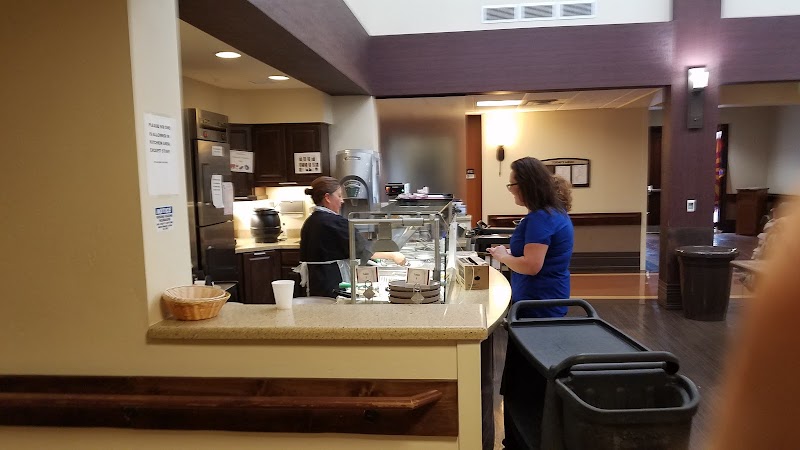
Based on observations, staff interview, and policy review, the facility failed to maintain a clean and sanitary kitchen and properly store food products. The deficient practice could result in a potential for food borne illness. The resident census was 96. Findings include: During an initial walk-through of the kitchen on January 2, 2024 at 8:23 A.M a cell phone was observed sitting on a food preparation counter. Staff #120 (dining services director) removed the cell phone, once it had been brought to his attention. Additionally, during the initial walk-through staff #120 was observed walking through the kitchen without wearing a hairnet. In the food storage area, 2 dented cans were observed in the 'ready to use' area of the kitchen and not stored separately in the area specified for dented cans. These consisted of one can of marinara and another can of mushroom soup. An interview was conducted on January 4, 2024 at 7:57 A.M. with staff #120 (Dietary services director). Staff #120 stated that the expectation is that phones are not left on food service preparation areas, and that hairnets are worn at all times in the kitchen. He stated that the risk for items such as cell phones on food preparation counters and not wearing a hairnet could include contamination of food. He further stated that the expectation is that dented cans are not utilized and that the risk for having dented cans in the ready to use area could include foodborne illness. An interview was conducted on January 4, 2024 with staff #67 (administrator). Staff #67 stated that the expectation is that everyone in the kitchen and handling food needs to wear a hairnet, as hair could otherwise get in to the food. Staff #67 further stated that there should be no cell phones in the kitchen area as these could convey germs. He stated dented cans should not be utilized and the risk could conceivably include botulism. A review of the facility policy entitled preventing foodborne illness with a revision date of November 2022 revealed that hairnets or caps are to be worn when cooking, preparing or assembling food to keep hair from contacting exposed food, clean equipment, utensils or linens. The policy further revealed that employees will demonstrate knowledge and competency of safe food handling practice.
Jun 2023 1 deficiency
CONCERN (D) 📢 Someone Reported This

A family member, employee, or ombudsman was alarmed enough to file a formal complaint

Potential for Harm - no one hurt, but risky conditions existed

Accident Prevention (Tag F0689)

Could have caused harm · This affected 1 resident

**NOTE- TERMS IN BRACKETS HAVE BEEN EDITED TO PROTECT CONFIDENTIALITY** Based on clinical record review, staff interviews, and facility policy and procedure, the facility failed to ensure adequate sup...

Read full inspector narrative →
**NOTE- TERMS IN BRACKETS HAVE BEEN EDITED TO PROTECT CONFIDENTIALITY** Based on clinical record review, staff interviews, and facility policy and procedure, the facility failed to ensure adequate supervision was provided to prevent elopement for 1 out of 2 residents reviewed (resident #1). The deficient practice could result in increase the risk of harm and injury. Findings include: Resident #1 was admitted on [DATE] with diagnoses that included dementia with other behavioral disturbance, depression and psychotic disorder with hallucinations due to known physiological condition. The admission Minimum Data Set assessment dated [DATE] revealed the resident scored 13 on the Brief Interview for Mental Status, indicating intact cognition. According to the assessment, the resident displayed no behaviors, including wandering, and required supervision and oversight for most activities of daily living. A behavior symptoms care plan initiated October 4, 2022 related to exit-seeking behavior had a goal for the resident's behavior to be managed and redirected. Interventions included to ensure the resident was wearing a wanderguard and to provide an escort off memory care unit. A nursing progress note dated December 26, 2022 at 5:36 a.m. included that the writer had received a call from house security at about 6:45 p.m. indicating that when the resident returned from a leave of absence he did not set off the alarm. The note included that the writer checked the resident's wanderguard and realized that the resident had covered it with aluminum foil. According to the note, the writer took the foil off and let the resident know that it was not alright to do that. However, review of the resident's clinical record did not provide evidence that nursing administration had been notified of the incident or that the resident's plan of care had been updated to reflect it. A Wandering assessment dated [DATE] included that the resident was not able to leave the building on his own, that he did not exhibit wandering behaviors and that he had made no statements about going home. According to the assessment the resident's conditions included dementia and depression and that interventions included a door alarm band having been applied (e.g. wanderguard). Per the assessment, the resident did not present an elopement risk. Review of a nursing progress note dated April 3, 2023 at 4:31 p.m. included that at 1:21 p.m. the writer received a call from security that the resident was up front and needed to be picked up. The note stated that the writer went to get him and on the way back to the unit discovered that the resident had left the unit on his own and had gone to the mental health clinic trying to be seen, but was unsuccessful. According to the note, the resident was asked how he had gotten off the unit without sounding the alarm, but he said that it was a secret and refused to say. Security was called to check the cameras to see when the resident had left and whether he had been escorted. Security reported that the resident had left unescorted at approximately 12:20 p.m. and that he had returned at 1:15 p.m. to the facility. The note included that the resident later stated that he had covered his wanderguard with foil and was able to get off the unit without sounding the alarm. The writer then detailed they attempted to test this theory of the foil and were able to pass through the door 4 times without sounding any alarms. A mood state care plan dated April 4, 2023 related to a suicidal statement with no self-harm planned and an attempt to get out of the facility/elopement. The goal was for the resident to have no further suicidal ideation statements and no further elopement attempts for the next 90 days. Interventions included frequent wellness checks/rounding. A nursing note dated May 28, 2023 at 3:01 p.m. detailed that resident #1 left the facility with an escort who was a family friend at approximately 6:40 a.m. The facility received a call at approximately 12:00 p.m. alerting that the resident was missing, and that the police were notified. The note further states the resident was found at 1:15 p.m. and returned to the facility. The note further states that the resident was assessed and found the resident had no injuries, and noted that the staff was informed he was a high elopement risk. However, review of the clinical record did not indicate that an updated Wandering Assessment had been completed or that the resident's care plan had been revised to reflect the elopement. On May 29, 2023 at 2:14 a.m. nursing progress note revealed that the resident had been placed on 15 minutes watch for elopement precaution. According to the note, the resident did not want 15 minute checks to continue after 7:15 p.m. and became very upset and verbally aggressive towards staff. The house supervisor was notified and suggested that staff should just monitor that the resident had not left his room during the shift. Per the note, staff was therefore monitoring only the resident's door, as best they could, and assuming that he was there. On June 13, 2023 at 6:25 a.m. the facility notified the State agency that the resident had eloped. The report detailed that during change of shift rounding the resident was not found to be in his room or the adjoining bathroom. A unit search to include all other individual resident rooms and common areas was completed by unit staff and the resident wasn't found. An interview was conducted on June 15, 2023 at 12:05 p.m. with a Licensed Practical Nurse (LPN/staff #60.) The LPN stated that the resident was very alert, and very intelligent. She stated he used to be an engineer. She stated that to get out the resident found a way to remove the stopper on the window and pushed out the screen. She also stated that he hid the screen behind a cabinet. An interview was conducted on June 15, 2023 at 2:48 p.m. with a Certified Nursing Assistant (CNA/staff 23). She stated that they regularly round on the residents for safety, and that if a resident is noted to be missing they notify the nurse and supervisor. She stated that the resident was a very determined guy and detailed a previous instance where he covered his wander guard in foil to escape the unit. An interview was conducted on June 15, 2023 at 3:50 p.m. with the Director of Nursing (DON/staff #67.) The DON stated that residents are determined to be a flight risk upon admission, based on their diagnoses, level of confusion, ambulatory status and mental status. She further stated that if risks were identified they would do an assessment. The DON accessed the resident's medical record and noted the nursing notes detailing prior elopements. However, the last wandering assessment was on March 20, 2023. Review of facility policy titled 'Wandering and Elopements', revised October 2021, included that the facility will identify residents who are at risk of unsafe wandering and strive to prevent harm while maintaining the least restrictive environment for residents. The policy further stated that if a resident was identified as a risk for wandering, elopement, or other safety issues, the resident's care plan would include strategies and interventions to maintain the resident's safety.
Sept 2022 6 deficiencies
CONCERN (D)

Potential for Harm - no one hurt, but risky conditions existed

Deficiency F0688 (Tag F0688)

Could have caused harm · This affected 1 resident

**NOTE- TERMS IN BRACKETS HAVE BEEN EDITED TO PROTECT CONFIDENTIALITY** Based on clinical record review, observations, resident and staff interviews, and policy review, the facility failed to ensure o...

Read full inspector narrative →
**NOTE- TERMS IN BRACKETS HAVE BEEN EDITED TO PROTECT CONFIDENTIALITY** Based on clinical record review, observations, resident and staff interviews, and policy review, the facility failed to ensure one resident (#56) who was admitted with limited ROM (Range of Motion) was provided treatment and services to prevent further decrease in ROM/mobility. The sample size was 2. The deficient practice could result in residents experiencing decrease in ROM and functioning. Findings include: Resident #56 was admitted on [DATE] with diagnoses that included presence of right artificial hip joint, hemiplegia, affecting right side, and Type 2 diabetes mellitus with diabetic neuropathy. The annual Minimum Data Set assessment dated [DATE] revealed the resident long-term memory was ok, had short-term memory problems, could recall location of own room and staff names and faces, and had moderately impaired cognitive skills for daily decision making. The assessment also revealed the resident had impairment on one side of the upper extremity and lower extremity. A care plan initiated on August 18, 2022 for ADL (Activity of Daily Living)/Rehabilitation potential stated resident #56 had an ADL and mobility deficit related to right hemiplegia. The interventions included CNAs (Certified Nursing Assistants) providing washcloth roll/carrot in the right hand to tolerance for contracture management. An observation was conducted on September 27, 2022 at 9:29 a.m. Resident #56 was observed lying in bed with no shirt, partially covered with a sheet. Resident #56 right upper extremity (RUE) was exposed. It was observed the RUE was flaccid, and the right hand was completely closed. The resident was observed rubbing the right arm and hand, and occasionally attempted to open the right fist. It was observed that resident #56's right hand was contracted and completely closed in a fist-like position. No washcloth roll/carrot was observed in the resident's right hand. An interview was conducted on September 29, 2022 at 9:51 a.m. with resident #56 who was able to verbally answer yes or no questions. Resident #56 stated yes, he wanted to stay in bed today. The resident stated yes, he wanted a washcloth in his right hand. The resident stated no, the staff did not offer the washcloth yesterday or today. Resident #56 stated yes, the washcloth would help the right-hand pain. An observation was conducted on September 30, 2022 at 9:42 a.m. Resident #56 was lying in bed watching television, and was partially covered with a sheet. The resident's upper extremities were exposed, and the resident was observed rubbing the right fisted hand continuously. Resident #56 fingernails were short, and the right hand was clean and odor free. However, there was no washcloth roll/carrot in the resident's right contracted hand. An immediate follow up interview was conducted with resident #56 who stated no, the nurse never offered a washcloth to be placed in the right hand. Resident #56 stated yes, the hand would probably feel better if the washcloth was in it. An interview was conducted on September 30, 2022 at 9:27 a.m. with a CNA (staff #75), who stated if a resident has a contracted hand, the therapy would bring a soft toy to place in the hand. She stated she will keep the resident's hand clean and keep the fingernails short to prevent odors and injuries. Staff #75 stated if there is no soft animal, she would use a rolled washcloth. The CNA stated if the resident refused, she would report it to the charge nurse. An interview was conducted on September 30, 2022 at 10:22 a.m. with the DON (Director of Nursing/ staff #57). Staff #57 stated her expectation related to the prevention of contractures included if a washcloth or carrot is on the care plan, it must be followed. Staff #57 stated if the care plan to prevent contractures was not followed, the resident could be at risk to have further contractures. A facility policy, Resident Mobility and Range of Motion, stated a resident with limited mobility will receive appropriate services, equipment and assistance to maintain or improve mobility unless reduction in mobility is unavoidable.
CONCERN (D)

Potential for Harm - no one hurt, but risky conditions existed

Deficiency F0790 (Tag F0790)

Could have caused harm · This affected 1 resident

**NOTE- TERMS IN BRACKETS HAVE BEEN EDITED TO PROTECT CONFIDENTIALITY** Based on clinical record review, staff interviews, and review of facility policy and procedure, the facility failed to ensure de...

Read full inspector narrative →
**NOTE- TERMS IN BRACKETS HAVE BEEN EDITED TO PROTECT CONFIDENTIALITY** Based on clinical record review, staff interviews, and review of facility policy and procedure, the facility failed to ensure dental needs were met for one sampled resident (#24). The deficient practice could result in residents not receiving care and services for oral/dental conditions. Findings include: Resident #24 was initially admitted to the facility on [DATE] with diagnoses that included altered mental status, Alzheimer's disease, chronic obstructive pulmonary disease, and gastro-esophageal reflux disease. The social services portion of a care plan conference report dated October 7, 2021, indicated the resident had no teeth and did not want dentures. A physician progress note dated March 30, 2022, revealed the resident had no dentures and as a result the resident speech was unclear most of the time. Review of the Oral Cavity assessment dated [DATE] revealed the resident had no natural teeth or tooth fragments (edentulous). It also noted the resident had mouth or facial pain, discomfort or difficulty with chewing. The assessment also revealed the resident did not have dentures and should be referred to a dentist. A nursing progress note dated April 4, 2022 indicated the resident was asked about dentures but could not provide a vivid account of it. The note revealed the resident stated that he would like to have dentures because he was beginning to have difficulty chewing food. The note indicated the social worker would be notified to assist the resident and schedule a dental appointment for dentures. However, further review of the resident's record did not reveal any notes concerning a dental evaluation for the identified dental/oral concern. A quarterly nutrition assessment dated [DATE] included the resident is edentulous. Review of the physician diet order dated April 15, 2022 indicated the resident may have dysphagia advanced (chopped or pre-cut) or pre-cut at the resident's preference, the resident is edentulous but tolerates a regular diet. A significant change in status Minimum Data Set assessment dated [DATE] revealed a Brief Interview for Mental Status score of 15 indicating the resident was cognitively intact. The assessment also indicated the resident's oral/dental status as edentulous. Review of the care plan pertaining to dental care edited on July 5, 2022, indicated that the resident is edentulous and had a potential for chewing problems as a result. It also indicated the resident declined to obtain dentures. An oral cavity assessment dated [DATE] did not indicate the resident was edentulous but included the resident does not have dentures. Further review of the resident's record did not reveal documentation which stated the resident was offered dental care and declined. Additionally, there was no physician order for dental evaluation and treatment. During an interview with resident #24 conducted on September 27, 2022 at 9:29 a.m., the resident stated he does not have dentures and has a hard time chewing/swallowing. The resident stated that he would like to get dentures. During an interview with a Licensed Practical Nurse (LPN/staff #58) conducted on September 28, 2022 at 9:26 a.m., she stated that coordinating dental care for residents depends on whether they are covered by the insurance or not. Staff #58 stated if a resident reported having chewing issues, they would set up an appointment to get dentures or the appropriate dental care. The LPN stated there is an alternative means to get care if the resident is not covered by the insurance. She stated that once the appointment is scheduled, the scheduler sets up transport for the resident to attend the appointment. She stated staff #31 (LPN) would most likely have information specific to resident #24. An interview with an LPN (staff #31) was conducted on September 28, 2022 at 2:17 p.m. Staff #31 stated that resident #24 told her that he had dentures and that the dentures broke prior to being admitted to the facility. Staff #31 stated that to her recollection, approximately a year ago (sometime last year) the resident was informed that he would have a copay and he refused to pay it. She stated to her knowledge, the resident is able to eat. An interview with the Social Worker (staff #39) was conducted on September 29, 2022 at 12:27 p.m. He stated that getting dental care for residents depends on whether they have coverage for dental or not. He stated if they do not, then they are referred to an outside provider. Staff #39 stated resident #24 is not covered by the insurance. Staff #39 stated that since he is new, he does not know what happened previously with the resident's dental care. Staff #39 stated that he was made aware yesterday that resident #24 needs dentures. He said he is now trying to get the resident an appointment. During an interview conducted on September 29, 2022 at 1:26 pm with the Director of Nursing (DON/staff #57), the DON stated her expectation is that progress notes should be written by social services, nursing, or the provider that explains the resident refusing treatment. In the case of resident #24, she stated that to her knowledge the resident refused due to having to pay a copayment. The DON stated she understands there is a lack of documentation explaining what transpired between the time the resident was identified as needing a dental referral and the present time. An undated facility policy titled Dental Examination/Assessment revealed residents shall be offered dental services as needed. Records of dental care provided shall be made a part of the resident's medical record.
CONCERN (D)

Potential for Harm - no one hurt, but risky conditions existed

Medical Records (Tag F0842)

Could have caused harm · This affected 1 resident

**NOTE- TERMS IN BRACKETS HAVE BEEN EDITED TO PROTECT CONFIDENTIALITY** Based on clinical record review, staff interviews, and policy review, the facility failed to ensure an advanced directive was ac...

Read full inspector narrative →
**NOTE- TERMS IN BRACKETS HAVE BEEN EDITED TO PROTECT CONFIDENTIALITY** Based on clinical record review, staff interviews, and policy review, the facility failed to ensure an advanced directive was accurately documented for one sampled resident (#18). The deficient practice could result in residents receiving services which are not in accordance with their wishes. Findings include: Resident #18 was admitted to the facility on [DATE] with diagnoses that included dementia, nontraumatic intracranial hemorrhage, major depressive disorder, and chronic obstructive pulmonary disease. Review of the Advance Directive/Medical Treatment Decision form in resident #18's clinical record revealed the resident's power of attorney (POA) signed the form and indicated that the resident had not chosen to formulate an advance directive. The form was signed by the resident's POA and the facility representative on March 24, 2022. A physician's order dated March 24, 2022 stated Code Status: Full Code. However, further review of the clinical record revealed the MatrixCare dashboard indicated the resident's code status was DNR (Do Not Resuscitate). Additionally, the advance directive portion of the resident's profile on MatrixCare indicated the resident as Do Not Resuscitate (DNR) and included a note which stated that it was per the legal guardian on July 8, 2022. The orange Prehospital Medical Care Directive/DNR form was not found in the resident's clinical record. Review of the DNR binder located at the nurse's station revealed the resident did not have an orange DNR form on file. An interview was conducted with a Licensed Practical Nurse (LPN/staff #58) on September 28, 2022 at 9:52 a.m. She stated that to determine a resident's code status, staff can look at the DNR binder at the nurses' station or log into MatrixCare. Staff #58 stated that the nurse practitioner (NP) usually reviews a resident's information after admission and inputs the data into the system. The LPN stated in the event there is a question of what is the appropriate status or conflicting information regarding a resident's status then she would follow the full code protocols. After reviewing resident #18's advance directive documents, staff #58 stated the resident's record had conflicting information. She verified that the DNR binder did not contain information for resident #18 which meant the resident was a full code. The LPN stated that since the resident's record indicated the resident was a DNR, she would need to call somebody to verify the resident's actual code status. She said until then, she would have to treat the resident as a full code. An interview was conducted with the Director of Nursing (DON/staff #57) on September 29, 2022 at 1:26 pm. She stated it is her expectation that the resident and the responsible party exercise their right to choose regarding advance directive and that an order is obtained to reflect their wishes. Staff #57 said with regards to resident #18, it could be the individual that made the request did not have the proper documentation to be the responsible party or there might have been a change in who the responsible party was. She stated it could have been a transition between responsible parties and the rightful party might not have had the legal ability to make decisions at the time. Staff #57 stated that annotating the responsible party decided DNR is not enough. The DON stated the record should contain all the appropriate required documentation. The facility policy titled Advance Directives revised August 2021 revealed information about whether or not the resident has executed an advance directive shall be displayed prominently in the medical record. Additionally, the plan of care for each resident will be consistent with his or her documented treatment preferences and/or advance directive. In the event a resident or representative refuses treatment, the facility and care providers will document specifically what the resident/representative is refusing.
CONCERN (E)

Potential for Harm - no one hurt, but risky conditions existed

Deficiency F0804 (Tag F0804)

Could have caused harm · This affected multiple residents

Based on resident and staff interviews, a food test tray, facility documents, and policy review, the facility failed to ensure residents consistently received food that was palatable. The deficient pr...

Read full inspector narrative →
Based on resident and staff interviews, a food test tray, facility documents, and policy review, the facility failed to ensure residents consistently received food that was palatable. The deficient practice has the potential for residents who disliked a meal to experience nutritional problems or dissatisfaction with their meals. Findings include: During interviews conducted with residents on September 27, 2022, one resident stated the kitchen cannot cook anything, the fries are frozen, and the meat is tough like shoe leather. Another resident stated the food is terrible. A third resident stated the food is horrible. Another resident stated since the change in food service, the food had been getting worse. A lunch test tray was ordered on September 29, 2022 and arrived at the unit at 11:15 a.m. The test tray consisted of pizza, green beans, and peach cobbler. The test tray was sampled by the survey team. The pizza had an overly crispy crust with toppings that had a rubbery texture. The green beans were mushy, and flavorless. Additionally, the green beans appeared to be teal-green in color and did not look appealing. The peach crisp was also flavorless and was not appetizing. The fruit part of the peach crisp was soppy as though the fruit was overly ripe or overcooked. The food was not hot. The survey team deemed the food not palatable. An interview with the Dining Services Director (staff # 105) was conducted on September 29, 2022 at 10:45 a.m. He stated he has only been on the job for a month but have not heard any complaints about food temperature. He did admit that he had heard of complaints about the food's taste. In an interview conducted with the Social Services Supervisor (staff #39) on September 29, 2022 at 12:41 p.m., staff #39 stated food is the most common grievance he receives. He stated that residents complained about palatability, and the way the food is presented and seasoned. He stated that he addresses grievances and informs the administrator of what is going on. Grievances regarding food were reviewed with staff #39. The grievances revealed one resident stated a cold grilled sandwich was served, another resident stated an open-faced turkey sandwich was served and the turkey meat was too hard to chew. Another resident stated two very hard pieces of chicken parmigiana were served and the chicken pieces were hard and impossible to cut and eat, there was no marinara sauce for the noodles, that the food was unacceptable and not fit for consumption. Review of the undated facility policy titled Food: Quality and Palatability stated that food will be prepared using methods that conserve nutritive value, flavor, and appearance. Food will be palatable, attractive, and served at a safe and appetizing temperature. The cook(s) prepare food in accordance with the recipes, and season for region and/or ethic preferences, as appropriate. Cook(s) use proper cooking techniques to ensure color and flavor retention.
CONCERN (E)

Potential for Harm - no one hurt, but risky conditions existed

Deficiency F0806 (Tag F0806)

Could have caused harm · This affected multiple residents

Based on resident and staff interviews, and grievances, the facility failed to ensure residents received food that accommodated the residents' preferences. The deficient practice could result in compl...

Read full inspector narrative →
Based on resident and staff interviews, and grievances, the facility failed to ensure residents received food that accommodated the residents' preferences. The deficient practice could result in complications related to residents not eating and/or being disinterested in dining. Findings include: During interviews conducted with residents on September 27, 2022, a resident stated the facility does not serve what is on the menu and they are out of everything. Another resident stated the kitchen served the same meals all the time. Another resident stated the staff cannot get the 4-year standing order correct, that the kitchen either does not have it or they do not do as requested. An interview with the Dining Services Director (staff #105) was conducted on September 29, 2022 at 10:45 a.m. He stated that they provide residents with an alternate menu they can choose from if they do not want the item indicated on the scheduled menu. He stated he has only been on the job for a month. Staff #105 stated the menu is set by corporate so it is not changeable. He stated he informed the residents about the alternate meals, and that the kitchen can accommodate changing name brands of items but that the menu cannot be changed. The Social Services Supervisor (staff #39) was interviewed on September 29, 2022 at 12:41 p.m. Staff #39 stated that food is the most common grievance he receives. He stated that he addresses the grievances and informs the administrator of what is going on. Grievances regarding food were reviewed with staff #39. The grievances revealed one resident stated cold tea was served instead of hot tea as requested, and did not receive the tater tots. Another resident would like egg and tuna sandwiches offered as an alternative. Another resident was not served what was on the morning menu per the resident's grievance. Another resident stated au gratin potatoes were served instead of the ordered baked potato, no salad was - kitchen stated no salad, and that no notification was given until the meal was served. Another resident stated chips were served instead of the ordered French fries and that there was no notification until the meal was served. Another resident stated for the last 2 weeks no fruit had been available. Another resident stated the items listed on the menu were chosen and that the meal delivered did not contain the chosen items, and there was no notification that the items were unavailable prior to ordering the items.
CONCERN (E)

Potential for Harm - no one hurt, but risky conditions existed

Food Safety (Tag F0812)

Could have caused harm · This affected multiple residents

Based on observations, staff interview, and policy review, the facility failed to ensure food items were labeled and dated, food items were not expired or moldy, and stored kitchenware was clean and d...

Read full inspector narrative →
Based on observations, staff interview, and policy review, the facility failed to ensure food items were labeled and dated, food items were not expired or moldy, and stored kitchenware was clean and dry. The deficient practice could increase the risk of foodborne illness. Findings include: Regarding food labeling and dating: During the follow-up kitchen observation conducted on September 28, 2022 at 10:36 a.m., an opened sausage bag was observed not labeled with a use by or expiration date in the walk-in freezer. The Dining Services Director (staff #105) and the District Manager (staff #106) were present during the follow-up observation. The District Manager stated that there are different rules for frozen items and they can be kept longer. He stated that if it is unopened that it goes by the expiration date but it should have been marked with an opened date so that a use by date could be determined. The facility kitchen's policy titled Food Storage: Cold Foods revised September 2018 included that all foods will be stored wrapped or in a covered container, labeled, and dated. Regarding moldy food: During the follow-up kitchen observation conducted on September 28, 2022 at 10:36 a.m., a box marked with a delivery/received date of 9/25 was observed to contain 7 rotten and moldy cucumbers. One of which was so grossly rotten and moldy that it was wet and appeared to have melted with its juice leaking into the box and the rest of the cucumbers. The box also contained cucumbers that were still fresh. The box was located in the walk-in refrigerator. The Dining Services Director (staff #105) and the District Manager (staff #106) were present during the follow-up observation. The District Manager stated that food items are checked daily and that the items were just delivered as indicated on the box but that it could have gone bad overnight. Staff #106 further stated that they check the items prior to use. The facility kitchen's policy titled Food Storage: Cold Foods revised September 2018 revealed all perishable foods will be maintained at a temperature of 41 degrees Fahrenheit or below. Additionally, all food will be stored wrapped or in a covered container, labeled and dated, and arranged in a manner to prevent cross contamination. Regarding expired items: During the follow-up kitchen observation conducted on September 28, 2022 at 10:36 a.m., two big containers of Silk Almond with a best by date of September 16, 2022 were observed stored in the walk-in refrigerator. The Dining Services Director (staff #105) and the District Manager (staff #106) were present during the follow-up observation. When asked how long after the best by date they store and use items, staff #106 stated that they do not keep items past the use by date and that it should have been taken out. The facility kitchen's policy titled Food Storage: Cold Foods revised September 2018 indicated that all perishable foods will be maintained at a temperature of 41 degrees Fahrenheit or below. Additionally, all food will be stored wrapped or in a covered container, labeled and dated, and arranged in a manner to prevent cross contamination. Regarding clean and dry kitchenware: During a follow-up kitchen observation conducted on September 28, 2022 at 10:36 a.m., two large metal pans were observed stored wet with the clean stack. They were stored in the ready to use shelf. The Dining Services Director (staff #105) and the District Manager (staff #106) were present during the observation. They removed the items to be rewashed. The kitchen's policy titled Warewashing revised September 2017 stated all dishware will be air dried and properly stored. The facility kitchen's policy titled Manual Warewashing revised September 2017 indicated that all serviceware and cookware will be air dried prior to storage.
Aug 2021 4 deficiencies
CONCERN (D)

Potential for Harm - no one hurt, but risky conditions existed

Deficiency F0582 (Tag F0582)

Could have caused harm · This affected 1 resident

**NOTE- TERMS IN BRACKETS HAVE BEEN EDITED TO PROTECT CONFIDENTIALITY** Based on clinical record review and staff interviews, the facility failed to provide evidence that the Skilled Nursing Facility ...

Read full inspector narrative →
**NOTE- TERMS IN BRACKETS HAVE BEEN EDITED TO PROTECT CONFIDENTIALITY** Based on clinical record review and staff interviews, the facility failed to provide evidence that the Skilled Nursing Facility Advanced Beneficiary Notice (SNFABN) was issued to one of three sampled residents (#33). The deficient practice could result in residents not being informed of their potential liability for payment. Findings include: Resident #33 was admitted to the facility on [DATE] with diagnoses of other fracture of unspecified lumbar vertebra, urinary tract infection and malignant neoplasm of unspecified part of unspecified bronchus or lung. Review of the Notice of Medicare Non-Coverage (NOMNC) revealed the resident last day of coverage was June 12, 2021 and that the resident signed the form on June 10, 2021. Review of the clinical record revealed the resident remained at the facility. However, continued review of the clinical record revealed no evidence the resident was issued an SNFABN. An interview was conducted on July 28, 2021 at 9:13 AM with the Business Office Manager (staff #138), who stated that this resident's SNFABN was not completed because the social worker did not know she had to complete it. Staff #138 stated that she went online and printed a blank one and the instructions so that the social worker would know what she needed to do. On July 28, 2021 at 9:22 AM, an interview was conducted with the Social Services Supervisor (staff #147). Staff #147 stated the NOMNC is given to a resident two days before the last day of coverage because it gives the resident an opportunity to appeal. Staff #147 stated that she was told to give the NOMNC notice to resident #33 and that she did not give the resident the SNFABN. She stated the SNFABN is a question for the business office. An interview was conducted with the Administrator (staff #40) on July 29, 2021 at 8:40 AM, who stated it was his understanding a SNFABN would be provided to a resident who was issued a NOMNC and continued to stay in the facility. Staff #40 stated resident #33 did not receive a SNFABN because the facility does not have a lot of Medicare insured residents and Social Services usually does the discharge forms. In another interview conducted with the Administrator on August 3, 2021 at 12:49 PM, the Administrator stated they did not have a policy regarding the NOMNC and SNFABN.
CONCERN (D)

Potential for Harm - no one hurt, but risky conditions existed

Deficiency F0849 (Tag F0849)

Could have caused harm · This affected 1 resident

**NOTE- TERMS IN BRACKETS HAVE BEEN EDITED TO PROTECT CONFIDENTIALITY** Based on clinical record review, facility document, staff interviews, and policy review, the facility failed to ensure a current...

Read full inspector narrative →
**NOTE- TERMS IN BRACKETS HAVE BEEN EDITED TO PROTECT CONFIDENTIALITY** Based on clinical record review, facility document, staff interviews, and policy review, the facility failed to ensure a current written agreement with hospice was in place prior to hospice care being furnished to residents including one sampled resident (#74). Findings include: Resident #74 was admitted on [DATE] with diagnoses that included failure to thrive, multiple sclerosis, and palliative care intake. Review of the Hospice Election form revealed the resident elected to begin hospice care with a hospice provider as of [DATE]. The document was signed by hospice and by the resident's spouse on [DATE]. The quarterly Minimum Data Set (MDS) assessment dated [DATE] revealed that the resident was receiving hospice care. However, review of the facility's current contract and amendments with the hospice provider providing care for resident #74 revealed it was signed on [DATE] and had expired on [DATE]. An interview was conducted on [DATE] at 1:33 p.m. with the administrator (staff # 40). He stated that he was aware that the contract with the hospice provider was being renegotiated but was not aware that it had expired so long ago. Staff #40 stated that it was a concern that hospice was providing services and the contract had been expired for so long. He stated that he would look into the issue and relay any further information. No further information was provided. An interview was conducted on [DATE] at 10:28 a.m. with the director of nursing (DON/staff #101). She stated that the administrator reviews all contracts and makes sure they are valid and signed. The DON stated the hospice contract was expired and that was an administrative issue, not really a clinical issue. An additional interview was conducted at 4:49 p.m. on [DATE] with the administrator (staff #40). He stated that a provider without a valid contract working in the facility was an issue. The administrator stated liability could be increased and they were also out of compliance. Staff #40 stated that he would continue to work with the procurement department to get the contract updated and into compliance. Review of the facility policy titled Hospice Program revised [DATE] revealed that hospice providers who contract with the facility must have a written agreement and it shall be signed by a facility representative and a representative from the hospice agency before hospice services are furnished to any resident.
CONCERN (D)

Potential for Harm - no one hurt, but risky conditions existed

Infection Control (Tag F0880)

Could have caused harm · This affected 1 resident

**NOTE- TERMS IN BRACKETS HAVE BEEN EDITED TO PROTECT CONFIDENTIALITY** Based on observation, clinical record review, staff interviews, and policy review, the facility failed to ensure infection contr...

Read full inspector narrative →
**NOTE- TERMS IN BRACKETS HAVE BEEN EDITED TO PROTECT CONFIDENTIALITY** Based on observation, clinical record review, staff interviews, and policy review, the facility failed to ensure infection control standards were maintained during tracheostomy care provided to one sampled resident (#7). The deficient practice could result in staff not performing hand hygiene when indicated. Findings include: Resident #7 was readmitted to the facility on [DATE] with diagnoses that included pneumonia due to methicillin resistant staphylococcus aureus, chronic respiratory failure with hypoxia, and complications, tracheostomy not elsewhere classified. Review of the physician's orders dated November 23, 2020 included cleaning the tracheostomy site with wound cleanser and sterile water every shift. The quarterly Minimum Data Set assessment dated [DATE] revealed the resident received tracheostomy care while a resident within the last 14 days. On August 2, 2021 at 3:24 p.m., an observation of tracheostomy care was conducted with a Licensed Practical Nurse (LPN/staff #31). Staff #31 washed his hands and donned clean gloves. He opened the tracheostomy cleaning kit, removed the sterile field, and placed it on top of the resident's bed. Staff #31 placed the tracheostomy cleaning kit on the sterile field and then opened the remaining supplies onto the field. He opened a packet of antibiotic ointment and squeezed a small amount onto the field, and he opened the sterile cotton-tipped applicators. He poured sterile water into the two sides of the tracheostomy kit and added wound cleanser into one side. He removed the resident's nasal cannula and then removed the soiled split gauze dressing at the tracheostomy site. Staff #31 doffed his gloves and put the gloves and the soiled gauze into the resident's trash can. He then donned the sterile gloves contained in the tracheostomy cleaning kit. The LPN was not observed to perform hand hygiene before donning the sterile gloves. He placed one cotton-tipped swab into the cleansing solution, one into the sterile water, and one into the antibiotic ointment. He set the sterile split gauze dressing and the other sterile gauze onto the sterile field. Using a cotton-tipped swab, he cleansed the stoma and the outer cannula working from the inside to the outside, and then cleansed the flange. He stated there was no inner cannula. Staff #31 then rinsed the stoma, outer cannula, and flange with a swab wet with sterile water in the same manner. Using a gauze wet with cleansing solution, he cleansed the stoma, the outer cannula, and flange. He rinsed the area using another gauze wet with sterile water. He patted the stoma, cannula, and flange dry with dry gauze. Using a swab, he applied antibiotic ointment to the stoma. He applied the split gauze to the insertion site. The LPN assisted the resident with reapplying the nasal cannula. He collected the supplies and placed them into the trash can. He doffed his gloves into the trash and took the bag of trash out of the room. After several minutes, staff #31 returned to the resident's room and washed his hands at the sink. At 3:40 p.m. on August 2, 2021, an interview was conducted with the LPN (staff #31). The LPN stated that the protocol for providing tracheostomy care should have included hand hygiene after doffing the dirty gloves and before donning the sterile gloves. He stated that he forgot to wash his hands. An interview was conducted with the Director of Nursing (DON/staff #101) on August 2, 2021 at 4:20 p.m. The DON stated her expectation would include hand hygiene be performed prior to the beginning of the procedure and after the procedure has been completed. She stated that she would expect the tracheostomy care to be different depending on the type of tracheostomy the resident had, whether the nurse was suctioning, or whether they were just cleaning the outside of the stoma. The DON stated that the risks of not performing hand hygiene might increase the risk for infection. The facility's policy titled Tracheostomy Care stated the purpose of the procedure was to guide tracheostomy care and the cleaning of reusable tracheostomy cannulas. The general guidelines included that aseptic technique must be used during cleaning and sterilization of reusable tracheostomy tubes. The procedure guidelines included to wash hands and to don exam gloves, to remove the old dressing, pull the soiled glove over the dressing and discard into the appropriate receptacle. Wash hands. Open the tracheostomy cleaning kit and set up supplies on the sterile field. Apply clean gloves. Clean the stoma, rinse the stoma, and wipe the stoma with dry gauze. Apply a fenestrated gauze pad around the insertion site. Remove gloves and discard into the appropriate receptacle, and wash hands.
CONCERN (E)

Potential for Harm - no one hurt, but risky conditions existed

Deficiency F0761 (Tag F0761)

Could have caused harm · This affected multiple residents

Based on observations, staff interviews, policy review, and manufacturer's guidelines, the facility failed to ensure that expired medications and biologicals were not available for resident use. The d...

Read full inspector narrative →
Based on observations, staff interviews, policy review, and manufacturer's guidelines, the facility failed to ensure that expired medications and biologicals were not available for resident use. The deficient practice could result in residents receiving medications that are less potent, decreasing effectiveness. Findings include: Regarding hall 400 During an observation conducted of the medication room on hall 400 on July 29, 2021 at 2:32 PM with the Assistant Director of Nursing (ADON/staff #83), the following were observed: -2 ZR heparin flush 5ml (milliliters) syringes with an expiration date of June 1, 2021; -an intravenous administration set with an expiration date of March 29, 2021; and -a tuberculin solution that was delivered on July 3, 2021 with no open date on it. Following this observation, the ADON stated that he would take care of the expired items. Regarding hall 500 During an observation conducted of the medication room on hall 500 on July 29, 2021 at 2:42 PM with the ADON (staff #83), the following were observed: -an extension tube with connector with an expiration date of March 2018; -2 boxes of BD eclipse vacutainer blood collection needles with an expiration date of April 30, 2021; -3 individual 3ml 0.9 sodium chloride solution vials dated February 28, 2021; -1 staple removal kit with an expiration date of June 1, 2021; -1 open vial of tuberculin with no open date on it; -2 boxes of individually packed povidone iodine 3 stick pouches with an expiration date of March 2021; and -an individually packaged antiseptic towel with an expiration date of March 2021. Following this observation, the ADON stated that he would take care of the expired items. Regarding hall 300 During an observation conducted of a medication cart on hall 300 on July 29, 2021 at 3:27 PM with a Registered Nurse (RN/staff #47), the glucometer solutions were observed without open dates on them. An interview was conducted immediately with this RN (staff #47), who stated that there was no open date on the glucometer solution because they never put the date on glucometer solutions. On July 29, 2021 at 2:55 PM, another interview was conducted with the ADON who stated the nurses are responsible for removing expired medications from the medication room. He stated the night shift nurses usually have the time to check for and remove expired medications. The ADON stated it is the nurse's responsibility to check the expiration date on medications before stocking the medication carts. An interview was conducted on July 29, 2021 at 4:48 PM with the Director of Nursing (DON/staff #101), who stated she expected medications and biologicals to be stored according to manufactures recommendations. She stated that if a medication or biological does not have an opened date, they go off of the date that it was filled. She stated that the staff who is going to be utilizing the medications, checks them at the point of utilization. This DON stated the medication room is used for storage but it is not their point of delivery. Staff #101 stated the staff in charge of checking and removing expired medications from the medication rooms would be the house supervisor. The DON further stated the house supervisor may or may not be the staff stocking the medication and treatment carts. She stated it is usually the nurse that stocks the carts. In an interview conducted with the Administrator (staff #40) on August 3, 2021 at 2:39 PM, the Administrator stated they did not have a policy for labeling glucometer solution once they are opened and that they go by manufacturers guidelines. A Blood Glucose Control Solution insert provided by the facility for the glucometer solution that they use revealed that when opening a new vial of Control Solution, write the opening date on the label. The Control Solution is good for 3 months after opening the vial or until the expiration date printed on the label. A facility policy titled Storage of Medications revealed the facility stores all drugs and biologicals in a safe, secure and orderly manner and that all discontinued, outdated, or deteriorated drugs or biologicals are returned to the dispensing pharmacy or destroyed.
Understanding Severity Codes (click to expand)
Life-Threatening (Immediate Jeopardy)
J - Isolated K - Pattern L - Widespread
Actual Harm
G - Isolated H - Pattern I - Widespread
Potential for Harm
D - Isolated E - Pattern F - Widespread
No Harm (Minor)
A - Isolated B - Pattern C - Widespread

Questions to Ask on Your Visit

  • "Can I speak with families of current residents?"
  • "What's your RN coverage like on weekends and overnight?"

Our Honest Assessment

Strengths
  • • Grade A (90/100). Above average facility, better than most options in Arizona.
  • • No major safety red flags. No abuse findings, life-threatening violations, or SFF status.
  • • No fines on record. Clean compliance history, better than most Arizona facilities.
  • • 24% annual turnover. Excellent stability, 24 points below Arizona's 48% average. Staff who stay learn residents' needs.
Concerns
  • • 14 deficiencies on record. Higher than average. Multiple issues found across inspections.
Bottom line: Generally positive indicators. Standard due diligence and a personal visit recommended.

About This Facility

What is Arizona State Veteran Home-Tucson's CMS Rating?

CMS assigns ARIZONA STATE VETERAN HOME-TUCSON an overall rating of 5 out of 5 stars, which is considered much above average nationally. Within Arizona, this rating places the facility higher than 99% of the state's 100 nursing homes. This rating reflects solid performance across the metrics CMS uses to evaluate nursing home quality.
How is Arizona State Veteran Home-Tucson Staffed?

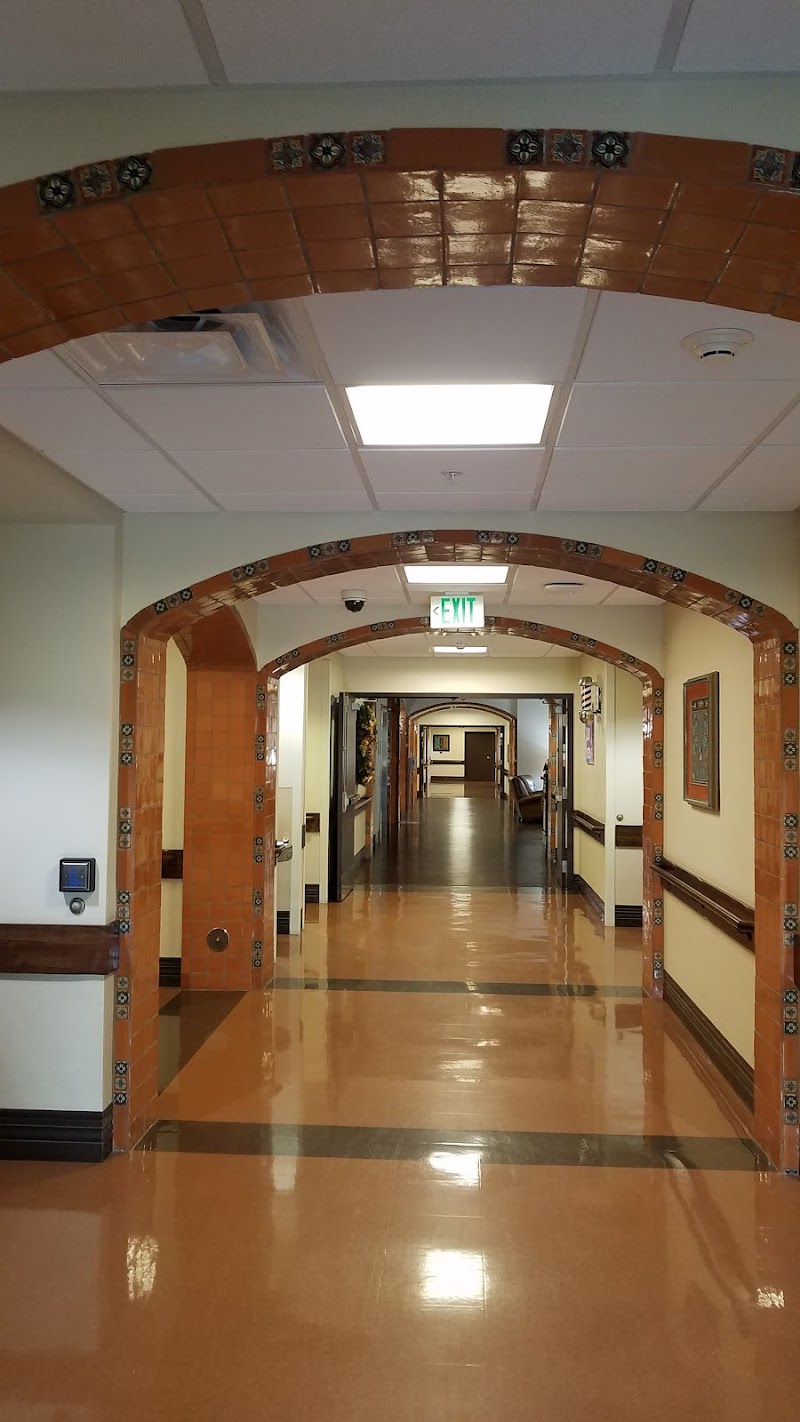
CMS rates ARIZONA STATE VETERAN HOME-TUCSON's staffing level at 5 out of 5 stars, which is much above average compared to other nursing homes. Staff turnover is 24%, compared to the Arizona average of 46%. This relatively stable workforce can support continuity of care.

What Have Inspectors Found at Arizona State Veteran Home-Tucson?

State health inspectors documented 14 deficiencies at ARIZONA STATE VETERAN HOME-TUCSON during 2021 to 2024. These included: 14 with potential for harm.
Who Owns and Operates Arizona State Veteran Home-Tucson?

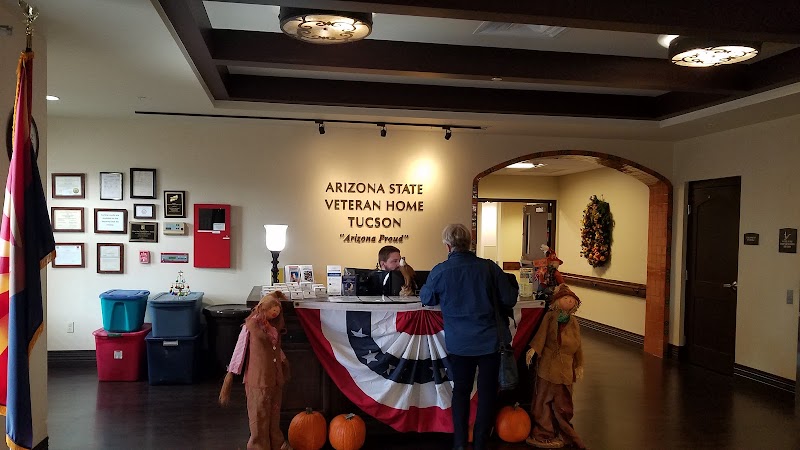
ARIZONA STATE VETERAN HOME-TUCSON is owned by a government entity. Government-operated facilities are typically run by state, county, or municipal agencies. The facility operates independently rather than as part of a larger chain. With 120 certified beds and approximately 117 residents (about 98% occupancy), it is a mid-sized facility located in TUCSON, Arizona.
How Does Arizona State Veteran Home-Tucson Compare to Other Arizona Nursing Homes?

Compared to the 100 nursing homes in Arizona, ARIZONA STATE VETERAN HOME-TUCSON's overall rating (5 stars) is above the state average of 3.3, staff turnover (24%) is significantly lower than the state average of 46%, and health inspection rating (3 stars) is at the national benchmark.

What Should Families Ask When Visiting Arizona State Veteran Home-Tucson?

Based on this facility's data, families visiting should ask: "Can I visit during a mealtime to observe dining assistance and food quality?" "How do you handle medical emergencies, and what is your hospital transfer rate?" "Can I speak with family members of current residents about their experience?"

Is Arizona State Veteran Home-Tucson Safe?

Based on CMS inspection data, ARIZONA STATE VETERAN HOME-TUCSON has a clean safety record: no substantiated abuse findings (meaning no confirmed cases of resident harm), no Immediate Jeopardy citations (the most serious violation level indicating risk of serious injury or death), and is not on the Special Focus Facility watch list (a federal program monitoring the lowest-performing 1% of nursing homes). The facility has a 5-star overall rating and ranks #1 of 100 nursing homes in Arizona. While no facility is perfect, families should still ask about staff-to-resident ratios and recent inspection results during their visit.

Do Nurses at Arizona State Veteran Home-Tucson Stick Around?

Staff at ARIZONA STATE VETERAN HOME-TUCSON tend to stick around. With a turnover rate of 24%, the facility is 21 percentage points below the Arizona average of 46%. Low turnover is a positive sign. It means caregivers have time to learn each resident's needs, medications, and personal preferences. Consistent staff also notice subtle changes in a resident's condition more quickly.

Was Arizona State Veteran Home-Tucson Ever Fined?

ARIZONA STATE VETERAN HOME-TUCSON has no federal fines on record. CMS issues fines when nursing homes fail to meet care standards or don't correct problems found during inspections. The absence of fines suggests the facility has either maintained compliance or corrected any issues before penalties were assessed. This is a positive indicator, though families should still review recent inspection reports for the full picture.

Is Arizona State Veteran Home-Tucson on Any Federal Watch List?

ARIZONA STATE VETERAN HOME-TUCSON is not on any federal watch list. The most significant is the Special Focus Facility (SFF) program, which identifies the bottom 1% of nursing homes nationally based on persistent, serious quality problems. Not being on this list means the facility has avoided the pattern of deficiencies that triggers enhanced federal oversight. This is a positive indicator, though families should still review the facility's inspection history directly.