CATALINA POST ACUTE AND REHABILITATION
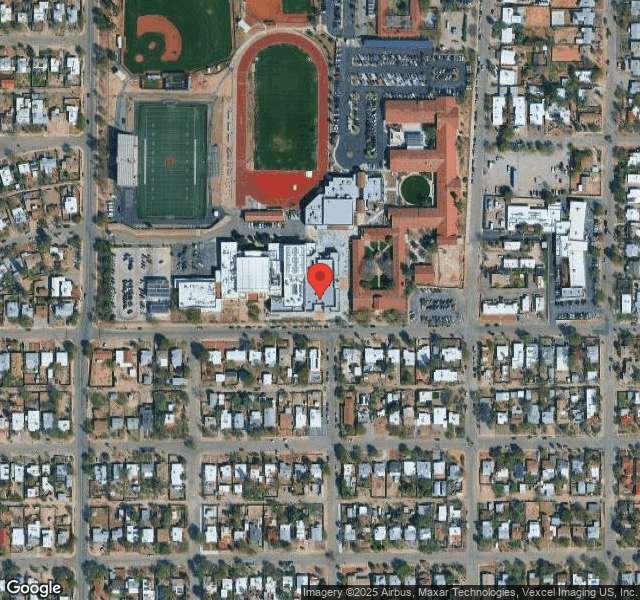
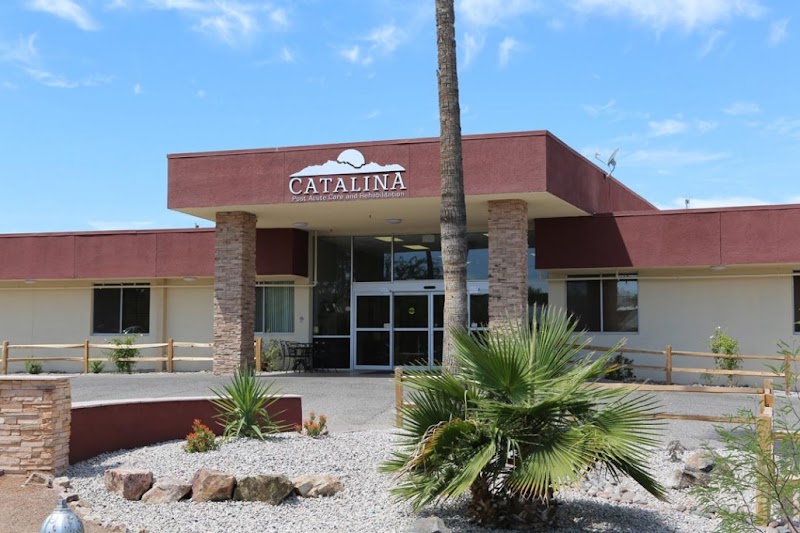
2611 NORTH WARREN AVENUE, TUCSON, AZ 85719 (520) 795-9574
For profit - Limited Liability company 102 Beds THE ENSIGN GROUP Data: November 2025
Trust Grade
65/100
#68 of 139 in AZ
Last Inspection: July 2023

Over 2 years since last inspection. Current conditions may differ from available data.

Overview

Catalina Post Acute and Rehabilitation has a Trust Grade of C+, which means it is slightly above average but not exceptional. It ranks #68 out of 139 facilities in Arizona, placing it in the top half, and #10 out of 24 in Pima County, indicating that only nine local options are better. The facility's performance has been stable, with 20 identified issues remaining consistent over the past two years. Staffing is rated as average, with a turnover rate of 46%, which is slightly below the state average of 48%. Notably, the facility has not incurred any fines, which is a positive sign. However, there are some concerning areas. Recent inspections revealed that room temperatures were unsafe, putting residents at risk for heat-related issues, and there were problems with food safety, including unlabeled items and expired produce, which could lead to foodborne illnesses. Additionally, the area around the dumpsters was not kept clean, potentially attracting pests. While there are strengths in staffing stability and the absence of fines, families should be aware of these weaknesses when considering this facility.

Trust Score
C+
65/100
In Arizona
#68/139
Top 48%
Safety Record
Low Risk
No red flags
Inspections
Holding Steady
2 → 2 violations
Staff Stability
⚠ Watch
46% turnover. Above average. Higher turnover means staff may not know residents' routines.
Penalties
✓ Good
No fines on record. Clean compliance history, better than most Arizona facilities.
Skilled Nurses
✓ Good
Each resident gets 42 minutes of Registered Nurse (RN) attention daily — more than average for Arizona. RNs are trained to catch health problems early.
Violations
⚠ Watch
20 deficiencies on record. Higher than average. Multiple issues found across inspections.
★★★☆☆
3.0
Overall Rating
★★★☆☆
3.0
Staff Levels
★★★★★
5.0
Care Quality
★★☆☆☆
2.0
Inspection Score
Stable
2024: 2 issues
2025: 2 issues

The Good

  • 5-Star Quality Measures · Strong clinical quality outcomes
  • Full Sprinkler Coverage · Fire safety systems throughout facility
  • No fines on record

Facility shows strength in quality measures, fire safety.

The Bad

3-Star Overall Rating

Near Arizona average (3.3)

Meets federal standards, typical of most facilities

Staff Turnover: 46%

Near Arizona avg (46%)

Higher turnover may affect care consistency

Chain: THE ENSIGN GROUP

Part of a multi-facility chain

Ask about local staffing decisions and management

The Ugly 20 deficiencies on record

Jun 2025 2 deficiencies
CONCERN (D) 📢 Someone Reported This

A family member, employee, or ombudsman was alarmed enough to file a formal complaint

Potential for Harm - no one hurt, but risky conditions existed

Quality of Care (Tag F0684)

Could have caused harm · This affected 1 resident

**NOTE- TERMS IN BRACKETS HAVE BEEN EDITED TO PROTECT CONFIDENTIALITY** Based on observation, interviews, review of the clinical record, and review of facility policy and procedure, the facility faile...

Read full inspector narrative →
**NOTE- TERMS IN BRACKETS HAVE BEEN EDITED TO PROTECT CONFIDENTIALITY** Based on observation, interviews, review of the clinical record, and review of facility policy and procedure, the facility failed to ensure one resident (#50) was provided care and services to meet professional standards regarding following physician orders for assessment of a resident post-fall. The deficient practice could lead to an injury being missed and a delay of care provided to a resident. -Findings include: Resident #50 was admitted to the facility July 21, 2022 and discharged on August 19, 2022, with diagnoses that included metabolic encephalopathy, unsteadiness on feet, need for assistance with personal care, cognitive communication deficit, altered mental status, unspecified psychosis not due to a substance or known physiological condition, and bipolar disorder. An admission MDS (minimum data set) assessment, dated January 16, 2025, revealed the resident had a brief interview for mental status (BIMS) score of 8, indicating the resident had moderately impaired cognition, with no indicators for mood or behaviors identified. A Care Plan, initiated July 19, 2022 included a focus for anticoagulant therapy (Lovenox) related to deep vein thrombosis (DVT). Interventions included monitor/document/report to medical doctor as needed for signs or symptoms of anticoagulant complications. Further review of the care plan revealed a focus of at risk for falls related to unsteadiness on feet, had fall July 21, 2022 with bruising to right eye. Interventions implemented were first aid applied to bruising to the right eye and the resident was sent to emergency room for evaluation for change of elevation on July 21, 2022. A progress note with an effective date of July 21, 2022 at 03:00 am, revealed that the patient got up to the bathroom, returning back to bed, fell and hit her forehead on the counter, refused to have vitals done, has long hair falling over her face and does not wish it tied back. Vital signs stable. 135/90. An eMar-Medication Administration note dated July 21, 2022 at 03:09 am, revealed Acetaminophen Tablet give 650mg by mouth every six (6) hours as needed for pain. 650mg administered. A progress note with an effective date of July 21, 2022 at 06:45 am, revealed the following: has a bruise below right eye, states left upper forehead above left eye hurts, area red, ice was applied to site. A progress note dated July 21, 2022 at 07:13 am, revealed the following: Notified by primary nurse that resident had an unwitnessed fall overnight and hit her head, reports no loss of consciousness. Upon assessment there was no visible injury. Resident recalls walking to restroom and losing balance, hitting her head on counter, then walking herself back to bed. Pupils round and reactive, vital signs stable. Resident alert and oriented x4, reports a headache, no pain otherwise. Resident asks that nursing not notify her son. Director of Nursing (DON) notified, AMR dispatched, ETA one hour. Report called to medical center. A physician order dated July 21, 2022, was written for a change of condition for hitting head while taking self to bathroom, document in progress notes every shift for three days. An additional order was also written for Enoxaparin Sodium Solution Prefilled Syringe 40MG/0.4ML Inject 40 mg subcutaneously one time a day for clotting prevention. Review of the neurological check document dated July 21, 2022, revealed that the neurological checks were implemented at 3:00 am and ended 08:45 am. The document further revealed that the resident refused neurological checks at 3:15 am, 3:30 am, 3:45 am, 4:15 am, 4:45 am, 5:15 am and 5:45 am, with the re-implementation of neurological checks at 7:45 and 8:45 am. No evidence was found to indicate that neurological checks were conducted after 8:45 am, as ordered by the provider. The document also revealed that the resident was sent to the hospital at 9:45 am. A progress note dated July 21, 2022 at 07:55 am, revealed the following:: After further evaluation, son notified at 07:50 am due to resident mentation and medical power of attorney status (MPOA) and a voicemail was left with name, title and brief description of events, call back number provided for any questions. A progress notes effective date July 21, 2022 at 09:36 am, revealed that the patient left via stretcher via EMR (emergency medical) with 2 attendants at 9:30 am. An IDT progress note effective date July 21, 2022 at 10:51 am, revealed a note text stating the resident had an unwitnessed fall the morning of July 21, 2022 at approx. 0300 am. The note indicated that the resident was returning from the restroom when she lost balance and hit her forehead on the bathroom counter. The note further revealed that the resident denied loss of consciousness and returned to bed. No visible injury assessed, pupils' equal round and reactive, orientation within baseline, AVSS (afebrile, vital signs stable), resident denied additional vital sign collection for neuro assessments. The provider was notified, received order to send the resident to the ER for evaluation, DON and MPOA notified. Interventions included: Bed in lowest position and non-skid socks and the care plan was updated. Review of the facility 5-day report noted the incident occurred on July 21, 2022, and included the certified nursing assistant (CNA/Staff #174) was making last round at 0500 and found the resident sitting on the side of bed. The resident informed the CNA that she had gone to the bathroom and lost her balance, striking her head on the counter. The report included that the nurse (RN/Staff #3) was notified and neuro checks were initiated, the resident complained of pain above the left eye, ice was applied, the provider notified, and orders received to send the resident to hospital for CT (computed tomography) scan. Review of the facility internal investigation report dated July 21, 2022 revealed no injuries at time of incident and ambulatory with assistance. Review of the emergency department (ER) pertinent report dated July 21, 2022 at 9:56 am, revealed that the patient was a [AGE] year-old woman with a history of TIAs, bipolar disorder. and other undefined encephalopathy who presented to the ER as a trauma yellow. The report incuded that the resident with questionable altered level of consciousness, reportedly had an unwitnessed fall at 3:30 AM this morning, and was taking prophylactic Lovenox. The report further revealed that per chart review, the resident had been seen at the hospital approximately 11 days ago for another fall and that imaging at that time was negative but she was sent to the care center for rehabilitation. The report revealed that history was somewhat limited as the patient had difficulty focusing, but she endorsed pain in her back but nowhere else, she did not remember the events of the fall, had difficulty following commands but per chart review, it is difficult to ascertain if this is chronic or new since her accident. An interview was conducted with a Registered Nurse (RN / Staff #142) on June 20, 2025, at 10:36 am who stated that the facility's process for assessing residents who sustain an unwitnessed fall on anticoagulants was to immediately conduct neuro checks, make sure the resident was at their baseline, and answered questions appropriately, asses for any head injuries, nausea, pain with movement, palpitations and vital signs. The RN also stated that the assessment would include immediately notifying the doctor, the DON, family member-leaving a message if no response and with any head injury will call 911. The RN also stated that she would educate the resident if they should refuse neuro checks of possible death and if they continued to refuse the neuro checks would notify the doctor, DON (Director of Nursing), and family immediately and document the refusal and notification. The RN further stated that the resident would be sent to the hospital for a CT scan, if the resident was taking any blood thinner, including aspirin, and that staff are always able to contact the DON or the Medical Director if the resident's provider would be unavailable. The RN stated if the doctor decided not to send the resident to the hospital, the order would be documented in progress notes. The RN also stated any resident with an observable head injury with complaints of pain and/or redness would need to be sent to the ER immediately. The RN further stated that the risks of not following the process for an unwitnessed fall with observable head injury, complaints of head pain and receiving anticoagulant therapy could result in possible death for the resident. An interview was conducted with the DON (Staff #15) on April 3, 2025, at 10:15 am, who stated that the resident should be assessed by a nurse if an unwitnessed fall occurs or if the resident may have hit their head, neuro checks should be started, and the provider notified. The DON stated if the resident is not their own responsible party, then the responsible party is notified and depending on what the doctor has ordered, the resident will be sent to the hospital for a CT scan. The DON further stated if a resident should refuse neuro checks staff would try again, educate about the risks and benefits and notify the doctor. The DON also stated that all documentation of contacts should be in the progress notes, and the doctor should be notified of the fall immediately. Review of the facility policy titled, Resident Assessment: Fall Management System, revised May 2021 revealed that it is the policy of this facility to provide each resident with appropriate assessment and interventions to prevent falls and to minimize complications if a fall occurs. When a resident sustains a fall, a physical assessment/evaluation will be completed by a licensed nurse, with results documented in the Nursing Progress Notes and the attending physician and family/ responsible party as applicable shall be notified of the fall and the resident status.
CONCERN (D) 📢 Someone Reported This

A family member, employee, or ombudsman was alarmed enough to file a formal complaint

Potential for Harm - no one hurt, but risky conditions existed

Deficiency F0726 (Tag F0726)

Could have caused harm · This affected 1 resident

Based on resident interview, policy review, and staff interview, the facility failed to ensure a Registered Nurse (RN/Registry Staff # 467), who was from a staffing agency and not employed by the faci...

Read full inspector narrative →
Based on resident interview, policy review, and staff interview, the facility failed to ensure a Registered Nurse (RN/Registry Staff # 467), who was from a staffing agency and not employed by the facility directly, had the specific competencies and skill sets necessary to care for residents' needs. This failure had the potential to affect all residents assigned to the RN's care during her shift. Findings include: Review of the facility 5-day report revealed alleged perpetrator RN (Registry/ Staff # 467) had been contracted through a nursing registry. Facility eMAR documents revealed that the RN (alleged perpetrator) worked at the facility as a registered nurse starting August 26, 2022 and no additional documentation for scheduled shifts worked in August 2022. Further review revealed the registry RN was scheduled to work the following days; September 2,3,4,9,10.11.16.17, 18, 23,24,25, and 30 for the 6PM-6AM shift. The facility became aware of the alleged perpetrator on September 19, 2022 when the Dietary Supervisor (Staff/#56) alerted the Director of Nursing (DON/Staff #147) of recognizing the alleged perpetrator registry Staff # 467 as a potential candidate, when applying for a position in dietary/housekeeping. The DON attempted to verify the Arizona license for the agency RN and was unable to find licensure. The facility contacted the head of the nursing agency who was unable to verify the RN's license or contact the RN. The facility investigation determined that the alleged perpetrator RN (Registry/Staff # 467) had impersonated a registered nurse using another individuals RN nursing license. The report revealed that the facility substantiated the allegation of other unlicensed nurse providing care in the facility. Review of the Registry Agreement effective date February 2, 2022 revealed that Registry shall provide temporary clinical staff. Staff shall be properly licensed and qualified healthcare professionals duly trained and certified for their profession. Registry shall be solely responsible for screening staff to ensure suitability to perform the assignments as requested by the facility Applicable eligibility documentation for each staff personnel assigned to facility shall be provided prior to any staff beginning a shift at the facility. An interview was conducted on June 19, 2025 at 2:10 PM with the Human Resources Manager (HR Manager/Staff #118) who stated her role is to assist with the hiring process for all staff, including registry staff. The HR Manager stated the process for registry staff is to have them sign an orientation packet, but agencies will hold their staff certifications. Staff #118 stated the facility will verify any registry staff license, depending on their position through the State Board of Nursing, verify fingerprint cards and Adult Protective Services. The HR Manager stated as an registry RN, alleged perpetrator Registry RN (Staff # 467) license would have been verified through the State Board of Nursing. The HR Manager stated that she did not know the complete process for registry staff during 2022 and 2023, but the facility used a contingency checklist during that time frame. The HR Manager explaind that the Contingent Worker Checklist included online verification for Certified Nursing Assistant (CNA), Licensed Practical Nurse (LPN) and Registered Nurse (RN), Tuberculin Test, Arizona Fingerprint Card (online verification), and Background and Drug Screen (run by the registry). Staff #118 stated she looked for the document, when state requested documentation but it appeared that one was not completed for registry staff #467. She also stated that there is no documentation that the process was completed for registry staff #467. The HR Manager stated it would be her assumption that the checklist for registry staff #467 should have been completed before working on the floor with any resident. She also stated the facility does employ agency staff and current practice is the same as in 2022 with the completion of the orientation packet for agency staff and oversees to ensure that any registry staff have their license that are verified and current and are registered with the State Board of Nursing. Staff #118 stated the risks of having unlicensed individuals working as nurse pose a harm to our patients. An interview was conducted on June 20, 2025 at 11:34 AM with the Director of Nursing (DON/Staff #147) who stated registry (staff #467) had worked at the facility without a verified license. The DON stated verified nursing licenses through the State Board of Nursing, unless they are with and agency then the agency provides their own file on their licensed staff. A request was made for a copy of the nursing license for registry staff #467. The DON stated when registry staff #467 worked for the facility, the facility did not have a cross check in place for verification of licenses. The DON stated it is her expectation that all licensed staff, both facility and agency have licensure that are active. The DON stated the risks of working as a nurse without a license can cause harm to a resident or provide the resident with the wrong medications. Review of the facility policy titled, Nursing Services: Sufficient Staff, revised May 2022 revealed that it is the policy of the facility to have sufficient nursing staff with the appropriate competencies and skillsets to provide nursing and related services to promote resident safety and attain or maintain the highest practicable mental, psychosocial well-being of each resident, as determined by resident assessment and individual plans of care and considering the number, acuity and diagnosis of the facility's resident population in accordance with the facility assessment.
Aug 2024 1 deficiency
CONCERN (D) 📢 Someone Reported This

A family member, employee, or ombudsman was alarmed enough to file a formal complaint

Potential for Harm - no one hurt, but risky conditions existed

Deficiency F0676 (Tag F0676)

Could have caused harm · This affected 1 resident

**NOTE- TERMS IN BRACKETS HAVE BEEN EDITED TO PROTECT CONFIDENTIALITY** Based on clinical record, resident and staff interviews and facility documents, the facility failed to ensure that two residents...

Read full inspector narrative →
**NOTE- TERMS IN BRACKETS HAVE BEEN EDITED TO PROTECT CONFIDENTIALITY** Based on clinical record, resident and staff interviews and facility documents, the facility failed to ensure that two residents (#21, #52) received activities of daily living (ADL) care per facility policy. Failure to do so could result in psychosocial harm. Findings include: -Resident #52 was admitted [DATE] with diagnoses of sepsis and metabolic encephalopathy. A care plan dated July 2, 2024 included a self-care performance deficit related to weakness, and impaired mobility which included to encourage to participate to the fullest extent with each interaction. A Minimum Data Set (MDS) dated [DATE] included that this resident was moderately cognitively impaired and that showering was not attempted due to a medical condition or safety concern. A document titled West Showers included that resident #52's room was to be provided showers 2 times a week by the 2 PM to 10 PM shift and that any missed showers were to be caught up on Sundays. This document included that shower sheets need to be filled out and signed by the nurse. However, review of bathing/showering documentation included: 1 shower was provided on July 1 - 6, July 21 - 27, and July 28 - August 3, 2024 No showers were provided July 7 - 13, 2024. -Resident #21 was admitted [DATE] with diagnoses of morbid obesity, open wound of abdominal wall, and bipolar disorder. A quarterly MDS dated [DATE] included that this resident was not cognitively impaired and was dependent for showering/bathing. However, review of bathing/showering documentation included: 1 shower was provided on July 1 - 6, and July 21 - 27. No showers were provided July 28 - August 3, 2024. An interview conducted on August 8, 2024 at 3:43 P.M. with a Certified Nursing Assistant (CNA/staff #130) who said that CNA's look at the shower list. She said that showers are scheduled for both day and evening shift. This staff said that if the resident refused the staff offer alternatives to showers such as bed baths. This staff said that if CNA's manage their time right that they should be able to get showers. This CNA said that each resident gets 2 showers a week unless they need more. She said that if showers are missed then on Sundays, they will try to make it up. She said that resident #52 did not want showers. An interview conducted on August 8, 2024 at 3:28 P.M. with a Licensed Practical Nurse (LPN/staff #120) who said that CNA's have assignments based on which rooms have showers on that day, which is determined by the shower sheet. She said that she performs skin checks on shower days and signs off on the shower sheet. She said that the shower sheets are then filed with medical records. An interview was conducted on August 8, 2024 at 4:33 P.M. with the Director of Nursing (DON/staff #59) who said that her expectation is that staff follow the shower schedule and residents should be offered 2 showers a week. This staff included that staff should document showers on shower sheets and in the task list in the medical record. She said that it does not meet her expectations if the showers are not documented if they are refused. She stated that resident #52 frequently refuses care but that it was not documented. A policy titled ADL, Services to carry out reviewed on August, 2023, included if a resident is unable to carry out activities of daily living, the necessary services to maintain good nutrition, grooming, toileting, and personal oral hygiene will be provided by qualified staff. This policy included that bathing will be offered twice weekly (unless resident requests more or less), and as needed per resident request and ADL care will be documented in the medical record accordingly.
Jul 2024 1 deficiency
CONCERN (E) 📢 Someone Reported This

A family member, employee, or ombudsman was alarmed enough to file a formal complaint

Potential for Harm - no one hurt, but risky conditions existed

Safe Environment (Tag F0584)

Could have caused harm · This affected multiple residents

**NOTE- TERMS IN BRACKETS HAVE BEEN EDITED TO PROTECT CONFIDENTIALITY** Based on observations, clinical record reviews, resident and staff interviews, and facility documentation, policy and procedures...

Read full inspector narrative →
**NOTE- TERMS IN BRACKETS HAVE BEEN EDITED TO PROTECT CONFIDENTIALITY** Based on observations, clinical record reviews, resident and staff interviews, and facility documentation, policy and procedures, the facility failed to ensure room temperatures were within the safe temperature range. The deficient practice put the residents at increased risks for harm such as lack of sleep and heat stroke. Findings include: A TELS (Facility maintenance reporting) report for 6/1/2024 through 7/8/2024 did not include any requests for action regarding temperature. However, interviews with 8 residents included that they had been informing staff of the problems with temperatures. A document dated 6/26/2024 an order was placed for a new HVAC (Heating, Ventilation and Air Conditioning) unit on the south hallway, on 6/28/2024, 3 rental air condition units, 3 swamp coolers, and 5 portable fans were placed on the south hallway. A temperature logbook included that temperatures had been taken in 2 rooms in each hallway 2 times since the breakdown of the air conditioning unit, however documentation was requested but not provided for every 2 hour temperature check of the affected rooms. -Resident #5 was admitted [DATE] with diagnoses of unspecified fracture of sacrum and traumatic subdural hemorrhage without loss of consciousness. A discharge assessment Minimum Discharge Set (MDS) dated [DATE] included that her decisions regarding daily life were consistent/reasonable. An interview was conducted on 7/8/2023 at 5:09 P.M. with resident #5. Resident #5 stated she had been there since the previous Friday and that it was hot as hell the whole time. This resident said that she had not been able to sleep at night and had told the staff and called her mother who had told staff. An observation was conducted of temperatures taken by maintenance (staff #158) on 7/8/2023 at 4:10 P.M. included a high of 85 degrees Fahrenheit. -Resident #8 was admitted [DATE] with diagnoses of anxiety disorder, morbid obesity and chronic respiratory failure. A Quarterly MDS dated [DATE] included the resident was cognitively intact. An observation was conducted of temperatures taken by maintenance (staff #158) on 7/8/2023 at 4:10 P.M. included a high of 83 degrees Fahrenheit. -Resident #9 was admitted [DATE] with diagnoses of acute combined systolic and diastolic congestive heart failure. An admission MDS dated [DATE] included that the resident was cognitively intact and required substantial/maximal assistance to move from lying on her back to sitting on the edge of the bed. An interview was conducted on 7/8/2023 at 5:09 P.M. with resident #9 who stated it's hot and it's been over a week, and included that her back has been sweaty. This resident said that she had told staff and informed Adult Protective Services -Resident #10 was admitted [DATE] with diagnoses of paraplegia, pulmonary embolism and hypertension. An admission MDS dated [DATE] included that this resident was cognitively intact and required substantial/maximal assist with chair to bed transfers. An observation was conducted of temperatures taken by maintenance (staff #158) on 7/8/2023 at 4:10 P.M. included a high of 85 degrees Fahrenheit. An interview was conducted on 7/8/2023 at 5:05 P.M. with resident #10 who said that it was hard to sleep because of the heat and that the temperatures have been like that for 2 weeks. This resident said that the staff know about the temperature. -Resident #26 was admitted [DATE] with diagnoses of acute osteomyelitis, cellulitis and dilated cardiomyopathy. An admission MDS dated [DATE] included that this resident was cognitively intact and required supervision or touching assistance with chair to bed transfers. An observation was conducted of temperatures taken by maintenance (staff #158) on 7/8/2023 at 4:10 P.M. included a high of 85 degrees Fahrenheit. -Resident #28 was admitted [DATE] with diagnoses of Chronic Obstructive Pulmonary Disease, asthma, and chronic kidney disease stage 3 A quarterly MDS dated [DATE] included that this resident was cognitively intact and was independent with chair to bed transfers. An observation was conducted of temperatures taken by maintenance (staff #158) on 7/8/2023 at 4:10 P.M. included a high of 85 degrees Fahrenheit. An interview was conducted on 7/8/2023 at 5:19 P.M. with resident #28 who stated the air conditioning has been out since the beginning of June and that she was not able to sleep at night. She said that sometimes it was awful and she would get headaches. This resident said that she did not take Tylenol unless she really really needed it but that Saturday evening she asked for Tylenol because of the heat. She said that the facility had brought in a portable swamp cooler but then they took it out and brought in 2 fans. This resident said that her roommate (resident #79) is heat intolerant and has difficulty communicating so she had 1 fan on her and that there was 1 fan oscillating she shared with resident #5. She said it was not adequate and that she had informed the staff. -Resident #52 was admitted [DATE] with diagnoses of open wound of abdominal wall, morbid obesity, and Major Depressive Disorder. A quarterly MDS dated [DATE] included that this resident was cognitively intact and chair to bed transfers were not attempted due to medical conditions or safety concerns. An observation was conducted of temperatures taken by maintenance (staff #158) on 7/8/2023 at 4:10 P.M. included a high of 83 degrees Fahrenheit. An interview was conducted on 7/8/2023 at 4:00 P.M. with resident #52 who said it's been hot for weeks, that she had been buying fans with her own money and that she had had trouble sleeping. She said that she was always telling the staff but they did not bring in fans, that she had to buy her own. -Resident #53 was admitted on [DATE] with diagnoses of acute respiratory failure with hypoxia, pressure induced deep tissue injury of right and left heels, and morbid obesity. A 5-day MDS dated [DATE] included that this resident was moderately cognitively impaired and required partial to moderate assistance for chair to bed transfers. An observation was conducted of temperatures taken by maintenance (staff #158) on 7/8/2023 at 4:10 P.M. included a high of 83 degrees Fahrenheit. -Resident #58 was admitted to 7/12/2023 with diagnoses of pressure ulcer of sacral region stage 4, obesity and borderline personality disorder. A quarterly MDS dated [DATE] included that this resident was not cognitively impaired and chair to bed transfers were not attempted due to medical conditions or safety concerns. An observation was conducted of temperatures taken by maintenance (staff #158) on 7/8/2023 at 4:10 P.M. included a high of 85 degrees Fahrenheit. -Resident #61 was admitted [DATE] with diagnoses of cellulitis, acute kidney failure and cardiomegaly. A 5-day MDS dated [DATE] included that this resident was moderately cognitively impaired and chair to bed transfers were not attempted due to medical conditions or safety concerns. An observation was conducted of temperatures taken by maintenance (staff #158) on 7/8/2023 at 4:10 P.M. included a high of 85 degrees Fahrenheit. An interview was conducted on 7/9/2023 at 12:25 P.M. with resident #61 included that this resident said that the temperature had been too warm to sleep. -Resident #77 was admitted [DATE] with diagnoses of dementia, and difficulty in walking. A quarterly MDS dated [DATE] included that this resident was cognitively intact and the resident requires substantial/maximal assistance with chair to bed transfers. An observation was conducted of temperatures taken by maintenance (staff #158) on 7/8/2023 at 4:10 P.M. included a high of 85 degrees Fahrenheit. -Resident #78 was admitted [DATE] with diagnoses of end stage renal disease, acute respiratory failure, and acute embolism and thrombosis of unspecified vein. A quarterly MDS dated [DATE] included that this resident was cognitively intact and the resident was independent with chair to bed transfers. An observation was conducted of temperatures taken by maintenance (staff #158) on 7/8/2023 at 4:10 P.M. included a high of 85 degrees Fahrenheit. -Resident #79 was admitted [DATE] with diagnoses of multiple sclerosis and multiple unstageable pressure ulcers. A quarterly MDS dated [DATE] included that this resident's short and long term memory were ok, the resident was independent for making decisions of daily life, and the resident was dependent with chair to bed transfers. An observation was conducted of temperatures taken by maintenance (staff #158) on 7/8/2023 at 4:10 P.M. included a high of 85 degrees Fahrenheit. -Resident #41 was admitted [DATE] with diagnoses of Chronic Obstructive Pulmonary Disorder, and Schizophrenia. A quarterly MDS dated [DATE] included that this resident was cognitively intact, and chair to bed transfers were not attempted due to medical conditions or safety concerns. An interview was conducted on 7/8/2023 at 5:06 P.M. with resident #41 who stated it's so hot and that the temperature never gets fixed. She said she complained many times. -Resident #86 was admitted [DATE] with diagnoses of Chronic Obstructive Pulmonary Disorder and hemiplegia and hemiparesis. A quarterly MDS dated [DATE] included that this resident was cognitively intact, and this resident required partial/moderate chair to bed transfers. An interview was conducted on 7/8/2023 at 5:05 P.M. with resident #86 who stated it's so hot and that it feels like it's been a month. This resident included that the facility took away the fan that she had and replaced it with one that did not work as well and she told them that. -Resident #60 was admitted [DATE] with diagnoses of osteomyelitis, pneumonia, and psychosis. A 5-day MDS dated [DATE] included that this resident was cognitively intact, and chair to bed transfers were not attempted due to medical conditions or safety concerns. An interview was conducted on 7/8/2023 at 5:19 P.M. with resident #60 who said it's been hot and had been uncomfortable for the 4 days the resident has been in the facility and that they have not been able to sleep. This resident included that they have had a fan for a couple days but that it was only helping a little. This resident said staff know. An interview was conducted on 7/8/2023 at 4:12P.M. with a maintenance staff (#158) who said that the air conditioning failed on June 27, 2024 and that the next day temporary units were placed in the hall. He said that he usually took the temperatures from the wall with the head of the bed, however this time he temperature checked all the walls. He said that the new air conditioning had been ordered and that they were awaiting delivery and installation, and that they had ordered temporary air conditioners, which were in the hallway. An interview conducted on 7/8/2024 at 5 P.M. with the Director of Nursing (DON/staff #34) said that the facility did have an emergency plan and asked what was meant by emergency measures. This DON did not answer if the emergency plan had been enacted, and when questioned about the measure taken to combat the heat, she stated that ice water was passed around when asked for and that rooms were not outside of an acceptable temperature range before this surveyor discovered them on 7/8/24 at 4 P.M. An interview was conducted on 7/9/2024 at 3:43 P.M. with a Certified Nursing Assistant (CNA/staff #117) who said that it had been hot in the hall and that she felt that it had been that way a few weeks. She said that the air condition was not working and that the holiday week did not help with getting a new one. She said that the residents had been complaining to her about the heat. An interview was conducted 7/9/2024 at 3:16 P.M. with a Maintenance supervisor (staff #3) who said they had an air conditioning contractor come out who found that one of the compressors was not working and that the contractor had performed a temporary fix and that the fix had failed as well. This staff said that he checks the temperatures every morning checks the temperature and does some adjustments and if it's warm in some areas that he will move the temporary air conditioners. He said that he does not perform the temperatures on a schedule, but will check the temperatures if he is in an area. He states that he picks random rooms to temperature check. However, he had not routinely checked the hottest rooms or at the hottest part of the day. An interview conducted on 7/9/2024 at 5 P.M. with the administrator (staff #89) included that the temperature in the resident's rooms should be under 80 degrees Fahrenheit. A follow up interview was conducted on 7/9/24 at 5:28 with the administrator who said that the emergency plan would be used for summer if the temperature eclipses a certain threshold and that prior to this surveyor's arrival, the temperatures had been within the threshold. He said that for the emergency plan, the temperatures should be taken every 2 hours. He said that the only temperatures that were elevated were on the wall with the window but that they used the temperatures on the wall with the head of the bed. A procedure titled Extreme Heat Procedures revised 1/2024 included to continue on-going facility rounds a minimum of every two (2) hours. A policy titled Temperature, Rise in Environment and in the Facility included revised 5/2024 revealed that It is the policy of this facility to initiate appropriate action, to ensure the safety and well being of its residents in the event of an extreme rise in facility temperature. (Acceptable environmental temperature ranges from 71 - 81 degrees)
Dec 2023 1 deficiency
CONCERN (D) 📢 Someone Reported This

A family member, employee, or ombudsman was alarmed enough to file a formal complaint

Potential for Harm - no one hurt, but risky conditions existed

Deficiency F0678 (Tag F0678)

Could have caused harm · This affected 1 resident

**NOTE- TERMS IN BRACKETS HAVE BEEN EDITED TO PROTECT CONFIDENTIALITY** Based on clinical records, staff interviews, and facility policy, the facility failed to ensure a resident's code status was hon...

Read full inspector narrative →
**NOTE- TERMS IN BRACKETS HAVE BEEN EDITED TO PROTECT CONFIDENTIALITY** Based on clinical records, staff interviews, and facility policy, the facility failed to ensure a resident's code status was honored. Findings include: Resident #5 was admitted on [DATE] with pneumonia, and acute respiratory failure with hypoxia. A 5 day Minimum Data Set (MDS) dated [DATE] included that this resident was severely impaired for daily decision making and had a long and short term memory problem. A Prehospital Medical Care Directive dated [DATE] included that In the event of cardiac or respiratory arrest, I refuse any resuscitation measures Including cardiac compression, endotracheal Intubation and other advanced airway management, artificial ventilation,defibrlllation, administration of advanced cardiac Iife support drugs and related emergency medical procedures. A physician's order dated [DATE] included Do Not Attempt Resuscitation (DNR). However, a progress note dated [DATE] included Please note, this writer was informed that patient was found unconscious without a pulse/respirations, at 1657 resuscitation protocol was started, and because it was started it continued until 1703 where she was pronounced w/ time of death. An interview was conducted on [DATE] at 2:13 p.m. with a Certified Nursing Assistant (CNA/staff #27) who said that she would need to check code status in the book or the computer if she found a resident who was not breathing. An interview was conducted on [DATE] at 2:48 p.m. with a Registered Nurse (RN/staff #85) who said that usually she knows the code status but sometimes the nurse needs to check. She said that the code status is on PointClickCare right below the resident's name. She said that if a resident has a code status of DNR that CardioPulmonary Resusitation (CPR) should not have happened. An interview was conducted on [DATE] at 3:25 p.m. with the Director of Nursing (DON/staff #65) who said that a resident was a full code upon admission and then could be DNR if their family and provider agree upon it and then the orders are updated accordingly. She said that the facility should respect the wishes and follow the order. She said that the fact that they started CPR in the first in the first place did not meet her expectations. A policy titled Advanced Directives revised 5/2023 revealed that it wass the policy of this facility that a resident's choice about advance directives will be recognized and respected.
Sept 2023 1 deficiency
CONCERN (D) 📢 Someone Reported This

A family member, employee, or ombudsman was alarmed enough to file a formal complaint

Potential for Harm - no one hurt, but risky conditions existed

Accident Prevention (Tag F0689)

Could have caused harm · This affected 1 resident

Deficiency Text Not Available

Read full inspector narrative →
Deficiency Text Not Available
Jul 2023 7 deficiencies
CONCERN (D) 📢 Someone Reported This

A family member, employee, or ombudsman was alarmed enough to file a formal complaint

Potential for Harm - no one hurt, but risky conditions existed

Notification of Changes (Tag F0580)

Could have caused harm · This affected 1 resident

**NOTE- TERMS IN BRACKETS HAVE BEEN EDITED TO PROTECT CONFIDENTIALITY** Based on clinical record review, staff interviews and facility policy review, the facility failed to ensure that medication was ...

Read full inspector narrative →
**NOTE- TERMS IN BRACKETS HAVE BEEN EDITED TO PROTECT CONFIDENTIALITY** Based on clinical record review, staff interviews and facility policy review, the facility failed to ensure that medication was administered as ordered for one resident ( #140) and that a physician was notified. Findings include: Resident #140 was admitted on [DATE] with diagnoses of sepsis and Clostridium difficile. A physician order dated June 16, 2023 included the following: -Levofloxacin (antibiotic), 500 mg (milligrams) intravenous one time a day for sepsis until June 20, 2023; -Meropenem (antibiotic), use 1 gram intravenous every 8 hours for sepsis until June 26, 2023; and, -Vancomycin HCl Oral Capsule (antibiotic), give 125 mg by mouth one time a day for C-diff prophylaxis until July 11, 2023. A care plan dated June 20, 2023 included that the resident was on antibiotic therapy including intravenous Meropenem and Levaquin and oral Vancomycin related to severe sepsis and Clostridium difficile prophylaxis. Interventions included to administer medication as ordered. A list of medications available in the emergency medication supply included Vancomycin HCl Oral Capsule 125 mg, Levofloxacin Intravenous Solution (antibiotic) 500 mg bag, Meropenem Intravenous Solution (antibiotic) 500mg bag. A discharge assessment Minimum Data Set (MDS) dated [DATE] included the resident had received 4 days of antibiotics of the last 7 days. However, the Medication Administration Record (MAR) for June 2023 revealed the following: -Vancomycin was not administered until June 17 which was 1 missed administration, the Meropenem was not administered until 1500 on June 18 which was 6 missed administrations, and the Levofloxin was not administered until June 19 which was 1 missed administration. Review of the clinical record did not find that the physician was informed regarding the missing medication administrations or that an attempt was made to access the emergency medication supply. An interview was conducted June 30, 2023 at 2:28 PM with a Licensed Practical Nurse (LPN/staff #67) who said if a resident's medication was not in the cart, the facility had an emergency medication supply that can be used. She said that if it's an antibiotic, they definitely don't want the resident to miss a dose. She stated that if the medication was not in the emergency medical supply kit then she would contact the provider to see if it was appropriate to use an available alternative medication or to change the order. She stated that she would document that in the progress notes. She further stated that nurses should never hesitate to contact the doctor or to check the emergency supply of medication. She stated in some situations, nurses can contact the pharmacy to put a rush on the order and get an expedited delivery on the medication if needed. An interview was conducted June 30, 2023 at 3:27 PM with the Director of Nursing (DON/staff #20). The DON stated that before a resident comes in the building, admission receives the orders which are then sent to the pharmacy. She stated that usually the pharmacy can get the authorization to allow the staff to pull from the emergency medication supply if needed. She stated that it does not meet her expectation that the physician was not notified regarding unavailable medications. She further that it was a standard practice that staff sign off on the medication administration record(MAR) and in this case,the staff did not sign the MAR. She stated that this also does not meet her expectation. This DON stated that if it's not signed off then it's assumed that it was not done. The facility policy Medication administration(reviewed 9/22) revealed that if medication is withheld, refused or given other than at the scheduled time the documentation be reflected in the clinical record.
CONCERN (D) 📢 Someone Reported This

A family member, employee, or ombudsman was alarmed enough to file a formal complaint

Potential for Harm - no one hurt, but risky conditions existed

Pressure Ulcer Prevention (Tag F0686)

Could have caused harm · This affected 1 resident

**NOTE- TERMS IN BRACKETS HAVE BEEN EDITED TO PROTECT CONFIDENTIALITY** Based on clinical record review, staff interviews and facility policy, the facility failed to ensure one resident (#140) receive...

Read full inspector narrative →
**NOTE- TERMS IN BRACKETS HAVE BEEN EDITED TO PROTECT CONFIDENTIALITY** Based on clinical record review, staff interviews and facility policy, the facility failed to ensure one resident (#140) receive care and services to prevent/heal pressure ulcers. Findings include: Resident #140 was admitted on [DATE] with diagnoses of a stage 4 pressure ulcer of right buttock, abdominal surgical dehiscence. A physician's order dated June 17, 2023 included cleanse sacral wound with normal saline and pat dry, pack with gauze soaked in Dakins Quarter strength 0.125% and cover with dressing every day shift. A wound assessment details report dated June 19, 2023 included that the sacrum wound was a stage 4 pressure ulcer measuring 2.5cm long x 4.00cm wide x 3cm deep. A wound assessment details report dated June 19, 2023 included that the right buttocks/ischium wound was a stage 4 pressure ulcer measuring 19 cm long x 17.00cm wide x 3cm deep. A physician's order dated June 19, 2023 included cleanse wound to right buttock and ischium with normal saline, pat dry, apply medihoney with alginate, secure with ABD and retention tape one time a day every Wednesday, Saturday and Sunday. A discharge assessment Minimum Data Set (MDS) dated [DATE] included that this resident was admitted with 1 stage 4 and 1 unstageable pressure ulcer. This assessment included that the resident required extensive to total assistance for most activities of daily living. A care plan dated June 21, 2023 included that the resident has pressure ulcers on the sacralcocyx and right ischium with intervention of administering treatments as ordered. However, a review of the Treatment Administration Record and Wound Team Administration Record for June, 2023 revealed the order for treatment of the sacral wound was not administered on June 17, 18 or 21 and the order for treatment of the right buttock and ischium was not administered on the 21. An interview was conducted June 30, 2023 at 1:36 PM with a wound Registered Nurse (RN/staff #133). She stated that when a resident was admitted she completes a full skin assessment and notes her findings. The RN also would put in orders at that time. She stated that if there are not orders in place, she would send the provider a picture and then put orders in the clinical record. She stated that she would use the orders to treat the resident. She stated that the floor nurses would do treatments on Wednesday and on the weekends and she would do the more extensive treatments including wound vacuums. She reviewed this resident's clinical record and stated that it does not appear that all the resident's treatments were completed as ordered. She further stated that a entry left blank on the treatment record would indicate that the treatment was not done. An interview was conducted June 30, 2023 at 3:27 PM with the Director of Nursing (DON/staff #20) who said that it is standard practice that the staff should sign off on medication administration record (MAR) and treatment administration record (TAR)and the staff did not sign off on several entries for this resident. She stated that it did not meet her expectations that the MAR and TAR are both completed. The DON stated that if it's not signed off, it was assumed that it was not done. A policy titled Wound Management (reviewed 5/2023)revealed that a resident having pressure ulcers receives necessary treatment and services to promote healing, prevent infection, and prevent new, avoidable sores from developing.The policy further stated that once a wound has been identified, assessed, and documented, nursing shall administertreatment to each affected area as per the Physician's order.
CONCERN (D)

Potential for Harm - no one hurt, but risky conditions existed

Tube Feeding (Tag F0693)

Could have caused harm · This affected 1 resident

**NOTE- TERMS IN BRACKETS HAVE BEEN EDITED TO PROTECT CONFIDENTIALITY** Based on clinical record review, observation, staff interviews, and policies, the facility failed to ensure one sampled resident...

Read full inspector narrative →
**NOTE- TERMS IN BRACKETS HAVE BEEN EDITED TO PROTECT CONFIDENTIALITY** Based on clinical record review, observation, staff interviews, and policies, the facility failed to ensure one sampled resident (#19) who had an enteral feeding tube received the appropriate treatment and services to prevent complications. The deficient practice could result in potential enteral feeding tube complications. Findings include: Resident #19 was admitted on [DATE] with diagnoses that included malignant neoplasm of the larynx, oropharyngeal phase dysphagia, and chronic respiratory failure with hypoxia. A nutrition/hydration care plan initiated on March 24, 2023 indicated resident was NPO and enteral feeding dependent. The interventions included to administer medications as ordered and to monitor/document for side effects and effectiveness. Review of the physician's orders revealed the following: -3/23/2023: May crush/combine medications for administration if not contraindicated and mix with 4 0z (ounces) of water. May use slow push to facilitate consumption. -3/23/2023: Check tube placement and patency prior to each feeding/flush/medication administration via air bolus auscultation or residual aspiration every shift. -3/24/2023: NPO (nothing by mouth) -3/28/2023: Flush peg tube with 100 cc water every shift every 3 hours. -6/5/2023 Jevity 1.5 per peg via enteral pump at 85 ml (milliliter) per hour for 16 hours to provide 1360 ml. Pump to run from 1600 (4:00 p.m.) to 8:00 a.m. or until volumetric dose is met. . Review of the quarterly MDS (minimum data set) dated June 30, 2023 revealed a BIMS (brief interview of mental status) of 15 which indicated the resident was cognitively intact. The assessment included nutrition approach via feeding tube and a proposed total caloric intake through parenteral nutrition of 51% or more. A medication administration observation was conducted on June 29, 2023 at 7:39 a.m. through 8:10 a.m. with a registered nurse (RN/staff #6). Prior to the medication administration, staff #6 provided a brief report regarding resident #19. Staff #6 stated the pump for the tube feeding and the water flush was already off when she took over the resident's care from the night shift. She stated the tube feeding pump was not supposed to be turned off until 8:00 a.m. and turned back on at 4:00 p.m. Staff #6 stated she doesn't know exactly when the resident's feeding tube pump was turned off by the night shift. Staff #6 stated the resident often request to turn off the tube feeding pump and it varies every day. Continued observation of the medication administration conducted on June 29, 2023 at 8:01 a.m., staff #6 crushed all the medications and mixed it in 4 ounces of water. Upon entrance to the resident's room, the tube feeding pump was off and a bag of formula and a bag of water for flushing were hanging on the pole. Staff #6 placed the medication cup at the bedside and she was observed attempting to aspirate the gastric stomach content of the resident using a 60 cc (cubic centimeter) syringe with no return. Immediately after, staff #6 dipped the syringe in the medication cup and obtained approximately one half of the medication into the 60 cc syringe. Staff #6 was observed slowly pushing the medications into the resident's peg tube in its entirety. Staff #6 repeated the procedure until she has administered all the medications in the cup. Staff #6 did not flush the resident's peg tube before and after medication administration. An immediate follow up interview was conducted with staff #6 in which she stated the water flush and the tube feeding formula will be turned on again at 4:00 p.m. An interview was conducted with a pharmacy consultant (staff #34) on June 29, 2023 at 1:33 p.m. Staff #34 stated it is recommended that the peg tube flush is flushed before and after administration of medication due to potential clogging in the medication coagulating in the tube. Staff #34 stated medication will not be entering the patient's system if the peg-tube is not flushed after medication administration. Staff #34 stated the more serious risk could include the medication not entering the patient's system. An interview was conducted with the director of nursing (DON/staff #20) on July 6, 2023 at 2:36 p.m. Staff #20 stated it is her expectation that when medications are administered via peg tube that the placement is confirmed via injecting air and listening in a stethoscope prior to medication administration. Staff #20 stated that the peg tube has to be flushed with 30 cc of water before and after the medication administration. Staff #20 stated that there is a risk that the tube will clog, or there could be something in the if something is administered later that can be contraindicated if the tube is not flushed appropriately. The facility policy, Professional Standards, revised in November 2022 revealed the facility's expectation is to provide services that meet the professional standards of quality provided by qualified persons in accordance with each resident's care plan. The policy further defined professional standards regarding quality of care practices may be published by a professional organization, licensing boards, accreditation body or other regulatory agency.
CONCERN (D)

Potential for Harm - no one hurt, but risky conditions existed

Respiratory Care (Tag F0695)

Could have caused harm · This affected 1 resident

**NOTE- TERMS IN BRACKETS HAVE BEEN EDITED TO PROTECT CONFIDENTIALITY** Based on clinical record reviews, staff interviews and policy and procedures, the facility failed to ensure one resident (#11) d...

Read full inspector narrative →
**NOTE- TERMS IN BRACKETS HAVE BEEN EDITED TO PROTECT CONFIDENTIALITY** Based on clinical record reviews, staff interviews and policy and procedures, the facility failed to ensure one resident (#11) did not receive unnecessary oxygen therapy. The deficient practice could result in high carbon dioxide content in the resident 's blood that can lead to respiratory acidosis and death. Findings include: Resident #11 was readmitted to the facility on [DATE] with diagnoses that included chronic obstructive pulmonary disease, heart failure and chronic respiratory failure with hypoxia. A care plan initiated on April 6, 2020 revealed that the resident was receiving oxygen therapy related to the diagnosis of COPD. The interventions included monitoring for signs and symptoms of respiratory distress and reporting to the MD (medical doctor) pulse oximetry. Review of the physician order dated February 21, 2022 included an order to check pulse ox (oxygen) level on room air and document for oxygen weaning purposes every shift. A physician order dated March 10, 2022 ordered to check pulse ox every shift and oxygen may be applied at 2-4 liters per minute and may titrate to maintain oxygen saturation greater or equal to 88% for diagnosis of COPD (chronic obstructive pulmonary disease). The clinical record revealed that the MAR (medication administration record) dated August 2022 revealed the oxygen saturation ranged from 92-99% on room air. Review of the resident's annual MDS (minimum data set) dated April 11, 2023 revealed a BIMS (brief interview of mental status) of 10 which indicated the resident had moderately impaired cognition. Review of MAR dated June 2023 revealed the oxygen saturation ranged from 92-99% except on June 5, 7, 8, 13 and 25, 2023. Further record review of the MARs revealed a check mark in the box indicating the oxygen was administered on the dates when the resident 's oxygen saturation on room air was within normal limits. Continued record review revealed no evidence that an attempt was made to wean the resident from oxygen use and no evidence that the physician was notified of the oxygen saturation results to determine further treatment. An interview was conducted on July 6, 2023 at 1:35 p.m. with a licensed vocational nurse (LVN/staff #29). She stated oxygen administration required a parameter be included in the physician's order. She stated that when a physician writes an order to check a resident 's oxygen saturation every shift, that is for the purpose of weaning the resident from oxygen use. She stated the oxygen saturation must be checked on room air. She stated the physician should be called to report the oxygen saturation result on room air and the physician notification is charted in the resident's electronic health record (EHR). She stated that in her experience, a resident whom was diagnosed with COPD would have their oxygen use discontinued by the physician if the resident 's oxygen saturation was 88% (percent) and above. She stated that the risks for residents who have been diagnosed with COPD and have too much oxygen included oxygen retention and respiratory arrest. An interview was conducted with the director of nursing (staff #20) on July 6, 2023 at 2:21 p.m. She stated that the process of weaning a resident from using oxygen included removing the oxygen and checking the oxygen saturation to see if it can be discontinued. She stated that usually the doctors like to see at least 88% however, that depends on the doctor's order because everyone is different. She stated, generally the doctor reviewed the oxygen saturation (taken at room air) with the nurse or the nurse notified the doctor of the oxygen saturation results. She stated that if the resident was diagnosed with COPD and they receive too much oxygen it could be a concern because their body may not be able to regulate it. She stated that the resident would have to be sent to the hospital if this occurred. She stated it was her expectation that staff follow the professional standard of practice and notify the physician of the oxygen saturation results for the purpose of weaning the resident from oxygen use. The facility policy, Oxygen Administration, revised in July 2023 revealed that the facility ' s policy is that oxygen therapy is administered by a licensed nurse as ordered by the physician. The policy included the purpose of the oxygen therapy was to provide sufficient oxygen to the bloodstream and tissues. The policy stated the resident's clinical record would include charting and documentation related to oxygen use.
CONCERN (D)

Potential for Harm - no one hurt, but risky conditions existed

Deficiency F0761 (Tag F0761)

Could have caused harm · This affected 1 resident

Based on observations, staff interviews, review of Centers for Disease Control and Prevention guidelines, the facility failed to ensure multi-dose vials that had been opened and accessed were dated an...

Read full inspector narrative →
Based on observations, staff interviews, review of Centers for Disease Control and Prevention guidelines, the facility failed to ensure multi-dose vials that had been opened and accessed were dated and discarded within the required time frame. Findings include: A medication and storage and labeling inspection was conducted on June 29, 2023 at 8:10 a.m. in [NAME] Unit with a registered nurse (staff #6). During the inspection of the medication cart, a box labeled Admelog injection 100 units/ml (milliliter) for resident #295 was open and contained approximately 5 ml of insulin. However, the medication box contained two different insulin vials: the first was marked Admelog (insulin Lispro 100 units/ml); the second was marked Insulin Glargine 100 units/ml. The medication vials revealed no open dates and the second vial has no resident name. The medication cart also had a box labeled Insulin Aspart multi vial use for resident #292 that was open and contained approximately 5 ml of insulin. Another box of Insulin labeled Insulin Lispro with resident #66 had an open vial which contained approximately 3 ml. However, there was no open date written on the vials. Continued medication storage inspection revealed an insulin box for resident #21 labeled Insulin Glargine 100 units. ml. However, the box contained a vial of Insulin Lispro injection 100 units per ml, a different medication than what the box label indicated. An immediate follow up interview was conducted with staff #6. She inspected the medication boxes and vials and stated there were no open dates on the insulin vials and that she will discard them and order new ones. She said the Insulin Glargine for resident #21 was not the same as the Insulin Lispro. An interview was conducted with a licensed practical nurse (LPN/staff #34) on June 29, 2023 at 9:00 a.m. She stated when opening a vial of insulin, it must be dated immediately because the insulin is only good for 30 days after opening. Staff #34 inspected the box with two insulin belonging to resident #295, then stated, It 's not a good practice to have two different insulin vials in a box. She stated she does not know if the Glargine belongs to the resident because the vial was not labeled with the resident's name. She stated regarding resident #295, the insulin had no open date, and was not the correct insulin for that box because the box was labeled Admelog. She stated there was a high risk of giving the wrong insulin if the insulin was not properly stored. She stated the risk for the resident includes, It can tank their blood sugar, definitely would put a resident at a health risk. An interview was conducted with the director of nursing (DON/staff #20) on July 6, 2023 at 2:33 p.m. She stated her expectation in terms of insulin multi use vials is that they are dated after opening and labeled. She stated an open insulin vial is only good for 28 days or per manufacturing instruction. She stated the risk of not dating or labeling the insulin vials could include a potential adverse reaction to residents or the insulin could not be as effective. Review of the Centers for Disease Control and Prevention (CDC) guidelines, accessed on May 25, 2023 at 11:31 a.m., indicated that medication vials should always be discarded whenever sterility is compromised or cannot be confirmed. The CDC guidelines further revealed that if a multi-dose vial has been opened or accessed (example, needle-puncture) the vial should be dated and discarded within 28 days unless the manufacturer specifies a different (shorter or longer) date for that opened vial.
CONCERN (E)

Potential for Harm - no one hurt, but risky conditions existed

Food Safety (Tag F0812)

Could have caused harm · This affected multiple residents

Based on observations, staff interview, and policy review, the facility failed to ensure food items were labeled and dated when opened. The deficient practice could result in a potential for food born...

Read full inspector narrative →
Based on observations, staff interview, and policy review, the facility failed to ensure food items were labeled and dated when opened. The deficient practice could result in a potential for food borne illness. Findings include: A freezer observation on June 28, 2023 at 7:15 a.m. revealed vegetable patties and raw chicken not covered, labeled or dated. A refrigerator observation on June 28, 2023 at 7:20 a.m. revealed potatoes, lemons and oranges not labeled or dated. Additionally, 2 oranges were observed to exhibit a fuzzy, grayish substance on the outside of the orange. The discolored oranges were present in a box of oranges. The kitchen manager removed the two oranges and stated that she generally reviews refrigerator contents once a week after deliveries. A box of shredded carrots was observed to be stored in the refrigerator with a use-by date of June 24, 2023. The kitchen manager stated that these should have been removed but had been missed. An interview with the dietary supervisor, staff # 65 was conducted on June 28, 2023 at 12:40 p.m. Staff # 65 stated that she reviewed refrigerator and freezer content once a week and that the food items noted as not labeled, discolored and expired had been missed upon review. She stated that the risk factor to the residents could include a resident becoming ill. An interview with the administrator, staff # 115 was conducted on July 6, 2023 at 12:29 p.m. The administrator stated that the expectation was that all food was labeled and dated. The expectation was that no expired food was kept in the refrigerator and that no foods with negative outcomes, including discolored fruit were stored in the refrigerator. He stated that the risk was potentially adverse effects on residents and staff. A review of the food storage policy, with a review date of April 06, 2023 noted that all products should be inspected for safety and quality and be dated upon receipt, when open and when prepared.
CONCERN (E)

Potential for Harm - no one hurt, but risky conditions existed

Garbage Disposal (Tag F0814)

Could have caused harm · This affected multiple residents

Based on observations, staff interviews, and policy review, the facility failed to ensure the area around the dumpsters was free of refuse/garbage. The deficient practice could result in an unsanitary...

Read full inspector narrative →
Based on observations, staff interviews, and policy review, the facility failed to ensure the area around the dumpsters was free of refuse/garbage. The deficient practice could result in an unsanitary condition and the harborage of pests and insects. Findings include: An observation on June 29, 2023, revealed trash strewn in front and to the side of both outside dumpsters. Meatballs and what appeared to be mashed noodles were observed directly in front of the first dumpster, as well as to the side of the first dumpster. Small milk cartons and sausages were observed to the immediate left of the second dumpster. Staff # 65 identified the milk cartons as facility milk cartons utilized for residents. An interview with the dietary supervisor, staff # 65 was conducted on June 28, 2023 at 12:40 p.m. Staff # 65 stated she inspects the outside garbage containers at least daily and also relies on kitchen staff to report any adverse refuse conditions. An interview with the administrator, staff # 115 was conducted on June 6, 2023 at 12:29 p.m. He stated that the expectation was that the outside garbage containers remain free of refuse outside of the container and remain sanitary. He stated that the risk is potentially adverse effects on residents and staff. A review of the waste disposal policy with a review date of July, 2023 revealed that each waste container shall be cleaned as needed.
Mar 2023 1 deficiency
CONCERN (D) 📢 Someone Reported This

A family member, employee, or ombudsman was alarmed enough to file a formal complaint

Potential for Harm - no one hurt, but risky conditions existed

Abuse Prevention Policies (Tag F0607)

Could have caused harm · This affected 1 resident

**NOTE- TERMS IN BRACKETS HAVE BEEN EDITED TO PROTECT CONFIDENTIALITY** Based on clinical record review, staff interviews, and review of policy, the facility failed to implement their abuse policy aft...

Read full inspector narrative →
**NOTE- TERMS IN BRACKETS HAVE BEEN EDITED TO PROTECT CONFIDENTIALITY** Based on clinical record review, staff interviews, and review of policy, the facility failed to implement their abuse policy after a report of resident abuse was received for one resident (#13). The sample size was 2. The deficient practice could increase the risk for lack of abuse policy implementation for residents. Findings include: Resident #13 admitted to the facility on [DATE] with diagnoses that included sepsis, acute pyelonephritis and unspecified dementia, unspecified severity, without behavioral, psychotic or mood disturbances. An acute pain care plan initiated on 01/04/23 related to a right radius/ulnar fracture had a goal to verbalize adequate pain relief or ability to cope with incompletely relieved pain. Interventions included a pain assessment every shift. The admission Minimum Data Set assessment dated [DATE] revealed the resident scored 10 on the brief interview for mental status, indicating moderate cognitive impairment. According to the assessment, the resident displayed no behaviors and she required extensive 2-person physical assistance for most activities of daily living. A physician's order dated 01/12/23 included meropenem (antibiotic) solution reconstituted 1 gram; use 1 gram intravenously every 12 hours for bacterial infection for 7 days. An intravenous antibiotic therapy care plan initiated on 01/12/23 related to a urinary tract infection had a goal to be free from discomfort or adverse side effects of antibiotic therapy. Interventions included to administer medication as ordered. A Skin Evaluation - PRN/Weekly dated 01/12/23 at 10:16 p.m. revealed no new skin issues were noted. Per the 5-Day Investigation Report dated 01/16/23 an incident arose out of confusion on the part of the resident, who had a diagnosis of dementia. According to the report, two staff members were assisting the resident with a shower. The resident had an IV and one of the staff members was attempting to place a protective covering over the IV site prior to the resident's shower. The resident pulled her hand away while the protective covering was being placed which caused her pain. The resident became upset and yelled at the staff member. This was overheard by the resident's daughter, who was in the resident's room, and had not witnessed what occurred. The resident's daughter became upset as she perceived that staff were hurting her mother. At approximately 5:00 p.m. on 03/22/23 an interview was conducted with the facility Administrator (staff #37). He stated that he did not know where the incident which occurred on 01/15/23 was documented in the resident's clinical record. However, he stated that the 5-day Investigative Report included a record of the event. On 03/24/23 at 8:13 a.m. an interview was conducted with a Registered Nurse (RN/staff #11). She stated that on 01/15/23 between 1:00 and 2:00 p.m., the resident's daughter requested that the resident receive a shower, stating that the resident was not receiving her showers and she wanted her to be clean. Staff #11 stated that a Certified Nursing Assistant (CNA/staff #24) took the resident into the shower. She stated that within minutes, there was screaming coming out of the shower room. She stated that staff #24 called her into the room. She stated that she could hear the resident yelling, Don't touch me! in Spanish, along with profanity. She stated that the resident told her that the CNA squeezed her and pulled her arm really hard. She stated that the resident demonstrated by grabbing her arm at the IV site/upper antecubital area and squeezing hard, as to show the use of force. She stated that the resident gestured to her crotch area and stated that the CNA was rough there too. She stated that she assessed the resident's arm there in the shower and noted there was no damage to the IV site. She stated that she did not remember whether the arm was red or bruised. She stated that she did not complete a full skin assessment, but that she definitely should have. She stated that she was just trying to deescalate the situation. She stated that she did notice that the resident had a rash between her legs/groin. An interview was conducted on 03/24/23 at 12:43 p.m. with the DON (staff #25). She stated that when an allegation of abuse is received her process includes notifying the Administrator and starting an investigation. If appropriate, the employee is removed from the schedule. She stated that she would anticipate that the nurse will complete a head-to-toe skin assessment. Review of the Abuse: Prevention of and Prohibition Against policy revised/reviewed 10/2022, included that it was the policy of the facility that each resident has the right to be free from abuse, neglect, misappropriation of resident property, and exploitation. Investigation of abuse included that a licensed nurse will immediately examine the resident upon receiving reports of alleged physical or sexual abuse. The results of the examination shall be recorded in the resident's medical record. The investigation will also include an interview with the resident.
Jul 2022 6 deficiencies
CONCERN (D)

Potential for Harm - no one hurt, but risky conditions existed

Quality of Care (Tag F0684)

Could have caused harm · This affected 1 resident

**NOTE- TERMS IN BRACKETS HAVE BEEN EDITED TO PROTECT CONFIDENTIALITY** Based on clinical record review, staff interviews, and facility policy and procedure, the facility failed to ensure one sampled ...

Read full inspector narrative →
**NOTE- TERMS IN BRACKETS HAVE BEEN EDITED TO PROTECT CONFIDENTIALITY** Based on clinical record review, staff interviews, and facility policy and procedure, the facility failed to ensure one sampled resident (#87) received treatment and care in accordance with professional standards of practice. The deficient practice could result in delayed treatment for abnormal blood sugar levels and vital signs not being monitored during a change in condition. Findings include: Resident #87 readmitted to the facility on [DATE] with diagnoses which included hypoglycemia, atrial fibrillation, hypotension, end stage renal disease, dependence on renal dialysis, unspecified cirrhosis of the liver, and systemic lupus erythematosus. Physician orders dated [DATE] revealed cardiopulmonary resuscitation (CPR)/Full Code, regular diet thin liquids, and that admission orders, medication orders were verified with the physician and no clinically significant medication issues were identified. Review of a nursing note dated [DATE] at 7:28 a.m. revealed the resident was admitted to the facility at 8:31 p.m. on [DATE]. Review of the physician admission progress note dated [DATE] at 8:00 a.m. stated the resident was deemed medically clear for discharge from the hospital to a Long-Term Care Facility but that the resident developed persistent hypoglycemia. The resident was started on a dextrose 10 drip to keep blood sugars compatible with life. The note included the resident was unable to be discontinued from the dextrose continuous infusions as the resident would become hypoglycemic. The note also stated a DHT (Dobhoff tube) was placed for nutrition purposes for calories and to help with hypoglycemia. The note included that the resident was seen by physical therapy/occupational therapy, and recommended to go to a skilled nursing facility. The note stated the resident wanted to pursue hospice, it was discussed with the family and ultimately decided not to pursue hospice. A physician order with a start date of [DATE] stated to administer Nepro 1.2 via Dobhoff tube at 30 milliliters per hour, flush every 4 hours. A nursing Daily Skill Note dated [DATE] at 10:56 a.m. revealed the resident's blood glucose was not being monitored. Review of a nursing progress note dated [DATE] at 3:07 p.m. revealed that at 12:00 p.m. the resident was transferred to the floor from the west unit. The resident was unresponsive, FSBS (finger stick blood glucose) level was 59, and all other vitals were within normal limits. (The note did not include what the vital signs were or if the physician was notified.) The note included glucose and a feeding bolus of 120 milliliters was given. The note stated that at 1:00 p.m., the FSBS was 69 and glucose and a feeding bolus was given again. The note revealed at 2:10 p.m. the FSBS was 84 and the resident was still unresponsive and moaning, and that the provider was contacted. At 3:00 p.m. the FSBS was 86. The note stated that at 3:30 p.m., the supervisor was evaluating the resident and called code blue over the radio. Review of the Medication Administration Record for [DATE] revealed the resident was administered Diltiazem (antiarrhythmic) 30 milligrams, with instructions to hold for heart rate less than 60, at 1:00 p.m. The MAR also revealed the resident's blood pressure was 109/36 but did not include the resident's heart rate. Continued review of the clinical record did not reveal evidence that the resident vital signs had been taken or what the vital signs were on [DATE] at 2:10 p.m. or at 3:00 p.m. A physician note dated [DATE] at 5:24 p.m. revealed the physician had been informed the resident had been found unconscious, without a pulse, and unresponsive. The note also revealed CPR/Emergency response code was initiated by nursing staff, 911 was called, and the fire department arrived. On [DATE] at 9:27 a.m., an interview was conducted with a Licensed Practical Nurse (LPN/staff #49). She stated that if a resident does not respond/becomes unresponsive, it would be a medical emergency. She stated that she would check all the resident's vitals, including the blood glucose, and then call the provider right away. She stated that she would then let the nurse manager know. The LPN stated that she would call for help over her radio system because it is a medical emergency. The LPN stated that when the physician is notified, she would usually receive an order to give intravenous fluids or send the resident out to the hospital. She stated that usually, the resident's blood pressure will increase if you do something right away. An interview was conducted on [DATE] at 9:51 a.m. with the Director of Nursing (DON/staff #68). She stated that when a resident becomes unresponsive nursing should obtain all the resident's vitals immediately and then notify the physician as soon as possible. She stated that the resident should not be left alone. The DON stated nursing should have taken the resident's vital signs and notified the physician to either obtain new orders or to send the resident out. The DON stated that the nurses' response did not meet her expectations. The facility policy titled Change of Condition Reporting, reviewed 07/2021, revealed it is the policy of the facility that all changes in a resident condition will be communicated to the physician. Any sudden or serious change in a resident's condition manifested by a marked change in physical or mental behavior will be communicated to the physician with a request for a physician visit promptly and/or an acute care evaluation. The licensed nurse in charge will notify the physician. If unable to contact the attending physician or alternate physician timely, notify the Medical Director for follow-up to a change in a resident's condition. Nursing actions, physician contacts and resident assessment information will be documented in the nursing progress notes. Documentation will include time and response. The licensed nurse responsible for the resident will continue assessment and documentation until the condition has stabilized.
CONCERN (D)

Potential for Harm - no one hurt, but risky conditions existed

Pressure Ulcer Prevention (Tag F0686)

Could have caused harm · This affected 1 resident

**NOTE- TERMS IN BRACKETS HAVE BEEN EDITED TO PROTECT CONFIDENTIALITY** -Resident #33 was admitted on [DATE] with diagnosis of a stage 4 coccyx pressure ulcer. Review of the care plan initiated on 8/2...

Read full inspector narrative →
**NOTE- TERMS IN BRACKETS HAVE BEEN EDITED TO PROTECT CONFIDENTIALITY** -Resident #33 was admitted on [DATE] with diagnosis of a stage 4 coccyx pressure ulcer. Review of the care plan initiated on 8/26/2020 revealed the resident had pressure ulcers. Interventions included administering treatments as ordered and monitoring for effectiveness. A physician order dated 12/10/21 revealed to cleanse the wound to the coccyx with NS. Pat dry. Apply Medihoney with calcium alginate. Secure with border dressing. Change daily and prn (as needed) if soiled/displaced on Saturday and Sunday. Review of the TAR for January 2022 revealed no evidence the treatment was provided on 1/22/22 and 1/23/22. A review of the TAR for May 2022 revealed no evidence the treatment was provided on 5/14/22. The quarterly MDS assessment dated [DATE] revealed a BIMS score of 12, indicating the resident had moderate impaired cognition. The assessment also revealed the resident had a stage 4 pressure ulcer and an unstageable pressure ulcer that were present upon admission. Review of the TAR for June 2022, revealed no evidence that the treatment was performed on 6/26/22. An interview was conducted with the DON (staff #136) on 07/21/22 at 1:19 PM. The DON stated the wound physician makes weekly rounds and the wound nurse does treatments and assessments weekly. A review of the resident #33 TARs was conducted with the DON. Review of the facility policy titled Wound Management revised May 2022, stated a resident having pressure ulcers receives necessary treatment and services to promote healing, prevention of infection, and prevent new, avoidable sores from developing. Once a wound has been identified, assessed, and documented, nursing shall administer treatment to each affected area as per physician order. All wound and skin treatments should be documented in the resident's clinical record at the time they are administered. Based on clinical record reviews, staff interviews, and policy reviews, the facility failed to ensure two residents (#33 and #45) consistently received the necessary treatment and services to promote the healing of pressure ulcers. The sample size was 4. The deficient practice could delay healing of pressure ulcers. Findings include: -Resident #45 was admitted to the facility on [DATE] with diagnoses that included an unspecified open abdominal wound, pressure ulcer, diabetes type 2, and quadriplegia. Review of the current care plan revealed the resident has a potential for pressure ulcer development related to decreased mobility, episodes of incontinence, and scar tissue related to history of pressure ulcer: August 9, 2021 a coccyx pressure ulcer related to the sacrum stage 4 that was resolved on January 14, 2021. Interventions included weekly skin assessment and PRN (as needed), and monitoring/documenting the location, size and treatment of the skin injury, and reporting abnormalities, failure to heal, signs and symptoms of infection, maceration etc. to the physician. Review of a physician treatment order dated October 6, 2021 stated to cleanse the wound to the coccyx with normal saline, pat dry, apply alginate with silver, and secure with a border dressing. Change daily and as needed if soiled/dislodged. However, review of Treatment Administration Record (TAR) for January 2022 revealed no evidence the treatment was provided on January 1, 2, 8, and 9, 2022. Review of physician order dated January 13, 2022 revealed a new treatment order for the coccyx as follow: Cleanse wound to coccyx with normal saline, pat dry, apply Hydrofera blue, secure with border dressing, change daily and as needed if soiled/dislodged. However, review of TAR for January 2022 revealed the treatment was not provided on January 15, 16, and 22, 2022. Further review of TARs for coccyx wound daily dressing changes revealed several treatments were not provided as ordered by the physician on Saturdays and Sundays of January, February, March, April, and May 2022. A quarterly MDS (Minimum Data Set) assessment dated [DATE] revealed a BIMS (Brief Interview of Mental Status) score was 15, which indicated the resident had no cognitive impairment. The assessment stated the resident needed extensive assistance with bed mobility, dressing, toilet use, and personal hygiene. The MDS also revealed the resident had a pressure ulcer injury stage 4. An interview was conducted on July 20, 2022 at 10:30 a.m. with an LPN (Licensed Practical Nurse)/wound nurse (staff #94). Staff #94 stated she did not actually see the resident yesterday (July 19, 2022) for treatment or measurement. She stated she copied the measurement from the week before because she missed it. Staff #94 stated she treats the wound everyday (Monday through Friday) based on the physician order. The LPN stated the wound care she provided was documented in the wound nurse TAR in point click care and also on wound rounds. Staff #94 stated that on the weekends, the nurses assigned to the resident do the treatment for pressure ulcer, and the treatment provided should be signed on the nursing TAR. Review of the wound nurse TARs dated February, March, April, May, and June 2022 revealed the coccyx wound treatment was provided on Monday, Wednesday, and Friday. An interview was conducted on July 20, 2021 at 1:25 p.m. with the Director of Nursing (DON/staff #136). She stated that treatment orders should be initiated the same day the order was obtained. The DON stated her expectation for wound measurement is weekly, and if a nurse was doing a dressing change, it should be reassessed if there are any changes. The DON stated her expectation included an accurate measurement of the wounds.
CONCERN (D)

Potential for Harm - no one hurt, but risky conditions existed

Deficiency F0688 (Tag F0688)

Could have caused harm · This affected 1 resident

**NOTE- TERMS IN BRACKETS HAVE BEEN EDITED TO PROTECT CONFIDENTIALITY** -Resident #33 was admitted on [DATE], with diagnoses of quadriplegia as well as specific joint derangements of the right elbow, ...

Read full inspector narrative →
**NOTE- TERMS IN BRACKETS HAVE BEEN EDITED TO PROTECT CONFIDENTIALITY** -Resident #33 was admitted on [DATE], with diagnoses of quadriplegia as well as specific joint derangements of the right elbow, not elsewhere classified and other specific joint derangement of the left elbow not elsewhere classified. The functional goal care plan initiated on August 25, 2020 addressed ADL (activities of daily living) selfcare performance deficit due to quadriplegia. Interventions stated therapy evaluation and treatment as per physician orders to increase functional mobility to PLOF (prior level of function) and restorative nursing (RNA) seven times a week for PROM (passive range of motion) to all joints UE (upper extremities)/LE (lower extremities) and neck with special emphasis on neck rotation and extension (into upright AAROM (assisted active range of motion)) to facilitate better posture for feeding/swallowing. A physician order dated May 31, 2022 included RNA therapy 7 times a week for PROM to all joints UE/LE and neck with special emphasis on neck rotation and extension (into upright AAROM) to facilitate better posture for feeding/swallowing and for contracture management one time a day. The quarterly Minimum Data Set (MDS) assessment dated [DATE] revealed the resident scored 12 on the Brief Interview for Mental Status (BIMS), indicating moderately impaired cognition. Review of the nursing rehab documentation for RNA therapy revealed no evidence RNA was provided to the resident on June 5, 7, 9, 18, 21, 23, 27, 28, and 29, 2022. Continued review of the RNA documentation revealed no evidence RNA was provided on July 1 and 10, 2022. An interview was conducted with a Physical Therapist (staff #96) on July 20, 2022 at 12:24 PM who stated when a resident is discharged from therapy, the therapy department will write an order for the resident to receive RNA services. Staff #96 stated the Director of Nursing (DON) ensures that the order is in the resident chart and coordinates the staffing and services for the resident. An interview was conducted with the DON (staff #68) on July 21, 2022 at 10:05 AM, who stated that after therapy is completed, the therapy department puts in orders for the resident to have RNA services, trains the RNAs, and the RNAs performs the treatments. The DON stated residents progress and refusals are discussed during meetings bi weekly and monthly. The DON stated reports are pulled occasionally to review refusals as well as records that have been completed. The DON stated an RNA who provides services is also a CNA (Certified Nursing Assistant). The DON reviewed resident #33's RNA documentation. The facility policy on Restorative Care revised April 2012, stated the facility is responsible for providing improvement and maintenance in the restorative program as indicated by the resident's comprehensive assessment to achieve and maintain the highest practicable outcome. The policy included that to promote the resident's optimum function, a restorative program may be developed by proactively identifying, care planning and monitoring of a resident's assessments and indicators. Nursing assistants must be trained in the techniques that promote resident involvement in restorative activities. Based on observations, clinical record review, staff interviews, and policy review, the facility failed to provide evidence that one resident (#238) with limited mobility consistently received appropriate services regarding an orthopedic boot, and that one resident (#33) with limited mobility was provided restorative services as ordered. The sample size was 5 residents. The deficient practice could result in orthopedic boots not being applied for residents, and residents not being provided with restorative services as ordered. Findings include: -Resident #238 was admitted to the facility on [DATE] with diagnoses that included non-displaced fracture of the left calcaneus, and difficulty walking. Review of a physician note dated July 9, 2022 at 10:04 p.m. stated CT (Cat Scan) demonstrates calcaneus fracture and that it is possible that the resident has aggravated this potential delayed or nonunion while in the hospital, and may be the cause of the resident's increased pain about the foot. The note stated the orthopedic recommended to continue the course of conservative measures, and recommended a cam boot walker for soft tissue rest and support while weight bearing. The physician plan included NWB (Non-weight bearing) to the LLE (left lower extremity) and a boot per the orthopedic recommendation for NWB of the left foot, and that the resident had the boot on discharge to the facility. A review of the care plan initiated on July 9, 2022 revealed the resident had an Activities of Daily Living performance deficit. Interventions included the resident required staff participation to transfer, and for toilet use. A physician order dated July 13, 2022 revealed for weight bearing as tolerated (WBAT) lower left extremity with boot. A 5-day assessment MDS (Minimum Data Set) dated July 16, 2022 revealed a BIMS (Brief Interview for Mental Status) score of 10 which indicated the resident had moderately impaired cognition. The assessment stated the resident required supervision of one person for walking in their room and extensive assistance of one person for toilet use. Review of the clinical record and the Treatment Administration Record (TAR) for July 2022 revealed no evidence that monitoring of the boot was being conducted. An observation was conducted on July 18, 2022 at 10:22 a.m. Resident #238 was observed sitting on the side of the bed wearing a hospital gown with bilateral lower extremities exposed. Resident #238 was wearing a black orthopedic boot that covered the entire left foot up to just below the knee. A second observation was conducted on July 20, 2022 at 9:18 a.m. The resident was walking from the bathroom with one CNA (Certified Nursing Assistant/staff #79) assistance, and was wearing a black orthopedic boot on the left lower extremity. An interview was conducted on July 20, 2022 at 9:18 a.m. with the CNA (staff #79). Staff #79 stated an RN (Registered Nurse/staff #74) put the orthopedic boot on the resident's left lower extremity. An interview was conducted on July 20, 2022 at 9:32 a.m. with the RN (staff #74) who stated the process when a resident is admitted with a boot already with them is to write a physician order. Staff #74 stated prior to admission she would receive a report that the resident was using a boot or a brace, and she would enter the physician order. She said the order will be on the TAR so the nurses can sign off every shift. The RN then stated she would develop a care plan for it and educate the resident. She stated she put the orthopedic boot on this morning to help the resident walk to the restroom. Staff #74 stated she believed the orthopedic boot was being used because the resident has a tibial fracture but she was not sure. During the interview, staff #74 accessed the TAR to check for the order and stated there was no order for the orthopedic boot on the TAR An interview was conducted with the DON (Director of Nursing/staff #136) on July 20, 2022 at 1:25 a.m. Staff #136 stated her expectation is that when a resident is admitted staff conduct a full body assessment. The RN said if a resident was admitted with braces, splints or orthotics, there should be an order for it and it should be on the TAR for the nurses to sign for on or off. Staff #136 stated the order should include directions of how to apply and remove the brace, for how long, CSM check (circulation, sensation, movement), and skin checks should be done every shift, depending on the order. Staff #136 stated therapy will make recommendation for who can apply the brace and will provide training. Review of the facility policy Physician orders stated other therapeutic interventions such as restorative nursing, splints, etc., will be followed as ordered.
CONCERN (D)

Potential for Harm - no one hurt, but risky conditions existed

Accident Prevention (Tag F0689)

Could have caused harm · This affected 1 resident

**NOTE- TERMS IN BRACKETS HAVE BEEN EDITED TO PROTECT CONFIDENTIALITY** Based on clinical record review, staff interview, and policy review, the facility failed to ensure one resident (#4) known to ha...

Read full inspector narrative →
**NOTE- TERMS IN BRACKETS HAVE BEEN EDITED TO PROTECT CONFIDENTIALITY** Based on clinical record review, staff interview, and policy review, the facility failed to ensure one resident (#4) known to have repeated falls was consistently assessed after falls. The sample size was 3 residents. The deficient practice could result in residents not being assessed after a fall. Findings include: Resident #4 was admitted to the facility on [DATE] with diagnoses that included cerebral infarction, chronic obstructive pulmonary disease, and cognitive communication deficit. Review of the care plan initiated on March 29, 2022 revealed the resident was at risk for falls. The interventions included ¼ enable bars to enable bed mobility, sitting up, and transfers, leg rest on the wheelchair, and for staff to make frequent checks on the resident for positioning in bed. The care plan also included the following: Actual fall on April 8 and April 29, 2022 Actual fall on May 26, 2022 Actual fall on June 9 and June 29, 2022 Actual fall on July 5 and July 9, 2022 The quarterly Minimum Data Set (MDS) assessment dated [DATE] revealed a Brief Interview for Mental Status score of 4 indicating the resident had severe cognitive impairment. The assessment included the resident had two or more falls with no injury since the prior MDS assessment. Review of an interdisciplinary (IDT) progress note dated July 12, 2022 at 11:02 a.m. stated the note was a follow up for a change in elevation on July 10, 2022. The resident was found on the floor of his room near the wheelchair. Per the note, the resident stated that he thought he could walk and got up from the chair on his own. However, review of the clinical record revealed no evidence that the resident was assessed and monitored on July 5, 2022 and July 10, 2022. An interview was conducted on July 20, 2022 at 2:10 p.m. with the DON (staff #136). Staff #136 stated there were no progress notes on these two falls, and that she attempted to contact the staff, however she was not successful. The DON stated it is her expectation that when a resident sustains a fall for the nurse to assess the resident, notify the physician and family, and if the resident is not alert, notify her and the supervisor. The DON stated it is her expectation that the nurse document all details of the fall, what was done, who was notified, and conduct assessments. She stated if the fall was unwitnessed, the nurse has to do the initial neuro check protocol. Review of the facility policy, Fall Management System, stated it is the policy of the facility to provide each resident with appropriate assessment and interventions to prevent falls and to minimize complications if a fall occurs. When a resident sustains a fall, a physical assessment will be completed by a licensed nurse, with results documented in the nursing progress notes. Further, it included notifying the physician, and family of the resident's fall and status.
CONCERN (E)

Potential for Harm - no one hurt, but risky conditions existed

Deficiency F0757 (Tag F0757)

Could have caused harm · This affected multiple residents

**NOTE- TERMS IN BRACKETS HAVE BEEN EDITED TO PROTECT CONFIDENTIALITY** -Resident #33 was admitted on [DATE], with diagnoses of quadriplegia as well as specific joint derangements of the right elbow, ...

Read full inspector narrative →
**NOTE- TERMS IN BRACKETS HAVE BEEN EDITED TO PROTECT CONFIDENTIALITY** -Resident #33 was admitted on [DATE], with diagnoses of quadriplegia as well as specific joint derangements of the right elbow, not elsewhere classified and other specific joint derangement of the left elbow not elsewhere classified. Review of a physician's order dated 4/6/2022 revealed for Amlodipine Besylate 5 mg via J (jejunostomy)-tube one time a day for hypertension hold for SBP (systolic blood pressure) <100, pulse <60. The quarterly Minimum Data Set (MDS) assessment dated [DATE] revealed the resident scored 12 on the Brief Interview for Mental Status (BIMS), indicating moderately impaired cognition. Review of the June 2022 MAR revealed Amlodipine Besylate was administered on 6/3 when the resident's pulse was 58, on 6/16 when the pulse was 58, and on 6/29 when the pulse was 57. -Resident #34 was admitted on [DATE] with diagnoses of anoxic brain damage, not elsewhere classified, dependence on supplemental oxygen and tracheostomy status. The quarterly MDS assessment dated [DATE] revealed the resident was severely impaired for cognitive skills for daily decision making. Review of a physician's order dated 6/28, 2021 revealed for Metoprolol Tartrate (antihypertensive) 25 mg via PEG (percutaneous endoscopic gastrostomy) tube every 12 hours for hypertension hold for SBP<110 or HR (heart rate) <60. Review of the MAR for June 2022 revealed Metoprolol Tartrate was given on 6/1 when the SBP was 102 for the 8:00 AM dose. Review of the July 2022 MAR revealed no blood pressure or pulse recorded for the 8:00 AM dose on 7/6 and the 8:00 PM doses on 7/4, 7/6, and 7/9 and had the codes 2 and 7 which meant hold/see nurse notes and other/see nurse note. Review of the eMAR-Medication Administration note date 6/6, 2022 at 8:25 AM stated the medication was held per nursing judgment. An interview was conducted with the DON staff #68) on 7/21/22 at 10:19 AM. The DON stated she reviews residents' MARs and TARs (Treatment Administration Records). The DON stated there is a plan of correction and Performance Improvement Plan to address unnecessary medications so that they are administered accordingly. The MAR for resident #33 and resident #34 was reviewed with the DON. Review of the facility Physician Orders policy revised August 2021, revealed that drugs shall be administered only upon the written order of a person duly licensed and authorized to prescribe such drugs. The facility is to accurately implement orders in addition to medication orders (treatment, procedures) only upon the written order of a person duly licensed and authorized to do so in accordance with the resident plan of care. Based on clinical record reviews, staff interviews, and policy review, the facility failed to ensure 3 residents (#87, #36, #33, and #34) were not administered unnecessary medications. The sample size was 5. The deficient practice could result in residents receiving medications that may not be necessary. Findings include: -Resident #87 was readmitted to the facility on [DATE] with diagnoses that included hypoglycemia, atrial fibrillation, and hypotension. Review of the clinical record revealed a physician order dated 05/07/2022 for Diltiazem 30 milligrams (mg) by mouth every 6 hours for AFIB (atrial fibrillation), and hold for heart rate less than 60. Review of the Medication Administration Record (MAR) for May 2022 revealed Diltiazem was scheduled at 1:00 a.m., 7:00 a.m., 1:00 p.m., and 7:00 p.m. The MAR also revealed Diltiazem (antiarrhythmic) was administered on 05/07/2022 at 7:00 p.m., and on 05/08/2022 at 1:00 a.m., 7:00 a.m. and 1:00 p.m. The MAR included what the resident's blood pressure was but did not include what the resident's pulse was. A review of the Weights & Vitals revealed the resident's pulse was 94 on 05/08/2022 at 7:34 a.m. A physician admission note dated 05/08/2022 at 8:00 a.m. revealed the resident's pulse was 55 on 05/07/22 at 3:17 p.m. A Daily Skilled Note dated 05/08/22 at 10:56 a.m. revealed that at 7:34 a.m. the resident's pulse was 94. Review of the clinical record did not reveal what the resident's pulse was on 05/07/2022 at 7:00 p.m., and on 05/08/2022 at 1:00 a.m. and 1:00 p.m. On 07/20/22 at 10:39 a.m., an interview was conducted with a Registered Nurse (RN/staff #54). She stated that Diltiazem is a calcium-channel blocker which regulates the heart rate and/or lowers the blood pressure. She stated that if the order stated to hold the medication if the resident's pulse was less than 60, it would be up to the nurse's judgment to take the resident's vitals prior to giving the medication. She stated that not all physicians require vitals to be taken, especially if the resident has been on the medication for a long time. The RN stated that if you do not know what the resident's pulse is before giving the medication, the risks would include bradycardia or stopping the resident's heart. An interview was conducted on 07/20/22 at 11:10 a.m. with the Director of Nursing (DON/staff #68). She stated that if a resident was taking Diltiazem for atrial fibrillation, there should be a parameter for the heart rate. She stated that the standard of practice is that if a long-term resident has been taking the medication for a long time, the medication may not have a parameter. The facility policy titled Physician Orders reviewed 08/2021, revealed it is the policy of the facility to accurately implement orders in addition to medications orders only upon the written order. -Resident #36 was admitted to the facility on [DATE] with diagnoses that included stage 4 chronic kidney disease, type 2 diabetes mellitus, and primary hypertension. A physician order dated 11/23/20 included Amlodipine Besylate (antihypertensive) 5 mg; give 2 tablets at bedtime for hypertension, hold for blood pressure (BP) less than 120/80 millimeters of mercury (mmHg). Review of the care plan initiated on 05/21/21 revealed the resident has hypertension. The goal was that the resident would be free from signs or symptoms of hypertension. Interventions included giving antihypertensive medications as ordered. Review of the May 2022 MAR revealed Amlodipine Besylate was administered on 4 occasions when the resident's BP was below the ordered parameters, on 05/01 for a BP of 119/60, 05/02 for a BP of 118/68, 05/07 for a BP of 100/64, and 05/26 for a BP of 114/68. A review of the June 2022 MAR revealed 5 administrations of Amlodipine Besylate when the resident's BP was less than the ordered parameters on 06/02 for a BP of 115/77, 06/22 for a BP of 114/65, 06/28 for a BP of 112/68, 06/29 for a BP of 103/54, and 06/30 for a BP of 118/76. On 07/21/22 at 9:27 a.m., an interview was conducted with a Licensed Practical Nurse (LPN/staff #49). She stated that if she gave an antihypertensive medication when the resident's blood pressure was too low, she would consider it an unnecessary medication and a medication error. She stated that she would check all the resident's vitals and call the provider right away. The LPN stated that she would call the DON and the resident's family. The LPN stated that she would monitor the resident's blood pressure closely and give the resident fluids to increase it. She stated that the risks of administering the medication unnecessarily would include dropping the resident's blood pressure too low. An interview was conducted on 07/21/22 at 9:51 a.m. with the DON (staff #68). She reviewed the medication administrations and stated that they did not meet her expectations. The DON stated that in this case she would consider the medication administrations unnecessary.
CONCERN (E)

Potential for Harm - no one hurt, but risky conditions existed

Infection Control (Tag F0880)

Could have caused harm · This affected multiple residents

Regarding signage Upon entrance into the facility on July 18, 2022 at approximately 8:00 am, it was observed that there was no signage posted on the door or the lobby for persons entering the facility...

Read full inspector narrative →
Regarding signage Upon entrance into the facility on July 18, 2022 at approximately 8:00 am, it was observed that there was no signage posted on the door or the lobby for persons entering the facility regarding infection control preventative practices to follow while in the facility. Upon entrance into the facility on July 19, 2022 at approximately 7: 30 am, it was observed that there was no signage posted on the door or the lobby for persons entering the facility regarding infection control preventative practices to follow while in the facility. Further observation of the facility revealed no signage to inform visitors when they should not enter the facility and no signage to inform visitors of appropriate infection prevention and control actions to take while in the facility. An interview was conducted with the Infection Control Preventionist (staff #74) on July 19, 2022 at 1:30 pm. Staff #74 stated everyone who enters the facility is screened as they come in. She stated handwashing signs and how infection is spread in the community as well as managing signs and symptoms are posted within the facility. On July 19, 2022 at 2:00 pm, an observation of the lobby and front door was conducted with staff #74. No signage was observed posted. Staff #74 stated it will be completed today. On July 19, 2022 at 2:30 pm, the Administrator (staff #118) presented a black and white as well as colored laminated copy of infection control preventative practices document that was placed on the front door for the public to acknowledge before entering. Review of the facility policy, Infection Control and Prevention (Emerging Infectious Disease (EID) and Coronavirus Disease 2019 (COVID-19), revised March 9, 2020 revealed the goal is to implement recommended appropriate infection control strategies, guidance and standards from the local, State and Federal agencies for an EID event. The policy stated to include preparatory plans and actions to respond to the threat of the COVID-19, including but not limited to infection prevention and control practices in order to prevent transmission. The policy also stated to post visual alerts pdf icon (e.g., signs, posters) at the entrance and in strategic places (e.g., waiting areas, elevators, cafeterias) to provide residents and healthcare providers with instructions about hand hygiene, respiratory hygiene, and cough etiquette. Based on observations, staff interviews, and policy reviews, the facility failed to ensure infection control practices were followed. The deficient practice could result in the spread of infection. Findings include: Regarding Glucometer Cleaning/Disinfection During a medication administration observation conducted on July 19, 2022 with an LPN (Licensed Practical Nurse/staff #99), the LPN was observed to obtain several blood sugar levels. At 7:35 a.m., staff #99 was observed exiting a resident room with a glucometer in his gloved right hand with a glucose strip that contained a blood sample. Staff #99 placed the glucometer on top of the medication cart, documented the result on the paper, removed the used glucose strip and discarded it in the sharps container, doffed gloves, and performed hand hygiene. The LPN then prepared the equipment for the next resident (alcohol pad, glucose strip, lancet, glucometer). The LPN was not observed to sanitize or disinfect the glucometer. At 7:38 a.m., staff #99 was observed to obtain a blood sample from another resident using the same glucometer. Staff #99 discarded the glucose strip, lancet, and gloves, then exited the room. The LPN was observed to place the glucometer on top of the medication cart, record the glucometer result on a piece of paper, and wash his hands. The LPN then prepared equipment for the next resident (alcohol pad, glucose strip, lancet, glucometer). The LPN was not observed to sanitize or disinfect the glucometer. The LPN was observed to perform blood sugar level on 3 more residents with the same glucometer. The LPN was not observed to sanitize or disinfect the glucometer between residents. An interview was conducted on July 19, 2022 at 3:02 a.m. with staff #99. He stated that his routine for checking the blood sugar included making a list of the residents who require blood sugar levels. He said he had 7 residents that required blood sugar level today. Staff #99 stated his process is to gather the glucometer, lance, alcohol and the strips, wash his hands, don gloves, and obtain the specimen. Staff #99 stated he did not clean the glucometer during the entire process, but that he cleaned it with a bleach wipe prior to the start of his shift. Staff #99 stated he should have cleaned it with a bleach wipe, but it takes longer, about 5-7 seconds. The LPN said he was in a hurry so he was sorry he did not clean the glucometer. He said he would clean it with a bleach wipe next time. An interview was conducted on July 20, 2022 at 1:25 p.m. with the DON (Director of Nursing/ staff #68) who stated that her expectation is the glucometer be cleaned before and after each resident with a bleach wipe, and before putting it inside the medication cart. She stated if the glucometer was not cleaned, it could be contagious and could harm another resident. Review of the facility policy, Glucometer Cleaning and Decontamination, stated it is the policy of the facility to follow recommendations from the CDC (Centers for Disease Control and Prevention) or manufacturer's guidelines. The policy stated to place the glucometer on a barrier on the medication cart after each use and then disinfect the glucometer exterior surfaces following the manufacturer's direction or use a cloth/wipe with either an EPA-registered detergent/germicide with a tuberculocidal or HBV (hepatitis B)/HIV (human immunodeficiency virus) label claim, or a dilute bleach solution of 1:10 concentration. Regarding Hand Hygiene A wound care observation for a resident was conducted on July 20, 2022 at 11:48 a.m. with an LPN (staff #94). Prior to the wound care, staff #94 placed all the treatment equipment on the resident's sanitized bedside table. The nurse washed her hands, don gloves, then removed the old dressing from the wound. Staff #94 measured the wounds, then opened a package of Purinol and cut it in half, packed both wounds, and covered it with a clean dressing. The LPN then removed the gloves, washed her hands, and cleaned the equipment with ungloved hands. The LPN was not observed to perform hand hygiene or change gloves between removal of the old dressing to application of the new clean dressing. An interview was conducted on July 20, 2022 at 1:25 p.m. with the DON (staff #68). She stated her expectations during wound treatment included hand hygiene between glove changes, depending on the scenario. The DON stated if a dirty dressing was removed, hand hygiene should be done, then gloves changed before applying the clean dressing.
Understanding Severity Codes (click to expand)
Life-Threatening (Immediate Jeopardy)
J - Isolated K - Pattern L - Widespread
Actual Harm
G - Isolated H - Pattern I - Widespread
Potential for Harm
D - Isolated E - Pattern F - Widespread
No Harm (Minor)
A - Isolated B - Pattern C - Widespread

Questions to Ask on Your Visit

  • "Can I speak with families of current residents?"
  • "What's your RN coverage like on weekends and overnight?"

Our Honest Assessment

Strengths
  • • No major safety red flags. No abuse findings, life-threatening violations, or SFF status.
  • • No fines on record. Clean compliance history, better than most Arizona facilities.
Concerns
  • • 20 deficiencies on record. Higher than average. Multiple issues found across inspections.
Bottom line: Mixed indicators with Trust Score of 65/100. Visit in person and ask pointed questions.

About This Facility

What is Catalina Post Acute And Rehabilitation's CMS Rating?

CMS assigns CATALINA POST ACUTE AND REHABILITATION an overall rating of 3 out of 5 stars, which is considered average nationally. Within Arizona, this rating places the facility higher than 0% of the state's 100 nursing homes. This mid-range rating indicates the facility meets federal standards but may have areas for improvement.
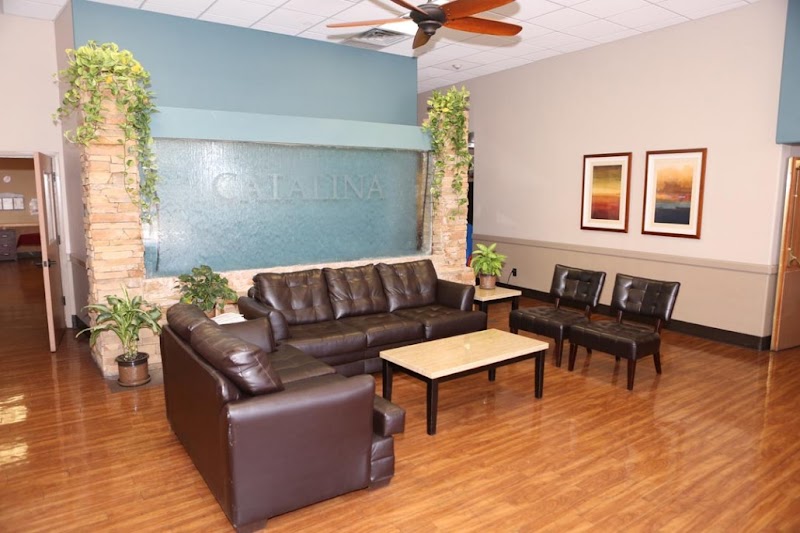
How is Catalina Post Acute And Rehabilitation Staffed?

CMS rates CATALINA POST ACUTE AND REHABILITATION's staffing level at 3 out of 5 stars, which is average compared to other nursing homes. Staff turnover is 46%, compared to the Arizona average of 46%.

What Have Inspectors Found at Catalina Post Acute And Rehabilitation?

State health inspectors documented 20 deficiencies at CATALINA POST ACUTE AND REHABILITATION during 2022 to 2025. These included: 20 with potential for harm.
Who Owns and Operates Catalina Post Acute And Rehabilitation?

CATALINA POST ACUTE AND REHABILITATION is owned by a for-profit company. For-profit facilities operate as businesses with obligations to shareholders or private owners. The facility is operated by THE ENSIGN GROUP, a chain that manages multiple nursing homes. With 102 certified beds and approximately 95 residents (about 93% occupancy), it is a mid-sized facility located in TUCSON, Arizona.
How Does Catalina Post Acute And Rehabilitation Compare to Other Arizona Nursing Homes?

Compared to the 100 nursing homes in Arizona, CATALINA POST ACUTE AND REHABILITATION's overall rating (3 stars) is below the state average of 3.3, staff turnover (46%) is near the state average of 46%, and health inspection rating (2 stars) is below the national benchmark.

What Should Families Ask When Visiting Catalina Post Acute And Rehabilitation?

Based on this facility's data, families visiting should ask: "Can I visit during a mealtime to observe dining assistance and food quality?" "How do you handle medical emergencies, and what is your hospital transfer rate?" "Can I speak with family members of current residents about their experience?"

Is Catalina Post Acute And Rehabilitation Safe?

Based on CMS inspection data, CATALINA POST ACUTE AND REHABILITATION has a clean safety record: no substantiated abuse findings (meaning no confirmed cases of resident harm), no Immediate Jeopardy citations (the most serious violation level indicating risk of serious injury or death), and is not on the Special Focus Facility watch list (a federal program monitoring the lowest-performing 1% of nursing homes). The facility has a 3-star overall rating and ranks #100 of 100 nursing homes in Arizona. While no facility is perfect, families should still ask about staff-to-resident ratios and recent inspection results during their visit.

Do Nurses at Catalina Post Acute And Rehabilitation Stick Around?

CATALINA POST ACUTE AND REHABILITATION has a staff turnover rate of 46%, which is about average for Arizona nursing homes (state average: 46%). Moderate turnover is common in nursing homes, but families should still ask about staff tenure and how the facility maintains care continuity when employees leave.

Was Catalina Post Acute And Rehabilitation Ever Fined?

CATALINA POST ACUTE AND REHABILITATION has no federal fines on record. CMS issues fines when nursing homes fail to meet care standards or don't correct problems found during inspections. The absence of fines suggests the facility has either maintained compliance or corrected any issues before penalties were assessed. This is a positive indicator, though families should still review recent inspection reports for the full picture.

Is Catalina Post Acute And Rehabilitation on Any Federal Watch List?

CATALINA POST ACUTE AND REHABILITATION is not on any federal watch list. The most significant is the Special Focus Facility (SFF) program, which identifies the bottom 1% of nursing homes nationally based on persistent, serious quality problems. Not being on this list means the facility has avoided the pattern of deficiencies that triggers enhanced federal oversight. This is a positive indicator, though families should still review the facility's inspection history directly.