
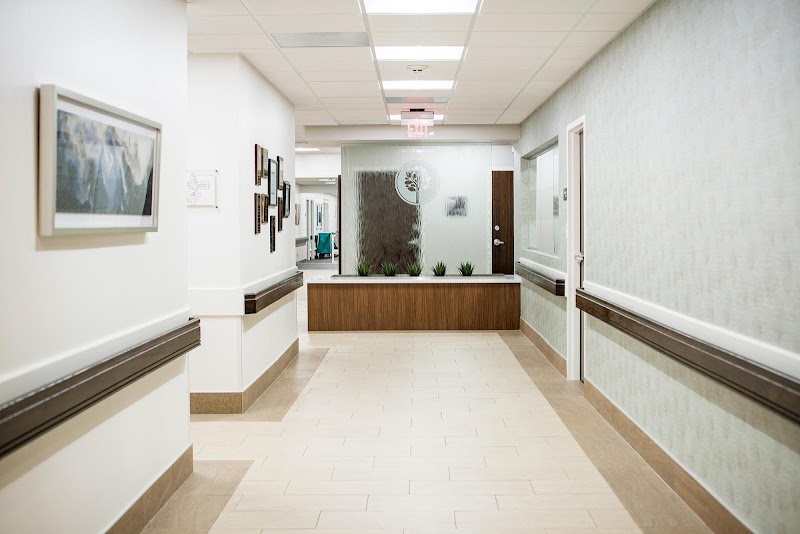

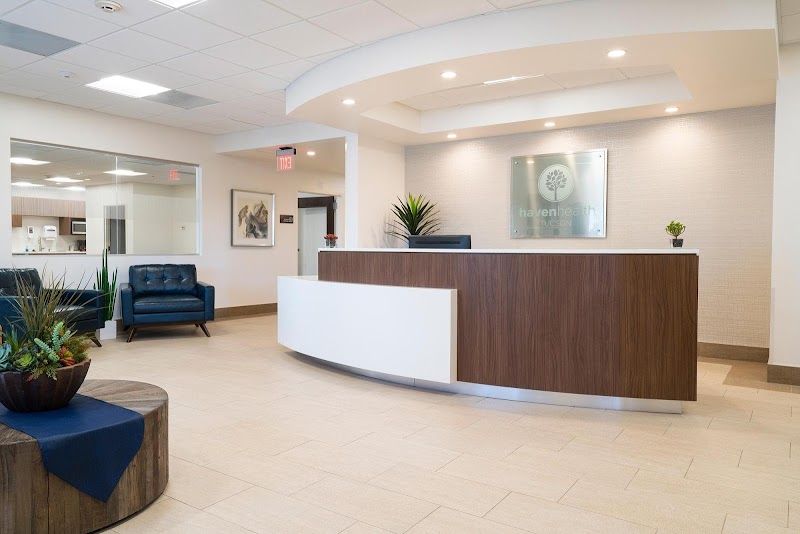
HAVEN OF TUCSON

3705 NORTH SWAN ROAD, TUCSON, AZ 85718 (520) 299-7088
For profit - Limited Liability company 118 Beds HAVEN HEALTH Data: November 2025
Trust Grade
48/100
#83 of 139 in AZ
Last Inspection: December 2024

Within standard 12-15 month inspection cycle. Federal law requires annual inspections.

Overview

Haven of Tucson has a Trust Grade of D, indicating below-average quality and some significant concerns regarding care. It ranks #83 out of 139 facilities in Arizona, placing it in the bottom half, and #13 out of 24 in Pima County, suggesting limited options for better care nearby. The facility is on an improving trend, having reduced issues from 9 in 2024 to just 1 in 2025. Staffing, however, is a notable weakness with a poor rating of 1 out of 5 stars and a turnover rate of 58%, which is higher than the state average. Additionally, the home has faced $7,583 in fines, which is concerning and higher than 82% of Arizona facilities, indicating compliance challenges. Specific incidents from inspections reveal serious issues, such as a resident not receiving necessary treatments as ordered by a physician, leading to their further decline. Another incident involved a resident not receiving adequate care to maintain continence, affecting their dignity. While the facility does have good RN coverage, more than 80% of state facilities, these critical lapses highlight the need for improvement in care practices. Families should weigh these strengths and weaknesses carefully when considering Haven of Tucson for their loved ones.

Trust Score
D
48/100
In Arizona
#83/139
Bottom 41%
Safety Record
Moderate
Needs review
Inspections
Getting Better
9 → 1 violations
Staff Stability
⚠ Watch
58% turnover. Above average. Higher turnover means staff may not know residents' routines.
Penalties
✓ Good
$7,583 in fines. Lower than most Arizona facilities. Relatively clean record.
Skilled Nurses
✓ Good
Each resident gets 54 minutes of Registered Nurse (RN) attention daily — more than average for Arizona. RNs are trained to catch health problems early.
Violations
⚠ Watch
19 deficiencies on record. Higher than average. Multiple issues found across inspections.
★★★☆☆
3.0
Overall Rating
★☆☆☆☆
1.0
Staff Levels
★★★★★
5.0
Care Quality
★★★☆☆
3.0
Inspection Score
Stable
2024: 9 issues
2025: 1 issues

The Good

  • 5-Star Quality Measures · Strong clinical quality outcomes
  • Full Sprinkler Coverage · Fire safety systems throughout facility
  • No fines on record

Facility shows strength in quality measures, fire safety.

The Bad

3-Star Overall Rating

Near Arizona average (3.3)

Meets federal standards, typical of most facilities

Staff Turnover: 58%

12pts above Arizona avg (46%)

Frequent staff changes - ask about care continuity

Federal Fines: $7,583

Below median ($33,413)

Minor penalties assessed

Chain: HAVEN HEALTH

Part of a multi-facility chain

Ask about local staffing decisions and management

Staff turnover is elevated (58%)

10 points above Arizona average of 48%

The Ugly 19 deficiencies on record

2 actual harm
Aug 2025 1 deficiency 1 Harm
SERIOUS (G) 📢 Someone Reported This

A family member, employee, or ombudsman was alarmed enough to file a formal complaint

Actual Harm - a resident was hurt due to facility failures

Quality of Care (Tag F0684)

A resident was harmed · This affected 1 resident

**NOTE- TERMS IN BRACKETS HAVE BEEN EDITED TO PROTECT CONFIDENTIALITY** Based on clinical record review, staff interviews, and facility policy, the facility failed to ensure physician-ordered laborato...

Read full inspector narrative →
**NOTE- TERMS IN BRACKETS HAVE BEEN EDITED TO PROTECT CONFIDENTIALITY** Based on clinical record review, staff interviews, and facility policy, the facility failed to ensure physician-ordered laboratory and intravenous treatment was administered as ordered; and failed to ensure the physician was notified of a critical laboratory result for 1 of 3 sampled residents (#22). This deficient practice resulted in the resident not receiving the prescribed and appropriate treatment needed, resulting in further decline.Findings include:Resident #22 was admitted on [DATE], with diagnoses of malignant neoplasm of the upper lobe right bronchus or lung, malignant pleural effusion, and pneumonia. The care plan dated November 19, 2024, revealed that the resident was at malnutrition status related to diagnoses of emphysema, pneumonia, dementia, acute on chronic respiratory failure with hypoxia, and malignant neoplasm of the right lung. Interventions included diet and supplements as ordered. A 5-day Minimum Data Set (MDS) assessment dated [DATE], included that the resident was cognitively intact and did not have signs of delirium, psychosis, or behaviors. The assessment included the resident required supervision or touching assistance for rolling right to left, sitting to lying, and lying to sitting on the side of the bed.The late entry consultation note dated November 25, 2024, revealed the resident preferred only soups and reported some difficulty with swallowing. Assessments included debilitation, dysphagia, dehydration, and weakness.A Speech Therapy daily note dated November 25, 2024, included that a care coordination was completed with nursing, dietary, and a phone call was placed to the family regarding the resident's refusal of oral nutrition and hydration. The note also included that the resident had no signs or symptoms of aspiration on honey-thick liquid; and that the resident accepted soup and a Magic Cup.An alert note dated November 26, 2024, included that the resident's family complained the resident was not eating enough. According to the documentation, speech therapy recommended thickened liquids to avoid aspiration. Further, the documentation included that the resident refused to have thickened liquids and that he was refusing food. -Regarding IV Sodium ChlorideA physician progress note dated November 27, 2025, included that the resident was cachectic, weak, had poor appetite, and was not eating much.A provider's assessment note dated November 27, 2024, revealed the resident was very thin-appearing and was considering hospice at the time of discharge, and that the resident wanted to get better and stronger. Per the documentation, intravenous (IV) normal saline at 75 cc (cubic centimeter) per hour for one day was ordered.A physician order dated November 27, 2024, included Sodium Chloride Solution 0.9% Use 75 milliliters/hour (ml/hr) intravenously (IV) for 24 hours for dehydration for 1 Day.A provider assessment dated [DATE], included the resident was resting comfortably and denied any changes, nausea, or vomiting, and that he was getting a little bit better. It also included that the staff will start an IV line and give him 1L (liter) of fluids. A physician progress note dated November 29, 2024, revealed that the resident was cachectic and weak. Per the documentation, the IVF (intravenous fluid) was running. A general progress note dated November 29, 2024, revealed that a 26-gauge subcutaneous needle 6mm (millimeter) was placed in the right lower abdomen and that the physician was aware. Review of the Medication Administration Record (MAR) for November 2024 revealed that sodium chloride solution at 100 ml/hr was administered on November 27 for the 6:00 p.m. shift. However, the MAR documented 9 indicating to see nurses notes for sodium chloride solution from November 28 through 29 at 5:00 a.m. shift; and, X from November 29 at 6:00 pm shift through November 30. However, review of the clinical record revealed no evidence that the sodium chloride solution was administered as ordered by the physician from November 28 through November 30, 2024.The clinical record also revealed no documentation of any reason why sodium chloride solution was not administered, and that the physician was notified.The alert note dated December 2, 2024, included that on November 28, 2024, at approximately 4:00 p.m., the nurse attempted to place an IV for IV fluids without success. The documentation included that the resident's family was in the room at that time, and that the nurses present encouraged the resident and family to encourage fluids. The clinical record review revealed no documentation of further attempts to insert the IV, and that sodium chloride solution was administered as ordered. There was also no evidence found in the clinical record that the order of IV sodium chloride solution was discontinued by the physician.However, this order was not transcribed onto the MAR for December 2024. There was no evidence found in the clinical record that sodium chloride solution was administered as ordered on December 1, 2024. -Regarding laboratory orderA provider's assessment note dated November 27, 2024, revealed the resident was very thin-appearing and was considering hospice at the time of discharge, and that the resident wanted to get better and stronger. Per the documentation, an immediate (STAT) Complete Blood (CBC), Comprehensive Metabolic Panel (CMP), Magnesium, and Vitamin D, along with a urinalysis (UA) were ordered.The physician order dated November 27, 2024 included a STAT order for CBC, CMP, urinalysis, and vitamin D and magnesium levels. Despite being a STAT order, the Laboratory and Diagnostic Administration Record for November 2024 revealed that the laboratory order for CBC, CMP, vitamin D, and magnesium was documented as completed only on November 28, 2024. A laboratory result with a report date of November 30, 2024, at 9:39 p.m. for a CBC with differential, platelet, magnesium, and vitamin D revealed a critical value for Potassium of 8.7 mmol/L (millimole/Liter). The normal range for potassium was 3.6 to 5.3 mmol/L.Despite the documentation of a critical value for potassium, there was no evidence found in the clinical record that the physician was informed of the critical laboratory results. A Physical Therapy daily note dated November 30, 2024, included that during treatment, the resident was very lethargic and slow responding.The general progress note dated December 1, 2024, at 3:00 p.m. revealed the resident was lying in bed and was not responding to verbal stimuli. Per the documentation, the carotid pulse was checked, and the resident did not have a pulse; and that the resident had an advanced directive of DNR (do not resuscitate). It also included that the Medical Doctor and the nursing manager were notified. An interview was conducted on August 7, 2025, at 12:05 PM with a Registered Nurse (RN, staff #89) who stated she was present on the day resident #22 died but was not assigned to the resident. She described it as an absolute happenstance that she found the laboratory results. The RN said that she called the physician immediately-within two hours of the resident's death-but does not recall the exact time. She stated that the nurse assigned to resident #22 was a Licensed Practical Nurse (LPN, staff #18). The RN also said that the facility was aware that resident #22 was dying and described the resident as looking like a skeleton. She expressed concern that the laboratory did not notify the nurse of the critical potassium value and stated she does not understand how the critical lab result was missed.An attempt was made to conduct a phone interview with the LPN (staff #18) on August 11, 2025, but was unsuccessful because the phone number was disconnected. An interview was conducted on August 12, 2025, at 12:30 PM with an LPN (staff #43) who stated that when a physician orders IV therapy, she explains the procedure to the resident, inserts the IV, and starts the medication as ordered. She said that the Respiratory Therapy (RT) team was certified to place IVs and had equipment to locate veins. She also said that if she was unable to insert the IV, she would ask another nurse to try, and if that nurse was also unsuccessful, she would contact the RT team; and she documents all related information in the progress notes. The LPN stated that if a laboratory test was ordered, she fills out the lab slip; and, for STAT (immediate) orders, she calls the lab directly and marks the test in the Treatment Administration Record (TAR) once the sample is collected. She said that if a critical result is received, the lab contacts the nurse, who then notifies the physician and waits for further instructions; and that she follows all physician orders and informs both the resident and their family. The LPN said that lab results were maintained in the electronic medical record and appear automatically under the laboratory tab once reported. She said that nurses can also write progress notes linked to lab results. The LPN further stated that it was unacceptable for the lab to delay drawing STAT samples; and in such cases, she contacts the lab repeatedly until the sample is drawn, notifies the provider and the Director of Nursing (DON), and documents the issue in the progress notes. During the interview, the clinical record was reviewed with the LPN, who confirmed that there was no documentation of IV placement on November 28, 2024, and the only lab result in the record was a CBC with differential, magnesium, and vitamin D, collected on November 30, 2024, and reported the same day. She stated that the potassium level was 8.7, which she described as pretty high. The LPN also stated that the resident should have been sent to the hospital or treated to lower the potassium level, and the physician should have been notified. However, there was no documentation in the clinical record showing that the physician was informed of this result.An interview was conducted on August 12, 2025, at 11:16 p.m. with a Registered Nurse (RN/staff #5) who stated that if a physician orders an IV, he would attempt to insert it himself. he said that if unsuccessful after 2-3 attempts, he would ask another nurse to try; and, if that nurse was also unable to insert the IV, they would contact Respiratory Therapy (RT) to place a midline, as the RT manager has access to an ultrasound machine. He stated that the provider would be notified and all actions would be documented in the clinical record, and that any unsuccessful IV attempts should also be documented. Regarding STAT lab orders, the RN said that he would call the lab to place the order, complete a requisition form, and wait for lab staff to arrive. He stated that all STAT labs must be called in and that he would receive an order number during the call. He said that once the lab sample was drawn, he marked it as completed in the electronic medical record (EMR). He stated that lab results were typically available within 2 to 6 hours and appear under the laboratory tab in the EMR; and, when STAT results are available, he sends a screenshot to the provider to ensure a prompt response. He said that if a nurse receives a critical lab result, they should text the provider, and if there was no reply within 5 minutes, follow up with another text and continue to monitor the laboratory tab in the electronic record. The RN said that he has never experienced delays with STAT labs being picked up and has never had to wait days for results. He stated that all events, including IV issues, doctor notifications, and lab results, should be documented in the progress notes. During the interview, the RN reviewed the clinical record and stated there was no documentation showing the physician was notified of IV issues on November 28, 2024. He said that a STAT order for CBC, CMP, urinalysis, and magnesium was placed on November 27, 2024, but the sample was not collected until November 30, 2024. He further stated that the STAT lab order from November 27, 2024, was likely never called in and that he could not find any documentation indicating that the nurse on duty took action on the order. He said that a STAT lab order dated November 30, 2024, was collected at 8:20 a.m., received by the lab at 9:44 a.m., and the results were available just before midnight. However, there was no documentation that the provider was notified of the results.In an interview with the Director of Nursing (DON/staff #16) conducted on August 12, 2025, at 1:24 p.m., the DON stated that no laboratory samples were drawn on November 28, 2024. She said the physician entered the lab order on November 27, 2024, at 5:13 p.m., and the nurse completed the lab slip at 1:19 a.m. on November 28, 2024. The DON also stated that IV fluids were started on November 27, 2024, at a rate of 75 mL per hour and were later increased to 100 mL per hour.A follow-up interview was conducted with the Director of Nursing (DON/staff #16) on August 12, 2025, at 2:45 p.m. The DON stated that a STAT order means it should be completed as soon as possible, and that critical results were those that fall outside the normal range. The DON said that, depending on the test, critical lab results should be addressed promptly based on the resident's clinical condition. However, the facility does not have a specific timeframe for acting on critical lab results. The DON stated that the current process for orders was that once a physician enters an order, the nurse must confirm it. The DON said that previously, orders might not be seen right away unless someone was reviewing the system, and that the expectation was that if something was ordered, it should be completed. During a review of the clinical record, the DON confirmed that IV saline (sodium chloride solution) was started on November 27, 2024, for resident #22; the IV line appeared to have been lost, and a subcutaneous line was started on November 29, 2024. The DON said that there was no documentation showing that the physician or administration had been informed. Regarding the lab orders, the DON said the physician entered the lab order on November 28, 2024, and the nurse completed the lab slip. However, the DON said that the lab did not draw the sample until November 30, 2024, at 9:20 a.m., and the facility did not receive the results until 10:39 p.m. that night. The DON stated that a potassium level over 8 was considered critical, and not reporting such a result does not meet her expectations. The DON said that the result should have been reported to the physician as soon as staff saw it; and, STAT lab orders, staff should be actively checking for results, and the lab should call the facility with critical values. Additionally, the DON said staff should have informed the physician during their shift if they were unable to start an IV for resident #22, and also should have informed the physician if they were unable to obtain the STAT lab sample. Further, the DON stated that both staff and physicians need to document these issues more thoroughly. The DON stated that the only policies she could provide were those related to reporting medications not administered, timeliness of obtaining lab samples, and timeliness of reporting lab results. She said the facility does not have a specific policy on the development or implementation of procedures and policies.A policy and protocol named Specimen Collection: Lab and Diagnostic Test Results - Clinical Protocol, with an effective date of January 1, 2024, revealed that the physician will identify and order diagnostic and lab testing based on the resident's diagnostic and monitoring needs, and the staff will process test requisitions and arrange for tests. This document included a nurse who will identify the urgency of communicating with the attending physician based on physician request, the seriousness of any abnormality, and the individual's current condition.A policy and protocol named Medications: Administering Medications, noted as Policies and Procedures in effect on January 1, 2024, revealed that medications are administered in accordance with prescriber orders, including any required time frame. This document included that medications are administered within one (1) hour of their prescribed time, unless otherwise specified (for example, before and after meal orders). A policy and protocol named Documentation: Charting and Documentation noted as Policies and Procedures in effect on January 1, 2024 revealed that all services provided to the resident, progress toward the care plan goals, or any changes in the resident's medical, physical, functional or psychosocial condition, shall be documented in the resident's medical record and that documentation of procedures and treatments will include care-specific details, including: a. the date and time the procedure/treatment was provided; b. the name and title of the individual(s) who provided the care; c. the assessment data and/or any unusual findings obtained during the procedure/treatment; d. how the resident tolerated the procedure/treatment; e. whether the resident refused the procedure/treatment; f. notification of family, physician, or other staff, if indicated; and g. the signature and title of the individual documenting.A policy named Resident Rights/Dignity: Abuse, Neglect, Exploitation and Misappropriation Prevention Program noted as Policies and Procedures in effect on January 1, 2024 revealed that residents have the right to be free from neglect and that the resident abuse, neglect and exploitation prevention program consists of a facility-wide commitment and resource allocation to support the objective to develop and implement policies and protocols to prevent and identify neglect of residents.
Dec 2024 7 deficiencies
CONCERN (D)

Potential for Harm - no one hurt, but risky conditions existed

Deficiency F0604 (Tag F0604)

Could have caused harm · This affected 1 resident

**NOTE- TERMS IN BRACKETS HAVE BEEN EDITED TO PROTECT CONFIDENTIALITY** Based on observation, record review, interviews, and facility policy, the facility failed to ensure that monitoring and evaluati...

Read full inspector narrative →
**NOTE- TERMS IN BRACKETS HAVE BEEN EDITED TO PROTECT CONFIDENTIALITY** Based on observation, record review, interviews, and facility policy, the facility failed to ensure that monitoring and evaluation of physical restraints are completed for the continued use of physical restraints for one resident (Resident #62). The deficient practice could lead to increased isolation and/or other psychosocial harm. Findings include: Resident #62 was initially admitted into the facility on April 16, 2024, and then re-admitted on [DATE] with the diagnosis of metabolic encephalopathy, pneumonitis due to inhalation of food and vomit. A review of a care plan focus initiated on August 13, 2024 revealed that Resident #62 used a form of physical restraints, bilateral soft mitts. The focus also revealed interventions to ensure the resident is positioned correctly with proper body alignment while restrained, and, as well as monitoring and assistance every 2 hours for daily care. An order dated August 13, 2024 revealed that staff will ensure proper placement of bilateral soft mitts are released every two hours for ten to fifteen minutes. An order dated August 19, 2024 revealed that staff will provide frequent checks for safety and positioning of mitts, and to notify the provider for any skin breakdown. A review of a quarterly Minimum Data Set (MDS) assessment dated [DATE] revealed no evidence of a Brief Interview for Mental Status (BIMS) score. The MDS also revealed that the resident is completely dependent on staff assistance. The MDS also revealed that the resident had a limb restraint for daily use in bed. On December 16, 2024 at 12:00 P.M. an observation was done on Resident #62, where Resident #62 was observed in bed with bilateral soft mitts on. In an interview conducted on December 16, 2024 at 12:25 P.M. with the power of attorney (POA) for Resident #62, the POA stated their approval of the restraint and the communication received, regarding the bilateral soft mittens. The POA also stated that they were provided the education and the expectations regarding the restraints and shared that they believe the facility had not provided regulation accordingly, and properly, as it was discussed with them. An interview conducted on December 16, 2024 at 12:46 P.M. with a Certified Nursing Assistant (CNA/Staff #206), where Staff #206 stated they had been provided training on the usage of restraint devices, including bilateral mitts, and to remove the restraint every two hours. Staff #206 stated that specifically for Resident $62, the were to observe the resident's hands for any skin tares and skin abnormalities, and as well as if the resident states of any itchiness and sweating in the mitts. Staff #206 stated that any CNA and nurse has the capability to assist the resident with the removal of the restraint and that the restraint had been ordered for the resident as Resident #62 had a history of pulling out their tracheostomy tube and their peripherally inserted central catheter (PICC) line. Staff #206 stated that their role in this process is to document their checks on the Resident #62's tasks chart on the facility's electronic health record platform. An interview conducted on December 16, 2024 at roughly 12:50 P.M. with a Care Coordinator (Staff #72), were Staff #72 stated that the expectation with physical restraints is to complete skin observations and provide the resident with supervised time with the restraints off every two hours. Staff #72 also stated that the time spent monitoring the resident with restraints off can be between 10-15 minutes. An interview conducted on December 16, 2024 at 1:05 P.M. with a Licensed Practical Nurse (LPN/Staff #196) where Staff #196 stated they had been provided training on the usage of restraint devices, which included bilateral mitts, and that they were trained to remove the restraint every two hours, providing monitored time of 10 to 15 minutes with the restraints off, and then to ensure that there is at least a two finger gap around the closure of the restraint. Staff #196 also stated that Resident #62 had been ordered the usage of restraints due to their history of behavioral episodes where the resident had tried to remove their tracheostomy tube and their peripherally inserted central catheter (PICC) line. Staff #196 stated that their role is to complete their checks on the Resident #62's treatment administration record and to complete assessments such as a restraint assessment and a skin assessment, on the facility's electronic health record platform. Staff #196 had also stated that there were times where the completion of charting the checks are not completed, and that they are missed. An interview conducted on December 16, 2024 at 1:39 P.M. with the POA for Resident #62, and the POA shared that they had been with Resident #62 since approximately 9:00 A.M. that day, and that the expectations provided to them regarding the restraint, had not been completed. On December 16, 2024 at 1:45 P.M. an observation was done on Resident #62, where Resident #62 was observed in bed with bilateral soft mitts on. An interview was completed with the Director of Nursing (DON/Staff #94) on December 16, 2024 at 2:14 P.M., where Staff #94 stated that the expectations of restraint usage is that all staff, CNA's, nurses, and as well as respiratory nurses, are to be trained to aid with restraints, including soft bilateral mitts. That CNA's are to complete their hourly checks in any resident's task chart, regardless of what changes or conditions are observed. During this interview, Resident #62's tasks charts were reviewed up to 14 days prior to the investigation, and it revealed that the only date, out of the previous 14 days, where the charting tasks were completed accurately was December 8, 2024. Staff #94 stated that the incompletion of the expected monitoring of restraints did not meet the facilities expectations and the professional standards of the facility, as the harm to incorrect restraint monitoring for Resident #62 can lead to break down of the skin. A review of the facility's policy titled Use of Restraints revealed that the opportunity for motion and exercise were to be provided for a period of not less than ten minutes during each two hours, in which restraints are employed. The policy also revealed that the resident should be repositioned at least every two hours on all shifts.
CONCERN (D)

Potential for Harm - no one hurt, but risky conditions existed

Deficiency F0658 (Tag F0658)

Could have caused harm · This affected 1 resident

Based on observations, staff interviews, and facility policy review, the facility failed to ensure professional standards were met during medication administration. The deficient practice could result...

Read full inspector narrative →
Based on observations, staff interviews, and facility policy review, the facility failed to ensure professional standards were met during medication administration. The deficient practice could result in the spread of infection and undesirable medication- induced harm. The facility census was 106, and there were 22 sampled residents. Findings include: A medication administration observation was conducted on December 17, 2024 at 7:32 A.M. with a Licensed Practical Nurse (LPN/Staff #242). The LPN was observed to dispense a Mirapex tablet into his ungloved hand, split the tablet in half while his hands continued to be ungloved. The LPN then placed the medication into a clear medication cup, placing the residual half of the tablet into an unlabeled medication cup and stored it in the medication cart, stating to save for the afternoon. The LPN was also observed to reach into a medication cup with ungloved hands to retrieve a medication that the resident refused and disposed of the medication in the resident's room trash, then administered the rest of the medications. An interview was conducted with LPN (staff #242) on December 17, 2024 at 8:07 A.M. who stated that he was not sure what the policy was regarding saving the residual medication after splitting the Mirapex in half, but he said he could waste the residual medication and then do the same thing for the afternoon dose. The LPN stated that he should have used gloves and split the medication with the pill cutter instead of splitting it with his ungloved hands. The LPN also stated that he could have asked the resident to retrieve the medication that she refused and disposed of it in the sharps container rather than retrieving it with his ungloved hands and disposing of the medication in the resident's trash. The LPN further stated that not using gloves, the pill cutter, or disposing of the medications appropriately did not meet facility expectations. The LPN stated that the risk to the resident could result in contamination of the medication. An interview was conducted with the Director of Nursing (DON/Staff #94) on December 17, 2024 at 2:05 P.M. who stated that the process for cutting a medication in half would be to wear gloves and cut it in half with a pill cutter, and dispose of the residual. She stated that it was her expectation that staff would dispose of the residual medication and not save it for later use. The DON also stated that the facility expectation would be to follow the state guidelines and regulations regarding the disposal of medications and not dispose of medications in the trash. She further stated that dispensing medications, splitting medications, retrieving medications from a medication cup with ungloved hands, and not disposing of medications appropriately did not meet facility expectations. The DON stated that the risk to the residents could result in medication contamination by not wearing gloves, receiving an incorrect dose of medication if not split correctly, and another person could take the contaminated medication out of the trash and consume it. Review of a facility policy titled, Medications: Discarding Medications, version 051123 revealed that non-controlled and Schedule V (non-hazardous) controlled substances are disposed of in accordance with state regulations and federal guidelines regarding the disposition of non-hazardous medications. Review of a facility policy titled, Medications: Administering Oral Medications, version 051123 indicated that for tablets or capsules from a bottle, to not touch the medication with your hands, and to place unit dose tablets or capsules directly into the medication cup.
CONCERN (D) 📢 Someone Reported This

A family member, employee, or ombudsman was alarmed enough to file a formal complaint

Potential for Harm - no one hurt, but risky conditions existed

Deficiency F0685 (Tag F0685)

Could have caused harm · This affected 1 resident

**NOTE- TERMS IN BRACKETS HAVE BEEN EDITED TO PROTECT CONFIDENTIALITY** Based on observations, interviews, review of clinical records, and review of facility policy, the facility failed to ensure one ...

Read full inspector narrative →
**NOTE- TERMS IN BRACKETS HAVE BEEN EDITED TO PROTECT CONFIDENTIALITY** Based on observations, interviews, review of clinical records, and review of facility policy, the facility failed to ensure one resident (#46) received assistance to maintain hearing ability. This deficient practice can result in in-effective communication. Findings Include, Resident # 46 was admitted to the facility on [DATE], with diagnoses of a right pelvic fracture, atrial fibrillation, anticoagulant therapy, anxiety, depression, and lack of coordination. The resident's inventory dated November 27, 2024 failed to list hearing aids under the resident's personal property. The resident's order dated November 27, 2024 revealed the resident could be seen by an audiologist. The care plan dated November 27, 2024 with the download date of December 16, 2024, revealed no focus, goals, or interventions for resident's hearing. The admission Minimum Data Set (MDS) dated [DATE] revealed the resident scored a 15 on the Brief Interview for Mental Status (BIMS), indicating the resident was cognitively intact. The MDS also revealed the resident had minimal difficulty in the ability to hear. The MDS did not reveal the resident use of hearing aids as an assistive device. A psychological evaluation note dated December 10, 2024 revealed the resident's cognitive functioning and fund of knowledge were intact and age appropriate. A progress note dated December 10, 2024 revealed the resident required multiple verbal cues for redirection, after revealing resident demonstrated compromised cognition. A progress note dated December 13, 2024 revealed the resident was alert and oriented, but needed redirection during the day, and exhibited some signs confusion in the evening. A progress note dated December 16, 2024 revealed resident did not have dementia or any other neurological concerns at the time Review of the clinical record revealed no other information about the resident's hearing aid, such as when the hearing aid should be used, how much assistance the resident needed with the hearing aid, or that the resident had used the hearing aid while in the facility. Review of the clinical record revealed no information regarding the escalation of any concerns regarding resident confusion. A resident observation was conducted on December 15, 2024 at 2:40 p.m. Resident laying in bed. No writing materials, sensory boards, or any other hearing assistive device in resident's area with the exception of the left ear hearing aid. The resident was observed on December 16, 2024 at approximately 9:30 a.m. during breakfast. No writing materials, sensory boards, or any other hearing assistive device in resident's area, with the exception of the left ear hearing aid. The resident was observed speaking with a Certified Nurse Assistant (CNA) and the unit manager regarding her hearing aid. The CNA stated to the resident and unit manager that she charged the resident's hearing aid for her every night. No writing materials, sensory boards, or any other hearing assistive device in resident's area, with the exception of the resident's hearing aid charging by the television set. An interview with the resident was conducted on December 15, 2024 at 2:40 p.m. The resident vocalized anxiety and frustration over the malfunction of her hearing aid. The resident further elaborated that it is very difficult to communicate with the staff, and tells them to slow down and please be patient with her. The resident stated that she has told the nurses about her hearing aid but they have not done anything about it. The resident denied the ability to communicate with sign language. An interview conducted with a CNA (CNA/Staff #28) on December 16, 2024 at 8:50 a.m. The CNA stated that when a resident is hard of hearing they try to accommodate the resident by slowing down and speaking clearer. The also will write things down for the resident for increased understanding. A revisit interview was conducted on December 16, 2024 at 9:30 a.m. with resident #46 whom revealed that the staff does not write messages down for her, but they do their best to speak loud enough and repeat for her. The resident stated that writing messages on a pad would be a great idea. The resident further elaborated that sometimes when she still cannot understand what some staff members say, she will tell them to just be patient with me. On the subject of forgetfulness, the resident stated she is a little forgetful at times, but a lot of times, she does not understand what is being said. The resident further stated sometimes when she does not understand she just goes along with what I think they are saying. An interview was conducted on December 17, 2024 with Social Services Director (SS/Staff #126) at 2:51 p.m. The director stated that the facility works closely with the resident, and refers to the clinical record in order to determine if any communication sensory needs are present. The director further elaborated that the facility provides communication boards, google, and writing pads to assist with resident communication. In regards to scheduling the appointment, the order is received by the primary care provider, and communicated to the staff who will schedule the appointment, and assist with transportation. An interview was conducted with the MDS Coordinator (MDS/Staff #72) on December 18, 2024 at approximately 11:00 a.m. The coordinator was unable to locate in the MDS, the need for assistive devices for hearing. The coordinator stated the MDS is based on admission assessments, resident observations, and any other credible/approved clinical source. The coordinator explained that the MDS does assist in resident care planning. In addition, there is a likelihood that if the need for a hearing assistive device is missed on the MDS, it may also not immediately reflect in the care plan. A written interview/correspondence conducted with the MDS Coordinator (Staff # 72) on December 18, 2024 at 1:21 p.m., revealed the coordinator submitted a correction for the MDS. In addition, the coordinator noted hearing difficulty was already care planned in the clinical record. An interview was conducted with the Director of Nursing (DON/Staff #94) on December 18, 2024 at approximately 11:43 a.m. stated the process for residents with hearing impairments are identified and care planned for. The DON voiced that the hearing aid should have been included on the inventory sheet, the MDS, and the care plan of resident # 46. The director also further explained that staff are expected to communicate with all residents in a way that gives the greatest clarity and understanding. Staff # 94 agreed that the resident will benefit greatly from hearing assistance follow-up. The facility's Accommodation of Needs policy revealed the resident's need for adaptive devices and modifications to the physical environment are evaluated upon admission, and reviewed on an ongoing basis. The facility's Care of the Hearing-Impaired Resident policy revealed that the staff will assist hearing impaired residents to maintain effective communication with clinicians, caregivers, other residents and visitors. The facility's Resident Examination and Assessment policy revealed the assessment process shall be systematic, comprehensive and multidisciplinary based on the individual's needs, acuity, and priorities in accordance with physician orders.
CONCERN (D)

Potential for Harm - no one hurt, but risky conditions existed

Accident Prevention (Tag F0689)

Could have caused harm · This affected 1 resident

**NOTE- TERMS IN BRACKETS HAVE BEEN EDITED TO PROTECT CONFIDENTIALITY** Based on staff interviews, clinical record review, and facility policy, the facility failed to ensure that one resident (#149) w...

Read full inspector narrative →
**NOTE- TERMS IN BRACKETS HAVE BEEN EDITED TO PROTECT CONFIDENTIALITY** Based on staff interviews, clinical record review, and facility policy, the facility failed to ensure that one resident (#149) was not discharged with an unnecessary device. this deficient practice could result in infection and increased risks of death. Resident #149 was admitted on [DATE] with diagnoses of urinary tract infection, Klebsiella pneumoniae and type 2 diabetes. This resident was discharged to an assisted living facility on February 6, 2024. A care plan initiated on January 16, 2024 included that the resident was on Antibiotic Therapy including Meropenem for a urinary tract infection. Interventions included to observe for possible infection every shift. A physician's order dated January 16, 2024 included Meropenem (antibiotic) Intravenous Solution Reconstituted 1 gram Use 1 gram intravenously every 8 hours for urinary tract infection for 3 Days was discontinued on January 19, 2024. A review of the clinical record did not find any medications administered intravenously after January 19, 2024. A physician's order dated January 16, 2024 included to flush PICC Line with 10ml of NS Q Shift, PRN and Pre and Post Medication every shift for PICC Line Usage. This order was discontinued on January 30, 2024. Review of the clinical record included that the last notation of this cap being changed was on January 30, 2024. However, review of the record indicated that this resident had the PICC line until February 7, 2024. A physician's order dated January 16, 2024 included monitor PICC Line insertion site every shift for signs/symptoms of infection including redness, warmth, swelling, drainage every shift for PICC line usage. This order was discontinued on January 30, 2024. Review of the clinical record included that the last notation of this cap being changed was on January 30, 2024. However, review of the record indicated that this resident had the PICC line until February 7, 2024. A physician's order dated January 16, 2024 included to change PICC line dressing every 7 days and as needed using sterile technique every day shift every Thursday for PICC Line Usage. This order was discontinued on January 30, 2024. Review of the clinical record included that the last notation of this cap being changed was on January 25, 2024. However, review of the record indicated that this resident had the PICC line until February 7, 2024. A physician's order dated January 16, 2024 included discontinue intravenous (IV)/PICC line after completion of IV antibiotics, however review of the clinical record did not reveal documentation that the IV/PICC line had been removed. A medication administration note dated January 25, 2024 included that the resident was no longer on IV antibiotics and that a message was sent to the MD to remove the PICC line and that the writer was awaiting a response. However, no further record of the PICC line was included until February 7, 2024. A progress note dated February 6, 2024 included Patient was discharged today at 1800 hours. patient unable to sign paperwork. Personal belongings and leftover meds were taken with. Picked up by transportation company A progress note dated February 7, 2024 included Went to patients care home and removed midline no bleeding noted tip intact patient tolerated well pressure dressing applied An interview was conducted on December 17, 2024 at 1:08 P.M. with a Licensed Practical Nurse (LPN/staff #242) who said that they perform multiple discharges and that usually when a resident is finished with antibiotics, there is an order to remove the PICC line. This nurse said that the only reason the resident would keep a PICC line is if they are going to continue the IV meds. This nurse reviewed the medical records and said that they saw that the resident was on Meropenum and said that they saw were the medication was discontinued and that the PICC line should have been discontinued at that time. This Nurse checked the medical record and was unable to find where the PICC had been discontinued and said that they would not have been able to discontinue it as only a Registered Nurse (RN) could do so. This nurse said that there were multiple RN's to ask including the admissions, wound or managers. An interview was conducted on December 17, 2024 at 2:02 P.M. with the owner of the assisted living facility that resident #149 discharged to. This person stated that the assisted living does not provide infusion and that he believed that the Skilled nursing facility sent a nurse out to remove the PICC line. An interview was conducted on December 17, 2024 at 2:40 P.M. with the Manager of the assisted living facility that this resident discharged to from the skilled nursing facility. This person said that resident #149 arrived at her facility around 7pm, and in the morning when the staff were getting her dressed they informed her that the resident had an IV. This staff said that she sent a picture of the IV site to the assisted living facility's Medical Director who stated that the IV was a PICC line and that the assisted living staff should not remove it. This staff then reached out to the DON (staff #352) who asked if they could remove the PICC. This staff informed staff #352 that the Medical Director was not comfortable removing the PICC and that staff #352 would need to send someone to remove it. This staff said that a person from the skilled nursing facility came and took it out. An interview was conducted on December 18, 2024 at 10:47 A.M. with a Registered Nurse (RN/staff #57 who said that a PICC line should be pulled by an RN after getting an order from a provider. They said that the PICC line should be flushed and the dressing on it maintained until it can be removed. This staff said that a patient should absolutely not be discharged with a PICC. This staff reviewed the clinical record and said that the last time the dressing was changed was on January 25, 2024 and that this PICC line was not discontinued prior to the resident's discharge. This staff said that the dangers of a resident discharged with a PICC line would be the use of illegal drugs and sepsis. An interview was conducted on December 18, 2024 at 11:09 A.M. with the Director of Nursing (DON/staff #94) who said that the staff should flush PICC's every shift and change the dressing once a week. This staff said that residents are not discharged with a PICC line unless they are going home with IV antibiotics and going to an infusion clinic. This DON reviewed the clinical record and said that this resident did not receive IV antibiotics in February and that the order to discontinue the PICC line was on January 31. This DON stated that the last time the dressing was changed was on January 25 and the last time the PICC line was monitored was on January 30 on the day shift. This DON stated that the PICC should have been monitored and flushed, and the dressing changed. This DON said that this resident should not have been discharged with a PICC and that the resident could have gotten a hell of an infection, could have bled, she could have been shooting up from the PICC line left in. This DON stated that she would check if there was a policy for not discharging a resident with a PICC line and provide it if there was, however such a policy was not provided. A policy titled Intravenous Therapy: Central Venous Catheter Care and Dressing Changes noted to be in effect January 1, 2024, included that the purpose of this procedure is to prevent complications associated with intravenous therapy, including catheter- related infections that are associated with contaminated, loosened, soiled, or wet dressings. This document included that staff should change the dressing if it becomes damp, loosened or visibly soiled and at least every 7 days for a transparent semi-permeable membrane (TSM) dressing, at least every 2 days for sterile gauze dressing (including gauze under a TSM unless the site is not obscured) or immediately if the dressing or site appear compromised. This document included that staff should assess central venous access devices with each infusion and at least daily they should visually inspect the entire infusion system (solution, administration set and dressing), check expiration dates of the infusion, dressing and administration set, assess the patency of the vascular access device, and palpate and inspect the skin, dressing and securement device for signs of complications, including dislodgement, redness, tenderness, swelling, infiltration, induration, elevated body temperature; or drainage. This document included that date and time dressing was changed should be recorded in the resident's medical record.
CONCERN (D)

Potential for Harm - no one hurt, but risky conditions existed

Deficiency F0692 (Tag F0692)

Could have caused harm · This affected 1 resident

**NOTE- TERMS IN BRACKETS HAVE BEEN EDITED TO PROTECT CONFIDENTIALITY** Based on clinical record review, interviews, facility documentation and policy, the facility failed to ensure that one resident ...

Read full inspector narrative →
**NOTE- TERMS IN BRACKETS HAVE BEEN EDITED TO PROTECT CONFIDENTIALITY** Based on clinical record review, interviews, facility documentation and policy, the facility failed to ensure that one resident (#74) was weighed on admission. This deficient practice can impact the nutritional and hydration needs of the residents. Findings include: Resident was admitted to the facility on [DATE], with diagnoses that included quadriplegia, protein-calorie malnutrition, feeding tube, and difficulty swallowing. A care plan with the initiate date of November 27, 2024 had a noted goal of experience no significant weight changes (i.e. 5% x 1 month, 7.5% x 3 months, and 10% x 6 months). An order dated November 27, 2024, with a start date of December 1, 2024, revealed the resident was to be weighed on admission, and then to follow facility protocol. In addition, the resident was to be weighed every day shift on Sundays. A care plan with the initiate date of December 1, 2024 had a noted goal of to maintain the resident's weight without significant weight variance. The admission Minimum Data Set (MDS) dated [DATE] revealed the resident scored a 15 on the Brief Interview for Mental Status (BIMS), indicating the resident was cognitively intact. The MDS in addition revealed the resident weighed 117 pounds, and experienced a weight loss (either 5% or more over the last month, or a 10% loss over the last 6 months). It clarifies that at the time of weight change the resident was not on a physician-prescribed weight-loss regimen. A progress note for December 12, 2024 revealed the resident weight on December 3, 2024 was used to help determine the resident need for nutritional adequacy and weight management. The note in addition recorded the Ideal Body Weight Range (IBWR) as 126-154 pounds. A Treatment Administration Record (TAR) for December 2024, with the download date of December 16, 2024, revealed a resident weight of 117 pounds on both December 8, 2024, and December 15, 2024. Further review of the clinical record revealed no evidence the resident was weighed on date of admission. An interview was conducted with a Certified Nursing Assistant (CNA/Staff #28) on December 16, 2024 at 8:50 a.m. Staff #28 revealed a job responsibility is to obtain new residents' weights upon admission. The type of scale and frequency of weights depends on the ability of the resident, and the physician order. The CNA further explained that the resident weights are recorded in the clinical record. Staff #28 stated that if the CNA's have any concerns about the weight and resident, they immediately report to the nurse. An interview was conducted with the Dietary Manager (Staff #168) on December 17, 2024 at approximately 1:33 p.m. The dietary manager verified all residents are to be weighed on admission and then weekly for four weeks. The manager reviewed the resident's clinical record and verified the initial weight was not recorded until December 3, 2024. The manager stated that not obtaining the weight upon admission is not facility policy or following physician order. The manager further stated that resident weights, especially the initial weights, are of great importance in determining weight variance and improving clinical outcomes. A written interview/correspondence from the Executive Director (ED/Staff #421) on December 17, 2024 at 12:30, verified that the resident was not weighed on admission, but rather the initial weight was obtained on December 3, 2024. An interview was conducted on December 18, with the Director of Nursing (DON/Staff # 94) revealed that all residents are to be weighed upon admission, and as ordered. The DON stated she was only able to locate the resident weight on December 3, 2024 in the clinical record. The DON voiced this did not meet facility standards, or physican orders. The director recognized the resident has a low Body Mass Index (BMI) and weight monitoring is vital for the resident's well-being. The facility's Nutrition Management Program revealed that all residents are weighed within 24 hours of admission and then for the following four weeks or until stable. Residents that demonstrate a significant weight loss will be placed on weekly weights until weight is stabilized. All other residents will be weight monthly. The facility's Weight Assessment and Intervention policy revealed residents are to be weighed upon admission and at intervals established by the interdisciplinary team.
CONCERN (D)

Potential for Harm - no one hurt, but risky conditions existed

Deficiency F0761 (Tag F0761)

Could have caused harm · This affected 1 resident

Based on observations, staff interviews, and policy review, the facility failed to ensure medications were disposed of according to accepted professional standards. The deficient practice of erroneous...

Read full inspector narrative →
Based on observations, staff interviews, and policy review, the facility failed to ensure medications were disposed of according to accepted professional standards. The deficient practice of erroneous medication disposal may result in undesirable medication- induced harm. The facility census was 106, and there were 22 sampled residents. Findings include: During a medication administration observation conducted on December 17, 2024 at 7:32 A.M. the Licensed Practical Nurse (LPN/Staff #242) was observed to split a medication tablet (Mirapex) in half and proceed to place one half of the medication tablet into a clear unlabeled medication cup and place it back into the medication cart stating to save for the afternoon. The LPN also disposed of a medication (Geri-Kot) in the resident's room trashcan after the resident refused the medication. An interview was conducted on December 17, 2024 at 8:07 A.M. with the LPN (staff #242) who stated that he was not sure what the facility policy was regarding saving half of the Mirapex medication. He further stated that he could waste the other half of the medication and then in the afternoon do the same thing. The LPN stated that he would dispose of the medication by throwing it in the sharps container. The LPN also stated that he should have asked the resident to retrieve the medication the resident refused from the medication container and then disposed of it in the sharps container. The LPN stated that placing the unused half of the Mirapex into an unlabeled container for later use and disposing of a medication in the resident's room trash did not meet facility expectations. An interview was conducted on December 17, 2024 at 2:05 P.M. with the Director of Nursing (DON/Staff #94) who stated that the facility expectation would be to follow the state guidelines and regulations regarding the disposal of medications. The DON stated that the process for cutting a medication in half would include to dispose of the unused half of the medication and not save it for later use. The DON also stated that if it was a single pill then it should go into either the sharps container or the drug buster, and to not dispose of medications in the trash. She further stated that not disposing of the unused half of the Mirapex and disposing of the Geri-Kot in the resident's room trash did not meet facility expectations. Review of the facility policy titled, Medications: Discarding Medications, version 051123 revealed that non-controlled and Schedule V (non-hazardous) controlled substances are disposed of in accordance with state regulations and federal guidelines regarding the disposition of non-hazardous medications.
CONCERN (D)

Potential for Harm - no one hurt, but risky conditions existed

Infection Control (Tag F0880)

Could have caused harm · This affected 1 resident

Based on observations, staff interviews, and facility policy review, the facility failed to ensure appropriate infection control practices were followed during medication administration. The deficient...

Read full inspector narrative →
Based on observations, staff interviews, and facility policy review, the facility failed to ensure appropriate infection control practices were followed during medication administration. The deficient practice could result in spread of infection. The facility census was 106, and there were 22 sampled residents. Findings include: A medication administration observation was conducted on December 17, 2024 at 7:32 A.M. with Licensed Practical Nurse (LPN/Staff #242). The LPN was observed to dispense a Mirapex tablet into his ungloved hand, split the medication with ungloved hands, and then place the medication into a clear medication cup. The LPN was also observed to reach into a medication cup with ungloved hands and retrieve a medication that the resident refused and then give the medication cup back to the resident with other medications for administration. An interview was conducted on December 17, 2024 at 8:07 A.M. with LPN (staff #242) who stated that he should have asked the resident to retrieve the medication she refused from the medication cup and then dispose of it in the sharps container. He also stated that it did not follow facility expectations to dispense and split the medication with his ungloved hands. The LPN further stated that the risk to the resident could result in contamination of the medications. An interview was conducted on December 17, 2024 at 2:05 P.M. with the Director of Nursing (DON/Staff #94) who stated the process for cutting a medication in half would include making sure to wear gloves and to use a pill cutter. She also stated that dispensing medications, splitting medications, and retrieving medications from a medication cup using ungloved hands did not meet facility expectations. She further stated that the risk to the residents could include the medications becoming contaminated by the nurse not wearing gloves. Review of the facility policy titled, Medications: Administering Oral Medications, version 051123, revealed that tablets or capsules from a bottle, to not touch the medication with your hands. The policy also indicated that for unit dose tablets or capsules to place packaged medications directly into the medication cup.
Sept 2024 2 deficiencies
CONCERN (D) 📢 Someone Reported This

A family member, employee, or ombudsman was alarmed enough to file a formal complaint

Potential for Harm - no one hurt, but risky conditions existed

Assessment Accuracy (Tag F0641)

Could have caused harm · This affected 1 resident

**NOTE- TERMS IN BRACKETS HAVE BEEN EDITED TO PROTECT CONFIDENTIALITY** Based on staff interviews, review of records and facility policies and procedures, the facility failed to ensure that medical re...

Read full inspector narrative →
**NOTE- TERMS IN BRACKETS HAVE BEEN EDITED TO PROTECT CONFIDENTIALITY** Based on staff interviews, review of records and facility policies and procedures, the facility failed to ensure that medical records were documented accurately and in accordance with accepted professional standards and practices for one resident (#1) regarding fall risk assessments. The deficient practice could result in inaccurate documentation of the residents medical history and needs. Findings include: Resident #1 had a most recent admission on [DATE] with diagnosis including metabolic encephalopathy, cerebral infarction, acute respiratory failure, Alzheimer's disease, hypertensive heart disease, dysarthria, anarthria, asthma, protein-calorie malnutrition and major depressive disorder-recurrent. A review of the quarterly MDS (minimum data set) assessment dated [DATE] revealed a BIMS (brief interview of mental status) score of 8, suggesting moderate cognitive impairment. Section J of the MDS revealed that the resident had one noted fall with injury since admission or reentry. A review of the resident's care plan revealed a focus area noting that the resident is at risk for falls and injury post actual falls. A review of the progress notes dated for June 23, 2024 at 7:09 P.M. revealed that the resident was discovered by his roommate post fall with 'copious' amounts of blood on the floor and lacerations to the right upper eyebrow, as well as bruising to the bilateral knees and elbow. Notes further revealed that the resident was stabilized prior to hospital transfer. The progress notes further revealed an entry dated June 24, 2023 at 6:29 A.M. notating that the resident had returned to the facility. Change of condition charting was observed on June 24 and 25, 2024 referencing the fall. A review of the hospital discharge documentation dated June 24, 2024 revealed resident #1's discharge diagnosis included an elbow contusion, fall and head injury. A review of the admission fall risk evaluation dated June 24, 2024 revealed that the assessment scored the resident as having had no falls during the past 90-days; however, the resident had been transferred from the facility to the hospital as a result of a fall. An interview was conducted on September 3, 2024 at 9:48 A.M. with staff #14, CNA (certified nursing assistant). Staff #14 stated that fall risk assessments are completed for residents and once a concern had been identified based on the assessment, interventions may include falling leaf program, mobility assist bars, fall mats on both sides of the bed and more frequent monitoring. An interview was conducted on September 3, 2024 at 12:12 P.M. with the MDS nurse (staff #31). Staff #31 stated that the fall should have been documented on the fall risk evaluation, but stated that he felt it wouldn't have made a change in the implementation of services but would have made a change in the scoring, resulting in an inaccurate assessment. An interview was conducted on September 3, 2024 at 12:43 P.M. with the DON (director of nursing/ staff #52). Staff #52 stated that the expectation is that an accurate fall risk evaluation is completed for each resident. After the DON reviewed the fall risk evaluation dated June 24, 2024, she stated that the fall should have been documented as it was noted in the facility progress notes and the hospital discharge documentation. The DON stated that the risk could include inaccurate documentation and potential for miscommunication among staff. A review of the facility policy entitled Fall Prevention Program dated 2014 version 0414 revealed that all new admissions are to have a thorough review of history as well as a fall risk evaluation completed with assistns a risk level, it further stated that if there is a history of falls, the causative factors should be identified and care plan interventions should be implemented; however, the most recent fall, which had occurred in the facility, was not documented on the fall risk evaluation.
CONCERN (D) 📢 Someone Reported This

A family member, employee, or ombudsman was alarmed enough to file a formal complaint

Potential for Harm - no one hurt, but risky conditions existed

Deficiency F0658 (Tag F0658)

Could have caused harm · This affected 1 resident

**NOTE- TERMS IN BRACKETS HAVE BEEN EDITED TO PROTECT CONFIDENTIALITY** Based on staff interviews, review of records and review of policies and procedures, the facility failed to ensure that physician...

Read full inspector narrative →
**NOTE- TERMS IN BRACKETS HAVE BEEN EDITED TO PROTECT CONFIDENTIALITY** Based on staff interviews, review of records and review of policies and procedures, the facility failed to ensure that physician orders were in place for fall preventative measures, regarding fall mats for one resident (#1). The deficient practice could result in non-ordered services being provided for residents. Findings include: Resident #1 had a most recent admission on [DATE] with diagnosis including metabolic encephalopathy, cerebral infarction, acute respiratory failure, Alzheimer's disease, hypertensive heart disease, dysarthria, anarthria, asthma, protein-calorie malnutrition, and major depressive disorder-recurrent. A review of the quarterly MDS (minimum data set) assessment dated [DATE] revealed a BIMS (brief interview of mental status) score of 8, suggesting moderate cognitive impairment. Section J of the MDS revealed that the resident had one noted fall with injury since admission or reentry. A review of the resident's care plan revealed a focus area noting that the resident is at risk for falls and injury post actual falls and that the interventions include bilateral landing strips placed on both sides of the bed. A review of the physician orders in the resident's medical record, revealed no evidence of a current order for fall mats/ landing strips. An observation was conducted on September 3, 2024 at 11:20 A.M. Resident #1 was observed to have bilateral fall mats next to his bedside. An interview was conducted on September 3, 2024 at 10:02 A.M with staff #65, LPN (licensed Practical Nurse). Staff #65 stated that when a resident has a known history of falls, they will often have the bed lowered, have a fall risk bracelet, fall mats, and or bolsters. Staff #65 stated that fall mats require orders prior to implementation and that these would also be documented in the care plan. An interview was conducted on September 3, 2024 at 11:52 A.M. with staff #22 (LPN). Staff #22 stated that orders are required for landing strips/ fall mats. Staff #22 reviewed the record for resident #1 and stated that the care plan did call for landing strips, but confirmed that no physician orders were in the record for the landing strips/ fall mats. An interview was conducted on September 3, 2024 at 12:43 P.M. with staff #52 (DON-director of nursing). Staff #52 stated that fall mats require an order. Staff #52 reviewed the medical record for resident #1 and stated that the need for fall mats was documented in the care plan but that there was no order for the fall mats observed in the record. Staff #52 stated as long as the fall mats were in the resident's room that there was no direct risk to the resident but that the risk would include a lack of communication among staff members. A review of the facility policy entitled Assessments/ Care Planning: Physician Services dated January 1, 2024 revealed that physician orders and progress notes are to be maintained in accordance with current OBRA regulations and facility policy; however, the electronic health record for resident #1 revealed no evidence of an order for fall mats/ landing strips.
Mar 2023 4 deficiencies 1 Harm
SERIOUS (G) 📢 Someone Reported This

A family member, employee, or ombudsman was alarmed enough to file a formal complaint

Actual Harm - a resident was hurt due to facility failures

Incontinence Care (Tag F0690)

A resident was harmed · This affected 1 resident

**NOTE- TERMS IN BRACKETS HAVE BEEN EDITED TO PROTECT CONFIDENTIALITY** Based on resident and staff interviews, clinical record review, and review of policy, the facility failed to ensure one resident...

Read full inspector narrative →
**NOTE- TERMS IN BRACKETS HAVE BEEN EDITED TO PROTECT CONFIDENTIALITY** Based on resident and staff interviews, clinical record review, and review of policy, the facility failed to ensure one resident (#127) received care and services to restore and/or maintain continence. The sample size was 18. The deficient practice could adversely impact the resident's dignity and result in bowel and bladder continence not being maintained. Findings include: Resident #127 admitted to the facility on [DATE] with diagnoses including fracture of sacrum, subsequent encounter for fracture with routine healing, intervertebral disc degeneration, lumbar region and retention of urine. An indwelling catheter care plan dated 02/14/23 related to acute neurogenic bladder had a goal to be/remain free from catheter-related trauma. Interventions included to monitor/document for pain/discomfort due to catheter. The 5-day Minimum Data Set assessment dated [DATE] revealed the resident scored 15 on the Brief Interview for Mental Status, indicating intact cognition. She required extensive 2+ person physical assistance for most activities of daily living and she had an indwelling catheter. A physician's order dated 02/22/23 at 2:52 p.m. included for removal of Foley catheter for voiding trial. Instructions indicated that if the resident did not void in 6 hours, to have a bladder scan. If the residual urine was more than 350 milliliters (mL), [utilize] a straight catheter. After two straight catheterizations, call the MD to verify possible replacement. One time a day for 1 day. However, review of the resident's indwelling catheter care plan did not include evidence that that the care plan was revised or updated to reflect the Foley removal, voiding trial, bladder scan or straight catheterization. The Medication Administration Record (MAR) documentation dated 02/22/23 revealed a code 2 in the space provided for Foley removal. Per the Chart Codes key on the last page of the MAR, code 2 indicated the resident had refused. Review of an electronic MAR (eMAR) administration note dated 02/23/23 at 12:01 p.m. included that the Foley had been removed for a voiding trial the previous day and that the resident had been unable to void. The note indicated [the Foley] had been reinserted. However, review of the clinical record provided no evidence of documentation to indicate whether or not the resident had received bladder scans and/or straight catheterization. In addition, the nursing documentation did not include the amount of residual urine visualized on the bladder scan and/or the amount of urine that had been removed. Further review of the clinical record did not include documentation to evidence that the provider had been notified that the resident had been unable to urinate. On 2/25/23 at 7:30 p.m. an alert progress note included that the Foley had been discontinued per the resident's request at 12:30 p.m. to trial prior to discharge. According to the note, the resident had not voided at (sic) 7:00 p.m., so the resident was bladder scanned, 100 cc (mL) [was visualized]. The resident had no discomfort at that time. However, review of the physician's orders did not indicate that an order to discontinue the Foley had been obtained. Further review did not include bladder scanning, residual monitoring and/or straight catheterization. Review of the Point of Care (POC) Certified Nursing Assistants (CNA) tasks dated 02/25/23 at 11:19 p.m. indicated that the resident was provided limited assistance to the toilet. However, review of the clinical record did not include nursing documentation to indicate whether or not the resident was able to void and/or approximately how much. A physician's order dated 02/26/23 at 6:00 p.m. revealed for bladder scanning every 6 hours. If more than 300 mL, [administer] straight catheterization. Every 6 hours for monitoring. The order was discontinued on 02/27/23. Review of the February 2023 MAR bladder scanning documentation included: -02/26/23 at 6:00 p.m. 500 mL was visualized on a bladder scan. -02/27/23 at 0000 [midnight] 650 mL of urine was visualized. -02/27/23 at 6:00 a.m. 0 mL was noted. However, further review of the clinical record did not indicate whether or not the resident had received straight catheterization. In addition, there was no documentation to indicate that the provider had been notified. On 02/27/23 at 10:45 a.m. an interview was conducted with resident #127. She stated that her Foley had been removed for bladder retraining. She stated that on Saturday (02/25/23) evening she had complained about bladder pain/feeling of urgency. She stated that she complained about increasing bladder pain to her night nurse (Licensed Practical Nurse/staff #112). She stated that staff #112 told her around 2:00 a.m. that someone would replace the Foley in the morning. She stated that she was given oxycodone (opioid analgesic) for the pain. She stated that the following morning (02/26/23) she received straight catheterization. She stated that on the night of 02/26/23, she woke up around 2:30 - 3:30 a.m. with back and bladder pain. She stated that she told her CNA (staff #32) that she needed her bladder drained again. She said however, the nurse did not come in and that no one drained her bladder. She stated that around 4:15 a.m. she was assisted to the commode by staff #32 to have a bowel movement. She said that when she sat on the commode, she actually urinated on her own. An interview was conducted on 02/28/23 at 7:46 a.m. with a CNA (staff #32). She stated that on 02/25/23 the resident was bladder scanned at 7:00 p.m. and about 100 mL was viewed. She stated that the resident asked for pain medication around midnight and that she reported it to the nurse. She stated that she was told the resident could not have pain meds at that time because she had received them around 9:00 o'clock. She stated that the nurse told her to just let him know when the resident asked again. She stated that the resident used her call light again about 2:00 a.m. She stated that she went into the resident's room with staff #112 to speak with the resident and give her the pain medication. She stated that she did not hear the nurse ask the resident where her pain was. She stated that the resident told the nurse that she had not peed yet, but that she did not complain of bladder pain. She stated that she and the nurse encouraged the resident to continue drinking water and if she still wasn't urinating to call again and let them know. She stated that staff #112 did not bladder scan the resident at 2:00 a.m. because the resident did not ask for it. She stated that she did not know whether nurses usually asked residents if they would like to have a bladder scan. She stated that around 6:30 - 7:00 a.m., staff #112 scanned the resident's bladder and that 600 mL (more or less) was visualized. She stated that staff #112 asked her to go into the resident's room with him after the morning report to straight catheterize the resident. She stated that about 1,000 mLs were removed. On 03/01/23 at 10:12 a.m. an interview was conducted with a Licensed Practical Nurse (LPN/staff #112). He stated that he thought the resident's Foley catheter had been discontinued on the 25th. He stated that the day shift told him. He stated that he told the resident/encouraged her to remember to drink water and that she had said she would try. He stated that the resident was able to use a commode with assistance. He stated that the CNA told him that the resident was peeing. He stated that no amount of urine was measured or monitored. He stated that he told the resident that he would provide bladder scanning/straight catheterization if needed. He stated that the resident asked for pain medication at 10:00 p.m., but did not say where her pain was. He stated that he completed a bladder scan at 2:00 a.m. and that he thought he measured 138 mL. He stated that he may not have documented it. He stated that he gave the resident a pain pill and she slept through the night. He said that in the morning he checked on her again. He stated that the resident was starting to feel pressure. He stated he bladder scanned her and visualized 586 mL of residual urine. He stated that he and the CNA provided straight catheterization between 6 and 7 a.m. and removed 1,000 mL of urine. He stated that he did not see an order for bladder scanning. He stated that he documented these notes in a notebook, but not in the computer. An interview was conducted on 03/02/23 at 9:40 a.m. with an LPN (staff #53). She stated that Foleys were removed generally first thing in the morning, then the protocol was to place the resident on bladder scanning every 6 hours. She stated that the nurses will document this on the MAR. She stated that in between bladder scans, the resident will be given fluids, taken to the restroom and placed on the toilet. She stated that if the bladder scan revealed the resident had more than 350 mL of residual urine, the resident would be straight cathed (sic), and after 2 straight caths, the physician would be notified. She stated that if the resident still had not voided by the 3rd time, the Foley would be reinserted and the resident would follow up with urology. She stated that nursing will notify the physician prior to removing the Foley and obtain an order for removal. She stated that the other orders were standing protocol in the facility. She stated that if the Foley was removed, documentation should be in the clinical record to indicate such. She stated that further documentation would include bladder scanning, residuals greater than 350 mLs, whether the resident was straight cathed, whether or not they were able to void and whether the provider was notified. She stated that the residents do not have to ask for bladder scanning. She stated that if a resident was unable to urinate but did not receive bladder scanning and/or straight catheterization the risks to the resident might include infection, pain and fullness in the abdomen. She stated that in her opinion, the maximum amount of urine a bladder would hold would be about 1,000 mL and that the resident would be extremely uncomfortable. She stated that she would document that amount in the progress notes, absolutely. On 03/02/23 at 3:54 p.m. an interview was conducted with the Director of Nursing (DON/staff #52). She stated that the facility policy stated that if a resident has had a Foley catheter discontinued, and they do not void within 6 hours, the resident will be bladder scanned. She stated that if the urine residual is more than 350 mL, the resident will be straight cathed. She stated that after 2 straight caths, the MD will be contacted for possible replacement. She stated that a physician's order must be obtained to discontinue a Foley. She stated that the Foley removal should trigger the bladder scanning and monitoring every 6 hours, etc. She stated that the resident's care plan should be updated to reflect the voiding trial. She stated that bladder scanning/monitoring for residuals would be documented on the MAR or Treatment Administration Record. She stated it would not meet her expectation for a Foley to be removed without documentation for bladder scans, residuals or voiding because that is the expectation. She stated that risks to the resident would include urine retention, discomfort, pain, bladder rupture, or urinary tract infection. She stated that if a bladder scan revealed 0 mL of urine after 12 hours she would expect nursing to call the doctor. She stated that if a resident was straight cathed and produced 1,000 mL of urine, she would expect the output to be documented - that's a full bladder. The Post Foley Catheter Bladder Management policy, dated 03/2023, included if the [resident] does not void in 6 hours, bladder scan. If residual urine is more than 350 mL, straight cath. After 2 straight caths, call MD to verify possible replacement.
CONCERN (D)

Potential for Harm - no one hurt, but risky conditions existed

Pharmacy Services (Tag F0755)

Could have caused harm · This affected 1 resident

**NOTE- TERMS IN BRACKETS HAVE BEEN EDITED TO PROTECT CONFIDENTIALITY** Based on clinical record review, interviews, and review of facility policies, the facility failed to ensure that medications wer...

Read full inspector narrative →
**NOTE- TERMS IN BRACKETS HAVE BEEN EDITED TO PROTECT CONFIDENTIALITY** Based on clinical record review, interviews, and review of facility policies, the facility failed to ensure that medications were available as ordered for one resident (#2). The deficient practice could result in not receiving medications that are physician ordered and necessary. Findings include: Resident #2 was admitted [DATE] with diagnosis that include type 2 diabetes, end stage renal disease, dependence on renal dialysis, seizures, chronic obstructive pulmonary disease, and Parkinson's disease. Review of the care plan dated February 10, 2023 revealed that the resident is at risk for seizures related to a seizure disorder, with a noted intervention of 'Give medications as ordered. Monitor document for effectiveness and side effects' Record review of an admission MDS (Minimum Data Set) dated February 15, 2023 noted a BIMS (Brief Interview for Mental Status) of 15, indicating that the resident had no cognitive impairment. A physician's order dated February 17th 2023 revealed an order for Sodium Zirconium Cyclosilicate Oral Packet 5GM (grams), with instructions indicating 10GM(grams) (two packets) be given by mouth one time a day for supplementation. Review of the MAR (Medication Administration Record) dated February 2023 revealed from February 17, 19, and February 21 through 27, 2023 revealed the medication were documented as code 9 on the MAR, indicating other/see nursing notes. Review of progress notes regarding Sodium Zirconium Cyclosilicate revealed the following: February 17, 2023 at 0749 - on order February 18, 2023 at 1347 - No documentation given February 19, 2023 at 0855 - Awaiting medication from pharmacy, med not available in Cubex February 20, 2023 at 0855 - Pending Pharmacy February 21, 2023 at 1214 - No documentation given February 22, 2023 at 0924 - unavailable February 23, 2023 at 0854 - No documentation given February 24, 2023 at 1005 - No documentation given February 25, 2023 at 0943 - No documentation given February 27, 2023 at 0746 - Medication not in cart, awaiting from pharmacy. The Resident discharged from the facility on February 28, 2023. Further record review revealed no evidence that the physician or pharmacy were notified that the medication was not available. An Interview was conducted on March 2, 2023 at 0935 with a Licensed Practical nurse, (LPN/staff #92) The LPN stated that if a medication was not available she would check the medication room and pyxis, then see if she could get it delivered. The LPN also stated she would call the physician to see if the medication could be held in the meantime. The LPN stated that reordering the medication is done in the MAR (Medication Administration Record) and shows every time the medication is delivered. The LPN demonstrated to this writer that process on the facilities MAR (Medication Administration Record) to verify the procedure. The LPN stated that if documenting using a code 9 (Other / See Nursing notes) that she stated she would not document that, and instead the staff should be finding ways to make sure that medication was available. The LPN stated that the risks of residents not having timely medications could result in side effects such as high blood pressure, stroke, or heart attack. The LPN also stated that for supplements we should be looking at other medications, such as diuretics and monitoring labs related to these medications, and that the physician should be notified for a replacement if the medication is unavailable. An interview was conducted on March 2, 2023 at 1030 with the DON (Staff #52), The DON stated that their process for reordering medications when not available is a 3-fold process. 1. to use the previously mentioned process in the facilities MAR (Medication Administration Record), 2. to call the pharmacy, and 3. to fax over the order to the pharmacy. The DON also stated that the physician should be notified, asked for a substitution, or that the medication be held. The DON stated that the risks associated with not having timely medication administration of physician ordered medications could be cardiac issues, arrythmias, and other issues such as irregular bowel movements. The DON stated that her expectation of the staff when a medication is not available is that they should have called the pharmacy and notified to doctor to address the issue. The Facilities policy titled Medication Administration General Guidelines dated May 2016 stated that Medications are administered in accordance with written orders of the prescriber. It further stated If a regularly scheduled medication is withheld, refused or given at other than the scheduled time, an explanatory note is entered in the medical record. If two consecutive doses of a vital medication are withheld or refused, the physician is to be notified.
CONCERN (D) 📢 Someone Reported This

A family member, employee, or ombudsman was alarmed enough to file a formal complaint

Potential for Harm - no one hurt, but risky conditions existed

Deficiency F0806 (Tag F0806)

Could have caused harm · This affected 1 resident

**NOTE- TERMS IN BRACKETS HAVE BEEN EDITED TO PROTECT CONFIDENTIALITY** Based on clinical record review, staff interviews, observation, facility documentation and policies and procedures, the facility...

Read full inspector narrative →
**NOTE- TERMS IN BRACKETS HAVE BEEN EDITED TO PROTECT CONFIDENTIALITY** Based on clinical record review, staff interviews, observation, facility documentation and policies and procedures, the facility failed to provide food that accommodates resident allergies, intolerances, and preferences for two residents (#125, #126). Findings include: Regarding Resident #125 -Resident was admitted to the facility on [DATE] with diagnoses that included aftercare following joint replacement, infection and inflammatory reaction due to internal right knee prosthesis, subsequent encounter and presence of other orthopedic joint implants. Review of a physician order dated February 15, 2023 included regular diet, thin liquids consistency. Review of facility form, Nutritional Data Collection and Assessment, dated February 19, 2023 at 10:35 a.m., included a comprehensive nutritional admission assessment. Per the assessment, the diet order for the resident is regular diet, regular texture, and thin liquids. Review of 5-day assessment Minimum Data Set, dated [DATE] revealed a brief interview of mental status score of 15, indicating intact cognition. The assessment included the resident required supervision with eating. The assessment revealed the resident has no swallowing disorder and no therapeutic diet required. An interview was conducted on February 27, 2023 at 11:20 a.m. with resident #125. During the interview, resident #125 stated the facility offered food choices on the menu and from the menu a meal slip was created. She stated she thinks the facility just throws the meal slip away because she never gets the right food items she had chosen from the menu. An interview was conducted on March 2, 2023 at 9:00 a.m. with a licensed practical nurse (LPN/ staff #12). She stated resident #125 is alert and oriented to name, time and place, very pleasant, and does not complain. She said the residents have the menu and alternates that are always available. She said the resident reviews the menus ahead of time and orders alternative food items if desired. A follow up interview was conducted on March 2, 2023 at 8:00 a.m., with resident #125. She stated she was given the menu when she came in and was explained how to use it. The staff asked her what she wanted for two days, then it stopped. She was told to use the slip for daily choices, it was submitted to the kitchen, but when she received her meals she did not get anything that was circled on the diet slip. She stated no one has spoken with her about her dietary preferences because she does not eat a lot of carbohydrates, fried food, white bread, and processed meat. She stated no dietary personnel met with her about her dietary preferences. She stated this morning she got 1 piece of fried sausage, a coffee cake, and oatmeal. She said she ate the oatmeal and her friends brought her some food from home to meet her dietary preferences. An interview was conducted on March 2, 2023 at 8:49 a.m., with a licensed practical nurse (LPN/ staff #12). She stated if a resident has food preferences she would tell the dietician and manager and it should be honored as choices. An interview was conducted on March 2, 2023 at 8:56 a.m., with a certified nursing assistant (CNA/ staff #124.) She stated when serving a meal tray, she would read the diet slip and look at the food items on the tray to make sure it was correct. She stated it is important to read the diet slip to ensure the resident is getting what the physician ordered and to ensure the resident's food preferences were followed. She stated if a resident preferred a low carbohydrate diet, no fried food, special bread or gluten free diet she would notify the dietary department and the charge nurse. She stated if a resident is unable to tolerate carbohydrates, fried food, or gluten, the resident may experience an allergic reaction, high blood sugar, stomach aches or diarrhea. Regarding Resident #126 -Resident was admitted on [DATE] with diagnoses that included other specified disorders of bone, contusion of left hip, unspecified fall, and mild protein-calorie malnutrition. Review of a physician order dated February 18, 2023 revealed an order for regular diet, regular texture, thin liquids consistency. A facility assessment, Nutritional Data Collection and Assessment, dated February 20, 2023 at 12:12 p.m., included food preferences/likes/dislikes. The assessment for dislike included grain, and all fats. The assessment's comment section included the following allergies: gluten, peanut, will not gluten free bread, has a lot of food restrictions. Review of admission Minimum Data Set, dated [DATE] included a brief interview of mental status score of 12, indicating intact cognition. The assessment included no swallowing disorder and no therapeutic diet. The assessment stated the resident required supervision/setup help only for eating. An interview was conducted on February 27 at 10:33 a.m., with resident #126. She stated her children bring her food from home because she can't eat the food the facility serves. She stated upon admission, she had notified the dietician that her food preferences included sugar-free and gluten-free and the facility did not accommodate these preferences. A dining observation was conducted on March 2, 2023 at 8:44 a.m. during breakfast. Resident #126 was observed having breakfast in her room. The resident's meal tray included a bowl of oatmeal, scrambled eggs, and a cup of hot tea. Review of the breakfast diet slip indicated the resident is allergic to peanuts and gluten. An immediate follow up interview was conducted with resident #126 who stated she was not happy this morning because the kitchen gave her oatmeal again and she does not eat grain because it hurts her stomach. She stated she told the staff many times about the grain and oatmeal, but they keep bringing her oatmeal almost every day. She stated a staff member talked to her about food before and she told them her food preferences but it's not being honored. She stated she is not tolerating gluten and that it was written on the diet slip. An interview was conducted on March 2, 2023 at 8:49 a.m., with a licensed practical nurse (LPN/ staff #12). She stated if a resident has food preferences she would tell the dietician and manager and it should be honored as choices. An interview was conducted on March 2, 2023 at 8:56 a.m., with a certified nursing assistant (CNA/ staff #124. She stated when serving a meal tray, she would read the diet slip and look at the food items on the tray to make sure it was correct. She stated it is important to read the diet slip to ensure the resident is getting what the physician ordered and to ensure the resident's food preferences were followed. She stated if a resident preferred a low carbohydrate diet, no fried food, special bread or gluten free diet she would notify the dietary department and the charge nurse. She stated if a resident is unable to tolerate carbohydrates, fried food, or gluten, the resident may experience an allergic reaction, high blood sugar, stomach aches or diarrhea. The facility policy, Resident Nutrition Services, with a revision date of November 2015, stated each resident shall receive meals, with preferences accommodated. The policy interpretation/implementation included the multidisciplinary staff, including nursing staff, the attending physician and the dietitian will assess each resident's nutritional needs, food likes, dislikes, and eating habits. Per the policy implementation, nursing personnel will ensure that residents are served the correct food tray.
CONCERN (E)

Potential for Harm - no one hurt, but risky conditions existed

Infection Control (Tag F0880)

Could have caused harm · This affected multiple residents

Based on clinical record review, staff interviews, and the facility's policies and procedures, the facility failed to conduct an ongoing review for antibiotic stewardship as required by Center for Med...

Read full inspector narrative →
Based on clinical record review, staff interviews, and the facility's policies and procedures, the facility failed to conduct an ongoing review for antibiotic stewardship as required by Center for Medicare and Medicaid Services (CMS) guidelines, and failed to review clinical signs and symptoms and laboratory reports to determine if antibiotics are indicated. The deficient practice could have the potential for residents to have adverse effects due to the lack of protocols and monitoring. Findings include: On February 27, 2023 at 8:00 a.m. the survey team entered the facility. At 8:36 a.m., an entrance conference was conducted with the facility administrator (staff # 124). During the conference, staff #124 stated he has a full-time infection preventionist (IP), staff #100. Staff #124 stated the IP is responsible for the facility's Infection surveillance, antibiotic stewardship, and NHSN line list and the DON (Director of Nursing), staff # 52, is responsible for vaccination efforts with residents and staff. A record review of antibiotic stewardship was conducted on March 1, 2023 at 11:38 a.m. with the IP (staff # 100) and DON (Staff # 52). During the record review, staff #100 and staff #52 provided documents pertaining to antibiotic stewardship. Facility surveillance mapping was observed in the infection control log book, designating residents with active infections. However, mapping surveillance data included both facility acquired as well as non-facility acquired infections. The DON stated that they are just watching for specific organisms and not separating the data between facility and non-facility acquired infections. The DON further stated that mapping is currently utilized for trending only. A further review of the infection control log book, revealed the absence of laboratory data to determine the nature of the infection and support accurate treatment of any identified organisms. The DON stated that she was aware that the antibiotic stewardship surveillance data tracking currently did not meet the standard. The McGreer guidelines were evident in the infection log book; however, there was no evidence of implementation of the guidelines regarding antibiotic stewardship surveillance. Three months of antibiotic order listing data was requested to include November 2022, December 2022 and January 2023. However, per observation, the date on the order listing for November 2022 was not reviewed timely, as evidence by a print date of December 5, 2022. Review of the Infection Control Program, revealed that the policy encompasses prevention, surveillance, containment, education and reporting.
Feb 2022 5 deficiencies
CONCERN (D)

Potential for Harm - no one hurt, but risky conditions existed

Transfer Notice (Tag F0623)

Could have caused harm · This affected 1 resident

**NOTE- TERMS IN BRACKETS HAVE BEEN EDITED TO PROTECT CONFIDENTIALITY** Based on clinical record review, staff interviews, and policy and procedure, the facility failed to notify one resident (#11) an...

Read full inspector narrative →
**NOTE- TERMS IN BRACKETS HAVE BEEN EDITED TO PROTECT CONFIDENTIALITY** Based on clinical record review, staff interviews, and policy and procedure, the facility failed to notify one resident (#11) and the resident's representative of the reason for transfer to the hospital in writing. The sample size was 3. The deficient practice could result in residents and their representatives not being notified in writing of transfers. Findings include: Resident #11 was admitted to the facility on [DATE] with diagnoses which included Urinary Tract Infection, Chronic Obstructive Pulmonary Disease with Acute Exacerbation, Chronic Respiratory Failure with Hypoxia and Dependence on a Respirator (Ventilator). A nursing progress note dated January 4, 2022 revealed the resident complained of not being able to urinate. The Foley bag was emptied of a small amount of amber urine. The Foley catheter was flushed and the bladder scanned, and then the provider was notified. There was an order to start IV (intravenous) fluids and recheck to see if the Foley catheter was draining urine. At 6:00 PM the blood sugar was 52 and no urine was collected in the Foley bag. The provider gave an order to send to the hospital. The ambulance was called and the family was notified of the transfer to hospital. Further review of the clinical record did not reveal that the resident or the resident's representative was notified in writing of the reason for the resident's transfer to the hospital. During an interview conducted on February 18, 2022 at 8:35 AM with the Unit Clerk (staff #96), she stated that the discharge packet is completed by the case managers and when it is done, she will scan it into the resident's chart. Staff #96 further stated she was unsure of who dealt with the hospital transfer paperwork. In an interview conducted on February 18, 2022 at 8:40 AM with a Case Manager (staff #97), she stated that she begins the discharge assessment and that the nurse will complete the process. She added that the discharge assessment for emergent hospital transfers are completed by the nurse and that the nurse notifies the family verbally. Staff #97 further added that the State Ombudsman receives a discharge/transfer report monthly from the facility which is how they wanted the report. She stated that she was unaware that a written notification was required. During an interview conducted on February 18, 2022 at 9:35 AM with the Director of Nursing (DON/staff #22), she stated that the case manager will complete a discharge packet when the residents are discharged from the facility. The DON stated that when the resident is sent out emergently, the packet is limited and that other than verbally notifying the family, no letter is being sent to the representative. She reviewed the resident's clinical record and was unable to locate a discharge summary or family notification document. Review of the facility's Discharging the Resident Policy revealed that the resident should be consulted about the discharge and to ensure that a transfer summary is completed and that a telephone report is made to the receiving facility. Additionally, it requires documentation of the date and time of the discharge, the name and title of the person assisting in the discharge, how the resident tolerated the discharge process and the name and title of the person recording the data. There was no mention of providing the resident/resident's representative of the reason for the discharge in writing.
CONCERN (D)

Potential for Harm - no one hurt, but risky conditions existed

Deficiency F0757 (Tag F0757)

Could have caused harm · This affected 1 resident

**NOTE- TERMS IN BRACKETS HAVE BEEN EDITED TO PROTECT CONFIDENTIALITY** Based on clinical record review, staff interviews, and review of policy and procedure, the facility failed to ensure that an unn...

Read full inspector narrative →
**NOTE- TERMS IN BRACKETS HAVE BEEN EDITED TO PROTECT CONFIDENTIALITY** Based on clinical record review, staff interviews, and review of policy and procedure, the facility failed to ensure that an unnecessary medication was not administered to one resident (#19), by failing to administer medications according to the ordered parameters. The sample size was 5. The deficient practice could result in residents receiving medications that are not necessary. Findings include: Resident #19 was admitted to the facility on [DATE] with diagnoses that included Covid-19, acute respiratory failure with hypoxia, and low back pain, unspecified. Review of the care plan initiated on 1/12/22 revealed the resident has pain and takes tramadol analgesic related to generalized pain. The goal was that the resident would have no problems related to risks or side-effects of opioid analgesia. Interventions included to anticipate the need for pain relief and respond as soon as possible to any complaint of pain. The 5-day Minimum Data Set assessment dated [DATE] revealed the resident scored 15 on the Brief Interview for Mental Status, indicating intact cognition. The resident reported rarely experiencing pain of 8 out of 10 on the pain scale during the 7 days in the look back period. A physician order dated 01/20/22 revealed for tramadol HCl (opioid analgesic) 50 milligrams (mg); give 2 tablets every six hours as needed for pain of 6-10 on a pain scale. Review of the February 2022 Medication Administration Record (MAR) included that tramadol was administered on 4 out of 6 occasions when the resident's pain level was less than the physician ordered parameters: 02/09 - for a pain level of 5 02/11 - for a pain level of 3 02/12 - for a pain level of 4 02/15 - for a pain level of 4 On 02/17/22 at 8:32 a.m., an interview was conducted with a Licensed Practical Nurse (LPN/staff #78). She stated that before she administers an as-needed pain medication she will ask the resident to rate their pain on a scale of 1-10 and ask where their pain is. The LPN stated that it would not be appropriate to administer an opioid analgesic if the resident reported their pain to be less than the order parameters. She stated that residents generally have other analgesics ordered for mild pain. An interview was conducted on 02/18/22 at 9:39 a.m. with the Director of Nursing (DON/staff #22). She stated that she ensures that nurses are administering as-needed pain medications in accordance with the physician's ordered parameters through in-service education, and that audits are completed regularly. She stated that if a medication is found to have been administered out of range, they will educate the nurse individually. The DON reviewed the MAR for February 2022 and stated that the pain medication administrations did not meet her expectations. The facility policy titled Medication Administration General Guidelines included that medications are administered as prescribed in accordance with the manufacturers specifications, good nursing principles and practices, and only by persons legally authorized to do so. Personnel authorized to administer medications do so only after they have familiarized themselves with the medication. Medications are administered in accordance with written orders of the prescriber.
CONCERN (D)

Potential for Harm - no one hurt, but risky conditions existed

Medical Records (Tag F0842)

Could have caused harm · This affected 1 resident

**NOTE- TERMS IN BRACKETS HAVE BEEN EDITED TO PROTECT CONFIDENTIALITY** Based on clinical record review, facility documentation, staff interviews, and review of policy and procedure, the facility fail...

Read full inspector narrative →
**NOTE- TERMS IN BRACKETS HAVE BEEN EDITED TO PROTECT CONFIDENTIALITY** Based on clinical record review, facility documentation, staff interviews, and review of policy and procedure, the facility failed to ensure one resident's (#50) clinical record was complete and accurate regarding death in the facility. The sample size was 14. The deficient practice may result in residents' clinical records not being complete and accurate. Findings include: Resident #50 admitted to the facility on [DATE] with diagnoses that included heart failure, unspecified atrial fibrillation, and unspecified dementia without behavioral disturbance. A fall risk evaluation dated [DATE] at 12:15 p.m. revealed the resident did not have a history of falls and was at moderate risk of falling. The gait analysis included that the resident was unable to independently come to a standing position. Review of an advanced directive dated [DATE] revealed the resident had elected a do not resuscitate (DNR) status, indicating that the resident refused any resuscitation measures including cardiac compression. The document was signed by the resident. A Social Service assessment dated [DATE] included that the resident made all decisions, was alert and oriented to situation and person, and that the resident's discharge plans included returning home with hospice services. A hospice admission order dated [DATE] at 3:05 p.m. included for the initial plan of care. The terminal diagnosis was listed as congestive heart failure. The resident was to receive respite care, to allow a natural death without cardio-pulmonary resuscitation. The 5-day Minimum Data Set assessment dated [DATE] revealed that the resident had moderately impaired cognition, required limited one-person physical assistance for most activities of daily living, and had no history of falls. A General Progress Note dated [DATE] at 8:45 a.m. included that the writer placed a call to hospice services to notify them of the resident's passing. Another General Progress Note dated [DATE] at 8:49 a.m. stated that the writer had notified the provider and the resident's family of the resident's passing. The General Progress Note dated [DATE] at 10:41 a.m. included that the writer, Assistant Director of Nursing (ADON), and hospice nurse had met with the resident's family. The note included that the family thanked the facility for the care, and that they were grateful the resident did not suffer. The discharge assessment dated [DATE] at 10:52 a.m. revealed for a death in the facility. The documentation included that the resident had died on that date at 8:43 a.m. The circumstances surrounding the death were noted to be that the resident was on hospice services and planned to discharge home with hospice that day. Continued review of the clinical record revealed no further documentation regarding the resident's death. However, review of an internal incident report dated [DATE] at 10:15 a.m. completed by the Director of Nursing (DON) was provided by the facility. Documentation on the report stated . Not part of the Medical Record . The document revealed the resident was alert and oriented to person, place, time, and situation (x4), was assisted to the toilet by one staff member and was left sitting on the toilet alone for privacy. The document stated that the staff member waiting outside of the door heard a loud sound and that the Certified Nursing Assistant (CNA) entered the room and the resident was noted to be on the left side of the toilet on the floor. The nurse was immediately summoned into the bathroom. The resident was noted with feces in the rectum. The immediate action taken included an assessment of the resident of which no vital signs were noted and the resident did not respond to verbal or tactile stimuli. The resident was moved from the bathroom to the bed in the room and postmortem care was performed. The document stated the resident was not taken to the hospital and that no injuries were observed on the resident post incident. The report included hospice, family, physician, and Director of Nursing (DON) were notified of the resident's passing. Review of an undated facility investigation document revealed that on [DATE] at approximately 10:15 a.m., the resident was assisted into the bathroom by one staff member per request of the resident to have a bowel movement. The document included the resident was alert and oriented x4 and left sitting on the toilet in the bathroom alone for privacy. The staff member waiting outside of the door heard a loud noise, entered and found the resident on the left side of the toilet. The nurse was immediately called, and assessed the resident to have no heart rate or respirations, and the resident did not respond to verbal or tactile stimuli. The document stated hospice, the family, and the provider were noted. The investigation included the provider stating patient with heart issues passed during toileting and following passing without control of body, tipped off of toilet. The document stated no injuries were noted to the resident when examined following passing, that the resident was moved from the bathroom to the bed and postmortem care was provided. The investigation included Following investigation of fall, no abuse or neglect noted. Patient death led to loss of body control, subsequently leading to patient noted on floor next to toilet. However, further review of the clinical record did not reveal evidence of the circumstances surrounding the resident's death. A phone interview was conducted on [DATE] at 1:45 p.m. with the former ADON (staff #103). She stated that when a resident dies in the facility, the resident will be assessed, and the provider, DON, and family will be notified. She stated that the nurse caring for the resident is ultimately responsible to document this in the resident's clinical record. Staff #103 stated that a check/audit would be completed by the ADON/DON the following day to ensure that the documentation has been completed. Staff #103 stated that from what she remembered, the resident passed while sitting on the toilet, fell over onto the sink hitting head and sustaining a purple mark to the side of the face where the resident's head hit the toilet. She stated that she remembered telling the family about the bruising before they got to the facility, and that she had given them the details of the resident's fall off the toilet. The former ADON stated that it would have been her normal practice to ensure that the event had been documented. On [DATE] at 2:43 p.m., an interview was conducted with the DON (staff #22). She stated that her expectation after a fall or death in the facility would have included a progress note. However, she stated that a fall incident report had been completed and that it covered all the documentation that was needed. She said the Medical Director reviewed the fall report and signed off on it. A phone interview was conducted on [DATE] at 8:47 a.m. with an LPN (staff #73). She stated that she did remember that the resident had been in the restroom alone, that the resident was alert and oriented x 4, and that they were providing the resident privacy. She stated that a discharge note is completed when a resident passes away. She stated that there should also be a progress note written that would have described what had transpired and who was notified of the resident's passing. The LPN stated that the specific details of time, place, description of the event, witness(es), and assessment of the resident would be documented in a different place. She stated she would look to see if she could find where that information had been written and would call back. On [DATE] at 9:02 a.m., staff #73 called back and stated that there was an incident report in the resident's record. The LPN stated she was not sure if the incident report would be considered a part of the clinical record or not and that she did not know what the policy for documentation following a resident death stated. A follow-up interview with the DON (staff #22) was conducted on [DATE] at 9:39 a.m. The DON stated that when a resident dies in the facility, nursing documentation should include what happened, the surrounding circumstances, time, date, and location. She said it should be like painting a picture and would include whether or not CPR was provided, the family notification, doctor notification, and releasing of the body. She reviewed the resident's clinical record and stated that she did not know whether there was a reason that the nurse and physician did not document in the resident's progress notes. She stated that the incident report should have been transferred into the medical record. She stated that the incident report did not give a time of death. She stated that she did not recall whether or not the CNA had been interviewed. She stated there was no description of the contusions on the resident's face or the position the resident was found in. She stated that she would have, ideally, expected that to be there. She stated that she assumed that the incident report had covered it. She stated that the documentation did not meet her expectations. The facility policy titled Death of a Resident, Documenting revealed that appropriate documentation shall be made in the clinical record concerning the death of a resident. The policy stated all information pertaining to the resident's death (i.e., date, time of death, the name and title of the individual pronouncing the resident dead, etc.) must be recorded on the nurses' notes. The attending physician must record the cause of death in the progress notes, and must complete and file a death certificate with the appropriate agency within twenty-four (24) hours of the resident's death or as may be prescribed by state law. The policy stated all records must be completed and forwarded to Medical Records for disposition.
CONCERN (D)

Potential for Harm - no one hurt, but risky conditions existed

Deficiency F0885 (Tag F0885)

Could have caused harm · This affected 1 resident

**NOTE- TERMS IN BRACKETS HAVE BEEN EDITED TO PROTECT CONFIDENTIALITY** Based on clinical record review, facility documentation, and staff interviews, the facility failed to ensure that residents and ...

Read full inspector narrative →
**NOTE- TERMS IN BRACKETS HAVE BEEN EDITED TO PROTECT CONFIDENTIALITY** Based on clinical record review, facility documentation, and staff interviews, the facility failed to ensure that residents and their families/representatives were notified that one resident (#157) had tested positive for COVID-19, within the required timeframe. The deficient practice could result in residents and their families/representatives not being aware of new COVID-19 cases in the facility and the actions implemented to reduce the risk of transmission. Findings include: Resident #157 was admitted to the facility on [DATE] with diagnoses that included an encounter for surgical aftercare following a digestive system surgery, chronic obstructive pulmonary disease, and type 2 diabetes mellitus. Review of a nursing note dated February 11, 2022 at 1:41 p.m. revealed the resident tested positive for COVID-19. The nursing note stated the resident was moved to the COVID unit immediately following the positive result, and the family were notified. A physician order dated February 11, 2022 revealed an order for strict contact and droplet isolation precautions due to diagnosis of COVID-19 positive. Review of facility documentation revealed no evidence that other residents in the facility or their families/representatives had been notified of the new positive COVID-19 case by 5 p.m. the next calendar day following the occurrence. In addition, the facility was unable to provide any evidence that other residents in the facility and their families/representatives were notified of the new positive case of COVID-19. An interview was conducted on February 15, 2022 at 9:39 a.m. with a Registered Nurse (RN/staff #15). The RN stated COVID testing was done bi-weekly because the facility is in outbreak mode. He stated that all new admissions were tested daily for the first three days, then once a week thereafter. The RN also stated that notification of a positive COVID case is made via telephone to all staff and families within two hours. An interview with Human Resources (HR/staff #39) was conducted on February 17, 2022 at 9:53 a.m. Staff #39 stated the process for family notification when there is a new COVID positive resident in the facility included a list of family members to be notified would be provided by the Director of Nursing (DON) and she would send out the notification by using a program called Call Multiplier. Staff #39 stated Call Multiplier sends out messages via voice mail to all residents/families on the list the same day or the following day. She also stated that regarding resident #157, the DON told her that the resident was admitted with COVID. Following this interview, an interview was conducted with the DON (staff #22) who stated she was told that if a resident tested positive for COVID within 72 hours of admission, she did not have to notify the families because it was considered community acquired.
CONCERN (E)

Potential for Harm - no one hurt, but risky conditions existed

Infection Control (Tag F0880)

Could have caused harm · This affected multiple residents

Based on observations, staff interviews, and policy reviews, the facility failed to ensure that signage was posted at facility entrances alerting visitors when not to enter the facility and appropriat...

Read full inspector narrative →
Based on observations, staff interviews, and policy reviews, the facility failed to ensure that signage was posted at facility entrances alerting visitors when not to enter the facility and appropriate infection prevention and control actions to take while in the facility. The deficient practice may result in visitors not being informed of infection prevention and control actions to take while in the facility. Findings include: -An observation was conducted on February 15, 2022 at 7:55 a.m., upon entry to the facility, no signage was posted on the door alerting visitors of appropriate infection prevention and control actions to take while in the facility. The receptionist (staff #33) told visitors there were residents positive for COVID in the facility and everyone must put on N-95 and eye goggles or face shield. No signage was observed posted in the lobby/receptionist area where the visitor screening was conducted. Continued observations conducted on February 16, 2022 at 8:00 a.m., and February 17, 2022 at 7:00 a.m. revealed no signage was posted on the door to inform visitors of appropriate infection prevention and control measures to take while in the facility. -On February 17, 2022 at 7:13 a.m., a Certified Nursing Assistant (staff #44) was observed walking down the hallway towards the lobby without donning an N-95. An interview was immediately conducted with staff #44, who stated that he entered using the back door of the facility because he was running late. Staff #44 stated the expectation is for everyone to enter the facility using the main entrance, put on a N-95, and get screened for COVID. An observation was conducted with staff #44 of the back door. The back door was observed propped open by approximately six inches. A second observation of the back door was conducted on February 17, 2022 at 8:20 a.m. A maintenance personnel (staff #89) was observed standing by the back door and had it propped open. No signage was observed at the back door to alert visitors/vendors to not enter the facility through that door. An interview with staff #89 was conducted following this observation. He stated all employees must enter the front door, and stop at the receptionist area to complete the screening process and get a clean N-95 mask. He stated the back door must be kept locked at all times except when being used to take out trash. During the interview with staff #89, the administrator (staff #101) was observed standing outside the facility by the back door. Staff #101 stated he just placed a sign to not to use the back door as an entrance. An interview was conducted on February 17, 2022 at 1:42 p.m. with the Director of Nursing (DON/staff #22). The DON stated she did not know signage regarding infection control practices had to be placed at the main entrance of the facility. The DON also stated she will post signage the next day to alert visitors/family/vendors of required PPE (personal protective equipment), and visitors' expectations, including N-95 that must be worn at all times while in the facility. A facility policy, Infection Control, stated it is their policy to maintain an active infection control program with the focus of providing a safe, sanitary and comfortable environment to help prevent the development and transmission of disease and infection. The Infection Control Program encompasses prevention, surveillance, containment, education, and reporting. A facility policy, Infection Control Policies and Procedures: Coronavirus (COVID-19), included signs will be posted at the entrances, elevators and break rooms to provide residents, staff and visitors if an outbreak is identified, instructions on hand hygiene, respiratory hygiene and cough etiquette. Facemasks, Alcohol-based hand rub (ABHR), tissues and a waste receptacle will be available at the facility entrance.
Understanding Severity Codes (click to expand)
Life-Threatening (Immediate Jeopardy)
J - Isolated K - Pattern L - Widespread
Actual Harm
G - Isolated H - Pattern I - Widespread
Potential for Harm
D - Isolated E - Pattern F - Widespread
No Harm (Minor)
A - Isolated B - Pattern C - Widespread

Questions to Ask on Your Visit

  • "Why is there high staff turnover? How do you retain staff?"
  • "Can I speak with families of current residents?"
  • "What's your RN coverage like on weekends and overnight?"

Our Honest Assessment

Strengths
  • • Licensed and certified facility. Meets minimum state requirements.
Concerns
  • • 19 deficiencies on record, including 2 serious (caused harm) violations. Ask about corrective actions taken.
  • • Grade D (48/100). Below average facility with significant concerns.
  • • 58% turnover. Above average. Higher turnover means staff may not know residents' routines.
Bottom line: Trust Score of 48/100 indicates significant concerns. Thoroughly evaluate alternatives.

About This Facility

What is Haven Of Tucson's CMS Rating?

CMS assigns HAVEN OF TUCSON an overall rating of 3 out of 5 stars, which is considered average nationally. Within Arizona, this rating places the facility higher than 0% of the state's 100 nursing homes. This mid-range rating indicates the facility meets federal standards but may have areas for improvement.

How is Haven Of Tucson Staffed?

CMS rates HAVEN OF TUCSON's staffing level at 1 out of 5 stars, which is much below average compared to other nursing homes. Staff turnover is 58%, which is 12 percentage points above the Arizona average of 46%. High turnover can affect care consistency as new staff learn residents' individual needs.

What Have Inspectors Found at Haven Of Tucson?

State health inspectors documented 19 deficiencies at HAVEN OF TUCSON during 2022 to 2025. These included: 2 that caused actual resident harm and 17 with potential for harm. Deficiencies causing actual harm indicate documented cases where residents experienced negative health consequences.

Who Owns and Operates Haven Of Tucson?

HAVEN OF TUCSON is owned by a for-profit company. For-profit facilities operate as businesses with obligations to shareholders or private owners. The facility is operated by HAVEN HEALTH, a chain that manages multiple nursing homes. With 118 certified beds and approximately 93 residents (about 79% occupancy), it is a mid-sized facility located in TUCSON, Arizona.

How Does Haven Of Tucson Compare to Other Arizona Nursing Homes?

Compared to the 100 nursing homes in Arizona, HAVEN OF TUCSON's overall rating (3 stars) is below the state average of 3.3, staff turnover (58%) is significantly higher than the state average of 46%, and health inspection rating (3 stars) is at the national benchmark.

What Should Families Ask When Visiting Haven Of Tucson?

Based on this facility's data, families visiting should ask: "How do you ensure continuity of care given staff turnover, and what is your staff retention strategy?" "Can you walk me through typical staffing levels on day, evening, and night shifts?" "Can I visit during a mealtime to observe dining assistance and food quality?" "How do you handle medical emergencies, and what is your hospital transfer rate?" These questions are particularly relevant given the facility's high staff turnover rate and the below-average staffing rating.

Is Haven Of Tucson Safe?

Based on CMS inspection data, HAVEN OF TUCSON has a clean safety record: no substantiated abuse findings (meaning no confirmed cases of resident harm), no Immediate Jeopardy citations (the most serious violation level indicating risk of serious injury or death), and is not on the Special Focus Facility watch list (a federal program monitoring the lowest-performing 1% of nursing homes). The facility has a 3-star overall rating and ranks #100 of 100 nursing homes in Arizona. While no facility is perfect, families should still ask about staff-to-resident ratios and recent inspection results during their visit.

Do Nurses at Haven Of Tucson Stick Around?

Staff turnover at HAVEN OF TUCSON is high. At 58%, the facility is 12 percentage points above the Arizona average of 46%. High turnover means new staff may not know residents' individual needs, medications, or preferences. It can also be disorienting for residents, especially those with dementia who rely on familiar faces. Families should ask: What is causing the turnover? What retention programs are in place? How do you ensure care continuity during staff transitions?

Was Haven Of Tucson Ever Fined?

HAVEN OF TUCSON has been fined $7,583 across 1 penalty action. This is below the Arizona average of $33,155. While any fine indicates a compliance issue, fines under $50,000 are relatively common and typically reflect isolated problems that were subsequently corrected. Families should ask what specific issues led to these fines and confirm they've been resolved.

Is Haven Of Tucson on Any Federal Watch List?

HAVEN OF TUCSON is not on any federal watch list. The most significant is the Special Focus Facility (SFF) program, which identifies the bottom 1% of nursing homes nationally based on persistent, serious quality problems. Not being on this list means the facility has avoided the pattern of deficiencies that triggers enhanced federal oversight. This is a positive indicator, though families should still review the facility's inspection history directly.