SANTA ROSA CARE CENTER
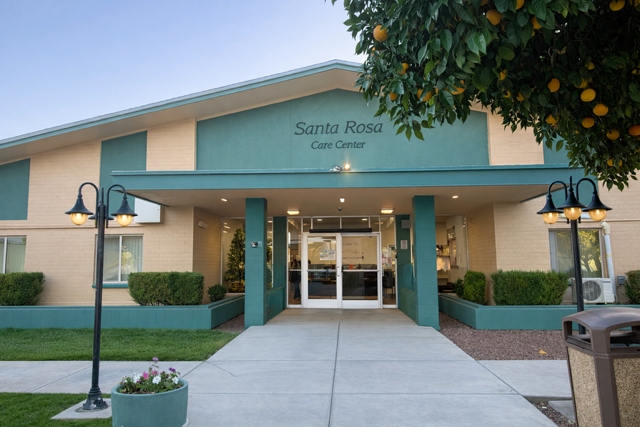
1650 NORTH SANTA ROSA AVENUE, TUCSON, AZ 85712 (520) 795-1610
For profit - Limited Liability company 144 Beds Independent Data: November 2025
Trust Grade
25/100
#121 of 139 in AZ
Last Inspection: October 2023

Over 2 years since last inspection. Current conditions may differ from available data.

Overview

Santa Rosa Care Center in Tucson, Arizona, has received a Trust Grade of F, indicating significant concerns about the facility's overall quality. Ranking #121 out of 139 in Arizona and #23 out of 24 in Pima County places it in the bottom half of local options, which is concerning for families. While the facility is showing improvement, with issues decreasing from 6 in 2024 to 2 in 2025, it still has serious problems, including a medication error that could have adverse effects on a resident's health. Staffing is a relative strength with a rating of 4 out of 5 stars, though the turnover rate is average at 51%. Importantly, there have been no fines, which is a positive aspect; however, the facility has less RN coverage than 92% of Arizona facilities, potentially compromising care quality. Families should weigh these strengths and weaknesses carefully when considering this nursing home.

Trust Score
F
25/100
In Arizona
#121/139
Bottom 13%
Safety Record
High Risk
Review needed
Inspections
Getting Better
6 → 2 violations
Staff Stability
⚠ Watch
51% turnover. Above average. Higher turnover means staff may not know residents' routines.
Penalties
✓ Good
No fines on record. Clean compliance history, better than most Arizona facilities.
Skilled Nurses
⚠ Watch
Each resident gets only 23 minutes of Registered Nurse (RN) attention daily — below average for Arizona. Fewer RN minutes means fewer trained eyes watching for problems.
Violations
⚠ Watch
36 deficiencies on record. Higher than average. Multiple issues found across inspections.
★★☆☆☆
2.0
Overall Rating
★★★★☆
4.0
Staff Levels
★★★★☆
4.0
Care Quality
★★☆☆☆
2.0
Inspection Score
Stable
2024: 6 issues
2025: 2 issues

The Good

  • 4-Star Staffing Rating · Above-average nurse staffing levels
  • 4-Star Quality Measures · Strong clinical quality outcomes
  • Full Sprinkler Coverage · Fire safety systems throughout facility
  • No fines on record

Facility shows strength in staffing levels, quality measures, fire safety.

The Bad

2-Star Overall Rating

Below Arizona average (3.3)

Below average - review inspection findings carefully

Staff Turnover: 51%

Near Arizona avg (46%)

Higher turnover may affect care consistency

The Ugly 36 deficiencies on record

2 actual harm
Jun 2025 1 deficiency
CONCERN (E) 📢 Someone Reported This

A family member, employee, or ombudsman was alarmed enough to file a formal complaint

Potential for Harm - no one hurt, but risky conditions existed

Free from Abuse/Neglect (Tag F0600)

Could have caused harm · This affected multiple residents

**NOTE- TERMS IN BRACKETS HAVE BEEN EDITED TO PROTECT CONFIDENTIALITY** Based on clinical record reviews, facility documentation, resident and staff interviews, and policy review, the facility failed ...

Read full inspector narrative →
**NOTE- TERMS IN BRACKETS HAVE BEEN EDITED TO PROTECT CONFIDENTIALITY** Based on clinical record reviews, facility documentation, resident and staff interviews, and policy review, the facility failed to ensure that one resident (#235) were free from physical abuse resulting in injury by other residents (resident #205). The deficient practice could result in further incidents of resident to resident abuse. Findings include: -Resident #235 was admitted to the facility on [DATE] with diagnosis that include Diabetes Mellitus type 2, Benign Prostatic hyperplasia, Chronic obstructive pulmonary disease, Dementia, and Hypertension. Review of the Quarterly Minimum Data Set (MDS) assessment dated [DATE], revealed a Brief Interview for Mental Status (BIMS) score of 99 which indicated the resident had severe cognitive impairment. A behavioral care plan revised June 5, 2023 revealed the resident is at risk for impaired thought processes related to vascular dementia, with a noted intervention of keeping the resident's routine consistent and try to provide consistent care givers as much as possible in order to decrease confusion. -Resident #205 was admitted to the facility on [DATE] with diagnoses that include Psychotic disorders with hallucinations, Seizures, Post-traumatic stress disorder, depression, aneurysm, cerebral infarction, and hypertension. Review of the Quarterly Minimum Data Set (MDS) assessment dated [DATE] revealed a Brief Interview for Mental Status (BIMS) score of 12 which indicated the resident had mild cognitive impairment. Review of information received from the SA complaint tracking system revealed that on April 22, 2023 a facility reported incident was received that revealed on April 22, 2023 at 9:26 a.m. It was alleged that behavioral resident #205 had bit fellow behavioral resident #235 on the hand, causing resident #235 to pull resident #205's hair. It further stated this is the first incident between the two residents, that had resident #205 was relocated to another unit within the facility. A review of progress notes for resident #235 dated April 22, 2023 at 9:26 a.m. revealed a resident to resident altercation. Was observed by staff member resident #235 pulling resident #205's hair. The note continues that the resident was removed from the room after separating the two residents. Further assessment noted a puncture like area to the palm and thumb area of the left hand of resident #235. The note concludes that the don, administrator, and provider were notified. A progress note for resident #235 dated April 22, 2023 at 8:56 p.m. noted resident #235 quiet this pm with no noted behaviors. No complaint of discomfort from left palm and thumb area, will continue to monitor. A progress note for resident #235 dated April 25, 2023 at 12:29 p.m. noted resident #235 revealed resident #235 was seen by behavioral health for a follow up related to resident to resident altercation. The note concludes that no changes made to staff and will continue to monitor for issues and side effects and to follow up with behavioral health in 4 weeks. A progress note for resident #235 dated April 26, 2023 at 9:07 p.m. noted resident #235 revealed No complaint of discomfort from recent bite to left hand, and no noted signs of infection. A progress note for resident #235 dated April 29, 2023 at 1:08 p.m. noted resident #235 revealed Left hand bite punctures continue to resolve. An interview was conducted with a Certified nursing assistant (CNA/staff #78) on June 11, 2025 at 1:54 p.m. The CNA stated she has worked at the facility for 1 year. The CNA stated that when a resident conflict happens she tries to separate the residents immediately and deescalate the situation, and then notify the nurse. She further stated that when physical abuse is suspected the process in the same, separate and make the residents safe and then report to the nurse and up the chain of command. An interview with the Director of Nursing (DON/staff #21) was conducted on June 13 2025 at 11:30 a.m. The DON stated she has been here since 2011, but for the last 4 years as the director of nursing. The DON stated that she remembers resident #205, and stated that he was not aggressive and kind of kept to himself. She stated he would eat in the dining room, and that to be honest she didn't recall the incident involving the bite. The DON accessed the clinical record during this interview to review details of the incident. The DON stated after review that they did report it appropriately and provided that documentation. The DON stated that resident #205 was moved to another secured unit following the incident, and that both residents were placed on 15-minute checks. The DON further stated that both were seen by behavioral health following the incident with no medication changes noted. The DON stated that the bite was the only injury noted, and the only other contact was the hair pulling. The DON concluded that it does not meet her expectation of how residents are treated. Based on clinical record review, interviews, facility documentation and review of facility policy, the facility failed to ensure one resident (#120) was free from abuse from an employee. The deficient practice could result in residents experiencing emotional, physical, and mental trauma from the abuse. Findings include: Related to Resident #120- Resident #120 was admitted to the facility on [DATE] with diagnoses that included unspecified dementia, anxiety disorder, and cognitive communication deficit. Review of the admission MDS, dated [DATE], revealed the resident had a BIMS score of 03 which indicated the resident had severe cognitive impairment. The same MDS also indicated Resident #120 exhibited hallucinations, delusions, and rejection of care. Review of the care plan indicated it was initiated on July 21, 2023. The care plan included that the resident had a behavior problem related to her dementia and anxiety. Interventions indicated staff were to anticipate and meet the resident's needs, provide opportunities for positive interactions, approach/speak in a calm manner, and to monitor the behaviors. A review of Resident #120's clinical record revealed a progress note, dated September 2, 2023 at 10:40 PM. The progress note was written by Licensed Practical Nurse (LPN/Staff #125) and indicated that she was informed that a staff member allegedly abused a resident. The progress note also indicated that Staff #125 had assessed the resident and there were no injuries noted. Resident #120 was unable to remember the situation. An employee separation information form was reviewed on 5/16/2025 and it indicated Staff #150 was fired/discharged for physical/verbal altercation. The termination date was listed as September 2, 2023. An interview was conducted on June 13, 2025 with LPN/Staff #125 at 10:02 AM. Staff #125 defined abuse as when you're doing something wrong towards another person. When you're being physical with them and not treating them the way you would want to be treated. Staff #125 recalled Resident #120 and stated that she was staffed 1:1 due to her behaviors. She also noted that she was calmer when her husband visited and he visited often. She also described Resident #120 as someone who would wander into other residents' rooms often due to her dementia. Staff #125 explained that Resident #120 would sometimes be combative. However, Resident #120 would eventually be redirectable as staff de-escalate her in a calming manner. She shared that she did not directly witness the alleged abuse, but was alerted to it by Certified Nursing Assistant (CNA/Staff #44). She remembered assessing Resident #120 and asking her, in several different ways, what had happened. Staff #125 indicated the resident was unable to recall the incident. An interview was conducted on June 13, 2025 with Staff #44 AT 11:13 AM. Staff #44 defined abuse as mentally harming residents, physically hurting them or restraining them. She also indicated that the facility provides some sort of abuse training on a monthly basis. Staff #44 indicated that she remembered Resident #120 and recalls her being a wanderer who would mumble when she spoke. She also indicated that the resident was not physical towards others during her stay. Staff #44 recalled the incident and shared that Resident #120 had gone into another resident's room and CNA/Staff #150 went into the room to get her out. Staff #44 also indicated that she was walking down the hallway to assist Staff #150, due to her being new, when she heard Staff #150 say If you hit me, I'm going to hit you back. She explained that she went into the room and saw Staff #150 hit Resident #120 on the face with a closed fist. Staff #44 then went between Resident #120 and the staff person in an effort to de-escalate the resident and had told Staff #150 that she was going to report her. Staff #44 then removed Resident #120 from the room and went to the nurses' station to notify staff #125 and another nurse what had happened. An interview was conducted on June 13, 2025 with the Director of Nursing (DON/Staff #21) at 12:25 PM. Staff #21 indicated that when staff are hired, they are trained on abuse. She also added that ongoing abuse trainings occur twice a month and this also included trainings provided by the Behavioral Health team as well. Staff #21 defined abuse as an unwanted action against another person. She explained that her expectation of staff, when they are de-escalating a resident, was to give them their space and provide the resident with privacy as well as ensuring that others around them are safe. If the resident was not able to be de-escalated, then they would call 911. Staff #21 recalled the incident with Resident #120 and Staff #150. She indicated that Resident #120 was being aggressive and had grabbed Staff #150's breast. When she grabbed the staff member's breast, staff then slapped the resident in the face. Staff #21 indicated that the altercation was witnessed by a CNA and that CNA had interjected herself between Resident #120 and staff #150. Staff #21 shared that she had spoken with Staff #150 after the incident and the staff person had told her that her first reaction was to slap the resident when she grabbed her breast. Staff #21 added that the situation did not meet her expectations of how staff are to interact with residents because she would never expect a staff person to strike a resident no matter what and that it was absolutely a form of abuse. Based on clinical record reviews, facility documentation, resident and staff interviews, and policy review, the facility failed to protect the rights of four residents (#106; #107; #108; #104) to be free from abuse by other resident(s) (#88; #105). The deficient practice could result in further resident abuse. Findings included: -Regarding Resident #88 and #106; #107; #108 Resident #88 was admitted into the facility on January 10, 2023, readmitted on [DATE], and had medical history that included unspecified dementia with other behavioral disturbance, unspecified psychosis, and anxiety disorder. A review of the Quarterly MDS (minimum data set) assessment dated [DATE] revealed a BIMS (brief interview of mental status) score of 8 which indicated that the resident was moderately cognitively impaired. Care-plan initiated on January 11, 2023 with revision date of June 10, 2024 revealed that on April 13, 2024, May 22, 2024, and June 6, 2024 Resident #88 had incidents of aggression initiated resident to resident altercations. Interventions included: - April 13, 2024 behavioral evaluation after resident to resident altercation; - May 23, 2024 added to behavioral for re-evaluation and 1:1 supervision from staff for 30 days. Additional interventions related to behavior problem included: intervene as necessary to protect the rights and safety of others; divert attention; remove from situation and take to alternate location as needed, 1:1 attempt to figure out why/what is causing the behaviors; reorient and supervise as needed. Review of the electronic medical records (EMR) progress note dated April 13, 2024, 17:47, revealed resident came back from activities; commotion heard on hallway; staff intervene; Resident stated, I was heading to the patio, and Resident #106 kept grabbing and squeezing my hand, so punched him. Resident #88 placed in 15-minute checks and 1:1. Review of the electronic medical records (EMR) progress note dated May 18, 2024, 14:15, revealed Resident #107 spends his time pacing the hallway, pleasant mood but is easily agitated and triggered by others, resident has delusions about others talking about him, threatens to fight others. An additional progress note dated May 27, 2024, 00:21, revealed resident continues on 1:1 monitoring due to aggressive behavior. Further, progress note date May 28, 2024 revealed resident was seen by nurse practitioner for follow up after resident to resident altercation. Review of the electronic medical records (EMR) progress note dated June 05, 2024, 17:57, revealed resident hit his roommate; I asked what happened to the CNA that was the resident's one on one. Resident #108 stated My roommate (Resident #88) hit me in the face hitting the cheek and upper lip. An addition progress note revealed, Resident #88 hit his roommate in the face. Resident #88 stated, I don't like Mexicans and I will hit him again. Writer asked the assigned 1:1 how did Resident #88 get passed you to hit Resident #108, who stated he was so fast. Further, it was documented in the progress note Resident #108 stated, No, that f***** hits like a b****regarding to the details of the incident. Resident #106 was admitted into the facility on February 17, 2020 and had medical history that included tremor, aphasia following cerebral infarction, hemiplegia, and bipolar disorder. A review of the Quarterly MDS (minimum data set) assessment dated [DATE] revealed a BIMS (brief interview of mental status) score of 3 which indicated that the resident was severely cognitively impaired. Care-plan initiated on November 26, 2021 with revision date of December 30, 2024 revealed that on April 13, 2024 Resident #106 had incident of resident to resident altercation with bruise to left eye. Interventions included: 15-minute monitoring related to resident to resident altercation on April 13, 2024. Review of the electronic medical records (EMR) progress note dated April 13, 2024, 17:47, revealed resident came back from activities; commotion heard on hallway; staff intervene; Resident stated, I was heading to the patio, and Resident #106 kept grabbing and squeezing my hand, so punched him. Resident #106 had swelling and discoloration to left eye. Review of the facility investigation report dated April 17, 2024, revealed Resident #106 was found to have discoloration of the left eye. Concluding details of facility's investigation revealed that Resident #106 was in his wheelchair when Resident #88 passed, Resident #106 grabbed Resident #88 by the hand then Resident #88 hit Resident #106 in the left eye; and that, the facility substantiated the allegation of abuse between these residents. An interview was conducted by Assistant Director of nursing (Staff #58) with Resident #88 who stated, That fool grabbed my hand and squeezed it, so I punched him. Staff #58 interviewed Resident #106 who stated, some guy was walking by me, and then I said, can I have something? He said, what do you want, I went Ha, Ha, Ha then he punched me. The investigation report was signed by facility Administrator (Staff #95). Resident #107 was admitted into the facility on June 15, 2023 with diagnoses that included schizoaffective disorder, bipolar disorder, antisocial personality disorder, and narcissistic personality disorder. A review of the Quarterly MDS (minimum data set) assessment dated [DATE] revealed a BIMS (brief interview of mental status) score of 3 which indicated that the resident was severely cognitively impaired. Care-plan initiated on June 15, 2023 with revision date of July 08, 2024 revealed that on May 23, 2024 Resident #107 had unit change due to aggressive behaviors following incident of resident to resident altercation. Interventions included: monitor/record/report to Medical Doctor as needed risk for harming others. Review of the facility investigation report dated May 24, 2024, revealed Residents #88 and #107 were arguing, then separated. Following review of video surveillance - at 12:36 PM, Resident #107 wheeled over to Resident #88 who was at a bench in the patio. Resident #107 began flailing his arms and kicked Resident #88 who then moved Resident #107's wheelchair away then sat back in the bench. Resident #107 again reproached and kicked Resident #88, both postured to fight, and then Resident #88 took several [NAME] one of which caught Resident #107 in the face. Further, the investigation report revealed that as time went on Resident #107 developed discoloration and swelling under the right eye. Director of nursing (Staff #21) interviewed Resident #88 who stated, I hit him because he was trying to kick me. Staff #21 interviewed Resident #107 who stated, Resident #88 punched him after the one o'clock smoke break. The facility substantiated the allegation of abuse between these residents. The investigation report was signed by facility Administrator (Staff #95). Resident #108 was admitted into the facility on April 14, 2024 with diagnoses that included schizoaffective disorder, suicidal ideations, and diffuse traumatic brain injury with loss of consciousness. A review of the Quarterly MDS (minimum data set) assessment dated [DATE] revealed a BIMS (brief interview of mental status) score of 14 which indicated that the resident was cognitively intact. Care-plan initiated on April 17, 2024 with revision date of June 30, 2024 revealed that Resident #108 had a behavior problem related to schizoaffective disorder bipolar. Interventions included: intervene as necessary to protect the rights and safety or others; approach/speak in a calm manner; divert attention; remove from situation and take to alternate location as needed. Review of the electronic medical records (EMR) progress note dated June 06, 2024, 09:10, revealed Resident #106 was moved to different room; and that, daughter was notified about the resident to resident altercation. Review of the facility investigation report dated June 06, 2024, revealed after the incident the certified nursing assistant (CNA/Staff #182) was suspended pending the outcome of the investigation after Staff #182 revealed, Resident #88 punched Resident #108; and that, assistant DON (Staff #58) took over the 1:1 post on Resident #88. The facility documented that Staff #182 shirked his duties as 1:1 which directly resulted in the incident. Staff #182 was terminated from employment and reported to the board of nursing for neglect. An interview was conducted on June 11, 2025 at 2:30 PM with licensed practical nurse (LPN/Staff #122) who stated abuse training is provided annually. Staff #122 state if abuse is suspected, staff report and take action right away, and move aggressor. If the abuse involves an employee they get suspended for 3 days while an investigation is conducted. Staff #122 stated abuse can be mental, physical, verbal, or sexual. Staff #122 stated physical abuse includes injury in skin or discoloration. Staff #122 stated that ideally 1 on 1 is to prevent incidents, the staff are there to prevent, ensure that no behavior is going to occur; and that, it would not meet the facility's expectation if an incident of abuse occurs while a staff are 1 on 1 with a resident because the staff should be arm's length. Staff #122 recalled incident between Residents (#88 and #107) occurred due to Resident #107 being the instigator. Staff #122 recalled incident between Residents (#88 and #108) occurred when they were new roommates. Staff #122 stated Resident #88 was a very aggressive guy he was 1 on 1 for a long time. Staff #122 stated he was physically aggressive and would mad dog a lot of the guys; and that he targeted certain residents a lot, he picked on staff as well - I would try to deescalate him a lot. An interview was conducted on June 12, 2025 at 11:01 AM with charge registered nurse (RN/Staff #60) who stated in-service training on abuse is received about at least every 2 months or after a new incident. Staff #60 stated abuse is reported Immediately - we have a 2-hour window to report and included physical, mental/emotional like condescending behavior or name calling, financial, sexual, physical as well as neglect if they weren't taken care of appropriately. Staff #60 stated physical abuse would include restraint, slapped, pinched, hair pulled, any type of physical contact that would result in distress or physical pain to the resident. Staff #60 confirmed it was a behavior policy that usually people with behavior will have a 1 to 1 to prevent any physical or verbal altercation; and that, physical abuse wouldn't meet the facilities expectations for residents who have 1 to 1 assignment. Staff #60 stated if staff are assigned 1 to 1 they would be responsible for the patient's needs, they would shadow, not allowed to leave them alone - all the duties fall on that staff non-stop. Staff #60 stated staff should be looking for target behavior would be able to tell by body language and always try to redirect; if they are dead set, separate them immediately; and that, it's my experience that if someone is 1 to 1 you can usually see the triggers and try to be preventative and proactive and be ahead of that to prevent the abuse. An interview was conducted on June 13, 2025 at 09:22 AM with staffing coordinator (Staff #110) who stated that Resident #88 was very unpredictable, his temperament always varied from being happy then doing what he wanted, so facility had to place a 1 to 1 with him. Staff #110 could not recall incidents, however recalled that they would occur readily around the smoking area, something always happens around the smoking patio. An interview was conducted on June 13, 2025 at 09:34 AM with assistant director of nursing (ADON/Staff #58) who stated, regarding the incident between Resident #88 and #106, Resident #106 was alert and was in a wheel chair and liked to antagonize. Staff #58 stated Resident #106 would name call and after antagonizing Resident #88 got up and hit Resident #106. Staff #58 stated that Resident #107 also liked to antagonize and would kick from his wheelchair. Staff #58 stated, regarding the incident between Resident #88 and #107, that Resident #88 was impulsive and Resident #107 being antagonistic did not really go together. Staff #58 stated that, regarding the incident between Resident #88 and #108, Resident #88 was 1 to 1 at that time to prevent any resident to resident incidents, therefore would not meet facility expectations if he hit another resident. Staff #58 stated that for that particular incident, I believe the staff that was assigned was afraid of the Resident (#88), so after that incident we had to be mindful of what staff we put 1 to 1. Staff #58 stated that the facility expectations are that resident to resident abuse do not occur. An interview was conducted on June 13, 2025 at 10:22 AM with director of nursing (DON/Staff #21) who stated that if staff are assigned 1 to 1 with a resident the expectation is that they are with the resident all the time and they should be engaging with the residents based on the resident's preferences. Staff #21 stated that during 1 to 1 assignment she does not want staff helping with anything else because that is their main task. Staff #21 stated that abuse occurring while a resident is 1 to 1 with staff or any physical abuse would not meet the facility's expectations. -Regarding Residents #105 and #104 Resident #105 was initially admitted into the facility on November 11, 2022 and readmitted on [DATE] and had medical history that included degenerative diseases of nervous system, major depressive disorder, and chronic kidney disease, stage 3A. A review of the Quarterly MDS (minimum data set) assessment dated [DATE] revealed a BIMS (brief interview of mental status) score of 3 which indicated that the resident was severely cognitively impaired. Care-plan initiated on March 04, 2024 with revision date of May 30, 2024 revealed that on March 04, 2024 Resident #105 was moved to different room due to increased aggression. Additionally, Resident #105 was placed on 15-minute checks. Interventions included: monitor/document/report as needed any signs or symptoms of resident posing danger to self and others; when the resident becomes agitated: intervene before agitation escalates; guide away from source of distress. Review of the electronic medical records (EMR) progress note dated March 03, 2024, revealed one day prior to incident a nurse documented behaviors of aggression at 0700, Resident #105, ran at me with both fists fighting position and yelling that he was going to kill. On March 04, 2024, 05:31, note revealed Resident #105 in physical aggression with roommate causing injury. Resident #104 was initially admitted into the facility on December 18, 2017 and readmitted on [DATE] and had medical history that included alcohol-induced persisting dementia, psychotic disorder with delusions, and violent behavior. A review of the Quarterly MDS (minimum data set) assessment dated [DATE] revealed a BIMS (brief interview of mental status) score of 1 which indicated that the resident was severely cognitively impaired. Care-plan initiated on December 27, 2021 with revision date of April 19, 2024 revealed that on March 04, 2024 Resident #104 was moved to different room after roommate moved to other unit following altercation. Goal included: the resident will not harm self or others through the review date; the resident will seek out staff/caregiver when agitation occurs through the review date. Review of the electronic medical records (EMR) progress notes dated March 4, 2024, revealed Resident #104 was seen by behavioral nurse practitioner for resident to resident altercation; and that resident was moved to different room down the hall after altercation., Review of the facility investigation report dated March 06, 2024, revealed that on March 04, 2024 at 0515, behavioral residents (#104 and #105) and roommates were heard arguing. Resident #104 was relocated. The unit certified nursing assistants were providing care to other residents when Resident #105 could be heard saying, come get your buddy out of here. CNA/Staff #55 immediately went to the room and found Resident #104 bleeding above his right eye brow and had blood at his mouth. Investigation findings revealed Resident #104 was found with a laceration at the right eye brow. Upon interview, Resident #104 stated, he hit me. Facility investigation revealed adult protective services verified the allegations of neglect. The investigation report was signed by facility Administrator (Staff #95). An interview was conducted on June 13, 2025 at 09:34 AM with assistant director of nursing (ADON/Staff #58) who stated that if abuse occurs in the facility they will notify herself, director of nursing, or administrator whoever they are able to reach first. Staff #58 stated the types of abuse included verbal, physical, financial, sexual, and neglect; and, described physical abuse included hitting, and scratching. Staff #58 stated that the facility had a 2-hour time frame to report abuse. Staff #58 confirmed having a role in conducting the facility's 5-day investigations including making sure residents are safe, assessed for injuries, interview residents, set behavior evaluations, notify family of residents and update care plans. Staff #58 stated, regarding the incident between Resident #104 and #105, Resident #104 was very active and impulsive at the time of the incident; and that, I recall the incident occurring, but cannot recall details. Staff #58 stated that the facility expectations are that resident to resident abuse do not occur. An interview was conducted on June 13, 2025 at 10:22 AM with director of nursing (DON/Staff #21) who stated that staff are provided annual abuse and neglect training by psychiatry provider and if an incident occurs additional training is provided. Staff #21 stated during any new allegations of abuse she needs to be notified immediately and are reported to the health department, adult protective services, and the unit nurse will contact the police department. Staff #21 stated that if the nurse on the floor must provide some type of intervention if they have not done so after reporting. Staff #21 stated that any abuse would not meet the facility's expectations. -Regarding resident #24 (alleged victim): Resident # 24 was admitted to the facility on [DATE] with diagnoses that included: intracranial injury without loss of consciousness, sequela, aphasia following cerebral infarction, schizoaffective disorder, bipolar type, alcohol abuse (in remission), intermittent explosive disorder, major depressive disorder, recurrent, anxiety disorder, and epilepsy. Review of resident #24's care plan revealed a focus, revised on April 21, 2022 that the resident is/has the potential to be verbally aggressive in regards to schizoaffective disorder. Resident's care plan reveals no focus for physical aggression. A Quarterly Minimum Data Set (MDS) assessment dated [DATE] revealed the resident had a Brief Interview for Mental Status (BIMS) score of 01, indicating severe cognitive impairment. Additionally, the MDS revealed that the resident exhibited behavioral symptoms not directed towards others 1-3 days during the assessment period. A nursing progress note dated June 6, 2025 at 1:58 p.m. stated that resident #24 was sitting on his bed with a laceration, swelling and a bruise to his left eye. According to the note, the resident stated that he was sitting on the toilet when another resident (#71) came into the restroom. Resident #24 told resident #71 to leave and when he refused, resident #24 was hit in the face by resident #71. Staff separated both residents and notified administration and management. At 2:26 p.m. another nursing progress note documented that resident #24 had slight bruising to the left eye and with no swelling noted. A nursing note dated June 8, 2025 indicated that resident had left eye bruising. The note stated that resident did not note any discomfort or pain. A progress note dated June 11, 2025 documented that resident has a bruise to his left eye which was healing. Review of resident #24's care plan revealed a focus, revised on April 21, 2022 that the resident is/has the potential to be verbally aggressive in regards to schizoaffective disorder. Resident's care plan reveals no focus for physical aggression. An observation and interview of resident #24 on June 11, 2025 at 1:32 p.m. revealed a red and swollen injury to his left eye. In an interview, resident #24 stated that his eye was still sore and that his injury was the result of being punched by another resident. He could not recall the date of the incident or the circumstances. -Regarding resident #71 (alleged perpetrator): Resident #71 was admitted to the facility on [DATE] with diagnoses that included: dementia with anxiety, parkinsonism, anxiety disorder, chronic ischemic heart disease, peripheral vascular disease, heart failure, Wernicke's encephalopathy, alcohol abuse (in remission), type 2 diabetes mellitus without complications, chronic obstructive pulmonary disease, presence of automatic implantable cardiac defibrillator, and iron deficiency anemia. A care plan revised May 22, 2024 revealed that resident #71 had the potential for verbal/physical aggression elated to his dementia with behaviors. Interventions included for staff to intervene prior to [TRUNCATED]
Feb 2025 1 deficiency
CONCERN (D) 📢 Someone Reported This

A family member, employee, or ombudsman was alarmed enough to file a formal complaint

Potential for Harm - no one hurt, but risky conditions existed

Free from Abuse/Neglect (Tag F0600)

Could have caused harm · This affected 1 resident

**NOTE- TERMS IN BRACKETS HAVE BEEN EDITED TO PROTECT CONFIDENTIALITY** Based on clinical record review, interviews, facility documentation, and review of facility policy, the facility failed to ensur...

Read full inspector narrative →
**NOTE- TERMS IN BRACKETS HAVE BEEN EDITED TO PROTECT CONFIDENTIALITY** Based on clinical record review, interviews, facility documentation, and review of facility policy, the facility failed to ensure resident #1 was free from abuse from resident #2. The deficient practice could result in further incidents of resident to resident abuse. Findings include: Related to resident #1- Resident #1 was admitted to the facility on [DATE] with diagnoses that include alcohol induced Dementia, peripheral vascular disease, and major depressive disorder. Review of the quarterly Minimum Data Set (MDS), dated [DATE], revealed resident #1 had a Brief Interview for Mental Status (BIMS) assessment completed and scored a 03 which indicated the resident was cognitively impaired. Review of resident #1's care plan indicated that the resident had a behavior problem which included exit seeking, restlessness, and irritability. Interventions included administering psychotropic medications, monitoring for behaviors and remove him from the situation when staff notices he starts to escalate. Review of resident #1's Electronic Health Record (EHR) revealed a progress note dated January 30, 2025 at 5:39 AM. The note indicated that resident #1 was found in another resident's room with blood on his face and neck. The note further indicates that resident #1 reported that another resident (resident #2) had punched me real hard. The explained that the other resident (resident #2) had told staff that resident #1 was in his bed. Resident #1 was then removed from the room and his injuries were cleaned up. A second progress note, dated January 30, 2025 at 7:28 AM noted that resident #1's left cheek bone area was bruised and swelling was noted. The note also indicated that Registered Nurse (RN/Staff #87) contacted the Doctor to request an order for x-rays. Review of the facility's skin observation note, dated February 1, 2025, indicated that the resident had bruising on the left side of the face. An observation of the resident was conducted on February 6, 2025 at 10:55 AM. Resident #1's left cheekbone was purple and blue in color and there was a cut approximately ½ an inch on the same left cheekbone. An interview was conducted on February 6, 2025 at 11:02 AM and the resident indicated that he had fallen in the front yard. Related to resident #2- Resident #2 was admitted to the facility on [DATE] with diagnoses that include Dementia, schizoaffective disorder, and bipolar disorder. Review of the quarterly MDS, dated [DATE], indicated the resident completed a BIMS assessment and scored a 01 which indicated the resident was cognitively impaired. The same MDS also noted that resident #2 did have verbal behaviors directed towards others during the look-back period. Review of the care plan indicated that resident #2 had behaviors that included physical and verbal aggression, delusions, and hallucinations. Interventions included administering medications as ordered, monitoring the resident, and redirecting him as needed. Review of resident #1's EHR revealed a progress note, dated January 30, 2025 at 5:25 AM. The progress note indicated that staff heard resident #2 yelling get out of my bed! and staff found another resident (resident #1) standing at the foot of resident #2's bed. The note further indicates that resident #2 was observed to have blood on the back of his right and fourth knuckle. It also indicated that resident #2 told staff that he had hit (resident #1). An interview was conducted with resident #2 on February 6, 2025 at 10:36 AM in the unit courtyard outside. When asked if he had gotten into an altercation with another resident, resident #2 explained that another resident was in his room and it made him feel mad and nervous. Because of that, he hit him (resident #2) in the face. Resident #2 also added, that he wanted to stay at the facility and that he didn't hit him that hard. An interview was conducted with Certified Nursing Assistant (CNA/Staff #101) on February 6, 2025 at 10:14 AM. Staff #101 indicated that she did not see any physical contact between resident #1 and resident #2 however, she heard yelling when she was doing patient care around 5:15 AM on January 30, 2025. She saw resident #1 in room [ROOM NUMBER] standing at the foot of resident #2's bed with blood on his face. She also saw resident #2 in the room but doesn't remember where he was standing. Staff #101 explained that resident #1 tended to wander and she has had to remove him from other residents' rooms a few times to prevent them from escalating. She also indicated that she had not experienced resident #2 being physically aggressive during his shift as he would typically be verbally aggressive towards himself when he experiences hallucinations. An interview was conducted with the Director of Nursing (DON/Staff #113) on February 6, 2025 at 3:30 PM. When asked what had transpired between residents #1 and #2, staff #113 indicated that she was informed that resident #1 was in resident #2's room and was touching his things. Resident #2 had gotten upset and told him to leave. When resident #1 wouldn't leave, resident #2 then struck resident #1 in the nose. Staff #113 also shared that the nurse had intervened and separated the residents and then provided first aid to resident #1. Staff #113 also explained that resident #1 was always disoriented and doesn't know what is going on which was his baseline. Staff #113 also explained that they had a hall monitor that day of the incident to monitor residents but when the incident took place, the hall monitor had gone into another resident's room to assist someone. An interview was conducted with Registered Nurse (RN/Staff #87) on February 7, 2025 at 7:49 AM. Staff #87 confirmed that she was working on January 30, 2025 on the unit that housed residents #1 and #2. Staff #87 explained that during rounds she had heard resident #2's voice saying get out of my room. She then went to the resident's room and resident #1 was standing at the foot of the bed on the left side. She further explained that resident #2 had told her that he had punched resident #1 because resident #1 was in his bed and wouldn't get up. Staff #87 couldn't recall if resident #2 had injuries but she did recall that resident #1's left cheekbone was open and was swelling up. She also recalled resident #1 telling him that resident #2 had hit him. Staff #87 assessed both residents for injuries and removed resident #1 from the room and assisted with cleaning him up. Once the resident was cleaned up, she recalled giving him medication for the pain and a cold compress. When asked if either resident had behaviors in the past, staff #87 explained that resident #2 would clench his fists when he became upset but he had never hit anyone. He did make verbal threats to hurt people but had not acted upon it. She also explained that resident #1 was exit seeking and was very disoriented. When he exhibited those behaviors, staff watched him more closely due to him being confused as to where he was. When asked what the risks were to the residents when they are subjected to abuse, staff #87 explained that they could sustain injuries and anything could happen. Review of the policy titled Resident-to-Resident Altercations revised in September 2022 indicated that all altercations including resident-to-resident abuse are investigated and reported to the nursing supervisor. It also provided the following interpretation: Staff were to monitor residents for aggressive/inappropriate behaviors towards other residents including physically aggressive behaviors. It also explained that behaviors that may provoke a reaction by residents include wandering into others' rooms/space.
Dec 2024 1 deficiency
CONCERN (E) 📢 Someone Reported This

A family member, employee, or ombudsman was alarmed enough to file a formal complaint

Potential for Harm - no one hurt, but risky conditions existed

Free from Abuse/Neglect (Tag F0600)

Could have caused harm · This affected multiple residents

**NOTE- TERMS IN BRACKETS HAVE BEEN EDITED TO PROTECT CONFIDENTIALITY** Based on clinical record reviews, facility documentation, resident and staff interviews, and policy review, the facility failed ...

Read full inspector narrative →
**NOTE- TERMS IN BRACKETS HAVE BEEN EDITED TO PROTECT CONFIDENTIALITY** Based on clinical record reviews, facility documentation, resident and staff interviews, and policy review, the facility failed to ensure that four residents (#11, #111, #22, #3) were free from physical abuse. The deficient practice could result in further incidents of resident to resident abuse. Findings include: -Resident #1 was admitted on [DATE] and subsequently discharged on December 04, 2024 with diagnosis including unspecified schizophrenia, type 2 diabetes mellitus and unspecified atrial fibrillation. A review of the admission MDS (minimum data set) dated October 30, 2024 revealed a BIMS (brief interview of mental status) score of 15, indicating that the resident was cognitively intact. The MDS further indicated that the resident had noted potential indicators for psychosis to include hallucinations and delusions. It was further noted that the resident has other behavioral symptoms directed toward others. A review of the progress notes revealed a nursing note entry for December 4, 2024 at 3:37 indicating that at approximately 10:00 A.M. staff #49 witnessed resident #1 threaten and try to hit another resident because he had been singing in the hallway. It was noted that resident #1 was de-escalated and noted to be calm thereafter. At approximately 12:30 P.M. it was noted that staff #49 observed resident #1 trying to hit another resident with a lotion bottle, which was taken away and resident #1 was escorted back to his room. Then at approximately 1:30 P.M. staff #49 was informed that resident #1 had hit 2 other residents and that Tucson Police Department had been called and all other notifications transpired. A review of the MAR (medication administration record) for resident #1 revealed that medications were administered as ordered. A review of the care plan revealed that the resident was noted to have behavior problems due to schizophrenia and noted interventions documented. It was further noted that the resident was admitted to the secure unit secondary to behaviors. A review of the facility 5-day investigative report dated December 6, 2024 revealed that a resident to resident altercation had occurred on December 4, 2024 at 1:10 P.M. It was noted that resident #1 had hit two other residents #11 and #111 with a part of his wheelchair which was hidden in a sock. It was further noted that resident #111 that a small bruise was discovered on December 5, 2024 post incident. Resident #1 was taken by the Tucson Police Department to the hospital for psychiatric treatment. It was noted that facility had substantiated the incident. -Resident #11 was admitted on [DATE] with diagnosis including diffuse traumatic brain injury with loss of consciousness of unspecified duration , type 2 diabetes mellitus, and schizoaffective disorder-bipolar type. A review of the quarterly MDS dated [DATE] revealed a BIMS score of 03, indicating severe cognitive impairment. A skin assessment conducted on December 4, 2024 revealed no new skin issues. -Resident #111 was admitted on [DATE] with diagnosis including unspecified dementia with unspecified severity and agitation, schizoaffective disorder, bipolar disorder and type 2 diabetes mellitus. A review of the quarterly MDS revealed a BIMS score of 01, indicating severe cognitive impairment. A skin assessment conducted on December 6, 2024 revealed a small bruise to the left forearm. An interview was conducted with an Licensed Practical Nurse (LPN/staff #49) on December 17, 2024 at 10:29 A.M. She stated that it started with resident #1 becoming agitated when another resident, #111, was signing in the hallway. She stated that resident #1 was taken to his room at approximately 10:00 A.M. at which time, she thought he was fine. She stated that the incident where he had hit 2 residents, #11 and #111, had occurred around noon. She stated that resident #1 would yell out but had never been violent or physically aggressive before. She stated that the morning of the incident his sister had dropped off his belongings, which she stated may have triggered the incident, as resident #1 had made comments that he just wanted to be out of here. She stated that resident #11 had no injuries and that resident #111 had a minor bruise as a result of the incident. She stated that the unit is well staffed. She stated that the expectation is that resident to resident altercations are not expected to happen and or are not okay. She stated that when a resident to resident altercation does occur, that the risk could be for a resident to get hurt. An interview was conducted with an LPN (LPN/staff #88) on December 17, 2024 at 10:43 A.M. Staff #88 stated that on the day of the incident, she was in the dining room assisting another resident and had heard noise outside. She stated that when she arrived outside, 2 other CNA's (certified nursing assistants) were already outside having separated resident #1 from the other residents. She stated that resident #1 had a leg rest from a wheelchair inside a sock which had been hidden in his jacket. She asked one of the CNA's to take resident #1 to his room. She stated that resident #1 had then ripped off the television from the night stand and used the cord to hit the CNA. She stated that she was able to de-escalate the resident. She stated that week prior the resident had an outburst wanting to leave and had kicked the door but then presented as remorseful. She stated that resident #1 had been regularly followed for his behavioral health needs. An interview was conducted with a Certified Nursing Assistant (CNA/staff #63) on December 17, 2024 at 10:58 A.M. Staff #63 stated that the resident had been going off all day. She stated that she only came on the scene after hearing all the commotion occurring in resident #1's room, when he was attacking the CNA. Staff #63 identified what the types of abuse were, that trainings were conducted almost on a monthly basis, steps to be taken when abuse occurs and further stated that she felt staffing was sufficient on the unit. A telephone interview was conducted with a CNA (CNA/staff #201) on December 17, 2024 at 11:04 A.M. Staff #201 stated that she had observed the incident. She stated that she was sitting in the dining room when resident #1 came out with a part of his wheelchair hidden in jacket. She stated that he had been targeting resident #111 all day. She said that she had gone out immediately to separate the residents when she saw what happened and had taken resident #1 to his room, at which time she stated that he started throwing things at her and hitting her and whipping her with the television cord. She stated that she thought it all started in the morning when resident #111 was singing in the hallway which upset resident #1, she stated that the nurse was made aware. ____________________________ -Resident #2 was admitted on [DATE] and passed away on June 3, 2023 with diagnosis including dementia of unspecified severity with agitation, primary open angle glaucoma-severe stage, chronic obstructive pulmonary disease and type 2 diabetes mellitus. A review of the quarterly MDS dated [DATE] revealed a BIMS score of 01, indicating severe cognitive impairment. The MDS further revealed noted potential indicators of psychosis to include delusions. It was further noted that the resident exhibited physical behavioral symptoms 1-3 days per week and other behavioral symptoms 4-6 days per week. A review of the facility 5-day investigative report revealed that on January 30, 2023 at approximately 2:35 P.M. resident #2 had asked for coffee and was told to shut-up by resident #22. It was further noted that resident #22 then rolled in his wheelchair across to resident #2 and scratched his face. It was noted that resident #2 had a small scratch on his cheek and under his right eye. A review of the skin assessment dated [DATE] revealed no new noted skin issues. -Resident #22 was admitted on [DATE] with diagnosis including hemiplegia and hemiparesis, aneurysm, mild cognitive impairment, unspecified psychosis, major depressive disorder-recurrent, post-traumatic stress disorder and localization related symptomatic epilepsy. A review of the admission MDS dated [DATE] revealed a BIMS score o evidence of a BIMS score; however, the 5-day investigative report from the facility did indicate a BIMS score of 11, indicating moderate cognitive impairment. A psychiatric encounter noted dated February 7, 2023 revealed that since risperdal started that the resident's behaviors have subsided. A telephonic interview was conducted with a Registered Nurse (RN/staff #215) on December 17, 2024 at 1:08 P.M. She stated that she had not worked at the facility for over a year but that she did recall the incident. She stated that she did not directly observe the incident but had come when she heard the CNA's hollering. She stated that resident #22 had come up to resident #2 and that resident #2 had wanted resident #22 to get out of his face and had raised his hand at which time resident #22 scratched resident #2's face. She stated that she thought there may have been a couple of scratches. Staff #215 stated that the residents were separated and assessed for injuries. She stated that she felt the residents were receiving appropriate services prior to the incident, that staffing was appropriate and that abuse training was conducted yearly and also after each incident. A telephone call was placed to an LPN (LPN/staff #227) on December 17, 2024 at 1:26 P.M. The call went to voicemail and a message was left requesting a call back. No return call was received. ____________________________ -Resident #3 was admitted on [DATE] with diagnosis including hemiplegia and hemiparesis, subarachnoid hemorrhage affecting left non-dominant side, major depressive disorder-recurrent, adjustment disorder with depressed mood, and polyneuropathy A review of the quarterly MDS dated [DATE] revealed a BIMS score 3, indicating severe cognitive impairment. The MDS further noted potential indicators of psychosis including hallucinations and delusions as well as verbal and other behaviors 1-3 days a week. -Resident #33 was admitted on [DATE] with diagnosis including unspecified dementia with unspecified severity and other behavioral disturbance, impulse disorder, unspecified psychosis, insomnia, anxiety disorder and extrapyramidal and movement disorder. A review of the MDS dated [DATE] revealed a BIMS score of 06, indicating severe cognitive impairment as well as noted potential indicators for psychosis to include hallucinations and delusions. A review of the progress notes for resident #33 revealed a nursing note entry on June 23, 2023 at 12:48 P.M. indicating that around 10:20 A.M. a verbal altercation had occurred on the patio between 2 residents. One resident, #3, was noted to be taunting the other, #33, and then #33 reached out and made light contact with resident #3. The progress notes revealed that there was redness to the left eye of resident #3. It was noted that notifications transpired. A review of the facility 5-day investigation dated July 28, 2023 noted that resident #33 was having a verbal argument with resident #3 on the unit patio. It was noted that a CNA, staff#116 had intervened and when she was redirecting resident #33 back inside, resident #3 was in the hallway. It was noted that resident #3 began taunting resident #33 who then reached out and made contact with resident #3. It was noted that resident #3 incurred redness to the left eye as a result of the interaction. The residents were noted to be separated and no further injuries were identified. Resident #3 was subsequently transferred to a different unit. A telephone call was placed to a CNA (CNA/staff #116) on December 17, 2024 at 10:20 A.M., the call went to voicemail and a message was left requesting a call back. An interview was conducted with the Administrator (admin/staff #77) on December 17, 2024 at 11:23 A.M. Staff #77 stated that the expectation is that resident to resident abuse does not occur, if the residents have a low BIMS score. Staff #77 stated that the frequency of abuse cases had been a little more in the past couple of months. She further stated that the facility had been going through renovations and room changes to ensure a good fit among residents. Staff #77 stated that the risk for resident to resident altercations could result in harm or death to the resident. An interview was conducted with an LPN (LPN/staff #109) on December 17, 2024 at 2:45 P.M. Staff #109 stated that the she recalled the incident but not the specifics. She stated that at the time resident #33 was able to walk, had mood swings and certain triggers, but did not recall the triggers. She stated that she could not recall if there were resulting injuries from the interaction, but did recall that contact was made. She stated that resident #3 was moved to another unit post interaction. She stated that staff receive abuse training at least every 6 months and that staffing at the time of the incident was not an issue. A follow-up telephone call was placed to a CNA (CNA/staff #116) on December 17, 2024 at 3:25 P.M. A second message was left requesting a call back. No return call received. An interview was conducted with the Director of Nursing (DON/staff #25) on December 17, 2024 at 3:12 P.M. Staff #25 stated that she was aware that the incidents had occurred and was familiar with it. She stated that her expectation is that abuse does not occur and if it should happen that staff would be knowledgeable enough to know how to deal with the situation to ensure resident safety, conduct notifications and follow the chain of command. She stated that the risk for a resident to resident altercation could be that it could cause a traumatic event for the alleged victim and the risk for the alleged aggressor could be that he could do it again. A review of the facility policy entitled Abuse, Neglect, Exploitation and Misappropriation and Prevention Program revised April 2021 revealed that residents have the right to be free from abuse, neglect, misappropriation of resident property and exploitation. It is further noted that this includes physical abuse by a wide variety of individuals to include other residents.
Nov 2024 2 deficiencies
CONCERN (D) 📢 Someone Reported This

A family member, employee, or ombudsman was alarmed enough to file a formal complaint

Potential for Harm - no one hurt, but risky conditions existed

Deficiency F0658 (Tag F0658)

Could have caused harm · This affected 1 resident

**NOTE- TERMS IN BRACKETS HAVE BEEN EDITED TO PROTECT CONFIDENTIALITY** Based on clinical record review, interviews, and policy review, the facility failed to ensure one resident's (#3) rights were ho...

Read full inspector narrative →
**NOTE- TERMS IN BRACKETS HAVE BEEN EDITED TO PROTECT CONFIDENTIALITY** Based on clinical record review, interviews, and policy review, the facility failed to ensure one resident's (#3) rights were honored related to refusing medications. This deficient practice could result in further violations of resident's rights. Findings include: Resident #3 was admitted to the facility on [DATE] with diagnoses of Parkinson's disease, type 2 diabetes, and major depressive disorder. Review of the quarterly Minimum Data Set (MDS), dated [DATE], revealed a Brief Interview for Mental Status (BIMS) score of 10 indicating resident #3 had mild cognitive impairement. A review of the physician's orders indicated there was an order for Dulcolax suppository inserted rectally, as needed, if no bowel movement in 3 days. A review of resident #3's bowel elimination task chart reveals resident #3 having bowel movement on October 17, 2024 at 2:48 PM. The October medication administration record indicated Dulcolax suppository was administered on October 18, 2024 by Licensed Practical Nurse (LPN/staff 120). A progress note in resident #3's electronic health record (EHR), dated October 18, 2024 at 2:45 PM indicated that the resident was given a medication that she did not want and the resident's Power of Attorney (POA) was notified. An interview was conducted with resident #3 on November 1, 2024 at 8:53 AM. Resident #3 recounted a nurse (Staff #120) giving her a suppository two weeks prior. She shared that she had told her (staff #120) that she did not want the suppository but was given it anyways. An interview was conducted on November 1, 2024 at 9:05 AM with an LPN (LPN/staff #81). Staff #81 explained that if she is needing to offer a suppository to a resident she would try to encourage them to take it by educating them the purpose of the medication. If that didn't work then she would re-approach the resident later. When administering a suppository, staff #81 indicated they would figure out why a resident was needing a suppository and ask them if they wanted it. If they said no, then they wouldn't give it to them and let the provider know. Staff #81 also indicated that they would not give a resident a suppository if they did not agree to it because it would be a dignity issue and you cannot do something to a resident without their permission. An interview was conducted on November 1, 2024 at 9:15 AM with an LPN (LPN/staff #107). Staff #107 explained that she would offer a suppository as a PRN if they wanted it. If they didn't want it then she would let the provider know. Staff #107 also indicated she would not give the resident the suppository if they said no to it. She explained that it could cause the resident to feel violated and embarrassed. An interview was conducted on November 1, 2024 at 9:26 AM with an LPN (LPN/Staff #15). Staff #15 indicated she would follow the bowel movement protocol when needing to give a resident a suppository. First, she would try to give a resident oral medication to see if it works and if it didn't work she would try a suppository. If the resident did not want a suppository then she would notify the provider and go from there. Staff #15 also indicated that it was not an acceptable practice to give a resident a suppository if they had refused it. She continued by saying it could be a traumatic experience for them and there could be a reason behind why they had declined the medication. An interview was conducted with the Director of Nursing (DON/staff #41) on November 1, 2024 at 10:10 AM. Staff #41 indicated that she would give a resident a suppository after following the bowel protocol which indicates if the resident does not have bowel movement in 3 days they are to be administered oral medications. If after two doses of the oral medications there are no results, then a suppository is administered. If the suppository does not work then an enema is given. Staff #41 explained that if a resident did not have bowel movement after 3 days, then an alert would pop up in the EHR alerting staff of the issue. Staff #41 indicated that she would expect staff to explain the risks and benefits of not getting a suppository to the resident a few times to be sure they did not want the medication. Staff #41 also added that in this situation, the resident was alert and oriented so staff #41 believed resident #3 when she said she did not want it. Staff #41 indicated that it was not an acceptable practice to give resident #3 a suppository after she said she didn't want it. The harm to a resident when giving them medications, after they said no, would be psychological harm because it's a very evasive thing that is happening to them and the resident would not be as trusting of staff, especially nurses. Staff #41 concluded that (staff #120) did not act within my expectations and staff #120 was terminated after the facility's investigation. A review of the facility's bowel movement protocol indicates that normal bowel function is considered to be at least 3 stools a week and less than 3 stools a day. It also indicates that if there were no bowel movements in more than 3 days, staff are to ensure there are bowel sounds, determine if there is abdominal discomfort/distension, ensure the resident is drinking fluids and fiber, increase resident activity, obtain an order for bowel regimen protocol, and discuss additional interventions with the resident's physician.
CONCERN (E) 📢 Someone Reported This

A family member, employee, or ombudsman was alarmed enough to file a formal complaint

Potential for Harm - no one hurt, but risky conditions existed

Free from Abuse/Neglect (Tag F0600)

Could have caused harm · This affected multiple residents

**NOTE- TERMS IN BRACKETS HAVE BEEN EDITED TO PROTECT CONFIDENTIALITY** Based on clinical record review, interviews, facility documentation, facility surveillance video, and policy review, the facilit...

Read full inspector narrative →
**NOTE- TERMS IN BRACKETS HAVE BEEN EDITED TO PROTECT CONFIDENTIALITY** Based on clinical record review, interviews, facility documentation, facility surveillance video, and policy review, the facility failed to ensure two residents (#1 and #4) were free from abuse from other residents (#2 and #5). The census was 123. The deficient practice can result in additional incidents of staff to resident abuse. Findings include: Regarding residents #4 and #5 - Resident #4 was admitted to the facility on [DATE] with diagnoses that included dementia, anxiety, and chronic heart disease. The quarterly Minimum Data Set (MDS), dated [DATE], included a Brief Interview for Mental Status (BIMS) score of 15 indicating the resident has no cognitive impairement. - Resident #5 was admitted to the facility on [DATE] with diagnoses that included Dementia, anxiety, and major depressive disorder. The admission MDS, dated [DATE], indicated that a BIMS assessment was not able to be completed. However, a staff assessment for resident #5's cognitive skills for daily decision making was determined to be severely impaired. Review of the care plan for resident #5, revised on October 29, 2024, revealed there was no focus or interventions related to resident #5's behaviors. A progress note for resident #4, dated October 26, 2024 AT 3:52 PM, revealed that an incident had occurred at 11:10 AM between resident #4 and another resident (resident #5) in the hallway. Resident #4 had stated that the first attack took place in resident #4's room when resident #5 had entered. Resident #4 attempted to redirect resident #5 prior to the start of the attack. The note explained that the 2nd altercation in the hallway was witnessed by staff and staff was able to separate the two residents. Resident #4 had a small laceration on the right eyebrow and on the middle back. Wound care was provided and there was no other pain or complaints from resident #4. A progress note for resident #5, dated October 26, 2024 at 7:30 PM, revealed resident #5 was witnessed having a physical altercation with another resident. The note also indicates that the victim of the altercation told staff that resident #5 had attacked (resident #4) while he was laying in his bed. The note also noted that resident #5 was observed punching resident #4 on his face which resulted in a small laceration on resident #4's right eyebrow. An interview was conducted with resident #4 on October 31, 2024 in his room. Resident #4 indicated that he currently felt safe in the facility and did not recall the altercation with resident #5. An interview was conducted with Certified Nursing Assistant (CNA/Staff #14) on October 31, 2024 at 1:11 PM. Staff #14 confirmed that she was working on October 26, 2024 and had witnessed the 2nd altercation between resident #4 and resident #5. Staff #14 indicated she was a resident's room when she had heard sounds like someone was punching a wall. When she had gone to investigate the sound when she saw resident #4 on the floor. Staff #14 indicated she asked for assistance from another CNA and they both assisted resident #4 from the floor. She observed resident #4 bleeding from the right eyebrow and attempted to de-escalate him as he was visibly upset. Staff #14 also indicated that the altercation took place right under a hallway security camera. Resident #4 was placed on 15-minute vital checks until 6:00 PM that day and resident #5 was moved to a different unit. An interview was conducted with Licensed Practical Nurse (LPN/Staff #15) on October 31, 2024 at 1:38 PM. Staff #15 confirmed that she was working on October 26, 2024 and she had witnessed part of the altercation between resident #4 and resident #5 via the security camera at the nurses station. Staff #15 stated that she saw resident #5 walk towards resident #4 in the hallway. Staff #15 indicated that when she went to the scene of the incident, she had not observed any physical altercation between the two residents. Staff #15 had indicated that resident #5 had just been admitted to the facility the night before the incident and they were still getting to know him. She had noticed that he would be triggered fast, but couldn't identify what the triggers were. Staff #15 also indicated that resident #5 was extremely confused before and after the incident and was still getting used to the new environment. After the altercation, resident #5 was moved to a new unit and both residents were placed on 15-minute neuro checks. A request was made on October 31, 2024 for a copy of the surveillance video. A copy of the video was received at 2:07 PM from the Administrator's (ADM/Staff #67) cell phone however, the video was not clear. A request was made to record the surveillance video with the State issued cell phone with staff #67 present. Surveyor and staff #67 recorded the surveillance video at 2:18 PM in the Human Resource office. An interview was conducted with the Director of Nursing (DON/Staff #41) on October 31, 2024 at 2:45 PM. When asked what abuse was, staff #41 indicated that it was willful touching or verbalizing anything that is going to have a negative effect on a patient. Staff #41 confirmed the incident took place between residents #4 and #5. She confirmed resident #4 received injuries above his left eye and a scratch on his back. Staff #41 indicated that resident #5 was just admitted so they did not any behavioral history to go on and his previous placement did not disclose the resident was aggressive. Staff #41 also confirmed that both residents were on and continued with the neuro checks and that resident #5 was moved to a different unit. A second interview was conducted with staff #41 on November 1, 2024 at 10:04 AM. The surveillance video was shown on surveyor's laptop and staff #41 was asked to describe what was taking place in the video. Staff #41 indicated that she saw resident #4 walking down the hall and start attacking resident #5 and they both started to hit each other. She also indicated that she saw several staff members enter the picture and a nurse went into a room to escort resident #4 out of a room. She also saw resident #5 continue to walk down the hall. Regarding residents #1 and #2 -Resident #1 was admitted to the facility on [DATE] with diagnoses that included bipolar disorder, antisocial personality disorder, narcissistic personality disorder, and trigeminal neuralgia (chronic pain disorder in the face). The quarterly MDS, dated [DATE], included a BIMS score of 01 indicating resident #1 had severe cognitive impairement. Resident # 2 was admitted to the facility on [DATE] with diagnoses that included schizophrenia, nicotine dependence, dementia, and bipolar disorder. The quarterly MDS, dated [DATE], revealed resident #2 had a BIMS score of 15 which indicates the resident was cognitively intact. The same MDS also indicated that resident #2 did have behaviors during the look back period but it was not directed towards others. The care plan, last revised on March 7, 2023, indicated resident #2 had the potential to be verbally and physically aggressive due to his diagnoses and that his behaviors fluctuated. Interventions included anticipating the resident's, assessing his coping skills, administer medications as ordered and maintain boundaries/personal space. Review of resident #1's progress notes revealed a progress note, dated October 26, 2024 at 7:35 PM. The progress note indicated that resident #1 was sitting in his wheelchair and another resident (resident #2) had kicked resident #1 in the right leg. The note indicates there was no injury or pain reported. Review of progress notes for resident #2 reveals an entry dated October 26, 2024 at 7:32 PM. The note indicated that resident #2 had returned from a smoke break and was upset which led to him kicking another resident (resident #1). The note indicated the incident was witnessed by a CNA (staff #14). An interview was conducted with a CNA (CNA/Staff #14) on October 31, 2024 at 1:23 PM. Staff #14 confirmed that she witnessed the altercation between staff #1 and #2 on October 26, 2024. She stated that prior to the altercation, resident #2 was off after he had a visit from his wife and brother, was more jumpy than normal, and was exit seeking. She stated that resident #2 is usually easily redirected and is able to calm down when staff talk with him but it wasn't the case on that day. Several residents including resident #2 were going back to the unit after the smoke break and resident #2 had stated that he wanted to fight staff #14 and was cursing. When they all went back to the unit and staff #14 informed the floor nurse of the situation. She then saw resident #2 hit resident #1 on the right leg as she was standing behind resident #2. Staff #14 stated that resident #1 was assessed and there were no injuries. An interview was conducted with an LPN (LPN/Staff #15) on October 31, 2024 at 1:38 PM. Staff #15 explained that resident #2 was returning from a smoke break and the CNA (staff #14) was holding the door open. She stated that both residents #1 and #2 were in their wheelchairs and resident #2 was going to his room from the hallway and kicked resident #1 with no warning. Staff #15 indicated that when resident #2 gets upset, there are no warning signs prior to the incident. An interview was conducted with the DON (DON/Staff #41) on October 31, 2024 at 2:57 PM. Staff #41 explained that residents who smoke go to the smoking area together as they move from their unit to the outdoor smoking area. She explained that resident #2 had gotten upset because he had finished smoking and did not want to wait for everyone to return back to the unit. When the CNA had asked him to wait, resident #2 had become agitated. Staff #41 indicated there was no injuries sustained during the incident and both residents were separated and placed on 15-minute checks. She also indicated that the facility changed the route that residents take to the smoking area and that specific unit is now able to go directly to the smoking area from their unit which allows residents to leave the smoking area once they are done instead of having to wait for everyone. If asked if there was anything staff could have done differently to prevent the incident from occurring, staff #41 indicated that staff could have recognized resident #2 being more aggressive than usual ad not allow him to walk by other residents when he was agitated. She stated that she is working with staff to recognize warning signs prior to an incident happening. A review of the facility policy titled Abuse shows abuse being defined as Physical abuse includes, but is not limited to hitting, slapping, biting, punching, or kicking. It also revealed that abuse can be resident-to-resident as well.
Oct 2024 1 deficiency
CONCERN (D) 📢 Someone Reported This

A family member, employee, or ombudsman was alarmed enough to file a formal complaint

Potential for Harm - no one hurt, but risky conditions existed

Free from Abuse/Neglect (Tag F0600)

Could have caused harm · This affected 1 resident

**NOTE- TERMS IN BRACKETS HAVE BEEN EDITED TO PROTECT CONFIDENTIALITY** Based on observation, staff and resident interviews, clinical record review, facility records and facility policy, the facility ...

Read full inspector narrative →
**NOTE- TERMS IN BRACKETS HAVE BEEN EDITED TO PROTECT CONFIDENTIALITY** Based on observation, staff and resident interviews, clinical record review, facility records and facility policy, the facility failed to ensure that one resident (#28) was free from abuse. This deficient practice could lead to further incidents of resident abuse. Findings include: -Resident #28 was admitted on [DATE] with diagnoses of Major Depressive Disorder, and Schizoaffective Disorder. A quarterly Minimum Data Set (MDS) dated [DATE] included that this resident was cognitively intact, used a wheelchair and had functional limitation for range of motion in both upper and lower extremities. A review of the care plan included that this resident has behaviors including false accusations, mood lability, voicing sadness related to Major Depressive Disorder and Schizoaffective disorder. -Resident #6 was admitted [DATE] with diagnoses of sexual disinhibition, Major Depressive Disorder and cerebral ischemia. A quarterly MDS dated [DATE] included that this resident was cognitively intact, uses a walker, and has no functional impairment for range of motion in both upper and lower extremities. A care plan dated November 18, 2021 included that this resident is/has potential to be physically aggressive and hypersexual related to poor impulse control and sexual disinhibition and included interventions of assessing and anticipating the residents' needs. A care plan included that resident #6 uses psychotropic/mood stabilizing medication with targeted behaviors including but not limited to sexual disinhibition with an intervention dated April 14, 2022 to monitor/record occurrence of for target behavior symptoms: sexual disinhibition, insomnia, etc. and document per facility protocol. A physician's order dated February 28, 2022 included monitor targeted behavior of: sexual disinhibition every shift. A Medication Administration Record dated October of 2024 included that this resident had exhibited sexual disinhibition on the 4th and the 9th. However, no additional interventions were noted for this resident. An observation conducted on October 21, 2024 at 2:00 PM included residents making craft items with beads in the main dining hall. Resident #6 and #28 were sitting at the same table doing crafts, across from each other. An interview was conducted on October 21, 2024 at 2:11 P.M. with resident #28 who said that resident #6 kissed her and that he's in here doing beading. She said that he used to be in the same hall but when she told someone he got moved. She said that she still has nightmares from the incident. She said that the incident happened this month in the patio out in front of the building. She said that she was sitting there and that he came up and kissed her then he said that he didn't want nobody to see and walked away. She said that the patio lights don't work and that it was after dark, and that no other persons were out there with them. She said that she still sees resident #6 at activities and said He gives me the creeps. She said that she told everyone. This resident pointed out that resident #6 was right there sitting across the table. An interview was conducted on October 21, 2024 at 2:23 P.M with resident #6 who said that he does not really know resident #28. This resident said that he does not really talk to her. Resident #6 said that he was in front of the building and that it was late in the evening. This resident said that yes, he kissed her. He said that she did not say anything when he did. He said that the facility may have moved him because of the incident, because I was in A wing and i moved to the other side, to B. An interview was conducted on October 21, 2024 at 2:28 P.M. with an activities staff (#34) who was monitoring the table resident #28 and #6 were sitting at. This staff said that she thought the incident between resident #6 and #28 occurred 2 weeks ago because she was talking with resident #28 and the resident said they were just talking and he stood up and smooched her. This staff said that she does not think that there was a staff present because it was evening time, and that residents are allowed to go out front whenever they want. This staff said that she believed that resident #6 was moved to a lockdown unit so he does not have as much freedom as he did before. This staff said that the two residents were sitting at the same table because they were monitored. An interview was conducted on October 21, 2024 at 3:22 P.M. with a Receptionist (staff #59) who said that her shift ends at 4 P.M. and that there would not be someone sitting at the reception desk overlooking the front patio when it began to get dark at 5 P.M. or later. An interview was conducted on October 21, 2024 at 3:26 P.M. with a Licensed Practical Nurse (LPN/staff #68) who said that resident #6 was transferred from another unit and that this nurse thought he might have kissed another resident. This nurse said that they are watching for sexual or invasive behaviors but that they had not worked with the resident very long and had not seen any behaviors. An interview was conducted on October 21, 2024 at 3:50 P.M. with a Unit Manager (staff #133) who said that resident #6 was transferred for kissing resident #28. This nurse said that she was told by resident #28 that it happened out in front of the building, she didn't know what day it happened. She said that resident #6 had not had sexually disinhibited behaviors for a very long time and that it was usually that he made compliments that were too friendly. This nurse said that resident#28 admitted to them that he said that he did kiss her and that he agreed to go to the locked down unit. An interview was conducted on October 21, 2024 at 4:22 P.M. with the Director of Nursing (staff #128) who said that her understanding was that residents #6 and #28 were sitting outside and resident #6 approached #28 and kissed her, she told him to stop and he did, she said she didn't report it till a week later, he admitted to it and that when she told him to stop he left her alone. This staff said that resident #28 has had a history of just sitting next to women, being close to him and that he had not had any behaviors for months. This DON reviewed the MAR which included that the resident had sexually disinhibited behaviors and said that she did not know what the incidents were but that It possibly could mean he was sitting next to or said something to a staff member, he has made comments to female staff sexually disinhibited statements. This DON said that there had not been any prior incidents between these 2 residents. This DON said that her expectations with abuse is that it never occurs. A policy titled Identifying Sexual Abuse and Capacity to Consent revealed Sexual abuse is non-consensual sexual contact of any type with a resident. A policy titled Identifying Types of Abuse revealed Neglect occurs when the facility is aware of, or should have been aware of, goods or services that a resident requires but the facility fails to provide them and this has resulted in (or may result in) physical harm, pain mental anguish or emotional distress.
Sept 2024 1 deficiency
CONCERN (D) 📢 Someone Reported This

A family member, employee, or ombudsman was alarmed enough to file a formal complaint

Potential for Harm - no one hurt, but risky conditions existed

Free from Abuse/Neglect (Tag F0600)

Could have caused harm · This affected 1 resident

**NOTE- TERMS IN BRACKETS HAVE BEEN EDITED TO PROTECT CONFIDENTIALITY** Based on staff and resident interviews, clinical record review, facility documents, and facility policies, the facility failed t...

Read full inspector narrative →
**NOTE- TERMS IN BRACKETS HAVE BEEN EDITED TO PROTECT CONFIDENTIALITY** Based on staff and resident interviews, clinical record review, facility documents, and facility policies, the facility failed to ensure that residents do not abuse other residents. This deficient practice could result in physical and psychosocial harm to the residents. Findings include: Regarding the altercation between Resident's #4 and #10: A self report received 9/13/2024 included It is alleged that behavioral resident (resident #4) was walking past fellow behavioral resident (resident #10) in the Tu Jhanu Unit Dining Room. As she passed by, she apparently brushed his back with her arm. It is alleged he turned around and swung his arm potentially hitting her in the back. (resident #4) was not injured. Residents were separated. (resident #10) is being relocated to another unit in the facility. Investigation has commenced and a 5-Day Report will follow upon completion. -Resident #10 was admitted on [DATE] with diagnoses of dementia with agitation, and Schizoaffective disorder. An admission MDS dated [DATE] included that this resident was severely cognatively impaired, was independent for most ADLs, and had verbal psychiatric behaviors directed at others 1-3 days of the 7 day assessment and other psychiatric behaviors 4-6 days of the 7 day assessment. A psychiatric note dated 8/23/2024 included this resident is transferred from haven behavioral Hospital Phoenix to be a long-term care resident at this facility. He has history of SMI dementia,schizophrenia and bipolar disorder. He was transferred from a local group home to haven hospital on 5/8/2024. As per a notefrom a psychiatry care evaluation at haven behavioral Hospital in Phoenix on 5/9/2024by Dr. [NAME], DO, where it states that he has history of SMI managed byKodak on a court and was brought in byEMT from urgent psychiatric center forinpatient treatment of being aggressive athis group home and displaying symptoms ofpsychosis. He actually became acutely psychotic at his group home assaulting others in his group. He was aggressive inthe nursing home and refused to take medications. He was stabilized and subsequently transferred to [NAME] care on for ongoing long-term care. Multiple nursing notes from 8/24/2024 to 09/12/2024 including the resident experiencing symptoms of auditory hallucinations including agitation and aggression. A Behavior Note dated 9/12/2024 included that the resident was observed on outdoor patio yelling at himself appearing to be in an argument. This note included that the resident had his fists balled up and began punching the air while we yelled Get out of here! Get out of here! Resident then went to his room and continued to pace from his room to outdoor patio as he has been since 0400. A nursing note dated 9/12/2023 included that his resident was transferred to TJ unit. A nursing note dated 9/13/2024 included that a CNA approached nurses station stating that resident #10 had struck out at another resident and that staff states that a female resident wandered up to resident while he was sitting down in the dining room and brushed her hand up against residents' shoulder/back, and staff went to redirect resident, and as staff and the female resident walked away, he struck out, hitting the female resident in the back. -Resident #4 was admitted on [DATE] with diagnoses of dementia, Alzheimer's, and violent behavior. An admission MDS dated [DATE] included that this resident was severely cognitively impaired, was independent to walk, and had hallucination and physical behavioral symptoms 1-3 days of the 7 day assessment. A care plan dated 9/6/2024 included this resident has a behavior problem related to mood lability, exit seeking and PICA eating exhibited by combativeness, violent behavior and aggression related to advanced frontotemporal dementia/Alzheimer's. This focus has an intervention to intervene as necessary to protect the rights and safety of others, to divert attention and to remove from situation and take to alternate location as needed. A nursing note dated 9/13/2024 included that around 1515 while documenting at the nurse station heard some commotion at the dining room. This note included that during assessment redness noted around mid-back area and that ADON, ED and unit manager notified. A nursing note dated 9/13/2024 at 21:47 included that this resident continues to wander around the unit. Patient has been found going in and out of multiple rooms. Patient also tends to constantly touch other residents. Patient complaint with medications, requires constant redirection. Resident ambulates independently and requires moderate assistance with ADL's An interview was conducted on 9/24/2024 at 10:00 A.M. with an LPN (staff #23) who said that he had not directly cared for resident #4 but that she was pacing around the unit and that she did not take durections very well. This nurse said that she'll go into other patient's rooms and into nursing station. This nurse said that she doesn't talk. This nurse observed a camera and said that the resident is pushing another residents' wheelchair right now and that she will touch residents and and push their wheelchairs. An interview was conducted on 9/24/2024 at 10:15 with a CNA (staff #39) who said that resident #4 is our wanderer and that the moment she's up she will walk through hallway and dining room, will exit seek, and that they redirect her when necessary and redirect her from rooms. This CNA said that she likes to touch arms so we redirect when she does that. This CAN said that she was there at the incident and that resident #10 was sitting at the u shaped table, and that he already seemed like agitated. This CAN said that resident #4 touched resident #10, so she redirected her away from resident #10 and as soon as she walked away he did like this hitting motion on her back. This staff said that resident #4 said ow loud, and that you could hear that it was a hard hit. This staff said that resident #4 was brought to the nurse and she checked her out. This CNA said the staff redirect the best they can and that they do every 15 minute checks but not 1 to 1. This CNA said that resident 4 is not doing a bad or aggressive touch but that they keep an eye on it. This CAN said that resident #10 was in our unit a day or two before the incident happened and then they took him out so she did not know him well but that he paced, and would loudly let you know he didn't want people around. An interview was conducted on 9/24/2024 at 10:28 A.M. with an LPN (staff #96) who said that resident #4 is very pleasant, very touchy and will pat on back or shoulder, and that she wanders everywhere. This nurse said that she was not there for the incident and that when she came onto shift a few days later there was no mark on resident #4. This nurse said that resident #10 was on the unit for a couple days and that he was pleasant, and did pace a lot and would repeat stuff. Regarding the altercation between resident #3 and #8 A complaint received by the Department of Health dated 9/13/2024 included that In the facility Dining Room, behavioral resident( #8) threw his cup of coffee at behavioral resident (#3), hitting her in the face with liquid. (Resident #3) was immediately removed from the dining room and taken to the unit. She stated she told him he should not be smoking, and that he became angry and threw his drink on her. (Resident #8) initially denied the allegation, but then admitted to it, stating I had to do it. She talks too much. No injuries were noted to either party. -Resident #8 was admitted on [DATE] with diagnoses of Major Depressive Disorder, and Schizoaffective disorder, Bipolar type. A discharge return anticipated MDS dated [DATE] included that the resident was moderately impaired for daily decision making and had verbal and other behavioral symptoms 1-3 days of the 7 day assessment. This document included that this resident was independent for most ADL's. A care plan dated 6/5/2024 included that the resident has a behavior problem with intrusiveness, auditory and visual hallucinations and verbal aggression related to schizoaffective disorder bipolar type and Major depressive disorder. Interventions included intervene as necessary to protect the rights and safety of others. A review of the clinical record did not include notes regarding this incident. A Behavior Note dated 7/10/2024 included that this resident is being monitored for target behaviors of verbal aggression, intrusive, door slamming, audio and visual hallucinations. This note includes that the resident is impulsive and intrusive and that he gets easily agitated with staff when attempts to redirect are made. A communication note dated 9/12/2024 included that the writer spoke with resident regarding increase in verbal outbursts, and irritability towards others. Resident states that he has anger issues and gets mad fast he is aware that his behavior is not acceptable but states he cant help it. writer spoke with resident about moving to secure unit r/t increase in behaviors. resident agrees to move to secure unit and has signed secure unit consent. -Resident #3 was admitted on [DATE] with diagnoses of Schizoaffective Disorder, Bipolar Disorder and Major Depressive Disorder. A Quarterly MDS dated [DATE] included that this resident was not cognatively impaired and had no behaviors during the 7 day period. This assessment included that the resident was independent with most ADLs. A care plan dated 12/21/2021 included The resident has potential to be verbally aggressive related to ineffective coping skills and included interventions of when the resident becomes agitated: Intervene before agitation escalates and guide away from source of distress. A review of the clinical record did not include notes regarding this incident. An interview was conducted on 9/24/2024 at 9:54 A.M. with resident #3 who said that she liked it in the building, however one of the people sitting at her table threw coffee in her face. She said that the person who did was a wrestler, and he was violent at times. She said that he took things in the wrong manner. She said that the coffee was hot and got into her eyes and hurt her. She said that staff #53 helped her and that she was ok. She said that she was glad to get away from the person who did it because he hated her and wasn't done with her yet because he said she was a narc. She said that she was afraid to leave her room because he said he was going to hurt her and that she believed him. She said that she was doing good since he was put into lockdown but that for a little while she had to deal with him. An interview was conducted on 9/24/2024 at 11:07 P.M. with a RNA (staff #87) who said that she saw the incident when resident #8 had already thrown the coffee cup and it was midair. She said that the staff immediately went over there and asked one of the CNA's to remove resident #3 and then asked resident #8 asked why he had done it because they were not arguing. This staff said that both resident involved said they were talking about smoking and resident #8 was very annoyed and said she needs to shut up, she talks too much. This staff said resident #3 had said that he should stop smoking that shit, got more agitated after that. This staff said that resident #3 and #8 were friends prior to the incident and that she believed that resident #3 she came from a friendly place but resident #8 didn't appreciate it. This staff said the nurse was asking him questions about the incident like asking why and advising him not to do it again. This staff said resident #8 got very agitated, and he told the nurse to get away, I'm gonna beat you or maybe I'm going to hit you, something like that. This staff said she walked up and got in between because she thought resident #8 was going to throw his walker. This staff member said that staff asked him to go to his room and that she would take his tray to him and that she did and he stayed in his room. This staff said that resident #3 was ok, and had no burn marks and that she was just scared. An interview was conducted on 9/24/2024 at 10:50 A.M. with a **Nurse (staff #53) who said that residents #3 and #8 were on different wings and that the CNA's who were in the dining rooms saw and that they came to her right after. This nurse said that staff #87 witnessed it, and #54 witnessed the second part, when she spoke to resident #8 and and he got physically and verbally aggressive. She said that there was no visible injury on resident#3 and that usually by the time they served the coffee it was probably lukewarm. This nurse said resident #3's face and clothes and clothing was wet, and that there was no redness to the skin, no burn. She said that there were 3 residnets that sat at that table and that the other resident and resident #8 were talking about vaping, THC pens and that she believes that resident #3 overheard that and and she was lecturing them on the downfalls of doing that. This nurse said that she had a long talk with resident #3 about reporting to her instead of confronting residents. This nurse said that resident #8 was originally on a locked unit and was placed back on a secured unit. This nurse said that when resident #3 she told me, i had no doubt because he was an aggressive person.This nurse said that resident #3 and a CAN came over and told me what happened, then she went to the dining room and told the CAN and the resident to stay at the nurses station. She said that resident #8 initailly told her that he had dropped the cup but that she could see from the pattern of the coffee that it had not been dropped. This nurse said that she told resident #8 that he should not confront other residents or throw things and that he got really upset really quick, once he thought he was going to be confronted, he jumped up and he was pretty foul, saying fuck you, going to kill you and that's when staff #54 came up. She said that they rearrainged seating once the situation was resolved but that resident #8 was pretty quickly put on the locked unit. This nurse said that resident #3diana was upset but that she could be reactive and we reassured her. She said that they were sitting on opposite ends of the dining room but that she was afraid because of his size and he was more mobile. She said that resident #3 is now back at bingo, and it was just a one or two day thing. An interview was conducted on 9/24/2024 at 11:18 A.M. with a CNA (staff #54) who said I was walking in after it happened, resident #3 was being wheeled away, and that she saw her dripping, didn't know what happened yet, so this staff followed resident #3 and the aids. This staff said that the aids said that resident #8 put coffee in resident #3's face and so this staff walked to dining room. This staff said that when the nurse spoke to resident #8, he first denied throwing it then then admitted and said it because she didn't shut up. This staff said that the nurse continued talking to resident #8 and he stood up and grabbed walker like he was going to throw the walker at her, then a CAN asked him to not eat in dining room. This staff said that he then wrote a report on the incident and cleaned the floor. An interview was conducted on 9/24/2024 at 12:30 with the Director of Nursing (DON/staff #30) who said that her expectations were that abuse does not occur and that we prevent it from happening. This DON said that for the incident for resident #4/#10 she said that the resident were immediately separated and resident #10 was immediately taken to another unit. She said that there has been no more incidents since he was moved to the new unit. She said that resident #4 will just innocently will try to console or touch residents on the shoulder and that she gets redirected every time it is attempted. The DON said that regard residents #3/#8 that she was informed that all of the residents involved were sitting at same table and were having a discussion and resident #8 became angry and threw the coffee. This DON said that the coffee did hit resident #3. This DON said that she asked resident #3 about it and she said that she was talking to them about smoking and reprimanding them and resident #8 became offended. A policy titled Abuse, Neglect, Exploitation and Misappropriation Prevention Program revised April 2021 included that residents have the right to be free from abuse and neglect.
Apr 2024 1 deficiency
CONCERN (D) 📢 Someone Reported This

A family member, employee, or ombudsman was alarmed enough to file a formal complaint

Potential for Harm - no one hurt, but risky conditions existed

Free from Abuse/Neglect (Tag F0600)

Could have caused harm · This affected 1 resident

**NOTE- TERMS IN BRACKETS HAVE BEEN EDITED TO PROTECT CONFIDENTIALITY** Based on record review and interviews, the facility failed to protect the rights of two residents (#4 and #1) to be free from ab...

Read full inspector narrative →
**NOTE- TERMS IN BRACKETS HAVE BEEN EDITED TO PROTECT CONFIDENTIALITY** Based on record review and interviews, the facility failed to protect the rights of two residents (#4 and #1) to be free from abuse by other residents (#6 and #5). The deficient practice could result in further resident abuse. Findings include: Regarding Resident #4 Resident #4 was admitted on [DATE] with diagnosis of hemiplegia, hemiparesis, major depressive disorder, and adjustment disorder. A review of the MDS (minimum data set) assessment dated [DATE] revealed a BIMS (brief interview of mental status) score of 3 indicating severe cognitive impairment. A review of the care plan revealed that resident #4 had potential for psychosocial-well-being problem and had potential for behavior problem related to major depressive disorder with target behaviors that included taunting peers, slamming door, verbal agression, and physical aggression. Regarding Resident #6 Resident #6 was admitted on [DATE] with diagnoses of dementia with behavioral disturbance, impulse disorder, and unspecified psychosis. A review of the MDS assessment dated [DATE] revealed a BIMS score of 6 indicating severe cognitive impairment. Review of the care plan revealed that resident #6 had the potential for psychosocial well-being problem related to anxiety. Interventions include to encourage the resident to express feelings of anger, guilt, and frustration. The care plan also revealed that resident #6 had the potential to be physically and verbally aggressive related to poor impulse control, dementia and psychosis. Interventions inlcuded to monitor, document, report as needed any signs and symptoms of resident posing danger to self and others; redirections, one on one, activity distractions, and return to room; and communication by providing physical and verbal cues to alleviate anxiety. The 5-day investigative report dated July 28, 2023 revealed that resident #6 was having an argument with another resident on the patio when a certified nursing assistant (CNA/staff #80) intervened. It was noted that staff #80 was redirecting resident #6 back inside the unit when he encountered resident #4 in the hallway. It was documented that resident #4 was verbally taunting resident #6 and as the residents passed each other, resident #6 made contact with resident #4. It was noted that resident #4 had resulting redness to the left eye due to the encounter. A call was placed to a CNA (staff #80) on April 1, 2024 at 11:20 A.M. The call went to voicemail, and a message requesting a return call was left; however, no return call was received. A call was made to LPN (staff # 151) on April 1, 2024 at 1:55 P.M. The call went to voicemail and a message was left; however, no return call was received. An interview was conducted on April 1, 2024 at 2:15 P.M. with a CNA (staff #113). The CNA stated that she was not aware of any other incidents involving either of the residents. She stated that resident #4 can be a little verbally aggressive, but does not touch anyone. Staff #113 stated that all new hires were trained on the types of residents that they may encounter. She stated that she has had training on abuse and abuse prevention. She stated that the facility provides reminders when trainings are due. She further stated that abuse should not occur and if it does happen then staff should intervene, separate the residents, make sure they are safe, report the incident and conduct the written documentation of the incident. An interview was conducted April 1, 2024 at 3:36 P.M. with the ADON (assistant director of nursing). The ADON stated that both residents reside on a secure behavioral unit and that on July 23, 2023 resident #4 and resident #6 had a verbal altercation in the hall. She stated that resident #4 had called resident #6 a nigger. She stated that she did not recall further specifics of this incident, but stated that when a heated conversation or yelling is observed the focus is to separate the residents involved, get control of the situation and ensure the safety of everyone involved. She further stated that the expectation was that abuse do not occur, but when incidents do occur, that they are reported and that resident's safety is ensured, medications are reviewed and potential behavioral health referrals are made as warranted. --------------------------- Regarding Resident #1 Resident # 1 was admitted on [DATE] with diagnosis of senile degeneration of the brain, anxiety disorder, insomnia and COPD (chronic obstructive pulmonary disease). A review of the MDS assessment dated [DATE] revealed a BIMS score of 0 indicating severe cognitive impairment. A review of the resident's care plan revealed the resident had potential to be physically aggressive related to dementia and poor impulse. In addition, the care plan revealed that on August 22, 2023 resident was a victim of a resident to resident. Regarding Resident #5 Resident #5 was admitted on [DATE] with diagnosis of unspecified dementia, obsessive compulsive disorder, atrial fibrillation, major depressive disorder, and mood disorder. A review of the MDS assessment dated [DATE] revealed a BIMS score of 6, indicating severe cognitive impairment. Review of the resident's care plan revealed that the resident had potential for psychosocial well-being problem, non-compliance with potential risk for injury related to the noncompliance, impaired decision making, a history of being resistive to care, resident elopement risk, potential for communication problems due to impaired cognition and dementia. The care plan also noted that resident was the aggressor in a resident to resident altercation in August 22, 2023. The 5-day facility investigation report dated August 23, 2023 revealed that on August 22, 2023 at 4:40 P.M. residents #1 and #5 were in the dining room prior to dinner. Resident #1 was seated on resident #5's walker and resident #5 was seated on a chair. The report further noted that resident #5 wanted to get up and use his walker and motioned for resident #1 to get up; however resident #1 did not get up. Resident #5 then pushed resident #1 and subsequently struck resident #1 on the cheek when he failed to get up from the walker. A skin assessment for resident #1 and revealed initial redness, which was noted to have subsided by August 23, 2023 at 7:43 A.M. A telephone interview was conducted on April 1, 2024 at 1:38 P.M. with a RN (registered nurse, former staff #152). Former staff #152 stated that she did not observe the incident but did assist with separating the residents immediately after the incident and insured their safety. She stated that to her recollection, resident #1 did have some scratches as a result of the incident, but because it occurred so long ago, she stated that she was uncertain. She stated that post incident, the resident meal times were staggered to mitigate any future encounters. An interview was conducted on April 1, 2024 at 1:58 P.M with a hospitality aide (staff #153). Staff #153 stated that she had observed the incident from a distance. She stated that resident #5 had become upset with resident #1 for sitting on his walker and had observed resident #5 reaching out to hit resident #1. She stated that she told resident #5 that it was not nice to hit. Staff #153 stated that the dining room is a smaller space and that on this date chairs were limited and that resident #1 had sought out any available place to sit. Staff #153 stated that resident #5 did not like resident #1 taking things from him. She stated that there have been no further incidents between the two residents as resident #1 just ignores resident #5 now. She stated that there were enough staff on the unit that day but not present in the day room. She further stated that that there were days where she was in the day room all by herself with a large number of residents making it hard to keep track of everyone. She stated that sometimes, especially in the mornings it could get a little overwhelming. An interview was conducted on April 1, 2024 at 2:15 P.M. with a CNA (staff #113). Staff #113 stated that she was familiar with both resident and that staff #1 was noted to be a wanderer and on occasion would take things from other residents. She stated that on occasion she has had to redirect resident #5 regarding the placement of his walker in the dining room. She stated that the outburst from resident #5 that day would have been willful. Staff #113 further stated that the facility provided regular training regarding abuse and abuse prevention. Staff #113 stated that abuse should never occur. She stated that if there was an incident, she would separate the resident, ensure their safety, report it to the nurse and conduct her write-up. An interview was conducted on April 1, 2024 at 3:48 P.M. with the Administrator. The Administrator stated that training regarding abuse was conducted annually and post any abuse related incidents. The administrator stated that the expectation was that abuse do not occur and that if everyone followed policy, then there would be no need for these types of investigations. A review of the facility policy entitled abuse, neglect, exploitation and misappropriation prevention program, revised April 2021, noted that residents have the right to be free from abuse; however, per facility documentation and interviews, both verbal and physical abuse occurred.
Oct 2023 6 deficiencies
CONCERN (D)

Potential for Harm - no one hurt, but risky conditions existed

Deficiency F0565 (Tag F0565)

Could have caused harm · This affected 1 resident

Based on review of resident council minutes, resident and staff interviews, and policy and procedures, the facility was unable to demonstrate that concerns brought forth at resident council were respo...

Read full inspector narrative →
Based on review of resident council minutes, resident and staff interviews, and policy and procedures, the facility was unable to demonstrate that concerns brought forth at resident council were responded to by the facility. The facility census was 80. The deficient practice could result in the concerns, views, grievances or recommendations by residents not being considered or acted upon by facility staff. Findings include: A review of the resident council minutes for the previous six months, revealed no evidence of resident council minutes for the month of September 2023. The resident council further revealed no evidence of documentation that outcomes were reported back the residents on concerns brought forward during previous meetings. An interview was conducted on October 26, 2023 at 10:39 A.M. with the activities director, staff #162 She stated that she had only assumed the role as activities director on September 26, 2023. She further stated after reviewing the previous minutes that there was no evidence of documentation that reflect a report back to resident council on previously identified issues. Staff #162 stated that she had scheduled a resident council meeting for November 7, 2023 and will seek to address concerns and report back to the resident council going forward. Staff #162 stated that the risk for not conducting regularly scheduled resident council meetings and reporting back to the resident council on outcomes could result in resident rights violations as well as a loss of trust from the residents. An interview was attempted with the resident council president, resident #30 on October 26, 2023; however, the council president was unavailable due to an appointment. The interview was rescheduled for October 27, 2023 at 10:00 A.M. Resident # 30 stated that she concurred with resident # 24, that she rarely received any responses regarding issues brought forward during resident council. She further reported that the September 2023 resident council meeting had not been held. An interview was conducted on October 26, 2023 at 1:56 P.M. with resident #24. Resident #24 stated that he attends the resident council meetings frequently, but rarely receives a verbal response from issues brought forward during the resident council meetings. He stated he has not received any written responses. An interview was conducted on October 26, 2023 at 2:11 P.M. with the administrator, staff #90. Staff #90 stated that frequency of resident council meetings is monthly. Staff #90 reviewed the meeting notes and stated that there was no meeting held in September, 2023. He further stated that the expectation is that communication between the facility and residents occur from one meeting to the next and that the activities department will convey and document that communication each time. He stated that the risk for missing meetings and or not conveying facility response back to the resident council would include not addressing resident concerns. A review of the resident council policy with a revise date of February 2021, revealed that resident council meetings are scheduled monthly or more frequently if requested by residents. The policy further states that the resident council form will be utilized to track issues and their resolution; however, no resident council meeting was held in September and feedback response to the council was not being documented consistently.
CONCERN (D)

Potential for Harm - no one hurt, but risky conditions existed

Deficiency F0645 (Tag F0645)

Could have caused harm · This affected 1 resident

**NOTE- TERMS IN BRACKETS HAVE BEEN EDITED TO PROTECT CONFIDENTIALITY** Based on clinical record reviews, staff interviews, and facility policies, the facility failed to ensure that a Preadmission Scr...

Read full inspector narrative →
**NOTE- TERMS IN BRACKETS HAVE BEEN EDITED TO PROTECT CONFIDENTIALITY** Based on clinical record reviews, staff interviews, and facility policies, the facility failed to ensure that a Preadmission Screening and Resident Review (PASARR) level I was sent to the state for determination for a PASARR level II for one resident (#19). The deficient practice could result in residents not receiving the appropriate service they need. Findings include: Resident #19 was admitted to the facility on [DATE] with diagnosis that includes unspecified mental disorder due to known physiological condition, bipolar II disorder, and major depressive disorder. Review of the quarterly Minimum Data Set (MDS), dated [DATE] revealed the resident had a Brief Interview for Mental Status (BIMS) and scored a 15, which indicated the resident was cognitively intact. Review of the PASARR I, dated April 18, 2023 indicated the hospital did not have a record of the resident having a mental health diagnosis. However, the form had a notation on it indicating, per the Arizona Health Care Cost Containment System, the resident did have a mental health diagnosis. A progress note created by the Social Services Director (staff #119) indicated they reviewed the PASARR from the hospital. The note also indicated the SSD reached out to the resident's Long-Term Care Case Manager who would follow up the following Monday. There was no documentation in the resident's chart indicating follow up was done to determine the resident's PASARR I status. Review of the psychiatric Nurse Practioner note, dated April 25, 2023, an initial evaluation was done and revealed the resident had anxiety, bipolar, and an unspecified mental disorder due to known physiological condition. A care plan initiated on April 21, 2023 indicated the resident has a potential psychosocial well-being problem related to anxiety. Interventions identified were to establish a daily routine based on input from the resident and to encourage the resident to express feelings of anger, guilt, and frustrations, administer medications as ordered, consult with behavioral health as needed, and to monitor any risk for harm to self. The same care plan also indicated the resident uses psychotropic medications to address behaviors such as verbal aggression, physical aggression, paranoia, demanding behavior, false accusations, and racial remarks. Interventions besides medications include, coordinating medication needs with a provider, a behavior management program, and to monitor/report any adverse reactions of the psychotropic medications. An interview with Social Services (staff #119) was conducted on October 25, 2003 at 9:41 AM. Staff #119 stated they receive the completed PASARR forms from the hospital or the resident's case managers. Once it is received, it is their job to review the form for accuracy and then submit it to the state PASARR coordinator for a level II screening, if needed. They stated they did not have the correct PASARR level I for resident #19 that indicated the resident has a serious mental illness. Staff #119 revealed they have been in the process of cleaning up PASARRs due to a lot of changes happening due to COVID. An interview with the facility Administrator (staff #90) was conducted on October 27, 2023 at 11:12 AM. Staff #90 stated their expectation for the PASARR process was the facility will receive the PASARR from the hospital, if not, the facility's Social Services Director will complete the form. The PASARR is expected to be completed within 30 days of admission and is used to identify the level of services a resident might need for their mental health. Staff #90 stated they expect the PASARR should be reviewed by the resident's care planning team to ensure the accuracy of the document and if it was not correct, it must be re-done and re-submitted with the correct information. Staff #90 dated they were aware of the PASARR for resident #19 not following the established process and as a result, it did not meet staff #90's expectations. The policy titled, Preadmission Screening and Resident Review (PASRR) Policy/Procedure noted the complete screening process for new admissions per the Arizona's revised PASRR Level I Screening Tool. The policy also identifies the Social Services Director as the primary person responsible to ensure the accuracy of the PASARR and the completed document is sent to the appropriate state-designated authority, if needed.
CONCERN (D)

Potential for Harm - no one hurt, but risky conditions existed

Unnecessary Medications (Tag F0759)

Could have caused harm · This affected 1 resident

**NOTE- TERMS IN BRACKETS HAVE BEEN EDITED TO PROTECT CONFIDENTIALITY** Based on observations, clinical record reviews, staff interviews, and policy review, the facility failed to ensure the medicatio...

Read full inspector narrative →
**NOTE- TERMS IN BRACKETS HAVE BEEN EDITED TO PROTECT CONFIDENTIALITY** Based on observations, clinical record reviews, staff interviews, and policy review, the facility failed to ensure the medication error rate was not more than 5%, by failing to administer medications as ordered to one resident (#44). The medication error rate was 20%. The deficient practice could result in further medication errors. Findings include: Resident #44 was admitted to the facility on [DATE] with diagnoses that included Dementia, Anxiety, and Hypertension. During a medication administration observation conducted on October 26, 2023, at 7:24 AM, a Registered Nurse (RN/staff #72) was observed administering crushed medications to resident #44. Staff #72 was asked how they know medications are to be crushed prior to administering. Staff #72 indicated they reference the daily roster list which identifies residents on that wing and how they take their medications. Review of the physician's orders indicates an order for crushing medications as needed was added to the record on October 26, 2023 at 8:28 AM. An interview was conducted with staff #72 on October 26, 2023 at 9:37 AM. She stated she reviews medication orders in the morning before starting with medication administration. She also stated if there are no orders for a specific medication then she would either report it to the Director of Nursing or call the provider to obtain an order. When asked if there was an order for resident #44 to have their medications crushed, she stated there was as an order put into her chart after she administered the crushed medications. Staff #77 stated after she administered the medications she informed the Licensed Practical Nurse/Unit Manager (LPN/staff #40) that she had given the crushed medications to resident #44 with no orders. Staff #72 stated she had been giving that resident crushed medications since started working at the facility in May of this year. An interview was conducted with staff #40 on October 26, 2023 at 9:50 AM. Staff indicated she had been working at the facility for two years but has been the unit manager for two months. She stated that providers are to give them orders for medications to be crushed before they are able to administer crushed medications. She stated that staff #72 approached her earlier this morning and informed her that she had given resident #44 crushed medications because it was easier. Staff #40 then texted the physician at 8:19 AM and asked for orders to crush medications. An interview was conducted with the Director of Nursing (DON/staff # 161) on October 26, 2023 at 10:02 AM. She stated that her expectations are medications are to be administered per physician's orders. She also stated that RNs need to obtain an order from a provider that specifically states a medication may be crushed and be given with food, if needed. A review of a policy titled Crushing Medications, last revised on August 16, 2023, indicates medications should be crushed when ordered by a physician as long as it is safe to do so.
CONCERN (D)

Potential for Harm - no one hurt, but risky conditions existed

Garbage Disposal (Tag F0814)

Could have caused harm · This affected 1 resident

Based on observations, staff interviews and facility policy, the facility failed to ensure that refuse was stored in a manner consistent with professional standards. Failure can result in pest infesta...

Read full inspector narrative →
Based on observations, staff interviews and facility policy, the facility failed to ensure that refuse was stored in a manner consistent with professional standards. Failure can result in pest infestations. Findings include: An observation was conducted on October 25, 2023 with the Dietary Manager (staff #54) of the dumpster and the surrounding area. On the ground behind and alongside the dumpster were gloves and other assorted trash on the ground. One dumpster was observed to be missing one of its lids which caused half of the dumpster to be uncovered. This dumpster was full and some of the trash was not bagged. An interview was conducted immediately with the Dietary Manager (staff #54) said that there were gloves and miscellaneous trash on the ground around and behind dumpster and that one of the dumpsters did not have lid. She said to speak to maintenance regarding the lid being missing. An interview was conducted on October 27, 2023 at 10:36 AM, with the Maintenance Director (staff #70) who said that the trash bags in the dumpster should be tied, the dumpster should be covered and that there should not be trash on the grounds. He said that he called for repair of the dumpster lids on October 25, 2023 and that it had been that way for a while. An interview was conducted on October 27, 2023 at 11:26 AM with the Administrator (staff #160) who said that his expectation was that garbage should be bagged in the dumpster and lids should be closed. He said that it did not meet his expectation that the trash was around the dumpster and that the dumpster did not have a lid. He stated that the facility had a problem with the homeless emptying the dumpster and sleeping inside. A policy titled Disposal of Garbage and Refuse reviewed August 1, 2023 revealed that refuse containers and dumpster kept outside the facility shall be designed and constructed to have tightly fitting lids, doors, or covers and that containers and dumpster shall be kept covered when not being loaded. This policy included that surrounding area shall be kept clean so that accumulation of debris and insect/rodent attractions are minimized and that storage areas, enclosures, and receptacles for refuse shall be maintained in good repair and cleaned at a frequency necessary to prevent them from developing a buildup of soil or becoming attractants for insects and rodents.
CONCERN (D)

Potential for Harm - no one hurt, but risky conditions existed

Infection Control (Tag F0880)

Could have caused harm · This affected 1 resident

Based on observations, staff interviews, and review of policies and procedures, the facility failed to ensure that infection control standards were maintained during wound care. The deficient practice...

Read full inspector narrative →
Based on observations, staff interviews, and review of policies and procedures, the facility failed to ensure that infection control standards were maintained during wound care. The deficient practice could result in the spread of infection to residents. An observation during wound care was conducted on October 26, 2023 at 8:49 AM with a Licensed Practical Nurse (LPN/staff #72). Staff #72 gathered the necessary supplies, donned gloves at the nurse's station in the hallway and then proceeded with supplies in hand to the resident's room. Staff #72 set up her wound supplies, removed the resident's socks and conducted wound care. Removed the old dressing, applied wound cleanser to a gauze, cleansed the wound site and replaced the dressing with a fresh hydrofera dressing. However, Staff #72 never performed hand hygiene, never changed her gloves, and set up her supplies on the floor without drape. In an interview with the LPN (LPN/staff #72) conducted on October 27, 2023 at 9:23 AM she stated that she didn't change her gloves during wound care. She stated she should have changed gloves after each time touching the dressing. She stated that she knew she should have changed her gloves but was scared to correct herself. In an interview with the Infection Preventionist (IP/staff #26) The IP stated that gloves are part of standard precautions, to be used on residents with infections, on isolation, or with wounds. She stated you should be changing gloves every time you touch something dirty. In an interview with the Acting Director of Nursing (DON/staff #139) The DON stated that gloves are standard precautions, along with hand washing, gowns, and hand washing. She further stated that gloves should be used during wound care, and that you should change gloves when handling a dirty dressing to apply a clean dressing. The DON stated that her expectation is for her staff to follow the facility policy regarding infection control and standard precautions. A review of facility policy titled 'Infection Prevention and Control Program' revealed that those employees with potential direct exposure to blood or bodily fluids are trained in and required to use the appropriate precautions and personal protective equipment.
CONCERN (E)

Potential for Harm - no one hurt, but risky conditions existed

Food Safety (Tag F0812)

Could have caused harm · This affected multiple residents

Based on observations, staff interviews and facility policy, the facility failed to ensure that proper food safety measures were implemented. Failure to meet this requirement could result in the sprea...

Read full inspector narrative →
Based on observations, staff interviews and facility policy, the facility failed to ensure that proper food safety measures were implemented. Failure to meet this requirement could result in the spread of food borne illness. Findings include: An observation was conducted on October 25, 2023 at 10:34 AM of a female staff filling pitchers with ice, and then filled some with iced tea and juice with her face mask on her chin. An interview was conducted on October 27, 2023 at 7:33 AM with the Dietary Manager who said that kitchen staff should be wearing an N95. An observation was conducted on October 25, 2023 at 11:30 AM of food items being temperature checked by the kitchen manager. A container of biscuit puree was checked to be at 123.6 ° F. The staff began dishing up and serving the biscuit puree. An interview was conducted during this observation with a chef (staff #135) who said that the biscuit puree had been prepared at 10:20 AM. An interview was conducted during this observation with the Dietary Director (staff #54) who said that bread does not have a temperature, so puree did not have a temperature. A follow up interview was conducted approximately 10 minutes after this observation with the Dietary Director (staff #54) who asked a cook (staff #135) what temperature the biscuit puree had been reheated to and he said 145°F. This dietary manager said she would get the biscuit puree and heat it to 165° F and that she would be retrieving the puree already sent to the residents and provide new biscuit puree. An interview was conducted on October 27, at 11:26 AM, with the Administrator (staff #160) who said that he was not aware of the temperatures required for food holding but that he knew where to find the temperatures. He said that food that was held outside of proper holding temperatures did not meet his expectations. A Policy and Procedure Manual titled General HACCP Guidelines for Food Safety was undated and revealed that Food and nutrition services staff will be educated and supervised on all HACCP information and procedures. This document also included that food in hot holding should be maintained greater than 135° F and that If food drops less than 135° F, reheat to 165° F for minimum of 15 seconds.
Aug 2023 1 deficiency 1 Harm
SERIOUS (G) 📢 Someone Reported This

A family member, employee, or ombudsman was alarmed enough to file a formal complaint

Actual Harm - a resident was hurt due to facility failures

Deficiency F0760 (Tag F0760)

A resident was harmed · This affected 1 resident

**NOTE- TERMS IN BRACKETS HAVE BEEN EDITED TO PROTECT CONFIDENTIALITY** Based on record review, staff interviews, and review of policies and procedures, the facility failed to ensure one resident (#99...

Read full inspector narrative →
**NOTE- TERMS IN BRACKETS HAVE BEEN EDITED TO PROTECT CONFIDENTIALITY** Based on record review, staff interviews, and review of policies and procedures, the facility failed to ensure one resident (#99) was free of any significant medication error. The deficient practice could result in resident having adverse effects and complications. Findings include: Resident #99 was admitted on [DATE] with diagnoses included epilepsy, schizophrenia, heart disease, peripheral vascular disease, macular degeneration, and hypertension. The care plan dated 01/18/2022 revealed the resident had seizure disorder. The goal was that the resident will be free from injury related to seizure activity. Interventions included to give seizure medication as ordered by the physician, to monitor/document side effects and effectiveness and to monitor labs and report any sub-therapeutic or toxic results to the physician. A physician order dated 03/29/2022 included for 100 mg (milligram) Dilantin capsule (anti-epileptic) to be given by mouth every Tuesday, Thursday, and Saturday. Another physician order dated 03/29/2022 for 200 mg Dilantin capsule to be given by mouth every Monday, Wednesday, Friday and Sunday. The physician order dated 11/09/2022 included for Phenytoin (generic for Dilantin) level every January and July in the morning every 180 days. The laboratory report dated 07/07/2023 included Phenytoin level of 11.4 ug/ml (micrograms per milliliter). Per the report, the reference range was 10-20 ug/ml. The pharmacy shipping manifest dated 07/07/2023 included an instruction to check all medications upon delivery against this manifest and not any discrepancies on this form; and that, the manifest constituted the orders had been requested for fill/refill and had been received. The manifest documented Phenytoin Sodium 100 mg cap for resident #99 with quantity of 71. The received by and delivered by sections of the manifest were not signed and dated. A review of progress notes revealed that on 7/19/2023 at 3:41 p.m., the resident wanted to stay in bed again and complained about her hands not working and poor vision. She did not eat breakfast, and required staff to feed her lunch. On 7/19/2023 at 10:07 p.m., the progress not included that the resident was confused and complained of nausea, but denying pain. It also noted that the physician on duty was notified; and at 10:23 p.m., the nurse practitioner placed an order for immediate urinalysis (UA). The progress note dated 7/20/2023 at 1:05 p.m. revealed the resident was alert and oriented, was compliant with medications and complained of bilateral hand pain and stiffness. Per the documentation, the resident stated I don't feel well, it's my hands, and my eyes, I can't see or do anything. It also included that the resident did not eat breakfast, declined offer for staff to assist her to eat, wanted to stay in bed again, and that speech was slightly slurred at times. A progress note dated 7/21/2023 at 3:52 p.m. revealed that resident #99 was again medicated for hand pain once this shift with positive effect; but that the resident still stated that her vision was poor and her hands would not work. Per the documentation, the resident continued with increased anxiety and yelled out frequently for nurse to come to room. It also included that an .extra sodium dose given; and that, the resident was compliant with medications and care and the UA was still pending. The progress note dated 7/21/2023 10:44 p.m. included that the resident was sent to the hospital at approximately 6:58 p.m. Per the documentation, at around 4:00 p.m., resident was given her scheduled medications and no abnormal behavior/symptoms were noted. At approximately 4:30 p.m., resident started yelling hysterically for the nurse. According to the note, when the nurse entered the room, the resident started swinging arms into the air and slurred speech was noted; and that, the nurse was not able to understand what the resident was trying to communicate and had to ask the resident several times what the resident wanted to say. The documentation included that the nurse understood that the resident was not feeling well, could not speak and felt left arm weakness. Per the documentation, the resident was assessed and revealed bilateral hand grip was present, with minor right sided facial drooping noted as well as her right eye halfway closed, smile prominent on the left side and was not present on the right side, and continued to have major slurred speech present The administration note dated 7/22/2023 included the resident was at the hospital. Review of the MAR (medication administration record) for July 2023 revealed Dilantin was documented as administered as ordered. The record included that Dilantin was last administered to the resident on 07/21/2023; and that, on 07/23/2023 the documentation included a code of 6 indicating the resident was hospitalized . The incident note written by licensed practical nurse (LPN/staff #4) dated 7/24/2023 revealed that the resident's CT-scan (computed tomography) at the hospital was negative for CVA (cerebrovascular accident), but her Dilantin levels were toxic - 'accidental phenytoin poisoning level 32.5 According to the note, the LPN called pharmacy when they opened the medications to double check resident Dilantin dose of medications on hand; and that, the LPN was aware that the capsules delivered last were different color and size, and sticker on med label stated 'THIS IS THE SAME MEDICATION YOU HAVE BEEN GETTING. COLOR, SIZE OR SHAPE MAY APPEAR DIFFERENT.' Med dose on label was 'phenytoin sod ext 100 mg cap', which is correct dose ordered for res. Further, the documentation included that the LPN spoke with the pharmacist who checked the medication and said that the dose the facility had on hand sent by the pharmacists was actually 300 mg capsules. The medication error report dated 7/31/2023 included that on the week of 7/17/2023, phenytoin sodium 300 mg was administered orally. Per the report, the physician order was for phenytoin sodium 100 mg. The reason for making the error was that the pharmacy sent the wrong dosage of medication in the bubble pack. The report included that the error has endangered the life or welfare of the resident and that the resident phenytoin level was life threatening. The actual effect of the error made on the patient included that resident was admitted to the hospital with phenytoin poisoning. Per the clinical record, the resident was readmitted at the facility on 08/01/2023. A NP (nurse practitioner) post hospital exam note dated 08/03/2023 included resident #99 was transferred to the hospital with altered mental status; and that, upon examination and diagnostics at the hospital the resident was diagnosed with encephalopathy, elevated Dilantin levels and hyponatremia. Per the documentation, resident #99 spent 10 days in the hospital, was stabilized and was readmitted back at the facility. Assessment included encephalopathy secondary to hyponatremia and elevated phenytoin level. Review of the medication card for the Dilantin for resident #99 revealed two labels: -Phenytoin Sod Ext 100 mg capsule NDC 65162-212-10; and, -Phenytoin Sod Ext 300 mg capsule, 62756-43288. There were 20 total capsules popped out, and presumably administered. During an interview with the LPN (with staff #4) conducted on 8/8/23 at 3:08 p.m., the LPN stated that a nurse will sign off on pharmacy deliveries and the they do not do any medication reconciliation when they receive the medication. The LPN said that if a medication was an overflow then it will go on the bottom of the cart; and if it was a new medication or something that was different, the receiving nurse would notice this because the receiving nurse was the one who placed the order in. The LPN stated that after the overdosing incident with resident #99, the pharmacy came at the facility and conducted an audit. The LPN said that there was a second sticker they were not aware about that staff was just trained on now to reconcile before accepting the medications. Regarding the incident with resident #99, there was a sticker that said it was a different color, size, shape on the medication card of resident's Dilantin when it was delivered that she had noticed; and that, she also saw that the sticker on the card was only signed by a pharmacy technician and was apparently not checked by the pharmacist. The LPN said that when resident #99 returned from hospital, the resident had another new medication that was still not signed by a pharmacist and both orders were in one bubble. When asked how this could be prevented from happening again, the LPN stated that staff was now aware of the Dilantin problems, had an in-service on accepting medication deliveries, and there were not any agency staff that were working. The LPN stated that when the resident was being transferred at the time of the incident, resident #99 was not herself, was very tired and did not want to get out of bed. The LPN said that the resident was usually alert and oriented to person, place, time, and situation and was typically up and out and goes to the dining room for meals. The LPN stated that since the incident, she no longer accepts medications upon delivery if they are not signed by pharmacy technician plus the pharmacist; and that, she will not sign the receipt, will call the pharmacy, send it back, and let unit manager and management know. The LPN further stated that she estimated that resident #99 had been getting the 300 mg daily for approximately a few weeks. An interview with the pharmacist (staff #89) was conducted on 8/8/23 at 3:25 p.m. The pharmacist stated there was an NDC (national drug code) to make sure what was ordered was what was being dispensed. The pharmacist said that on the resident's medication card, there were two NDC's in different places and these two codes need to match in order to verify it was the same medication. She stated that there may also be a green sticker on the medication card which states this is the same medication you have been getting. Color, size, or shape may appear to be different. Regarding Dilantin toxicity, the pharmacist stated every resident would be different, but typical indicators could be lethargy and slurred speech. She stated labs should be completed periodically as the resident ages and especially if adding additional medications. Further, the pharmacist said that it would also be a good idea to check levels if there were any mentation changes. During an interview with the Director of nursing (DON/staff #6) conducted on 8/8/2023 at approximately 3:44 p.m., the DON stated that to ensure that medications delivered were the correct medication, the pharmacy will send a list of medications and the receiving staff will make sure that medications matched with the label. The DON stated that she recently educated staff on how to check both labels on the medication cards which they should have been checking on all this time. Nurses must make sure they match. If they notice a medication seems different in size, shape, etc. they will need to contact the pharmacist. A review of the facility policy on Accepting Delivery of Medications revealed that all staff follow a consistent procedure in accepting medications and any errors noted in receiving medications are brought to the attention of the pharmacist and the director of nursing services. It also included that a nurse accepts each medication delivery. The nurse must reconcile meds with delivery ticket/order receipt before signing to accept the delivery. If an error is identified when receiving medications from the pharmacy, the nurse verifying the order: informs the delivery agent of any discrepancies and notes them on the delivery ticket; returns incorrect medications (e.g., wrong strength, form, etc.) to the dispensing pharmacy and reorders the correct medication; if the number of a medication or packages of medications is incorrect, the medication is not an emergency order, returns the order to the pharmacy; and, if the number of a medication or packages of medications is incorrect and the medication is an emergency order, accepts the order and writes that information onto the delivery ticket/order receipt. A nurse signs the delivery ticket, and keeps a copy. Both the receiving nurse and delivery agent must sign any notation about errors. The facility policy on Medication and Treatment Orders included that medications shall be administered only upon the written order of a person duly licensed and authorized to prescribe such medications in this state. The facility policy on Pharmacy Services Overview revealed that the facility shall accurately and safely provide or obtain pharmaceutical services, including the provision of routine and emergency medications and biologicals, and the services of a licensed consultant pharmacist.
May 2023 1 deficiency
CONCERN (E) 📢 Someone Reported This

A family member, employee, or ombudsman was alarmed enough to file a formal complaint

Potential for Harm - no one hurt, but risky conditions existed

Accident Prevention (Tag F0689)

Could have caused harm · This affected multiple residents

**NOTE- TERMS IN BRACKETS HAVE BEEN EDITED TO PROTECT CONFIDENTIALITY** Based on clinical record review, facility documentation, staff interviews, and review of policy, the facility failed to ensure a...

Read full inspector narrative →
**NOTE- TERMS IN BRACKETS HAVE BEEN EDITED TO PROTECT CONFIDENTIALITY** Based on clinical record review, facility documentation, staff interviews, and review of policy, the facility failed to ensure adequate supervision was provided to prevent elopement for one resident (#23). The deficient practice could result in potential harm and serious injury of resident. Findings include: Resident #23 admitted on [DATE] with diagnoses of dementia of unspecified severity with other behavioral disturbance, schizoaffective disorder, bipolar type and other psychoactive substance use in remission. The nursing admission screening/history note dated March 1, 2023 revealed the resident was admitted to the secured dementia unit for psychosis. The assessment revealed the resident did not want to answer questions and brief interview for mental status (BIMS) was unable to be determined. A behavior problem care plan initiated on March 7, 2023 included resident had schizoaffective disorder bipolar type and dementia with behaviors. The goal was for fewer episodes of mood lability, inability to sleep, physical and verbal aggression, and restlessness weekly. Interventions included to administer medications as ordered and to monitor/document side effects and effectiveness. The admission Minimum Data Set (MDS) assessment dated [DATE] revealed the resident displayed rejection of care for 1-3 out of the 7 days in the look back period and required supervision/set up for most activities of daily living. The assessment also included no wandering behaviors were identified. A history and physical note dated March 15, 2023 included the resident was admitted from a hospital where he had received an extensive neurological evaluation. Impression included multiple differentials including major neurocognitive disorder with behavioral disturbance likely secondary to his underlying schizoaffective disorder, Parkinson's disease, Alzheimer's disease and Wernicke's Korsakoff was also a consideration. According to the documentation, the resident was on a guardianship hearing. A late entry behavior note dated April 14, 2023 revealed that during March 2023 the resident was alert and oriented to person and place, received psychotropic medications for proper diagnoses and had 0 episodes of mood lability, 3 episodes of inability to sleep, 0 episodes of physical aggression, 0 episodes of verbal aggression, 0 episodes of exit seeking and 0 episodes of restlessness. Per the note, the resident was compliant with medication and cares. A behavior note dated May 16, 2023 revealed that the April 2023 behavior note included that the resident was alert and oriented x 2; had 0 episodes of mood lability, inability to sleep, physical or verbal aggression, exit seeking or restlessness; and, was compliant with medication and cares. The documentation also included that the resident wandered in and out of rooms and walked in the hallway. Review of the facility surveillance footage dated May 16, 2023 at 10:13 p.m. revealed the resident was leaving the facility grounds. However, the one to one monitoring record dated May 16, 2023 included that the last documented time the resident was observed was at 10:45 p.m. In a written statement by a certified nursing assistant (CNA/staff #17) dated May 17, 2023, she wrote that she was in charge of doing 15-minute checks on all the residents. She stated that her last check was around 10:45 p.m. and when she checked on resident's (#23) room, the resident was laying on the bed facing the door. The written statement from a licensed practical nurse (LPN/staff #27) dated May 17, 2023 revealed that on May 16, 2023 between 10:00 p.m. - 10:13 p.m. he was inside his pickup truck in the parking lot waiting to clock in for his night shift when he saw a male came from the patio fence gate and walked past him. A nursing note dated May 17, 2023 included that at 11:30 p.m. staff could not locate the resident #23. According to the note, staff searched every resident room, bathroom and the closets; and the resident was not located. The note included that at 11:45 p.m. the unit coordinator was advised of possible elopement and at 11:59 p.m. the incident was reported to 911. A phone interview was conducted with CNA/staff #17 on May 22, 2023 at 12:37 p.m. The CNA stated she did not notice anything different about resident #23 the night of the incident; and that, the resident only left his room to smoke. She stated that she completed her checks every 15 minutes. The CNA said that the resident's door was closed, but she opened it; however, she said that she did not walk all the way into the room or turn the lights on. She stated that the dividing curtain was about half-way closed and she could not see the resident's face. The CNA stated that the resident was covered with a blanket that also was covering his head; and that, she saw a covered body in the bed. She stated that she did not watch for breathing. Further, the CNA said that the last time she saw the resident was when she was taking the trash out, at about 10:00 p.m. or 10:15 p.m.; and, after that, she just saw him covered up in his bed. She stated she did not know what time the resident had left the facility. An interview was conducted with another CNA (staff #3) on May 22, 2023 at 2:49 p.m. He stated that he conducts 15-minute checks on his residents; and, he has to go into the room to check on the resident. He stated that it would not be ok to stand at the door and peek into the room. Further, he said that he was supposed to check their breathing and see their faces; and that was how he was trained when he started this job. During an interview conducted on May 22, 2023 at 2:58 p.m., the Director of Nursing (DON/staff #8) stated that during 15-minute checks, the expectation was for the CNAs to observe where the residents are, what they are doing and what their status was including vitals check. She stated that she would like the CNAs to look into the room and see that the resident is there; and that, peeking into resident rooms without confirming that the actual resident is in the bed did not meet her expectations. She stated that the expectation was for staff to confirm that the resident was actually in the room. Regarding the incident, the DON stated that when the involved CNA (staff #17) was interviewed, the CNA reported that she had laid eyes on the resident. However, The DON stated that she believed the CNA looked inside of the resident's room and saw what she thought was the resident lying there without confirming it. The facility policy on One-to-One (1:1) Monitoring and Q-15 Checks, revealed a purpose to establish specific mandatory procedures for staff performing 1:1 monitoring or every (Q)-15-minute checks of residents deemed to be an elopement risk or a danger to themselves or others. To ensure the safety and welfare of all residents and staff, a system of 1:1 monitoring or Q-15 checks of a designated resident may be established at the direction of the administrator, director/assistant DON, and/or the social work director. The resident under 1:1 supervision MAY NOT be left unattended at any time during the shift nor may a staff member performing the 1:1 depart for breaks, meals, or at the end of his/her shift until the incoming 1:1 is present for duty and has been briefed by the departing 1:1.
Sept 2022 5 deficiencies
CONCERN (D)

Potential for Harm - no one hurt, but risky conditions existed

Free from Abuse/Neglect (Tag F0600)

Could have caused harm · This affected 1 resident

**NOTE- TERMS IN BRACKETS HAVE BEEN EDITED TO PROTECT CONFIDENTIALITY** Based on clinical record review, staff interviews, and policy and procedure, the facility failed to ensure that one resident (#4...

Read full inspector narrative →
**NOTE- TERMS IN BRACKETS HAVE BEEN EDITED TO PROTECT CONFIDENTIALITY** Based on clinical record review, staff interviews, and policy and procedure, the facility failed to ensure that one resident (#43) was free from physical abuse by another resident (#122). The sample size was 6. The deficient practice could result in other residents being abused. Findings include: -Resident #122 was admitted on [DATE], with diagnoses that included dementia, schizophrenia, traumatic brain injury and major depressive disorder. A care plan dated 2/09/22 included the resident had the potential to be verbally aggressive. Interventions included monitoring the resident behavior. A quarterly Minimum Data Set assessment dated [DATE] included the resident had a Brief Interview for Mental Status score of 14, which indicated the resident had intact cognition. -Resident #43 was admitted on [DATE], with diagnoses that included dementia, anxiety disorder and major depressive disorder. A care plan dated 12/16/21 included the resident has behaviors problems related to dementia, depression and anxiety. The interventions included intervening as necessary to protect the resident's rights and safety. A quarterly Minimum Data Set assessment dated [DATE], included the resident had severe cognitive impairment for daily decision making. Nursing progress notes dated 05/27/2022 at 7:21 PM revealed resident #122 hit resident #43 on the forehead with a back scratcher as stated by the Certified Nursing Assistant (CNA) on shift 05/27/2022 at 6:50 PM. Resident #122 stated he hit resident #43 because resident #43 went into his room. Resident #43 was bleeding at the forehead. After clean-up the laceration was about half an inch long. The Director of Nursing (DON/staff #22) was contacted and a voicemail was left about the incident. An interview was conducted with a Licensed Practical Nurse (LPN/staff #87) on 09/01/22 at 9:12 AM. The LPN stated that she was not working on that day. She stated that she had spoken to the nurse on duty and was told that the incident was witnessed, that resident #43 stumbled and hit his head. The LPN stated the resident was checked out and the family and doctor were notified. An interview was conducted with the Director of Nursing Interview (DON/staff #22) on 09/01/22 at 10:50 AM. The DON stated that the incident did happen and it was reported to APS (adult protective services), police, and the State and an investigation was conducted. The DON stated resident #122 was immediately moved to another room and was given one on one monitoring, and was then transferred off the unit and was given a full psych evaluation. An interview was conducted with the facility administrator (staff #72) on 09/01/22 at 11:03 AM. Staff #72 stated the incident was reported as soon as it happened, that the incident happened at 6:50 PM and was reported at 8:05 PM. He stated the incident did occur and was reported. The facility policy titled Residents Rights revealed the residents have the right to be free of abuse.
CONCERN (D)

Potential for Harm - no one hurt, but risky conditions existed

Deficiency F0604 (Tag F0604)

Could have caused harm · This affected 1 resident

**NOTE- TERMS IN BRACKETS HAVE BEEN EDITED TO PROTECT CONFIDENTIALITY** Based on clinical record review, staff interviews, review of facility documentation, and policy reviews, the facility failed to ...

Read full inspector narrative →
**NOTE- TERMS IN BRACKETS HAVE BEEN EDITED TO PROTECT CONFIDENTIALITY** Based on clinical record review, staff interviews, review of facility documentation, and policy reviews, the facility failed to ensure one sampled resident (#72) was free from restraint. The deficient practice may result in other residents being improperly restrained. Findings include: Resident #72 was admitted to the facility on [DATE] with diagnoses that included Alzheimer's disease, schizoaffective disorder, and anxiety disorder. A high risk for falls care plan revised 05/02/22 related to Alzheimer's, dementia, and a history of anxiety had a goal to be free from falls or injuries. Interventions included closely monitoring the resident in the hall at night when the resident wandered. The annual Minimum Data Set assessment dated [DATE] revealed the resident had severe cognitive impairment for daily decision making. The assessment also revealed the resident displayed behavioral symptoms not directed toward others and wandering on a daily basis, and required supervision to limited 2-person physical assistance for most activities of daily living. A Falls Scale assessment dated [DATE] revealed the resident was identified to be at high risk for falling with a score of 90.0. Review of a Facility Reported Incident dated 08/21/22 at 11:06 a.m. revealed that a day shift Certified Nursing Assistant (CNA/staff #50) had discovered resident #72 in a wheelchair with a gait belt holding the resident up. Per the report, a Licensed Practical Nurse (LPN/staff #89) performed a skin assessment and no bruising or injuries were found. A nursing progress note dated 08/22/22 at 1:03 p.m. included discoloration was noted to the resident's left upper arm and left lower abdominal area. The note stated that the discoloration on the left abdomen was consistent with being a delayed injury from yesterday's reported incident, and the discoloration to the left upper arm was consistent with bumping on the doorway. The note indicated that the Director of Nursing (DON) had been notified. On 08/30/22 at 12:55 p.m., a phone interview was conducted with a CNA (staff #50). She stated that on 08/21/22 at approximately 7:00 a.m. she was starting to take vitals. She stated that she opened the door to resident #72's room and noticed that the resident was sitting in a wheelchair across the room watching tv. She stated that the resident was partially obscured from her line of sight because the privacy curtain was drawn around the resident. She stated that she continued on to other rooms to take the vitals of some of the other residents. She stated that at about 7:15 to 7:30, she went back into resident #72's room and pulled the curtain back. She stated at that time she was able to identify the resident was tied to the wheelchair with a gait belt. She stated the gait belt was around the resident's abdomen, with the resident arms inside, and that the belt was buckled in the back. She stated that she texted the DON immediately, then called another CNA (staff #107) and a housekeeper (staff #66) into the room as additional witnesses because she felt the Licensed Practical Nurse (LPN/staff #151) on duty that morning and the night shift CNA (staff #19) were very cliquish, and thought they might remove the gait belt and then deny the resident had been restrained. She stated that she did not report the incident to staff #151 due to this concern. The CNA stated that a few minutes after discovering the resident, staff #19 went into the resident's room and removed the gait belt. She stated that staff #19 folded it, and came out of the resident's room with it in her pocket. She stated that after a while, staff #107 asked her if the DON had ever called her back. The CNA stated that she double-checked the DON's phone number and noted that she did not have the correct number. She stated that after sending a text to the correct number, the DON immediately called her back at around 9:30 a.m. An interview was conducted on 08/30/22 at 1:28 p.m. with the DON (staff #22). She stated that she had received the report from staff #50 at 9:41 a.m. She stated that the Executive Director had reported the incident. She stated resident #72 was monitored for any signs or symptoms of injury, and that she thought the resident had already been on 15-minute checks, or that they had placed the resident on 15-minute checks after the report. She stated that she had not received a report that the resident had displayed an increase in behaviors after the incident. The DON stated that the CNAs and the housekeeper received re-education regarding reporting and that staff #151 and staff #19 had been terminated after the incident. Review of the facility policy titled Resident Rights, revised February 2021, revealed employees shall treat all residents with kindness, respect and dignity. Federal and State laws guarantee certain basic rights to all residents of the facility. These rights include the resident's right to be free from corporal punishment or involuntary seclusion, and physical or chemical restraints not required to treat the resident's symptoms. The facility policy titled Use of Restraints, revised April 2017, revealed restraints shall only be used for the safety and well-being of the resident(s) and only after other alternatives have been tried unsuccessfully. Restraints shall only be used to treat the resident's medical symptom(s) and never for discipline or staff convenience, or for the prevention of falls.
CONCERN (D)

Potential for Harm - no one hurt, but risky conditions existed

Investigate Abuse (Tag F0610)

Could have caused harm · This affected 1 resident

**NOTE- TERMS IN BRACKETS HAVE BEEN EDITED TO PROTECT CONFIDENTIALITY** Based on clinical record review, facility documentation, staff interviews, and policy and procedure, the facility failed to ensu...

Read full inspector narrative →
**NOTE- TERMS IN BRACKETS HAVE BEEN EDITED TO PROTECT CONFIDENTIALITY** Based on clinical record review, facility documentation, staff interviews, and policy and procedure, the facility failed to ensure an allegation of abuse involving two residents (#'s 43 & #122) was thoroughly investigated. The deficient practice could result in abuse investigations not being conducted. Findings include: -Resident #122 was admitted on [DATE], with diagnoses that included dementia, schizophrenia, traumatic brain injury and major depressive disorder. A quarterly Minimum Data Set assessment dated [DATE] included the resident had a Brief Interview for Mental Status score of 14, which indicated the resident had intact cognition. -Resident #43 was admitted on [DATE], with diagnoses that included dementia, anxiety disorder and major depressive disorder. Nursing progress notes dated 05/27/2022 at 7:21 PM revealed resident #122 hit resident #43 on the forehead with a back scratcher as stated by the Certified Nursing Assistant (CNA) on shift 05/27/2022 at 6:50 PM. Resident #122 stated he hit resident #43 because resident #43 went into his room. Resident #43 was bleeding at the forehead. After clean-up the laceration was about half an inch long. The Director of Nursing (DON/staff #22) was contacted and a voicemail was left about the incident. The facility was unable to provide any evidence that an abuse investigation had been conducted regarding this incident. During an interview conducted with the DON (staff #22) on 09/01/22 at 10:50 AM, she stated they did a little investigation of the incident, but that it happened before she became the DON. An interview was conducted with the facility administrator (staff #72) on 09/01/22 at 11:03 AM. Staff #72 stated that he did not think to interview residents and that there was no documentation that a full investigation was done. A review of the facility policy titled Abuse Prevention Policy/Program revealed each resident has the right to be free from abuse, including from other residents. The DON is responsible to do an internal investigation and will be responsible for documenting all aspects of the investigation.
CONCERN (E)

Potential for Harm - no one hurt, but risky conditions existed

Safe Environment (Tag F0584)

Could have caused harm · This affected multiple residents

Based on observations, staff interview, and policy review, the facility failed to ensure that maintenance and housekeeping services necessary to maintain a sanitary, orderly, and comfortable interior ...

Read full inspector narrative →
Based on observations, staff interview, and policy review, the facility failed to ensure that maintenance and housekeeping services necessary to maintain a sanitary, orderly, and comfortable interior were consistently provided. The deficient practice could result in resident rooms not having a homelike environment. Findings include: An observation conducted of a resident's room on the A wing on 08/29/22 at 8:53 AM. The room was observed with overflowing trash, and items all over the floor that included personal items and dirty items on the floor. The floor was dirty and had stained all over the area. During an observation conducted of another resident's room on the A wing on 8/29/22 at 8:55 AM, various items were observed on the floor including pieces of trash, and the floor was sticky floor and had stains. An observation was conducted of another resident's room on the A wing on 08/29/22 at 9:38 AM. Personal items were observed on the floor and the floor was dirty and had staining. In an interview conducted with the housekeeping manager (staff #52) on 9/1/22 at 8:45 AM, staff #52 stated there is a daily schedule and a deep cleaning schedule. Staff #52 stated the nurses at the end of their shift will initial and sign that housekeeping staff completed their tasks. The facility policy regarding the floor revised December 2009, revealed floors shall be maintained in a clean, safe, and sanitary manner.
CONCERN (E)

Potential for Harm - no one hurt, but risky conditions existed

Medication Errors (Tag F0758)

Could have caused harm · This affected multiple residents

**NOTE- TERMS IN BRACKETS HAVE BEEN EDITED TO PROTECT CONFIDENTIALITY** Based on clinical record review, staff interviews, and policy review, the facility failed to ensure 5 residents (#s 65, 54, and ...

Read full inspector narrative →
**NOTE- TERMS IN BRACKETS HAVE BEEN EDITED TO PROTECT CONFIDENTIALITY** Based on clinical record review, staff interviews, and policy review, the facility failed to ensure 5 residents (#s 65, 54, and 114) receiving psychotropic medications were consistently monitored for adverse effects and target behaviors. The sample size was 5. The deficient practice could result in residents receiving psychotropic medications not being monitored for adverse effects and target behaviors. Regarding resident #65 -Resident #65 was admitted on [DATE] with diagnoses that included vascular dementia with behavioral disturbances, major depressive disorder, and anxiety disorder. Review of physician orders revealed the following: -Risperidone (antipsychotic medication) tablet 0.25 milligrams by mouth daily for vascular dementia with behavioral disturbances dated April 27, 2021; and -Venlafaxine HCL (antidepressant medication) tablet 37.5 milligrams by mouth daily for depression related to major depressive disorder dated January 1, 2022. Review of the care plan dated December 28, 2021 stated the resident uses the antidepressant medications Venlafaxine and Risperidone related to depression and dementia. The care plan goals included that the resident will be free from discomfort or adverse reactions related to antidepressant therapy. The care plan interventions stated to monitor/document/report as needed adverse reactions to antidepressant therapy: change in behavior/mood/cognition; hallucinations/delusions; social isolation, suicidal thoughts, withdrawal; decline in ADL ability, continence, no voiding; and constipation. A second care plan dated January 4, 2022 stated the resident uses psychotropic medications related to behavior management. The care plan goal revealed the resident will be/remain free of psychotropic drug related complications, including movement disorder, discomfort, hypotension, gait disturbance, constipation/impaction or cognitive/behavioral impairment through review date. The care plan interventions stated to monitor/document/report as needed any adverse reactions of psychotropic medications: unsteady gait, tardive dyskinesia, extra pyramidal syndrome, etc., and monitor/record occurrence of target behavior symptoms: i.e. pacing, wandering, disrobing, inappropriate response to verbal communication, violence/aggression towards staff/others, etc. and document per facility protocol. A quarterly Minimum Data Set (MDS) assessment dated [DATE] revealed a BIMS (Brief Interview of Mental Status) score of 8, which indicated the resident had moderately impaired cognition. The assessment also revealed the resident received antipsychotic and antidepressant for 7 days of the 7-day lookback period. Review of Medication Administration Records (MARs) dated June 2022, July 2022, and August 2022 revealed the medications were administered as ordered. However, further review of the clinical record did not reveal evidence that monitoring for the target behavior and adverse effects of the medications were done. -Resident #54 was admitted on [DATE] with diagnoses that included unspecified dementia with behavioral disturbance, and generalized anxiety disorder. Review of physician order revealed the following: -Ativan (anti-anxiety medication) 1 milligram by mouth two times a day for generalized anxiety disorder dated March 19, 2019; -Zyprexa (antipsychotic medication) 15 milligrams by mouth at bedtime for schizoaffective disorder dated April 16, 2019; and -Zyprexa 7.5 milligrams by mouth one time a day for schizoaffective disorder dated December 10, 2019. Review of the care plan dated December 28, 2021 stated the resident has the potential to be verbally aggressive. The care plan goals included the resident will verbalize understanding of the need to control verbally abuse behavior. The care plan interventions stated to administer medications as ordered; monitor/document for side effects and effectiveness, and monitor behaviors of delusions, hallucination, and yelling out, and document observed behavior and attempted behaviors. Another care plan initiated on January 3, 2022 stated the resident has a potential psychosocial well-being related to anxiety. The care plan goal stated to encourage/support the resident to set realistic goals. The intervention stated to establish a daily routine based on input from the resident, reaffirm the resident's right to make their own choices, and encourage the resident to express feelings of anger, guilt and frustration. Review of MARs dated June 2022, July 2022, and August 2022 revealed the medications were administered as ordered. However, further clinical record review did not reveal monitoring for adverse effects of the psychotropic medications. An interview was conducted on August 31, 2022 at 11:51 a.m. with a Licensed Practical Nurse (LPN/staff #33) who stated the process of obtaining a physician order for psychotropic medications included the diagnoses and the target behavior associated with the diagnosis. She stated consent is obtained prior to giving the medication, and a care plan is created. Staff #33 stated that about two weeks ago, the behavior/adverse effects monitoring went on PCC (point click care) under the MAR/TAR (Treatment Administration Record/Behavior tabs. She stated the behavior/adverse effects tab located in PCC has all types of behavior to observe: physical, verbal, socially inappropriate and others. The LPN stated others will require a nurse note and what interventions were attempted. The LPN stated that prior to the change of behavior/adverse effects monitoring, the actual behavior/adverse effects were documented on a paper called Behavior/Intervention Monthly Flow Record. However, review of the August 2022 binder did not reveal adverse effects monitoring for the psychotropic medications. An interview was conducted with the Director of Nurses (DON/staff #22). She stated her expectations when a psychotropic drugs order is obtained is to include the proper diagnoses and the target behavior in the actual order. She stated for example Schizophrenia as evidenced by hallucinations. Staff #22 stated a consent has to be obtained, and a care plan for mood/behavioral is created. The DON stated the facility monitors for any adverse effects for 7 days only after the medication is changed, added or discontinued. She stated then the facility does not do the intense monitoring anymore after 7 days. Staff #22 stated if the resident did not have any adverse effects during the first 7 days, monitoring is no longer needed. She stated the BHT (Behavioral Health Team) sees the resident on a rotation basis every 90-days for follow up, or two weeks if the resident has had any medication changes, new orders, GDR (gradual dose reduction) or discontinued medications. -Resident #114 was admitted to the facility on [DATE] with diagnoses that included unspecified symptoms and signs involving cognitive functions and awareness, unspecified dementia with behavioral disturbance, and schizoaffective disorder, bipolar type. Physician orders included: -Cariprazine HCl (atypical antipsychotic) 3 milligrams (mg); Give 2 capsules one time a day related to schizoaffective disorder, bipolar type, as evidenced by delusions. Order date 10/28/21. -chlorpromazine HCl (antipsychotic) 200 mg; Give 2 tablets every 12 hours as needed for verbal aggression, physical aggression related to anxiety disorder. Order date 03/30/22. -Trazodone HCl (serotonin-antagonist-and -reuptake-inhibitor) 100 mg; Give 2 tablets every 12 hours as needed for verbal aggression, physical aggression related to anxiety disorder. Order date 03/30/22. -Trazodone HCl 150 mg; Give 150 mg at bedtime for anxiety related to anxiety disorder. Order date 04/13/22. -Benztropine mesylate (anticholinergic) 1 mg; Give one time a day related to schizoaffective disorder, bipolar type, and bipolar disorder. Order date 04/13/22. A psychotropic medications care plan dated 04/15/22 related to behavior management had a goal to be free of psychotropic drug-related complications. Interventions stated to monitor/document/report as needed any adverse reactions of psychotropic medications, including unsteady gait, tardive dyskinesia, frequent falls, refusal to eat, and behavior symptoms not usual to the person. A physician order date 04/21/22 revealed Clonazepam (benzodiazepine) 2 mg; Give 1 mg one time a day for as evidenced by aggression related to schizoaffective disorder, bipolar type, bipolar disorder. The quarterly MDS assessment dated [DATE] revealed the resident scored 1 on the BIMS assessment, indicating severely impaired cognitive functioning. The resident displayed symptoms of psychosis as evidenced by hallucinations and delusions, and behaviors that included rejection of care for 4-6 out of 7 days in the look-back period. The resident required limited 1-person physical assistance for most ADLs (activities of daily living). Additional physician orders included: -Divalproex sodium (mood stabilizer) capsule delayed release sprinkle 125 mg; Give 1,000 mg at bedtime related to schizoaffective disorder, bipolar type. Order date 08/24/22. -haloperidol decanoate (antipsychotic) solution 100 mg/mL; Inject 100 mg intramuscularly one time a day starting on the 27th and ending on the 27th every month for as evidenced by aggression related to schizoaffective disorder, bipolar type. (Combine with 50 mg dose to equal 150 mg total dose.) Order date 08/27/22. -haloperidol decanoate 50 mg/mL; Inject 50 mg intramuscularly one time a day starting on the 27th and ending on the 27th every month related to schizoaffective disorder, bipolar type. (Combine with 100 mg dose to equal 150 mg total dose.) Order date 08/27/22. Review of the June 2022 through August 2022 MARs revealed medications were administered in accordance with the physician orders. However, target behaviors were monitored relative to Divalproex sodium only. In addition, there was no evidence that adverse side effect monitoring had been performed. An interview was conducted on 08/31/22 at 3:17 p.m. with the DON (staff #22). She stated that adverse side effects, or lack of, are documented in the nursing notes for 7 days after the start or change of psychotropic medications. She stated after that, the nursing department will document monthly in a behavior note. She stated that if the resident was showing signs or symptoms of adverse side effects, they would be documented there. Review of the facility Antipsychotic Medication Use policy revealed the resident will only receive antipsychotic medications when necessary to treat specific conditions for which they are indicated and effective. The policy stated the staff will observe, document, and report to the attending physician information regarding the effectiveness of any interventions, including antipsychotic medications. Further, the policy stated nursing staff shall monitor for and report any side effects and adverse consequences of antipsychotic medications to the physician.
Mar 2021 15 deficiencies 1 Harm
SERIOUS (G)

Actual Harm - a resident was hurt due to facility failures

Quality of Care (Tag F0684)

A resident was harmed · This affected 1 resident

**NOTE- TERMS IN BRACKETS HAVE BEEN EDITED TO PROTECT CONFIDENTIALITY** Based on staff interviews, clinical record review, facility documentation, and policy review, the facility failed to ensure one ...

Read full inspector narrative →
**NOTE- TERMS IN BRACKETS HAVE BEEN EDITED TO PROTECT CONFIDENTIALITY** Based on staff interviews, clinical record review, facility documentation, and policy review, the facility failed to ensure one resident (#304) received treatment and care in accordance with the resident's choice, regarding full code status. The deficient practice could result in residents' choices regarding code status not being implemented. Findings include: Resident #304 was admitted to the facility on [DATE] and readmitted on [DATE] with diagnoses that included unspecified dementia without behavioral disturbance, Chronic Kidney Disease (CKD) Stage 3, and Diabetes Mellitus type 2 with diabetic polyneuropathy. The Advanced Directive dated February 22, 2017 revealed the resident had chosen to be a Full Code, that he wanted his life to be prolonged to the greatest extent possible. Review of a physician's order dated [DATE] included for Full Code status. The quarterly Minimum Data Set assessment dated [DATE] revealed the resident scored a 3 on the Brief Interview for Mental Status, indicating severe cognitive impairment. The resident required two-person total assistance for most activities of daily living. Per the Census record, the resident was moved into a new room onto the male secured dementia unit (La Pagosa) on [DATE]. A nursing progress note dated [DATE] at 8:17 a.m., revealed the resident's blood sugar was 43 and that the nurse went to search for glucagon after an attempt was made to give the resident pudding with sugar and glucogel. The note also revealed glucagon was not available. The note stated that the resident's response was minimal, but that the resident responded to pain. The note included the nurse notified the Director of Nursing (DON) that he was going to call 911. The note stated that when the nurse returned to the resident's room, the Certified Nursing Assistant (CNA) stated that she thought the resident was gone. The note included the resident was assessed to have no pulse and no heart rate. The note also included the resident had been pronounced dead at 7:07 a.m. by the fire department and that the physician and case manager were notified via message. Review of a Record of Death dated [DATE] stated the time of the resident's death was 7:07 a.m. and that the principal cause of death was cardiac arrest. Contributory causes of death were listed as coronary artery disease and atrial fibrillation. The record was signed by the DON (staff #38). However, further review of the clinical record did not reveal measures were implemented regarding the resident's choice to be a full code. A phone interview was conducted on [DATE] at 2:58 p.m. with a Licensed Practical Nurse (LPN/staff #109). Staff #109 stated that the incident happened early on the morning of [DATE], at around 6:30 a.m. Staff #109 stated that the CNA reported to him that there was something wrong with the resident. The LPN stated that after observing the resident, he thought the resident's blood sugar might be low. He stated that the resident was conscious, so he brought the resident a snack (pudding). The LPN said that he instructed the CNA to give it to the resident. The LPN stated that the resident would not swallow it. He stated that he left the room to look through his medication cart for Glucagon, but that there was none there. The LPN said he left the secured unit and went to the adjoining unit (B-Wing) to look for Glucagon in the emergency kit, but there was none there either. He stated that there was a unit supervisor/nurse and a CNA on the B-Wing. The LPN stated that he asked the nurse about the Glucagon and she told him that it was on order. He stated that he then walked to the DON's office to speak with her. He stated that he did not know why he went himself instead of sending the CNA. The LPN stated that he knew that if he had asked for someone to help him, they would have come to help. He stated that he spoke with three nurses, but did not ask any of them for help. The LPN further stated that he was not aware the resident was a Full Code and that was why he had not started cardiopulmonary resuscitation (CPR). He stated that the resident had been moved to his unit a couple of days earlier, but that the resident's chart had been left on the prior unit. The LPN stated that he did not look at the resident's electronic clinical record because he was old school that way. Staff #109 stated that he had it stuck in his head that he needed to get the Glucagon; he said he did not understand why the pharmacy had not sent it. The LPN stated that he did not start CPR and that he may have panicked. He stated that he felt really bad that he did not know the resident was a Full Code. On [DATE] at 12:15 p.m., an interview was conducted with a Registered Nurse/Unit Clerk (RN/staff #91). Staff #91 stated that when a resident is transferred/admitted to her unit, the transferring nurse will bring the resident, the resident's chart, and medications at the time of transfer. She stated that the transferring nurse will typically give report at that time. The RN stated that the resident's code status may be found in the resident's hard chart, in the electronic record, and on the resident roster which is kept at the nurses' station. The RN stated that as soon as the nurse is made aware of the code status, CPR will be started immediately for a resident that is not breathing or has no pulse. Staff #91 said that the nurse may instruct the CNA to get the crash cart or the nurse may bring it with them. The RN stated that during an emergency, the nurse will stay with the resident per policy and professional standards of practice. She said that the CNA may call 911 on the unit phone or their own personal cell phone. The RN stated CNAs may also notify nursing on the other units by phone, or they can just yell for help. Staff #91 stated that the fire department is right around the corner, so the response time is very short. A phone interview was conducted on [DATE] at 1:42 p.m. with a CNA (staff #51). The CNA stated that she was informed that something was wrong with the resident at approximately 5:45 - 6:00 a.m. on [DATE]. Staff #51 stated that she had worked the overnight shift with staff #109. She stated that she had been assisting a resident in another room when staff #109 came and told her that resident #304's blood sugar was really low. The CNA stated that she and the nurse went into resident #304's room and the nurse told her to put the head of the bed up and to try to keep the resident awake while he went to find some Glucagon. She said the nurse told her to stay in the room with the resident. She stated that the resident looked like he was asleep. The CNA stated that the nurse brought the resident some pudding and told her to give it to him, then he left again to look for Glucagon. The CNA stated the pudding just sat in the resident's mouth when she gave it to him. She stated that the nurse instructs the CNAs during an emergency, and that she was following protocol. She stated that she stayed in the room the whole time with the resident. The CNA stated that she knew what glucagon gel looked like and how it was administered. Staff #51 stated that neither she, nor the nurse, gave the resident glucagon gel. Then, she stated that the nurse may have given the resident glucagon gel, but she could not remember for sure. She stated that on the date of the incident her CPR certification had been active, but she did not start CPR because she was not instructed to do so. She stated that she was agency staff at that time and had been instructed to follow the facility policy. On [DATE] at 9:29 a.m., an interview was conducted with the DON (staff #38). She stated that the Code Blue process begins with the staff first checking the resident's code status on the resident's chart, the resident roster, or the electronic record. The DON stated after that, staff have been educated to call 911 and start CPR. She stated that all staff have been educated on the process both in the facility in-services and in their CPR training. In regard to resident #304, the DON stated the nurse should not have left the resident. The DON stated the CNA should have called 911, and the nurse and CNA from the adjoining unit should have been called to assist. Staff #38 stated that staff #109 did not call 911 until after he had walked to her office and spoken with her. She stated this did not meet her expectations. She stated that the CNA would not have been allowed to start CPR. The DON stated that she knew CPR was not started that day, for whatever reason, and it did not meet her expectations. A phone interview was conducted on [DATE] at 8:56 a.m. with an LPN (staff #2). She stated that she was waiting for report on the morning of [DATE] when staff #109 came to her and reported resident #304's blood sugar was low. The LPN stated that she asked staff #109 if he had given the resident anything, and that staff #109 said he had given the resident orange juice. She said that she just looked at staff #109 because she thought that he should have been providing CPR to the resident at that time. The LPN stated that the paramedics were just arriving on the unit, so she waited to continue speaking to staff #109. After the paramedics had left, she stated that she asked staff #109 why he had not started CPR. She said he told her that he did not know what he was thinking. She stated that he seemed very nervous and scared. The facility's policy titled Medical Emergencies, reviewed [DATE], stated the purpose is to establish facility procedures for the management of a code, i.e., code blue, and the minimal practice requirement for such events. The policy stated that in the event of a life-threatening medical emergency or disaster involving a resident or an employee, the person who first becomes aware of the emergency will immediately notify the nearest nurse or use the intercom system to announce that CODE BLUE is needed immediately (i.e., STAT). The announcement must include the location or unit where the emergency is occurring. The first nurse on site will take the following actions or designate another to do so: call 911, start emergency care of the victim (e.g., CPR or other emergency care as indicated), take the crash cart to the emergency location, notify the senior nurse on duty. When the senior nurse on duty has arrived, she/he will notify the primary care physician, ambulance, emergency room, victim's emergency contact, and others as indicated.
CONCERN (D)

Potential for Harm - no one hurt, but risky conditions existed

Investigate Abuse (Tag F0610)

Could have caused harm · This affected 1 resident

**NOTE- TERMS IN BRACKETS HAVE BEEN EDITED TO PROTECT CONFIDENTIALITY** Based on staff interviews, clinical record review, review of facility documentation, and policy review, the facility failed to e...

Read full inspector narrative →
**NOTE- TERMS IN BRACKETS HAVE BEEN EDITED TO PROTECT CONFIDENTIALITY** Based on staff interviews, clinical record review, review of facility documentation, and policy review, the facility failed to ensure an alleged violation regarding one resident's death (#304) was thoroughly investigated. The facility census was 107. The deficient practice could result in investigations not being thorough. Findings include: Resident #304 was admitted to the facility on [DATE] and readmitted on [DATE] with diagnoses that included unspecified dementia without behavioral disturbance, Chronic Kidney Disease (CKD) Stage 3, and Diabetes Mellitus type 2 with diabetic polyneuropathy. The Advanced Directive dated February 22, 2017 revealed the resident had chosen a Full Code designation, indicating that he wanted his life to be prolonged to the greatest extent possible. Review of a physician's order dated July 29, 2020 included for Full Code status. On November 30, 2020 at 8:17 a.m. a nursing progress note stated that the resident's blood sugar was 43. The note stated that the head of the resident's bed was elevated and that small amounts of pudding with sugar and oral glucose gel were given to the resident, that the nurse had searched for Glucagon (pancreatic) in the emergency box, but none was available. The note stated that the resident's response was minimal, but that he responded to pain. The note stated that the nurse spoke to the Director of Nursing (DON) and notified her that he was going to call 911, but when the nurse returned to the resident's room the Certified Nursing Assistant (CNA) stated that she thought the resident was gone. The note stated that the resident was assessed to have no pulse and no heart rate, and that the resident had been pronounced dead at 7:07 a.m. by the fire department. The note stated that the physician and case manager were notified via message. Review of the facility's investigative documentation dated December 7, 2020 at 12:32 p.m., submitted by the DON (staff #38), revealed the date of the event was documented as November 30, 2020. The narrative statement included that the event had taken place on the La Pagoda unit, and at approximately 6:40 a.m. the unit nurse had notified the writer that the resident had a blood sugar level of 43. The statement included that the nurse had elevated the head of the resident's bed and attempted to give the resident glucose gel and pudding with sugar, and that the resident had taken a small amount. The resident was noted to be minimally responsive but responded to painful stimuli. The statement included that the unit nurse had contacted 911 and when he returned to the resident's room, the Certified Nursing Assistant (CNA) told him that she thought the resident had passed. The unit nurse assessed the resident for vital signs, and no vital signs were present. Paramedics arrived and pronounced the resident dead at 7:07 a.m. The Witness Statement Form that had been included with the investigative documentation contained the instruction to use a separate sheet for each witness/person interviewed, to state in their own words what they had witnessed, and to be very descriptive. However, the Witness Statement Form was blank. Further review of the facility's investigative documentation revealed no evidence that other staff, including the CNA on duty during the event (staff #51), had been interviewed or that statements had been obtained. Review of an email dated February 26, 2021 at 10:22 a.m. from the Adult Protective Services (APS) Investigator (staff #114) to the DON (staff #38) revealed the Investigator needed to speak with the CNA who was in the room at the time. However, further review of the documentation provided by the facility, including the emails involving the APS Investigator (staff #114) did not include the CNA's (staff #51) witness statement. On March 25, 2021 at 9:29 a.m., an interview was conducted with the DON (staff #38). She stated that when an event like this happens APS, the State, and the police will be notified. She stated that an investigation of the event will be conducted. The DON stated that she investigated the event which included talking to the unit nurse (staff #109) and the CNA (staff #51). She stated that she obtained a verbal statement from staff #109 and had included it in the investigative report, but that she did not obtain a statement from staff #51 because the APS investigator did it. The DON stated she did not obtain statements from any other staff and that she did not know why. The facility's policy titled Abuse Prevention Policy/Program included that it is the policy of the facility that each resident has the right to be free from abuse, neglect, misappropriation of resident property, and exploitation. The policy stated that all allegations of resident abuse, neglect, exploitation, mistreatment, injuries of unknown origin, and misappropriation of resident property will be promptly and thoroughly investigated. A timely and thorough investigation will include, but not be limited to, the following steps, including: a review of the suspected incident/allegation whether written or verbal, an interview of the person(s) reporting the incident, interviews with any witnesses to the incident, and interviews with other residents, and/or employees. The facility will document the alleged/suspected abuse, neglect, exploitation, or misappropriation of resident property, and any action taken to stop the abuse and protect residents from potential harm, the agencies reported to, and the investigation of the suspected/alleged abuse, neglect, exploitation, or misappropriation of resident property. Documentation of the investigation will include the following: dates, times, and description of the suspected/alleged abuse, neglect, exploitation or misappropriation of resident property, the names of witnesses to the suspected/alleged abuse, neglect, exploitation or misappropriation of resident property. If the allegation involves a staff member(s), they will be required to provide a written statement. The victim and other residents involved in the incident will be interviewed, if they are cognitively able, as will other witnesses to the alleged incident. All interviews will be documented for the investigation. Documentation of the investigation will be maintained for at least 12 months after the date of the report, including any other information obtained during the investigation.
CONCERN (D)

Potential for Harm - no one hurt, but risky conditions existed

Transfer Requirements (Tag F0622)

Could have caused harm · This affected 1 resident

**NOTE- TERMS IN BRACKETS HAVE BEEN EDITED TO PROTECT CONFIDENTIALITY** -Resident #104 was admitted to the facility on [DATE], with diagnoses that included Alzheimer's, Chronic Atrial Fibrillation and...

Read full inspector narrative →
**NOTE- TERMS IN BRACKETS HAVE BEEN EDITED TO PROTECT CONFIDENTIALITY** -Resident #104 was admitted to the facility on [DATE], with diagnoses that included Alzheimer's, Chronic Atrial Fibrillation and COVID-19 infection. Review of the monthly nursing summary dated January 4, 2021 revealed the resident had long-term and short-term memory problems. The face sheet included the resident had an emergency contact who was also the responsible party. A nursing note dated January 10, 2021 at 1:10 a.m. revealed 911 was called and the resident was transported to hospital via gurney at 1:15 a.m. The nursing note stated the Administrator, Director of Nursing (DON), Unit Coordinator (UC), and Case Manager were notified. The discharge MDS assessment dated [DATE] revealed the resident had an unplanned discharge to an acute hospital and that return was not anticipated. A review of the transfer report form provided by the facility was found to be incomplete. The transfer report form had documentation of the resident's insurance information and diagnoses. The remainder of the transfer report form was not completed. Further review of the clinical record revealed no evidence of the required discharge documentation. An interview was conducted with social services (staff #5) on March 25, 2021 at 2:35 p.m. Staff #5 stated that when a resident is transferred to a hospital, a post discharge plan of care is completed by the nurse. Staff #5 stated that prior to March 24, 2021, she was unaware the post discharge plan of care form existed. In an interview conducted with a Registered Nurse (RN/staff #91) on March 26, 2021 at 8:29 a.m., the RN stated that when a resident is transferred to the hospital emergently, transfer paperwork is completed which includes a transfer form, a copy of the medication administration record, a face sheet, and pertinent lab work. Staff #91 stated the nurse would document in the nursing note where and when the resident was transferred and who was notified. An interview was conducted on March 26, 2021 at 10:50 a.m. with DON (staff #38) who stated that it is her expectation that all discharge/transfer paperwork is completed including notifications. Staff #38 stated all transfer documentation should be in the clinical record for resident #104. The facility's policy on transfers and discharges included the Transfer to Hospital form. The form stated a transfer sheet must be filled out and a copy must remain with the chart. Based on clinical record review, staff interviews and policy review, the facility failed to ensure discharge paperwork was completed for the two residents (#18 and #104). The deficient practice could result in discharge paperwork not being completed. The resident census was 107. Finding include: -Resident #18 was admitted to the facility on [DATE] with diagnoses that included Chronic Obstructive Pulmonary Disease, Anxiety Disorder and Type 2 Diabetes Mellitus with Diabetic Neuropathy. The annual Minimum Data Set (MDS) assessment dated [DATE], revealed the resident's cognitive skills for daily decision making was moderately impaired. Review of the nursing note dated January 18, 2021 revealed the resident was having heavy bleeding with clots and that an order was received to send the resident to the emergency room for evaluation. The note included the packet was ready to go at the nurses' station. A physician's order dated January 18, 2021 revealed an order to send the resident to the emergency room for increased vaginal bleeding/abdominal pain. Further review of the clinical record did not reveal any transfer/discharge documentation. A request for the documentation was made and the facility staff was unable to provide the documentation. An interview was conducted with the Director of Nursing (DON/staff #38) on March 26, 2021 at 10:50 a.m. The DON stated that it is her expectation that the discharge/transfer paperwork is completed for the resident and that it requires more information than what is in the progress notes. The DON also stated that with the electronic medical records there should be documentation on file in the resident's record.
CONCERN (D)

Potential for Harm - no one hurt, but risky conditions existed

Transfer Notice (Tag F0623)

Could have caused harm · This affected 1 resident

**NOTE- TERMS IN BRACKETS HAVE BEEN EDITED TO PROTECT CONFIDENTIALITY** -Resident #104 was admitted to the facility on [DATE], with diagnoses that included Alzheimer's, Chronic Atrial Fibrillation and...

Read full inspector narrative →
**NOTE- TERMS IN BRACKETS HAVE BEEN EDITED TO PROTECT CONFIDENTIALITY** -Resident #104 was admitted to the facility on [DATE], with diagnoses that included Alzheimer's, Chronic Atrial Fibrillation and COVID-19 infection. Review of the monthly nursing summary dated January 4, 2021 revealed the resident had long-term and short-term memory problems. The face sheet included the resident had an emergency contact who was also the responsible party. A nursing note dated January 10, 2021 at 1:10 a.m. revealed 911 was called and the resident was transported to hospital via gurney at 1:15 a.m. The nursing note stated the Administrator, Director of Nursing (DON), Unit Coordinator (UC), and Case Manager were notified. The discharge MDS assessment dated [DATE] revealed the resident had an unplanned discharge to an acute hospital and that return was not anticipated. Further review of the clinical record revealed no evidence the ombudsman and the resident's representative had been notified of the transfer/discharge. An interview was conducted with social services (staff #5) on March 25, 2021 at 2:35 p.m. Staff #5 stated that when a resident is transferred to a hospital, the ombudsman is notified of the transfer via a monthly report. Staff #5 stated that prior to March 24, 2021, she was unaware the ombudsman needed to be informed of transfers to the hospital. In an interview conducted with a Registered Nurse (RN/staff #91) on March 26, 2021 at 8:29 a.m., the RN stated that when a resident is transferred to the hospital emergently, the nurse would document in the nursing note where and when the resident was transferred and who was notified. The RN stated the resident's family or representative should be notified of any transfer and it should be documented in the transfer note or a nursing note. The RN stated that she was not sure why there was no documentation found regarding notifying resident #104 representative of the resident's transfer to hospital. An interview was conducted on March 26, 2021 at 8:33 a.m. with the Administrator (Staff # 37), who stated the nursing staff is responsible for notifying the medical provider, family or the responsible party for the resident, the case manager, the DON, and the Administrator when a resident is transferred to the hospital. Staff #37 stated the social services department is responsible for notifying the ombudsman of a resident transfer. The Administrator stated reporting transfers/discharges to the ombudsman had not been done as she failed to inform the current social services director of the requirement. Staff #37 acknowledged the facility had not notified the ombudsman of transfers for at least the last year and a half. A phone interview was conducted on March 26, 2021 at 1:00 p.m. with resident #104 primary contact/responsible party (PC), who stated she was notified of resident #104 being transferred to the hospital by the receiving hospital. The PC stated that she had been notified earlier in the week by the facility regarding the resident being transferred to the hospital but then that transfer was cancelled. The PC stated when resident #104 was transferred on January 10, 2021 the facility did not notify her at that time, but she did receive a call from the hospital upon his arrival. The facility's policy on transfers and discharges states when a resident is transferred on an emergency basis to an acute care facility, notice of the transfer may be provided to the resident and resident representative as soon as is practicable; copies of the notice of transfer must also still be sent to the ombudsman. Based on clinical record review, staff interviews and policy review, the facility failed to ensure the ombudsman was notified when practical of a facility-initiated transfer for two residents (#18 and #104) and failed to ensure one resident's (#104) representative was notified of the transfer. The deficient practice could result in the ombudsman and residents' representatives not being notified of transfers. The resident census was 107. Finding include: -Resident #18 was admitted to the facility on [DATE] with diagnoses that included Chronic Obstructive Pulmonary Disease, Anxiety Disorder and Type 2 Diabetes Mellitus with Diabetic Neuropathy. The annual Minimum Data Set (MDS) assessment dated [DATE], revealed the resident's cognitive skills for daily decision making was moderately impaired. Review of the nursing note dated January 18, 2021 revealed the resident was having heavy bleeding with clots and that an order was received to send the resident to the emergency room for evaluation. The note included the packet was ready to go at the nurses' station. A physician's order dated January 18, 2021 revealed an order to send the resident to the emergency room for increased vaginal bleeding/abdominal pain. Further review of the clinical record did not reveal the ombudsman was notified of the transfer. A request for the documentation was made and the facility staff was unable to provide the documentation. An interview was conducted with a Licensed Practical Nurse (LPN/staff #49) on March 24, 2021 at 9:43 a.m., who stated that when a resident is transferred, the family, case manager, and the unit coordinator are notified. The LPN stated that she notified the family but did not notify the ombudsman and that the resident was sent to the hospital emergently. During an interview conducted with the administrator (staff #37) on March 24, 2021 at 12:02 p.m., she stated that regarding emergent discharges or transfers, the ombudsman office requested a monthly report. Staff #37 stated the Social Worker is the one who sends the monthly report to the ombudsman. Staff #37 also stated that with the change in social workers and the pandemic, the monthly reports may not have sent to the ombudsman. In an interview conducted with social services (staff #5) on March 24, 2021 at 12:02 p.m., staff #5 stated that she speaks with the ombudsman frequently, but was unaware that she should be sending a monthly report to the ombudsman on hospitalizations. She further stated that she has not been sending a written notice.
CONCERN (D)

Potential for Harm - no one hurt, but risky conditions existed

Assessment Accuracy (Tag F0641)

Could have caused harm · This affected 1 resident

**NOTE- TERMS IN BRACKETS HAVE BEEN EDITED TO PROTECT CONFIDENTIALITY** Based on clinical record review, staff interviews and the Resident Assessment Instrument (RAI) manual, the facility failed to en...

Read full inspector narrative →
**NOTE- TERMS IN BRACKETS HAVE BEEN EDITED TO PROTECT CONFIDENTIALITY** Based on clinical record review, staff interviews and the Resident Assessment Instrument (RAI) manual, the facility failed to ensure a Minimum Data Set (MDS) assessment was accurate for one resident (#88) regarding tracheostomy care. The deficient practice could result in residents' MDS assessments not being accurate regarding tracheostomy care and data that is not accurate for quality monitoring. Findings include: Resident #88 was admitted to the facility on [DATE] with diagnoses of tracheostomy status, personal history of self-harm and major depressive disorder. Review of the care plan dated June 2, 2019 revealed the resident had the potential/actual for skin break down related to having a tracheostomy. The goal was that the resident would not have any skin breakdown. Approaches included tracheostomy care every day and at bedtime. A physician order dated December 2, 2020 included having the suction machine at the bedside to allow the resident to self-suction excessive secretions as needed. A physician order dated February 17, 2020 included the resident may change the inner cannula. However, the quarterly MDS assessment dated [DATE] was not coded for the resident receiving tracheostomy care while a resident. An interview was conducted with the MDS coordinator (staff #60) on March 26, 2021 at 10:57 A.M. After reviewing the quarterly MDS assessment for resident #88, staff #60 stated the resident does his own tracheostomy care and that tracheostomy care should have been coded on the quarterly MDS assessment. In an interview conducted with the administrator (staff #37) on March 26, 2021 at 10:43 A.M., staff #37 stated the quarterly MDS assessment should be accurate. The administrator stated the resident has had the tracheostomy since admission and that the MDS coordinator had made a mistake in coding the assessment. The RAI manual instructs the cleansing of the tracheostomy and/or cannula should be coded and may be coded if the resident performs his/her own tracheostomy care.
CONCERN (D)

Potential for Harm - no one hurt, but risky conditions existed

Deficiency F0657 (Tag F0657)

Could have caused harm · This affected 1 resident

**NOTE- TERMS IN BRACKETS HAVE BEEN EDITED TO PROTECT CONFIDENTIALITY** Based on clinical record review, staff interviews and policy review, the facility failed to ensure a care plan was revised for o...

Read full inspector narrative →
**NOTE- TERMS IN BRACKETS HAVE BEEN EDITED TO PROTECT CONFIDENTIALITY** Based on clinical record review, staff interviews and policy review, the facility failed to ensure a care plan was revised for one resident (#91) regarding weight loss. The facility census was 107. The deficient practice could result in care plans not being revised to meet residents' care needs. Findings include: Resident #91 was admitted to the facility on [DATE] and readmitted on [DATE] with the diagnoses of intracranial injury with loss of consciousness, vascular dementia, major depressive disorder and status post cerebral infarction. A physician order dated February 24, 2021 included for a regular diet, puree texture nectar consistency. Review of the admission/initial nutrition assessment dated [DATE] included the resident was recently readmitted from the hospital and had a weight gain of 10.5 pounds while at the hospital. The assessment also included weight changes may occur and that the resident was at risk for malnutrition. A review of the significant change in status Minimum Data Set (MDS) assessment dated [DATE] revealed a Brief Interview for Mental Status of 12, indicating the resident had moderate impaired cognition. The assessment included the resident required extensive assistance for eating and had signs and symptoms of possible swallowing disorder. A review of the resident's monthly weights for February 2021 and March 2021 revealed the following weights: February 15, 2021 196.5 pounds March 10, 2021 174 pounds March 24, 2021 169.5 pounds A weigh loss calculation utilizing the February 15, 2021 weight of 196.5 pounds and March 10, 2021 weight of 174 pounds revealed an 11.68 percent weight loss. The dietary progress note dated March 16, 2021 at 8:54 a.m. revealed the resident had a change in weight and that re-weight was in progress. Further review of the clinical record did not reveal a re-weight and did not reveal the care plan was revised to reflect the significant weight loss. During an interview conducted with a Licensed Practical Nurse (LPN/staff #49) on March 24, 2021 at 11:01 a.m., the LPN stated that dietary updates the care plan as needed. An interview was conducted on March 24, 2021 at 11:55 a.m. with the Registered Dietician (RD/staff #112). Staff #112 acknowledged resident #91 had experienced a significant weight loss in the last month. Staff #112 also stated that resident #91 weight loss had not been identified as a problem in the latest nutrition assessment or care conference. An interview was conducted on March 25, 2021 at 12:06 p.m. with the Director of Nursing (DON/staff #38). The DON stated she considers a significant weight loss a change in condition and would expect a significant weight loss to be addressed in the care plan. The facility's Comprehensive Care Plans policy stated comprehensive care plans are revised as changes in residents' conditions dictate. The facility's policy titled Medical Nutrition Therapy Documentation stated care plans will be updated as needed due to any significant changes (i.e. weight status, food intake, diet order, etc.). Each time a care plan is updated a reassessment or progress note should be completed or revised as appropriate. When significant changes occur, notes should be updated. The policy also stated significant changes can include but are not limited to changes in condition, diet order, food intake and weight.
CONCERN (D)

Potential for Harm - no one hurt, but risky conditions existed

Deficiency F0661 (Tag F0661)

Could have caused harm · This affected 1 resident

**NOTE- TERMS IN BRACKETS HAVE BEEN EDITED TO PROTECT CONFIDENTIALITY** Based on staff interviews, clinical record review, facility documents and policy review, the facility failed to ensure a complet...

Read full inspector narrative →
**NOTE- TERMS IN BRACKETS HAVE BEEN EDITED TO PROTECT CONFIDENTIALITY** Based on staff interviews, clinical record review, facility documents and policy review, the facility failed to ensure a complete discharge summary was provided for one resident (#106). The deficient practice could result in necessary information not being communicated at the time of discharge. Findings include: Resident #106 was admitted to the facility on [DATE] with diagnoses that included Parkinson's Disease, dementia in other diseases classified elsewhere with behavioral disturbance, and major depressive disorder. A Transfer/Discharge form dated December 25, 2020 revealed the reason for transfer or discharge was necessary for the resident's welfare and the resident's needs could not be met by the facility. In the section provided for additional comments, a handwritten note stated that the resident's family member wanted the resident discharged to home. The form was signed by a Licensed Practical Nurse (LPN). The Discharge Minimum Data Set (MDS) assessment dated [DATE] included the resident had been discharged to the community. The resident scored 99 on the Brief Interview for Mental Status, indicating severe cognitive impairment. The resident was assessed to be independent with activities of daily living. The assessment included there had been no discharge plan already occurring for the resident to return to the community. Review of the Baseline Care Plan did not include for discharge planning. On December 25, 2020 at 9:15 a.m., a nursing progress note stated that the resident's family member had come to the facility to check the resident out. The note stated that the resident's belongings and medications were given to the family member and signed for. The note stated that at 10:00 a.m. the resident was assisted into a wheelchair and that a Certified Nursing Assistant (CNA) had accompanied the resident and family member to their car. However, review of the clinical record did not include a physician's order for discharge, the inventory of personal property, a drug release form, a discharge summary, instructions, or a post-discharge plan of care. On March 24, 2021 at 2:43 p.m., an interview was conducted with the Director of Social Services (staff #5). She stated that the process of discharging a resident included notifying the Ombudsman. She stated that discharge documentation should include whether or not the resident left with their medications, a head-to-toe assessment, and the list of belongings that were sent with the resident. Staff #5 stated that the discharging nurse coordinates the medication reconciliation, and provides the discharge plan of care education to the resident or the family/case manager. Staff #5 stated that the information should be documented in the nurse's progress note. She stated that a discharge summary of services provided was not something they had done in the facility, that maybe each department will write a little discharge note, but she has not compiled it into a summary of services. An interview was conducted on March 25, 2021 at 8:48 a.m. with the Medical Records Director (staff #43). She stated that when a resident is discharged , the Director of Nursing (DON/staff #38) instructed the nurses to fill out the transfer/discharge form in the electronic record. She stated that the nurses are to complete the associated check-list and then document that they have completed it. She stated that the post-discharge plan of care would include any up-coming appointments, if they had any, medications, medication instructions, and a list of drugs that had been returned to the pharmacy. Staff #43 reviewed resident #106's record and stated that the nurse who had discharged the resident did not use the appropriate form. She stated that the nurse had used a Transfer/Discharge form instead of the Discharge Checklist for Residents Going Home or to Adult Care Homes. She stated that the risk for discharging a resident without instructions may be a lack of continuity of care. She said that a lot of nurses do not know that in the back of the resident's chart there are instructions for discharge. On March 25, 2021 at 9:07 a.m., an interview was conducted with the DON (staff #38). The DON stated that the process of discharging a resident included obtaining a physician's order for discharge. She stated that nursing may also make arrangements for other services including home health, follow-up appointments, and durable medical equipment. The DON stated that if a resident is discharged home, a signed copy of the post-discharge plan of care, summary of services, a form indicating the medications and/or prescriptions that were sent with the resident or returned to the pharmacy, education regarding the medications, and that they understand the summary and discharge instructions will be sent with the resident. Staff #38 stated that a copy of the documentation will be retained in the resident's record. She stated that in addition, the nursing progress note would include the time of the discharge, who the resident left with, how they were transported, whether or not the resident took their medications with them, and a head-to-toe and skin assessments. The DON stated that the risks of not communicating this information to the resident/representative might include medication errors or not giving them the level of care that they had been receiving. In regard to resident #106, she stated that the resident's family member came to visit and decided at the last moment to take the resident back home. Staff #38 stated that nursing was scrambling around trying to obtain a physician's order and get everything together. The DON reviewed the resident's documentation and stated that there was no list of medications, summary, or post discharge plan of care in the resident's clinical record. She agreed that the documentation could have been mailed to the resident and/or the family, but that she did not see that it had been. The DON stated that this did not meet her expectations. The facility's policy titled Notice of Transfer or Discharge Stated that a resident-initiated transfer or discharge means that the resident, or if appropriate, the resident representative has provided verbal or written notice of intent to leave the facility. The medical record must contain documentation or evidence of the resident's or resident representative's verbal or written notice of intent to leave the facility. A resident's expression of a general desire or goal to return home or the community should not be taken as a notice of intent to leave the facility. Review of the Discharge Checklist for Residents Going Home or to Adult Care Homes included a list of documentation that must be completed and provided to the resident and/or their representative upon discharge, including: a post-discharge plan of care, a face sheet, an advocacy agencies list, a discharge order, an inventory of personal property, a nurse's note, insurance cards, a transfer/discharge form, and a drug release form. Review of the Post-Discharge Plan of Care form revealed discharge information to help maintain health and independence, included: community resources and services planning, scheduled appointments, dietary and nutritional needs, activities and leisure pursuits, medications, wound care, treatments, therapy, and important names and phone numbers, including the physician and pharmacy. The document should be signed by the individual providing the education and the resident and/or their representative.
CONCERN (D)

Potential for Harm - no one hurt, but risky conditions existed

Accident Prevention (Tag F0689)

Could have caused harm · This affected 1 resident

**NOTE- TERMS IN BRACKETS HAVE BEEN EDITED TO PROTECT CONFIDENTIALITY** Based on clinical record review, staff interviews, and policy review, the facility failed to ensure that an assessment of one re...

Read full inspector narrative →
**NOTE- TERMS IN BRACKETS HAVE BEEN EDITED TO PROTECT CONFIDENTIALITY** Based on clinical record review, staff interviews, and policy review, the facility failed to ensure that an assessment of one resident's (#104) capabilities and deficits was conducted to determine whether or not supervision was required. The deficient practice could result in residents not being assessed for smoking. Findings include: Resident #104 was admitted on [DATE] with diagnoses of Schizoaffective Disorder and Bipolar Disorder. Review of the nursing note dated March 10, 2021 revealed the resident was alert and oriented x 4 (person, place, time, and situation). The note also revealed the resident was smoking outside before entering the building. The note included the resident was educated on the rules for the facility and gave the cigarettes to the nurse who placed the cigarettes safely away. A nursing note dated March 16, 2021 revealed the resident was easily distracted and was encouraged to stay focused on task. Review of the current care plan revealed the resident had potential for injury related to lack of awareness, impaired vision manifested by impaired decision making, loss of coordination and smoker. The goals included the resident would be free from injury. Approaches included the resident would have supervised smoke breaks scheduled 4 times a day in the designated smoking area, have a smoking apron, and tippers to prevent burns. However, further review of the clinical record did not reveal a smoking assessment had been conducted. During an interview conducted the Registered Nurse Unit Supervisor (RN/staff #91) on March 25, 2021 at 9:55 A.M., the RN said that resident #104 is a new admission. Staff #91 said the resident is a smoker so she is competent to smoke. The RN stated that the facility does not perform a smoking assessment. The RN said that the staff just know and that they can see that the resident is safe. Staff #91 stated that the resident's biggest problem is her vision. Staff #91 stated the resident has not harmed herself while smoking. An interview was conducted on March 25, 2021 at 1:02 P.M. with a RN (staff #22), who stated that when a resident is admitted who is a smoker, the staff obtains consent from the resident or the power of attorney for the resident to smoking, ensures the resident is cognitively intact enough to smoke, and that the resident can be off oxygen long enough to smoke if they are oxygen dependent. She stated the necessary interventions are added to the smoking care plan. An interview was conducted on March 25, 2021 at 2:05 P.M. with the Director of Nursing (DON/staff #38), who said that the facility does not conduct assessments for smoking. She stated that all residents are monitored during smoking so the staff does not do an assessment. An interview was conducted on March 26, 2021 at 8:56 A.M. with a Certified Nursing Assistant (CNA/staff #51), who stated that the CNAs take the residents out to smoke at scheduled smoking times. The CNA stated aprons are placed on the residents before they are given cigarettes and that each resident is given 1 cigarette per smoking break. Staff #51 said that the CNAs light the cigarette for the residents. Staff #51 said the CNAs are not allowed to give the residents the lighter. The CNA stated the nurses will let her know which residents can hold the cigarette for themselves and that she will hold the cigarette for the residents that cannot hold their cigarette. In a follow-up interview conducted on March 26, 2021 at 10:06 A.M. with the DON (staff #38), she said that her expectation for a nurse with a new resident who is a smoker is to make sure that they are able to hold a cigarette. She stated that all of the smokers in the facility are supervised when they smoke, and that there is no formal assessment. The facility's policy titled Policy for Management of Resident Smoking revealed that the purpose of the policy is to ensure the safety of all residents by specifying the mandatory procedures that all staff must follow when managing the use of cigarettes by residents during the posted smoking schedule. No resident is allowed to smoke in a designated smoking area without supervision by staff or responsible party. The policy did not include conducting an assessment for smoking and/or how it is determined if a resident requires a smoking apron.
CONCERN (D)

Potential for Harm - no one hurt, but risky conditions existed

Deficiency F0692 (Tag F0692)

Could have caused harm · This affected 1 resident

**NOTE- TERMS IN BRACKETS HAVE BEEN EDITED TO PROTECT CONFIDENTIALITY** Based on clinical record review, staff interviews, and policy review, the facility failed to ensure care and services were provi...

Read full inspector narrative →
**NOTE- TERMS IN BRACKETS HAVE BEEN EDITED TO PROTECT CONFIDENTIALITY** Based on clinical record review, staff interviews, and policy review, the facility failed to ensure care and services were provided timely for one resident (#91) experiencing a significant weight loss. The deficient practice could result in residents being at risk for potential nutritional decline. The facility census was 107. Findings include: Resident #91 was readmitted to the facility on [DATE] with the diagnoses of intracranial injury with loss of consciousness, vascular dementia, major depressive disorder and status post cerebral infarction. A physician order dated February 24, 2021 included for a regular diet, puree texture nectar consistency. Review of the admission/initial nutrition assessment dated [DATE] included the resident was recently readmitted from the hospital and had a weight gain of 10.5 pounds while at the hospital. The assessment also included weight changes may occur and that the resident was at risk for malnutrition. The assessment included a regular puree diet with nectar fluid consistency. Review of the nutrition care plan dated February 24, 2021 revealed the resident had swallowing/biting/chewing difficulty. Interventions included mechanically altered diet as ordered, thickened liquids per order, and weights per order. A review of the significant change in status Minimum Data Set (MDS) assessment dated [DATE] revealed a Brief Interview for Mental Status of 12, indicating the resident had moderate impaired cognition. The assessment included the resident required extensive assistance for eating and had signs and symptoms of possible swallowing disorder. A review of the resident's monthly weights for February 2021 and March 2021 revealed the following weights: February 15, 2021 196.5 pounds March 10, 2021 174 pounds A weigh loss calculation utilizing the February 15, 2021 weight of 196.5 pounds and March 10, 2021 weight of 174 pounds revealed an 11.68 percent weight loss. The dietary progress note dated March 16, 2021 at 8:54 a.m. revealed the resident had a change in weight and that re-weight was in progress. The note included the current diet was regular/puree/nectar and that supplementation due to variable intake would be recommended. A review of a nursing note dated March 16, 2021 at 3:27 p.m. stated order to evaluate and treat. Swallow and Speech evaluation. The note included the diagnosis was difficulty swallowing food and that the resident was holding meds in mouth. However, further review of the clinical record did not reveal a re-weight for March 16, 2021; and did not reveal a weight had been obtained or that any interventions had been implemented to address the weight loss until March 24, 2021. The resident's monthly weights included the resident's weight on March 24, 2021 was 169.5 pounds. Physician orders dated March 24, 2021 included for SNP pudding, nutritional supplement, every day in the afternoon and Magic cup ice cream, nutritional supplement, every day in the evening. Continued review of the clinical records revealed a nutrition/dietary note dated March 24, 2021 at 12:16 p.m., that supplementation was implemented, food intake varied from 1-100%, and to continue to monitor on WINS written by the dietician (staff #112). A dietary weight change note dated March 24, 2021 at 1:10 p.m. that stated wt change noted, supplementation reviewed and implemented written by staff #112. A nursing note dated March 24, 2021 at 1:31 p.m. that stated weight change noted by dietary, SNP added to diet, swallowing eval pending, [MD] notified of weight change. An interview was conducted with a Licensed Practical Nurse (LPN/staff #49) on March 24, 2021 at 11:01 a.m., who stated if a resident has a weight loss that is questionable, the resident would be reweighed at that time to confirm the weight loss. Staff #49 stated if a resident has a confirmed weight loss, nursing staff will evaluate to see if there is a physical issue such as dental issue, mouth sores, or swallowing issues. Staff #49 stated dietary will also evaluate the resident and place the resident on supplements if indicated. In regards to resident #91, the LPN stated the resident had been hospitalized in February and when the resident returned to the facility, the resident was found to be holding food and medications in cheeks. The LPN stated the resident had lost weight in the hospital but was gaining weight now. In an interview conducted with the Food Service Manager (staff #93) and the Registered Dietician (RD/staff #112) on March 24, 2021 at 11:55 a.m., staff #93 stated residents are weighed monthly unless there is an order for weekly weights. Staff #93 stated that she monitors residents' weights for loss or gain and will notify the Registered Dietician (RD) regarding changes in residents' weights. Staff #93 stated that if there is a big discrepancy in a resident's weight, a re-weigh will be requested. Regarding resident #91, staff #93 stated resident #91 was admitted to the hospital in February 2021 and returned to the facility in February 2021, with a noticeable weight loss. Staff #93 stated that she did ask for resident #91 to be reweighed after the March 10, 2021 weight but that she failed to document the weight. Staff #93 stated that she recalled the resident had gained weight. Staff #93 stated she would request a new weight for resident #91. The RD stated a nutrition assessment is conducted on each resident at admission and quarterly. Regarding resident #91, staff #112 acknowledged the resident had experienced a significant weight loss in the last month and that the weight loss had not been identified as a problem during the care conference meeting for resident #91 on March 11, 2021. During an interview conducted with a Certified Nursing Assistant (CNA/staff #82) on March 24, 2021 at 1:05 p.m., the CNA stated that she had been asked to weigh the resident and that the resident was returning from being weighed in the shower room. An interview was conducted on March 25, 2021 at 12:06 p.m. with the Director of Nursing (DON/staff #38). The DON stated that she considers a significant weight loss a change in condition. After reviewing resident #91 clinical record, the DON stated the hospitalization contributed to the resident's weight loss. The DON acknowledged that she found no documentation addressing the resident's weight loss. The DON stated it is her expectation that the weight loss would have been addressed and acted upon. Review of the facility's policy titled Medical Nutrition Therapy Documentation stated the facility will provide nutrition care and services to each individual, consistent with the individual's comprehensive assessment and individual preferences. The facility will recognize, evaluate and address the needs of every individual, including but not limited to the individual at risk or already experiencing impaired nutrition. When significant changes occur, notes should be updated. The policy included significant changes can include but are not limited to changes in condition, diet order, food intake and weight. Progress notes should include weight status, change in condition, or physician orders. The facility's policy Charting and Documentation stated all changes in residents' conditions must be recorded. The policy included all observations, medications administered, services performed, etc., must be documented in the resident's clinical records. Review of the facility's policy regarding residents' rights stated residents have the right to receive care in a manner that promotes and enhances their quality of life. This includes food in the quality and quantity to meet their needs and preferences. The policy included residents' have the right to receive services necessary to attain or maintain their highest practicable level of functioning.
CONCERN (D)

Potential for Harm - no one hurt, but risky conditions existed

Respiratory Care (Tag F0695)

Could have caused harm · This affected 1 resident

**NOTE- TERMS IN BRACKETS HAVE BEEN EDITED TO PROTECT CONFIDENTIALITY** Based on clinical record review, staff interviews, and policy review, the facility failed to ensure that tracheostomy care was p...

Read full inspector narrative →
**NOTE- TERMS IN BRACKETS HAVE BEEN EDITED TO PROTECT CONFIDENTIALITY** Based on clinical record review, staff interviews, and policy review, the facility failed to ensure that tracheostomy care was provided as ordered for one resident (#88). The deficient practice could result in residents not receiving ordered tracheostomy care. Findings include: Resident #88 was admitted to the facility on [DATE] with diagnoses of tracheostomy status, personal history of self-harm and major depressive disorder. A physician's order dated May 30, 2019 included to change the tracheostomy every 3 months, resident goes out of facility to have done. This order was discontinued on March 4, 2020. An Ear Nose Throat Medical Services Consultation Report dated July 16, 2019 included the tracheostomy is [AGE] years old and is a mature stoma. The resident can change the inner cannula every day. The report also included the tracheostomy itself can be changed by a nurse every 3 months. A physician's order dated March 4, 2020 included to change the tracheostomy every 3 months, resident goes out of facility to have done. Review of the Treatment Administration Records from January 2020 through March 2021 revealed the order to change the tracheostomy every 3 months had been transcribed but did not reveal documentation that the tracheostomy had been changed. Further review of the clinical record did not reveal evidence that the tracheostomy had been changed every 3 months. During an interview conducted on March 25, 2021 at 2:05 P.M. with the Director of Nursing (DON/staff #38), the DON stated the outer cannula (tracheostomy) is changed as needed. Staff #38 said the staff interviewed the resident and that the resident is able to verbalize if there are any issues with the trach. After reviewing the physician order regarding changing the tracheostomy every 3 months, the DON stated that order is for the inner cannula change and the resident does those changes as needed every week. An interview was conducted with the resident's physician (staff #130) on March 26, 2021 at 8:30 A.M. The physician stated the order for changing the tracheostomy every 3 months is for the tracheostomy's outer cannula. The physician stated that the tracheostomy should definitely be changed every 3 months. The physician also stated that he assumed the resident was getting the outer cannula changed when going out to the specialist. Another interview was conducted with the DON (staff #38) on March 26, 2021 at 11:08 A.M. The DON stated that it would be her expectation that the staff followed physician orders. The DON said the order was inputted without a schedule and therefore would not automatically trigger the tracheostomy change to be performed. The DON also stated that she could not find records of when the resident's tracheostomy was last changed. The facility's policy titled Tracheostomy Care revealed that the purpose of this procedure is to maintain patency of the tracheostomy tube and reduce the risk of infection. This policy included to follow the facility protocol for tracheostomy care and dressing changes.
CONCERN (D)

Potential for Harm - no one hurt, but risky conditions existed

Pharmacy Services (Tag F0755)

Could have caused harm · This affected 1 resident

**NOTE- TERMS IN BRACKETS HAVE BEEN EDITED TO PROTECT CONFIDENTIALITY** Based on staff interviews, clinical record review, facility document, and policy review, the facility failed to ensure an emerge...

Read full inspector narrative →
**NOTE- TERMS IN BRACKETS HAVE BEEN EDITED TO PROTECT CONFIDENTIALITY** Based on staff interviews, clinical record review, facility document, and policy review, the facility failed to ensure an emergency drug was obtained and available for one resident (#304). The deficient practice could result in emergency drugs not being available for residents. Findings include: Resident #304 was readmitted to the facility on [DATE] with diagnoses that included unspecified dementia without behavioral disturbance, Chronic Kidney Disease Stage 3, and Diabetes Mellitus (DM) type 2 with diabetic polyneuropathy. Review of physician's orders dated July 29, 2020 included: -Insulin glargine (pancreatic) 100 unit/milliliter (mL). Inject 6 units subcutaneously one time per day in the morning (6:00 a.m.) Hold for blood glucose levels less than 90. -Insulin aspart (pancreatic) 100 units/mL Inject per sliding scale three times daily: 6:00 a.m., 11:30 a.m., and 4:30 p.m. Review of the Reference Orders (standing orders) revealed that for hypoglycemia with a fasting blood sugar of less than 60, if the resident was alert, nursing may give 1 tube of instant glucose and recheck the blood sugar in 30 minutes. The orders stated that for residents with a fasting blood sugar of less than 60, but who were unable to eat or drink, nursing may give Glucagon 1gram intramuscular injection and recheck the blood sugar in an hour. The instructions included to call the provider if there were no results in blood sugar. The quarterly Minimum Data Set assessment dated [DATE] revealed the resident scored 3 on the Brief Interview for Mental Status, indicating the resident had severe cognitive impairment. The assessment included a diagnosis of DM and that the resident received insulin injections during the 7 days lookback period. A diabetes care plan reviewed November 5, 2020 revealed the resident was at risk for potential injury related to hypoglycemia secondary to oral hypoglycemic agents or insulin therapy. The goal was for the blood sugar to remain within normal limits. Interventions included to administer medications as ordered and to observe for signs and symptoms of hypoglycemia (i.e., change in level of consciousness, mood change, sweating, slurred speech, thirst, excessive appetite, complaints of headache, nausea & vomiting, or dizziness). Review of the Emergency Kit (E-Kit) Emergency Usage Log revealed that on November 26, 2020 one Glucagon injection had been utilized for resident #304. Further review revealed that a 9 had been written over the 6, indicating that the date of use had been November 29, 2020. The nurse that signed for the medication was the Director of Nursing (DON/staff #38). However, review of the November 2020 Medication Administration Record (MAR) did not include documentation that Glucagon was administered. Further review of the clinical record dated November 26 or 29, 2020 did not include a nursing progress note documenting that the Glucagon had been utilized or that the physician had been notified. A nursing progress note dated November 30, 2020 at 8:17 a.m. stated that the resident's blood sugar was 43. The note stated that the head of the resident's bed was elevated and that small amounts of pudding with sugar and oral glucose gel were given to the resident. The note included the nurse had searched for Glucagon in the emergency box, but none was available. A phone interview was conducted the Licensed Practical Nurse (LPN/staff #109) on March 23, 2021 at 2:58 p.m. Staff #109 stated the incident happened early on the morning of November 30, 2020, at around 6:30 a.m. The LPN stated that the Certified Nursing Assistant (CNA) had reported to him that there was something wrong with the resident. He stated that after observing the resident, he thought the resident's blood sugar might be low. He stated that the resident was not unconscious, so he brought the resident a snack (pudding). The LPN said he instructed the CNA to give it to the resident, but that the resident would not swallow it. The LPN stated that he left the room to look through the medication cart for Glucagon gel, but there was none there. Staff #109 stated that he left the secured unit and went to the adjoining unit (B-Wing) to look for Glucagon in the emergency kit, but there was none there either. He stated that there was a unit supervisor/nurse and a CNA on the B-Wing and that he asked the nurse about the Glucagon. He said the nurse told him that it was on order. The LPN stated that he did not understand why the pharmacy had not sent Glucagon. On March 24, 2021 at 12:15 p.m., an interview was conducted with an RN (staff #91). The RN stated that in general, anyone receiving insulin will need a standing order for Glucagon. She stated that Glucagon gel is generally stocked in the medication carts, but not the injectables. The RN reviewed the Reference Orders (standing orders) sheet and stated that oral glucose gel and Glucagon injections were both listed. On March 25, 2021 at 9:29 a.m., an interview was conducted with the DON (staff #38). She stated that if a resident is hypoglycemic, and the resident is able to swallow, the nurse would start with administering Glucagon gel. She stated that only one Glucagon injection is stocked in the E-Kit. The DON stated that she did not know whether or not someone had used the Glucagon injection in the E-Kit. She stated that it may have been used. If so, she said that an order would have been sent to the pharmacy to replace it. The DON stated that there was only one E-Kit for the entire facility and that when items are used out of it, they are replaced. However, she stated that to her knowledge a fax had not been sent to the pharmacy to replace the Glucagon. An interview was conducted on March 26, 2021 at 9:10 a.m. with an RN/Unit Clerk (staff #49). She stated that every shift is to check whether or not the lock has been broken on the E-Kit. She stated that the pharmacy routinely comes on Fridays to restock the E-Kit, but that whenever something is used out of the kit, staff are to immediately fax the pharmacy to replace the item(s). She stated that the pharmacy will usually replace the item that same day. On March 26, 2021 at 9:29 a.m., a phone interview was conducted with the Pharmacy Director (staff #113). He stated that the pharmacy typically refills the E-Kit on Fridays, or as needed. He said that the facility nurses will document the items that have been used on the Emergency Usage Log, including the resident's name to whom the item had been administered, the date, and his/her initials. Staff #113 stated the Emergency Usage Log may then be faxed to the pharmacy for a same-day replacement, or they might place the log into the E-Kit and re-seal the box for replacement/restocking on the next scheduled date. He stated that to his knowledge, the E-Kit supplies and/or supply list have not changed within the past year and that Glucagon would be considered a standard emergency supply. Staff #113 stated that the E-Kit supplies were restocked on November 27, 2020 and on the following Friday, December 4, 2020. He reviewed the Emergency Use Log and stated that the Glucagon injection that had been used on November 29, 2020 would have been replaced on the following Friday, December 4, 2020 because the facility did not fax a request to have the item replaced sooner. He stated that if the facility had faxed the pharmacy when the Glucagon had been used, the pharmacy would have replaced the item that day. The facility's policy titled Emergency Pharmacy Service and Emergency Kits (E-Kits) included that emergency pharmaceutical service is available on a 24-hour basis. Emergency needs for medication are met by using the nursing care center's approved emergency medication supply or by special order from the provider pharmacy. Emergency medications and supplies are supplied by the pharmacy in compliance with applicable state and federal regulations. The policy stated that contact information for emergency pharmacy service is posted at each nursing station. This includes the telephone and fax numbers of the provider pharmacy and after-hours (on call) telephone numbers. The provider pharmacy is contacted if an emergency arises requiring immediate pharmacist consultation regarding medications ordered and needed prior to the next scheduled pharmacy delivery. The provider pharmacy supplies emergency or stat medications/items according to the provider pharmacy agreement. Providers are notified of the availability of emergency medications and supplies in the nursing care center. Upon removal of any medication or supply item from the emergency kit, the nurse documents the medication or item used on an emergency kit log. One copy of this information should be immediately faxed to the pharmacy with the original prescriber order or refill request form and placed within the resealed emergency kit until it is scheduled for exchange. The hard copy will be retained in the nursing care center. The faxed log sheet will inform the pharmacy of items used from the emergency kit. This will notify the pharmacy to replace the kit or item, as applicable per state law.
CONCERN (E)

Potential for Harm - no one hurt, but risky conditions existed

Resident Rights (Tag F0550)

Could have caused harm · This affected multiple residents

Based on observations, resident and staff interviews, and policy review, the facility failed to ensure residents had a right to a dignified existence by failing to respond to their requests for assist...

Read full inspector narrative →
Based on observations, resident and staff interviews, and policy review, the facility failed to ensure residents had a right to a dignified existence by failing to respond to their requests for assistance in a timely manner. The resident census was 107. The deficient practice could result in residents' not being treated with respect and dignity. Findings: During an interview conducted with a resident on March 22, 2021 at 11:58 AM, the resident stated that the call light was on for 2 hours, from 8:00 a.m. until 10:00 a.m. that morning. The resident stated that when the CNA (Certified Nursing Assistant) did answer the call light, it took another 5 minutes before the CNA was able to provide care. The resident stated that the delay resulted in missing breakfast. An interview was conducted with another resident on March 22, 2021 at 1:57 PM. The resident stated that the staff response time to call lights average is about 30 minutes. The resident stated as a result to the delay in response, the resident has had to sit in a wet brief on occasion. In an interview with a third resident conducted on March 22, 2021 at 2:08 PM, the resident stated that staff response time to the call light has been over 30 minutes resulting in the resident having episodes of incontinence. The resident also stated there were occasional shifts where there was no CNA coverage. An observation was conducted March 25, 2021 at 9:40 AM on hall #1. Three resident call lights were observed on and beeping. A nurse and a CNA were observed walking past the residents' rooms several times without answering or responding to the residents' call lights. The residents' call lights were on for 20 minutes before staff responded. Another observation was conducted on hall #1 on March 25, 2021 AM at 10:30 AM. Four residents' call lights were observed blinking and beeping for over 13 minutes. Multiple CNAs and nurses were observed to walk past the residents' rooms. One nurse did turn around and respond to one of the residents' call light when she noticed the surveyor observing. An interview was conducted with a CNA (staff #82) on March 24, 2021 at 10:55 AM. Staff #82 stated that residents' call lights should be answered within a few minutes. The CNA stated care would be provided starting with the residents with the most urgent needs. In an Interview conducted on March 25, 2021 at 8:41 AM with a CNA (staff #21) working on hall #1, the CNA stated that residents' call lights should be answered within 2 to 3 minutes. The CNA stated answering call lights promptly is important because a resident may have fallen or may be having an emergency situation that needs immediate attention. The CNA also stated that while there are times when it is difficult to respond the multiple call lights, it is not acceptable to ignore a call light without investigating the urgency of the need and not requesting additional help. During an interview conducted with a Registered Nurse (RN/staff #91) on March 26, 2021 at 8:16 AM who was working hall #1, the RN stated call lights should be answered within 5 minutes. The RN stated the call light response times on March 24, 2021 were considerably longer. Staff #91 also stated that it was everyone's responsibility to answer call lights. The RN further stated that however there are times when additional assistance and proper triage of call lights was not done. An interview was conducted with the Director of Nursing (DON/staff #38) on March 26, 2021 at 8:41 AM. The DON stated that an acceptable call light response time should be in less than 2 to 3 minutes. Staff #38 stated she does periodic checks to the call light response times, but does not track them. The DON stated that it is unacceptable for staff to walk past a resident's call light that is on without responding. The facility's policy on Resident Rights stated that residents have the right to be treated with respect and dignity in recognition of their individuality and preferences. The policy included residents have the right to receive care in a manner that promotes and enhances their quality of life. The policy also included the residents have the right to receive services necessary to attain or maintain their highest practicable level of functioning.
CONCERN (E)

Potential for Harm - no one hurt, but risky conditions existed

Notification of Changes (Tag F0580)

Could have caused harm · This affected multiple residents

**NOTE- TERMS IN BRACKETS HAVE BEEN EDITED TO PROTECT CONFIDENTIALITY** -Resident #91 was admitted to the facility August 21, 2019 and readmitted on [DATE] with the diagnoses of intracranial injury wi...

Read full inspector narrative →
**NOTE- TERMS IN BRACKETS HAVE BEEN EDITED TO PROTECT CONFIDENTIALITY** -Resident #91 was admitted to the facility August 21, 2019 and readmitted on [DATE] with the diagnoses of intracranial injury with loss of consciousness, vascular dementia, major depressive disorder and status post cerebral infarction. A review of the significant change in status MDS assessment dated [DATE] revealed a BIMS score of 12, indicating the resident had moderate impaired cognition. The assessment included the resident had signs and symptoms of possible swallowing disorder and that weight loss was no or unknown. The assessment also included the resident's weight was 197 pounds. A review of the resident's monthly weights for February 2021 and March 2021 revealed the following weights: February 15, 2021 196.5 pounds March 10, 2021 174 pounds A weigh loss calculation utilizing the February 15, 2021 weight of 196.5 pounds and March 10, 2021 weight of 174 pounds revealed an 11.68 percent weight loss. However, review of the clinical record did not reveal the physician was notified of the significant weight loss until March 24, 2021. Additional review of the resident's monthly weights revealed the resident's weight was 169.5 pounds on March 24, 2021. Continued review of the clinical records revealed a nutrition/dietary note dated March 24, 2021 at 12:16 p.m., that supplementation was implemented, food intake varied from 1-100%, and to continue to monitor on WINS written by the dietician (staff #112). A dietary weight change note dated March 24, 2021 at 1:10 p.m. that stated wt change noted, supplementation reviewed and implemented written by staff #112. A nursing note dated March 24, 2021 at 1:31 p.m. that stated weight change noted by dietary, SNP added to diet, swallowing eval pending, [MD] notified of weight change. An interview was conducted on March 24, 2021 at 11:55 a.m. with the Registered Dietician (RD/staff #112) who stated a weight loss of 5% or more in one month is considered a change in condition. Staff #112 stated she did not notify the physician of resident #91 weight loss in March. The RD stated it is the responsibility of the DON or the Charge Nurse of the resident's unit to notify the physician of a resident's significant change in status. An interview was conducted on March 24, 2021 at 2:25 p.m. with an LPN/Charge Nurse (staff #49) who stated it is the nursing staff responsibility to notify the medical provider of a significant change in a resident condition. Staff #49 stated a significant change would include a weight loss of 5 % or more in 1 month. Staff #49 stated that she did notify the medical provider regarding resident #91 weight loss on March 16, 2021 verbally and that she obtained an order for a swallowing evaluation at that time from the provider. Staff #49 stated she also informed the medical provider on March 24, 2021 of resident #91 weight loss and was given orders for supplements and weekly weights from provider. Staff #49 stated she did not document informing the physician of the resident's weight loss in the progress notes on March 16, 2021, but that she had documented informing the physician on March 24, 2021. Staff #49 stated if a significant weight loss was identified for one month, she would ask for the resident to be re-weighed at that time. Staff #49 stated if the weight was verified as accurate, then the medical provider would be notified at that time. Staff #49 stated she was not sure if the physician had been notified of resident #91 weight loss on March 10, 2021. An interview was conducted on March 25, 2021 at 12:06 p.m. with the DON (staff #38), who stated she considered a significant weight loss a change in condition. Staff #38 stated it is her expectation that the medical provider be notified of a resident's significant weight loss. Staff #38 reviewed resident #91 clinical record and stated there should be documentation in the nursing progress notes that the physician was notified of the weight loss when the March 10, 2021 weight was obtained. The DON acknowledged the nursing note written on March 24, 2021 was the only nursing note indicating the medical provider was notified of resident #91 significant weight loss. Staff #38 stated it is her expectation that there should have been documentation prior to March 24, 2021 by either nursing or dietary that the medical provider had been notified of the weight loss for resident #91. Further review of the clinical record by staff #38 revealed no evidence of any physician progress note for resident #91 after January 29, 2021. Staff #38 stated the medical provider had seen resident #91 in February and March, 2021. The DON stated the provider possibly had not uploaded the progress notes for those visits to the clinical record. The DON called the medical provider office and asked for the latest progress notes to be faxed over. The medical provider faxed over the January 29, 2021 progress note. The DON was unable to provide any additional physician progress notes after January 29, 2021. The DON acknowledged there was no documentation revealing the physician was aware of resident #91 significant weight loss prior to March 24, 2021 and it was unacceptable that the medical provider had not been notified before March 24, 2021. The facility's policy titled Alert Charting - Change of Condition included that the interpretation of a change of condition was a significant change in the resident's normal status. This can include, but not limited to: physical changes, behavioral changes, falls, new medications or adjustments, changes in mental status, or skin changes. The resident's attending physician, legal representative, family member must be notified within 24 hours whenever there is a change of condition or the need to alter treatment significantly. The charge nurse is responsible for notifying the physician. If the primary physician is unavailable, then contact the physician on call. If neither physician is available, contact the Medical Director. In the event that a physician is unavailable for contact and the resident needs medical evaluation, either transport the resident to the nearest emergency room, or if the resident's condition warrants, call 911. In this type of medical emergency, the attending physician, legal representative, or family must be notified immediately. All changes of condition are to be addressed and initiated per policy and procedure protocol at the time they occur. The policy stated that the guide to implementation included to place the resident on change of condition charting, initiation of a care plan, and to document accurately in the nurses' notes a description of the change of condition, implementation of a change of condition, the resident's vital signs, a complete account of the resident's care, treatment, response to care, signs and symptoms, etc., as well as the progress and routine observation. The facility's policy Charting and Documentation stated all changes in the resident's condition must be recorded in the clinical record. Based on staff interviews, clinical record review, review of facility documentation, and policy and procedures, the facility failed to notify the physician regarding a change of condition for two residents (#304 and #91). The resident census was 107. The deficient practice could result in residents' change of conditions not being reported to the physician. Findings include: -Resident #304 was readmitted to the facility on [DATE] with diagnoses that included unspecified dementia without behavioral disturbance, Chronic Kidney Disease Stage 3, and Diabetes Mellitus type 2 with diabetic polyneuropathy. Review of the physician's orders revealed the following orders: -July 29, 2020 furosemide (loop diuretic) 20 milligrams (mg) one time a day related to generalized edema and for a Basic Metabolic Panel (BMP) every month. -August 5, 2020 a Complete Blood Count (CBC) and a Complete Metabolic Panel (CMP) weekly until further notice. -August 7, 2020 intake and output monitoring, every shift, related to Chronic Kidney Disease, Stage 3. Push fluids. Notify the provider if output is less than intake. Review of the Family Nurse Practitioner (FNP)(virtual) encounter notes dated August 10, 2020 at 1:10 p.m. revealed that the resident's (intake & output) I&Os were stable and pending new labs a discontinuation of the Foley catheter would be considered. A nursing note dated September 17, 2020 revealed the resident's fluid intake was 440 milliliters (ml) and the output was 550 ml. The note included the resident was not oriented to time and place. A lab report dated October 7, 2020 at 2:46 a.m. included a CMP which revealed the resident's urea nitrogen (BUN) level was 20 milligrams per deciliter (mg/dL) (normal levels are 8-25 mg/dL); creatinine was 0.71mg/dL (normal levels are 0.60-1.50mg/dL); Glomerular filtration rate (GFR) Non-African-American was 87 milliliters per minute (mL/min)/1.73m2 (normal range is greater than 60mL/min/1.73m2); the GFR Estimated (African-American) was 100 (normal range is greater than 60), and the BUN/Creatinine ratio was slightly elevated at 28.2 (normal levels are 10.0-28.0). A hand-written notation at the bottom of the report stated that the results had been faxed on October 8, 2020 at 1:40 a.m. The notation did not indicate who the report had been faxed to. The quarterly Minimum Data Set (MDS) assessment dated [DATE] revealed the resident scored 3 on the Brief Interview for Mental Status (BIMS), indicating severe cognitive impairment. The assessment included the resident was totally dependent for toilet use and personal hygiene, and had an indwelling urinary catheter. A hydration/intravenous therapy care plan reviewed on November 5, 2020 related to urinary tract infection/pyelonephritis had a goal that the resident would be well-hydrated, as indicated by good skin turgor, balanced I&O, and moist mucous membranes. Interventions included to monitor and record I&O and to report any abnormal findings to the primary care physician. A nursing progress note dated November 12, 2020 at 3:14 p.m. stated there had been a small presence of blood in the resident's Foley bag. The note stated that the Foley had been flushed and that no further hematuria had been noted. The note did not indicate the provider had been notified. A lab report dated November 18, 2020 at 2:52 a.m. included a CMP revealing the resident's BUN, Creatinine, and BUN/Creatinine ratio were within normal limits. However, the GFR Estimated (Non-African American) was 44mL/min/1.73m2 (low); and the GFR (African American) was 51mL/min/1.73m2 (low). A hand-written notation at the bottom of the report stated the results had been faxed on November 19, 2020 at 3:00 a.m. The notation did not indicate who the report had been faxed to. Review of the Medication Administration Record (MAR) for November 2020 revealed that at 2:00 p.m. on the 3rd and 4th, the resident's fluid intake was documented to be greater than his output; that on the 18th, 19th, and 24th, the resident's fluid intake had been greater than his output on one shift per day; that on November 26th, 27th, and 28th the resident's intake was greater than his output on 2 out of 3 shifts; and that on November 29th the resident's intake was greater than his output for all 3 shifts. However, review of the clinical record did not reveal the provider had been notified regarding output being less than intake in accordance with the physician's order. On March 25, 2021 at 8:18 a.m., an interview was conducted with a Certified Nursing Assistant (CNA/staff #52). Staff #52 stated that CNAs document the I&Os in the CNA Point of Care Documentation in the resident's electronic record. She stated that some CNAs write the information on a paper and the nurse will document it. Staff #52 stated that the CNAs actually measure the output with a measuring cup, so the measurements are accurate. The CNA stated that if a resident's output was less than the intake she would notify the nurse. An interview was conducted on March 25, 2021 at 8:23 a.m. with a Licensed Practical Nurse (LPN/staff #22). She stated that on the La Pagoda unit the I&Os are documented on a paper form. The LPN stated that if the I&Os were documented in the MAR a nurse would have had to input them. The LPN reviewed resident #304's MAR and stated that based upon what had been documented, she would contact the doctor. She stated that based on the MAR, it looked like a change of condition. Staff #22 stated that the documentation should have been included in the nurses' notes. The LPN acknowledged her initials on the resident's MAR and stated that she had not noticed the decline. She stated that the risk for not notifying the physician could result in harm to the resident. On March 25, 2021 at 9:29 a.m., an interview was conducted with the Director of Nursing (DON/staff #38). She stated that the process for monitoring I&Os included documenting every shift. She stated that if the CNAs document on paper, they will put the paper into the paper chart. The DON said that CNAs may document the information in the Point of Care documentation or will give the nurse the information to document into Point Click Care. The DON stated that if a resident's output was less than his intake, her expectation was for nursing to contact the physician according to the physician's orders. Staff #38 stated that nursing has been educated to document that type of occurrence. Staff #38 reviewed resident #304's I&Os documented in the MAR and stated that it was a change of condition. The DON said that nursing should have contacted the physician to ask what they wanted to do. She stated that it should have been documented in the nursing progress notes. The DON stated that a decrease in urine output might cause a change in the resident's blood sugar levels and a decline in the resident's condition. Staff #38 stated that this did not meet her expectations.
CONCERN (E)

Potential for Harm - no one hurt, but risky conditions existed

Deficiency F0761 (Tag F0761)

Could have caused harm · This affected multiple residents

**NOTE- TERMS IN BRACKETS HAVE BEEN EDITED TO PROTECT CONFIDENTIALITY** Based on observations, staff interviews and policy review, the facility failed to ensure expired medication and medical supplies...

Read full inspector narrative →
**NOTE- TERMS IN BRACKETS HAVE BEEN EDITED TO PROTECT CONFIDENTIALITY** Based on observations, staff interviews and policy review, the facility failed to ensure expired medication and medical supplies were discarded and not available for use and failed to ensure controlled medications were stored under double lock. The facility census was 107. The deficient practice could result in residents receiving expired medications, expired medical supplies being used, and misappropriations of medications. Findings include: Regarding expired medications and medical supplies -During an observation conducted on March 23, 2021 at 12:44 p.m. of the C Hall Medication Storage Room with a Licensed Practical Nurse (LPN/ staff #65), the following were observed: 1 BD autoguard 20-gauge intravenous catheter expired 5/31/2019 2 BD autoguard 20-gauge intravenous catheters expired 5/31/2020 1 BD autoguard 20-gauge intravenous catheter expired 8/31/20 2 BD vacutainer butterfly needles 23 gauge expired 2/29/20 1 Intravenous access start kit expired 10/31/2019 10 BD autoguard 22-gauge intravenous catheters expired 8/31/20 2 BD autoguard 22-gauge intravenous catheters expired 6/30/2019 1 BD autoguard intravenous catheter expired 2/29/2020 1 BD autoguard intravenous catheter expired 11/30/2019 An interview was conducted on March 23, 2021 at 1:10 p.m. with the LPN (staff #65), who stated that she checks for outdated medications and supplies weekly and disposes of any expired items that she finds. Staff #65 stated she had recently checked the medication storage room for outdated items. Staff #65 acknowledged the outdated items should have been removed and disposed of at time of expiration. -An observation was conducted of the B Hall Medication Storage Room on March 23, 2021 at 1:30 p.m. with an LPN (staff #49). The following were observed: 1 BD vacutainer butterfly needle 23-gauge expired 10/31/20. 21 Medline heparin flush single dose syringes 3 cc (cubic centimeters) (100 units/cc) expired 12/31/2020 9 Medline heparin flush single dose syringes 3 cc (100 units/cc) expired 8/30/2020, 1 Medline heparin flush single dose syringe 3 cc (100 units/cc) expired 2/28/2020. An interview was conducted on March 23, 2021 at 1:30 p.m. with the LPN (staff #49) who stated that she was not aware that there were any heparin flushes in the mediation storage room. Staff #49 stated there were no residents on Hall B requiring heparin flushes. Staff #49 stated staff from other units must have put the syringes in the storage room because they did not want to go through the trouble of disposing of the outdated heparin properly. Staff #49 stated staff from other units are always putting expired items in other storage areas because it is easier than disposing of the outdated items properly. Staff #49 acknowledged the outdated items should have been removed and discarded at the time of expiration. -During an observation conducted on March 23, 2021 at 1:45 p.m. of the B Hall Medication Storage Room with an LPN (staff #22), one box of [NAME] & Nephew Skin-Prep Protection Dressing Wipes - 50 Count Box was observed expired 6/30/2020. An interview was conducted on March 23, 2021 at 1:50 p.m. with the LPN (staff #22), who stated all outdated items in medication storage room should be removed and discarded at time of expiration. Staff #22 acknowledged the outdated box of skin prep should have been removed from the storage room and discarded at time of expiration. An interview was conducted on March 25, 2021 at 12:06 p.m. with the Director of Nursing (DON/staff #38). The DON stated it is her expectation that medication carts and medication storage rooms be checked weekly for expired items and that any outdated items would be discarded properly. Staff #38 stated the night shift staff are responsible for checking for expired items and that there should be no expired medications or items found in medication carts or medication storage rooms. The DON acknowledged the outdated items and heparin should have been discarded at time of expiration. The facility's Medication Storage policy stated outdated, contaminated, discontinued or deteriorated medications and those in containers that are cracked, soiled or without secure closures are to be immediately removed from stock and disposed of according to procedures for medication disposal. Regarding controlled medication During an observation conducted on March 23, 2021 at 2:30 p.m. in the DON's office, outdated controlled medications were observed in a locked drawer in the DON's desk. An observation was conducted of the DON's office on March 24, 2021 from 8:38 a.m. until 8:44 a.m. The door to the DON's office was observed open and the office was observed unattended. An observation of the DON's office was conducted on March 24, 2021 at 9:20 a.m. the door to the DON's office was observed open and the office was observed unattended. An observation was conducted of the DON's office on March 24, 2021 at 10:54 a.m. The door to the DON's office was observed open and the office was observed unattended. An observation was conducted of the DON's office on March 25, 2021 at 9:09 a.m. The office door to the DON office was observed open and the office was observed unattended. An interview was conducted with the DON (staff #38) on March 23, 2021 at 12:44 p.m. The DON stated the process for removing and discarding outdated narcotics included removing the narcotics from the resident medication supply, two nurses reconciling the narcotics with the controlled substance count sheet, a rubber band is put around the narcotics, and the narcotics and the paperwork is given to her and she places the outdated narcotics in a locked drawer in her office where it is kept until they are sent to the pharmacy for disposal. The DON stated that when she is not in her office, the door to her office is shut and locked. In an interview conducted with the DON on March 24, 2021 at 9:20 a.m., the DON stated that she was leaving the facility for an appointment and that her office would be open. An interview was conducted on March 25, 2021 at 12:06 p.m. with the DON, who stated that when there are outdated narcotics in the facility, the outdated narcotics are to be kept in a double locked compartment in her office. The DON stated outdated narcotics are kept in her office in a locked drawer in her desk and that she locks her office door when she is not in office which makes it a double lock system. The DON acknowledged that when she is not in her office during the day and the door to her office is open, the double lock system is not being maintained. The facility's Medication Storage policy stated controlled medications that remain in the nursing care center after an order has been discontinued or outdated, are to be retained in a secure double locked area with restricted access until the medications can be destroyed.
CONCERN (E)

Potential for Harm - no one hurt, but risky conditions existed

Infection Control (Tag F0880)

Could have caused harm · This affected multiple residents

Based on observations, staff interviews, policy review and the Center for Disease Control and Prevention (CDC) guidelines, the facility failed to ensure that infection control standards were maintaine...

Read full inspector narrative →
Based on observations, staff interviews, policy review and the Center for Disease Control and Prevention (CDC) guidelines, the facility failed to ensure that infection control standards were maintained regarding personal protective equipment (PPE). The deficient practice could result in the spread of infection, including COVID-19 to residents and staff. Findings include: An entrance conference was conducted on March 22, 2021 at 10:00 AM with the Administrator (staff #37). The Administrator stated that there were six residents in the facility that were on transmission-based precautions. She stated that the residents are on precautions due to being newly admitted to the facility. Staff #37 stated that the facility is placing all new and re-admitted residents on precautions for 14 days. On March, 22 2021 at 11:53 AM, a Certified Nursing Assistant (CNA/staff #100) was observed to enter a resident's room who was on transmission-based precautions with a meal tray. The CNA did not put on eye protection prior entering the room. The CNA placed the resident's meal on the bed side table. The CNA was observed approximately 1 foot from the resident while putting down the meal tray. On March 22, 2021 at 12:10 PM, another CNA (staff #51) was observed to enter a newly admitted resident room to deliver a meal. The CNA was observed putting on a gown, and gloves during delivery of meals, however staff #51 did not don protective eyewear. On March 24, 20201 at 09:03 AM, a CNA (staff #100) was observed entering a resident's room on transmission-based precautions to take the resident's blood pressure. The CNA did not put on eye protection prior to entering the resident's room. An interview was conducted on March 24, 2021 at 09:08 AM with staff #100. The CNA stated that when she enters a resident's room on transmission-based precautions to turn off the call light or for something quick, donning gloves is all that is required. Staff #100 stated that if she is providing direct care and having direct contact with the resident, she is required to put on a gown, gloves, and mask. The CNA stated that her regular prescription eye glasses were sufficient eye protection. An Interview was conducted with the Unit Supervisor Registered Nurse (RN/staff#91) on March, 24, 2021 at 11:15 AM. The RN stated all newly admitted residents are placed on transmission-based precautions to prevent the spread of COVID-19. The RN stated that if a resident is new and on transmission-based precautions, the staff are required to wear gowns, gloves, N95, and protective eye wear. The RN stated that prescription eye glasses do not qualify for protective eye wear. Staff #91 stated that by not wearing the appropriate PPE, there is a risk of spreading COVID-19 to staff and residents. An Interview was conducted on March, 24, 2021 at 12: 45 PM with the Director of Nursing (DON/staff#38). The DON stated that if a resident is on contact or droplet precautions, staff are required to wear PPE. The DON said the required PPE is a gown, gloves, an N95 mask, and a face shield. The DON stated that a face shield or goggles is fine for protective eyewear, however prescription glasses do not meet the CDC guidance. The DON stated that her expectation for staff providing care to a resident on transmission-based precautions is that they wear all the required PPE. The DON stated staff failure to wear the appropriate PPE would be a risk of exposing both staff and residents to COVID-19. The facility's policy for Isolation Precautions reviewed August 2020 stated the CDC and the Occupational Safety and Health Administration (OSHA) are the regulating bodies of infection control, prevention, and awareness. In addition to universal standard precautions, the CDC defines additional types proper PPE required for each kind of precaution. Signs defining the precaution category should be easily visible and placed on each patient's room explaining the PPE needed and the type of isolation in effect. Droplet-precautions are necessary when a patient infected with a pathogen, such as influenza and is within six feet of the patient. The CDC Interim Infection Prevention and Control Recommendations to Prevent SARS-CoV-2 Spread in Nursing Homes stated all new admissions and readmissions should be placed on a 14-day quarantine. Healthcare workers should wear an N95 or higher-level respiratory, eye protection (i.e., goggles or a face shield that covers the front and sides of the face), gloves, and gown when caring for residents in quarantine.
Understanding Severity Codes (click to expand)
Life-Threatening (Immediate Jeopardy)
J - Isolated K - Pattern L - Widespread
Actual Harm
G - Isolated H - Pattern I - Widespread
Potential for Harm
D - Isolated E - Pattern F - Widespread
No Harm (Minor)
A - Isolated B - Pattern C - Widespread

Questions to Ask on Your Visit

  • "What safeguards are in place to prevent abuse and neglect?"
  • "Can I speak with families of current residents?"
  • "What's your RN coverage like on weekends and overnight?"

Our Honest Assessment

Strengths
  • • No fines on record. Clean compliance history, better than most Arizona facilities.
Concerns
  • • Multiple safety concerns identified: Federal abuse finding, 2 harm violation(s). Review inspection reports carefully.
  • • 36 deficiencies on record, including 2 serious (caused harm) violations. Ask about corrective actions taken.
  • • Grade F (25/100). Below average facility with significant concerns.
Bottom line: This facility has a substantiated abuse finding. Extreme caution advised. Explore alternatives.

About This Facility

What is Santa Rosa's CMS Rating?

CMS assigns SANTA ROSA CARE CENTER an overall rating of 2 out of 5 stars, which is considered below average nationally. Within Arizona, this rating places the facility higher than 0% of the state's 100 nursing homes. A rating at this level reflects concerns identified through health inspections, staffing assessments, or quality measures that families should carefully consider.
How is Santa Rosa Staffed?

CMS rates SANTA ROSA CARE CENTER's staffing level at 4 out of 5 stars, which is above average compared to other nursing homes. Staff turnover is 51%, compared to the Arizona average of 46%.

What Have Inspectors Found at Santa Rosa?

State health inspectors documented 36 deficiencies at SANTA ROSA CARE CENTER during 2021 to 2025. These included: 2 that caused actual resident harm and 34 with potential for harm. Deficiencies causing actual harm indicate documented cases where residents experienced negative health consequences.
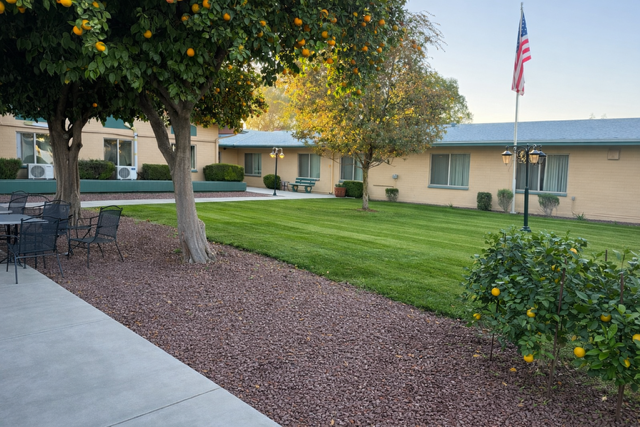
Who Owns and Operates Santa Rosa?

SANTA ROSA CARE CENTER is owned by a for-profit company. For-profit facilities operate as businesses with obligations to shareholders or private owners. The facility operates independently rather than as part of a larger chain. With 144 certified beds and approximately 112 residents (about 78% occupancy), it is a mid-sized facility located in TUCSON, Arizona.
How Does Santa Rosa Compare to Other Arizona Nursing Homes?

Compared to the 100 nursing homes in Arizona, SANTA ROSA CARE CENTER's overall rating (2 stars) is below the state average of 3.3, staff turnover (51%) is near the state average of 46%, and health inspection rating (2 stars) is below the national benchmark.

What Should Families Ask When Visiting Santa Rosa?

Based on this facility's data, families visiting should ask: "What safeguards and monitoring systems are in place to protect residents from abuse or neglect?" "Can I visit during a mealtime to observe dining assistance and food quality?" "How do you handle medical emergencies, and what is your hospital transfer rate?" "Can I speak with family members of current residents about their experience?" These questions are particularly relevant given the substantiated abuse finding on record.

Is Santa Rosa Safe?

Based on CMS inspection data, SANTA ROSA CARE CENTER has documented safety concerns. The facility has 1 substantiated abuse finding (meaning confirmed case of resident harm by staff or other residents). The facility has a 2-star overall rating and ranks #100 of 100 nursing homes in Arizona. Families considering this facility should ask detailed questions about what corrective actions have been taken since these incidents.

Do Nurses at Santa Rosa Stick Around?

SANTA ROSA CARE CENTER has a staff turnover rate of 51%, which is about average for Arizona nursing homes (state average: 46%). Moderate turnover is common in nursing homes, but families should still ask about staff tenure and how the facility maintains care continuity when employees leave.

Was Santa Rosa Ever Fined?

SANTA ROSA CARE CENTER has no federal fines on record. CMS issues fines when nursing homes fail to meet care standards or don't correct problems found during inspections. The absence of fines suggests the facility has either maintained compliance or corrected any issues before penalties were assessed. This is a positive indicator, though families should still review recent inspection reports for the full picture.

Is Santa Rosa on Any Federal Watch List?

SANTA ROSA CARE CENTER is not on any federal watch list. The most significant is the Special Focus Facility (SFF) program, which identifies the bottom 1% of nursing homes nationally based on persistent, serious quality problems. Not being on this list means the facility has avoided the pattern of deficiencies that triggers enhanced federal oversight. This is a positive indicator, though families should still review the facility's inspection history directly.