ROBINSON NURSING AND REHABILITATION CENTER LLC
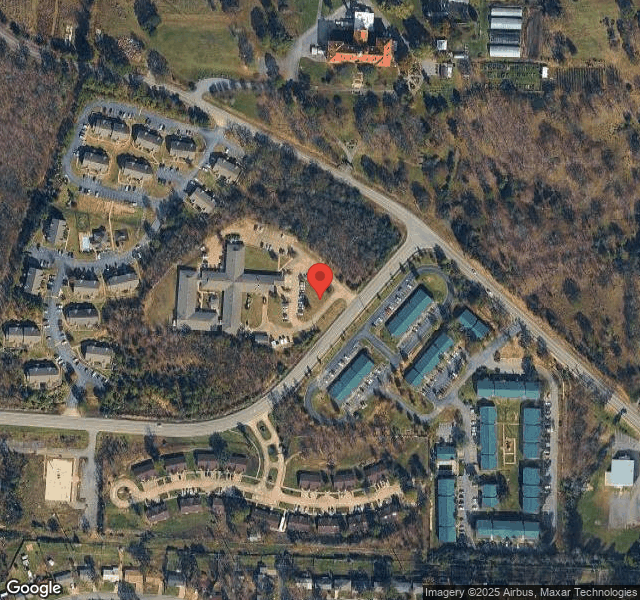
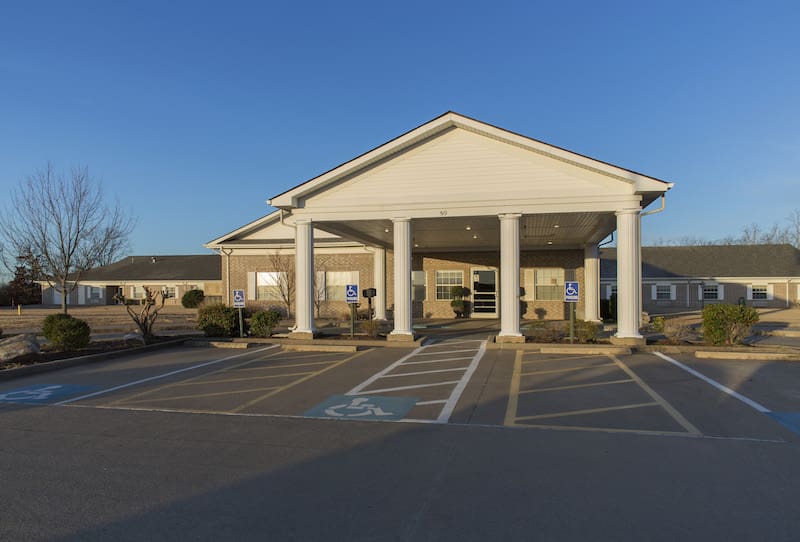
519 DONOVAN BRILEY BLVD., NORTH LITTLE ROCK, AR 72118 (501) 753-9003
For profit - Limited Liability company 110 Beds CENTRAL ARKANSAS NURSING CENTERS Data: November 2025
Trust Grade
50/100
#118 of 218 in AR
Last Inspection: January 2025

Within standard 12-15 month inspection cycle. Federal law requires annual inspections.

Overview

Robinson Nursing and Rehabilitation Center LLC has a Trust Grade of C, which means they are average, falling in the middle of the pack among nursing homes. They rank #118 out of 218 facilities in Arkansas, placing them in the bottom half, and #9 out of 23 in Pulaski County, indicating only a few local options are better. Unfortunately, the facility's situation is worsening, with issues increasing from 1 in 2024 to 8 in 2025. Staffing is a concern, with a 71% turnover rate that is significantly higher than the state average, and they have less RN coverage than 86% of Arkansas facilities, which can affect the quality of care. On a positive note, they have not incurred any fines, which is a good sign, but there are specific concerns such as food safety practices, where food was found uncovered and potentially contaminated, and the failure to properly display survey results in an accessible location, which could impact transparency and trust.

Trust Score
C
50/100
In Arkansas
#118/218
Bottom 46%
Safety Record
Low Risk
No red flags
Inspections
Getting Worse
1 → 8 violations
Staff Stability
⚠ Watch
71% turnover. Very high, 23 points above average. Constant new faces learning your loved one's needs.
Penalties
✓ Good
No fines on record. Clean compliance history, better than most Arkansas facilities.
Skilled Nurses
⚠ Watch
Each resident gets only 19 minutes of Registered Nurse (RN) attention daily — below average for Arkansas. Fewer RN minutes means fewer trained eyes watching for problems.
Violations
⚠ Watch
27 deficiencies on record. Higher than average. Multiple issues found across inspections.
★★★☆☆
3.0
Overall Rating
★★★☆☆
3.0
Staff Levels
★★★★★
5.0
Care Quality
★★☆☆☆
2.0
Inspection Score
Stable
2024: 1 issues
2025: 8 issues

The Good

  • 5-Star Quality Measures · Strong clinical quality outcomes
  • Full Sprinkler Coverage · Fire safety systems throughout facility
  • No fines on record

Facility shows strength in quality measures, fire safety.

The Bad

3-Star Overall Rating

Near Arkansas average (3.1)

Meets federal standards, typical of most facilities

Staff Turnover: 71%

24pts above Arkansas avg (46%)

Frequent staff changes - ask about care continuity

Chain: CENTRAL ARKANSAS NURSING CENTERS

Part of a multi-facility chain

Ask about local staffing decisions and management

Staff turnover is very high (71%)

23 points above Arkansas average of 48%

The Ugly 27 deficiencies on record

Jan 2025 8 deficiencies
CONCERN (D)

Potential for Harm - no one hurt, but risky conditions existed

MDS Data Transmission (Tag F0640)

Could have caused harm · This affected 1 resident

Based on interview and record review, the facility failed to encode and transmit a Minimum Data Set (MDS) assessment following a resident ' s discharge in a timely manner for one (Resident #36) of one...

Read full inspector narrative →
Based on interview and record review, the facility failed to encode and transmit a Minimum Data Set (MDS) assessment following a resident ' s discharge in a timely manner for one (Resident #36) of one resident sampled for MDS encoding and transmission. The findings are: Per review of a Nsg-Discharge Summary Progress Note dated 9/13/2024 at 1:45 PM, Resident #36 was discharged from the facility on 9/13/2024. Review of Resident #36 ' s medical record on 1/9/2025 at 11:10 AM revealed the resident ' s MDS discharge assessment had not been completed or transmitted to the Centers for Medicare & Medicaid Services (CMS) as required. This observation took place 118 days following the resident ' s discharge from the facility. On 1/9/25 at 11:20 AM, the MDS Coordinator confirmed the MDS discharge assessment for Resident #36 was overdue, stating she is allowed seven days to enter the discharge information. She verified that Resident 36 ' s discharge was not entered in a timely manner.
CONCERN (D)

Potential for Harm - no one hurt, but risky conditions existed

Assessment Accuracy (Tag F0641)

Could have caused harm · This affected 1 resident

Based on observation, record review, interview, and review of the Resident Assessment Instrument (RAI) manual, the facility failed to ensure the Minimum Data Set (MDS) accurately reflected section A15...

Read full inspector narrative →
Based on observation, record review, interview, and review of the Resident Assessment Instrument (RAI) manual, the facility failed to ensure the Minimum Data Set (MDS) accurately reflected section A1500, the preadmission screening and assessment resident record (PASRR), reflecting a serious mental illness and/or intellectual disability affecting 1 of 1 sampled (Resident #2) resident with a level II PASRR. Findings include: 1. Review of Medical Diagnosis revealed Resident #2 had diagnoses of paranoid schizophrenia, bipolar, and diabetes. a. The annual MDS with an Assessment Reference Date (ARD) of 02/23/2024, revealed a Brief Interview for Mental Status (BIMS) score of 14 (13-15 indicate cognitively intact). Section A1500 indicated 0 resident 2 does not have a level II PASRR. b. Review of Resident #2 ' s Care Plan, with a revision date of 06/19/2024, revealed Resident #2 had a level II PASRR. c. On 01/08/2025 at 10:54 AM, the Social Director (SD) provided Resident #2 ' s form 703 and 787 from 02/08/2022 and stated Resident #2 had a level II PASRR. d. On 01/08/2025 3:24 PM, the MDS Coordinator was asked Resident #2 ' s results on section A1500 of the MDS, and what guidance was used to code to the MDS. MDS Coordinator reviewed the Annual MDS with an ARD of 02/23/2024. The MDS Coordinator stated section 1500 was coded wrong with 0 indicating Resident #2 did not have a level II PASRR, and confirmed the RAI manual was used for guidance. When asked why it was important to code correctly to the MDS, the MDS Coordinator stated the MDS drives the residents care plan and can affect reimbursement. e. On 01/08/2025 at 3:30 PM, the MDS Coordinator was asked for a copy of the section of the RAI manual that was used to code section A1500. f. On 01/08/2025 at 3:35 PM, the MDS Coordinator provided section A1500, from the RAI manual showing code 1 for yes if resident has a PASRR level II.
CONCERN (D)

Potential for Harm - no one hurt, but risky conditions existed

Comprehensive Care Plan (Tag F0656)

Could have caused harm · This affected 1 resident

Based on record review and interview, the facility failed to care plan oxygen to ensure 1of 1 sampled (Resident #37) resident received individualized, resident-centered care addressing interventions, ...

Read full inspector narrative →
Based on record review and interview, the facility failed to care plan oxygen to ensure 1of 1 sampled (Resident #37) resident received individualized, resident-centered care addressing interventions, treatment, and health care goals. Findings include: 1. Review of Medical Diagnosis revealed Resident #37 had diagnoses of atrial flutter, opioid dependency, and diabetes. a. The significant Minimum Data Set (MDS) with an Assessment Reference Date (ARD) of 09/04/2024, revealed a Brief Interview for Mental Status (BIMS) score of 15 (13-15 suggest cognitively intact). Section C0110, C1 indicated the resident was receiving supplemental oxygen. b. On 01/06/2025 at 3:06 PM, Resident #37 was observed receiving two liters of oxygen. c. On 01/07/2025 at 2:53 PM, Licensed Practical Nurse (LPN) #5 was asked for assistance finding where oxygen was addressed on Resident #37 ' s care plan. LPN #5 stated, I cannot find a care plan for oxygen. When asked if Resident #37 should have a care plan addressing oxygen, LPN #5 stated care plans are important because if someone checked they would know how much oxygen Resident #37 was supposed to be on, why Resident #37 was on oxygen, and what interventions to look for. LPN #5 stated Resident #37 was placed on oxygen in the summer, then confirmed 06/03/2024, after a chest x-ray for shortness of breath was verified from the order summary. d. During an interview on 01/08/25 at 10:50 AM, the Administrator was asked if a resident was on oxygen that has been documented on the MDS, should it also be care planned. The Administrator revealed that oxygen should be care planned because the care plan directs staff on resident care. Administrator was asked to provide a care plan policy. e. The Consultant provided a letter indicating the facility does not have a care plan policy, but they do follow the Resident Assessment Instrument (RAI) manual. f. On 01/09/2025 at 9:16 AM, MDS Coordinator provided Chapter 4: Care Area Assessment (CAA) Process and Care Planning, from the RAI manual revealing assessment results must accurately reflect a residents need to develop a comprehensive care plan. The RAI process considers the efforts of the health care team to trigger areas of concern that may warrant interventions to prevent further decline. The MDS Coordinator noted that since there was not an order for oxygen, the trigger for care planning was overlooked. She confirmed that oxygen was documented on the MDS and should have been care planned.
CONCERN (E) 📢 Someone Reported This

A family member, employee, or ombudsman was alarmed enough to file a formal complaint

Potential for Harm - no one hurt, but risky conditions existed

ADL Care (Tag F0677)

Could have caused harm · This affected multiple residents

Based on observation, interview, and record review, the facility failed to ensure personal hygiene, as related to proper nail care, was not provided to residents who were dependent on nail care for 2 ...

Read full inspector narrative →
Based on observation, interview, and record review, the facility failed to ensure personal hygiene, as related to proper nail care, was not provided to residents who were dependent on nail care for 2 (Residents #83 and #87) of 2 residents reviewed for activities of daily living (ADL) care. The findings include: 1. A. Review of Resident #83 ' s Care Plan identified: i. Resident needs secured/special care neighborhood due to behaviors/psychosocial/dementia/ other psychiatric issues, initiated: 07/22/2024. ii. Resident has an ADL self-care performance deficit, initiated: 02/27/2024. iii. Resident has potential/actual impairment to skin integrity r/t (related to) fragile skin, incontinence of bowel and bladder, Dx (Diagnoses) of: Dementia, schizophrenia, and iron deficiency anemia. Initiated: 10/15/2024. B. Review of Resident #83 ' s Minimum Data Set (MDS) dated Dec. 5, 2024, reflects resident had a Brief Interview for Mental Status (BIMS) score of 00 which indicated Resident #83 had severe cognitive impairment. C. MDS dated Dec. 5, 2024, reflected Resident #83 to have diagnoses of: Dementia, anxiety disorder, psychotic disorder, post-traumatic stress disorder. 2. A. Review of Resident #87 ' s Care Plan identified: i. Resident #87 needs secured/special care neighborhood due to behaviors/psychosocial/Dementia/wandering/elopement risk; Initiated: 06/17/2024. ii. Resident #87 had an ADL self-care performance deficit r/t Dementia; Initiated: 06/04/2024. iii. Resident #87 had impaired cognitive function/dementia or impaired thought processes as evidenced by BIMS score; Initiated: 06/13/2024. iv. Resident #87 had potential to be physically aggressive: hitting, kicking, pushing, pinching, scratching, etc. related to: Dementia; Initiated: 06/04/2024. B. Review of Resident #87 ' s MDS dated Dec. 3, 2024, reflected resident had a Brief Interview for Mental Status (BIMS) score of 00 which indicated Resident #87 had severe cognitive impairment. C. Review of a Physician ' s Order dated 01/06/25, identified Resident #87 to have diagnosis of: Alzheimer's Disease Vascular Dementia, and Behavioral Disturbance. 3. A. On 01/6/24 at 10:30 AM, Resident #83 ' s nails were observed to be long and jagged with dark brown substance underneath the nails. B. 01/08/25 at 3:52 PM, Resident #83 ' s nails observed to be long and jagged with dark brown substance underneath the nails. 4. A. On 01/06/25 at 9:45 AM, Surveyor observed Resident #87 walking down the hallway. Resident ' s fingernails were observed to have a dark brown substance underneath the nails. B. On 01/06/24 at 10:28 AM, Surveyor observed resident #87 fingernails had a dark brown substance underneath the nails and a brown substance was on top of the nails. 5. A. On 01/09/25 at 9:20 AM, CNA #12 said the brown substance under fingernails could be food or fecal matter. CNA #12 stated if it were fecal matter, it could have something like clostridium difficile or hepatitis in it, or any illness the resident might have in it. It could be transferred to staff or other residents. CNA #12 stated The resident could get it from digging, but we don ' t really have any diggers, or from toileting. Fecal matter carries a lot of things. B. On 01/09/25 at 9:30 AM, CNA #10 said the brown substance under fingernails could be fecal matter from digging because we have a lot that dig. It could have germs in it like clostridium difficile. 6. On 1/9/25 at 10:20 AM, the Nurse Consultant stated the facility does not have a policy for nail care.
CONCERN (E) 📢 Someone Reported This

A family member, employee, or ombudsman was alarmed enough to file a formal complaint

Potential for Harm - no one hurt, but risky conditions existed

Accident Prevention (Tag F0689)

Could have caused harm · This affected multiple residents

Based on observations, interviews, record review, it was determined that the facility failed to ensure 1 (Resident #11) of 1 sampled resident ' s wheelchair was in good working condition. The finding...

Read full inspector narrative →
Based on observations, interviews, record review, it was determined that the facility failed to ensure 1 (Resident #11) of 1 sampled resident ' s wheelchair was in good working condition. The findings are: A review of an Order Summary Report indicated that Resident #11 had diagnoses of type 2 diabetes and restless legs syndrome, and a physician ' s order for Apixaban, an anticoagulant medication used to treat and prevent blood clots, with common side effects that include bleeding. The annual Minimum Data Set (MDS), with an Assessment Reference Date (ARD) of 12/05/2024, revealed Resident #11 had a Brief Interview for Mental Status (BIMS) score of 15, which indicated the resident was cognitively intact. The MDS revealed Resident #11 used a wheelchair for mobility. Review of Resident #11's Care Plan, revised 11/10/2024, revealed the resident had potential for skin tear and bruising related to fragile skin, and long-term use of anticoagulants. On 1/06/25 at 11:05 AM, Resident #11 indicated that the wheelchair was digging into her legs. She indicated that when she moves around in her chair the wheelchair scrapes her leg. She indicated that she has informed the staff about the wheelchair, and they indicated that they don't know why she hasn't received a wheelchair. Resident #11 indicated that she sits up in her wheelchair most of the day. Resident #11 raised up her left leg and the cap was missing from the frame of the wheelchair below the seat. The frame was pressing into Resident #11's leg. On 1/08/25 at 1:54 PM, the Administrator indicated that wheelchairs are inspected very shift. The Administrator indicated that Resident #1 ' s wheelchair should be in good repair. He indicated that that he wasn't for sure why a new wheelchair hadn't been ordered already. On 1/08/25 at 1:58 PM, the MDS Coordinator indicated that the lead CNA (Certified Nurse Aide) informed her that Resident #11 said her wheelchair was too small, and it was rubbing the back of her legs. On 1/09/25 at 9:44 AM, the Lead CNA indicated that wheelchairs are inspected nightly, and on shower days which are on Mondays, Wednesdays, and Fridays. The lead CNA indicated that the Administrator informed him about Resident #11's wheelchair yesterday. On 1/09/25 at 9:50 AM, the MDS Coordinator indicated that a skin assessment was completed on Resident #11 after she received her new wheelchair yesterday. She indicated that Resident #11 did not observe any damage to Resident #11 ' s skin. On 1/09/2025 at 10:30 AM, the Administrator indicated that the facility did not have a policy for wheelchairs or equipment.
CONCERN (E)

Potential for Harm - no one hurt, but risky conditions existed

Respiratory Care (Tag F0695)

Could have caused harm · This affected multiple residents

Based on observation, record review, interview, and facility policy review the facility failed to ensure a resident on 2 liters of oxygen had a physician ' s order for oxygen therapy to ensure residen...

Read full inspector narrative →
Based on observation, record review, interview, and facility policy review the facility failed to ensure a resident on 2 liters of oxygen had a physician ' s order for oxygen therapy to ensure resident received the appropriate and safe dosage of oxygen therapy affecting 1 (Resident #37) of 1 resident sampled for oxygen therapy. Findings include: 1.Review of Medical Diagnosis revealed Resident #37 had diagnoses of atrial flutter, opioid dependency, and diabetes. a. The significant change Minimum Data Set (MDS) with an Assessment Reference Date (ARD) of 09/04/2024, revealed a Brief Interview for Mental Status (BIMS) score of 15(13-15 suggest cognitively intact). MDS section C0110, C1 indicated Resident #37 was receiving supplemental oxygen. b. Review of a policy titled Oxygen Safety, with a revision date 11/22/2016, revealed that oxygen therapy is administered only upon a written order of a licensed physician. c. On 01/06/2025 at 3:06 PM, Resident #37 was observed on 2 liters of oxygen via nasal cannula (LNC). d. On 01/07/2025 at 2:22 PM, Resident #37 ' s oxygen concentrator was set on 2 LNC, and tubing was dated 01/06/2025. e. On 01/07/2025 at 2:23 PM, during an interview with Licensed Practical Nurse (LPN) #5 at Resident #37's bedside, LPN #5 was asked to check the oxygen concentrator, and LPN #5 verified it was set on 2 liters. When asked why the resident was on oxygen, LPN #5 replied Resident #37 gets short of breath. f. On 01/07/2025 at 2:53 PM, LPN #5 was asked for assistance findings an oxygen order for Resident #37. LPN #5 checked for orders and revealed that she could not find oxygen orders. LPN #5 looked at the order summary and stated, We did a chest Xray on 06/03/2024, and put Resident #5 on oxygen at that time, but I am not findings an order. When asked why Resident #37 should have an order for oxygen, LPN #5 revealed that residents on oxygen require a physician ' s order directing staff on the appropriate dosage. g. On 01/08/2025 10:50 AM, the Administrator was asked if residents receiving oxygen therapy are expected to have an order for oxygen, and who was responsible for checking for orders. The Administrator revealed that residents with oxygen require an order because it is considered a medication, and confirmed nursing staff are responsible, but because there was not an order it did not appear on the Medication Administration Record (MAR) for documentation.
CONCERN (E)

Potential for Harm - no one hurt, but risky conditions existed

Food Safety (Tag F0812)

Could have caused harm · This affected multiple residents

Based on observation, interview, and facility policy review, the facility failed to ensure dietary staff washed their hands before they handled clean equipment or food, and manufacture specification w...

Read full inspector narrative →
Based on observation, interview, and facility policy review, the facility failed to ensure dietary staff washed their hands before they handled clean equipment or food, and manufacture specification was followed for 2 of 2 meals observed. The findings are: 1. On 01/07/25 at 1:59 PM, Dietary Aide (DA) #1 picked up the water hose with his bare hand, used it to spray leftover food from inside of the dishes, contaminating his hands. DA #1 placed the dirty dishes in the dirty racks and pushed the racks into the dish washing machine to wash. After the dishes stopped washing, he moved to the clean side of the dishwasher area and picked up a clean blade and placed it inside the blender to be used in pureeing food items to be served to residents who required pureed diet and or mechanical soft diets without performing hand hygiene. DA #1 was interviewed and asked what he should have done after touching dirty objects or before handling clean equipment. He stated he should have washed his hands. 2. On 01/07/25 at 4:02 PM, Dietary [NAME] (DC) #2 removed a pan of cooked turkey from the oven and placed it on the counter, contaminating her hands. Without washing her hands, she picked up pans to be used in transferring pureed food items to be served to residents who required pureed diet for the supper meal and placed them on the counter with her fingers inside the pans. DC #2 was interviewed and was asked what she should have done after touching dirty objects and before handling clean equipment; she stated she should have washed her hands. 3. On 010/7/25 at 4:12 PM, DC #2 untied the bread bag, and placed it on the counter without washing her hands. DC #2 removed a glove from the glove box, contaminating the glove, then used the contaminated gloved hand to pick up a clean blade and attached it to the base of the blender, to be used in pureeing food items to be served to residents who required a pureed diet. 4. On 01/07/25 at 4:36 PM, DA #1 walked into the clean area of the dish washing machine from the dining room, contaminating his hands after touching the knob to open the door. Without washing his hands, Dietary aide #1 picked up napkins and placed them on the cart. He also picked up utensils from the area that would go into the resident's mouth and placed them on individual napkins, wrapping them for residents to use during their meals. When asked what the residents use the napkins for, he stated that they use them to wipe their mouths while eating. DA #1 was interviewed and was asked what he should have done after touching dirty objects and before handling clean equipment; he stated he should have washed his hands. 5. On 01/08/25 at 8:31 AM, Dietary aide (DA) #3 removed his hands from his pocket, contaminating his hands. Without washing his hands, DA #3 picked up clean bowls and plates and stacked them up on the rack to be used in positioning food items to be served to the residents at the lunch meal. DA #3 was interviewed and was asked what he should have done after touching dirty objects and before handling clean equipment; he stated he should have washed his hands. 6. On 01/08/25 at 8:35 AM, Dietary [NAME] (DC) #4 opened bags of shredded cabbage, shredded carrots, and shredded red cabbage and emptied them into a bowl, opened a container of mayonnaise poured some on top of the shredded green cabbage, shredded red cabbage and shredded carrots, then placed gloves on his hands, contaminating the gloves. Without changing gloves and washing his hands, DC #4 then used his contaminated gloved hands to mix cabbages and carrots to be served to the residents for lunch meal. DC #4 was interviewed and was asked what he should have done after touching dirty objects and before handling clean equipment; he stated he should have washed his hands. 7. On 01/08/25 8:50 AM, an opened bottle of lemon juice was on a shelf above the food preparation counter. The manufacturer specifications on the bottle indicated to refrigerate after opening. DC #4 was interviewed and was asked what the lemon juice was used for; he stated kitchen staff use it to clean the grill and also use it when a recipe calls for it. At 11:40 AM, DC #2 was interviewed and was asked what the lemon juice was used for; she stated kitchen staff use it to clean the grill and also use it when a recipe calls for it. On 01/09/25 at 10:05 AM, Dietary Manager (DM) was interviewed and was asked what the lemon juice was used for; she stated kitchen staff use it to clean the grill and also use it when a recipe calls for it. 8. A review of facility policy titled, Handwashing and Glove Usage in Food service, initiated 2016, provided by the Dietary Manager on 01/08/2025, indicated, food handlers should wash their hands before starting work, after touching dirty dishes or clothing and after touching anything else such as dirty equipment.
CONCERN (E) 📢 Someone Reported This

A family member, employee, or ombudsman was alarmed enough to file a formal complaint

Potential for Harm - no one hurt, but risky conditions existed

Safe Environment (Tag F0921)

Could have caused harm · This affected multiple residents

**NOTE- TERMS IN BRACKETS HAVE BEEN EDITED TO PROTECT CONFIDENTIALITY** Based on observations and interviews, the facility failed to ensure the residents resided in a safe, functional, and comfortable...

Read full inspector narrative →
**NOTE- TERMS IN BRACKETS HAVE BEEN EDITED TO PROTECT CONFIDENTIALITY** Based on observations and interviews, the facility failed to ensure the residents resided in a safe, functional, and comfortable environment as evidenced by two (rooms [ROOM NUMBERS]) exhibiting stained, soiled privacy curtains and damaged chairs. The findings are: 1. During facility rounds on 1/6/25 at 10:18 AM, the Surveyor observed the privacy curtains in Rooms 104 (Resident #38 was a resident in this room) and room [ROOM NUMBER] (Resident #82 resided in this room) had dark brown stains in several areas. The substance on the curtain in room [ROOM NUMBER] had dark brown lumps in it. The white bedside chair in room [ROOM NUMBER] had the vinyl peeled off the top corner of the chair, exposing the foam and fabric underneath. The white chair in room [ROOM NUMBER] had a large hole, approximately 2 in diameter, on the right arm of the chair. The vinyl edges of the hole were sharp and rough to the touch. 2. During facility rounds on 1/9/25 at 10:10 AM, the Surveyor observed the dark brown stains on privacy curtains in rooms [ROOM NUMBERS] remained as found in previous observation. The privacy curtain in room [ROOM NUMBER] continued to have a dark brown lump of substance on it. The white bedside chair in room [ROOM NUMBER] had the vinyl finish peeled off the top corner of the chair, exposing the foam fabric underneath. The vinyl edges of the hole were rough to touch. The white chair in room [ROOM NUMBER] had a large hole, approximately 2 in diameter, on the right arm of the chair. The vinyl edges of the hole were sharp and rough to the touch. 3. During an interview on 1/9/25 at 9:20 AM, Certified Nursing Aide (CNA) #12 said the dark stains on the curtain in room [ROOM NUMBER] were from a milkshake the resident had thrown about a week previous, stating, But if it is not that and is fecal matter it can be dangerous to staff and resident because fecal matter has germs like C-Diff (clostridium difficile) or hepatitis and these make you sick. CNA #12 said the missing vinyl on the chair has the potential to be harmful to the resident because it is sharp, and it can have germs in it. 4. On 1/9/25 at 9:30 AM, CNA #10 said the substance and stains on the curtain in room [ROOM NUMBER] could be feces, and it could be harmful to a resident or staff because feces can have any sickness the resident might have and it can transfer to anyone who touches it, like C-diff. CNA #10 said the tear on the chair has the potential to be harmful to the resident because it is sharp, and the resident could sustain a skin tear and get the germs in it. 5. On 01/09/25 at 10:30 AM, the Nurse Consultant said they do not have a policy on furniture replacement.
Jun 2024 1 deficiency
CONCERN (E) 📢 Someone Reported This

A family member, employee, or ombudsman was alarmed enough to file a formal complaint

Potential for Harm - no one hurt, but risky conditions existed

Safe Environment (Tag F0584)

Could have caused harm · This affected multiple residents

Based on observation, interview and facility policy review, the facility failed to ensure showers were maintained in a clean and sanitary condition for resident use, as evidence by, black residue in t...

Read full inspector narrative →
Based on observation, interview and facility policy review, the facility failed to ensure showers were maintained in a clean and sanitary condition for resident use, as evidence by, black residue in the grout lines of the shower tiles on the floor and walls in two of four shower rooms. This failed practice had the potential to affect 90 residents (Census: 92) who received showers in the shower rooms. The findings are: The Surveyor observed a Proper Procedures for Disinfecting the Shower Rooms form on the wall in one of four shower rooms on 06/19/2024, which indicated, .Housekeeping is to disinfect the shower room in the morning before daily showers begin and at the end of the day when showers have been completed. Showers are disinfected as followed: 1) Spray disinfectant on shower chair, shower walls, and shower floor 2) Wait 10 minutes 3) Rinse off the shower chair, shower walls, and shower floor . Review of the Housekeeping policy, provided by the Administrator on 06/20/2024 indicated, .Procedure . Housekeeping staff will strive to keep the facility free from offensive odors, accumulations of dirt, rubbish, dust, and safety hazards . Review of the Order Summary Report revealed Resident #3 had a diagnosis of Osteoarthritis of Left Hip. Review of the Quarterly Minimum Data Set with an Assessment Reference Date of 05/31/2024 indicated Resident #3 had a Brief Interview for Mental Status score of 15 (13-15 indicates cognitively intact) and required partial to moderate assistance with shower/bathing activity. On 06/19/2024 at 9:38 AM, during an interview, Resident #3 was asked about the (black substance) in the showers, and when the resident was asked if a particular shower was used, Resident #3 confirmed that Resident #3 used all the showers in the halls that everyone used. Resident #3 confirmed that in those different showers Resident #3 saw dark, black areas in the grout on the floor tiles and on the base of the shower. Resident #3 added that Resident #3 required help with showering, and was not able to stand, but used a shower chair. On 06/19/2024 at 12:57 PM, the SPA room (shower room) between the 200 and 300 Halls, on the right of the 200 Hall had two shower stalls was observed. There was a black residue in between the tiles in the grout lines. There was also black residue observed in the grout lines on the lower part of the shower wall. On 06/19/2024 at 1:04 PM, the SPA room by the 500 Hall, in the corner, to the right of the nursing station, was observed. The first shower stall had a black residue observed in the grout lines of the tiles on the floor and on the wall. The second shower stall had black residue in the grout lines between the tiles on the floor and lower wall of the shower stall. The third shower stall had black residue on the grout lines between the tiles of the floor and in the corner going up the shower wall. A fourth shower stall had a small amount of black residue in the grout lines between the tiles of the floor. On 06/19/2024 at 2:00 PM, during an interview, Certified Nursing Assistant (CNA) #1 confirmed she sanitized the shower after use with soap first and then a purple spray solution kept in the supply closet by the 100 Hall. She confirmed she sanitized the showers sometimes before use and after every use. On 06/19/2024 at 2:36 PM, during an interview, Housekeeper #2 confirmed housekeeping staff were responsible for cleaning the showers. She confirmed they were cleansed in the morning and after lunch. She confirmed she used bathroom disinfectant, that was pink in color, to cleanse the showers. She confirmed she used a floor cleaner for the shower floor that had a dark blue label on it. On 6/19/2024 at 2:53 PM, during an interview and concurrent observation, Housekeeper #2 and this Surveyor entered the shower room between the 200 and 300 Halls, across from the nursing station and on the left side of the 200 Hallway. She was asked to look at the shower stalls and describe what she saw. She confirmed it looked like soap scum that had been there for a while. She described the color of it as black. There was a sheet on the wall titled, Proper Procedures for Disinfecting the Shower Rooms and it described the process of how housekeeping and CNAs should disinfect the shower room. On 06/19/2024 at 2:55 PM, during an interview and concurrent observation, Housekeeper #2 and this Surveyor entered the janitor's closet and there was a [brand name] dispenser on the wall to the right of the room and there were tubes coming from it and different colored labels on the front that indicated: Spray Bottle Fill: .Pink [brand name] cleaner; Mop Bucket Fill: [brand name] cleaner with two bottles. In the lower part of the dispenser, were the following containers: [brand name] cleaner (Pink); [brand name cleaner] (Light Blue); [brand name cleaner] times 2 containers (Dark [NAME] label). Housekeeper #2 stated, The green one is used on the floor in the shower rooms and in the residents' rooms. On 06/20/2024 at 9:13 AM, during an interview, the Housekeeping Supervisor confirmed the showers were cleansed twice a day with a disinfectant that was allowed to sit 5 to 10 minutes before being washed off. She confirmed an acid bathroom cleaner was used daily in the shower stalls. She was asked what housekeeping did if they noticed a black residue in the showers and she confirmed the showers were cleansed daily. On 06/20/2024 at 2:27 PM, the Housekeeping Supervisor confirmed during an interview by telephone that the housekeeping staff retrieved the solution from the dispenser, and it was already diluted and ready to be used. She confirmed that she gave the housekeeping staff cards that tell them the kill time for each disinfectant. Review of the [brand name] Reference Sheet, copyrighted 2021, provided by the Housekeeping Supervisor on 06/20/2024 indicated it was recommended for daily use disinfecting and cleaning washable hard non-porous environmental surfaces including shower rooms and spas, shower stalls and tiles. It indicated visibly soiled areas should be pre-cleaned and the surfaces must remain visibly wet for five minutes. It indicated the product should be diluted at a one to 16 (8 ounces) to one to 10.7 (12 ounces) per gallon of water.
Nov 2023 9 deficiencies
CONCERN (D)

Potential for Harm - no one hurt, but risky conditions existed

Quality of Care (Tag F0684)

Could have caused harm · This affected 1 resident

Based on observation, interview, and record review the facility failed to perform a Neurological Assessment after an unwitnessed fall. This failed practice had the potential to affect 1 [Resident #24]...

Read full inspector narrative →
Based on observation, interview, and record review the facility failed to perform a Neurological Assessment after an unwitnessed fall. This failed practice had the potential to affect 1 [Resident #24] resident of 7 [Residents #11, #24, #28, #33, #37, #42, #73] sample mixed residents who had an unwitnessed fall in the past 3 month according to a list provided by the Administrator on 11/9/23 at 12:11 PM. The findings are: Resident #24's Minimum Data Set [MDS] with an Assessment Reference Date [ARD] of 8/20/23 showed a Brief Interview for Mental Status [BIMS] of 00 [0-7 severe cognitive impairment] requiring extensive assistance with 1-person physical assistance for transfers. Resident's diagnoses showed Alzheimer's disease with early onset; other Alzheimer's disease; restlessness and agitation, Agitation with potential harm to other(s). Care Plan dated 8/20/23 documented: Focus: 1/24/2023 The resident has had an actual fall with no injury, 1/29/3023 The resident had a fall without injury. 1/31/2023 The resident had a fall with minor injury 4/18/23 actual fall no injury. Goals: The resident will resume usual activities without further incident through the review date. Interventions: Continue interventions on the at-risk plan. For no apparent acute injury, determine and address causative factors of the fall. Monitor/document /report as needed [PRN] x 72 hour [h] to Medical Doctor [MD] for signs and symptoms [s/sx]: Pain, bruises, change in mental status, new onset: confusion, sleepiness, inability to maintain posture, agitation. Every [q] 2-hour toileting while awake. Focus: The resident is at risk for falls related to [r/t] Deconditioning, Gait/balance problems and poor safety awareness. Goals: The resident will be free of falls through the review date. The resident will be free of minor injury through the review date. The resident will not sustain serious injury through the review date. Side effects of medications increasing the resident's fall risk will be reduced by the review date. Interventions: Anticipate and meet the resident's needs. Be sure the resident's call light is within reach and encourage the resident to use it for assistance as needed. The resident needs a prompt response to all requests for assistance. Follow facility fall protocol. Review information on past falls and attempt to determine the cause of falls. Record possible root causes. On 11/06/23 at 1:43 PM, the Surveyor was standing in the hall approximately 2 rooms down from the resident's room and heard Resident #24 yelling help, help. No staff observed at that end of the hall. The surveyor moved down the hall and observed no staff in the room. 3 Certified Nursing Assistants [CNA's] came from the opposite end of the hall to the room and closed the door. The surveyor observed Licensed Practical Nurse [LPN] #1 enter resident's room at approximately 1:46 PM. The surveyor observed staff exit the room at approximately 1:57 PM with vital sign equipment. Resident was lying in a low bed with fall mat beside the bed and call light in reach. On 11/08/23 at 3:19 PM, the Surveyor asked LPN #1, Can you show me the neurological assessment that was started on Resident #24 after the fall on Monday? LPN #1 stated, I was told a CNA witnessed the fall so I did not start neuros. I was at lunch, and they called me to come to the resident's room. I was told a CNA witnessed the resident attempting to transfer themselves from the wheelchair to the bed and the CNA could not get there in time to assist the resident. Another resident rolled Resident #24 into their room they were left unsupervised. On 11/08/23 at 03:31 PM, the Surveyor asked the Director of Nursing [DON], Were you aware that a neurological assessment was not started on Resident #24 after the fall on 11/6/23? The DON stated, I thought it was witnessed, but let me talk to the other Department Heads and see if anyone started them. I know some went down there until the floor nurse got there. On 11/09/23 at 09:11 AM, the Surveyor asked LPN #1 to point out the CNA who witnessed the fall to interview. LPN #1 stated, I made a mistake. That CNA was sent home earlier in the day before the fall occurred and I don't remember who told me they witnessed the fall. On 11/9/23 at 12:23 PM, the Surveyor asked the Director of Nursing [DON], What interventions are in place to prevent falls? The DON said, we use fall mats, positioning cushions, specialized chairs and beds, non-skids socks and floor strips, stop signs, resident within eyesight, resident up first for meals and 1st to lay down, and helmets. Sometimes we use the quarter positioning rails, toilet rails and bed side commodes. We have regular In-Services and notification to staff sign. The Surveyor asked, what specific interventions are in place for Resident #24? The DON said, the resident is to be within eyesight when out of the room, a fall mat in place, 1st up for meals, non-skid socks, quarter rails on bed, wander guard since the resident likes to go up by the front door and quick at it sometimes. There was an in service with staff for other residents not to push residents to the room. The Surveyor asked, what is the facilities at-risk plan that is mentioned in the resident ' s care plan? The DON stated, if the patient is a fall risk it is the fall focus in the care plan. The Surveyor asked, what is your plan to prevent the resident from having future falls? The DON said, make sure the resident is not pushed to room by another resident, non-skid socks in place, fall mat, in eyesight, and quarter rails on bed. Reviewed Incident & Accident Note dated 11/7/2023 at 7:56 showed, immediate intervention: assessed for injury, none noted, neurological check within normal limit, notified son, Administrator, Director of Nursing, Advanced Practice Registered Nurse, vitals within normal limit, assisted to bed with 2 staff. Vitals: Blood Pressure 144/68 Pulse 72 Respirations 16 Temperature 97.4. A Policy titled Incident and Accident Policy (Revised 5-1-16; 11-22-16) provided by the Administrator on 11/9/23 at 12:11 PM showed, .If there is an unwitnessed injury or a suspected head injury, the nurse will perform and document neurological checks and vital signs for 72 hours as follows: Every 1 hour for 4 hours, then every 4 hours for 20 hours, then every 8 hours for 48 hours .
CONCERN (E)

Potential for Harm - no one hurt, but risky conditions existed

Safe Environment (Tag F0584)

Could have caused harm · This affected multiple residents

**NOTE- TERMS IN BRACKETS HAVE BEEN EDITED TO PROTECT CONFIDENTIALITY** Based on observation, interview, and record review, the facility failed to ensure the residents living in the facility were prov...

Read full inspector narrative →
**NOTE- TERMS IN BRACKETS HAVE BEEN EDITED TO PROTECT CONFIDENTIALITY** Based on observation, interview, and record review, the facility failed to ensure the residents living in the facility were provided a safe, clean, and comfortable homelike environment by maintaining walls in good condition for 3 (Rooms 101, 308, 407) rooms in the facility. The findings are: 1. On 11/06/23, during initial rounds the following was observed: a. On 11/06/23 at 10:07 AM in room [ROOM NUMBER] on secured unit surveyor observed 3 areas on the long wall with white spackled areas on wall and on the adjoining wall had area where wall had sheetrock exposed at the bottom of wall. Spackled areas measure 6.5x7, 4x9 and 5x3 inches. b. On 11/08/23 at 3:33 PM, room [ROOM NUMBER] B, surveyor observed wallpaper pulled away from the wall at the head of the bed in 3 areas. Areas measured 15x22, 9x12, and 14x17 inches. c. On 11/08/23 at 03:48 PM, the surveyor asked the Director of Nurses (DON), should a resident ' s room have wallpaper peeled off and hanging from the wall? [NAME] stated, No, however, we are starting to do a remodel and will be fixing the walls. The Surveyor asked is this like a homelike environment? The DON stated, No, but we are fixing it. d. On 11/8/23 at 3:57 PM, a policy was provided by the Administrator titled, Resident Rights .15. Receive adequate and appropriate medical care, nursing care, protective and support services, and personal cleanliness in a safe and clean environment . 2. On 11/06/23 at 01:27 PM, the surveyor observed room [ROOM NUMBER] B with 2 long, dark marks on the left entrance wall. a. On 11/07/23 at 09:51 AM, the surveyor observed room [ROOM NUMBER] B with 2 long, dark marks on the left entrance wall. b. On 11/08/23 11:32 AM, The surveyor observed room [ROOM NUMBER]-B with 2 long, dark scratches on the left entrance wall. The surveyor requested for Maintenance to measure the marks on the wall. Maintenance stated, they measure 10 ft. 3 inches long and 2 ft. 3 inches high from the floor. c. On 11/08/23 at 11:36 AM, The surveyor asked Maintenance, were you aware of the marks on this wall? Maintenance stated, No, I've been out of town and just got back. 3. On 11/07/2023 at 9:39 AM, the surveyor observed a 36-inch section of wallpaper peeling away from the wall above the head of the occupied B bed in room [ROOM NUMBER]. Resident #38 was lying in the B bed and stated, Everything is falling apart in here. a. On 11/08/2023 at 2:11 PM, the 36-inch section of wallpaper peeling away from the wall above the head of the occupied B bed in room [ROOM NUMBER] was again observed. Resident #38 was lying in the B bed and stated, I'm surprised that it's still on the walls at all.
CONCERN (E)

Potential for Harm - no one hurt, but risky conditions existed

Assessment Accuracy (Tag F0641)

Could have caused harm · This affected multiple residents

Based on interview and record review the facility failed to update a Minimum Data Set [MDS] for 2 [Residents #16 and #23] residents. This failed practice had the potential to affect all 75 residents. ...

Read full inspector narrative →
Based on interview and record review the facility failed to update a Minimum Data Set [MDS] for 2 [Residents #16 and #23] residents. This failed practice had the potential to affect all 75 residents. The findings are: 1. Resident #16 Physician's Order Summary dated 1/1/23 thru 11/30/23 showed, Seroquel (an antipsychotic medication) Oral Tablet 25 MG (Quetiapine Fumarate) Give 1 tablet by mouth at bedtime related to other frontotemporal neurocognitive disorder Discontinued 01/23/2023. Seroquel Oral Tablet 25 MG (Quetiapine Fumarate) Give 0.5 tablet by mouth at bedtime related to other frontotemporal neurocognitive disorder give 0.5 tab to = 12.5mg every night [QHS] Discontinued 07/17/2023. 1a. MDS with an Assessment Reference Date [ARD] of 10/4/23 showed, Resident is taking an antipsychotic and has taken it in the last 7 days. 1b. On 11/9/23 at 12:35 PM, the Surveyor asked the MDS Coordinator [MC], Can you pull up the orders for Resident #16 ' s antipsychotic? Is Resident #16 on an antipsychotic. No. The Surveyor asked, can you see where Resident #16 was taking an antipsychotic and when it ended? The MC said, one order of Seroquel ended on 7/17 and the other one ended on 1/23/23. The Surveyor asked, can you show the MDS reports from the 1st of the year for the medication section? Is it coded that Resident #16 is on an antipsychotic? It is coded for an antipsychotic for the 10/4/23 quarterly assessment. I missed it. 2. Resident #23 Physician's Order Summary dated 1/1/23 through 11/30/23 showed, Apixaban (an anticoagulation medication) Oral Tablet 5 MG (Apixaban) Give 1 tablet by mouth two times a day related to paroxysmal atrial fibrillation Discontinued 02/02/2023. 2a. The Surveyor reviewed the MDS with an Assessment Reference Date [ARD] of 3/2/23 it showed, Resident is taking an anticoagulant and has taken it in the last 7 days. 2b. The Surveyor reviewed the MDS with an [ARD] of 6/2/23 it showed, Resident is taking an anticoagulant and has taken it in the last 7 days. 2b. The Surveyor reviewed the MDS with an ARD of 9/2/23 it showed, Resident is taking an anticoagulant and has taken it in the last 7 days. 2c. On 11/9/23 at 12:35 PM, The Surveyor asked the MC, can you pull up the orders for Resident #23 anticoagulant? The Surveyor asked, is the resident on an anticoagulant? The MC said no. The Surveyor asked, when did the medication start and end? The MC said the medication ended on 2/2/23. The Surveyor asked, can you show the MDS reports from the 1st of the year for the Medication section? All 3 reports were coded that the resident received an anticoagulant. The Surveyor asked, what is the correct procedure to update an MDS? The MC said, I do it quarterly and if there is a significant change, any discharges or admission. The Surveyor asked, who signs off on the updated MDS? The MC said, the DON signs off on all MDS. The Surveyor asked, how do you know to update an MDS that is not annual or quarterly? The MC said, the nurses come to me if there is a significant change, admit, or discharge from hospice. On 11/9/23 at 1:00 PM, the Administrator said, we go by the most up-to-date State Resident Assessment Instruction [RAI] Manual as a policy for MDS.
CONCERN (E)

Potential for Harm - no one hurt, but risky conditions existed

ADL Care (Tag F0677)

Could have caused harm · This affected multiple residents

Based on observation, interview, and record review, the facility failed to (1) ensure residents were bathed with a frequency that maintained good personal hygiene for 1 (Resident #38) of 19 (Residents...

Read full inspector narrative →
Based on observation, interview, and record review, the facility failed to (1) ensure residents were bathed with a frequency that maintained good personal hygiene for 1 (Resident #38) of 19 (Residents #11, #13, #16, #17, #23, #24, #27, #28, #30, #34, #35, #36, #37, #38, #40, #41, #42, #47, #52, #57, #62, #65, #67, #73, #280 ) sampled residents that were dependent on staff for assistance with activities of daily living, (2) ensure fingernails were clean, groomed, and free from jagged edges to promote good personal hygiene and grooming for 1 [Resident #23] [Resident's #11, #13, #16, #17, #23, #24, #27, #28, #30, #34, #35, #36, #37, #38, #40, #41, #42, #47, #52, #57, #62, #65, #67, #73, #280} sample mixed residents, and (3) ensure that residents (Resident #28 ,#42, and #65) of 9 sampled residents that had not been shaved and nails cleaned and trimmed to promote good hygiene, cleanliness, and sense of wellbeing. The findings are: 1. Resident #23's diagnoses showed pyogenic arthritis, unspecified, cerebral infarction, unspecified. The Minimum Data Set [MDS] with an Assessment Reference Date [ARD] of 9/2/23 showed a Brief Interview for Mental Status [BIMS] score of 01. Resident is total dependence with 2-person physical assistance for bed mobility, transfers, toilet use, and bathing; total dependence with 1-person physical assistance for dressing, eating, and personal hygiene. The Care Plan dated 9/12/23 showed, Focus: The resident has an ADL self-care performance deficit. Goal: The resident will maintain current level of function through the review date. Interventions: Personal hygiene: The resident requires extensive assistance x1 staff with personal hygiene and oral care. On 11/06/23 at 10:17 AM, the surveyor observed Resident #23's fingernails were jagged with black matter underneath the nail and approximately 1/2 inch long. On 11/07/23 at 09:46 AM, the surveyor observed the resident's fingernails were jagged with black matter underneath the nail and approximately 1/2 in long. On 11/08/23 at 11:12 AM, the surveyor observed the resident's fingernails were jagged, approximately 1/2 inch long, and with black matter underneath the nail. On 11/09/23 at 09:25 AM, the surveyor asked Certified Nursing Assistant [CNA] #5, How would you describe Resident #23's fingernails? CNA #5 said, they are oval, stained, and have some jagged edges. The surveyor asked, who is responsible for trimming and cleaning nails? CNA #5 said, I think Hospice is supposed to cut the nails. Resident #23 gets a bath on Monday, Wednesday, and Friday from Hospice. The shower team here does not touch the Hospice residents. On 11/09/23 at 09:47 AM, the surveyor asked the Treatment Nurse [TM], how would you describe Resident #23's fingernails? The TN said they are long and jagged with some dry skin and dark matter under the nail. They are a little dry too. Hospice comes and gives him a bath on Monday, Wednesday, and Friday. They are supposed to trim his nails and clean them. 2. On 11/06/2023 at 10:42 AM surveyor observed (Resident #28) had several long and jagged nails on both hands with some nails having brown substance under nails. a. On 11/07/2023 at 14:50 PM, observed (Resident #28) in hallway with long jagged nails with brown substance under nails on both hands. b. On 11/08/2023 at 8:48 AM, observed Resident #28 in the dayroom with long jagged nails on both hands, and brown substance under some of the nails. c. On 11/08/2023 at 9:28 AM, Certified Nursing Assistant (CNA)#3, How often should a resident ' s nails be cut and cleaned? CNA#3 stated, weekly. 3. On 11/07/2023 at 9:39 AM, Resident #38 was observed lying in bed. A smell of body odor was present. When asked if the resident required assistance with bathing, Resident #38 said they were bedbound and entirely dependent on staff for showers and baths. When asked how frequently the resident received showers or baths, Resident #38 stated that they frequently were made to wait 1 to 2 weeks between baths and showers. a. On 11/08/2023 at 2:11 PM, Resident #38 was observed lying in bed and was asked if staff had assisted them with bathing since the previous day. Resident #38 stated they had not received a shower for a week as of today. A smell of body odor was present in the room. b. Resident #38 had a medical diagnosis of other injury of adductor muscle, fascia, and tendon of left thigh, sequela. A Quarterly Minimum Data Set (MDS) with an Assessment Reference Date (ARD) of 08/13/2023 documented in the section titled Functional Status, subsection C. Walk in room - how resident walks between locations in his/her room an assessment of Activity did not occur, and subsection B. Bathing: Support provided an assessment of Two+ persons physical assist. c. A binder label CNA Shower Log documented that Resident #38 was either assisted with bathing or refused care on the following dates: 11/08/2023 Received assistance 11/03/2023 Received assistance 11/01/2023 Refused care 10/27/2023 Received assistance 10/25/2023 Refused care 10/23/2023 Received assistance 10/20/2023 Refused care 10/18/2023 Received assistance 10/13/2023 Received assistance 10/11/2023 Received assistance 09/27/2023 Refused care 09/25/2023 Refused care 09/22/2023 Received assistance 09/18/2023 Received assistance 09/13/2023 Received assistance 09/11/2023 Received assistance 08/11/2023 Received assistance d. There was no documentation showing that Resident #38 was offered assistance with bathing for 5 days from 10/27/2023-11/01/2023, for 5 days from 10/13/2023-10/18/2023, for 14 days from 09/27/2023-10/11/2023, for 5 days between 09/13/2023-09/18/2023, and for 30 days between 08/11/2023-09/11/2023. e. On 11/08/2023 at 11:35 AM, the Certified Nursing Aide (CNA) Lead was asked if any additional documentation was available related to bathing assistance for Resident #38. The CNA Lead searched the nurse's station and offices before stating that no more documentation was available. f. On 11/09/2023 at 9:09 AM, the Administrator said Resident #38 frequently refused bathing assistance. The surveyor presented the documentation provided by the CNA Lead showing the dates that Resident #38 had been offered bathing assistance and highlighted time periods where no documentation was available to be provided. The Administrator indicated acknowledgement. The Administrator was asked to provide the facility policy on ADL care for residents. The Administrator said that the facility did not have a policy on ADL care. 4. On 11/07/23 at 9:25 AM, observed Resident #42 in her room with hair braided but matted and 1/2-inch chin hair. a. On 11/06/2023 at 10:07 AM, surveyor observed Resident #42 in hallway. She had 1 inch chin hair on her face. b. On 11/06/2023 at 2:07 PM, Resident #42 ' s hair was matted in braids, skin dry to arms and legs and long facial hair on her chin. c. On 11/07/2023 at 11:01 AM, surveyor observed. Resident #42 sitting room on secured unit with 1 inch chin hair on face. d. On 11/08/2023 9:11 AM, surveyor observed Resident #42 in sitting room after she had taken a shower. Resident had 1 inch chin hair. e. On 11/08/2023 9:28AM, surveyor interviewed CNA #3, How often do you shave a resident? CNA #3 stated, Every time they take a shower. How often do they get a shower? CNA #3 stated, at least twice a week, this Resident #42 got a shower today. The surveyor asked, did she get shaved today CNA #3 stated, No she didn't. f. On 11/08/2023 9:35 AM, surveyor interviewed CNA #4, How often should a resident be shaved? CNA #4 stated, after their shower Should a female have one-inch facial hair, CNA#4 stated, No, but I know who you are talking about, and she can be combative and won't let us shave her. g. On 11/08/23 at 09:45 AM, resident had a shower this morning hair still matted in braids and facial hair still on chin. h. On 11/08/2023 11:02 AM, surveyor asked Licensed Practical Nurse (LPN #2) to ask Resident #42 if she would allow her to shave her. LPN asked Resident #42, and she stated, sure. 5. On 11/06/2023 at 10:11AM, surveyor observed Resident #65 in his room. Surveyor observed that resident had ½ inch facial hair. The surveyor asked the Resident if he was growing a beard for the winter. Resident stated, No ma'am they just haven't shaved me in a few days. a. 11/07/23 08:46 AM, resident was noted on 11/06 and today with 1/2 whiskers covering face. The surveyor asked the resident if he was growing a beard and he stated no they just haven't shaved me. He did receive a shower but was not shaved. b. On 11/07/2023 at 11:38am surveyor observed Resident #65 with ½ facial hair on face. c. On 11/08/2023 at 9:17 am observed resident after returning from his shower. Resident #65 had ½ inch facial hair. d. On 11/08/23 at 9:45 AM, observed resident after receiving a shower he had not been shaved. e. On 11/08/2023 at 11:16 am, surveyor asked CNA #2, how often a resident should be shaved, CNA#2 stated, After their shower.
CONCERN (E)

Potential for Harm - no one hurt, but risky conditions existed

Deficiency F0679 (Tag F0679)

Could have caused harm · This affected multiple residents

Based on observation, interview, and record review, the facility failed to offer activities to meet the physical needs of 1 (Resident #38) of 2 (Residents #38, #57) sampled residents residing on 400 H...

Read full inspector narrative →
Based on observation, interview, and record review, the facility failed to offer activities to meet the physical needs of 1 (Resident #38) of 2 (Residents #38, #57) sampled residents residing on 400 Hall that required 2 person physical assist to leave their beds, and to ensure activities were provided to the residents on the secured unit, which had the potential to affect 17 residents residing there. The findings are: 1. On 11/07/2023 at 9:39 AM, Resident #38 was observed alone in their room, lying in bed with the television off. Resident #38 was asked if staff included them in facility activities. Resident #38 said that they were bedbound and unable to join group activities. Resident #38 was asked if staff offered activities that the resident could perform in their room. Resident #38 said that staff had not offered to supply them with any activities during their time in the facility. a. On 11/08/2023 at 2:11 PM, Resident #38 was observed lying in bed with the television off and was asked if staff had offered to provide or include them in activities since the previous day. Resident #38 said that no activities had been offered. The Care Plan for Resident #38 documented that their preferred activities were watching tv, listening to music, pretty nails, and bingo; Resident #38 was asked if these activities were being offered. Resident #38 said they were unfamiliar with these preferences, and they hadn't had their nails done while in the facility. Resident #38 was asked if they were supplied with puzzles, books, or similar items. Resident #38 denied being offered these items. b. On 11/08/23 at 4:08 PM the Activities Director (AD) was asked if Resident #38 engaged in group activities. The AD stated Resident #38 did not. The AD was asked for Resident #38's program of activities and their goals. The AD stated that nothing specific was provided for Resident #38, but that staff would offer cake and drinks during events such as birthday parties. The AD was asked how they made sure that Resident #38 was informed of activities happening in the facility, and if transportation was offered. The AD stated they were not sure if Certified Nursing Assistants (CNA) offered Resident #38 assistance. The AD was asked how often Resident #38 was able to participate in activities. The AD said that it wasn't often. The AD was asked if they could provide any documentation related to activities offered to Resident #38, and interventions utilized if Resident #38 was not able to participate in group activities. The AD stated they had no documentation regarding activities for Resident #38. c. On 11/09/2023 at 09:09 AM the Administrator stated that Resident #38 would refuse any activities offered and was not actually bedbound. The Surveyor stated that the most recent Minimum Data Set (MDS) for Resident #38 documented that the resident was unable to leave their bed without assistance and the AD had been unable to produce documentation of Resident #38 being offered activities to fit their needs or Resident #38 refusing activities offered. The Administrator indicated acknowledgement. d. Resident #38 had a medical diagnosis of other injury of adductor muscle, fascia, and tendon of left thigh, sequela. A Quarterly MDS with an Assessment Reference Date (ARD) of 08/13/2023 documented in the section titled Functional Status, subsection C. Walk in room - how resident walks between locations in his/her room an assessment of Activity did not occur. e. The Care Plan for Resident #38 initiated 10/31/2022 documented, .Large group and/or self-directed activity is appropriate to maintain or enhance the resident's overall psychosocial status and quality of life .Invite the resident to scheduled activities .Provide a program of activities that is of interest and empowers the resident by encouraging/allowing choice, self-expression, and responsibility . The resident's preferred activities are watching tv, listening to music, pretty nails, bingo . 2. On 11/6/23 at 10:43 AM and 2:51 PM, surveyor observed that no activities were being offered to residents on secure unit. a. On 11/7/23 at 10:22 AM and 2:34 PM, surveyor observed that no activities were being offered on the secure unit. b. On 11/8/23 at 10:38 AM, surveyor observed that no activities were being offered on the secure unit. c. On 11/8/23 at 10:46 AM, surveyor interviewed Activity Director (AD), What type of activities do you offer to the residents on the secure unit? (AD) replied, I don't do activities back there. I go through there and ask if they want to come out and participate with group activities. Should you be offering activities to the residents on the secure unit. (AD) replied, I never have done activities back in the unit. d. On 11/8/23 at 11:30 am, a policy was provided by Director of Nurses (DON) titled Activity Program documented, .It is the policy of the facility to provide activities to its residents based on the comprehensive assessment and care plan and he preference of each resident. The facility will provide an ongoing program supporting residents in their choices of activities, both facility sponsored group and individual activities, designed to meet the interests of and support the physical, mental, and psychosocial well-being of each resident, and encouraging both independence and interaction in the community.c. One to One. Residents that receive one to one individual visits because they cannot attend group activities, or because their medical condition requires them to be room bound and they cannot initiate their own activities, will receive weekly, documented visits .
CONCERN (E)

Potential for Harm - no one hurt, but risky conditions existed

Deficiency F0805 (Tag F0805)

Could have caused harm · This affected multiple residents

Based on observation and interview, the facility failed to ensure pureed food items were blended to a smooth, lump-free consistency to minimize the risk of choking or other complications for residents...

Read full inspector narrative →
Based on observation and interview, the facility failed to ensure pureed food items were blended to a smooth, lump-free consistency to minimize the risk of choking or other complications for residents who required pureed diets for 2 of 2 meals observed. This failed practice had the potential to affect 5 residents who received pureed diets as provided by the Dietary Supervisor. The findings are: 1. On 11/07/23 at 5:07 PM Dietary Employee used a #8 scoop to place 5 servings of tuna salad into a blender, added a carton of whole milk and pureed. She poured the pureed tuna salad into a pan and placed it on a pan of ice. The consistency was runny. 2. On 11/07/23 at 5:48 PM Dietary Employee (DE) #2 placed 18 crackers into a blender, added whole milk, and pureed. At 5:53 PM, he poured the pureed crackers into a pan and placed them on ice. The consistency of the pureed crackers were runny and not formed. On 11/08/23 at 2:36 PM the surveyor asked the Dietary Employee (DE) #2 to describe the consistency of the pureed tuna salad and pureed crackers served to the residents on pureed diets at the supper on 11/07/23. He stated, They are both thin and were not pudding consistency. 3. On 11/08/23 at 7:57 AM The following observations were made on the steam table. a. A pan of pureed sausage was on the steam table. The consistency of the pureed sausage had lumps in it and was not smooth. b. A pan of pureed regular super cereal was on the steam table. The consistency was runny with lumps in it and was not smooth. c. A pan of pureed oatmeal was on the steam table. The consistency was runny. 4. On 11/08/23 at 8:05 AM, the surveyor asked Assistant Dietary Supervisor to describe the consistency of the pureed food items served to the residents on pureed. He stated, Pureed sausage was not smooth, it has thick, rough texture should be pudding consistency. Pureed super cereal and pureed regular cereal should have no lumps or runny.
CONCERN (E)

Potential for Harm - no one hurt, but risky conditions existed

Infection Control (Tag F0880)

Could have caused harm · This affected multiple residents

Based on observation, interview, and record review, the facility failed to ensure staff washed and/or sanitized their hands during meal service on the facility's special secured unit to prevent cross-...

Read full inspector narrative →
Based on observation, interview, and record review, the facility failed to ensure staff washed and/or sanitized their hands during meal service on the facility's special secured unit to prevent cross-contamination which had the potential to affect 17 residents residing on the secured unit as documented on the resident list by hall provided by the Administrator on 11/06/23. The findings are: 1. On 11/06/23 at 12:27 PM, the Surveyor observed Certified Nursing Assistant (CNA)#2, passing out trays to several residents without sanitizing hands in between residents. After passing out the last tray CNA #2 sat down and began to feed Resident #28 without ever sanitizing her hands. a. On 11/06/23 at 12:48 PM, the Surveyor observed CNA #1 serve a resident lunch, placed the tray to the side, and then picked up a chair placing it beside a different resident and assisted this resident to eat without sanitizing hands. 2. On 11/07/2023 at 12:26 PM, CNA #2 was observed standing between two residents feeding one, after passing out trays, and never sanitized her hands. Then she moved to another resident at another table to assist them, never sanitizing hands. a. On 11/07/2023 at 12:36 PM CNA #3 passed out trays to several different residents without sanitizing hands in between residents. CNA #3 sat down by Resident #28 to begin feeding him after passing out trays without ever sanitizing hands. b. On 11/07/23 at 2:55 PM, the Surveyor asked CNA #1, What should you do after delivering a dining tray to a resident and then assisting a different resident to eat? CNA #1 said you should sanitize hands in between residents. The Surveyor asked, should you sanitize your hands after picking up a chair and placing it beside a resident to assist a resident with eating? CNA #1 stated, Yes . 3. On 11/08/23 at 9:28 AM, CNA#2 was asked, what should happen between passing out a tray before passing out another tray? CNA#2 replied, Wash /sanitize your hands. a. On 11/08/2023 at 9:30 AM, CNA#3 was asked, what should happen between passing out a tray before passing out another tray? CNA#3 replied, Wash your hands. What should happen after passing out trays before starting to feed a resident? CNA #3 replied, Wash your hands. b. On 11/08/2023 at 9:33 AM, CNA #4 was asked, what should happen between passing out on tray before passing out another tray? CNA #4 stated, Sanitize your hands. The Surveyor asked what should happen after passing out trays and feeding a resident? CNA #4, stated Sanitize your hands. c. On 11/08/2023 at 9:32 AM, Infection Preventionist (IP), was asked, what should happen between passing out trays from one resident to another. (IP) replied, Wash your hands. The Surveyor asked what should happen after passing trays before starting to feed a resident. (IP) stated, Wash your hands. d. On 11/8/2023 at 11:30 AM, DON provided a policy titled Handwashing/Hand Hygiene. Purpose: this facility considers hand hygiene the primary means to prevent the spread of infections. 1. All personnel shall follow the handwashing/hand hygiene procedures to help prevent the spread of infections to other personnel, residents, and visitors .
CONCERN (F)

Potential for Harm - no one hurt, but risky conditions existed

Deficiency F0577 (Tag F0577)

Could have caused harm · This affected most or all residents

Based on observation and interview, the facility failed to post the results of the most recent survey in a location where individuals wishing to examine survey results do not have to ask to see them. ...

Read full inspector narrative →
Based on observation and interview, the facility failed to post the results of the most recent survey in a location where individuals wishing to examine survey results do not have to ask to see them. The findings are: On 11/08/2023 at 9:19 AM, the Director of Nursing (DON) was asked to provide the location of the survey results. The DON stated the results should be located on the entryway table, but the results could not be located. On 11/08/2023 at 11:19 AM, the DON provided the survey results binder and stated that the binder had been located in the kitchen. It had been found in the drawer used to store clothing protectors for the residents. The binder was coated in various dried substances that appeared to be food. On 11/08/2023 at 3:32 PM, five members of the Resident Council (Residents #10, #15, #29, #33, and #68) were asked if they were aware of the location of the survey results binder. All five residents stated they had not been informed of the location of the binder and had not seen it in the facility. On 11/09/2023 at 9:09 AM, the Administrator acknowledged that the results of the most recent state survey should have been placed in a location where individuals wishing to examine survey results do not have to ask staff in order to see them.
CONCERN (F)

Potential for Harm - no one hurt, but risky conditions existed

Food Safety (Tag F0812)

Could have caused harm · This affected most or all residents

Based on observation, record review and interview, the facility failed to ensure foods stored in in the dry storage areas were covered and sealed to minimize the potential for food borne illness for r...

Read full inspector narrative →
Based on observation, record review and interview, the facility failed to ensure foods stored in in the dry storage areas were covered and sealed to minimize the potential for food borne illness for residents who received meals from 1 of 1 kitchen; floor was free of water standing and staff washed their hands between dirty and clean tasks and before handling clean equipment or contamination to prevent potential food borne illness for residents who received meals from 1 of 1 kitchen. These failed practices had the potential to affect 85 residents who receive meals from the kitchen (Total census:85) as documented on a list provided by Dietary Supervisor on 11/09/2023 at 08:07 AM. The findings are: 1. On 11/06/23 at 9:13 AM, there were puddles of water on the floor leaking out from the steam table. Dietary Supervisor stated, We have had the maintenance man sealed it one time, but it started to leak again. 2. On 11/06/23 at09:15 AM, a container of sherbets on a shelf in the freezer had popsicles on it. The surveyor asked the Dietary Supervisor to describe the appearance of the sherbets. She stated, It had freezer burn. 3. On 11/06/23 at 9:23 AM, an opened gallon container of sherbet ice cream was on a shelf in the freezer. There were pieces of paper peels from the inside of the sherbet container and some black stains on the sherbet. The surveyor asked the Dietary Supervisor to describe the appearance of the sherbets. She stated, I think someone was scooping the sherbet so hard to cause the tears on the paper. There were some black stains on it. 4. On 11/06/23 at 9:29 AM, Dietary Employee (DE) #1 removed a container of sliced pineapple and placed it on the counter. Without washing her hands, she picked up bowls to be used in portioning foods and placed them on the counted with her fingers inside of them. On 11/08/23 at 2:38 PM, the surveyor asked the Dietary Employee what should you have done touching dirty objects and before handling clean equipment? She stated, I should have washed my hands. 5. On 11/06/23 at 9:30 AM, the following observations were made in the storage room. a. An opened box that contained a bag of rice crisps was on a shelf in the storage room. The box was not covered, and the bag was not sealed. b. Forty wooden shelves where canned goods were stored were chipped and exposed to the woods. 6. On 11/06/23 at 9:37 AM, an opened bag that contained an opened box of salt was on a shelf above the food preparation counter. The bag was sealed, and the box was not covered. 7. On 11/07/23 at 3:48 PM, the following observations were made in the kitchen area. a. There were sticky black stains smeared on the floor in front of the oven. b. There was grayish water standing on the floor by the food carts. c. An opened bag that contained an opened box of salt was on a shelf above the food preparation counter. The bag was not sealed, and the box was not covered. 8. On 11/07/23 at 5:02 PM, Dietary Employee (DE) # 2 removed a bag that contained dinner rolls from the refrigerator and placed it on the counter. He removed gloves from the glove bag and placed them on his hands. Without changing gloves and washing his hands, he removed dinner rolls from the bag, placed them on a pan to be baked and served to the residents with their supper meal. On 11/07/23 at 2:37 PM, the surveyor asked DE #2 what should you have after touching dirty objects and before handling clean equipment? He stated, I should have washed my hands. 9. A facility policy titled .Hand washing documented, Staff will wash hands and exposed portions of their arms to remove contamination after entering the kitchen and after engaging in other activities that contaminates the hands.
Aug 2022 9 deficiencies
CONCERN (D)

Potential for Harm - no one hurt, but risky conditions existed

Deficiency F0583 (Tag F0583)

Could have caused harm · This affected 1 resident

Based on observation, record review, and interview, the facility failed to ensure medical information from the Medication Administration Record (MAR) was not visible and accessible to visitors or resi...

Read full inspector narrative →
Based on observation, record review, and interview, the facility failed to ensure medical information from the Medication Administration Record (MAR) was not visible and accessible to visitors or residents. This failed practice had the potential to affect all 14 residents on the 100 Hall according to the Census List provided by the Administrator on 08/22/22 at 11:10 am. The findings are: 1. On 08/23/22 at 8:20 am, on the 100 Hall (Locked Unit) the medication cart with the computer screen displaying a resident's electronic chart was sitting at the end of the hall. 2. On 08/23/22 at 8:26 am, Licensed Practical Nurse (LPN) #1 returned to the 100 Hall, back to the medication cart. The Surveyor asked, What needs to be done when you walk away from the med [medication] cart? LPN #1 stated, I know it needs to be signed off and my cart locked. I get pulled everywhere. The Surveyor asked, What could happen if the cart is left open and the screen not locked? LPN #1 stated, Someone could see information or grab meds, but there are others here watching. 3. On 08/25/22 at 10:51 am, the Director of Nursing (DON) was asked, Is it appropriate to leave a medication cart unlocked with resident information visible on the screen? The DON stated, Absolutely not. The Surveyor asked, Why is it inappropriate for the screen to be up and open? She stated, It has resident information on it and that's a HIPPA [Health Insurance Portability and Accountability Act] violation. 4. On 08/25/22 at 10:58 am, the Surveyor asked the Administrator, Is it appropriate to leave a medication cart unlocked with resident information visible on the screen? The Administrator stated, No. The Surveyor asked, Why is it inappropriate to leave the cart unlocked and unobserved by staff? She stated, It has HIPPA and privacy information on it. 5. The facility's HIPPA Policy and Procedure titled, Employee Confidentiality Agreement, revision date 12/17/2012 provided by the Administrator on 08/25/22 at 10:06 am documented, .I understand .required under Federal and State law to protect the confidentially of resident's personal, financial, and medical records .
CONCERN (D)

Potential for Harm - no one hurt, but risky conditions existed

Deficiency F0645 (Tag F0645)

Could have caused harm · This affected 1 resident

**NOTE- TERMS IN BRACKETS HAVE BEEN EDITED TO PROTECT CONFIDENTIALITY** Based on interview and record review, the facility failed to ensure the Preadmission Screening and Resident Review (PASRR) evalu...

Read full inspector narrative →
**NOTE- TERMS IN BRACKETS HAVE BEEN EDITED TO PROTECT CONFIDENTIALITY** Based on interview and record review, the facility failed to ensure the Preadmission Screening and Resident Review (PASRR) evaluation process was completed in accordance with the State PASRR process to ensure the resident received appropriate care and services for 1 (Resident #10) of 16 (Residents #5, 8, 10, 17, 20, 29, 35, 37, 47, 51, 52, 60, 62, 68, and 71) sampled residents who had a diagnosis of a Serious Mental Disorder as documented on a list provided by Administrator 8/25/22. The findings are: 1. Resident #10 was admitted on [DATE] with the diagnosis of Schizophrenia. The Quarterly Minimum Data Set (MDS) with Assessment Reference Date (ARD) of 5/18/2022 documented the resident scored 3 (0-7 severely cognitively impaired) on a Brief interview for Mental Status. b. The [State Designated Professional Associates] letter dated 10/13/20 .Has been approved* for nursing home placement by OLTC [Office of Long term Care] .ATTENTION NURSING FACILITIES You MUST contact [State Designated Professional Associates] with the Client's admission Date in order to receive your client's completed PASRR evaluation . 2. On 08/23/22 at 9:02 AM, the Administrator provided a copy of the [State Designated Professional Associates] letter dated 10/13/2020 requesting admission date to receive complete packet. 3. On 08/24/22 at 8:57 AM, the Administrator stated she had not found it and Needed to look in one more place. That was before our current. 4. On 08/24/22 at 2:27 PM, the Administrator stated, We messed up. I see where we submitted a 703 [Arkansas Department of Human Services Evaluation of Medical Need Criteria], but we do not have a packet back from them. The Surveyor asked, Did you submit the admission date to [State Designated Professional Associates] to receive the complete PASRR? The Administrator stated, I don't see that we did. The Surveyor asked, Have you found any [State Designated Professional Associates] documentation of [Resident #10] requiring specialized services? The Administrator stated, I cannot find any documentation except the original [State Designated Professional Associates] letter and the 703. The Administrator provided a copy of the information sent to OLTC which she stated had his diagnosis of Schizophrenia noted on it. The 703 had no signatures on page one and was signed by the physician on 10/1/2020. 5. On 08/25/22 at 9:28 AM, the Surveyor asked the Administrator, Who is responsible for ensuring the PASRR process is completed? The Administrator stated, [Name], our Social Service Director [SSD]. The Surveyor asked, To clarify, was current SSD the one responsible? The Administrator stated, I do not believe so, but I will verify, 2020 correct? The Surveyor stated, Yes, October 2020. 6. On 08/25/22 at 9:49 AM, The Surveyor asked the SSD, Were you the SSD when [Resident #10] arrived in October 2020? The SSD stated, Yes. The Surveyor asked, Do you have record of completing the PASRR process for [Resident #10]? The SSD stated, Not that I am aware of. I might have been off that day. We also had a previous Administrator then, that was terminated. I typically get a call, but I am not aware of getting one. The Surveyor asked, Should a follow up been done to receive the completed PASRR evaluation for [Resident #10]? The SSD stated, Yes, but the previous Administrator might have an email, but we have asked, and no one knows his password, so we do not have access.
CONCERN (D)

Potential for Harm - no one hurt, but risky conditions existed

Comprehensive Care Plan (Tag F0656)

Could have caused harm · This affected 1 resident

**NOTE- TERMS IN BRACKETS HAVE BEEN EDITED TO PROTECT CONFIDENTIALITY** Based on record review and interview, the facility failed to ensure the use of oxygen was documented on the Care Plan for 1 (Res...

Read full inspector narrative →
**NOTE- TERMS IN BRACKETS HAVE BEEN EDITED TO PROTECT CONFIDENTIALITY** Based on record review and interview, the facility failed to ensure the use of oxygen was documented on the Care Plan for 1 (Resident #29) of 5 (Resident #5, 25, 29, 41 and 43) sampled residents who had a Physician's Order for oxygen as documented on a list provided by the Director of Nursing (DON) on 8/25/22 at 10:15 AM. The findings are: 1. Resident #29 was admitted to the facility on [DATE] with diagnoses of Chronic Diastolic Congestive Heart Failure, and Chronic Obstructive Pulmonary Disease. The admission Minimum Data Set (MDS) with an Assessment Reference Date (ARD) of 06/23/22 documented the resident scored 13 (13-15 indicates cognitively intact) on a Brief Interview for Mental Status (BIMS) and required oxygen therapy. a. The Physician's Order dated 06/17/22 documented, O2 [oxygen] at 3 L/M [liters per minute] via NC [nasal Cannula] . b. The Care Plan dated 06/20/22 and 07/03/22 did not address oxygen therapy. c. On 08/22/22 at 2:30 pm, Resident #29 was in bed receiving oxygen at 4 liters per minute (LPM) via nasal cannula. d. On 08/24/22 at 10:40 AM, Resident #29 was in bed receiving oxygen via NC at 4 LPM. e. On 08/25/22 at 9:25 am, the Surveyor asked the Director of Nursing (DON) and MDS Coordinator if (Resident #29) had the oxygen addressed on the Care Plan. They both stated, No. The Surveyor asked if the oxygen should be addressed on the care plan. Both said Yes. The MDS Coordinator stated, I just missed it. The Surveyor asked if there were any complications from oxygen not being care planned and from getting the wrong flow rate. The MDS Coordinator said the administration shouldn't be affected, the nurse can see the physician order. The DON said, It could cause respiratory complications. f. On 08/25/22 at 9:20 am, the Surveyor asked the Administrator for the Care Plan Policy and Procedure. She stated the facility uses the RAI [Resident Assessment Instrument] manual.
CONCERN (D)

Potential for Harm - no one hurt, but risky conditions existed

Deficiency F0761 (Tag F0761)

Could have caused harm · This affected 1 resident

Based on observation, record review, and interview, the facility failed to ensure the medication cart was secured and not accessible to visitors or other residents. This failed practice had the potent...

Read full inspector narrative →
Based on observation, record review, and interview, the facility failed to ensure the medication cart was secured and not accessible to visitors or other residents. This failed practice had the potential to affect all 14 residents on the 100 Hall according to the Census List provided by the Administrator on 08/22/22 at 11:10 am. The findings are: 1. On 08/23/22 at 8:20 am, the top drawer of the medication cart at the end of the 100 Hall (Locked Unit) was opened ¼ to ½ inch. There was no staff present. 2. On 08/23/22 at 8:26 am, Licensed Practical Nurse (LPN) #1 returned to the 100 Hall and back to the medication cart. The Surveyor asked, What needs to be done when you walk away from the med cart? LPN #1 stated, I know it [computer] needs to be signed off and my cart locked. I get pulled everywhere. The Surveyor asked, What could happen if the cart is left open and the screen not locked? LPN #1 stated, Someone could see information or grab meds [medications], but there are others here watching. 3. On 08/25/22 at 10:51 am, the Surveyor asked the Director of Nurses (DON), Is it appropriate to leave a medication cart unlocked with resident information visible on the screen? The DON stated, Absolutely not. The Surveyor asked the DON, Why is it inappropriate to leave the cart unlocked and unobserved by staff? She stated, Everybody, whether it be staff, resident or a visitor could open the drawer and obtain medication out of it. 4. On 08/25/22 at 10:58 am, the Surveyor asked the Administrator, Is it appropriate to leave a medication cart unlocked with resident information visible on the screen? The Administrator stated, No. The Administrator was asked Why is it inappropriate to leave the cart unlocked and unobserved by staff? She stated, It has HIPPA [Health Insurance Portability and Accountability Act] and privacy information on it. 5. On 08/25/22 at 8:25 AM, the Administrator stated the facility did not have a medication storage policy. The Administrator provided a policy titled, Medication, General Administration of, did not document or reference appropriate medication storage.
CONCERN (D)

Potential for Harm - no one hurt, but risky conditions existed

Menu Adequacy (Tag F0803)

Could have caused harm · This affected 1 resident

Based on observation, record review, and interview, the facility failed to ensure meals were prepared and served according to the planned written menu to meet the nutritional needs of the residents fo...

Read full inspector narrative →
Based on observation, record review, and interview, the facility failed to ensure meals were prepared and served according to the planned written menu to meet the nutritional needs of the residents for 1 of 2 meals observed. This failed practice had the potential to affect 5 residents who received pureed diets from 1 of 1 kitchen according to a list provided by the Dietary Supervisor on 8/24/2022. The findings are: 1. On 8/24/2022, the menu for the supper meal documented the residents who were to receive pureed diets were to receive two # (number) 8 scoops of pureed Philly steaks (1 cup). a. On 8/24/2022 at 5:09 PM, the following observations were made during the supper meal service: b. Dietary Employee #2 used a #8 scoop to serve half a portion of pureed Philly steak with no bread to the residents on pureed diets. Which is equivalent ¼ cup (2 ounces) instead of two #8 scoops as specified on the menu. b. Dietary Employee #2 served half a portion of pureed broccoli. Which is equivalent ¼ cup (2 ounces) instead of a #8 scoop as specified on the menu. c. On 8/24/22 at 5:13 PM, Dietary Employee #2 was asked if he pureed bread. He stated, I did not puree bread.
CONCERN (D)

Potential for Harm - no one hurt, but risky conditions existed

Deficiency F0805 (Tag F0805)

Could have caused harm · This affected 1 resident

Based on observation and interview, the facility failed to ensure pureed food items were blended to a smooth, lump free consistency to minimize the risk of choking or other complications for residents...

Read full inspector narrative →
Based on observation and interview, the facility failed to ensure pureed food items were blended to a smooth, lump free consistency to minimize the risk of choking or other complications for residents who required pureed diets for 2 of 2 meals observed. The failed practice had the potential to affect 5 residents who received pureed diets as documented on the Diet List provided by the Food Service Supervisor on 8/25/2022. The findings are: 1. On 8/24/22 at 11:42 AM, a pan of pureed cornbread was on the steam table. The consistency of the pureed cornbread was lumpy. Pieces of brown crumbs were still visible in the mixture. 2. On 8/24/22 at 12:16 PM, Dietary Employee (DE) #2 used a 6 oz (ounce) spoon to place 5 servings of chicken and dumplings into a blender. He added a little water and pureed. At 12:18 PM, he poured the pureed chicken and dumplings into a pan and placed it on the steam table. The consistency of the pureed chicken and dumplings was lumpy, it was not formed and was not smooth. There were pieces of meat still in the mixture. 3. On 8/24/22 at 12:22 PM, DE #3 used a 4 oz spoon to placed 5 servings of brussel sprouts with its juice into a pan, DE #2 pureed the brussel sprouts. At 12:25 PM, DE #2 poured the pureed brussel sprouts into a pan and placed it on the steam table. The consistency was runny. 4. On 8/24/22 at 4:19 PM, DE #2 used 6 oz spoon to place 5 servings of broccoli with its juice into a blender. At 4:20 PM, he poured the pureed broccoli into a pan, covered the pan with a lid and placed it in the oven. The consistency of the pureed broccoli was runny It was not smooth. There were pieces of broccoli stems in the mixture. 5. On 8/24/22 at 4:29 PM, DE #2 used a 4 oz spoon to place 5 servings of Philly steak into a blender, added water and pureed. The consistency was runny. He added a serving of Philly steak and pureed it some more. At 4:30 PM, he poured the pureed Philly steak without bread into a pan. He covered the pan with a lid and placed it in the oven. The consistency of the pureed Philly steak was lumpy, it was not formed, and the liquid was separated from the meat. There were pieces of meat visible in the mixture. 6. On 8/24/22 at 5:11 PM, DE #1 was asked to describe the consistency of the pureed broccoli and pureed Philly steak served to the residents on pureed diets. He stated, Pureed broccoli has pieces of broccoli stems in it. It was runny, was not formed and was not smooth. Pureed Philly steak was lumpy and was not smooth. 7. On 8/24/22 at 5:12 PM, the Dietary Supervisor was asked to describe the consistency of the pureed Philly steak and pureed broccoli served to the residents on pureed diets. She stated, Pureed broccoli was not pureed enough for puree and was runny. Pureed Philly steak not pureed enough, too rough of texture. 8. On 8/25/2022 at 9:40 AM, Dietary Employee #1 was asked to describe the consistency of the pureed cornbread. He stated, It was thick and there were pieces of cornbread in the mixture.
CONCERN (E)

Potential for Harm - no one hurt, but risky conditions existed

Accident Prevention (Tag F0689)

Could have caused harm · This affected multiple residents

Based on observation, interview and record review, the facility failed to provide or replace a resident's ill-fitting and broken helmet used to prevent a head injury during a fall for 1 (Resident #40)...

Read full inspector narrative →
Based on observation, interview and record review, the facility failed to provide or replace a resident's ill-fitting and broken helmet used to prevent a head injury during a fall for 1 (Resident #40) of 1 sampled resident who had physician's orders for a helmet per list provided by the Director of Nursing (DON) on 8/25/22. The findings are: 1. Resident #40 had diagnoses of Parkinson's, Dementia, Abrasion of Other Part of Head and Muscle Wasting and Atrophy. The Quarterly Minimum Data Set (MDS) with Assessment Reference Date (ARD) of 06/12/22 documented the resident scored 0 (0-7 indicates severely cognitively impaired) and required extensive two-person assistance for transfers and total dependence one-person assistance for toileting and had 2 falls with no injury since admission/reentry or prior assessment. a. The Care Plan with a revision date of 09/09/21 documented, . has limited physical mobility r/t [related to] impaired balance and weakness . Provide supportive care, assistance with mobility . The resident is at risk for falls r/t unsteady gait, impaired decision making and potential side effects of medications . anti-thrust cushion . Redirect resident when trying to get up with ambulation as tolerated . Keep in highly visible areas at all times when awake . Resident has a helmet for head injury prevention. May take off adls [activities of daily living], when asleep, and prn [as needed]. Will be checked q [every] shift . b. The Care Plan Conference Summary dated 7/24/22 provided by the Administrator on 08/24/22 at 2:27 PM documented .Helmet resize - order smaller size . c. On 08/22/22 at 12:40 PM, Resident #40 was in the Dining Room on the Secure Unit sitting in a Geri chair with a blue helmet on his head. The helmet was tilted slightly to the side and had duct tape on 1/4 of the helmet and a crack was noted. d. On 08/23/22 at 8:33 AM, Resident was sitting in the Day Room the Secure Unit with the helmet earpiece in front of his face. Certified Nursing Assistant (CNA) #2 came into day room and adjusted helmet on head correctly. 2. On 08/24/22 at 11:26 AM, the Surveyor asked Licensed Practical Nurse (LPN) #1 who provided [Resident 40's] helmet. LPN #1 stated, I am not sure if the facility provided it, or the family provided it because he had it when I started. He is care planned for it and has a PO [physician's order]. The Surveyor asked LPN#1, Do you have any concerns with the condition, size, or use of the helmet? LPN#1 stated, No, ma'am. It is a little big for him, but his family said he fell a lot at home, and he has gotten hurt from some of the falls. The Surveyor asked who put the duct tape on the helmet. LPN#1 stated, I do not know ma'am 3. On 08/24/22 at 11:33 AM, the Surveyor asked the DON who provided [Resident 40's] helmet. The DON stated, I believe the facility provided it. The Surveyor asked if the DON had seen the condition or size of the helmet lately. The DON stated, That was a discussion at his care plan meeting last month and I even went to a sports store to try to find one but could not. Let me call [Administrator] and see where we are at with getting a new one. a. On 08/24/22 at 11:40 AM, the Administrator stated she believed they were working with a medical supply company to see if they could get a new one but they needed measurements. 4. On 08/25/22 at 8:11 AM, the Surveyor asked the Administrator if she had any documentation showing process to obtain a new helmet had been started. The Administrator stated, I do not think so. It was all on the phone with the medical supply company. They only have helmets in small, medium, and large sizes and needed measurements to know which to order. I think what I will do, is order a medium today, and if it does not fit, then we'll order a small. a. On 08/25/22 at 9:38 AM, the Surveyor asked the Administrator, Whose responsibility is it to measure and order the helmet for [Resident 40'? The Administrator stated, [DON] would be responsible for measuring and I would order. We ordered a size small today. The Surveyor asked, Why has there been a delay? The Administrator stated, Miscommunication between us all. We were looking for one and his father was looking for one and it did not get done. The Surveyor asked, What is [Resident 40's] helmet for? The Administrator stated, He had it when he got here, and it is to help prevent injury when he falls.
CONCERN (E)

Potential for Harm - no one hurt, but risky conditions existed

Respiratory Care (Tag F0695)

Could have caused harm · This affected multiple residents

Based on observation, record review and interview, the facility failed to ensure oxygen was administered at the flow rate ordered by the physician and only licensed staff adjusted the flow rate to red...

Read full inspector narrative →
Based on observation, record review and interview, the facility failed to ensure oxygen was administered at the flow rate ordered by the physician and only licensed staff adjusted the flow rate to reduce the potential for complications for 1 (Resident #29) of 5 (Residents #5, 25, 29, 41 and 43) sampled residents who had a Physician's Order for oxygen as documented on a list provided by the Director of Nursing (DON) on 8/25/22 at 10:15 AM. The findings are: 1. Resident #29 had diagnoses of Chronic Diastolic Congestive Heart Failure, and Chronic Obstructive Pulmonary Disease. The admission Minimum Data Set (MDS) with an Assessment Reference Date (ARD) of 06/23/22 documented the resident scored 13 (13-15 indicates cognitively intact) on a Brief Interview for Mental Status (BIMS) and required oxygen therapy. a. The Physician's Order dated 06/17/22 documented, O2 [oxygen] at 3 L/M [liters per minute] via NC [nasal Cannula] . b. The Care Plan dated 06/20/22 and 07/03/22 did not address oxygen therapy. c. On 08/22/22 at 2:30 pm, Resident #29 was in bed with the oxygen concentrator set at 4 liters per minute (LPM) via nasal cannula (NC). d. On 08/24/22 at 10:40 AM, Resident #29 was in bed receiving oxygen via NC nasal. The oxygen concentrator set at 4 LPM. e. On 08/25/22 at 9:10 am, Resident #29 was in bed with oxygen at 4.5 LPM via NC. The Surveyor asked Certified Nursing Assistant (CNA) #1 to come to Resident #29's room and asked what flow rate the oxygen was set on and what flow rate was ordered for the oxygen. CNA #1 stated, She is on 4.5 LPM but is supposed to be on 3 LPM, the order is for 3 LPM I think, but let me ask the nurse. f. On 08/25/22 at 9:15 am, CNA #1 asked the nurse and stated, 3 LPM. She entered room and adjusted oxygen flow rate and came back out of room and stated, I fixed it. g. On 08/25/22 at 9:19 am, the Surveyor asked the DON, What oxygen flow rate is [Resident #29] supposed to receive? She stated, 3 LPM is the Physician's Order. She was asked if it is acceptable to be at a higher flow rate than the physician has ordered and for the CNAs to adjust the flow rate? She stated, No, it's not. When the resident is put back to bed a nurse should place the oxygen back on the resident and check the flow rate. g. On 08/25/22 at 9:25 am, the Surveyor asked the Director of Nursing (DON) and MDS Coordinator if (Resident #29) had the oxygen addressed on the Care Plan. They both stated, No. The Surveyor asked if the oxygen should be addressed on the care plan. Both said Yes. The MDS Coordinator stated, I just missed it. The Surveyor asked if there were any complications from oxygen not being care planned and from getting the wrong flow rate. The MDS Coordinator said the administration shouldn't be affected, the nurse can see the physician order. The DON said, It could cause respiratory complications. h. The facility policy titled, Oxygen Safety, provided by the Administrator on 08/25/22 at 8:25 am did not address the administration of oxygen. The Surveyor asked the Administrator if the facility had a policy for oxygen that addressed who should adjust flow rates and if it is acceptable for the CNAs to adjust the flow rate. She stated, No, the nurse should be applying oxygen and checking the flow rate when the resident is put back to bed. i. On 08/25/22 at 9:55 am, the Nurse Consultant (RN #1) stated, There won't be a policy that addresses CNAs adjusting flow rates on the oxygen because that is out of their scope of practice.
CONCERN (F)

Potential for Harm - no one hurt, but risky conditions existed

Food Safety (Tag F0812)

Could have caused harm · This affected most or all residents

Based on observation, record review, and interview, the facility failed to ensure foods stored in the freezer, refrigerator and dry storage area were covered, sealed and dated to minimize the potentia...

Read full inspector narrative →
Based on observation, record review, and interview, the facility failed to ensure foods stored in the freezer, refrigerator and dry storage area were covered, sealed and dated to minimize the potential for food borne illness for residents who received meals from 1 of 1 kitchen; expired dairy products and food items were promptly removed/discarded on or before the expiration or use by ' ' date to prevent the growth of bacteria; 1 of 2 ice machines were maintained in a clean and sanitary condition to prevent potential contamination of residents' beverages for residents who received meals from 1 of 1 kitchen; leftover food items were used properly to maintain food quality for residents who received meal trays from 1 of 1 kitchen; the floor, baseboards, walls and doorframes in the dish washer room and kitchen were clean, free of missing tiles, rust and chipped paint; kitchen appliances (deep fryer) were cleaned and free of stains and spills; and ceiling vents were maintained in clean, intact condition and proper working order to provide a sanitary area for food preparation and prevent potential food borne illness for residents who received meals from 1 of 1 kitchen and dietary staff washed their hands before handling clean equipment. These failed practices had the potential to affect 74 residents who received meals from the kitchen (total census:74) as documented on a list provided by Dietary Supervisor. The findings are: 1. On 8/22/22 at 11:07 AM, the following observations were made during the initial tour of the kitchen with the Dietary Supervisor: a. A hand washing station did not have any paper towels. Dietary Supervisor handed the Surveyor napkins to dry hands. The Dietary Supervisor stated paper towels do not fit in paper towel dispenser, so they used to sit them on top of the dispenser, but they had a pipe leak on Saturday this past weekend and the ceiling collapsed. 2. On 8/22/22 at 11:09 AM, the following items were on a shelf in the dry storage room, there were no dates noted when the food items were received or when opened: a. Box of regular whole potatoes. b. Box of sweet potatoes under a box of regular whole potatoes. c. Mango dessert sauce. d. Chocolate syrup. e. Bay leaves. f. Onion powder. g. Thyme, Basil, and Cajun seasoning h. An opened Gallon of sandwich spread i. One bag of dinner rolls. j. One bag of hamburger buns. k. A plastic gallon container of BBQ sauce. 3. The following food items were stored on a shelf in the storage room not covered or sealed and no opened date: a. An opened box of butter milk pancake mix. b. Three bags of confectioners' sugar. c. One opened package of [NAME] gravy mix with no date. d. One opened package of chicken gravy mix. The Surveyor asked the Dietary Supervisor what the date represented. She stated, I assume it's the receive date, but I am not sure. e. One opened box of fudge brownie mix received 6/23/22, had no opened date. The Dietary Supervisor stated, I've been trying to get them to date everything. It is just when they get busy or lazy. f. One opened bag of yellow cake mix. g. One opened box of coconut flakes with the bag inside not tied or sealed. h. One opened package of seasoned gravy not in a sealed bag and not dated. i. An opened box of graham crackers crumbs not sealed or dated. j. A box with 6 fig bars had no received date, no opened date, and no expiration date on the box. The Surveyor asked, How do you know when these are no longer good to eat? The Dietary Supervisor stated, I don't know why they do not have an expiration or use by date. Everything usually does. I guess we would not know when they were not good to serve. k. A bag of sugar Frosties. l. Four whip topping in V shaped bags were not dated. 4. The following food items stored on a shelf in the storage room had expired: a. Three boxes of spice cake mix had an expiration date of 1/12/2022. b. One box of spice cake mix had an expiration date of 8/17/2021. c. One plastic container of dry square brown cereal dated received 9/22/21 and use by 12/22/21. The Dietary Supervisor stated, They must have forgotten to change the dates on the stickers. d. One gallon of vinegar with a use by date of April 5, 22. e. One box of small packages of cocktail sauce with an expiration date of 8/20/22. e. A plastic container of orange cheese with a lid sitting on top was not sealed with an opened date of 7/2/22 and a use by date of 7/22/22. The cheese had a whiteish colored film on it. f. An opened package of country gravy was not sealed or dated. 5. On 8/22/2022 at 11:27 AM, the following observations were made on the bread rack next to the walk-in refrigerator: a. Three loaves of bread with use by dates of 7/20/22, 8/7/22 and 8/22/22. b. One bag of dinner rolls with no received date. c. One bag of hamburger buns with no received date. 6. On 8/22/2022 at 11:31 AM, the following leftover food items were observed on a shelf in the walk-in refrigerator: a. One container with 8 hardboiled eggs in a yellowish milky liquid with no date on the container. b. A leftover container of sausage links with no date on the container. c. A container with an unidentified thick greyish food item. The name of the food item was not written on the container and there was no date on the container. d. A container with unidentified brown crumbly food covered in a slimy shiny film. The name of the food item was not written on the container. e. The Surveyor asked the Dietary Supervisor what the foods were. She stated, It looks like leftovers from breakfast. The Surveyor asked, What was the date of the breakfast? She stated, I assumed today's breakfast, but I am not sure. They must have been busy or lazy. I try to get them to understand everything needs to be dated. f. A box of lemons was not dated. Two of the lemons had black patches with a white fuzzy substance on them. 7. On 8/22/2022 at 11:37 AM, the following observations were made for items store in the walk-in freezer: a. One ziplock bag of chicken tenders, the bag was not sealed. b. A foil pan that contained cheesecake. There was no date when it was received. The Surveyor immediately asked the Dietary Supervisor to see if she could find a date on the cheesecake. She stated, I cannot find one. I told them to date items once they take them out of a box. c. A pouch of bread pudding had an expiration date of 1/31/22. The Surveyor asked the Dietary Supervisor to read the date. She stated, Unfortunately you are right, 1/31/22. d. A pouch of six coconut cream pies. There was no date when it was received. 8. On 8/22/2022 at 12:13 PM, under the inside lip of the ice machine had a pink substance on it. The Surveyor asked the Dietary Supervisor to wipe under the inside lip of the ice machine. The Dietary Supervisor used a white napkin to wipe the inside of the ice machine. The Dietary Supervisor removed the napkin from the ice machine and a pink substance was on it. The Surveyor asked if she could do it again. The Dietary Supervisor wiped the inside of the ice machine again and the napkin again had a pink substance on it. The Surveyor asked the Dietary Supervisor to describe the substance inside the ice machine. She stated, It is a pink and brown colored residue. I don't know. The Surveyor asked how often the ice machine is cleaned. The Dietary Supervisor stated, It is cleaned weekly. 9. On 8/24/22 at 10:43 AM, on entering the door to the kitchen, the doorframe was stained with rust and the paint was chipped. 10. On 8/24/22 at 10:50 AM, there were 2 opened cartons of frozen vanilla ice cream in the freezer with no lids on them. The freezer had an accumulation of ice in it. 11. On 8/24/22 at 10:51 AM, the air vent by the two-door refrigerator, close to the ice cream freezer, had a gray residue with water condensation on it. 12. On 8/24/2022 at 10:53 AM, an opened bag of rice was stored on a shelf in the storage room. The bag was not sealed. The air vent in the storage room had black residue hanging down from it. The Dietary Supervisor stated, I see it. I will ask the maintenance man to clean it. 13. On 8/24/2022 at 11:00 AM, the following observations were made in the dish washing machine room: a. There was grayish water pooled inside an open area where the tile was chipped in the dishwashing room. There was a foul odor permeating from the area. The Dietary Supervisor stated, It's from the drain. b. The air vent had rust and water condensation on it. c. There were 6 missing tiles in front of the door leading to the dish washing machine room d. The wall around the door in the dish washing machine room was missing tiles. 14. On 8/24/2022 at 11:01 AM, the air vent around the racks where the Styrofoam dishes were stored had an accumulation of black residue on it. The Dietary Supervisor stated, They were dirty. 15. On 8/24/22 at 11:03 AM, the following observations were made in the walk-in freezer: a. An opened bag of dinner rolls no date when opened. b. An opened bag of fish fingers, the bag was not sealed and there was no date when opened. c. A bag of potato logs with no date when opened. d. There were two bags of brussel sprouts, no received date on the bags. e. An opened bag of fries, no date when opened. f. An opened box of biscuits, the box was not covered or sealed. g. An opened box of sausage, the box was not covered or sealed. h. Three containers of broccoli soup, no received date on the containers. 16. On 8/24/22 at 11:09 AM, the bottom of the deep fryer had an accumulation of grease buildup on it. The Surveyor asked the Dietary Supervisor, How often do you clean it? She stated, They are supposed to clean it once a week. 17. On 8/24/22 at 11:19 AM, there was a wet pink residue on the ice machine panel in the kitchen. The Surveyor asked the Dietary Supervisor to wipe off what was observed on the ice machine panel. She did so, and the pink residue easily transferred to the tissue. The Surveyor asked the Dietary Supervisor to describe what was wiped off. She stated, It was pink residue. It was just dirty. The Surveyor asked how often the ice machine was cleaned and who uses the ice from the machine. She stated, We clean once a week. We use it in the kitchen to fill beverages served to the residents at mealtimes and CNAs [Certified Nursing Assistants] use it for the water pitchers in the residents' rooms. 18. On 8/24/22 at 11:24 AM, the following were in the refrigerator in 100 Hall Dining Room: a. Three bags that contained peanut butter sandwiches were not completely sealed. 19. On 8/24/22 at 11:28 AM, the following were in the freezer in 100 Hall Dining Room: a. One opened container of vanilla ice cream was on the floor of the ice cream freezer. b. A box of ice cream sundaes with no received date. 20. On 8/25/2022 at 9:40 AM, the surveyor asked Dietary Employee #2, What do you do with leftover food items from breakfast? He stated, I use them for pureed diets the next day. 21. The facility's policy titled, Hand Washing, provided by the Dietary Supervisor on 08/25/22 at 7:28 AM documented, Staff will wash hands and exposed portions of their arms before donning gloves for working with food and after, engaging in other activities that contaminates the hands. 22. The facility's policy titled, Usage and Storage of Leftover Foods, provided by the Dietary Supervisor on 08/25/22 at 7:28 AM documented, It is suggested all mechanically altered foods (ground, mechanical soft, puree) are discarded from the steam table to help control food quality.
Understanding Severity Codes (click to expand)
Life-Threatening (Immediate Jeopardy)
J - Isolated K - Pattern L - Widespread
Actual Harm
G - Isolated H - Pattern I - Widespread
Potential for Harm
D - Isolated E - Pattern F - Widespread
No Harm (Minor)
A - Isolated B - Pattern C - Widespread

Questions to Ask on Your Visit

  • "Why is there high staff turnover? How do you retain staff?"
  • "Can I speak with families of current residents?"
  • "What's your RN coverage like on weekends and overnight?"

Our Honest Assessment

Strengths
  • • No major safety red flags. No abuse findings, life-threatening violations, or SFF status.
  • • No fines on record. Clean compliance history, better than most Arkansas facilities.
Concerns
  • • 27 deficiencies on record. Higher than average. Multiple issues found across inspections.
  • • Grade C (50/100). Below average facility with significant concerns.
  • • 71% turnover. Very high, 23 points above average. Constant new faces learning your loved one's needs.
Bottom line: Mixed indicators with Trust Score of 50/100. Visit in person and ask pointed questions.

About This Facility

What is Robinson Llc's CMS Rating?

CMS assigns ROBINSON NURSING AND REHABILITATION CENTER LLC an overall rating of 3 out of 5 stars, which is considered average nationally. Within Arkansas, this rating places the facility higher than 0% of the state's 100 nursing homes. This mid-range rating indicates the facility meets federal standards but may have areas for improvement.
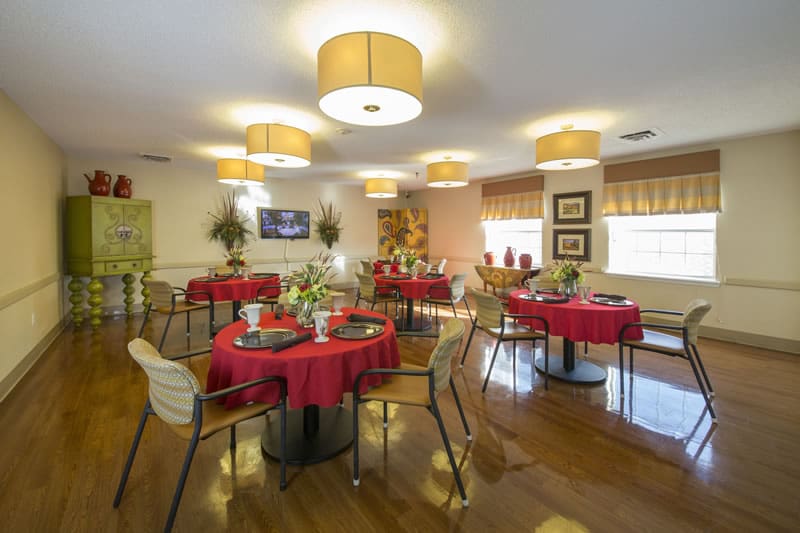
How is Robinson Llc Staffed?

CMS rates ROBINSON NURSING AND REHABILITATION CENTER LLC's staffing level at 3 out of 5 stars, which is average compared to other nursing homes. Staff turnover is 71%, which is 24 percentage points above the Arkansas average of 46%. High turnover can affect care consistency as new staff learn residents' individual needs.

What Have Inspectors Found at Robinson Llc?

State health inspectors documented 27 deficiencies at ROBINSON NURSING AND REHABILITATION CENTER LLC during 2022 to 2025. These included: 27 with potential for harm.
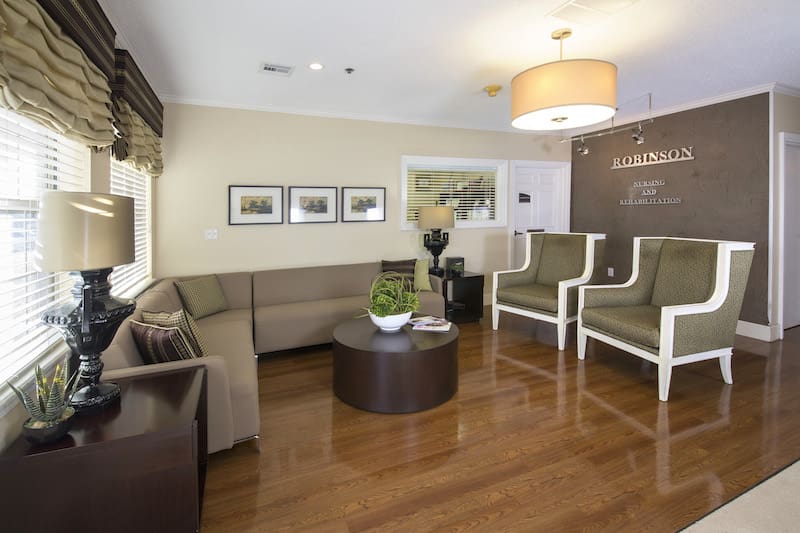
Who Owns and Operates Robinson Llc?

ROBINSON NURSING AND REHABILITATION CENTER LLC is owned by a for-profit company. For-profit facilities operate as businesses with obligations to shareholders or private owners. The facility is operated by CENTRAL ARKANSAS NURSING CENTERS, a chain that manages multiple nursing homes. With 110 certified beds and approximately 91 residents (about 83% occupancy), it is a mid-sized facility located in NORTH LITTLE ROCK, Arkansas.
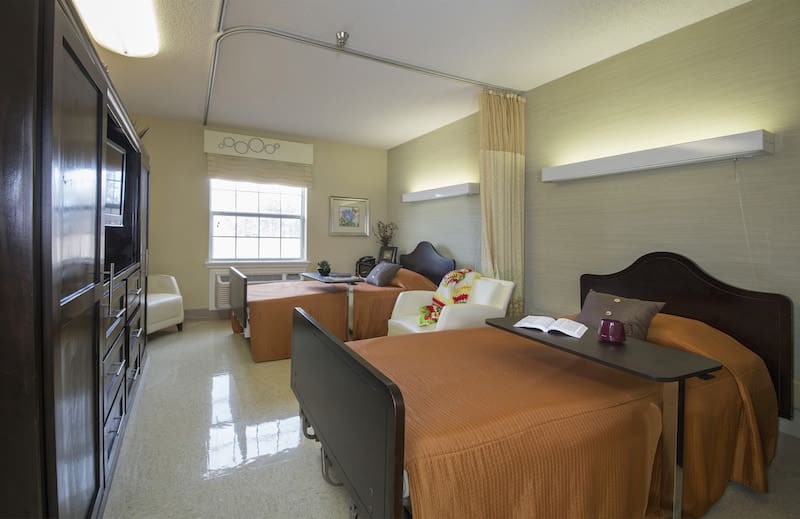
How Does Robinson Llc Compare to Other Arkansas Nursing Homes?

Compared to the 100 nursing homes in Arkansas, ROBINSON NURSING AND REHABILITATION CENTER LLC's overall rating (3 stars) is below the state average of 3.1, staff turnover (71%) is significantly higher than the state average of 46%, and health inspection rating (2 stars) is below the national benchmark.

What Should Families Ask When Visiting Robinson Llc?

Based on this facility's data, families visiting should ask: "How do you ensure continuity of care given staff turnover, and what is your staff retention strategy?" "Can I visit during a mealtime to observe dining assistance and food quality?" "How do you handle medical emergencies, and what is your hospital transfer rate?" "Can I speak with family members of current residents about their experience?" These questions are particularly relevant given the facility's high staff turnover rate.

Is Robinson Llc Safe?

Based on CMS inspection data, ROBINSON NURSING AND REHABILITATION CENTER LLC has a clean safety record: no substantiated abuse findings (meaning no confirmed cases of resident harm), no Immediate Jeopardy citations (the most serious violation level indicating risk of serious injury or death), and is not on the Special Focus Facility watch list (a federal program monitoring the lowest-performing 1% of nursing homes). The facility has a 3-star overall rating and ranks #100 of 100 nursing homes in Arkansas. While no facility is perfect, families should still ask about staff-to-resident ratios and recent inspection results during their visit.

Do Nurses at Robinson Llc Stick Around?

Staff turnover at ROBINSON NURSING AND REHABILITATION CENTER LLC is high. At 71%, the facility is 24 percentage points above the Arkansas average of 46%. High turnover means new staff may not know residents' individual needs, medications, or preferences. It can also be disorienting for residents, especially those with dementia who rely on familiar faces. Families should ask: What is causing the turnover? What retention programs are in place? How do you ensure care continuity during staff transitions?

Was Robinson Llc Ever Fined?

ROBINSON NURSING AND REHABILITATION CENTER LLC has no federal fines on record. CMS issues fines when nursing homes fail to meet care standards or don't correct problems found during inspections. The absence of fines suggests the facility has either maintained compliance or corrected any issues before penalties were assessed. This is a positive indicator, though families should still review recent inspection reports for the full picture.

Is Robinson Llc on Any Federal Watch List?

ROBINSON NURSING AND REHABILITATION CENTER LLC is not on any federal watch list. The most significant is the Special Focus Facility (SFF) program, which identifies the bottom 1% of nursing homes nationally based on persistent, serious quality problems. Not being on this list means the facility has avoided the pattern of deficiencies that triggers enhanced federal oversight. This is a positive indicator, though families should still review the facility's inspection history directly.