ANAHEIM TERRACE CARE CENTER
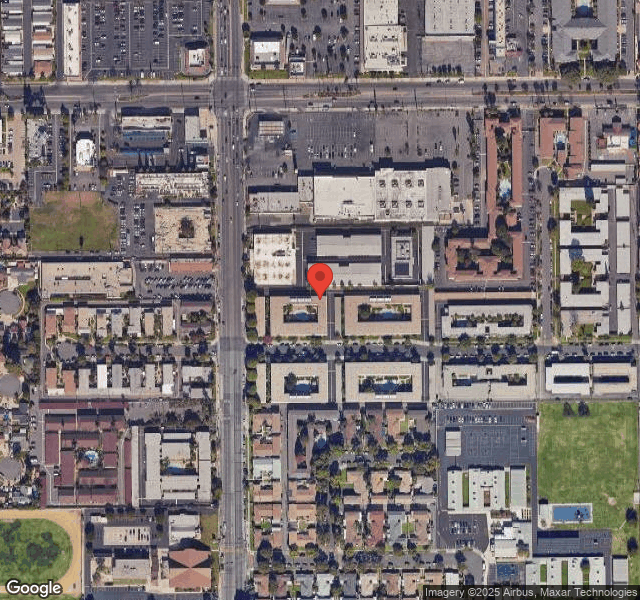
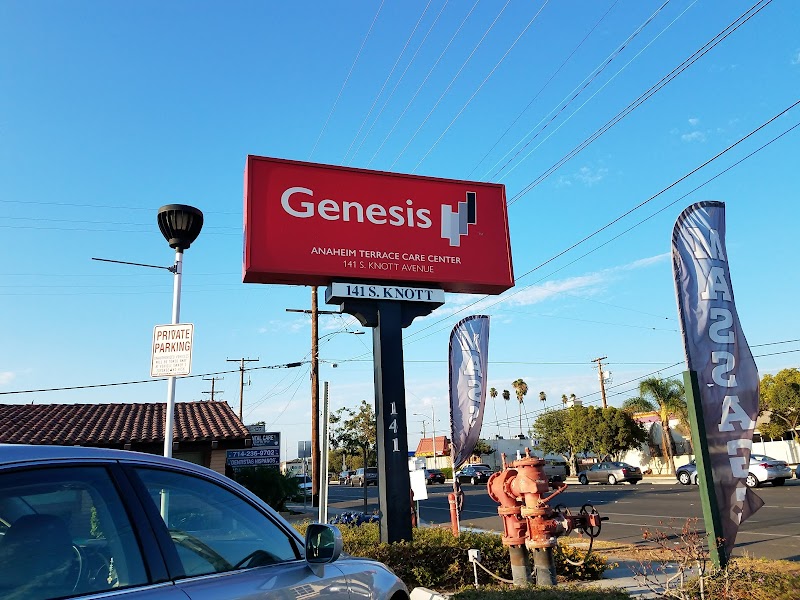
141 SOUTH KNOTT AVENUE, ANAHEIM, CA 92804 (714) 821-7310
For profit - Limited Liability company 99 Beds GENESIS HEALTHCARE Data: November 2025
Trust Grade
50/100
#736 of 1155 in CA
Last Inspection: May 2025

Inspected within the last 6 months. Data reflects current conditions.

Overview

Anaheim Terrace Care Center has a Trust Grade of C, which means it is average and sits in the middle of the pack among nursing homes. It ranks #736 out of 1155 facilities in California, placing it in the bottom half, and #53 out of 72 in Orange County, indicating that there are better local options available. The facility is improving, with a reduction in reported issues from 37 in 2024 to 29 in 2025. Staffing is a relative strength, rated 3 out of 5 stars with a turnover rate of 35%, which is lower than the state average, showing that staff members tend to stay longer. On the downside, there have been concerning findings related to food safety, including failures to follow sanitation guidelines, which could pose health risks to residents.

Trust Score
C
50/100
In California
#736/1155
Bottom 37%
Safety Record
Low Risk
No red flags
Inspections
Getting Better
37 → 29 violations
Staff Stability
○ Average
35% turnover. Near California's 48% average. Typical for the industry.
Penalties
✓ Good
No fines on record. Clean compliance history, better than most California facilities.
Skilled Nurses
⚠ Watch
Each resident gets only 21 minutes of Registered Nurse (RN) attention daily — below average for California. Fewer RN minutes means fewer trained eyes watching for problems.
Violations
⚠ Watch
94 deficiencies on record. Higher than average. Multiple issues found across inspections.
★★☆☆☆
2.0
Overall Rating
★★★☆☆
3.0
Staff Levels
★★★★☆
4.0
Care Quality
★★☆☆☆
2.0
Inspection Score
Stable
2024: 37 issues
2025: 29 issues

The Good

  • 4-Star Quality Measures · Strong clinical quality outcomes
  • Full Sprinkler Coverage · Fire safety systems throughout facility
  • No fines on record
  • Staff turnover below average (35%)

    13 points below California average of 48%

Facility shows strength in quality measures, fire safety.

The Bad

2-Star Overall Rating

Below California average (3.1)

Below average - review inspection findings carefully

Staff Turnover: 35%

11pts below California avg (46%)

Typical for the industry

Chain: GENESIS HEALTHCARE

Part of a multi-facility chain

Ask about local staffing decisions and management

The Ugly 94 deficiencies on record

Sept 2025 1 deficiency
CONCERN (D) 📢 Someone Reported This

A family member, employee, or ombudsman was alarmed enough to file a formal complaint

Potential for Harm - no one hurt, but risky conditions existed

Medical Records (Tag F0842)

Could have caused harm · This affected 1 resident

**NOTE- TERMS IN BRACKETS HAVE BEEN EDITED TO PROTECT CONFIDENTIALITY** Based on interview, medical record review, and facility P&P review, the facility failed to ensure one of eight sampled residents...

Read full inspector narrative →
**NOTE- TERMS IN BRACKETS HAVE BEEN EDITED TO PROTECT CONFIDENTIALITY** Based on interview, medical record review, and facility P&P review, the facility failed to ensure one of eight sampled residents' (Resident 5) medical record were complete and readily accessible upon request, in accordance with facility's P&P. * The facility was unable to provide Resident 5's medical record, which included the physician's orders, assessments, progress notes, and discharge plan documentation. This failure had resulted in the facility not being able to show Resident 5's discharge planning and teaching was provided to the resident and the resident's family member, to ensure a safe discharge for the resident. Findings: Review of the facility's P&P titled Retention of Medical Records (undated) showed the medical records of discharged residents will be retained for a period of 10 years. Review of the facility's P&P titled Access to Personal and Medical Records (undated) showed the access to the resident's personal and medical records will be provided to the resident within 24 hours (excluding weekends and holidays) of his or her request. The resident may obtain a copy of his or her personal medical record within two business days of an oral or written request. Representatives of the State Long-Term Care Ombudsman may examine a resident's medical, social and administrative records in accordance with the State Law. Review of the facility's P&P titled Transfer or Discharge (undated) showed when the facility transfers or discharges a resident, the following information is documented in the medical record and appropriate information is communicated to the receiving health care institution or provider:a. The basis for the transfer or discharge;b. That an appropriate notice was provided to the resident and/or legal representative;c. The date and time of the transfer or discharge;d. The new location of the resident;e. The mode of transportation;f. A summary of the resident's overall medical, physical, and mental condition;g. Disposition of personal effects;h. Disposition of medications;i. Others as appropriate or as necessary; andj. The signature of the person recording the data in the medical record . If the basis for the discharge is that the resident's health has improved sufficiently so that the resident no longer needs the care of the facility, the resident's physician (or provider) documents information about the resident's condition and the appropriateness of the discharge. Under the Transfer or Discharge Appeals section showed the following:1. Residents have the right to appeal a transfer or discharge through the state agency that handles appeals.2. Upon notice of transfer or discharge, the resident is provided with a statement of his or her right to appeal the transfer or discharge, including:a. the name, address, email, and telephone number of the entity which receives such requests;b. information about how to obtain, complete, and submit an appeal form; andc. how to get assistance completing the appeal process. On 9/2/25, CDPH, L&C Program received a complaint from Resident 5's family member, stating the facility discharged the resident too early. Closed medical record review for Resident 5 was initiated on 9/24/25. Resident 5 was admitted to the facility on [DATE], and was discharged on 3/5/16. Review of Resident 5's closed medical record failed to show the documentation regarding the resident's discharge plan and the notification for the notice of discharge. Further review of Resident 5's closed medical record showed the resident's medical record was incomplete. On 9/16/25 at 1626 hours, an interview was conducted with the Medical Records Director. The Medical Records Director stated the discharge residents' medical record were sent to an offsite storage company. The Medical Records Director stated the residents' medical record would be retained for 10 years. On 9/24/25 at 0900 hours, an interview and closed medical record review was conducted with the Administrator. The Administrator provided some parts of Resident 5's medical record that was retrieved from the resident's electronic medical record. which included Resident 5's admission record, vital signs, laboratory results report, MDS assessments, and plan of care. On 9/24/25 at 1004 hours, a follow up interview was conducted with the Medical Records Director. The Medical Records Director stated she had received six boxes from the offsite facility storage company, however, Resident 5's medical record was not included in the boxes she received. The Medical Records Director stated she requested four more boxes from the offsite storage company and expected to receive the delivery by today or tomorrow. On 9/25/25 at 0919 hours, a follow up interview was conducted with the Medical Records Director. The Medical Records Director stated she had not received any delivery for the discharged resident's medical record from the offsite storage company. The Medical Records Director stated the log containing the list of the medical record sent to the offsite storage company was incomplete. The Medical Records Director further stated she could not find the log to identify the box number where Resident 5's medical record was stored. On 9/25/25 at 1645 hours, an interview was conducted with the Administrator. The Administrator was informed and acknowledged the above findings.
May 2025 25 deficiencies
CONCERN (D)

Potential for Harm - no one hurt, but risky conditions existed

Deficiency F0552 (Tag F0552)

Could have caused harm · This affected 1 resident

**NOTE- TERMS IN BRACKETS HAVE BEEN EDITED TO PROTECT CONFIDENTIALITY** Based on interview, medical record review, and facility P&P review, the facility failed to obtain the informed consent prior to ...

Read full inspector narrative →
**NOTE- TERMS IN BRACKETS HAVE BEEN EDITED TO PROTECT CONFIDENTIALITY** Based on interview, medical record review, and facility P&P review, the facility failed to obtain the informed consent prior to administering the new or increased psychotropic medications for two of six final sampled residents (Residents 10 and 30) reviewed for the informed consent. * Resident 30's informed consent was completed after the resident had started the psychotropic medication. * The facility failed to ensure Resident 10's informed consent was obtained prior to administering the quetiapine fumarate (antipsychotic medication) for Resident 10. These failures had the potential for the residents not being fully informed of the medications and the potential effects of the medications. Findings: Review of the facility's P&P titled Psychotropic Medication Used effective June 2021 showed the facility shall verify informed consent prior to the administration of a psychotropic medication. 1. Medical record review for Resident 30 was initiated on 5/18/25. Resident 30 was admitted to the facility on [DATE]. Review of Resident 30's Order Summary Report showed a physician's order dated 2/7/25, to administer trazadone HCl (an antidepressant medication) 100 mg tablet by mouth at bedtime for depression. Review of Resident 30's Psychotropic Medication Administration Disclosure showed the informed consent was obtained from the resident on 3/5/25. On 5/19/25 at 1416 hours, an interview and concurrent medical record review was conducted with the ADON. The ADON verified Resident 30's trazadone medication was administered to the resident prior to obtaining the informed consent for the use of the medication. 2. Medical record review for Resident 10 was initiated on 5/18/25. Resident 10 was admitted to the facility on [DATE], and readmitted on [DATE]. Review of Resident 10 's annual MDS assessment dated [DATE], showed Resident 10 had moderately impaired cognition. Review of Resident 10's Order Summary Report showed the following physician's orders: - dated 3/10/25, to administer quetiapine fumarate 50 mg one tablet by mouth daily for schizoaffective disorder manifested by inconsolable screaming, and - dated 3/14/25, to administer quetiapine fumarate 100 mg by mouth at bedtime for schizoaffective disorder manifested by inconsolable screaming. Review of Resident 10's Psychotropic Medication Administration Disclosure dated 3/14/25, showed an informed consent was obtained from Resident 10's family member for the quetiapine fumarate 100 mg at bedtime for schizoaffective disorder. However, further review of Resident 10's medical record failed to show an informed consent was obtained by the physician for the quetiapine fumarate 50 mg daily. Review of Resident 10's MAR for May 2025 showed Resident 10 was administered the following medications: - quetiapine fumarate 50 mg one tablet daily from 5/1 to 5/20/25 at 0900 hours, and - quetiapine fumarate 100 mg one tablet at bedtime from 5/1 to 5/19/25 at 2100 hours. On 5/21/25 at 1111 hours, an interview and concurrent medical record review for Resident 10 was conducted with the ADON. The ADON stated for the use of the psychotropic medication, the informed consent would be obtained for the initial physician's order and when the dose was changed. The ADON reviewed Resident 10's medical record and verified the above findings. On 5/21/25 at 1450 hours, a follow-up interview and concurrent medical record review for Resident 10 was conducted with the ADON. The ADON stated she could not find the informed consent for Resident 10's use of the quetiapine fumarate 50 mg daily. On 5/21/25 at 1500 hours, an interview was conducted with the Administrator. The Administrator was informed and acknowledged the above findings.
CONCERN (D)

Potential for Harm - no one hurt, but risky conditions existed

Deficiency F0554 (Tag F0554)

Could have caused harm · This affected 1 resident

**NOTE- TERMS IN BRACKETS HAVE BEEN EDITED TO PROTECT CONFIDENTIALITY** Based on observation, interview, medical record review, and facility P&P review, the facility failed to ensure the safe self-adm...

Read full inspector narrative →
**NOTE- TERMS IN BRACKETS HAVE BEEN EDITED TO PROTECT CONFIDENTIALITY** Based on observation, interview, medical record review, and facility P&P review, the facility failed to ensure the safe self-administration of the medication for one of 21 final sampled residents (Resident 27). * A bottle of artificial tears eye drop (medication to temporarily relieve dry, irritated eyes) was kept at Resident 27's bedside table. Resident 27 was not assessed to ensure the resident was safe to self-administer the medication. This failure had the potential to negatively impact the resident's physiological well-being and the potential for the resident to administer the medications inaccurately. Findings: Review of the facility's P&P titled Self- Administration of Medications undated showed residents have the right to self-administer the medication if the interdisciplinary team (IDT) has determined that it is clinically appropriate and safe for the resident to do so. Upon request of the resident, the IDT assesses each resident's cognitive and physical abilities to determine whether self - administering of medication is safe and clinically appropriate for the resident. The IDT considers the following factors when determining whether self-administration of medication is safe and appropriate for the resident: - The medication is appropriate for self-administration; - The resident is able to read and understand medication labels; - The resident can follow directions and tell time to know when to take the medication; - The resident comprehends the medications' purpose proper doses timing signs of side effects and one to report these to the staff; - The resident has the physical capacity to open medication bottles remove medication from a container and to ingest and swallow (or otherwise administer) the medication; and - The resident is able to safely and securely store the medication. On 5/18/25 at 0948 hours, an observation and concurrent interview was conducted with Resident 27. Resident 27 was observed sitting on his bed. A bottle of artificial tears eye drop medication was observed on the bedside table, located at the left side of the resident's bed. Resident 27 stated the medication nurse left the medication at the bedside three days ago. Resident 27 further stated he attempted to administer the medication; however, he was not able to administer the artificial tears eye drop medication. Medical record review for Resident 27 was initiated on 5/18/25. Resident 27 was admitted to the facility on [DATE]. Review of Resident 27's H&P examination dated 5/12/25, showed Resident 27 had the capacity to make medical decisions. Review of Resident 27's Order Summary Report showed a physician's order dated 3/22/24, to administer artificial tears ophthalmic solution one drop in both eyes every 12 hours. Further review of the Resident 27's medical record failed to show if the assessment for the self-administration of the medication was completed for Resident 27. On 5/18/25 at 0950 hours, an observation, interview, and medical record review for Resident 27 was conducted with LVN 1. LVN 1 verified the eye drop medication was observed at Resident 27's bedside and stated the medication should not have been kept at the bedside. LVN 1 reviewed the resident's medical record and verified there was no assessment and physician's order for the self-administration of the medication. On 5/20/25 at 1517 hours, an interview was conducted with the ADON. The ADON was informed and acknowledged the above findings.
CONCERN (D)

Potential for Harm - no one hurt, but risky conditions existed

Notification of Changes (Tag F0580)

Could have caused harm · This affected 1 resident

**NOTE- TERMS IN BRACKETS HAVE BEEN EDITED TO PROTECT CONFIDENTIALITY** Based on observation, interview, medical record review, and facility P&P review, the facility failed to ensure the physician was...

Read full inspector narrative →
**NOTE- TERMS IN BRACKETS HAVE BEEN EDITED TO PROTECT CONFIDENTIALITY** Based on observation, interview, medical record review, and facility P&P review, the facility failed to ensure the physician was notified timely for one of three residents (Resident 22) reviewed for hospitalizations. * The facility failed to notify the physician or an alternate physician timely to obtain orders for Resident 22's change in condition. Additionally, Resident 22's radiology reports showed severe colonic distention from megacolon or ileus, chronic large bowel obstruction not excluded and mild bibasilar air space disease possible aspiration or developing consolidation. When Resident 22's physician was notified, an order to transfer Resident 22 to an acute care hospital for further evaluation and treatment was documented seven hours after the radiology report was transmitted to the facility. These failures had the potential to delay the medical interventions for Resident 22. Findings: Review of the facility's P&P titled Change in Condition: Notification of dated 8/25/21, showed the facility must immediately inform the resident, consult with the resident's physician and/or NP, and notify, consistent with his/her authority, the Resident Representatives when there is: - an accident involving the resident. - a significant change in the resident's physical, mental, or psychosocial status (that is, a deterioration in health, mental or psychosocial status in either life-threatening conditions or clinical complications). - a need to alter treatment significantly (that is, a need to discontinue or change an existing form of treatment due to adverse consequences, or to commence a new form of treatment); or - a decision to transfer or discharge the resident from the center. When making notifications of above, the facility must ensure that all pertinent information is available and provided upon request to the physician and/or NP. Medical record review for Resident 22 was initiated on 5/18/25. Resident 22 was admitted to the facility on [DATE], and readmitted on [DATE]. On 5/19/25 at 0927 hours, during the medication administration observation with LVN 1, Resident 22's abdomen was observed distended. Review of Resident 22's plan of care showed a care plan problem dated 5/15/25, addressing Resident 22's dependence on the GT feeding for his nutrition and hydration. The interventions included to monitor/document/report to the physician as needed: aspiration, fever, shortness of breath, tube dislodged, infection at the tube site, abdominal pain, distention, tenderness; and to obtain and monitor laboratory/diagnostic work as ordered and report the results to the physician and follow up as indicated. Review of Resident 22's SBAR Communication Form dated 5/19/25, showed the licensed nurse documented Resident 22 had chest congestion with occasional cough, abdomen distended, bowel sounds present to four quadrants. The physician/NP was notified of change of condition and gave the orders for STAT chest x-ray, KUB, and labs. The SBAR Communication Form showed the physician was notified on 5/19/25 at 1030 hours. Review of Resident 22's Order Summary Report showed an order for a STAT chest x-ray and KUB for Resident 22 on 5/19/25. Review of Resident 22's Progress Notes showed LVN 9's entry dated 5/19/25 at 2337 hours, showing the radiologist was on-site at approximately 2310 hours (more than 12 hours after the documented time of when the physician was notified) to complete (the) imaging, and awaiting results. Review of Resident 22's Radiology Report (of the abdomen) dated 5/19/25, showed Resident 22 had severe colonic distention from megacolon or ileus. Chronic large bowel obstruction was not excluded. The Radiology Report showed the result was signed by the radiologist on 5/19/25 at 2338 hours, and transmitted to the facility on 5/19/25 at 2352 hours. Review of Resident 22's Radiology Report (chest x-ray) dated 5/19/25, showed Resident 22 had mild bibasilar airspace disease, possible aspiration, or developing consolidation. The Radiology Report showed the result was signed by the radiologist on 5/19/25 at 2336 hours, and transmitted to the facility on 5/20/25 at 0007 hours. Review of Resident 22's Progress Notes showed the ADON's entry dated 5/20/25 at 0719 hours (more than seven hours after the abnormal radiology reports were faxed to the facility) regarding the laboratory results, chest x-ray and KUB results were relayed to the physician/NP with the orders for acute care hospitalization for further evaluation and treatment as indicated. On 5/20/25 at 1413 hours, an interview was conducted with LVN 4. LVN 4 stated upon the shift change, LVN 9 (from the night shift) had reported to her that LVN 9 had attempted to call the physician to inform the physician of the results of the chest x-ray and KUB and was awaiting for a call back from the physician. LVN 4 stated LVN 9 did not inform her when she had called the physician. On 5/20/25 at 1500 hours, an interview and concurrent medical record review for Resident 22 was conducted with the ADON. The ADON verified the above findings. When asked about the delay in the STAT chest x-ray and KUB, the ADON stated the change in condition was initiated by LVN 1 on 5/19/25 at 1030 hours; however, LVN 1 was not able to complete the documentation for the change in condition. When asked if LVN 1 attempted to call the physician again, the ADON stated there was no documentation showing LVN 1 attempted to call the physician again to notify the physician of Resident 22's change in condition. The ADON stated when notifying the physician of a resident's change in condition, if the physician could not be reached, the licensed nurse should re-attempt to call within 30 minutes to one hour. The ADON stated if the licensed nurse was still unable to reach the physician, then then licensed nurse should contact the Medical Director. When asked about the order for the STAT chest x-ray and KUB, the ADON stated on 5/19/25 at around 1800 hours, she followed-up on Resident 22's change in condition and did not see the documentation showing the physician was notified or any orders related to the change in condition. The ADON stated she called the NP to inform of Resident 22's change in condition and obtained the orders and completed the change in condition documentation. The ADON stated for STAT imaging, the results should be uploaded within four hours of the images being taken. The ADON stated LVN 9 should have had access to the imaging results during her shift. The ADON reviewed Resident 22's imaging results and stated LVN 9 should have called the physician to inform the physician of the results and documented the call. The ADON further stated if LVN 9 was unable to reach the physician, she should re-attempt and call the physician after 30 minutes and if still was unable to reach the physician, she should call to inform the Medical Director. The ADON reviewed the progress notes and stated there was no documentation LVN 9 had informed the physician of the imaging results. The ADON stated she came into facility at 0700 hours, and saw the printed imaging results at her desk. The ADON stated she called to notify the physician and received the orders from the NP to transfer Resident 22 to the acute care hospital for evaluation. On 5/21/25 at 0953 hours, a telephone interview was conducted with LVN 9. LVN 9 stated on 5/19/25, she was informed of Resident 22's change in condition by the evening licensed nurse. LVN 9 stated when she started her shift, the radiologist was already at the facility. LVN 9 stated she received the faxed report of the imaging results around midnight. LVN 9 further stated she briefly reviewed the imaging results and called the physician on 5/20/25 at 0045 hours, and left a message. When asked if the physician returned the call, LVN 9 stated no. When asked if LVN 9 attempted to call the physician again, LVN 9 stated she had planned to endorse to the morning licensed nurse to inform the physician of the imaging results. On 5/21/25 at 1330 hours, an interview was conducted with the Administrator and DSD. The Administrator and DSD were informed and acknowledged the above findings.
CONCERN (D)

Potential for Harm - no one hurt, but risky conditions existed

Safe Environment (Tag F0584)

Could have caused harm · This affected 1 resident

**NOTE- TERMS IN BRACKETS HAVE BEEN EDITED TO PROTECT CONFIDENTIALITY** Based on interview, medical record review, and facility P&P review, the facility failed to provide reasonable care for the prote...

Read full inspector narrative →
**NOTE- TERMS IN BRACKETS HAVE BEEN EDITED TO PROTECT CONFIDENTIALITY** Based on interview, medical record review, and facility P&P review, the facility failed to provide reasonable care for the protection of the resident's personal property from loss or theft for one of one final sample resident (Resident 51) reviewed for personal property. * Resident 51's personal belonging was not listed in the inventory form. This failure had the potential for the resident's property to get lost or stolen. Findings: Review of the facility's P&P titled Resident's Personal Property dated 8/25/21, showed the facility to protect the resident right to retain his/her personal belongings and preserve the resident individuality and dignity. All items brought into the facility will be listed on the Inventory of Personal Effects form and kept in the resident clinical chart. Any additional items brought into the facility after admission must be added to this list. The facility to obtain the signatures of the resident or resident's representative and employee with the date. Further review of the P&P showed the facility is not liable for items which have not been requested to be included in the inventory or for items which have been deleted from the inventory. Medical record review for Resident 51 was initiated on 5/18/25. Resident 51 was admitted to the facility on [DATE]. Review of Resident 51's Inventory of Personal Effects dated 3/15/23, showed Resident 51 had no personal belongings. Review of Resident 51's MDS assessment dated [DATE], showed Resident 51 had moderate cognitive impairment. On 5/20/25 at 1121 hours, an interview and concurrent medical record review for Resident 51 was conducted with the SSD. The SSD stated Resident 51 recently reported his wallet being lost; however, the facility staff were able find his wallet right away. The SSD further stated she and the facility staff were aware that Resident 51 had a wallet in his possession. The SSD verified the resident's Inventory of the Personal Effects did not show the wallet listed as Resident 51's personal belonging. The SSD stated Resident 51's wallet should be listed in the Inventory of the Personal Effects for Resident 51. On 5/20/25 at 1139 hours, an interview and concurrent medical record review was conducted with LVN 6. When LVN 6 was asked if Resident 51 had any personal belongings, LVN 6 stated Resident 51 had wallet that he held in his hand most of the time. LVN 6 stated she was not sure how long Resident 51 had the wallet with him. LVN 6 verified Resident 51's Inventory of Personal Effects did not show the wallet listed as the resident's personal belonging. LVN 6 stated the wallet should have been listed in the Resident 51's Inventory of Personal Effects, so the facility could safeguard Resident 51's personal belongings. On 5/20/25 at 1517 hours, an interview was conducted with the ADON. The ADON was informed and acknowledged the above findings.
CONCERN (D)

Potential for Harm - no one hurt, but risky conditions existed

Deficiency F0605 (Tag F0605)

Could have caused harm · This affected 1 resident

**NOTE- TERMS IN BRACKETS HAVE BEEN EDITED TO PROTECT CONFIDENTIALITY** Based on interview, medical record review, and facility P&P review, the facility failed to ensure two of five final sampled resi...

Read full inspector narrative →
**NOTE- TERMS IN BRACKETS HAVE BEEN EDITED TO PROTECT CONFIDENTIALITY** Based on interview, medical record review, and facility P&P review, the facility failed to ensure two of five final sampled residents (Residents 10 and 22) reviewed for unnecessary medications were free from unnecessary psychotropic medications. * The facility failed to ensure Resident 10's orthostatic blood pressure was accurately monitored as ordered by the physician and per the care plan for the use of the psychotropic medications. In addition, the facility failed to implement the nonpharmacological interventions for Resident 10's use of the lorazepam (antianxiety), aripiprazole (antipsychotic), duloxetine (antidepressant), and quetiapine (antipsychotic) medications. * The facility failed to ensure Resident 22's orthostatic blood pressure was accurately monitored as ordered by the physician and per the care plan for the use of the Seroquel (antipsychotic) medication. These failures had the potential for adverse effects from the psychotropic medications and the potential for not providing the correct data to the prescriber to adjust the dosage of psychotropic medication. Findings: Review of the facility's P&P titled Psychotropic Medication Use dated 6/2021 showed the psychotropic medications may be used to address behaviors only if non-drug approaches and interventions were attempted prior to their use. All medications used to treat behaviors must have a clinical indication and be used in the lowest possible dose to achieve the desired therapeutic effect. All residents receiving medications used or treat behaviors should be monitored for: a. efficacy b. risks c. benefits d. harm or adverse consequences. 1. Medical record review for Resident 10 was initiated on 5/18/25. Resident 10 was admitted to the facility on [DATE], and readmitted to the facility on [DATE]. Review of Resident 10 's annual MDS assessment dated [DATE], showed Resident 10 had moderately impaired cognition. a. Review of Resident 10's Order Summary Report dated 5/18/25, showed the following physician's orders: - dated 3/10/25, to administer quetiapine fumarate 50 mg one tablet by mouth daily for schizoaffective disorder (a mental illness characterized by symptoms of both schizophrenia (like delusions and hallucinations) and a mood disorder (like depression or mania) manifested by inconsolable screaming, - dated 3/10/25, to monitor Resident 10's orthostatic BP in the lying position, every Monday during the evening shift, - dated 3/10/25, to monitor Resident 10's orthostatic BP in the sitting position, every Monday during the evening shift, - dated 3/11/25, for the use of the quetiapine medication, to monitor the episodes of inconsolable screaming every shift and document the non-drug interventions. To document 1. Removed resident from environment, 2. Redirected by engagement in alternative activity, 3. Listened to resident, attempted to calm, familiarize resident with belongings/surroundings, 4. Toileted resident, 5. Ambulated resident (if able), 6. Provided resident with food/drink, every shift. To document the result every shift, document + for effective or - for ineffective, and - dated 3/14/25, to administer quetiapine fumarate 100 mg by mouth at bedtime for schizoaffective disorder manifested by inconsolable screaming. Review of Resident 10's plan of care showed a care plan problem dated 4/21/24, addressing Resident 10's risk for complications related to the use of the psychotropic medications. The interventions included weekly antipsychotic medication monitoring for the orthostatic BP (lying, sitting standing) and monitoring for the episodes of inconsolable screaming every shift, and to document the non-drug interventions attempted. To document: 1. Removed resident from environment, 2. Redirected by engagement in alternative activity, 3. Listened to resident, attempted to calm, familiarize resident with belongings/surroundings, 4. Toileted resident, 5. Ambulated resident (if able), 6. Provided resident with food/drink Review of resident 10's MAR for May 2025 showed the following orthostatic BP readings: - on 5/5/25, the BP reading was documented as 120/70 mmHg for the lying position, and a check mark documented for the sitting position. - on 5/12/25, the BP reading was documented as 125/70 mmHg for the lying position, and a check mark documented for the sitting position. - on 5/19/25, the BP reading was documented as 125/70 mmHg for the lying position, and a check mark documented for the sitting position. Further review of Resident 10's MAR for May 2025 showed Resident 10 had the episodes of inconsolable screaming as follows: - on 4/4/25, three episodes during the evening and night shifts, - on 4/10/25, five episodes during the evening shift, - on 4/11/25, two episodes during the night shift, - on 4/17/25, two episodes during the night shift, and - on 4/18/25, two episodes during the day shift. However, review of Resident 10's MAR for May 2025 showed the nonpharmacological interventions attempted for the quetiapine medication was documented as NA (not applicable) for the above documented behavioral episodes. b. Review of Resident 10's Order summary Report dated 5/18/25, showed the following physician's orders for the use of the lorazepam medication: - dated 3/29/25, to monitor the episodes of anxiety manifested by physical restlessness every shift; and to document the non-drug interventions attempted. To document: 1. Removed resident from environment, 2. Redirected by engagement in alternative activity, 3. Listened to resident, attempted to calm, familiarize resident with belongings/surroundings, 4. Toileted resident, 5. Ambulated resident (if able), 6. Provided resident with food/drink, every shift. To document the result every shift, document + for effective or - for ineffective, and - dated 5/11/25, to administer lorazepam 1 mg one tablet by mouth every six hours as needed for anxiety for 30 days. Review of Resident 10's MAR for May 2025 showed Resident 10 was administered the lorazepam 1 mg one tablet by mouth every six hours as needed on the following dates and times: - on 5/2/25 at 1016 hours, - on 5/4/25 at 1200 hours, - on 5/9/25 at 0532 hours, - on 5/10/25 at 1424 hours, - on 5/14/25 at 0514 hours, - on 5/16/25 at 0730 hours, - on 5/18/25 at 0836 hours, and - on 5/19/25 at 0410 hours. Further review of Resident 10's MAR for May 2025 showed Resident 10 had the episodes of anxiety manifested by physical restlessness as follows: - on 5/2/25, zero episode was documented during the day shift, and two episodes during the night shift. The nonpharmacological intervention attempted was documented as NA. - on 5/4/25, one episode during the day shift, and the nonpharmacological interventions attempted were documented as effective; however, the lorazepam 1 mg was administered to Resident 10 during the shift. Three episodes were documented during the evening and night shifts; however, the nonpharmacological interventions attempted were documented as NA. - on 5/8/25, zero episode was documented during the night shift; however, the lorazepam 1 mg was administered to Resident 10 during the shift. - on 5/10/25, zero episode was documented during the day shift; however, the lorazepam 1 mg was administered to Resident 10 during the shift. - on 5/13/25, zero episode was documented during the night shift; however, the lorazepam 1 mg was administered to Resident 10 during the shift. - on 5/15/25, two episodes were documented on the evening shift; however, the nonpharmacological interventions attempted was documented as 0. - on 5/16/25, zero episode was documented during the day shift; however, the lorazepam 1 mg was administered to Resident 10 during the shift. Two episodes were documented during the evening and night shifts; however, the nonpharmacological interventions attempted were documented as NA. - on 5/17/25, two episodes were documented during the night shift; however, the nonpharmacological interventions attempted was documented as NA. - on 5/18/25, two episodes were documented during the day shift; however, the nonpharmacological interventions attempted was documented as 0. Zero episode was documented during the night shift; however, the lorazepam 1 mg was administered to Resident 10 during the shift. c. Review of Resident 10's Order Summary Report dated 5/18/25, showed the following physicians' orders for the use of the duloxetine medication: - dated 3/11/25, to administer duloxetine delayed release 60 mg one capsule by mouth daily for depression related to major depressive disorder manifested by inconsolable crying. - dated 3/29/25, for the use of the antidepressant medication, to monitor the episodes of depression manifested by inconsolable crying every shift. To document the non-drug interventions attempted and to document: 1. Removed resident from environment, 2. Redirected by engagement in alternative activity, 3. Listened to resident, attempted to calm, familiarize resident with belongings/surroundings, 4. Toileted resident, 5. Ambulated resident (if able), 6. Provided resident with food/drink, every shift. To document the result every shift, document + for effective or - for ineffective. Review of Resident 10's MAR for May 2025 showed Resident 10 had the episodes of depression manifested by inconsolable crying as follows: - on 5/2/25, two episodes during the night shift, - on 5/4/25, three episodes during the evening and night shifts, - on 5/11/25, two episodes during the night shift, - on 5/17/25, two episodes on the night shift, and - on 5/18/25, two episodes during the shift. Further review of Resident 10's MAR for May 2025, showed the nonpharmacological interventions attempted were documented as NA or 0 for the above documented behavioral episodes. d. Review of Resident 10's Order Summary Report dated 5/18/25, showed the following physician's orders for the use of the aripiprazole medication: - dated 3/24/25, to administer aripiprazole 20 mg by mouth at bedtime for schizoaffective disorder manifested by disorganized speech and thinking. - dated 3/24/25, for the use of the aripiprazole antipsychotic medication, to monitor the episodes of disorganized speech and thinking, every shift; and to document the non-drug interventions attempted. To document: 1. Removed resident from environment, 2. Redirected by engagement in alternative activity, 3. Listened to resident, attempted to calm, familiarize resident with belongings/surroundings, 4. Toileted resident, 5. Ambulated resident (if able), 6. Provided resident with food/drink, every shift. Review of Resident 10's MAR for May 2025 showed the following documentation for the monitoring of Resident 10's episodes of disorganized speech and thinking: - on 5/1, 5/2, from 5/4 to 5/6, 5/8, from 5/10 to 5/14, and from 5/16 to 5/18/25, during the evening shift the licensed nurses documented YES for the observed behavior. However, further review of Resident 10's MAR for May 2025 failed to show the nonpharmacological interventions attempted for the above documented behavioral episodes, or the number of episodes observed during those shifts. On 5/20/25 at 1014 hours, an interview and concurrent medical record review for Resident 10 was conducted with LVN 5. LVN 5 stated for the residents taking the psychotropic medications, the residents would be monitored for the manifested behaviors and potential side effects of the psychotropic medications. LVN 5 stated if the manifested behaviors were observed, the nonpharmacological interventions should be implemented and documented and should not be documented as NA or 0 (zero). LVN 5 reviewed Resident 10's medical record and verified the above findings. On 5/21/25 at 0831 hours, an interview and concurrent medical record review for Resident 10 was conducted with the ADON. The ADON stated the residents on psychotropic medications were monitored for manifested behaviors related to the use of the psychotropic medications. The ADON stated if the behaviors were observed, the licensed nurses should implement the nonpharmacological interventions and document the nonpharmacological interventions implemented and the effectiveness of the interventions. The ADON stated if the nonpharmacological interventions implemented were not effective, then the licensed nurse should give the PRN psychotropic medication; however, if the nonpharmacological interventions implemented were effective, the pharmacological interventions would not be needed. The ADON stated if the nonpharmacological intervention was documented as effective, then the PRN medication should not be administered. The ADON further stated if the licensed nursed documented the behavior was observed during the shift, there should be a documentation of the nonpharmacological interventions implemented and its effectiveness. The ADON reviewed Resident 10's medical record and verified the above findings. Additionally, the ADON verified the orthostatic BP for the sitting position was not documented anywhere in Resident 10's MAR or in the progress notes. On 5/21/25 at 1330 hours, an interview was conducted with the Administrator and DSD. The Administrator and DSD were informed and acknowledged the above findings. 2. Medical record review for Resident 22 was initiated on 5/18/25. Resident 22 was admitted to the facility on [DATE], and readmitted on [DATE]. Review of Resident 22's MDS assessment dated [DATE], showed Resident 22 had moderately impaired cognition. Review of Resident 22's Order Summary Report showed the following physician's orders dated 5/13/25: - for use of the antipsychotic medication, to monitor Resident 22's orthostatic BP while lying every week on Saturday, during the day shift; and to notify the physician of the potential orthostatic hypotension indicated by a drop of 20 mmHg in the systolic BP, or a drop of 10 units mmHg in the diastolic BP, - for use of the antipsychotic medication, to monitor Resident 22's orthostatic BP while sitting every week on Saturday, during the day shift; and to notify the physician of the potential orthostatic hypotension indicated by a drop of 20 mmHg in the systolic BP, or a drop of 10 units mmHg in the diastolic BP, and - to administer quetiapine fumarate (antipsychotic medication) 150 mg one tablet via GT at bedtime for psychosis (a condition where a person has difficulty distinguishing between what is real and what is not) manifested by talking to an imaginary person. Review of Resident 22's plan of care showed a care plan problem dated 5/15/25, addressing Resident 22's risk for complications related to the use of the psychotropic drugs. The interventions included to monitor the orthostatic BP while lying/sitting and to notify the physician for potential orthostatic hypotension indicated by a drop of 20 mmHg in the systolic BP, or a drop of 10 units mmHg in the diastolic BP. Review of Resident 22's MARs for April and May 2025 showed the following documentation: - on 4/12/25, the BP readings were 124/65 mmHg for the lying, sitting, and standing position, - on 4/19/25, the BP readings were 129/89 mmHg for the lying, sitting, and standing position, - on 4/26/25, the BP readings were 134/82 mmHg for the lying, sitting, and standing position, and - on 5/17/25, the BP readings were 145/70 mmHg for the lying and sitting position. On 5/20/25 at 0804 hours, an interview and concurrent medical record review for Resident 22 was conducted with the ADON. The ADON stated the residents on psychotropic medications were being monitored for side effects, including orthostatic hypotension. The ADON stated the monitoring for the orthostatic hypotension was done weekly by obtaining the resident's BP reading in different positions, and comparing the BP readings in the different positions to determine if there was a drop in the BP, which would indicate orthostatic hypotension. The ADON reviewed Resident 22's MARs for April and May 2025 and verified the above findings. The ADON stated the BP readings should not be the same for the different positions. On 5/21/25 at 1330 hours, an interview was conducted with the Administrator and DSD. The Administrator and DSD were informed and acknowledged the above findings.
CONCERN (D)

Potential for Harm - no one hurt, but risky conditions existed

Deficiency F0628 (Tag F0628)

Could have caused harm · This affected 1 resident

**NOTE- TERMS IN BRACKETS HAVE BEEN EDITED TO PROTECT CONFIDENTIALITY** Based on interview, medical record review, and facility P&P review, the facility failed to provide the notice of discharge and d...

Read full inspector narrative →
**NOTE- TERMS IN BRACKETS HAVE BEEN EDITED TO PROTECT CONFIDENTIALITY** Based on interview, medical record review, and facility P&P review, the facility failed to provide the notice of discharge and discharge summary documentation for one of three sampled residents (Resident 90) reviewed for closed records. This failure had the potential for Resident 90 to have an inappropriate discharge. Findings: Review of the facility's P&P titled Transfer or Discharge revised 4/2025 showed when a resident is discharged from the facility, the facility will provide information for the basis of discharge and appropriate notice of discharge to the resident and/or their representative. The information provided is documented in the resident's medical record. Medical record review for Resident 90 was initiated on 5/19/25. Resident 90 was admitted to the facility on [DATE]. Review of Resident 90's H&P examination dated 12/30/24, showed Resident 90 had the capacity to understand and make decisions. Review of Resident 90's Physician Order Summary showed a physician's order dated 2/18/25, to discharge Resident 90 to an assisted living facility on 2/21/25. Review of Resident 90's Discharge Plan Documentation v2 dated 2/19/25 at 1123 hours, showed Resident 90 was transferred to the assisted living facility. Review of Resident 90's medical record failed to show if the notice of discharge and discharge summary were provided to Resident 90 when the resident was discharged to the assisted living facility on 2/19/25. On 5/19/25 at 1441 hours, an interview and concurrent medical record review for Resident 90 was conducted with the ADON. The ADON verified Resident 90 was discharged to the assisted living facility on 2/19/25. The ADON was not able to show documented evidence Resident 90 was provided with the written notice of discharge and discharge summary in the resident's medical record. The ADON verified the findings and stated the notice of discharge should be signed by the resident or resident's representative. On 5/20/25 at 0835 hours, an interview and concurrent medical record review for Resident 90 was conducted with the SSD. The SSD stated each resident was provided with the discharge summary and notice of transfer/discharge which was signed by the resident prior to leaving the facility, and the notice was sent to the Ombudsman. The SSD stated the facility's discharge process included a transfer/discharge packet for the residents who were transferred or discharged to either an acute care hospital, another facility, or at home. The notice of transfer/discharge and discharge summary would be included in each packet. The documents should be completed, a copy provided to the resident, and documented in the resident's medical record. The SSD was not able to show documented evidence Resident 90 was provided with the written notice of the discharge and discharge summary in the resident's medical record. The SSD stated Resident 90 should have the notice of the discharge and discharge summary completed prior to the discharge and documented in the resident's medical record. On 5/21/25 at 1123 hours, an interview was conducted with the DSD and Administrator. The DSD and Administrator were informed and acknowledged the above findings for Resident 90.
CONCERN (D)

Potential for Harm - no one hurt, but risky conditions existed

PASARR Coordination (Tag F0644)

Could have caused harm · This affected 1 resident

**NOTE- TERMS IN BRACKETS HAVE BEEN EDITED TO PROTECT CONFIDENTIALITY** Based on interview, medical record review, and facility P&P review, the facility failed to ensure the PASARR was accurate and up...

Read full inspector narrative →
**NOTE- TERMS IN BRACKETS HAVE BEEN EDITED TO PROTECT CONFIDENTIALITY** Based on interview, medical record review, and facility P&P review, the facility failed to ensure the PASARR was accurate and updated for one of four final sampled residents reviewed for PASARR (Resident 27). Resident 27 had serious mental illness on admission and had developed the new serious mental illness diagnoses after the initial admission to the facility. This failure had the potential for Resident 27 to be inappropriately placed in the facility and not receive the treatment and services to meet the resident's needs. Findings: Review of the facility's P&P titled PASARR Completion Policy dated 9/30/24, showed the center will make sure that all admission have the appropriate PASARR Completed. Further review of the P&P showed the facility will follow the state specific guidelines for completion. Medical record review for Resident 27 was initiated on 5/18/25. Resident 27 was admitted to the facility on [DATE]. Review of the form titled admission Record dated 5/20/25, showed Resident 27 had the following diagnoses with the onset date: - anxiety disorder, onset date of 3/15/17; - major depressive disorder, onset date of 6/9/18; and - bipolar disorder, onset date of 2/11/21. Review of Resident 27's PASARR Level I Screening dated 3/15/17, showed Resident 27 had no serious mental illness. Further review of the medical record for Resident 27 did not show if PASARR screening was completed when the resident had a new diagnosis of bipolar disorder and major depressive disorder. On 5/20/25 at 0923 hours, an interview and concurrent medical record review for Resident 27 was conducted with the ADON. The ADON stated she was responsible to make sure the PASARR completed by the acute care hospital was done accurately, and the PASARR completed was referred accordingly for the residents who were diagnosed with severe mental illness after the admission to the facility. The ADON verified the above diagnosis of severe mental illness for Resident 27. The ADON verified the PASARR Level I Screening dated 3/15/17, showed Resident 27 had no serious mental illness. The ADON stated anxiety disorder was a severe mental illness and the facility should have coded PASARR Level I Screening dated 3/15/17, accurately. The ADON stated Resident 27 was diagnosed with bipolar disorder and major depressive disorder after the initial admission to the facility. The ADON further stated the facility should have initiated the PASARR screening and referred accordingly after Resident 27 was diagnosed with bipolar disorder and major depressive disorder.
CONCERN (D)

Potential for Harm - no one hurt, but risky conditions existed

Comprehensive Care Plan (Tag F0656)

Could have caused harm · This affected 1 resident

**NOTE- TERMS IN BRACKETS HAVE BEEN EDITED TO PROTECT CONFIDENTIALITY** 3. Medical record review for Resident 42 was initiated on 5/18/25. Resident 42 was admitted to the facility on [DATE]. Review of...

Read full inspector narrative →
**NOTE- TERMS IN BRACKETS HAVE BEEN EDITED TO PROTECT CONFIDENTIALITY** 3. Medical record review for Resident 42 was initiated on 5/18/25. Resident 42 was admitted to the facility on [DATE]. Review of Resident 42's care plan titled At Risk for Falls initiated 10/25/24, showed Resident 42 was at risk for falls due to cognitive loss and lack of safety awareness. Resident 42's care plan interventions included the implementation of fall (floor) mats. On 5/19/25 at 0853 hours, an observation of Resident 42 was conducted. Resident 42 was observed lying in her bed. Resident 42's bed was observed with only one floor mat in place adjacent to Resident 42's bed. The opposite side of Resident 42's bed was observed without a floor mat in place. On 5/19/25 at 1024 hours, an observation of Resident 42 was conducted. Resident 42 was observed lying in her bed. Resident 42's bed was observed with only one floor mat in place adjacent to Resident 42's bed. The opposite side of Resident 42's bed was observed without a floor mat in place. On 5/19/25 at 1040 hours, an observation of Resident 42 and concurrent interview was conducted with the DSD. Resident 42 was observed lying in her bed. Resident 42's bed was observed with only one floor mat in place adjacent to Resident 42's bed. The opposite side of Resident 42's bed was observed without a floor mat in place. The DSD verified the findings and stated she would implement another floor mat in accordance with Resident 42's fall risk care plan. Based on interview, medical record review, facility document review, and facility P&P review, the facility failed to ensure a comprehensive care plan was developed for two of 21 final sampled residents (Residents 9 and 19) and failed to implement the care plan for one nonsampled resident (Resident 42). * The facility failed to to develop a comprehensive person-centered care plan to address Resident 9's use of Namenda (medication used for cognitive loss). * The facility failed to develop a comprehensive person-centered care plan to address Resident 19's depressive signs and symptoms. * The facility failed to implement Resident 42's fall risk care plan for the use of the bilateral floor mats. These failures had the potential risk of not providing appropriate, consistent, and individualized care to the residents. Findings: Review of the facility's P&P titled Care Plan Comprehensive dated 8/25/21, showed the facility's Interdisciplinary Team, in coordination with the resident and/or his/her family or representative, must develop and implement a comprehensive person-centered care plan for each resident, that includes measurable objectives and timeframes to meet a resident's medical, physical, and mental and psychosocial needs that are identified in the comprehensive assessment. 1. Medical record review for Resident 9 was initiated on 5/18/25. Resident 9 was admitted on [DATE], and readmitted to the facility on [DATE]. Review of the Resident 9's physician's order dated 12/11/24, showed Aricept (medication used for dementia) tablet 5 mg one tablet by mouth at bedtime for dementia related to unspecified dementia, moderate, with mood disturbance. Further review of Resident 9's physician's orders showed an order dated 12/11/24, for Namenda (medication used for dementia) tablet 5 mg one tablet by mouth two times a day for dementia related to unspecified dementia, moderate, with mood disturbance. Review of Resident 9's plan of care failed to show documented evidence a care plan was developed to address the use of the Aricept and Namenda medications for dementia as ordered by the physician. On 5/21/25 at 1240 hours, an interview and concurrent medical record review for Resident 9 was conducted with the ADON. The ADON was asked about the facility's process regarding the medications prescribed by the physicians. The ADON stated for every physician's order, there should be a care plan. The ADON verified Resident 9's care plan for the use of the Aricept and Namenda medications ordered by the physician was missed and should have been initiated. 2. Medical record review for Resident 19 was initiated on 5/18/25. Resident 19 was admitted to the facility on [DATE]. Review of Resident 19's physician's order dated 2/1/24, showed an order for psychologist evaluation and treatment as needed. Further review of Resident 19's physician's orders showed an order dated 2/29/24, for psychology consult and treatment if indicated. Review of Resident 19's psychologist's evaluation dated 2/19/24, showed Resident 19 reported in the last week having periods of low mood, low motivation, and increased fatigue. The Treatment Plan Summary/Recommendations/Collateral Information/Comments showed Resident 19 would work on focusing on self-care during the week. Future sessions would build on insight and utilize motivational interviewing. Review of the psychologist's evaluation dated 3/4/24, showed Resident 19 exhibited depressive signs and symptoms and was noted this past week having moments of low energy, isolative behaviors, and fatigue. The Treatment Plan Summary/Recommendations showed Resident 19 would work on spending at least one day outside. Future sessions would build on insight and utilize motivational interviewing. On 5/21/25 at 1240 hours, an interview and concurrent medical record review for Resident 19 was conducted with the ADON. The ADON was asked for a care plan problem to address Resident 19's reported depressive signs and symptoms. The ADON verified the care plan problem to address the depressive signs and symptoms was missed.
CONCERN (D)

Potential for Harm - no one hurt, but risky conditions existed

Quality of Care (Tag F0684)

Could have caused harm · This affected 1 resident

Based on interview and medical record review, the facility failed to ensure a physician's order for the orthostatic blood pressure monitoring while standing was clarified for one of 21 final sampled r...

Read full inspector narrative →
Based on interview and medical record review, the facility failed to ensure a physician's order for the orthostatic blood pressure monitoring while standing was clarified for one of 21 final sampled residents (Resident 31). This failure placed the resident at risk of receiving services not appropriate for his functional level. Findings: Review of Resident 31's Order Summary Report showed a physician's order dated 2/21/25, to monitor the resident's BP for orthostatic hypotension weekly while lying, sitting, and standing. Review of Resident 31's MAR for May 2025 showed the weekly monitoring of the resident's BP while standing were not completed. On 5/19/25 at 1402 hours, an interview and concurrent medical record review was conducted with the ADON. The ADON stated Resident 31 was not able to stand without two facility staff supporting the resident, and checking the resident's BP while standing was not appropriate for the resident. The ADON stated the physician's order should have been clarified with the physician.
CONCERN (D)

Potential for Harm - no one hurt, but risky conditions existed

Accident Prevention (Tag F0689)

Could have caused harm · This affected 1 resident

**NOTE- TERMS IN BRACKETS HAVE BEEN EDITED TO PROTECT CONFIDENTIALITY** Based on observation, interview, medical record review, and facility P&P review, the facility failed to ensure two nonsampled re...

Read full inspector narrative →
**NOTE- TERMS IN BRACKETS HAVE BEEN EDITED TO PROTECT CONFIDENTIALITY** Based on observation, interview, medical record review, and facility P&P review, the facility failed to ensure two nonsampled residents (Residents 25 and 42) remained free from accident hazards. * The facility failed to ensure the bilateral floor mats were implemented in accordance with the physician's order for Resident 42. * The facility failed to ensure Resident 25 had a physician's order prior to going out on pass. These failures had the potential to place the residents at risk for injury. Findings: 1. Medical record review for Resident 42 was initiated on 5/18/25. Resident 42 was admitted to the facility on [DATE]. Review of Resident 42's physician's orders showed an order dated 10/25/24, for the use of the bilateral floor mats. Review of Resident 42's care plan titled At Risk for Falls initiated 10/25/24, showed Resident 42 was at risk for falls due to cognitive loss and lack of safety awareness. On 5/19/25 at 0853 hours, an observation of Resident 42 was conducted. Resident 42 was observed lying in her bed. Resident 42's bed was observed with only one floor mat in place adjacent to Resident 42's bed. The opposite side of Resident 42's bed was observed without a floor mat in place. On 5/19/25 at 1024 hours, an observation of Resident 42 was conducted. Resident 42 was observed lying in her bed. Resident 42's bed was observed with only one floor mat in place adjacent to Resident 42's bed. The opposite side of Resident 42's bed was observed without a floor mat in place. On 5/19/25 at 1040 hours, an observation of Resident 42 and concurrent interview was conducted with the DSD. Resident 42 was observed lying in her bed. Resident 42's bed was observed with only one floor mat in place adjacent to Resident 42's bed. The opposite side of Resident 42's bed was observed without a floor mat in place. The DSD verified the findings and stated she would implement another floor mat in accordance with the physician's order. Cross reference to F656, example #3. 2. Review of the facility's P&P titled Out on Pass Policy revised 4/11/25, showed the physician will determine if the resident may participate in activities outside the facility and will write a physician's order. Medical record review for Resident 25 was initiated on 5/20/25. Resident 25 was readmitted to the facility on [DATE]. Review of Resident 25's Order Summary Report for 5/2025 failed to show a physician's order for the resident to leave the facility on a therapeutic pass. Review of Resident 25's Care Plan Report failed to show the resident could safely go out on pass without supervision. Review of the facility's Release for Temporary Absence form for Resident 25 showed the resident left the facility out on pass for 30 days in January, 24 days in February, 31 days in March, 30 days in April, and 20 days in May 2025. On 5/20/25 at 1226 hours, Resident 25 was observed in front of a dental office next to the facility. On 5/20/25 at 1403 hours, an interview was conducted with Resident 25. Resident 25 stated he went out on pass and was returning from his pass when he was observed at 1226 hours. On 5/20/25 at 1441 hours, an interview and concurrent medical record review and facility record review was conducted with the ADON. The ADON stated for the residents who went out on pass, they should have a physician's order and sign themselves out on the logbook. The ADON stated Resident 25 frequently went out on pass to visit a friend at a nearby facility, and provided the Release for Temporary Absence forms for Resident 25 from the log book. The ADON verified the resident had no physician's order or a care plan for the resident to go out on pass.
CONCERN (D)

Potential for Harm - no one hurt, but risky conditions existed

Respiratory Care (Tag F0695)

Could have caused harm · This affected 1 resident

**NOTE- TERMS IN BRACKETS HAVE BEEN EDITED TO PROTECT CONFIDENTIALITY** 3. Review of the facility's P&P titled Oxygen Administration dated 1/31/23, showed to verify that there is a physician order for...

Read full inspector narrative →
**NOTE- TERMS IN BRACKETS HAVE BEEN EDITED TO PROTECT CONFIDENTIALITY** 3. Review of the facility's P&P titled Oxygen Administration dated 1/31/23, showed to verify that there is a physician order for this procedure. Further review of the P&P showed to review the physician orders or facility protocol for oxygen administration. On 5/18/25 at 1000 hours, Resident 493 was observed lying in his bed. The oxygen concentrator was observed set at three LPM. The nasal cannula was observed connected to the oxygen concentrator; however, the nasal cannula was observed on Resident 493's forehead and not in the resident's nose. Medical record review for Resident 493 was initiated on 5/18/25. Resident 493 was admitted to the facility on [DATE]. Review of Resident 493's H&P examination dated 2/10/25, showed Resident 493 had no capacity to understand and make decisions. Review of Resident 493's Order Summary Report showed the following physician's orders dated 5/1/25: - to administer oxygen at two LPM via nasal cannula as needed for short of breath, and may titrate to keep oxygen saturation level 90% and above; and, - to monitor pulse oximetry every shift to keep oxygen saturation level greater than or equal to 90% for shortness of breath for oxygen use. Review of Resident 493's MAR for 5/2025 did not show if the oxygen was being administered. In addition, the MAR had no documented evidence if Resident 493 had an oxygen saturation level less than 90 % requiring the administration of oxygen. Further Review of Resident 493 medical record failed to show if Resident 493 had shortness of breath requiring oxygen administration. On 5/18/25 at 1015 hours, a concurrent observation, interview, and medical record review for Resident 493 was conducted with the LVN 7. LVN 7 stated the PRN administration of the oxygen required the documentation and reason as to why the PRN oxygen was being administered. LVN 7 stated the administration of the oxygen was documented in the MAR. LVN 7 verified the above observation. LVN 7 stated Resident 493 had been receiving continuous oxygen administration. LVN 7 was observed putting the nasal cannula into Resident 493 's nose. LVN 7 then reviewed the records and verified the above physician's order for the oxygen for Resident 493. LVN 7 stated he was not able to find the documentation of the PRN administration of the oxygen. LVN 7 further stated he was not able to find documented evidence Resident 493 was having shortness of breath or if the oxygen saturation level was below 90% requiring the oxygen administration. LVN 7 stated the administration of the oxygen should have been documented in the MAR, and the reason for PRN administration of the oxygen should have been documented in the medical record for Resident 493. On 5/20/25 at 1517 hours, an interview was conducted with the ADON. The ADON was informed and acknowledged the above findings. Based on observation, interview, and medical record review, the facility failed to ensure two of two final sampled residents (Residents 61 and 493) and one nonsampled resident (Resident 59) reviewed for respiratory care were provided the appropriate respiratory care. * The facility failed to ensure Resident 59's oxygen order was carried out as ordered by the physician. * The facility failed to ensure Resident 61's oxygen order was carried out as ordered by the physician. * The facility failed to ensure Resident 493 received oxygen administration as ordered by the physician. These failures had the potential to affect the respiratory health and well-being of the residents in the facility. Findings: Review of the facility's P&P titled Oxygen Administration (undated) showed the purpose of this procedure is to provide guidelines for safe oxygen administration. The P&P further showed to verify that there is a physician's order for this procedure and review the physician's orders or facility protocol for oxygen administration. 1. Medical record review for Resident 59 was initiated on 5/18/25. Resident 59 was admitted to the facility on [DATE]. Review of Resident 59's H&P examination dated 1/13/25, showed Resident 59 had fluctuating capacity to understand and make decisions. On 5/18/25 at 0929 hours, an observation, interview, and concurrent medical record review was conducted with LVN 5. Resident 59 was observed at six LPM of oxygen via nasal cannula. LVN 5 verified the findings. LVN 5 reviewed Resident 59's medical record and verified Resident 59 had a physician's order for continuous oxygen at two LPM via nasal cannula. LVN 5 stated the oxygen administered should match the physician's order. 2. Medical record review for Resident 61 was initiated on 5/18/25. Resident 61 was admitted to the facility on [DATE], and readmitted on [DATE]. Review of Resident 61's H&P examination dated 4/24/25, showed the resident had the capacity to understand and make decisions. On 5/18/25 at 0826 hours, during an initial tour of the facility, Resident 61 was observed receiveing oxygen five LPM via nasal cannula. On 5/18/25 at 0838 hours, an observation, interview, and concurrent medical record review was conducted with the DSD. The DSD reviewed Resident 61's medical record and verified Resident 61 had a physician's order for continuous oxygen at three LPM via nasal cannula. The DSD verified the findings and stated the physician's order for the oxygen should match what being administered to the resident. On 5/21/25 at 1330 hours, an interview was conducted with the Administrator and DSD. The Administrator and DSD were informed and verified the above findings.
CONCERN (D)

Potential for Harm - no one hurt, but risky conditions existed

Deficiency F0697 (Tag F0697)

Could have caused harm · This affected 1 resident

**NOTE- TERMS IN BRACKETS HAVE BEEN EDITED TO PROTECT CONFIDENTIALITY** 2. Medical record review for Resident 10 was initiated on 5/18/25. Resident 10 was readmitted to the facility on [DATE]. a. Revi...

Read full inspector narrative →
**NOTE- TERMS IN BRACKETS HAVE BEEN EDITED TO PROTECT CONFIDENTIALITY** 2. Medical record review for Resident 10 was initiated on 5/18/25. Resident 10 was readmitted to the facility on [DATE]. a. Review of Resident 10's Order Summary Report showed a physician's order dated 3/10/25, to monitor the resident's pain every shift. Review of Resident 10's MAR for 5/2025 failed to show the resident's pain level was monitored and documented every shift. Review of Resident 10's facility Progress Notes failed to show the resident's pain was assessed for 5/2025. Review of Resident 10's Weight and Vitals Summary for 5/2025 showed the following: - On 5/3/25, the resident's pain level was zero for the 0700 - 1500 hours shift. - On 5/5/25, the resident's pain level was zero at 1500 hours. - On 5/9/25, the resident's pain level was zero for the 0700 - 1500 hours shift. - On 5/10/25, the resident's pain level was four for the 0700 - 1500 hours shift. - On 5/16/25, the resident's pain level was zero for the 1500 - 2300 hours shift. On 5/19/25 at 1422 hours, an interview and concurrent record review for Resident 10 was conducted with the ADON. The ADON verified Resident 10's pain level was not monitored and documented every shift. b. Review of Resident 10's Order Summary Report showed a physician's order dated 3/11/25, for acetaminophen (a pain reliever) two 325 mg tablets by mouth every four hours as needed for moderate pain (5-7 on the pain scale). Review of Resident 10's MAR for 5/2025 showed on 5/10/25 at 1158 hours, two acetaminophen 325 mg tablets were administered for a pain level of 4. On 5/19/25 at 1422 hours, an interview and concurrent record review for Resident 10 was conducted with the ADON. The ADON verified Resident 10's MAR showed the resident received two 325 mg tablets of acetaminophen for a pain level of 4, which was below the ordered pain levels of 5-7. 3. Medical record review for Resident 30 was initiated on 5/18/25. Resident 30 was admitted to the facility on [DATE]. Review of Resident 30's Order Summary Report showed a physician's order dated 1/15/25, to monitor the resident's pain every shift. Review of Resident 30's MAR for 5/2025 failed to show the resident's pain level was monitored and documented every shift. Review of Resident 30's facility Progress Notes failed to show the resident's pain was assessed for 5/2025. Review of Resident 30's Weight and Vitals Summary for May 2025 showed the following: - On 5/4, 5/5, 5/6, 5/7, 5/8, 5/10, 5/11, 5/12, 5/13, 5/16, and 5/18/25, the resident's pain level was zero for the 0700 - 1500 hours shift. - On 5/4, 5/7, 5/8, 5/9, 5/14, 5/15, and 5/16/25, the resident's pain level was zero for the 1500 - 2300 hours shift. On 5/19/25 at 1416 hours, an interview and concurrent record review for Resident 30 was conducted with the ADON. The ADON verified Resident 30's pain level was not documented every shift, and should have been. Based on interview, medical record review, and facility P&P review, the facility failed to provide the appropriate pain management for three of three final sampled residents (Residents 10, 30, and 45) reviewed for pain management. * The facility failed to accurately document the monitoring of pain for Resident 45 and administer the pain medications according to the physician's order. In addition, the facility failed to ensure the non-pharmacological interventions for pain were provided to Resident 45 prior to the administration of the pain medications as per the physician's order. * Resident 10 was administered pain medication outside of the ordered pain level parameters. * Residents 10 and 30's pain level was not monitored and documented as ordered. These failures had the potential to put Residents 10, 30, and 45 at risk for ineffective pain management and adverse effects related to the use of unnecessary pain medication. Findings: Review of the facility's P&P titled Pain Assessment and Management revised 3/2020 showed non-pharmacological interventions may be appropriate alone or in conjunction with medications. Pharmacological interventions may be prescribed to manage pain, however they do not usually address the cause of pain and can have adverse effects on the resident (e.g., drowsiness, increased risk of falling; loss of appetite). Implement the medication regime as ordered, carefully documenting the results of the interventions. 1.a. Medical record review for Resident 45 was initiated on 5/18/25. Resident 45 was admitted to the facility on [DATE], and readmitted on [DATE]. Review of Resident 45's MDS assessment dated [DATE], showed Resident 45 was cognitively intact. Review of Resident 45's Order Summary Report dated 5/20/25, showed the following physician's orders: - dated 8/6/24, to monitor Resident 45's pain and document the pain level using the pain rating scale as follows: 1 to 4 = mild pain, 5 to 7 = moderate pain, and 8 to 10 = severe pain. - dated 8/6/24, to document the non-pharmacological intervention(s) as needed. To document: A. Heat, B. Repositioning, C. Relaxation breathing, D. Food/Fluid, E. Massage, F. Exercise, G. Immobilization of joint, H. Other: write in progress notes. Document results of nonpharmacological interventions (-) ineffective or (+) effective, - dated 8/7/24, to administer acetaminophen (analgesic medication) 325 mg one tablet by mouth every four hours as needed for mild pain, pain levels of 1 to 4, do not exceed more than three grams in 24 hours from all sources, - dated 8/7/24, to administer acetaminophen 325 mg two tablets by mouth every four hours as needed for moderate pain, pain levels of 5 to 7, do not exceed three grams of acetaminophen in a day from all other sources, and - dated 8/7/24, to administer hydrocodone-acetaminophen (narcotic opioid medication) 5-325 mg one tablet by mouth every eight hours as needed for severe pain, pain levels of 8 to 10, not to exceed three grams of acetaminophen in 24 hours from all other sources. Review of Resident 45's plan of care showed a care plan problem dated 6/10/24, addressing Resident 45's risk for alterations in comfort. The interventions included to administer hydrocodone-acetaminophen as ordered, utilize the pain scale, and medicate as ordered for pain and monitor for effectiveness. Review of Resident 45's MAR for 5/2025 showed Resident 45 was administered the acetaminophen 325 mg two tablets by mouth every four hours as needed for moderate pain (pain levels of 5 to 7) on the following dates and times when the resident's pain level was not within the pain levels of 5 to 7 as ordered by the physician: - On 5/10/25 at 2000 hours, for a pain level of 4. - On 5/16/25 at 2100 hours, for a pain level of 4. Further review of Resident 45's MAR for 5/2025 showed Resident 45 was administered the hydrocodone-acetaminophen 5-325 mg medication one tablet by mouth every eight hours as needed for severe pain (pain levels of 8 to 10) on the following dates and times when the resident's pain level was not within the pain levels of 8 to 10 as ordered by the physician: - On 5/3/25 at 1700 hours, for a pain level of 6. - On 5/4/25 at 1600 hours, for a pain level of 7. - On 5/5/25 at 1600 hours, for a pain level of 6. - On 5/9/25 at 1600 hours, for a pain level of 7. - On 5/11/25 at 1530 hours, for a pain level of 7. - On 5/16/25 at 0100 hours, for a pain level of 7. b. Review of Resident 45's MAR from 5/2025 showed Resident 45 was administered the following medications on the following dates, times, and pain levels: Resident 45 was administered the acetaminophen medication 325 mg one tablet by mouth every four hours as needed for mild pain (pain levels of 1 to 4): - On 5/3/25 at 2000 hours, for a pain level of 3. - On 5/4/25 at 2000 hours, for a pain level of 4. Resident 45 was administered the acetaminophen 325 mg two tablets by mouth every four hours as needed for moderate pain (pain levels of 5 to 7): - On 5/10/25 at 2000 hours, for a pain level of 4. - On 5/16/25 at 2100 hours, for a pain level of 4. Resident 45 was administered the hydrocodone-acetaminophen 5-325 mg medication one tablet by mouth every eight hours as needed for severe pain (pain levels of 8 to 10): - On 5/10/25 at 0300 hours, for a pain level of 8. - On 5/13/25 at 1812 hours, for a pain level of 10. - On 5/18/25 at 0210 hours, for a pain level of 8. - On 5/19/25 at 0047 hours, for a pain level of 8. - On 5/19/25 at 2000 hours, for a pain level of 9. However, review of Resident 45's MAR for May 2025 for the monitoring of Resident 45's pain level every shift showed the licensed nurses documented Resident 45's pain level was assessed as 0 for no pain for the following dates and shifts: - On 5/3/25, for the evening shift; - On 5/4/25, for the evening shift; - On 5/5/25, for the evening shift; - On 5/9/25, for the evening and night shifts; - On 5/10/25, for the evening shift; - On 5/11/25; for the evening shift; - On 5/13/25; for the evening shift; - On 5/15/25, for the night shift; - On 5/16/25; for the evening shift; - On 5/17/25, for the night shift; - On 5/18/25, for the night shift; and - On 5/19/25, for the evening shift. Additionally, further review of Resident 45's [DATE]/2025 failed to show the documentation of the nonpharmacological pain interventions attempted prior to the administration of the acetaminophen and hydrocodone-acetaminophen pain medications for the above dates and times. On 5/20/25 at 1026 hours, an interview and concurrent medical record review for Resident 45 was conducted with LVN 4. LVN 4 stated the nonpharmacological pain interventions should be implemented and documented prior to the administration of pain medications. LVN 4 further stated the pain medications should be administered as ordered by the physician and within the ordered pain parameters. LVN 4 reviewed Resident 45's medical record and verified the above findings. On 5/21/25 at 0845 hours, an interview and concurrent medical record review for Resident 45 was conducted with the ADON. The ADON stated when pain was reported, the licensed nurse was expected to provide the nonpharmacological interventions for pain and evaluate the effectiveness. The ADON stated if the nonpharmacological interventions were effective, then the pain medication would not be needed; but if the nonpharmacological interventions were not effective, then the licensed nurse should administer the pain medication as ordered by the physician and within the ordered parameters. The ADON further stated the resident's pain was monitored and documented by the licensed nurses each shift and should be documented at the end of the shift to accurately reflect the resident's pain during the shift. The ADON reviewed Resident 45's medical record and verified the above findings. On 5/21/25 at 1330 hours, an interview was conducted with the Administrator and DSD. The Administrator and DSD were informed and acknowledged the above findings.
CONCERN (D)

Potential for Harm - no one hurt, but risky conditions existed

Deficiency F0698 (Tag F0698)

Could have caused harm · This affected 1 resident

**NOTE- TERMS IN BRACKETS HAVE BEEN EDITED TO PROTECT CONFIDENTIALITY** Based on observation, interview, facility document review, medical record review, and facility P&P review, the facility failed t...

Read full inspector narrative →
**NOTE- TERMS IN BRACKETS HAVE BEEN EDITED TO PROTECT CONFIDENTIALITY** Based on observation, interview, facility document review, medical record review, and facility P&P review, the facility failed to ensure the ongoing assessment before, during, and after dialysis treatments for two of two final sampled residents (Residents 45 and 61) reviewed for dialysis was conducted as evidence by: * The facility failed to ensure Resident 45's Hemodialysis Communication Records were complete, and ensure accurate documentation for the monitoring for Resident 45's fluid restriction. In addition, the facility failed to ensure Resident 45 was administered the blood pressure medications after dialysis as per the physician's orders. * The facility failed to ensure Resident 61's Hemodialysis Communication Records were complete and accurate. These failures had the potential of not identifying negative outcomes for dialysis residents. Findings: Review of the facility's P&P titled Dialysis Care dated 8/2021 showed for fluid restrictions dialysis residents are given fluid based on the fluid restriction as ordered by the physician. The nursing and dietary staff will carefully organize the division and distribution of fluids. Medications will be administered prior to and after dialysis, as ordered by the physician. The P&P further showed the nursing staff, dialysis provider staff, and the attending physician staff will collaborate on a regular basis concerning the resident's care as follows: i. Nursing staff will communicate the following information in writing to the dialysis staff: The resident's current vital signs. ii. The dialysis provider will communicate in writing to the facility any problems encountered while the resident was at the dialysis provider and any ongoing monitoring required. Moreover, the P&P further showed the nursing staff will send a dialysis communication form to the dialysis center every time a resident is scheduled for off-site dialysis. The provider's dialysis nurse will be responsible for the documentation of dialysis treatment and the documentation will be maintained in the resident's medical record. 1. Medical record review for Resident 61 was initiated on 5/18/25. Resident 61 was admitted to the facility on [DATE], and readmitted on [DATE]. Review of Resident 61's H&P examination dated 4/24/25, showed the resident had the capacity to understand and make decisions. Review of Resident 61's Order Summary Report for 5/2025 showed the following physician's orders: - dated 4/24/25, for hemodialysis access site monitoring left upper chest dialysis Catheter (site dressing changes at dialysis center and as needed) every shift. - dated 4/24/25, for hemodialysis access site monitoring left forearm AV fistula every shift for monitoring access site for bruit and thrill. - dated 5/1/25, for access ready for use to certify that the physician is giving orders to start using the resident's left arm fistula on 5/12/25. - dated 5/2/25, for hemodialysis scheduled on Saturdays. - dated 5/24/25, for hemodialysis scheduled Mondays, Wednesdays, and Fridays. Review of the facility's documentation titled Dialysis Center A Access -Ready for Use showed the vascular surgeon approved the use of Resident 61's left arm fistula as of 5/12/25. Review of Resident 61's Hemodialysis Communication Record showed the following missing and inaccurate documentation: - the post-hemodialysis treatment dated 5/7/25, failed to show documentation of the type site, drainage, and pain - the post-hemodialysis treatment dated 5/9/25, failed to show documentation of the type site, swelling, drainage, pain, and if there were new orders from dialysis center. - the post-hemodialysis treatment dated 5/12/25, failed to show documentation of type site, swelling, drainage, and pain. - the pre-hemodialysis treatment dated 5/14/25, showed the dialysis site was perma cath. Furthermore, the post-hemodialysis treatment failed to show documentation of the type site, swelling, drainage, and pain. - the pre-hemodialysis treatment dated 5/16/25, failed to show documentation of the bruit and thrill. Furthermore, the post-hemodialysis treatment failed to show documentation of the type site, pain, and if there were new orders from dialysis center. On 5/19/25 at 1512 hours, an interview and concurrent medical record review for Resident 61 was conducted with LVN 5. LVN 5 verified the above findings. LVN 5 stated the hemodialysis communication record should be completed to ensure the dialysis residents were stable. LVN 5 further stated the communication record should be completed accurately to ensure the dialysis residents were properly assessed. On 5/21/25 at 0939 hours, an interview and concurrent medical record review for Resident 61 was conducted with the ADON. The ADON verified Resident 61 received dialysis Mondays, Wednesdays, Fridays, and Saturdays. The ADON further verified Resident 61's left arm fistula was being used as of 5/12/25, as per the physician's orders. On 5/21/25 at 1307 hours, an interview with Resident 61 was conducted in her room. Resident 61 verified the dialysis center used her left arm fistula during her dialysis treatments. On 5/21/25 at 1330 hours, an interview was conducted with the Administrator and DSD. The Administrator and DSD were informed and acknowledged the above findings. 2. Medical record review for Resident 45 was initiated on 5/18/25. Resident 45 was admitted to the facility on [DATE], and readmitted on [DATE]. Review of Resident 45's MDS assessment dated [DATE], showed Resident 45 was cognitively intact. a. Review of Resident 45's Order Summary Report dated 5/20/25, showed the following physician's orders: - dated 10/3/24, for the pre and post dialysis weight to be taken at the dialysis center on Tuesdays, Thursdays, and Saturdays. - dated 2/1/25, for the dialysis center chair time at 0900 hours on Tuesdays, Thursdays, and Saturdays. Pick up time: at 0745 to 0800 hours. Dialysis access site: left arm AV shunt. Review of Resident 45's plan of care showed a care plan problem dated 6/8/23, addressing Resident 45's risk for impaired renal function and risk for complications related to the hemodialysis. The interventions included coordinating care with the dialysis center and send communication book to dialysis and review the book upon return. Review of Resident 45's Hemodialysis Communication Record showed the following missing documentation: - the post dialysis treatment section dated 5/5/25, failed to show the documentation of thrill, and failed to show the documentation of dialysis site type, swelling, drainage, and pain. - the post dialysis treatment section dated 5/8/25, failed to show the documentation of any swelling, drainage, and pain. - the post dialysis treatment section dated 5/10/25, failed to show the documentation of the dialysis site type, swelling, drainage, and pain; and failed to show documentation for post hemodialysis complication. - on 5/13/25, the dialysis center documented medications were given during hemodialysis, however the medication was not documented. The post dialysis treatment section failed to show the documentation of the dialysis site type, swelling, drainage, and pain. - on 5/15/25, the dialysis center failed to document the post-dialysis weight. Furthermore, the post dialysis treatment section failed to show the documentation of the dialysis site type, swelling, drainage, and pain. - the post-hemodialysis treatment section dated 5/17/25, failed to show the documentation of any swelling, drainage, and pain. On 5/19/25 at 1545 hours, an interview and concurrent medical record review for Resident 45 was conducted with the ADON. The ADON stated for the residents receiving dialysis treatment, the facility's licensed nurse was responsible for completing the pre hemodialysis assessment and the staff at the dialysis center was responsible for completing the dialysis section, including the pre and post weights and documentation of the medications administered during the hemodialysis treatment; and upon return to the facility, the licensed nurse was responsible for completing the post hemodialysis treatment section. The ADON stated the licensed nurse was responsible for assessing the resident including assessing the hemodialysis site, to check for any bleeding, drainage, or pain. The ADON stated the hemodialysis communication record should be complete and accurate. The ADON further stated if any information was missing, the licensed nurse was expected to call the dialysis center to follow up. The ADON reviewed Resident 45's Hemodialysis Communication Records and verified the above findings. b. Review of Resident 45's Order Summary Report dated 5/20/25, showed a physician's order dated 4/17/25, for fluid restriction of 1,500 ml per day as follows: dietary to provide 1,080 ml total and nursing to provide 420 ml total (on the 0700 to 1500 shift: 180 ml, 1500 to 2300 shift:120 ml, and 2300 to 0700 shift: 120 ml) for end stage renal disease. Review of Resident 45's MAR for May 2025 showed the documentation for fluid restriction of 1500 ml per day as follows: nursing to provide 420 ml total, 180 ml during the 0700 to 1500 shift, 120 ml during the 1500 to 2300 shift, and 120 ml during the 2300 to 0700 shift: - from 5/1 to 5/17/25, for the day, evening, and night shifts, the fluid restriction was documented as X each shift. On 5/20/25 at 1026 hours, an interview and concurrent medical record review for Resident 45 was conducted with LVN 4. LVN 4 stated Resident 45 received hemodialysis treatments three times a week on Tuesdays, Thursdays, and Saturdays. LVN 4 stated Resident 45 was on fluid restriction of 1500 ml a day. LVN 4 stated the documentation of Resident 45's fluid intake was documented in the MAR by the licensed nurses each shift. LVN 4 reviewed Resident 45's MAR for 5/2025 and verified the above findings. When asked about the X documented each shift for Resident 45's fluid restriction, LVN 4 stated there should be a value documented to accurately monitor the amount of fluid that Resident 45 consumed. When asked if Resident 45's fluid intake was documented anywhere else in Resident 45's medical record, LVN 4 reviewed Resident 45's medical record and stated the amount of fluids Resident 45 consumed (during meals) was also not documented by the CNAs. On 5/20/25 at 1140 hours, an interview and concurrent medical record review for Residnet 45 was conducted with the ADON. The ADON stated for the residents on hemodialysis treatment with an order for fluid restrictions, the resident's fluid intake should be documented by the licensed nurses in the MAR. The ADON reviewed Resident 45's MAR for 5/2025 and stated Resident 45's fluid restriction was documented incorrectly. Furthermore, when asked about the dietary fluid intake, the ADON stated there was no documentation of the total fluid intake per meal. c. Review of Resident 45's Order Summary Report dated 5/20/25, showed the following physician's orders: - dated 2/1/25, for the dialysis center chair time at 0900 hours on Tuesdays, Thursdays, and Saturdays. Pick up time: 0745 to 0800 hours. Dialysis access site: left arm AV shunt. - dated 3/27/25, to administer amlodipine (blood pressure medication) 10 mg one tablet by mouth daily for hypertension. To hold for SBP below 110 mmHg or heart rate below 60 bpm. May give medication upon return from dialysis. - dated 3/27/25, to administer carvedilol (blood pressure medication), 3.125 mg one tablet by mouth two times a day for hypertension. To hold for SBP less than 110 mmHg or pulse rate less than 60 bpm. May administer upon return from dialysis. - dated 4/29/25, to administer losartan (blood pressure medication) 50 mg one tablet by mouth daily. To hold for SBP less than 110 mmHg and may give medication after dialysis. Review of Resident 45's plan of care showed a care plan problem dated 4/29/21, addressing Resident 45's risk for cardiovascular symptoms or complications related to the diagnosis of hypertension and end stage renal disease. The interventions included administering medications as ordered and assess for effectiveness and side effects and report abnormalities to the physician. Review of Resident 45's Hemodialysis Communication Record dated 5/17/25, showed the dialysis center documented that the resident's BP was high lately, please monitor. Review of Resident 45's MAR for May 2025 showed the following: * for the amlodipine medication 10 mg one tablet daily, carvedilol medication 3.125 mg one tablet two times a day, and the losartan medication 50 mg one tablet daily, may give medication upon return from dialysis, the MAR showed: - on Tuesday 5/6/25 at 0900 hours, the licensed nurse documented AW for away from the center/facility, - on Thursday 5/8/25 at 0900 hours, the licensed nurse documented AW, - on Tuesday 5/13/25 at 0900 hours, the licensed nurse documented AW, - on Thursday 5/15/25 at 0900 hours, the licensed nurse documented AW, and - on Saturday 5/17/25 at 0900 hours, the licensed nurse documented AW. Review of Resident 45's medical record failed to show documentation the above blood pressure medications were administered to Resident 45 upon his return to the facility from the dialysis center for the above dates. On 5/21/25 at 0845 hours, an interview and concurrent medical record review for Resident 45 was conducted with the ADON. The ADON stated for the resident on the dialysis, the BP medication should be administered as per the physician's order. The ADON reviewed Resident 45's physician's order for the amlodipine, carvedilol, and losartan medications and stated the orders showed may administer the blood pressure medications after the dialysis. The ADON reviewed Resident 45's medical record and progress notes and stated she was unable to find the documentation showing the BP medications were administered to Resident 45 on the days Resident 45 returned from his dialysis treatments. On 5/21/25 at 1330 hours, an interview was conducted with the Administrator and DSD. The Administrator and DSD were informed and acknowledged the above findings.
CONCERN (D)

Potential for Harm - no one hurt, but risky conditions existed

Pharmacy Services (Tag F0755)

Could have caused harm · This affected 1 resident

**NOTE- TERMS IN BRACKETS HAVE BEEN EDITED TO PROTECT CONFIDENTIALITY** Based on interview, medical record review and facility P&P review, the facility failed to provide the pharmacy services to meet ...

Read full inspector narrative →
**NOTE- TERMS IN BRACKETS HAVE BEEN EDITED TO PROTECT CONFIDENTIALITY** Based on interview, medical record review and facility P&P review, the facility failed to provide the pharmacy services to meet the resident needs for one of 21 final sampled residents (Resident 22), and two nonsampled residents (Residents 70 and 74). * Residents 70 and 74's controlled medication log did not match the MAR. * The facility failed to ensure the BP medication was held as per the physician's ordered hold parameters for Resident 22. These failures had the potential for poor health outcomes related to a potential unstable BP, and a delay in identifying potential diversion of the controlled medications. Findings: Review of the facility's P&P titled Controlled Substances revised November 2022 showed the controlled substance inventory will be monitored and reconciled to identify loss and potential diversion. Reconciliation, dispensing, and disposition of controlled medications includes medication administration records. 1. Medical record review for Resident 70 was initiated on 5/20/25. Resident 70 was readmitted to the facility on [DATE]. Review of Resident 70's Antibiotic or Controlled Drug Record for tramadol HCl (a controlled pain medication) 50 mg tablet showed the doses were retrieved from the supply on the following dates: - On 2/10 and 2/25/25 at 2100 hours. - On 2/11/25 at 2200 hours. - On 2/21 and 2/24/25 at 2000 hours. Review of Resident 70's MAR for February 2025 failed to show the above doses were administered to the resident. On 5/20/25 at 0816 hours, an interview and concurrent medical record review was conducted with the ADON. The ADON stated when the controlled medications were removed from the supply, the licensed nurses should document on the MAR once the medications were administered to the residents. The ADON reviewed Resident 70's Controlled Drug Record and MAR for February 2025 and verified the above tramadol HCl medication doses removed from the controlled medication supply were not documented in the MAR to show the medication were administered. The ADON stated the above doses should have been documented on the the resident's MAR. 2. Closed medical record review for Resident 74 was initiated on 5/20/25. Resident 74 was discharged from the facility on 5/1/25. Review of Resident 74's Antibiotic or Controlled Drug Record for Norco (a controlled pain medication) 5-325 mg tablet showed the doses were retrieved from the supply on the following dates: - On 1/3/25 at an illegible time. - On 1/4/25 at 1329 hours. - On 1/5/25 at 1400 hours. - On 1/14/25 at 1700 hours. Review of Resident 74's MAR for January 2025 failed to show the above Norco doses were administered to the resident. On 5/20/25 at 0816 hours, an interview and concurrent medical record review for Resident 74 was conducted with the ADON. The ADON reviewed Resident 74's Controlled Drug Record and MAR for 1/2025 and verified the above doses removed from the controlled medication supply were not documented in the MAR to show the medication were administered. The ADON stated the above doses should have been documented on the the resident's MAR. 3. Review of the facility's P&P titled Administering Medications revised 4/2019 showed the medications are administer in accordance with the prescriber orders, including any required time frame. Medical record review for Resident 22 was initiated on 5/18/25. Resident 22 was admitted to the facility on [DATE], and readmitted on [DATE]. Review of Resident 22's Order Summary Report showed a physician's order dated 5/13/25, to administer midodrine HCl (a medication used to treat low BP) 5 mg one tablet via GT two times a day for hypotension (low blood pressure), and to hold the medication if the SBP greater than 130 mmHg. Review of Resident 22's MAR for May 2025 showed the following documentation: - Resident 22 was administered midodrine 5 mg one tablet two times a day from 5/14 to 5/18/25 at 0900 and 1700 hours. The MAR failed to show the documentation of Resident 22's BP readings prior to the administration of the midodrine medication. Further review of Resident 22's MAR for May 2025 showed Resident 22 was administered the lisinopril (blood pressure medication) 10 mg one tablet via GT on the following dates and time, with the following documented BP readings: - on 5/14/25 at 0900 hours, the BP was 136/78 mmHg, and - on 5/17/25 at 0900 hours, the BP was 145/70 mmHg. On 5/20/25 at 0804 hours, an interview and concurrent medical record review for Resident 22 was conducted with the ADON. The ADON stated prior to the administration of the midodrine medication, the licensed nurses were expected to obtain the resident's BP and administer the midodrine medication as ordered by the physician. The ADON stated the licensed nurses should document the BP readings in the MAR, and if the licensed nurses were unable to document the BP readings in the MAR, then the licensed nurses should document in the resident's progress notes. The ADON reviewed Resident 22's medical record and verified the above findings. The ADON stated there was no documentation of Resident 22's BP readings prior to the administrations of the midodrine medication. The ADON further stated based on the BP readings documented on 5/14 and 5/17/25 at 0900 hours, the midodrine medication should have been held. On 5/21/25 at 1330 hours, an interview was conducted with the Administrator and DSD. The Administrator and DSD were informed and acknowledged the above findings.
CONCERN (D)

Potential for Harm - no one hurt, but risky conditions existed

Unnecessary Medications (Tag F0759)

Could have caused harm · This affected 1 resident

Based on observation, interview, medical record review, and facility P&P review, the facility failed to ensure the medication error rate was below 5%. The facility's medication error rate was 5.13%. O...

Read full inspector narrative →
Based on observation, interview, medical record review, and facility P&P review, the facility failed to ensure the medication error rate was below 5%. The facility's medication error rate was 5.13%. One of three licensed nurses (LVN 1) was found to have made errors during the medication administration observation. * LVN 1 failed to administer the complete dose for two of Resident 22's medications when significant residual of the medications were observed in the medication cups after administering the zinc (supplement) medication and vitamin D3 (supplement) medication via GT to Resident 22. This failure had the potential to negatively affect the resident's health conditions and posed the risk for possible complications or delay in interventions. Findings: Review of the facility's P&P titled Administering Medications revised 4/2019 showed medications are administered in accordance with prescriber orders. Review of the facility's P&P titled Administering Medications through an Enteral Tube (also known as a feeding tube, is a flexible tube inserted into the digestive tract to deliver nutrition and fluids to patients who cannot eat or drink normally) revised 11/2018 showed to dilute the medication by: a. remove plunger from syringe and add medication and appropriate amount of water to dilute, b. dilute crushed (powdered) medication with at least 30 ml purified water (or prescribed amount). On 5/19/25 at 0834 hours, a medication administration observation for Resident 22 was conducted with LVN 1. LVN 1 prepared and administered Resident 22's medications which included the following: - one tablet of metformin (diabetic medication) 1000 mg, - one tablet of amlodipine (blood pressure medication) 10 mg, - one tablet of lisinopril (blood pressure medication) 10 mg, - one tablet of baclofen (muscle relaxant) 5 mg, - one capsule of duloxetine (antidepressant medication) delayed release 30 mg, - one tablet of Eliquis (anticoagulant medication) 5 mg, - one capsule of gabapentin (anticonvulsant) 300 mg, - one tablet of aspirin (antiplatelet) 81 mg, - one tablet of vitamin C 500 mg, - one tablet of vitamin D3 25 mcg, - one tablet of zinc oxide (supplement) 50 mg, - one capsule of Probiotic (supplement), - 15 units of Lantus (diabetes medication) - 15 ml of potassium chloride (electrolyte supplement) 40 mEq, and - 15 ml of multi-vite (supplement). LVN 1 was observed administering the above medications to Resident 22 via the GT. After administering the medications, two medication cups were observed with significant amount of white-colored medication residue at the bottom and surrounding the walls of the medication cups. On 5/19/25 at 0953 hours, an interview and concurrent observation was conducted with LVN 1. LVN 1 verified the above findings and identified the medications inside the two medication cups were the zinc and vitamin D3 medications. LVN 1 stated during the administration of the medications via the GT, if medication residual was observed in the medication cup, water should be added and the solution thoroughly mixed, so the complete dose of the medication would be administered as ordered. On 5/21/25 at 0845 hours, an interview was conducted with the ADON. The ADON stated for the administration of the ordered medications via the GT, the licensed nurses were expected to ensure the medications were completely crushed and mixed with water. The ADON further stated if the medication residue was observed in the medication cups, the licensed nurse should add more water and mix the medication to ensure the complete dose was administered to the resident. On 5/21/25 at 1330 hours, an interview was conducted with the Administrator and DSD. The Administrator and DSD were informed and acknowledged the above findings.
CONCERN (D)

Potential for Harm - no one hurt, but risky conditions existed

Deficiency F0761 (Tag F0761)

Could have caused harm · This affected 1 resident

Based on observation, interview, and facility P&P review, the facility failed to store the drugs and biologicals in a safe manner for two of two medications rooms (Medication Rooms A and B) and three ...

Read full inspector narrative →
Based on observation, interview, and facility P&P review, the facility failed to store the drugs and biologicals in a safe manner for two of two medications rooms (Medication Rooms A and B) and three of three medication carts (Medication Carts A, B, and C). * The facility failed to remove the expired medications after the discard after or use-by date. * The facility failed to ensure proper labeling of the eye drop medication with the opened date. * The facility failed to remove the discontinued medications from the medication cart for Residents 10 and 50. * The facility failed to ensure the orally administered medications were stored separately from externally used medications. These failures had a potential to negatively impact residents' physiological well-being and posed the risk of unauthorized access, drug diversion, and medication administration errors; and posed the risk for cross contamination of the medications. Findings: Review of the facility's P&P titled Medication Storage in the Facility revised 1/2025 showed orally administered medications are kept separate from externally used medications, such as suppositories, liquids, and lotions. Outdated, contaminated, or deteriorated medications and those in containers that are cracked, soiled, or without secure closures are immediately removed from stock, disposed of according to procedures for medication disposal, and reordered from the pharmacy if a current order exists. Review of the facility's P&P titled Medication Labeling and Storage (undated), showed the nursing staff was responsible for maintaining medication storage and preparation areas in a clean, safe and sanitary manner. Multi-dose vials that have been opened or accessed (e.g., needle punctures) are dated and discarded within 28 days unless the manufacturer specifies a shorter or longer date for the opened vial. 1. On 5/18/25 at 1230 hours, an inspection of Medication Cart B and concurrent interview was conducted with LVN 5. The following was observed: - one box of alendronate sodium (osteoporosis medication) 70 mg tablets stored in the same compartment as the bisacodyl (laxative) 10 mg suppositories. - an opened vial of insulin aspart (medication to lower blood sugar level) was labeled with the opened date of 4/8/25 (opened for 40 days). The label showed to discard the unused portion after 28 days. - an opened bottle of brimonidine-timolol (medication to lower eye pressure) eye drops, with no opened date. The label showed to discard the unused portion after 28 days. - a bubble pack containing tramadol (narcotic medication) 50 mg for Resident 50, with the label showing to give one tablet every eight hours as needed for moderate to severe pain for six days. The fill date showed 3/20/25. However, review of Resident 50 's medical record failed to show an active order for the tramadol medication. - a bubble pack containing zolpidem (sedative-hypnotic medication) 5 mg for Resident 10, with the label showing to administer one tablet every night at bedtime as needed until 5/11/25, and - a bubble pack containing zolpidem 5 mg with the instruction to administer one tablet every night at bedtime for 30 days. The fill date showed 3/27/25. However, review of Resident 10's medical record failed to show an active order for the zolpidem medication. LVN 5 verified the above findings. LVN 5 stated when the narcotic medications were changed or discontinued, the previous narcotic bubble pack (in the medication cart) should be removed from the medication cart and given to the DON, by the end of the shift. 2. On 5/19/25 at 1105 hours, an inspection of Medication Cart C and concurrent interview was conducted with LVN 6. A Novolog (insulin-medication to lower blood sugar level) flexpen was observed with the opened date of 4/15/25. The label showed to discard the unused portion after 28 days. LVN 6 verified the above findings and stated the Novolog medication should have been discarded after 28 days. On 5/21/25 at 0845 hours, an interview was conducted with the ADON. The ADON stated the licensed nurse assigned to the medication cart was responsible for the storage of the medication cart, including the availability of the medication and cleanliness of the medication cart. The ADON stated the licensed nurse was responsible for removing the discontinued medications from the cart, once stopped or when the medication was not in use. The ADON stated the discontinued narcotic medications should be removed from the medication cart and given to the DON as soon as the medication was discontinued. The ADON further stated the oral and suppository medications should not be stored together in the same compartment due to the potential risk of administering the medication to the resident incorrectly. The ADON stated all the insulin pens and insulin vials, as well as the eye drops, should be labeled with the opened date to ensure the medication would be appropriately discarded after the discard by date. On 5/21/25 at 1330 hours, an interview was conducted with the Administrator and DSD. The Administrator and DSD were informed and acknowledged the above findings. 3. On 5/18/25 at 1145 hours, an inspection of Medication Storage Room A and concurrent interview was conducted with LVN 2. The following was observed: - a box of bisacodyl 10 mg stimulant laxative suppositories (a medication used to relieve constipation) was stored together with oral medications on the first lower shelf of the medication cabinet. - the floor was observed with dark visible dust, two spoons, white crumpled plastic, and a piece of brown cut paper. 4. On 5/18/25 at 1205 hours, an inspection of Medication Storage Room B and concurrent interview was conducted with LVN 2. The following was observed: - acetylcysteine 10% solution for inhalation or oral administration (a medication used as acetaminophen antidote) was stored beside lidocaine 4% pain relief patches (a medication used to relieve pain). - a bottle of doxycycline hyclate capsules had an illegible expiration date. 5. On 5/18/25 at 1244 hours, an inspection of the Medication Cart A and concurrent interview was conducted with LVN 2. The following was observed: - a discontinued medication fluocinonide 0.05% topical solution (a medication used to relieve redness, itching, swelling or other discomfort caused by skin condition) was not properly disposed. LVN 2 verified the oral medications and external medications should be stored separately, and Medication Storage Room A should be kept clean and sanitary. LVN 2 also acknowledged the expiration dates of the stored medications should be legible, and the discontinued medication should be properly disposed of. LVN 2 verified the above findings. On 5/21/25 at 1240 hours, an interview was conducted with the ADON. The ADON verified the above findings.
CONCERN (D)

Potential for Harm - no one hurt, but risky conditions existed

Menu Adequacy (Tag F0803)

Could have caused harm · This affected 1 resident

Based on observation, interview, facility document review, and facility P&P review, the facility failed to ensure the menu was followed when preparing food for the residents. * The facility failed to...

Read full inspector narrative →
Based on observation, interview, facility document review, and facility P&P review, the facility failed to ensure the menu was followed when preparing food for the residents. * The facility failed to ensure [NAME] 1 followed the recipe when preparing pureed spaghetti. This failure had the potential for not providing nutritional meals to meet the needs of the residents who were on pureed diet. Findings: Review of the facility's document titled Diet Type Report dated 5/18/25, showed six residents received pureed food prepared from the kitchen. Review of the facility's diet Menus dated 5/19/25, showed the lunch menu included spaghetti/meat sauce, tossed salad dressing, garlic bread, banana strawberry cup, and milk 2%. Review of the facility's P&P titled Food: Quality, Palatability dated 2/2023 showed food will be prepared by methods that conserve nutritive value, flavor. and appearance. Food will be palatable, attractive and served at a safe and appetizing temperature. Food and liquids are prepared and served in a manner, form, and texture to meet resident's needs. The P&P further showed the cook(s) prepared food in accordance with the recipes, and season for region and/or ethnic preferences, as appropriate. Cook(s) use proper cooking techniques to ensure color and flavor retention. Review of the facility's recipe titled P (Puree) Spaghetti/Meatsauce dated 2025 spring showed for puree spaghetti to place the portions of spaghetti needed into a food processor and to process to a fine texture. For every five portions needed, add one cup of hot water and one tbsp of margarine and nonfat dry milk powder. Process until smooth with a rubber spatula, scrape down sides of the bowl; reprocess 30 seconds. Under the section note showed pureed spaghetti tends to thicken as it sits on the serving line, so add liquid accordingly. On 5/19/25 at 1022 hours, an observation and concurrent interview was conducted with [NAME] 1. [NAME] 1 was preparing pureed spaghetti. [NAME] 1 was observed measuring spaghetti. [NAME] 1 stated he was preparing for seven servings of puree spaghetti and added seven scoops of four-ounce ladle of spaghetti in blender. [NAME] 1 was then observed adding one and half cup of hot water and blended the spaghetti. [NAME] 1 was not observed adding margarine and non-fat dry milk powder in the pureed spaghetti. On 5/19/25 at 1053 hours, an interview and concurrent document review was conducted with [NAME] 1. [NAME] 1 verified the above observations and stated he did not add margarine and dry milk powder while preparing pureed spaghetti. [NAME] 1 verified the recipe for spaghetti showed to add margarine and dry milk powder. [NAME] 1 stated he should have followed the recipe for the pureed spaghetti and added margarine and dry milk powder. On 5/19/25 at 1131 hours, an interview was conducted with the DSS. The DSS was informed of the above findings. The DSS stated the cook should follow the recipe while preparing pureed food for the residents. The DSS acknowledged the above findings.
CONCERN (D)

Potential for Harm - no one hurt, but risky conditions existed

Deficiency F0813 (Tag F0813)

Could have caused harm · This affected 1 resident

Based on observation, interview, and facility P&P review, the facility failed to implement their P&P to ensure proper storage of food in the residents' refrigerator as evidenced by: * Residents' refri...

Read full inspector narrative →
Based on observation, interview, and facility P&P review, the facility failed to implement their P&P to ensure proper storage of food in the residents' refrigerator as evidenced by: * Residents' refrigerator for food brought from the outside was not maintained in a proper temperature. In addition, the food items were in the residents' refrigerator not labeled with the current date and use by dates as per the facility's P&P. These failures had the potential to result in foodborne illnesses in a highly susceptible resident population. Findings: Review of the facility's P&P titled Food Brought by Family/Visitors revised 3/31/25, showed the facility to provide the residents with the option of having food prepared by the resident's family brought into the facility. When the food items are intended for later consumption, responsible staff member will label food with the resident's name, and the current date and use by date. Items will be thrown out after 48 hours. Further review of the P&P showed refrigerator/freezer for storage of foods brought in by visitors will be properly maintained and equipped with working thermometer, have temperature monitored daily for refrigeration less than 41 degrees Fahrenheit and freezer less than or equal to 0 degrees Fahrenheit. On 5/20/25 at 0849 hours, during an inspection of the residents' refrigerator and concurrent interview with LVN 2, the following was observed: - Only resident refrigerator in Station A was observed partially open, refrigerator was observed full of the resident's food preventing the door from properly closing. The temperature inside the resident refrigerator showed 70 degrees Fahrenheit. - A plastic container with two tacos was observed not having a label with the current date and use by date. LVN 2 verified the above observations and stated the door of the refrigerator should be completely closed and the temperature of the refrigerator should be maintained less than 41 degrees Fahrenheit. LVN 2 stated she would discard the food items from the refrigerator. LVN 2 further stated a plastic container with two tacos should have been labeled with current date and use by date. On 5/20/25 at 1517 hours, an interview was conducted with the ADON. The ADON was informed and acknowledged the above findings.
CONCERN (D)

Potential for Harm - no one hurt, but risky conditions existed

Garbage Disposal (Tag F0814)

Could have caused harm · This affected 1 resident

Based on observation, interview, and facility P&P review, the facility failed to properly dispose of the unused items. This failure had the potential to attract rodents and pests that carried a diseas...

Read full inspector narrative →
Based on observation, interview, and facility P&P review, the facility failed to properly dispose of the unused items. This failure had the potential to attract rodents and pests that carried a disease. Findings: Review of the facility's P&P titled Pest Control dated 5/2008 showed the garbage and trash are not permitted to accumulate and are removed from the facility daily. Review of the facility's P&P titled Grounds dated 5/2008 showed facility grounds shall be maintained in a safe and attractive manner. Maintenance shall be responsible for keeping the grounds free of litter. On 5/19/25 at 0857 hours, an observation and concurrent interview was conducted with the Maintenance Director. A big pile of items including five plastic storage drawers, wheelchair, laundry cart in despair, soiled laundry bin, bed wires, plastic bags, metal boxes, front wheel walker, bed side commode, two trash bins, etc., with the dust on and around of the above items were observed in the facility compound at the left side of the facility's building. The Maintenance Director verified the observation and stated most of the above items were not being used and needed to be discarded. The Maintenance Director acknowledged the above pile of items could attract rodents and pests that carried a disease. On 5/21/25 at 1021 hours, a follow-up observation of the facility compound and concurrent interview was conducted with the Maintenance Director. During the observation, seven plastic storage drawers, wheelchair, two trash bins, and one metal cart were stored in an organized manner. The Maintenance Director stated he cleaned the compound at the left side of the facility's building and discarded items that were not being used including metal boxes, soiled laundry bin, laundry cart, front wheel walker, and bed wires, etc. On 5/21/25 at 1617 hours, an interview was conducted with the Administrator. The Administrator was informed and acknowledged the above findings.
CONCERN (D)

Potential for Harm - no one hurt, but risky conditions existed

Medical Records (Tag F0842)

Could have caused harm · This affected 1 resident

**NOTE- TERMS IN BRACKETS HAVE BEEN EDITED TO PROTECT CONFIDENTIALITY** 3. Medical record review for Resident 3 was initiated on 5/18/25. Resident 3 was admitted to the facility on [DATE]. On 5/20/25 ...

Read full inspector narrative →
**NOTE- TERMS IN BRACKETS HAVE BEEN EDITED TO PROTECT CONFIDENTIALITY** 3. Medical record review for Resident 3 was initiated on 5/18/25. Resident 3 was admitted to the facility on [DATE]. On 5/20/25 at 1032 hours, an interview and concurrent medical record review for Resident 3 was conducted with the ADON. A review of Resident 3's EHR was conducted with the ADON. Resident 3's EHR contained Resident 343's PASRR Level 1 screening. The ADON verified Resident 343's PASRR Level 1 screening was uploaded to Resident 3's EHR in error. Based on interview, medical record review and facility P&P review, the facility failed to ensure the complete and accurate medical records for four of 21 final sampled residents (Residents 3, 9, 10, and 19). * The facility failed to ensure Residents 9 and 19's MAR documentation for months of April and May 2025 were accurate regarding monitoring for the side effects for apixaban use (a medication used to prevent blood clots). * The facility failed to ensure Resident 19's facesheet listed accurate diagnoses. The facility included a diagnosis of unspecified schizoaffective disorder when the resident did not have a history of and was not receiving medications for schizoaffective disorder. * Resident 3's electronic health record (EHR) contained another resident's (Resident 343) PASRR Level 1 screening. * The facility failed to ensure Resident 10's POLST Section D was accurate. * The facility failed to ensure Resident 92's discharge summary was completed. These failures had the potential for the residents' care needs not being met as their medical information were inaccurate. Findings: Review of the facility P&P titled Nursing Documentation dated 8/27/22, showed the nursing documentation is to communicate patient's status and provide complete, comprehensive and accessible accounting of care and monitoring provided, will follow the guidelines of good communication and be concise, clear, pertinent, and accurate based on the resident's/patient's condition, situation, and complexity. Documentation for subsequent and/routine care and procedures may be completed by exception or the use of a checklist, flow charts, or other documentation tools. 1. Medical record review for Resident 9 was initiated on 5/18/25. Resident 9 was admitted on [DATE], and readmitted on [DATE]. Review of Resident 9's MAR for 5/2025 showed the following physician's orders: - dated 12/11/24, to monitor for discolored urine, black tarry stools, sudden severe headache, nausea and vomiting, diarrhea, muscle joint pain, lethargy, bruising, sudden changes in mental status, and or vital signs, shortness of breath, nose bleeds. To document Y if monitored and none of the above observed, N if monitored and any of the above was observed, and select chart code other/see nurses' notes and progress note findings every shift apixaban use. The documentation showed LVN 8 documented N on the following dated: 5/2, 5/9, 5/10, 5/16, and 5/17/25. The licensed progress notes showed no documentation of any change of condition from the dates identified. On 5/20/25 at 1156 hours, an interview and concurrent medical record review for Resident 9 was conducted with the ADON. The ADON was asked about the facility's process if there were any changes of condition documented in the MAR. The ADON stated there should be documentation of the change in condition and the primary physician should be informed. The ADON verified by calling LVN 8 for clarification on her MAR documentation. The ADON stated LVN 8 entered a typographical error from the above dates identified for Residents 9's MARs. The ADON also stated Resident 9 did not show any change in condition from the use of the apixaban and did not receive any reports of any change in condition from other licensed staff . 2. Medical record review for Resident 19 was initiated on 5/18/25. Resident 19 was admitted to the facility on [DATE]. a. Review of Resident 19's MAR for 4/2025 showed the following physician's orders: - dated 4/8/24, to monitor for discolored urine, black tarry stools, sudden severe headache, nausea and vomiting, diarrhea, muscle joint pain, lethargy, bruising, sudden changes in mental status, and or vital signs, shortness of breath, nose bleeds. To document Y if monitored and none of the above observed, N if monitored and any of the above was observed, and select chart code other/ see nurses' notes and progress note findings every shift for apixaban use. The documentation also showed LVN 8 documented N on the following dates 4/12, 4/18, and 4/25/25. In addition, the licensed progress notes showed no documentation of any change in condition from the above dates identified. On 5/20/25 at 1156 hours, an interview and concurrent medical record review for Resident 19 was conducted with the ADON. The ADON was asked about the facility's process if there were any changes of condition documented in the MAR. The ADON stated there should be documentation of the change of condition and the primary physician should be informed. The ADON verified by calling LVN 8 for clarification on her MAR documentation. The ADON stated LVN 8 entered a typographical error from the above dates identified for Resident 19's MARs. The ADON also stated Resident 19 did not show any change of condition from the use of the apixaban and did not receive any reports of any change of condition from other licensed staff . b. Review of the Resident 19's facesheet diagnosis information showed a diagnosis of unspecified schizoaffective disorder with an onset date of 7/4/21. Review of Resident 19's H&P examination dated 7/8/21, showed Resident 19's admitting history, past medical history, and assessment and plan did not include findings of unspecified schizoaffective disorder. Review of Resident 19's Order Summary for the month of 5/2025 did not show any medication prescribed by the physician for unspecified schizoaffective disorder. On 5/19/25 at 0734 hours, an interview and concurrent medical record review for Resident 19 was conducted with the ADON. The ADON was asked for any documentation to show Resident 19 was admitted with the diagnosis of unspecified schizoaffective disorder. The ADON was not able to find any documentation on admission from the acute care hospital discharge records to the facility to show the diagnosis of unspecified schizoaffective disorder. On 5/20/25 at 1111 hours, an interview and concurrent medical record review for Resident 19 was conducted with the MDS coordinator. The MDS coordinator was asked why the diagnosis of schizoaffective disorder documented on Resident 19's facesheet was not triggered in the MDS. The MDS coordinator stated she was not employed at the facility in 2021. The MDS coordinator further verified she modified the MDS finding of active diagnosis of schizophrenia on 5/19/25, from yes to no and added she clarified with the primary physician to discontinue the medical diagnosis of schizoaffective disorder since there was never a diagnosis of schizoaffective disorder. The MDS coordinator verified that it could have been triggered due to typographical error way back in 2021 from the previous MDS who initiated the diagnosis. On 5/21/25 at 1240 hours, an interview was conducted with the ADON. The ADON verified the above findings. 4. Medical record review for Resident 10 was initiated on 5/20/25. Resident 10 was admitted to the facility on [DATE], and readmitted on [DATE]. Review of Resident 10's H&P examination dated 3/12/25, showed Resident 10 had advanced dementia. Review of Resident 10's Physician Orders for Life-Sustaining Treatment (POLST) dated 1/24/25, under Section D showed Resident 10 had an advance directive but was not available. Review of Resident 10's medical record failed to show an evidence of advance directive. Review of Resident 10's Social Services Assessment and Documentation v1 dated 3/13/25, under Section A question 5b, showed Resident 10 had no advance directive. On 5/20/25 at 1145 hours, an interview and concurrent medical record review for Resident 10 was conducted with the SSD. The SSD stated the POLST was reviewed upon admission of the resident and reviewed during the IDT meeting. The SSD further stated the purpose of the advance directive was for the resident to have their medical decion maker decide when they did not have the capacity to make their own decisions. The SSD reviewed Resident 10's POLST and medical record and was not able to show Resident 10's advance directive. On 5/20/25 at 1445 hours, a follow-up interview was conducted with SSD. The SSD stated she contacted Resident 10's family member regarding Resident 10's advance directive. Resident 10's family member confirmed Resident 10 did not have an advance directive. The SSD stated upon Resident 10's admission, she discussed the advance directive with Resident 10 and the resident's family member. The SSD gave Resident 10's family member the advance directive form to complete. The SSD stated she should have followed up with Resident 10's family member to complete and submit the form. The SSD verified Resident 10's POLST should have been updated to accurately show Resident 10 did not have an advance directive. On 5/21/25 at 1123 hours, an interview was conducted with the DSD and Administrator. The DSD and Administrator were informed and acknowledged the above findings for Resident 10. 5. Medical record review for Resident 92 was initiated on 5/19/25. Resident 92 was admitted to the facility on [DATE]. Review of Resident 92's H&P examination dated 3/21/25, showed Resident 92 had the capacity to understand and make decisions. Review of Resident 92's Physician Order Summary showed a physician's order dated 3/27/25, to discharge Resident 92 to an acute care hospital due to increased weakness and abnormal labs. Review of Resident 92's eINTERACT Transfer Form v5 dated 3/27/25 at 1313 hours, showed Resident 92 was discharged to the acute care hospital. Review of Resident 92's discharge summary failed to show the basis for Resident 92's discharge to the acute care hospital on 3/27/25. On 5/19/25 at 1441 hours, an interview and concurrent medical record review for Resident 92 was conducted with ADON. The ADON verified Resident 92 was discharged to the acute care hospital on 3/27/25. The ADON reviewed Resident 92's discharge summary and verified the physician did not check off the reason for the resident's discharge to the acute care hospital. The ADON stated the discharge summary was not complete because the physician should have provided the reason why it was necessary for Resident 92 to be discharged . On 5/21/25 at 1123 hours, an interview was conducted with the DSD and Administrator. The DSD and Administrator were informed and acknowledged the above findings for Resident 92.
CONCERN (D)

Potential for Harm - no one hurt, but risky conditions existed

QAPI Program (Tag F0867)

Could have caused harm · This affected 1 resident

Based on interview, and facility document review, the facility failed to ensure the QAPI committee implemented and monitored the effectiveness of their plan of correction for improvement of repeated d...

Read full inspector narrative →
Based on interview, and facility document review, the facility failed to ensure the QAPI committee implemented and monitored the effectiveness of their plan of correction for improvement of repeated deficient practice cited at F552, F812, and F883. This failure had the potential to affect the quality of care for all the residents in the facility. Findings: Review of the facility's Quality Assurance Performance Improvement Program showed the QAPI will develop monitoring tools that provide an effective mechanism to ensure residents receive the necessary care. The QAPI will develop plans of correction and evaluate corrective actions taken to obtain desired results. Review of the POC submitted by the facility to the CDPH, L&C Program from the last recertification survey completed on 6/13/24, showed the following: - For cited F552, the Medical Records staff and Medical Records Director will audit the informed consents and medication records for compliance for three months. Findings will be brought to the monthly QA committee. - For cited F812, the District Manager will perform monthly Unit Inspections for three months, to include check label and dating compliance. The RD or designee will perform a monthly sanitation audit of the kitchen, for three months. Findings will be brought to the QA committee. - For cited F883, the IP will maintain a log of the residents and their immunization status Monday-Friday. Medical records will audit the immunization record and give a copy to the DON and IP Monday-Friday. The IPN will report all trends to the monthly QA committee meeting for three months. On 5/21/25 at 1502 hours, an interview and concurrent QAPI Program and facility document review was conducted with the Administrator. The Administrator was unable to show documentation the QAPI committee monitored the effectiveness of the facility's plan of correction for F552, F812, and F883.
CONCERN (D)

Potential for Harm - no one hurt, but risky conditions existed

Infection Control (Tag F0880)

Could have caused harm · This affected 1 resident

**NOTE- TERMS IN BRACKETS HAVE BEEN EDITED TO PROTECT CONFIDENTIALITY** 2. Medical record review for Resident 595 was initiated on 5/18/25. Resident 595 was admitted to the facility on [DATE]. Review...

Read full inspector narrative →
**NOTE- TERMS IN BRACKETS HAVE BEEN EDITED TO PROTECT CONFIDENTIALITY** 2. Medical record review for Resident 595 was initiated on 5/18/25. Resident 595 was admitted to the facility on [DATE]. Review of Resident 595's H&P examination dated 4/29/25, showed the resident had the capacity to understand and make decisions. On 5/18/25 at 0950 hours, during the initial tour of the facility, an observation and concurrent interview was conducted with LVN 5 in Resident 595's room. One box of Caprisun juice and Coffeemate creamer were observed on the floor at bedside. LVN 5 verified the findings. LVN 5 stated the resident's personal belongings should not be placed on the floor for infection control. LVN 5 further stated the items could be stored in the resident's bedside drawers. On 5/21/25 1020 hours, an interview was conducted with the ADON. The ADON acknowledged the findings and stated the resident's personal belongings or food items should not be placed on the floor to ensure infection control was maintained. On 5/21/25 at 1330 hours, an interview was conducted with the Administrator and DSD. The Administrator and DSD were informed and acknowledged the above findings. Based on observation, interview, facility document review, and facility P&P review, the facility failed to ensure the appropriate infection control practices designed to provide the safe and sanitary environment were implemented as evidenced by: * The facility failed to ensure the basins found inside the shared restrooms in Rooms A, B, C, and D were properly labeled and stored. * The facility failed to ensure Resident 595's personal food items maintained infection control. These failures had the potential to spread communicable diseases to the vulnerable residents in the facility. Findings: 1.a. On 5/18/25 at 0836 hours, an observation of the shared restroom for Rooms A (occupied by Residents 4 and 29) and B (occupied by Residents 13 and 15) and concurrent interview was conducted with LVN 7. An unlabeled basin was observed on top of the toilet tank. When LVN 7 was asked which resident that the unlabeled basin was belonged to, LVN 7 stated he did not know since the unlabeled basin was placed in the shared restroom. LVN 7 verified the basin should have been labeled with the resident's name for infection prevention and control. LVN 7 further stated the unlabeled basin would be thrown away. b. On 5/18/25 at 0913 hours, an observation of the shared restroom for Rooms C (occupied by Residents 28 and 57 and D (occupied by Residents 30 and 78) and concurrent interview was conducted with LVN 6. Two unlabeled basins were found on top of the toilet tank. LVN 6 was asked about the facility's process regarding the two unlabeled basins. LVN 6 verified the unlabeled basins found in the shared restroom should be thrown away for infection prevention and control. On 5/21/25 at 1240 hours, an interview was conducted with the ADON. The ADON was informed and acknowledged the above findings.
CONCERN (D)

Potential for Harm - no one hurt, but risky conditions existed

Deficiency F0883 (Tag F0883)

Could have caused harm · This affected 1 resident

**NOTE- TERMS IN BRACKETS HAVE BEEN EDITED TO PROTECT CONFIDENTIALITY** Based on interview, medical record review, facility document review, and facility P&P review, the facility failed to ensure one ...

Read full inspector narrative →
**NOTE- TERMS IN BRACKETS HAVE BEEN EDITED TO PROTECT CONFIDENTIALITY** Based on interview, medical record review, facility document review, and facility P&P review, the facility failed to ensure one of five final sampled residents (Resident 12) reviewed for influenza vaccinations was offered the influenza vaccination. This failure placed Resident 12 at risk for increased risk of infection and the transmission of influenza. Findings: Review of the facility's P&P titled Influenza Vaccine revised 3/2022 showed all residents and employees who have no medical contraindications to the vaccine will be offered the influenza vaccine annually to encourage and promote the benefits associated with vaccinations against influenza. Between October 1st and March 31st each year, the influenza vaccine shall be offered to residents and employees, unless the vaccine is medically contraindicated or the resident or employee has already been immunized. The P&P further showed a resident's refusal of the vaccine shall be documented on the informed consent for influenza vaccine and placed in the resident's medical record. Medical record review for Resident 12 was initiated on 5/18/25. Resident 12 was admitted to the facility on [DATE], and readmitted on [DATE]. Review of Resident 12's H&P examination dated 7/7/24, showed the resident had the capacity to make medical decisions. Review of Resident 12's facility document titled Immunization Report from 11/1/23 to 5/31/25, showed Resident 12's current influenza vaccine was administered on 11/4/23. Further review of Resident 12's medical record failed to show an influenza vaccine was offered to the resident or resident's representative to accept or decline the influenza vaccine. On 5/20/25 at 0909 hours, an interview and concurrent medical record review for Resident 12 was conducted with the IP. The IP verified the above findings. The IP verified there was no documented evidence the influenza vaccine was offered annually after Resident 12's last influenza vaccine administration on 11/4/23. Moreover, the IP verified there was no documented evidence the influenza vaccination was offered to the resident or resident's representative. The IP stated the influenza vaccine should be offered annually. The IP further stated the consent forms for the influenza vaccines were provided to ensure the resident or resident representative were aware of the risk and benefits of the vaccine. On 5/21/25 at 0957 hours, an interview and concurrent medical record review for Resident 12 was conducted with the ADON. The ADON verified the above findings. The ADON stated the influenza vaccine was offered annually and consent was needed to be obtained. The ADON further stated the consent ensured the resident or resident representative were made aware of the risks and benefits from receiving or declining the vaccines offered by the facility. On 5/21/25 at 1330 hours, an interview was conducted with the Administrator and the DSD. The DSD stated the influenza vaccine should be offered annually and a new consent was offered. The Administrator and DSD were informed and acknowledged the above findings.
CONCERN (D)

Potential for Harm - no one hurt, but risky conditions existed

Deficiency F0887 (Tag F0887)

Could have caused harm · This affected 1 resident

**NOTE- TERMS IN BRACKETS HAVE BEEN EDITED TO PROTECT CONFIDENTIALITY** Based on interview, medical record review, facility document review, and facility P&P review, the facility failed to ensure one ...

Read full inspector narrative →
**NOTE- TERMS IN BRACKETS HAVE BEEN EDITED TO PROTECT CONFIDENTIALITY** Based on interview, medical record review, facility document review, and facility P&P review, the facility failed to ensure one of five final sampled residents (Resident 12) reviewed for COVID-19 vaccination was offered the COVID-19 vaccination. This failure placed Resident 12 at risk for increased risk of infection and transmission of COVID-19. Findings: Review of the facility's P&P titled Coronavirus Disease (COVID-19) - Vaccination of Residents COVID-19 Protocol, undated, showed each resident is offered the COVID-19 vaccine unless the immunization is medically contraindicated or the resident has already been immunized. Residents who are eligible to receive the COVID-19 vaccine are strongly encouraged to do so. The resident (or resident representative) has the opportunity to accept or refuse a COVID-19 vaccine, and to change his/her decision. Residents are screened for contraindications to the vaccine, medical precautions and prior vaccination before being offered the vaccine. Furthermore, the P&P showed if the resident did not receive the COVID-19 vaccine due to medical contraindications, prior vaccination, or refusal, appropriate documentation is made in the resident's record. Medical record review for Resident 12 was initiated on 5/18/25. Resident 12 was admitted to the facility on [DATE], and readmitted on [DATE]. Review of Resident 12's H&P examination dated 7/7/24, showed the resident had the capacity to make medical decisions. Review of Resident 12's facility document titled Patient Informed Consent or Declination COVID-19 Vaccine dated 4/14/24, showed the resident's responsible party declined the COVID-19 vaccine. Further review of Resident 12's medical record failed to show a COVID-19 vaccination or consent was offered to the resident or resident's representative annually since the vaccination was last offered on 4/14/24. On 5/20/25 at 0909 hours, an interview and concurrent medical record review for Resident 12 was conducted with the IP. The IP verified the above findings. The IP verified there was no documented evidence the COVID-19 vaccine was offered annually after Resident 12 was last offered the COVID-19 vaccine on 4/14/24. Moreover, the IP verified there was no documented evidence the COVID-19 informed consent was offered to the resident or resident's representative. The IP verified the COVID-19 vaccine should be offered annually. Furthermore, the IP stated the consent forms for the COVID-19 vaccines were provided to ensure the resident or resident's representative were aware of the risks and benefits of the vaccine. On 5/21/25 at 0957 hours, an interview and concurrent medical record review for Resident 12 was conducted with the ADON. The ADON verified the above findings. The ADON acknowledged a COVID-19 consent should have been offered and completed. The ADON further stated the consents ensured the resident or resident's representative were made aware of the risks and benefits in receiving or declining the vaccines offered by the facility. On 5/21/25 at 1330 hours, an interview was conducted with the Administrator and DSD. The DSD stated the COVID-19 vaccine should be offered annually and a new COVID-19 consent would need to be offered. The Administrator and DSD were informed and acknowledged the above findings.
CONCERN (E)

Potential for Harm - no one hurt, but risky conditions existed

Food Safety (Tag F0812)

Could have caused harm · This affected multiple residents

Based on observation, interview, and facility document review, the facility failed to ensure the food safety and sanitation guidelines were followed when: * The facility failed to ensure the food prep...

Read full inspector narrative →
Based on observation, interview, and facility document review, the facility failed to ensure the food safety and sanitation guidelines were followed when: * The facility failed to ensure the food preparation equipment was air dried. * The facility failed to ensure the kitchen equipment and utensils were maintained in a sanitary condition. * The facility failed to ensure safe storage of food items. These failures had the potential to result in foodborne illnesses for residents receiving kitchen services. Findings: Review of the facility document titled Diet Type Report dated 5/18/25, showed 87 of 94 residents were receiving food from the kitchen. 1. According to the USDA Food Code 2022, Section 4-901.11, Equipment and Utensils, Air-Drying Required, items must be allowed to drain and to air-dry before being stacked or stored. Stacking wet items prevents them from drying and may allow an environment where microorganism can begin to grow. On 5/18/25 at 0802 hours, an observation of the kitchen and concurrent interview was conducted with the DSS. A red blender was observed covered with the lid in the food preparation area. When the DSS opened the lid of the blender, the blender was observed to be stored wet. The DSS verified the observation and stated the staff should have air dried the blender before storing. 2. According to the USDA Food Code 2022, 4-601.11, Equipment, Food-Contact Surfaces, Nonfood Contact Surfaces, and Utensils, the equipment food-contact surfaces and utensils shall be clean to sight and touch, the food-contact surfaces of cooking equipment and pans shall be kept free of encrusted grease deposits and other soil accumulations; and the nonfood-contact surface of equipment shall be kept free of an accumulation of dust, dirt, food residue, and other debris. According to the USDA Food Code 2022, Section 4-501.12, Cutting Surfaces, surfaces such as cutting boards and blocks that become scratched and scored may be difficult to clean and sanitize. As a result, pathogenic microorganisms transmissible through food may build up or accumulate. These microorganisms may be transferred to the foods that are prepared on such surfaces. On 5/18/25 at 0802 hours, during an observation in the kitchen and concurrent interview with the DSS, the following was observed: - A red cutting board ready to use was observed to be heavily marred with brownish discoloration and with food residue. The DSS verified the observation and stated the red cutting board should have been thoroughly cleaned and needed to be replaced. - Multiple red insulated plate bases on the rack were observed with dust. The DSS verified the observation and stated multiple red insulated plate base were ready to use and should have been cleaned thoroughly. - Two oven tray sheet pan was observed with heavy dark brown residue. The DSS verified the observation and stated the above oven tray sheet pan should have been thoroughly cleaned. 3. According to the USDA Food Code 2022, Section 3-501.17 Ready-to-Eat, Time/Temperature Control for Safety Food, Date Marking .refrigerated, ready to eat, time temperature control for safety food, prepared and held in a food establishment for more than 24 hours shall be clearly marked to indicate the date or day by which the food shall be consumed on the premises, sold, or discarded when held at a temperature of 41 degrees Fahrenheit or less for a maximum of seven days. The day of preparation shall be counted as day one. On 5/18/25 at 0802 hours, an observation of the only walk-in refrigerator in the facility and concurrent interview with the DSS was conducted. The following was observed: - On the second shelf from the top of the walk-in refrigerator two bins were observed with chopped strawberries and blueberries with no date to show when they were prepared. The DSS verified the observation and stated all the prepared ready to eat food items in the facility should be labeled with the current date and use by date. The DSS further stated the two bins with the chopped strawberries and blueberries should have been dated. - On the top shelf of the refrigerator, 31 small cups of ranch dressing were observed with prepared date of 5/13/25, and use by date of 5/16/25. The DSS verified the observation and stated the above cups of the ranch dressing passed the use by date and should have been discarded. On 5/21/25 at 1346 hours, the Administrator, DSD, DSS, and RD Consultant were informed and acknowledged the above findings.
Jan 2025 3 deficiencies
CONCERN (D) 📢 Someone Reported This

A family member, employee, or ombudsman was alarmed enough to file a formal complaint

Potential for Harm - no one hurt, but risky conditions existed

Quality of Care (Tag F0684)

Could have caused harm · This affected 1 resident

**NOTE- TERMS IN BRACKETS HAVE BEEN EDITED TO PROTECT CONFIDENTIALITY** Based on interview, medical record review, facility document review, and facility P&P review, the facility failed to provide the...

Read full inspector narrative →
**NOTE- TERMS IN BRACKETS HAVE BEEN EDITED TO PROTECT CONFIDENTIALITY** Based on interview, medical record review, facility document review, and facility P&P review, the facility failed to provide the necessary care and services to ensure two of 13 sampled residents (Residents 8 and 13) attained and maintained the highest practicable physical well-being. * On 12/22/24, Resident 8 requested to continue the Ciprodex Otic suspension (used to treat middle ear infections) for continued ear pain after completing the seven-day treatment on 12/20/24. Resident 8 received the requested Ciprodex Otic suspension on 1/7/25, 16 days later. * The facility to ensure Resident 13's ceftriaxone sodium (antibiotic) intravenous medication was administered as per the physician's order. These failures had the potential to negatively affect residents' health condition and well- being. Findings: 1. Review of the facility's P&P titled Change in Condition dated 8/25/21, showed the facility must immediately inform the resident, consult with resident's physician and/ or nurse practitioner, and notify, consistent with his/ her authority, Resident Representative when there is a significant change in Resident's physical, mental, or psychosocial status in either life threatening conditions, or clinical complications; a need to alter treatment significantly (that is a need to discontinue or change an existing form of treatment due to adverse consequences, or to commence a new form of treatment). Review of Resident 8's medical record was initiated on 1/9/25. Resident 8 was admitted to the facility on [DATE]. Review of Resident 8's H&P examination dated 7/18/24, showed Resident 8 had the capacity to understand and make decisions. Review of Resident 8's Progress Note dated 12/22/24 at 1756 hours, showed the following entry by the licensed nurse: followed up request of continuation for eardrop antibiotics waiting for MD order. Further review of Resident 8's Progress Notes failed to show documentation of any follow up call to the physician was made regarding Resident 8's request for the ear drop antibiotics. Review of Resident 8's Order Summary dated 1/9/25, showed a physician's order dated 1/6/25, to administer Ciprodex Otic suspension 0.3-0.1% two drops in both ears two times a day for ear pain for seven days with supervised self-administration. On 1/9/25 at 0851 hours, an interview was conducted with Resident 8. Resident 8 stated she had asked LVN 8 to extend the ear drops due to having continued ear pain. Resident 8 further stated she followed up with the LVN 8 every day, however, LVN 8 would tell the resident the physician had not replied. On 1/10/25 at 1108 hours, an interview was conducted with LVN 8. LVN 8 acknowledged Resident 8 continued to complain of ear pain after the Ciprodex Otic suspension treatment was completed on 12/20/24. LVN 8 verified there was no documentation to show follow up calls were made to notify the physician of Resident 8's ongoing complaint of ear pain after 12/22/24. LVN 8 verified a new physician's order for the Ciprodex Otic suspension was received on 1/6/25, 16 days after the resident requested to extend the Ciprodex Otic suspension because Resident 8's ear was observed with brown residue. On 1/15/25 at 0955 hours, an interview was conducted with the DON. The DON stated she expected the licensed nurses to follow up with physician for any resident's request or change in condition. The DON was informed and acknowledged the above findings. 2. Medical record review for Resident 13 was initiated on 1/14/25. Resident 13 was admitted to the facility on [DATE] with diagnoses of herpes (viral infection causing painful blisters or ulcers) viral infection of the perianal skin and rectum. Review of Resident 13's Order Recap Report showed a physician's order dated 12/12/24, to administer the following: - ceftriaxone sodium (antibiotic) intravenous (IV) solution two grams every 12 hours for perineal lesions (damaged skin tissue caused by infection) until 12/21/24. Review of Resident 13's MAR for December 2024 showed missing documentation for the ceftriaxone medication scheduled to be administered on 12/12/24 at 2100 hours. On 1/15/25 at 0827 hours, an interview and concurrent medical record review was conducted with RN 1. Resident 13's MAR for December 2024 was reviewed with RN 1. RN 1 verified the missing documentation by the licensed nurse to show the ceftriaxone medication was administered to Resident 13 on 12/12/24 at 2100 hours. When asked what the missing documentation meant on Resident 13's MAR for the ceftriaxone medication, RN 1 stated, I'm not sure if the medication was given or not. RN 1 further stated all medication administration by the licensed nurse must be document in the MAR. On 1/15/25 at 0846, a follow up interview and facility document review was conducted with RN 1. When asked if the ceftriaxone medication was delivered by the pharmacy on 12/12/24, RN 1 stated the ceftriaxone medication was not delivered since the medication was not in the IV medication cart when she worked the morning shift on 12/13/24. RN 1 was asked to check the facility's emergency kit (Ekit) logbook if the ceftriaxone medication was removed from the Ekit. RN 1 verified there was no Ekit form filled out in the Ekit logbook for the ceftriaxone medication on 12/12/24. RN 1 stated for any medications removed from the Ekit, the licensed nurse needed to fill out the Ekit form after obtaining the authorization from the pharmacist. On 1/15/25 at 0926 hours, an interview was conducted with Pharmacy Technician 1. Pharmacy Technician 1 stated Resident 13's ceftriaxone medication order was not processed for delivery on 12/12/24. On 1/15/25 at 0948 hours, an interview was conducted with RN 2. RN 2 stated she carried out Resident 13's admission orders on 12/12/24, however, RN 2 stated she did not administer the IV ceftriaxone medication. On 1/15/25 at 1057 hours, an interview and concurrent medical record review was conducted with the DON. The DON verified the missing documentation on Resident 13's MAR for the ceftriaxone medication on 12/12/24 at 2100 hours. The DON stated the medication was not administered since it was not documented. The DON stated the RNs must document in the MAR after the administration of any IV medications. The DON acknowledged the above findings.
CONCERN (D) 📢 Someone Reported This

A family member, employee, or ombudsman was alarmed enough to file a formal complaint

Potential for Harm - no one hurt, but risky conditions existed

Pharmacy Services (Tag F0755)

Could have caused harm · This affected 1 resident

**NOTE- TERMS IN BRACKETS HAVE BEEN EDITED TO PROTECT CONFIDENTIALITY** Based on interview, medical record review, and facility P&P review, the facility failed to provide the pharmaceutical services f...

Read full inspector narrative →
**NOTE- TERMS IN BRACKETS HAVE BEEN EDITED TO PROTECT CONFIDENTIALITY** Based on interview, medical record review, and facility P&P review, the facility failed to provide the pharmaceutical services for one of 13 sampled residents (Resident 8) to meet the needs of each resident as evidenced by: * The facility failed to ensure the medication was administered as ordered to Resident 8. This failure had the potential for poor health outcome to Resident 8. Findings: Review of facility's P&P titled Medication Orders dated 4/2008 showed the medication orders specify the following: a. Name of medication b. Strength of medication, where indicated c. Dose and dosage form d. Time or frequency of administration e. Route of administration (If facility policies allow, orders are assumed to be PO unless otherwise specified) f. Quantity or duration (length) of therapy. If not specified by prescriber on a new order, the duration is limited by automatic stop order policy, when applicable. g. Diagnosis or indication for use Review of facility's P&P titled Administering Medications revised 4/2019 showed the individual administering the medication checks the label three times to verify the right resident, right medication, right dosage, right time, right method (route) of administration before giving the medication. Medical record for Resident 8 was initiated on 1/9/25. Resident 8 was admitted on [DATE]. Review of Resident 8's H&P examination dated 7/18/24, showed Resident 8 had the capacity to understand and make decisions. Review of Resident 8's Order Summary dated 1/9/25, showed a physician's order dated 7/12/24, to administer probiotic oral capsule saccharomyces boulardii (a yeast-based probiotic) one capsule by mouth one time a day for supplement. On 1/9/25 at 0851 hours, an interview was conducted with Resident 8. Resident 8 stated since 12/20/24, she had been receiving acidophilus for probiotic. Resident 8 stated she was not informed of the change in her probiotic order. Resident 8 further stated her current probiotic supplement was not effective and was experiencing changes in her bowel movement. On 1/9/25 at 1414 hours, an interview and a concurrent medical record review was conducted with LVN 3. LVN 3 verified Resident 8 had an order for the saccharomyces boulardii probiotic supplement. LVN 3 was asked to show the supply of probiotic supplement he administered to Resident 8. LVN 3 showed the supply bottle labeled acidophilus (a bacteria-based probiotic). LVN 3 verified the acidophilus probiotic was different from Resident 8's order for saccharomyces boulardii probiotic. LVN 3 stated the difference between the saccharomyces boulardii and acidophilus probiotics was the active ingredients. LVN 3 stated Resident 8 had been receiving the acidophilus probiotic supply because it was the facility's current supply. On 1/10/25 at 1108 hours, an interview and a concurrent medical record review was conducted with LVN 8. LVN 8 verified LVN 3 verified Resident 8had an order for the saccharomyces boulardii probiotic. When LVN 8 was asked what type of probiotic supplement he administered to Resident 8, LVN 8 showed the bottle supply for acidophilus. LVN 8 stated he administered the acidophilus probiotic because it was the facility's current supply. On 1/15/25 at 0955 hours, an interview was conducted with the DON. The DON stated she expected the nurses to call the physician to clarify and change the probiotic order to reflect the available supply in the facility. The DON was informed and acknowledged the above findings.
MINOR (B) 📢 Someone Reported This

A family member, employee, or ombudsman was alarmed enough to file a formal complaint

Minor Issue - procedural, no safety impact

Respiratory Care (Tag F0695)

Minor procedural issue · This affected multiple residents

**NOTE- TERMS IN BRACKETS HAVE BEEN EDITED TO PROTECT CONFIDENTIALITY** Based on interview, medical record review, and facility P&P review, the facility failed to ensure three of three sampled residen...

Read full inspector narrative →
**NOTE- TERMS IN BRACKETS HAVE BEEN EDITED TO PROTECT CONFIDENTIALITY** Based on interview, medical record review, and facility P&P review, the facility failed to ensure three of three sampled residents (Resident 3, 4, and 5) reviewed for the use of respiratory care equipment was provided with the appropriate respiratory care. * The facility failed to ensure Resident 3's oxygen tubing was changed weekly and the CPAP mask was stored in a dated set-up bag when not in use. * The facility failed to ensure Resident 4's Yankauer tip suction was clean and stored according to the facility' P&P. * The facility failed to ensure Resident 5's oxygen tubing was stored in a bag and changed weekly as ordered by MD. Findings: 1. Medical record review for Resident 3 was initiated on 12/11/24. Resident 3 was admitted to the facility on [DATE]. Review of Resident's Order Summary Report from 9/6/24 to 12/31/24 showed the following orders: - dated 9/20/24, CPAP Pressure: CPAP:8 Back-Up Rate: 20 Oxygen Liter Flow (for bleed in): 2 LPM remove in AM and Apply at HS Interface type: Nasal Pillows/Mask/ Full face mask Humidification (if appropriate) Heated or Cool Fill humidifier with sterile or distilled water. ON HS/OFF AM CPAP - dated 9/20/24, CPAP USE at bedtime for Sleep Apnea - dated 9/20/24, CPAP: Change or clean intake filter and disposable supplies per manufacturer's guidelines or if soiled. - dated 9/20/24, CPAP: Change or clean Intake filter and disposable supplies per manufacturer's guidelines or if soiled. as needed and every Saturday. - dated 11/15/24, oxygen via nasal cannula at 2 LPM as needed for to keep oxygen saturation above 90%. On 12/11/24 at 1006 hours, Resident 3's oxygen tubing was observed in a bag dated 11/24/24. The CPAP mask and tubing were observed partially stored in an opened bag and the CPAP mask was hanging out of the bag. Resident 3 stated he used the CPAP at night and the staff stored them. On 12/11/24 at 1008 hours, an interview was conducted with LVN 2. LVN 2 verified Resident 3's oxygen tubing was in a bag dated 11/24/24, and verified the findings. 2. Review of facility's P&P titled Suctioning dated 8/2014 showed in part, the suction tubing may be intermittently flushed with hydrogen peroxide to remove and decontaminate secretions inside connecting tubing. When the suction equipment is designated for a particular resident for extended use, suction, connecting tubing and suction collecting canister need not be discarded on a regular schedule but should be cleaned and flushed as necessary when secretions are present. If the suction connecting tubing becomes visibly soiled with secretions that will not flush, new tubing may be attached. The suction collection canister should be emptied and cleaned daily and changed or decontaminated as necessary. Review of Resident 4's medical record was initiated on 12/11/24. Resident 4 was admitted to the facility on [DATE]. Review of Resident's 4's Order Summary Report showed an order dated 7/28/24, may suction for excessive secretion. On 12/11/24 at 0947 hours, Resident 4 was observed with the suction machine at bedside. The Yankauer tip suction was in a bag dated 9/21/24, inside the nightstand drawer with part of tubing hanging off the nightstand not connected to the suction canister. The canister was observed with brownish dried residue. The Yankauer tip was observed with thick brownish dried secretion. On 12/11/24 at 0952 hours, an interview was conducted with the IP. The IP verified the canister had brownish dried residue and the Yankauer tip had thick brownish dried secretion. The IP stated the equipment needs to be changed. 3. Review of Resident 5's medical record was initiated on 12/11/24. Resident was initially admitted on [DATE] and was readmitted on [DATE]. Review of Resident 5's Order Summary Report as of 12/11/24 showed the following orders: - dated 7/11/24 Oxygen at 2-5 LPM via nasal cannula as needed for shortness of breath - dated 7/11/24 Change oxygen tubing weekly On 12/11/24 at 0954 hours, Resident 5's nasal cannula was observed exposed and hanging over the side rails in between the urinal. A bag was stored in the oxygen concentrator dated 12/1/24. On 12/11/24 at 1006 hours, an interview was conducted with LVN 8. LVN 8 verified Resident 5's nasal cannula was exposed, was hang over the side rails in between the urinal, and bag was stored in the oxygen concentrator was dated 12/1/24. On 1/15/25 at 0950 hours, an interview was conducted with the DON. The DON stated nurses are expected to keep the respiratory equipment clean, change the oxygen cannula every week and store in bags to prevent infection. The DON was informed of and acknowledged the above findings.
Aug 2024 4 deficiencies
CONCERN (D) 📢 Someone Reported This

A family member, employee, or ombudsman was alarmed enough to file a formal complaint

Potential for Harm - no one hurt, but risky conditions existed

Deficiency F0554 (Tag F0554)

Could have caused harm · This affected 1 resident

**NOTE- TERMS IN BRACKETS HAVE BEEN EDITED TO PROTECT CONFIDENTIALITY** Based on observation, interview, medical record review, and facility P&P review, the facility failed to ensure one of sevensampl...

Read full inspector narrative →
**NOTE- TERMS IN BRACKETS HAVE BEEN EDITED TO PROTECT CONFIDENTIALITY** Based on observation, interview, medical record review, and facility P&P review, the facility failed to ensure one of sevensampled residents (Residents 6) could self-administer the medications safely. * Resident 6 had a bottle of sealed Motrin (medication to relieve pain) 200 mg, a plastic medication cup containing one tablet of Oscal 500/200 with vitamin D (supplement), and two capsules of Docu Soft (stool softener) 100 mg inside the drawer of Resident 6's bedside table for self-administration. Resident 6 was not assessed for self-administration of medications. This failure had the potential to negatively impact the resident's physiological well-being, and administer the medications inaccurately. Findings: Review of the facility's P&P titled Self Administration of Medications (undated) showed the residents have the rights to self-administer themedications if the interdisciplinary team has determined that it is clinically appropriate and safe for the residents to do so. If it is deemed safe and appropriate for the residents to self-administer the medications, this is documented in their medical records and care plans. The decision that the residents can safely self-administer the medications are re-assessed periodically based on changes in the residents' medical and/or decision-making status. Self-administered medications are stored in a safe and secure place, which is not accessible by other residents. On 8/7/24 at 1112 hours, an observation and concurrent interview was conducted with Resident 6. Resident 6 pointed to her bedside table and asked to pull the drawer from underneath the bedside table. The DSD assisted Resident 6 and pulled the drawer from Resident 6's bedside table as requested by Resident 6. Resident 6's bedside table drawer was observed with a plastic medication cup containing one green tablet and two red capsules. The DSD verified the presence of the medications in the medication cup. Resident 6 stated the green tablet was calcium and the two red ones were for her bowels. Resident 6 stated she knew the licensed nurse had to be present to make sure she took all of her medications; however, Resident 6 stated she did not want to take the medications all at once. Resident 6 stated she placed her medications inside the drawer underneath the bedside table after the licensednurse left the room. During the observation and concurrent interview with Resident 6 and with the DSD, one bottle of sealed Motrin 200 mg was also observed inside Resident 6's drawer underneath the bedside table. The DSD verified the findings and stated Resident 6 needed to be assessed to self-administer the Motrin, needed a physician's order for the medication, and could not keep the Motrin in the drawer at this time per thefacility's policy. Medical record review for Resident 6 was initiated on 8/7/24. Resident 6 was admitted to the facility on [DATE], and readmitted on [DATE]. Review of Resident 6's H&P examination dated 11/25/23, showed Resident 6 had the capacity to understand and make decisions. Review of Resident 6's Order Summary Report dated 8/7/24, showed the physician's orders dated: - 8/12/20, Oscal 500/200 D-3 500-200 mg-unit one tablet by mouth two times a day for supplement. - 4/14/22, for Docu Soft Capsule 100 mg two capsules by mouth two times a day for bowel management, hold if with loose stool On 8/7/24 at 1115 hours, an interview and concurrent medical record review for Resident 6 was conducted with the DSD. The DSD verified the medications found inside Resident 6's bedside table drawer were Oscal 500/200 with vitamin D (one green tablet) and Docu Soft capsule 100mg (two red capsules). When asked if the medications were supposed to be stored in Resident 6's tray table drawer, the DSD stated, no. The DSD further statedthe licensed nurse was supposed to stay with the resident to make sure the medications were all taken before they leftthe room for safety. On 8/7/24 at 1346 hours, an interview and concurrent medical record review for Resident 6 was conducted with LVN 3. LVN 3 verified she did not stay the whole time with Resident 6 to finish taking her medications. LVN 3 further stated Resident 6 did not want to take the medications all at once and she should have stayed with the Resident 6 until the resident finished taking all her medications, and if Resident 6 did not want to take all her medications, then she should have discarded the medications and let Resident 6's physician know. LVN 3 stated she was informed by the DON about the medications that Resident 6 did not take. LVN 3 also verified there was no physician's orders, self-administration of medication assessment, IDT, and care plan for Resident 6 to self-administer medications.
CONCERN (D) 📢 Someone Reported This

A family member, employee, or ombudsman was alarmed enough to file a formal complaint

Potential for Harm - no one hurt, but risky conditions existed

Free from Abuse/Neglect (Tag F0600)

Could have caused harm · This affected 1 resident

**NOTE- TERMS IN BRACKETS HAVE BEEN EDITED TO PROTECT CONFIDENTIALITY** Based on interview, medical record review, and facility document review, the facility failed to ensure one of seven sampled resi...

Read full inspector narrative →
**NOTE- TERMS IN BRACKETS HAVE BEEN EDITED TO PROTECT CONFIDENTIALITY** Based on interview, medical record review, and facility document review, the facility failed to ensure one of seven sampled residents (Resident 2) was free from the physical abuse by another resident. * Resident 2 was hit on the left shoulder and left side of the face by Resident 1. This failure had the potential to negatively impact the resident's well-being. Findings: Review of thefacility's P&P titled Abuse Prohibition Policy and Procedure reviewed 2/23/21, showed the facility prohibit abuse, mistreatment, neglect, misappropriation of resident property, and exploitation for all residents. This includes, but is not limited to, freedom from corporal punishment, involuntary seclusion, and any physical or chemical restraint not required to treat the patient's medical symptoms. The purpose of the policy is to ensure that Center staff are doing all that is within their control to prevent occurrences of abuse, mistreatment, neglect, exploitation, involuntary seclusion, injuries of unknown source, and misappropriation of property for all patients. Appropriate interventions to deal with aggressive and/or catastrophic reactions of the patients. Actions to prevent abuse, neglect, exploitation, or mistreatment including injuries of unknown source and misappropriation of resident property, will include: Identifying, correcting, and intervening in situations in which abuse, neglect, and/or misappropriation of patient property is more likely to occur. The Center will provide adequate supervision when the risk of resident-to-resident altercation is suspected. The Center is responsible for identifying residents who have a history of disruptive or intrusive interactions or who exhibit other behaviors that make them more likely to be involved in an altercation. The family and physician will be notified, and any follow-up recommended will be completed. Review of the facility's P&P titled Behavior Management revised 2/1/23, showed resident exhibiting behavioral symptoms will be individually evaluated to determine the behavior. The interdisciplinary team identifies underlying medical, physical, functional, psychosocial, emotional, psychiatric, or environmental causes that contribute to changes in the Resident's behavior. Based on the comprehensive assessment; staff must ensure that a resident who displays or is diagnosed with mental disorder or psychosocial adjustment difficulty receives appropriate treatment and services to correct the assessed problem or to attain the highest practicable mental and psychosocial well-being. Behaviors and interventions will be addressed in the care plan. Review of Resident 1's closed medical record was initiated on 8/7/24. Resident 1 was admitted to the facility on [DATE], and was transferred to an acute care hospital on 7/28/24. Review of the MDS admission assessment dated [DATE], showed Resident 1 was able to make self-understood and usually able to understand others. Review of Resident 1's BIMS summary score was 3 (severe cognitive impairment). Review of Resident 1's H&P examination dated 7/13/24, showed the resident didnot have the capacity to understand and make decisions. Review of Resident 1's Change in Condition Evaluation Report dated 7/27/24 at 1457 hours, showed the resident was observed wandering in the hallway then suddenly, without provocation, Resident 1 pushed the charge nurse who was cleaning the cart and later pulled another staff's hair. Review of Resident 1's General Notes dated 7/27/24 at 1936 hours,showed Resident 1 grabbed other residents' food trays then put into her room. Further review of Resident 1's progress notes failed to show the physician was notified of Resident 1's continued change in behavior after grabbing other residents' food trays. Review of Resident 1's Plan of Care failed to show a care plan was initiated to address the change in behavioral condition to provide interventionsfor the safety of Resident 1 and other residents in the facility. Review of Resident 1's Change in Condition Evaluation Report on 7/28/24 at 1110 hours, showed behavioral status evaluation: physical aggression. Resident 1 was assisted back in her room and kept safe. Thereafter, theresident was asked for the reason for her behavior; however Resident 1 did not respond and just stared at the staff. Resident 1 had no body injuries after the incident. Review of Resident 1's General Notes dated 7/28/2024 at 1129 hours, for late entry showed Resident 1 was walking along the hallway, then suddenly struck out at Resident 2 on the left side of the face who was seated outside her room by the doorway. There were two RNAs who were near Resident 2's room andwitnessed the incident. LVN 2 and RNAs 1 and 2 rushed to Residents 1 and 2 and separated them. Resident 1 was assisted back to her room. Review of Resident 1's physician's orders showed an order dated 7/28/24, to transfer to anacute hospital psychiatric unit due to physical aggression and refusal of medications/care. Medical record review for Resident 2 was initiated on 8/7/24. Resident 2 was admitted to the facility on [DATE], and readmitted on [DATE]. Review of Resident 2's Change in Condition Evaluation Report dated 7/28/24 at 1110 hours, showed the nursing staff immediately rushed to the scene and separated Residents 1 and 2 immediately. Resident 2 was assisted back into her room. Resident 2 was observed with a slight redness to theleft side of her face. No bleeding or open areas were observed. Resident 2 complained of pain rating of 3 (on a 0-10 pain scale with 0 = no pain and 10 = worst pain) and was given Tylenol pain reliever) as ordered. Resident 2 had no change in level of consciousness. The neuro checks were initiated and ensured safety. Review of Resident 2's General Notes on 7/28/24 at 1115 hours,showed Resident 2 was seated in her wheelchair outside her room by the doorway when Resident 1 passed by her and suddenly struck her byhitting her left face and shoulder. RNAs 1 and 2 were near Resident 2's room saw the two residents and called LVN 2. LVN 2 and two RNAs rushed to both residents and separated them right away. On 8/7/25 at 0845 hours, an interview was conducted with Resident 2. Resident 2 stated she was hit on her face (pointing to the left side of her face) by a person she did not know. Resident 2 stated she had some vision difficulty on her left eye and had some buzzing noise in her left ear. Resident 2 further stated she did not fight back. On 8/7/24 at 1145 hours, an interview was conducted with CNA 1. CNA 1 stated she was aware Resident 1 was being monitored for walking around. CNA 1 stated it was difficult to redirect Resident 1 because she ignoredthe staff. CNA 1 further stated she was not aware that Resident 1 had an aggressive behavior on 7/27/24. On 8/7/24 at 1151 hours, an interview and concurrent closed medical record review was conducted with LVN 1. LVN 1 verified Resident 1's change in behavioral condition. LVN 1 stated Resident 1 did not communicate and ignored the staff. LVN 1 verified there was no plan of care initiated with Resident 1's change of condition (aggressive behaviors on 7/27/24) to prevent Resident 1 from harming other residents. On 8/7/24 at 1348 hours, a telephone interview was conducted with RN 1. RN 1 stated Resident 1 was wandering and had the tendencyto get aggressive and resistive to care. RN 1 verified Resident 1 had a behavior change on 7/27/24, when Resident 1 pushed a nurse and pulled another staff's hair without provocation. Resident 1 had another incident later in the evening of grabbing other resident's meal trays. RN 1 stated she failed to initiate a care plan for a change in resident's behavior to interventions to prevent Resident 1from harming other residents. On 8/7/24 at 1438 hours, an interview and concurrent closed medical record review was conducted with the DON. The DON stated the licensednurses should have notified the physician for Resident 1's continued aggressive behavior for further interventions. Review of Resident 1's care plan with the DON failed to show resident's change in behaviors and interventions to prevent Resident 1 to harm self or other residents. On 8/7/24 at 1450 hours, an interview was conducted with the Administrator. The Administrator stated the licensednurses should have notified the physician for further guidance to manage Resident 1's behavior. On 8/7/24 at 1503 hours, an interview was conducted with LVN 2. LVN 2 stated Resident 1 was being monitored for walking and wandering in the hallways; however, she was not aware of Resident 1's behaviors of pushing a nurse, pulling the hair of another staff, and grabbing the meal trays. LVN 2 stated Resident 1 was hard to redirect because Resident 1 ignored staff's redirection and would not say anything. LVN 2 stated she responded quickly when Resident 1 struck Resident 2. Residents 1 and 2 were separated. LVN 2 assessed Resident 2 and initiated neurologic check. Resident 2 was observed with redness on the left side of the face and complained of headache. Resident 1 was taken back to her room; however, still continued to walk around.
MINOR (B) 📢 Someone Reported This

A family member, employee, or ombudsman was alarmed enough to file a formal complaint

Minor Issue - procedural, no safety impact

Resident Rights (Tag F0550)

Minor procedural issue · This affected multiple residents

**NOTE- TERMS IN BRACKETS HAVE BEEN EDITED TO PROTECT CONFIDENTIALITY** Based on observation, interview, and medical record review, the facility failed to promote the dignity and respect for one of se...

Read full inspector narrative →
**NOTE- TERMS IN BRACKETS HAVE BEEN EDITED TO PROTECT CONFIDENTIALITY** Based on observation, interview, and medical record review, the facility failed to promote the dignity and respect for one of seven sampled residents (Resident 2). * CNA 1 was observed standing over Resident 2 while assisting the resident to eat her meal. This failure posed the risk of not treating the resident with respect. Findings: Medical record review for Resident 2 was initiated on 8/7/24. Resident 2 was admitted to the facility on [DATE], and readmitted on [DATE]. On 8/7/24 at 0835 hours, CNA 1 was observed standing over Resident 2 while feeding the resident laying in the bed. On 8/7/24 at 0840 hours, an interview was conducted with CNA 1. CNA 1 verified she was standing over while feeding Resident 1 in her bed.
MINOR (B) 📢 Someone Reported This

A family member, employee, or ombudsman was alarmed enough to file a formal complaint

Minor Issue - procedural, no safety impact

Deficiency F0558 (Tag F0558)

Minor procedural issue · This affected multiple residents

**NOTE- TERMS IN BRACKETS HAVE BEEN EDITED TO PROTECT CONFIDENTIALITY** Based on observation, interview, medical record review, and facility P&P review, the facility failed to ensure the call light wa...

Read full inspector narrative →
**NOTE- TERMS IN BRACKETS HAVE BEEN EDITED TO PROTECT CONFIDENTIALITY** Based on observation, interview, medical record review, and facility P&P review, the facility failed to ensure the call light was accessible for one of sevensampled Residents (Resident 6). * Resident 6's call light was not within her reach. This failure had the potential to negatively impact Resident 6's psychosocial well-being. Findings: Review of the facility's P&P titled Answering the Call Light revised 9/2022 showed the purpose of this procedure is to ensure timely responses to the resident's requests and needs. The policy showed to ensure that the call light is accessible to the resident when in bed, from the toilet, from the shower or bathing facility and from the floor. On 8/7/24 at 0828 hours, an observation and concurrent interview was conducted with Resident 6. Resident 6 was observed sitting in her wheelchair to the right side of her bed. Resident 6's call light was observed tied to the left handrail of the bed which was not within Resident 6's reach. When asked if Resident 6 was able to reach for her call light, Resident 6 stated no. Resident 6 stated she knew she needed to be able to reach it in case she needed help. On 8/7/24 at 0834 hours, an observation and concurrent interview was conducted with CNA 2. CNA 2 stated the call light was supposed to be near the resident where they could reach it. When asked where Resident 6's call light was and if it was placed within Resident 6's reach, CNA 2 verified Resident 6's call light was not within the resident's reach. CNA 2 furtherstated she should have placed the call light near Resident 6 so she couldcall for help if needed. Medical record review for Resident 6 was initiated on 8/7/24. Resident 6 was admitted to the facility on [DATE], and readmitted on [DATE]. Review of Resident 6's H&P examination dated 11/25/23, showed Resident 6 had the capacity to understand and make decisions. On 8/7/24 at 1512 hours, an interview was conducted with the DON. The DON was informed ofResident 6's call light was observed to not be within the resident's reach and the DON acknowledged thefinding.
Jun 2024 32 deficiencies
CONCERN (D)

Potential for Harm - no one hurt, but risky conditions existed

Deficiency F0552 (Tag F0552)

Could have caused harm · This affected 1 resident

**NOTE- TERMS IN BRACKETS HAVE BEEN EDITED TO PROTECT CONFIDENTIALITY** Based on interview, medical record review, and facility P&P review, the facility failed to ensure one of five final sampled resi...

Read full inspector narrative →
**NOTE- TERMS IN BRACKETS HAVE BEEN EDITED TO PROTECT CONFIDENTIALITY** Based on interview, medical record review, and facility P&P review, the facility failed to ensure one of five final sampled residents (Resident 55) reviewed for psychotropic use was informed of the use of psychotropic medications (medication affecting brain activities associated with mental processes and behavior). * The facility failed to ensure Resident 55's informed consent was obtained prior to administering the increased dosage of mirtazapine (antidepressant medication). This failure had the potential for Resident 55 to not be informed of the medication and potential side effects of mirtazapine. Findings: Review of the facility's P&P titled Psychotropic Medication Use dated 6/2021 showed the facility shall verify informed consent prior to administration of a psychotropic medication for a resident. Review of the facility's P&P titled Informed Consent revised on 3/2024 showed prior to initiating the administration of a psychotherapeutic medication or physical restraint or a device, licensed nursing staff shall verify with the resident or surrogate decision maker that he/ she has given informed consent for the proposed psychotherapeutic medication or physical restraint or device to the prescriber. Psychotherapeutic medications may not be administered until informed consent has been verified. The prescribing physician shall seek the consent of the resident to inform the resident's family of a prescription, order or increase of an order for psychotherapeutic medication within 48 hours of the order. Medical record review for Resident 55 was initiated on 6/10/24. Resident 55 was admitted to the facility on [DATE], and readmitted on [DATE]. Review of Resident 55's H&P examination dated 5/28/24 showed Resident 55 had fluctuating capacity to understand and make decisions. Review of Resident 55's Order Summary Report as of 6/10/24, showed an order dated 5/28/24, for mirtazapine 15 mg oral tablet by mouth at bedtime for depression on 5/28/24. Review of Resident 26's MAR for June 2024 showed Resident 55 received mirtazapine 15 mg oral tablet by mouth at bedtime since 5/29/24. Review of Resident 55's Psychotropic Medication Administration Informed Consent form dated 4/23/21, showed Remeron (brand name for mirtazapine) 15 mg one tablet at bedtime was discontinued on 10/24/21, and Remeron 7.5 mg one tablet at bedtime was started 10/24/21. Review of Resident 55's medical record failed to show the licensed nurse verified an informed consent was obtained for mirtazapine 15 mg oral tablet by mouth at bedtime ordered on 5/28/24. On 6/11/24 at 1537 hours, a concurrent interview and medical record review was conducted with LVN 7. LVN 7 verified Resident 55 was receiving mirtazapine 15 mg by mouth at bedtime for depression. LVN 7 verified the informed consent forms in Resident 55's medical record were not filled out and the facility failed to show verification of informed consent obtained from and by the facility staff for mirtazapine 15 mg ordered on 5/28/24. On 6/11/24 at 1548 hours, a concurrent interview and medical record review was conducted with the Medical Records Director. The Medical Records Director verified the informed consent forms in Resident 55 medical records were not filled out and the facility failed to show verification of informed consent obtained from and by the facility staff for mirtazapine 15 mg ordered on 5/28/24. On 6/12/24 at 1147 hours, a concurrent interview and medical record review was conducted with the DON. The DON verified Resident 55 was receiving mirtazapine 15 mg oral tablet by mouth at bedtime for depression and the facility failed to obtain verification of the increase dosage for psychotherapeutic medication.
CONCERN (D)

Potential for Harm - no one hurt, but risky conditions existed

Deficiency F0558 (Tag F0558)

Could have caused harm · This affected 1 resident

**NOTE- TERMS IN BRACKETS HAVE BEEN EDITED TO PROTECT CONFIDENTIALITY** Based on observation, interview, medical record review, and facility P&P review, the facility failed to provide the reasonable a...

Read full inspector narrative →
**NOTE- TERMS IN BRACKETS HAVE BEEN EDITED TO PROTECT CONFIDENTIALITY** Based on observation, interview, medical record review, and facility P&P review, the facility failed to provide the reasonable accommodations to meet the needs for two of 22 final sampled residents (Residents 5 and 55). * The facility failed to ensure Resident 5's head of bed was elevated to allow the resident to reach her meal tray. * The facility failed to ensure Resident 55's call light was within the resident's reach. These failures had the potential to negatively impact the residents' psychosocial well-being or result in a delay to receive care. Findings: 1. On 6/10/24 at 0815 hours, during the initial tour of the facility, Resident 5 was observed lying in bed with head of bed elevated at 45 degrees and was waving for assistance. Residenr 5 was pointing to the breakfast tray on the table. The table was observed too high for the resident to see and reach her food. Medical record review for Resident 5 was initiated on 6/10/24. Resident 5 was admitted to the facility on [DATE]. Review of Resident 5's MDS Quarterly assessment dated [DATE], showed the resident required set-up or clean up assistance when eating. On 6/10/24 at 0820 hours, Resident 5 was observed trying to reach for the toast from her meal tray, waving and waiting for assistance. On 6/10/24 at 0828 hours, an interview with the DSD was conducted. The DSD verified the resident was positioned too low in the bed to be able to see and eat the food from the tray. The DSD stated she would reposition the resident. 2. Review of facility's P&P titled Answering the Call Light revised 9/2023 showed to ensure the call light is accessible to the resident when in bed, from the toilet, from the shower or bathing facility and from the floor. On 6/10/24 at 0926 hours, during the initial tour of the facility, Resident 55 was lying in bed and stated he was looking for his call light to call for help from staff. The call light was observed clipped on the privacy curtain away from the resident's reach. Medical record review for Resident 55 was initiated on 6/10/24. Resident 55 was admitted to the facility on [DATE], and readmitted on [DATE]. Review of Resident 55's H&P examination dated 5/28/24, showed Resident 55 had fluctuating capacity to understand and make decision. Review of Resident 55's MDS 5-day assessment dated [DATE], showed BIMS score of 10. Section B of the MDS showed Resident 55 was able to make self-understood and usually understands others. On 6/10/24 at 0938 hours, an interview with CNA 7 was conducted. CNA 7 stated Resident 55 was able to call for help. CNA 7 verified the call light was not within Resident 55's reach and was clipped on the privacy curtain.
CONCERN (D)

Potential for Harm - no one hurt, but risky conditions existed

Deficiency F0582 (Tag F0582)

Could have caused harm · This affected 1 resident

**NOTE- TERMS IN BRACKETS HAVE BEEN EDITED TO PROTECT CONFIDENTIALITY** Based on interview, medical record review, facility document review, and facility P&P review, the facility failed to provide two...

Read full inspector narrative →
**NOTE- TERMS IN BRACKETS HAVE BEEN EDITED TO PROTECT CONFIDENTIALITY** Based on interview, medical record review, facility document review, and facility P&P review, the facility failed to provide two nonsampled residents (Residents 394 and 395) with the Skilled Nursing Facility Advance Beneficiary Notice of Non-Coverage (SNF ABN) Form CMS-10055. This failure had the potential for not allowing the residents or their representatives to make informed decisions regarding their healthcare. Findings: Review of the facility's P&P titled Medicare Advanced Beneficiary Notice dated 4/2021 showed the residents are informed in advance when changes will occur to their bills. Review of the SNF ABN Form CMS-10055 dated 2018 showed the SNF ABN Form CMS-10055 provided information to allow beneficiaries to decide whether to receive care that may not be paid for by Medicare and allow for the beneficiary to assume the financial responsibility. 1. Medical record review for Resident 394 was initiated on 6/10/24. Resident 394 was admitted to the facility on [DATE]. On 6/13/24 at 0910 hours, an interview and concurrent medical record review was conducted with the Business Office Manager (BOM). Review of Resident 394's SNF Beneficiary Protection Notification Review Form CMS-20052 completed by the BOM showed Resident 394's Medicare Part A skilled services episode start date was 11/29/23, with the last covered day of Part A service on 12/20/23. The facility initiated the discharge from Medicare Part A services when the benefit days were not exhausted. The BOM was asked if the SNF ABN Form CMS-10055 was provided to Resident 394 or Resident 394's representative. The BOM stated the SNF ABN Form CMS-10055 was not provided to Resident 394 or Resident 394's representative due to an oversight. 2. Medical record review for Resident 395 was initiated on 6/10/24. Resident 395 was admitted to the facility on [DATE]. On 6/13/24 at 0910 hours, an interview and concurrent medical record review was conducted with the BOM. Review of Resident 395's SNF Beneficiary Protection Notification Review Form CMS-20052 completed by the BOM showed Resident 395's Medicare Part A skilled services episode start date was 11/24/23, with the last covered day of Part A service on 12/12/23. The facility initiated the discharge from Medicare Part A services when benefit days were not exhausted. The BOM was asked if the SNF ABN Form CMS-10055 was provided to Resident 395 or Resident 395's representative. The BOM stated the SNF ABN Form CMS-10055 was not provided to Resident 395 or Resident 395's representative due to an oversight.
CONCERN (D)

Potential for Harm - no one hurt, but risky conditions existed

Deficiency F0583 (Tag F0583)

Could have caused harm · This affected 1 resident

Based on observation, interview, facility document review, and facility P&P review, the facility failed to ensure the privacy was provided for three of 22 final sampled residents (Residents 3, 8, and ...

Read full inspector narrative →
Based on observation, interview, facility document review, and facility P&P review, the facility failed to ensure the privacy was provided for three of 22 final sampled residents (Residents 3, 8, and 244). * The privacy curtain was not pulled completely in Resident 8's room when the license nurse administered the medications via GT. Additionally, Resident 8's window had the missing blind slats showing a walkway outside the window during the medication administration via GT. * The computer screen on Medication Cart 3 was left unattended showing Resident 3 and other residents' names and care information. * The computer screen was left on unattended with no privacy screen in Nursing Station 2 showing Resident 244's personal information. These failures had the potential to negatively affect the dignity of the residents and violate the resident's rights to privacy. Findings: Review of the facility's Policy Statement on Dignity revised in February 2021 showed under paragraph 11, the staff promote, maintain and protect resident privacy, including bodily privacy during assistance with personal care and during treatment procedures. 1. On 6/11/24 at 0906 hours, LVN 3 went inside Resident 8's room to check the blood pressure prior to giving medications. LVN 3 did not completely pull the curtain to close. Additionally, Resident 8's window located on the right side of the resident had missing vertical blind slats showing outside walkway in full view. LVN 3 checked Resident 8's blood pressure and proceeded to administer GT medications. On 6/11/24 at 0958 hours, an interview was conducted with LVN 3. LVN 3 verified she did not provide complete privacy for Resident 8 during the blood pressure check and medication administration. LVN 3 also verified Resident 8's window had missing blind slats. 2. Review of the Policy Statement on Confidentiality of Information and Personal Privacy showed the facility will safeguard the personal privacy and confidentiality of all resident personal and medical records and access to resident personal and medical records will be limited to authorized staff and business associates. On 6/12/24 at 0820 hours, the computer screen on top of Medication Cart 3 was left open and unattended by LVN 4. LVN 4 subsequently went inside Resident 3's room. The computer screen was left unattended and exposed multiple residents' names and care information including Resident 3. On 6/12/24 at 1024 hours, during an interview with LVN 4, LVN 4 verified the computer screen was left unattended and acknowledged the computer needed to be closed. LVN 4 acknowledged she did not ensure the confidentiality of Resident 3's medical record. 3. On 6/11/24 at 1024 hours, the computer screen in Station 2 was left on unattended with no privacy screen. Resident 244's personal information was visible to anyone walking by the hallway. On 6/11/24 at 1028 hours, an interview was conducted with the DSD. The DSD acknowledged and verified the computer screen was left on unattended with no privacy screen with Resident 244's personal information. The DSD acknowledged this did not ensure the personal privacy and confidentiality of the resident's personal and medical record.
CONCERN (D)

Potential for Harm - no one hurt, but risky conditions existed

Safe Environment (Tag F0584)

Could have caused harm · This affected 1 resident

**NOTE- TERMS IN BRACKETS HAVE BEEN EDITED TO PROTECT CONFIDENTIALITY** 4. On 6/11/24 at 0934 hours, during the medication pass observation in Resident 8's room, the window on the right side of the re...

Read full inspector narrative →
**NOTE- TERMS IN BRACKETS HAVE BEEN EDITED TO PROTECT CONFIDENTIALITY** 4. On 6/11/24 at 0934 hours, during the medication pass observation in Resident 8's room, the window on the right side of the resident's bed had missing 17 vertical blind slats showing a walkway outside of the window. On 6/11/24 at 958 hours, post medication administration, LVN 3 was asked if she was aware of the missing window vertical blind slats. LVN 3 stated she was not aware and did not notice the missing blind slats until today and it should have been replaced to provide full privacy to Resident 8. LVN 3 stated she would notify the management ASAP. 5. On 6/10/24 at 0936 hours, during the initial tour of the facility and concurrent interview with CNA 8 and Resident 71, Resident 71's room was observed with curtains not properly hooked on the window curtain railings. CNA 8 was inside Resident 71's room and verified the findings. Resident 71 stated the curtains had been like that for a couple of months and it was reported to someone who took the trash out; however, that staff only cleaned and did not fix the curtains. Resident 71 stated the curtains made her feel a little uncomfortable because it was not in the right place. 3. On 6/10/24 beginning at 0800 hours, during an initial tour of the facility, the following was observed: - The wall close to the entrance of Resident 14's room had missing paint and scrapes. - The wall close to the entrance of Resident 75's room had missing paint and scrapes. On 6/13/24 at 0958 hours, a concurrent observation and interview was conducted with the Administrator. The Administrator acknowledged the above findings. Based on observation, interview, and facility P&P review, the facility failed to maintain a clean and homelike environment for four of 22 final sampled residents (Residents 14, 65, 74, and 75) and two nonsampled residents (Residents 8 and 71). * Residents 65 and 74 complained about the condition of the carpet in the resident hallways throughout the facility, stating the carpets were dirty. * Two resident's rooms (Residents 14 and 75) were observed with missing paint and scrapes on the walls. * Resident 8's window was observed with missing blind slats. * Resident 71's room was observed with an improperly hung curtain. These failures had the potential to negatively impact the residents' quality of life. Findings: Review of the facility's P&P titled Homelike Environment revised 2/2021 showed the residents are provided with a safe, clean, comfortable, and homelike environment. The facility staff and management maximize, to the extent possible, homelike setting. 1. Medical record review for Resident 74 was initiated on 6/10/24. Resident 74 was admitted to the facility on [DATE]. On 6/10/24 at 0946 hours, an interview and concurrent observation was conducted with Resident 74. Resident 74 stated she had a concern with the condition of the carpet in the hallways throughout the facility. The carpets throughout the resident hallways were observed with multiple stained areas. Resident 74 stated the carpets were dirty and when she utilized her front wheel walker, the carpet grabbed the front wheel walker and caused it to move in an unintended direction. Resident 74 stated she notified the Administrator, and the Administrator informed her that the facility was in the process of replacing the carpet. 2. Medical record review for Resident 65 was initiated on 6/10/24. Resident 65 was admitted to the facility on [DATE], and readmitted on [DATE]. On 6/11/24 at 1240 hours, an interview and concurrent observation was conducted with Resident 65. Resident 65 stated he felt the carpets in the hallway needed to be cleaned. Resident 65 stated several of the dirty areas observed on the carpets were from spilled food which occurred during mealtime. On 6/11/24 at 1253 hours, an interview was conducted with the Administrator. The Administrator was informed the residents had concerns related to the cleanliness of the carpets. The Administrator stated the facility was in the process of obtaining bids to have the carpet in the hallways replaced.
CONCERN (D) 📢 Someone Reported This

A family member, employee, or ombudsman was alarmed enough to file a formal complaint

Potential for Harm - no one hurt, but risky conditions existed

Grievances (Tag F0585)

Could have caused harm · This affected 1 resident

**NOTE- TERMS IN BRACKETS HAVE BEEN EDITED TO PROTECT CONFIDENTIALITY** Based on interview, medical record review, and facility P&P review, the facility failed to follow up on the grievance for one of...

Read full inspector narrative →
**NOTE- TERMS IN BRACKETS HAVE BEEN EDITED TO PROTECT CONFIDENTIALITY** Based on interview, medical record review, and facility P&P review, the facility failed to follow up on the grievance for one of 22 final sampled residents (Resident 25). This failure had the potential for violating the resident's rights to have their grievances resolved. Findings: Review of the facility's P&P titled Grievance/Concern effective 8/25/21, showed the grievances are documented and tracked through to their conclusion. Also, the grievances are to be resolved promptly. On 6/11/24 at 0935 hours, a concurrent observation and interview was conducted with Resident 25. Resident 25 verbalized he had talked to the Administrator months ago about his Sketchers brand shoes being shrunk after being washed in the facility's laundry. Resident 25 stated he had also talked to the Administrator about wanting a reimbursement for his shrunken Sketchers shoes, but the Administrator still had not resolved his grievance. Resident 25 verbalized he also wanted a replacement for his two pairs of socks that were missing. Medical record review for Resident 25 was initiated on 6/11/24. Resident 25 was readmitted to the facility on [DATE]. Review of Resident 25's History and Physical examination dated 10/9/23, showed Resident 25 had no cognitive impairment. On 6/13/24 at 0840 hours, an interview was conducted with the Administrator. When asked about Resident 25's grievance related to his shrunken shoes, the Administrator stated he remembered talking to Resident 25 about the resident's shrunken shoes shrunk, but no further follow up was conducted. The Administrator stated he did not document the grievance verbalized by Resident 25.
CONCERN (D)

Potential for Harm - no one hurt, but risky conditions existed

Transfer Notice (Tag F0623)

Could have caused harm · This affected 1 resident

**NOTE- TERMS IN BRACKETS HAVE BEEN EDITED TO PROTECT CONFIDENTIALITY** Based on interview, medical record review, and facility P&P review, the facility failed to notify the resident's representatives...

Read full inspector narrative →
**NOTE- TERMS IN BRACKETS HAVE BEEN EDITED TO PROTECT CONFIDENTIALITY** Based on interview, medical record review, and facility P&P review, the facility failed to notify the resident's representatives of the transfer and reasons for the transfer to the acute care hospital in writing and send a copy of the notice of transfer to the representative of the Office of the State Long-Term Care (LTC) Ombudsman for two of three sampled residents (Residents 55 and 72) reviewed for hospitalization. This failure posed the risk of the resident's representatives not being aware of their appeal rights and the Ombudsman not being aware of the circumstances of the resident's transfer/ discharge should an appeal be filed or requested by the resident or their representatives regarding the transfer. Findings: Review of the facility's P&P titled Transfer or Discharge, Facility Initiated dated 10/2022, showed notice of transfer is provided to the resident and representative as soon as practicable before the transfer and to the LTC ombudsman when practicable. When a resident is transferred or discharged from the facility, the following in documented in the medical record. Notices are provided in a form and manner that the resident can understand. Taking into account the resident's educational level, language, communication barriers, and physical or mental impairments. 1. Medical record review for Resident 55 was initiated on 6/10/24. Resident 55 was admitted to the facility on [DATE], transferred to the acute care hospital on 5/23/24 and readmitted to the facility on [DATE]. Review of Resident 55's H&P examination dated 5/28/24, showed Resident 55 had fluctuating capacity to understand and make decisions. Review of Resident 55's Physician Orders showed an order dated 5/23/24, to transfer the resident to the acute care hospital. Further review of Resident 55's medical record failed to show the written notification of transfer/discharge for the above date was provided to the resident's representative. In addition, Resident 55's medical record failed to show the copy of written notices of transfer/discharge was sent to the LTC Ombudsman. 2. Medical record review for Resident 72 was initiated on 6/11/24. Resident 72 was admitted to the facility on [DATE], transferred to the acute care hospital on 5/2/24, and readmitted to the facility on [DATE]. Review of Resident 72's H&P examination dated 5/21/24, showed Resident 72 had the capacity to understand and make decisions. Review of Resident 72's Physician Orders showed an order dated 5/2/24, to transfer the resident to the acute care hospital. On 6/11/24 at 1635 hours, an interview and concurrent medical record review was conducted with the MRD. The MRD verified the physician's orders for Residents 55 and 72's transfers to the acute care hospital. The MRD also verified Residents 55 and 72's medical records failed to show the written notification of transfer and discharge provided to the resident's representatives. The MRD stated it was the Medical Records Department's responsibility to send the notice of transfer or discharge to the resident's representatives; however, the MRD was not able to send the written notices for the transfer date identified.
CONCERN (D)

Potential for Harm - no one hurt, but risky conditions existed

Deficiency F0625 (Tag F0625)

Could have caused harm · This affected 1 resident

**NOTE- TERMS IN BRACKETS HAVE BEEN EDITED TO PROTECT CONFIDENTIALITY** Based on interview, medical record review, and facility P&P review, the facility failed to ensure the resident or the resident's...

Read full inspector narrative →
**NOTE- TERMS IN BRACKETS HAVE BEEN EDITED TO PROTECT CONFIDENTIALITY** Based on interview, medical record review, and facility P&P review, the facility failed to ensure the resident or the resident's representative was provided a written bed hold policy upon transfer to the acute care hospital for two of three sampled residents (Resident 55 and 72) reviewed for hospitalization. This failure had the potential for the resident or the resident's representative to not be informed of their rights to return to the facility following a hospitalization. Findings: Review of the facility's P&P titled Transfer or Discharge, Facility Initiated dated 10/2022 showed the notice of facility bed-hold and returns policies are provided to the resident and representative within 24 hours of emergency transfers. 1. Medical record review for Resident 55 was initiated on 6/10/24. Resident 55 was admitted to the facility on [DATE], transferred to the acute care hospital on 5/23/24, and readmitted to the facility on [DATE]. Review of Resident 55's H&P examination dated 5/28/24, showed Resident 55 had fluctuating capacity to understand and make decisions. Review of Resident 55's Physician Orders showed an order dated 5/23/24, to transfer the resident to the acute care hospital. Further review of Resident 55's medical record failed to show the written bed hold notice was provided to the resident's representative for the above transfer. 2. Medical record review for Resident 72 was initiated on 6/11/24. Resident 72 was admitted to the facility on [DATE], transferred to the acute care hospital on 5/2/24, and readmitted to the facility on [DATE]. Review of Resident 72's H&P examination dated 5/21/24, showed Resident 72 had the capacity to understand and make decisions. Review of Resident 72's Physician Orders showed an order dated 5/2/24, to transfer the resident to the acute care hospital. Further review of Resident 72's medical record failed to show the written bed hold notice was provided to the resident's representative for the above transfer. On 6/11/24 at 1635 hours, an interview and concurrent medical record review was conducted with the MRD. The MRD verified the physician's orders for Residents 55 and 72's transfers to the acute care hospital. The MRD also verified Residents 55 and 72's medical records failed to show the written bed hold notice was provided to the resident's representative for the above transfer. The MRD stated it was the Medical Records Department's responsibility to send the bed hold notice to the resident's representatives; however, the MRD was not able to send the written notice for the transfer date identified.
CONCERN (D)

Potential for Harm - no one hurt, but risky conditions existed

PASARR Coordination (Tag F0644)

Could have caused harm · This affected 1 resident

**NOTE- TERMS IN BRACKETS HAVE BEEN EDITED TO PROTECT CONFIDENTIALITY** Based on interview and medical record review, the facility failed to coordinate an assessment with Pre-admission Screening and R...

Read full inspector narrative →
**NOTE- TERMS IN BRACKETS HAVE BEEN EDITED TO PROTECT CONFIDENTIALITY** Based on interview and medical record review, the facility failed to coordinate an assessment with Pre-admission Screening and Resident Review (PASRR) program for one of 22 final sampled residents (Resident 15) when the resident had a newly evident mental disorder for level II review. This failure posed the risk for Resident 15 not receiving the necessary specialized services specific to treat mental illness and had the potential for inappropriate placement in a long-term nursing home. Findings: Medical record review for Resident 15 was initiated on 6/10/24. Resident 15 was admitted to the facility on [DATE]. Review of Resident 15's History and Physical examination dated 4/24/24, showed Resident 15 had no diagnosis of mental illness. Review of Resident 15's level I PASRR dated 4/20/24, showed Resident 15 had no diagnosis of mental illness and had not been prescribed of a psychotropic medications. Review of Resident 15's Order Summary Report dated June 2024 showed a physician's order dated 4/30/24, for quetiapine fumarate (antipsychotic medication) 50 mg by mouth at bedtime for psychosis manifested by sudden change in mood from pleasant to anger. Review of Resident 15's Order Summary Report dated June 2024 showed a physician's order dated 4/30/24, for olanzapine (antipsychotic medication) 5 mg by mouth two times a day for psychosis manifested by inconsolable screaming. Further review of the medical record showed no documented evidence of coordination for a level II assessment when the resident was started on the antipsychotice medication for psychosis on 4/30/24. On 6/11/24 at 1414 hours, a concurrent interview and medical record review was conducted with RN 1. RN 1 stated she was one of the staff members responsible for coordinating the PASRR assessments. RN 1 verified the above findings and stated a level II assessment should have been coordinated when Resident 15 received a new diagnosis of psychosis and was prescribed antipsychotic medications on 4/30/24.
CONCERN (D)

Potential for Harm - no one hurt, but risky conditions existed

Deficiency F0645 (Tag F0645)

Could have caused harm · This affected 1 resident

**NOTE- TERMS IN BRACKETS HAVE BEEN EDITED TO PROTECT CONFIDENTIALITY** Based on interview and medical record review, the facility failed to ensure the level 1 PASRR Screening was conducted after an a...

Read full inspector narrative →
**NOTE- TERMS IN BRACKETS HAVE BEEN EDITED TO PROTECT CONFIDENTIALITY** Based on interview and medical record review, the facility failed to ensure the level 1 PASRR Screening was conducted after an acute care hospital discharge exemption lapsed for one of four residents (Resident 65) reviewed for PASRR. * Resident 65's Level I PASRR Screening dated 4/3/24, showed Resident 65 had a diagnosed mental illness and had been prescribed psychotropic medications. Resident 65's Level 1 Screening was negative, and a Level II mental health evaluation referral was not required due to an exempted hospital discharge. Further review of Resident 65's Level 1 PASRR Screening dated 4/3/24, showed if Resident 65 remained in the facility longer than 30 days, the facility should resubmit a new Level 1 PASRR Screening on the 31st day. However, the facility failed to resubmit a new Level 1 PASRR Screening when Resident 65 had remained in the facility longer than 30 days. This failure posed the risk for Resident 65 not receiving a Level II Mental Health Evaluation, which had the potential for the facility to fail to incorporate recommendations from the PASARR Level II determination and evaluation report into Resident 65's resident assessment, care planning, and transition of care. Findings: Medical record review for Resident 65 was initiated on 6/10/24. Resident 65 was admitted to the facility on [DATE], and readmitted on [DATE]. On 6/12/24 at 1459 hours, an interview and concurrent medical record review was conducted with RN 1. Review of Resident 65's Level I PASRR Screening dated 4/3/24, showed Resident 65 had a diagnosed mental illness and had been prescribed psychotropic medications. However, Resident 65's Level 1 Screening was negative and a Level II mental health evaluation referral was not required due to an exempted acute care hospital discharge. Resident 65's Level 1 PASRR Screening dated 4/3/24, showed if Resident 65 remained in the facility longer than 30 days, the facility should resubmit a new Level 1 PASRR Screening on the 31st day. RN 1 reviewed Resident 65's PASRR submissions and verified the facility failed to resubmit a new Level 1 PASRR Screening when Resident 65 had remained in the facility longer than 30 days as evidenced by Resident 65 having resided in the facility for approximately two months after the Level 1 PASRR Screening was conducted on 4/3/24.
CONCERN (D) 📢 Someone Reported This

A family member, employee, or ombudsman was alarmed enough to file a formal complaint

Potential for Harm - no one hurt, but risky conditions existed

Quality of Care (Tag F0684)

Could have caused harm · This affected 1 resident

**NOTE- TERMS IN BRACKETS HAVE BEEN EDITED TO PROTECT CONFIDENTIALITY** Based on observation, interview, medical record review, and facility P&P review, the facility failed to provide the necessary ca...

Read full inspector narrative →
**NOTE- TERMS IN BRACKETS HAVE BEEN EDITED TO PROTECT CONFIDENTIALITY** Based on observation, interview, medical record review, and facility P&P review, the facility failed to provide the necessary care and services to ensure three of 22 final sampled residents (Residents 25 and 93) attained and maintained their highest practicable well-being. * The facility failed to ensure Resident 93's medication order for Insulin Regular Human (Regular Insulin is a short-acting type of insulin) Injection Solution per sliding scale was administered as ordered by the physician. This failure posed risk for Resident 93 to have hyperglycemic episode and to receive unnecessary short acting insulin dose. * Resident 25's change in skin integrity were not assessed and documented. This failure posed the risk of Resident 25 not receiving appropriate care. Findings: 1. Medical record review for Resident 93 was initiated on 6/3/24. Review of Resident 93's H&P examination dated 6/3/24, showed the resident had a capacity to understand and make decisions. Review of Resident 93's Physician Order Summary Report showed an order dated 6/3/24, for Regular Human Insulin per the following sliding scale three times a day: - For blood sugar (BS) below 70 mg/dl call MD - BS 0 - 150 mg/dl = 0 unit - BS 151 - 200 mg/dl = 2 units subcutaneously - BS 201 - 250 mg/dl = 4 units subcutaneously - BS 251 - 300 mg/dl = 6 units subcutaneously - BS 301 - 350 mg/dl = 8 units subcutaneously - BS 351 - 400 mg/dl = 10 units subcutaneously - BS greater than 400 mg/dl 12 units subcutaneously and call MD, Review of Resident 93's MAR for June 2024 showed the blood sugar check for 6/8/24 at 0630 hours, was not done or blank. Review of the MAR failed to show documentation the blood sugar check was held for any reason. Further review of MAR showed on 6/8/24 at 1130 hours, Resident 93's BS level was 379 mg/dl, and 10 units of Regular Human Insulin was administered to Resident 93. On 06/11/24 at 1513 hours, an interview with LVN 7 was conducted. LVN 7 verified the blood sugar check on 6/11/24, was blank or no documentation. LVN 7 stated the licensed nurses were expected to document the blood sugar results and administer Regular Human Insulin per sliding scale as ordered. On 6/13/24 at 1445 hours, an interview with the DON was conducted. The DON was informed and acknowledged the above findings. 2. Review of the facility's P&P titled Skin Integrity management effective 5/26/21, showed an intervention to a resident's skin integrity management included staff continually observing and monitoring residents for changes and performing skin inspections weekly. On 6/11/24 at 0935 hours, a concurrent observation and interview was conducted with Resident 25. Resident 25 verbalized he had difficulty putting on his socks. Resident 25 was observed using his right index and middle fingers to remove his socks. Resident 25's left foot was observed with red colored skin tears to the top and left side of his foot, two horizontal marks to the top of his foot, scattered dryness and brown discoloration at the top of his foot, and brown discoloration to the side of his foot. Resident 25's right heel was observed with redness and the formation of a blister. In addition, Resident 25 was observed with yellow colored, long toenails extending beyond the edge of his toes. On 6/11/24 at 1050 hours, a concurrent observation, medical record review, and interview was conducted with CNA 4 and LVN 6. LVN 6 verified the above findings. When asked about assessing Resident 25's skin, LVN 6 stated last month was the last time Resident 25's head to toe skin inspection was completed. Review of Resident 25's weekly progress notes with LVN 6 failed to show documented evidence of any injuries or changes of skin integrity. On 6/11/24, at 1520 hours, an interview was conducted with Resident 25's assigned CNA (CNA 4). CNA 4 verified Resident 25's last shower was on 6/11/24. When asked about Resident 25's skin, CNA 4 stated she did not see any changes to Resident 25's skin integrity. Medical record review for Resident 25 was initiated on 6/11/24. Resident 25 was readmitted to the facility on [DATE]. Review of Resident 25's History and Physical examination dated 10/9/23, showed Resident 25 had no cognitive impairment. Further review of this examination form showed Resident 25's diagnoses included peripheral vascular disease for the bilateral lower extremities. Review of Resident 25's progress notes showed a medical specialist note dated 6/3/24, with Resident 25's diagnoses including left knee contracture, post status stroke with left side paralysis, tremors, and cellulitis of left lower extremity. Resident 25's plan of care included to perform daily skin checks. On 6/13/24 at 1630 hours, an interview and concurrent medical record review was conducted with the DON. The DON verified the changes of Resident 25's skin were not documented to show they were observed and assessed and reported to Resident 25's physician for further follow up. There was no documented evidence a weekly skin head to toe assessment was completed for the resident and identified the impairment in the resident's skin integrity.
CONCERN (D)

Potential for Harm - no one hurt, but risky conditions existed

Accident Prevention (Tag F0689)

Could have caused harm · This affected 1 resident

**NOTE- TERMS IN BRACKETS HAVE BEEN EDITED TO PROTECT CONFIDENTIALITY** Based on interview, medical record review, and facility P&P review, the facility failed to ensure one of one resident (Resident ...

Read full inspector narrative →
**NOTE- TERMS IN BRACKETS HAVE BEEN EDITED TO PROTECT CONFIDENTIALITY** Based on interview, medical record review, and facility P&P review, the facility failed to ensure one of one resident (Resident 25) reviewed for accident hazards remained free from accident hazards. * The facility failed to ensure two persons transferred Resident 25 with the mechanical lift. This failure had the potential for injury to Resident 25. Findings: Review of the facility's P&P titled Lifting Machine, Using a Mechanical undated showed the purpose of this procedure is to establish the general principles of safe lifting using a mechanical lifting device. At least two nursing assistants are needed to safely move a resident with a mechanical lift. Mechanical lifts may be used for tasks that require: transferring a resident from bed to chair and toileting or bathing. Medical record review for Resident 25 was initiated on 6/10/24. Resident 25 was admitted to the facility on [DATE], and readmitted on [DATE]. Review of Resident 25's H&P examination dated 10/9/23, showed Resident 25 was alert and oriented and had independent decision-making capabilities. Review of Resident 25's MDS dated [DATE], showed Resident 25 was cognitively intact, had impairments to the bilateral lower extremities and was totally dependent on staff assistance for chair/bed to chair transfer. Review of Resident 25's Order Summary Report dated 6/12/24, showed a physician's order dated 4/16/20, for no weight bearing on the left lower extremity. Review of Resident 25's plan of care showed a care plan problem dated 4/21/17, addressing Resident 25's risk for decreased ability to perform ADL cares, including bathing, grooming, personal hygiene, dressing, eating, bed mobility, transfer, locomotion, and toileting. Interventions showed to provide Resident 25 with extensive to total assist of two person for transfer. Review of Resident 25's Progress Notes showed a nursing entry dated 11/30/23 at 1940 hours, Resident 25 claimed he fell and his right shoulder was hit by the Hoyer lift (mechanical lift). Body check was done with no redness or marking noted. After telling him that, he wanted the supervisor. The RN supervisor was called and made aware of the residents' claim, but now he stated that he hit his forehead. The RN supervisor did another body check with no bruising, redness, scrape and swelling noted. The resident stated, I want the Hoyer lift and the CNA checked because they are not functioning right. Hoyer lift was checked and it is working fine. He got upset and asked the nurses to leave. The CNA was interviewed and stated, I would have called you if something had happened because if he fell while on the Hoyer lift that would be a serious scenario for one person to handle. Review of Resident 25's eInteract Transfer Form dated 12/19/23, showed Resident 25's claimed of falling on 11/30/23, was offered several times by staff if he wanted to be transferred to the emergency room for evaluation and the resident had declined repeatedly. Resident 25 claimed of falling and hitting his left forehead and eye on the drawer. He was checked by two licensed nurses with no bruising, redness, or any marks noted. Today offered again and had finally agreed [to go to the ER]. On 6/10/24 at 1009 hours, an interview was conducted with Resident 25. Resident 25 stated he was transferred to the acute care hospital to be evaluated after an incident with the mechanical lift. Resident 25 stated the CNA was transferring him to the bed, after a shower, when Resident 25 hit the corner of the bedside drawer. When asked, Resident 25 stated there was only one CNA in the room during the transfer. On 6/13/24 at 0848 hours, an interview and concurrent medical record review for Resident 25 was conducted with RN 1. RN 1 was asked about the facility's policy for operating the mechanical lift. RN 1 stated mechanical lifts should be operated with two-people assistance. For transfers from bed to shower chair and back, there should be two-people to assist for resident safety and to prevent any injuries. RN 1 was asked about the incident surrounding Resident 25's acute care hospital transfer on 12/19/23. Concurrent record review of Resident 25's nursing documentation on 11/30/23 at 1940 hours, was conducted with RN 1. RN 1 reviewed the nurse's documentation and stated Resident 25 claimed he fell and was transferred for evaluation. RN 1 stated the nurse's documentation showed on the interview, the CNA stated only one person (the CNA) transferred Resident 25 using the mechanical lift. On 6/13/24 at 1032 hours, an interview and concurrent medical record review for Resident 25 was conducted with the DON. The DON verified the above findings. The DON further stated she expected there to always be two staff members present for transfers using a lift for the residents' safety. On 6/13/24 at 1130 hours, the DON and Administrator were informed and acknowledged the above findings.
CONCERN (D)

Potential for Harm - no one hurt, but risky conditions existed

Tube Feeding (Tag F0693)

Could have caused harm · This affected 1 resident

Based on observation, interview, medical record review, facility document review, and facility P&P review, the facility failed to ensure one of three sampled residents (Resident 8) reviewed for GT car...

Read full inspector narrative →
Based on observation, interview, medical record review, facility document review, and facility P&P review, the facility failed to ensure one of three sampled residents (Resident 8) reviewed for GT care received adequate care as evidenced by: * The facility failed to ensure the GT patency and placement were properly checked before the medication was administered for Resident 8. This failure had the potential for negative outcomes for the residents with GT. Findings: Review of the facility's P& P titled Administering Medications through Enteral Tube revised 11/2018 showed to verify the placement of the feeding tube. Review of the facility's document titled Gastrostomy and Jejunostomy Placement and Patency Check, dislodging: Pulling Out undated showed using a 60 ml syringe, pull syringe plunger back and fill with 10-20 ml of air, connect the syringe to the end of the feeding tube, put on the stethoscope and place bell or diaphragm of the stethoscope over the left upper quadrant of the abdomen while rapidly injecting the air. On 6/11/24 at 0943 hours, during the medication administration observation of LVN 3, LVN 3 was in the process of administering the GT medications and stated she was putting 10 ml of air to check for patency, then pushed the air to the GT without using the stethoscope (stethoscope was on her right shoulder). Thereafter, LVN 3 checked for residual feeding/gastric contents, none was noted. On 6/11/24 at 0958 hours, an interview was conducted with LVN 3. LVN 3 stated the process of checking the GT placement was to palpate the abdomen, inspect visually, listen with stethoscope for bowel sounds and palpate with hand for tenderness and then push air into GT to check for patency, auscultate to hear the air go in with or without stethoscope, would hear the swish once you input the air. LVN 3 clarified it was the facility's policy to use a stethoscope during auscultation to check for the GT placement. LVN 3 verified she did not use the stethoscope and acknowledged she failed to ensure Resident 8's GT placement was confirmed prior to its use.
CONCERN (D)

Potential for Harm - no one hurt, but risky conditions existed

Deficiency F0694 (Tag F0694)

Could have caused harm · This affected 1 resident

Based on interview, medical record review, and facility P&P review, the facility failed to ensure one sampled resident (Resident 93) reviewed for IV therapy was administered parenteral flushes in acco...

Read full inspector narrative →
Based on interview, medical record review, and facility P&P review, the facility failed to ensure one sampled resident (Resident 93) reviewed for IV therapy was administered parenteral flushes in accordance with the physician's order. * The facility failed to flush Resident 93's IV every 12 hours as ordered by the physician. This failure posed the risk for complications related to the IV therapy. Findings: Review of the facility's P&P titled General Policies for IV Therapy dated 3/2023, showed the intermittent IV medications should be separated by saline flushes to avoid incompatibilities. Medical record review for Resident 93 was initiated on 6/10/24. Review of Resident 93's H&P examination dated 6/3/24 showed Resident 93 had capacity to understand and make decisions. Review of Resident 93's Physician Order Summary Report as of 6/10/24, showed the following physician orders: - On 6/3/24, Ertapenem Sodium (antibiotic) Injection Solution Reconstituted 1 gram intravenously one time a day for 10 Days. Flush IV with 10 ml Normal Saline (sodium chloride Flush) before and after giving meds. Change IV tubing daily. - On 6/4/24, Normal Saline Flush Solution 0.9 %, use 10 ml intravenously every 12 hours for minimum flush. Review of Resident 93's care plan focus problem titled Peripheral IV/ Midline IV initiated on 6/4/24, showed an intervention to flush the IV line per policy. Review of Resident 93's MAR for June 2024 showed no documented evidence for normal saline flush on the following dates and times: - On 6/4/24 at 2100 hours - On 6/5/24 at 0900 hours - On 6/9/24 at 0900 hours Further review of the MAR failed to show documentation the normal saline flush were held for any reason. On 6/10/24 at 0900 hours, Resident 93 was lying in bed with an IV locking device on the left hand. On 6/11/24 at 1600 hours, a concurrent interview and medical record review was conducted with RN 1. RN 1 verified the normal saline flush was not administered as ordered. On 6/13/24 at 1445 hours, an interview was conducted with the DON. The DON was informed and acknowledged the above findings.
CONCERN (D) 📢 Someone Reported This

A family member, employee, or ombudsman was alarmed enough to file a formal complaint

Potential for Harm - no one hurt, but risky conditions existed

Deficiency F0698 (Tag F0698)

Could have caused harm · This affected 1 resident

**NOTE- TERMS IN BRACKETS HAVE BEEN EDITED TO PROTECT CONFIDENTIALITY** Based on interview and medical record review, the facility failed to ensure one sampled residents (Resident 35) reviewed for dia...

Read full inspector narrative →
**NOTE- TERMS IN BRACKETS HAVE BEEN EDITED TO PROTECT CONFIDENTIALITY** Based on interview and medical record review, the facility failed to ensure one sampled residents (Resident 35) reviewed for dialysis treatment received the dialysis treatment at the prescribed time. * Resident 35's transportation issues were not followed up on with the resident's insurance carrier. This failure had the potential for negative health outcomes for the resident. Findings: On 6/11/24 at 0813 hours, an interview was conducted with Resident 35. Resident 35 stated on 6/11/24, Resident 35 had an appointment to change his dialysis access site to a shunt. Resident 35 further stated his appointment was at 0800 hours on 6/11/24, and the transportation did not arrive to the facility until 0750 hours. Resident 35 stated he cancelled the appointment because the transportation was too late since his appointment was at 0800 hours and there was not enough time to get Resident 35 to his appointment location by 0800 hours. Resident 35 further stated last Friday, he did not get his dialysis until 1300 hours, which was late, and he was scheduled to receive his dialysis on Mondays and Fridays at 0415 hours and was supposed to be picked up between 0300 and 0330 hours, in order to ensure he would arrive on time to receive his dialysis treatments. Resident 35 stated he did not eat last Friday because he was prepared to be picked up on time for his dialysis appointment scheduled at 0415 hours. Resident 35 stated by the time he got back to the facility from his dialysis treatment last Friday, he was exhausted and not hungry. Resident 35 stated his body was already used to getting his dialysis treatments at 0415 hours, and it took a lot from his body to try to adjust to getting dialysis at different times. Resident 35 further stated these transportation issues happened multiple times. On 6/11/24, at 1608 hours, an interview was conducted with the Social Services Director. The Social Services Director verified there had been issues with Resident 35's transportation. When asked about following up to resolve the transportation issues, the Social Services Director stated staff called the transportation drivers about the issues related to the transportation not showing up on time to take Resident 35 to his dialysis and other appointments. On 6/11/24, medical record review was initiated for Resident 35. Resident 35 was admitted to the facility on [DATE]. Review of Resident 35's H&P examination dated 2/11/24, showed Resident 35's diagnoses included renal failure, diabetes, and high blood pressure. Review of Resident 35's June 2024 Order Summary Report showed an order dated 5/27/24, for Resident 35 to receive dialysis on Mondays and Fridays with pickup time of 0315 hours, and chair time 0415 hours. Review of the facility's email correspondence dated 4/19/24, showed to get urgent solutions for Resident 35's transportation problems. The facility was to call the customer service line for Resident 35's insurance carrier. Review of Resident 35's progress notes showed the following issues related to Resident 35's transportation: - On 6/11/24, transportation was late. - On 6/7/24, transportation was a no show. - On 6/3/24, transportation from the resident's appointment location had to be rescheduled. - On 5/27/24, transportation was a no show. On 06/12/24, at 0843 hours, a telephone interview was conducted with Resident 35's customer service insurance carrier. When asked if any staff member from the facility had called to file a grievance in relation to Resident 35's transportation, the customer service agent verbalized nobody had called to file any grievances. On 6/12/24, at 1426 hours, an interview was conducted with the DON. When asked about the plan for ensuring Resident 35 had transportation to pick the resident up on time, the DON verbalized their plan was to have a back up transportation. On 6/18/24, at 1018 hours, a telephone interview was conducted with Resident 35. Per Resident 35, transportation for his scheduled dialysis appointment on 6/17/24 at 0415 hours, did not show up. Resident 35 verbalized again that he ended up getting his dialysis treatment at 1300 hours, instead of his schedule at 0415 hours. Resident 35 stated when he got back from dialysis yesterday he was not very hungry because dialysis treatments had physically exhausted him. Resident 35 stated he did not have breakfast or lunch yesterday 6/17/24. Resident 35 verbalized wanting reliable transportation that arrived on time so he could receive his dialysis treatments at 0415 hours, as his body was already used to this time. Resident 35 stated he needed transportation staff that would escort him into his appointment locations as he was not able to ambulate.
CONCERN (D)

Potential for Harm - no one hurt, but risky conditions existed

Pharmacy Services (Tag F0755)

Could have caused harm · This affected 1 resident

Based on observation, interview, facility document review, and facility P&P review, the facility failed to ensure the pharmaceutical services including accurate acquiring, receiving, dispensing, and r...

Read full inspector narrative →
Based on observation, interview, facility document review, and facility P&P review, the facility failed to ensure the pharmaceutical services including accurate acquiring, receiving, dispensing, and record keeping were maintained to meet the needs of each resident as evidenced by: * The facility failed to ensure the medications removed from the emergency kit were replaced in a timely manner. * The facility failed to ensure the controlled drug count reconciliation logs were properly accounted for and documented. These failures had the potential for not having the medications available for use in case of emergency and drug diversion. Findings: Review of the facility's P&P titled Controlled Medication Storage effective 8/2014 showed at each shift change, a physical inventory of all controlled medications, including the emergency supply is conducted by two licensed nurses and is documented on the controlled medication accountability record. Any discrepancy in controlled substance medication count is reported to the Director of Nursing immediately. The Director or designee investigates and makes every reasonable effort to reconcile all reported discrepancies. The director of nursing documents irreconcilable discrepancies in a report to the administrator. 1. On 6/12/24 at 1049 hours, an inspection of the medication rooms for Stations 2 and 4 was conducted with LVN 4. An oral e-kit labeled 594 was observed with 2 yellow seals. LVN 4 stated the yellow seal meant the e-kit was opened. On 6/12/24 at 1107 hours, a concurrent interview and facility document review was conducted with LVN 4. LVN 4 showed the e-kit log's last entry was on 6/8/24 at 1544 hours. Percocet (pain reliever) 10/325 mg one tab every 8 hours was administered 6/8/24 at 1547 hours, by LVN 10. LVN 4 verified the findings and stated the medication should have been replaced within 24 hours. 2. Review of the facility's Controlled Medication Count Reconciliation Sheet showed multiple missing signatures on the following dates and times: - 4/3/24 1500-2300 hours, for incoming nurse - 5/8/24 2300 -0700 hours, for outgoing nurse - 5/31/24 0700 - 1500 hours, for incoming nurse - 6/6/24, 2300 -0700 hours, for outgoing nurse On 6/12/24 at 1200 hours, an interview was conducted with LVN 4. LVN 4 stated the process of endorsing controlled medications between shifts included conducting a narcotic count, signing the Controlled Medication Reconciliation Count Sheet after counting, the outgoing nurse would inform the incoming nurse if an e-kit was opened, and checking the count sheet for completed signatures. LVN 4 verified and acknowledged the missing signatures.
CONCERN (D)

Potential for Harm - no one hurt, but risky conditions existed

Deficiency F0757 (Tag F0757)

Could have caused harm · This affected 1 resident

**NOTE- TERMS IN BRACKETS HAVE BEEN EDITED TO PROTECT CONFIDENTIALITY** Based on observation, interview, and medical record review, the facility failed to ensure one of 22 final sampled resident (Resi...

Read full inspector narrative →
**NOTE- TERMS IN BRACKETS HAVE BEEN EDITED TO PROTECT CONFIDENTIALITY** Based on observation, interview, and medical record review, the facility failed to ensure one of 22 final sampled resident (Resident 25) was free from the unnecessary medications. * The facility failed to clarify Resident 25's physician's order for no other narcotics and muscle relaxants while on methadone (narcotic). Resident 25 was prescribed narcotics pain medications and muscle relaxant with methadone. This failure had the potential for Resident 25 to receive unnecessary medications and develop significant adverse effects, and risk adverse effects from prolonged use of medication. Findings: Medical record review for Resident 25 was initiated on 6/10/24. Resident 25 was admitted to the facility on [DATE], and readmitted on [DATE]. Review of Resident 25's H&P examination dated 10/9/23, showed Resident 25 was alert and oriented and had independent decision-making capabilities. Review of Resident 25's Order Summary Report dated 6/12/24, showed the following physician's orders: - dated 4/15/20, no other narcotics and/or muscle relaxants while resident on methadone, - dated 10/1/22, to administer Dilaudid 2 mg by mouth every eight hours as needed for severe pain (level eight to ten out of ten), - dated 12/17/23, to administer Percocet 5-325 mg by mouth every four hours as needed for moderate pain (pain level five to seven out of ten), - dated 3/21/24, to administer methadone 5 mg by mouth two times a day for pain management, and - dated 4/4/24, to administer tizanidine 4 mg by mouth three times a day for muscle relaxant. Review of Resident 25's MAR for May and June 2024 showed Resident 25 was administered the following medications: - Dilaudid 2 mg every eight hours as needed for severe pain: on 5/2, 5/10, 5/20, and 6/11/24. - Percocet 5-325 mg every fours hours as needed for moderate pain on 5/4, 5/5, and 5/11/24. - methadone 5 mg two times a day for pain management: from 5/1/24 to 6/11/24 at 0600 and 1800 hours. - tizanidine 4 mg three times a day: from 5/1/24 to 6/11/24 at 0600, 1000, and 1900 hours. Review of Resident 25's plan of care showed a care plan problem dated 6/23/23, addressing Resident 25's use of medications with black box warning, including Percocet, Dilaudid, and methadone. Interventions showed a warning that Dilaudid, methadone, and Percocet use exposed users to the risk of opioid addiction, abuse and misuse, which could lead to overdose and death. On 6/12/24 at 0830 hours, an interview was conducted with Resident 25. Resident 25 stated he took methadone, Dilaudid, Percocet, and Tylenol for pain. Resident 25 stated he had chronic pain throughout his body. On 6/12/24 at 1047 hours, an interview and concurrent medical record review for Resident 25 was conducted with LVN 2. LVN 2 verified the above findings and stated the physician's order should have been clarified with the physician. On 6/13/24 at 1054 hours, an interview and concurrent medical record review for Resident 25 was conducted with the DON. The DON acknowledged the above finding and stated the nurse should have clarified the orders with the physician. On 6/13/24 at 1130 hours, the DON and Administrator were informed and acknowledged the above findings.
CONCERN (D)

Potential for Harm - no one hurt, but risky conditions existed

Medication Errors (Tag F0758)

Could have caused harm · This affected 1 resident

Based on interview, medical record review, and facility P& P review, the facility failed to ensure one of 22 final sampled residents (Resident 15) was free from the unnecessary psychotropic medication...

Read full inspector narrative →
Based on interview, medical record review, and facility P& P review, the facility failed to ensure one of 22 final sampled residents (Resident 15) was free from the unnecessary psychotropic medications (medication that affects the brain activity). * The facility failed to ensure the Psychotropic Medication Administration Disclosure (informed consent) was completed prior to the administration of Resident 15's psychotropic medications. This failure posed the risk of not evaluating the need and effectiveness of Resident 15's psychotropic medications use, Findings: Review of the facility's P&P titled Informed Consent dated June 2021 showed the information to be included in obtaining consent for Psychotherapeutic Medications are as follows: the reason for the treatment and the nature and seriousness of the resident's illness, and the nature of the medication to be used including the dose, frequency, and duration. Prior to initiating the administration of a psychotherapeutic medication, the licensed nursing staff shall verify with the resident or the surrogate decision maker that he/she has been given the informed consent for the proposed psychotherapeutic medication by the prescriber. Psychotherapeutic medications may not be administered until informed consent has been verified. Review of the facility's P&P titled Psychotropic Medication Use dated June 2021 showed the facility shall verify informed consent prior to the administration of a psychotropic medication to a resident. Review of Resident 15's physician's orders dated 6/13/24, showed the following orders: - olanzapine (antipsychotic medication) oral tablet 5 mg two tablets by mouth two times a day for psychosis manifested by inconsolable screaming. - quetiapine fumarate (antipsychotic medication) oral tablet 50 mg one tablet by mouth at bedtime for psychosis manifested by sudden change in mood from pleasant to anger. Review of the Psychotropic Medication Administration Disclosure showed the physician's orders for the olanzepine and quetiapine fumarate. Under the Informed Consent section was the signature of the Health Care Decision Maker dated 4/20/24; however, the physician signature and date, including the Licensed Nurse and date for the verification section were left blank. On 6/13/24 at 0419 hours, an interview and concurrent medical record review was conducted with RN 1. RN 1 was asked about the process for the use of psychotropic medications by the residents. RN 1 stated a consent would be obtained with the medication names, dosage, schedule, and the target behavior/s. The physician would sign and date and obtain the consent from the resident or the health care decision maker by having them sign and date the form as well after providing pertinent information about the psychotropic medication/s and its use. In addition, during the review of Resident 15's Psychotropic Medication Administration Disclosure with RN 1, RN 1 verified and acknowledged the form was not complete, it was missing the behavior, diagnosis for the use of the olanzapine, physician's signature and date, and licensed nurse's signature and date of verification. On 6/13/24 at 1454 hours, an interview was conducted with the DON. The DON was asked about the process for informed consent for the use of psychotropic medications, the DON stated it should be the physician who would obtain the consent from the resident and/or legal representative, then the nurse would verify. The DON verified and acknowledged Resident 15's Psychotropic Medication Administration Disclosure was not signed by the physician and not verified by the nurse.
CONCERN (D)

Potential for Harm - no one hurt, but risky conditions existed

Unnecessary Medications (Tag F0759)

Could have caused harm · This affected 1 resident

Based on observation, interview, medical record review, and facility P&P review, the facility failed to ensure the facility's medication error rate was below 5%. * The facility's medication error rat...

Read full inspector narrative →
Based on observation, interview, medical record review, and facility P&P review, the facility failed to ensure the facility's medication error rate was below 5%. * The facility's medication error rate was 16.12%. One of three licensed nurses (LVN 3) was observed administering the medications to one of 22 final sampled residents (Resident 8) and was found to have errors. The facility failed to ensure Resident 8 received the prescribed medications as ordered. This failure had the potential for the resident to not receive the effective therapeutic effects of the medications and may negatively affect the resident's health. Findings: Review of the facility's P&P titled Administering Medications revised April 2019 showed medications are administered in a safe and timely manner as prescribed. Medications are administered in accordance with the prescriber orders, including any required time. The medications are administered within one hour of their prescribed time, unless otherwise specified. Medication administration times are determined by the resident's need and benefit, and not for the staff's convenience. On 6/11/24 at 0914 hours, the medication administration observation was conducted with LVN 3 for Resident 8. LVN 3 prepared the following medications for Resident 8: - amoxicillin (antibiotic) oral capsule 500 mg give one capsule. - enoxaparin sodium (blood thinner medication) injection solution prefilled syringe 40 mg/0.4 ml inject 40 mg administered subcutaneously (under the layers of the skin). - multivitamin (vitamin supplement) oral liquid with minerals 5 ml. - glycolax powder (laxative) 17 gm to mix powder with four-eight ounces of liquid. However, LVN 3 was unable to locate these medications: amlodipine besylate oral tablet 5 mg, hydralazine hydrochloride oral tablet 25 mg, lisinopril oral tablet 20 mg, Enulose solution 10 gm/15 ml give 30 ml, and magnesium oxide 400 oral packet. On 6/11/24 at 0934 hours, LVN 3 administered the following medications: - amoxicillin oral cap 500 mg one capsule, - enoxaparin sodium injection solution prefilled syringe 40 mg/0.4 ml inject 40 mg injected subcutaneously, - multivitamin oral liquid with minerals 5 ml, and - glycolax powder 17 gm mixed with eight ounces of water. Review of the Physician's Orders for active orders as of 6/11/24, showed the following prescribed medication orders scheduled for 0900 hours: - amlodipine besylate oral tablet 5 mg one tablet by mouth one time a day for hypertension. - amoxicillin oral capsule 500 mg one capsule via GT three times a day for pneumonia. - enoxaparin sodium injection solution prefilled syringe 40 mg/0.4 ml inject 40 mg subcutaneous one time a day for DVT. - Enulose solution 10 gm/15 ml give 30 ml by mouth one time a day for constipation. - glycolax powder 17 gm give 17 gram by mouth two times a day for constipation, mix with powder with six-eight ounces of liquid. - hydralazine hydrochloride oral tablet 25 mg one tablet by mouth two times a day for hypertension. - lisinopril oral tablet 20 mg one tablet by mouth one time a day for hypertension. - magnesium oxide 400 oral packet one tablet give one tablet by mouth one time a day for supplement. - multivitamin oral liquid with minerals 5 ml by mouth one time a day for supplement. During the medication administration observation on 6/11/24, the following prescribed medications were not available for administration: amlodipine besylate, hydralazine hydrochloride, lisinopril, Enulose solution, and magnesium oxide. On 6/11/24 at 0918 hours, during an interview conducted with LVN 3, LVN 3 stated the medications were not available and stated she did not know why the above medications due to be administered at 0900 hours, were not available. On 6/11/24 at 1215 hours, interview conducted with the DON, the DON stated the delivery process for the medications for new admission and for IV medications and antibiotics, the medications should have been delivered within four hours, and for routine medications, they should have been delivered the following day. The DON was informed and acknowledged the above findings. The DON stated Resident 8's missed medications during the medication observation were stored in the bed hold medications bin inside the medication room and LVN 3 did not know because she worked part-time.
CONCERN (D)

Potential for Harm - no one hurt, but risky conditions existed

Deficiency F0760 (Tag F0760)

Could have caused harm · This affected 1 resident

**NOTE- TERMS IN BRACKETS HAVE BEEN EDITED TO PROTECT CONFIDENTIALITY** Based on observation, interview, medical record review, and facility P&P review, the facility failed to ensure one of 22 final s...

Read full inspector narrative →
**NOTE- TERMS IN BRACKETS HAVE BEEN EDITED TO PROTECT CONFIDENTIALITY** Based on observation, interview, medical record review, and facility P&P review, the facility failed to ensure one of 22 final sampled resident (Resident 8) was free from the significant medication errors. This failure placed Resident 8 at risk for medical complications. Findings: Medical record review for Resident 8 was initiated on 6/11/24. Resident 8 was admitted to the facility on [DATE], with diagnoses including essential (primary) hypertension and heart failure (unspecified). Review of Resident 8's Nursing Documentation Evaluation dated 6/10/24, showed weakness to both upper extremities in the musculoskeletal system review. Review of Resident 8's Order Summary Report as of: 6/11/24, showed the following orders: - amlodipine besylate (antihypertensive, medication to control blood pressure) oral tablet 5 mg one tablet daily - hydralazine hcl (antihypertensive) oral tablet 25 mg one tablet enterally two times a day - lisinopril (antihypertensive) oral tablet 20 mg enterally one time a day - enulose (laxative, medication to treat constipation) solution 10 gm/15 ml give 30 ml one time a day - magnesium oxide (supplement for bowel management) 400 oral packet 1 tablet enterally one time a day During the medication administration observation on 6/11/24 at 0914 hours, the above medications were not available for administration: amlodipine besylate, hydralazine hydrochloride, lisinopril, Enulose solution, and magnesium oxide. On 6/11/24 at 1215 hours, an interview was conducted with the DON. The DON stated Resident 8's medications were in the bed hold medication storage. On 6/11/24 at 1220 hours, an interview was conducted with LVN 3. LVN 3 showed Resident 8's bubble packed medications from the bed hold medication storage: lisinopril, amlodipine, hydralazine, and the enulose bottle. LVN 3 stated the magnesium oxide packet was not available. LVN 3 verified she had not given the prescribed medications to the resident that were identified earlier as not available. Cross reference to F759.
CONCERN (D)

Potential for Harm - no one hurt, but risky conditions existed

Deficiency F0761 (Tag F0761)

Could have caused harm · This affected 1 resident

**NOTE- TERMS IN BRACKETS HAVE BEEN EDITED TO PROTECT CONFIDENTIALITY** Based on observation, interview, medical record review, facility P&P review, the facility failed to ensure the medications were ...

Read full inspector narrative →
**NOTE- TERMS IN BRACKETS HAVE BEEN EDITED TO PROTECT CONFIDENTIALITY** Based on observation, interview, medical record review, facility P&P review, the facility failed to ensure the medications were labeled and stored safely, securely, and properly. * The facility failed to ensure the medications were stored and labeled properly. * The facility failed to ensure the discontinued medications were removed from the medication cart. * The facility failed to ensure the oral medications were stored separate from externally used medications. These failures had the potential for medication errors. Findings: 1. Review of the facility's P&P titled Administering Medications revised 4/2019 showed the individual administering the medications checks the label three times to verify the right resident, right medication, right dosage, right time and right method (route) of administration before giving the medication. On [DATE] at 1449 hours, the treatment cart inspection was conducted with LVN 9. A triamcinolone acetonide cream 0.1% for Resident 85 did not have a clear label. LVN 9 stated she tried to save the label by putting a tape around it and acknowledged she would not be able to verify the information needed from the cream and the cream would be reordered from the pharmacy. 2. Review of the facility's P&P titled Disposal of Medications and Medication Related Supplies IE3: Discontinued Medications dated 12/2018, showed if a medication expires, discontinued by a prescriber, the medications are marked as discontinued or stored in a separate location and later destroyed. a. On [DATE] at 1110 hours, the shared medication room for Stations 2 and 3 was inspected with LVN 4. The refrigerator contained pantoprazole (medication to treat acid reflux) 2 mg/ml date with an open date of [DATE], and an expiration date of [DATE], for Resident 79. LVN 4 verified the pantoprazole had expired. b. Medical record review for Resident 80 was conducted on [DATE]. Resident 80 was admitted to the facility on [DATE], with diagnoses including osteomylitis (swelling of bone). Review of Resident 80's physician's order showed an order dated [DATE], to administer ceftriaxone sodium solution 2 gm intravenously one time a day for right foot osteomyelitis. The order was discontinued on [DATE]. Review of Resident 80's MAR showed ceftriaxone sodium solution 2 gm was last given on [DATE]. On [DATE] at 1436 hours, an inspection of the IV Cart and concurrent interview was conducted with RN 1. The cart contained one bag of ceftriaxone (antibiotic) 2 gm/ns 100 cc with the filled date of [DATE], for Resident 80. RN 1 stated this medication was already given to Resident 80 from the e-kit and it was an extra dose. 3. Review of the facility's P&P titled Medication Storage in the Facility dated 4/2018 showed orally administered medications are kept separate from the externally used medications. On [DATE] at 1415 hours, an inspection of Medication Cart 3 in Station 2 was conducted with LVN 4. Fluticasone (medication used to treat sneezing and other nasal symptoms) nasal spray was stored with ipratropium bromide inhalation solution. LVN 4 acknowledged the incorrect storage of the nasal spray with the inhalation solution.
CONCERN (D)

Potential for Harm - no one hurt, but risky conditions existed

Deficiency F0883 (Tag F0883)

Could have caused harm · This affected 1 resident

**NOTE- TERMS IN BRACKETS HAVE BEEN EDITED TO PROTECT CONFIDENTIALITY** Based on interview, medical record review, facility document review, and facility P&P review, the facility failed to offer and p...

Read full inspector narrative →
**NOTE- TERMS IN BRACKETS HAVE BEEN EDITED TO PROTECT CONFIDENTIALITY** Based on interview, medical record review, facility document review, and facility P&P review, the facility failed to offer and provide education for COVID-19, influenza, and pneumococcal immunizations for three of 22 final sampled residents (Resident 2, 15, and 75). * The facility failed to provide education and offer the COVID-19 and influenza immunizations to Resident 75. * The facility failed to offer and provide education for PCV 15/20 (PCV 15 protects against two additional serotypes and PCV 20 protects against seven additional serotypes involved in cases of invasive pneumococcal disease (IPD) and pneumonia) for Residents 2, 15, and 75. These failures increased the risk for residents to be inadequately vaccinated for COVID-19, influenza, and pneumococcal disease and not be informed of its associated complications. Findings: Review of the new CDC guidelines titled Morbidity and Mortality Weekly Report (MMWR) dated 1/28/22, for the use of 15-Valent Pneumococcal Conjugate Vaccine (PCV15) and 20-Valent Pneumococcal Conjugate Vaccine (PCV20) among U.S. Adults: Updated Recommendations of the Advisory Committee on Immunization Practices (APIC) in the United States as of 2022 showed the ACIP recommended PCV15 or PCV20 for adults who are either aged 65 years and older or aged 19-64 years with certain underlying conditions. When PCV15 is used, it should be followed by a dose of 23-valent pneumococcal polysaccharide vaccine (PPSV23), typically one year later. The previous CDC's Pneumococcal Vaccine guidelines, prior to 1/2022 update, showed the recommendations for pneumococcal vaccination (PCV13 or Prevnar13®, and PPSV23 or Pneumovax23®) for all adults 65 years or older. For adults 65 years or older who have not previously received PCV13, should receive a dose of PCV13 first, followed 1 year later by a dose of PPSV23. Review of the CDC's guidelines for Pneumococcal Vaccination reviewed 9/22/23, showed the following: - for adults 65 years or older who had never received any pneumococcal vaccine regardless of risk conditions, give one dose of PCV 15 or PCV 20 (PCV 15 protects against two additional serotypes and PCV 20 protects against seven additional serotypes involved in cases of invasive pneumococcal disease (IPD) and pneumonia). When PCV 15 is used, it should be followed by a dose of PPSV 23 (pneumococcal polysaccharide vaccine, use for protected adults and children older than 2 years of age against invasive disease caused by the 23 capsular serotypes contained in the vaccine) at least one year later. The minimum interval (eight weeks) can be considered in adults with an immunocompromising condition, cochlear implant, or cerebrospinal fluid leak. Their vaccines will then be complete. When PCV 20 is used, it does not need to be followed by a dose of PPSV 23. Their vaccines are then completed. For adults 65 years or older who had only received PPSV 23 regardless of risk condition, give one dose of PCV 15 or PCV 20 at least one year after the most recent PPSV 23 vaccination. Regardless of vaccine given, an additional dose of PPSV 23 is not recommended since they already received it. Their vaccines are then completed. Review of the facility's P&P titled Coronavirus Disease (COVID-19) Vaccination of Residents revised June 2022 showed each resident is offered the COVID-19 vaccine unless the immunization is medically contraindicated, or the resident has already been immunized. The resident's medical record includes documentation that indicates, at a minimum, the following: that the resident or resident representative was provided education regarding the benefits and potential risks associated with COVID-19 vaccine, including: samples of the educational materials used, the date the education took place, and the name of the individual who received the education. Review of the facility's P&P titled Influenza Vaccine revised March 2022 showed all residents and employees who have no medical contraindications to the vaccine will be offered the influenza vaccine annually to encourage and promote the benefits associated with vaccinations against influenza. The facility shall provide pertinent information about the significant risks and benefits of vaccines to staff and residents. Prior to the vaccination, the resident (or resident's legal representative) will be provided information and education regarding the benefits and potential side effects of the influenza vaccine. Provision of such education shall be documented in the resident's medical record. Review of the facility's P&P titled Pneumococcal Vaccine revised October 2023 showed all residents will be offered pneumococcal vaccines to aid in preventing pneumonia/pneumococcal infections. Before receiving a pneumococcal vaccine, the resident or legal representative receives information and education regarding the benefits and potential side effects of the pneumococcal vaccine. Provision of such education is documented in the resident's medical record. Administration of the pneumococcal vaccines are made in accordance with current Centers for Disease Control and Prevention (CDC) recommendations at the time of the vaccination. 1. Medical record review for Resident 75 was initiated on 6/10/24. Resident 75 was admitted to the facility on [DATE], and readmitted on [DATE]. Further review of Resident 75's medical record failed to show documented evidence Resident 75 was offered the COVID-19 and influenza immunizations or provided with education regarding the benefits and potential risks associated with COVID-19 and influenza vaccine, including: samples of the educational materials used, the date the education took place, and the name of the individual who received the education. 2. Review of Residents 2, 15, and 75's Pneumococcal Immunization Records were conducted on 6/10/24. a. Medical record review for Resident 2 was initiated on 6/10/24. Resident 2 was admitted to the facility on [DATE], and readmitted on [DATE]. Review of Resident 2's Pneumococcal Vaccine Informed Consent form (undated) failed to show Resident 2 was offered or provided education for the PCV 15 or PCV20 vaccines as per the CDC's guidelines. b. Medical record review for Resident 15 was initiated on 6/10/24. Resident 15 was admitted to the facility on [DATE], and readmitted on [DATE]. Review of Resident 15's Pneumococcal Vaccine Informed Consent dated 4/20/24, showed blank entries under the following sections: - PCV 15 or PCV20 vaccine history - Information provided to patient/representative and questions answered - Potential side effects - Benefits and risks of vaccine - Reason for declination Further review of Resident 15's medical record failed to show documented evidence PCV 15 or PCV20 was given or offered. c. Medical record review for Resident 75 was initiated on 6/10/24. Resident 75 was admitted to the facility on [DATE], and readmitted on [DATE]. Review of Resident 75's Order Summary Report dated 6/11/24, showed a physician's order dated 6/4/24, may have Prevnar 20 (PCV20) for prophylaxis. Review of Resident 75's Immunization Record showed Resident 75 received the PCV 20 vaccine at the facility on 6/5/24. However, review of Resident 75's Pneumococcal Vaccine Informed Consent form dated 6/4/24, showed the following sections were left blank: - PCV 15 or PCV20 vaccine history - Information provided to patient/representative and questions answered - Potential side effects - Benefits and risks of vaccine On 6/12/24 at 0948 hours, a concurrent interview and resident medical record review was conducted with the Infection Preventionist. The IP stated within her role as the facility's infection preventionist, she was responsible for the immunizations of the residents. The IP verified and acknowledged the above findings.
CONCERN (D)

Potential for Harm - no one hurt, but risky conditions existed

Deficiency F0887 (Tag F0887)

Could have caused harm · This affected 1 resident

Based on interview, facility document review, and facility P&P review, the facility failed to maintain the documentation if the staff received the COVID-19 vaccinations, were provided the education re...

Read full inspector narrative →
Based on interview, facility document review, and facility P&P review, the facility failed to maintain the documentation if the staff received the COVID-19 vaccinations, were provided the education regarding the benefits and risks of COVID-19 vaccines, and were offered to receive the COVID-19 vaccine. This failure placed the staff and residents at risk of COVID-19. Findings: Review of the facility's P&P titled Coronavirus Disease (COVID-19) Vaccination of Staff revised June 2022 showed all staff are required to be fully vaccinated for COVID-19. Under the section for Documentation and Reporting showed the Infection Preventionist maintains a tracking worksheet of staff members and their vaccination status. The tracking worksheet provides the most current vaccination status of all staff who provide any care, treatment, or other services for the facility and/or its residents. The worksheet includes: staff name (and/or employee ID), initial start of employment or service, termination of employment or service, job title, work area, brief description of how they interact with residents, and vaccination status. On 6/12/24 at 0948 hours, a concurrent interview and facility document review was conducted with the IP. The IP stated within her role as the facility's infection preventionist, she was responsible for the tracking of the facility staff's vaccination status for COVID-19. The IP stated the facility staff vaccination status was tracked on a worksheet. However, review of the facility's document titled Staff 2023-2024 Vaccination failed to show the COVID-19 vaccination status worksheet to track all working staff members was complete. The tracking sheet had multiple missing information regarding the staff COVID-19 vaccination status. The IP verified and acknowledged the findings.
CONCERN (E)

Potential for Harm - no one hurt, but risky conditions existed

Deficiency F0801 (Tag F0801)

Could have caused harm · This affected multiple residents

Based on observation, interview, and facility document review, the facility failed to ensure the oversight of food service operations when the facility did not employ a full-time qualified individual,...

Read full inspector narrative →
Based on observation, interview, and facility document review, the facility failed to ensure the oversight of food service operations when the facility did not employ a full-time qualified individual, defined as 35 hours per week, to manage and oversee food operation services for the skilled nursing facility. This failure had the potential to jeopardize the health and well-being of the 82 residents who received food prepared in the kitchen. Findings: Review of the facility's matrix showed 82 of 87 residents who consumed food prepared in the kitchen. According to the California Code, Health, and Safety Code - HSC § 1265.4: A licensed health facility shall employ a full-time, part-time, or consulting dietitian. A health facility that employs a registered dietitian less than full time, shall also employ a full-time dietetic services supervisor who meets the requirements of subdivision (b) to supervise dietetic service operations. Review of the untitled facility document provided by the Administrator showed the DSS's scheduled facility assignments for May 2024. The document showed the DSS was scheduled at the facility on the following dates: 5/8, 5/9, 5/15, 5/22, 5/23, 5/29, and 5/30/24. On 6/11/24 at 1018 hours, an interview was conducted with the DSS. The DSS stated she was scheduled at the facility two to three times a week. The DSS stated the RD worked at the facility once a week, on Fridays; and the Dietary Manager worked full-time, five days a week. The DSS further stated the Dietary Manager was not certified. On 6/12/24 at 1153 hours, an interview was conducted with the Administrator. The Administrator confirmed the RD and DSS worked part-time, and the Dietary Manager was not certified. The Administrator stated it was his understanding the Dietary Manager, although not certified, could be overseen by a DSS. The Administrator was informed of the Health and Safety Code requirement that the facility must employ a full-time qualified individual to oversee the dietetic service operations. On 6/12/24 at 1640 hours, the Administrator provided the schedule calendar for the DSS for the month of May 2024. The Administrator verified the DSS was not at the facility on a full-time basis. On 6/13/24 at 1130 hours, the DON and Administrator were informed and acknowledged the above findings.
CONCERN (E)

Potential for Harm - no one hurt, but risky conditions existed

Food Safety (Tag F0812)

Could have caused harm · This affected multiple residents

Based on observation, interview, facility document review, and facility P&P review, the facility failed to ensure the food safety and sanitation requirements were met in the kitchen when: * The facili...

Read full inspector narrative →
Based on observation, interview, facility document review, and facility P&P review, the facility failed to ensure the food safety and sanitation requirements were met in the kitchen when: * The facility failed to properly monitor for Time/Temperature Control for Safety (TCS) foods (food that require time and temperature controls to limit the growth of illness causing bacteria) to ensure proper cool down process was followed, as per the facility's P&P. * The facility failed to ensure the refrigerated pasta salad was labeled with a prepared date and a use by date, as per the facility's P&P. * The facility failed to label and properly cover the thawing meat in the refrigerator. * The facility failed to ensure the food past the use-by date was discarded. * The facility failed to properly air-dry the kitchen equipment. * The facility failed to ensure the kitchen utensils and equipment were stored or kept in sanitary conditions. * The facility failed to ensure the kitchen utensils were in good condition. * The facility failed to ensure the cutting boards were kept in sanitary condition and with cleanable surfaces. * The facility failed to ensure the employee beverages were kept separate from food prepared for resident consumption in the cook's refrigerator. These failures had the potential to cause foodborne illnesses in a highly susceptible resident population of 82 facility residents who consumed food prepared in the kitchen. Findings: Review of the facility's matrix showed 82 of 87 residents consumed food prepared in the kitchen. 1. According to the USDA Food Code 2022, Section 3-501.14 Cooling, showed (A) Cooked time/temperature control for safety food shall be cooled: (1) within two hours from 135 degrees Fahrenheit (F) to 70 degrees F; and (2) within a total of six hours from 135 degrees F to 41 degrees F or less, (B) Time/temperature control for safety food shall be cooled within 4 hours to 41 degrees F or less if prepared from ingredients at ambient temperature, such as reconstituted foods and canned tuna. Review of the facility's P&P titled Food: Preparation revised 2/2023 showed prepared hot food items that are not intended for immediate service will be cooled using the following guidelines: - Place in shallow pans or cut/slice to promote rapid cooling, - TCS foods will be cooled from 135 degrees F to 70 degrees F within two hours, - TCS foods will be cooled from 70 degrees F to 41 degrees F within four hours. - total cooling time cannot exceed six hours. The clock starts at 135 degrees F. Review of the Cool Down Log for May 2024 showed to document the date, food, start time and temperature, time and temperature after two hours, and time and temperature after six total hours; and to indicate if the item was cooled from 70 degrees F to 41 degrees F in four hours, and if any corrective actions were needed. Further review of the Cool Down Log for May 2024 showed on 5/16/24, for potato salad, cooling started at 1100 hours, at 140 degrees; at 1400 hours (three hours later), the temperature was 58 degrees F; at 1700 hours, the temperature was 39 degrees F. On 6/10/24 at 0800 hours, during the initial tour of the kitchen, an observation of the Cooks' Refrigerator was conducted with the DM. A covered metal container containing pasta salad was observed. The container of the pasta salad was labeled garden salad with the date of 6/8/24. The DM verified this finding and stated she did not know if the date of 6/8/24, was the prepared date or use-by date. Review of the Cool Down Log for June 2024 failed to show evidence of the cool down process for the garden salad, labeled 6/8/24. The Cool Down Log for June 2024 failed to show an entry for the initial date, time, and temperature and final time and temperature for the garden salad. Further review of the Cool Down Log showed the following entries: - on 6/10/24, for egg salad, cooling was started at 140 degrees F with no time documented; the next entry showed the temperature was 58 degrees F with no time documented; and at 1600 hours, the temperature was 40 degrees F. - on 6/11/24, for potato salad, cooling was started at 140 degrees F with no time documented; the next entry showed 68 degrees F with no time documented; the last entry showed the temperature was 40 degrees F with no time documented. - on 6/11/24, for g. pasta salad, cooling was started at 140 degrees F with no time documented; the next entry showed 68 degrees F with no time documented; the last entry showed the temperature was 40 degrees F with no time documented. - on 6/11/24, for tomato salad, cooling was started at 50 degrees F with no time documented and the next entry showed 40 degrees F with no time documented. On 6/11/24 at 0904 hours, an interview and concurrent review of the Cool Down Log for June 2024 was conducted with the DM. The DM verified the garden salad, labeled 6/8/24, in the Cook's Refrigerator, was not on the cool down log. The DM stated the garden salad should have been on the cooling log to monitor when it reached a certain temperature. On 6/12/24 at 1545 hours, an interview was conducted with [NAME] 3. When asked how she prepared pasta salad, [NAME] 3 stated she boiled the pasta then drained the pasta water when the pasta was cooked. [NAME] 3 stated she then took the temperature of the pasta and put the cooked pasta in the refrigerator to cool. [NAME] 3 then stated she checked the temperature of the pasta after two hours. [NAME] 3 stated she put the pasta back in the refrigerator to cool; and after six hours, the temperature should be less than 40 degrees F. When asked where she documented the temperatures for the cool down process, [NAME] 3 stated she documented on the cooling log. Concurrent review of the Cool Down Log for June 2024 was conducted with [NAME] 3. [NAME] 3 stated she was responsible for the cool down for the items documented on the Cool Down Log. [NAME] 3 verified the above findings. [NAME] 3 stated she only recorded the temperatures on the cool down log and did not document the time. [NAME] 3 verified the Cool Down Log showed to document the time and temperature. 2. Review of the facility's P&P titled Food: Preparation revised 2/23 showed all refrigerated, ready to eat TCS prepared foods that are to be held for more than 24 hours at a temperature of 41 degrees F or less, will be labeled and dated with a prepared date and a use-by date. On 6/10/24 at 0800 hours, during the initial tour of the kitchen, an observation of the Cooks' Refrigerator was conducted with the DM. A covered metal container containing pasta salad was observed. The container of the pasta salad was labeled garden salad with the date of 6/8/24. The DM verified the finding and stated she did not know if the date of 6/8/24, was the prepared date or use-by date and the pasta salad should have been discarded. 3. According to Food Code 2022, 3-501.13, Thawing, showed freezing prevents microbial growth in foods, but usually does not destroy all microorganisms. Improper thawing provides an opportunity for surviving bacteria to grow to harmful numbers and/ or produce toxins. Review of the facility's P&P titled Food: Preparation revised 2/2023 showed dining services staff will be responsible for food preparation procedures that avoid contamination by potentially harmful physical, biological, and chemical contamination. The cook thaws frozen items that require defrosting prior to preparation using one of the following methods: thawing in the refrigerator, in a drip-proof container, and in a manner that prevents cross-contamination. Review of the P&P titled Receiving, revised 2/2023 showed all food items will be appropriately labeled and dated either through manufacturer packaging or staff notation. On 6/10/24 at 0800 hours, during the initial tour of the kitchen, an observation of the walk-in refrigerator was conducted with the DM. A steam pan containing raw chicken and covered with clear plastic wrap was observed. The plastic wrap was observed not fully covering the steam pan, with an opening exposed at one corner. The raw chicken was not labeled with the type of meat, date it entered the refrigerator, or a use-by date. When asked about the thawing process, the DM stated items that are put in the refrigerator for thawing should be covered and labeled with the date it was taken out of the freezer and entered the refrigerator. The DM verified the chicken was not labeled with a date and was not completely covered. On 6/11/24 at 0915 hours, an interview was conducted with [NAME] 1. [NAME] 1 was asked about the facility's thawing process. [NAME] 1 stated frozen meat are pulled from the freezer and put on the bottom shelf in the refrigerator. The frozen meat was labeled with the date it entered the refrigerator and was good in the refrigerator for three days. 4. On 6/10/24 at 0800 hours, during the initial tour of the kitchen, an observation of the Cooks' Refrigerator was conducted with the DM. A container of diced red peppers labeled pimienton 6/2/24, use by 6/8/24 was observed. The DM verified the finding and stated the item should be discarded. 5. According to the USDA Food Code 2022, 4-901.11, Equipment and Utensils, Air- Drying Required showed items must be allowed to drain and to air-dry before being stacked or stored. Stacking wet items such as pans prevents them from drying and may allow an environment where microorganism can begin to grow. Cloth drying of equipment and utensils is prohibited to prevent the possible transfer of microorganisms. Review of the facility P&P titled Warewashing, revised 2/2023 showed all dishware, serviceware, and utensils will be cleaned and sanitized after each use. All dishware will be air dried and properly stored. a. On 6/11/24 at 0807 hours, an observation of Dietary Aide (DA) 1 was conducted. DA 1 was observed unloading the dishwashing machine and removed a clear plastic bin. DA 1 was observed stacking the clear plastic bin upside down, on top of a stack of two clear plastic bins. On 6/11/24 at 0815 hours, DA 1 was observed taking the stack of three- clear plastic bins to store under the cabinet with other plastic bins. The clear plastic bins were observed still wet with water. On 6/11/24 at 0830 hours, an interview and concurrent observation was conducted with the DM. The DM stated the dietary aides are responsible for checking the items after the wash to ensure items are dry. If items are dry, then the dietary aide would move the dry items to the storage areas. Concurrent observation of the three clear plastic bins stacked upside down was conducted with the DM. The DM verified the three clear plastic bins were still wet. The DM stated the bins should have been washed and completely air dried prior to storage. The DM stated if items were stored wet, there may be potential risks of bacterial growth. b. On 6/11/24 at 1135 hours, during the puree preparation observation, [NAME] 2 was observed handing [NAME] 1 a wet rubber spatula. [NAME] 1 was then observed using the wet spatula to stir the beef in the blender. On 6/11/24 at 1138 hours, an interview was conducted with [NAME] 2. [NAME] 2 verified the rubber spatula she handed to [NAME] 1 was still wet. 6. According to the USDA Food Code 2022, 4-601.11 Equipment, Food - Contact Surfaces, Nonfood Contact Surfaces, and Utensils, the equipment food-contact surfaces and utensils shall be clean to sight and touch, the food-contact surfaces of cooking equipment and pans shall be kept free of encrusted grease deposits and other soil accumulations; and the nonfood- contact surface of equipment shall be kept free of an accumulation of dust, dirt, food residue, and other debris. According to the USDA Food Code 2022, 4-602.13, Non-Contact Surfaces, the presence of food debris or dirt on nonfood contact surfaces may provide a suitable environment for the growth of microorganisms which employees may inadvertently transfer to food. If these areas are not kept clean, they may also provide harborage for insect, rodents, and other pests. Review of the facility's P&P titled Food: Preparation, revised 2/2023 showed all utensils, food contact equipment, and food contact surfaces will be cleaned and sanitized after every use. Review of the facility's P&P titled Equipment, revised 9/2017 showed all food contact equipment will be cleaned and sanitized after every use. All non-food contact equipment will be clean and free of debris. Review of the facility P&P titled Warewashing, revised 2/2023 showed all dishware, serviceware, and utensils will be cleaned and sanitized after each use. The dining services staff will be knowledgeable in the proper technique in processing dirty dishware through the dish machine, and proper handling of sanitized dishware. On 6/10/24 at 0800 hours, during the initial tour of the kitchen, a concurrent interview and observation was conducted with the DM. The following were observed: - dirty metal spatula with brownish stain; - three dirty scoopers containing food particles; - two steam pans storing clean cooking utensils were observed with food particles at the bottom of the pans; - the blender was observed with dry food particles on the inner wall; - the base of the blender blade was observed with blackish-brown residue; and - the bottom metal panel (where plates were stacked on) of the heated plate dispenser was observed with brownish stain and the bottom inner compartment of the plate dispenser was observed with black particles. The DM verified the above findings. The DM stated cooking utensils should be stored clean and the plate dispenser should be cleaned. 7. According to the USDA Food Code 2022 Section 4-502.11 Good Repair and Calibration, (A) Utensils shall be maintained in a state of repair and condition that complies with the requirements specified under Parts 4-1 and 4-2 or shall be discarded. According to the USDA Food Code 2022, Section 4-101.11, Multiuse, Characteristics, materials that are used in the construction of utensils and food contact surfaces of equipment may not allow the migration of deleterious substances or impart colors, odors, or tastes to food and under normal use conditions shall be durable, corrosion-resistant, nonabsorbent, finished to have a smooth, easily cleanable surface, and resistant to pitting, chipping, crazing, scratching, scoring, distortion, and decomposition. On 6/10/24 at 0800 hours, during the initial tour of the kitchen, a concurrent interview and observation was conducted with the DM. The following were observed: - three portion servers with melted handles; - a purple scooper, observed chipped with multiple scratches on the handle; and - a can opener stored in the stand, observed with chipped stainless-steel coating, exposing the blade. The DM verified the above findings and stated the items should be replaced. 8. According to the USDA Food Code 2022, Section 4-501.12, Cutting Surfaces, for surfaces such as cutting boards and blocks that become scratched and scored may be difficult to clean and sanitize. As a result, pathogenic microorganisms transmissible through food may build up or accumulate. These microorganisms may be transferred to the foods that are prepared on such surfaces. According to the 2022 FDA Food Code Section 4-202.11, multi-use food contact surfaces shall be smooth; free of breaks, open seams, cracks, chips, inclusions, pits, and similar imperfections; free of sharp internal angles, corners, and crevices; and finished to have smooth welds and joints. On 6/10/24 at 0800 hours, during the initial tour of the kitchen, a concurrent interview and observation was conducted with the DM. Two green cutting boards were observed heavily marred and discolored. The DM verified the finding and stated the cutting boards should be replaced. The DM further stated cutting boards should be replaced as needed to prevent cross contamination. 9. On 6/10/24 at 0800 hours, during the initial tour of the kitchen, an observation of the cooks' refrigerator was conducted with the DM. A white bottle of caramel flavored coffee creamer and a bottle of pure leaf black tea were observed in the refrigerator with food used for resident consumption. The DM verified the above findings and stated the cook's fridge should only be used to store items for residents' consumption. The DM further stated the beverages were not for the residents and belonged to kitchen staff. On 6/13/24 at 1130 hours, the DM, DSS, DON and Administrator were informed and acknowledged all of the above findings.
CONCERN (E)

Potential for Harm - no one hurt, but risky conditions existed

Infection Control (Tag F0880)

Could have caused harm · This affected multiple residents

**NOTE- TERMS IN BRACKETS HAVE BEEN EDITED TO PROTECT CONFIDENTIALITY** Based on observation, interview, medical record review, facility document review, and facility P&P review, the facility failed t...

Read full inspector narrative →
**NOTE- TERMS IN BRACKETS HAVE BEEN EDITED TO PROTECT CONFIDENTIALITY** Based on observation, interview, medical record review, facility document review, and facility P&P review, the facility failed to establish and maintain the infection control program and practices designed to help prevent the development and transmission of diseases and infections as evidenced by: * The facility failed to ensure the EBP (Enhanced Barrier Precautions) was practiced for Resident 71. * The facility failed to ensure hand hygiene was performed after adjusting the resident's bed control using a gloved hand and proceeding to perform care for Resident 8. * The licensed nurse failed to ensure a contaminated equipment was not disinfected prior to use on Resident 793. * The facility failed to ensure infection control was maintained in the laundry room. * The facility failed to ensure the staff and visitors followed the contact precautions before entering Resident 93's room. * The facility failed to ensure the trash can containing soiled PPE was closed and not overflowing. * The facility failed to show consistent and accurate documentation of its testing protocols for Legionella and other opportunistic pathogens in building water systems. * The facility failed to ensure CNA 1 wore appropriate PPE when assisting Resident 78 with transferring and toileting. Resident 78 was on enhanced barrier precautions. These failures had the potential risk for transmission of communicable diseases or organisms to residents in the facility. Findings: Review of the facility's P&P titled Enhanced Standard/ Barrier Precautions, undated, showed top wear gowns and gloves while performing the following tasks associated with the greatest risk for MDRO contamination of HCP hands, clothes and the environment: Any care activity where close contact with the resident is expected to occur such as bathing, peri- care, providing assistance with personal hygiene, assisting with toileting, changing incontinence briefs, respiratory care, wound care, etc. 1. On 6/10/24 at 0936 hours, CNA 8 was observed assisting Resident 71 in the bathroom. CNA 8 had gloves on and walked the resident back to her bed. CNA 8 was not wearing a gown. There was an Enhanced Standard Precautions sign posted outside the resident's door. CNA 8 stated she was assisting the resident in the bathroom and acknowledged she should have put a gown on. On 6/13/24 at 0751 hours, an interview was conducted with the IP. The IP stated Resident 71 had a nephrostomy bag with a physician's order of EBP and the requirements included wearing a gown and gloves when performing care. The IP acknowledged CNA 8 should have worn a gown. 2. Review of the facility's P&P titled Handwashing/ Hand Hygiene revised 8/2019 showed: all personnel shall follow the hand washing/hand hygiene procedures to prevent the spread of infections to other personnel, residents, and visitors. Wash hands with soap and water for the following situations including after contact with objects (e.g., medical equipment) in the immediate vicinity of the resident. On 6/11/24 at 0934 hours, LVN 3 went inside Resident 8's room and put on gown and gloves, adjusted the resident's bed using bed remote control with her gloved hand, and proceeded to lift the resident's gown with the same gloves on. LVN 3 held the resident's hand and started to do palpation/abdominal assessment. On 6/11/24 at 0958 hours, during an interview with LVN 3, LVN 3 acknowledged she should have changed her gloves after touching Resident 8's bed control. When asked why she did not change her gloves, LVN 3 stated maybe she just got nervous. 3. Review of the facility's P&P titled Infection Prevention and Control revised 12/2023 showed the objectives of the infection prevention and control policies and procedures as follows: to maintain a safe, sanitary and comfortable environment for personnel, residents, visitors and the general public and provide evidenced based guidelines for infection prevention and control based on current best practices. On 6/11/24 at 0812 hours, a medication pass observation was conducted with LVN 2. LVN 2 picked the stethoscope from the medication cart and stethoscope fell to the floor. LVN 2 did not disinfect the stethoscope and instead placed it around her shoulder. LVN 2 went inside the Resident 793 room to check the resident's blood pressure. On 6/11/24 at 1438 hours, an interview was conducted with LVN 2. LVN 2 verified the stethoscope was on the floor and when she picked it up, she did not clean or disinfect prior to using it on Resident 793.8. Medical record review for Resident 78 was initiated on 6/10/24. Resident 78 was admitted to the facility on [DATE]. Review of Resident 78's H&P examination dated 3/14/24, showed Resident 78 had the capacity to understand and make decisions. Review of Resident 78's Order Summary Report showed the following physician's orders: - dated 6/10/24, for an indwelling urinary catheter 16 Fr with 30 cc balloon to drainage bag for obstructive uropathy (a disorder of the urinary tract that occurs due to obstructed urinary flow), - dated 6/12/24, for Enhanced Barrier Precautions every shift for an indwelling urinary catheter and history of ESBL (bacteria that produces enzymes called extended-spectrum beta-lactamase which is resistant to many types of antibiotics). Review of Resident 78's plan of care showed a care plan problem dated 4/8/24, addressing Resident 78's risk for MDRO colonization/infection due to Resident 78's indwelling device and actual colonization/infection with MDRO ESBL. Interventions showed to implement enhanced barrier precautions: to use gown and gloves when performing high-contact activities: dressing, bathing and showering, transferring, and changing briefs or assisting with toileting. On 6/12/24 at 0838 hours an observation was conducted outside of Resident 78's room. A sign posted outside or Resident 78's room showed Enhanced Barrier Precautions: everyone must clean their hands before entering and leaving the room. Providers and staff must also wear gloves and gown for following high contact Resident care activities: dressing, bathing/showering, transferring, changing linens, providing hygiene, changing briefs or assisting with toileting. On 6/12/24 at 1620 hours, CNA 1 was observed inside Resident 78's room assisting Resident 78 to the toilet. CNA 1 was observed wearing gloves and was not wearing a gown. CNA 1 stated Resident 78 was currently on the toilet. On 6/12/24 at 1625 hours, Resident 78 was standing over the restroom sink. CNA 1 was observed putting a diaper on Resident 78. Resident 78's catheter tubing and drainage bag was observed. On 6/12/24 at 1630 hours, an interview and concurrent observation was conducted with the DSD. The DSD verified CNA 1 was not wearing a gown. The DSD stated, per the Enhanced Barrier Precaution sign on the wall, the staff are expected to don gloves and gown when assisting the residents with transfers and toileting to prevent/minimize the spread of organisms. On 6/12/24 at 1632 hours, an interview was conducted with CNA 1. CNA 1 verified she assisted Resident 78 to transfer out of bed and to the restroom, to put on his diaper, and transfer back to bed. CNA 1 verified she did not don a gown and stated she should have worn a gown and gloves. On 6/13/24 at 1054 hours, an interview was conducted with the DON. The DON stated Enhanced Standard Precautions was implemented to protect the residents, visitors and staff from the transmission of multi drug resistant organism. The DON stated she expected the staff to don PPE when going into resident rooms to provide care and when assisting the residents with transfers. On 6/13/24 at 1130 hours, the DON and Administrator were informed and acknowledged the above findings. 5. Review of the facility's P&P titled Isolation - Categories of Transmission-Based Precautions revised September 2022, showed under the section for Contact Precautions, the staff and visitors will wear gloves upon entering the room. The staff and visitors will wear a disposable gown upon entering the room and remove before leaving the room. Medical record review for Resident 93 was initiated on 6/10/24. Review of Resident 93's H&P examination dated 6/3/24 showed the resident had capacity to understand and make decisions. Review of Resident 93's Physician Order Summary Report as of 6/10/24, showed a physician's order for Isolation Precautions for ESBL of urine. Review of Resident 93's care plan addressing ESBL UTI initiated on 6/4/24, showed an intervention for contact precautions. On 6/10/24 at 0900 hours, the Contact Precautions sign was observed posted outside of room [ROOM NUMBER], alerting anyone entering the room to perform hand hygiene and don gloves, and gown prior to entering the room. An over the door caddy containing gloves and gowns was observed hanging on the door. Resident 93's responsible party was sitting by the resident's bedside inside room [ROOM NUMBER] not wearing gown and gloves. On 6/10/24 at 0901 hours, Resident 93's responsible party went out of room [ROOM NUMBER] to the hallway. On 6/10/24 at 0904 hours, Resident 93's responsible party went back to room [ROOM NUMBER] without performing hand hygiene and did not wear gloves and disposable gown. On 6/10/24 at 0905 hours, an interview was conducted with CNA 9. CNA 9 verified Resident's 93 was on contact isolation precaution. CNA 9 verified a visitor was inside room [ROOM NUMBER] not wearing gloves and gown. On 6/10/24 at 0907 hours, the Activity Assistant entered room [ROOM NUMBER] without wearing gloves and gown to visit the resident. On 6/10/24 at 0915 hours, an interview was conducted with the Activity Assistant. The Activity Assistant verified she failed to wear gloves and gown before entering room [ROOM NUMBER]. The Activity Assistant verified room [ROOM NUMBER] had signage for Contact Precaution, and stated she did not notice as the sign was in a different color. On 6/10/24 at 0920 hours, an interview was conducted with the IP. The IP verified Resident 93 was on contact precautions. The IP stated anyone coming in the resident's room should practice hand hygiene and wear gloves and gown. 6. On 6/10/24 at 0945 hours, the Contact Precautions sign was observed posted outside of room [ROOM NUMBER], alerting anyone entering the room to perform hand hygiene and don gloves, and gown prior to entering the room. An over the door caddy containing gloves and gowns was observed hanging on the door. The trash can prior to exiting room [ROOM NUMBER] was observed overflowing with soiled PPE and open. On 6/10/24 at 0945 hours, the MDS Coordinator verified Resident 93 was on contact precautions and the trash can in the room was overflowing with soiled PPE and open. 7. According to the CMS QSO 17-30 titled Requirement to Reduce Legionella Risk in Healthcare Facility Water Systems to Prevent Cases and Outbreaks of Legionnaire's Disease dated 6/2/17, the facilities must develop and adhere to policies and procedures that inhibit microbial growth in building water systems that reduce the risk of growth and spread of Legionella and other opportunistic pathogens in building water systems. These facilities must have water management plans and documentation that, at a minimum, ensure each facility specifies testing protocols and acceptable ranges for control measures and documents the results of testing and corrective actions when control limits are not maintained. Review of the facility's Water Management Program, undated, showed Section IV for control measures and monitoring for daily water temperature reading. The facility failed to show consistent and accurate documentation of its testing protocols for Legionella and other opportunistic pathogens in the building water systems. On 6/13/24 at 0815 hours, an interview and concurrent facility record review was conducted with the Maintenance Director. The Maintenance Director verified the above findings. On 6/13/24 at 1023 hours, an interview was conducted with the Administrator. The Administrator verified the above findings. 4. Review of the facility's P&P titled Description of Steps in the Laundry Process revised 6/2016, showed soiled linen containers or barrels should be on each nursing unit stored in a soiled area so that nursing can deposit soiled linen. These containers should be checked at regular intervals to keep the soiled linen from over-flowing, which may cause odor and infection control problems. The P&P further showed it is very important to properly transport and store soiled linens to prevent the spread of infection. Laundry workers must always wear the proper personal protective equipment when handling soiled linen. On 6/12/24 at 1429 hours, a concurrent observation and interview was conducted with the Laundry Supervisor. The following was observed in the laundry room: - Three dirty barrels were overflowing with dirty linens. - Laundry Aide 1 did not don gown when handling the dirty barrels. - Laundry Aide 1 did not maintain infection control when the clean linens being transported were touching his shirt. - Laundry Aide 1 name badge stored on top of the clean linens. - Clean towels and linens were leaning against the walls. - Walls with gray dust particles. - One box of resident hangers was on the floor. The Laundry Supervisor verified the above findings and acknowledged infection control was not maintained. The Laundry Supervisor stated he expected his laundry staff to don a gown when handling dirty barrels, not to have personal belongings on top of the clean linens, and to carry clean linen away from their body. The Laundry Supervisor further stated the dirty barrels needed to be properly covered, items must be off the floor, and clean linens should not store against the walls. Moreover, the Laundry Supervisor stated the walls should be cleaned to ensure infection control was maintained. On 6/13/24 at 1131 hours, an interview was conducted with the Administrator and DON. The Administrator and DON were informed and acknowledged the above findings.
CONCERN (E)

Potential for Harm - no one hurt, but risky conditions existed

Antibiotic Stewardship (Tag F0881)

Could have caused harm · This affected multiple residents

Based on interview, medical record review, facility document review, and facility P&P review, the facility failed to ensure the antibiotics were prescribed and administered to the residents under the ...

Read full inspector narrative →
Based on interview, medical record review, facility document review, and facility P&P review, the facility failed to ensure the antibiotics were prescribed and administered to the residents under the guidance of their antibiotic stewardship program. * The facility failed to monitor and address the use of antibiotics when the resident's condition did not meet the McGeer's criteria (a set of specific definitions to identify true infections in long term nursing facilities) for six nonsampled residents (Residents 38, 63, 71, 593, 594, and 595). * The facility failed to ensure their antibiotic surveillance tracking forms included outcome and adverse events during the months of January 2024 through May 2024. These failures had the potential for antibiotics to be used when it was not indicated and the development of antibiotic-resistant bacteria. Findings: According to the CDC's guidances, an estimated 70% of nursing home residents receive one or more courses of antibiotics during a year. Studies have shown that 40% to 75% of the antibiotics prescribed in nursing homes may be unnecessary or inappropriate. Frail and older adults are at significant risk of harm from antibiotic overuse including increased adverse drug events, increased drug interactions and infection with antibiotic-resistant organisms. The World Health Organization (WHO) cites antibiotic resistance as one of the three biggest threats to human health. Review of the facility's P&P titled Antibiotic Stewardship dated 9/18/23, showed antibiotics will be prescribed and administered to residents under the guidance of the facility's antibiotic stewardship program. All clinical infections treated with antibiotics will undergo review by the infection preventionist, or designee. The IP, or designee, will review antibiotic utilization as part of the antibiotic stewardship program and identify specific situations that are not consistent with the appropriate use of antibiotics. At the conclusion of the review, the provider will be notified of the findings. All resident antibiotic regimens will be documented on the facility-approved antibiotic surveillance tracking form. The information gathered will include: . outcome and adverse events. On 6/12/24 at 1102 hours, a concurrent interview, medical record review, and facility document review was conducted with the IP. The IP stated within her role as the facility's infection preventionist, she was responsible for the oversight of the facility's antibiotic stewardship program. The IP stated a component of the facility's antibiotic stewardship program consisted of conducting a review of residents prescribed antibiotics and determining whether those residents had met McGeer's criteria of a true infection. The IP stated when a resident was prescribed antibiotics and failed to meet McGeer's criteria, the resident's physician would then be notified the resident had not met McGeer's criteria. The IP stated the rationale for notifying the physician when a resident was prescribed antibiotics had not met McGeer's criteria, was to provide the physician with the opportunity to discontinue unnecessary antibiotics. The IP stated the unnecessary use of antibiotics was associated with resident adverse events and the development of MDROs. Review of the facility's monthly Infection Prevention and Control Surveillance Logs for January 2024 through May 2024 was conducted with the IP and showed the following residents were prescribed antibiotics: -Resident 593 (January 2024) -Resident 63 (January 2024) -Resident 38 (January 2024) -Resident 594 (March 2024) -Resident 71 (March 2024) -Resident 595 (March 2024) a. Review of the facility's Antibiotic Surveillance Data Collection forms (which contained the McGeer's criteria) for Residents 38 and 595 was conducted with the IP. The IP verified Residents 38 and 595 were prescribed antibiotics; however, they did not meet McGeer's criteria for a true infection. Further review of Residents 38 and 595's medical records failed to show documented evidence the residents' physicians were notified that these residents did not meet the McGeer's criteria (thus potentially preventing the physicians from discontinuing the antibiotics for these residents). Review of Residents 63, 71, 593, and 594's medical records was conducted with the IP. The IP verified Residents 63, 71, 593, and 594 were prescribed antibiotics; however, antibiotic surveillance information was not collected. b. Further review of the facility's monthly Infection Prevention and Control Surveillance Logs failed to show documented evidence of outcomes and any adverse events from antibiotic use for January 2024 through May 2024. The IP verified and acknowledged the above findings.
CONCERN (E)

Potential for Harm - no one hurt, but risky conditions existed

Room Equipment (Tag F0908)

Could have caused harm · This affected multiple residents

Based on observation, interview, equipment instruction manual review, and facility P&P review, the facility failed to maintain the essential equipment in safe operating condition. * The facility fail...

Read full inspector narrative →
Based on observation, interview, equipment instruction manual review, and facility P&P review, the facility failed to maintain the essential equipment in safe operating condition. * The facility failed to ensure the ice machine was cleaned and sanitized according to the manufacturer's specification. This failure had the potential for the equipment to not function in the way it was intended, which could cause food-borne illnesses for the residents. Findings: Review of the facility's Matrix showed 83 of 87 residents who consumed food prepared in the kitchen. According to USDA Food Code 2022, Section 4-501.11, Good Repair and Proper Adjustment, showed the proper maintenance of equipment to manufacturer specifications helps ensure that it will continue to operate as designed. Failure to properly maintain equipment could lead to violations of the associated requirements of the Code that place the health of the consumer at risk. Review of the facility's P&P titled Equipment revised 9/2017 showed all food service equipment will be clean, sanitary, and in proper working condition. All equipment will be routinely cleaned and maintained in accordance with manufacturer's directions and training materials. Review of the Scotsman Ice Systems Installation and User's Manual for Air and Water Cooled Modular Cuber Prodigy Elite Series Models MC0322 through MC1030 dated 6/2022, showed the ice system requires three types of maintenance: removed the build up of mineral scale from the ice machine's water system and sensors, sanitize the ice machine's water system and the ice storage bin or dispenser, and clean or replace the air filter and clean the air cooled condenser. Ice machines also require occasional cleaning of their water systems with a specifically designed chemical. This chemical dissolves mineral build up that forms during the ice making process. The User Manual's section for the Scale Removal, Cleaning Internal Parts, and Sanitizing showed the following: - pour the specified amount of Scotsman Clear 1 ice machine scale remover into the reservoir. The unit will circulate the scale remover, then drain and flush it. The Note indicated using chemicals or dilution ratios other than what is specified will damage the ice machine and significantly affect the performance and life of the ice machine. - to mix a cleaning solution of 6 ounces(oz) of Scotsman Clear 1 scale remover with 9 cups ( 72 oz) of 105 to 115 degrees F potable water, - in a separate bucket, mix a sanitizing solution of 1.6 oz of Nu-Calgon IMS Sanitizer with 1 gallon of 105 to 115 degree F potable water, - remove air filters (if applicable), water level sensor and housing, water distributor(s), curtain(s), ice thickness sensor, and splash panel for additional cleaning, - soak and scrub each part using the previously prepared solution of Scotsman Clear 1 scale remover and a nylon brush and then rinse with water, - soak and scrub each part using the previously prepared sanitizing solution. - pour the previously prepared sanitizing solution into the reservoir until it is full. The unit will circulate the sanitizer, then drain and flush it, and to removed all ice from storage bin or dispenser and sanitize bin or dispenser with remaining sanitizer solution while machine completes sanitizing cycle. On 6/11/24 at 0845 hours, an interview was conducted with the Maintenance Director regarding cleaning and sanitizing of the ice machine. The Maintenance Director stated he followed the manufacturer's guidelines to clean and sanitize the ice machine monthly. On 6/11/24 at 0911 hours, an interview and concurrent observation was conducted of the ice machine cleaner and sanitizer used by the Maintenance Director. The Maintenance Director stated he used Manitowoc Ice Machine Cleaner and Manitowoc Ice Machine Sanitizer to clean and sanitize the ice machine. On 6/12/24 at 0944 hours, an interview and concurrent review of the Scotsman Ice Systems Installation and User's Manual was conducted with the Maintenance Director. The Maintenance Director verified the instructions showed to use Scotsman Clear 1 Scale Remover to clean and de-scale, and Nu-calgon Sanitizer to sanitize the ice machine. The Maintenance Director further stated he had always used the Manitowoc Ice Machine Cleaner and Sanitizer. On 6/13/24 at 1130 hours, the DON and Administrator were informed and acknowledged the above findings.
MINOR (B)

Minor Issue - procedural, no safety impact

Deficiency F0655 (Tag F0655)

Minor procedural issue · This affected multiple residents

**NOTE- TERMS IN BRACKETS HAVE BEEN EDITED TO PROTECT CONFIDENTIALITY** Based on interview, medical record review, and facility P&P review, the facility failed to ensure the baseline care plan for one...

Read full inspector narrative →
**NOTE- TERMS IN BRACKETS HAVE BEEN EDITED TO PROTECT CONFIDENTIALITY** Based on interview, medical record review, and facility P&P review, the facility failed to ensure the baseline care plan for one of 22 final sampled resident (Resident 55) was initiated upon admission. * The facility failed to ensure Resident 55's baseline care plan included the necessary information to properly care for the resident using anticoagulant medication, necessary interventions to prevent bleeding. This failure had the potential for Resident 55 not receiving necessary resident-centered care. Findings: Review of the facility's P&P titled High Risk Medications - Anticoagulant revised 2/2023 showed the resident's plan of care shall alert staff to monitor for adverse consequences. Risks associated with anticoagulants include a. bleeding and hemorrhage (bleeding gums, nose bleed, unusual bruising, blood in urine or stool); b. fall in hematocrit or blood pressure; and c. thromboembolism (obstruction of a blood vessel by a blood clot that has become dislodged from another site in the circulation). Medical record review for Resident 55 was initiated on 6/10/24. Resident 55 was admitted to the facility on [DATE], and readmitted on [DATE]. Review of Resident 55's H&P examination dated 5/28/24, showed Resident 55 had fluctuating capacity to understand and make decisions. Review of Resident 55's Physician Orders as of 6/10/24, showed a physician order dated 5/28/24, to administer heparin sodium (a medication used to prevent and treat blood clots in the lungs or the legs) injection solution 5000 units every 8 hours for 30 days. Review of Resident 55's MAR for the Month of June 2024 showed Resident 55 received heparin sodium injection solution 5000 units every eight hours since 5/29/24. Further review of Resident 55's plan of care failed to identify the resident's care plan for use of heparin sodium, individualized goal, and interventions for staff to monitor for and prevent adverse consequences. On 6/11/24 at 1530 hours, a concurrent interview and medical record review was conducted with LVN 7. LVN 7 verified Resident 55 was receiving heparin sodium injection solution 5000 units every eight hours. LVN 7 verified Resident 55's medical record failed to show a care plan for the resident's use of heparin sodium. On 6/13/24 at 1445, an interview was conducted with the DON. The DON was informed and acknowledged the above findings.
MINOR (B) 📢 Someone Reported This

A family member, employee, or ombudsman was alarmed enough to file a formal complaint

Minor Issue - procedural, no safety impact

Comprehensive Care Plan (Tag F0656)

Minor procedural issue · This affected multiple residents

**NOTE- TERMS IN BRACKETS HAVE BEEN EDITED TO PROTECT CONFIDENTIALITY** Based on observation, interview, medical record review, and facility P&P review, the facility failed to ensure the comprehensive...

Read full inspector narrative →
**NOTE- TERMS IN BRACKETS HAVE BEEN EDITED TO PROTECT CONFIDENTIALITY** Based on observation, interview, medical record review, and facility P&P review, the facility failed to ensure the comprehensive care plan was developed for one of 22 final sampled residents (Resident 393). * The facility failed to develop the comprehensive resident-centered care plan to address the use of oxygen for Resident 393. This failure placed the resident at risk of not being provided appropriate, consistent, and individualized care. Findings: Review of the facility's P&P titled Care Plan Comprehensive dated 8/25/21, showed the purpose of an individualized comprehensive care plan includes measurable objectives and timetables to meet the resident's medical, physical, mental, and psychosocial needs, and shall be developed for each resident. The comprehensive care plan includes the services that are to be furnished to attain or maintain the resident's highest practicable physical well-being. Medical record review for Resident 393 was initiated on 6/10/24. Resident 393 was admitted to the facility on [DATE]. Review of Resident 393's Order Summary Report showed a physician's order dated 6/5/24, for oxygen to be administered at 2 to 3 liters per minute as needed to keep the oxygen saturation levels above 90%. On 6/10/24 at 0948 hours, an observation and concurrent interview was conducted with LVN 1. Resident 393's nasal cannula was observed lying on the floor. LVN 1 verified the findings and stated Resident 393's nasal cannula needed to be stored in a clean bag for infection control and not on the floor. On 6/12/24 at 0920 hours, an interview and concurrent medical record review was conducted with the MDS Coordinator. Review of Resident 393's Medication Administration Record dated 6/5/24 at 1650 hours, showed Resident 393 received the oxygen therapy which was administered at 2 to 3 liters per minute to maintain the oxygen saturation levels above 90%. Review of Resident 393's medical record failed to show a comprehensive care plan was developed for the use of the oxygen. The MDS Coordinator verified the findings and stated the nurse who obtained the oxygen order should have initiated a comprehensive care plan to ensure Resident 393's plan of care was comprehensive, accurate, and included the monitoring of the oxygen usage.
MINOR (B) 📢 Someone Reported This

A family member, employee, or ombudsman was alarmed enough to file a formal complaint

Minor Issue - procedural, no safety impact

Respiratory Care (Tag F0695)

Minor procedural issue · This affected multiple residents

**NOTE- TERMS IN BRACKETS HAVE BEEN EDITED TO PROTECT CONFIDENTIALITY** Based on observation, interview, and medical record review, the facility failed to ensure the oxygen therapy equipment was store...

Read full inspector narrative →
**NOTE- TERMS IN BRACKETS HAVE BEEN EDITED TO PROTECT CONFIDENTIALITY** Based on observation, interview, and medical record review, the facility failed to ensure the oxygen therapy equipment was stored in a sanitary manner for one of two sampled residents reviewed for oxygen therapy (Resident 393). * Resident 393's nasal cannula was observed lying on the floor. This failure posed the risk for equipment contamination and respiratory complications. Findings: Medical record review for Resident 393 was initiated on 6/10/24. Resident 393 was admitted to the facility on [DATE]. Review of Resident 393's Order Summary Report showed a physician's order dated 6/5/24, for oxygen to be administered at 2 to 3 liters per minute as needed to keep the resident's oxygen saturation levels above 90%. On 6/10/24 at 0922 hours, an observation was conducted of Resident 393. Resident 393 was observed lying in bed. Resident 393's nasal cannula was observed wrapped around the call light cord. On 6/10/24 at 0948 hours, an observation and concurrent interview was conducted with LVN 1. Resident 393's nasal cannula was observed lying on the floor. LVN 1 verified the findings and stated Resident 393's nasal cannula needed to be stored in a clean bag for infection control and not on the floor. Cross reference to F656.
MINOR (B)

Minor Issue - procedural, no safety impact

Garbage Disposal (Tag F0814)

Minor procedural issue · This affected multiple residents

Based on observation, interview, and facility P&P review, the facility failed to ensure two of four garbage dumpsters with lids were properly closed. This failure had the potential to attract pests/ro...

Read full inspector narrative →
Based on observation, interview, and facility P&P review, the facility failed to ensure two of four garbage dumpsters with lids were properly closed. This failure had the potential to attract pests/rodents that carry diseases. Findings: According to USDA Food Code 2022, Section 5-501.113 Covering Receptacles and waste handling units for refuse, recyclables, and returnable shall be kept covered: (b) with tight-fitting lids or doors if kept outside the food establishment. Review of the facility's P&P titled Food-Related Garbage and Refuse Disposal (undated) showed all garbage and refuse containers are provided with tight-fitting lids or covers and must be kept covered when stored or not in continuous use. Garbage and refuse containing food wastes will be stored in a manner that is inaccessible to pests. Outside dumpsters provided by garbage pickup services will be kept closed and free of surrounding litter. On 6/10/24 at 0730 hours, an observation of the garbage disposal was conducted. One of four dumpster lid (Dumpster 1) was observed not completely covering the dumpster bin. On 6/10/24 at 1430 hours, a subsequent observation of the garbage disposal was conducted. Trash from inside Dumpster 1 was observed above the maximum loading level, and above the level of the dumpster bin. The dumpster lid (left side of the lid) was observed partially open and propped open by garbage inside Dumpster 1, preventing the lid from fully closing. On 6/11/24 at 0930 hours, an interview and concurrent observation of the dumpster was conducted with the Housekeeping Supervisor. The Housekeeping Supervisor stated dumpster lids should be closed to cover the trash inside the dumpster, to prevent animals/rodents from getting in. Concurrent observation of the dumper bins were conducted with the Housekeeping Supervisor. The Housekeeping Supervisor verified two of four dumper lids were not completely covering the dumpsters. The Housekeeping Supervisor stated he had informed the Maintenance Director on 6/10/24. On 6/11/24 at 1000 hours, an interview was conducted with the Maintenance Director. The Maintenance Director stated he was informed on 6/10/24, that two of four dumpster lids were not completely covering the dumpster bins. The Maintenance Director stated he had fixed the dumper lids on 6/10/24. Concurrent observation of the dumpster was conducted with the Maintenance Director. The Maintenance Director verified the lids of two dumpsters did not completely cover the dumpster bins and stated the lids should completely cover the dumpster bins with no openings. When asked, the Maintenance Director stated he had not contacted the dumpster company regarding a new lid. On 6/13/24 at 1130 hours, the DON and Administrator were informed and acknowledged the above findings.
May 2024 1 deficiency
CONCERN (D) 📢 Someone Reported This

A family member, employee, or ombudsman was alarmed enough to file a formal complaint

Potential for Harm - no one hurt, but risky conditions existed

Deficiency F0583 (Tag F0583)

Could have caused harm · This affected 1 resident

**NOTE- TERMS IN BRACKETS HAVE BEEN EDITED TO PROTECT CONFIDENTIALITY** Based on observation, interview, and facility P&P review, the facility failed to ensure the privacy for one sampled resident (Re...

Read full inspector narrative →
**NOTE- TERMS IN BRACKETS HAVE BEEN EDITED TO PROTECT CONFIDENTIALITY** Based on observation, interview, and facility P&P review, the facility failed to ensure the privacy for one sampled resident (Resident 4) was provided during care. * The privacy curtain was not pulled while providing ADL care to Resident 4. This failure had the potential to violate the resident's rights to privacy. Findings: Review of the facility's P&P titled Quality of Life-Dignity revised February 2020 showed the staff to promote, maintain, and protect resident privacy, including bodily privacy during assistance with personal care and during procedures. On 4/25/24 at 0947 hours, CNA 1 was observed speaking to CNA 2 from Shower Room A while providing a shower to Resident 4. The door of the shower room was open with the privacy curtain pulled back by CNA 1, and Resident 4 was observed completely undressed and visible from the hallway. Other residents and staff were observed in the hallway at that time. Medical record review for Resident 4 was initiated on 4/24/24. Resident 4 was admitted to the facility on [DATE], and readmitted on [DATE]. Review of Resident 4's MDS dated [DATE], showed Resident 4 was cognitively intact and had legal blindness. On 4/25/24 at 1000 hours, an interview was conducted with CNA 1. CNA 1 acknowledged Resident 4's privacy was not maintained when the shower room door and privacy curtain were kept open when she provided Resident 4 a shower. On 4/24/24 at 1430 hours, an interview was conducted with Resident 4. When asked about providing privacy, Resident 4 stated he did not want anyone to see him naked while he was being bathed. On 4/24/24 at 1500 hours, an interview was conducted with the DON. The DON acknowledged Resident 4's privacy was not maintained while he was being showered by CNA 1. Based on observation, interview, and facility P&P review, the facility failed to ensure the privacy for one sampled resident (Resident 4) was provided during care. * The privacy curtain was not pulled while providing ADL care to Resident 4. This failure had the potential to violate the resident's rights to privacy. Findings: Review of the facility's P&P titled Quality of Life-Dignity revised February 2020 showed the staff to promote, maintain, and protect resident privacy, including bodily privacy during assistance with personal care and during procedures. On 4/25/24 at 0947 hours, CNA 1 was observed speaking to CNA 2 from Shower Room A while providing a shower to Resident 4. The door of the shower room was open with the privacy curtain pulled back by CNA 1, and Resident 4 was observed completely undressed and visible from the hallway. Other residents and staff were observed in the hallway at that time. Medical record review for Resident 4 was initiated on 4/24/24. Resident 4 was admitted to the facility on [DATE], and readmitted on [DATE]. Review of Resident 4's MDS dated [DATE], showed Resident 4 was cognitively intact and had legal blindness. On 4/25/24 at 1000 hours, an interview was conducted with CNA 1. CNA 1 acknowledged Resident 4's privacy was not maintained when the shower room door and privacy curtain were kept open when she provided Resident 4 a shower. On 4/24/24 at 1430 hours, an interview was conducted with Resident 4. When asked about providing privacy, Resident 4 stated he did not want anyone to see him naked while he was being bathed. On 4/24/24 at 1500 hours, an interview was conducted with the DON. The DON acknowledged Resident 4's privacy was not maintained while he was being showered by CNA 1.
Nov 2023 1 deficiency
MINOR (B) 📢 Someone Reported This

A family member, employee, or ombudsman was alarmed enough to file a formal complaint

Minor Issue - procedural, no safety impact

Grievances (Tag F0585)

Minor procedural issue · This affected multiple residents

**NOTE- TERMS IN BRACKETS HAVE BEEN EDITED TO PROTECT CONFIDENTIALITY** Based on interview, medical record review, and facility P&P review, the facility failed to notify Resident1 's family of the res...

Read full inspector narrative →
**NOTE- TERMS IN BRACKETS HAVE BEEN EDITED TO PROTECT CONFIDENTIALITY** Based on interview, medical record review, and facility P&P review, the facility failed to notify Resident1 's family of the resolution of the theft and loss filed report. This failure had the potential to impact Resident 1's well-being and the risk of violating the resident's rights. Findings: Review of the facility's P&P titled Resident's Personal Property dated 8/25/21, showed the resident and or resident's representative will be notified of the loss or breakage of personal items and advised if the loss or breakage will or will not be administrator or repaired at the facility's expense. On 11/6/23 at 0900 hours, a telephone interview was conducted with Resident 1's family member. The family member stated she was the responsible party. The family member stated she informed the staff members of the missing ring on 9/8/23, and had filled out a form for the missing ring. The family member stated she had not received any information regarding the missing ring. Medical record review for Resident 1 was initiated on 11/8/23. Resident 1 was admitted to the facility on [DATE], and discharged on 9/26/23. Review of Resident 1's History and Physical Examination dated 9/7/23, showed Resident 1 did not have the capacity to understand and make decisions. Review of Resident 1's Inventory of Personal Effects dated 9/5/23, showed no document of the ring. Review of Resident 1's Theft/Loss Report dated 9/8/23, showed Resident 1 was missing a left ring (size gold nugget) and an investigation was initiated on 9/8/23. The report also showed the resolution was to continue to look through room and discuss all the information; and due to lack of evidence showing the item was here, it would not be replaced or replaced. However, it did not show documented evidence the resident/responsible party was informed of the resolution. On 11/8/23 at 1120 hours, a concurrent interview and medical record review was conducted with the SSD. The SSD stated the facility had complete the investigation and was unable to locate the ring; there was no documentationof the ring in the inventory list. When asked if she notified Resident 1's family member when she had completed the investigation, the SSD stated no. The SSD acknowledged she should have notified the family member.
Sept 2023 1 deficiency
MINOR (B) 📢 Someone Reported This

A family member, employee, or ombudsman was alarmed enough to file a formal complaint

Minor Issue - procedural, no safety impact

Infection Control (Tag F0880)

Minor procedural issue · This affected multiple residents

**NOTE- TERMS IN BRACKETS HAVE BEEN EDITED TO PROTECT CONFIDENTIALITY** Based on observation, interview, and medical record review, the facility failed to establish and maintain the infection control ...

Read full inspector narrative →
**NOTE- TERMS IN BRACKETS HAVE BEEN EDITED TO PROTECT CONFIDENTIALITY** Based on observation, interview, and medical record review, the facility failed to establish and maintain the infection control program and practices designed to help prevent the development and transmission of diseases and infections for two of eight nonsampled residents (Residents G and H). * The facility failed to ensure Residents G and H's urinal bottles were stored in a sanitary manner. This failure had the potential for increased risk of infection and compromising the residents' medical conditions. Findings: 1. Medical record review for Resident H was initiated on 9/13/23. Resident H was admitted to the facility on [DATE]. Review of the MDS dated [DATE], showed Resident H was cognitively intact. On 9/13/23 at 0947 and 1033 hours, a concurrent observation and interview was conducted in Room A with Resident H. Resident H was observed lying in bed with an empty urinal bottle beside a yellow pitcher on top of the overbed table. When asked if he used the urinal bottle, Resident H nodded his head yes, grabbed the urinal bottle, and placed it back beside the yellow pitcher. On 9/13/23 at 1329 hours, an observation was conducted in Room A with Resident H. Resident H was lying in bed. A urinal bottle with yellow liquid inside was observed beside the yellow pitcher. On 9/13/23 at 1333 hours, a concurrent observation and interview was conducted with CNA 4 in Room A. CNA 4 was called to Room A and verified the above findings. CNA 4 stated Resident H used the urinal bottle. CNA 4 further stated a urinal bottle should not be placed together with the water pitcher for infection control purposes. 2. Medical record review for Resident G was initiated on 9/13/23. Resident G was admitted to the facility on [DATE]. Review of the MDS (Minimum Data Set) dated 7/6/23, showed Resident G was cognitively intact. On 9/13/23 at 0953 hours, an observation was conducted in Room B with Resident G. Resident G was observed lying in bed with an empty urinal bottle beside a yellow pitcher. On 9/13/23 at 1008 hours, an observation was conducted in Room B with Resident G and LVN 2. LVN 2 was observed by the door of Room B with the medication cart. Resident G was observed lying in bed with eyes closed. An empty urinal bottle was observed beside a yellow pitcher with a straw, empty small plastic cup and an empty plastic cup on top of the overbed table. On 9/13/23 at 1015 hours, a concurrent observation and interview was conducted with CNA 3. CNA 3 verified and acknowledged the above findings. CNA 3 stated Resident G used the urinal bottle. CNA 3 further stated the urinal bottle should not be placed together with the water pitcher for infection control purposes. CNA 3 was observed leaving the empty urinal bottle on top of the overbed table beside the yellow pitcher with straw. On 9/13/23 at 1027 hours, a concurrent observation and interview was conducted with LVN 2. LVN 2 was called to Room B and verified the above findings. LVN 2 stated Resident G used the urinal bottle and maybe it was misplaced. LVN 2 further stated the urinal bottle should not be placed together with the water pitcher. LVN 2 was observed putting away the urinal bottle. On 9/13/23 at 1340 hours, an interview was conducted with the Infection Preventionist. The Infection Preventionist was informed and acknowledged the above findings.
Aug 2023 1 deficiency
CONCERN (D) 📢 Someone Reported This

A family member, employee, or ombudsman was alarmed enough to file a formal complaint

Potential for Harm - no one hurt, but risky conditions existed

Infection Control (Tag F0880)

Could have caused harm · This affected 1 resident

**NOTE- TERMS IN BRACKETS HAVE BEEN EDITED TO PROTECT CONFIDENTIALITY** Based on observation, interview, medical record review, and facility document review, the facility failed to follow the COVID-19...

Read full inspector narrative →
**NOTE- TERMS IN BRACKETS HAVE BEEN EDITED TO PROTECT CONFIDENTIALITY** Based on observation, interview, medical record review, and facility document review, the facility failed to follow the COVID-19 isolation precautions for one of five sampled residents (Resident 1). This failure had the potential to put other residents and staff at risk of contracting COVID-19. Findings: Review of the CDC's Interim Infection Prevention and Control Recommendations for Healthcare Personnel During the Coronavirus Disease 2109 (COVID-19) Pandemic updated 5/8/23, showed the following: - Source control (the use of masks covering the nose and mouth to prevent spread of respiratory secretions) is recommended for residents with confirmed COVID-19 infection. - Residents with confirmed COVID-19 infection should be placed in a room with the door kept closed. Staff entering the resident's room should use a NIOSH Approved particulate respirator with N95 filters or higher. Review of the facility's P&P titled Coronavirus Disease (COVID-19) - Identification and Management of Ill Residents - F880 revised September 2022 showed the following for the residents with confirmed COVID-19 infection: - The resident's door will be kept closed. - Movement of the residents outside of their room is limited to medically essential purposes. - Residents with COVID-19 should wear source control until symptoms resolve. On 8/9/23 at 1310 hours, a signage at the facility's reception desk showed the facility had four COVID-19 positive residents and masks were required for all visitors. On 8/9/23 at 1333 hours, an interview was conducted with the Infection Preventionist. The Infection Preventionist stated the facility had four COVID-19 positive residents. On 8/9/23 at 1338 hours, an interview and concurrent observation were conducted with the Infection Preventionist. During the tour of the facility's resident rooms with COVID positive residents, Resident 1 was observed sitting in a wheelchair inside the open doorway, unmasked. When asked why Resident 1's doorway was not closed, the Infection Preventionist stated it should be closed, but Resident 1 refused to let staff closed the door or wear a mask for source control. The Infection Preventionist stated the LHD was aware of the resident's refusals and okay with it. The Infection Preventionist was asked to provide the recommendations from the LHD regarding Resident 1's noncompliance with their room door being closed. On 8/9/23 at 1352 hours, an interview and concurrent medical record review was conducted with the Infection Preventionist. The Infection Preventionist stated Resident 1 was noncompliant with keeping their room door closed, refused to wear a mask for source control, and at times would leave his room. The Infection Preventionist stated she reviewed her communication with the LHD and verified she did not inform the LHD's Public Health Nurse about Resident 1's noncompliance. Medical record review for Resident 1 was initiated on 8/9/23. Resident 1 was admitted to the facility on [DATE]. Review of Resident 1's eINTERACT Change In Condition - V5.2 dated 8/8/23, showed Resident 1 tested positive for COVID-19. On 8/9/23 at 1418 hours, Resident 1 was observed sitting in a wheelchair inside the room's open doorway, unmasked. Resident 1 was clearing their throat and coughing. On 8/9/23 at 1423 hours, Resident 1 was observed sitting in a wheelchair inside the room's open doorway, unmasked. On 8/9/23 at 1425 hours, an interview was conducted with CNA 1. CNA 1 stated they were Resident 1's assigned CNA. CNA 1 stated if they tried to close Resident 1's door, the resident would open it back up and said it was his right. On 8/9/23 at 1433 hours, a telephone interview was conducted with the LHD Public Health Nurse. The Public Health Nurse stated they were not informed Resident 1 refusing to close his door as per the isolation guidelines, as well as refusing to wear a mask while in their doorway. On 8/9/23 at 1453 hours, the Infection Preventionist was observed closing the door to Resident 1's room, the Infection Preventionist stated Resident 1 had agreed to a closed door. On 8/9/23 at 1512 hours, a follow-up telephone interview was conducted with the Public Health Nurse. The Public Health Nurse stated for COVID-19 positive resident's, they should be placed in isolation with their doors closed. On 8/9/23 at 1519 hours, a follow-up interview was conducted with the Infection Preventionist. When asked what helped Resident 1 change their mind and agree to their door being closed, the Infection Preventionist replied the resident wanted their door open to keep their room cool, so the Infection Preventionist placed a cooling unit in the resident's room to make the temperature cooler and the resident agreed to their door being closed.
Jul 2023 1 deficiency
CONCERN (D) 📢 Someone Reported This

A family member, employee, or ombudsman was alarmed enough to file a formal complaint

Potential for Harm - no one hurt, but risky conditions existed

Quality of Care (Tag F0684)

Could have caused harm · This affected 1 resident

**NOTE- TERMS IN BRACKETS HAVE BEEN EDITED TO PROTECT CONFIDENTIALITY** Based on interview, medical record review, and facility P&P review, the facility failed to ensure one of four sampled residents ...

Read full inspector narrative →
**NOTE- TERMS IN BRACKETS HAVE BEEN EDITED TO PROTECT CONFIDENTIALITY** Based on interview, medical record review, and facility P&P review, the facility failed to ensure one of four sampled residents (Resident 3) was provided quality care when the facility failed to notify the physician of Resident 3's refusal to take the antipsychotic and mood stabilizer medications as ordered. This failure had the potential to cause harm and delayed medical treatment for Resident 3. Findings: Review of the facility's P&P titled Requesting, Refusing, and/or Discontinuing Care or Treatment (undated) showed the healthcare practitioner must be notified of a resident's refusal of treatment, in a time frame determined by the resident's condition and potential serious consequences of the request. Medical record review for Resident 3 was initiated on 7/10/23. Resident 3 was admitted to the facility on [DATE], with diagnoses including bipolar disorder and seizures. Review of Resident 3's Physician's Order showed the following physician's orders: - dated 7/7/23, to administer Seroquel (antipsychotic) 50 mg one tablet orally two times a day for bipolar disorder manifested by inconsolable screaming - dated 6/21/23, to administer divalproex sodium delayed release (mood stabilizer) 500 mg one tablet by mouth two times a day related to bipolar disorder, current episode manic without psychotic features, mild m/b inconsolable screaming/yelling. Review of Resident 3's MAR for July 2023 showed Resident 3 refused to take Seroquel and divalproex on the following dates and times: - Refusing Seroquel 50 mg on 7/9 and 7/10/23 at 0900 hours, and 7/8, 7/9 and 7/10/23 at 2100 hours - Refusing divalproex sodium 500 mg on 7/9 and 7/10/23 at 0900 hours, and 7/8 and 7/9/23 at 1700 hours. Review of Resident 3's Nurse's Progress Notes for July 2023 showed no documented evidence the physician was notified of Resident 3's refusal to take Seroquel and divalproex on the above dates and times. On 7/12/23 at 0911 hours, an interview and concurrent medical record review was conducted with RN 1. When asked what the protocol was when the residents refused medication, RN 1 stated they would offer the medication three times and explain the risk and benefits to the resident. The physician would be notified of the medication refusal within their shift and the nurse would initiate a Nursing Care Plan. RN 1 further stated the nurse would document this process, including the physician notification, in the Nurse's Progress Notes. RN 1 verified the physician was not notified of Resident 3's refusal of Seroquel and divalproex on the above dates and times. On 7/12/23 at 1430 hours, an interview was conducted with the ADON. When asked what the protocol was if a resident refused medication, the ADON stated staff would ask the resident the reason for refusal and explain the risks of not taking medications. The staff would also notify the physician. When asked when the provider should be notified, the ADON stated urgent medications should be reported to the provider immediately, and non-urgent medications should be reported to the provider within 24 hours. When asked if he was aware that Resident 3 had refused to take the ordered Seroquel and divalproex, the ADON stated he was informed about Resident 3's medication refusals on 7/11/23. The ADON further stated the nurse should have notified him and the physician about Resident 3's medication refusal during their shift. On 7/12/23 at 1615 hours, the Administrator, ADON, and DSD were notified and acknowledged the above findings.
May 2023 2 deficiencies
CONCERN (D) 📢 Someone Reported This

A family member, employee, or ombudsman was alarmed enough to file a formal complaint

Potential for Harm - no one hurt, but risky conditions existed

Safe Environment (Tag F0584)

Could have caused harm · This affected 1 resident

**NOTE- TERMS IN BRACKETS HAVE BEEN EDITED TO PROTECT CONFIDENTIALITY** Based on observation, interview, medical record review, and facility P&P review, the facility failed to maintain a clean, sanita...

Read full inspector narrative →
**NOTE- TERMS IN BRACKETS HAVE BEEN EDITED TO PROTECT CONFIDENTIALITY** Based on observation, interview, medical record review, and facility P&P review, the facility failed to maintain a clean, sanitary, and homelike environment for one nonsampled resident (Resident A). * Resident A's bathroom was observed with brownish-black stains inside the toilet bowl and multiple personal unlabeled items found on the bathroom floor (three grey basins, one urinal, one dentures container, and one bottle of body wash). The bathroom had two doors on each side in between two rooms and shared with residents occupying the rooms. Resident A stated she did not feel comfortable with a dirty bathroom and did not like a dirty bathroom. This failure posed the risk for unsanitary conditions and negative effects on Resident A's well-being. Findings: Review of the facility's P&P titled Homelike Environment revised February 2021 showed the facility staff and management maximizes, to the extent possible, the characteristics of the facility that reflect a personalized, homelike setting. The characteristics include clean, sanitary and orderly environment. On 5/30/23 at 0925 hours, Resident A's bathroom was observed with brownish-black stains inside the toilet bowl. Three grey basins and an empty urinal were observed on the floor, unlabeled, in Resident A's bathroom floor. An empty denture container and a bottle of body wash were also observedon top of Resident A's bathroom sink, unlabeled. On 5/30/23 at 0940 hours, an observation and concurrent interview was conducted with CNA 1. CNA 1 verified the above findings and stated all resident's personal belongings should be labeled and no items should be on the floor. CNA 1 further stated the toilet bowl did not appear clean. On 5/30/23 at 0945 hours, an observation and concurrent interview was conducted with the IP. The IP confirmed the above findings and stated it was important for resident personal belongings to be labeled and the bathroom should be clean for infection control purposes. Medical record review for Resident A was initiated on 5/31/23. Resident A was readmitted to the facility on [DATE]. Review of the Resident A's MDS dated [DATE], showed Resident A was cognitively intact. On 5/31/23 at 0846 hours, an interview was conducted with Resident A. Resident A stated she did not feel comfortable with a dirty bathroom and did not like a dirty bathroom.
CONCERN (D) 📢 Someone Reported This

A family member, employee, or ombudsman was alarmed enough to file a formal complaint

Potential for Harm - no one hurt, but risky conditions existed

Respiratory Care (Tag F0695)

Could have caused harm · This affected 1 resident

**NOTE- TERMS IN BRACKETS HAVE BEEN EDITED TO PROTECT CONFIDENTIALITY** Based on observation, interview, medical record review, and facility P&P review, the facility failed to provide the necessary tr...

Read full inspector narrative →
**NOTE- TERMS IN BRACKETS HAVE BEEN EDITED TO PROTECT CONFIDENTIALITY** Based on observation, interview, medical record review, and facility P&P review, the facility failed to provide the necessary treatments to one of three final sampled residents (Resident 3) receiving oxygen therapy. * The facility failed to follow the physician's order for Resident 3's oxygen therapy. This failure had the potential to negatively impact Resident 3's medical conditions. Findings: Review of the facility's P&P titled Oxygen Administration (undated) showed to verify if there is a physician's order for this procedure, review the physician's orders or facility for oxygen administration. On 5/30/23 at 0958 hours, Resident 3 was observed sitting up in bed receiving oxygen via nasal cannula at five liters per minute. Medical record review for Resident 3 was initiated on 5/30/23. Resident 3 was readmitted to the facility on [DATE], with diagnosis of COPD and respiratory failure (a serious condition that makes it difficult to breathe on your own). Review of Resident 3's Order Summary Report dated May 2023 showed a physician's order dated 5/25/23, for oxygen administration at three liters per minute via nasal cannula continuously every shift for COPD. On 5/30/23 at 1028, an observation, interview, and concurrent medical record review was conducted with the DON. The DON verified Resident 3's oxygen machine was set at five liters per minute and the physician's order for Resident 3's oxygen was to only administer at three liters per minute continuously for Resident 3. The DON checked Resident 3's oxygen saturation level which showed Resident 3's oxygen saturation level was 90%. On 5/30/23 at 1039 hours, a follow-up interview was conducted with the DON. The DON stated the nurses should be following what the physician had ordered for the oxygen treatment. The DON further stated Resident 3's oxygen machine was set at five liters per minute herself. On 5/30/23 at 1220 hours, an interview and concurrent medical record review was conducted with LVN 1. LVN 1 stated Resident 3 refused to have the oxygen machine setting down to three liters per minute. However, further medical record review of Resident 3's plan of care did not show Resident 3's refusal to dial down the oxygen machine setting, nor did Resident 3 dial the oxygen machine setting up to five liters per minute.
Nov 2022 1 deficiency
CONCERN (D)

Potential for Harm - no one hurt, but risky conditions existed

Infection Control (Tag F0880)

Could have caused harm · This affected 1 resident

Based on interview, facility document review, and facility P&P review, the facility failed to maintain an infection surveillance program that monitored, identified, and reported 10 positive cases of C...

Read full inspector narrative →
Based on interview, facility document review, and facility P&P review, the facility failed to maintain an infection surveillance program that monitored, identified, and reported 10 positive cases of COVID-19 among the facility's healthcare providers. This failure had the potential for the spread of infection to the residents in the facility. Findings: Review of the facility's P&P titled Infection Control dated 3/23/22, showed the facility will place the employees who have fever and signs/symptoms suggestive of COVID-19 or are asymptomatic and test positive for COVID-19 on the facility line listing tool. The document also showed the facility's IP Nurse will conduct tracking reviews of positive cases of COVID-19. Review of the facility's list of positive employees from 7/1/22 to present (11/3/22), showed 14 facility staff members were positive for COVID-19 between 7/7 and 9/27/22. Review of the facility's LTC Respiratory Surveillance Line List failed to show the following dates of positive cases of COVID-19 among the healthcare providers were documented on 8/25, 8/30, 9/8, 9/9, and 9/27/22. The facility failed to show documented positive cases of COVID-19 on the following dates were reported to the Orange County Healthcare Agency (OCHCA- the local county public health): 7/25, 7/26, 8/4, 8/9, 8/25, 8/30, 9/8, 9/9, and 9/27/22. On 11/2/22 at 0916 hours, a facility document review and concurrent interview was conducted with the facility's IP Nurse. The IP verified the above findings. The IP verified there was no documentation the above cases were reported to the OCHCA or tracked in the facility's line list. On 11/2/22 at 1443 hours, an interview was conducted with the OCHCA's IP Nurse (assigned to the facility). The OCHCA's IP Nurse verified the last time the OCHCA had been notified of a COVID-19 positive staff member was 7/21/22. However, the facility failed to send over the required template containing the staff members' names and pertinent information. When asked why the template was important, the OCHCA's IP Nurse stated it was important to ensure adequate tracking of COVID-19 infections for all of Orange County.
Jul 2021 21 deficiencies
CONCERN (D)

Potential for Harm - no one hurt, but risky conditions existed

Deficiency F0558 (Tag F0558)

Could have caused harm · This affected 1 resident

**NOTE- TERMS IN BRACKETS HAVE BEEN EDITED TO PROTECT CONFIDENTIALITY** Based on observation, interview, and medical record review, the facility failed to provide the necessary care and services for o...

Read full inspector narrative →
**NOTE- TERMS IN BRACKETS HAVE BEEN EDITED TO PROTECT CONFIDENTIALITY** Based on observation, interview, and medical record review, the facility failed to provide the necessary care and services for one of 20 final sampled residents (Resident 686). The facility failed to ensure Resident 686's call light was answered in a timely manner when she needed to go to the bathroom. This failure led to the resident feeling upset and posed a risk to the residents' physical and emotional well-being. Findings: Review of the Resident 686's medical record was initiated on 7/19/21. Resident 686 was admitted to the facility on [DATE]. Review of the physician's H&P examination dated 7/11/21, showed Resident 686 needed assistance with her ADL care. On 7/19/21 at 0956 hours, during an initial tour, Resident 686 was observed sitting on her bed with a plaster cast on her left leg. Resident 686 stated she was not able to ambulate by herself when she needed to go to the bathroom. Resident 686 stated she had concerns about the facility staff not answering her call light in a timely manner. Resident 686 stated she checked the time on her phone, and it would take about 20 minutes to get assistance from the staff for her to go to the bathroom. Resident 686 stated she felt ticked and had thought of buying incontinence briefs instead of waiting for staff to assist her. On 7/20/21 at 1343 hours, an interview was conducted with CNA 1. CNA 1 stated Resident 686 needed extensive assistance from two facility staff when going to the bathroom because of pain on her foot.
CONCERN (D)

Potential for Harm - no one hurt, but risky conditions existed

Safe Environment (Tag F0584)

Could have caused harm · This affected 1 resident

Based on observation, interview and medical record review, the facility failed to provide a homelike environment for one of 20 final sampled residents (Resident 63). A blank wall and cork board were o...

Read full inspector narrative →
Based on observation, interview and medical record review, the facility failed to provide a homelike environment for one of 20 final sampled residents (Resident 63). A blank wall and cork board were observed by Resident 63's bedside. This failure posed the risk for Resident 63 to develop emotional distress. Findings: On 7/19/21 at 1057 hours, during an initial tour, Resident 63 was observed lying in bed, awake, and staring at the ceiling. A cork board at Resident 63's bedside was observed with no posting. There were no personal belongings observed at Resident 63's bedside. On 7/21/21 at 1658 hours, Resident 63's room was observed with the bare wall and board, no pictures and no personal belongings or mementos at bedside. On 7/22/21 at 1435 hours, a concurrent observation and interview was conducted with the Activities Director. Resident 63 was observed lying in bed and staring at the ceiling. The Activity Director acknowledged the absence of personal items like pictures and mementos from home to ensure a homelike environment was provided to Resident 63.
CONCERN (D)

Potential for Harm - no one hurt, but risky conditions existed

Deficiency F0655 (Tag F0655)

Could have caused harm · This affected 1 resident

**NOTE- TERMS IN BRACKETS HAVE BEEN EDITED TO PROTECT CONFIDENTIALITY** Based on interview and medical records review, the facility failed to ensure the baseline care plans related to the specific car...

Read full inspector narrative →
**NOTE- TERMS IN BRACKETS HAVE BEEN EDITED TO PROTECT CONFIDENTIALITY** Based on interview and medical records review, the facility failed to ensure the baseline care plans related to the specific care needs were provided to two of the 20 final sampled residents (Residents 686 and 687). This had the potential for the residents to not receive the necessary care and services in accordance with their care needs. Findings: 1. Review of the Resident 686's medical record was initiated on 7/19/21. Resident 686 was admitted to the facility on [DATE]. Review of the medical record did not show any documentation of a baseline care plan provided to Resident 686. On 7/19/21 at 1035 hours, during initial tour, an interview was conducted with Resident 686. Resident 686 stated she was not aware of her plan of care and did not know when she would be discharged back to her home. Resident 686 stated she did not receive a copy of her plan of care. 2. Review of the Resident 687's medical record was initiated on 7/19/21. Resident 687 was admitted to the facility on [DATE]. Review of the medical record did not show any documentation of a baseline care plan provided to Resident 687. On 7/20/21 at 1405 hours, an interview was conducted with the ADON. The ADON verified there was no baseline care plan provided to Residents 686 and 687 when they got admitted . The ADON stated the baseline care plan was for the residents to know their initial plan of care.
CONCERN (D)

Potential for Harm - no one hurt, but risky conditions existed

Comprehensive Care Plan (Tag F0656)

Could have caused harm · This affected 1 resident

**NOTE- TERMS IN BRACKETS HAVE BEEN EDITED TO PROTECT CONFIDENTIALITY** Based on interview and medical record review, the facility failed to develop a comprehensive care plan for one of 20 final sampl...

Read full inspector narrative →
**NOTE- TERMS IN BRACKETS HAVE BEEN EDITED TO PROTECT CONFIDENTIALITY** Based on interview and medical record review, the facility failed to develop a comprehensive care plan for one of 20 final sampled residents (Resident 61). Resident 61 was readmitted to the facility with an unstageable pressure ulcer (an ulcer with full thickness tissue loss covered by extensive dead tissue) on the sacrococcyx (sacrum and coccyx region). The facility failed to develop a care plan problem to address Resident 61's pressure ulcer. This posed the risk of the resident not receiving the necessary care and services. Findings: Medical record review for Resident 61 was initiated on 7/19/21. Resident 61 was readmitted to the facility on [DATE]. Review of Resident 61's Skin Check assessment form dated 4/6/21, showed Resident 61 had an unstageable sacrococcyx pressure ulcer, measuring 7 cm (length) x 7 cm (width). Review of Resident 61's Order Summary Report showed a physician's order dated 6/25/21, to provide treatment to an unstageable sacrococcyx pressure ulcer by cleansing with normal saline, patting dry, applying triad cream, and covering the pressure ulcer with a foam dressing every day shift for 30 days. Review of Resident 61's plan of care failed to show a care plan problem was developed to address Resident 61's unstageable sacrococcyx pressure ulcer. On 7/22/21 at 1153 hours, an interview and concurrent medical record review was conducted with RN 1. RN 1 verified the above findings. RN 1 stated Resident 61 should have a comprehensive care plan problem developed to address the unstageable sacrococcyx pressure ulcer.
CONCERN (D)

Potential for Harm - no one hurt, but risky conditions existed

Deficiency F0657 (Tag F0657)

Could have caused harm · This affected 1 resident

**NOTE- TERMS IN BRACKETS HAVE BEEN EDITED TO PROTECT CONFIDENTIALITY** Based on observation, interview, and medical record review, the facility failed to revise the plan of care for one of 20 final s...

Read full inspector narrative →
**NOTE- TERMS IN BRACKETS HAVE BEEN EDITED TO PROTECT CONFIDENTIALITY** Based on observation, interview, and medical record review, the facility failed to revise the plan of care for one of 20 final sampled residents (Resident 63). Resident 63's care plan problem addressing GT feeding was not updated to reflect the resident's current care needs. This had the potential to affect the provision of care. Findings: Review of Resident 63's medical record was initiated on 7/19/21. Resident 63 was admitted to the facility on [DATE], and readmitted on [DATE]. Review of the MDS dated [DATE], showed Resident 63 had impaired cognition. Resident 63 was on GT feeding. Review of the Order Summary Report dated 7/21/21, showed a physician's order dated 6/21/21, for enteral feed to administer Glucerna 1.5 at 40 ml/hour via pump from 12 pm to 8 am. Review of the care plan problem addressing the enteral feeding dated 2/9/18, showed an intervention to administer Jevity 1.2 Cal via pump. On 7/19/21 at 1052 hours, during an initial tour, Resident 63 was observed in bed with the bottle of Glucerna 1.5 dated 7/18/21, hanging at bedside. On 7/21/21 at 1255 hours, an interview and concurrent medical record review was conducted with the ADON. The ADON stated Resident 63's current enteral feeding order was Glucerna 1.5. The ADON acknowledged Resident 63's care plan problem addressing enteral feeding was not updated to show the change of the enteral feeding. The ADON stated Resident 63's plan of care should have been revised and updated to ensure it reflected the most current interventions to meet her care needs.
CONCERN (D)

Potential for Harm - no one hurt, but risky conditions existed

Deficiency F0679 (Tag F0679)

Could have caused harm · This affected 1 resident

**NOTE- TERMS IN BRACKETS HAVE BEEN EDITED TO PROTECT CONFIDENTIALITY** Based on observation, interview, medical record review, and facility P&P review, the facility failed to provide an individualize...

Read full inspector narrative →
**NOTE- TERMS IN BRACKETS HAVE BEEN EDITED TO PROTECT CONFIDENTIALITY** Based on observation, interview, medical record review, and facility P&P review, the facility failed to provide an individualized activity program to meet the needs and interests of one of 20 final sampled residents (Resident 63). Resident 63 was observed on multiple occasions to be inside her room without any type of activity. This failure had the potential for the residents to experience feelings of social isolation and depression. Findings: According to the facility's P&P titled Recreation Services Policies and Procedures Manual revised on 4/1/18, showed recreation services will be designed to meet the individual's interest, abilities, and preferences through group and individual programs. Review of Resident 63's medical record was initiated on 7/19/21. Resident 63 was admitted to the facility on [DATE], and readmitted on [DATE]. Review of the MDS dated [DATE], showed Resident 63 had impaired cognition. Resident 63 was totally dependent on staff for her ADL care. Resident 63 considered music as important. Review of the care plan problem addressing risk for limited meaningful engagement dated 6/17/21, showed interventions to offer music, brush her hair, apply hand lotion, current events, religious catholic worship/prayers, one-to-one in room visits, and manicures. Resident 63 enjoyed listening to music with preference to Spanish and Mexican music. Resident 63 enjoyed watching the television. On 7/19/21 at 1057 hours, during the initial tour, Resident 63 was observed lying in bed, awake, staring at the ceiling. Resident 63's television was off, and no radio was observed. Resident 63's room was very quiet. When talked to, Resident 63 was observed to be able to track the sound of voice. On 7/19/21 at 1315 and 1339 hours, an observation and concurrent interview was conducted with CNA 1. Resident 63 was observed sitting on a recliner and staring at the ceiling. Resident 63's television was off. A loud sound of English music coming from Resident 63's television was heard. CNA 1 stated Resident 63 needed total assistance with her ADL care. When asked about activity programs provided to Resident 63, CNA 1 stated there was no activity provided. CNA 1 stated Resident 63 just stayed in her room all day. On 7/21/21 at 0930 and 1044 hours, Resident 63 observed lying in bed with her eyes open and staring at the ceiling. Resident 63's television was off, and no radio was observed. Resident 63 was alone in her room. On 07/21/21 at 1144 hours, an interview was conducted with CNA 1. CNA 1 verified the resident's TV was not working. When asked if Resident 63 had a radio, CNA 1 stated there was none. CNA 1 stated the staff in charge of providing activities to Resident 63 had not yet visited. On 7/21/21 at 1644 hours, Resident 63 observed in bed, awake. Resident 63's television was off. On 7/22/21 at 1435 hours, a concurrent observation and interview was conducted with the Activities Director. Resident 63 was lying in bed and staring at the ceiling. Resident 63's television was off and no music in the room. The Activities Director acknowledged Resident 63 was not provided music and television while in her room.
CONCERN (D)

Potential for Harm - no one hurt, but risky conditions existed

Deficiency F0688 (Tag F0688)

Could have caused harm · This affected 1 resident

**NOTE- TERMS IN BRACKETS HAVE BEEN EDITED TO PROTECT CONFIDENTIALITY** Based on observation, interview, and medical record review, the facility failed to ensure the necessary treatment and services w...

Read full inspector narrative →
**NOTE- TERMS IN BRACKETS HAVE BEEN EDITED TO PROTECT CONFIDENTIALITY** Based on observation, interview, and medical record review, the facility failed to ensure the necessary treatment and services were provided to maintain or improve ROM functions and prevent further development of contractures for one of 20 final sampled residents (Resident 63). The facility failed to ensure the OT evaluation was conducted for Resident 63 when it was ordered on 11/15/20. In addition, Resident 63 was not provided RNA services when her plan of care included RNA services as interventions to address her risk for developing contractures and limited range of movements. These failures posed the risk for residents to develop complications from immobility and not achieve their highest practicable level of independence. Findings: Review of Resident 63's medical record was initiated on 7/19/21. Resident 63 was admitted on [DATE], and readmitted on [DATE]. Review of the MDS dated [DATE], showed Resident 63 had impaired cognition. Resident 63 was totally dependent on staff for her ADLs. Resident 63 had impairment to both sides of the upper and lower extremities. Review of the Physician's Order dated 11/15/20, showed the OT evaluation and treatment as recommended for Resident 63. Review of Resident 63's care plan showed a care plan problem dated 9/16/19, addressing the risk for decline in range of motion, risk for decreased muscle strength, decrease functional use of extremity, limitation of range of motion, risk for deformity or contraction and actual decline in range of motion on the right shoulder. Interventions for Resident 63 was for the RNA to provide passive ROM exercise to the BUE (bilateral upper extremities) and BLE (bilateral lower extremities) daily 5 times a week as tolerated. Another care plan problem dated 10/28/19, addressing Resident 63's risk for decline in range of motion and contracture formation showed an intervention for RNA to apply the left elbow splint 4-6 hours as tolerated daily seven days a week. Further review of the medical records did not show RNA services was provided for Resident 63 since she got readmitted on [DATE]. On 7/21/21 at 1048 hours, a concurrent observation and interview was conducted with CNA 1. Resident 63 was observed sitting on a reclining chair with her legs elevated and both feet extended. Resident 63's both hands were observed in a closed fist. When asked if RNA services was provided to Resident 63, CNA 1 stated she was not sure. On 7/21/21 at 1059 hours, an interview was conducted with RNA 1. RNA 1 stated Resident 63 was not included in the list of residents for RNA services. RNA 1 stated she was waiting for an RNA services order from the OT since the time she got readmitted . On 7/21/21 at 1103 hours, a concurrent interview and medical record review was conducted with the ADON. The ADON stated Resident 63 was readmitted to the facility and had an order for an evaluation by the OT. When asked for a documentation of the OT evaluation done in November 2020, the ADON stated she was not sure if Resident 63 was seen by the OT. When asked if Resident 63 received RNA services, the ADON verified there was no physician's order for Resident 63's RNA services. When asked about the plan of care to address Resident 63's risk for contracture and limited range of motion, the ADON acknowledged the plan of care was not updated and revised to reflect Resident 63's current care needs. On 7/21/21 at 1135 hours, a concurrent observation, interview and medical record review was conducted with the OT. The OT acknowledged Resident 63's right hand developed contractures. The OT stated Resident 63's hands were at risk for developing contractures. The OT acknowledged Resident 63 may benefit from RNA services to prevent the development of further contractures. The OT verified Resident 63 was not evaluated by the OT when it was ordered by the physician in November 2020. When asked about the RNA services, the OT verified Resident 63 was not receiving RNA services.
CONCERN (D)

Potential for Harm - no one hurt, but risky conditions existed

Accident Prevention (Tag F0689)

Could have caused harm · This affected 1 resident

Based on observation and interview, the facility failed to ensure the environment remained free from accident hazards. * The railing attached to the wall adjacent to the entrance of the resident's sh...

Read full inspector narrative →
Based on observation and interview, the facility failed to ensure the environment remained free from accident hazards. * The railing attached to the wall adjacent to the entrance of the resident's shower room was observed with structural damage resulting in exposed sharp edges. This failure had the potential to cause skin tears or cuts on the skin of the residents who utilized the railing. Findings: On 7/21/21 at 1420 hours, an observation and concurrent interview was conducted with the DON. The railing attached to the wall adjacent to the entrance of Shower Room A was observed with structural damage, resulting in exposed sharp edges. The DON stated the residents utilized the railing and Shower Room A. The DON verified the findings and stated the facility would repair the railing.
CONCERN (D)

Potential for Harm - no one hurt, but risky conditions existed

Deficiency F0700 (Tag F0700)

Could have caused harm · This affected 1 resident

**NOTE- TERMS IN BRACKETS HAVE BEEN EDITED TO PROTECT CONFIDENTIALITY** Based on observation, interview, and medical record review, the facility failed to ensure one of 20 final sampled residents (Res...

Read full inspector narrative →
**NOTE- TERMS IN BRACKETS HAVE BEEN EDITED TO PROTECT CONFIDENTIALITY** Based on observation, interview, and medical record review, the facility failed to ensure one of 20 final sampled residents (Resident 84) remained free from accident hazards due to the use of elevated side rails as evidence by: * The facility failed to conduct the assessment for the risk of entrapment from elevated side rails and failed to obtain the informed consent prior to the use of side rails for Resident 84. This had the potential to place the resident at risk for entrapment and serious injury. Findings: Review of the FDA issued Safety Alert titled Entrapment Hazards with Hospital Bed Side Rails showed the residents most at risk for entrapment are those who are frail or elderly or those who have conditions such as agitation, delirium, confusion, pain, uncontrolled body movement, hypoxia, fecal impaction, acute urinary retention, etc., that may cause them to move about the bed or try to exit from the bed. Entrapment may occur when a resident is caught between the mattress and bed rail or in the bed rail itself. Inappropriate positioning or other care related activities could contribute to the risk of entrapment. Medical record review for Resident 84 was initiated on 7/19/21. Resident 84 was admitted to the facility on [DATE], and readmitted [DATE]. Review of Resident 84's plan of care showed a care plan problem dated 8/1/21, addressing Resident 84's risk for falls related to weakness and the use of psychoactive medications. Review of Resident 84's medical record failed to show the assessment for the risk of entrapment from the side rails was conducted and the informed consent for the use of side rails was obtained. On 7/19/21 at 0900 hours, an observation and concurrent interview was conducted with Resident 84. Resident 84 was observed lying in bed with bilateral side rails elevated at the head of the bed. Resident 84 stated she utilized the side rails to reposition herself while in bed. On 7/22/21 at 0750 hours, an observation, interview, and concurrent medical record review was conducted with the DON. Resident 84 was observed lying in bed with bilateral side rails elevated at the head of the bed. The DON was asked to describe the facility's process for the implementation of side rails for resident use. The DON stated before the side rails were implemented, alternatives to the use of side rails should first be attempted. The DON stated if the alternatives to the side rails were successful, the alternatives would be utilized in place of the side rails. If the alternatives to the side rails were unsuccessful, the informed consent would be obtained and entrapment assessment would be conducted before the side rails were implemented. Review of Resident 84's Bed Rail Evaluation dated 8/28/20, showed the alternatives to the use of side rails were attempted. The alternatives attempted were consisted of elevating the head of Resident 84's bed and conducting the physical therapy/occupational therapy screening. The evaluation showed the alternatives attempted were successful and not to use the side rails for Resident 84. The DON reviewed Resident 84's medical record and verified the facility failed to conduct the assessment for the risk of entrapment from the elevated side rails and failed to obtain the informed consent prior to the use of side rails for Resident 84.
CONCERN (D)

Potential for Harm - no one hurt, but risky conditions existed

Pharmacy Services (Tag F0755)

Could have caused harm · This affected 1 resident

**NOTE- TERMS IN BRACKETS HAVE BEEN EDITED TO PROTECT CONFIDENTIALITY** Based on interview, medical record review, facility document review, and facility P&P review, the facility failed to ensure accu...

Read full inspector narrative →
**NOTE- TERMS IN BRACKETS HAVE BEEN EDITED TO PROTECT CONFIDENTIALITY** Based on interview, medical record review, facility document review, and facility P&P review, the facility failed to ensure accurate accountability, documentation, and reconciliation of the controlled medications (medications that can cause physical and mental dependence, whose use and distribution is tightly controlled due to its potential or risk for abuse) as evidenced by: * The facility staff failed to follow their P&P on reconciling and reporting the narcotic medication discrepancies for one controlled medication. * The facility failed to ensure accurate drug accountability and documentation when administering the controlled medication for one nonsampled resident (Resident 55). * The facility failed to ensure the physical inventory of the controlled medications was conducted during every shift change as per the facility's P&P for one of three medication carts (Medication Cart A) inspected. This failure posed the risk for the diversion (illegal transfer of any legally prescribed controlled substance) of controlled medications. These failures posed the risk for diversion of controlled medications and residents not receiving their medications as ordered. Findings: 1. Review of the facility's P&P titled Automated Medication Dispensing System (AMDS) for Interim/State/Emergency Supply (Omnicell/Pyxis) revised 1/15/18, showed a designated nurse will check the AMDS (an electronic medication dispensing machine which automatically keeps track of all medications added or removed) device for discrepancy alerts daily and attempt to resolve the same day. A reconciliation of controlled drugs must be done daily on any medication bin that was accessed in the past 24 hours. If a discrepancy is related to controlled drugs, the discrepancy should be reported immediately to the supervisor and the pharmacy manager. Review of the facility documented titled Automated Drug Dispensing System Daily Temperature and Cycle Count Log showed the staff were to complete at least one daily cycle count and record the signature of the two attending nurses. This document had the dates, times, and signatures on the following dates/times: - 4/27/21 at 0900 hours, - 4/28/21 at 0900 hours, - 4/29/21 at 0900 hours, - 4/30/21 at 0900 hours, - 5/1/21 at 0900 hours, - 5/2/21 at 0900 hours, and - 5/3/21 at 1330 hours. On 7/20/21 at 1041 hours, an interview and concurrent facility document review of the Emergency Medication Binder was conducted with the ADON in Medication Room A. The Emergency Medication Binder showed a discrepancy report occurred on 5/3/21, with the following information: - On 4/27/21 at 0954 hours, a receipt showed the quantity of Norco 5/325 mg tablets in Drawer 2, Bin 1 was 25 tablets. - On 4/29/21 at 1044 hours, the staff accessed a controlled medication container and discovered a discrepancy for Norco 5/325 mg. The staff entered 27 tablets were found, but only 25 tablets were expected. - On 5/3/21 at 1352 hours, the staff accessed the same drawer and entered 27 tablets were expected, but only 25 tablets were found. The discrepancy receipt showed the ADON had adjusted the quantity by two tablets to resolve the discrepancy on 5/3/21 at 1352 hours. The ADON verified the findings and stated she was responsible for performing the reconciliation of the AMDS with another licensed nurse every 24 hours. The ADON stated she had corrected the discrepancy above by adjusting the total count of tablets without reporting it to anyone or documenting it formally. When asked, the ADON stated the facility policy was to report discrepancies right away to the DON and pharmacy so an investigation could be conducted. The ADON stated the staff should check for discrepancies and report the findings immediately to prevent drug diversion. When asked how it was possible that the staff had not discovered the discrepancy during their daily reconciliation and documentation on the Automated Drug Dispensing System Daily Temperature and Cycle Count Log, the ADON showed the discrepancy receipt and stated no staff had accessed the controlled medication container from the date the discrepancy was created on 4/29/21, until the day it was resolved on 5/3/21. On 7/22/21 at 1210 hours, an interview and concurrent facility document review was conducted with Clinical Resource Nurse 1. Clinical Resource Nurse 1 verified the above findings and stated the staff should have notified the pharmacy and resolved the discrepancy immediately as per the facility's P&P. Clinical Resource Nurse 1 verified no staff had accessed the controlled medication container from the date when the discrepancy was created on 4/29/21, until the day it was resolved on 5/3/21. When asked, Clinical Resource Nurse 1 stated the discrepancies should be reported immediately to make sure the controlled medications were not missing. 2. Review of the facility's P&P titled Policy and Procedures for Medication Administration: General revised 6/1/21, showed the individual who administers the medication dose records the administration on the resident's Medication Administration Record directly after the medication is given. Medical record review for Resident 55 was initiated on 7/20/21. Resident 55 was admitted to the facility on [DATE]. Review of Resident 55's Controlled or Antibiotic Drug Record from June 2021 to July 2021 showed two tablets of oxycodone 5 mg were removed for Resident 55 on the following dates: -On 6/13/21 at 2000 hours, -On 7/10/21 at 1800 hours, and -On 7/12/21 at 0900 hours. Review of Resident 55's Controlled or Antibiotic Drug Record from May 2021 to July 2021 showed one tablet of Oxycodone 5 mg was removed for Resident 55 on the following dates: -On 6/25/21 at 1800 hours. However, review of Resident 55's Medication Administration Records from 6/1/21 to 7/20/21, failed to show documentation the oxycodone was administered to Resident 55 on the above dates and times. On 7/20/21 at 1444 hours, an interview and concurrent medical record review was conducted with LVN 2. LVN 2 reviewed the electronic Medication Administration Record and verified the missing entries for the oxycodone on the above dates and times for Resident 55. On 7/20/21 at 1458 hours, an interview and concurrent medical record review was conducted with the ADON. The ADON verified the missing entries for the oxycodone for Resident 55 on the electronic Medication Administration Record for the above dates and times. When asked, the ADON stated there was no way to determine if the resident received the medications if the staff did not document the medication administration in the Medication Administration Record. 3. Review of the facility's P&P titled Controlled Drugs: Management Of revised on 6/1/21, showed the nursing staff must count the controlled medications at the end of each shift. The nurse coming on duty and the nurse going off duty must make the count together. They must document and report any discrepancies to the nursing supervisor immediately. On 7/20/21 at 1137 hours, an inspection of the medication cart and concurrent facility document review was conducted with LVN 3. LVN 3 stated two licensed nurses had to count the controlled medications at every shift change and document the counts in the Controlled Medication Reconciliation Count Sheet. Review of the Controlled Medication Reconciliation Count Sheet failed to show documentation the reconciliation of the controlled medications was conducted on the following dates: - 7/2/21, on the 1500 hours to 2300 hours shift, for the outgoing shift, - 7/9/21, on the 1500 hours to 2300 hours shift, for the incoming shift, and - 7/9/21, on the 2300 hours to 0700 hours shift, for both the outgoing and incoming shifts. LVN 3 verified the findings and stated it was important to reconcile the controlled medications and sign the log every shift to keep track of the controlled medications. On 7/20/21 at 1538 hours, an interview and concurrent facility document review was conducted with the ADON. The ADON verified two licensed staff were required to count the controlled medications and sign the Controlled Medication Reconciliation Count Sheet to prevent the drugs from being diverted away from residents.
CONCERN (D)

Potential for Harm - no one hurt, but risky conditions existed

Deficiency F0757 (Tag F0757)

Could have caused harm · This affected 1 resident

**NOTE- TERMS IN BRACKETS HAVE BEEN EDITED TO PROTECT CONFIDENTIALITY** 3. Review of the Resident 686's medical record was initiated on 7/19/21. Resident 686 was admitted to the facility on [DATE]. Re...

Read full inspector narrative →
**NOTE- TERMS IN BRACKETS HAVE BEEN EDITED TO PROTECT CONFIDENTIALITY** 3. Review of the Resident 686's medical record was initiated on 7/19/21. Resident 686 was admitted to the facility on [DATE]. Review of the Order Summary Report dated 7/10/21, showed an order dated 7/10/20, to monitor Resident 686 for pain and document the pain level: 1-4 mild pain, 5-7 moderate pain, 8-9 severe pain, and 10 horrible pain every shift. Another order dated 7/10/21, showed to administer hydrocodone-acetaminophen (narcotic pain medication) 5-325 mg one tablet every six hours as needed for pain management. There was no order to show what pain level for the hydrocodone-acetaminophen to be given to Resident 686. Review of the Medication Administration Record (MAR) dated 7/1/21-7/31/21, showed Resident 686 was administered hydrocodone-acetaminophen on the following days and pain levels: -on 7/12, 7/17, and 7/18/21, for the pain level of 5 -on 7/19/21, for the pain level of 6. On 7/13 and 7/16/21, during the 11-7 shift, Resident 686 reported a pain level of 6 but was not administered the hydrocodone acetaminophen medication. On 7/20/21 at 1511 hours, an interview was conducted with LVN 1. LVN 1 stated Resident 686 had episodes of pain. When asked what pain level should the hydrocodone-acetaminophen be administered, LVN 1 verified there was no pain level parameter provided for Resident 686's pain medication. LVN 1 stated the physician's order for hydrocodone acetaminophen should have been clarified to ensure it was administered with the correct parameters for opioid medications. Based on observation, interview, medical record review, and facility document review, the facility failed to ensure two nonsampled residents (Residents 64 and 72) were free from unnecessary medications. * Resident 72 was administered gabapentin (medication used to prevent seizures and nerve pain) for an additional 11 days, or a total of 21 additional doses, beyond what the physician had ordered. * The facility failed to follow the physician's order to hold carvedilol (antihypertensive medication) when Resident 64's systolic blood pressure was less than 110 mmHg. * The facility failed to ensure Resident 686's pain medication had adequate monitoring or parameters for its use. These failures had the potential for the residents to receive unnecessary medication and develop significant side effects. Findings: 1. On 7/21/21 at 0848 hours, an observation of the medication administration for Resident 72 was conducted with LVN 2. LVN 2 was observed administering gabapentin 300 mg to Resident 72 on 7/21/21. Medical record review for Resident 72 was initiated on 7/21/21. Resident 72 was admitted to the facility on [DATE]. Review of the Order Summary Report showed an active order dated 6/15/21, to administer gabapentin 300 mg three times a day. However, review of the Physician and Telephone Order form showed a more recent order dated 7/9/21 at 0923 hours, to decrease the gabapentin medication from three times a day to two times a day for three days, and then to further decrease the frequency from two times a day to one time a day. On 7/21/21 at 1135 hours, an interview and concurrent medical record review was conducted with LVN 2. LVN 2 verified the physician's order dated 7/9/21 at 0923 hours, to decrease the gabapentin medication from three times a day to two times a day for three days, and then to further decrease the gabapentin medication from two times a day to one time a day. LVN 2 stated this order was missed by the licensed nursing staff resulting in Resident 9 receiving unnecessary medication dosages for an additional 11 days beyond what the physician had ordered. LVN 2 stated the risk of the resident receiving unnecessary medications was that it could cause harm to the residents. On 7/21/21 at 1324 hours, an interview and concurrent medical record review was conducted with the ADON. The ADON verified there was a physician's order on 7/9/21 at 0923 hours, to reduce the gabapentin medication. The ADON verified the gabapentin was given to Resident 72 on 7/21/21, despite the order to reduce the dose. The ADON verified Resident 72 was administered the gabapentin medication three times a day for an additional 11 days or a total of 21 additional doses beyond what the physician had ordered. Cross reference to F7592. Medical record review for Resident 64 was initiated on 7/19/21. Resident 64 was admitted to the facility on [DATE], and readmitted on [DATE]. Review of the physician's order dated 3/18/20, showed to administer carvedilol 3.125 mg orally two times per day for hypertension and to hold the medication for a systolic blood pressure (the top number in a blood pressure measurement) less than 110 mmHg. Review of Resident 64's Medication Administration Records for 12/2020, 2/2021, and 3/2021 showed carvedilol 3.125 mg was administered on the following dates/times when Resident 64's systolic blood pressure was less than 110 mmHg: - 12/20/20 at 1700 hours; 2/19/21 at 0900 hours; and 3/5/21 at 1700 hours. On 7/21/21 at 1236 hours, an interview and concurrent medical record review was conducted with the DON. The DON verified the findings and stated the antihypertensive medications administered outside of the ordered hold parameters could potentially cause negative health outcomes associated with hypotension.
CONCERN (D)

Potential for Harm - no one hurt, but risky conditions existed

Medication Errors (Tag F0758)

Could have caused harm · This affected 1 resident

**NOTE- TERMS IN BRACKETS HAVE BEEN EDITED TO PROTECT CONFIDENTIALITY** Based on interview and medical record review, the facility failed to ensure one of 20 final sampled residents (Resident 40) was ...

Read full inspector narrative →
**NOTE- TERMS IN BRACKETS HAVE BEEN EDITED TO PROTECT CONFIDENTIALITY** Based on interview and medical record review, the facility failed to ensure one of 20 final sampled residents (Resident 40) was free from unnecessary psychotropic medications (any medication that affects brain activity). * The facility failed to ensure Resident 40's order for alprazolam (medication treating anxiety and panic disorder) PRN (as needed) was limited to 14 days. This had the potential to negatively impact the resident's well-being. Findings: Medical record review for Resident 40 was initiated on 7/19/21. Resident 84 was admitted to the facility on [DATE], and readmitted on [DATE]. Review of the physician's order dated 2/3/21, showed to administer alprazolam 0.5 mg by mouth every 24 hours PRN for anxiety. The physician's order for alprazolam failed to show a duration for use. On 7/21/21 at 0930 hours, and interview and concurrent medical record review was conducted with the DON. The DON verified Resident 40's physician's order for alprazolam had no end date for duration of use.
CONCERN (D)

Potential for Harm - no one hurt, but risky conditions existed

Unnecessary Medications (Tag F0759)

Could have caused harm · This affected 1 resident

**NOTE- TERMS IN BRACKETS HAVE BEEN EDITED TO PROTECT CONFIDENTIALITY** Based on observation, interview, medical record review, and facility P&P review, the facility failed to ensure the medication er...

Read full inspector narrative →
**NOTE- TERMS IN BRACKETS HAVE BEEN EDITED TO PROTECT CONFIDENTIALITY** Based on observation, interview, medical record review, and facility P&P review, the facility failed to ensure the medication error rate was below 5%. The facility's medication error rate was 8%. One of two licensed nurses (LVN 2) observed was found to have made errors during the medication administration observations. * LVN 2 gave a dose of a medication to Resident 72 that had been previously modified by the physician to a lower dose and reduced frequency. * LVN 2 failed to give the full dose of the medication to Resident 9. These failures created the risk for the residents to not receive the therapeutic dose or response of the medications and could negatively affect the residents' health. Findings: 1. On 7/21/21 at 0848 hours, an observation of the medication administration for Resident 72 was conducted with LVN 2. LVN 2 prepared and administered the following seven medications to Resident 72 by mouth: - sevelamer carbonate (lowers high blood phosphorus) 0.8 grams one packet, - Eliquis (treats and prevents blood clots) 2.5 mg one tablet, - vitamin C 500 mg one tablet, - docusate sodium (stool softener) 250 mg one tablet, - gabapentin (treats seizures) 300 mg one capsule, - pioglitazone hydrochloride (diabetes medication) 15 mg one tablet, and - [NAME]-Vite (supplement for residents on dialysis) one tablet. Medical record review for Resident 72 was initiated on 7/21/21. Resident 72 was admitted to the facility on [DATE]. Review of the Physician and Telephone Order form showed an order dated 7/9/21 at 0923 hours, to decrease the gabapentin medication from three times a day to two times a day for three days, and then to further decrease the frequency from two times a day to one time a day. On 7/21/21 at 1135 hours, an interview and concurrent medical record review was conducted with LVN 2. LVN 2 verified she gave Resident 72 the gabapentin medication during the morning medication administration but should not have based on the missed physician order. LVN 2 stated the physician's order to reduce the dose of the medication had been missed since 7/9/21. On 7/21/21 at 1324 hours, an interview and concurrent medical record review was conducted with the ADON. The ADON verified there was a physician's order on 7/9/21 at 0923 hours, to reduce the frequency of the gabapentin. 2. On 7/21/21 at 0903 hours, an observation of the medication administration for Resident 9 was conducted with LVN 2. LVN 2 prepared and administered the following seven medications to Resident 9 by mouth: - vitamin C 500 mg one tablet, - aspirin 81 mg one tablet, - labetalol (treats high blood pressure) 100 mg one tablet, - baclofen (muscle relaxant) 10 mg one tablet, - cholecalciferol (vitamin D3) 1000 IU one tablet, - docusate sodium 100 mg one tablet, and - lisinopril (treats high blood pressure) 5 mg one tablet. Medical record review for Resident 9 was initiated on 7/21/21. Resident 9 was admitted to the facility on [DATE]. Review of the Order Summary Report showed an active order dated 8/12/20, to administer two tablets of cholecalciferol 1000 IU once a day. On 7/21/21 at 1127 hours, an interview and concurrent medical record review was conducted with LVN 2. LVN 2 verified the above findings and stated she did not administer the correct dosage of the cholecalciferol to Resident 9 as ordered by the physician.
CONCERN (D)

Potential for Harm - no one hurt, but risky conditions existed

Deficiency F0761 (Tag F0761)

Could have caused harm · This affected 1 resident

**NOTE- TERMS IN BRACKETS HAVE BEEN EDITED TO PROTECT CONFIDENTIALITY** Based on observation, interview, and facility P&P review, the facility failed to ensure the medications were accurately stored a...

Read full inspector narrative →
**NOTE- TERMS IN BRACKETS HAVE BEEN EDITED TO PROTECT CONFIDENTIALITY** Based on observation, interview, and facility P&P review, the facility failed to ensure the medications were accurately stored and labeled. * The opened Glucose Quality Control Solution (a liquid used to validate the performance of the glucometer) bottle with an open date of [DATE], was in use 62 days beyond the manufacturer's recommended use date. This failure posed the risk for inaccurate blood sugar level results and inaccurate insulin dosing for residents. * The facility failed to ensure Resident 70's insulin pen (medication to decrease blood sugar level) was discarded 28 days after it was opened. This failure posed the risk for a decrease in the effectiveness of the medication. Findings: 1. Review of the facility's P&P titled Glucose Meter revised [DATE], showed staff must check the expiration date on the glucose control solution and discard the bottle of glucose control solution according to the manufacturer's guidelines. Review of the manufacturer's guidelines titled Assure Dose for the glucose control solution showed the solution should be discarded 90 days after the solution was opened. Review of the Blood Glucose Monitoring Quality Control Log showed the glucose quality control solution had been used since [DATE]. On [DATE] at 1402 hours, an observation of Medication Cart B was conducted with LVN 2. A box containing the opened glucose quality control solution had an open date of [DATE], and a hand-written expiration date of [DATE]. On [DATE] at 1402 hours, an interview was conducted with LVN 2. When asked about the open and expiration dates on the box containing the opened glucose quality control solution, LVN 2 stated she could not read the date. When asked about the expiration date of the glucose quality control solution, LVN 2 was not able to provide an answer. On [DATE] at 1420 hours, a concurrent observation, interview, and facility P&P review was conducted with the ADON. The ADON verified the glucose quality control solution was already expired based on the open date of [DATE]. The ADON stated the staff should have discarded the glucose quality control solution after 90 days from the open date. The ADON stated the glucose quality control solution was used on the residents' glucometer since [DATE]. The ADON stated this may affect the blood sugar values taken from residents and may result in inaccurate insulin dosing. 2. Review of the Manufacturer's Guidelines for Insulin Lispro Injection showed Insulin Lispro Injection Pens that are being used and stored outside the refrigerator should be discarded after 28 days. On [DATE] at 1405 hours, an observation of Medication Cart B was conducted with LVN 2. Resident 70's insulin lispro injection Kwikpen 100 units per milliliter showed an open date of [DATE]. LVN 2 stated the insulin pen had to be discarded 28 days after opening. On [DATE] at 0956 hours, an interview was conducted with the ADON. The ADON acknowledged the finding and stated the insulin pen should have been discarded on [DATE], 28 days after it was first opened.
CONCERN (D)

Potential for Harm - no one hurt, but risky conditions existed

Menu Adequacy (Tag F0803)

Could have caused harm · This affected 1 resident

Based on observation, interview and facility document review, the facility failed to follow the menu for one of 20 final sample residents (Resident 4) and two nonsampled residents (Residents 538 and 5...

Read full inspector narrative →
Based on observation, interview and facility document review, the facility failed to follow the menu for one of 20 final sample residents (Resident 4) and two nonsampled residents (Residents 538 and 539). This failure posed the risk of the residents' nutritional needs not being met and/or residents' preference not being honored. Findings: 1. On 7/21/21 at 1353 hours, an observation and concurrent interview was conducted with the Dietary Manager. Resident 4's meal ticket showed he was to receive Italian sausage, garlic and rosemary roasted red skin potatoes, broccoli florets, parsley dinner roll, and lemon bar. Resident 4's tray was observed to have Italian sausage, mashed potatoes, chopped broccoli and parsley dinner roll. Resident 4 did not receive the lemon bar. The Dietary Manager verified the finding. 2. On 7/21/21 at 1354 hours, an observation and concurrent interview was conducted with the Dietary Manager. Resident 538's meal ticket showed she was to receive Italian sausage, garlic and rosemary roasted red skin potatoes, broccoli florets, parsley dinner roll, and lemon bar. Resident 538's tray was observed to have Italian sausage, mashed potatoes, chopped broccoli, and parsley dinner roll. Resident 538 did not receive the lemon bar. The Dietary Manager verified the finding. 3. On 7/21/21 at 1357 hours, an observation and concurrent interview was conducted with the Dietary Manager. Resident 539's meal ticket showed she was to receive ground Italian sausage, brown gravy, garlic mashed potatoes, chopped broccoli florets, parsley dinner roll, and lemon bar. Resident 539's tray was observed to have ground Italian sausage with gravy, buttered noodles, creamed style corn, and parsley dinner roll. Resident 539 did not receive the lemon bar. The Dietary Manager verified the finding. On 7/22/21 at 0941 hours, a follow-up interview was conducted with the Dietary Manager. The Dietary Manager verified the kitchen ran out of garlic and rosemary roasted red skin potatoes, broccoli florets, garlic mashed potatoes and lemon bars to serve to Residents 4, 538, and 539. The Dietary Manager stated it was her and the Food Service Cooks' responsibility to make sure there was enough food to meet the needs of the residents. The Dietary Manager stated she did not know why the kitchen ran out of the food items.
CONCERN (D)

Potential for Harm - no one hurt, but risky conditions existed

Deficiency F0813 (Tag F0813)

Could have caused harm · This affected 1 resident

**NOTE- TERMS IN BRACKETS HAVE BEEN EDITED TO PROTECT CONFIDENTIALITY** Based on observation, interview, and facility P&P review, the facility failed to follow proper food storage practices. * The fa...

Read full inspector narrative →
**NOTE- TERMS IN BRACKETS HAVE BEEN EDITED TO PROTECT CONFIDENTIALITY** Based on observation, interview, and facility P&P review, the facility failed to follow proper food storage practices. * The facility failed to ensure the food items brought from outside the facility by Resident 84's family were labeled with the expiration dates. * The facility failed to ensure the food items were stored in a sanitary manner. Resident 84's Ginger Ale cans were stored in the same drawer with her bed pan. These failures had the potential to cause the foodborne illnesses in a medically vulnerable resident population. Findings: 1. Review of the facility's P&P titled Food Brought in for Residents revised 6/15/18, showed food items must be labeled with resident's name and dated. Foods considered unsafe for consumption or beyond the expiration date will be discarded by staff upon notification of resident. On 7/19/21 at 0915 hours, an observation and concurrent interview was conducted with the DSD. A plastic container with approximately 50 assorted individually wrapped chocolates and mints was observed adjacent to Resident 84's bed. The chocolates and mints failed to show the expirations dates. A plastic bag was observed inside of Resident 84's bedside table, which contained approximately 60 assorted individually wrapped chocolates and pieces of butterscotch, without the expiration dates. Resident 84 stated her family brought her the food items at different times and Resident 84 was uncertain of the exact date her family bought her the food items. The DSD verified the findings and stated she was unable to determine the food items expiration date as the items failed to show the expiration dates, or dates in which Resident 84 received the items. 2. On 7/19/21 at 1100 hours, an observation and concurrent interview was conducted with the IP. 15 cans of Ginger Ale were observed in Resident 84's closet drawer. Resident 84's bed pan was observed inside of the drawer adjacent to the cans of [NAME] Ale. The IP verified the findings and stated Resident 84's bed pan should not be stored in the same drawer with the food items as the bed pan may contain feces or urine.
CONCERN (D)

Potential for Harm - no one hurt, but risky conditions existed

Garbage Disposal (Tag F0814)

Could have caused harm · This affected 1 resident

Based on observation and interview, the facility failed to ensure the garbage and refuse were properly stored. Failure of the facility to keep the garbage covered had the potential to attract pests/ro...

Read full inspector narrative →
Based on observation and interview, the facility failed to ensure the garbage and refuse were properly stored. Failure of the facility to keep the garbage covered had the potential to attract pests/rodents that carried diseases. Findings: 1. On 7/19/21 at 0734 hours, an observation and concurrent interview was conducted during the initial tour of the kitchen with Dietary Aide 1. A garbage bin was observed uncovered at the food preparation area. A closer inspection of the garbage bin showed food waste inside. Dietary Aide 1 verified the above findings. 2. On 7/22/21 at 0704 hours, an observation and concurrent interview was conducted with the Maintenance Supervisor. Two of the four dumpsters located outside of the facility adjacent to the kitchen were observed to have the lids propped open. The Maintenance Supervisor verified the findings. On 7/22/21 at 1440 hours, an interview was conducted with the RD. The RD stated the garbage bins and dumpsters should always be covered. 3. On 7/20/21 at 0715 hours, an observation and concurrent interview was conducted with the Administrator. Four garbage dumpsters were observed outside adjacent to the facility. One dumpster was observed with the lid propped open by the trash bags full of garbage, which prevented the lid from fully closing. The Administrator verified the findings.
CONCERN (D)

Potential for Harm - no one hurt, but risky conditions existed

Infection Control (Tag F0880)

Could have caused harm · This affected 1 resident

2. On 7/22/21 at 1000 hours, an inspection of the laundry area was conducted with the IP and Laundry Aide. The plumbing system, the wall and floor at the back of the washing equipment were observed to...

Read full inspector narrative →
2. On 7/22/21 at 1000 hours, an inspection of the laundry area was conducted with the IP and Laundry Aide. The plumbing system, the wall and floor at the back of the washing equipment were observed to be covered with a thick layer of black dust and debris. A thick layer of gray and black material was also observed on the plumbing system, faucet, and the back wall of the sink used for handwashing. Just immediately across the washer was a long table filled with the folded clean linen. The Laundry Aide stated the clean linens provided to the residents were processed on the long table located immediately across the washing equipment. When asked how often the laundry area was cleaned, the Laundry Aide stated the space at the back of the washers had to be cleaned every month. When asked when it was cleaned last, the Laundry Aide stated she could not recall. On 07/22/21 at 1015 hours, a concurrent observation and interview was conducted with the Maintenance Director. The Maintenance Director verified the findings and stated the back area of the washers had to be cleaned. On 07/22/21 at 1016 hours, an interview was conducted with the IP. The IP stated inspecting the laundry area weekly but never looked at the back of the washers. The IP acknowledged the area behind the washing equipment and the sink used for hand hygiene was dirty. When asked why it was necessary to ensure the laundry area was clean and free from dust and dirt, the IP did not respond. Based on observation and interview, the facility failed to ensure infection control practices were followed to prevent the potential transmission of microorganisms * The facility failed to ensure a visitor removed her isolation gown before exiting the room of a resident (Resident 288) housed on the facility's COVID-19 observation unit. The visitor then walked through the facility's non-observational unit (COVID-19 negative unit). This failure posed the risk for transmission of COVID-19 to staff and residents. * The facility failed to maintain the sanitary condition in the laundry area. A thick layer of black and grey dust and debris was observed along the plumbing system, the back wall of the sink, and floor just behind the washing equipment. This failure posed the potential for the contamination of the clean linens provided to the residents which were processed just adjacent to the washing equipment. Findings: On 7/21/21 at 1300 hours, an observation and concurrent interview was conducted with Visitor 1. Visitor 1 was observed exiting Resident 288's room (Room A) without removing her isolation gown. Resident 288 was housed in Room A, the facility's COVID-19 observation unit (a unit in which newly admitted unvaccinated COVID-19 residents were placed while awaiting test results for COVID-19). After Visitor 1 exited Room A, Visitor 1 walked off of the COVID-19 observation unit and through the facility hallway towards the exit of the facility. Visitor 1 stated the facility staff had educated her on the need to remove her isolation gown before exiting Room A, however, she forgot. On 7/21/21 at 1324 hours, an interview was conducted with the IP. The IP stated Resident 288 resided in the facility's COVID-19 observation unit (Room A), as he had not received a COVID-19 vaccine and was awaiting the results of the COVID-19 test. The IP stated the visitors were required to first remove their isolation gowns before exiting Room A. The IP stated Visitor 1's failure to remove her isolation gown before exiting Room A and having walked through the facility's non-observational unit, posed the risk for exposing the residents and staff to COVID-19 in the event Resident 288 was to test positive for COVID-19 and Visitor 1 was to come into close contact with other residents or staff.
CONCERN (E)

Potential for Harm - no one hurt, but risky conditions existed

Food Safety (Tag F0812)

Could have caused harm · This affected multiple residents

Based on observation, interview, and facility P&P review, the facility failed to follow proper sanitation and food storage practices. * The facility failed to ensure the opened food items were dated ...

Read full inspector narrative →
Based on observation, interview, and facility P&P review, the facility failed to follow proper sanitation and food storage practices. * The facility failed to ensure the opened food items were dated and not stored beyond the use by date. * The facility failed to ensure the dietary staff performed proper hand hygiene when preparing food. * The facility failed to ensure hair restraints were worn in the kitchen. * The facility failed to ensure personal belongings were stored away from the kitchen preparation area and away from dishware. * The facility failed to replace the cutting boards that were marred and did not have cleanable surfaces. These failures had the potential to cause the foodborne illnesses in a medically vulnerable resident population who consumed food prepared in the kitchen. Findings: 1. During an initial tour of the kitchen on 7/19/21 at 0741 hours, an observation of the walk-in refrigerator, dry storage area and kitchen preparation area was conducted with Dietary Aide 1. The following items were opened and undated: - three cartons of thickened lemon-flavored water; - three cartons of thickened cranberry cocktail; - four cartons of thickened apple juice; - a carton of thickened dairy drink; - a carton of soy milk; - a bag of pancake mix; and, - a bag of hamburger buns. The following items were also identified: - a 12-quart container of cereal labeled Corn Flakes with a use by date of 7/1/21; - a 12-quart container of cereal labeled Cheerios with a use by date of 7/2/21; - a 12-quart container of cereal labeled Raisin Bran with a use by date of 6/1/21; - a 12-quart container of cereal labeled Rice Crispies with no open or use by date; - a carton of lactose free milk with a best by date of 7/10/21; - a pitcher of brown liquid with two tea bags, unlabeled and dated 7/17/21; and, - a container of white thick liquid labeled vanilla pudding, undated. Dietary Aide 1 verified the findings and stated the food items should have been properly labeled and dated with the opened dates. Dietary Aide 1 stated the food items kept beyond the best by and use by date should have been discarded. Dietary Aide 1 stated the pitcher of iced tea should have been discarded on the day it was prepared. 2. According to the USDA Food Code 2017, Section 2-301.14, When to Wash, food employees shall clean their hands after handling soiled equipment or utensils. On 7/21/21 at 1317 hours, an observation and concurrent interview was conducted with Food Service [NAME] 1. Food Service [NAME] 1 was observed preparing ground turkey using a food blender. Food Service [NAME] 1 was observed wearing gloves on both hands. Food Service [NAME] 1 placed cooked turkey patties inside the blender with her gloved hands. Food Service [NAME] 1 proceeded to turn on the food blender's power switch while also touching the food blender's base using the same gloved hand. Food Service [NAME] 1 was then observed to reach in the blender, mixed the ground turkey with both of her gloved hands without performing proper hand hygiene and replacing her gloves. Food Service [NAME] 1 verified the findings and stated she should have used a spatula to mix the food. 3. According to the USDA Food Code 2017, under section 2-402.11 titled Hair Restraint, showed food employees shall wear hair restraints such as hats, hair coverings or nets, beard restraints and clothing that covers body hair, that are designed and worn to effectively keep their hair from contacting exposed food, clean equipment, utensils and linens. On 7/22/21 at 0828 hours, an observation and concurrent interview was conducted with the RD. The RD was observed entering the kitchen and walking across the food preparation area without wearing any hair restraints. The RD verified the findings. 4. According to the USDA Food Code 2017, 6-501.110, personal belongings can contaminate, food, food equipment and food contact surfaces. a. On 7/19/21 at 0741 hours, an observation of the food preparation area was conducted during the initial tour of the kitchen with Dietary Aide 1. The following findings were identified: - a large white fan was observed on the top shelf of the food preparation area next to containers of spices; - a red radio was observed on the top shelf of the food preparation area next to containers of spices; and, - a red purse was observed on the bottom shelf of the food preparation area next to coffee filters. Dietary Aide 1 verified the findings. b. On 7/22/21 at 0731 hours, an observation was conducted with the Dietary Manager. A black speaker was observed stored next to the pitcher covers on top of the beverage dispenser. The Dietary Manager verified the findings. 5. According to the USDA Food Code 2017, 4-501.12, Cutting Surfaces, surfaces such as cutting blocks that are subject to scratching and scoring shall be resurfaced if they can no longer be effectively cleaned and sanitized, or discarded if they are not capable of being resurfaced. On 7/21/21 at 1043 hours, an observation was conducted with Dietary District Manager 1. A green cutting board was observed stored hanging in the food preparation area in the kitchen. The cutting board was observed to be marred. Dietary District Manager 1 verified the findings.
MINOR (B)

Minor Issue - procedural, no safety impact

Resident Rights (Tag F0550)

Minor procedural issue · This affected multiple residents

Based on observation, interview, and facility document review, the facility failed to ensure two nonsampled residents (Residents 28 and 68) were served their lunch meal in a timely manner. This failur...

Read full inspector narrative →
Based on observation, interview, and facility document review, the facility failed to ensure two nonsampled residents (Residents 28 and 68) were served their lunch meal in a timely manner. This failure posed a risk to the residents' physical and emotional well-being. Findings: On 7/21/21 at 1400 hours, a tray line observation was conducted in the kitchen. The last food cart was observed leaving the kitchen at 1400 hours. Review of the facility's posted mealtimes showed the first cart must be out at the posted time. The posted lunch time was 1215 hours. On 7/21/21 at 1410 hours, a concurrent interview was conducted with Residents 28 and 68. Resident 28 stated his lunch tray usually came at 1230 hours; however, his tray came at 1410 hours today. Resident 28 stated this was a new record for being late. Resident 28 stated he was hungry. Resident 68 stated his tray arrived late at 1410 hours. On 7/22/21 at 0935 hours, an interview was conducted with Food Service [NAME] 2. Food Service [NAME] 2 verified the last food cart left the kitchen at 1400 hours, during lunch service on 7/21/21. When asked, Food Service [NAME] 2 stated he miscalculated the amount of food needed for lunch and ran out of the Italian sausage, garlic and rosemary roasted red skin potatoes, broccoli florets, and mashed potatoes. Food Service [NAME] 2 stated lunch service was late because the kitchen ran out of food. On 7/22/21 at 0941 hours, an interview was conducted with the Dietary Manager. The Dietary Manager verified the above findings. The Dietary Manager stated the kitchen had to cook more Italian sausage which caused the trays to be late.
MINOR (B)

Minor Issue - procedural, no safety impact

Medical Records (Tag F0842)

Minor procedural issue · This affected multiple residents

**NOTE- TERMS IN BRACKETS HAVE BEEN EDITED TO PROTECT CONFIDENTIALITY** Based on interview and medical record review, the facility failed to maintain accurate medical records for one of 20 final sampl...

Read full inspector narrative →
**NOTE- TERMS IN BRACKETS HAVE BEEN EDITED TO PROTECT CONFIDENTIALITY** Based on interview and medical record review, the facility failed to maintain accurate medical records for one of 20 final sampled residents (Resident 84). * Resident 84 had conflicting information documented in the medical record as to whether Resident 84 had formulated an advance directive. This failure had the potential for the resident's care needs not being met as their medical information was inaccurate. Findings: Medical record review for Resident 84 was initiated on 7/19/21. Resident 84 was admitted to the facility on [DATE], and readmitted [DATE]. Review of Resident 84's Physician Orders for Life-Sustaining Treatment (POLST) dated 8/28/20, showed Residents 84's advance directive was not available. However, review of Resident 84's Social Services Assessment and Documentation dated 6/29/21, showed Resident 84 had not formulated an advance directive. On 7/20/21 at 1428 hours, an interview and concurrent medical record review was conducted with the SSD. The SSD verified the above findings and stated she would clarify the discrepancy.
Understanding Severity Codes (click to expand)
Life-Threatening (Immediate Jeopardy)
J - Isolated K - Pattern L - Widespread
Actual Harm
G - Isolated H - Pattern I - Widespread
Potential for Harm
D - Isolated E - Pattern F - Widespread
No Harm (Minor)
A - Isolated B - Pattern C - Widespread

Questions to Ask on Your Visit

  • "Can I speak with families of current residents?"
  • "What's your RN coverage like on weekends and overnight?"

Our Honest Assessment

Strengths
  • • No major safety red flags. No abuse findings, life-threatening violations, or SFF status.
  • • No fines on record. Clean compliance history, better than most California facilities.
  • • 35% turnover. Below California's 48% average. Good staff retention means consistent care.
Concerns
  • • 94 deficiencies on record. Higher than average. Multiple issues found across inspections.
  • • Grade C (50/100). Below average facility with significant concerns.
Bottom line: Mixed indicators with Trust Score of 50/100. Visit in person and ask pointed questions.

About This Facility

What is Anaheim Terrace's CMS Rating?

CMS assigns ANAHEIM TERRACE CARE CENTER an overall rating of 2 out of 5 stars, which is considered below average nationally. Within California, this rating places the facility higher than 0% of the state's 100 nursing homes. A rating at this level reflects concerns identified through health inspections, staffing assessments, or quality measures that families should carefully consider.

How is Anaheim Terrace Staffed?

CMS rates ANAHEIM TERRACE CARE CENTER's staffing level at 3 out of 5 stars, which is average compared to other nursing homes. Staff turnover is 35%, compared to the California average of 46%. This relatively stable workforce can support continuity of care.

What Have Inspectors Found at Anaheim Terrace?

State health inspectors documented 94 deficiencies at ANAHEIM TERRACE CARE CENTER during 2021 to 2025. These included: 83 with potential for harm and 11 minor or isolated issues. While no single deficiency reached the most serious levels, the total volume warrants attention from prospective families.

Who Owns and Operates Anaheim Terrace?

ANAHEIM TERRACE CARE CENTER is owned by a for-profit company. For-profit facilities operate as businesses with obligations to shareholders or private owners. The facility is operated by GENESIS HEALTHCARE, a chain that manages multiple nursing homes. With 99 certified beds and approximately 91 residents (about 92% occupancy), it is a smaller facility located in ANAHEIM, California.

How Does Anaheim Terrace Compare to Other California Nursing Homes?

Compared to the 100 nursing homes in California, ANAHEIM TERRACE CARE CENTER's overall rating (2 stars) is below the state average of 3.1, staff turnover (35%) is significantly lower than the state average of 46%, and health inspection rating (2 stars) is below the national benchmark.

What Should Families Ask When Visiting Anaheim Terrace?

Based on this facility's data, families visiting should ask: "Can I visit during a mealtime to observe dining assistance and food quality?" "How do you handle medical emergencies, and what is your hospital transfer rate?" "Can I speak with family members of current residents about their experience?"

Is Anaheim Terrace Safe?

Based on CMS inspection data, ANAHEIM TERRACE CARE CENTER has a clean safety record: no substantiated abuse findings (meaning no confirmed cases of resident harm), no Immediate Jeopardy citations (the most serious violation level indicating risk of serious injury or death), and is not on the Special Focus Facility watch list (a federal program monitoring the lowest-performing 1% of nursing homes). The facility has a 2-star overall rating and ranks #100 of 100 nursing homes in California. While no facility is perfect, families should still ask about staff-to-resident ratios and recent inspection results during their visit.

Do Nurses at Anaheim Terrace Stick Around?

ANAHEIM TERRACE CARE CENTER has a staff turnover rate of 35%, which is about average for California nursing homes (state average: 46%). Moderate turnover is common in nursing homes, but families should still ask about staff tenure and how the facility maintains care continuity when employees leave.

Was Anaheim Terrace Ever Fined?

ANAHEIM TERRACE CARE CENTER has no federal fines on record. CMS issues fines when nursing homes fail to meet care standards or don't correct problems found during inspections. The absence of fines suggests the facility has either maintained compliance or corrected any issues before penalties were assessed. This is a positive indicator, though families should still review recent inspection reports for the full picture.

Is Anaheim Terrace on Any Federal Watch List?

ANAHEIM TERRACE CARE CENTER is not on any federal watch list. The most significant is the Special Focus Facility (SFF) program, which identifies the bottom 1% of nursing homes nationally based on persistent, serious quality problems. Not being on this list means the facility has avoided the pattern of deficiencies that triggers enhanced federal oversight. This is a positive indicator, though families should still review the facility's inspection history directly.