WESTVIEW HEALTHCARE CENTER
12225 SHALE RIDGE LANE, AUBURN, CA 95602 (530) 885-7511
For profit - Limited Liability company 205 Beds PACS GROUP Data: November 2025
Trust Grade
45/100
#721 of 1155 in CA
Last Inspection: March 2025

Within standard 12-15 month inspection cycle. Federal law requires annual inspections.

Overview

Westview Healthcare Center has a Trust Grade of D, indicating below average performance with some notable concerns. Ranking #721 out of 1,155 facilities in California places it in the bottom half of nursing homes statewide, and it is #8 out of 10 in Placer County, suggesting limited local options that are better. The trend is improving, as the number of reported issues decreased from 24 in 2024 to 17 in 2025. Staffing is a strength, with a rating of 4 out of 5 stars and an average turnover rate of 38%, indicating that staff are relatively stable and familiar with the residents. On the downside, there have been specific incidents such as failure to properly store food, putting residents at risk for foodborne illnesses, and instances where showers were not provided as scheduled, which could affect residents' well-being.

Trust Score
D
45/100
In California
#721/1155
Bottom 38%
Safety Record
High Risk
Review needed
Inspections
Getting Better
24 → 17 violations
Staff Stability
○ Average
38% turnover. Near California's 48% average. Typical for the industry.
Penalties
✓ Good
No fines on record. Clean compliance history, better than most California facilities.
Skilled Nurses
⚠ Watch
Each resident gets only 28 minutes of Registered Nurse (RN) attention daily — below average for California. Fewer RN minutes means fewer trained eyes watching for problems.
Violations
⚠ Watch
80 deficiencies on record. Higher than average. Multiple issues found across inspections.
★★★☆☆
3.0
Overall Rating
★★★★☆
4.0
Staff Levels
★★★★★
5.0
Care Quality
★★☆☆☆
2.0
Inspection Score
Stable
2024: 24 issues
2025: 17 issues

The Good

  • 4-Star Staffing Rating · Above-average nurse staffing levels
  • 5-Star Quality Measures · Strong clinical quality outcomes
  • Full Sprinkler Coverage · Fire safety systems throughout facility
  • No fines on record
  • Staff turnover below average (38%)

    10 points below California average of 48%

Facility shows strength in staffing levels, quality measures, fire safety.

The Bad

3-Star Overall Rating

Near California average (3.1)

Meets federal standards, typical of most facilities

Staff Turnover: 38%

Near California avg (46%)

Typical for the industry

Chain: PACS GROUP

Part of a multi-facility chain

Ask about local staffing decisions and management

The Ugly 80 deficiencies on record

Sept 2025 3 deficiencies
CONCERN (D) 📢 Someone Reported This

A family member, employee, or ombudsman was alarmed enough to file a formal complaint

Potential for Harm - no one hurt, but risky conditions existed

Deficiency F0578 (Tag F0578)

Could have caused harm · This affected 1 resident

Based on interview and record review, the facility failed to have the current Advance Health Care Directive (AD- legal document that gives instructions about healthcare decisions and to name someone t...

Read full inspector narrative →
Based on interview and record review, the facility failed to have the current Advance Health Care Directive (AD- legal document that gives instructions about healthcare decisions and to name someone to make decisions if unable) for one of eight sampled residents (Resident 5). This failure resulted in Resident 5's first and second Designated Agent (DA) for Power of Attorney for Health Care (POA- person who will make health care decisions for you when you cannot) not being notified by the facility of Resident 5's death. Findings:A review of Resident 5's admission Record indicated Resident 5 was admitted to the facility in January 2012 with multiple diagnoses including multiple sclerosis (disease in which the immune system eats away at the protective covering of nerves resulting in nerve damage between the brain and the body), epilepsy (seizure disorder), and dysphagia (difficulty swallowing foods and liquids).Further review of Resident 5's admission Record indicated Resident 5 was her own Responsible Party (RP), Resident 5's family member was listed as emergency contact (EC) 1 and a friend was listed as the EC 2. Resident 5's first and second DAs were listed as the ECs 3 and 4.A review of Resident 5's Minimum Data Set (MDS- federally mandated assessment tool), Cognitive Patterns, dated 7/5/25, indicated Resident 5 had a Brief Interview for Mental Status (BIMS- tool to assess cognition) score of 9 out of 15 that indicated Resident 5 had moderate cognitive impairment. A review of Resident 5's order, dated 1/5/19, indicated .Resident Is Capable of Understanding Rights, Responsibilities, And Informed Consent . A review of Resident 5's Advance Health Care Directive, dated 11/14/11, indicated Resident 5's Power of Attorney for Healthcare, Designated Agents (DA) were DA 1 and DA 2. The document did not indicate that Resident 5's EC 1 and EC 2 were the DAs according to Resident 5's AD. A review of Resident 5's SBAR [Situation, Background, Assessment, Recommendation] Communication Form, dated 8/14/25, indicated .pt [patient] unarousable with sternal rub, pt moaned but did not open eyes .send out to hospital for further evaluation .Name of Family/Health Care Agent Notified: . [EC 1] . A review of Resident 5's Progress Note, dated 8/18/25, indicated .At approximately 2215 [10:15 p.m.], this LN [Licensed Nurse], observed res [resident] to be sleeping peacefully with eyes closed. Upon assessment res was not breathing and no vital signs obtained. RN [registered Nurse] notified and pronounced resident deceased . [EC 1] was informed of resident's passing. [EC 1] coordinated with Social Services regarding transportation arrangements. Res body is expected to be transported .with assistance from res good friend . A review of Resident 5's Progress Note, dated 8/19/25, indicated .Spoke with resident's [EC 1] to confirm mortuary resident will be going to . During a telephone interview on 9/4/25 at 10:57 a.m. with Resident 5's DA 2, DA 2 stated she was notified of Resident 5's death when she received a call from the mortuary. DA 2 stated she was not notified by the facility of Resident 5's death. DA 2 stated she was supposed to be the second emergency contact for Resident 5 and DA 1 was the main contact. DA 2 stated DA 1 was not notified of Resident 5's death by the facility either. DA 2 stated she spoke with the facility, but the facility was unable to locate the AD. DA 2 stated she faxed Resident 5's AD to the facility in 2013. DA 2 stated the AD was created in 2011. DA 2 stated she was not aware if it had been changed to indicate Resident 5's EC 1 was made a DA. During an interview on 9/11/25 at 2:40 p.m. with the Director of Nursing (DON), the DON stated Resident 5's EC 1 was the person the facility contacted. The DON stated that EC 1 was in the facility frequently and staff discussed concerns with her. The DON confirmed that there was no AD in Resident 5's electronic record. The DON stated all documents since 2022 had been uploaded into the electronic record. The DON stated there was no AD for 2011 in Resident 5's chart.During an interview on 9/11/25 at 3 p.m. with the Social Services Director (SSD), the SSD stated that Resident 5's EC 1 was her Responsible Party (RP). The SSD stated DA 1 was under the impression that she was EC 1 and the SSD notified DA 1 what was on the admission Record. The SSD stated Resident 5's EC 1 was the POA. Reviewed with the SSD that Resident 5's AD had been faxed to the facility in 2013 by DA 2. The SSD stated that electronic charting changed in 2022, but the document should have been uploaded to the new system. The SSD stated Resident 5's 2011 AD would still be in effect unless there was new documentation showing it was revoked or changed. During an interview on 9/11/25 at 4:07 p.m. with the Medical Records Assistant (MRA), the MRA stated she located Resident 5's AD dated 11/14/11 in past files. The MRA confirmed the document indicated DA 1 and DA 2 are the designated agents and that there was no other document that superseded it. During a subsequent interview on 9/11/25 at 4:10 p.m. with the SSD, reviewed Resident 5's AD provided by the MRA. The SSD stated she had no knowledge of it, and it should have been passed on to the new electronic record. The SSD stated, [AD] was buried. When asked what the consequence was of not having the correct information according to the AD, the SSD stated, The proper person was not making the decisions. The [EC 1] was always involved, so we kept going to her. Was incorrect. A review of the facility's Policy and Procedure (P&P) titled Advance Directives, dated 9/22, indicated .The resident has the right to formulate and advance directive .Advance Directives are honored in accordance with state law and facility policy . Prior to or upon admission of a resident, the social services director or designee inquires of the resident .about the existence of any written advance directives .If the resident or the resident's representative has executed one or more advance directive(s), or executes one upon admission, copies of these documents are obtained and maintained in the same section of the resident's medical record and are readily retrievable by any facility staff .The resident's wishes are communicated to the resident's direct care staff and physicians by placing the advance directive documents in a prominent, accessible location in the medical record .
CONCERN (D) 📢 Someone Reported This

A family member, employee, or ombudsman was alarmed enough to file a formal complaint

Potential for Harm - no one hurt, but risky conditions existed

Free from Abuse/Neglect (Tag F0600)

Could have caused harm · This affected 1 resident

Based on observation, interview, and record review, the facility failed to protect one of eight sampled residents from physical abuse (Resident 1), when Resident 1 was struck on the face by Resident 2...

Read full inspector narrative →
Based on observation, interview, and record review, the facility failed to protect one of eight sampled residents from physical abuse (Resident 1), when Resident 1 was struck on the face by Resident 2.This failure resulted in Resident 1 experiencing psychosocial distress and fear in the facility. Findings:A review of Resident 1's admission Record indicated Resident 1 was admitted to the facility in April 2025 with multiple diagnoses including amyotrophic lateral sclerosis (a nervous system disease that weakens muscles and impacts physical function), dysphagia (difficulty swallowing food and liquids), and cachexia (extreme weight loss and muscle loss).A review of Resident 1's Minimum Data Set (MDS- federally mandated assessment tool), Cognitive Patterns, dated 8/6/25, indicated Resident 1 had a Brief Interview for Mental Status (BIMS- tool to assess cognition) score of 15 out of 15 that indicated Resident 1 was cognitively intact. Further review of Resident 1's MDS, Functional Abilities, dated 8/6/25, indicated Resident 1 had impairment on both sides of upper and lower extremities, was dependent for bed mobility and transfers, used a wheelchair, and was able to mobilize in the wheelchair with set up assistance. A review of Resident 1's SBAR [Situation, Background, Assessment, Recommendation] Communication Form, dated 8/28/25, indicated .Resident notified staff, that she was allegedly struck on the face by another resident while out on patio. Skin observation completed with no redness, swelling, or bruising noted . A review of Resident 1's Progress Note, dated 8/28/25, indicated .AT 2155 [9:55 p.m.] resident came down the hall in electric wheelchair asking this nurse to call 911 because she got hit in the face by another resident in smoking area. This writer immediately notified RN [Registered Nurse] supervisor to handle situation. When arrived back to station, I advised this resident the RN supervisor was handling it. Resident stated I will get my phone and call 911 myself . A review of Resident 1's Progress Note, dated 8/29/25 at 8:14 a.m., indicated . Brought to SSD [Social Services Director] attention that res [resident] was slapped in the face by another resident. Altercation occurred in the smoking area, res was apparently in the walk way and was not able to move. Other resident made statements Get the f*** out of my way Im gonna beat your a** after comments, res was then slapped. After incident res called the police to make a report . A review of Resident 1's Progress Note, dated 8/29/25 at 1:37 p.m., indicated .Resident on monitoring for being slapped by a male resident on 8/28/25 .Kept both residents separated throughout shift .LN [Licensed Nurse] observed that resident had slight swelling and redness to left side of face. Also resident had sore to left lower lip, resident stated that the sore opened up after she was slapped by the other resident . A review of Resident 2's admission Record indicated Resident 2 was admitted to the facility in August 2023 with multiple diagnoses including hemiplegia (paralysis on one side of the body) and hemiparesis (weakness on one side of the body) following cerebral infarction (stroke-blood flow to the brain is interrupted causing tissue damage), diabetes (too much sugar in the blood), and aphasia (inability to produce speech as a result of brain damage).A review of Resident 2's MDS, Cognitive Patterns, dated 5/29/25, indicated Resident 2 had a BIMS score of 6 out of 15 that indicated Resident 2 had severe cognitive impairment. Further review of Resident 2's MDS, Functional Abilities, dated 5/29/25, indicated Resident 2 was able to transfer and ambulate with set up assistance and did not use an assistive device. A review of Resident 2's SBAR Communication Report, dated 8/28/25, indicated . It is alleged that resident hit another resident with an open hand to her left temple area. This allegedly occurred after other resident told this resident he could not be out in the smoking section and told him to go inside, making him upset. This resident unable to make statement from his perspective as he does not produce clear or understandable speech at baseline . A review of Resident 2's Progress Note, dated 8/28/25 at 10:15 p.m., indicated .at 2200 [10 p.m.] it was brought to writers attention that an alleged incident happened between this resident and another in the smoking area outside. Other resident told this resident he was not welcome to be outside and that he should go back inside. Allegedly, this resident then got in her face and hit her with an open hand .Resident was unable to give personal account of the incident due to dysphasia which is residents baseline . A review of Resident 2's Progress Notes, dated 8/29/25 at 10:09 a.m., indicated .Brought to SSD attention that resident allegedly hit a female resident near the smoking area. Res was reported to shadowbox with her then slapped her in the face. Also reported that resident was cussing, but res has dysphagia and is very hard to understand . A review of Resident 3's admission Record indicated Resident 3 was admitted to the facility in December 2025 with multiple diagnoses including burns of left and right feet, diabetes, and heart failure (heart does not pump blood as well as it should). A review of Resident 3's MDS, Cognitive Patterns, dated 7/16/25, indicated Resident 3 had BIMS score of 14 out of 15 that indicated Resident 3 was cognitively intact. During an interview on 9/11/25 at 10:15 a.m. with the Administrator (ADM), the ADM stated Resident 1 reported Resident 2 slapped her out at the smoking area on 8/28/25 at approximately 10 p.m. The ADM stated that no injuries were observed. The ADM stated Resident 2 is now having a one-to-one sitter.During an interview on 9/11/25 at 12:13 p.m. with Resident 1, Resident 1 stated incident with Resident 2 happened when she was going outside to the smoking area on the concrete path to the gazebo. Resident 1 stated Resident 2 came out of the building and told her to get out of his way. Resident 1 stated he was standing on her left side. Resident 1 reported Resident 2 was cussing at her, using expletives and then started swinging his arms. Resident 1 stated Resident 2 slapped her with open hand on the left side of her face. Resident 1 stated, When he hit me, I yelled call the police. Resident 1 stated she backed up her chair, went to the nurse's station, and asked the nurses to call the police. Resident 1 stated she then went to her room and called the police. Resident 1 stated since the incident occurred, she has seen Resident 2 walk by her room with his sitter. Resident 1 stated, He's stalking me. He shows aggression and nobody is watching him. Feel scared and unsafe where I live. During an interview on 9/11/25 at 12:40 p.m. with LN 1, LN 1 stated Resident 1 reported to her that Resident 2 hit her in the face, was aggressive with her, but still able to go into areas where she goes and it makes her uncomfortable. LN 1 stated Resident 2 now has one-to one sitter supervising him. During a concurrent observation and interview on 9/11/25 at 12:46 p.m. with Resident 2, observed one-to- one sitter at bedside. When asked if he remembered incident with Resident 1, Resident 2 answered but was difficult to understand. When asked if he remembered Resident 1, Resident 2 stated, She was being a [expletive]. Was mean to me. During an interview on 9/11/25 at 12:49 p.m. with the Nursing Assistant (NA), the NA stated she is a one-to-one sitter for Resident 2 and someone is with him all the time due to an incident that occurred. During an interview on 9/11/25 at 12:52 p.m. with LN 2, L N 2 stated she was notified by another staff that Resident 2 had struck another resident in a wheelchair in the smoking area. LN 2 stated Resident 2 was removed from the area and taken back to nursing station. LN 2 stated Resident 2 now has a one-to-one sitter with him all the time.During an interview on 9/11/25 at 1:04 p.m. with Resident 3, Resident 3 stated he saw Resident 1 coming out of the building's sliding doors and was looking out at the smoking area. Resident 3 stated he observed Resident 2 come out of the building and strike Resident 1. Resident 3 stated he observed Resident 2 strike Resident 1 on the cheek. Resident 3 stated Resident 2 willfully struck Resident 1. Resident 3 stated, She [Resident 1] was assaulted.During an interview on 9/11/25 at 2:40 p.m. with the Director of Nursing (DON), the DON stated she was aware of the incident between Resident 1 and Resident 2 at the smoking patio. The DON stated that Resident 1 told Resident 2 that he was not supposed to be out there. The DON stated Resident 2 replied with cussing and expletives and made contact with Resident 1's left temple. The DON stated Resident 2 now has a one-to-one sitter due to this incident. Reviewed with the DON that Resident 2 had been walking in the same hallway where Resident 1's room was. The DON stated, No reason for him to be in that hallway. No reason for that to happen. A review of the facility's Policy and Procedure (P&P) titled Abuse Prevention Program, revised 4/24, indicated .Our residents have the right to be free from abuse .As part of the resident abuse prevention, the administration will: .Make every attempt to protect out residents from abuse by anyone including . other residents .Identify and assess possible incidents of abuse .Protect residents during abuse investigation .A review of the facility's P&P titled Resident-to-Resident Altercations, revised 9/22, indicated . All altercations, including those that may represent resident-to-resident abuse, are investigated and reported to the nursing supervisor, the director of nursing services and to the administrator .Facility staff monitor residents for aggressive/inappropriate behaviors towards other residents .If two residents are involved in an altercation, staff: .separate the residents, and institute measures to calm the situation .identify what happened, including what might have led to aggressive conduct on the part of one or more of the individuals involved in the altercation .
CONCERN (D) 📢 Someone Reported This

A family member, employee, or ombudsman was alarmed enough to file a formal complaint

Potential for Harm - no one hurt, but risky conditions existed

Deficiency F0657 (Tag F0657)

Could have caused harm · This affected 1 resident

Based on observation, interview, and record review, the facility failed to ensure that Care Plans were updated and documentation was complete for three of eight sampled residents (Resident 1, Resident...

Read full inspector narrative →
Based on observation, interview, and record review, the facility failed to ensure that Care Plans were updated and documentation was complete for three of eight sampled residents (Resident 1, Resident 2, and Resident 4) when Resident 1 and Resident 2 were involved in a resident-to-resident altercation and Resident 4 reported abuse by a staff member.This failure had the potential for Resident 1, Resident 2, and Resident 4 to not receive the necessary interventions to maintain psychosocial and physical wellbeing.Findings:A review of Resident 1's admission Record indicated Resident 1 was admitted to the facility in April 2025 with multiple diagnoses including amyotrophic lateral sclerosis (a nervous system disease that weakens muscles and impacts physical function), dysphagia (difficulty swallowing food and liquids), and cachexia (great weight loss and muscle loss).A review of Resident 1's Minimum Data Set (MDS- federally mandated assessment tool), Cognitive Patterns, dated 8/6/25, indicated Resident 1 had a Brief Interview for Mental Status (BIMS- tool to assess cognition) score of 15 out of 15 that indicated Resident 1 was cognitively intact. A review of Resident 1's SBAR [Situation, Background, Assessment, Recommendation] Communication Form, dated 8/28/25, indicated .Resident notified staff, that she was allegedly struck on the face by another resident while out on patio . A review of Resident 1's Progress Note, dated 8/28/25, indicated .AT 2155 [9:55 p.m.] resident came down the hall in electric wheelchair asking this nurse to call 911 because she got hit in the face by another resident in smoking area. This writer immediately notified RN [Registered Nurse] supervisor to handle situation. When arrived back to station, I advised this resident the RN supervisor was handling it. Resident stated I will get my phone and call 911 myself . A review of Resident 1's Progress Note, dated 8/29/25 at 8:14 a.m., indicated . Brought to SSD [Social Services Director] attention that res [resident] was slapped in the face by another resident. Altercation occurred in the smoking area, res was apparently in the walk way and was not able to move. Other resident made statements Get the f*** out of my way Im gonna beat your a** after comments, res was then slapped. After incident res called the police to make a report. SSD will continue to look into incident with proper follow up . A review of Resident 2's admission Record indicated Resident 2 was admitted to the facility in August 2023 with multiple diagnoses including hemiplegia (paralysis on one side of the body) and hemiparesis (weakness on one side of the body) following cerebral infarction (stroke-blood flow to the brain is interrupted causing tissue damage), diabetes (too much sugar in the blood), and aphasia (inability to produce speech as a result of brain damage).A review of Resident 2's MDS, Cognitive Patterns, dated 5/29/25, indicated Resident 2 had a BIMS score of 6 out of 15 that indicated Resident 2 had severe cognitive impairment. A review of Resident 2's SBAR Communication Report, dated 8/28/25, indicated . It is alleged that resident hit another resident with an open hand to her left temple area. This allegedly occurred after other resident told this resident he could not be out in the smoking section and told him to go inside, making him upset. This resident unable to make statement from his perspective as he does not produce clear or understandable speech at baseline . A review of Resident 2's Progress Note, dated 8/28/25 at 10:15 p.m., indicated .at 2200 [10 p.m.] it was brought to writers attention that an alleged incident happened between this resident and another in the smoking area outside. Other resident told this resident he was not welcome to be outside and that he should go back inside. Allegedly, this resident then got in her face and hit her with an open hand .Resident was unable to give personal account of the incident due to dysphasia which is residents baseline . A review of Resident 2's Progress Notes, dated 8/29/25 at 10:09 a.m., indicated .Brought to SSD attention that resident allegedly hit a female resident near the smoking area. Res was reported to shadowbox with her then slapped her in the face. Also reported that resident was cussing, but res has dysphagia and is very hard to understand . A review of the Report of Suspected Dependent Adult/Elder Abuse, for incident between Resident 1 and Resident 2, dated 8/28/25, indicated .On August 28th, 2025 [Resident 1] reported that [Resident 2] made physical contact with her using his open hand . A review of Resident 1 and Resident 2's Care Plans did not reflect a Care Plan was initiated for either Resident 1 or Resident 2 for this incident. A review of Resident 4's admission Record indicated Resident 4 was admitted to the facility in December 2015 with multiple diagnoses including chronic pulmonary obstructive disease (lung disease that blocks airflow and makes it difficult to breathe), bipolar disorder (mental disorder associated with mood swings ranging from depressive lows to manic highs), and adult failure to thrive (inability to sustain weight leading to progressive decline). A review of Resident 4's MDS, Cognitive Patterns, dated 6/2/25, indicated Resident 4 had BIMS score of 12 out of 15 that indicated Resident 4 had moderate cognitive impairment. A review of Resident 4's Report of Suspected Dependent Adult/Elder Abuse, dated 9/3/25, indicated . [Resident 4] reported [Name of CNA] was too rough during a brief change, pushing her against the wall and holding her legs. No visible injuries were observed. There were no witnesses, we will conduct an investigation .A review of Resident 4's clinical record did not reflect any documentation in the clinical record of the incident and did not reflect that a Care Plan had been initiated for this incident.During an interview on 9/11/25 at 10:15 a.m. with the Administrator (ADM), the ADM stated there was an altercation on 8/28/25 between Resident 1 and Resident 2 in the patio. The ADM stated that Resident 1 reported Resident 2 slapped her in the face. The ADM stated Resident 4 reported that a Certified Nursing Assistant (CNA) had pushed her up against the wall while changing her brief. ADM stated both incidents were reported to The Department, the Ombudsman, and law enforcement. During an interview on 9/11/25 at 2:40 p.m. with the Director of Nursing (DON), reviewed incident that occurred on 8/28/25 between Resident 1 and Resident 2. The DON confirmed that neither resident had a Care Plan for the incident. The DON stated Care Plans should have been done for Resident 1 and Resident 2. Reviewed with the DON that there was no documentation in the clinical record for the incident with Resident 4. The DON acknowledged that a Change in Condition was not done and there were no progress notes regarding incident. The DON acknowledged that a Care Plan was not initiated for incident with Resident 4. The DON stated her expectation is that incidents should be documented in the clinical record and Care Plans should be done for new incidents.A review of the facility's Policy and Procedure (P&P) titled Resident-to-Resident Altercations, revised 9/22, indicated .If two residents are involved in an altercation, staff: . make any necessary changes in the care plan approaches to any or all of the involved individuals .document in the resident's clinical record all interventions and their effectiveness .A review of the facility's (P&P) titled Care Plans, Comprehensive Person-Centered revised 12/16, indicated . A comprehensive, person-centered care plan that includes measurable objectives and timetables to meet the resident's physical, psychosocial and functional needs is developed and implemented for each resident . Assessments of residents are ongoing and care plans are revised as information about the residents and the residents' conditions change .The Interdisciplinary Team must review and update the care plan: . When there has been a significant change in the resident's condition .A review of the facility's P&P titled Charting and Documentation, revised 7/17, indicated . All services provided to the resident, progress toward the care plan goals, or any changes in the resident's medical, physical, functional or psychosocial condition, shall be documented in the resident's medical record. The medical record should facilitate communication between the interdisciplinary team regarding the resident's condition and response to care . The following information is to be documented in the resident medical record . Events, incidents or accidents involving the resident .
Aug 2025 1 deficiency
CONCERN (D) 📢 Someone Reported This

A family member, employee, or ombudsman was alarmed enough to file a formal complaint

Potential for Harm - no one hurt, but risky conditions existed

Free from Abuse/Neglect (Tag F0600)

Could have caused harm · This affected 1 resident

**NOTE- TERMS IN BRACKETS HAVE BEEN EDITED TO PROTECT CONFIDENTIALITY** Based on interview and record review, the facility failed to protect Resident 1's right to be free from physical abuse when Resi...

Read full inspector narrative →
**NOTE- TERMS IN BRACKETS HAVE BEEN EDITED TO PROTECT CONFIDENTIALITY** Based on interview and record review, the facility failed to protect Resident 1's right to be free from physical abuse when Resident 2 threw a cup at Resident 1's face, a deficient practice identified for one of six sampled residents reviewed for abuse.This failure caused Resident 1 to be covered with water and left a red mark on his cheek.Findings:Resident 1 was admitted to the facility late 2016 with diagnosis that included difficulty speaking and stroke (condition where blood flow to the brain is interrupted).Review of Resident 1's Minimum Data Set (MDS, an assessment tool) dated 5/29/25, the MDS showed a Brief Interview for Mental Status (BIMS, a cognitive screening tool) score of 14/15 which indicated normal cognition.Resident 2 was admitted to the facility in mid-2025 with diagnosis which included a seizure disorder, stroke, and difficulty communicating.Review of Resident 2's MDS dated [DATE], the MDS showed a BIMS score of 10/15 which indicated moderate cognitive impairment.Review of Resident 1's Progress Notes (PN) Type: Nurse's Note, dated 8/17/25 at 8:19 p.m. the PN indicated, Notified by LN [licensed nurse] that [Resident 1's] roommate had thrown a hard plastic cup full of thicken (sic) fluid at him accompanied by verbal aggression as well. Upon entering the room there was thicken (sic) fluid covering [Resident 1], who was laying in bed. Then a red mark noted to his left face cheek.Review of Resident 2's PN Type: Nurse's Note, dated 8/17/25 at 6:46 p.m. the PN indicated, Notified by LN that [Resident 2] had thrown a plastic cup full of thicken liquid at his roommates face and there was verbal aggression as well.When asking [Resident 2] why he did this, resident described that his roommate had stole (sic) his cigarettes.During an interview on 8/25/25 at 11:07 a.m. with Resident 1 in the hallway, Resident 1was unable to speak in full sentences but confirmed Resident 2 threw a cup of water at him during an argument. During an interview on 8/25/25 at 12:26 p.m. with Resident 2 in his bedroom, Resident 2 stated he had a disagreement with Resident 1 over cigarettes, .I threw water at him. I threw the cup too.During an interview on 8/25/25 at 1:57 p.m. with the Director of Nursing (DON), the DON confirmed Resident 2 threw a cup of thickened liquid at Resident 1 which resulted in a little red mark on his [Resident 1] cheek, and stated residents have the right to be free from abuse.Review of the facility's policy and procedure (P&P) titled, Abuse Prevention Program, dated 4/24, the P&P indicated, Our residents have the right to be free from abuse, neglect, misappropriation of resident property and exploitation.
Aug 2025 1 deficiency
CONCERN (E) 📢 Someone Reported This

A family member, employee, or ombudsman was alarmed enough to file a formal complaint

Potential for Harm - no one hurt, but risky conditions existed

Deficiency F0676 (Tag F0676)

Could have caused harm · This affected multiple residents

**NOTE- TERMS IN BRACKETS HAVE BEEN EDITED TO PROTECT CONFIDENTIALITY** Based on interview and record review, the facility failed to provide necessary care and services for six out of 13 sampled resid...

Read full inspector narrative →
**NOTE- TERMS IN BRACKETS HAVE BEEN EDITED TO PROTECT CONFIDENTIALITY** Based on interview and record review, the facility failed to provide necessary care and services for six out of 13 sampled residents (Resident 1, Resident 2, Resident 3, Resident 4, Resident 5, and Resident 6), when showers were not given as scheduled.This failure decreased the facility's potential to protect residents' rights, maintain well-being, and prevent skin breakdown. Findings:A review of Resident 1's admission Record, indicated Resident 1 was admitted to the facility in October 2024 with a diagnosis of malignant neoplasm of lower lobe (cancer in the lower section of a lung).A review of Resident 1's Minimum Data Set (MDS, a federally mandated assessment tool), dated 7/14/25, indicated Resident 1's Brief Interview for Mental Status (BIMS, an assessment tool used by facilities to screen and identify memory, orientation, and judgement status of the resident) score was 15 out of 15 with good memory.During an interview on 8/5/25 at 12:52 p.m. with Resident 1, Resident 1 stated he was scheduled for a shower on Saturday (8/2/25) and he did not have a shower due to unavailability of hot water in the facility. Resident 1 further stated he was upset when he did not have his shower on Saturday because he liked taking showers every day and his showers were already limited to two days a week.A review of the facility's shower schedules indicated Resident 1 was scheduled for shower on Wednesdays and Saturdays.A review of Resident 2's admission Record, indicated Resident 2 was admitted to the facility in August 2024 with a diagnosis of generalized muscle weakness.A review of Resident 2's MDS, dated [DATE], indicated Resident 2's BIMS score was 12 out of 15 with mild memory impairment.During an interview on 8/5/25 at 1:38 p.m. with Resident 2, Resident 2 stated her last shower was on Wednesday (7/30/25) and she was supposed to have another shower on Saturday (8/2/25). Resident 2 stated she did not have shower on Saturday because there was no hot water. Resident 2 further stated missing her scheduled shower made her feel dirty and uncomfortable.A review of Resident 3's admission Record, indicated Resident 3 was admitted to the facility in January 2025 with a diagnosis of skin transplant status (when tissue is transplanted, diseased or missing tissue is replaced by healthy tissue).A review of Resident 3's MDS, dated [DATE], indicated Resident 3's BIMS score was 14 out of 15 with good memory.During an interview on 8/5/25 at 2:43 p.m. with Resident 3, Resident 3 stated her shower schedule was Tuesdays and Fridays and her last shower was last Tuesday (7/29/25). Resident 3 also stated she did not have her scheduled shower and was not offered a bed bath because there was no hot water available. Resident 3 further stated she felt bothered not being able to shower.During a concurrent interview and record review on 8/5/25 at 3:04 p.m. with Licensed Nurse 1 (LN 1), Resident 2 and Resident 3's shower schedules, shower sheets, and medical records were reviewed. LN 1 confirmed Resident 2's shower schedule was on Wednesdays and Saturdays and Resident 3's shower schedule was on Tuesdays and Fridays. LN 1 stated Resident 2 and Resident 3's shower sheets indicated Resident 2's last shower was on 7/30/25 and Resident 3's last shower was on 7/29/25. LN 1 further stated there was no documentation in the medical records indicating if Resident 2 and Resident 3 refused their showers or were offered bed baths.A review of Resident 4's admission Record, indicated Resident 4 was admitted to the facility in September 2024 with a diagnosis of hemiparesis (weakness or paralysis on one side of the body) affecting right dominant side.A review of Resident 4's MDS, dated [DATE], indicated Resident 4's BIMS score was 12 out of 15 with mild memory impairment.During an interview on 8/5/25 at 4:15 p.m. with Resident 4, Resident 4 stated he did not like having no shower for a week. Resident 4 further stated he did not have a shower or a bed bath on Saturday (8/2/25) because there was no water in the facility.During a concurrent interview and record review on 8/5/25 at 4:21 p.m. with LN 1, Resident 4's shower schedule and medical record were reviewed. LN 1 confirmed Resident 4's shower schedule was on Wednesdays and Saturdays and Resident 4's last shower was on 7/30/25. LN 1 stated the residents who were scheduled for showers last weekend missed their showers because the facility was having a water issue. LN 1 further stated staff did not attempt to reschedule the showers.A review of Resident 5's admission Record, indicated Resident 5 was admitted to the facility in December 2021.A review of Resident 5's MDS, dated [DATE], indicated Resident 5's BIMS score was 15 out of 15 with good memory.During an interview on 8/5/25 at 4:55 p.m. with Resident 5, Resident 5 stated her shower schedule was on Wednesdays and Saturdays and she did not have a shower on Saturday (8/2/25) because there was no water in the facility.A review of Resident 6's admission Record, indicated Resident 6 was admitted to the facility in September 2018.A review of Resident 6's MDS, dated [DATE], indicated Resident 6's BIMS score was 15 out of 15 with good memory.During an interview on 8/5/25 at 4:58 p.m. with Resident 6, Resident 6 stated she was supposed to have a shower on Saturday (8/2/25) and waited in the shower room for the water temperature to get hot but it never did. Resident 6 further stated she felt mad for not being able to take a shower.A review of the facility's shower schedules indicated Resident 5 was scheduled for shower on Wednesdays and Saturdays and Resident 6 was scheduled for shower on Tuesdays and Fridays.During a concurrent interview and record review on 8/5/25 at 5:50 p.m. with the Director of Nursing (DON), Resident 1, Resident 5, and Resident 6's shower sheets and medical records were reviewed. DON confirmed Resident 1's last shower was on 7/30/25, Resident 5's last shower was on 7/26/25, and Resident 6's shower sheet dated 8/1/25 indicated shower was not given due to no hot water. DON also confirmed there was no documentation in the medical records indicating if Resident 1 and Resident 5 refused their showers or were offered bed baths.During an interview on 8/5/25 at 5:55 p.m. with DON, DON stated residents were scheduled for showers two times a week. DON expected nursing staff to offer an alternative to shower if the residents did not receive the shower and if the residents continued to refuse, then their refusal should be documented on the shower sheet and medical record. DON further stated taking showers was part of protecting both residents' dignity and rights and there was a potential for skin breakdown if residents were not given showers.A review of the facility's policy titled, Shower, revised 5/30/18, indicated, The purposes of this procedure are to promote . and facilitate resident choice regarding shower and bathing to ensure cleanliness, provide comfort to the resident . The policy further indicated, Staff will honor shower and/or bathing preferences such as; frequency of shower schedule .
May 2025 1 deficiency
CONCERN (D) 📢 Someone Reported This

A family member, employee, or ombudsman was alarmed enough to file a formal complaint

Potential for Harm - no one hurt, but risky conditions existed

Free from Abuse/Neglect (Tag F0600)

Could have caused harm · This affected 1 resident

**NOTE- TERMS IN BRACKETS HAVE BEEN EDITED TO PROTECT CONFIDENTIALITY** Based on observation, interview and record review, the facility failed to ensure one of four sampled residents ' (Resident1) rig...

Read full inspector narrative →
**NOTE- TERMS IN BRACKETS HAVE BEEN EDITED TO PROTECT CONFIDENTIALITY** Based on observation, interview and record review, the facility failed to ensure one of four sampled residents ' (Resident1) rights to be free from abuse was protected when Resident 2 was witnessed by staff fondling Resident 1 ' s breasts without her consent. This failure resulted in Resident 1 not free from abuse by Resident 2. Findings: During a review of Resident 1 ' s admission record (AR, front page of the chart that contains a summary of basic information about the resident) indicated, Resident 1 was admitted in February 2022 with diagnoses including dementia (a progressive state of decline in mental abilities). During a review of Resident 1 ' s Minimum Data Set (MDS- a federally mandated resident assessment tool), dated 5/24/25, indicated Resident 1 had moderate memory impairment. During a review of Resident 1 ' s Interdisciplinary Team note (IDT - documentation of care plan discussions and decisions made by the interdisciplinary team), dated 5/20/25, indicated, . per report from witness, Resident 1 was touched inappropriately (male resident [2] touched her breast) in the hallway after activity event . There was no documented evidence that Resident 1 gave consent for Resident 2 to touch her anywhere. During a review of Resident 2 ' s AR, the AR indicated, Resident 2 was admitted in May 2021 with diagnosis of chronic obstructive pulmonary disease (COPD-a chronic lung disease causing difficulty in breathing). During a review of Resident 2 ' s MDS, dated [DATE], indicated, Resident 2 had moderate memory impairment. During a concurrent observation and interview on 5/29/25 at 11:35 a.m. in Resident 2 ' s room, Resident 2 declined to do an interview and stated, Leave me alone. During an interview on 5/29/25 at 12:25 p.m. with Activity Director (AD), AD stated she witnessed Resident 2 ' s right hand inside Resident 1 ' s sweater fondling (caressing) her breasts. AD stated, Resident 1 cannot communicate well. AD described and stated, Resident 1 ' s face appeared surprised with eyes wide opened during the incident. During a concurrent observation and interview on 5/29/25 at 1:10 p.m. in Resident 1 ' s room, Resident 1 was alert but unable to communicate. Resident 1 ' s face turned red, observed to become restless and anxious when asked about the incident between her and Resident 2. During a concurrent interview and record review with the Director of Nursing (DON) on 5/29/25 at 1:40 p.m., the DON confirmed that the incident happened and was witnessed by the AD. The DON confirmed she wrote the IDT notes on 5/20/25. DON stated, all residents have the right to be free from any form of abuse. During a review of facility ' s policy and procedure (P&P) titled, Abuse Prevention Program, revised December 2016, the P&P indicated, Our residents have the right to be free from abuse, neglect .This includes but not limited to freedom from .verbal, mental, sexual, or physical abuse 1) Protect our residents from abuse by anyone including staff, other residents, friends or any individual. Based on observation, interview and record review, the facility failed to ensure one of four sampled residents' (Resident1) rights to be free from abuse was protected when Resident 2 was witnessed by staff fondling Resident 1's breasts without her consent. This failure resulted in Resident 1 not free from abuse by Resident 2. Findings: During a review of Resident 1's admission record (AR, front page of the chart that contains a summary of basic information about the resident) indicated, Resident 1 was admitted in February 2022 with diagnoses including dementia (a progressive state of decline in mental abilities). During a review of Resident 1's Minimum Data Set (MDS- a federally mandated resident assessment tool), dated 5/24/25, indicated Resident 1 had moderate memory impairment. During a review of Resident 1's Interdisciplinary Team note (IDT – documentation of care plan discussions and decisions made by the interdisciplinary team), dated 5/20/25, indicated, . per report from witness, Resident 1 was touched inappropriately (male resident [2] touched her breast) in the hallway after activity event . There was no documented evidence that Resident 1 gave consent for Resident 2 to touch her anywhere. During a review of Resident 2's AR, the AR indicated, Resident 2 was admitted in May 2021 with diagnosis of chronic obstructive pulmonary disease (COPD-a chronic lung disease causing difficulty in breathing). During a review of Resident 2's MDS, dated [DATE], indicated, Resident 2 had moderate memory impairment. During a concurrent observation and interview on 5/29/25 at 11:35 a.m. in Resident 2's room, Resident 2 declined to do an interview and stated, Leave me alone. During an interview on 5/29/25 at 12:25 p.m. with Activity Director (AD), AD stated she witnessed Resident 2's right hand inside Resident 1's sweater fondling (caressing) her breasts. AD stated, Resident 1 cannot communicate well. AD described and stated, Resident 1's face appeared surprised with eyes wide opened during the incident. During a concurrent observation and interview on 5/29/25 at 1:10 p.m. in Resident 1's room, Resident 1 was alert but unable to communicate. Resident 1's face turned red, observed to become restless and anxious when asked about the incident between her and Resident 2. During a concurrent interview and record review with the Director of Nursing (DON) on 5/29/25 at 1:40 p.m., the DON confirmed that the incident happened and was witnessed by the AD. The DON confirmed she wrote the IDT notes on 5/20/25. DON stated, all residents have the right to be free from any form of abuse. During a review of facility's policy and procedure (P&P) titled, Abuse Prevention Program, revised December 2016, the P&P indicated, Our residents have the right to be free from abuse, neglect .This includes but not limited to freedom from .verbal, mental, sexual, or physical abuse 1) Protect our residents from abuse by anyone including staff, other residents, friends or any individual.
Mar 2025 10 deficiencies
CONCERN (D)

Potential for Harm - no one hurt, but risky conditions existed

Assessment Accuracy (Tag F0641)

Could have caused harm · This affected 1 resident

**NOTE- TERMS IN BRACKETS HAVE BEEN EDITED TO PROTECT CONFIDENTIALITY** Based on interview and record review, the facility failed to accurately assess one of 35 sampled residents (Resident 147), when ...

Read full inspector narrative →
**NOTE- TERMS IN BRACKETS HAVE BEEN EDITED TO PROTECT CONFIDENTIALITY** Based on interview and record review, the facility failed to accurately assess one of 35 sampled residents (Resident 147), when the Minimum Data Set (MDS- a federally mandated resident assessment tool) did not accurately reflect Resident 147's use of tobacco. This failure decreased the facility's potential to identify Resident 147's care needs. Findings: A review of Resident 147's admission record indicated Resident 147 was admitted to the facility in August 2024 with diagnoses including high blood pressure and generalized muscle weakness. A review of Resident 147's MDS, dated [DATE], indicated Resident 147's Brief Interview for Mental Status (BIMS, an assessment tool used by facilities to screen and identify memory, orientation, and judgement status of the resident) score was 12 out of 15 which indicated mild memory impairment. The MDS further indicated Resident 147 was not a smoker. A review of Resident 147's smoking observation/assessments, dated 11/21/24 and 2/19/25, indicated, .Resident denies smoking or use of all tobacco products . During an interview on 3/20/25 at 10:05 a.m., with Resident 147, Resident 147 stated that he smoked cigars, and that the facility was aware. He further stated that he was a smoker even prior to being admitted to the facility. During an interview on 3/20/25 at 2:29 p.m., with Licensed Nurse 6 (LN 6), LN 6 confirmed that Resident 147 was a smoker. During a concurrent interview and record review on 3/21/25 at 1:16 p.m., with MDS Coordinator (MDSC), MDS dated [DATE] and Resident 147's smoking observation/assessment, dated 2/19/25 were reviewed. The MDSC confirmed Resident 147's MDS and smoking observation/assessment showed resident was not a smoker which was not accurate. A review of the Centers for Medicare and Medicaid Services (CMS) Long-Term Care [LTC] Facility Resident Assessment Instrument 3.0 User's Manual, dated October 2024, indicated, .Medicare and Medicaid participating LTC facilities are required to conduct comprehensive, accurate . assessments of each resident's functional capacity and health status .
CONCERN (D)

Potential for Harm - no one hurt, but risky conditions existed

Deficiency F0645 (Tag F0645)

Could have caused harm · This affected 1 resident

Based on interview and record review, the facility failed to follow up with the Preadmission Screening and Resident Review (PASRR, a federal process that ensures people with serious mental illness, in...

Read full inspector narrative →
Based on interview and record review, the facility failed to follow up with the Preadmission Screening and Resident Review (PASRR, a federal process that ensures people with serious mental illness, intellectual or developmental disabilities are not inappropriately placed in nursing facilities and received the most appropriate care and services) for one of 25 sampled residents (Resident 117). This failure had the potential to result in inappropriate placement and unidentified specialized services for Resident 117. Findings: A review of Resident 117's admission record indicated Resident 117 was initially admitted to the facility in February 2023 and was re-admitted in November 2024 with diagnoses including unspecified psychosis (when someone experiences psychotic symptoms including but not limited to delusions or hallucinations but does not meet the criteria for a specific, named psychotic disorder) and major depressive disorder (a mood disorder that causes a persistent feeling of sadness and loss of interest). A review of Resident 117's PASRR Level I Screening Result, dated 11/19/24, indicated that PASRR Level II evaluation was required. During a concurrent interview and record review on 3/21/25 at 9:08 a.m., with Director of Nursing (DON), PASRR Level I Screening Result dated 11/19/24 was reviewed. DON stated she was unaware Resident 117 needed a PASRR Level II evaluation. DON stated, There was not a follow up unfortunately on this one [PASRR Level II] . She further stated a missed PASRR Level II evaluation had a potential risk for Resident 117 to miss services that she needed. A review of the facility's policy titled, Pre-admission Screening and Resident Review (PASARR), revised March 2023, the policy indicated, 1. All new admissions and readmissions are screened for mental disorder (MD) . a. If the Level I screen indicates that the individual may meet the criteria for a MD .he or she is referred to the state PASARR representative for the Level II (evaluation and determination) screening process .
CONCERN (D)

Potential for Harm - no one hurt, but risky conditions existed

Comprehensive Care Plan (Tag F0656)

Could have caused harm · This affected 1 resident

**NOTE- TERMS IN BRACKETS HAVE BEEN EDITED TO PROTECT CONFIDENTIALITY** 4. A review of Resident 147's admission record indicated Resident 147 was admitted to the facility in August 2024 with diagnoses...

Read full inspector narrative →
**NOTE- TERMS IN BRACKETS HAVE BEEN EDITED TO PROTECT CONFIDENTIALITY** 4. A review of Resident 147's admission record indicated Resident 147 was admitted to the facility in August 2024 with diagnoses including high blood pressure and generalized muscle weakness. A review of Resident 147's MDS, dated [DATE], indicated Resident 147's Brief Interview for Mental Status (BIMS,tests memory and recall) score was 12 out of 15 which indicated mild memory impairment. During an interview on 3/19/25 at 10:15 a.m., with Resident 147, Resident 147 stated that he smoked a cigar once daily. During an interview on 3/20/25 at 9:46 a.m., with CNA 3, CNA 3 confirmed Resident 147 was a smoker and CNA 3 had observed Resident 147 smoking. During a record review of Resident 147's care plan (CP), dated 3/3/25, there was no documented smoking CP for Resident 147. During a concurrent interview and record review on 3/21/25 at 2:23 p.m., with Director of Nursing (DON), Resident 147's CP was reviewed. DON confirmed Resident 147 did not have a CP for smoking. She stated it was her expectation that the care plan should have been initiated as soon as they found out that Resident 147 was smoking. A review of the facility's policy titled, Smoking Policy- Residents, revised September 2024, the policy indicated, 8. Any smoking-related privileges, restrictions, and concerns .shall be noted on the care plan . 3. Review of Resident 578's admission record indicated he was admitted in November 2024 with multiple diagnoses including chronic pulmonary lung disease (COPD-a chronic lung disease causing difficulty in breathing). Review of Resident 578's MDS dated [DATE] indicated Resident 578 used tobacco. Review of Resident 578's, Smoking Observation/Assessment dated 11/21/24, indicated Resident 578 was currently using tobacco. A review of Resident 578's care plan dated 11/26/25 indicated, Resident 578 has the potential for injury related to smoking and an intervention that indicated, Cigarettes and lighter will be stored at the nurse's station. During a concurrent observation and interview on 03/20/25 at 2:13 p.m. with Certified Nursing Assistant 6 (CNA 6) in the smoking area, CNA 6 stated she was supervising the smokers that day and stated she did not keep Resident 578's cigarettes or lighter with her. During a concurrent observation and interview on 03/20/25 at 2:53 p.m., observed Resident 578 sitting in the facility's designated smoking area with his walker close by. The walker had a black plastic bag hanged on it that contained cigarettes and two lighters. Resident 578 stated he smoked frequently, and he kept his cigarettes and lighters on him. During an interview on 03/20/25 at 3:09 p.m. with Licensed Nurse 8 (LN 8), LN 8 confirmed Resident 578's cigarettes and lighters were not kept at the nurse's station and further stated no resident cigarettes and lighters are kept at the nurse's station. During an interview on 3/21/25 at 9:03 a.m. with LN 9, LN 9 stated she was a nursing supervisor. LN 9 stated that the nursing supervisors do the smoking assessment and that the staff should follow the care plan for smoking residents. During a review of the facility's policy titled, Smoking Policy-Residents, revised September 2024, the policy indicated, Any smoking related privileges, restrictions, and concerns (for example, need for close monitoring) shall be noted on the care plan and all the personnel caring for the resident shall be alerted to these issues. During a review of the facility's policy tilted, Care Plans, Comprehensive, revised August 2024, the policy indicated, Assessments of residents are ongoing, and care plans are revised as the information about the residents and the resident's conditions change. Based on observation, interview and record review, the facility failed to ensure a comprehensive person-centered care plan was developed and implemented for four of 35 sampled residents (Resident 165, Resident 226, Resident 578 and Resident 147) when: 1. Resident 165 had no care plan for smoking; 2. Resident 226 had no care plan for the rashes (an area of irritated or swollen skin that can be itchy); 3. Resident 578's care plan for smoking was not implemented by staff; and 4. Resident 147 had no care plan for smoking. These failures had the potential to not meet residents physical and psychosocial needs. Findings: 1. A review of the admission Record indicated Resident 165 was admitted [DATE] with diagnoses including encounter for orthopedic aftercare following surgical amputation (removal of a limb) and gas gangrene (soft tissue infection caused by bacteria producing toxins and gas that damage tissues). A review of the Smoking Observation/assessment dated [DATE] indicated Resident 165 was a smoker and may smoke without supervision. In an interview on 3/20/25 at 12:28 p.m., Resident 165 stated he was a smoker and he goes to the designated smoking area 8 times a day. Resident 165 further stated he had his own cigarettes and lighter with him and there was a sitter in the smoking area. In an interview on 3/21/25 at 9:46 a.m., the Medical Records Director (MRD) confirmed she could not find Resident 165's care plan for smoking prior to 3/20/25. In a concurrent interview and record review on 3/21/25 at 11:41 a.m., the Minimum Data Set Coordinator (MDSC) confirmed Resident 165 smoked tobacco based on the MDS (a federally mandated resident assessment tool) dated 2/24/25. The MDSC stated ideally the moment a resident is identified as a smoker, a care plan should be created. The MDSC confirmed Resident 165 had no care plan for smoking. 2. A review of the admission Record indicated Resident 226 was admitted [DATE] with diagnoses including acute on chronic congestive heart failure (a type of heart failure where fluid can build up in the lungs and other parts of the body causing congestion). A review of Resident 226's physician order indicated the following: -an order dated 3/5/25 indicated nystatin (used to treat fungal or yeast infections) external cream apply to upper arms topically two times a day for rashes; and, -an order dated 3/5/25 indicated hydroxyzine (used to relieve symptoms of allergic conditions such as chronic itchy hives) 50 mg (milligram, a unit of measurement) give 1 tablet every 6 hours as needed for itching. In a concurrent observation and interview on 3/18/25 at 4:40 p.m., Resident 226 was lying in bed with a gown on. Resident 226 stated she had itching on her back. Resident 226 then turned on her side and pulled back her gown and she showed the rashes on the left side of her back. In a concurrent interview and record review on 3/21/25 at 11:54 a.m., the MDSC stated nystatin and hydroxyzine were ordered on 3/5/25 and the the nystatin was discontinued on 3/7/25 for Resident 226 . The MDSC confirmed Resident 226 had no care plan for the rashes. On 3/21/25 at 2:20 p.m., the Medical Records Director (MRD) provided Resident 226's Skin Observation dated 3/5/25. The skin observation indicated Resident 226 had rashes on her upper arms, chest and back. A review of the policy and procedure revised August 2024 and titled, Care Plans, Comprehensive indicated, A comprehensive care plan that includes measurable objectives to meet the resident's physical, psychosocial and functional needs is developed and implemented for each resident .The comprehensive, person-centered care plan is developed within seven (7) days of the completion of the required comprehensive assessment (MDS).
CONCERN (D)

Potential for Harm - no one hurt, but risky conditions existed

Deficiency F0675 (Tag F0675)

Could have caused harm · This affected 1 resident

Based on Observation, interview, and record review, the facility failed to ensure assistance with use of hearing aids was provided for 1 of 35 sample residents (Resident 94). This failure had the pote...

Read full inspector narrative →
Based on Observation, interview, and record review, the facility failed to ensure assistance with use of hearing aids was provided for 1 of 35 sample residents (Resident 94). This failure had the potential to result in Resident 94's care needs not being met. Findings: A review of Resident 94's admission record, indicated resident 94 was admitted in May 2021 with multiple diagnoses including Cognitive Communication deficit and Muscle weakness. During a review Resident 94's Ear Service Record dated 12/12/2024, the record indicated resident had hearing aids for the left and right ear. The record further indicated, .Res (sic. Resident) needs help with hearing . During a review of Resident 94's Minimum Data Set (MDS- a federally mandated assessment tool), Cognitive Patterns, dated 02/26/25, indicated Random Resident 2 had a Brief Interview for Mental Status (BIMS- tool to assess cognition) score of 6 out of 15 which indicated severe cognitive impairment; Section B which includes Hearing indicated resident had minimal difficulty- difficulty in some environments (e.g. when person speaks softly or setting is noisy). Review of Resident 94's weekly summary dated 2/21/25 indicated Resident was hard of hearing. During an observation and interview on 3/18/25 at 2:01 p.m., in Resident 94's room, Resident 94 was observed sitting in wheelchair. Resident 94 asked surveyor to come closer when speaking to him. Resident 94 stated he had hearing aids and would like education on how to charge them. During an observation and interview on 3/21/25 at 9 a.m., Resident 94 was observed in his room sitting in wheelchair. A Certified Nursing Assistant (CNA 9), was assisting with care. The Surveyor attempted to speak to resident and he asked to come closer and speak louder as he was hard of hearing. When the resident was asked about the hearing aids and if he had received assistance to use and charge them, he stated, . I have had these [hearing aids] for 2 months and no one has helped me figure out how to charge them. Resident 94 further stated the hearing aids were still in the box. During an interview on 3/21/25 at 9:01 a.m., with CNA 9 in Resident 94's room, CNA 9 confirmed Resident 9 had hearing aids that were labeled and should have been assisted to use them every day. Resident 94 requested for assistant to use the hearing aids from CNA 9. During an interview on 3/21/25 at 9:06 a.m. with Licensed Nurse 10 (LN 10), LN 10 stated residents with hearing aids, should have a hearing aids order. LN 10 confirmed there was no order for hearing aids for Resident 94. During an interview on 3/21/25 at 9:11 a.m., with Social Services (SS), the SS reviewed Resident 94 records and stated the resident had hearing aids. SS further stated the orders for hearing aids were not entered by social services department. During an interview on 3/21/25 at 10:11 a.m. with LN 8, the LN 8 stated CNAs would notify the licensed nurses if they found out a resident had hearing aids. LN 8 indicated that licensed nurses documented the orders (hearing aids) in the resident's record. During an interview on 3/21/25 at 1:57 p.m. with Director of Nursing (DON), the DON stated social services communicated with nursing staff if a patient had a new set of hearing aids. DON further stated any staff can put in care plans for hearing aids and there is no specific communication system with social services, primarily just verbal. DON further stated the only way to know if hearing aids were provided for a resident was if social services communicated verbally, directly, and followed up with the resident. During a review of policy and procedure (P&P) titled, Assistive Devices and Equipment, dated September 2024, the P&P indicated, . the facility provides the resident with assistance . hearing aids . Residents are trained, as indicated, on the safe use of equipment and devices . staff are required to demonstrate competency on the use of devices and equipment and are available to assist and supervise residents as needed . During a review of P&P titled, Activities of Daily Living (ADLs), Supporting dated October 2024, the P&P indicated, .Resident will be provided with care, treatment, and services to ensure that their activities of daily living (ADLs) are completed .the resident's response to interventions will be monitored, evaluated, and revised as appropriate .
CONCERN (D)

Potential for Harm - no one hurt, but risky conditions existed

ADL Care (Tag F0677)

Could have caused harm · This affected 1 resident

Based on observation, interview, and record review, the facility failed to ensure one resident (Resident 14) out of a census of 171, was assisted with nail care as part of their Activities of Daily Li...

Read full inspector narrative →
Based on observation, interview, and record review, the facility failed to ensure one resident (Resident 14) out of a census of 171, was assisted with nail care as part of their Activities of Daily Living (ADLs-routine tasks/activities such as bathing, dressing and toileting a person performs daily to care for themselves) when Resident 14 had long fingernails with brownish substance underneath the fingernails on her left hand. This failure had the potential to result in Resident 14 acquiring an infection through harboring residue and bacteria. Findings: Resident 14 was admitted to the facility in November 2015 following an anoxic brain injury (a condition where blood flow to the brain is interrupted, causing brain tissue to die). According to Resident 14's care plan, initiated 10/30/22, [Resident 14] requires extensive to total assistance of 1-2 persons with all personal care . and was left with a contracture (a stiffening/shortening at any joint, that reduces the joint's range of motion) to the right hand. Resident 14's care plan further indicated, [Resident 14] has severe cognitive deficits .inability to make decisions .dependent on others to make all daily decisions regarding personal care .and unable to participate with BIMS [Brief Interview for Mental Status-an assessment tool used by facilities to screen and identify memory, orientation, and judgement status of the resident] interview. In addition, Resident 14's care plan indicated, [Resident 14] is non-verbal and unable to make needs known .she is dependent on others to observe. During a review of Resident 14's care plan, initiated 10/30/22, indicated, Staff will ensure that [Resident 14's] needs are met .as evidenced by [Resident 14] will be .groomed daily. Resident 14's care plan also indicated, [Resident 14] will be assisted by staff as needed to complete ADLs and [Staff will] assist [Resident 14] with personal hygiene and grooming as needed. During an observation on 3/19/25 at 8:58 a.m. in Resident 14's room, Resident 14 was observed with long fingernails with brownish substance underneath the fingernails on her left hand. During a concurrent observation and interview on 3/19/25 at 9:14 a.m. in Resident 14's room with Licensed Nurse 1 (LN1), LN 1 stated Resident 14's nails on her left hand were dirty and should have been cleaned. LN 1 stated the expectation was for the certified nursing assistants (CNAs) and licensed nurses (LNs) to perform nail care as needed and the CNAs should be checking the residents' nails when getting them out of bed for the day. LN 1 further verified it was especially important to clean Resident 14's left hand to prevent infection, as it was her only serviceable hand. When LN 1 was asked if the nails on Resident 14's left hand should be cleaned, LN 1 stated, One hundred percent. During a concurrent interview and record review on 3/20/25 at 2:23 p.m. with Director of Nursing (DON), Resident 14's clinical record was reviewed. The DON verified Resident 14 never refused nail care and the resident was non-verbal. The DON stated she would expect staff to perform nail care as needed and the nails should always be clean. The DON further stated having dirty fingernails is a dignity and infection control issue. During a review of the facility's policy and procedure titled, Activities of Daily Living (ADLs), Supporting, dated October 2024, indicated, Appropriate care and services will be provided for residents who are unable to carry out ADLs independently .in accordance with the plan of care, including .grooming.
CONCERN (D)

Potential for Harm - no one hurt, but risky conditions existed

Deficiency F0919 (Tag F0919)

Could have caused harm · This affected 1 resident

Based on observation, interview, and record review, the facility failed to ensure a call light was within reach for two residents (Resident 14 and Resident 227), for a census of 171. This failure had ...

Read full inspector narrative →
Based on observation, interview, and record review, the facility failed to ensure a call light was within reach for two residents (Resident 14 and Resident 227), for a census of 171. This failure had the potential to result in unmet care needs and placed the residents at risk for safety. Findings: 1. Resident 14 was admitted to the facility in November 2015 following an anoxic brain injury (a condition where blood flow to the brain is interrupted, causing brain tissue to die). Resident 14's care plan, initiated 10/30/22, indicated, [Resident 14] has severe cognitive deficits .unable to participate with BIMS [Brief Interview for Mental Status-an assessment tool used by facilities to screen and identify memory, orientation, and judgement status of the resident] interview. In addition, Resident 14's care plan indicated, [Resident 14] is non-verbal and unable to make needs known .she is dependent on others. During an observation on 3/19/25 at 8:58 a.m. in Resident 14's room, Resident 14 was sitting in a wheelchair next to her bed. Resident 14's call light was left in the bed, out of reach of Resident 14. During a concurrent observation and interview on 3/19/25 at 9:14 a.m. in Resident 14's room with Licensed Nurse 1 (LN 1), LN 1 verified Resident 14's soft touch call light was out of reach of Resident 14 and was usually placed under Resident 14's neck. LN 1 stated Resident 14 is non-verbal and would be unable to call out for help. LN 1 stated the expectation was that call lights should always be in reach of the residents. During an interview on 3/20/25 at 2:21 p.m. with Director of Nursing (DON), the DON stated it was her expectation that call lights would be within reach of residents, .so they [Residents] don't have to reach and possibly fall or call for help. The DON further stated if the call light was out of reach, a non-verbal resident would not be able to voice their needs. When asked if the call light should be within reach when a resident is resting in bed or sitting in a chair, the DON stated, Of course, for sure. During a review of Resident 14's care plan, initiated 10/30/22, the care plan indicated, [Resident 14] requires extensive to total assistance of 1-2 persons with all .mobility needs .poor mobility with right hand and bilateral lower extremities contractures and decreased range of motion, inability to verbalize needs. She is non-ambulatory. Resident 14's care plan further indicated, Be sure call light is within reach. 2. A review of the admission Record indicated Resident 227 was admitted end of February 2025 with diagnoses including dysphagia (difficulty swallowing) following cerebral infarction (stroke, blood flow to the brain is interrupted causing brain tissues to die) and gastrostomy (a surgical opening fitted with a device to allow feedings to be administered directly to the stomach common for people with swallowing problems) status. A review of Resident 227's Minimum Data Set (MDS- a tool used for assessment) dated 3/7/25 indicated Resident 227 had severe cognitive impairment and required substantial/maximal assistance (helper lifts or holds trunk or limbs and provides more than half the effort) to roll left and right (ability to roll from lying on back to left and right side, and return to lying on back on the bed). A review of Resident 227's care plan dated 3/4/25 indicated an actual ADL (Activities of Daily Living) self care and mobility decline and the interventions included encourage to use call light for assistance. A concurrent observation and interview was conducted on 3/19/25 at 9:56 a.m., inside Resident 227's room. Resident 227 was lying in bed with the head of bed elevated. Resident 227 was able to state her first name. Resident 227's call light was located on the left side of her bed and it was out of reach. In a follow up observation on 3/19/25 at 10:33 a.m., Resident 227's call light was located on the left side of her bed and it was out of reach. A concurrent observation and interview was conducted on 3/19/25 at 10:37 a.m., inside Resident 227's room with Certified Nursing Assistant 7 (CNA 7). The CNA 7 confirmed Resident 227 was using the touch light [call light] located on the left side of her bed and it was not within reach. The CNA 7 stated the call light should not be there, it (call light) should be close to resident and within reach. A concurrent observation and interview was conducted on 3/20/25 at 9:27 a.m., inside Resident 227's room with LN 9. The LN 9 confirmed Resident 227's call light was underneath resident's pillow by her shoulder. The LN 9 stated there was a better spot for the call light. The LN 9 further stated it could be positioned anywhere within resident's arm reach. During a review of the facility's policy and procedure titled, Answering the Call Light, dated December 2024, indicated, When the resident is in bed or confined to a chair be sure the call light is within easy reach of the resident.
CONCERN (E)

Potential for Harm - no one hurt, but risky conditions existed

Pharmacy Services (Tag F0755)

Could have caused harm · This affected multiple residents

**NOTE- TERMS IN BRACKETS HAVE BEEN EDITED TO PROTECT CONFIDENTIALITY** Based on observation, interview, and record review, the facility failed to ensure pharmacy services were maintained in a consist...

Read full inspector narrative →
**NOTE- TERMS IN BRACKETS HAVE BEEN EDITED TO PROTECT CONFIDENTIALITY** Based on observation, interview, and record review, the facility failed to ensure pharmacy services were maintained in a consistent manner for a census of 171 when: 1. A discontinued bottle of a controlled medication, a medication with high potential for abuse or addiction, was not stored with other controlled medications in the Director of Nursing's (DON) office and it did not have a count sheet; and, 2. Unused and discontinued controlled medications were not removed from the active medication storage areas for destruction. These failures had the potential for medication error and drug diversion. Findings: 1. During an inspection of medication storage room [ROOM NUMBER] station 2 on 3/18/25 at 2 p.m. with Licensed Nurse 3 (LN 3), a discontinued bottle of lacosamide, a controlled medication used to treat seizures, 10 mg/ml (milligram/milliliter, unit of measure) was found in the medication storage room's cabinet with non-controlled medications. The bottle did not have a count sheet. During an interview on 3/18/25 at 2:05 p.m. with LN 3, LN 3 stated lacosamide was a controlled medication and discontinued controlled medications should have not been stored in the medication room. LN 3 further stated the medication was supposed to be taken to the DON's office for proper storage with a count sheet. During an interview on 3/20/25 at 11:35 a.m. with the DON, DON stated the expectation of the Licensed Nurses staff was to bring all discontinued controlled medications to her office for proper storage until they can be destroyed with the facility's pharmacist. During a review of the facility's Policies and Procedures, P&P, titled, Discarding and Destroying Medications, dated October 2024, the P&P indicated, All unused controlled substances are retained in a securely locked area with restricted access until disposed of. The medication disposition record contains, as a minimum, the following information: The resident' s name, The name and strength of the medication, the prescription number (if any), date medication destroyed, and signature of witnesses. 2. During an inspection of medication cart 3, located in the front station on 3/19/25 at 10:38 a.m. with LN 4, seven blister packs of discontinued controlled medications were found stored along with residents active medications. During an interview on 3/19/25 at 10:59 a.m. with LN 4, LN 4 stated discontinued controlled medications should not be left in the medication cart and they should be given to the DON. During an interview on 3/20/25 at 11:35 a.m. with the DON, the DON stated the expectation of the Licensed Nursing staff was to bring all discontinued controlled medications to her office for proper storage until they can be destroyed with the facility's pharmacist. During a review of the facility' s P&P titled, Storage of Medications, dated October 2024, the P&P indicated, Discontinued, outdated, or deteriorated drugs or biologicals are placed on designated appropriate bins for destruction.
CONCERN (E)

Potential for Harm - no one hurt, but risky conditions existed

Deficiency F0761 (Tag F0761)

Could have caused harm · This affected multiple residents

Based on observation, interview, and record review, the facility failed to implement the facility's medication storage policies and procedures, when: 1. Expired pharmaceutical products were found insi...

Read full inspector narrative →
Based on observation, interview, and record review, the facility failed to implement the facility's medication storage policies and procedures, when: 1. Expired pharmaceutical products were found inside medication carts, 3 in the front station and 4 in the back station; 2. Loose pills were found in 2 medication carts; 3. Blister pack found behind drawer in the bottom of medication cart 3 front station; and, 4. Medications were found at the bedside in Random Resident 1's room and Resident 37's room. These failures had the potential for drug diversion as well as residents receiving ineffective concentrations of prescribed medications. Findings: 1. a. During an inspection of medication cart 4 back station on 3/19/25 at 10:10 a.m., an expired multi dose vial of Humulin R (regular) insulin, a medication used to treat high blood sugar, 100 unit/ml (unit/milliliter, unit of measure) was found with an expiration date of 3/16/25. During an interview on 3/19/25 at 10:10 a.m., with Licensed Nurse (LN 1), LN 1 confirmed that the vial of insulin was expired and expired insulin should have been discarded immediately. During an interview on 3/20/25 at 11:35 a.m. with the Director of Nursing (DON), the DON stated, the expectation of the Licensed Nursing staff was to not have expired medications in the medication cart. During a review of Humulin R's prescribing information revised November 2019, the manufacture stated to discard the vial 31 days after opening. During a review of the facility's policy titled, Administering Medication, revised October 2024, policy indicated, The expiration date on the medication label must be checked prior to administering. During a review of the facility's P&P titled, Storage of Medications, dated October 2024, the P&P indicated, Discontinued, outdated, or deteriorated drugs or biologicals are placed on designated appropriate bins for destruction. 1. b. During an inspection of medication cart 3 front station on 3/19/25 at 10:59 a.m., two expired multidose inhalers; fluticasone propionate and salmeterol inhalation powder, combination of two medications used to help with breathing issues, 500mcg/50mcg (micrograms, unit of measure) and 250mcg/50mcg were both found with an expiration date of 2/7/25. During an interview on 3/19/25 at 10:59 a.m., with LN 4, LN 4 stated expired medications, controlled or noncontrolled, should be given to the DON for disposal. During an interview on 3/20/25 at 11:35 a.m. with the DON, the DON stated, the expectation of the Licensed Nursing staff was to not have expired medications in the cart. During a review of the product package and manufacturer's recommendations dated 1/5/25, indicated both inhalers needed to be discarded one month after removal from the foil pouch. During a review of the facility's policy titled, Administering Medications through a Metered Dose Inhaler, revised October 2010, the policy indicated Check the expiration date on the inhaler. Return any expired medications to the pharmacy. 2. During an inspection of medication cart 4 back station on 3/19/25 at 10:10 a.m., two loose pills were found inside the medication cart. During an interview on 3/19/25 at 10:10 a.m., with LN 1, LN 1 confirmed the quantity of loose pills in the medication cart and stated, loose pills should not be found in the drawer. During an inspection of medication cart 3 front station on 3/19/25 at 10:59 a.m., two loose pills in the bottom of the drawer and 1 loose pill were found in the bottom of the cart. During an interview on 3/19/25 at 10:59 a.m., with LN 4, LN 4 confirmed the quantity of loose pills in the medication cart and stated, loose pills should not be found in the drawer. During an interview on 3/20/25 at 11:35 a.m. with the DON, the DON stated the expectation was for carts to be free of loose medication, carts are to be cleaned and maintained properly. During a review of the facility's policy titled, Storage of Medication, revised October 2024, policy indicated, The staff is responsible for maintaining medication storage and preparation areas in a clean, safe, and sanitary manner. 3. During an inspection of medication cart 3 front station on 3/19/25 at 10:59 a.m., a blister pack was found behind drawer in the bottom of medication cart. During an interview on 3/19/25 at 10:59 a.m., with LN 4, LN 4 confirmed blister pack in the bottom of medication cart and stated, the blister pack should not be found in the bottom of the cart. During an interview on 3/20/25 at 11:35 a.m. with the DON, the DON stated the expectation was for carts to be cleaned and maintained properly. During a review of the facility's policy titled, Storage of Medication, revised October 2024, policy indicated, The staff is responsible for maintaining medication storage and preparation areas in a clean, safe, and sanitary manner. 4. a. During an observation on 3/18/25 at 9:30 a.m., in Random Resident 1's (RR 1) room, an unlabeled medicine cup containing a white cream with a paste-like texture was found on top of the nightstand next to RR 1's bed. During an interview on 3/18/25 at 9:34 a.m., with Certified Nursing Assistant 1 (CNA 1), CNA 1 stated that the cream in the medicine cup was RR 1's barrier cream (topical solution that form a physical shield between the skin and irritants). During a concurrent observation and interview on 3/18/25 at 9:37 a.m., with Licensed Nurse 5 (LN 5), in RR 1's room, LN 5 confirmed the medicine cup on top of the nightstand was RR 1's barrier cream. LN 5 stated the barrier cream should not be at the bedside and should have been discarded after it was used. 4. b. During a concurrent observation and interview on 3/18/25 at 10:01 a.m., in Resident 37's room, an unlabeled medicine cup containing a white cream was found on Resident 37's pull-out bedside table next to her bed. Resident 37 stated the cream was used for her knees. During a concurrent observation and interview on 3/18/25 at 10:15 a.m., with LN 5, in Resident 37's room, LN 5 confirmed it was Resident 37's lidocaine cream (topical cream used to relieve pain). LN 5 stated it should not be at the bedside and any leftover cream must be discarded. During an interview on 3/21/25 at 2:18 p.m., with Director of Nursing (DON), DON stated any medications should not be left or kept at bedside. A review of the facility's policy titled, Storage of Medications, dated September 2024, the policy indicated, 1. Drugs and biologicals used in the facility are stored in locked compartments/area.
CONCERN (E)

Potential for Harm - no one hurt, but risky conditions existed

Infection Control (Tag F0880)

Could have caused harm · This affected multiple residents

**NOTE- TERMS IN BRACKETS HAVE BEEN EDITED TO PROTECT CONFIDENTIALITY** 2. During a medication administration observation on 3/18/25 at 8:22 a.m., LN 2 was observed administering medication on a medic...

Read full inspector narrative →
**NOTE- TERMS IN BRACKETS HAVE BEEN EDITED TO PROTECT CONFIDENTIALITY** 2. During a medication administration observation on 3/18/25 at 8:22 a.m., LN 2 was observed administering medication on a medication cart that was not cleaned of white powder residue from a previously crushed medication. During an interview with LN 2 on 3/18/25 at 8:25 a.m., she indicated that the white powder was a crushed Acetaminophen (medication used for pain) tablet and medication cart surfaces should be cleaned prior to administration of medications. During an interview with DON on 3/20/25 at 11:35 a.m., she stated the expectation was to keep surfaces clean, clean with appropriate cleaner, and don't wipe the medication on the floor. A review of the facility policy statement titled, Storage of Medication, revised September 2024, indicated, The nursing staff is responsible for maintaining medication storage and preparation areas in a clean, safe, and sanitary manner. 3. A review of Resident 100's admission record indicated he was admitted to the facility in February 2022 with diagnoses including chronic kidney disease (damaged kidneys and can't filter blood as well) and high blood pressure. A review of Resident 100's MDS dated [DATE], indicated that Resident 100 had an indwelling catheter (a small, flexible tube that is inserted into the bladder to drain urine). During an observation on 3/18/25 at 10:34 a.m., in Resident 100's room, Certified Nursing Assistant 2 (CNA 2) was wearing gloves and was removing the blankets covering Resident 100. CNA 2 stated she will be providing patient care. During an observation on 3/18/25 at 10:35 a.m., by Resident 100's door, a purple circle sticker was posted next to Resident 100's name. A PPE sign and an Enhanced Standard Precautions sign were posted by the door. During another observation on 3/18/25 at 10:38 a.m., in Resident 100's room, CNA 2 was wearing gloves while she helped Resident 100 get cleaned up. During an interview on 3/18/25 at 10:41 a.m., with CNA 2, CNA 2 stated she helped Resident 100 with teeth brushing, flossing, brief changing, and getting dressed. CNA 2 stated that the purple circle sticker next to the resident's name meant that the resident is on EBP. During the same interview on 3/18/25 at 10:41 a.m., with CNA 2, CNA 2 confirmed she was not wearing a gown while helping Resident 100. She stated, I wasn't wearing a gown, but I know I was supposed to . During an interview on 3/20/25 at 3:43 p.m., with Infection Preventionist 2 (IP 2), IP 2 stated that the nursing staff were expected to wear proper PPE during high contact care activities with residents on EBP. Examples that were given by IP 2 regarding high contact care activities were brushing and flossing residents' teeth, wound care, getting dressed, brief change, and transferring residents. A review of the facility's policy titled, Multidrug- Resistant Organisms; Infection Precaution & Enhanced Standard Precautions, revised March 2024, indicated, .EBP is used in conjunction with standard precautions and expand the use of PPE to donning of gown and gloves during high-contact resident care activities that provide opportunities for transfer of MDROs to staff hands and clothing . For residents for whom EBP are indicated, EBP is employed when performing high-contact resident care activities: Dressing, Bathing/Showering, Transferring, Providing Hygiene, Changing Linens, Changing briefs or assisting with toileting . Based on observation, interview, and record review, the facility failed to maintain an effective infection control program, for a census of 171, when: 1. Resident 227's enteral feeding (providing nutrition) through a gastrostomy (G-tube, a surgical opening fitted with a device to allow feedings to be administered directly to the stomach common for people with swallowing problems) bag used for water flush was not labeled; 2. Medication cart was not cleaned of white powder residue from a previously crushed medication; and, 3. Staff did not wear proper Personal Protective Equipment (PPE- clothing and equipment that is worn or used to provide protection against hazardous substances and/or environments) while providing care to a resident on Enhanced Barrier Precaution (EBP- an infection control intervention designed to reduce the transmission of multidrug-resistant organisms [MDRO]). These failures increased the risk of spreading and or transmission of diseases to vulnerable residents in the facility. Findings: 1. A review of the admission Record indicated Resident 227 was admitted end of February 2025 with diagnoses including dysphagia (difficulty swallowing) following cerebral infarction (stroke, blood flow to the brain is interrupted causing brain tissues to die) and gastrostomy status. A review of Resident 227's Minimum Data Set (MDS, a federally mandated resident assessment tool) dated 3/7/25 indicated Resident 227 had severe cognitive impairment. A review of Resident 227's physician order dated 3/20/25 indicated Enteral Feed Order .Provide fluid flush via . tube 75 ml (milliliters, unit of measurement) /hr [ml per hour] x 8 hours to provide total 600 ml. In an observation on 3/20/25 at 9:15 a.m., Resident 227 was lying in bed with the head of bed elevated at least 30 degrees with one pillow. Resident 227 had ongoing tube feeding via pump. There was an unlabeled clear bag hanging with 150 ml of water. In a concurrent observation and interview on 3/20/25 at 9:24 p.m., Licensed Nurse 9 (LN 9) confirmed the clear bag hanging with 150 ml of water had no label. The LN 9 stated typically the flush bag should be labeled. The LN 9 further stated the label comes in the package and the label will indicate name and when it was started. In an interview on 3/20/25 at 5:05 p.m., the Director of Nursing (DON) stated her expectation was for the water flush bag for G-tube to be labeled. A review of the policy and procedure revised September 2024 and titled, Enteral Feedings - Safety Precautions indicated, To ensure the safe administration of enteral nutrition .Check the enteral nutrition label against the order before administration. Check the following information: .Resident name .Date and time .prepared .method (pump, gravity, syringe) .Rate of administration (mL/hour).
MINOR (B)

Minor Issue - procedural, no safety impact

Deficiency F0912 (Tag F0912)

Minor procedural issue · This affected multiple residents

Based on observation, interview, and facility document review, the facility failed to provide 80 square feet of space per residence in rooms 302, 303, 304, 305, 306, 309, 310, 312, and 314. This failu...

Read full inspector narrative →
Based on observation, interview, and facility document review, the facility failed to provide 80 square feet of space per residence in rooms 302, 303, 304, 305, 306, 309, 310, 312, and 314. This failure decreased the facility's potential to provide adequate personal space for the residents in these rooms for a census of 171. During review of the document addressed to the California Department of Public Health (Department), dated 3/19/2025, the following rooms are observed not to meet the minimum space requirement for each resident: Room Resident Sq. Ft Resident 302 (Resident 59) 65 303 (Resident 92) 65 304 (Residents 578, 153) 65 305 (Residents 126, 133) 65 306 (Resident 38) 65 307 (Resident 101, 579) 65 309 (Resident 580) 65 310 (Residents 66, 82) 78.12 312 (Residents 105, 138) 75.02 314 (Resident 130) 75.02 During concurrent observations and interviews beginning 3/18/24 at 8:40 am with residents in rooms 302, 303, 304, 305, 306, 307, 309, 310, 312 and 314, the rooms were observed as clutter free with room for personal belongings of the residents. There was space for residents with walkers and wheelchairs to move easily in and out of the bathrooms. There were no validated issues or safety concerns regarding lack of space for the delivery of care verbalized by the residents in any of these rooms. During an interview on 3/19/25 at 3:51 p.m. with Certified Nursing Assistant (CNA) 4, CNA 4 stated she had no issues with moving around these rooms to provide care and had not heard any complaints about the size of the room from residents. During an interview on 3/19/25 at 3:57 p.m. with Licensed Nurse (LN) 8, LN 8 stated she can care for the residents and lack of space has not been a problem in these rooms. During an interview on 3/19 25 at 4:10 p.m. With the Director of Maintenance (DM), The DM stated there had been no room alterations done to these rooms since the last recertification survey. Review of a facility document addressed to the Department dated 3/19/25, indicated the administrator requested a continuance of the room size waiver for rooms 302, 303, 304, 305, 306, 307, 309, 310, 312, and 314. The letter additionally notes, in order to ensure there that no issues arise in terms of resident complaints about privacy and room size, our staff will conduct frequent rounds with residents in these rooms and ensure that they are not negatively affected. There have not been any comments in resident council regarding the room sizes. The Department recommends continuing the room size waiver for rooms 302, 303, 304, 305, 306, 307, 309, 310, 312 and 314.
Jan 2025 1 deficiency
CONCERN (D) 📢 Someone Reported This

A family member, employee, or ombudsman was alarmed enough to file a formal complaint

Potential for Harm - no one hurt, but risky conditions existed

Safe Transfer (Tag F0626)

Could have caused harm · This affected 1 resident

**NOTE- TERMS IN BRACKETS HAVE BEEN EDITED TO PROTECT CONFIDENTIALITY** Based on observation, interview, and record review, the facility failed to protect one of eight sampled residents (Resident 8) r...

Read full inspector narrative →
**NOTE- TERMS IN BRACKETS HAVE BEEN EDITED TO PROTECT CONFIDENTIALITY** Based on observation, interview, and record review, the facility failed to protect one of eight sampled residents (Resident 8) right to return to the facility following hospitalization. This failure resulted in Resident 8 facing an unanticipated discharge from the facility. Findings: Resident 8 was admitted to the facility on Fall of 2024 with diagnoses that included long-term kidney disease and breathing problems. Resident 8's Power of Attorney (POA) was her daughter. During a review of the Resident 8's Minimum Data Set (MDS, an assessment tool), dated 12/20/24, the MDS indicated Resident 8 had an acute change in mental status and altered level of consciousness on 12/20/24. Review of the record, titled, Residents 8's Order Summer Report (OSR), dated 11/11/24, the OSR indicated, Resident has capacity to make her decisions, however, POA demands all decisions for healthcare and financial go thru [through] her . During a review of Resident 8's Nurse Practitioner Note (NPN), dated 12/30/24 at 5 p.m., the NPN indicated, [Resident 8's name] was recently discharged to the hospital due to change in mental status .12/20 [Resident 8's name] was sent out overnight about midnight due to extreme lethargy and her blood sugar was 61. Nurse reported pt [patient] was not following commands. Patient was sent to [Hospital's name]. During a review of the Resident 8's NN by the Director of Nursing (DON), dated 12/20/24 at 7:32 p.m., the NN indicated, .notice proposed discharge was given to POA and explain where she can appeal if she wishes. POA stated this is illegal since I did not receive it before my mother was discharge. Certified copy was mailed to POA today. During a review of Resident 8's NN, dated 12/20/24 at 10:50 a.m., the NN indicated Completed Notice of Proposed Discharge and faxed to the Ombudsman with confirmation of receipt attached and scanned into resident documents in her electronic chart. Prepared certified to be sent to her POA . During an interview on 1/2/25 at 12:26 p.m. with the Social Services Director (SSD), the SSD confirmed Resident 8 was discharged on the same day. The facility sent Resident 8 to the hospital on [DATE] and that the facility was aware that Resident 8 would not be readmitted due to her daughters' harassment. During a review of the facility's policy and procedure (P&P) titled, Bed-holds and Returns , Revised 10/22, the P&P indicated, The requirement that residents be permitted to return to the facility following hospitalization or therapeutic leave applies to all residents .6. Residents who seek to return to the facility within the bed-hold period defined in state plan are allowed to return to their previous room, if available .9. If the facility determines that a resident cannot return, the facility must comply with the requirements for facility-initiated discharges. During an interview on 1/2/25 at 11:04 a.m. with the Administrator (ADM), the ADM indicated that the patient's daughter was significantly hindering the medical staff's ability to provide care. The ADM stated the daughter prevented staff from performing necessary procedures and threatened to file complaints of neglect and abuse, causing staff and physicians to be apprehensive. The ADM stated, It is so much that the doctors said we are not providing care, so that when we sent her to the hospital, we are not having her back. The ADM stated that Resident 8 was transferred to the hospital on [DATE] and was discharged as soon as she went to the ER, we discharged her right away on that same day, we did not even take any bed-hold money. The ADM confirmed that Resident 8 was discharged due to the daughters' interference with patient care. During an interview on 1/2/25 at 12:36 p.m. with the DON, the DON stated that although Resident 8 had capacity, the resident deferred to her daughter, the POA, for all needs. This required all matters to go through the daughter who frequently withheld consent that resulted in delaying care. The DON stated that the daughter also interfered with the nurse practitioner and MD's plan of care, hindering the facility's ability to provide necessary treatment. The DON confirmed that the daughter's interruptions were the reason for Resident 8 was discharged .
Dec 2024 1 deficiency
CONCERN (E) 📢 Someone Reported This

A family member, employee, or ombudsman was alarmed enough to file a formal complaint

Potential for Harm - no one hurt, but risky conditions existed

Quality of Care (Tag F0684)

Could have caused harm · This affected multiple residents

Based on interview and record review, the facility failed to follow physician orders for one of three sampled residents (Resident 1) when a physician's order for Prednisone (a steroid medication used ...

Read full inspector narrative →
Based on interview and record review, the facility failed to follow physician orders for one of three sampled residents (Resident 1) when a physician's order for Prednisone (a steroid medication used to reduce the inflammation in the body) was not followed upon resident's discharge from the hospital and when the facility did not follow up on another physician's instructions to lower the Prednisone dose. These failures resulted in Resident's 1 to receive Prednisone for an additional 17 days which increased the potential to affect Resident 1's health and experienced unwanted side-effects such as oral thrush (infection in the mouth) and fluid buildup in the body (when fluid isn't removed from the body by normal methods). Findings: A review of the admission Record indicated the facility originally admitted Resident 1 in 2021 with multiple diagnoses which included chronic obstructive pulmonary disease (COPD, a chronic lung disease causing difficulty in breathing) and kidney failure with dependence on dialysis (a treatment to clean the blood and extra fluids through a machine when the kidney has failed). Resident 1's clinical records indicated the resident was re-admitted to the facility in November 2024 after a three day hospitalization for shortness of breath and pneumonia. A review of Resident 1's hospital discharge orders dated 11/19/24 contained the following order, Prednisone 20 mg [milligram, metric unit of measurement, used for medication dosage and/or amount] oral tablet 3 tab (s) by mouth once daily for 5 days, a total of 60 mg a day. A review of Resident 1's individualized resident-centered care plan related to Prednisone dated 12/2/24 indicated the resident had a potential for serious side-effects related to steroid medications which included bleeding, increased blood sugar, rash, prolonged infections, etc. The interventions directed nursing staff to administer medication as ordered by the physician and to observe the resident for side-effects. A review of Resident 1's medication administration records (MAR - a daily documentation record used by a licensed nurse to document medications and treatments given to a resident) for November 2024 indicated the resident continued taking Prednisone 60 mg every day from 11/20 through 11/30/24. A review of Resident 1's MARs for December 2024 indicated the resident continued taking Prednisone 60 mg every day from 12/1/24 through 12/11/24 when the dose should had been lowered. A review of Resident 1's clinical records indicated that the resident was seen by a Nurse Practitioner (NP) on 11/20, 11/22, 11/27, 11/29, 12/3, 12/6, and 12/9/24. A review of the NP's progress notes did not contain notes addressing Prednisone. During an observation and interview with Resident 1 on 11/17/24, at 12:50 p.m., the resident was observed in her bed. Resident 1 was alert, oriented, and replied to all questions appropriately. Resident 1 stated she was having a severe mouth thrush that caused her a lot of pain and she was not able to eat any food except cream of wheat for weeks now. Resident 1 stated that she had the issue with mouth thrush in the past, but it was not as bad as now and she knew that it was the Prednisone that she was still taking that caused it. Resident 1 added, When I saw my kidney doctor not long ago, he was puzzled why I have developed so much extra fluids in my body, and he prescribed extra dialysis .to remove that fluid. Resident 1 stated she was told by her nephrologist that taking a high dose of Prednisone caused all the fluid buildup and the mouth thrush problems. A review of Resident 1's clinical records indicated that on 11/22/24 the resident was identified to have multiple white patches and sores in her mouth and was diagnosed with mouth thrush. Resident 1 had been receiving multiple medications since then, but per nursing progress notes, the resident still complained of mouth pain and was not eating much food. During a phone call conversation with Resident 1's family member (FM) on 12/13/24, at 12:10 p.m., the FM stated she was very upset with the facility for not following the physician's orders for Prednisone. The FM stated that instead of five days of Prednisone therapy, her mother received more than 20 days of high dose of steroid medication. The FM added that because of such prolonged time of high dose of Prednisone, Resident 1 developed mouth thrush (a severe fungal infection) which causing the resident a lot of pain. The FM stated that Resident 1 had a pulmonary (lung) doctor appointment on 11/21/24 and in the visit notes, the physician indicated that the resident should have received Prednisone 60 mg dose for 4 more days and then the dose needed to be decreased. The FM stated the ' After visit' note with physician's instructions addressing Prednisone dated 11/21/24 was provided to the facility nurses upon Resident 1's return from the physician. The FM added that she also emailed the ' After visit' summary to facility's administrator (ADM), Director of Nursing (DON), and one of the Assistants of Director of Nursing (ADON) to make sure the facility had all needed information. A review of Resident 1's clinical records on 12/17/24, at 2 p.m., failed to reveal the pulmonologist's post-visit summary dated 11/21/24. The clinical records contained a one page letter from Resident 1's pulmonologist dated 11/21/24 addressing a different medication. A review of the copy of the email communication with facility's management staff, provided by Resident 1's FM included an email sent on 11/21/24 at 4:37 p.m. The email contained a 6 page document titled, Patient Care Summary for [Resident 1's name]. Among other medication instructions, the pulmonologist's summary contained the following direction, You are currently on Prednisone 60 mg for the next 4 days. After that, if needed, start Prednisone 40 mg (2 tablets) daily for 5 days. During an interview with NP on 11/17/24, at 3:50 p.m., the NP stated she was not aware of the hospital transfer order to continue Prednisone 60 mg for 5 days after the discharge. The NP stated she did not remember if the nurses contacted her to clarify the Prednisone and added that another physician managed Resident 1's Prednisone. The NP confirmed that Resident 1 had a severe mouth thrush for a few weeks now and had been receiving medications to manage the thrush without much effect. The NP mentioned that in the past, the resident's mouth thrush was not as severe and responded well to one medication. A joint interview and concurrent record review with ADON and ADON 1 was conducted on 12/17/24 at 2:15 p.m. During the interview the DON stated that Resident 1 was readmitted from the hospital with the order for Prednisone 60 mg to receive for 5 days from 11/20 through 11/24/24. The DON stated that the Prednisone was not stopped and added, It should have been stopped after 5 days, on 11/24/24 . The stop date was never entered [into Resident 1's orders] upon readmission from the hospital .The resident received .Prednisone 60 mg until 12/11/24. The DON stated that there were no additional orders to continue the same dose of Prednisone nor there were any changes to the dose during the time Resident 1 received Prednisone 60 mg. The DON stated she could not find any documented evidence if the Prednisone order was verified with Resident 1's physician upon her re-admission or thereafter. During a continued interview with DON and ADON 1 on 12/17/24, at 2:15 p.m., the DON was asked if there were any orders obtained from Resident 1's pulmonologist's 11/21/24 appointment addressing Prednisone. The DON stated she was not aware of any order related to prednisone and added that the resident brought with her one page letter which contained the order for a different medication. I don't recall seeing any post visit summary and no records of it on file., the DON confirmed for the second time that Resident 1's clinical records did not contain the post visit summary completed by pulmonologist on 11/21/24. When the DON was asked if the facility management staff, including the Administrator, DON, and ADON 1 received the email from Resident 1's POA on 11/21/24, which contained 6 pages visit summary in which in the pulmonologist directed staff to lower Prednisone dose, the DON replied, Possible that we got it and missed it. I don't recall seeing the post visit summary and [there are] no records of it on file. A review of the facility's policy titled, Physician Order, revised 10/2023, indicated, Prescribed medication and treatment orders will be carried out in accordance with the physician/nurse practitioner order .Orders for medication may include: .name and strength of the drug. Number of doses, start and stop date, and/or specific duration of therapy. A review of the facility's ' Medication Therapy' policy, dated 2001 indicated, All medication orders will be supported by appropriate care processes and practices .Upon or shortly after admission, and periodically thereafter, the staff and practitioner (assisted by the consultant pharmacist) will review an individual's current medication regimen to identify whether .the dosage is appropriate .the duration of use are appropriate. A review of the Mayo Clinic's (ranked number one in the US) article written by Mayo Clinic Staff (MCS), titled, Prednisone and Other Corticosteroids: Balance the Risks, was accessed on 12/18/24 at https://connect.mayoclinic.org.steroids. The article indicated that in addition with helping to reduce inflammation with certain health conditions, including lung diseases, the Prednisone affects the entire body and can cause multiple health issues. According to the article, Side effects depend on the dose of medication . how long you take it .and may include .A buildup of fluid, causing swelling in lower legs, high blood pressure .can cause fungal infection in the mouth, known as oral thrush.
Aug 2024 1 deficiency
CONCERN (D) 📢 Someone Reported This

A family member, employee, or ombudsman was alarmed enough to file a formal complaint

Potential for Harm - no one hurt, but risky conditions existed

Free from Abuse/Neglect (Tag F0600)

Could have caused harm · This affected 1 resident

**NOTE- TERMS IN BRACKETS HAVE BEEN EDITED TO PROTECT CONFIDENTIALITY** Based on observation, interview, and record review, the facility failed to protect one of 4 sampled residents (Resident 2) from ...

Read full inspector narrative →
**NOTE- TERMS IN BRACKETS HAVE BEEN EDITED TO PROTECT CONFIDENTIALITY** Based on observation, interview, and record review, the facility failed to protect one of 4 sampled residents (Resident 2) from abuse when Resident 1 hit Resident 2 on the arm during an altercation. This failure resulted in Resident 2 sustaining a skin tear on the left forearm and for Resident 2 to potentially experience emotional distress. Findings: A review of Resident 1's admission record indicated he was admitted with multiple diagnoses including hemiplegia (paralysis or inability to move and feel on one side of the body) and hemiparesis (weakness on one side of the body) following cerebral infarction (stroke, blood flow to the brain was blocked) affecting the right dominant side. A review of Resident 1's Minimum Data Set (MDS, an assessment tool) dated 7/26/24, indicated, he was cognitively intact. A review of Resident 2's admission record indicated he was admitted with multiple diagnoses including paraplegia (paralysis of the lower half of the body including the legs) and unruptured cerebral aneurysm (a weak and bulging blood vessel in the brain). A review of Resident 2's MDS dated [DATE], indicated, he had moderate cognitive impairment (can affect a person's ability to think, remember,use judgment, and make decisions). A review of Resident 2's Nurse's Note dated 8/23/24 at 11:11 a.m., indicated, Writer was notified by administrator of resident/resident altercation today, [Resident 2] was having a conversation with another alert and oriented resident regarding some sort of conflict between the two of them when the other resident removed is [sic] wheelchair armrest and struck [Resident 2] on the L [left] forearm causing a laceration measuring 3.5x1.5cm. [centimeters, unit of measurement). Noted scant red blood, skin flap in place . Reported incident . received order . apply steri strips . In an interview on 8/27/24 at 10:43 a.m., the Licensed Nurse 1 (LN 1) stated Resident 1 was alert and oriented x 4. The LN 1 further stated she was told Resident 1 got irritated with Resident 2 and Resident 1 hit Resident 2. In a concurrent observation and interview on 8/27/24 at 10:48 a.m., Resident 1 was propelling his wheelchair towards his room. Resident 1 stated he had an incident with Resident 2. Resident 1 further stated Resident 2 called him a liar, [used profanity word], and Resident 1 admitted he hit Resident 2. In an interview on 8/27/24 at 11:11 a.m., the Director of Staff Development (DSD) stated she heard a noise while she was coming back via the sliding door near the smoking area. The DSD saw and heard Resident 1 and Resident 2 cursing at each other. The DSD stated when she asked the residents what happened, Resident 2 told her Resident 1 hit him and Resident 1 admitted to hitting Resident 2. In a concurrent observation and interview on 8/27/24 starting at 11:33 a.m., Resident 2 was sitting in a wheelchair inside his room. Resident 2 stated the incident with Resident 1 happened last week and he thought Resident 1 just wanted to talk to him when Resident 1 said, hey, let's go outside. Resident 2 further stated Resident 1 took out his wheelchair armrest and Resident 1 hit his left leg first then Resident 1 hit him on his left arm which caused the skin tear. Resident 2 added he feels safe in the facility at the same time he did not feel safe because he was hit twice. Resident 2 stated earlier today he had to take the long way and turn around when he saw Resident 1 in the smoking area. A review of the facility's policy & procedure titled, Abuse Prevention Program, revised April 2024, indicated, Our residents have the right to be free from abuse . As part of the resident abuse prevention, the administration will . Make every attempt to protect our residents from abuse by anyone including . other residents .
Aug 2024 1 deficiency
MINOR (B) 📢 Someone Reported This

A family member, employee, or ombudsman was alarmed enough to file a formal complaint

Minor Issue - procedural, no safety impact

Deficiency F0573 (Tag F0573)

Minor procedural issue · This affected multiple residents

Based on interview and record review, the facility failed to provide one of three sampled residents (Resident 1's) Resident Representative (RP) with access to the resident's medical records timely. T...

Read full inspector narrative →
Based on interview and record review, the facility failed to provide one of three sampled residents (Resident 1's) Resident Representative (RP) with access to the resident's medical records timely. This failure resulted in delay of RP receiving Resident 1's medical records. Finding: Review of Resident 1's admission RECORD indicated the resident was admitted in May of 2021 and listed a family member as the resident's RP. Review of Resident 1's medical record included a, PATIENT AUTHORIZATION FOR DISCLOSURE OF HEALTH INFORMATION, form signed, dated and timed by the RP requesting Resident 1's complete vaccination records since the resident's admission in 2021. The records request form was dated 8/2/24 at 2:45 p.m. Review of the facility's November 2023 revised policy and procedure, Release of Information, stipulated, A resident may have access to his or her records within 72 hours (excluding weekends or holidays) of the resident's written or oral request. In a concurrent interview and documentation review on 8/12/24 at 11:03 a.m., the Medical Record Director (MRD) stated the facility received the written request on 8/2/24 from the RP and indicated the facility provided the requested medical records on 8/9/24 to the RP electronically. The MRD verified the facility policy was to provide the medical records within 72 hours upon receipt of request.
Aug 2024 1 deficiency
CONCERN (D) 📢 Someone Reported This

A family member, employee, or ombudsman was alarmed enough to file a formal complaint

Potential for Harm - no one hurt, but risky conditions existed

Transfer Notice (Tag F0623)

Could have caused harm · This affected 1 resident

**NOTE- TERMS IN BRACKETS HAVE BEEN EDITED TO PROTECT CONFIDENTIALITY** Based on interview and record review, the facility failed to ensure one of four sampled residents (Resident 1) was given a 30-da...

Read full inspector narrative →
**NOTE- TERMS IN BRACKETS HAVE BEEN EDITED TO PROTECT CONFIDENTIALITY** Based on interview and record review, the facility failed to ensure one of four sampled residents (Resident 1) was given a 30-day discharge notice. This failure reduced the facility's potential to provide Resident 1 enough time to appeal the discharge. Findings: A review of an admission record indicated Resident 1 was admitted to the facility on [DATE], with several diagnoses which included diverticulitis (disease caused by an inflammation in a small pocket of lower part of the intestine), gastrointestinal hemorrhage (bleeding in the digestive system), breast cancer, difficulty in walking, and muscle weakness. A review of Resident 1's Physician's Orders, dated 5/8/24, indicated, Discharge home with home health, physical and occupational therapy, and Aide . During an interview on 8/6/24 at 11:59 a.m., with the Social Services Director (SSD), the SSD stated notice was given to Resident 1 on 5/8/24, and Resident 1 was discharged on that day. A review of Resident 1's Social Services progress note, dated 5/8/24, indicated Resident 1 was discharged at 5 p.m. A review of Resident 1's Noticed of Proposed Transfer/Discharge, dated 5/8/24, indicated the Resident 1 was notified of discharge at 3:12 p.m A review of Resident 1's Nursing progress notes, dated 5/8/24 at 6:27 p.m., indicated, Resident discharged at 5pm on this date .Family notified of intent to discharge . A review of Resident 1's medical record indicated no documented evidence that Resident 1 was provided a written or verbal notice of intent to leave the facility. During an interview on 8/6/24 at 1:15 p.m. with the Director of Nursing (DON), DON stated that they never give 30-day notices. The DON confirmed the facility did not give a 30-day notice to Resident 1.
Jul 2024 1 deficiency
CONCERN (D) 📢 Someone Reported This

A family member, employee, or ombudsman was alarmed enough to file a formal complaint

Potential for Harm - no one hurt, but risky conditions existed

Deficiency F0557 (Tag F0557)

Could have caused harm · This affected 1 resident

Based on observation, interview, and record review, the facility failed to ensure dignity was promoted for one of three residents (Resident 1) when the resident did not receive routine baths per their...

Read full inspector narrative →
Based on observation, interview, and record review, the facility failed to ensure dignity was promoted for one of three residents (Resident 1) when the resident did not receive routine baths per their bathing schedule. This failure resulted in Resident 1 feeling upset, angry, and dirty. Findings: According to the Resident Face Sheet, Resident 1 was admitted in 2021 with diagnoses that included a leg fracture, hypertension, and cancer. During an interview on 7/31/24 at 10:35 a.m. with Resident 1, Resident 1 stated that he had not received a bath for the last three weeks. Resident 1 stated . my hair was dirty and all stuck to each other, and this made him feel pissed off. Resident 1 further stated he looked awful, didn't feel very good, and that having a bath everyday would be good. During a review of Resident 1's bathing task sheet on 7/31/24 at 11:15 a.m., the bathing task sheet indicated that Resident 1 had one partial bath on 7/19/24, with no documented bathing on 7/2/24, 7/5/24, 7/9/24, 7/12/24, 7/16/24, 7/28/24 and 7/29/24. During a review of Resident 1's care plan on 7/31/24 at 11:15 a.m., the activities of daily living intervention/tasks, dated 12/2/22, indicated that the resident was on a shower bathing schedule at least two times per week. During a concurrent interview and record review on 7/31/24 at 1:23 p.m., with Licensed Nurse 1 (LN 1), LN1 reviewed the shower sheet documentation and verified that the resident only received one bath in a 30-day time frame and stated that her expectation was that the CNA's (Certified Nurse Assistants) document whether the resident had received or refused a bath. During interview and record review on 7/31/24 at 1:40 p.m., with the Assistant Director of Nursing (ADON), the ADON stated that she could only find two Shower Day skin evaluation sheets. Documentation for the month of July, indicated a shower was given on 7/19/24, and Resident 1 refused a shower on 7/23/24. The ADON stated that her expectation was that CNA's document whether the resident received the bath or not per the resident's bathing schedule and if the resident had not received a bath, they were supposed to report it to the licensed nurses. A review of the facility's policy and procedure titled, Shower, dated May 2018, indicated, the purpose of this procedure is to promote self-determination and facilitate resident choice regarding shower and bathing to ensure cleanliness, provide comfort to the resident and to observe the condition of the resident skin . The staff will document the date the shower was performed . Notify the supervisor if the resident refuses the shower/tub bath.
Jul 2024 1 deficiency
CONCERN (E) 📢 Someone Reported This

A family member, employee, or ombudsman was alarmed enough to file a formal complaint

Potential for Harm - no one hurt, but risky conditions existed

Deficiency F0925 (Tag F0925)

Could have caused harm · This affected multiple residents

Based on observation, interview and record review, the facility failed to have an effective pest control program and maintain sanitary conditions in the kitchen, when several flies were seen inside th...

Read full inspector narrative →
Based on observation, interview and record review, the facility failed to have an effective pest control program and maintain sanitary conditions in the kitchen, when several flies were seen inside the kitchen and food preparation area and, small worm like creatures were observed crawling on the kitchen floor underneath the dishwashing sink. These failures had the potential to result in foodborne illnesses or inflict harm to 170 residents who received food from the kitchen. Findings: During an interview with Dietary Manager (DM) on 7/10/24, commencing at 10:05 a.m., the DM was asked if the facility had issues with flies in the kitchen. The DM stated, Might have some . Flies are worse in the summer, we have some here and there, but not a lot. The DM stated the facility had pest control company coming every month to replace fly trappers and glue traps inside the kitchen and to spray outside the facility. The DM added, If any serious issues with flies or other insects, we call pest control and they come more often. A tour of the kitchen including the food preparation area and storage room, accompanied by the DM was conducted on 7/10/24 at 10:30 a.m. The kitchen was observed with two live flies moving near the stove, two flies near the sink area where cleaned glasses were stored and, two live flies in the dry storage room. The DM acknowledged there were a few flies in the kitchen and added, Shouldn't be here . Hopefully they will get into fly traps at night. During a continued tour of the kitchen area on 7/10/24, at 10:45 a.m., an uneven and deteriorating floor tiles located under the sink were noted. A white plastic substance with blackish residue was observed on the tile next to the wall. An opening that was approximately 2 inches was noted where the sink pipe entered the wall. The tiled floor was wet and cluttered with small pieces of food debris and lots of black worm like creatures crawling and wiggling fast on the tiles and in the areas of missing grouting between the floor tiles. The Kitchen Staff (KS 1) who accompanied the Department validated that there were lots of worm looking creatures. During a concurrent observation and interview with the DM on 7/10/24 at 10:56 a.m., the DM explained that the white plastic foam was an insulation for the water leak and was placed when one of the pipes got damaged about a month ago. The DM confirmed there were worm like crawling creatures moving fast and wiggling on the tile floor and between the grout. The DM used a paper towel, wiped the floor where the moving creatures were wiggling. Upon closer inspection, the creatures looked like thin worms, approximately 1 cm (centimeter, unit of measurement) long. The DM was not able to explain what those creatures were and added, Not maggots. I think these are small worms coming from underneath of the tiles. Should not be here. Will pour some bleach on it . will call Pest Control. During a concurrent observation and interview with Infection Control Nurse (ICN) on 7/10/24 at 11 a.m., the ICN stated she performed inspection of the kitchen area every month or more often. The ICN observed the fast wiggling creatures and was not able to explain what they were. The ICN stated, Not sure what it is but it should not be here in the kitchen. The ICN acknowledged that there was a fly crawling on the wet flooring in the area where the worm like creatures were located. During an interview with KS 3 on 7/10/24 at 11:10 a.m., the KS 3 validated that there were a few flies in the kitchen. The KS 3 stated the kitchen had issues with maggots below the sink and the dishwasher about a month ago. The KS 3 further stated there was flooding underneath, and the floor tiles got loose from the water leak. A review of the log for the Pest Control services provided at the facility dated 5/14/24 indicated, Found evidence of heavy flying insect activity. A review of the log for the Pest Control services dated 5/28/24 indicated, Observed kitchen and hallways and found significant flying pest activity .Please, do not hesitate to contact [name of the company] if you have any questions or concerns. A review of the log for the Pest Control services dated 6/28/24 indicated, Kitchen, storage, and common area found significant gnat activity and house fly activity. A review of the facility's policy titled, Sanitation, dated 2023, indicated, On a monthly basis, a pest control company will inspect and service the Food & Nutrition Department. If at any time additional servicing needed, the pest control company will be notified. A review of the facility's policy titled, FLY AND VERMIN CONTROL, dated 2023, indicated, Flies are carriers of disease and are a constant enemy of high standards of sanitation in the Food & Nutrition Services Department. A review of the FDA (Food and Drug Administration) document titled Food Code, dated 2022, section 6-202.15 Outer Openings, Protected, indicated, .a FOOD ESTABLISHMENT shall be protected against the entry of insects .by: (1) Filling or closing holes and other gaps along floors, walls. Section 6-501.111 Controlling Pests, indicated, The PREMISES shall be maintained free of insects .other pests. The presence of insects .and other pests shall be controlled to eliminate their presence on the PREMISES by .(B) Routinely inspecting the Premises for evidence of pests .
May 2024 16 deficiencies
CONCERN (D) 📢 Someone Reported This

A family member, employee, or ombudsman was alarmed enough to file a formal complaint

Potential for Harm - no one hurt, but risky conditions existed

Deficiency F0551 (Tag F0551)

Could have caused harm · This affected 1 resident

**NOTE- TERMS IN BRACKETS HAVE BEEN EDITED TO PROTECT CONFIDENTIALITY** Based on observation, interview, and record review the facility failed to ensure resident rights were maintained for one (Reside...

Read full inspector narrative →
**NOTE- TERMS IN BRACKETS HAVE BEEN EDITED TO PROTECT CONFIDENTIALITY** Based on observation, interview, and record review the facility failed to ensure resident rights were maintained for one (Resident 31) out of a census of 164 when the RP (responsible party) was not given the opportunity to consent for a placement of PPD skin test (a test to help diagnose tuberculosis (TB), a lung illness) and an addition of D-Mannose (a supplement to help prevent urinary tract infections) to Resident 31's medication profile. This failure resulted in Resident 31's RP not being able to participate in the plan of care and Resident 31 receiving medical treatment without proper consent. Findings: A review of Resident 31's admission record-indicated that Resident 31 was first admitted to the facility in the fall of 2016 with several diagnoses including hemiparesis (weakness) and hemiplegia (unable to move) following cerebral infarction (decreased blood flow to the brain affecting dominant side, dysphagia (trouble swallowing) following cerebral infarction, and functional quadriplegia (paralysis of all limbs). A review of Physician orders dated 9/8/22, indicated, Resident Is (Incapable) Of Understanding Rights, Responsibilities, And Informed . A review of the Physician orders dated 5/26/24, indicated, Tubersol Solution, [PPD skin test] 5 unit/0.1 ml [a unit of measurement] inject 0.1 cc intradermally [just beneath the skin] every evening shift 365 days for TB screening. A review of Nurse's Progress notes dated 5/19/24 at 7:19 p.m. indicated, Contacted Resident's RP to discuss chest x-ray to rule out TB. RP declined chest x-ray, stating resident is a known reactor to tuberculin skin tests, he has a history of positive results and was on INH [treatment for positive PPD but person does not have symptoms of TB] for one year, in the 1990's. RP seemed upset that the resident was given a tuberculin test. Informed RP that I would note provided information. POC [Plan of Care] continuing. In an interview on 5/23/24 at 11:04 a.m. with LN 1, LN 1 stated that when a PPD is placed for a resident she does not need to get consent from the resident or RP because they have already given consent when the resident was admitted . In an interview on 5/22/24 at 8:55 am with the IP (Infection Prevention Nurse), IP stated that Resident 31 was re-admitted on [DATE], and that the RP would have been made aware that Resident 31 was going to be screened for TB with a PPD skin test. She further stated that residents and RPs are made aware and give consent for this when they sign the consent to treatment section of the admission paperwork. In an interview on 5/24/24 at 8:32 a.m. with ADON (Assistant Director of Nursing), ADON stated that when a resident is admitted the resident or RP agrees to TB screening as part of the consent to treat. She confirmed that on the Care Profile for Resident 31, it states, Notify RP of any changes to Resident 31's plan of care. During an interview on 5/24/24 at 11:09 a.m. with the IP, the IP confirmed that other than the consent to treatment paperwork that Resident 31's RP signed, she could not produce another document with RP's signature consenting to PPD testing. A review of admission paperwork dated 5/16/23, In the section titled, Consent to Treatment it indicated, We will keep you informed about the routine nursing and emergency care we provide to you, and we will answer your questions about the care and services we provide you. A review of Physician orders dated 4/3/24, indicated, Mannose D 500 mg capsules-Give 2 capsules by mouth one time a day for frequent UTIs (Urinary Tract Infection- An illness in any part of the urinary tract, the system of organs that makes urine). In an interview on 5/23/24 at 11:26 a.m. with LN 2 stated that when an LN takes an order for medication or treatment, it is the LN's responsibility to call the RP. If the RP is not contacted there is risk that the resident has loss of control in the resident's care. During an interview on 05/22/24 at 09:15 a.m. with the DON (Director of Nursing), the DON stated that the RP should be notified with changes in treatment or medication. She stated that when the nurse takes a medication order, the nurse calls RP and notifies the RP. She further stated that the documentation that this was done would be found in the progress notes. In an interview on 5/23/24 at 9:24 a.m. with the DON, the DON stated that the RP for Resident 31 was not contacted regarding the addition of the D-Mannose. She stated her expectation would be that the LNs notify the RP with any changes in treatment for the residents. She further stated that the RP would be upset because she was not included in planning of the resident's care. During a review of the facility policy titled, Resident Rights, dated 2001, it indicated that, Federal and State laws guarantee certain basic rights to all residents of this facility. These rights include the resident's right to: be informed of, and participate in, his or her plan of care and treatment.
CONCERN (D)

Potential for Harm - no one hurt, but risky conditions existed

Safe Environment (Tag F0584)

Could have caused harm · This affected 1 resident

Based on observation, interview, and record review, the facility failed to protect one of 33 sampled residents' (Resident 106) property from loss when Resident 106's inventory sheet was not signed and...

Read full inspector narrative →
Based on observation, interview, and record review, the facility failed to protect one of 33 sampled residents' (Resident 106) property from loss when Resident 106's inventory sheet was not signed and not verified for accuracy. This failure resulted in Resident 106 losing her phone and feeling sad, and decreased the facility's capabilities on protecting residents' properties from loss. Findings: During a review of Resident 106's admission records, Resident 106 was admitted in November of 2021 with diagnoses which included hemiplegia and hemiparesis (weakness of one side of the body) following cerebral infarction (damage to tissues in the brain due to loss of oxygen to the area). Resident 106's minimum data set (MDS, an assessment tool), dated 2/8/24, indicated Resident 106 had moderate cognitive impairment. During an interview on 5/21/24 at 8:54 a.m. with Resident 106, Resident 106 stated, My phone was lost here when I moved to this room several months ago, I told my son, reported to staff, everybody looked, no one found it, that made me feel terrible, my [family members] call me .but now I don't talk to them anymore .made me feel sad because there's no one to talk to. During a review of a facility document titled, Inventory Sheet dated 11/2/21, the document indicated, Galaxy A51 [a smartphone manufactured by Samsung Electronics] listed under the section of items removed after admission but there was no signature of the staff who removed the item. There was also no signature of resident representative or staff indicated on the document verifying the accuracy of the list. During a concurrent interview and record review on 5/23/24 at 8:27 a.m. with Licensed Nurse (LN) 6, LN 6 stated, We just moved in this hallway a couple of months ago. Everyone got an inventory, and inventory sheets were checked. LN 6 reviewed Resident 106's chart but LN 6 was not able to locate the new inventory sheet done during the room transfer. During a concurrent observation and interview on 5/23/24 at 8:47 a.m. with LN 6, LN 6 was observed asking Resident 106 about the missing phone and Resident 106 confirmed the phone was lost during the room transfer. LN 6 searched Resident 106's belongings with resident's consent. LN 6 confirmed the phone was not in the room and stated, I had no idea. I was part of the move, we moved residents around and had inventory sheets. The goal is to get the phone back. During a concurrent interview and record review on 5/23/24 at 9:48 a.m. with the Social Services Director (SSD), the SSD stated, We don't do inventories for change of rooms typically, but it should be done to make sure nothing is missing. The SSD confirmed there was no inventory during the transfer and the last inventory was done 11/2021 upon admission. The SSD confirmed there were no signatures on the inventory sheet and stated, No one signed her form, it should be signed by the RP [Responsible Party] or resident upon admission and by staff completing the list. No one confirmed that the list was accurate . During a concurrent interview and record review on 5/23/24 at 11:45 a.m. with the Director of Nursing (DON), the DON stated, Expectation is for staff to inventory things when they come in to the facility .when they move, verify the belonging are listed accurately and should match, resident or RP should be able to verify their belongings and staff who did the inventory should also sign .we can't confirm if the belonging got there. The DON confirmed the phone was on the inventory list and stated, I don't see any signatures on it. We don't know if belongings were complete or if it was removed. During a review of the facility provided document titled, RESIDENT RESPONSIBILITIES AND RULES OF CONDUCT, undated, 7. Residents are encouraged to leave all valuables at home. All valuables .retained by the resident will be inventoried, and a copy of such inventory will be provided to the resident or representative. The original copy shall be filed in the resident's medical record. During a review of the facility's policy and procedure (P&P) titled, Personal Property, dated 8/2023, the P&P indicated, The resident's personal belongings and clothing shall be inventoried and documented upon admission.
CONCERN (D)

Potential for Harm - no one hurt, but risky conditions existed

Comprehensive Care Plan (Tag F0656)

Could have caused harm · This affected 1 resident

Based on interview and record review the facility failed to develop a comprehensive person-centered care plan for one of 33 sampled residents (Resident 126) when Resident 126's care plan did not addre...

Read full inspector narrative →
Based on interview and record review the facility failed to develop a comprehensive person-centered care plan for one of 33 sampled residents (Resident 126) when Resident 126's care plan did not address the order for nectar thick fluid consistency when it was initiated. This failure had the potential for the order to be missed and not implemented. Findings: A review of Resident 126's clinical record indicated she was admitted in 7/2022 with diagnoses including cerebral infarction (stroke, blood flow to the brain is disrupted) with residual effects and seizures. A review of Resident 126's Minimum Data Set (MDS, an assessment tool used to guide care), dated 4/18/24, indicated that Resident 126 had severe cognitive impairment, unable to make own healthcare decisions. A review of Resident 126's Order Summary Report, dated 10/17/23, and the quarterly Nutritional Risk Review, dated 4/18/2024, both documents indicated a diet order of finger food regular chopped meat texture with thickened liquids nectar consistency. In a concurrent interview and record review on 5/24/24 at 10:28 a.m. with the Director of Nursing (DON) the DON confirmed there was no care plan developed to address Resident 126's order for nectar thick liquids when it was ordered in 10/2023. DON stated staff should have developed and completed the care plan within 7 days and revised as resident's condition change. A review of the facility's Policy and Procedure (P&P) titled Care Plans, Comprehensive reviewed 10/2023 the P&P stipulated The comprehensive, person-centered care plan is developed within seven (7) days .Assessments of residents are ongoing and care plans are revised as information about the residents and the resident's conditions change.
CONCERN (D)

Potential for Harm - no one hurt, but risky conditions existed

Deficiency F0658 (Tag F0658)

Could have caused harm · This affected 1 resident

Based on interview and record review, the facility failed to meet professional standards of quality for Resident 59 in a census of 167 when Licensed Nurse (LN) 12 and LN 13 failed to report to the fac...

Read full inspector narrative →
Based on interview and record review, the facility failed to meet professional standards of quality for Resident 59 in a census of 167 when Licensed Nurse (LN) 12 and LN 13 failed to report to the facility's physician about Resident 59's verbalization to commit suicide. This failure had the potential to adversely affect Resident 59's safety. Findings: A review of Resident 59's 'admission Record' indicated Resident 59 was admitted to the facility under Hospice services in early April 2024 with terminal diagnosis of cognitive social or emotional deficits following Cerebral Vascular Accident (damage to the brain from interruption of its blood) with underlying Dementia (group of thinking and social symptoms that interferes with daily functioning), Bipolar disorder (mental illness that causes unusual shifts in a person's mood, energy, activity levels, and concentration) and depression. In a review of Resident 59's Minimum Data Set (MDS, a standardized assessment tool), dated 4/9/2024, the section about the resident's mood showed symptoms of little interest or pleasure in doing things, feeling down and depressed or hopeless. A review of Resident 59's 'Progress Notes,' dated 5/16/2024, written by LN 12 at 1:05 p.m., indicated, .resident feeling overwhelmed today. Resident voiced to CNA [Certified Nursing Assistant] Staff that she has thoughts of hurting herself. I went to speak with the resident and she stated, I want to commit suicide. All sharp items including silverware have been removed from resident reach and room .Resident asked if she has any plans as to how she will harm herself and she has no plan. Will continue to monitor resident for any changes . A review of Resident 59's 'Progress Notes,' dated 5/16/24, written by LN 13 at 10:55 p.m., indicated, .Notified during report of resident's suicidal thoughts .Notified NOC [ night] CNA re. suicidal thoughts . In an interview on 5/21/24 at 4:02 p.m. with LN 13, LN 13 stated, .Resident is depressed, she verbalized wanted to commit suicide, we removed anything sharp, frequent checks . In a concurrent interview and record review for Resident 59 on 5/22/24 at 11:10 a.m. with Assistant Director of Nursing (ADON), ADON stated, .records showed documentation about the suicide ideation, we notified hospice but also, we need to carry on with the interventions. Attempt to notify the family, difficult to get hold of her sister, who is the RP [responsible party], hospice physician notified, hospice was notified, no care plan made, typically we do have a care plan. If you are asking for suicidal ideation, there should be a care plan. There should a change of condition in the chart, not that I see one. Our process is the situation like this warrants the Change of condition . ADON confirmed that the Director of Nursing (DON) and facility physician were not informed about the resident's suicidal ideations. In a concurrent interview on 5/24/24 at 11:10 a.m., the DON stated that it was her expectation that this incident would be reported to her, hospice, Social Services Director, notify facility's physician or Nurse Practitioner (NP), open a change of condition, remove items that might be dangerous to the patient. They would be doing monitoring for every 15 minutes for 72 hours. The DON confirmed she and the ADON did not see the follow up to the facility physician. In a concurrent interview on 5/24/24 at 9:26 a.m., with Social Services Director (SSD), SSD stated that it is her expectation for staff to inform her immediately of a residents' verbalization of suicidal thoughts. A review of the facility's policy and procedure titled, Suicide Threat Management, dated 2001, indicated, Staff shall report any resident threats of suicide immediately to the Charge Nurse .After assessing the resident in more detail, the Charge Nurse shall notify the resident's Attending Physician and responsible party, and shall seek further direction from the physician .Staff shall document details of the situation objectively in the resident's medical record . A review of the California Business and Professions Code, Division 2, Chapter 6, Article 2, Section 2725(b)(1), indicated the nurses' functions included direct and indirect patient care services that ensure the safety, comfort, personal hygiene, and protection of patients; and the performance of disease prevention and restorative measures.
CONCERN (D)

Potential for Harm - no one hurt, but risky conditions existed

Pressure Ulcer Prevention (Tag F0686)

Could have caused harm · This affected 1 resident

Based on observation, interview, and record review, the facility failed to ensure one of 33 sampled residents (Resident 43) received care in accordance with professional standards when Resident 43 was...

Read full inspector narrative →
Based on observation, interview, and record review, the facility failed to ensure one of 33 sampled residents (Resident 43) received care in accordance with professional standards when Resident 43 was not turned and repositioned every two hours as ordered. This failure increased Resident 43's risk to develop skin breakdown. Findings: A review of an admission Record indicated Resident 43 was admitted in late 2/2015 with diagnoses including contractures (fixed stiffening of the muscle fibers) of the upper extremities, hips, and ankles and a history of left ankle pressure ulcer (localized damage to skin and soft tissue because of prolonged pressure and shear). During observations on 5/22/24 at 7:50 a.m., 9:50 a.m. and 10:36 a.m., Resident 43 was lying flat on his back with both legs bent to the side. A review of Resident 43's Minimum Data Set (MDS, an assessment tool used to guide care) dated 3/17/24, showed he was dependent with bed mobility which required two-person assistance to complete the activity. A review of Resident 43's Order Summary Report dated 1/6/2022 and 11/14/2023 indicated two orders for turning and repositioning every two hours. In a concurrent observation and interview on 5/22/24 at 10:36 a.m. with Licensed Nurse 3 (LN 3), LN 3 acknowledged after doing a skin check that the left posterior (back) of Resident 43's ankle (the site of his old pressure ulcer) was noted to have developed redness again. During a concurrent interview and record review on 5/22/24 at 10:45 a.m. with LN 3, a documentation for Resident 43's turning and repositioning task, dated 5/21/24 and 5/22/24, were reviewed. LN 3 confirmed that the task was not signed every two hours as ordered and stated that the task should have been documented as completed to prove that it's being done by staff. During an interview on 5/24/24 at 10:28 a.m. with the Director of Nursing (DON) the DON verified that Resident 43 had an order for turning and repositioning every two hours, she also confirmed that the documentation for the task was not done as ordered every 2 hours. A review of the facility's Policy and Procedure (P&P) titled Repositioning revised 8/2023 the P&P stipulated The purpose of this procedure is to provide guidelines for the evaluation of resident repositioning needs, to aid in the development of an individualized care plan for repositioning, to promote comfort, to prevent skin breakdown .Residents who are in bed should be repositioned frequently . A review of the facility's P&P titled Physician Orders revised 10/2023 indicated Prescribed medications and treatment orders will be carried out in accordance with the physician/nurse practitioner order.
CONCERN (D)

Potential for Harm - no one hurt, but risky conditions existed

Deficiency F0692 (Tag F0692)

Could have caused harm · This affected 1 resident

Based on observation, interview, and record review the facility failed to provide necessary care and services for two of 33 sampled residents (Resident 126 and Resident 153) when: 1. Resident 126's or...

Read full inspector narrative →
Based on observation, interview, and record review the facility failed to provide necessary care and services for two of 33 sampled residents (Resident 126 and Resident 153) when: 1. Resident 126's order for thickened fluid consistency was not implemented; and 2. The fluid restriction order was not maintained and accurately monitored for Resident 153. These failures had the potential to increase the risk of aspiration for Resident 126 and to delay the improvement of Resident 153's bilateral lower extremity edema (swelling caused by trapped fluid in the body tissue). Findings: 1. A review of Resident 126's clinical record indicated she was admitted in 7/22 with diagnoses including cerebral infarction (stroke, blood flow to the brain is disrupted) with residual effects and seizures. A review of Resident 126's Minimum Data Set (MDS, an assessment tool used to guide care), dated 4/18/24, indicated that Resident 126 had severe cognitive impairment, unable to make own healthcare decisions. A review of Resident 126's Order Summary Report, dated 10/17/23, indicated a diet order of finger food regular chopped meat texture with thickened liquid nectar consistency. During a concurrent observation ad interview on 5/21/24 at 1:19 p.m. inside Resident 126's room, Certified Nurse Assistant 6 (CNA 6) gave Resident 126 a cup of coffee with her lunch tray, CNA 6 confirmed that she served Resident 126 a cup of regular thin coffee as requested. During a concurrent observation, interview, and record review on 5/22/24 at 1:22 p.m. with Licensed Nurse 4 (LN 4) verified the coffee that was served to Resident 126 was not thickened and should have been prepared nectar thick consistency as written and ordered by the physician. In a concurrent interview and record review on 5/24/24 at 10:28 a.m., with the Director of Nursing (DON) the DON confirmed Resident 126's diet included nectar thickened liquids. DON stated she expects the nursing staff to follow the doctor's order and implement it accurately to be able to provide proper care to residents and prevent accidents. 2. A review of an admission Record indicated Resident 153 was admitted in 4/24 with diagnoses including bilateral lower extremity edema and fluid retention. During a concurrent observation and interview on 5/21/24 at 9 a.m. with Resident 153 inside her room, Resident 153 was sitting in her wheelchair and her legs, feet and ankles were noted to have edema. Resident 153 stated she's not in pain but her legs feel so tight. A review of Resident 153's Order Summary Report dated 5/8/24 it indicated an order for fluid restriction of 1.5 liters a day with a breakdown of 720 milliliters (ml, unit of measurement) from dietary, and 780 ml from nursing - 300 ml for the morning shift, 300 ml for afternoon shift and 180 ml for the night shift. In a concurrent observation and interview on 5/23/2024 at 8:10 a.m. with Certified Nurse Assistant 3 (CNA 3) CNA 3 gave Resident 153 two full cups of hot water and coffee before the breakfast tray was served. CNA 3 stated he gives the same amount of fluid to Resident 153 whenever he's assigned to her. CNA 3 also confirmed he was not aware of Resident 153's order for fluid restriction. In a concurrent interview and record review on 5/23/24 at 11 a.m. with Licensed Nurse 15 (LN 15). A Progress Note for Resident 153 dated 5/20/24 was reviewed. LN 15 verified Resident 153's order for 1.5 liters of fluid restriction daily but added Resident 153 was non-compliant with the order which he reported to the Nurse Practitioner (NP). A review of a NP's progress note, dated 5/22/24, indicated the NP spoke with Resident 153 regarding her compliance with the fluid restriction order. Resident 153 replied to the NP that she's committed to her health and will follow the order for fluid restriction. In a concurrent interview and record review on 5/24/24 at 10:28 a.m., with the DON, Resident 153's Medication Administration Record (MAR) was reviewed, and the DON confirmed the amount of fluid offered and given daily by staff to Resident 153 exceeded the amount of fluid restriction ordered by the physician. The DON stated the nursing staff should have monitored Resident 153's fluid intake, and documented it accurately to help improve her condition. The DON further added, a care plan for non-compliance should have been developed if the resident refused to follow the doctor's order. A review of the facility's Policy and Procedure (P&P) titled Encouraging and Restricting Fluids reviewed 10/2023 the P&P stipulated The purpose of this procedure is to provide the resident with the amount of fluids that meet his/her needs. This may include encouraging or restricting fluids .Encourage the resident to follow any specific instruction or restriction. A review of the facility's P&P titled Therapeutic Diets revised 10/2023 it stipulated Therapeutic diets are prescribed by the MD/NP to support the resident's treatment and plan of care . A review of the facility's P&P titled Physician Orders revised 10/2023 it indicated Prescribed medication and treatment orders will be carried out in accordance with the physician/nurse practitioner order.
CONCERN (D)

Potential for Harm - no one hurt, but risky conditions existed

Respiratory Care (Tag F0695)

Could have caused harm · This affected 1 resident

2. A review of Resident 99's clinical record indicated he was admitted the early part of 3/24 with diagnoses including acute respiratory failure with hypoxia. In a concurrent observation and interview...

Read full inspector narrative →
2. A review of Resident 99's clinical record indicated he was admitted the early part of 3/24 with diagnoses including acute respiratory failure with hypoxia. In a concurrent observation and interview on 5/21/24 at 9:28 a.m., with Certified Nurse Assistant 3 (CNA 3) Resident 99 was sitting upright in bed using some oxygen via nasal cannula. The tubing had yellowish discoloration and water inside. CNA 3 confirmed the tubing was labeled 5/12/24. During a concurrent interview and record review on 5/21/24 at 9:57 a.m., LN 4 stated Resident 99 had an order for the continuous use of oxygen via nasal cannula, 3 liters per minute. LN 4 acknowledged that the cannula tubing was last changed on 5/12/24 as indicated on the label attached to it. A review of an Order Summary Report dated 3/7/24 it indicated Resident 99 had an order for the use of oxygen 3 liters/minute via nasal cannula continuously for shortness of breath. The order also included changing the nasal cannula every Sunday night and as needed. In an interview on 5/24/24 at 10:28 a.m. with the Director of Nursing (DON), the DON stated she expected her staff to carry out and follow the physician's order accurately and be able to implement it on time. A review of the facility's policy and procedure (P&P) revised October 2023 and titled, Oxygen Administration indicated, .Oxygen therapy is administered by way of . nasal cannula .The nasal cannula is a tube that is placed into the resident's nose .The Oxygen tubing is changed at least weekly, labeled with the date it was changed . A review of the facility's P&P titled Physician Orders revised 10/2023 indicated Prescribed medications and treatment orders will be carried out in accordance with the physician/nurse practitioner order. Based on observation, interview, and record review, the facility failed to ensure the physician's order to change the oxygen cannula (a small, flexible tube with two open prongs used to deliver supplemental oxygen to the nose) was followed for two of 33 sampled residents (Resident 27 and Resident 99). This failure increased the potential for residents to have infections (growth of germs) caused by oxygen tubing not being changed as ordered. Findings: 1. A review of the 'admission RECORD' indicated Resident 27 was admitted with diagnoses including acute respiratory failure with hypoxia (a condition wherein there was not enough oxygen in the blood). A review of Resident 27's physician order, dated 4/23/24, indicated, Change Nasal Cannula, as needed AND every night shift every Sun [Sunday]. In an observation on 5/21/24 at 11:02 a.m., Resident 27's oxygen tubing was dated 5/12/24. A concurrent observation and interview was conducted on 5/21/24 at 3:25 p.m. with the Licensed Nurse 5 (LN 5). Resident 27's oxygen tubing was dated 5/12/24. The LN 5 stated she would check Resident 27's clinical records. In a follow-up interview on 5/21/24 at 4:15 p.m., the LN 5 stated the date written on Resident 27's oxygen tubing was the date the tubing was changed. The LN 5 further stated the oxygen tubing should be changed every Sunday. In an interview on 5/24/24 at 10:49 a.m., the Infection Prevention Nurse (IP) stated if the oxygen tubing was not changed as scheduled it could cause contamination. The IP further stated the oxygen tubing needs to be changed as scheduled to minimize the growth of bacteria [type of germ].
CONCERN (D)

Potential for Harm - no one hurt, but risky conditions existed

Deficiency F0698 (Tag F0698)

Could have caused harm · This affected 1 resident

**NOTE- TERMS IN BRACKETS HAVE BEEN EDITED TO PROTECT CONFIDENTIALITY** Based on observation, interview, and record review, the facility failed to ensure the fluid intake for one of 33 sampled residen...

Read full inspector narrative →
**NOTE- TERMS IN BRACKETS HAVE BEEN EDITED TO PROTECT CONFIDENTIALITY** Based on observation, interview, and record review, the facility failed to ensure the fluid intake for one of 33 sampled residents (Resident 27) was accurately monitored and communicated to the physician. This failure increased the potential for Resident 27 to experience fluid overload (too much fluid in the body). Findings: A review of the 'admission RECORD' indicated, Resident 27 was admitted with diagnoses including end stage renal disease (the kidneys [remove waste products from the blood] can no longer function on their own) and dependence on renal dialysis (the blood goes through a dialyzer [special machine removing waste and extra fluid from the blood] before it is pumped back to the body). A review of Resident 27's physician order dated 4/23/24 indicated, Fluid Restrictions- Trial 1 L [liter - approximately 34 fluid ounces]/day. every shift for Trial period recommended by Dialysis RD [Registered Dietitian] Please notify NP [Nurse Practitioner] if [Resident 27] noncompliant. 1.0 L [liter] FR [Fluid Restriction] Breakdown: Dietary: 360ml [sic, milliliter- unit of measurement] [360 ml is approximately 12 fluid ounces] daily. Nursing: 640ml daily. @AM shift 240ml [approximately 8 ounces] @PM shift 240ml @NOC (night) shift 160ml [approximately 5 ounces] . Further review of Resident 27's clinical record indicated a 'readmission H&P [sic, History & Physical]' dated 5/17/24, indicated, [Resident 27] . readmitted . after a 3-day admission at [acute care hospital] for acute respiratory failure secondary to bilateral pleural effusions [fluid builds up in the space between the lung and chest wall] and fluid overload. In a concurrent observation and interview on 5/21/24 at 11:20 a.m., Resident 27 had a dry dressing on the left upper arm. Resident 27 stated he will go for dialysis tomorrow. In an interview on 5/22/24 at 8 a.m., the Certified Nursing Assistant 4 (CNA 4) stated Resident 27 was on fluid restrictions per physician's order. In a concurrent observation and interview on 5/23/24 at 8:15 a.m., Resident 27 was lying in bed and there were two thirds full of an 8 ounce [approximately 5 ounces] water bottle at his bedside. Resident 27 confirmed he drank from the water bottle, and he stated nobody controls the amount of water he drinks. Resident 27 did not respond when he was asked who provided the water bottle at bedside. In an interview on 5/23/24 at 2:45 p.m., the CNA 5 stated she was assigned to Resident 27 today. The CNA 5 further stated Resident 27 on dialysis every Monday, Wednesday, and Friday and the resident was on fluid restriction of 1 liter per day, broken down in 3 shifts. The CNA 5 added the fluids from the kitchen was sent with the meal tray. The CNA 5 stated Resident 27 cannot have a water bottle at bedside. In a concurrent observation and interview on 5/23/24 at 2:51 p.m., the CNA 5 confirmed there was an 8 ounces water bottle, half full in Resident 27's bedside. The CNA 5 stated she did not see the water bottle this morning and CNA 5 had no idea who provided the water bottle to Resident 27. The CNA 5 took the water bottle and discarded the contents in the sink and stated the water bottle should not be there. In a concurrent interview and record review on 5/23/24 starting at 4:18 p.m., the Nurse Supervisor (NS) stated Resident 27's one liter of fluid restriction was recommended by the dialysis Registered Dietitian. The NS confirmed there were 3 days wherein Resident 27's fluid intake was over 1 liter per day on 5/5, 5/11, and 5/18 (non dialysis days) and this was an indication of Resident 27's noncompliance. A follow-up interview was conducted with the CNA 4 on 5/24/24 at 9:27 a.m. The CNA 4 stated her documentation for Resident 27's fluid intake consisted of the fluids taken by the resident from the kitchen, by her [CNA 4], and the fluids given by the nurse. The CNA 4 further stated staff cannot leave a water pitcher at Resident 27's bedside. An interview was conducted with Resident 27's Attending Physician (AP) on 5/24/24 at 9:42 a.m. The AP stated Resident 27 was confused and staff should be monitoring his fluid intake. The AP further stated if Resident 27 was non-compliant with the fluid restriction, her expectation was for the nurses to communicate the noncompliance with her or to the NP. A follow-up interview and record review was conducted with the NS on 5/24/24 at 9:51 a.m. The NS confirmed Resident 27's fluid intake documented by the CNAs and the fluid intake documented by the licensed nurses (LNs) were different. The NS further confirmed the fluid intake for Resident 27 as follows: - on 5/5/24, the CNAs documented a total fluid intake of 1060 ml (100, 720, and 240) and the LNs documented a total of 600 ml (240, 240, and 120); - on 5/11/24, the CNAs documented a total fluid intake of 1100 ml (440, 360, and 300) and the LNs documented a total of 840 ml (480, 240, and 120); and - on 5/18/24, the CNAs documented a total fluid intake of 1320 ml (240, 480, and 600) and the LNs documented a total of 480 ml (120, 240, and 120). The NS stated her expectation was for the CNAs to communicate with the LNs on how much fluid was given every shift for a resident on fluid restriction. The NS further stated there was no notification made to the MD or NP of Resident 27's noncompliance with the fluid restriction. There was no documented evidence in the clinical records of the AP or NP notified of Resident 27's noncompliance with the fluid restriction. A review of the facility's policy reviewed [DATE], and titled, Encouraging and Restricting Fluids, indicated, The purpose of this procedure is to provide the resident with the amount of fluids that meet his/her needs. This may include . restricting fluids . Verify that there is a physician's order for any fluid restriction . Record fluid intake . If the resident refuses to follow restriction, inform the MD [Medical Doctor]/NP .
CONCERN (D)

Potential for Harm - no one hurt, but risky conditions existed

Deficiency F0757 (Tag F0757)

Could have caused harm · This affected 1 resident

Based on interview, and record review, the facility failed to ensure one of 33 sampled residents (Resident 10) was free from unnecessary medication when Resident 10's antibiotic (medication used to tr...

Read full inspector narrative →
Based on interview, and record review, the facility failed to ensure one of 33 sampled residents (Resident 10) was free from unnecessary medication when Resident 10's antibiotic (medication used to treat infections caused by bacteria) was renewed without documented clinical rationale. This failure resulted in unnecessary medication for Resident 10, which had the potential for increased risk of antibiotic resistance and exposure to side effects associated with prolonged antibiotic use. Findings: During a review of Resident 10's admission record, the record indicated Resident 10 was admitted to the facility in February of 2024 with multiple diagnoses which included overactive bladder (a problem with the organ that stores urine that causes the sudden need to urinate), chronic kidney disease (gradual loss of kidney function), and urinary tract infection (UTI, an infection in any part of the system of organs that makes urine). Resident 10's Minimum Data Set (MDS, an assessment tool) indicated Resident 10 had intact cognition. During an interview on 5/22/24 at 9:09 a.m., within the medication pass observation, with Licensed Nurse (LN) 12, LN 12 stated Resident 10's Macrobid (antibiotic used to treat UTI) 100 milligrams (mg, a unit of measurement) was not in the cart, and she would confirm if the order was still active. During a review of the facility provided document titled, Physician's Orders, dated 5/14/24, the document indicated, + [positive] UTI Macrobid i [one] PO [by mouth] BID [twice daily] x [for] 7 days new onset urinary incontinence urinary urgency bladder discomfort, malaise [a feeling of overall weakness]. Urine C&S [culture and sensitivity, a test to find germs that cause an infection and what kind of medicine will work best to treat the infection] .which by itself doesn't meet criteria except pt [patient] is highly symptomatic. During a review of Resident 10's physician order dated 5/14/24, the order indicated an order for Macrobid 100 mg by mouth two times a day for UTI. The order indicated the end date of the medication as Indefinite. During a review of Resident 10's nursing progress notes dated 5/22/24, the notes indicated, Verbal order received from NP [Nurse Practitioner] to extend Macrobid order. New stop date of 5/24. Orders carried out. During a review of Resident 10's physician order dated 5/22/24, the order indicated the renewal of Macrobid 100 mg by mouth two times a day for UTI to be given until 5/24/24. A review of Lexi-comp, a nationally recognized drug information resource, indicated, Dosing: Adult .Cystitis [bladder infection], acute uncomplicated or acute simple cystitis (infection limited to the bladder without signs/symptoms of upper tract, prostate, or systemic infection), treatment: Macrobid: Oral: 100 mg twice daily; treat females for 5 days and males for 7 days. (www.lexicomp.com; accessed 5/24/24) During a concurrent phone interview and record review on 5/24/24 at 8:58 a.m. with the Pharmacy Consultant Supervisor (PCS), the PCS confirmed Macrobid was started on 5/14/24 and verified that the order didn't have an end date and stated, In the direction there wasn't an end date. I don't know why it was discontinued. The PCS confirmed the antibiotic was extended for another two days on 5/22/24 and stated, I don't see anything documented about the reason on extending Macrobid. I don't know if they just missed a dose. That's just the reason that I can see .I didn't see any necessary documentation that she's having symptoms . Technically, if you could be giving an antibiotic, that can contribute to antibiotic resistance. An extended period of time, when it's not needed, could contribute to resistance. It may not have been necessary. During an interview on 5/24/24 at 10:38 a.m. with the Attending Physician (AP), the AP stated, I'm not sure why [NP] extended it unless [Resident 10] is having symptoms. Sometimes I will extend an antibiotic if resident is symptomatic, with this case, I don't see any reason listed to extend it. CBC [complete blood count] is about the same. It wasn't documented. If they are symptomatic, I will continue the antibiotic. It should have been documented why it was extended .every medication has side effects, the main thing is resistance. During a review of the facility's policy and procedure (P&P) titled, Antibiotic Stewardship - Orders for Antibiotics, revised 12/2016, the P&P indicated, 3. Appropriate indications for use of antibiotics include: a. Criteria met for clinical definition of active infection or suspected sepsis .4. Empirical use of a antibiotic based on clinical criteria of suspected sepsis may be appropriate. The staff and practitioner will document the specific criteria that support the suspicion in the resident's clinical record. During a review of the facility's P&P titled, POLICIES, PRACTICES AND INTERVENTIONS TO IMPROVE ANTIBIOTIC USE, revised 10/2017, the P&P indicated, 1. Policies that support optimal antibiotic use .Documentation of dose, duration and indication, which includes both rationale (i.e. prophylaxis vs therapeutic) .4. Infection and syndrome specific interventions to improve antibiotic use .Reduce antibiotic prophylaxis for prevention of UTI, as antibiotic exposure may increase the risk of side effects and resistant organisms.
CONCERN (E)

Potential for Harm - no one hurt, but risky conditions existed

Deficiency F0583 (Tag F0583)

Could have caused harm · This affected multiple residents

Based on observation, interview and record review, the facility failed to ensure the Resident's personal and medical information was protected when the dietary tray tickets were discarded in the gener...

Read full inspector narrative →
Based on observation, interview and record review, the facility failed to ensure the Resident's personal and medical information was protected when the dietary tray tickets were discarded in the general trash. This failure had the potential to compromise the privacy and confidentiality of the 164 residents receiving facility prepared meals. Findings: During a Kitchen Tour on 5/21/24 at 8:21 a.m., in the dishwashing area, tray tickets with resident's name, ID number, room number, diet order and texture, food likes/dislikes, and food allergies were observed in the general trash bin. The Dietary Manager (DM) confirmed the resident's tray tickets were in the general trash. He stated, he was aware of the issue of throwing the tray tickets in the general garbage trash and he believed it was a HIPAA (Health Insurance Portability and Accountability Act, group of law designed to protect medical records and other health records) violation if the tray tickets were thrown in the general trash bin. During an interview on 5/23/24 at 8:44 a.m., the Registered Dietitian (RD) stated, dietary tray tickets should not be thrown in the general trash. She stated, the tray tickets should be kept in the shred box for resident's confidentiality. A review of the facility policy titled, Confidentiality of Information and Personal Privacy revised October 2021, indicated, .4. Access to resident personal and medical records will be limited to authorized staff and business associates . A review of facility policy titled, Resident's Rights, reviewed October 2023, indicated, 1. Federal and state laws guarantee certain basic rights to all residents .These rights include the resident's right to: .t. privacy and confidentiality .3. The unauthorized release, access, or disclosure of resident information is prohibited .
CONCERN (E)

Potential for Harm - no one hurt, but risky conditions existed

Pharmacy Services (Tag F0755)

Could have caused harm · This affected multiple residents

Based on interview and record review, the facility failed to ensure accurate accountability of controlled medications (medications with high potential for abuse or addiction) when random controlled me...

Read full inspector narrative →
Based on interview and record review, the facility failed to ensure accurate accountability of controlled medications (medications with high potential for abuse or addiction) when random controlled medication audits of the Medication Administration Record (MAR) and Controlled Drug Record (CDR) for three out of three residents (Residents 30, 119 and 120) did not reconcile to indicate the medications were given to the residents. This failure resulted in the facility not having accurate accountability of controlled medications and the potential for abuse, misuse, and diversion of these medications. Findings: Resident 30 had a physician's order dated 12/2/23 for Morphine (medication used to treat moderate to severe pain) 15 milligrams (mg, a unit of measurement), one tablet every 12 hours for pain management. The MAR indicated one tablet was administered to Resident 30 on 5/12/24 at 8 a.m. The CDR did not indicate Morphine was signed out for Resident 30 on this date and time. The CDR also indicated the tablet count was 21 on 5/11/24 at 8 p.m. but the count was 20 on the succeeding entry on 5/11/24 at 7:15 a.m. Resident 119 had a physician's order, dated 8/15/23, for Norco (medication used to treat moderate to severe pain) 5-325 mg, one tablet every six hours as needed for pain. The MAR indicated one tablet was administered to Resident 119 on 5/18/24 at 11:57 p.m. The CDR did not indicate Norco was signed out to Resident 119 on this date and time. The CDR also indicated one tablet of Norco was signed out on 5/2/24 at 1:20 a.m., 5/7/24 at 1 p.m., 5/19/24 at 11:30 p.m., and 5/21/24 at 2:45 a.m., but the MAR did not indicate that Norco was administered on these dates. Resident 120 had a physician's order, dated 9/10/22, for Norco 5-325 mg, one tablet every six hours for pain management. The MAR indicated one tablet was administered to Resident 120 on 5/14/24 at 12 p.m. The CDR did not indicate Norco was signed out for Resident 120 on this date and time. During a concurrent interview and record review on 5/23/24 at 11:45 a.m. with the Director of Nursing (DON), the DON confirmed the discrepancies with the count on the MAR and CDR on the three residents. The DON stated the expectation for staff is when they give a narcotic or any medication, they should document in the MAR and the CDR should match. The DON further stated, It looks like the medications are not given as ordered. We don't know if they were given. During a review of the facility's Policy and Procedure (P&P) titled, Controlled Medications, revised 4/2023, the P&P indicated, 4. When a controlled medication is administered, the licensed nurse administering the medication enters the following information on the accountability record and the medication administration record (MAR): a. Date and time of administration b. Amount administered c. Signature of the nurse administering the dose, completed after the medication is actually administered.
CONCERN (E)

Potential for Harm - no one hurt, but risky conditions existed

Medication Errors (Tag F0758)

Could have caused harm · This affected multiple residents

Based on observation, interview, and record review, the facility failed to consistently monitor, and document side effects and behaviors associated with psychotropic medications (medications that affe...

Read full inspector narrative →
Based on observation, interview, and record review, the facility failed to consistently monitor, and document side effects and behaviors associated with psychotropic medications (medications that affect the mind, emotions, and behavior) use for one of 33 sampled residents (Resident 91). This failure had the potential for unnecessary use of psychotropic medications for Resident 91. Findings: A review of Resident 91's clinical record indicated he was originally admitted to the facility winter of 2021 with multiple diagnoses that included depression (mood disorder that causes a persistent feeling of sadness and loss of interest) and other psychotic disorder (mental disorders characterized by disconnection from reality which results in strange behavior often accompanied by disturbances of thought) not due to a substance or known physiological condition. A review of Resident 91's physician's order indicated the following psychotropic medications: OLANZapine Oral Tablet 7.5 MG (MG, milligram, unit of measurement) (Olanzapine) Give 1 tablet by mouth at bedtime for Psychosis M/B [manifested by] visual hallucinations. Lexapro Oral Tablet 20 MG (Escitalopram Oxalate) Give 40 mg by mouth one time a day for Depression M/B verbalization of sadness. bupropion HCl ER (SR) Oral Tablet Extended Release 12 Hour 150 MG (Bupropion HCl) Give 1 tablet by mouth every 12 hours for Depression m/b expressions of sadness. A review for Resident 91's Medication Administration Record (MAR) indicated the following: Monitor Episodes Anti-Depression m/b expressions of sadness every shift for Bupropion. Monitor Episodes of depression as evidenced by Verbalizations of sadness Drug Lexapro every shift for Lexapro use Day. Monitor Episodes Of PSYCHOSIS AEB [as evidenced by]: Visual hallucination Drug: Olanzapine every shift for Olanzapine use. Monitor S/E Antidepressant Drug: Bupropion SE Dry Mouth, Blurred Vision, Tachycardia [fast heart rate], Urinary Retention, Constipation, Confusion, Delirium Hallucinations, Flushing, Increased Blood Pressure, Postural Hypotension, Sedation, Fatigue, Dizziness, Ataxia [lack of coordination], Insomnia, Headache, Dry Eyes, Increased or Decreased Appetite Weight Loss or Gain, Nausea, Diarrhea, Anxiety Nervousness, Seizures, Sexual Dysfunction, Mania, Possible Liver Enzyme or Blood Abnormalities, Possible Falls, Suicidal Ideation, every shift for Bupropion. Monitor S/E Antidepressant Drug: Lexapro Dry Mouth, Blurred Vision, Tachycardia, Urinary Retention, Constipation, Confusion, Delirium, Hallucinations, Flushing, Increased Blood Pressure, Postural Hypotension, Sedation, Fatigue, Dizziness, Ataxia, Insomnia, Headache, Dry Eyes, Increased or Decreased Appetite, Weight Loss or Gain, Nausea, Diarrhea, Anxiety, Nervousness, Seizures, Sexual Dysfunction, Mania, Possible Liver Enzyme or Blood Abnormalities, Possible Falls, Suicidal Ideation, every shift. Monitor S/E Anti-Psychotic Drug: Dry Mouth, Blurred vision, Tachycardia, Urinary Retention, Constipation, Confusion, Delirium, Hallucinations, Flushing, Increased Blood Pressure, Sedation, Loss Of Appetite, Photosensitivity, Possible Blood Abnormalities, Day Fainting, Falls, Cardiac Arrhythmias, Orthostatic Hypotension, Increase In Cholesterol & Triglycerides, Unstable Or Poorly Controlled Blood Sugar, Weight Gain, Akathisia [inability to remain still], Parkinsonism [brain condition that causes slowed movement and stiffness], Dystonia [lack of muscle tone], Tardive Dyskinesia [ repetitive, involuntary movements], every shift for Drug: Olanzapine .Neuroleptic Malignant Syndrome, Cerebrovascular Event, Subdued Behavior, Withdrawal Compared To Baseline, Or Limitation In Functional Capacity. Drug: Olanzapine. The MAR indicated Resident 91 was not monitored for the listed behavior and side effects monitoring for a total of 50 shifts from February 2024 to May 2024 (9 shifts for the month of February 2024, 14 shifts for March 2024, 15 shifts for April 2024 and 12 shifts for May 2024). During a concurrent observation and interview on 5/21/24 at 10:19 a.m., in Resident 91's room, Resident 91 was lying in bed, his call light was within reach. Resident 91 was calm and conversant. During a concurrent interview and record review on 5/23/24 at 4:23 p.m., the Director of Nursing (DON) verified several shifts for Resident 91's behavior and side effects monitoring were not signed from February to May 2024. She stated if it was not signed then it was not done. She further stated residents with psychotropic medications should be monitored for behaviors and side effects of the medications. She further stated monitoring is important because it helps them decide whether to continue or to adjust the dose. A review of facility policy titled, Psychotropic Medication Use, revised October 2023, indicated, .7. The staff will observe, document, and report to the Physician/Nurse Practitioner information regarding the effectiveness of any interventions, including psychotropic medications .8. Nursing staff shall monitor for and report any side effects and adverse consequences of psychotropic medications to the Attending Physician/Nurse Practitioner . A review of facility policy titled, Psychotropic Medication Use, revised October 2023, indicated, .7. The staff will observe, document, and report to the Physician/Nurse Practitioner information regarding the effectiveness of any interventions, including psychotropic medications .8. Nursing staff shall monitor for and report any side effects and adverse consequences of psychotropic medications to the Attending Physician/Nurse Practitioner .
CONCERN (E)

Potential for Harm - no one hurt, but risky conditions existed

Deficiency F0761 (Tag F0761)

Could have caused harm · This affected multiple residents

Based on observation, interview, and record review, the facility failed to ensure opened biological's (medicine derived from living organisms), eye drops, and ear drops were dated once opened, appropr...

Read full inspector narrative →
Based on observation, interview, and record review, the facility failed to ensure opened biological's (medicine derived from living organisms), eye drops, and ear drops were dated once opened, appropriately labeled to correctly identify which resident they were for, and were not available for resident use past their expiration date for a census of 164. These failures had the potential for residents to receive medications with unsafe or reduced potency from improper storage or being used past their expiration date. Findings: During a concurrent observation and interview on 05/21/24 at 3:11 p.m. with Licensed Nurse (LN) 6, an inspection of the Station 4 Back Hall Medication Cart identified the following medications past the recommended use-by-date: - One bottle of Artificial Tears eye drops (used to relieve dry eyes) 15 mL (milliliters, a unit of measurement) - labeled opened on 4/23 - One bottle of LubriFresh P.M. Nighttime eye ointment (used to relieve irritation and dryness of the eye) 3.5 g (grams, a unit of measurement) - open date 11/2/23 LN 6 confirmed the observations and stated she confirmed with pharmacist that both medications were only good for 60 days after opening and past their recommended use-by-dates. During a concurrent observation and interview on 5/21/24 at 3:45 p.m. with LN 9, an inspection of the Station 2 Back Hall Medication Cart identified the following medications past the recommended use-by-date, and without appropriate labeling: - One bottle of GoodSense Eye Drops (used to relieve eye redness and irritation) 15 mL - opened 9/25 - One bottle of Mucus-ER (used to thin and loosen secretions in the airway) 600 mg (milligrams, a unit of measurement) tablets - no label or date - One bottle of Iron Supplement liquid (used to prevent and treat low levels of iron [a mineral] in the body) 473 mL - no label or date LN 9 confirmed the identified medications and biological's were not labeled appropriately and stated, I won't give the medication if there's no label, no open dates .we don't know if the medication is still good. During a concurrent observation and interview on 5/21/24 at 4:23 p.m. with LN 10, an inspection of the Station 2 Front Hall Medication Cart identified the following medications without appropriate labeling: - One Ayr Nasal gel (used to moisturize and soothe dry noses) - no label or date - One bottle of sunscreen lotion (provides sun protection) - no label or date - One Visine eye drops (used to relieve dry, itchy, and irritated eyes) - no label or date - One Visine box with resident identifiers containing an unlabeled bottle of Tetrahydrozoline HCL (eye redness reliever) 0.05% (percent, a unit of measurement) 15 mL eye drops LN 10 confirmed the identified medications and biologicals were not labeled appropriately and stated, Medications should be labeled properly .each resident should have their own sunscreen and the bottle should be labeled for each resident. During a concurrent observation and interview on 5/22/24 at 2:03 p.m. with LN 11, an inspection of the Station 3 Back Hall Medication Cart identified the following medications past the expiration date and without appropriate labeling: - One bottle of Zinc (a supplement to help the immune system and metabolism function) 50 mg tablets - no label or date - One bottle of Senna (stool softener) 50 mg tablets - no label or date - One bottle of Loratadine (used to relieve allergies) 10 mg tablets - no label or date - One bottle of Micro-Guard antifungal powder with Miconazole Nitrate 2% (used to treat fungal infections in the skin) 85 g - no label - One bottle of Tetrahydrozoline HCL 0.05% 15 mL eye drops - no resident label, dated 2/14/24 - One bottle of Systane lubricant (used to hydrate the eyes) 10 mL eye drops - no label or date - One bottle of Carbamide Peroxide 6.5% ear drops (used to treat earwax buildup) 15 mL - no open date - 12 vials of expired refresh eye drops (used to lubricate and moisturize the eyes) - expiration: March 2024 LN 11 confirmed the identified medications and biologicals were not labeled appropriately and the eye drops were past the expiration date. During an interview on 5/23/24 at 11:15 a.m. with the Infection Prevention Nurse (IP), the IP stated, There should never be expired medications, we remove it. During an interview on 5/23/24 at 11:45 a.m. with the Director of Nursing (DON), the DON stated, Expectation for expired meds [medication] is to put it out of the cart and destroy it before it expires .They [staff] have sheets on the station as their guide for them to know the expiration dates and how long medications are good for . They [medications] are not going to have the full effect if its past the date. During a review of the facility's policy and procedure (P&P) titled, Administering Medications, revised 8/2023, the P&P indicated, 5. The individual administering the medication checks the label to verify the right resident, right medication, right dosage, right time and right method (route) of administration before giving the medication .7. The expiration/beyond use date on the medication label is checked prior to administering. During a review of the facility's policy and procedure (P&P) titled, Medication Labeling and Storage, dated 2001, the P&P indicated, Medication Storage .3. If the facility has discontinued, outdated or deteriorated medications or biologicals, the dispensing pharmacy is contacted for instructions regarding returning or destroying these items .Medication Labeling .2. The medication label includes, at a minimum: .d. expiration date, when applicable; e. resident's name .4. For over the counter (OTC) medications in bulk containers (if permitted by state law) the label contains: .f. expiration date (if applicable). g. Open date .8. If medication containers have missing, incomplete, improper or incorrect labels, contact the dispensing pharmacy for instructions regarding returning or destroying these items.
CONCERN (E)

Potential for Harm - no one hurt, but risky conditions existed

Infection Control (Tag F0880)

Could have caused harm · This affected multiple residents

**NOTE- TERMS IN BRACKETS HAVE BEEN EDITED TO PROTECT CONFIDENTIALITY** 2. During a concurrent observation and interview on 5/21/24 at 9:10 a.m. with Licensed Nurse (LN) 8, inside the shared bathroom ...

Read full inspector narrative →
**NOTE- TERMS IN BRACKETS HAVE BEEN EDITED TO PROTECT CONFIDENTIALITY** 2. During a concurrent observation and interview on 5/21/24 at 9:10 a.m. with Licensed Nurse (LN) 8, inside the shared bathroom of Resident 15's room, two unlabeled urinals were observed on top the toilet bowl tank. LN 8 confirmed the observation and stated they were probably used for the suprapubic catheter of Resident 15. LN 8 further stated, It's not supposed to be there, and it should be labeled. [It] can cause cross contamination and the filthy factor. We change urinals every 30 days and because it has no label, we don't know when it was used first and when to change it. During an observation on 5/21/24 at 10:32 a.m. in the shared bathroom of room [ROOM NUMBER] and room [ROOM NUMBER], used urinal with dried brownish substance without label was observed hanging inside the bathroom. During a concurrent observation and interview on 5/21/24 at 10:40 a.m. with LN 6, in the shared bathroom, LN 6 confirmed the observation and verified the urinal was used. LN 6 stated, They should be labeled and dated and should be in the bedside, for infection control issues. During an interview on 5/23/24 at 9:02 a.m. with LN 7, LN 7 stated, All four residents didn't need any urinals, no catheters, using briefs. If using urinal, it should be labeled and dated, I would say it's good for 30 days. I don't know how it got there. During an interview on 5/23/24 at 11:02 a.m. with the IP, the IP stated, Residents have a holder, labeled by their name. We change urinals when it is visibly dirty or damaged, no specific amount of time. [For] Resident who has catheter, urinals are used to drain the bag, discard the contents in the toilet and discard if visibly dirty or keep it on the urinal holder by the bed. There can be a lot of different effect, you don't know who it belongs to, possible cross contamination or infection. During an interview on 5/23/24 at 11:45 a.m. with the Director of Nursing (DON), the DON stated, [The] expectation is urinals should be labeled and placed on the holders appropriately. If it's not labeled, we don't know who it belongs to, that might cause cross contamination and infection. During a review of the facility's policy and procedure (P&P) titled, Infection Prevention and Control Program, revised 10/2018, the P&P indicated, 11. Prevention of Infection .a. Important facets of infection prevention include: .(3) educating staff and ensuring that they adhere to proper techniques and procedures . 3. During a review of Resident 119's admission records, the records indicated Resident 119 was admitted in October of 2022 with multiple diagnoses which included obstructive sleep apnea. Resident 10's minimum data set (MDS, an assessment tool) indicated Resident 119 had intact cognition. During a review of Resident 119's care plan titled, CPAP [a machine that uses mild air pressure to keep breathing airways open while asleep] CARE PLAN, revised on 2/9/24, the care plan indicated, [Resident 119] has order CPAP Therapy r/t [related to] Dx [diagnosis] of Obstructive Sleep Apnea [intermittent airflow blockage during sleep] .Resident refuses to use CPAP because he does not like to shave his thick beard, which causes air leak . During a concurrent observation and interview on 5/21/24 at 10:54 a.m. with Resident 119 in his room, an unlabeled and undated jug containing ¾ full distilled water was observed on the floor beside the nightstand. Resident 119 stated the jug was used for his CPAP. During a concurrent observation and interview on 5/21/24 at 11:25 a.m. with LN 8, inside Resident 119's room, LN 8 confirmed the jug of distilled water on the floor was opened and was unlabeled and undated, and stated Infection control issue. During an interview on 5/23/24 at 9:12am with LN 7, when asked about Resident 119's CPAP, LN 7 stated, [Resident 119] once had it. [Resident 119] hasn't had it in more than 6 months .Distilled water is used for humidification. We either use it all or throw it after use since it's opened. We are not supposed to keep it at bedside, opened, because technically that's a medication. During an interview on 5/23/24 at 11:08 a.m. with the IP, the IP stated, Jug should be labeled and dated, should not be on the floor .it is risk for contamination. During an interview on 5/23/24 at 11:45 a.m. with the DON, the DON stated, If it's not labeled, we don't know who it belongs to that might cause cross contamination and infection. During a review of the facility's policy and procedure (P&P) titled, CPAP/BiPAP Support, revised 8/2023, the P&P indicated, Humidifier (if used): a. use clean, distilled water only in the humidification chamber. 4. During a concurrent observation and interview on 5/21/24 at 4:23 p.m. with LN 10, during an inspection of Station 2 Front Hall medication cart, a pouch was observed on the bottom drawer of the cart. LN 10 confirmed the observation, removed the pouch from the drawer and stated, It belongs to [name of LN], the AM [morning] shift nurse, it should not be there. During a concurrent observation and interview on 5/22/24 at 2:03 p.m. with LN 11, during an inspection of Station 3 Back Hall medication cart, a cigarette lighter was found in the medication cart's narcotic drawer. LN 11 confirmed the observation and stated, Someone might have put it in there. During an interview on 5/23/24 at 11:45 a.m. with the DON, when asked if staff were supposed to put personal belongings inside the medication cart, the DON stated, No, they are not supposed put personal stuff in the med carts, only medication. The DON further stated, Lighter is not supposed to be there, there's contamination, it doesn't belong there. During a review of the facility's P&P titled, Medication Labeling and Storage, dated 2001, the P&P indicated, 2. The nursing staff is responsible for maintaining medication storage and preparation areas in a clean, safe, and sanitary manner. Based on observation, interview, and record review, the facility failed follow and maintain an effective infection prevention and control program for a census of 164 when : 1. There were unsanitary conditions in the laundry room; 2. Unlabeled urinals were found in shared bathrooms of two rooms and in Resident 15's shared bathroom; 3. An unlabeled jug of distilled water was found on the floor inside Resident 119's room; and 4. Staff personal belongings and a cigarette lighter were found on medication carts. These failures had the potential to spread germs and cause infection among residents, staff, and visitors. Findings: 1. In a concurrent observation and interview on 5/23/24 starting at 11:53 a.m. with the Maintenance Director (MD) in the laundry room, the vent on the ceiling right above the table that had clean laundry, appeared to be dusty. The MD confirmed that the vent was dirty and stated we clean this every day, they must have missed one spot . When asked what can happen to the clean clothes on the table below, MD stated having a dusty vent on top of the clean clothes could cause cross contamination. Further observation with the MD, a collection of water was observed on the floor behind the washers. MD confirmed that there was water on the floor and stated, .this is the first time I am seeing this, this is from a leak. The MD further stated that .this can contaminate the laundry .It can get other things dirty. On further observation of the other side of the wall, where residents' clean personal clothing was kept, the lower part of the wall appeared to have peeled paint and stains of an old water leakage at the base of the wall and stains of water were observed on the floor. The MD stated .it is damaged dry wall, there are wet spots on the floor . MD further confirmed that there were clean resident personal clothes in that area and .the floor needs to be retiled, base board is missing, we have to remodel this area . In an observation and concurrent interview on 5/23/24 at 12:01 p.m. with Infection Prevention Nurse (IP), Infection Preventionist Consultant (IPC), MD, the IP looked at the water collection behind the washers and stated, . I have not seen this before, it just occurred, the laundry room should not be like this . IP further looked at the vent on the ceiling in the clean clothing room, and confirmed that there was dust on the ceiling vent and that appeared to be dirty. When the IP was asked about the appearance of the wall in the clean clothing room, IP stated, .this is an old building, looks like paint needs to be done, I am not sure if there is mold in the wall . In a follow-up interview with the IP on 5/23/24 at 2:11 p.m. with IPC present in the room. IP stated, .my expectation is that the vent will be clean. It appeared to have dust in the vent at that time . In an interview on 5/24/24 at 8:50 a.m., the Administrator (ADM) stated that with regards to the collection of water behind the washers in the laundry room, his expectation was that there wouldn't be water there. A review of the facility's policy and procedure titled, Infection prevention and Control, revised October 2023, indicated, An infection prevention and control program (IPCP) are established and maintained to help prevent the development and transmission of communicable diseases and infections .the infection prevention and control program is developed to address the facility-specific infection control needs and requirements. The program is based on accepted national infection prevention and control standards. The infection prevention and control program are a facility-wide effort involving all disciplines and individuals.
CONCERN (F)

Potential for Harm - no one hurt, but risky conditions existed

Food Safety (Tag F0812)

Could have caused harm · This affected most or all residents

Based on observation, interview, and record review, the facility failed to store foods according to professional standards for food safety when: 1. There were opened and unlabeled food items in the fr...

Read full inspector narrative →
Based on observation, interview, and record review, the facility failed to store foods according to professional standards for food safety when: 1. There were opened and unlabeled food items in the freezer and the cooking area; 2. A yellow cutting board was stained with black markings; and, 3. [NAME] puffy substances were observed at the bottom of the steel storage racks in the dry storage room. These failures had the potential to increase the risk of foodborne illnesses for a total of 164 residents who received food from the kitchen. Findings: 1. During the initial kitchen tour on 5/21/24 starting at 8:21 a.m., the Dietary Manager (DM) acknowledged the following food items were found opened and without labels (stickers on the packages to indicate the opened date and expiration date): - one gallon of milk in the refrigerator; - one opened box of cookie dough in the freezer; and, - 3 cans of vegetable oil spray in the cooking area. The DM stated, it was important to label the opened food items so you know when they were opened and when they should be discarded. A review of facility policy titled, LABELING AND DATING OF FOODS, reviewed September 2023, indicated, All food items in the storeroom, refrigerator and freezer need to be labeled and dated .Newly opened food items will need to be .labeled with an opened date and used by date . A review of facility policy titled, Storage of Food and Supplies, revised May 2023, indicated, Liquid food such .oil .which have been opened will be closed, labeled and dated . 2. During the initial kitchen tour on 5/21/24 starting at 8:21 a.m., the DM acknowledged a yellow cutting board was stained with black markings on both sides. The DM stated the black markings were from the rubber stand. A review of the FDA document titled Food Code, dated 2017, section 4-501.12 Equipment Cutting Surfaces, indicated, .Surfaces such as cutting blocks and boards that are subject to scratching and scoring shall be resurfaced if they can no longer be effectively cleaned and SANITIZED, or discarded if they are not capable of being resurfaced . 3. During the initial kitchen tour on 5/21/24 starting at 8:21 a.m., the DM acknowledged there were brownish puffy substances at the bottom of the 4 metal storage racks in the dry storage room. The DM stated the brown substances were dust and it should have been cleaned. A review of facility policy titled, Storage of Food and Supplies, revised May 2023, indicated, 5. Routine cleaning should be developed and followed . A review of the FDA (Food and Drug Administration) document titled Food Code, dated 2022, section 3-304.11 Food Contact with Equipment and Utensils indicated, .Pathogens can be transferred to food .that have been stored on surfaces which have not been cleaned and sanitized .Food that comes into contact directly or indirectly with surfaces that are not clean and sanitized is liable to such contamination . A review of the FDA document titled Food Code, dated 2022, section 4-601.11 Equipment, Food-Contact Surfaces, Non-food contact Surfaces, and Utensils, indicated, .(A) EQUIPMENT FOOD-CONTACT SURFACES .shall be clean to sight and touch .
MINOR (B)

Minor Issue - procedural, no safety impact

Deficiency F0912 (Tag F0912)

Minor procedural issue · This affected multiple residents

**NOTE- TERMS IN BRACKETS HAVE BEEN EDITED TO PROTECT CONFIDENTIALITY** Based on observation, interview, and facility document review, the facility failed to provide 80 square feet of space per reside...

Read full inspector narrative →
**NOTE- TERMS IN BRACKETS HAVE BEEN EDITED TO PROTECT CONFIDENTIALITY** Based on observation, interview, and facility document review, the facility failed to provide 80 square feet of space per resident in rooms 302, 303, 304, 305, 306, 307, 309, 310, 312, and 314. This failure decreased the facility's potential to provide adequate personal space for the residents in these rooms for a census of 164. Findings: During an observation and concurrent review of a facility document Sq. Feet details -Patient Rooms. dated 1/12/2016, on 5/23/24, at 10:50 a.m., the following rooms were observed to not meet the minimum space requirement for each resident: Room Occupancy Sq. Ft/ Res 302 2 Residents 65 303 2 Residents 65 304 2 Residents 65 305 2 Residents 65 306 2 Residents 65 307 2 Residents 65 309 2 Residents 65 310 2 Residents 78.12 312 2 Residents 75.02 314 2 Residents 75.02 During an observation and concurrent interviews conducted on 5/23/24 beginning at 10:50 a.m., room numbers 302, 303, 304, 305, 306, 307, 309, 310, 312, and 314 were observed to be uncluttered with sufficient space for the personal effects of residents. There was enough room for entrance, egress (going out), and maneuvering of equipment in and out of the rooms and access to the bathrooms. There were no validated issues or safety concerns regarding lack of space for the delivery of care verbalized by any of the residents in these rooms. During an interview on 5/23/24 at 11a.m., Certified Nursing Assistant (CNA 2) stated he had no issues with moving around the room to provide care for the residents. During an interview on 5/23/24 at 11:04 a.m., Licensed Nurse (LN 14) stated the residents had no issues in the rooms. During an interview on 5/23/24 at 11:06 a.m., LN 1 stated she had no issues with the room size. The LN 1 stated they do not have to rearrange furniture in the room. There were no complaints received from the residents. During an observation and concurrent interview on 5/24/23 at 11:10 a.m. in room [ROOM NUMBER], the Maintenance Director (MD) stated there have been no alterations in rooms 300 through 315. The MD took measurements of 309 and the room measured 11.5 feet by 12 feet 3.5 inches. Resident 97 states I like my room size. Resident 70 had no issues with the room size and had no safety issues. Review of a facility document addressed to the Department dated 5/24/24, indicated the Administrator (ADM) requested a continuance of the room size waiver for rooms 302, 303, 304, 305, 306, 307, 309, 310, 312 and 314. These rooms provided 130-156 square feet for each 2-person occupancy room: 65-78 square feet per resident. The ADM additionally noted, There have not been any comments in Resident Council regarding the rooms size. The Department recommends continuing the room size waiver for rooms 302, 303, 304, 305, 306, 307, 309, 310, 312, and 314.
May 2024 1 deficiency
CONCERN (D) 📢 Someone Reported This

A family member, employee, or ombudsman was alarmed enough to file a formal complaint

Potential for Harm - no one hurt, but risky conditions existed

Accident Prevention (Tag F0689)

Could have caused harm · This affected 1 resident

Based on observation, interview, and record review, the facility failed to ensure adequate supervision was provided for 1 of 9 sampled residents (Resident 7) when her fall risk care plan was not consi...

Read full inspector narrative →
Based on observation, interview, and record review, the facility failed to ensure adequate supervision was provided for 1 of 9 sampled residents (Resident 7) when her fall risk care plan was not consistently implemented. This failure had the potential to increase the risks for falls for Resident 7 who sustained multiple falls in the past. Findings: A review of Resident 7's clinical records indicated, she was admitted to the facility summer of 2019 with multiple diagnoses that included muscle weakness (generalized) and repeated falls. Her most recent Minimum Data Set (MDS, an assessment tool) indicated she required assistance of two or more staff for transferring to wheelchair and to bed. A review of Resident 7's .Communication Form dated 3/30/24 and 4/10/24 indicated Resident 7 had a fall on both days. A review of Resident 7's REHAB -STATUS POST FALL SCREEN, dated 4/2/24 indicated, NSG[nursing] reports finding [Resident 7] sitting on the floor at her bedside on her bedside fall mat. [Resident 7] stated that she fell during an attempt to self-transfer. At baseline, [Resident 7] .is dependent on staff for bed<>w/c [bed to wheelchair] transfers . A review of Resident 7's Care plan indicated, Falls: Resident had an unwitnessed fall and is at risk for recurring falls .Date Initiated: 04/02/2024, Interventions .Keep call light within reach .Safety devices/procedures as ordered fall mat at bedside, OOB [out of bed] and at nurses[sic] station during days for fall prevention . During a concurrent observation and interview on 5/2/24 at 2:00 p.m., in Resident 7's room, the resident was sitting in a Geri chair (geriatric chair, reclining chair with armrest and tray) beside her bed. Resident 7 was observed trying to reach the call light attached to her bed. She stated, she wanted to transfer to her bed, but she could not reach the call light. During a concurrent observation and interview on 5/2/24 at 2:04 p.m., in Resident 7's room, a Certified Nursing Assistant (CNA 3) stated Resident 7 was a fall risk and she needed to be transferred to her bed. CNA 3 further stated the resident was not supposed to be left unattended while in the chair inside the room. CNA 3 further indicated the resident was supposed to be at the front of the nurse's station because she was a fall risk. CNA 3 verified Resident 7's call light was attached to her bed and she was not able to reach it. During an interview on 5/2/24 at 4:58 p.m., Licensed Nurse (LN 5) stated Resident 7 was a fall risk, and she should be at the nurse's station when she was out of bed in her chair. LN 5 further stated when Resident 7 wanted to go back to her room then she needed to go back to her bed and shouldn't be left alone because she might fall. During an interview on 5/2/24 at 5: 40 p.m., the Director of Nursing (DON) stated Resident 7 had several falls due to hallucinations. The DON verified that part of Resident 7's care plan was for her to be out of bed at the nurse's station to increase supervision. The DON stated, when Resident 7 needed to go back to her room she needed to be transferred back to her bed and the bed should be on the lowest position. The DON further stated the resident's call lights should always be within reach. The DON stated her expectations was for Resident 7's call light to be within reach at all times and she was not supposed to be left in the chair when she was back in her room. A review of facility policy titled, Falls and Fall Risk, Managing revised, March 2018, indicated, 1. The staff, with the input of the attending physician, will implement a resident-centered fall prevention plan to reduce the specific risk factor(s) of falls for each resident at risk or with a history of falls . A review of facility policy titled, Care Plans, Comprehensive Person-Centered revised, December 2016, indicated, .4. Each resident's comprehensive person-centered care plan will be consistent with the resident's rights to .: g. Receive the services and/or items included in the plan of care .
Apr 2024 1 deficiency
CONCERN (D) 📢 Someone Reported This

A family member, employee, or ombudsman was alarmed enough to file a formal complaint

Potential for Harm - no one hurt, but risky conditions existed

Deficiency F0573 (Tag F0573)

Could have caused harm · This affected 1 resident

**NOTE- TERMS IN BRACKETS HAVE BEEN EDITED TO PROTECT CONFIDENTIALITY** Based on interview and record review the facility failed to provide a copy of medical records for one resident (Resident 1) of t...

Read full inspector narrative →
**NOTE- TERMS IN BRACKETS HAVE BEEN EDITED TO PROTECT CONFIDENTIALITY** Based on interview and record review the facility failed to provide a copy of medical records for one resident (Resident 1) of three sampled residents when Resident 1's Responsible Party (RP) did not receive the medical record via electronic mail (email) as requested. This failure decreased the facility's potential to provide resident medical records consistent with state laws and regulations. Findings: A review of an admission record indicated Resident 1 was initially admitted to the facility on [DATE] with diagnoses which included chronic respiratory failure with hypoxia (when oxygen is unavailable in sufficient amounts to sustain bodily function). This admission record also indicated Resident 1 had a RP and POA (Power of Attorney, a person chosen as a representative to make health care and/ or financial decisions for a resident who is unable to do so). A review of a facility document titled Patient Authorization for Disclosure of Health Information, dated 10/11/23 at 3 p.m., indicated, .authorize the use or disclosure of my individually identifiable health information as follows .[Resident 1] .Name and address of .organizations authorized to use and/or disclose the information .[Facility Name and address] .Name and address of .persons authorized to receive the information .email .POA .This Authorization applies to the following information (select only one of the following) .All health and billing information pertaining to any medical history, mental or physical condition and treatment received .other than psychotherapy notes .signed by [Resident 1's RP]. In an interview on 11/15/23 at 11:30 a.m., the Social Services Director (SSD) confirmed he received Resident 1's request for medical records signed by Resident 1's Responsible Party (RP) on 10/11/23. In an interview on 11/15/23 at 11:50 a.m., the Medical Records staff stated she had Resident 1's medical chart copied and ready for Resident 1's RP to pick up from the facility. The Department requested a copy of the email sent to Resident 1's RP to confirm electronic delivery per the RP's request. The facility was unable to provide documented evidence of the email. A review of the facility's policy and procedure titled Release of Information ., revised November 2009, indicated, .The resident may initiate a request to release such information contained in his/her records and charts to anyone he/she wishes. Such requests will be honored only upon the receipt of a written, signed, and dated request from the resident or representative. A resident may have access to his or her records within 2 working days (excluding weekends and holidays) of the resident's written request and receipt of payment. A resident may obtain photocopies of his or her records by providing the facility with at least a forty-eight (48) hour (excluding weekends and holidays) advance notice of such request.
Nov 2023 1 deficiency
CONCERN (D) 📢 Someone Reported This

A family member, employee, or ombudsman was alarmed enough to file a formal complaint

Potential for Harm - no one hurt, but risky conditions existed

Deficiency F0658 (Tag F0658)

Could have caused harm · This affected 1 resident

Based on interview and record review, the facility failed to provide nursing services in accordance with professional standards for one of three sampled residents (Resident 1), when the facility did n...

Read full inspector narrative →
Based on interview and record review, the facility failed to provide nursing services in accordance with professional standards for one of three sampled residents (Resident 1), when the facility did not follow a dental provider post operative instructions after Resident 1 had a dental surgical procedure and had her teeth extracted. In addition, the facility failed to assess Resident 1 for oral discomfort and/or pain, bleeding, and other complications associated with teeth extraction. This failure resulted in Resident 1's experiencing oral pain and had the potential to cause bleeding and other complications related to the oral surgical procedure. Findings: A review of the admission Record indicated the facility admitted Resident 1 in the summer of 2022 with multiple diagnoses which included depression, anxiety, and chronic pain. A review of the Minimum Data Set (MDS, an assessment and care planning tool), dated 8/30/23, indicated Resident 1 had no memory impairment. During an observation and interview on 11/8/23, at 11:50 a.m., Resident 1 was in a wheelchair, alert and oriented. Resident 1 stated that she had been having dental pain and issues with her teeth for a long time. Resident 1 stated that she had two of her teeth extracted in September this year. Resident 1 stated she was scared and terrified of the entire procedure and added, It was very barbaric, [it] hurt me really bad when they pulled out two upper front teeth . I was in so much pain. Resident 1 stated that her mouth and gums hurt really bad for a few days after the procedure, and she could not eat well because of pain. During a continued interview Resident 1 stated that nobody offered her an ice pack or pain medications and added, Nurses didn't even look in my mouth . they don't listen to me, they don't care. A review of Resident 1's clinical records contained a document titled, Important Postoperative Instructions, dated 9/6/23. The document indicated, The patient [Resident 1] has undergone a dental surgical procedure involving tooth extraction (s). Please follow these instructions to help avoid any complications. The dentist listed several instructions, including: - The cotton gauze in the patient's mouth should be removed within 30-40 minutes after the procedure. - If removed gauze has blood clots .apply .[new] gauge to the extraction (s) site . - Before the extractions, the patient was given anesthetic to reduce discomfort. The mouth will remain numb for a few hours. The patient should be careful not to bite .her cheek, lip, or tongue, and should not do any chewing while the mouth is numb. - To reduce swelling, you may apply an ICE PACK on the patient's cheek near the extraction site (s) .remove it for 5 minutes and repeat as needed . - When lying down, patient's head should be elevated at 45 degrees. - For the next 2 days, provide the patient with room temperature mechanical soft food diet and plenty of liquids. Do not give the patient any hot foods or drinks. It can cause bleeding and swelling . - Patient should not do anything that can cause a sucking reaction for the next 48 hours (rinsing mouth, sucking on straw) . - Patient should refrain from smoking for the next 48-72 hours to allow normal healing and to prevent painful complications. A review of Resident 1's 'Dental' care plan, dated 9/1/22, indicated the resident had missing teeth, poor oral hygiene, had episode of tooth cracking, and was at risk for gum irritation and pain. The care plan have not been updated since 6/15/23, and did not contain any interventions and/or nursing measures related to Resident 1's dental procedure of teeth extractions on 9/6/23. A review of Resident 1's clinical records, including nursing progress notes from 9/6/23 through 9/10/23, failed to contain any notes or documentation pertaining to the resident's surgical procedure on 9/6/23. The nursing progress notes had no documentation that the nurses instructed Resident 1 regarding safe swallowing and not to drink hot liquids. There were no documented evidence that the nurse ordered a soft diet and encouraged the resident to drink plenty of fluids. There were no records that Resident 1 was instructed not do anything that can cause sucking reaction and should refrain from smoking as indicated in the postoperative instructions. There was no documented evidence that licensed nurses performed an assessment after Resident 1's dental procedure, including assessment of extraction sites for bleeding and oral pain assessment. There was no documented evidence that Resident 1's extraction site was monitored for pain, bleeding, and other complications. A review of the physician's orders, dated 7/6/23, indicated Resident 1 was prescribed Percocet (a strong pain medication) 5-325 mg (milligram, dose measurement) 1 tablet orally, every 6 hours as needed for severe pain. A review of electronic medication administration records (eMARs) indicated that on 9/6/23, Resident 1 was medicated for pain with Percocet 1 tablet at 7:27 a.m. and did not receive the medication, until the next morning, more than 25 hours later. During an interview on 11/8/23, at 11:30 a.m., a Licensed Nurse (LN 1) stated she was very familiar with Resident 1 and the resident's care. LN 1 stated that a while ago Resident 1 had dental appointment outside of the facility, but she was not sure if the resident had tooth extraction, or any procedures done. LN 1 stated that Resident 1's clinical records should have documentation if the resident had teeth extraction or any dental procedures. During a continued interview, LN 1 stated, Should be documented in nursing progress notes .We document the procedure he or she had. LN 1 stated it was important that nurse assessed and documented resident's condition every time Resident 1 had any dental procedure to ensure continuity of care and meet resident's care needs. LN 1 explained that documentation was also important for the next shift nurses, in case the important information was not passed on during change of shift shift report. LN 1 stated the resident should be assessed and monitored for pain and/or other complications if there was any dental work done. During a follow up telephone interview and record review on 11/17/23, at 1:02 p.m., LN 1 recalled that Resident 1 had teeth extracted some time ago. LN 1 acknowledged that she was working day shift on 9/6/23, but after reviewing Resident 1's postoperative instructions, dated 9/6/23, LN 1 stated, I don't remember seeing these instructions. When LN 1 was asked if Resident 1 was assessed after she had the dental procedure, LN 1 stated, I don't see any documentation or progress notes related to [Resident 1] having teeth extractions . Don't see any assessment - not sure if it happened on my shift. During a continuing interview, LN 1 explained that normally she would assess the resident and document how the resident tolerated the procedure, assess for oral pain, bleeding, or other complications. A review of the facility's policy titled, Charting and Documentation, revised 7/17, indicated, All services provided to the resident .or any changes in the resident's medical, physical, functional, or psychological condition, shall be documented in the resident's medical records .The documentation of procedures and treatments will include care-specific details, including .the date and time the procedure was provided .the assessment data and/or any unusual findings obtained during the procedure/treatment .how the resident tolerated the procedure/treatment. During an interview and record review on 11/17/23, at 1:10 p.m., the Director of Nursing (DON) reviewed Resident 1's document with 'Important Postoperative Instructions,' dated 9/6/23. The DON stated, We treat these as physician's orders .A nurse should enter these instructions as orders. Upon reviewing Resident 1's clinical records, the DON acknowledged that the instructions were not entered and not followed. The DON explained that dental postoperative instructions should have been given to the nurse for a follow up after Resident 1 had her teeth extracted. The DON was unable to find a documented nurse's assessment of Resident 1 or follow up in the clinical records. The DON stated that after the resident had her teeth extracted, she would expect nurses to assess and monitor Resident 1 for oral pain, bleeding, or other complications. The DON added, Don't see anything .Don't see any progress notes regarding the procedure and monitoring her [Resident 1] after the procedure .It's concerning. The DON acknowledged that Resident 1 was medicated for pain early in the morning on 9/6/23, and had not been medicated for pain for more than 24 hours after. The DON did not provide any answer when asked if Resident 1 could have experienced severe pain or mouth discomfort after having two teeth extracted and after her numbing medicine wore off. The DON added, I cannot speak up what happened .I was not there and was not aware about it. [Resident 1] can speak and could have asked for pain medication. A review of the 'California Nursing Practice Act,' enacted 1/1/13, indicated, The practice of nursing . means those functions, including basic health care, that helps people cope with difficulties in daily living that are associated with their actual or potential health or illness problems .including all of the following: .Observation of signs and symptoms of illness, reaction to treatment .determination of whether the signs, symptoms, reactions, behavior, or general appearance exhibit abnormal characteristics , and .implementation, based on those abnormalities, of appropriate reporting .
Oct 2023 1 deficiency
CONCERN (D) 📢 Someone Reported This

A family member, employee, or ombudsman was alarmed enough to file a formal complaint

Potential for Harm - no one hurt, but risky conditions existed

Quality of Care (Tag F0684)

Could have caused harm · This affected 1 resident

Based on interview and record review the facility failed to monitor and report changes for one of four sampled residents (Resident 1) when: 1. Resident 1 was not monitored by nursing staff every day a...

Read full inspector narrative →
Based on interview and record review the facility failed to monitor and report changes for one of four sampled residents (Resident 1) when: 1. Resident 1 was not monitored by nursing staff every day after a fall, and; 2. Medical Providers (MP) were not made aware by staff of abnormal vital signs (measurements of the body's most basic functions) and mood when Resident 1 had a documented low temperature and oxygen saturation (a measure of the oxygenation in the blood). These failures had the potential to delay care and decreased the potential for medical interventions to prevent a worsening change of condition. Findings: 1. A review of Resident 1's admission Record indicated Resident 1 was admitted to the facility in April 2021 with diagnoses that included hemiplegia (complete paralysis of one side of the body) and hemiparesis (partial weakness that affects one side of the body) of the right side, abnormal weight loss, urinary tract infections and frequent falls. During a review of Resident 1's Nurse's Note, dated 10/03/2023 at 12:59 p.m., the nurse's note indicated, resident had a witnessed fall by CNA as resident has been changed, per CNA . he intentionally fell into the floor . A Nurse's Note on 10/4/2023, for Resident 1 was not in Resident 1's electronic medical record. A review of Resident 1's IDT [Interdisciplinary Team, a group of professionals such as nurses, doctors, and social workers who meet with the resident/family to discuss the plan of care] NOTE, dated 10/04/2023 at 12:33 p.m., indicated, resident had a witnessed fall by CNA [Certified Nursing Assistant] as resident was being changed, per CNA she was changing the resident and he intentionally fell onto the floor. The IDT note indicated, New Interventions . 72hr [hour] monitoring in place. During a review of Resident 1's Nursing Notes, there was no nursing note entered on 10/4/2023. During review of Resident 1's Care Plan, initiated on 10/4/2023, indicated Resident 1 had a witnessed fall on 10/3/23. The Care Plan had interventions that included, Monitor for complication related to the fall . and notify RP/family. During a concurrent interview and record review on 10/25/23 at 1:41 p.m. with MP 2, Resident 1's nursing notes were reviewed from 10/3/23 to 10/6/23. MP 2 stated there was no nurse progress note on 10/4/23, one day after Resident 1's fall. MP 2 stated Residents are monitored for 72 hours after all falls to ensure no change in condition and new interventions can be implemented to reduce harm after a fall. MP 2 further stated she was not made aware of the change from Resident 1. During a review of a facility P&P titled, Falls and Fall Risk, Managing, revised, March 2018, the P&P indicated, the staff will monitor and document each resident's response to interventions . 2. A review of Resident 1's Weight and Vitals Summary, indicated the following temperature readings: - 10/05/2023 at 1:48 p.m. oral temperature of 73.1 degrees Fahrenheit (measurement of temperature) - 10/05/2023 at 1:48 p.m. oxygen saturation of 79% on room air - 10/06/2023 at 7:31 a.m. forehead temp of 85 degrees Fahrenheit During a review of Resident 1's eINTERACT Change in Condition reviewed on 10/4/23 and 10/5/23 there was no documentation. Resident 1's nursing notes were reviewed from 10/4/23 to 10/5/23 and there was no documentation of Resident 1's vital signs on 10/4/23 or 10/5/23, and no interventions or MP notification. During a concurrent interview and record review on 10/10/23 at 4:37 p.m. with Licensed Nurse (LN) 4, Resident 1's vital sign summary was reviewed. LN 4 stated the temperature on 10/6/2023 was 85 degrees Fahrenheit. LN 4 stated this temperature was out of the normal range and should have been reported. LN 4 further stated she would report a temperature lower than 96.9 or higher than 99 degrees Fahrenheit to the MP. LN 4 further stated there was no other temperature charted. LN 4 stated the expectation was for a change of condition to be completed and the MP to be notified. During an interview on 10/23/2023 at 2:06 p.m. with LN 2, LN 2 stated after Resident 1's fall he was more withdrawn and not answering his family member's phone calls. LN 2 stated if Resident 1's family member would call four times a day, Resident 1 would answer one of the four calls; however, after his fall he did not answer any phone calls from his family members. LN 2 stated she did not report this change in Resident 1's behaviors to the MP because maybe he wasn't feeling well. During an interview on 10/23/2023 at 12:55 p.m. with LN 5, LN 5 stated Resident 1's vital signs where checked by a CNA and she never received the vitals on 10/5/23, from the CNA to review. LN 5 stated if she was made aware of the abnormal vitals, she would recheck and notify the MP. During a concurrent interview and record review on 10/25/23 at 1:41 p.m. with MP 2, Resident 1's vital summary and nursing notes were reviewed on 10/5/23 and 10/6/23. MP 2 stated Resident 1's temperature was 73.1 degrees Fahrenheit on 10/5/23. MP 2 stated there was no documentation for follow up vitals checked. MP 2 stated Resident 1's temperature was 85 degrees Fahrenheit on 10/6/23, the date of Resident 1's death. MP 2 confirmed there was no documentation of interventions to include recheck of the vitals, notifying a medical provider or attempts to rewarm Resident 1. MP 2 stated she was not made aware of Resident 1's temperature on 10/4/2023 or 10/5/2023. MP 2 stated there was a documented oxygen saturation of 79% on 10/05/2023. MP 2 confirmed there was no other documentation of new oxygen saturation or any interventions. MP 2 further stated she reviewed Resident 1's medical record and did not find any intervention to include rewarming the resident. MP 2 stated she would expect staff to inform her of a change in the resident's behaviors. MP 2 stated if the resident was acting sad that could have been a sign of confusion and she would expected to be made aware. During a review of the facility's policy and procedure (P&P) titled, Change in a Resident's Condition or Status, last revised May 2017, the P&P indicated, Our facility shall promptly notify the resident, his or her Attending Physician, and representative (sponsor) of changes in the resident ' s medical/mental condition . The nurse with notify the resident ' s Attending Physician . specific instruction to notify the Physician of changes in the resident's condition. During a review of a facility's P&P titled, Guideline of Notifying Physician of Clinical Problems, last revised September 2017, the P&P indicated physical; signs not meant to be all-inclusive. Depending on the situation , other physical finding may warrant physician notification . change in vital signs . should be reported to the physician . depressed mood.
Jul 2023 1 deficiency
CONCERN (D) 📢 Someone Reported This

A family member, employee, or ombudsman was alarmed enough to file a formal complaint

Potential for Harm - no one hurt, but risky conditions existed

Free from Abuse/Neglect (Tag F0600)

Could have caused harm · This affected 1 resident

Based on observation, interview and record review, the facility failed to ensure one of four sampled residents (Resident 1) who were dependent on staff for assistance with Activities of Daily Living (...

Read full inspector narrative →
Based on observation, interview and record review, the facility failed to ensure one of four sampled residents (Resident 1) who were dependent on staff for assistance with Activities of Daily Living (ADL ' s, activities done every day such as eating, personal hygiene, bathing, dressing, and toileting), was not verbally abused and neglected by 2 Certified Nursing Assistants (CNAs) when they insisted she transfer herself to the toilet when she told them she could not and spoke to the resident in a demeaning manner. This failure resulted in Resident 1 feeling humiliated, tearful, and disrespected and had the potential to cause injury to Resident 1 when the CNAs failed to assist her to the toilet, and she slipped from the wheelchair. Findings: Review of the admission Record indicated the facility admitted Resident 1 last year with multiple diagnoses which included paralysis of the right side of resident ' s body following cerebral vascular accident (CVA, stroke), aphasia (difficulty speaking due to stroke), and muscle weakness. A review of the Minimum Data Set (MDS, and assessment and care planning tool), dated 4/30/23, indicated Resident 1 scored 12 out of 15 on a brief Interview for Mental Status (BIMS) which indicated resident had mild cognitive impairment. The MDS assessment indicated Resident 1 required extensive staff assistance with mobility, personal hygiene, and toileting and was totally dependent on staff for transferring to or from bed, chair, and wheelchair. Resident 1 ' s MDS assessment indicated the resident did not have verbal or physical behavioral symptoms of rejection of care. A review of Resident 1 ' s At risk for falls care plan dated 9/15/22 indicated the care plan goals were to minimize resident ' s risks for falls and injuries. The care plan interventions were to keep call light and personal items within reach and to provide verbal reminders and cues to ask for assistance when needed. A review of Resident 1 ' s communication problem r/t [related to] aphasia care plan dated 10/12/22 indicated the care plan goals for the resident were to maintain current level of communication function and to be able to communicate basic needs to the staff. The care plan interventions were to anticipate and meet [resident ' s] needs .encourage resident to continue stating thoughts even if resident is having difficulty. The staff were instructed to ensure and provide a safe environment by allowing resident adequate time to respond. Staff were directed to repeat as necessary, do not rush .request clarification from the resident to ensure understanding .ask yes/no questions .Use simple, brief, consistent words .use alternative communication tools as needed, such communication book/board, writing pad, gestures, signs, and pictures. A review of the Interdisciplinary Team (IDT, a meeting where different disciplines meet and discuss resident's care issues) note dated 5/25/23, at 4:06 p.m., indicated the IDT met to discuss an observed interaction between the CNA 1 and Resident 1 on 5/23/23. The IDT note indicated, Risk Factor: Resident had a CVA [stroke] that resulted in aphasia that makes it difficult with communication between staff and resident .Root Cause: Resident was being assisted with toileting by a CNA when a staff member .witnessed the CNA not following through on toileting the resident . New Interventions: CNA that was identified as being the one who did not properly communicate with the resident and was noted to be mean at times by other staff was a registry CNA and was asked not to come back to facility .Staff continued to be educated on using the resident ' s communication board. A review of the Social Services Director (SSD) note dated 5/25/23, at 4:26 p.m., indicated that during an interview with social services staff in the presence of Assistant Director of Nursing, Resident 1 reported that she slipped out of her wheelchair and landed on the ground while she was assisted with toileting [on 5/23/23]. The note indicated, Resident stated that the CNA [1] who was assisting her was mean and accused her [resident] of faking the amount of help she needs with toileting .Resident stated that the second CNA [2] was also mean and requested that neither of them provide care to resident any longer. The note indicated that when Social Services Director discussed the inappropriate CNA 1 ' s and CNA 2 ' s behavior with Resident 1 ' s nurse (Licensed Nurse 1), the nurse acknowledged that she was aware that the CNAs were typically impatient and often rude to the patients. According to SSD progress note, facility ' s Director of Nursing (DON) requested that 2 CNA ' s [CNA 1 and CNA 2, registry staff] be removed from the schedule. During an interview on 5/31/23, at 11:05 a.m., Licensed Nurse (LN 1) stated Resident 1 was alert and oriented, and able to communicate her needs. LN 1 stated Resident 1 had aphasia and some staff had difficulties understanding her. LN 1 stated that on the morning of 5/23/23 she was approached by CNA 1 who came down to her to vent that she had difficulties understanding what Resident 1 was saying. LN 1 stated she went to Resident 1 ' s room to assist the resident with toileting. LN 1 stated she noted that CNA 1 was inpatient when she talked to Resident 1. LN 1 stated she did not witness Resident 1 ' s fall. LN 1 stated she was aware that several other residents complained regarding some of the registry staff ' s attitudes. During an observation and interview on 5/31/23, at 11:15 a.m., Resident 1 was sitting in her wheelchair, alert and pleasant. Resident 1 nodded her head that she remembered when asked about her interaction with CNA 1 a week ago. Resident became tearful when attempted to explain what happened. Resident 1 voice was very soft and quiet while she attempted to whisper, but then she pulled out a special binder from the side of her wheelchair and started pointing to letters while explaining. Resident 1 stated she was too weak and dependent on staff ' s assistance after she had stroke. Resident 1 explained that she needed to use the bathroom and CNA 1 came after she activated her call light. Resident 1 stated, She [CNA 1] looked at me and said she couldn ' t help me and needed help. She left. The way she said was very rude and mean. Resident became very emotional and continued, She also told me that if I needed to use the bathroom, I would have to get up by myself. I got frustrated and try to explain that I will help as much as I can, but I can ' t stand up by myself, I need help. Resident 1 explained that a few minutes later, CNA 1 came back with CNA 2 with whom the resident had troubles in the past. Resident 1 continued, They both stood over me and insisted that I need to get up and help myself. They looked mad and one of them told me I was faking. I attempted to stand up and slipped and fell on the floor when I was transferring from the wheelchair to the toilet. Resident 1 stated she felt helpless, humiliated, and disrespected and added that a week later she was still frustrated and angry at CNA 1 and CNA 2. Resident 1 explained, [CNA 2 ' s name] has always had attitude and [was] mean to me. During an interview on 5/31/23, at 11:45 a.m., CNA 3 stated she was assigned to Resident 1. CNA 3 stated Resident 1 spoke very quietly, whispering but she could understand her by reading the resident ' s lips. During an interview on 5/31/23, at 12:05 p.m., Facility Staff (FS 1) stated that in the morning of 5/23/23, she observed Resident 1 sitting in wheelchair by the bathroom door while CNA 1 talked to the resident in a loud voice. FS 1 stated she heard CNA 1 telling the resident, You need to help yourself into the bathroom. I can ' t get you up. If you don ' t help yourself, you are wasting my time, nothing I can do. FS 1 stated that Resident 1 was trying to say something but had no voice to speak and was already upset. FS 1 added that the way CNA 1 talked to the resident was very inappropriate and demeaning. During an interview on 5/31/23, at 1:50 p.m., the Director of Nursing (DON) stated she was aware of Resident 1 allegations regarding CNA 1 and CNA 2 and that Resident 1 was very upset about the entire incident. The DON stated that CNA 1 and CNA 2 were from staffing agencies and the agencies were made aware of CNA 1 ' s and CNA 2 ' s inappropriate behaviors and were not to come back to the facility. The DON stated that staff should respond to residents ' call lights immediately, as soon as they noticed the call light on and should assist with resident ' s requests. The DON stated that she expected that staff treat all residents with patience, respect, and dignity. A review of the facility ' s ' Dignity, ' policy, dated 02/2021, indicated, Residents are treated with dignity and respect at all times .Each resident shall be cared for in a manner that promotes and enhances his or hers sense of well-being .feelings of self-worth and self-esteem .Demeaning practices and standards of care that compromise dignity are prohibited. Staff are expected to promote dignity and assist residents .promptly responding to a resident ' s request for toileting. A review of the facility ' s policy titled, Abuse Prevention Program, dated 12/2016 indicated, Our resident have the right to be free from abuse .This includes but is not limited to freedom from .verbal, mental .abuse .As part of the resident abuse prevention, the administrator will .Protect our residents from abuse by anyone including .staff from other agencies .Implement measures to address factors that may lead to abusive situations.
Apr 2023 1 deficiency
CONCERN (D) 📢 Someone Reported This

A family member, employee, or ombudsman was alarmed enough to file a formal complaint

Potential for Harm - no one hurt, but risky conditions existed

Resident Rights (Tag F0550)

Could have caused harm · This affected 1 resident

Based on observation, interview, and record review, the facility failed to protect one of three sampled residents (Resident 1) from loss of dignity when Resident 1 did not consent to an incontinence b...

Read full inspector narrative →
Based on observation, interview, and record review, the facility failed to protect one of three sampled residents (Resident 1) from loss of dignity when Resident 1 did not consent to an incontinence brief change and perceived the Certified Nursing Assistant (CNA) touched her inappropriately. This failure caused Resident 1 to experience psychosocial distress including depression, nightmares, sadness, and lack of concentration. Findings: A review of Resident 1's admission Record indicated Resident 1 had been admitted to the facility in December 2015 with multiple diagnoses including chronic obstructive pulmonary disease (lung disease that blocks air flow and makes it difficult to breathe), chronic pain syndrome (pain that lasts longer than three months), bipolar disorder (mental health condition that can cause intense mood swings), anxiety disorder (mental health condition characterized by feelings of worry, anxiety, or fear), and insomnia (persistent problem falling and staying asleep). A review of Resident 1's Minimum Data Set (MDS-an assessment tool) Cognitive Patterns, dated 3/2/23, indicated Resident 1 had a Brief Interview for Mental Status (BIMS-tool to assess cognition) score of 15 out of 15 that indicated she was cognitively intact. A review of Resident 1's MDS Functional Status, dated 3/2/23, indicated Resident 1 needed limited assistance for bed mobility and needed extensive assistance for toileting. A review of Resident 1's MDS Bladder and Bowel, dated 3/2/23, indicated Resident 1 was always incontinent of bladder and bowel. A review of Resident 2's admission Record indicated Resident 2 was admitted to the facility in August 2012 with multiple diagnoses including hemiplegia (paralysis on one side of the body) and hemiparesis (weakness on one side of the body) following cerebrovascular accident (interruption in blood flow to the brain), convulsions (rapid involuntary muscle contractions), anxiety disorder, and dysphagia (difficulty swallowing). A review of Resident 2's MDS Cognitive Patterns, dated 3/13/24, indicated Resident 2 had a BIMS score of 15 out of 15 that indicated she was cognitively intact. A review of Resident 3's admission Record indicated Resident 3 was admitted to the facility in October 2018 with multiple diagnoses including Parkinson's disease (disorder of the nervous system that affects movement), epilepsy (seizure disorder), dementia (impairment of brain function including memory and judgement), schizoaffective disorder (mental health condition that has symptoms of schizophrenia and a mood disorder), bipolar disorder, and fibromyalgia (disorder characterized by fatigue and pain throughout the body). A review of Resident 3's MDS Cognitive Pattern, dated 2/1/23, indicated Resident 3 had a BIMS score of 15 out of 15 that indicated she was cognitively intact. A review of Resident 1's Progress Note, dated, 3/24/23, indicated, .SSD [Social Services Director] was informed by ADON [Assistant Director of Nursing] and Abuse Coordinator of an event that took place about 10 days ago that resident perceived as sexual in nature. SSD spoke with resident about the event for the purpose of identifying current emotional stressors. Patient informed SSD that she is feeling depressed, anxious, fearful, having difficulty sleeping, loss of appetite, and having difficulty concentrating .SSD asked patient if she would like to speak to a professional therapist to which patient declined. Patient stated she would like her nighttime medications reviewed for possible increase in dosage to help her sleep . A review of Resident 1's Progress Note, dated 3/24/23, indicated .AM [day shift] Charge Nurse reported that residents friend expressed concerns about care she received las week from an aid. Spoke with resident and was informed about a physical interaction with CNA that she perceived as sexual. Patient allowed this nurse and another charge nurse to perform a full skin check. No redness noted or abrasions. Bruise to left forearm with hard nodule . A review of Resident 1's Progress Note, dated 3/27/23, indicated .SSD spoke with resident and offered a room change. SSD offered to move both resident and her roommate into a new room located close to the nursing station. Resident declined stating she likes her room and it has been her room for 3 years .Resident reported that she had just seen NP [Nurse Practitioner] and her medications to assist with sleep were going to be adjusted. Resident shared that she would appreciate female CNAs if they were scheduled on her hall. However, she does not want a female CNA pulled from another hall specifically to work with her. In that case she stated she was fine with male CNA . A review of Resident 1's IDT [Interdisciplinary Team] note, dated 3/27/23, indicated .IDT Follow up regarding incident initially reported by resident's facility friend to staff member regarding a registry CNA's physical contact with resident approximately 10 days ago which was perceived as inappropriate .Date/Time/witnessed or unwitnessed: Circa 3/14/23, PM shift, unwitnessed .Risk factor: Previous report of sexual abuse vs a CNA approx 4 years ago .New Interventions: Ombudsman [official who investigates complaints], CDPH [California Department of Public Health] and Law Enforcement informed. Registry CNA has been removed from facility roster A review of Resident 1's Medical Practitioner Narrative Note, dated 3/27/23, indicated .Situational anxiety due to recent episode with registry CNA staff. Patient had an altercation with a male registry CNA approximately 2 weeks ago in the middle of the night and states that he grabbed her arm and proceeded to touch her vagina. She has a bruise on her left arm. She feels very anxious at night and has a history of a prior assault which has created more anxiety for her. She would like to increase her trazadone [antidepressant and sedative medication] so that she can sleep at night and possibly add a as needed Ativan [anxiety medication] order during the day. She did not want to discuss this or report it since a prior episode several years ago led to quite a bit of emotional trauma . A review of Resident 1's Care Plan for Alleged /Suspected Abuse, initiated 3/27/23, indicated . [Resident 1] allegedly confided and verbalized to another resident [Resident 3] who in turn expressed and informed LN [Licensed Nurse] on behalf of [Resident 1] that there was physical interaction from a male staff that [Resident 1] perceives as sexual last week about 10 days ago either Tuesday or Wednesday. NOC [night] shift (not sure about the date). Resident verbalized being fearful, anxious and depressed . A review of Resident 1's Check and Change B&B [bowel and bladder] Care Plan, initiated 12/22/23, revised 3/15/23, indicated .Interventions-Check & Change Plan Includes But Not Limited To: check resident frequently such as Q [every] 2 hours and change soiled garments, provide skin care with each change .Provide frequent incontinence care. Change pad/brief frequently for incontinence episodes . During an interview on 3/29/23 at 11:00 a.m. with the Administrator in Training (AIT), the AIT stated that Resident 1 had confided in another resident that an incident occurred that she perceived as sexual. Resident 1 stated that a CNA was wiping her in the front, but she felt it was too hard. Resident 1 stated to the AIT the incident occurred between 3:00 a.m. and 5:00 a.m. on 3/13/23 or 3/14/23. Resident 1 stated she did not know the name of the CNA but provided a description. The AIT interviewed a CNA that met a similar description who stated, Sometimes have to clean out all the poop. During an interview on 3/29/23 at 11:40 a.m. with the SSD, the SSD stated she was notified of the the incident with Resident 1 on 3/24/23. Resident 1 was interviewed and stated to the SSD that she was inappropriately touched by a CNA. Resident 1 stated a registry CNA provided care approximately 10 days prior in the early morning. Resident 1 stated that the CNA was too rough when cleaning her clitoris area and was holding her left arm. Resident 1 stated that the CNA leaned down and whispered, Don't worry about it. Resident 1 did not do anything, did not call out, or tell him to stop. Resident 2, who was Resident 1's roommate, did not see or hear anything. The SSD stated Resident 1 expressed she had been depressed, anxious, fearful, had lack of appetite and trouble concentrating especially when reading, since the incident. During a joint interview on 3/29/23 at 11:50 a.m. with the AIT and the SSD, the AIT stated that the suspected CNA did not initially recall the resident by name or the incident. The CNA stated to the AIT, Times when cleaning the front area may hurt, thoroughly clean or may get infection. The CNA was notified he would no longer be working in the facility. Resident 1 will only have female CNAs providing care. During an interview on 3/29/23 at 12:09 p.m. with the ADON, the ADON stated the incident with Resident 1 and a male CNA was reported on 3/24/23. Resident 1 stated the incident occurred with a male CNA approximately 10 days prior. Resident 1 stated the CNA grabbed her arm and used one finger to clean hard on her clitoris. Resident 1 stated that the CNA stated, I'm just trying to clean poo out of vaginal area. Resident 1 provided a description of the CNA. During an interview on 3/29/23 at 1:30 p.m. with Resident 1, observed Resident 1 in bed reading a book. Resident 1 stated that an incident with a male CNA happened approximately 4:00 a.m. two weeks ago. Resident 1 stated she was half awake, not with it, when a large male CNA grabbed her arm and pushed her down. Resident 1 stated the CNA put his finger in her vagina and rubbed her clitoris while changing her brief. Resident 1 stated the CNA stated, Going to get the poo out. Resident 1 stated it was painful. Resident 1 stated she did not remember saying anything to him, I was in shock. Resident 1 stated, I may not be completely awake if changed at four in the morning. Resident 1 stated she did not report incident to the staff but told a friend, another resident, a week and a half later. Resident 1 stated due to a previous incident at the facility, did not want to answer questions again. Resident 1 stated this incident caused her to be very depressed, have nightmares, anxiety, and decreased concentration. During an interview on 3/29/23 at 2:00 p.m. with Resident 2, Resident 2 stated she had not had any problems with staff and did not hear or see anything regarding incident with Resident 1 and CNA. During an interview on 3/29/23 at 2:03 p.m. with Licensed Nurse (LN), the LN stated Resident 1 told her about the incident with the CNA that she was touched inappropriately but was not sure until she woke up. During an interview on 3/29/23 at 2:15 p.m. with Resident 3, Resident 3 stated that Resident 1 told her what happened with a CNA, and she contacted the nurse. Resident 1 told Resident 3 that a CNA came in and put his hand down her brief and was roughly caressing her clitoris. Resident 3 stated that Resident 1 did not want to report the incident due to the interviews that would take place. During a telephone interview on 4/7/23 at 11:27 a.m. with CNA 2, CNA 2 started he worked many days at the facility in March 2023. He worked every station. He may have been assigned a station but that would change when he arrived due to sick calls. He worked mostly night shifts. He stated that he cleaned residents to make sure everything is removed to prevent infection. He stated he did not initially remember Resident 1 when facility interviewed him but later recalled Resident 1 after facility had spoken with him and he thought about it. CNA 2 stated he had worked with Resident 1 several times. CNA 2 stated that he did not remember touching anyone like that and maybe Resident 1 did not want to be cleaned. CNA stated most of the time he had to wake up Resident 1 to change her brief. CNA 2 stated he asked Resident 1, Can I change your brief? CNA 2 stated Resident 1 did not reply. CNA 2 stated Resident 1 was alert and oriented. During a telephone interview on 4/7/23 at 2:11 p.m. with the Director of Nursing (DON), the DON stated that staff should introduce themselves to residents at the beginning of the shift. The DON stated that CNAs should ask residents if they can change them. The DON stated some residents may not be able to verbalize consent, but CNAS should look for a nod or another indication to proceed with incontinence care. The DON stated that if a resident is alert and oriented, the expectation is that the resident will consent verbally or indicate it is okay to proceed. If a resident does not initially respond, the resident should be asked again or asked a different question. The DON stated that for an alert and oriented resident, the expectation is that the CNA will not proceed without resident consent. A review of the facility's policy titled Dignity, revised 2/21, indicated .Each resident shall be cared for in a manner that promotes and enhances his or her sense of well-being, level of satisfaction with life, and feelings of self-worth and self-esteem .Residents are treated with dignity and respect at all times .The facility culture supports dignity and respect for residents by honoring resident goals, choices, preferences, values and beliefs .When assisting with care, residents are supported in exercising their rights .Procedures are explained before they are performed .Staff promote, maintain and protect resident privacy, including bodily privacy during assistance with personal care . A review of the facility's policy titled Activities of Daily Living (ADLs), Supporting, revised 3/18, indicated .Appropriate care and services will be provided for residents who are unable to carry out ADLs independently, with the consent of the resident .including Elimination (toileting)
Mar 2023 2 deficiencies
CONCERN (D) 📢 Someone Reported This

A family member, employee, or ombudsman was alarmed enough to file a formal complaint

Potential for Harm - no one hurt, but risky conditions existed

Deficiency F0552 (Tag F0552)

Could have caused harm · This affected 1 resident

Based on interview, and record review, the facility failed to notify the Responsible Party (RP, a person designated by the resident to make decisions on their behalf) of a change in a medication regim...

Read full inspector narrative →
Based on interview, and record review, the facility failed to notify the Responsible Party (RP, a person designated by the resident to make decisions on their behalf) of a change in a medication regimen and the increase in the dosage of anti-depressant medication for one of 3 sampled residents (Resident 1). In addition, the facility failed to obtain an informed consent for a psychotropic medication (a medication that is intended to have a therapeutic effect on mood and behavior) when the dosage was increased. These failures deprived Resident 1's RP from exercising her right to participate in Resident 1's plan of care, to make informed decision about the treatment of Resident 1, and prevented her from having an opportunity to deny the increase of the medication dosage. Findings: According to the admission record, Resident 1 was admitted to the facility in 2016 with multiple diagnoses including depression (a mental disorder characterized by consistent sadness and decreased interest in activities). A review of the clinical records indicated Resident 1 did not have the ability to make health care decisions and his wife had the power to make treatment decisions on behalf of Resident 1 and was his RP. A review of the clinical records indicated on 12/7/22, Resident 1 had been prescribed Venlafaxine 75 milligrams (mg, a unit of measurement), 150 mg orally every day. On 12/16/22, the order for Venlafaxine was changed from 150 mg to 225 mg daily. A review of the document titled, Facility Verification of Informed Consent - Psychotropic drug, indicated that on 5/24/22, the RP signed the consent for Resident 1 to receive Venlafaxine 150 mg to treat the symptoms related to depression. There was no documented evidence the facility informed Resident 1's RP on 12/16/22 when the anti-depressant dosage was increased and obtained an informed consent for administration of Venlafaxine 225 mg. A review of the electronic Medication Administration Record (eMAR) indicated Resident 1 had been receiving Venlafaxine 3 tablets (225 mg) orally every day for 53 days, from December 19, 2022, until February 9, 2023. During an interview on 2/22/23, commencing at 2:45 p.m., Resident 1's RP stated that she was upset that the facility never informed her about the changes in Venlafaxine dosage. The RP stated Resident 1 had been receiving the same dose of Venlafaxine since 2014 and added that she signed the consent for 150 mg, not 225 mg. The RP stated if the facility called her and ask to sign a new consent for the increased dose of Venlafaxine, she would not agree because this was a bigger dose than the resident's psychiatrist had prescribed. The RP added, but nobody called me. The RP stated she was worried that her husband was exposed to many adverse effects of Venlafaxine after the dose was suddenly increased. During a concurrent interview and record review on 2/22/23, at 11 a.m. with License Nurse (LN 2), LN 2 acknowledged that Resident 1's clinical records did not contain information or any note that the resident's RP was informed of an anti-depressant medication dosage increase on 12/16/22. LN 2 stated that the informed consent was signed by Resident 1's RP indicating that the resident was to receive Venlafaxine 150 mg daily. LN 2 stated that the facility should have obtained a new consent on the date when the Venlafaxine dose was increased from 150 mg to 225 mg. LN 2 searched Resident 1's electronic records and the paper chart and was not able to find the consent signed by the resident's RP for Venlafaxine 225 mg. A review of the facility's policy titled, Psychotropic Mediations Use, revised in 2022, indicated, Psychotropic medications will be prescribed by the MD [Medical Doctor] .with the goal of providing quality of life .The Physician will identify, evaluate, and document .symptoms that may warrant the use of psychotropic medications. The licensed nursing staff will verify that the informed consent was obtained .from the resident or resident's authorized representative prior to administration of psychotropic drugs. During an interview and record review on 2/22/23, at 1:30 p.m., the Corporate Nurse Consultant (CNC) acknowledged that Resident 1's records did not contain the informed consent from the resident's RP for Venlafaxine 225 mg, which he had received for almost 2 (two) months. The CNC stated that the expectation was that the Resident 1's RP was informed when the dose for Venlafaxine was increased, and the new consent was signed. A review of the facility's policy titled, Resident Rights, revised in 2016, indicated that all residents in the facility had certain rights that were guaranteed by the federal and state laws. The policy indicated that the residents' rights included, .Be supported by the facility in exercising .[their] rights .Appoint a legal representative of his or her choice .Be notified of his or her medical condition and in any changes of .medical condition .Be informed of and participate in his or her care planning and treatment .participate in decision-making regarding his or her care .
CONCERN (E) 📢 Someone Reported This

A family member, employee, or ombudsman was alarmed enough to file a formal complaint

Potential for Harm - no one hurt, but risky conditions existed

Quality of Care (Tag F0684)

Could have caused harm · This affected multiple residents

**NOTE- TERMS IN BRACKETS HAVE BEEN EDITED TO PROTECT CONFIDENTIALITY** Based on observation, interview, and record review, the facility failed to ensure one of three sampled residents (Resident 1) re...

Read full inspector narrative →
**NOTE- TERMS IN BRACKETS HAVE BEEN EDITED TO PROTECT CONFIDENTIALITY** Based on observation, interview, and record review, the facility failed to ensure one of three sampled residents (Resident 1) received quality care and treatment in accordance with professional standards of practice and a comprehensive person-centered care plan, when Licensed nurse (LN 1) increased the dose of Venlafaxine (a medication to treat depression) without consulting with a physician. In addition, the facility failed to ensure the bubble packs (a plastic packaging with sealed compartments for individual tablets) containing Venlafaxine had a sticker indicating that Resident 1's medication dose was changed. These failures placed Resident 1 at risk for experiencing adverse effects related to the use of a psychotropic medication (medication that is intended to have a therapeutic effect on mood and behavior) and had the potential to jeopardize Resident 1's health and safety. Findings: According to the admission record, Resident 1 was admitted to the facility in 2016 with multiple diagnoses including depression (a mental disorder characterized by consistent sadness and decreased interest in activities). A review of the Minimum Data Set, (MDS, a standardized assessment tool) dated 12/5/22, indicated Resident 1 had mild cognitive impairment. The MDS assessment of Resident 1's mood, dated 12/5/22, indicated the resident was able to participate in the assessment and reported of having symptoms of feeling down, depressed, or hopeless .feeling tired or having little energy in the last 2 weeks. A review of the clinical records indicated Resident 1's wife was his Responsible Party (RP, a person designated by the resident to make decisions on their behalf). A review of the clinical records indicated on 12/7/22, Resident 1 had been prescribed the anti-depressant medication Venlafaxine 75 milligrams (mg, a unit of measurement). The order directions indicated, Give 2 tablets, by mouth one time a day for Depression. The resident's physician directed nurses to monitor Resident 1 every shift (three times a day) for side-effects (unwanted, uncomfortable, or dangerous effects which may impair resident's ability to function at their highest level of physical, mental, and psychosocial well-being) of Venlafaxine. A review of Resident 1's care plan dated 10/9/22, indicated, Focus .Antidepressant medication .Has potential for complications related to ordered use of drug .potential for serious adverse effects .Interventions .Administer medication/s as ordered .Observe for adverse effects .of drug therapy .Anxiety, Sexual dysfunction, Insomnia, Dizziness, Weight loss or gain, Tremors, Sweating, Drowsiness, Fatigue, Dry Mouth, Diarrhea, Constipation, Headaches, Increased risk for falls, fractures. A review of the clinical records indicated that on 12/16/22, LN 1 changed Resident 1's order for Venlafaxine from 2 tablets to 3 tablets, which indicated the increase of the dose from 150 mg to 225 mg. A search of Resident 1's clinical records did not reveal any progress notes or other documented evidence that the nurse identified an issue and/or discrepancy with Venlafaxine dosage that was addressed with the resident's physician when the dose of the anti-depressant medication was changed on 12/16/22. Clinical records indicated that on 12/18/22 the new order for Venlafaxine was revised and confirmed by a registered nurse (RN), who was facility's MDS coordinator, and on 12/20/22 the order was electronically signed by Resident 1's physician. A review of the electronic Medication Administration Record (eMAR) indicated Resident 1 had been receiving Venlafaxine 3 tablets (225 mg) orally every day for 53 days, from December 19, 2022, until February 9, 2023. A review of the eMAR for the months of December 2022 and January 2023 indicated there was no documented evidence the side effects of Venlafaxine were monitored and documented, even after Resident 1 started receiving the increased dose of Venlafaxine. A review of the eMAR from 2/1/23 through 2/22/23 indicated Resident 1 was not monitored for Venlafaxine's side effects on day shift of 2/3, 2/9, 2/14, and 2/15/23; on afternoon shift of 2/1, 2/3, 2/4, 2/5, 2/7, 2/8, 2/10, 2/14, 2/15, 2/16, 2/20, 2/21, and 2/22/23. The monitoring section for night shift for the month of February 2023 was blank, indicated Resident 1 was not monitored for side effects of Venlafaxine. During a telephone interview on 2/22/23, commencing at 2:45 p.m., Resident 1's RP stated that the facility never informed her about the changes in Venlafaxine dosage. The RP stated she was upset that facility had been constantly messing up with Resident 1's dose. The RP stated that last summer the facility decreased the Resident 1's dose from what was ordered by his psychiatrist without her knowledge and only after she communicated with the facility's physician a few months later, the dose was adjusted to 150 mg per day, to his original dose. The RP stated Resident 1 had been receiving the same dose of Venlafaxine since 2014 and added that she signed the consent for 150 mg, not 225 mg. The RP stated if the facility informed her that the dosage of Venlafaxine was increased and asked to sign the new consent for the increased dose, she would not agree because this was bigger dose than resident's psychiatrist had prescribed. The RP added, but nobody called me. The RP stated she was worried that her husband was exposed to many adverse effects of Venlafaxine after the dose was suddenly increased. During a continued interview on 2/22/23 at 2:45 p.m., the RP stated that she addressed Resident 1's increase of the anti-depressant dosage with the facility's physician. The RP stated the physician stated that she never changed the order and did not increase the dose of Venlafaxine to 225 mg and explained that the nurse erroneously entered 3 tablets when the order was transcribed on 12/7/22. During an interview with Resident 1 with the presence of his wife on 2/22/23, at 9:50 a.m., Resident 1 was sitting in a wheelchair in his room. Resident 1's speech was slow and slightly slurred, but he responded to all questions appropriately. Resident 1 stated he was not aware that nurses administered extra doses of medication to him until his wife told him a while ago. Resident 1 explained, [I] receive 3-4 tablets in the morning. They put tablets in chocolate pudding .I don't see what is inside the pudding .I trust them .They don't explain medications they are giving unless I ask them 'what are you giving me' . they will tell the name of medications and I recognize the name .I don't ask every time . They didn't tell [me] there were more tablets .This morning my nurse gave me 3 or 4 tablets. She didn't tell their names and I didn't ask her this morning. I trust her. During a concurrent interview and record review on 2/22/23, at 11 a.m., LN 2 stated that Resident 1 was moved to this wing a few weeks ago and since then was on her assignment frequently. LN 2 stated Resident 1 was alert, followed commands, and was able to verbalize his needs. LN 2 stated Resident 1 was receiving 225 mg of Venlafaxine, but very recently his dose of anti-depressant was changed from 225mg (3 tablets) to 150 mg (2 tablets). LN 2 then opened the medication cart and pulled out a bubble pack containing Venlafaxine. The sticker on the bubble pack had Resident 1's name and medication name. The instruction on the bubble pack indicated, Give 3 tablets (225 mg) by mouth one time a day for Depression. LN 2 stated, 3 tablets is not correct. The correct order is 2 tablets. LN 2 explained that the pharmacy dispensed the medication before the new order for 2 tablets was written. LN 2 added, When I see a discrepancy between the order and bubble pack, I clarify with physician and then call the pharmacy. LN 2 checked Resident 1's Venlafaxine order and added that the dosage was changed 12 days ago yet there was no sticker on the bubble pack indicating the change. LN 2 stated nurses should be monitoring Resident 1 for side-effects each shift. During continued interview with LN 2 on 2/22/23, at 11 a.m., Resident 1's a document titled Facility Verification of Informed Consent -Psychotropic Drug was reviewed. LN 2 stated that the physician first discussed the purpose of prescribed medication and the possible side effects with the resident's RP and then the RP signed the consent on 5/24/22. LN 2 acknowledged that the consent was signed for Resident 1 to receive Venlafaxine 150 mg daily. LN 2 stated that the facility should have obtained a new consent on the date when the Venlafaxine dose was increased from 150 mg to 225 mg. LN 2 searched Resident 1's electronic records and the paper chart and was not able to find the consent for Venlafaxine 225 mg. During an interview on 2/22/23, at 11:30 a.m., LN 3 stated, If I see a discrepancy between the dose on eMAR and the bubble pack, I check electronic order and call the doctor to clarify the dose before I administer the medication. Not safe if the label on the bubble pack reads 3 tablets, and the physician's order indicates 2 tablets. LN 3 stated the error can occur and the resident could get overdosed if a nurse administered what was written on the bubble pack without checking the order. LN 3 stated that pharmacy needed to be informed that there was a dose change. During a concurrent interview and record review on 2/22/23, at 11:40 a.m., LN 1 stated he was familiar with Resident 1. LN 1 stated, When I started working here .I noticed there were multiple orders not put in correctly into electronic system. LN 1 stated that on 12/16/22 he reviewed and compared Resident 1's bubble pack's label for Venlafaxine with the electronic order and they did not match. LN 2 explained that the Venlafaxine tablets in the bubble pack dispensed by the pharmacy were 50 mg each tablet and the order directed to give 2 tablets. LN 1 added, I realized that he [Resident 1] was receiving the wrong dose so I changed the electronic order from 2 to 3 tablets. LN 1 stated, [I] did not call pharmacy or physician to clarify [the dose]. I should have called to clarify the dose and should not have changed the order without talking to resident's physician. I think later, the pharmacy sent the bubble pack where the tablets were 75 mg and nurses started administering wrong dose. Nobody clarified or questioned it. During the interview LN 1 repeatedly stated, I remember, the tablets in the bubble pack were 50 mg each, not 75 mg each. During a telephone interview and record review with a Pharmacy Consultant (PC) on 2/22/23, at 2 p.m., the PC stated that on 12/16/22 Resident 1's dose of Venlafaxine was changed from 150 mg to 225 mg per electronic order entered by LN 1 and later revised and confirmed by the MDS nurse. The PC stated the electronic order was signed by Resident 1's physician on 12/20/22 and added, There was nothing that would red flag. A review of the pharmacy medications delivery sheet indicated that on 12/7/22, (one week before LN 1 changed Resident 1's order from 2 tablets to 3 tablets), the pharmacy dispensed and the facility received Resident 1's bubble pack with 30 tablets of Venlafaxine, and the tablets dispensed were 75 mg each tablet. During an interview and record review on 2/22/23, at 12:30 p.m., the Assistant of Director of Nursing (ADON) stated he was made aware of Resident 1's Venlafaxine dosage increase two weeks ago when he was contacted by Resident 1's RP. The ADON stated that during the investigation of this issue, the facility found out that LN 1 had some questions with the Venlafaxine dosage. The ADON stated instead of discussing the dosage issue with the facility's nursing leadership and calling the doctor for dosage clarification, the nurse changed the order from 2 to 3 tablets, which changed the Venlafaxine order from 150 mg to 225 mg. The ADON explained that LN 1 entered the new order as a nursing order, and it required revision and confirmation before the doctor could see and sign the order. The ADON added that the MDS RN was auditing the orders and confirmed the order for Venlafaxine. The ADON acknowledged that LN 1 should not have changed the order and the RN who confirmed the order, should have checked if the new order/dose entered by LN 1 was correct and matched with what the physician ordered previously. The ADON confirmed that it was not done. The ADON was asked what was done by the facility to prevent similar issues. The ADON stated the facility should have had in-services to remind nurses that they should not be changing orders without consulting or clarifying with resident's physician, but none happened so far. The ADON stated there was no IDT meeting (Interdisciplinary Team, a group of healthcare disciplines who meet to discuss resident care needs) discussing the issue with changing the order. During a continued interview on 2/22/23, at 12:30 p.m., the ADON reviewed the instructions on the bubble pack which indicated to administer Venlafaxine 3 tablets (225 mg). The ADON added, Not acceptable. When we have the dose change after medications were delivered, nurses should have put a sticker [on the bubble pack] indicating dose change. The ADON confirmed that not having 'dose change' sticker created an opportunity for medication errors during medications administration if the nurse administered Venlafaxine as indicated on the bubble pack without confirming with the electronic order. During an interview and record review on 2/22/23, at 1:15 p.m., the RN MDS coordinator stated he was assigned to do the audit of residents' clinical records. The RN explained, When the order still in the 'pending confirmation' status,' the physician won't be able to sign the order. I do chart audits and every time I see the 'pending confirmation' order in red color, I click confirm so then it goes to physician to sign. The RN stated, When I revised and confirmed Venlafaxine order, I didn't cross check with the physician order. Assumed the nurse checked before entering the new order .I saw that it required confirmation, so I clicked 'confirmed' .Didn't clarify with physician. I thought there was no dosage or medication change. A review of the facility's 'Medication Therapy' policy, with the revision date of 4/2007, indicated, All medication orders will be supported by appropriate care processes and practices .The facility shall review medication-related issues as part of its Quality Assurance Committee and activities. During an interview on 2/22/23, at 1:30 p.m., the Corporate Nurse Consultant (CNC) acknowledged that the dose of Venlafaxine was changed from 150 mg to 225 mg without the nurse clarifying with the physician and another nurse that the order was correct. The CNC stated, Looks like it a transcription error. Should not have happened. The CNC explained, Whenever the nurse noticed [medication] discrepancy or wrong dose, the nurse should be calling the ordering physician or nurse practitioner to clarify the medication and/or the dose. The CNC acknowledged that the transcription error might not have happened if the nurses called Resident 1's RP to sign the new consent, but it did not happen. A review of the facility's policy titled, Physician Orders, with the revision date of 2/13, indicated, All medications administered to the resident must be ordered by the attending resident's physician .Physician orders must be correctly recapitulated. During a telephone interview on 2/24/23, at 9:50 a.m., Resident 1's clinical records were reviewed with his physician (PHYS). The PHYS stated that she never changed Resident 1's Venlafaxine order from 150 mg to 225 mg and added, I didn't order 225 mg, it was a nursing order .The nurse took upon himself to change the order from 150 mg to 225 mg without consulting or discussing with me. Don't know where did [LN 1] get 225 mg if the previous order clearly indicated the dose was 150 mg. Upon further review of Resident 1's Venlafaxine order, dated 12/16/22, the PHYS acknowledged that four days after LN 1 changed the Venlafaxine order from 150 mg to 225 mg, the order was signed by PHYS. The PHYS stated she signed the order on the android phone without seeing the order. The PHYS stated there was a problem related to the electronic system of entering orders. The PHYS explained, Digital orders come in bunch of [PHONE NUMBER] orders . I get 1000 electronic orders a day .and physically it's not possible to review all the orders .I don't go through each and every order to sign it. During a continued interview the PHYS agreed that if she did not review each electronic order submitted by nurses before signing it, there were opportunities for medication errors. The PHYS added, Unfortunate that it happened. Digital error. Nothing bad happened to resident, no bad outcome.
Feb 2023 1 deficiency
CONCERN (D) 📢 Someone Reported This

A family member, employee, or ombudsman was alarmed enough to file a formal complaint

Potential for Harm - no one hurt, but risky conditions existed

Accident Prevention (Tag F0689)

Could have caused harm · This affected 1 resident

Based on observation, interview and record review, the facility failed to provide a safe environment, identify risks and hazards, and implement care plan interventions for one of three sampled residen...

Read full inspector narrative →
Based on observation, interview and record review, the facility failed to provide a safe environment, identify risks and hazards, and implement care plan interventions for one of three sampled residents (Resident 1) when Resident 1 was assaulted by a visitor in the unsupervised smoking area. This failure resulted in Resident 1 to experience neck pain and verbalized fearfulness. Findings: A review of the admission Record indicated Resident 1 was admitted to the facility in 2021 with multiple diagnoses including aftercare following right leg above the knee amputation. A review of the Minimum Data Set (MDS, an assessment and care planning tool), dated 1/5/23, indicated Resident 1's cognitive status was intact. The MDS indicated Resident 1 required extensive assistance with transferring to and from his wheelchair, which required staff providing weight-bearing support. A review of the Quarterly Smoking Observation/Assessment record, dated 1/5/23, indicated Resident 1 was a smoker. The IDT (Interdisciplinary Team, a group of different disciplines who meet to discuss resident care needs) assessment indicated Resident 1 was safe to smoke with supervision. A review of Resident 1's smoking care plan initiated on 3/30/21 and revised on 1/16/23 indicated the interventions were to supervise the resident while he was smoking and to re-evaluate Resident 1 for safe smoking quarterly. A review of the nursing progress note dated 1/12/23, at 3:43 p.m., indicated that Resident 1 was found on the ground after an argument with visitor, who got mad and grabbed him, and put him on the ground. The nurse documented that 3 hours later, Resident 1 complained of neck pain. A review of the Nurse Practitioner (NP's) note dated 1/12/23, at 10:52 p.m., indicated Resident 1 was in distress related to the incident. NP documented, Patient .had an altercation with a visitor who he said picked him up from his wheelchair and dropped him on the ground. Then picked him up and put him back in his wheelchair. A review of nursing progress note dated 1/13/23, at 6:25 a.m., indicated Resident 1 complained of neck pain and was medicated with Tylenol. The nurse documented, Res [resident] talked about incident that occurred yesterday. A review of the progress note titled, Change of Condition dated 1/17/23, at 12:22 p.m., and documented as a late entry for 1/12/23 indicated that Resident 1 was outside in the smoking area when the altercation took place between the resident and visitor from outside. The progress note indicated that Resident 1 reported he was okay but scared. During an interview, on 1/23/23, at 10:30 p.m., the Director of Nursing (DON) stated that the incident with a visitor happened outside in the smoking area. The DON stated she frequently saw the visitor with his two dogs visiting facility residents in the back patio where the designated smoking area was. The DON stated she was not sure how the visitor accessed the area and declined to answer how the facility assured residents safety by allowing strangers to come and visit with residents. The DON stated her expectation was that there always should be a staff to supervise residents during smoking but did not provide an answer when asked if there was one at the time when Resident 1 was attacked by the visitor. The DON acknowledged that Resident 1 was at high risk for falls due to his right leg amputation and could have been seriously hurt if the visitor dropped him to the ground. The DON agreed that the incident was preventable. During an observation and interview on 1/23/23, at 11:15 a.m., there were six (6) residents, including Resident 1 and all were smoking in the designated smoking area. There was no staff supervising resident's smoking. When asked about staff supervising them while smoking, Resident 2 stated, They never do [supervise], we always smoke here alone. During an interview on 1/23/23, at 11:25 a.m., Resident 1 stated that he was familiar with the visitor. Resident 1 stated, He'd come here with his dogs, but never messed up with me. He started yelling at me not to give his dogs any food. I didn't, they found something on my wheelchair and started eating .[He] became mad at me and started yelling, got close to my face, yelling - 'don't talk to me like that, I'm your daddy.' Then he grabbed me out of wheelchair, [he] was very rough, lifted me up and dropped, but before I landed on the ground, he pulled me up and put me back into wheelchair. Resident 1 stated he was worried that the visitor might come back and retaliate and did not provide any answer when asked if he was safe in the facility after the incident with the visitor. During an observation and interview on 1/23/23, at 12:20 p.m., Certified Nursing Assistant 1 (CNA 1) stated residents go outside to smoke whenever they want to. CNA 1 stated she was aware regarding the incident with Resident 1 and the visitor and added, We don't supervise smokers anymore .they say we don't have enough staff. During an interview on 1/23/23, at 12:55 p.m., Resident 2 stated she witnessed the incident when Resident 1 was attacked by the visitor. Resident 2 stated that initially it was a verbal argument which quickly escalated into physical. Resident 2 confirmed there was no staff present in the smoking patio at that time. During an interview on 1/23/23, at 1:50 p.m., Resident 3 stated he was in the smoking patio during a verbal argument which turned into physical aggression. Resident 3 stated the visitor grabbed [Resident 1] with both of his hands by his jacket's lapels, lifted him up, and at that moment [Resident 1] slipped and started falling, but [the visitor] caught him up. Resident 3 continued, Nobody ever supervising us when we are in the smoking patio. Over the weekend two of the ladies got into fight while [we] were there in the smoking area. Nobody was there . During an interview, on 1/23/23, at 1:15 p.m., the Administrator (ADM) stated the facility reviewed the video recording and were able to substantiate that there was verbal argument at first and then the abuser shook the wheelchair [with Resident 1] from side to side .lifted [him] from wheelchair. The ADM confirmed there was no staff supervising smokers when the incident happened. When the ADM was asked how the facility assured residents' safety in the smoking area without staff supervision, he did not provide any answer. The ADM stated there were a lot of non-compliant smokers that went to smoke unsupervised and did not comply the smoking schedule. The ADM continued, With too many smoking times - we are not able to staff, and ensure smokers are supervised. During a continued interview on 1/23/23, at 1:15 p.m., the ADM stated that he was familiar with a visitor who used to come with his dogs frequently. The ADM added, He befriended many residents here .I've talked to him in the past and he said that his dogs are for emotional support. The ADM stated there was no IDT meeting discussing residents' safety and allowing a total stranger with his dogs to visit with residents in the smoking area because there was no indication .He didn't give any impression that he'll be a threat. A review of the facility's policy titled, Safety and Supervision of Residents, revised 7/2017, indicated the facility strived to make the environment as free from accident hazards as possible. Resident safety and supervision and assistance to prevent accidents are facility-wide priorities. The policy indicated, Resident supervision is a core component of the systems approach to safety. The type and frequency of resident supervision is determined by the individual resident's assessed needs. Individualized, Resident-Centered Approach to Safety addresses safety and accident hazards for individual residents. The policy indicated the interdisciplinary care team shall analyze information obtained from assessments and observations to identify any specific accident hazards or risks for individual residents. The care team shall target interventions to reduce individual risks related to hazards in the environment, including adequate supervision.
Feb 2023 3 deficiencies
CONCERN (D) 📢 Someone Reported This

A family member, employee, or ombudsman was alarmed enough to file a formal complaint

Potential for Harm - no one hurt, but risky conditions existed

ADL Care (Tag F0677)

Could have caused harm · This affected 1 resident

Based on observation, interview, and record review, the facility failed to provide necessary Activities of Daily Living (ADL-daily self-care activities including personal hygiene, grooming, and bathin...

Read full inspector narrative →
Based on observation, interview, and record review, the facility failed to provide necessary Activities of Daily Living (ADL-daily self-care activities including personal hygiene, grooming, and bathing) services for two of 4 sampled residents (Resident 1 and Resident 2) when Resident 1 and Resident 2 were not bathed per facility protocol and teeth were not brushed daily. This failure had the potential to cause a decrease in Resident 1 and Resident 2's emotional well-being as well as have an impact on Resident 1 and Resident 2's physical health including skin breakdown and infection. Findings: A review of Resident 1's admission Record indicated Resident 1 was admitted to the facility in February 2022 with multiple diagnoses including fracture of right fibula (calf bone), sepsis (body's extreme response to infection causing tissue and organ damage), muscle weakness, and chronic kidney disease (loss of kidney function). A review of Resident 1's Minimum Data Set (MDS- an assessment tool), Cognitive Patterns, dated 11/25/22 indicated that Resident 1 had a Brief Interview for Mental Status (BIMS- tool to assess cognition) score of 15 out of 15, that indicated Resident 1 was cognitively intact. A review of Resident 1's MDS, Functional Status, dated 11/25/22, indicated Resident 1 required extensive assistance for personal hygiene, including teeth brushing, and physical help for bathing. A review of Resident 1's ADL Care Plan, initiated 12/8/22, indicated Resident requires assistance with ADLs .Personal Hygiene>Bathing .Goal .Staff will ensure that .needs are met .as evidenced by resident will be bathed, neatly dressed and groomed daily through the next review date .Interventions/Tasks .Assist with personal hygiene and grooming as needed .Assist with routine oral care as needed . A review of Resident 1's Shower Day Skin Evals (shower sheets) provided by the facility for the month of January 2023, indicated Resident 1 had a shower on 1/21/23, refused bathing on 1/18/23, refused bathing, undated, and had a bed bath on 1/7/23. A review of Resident 2's admission Record indicated Resident 2 was admitted to the facility in November 2022 with multiple diagnoses including hemiplegia (paralysis on one side of the body) and hemiparesis (weakness on one side of the body) following cerebral infarction (stroke- disrupted flow to the brain), diabetes (too much sugar in the blood), and amputation of right and left leg below the knee. A review of Resident 2's MDS, Cognitive Patterns, dated 2/7/23, indicated Resident 2 had a BIMS score of 14 out of 15, that indicated Resident 2 was cognitively intact. A review of Resident 2's MDS, Functional Status, dated 2/7/23, indicated Resident 2 required extensive assistance for personal hygiene, including teeth brushing, and was totally dependent for bathing. A review of Resident 2's ADL Care Plan, initiated 11/2/22, indicated .[Resident 2] has an ADL self-care performance deficit r/t [related to] bilateral below knee amputation and left sided hemiparesis secondary to CVA [cerebral vascular accident] .Goal .ADL needs will be met daily .Interventions/Tasks .Anticipate needs and provide assistance with ADLs ( .grooming and hygiene .bathing) .Provide showers at least 2x/ week per shower schedule . A review of Resident 2's Dental Care Plan, initiated 11/10/22, indicated .Interventions/ Tasks .Provide mouth care as per ADL, personal hygiene . A review of Resident 2's Shower Day Skin Evals, provided by the facility for the month of January 2023, indicated Resident 2 had a shower on 1/4/23 and a bed bath, undated. During an interview on 2/7/23 at 1:27 p.m. with Resident 2, Resident 2 stated he is supposed to receive showers every 2 to 3 days but has only had 2 showers since admitted and has not had a bed bath very often. Resident 2 stated he only needs set up to brush his teeth and does not receive that assistance to brush his teeth once a day. Resident 2 stated his teeth are brushed, maybe, once a week. Resident 2 stated he had to use dental flossers instead. During an interview on 2/7/23 at 1:42 p.m. with Certified Nursing Assistant (CNA) 1, CNA 1 stated Resident 2's shower days are Sunday and Wednesday. Reviewed with CNA 1, Resident 2's shower sheet in binder at the nursing station. CNA 1 acknowledged that the only shower sheet in the binder for Resident 2 indicated that Resident 2 had a bed bath on 2/4/23. Confirmed with CNA 1 the shower sheets in the binder are listed by the CNA providing the care and are not in chronological or any other order. CNA 1 stated that the shower sheets go to medical records but is not sure when they are collected. CNA 1 stated that residents have to ask for teeth to be brushed or it is not offered or done. During an interview on 2/7/23 at 2:02 p.m. with Licensed Nurse (LN) 1, LN 1 stated that nurses give verbal report, including bathing and showering status, to the next shift. The CNAs notify the nurses of any missed showers. During an interview on 2/7/23 at 2:08 p.m. with LN 2, LN 2 stated she was not aware of any shower report. LN 2 stated the CNA assignment sheet lists showers assigned. The shower sheets are supposed to be signed by the nurse. LN 2 stated the shower sheets in the binder are not in any particular order. Observed with LN 2 a shower sheet in another file basket and LN 2 acknowledged shower sheets are not always put in the right place at the stations. LN 2 states the shower sheets are supposed to be documented daily by medical records. During an interview on 2/7/23 at 2:24 p.m. with Resident 1, Resident 1 stated showering was supposed to be 2 times a week, but he frequently declined because he was cold or did not like the person showering him and did not feel safe. Resident 1 stated brushing teeth is a problem because you have to ask for it. Resident 1 stated his teeth are not brushed every day During an interview on 2/7/23 at 3:15 p.m. with CNA 2, CNA 2 stated showers are given 2 times a week. If a resident refuses, the resident is asked three times. The refusals are documented on the shower sheet and reported to the nurse. During a joint interview on 2/7/23 at 3:27 p.m. with the Director of Medical Records (DMD) and the Medical Records Assistant (MRA), the DMD stated that the shower sheets come to the medical records office once signed by the nurse. Observed an over filled box of shower sheets with CNA assignment sheets attached to be audited. The MRA stated that she does an audit comparing the shower sheets to the CNA assignment sheets and the Director of Staff Development is notified if showers are not done. The MRA stated a shower report is not generated from the shower sheets. During an interview on 2/7/23 at 3:33 p.m. with the Director of Nursing (DON), the DON confirmed that there is no shower tracking besides the shower sheets and a shower report is not generated. During an interview on 2/7/23 at 3:50 p.m. with the Assistant Director of Nursing (ADON), the ADON acknowledged shower tracking needs to be done beyond the shower sheets to monitor refusals and skin condition. The ADON acknowledged that teeth brushing is only done when requested but should be done at least once a day. A review of the facility's policy titled Activities of Daily Living (ADLs), Supporting, revised 3/18, indicated .Residents who are unable to carry out activities of daily living independently will receive services necessary to maintain good nutrition, grooming and personal and oral hygiene .Appropriate care and services will be provided for residents who are unable to carry out ADLs independently .including appropriate support and assistance with: .Hygiene (bathing, dressing, grooming, and oral care) .The resident's response to interventions will be monitored, evaluated and revised as appropriate . A review of the facility's policy titled Shower, revised 5/18, indicated, The purpose of this procedure are to promote self-determination and facilitate resident choices regarding shower and bathing to ensure cleanliness, provide comfort to the resident and to observe the condition of the resident's skin .Staff will honor shower and/or bathing preferences such as, frequency of shower schedule .Documentation .The preference related to showers should be recorded on the resident's ADL care plan .The staff will document the date the shower was performed Reporting .Notify the supervisor if the resident refuses the shower/tub bath .
CONCERN (D) 📢 Someone Reported This

A family member, employee, or ombudsman was alarmed enough to file a formal complaint

Potential for Harm - no one hurt, but risky conditions existed

Deficiency F0726 (Tag F0726)

Could have caused harm · This affected 1 resident

Based on observation, interview, and record review, the facility failed to provide a wound care order for one of 4 sampled residents (Resident 1), when Resident 1 had wound care orders from an outside...

Read full inspector narrative →
Based on observation, interview, and record review, the facility failed to provide a wound care order for one of 4 sampled residents (Resident 1), when Resident 1 had wound care orders from an outside provider that were being done but the order had not been placed in the clinical record. This failure had the potential for Resident 1 to receive incorrect treatment or to miss treatment that could cause worsening of wound. Findings: A review of Resident 1's admission Record indicated Resident 1 was admitted to the facility in February 2022 with multiple diagnoses including fracture of right fibula (calf bone), sepsis (body's extreme response to infection causing tissue and organ damage), muscle weakness, and chronic kidney disease (loss of kidney function). A review of Resident 1's Minimum Data Set (MDS- an assessment tool), Cognitive Patterns, dated 11/25/22 indicated that Resident 1 had a Brief Interview for Mental Status (BIMS- tool to assess cognition) score of 15 out of 15, that indicated Resident 1 was cognitively intact. A review of Resident 1's Progress Note, dated 1/26/23, indicated . Podiatry [medical facility] appt.[appointment] complete with facility van and staff (1/26/23). A review of Resident 1's Order Summary Report, did not indicate any new orders for wound care on 1/26/23. A review of Resident 1's Treatment Administration Record (TAR), for 1/1/23 to 1/31/23, did not indicate any new treatment orders on 1/26/23 for heel wounds. A review of Resident 1's Skin Care Plan, initiated 12/8/22, indicated At risk for altered skin integrity r/t [related to] . limited functional mobility .Goal-Will have no skin breakdown daily x [times] 3 months . Interventions/Tasks .Notify MD [medical doctor] for any skin breakdown During a joint interview on 2/7/23 at 2:24 p.m. with Resident 1 and Resident 1's Family Member (FM) on the telephone, the FM stated that Resident 1 had received after care instructions from an outpatient podiatry appointment about 1 1/2 weeks ago for heel sores. Resident 1 returned to the facility with instructions to clean and rebandage the heels every two days. The FM stated the instructions have not been put in the system at the facility. During a joint interview on 2/7/23 at 3:55 p.m. with the Director of Nursing (DON) and Wound Care Nurse (WCN) 1 on the telephone, the DON acknowledged that Resident 1 did not have wound treatment orders for the heels and there was no scanned document in the clinical record from the outpatient provider for heel wounds. WCN 1 stated the heel wound treatment for Resident 1 started 1 to 1 1/2 weeks ago and treatment was to apply betadine (topical antiseptic) to the right heel daily. WCN 1 stated when Resident 1 returned from the outpatient appointment, the orders were handed to the nurse to put in as an order. During a joint interview on 2/7/23 at 4:09 p.m. with the DON and WCN 2, WCN 2 stated he was shown an order by the nurse on the floor for Resident 1 from outpatient provider for heel wound treatment when Resident 1 returned from an outpatient appointment. WCN 2 stated he told the nurse to put the order in and thought the nurse had put the order in. On 2/3/23, Resident 1's FM asked WCN 2 to look at the heel wounds. WCN 2 stated that was the first time he had done the treatment and did not know what the specific order was. WCN 2 provided treatment consisting of applying betadine and wrapping the heels. WCN 2 stated he did not document the wound treatment in the TAR because the treatment was not in the TAR. WCN 2 stated the order would need to have been placed in the clinical record to be able to be documented in the TAR. The DON stated WCN 2 should have checked for the order and confirmed the order with the MD. The DON stated the orders needed to be reviewed and documented in the TAR. A review of the facility's policy titled Physician Orders, revised 6/13, indicated Physician orders must be given, managed and carried out in accordance with applicable laws and regulations .A physician's order is needed for diets, therapies, and other treatments . A review of the facility's policy titled Staffing, Sufficient and Competent Nursing, revised 8/22, Our facility provides sufficient numbers of nursing staff with the appropriate skills and competency necessary to provide nursing and related care and services for all residents in accordance with resident care plans and the facility assessment .Competency is a measurable pattern of knowledge, skills, abilities, behaviors, and other characteristics that an individual needs to perform work roles or occupational functions successfully .
CONCERN (E) 📢 Someone Reported This

A family member, employee, or ombudsman was alarmed enough to file a formal complaint

Potential for Harm - no one hurt, but risky conditions existed

Deficiency F0725 (Tag F0725)

Could have caused harm · This affected multiple residents

Based on observation, interview, and record review, the facility failed to provide sufficient staff to meet the needs of two of 4 sampled residents (Resident 1 and Resident 20), when Resident 1 and Re...

Read full inspector narrative →
Based on observation, interview, and record review, the facility failed to provide sufficient staff to meet the needs of two of 4 sampled residents (Resident 1 and Resident 20), when Resident 1 and Resident 2 had to wait over an hour for staff assistance. This failure put Resident 1 and Resident 2 at risk of falls, skin breakdown, and decreased quality of life. Findings: A review of Resident 1's admission Record indicated Resident 1 was admitted to the facility in February 2022 with multiple diagnoses including fracture of right fibula (calf bone), sepsis (body's extreme response to infection causing tissue and organ damage), muscle weakness, and chronic kidney disease (loss of kidney function). A review of Resident 1's Minimum Data Set (MDS- an assessment tool), Cognitive Patterns, dated 11/25/22 indicated that Resident 1 had a Brief Interview for Mental Status (BIMS- tool to assess cognition) score of 15 out of 15, that indicated Resident 1 was cognitively intact. A review of Resident 1's MDS, Functional Status, dated 11/25/22, indicated Resident 1 required extensive assistance for bed mobility, transfers, personal hygiene, dressing, toilet use, and physical help for bathing. A review of Resident 1's MDS, Bladder and Bowel, dated 11/25/22, indicated Resident 1 was occasionally incontinent of bowel. A review of Resident 1's ADL Care Plan, initiated 12/5/22, indicated Resident requires assistance with ADLs on the following > Bed Mobility > Transfers > Locomotion > Dressing > Toileting > Personal Hygiene > Bathing .Goal- Staff will ensure that .needs are met .resident will be bathed, neatly dressed and groomed daily .Interventions/Tasks- .Assist with personal hygiene and grooming as needed .Provide adequate time for completion of ADLs . A review of Resident 1's Skin Care Plan, initiated 12/8/22, indicated At risk for altered skin integrity .Interventions/Tasks- .Monitor for incontinence and provide pericare after each shift and after each incontinence episode . A review of Resident 2's admission Record indicated Resident 2 was admitted to the facility in November 2022 with multiple diagnoses including hemiplegia (paralysis on one side of the body) and hemiparesis (weakness on one side of the body) following cerebral infarction (stroke- disrupted flow to the brain), diabetes (too much sugar in the blood), and amputation of right and left leg below the knee. A review of Resident 2's MDS Cognitive Status, dated 2/7/23, indicated Resident 2 had a BIMS score of 14 out of 15, that indicated Resident 2 was cognitively intact. A review of Resident 2's MDS, Functional Status, dated 2/7/23, indicated Resident 2 required extensive assistance for bed mobility, dressing, personal hygiene, and was totally dependent for bathing. A review of Resident 2's MDS, Bladder and Bowel, dated 2/7/23, indicated Resident 2 was always incontinent of bowel and bladder. A review of Resident 2's ADL Care Plan, initiated 11/10/22, indicated [Resident 2] has an ADL self-care performance deficit r/t [related to] bilateral below knee amputation and Left sided hemiparesis secondary to CVA [cerebral vascular accident] .Interventions .Anticipate needs and provide assistance with ADLs (mobility/transfers, grooming & hygiene, dressing, meals, bathing, etc) . A review of a Resident Grievance / Complaint Form, dated 12/14/22, indicated .Registry CNA [Certified Nursing Assistant] Lady came in answered light. She left to find someone to help pull her up. It was over 45 minutes. Never came back .This is the 2nd time Registry staff has done this . A review of Resident 1's Resident Grievance/ Complaint Form, dated 1/5/23, indicated on 1/4/23 . I called my daughter at 7:45 p.m. because I have been waiting for 1 hour to get changed .I called my daughter back at 8:00 p.m . My daughter and I both asked the nurse .to get me another CNA .but they are saying I can't get changed because I am refusing to work with [name of CNA]. I have already requested several times to not work with this CNA. I was changed by another CNA about 8:15 p.m. At about 1:00 a.m. I was yelling for help to get changed for about 1.5 hours .I was eventually changed . A review of an email provided by the facility from Resident 1's Family Member (FM) to the Social Services Director (SSD) reflected problems Resident 1 was having with his care: 12/19/22- The CNA this morning .took the straw and said he was too busy to bring one back . 12/20/22- I was fed part of breakfast and then the CNA left. I asked for the table, phone, water to be arranged .She said she was too busy. That morning it took 1.5 hours to change my diaper .asked for the CNA to get me out of bed. The CNA started and then the nurse needed to check my catheter. The CNA left and never came back . 12/21/22- Dinner came and I wasn't fed for over an hour . 12/22/22- At about 8:30 a.m. I called to get out of bed by 10:00 a.m., the CNA said they were busy and might not be able to get me ready by 10:00 a.m . 12/27/22- After activities today .I had to wait 45 minutes for someone to put me from the wheelchair back into bed . 12/28/22- At 8:00 a.m. this morning my roommate dropped his breakfast tray. We were calling for help .I pressed my call button about 9:00 a.m. because I spilled my water. No one has responded yet and it's about 10:00 a.m. 12/31/22- It took [staff name] 45 minutes to respond to the call button this evening. A review of Resident 1's Progress Notes, dated 1/9/23, indicated SSD spoke to Resident about concerns they were having. Resident was happy with the interaction. SSD will f/u [follow up]. During an interview on 2/7/23 at 12:00 p.m. with the Director of Nursing (DON), the DON stated, Staffing is an uphill battle with registry. Most of the staff is registry and problems with staffing are a daily challenge, because registry do not show up. The DON stated she has heard complaints from residents that CNAs tell them they will come back and do not return or take too long to return. The DON stated initially did not want Resident 1 to have registry staff, but do not have enough regular facility staff to only assign regular staff to Resident 1, so Resident 1 has had registry staff assigned. During an interview on 2/7/23 at 12:19 p.m. with the Social Services Director (SSD), the SSD stated a care conference was held on 1/9/23 with Resident 1, Resident 1's family member (FM), and the ombudsman (person who investigates and helps settle complaints). Resident 1's complaint that CNAs do not answer call lights quickly enough was reviewed. The SSD stated the plan for resolution of the complaint was to be in contact with Resident 1 and address his concerns. Reviewed Resident 1's Progress Note on 1/9/23 with the SSD. The SSD acknowledged that this Progress Note did not contain details of the care conference and the follow up actions by the facility. During an interview on 2/7/23 at 12:39 p.m. with the Staffing Coordinator (SC), the SC stated the facility has had a lot of staffing issues including keeping regular staff and using many registry staff. Staffing challenges are hiring enough nurses and CNAs and keeping them. The SC stated, It's a problem at times. The SC stated the facility was not fully staffed at all times. The SC stated registry staff often do not show up for their shift or do not come on time, but there are not repercussions because the facility still needs registry staff to fill positions. During an interview on 2/7/23 a 1:27 p.m. with Resident 2, Resident 2 stated he waited last night, 2/7/23, from 1:30 a.m. to 4:00 a.m. for someone to come in after using call light for his wet brief to be changed. Resident 2 also stated the night before last, on 2/6/23, he waited 2 to 3 hours before someone came in to change his brief. Resident 2 stated that waiting over 30 minutes for call light to be answered is unacceptable. Resident 2 stated the facility is understaffed and the CNAs are too busy to answer quickly. During an interview on 2/7/23 at 1:42 p.m. with Certified Nursing Assistant (CNA) 1, CNA 1 stated that she was not surprised that Resident 2 waited two hours to be changed. CNA 1 stated, Night shift lets people sleep. Won't check on them. The night shift CNAs don't care if the light is on. A lot of residents are wet in the morning. CNA 1 stated call lights should be answered in 10 to 15 minutes. During an interview on 2/7/23 at 2:08 p.m. with Licensed Nurse 2, stated, Staffing is hit or miss, lots of registry staff. LN 2 stated call lights are on longer overnight before they are answered. During a joint interview on 2/7/23 at 2:24 p.m. with Resident 1 and Resident 1's FM on the telephone, reviewed email sent by Resident 1's FM to the SSD on 1/4/23 and the formal complaint placed on 1/5/23. Resident 1's FM stated a meeting took place three to four weeks ago with the SSD, DON, and ADON. The FM stated the facility's response to Resident 1's complaints were that the facility was going to educate the staff regarding answering call lights. The FM stated, Nothing has changed, still a long wait for the call light to be answered throughout day and night. During an interview on 2/7/23 at 3:15 p.m. with CNA 2, CNA 2 stated call lights are to be answered immediately. CNA 2 stated, Sometimes they are short staffed. Last week had fourteen to fifteen patients, which was too many to handle. Multiple requests placed to facility to provide Census and Direct Care Service Hours Per Patient Day (DHPPD), for December 2022 and January 2023, on 2/7/23, 2/9/23, 2/14/23, 2/16/23, and 2/21/23. The requested DHPPDs were not provided. A review of the facility's policy titled Staffing, Sufficient and Competent Nursing, revised 8/22, indicated Our facility provides sufficient numbers of nursing staff with the appropriate skills and competency necessary to provide nursing and related care and services for all residents in accordance with resident care plans and the facility assessment .Licensed nurses and certified nursing assistants are available 24 hours a day, seven (7) days a week to provide competent resident care services including .assuring resident safety .attaining or maintaining the highest practicable physical, mental and psychosocial well-being of each resident .responding to resident needs .Factors considered in determining appropriate staffing ratios and skills include an evaluation of the diseases, conditions, physical or cognitive limitations of the resident population, and acuity .Minimum staffing requirements imposed by the state .are adhered to when determining staff ratios but are not necessarily considered a determination of sufficient and competent staffing . A review of the facility's policy titled Answering the Call Light, dated 2001, indicated The purpose of this procedure is to respond to the resident's requests and needs .Answer the resident's call as soon as possible .Be courteous in answering the resident's call .Listen to the resident's request .Do what the resident asks of you, if permitted .If assistance is needed when you enter the room, summon help by using the call signal. A review of the facility's policy titled Activities of Daily Living (ADLS), Supporting, dated 3/18, indicated, .Residents who are unable to carry out activities of daily living independently will receive the services necessary to maintain good nutrition, grooming and personal and oral hygiene .
Jan 2023 1 deficiency
CONCERN (E) 📢 Someone Reported This

A family member, employee, or ombudsman was alarmed enough to file a formal complaint

Potential for Harm - no one hurt, but risky conditions existed

Deficiency F0790 (Tag F0790)

Could have caused harm · This affected multiple residents

**NOTE- TERMS IN BRACKETS HAVE BEEN EDITED TO PROTECT CONFIDENTIALITY** Based on interview and record review, the facility failed to ensure one (Resident 1) of 3 sampled residents received treatment a...

Read full inspector narrative →
**NOTE- TERMS IN BRACKETS HAVE BEEN EDITED TO PROTECT CONFIDENTIALITY** Based on interview and record review, the facility failed to ensure one (Resident 1) of 3 sampled residents received treatment and services for an infected tooth when the facility failed to follow up on the Consultant Dentist's recommendation for a change of antibiotics and for an emergency tooth extraction with facility physician. The facility also failed to implement its own policies on Consultants. These failures resulted in Resident 1 experiencing continued tooth pain for more than two weeks and had the potential for the infection to progress into sepsis (a blood infection). These failures also caused emotional distress for Resident 1 as she was left unaware of when the treatment was scheduled and had significant pain in her mouth. Findings: A review of Resident 1's clinical record indicated Resident 1 was admitted to the facility in mid-2022, with diagnoses including dysphagia following cerebral infraction (difficulty swallowing after a stroke) and dysphagia oropharyngeal phase (difficulty initiating a swallow). A review of Resident 1's most recent Quarterly Minimum Data Set (MDS - an assessment tool) dated 11/30/2022, indicated BIMS score of 15 of 15(score of 15 means Resident is alert and oriented, able to make decisions independently, and able to communicate her needs). A review of Resident 1's clinical record, titled, Progress Notes, dated 12/23/22, written by Social Services Director (SSD), indicated, Dental referral for pain made. A review of Resident 1's clinical record, titled, Progress Notes, dated 12/25/22, written by Licensed Nurse (LN)1, indicated, .looked in her mouth and saw that there is redness on the top right side of her mouth on her gums . made communication for NP or MD to look at it . A review of Resident 1's clinical record, titled, Order Recap Report, dated 12/27/22, written by MD, indicated, Amoxicillin 875-Potassium clavulanate 125 mg 1 tablet by mouth every 12 hours for bacterial infection for 10 days. A review of Resident 1's clinical record, titled, Progress Notes, dated 12/31/22, written by LN 1, indicated, under Weekly Summary Notes indicated Resident 1 had oral pain. A review of Resident 1's clinical record, titled, Progress Notes, dated 1/4/22, written by SSD, indicated, Resident was seen by dentist on [DATE] . A review of Resident 1's clinical record, titled Dental Exam, dated 1/3/2023, indicated, plan for emergency extract and .has taken amoxicillin for 7 days and no relief. Talked to Charge Nurse and she will contact Physician and recommend Keflex. A review of Resident 1's clinical chart showed there was no documentation made by the Charge Nurse about follow up with facility physician about the recommendations made from dentist's visit on 1/3/2023. During an interview with Resident 1 on 1/11/23 at 11:46 a.m., Resident 1 stated that, . my right upper tooth hurts, it's broken . the dentist came to see me, put me on antibiotics and said that I will need emergency tooth extraction. I asked the SSD, he said he has not heard. I asked him to follow up but have not heard anything back from him. I had a jaw transplant, and my mouth is full of hardware such as screws. It really hurts . During an interview with SSD on 1/11/23, at 12:10 p.m., the SSD stated that he knew that the dentist treated Resident 1, but he was not aware of any new recommendations made by the Dentist. During an interview on 1/11/23, at 2:07 p.m., the Director of Nursing (DON) stated, .the dentist comes, sees the resident, they make their recommendations. The nurses follow up with the recommendations, follow up with the facility physician, carry out orders, notify the responsible party, do the Care Plan, do the documentation. In this case, there was a break in communication, it did not go from dentist's hand to the physician's hand, it should not have happened that way. It should have been followed up by the nurse . During an interview on 1/12/23, at 10:05 a.m., the dentist stated that he saw Resident 1 on 1/3/23 and made recommendations. The dentist also spoke to the charge nurse to communicate and follow up with the facility physician to look at the recommendations. The dentist stated he thought Resident 1 needed other antibiotics, as the current antibiotics were not effective. The dentist also stated that he did not order a new antibiotic for Resident 1 himself. In an interview on 1/17/23 at 10:30 a.m., Resident 1 stated that she had not been seen by the dentist since his last visit, and her pain was 7.5 out of 10. She had difficulty eating but she was able to chew on her left side. The dentist had ordered an emergency tooth extraction. She stated she kept asking the SSD when that was going to happen, and the SSD said he did not know. In an interview on 1/17/23 at 10:45 a.m., the DON confirmed that the dentist had not seen Resident 1 since 1/3/23. The DON further stated that, I have not seen consultants write orders in the patient's chart. They write recommendations, [and] the primary physician writes the orders. They make recommendations to our staff. It depends on where the recommendation lands. If the SSD got it, he would give it to the nurses to follow up. SSD will directly give it to the nurse. DON further stated that, Emergency extraction should happen right away, as soon as possible. The SSD should reach out to the dentist and ensure appointment is made. It should have been made, unfortunately, the dentist's office did not get us the paperwork in time. During an interview on 1/17/23 at 1:06 p.m., the dentist stated that an emergency tooth extraction should have been taken care of right away. The dentist stated he didn't understand why it did not get done. I just need the paperwork to be done. A review of the facility's policy titled, Dental Consultant, revised April 2007, indicated, . Dental care shall be provided through the services of a Consultant Dentist . A Consultant Dentist is retained by our facility and is responsible for: providing consultation to physicians and providing other services relative to dental matters; assuring that emergency dental services are available; providing necessary information concerning residents to appropriate staff . A review of the facility's policy titled, Consultants, revised December 2009, indicated, .Consultants provide the Administrator with written, dated, and signed reports of each consultation visit. Such reports contain the consultant's: a. Recommendations. b. Plans for implementation of his/her recommendations. c. Findings; and d. Plans for continued assessments. The facility retains the professional and administrative responsibilities for all services provided by consultants .
Dec 2022 1 deficiency
CONCERN (D) 📢 Someone Reported This

A family member, employee, or ombudsman was alarmed enough to file a formal complaint

Potential for Harm - no one hurt, but risky conditions existed

Medical Records (Tag F0842)

Could have caused harm · This affected 1 resident

Based on observation, interview and record review, the facility failed to ensure wound care was accurately documented for one of 3 sampled residents (Resident 1) when the treatment administration reco...

Read full inspector narrative →
Based on observation, interview and record review, the facility failed to ensure wound care was accurately documented for one of 3 sampled residents (Resident 1) when the treatment administration records (TARs) were not signed by the nurses. This failure had the potential to impact evaluation of the wound progress when care was not documented as provided. Findings: According to the 'admission Record,' Resident 1 was admitted by the facility originally in 2018 with multiple diagnoses which included a stroke, diabetes, and right foot chronic ulcer. Resident 1 scored 12 out of 15 in a Brief Interview for Mental Status (BIMs) contained in the most recent quarterly Minimum Data Set (MDS, an assessment tool) which indicated she had moderate cognitive impairment. The MDS also indicated the resident had a diabetic foot ulcer. During a group interview on 12/8/22, at 12:15 p.m., with 3 wound care Licensed Nurses (LN 1, LN 2 and LN 3), they reported Resident 1 had a chronic right foot ulcer that auto amputated recently when the wound doctor and 2 of the LNs were providing wound care. The LNs stated the foot ulcer was non-healing, had dead tissues and Resident had refused above knee amputation as had been recommended by a specialist. The LNs indicated Resident 1 was aware she would eventually lose the foot as it had been discussed with her by the wound doctor and a family member included in the conversation. The LNs reported that the wound doctor visited the resident every week on Tuesdays to evaluate the wound progress. During an observation and interview with Resident 1 on 12/8/22, at 12:45 p.m., she was observed resting in bed fully awake. Resident 1 was able to respond to prompted questions and validated she had lost her right foot recently. When Resident 1 was asked if staff provided wound care, she stated they did, and she knew the wound doctor who came to see her every week. Resident 1's physician orders 10/13/22 through 10/26/22 was reviewed and indicated the right foot was to be treated daily and as needed and the orders dated 9/26/22 indicated treatments were to be done 3 times per week on Monday, Wednesday and Fridays and as needed. A review of Resident 1's TARs dated 9/1/22 through 11/30/22 reflected wound care not signed by the nurses as done on 9/26/22, 9/30/22, 10/10/22, 10/17/22 and 10/24/22. A review of the facility's policy titled ' . Ulcers/Skin Breakdown .' dated 4/2018 indicated, The physician will order pertinent wound treatments .During resident visits, the physician will evaluate and document the progress of wound healing for those with complicated, extensive, or poorly-healing wounds. The policy did not direct nurses to document treatments on the TARs. During an interview and concurrent Resident 1's TARs review with the Director of Nursing (DON) on 12/22/22, at 3 p.m., she stated she expected the nurses to document wound care as soon as it is done by signing the TARs. The DON stated she was not able to confirm whether wound care was provided on 9/26/22, 9/30/22, 10/10/22, 10/17/22 and 10/24/22. The DON stated the facility at the time was experiencing nursing shortage and the wound nurses were being pulled and assigned to residents as charge nurses. The DON stated in the absence of the wound nurse, each charge nurse was expected to perform wound care for their assigned residents.
Dec 2022 1 deficiency
CONCERN (D) 📢 Someone Reported This

A family member, employee, or ombudsman was alarmed enough to file a formal complaint

Potential for Harm - no one hurt, but risky conditions existed

Notification of Changes (Tag F0580)

Could have caused harm · This affected 1 resident

Based on interview and record review, the facility failed to ensure two of five sampled residents' (Resident 1 and Resident 2) physician was notified of a change in condition when, the residents were ...

Read full inspector narrative →
Based on interview and record review, the facility failed to ensure two of five sampled residents' (Resident 1 and Resident 2) physician was notified of a change in condition when, the residents were involved in an altercation. This failure had the potential to deny the residents needed physician intervention. Findings: According to the Resident Face Sheet, Resident 1 was admitted in mid-2014 with diagnoses including unspecified dementia (a group of conditions characterized by impairment of at least two brain functions, such as memory loss and judgment) and generalized anxiety disorder (excessive worry about everyday issues and situations which lasts longer than 6 months). According to the Resident Face Sheet, Resident 2 was admitted in the summer of 2022 with diagnoses including hemiparesis (muscle weakness) and hemiplegia (partial paralysis) following cerebral infarction (stroke) affecting the left non-dominant side and dysphagia (difficulty swallowing). Review of a progress note, dated 12/14/22 and written by Licensed Nurse 1 (LN 1), indicated Resident 1 had been involved in an altercation with Resident 2. Review of a progress note, dated 12/14/22 and written by LN 1, indicated Resident 2 had been involved in an altercation with Resident 1. In an interview, on 12/22/22 at 11:19 a.m., the Director of Nursing (DON) stated when a resident was involved in an altercation with another resident she considered it a change of condition and it was her expectation the nurse notified the physician. The DON confirmed she could not provide any documented evidence the nurse had notified the physician when Resident 1 and Resident 2 had an altercation. A review of the facility's policy titled, Change in a Resident's Condition or Status, last revised 2/21, indicated the nurse would notify the resident's physician or physician on call when there was an incident involving the resident.
Dec 2022 1 deficiency
CONCERN (D) 📢 Someone Reported This

A family member, employee, or ombudsman was alarmed enough to file a formal complaint

Potential for Harm - no one hurt, but risky conditions existed

Deficiency F0740 (Tag F0740)

Could have caused harm · This affected 1 resident

Based on observation, interview, and record review, the facility failed to support resident's behavioral health care needs for one of four sampled residents (Resident 1), whose behaviors increased and...

Read full inspector narrative →
Based on observation, interview, and record review, the facility failed to support resident's behavioral health care needs for one of four sampled residents (Resident 1), whose behaviors increased and worsened, when the resident did not receive a psychiatry evaluation following episodes of aggression to other resident and a staff. In addition, the facility did not monitor episodes or resident's anxiety behaviors and did not attempt non-pharmacological approaches as indicated by Resident 1's physician order and care plan. These failures had the potential for Resident 1's aggressive behavior to reoccur without appropriate treatment. Findings: According to the admission record, Resident 1 was admitted to the facility in late 2020 with multiple diagnoses, which included vascular dementia (a disorder that causes changes to memory, thinking, and behavior caused by impaired blood supply to the brain), anxiety, depression, and aphasia (difficulty with speech caused by stroke). A review of Resident 1's Minimum Data Set (MDS, an assessment tool used to guide resident's care), dated 10/14/22, indicated Resident 1 had difficulty expressing self and had severe cognitive impairment. The MDS indicated Resident 1 frequently had physical behavioral symptoms, including hitting, kicking, and punching directed toward others. A review of Resident 1's attending physician order, dated 5/11/21, indicated, Psychiatrist [a specialist providing suuport and treatment for mental illnessess] Eval [evaluation] and Treatment with Follow-up. A review of the attending physician's most recent order, dated 9/28/22, indicated the request for psychiatrist evaluation. A review of Resident 1's clinical records failed to reveal that the resident had been asseessed and/or evaluated by a psychiatry specialist since the 5/11/21 order was written. There was no documented evidence that Resident 1 had been seen by a psychiatrist after 9/28/22 order and after his anxiety and agressive behaviors worsened. A review of the physician order dated 7/27/22 indicated Resident 1 was prescribed Buspirone (anti-anxiety medication) 7.5 milligram (mg, a unit of measurement) two times a day for anxiety, frustration, and behavioral outbursts. On 11/8/22 the order for antianxiety medication Buspirone was adjausted to 5 mg three times a day. A review of the physician order dated 8/15/22 indicated the following: 1. Monitor Resident 1's episodes of anxiety as evidenced by frustrations and outburst behaviors every shift. 2. Attempt non-pharmacological approaches prior to anti-anxiety medication. Select number attempted or write other attempts.1. Engaged (sic) resident in preferred activities.2. Minimize environmental stressors, reduce noises, pull curtain, or close door. 3. Other - document on electronic medication administration record (eMAR) attempts taken. 4. Monitor the side-effects (adverse effects) of antianxiety medication Buspirone every shift. According to the physician's order, staff were to monitor Resident 1 for confusion, memory impairment, sedation, drowsiness, fatigue, blurred vision, impaired coordination, falls and other limitations in functional capacity. A review of Resident 1's electronic medication administration records (eMAR)s for the months of October and November 2022 indicated there was no documented evidence that Resident 1's episodes of anxiety were monitored as directed by the physician. There was no documented evidence the facility attempted non-pharmacological approaches for Resident 1's anxiety behaviors and there was no evidence the facility monitored the resident for adverse effects of anti-anxiety medication. A review of the nursing progress notes dated 10/13/22, at 8:10 a.m., indicated Resident 1 had a witnessed physical altercation with another resident [Resident 2]. The nurse documented that Resident 1 started hitting other resident using his hand. A review of Resident 1's combative behavior care plan dated 10/14/22 indicated the resident demonstrated combative behavior by engaging in a resident-to-resident physical altercation. The care plan's goal indicated, Resident will have no further episodes. The interventions indicated the staff will, Ensure safety of other residents [and] immediately remove other residents if behavior occurs. A review of Resident 1's anti-anxiety care plan dated 10/28/22 indicated the resident had anxiety disorder manifested by frustration and behavioral outbursts. The interventions included monitoring and documenting effectiveness of anti-anxiety medication and occurrence of target behavioral symptoms. A review of another combative behavior care plan dated 10/28/22 indicated Resident 1 had history of having physically combative and abusive behaviors such as striking out, grabbing when he was redirected from his unsafe behaviors. A review of the nursing progress note, titled, Behavior Note, dated 10/31/22 at 4:54 p.m., indicated that on 10/30/22 Resident 1 punched a sitter (a staff assigned for one-to-one resident's monitoring) and Resident 2, again. A review of the Interdisciplinary Team notes (IDT, a group of different disciplines discussing residents needs and concerns) regarding 10/30/22 altercation between Resident 1 and Resident 2 dated 11/2/22 indicated, Root Cause: Resident was unable to be redirected and was displaying known combative behaviors. New Interventions: Reviewing resident with our Psych [psychiatrist]. A review of Resident 1's clinical records failed to demonstrate if the resident was referred to the psychiatrist as indicated in IDT recommendations. During an interview on 10/26/22, at 1:25 p.m., Certified Nursing Assistant 2 (CNA 2) described Resident 1 as irritable, moody, and easily upset, especially if he was approached by other residents. CNA 2 stated sometimes it was difficult to redirect Resident 1 and the staff made sure to keep other residents away and safe. During an interview on 10/26/22, at 1:45 p.m., CNA 1 stated Resident 1 was moody and agressive and when his mood was bad, he would start fighting everyone and was difficult to redirect. CNA 1 added, Sometimes I have to stand in front of his wheelchair, so he won't push his wheellchair onto someone else. During an interview on 11/10/22 at 12:15 p.m., Licensed Nurse (LN 1) described Resident 1 as anxious, impulsive, irritable and with a lot of behavioral issues. LN 1 stated staff monitored Resident 1's behaviors and administered anti-anxiety medication. LN 1 was not able to explain where the documentation of resident's behaviors was located. During an interview on 11/10/22 at 1:10 p.m., LN 2 stated nurses monitored Resident 1 for his behaviors but was unable to explain where the documentation was. During a concurrent observation and interview on 11/10/22 at 1:17 p.m., Resident 1 was sitting in his bed, rocking from side to side. Resident 1's speech was garbled when he attempted to talk. During a continued interview, Resident 1 became angry and irritable, started swinging his arms and he was not able to participate in a conversation. During a concurrent observation and interview on 11/10/22, at 1:20 p.m., the Assistant of Director of Nursing (ADON) stated that Resident 1 had lots of behavioral issues related to his diagnosis of dementia and anxiety. The ADON stated that Resident 1 had been followed by a psychiatrist. During an interview with Nursing Assistant (NA 2) on 11/10/22, at 1:24 p.m., the NA 2 stated Resident 1 would explode when someone attempted to talk to him and would start screaming and cursing. NA 2 stated on 10/30/22 Resident 1 became very angry when another resident across the hall was calling for help and he ran out of his room yelling at that resident. NA 2 stated Resident 1 pushed her away and punched her in the face before hitting Resident 2. NA 2 stated she was unable to stop or redirect the resident and no other staff was around. During an interview on 11/10/22 at 3 p.m., with Director of Nursing (DON) and ADON, Resident 1's record was reviewed. The DON stated Resident 1 displayed lots of anxiety behaviors and confirmed that very recently he had two physical altercations. The ADON stated, When he [Resident 1] gets anxious, that's when his behavior starts. The DON stated Resident 1 was receiving anti-anxiety medication and her expectation was that nursing were monitoring Resident 1's anxiety behaviors every shift and documented in the resident's chart. The DON reviewed Resident 1's eMARs for October and November 2020 and confirmed that the behavioral monitoring was not done. The ADON stated monitoring resident's anxiety behaviors was crucial when evaluating the effectiveness of anti-anxiety medication. When asked about non-pharmacological approaches attempted by nursing to manage Resident 1's anxiety behaviors, the DON stated, I don't see it. Not documented. During a continued interview on 11/10/22, commencing at 3 p.m., the DON was asked if Resident 1 received psychiatric services per his attending physician orders. The DON stated the psychiatrist managed Resident 1's anti-anxiety medication and was involved in the resident's care. The DON was not able to find any progress notes or other documents that Resident 1 had received a psychiatry evaluation and/or any psychiatry support, or any visit notes. The DON was asked to provide any documented evidence that the facility contacted behavioral services to arrange for Resident 1's psychiatrist evaluation and none was provided. A review of the facilty's policy titled, Behavioral Assessment, Intervention and Monitoring, dated 3/19, indicated, The facility will provide and residents will receive behavioral health services as needed to attain or maintain the highest practicable physical, mental and psychosocial well-being in accordance with the comprehensive assessment and plan of care .Behavioral health services will be provided by a qualified staff .The interdisciplinary team will thoroughly evaluate new or changing behavioral symptoms in order to identify underlying causes .to determine the degree of severity, distress and potential safety risk .Safety strategies will be implemented .to protect the resident and others from harm .Non-pharmacological approaches will be utilized .
Dec 2022 1 deficiency
CONCERN (D) 📢 Someone Reported This

A family member, employee, or ombudsman was alarmed enough to file a formal complaint

Potential for Harm - no one hurt, but risky conditions existed

Comprehensive Care Plan (Tag F0656)

Could have caused harm · This affected 1 resident

Based on observation, interview and record review, the facility failed to develop a comprehensive care plan (plan that contains relevant information about diagnosis, the goals of treatment, the specif...

Read full inspector narrative →
Based on observation, interview and record review, the facility failed to develop a comprehensive care plan (plan that contains relevant information about diagnosis, the goals of treatment, the specific nursing orders) for two of 3 sampled residents (Residents 1 and Resident 2) when Resident 1 and Resident 2's fall care plans were not updated, were incomplete, and did not include goals and interventions. These failures had the potential to result in the residents not receiving necessary interventions to prevent further falls and injury. Findings: A review of Resident 1's admission Record indicated Resident 1 was admitted to the facility in late 2018 with diagnoses including diabetes (high blood sugar) and hypertension (high blood pressure). Her Minimum Data Set (MDS- an assessment tool) Cognitive Patterns, dated 9/26/22 indicated, she was cognitively intact, and her functional status indicated she needed extensive assistance with transfers from bed to wheelchair. Her MDS indicated Resident 1 had a fall without injury. A review of Resident 1's, Nursing- Fall Risk Observation/Assessment- V.2.0, dated 11/22/22, indicated, Resident 1 was high risk for fall. A review of Resident 1's Nurse's Notes dated 1/22/2022 at 7:12 p.m., indicated, At 5:30 PM 11/21/22 Resident went outside to smoke and was found outside by the door on the ground. Resident was concious [sic] and stated she tripped trying to open the door . A review of Resident 1's, Nurse's Notes, dated 11/28/2022 at 5:30 p.m., indicated, .patient was found on the floor by the door going to the smoking area. Patient had a non-witnessed fall . A review of Resident 1's Fall Care Plan initiated 7/6/22, indicated, Found on floor, Or (Witness Fall/Sliding/Lost of Balance) no change in neurological status or ROM. No apparent injuries noted. The care plan did not have goals and interventions and was not updated when Resident 1 had a fall on 11/21/22 and 11/28/22. During a concurrent observation and interview on 11/30/22 at 10:35 a.m. in Resident 1's room. Resident 1 was in bed; bed was raised and not in the lowest position. Resident 1 stated, she had a fall last week and yesterday. She stated she was going outside to the smoking area yesterday in her wheelchair when she fell on her side. The same thing happened last week, she fell while going in from the smoking area outside. She stated the door is difficult to open. Sometimes a CNA helps her but mostly she goes out there alone. During a concurrent interview and record review on 11/30/22 at 11:44 a.m., with the Licensed Nurse (LN) 1, the LN 1 stated, Resident 1 had a fall two days ago. When asked regarding Resident 1's Fall Care Plan, LN 1 verified, Resident 1's Care plan did not have goals and interventions. LN 1 stated she was not sure why there were no goals and interventions written. A review of Resident 2's admission Record indicated Resident 2 was admitted to the facility in late 2015 with diagnoses including diabetes and hypertension. Her Minimum Data Set, Cognitive Patterns, dated 11/17/22, indicated she was cognitively intact, and her functional status indicated she needed extensive assistance with transfers from bed to wheelchair. The MDS indicated Resident 2 had a fall without injury. A review of Resident 2's Nursing- Fall Risk Observation/Assessment- V.2.0 dated 11/22/22, indicated, Resident 1 was high risk for fall. A review of Resident 2's Alert Note dated, 11/8/22 at 9:03 p.m. indicated, Resident had a [sic] unwitnessed fall .resident stated she gently slip on to the floor . A review of Resident 2's Fall Care Plan initiated 9/25/22, indicated, Found on floor, Or (Witness Fall/Sliding/Lost of Balance) no change in neurological status or ROM. No apparent injuries noted. The care plan did not have goals and interventions and was not updated when Resident 2 had a fall on 11/8/22. During a concurrent observation and interview on 11/30/22 at 11:55 a.m. in Resident 2's room with LN 2, Resident 2 was observed on bed sleeping, bed was raised, not in lowest position, with the leg of the bed elevated and no fall mat was in place. Tried to speak with Resident 2 but Resident 2 stated she wanted to sleep. LN 2 acknowledged the bed was not on the lowest position, with Resident 2's legs elevated and there was no fall mat. During a concurrent interview and record review on 11/30/22 at 12:00 p.m. with LN 2, the LN 2 verified Resident 2's care plan did not have goals and interventions. LN 2 stated the goals and interventions were missing and she does not know why it was not there. When asked how they [staff] know what interventions were supposed to be implemented to prevent Resident 2 from having a fall again, she stated, they would come to know what interventions should be implemented during the handover (a communication that occurs between two shifts of nurses to communicate information about patients). During an interview on 11/30/22 at 1:00 p.m. with the Director of Nursing (DON), the DON stated, she expects the staff to document and update the care plan and care plans should always have goals and interventions. The DON further stated, fall interventions should include sitters one on one as much as possible, assess the area for fall hazards, bed should be in the lowest position, fall mats should always be in place, and call lights within reach. Review of facility policy titled, Falls and Fall Risk, Managing, revised 3/18, indicated, .the staff will identify interventions related to the resident's specific risks and causes to try to prevent the resident from falling and to try to minimize complications from falling . Review of facility policy titled, Care Plans, Comprehensive Person-Centered, revised 12/16, indicated, A comprehensive, person-centered care plan that includes measurable objectives and timetables to meet the resident's physical, psychosocial and functional needs is developed and implemented for each resident .8. The comprehensive, person-centered care plan will: k. Reflect treatment goals .objectives in measurable outcomes .14. The Interdisciplinary Team must review and update the care plan .a. When there has been a significant change in the resident's condition; b. When the desired outcome is not met .
Nov 2022 3 deficiencies
CONCERN (D) 📢 Someone Reported This

A family member, employee, or ombudsman was alarmed enough to file a formal complaint

Potential for Harm - no one hurt, but risky conditions existed

ADL Care (Tag F0677)

Could have caused harm · This affected 1 resident

Based on observation, interview and record review, the facility failed to ensure showers were provided for 2 of 3 sampled residents (Resident 2 and Resident 3). This failure had the potential to dimin...

Read full inspector narrative →
Based on observation, interview and record review, the facility failed to ensure showers were provided for 2 of 3 sampled residents (Resident 2 and Resident 3). This failure had the potential to diminish the resident's dignity and self-esteem, and the potential to fail to identify skin issues when showers or bathing were not done on a regular basis. Findings: According to Resident 2's 'admission Record', he was admitted over 3 years ago with diagnoses which included right below knee amputation, diabetes and obesity. Resident 2 scored 12 out of 15 in a Brief Interview for Mental Status (BIMS) contained in his most recent Minimum Data Set (MDS) assessment. This indicated he had moderate cognition impairment. The MDS indicated the resident needed physical help of one staff in bathing. During an observation and interview on 11/2/22 at 1:47 p.m., Resident 2 was observed sitting on his bed fully awake and was able to carry out a meaningful conversation. Resident 2 stated he was not receiving showers and the facility was short of staff. Resident 2 stated he needed help from staff to bathe or shower and does not recall when he received a shower or bed bath. A review of the shower records for Resident 2 dated 10/15/22 through 11/2/22 indicated his shower days were twice weekly on Wednesday and Saturday. The documentation indicated he refused a shower on 10/17/22, and received a bed bath on 10/22/22. Resident 2 received 2 opportunities for a shower or bed bath out of a possible 6 opportunities in 18 days reviewed. According to Resident 3's 'admission Record', he was admitted in recently with diagnoses which included dementia and low back pain. Resident 3 scored 11 out of 15 in a BIMS contained in his MDS assessment which indicated he had moderate cognitive impairment. The MDS indicated he required physical help of one staff in bathing. During an observation and interview with Resident 3 on 11/2/22 at 1:45 p.m., Resident 3 was able to carry out a meaningful conversation and he indicated he needed some help from staff to shower. Resident 3 indicated he would like to have a shower every day. A review of the shower records for Resident 3 dated 10/15/22 through 11/2/22 indicated his shower days were twice weekly on Tuesday and Friday. The documentation indicated he refused a shower on 10/28/22, had a shower on 10/23/22, and on 10/25/22, it was not documented if he got a shower, bed bath or he refused. Resident 3 received 2 opportunities for a shower or bed bath out of 5 opportunities in 18 days reviewed. The facility's shower schedule reviewed indicated residents were to receive 2 showers per week. The facility's 'Shower' policy and procedure dated 5/2018 was reviewed and indicated, The purpose of this procedure are to promote self-determination and facilitate resident choice regarding shower and bathing to ensure cleanliness, provide comfort to the resident and to observe the condition of the resident's skin.
CONCERN (E) 📢 Someone Reported This

A family member, employee, or ombudsman was alarmed enough to file a formal complaint

Potential for Harm - no one hurt, but risky conditions existed

Deficiency F0726 (Tag F0726)

Could have caused harm · This affected multiple residents

**NOTE- TERMS IN BRACKETS HAVE BEEN EDITED TO PROTECT CONFIDENTIALITY** Based on observation, interview and record review, the facility failed to ensure they had adequate and competent staff to provid...

Read full inspector narrative →
**NOTE- TERMS IN BRACKETS HAVE BEEN EDITED TO PROTECT CONFIDENTIALITY** Based on observation, interview and record review, the facility failed to ensure they had adequate and competent staff to provide care and services when 3 of 3 sampled residents (Resident 1, Resident 2 and Resident 3) did not receive their medications in a timely manner for a census of 166. This failure had the potential to negatively impact the management of the resident's medical conditions. Findings: According to Resident 1's 'admission Record', the facility admitted him on 11/1/22 with multiple diagnoses which included diabetes and stroke as a referral from another facility. During an observation and interview on 11/2/22 at 1:49 p.m., Resident 1 was observed resting in bed fully awake. Resident 1 stated he transferred to this facility yesterday (11/1/22) so he could be near his family. Resident 1 stated he was not happy with the nurse this morning because she had not given him insulin injection for diabetes which the doctor had ordered earlier to be given with meals. Resident 1 stated he did not receive another type of insulin last night that he was getting while at the other facility. Resident 1 stated his blood sugar this morning was 207 but the nurse kept telling him he had no orders for insulin. Resident 1 stated he was worried his blood sugar might become worse as he had already eaten breakfast and lunch and had not received any insulin. Resident 1's admission 'Nurses Note' dated 11/1/22 indicated he arrived at the facility at 4 p.m., and he was alert, oriented to time, place and person. The note further indicated the resident was on levemir [longer acting] insulin for diabetic management. A review of Resident 1's clinical record indicated the facility had received the referral orders prior to his admission. The referral packet included Medication Administration Records (MARs). The MAR had an order for levimir insulin that was being administered at the other facility at 8 p.m. A review of Resident 1's physician order dated 11/1/22 indicated an order for levemir insulin to be given 30 units (measurement) daily at bedtime for diabetes. Resident 1's November MARs were reviewed and an 'x' was placed on the blood sugar level and an 'x' at the spot for the initials for the nurse to administer the medication. This indicated Resident 1 was not given the levemir insulin on 11/1/22 at 8 p.m. as ordered by the physician. Resident 1's physician order dated 11/2/22 was reviewed and included humalog (short acting) insulin to be given 5 units via injection after each meal and levemir 30 units to be given at bedtime among other orders. An interview conducted with Licensed Nurse (LN 1) on 11/2/22 at 2:10 p.m., she stated Resident 1 was admitted on [DATE] and was diabetic. LN 1 stated the doctor had ordered humalog insulin between 10:30 a.m. and 11 a.m. among other orders for Resident 1. LN 1 stated she had not given Resident 1 the humalog insulin yet as she was busy giving the morning medications to her assigned residents. LN 1 further stated the resident's blood sugar was 207. LN 1 stated she had asked the nurse supervisor to help her input the orders in the computer as she was not familiar with the new electronic program. LN 1 stated she had not ordered the insulin from the pharmacy yet. LN 1 stated she should have given the insulin after lunch from the emergency supply but she had too many residents assigned to her and the nurse supervisor had not come to show her how to input the orders in the computer. LN 1 stated she had not received the new computer program training. During an interview with the Registered Nurse Supervisor (RN Supervisor) on 11/2/22 at 2:20 p.m., she stated LN 1 had spoken to her about Resident 1's order and had told her she would show her how to enter the orders in the new computer program later. RN Supervisor stated she was not aware LN 1 had not given Resident 1 the humalog insulin after lunch. RN Supervisor stated LN 1 should have given the resident insulin from the emergency supply and documented it on a progress note. RN Supervisor stated new medication orders can be faxed to pharmacy and deliveries are made 3 times per day. A review of two 'Intake Information' reports received by the Department on 10/31/22, the facility was reported to have had no nurse in one of the nursing stations on 10/30/22 for 3 hours. A further review of Resident 2's and Resident 3's MARs indicated the following medications were not documented as given on 10/30/22, the date the facility was reported to have no nurse in station #3. According to the 'admission Record' for Resident 2, he was admitted by the facility over 3 years with multiple diagnoses including diabetes, hypertension and hyperlipidemia (high level of fat or lipids in the blood). During an observation and interview with Resident 2 on 11/2/22 at 1:47 p.m., he stated the facility was 'short of hands' and sometimes medications were not given in a timely manner. Resident 2 MARs indicated he did not receive the folowing medications on 10/30/22: Fenofibrate 48 mg (mg, milligram- a unit of measurements) at 8 p.m. for hyperlipidemia Lisinopril 10 mg at 8 p.m. for hypertension Simvastatin 20 mg at 8 p.m. for hyperlipidemia Spironolactone 25 mg at 4 p.m. for hypertension Metformin 1000 mg at 4 p.m. for diabetes Metoprolol tartrate 25 mg at 4 p.m. for hypertension Norco 5/325 mg 1 tablet at 8 p.m. for pain Neurontin 100 mg 2 capsules 3 times a day 8 p.m. dose for nerve pain According to Resident 3's 'admission Record' he was admitted this year with multiple diagnoses which included dementia, anxiety and hyperlipidemia and his MARs indicated he did not receive the following medications on 10/30/22: Latanoprost eye drops to instill one drop both eyes for glaucoma (an eye condition that can cause blindness due to nerve damage) Seroquel (antipsychotic medication) 25 mg 1 tablet at 4 p.m. and 2 tablets at bedtime for bipolar disorder (mental condition associated with mood swings and depressive changes) Simvastatin 40 mg at 8 p.m. for hyperlipidemia Senna 8.6 mg 4 p.m. dose for constipation Timolol eye drops to instill a drop into both eyes at 4 p.m. for glaucoma diagnosis to decrease pressure associated with this eye condition. A review of the facility 'Documentation of Medication Administration' policy dated 4/2007 indicated in part, The facility shall maintain a medication administration record to document all medications administered . Administration of medication must be documented immediately after .it is given. The facility's policy titled, 'Physician Orders' dated 6/2013 was reviewed and indicated Physician orders must be given, managed and carried out in accordance with applicable laws and regulations. The facility's policy titled, 'Staffing' dated 10/2017 was reviewed and indicated, Our facility provides sufficient numbers of staff with the skills and competency necessary to provide care and services for all residents . During an interview on 11/2/22 at 2:35 p.m. with LN 3, she stated she helps to audit charts including physician orders. LN 3 stated the facility staff were trained on the new electronic computer program. LN 3 further stated the registry staff were not included in the training program as they were considered to be familiar with multiple programs from their experience working at different health care facilities. During a phone call interview with LN 4 on 11/18/22 at 3:11 p.m., LN 4 stated she no longer worked for the facility as she quit on 10/30/22. LN 4 stated she and another nurse were assigned to station 3 on 10/30/22 morning shift. LN 4 stated she was not able to complete the morning medication administration for her assigned residents until after 4:30 p.m. LN 4 stated there was no PM (evening ) shift nurse and the Director of Nursing (DON) was aware. LN 4 stated the other nurse left without handing over at 3 p.m. LN 4 stated after multiple conversations via text message with the DON, she told the DON she had to leave and she left her medication cart near the nurses station 3 and put the keys inside the narcotic (controlled medications) drugs binder, placed it on top of the medication cart unattended, and left. LN 4 stated the other nurse had done the same. LN 4 stated there was no nurse in station 3 when she exited the facility. LN 4 stated she did not give the medication scheduled for the afternoon shift for her assigned residents and she believed it was the same for the residents assigned to the other nurse who left at 3 p.m. LN 4 stated the DON was not offering her any solutions and she could not wait any longer. LN 4 stated the Certified Nursing Assistants were short too. LN 4 stated the nursing shortage was too frequent and abrupt and she decided to quit. LN 4 stated she left the facility at 5 p.m. An interview conducted with the facility's Administrator and the Director of Nursing on 11/2/22 at 3:07 p.m., they validated they are not meeting the State nurse staffing requirements. The Administrator indicated the facility is hiring continuously and using the contracted staffing registries. The Administrator stated when staff call in sick or don't show up over the weekend and night shift, the LN's try to call for replacement from existing staff and registry and sometimes it is not possible to find a replacement. The DON stated the assignments are split among the nursing staff available when facility is not able to find a replacement. The DON stated medications should be given in a timely manner as ordered by the physician. During a phone interview with the DON on 11/18/22 at 4:22 p.m., she validated LN 4 who was assigned to station 3, left the facility at 5 p.m. as the DON was trying to find a replacement. The DON stated another nurse had left at 3 p.m. and there was no nurse for the residents in station 3 until later when the assistant DON came to help. The DON stated she was aware the two LN's left the medication carts unattended with the keys placed inside the narcotic binder and placed on top of the medication carts which was not acceptable.
CONCERN (E) 📢 Someone Reported This

A family member, employee, or ombudsman was alarmed enough to file a formal complaint

Potential for Harm - no one hurt, but risky conditions existed

Deficiency F0836 (Tag F0836)

Could have caused harm · This affected multiple residents

Based on interview and staffing record review, the facility failed to meet the State staffing requirements for care and services for a census of 166 residents. This failure had the potential to negati...

Read full inspector narrative →
Based on interview and staffing record review, the facility failed to meet the State staffing requirements for care and services for a census of 166 residents. This failure had the potential to negatively impact the quality of nursing care provided to residents. Findings: A review of two 'Intake Information' reports received by the Department on 10/31/22, the facility was reported to have had no nurse in one of the nursing stations on 10/30/22 for 3 hours and had 2 Certified Nursing Assistants before a third CNA was found. The reports further indicated, .each CNA had to take care of about 18 people . way too many to be able to properly care for them all this facility is always short staffed . An interview conducted with CNA 1 on 11/2/22 at 1:42 p.m., she stated she was assigned 12 residents two of whom required showers this morning. CNA 1 stated she worked for a staffing registry and 12 residents in the morning is way too many to provide good care for. CNA 1 further stated most facilities she had worked for assigned between 8 to 9 residents per CNA for the day shift. During an observation and interview with Resident 2 on 11/2/22 at 1:47 p.m., he stated the facility was 'short of hands' and sometimes medications were not given in a timely manner. An interview conducted with two Licensed Nurses (LN 1 and LN 2) on 11/2/22 at 2:10 p.m., they stated they were assigned 20 to 24 residents and with this work load, they spent most of the shift administering medications and were not able to assist the CNAs to provide direct care. On 11/2/22 at 2:20 p.m., a Registered Nurse Supervisor (RN Supervisor) was interviewed and stated sometimes the facility received many staff calling in sick and the scheduling staff was not able to find replacement and assignments were split equally among the nursing staff. During an interview with the Scheduling Staff (SS) on 11/2/22 at 2:35 p.m., she stated the hours required for CNAs and nursing were not met due to staff calling off and contracted registry staff not showing up as scheduled. The SS stated she was called on 10/30/22 to try to replace staff that called in sick or did not show up. SS stated station 3 had no nurse and the afternoon supervisor had called in sick and a number of CNAs were short. The SS further stated she could not find replacements and the assignments had to be split among the afternoon shift staff. The SS validated the CNA hours on 10/30/22 were 2.19 and nursing 2.80 instead of the required 2.4 and 3.5 respectively. The SS provided copies of daily hours for the period 10/15/22 through 11/2/22 and validated most days in the period reviewed did not meet the State staffing requirements. A review of the facility's 'Census and Direct Care Service Hours' was reviewed for the period starting 10/15/22 through 11/2/22 and indicated the following hours were not met for CNA's and for direct care services respectively: 10/15=2.25 10/16=2.13 10/17=2.08 10/18=2.25 10/19=2.16 10/22=2.14 10/23=2.31 10/24=2.33 10/26=2.27 10/28=2.24 10/30=2.19 10/31=1.98 11/1=2.34 11/2=2.36 Direct Care Services (Nursing) 10/15=3.28 10/16=3.41 10/17=3.36 10/18=3.34 10/19=3.18 10/22=3.19 10/23=3.26 10/24=3.22 10/25=3.39 10/26=3.31 10/28=3.11 10/29=3.39 10/30=2.80 10/31=2.74 11/1=3.31 11/2=3.49 This reflected that scheduled hours were not met for 14 days and for 16 days out of the 19 sampled days for the CNAs and nursing respectively. The Actual total direct care hours and actual total CNAs direct care service hours and average patient census were not documented to reflect 'Per Patient Day (time spent providing care to a patient).' A signature was documented under Director of Nursing/ Designee that indicated the staff had reviewed the patient census and direct care service hours information and had acknowledged the information was true and correct. An interview conducted with the facility's Administrator and the Director of Nursing (DON) on 11/2/22 at 3:07 p.m., they validated they are not meeting the State nurse staffing requirements. The Administrator indicated the facility is hiring continuously and using the contracted staffing registries. The Administrator stated when staff call in sick or don't show up over the weekend and night shift, the LNs try to call for a replacement from existing staff and registry and sometimes it is not possible to find a replacement. During a phone interview with LN 4 on 11/18/22 at 3:11 p.m., she stated the facility had nursing shortage. LN 4 stated she and another nurse left the facility without handing over on 10/30/22 because there was no nurse for the afternoon shift for station 3. LN 4 stated on the same day, the CNAs were short staffed and this was a frequent occurrence. An phone interview conducted with the DON on 11/18/22 at 4:22 p.m. the DON validated there was no nurse for station 3 in the afternoon shift on 10/30/22. The DON indicated LN 4 and another nurse had left without handing over. The DON stated she was trying to find a nurse to work the shift, but the two nurses decided to leave. A review of the 'All Facilities Letter -Summary' dated 3/17/21 indicated the skilled nursing facilities (SNFs) were to comply with the 3.5 and/or 2.4 staffing requirements.
Aug 2022 21 deficiencies
CONCERN (D)

Potential for Harm - no one hurt, but risky conditions existed

Grievances (Tag F0585)

Could have caused harm · This affected 1 resident

Based on observation, interview, and record review, the facility failed to ensure the grievance policy and procedure was followed for a census of 162, when there were no documented grievances found in...

Read full inspector narrative →
Based on observation, interview, and record review, the facility failed to ensure the grievance policy and procedure was followed for a census of 162, when there were no documented grievances found in the facility grievance log in the last three years. This failure had the potential to result in grievances to continue without being resolved and documented. Findings: During an interview on 8/17/22, at 12:55 p.m., with the Social Services Director (SSD), the SSD stated, We have a log binder for grievances for the past couple of years. There are only three grievances since I started working here. The latest grievance that I know of was since 2018. During a concurrent observation and interview on 8/18/22, at 10:28 a.m., with the SSD, when asked to show the log binder for grievances, the SSD picked up two pieces of paper from his desk, and stated, Well, these are the only ones I have since I started working here. The SSD then placed [the pieces of paper] in the flap of an empty binder. When asked if the facility kept records of grievances, the SSD stated, Yes, they are here in this cabinet, but those are before my time. When asked how far back the facility kept grievance records, the SSD stated, I don't really know, but I think I saw some in that cabinet from 2018. During a review of the facility's policy and procedure (P&P) titled, Grievance/Complaint Log, dated 11/10, the P&P indicated, The disposition of all recent grievances and/or complaints will be recorded on our facility's Resident Grievance/Complaint Log. There was no documented evidence the facility maintained results of all grievances for the last 3 years.
CONCERN (D)

Potential for Harm - no one hurt, but risky conditions existed

Deficiency F0602 (Tag F0602)

Could have caused harm · This affected 1 resident

**NOTE- TERMS IN BRACKETS HAVE BEEN EDITED TO PROTECT CONFIDENTIALITY** Based on interview and record review, the facility failed to ensure personal property was protected for one of 34 sampled reside...

Read full inspector narrative →
**NOTE- TERMS IN BRACKETS HAVE BEEN EDITED TO PROTECT CONFIDENTIALITY** Based on interview and record review, the facility failed to ensure personal property was protected for one of 34 sampled residents (Resident 155), when the Inventory of Personal Items was not signed as received by the Responsible Party (RP) when the resident expired. This failure had the potential for diversion and misappropriation of valuable belongings. Findings: Resident 155 was admitted to the facility in the spring of 2022 with multiple diagnosis which included a broken hip and pressure ulcer. During a review of Resident 155's Minimum Data Set (MDS, an assessment tool), dated [DATE], the MDS indicated she had moderate memory impairment. During a review of Resident 155's document titled Inventory of Personal Items (IPI), dated [DATE], the IPI indicated, 1 printed bed sheet .reading glasses .Fashion necklace . The IPI was signed by the Facility Representative but the Resident and/or Representative Signature was blank. During a review of Resident 155's Resident Progress Notes (RPN), dated [DATE], the RPN indicated, [RP] took residents cell phones, tablet, make-up case and chargers. [RP] asked to have cross necklace placed on resident. A signed Inventory of Personal Items received by the RP on expiration of Resident 155 was requested but not provided. During a review of a voice mail received on [DATE] at 7:52 a.m. from Resident 155's RP, the RP indicated, I didn't receive anything from any of those places [Board and Care Home, Hospital and Skilled Nursing Facility] .They didn't give me anything. During an interview on [DATE] at 11:32 a.m. with the Director of Nurses (DON), when asked what her expectations were for signing the Inventory of Personal Items, the DON stated, The Inventory should be signed by the resident or RP and the nurse who fills out the form. Review of the facility policy and procedure (P&P) titled, Personal Property, revised 9/2012, the P&P indicated, The Inventory list shall be signed by .the patient or his authorized representative.
CONCERN (D)

Potential for Harm - no one hurt, but risky conditions existed

Quality of Care (Tag F0684)

Could have caused harm · This affected 1 resident

**NOTE- TERMS IN BRACKETS HAVE BEEN EDITED TO PROTECT CONFIDENTIALITY** Based on observation, interview, and record review, the facility failed to provide treatment and care in accordance with profess...

Read full inspector narrative →
**NOTE- TERMS IN BRACKETS HAVE BEEN EDITED TO PROTECT CONFIDENTIALITY** Based on observation, interview, and record review, the facility failed to provide treatment and care in accordance with professional standards of practice for three of 34 sampled residents (Resident 10, Resident 130, and Resident 3), when wound care treatment was not followed according to the physician's order. This failure had the potential to result in the residents not attaining their highest practicable physical, psychosocial, and mental well-being. Findings: Resident 10 was admitted to the facility in late 2011 with diagnoses which included paralysis of the legs and lower body, pressure ulcers, and depression. During a review of Resident 10's Minimum Data Set (MDS, an assessment tool), dated 8/4/22, the MDS indicated Resident 10 had no memory impairment, had pressure ulcers, and needed wound treatment daily. Resident 130 was admitted in early 2012 with diagnoses which included heart failure, diabetes, and depression. During a review of Resident 130's MDS dated [DATE], the MDS indicated Resident 130 had no memory impairment, at risk for pressure injuries, and needed wound treatment. During a review of Resident 10's Physician's Order Report (POR), dated 4/20/22 and 6/23/22, the POR indicated, Skin should be cleansed, and dressings should be changed every day to the right ischium [hip] and the coccyx [a small triangular bone at the base of the spinal column], respectively. During a review of Resident 10's Treatment Administration Record (TAR) for 8/22, the TAR indicated a physician's order for wound treatment daily. The TAR documentation indicated there was no nurse signature on 8/13/22 and 8/17/22. During a concurrent observation and interview on 8/15/22, at 3:19 p.m., Resident 10 and Resident 130 were both in bed, awake, alert and verbally responsive. Resident 130 stated, We didn't have any wound nurse on the weekend. Resident 10 agreed there was no wound nurse on the weekend, and stated, Both of us have wound treatment, and there was no wound nurse on the weekend. They should hire a weekend person. During an interview on 8/16/22, at 10:04 a.m., with the Infection Preventionist (IP), the IP stated, The residents have to be cleaned daily and as needed. The wound treatment nurse has to do the regular treatments as ordered. The floor nurse will do the treatment on weekends if there is no wound nurse, and the treatment is documented in the TAR. During an interview on 8/16/22, at 12:37 p.m., Resident 130 stated, The wound nurse came in yesterday .They are afraid you are going to make them work 7 days a week. During an interview on 8/17/22, at 2:09 p.m., with the MDS Coordinator (MDSC), the MDSC stated, Resident's pressure ulcer dressing changes are due every day. During a concurrent observation and interview on 8/17/22, at 2:15 p.m., with License Nurse 2 (LN 2), LN 2 verified Resident 10's TAR indicated no dressing change documented for Saturday 8/13/22. When asked what it meant when the wound treatment was not done, LN 2 stated, If it's not signed [in the TAR], then no one did it [dressing change]. During an interview on 8/17/22, at 2:18 p.m., with LN 3, LN 3 indicated treatment nurses work Monday to Friday, from 9 a.m. to 5:30 p.m., and stated, I don't think there is established policy [when treatments are not completed] .The [floor] nurses are supposed to change [wound]dressings to their assigned residents. During an interview on 8/18/22, at 9:10 p.m., with the Director of Nursing (DON), the DON stated, The treatment nurse should follow the physician's order for wound treatment to prevent worsening of the pressure injury. It is important to assess and evaluate the wound to prevent decline. 2. Resident 3 was readmitted to the facility in summer of 2022 with multiple diagnoses which included a stage 4 pressure ulcer (severe pressure ulcer wound extending into ligaments, muscle or bone), kidney disease, and nicotine dependence. During a review of Resident 3's MDS, dated [DATE], the MDS indicated Resident 3 had no memory impairment and needed limited to extensive assistance with activities of daily living (ADLs). During a review of Resident 3's POR, dated 5/18/22-8/16/22, the POR indicated, Cleanse with NS [normal saline], pat dry .then cover with 4x4 (inches, a unit of measurement) island dressing. Once a day . During a review of Resident 3's POR, dated 8/16/22, the POR indicated, Cleanse with NS [normal saline], pat dry .then cover with 6x6 (larger dressing) island dressing. Once a day . During a review of Resident 3's Nursing Care Plan (NCP), titled PRESSURE ULCER CARE PLAN, dated 2/21/22, the NCP indicated, At risk for delayed healing & infection, and Provide Wound Care As Ordered . During an interview on 8/15/22. at 9:59 a.m., with Resident 3, Resident 3 stated, the staff did not do his daily wound care and dressing change last weekend because there was no treatment nurse on the weekends. During an interview on 8/17/22 at 9:51 a.m., with Licensed Nurse (LN 2) , LN 2 stated, There is not a regular treatment nurse on weekends .I don't know who does wound care [on weekends]. LN 2 confirmed Resident 3 had an order for daily wound care for the stage 4 pressure ulcer. During a concurrent interview and record review on 8/17/22, at 1:16 p.m., with LN 2, the TAR for Resident 3 was reviewed and had no staff signatures indicating completion of daily wound care on 8/13/22 (Saturday). LN 2 confirmed the TAR was blank for 8/13/22 and stated, If you see a blank on the TAR, it [wound care] wasn't done. During an interview on 8/18/22 at 8:04 a.m., with the DON, the DON stated, We are working on getting a wound care person [nurse] on the weekend. My expectation is that treatments are done daily as ordered . During a review of the facility policy and procedure (P&P) titled, Wound Care, dated 10/10, the P&P indicated The purpose of this procedure is to provide guidelines for care of wounds to promote healing .Verify that there is a physician's order for this procedure .The following information should be recorded in the resident's medical record: The date and time the wound care was given. The name and title of the individual performing the wound care. During a review of the facility policy and procedures (P&P) titled, Medication and Treatment Orders, revised 7/16, the P&P indicated, Orders for medications and treatments will be consistent with principles of safe and effective order writing. During a review of the facility P&P titled, Physician Services, dated 2/21, the P&P indicated, Physician's orders and progress notes are maintained in accordance with current .regulations and facility policy. A review of the Nurse Practice Act Rules and Regulations revealed, Article 2. Scope of Regulations 2725(b). The practice of nursing within the meaning of this chapter means .(2) Direct and indirect patient care services, including but not limited to, the administration of medications and therapeutic agents, necessary to implement a treatment, disease prevention, or rehabilitative regimen ordered by and within the scope of licensure of a physician .as defined by Section 1316.5 of the Health and Safety Code. (Nursing Practice Act Rules and Regulations issued by the Board of Registered Nursing 1997 State of California Department of Consumer Affairs, pp.5).
CONCERN (D)

Potential for Harm - no one hurt, but risky conditions existed

Unnecessary Medications (Tag F0759)

Could have caused harm · This affected 1 resident

Based on observation, interview and record review, the facility failed to ensure the medication error was less than 5 % (percent) for two of 5 sampled residents (Resident 35 and Resident 25), when fou...

Read full inspector narrative →
Based on observation, interview and record review, the facility failed to ensure the medication error was less than 5 % (percent) for two of 5 sampled residents (Resident 35 and Resident 25), when four medication errors out of 29 opportunities were observed during medication pass. This failure resulted in a medication error rate of 13.79% for the facility. Findings: 1. A review of an admission record indicated that Resident 35 was admitted to the facility in late 2021 with diagnoses including gout (joint inflammation with episodes of acute severe pain), bilateral primary osteoarthritis (joint inflammation and breakdown) of knee, primary osteoarthritis of right hand and unspecified chronic obstructive pulmonary disease (COPD, discomfort in breathing). During a medication administration observation on 8/15/22, at 8:19 a.m., with Licensed Nurse (LN) 9, LN 9 prepared and administered Resident 35's medications. LN 9 did not administer diclofenac sodium gel 1% 4gm and lidoderm 5% (unit of measure) patch. ciclesonide inhaler (medication used to help prevent breathing issues) 160mcg/inhalation (microgram, unit of measure) given without asking Resident 35 to rinse mouth after administration as ordered. During a review of Resident 35's physician order dated 11/22/21, the physician order indicated, Diclofenac sodium gel 1% 4 gm topical for arthritis [joint inflammation] pain to knees four times a day. The medication was scheduled to be administered at 8 a.m., 12 noon, 4 p.m., and 8 p.m. During a review of Resident 35's physician order dated 2/14/22, the physician order indicated, Lidoderm patch 5% for knee pain apply one full patch to each knee once a day. The medication was scheduled to be administered at 8 a.m. During an interview on 8/15/22, at 12:04 p.m., with LN 9, LN 9 acknowledged she did not administer diclofenac sodium gel 1%. LN 9 verbalized Oh no I might have accidentally hid the order, my bad. I forgot to give it. I must have closed the medication window and did not give it my bad, I am sorry. During an interview on 8/15/22, at 12:04 p.m., with LN 9, LN 9 acknowledged she did not administer lidoderm 5% patch. LN 9 stated the medication was not available to give and it was not reordered on time. LN 9 further stated medications should be reordered right away to ensure residents will be able to receive medications as ordered. During an interview on 8/15/22, at 12:04 p.m., with LN 9, LN 9 acknowledged she did not ask Resident 35 to rinse mouth after Resident 35 used his oral inhaler medication. LN 9 stated Rinsing mouth is part of the order, but I did not ask and [Resident 35] did not rinse his mouth this morning. During an interview on 8/17/22, at 3:32 p.m., with the Regional Nurse Consultant (RNC) and the Director of Nursing (DON), they both stated LN 9 notified them of lidoderm 5% patch not being given to Resident 35, since medication was unavailable. They acknowledged lidoderm 5% patch should have been available for morning medication pass. The DON further acknowledged that the diclofenac gel should have been administered as well as ordered. During an interview on 8/17/22, at 3:32 p.m., with RNC and the DON, the DON acknowledged that the Resident 35's mouth should have been rinsed as instructed by the physician. During a review of the facility's policy titled Medication Ordering and Receiving from Pharmacy dated March 2018, the policy indicated Reorder medications in advance of need to assure an adequate supply is on hand. During a review of the facility's policy titled Administering Medications revised 3/22/2018, the policy indicated Medications must be administered in accordance with the orders, including any required time frame. 2. A review of an admission record indicated that Resident 25 was admitted to the facility in the middle of 2005 with diagnoses including hemiplegia and hemiparesis (paralysis to one side of the body) following unspecified cerebrovascular disease (condition that affects blood flow in the blood vessel in the brain) affecting right dominant side and age-related osteoporosis (condition bones become weak and brittle) without current pathological fracture. During a medication administration observation on 8/15/22, at 8:45 a.m., with LN 8. LN 8 prepared scheduled medications for Resident 25 (entered the room with 5 medications including 4 pills and 1 nasal spray). LN 8 was observed handing the medications to Resident 25. Resident 25 took the pills and administered own nasal spray to left nostril. During a review of Resident 25's physician order dated 6/20/2005, the physician order indicated Calcitonin salmon (medication used for bone health) 200 unit/actuation 1 spray to L [left] nostril every even days, R [right] nostril every odd days for osteoporosis [condition bones become weak and brittle]. During an interview with LN 8 on 8/15/22, at 12:21 P.M., LN 8 acknowledged Resident 25 administered own medications including putting nasal spray to the left nostril instead of the right nostril as it was instructed on the physician order for odd days. LN 8 stated she did not check the order and did not mark in the medication administration record (MAR) which nostril received the daily dose. Furthermore, LN 8 stated that the Resident 25 always self-administered the medications. During an interview on 8/17/22, at 3:32 p.m., with the DON, the DON stated the medication administration should follow the physician order and the medication should have administered in the right nostril, not left. During a review of the facility's policy title Administering medications revised 3/22/2018, the policy indicated Medications must be administered in accordance with the orders, including any required time frame. Residents may self-administer their own medication only if the Attending Physician in conjunction with the Interdisciplinary Care Planning Team, has determined that they have the decision- making capacity to do so safely. During a review of a facility document for the self- administration of medication printed from Resident 25's medical chart on 8/17/22 initialed by the DON, in the item which asks Is resident [Resident 25] functionally able to administer medications (e.g. eye drops, inhalers, nebulizers, nasal sprays, etc.)? the facility answered, N/A (not applicable) instead of marking the yes box.
CONCERN (D)

Potential for Harm - no one hurt, but risky conditions existed

Deficiency F0760 (Tag F0760)

Could have caused harm · This affected 1 resident

Based on observation, interview and record review the facility failed to ensure one of 5 sampled residents, (Resident 35) was free from significant medication error when pain medications (diclofenac g...

Read full inspector narrative →
Based on observation, interview and record review the facility failed to ensure one of 5 sampled residents, (Resident 35) was free from significant medication error when pain medications (diclofenac gel 1% topical and Lidoderm 5% patch) were not given according to physician orders. This failure resulted in Resident 35 suffering from severe pain. Findings: A review of an admission record indicated that Resident 35 was admitted to the facility in late 2021 with diagnoses including gout (joint inflammation with episodes of acute severe pain), bilateral primary osteoarthritis (joint inflammation and breakdown) of knee, primary osteoarthritis of right hand and unspecified chronic obstructive pulmonary disease (COPD, discomfort in breathing). During a medication administration observation on 8/15/22, at 8:19 a.m., with Licensed Nurse 9 (LN 9), LN 9 prepared and administered Resident 35's medications. LN 9 did not administer diclofenac sodium gel 1% 4gm and lidoderm 5% patch, and ciclesonide inhaler (medication used to help prevent breathing issues) 160mcg/inhalation (microgram, unit of measure) given without asking Resident 35 to rinse mouth after administration as ordered. During a review of Resident 35's physician order dated 11/22/21, the physician order indicated, Diclofenac sodium gel 1% 4 gm topical for arthritis [joint inflammation] pain to knees four times a day. The medication was scheduled to be administered at 8 a.m., 12 noon, 4 p.m., and 8 p.m. During a review of Resident 35's physician order dated 2/14/22, the physician order indicated, Lidoderm patch 5% for knee pain apply one full patch to each knee once a day. The medication was scheduled to be administered at 8 a.m. During an interview on 8/15/22, at 12:04 p.m., with LN 9, LN 9 acknowledged she did not administer diclofenac sodium gel 1%. LN 9 verbalized Oh no I might have accidentally hid the order, my bad. I forgot to give it. I must have closed the medication window and did not give it my bad, I am sorry. During an interview on 8/15/22, at 12:04 p.m., with LN 9, LN 9 acknowledged she did not administer lidoderm 5% patch. LN 9 stated the medication was not available to give and it was not reordered on time. LN 9 further stated medications should be reordered right away to ensure residents will be able to receive medications as ordered. During an interview on 8/15/22, at 12:10 p.m., with Resident 35 regarding his pain level in the morning, Resident 35 stated My pain level was 9 out of 10, excruciating, very severe in the right shoulder and left knee (while pointing at the location of pain), the staff did not give my topical pain meds. During an interview on 8/17/22, at 3:32 p.m., with the Regional Nurse Consultant (RNC) and the Director of Nursing (DON), they both stated LN 9 notified them of lidoderm 5% patch not given to Resident 35, since medication was unavailable. They acknowledged lidoderm 5% patch should have been available for morning medication pass. The DON further acknowledged that the diclofenac gel should have been administered as well as ordered. During a review of a facility document for Pain Assessment printed from Resident 35's medical chart on 8/17/22, the pain assessment indicated, Resident 35 has been experiencing occasional aching and crushing pain (7 out of 10) to bilateral knees early morning, mid-morning and afternoon for the last five days. During a review of the facility's policy titled Pain Management revised October 2017, the policy indicated, Pain management is defined as the process of alleviating the resident's pain based on established treatment goals. The pain management program is based on a facility-wide commitment to resident comfort. During an interview on 8/18/22, at 2:02 p.m., with the DON, the DON stated there is no established target pain level for Resident 35. During a review of the facility's policy titled Medication Ordering and Receiving from Pharmacy dated March 2018, the policy indicated Reorder medications in advance of need to assure an adequate supply is on hand. During a review of the facility's policy titled Administering Medications revised 3/22/2018, the policy indicated Medications must be administered in accordance with the orders, including any required time frame.
CONCERN (D)

Potential for Harm - no one hurt, but risky conditions existed

Room Equipment (Tag F0908)

Could have caused harm · This affected 1 resident

**NOTE- TERMS IN BRACKETS HAVE BEEN EDITED TO PROTECT CONFIDENTIALITY** Based on observation, interview and record review, the facility failed to maintain equipment in safe, operating condition, when:...

Read full inspector narrative →
**NOTE- TERMS IN BRACKETS HAVE BEEN EDITED TO PROTECT CONFIDENTIALITY** Based on observation, interview and record review, the facility failed to maintain equipment in safe, operating condition, when: 1. Resident 88's wheelchair arm rest was slit; 2. Resident 8's wheelchair arm rest was missing with two screws sticking up; and 3. The toilet seat in the restroom for the use of Resident 85 was missing. These failures had the potential to result in physical injury and infection. 1. Resident 88 was admitted to the facility in the winter of 2021 with diagnoses which included amputation of a limb and muscle weakness. During a review of Resident 88's Minimum Data Set (MDS, an assessment tool), dated 6/14/22, the MDS indicated Resident 88 was alert and oriented, able to make his needs known. During a review of Resident 88's Nursing Care Plan titled, ADL [Activities of Daily Living] Functional /Rehabilitation Potential .moves around facility (locomotion) in his wheelchair, edited 6/29/22, the NCP indicated, Mobility devices as applicable for transfers, gait and locomotion in facility. During a concurrent observation and interview on 8/15/22, at 9:18 a.m., with Resident 88, Resident 88's wheelchair had a long slit (approximately 4-5 inches long) in the left inner armrest, unable to be sanitized. Resident 88 indicated the wheelchair was his own. During a concurrent observation and interview on 8/16/22, at 7:20 a.m., with Certified Nurses Assistant (CNA 11), CNA 11 verified there was a slit in the left arm rest of the wheelchair, about 4-5 inches long. When asked what the process was for requesting equipment repair, CNA 11 said, I'd put it in the book [Maintenance Log] and let the nurse know. During an interview on 7/18/22, at 7:09 a.m., with the Director of Nurses (DON), when asked what her expectations were for damaged wheelchair arm rests, the DON said, CNAs should let the nurses know. The licensed nurse would let maintenance know. Anyone can place it in the maintenance log to be repaired. The wheelchair arm rest with the slit should be replaced. You can't really sanitize it. 2. Resident 8 was admitted to the facility in the spring of 2021 with diagnoses which included paralysis and weakness of her dominant side, chronic pain, arthritis of the hip and dependence on a wheelchair. During a review of Resident 8's MDS, dated [DATE], the MDS indicated Resident 8 was alert and oriented, able to make her needs known. During a review of Resident 8's Nursing Care Plan titled, ADL Functional / Rehabilitation Potential ** ADL CARE PLAN .requires extensive - total assistance .on the following .locomotion .impaired mobility .muscle weakness ., edited 8/5/22, the NCP indicated, Mobility devices as applicable for transfers, gait and locomotion in facility . During a concurrent observation and interview on 8/15/22, at 11:55 a.m. with Resident 8, the left arm rest of Resident 8's wheelchair was missing and two metal screws were sticking up from the metal arm of the wheelchair. During a concurrent observation and interview on 8/15/22, at 12:59 p.m. with CNA 8, CNA 8 verified the left arm rest of Resident 8's wheelchair was missing with two screws sticking up from the metal frame. During an interview on 8/18/22 at 7:09 a.m. with the DON, when asked what her expectations were for a wheelchair with a missing arm rest that had screws sticking up, the DON said, The arm rest would need to be immediately replaced. During a review of the facility document titled, Wheelchair Cleaning Schedule, dated 8/22, the document indicated, 8/13/22 .All wheelchairs Station 2 . were to be cleaned and returned to the resident rooms by 5 a.m. During a review of the facility policy and procedure (P&P) titled, Equipment - General Use for All Residents, revised 1/2011, the P&P indicated, Wheelchairs .are maintained by our facility for the general use of all residents . 3. Resident 85 was re-admitted to the facility in the spring of 2022 with diagnoses which included injury to the spinal cord, arthritis, muscle spasms, weakness and stroke. During a review of Resident 85's MDS, dated [DATE], the MDS indicated Resident 85 was alert and oriented, able to make her needs known. During a review of Resident 85's Bowel and Bladder assessment, dated 5/12/22, the assessment indicated, Can Walk in Bathroom or Transfer to Toilet/Commode .Needs assistance. During a review of Resident 85's NCP titled INCONTINENCE CARE PLAN, edited 5/29/22, the NCP indicated, Assist and encourage to void upon rising in the morning, after lunch and after dinner/before going to bed at night. During an observation on 8/15/22, at 11:56 a.m., there was no toilet seat for the use of Resident 8 in the bathroom. During a concurrent observation and interview on 8/15/22, at 12 p.m., with CNA 12, CNA 12 verified there was no toilet seat in the bathroom and said, I've never noticed it [missing]. During a concurrent observation and interview on 8/15/22, at 12:02 p.m., with the Maintenance Supervisor (MS), MS verified there was no seat on the toilet, and said, The last resident had a commode on top. This resident has been here a week or so. She doesn't use the toilet. During an interview on 8/17/22, at 7:35 a.m., with Resident 8, Resident 8 indicated she had been in the facility one year. During an interview on 8/18/22 at 7:09 a.m. with the DON, when asked what her expectations were for a missing toilet seat, the DON said, When housekeeping is making rounds, and cleaning, or whoever sees it first, should notify maintenance and put it in the maintenance log. During a subsequent interview on 8/18/22, at 9:14 a.m., with the MS regarding the slit arm rest, the MS said, I don't remember if anyone told me. I just saw it this morning . Regarding the armrest missing with screws sticking up, the MS said, They put it twice in the maintenance log .I have too much to do .the [missing] toilet seat was not in the log. I didn't know anything about it. The policy and procedure for maintenance of the toilets and the Maintenance Log for July and August 2022 were requested but not provided.
CONCERN (D)

Potential for Harm - no one hurt, but risky conditions existed

Deficiency F0919 (Tag F0919)

Could have caused harm · This affected 1 resident

**NOTE- TERMS IN BRACKETS HAVE BEEN EDITED TO PROTECT CONFIDENTIALITY** Based on observation, interview and record review, the facility failed to ensure safety for one of 34 sampled residents (Residen...

Read full inspector narrative →
**NOTE- TERMS IN BRACKETS HAVE BEEN EDITED TO PROTECT CONFIDENTIALITY** Based on observation, interview and record review, the facility failed to ensure safety for one of 34 sampled residents (Resident 11), when the call light did not work properly. This failure had the potential to result in Resident 11 not being able to request staff assistance using the call light. Findings: Resident 11 was admitted to the facility in [NAME] of 2021 with multiple diagnoses which included medulloblastoma (brain cancer) muscle weakness, and a history of falls. During a review of Resident 11's Minimum Data Set (MDS, an assessment tool), dated 5/6/22, the MDS indicated Resident 11 had a moderate cognitive (thinking and memory) impairment and needed physical assistance from staff for ADL (Activities of Daily Living) care. During a review of Resident 11's Nursing Care Plan (NCP) titled, FALL CARE PLAN, dated 8/3/21, the NCP indicated, Keep call light within reach. During a review of Resident 11's NCP titled, ADL [Activities of Daily Living] CARE PLAN, dated 8/3/21, the NCP indicated, [Resident 11] requires assistance with ADL's on the following: bed mobility .dressing, toileting, personal hygiene . and Will have needs met. During a concurrent observation and interview on 8/17/22, at 8:17 a.m., Resident 11 was observed in bed with one leg dangling over the side of the bed. No staff were present in Resident 11's room or in the adjacent hallway. Resident 11 raised the head of the bed using the remote control and pushed the call light button for staff assistance to get up from bed. The call light cord was wrapped around the bed rail and became unplugged when Resident 11 raised the bed. The orange emergency call light did not turn on to alert staff that a call light was unplugged and a resident may need assistance. During a concurrent observation and interview on 8/17/22, at 8:23 a.m., with Certified Nursing Assistant (CNA 8) , at the nursing station, CNA 8 was asked about the call light for Resident 11. CNA 8 went into Resident 11's room and re-plugged the call light into the wall. CNA 8 pushed the call light button, and the call light turned on. CNA 8 then unplugged the call light from the wall and the orange emergency call light did not turn on. CNA 8 stated, This [emergency call light not turning on] has happened before, and she would report it [to maintenance]. During an interview on 8/17/22, at 8:53 a.m., with the Maintenance Supervisor (MS), the MS was asked about the call light system. The MS stated, The CNAs like to wrap the [call] lights around the bed and either they raise it [head of bed] or the CNA raises it and it [call light] stops working. Sometimes cables can break . During a concurrent observation and interview on 8/17/22 at 9:31 a.m., with MS, in Resident 11's room, the call light cord had been wrapped around the bed rail. MS activated Resident 11's emergency call light which had a delay before the orange call light turned on. MS stated, It does need to be replaced .it's broken. Right now, the cable is loose . During an interview on 8/18/22, at 7:51 a.m., with the Director of Nursing (DON), the DON stated, If they [call lights] are not working, we need to get them fixed right away and get maintenance on board. Call light shouldn't be wrapped around the bed rail. During a review of the facility's policy and procedure (P&P) titled, Answering the Call Light, dated 2001, the P&P indicated, The purpose of this procedure is to respond to the resident's requests and needs, and Answer the resident's call as soon as possible.
CONCERN (E)

Potential for Harm - no one hurt, but risky conditions existed

Resident Rights (Tag F0550)

Could have caused harm · This affected multiple residents

**NOTE- TERMS IN BRACKETS HAVE BEEN EDITED TO PROTECT CONFIDENTIALITY** Based on observation, interview, and record review, the facility failed to ensure dignity was promoted for three of 34 sampled r...

Read full inspector narrative →
**NOTE- TERMS IN BRACKETS HAVE BEEN EDITED TO PROTECT CONFIDENTIALITY** Based on observation, interview, and record review, the facility failed to ensure dignity was promoted for three of 34 sampled residents (Resident 55, Resident 128, and Resident 118) when: 1. Resident 55 and Resident 128's requests for haircuts were not addressed; and 2. Resident 118's urinary catheter bag was not covered for privacy. These failures had the potential to result in negatively impacting the residents' psychosocial well-being. Findings: 1. Resident 55 was admitted in the middle of 2022 with diagnoses which included diabetes (abnormality of blood sugar levels) and right leg above the knee amputation. During a review of Resident 55's Minimum Data Set (MDS, an assessment tool) dated 6/9/22, the MDS indicated Resident 55 had memory impairment and needed extensive assistance with activities of daily living (ADLs). Resident 128 was admitted in early 2020 with diagnoses which included failure to thrive, left hand and wrist contracture, and depression. During a review of Resident 128's MDS, dated [DATE], the MDS indicated Resident 128 had mild memory impairment and needed extensive assistance with ADLs. During a concurrent observation and interview on 8/15/22, at 2:28 p.m., Resident 55 was in bed, awake, alert and verbally responsive, and the beard appeared long. Resident 55 stated, I need a shave or a haircut. It has been a long time since they shaved me or cut my hair. I have asked the people who work here, but I feel like it has fallen into deaf ears. During a concurrent observation and interview on 8/15/22, at 2:29 p.m., Resident 118 was lying in bed, awake, alert and verbally responsive, had a long beard and disheveled hair. Resident 118 stated, I feel like I am not here .I feel like I am being ignored. I've been waiting for months to cut my hair and shave my beard but they told me we are on quarantine. I am very frustrated. During an interview on 8/15/22, at 2:33 p.m., with Certified Nursing Assistant 2 (CNA 2), CNA 2 stated, [Resident 55] and [Resident 128] have been asking for a haircut for a while. We communicated that with social services, but they have not talked to them . During an interview on 8/17/22, at 12:55 p.m., with the Social Services Director (SSD), the SSD stated, Due to the [pandemic], we lost the salon person who was here before .For the residents who need haircuts, I have to ask the resident, and sometimes they don't have enough funds for the service .The Activities Director [AD] does the transportation .Currently nothing is being done at this time. During an interview on 8/17/22, at 12:58 p.m., with the SSD, the SSD stated, I know [Resident 55] wanted his beard shaved and needed a haircut. It was communicated to me recently, and I have not talked to him regarding his request. During an interview on 8/17/22, at 1:38 p.m., with the AD, the AD stated, We do have a beauty shop, but it shut down during the pandemic. If there is a request, we could take them out to get a haircut. Sometimes their funds are very limited, but a lot of times, the facility would pay for it. If the request comes to me, we just set and arrange for transport and take them to the parlor .We should not wait. We could have done that. When there is a request, the service happens immediately. During an interview on 8/19/22, at 12:05 p.m., with the Administrator (ADM), the ADM stated, When residents request for haircuts, usually social services or activities address their requests and arrange for appointments for their haircuts. We don't have anybody to do that in the facility right now, but there should be a way to do the haircuts outside [the facility]. 2. Resident 118 was admitted in early 2022 with diagnoses which included kidney failure, diabetes, stroke, and depression. During a review of Resident 118's MDS dated [DATE], the MDS indicated Resident 118 had memory impairment and needed moderate to extensive assistance with ADLs. During a concurrent observation and interview on 8/15/22, at 2:05 p.m., Resident 118 was in bed, awake, alert and verbally responsive. Resident 118 had catheter bag below the bed not covered with a privacy bag. Resident 118 stated, The bag should be covered all the time. I'm not sure why there is no cover right now. It is embarrassing. During a concurrent observation and interview on 8/15/22, at 2:08 p.m., with CNA 5, CNA 5 verified the uncovered catheter bag, and stated, The catheter bag should be covered for privacy. I think it would embarrass the patient if it is left in the open. During an interview on 8/15/22, at 2:19 p.m., Licensed Nurse 1 (LN 1), LN 1 stated, Urinary catheter bags should be covered for the privacy and dignity of the resident. During an interview on 8/17/22, at 10:04 a.m., with the Infection Preventionist (IP), the IP stated, On urinary catheter bag, there has to be a protection, and there is hook and not touching the floor. There should also be a cover for privacy and dignity. During an interview on 8/17/22, at 2:10 p.m., with the DON, the DON stated, On urinary catheters, the urinary catheter bag should be covered with a privacy bag to preserve the resident's dignity. During a review of the facility's policy and procedure (P&P) titled, Resident Rights, revised 12/16, the P&P indicated, Federal and state laws guarantee certain basic rights to all residents of this facility. These rights include the resident's right to: a dignified existence; be treated with respect, kindness, and dignity . During a review of the facility's P&P titled, Quality of Life - Dignity, dated 8/09, the P&P indicated, Each resident shall be cared for in a manner that promotes and enhances quality of life, dignity, respect and individuality .Treated with dignity means the resident will be assisted in maintaining and enhancing his or her self-esteem and self-worth .shall be respected at all time(s).
CONCERN (E)

Potential for Harm - no one hurt, but risky conditions existed

Deficiency F0558 (Tag F0558)

Could have caused harm · This affected multiple residents

**NOTE- TERMS IN BRACKETS HAVE BEEN EDITED TO PROTECT CONFIDENTIALITY** Based on observation, interview and record review, the facility failed to ensure resident needs and personal requests were accom...

Read full inspector narrative →
**NOTE- TERMS IN BRACKETS HAVE BEEN EDITED TO PROTECT CONFIDENTIALITY** Based on observation, interview and record review, the facility failed to ensure resident needs and personal requests were accommodated for three of 34 sampled residents (Resident 129, Resident 10, and Resident 130) when: 1. Call light button was not within reach for Resident 129; and 2. Requests for the sliding door to be not permanently bolted in the room of Resident 10 and Resident 130 were not addressed. These failures had the potential to result in the residents' not attaining their highest practicable well-being. Findings: 1. Resident 129 was admitted to the facility in the late 2020 with diagnoses which included diabetes (abnormality of blood sugar levels), difficulty of swallowing, and muscle weakness. During a review of Resident 129's Minimum Data Set (MDS, an assessment tool), dated 7/16/22, the MDS indicated Resident 129 had memory impairment and required limited to extensive assistance with activities of daily living (ADLs). During an observation on 8/15/22, at 9:40 a.m., Resident 129 was in bed, awake and alert, with the call light found on top of the overhead light, not reachable by the resident. During a concurrent observation and interview on 8/15/22, at 9:42 a.m., with Certified Nursing Assistant 1 (CNA 1), CNA 1 verified the call light was on top of the overhead light, and stated, The call light should be with the resident. [Resident 129] won't be able to use the call light if he needed help. Call light should be reachable for safety issues. During an interview on 8/15/22, at 10:23 a.m., with Licensed Nurse (LN) 1, LN 1 stated, Residents should have the call light always within reach in order for them to use when they need help. During an interview on 8/17/22, at 2:10 p.m., with the Director of Nursing (DON), the DON stated, The call light should not be on top of the overhead light. The call light should always be available for the resident to use, for safety. During an interview on 8/19/22, at 12:05 p.m., with the Administrator (ADM), the ADM stated, Call lights should be always available to all residents at all times and should be answered timely. During a review of the facility's policy and procedure (P&P), titled ANSWERING THE CALL LIGHT, revised 2001, the P&P indicated The purpose of this procedure is to respond to the resident's requests and needs .When the resident is in bed or confined to a chair be sure the call light is within easy reach of the resident. 2. Resident 10 was admitted to the facility in the late 2011 with diagnoses which included paralysis of the legs and lower body, pressure ulcers, and depression. During a review of Resident 10's MDS, dated [DATE], the MDS indicated Resident 10 had no memory impairment and needed extensive assistance with ADLs. Resident 130 was admitted in early 2012 with diagnoses which included heart failure, diabetes and depression. During a review of Resident 130's MDS dated [DATE], the MDS indicated Resident 130 had no memory impairment and needed extensive assistance with ADLs. During a concurrent observation and interview on 8/15/22, at 3:16 p.m., Resident 10 sat in bed, awake and alert and verbal. Resident 10 stated, There is a bolt on the sliding door. We would not be able to get out if there was a fire. The other rooms are not bolted. Why are we just the ones who got the sliding door bolted? I feel like we are being discriminated. Resident 130 stated, Oh yes. I think we are being discriminated. The other room in this hallway is not bolted. During an interview on 8/15/22, at 3:19 p.m., with Resident 130, Resident 130 stated, We have called the Ombudsman about the bolted door, and told us there are other doors that were not bolted. During an interview on 8/15/22, at 3:22 p.m., Resident 130's Family Member 1 (FM 1) stated, I don't know why they bolted the sliding door. We have not filed grievances, but I think it is unsafe that they bolted the sliding door. What if there was an emergency? During an observation on 8/15/22, at 3:25 p.m., room [ROOM NUMBER]'s sliding door was not bolted and could be opened, and room [ROOM NUMBER] was bolted but could be opened partially. During an interview on 8/15/22, at 3:28 p.m., with LN 4, LN 4 stated, All the sliding doors going outside [the facility] are bolted. Every single one of them should be bolted for safety .I'm not sure why the sliding door [in room [ROOM NUMBER]] is not bolted. I know all of the sliding doors should be bolted. During an interview on 8/17/22, at 8:55 a.m., with the Maintenance Supervisor (MS), the MS stated, Some residents have requested the sliding door to be opened, and that is in room [ROOM NUMBER]. During an interview on 8/18/22, at 12:05 p.m., with the ADM, the ADM stated, All the sliding doors going outside are bolted for safety .The requests should have been addressed and explained to [Resident 10 and Resident 130] the reason why the sliding doors are bolted. During a review of the facility P&P titled, Accommodation of Needs, revised 3/21, the P&P indicated, Our facility's environment and staff behaviors are directed toward assisting the resident in maintaining and/or achieving independent functioning, dignity and well being .The resident's individual needs and preferences, including the need for adaptive devices and modifications to the physical environment, shall be evaluated upon admission and reviewed on an ongoing basis.
CONCERN (E)

Potential for Harm - no one hurt, but risky conditions existed

Deficiency F0655 (Tag F0655)

Could have caused harm · This affected multiple residents

**NOTE- TERMS IN BRACKETS HAVE BEEN EDITED TO PROTECT CONFIDENTIALITY** Based on interview and record review, the facility failed to ensure the baseline care plan (BCP) was developed and implemented f...

Read full inspector narrative →
**NOTE- TERMS IN BRACKETS HAVE BEEN EDITED TO PROTECT CONFIDENTIALITY** Based on interview and record review, the facility failed to ensure the baseline care plan (BCP) was developed and implemented for three of 34 sampled residents (Resident 131, Resident 118 and Resident 134), when the BCP was not completed and signed by the Interdisciplinary Team (IDT) members and a copy provided to the residents. This failure had the potential to result in leaving the residents and/or the responsible parties with no information summarizing the goals, medications, treatments, diet and discharge plans. Findings: 1. Resident 131 was admitted in the middle of 2022 with diagnoses which included diabetes (abnormality of blood sugar levels) and muscle weakness. During a review of Resident 131's Minimum Data Set (MDS, an assessment tool) dated 6/9/22, the MDS indicated Resident 131 had memory impairment and needed extensive assistance with activities of daily living (ADLs). During a review of Resident 131's BCP, dated 7/13/22, the BCP indicated the resident had difficulty swallowing/chewing. The BCP section on PHYSICIAN'S ORDERS that indicated Provide Printed Summary . was not checked YES. The document did not indicate the name of the team members who participated in the development of the BCP. During a concurrent observation and interview on 8/15/22, at 9:25 a.m., Resident 131 was found seated on the edge of his bed, and stated, I have been here for days. I don't know what's going on. During a concurrent observation and interview on 8/15/22, at 12:55 p.m., Resident 131 was found having lunch, and stated, No good food about lunch. I can't chew, I have no teeth. They keep giving me something I can't chew. I told them I need some dentures. Nobody tells me anything when they are going to send me to the dentist. I'm really upset about this. During a concurrent observation and interview on 8/16/22, at 12:22 p.m., Resident 131 was again found having lunch, and stated, Still no good. When asked if the facility provided a summary and explained to him why he was in the facility, the resident stated, No one explains to me what's going on. I feel frustrated. I'm sorry. 2. Resident 118 was admitted in early 2022 with diagnoses which included kidney failure, diabetes, stroke, and depression. During a review of Resident 118's MDS dated [DATE], the MDS indicated Resident 118 had memory impairment and needed moderate to extensive assistance with ADLs. During a concurrent observation and interview on 8/15/22, at 2:05 p.m., Resident 118 was found lying in bed, awake, alert and verbally responsive. Resident 118 stated, Food is not that good. I don't think I'm losing weight. Before I came here I think I lost some weight .Sometimes, the food, like the meat, is hard and it is hard to chew. The dentist [is] not coming in. I've asked them to check my dentures. Also, I have requested for eyeglasses . During a review of Resident 118's BCP, dated 7/7/22, the BCP indicated the resident had difficulty swallowing/chewing. The BCP section on PHYSICIAN'S ORDERS that indicated Provide Printed Summary . was not checked YES. The document did not indicate the name of the team members who participated in the development of the BCP. 3. Resident 134 was admitted in the middle of 2022 with diagnoses which included multiple sclerosis (progressive nerve damage resulting to vision loss, fatigue, pain,and impaired coordination) and depression. During a review of Resident 134's MDS, dated [DATE], the MDS indicated Resident 134 had mild memory impairment and needed extensive assistance with ADLs. During a concurrent observation and interview on 8/15/22, at 2:38 p.m., Resident 134 was lying in bed, awake, alert and verbally responsive. Resident 134 appeared sad and tearful, and stated, I haven't got any therapy since I got admitted . I have only seen the physician once. They have not told me any plan of care since admission. They told me because of my insurance. One of my teeth is loose and I requested for a dentist, but I have not seen one. Also, my wheelchair is so heavy, I need it replaced. During a review of Resident 134's BCP, dated 7/13/22, the BCP indicated no nursing services or specialized rehabilitative services. The BCP section on PHYSICIAN'S ORDERS that indicated Provide Printed Summary . was not checked YES. The document did not indicate the name of the team members who participated in the development of the BCP. During an interview on 8/17/22, at 9:30 a.m., with the MDS Coordinator (MDSC), the MDSC stated, The admitting nurse initiate the BCP, and the DON with the department supervisors are involved in completing the BCP, I think within 48 hours, ideally. A copy of the BCP, I supposed, should be given to the RP or the resident. During an interview on 8/17/22, at 12:55 p.m., with the Social Services Director (SSD), the SSD stated, We do assess new admitted residents and the IDT meets to do an evaluation. I fill up my section and I do discharge plans. Every department is involved and they explain to the resident and the family what the plan of care will be. The SSD did not indicate providing a copy of the BCP to the resident. During an interview on 8/17/22, at 2:10 p.m., with the Director of Nursing (DON), the DON stated, On newly admitted residents, the IDT meets within 48 hours to discuss the needs and problems of the resident and develop a plan of care. The care plan will be discussed with the resident and the family. The DON did not indicate providing a copy of the BCP to the resident. During a review of the facility policy and procedure (P&P) titled, Care Plans - Baseline, dated 12/16, the P&P indicated, A baseline care plan to meet the resident's immediate needs shall be developed for each resident within forty eight hours (48) of admission .The resident and their representative will be provided a summary of the baseline care plan .that includes but is not limited to: the initial goals of the resident .list of current medications .services and treatments to be administered by the facility.
CONCERN (E)

Potential for Harm - no one hurt, but risky conditions existed

ADL Care (Tag F0677)

Could have caused harm · This affected multiple residents

2. Resident 109 was admitted to the facility in spring of 2022 with multiple diagnoses which included muscle weakness, seizures, and hemiplegia (severe loss of strength in one side of the body). Durin...

Read full inspector narrative →
2. Resident 109 was admitted to the facility in spring of 2022 with multiple diagnoses which included muscle weakness, seizures, and hemiplegia (severe loss of strength in one side of the body). During a review of Resident 109's NCP, titled, ADL CARE PLAN, dated 3/27/22, the NCP indicated, Resident requires assistance with ADL's on the following .Bathing, and Shower/Bathing schedule @ Least 2 x (two times) per Week As Indicated. During a review of the facility's shower schedule, the shower schedule indicated Resident 109 was scheduled for a shower twice a week on Tuesday and Friday. During a review of the shower document at the nursing station, the document indicated no shower was provided on 8/16/22 for Resident 109. During a review of Resident 109's titled, Point of Care History (PCH), dated 8/1/22-8/18/22, indicated Resident 109 had been provided with a shower only on 8/2/22 (Tuesday) and 8/12/22 (Friday). Resident 109 had no documentation of receiving a shower twice a week, and there was no documentation for why the shower had not been given as scheduled. During an interview on 8/16/22, at 2:56 p.m., with CNA 11, CNA 11 stated, she was assigned to provide care for 16 residents today and had not had enough time to provide a shower to Resident 109. CNA 11 stated, [There are] not enough employees to cover everyone .I felt so bad that I can't get to [Resident 109's] shower . During an interview on 8/16/22 at 3:05 p.m., with Resident 109, when asked about her shower schedule, she confirmed she had not gotten a shower. Resident 109 stated, It depends on how busy they are .CNAs are busy with getting dinner and lunch. During an interview on 8/18/22, at 8:01 a.m., with the DON, the DON was asked about expectations for resident showers, and stated, It is my expectation that they [residents] will get a shower at least twice a week. During an interview on 8/18/22, at 12:03 p.m., with LN 8, LN 8 was asked about expectations for resident showers. LN 8 stated, Definitely we would want the resident to take a shower. I expect them [residents] to get showered at least once or twice a week. During a review of the facility's P&P titled, Shower, revised 5/18, the P&P indicated, Staff will honor shower and/or bathing preferences such as; frequency of shower schedule, and, The staff will document the date the shower was performed. During a review of the facility's P&P, titled, Activities of Daily Living (ADL's), Supporting, dated 5/18, the P&P indicated, Appropriate care and services will be provided for residents who are unable to carry out ADLs independently, with the consent of the resident and in accordance with the plan of care, including support and assistance with .Hygiene (bathing). Based on observation, interview and record review, the facility failed to ensure showers were provided as scheduled for two of 34 sampled residents (Resident 16 and Resident 109). This failure had the potential to result in resident's poor personal hygiene, low self esteem and psychosocial decline. Findings: 1. Resident 16 was re-admitted to the facility in the spring of 2018 with diagnoses which included rheumatoid arthritis (pain, swelling, and stiffness in the joints and may cause severe joint damage, loss of function, and disability), pain and depression. During a review of Resident 16's Minimum Data Set (MDS, an assessment tool), dated 8/2/22, the MDS indicated Resident 16 was alert and oriented and able to make her needs known. Resident 16 required extensive assistance with most ADL's (Activities of Daily Living) and was totally dependent on staff for bathing. During a review of Resident 16's Nursing Care Plan (NCP) titled, ADL CARE PLAN, dated 5/2/18, the NCP indicated, Resident requires assistance with ADL's on the following .Bathing. Resident is at [initials of facility] for custodial care due to inability to care for self in the community, and, Shower/Bathing Schedule at Least 2 x per week [Every Mondays (sic) & Thursdays (sic), AM shift]. During a review of the facility document titled, Station 3 Shower Schedule, updated 6/28/22, the document indicated Resident 16 was to have a shower on Mondays and Thursdays. During a review Resident 16's shower schedule document for 8/22, the document indicated a shower was given on Monday, 8/1/22, and Monday, 8/8/22. There was no documented evidence the showers were provided for Thursdays on 8/4/22 and 8/11/22, or Monday, 8/15/22. During an interview on 8/15/22, at 12:09 p.m. with Resident 16, Resident 16 stated, I did not get a shower on Thursday [8/11/22]. [The facility] were understaffed. The CNA [Certified Nurses Assistant] was totally overwhelmed. I asked for another [CNA] today, and she hasn't come back. During a concurrent interview and observation on 8/16/22, at 7:40 a.m., Resident 16 was asked if she had been given a shower yet, and said, The CNA said she'd be back after lunch [on Monday, 3/15/22]. [The CNA] never came back. I've missed two showers in a row. Resident 16's skin on her face was noted to be flaking. Resident 16 stated, I've been picking at it. During a concurrent interview and observation on 8/17/22, at 7:24 a.m. Resident 16 was asked if she received a shower yet, and said, I did not get a shower yesterday. Tomorrow is my next shower day. The regular staff are very good but the registry staff don't even ask about showers. The two days I've missed showers, Registry staff [CNA] was on. Resident 16 was observed to have worse flaking of skin on face with slight bleeding noted, and Resident 16 indicated she had been picking at the dry skin on her face. During an interview on 8/17/22, at 7:41 a.m. with Licensed Nurse 6 (LN 6), LN 6 said, The CNAs have a list of showers. Registry should check the binder showing which showers are due that day. The CNAs are supposed to sign showing they're aware of their shower assignment. During an interview on 8/18/22, at 7:09 a.m. with the Director of Nurses (DON), the DON was asked what her expectations were for resident showers, and said, They should get showers twice a week and more often if they need it. During a review of the facility policy and procedure (P&P) titled, Shower, revised 5/2018, the P&P indicated, Staff will honor shower and/or bathing preferences .Observe the resident's skin for any skin breakdown .
CONCERN (E)

Potential for Harm - no one hurt, but risky conditions existed

Pressure Ulcer Prevention (Tag F0686)

Could have caused harm · This affected multiple residents

**NOTE- TERMS IN BRACKETS HAVE BEEN EDITED TO PROTECT CONFIDENTIALITY** Based on observation, interview and record review, the facility failed to ensure wound care was provided for three of 34 sampled...

Read full inspector narrative →
**NOTE- TERMS IN BRACKETS HAVE BEEN EDITED TO PROTECT CONFIDENTIALITY** Based on observation, interview and record review, the facility failed to ensure wound care was provided for three of 34 sampled residents (Resident 10, Resident 130, and Resident 3) when wound care was not provided to residents on the weekends. This failure had the potential to result in worsening of residents' pressure ulcers, increased risk for infection, and other complications. Findings: 1. Resident 10 was admitted to the facility in late 2011 with diagnoses which included paralysis of the legs and lower body, pressure ulcers, and depression. During a review of Resident 10's Minimum Data Set (MDS, an assessment tool), dated 8/4/22, the MDS indicated Resident 10 had no memory impairment, had pressure ulcers, and needed wound treatment daily. Resident 130 was admitted in early 2012 with diagnoses which included heart failure, diabetes, and depression. During a review of Resident 130's MDS dated [DATE], the MDS indicated Resident 130 had no memory impairment, at risk for pressure injuries, and needed wound treatment. During a review of Resident 10's Physician's Order Report (POR), dated 4/20/22 and 6/23/22, the POR indicated, Skin should be cleansed, and dressings should be changed every day to the right ischium [hip] and the coccyx [a small triangular bone at the base of the spinal column], respectively. During a review of Resident 10's Treatment Administration Record (TAR) for 8/22, the TAR indicated a physician's order for wound treatment daily. The TAR documentation indicated there was no nurse signature on 8/13/22 and 8/17/22. During a concurrent observation and interview on 8/15/22, at 3:19 p.m., Resident 10 and Resident 130 were both in bed, awake, alert and verbally responsive. Resident 130 stated, We didn't have any wound nurse on the weekend. Resident 10 agreed there was no wound nurse on the weekend, and stated, Both of us have wound treatment, and there was no wound nurse on the weekend. They should hire a weekend person. During an interview on 8/16/22, at 10:04 a.m., with the Infection Preventionist (IP), the IP stated, The residents have to be cleaned daily and as needed. The wound treatment nurse has to do the regular treatments as ordered. The floor nurse will do the treatment on weekends if there is no wound nurse, and the treatment is documented in the TAR. During an interview on 8/16/22, at 12:37 p.m., Resident 130 stated, The wound nurse came in yesterday .They are afraid you are going to make them work 7 days a week. During an interview on 8/17/22, at 2:09 p.m., with the MDS Coordinator (MDSC), the MDSC stated, Resident's pressure ulcer dressing changes are due every day. During a concurrent observation and interview on 8/17/22, at 2:15 p.m., with License Nurse 2 (LN 2), LN 2 verified Resident 10's TAR indicated no dressing change documented for Saturday 8/13/22. When asked what it meant when the wound treatment was not done, LN 2 stated, If it's not signed [in the TAR], then no one did it [dressing change]. During an interview on 8/17/22, at 2:18 p.m., with LN 3, LN 3 indicated treatment nurses work Monday to Friday, from 9 a.m. to 5:30 p.m., and stated, I don't think there is established policy [when treatments are not completed] .The [floor] nurses are supposed to change [wound]dressings to their assigned residents. During an interview on 8/18/22, at 9:10 p.m., with the Director of Nursing (DON), the DON stated, The treatment nurse should follow the physician's order for wound treatment to prevent worsening of the pressure injury. It is important to assess and evaluate the wound to prevent decline. 2. Resident 3 was readmitted to the facility in summer of 2022 with multiple diagnoses which included a stage 4 pressure ulcer (severe pressure ulcer wound extending into ligaments, muscle or bone), resistance to multiple antimicrobial drugs (increased risk for hard-to-treat infections), kidney disease, and nicotine dependence. During a review of Resident 3's physician order report (POR), dated 5/18/22-8/16/22, the POR indicated, Cleanse with NS [normal saline], pat dry .then cover with 4x4 (inches, a unit of measurement) island dressing. Once a day . During a review of Resident 3's POR, dated 8/16/22, the POR indicated, Cleanse with NS [normal saline], pat dry .then cover with 6x6 (larger dressing) island dressing. Once a day . During a review of Resident 3's Nursing Care Plan (NCP), titled PRESSURE ULCER CARE PLAN, dated 2/21/22, the NCP indicated, At risk for delayed healing & infection, and Provide Wound Care As Ordered . During an interview on 8/15/22. at 9:59 a.m., with Resident 3, Resident 3 stated, the staff did not do his daily wound care and dressing change last weekend because there was no treatment nurse on the weekends. During an interview on 8/17/22 at 9:51 a.m., with Licensed Nurse (LN 2) , LN 2 stated, There is not a regular treatment nurse on weekends .I don't know who does wound care [on weekends]. LN 2 confirmed Resident 3 had an order for daily wound care for the stage 4 pressure ulcer. During a concurrent interview and record review on 8/17/22, at 1:16 p.m., with LN 2, the TAR for Resident 3 was reviewed and had no staff signatures indicating completion of daily wound care on 8/13/22 (Saturday). LN 2 confirmed the TAR was blank for 8/13/22 and stated, If you see a blank on the TAR, it [wound care] wasn't done. During an interview on 8/18/22 at 8:04 a.m., with the DON, the DON stated, We are working on getting a wound care person [nurse] on the weekend. My expectation is that treatments are done daily as ordered . During a review of the facility's policy and procedure (P&P), titled Wound Care, dated 10/10, the P&P indicated, Treatment (as ordered) and The following information should be recorded in the resident's medical record .The date and time wound care was given. The name and title of the individual performing wound care .
CONCERN (E)

Potential for Harm - no one hurt, but risky conditions existed

Accident Prevention (Tag F0689)

Could have caused harm · This affected multiple residents

**NOTE- TERMS IN BRACKETS HAVE BEEN EDITED TO PROTECT CONFIDENTIALITY** Based on observation, interview and record review, the facility failed to ensure adequate supervision was provided to three of 3...

Read full inspector narrative →
**NOTE- TERMS IN BRACKETS HAVE BEEN EDITED TO PROTECT CONFIDENTIALITY** Based on observation, interview and record review, the facility failed to ensure adequate supervision was provided to three of 34 sampled residents (Resident 3, Resident 33 and Resident 12), when: 1. Resident 3 and Resident 33 were not supervised while smoking; and 2. Resident 12, a high risk for falls, was not supervised. These failures had the potential to result in physical harm to residents. Findings: 1. Resident 3 was readmitted to the facility in summer of 2022 with multiple diagnoses which included a Stage 4 pressure ulcer (severe wound extending into ligaments, muscle or bone), kidney disease, and nicotine dependence. During a review of Resident 3's Minimum Data Set (MDS, an assessemnt tool), dated 7/28/22, the MDS indicated Resident 3 had no memory impairment, and needed limited to extensive assistance with activities of daily living (ADLs). Resident 33 was admitted to the facility in winter of 2022 with multiple diagnoses which included hemiplegia (severe loss of strength in one side of the body), muscle weakness, and nicotine dependence. During a concurrent observation and interview on 8/15/22, at 10:02 a.m., with Resident 3, Resident 3 showed a lighter and pack of cigarettes kept in his bag on his bed, and he indicated he went outside to smoke cigarettes. During an interview on 8/15/22, at 10:05 a.m., with Licensed Nurse (LN 8), LN 8 stated, I believe we pull the cigarettes but not the lighters [from resident's possession]. I know that some residents have their own lighters . During a concurrent observation and interview on 8/15/22, at 10:23 a.m., with the Infection Prevention Consultant (IPC), the patio was viewed, and the IPC confirmed the patio was a designated resident smoking area. There were several residents on the patio including Resident 3 with a pack of cigarettes visible. There was no staff present on the patio monitoring the residents. During an observation on 8/15/22, at 10:27 a.m., Resident 3 started to smoke a cigarette, on the patio, with no staff present. During an interview on 8/15/22, at 10:28 a.m., with the Social Services Assistant (SSA), the SSA was asked about staff supervision for residents during smoking, and stated, We normally have sitters, but right now are short staffed . During an interview on 8/15/22, at 10:32 a.m., with Social Services Director (SSD), the SSD was asked about staff supervision for residents who smoked, and stated, Usually there's supervision . During an interview on 8/15/22, at 11:03 a.m., with the Administrator (ADM) and the Director of Nursing (DON), the ADM stated, If the IDT [interdisciplinary team] deems them [residents] independent smokers then they can hold their own. The DON stated, Our plan for right now, we have to put cigarettes in the [locked] box. During an observation on 8/15/22, at 1:14 p.m., multiple residents were smoking out on the patio without any staff present. A staff member then came out to the patio and assisted a resident inside for lunch, leaving two residents alone on the patio with a burning cigarette left on the table next to a resident. During a concurrent observation and interview on 8/15/22, at 1:17 p.m., with Resident 33 on the patio, Resident 33 smoked a cigarette with no staff present. There were cigarette butts in five different ashtrays on the table. Resident 33 stated, They don't have a smoking attendant. Resident 33 then stated, I have not been provided with smoking information when I was admitted to the facility. During an interview on 8/17/22, at 9:17 a.m., with the Minimum Data Set Coordinator (MDSC). The MDSC stated, The policy is supposed to be supervised. Someone present, one staff observing for safety. We let them [residents] know they can't be out smoking by themselves. Even if they are independent, [must be] supervised environment. During a concurrent observation and interview on 8/17/22, at 9:47 a.m., with Maintenance Supervisor (MS), the patio was viewed. There were four residents smoking outside on the patio with no staff present. MS stated he didn't like the residents to be left alone outside when smoking because they could burn themselves. During a review of a facility policy and procedure (P&P), titled, Safety and Supervision of Residents, dated 2011, the P&P indicated, Our facility strives to make the environment as free from accident hazards as possible, and The care team shall target interventions to reduce the potential for accidents. During a review of the facility's P&P, titled, Smoking Policy-Residents, dated 2012, the P&P indicated, This facility shall establish and maintain safe resident smoking practices, and, Prior to, or upon admission, residents shall be informed about any limitations on smoking including designated smoking areas, and to the extent the facility can accommodate their smoking or non-smoking preferences . A facility policy on staffing was requested but not provided. 2. Resident 12 was admitted to the facility in spring of 2022 with multiple diagnoses which included intracranial (brain) injury with a loss of consciousness, communication deficit, and repeated falls. During a review of Resident 12's MDS, dated [DATE], the MDS indicated Resident 12 had a moderate cognitive (thinking and memory) impairment and needed constant assistance when walking in the corridor (hallway). During a review of Resident 12's Nursing Care Plan (NCP), titled FALL CARE PLAN, dated 4/7/22, the NCP indicated, Impulsive behaviors; Traumatic Brain Injury; Sent back to the hospital on 3/31/22 following successive falls (3/29/22, 3/30/22) Returned on 4/6/22 with a Primary Dx [diagnosis] of Left rib fracture . During a review of Resident 12's Progress Notes (PN), titled Progress visit, dated 7/6/22, the PN indicated, Plan: continue[,] monitor behaviors, comfort, pain management[.] Sitter for risk of falls. During an observation on 8/16/22 at 12:45 p.m., CNA 6 was in the hallway with another resident while Resident 12 was alone in his room and sitting on the edge of the bed. During a concurrent observation and interview on 8/17/22, at 1:06 p.m., Resident 12 walked out of his room and down the hallway unaccompanied by staff. LN 8 came out of another resident's room and did not approach Resident 12. LN 8 was asked if Resident 12 was able to walk independently down the hallway. LN 8 quickly walked down the hallway to Resident 12 and assisted him back to his room. During an interview on 8/17/22, at 1:08 p.m., LN 8 confirmed Resident 12 was supposed to have a sitter, and stated, It's part of the care plan. LN 8 stated, she did not know where the sitter was because the sitter did not notify LN 8 prior to leaving Resident 12 alone. During an observation on 8/17/22, at 1:09 p.m., Resident 12 again came out of his room and walked down the hallway without staff or sitter assistance. LN 8 walked down the hallway and assisted Resident 12 back to his room before asking another staff member to find the sitter. During a concurrent interview and record review on 8/17/22, at 3:02 p.m., with the Staffing Coordinator (SC), the staff assignment schedule for 8/17/22 was reviewed. CNA 6 was assigned as a sitter to Resident 12's room and was also assigned as the patio aide [smoking patio]. SC stated, she did not know why CNA 6 had two different assignments for the same shift. During an interview on 8/18/22, at 8:12 a.m., with the DON, the DON was asked about expectations for sitters, and stated, The sitter is always expected to be there at the bedside. During an interview on 8/18/22, at 12:03 p.m., with LN 8, LN 8 stated, Resident 12's sitter went to lunch today without telling her. LN 8 stated, As soon as the sitter is gone, [Resident 12] tries to get up. If there's not a sitter in there, [resident] is on the ground. During a review of the facility's P&P, titled Falls and Fall Risk, Managing, dated 3/18, the P&P indicated, The staff, will implement fall prevention interventions to reduce the specific risk factor(s) of falls for each resident at risk or with a history of falls. A facility policy and procedure for sitter or for staffing were requested but not provided.
CONCERN (E)

Potential for Harm - no one hurt, but risky conditions existed

Deficiency F0725 (Tag F0725)

Could have caused harm · This affected multiple residents

**NOTE- TERMS IN BRACKETS HAVE BEEN EDITED TO PROTECT CONFIDENTIALITY** Based on observation, interview and record review, the facility failed to ensure adequate staffing was maintained for a census o...

Read full inspector narrative →
**NOTE- TERMS IN BRACKETS HAVE BEEN EDITED TO PROTECT CONFIDENTIALITY** Based on observation, interview and record review, the facility failed to ensure adequate staffing was maintained for a census of 162, when: 1. Resident 3, Resident 130 and Resident 10 did not receive wound care as prescribed; 2. Resident 109 and Resident 16 did not receive a scheduled shower; 3. Resident 3 and Resident 33 were not supervised while smoking; 4. Resident 12 who was high risk for falls was not supervised; and 5. Resident call lights not timely answered and left Resident 255 soaked wet in bed. These failures resulted in residents not receiving necessary nursing services to maintain and promote their highest practicable well-being. Findings: 1. Resident 3 was readmitted to the facility in summer of 2022 with multiple diagnoses which included a Stage 4 pressure ulcer (severe pressure ulcer wound extending into ligaments, muscle or bone), kidney disease, and nicotine dependence. During a review of Resident 3's Minimum Data Set (MDS, an assessment tool), dated 7/28/22, the MDS indicated Resident 3 had no memory impairment and needed limited to extensive assistance with activities of daily living (ADLs). During a review of Resident 3's Physician Order Report (POR), dated 5/18/22-8/16/22, the POR indicated, Cleanse with NS [normal saline], pat dry .then cover with 4x4 (inches, a unit of measurement) island dressing. Once a day . During a review of Resident 3's POR, dated 8/16/22, the POR indicated, Cleanse with NS [normal saline], pat dry .then cover with 6x6 (larger dressing) island dressing. Once a day . During a review of Resident 3's Nursing Care Plan (NCP), titled PRESSURE ULCER CARE PLAN, dated 2/21/22, the NCP indicated, At risk for delayed healing & infection, and, Provide Wound Care As Ordered . During an interview on 8/15/22, at 9:59 a.m., with Resident 3, Resident 3 stated, staff did not do his daily wound care and dressing change last weekend because there was no treatment nurse on the weekends. During an interview on 8/17/22, at 9:51 a.m., with Licensed Nurse (LN 2), LN 2 stated, There is not a regular treatment nurse on weekends .I don't know who does wound care [on weekends]. LN 2 confirmed Resident 3 had daily wound care ordered. During a concurrent interview and record review on 8/17/22, at 1:16 p.m., with LN 2, the treatment administration record (TAR) for Resident 3 was reviewed and had no staff signatures to indicate daily wound care was completed on 8/13/22 (Saturday). LN 2 confirmed the TAR was blank for 8/13/22, and stated, If you see a blank on the TAR, it [wound care] wasn't done. During an interview on 8/18/22, at 8:04 a.m., with the Director of Nursing (DON), the DON stated, We are working on getting a wound care person [nurse] on the weekend. My expectation is that treatments are done daily as ordered . During a review of the facility's policy and procedure (P&P), titled Wound Care, dated 10/10, the P&P indicated, Treatment (as ordered) and The following information should be recorded in the resident's medical record .The date and time wound care was given. The name and title of the individual performing wound care . Resident 10 was admitted to the facility in late 2011 with diagnoses which included paralysis of the legs and lower body, pressure ulcers, and depression. During a review of Resident 10's MDS, dated [DATE], the MDS indicated Resident 10 had no memory impairment, had pressure ulcers, and needed wound treatment daily. Resident 130 was admitted in early 2012 with diagnoses which included heart failure, diabetes, and depression. During a review of Resident 130's MDS dated [DATE], the MDS indicated Resident 130 had no memory impairment, at risk for pressure injuries, and needed wound treatment. During a review of Resident 10's Physician's Order Report (POR), dated 4/20/22 and 6/23/22, the POR indicated, Skin should be cleansed, and dressings should be changed every day to the right ischium [hip] and the coccyx [a small triangular bone at the base of the spinal column], respectively. During a review of Resident 10's Treatment Administration Record (TAR) for 8/22, the TAR indicated a physician's order for wound treatment daily. The TAR documentation indicated there was no nurse signature on 8/13/22 and 8/17/22. During a concurrent observation and interview on 8/15/22, at 3:19 p.m., Resident 10 and Resident 130 were both in bed, awake, alert and verbally responsive. Resident 130 stated, We didn't have any wound nurse on the weekend. Resident 10 agreed there was no wound nurse on the weekend, and stated, Both of us have wound treatment, and there was no wound nurse on the weekend. They should hire a weekend person. During an interview on 8/16/22, at 10:04 a.m., with the Infection Preventionist (IP), the IP stated, The residents have to be cleaned daily and as needed. The wound treatment nurse has to do the regular treatments as ordered. The floor nurse will do the treatment on weekends if there is no wound nurse, and the treatment is documented in the TAR. During an interview on 8/16/22, at 12:37 p.m., Resident 130 stated, The wound nurse came in yesterday .They are afraid you are going to make them work 7 days a week. During an interview on 8/17/22, at 2:09 p.m., with the MDS Coordinator (MDSC), the MDSC stated, Resident's pressure ulcer dressing changes are due every day. During a concurrent observation and interview on 8/17/22, at 2:15 p.m., with License Nurse 2 (LN 2), LN 2 verified Resident 10's TAR indicated no dressing change documented for Saturday 8/13/22. When asked what it meant when the wound treatment was not done, LN 2 stated, If it's not signed [in the TAR], then no one did it [dressing change]. During an interview on 8/17/22, at 2:18 p.m., with LN 3, LN 3 indicated treatment nurses work Monday to Friday, from 9 a.m. to 5:30 p.m., and stated, I don't think there is established policy [when treatments are not completed] .The [floor] nurses are supposed to change [wound]dressings to their assigned residents. During an interview on 8/18/22, at 9:10 p.m., with the Director of Nursing (DON), the DON stated, The treatment nurse should follow the physician's order for wound treatment to prevent worsening of the pressure injury. It is important to assess and evaluate the wound to prevent decline. 2. Resident 109 was admitted to the facility in spring of 2022 with multiple diagnoses which included muscle weakness, seizures, and hemiplegia (severe loss of strength in one side of the body). During a review of Resident 109's NCP, titled, ADL CARE PLAN, dated 3/27/22, the NCP indicated, Resident requires assistance with ADL's on the following .Bathing, and Shower/Bathing schedule @ Least 2 x (two times) per Week As Indicated. During a review of the facility's shower schedule, the shower schedule indicated Resident 109 was scheduled for a shower every twice a week on Tuesday and Friday. During a review of the shower document at the nursing station, the document indicated no shower was provided on 8/16/22 for Resident 109. During a review of Resident 109's titled, Point of Care History (PCH), dated 8/1/22-8/18/22, indicated Resident 109 had been provided with a shower only on 8/2/22 (Tuesday) and 8/12/22 (Friday). Resident 109 had no documentation of receiving a shower twice a week, and there was no documentation for why the shower had not been given as scheduled. During an interview on 8/15/22 at 9:25 a.m., with CNA 7, CNA 7 stated,[We are] short [staffed] more than we are not. We had 14 [residents] am shift yesterday. No showers yesterday, so we got it all done. During an interview on 8/16/22 at 9:04 a.m., with LN 8, LN 8 stated, There's only four CNAs today, so everyone [CNAs] has to take 1-2 rooms extra. Up to 4 extra patients, about 12 [per CNA]. During an interview on 8/16/22, at 2:56 p.m., with CNA 11, CNA 11 stated, she was assigned to provide care for 16 residents today and had not had enough time to provide a shower to Resident 109. CNA 11 stated, [There are] not enough employees to cover everyone .I felt so bad that I can't get to [Resident 109's] shower . During an interview on 8/16/22 at 3:05 p.m., with Resident 109, when asked about her shower schedule, she confirmed she had not gotten a shower. Resident 109 stated, It depends on how busy they are .CNAs are busy with getting dinner and lunch. During an interview on 8/18/22, at 8:01 a.m., with the DON, the DON was asked about expectations for resident showers, and stated, It is my expectation that they [residents] will get a shower at least twice a week. During an interview on 8/18/22, at 12:03 p.m., with LN 8, LN 8 was asked about expectations for resident showers. LN 8 stated, Definitely we would want the resident to take a shower. I expect them [residents] to get showered at least once or twice a week. During a review of the facility's P&P titled, Shower, revised 5/18, the P&P indicated, Staff will honor shower and/or bathing preferences such as; frequency of shower schedule, and, The staff will document the date the shower was performed. During a review of the facility's P&P, titled, Activities of Daily Living (ADL's), Supporting, dated 5/18, the P&P indicated, Appropriate care and services will be provided for residents who are unable to carry out ADLs independently, with the consent of the resident and in accordance with the plan of care, including support and assistance with .Hygiene (bathing). Resident 16 was re-admitted to the facility in the spring of 2018 with diagnoses which included rheumatoid arthritis (pain, swelling, and stiffness in the joints and may cause severe joint damage, loss of function, and disability), pain and depression. During a review of Resident 16's Minimum Data Set (MDS, an assessment tool), dated 8/2/22, the MDS indicated Resident 16 was alert and oriented and able to make her needs known. Resident 16 required extensive assistance with most ADL's (Activities of Daily Living) and was totally dependent on staff for bathing. During a review of Resident 16's Nursing Care Plan (NCP) titled, ADL CARE PLAN, dated 5/2/18, the NCP indicated, Resident requires assistance with ADL's on the following .Bathing. Resident is at [initials of facility] for custodial care due to inability to care for self in the community, and, Shower/Bathing Schedule at Least 2 x per week [Every Mondays (sic) & Thursdays (sic), AM shift]. During a review of the facility document titled, Station 3 Shower Schedule, updated 6/28/22, the document indicated Resident 16 was to have a shower on Mondays and Thursdays. During a review Resident 16's shower schedule document for 8/22, the document indicated a shower was given on Monday, 8/1/22, and Monday, 8/8/22. There was no documented evidence the showers were provided for Thursdays on 8/4/22 and 8/11/22, or Monday, 8/15/22. During an interview on 8/15/22, at 12:09 p.m. with Resident 16, Resident 16 stated, I did not get a shower on Thursday [8/11/22]. [The facility] were understaffed. The CNA [Certified Nurses Assistant] was totally overwhelmed. I asked for another [CNA] today, and she hasn't come back. During a concurrent interview and observation on 8/16/22, at 7:40 a.m., Resident 16 was asked if she had been given a shower yet, and said, The CNA said she'd be back after lunch [on Monday, 3/15/22]. [The CNA] never came back. I've missed two showers in a row. Resident 16's skin on her face was noted to be flaking. Resident 16 stated, I've been picking at it. During a concurrent interview and observation on 8/17/22, at 7:24 a.m. Resident 16 was asked if she received a shower yet, and said, I did not get a shower yesterday. Tomorrow is my next shower day. The regular staff are very good but the registry staff don't even ask about showers. The two days I've missed showers, Registry staff [CNA] was on. Resident 16 was observed to have worse flaking of skin on face with slight bleeding noted, and Resident 16 indicated she had been picking at the dry skin on her face. During an interview on 8/17/22, at 7:41 a.m. with Licensed Nurse 6 (LN 6), LN 6 said, The CNAs have a list of showers. Registry should check the binder showing which showers are due that day. The CNAs are supposed to sign showing they're aware of their shower assignment. During an interview on 8/18/22, at 7:09 a.m. with the Director of Nurses (DON), the DON was asked what her expectations were for resident showers, and said, They should get showers twice a week and more often if they need it. During a review of the facility policy and procedure (P&P) titled, Shower, revised 5/2018, the P&P indicated, Staff will honor shower and/or bathing preferences .Observe the resident's skin for any skin breakdown . 3. Resident 3 was readmitted to the facility in summer of 2022 with multiple diagnoses which included a Stage 4 pressure ulcer (severe wound extending into ligaments, muscle or bone), kidney disease, and nicotine dependence. During a review of Resident 3's MDS, dated [DATE], the MDS indicated Resident 3 had no memory impairment and needed limited to extensive assistance with activities of daily living (ADLs). Resident 33 was admitted to the facility in winter of 2022 with multiple diagnoses which included hemiplegia (severe loss of strength in one side of the body), muscle weakness, and nicotine dependence. During a concurrent observation and interview on 8/15/22, at 10:02 a.m., with Resident 3, Resident 3 showed a lighter and pack of cigarettes kept in his bag on his bed, and he indicated he went outside to smoke cigarettes. During an interview on 8/15/22, at 10:05 a.m., with Licensed Nurse (LN 8), LN 8 stated, I believe we pull the cigarettes but not the lighters [from resident's possession]. I know that some residents have their own lighters . During a concurrent observation and interview on 8/15/22, at 10:23 a.m., with the Infection Prevention Consultant (IPC), the patio was viewed, and the IPC confirmed the patio was a designated resident smoking area. There were several residents on the patio including Resident 3 with a pack of cigarettes visible. There was no staff present on the patio monitoring the residents. During an observation on 8/15/22, at 10:27 a.m., on the patio, Resident 3 started to smoke a cigarette with no staff present. During an interview on 8/15/22, at 10:28 a.m., with the Social Services Assistant (SSA), the SSA was asked about staff supervision for residents during smoking, and stated, We normally have sitters, but right now are short staffed . During an interview on 8/15/22, at 10:32 a.m., with Social Services Director (SSD), the SSD was asked about staff supervision for residents who smoked, and stated, Usually there's supervision . During an observation on 8/15/22, at 11:03 a.m., with the Administrator (ADM) and the Director of Nursing (DON), the ADM stated, If the IDT [interdisciplinary team] deems them [residents] independent smokers then they can hold their own. The DON stated, Our plan for right now, we have to put cigarettes in the [locked] box. During an observation on 8/15/22, at 1:14 p.m., multiple residents were smoking out on the patio without any staff present. A staff member then came out to the patio and assisted a resident inside for lunch leaving two residents alone on the patio with a burning cigarette left on the table next to a resident. During a concurrent observation and interview on 8/15/22, at 1:17 p.m., with Resident 33 on the patio, Resident 33 smoked a cigarette with no staff present. There were cigarette butts in five different ashtrays on the table. Resident 33 stated, They don't have a smoking attendant. Resident 33 stated, I have not been provided with smoking information when I was admitted to the facility. During an interview on 8/17/22, at 9:17 a.m., with the Minimum Data Set Coordinator (MDSC). The MDSC stated, The policy is supposed to be supervised. Someone present, one staff observing for safety. We let them [residents] know they can't be out smoking by themselves. Even if they are independent, [must be] supervised environment. During a concurrent observation and interview on 8/17/22, at 9:47 a.m., with Maintenance Supervisor (MS), the patio was viewed. There were four residents smoking outside on the patio with no staff present. MS stated he didn't like the residents to be left alone outside when smoking because they could burn themselves. During a review of a facility policy and procedure (P&P), titled, Safety and Supervision of Residents, dated 2011, the P&P indicated, Our facility strives to make the environment as free from accident hazards as possible, and The care team shall target interventions to reduce the potential for accidents. During a review of the facility's P&P, titled, Smoking Policy-Residents, dated 2012, the P&P indicated, This facility shall establish and maintain safe resident smoking practices, and, Prior to, or upon admission, residents shall be informed about any limitations on smoking including designated smoking areas, and to the extent the facility can accommodate their smoking or non-smoking preferences . A facility policy on staffing was requested but not provided. 4. Resident 12 was admitted to the facility in spring of 2022 with multiple diagnoses which included intracranial (brain) injury with a loss of consciousness, communication deficit, and repeated falls. During a review of Resident 12's MDS, dated [DATE], the MDS indicated Resident 12 had a moderate cognitive (thinking and memory) impairment and needed constant assistance when walking in the corridor (hallway). During a review of Resident 12's Nursing Care Plan (NCP), titled FALL CARE PLAN, dated 4/7/22, the NCP indicated, Impulsive behaviors; Traumatic Brain Injury; Sent back to the hospital on 3/31/22 following successive falls (3/29/22, 3/30/22) Returned on 4/6/22 with a Primary Dx [diagnosis] of Left rib fracture . During a review of Resident 12's Progress Notes (PN), titled Progress visit, dated 7/6/22, the PN indicated, Plan: continue[,] monitor behaviors, comfort, pain management[.] Sitter for risk of falls. During an observation on 8/16/22 at 12:45 p.m., CNA 6 was in the hallway with another resident while Resident 12 was alone in his room and sitting on the edge of the bed. During a concurrent observation and interview on 8/17/22, at 1:06 p.m., Resident 12 walked out of his room and down the hallway unaccompanied by staff. LN 8 came out of another resident's room and did not approach Resident 12. LN 8 was asked if Resident 12 was able to walk independently down the hallway. LN 8 quickly walked down the hallway to Resident 12 and assisted him back to his room. During an interview on 8/17/22, at 1:08 p.m., LN 8 confirmed Resident 12 was supposed to have a sitter, and stated, It's part of the care plan. LN 8 stated, she did not know where the sitter was because the sitter did not notify LN 8 prior to leaving Resident 12 alone. During an observation on 8/17/22, at 1:09 p.m., Resident 12 again came out of his room and walked down the hallway without staff or sitter assistance. LN 8 walked down the hallway and assisted Resident 12 back to his room before asking another staff member to find the sitter. During a concurrent interview and record review on 8/17/22, at 3:02 p.m., with the Staffing Coordinator (SC), the staff assignment schedule for 8/17/22 was reviewed. CNA 6 was assigned as a sitter to Resident 12's room and was also assigned as the patio aide [smoking patio]. SC stated, she did not know why CNA 6 had two different assignments for the same shift. During an interview on 8/18/22, at 8:12 a.m., with the DON, the DON was asked about expectations for sitters, and stated, The sitter is always expected to be there at the bedside. During an interview on 8/18/22, at 12:03 p.m., with LN 8, LN 8 stated, Resident 12's sitter went to lunch today without telling her. LN 8 stated, As soon as the sitter is gone, [Resident 12] tries to get up. If there's not a sitter in there, [resident] is on the ground. During a review of the facility's P&P, titled Falls and Fall Risk, Managing, dated 3/18, the P&P indicated, The staff, will implement fall prevention interventions to reduce the specific risk factor(s) of falls for each resident at risk or with a history of falls. A facility policy and procedure for sitter or for staffing were requested but not provided. 5. Resident 255 was admitted in early 2020 with diagnoses which included wound infection, hip fracture and depression. During a review of Resident 255's MDS dated [DATE], the MDS indicated Resident 255 had very mild memory impairment and needed supervision to extensive assistance with ADLs. During a concurrent observation and interview on 8/15/22, at 10:05 a.m., Resident 255 wheeled herself independently in a motorized wheelchair in front of her room. Resident 255 stated, three months ago, I fell off from my bed and shattered my left femur. I had a couple of surgeries, now I am unable to walk .[The facility] is always short staff. They should have four CNAs. Today, they have three registry [CNAs], and one regular staff. On graveyard shift, that happens a lot when they are short. Last night, they left me wet until the morning. This morning I didn't get changed, and I was soaked wet in bed. I have called several times early in the morning at 5:30 a.m. and waited for hours and the call light turned off by itself, and I have to turn it on again, so I can get help. It is not fair when they do that. During a concurrent observation and interview on 8/15/22, at 1:04 p.m., with LN 1, three call lights were turned-on in the hallway and all were not answered for 10 minutes. LN 1 verified the turned-on call lights, and stated, There are five CNAs, two are regular CNAs in the front, and three are registry CNAs in the back. Sometimes the call lights are not being answered timely, and that happens when registry staff are working. During an interview on 8/17/22, at 2:10 p.m., with the DON, the DON stated, The call light should always be available for the resident to use, for safety. During an interview on 8/19/22, at 12:05 p.m., with the ADM, the ADM stated, Call lights should be always available to all residents at all times and should be answered timely. During a review of the facility's policy and procedure (P&P), titled ANSWERING THE CALL LIGHT, revised 2001, the P&P indicated The purpose of this procedure is to respond to the resident's requests and needs .When the resident is in bed or confined to a chair be sure the call light is within easy reach of the resident.
CONCERN (E)

Potential for Harm - no one hurt, but risky conditions existed

Deficiency F0730 (Tag F0730)

Could have caused harm · This affected multiple residents

Based on interview and record review, the facility failed to ensure residents were cared for by trained staff when 12 hours of annual education in-services were not given to Certified Nursing Assistan...

Read full inspector narrative →
Based on interview and record review, the facility failed to ensure residents were cared for by trained staff when 12 hours of annual education in-services were not given to Certified Nursing Assistants (CNAs) for a census of 162. This failure had the potential for residents not to receive comprehensive and individualized nursing care from staff who were trained on specific medical conditions. Findings: During an interview on 8/18/22 at 8:13 a.m., with the Director of Nursing (DON), the DON stated the Director of Staff Development (DSD) had resigned. When asked who was responsible for training the CNAs, the DON stated, Since [the] DSD is not here, it will be me. The DON was unable to provide CNA in-service training records. During an interview on 8/18/22, at 12:07 p.m., with CNA 8, CNA 8 was asked about annual in-service training and stated, The facility did not provide in-service training, but my agency did. During an interview on 8/18/22, at 12:09 p.m., with CNA 10, CNA 10 was asked about annual in-service training hours provided by the facility. CNA 10 stated, We don't have a DSD for right now .We don't get 12 hours [of in-service] . During an interview on 8/18/22, at 12:21 p.m., with the DON, the DON telephoned the Regional Nurse Consultant (RNC) to check if the CNA training binder was ready for record review. The DON stated, the information was not ready for review at this time. During an interview on 8/18/22, at 12:31 p.m. with Infection Prevention Consultant (IPC), the IPC indicated the facility was not able to provide the in-service binder at this time. A facility policy and procedure on CNA in-service training was requested but not provided.
CONCERN (E)

Potential for Harm - no one hurt, but risky conditions existed

Deficiency F0761 (Tag F0761)

Could have caused harm · This affected multiple residents

Based on observation, interview and record review the facility failed to implement the facility's medication storage policies and procedures, when: 1. Pharmaceutical products such as oral inhalers, ey...

Read full inspector narrative →
Based on observation, interview and record review the facility failed to implement the facility's medication storage policies and procedures, when: 1. Pharmaceutical products such as oral inhalers, eye drops and blood sugar test strips did not have proper open date or expiration labels. 2. Expired medications were found inside medication carts in station 2 (front) and station 3. 3. A medication refrigerator (containing controlled medications, medications with potential for abuse or addiction) located by the nurse's station 2 was left unlocked and unattended. 4. Treatment cart by station 2 (front) with medications inside was left unlocked and unattended. 5. Loose pills were found in 4 medication carts (total of 50 pills: station 2 (front) #24, station 3A #13, station 4A #3, station 4B #10). These failures had the potential for residents, unauthorized staff, and visitors to have access to medications and the residents receiving expired medications. Findings: During a concurrent observation and interview on 8/15/22, at 2:22 p.m., with Licensed Nurse (LN) 5 station 2 medication cart 2 (front) the following were found used with no open date labels; fluticasone furoate 200 mcg and vilanterol 25 mcg (microgram unit of measure, combination of two medications used to help with breathing issues expiring 11/2023), fluticasone furoate 100 mcg, umeclidinium 62.5 mcg and vilanterol 25 mcg (combination of three medications used to help with breathing issues, expiring 9/2023), ipratropium 20 mcg- albuterol 100 mcg (combination of two medications used to help with breathing issues, expiring 10/2022), blood sugar test strips expiring 6/2023. LN 5 confirmed there were no open date labels in place. During a review of the product package and manufacturer's recommendation of the above-mentioned medications, the following will expire 42 days, 60 days and 90 days respectively. During the same concurrent observation and interview with LN 5, two expired medications were found in the medication cart 2, still being stored in the medication cart; ipratropium 20 mcg- albuterol 100 mcg (combination of two medications used to help with breathing issues, expired 7/29/2022) and oxycodone 5 mg (milligram, unit of measure), (medication to treat pain, expired 6/11/2022). LN 5 stated expired medications should have been discarded immediately, controlled meds should have been destroyed immediately. The LN 5 also counted twenty-four loose pills found inside the medication cart during medication cart 2 inspection. During a concurrent observation and interview on 8/16/22, at 9:20 a.m., with Regional Nurse Consultant (RNC) and LN 10, a medication refrigerator (with controlled medication inside) located by the nurse's station 2 was observed to be unlocked and unattended. NC and LN 10 both confirmed the medication refrigerator was left unlocked. LN 10 further stated It should have been locked. During a concurrent observation and interview on 8/16/22, 10:42 a.m., with LN 10 an unlocked and unattended treatment cart was parked and left by station 2 (front). LN 10 confirmed treatment cart was unlocked. During a concurrent observation and interview on 8/16/22, 10:54 a.m., with LN 10 station 3 medication cart 3A, two open bottles of blood sugar test strips with no open date labels were found. LN 10 stated and confirmed I don't see the open date labels, I know we should have put them on. Observed inside the cart, two liraglutide18mg/3ml pens (an anti-diabetic medication), one used and one new with a label indicating to refrigerate until open. According to LN 10 Only used pens are stored in the medication cart, the nurses did not write the open date only good for 30 days. Observed thirteen loose pills were inside the medication cart counted by LN 10. During a review of the product package and manufacturer's recommendation, the product will expire 30 days after first use. During a concurrent observation and interview with LN 10 on 8/16/22, 11:20 a.m., station 4 medication cart 4A, observed three loose pills found inside the cart, counted and confirmed by LN 10. During a concurrent observation and interview on 8/16/22, at 11:25 a.m., with LN 10 station 4 medication cart 4B, found fluticasone propionate and salmeterol inhalation powder 250/50 mg (combination of two medications used to help with breathing issues) opened and used with no open date label. Per LN 10 It has been in use but no open date for this one, expiration date is 10/2023. Counted and confirmed ten loose pills inside the medication cart. During a review of the product package and manufacturer's recommendation, the product should be discarded 30 days after removal from the foil pouch. During an interview on 8/17/22, at 3:32 p.m., with RNC and DON, both acknowledged that medication carts were not being cleaned and maintained properly up to their satisfaction. DON further acknowledged the issues regarding putting open date labels, disposing expired medications, leaving medication refrigerator and treatment cart unlocked and unattended. During a review of the facility's policy titled Administering Medication revised 3/22/2018, policy indicated The expiration date on the medication label must be checked prior to administering. During administration of medications, the medication cart is kept closed and locked when out of sight of the medication nurse or aide . During a review of the facility's policy titled Storage of Medications revised April 2019, policy interpretation and implementation indicated, Discontinued, outdated, or deteriorated drugs or biologicals are placed on designated appropriate bins for destruction. Compartments (including but not limited to drawers, cabinets, rooms, refrigerators, carts, and boxes) containing drugs and biologicals are locked when not in use. Unlocked medication carts are not left unattended. Only persons authorized to prepare and administer medications have access to locked medications. Access to controlled medications is limited to authorized personnel.
CONCERN (E)

Potential for Harm - no one hurt, but risky conditions existed

Food Safety (Tag F0812)

Could have caused harm · This affected multiple residents

Based on observation, interview and record review, the facility failed to ensure food safety requirement was observed for 159 residents who received meals, when the Quat (quaternary ammonia, an agent ...

Read full inspector narrative →
Based on observation, interview and record review, the facility failed to ensure food safety requirement was observed for 159 residents who received meals, when the Quat (quaternary ammonia, an agent used to kill bacteria, viruses, mold, and fungi) solution was out of range for sanitizing surfaces in the kitchen. This failure had the potential to result in food-borne illnesses. Findings: During a concurrent initial kitchen tour observation and interview on 8/15/22, at 8:20 a.m., with the Dietary Manager (DM), the DM was asked to test the Quat solution on the kitchen counter available for use for sanitizing surfaces in the kitchen. Three of four red buckets filled with Quat sanitizing solution tested by the DM indicated 50 ppm (parts per million). The DM indicated the buckets were filled 15-20 minutes prior to the observation. The DM was asked what his expectations for the Quat concentration level were, and said, The strips should read between 200-400 ppm. The staff did not let me know it was low this morning. During a review of the undated document posted above the red buckets titled, Red Sanitizer Buckets, the document indicated, If PPM is TOO LOW, add sanitizer and re-do testing from start until within acceptable range. Notify Dietary office. During an interview on 8/16/22, at 2:37 p.m. with the Registered Dietician (RD), when the RD was asked what her expectation was for the concentration level of the Quat sanitizing solution, and said, Quat needs to be 200-400 ppm and checked twice a day. 50 ppm should not be used and the bucket of solution should be changed. During a review of the untitled facility policy and procedure (P&P), dated 2018, the P&P indicated, The quaternary solution [Quat], used for sanitizing clean work surfaces in the kitchen .will be replaced when the reading is below 200 ppm.
CONCERN (E)

Potential for Harm - no one hurt, but risky conditions existed

Deficiency F0838 (Tag F0838)

Could have caused harm · This affected multiple residents

Based on interview and record review, the facility failed to ensure an annual facility assessment (an evaluation of the facility's resident population and necessary resources to provide care) was done...

Read full inspector narrative →
Based on interview and record review, the facility failed to ensure an annual facility assessment (an evaluation of the facility's resident population and necessary resources to provide care) was done for a census of 162 residents. This failure had the potential for residents not to receive services based on identified needs. Findings: During an interview on 8/18/22, at 12:23 p.m., with the Director of Nursing (DON) and the Administrator (ADM), the DON stated, she was not aware of a facility assessment. The ADM stated, he had filled out a facility assessment tool. During a review of the facility's Policy and Procedure (P&P), titled, Facility Assessment, dated 10/18, the P&P indicated, Once a year, and as needed, a designated team conducts a facility-wide assessment to ensure that the resources are available to meet the specific needs of our residents, and The team responsible for conducting, reviewing and updating the facility assessment includes the following: The Administrator .The director of nursing services . During a review of a facility document, titled, [Name of Facility] Facility Assessment Tool, updated 7/27/22, the facility document indicated, This is an optional template provided for nursing facilities, and Use of this tool is not mandated by CMS (Centers for Medicare & Medicaid Services), nor does its completion ensure regulatory compliance. A copy of the facility assessment was requested but not provided.
CONCERN (E)

Potential for Harm - no one hurt, but risky conditions existed

Deficiency F0912 (Tag F0912)

Could have caused harm · This affected multiple residents

Based on observation, interview, and record review, the facility failed to provide 80 square feet of space per resident in rooms 300, 301, 302, 303, 304, 305, 306, 307, 308, 309, 310, 311, 312, 313, 3...

Read full inspector narrative →
Based on observation, interview, and record review, the facility failed to provide 80 square feet of space per resident in rooms 300, 301, 302, 303, 304, 305, 306, 307, 308, 309, 310, 311, 312, 313, 314, and 315. This failure increased the potential for inadequate personal space and their ability to move freely in their rooms for a census of 162. Findings: During an interview on 8/15/22, at 9:12 a.m., with the Administrator (ADM), the ADM indicated he was new at the facility, and stated, I know we have room waivers, but I am not sure if we have staffing waivers. During observations and concurrent interviews on 8/18/22, starting at 8:10 a.m. the following rooms failed to meet the minimum space requirement for each resident: Room # Beds Actual Sq Ft. Required Sq Ft. 300 2 65 sq ft/bed 160 sq ft. 301 2 65 sq ft/bed 160 sq ft. 302 2 65 sq ft/bed 160 sq ft. 303 2 65 sq ft/bed 160 sq ft. 304 2 65 sq ft/bed 160 sq ft. 305 2 65 sq ft/bed 160 sq ft. 306 2 65 sq ft/bed 160 sq ft. 307 2 65 sq ft/bed 160 sq ft. 309 2 65 sq ft/bed 160 sq ft. 310 2 65 sq ft/bed 160 sq ft. 311 2 65 sq ft/bed 160 sq ft. 312 2 65 sq ft/bed 160 sq ft. 313 2 65 sq ft/bed 160 sq ft. 314 2 65 sq ft/bed 160 sq ft. 315 2 65 sq ft/bed 160 sq ft. During a continuing observation and interviews on 8/18/22, from 8:10 a.m. through 8:56 a.m., all rooms were observed to be uncluttered with sufficient space for the personal effects of residents. There was substantial room for entrance, exit, maneuvering of equipment in and out of the rooms, and access to the bathroom. There were no verbalized concerns regarding lack of space for the delivery of care from the residents staying in these rooms. During an interview on 8/18/22, at 8:22 a.m., with Certified Nursing Assistant (CNA) 12, CNA 12 was asked about the room size, maneuverability of equipment and working with residents in their rooms, and said, There's definitely a lot of room to maneuver . During an interview on 8/18/22, at 8:56 a.m. with Licensed Nurse 6 (LN 6), LN 6 said, We can maneuver equipment in and out okay to work with the patients. I was here in 1992 and it was the same. We manage. All the equipment fits just fine. We have no problem coming in and out. Even the electric wheelchair. During an interview on 8/18/22, at 12:21 p.m., a request was made to the ADM a copy of the facility's application for room or staffing waivers. The ADM stated, The previous ADM already sent the room waiver application in March (2022). I have to look for the copy. I am not sure if we have a staffing waiver. During an interview on 8/18/22, at 1:05 p.m., with the Regional Nurse Consultant (RNC), a request was made to the RNC to provide a copy of the application for room waiver. The RNC stated, I will tell the ADM and we will provide you a copy of the latest application for room waiver. During a review of the facility document addressed to the Department, dated 8/20/19, the document indicated, the Executive Director requested a continuance of room size variance waiver to rooms: 302 2 65 sq ft/bed 160 sq ft. 303 2 65 sq ft/bed 160 sq ft. 304 2 65 sq ft/bed 160 sq ft. 305 2 65 sq ft/bed 160 sq ft. 306 2 65 sq ft/bed 160 sq ft. 307 2 65 sq ft/bed 160 sq ft. 309 2 65 sq ft/bed 160 sq ft. The Department recommends to continue the room size variance waiver for rooms 300, 301, 302, 303, 304, 305, 306, 307, 308, 309, 310, 311, 312, 313, 314, and 315.
CONCERN (E)

Potential for Harm - no one hurt, but risky conditions existed

Deficiency F0925 (Tag F0925)

Could have caused harm · This affected multiple residents

**NOTE- TERMS IN BRACKETS HAVE BEEN EDITED TO PROTECT CONFIDENTIALITY** Based on observation, interview, and record review, the facility failed to maintain an effective pest control program to ensure ...

Read full inspector narrative →
**NOTE- TERMS IN BRACKETS HAVE BEEN EDITED TO PROTECT CONFIDENTIALITY** Based on observation, interview, and record review, the facility failed to maintain an effective pest control program to ensure the facility was free from insects for a census of 162, when flies were found in the Resident 7 and Resident 130's rooms. This failure resulted in the presence of flies inside the facility and had the potential to result in the transmission of infection caused by flies. Findings: Resident 7 was admitted in late 2020 with diagnoses which included elevated blood pressure, diabetes (abnormality in blood sugar levels) and kidney failure. During a review of Resident 7's Minimum Data Set (MDS, an assessment tool), dated 7/30/22, the MDS indicated Resident 7 had a memory impairment. Resident 130 was admitted in early 2012 with diagnoses which included heart failure, diabetes and depression. During a review of Resident 130's MDS, dated [DATE], the MDS indicated Resident 130 had memory impairment. During a review of the facility's Pest Control Service Report (PCSR), dated 7/12/22, the PCSR indicated, Today for your pest control service I inspected all fly lights in the common area and dining room and kitchen and found significant fly .activity. Maintenance will add fly traps around the back inside of the building to help cut down on fly activity. During a concurrent observation and interview on 8/15/22, at 9:55 a.m., Resident 7 was lying in bed, next to the bed was a urinal on top of the bedside table, with a fly on top of the urinal. Resident 7 stated, There are lots of flies here inside. They love to come in. Can you hear them buzzing? They like the smell of my urine. During an interview on 8/15/22, at 9:58 a.m., with Certified Nursing Assistant 2 (CNA 2), CNA 2 verified the fly on top of the urinal, and stated, I know. There are flies in the rooms. During a concurrent observation and interview on 8/15/22, at 3:19 p.m., Resident 130 and Resident 10 were both lying in bed. A fly was observed in the residents' room. Resident 130 stated, There are flies in here. Can you see them? They are very annoying. Sometimes they land on our food while we are eating. My husband sometimes kills them, but he is not always here. During an interview on 8/17/22, at 8:55 a.m., with the Maintenance Supervisor (MS), the MS stated, We got a company that deals with pest control. I cannot do anything about the [flies] inside the facility, and I am not doing anything about it .I don't see flies every day .I never asked them about controlling the flies. I have not heard if they are checking on flies. It is gross. During an interview on 8/17/22, at 10:04 a.m., with the Infection Preventionist (IP), the IP stated, We have actually given an in-service for food stuff, especially protecting food from the flies coming from the kitchen .Avoid opening doors can control the flies in coming in. The flies actually can bring disease and could cause infection or transmission of infection or food-born illnesses. During an interview on 8/17/22, at 2:10 p.m., with the Director of Nursing (DON), the DON stated, The presence of flies inside the facility is an ongoing problem. I am not sure what maintenance people are doing about it. A fly zapper would be useful to control them from coming in. The flies can contribute to the transmission of diseases. During an interview on 8/18/22, at 12:05 p.m., with the Administrator (ADM), the ADM stated, I am aware of the flies that come inside the facility. The maintenance supervisor is planning to do something about it. During a review of the facility policy and procedure (P&P) titled, Pest Control, revised 5/08, the P&P indicated, This facility maintains an on-going pest control program to ensure that the building is kept free of insects .
CONCERN (F)

Potential for Harm - no one hurt, but risky conditions existed

Infection Control (Tag F0880)

Could have caused harm · This affected most or all residents

**NOTE- TERMS IN BRACKETS HAVE BEEN EDITED TO PROTECT CONFIDENTIALITY** 10. During an observation on 8/15/22, at 10:35 a.m., a bin of PPE was by the door of room [ROOM NUMBER], contact precaution sign...

Read full inspector narrative →
**NOTE- TERMS IN BRACKETS HAVE BEEN EDITED TO PROTECT CONFIDENTIALITY** 10. During an observation on 8/15/22, at 10:35 a.m., a bin of PPE was by the door of room [ROOM NUMBER], contact precaution sign was posted above the bin, and instructions to wear PPE before entering the room was beside the warning sign. The PTA was inside the room of Resident 125 wearing a surgical mask and gloves but not wearing gown and face shield. During an interview on 8/15/22, at 10:45 a.m., with CNA 6, when asked why she was putting on gown, face shield and gloves before entering the room of Resident 125, CNA 6 stated, The resident is on contact precaution [infection is spread by touching the infected item or part of the body] for MRSA [methicillin resistant staphylococcus aureus, an infectious bacteria transmitted on contact, a bacteria that could not be killed by the antibiotic, Methicillin]; the information was announced during stand-up meeting before the shift; the PPE is intended to protect staff from being infected with the bacteria and prevent the bacteria from going to the other rooms; everyone should wear PPE before entering the room and discard the PPE before coming out of the room. During an interview on 8/15/22, at 10:50 a.m., with the PTA, the PTA stated, I did not know [Resident 125] was on contact precautions. I did not stop to read the warning notices on the door. During an interview on 8/16/22, at 3:39 p.m., with the IP, the IP stated, The facility's expectation regarding wearing PPE inside isolation rooms: precautions are posted on the door, PPE supply is right outside the room, used PPE are discarded in disposal bins inside the room; full PPE should be properly worn by anyone who enters an isolation room. During an interview on 8/18/22, at 8:50 a.m., with the DON, the DON stated the facility's protocol was that everyone should look at the warning signs on door and follow instructions on infection prevention. During a review of Resident 125's POR, dated 7/12/22, the POR indicated, Primary Dx [diagnosis]: Osteomyelitis [bone infection] of left foot/Sepsis due to MRSA. 11. During an observation on 8/17/22, at 9:29 a.m. in the laundry area, the slings (strong fabric used with mechanical lifts to transfer residents from bed to chair, and [NAME]-versa) were hanging from a rod along the wall of the laundry's dirty/soiled area, the slings were 3 feet away from the faces of three front-loading washing machines and one foot away from the hamper containing soiled items. During an interview on 8/17/22, at 9:30 a.m., with the Laundry Staff (LS), the LS stated, The slings were clean. Staff deliver soiled items (clothing, linen, curtains, and other items to be laundered) through the door of the dirty/soiled area and pick up clean slings from the same area, to use with the mechanical lifts. The LS also stated, It had been the practice in the facility for the past 4 years that she had been working in the laundry department. During an interview on 8/17/22, at 9:33 a.m., with the HKS, the HKS stated, I also oversee the laundry rooms .the red line on the floor designates this area [pointing at the area where the slings are hanging] as a clean area .No, the red line does not keep the dirt from the soiled linen from flying or contaminating the clean sling .The clean slings should be in the clean room. During an interview on 8/17/22, at 9:35 a.m., with the IP, the IP stated, Not the right thing to do as far as infection control is concerned . When asked how often the IP observed laundry operations, the IP stated, I had not visited the laundry rooms .I had been very busy, During an interview on 8/18/22, at 8:50 a.m., with the DON, the DON stated, There should be no mingling of dirty and clean items in the same area of the laundry room .It is the facility's expectation that IP assess the area every day when walk through, keep a log, and educate staff During a review of the facility's P&P titled Department (Environmental Services) - Laundry and Linen, revised 1/14, the P&P indicated, The purpose of this procedure is to provide a process for the safe and aseptic handling, washing, and storage of linen .Separate soiled and clean linen at all times .Clean linen will remain hygienically clean .protect it from environmental contamination. 9. During an observation and interview on 8/16/22 at 10:37 a.m., with Certified Nursing Assistant (CNA 6) , CNA 6 pushed a resident in a wheelchair to the activities department and then immediately entered a resident room without performing hand hygiene prior to entry. When asked about process for entering a room [hand hygiene], CNA 6 stated, [I] usually would [perform hand hygiene] .I'm sorry. During an interview on 8/17/22 at 1:38 p.m., with IP, the IP was asked about staff expectations for hand hygiene, and stated, [Staff are] supposed to gel in an out [hand hygiene] of resident rooms. During an interview on 8/18/22 at 7:59 a.m., with DON, the DON was asked about expectations for handwashing. DON stated, My expectation is they wash their hands every time they provide care, when done with the resident, take off gloves, foam in or out if hands not soiled. During a review of the facility's P&P, titled Handwashing/Hand Hygiene, dated 8/15, the P&P indicated, Use an alcohol-based hand rub containing at least 62% alcohol; or, alternatively, soap (antimicrobial or non-antimicrobial) and water for the following situations: Before and after direct contact with residents .After contact with objects (e.g , medical equipment) in the immediate vicinity of the resident. 4. During a concurrent observation and interview on 8/15/22, at 9:25 a.m., Resident 131 sat at the edge of the bed, awake, alert and verbally responsive, and next to the bed was an unlabeled urinal on top of the bedside table. Resident 131 stated, I don't know what's going on. I have not seen anyone here. During a concurrent observation and interview on 8/15/22, at 9:39 a.m., with CNA 1, CNA 1 verified the urinal at the bedside table, and stated, The urinal should be dated or labeled to prevent cross contamination. During a concurrent observation and interview on 8/15/22, at 9:55 a.m., Resident 7 was in bed, and next to the bed was a urinal on top of the bedside table, not labeled, with a housefly flying on top of the urinal. Resident stated, There are lots of flies here inside .They like the smell of my urine. During a concurrent observation and interview on 8/15/22, at 9:58 a.m., with CNA 2, CNA 2 verified the urinal was not labeled, and stated, I need to label the urinal. I know. There are flies in the rooms. During an interview on 8/17/22, at 10:04 a.m., with the IP, the IP stated, Nasal tubings, urinals, and hand-held nebulizers are replaced and labeled with the date and name of the residents to prevent infection. During an interview on 8/17/22, at 2:10 p.m., with the DON, the DON stated, Hand-held nebulizers, nasal tubings, urinals, urinary catheters and bags are dated and labeled. 5. During an observation on 8/15/22, at 10:18 a.m., Resident 96 was asleep, and an oxygen concentrator with the nasal cannula, not labeled with name and date, and not connected to the resident. During a concurrent observation and interview on 8/15/22, at 10:20 a.m., with CNA 1, CNA 1 verified the nasal cannula tubing not labeled and not connected to the resident, and stated, The tube should be labeled and connected to the resident. Sometimes the resident is short of breath. During an interview on 8/15/22, at 10:23 a.m., with LN 1, LN 1 stated, We change the nasal cannula every week. Usually, we would label what date we changed the tube so we know when it was changed to prevent the transmission of infection. During an interview on 8/17/22, at 10:04 a.m., with the IP, the IP stated, Nasal tubings, urinals, and hand-held nebulizers are replaced and labeled with the name and date of the residents to prevent infection. During an interview on 8/17/22, at 2:10 p.m., with the DON, the DON stated, Hand-held nebulizers, nasal tubings, urinals, urinary catheters and bags are dated and labeled. 6. During an observation on 8/15/22, at 10:18 a.m., Resident 96 was asleep, and an electric fan turned on at the bedside with noted white dust and residue and with visible clumps of lint and dirt covering the fan. During a concurrent observation and interview on 8/15/22, at 10:20 a.m., with CNA 1, CNA 1 verified the unclean electric fan, and stated, Oh, that's not good. It [electric fan] looks dirty. That would create a problem to the resident. During a concurrent observation and interview on 8/15/22, at 3:19 p.m., Resident 130 was in bed with an electric fan turned on at the foot of the bed. The covers and the fan blades of the fan were noted with gray lint and dirt. Resident 130 stated, They don't clean the air fans. My husband cleans them every six months, but sometimes he can't do it. Resident 10, the roommate, stated, Can you see them? They are dirty. They never clean them. During an interview on 8/17/22, at 2:10 p.m., with the DON, the DON stated, Electric fans, etc. [and so on] should be cleaned periodically to prevent illnesses. During an interview on 8/18/22, at 8:15 a.m., with Housekeeper 2 (HK 2), HK 2 stated, We only clean the rooms and the floors. We don't clean the electric fans. During an interview on 8/18/22, at 9:09 a.m., with the Housekeeping Supervisor (HS), the HS stated, There is no written policy regarding how often the [electric] fans are cleaned .[Housekeepers] should be checking them all the time .whenever they go to the rooms. Some residents have their fans on 24 hours a day. So they get dirty pretty quickly. 7. During a concurrent observation and interview on 8/15/22, at 9:55 a.m., Resident 7 was in bed, and next to the bed was a fly on top of the urinal. Resident 7 stated, There are lots of flies here inside. They love to come in. Can you hear them buzzing? My problem are the flies. They are coming from the hallway. They like the smell of my urine. During a concurrent observation and interview on 8/15/22, at 9:58 a.m., with CNA 2, CNA 2 verified the fly on top of the urinal, and stated, I know. There are flies in the rooms. During an interview on 8/17/22, at 10:04 a.m., with the IP, the IP stated, The flies actually can bring diseases and could cause infection or transmission of infection or food-born illnesses. During an interview on 8/17/22, at 2:10 p.m., with the DON, the DON stated, The presence of flies inside the facility is an ongoing problem .The flies can contribute to the transmission of diseases. 8. During a concurrent observation and interview on 8/15/22, at 9:58 a.m., with CNA 2, CNA 2 entered Resident 7's isolation room without wearing gown. CNA 2 stated, I'm sorry. I didn't wear a gown. During an interview on 8/17/22, at 10:04 a.m., with the IP, the IP stated, [Staff] need to wear the PPEs [personal protective equipment] especially if [residents] are on contact precautions .to prevent infection. During an interview on 8/18/22, at 8:50 a.m., with the DON, the DON stated, All, no exception, should look at the signs on the door and follow instructions [before entering an isolation room]. Based on observation, interview and record review, the facility failed to ensure infection prevention and control program guidelines and practices were maintained for a census of 162, when: 1. Tube feeding and water flush were found not labeled nor dated for Resident 62; 2. Hand-held nebulizer was found not labeled nor dated for Resident 108; 3. An electric toothbrush was found not covered and not labeled for Resident 43; 4. Two urinals were found not labeled and not dated for Resident 131 and Resident 7; 5. Nasal cannula tubing was found not labeled and not dated and disconnected from Resident 96; 6. Three electric fans were found not cleaned in the rooms of Resident 69, Resident 10 and Resident 130; 7. Flies were present flying inside the rooms of Resident 7, Resident 10 and Resident 130; 8. A Certified Nurse Assistant (CNA) and a Physical Therapy Assistant (PTA) entered isolation precaution rooms not wearing appropriate PPEs (Personal Protective Equipment); 9. Staff did not perform hand hygiene before entering a room; 10. Handwashing and hand hygiene were not performed for the residents before meals; 11. Separation of clean and dirty linens in the laundry room were not observed; and These failures had the potential to result in transmission of infections to a vulnerable population. Findings: 1. Resident 62 was re-admitted to the facility in the summer of 2022 with diagnoses which included stroke, gastrostomy (opening into the stomach for feeding), and dysphagia (difficulty swallowing). During a review of Resident 62's Minimum Data Set (MDS, an assessment tool), dated 6/8/22, the MDS indicated Resident 62 had a severe memory problem. During a review of Resident 62's Nursing Care Plan (NCP) titled, GASTROSTOMY/ENTERAL [stomach/intestinal] FEEDING CARE PLAN ., edited 6/21/22, the NCP indicated Administer Fibersource .80 ml/hr [milliliters, a measurement of volume, per hour] X 20 hours via G-tube [stomach tube] with 250 ml [water] flush q [every] shift . During a review of Resident 62's Physician Order Report (POR), dated 7/16/22-8/16/22, the POR indicated, Diet: NPO [nothing by mouth], G-tube feedings only .Flush G-Tube With 250ml [water] at AM and PM shift . During an initial tour observation on 8/15/22 at 9:39 a.m., Resident 62's G-tube feed titled, Fibersource had 800 ml's left and was not labeled. The bag of water flush had 600 ml's left and was not labeled. The syringe label was smeared and illegible. During a concurrent observation and interview on 8/15/22, at 9:24 a.m., with Licensed Nurse 5 (LN 5), LN 5 verified the tube feed and water flush were not labeled. LN 5 also verified the syringe was illegible, and said, Noc [night] shift hung it. It should be labeled. The water [flush] should be labeled. I didn't notice it wasn't labeled. During a subsequent observation on 8/16/22, at 7:25 a.m., Resident 62's tube feed and water flush were not labeled. During a concurrent observation and interview on 8/16/22, at 7:27 a.m., with the Infection Preventionist (IP), the IP verified the tube feed and water flush were not labeled. During a subsequent interview on 8/17/22, at 10:17 a.m., with IP, the IP said, The licensed nurse should label the tube feed, water flush and syringe every 24 hours, to ensure it is safe. After that, it could develop microorganisms. It is an infection control issue. During an interview on 8/18/22, at 7:09 a.m., with the Director of Nursing (DON), when asked what her expectations were for the labeling of tube feeds, water flushes and the syringes, the DON said, My expectation is that the formula, tubing and syringe should be changed every 24 hours. The water flush should be changed every shift. Everything should be labeled and dated when hung. During a review of the facility policy and procedure (P&P) titled, Enteral Feedings - Safety Precautions, revised 5/14, the P&P indicated, On the formula label document initials, date and time the formula was hung/administered . 2. Resident 108 was re-admitted to the facility in the winter of 2018 with diagnoses which included heart and lung disease. During a review of Resident 108's MDS, dated [DATE], the MDS indicated Resident 108 was alert and oriented and able to make his needs known. During a review of Resident 108's Physician Order Report (POR), dated 8/21/21, the POR indicated, Ipratropium-albuterol [medications used for shortness of breath] solution for nebulization [reduction of a medicinal solution to a fine spray] .inhalation .Every 6 Hours - PRN [as needed]. During a review of Resident 108's Nursing Care Plan (NCP) titled, COPD [Chronic Obstructive Pulmonary Disease, a lung disease causing shortness of breath], the NCP indicated, At risk for ineffective breathing pattern s/sx [signs and symptoms] may include: congestion, exacerbation, frequent respiratory infections, headaches, shortness of breath .& Wheezing. Meds [medications] .ipratropium-albuterol .Medication As Ordered. During an initial tour observation on 8/15/22, at 8:56 a.m., Resident 108's Hand-Held Nebulizer (HHN) on the bedside table was not covered. During a concurrent observation and interview on 8/15/22, at 8:58 a.m., with CNA 9, CNA 9 verified the observation, and said, The [HHN] should be covered. It's not. During an interview on 8/17/22, at 10:17 a.m. with the IP, the IP was asked her expectations for covering an HHN and said, It has to be in the black pouch. We use it to protect from contamination. During an interview on 8/18/22 at 7:09 a.m., with the DON, the DON was asked what her expectations were for protecting an HHN from contamination, and said, It should be covered in a bag, labeled with date, room number and initials. It should be changed every 3-7 days, if plastic. Review of the facility P&P titled, Administering Medications through a Small Volume (Handheld) Nebulizer, revised October 2010, the P&P indicated, Rinse the nebulizer equipment .When equipment is completely dry, store in a plastic bag with resident's name and the date on it . 3. Resident 43 was re-admitted to the facility in the winter of 2021 with diagnoses which included GERD (heartburn) and allergic rhinitis (inflammation of the mucous membrane of the nose). During a review of Resident 43's MDS, dated [DATE], the MDS indicated Resident 43 had moderate memory impairment. During an observation on 8/15/22, at 9:02 a.m., Resident 43's electric toothbrush was on the bedside table uncovered. During a concurrent observation and interview on 8/15/22, at 9:09 a.m., with CNA 10, CNA 10 verified the toothbrush was uncovered, and said, The toothbrush should probably be covered. She likes to use it a lot. During a subsequent observation on 8/17/22 at 7:15 a.m., Resident 43's electric toothbrush was uncovered on the bedside table. During an interview on 8/18/22, at 7:09 a.m., with the DON, when asked what her expectations were for protecting an electric toothbrush kept at the bedside, the DON said, It should be covered and kept in the nightstand drawer, preferably. It should be labeled with the name and date. The facility policy and procedure for covering and labeling of personal hygiene items was requested but not provided.
Understanding Severity Codes (click to expand)
Life-Threatening (Immediate Jeopardy)
J - Isolated K - Pattern L - Widespread
Actual Harm
G - Isolated H - Pattern I - Widespread
Potential for Harm
D - Isolated E - Pattern F - Widespread
No Harm (Minor)
A - Isolated B - Pattern C - Widespread

Questions to Ask on Your Visit

  • "What safeguards are in place to prevent abuse and neglect?"
  • "Can I speak with families of current residents?"
  • "What's your RN coverage like on weekends and overnight?"

Our Honest Assessment

Strengths
  • • No fines on record. Clean compliance history, better than most California facilities.
  • • 38% turnover. Below California's 48% average. Good staff retention means consistent care.
Concerns
  • • Multiple safety concerns identified: Federal abuse finding. Review inspection reports carefully.
  • • 80 deficiencies on record. Higher than average. Multiple issues found across inspections.
  • • Grade D (45/100). Below average facility with significant concerns.
Bottom line: This facility has a substantiated abuse finding. Extreme caution advised. Explore alternatives.

About This Facility

What is Westview Healthcare Center's CMS Rating?

CMS assigns WESTVIEW HEALTHCARE CENTER an overall rating of 3 out of 5 stars, which is considered average nationally. Within California, this rating places the facility higher than 0% of the state's 100 nursing homes. This mid-range rating indicates the facility meets federal standards but may have areas for improvement.
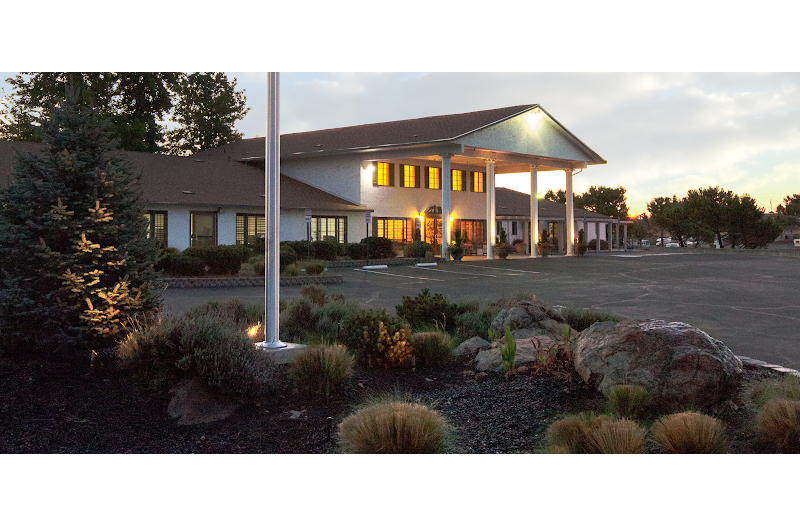
How is Westview Healthcare Center Staffed?

CMS rates WESTVIEW HEALTHCARE CENTER's staffing level at 4 out of 5 stars, which is above average compared to other nursing homes. Staff turnover is 38%, compared to the California average of 46%. This relatively stable workforce can support continuity of care.

What Have Inspectors Found at Westview Healthcare Center?

State health inspectors documented 80 deficiencies at WESTVIEW HEALTHCARE CENTER during 2022 to 2025. These included: 77 with potential for harm and 3 minor or isolated issues. While no single deficiency reached the most serious levels, the total volume warrants attention from prospective families.

Who Owns and Operates Westview Healthcare Center?

WESTVIEW HEALTHCARE CENTER is owned by a for-profit company. For-profit facilities operate as businesses with obligations to shareholders or private owners. The facility is operated by PACS GROUP, a chain that manages multiple nursing homes. With 205 certified beds and approximately 164 residents (about 80% occupancy), it is a large facility located in AUBURN, California.
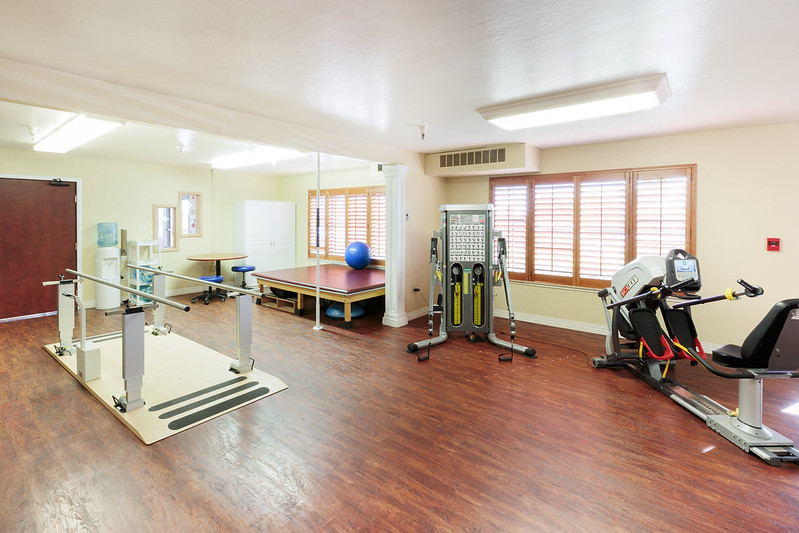
How Does Westview Healthcare Center Compare to Other California Nursing Homes?

Compared to the 100 nursing homes in California, WESTVIEW HEALTHCARE CENTER's overall rating (3 stars) is below the state average of 3.1, staff turnover (38%) is near the state average of 46%, and health inspection rating (2 stars) is below the national benchmark.

What Should Families Ask When Visiting Westview Healthcare Center?

Based on this facility's data, families visiting should ask: "What safeguards and monitoring systems are in place to protect residents from abuse or neglect?" "Can I visit during a mealtime to observe dining assistance and food quality?" "How do you handle medical emergencies, and what is your hospital transfer rate?" "Can I speak with family members of current residents about their experience?" These questions are particularly relevant given the substantiated abuse finding on record.

Is Westview Healthcare Center Safe?

Based on CMS inspection data, WESTVIEW HEALTHCARE CENTER has documented safety concerns. The facility has 1 substantiated abuse finding (meaning confirmed case of resident harm by staff or other residents). The facility has a 3-star overall rating and ranks #100 of 100 nursing homes in California. Families considering this facility should ask detailed questions about what corrective actions have been taken since these incidents.

Do Nurses at Westview Healthcare Center Stick Around?

WESTVIEW HEALTHCARE CENTER has a staff turnover rate of 38%, which is about average for California nursing homes (state average: 46%). Moderate turnover is common in nursing homes, but families should still ask about staff tenure and how the facility maintains care continuity when employees leave.

Was Westview Healthcare Center Ever Fined?

WESTVIEW HEALTHCARE CENTER has no federal fines on record. CMS issues fines when nursing homes fail to meet care standards or don't correct problems found during inspections. The absence of fines suggests the facility has either maintained compliance or corrected any issues before penalties were assessed. This is a positive indicator, though families should still review recent inspection reports for the full picture.

Is Westview Healthcare Center on Any Federal Watch List?

WESTVIEW HEALTHCARE CENTER is not on any federal watch list. The most significant is the Special Focus Facility (SFF) program, which identifies the bottom 1% of nursing homes nationally based on persistent, serious quality problems. Not being on this list means the facility has avoided the pattern of deficiencies that triggers enhanced federal oversight. This is a positive indicator, though families should still review the facility's inspection history directly.