SAN JOAQUIN NURSING CENTER AND REHABILITATION CENT

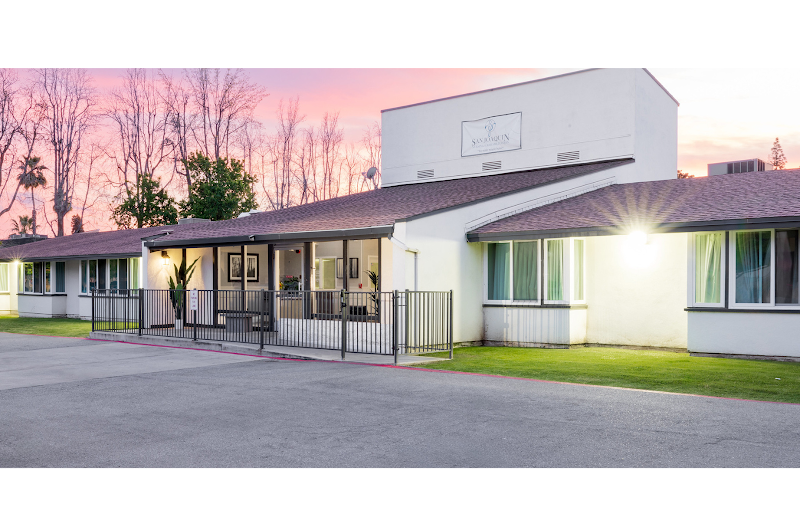
3601 SAN DIMAS, BAKERSFIELD, CA 93301 (661) 323-2894
For profit - Limited Liability company 99 Beds PACS GROUP Data: November 2025
Trust Grade
25/100
#1101 of 1155 in CA
Last Inspection: February 2025

Within standard 12-15 month inspection cycle. Federal law requires annual inspections.

Overview

San Joaquin Nursing Center and Rehabilitation has received a Trust Grade of F, indicating significant concerns about the quality of care provided. It ranks #1101 out of 1155 facilities in California, placing it in the bottom half, and #14 out of 17 in Kern County, suggesting there are only a few local options that are better. The facility's performance is worsening, with the number of reported issues increasing from 23 in 2024 to 25 in 2025. Staffing is rated 2 out of 5 stars, with a turnover rate of 40%, which is average for the state but still indicates room for improvement. Compounding these issues, the facility has incurred fines totaling $47,242, which is concerning as it is higher than 81% of other California facilities. Specific incidents raise further alarms, including a serious failure to provide wound care for a resident for nine days, resulting in a worsening pressure injury. Another serious incident involved discharging a resident home alone without proper care instructions, leading to a hospital admission shortly after. Additionally, there were lapses in infection control practices, such as failing to use proper protective equipment and maintain hand hygiene, which increases the risk of infections. While the facility has some strengths in quality measures, these significant weaknesses should be carefully considered by families looking for care options.

Trust Score
F
25/100
In California
#1101/1155
Bottom 5%
Safety Record
Moderate
Needs review
Inspections
Getting Worse
23 → 25 violations
Staff Stability
○ Average
40% turnover. Near California's 48% average. Typical for the industry.
Penalties
✓ Good
$47,242 in fines. Lower than most California facilities. Relatively clean record.
Skilled Nurses
⚠ Watch
Each resident gets only 16 minutes of Registered Nurse (RN) attention daily — below average for California. Fewer RN minutes means fewer trained eyes watching for problems.
Violations
⚠ Watch
87 deficiencies on record. Higher than average. Multiple issues found across inspections.
★☆☆☆☆
1.0
Overall Rating
★★☆☆☆
2.0
Staff Levels
★★★★☆
4.0
Care Quality
★☆☆☆☆
1.0
Inspection Score
Stable
2024: 23 issues
2025: 25 issues

The Good

  • 4-Star Quality Measures · Strong clinical quality outcomes
  • Full Sprinkler Coverage · Fire safety systems throughout facility
  • No fines on record
  • Staff turnover below average (40%)

    8 points below California average of 48%

Facility shows strength in quality measures, fire safety.

The Bad

1-Star Overall Rating

Below California average (3.1)

Significant quality concerns identified by CMS

Staff Turnover: 40%

Near California avg (46%)

Typical for the industry

Federal Fines: $47,242

Above median ($33,413)

Moderate penalties - review what triggered them

Chain: PACS GROUP

Part of a multi-facility chain

Ask about local staffing decisions and management

The Ugly 87 deficiencies on record

2 actual harm
Aug 2025 1 deficiency
CONCERN (D) 📢 Someone Reported This

A family member, employee, or ombudsman was alarmed enough to file a formal complaint

Potential for Harm - no one hurt, but risky conditions existed

Deficiency F0745 (Tag F0745)

Could have caused harm · This affected 1 resident

Based on interview and record review the facility failed to follow its policy and procedure (P&P) titled, Referrals, Social Services, when the facility failed to schedule a follow-up surgeon's (a doct...

Read full inspector narrative →
Based on interview and record review the facility failed to follow its policy and procedure (P&P) titled, Referrals, Social Services, when the facility failed to schedule a follow-up surgeon's (a doctor who removes or repairs a part of the body by operating on the patient) appointment for one of four sampled residents (Resident 1). This failure had the potential for a delay in follow-up care for Resident 1 after surgery (the branch of medical practice that treats injuries, diseases, and deformities by the physical removal, repair, or readjustment of organs and tissues, often involving cutting into the body). Findings:During a review of Resident 1's History and Physical Reports (HPR), dated 7/5/25, the HPR indicated, [Resident 1] who is direct transfer back after suffering a fall resulting in C5-6 fracture [broken neck bone] requiring discectomy [removal] and fusion [joining] as well as R V2 vertebral artery stenosis [artery blockage] at injury site.f/u [follow up] w/ [with] their surgeon in 2 weeks. During a concurrent interview and record review on 8/27/25 at 9:41 a.m. with Licensed Vocational Nurse (LVN) 1, Resident 1's clinical records were reviewed. There was no documentation of follow-up appointment scheduled with the surgeon. LVN 1 stated, I don't see any follow up appointments. LVN 1 stated when a resident is admitted , the admission nurse reviews the transfer paperwork, which included the history and physical, and if a follow-up appointment is needed the information is sent to social services to schedule the appointment. During a concurrent interview and record review on 8/27/25 at 9:50 a.m. with Director of Nursing (DON), Resident 1's Social Service Notes (SSN), undated were reviewed. The SSN indicated Resident 1 did not have a scheduled follow-up appointment with the surgeon. DON stated there was no follow-up appointment with the surgeon for Resident 1. During an interview on 8/27/25 at 10:05 a.m. with Resident 1, Resident 1 stated he had a neck surgery in (name of city) around June 30th (2025). Resident 1 stated after the surgery he was transferred to a hospital in (name of city) for recovery. Resident 1 stated he was then admitted to this facility for physical therapy. Resident 1 stated there were no follow up appointments since his admission (to the skilled nursing facility). Resident 1 stated he spoke with social services inquiring (seeking knowledge) about a follow-up appointment with the surgeon. Resident 1 stated no appointment has been scheduled. During a concurrent interview and record review on 8/28/25 at 8:51 a.m. with Social Services Director (SSD), Resident 1's HPR dated 7/2/25 was reviewed. Resident 1's HPR indicated, . f/u [follow-up] w/their surgeons in 2 weeks. SSD stated she spoke to Resident 1 approximately two weeks ago as Resident 1 inquired (seeking information) about a follow-up appointment with his surgeon. SSD stated she was unable to find any information in Resident 1's chart to schedule a follow-up appointment. SSD stated she asked Resident 1 to contact family to see if they had the information to the surgeon. SSD stated when a resident is admitted to the facility her responsibility is to review the hospital paperwork, which was uploaded into the resident's medical record, and note any follow up appointments which need to be scheduled. SSD stated she reviewed Resident 1's HPR but did not see the follow up appointment. SSD stated after further review of Resident 1's HPR, she should have had a follow-up appointment two weeks after surgery. SSD stated the information needed to schedule a follow-up appointment was in the HPR, which was placed in Resident 1's clinical record on 7/6/25. During a review of Resident 1's Care Plan (CP), dated 7/7/25, the CP indicated, Surgical Incision [a cut or wound made in the body during surgery]: Resident [1] has a surgical incision at the C5-6 spine. Interventions: .follow up with surgeon as indicate.During a concurrent interview and record review on 9/2/25 at 11:34 a.m. with DON, Resident 1's HPR, dated 7/2/25 was reviewed. The HPR indicated the name of the surgeon and the hospital where Resident 1 had a surgery. DON stated the information for the surgeon and facility were in this (HPR) document. DON stated social services could have used this information to schedule a follow up appointment for Resident 1. DON stated this was a delay in care. During a review of the facility's P&P titled, Referrals, Social Services, dated 12/2008, the P&P indicated, Policy statement: Social Services personnel shall coordinate most resident referrals with outside agencies.Referrals for medical services must be based on physician evaluation of resident need.Social services will document the referral in the resident's medical record.Social services will help arrange transportation to outside agencies, clinic appointment, etc. as appropriate.
Aug 2025 1 deficiency
CONCERN (D) 📢 Someone Reported This

A family member, employee, or ombudsman was alarmed enough to file a formal complaint

Potential for Harm - no one hurt, but risky conditions existed

Deficiency F0676 (Tag F0676)

Could have caused harm · This affected 1 resident

Based on observation, interview, and record review, the facility failed to ensure fingernails were kept clean and trimmed for one of four sampled residents (Resident 1). This failure had the potential...

Read full inspector narrative →
Based on observation, interview, and record review, the facility failed to ensure fingernails were kept clean and trimmed for one of four sampled residents (Resident 1). This failure had the potential to result in Resident 1 developing infection and skin injury.Findings:During a review of Resident 1's admission Record (AR), dated 8/18/25, the AR indicated, DIAGNOSIS. NEED FOR ASSISTANCE WITH PERSONAL CARE.During a review of Resident 1's SBAR (Situation, Background, Assessment, Recommendations), dated 7/31/25, the SBAR indicated, Change in skin color or condition. Other relevant information: Resident (1) has history of picking at himself and scratching. Nurses noted old scratches over body. Bleeding noted. Resident (1) states he is itching.During a review of Resident 1's Minimum Data Set (MDS - an assessment tool), dated 5/15/25, the MDS indicated on section C (Cognitive Patterns), Resident 1 had a BIMS (Brief Interview for Mental Status) score of 10 (score of 8 - 12 indicates moderately impaired cognition). The MDS indicated on section GG (Functional Abilities), Resident 1 required substantial/maximal assist (staff does more than half the effort) with personal hygiene.During a concurrent observation and interview on 8/18/25 at 1:45 p.m. with Resident 1 in Resident 1's room, Resident 1's fingernails on both hands were long and had dark debris underneath. Resident 1 had multiple scratches and open skin areas on both arms and abdomen. Resident 1 stated he would scratch his skin because it would itch a lot. Resident 1 stated he wanted his fingernails trimmed.During a concurrent observation and interview on 8/18/25 at 2:00 p.m. with Certified Nursing Assistant (CNA) 1 in Resident 1's room, CNA 1 stated Resident 1's fingernails on both hands were supposed to be cleaned and trimmed because they were long and had black dirt underneath. CNA 1 stated Resident 1 would be at risk for developing infection because he has been scratching and he had long and dirty fingernails.During a concurrent interview and record review on 8/18/25 at 2:49 p.m. with Infection Control Preventionist (ICP), Resident 1's care plan (CP), dated 6/18/25 was reviewed. The CP indicated, Resident has impaired skin integrity as evidenced by skin tear/abrasion/scratches to Left upper abdomen related to trauma and is at risk for infection. Interventions. Nails are to be kept short to reduce the risk of scratching or injury from picking at skin. ICP stated the CP was not followed. ICP stated Resident 1's nails were supposed to be kept short and clean to prevent infection and injury to the skin from scratching.During a review of the facility's policy and procedure (P&P) titled, Fingernails/Toenails, Care of, dated February 2018, the P&P indicated, The purposes of this procedure are to clean the nail bed, to keep nails trimmed, and to prevent infections. Nail care includes daily cleaning and regular trimming. Trimmed and smooth nails prevent the resident from accidentally scratching and injuring his or her skin.
Jul 2025 2 deficiencies
CONCERN (D) 📢 Someone Reported This

A family member, employee, or ombudsman was alarmed enough to file a formal complaint

Potential for Harm - no one hurt, but risky conditions existed

Incontinence Care (Tag F0690)

Could have caused harm · This affected 1 resident

**NOTE- TERMS IN BRACKETS HAVE BEEN EDITED TO PROTECT CONFIDENTIALITY** Based on observation, interview, and record review, the facility failed to follow their policy and procedure (P&P) on Urinary Ca...

Read full inspector narrative →
**NOTE- TERMS IN BRACKETS HAVE BEEN EDITED TO PROTECT CONFIDENTIALITY** Based on observation, interview, and record review, the facility failed to follow their policy and procedure (P&P) on Urinary Catheter (a tube placed in the body to drain and collect urine from the bladder) Care for two of five sampled residents (Resident 1 and Resident 2) when:1. The facility did not monitor placement of urinary catheter for Resident 1.2. The facility did not document urine output according to the plan of care for Resident 2.These failures had the potential for Resident 1 and Resident 2 developing UTI (Urinary Tract Infection - bladder infection).Findings:1. During a review of Resident 1's admission Record (AR), dated 7/10/25, the AR indicated, Resident 1 is a [AGE] year-old male with a diagnosis of OBSTRUCTIVE AND REFLUX UROPATHY (blockage of flow of urine from the kidneys to the bladder and backward flow of urine from the bladder into the ureters and potentially back to the kidneys).During a review of Resident 1's Order Summary Report (OSR), dated 7/10/25, the OSR indicated, Suprapubic catheter:_16_F [French (refers to the size of the urinary catheter)]/ [per] 10cc [unit of measurement in cubic centimeter] for: obstructive uropathy [a condition where urine flow is blocked, causing it to back up and potentially damage the kidneys]. Change PRN [as needed] for accidental removal or blockage every shift. Order Date. 01/10/2025. During a review of Resident 1's SBAR (Situation, Background, Assessment, Recommendation), dated 6/25/25, the SBAR indicated, Resident [1] told nurse its [sic] burning when he urinates, nurse noticed residents [sic] catheter bag and tubing is empty, and urine and blood are coming from residents [sic] penis and catheter site. to send resident to ER [Emergency Room] for suprapubic catheter complications.During a concurrent interview and record review on 7/10/25 at 12:47 p.m. with Minimum Data Set Coordinator (MDSC), Resident 1's Care Plan (CP), dated 1/19/25 was reviewed, the CP indicated, [Resident 1] has a suprapubic catheter and is at risk for complications with urinary system. Change PRN for accidental removal or blockage. Goal. [Resident 1] will be/(or) remain free from (suprapubic) catheter-related trauma. Interventions. Check [Resident 1's] tubing [urinary catheter] for kinks [bend or twist] (#[number] TIMES) each shift. Monitor and document intake and output as per facility policy. MDSC stated, I don't see that it's [checking the tubing for kinks and urine output] being monitored. During a concurrent interview and record review on 7/10/25 at 12:47 p.m. with MDSC, Resident 1's Task: Bladder Continence (TBC), dated 6/11/25-7/10/25 was reviewed. The TBC indicated there was no documentation of urine output on 6/11/25-6/22/25. The TBC, dated 6/14/25 indicated, HIS [Resident 1] CATHETER CLOGGED AND HE USED THE RESTROOM TO URINATE. The TBC dated 6/15/25 indicated, catheter has been blocked, and he uses the restroom. MDSC stated there was no documentation of interventions to address when Resident 1's suprapubic catheter was clogged or blocked. MDSC stated when it was first noted there was no urine output, the licensed nurse and the physician should have been notified.During an interview on 7/31/25 at 3:33 p.m. with Certified Nursing Assistant (CNA) 2, CNA 2 stated she did not document Resident 1's suprapubic catheter was clogged on 6/25/25. CNA 2 stated if it (clogged suprapubic catheter) was not documented, it did not happen. 2. During a review of Resident 2's AR, dated 7/10/25, the AR indicated, Resident 2 is an [AGE] year-old male with a diagnosis of INFECTION AND INFLAMMATORY (body's natural response to injury or infection) REACTION DUE TO INDWELLING URETHRAL CATHETER (tube inserted through the urethra into the bladder to drain urine).During a review of Resident 2's OSR, dated 4/22/25, the OSR indicated, Foley Catheter (tube inserted into the bladder through the urethra to drain urine): 18F/10cc for: obstructive uropathy. Change PRN for accidental removal or blockage.During a review of Resident 2's SBAR, dated 6/4/25, the SBAR indicated, The patient [Resident 2] complained about pressure at the lower abdominal area and blood in urine. The UA [Urinalysis (lab test that examines the urine)] with C&S [Culture and Sensitivity (identifies the germs causing the infection) results was notified to MD [Medical Doctor] and the new order received. Omnicef [antibiotic medicine that fight bacterial infections].During a review Resident 2's Nurse's Note (NN), dated 6/21/25, the NN indicated, pt [patient/Resident 1] was c/o [complained of] severe pain r/t [related to] foley catheter and unable to have [urine] output. Pt stated his bladder feels full but unable to urinate. pain and bleeding in penile [relating to or affecting the penis] area. MD made aware and gave order to send out to ER for further eval [evaluation].During a review of Resident 2's hospital's History and Physical (H&P), dated 6/21/25, the H&P indicated, The patient's [Resident 1] daughter reports that the patient was complaining of nausea [feeling of sickness in the stomach that may come with an urge to vomit], decreased appetite, and suprapubic discomfort for a few days. They noticed the decreased urine output today. The patient had significant increase in the pain after changing the Foley catheter and blood clots [clumps of blood that forms that form in response to a cut or other injury] were coming out. The patient was having more pain, hence he was routed into the ED [Emergency Department] for evaluation. We changed the Foley catheter here and pus [fluid produced in infected issue] was coming out. IMPRESSION: 1. Complicated urinary tract infection secondary to catheter associated.During a concurrent interview and record review on 7/10/25 at 1:32 p.m. with MDSC, Resident 2's CP, dated 6/10/25 was reviewed. The CP indicated, Resident Catheter Care. Interventions. Monitor urine output. note the placement of [urinary] catheter. During a concurrent interview and record review on 7/10/25 at 1:32 p.m. with MDSC, Resident 2's Intake & Output MAR (Medication Administration Record), dated April 2025, May 2025, and June 2025 was reviewed. The Intake & Output MAR indicated there were no documentation of urine output on 4/16/25-6/21/25.During a concurrent interview and record review on 7/10/25 at 1:32 p.m. with MDSC, Resident 2's TBC, dated 6/11/25-7/10/25 was reviewed. TBC indicated there were no documentation of urine output on 6/12/25-6/16/25, and 6/18/25. On 6/17/25, the TBC indicated, No out put in catheter. Nurse informed. MDSC stated there was no documentation of interventions addressing Resident 2's lack of urine output.During an interview on 7/10/25 at 1:45 p.m. with MDSC, MDSC stated on 6/25/25, Resident 2 came back from the acute hospital with UTI. MDSC stated Resident 2's catheter care (monitoring urine output and monitoring catheter placement) was not being done and had potentially resulted in UTI. MDSC stated the risks of developing infection could have been minimized if the facility monitored urine output and monitored catheter placement according to the plan of care.During a review of the facility's P&P titled, Catheter Care, Urinary, dated August 2022, the P&P indicated, The purpose of this procedure is to prevent urinary catheter-associated complications, including urinary tract infections. Input/Output 1. Observe the resident's urine level for noticeable increases or decreases. If the level stays the same, or increases rapidly, report it to the physician or supervisor. Maintaining Unobstructed Urine Flow 1. Check the resident frequently to be sure he or she is not lying on the catheter and to keep the catheter and tubing free of kinks.
CONCERN (D) 📢 Someone Reported This

A family member, employee, or ombudsman was alarmed enough to file a formal complaint

Potential for Harm - no one hurt, but risky conditions existed

Infection Control (Tag F0880)

Could have caused harm · This affected 1 resident

Based on observation, interview, and record review, the facility failed to ensure:A Certified Nursing Assistant (CNA) 2 was wearing proper personal protective equipment (PPE) when entering one of nine...

Read full inspector narrative →
Based on observation, interview, and record review, the facility failed to ensure:A Certified Nursing Assistant (CNA) 2 was wearing proper personal protective equipment (PPE) when entering one of nine sampled residents' (Resident 6) room on contact precautions (to use PPE before entering residents' room with residents known or suspected to be infected with germs that can be spread by direct contact). This failure had the potential to result in spread of infection to other residents, staff, and visitors.2. A Licensed Vocational Nurse (LVN) performed hand hygiene after removing used gloves during a suprapubic catheter (a tube that drains urine from the bladder through a small opening in the lower abdomen) care for one of five sampled residents (Resident 3). This failure had the potential to result in Resident 3 developing urinary tract infection (bladder infection). Findings:1. During a review of Resident 6's admission Record (AR), dated 7/10/25, the AR indicated, Diagnosis. EXTENDED SPECTRUM BETA LACTAMASE (ESBL) RESISTANCE [bacteria that is resistant to common antibiotics (medication that treats bacterial infection].During a review of Resident 6's Order Summary Report (OSR), dated 7/10/25, the OSR indicated, Contact Isolation due to VRE [Vancomycin-Resistant Enterococci-bacteria that is resistant to the antibiotic Vancomycin] and ESBL in urine.During a concurrent observation and interview on 7/10/25 at 3:38 p.m. with Certified Nursing Assistant (CNA) 2 in Hallway 1. Resident 6's room had a Contact Precautions sign on her door. The Contact Precautions sign indicated staff should wear gown and gloves when entering resident's room. CNA 2 was not wearing a gown while transferring Resident 6 from the bed to the wheelchair. CNA 2 stated she did not know Resident 6 was on contact precautions. CNA 2 stated she was supposed to wear gown and gloves in Resident 6's room to protect herself, and to not spread microorganisms to other residents.During a concurrent observation and interview on 7/10/25 at 3:40 p.m. with Infection Control Preventionist (ICP) in Hallway 1. Housekeeping (HSK) was not wearing a gown while cleaning the bed in Resident 6's room. ICP stated HSK was supposed to wear gown in Resident 6's room because Resident 6 was on contact precautions. During a concurrent interview and record review on 7/10/25 at 3:56 p.m. with ICP, the facility's policy and procedure (P&P) titled, Isolation - Categories of Transmission-Based Precautions, dated September 2022 was reviewed. The P&P indicated, Contact Precautions. Staff and visitors wear a disposable gown upon entering the room and remove before leaving the room and avoid touching potentially contaminated surfaces with clothing after gown is removed. ICP stated the P&P was not followed.2. During a review of Resident 3's Order Summary (OS), dated 12/20/23, the OS indicated, Suprapubic Foley catheter care q [every] shift.During a concurrent observation and interview on 7/11/25 at 10:57 a.m. with LVN 2 in Resident 3's room, LVN 2 performed suprapubic catheter care for Resident 3. LVN 2 cleaned Resident 3's suprapubic catheter insertion site then LVN 2 removed her gloves and wore new gloves without performing hand hygiene in between glove changes. LVN 2 stated she should have washed her hands after cleaning the insertion site and after removing her used gloves.During a concurrent interview and record review on 7/11/25 at 11:42 a.m. with ICP, the facility's P&P on Suprapubic Catheter Care, dated October 2010 was reviewed. The P&P indicated, The purpose of this procedure is to prevent skin irritation around the stoma site and to prevent infection of the resident's urinary tract. Wash around the catheter site with soap and water. Wash the outer part of the catheter tube with soap and water. Remove gloves and discard in designated container. Wash and dry your hands thoroughly. ICP stated the P&P was not followed.
Jun 2025 3 deficiencies 1 Harm
SERIOUS (G) 📢 Someone Reported This

A family member, employee, or ombudsman was alarmed enough to file a formal complaint

Actual Harm - a resident was hurt due to facility failures

Pressure Ulcer Prevention (Tag F0686)

A resident was harmed · This affected 1 resident

Based on interview and record review, the facility failed to follow their policy and procedures (P&P) titled, Prevention of Pressure Injuries (PI -localized injury to the skin and/or underlying tissue...

Read full inspector narrative →
Based on interview and record review, the facility failed to follow their policy and procedures (P&P) titled, Prevention of Pressure Injuries (PI -localized injury to the skin and/or underlying tissue usually over a bony prominence, as a result of pressure, or pressure in combination with shear and/or friction), Wound Care, and admission Assessment and Follow Up: Role of the Nurse, for one of three sampled residents (Resident 1) when the physician was not notified and treatment orders obtained, a care plan was not developed and implemented, wound measurements were not completed, and an individualized turning/repositioning schedule was not determined, when the resident was admitted with a coccyx (tailbone) PI. These failures resulted in Resident 1 not being provided wound care for nine days and the worsening of Resident 1's pressure injury.Finding:During a review of Resident 1's Admission/readmission Evaluation/Assessment (AREA), (AREA - document used by the facility when a resident is admitted /readmitted to document the assessment including skin assessment) dated 5/7/25 (admission date), the AREA indicated, Reason for admission: Skilled needs, wound care. The AREA indicated Resident 1 was incontinent of bladder and required assistance with activities of daily living (ADLs - refers to basic self-care tasks): bathing, dressing, toileting, and bed mobility. The AREA indicated Resident 1 had a pressure injury to the coccyx (tailbone). There was no documentation measurements or a description of Resident 1's pressure injury to the coccyx.During a review of Resident 1's Braden Scale for Predicting Pressure Ulcer Risk Evaluation, (Braden Scale is risk assessment tool used to predict the likelihood of a resident developing pressure injuries with the scores ranging from 6 - 23, with the lower the score the higher the risk for developing a pressure injury) dated 5/7/25, Resident 1's Braden score was 14 (score of 13-14 indicates a moderate risk for developing a pressure injury).During a review of Resident 1's care plan (comprehensive, personalized document that outlines the specific needs of an individual requiring care, detailing the type of support, how it will be provided/interventions, and the goals of the care) initiated 5/8/25, with the focus on Skin: [Resident 1] is at risk for skin breakdown related to edema (swelling of the body tissue), impaired mobility, pain, Braden Score :14. The care plan interventions included, Assist to turn and reposition as indicated/tolerated. Keep skin clean and dry to the extent possible. The care plan did not include an individualized turning/repositioning schedule. During a review of Resident 1's Minimum Data Set, (MDS - a comprehensive assessment tool to evaluate the functional capabilities and health needs of residents) dated 5/12/25, the MDS indicated, Resident 1's BIMS (Brief Interview for Mental Status- standardized assessment tool used to evaluate the mental processes that allow individuals to think, learn, and remember) score was 11 (score between 8 to 12 indicates moderately impaired cognition). The MDS indicated Resident 1 was dependent (helper does all the effort) for toileting hygiene (the ability to maintain perineal hygiene, adjust clothes before and after voiding or having a bowel movement), and required substantial/maximal assistance (helper does more than half the effort) with rolling to the left and to the right (the ability to roll from lying on back to left and right side and return to lying on back on the bed). The MDS indicated Resident 1 had one or more unhealed pressure injuries, one unstageable pressure injury (obscured full - thickness skin and tissue loss. Full - thickness skin and tissue loss in which the extent of tissue damage within the PI cannot be confirmed because it is obscured by slough [yellow or white material consisting of dead cells which attaches to the wound bed] or eschar [dead tissue that forms over healthy skin]. If slough or eschar is removed, a Stage 3 [Full-thickness loss of skin, in which adipose (fat) is visible] or Stage 4 [Full-thickness skin and tissue loss with exposed muscle, tendon (flexible tissue, similar to a rope), ligament [a band of tissue that connects bones, joints or organs], cartilage [a strong, flexible connective tissue that protects joints and bones] or bone are visible in the pressure injury] are revealed) presenting as a deep tissue injury (intact or non-intact skin with localized area of persistent non-blanchable [the skin does not turn white when touched with a finger] deep red, maroon, purple discoloration or epidermal [outer layer of skin] separation revealing a dark wound bed or blood-filled blister [raised skin filled with fluid]) present on admission.During a review of Resident 1's Skin & Wound Evaluation (SWE - document used by the facility to document the resident's skin condition), dated 5/15/25, the SWE indicated Resident 1 had a stage 4 pressure injury present on admission. There was no documentation of the location of the PI. The SWE indicated the wound measured: area 16.8 centimeters squared (cm2 - unit of measurement), length 8.2 centimeters (cm - unit of measurement), and width 5.2 cm. No depth of the wound was documented. During a review of Resident 1's SWE, dated 5/21/25, the SWE indicated Resident 1 had a stage 4 pressure injury to the coccyx, present on admission. The SWE indicated the wound measured: area 9.0 cm2, length 4.8 cm, and width 3.0 cm. No depth of the wound was documented. During a review of Resident 1's SWE, dated 5/30/25, the SWE indicated Resident 1 had a stage 4 pressure injury to the coccyx, present on admission. The SWE indicated the wound measured: area 35.8 cm2, length 8.6 cm, width 7.3 cm, and depth 1.0 cm. The SWE indicated Resident 1's pressure injury was deteriorating and infection was suspected. No depth of the wound was documented. During a review of Resident 1's care plan initiated 5/27/25, with the focus on Skin: (Resident 1) has a pressure ulcer to (coccyx) and is at risk for further breakdown and or slow, delayed healing related to, the care plan interventions included: Pressure reduction cushion for chair. and Pressure reduction mattress for bed. There was no care plan interventions to turn reposition the resident. During a review of Resident 1's care plan with the focus on Skin: (Resident 1) has a pressure ulcer to coccyx and is at risk for further breakdown and or slow, delayed healing related to Diabetes (medical condition that leads to high blood sugar levels), incontinence of bladder incontinence of bowel, initiated 5/28/25. The care plan interventions included: Pressure reduction cushion for chair. and Air mattress No care plan interventions were added to turn and reposition at a specific frequency. During a review of Resident 1 Task Turn and Reposition, (TTR - document used by the facility to document when the staff reposition a resident) for dates 5/7/25 to 5/29/25, the following was noted:On 5/8/25, the TTR indicated Resident 1 was turned or repositioned two times within that 24-hour period On 5/9/25, the TTR indicated Resident 1 was turned or repositioned three times within that 24-hour period On 5/10/25, the TTR indicated Resident 1 was turned or repositioned four times within that 24-hour period On 5/11/25, the TTR indicated Resident 1 was turned or repositioned two times within that 24-hour period On 5/12/25, the TTR indicated Resident 1 was turned or repositioned three times within that 24-hour period On 5/13/25, the TTR indicated Resident 1 was turned or repositioned three times within that 24-hour period On 5/14/25, the TTR indicated Resident 1 was turned or repositioned three times within that 24-hour period On 5/15/25, the TTR indicated Resident 1 was turned or repositioned three times within that 24-hour period On 5/16/25, the TTR indicated Resident 1 was turned or repositioned three times within that 24-hour period On 5/17/25, the TTR indicated Resident 1 was turned or repositioned four times within that 24-hour period On 5/18/25, the TTR indicated Resident 1 was turned or repositioned three times within that 24-hour period On 5/19/25, the TTR indicated Resident 1 was turned or repositioned three times within that 24-hour period On 5/20/25, the TTR indicated Resident 1 was turned or repositioned three times within that 24-hour period On 5/21/25, the TTR indicated Resident 1 was turned or repositioned two times within that 24-hour period On 5/22/25, the TTR indicated Resident 1 was turned or repositioned four times within that 24-hour period On 5/23/25, the TTR indicated Resident 1 was turned or repositioned three times within that 24-hour period On 5/24/25, the TTR indicated Resident 1 was turned or repositioned three times within that 24-hour period On 5/25/25, the TTR indicated Resident 1 was turned or repositioned two times within that 24-hour period On 5/26/25, the TTR indicated Resident 1 was turned or repositioned four times within that 24-hour period On 5/27/25, the TTR indicated Resident 1 was turned or repositioned two times within that 24-hour period On 5/28/25, the TTR indicated Resident 1 was turned or repositioned three times within that 24-hour period During a concurrent interview and record review, on 5/28/25 at 4:05 p.m. with Director of Nursing (DON). Resident 1's AREA dated 5/7/25, the AREA indicated Resident 1 had a pressure injury to coccyx. The licensed nurse did not document measurements or that staging (system used to classify the severity of the PI based on the depth of the tissue damage) of the PI was done. Resident 1's Treatment Administration Record (TAR) (TAR) dated May 2025 was reviewed. After reviewing the physician's orders, DON stated there were no physician's orders to treat the coccyx PI and therefore no treatment of Resident 1's pressure injury was performed from 5/7/25 to 5/15/25 (9 days). DON stated the admissions nurse did not obtain treatment orders from the medical doctor to perform treatments to the coccyx PI. DON stated, If it (treatment) is not documented it (treatment) is not done. Resident 1's care plans were reviewed. DON stated no actual pressure injury care plan was developed when the PI to the coccyx was first identified on 5/7/25. The care plan for the coccyx PI was not developed until 5/27/25. During a concurrent interview and record review, on 6/23/25 at 11:44 a.m. with DON, DON stated a resident's skin should be assessed and wounds should be measured and documented upon admission. DON stated measurements should be taken when identified to monitor if the wound is improving or worsening. DON stated the resident's physician should be notified of the wounds and treatment orders should be obtained and placed in the resident's medical record to be implemented. DON stated a resident with wounds should be placed on the wound doctor (a healthcare professional with specialized training and experience in the care and treatment of acute, chronic, and non-healing wounds) services to be evaluated weekly. DON stated a care plan should be created and implemented. DON stated a resident with pressure injuries on the coccyx should have care plan interventions including, turning and repositioning every 2 hours and as needed, keep the resident clean and dry, air mattress and specialized cushion while up in chair. DON stated Resident 1's pressure injury was not measured upon admission. DON stated a care plan for Resident 1's pressure injury was not created upon admission. DON confirmed the care plan for the coccyx PI was created on 5/27/25. DON stated wound care orders were not placed in Resident 1's medical record until 5/16/25 (9 days after admission) DON stated there was no documentation the nurses treated Resident 1's pressure injury on 5/7/25, 5/8/25, 5/9/25, 5/10/25, 5/11/25, 5/12/25, 5/13/25, 5/14/25, 5/15/25. Nurses documented treatment to the coccyx wound on 5/16/25. During a review of the facility's P&P titled, Prevention of Pressure Injuries, revised April 2020, the P&P indicated, The purpose of this procedure is to provide information regarding identification of pressure injury risk factors and interventions for specific risk factors. Risk Assessment 1. Assess the resident on admission (within eight hours) for existing pressure injury risk factors. Repeat the risk assessment weekly and upon any change of condition. Skin Assessment 1. Conduct a comprehensive skin assessment upon (or soon after) admission, with each risk assessment, as indicated according to the resident's risk factors, and prior to discharge. 3. Inspect the skin on a daily basis when performing or assisting with personal care or ADLs. a. Identify any signs of developing pressure injuries (i.e., non-blanchable erythema). Inspect pressure points (sacrum, heels, buttocks, coccyx, .); . e. Reposition resident as indicated on the care plan. Prevention Skin Care 1. Keep the skin clean and hydrated. 2. Clean promptly after episodes of incontinence. Mobility/repositioning 1. Reposition all residents with or at risk of pressure injuries on an individualized schedule, as determined by the interdisciplinary care team. 2. Choose a frequency for repositioning based on the resident's risk factors and current clinical practice guidelines. 3. Teach resident who can change positions independently the importance of repositioning. Provide support devices and assistance as needed. Remind and encourage residents to change positions. Monitoring 1. Evaluate, report and document potential changes in skin. 2. Review the interventions and strategies for effectiveness on an ongoing basis.During a review of the facility's P&P titled, Wound Care, revised October 2010, the P&P indicated, The purpose of this procedure is to provide guidelines for the care of wounds to promote healing. Preparation 1. Verify that there is a physician's order for this procedure. 2. Review the resident's care plan to assess for any special needs of the resident. Documentation The following information should be recorded in the resident medical record: 1. The type of wound care given. 2. The date and time the wound care was given. 6. All assessment data (i.e., wound bed color, size, drainage, etc.) obtained when inspecting the wound. 10. The signature and title of the person recording the data. Reporting . 2. Report other information in accordance with facility policy and professional standards of practice.During a review of the facility's P&P titled, admission Assessment and Follow Up: Role of the Nurse, lasted revised September 2012, the P&P indicated, The purpose of this procedure is to gather information about the resident's physical, emotional, cognitive, and psychosocial condition upon admission for the purpose of managing the resident, initiating the care plan, and completing required assessments . e. Skin assessment . 12. Contact the Attending Physician to communicate and review the findings of the initial assessment and any other pertinent information and obtain admission orders that are based on these findings. Documentation The following information should be recorded in the resident's medical record: . 5. Orders obtained from the physician.
CONCERN (D) 📢 Someone Reported This

A family member, employee, or ombudsman was alarmed enough to file a formal complaint

Potential for Harm - no one hurt, but risky conditions existed

Quality of Care (Tag F0684)

Could have caused harm · This affected 1 resident

Based on interview and record review, the facility failed to follow their policy and procedure (P&P) titled, Wound Care, for one of three sampled residents (Resident 1) when wound care orders were not...

Read full inspector narrative →
Based on interview and record review, the facility failed to follow their policy and procedure (P&P) titled, Wound Care, for one of three sampled residents (Resident 1) when wound care orders were not obtained and care plan interventions were not developed and implemented for Resident 1's right and left heel wounds. These failures resulted in Resident 1 not being provided wound care for nine days and had the potential for worsening of Resident 1's right and left heel wounds.Findings:During a review of Resident 1's Admission/readmission Evaluation/Assessment, (AREA) dated 5/7/25, the AREA indicated, Reason for admission: Skilled needs, wound care, the AREA indicated Resident 1 required assistance with activities of daily living: bathing, dressing, toileting, and bed mobility. The AREA indicated, Resident 1 had a wound to the right heel and a closed blister to the left heel (no measurement or description documented of the wound to the right heel or the blister to the left heel).During a review of Resident 1's Baseline Care Plan (BCP - a foundational document in skilled nursing facilities, the BCP provides initial instructions for providing effective and person-centered care to a newly admitted resident), dated 5/7/25, the BCP indicated under the section titled, Skin Integrity (Prior and Current Concerns), there was no documentation Resident 1 had any current or past skin integrity concerns.During a review of Resident 1's Admissions Minimum Data Set, (MDS - a standardized assessment tool used in healthcare settings to collect comprehensive information about residents) dated 5/12/25, the MDS assessment indicated Resident 1's Brief Interview for Mental Status (BIMS- standardized assessment tool used to evaluate the cognition [mental processes that allow individuals to think, learn, and remember] with scores ranging from 0 - 15 with the higher the score the more intact the resident's cognition is) score was 11 (represents moderately impaired cognition). The MDS assessment indicated Resident 1 required substantial/maximal assistance (helper does more than half the effort) with rolling left and right (the ability to roll from lying on back to left and right side and return to lying on back on the bed). The MDS assessment indicated Resident 1 had diabetic foot ulcers (an open sore or wound on the foot that occurs in people with diabetes [a diseases that affect how the body uses blood sugar], often due to nerve damage and poor blood circulation).During a review of Resident 1's Skin & Wound Evaluation, (SWE) dated 5/15/25, the SWE indicated Resident 1 had a diabetic wound to the right heel which was present on admission. The SWE indicated the right heel wound measured: area 5.0 centimeter squared (cm 2 - unit of measure), length 3.6 centimeter (cm - unit of measure), and width 1.9 cm.During a review of Resident 1's SWE, dated 5/15/25, the SWE indicated Resident 1 had a diabetic left heel wound that was present on admission. The SWE indicated the left heel wound measured: area 11.5 cm2, length 4.9 cm, and width 3.4 cm.During a review of Resident 1's care plan (is a comprehensive, personalized document that outlines the specific needs of an individual requiring care, detailing the type of support, how it will be provided/interventions, and the goals of the care) initiated 5/8/25, with the focus on Skin: [Resident 1] has diabetic ulcer(s) R (right) heel and is at risk for complications related to decreased mobility, delayed healing.further skin breakdown.infection. There were no interventions added to assist Resident 1's diabetic ulcers in the healing process on 5/8/25. Interventions were not added until 5/28/25 (21 days after Resident 1's wounds were first identified).During a concurrent interview and record review, on 5/28/25 at 4:05 p.m. with Director of Nursing (DON). Resident 1's AREA, dated 5/7/25 was reviewed. DON confirmed Resident 1 had a wound to the right heel and a closed blister to the left heel which were present upon admission with no measurement or description documented. Resident 1's Treatment Administration Record, (TAR) dated May 2025 was reviewed. After reviewing the TAR, DON stated no treatments were performed for Resident 1's right heel or left heel wounds from 5/7/25 to 5/16/25 (9 days). DON reviewed Resident 1's physicians' orders. DON stated the admissions nurse did not obtain treatment orders from the physician to treat the resident right heel and left heel. DON stated no treatments to the right and left heel were documented as being performed from 5/7/25 to 5/16/25 . DON stated, if it [treatment] is not documented it [treatment] is not done. Resident 1's care plans initiated 5/8/25 were reviewed. DON stated no wound care interventions were developed for the wounds to Resident 1's right heel or left heel on the day the care plan was developed. During a concurrent interview and record review, on 6/23/25 at 11:44 a.m. with DON, DON stated a resident's skin should be assessed and wounds should be measured and documented upon admission. DON stated measurements of wounds should be taken when identified to monitor if the wound is worsening. DON stated the resident physician should be notified of the wounds and treatment orders should be obtained and placed in the medical record to be implemented. DON stated a resident with wounds should be placed on the wound doctor (a healthcare professional with specialized training and experience in the care and treatment of acute, chronic, and non-healing wounds) services to be evaluated by the wound doctor weekly. DON stated a care plan should be created and implemented when residents have wounds. DON stated a resident with diabetic wounds to the heels would have interventions including placing a hi-lift boot (heel offloading boot meant to protect and care for bony prominence) while in bed, wound consult, treatments as order, and monitoring for signs and symptoms of infection. DON stated Resident 1's right and left heel wounds were not measured upon admission. DON stated a care plan for Resident 1's right and left heel wounds were not created upon admission, DON confirmed care plan interventions were created on 5/28/25 (21 days after wounds were identified). DON stated wound care orders were not placed in Resident 1's medical record until 5/16/25 (9 days after admission) DON stated there was no documentation of Resident 1's right or left heel wound treatments being performed until 5/16/25, 9 days after admission. During a review of the facility's P&P titled, Wound Care, revised October 2010, the P&P indicated, The purpose of this procedure is to provide guidelines for the care of wounds to promote healing. Preparation 1. Verify that there is a physician's order for this procedure. 2. Review the resident's care plan to assess for any special needs of the resident. Documentation The following information should be recorded in the resident medical record: 1. The type of wound care given. 2. The date and time the wound care was given. 6. All assessment data (i.e., wound bed color, size, drainage, etc.) obtained when inspecting the wound. 10. The signature and title of the person recording the data. Reporting .2. Report other information in accordance with facility policy and professional standards of practice.During a review of the facility's P&P titled, admission Assessment and Follow Up: Role of the Nurse, lasted revised September 2012, the P&P indicated, The purpose of this procedure is to gather information about the resident's physical, emotional, cognitive, and psychosocial condition upon admission for the purpose of managing the resident, initiating the care plan, and completing required assessments . e. Skin assessment . 12. Contact the Attending Physician to communicate and review the findings of the initial assessment and any other pertinent information and obtain admission orders that are based on these findings. Documentation The following information should be recorded in the resident's medical record: . 5. Orders obtained from the physician.
CONCERN (D) 📢 Someone Reported This

A family member, employee, or ombudsman was alarmed enough to file a formal complaint

Potential for Harm - no one hurt, but risky conditions existed

Safe Environment (Tag F0921)

Could have caused harm · This affected 1 resident

Based on observation, interview, and record review, the facility failed to provide a safe and sanitary environment for one of three sampled residents (Resident 2 ) when:1. A low air loss mattress (a s...

Read full inspector narrative →
Based on observation, interview, and record review, the facility failed to provide a safe and sanitary environment for one of three sampled residents (Resident 2 ) when:1. A low air loss mattress (a specialized medical mattress designed to prevent and treat pressure injuries [PI - localized injury to the skin and/or underlying tissue usually over a bony prominence as a result of pressure, or pressure in combination with shear and/or friction] by providing a combination of air circulation and pressure redistribution) was improperly installed. This failure resulted in Resident 2 hitting his head.2. The wheelchair was not maintained and could not be properly cleaned and sanitized. This failure had the potential for Resident 2 to be exposed the infection and bacteria.Findings:1. During a review of Resident 2's Minimum Data Set, (MDS - a comprehensive assessment tool to evaluate the functional capabilities and health needs of residents) dated 5/18/25, the MDS indicated, Resident 2's BIMS (Brief Interview for Mental Status - standardized assessment tool used to evaluate the mental processes that allow individuals to think, learn and remember) score was 12 (a score of 8 to 12 indicates moderately impaired cognition).During a concurrent observation and interview, on 5/28/25 at 1:46 p.m. with Resident 2 in Resident 2's room, Resident 2 stated his low air loss mattress was installed wrong and the machine has hit him in the head a few times. The machine (the air hose connectors) was observed at the head of the bed on the floor. Resident 2 stated he has been here for two weeks and the bed has been like this. Resident 2 stated he made a certified nursing assistant (CNA) aware and the CNA said he would change it but the CNA never changed the set up of the low air loss mattress.During a concurrent observation and interview, on 5/28/25 at 2:20.p.m. with Maintenance Director (MD), in Resident 2's room. MD stated he does assist in installing the low air loss mattresses when a nurse asks. MD stated he helps strap the mattress to the bed frame and plugs it in. MD confirmed Resident 2's low air loss mattress and the air hose connectors were located at the head of the bed and resting on the floor. During an interview on 5/28/25 at 3:54 p.m. with Licensed Vocational Nurse (LVN) 1, LVN 1 stated low air loss mattress' air hose connectors should be placed at the foot of the bed. During a review of the facility provide manual titled, A10, Low Air-Loss Mattress Replacement System With Alternating Pressure, undated, the manual indicated, Installation 1. Place the mattress directly on the bed frame, with the air hose connectors positioned at the footboard. 2. Hang the pump onto the bed board (footboard side) .2. During a concurrent observation and interview, on 5/28/25 at 1:46 p.m. with Resident 2 in Resident 2's room, Resident 2 stated the facility provide him with his current wheelchair. Resident 2 stated he received the wheelchair with cracks and a right arm rest peeling. Resident 2 stated he put the hot pink duct tape on the left arm rest. During a concurrent observation and interview, on 5/28/25 at 2:20.p.m. with MD, in Resident 2's room, MD confirmed Resident 2's wheelchair right arm rest was cracked and peeling and the left arm rest had hot pink duct tape on more than half of the arm rest. DM stated he could not say if Resident 2's wheelchair arm rest could be sanitized. During an interview on 5/28/25 at 3:54 p.m. with Licensed Vocational Nurse (LVN) 1, LVN 1 stated residents with cracked or peeling arm rest on wheelchairs, should have the arm rest replaced. LVN 1 stated cracked and peeling arm rest could not be sanitized.During a review of the facility policy and procedure (P&P) titled, Infection Prevention and Control Program, revised October 2018, the P&P indicated, An infection prevention and control program (IPCP) is established and maintained to provide a safe, sanitary and comfortable environment and to help prevent the development and transmission of communicable diseases and infections. 11. Prevention of Infection . (8) following established general and disease-specific guidelines such as those of the Centers for Disease Control (CDC).
Apr 2025 2 deficiencies
CONCERN (D) 📢 Someone Reported This

A family member, employee, or ombudsman was alarmed enough to file a formal complaint

Potential for Harm - no one hurt, but risky conditions existed

Employment Screening (Tag F0606)

Could have caused harm · This affected 1 resident

Based on interview and record review, the hospital failed to follow its policy and procedure (P&P) titled, Background Screening Investigations when one of three sampled Licensed Vocational Nurse (LVN)...

Read full inspector narrative →
Based on interview and record review, the hospital failed to follow its policy and procedure (P&P) titled, Background Screening Investigations when one of three sampled Licensed Vocational Nurse (LVN) 1's background check was not completed within two days prior to employment. This failure had the potential to expose residents to staff with criminal background. Findings: During a concurrent interview and record review on 4/1/25 at 3:18 p.m. with Director Staff Development (DSD), LVN 1's Employee File (EF) was reviewed. The EF indicated LVN 1's hire date was 2/6/23 and LVN 1's background check was completed on 3/18/23 (one month and six days later). DSD stated the background check was completed after the hire date and background checks should be completed before hire date. During a review of the facility's P&P titled, Background Screening Investigations, dated 3/2019, the P&P indicated, The director of personnel, or designee, conducts background checks, reference checks and criminal conviction checks (including fingerprinting as may be required by state law) on all potential direct access employees and contractors. Background and criminal checks are initiated within two days of an offer of employment or contract agreement and completed prior to employment.
CONCERN (E) 📢 Someone Reported This

A family member, employee, or ombudsman was alarmed enough to file a formal complaint

Potential for Harm - no one hurt, but risky conditions existed

Pressure Ulcer Prevention (Tag F0686)

Could have caused harm · This affected multiple residents

Based on interview and record review, the facility failed to ensure: 1. Wound treatments were completed as ordered by the physician for three of three sampled residents (Resident 1, Resident 2, and Re...

Read full inspector narrative →
Based on interview and record review, the facility failed to ensure: 1. Wound treatments were completed as ordered by the physician for three of three sampled residents (Resident 1, Resident 2, and Resident 3). 2. Weekly wound assessments were completed for two of three sampled residents (Resident 2 and Resident 3). These failures had the potential for delayed wound healing, worsening of wounds, and infection for Resident 1, Resident 2, and Resident 3. Findings: 1. a) During a review of Resident 1's Order Summary Report (OSR), dated 3/17/25, the OSR indicated, Cleanse Wounds to R [right] upper arm, R Forearm [the part of the arm between the elbow and the wrist] and R hand with Dakins [a diluted solution, often used for wound care]. then cut holes for suction and turn wound vac [vacuum] on Q [every] Mon [Monday], Wed [Wednesday], Fri [Friday] & [and] PRN [as needed]. start date 3/17/25. During a concurrent interview and record review on 4/1/25 at 2:39 p.m. with Director of Staff Development (DSD), Resident 1's Treatment Administration Record (TAR), dated 3/2025 was reviewed. The TAR indicated the wound treatments were not completed on 3/28/25 and 3/31/25. DSD stated Resident 1's TAR was blank for all wounds on 3/28/25 and 3/31/25 indicating wound treatments were not performed. b) During a review of Resident 2's OSR, dated 3/17/25, the OSR indicated, Medihoney [wound treatment medication] Wound/Burn Dressing External Gel (wound dressing): Apply to L [left] iliac Crest [bone in the pelvis] topically every day shift for Stage III [involves full-thickness skin loss] pressure injury for 21 days . start date 3/13/25. Medihoney Wound/Burn Dressing External Gel: Apply to R Gluteus [buttocks] topically every day shift for Stage II [open wound with a red or pink wound bed] pressure injury for 21 days . start date 3/13/25. Medihoney Wound/Burn Dressing External Gel: Apply to R Iliac Crest [pelvis] topically every day shift for Stage III [full-thickness skin loss, meaning the injury extends through the skin into deeper tissue and fat] pressure injury for 21 days . start date 3/13/25. During a concurrent interview and record review on 4/1/25 at 1:50 p.m. with DSD, Resident 2's TAR, dated 3/2025 was reviewed. The TAR indicated the wound treatments were not completed on 3/15/25, 3/16/25, 3/28/25, 3/29/25 and 3/30/25. DSD stated Resident 2's TAR was blank for all wounds on 3/15/25, 3/16/25, 3/28/25, 3/29/25 and 3/30/25 which indicated wound treatments were not performed. c) During a review of Resident 3's OSR, dated 2/20/25, the OSR indicated, Betadine [a solution to help clean wounds] External Solution 10% Apply to L Lateral [side] Heel topically every day shift for Fluid Filled Blister for 21 days. start date 2/21/25. Medihoney Wound/Burn Dressing External Gel (wound dressings) Apply to L Ischium [bone in the pelvis] topically every day shift for stage III pressure injury for 21 days. start date: 2/21/25. Medihoney Wound/Burn Dressing External Gel (wound dressing) apply to R medial [middle] thigh topically every day shift for stage III pressure injury for 21 days. stat date: 2/21/25. During a concurrent interview and record review on 4/1/25 at 2:13 p.m. with DSD, Resident 3's TAR, dated 2/2025 was reviewed. The TAR indicated the wound treatment was not completed on 2/22/25. DSD stated Resident 3's TAR was blank for the wound treatment on 2/22/25 which means the wound treatment was not performed on 2/22/25. During a concurrent interview and record review on 4/1/25 at 2:13 p.m. with DSD, Resident 3's TAR, dated 3/2025 was reviewed. The TAR indicated the wound treatments were not completed on the left heel on 3/28/25 and 3/131/25. The TAR indicated wound care were not completed for R [right] medial [middle] thigh & L [left] ischium [hip] from 3/14/25 through 3/31/25. DSD stated Resident 3's TAR was blank on 3/14/25 through 3/31/25 which means wound care was not performed. During an interview on 4/1/25 at 3:48 p.m. with Director of Nursing (DON), DON stated the expectation is for staff to sign the TAR when wound treatment is completed. During an interview on 4/29/25 at 10:14 a.m. with DON, DON stated when the wound nurse is not scheduled to work, the nurse on the floor is responsible to complete the wound treatment and if the wound treatment was not documented then the wound treatment was not completed. 2. a) During a concurrent interview and record review on 4/1/25 at 1:50 p.m. with DSD, Resident 2's Skin & Wound Evaluation (SWE) dated 3/19/25 was reviewed. The SWE indicated there were no wound measurements for left iliac crest wound on 3/19/25. DSD stated there are no wound measurements and the rest of the assessment is blank. DSD stated, This is not a complete assessment. During an interview on 4/1/25 at 1:50 p.m. with DSD, DSD stated Resident 2's SWE, dated 3/19/25 for R Gluteus was missing. DSD stated there should have been a wound assessment on the R Gluteus. During a concurrent interview and record review on 4/1/25 at 1:50 p.m. with DSD, Resident 2's SWE dated 3/27/25 was reviewed. The SWE indicated there were no wound measurements on 3/27/25 on the R Iliac Crest. DSD stated, This is not a complete assessment. During a concurrent interview and record review on 4/1/25 at 2:13 p.m. with DSD, Resident 2's SWE dated 3/27/25 was reviewed. The SWE indicated the wound assessment for R Gluteus (buttock muscle) on 3/27/25 was left blank. DSD stated, This is not a complete assessment because the fields are missing responses. b) During a concurrent interview and record review on 4/1/25 at 2:13 p.m. with DSD, Resident 3's Admission/readmission Evaluation/Assessment (AA), dated 2/20/25, indicated for L [left] medial proximal [near the center of the body] calf venous [vein] stasis [lack of movement] ulcer, L medial distal [further away] calf venous stasis, L lateral heal fluid filled blister, L ischium stage III pressure injury, and R medial thigh stage III pressure injury was reviewed. The AA indicated there were no wound measurements completed on all of the five wounds on 2/20/25, . DSD stated, There are no measurements for the wounds upon admission which means these are incomplete assessments. During a concurrent interview and record review on 4/1/25 at 2:13 p.m. with DSD, Resident 3's SWE dated 2/26/25 was reviewed. The SWE indicated the assessment was partially completed on 2/26/25 for L medial calf (back of the shin) distal (farther area). DSD stated, The only part of the assessment that is complete are wound measurements everything else is left blank and not a complete assessment. During an interview on 4/1/25 at 2:13 p.m. with DSD, DSD stated there are no weekly wound assessments of the L medial proximal calf venous stasis ulcer, L medial distal calf venous stasis, L lateral heal fluid filled blister, L ischium stage III pressure injury and R medial thigh stage III pressure injury dated 2/26/25 for Resident 3. DSD stated these assessments should have been completed. During an interview on 4/1/25 at 2:13 p.m. with DSD, DSD stated, There are no assessments for resident's [3] wounds for the week of 3/3/25. Wounds should be assessed weekly. During a concurrent interview and record review on 4/1/25 at 2:13 p.m. with DSD, Resident 3's SE, dated 3/12/25 was reviewed. The SE indicated there were no wound measurements for L medial calf, proximal were completed on 3/12/25. DSD stated, There are no wound measurements, and most of the assessment is left blank. This is an incomplete assessment. During an interview on 4/1/25 at 2:13 p.m. with DSD, DSD stated there are no weekly wound assessments completed on 3/12/25 for Resident 3's wounds. During a concurrent interview and record review on 4/1/25 at 2:13 p.m. with DSD, Resident 3's SE, dated 3/18/25 was reviewed. The SE indicated there were no wound measurements for L lateral heel are completed on 3/18/25. DSD stated wound measurements were not completed. During a concurrent interview and record review on 4/1/25 at 2:13 p.m. with DSD, Resident 3's SE, dated 3/18/25 was reviewed. The SE indicated there were no wound assessment for Left Ischium on 3/18/25. DSD stated, This is an incomplete assessment. During a concurrent interview and record review on 4/1/25 at 2:13 p.m. with DSD, Resident 3's SE, dated 3/18/25 was reviewed. The SE indicated there was no wound assessment for Right Medial thigh on 3/18/25. DSD stated, This is not a complete assessment. During an interview on 4/1/25 at 4:09 p.m. with DON, DON stated the expectation of staff is to complete weekly wound assessments for all wounds. During an interview on 4/29/25 at 10:14 a.m. with DON, DON stated previously, all wound treatments and weekly wound assessments were overseen by LVN 1 who is no longer working at [facility]. During an interview on 5/1/25 at 9:48 a.m. with DON, DON stated she oversees LVN 1's wound treatments and she did not review the TAR daily for wound treatment completion. During a review of the facility's policy and procedure (P&P) titled, Wound Care, dated 10/2010, the P&P indicated, Documentation: The following information should be recorded in the resident's medical record: 2. The date and time the wound care was given. 4. The name and title of the individual performing the wound care. 6. all assessment date i.e., wound bed color, size, drainage, etc.) obtained when inspecting the wound. 10. The signature and title of the person recording the data. During a review of the facility's P&P titled, Prevention of Pressure Injuries, dated 4/2020, the P&P indicated, Risk Assessment: 1. Assess the resident on admission (within eight hours) for exiting pressure injury risk factors. Repeat the risk assessment weekly and upon any changes in condition.
Feb 2025 16 deficiencies
CONCERN (D)

Potential for Harm - no one hurt, but risky conditions existed

Deficiency F0554 (Tag F0554)

Could have caused harm · This affected 1 resident

Based on observation, interview, and record review, the facility failed to ensure one of one sampled resident (Resident 96) was determined capable of self-medication administration (the ability of a p...

Read full inspector narrative →
Based on observation, interview, and record review, the facility failed to ensure one of one sampled resident (Resident 96) was determined capable of self-medication administration (the ability of a person to take medication independently) when Resident 96 had eye drops at the bedside to self-administer. This failure had the potential to result in Resident 96 administering medication without the appropriate guidance on how to instill the eye drops in his eyes, possible side-effects, and drug reaction. Findings: During a concurrent observation and interview on 2/10/25 at 10 a.m. with Resident 96 in Resident 96's room, a covered container was on the overbed table and had an ophthalmic solution (artificial tears and lubricant) eye drops at the bedside. Resident 96 stated he had been using and putting eye drops in his eyes, especially after eye surgery. Resident 96 stated the nurses knew I had this eye drops for a long time. Resident 96 stated some nurses had seen him put eye drops in his eyes. During a concurrent observation and interview on 2/11/25 at 8:54 a.m. with Licensed Vocational Nurse (LVN) 1 and Resident 96 in Resident 96's room, LVN 1 stated there was a vial of eye drops inside a covered container in Resident 96's room. Resident 96 stated he had been using the eye drops for five years now since his eye surgery. During a concurrent interview and record review on 2/11/25 at 9 a.m. with LVN 2, LVN 2 stated there was no physician's order regarding the eye drops and no orders for Resident 96 to self-administer his medication. During a concurrent interview and record review on 2/12/25 at 10:39 a.m. with Minimum Data Set Coordinator (MDSC), MDSC stated, I do not see an order for self-medication administration. MDSC stated there was no IDT (Interdisciplinary Team (a group of healthcare professional in various disciplines to discuss care of the resident) documentation to determine the resident's capacity to self-administer medication. MDSC stated there was no nursing documentation in the progress notes regarding the resident's self-medication administration. During a review of the facility's policy and procedure (P&P) titled, Self-Medication Administration, dated 2/2021, the P&P indicated, Residents have the right to self-administer medications if the interdisciplinary team has determined that is clinically appropriate and safe for the residents to do so. 1. As part of the evaluation comprehensive assessment, the interdisciplinary team (IDT) assesses each resident's cognitive and physical abilities to determine whether self-administering medication is safe and clinically appropriate for the resident .3. If it is deemed safe and appropriate for a resident to self-administer medication, this is documented in the medical record and the care plan .8. Self-administered medications are stored in a safe and secure place, which is not accessible by other resident.
CONCERN (D)

Potential for Harm - no one hurt, but risky conditions existed

Deficiency F0578 (Tag F0578)

Could have caused harm · This affected 1 resident

Based on interview and record review, the facility failed to ensure an advance directive (legal document indicating person's preference for end-of-life treatment decisions) was offered and completed f...

Read full inspector narrative →
Based on interview and record review, the facility failed to ensure an advance directive (legal document indicating person's preference for end-of-life treatment decisions) was offered and completed for one of five sampled residents (Resident 16). This failure had the potential for Resident 16's healthcare wishes to not be honored. Findings: During a concurrent interview and record review on 2/11/25 at 2:21 p.m. with Minimum Data Set (MDS, resident assessment tool) Coordinator (MDSC), Resident 16's Medical Record (MR), [undated] was reviewed. MDSC stated she could not find Resident 16's completed AD in the MR. MDSC stated stated Resident 16's AD should be in the MR. During a review of the facility's policy and procedure (P&P) titled, Advance Directives, dated 2013, the P&P indicated, 1. Prior to or upon admission of a resident to our facility, the Social Service Director or designee will provide written information to the resident concerning his/her right to make decisions concerning medical care, including the right to accept or refuse medical or surgical treatment, and the right to formulate advance directives.7. The plan of care for each resident will be consistent with his or her documented treatment preferences and/or advance directive.
CONCERN (D)

Potential for Harm - no one hurt, but risky conditions existed

Transfer Notice (Tag F0623)

Could have caused harm · This affected 1 resident

**NOTE- TERMS IN BRACKETS HAVE BEEN EDITED TO PROTECT CONFIDENTIALITY** Based on interview and record review, the facility failed to follow their policy and procedure (P&P) titled, Transfer or Dischar...

Read full inspector narrative →
**NOTE- TERMS IN BRACKETS HAVE BEEN EDITED TO PROTECT CONFIDENTIALITY** Based on interview and record review, the facility failed to follow their policy and procedure (P&P) titled, Transfer or Discharge, Facility-Initiated, when the facility did not send a notice of transfer to the ombudsman (an advocate for residents of long-term care facilities) for two of two sampled residents (Resident 16 and Resident 38). This failure had the potential to result in Resident 16 and Resident 38 not having an advocate who could inform them of their admission, transfer, and discharge rights and options. Findings: During an interview on 2/11/25 at 9:28 a.m. with Resident 16, Resident 16 stated the facility sent her to the hospital on 1/26/25 and again on 2/9/25. During a concurrent interview and record review on 2/13/25 at 10:49 a.m. with Social Services Director (SSD), Resident 38's Order Summary Report (OSR), dated 11/9/24 was reviewed. SSD stated the OSR indicated Resident 38 was transferred to the hospital on [DATE]. SSD stated she could not find documentation of the Ombudsman notification of Resident 38's transfer to the hospital on [DATE]. SSD stated the Ombudsman should have been notified. During a concurrent interview and record review on 2/13/25 at 10:54 a.m. with SSD, Resident 16's Hospital Transfer forms, dated 1/26/25 and 2/9/25 were reviewed. SSD stated the transfer forms indicated Resident 16 was transferred to the hospital on 1/26/25 and 2/9/25. SSD stated she could not find documentation where the Ombudsman was notified of Resident 16's transfer to the hospital for both dates. SSD stated the Ombudsman should have been notified. During a review of the facility's P&P titled, Transfer or Discharge, Facility Initiated, dated 2022, the P&P indicated, 4. Notice of Transfer is provided to the resident and representative as soon as practicable before the transfer and to the long-term care (LTC) ombudsman when practicable (e.g., in a monthly list of residents that includes all notice content requirements),
CONCERN (D)

Potential for Harm - no one hurt, but risky conditions existed

Assessment Accuracy (Tag F0641)

Could have caused harm · This affected 1 resident

**NOTE- TERMS IN BRACKETS HAVE BEEN EDITED TO PROTECT CONFIDENTIALITY** Based on observation, interview, and record review, the facility failed to accurately assess and document urine output for one o...

Read full inspector narrative →
**NOTE- TERMS IN BRACKETS HAVE BEEN EDITED TO PROTECT CONFIDENTIALITY** Based on observation, interview, and record review, the facility failed to accurately assess and document urine output for one of one sampled resident (Resident 3) with a urostomy ( opening in the stomach wall to allow urine to pass). This failure resulted in the physician being unaware of accurate measurements of urine output to meet the individualized needs of Resident 3. Findings: During a concurrent observation and interview on [DATE] at 3:21 p.m. with Resident 3 in Resident 3's room, Resident 3 had a urostomy on the left lower section of his abdomen without a bag attached. Resident 3 stated he self catheterizes (inserts a tube into the urostomy to collect urine) himself when needed. During a review of Resident 3's Care Plan Report (CPR), dated [DATE], the CPR indicated, Focus-Bladder: At risk for complications with urinary system . Resident may straight cath [catheter, flexible tube] via Urostomy PRN [as needed]; LN [licensed nurse] to monitor output Q [every] shift. During a review of Resident 3's Order Summary Report (OSR), dated [DATE], the OSR indicated, Output Daily Total one time a day for Intermittent Straight Catheterization. Resident may straight cath via Urostomy PRN; LN to monitor output Q shift (ASK RESIDENT # OF TIMES SELF CATHED AND # OF mL OF [urine] OUTPUT) During a concurrent interview and record review on [DATE] at 2:30 p.m. with Nurse Consultant (NC) 2, Resident 3's Medication Administration Record (MAR), dated February 2025, was reviewed. Resident 3's MAR indicated, Resident may straight cath via Urostomy PRN; LN to monitor output Q shift [indicated the following]: [DATE]- Day shift #SC (straight Catheterizations) NA (not applicable). ML (Milliliters)- NA Night shift- #SC- NA ML- NA [DATE]- Day shift- #SC zero (0) ML 0 Night shift- # SC- 0 ML 0 [DATE]- Day shift- #SC NA ML NA Night shift- #SC 0 ML 0 [DATE]- Day shift- #SC NA ML NA [DATE]- Day shift- #SC NA ML NA [DATE]- Day shift- #SC NA ML NA [DATE]- Day shift- #SC Y ML [DATE]- Day shift- ML NA NC 2 stated there was not consistent documentation done for number of self catheterization and MLs of urine output documented for Resident 3. During a review of Resident 3's Voiding Diary (VD), dated February 2025, the VD indicated, Total Urine Output for the month of February 2025 was 0 totals for each day (February 1st through February 12th). During a review of the facility's policy and procedure (P&P) titled, Documentation accuracy in the health record, (undated), The P&P indicated, Clinical records should accurately reflect the care given by each member of the health care team as well as the response of the person receiving services. Accurate records are vital to the individual, to the staff and to the facility administrators. For a resident, the clinical record should ensure continuity of care; for the staff, it assists in coordination of services and services as proof of work done .Clinical records are the facility personnel's mechanical memory for a resident. As a layman, an individual cannot adequately relay the details of his/her healthcare to the many different providers that he or she may contact for treatment. An accurate health record provides that thread of continuity in a complex and specialized health care delivery system. Coordination of this care in the records requires accurate information available to all member of the the health care team. Facility P/P for Urine Intake and Output was requested; none was provided.
CONCERN (D)

Potential for Harm - no one hurt, but risky conditions existed

Deficiency F0661 (Tag F0661)

Could have caused harm · This affected 1 resident

**NOTE- TERMS IN BRACKETS HAVE BEEN EDITED TO PROTECT CONFIDENTIALITY** Based on interview and record review, the facility failed to ensure the discharge summary for two of two sampled residents (Resi...

Read full inspector narrative →
**NOTE- TERMS IN BRACKETS HAVE BEEN EDITED TO PROTECT CONFIDENTIALITY** Based on interview and record review, the facility failed to ensure the discharge summary for two of two sampled residents (Resident 60 and Resident 84) were completed accurately. This failure had the potential for Resident 60 and Resident 84 to miss their follow-up care, not have details of their ongoing care, and could negatively impact Resident 60 and Resident 84's safety. Findings: 1. During a review of Resident 60's admission Record (AR), the AR indicated, Resident 60 was admitted on [DATE] with diagnosis including Parkinsonism (group of symptoms characterized by tremor, slowed movements, rigidity, and postural instability), Muscle Wasting and Atrophy (shrinking and weakening of the muscles), Chronic Obstructive Pulmonary Disease (COPD- lung disease causing restricted airflow and breathing problems), Hepatic Encephalopathy (deterioration of brain function that occurs in people with severe liver disease), and Liver Cirrhosis (severe scarring of the liver). During a concurrent interview and record review on 2/13/25 at 11:20 a.m. with Social Services Director (SSD), SSD stated Resident 60 requested to go home on 2/10/25. SSD stated Resident 60 wanted to continue her physical therapy and occupational therapy services at home with Home Health. SSD stated she notified Resident 60's son and he agreed with the discharge plan. During a concurrent interview and record review on 2/13/25 at 11:25 a.m. with Nursing Consultant (NC) 1, Resident 60's Discharge summary, dated [DATE], was reviewed. The discharge summary indicated, Follow-up with primary care physician, but the physician contact information was not listed. The name of the pharmacy was listed, but did not have the contact information about the pharmacy. The discharge summary did not include the recapitulation (summary or review) of Resident 60's stay at the facility, resident's discharge status at the time of discharge, and assessment of the resident to ensure the resident could perform the required care at home. NC 1 stated the discharge summary was incomplete. 2. During a review of Resident 84's AR, the AR indicated, Resident 84 was admitted on [DATE] with diagnosis including Fracture of left femur (break in the thigh bone), muscle wasting and atrophy, Foot Drop (inability to raise the front part of the foot due to weakness or paralysis of the muscles that lift the foot) right foot, Abnormality of gait (manner of walking) and mobility. During a concurrent interview and record review on 2/13/25 at 11:30 a.m. with NC 1, Resident 84's Discharge summary, dated [DATE], was reviewed. The discharge summary indicated, Follow-up with primary care physician, but the physician contact information was not listed. The name of the pharmacy was listed but did not have the contact information about the pharmacy. The discharge summary did not include the recapitulation (summary or review) of Resident 84's stay at the facility, resident's discharge status at the time of discharge, assessment of the resident to ensure the resident could perform the required care at home, and the discharge summary was not signed by Resident 84. NC 1 stated the discharge summary was incomplete. During a review of the facility's policy and procedure (P&P) titled, Discharge Summary, dated 10/2022, the P&P indicated, 1. The discharge summary includes a recapitulation of the resident's stay at the facility and a final summary of the resident's status at the time of discharge. The discharge summary shall include a description of the resident's: a. current diagnosis, b. medical history (including any history of mental disorders and intellectual disabilities), c. course of illness, treatment, and/or therapy since entering the facility, d. current laboratory, radiology, consultation, and diagnosis of test results .4. The post-discharge plan is developed by the care planning/interdisciplinary team with assistance of the resident and his or her family and includes b. arrangements that have been made for follow up care and services .d. the degree of caregiver/support person availability, capacity and capability to perform required care .6. The resident/representative is involved in the post-discharge planning process.
CONCERN (D)

Potential for Harm - no one hurt, but risky conditions existed

Deficiency F0687 (Tag F0687)

Could have caused harm · This affected 1 resident

Based on observation, interview, and record review, the facility failed to ensure foot care was provided for one of one sampled resident (Resident 84). This failure resulted in Resident 84 to not bein...

Read full inspector narrative →
Based on observation, interview, and record review, the facility failed to ensure foot care was provided for one of one sampled resident (Resident 84). This failure resulted in Resident 84 to not being referred to podiatry (the medical care and treatment for disorders of the feet and toenails). Findings: During a concurrent observation and interview on 2/10/25 at 11:04 a.m. with Resident 84 in Resident 84's room, Resident 84's lower extremities were uncovered. The right great toenail was thick and yellowish in color, and the 2nd, 3rd, 4th, and fifth toenails were also yellowish in color. On the right 2nd, 3rd and 4th toes were small scabs. The 2nd right toe was red. The skin behind the right great toe was thick and dry. The left great toenail was thick, long, and yellowish in color. The left 2nd, 3rd, 4th 5th toenails were also long, and yellowish in color. The skin behind the left great toe was thick and dry. On the left 2nd toe was a scab. Resident 84 stated he had not seen a podiatrist. During a concurrent observation and interview on 2/10/25 at 11:27 a.m. with Registered Nurse (RN) 1 in Resident 84's room, RN 1 state Resident 84's great toenails on the right and left feet were both long, thick, and yellowish in color. The 2nd, 3rd, 4th, and 5th toenails on both feet were also long and yellowish in color. RN 1 stated Resident 84 needed to be referred to Podiatry. RN 1 measured the toenails on both feet and the measurements indicated the following: Right big toe Length: 2 cm Width: 1 cm Thickness; 0.5 cm Right 2nd: L: 0.5 cm W:0.5 cm T: 0.3 cm Right 3rd L: 0.5 cm W: 0.5 cm Thickness: 0.3 cm Right 4th L: 0.5 cm W: 0.6 cm Thickness: 0.2 cm Right 5th: L: 0.3 cm W: 0.5 cm Thickness: 0.2 Left Big Toe: L: 1.5 cm W: 1 cm Thickness: 0.5 cm Left 2nd: L 0.5 cm W: 0.5 cm Thickness: 0.1 cm Left 3rd: L: 1.5 cm W: 1 cm Thickness: 0.1 cm Left 4th L: 1 cm W: 0.3 cm Thickness: 0.2 cm Left 5th L: 0.3 cm W: 0.2 cm Thickness: 0.1 cm. During a concurrent interview and record review on 2/12/25 at 11:46 a.m. with Minimum Data Set Coordinator (MDSC), MDSC did not find RN 1's documentation of her observation and assessment of the condition of Resident 84's feet and toenails in the progress notes. During a concurrent interview and record review on 2/12/25 at 11:50 a.m. with MDSC, MDSC was unable to find documentation that the physician was notified about the condition of Resident 84's feet and toenails. During a concurrent interview and record review on 2/12/25 at 11:55 a.m. with MDSC, MDSC was unable to find documentation of podiatry referral for Resident 84's feet and toenails. During a review of the facility's policy and procedure (P&P) titled, Foot Care, dated 10/2022, the P&P indicated, Residents receive appropriate care and treatment in order to maintain mobility and foot health .5. Residents with foot disorders or medical conditions associated with foot complications are referred to qualified professionals. During a review of the facility's P&P titled, Social Services, dated 9/2021, the P&P indicated, 4. The social worker/social services staff are responsible for .g. making referrals and obtaining needed services from outside entities.
CONCERN (D)

Potential for Harm - no one hurt, but risky conditions existed

Deficiency F0730 (Tag F0730)

Could have caused harm · This affected 1 resident

Based on interview and record review, the facility failed to ensure Performance Evaluations (PE-employee feedback on job performance) for two of eight sampled employees (Certified Nursing Assistant [C...

Read full inspector narrative →
Based on interview and record review, the facility failed to ensure Performance Evaluations (PE-employee feedback on job performance) for two of eight sampled employees (Certified Nursing Assistant [CNA] 1 and CNA 5) were completed. This failure had the potential for the staff to not be aware of their need for improvement in areas of patient care. Findings: During a concurrent interview and record review on 2/12/25 at 10:10 a.m. with Human Resources Payroll (HR), CNA 1's PE was reviewed. The PE indicated, CNA 1 was hired on 2/6/23. HR stated there was no PE found in CNA 1's employee file. HR stated CNA 1's annual PE had not been completed for the last two years. During a concurrent interview and record review on 2/12/25 at 10:30 a.m. with HR, CNA 5's PE was reviewed. The PE indicated, CNA 5 was hired on 3/15/23. HR stated there was no PE found in CNA 5's employee file. HR stated CNA 5's annual PE had not been completed. During a review of the facility's policy and procedure (P&P) titled, Performance Evaluations, dated February 2023, the P&P indicated, The job performance of each employee shall be reviewed and evaluated at least annually.10. The completed performance evaluation will be sent by the director or supervisor to the HR director to be placed in the employee's personnel record.
CONCERN (D)

Potential for Harm - no one hurt, but risky conditions existed

Unnecessary Medications (Tag F0759)

Could have caused harm · This affected 1 resident

Based on observation, interview, and record review, the facility failed to maintain a medication error rate of less than five percent (5%) during the medication pass observation. The facility has a me...

Read full inspector narrative →
Based on observation, interview, and record review, the facility failed to maintain a medication error rate of less than five percent (5%) during the medication pass observation. The facility has a medication error rate of 9.26 % consisting of five medication errors in a sample size of 54 opportunities for error. Findings: During a concurrent observation and interview on 2/12/25 at 2:30 p.m. with RN 1 in Resident 352's room, Resident 352 had intravenous (IV, in the vein) Antibiotic Piperacillin-Tazobactam (medication to treat infection) actively infusing through an IV dial-a flow administration set (tubing connection the IV medication to the resident's IV access site) which included a flow rate controller set to open (unmetered flow). Resident 352's IV antibiotic medication label indicated, Piper/Tazo to NACL[sodium chloride] as directed and immediately infuse 100 ML (3.375G) over 1 hour IV via Gravity Flow Every 8 Hours. Flow rate controller was set at 300 ml per hour. RN 1 stated the current IV antibiotic flow rate should be at 24 drops per minute. During a concurrent observation and interview on 2/13/25 at 8:50 a.m. with RN 1 in Resident 351's room, Resident 351 had IV antibiotic ceftriaxone (medication to treat infection) actively infusing through an IV dial-a flow administration set. Resident 351's IV antibiotic medication label indicated, Ceftriaxone to NACL and immediately infuse 100 ML (2 GM [grams]) over 1 hour IV via gravity flow. Flow rate controller was set on 200 ml per hour. RN 1 stated the current IV antibiotic flow rate was at 38 drops per minute, and the flow rate should be at 25 drops per minute. During a concurrent observation and interview on 2/13/25 at 8:54 a.m. with RN 1 in Resident 352's room, Resident 352 had IV antibiotic Piperacillin-Tazobactam actively infusing through an IV dial-a flow administration set which included a flow rate controller set to open (unmetered flow). Resident 352's IV antibiotic medication label indicated, Piper/Tazo to NACL as directed and immediately infuse 100 ML (3.375G) over 1 hour IV via Gravity Flow Every 8 Hours Flow rate controller was set on 200 ml per hour. RN 1 stated current IV antibiotic flow rate was at 38 drops per minute, and the flow rate should be at 25 drops per minute. During a concurrent observation and interview on 2/13/25 at 8:56 a.m. with RN 1 in Resident 96's room, Resident 96 had IV antibiotic Cefazolin sodium actively infusing through an IV dial-a flow administration set which included a flow rate controller set to open (unmetered flow). Resident 96's IV antibiotic medication label indicated, Cefazolin to NACL as directed and immediately infuse 100 ml (2GM) over 1 hour IV via Gravity flow three times a day. Flow rate controller was set at 200 ml per hour. RN 1 stated current IV antibiotic flow rate was at 27 drops per minute, and the flow rate should be at 25 drops per minute. During a concurrent observation and interview on 2/13/25 at 9:05 a.m. with RN 1 in Resident 2's room, Resident 2's completed IV antibiotic was connected to a dial-a flow IV administration that was set to an open flow rate. Resident 2's IV antibiotic medication label indicated, Ceftriaxone to NACL as directed and immediately infuse 100 ml (2GM) over 1 hour IV via Gravity flow. RN 1 stated IV medication was running at free flow and the flow rate should be at 25 drops per minute. RN 1 stated IV medication given too fast could affect the kidneys and cause discomfort to the resident. During an interview on 2/13/25 at 11:14 a.m. with Director of Nursing (DON), DON stated an intravenous flow rate of 40 drops per minute is too fast for the resident. During a review of the facility's policy and procedure (P&P) titled, Administering Medication, dated 4/2019, the P&P indicated, 4. Medication are administered in accordance with prescriber orders, including any required time frames. 5. Medication administration times are determined by resident need and benefit, not staff convenience, Factors that are considered include: a. enhancing optimal therapeutic effect of the medication; b. preventing potential medication or food interactions. During a review of the facility's policy and procedure (P&P) titled, INFUSION THERAPY MEDICATION ADMINISTRATION, dated 2019, the P&P indicated, To provide for the safe and accurate administration of parenteral medications through the vein.H. Regulate flow of medication infusion as prescribed.
CONCERN (D)

Potential for Harm - no one hurt, but risky conditions existed

Deficiency F0806 (Tag F0806)

Could have caused harm · This affected 1 resident

Based on interview and record review the facility failed to evaluate food preferences for one of one resident (Resident 90). This failure resulted in Resident 90 eating peanut butter and jelly sandwic...

Read full inspector narrative →
Based on interview and record review the facility failed to evaluate food preferences for one of one resident (Resident 90). This failure resulted in Resident 90 eating peanut butter and jelly sandwiches every meal, seven days a week, which triggered Resident 90's discontent and anger. Findings: During an interview on 2/10/25 at 10:56 a.m. with Resident 90, Resident 90 stated, Food here is terrible, it is bland. There is no seasoning, and the food is cold (temperature) when I get it. I have always asked for an alternative, but I get peanut butter and jelly sandwich every meal, seven days a week. Resident 90 stated he did not recall speaking to someone from the kitchen. During a concurrent observation and interview on 2/10/25 at 12:16 p.m. with Resident 90, in Resident 90's room, Resident 90 was served his lunch tray with peanut butter and jelly sandwich. Resident 90 refused to eat lunch. Resident 90 stated, Just leave the sandwich, I will eat it later. During a review of Resident 90's Meal Ticket for lunch was reviewed. The meal ticket indicated, Regular, NAS (No added salt), 4 fluid ounces (fl. oz.) Magic Cup, PBJ (peanut butter and jelly [sandwich]). Alerts and Dislikes blank. During an interview on 2/12/25 at 9:36 a.m. with Certified Dietary Assistant (CDM), CDM stated she was covering for the facility's dietary manager who was out on leave. CDM stated she had not visited [Resident 90] to assess his food preference. CDM stated she was aware Resident 90 had been eating peanut butter and jelly sandwiches every meal for seven days. During an interview on 2/13/25 at 10:51 a.m. with Registered Dietitian (RD), RD stated she met with Resident 90 on 2/6/25 and discussed food preferences. RD stated she updated [Resident 90]'s food preferences. RD stated Resident 90 stated he did not like the food and declined what she offered, but she was able to obtain Resident 90's food preferences. During a concurrent interview and record review on 2/13/25 at 10:55 a.m. with Assistant Director of Staff Development (ADSD), ADSD was unable to provide an updated meal ticket with food preferences dated 2/6/25. During a review of the facility's policy and procedure (P&P) titled, Menu Alternatives, [undated], the P&P indicated, An alternative meal or entrée and vegetable should be provided at every meal in the event of personal food preferences or refusals. 4. If a food is disliked, an appropriate equivalent substitution must be made. Alternative meals should be available with therapeutic extensions and recipes that are of equivalent nutritional value to the meals on the menu.
CONCERN (D)

Potential for Harm - no one hurt, but risky conditions existed

Medical Records (Tag F0842)

Could have caused harm · This affected 1 resident

Based on interview and record review, the facility failed to maintain a complete and accurate medical records for one of two sampled residents (Resident 40). This failure had the potential for Residen...

Read full inspector narrative →
Based on interview and record review, the facility failed to maintain a complete and accurate medical records for one of two sampled residents (Resident 40). This failure had the potential for Resident 40's physician to be unaware of Resident 40's edema and therefore not ordering appropriate tests or order medication. Findings: During an observation on 2/10/25 at 2:50 p.m. with Resident 40 in Resident 40's room, Resident 40's lower extremities (legs) and both feet were edematous (swollen). During a concurrent observation and interview on 2/12/25 at 2:18 p.m. with Minimum Data Set Coordinator (MDSC), Resident 40's Weekly Nursing Summary (WNS-accurate reflection of the resident's status the previous week), dated 1/18/25, 1/24/25, 1/31/25, and 2/7/25, were reviewed. MDSC was unable to find nursing documentation in the WNS regarding Resident 40's lower extremities edema. MDSC stated there was no mention in the weekly nursing summary of Resident 40's edema. During a concurrent interview and record review on 2/12/25 at 2:32 p.m. with MDSC, MDSC was unable to find an IDT Note addressing Resident 40's edema to the lower extremities. MDSC stated, I do not show anything where it [Resident 40's lower leg edema] was brought to anybody's attention. During an interview on 2/13/25 at 8:53 a.m. with Licensed Vocational Nurse (LVN) 3, LVN 3 stated weekly nursing summary refers to knowing the information about the resident on prior weeks. LVN 3 stated weekly nursing summary includes changes in resident's condition, bowel movement, pain level, amount of food eaten, and over-all assessment of the resident. LVN 3 stated the weekly nursing summary also includes a weekly narrative and any change in condition is documented in the narrative section. During a review of the facility's policy and procedure (P&P) titled, Charting and Documentation, [undated], the P&P indicated, 1. Documentation in the medical record will be objective (not opinionated or speculative), complete, and accurate. During a review of the Registered Nurse Job Description (RNJD), [undated], the RNJD indicated, Review nurses' notes to ensure they are informative and descriptive of the nursing care being provided that they reflect the resident's response to the care.
CONCERN (D)

Potential for Harm - no one hurt, but risky conditions existed

Deficiency F0847 (Tag F0847)

Could have caused harm · This affected 1 resident

Based on interview and record review, the facility failed to follow its policy & procedure (P&P) on Binding Arbitration Agreement (BAA - a way to resolve disputes between healthcare providers and resi...

Read full inspector narrative →
Based on interview and record review, the facility failed to follow its policy & procedure (P&P) on Binding Arbitration Agreement (BAA - a way to resolve disputes between healthcare providers and residents) for two of two sampled residents (Resident 15 and Resident 33) when admission staff did not document a verbal acknowledgement of the BAA from Resident 15's Family Representative (RP 15) and Resident 33's Family Representative (RP 33). This failure had the potential for facility staff to be unaware if family representatives fully understood the legal document they were signing. Findings: During an interview on 2/12/25 at 10:08 a.m. with RP 15, RP 15 stated she had signed the BAA for Resident 15. RP 15 stated she acknowledged the understanding of the BAA and stated she did not have any questions or concerns. During an interview on 2/12/25 at 10:22 a.m. with RP 33, RP 33 stated she had signed the BAA for Resident 33. RP 33 stated she acknowledged the understanding of the BAA and stated she did not have any issues or concerns. During a concurrent interview and record review on 2/12/25 at 10:40 a.m. with Marketing Director/Admissions (MDA). Facility's BAA P&P was reviewed. MDA stated they have not been documenting in the resident's Medical Record (MR) the verbal acknowledgement from the residents or their representative. During a concurrent interview and record review on 2/12/25 at 10:43 a.m. with MDA, Resident 15's MR and signed BAA form was reviewed. MDA stated we [Facility] did not document if the resident or RP acknowledged or understood what they were signing. During a concurrent interview and record review on 2/12/25 at 10:44 a.m. with MDA, Resident 33's MR and signed BAA form was reviewed. MDA stated we [Facility] did not document if the resident or RP acknowledged or understood what they were signing. During a review of the facility's P&P titled, Binding Arbitration Agreement, revised 2023, the P&P indicated, 5. The terms and conditions of a binding arbitration agreement are explained to the resident (or representative) in a way that ensures his or her understanding of the agreement, including that the resident may be giving up his or her right to have a dispute decided in a court proceeding.7. After the terms and conditions of the agreement are explained, the resident or representative must acknowledge that he or she understands the agreement before asked to sign the document. a. A signature alone is not sufficient acknowledgement of understanding. b. The resident (or representative) must verbally acknowledge understanding, and the verbal acknowledgement documented by the staff member who explains the agreement.
CONCERN (D)

Potential for Harm - no one hurt, but risky conditions existed

QAPI Program (Tag F0867)

Could have caused harm · This affected 1 resident

Based on interview and record review, the facility failed to maintain an effective Quality Assurance Performance Improvement (QAPI-takes a systematic, comprehensive, and data-driven approach to mainta...

Read full inspector narrative →
Based on interview and record review, the facility failed to maintain an effective Quality Assurance Performance Improvement (QAPI-takes a systematic, comprehensive, and data-driven approach to maintaining and improving safety and quality in nursing homes) Program for all 96 residents residing in the facility. This failure had the potential for residents to not receive an acceptable standards of care, and the facility to not be able to identify areas of improvement. Findings: During an interview on 2/13/25 at 9:03 a.m. with Licensed Vocational Nurse (LVN) 3, LVN 3 did not know the QAPI plan. LVN 3 had no knowledge of the facility's process improvement projects. During an interview on 2/13/25 at 9:05 a.m. with LVN 4, LVN 4 did not know what QAPI meant. LVN 4 was not able to articulate the current process improvement projects being worked on in the facility. During a concurrent interview and record review on 2/13/25 at 2:21 p.m. with the Administrator, Administrator stated the facility has a QAPI Committee that meets monthly and/or quarterly and attended by the Medical Director, the leadership team, and occasionally attended by some nursing personnel. Administrator stated the facility QAPI process improvement activities focused on Falls, Rehospitalization, Call Lights, Surveyor Visits, and Complaints. Administrator was unable to identify other process improvement projects using clinical indicators apart from the Center's for Medicare and Medicaid Services (CMS) required quality measures. During a concurrent interview and record review on 2/13/25 at 3:00 p.m. with Administrator and Director of Nursing (DON), the Rehospitalization process improvement was reviewed. DON presented the rehospitalization disease processes such as Diabetes, Hypertension, Heart Disease as examples for the basis of the facility's PI project. DON was unable to provide evidence of an aggregate data in terms of the number of residents being monitored for the type of diseases that required increased hospitalization, the signs and symptoms associated with the disease process that triggered the PI project, and other clinical indicators to monitor and determine the interventions to decrease rehospitalization of residents from the facility. DON stated they monitor the signs and symptoms but did not provide specifics of how the facility identified rehospitalization as quality deficient, and what health outcomes the facility intended to achieve to sustain or decrease rehospitalization of residents. During a review of the facility's policy and procedure titled, Quality Assurance and Performance Improvement (QAPI) Plan, [undated], the P&P indicated, The facility shall develop, implement, and maintain an ongoing facility-wide QAPI Plan designed to monitor and evaluate the quality and safety of resident care, pursue methods to improve care quality, and resolve identified problems .Objectives 7. Establish systems and practices to maintain documentation relative to the QAPI Program, as a basis for demonstrating that there is an effective ongoing program . Implementation 6. Individual departments or services shall develop quality indicators for programs and services in which they are involved, and which affect their function. During a review of the Quality Assurance and Performance Improvement (QAPI) Program, dated 2/2020, the P&P indicated, The QAPI plan describes the process for identifying and correcting quality deficiencies. Key components of this process include a. Tracking and measuring performance . c. Identifying and prioritizing quality deficiencies. D. Systematically analyzing underlying causes of systemic quality deficiencies. e. Developing and implementing corrective action or performance improvement activities .
CONCERN (E)

Potential for Harm - no one hurt, but risky conditions existed

Deficiency F0658 (Tag F0658)

Could have caused harm · This affected multiple residents

**NOTE- TERMS IN BRACKETS HAVE BEEN EDITED TO PROTECT CONFIDENTIALITY** Based on interview and record review, the facility failed to follow physician orders (PO) for six of twelve sampled residents (R...

Read full inspector narrative →
**NOTE- TERMS IN BRACKETS HAVE BEEN EDITED TO PROTECT CONFIDENTIALITY** Based on interview and record review, the facility failed to follow physician orders (PO) for six of twelve sampled residents (Resident 10, Resident 26, Resident 352, Resident 351, Resident 96, and Resident 2) when: 1. Resident 10's blood work (labs) were not drawn monthly as ordered. This failure resulted in the physician to be unaware of the medication levels and the potential for Resident to have seizures. 2. Nursing staff did not put compression stockings on Resident 26. This failure had the potential for Resident 26 to develop a Deep Vein Thrombosis (DVT- blood clot). 3. Nursing staff did not administer intravenous (IV- in the vein) medications at the ordered rate for four out of six residents (Resident 352, Resident 351, Resident 96, and Resident 2) on IV medication Findings: 1. During a review of Resident 10's, admission Record (AR), dated 6/3/19, the AR indicated, Resident 10 has a medical diagnosis of Epilepsy (Seizure Disorder). During a review of Resident 10's, Order Summary Report (OSR), dated 6/27/24, the OSR indicated the following orders: lamoTRIgine Tablet [seizure medication] 100 MG [milligrams] Give 2 tablets by mouth two times a day for Epilepsy. levETIRAcetam Tablet [seizure medication] 1000 MG Give 2 tablet by mouth two times a day for Epilepsy. Lacosamide Tablet [seizure medication] 100 MG Give 1 tablet by mouth two times a day for Seizure Disorder. During a concurrent interview and record review on 2/13/25 at 8:21 a.m. with Nursing Consultant (NC) 2, Resident 10's, OSR, dated 8/5/24 was reviewed. The OSR indicated, Lamotrigine Level, Depakote (Seizure Medication) Level, and Levetiracetam Level Monthly every day shift every 30 days. NC 2 stated these Labs were not drawn in September, October, November, December of 2024 and was not done January 2025. NC 2 stated these labs were important to see if Resident 10 was receiving the correct dose of his seizure medications. 2. During a review of Resident 26's, AR, dated 11/18/24, the AR indicated, Resident 26 has medical diagnoses of Muscle Wasting, abnormalities of gait (the way a person moves when they walk) with mobility, and reduced mobility. During a review of Resident 26's, OSR, dated 12/30/24, the OSR indicated, compression stockings [socks used reduce swelling and increase circulation in the legs] for DVT [Deep Vein Thrombosis- blood clot] prophylaxis (prevention) every shift. During a concurrent observation and interview on 2/12/25 at 11:55 a.m. with Certified Nursing Assistant (CNA) 8 in Resident 26's room, Resident 26 was not wearing compression stockings. CNA 8 stated she has never seen Resident 26 wear compression stockings and was unable to find them in her room. During a concurrent observation and Interview on 2/12/25 at 12:01 p.m. with Licensed Vocational Nurse (LVN) 6 in Resident 26's room, LVN 6 stated Resident 26 does not wear compression stockings and was unable to find a pair in her room. During a concurrent interview and record review on 2/12/25 at 12:05 p.m. with LVN 6, Resident 26's, Medication admission Record (MAR), dated February 2025 was reviewed. the MAR indicated, Compression stocking for DVT prophylaxis every shift had been applied and checked off as done every day in February (1st-12th). LVN 6 stated, I must have documented it was done all week by mistake, I didn't know she was supposed to wear them. During a review of the facility's policy and procedure (P&P) titled, Applying Anti-Emboli Stockings (TED Hose), dated 10/2010, the P&P indicated, The purpose of this procedure is to improve venous return to the heart, to improve arterial circulation to the feet, to minimize edema to the legs and feet, and to prevent complications associated with deep vein thrombosis and pulmonary embolism .Documentation: The following information should be recorded in the resident's medical record: 1. The date and time that anti-emboli stockings were applied .7. The name and title of the individual who performed the procedure. 3. During a concurrent observation and interview on 2/12/25 at 2:30 p.m. with RN 1 in Resident 352's room, Resident 352 had IV Antibiotic Piperacillin-Tazobactam ([NAME]/Tazo, medication to treat infection) actively infusing through an IV dial-a flow administration set (tubing connecting the IV medication to the resident's IV access site) which included a flow rate controller set to open (unmetered flow). Resident 352's IV antibiotic medication label indicated, [NAME]/Tazo to NACL[sodium chloride] as directed and immediately infuse 100 ML (3.375G) over 1 hour IV via Gravity Flow Every 8 Hours. Flow rate controller was set at 300 ml per hour. RN 1 stated IV medication was flowing at 40 drops per minute. RN 1 stated the current IV antibiotic flow rate should be at 24 drops per minute. During a concurrent observation and interview on 2/12/25 at 2:30 p.m. with RN 1 in Resident 352's room, Resident 352 had IV Antibiotic Piperacillin-Tazobactam (medication to treat infection) actively infusing through an IV dial-a flow administration set (tubing connection the IV medication to the resident's IV access site) which included a flow rate controller set to open (unmetered flow). Resident 352's IV antibiotic medication label indicated, [NAME]/Tazo to NACL[sodium chloride] as directed and immediately infuse 100 ML (3.375G) over 1 hour IV via Gravity Flow Every 8 Hours. Flow rate controller was set at 300 ml per hour. RN 1 stated IV medication was flowing at 40 drops per minute. RN 1 stated the current IV antibiotic flow rate should be at 24 drops per minute During a concurrent observation and interview on 2/13/25 at 8:50 a.m. with RN 1 in Resident 351's room, Resident 351 had IV antibiotic ceftriaxone (medication to treat infection) actively infusing through an IV dial-a flow administration set. Resident 351's IV antibiotic medication label indicated, Ceftriaxone to NACL and immediately infuse 100 ML (2 GM [grams]) over 1 hour IV via gravity flow. Flow rate controller was set on 200 ml per hour. RN 1 stated the current IV antibiotic flow rate was at 38 drops per minute, and the flow rate should be at 25 drops per minute. During a concurrent observation and interview on 2/13/25 at 8:54 a.m. with RN 1 in Resident 352's room, Resident 352 had IV antibiotic Piperacillin-Tazobactam actively infusing through an IV dial-a flow administration set which included a flow rate controller set to open (unmetered flow). Resident 352's IV antibiotic medication label indicated, [NAME]/Tazo to NACL as directed and immediately infuse 100 ML (3.375G) over 1 hour IV via Gravity Flow Every 8 Hours Flow rate controller was set on 200 ml per hour. RN 1 stated current IV antibiotic flow rate was at 38 drops per minute, and the flow rate should be at 25 drops per minute. During a concurrent observation and interview on 2/13/25 at 8:56 a.m. with RN 1 in Resident 96's room, Resident 96 had IV antibiotic Cefazolin sodium actively infusing through an IV dial-a flow administration set which included a flow rate controller set to open (unmetered flow). Resident 96's IV antibiotic medication label indicated, Cefazolin to NACL as directed and immediately infuse 100 ml (2GM) over 1 hour IV via Gravity flow three times a day. Flow rate controller was set at 200 ml per hour. RN 1 stated current IV antibiotic flow rate was at 27 drops per minute, and the flow rate should be at 25 drops per minute. During a concurrent observation and interview on 2/13/25 at 9:05 a.m. with RN 1 in Resident 2's room, Resident 2's completed IV antibiotic was connected to a dial-a flow IV administration that was set to an open flow rate. Resident 2's IV antibiotic medication label indicated, Ceftriaxone to NACL as directed and immediately infuse 100 ml (2GM) over 1 hour IV via Gravity flow. RN 1 stated IV medication was running at free flow and the flow rate should be at 25 drops per minute. RN 1 stated IV medication given too fast could affect the kidneys and cause discomfort to the resident. During a review of the facility's policy and procedure (P&P) titled, Administering Medication, dated 4/2019, the P&P indicated, 4. Medication are administered in accordance with prescriber orders, including any required time frames. 5. Medication administration times are determined by resident need and benefit, not staff convenience, Factors that are considered include: a. enhancing optimal therapeutic effect of the medication. During a review of the facility's policy and procedure (P&P) titled, INFUSION THERAPY MEDICATION ADMINISTRATION, dated 2019, the P&P indicated, To provide for the safe and accurate administration of parenteral medications through the vein.H. Regulate flow of medication infusion as prescribed.
CONCERN (E)

Potential for Harm - no one hurt, but risky conditions existed

Deficiency F0726 (Tag F0726)

Could have caused harm · This affected multiple residents

Based on interview and record review, the facility failed to maintain competency (skills and knowledge to perform a job) for one of one Registered Nurse (RN 1) when RN 1 did not have documented compet...

Read full inspector narrative →
Based on interview and record review, the facility failed to maintain competency (skills and knowledge to perform a job) for one of one Registered Nurse (RN 1) when RN 1 did not have documented competencies to calculate intravenous (IV-within the vein) medication flow rates. This failure had the potential for the residents to receive incorrect doses of medications. Findings: During a concurrent observation and interview on 2/12/25 at 2:30 p.m. with RN 1 in Resident 352's room, Resident 352 had IV Antibiotic Piperacillin-Tazobactam (medication to treat infection) actively infusing through an IV dial-a flow administration set (tubing connection the IV medication to the resident's IV access site) which included a flow rate controller set to open (unmetered flow). Resident 352's IV antibiotic medication label indicated, Piper/Tazo to NACL[sodium chloride] as directed and immediately infuse 100 ML (3.375G) over 1 hour IV via Gravity Flow Every 8 Hours. Flow rate controller was set at 300 ml per hour. RN 1 stated IV medication was flowing at 40 drops per minute. RN 1 stated she checked on the internet to calculate the IV flow rate. RN 1 stated she learned to calculate IV flow rate in RN school two years ago. RN 1 stated there were no competencies she received regarding how to calculate IV flow rate. RN 1 stated the current IV antibiotic flow rate should be at 24 drops per minute. During a concurrent observation and interview on 2/13/25 at 8:50 a.m. with RN 1 in Resident 351's room, Resident 351 had IV antibiotic ceftriaxone (medication to treat infection) actively infusing through an IV dial-a flow administration set. Resident 351's IV antibiotic medication label indicated, Ceftriaxone to NACL and immediately infuse 100 ML (2 GM [grams]) over 1 hour IV via gravity flow. Flow rate controller was set on 200 ml per hour. RN 1 stated the current IV antibiotic flow rate was at 38 drops per minute, and the flow rate should be at 25 drops per minute. During a concurrent observation and interview on 2/13/25 at 8:54 a.m. with RN 1 in Resident 352's room, Resident 352 had IV antibiotic Piperacillin-Tazobactam actively infusing through an IV dial-a flow administration set which included a flow rate controller set to open (unmetered flow). Resident 352's IV antibiotic medication label indicated, Piper/Tazo to NACL as directed and immediately infuse 100 ML (3.375G) over 1 hour IV via Gravity Flow Every 8 Hours Flow rate controller was set on 200 ml per hour. RN 1 stated current IV antibiotic flow rate was at 38 drops per minute, and the flow rate should be at 25 drops per minute. During a concurrent observation and interview on 2/13/25 at 8:56 a.m. with RN 1 in Resident 96's room, Resident 96 had IV antibiotic Cefazolin sodium actively infusing through an IV dial-a flow administration set which included a flow rate controller set to open (unmetered flow). Resident 96's IV antibiotic medication label indicated, Cefazolin to NACL as directed and immediately infuse 100 ml (2GM) over 1 hour IV via Gravity flow three times a day. Flow rate controller was set at 200 ml per hour. RN 1 stated current IV antibiotic flow rate was at 27 drops per minute, and the flow rate should be at 25 drops per minute. During a concurrent observation and interview on 2/13/25 at 9:05 a.m. with RN 1 in Resident 2's room, Resident 2's completed IV antibiotic was connected to a dial-a flow IV administration that was set to an open flow rate. Resident 2's IV antibiotic medication label indicated, Ceftriaxone to NACL as directed and immediately infuse 100 ml (2GM) over 1 hour IV via Gravity flow. RN 1 stated IV medication was running at free flow and the flow rate should be at 25 drops per minute. RN 1 stated IV medication given too fast could affect the kidneys and cause discomfort to the resident. During an interview on 2/13/25 at 11:14 a.m. with Director of Nursing (DON), DON stated competency was provided on PICC (Peripherally Inserted Central Catheter) line/Central line, insertion, complications. DON stated an intravenous flow rate of 40 drops per minute is too fast for the resident. During a review of the facility document titled,Job Description (JD): Registered Nurse (RN), dated 2/2024, the JD indicated, Qualification: Mathematical Skills -Ability to apply concepts such as fractions, percentages, ratios, and proportions to practical situations. During a review of facility document titled,R.N. Competency Skills Checklist (CSC), dated 8/2015, the CSC indicated, RN 1 was checked off for intravenous antibiotic medication administration based on previous experience. RN 1 did not have have documentation to indicate current competency for IV Medication Administration. During a review of the facility's policy and procedure (P&P) titled, INFUSION THERAPY MEDICATION ADMINISTRATION, dated 2019, the P&P indicated, To provide for the safe and accurate administration of parenteral medications through the vein.H. Regulate flow of medication infusion as prescribed.
CONCERN (E)

Potential for Harm - no one hurt, but risky conditions existed

Deficiency F0761 (Tag F0761)

Could have caused harm · This affected multiple residents

2a. During a concurrent observation and interview on 2/10/25 at 9:23 a.m. with Licensed Vocational Nurse (LVN) 5, in hallway D, an unattended medication cart was unlocked in a resident's doorway. LVN ...

Read full inspector narrative →
2a. During a concurrent observation and interview on 2/10/25 at 9:23 a.m. with Licensed Vocational Nurse (LVN) 5, in hallway D, an unattended medication cart was unlocked in a resident's doorway. LVN 5 stated the cart was unlocked and she did not have keys. LVN 5 stated she had walked across the hall to attend to a resident and left the cart unlocked and unattended. 3. During a review of CDR, dated 1/5/25, the CDR indicated, seven capsules of dronabinol (anti-nausea medication for cancer patients) capsule 2.5 milligram (mg unit of measurement) did not have nurse signatures. During a review of CDR dated 1/12/25, the CDR indicated, one tablet of hydrocodone/acetaminophen (hydroco/apap, Norco) to treat moderate to severe pain) tablet 5/325 mg did not have nurse signatures. During an interview on 2/12/25 at 9:18 a.m. with LVN 1, LVN 1 stated two nurses sign the CDR and the medication was given to the Director of Nursing (DON). During an interview on 2/12/25 at 9:21 a.m. with LVN 6, LVN 6 stated nurses count the medications, sign the pill pack, and sign the CDR. The medication and CDR goes to the DON for destruction. During an interview on 2/12/25 at 9:24 a.m. with LVN 3, LVN 3 stated the licensed nurses take narcotic medication to the DON, LVN 3 signs and the DON signs the medication CDR. During a concurrent interview and record review on 2/12/25 at 9:10 a.m. with DON, Controlled Drug Record's (CDR), dated 1/2025, were reviewed. The CDR's indicated, no receiving signatures. DON stated the nurse should sign the narcotic count sheets before the medications were handed over. DON stated she had not reviewed the CDRs received. During a review of the facility's policy and procedure (P&P) titled, Discarding and Destroying Medications, dated 4/2019, the P&P indicated, for unused, non-hazardous controlled substances that are not disposed of by an authorized collector, the EPA recommends destruction and disposal of the substance with other solid waste following the steps below: a. take the medication out of the original containers. b. mix medication, either liquid or solid with an undesirable substance . the presence of two witnesses document the disposal of the medication disposition record include the signatures of at least 2 witnesses. 8. Destruction of all controlled substances must be rendered non retrievable meaning the process of permanently alters the physical or chemical properties of the substance so the that no longer available or usable and cannot be illegally diverted. 11. h. The medication disposition record will contain the following information signature of witnesses. Based on observation, interview, and record review, the facility failed to follow its policy and procedure (P&P) titled,Discarding and Destroying Medications when: 1. Two of two sampled Licensed Vocational Nurses (LVN 5 and LVN 1) did not discard medication in the pharmacy discard bin. 2. One of two sampled medication carts was left unlocked and unattended. 3. Controlled Drug Records (CDR) were not signed by two nurses. These failures had the potential for medications to go unaccounted for and potentially result in drug diversion. Findings: 1a. During a concurrent observation and interview on 2/10/25 at 9:12 a.m. with Licensed Vocational Nurse (LVN) 5 in Resident 74's room, a white round pill was seen on the floor next to Resident 74's bed. LVN 5 stated it's a pill and she (LVN 5) did not know where the medication came from. LVN 5 stated, It's [unsecure medication] high risk and a resident can pick up the medication and put it in their mouth. LVN 5 put the white pill in the trash can that was in Resident 74's room. LVN 5 stated medication should be destroyed in the blue bin in the medication room not in the trash can. 1b. During a concurrent observation and interview on 2/12/25 at 8:15 a.m. with LVN 5, in Hallway 1, at medication cart 2, LVN 5 tossed a blue colored pill into a container with no lid on top of the medication cart. LVN 5 stated she would take the medication to be destroyed later. 1c. During a concurrent observation and interview on 2/12/25 at 8:42 a.m. with LVN 1 in Hallway D, at medication cart 3, LVN 1 tossed a Vitamin C 500 mg tablet into the trash can. LVN 1 stated the medication should not go into the trash can, but should be disposed of in the pharmacy receptacle inside the medication storage room to be destroyed.
CONCERN (F)

Potential for Harm - no one hurt, but risky conditions existed

Infection Control (Tag F0880)

Could have caused harm · This affected most or all residents

Based on observation, interview, and record review, the facility failed to ensure nationally recognized infection prevention and control practices provided by the Centers for Disease Control and Preve...

Read full inspector narrative →
Based on observation, interview, and record review, the facility failed to ensure nationally recognized infection prevention and control practices provided by the Centers for Disease Control and Prevention (CDC-agency responsible for preventing infectious diseases) were followed and implemented when: 1. Certified Nursing Assistant (CNA) 1 entered Resident 96's room with Enhanced Barrier Precaution (reduce transmission of multidrug-resistant organisms [MDRO]- bacteria that resist treatment with more than one antibiotic) posted outside the door, without proper Personal Protective Equipment (PPE-refers to gowns, gloves, masks, face shield, or goggles to protect the individual from injury or infection). 2. Hand hygiene was not provided for two of five sampled residents (Resident 38 and Resident 15) before their food trays were delivered. These failures had the potential for infectious diseases to be transmitted to residents. Findings: 1. During a concurrent observation and interview on 2/10/25 at 10 a.m. in Resident 96's room, it was noted Resident 96 was on EBP for a wound on the right foot. Resident 96 stated he has an infected wound on the right big toe. During a concurrent observation and interview on 2/10/25 at 10:36 a.m. with CNA 1, in Resident 96's room, CNA 1 entered Resident 96's room without proper PPE. CNA 1 did not have gloves and gown on as she assisted Resident 96 to transfer from wheelchair to bed, touching Resident 96's right foot and leg as she helped Resident 96 pivot from the wheelchair to bed. With bare hands, she moved and parked the wheelchair by the right side of Resident 96's bed. Without performing hand hygiene, CNA 1 proceeded to Resident 90, who was Resident 96's roommate, and picked up Resident 90's sandwich, which he refused to eat. CNA 1 exited the room, holding the sandwich without washing her hands. CNA 1 stated she did not wear gloves and gown. CNA 1 read the CDC EBP Guidelines posted outside the door, which indicated the following: ENHANCED BARRIER PRECAUTION EVERYONE MUST: Clean hands, including before entering and when leaving the room. PROVIDERS AND STAFF MUST ALSO: Wear gloves and a gown for the following High-Contact Resident Care Activities: Transferring, Wound Care: any skin opening requiring a dressing. 2. During a concurrent observation and interview on 2/10/25 at 12:37 p.m. with CNA 6 in Resident 38's room, CNA 6 placed the lunch tray on Resident 38's bedside table. CNA 6 was asked if he had assisted Resident 38 with hand hygiene before giving Resident 38 her lunch tray. CNA 6 stated he had not and stated he should have. During an interview on 2/10/25 at 12:41 p.m. with Resident 38, Resident 38 stated she normally does not get her hands washed before lunch. During a concurrent observation and interview on 2/10/25 at 12:42 p.m. with CNA 7 in Resident 15's room, CNA 7 placed the lunch tray on Resident 15's bedside table. CNA 7 did not provide Resident 15 with hand hygiene. CNA 7 was asked if she had provided hand hygiene to Resident 15 before giving her lunch tray. CNA 7 stated she had not and stated she should have. During a review of the facility's policy and procedure (P&P) titled, Hand Hygiene Policy for Patients Before and after Meals, [undated], the P&P indicated, 1. Hand hygiene before meals.Nursing staff must assist resident who are unable to wash their hands by: providing hand wipes or sanitizer or assisting with handwashing at a sink if needed.
Sept 2024 1 deficiency
CONCERN (D) 📢 Someone Reported This

A family member, employee, or ombudsman was alarmed enough to file a formal complaint

Potential for Harm - no one hurt, but risky conditions existed

Comprehensive Care Plan (Tag F0656)

Could have caused harm · This affected 1 resident

**NOTE- TERMS IN BRACKETS HAVE BEEN EDITED TO PROTECT CONFIDENTIALITY** Based on interview and record review, the facility failed to develop a care plan for one of three sampled residents (Resident 1)...

Read full inspector narrative →
**NOTE- TERMS IN BRACKETS HAVE BEEN EDITED TO PROTECT CONFIDENTIALITY** Based on interview and record review, the facility failed to develop a care plan for one of three sampled residents (Resident 1) pressure injury (PI-pressure injury is localized damage to the skin and underlying soft tissue usually over a bony prominence). This failure had the potential for unmet care needs and Resident 1 ' s wound to worsen. Findings: During a review of Resident 1 ' s Progress Note (PN), dated 7/20/24, the PN indicated Resident was transferred to the acute hospital and was re-admitted back to the facility on 8/2/24. Resident 1 ' s readmission Skin Assessment (RSA), dated 8/2/24, indicated Resident 1 was re-admitted with a PI to right buttock. During a review of Resident 1 ' s Order Summary Report (OSR), dated 8/2/24, the OSR indicated and order for Medihoney (wound gel) to be applied to Resident 1 ' s PI to right buttock every day for 21 days. A review of Resident 1 ' s care plan indicated no documented evidence a care plan was developed for Resident 1 ' s PI to right buttock. During concurrent interview and record review on 9/24/24 @ 12 p.m. with Director of Nurses (DON), Resident 1 ' s clinical records was reviewed. DON stated Resident 1 was re-admitted back to the facility on 8/2/24 with a PI to right buttock. DON reviewed Resident 1 ' s care plan and was unable to find documented evidence a care plan was develop for Resident 1 ' s PI to the right buttock. DON stated Resident 1 ' s care plan should have been developed and/or updated. During an interview on 9/24/24 at 2:22 p.m. with Treatment Nurse (TN), TN stated Resident 1 was re-admitted on [DATE] with multiple wounds including PI to the buttocks area. TN stated it was the facility practice to update and/or developed wound care plan upon admission to the facility. TN confirmed no care plan was updated and/or developed for Resident 1 ' s wound. During a review of the facility ' s policy and procedure (P&P) titled, Care Plans-Baseline, dated 5/22, the P&P indicated, 1. The baseline care plan includes instructions needed to provide effective, person-centered care of the resident that meet professional standards of quality of care and must include the minimum healthcare information necessary to properly care for the resident including, but not limited to the following: a. Initial goals based on admission orders and discussion with the resident/representative; b. Physicians orders;
Sept 2024 1 deficiency
CONCERN (D) 📢 Someone Reported This

A family member, employee, or ombudsman was alarmed enough to file a formal complaint

Potential for Harm - no one hurt, but risky conditions existed

Deficiency F0697 (Tag F0697)

Could have caused harm · This affected 1 resident

**NOTE- TERMS IN BRACKETS HAVE BEEN EDITED TO PROTECT CONFIDENTIALITY** Based on interview and record review, the facility failed to ensure one of four sampled residents (Resident 1) was provided with...

Read full inspector narrative →
**NOTE- TERMS IN BRACKETS HAVE BEEN EDITED TO PROTECT CONFIDENTIALITY** Based on interview and record review, the facility failed to ensure one of four sampled residents (Resident 1) was provided with appropriate pain management. This failure had the potential for Resident 1 ' s pain to not effectively managed. Findings: During a review of Resident 1's admission Record, (AR) the AR indicated, Resident 1 was admitted on [DATE], with diagnoses including pain due to internal orthopedic prosthetic device (a medical implant that replaces or supports a damaged bone or joint) and unilateral osteoarthritis (a degenerative joint condition that primarily affects one side of the body, typically in the knees, hips, or hands). During a review of Resident 1 ' s Admission/readmission Evaluation/Assessment, (AREA) dated 8/23/24, the AREA indicated, Resident 1 Arrived to facility at 2210 (10:10 p.m.) . (Resident 1) has C/O (complaints of) Pain 5/10 on pain scale (numeric pain scale - allow patients to rate their pain. Zero (0) is considered no pain; 1 to 3 is mild pain; 4 to 6 is moderate pain and 7 to 10 is severe pain) noted upon admission. During a review of Resident 1 ' s Medication Administration Record, (MAR) dated 8/2024, the MAR indicated: Lidocaine (medication use to treat pain) External Patch . Apply to hip and eye area topically every 24 hours for Pain -Start Date 08/23/2024 2100 (9 p.m.) On 8/23/24 at 9 p.m. (administration time), Resident 1 ' s Lidocaine was not documented as administered, 9 was documented, the Medication Administration Note, indicated, Not available. Acetaminophen (medication used to treat mild pain) Capsule 500 MG (milligrams- unit of measure) . Give 2 tablet by mouth every 8 hours for Pain (1-10) . -Start Date-08/23/24 2300 (11 p.m.). On 8/23/24 at 11 p.m. (administration time), Resident 1 ' s Acetaminophen was administered for a 5/10 pain level. During a review of Resident 1 ' s Pain Observation/Assessment, (POA) dated 8/24/24 at 12:17 a.m. the POA indicated Resident 1 ' s Current Pain Level . 2a. Numeric Pain scale: where 0 is no pain and 10 is worst pain possible 6. Moderate 6 .1. What Makes The Pain Better? Prn pain medication. During an interview and record review on 9/19/24 at 10:55 a.m. with Licensed Vocational Nurse (LVN) 1, LVN 1 stated the pain protocol was to assess the resident using pain scale, location etc. She then would review the physicians ' orders, give medications appropriate for the pain scale, and document in the MAR. LVN 1 stated if the resident does not have pain medications ordered for breakthrough, she would call the physician to get an order, then call the pharmacy, get the medications from the cubix, document in the progress notes and MAR. Resident 1 ' s POA, dated 8/24/24 was reviewed. LVN 1 stated she completed the POA (8/24/24) and Resident 1 ' s current pain level was 6/10. LVN 1 stated she was not Resident 1 ' s assigned nurse, but she informed Resident 1's nurse (not identified) of Resident 1 ' s 6/10 pain level. During a concurrent interview and records review on 9/19/24 at 11:06 a.m. with Director of Nursing (DON), Resident 1 ' s AREA, dated 8/23/24 was reviewed. DON confirmed Resident 1 complained of 5/10 pain. Resident 1 ' s MAR was reviewed. DON confirmed Resident 1 was administered Acetaminophen at 11 p.m. for a pain level of 5/10. Resident 1 ' s POA, dated 8/23/24 was reviewed. DON confirmed the POA was completed at 12:17 p.m. with a current pain level of 6/10. DON stated the nurse should have called the physician and obtain an order for pain management. During a review of the facility ' s policy and procedure (P&P) titled, Pain Assessment and Management, revised October 2022, the P&P indicated, The Purpose of this procedure are to help the staff identify pain in the resident, and to develop interventions that are consistent with the resident ' s goals and needs and that address the underlying cause of pain. 2. Pain management is defined as the process of alleviating the resident ' s pain based on his or her clinical condition and established treatment goals. 5. Acute pain (or significant worsening of chronic pain) should be assessed every 30-60 minutes after the onset and reassessed as indicated until relief is obtained. Assessing Pain 1. Assess the resident at admission and during ongoing assessments to help identify the resident who is experiencing pain or for whom pain may be anticipated during specific procedures, care or treatment. 2. Monitor the resident for the presence of pain and the need for further assessment when there is a change of condition. 6. The medication regimen is implemented as ordered. Results of interventions are documented and communicated directly to the provider when appropriate. Ongoing communication between the prescriber and staff is necessary for the optimal and judicious use of pain medications. 5. Contact the prescriber immediately if the resident ' s pain or medication side effects are not adequately controlled.
Aug 2024 1 deficiency
CONCERN (E) 📢 Someone Reported This

A family member, employee, or ombudsman was alarmed enough to file a formal complaint

Potential for Harm - no one hurt, but risky conditions existed

Deficiency F0655 (Tag F0655)

Could have caused harm · This affected multiple residents

**NOTE- TERMS IN BRACKETS HAVE BEEN EDITED TO PROTECT CONFIDENTIALITY** Based on interview and record review, the facility failed to ensure a baseline care plan was completed within 48 hours of admiss...

Read full inspector narrative →
**NOTE- TERMS IN BRACKETS HAVE BEEN EDITED TO PROTECT CONFIDENTIALITY** Based on interview and record review, the facility failed to ensure a baseline care plan was completed within 48 hours of admission for three of three sampled residents (Resident 1, Resident 2, and Resident 3). This failure had the potential for the residents and/or responsible party (RP) to be unaware of the plan of care. Findings: a. During a review of Resident 1 ' s Baseline Care Plan Person-Centered Care Planning (BCPPCCP), dated 8/6/24, the BCPPCCP indicated Resident 1 was admitted on [DATE]. Social Services and Rehabilitative Services sections were completed on 8/12/24 (6 days after admission) and Activities section was completed on 8/27/24 (21 days after admission). b. During a review of Resident 2 ' s BCPPCCP dated 8/19/24, the BCPPCCP indicated, Resident 2 was admitted on [DATE]. Social Services section was completed on 8/22/24 (3 days after admission), Rehabilitative Services section was completed on 8/23/24 (4 days after admission). c. During a review of Resident 3 ' s BCPPCP dated 8/15/24, the BCPPCCP indicated, Resident 3 was admitted on [DATE]. Social Services section was completed on 8/21/24 (6 days after admission), and Rehabilitative Services section was completed on 8/19/24 (4 days after admission). During an interview with Director of Nursing (DON) on 8/27/24 at 1:08 p.m. DON stated the BCPPCCP was complete once it was signed and locked by each department completing the sections. DON stated the BCPPCCP should have been completed within 48 hours of admission. During a review of the facility ' s policy and procedure titled (P&P) Care Plans – Baseline dated 12/23, the P&P indicated, A baseline plan of care should be developed for each resident within forty-eight (48) hours of admission.The resident and/or representative should be provided a written summary of the baseline care plan.
Aug 2024 1 deficiency
CONCERN (D) 📢 Someone Reported This

A family member, employee, or ombudsman was alarmed enough to file a formal complaint

Potential for Harm - no one hurt, but risky conditions existed

Deficiency F0740 (Tag F0740)

Could have caused harm · This affected 1 resident

Based on interview and record review, the facility failed to ensure behavioral health services were provided for one of three sampled residents (Resident 1). This failure had the potential to result i...

Read full inspector narrative →
Based on interview and record review, the facility failed to ensure behavioral health services were provided for one of three sampled residents (Resident 1). This failure had the potential to result in Resident 1 ' s psychosocial needs not being met. Findings: During an interview on 8/27/24 at 1:50 p.m. with Resident 2, Resident 2 stated, (Resident 1) refuses (care) every day, she ' s hardheaded. During an interview on 8/27/24 at 2:30 p.m. with Certified Nursing Assistant (CNA) 1, CNA 1 stated, There are instances when she (Resident 1) refuses (care) and she would put her weight and try to get on the floor. When she starts refusing that ' s when I know she does not want to be touched. She is one that needs to be watched a lot. She does a lot of grabbing of clothing. During a concurrent interview and record review on 8/27/24 at 3:18 p.m. with Director of Nursing (DON), Resident 1 ' s Behavior Symptoms (BS), dated 8/27/24 was reviewed. The BS indicated Resident 1 had episodes of behaviors documented on 8/14/24, 8/15/24, 8/20/24, and 8/21/24. DON stated, There is yelling, pushing, grabbing, refusal of care. During an interview on 8/27/24 at 3:25 p.m. with Social Services Director (SSD), SSD stated she is not aware of Resident 1 ' s behaviors. During a review of Resident 1 ' s clinical record (CR), dated 8/27/24, the CR indicated no documentation of behavioral health services provided to address Resident 1 ' s behaviors. During an interview on 8/28/24 at 3:39 p.m. with Minimum Data Set Coordinator (MDSC), MDSC stated Resident 1 should have been referred to the psychiatrist to receive behavioral health services. During a review of the facility ' s policy and procedure (P&P), titled Behavioral Assessment, Intervention and Monitoring, dated 2001, the P&P indicated, The facility will provide and residents will receive behavioral health services as needed to attain or maintain the highest practicable physical, mental and psychosocial well-being in accordance with the comprehensive assessment and plan of care. Interventions and approaches will be based on a detailed assessment of physical, psychological and behavioral symptoms and their underlying causes, as well as the situational and environmental reasons for the behavior. The care plan will include, as a minimum: a. a description of the behavioral symptoms. b. targeted and individualized interventions for the behavior and/or psychosocial symptoms.
Aug 2024 1 deficiency
CONCERN (D) 📢 Someone Reported This

A family member, employee, or ombudsman was alarmed enough to file a formal complaint

Potential for Harm - no one hurt, but risky conditions existed

Deficiency F0576 (Tag F0576)

Could have caused harm · This affected 1 resident

Based on observation, interview, record review the facility failed to ensure one of the four sampled residents ' (Resident 1) rights to receive a telephone call was honored when the facility did not a...

Read full inspector narrative →
Based on observation, interview, record review the facility failed to ensure one of the four sampled residents ' (Resident 1) rights to receive a telephone call was honored when the facility did not allow Resident 1 to receive a telephone call. This failure resulted in violating Resident 1 rights to communication. Findings: During an interview on 8/13/24 at 3:45 p.m. with Complainant 1, Complainant 1 stated, Staff did not want to give me her [staff] information because I did not give her my information. I was contacting the resident because I had a confidential call. But the receptionist did not want to hand over the phone to the resident. The receptionist makes it clear that it is impossible to transfer the phones. During an interview on 8/14/24 at 10:55 a.m. with Registered Nurse (RN) 1, RN 1 stated, I tried to ask the lady [Complainant 1], she [Complainant 1] didn ' t want to give us her name and due to HIPPA [Health Insurance Portability and Accountability Act-Federal law to protect sensitive patient health information from being disclosed without consent] I could not give her information. She kept telling me she wanted to talk to the resident [1]. She [Complainant 1] didn ' t want to leave her name and phone number. RN 1 stated she did not give the telephone to Resident 1. During an observation on 8/21/24 at 9:20 a.m. in Resident 1 ' s room, Resident 1 was lying in bed. Resident 1 refused to be interviewed. There was no telephone in her room. During an interview on 8/21/24 at 9:50 a.m. with the Director of Nursing (DON), DON stated, We don ' t have a specific protocol or rules we don ' t ask who they talk to. That is not our business, we just let the residents talk to whoever is calling. During a review of Resident 1 ' s MDS (Minimum Data Set-Assessment Tool), dated October 1, 2023, the MDS Section GG for Functional Abilities and Goals indicated Resident 1 needs partial assistance from another person to complete any activities for lower extremities (hip, knew, ankle, foot). Resident 1 uses wheelchair as a mobility device. During a review of the facility ' s policy and procedure (P&P) titled, Telephones, Resident Use of, dated October 2023, the P&P indicated, 4. Telephones are located in areas that offer privacy and accommodate the hearing impaired and wheelchair bound residents. 5. Residents who need/or request help in getting to or using telephones are provided with assistance.
Aug 2024 1 deficiency
CONCERN (D) 📢 Someone Reported This

A family member, employee, or ombudsman was alarmed enough to file a formal complaint

Potential for Harm - no one hurt, but risky conditions existed

Pressure Ulcer Prevention (Tag F0686)

Could have caused harm · This affected 1 resident

Based on interview and record review, the facility failed to ensure one of three sampled residents (Resident 1) received the necessary services for pressure injuries (PI- pressure injury is localized ...

Read full inspector narrative →
Based on interview and record review, the facility failed to ensure one of three sampled residents (Resident 1) received the necessary services for pressure injuries (PI- pressure injury is localized damage to the skin and underlying soft tissue usually over a bony prominence) to promote healing. This failure had the potential for unmet care needs for Resident 1. Findings: During a review of Resident 1 ' s IDT (interdisciplinary team) - Skin Management Note, (IDTSMN) dated 7/5/24, the IDTSMN indicated, (Resident 1) is non compliant [sic] to turn every 2 hours to offload pressure from Coccyx (tail bone) area and to elevating legs to promote circulation. Risks and benefits explained by the nurse, The (Resident 1) verbalized understanding. During a review of Resident 1 ' s IDTSMN, dated 7/12/24, the IDTSMN indicated, (Resident 1) is non compliant [sic] to turn every 2 hours to offload pressure from Coccyx area and to elevating legs to promote circulation. Risks and benefits explained by the nurse, The (Resident 1) verbalized understanding. During an interview on 8/1/24 at 1:56 p.m. with Treatment Nurse (TN), TN stated Resident 1 was non-compliant with turning and repositioning every two hours and elevating his leg. TN stated he care planned Resident 1 ' s non-compliance in Resident 1 ' s IDTSMNs. TN stated he was not sure if the IDTSMN care plan carried over to Resident 1 ' s active care plans for certified nurse ' s assistants to view. During a concurrent interview and record review on 8/1/24 at 2:04 p.m. with Director of Nursing (DON) Resident 1 ' s care plans were reviewed. DON confirmed no non-compliance care plan was created for Resident 1. During a review of the facility ' s policy and procedure (P&P) titled, Care Plans, Comprehensive Person-Centered, revised March 2022, the P&P indicated, A comprehensive, person-centered care plan should include measurable objectives and timetables to meet the resident ' s physical, psychosocial and functional needs. 3. The care plan interventions should be derived from information obtained from the resident and . resulting from the comprehensive assessment. 6. The comprehensive, person-centered care plan should: . b. Describe the services that are furnished in an attempt to assist the resident attain or maintain that level of physical, mental, and psychosocial wellbeing that the resident desires or that is possible, including services that would otherwise be provided for the above, but are not provided due to the resident exercising his or her rights (including the right to refuse treatments) .
Jul 2024 1 deficiency
CONCERN (D) 📢 Someone Reported This

A family member, employee, or ombudsman was alarmed enough to file a formal complaint

Potential for Harm - no one hurt, but risky conditions existed

Comprehensive Care Plan (Tag F0656)

Could have caused harm · This affected 1 resident

Based on observation, interview, and record review, the facility failed to develop an individualized care plan for one of four sampled residents (Resident 1) when Resident 1 was frequently pulling out...

Read full inspector narrative →
Based on observation, interview, and record review, the facility failed to develop an individualized care plan for one of four sampled residents (Resident 1) when Resident 1 was frequently pulling out his Gastrostomy Tube (G-Tube-tube inserted through the wall of the abdomen directly into the stomach for nutrition, hydration, and medication). This failure had the potential to result in Resident 1 frequently going to the general acute care hospital for re-insertion of the frequently pulled G-Tube. Findings: During a review of Resident 1's admission Record (AR), dated 4/26/2024, the AR indicated, Resident 1 had a diagnosis Gastrostomy Status. During a review of Resident 1's SBAR (Situation, Background, Assessment, and Recommendation) Communication and Progress Note (SBAR), dated: a) 4/30/2024, the SBAR indicated, Certified Nurse Assistant (CNA) reported to this nurse as she was doing patient care, resident [1] pulled out G-Tube. Resident was sent to emergency room (ER). b) 5/3/2024, the SBAR indicated, Resident [1] pulled G-Tube out. MD [Medical Doctor] notified and ordered this nurse to send resident to ER. c) 5/8/2024, the SBAR indicated, G-Tube was pulled out by resident, MD notified. Send to ER. d) 6/6/2024, the SBAR indicated, Resident [1] pulled G-Tube out. MD notified and ordered to send resident to ER. e) 6/26/2024, the SBAR indicated, CNA notified this nurse that resident [1] pulled out G-Tube. Upon assessment this nurse noted G-Tube on floor. MD notified and advised to send resident to ER to get replacement. During a concurrent interview and record review on 8/2/2024 at 11:15 a.m. with Director of Nursing (DON), DON reviewed Resident 1's Care Plan (CP) and stated Resident 1 does not have a CP to prevent Resident 1 from frequently pulling G-Tube out. DON stated there was no interdisciplinary team meeting (IDT- meeting of healthcare providers from different specialties who work together to address a resident's needs) to discuss how to prevent the frequently pulled G-Tube. During a review of the facility's policy and procedure (P&P) titled, Care Plans, Comprehensive Person-Centered, dated March 2022, the P&P indicated, A comprehensive, person-centered care plan for the resident should be developed by the interdisciplinary team (IDT), with input from the resident, and his/her family or legal representative. 2. The comprehensive person-centered care plan should be developed within the seven (7) days of the completion of the required MDS assessment. (Admission, Annual, or significant change in status).
Jul 2024 2 deficiencies
CONCERN (D) 📢 Someone Reported This

A family member, employee, or ombudsman was alarmed enough to file a formal complaint

Potential for Harm - no one hurt, but risky conditions existed

Report Alleged Abuse (Tag F0609)

Could have caused harm · This affected 1 resident

Based on observation, interview, and record review, the facility failed to follow their policy and procedure titled, Abuse, Neglect, Exploitation, or Misappropriation-Reporting Investigating for one o...

Read full inspector narrative →
Based on observation, interview, and record review, the facility failed to follow their policy and procedure titled, Abuse, Neglect, Exploitation, or Misappropriation-Reporting Investigating for one of the three sampled residents (Resident 1), when Resident 1 made an allegation of neglect and facility did not investigate and report to the California Department of Public Health (CDPH). This failure had the potential to result in Resident 1 experiencing continued neglect. Findings: During a concurrent observation and interview on 6/11/24 at 1:35 p.m. with Resident 1, in Resident 1's room, Resident 1 was lying in bed. Resident 1 stated the facility was taking a long time to attend to her needs. Resident 1 stated, I was concerned for my life. I wasn't getting my medication, just let's say this, I asked for help so many times and no one knew where anyone was. I waited for 30 minutes for someone to come and then everyone was mad at me for calling the police. During a review of Residents 1's Minimum Data Set (MDS-Assessment Tool), dated May 9, 2024. The MDS indicated Resident 1 had a Brief Interview for Mental Status (BIMS) score of 13 (score of 13-15 means cognitive intact). During a review of Residents 1's Progress Notes (PN), dated 5/20/24, the PN indicated, Resident [1] called the police accusing the facility of not taking care of her, when nurse talked to resident, she stated nobody has taken care of her or given her medicine since 9 a.m. When nurse gave resident her medication at 1945 [10 ½ hours later] she stated all of a sudden [resident 1's medication was provided after 10 ½ hours, once the police department was called]. During concurrent interview and record review on 6/11/2024 at 2:20 p.m. with the Director of Nursing (DON), DON stated, There's no care plan for calling the police or complaints because there was no need since the police found nothing. We did not investigate nor report to you [CDPH] because it wasn't needed. DON reviewed Resident 1's care plan and was unable to find documentation of investigation of allegation of neglect. During a review of the facility's policy and procedure titled Abuse, Neglect, Exploitation or Misappropriation-Reporting and Investigating (P&P), dated September 2022, indicated, Policy Statement: All reports of resident abuse (including injuries of unknown origin), neglect exploitation, or theft/misappropriation of resident property are reported to local, state and federal agencies (as required by current regulations) and thoroughly investigated by facility management. Findings of all investigations are documented and reported. Policy Interpretation and Implementation: 1. If resident abuse, neglect, exploitation, misappropriation of resident property or injury of unknown source is suspected, the suspicion must be reported immediately to the administrator and to other officials according to state law. The administrator or the individual making the allegation immediately reports his or her suspicion to the following persons or agencies: a. The state licensing/certification agency responsible for surveying/licensing the facility; b. The local/state ombudsman; c. The resident's representative: d. Adult protective services (where state law provides jurisdiction in long-term care) 3. Immediately is defined as: h. within two hours of an allegation involving abuse or result in serious bodily injury; or i. within 24 hours of an allegation that does not involve abuse or result in serious bodily injury. 6. Upon receiving any allegations of abuse, neglect, exploitation, misappropriation of resident property or injury of unknown source, the administrator is responsible for determining what actions (if any) are needed for the protection of residents.
CONCERN (D) 📢 Someone Reported This

A family member, employee, or ombudsman was alarmed enough to file a formal complaint

Potential for Harm - no one hurt, but risky conditions existed

Deficiency F0745 (Tag F0745)

Could have caused harm · This affected 1 resident

Based on interview, and record review, the facility failed to provide medically related social services for one of three sampled residents (Resident 1), when the Social Services Designee (SSD) did not...

Read full inspector narrative →
Based on interview, and record review, the facility failed to provide medically related social services for one of three sampled residents (Resident 1), when the Social Services Designee (SSD) did not follow up and provide psychosocial monitoring for Resident 1 after an allegation of neglect. This failure had the potential for Resident 1 experiencing psychosocial distress. Findings: During a review of Residents 1's Progress Notes (PN), dated 5/20/24, the PN indicated, Resident [1] called the police accusing the facility of not taking care of her, when nurse talked to resident [1], she stated nobody has taken care of her or given her medicine since 9 a.m. During a concurrent interview and record review on 6/11/24 at 2:10 p.m. with SSD, SSD stated, I was not aware [of allegation of neglect], I leave at 4:30 p.m. and I wasn't aware she called the cops [police]. SSD stated she did not follow up with Resident 1 after the neglect allegation. SSD was unable to provide documentation of psychosocial assessment. During a review of the facility, Job Description: Social Services Director (JDSSD) , dated October 20, 2016, the JDSSD indicated, General Purpose: Protect vulnerable residents and ensure that their best interest is observed. Help them to find remedies for their situation. Essential Duties: Establishes course of action by exploring options. Provide medically related social services so that the highest practicable physical, mental and psychosocial well-being of each resident is attained or maintained. Provide emotional support and address emotional problems including assisting residents and family with difficulties in coping with physical disabilities, fears related on health conditions as well as grief related to loss of ability and/or death. Document regarding resident social service status.
May 2024 1 deficiency
CONCERN (D) 📢 Someone Reported This

A family member, employee, or ombudsman was alarmed enough to file a formal complaint

Potential for Harm - no one hurt, but risky conditions existed

Deficiency F0625 (Tag F0625)

Could have caused harm · This affected 1 resident

Based on interview and record review, the facility failed to ensure one of three sampled residents (Resident 1) was provided advance notice of a room change during a three-day hospital transfer. This ...

Read full inspector narrative →
Based on interview and record review, the facility failed to ensure one of three sampled residents (Resident 1) was provided advance notice of a room change during a three-day hospital transfer. This failure resulted in Resident 1 being unaware he was returning to a different room. Findings: During a review of Resident1's Bed-Hold and Return Agreement (BHRA) dated 3/24/24, the BHRA indicated, I, [Resident 1], a resident of this facility, hereby request that the facility hold my bed space during my absence during my absence from the facility.[Resident 1's signature]. During a review of Resident 1's Census List (CL) dated 6/27/24, the CL indicated, 4/25/2020.Actual Admission.3/24/2024.Transfer Out to Hospital.3/26/2024 (2 days later) .Room Change.3/27/24.Transfer in from Hospital. During an interview on 5/31/24 at 11:56 a.m. with Director of Nursing (DON), DON stated, Resident 1 went to the hospital on 3/24/24. DON stated, during Resident 1's hospital stay, Resident 1's room was made into a female room for the good of the facility community and Resident 1's belongings were moved to a new room. DON stated, Resident 1 was on a paid bed hold during the time he was at the hospital and was not made aware of the room change prior to his return. DON stated, Resident 1 expressed he did not like the room change right away when he returned from the hospital. During an interview on 5/31/24 at 12:37 p.m. with Resident 1, Resident 1 stated, he was not aware of any room change until he returned from the hospital on 3/27/24. Resident 1 stated, he was told that his room was made into a female room. During a review of the facility's policy and procedure (P&P) titled, Room Change/Roommate Assignment dated 5/2017, the P&P indicated, 4. Unless medically necessary or for the safety and well-being of the resident(s) a resident will be provided with an advance notice of the room change. Such notice will include the reason(s) why the move is recommended. 5. Residents have the right to refuse to move to another room in the facility if the purpose of the move is: Solely for the convenience of the staff.
May 2024 1 deficiency
CONCERN (D) 📢 Someone Reported This

A family member, employee, or ombudsman was alarmed enough to file a formal complaint

Potential for Harm - no one hurt, but risky conditions existed

Deficiency F0557 (Tag F0557)

Could have caused harm · This affected 1 resident

**NOTE- TERMS IN BRACKETS HAVE BEEN EDITED TO PROTECT CONFIDENTIALITY** Based on observation, interview, and record review, the facility failed to treat one of four sampled resident (Resident 1) with ...

Read full inspector narrative →
**NOTE- TERMS IN BRACKETS HAVE BEEN EDITED TO PROTECT CONFIDENTIALITY** Based on observation, interview, and record review, the facility failed to treat one of four sampled resident (Resident 1) with dignity and respect when the facility failed to permit Resident 1 to return to his previous room after three days of being in the hospital. This resulted in Resident 1 moving to a different room without his consent and violation of Resident 1's rights. Findings: During an interview on 4/11/24 at 10:15 a.m. with Director of Nurses (DON), DON stated Resident 1 was transferred to the acute hospital on 3/24/24 and returned to the facility after four days of hospitalization. DON stated Resident 1's previous bed in room [ROOM NUMBER] was no longer available and was moved to room [ROOM NUMBER]. DON stated the facility admitted two female residents in room [ROOM NUMBER] while Resident 1 was out to the acute hospital. During a review of Resident 1's 5-day Minimum Data Set (MDS - a standardized, comprehensive assessment tool) dated 3/28/24 indicated, Resident 1 had a BIMS (Brief Interview for Mental Status - which evaluates cognition, the ability to remember and think clearly) score of 12 (score range from 8 to 12 moderate cognitive impairment). During a concurrent observation and interview on 4/11/24 at 10:27 a.m. Resident 1 was in room [ROOM NUMBER] B lying in bed. Resident 1 stated on 3/24/24, he had a seizure and was sent to the acute hospital for treatment. Resident 1 stated after staying in the hospital for three days, he returned to the facility to find all his belongings packed up in a bag and moved from 118 to room [ROOM NUMBER]. Resident 1 stated he had been residing in room [ROOM NUMBER] for approximately two years. Resident 1 stated he did not give permission to move from his room nor was he asked to move. Resident 1 stated, It's not right, I want my room back. During a review of Resident 1's Progress Notes (PN), dated 3/24/24 at 8:50 a.m. the PN indicated Resident 1 was found on the bathroom floor. The PN dated 3/24/24 at 9:40 a.m. indicated Resident 1 was picked up by ambulance and was taken to the nearest hospital for evaluation. The PN dated 3/24/24 at 2:26 p.m. indicated Resident 1 was admitted in the hospital for Seizures. The admission Summary Note dated 3/27/24 at 9:52 p.m. indicated Resident 1 returned to the facility at 4:17 p.m. (three days after hospitalization). The Social Service Note dated 3/28/24 at 9:19 a.m. indicated, [Resident 1] express to staff that he was upset that he was not able to return to room [ROOM NUMBER] where he was prior to hospitalization. Resident is currently in room [ROOM NUMBER] b and stated he feels like was put at the back of the bus. During a review of Resident 1's clinical record on 4/11/24 at 11:50 a.m. with DON, Resident 1's California Standard admission Agreement For Skilled Nursing Facilities And Intermediate Care Facilities dated 3/5/2020 and signed by Resident 1, indicated, 8. The Bed-Hold and Return Agreement dated 3/24/24 signed by Resident 1 on the day Resident 1 was transferred to the acute hospital indicated, I [Resident 1's initial], a resident of this facility, hereby request that the facility hold my bed space during my absence from this facility.
Feb 2024 1 deficiency
CONCERN (D) 📢 Someone Reported This

A family member, employee, or ombudsman was alarmed enough to file a formal complaint

Potential for Harm - no one hurt, but risky conditions existed

Deficiency F0658 (Tag F0658)

Could have caused harm · This affected 1 resident

Based on interview and record review, the facility failed to ensure physician ordered medications were administered for one of five sampled residents (Resident 1). This failure had the potential for R...

Read full inspector narrative →
Based on interview and record review, the facility failed to ensure physician ordered medications were administered for one of five sampled residents (Resident 1). This failure had the potential for Resident 1 to have adverse outcomes. Findings: During a concurrent interviews and record review on 2/14/24, at 11:24 a.m. with Director of Nursing (DON), DON reviewed Resident 1 ' s Medication Administration Record, dated January 2024. DON confirmed the following: Budesonide [medication used to prevent difficulty breathing, chest tightness, wheezing, and coughing caused by asthma]Inhalation[ breathing in] . 0.5mg [milligrams-unit of measure] inhale orally two times a day for asthma [a chronic lung disease] -Start Date- 01/08/2024 0900 [9 a.m.] -D/C [discontinued] Date- 01/21/2024 2140 [9:40 p.m.] 1/9/24 at 9 a.m. 9 [9=Other/see Nurses Notes] was documented, no documentation Resident 1 was administered Budesonide. 1/12/24 at 9 9.m. 9 [9=Other/see Nurses Notes] was documented, [nurses note indicated Budesonide was not available] no documentation Resident 1 was administered Budesonide. Amiodarone [medication use to helps keep your heart rhythm normal] .Oral Tablet 200 MG [milligrams-unit of measure] . Give 1 tablet by mouth one time a day for Arrhythmia [a problem with the rate or rhythm of your heartbeat] -Start Date- 01/08/2024 0900 [9 a.m.] -D/C [discontinued] Date 01/21/2024 2140 [9:40 p.m.] 1/9/24 at 9 a.m. 9 [9=Other/see Nurses Notes] was documented, no documentation Resident 1 was administered Amiodarone. DON stated Amiodarone was in the Cubex (electronic medication dispensing system). DON stated she would like to see documentation the medication was administered, and if it was not available the MD (medical doctor) should be notified. During a review of policy and procedure (P&P) titled Documentation of Medication Administration, revised November 2020, the P&P indicated, 1. A nurse . documents all medications administered to each resident on the resident ' s medication administration record (MAR). 2. Administration of medications is documented immediately after it is given. 3 Documentation of medication administration includes, as a minimum: . f. reason(s) why a medication was withheld, not administered, or refused (as applicable); Based on interview and record review, the facility failed to ensure physician ordered medications were administered for one of five sampled residents (Resident 1). This failure had the potential for Resident 1 to have adverse outcomes. Findings: During a concurrent interviews and record review on 2/14/24, at 11:24 a.m. with Director of Nursing (DON), DON reviewed Resident 1's Medication Administration Record, dated January 2024. DON confirmed the following: Budesonide [medication used to prevent difficulty breathing, chest tightness, wheezing, and coughing caused by asthma]Inhalation[ breathing in] . 0.5mg [milligrams-unit of measure] inhale orally two times a day for asthma [a chronic lung disease] -Start Date- 01/08/2024 0900 [9 a.m.] -D/C [discontinued] Date- 01/21/2024 2140 [9:40 p.m.] 1/9/24 at 9 a.m. 9 [9=Other/see Nurses Notes] was documented, no documentation Resident 1 was administered Budesonide. 1/12/24 at 9 9.m. 9 [9=Other/see Nurses Notes] was documented, [nurses note indicated Budesonide was not available] no documentation Resident 1 was administered Budesonide. Amiodarone [medication use to helps keep your heart rhythm normal] .Oral Tablet 200 MG [milligrams-unit of measure] . Give 1 tablet by mouth one time a day for Arrhythmia [a problem with the rate or rhythm of your heartbeat] -Start Date- 01/08/2024 0900 [9 a.m.] -D/C [discontinued] Date 01/21/2024 2140 [9:40 p.m.] 1/9/24 at 9 a.m. 9 [9=Other/see Nurses Notes] was documented, no documentation Resident 1 was administered Amiodarone. DON stated Amiodarone was in the Cubex (electronic medication dispensing system). DON stated she would like to see documentation the medication was administered, and if it was not available the MD (medical doctor) should be notified. During a review of policy and procedure (P&P) titled Documentation of Medication Administration, revised November 2020, the P&P indicated, 1. A nurse . documents all medications administered to each resident on the resident's medication administration record (MAR). 2. Administration of medications is documented immediately after it is given. 3 Documentation of medication administration includes, as a minimum: . f. reason(s) why a medication was withheld, not administered, or refused (as applicable);
Feb 2024 1 deficiency
CONCERN (D) 📢 Someone Reported This

A family member, employee, or ombudsman was alarmed enough to file a formal complaint

Potential for Harm - no one hurt, but risky conditions existed

Respiratory Care (Tag F0695)

Could have caused harm · This affected 1 resident

Based on observation, interview, and record review, the facility to: 1. Provide oxygen as ordered by Medical Doctor (MD) for one of three sampled residents (Resident 1). 2. Provide humidified (increa...

Read full inspector narrative →
Based on observation, interview, and record review, the facility to: 1. Provide oxygen as ordered by Medical Doctor (MD) for one of three sampled residents (Resident 1). 2. Provide humidified (increase the moisture) oxygen for two of three sampled residents on continuous oxygen (Resident 1, Resident 2). These failures had the potential to negatively impact the residents medical condition. Findings: 1. During a review of Resident 1 admission RECORD (AR), dated 1/9/24, the AR indicated, Resident 1 diagnoses included chronic respiratory failure (inability of the respiratory system to meet the oxygen demands of the body) and Chronic Obstructive Pulmonary Disease (COPD - a condition involving constriction of the airways and difficulty or discomfort in breathing). During a concurrent observation and interview on 1/9/24 at 1:12 p.m. with Licensed Vocational Nurse (LVN) 1, in Resident 1 ' s room, LVN 1 noted the setting for Resident 1 ' s oxygen and stated it was set at 2.5 liters (liter - a unit of measurement). LVN 1 stated Resident 1 ' s oxygen should be set at 3 liters. During a concurrent interview and record review on 1/9/24 at 1:30 p.m. with LVN 1, Resident 1 ' s Order Summary Report (OSR), was reviewed. The OSR indicated, MD ordered Resident 1 to be on oxygen two liters via nasal cannula (NC - tubing to disperse oxygen into the body through the nose) for COPD. LVN 1 stated Resident 1 ' s oxygen should have been set at two liters not 2.5 liters. During a review of the facility ' s policy and procedure (P&P) titled, Oxygen Administration, dated 10/10, the P&P indicated, The purpose of this procedure is to provide guidelines for safe oxygen administration. Verify that there is a physician ' s order for this procedure. Adjust the oxygen delivery device so that it is comfortable for the resident and the proper flow of oxygen is being administered. 2. During a concurrent observation and interview on 1/9/24 at 1:12 p.m. with LVN 1 in Resident 1 ' s room, LVN 1 observed Resident 1 on oxygen 2.5 liters via NC and stated there was no humidifier for her oxygen. During a review of Resident 1 ' s OSR, the OSR indicated, Resident 1 had an order placed on 1/8/24, to have her humidifier bottle and tubing changed every Thursday and Sunday. During a review of Resident 2 ' s admission RECORD (AR), dated 1/9/24, the AR indicated, Resident 2 diagnoses included of COPD and chronic respiratory failure. During a review of Resident 2 ' s Minimum Data Set (MDS - comprehensive assessment tool) under Brief Interview for Mental Status (BIMS - an assessment tool for cognition), dated 1/13/24, the BIMS indicated, Resident 2 had a score of 15 out of 15 (cognition is intact). During a concurrent observation and interview on 1/9/24 at 1:40 p.m. with Resident 2 in Resident 2 ' s room, Resident 2 was observed on oxygen set at four liters but no humidifier to provide humidified oxygen. Resident 2 stated, I used to have it humidified and for some reason I don ' t have it now. Resident 2 stated he was on oxygen 24 hours a day. During a review of Resident 2 ' s OSR, the OSR indicated, Resident 2 had an order placed on 10/27/23, to have his humidifier bottle and tubing changed every Thursday and Sunday. During an interview on 1/9/24 at 1:59 p.m. with Director of Nursing (DON), DON stated all residents on oxygen should have humidifier. DON stated if the oxygen was not humidified the resident ' s nasal passages may get dry and their nose can bleed. During a review of the facility ' s P&P titled, Oxygen Administration, dated 10/10, the P&P indicated, The following equipment and supplies will be necessary when performing this procedure. Humidifier bottle . Be sure there is water in the humidifying jar and that the water level is high enough that the water bubbles as oxygen flows through. Periodically re-check water level in the humidifying jar.
Jan 2024 10 deficiencies
CONCERN (D)

Potential for Harm - no one hurt, but risky conditions existed

Deficiency F0558 (Tag F0558)

Could have caused harm · This affected 1 resident

Based on observation, interview, and record review, the facility failed to follow their policy and procedure (P&P) for one of 42 sampled residents (Resident 345) when Resident 345's call light was on ...

Read full inspector narrative →
Based on observation, interview, and record review, the facility failed to follow their policy and procedure (P&P) for one of 42 sampled residents (Resident 345) when Resident 345's call light was on the floor. This failure had the potential for Resident 345's needs not being met. Findings: During a concurrent observation and interview on 1/22/24 at 8:38 a.m. with Business Office Manager (BOM) in Resident 345's room, Resident 345 was sitting in a wheelchair, eating her breakfast with her call light on the floor, and not within resident's reach. BOM stated the call light was on the floor and it's not within her (Resident 345) reach. During a review of Resident 345's Nursing Functional Abilities (NFA), dated January 2024, the NFA indicated, Toileting Hygiene is Dependent. During a review of the facility's P&P titled, Answering the Call Light dated 2010, the P&P indicated, The purpose of this procedure is to respond to the resident's requests and needs. 5. When the resident is in bed or confined to a chair be sure the call light is within easy reach of the resident.
CONCERN (D)

Potential for Harm - no one hurt, but risky conditions existed

Deficiency F0578 (Tag F0578)

Could have caused harm · This affected 1 resident

Based on interview and record review, the facility failed to ensure an Advance Directive (AD Legal documentation consistent with the known requests or desires of the patient's medical preference) was ...

Read full inspector narrative →
Based on interview and record review, the facility failed to ensure an Advance Directive (AD Legal documentation consistent with the known requests or desires of the patient's medical preference) was not in the chart for one of 42 sampled residents (Resident 50). This failure had the potential for Resident 50 to not receive the necessary treatment when needed. Findings: During a concurrent interview and record review on 1/25/24 at 2:31 p.m. with Regional Nurse Consultant (RNC) 1, Resident 50's admission Record (AR), undated was reviewed. The AR indicated, Resident 50 had executed an AD before 1/03/20. Upon reviewing record no AD was found in Resident 50's chart. RNC 1 stated, We don't have a copy on file of advance directive. During a review of facility's policy and procedure (P&P) titled, Advance Directives, dated 2022, the P&P indicated, The resident has the right to formulate an advance directive, including the right to accept or refuse medical or surgical treatment. Advance directives are honored in accordance with state law and facility policy. 1. If the resident or the residents representative has executed one or more advance directive(s), or executes one upon admission, copies of these documents are obtained and maintained in the same section of the residents medical record and are readily retrievable by any facility staff.
CONCERN (D)

Potential for Harm - no one hurt, but risky conditions existed

Transfer Notice (Tag F0623)

Could have caused harm · This affected 1 resident

**NOTE- TERMS IN BRACKETS HAVE BEEN EDITED TO PROTECT CONFIDENTIALITY** Based on interview and record review the facility failed to ensure one of 42 sampled residents (Resident 24), had a notification...

Read full inspector narrative →
**NOTE- TERMS IN BRACKETS HAVE BEEN EDITED TO PROTECT CONFIDENTIALITY** Based on interview and record review the facility failed to ensure one of 42 sampled residents (Resident 24), had a notification sent to the long-term care ombudsman (Ombudsman are representatives that assist residents in long-term care facilities with issues related to day-to-day care, health, safety, and personal preferences) when Resident 24 was transferred to the hospital. This failure had the potential to result in Resident 24 not being protected from an inappropriate discharge and not having access to an advocate who can inform them of their options and rights. Findings: During a concurrent interview and record review on 1/25/24 at 2:31 p.m. with Social Services Director (SSD), the facility's Admission/Discharge To/From Report (AD), dated 11/1/23-11/30/23 and 12/1/23-12/31/23 was reviewed. The AD indicated Resident 24 was transferred to the hospital on [DATE] and 12/12/23, and the ombudsman office was sent the AD on 1/3/24. SSD stated the November and December AD was sent in January. SSD confirmed the AD is supposed to be sent on a monthly basis and that the AD was not sent until 1/3/24. SSD stated, that's true [the AD should have been sent in December for the November discharges and transfers]. During a review of the facility's policy and procedure (P&P) titled, Transfer or Discharge, Emergency, dated 8/2018, the P&P indicated, 4. Should it become necessary to make an emergency transfer or discharge to a hospital or other related institution, our facility will implement the following procedures: others as appropriate or necessary.
CONCERN (D)

Potential for Harm - no one hurt, but risky conditions existed

Assessment Accuracy (Tag F0641)

Could have caused harm · This affected 1 resident

2. During a concurrent interview and record review on 1/25/24 at 11:51 a.m. with RNC 1, Resident 7's Skin and Wound Evaluations (SWE), was reviewed. RNC 1 stated, Wound assessments are to be done week...

Read full inspector narrative →
2. During a concurrent interview and record review on 1/25/24 at 11:51 a.m. with RNC 1, Resident 7's Skin and Wound Evaluations (SWE), was reviewed. RNC 1 stated, Wound assessments are to be done weekly. RNC 1 stated no skin assessment or IDT (interdisciplinary team) note was completed between 11/1/23-11/16/23 and 9/9/23-9/22/23 for Resident 7. RNC 1 stated I don't have one from 11/1-11/16 and none between 9/9-9/22. RNC 1 stated there should have been a weekly skin assessment done, and those weeks were missed. During a review of the facility's P&P titled, Prevention of Pressure Injuries, dated April 2020, the P&P indicated, Risk Assessment. 1. Assess the resident on admission for existing pressure injury risk factors. Repeat the skin assessment weekly. Based on interview and record review, the facility failed to follow their policy and procedure (P&P) when: 1. Resident 5 did not have a smoking assessment completed. This failure had the potential to result in Resident 5 not being assessed and jeopardize his safety. 2. Resident 7 did not have a weekly skin assessment of a pressure ulcer (Injury to skin and underlying tissue resulting from prolonged pressure on the skin). This failure had the potential for Resident 7 to not receive needed care and treatments. Findings: 1. During a concurrent interview and record review on 1/23/24 at 10:56 a.m. with Regional Nurse Consultant (RNC) 1, Resident 5's NURSING-RNA WEEKLY (LICENSED STAFF ATTESTATION OF SIGNATURE) Type: Nursing -Smoking Obs, undated was reviewed. RNC 1 stated the assessment for 4/20/23 was not completed and it should have been done quarterly. During a review of the facility's P&P titled, Smoking Policy-Residents, dated 2022, the P&P indicated, This facility has established and maintains safe resident smoking practices.8. A resident's ability to smoke safely is re-evaluated quarterly, upon a significant change (physical or cognitive) and as determined by the staff.
CONCERN (D)

Potential for Harm - no one hurt, but risky conditions existed

Comprehensive Care Plan (Tag F0656)

Could have caused harm · This affected 1 resident

Based on observation, interview, and record review, the facility failed to ensure one of 42 sampled residents (Resident 3) had a comprehensive care plan (includes measurable objectives and timeframes ...

Read full inspector narrative →
Based on observation, interview, and record review, the facility failed to ensure one of 42 sampled residents (Resident 3) had a comprehensive care plan (includes measurable objectives and timeframes to meet the resident's medical, nursing, mental, and psychosocial needs) developed and implemented for his dental concerns. This failure had the potential to negatively impact Patient 3's safety, psychosocial, and care needs. Findings: During a concurrent observation and interview on 1/22/24 at 9:38 a.m. with Resident 3 in the resident's room, Resident 3 was seen lying on his bed watching TV. Resident 3 stated he had a loose tooth and stated he had seen the Dentist but did not know when the Dentist was going to come back to the facility to remove the loose tooth. During a concurrent interview and record review on 1/14/24 at 12:10 p.m. with Regional Nurse Consultant (RNC) 1, Resident 3's Electronic Health Record (EHR) was reviewed. The EHR indicated, no care plan was developed for Resident 3's dental concerns. RNC 1 stated there was no dental care plan for Resident 3 and it should have been created when there was a change in the resident. During a concurrent interview and record review on 1/24/24 at 12:37 p.m. with Social Services Director (SSD), Resident 3's [Outside Facility] Healthcare Dental Note (OFHDN), dated 11/27/23 was reviewed. The OFHDN indicated Resident 3 was recommended to have tooth # 7 extracted (to be removed). During a concurrent interview and record review on 1/24/24 at 12:37 p.m. with SSD, Resident 3's Physician's Medical Order Release (PMOR), dated 1/22/24 was reviewed. The PMOR indicated the Physician had approved the order for Resident 3 to have tooth # 7 extracted. During a review of the facility's policy and procedure (P&P) titled, Care Plans, Comprehensive Person-Centered, dated March 2022, the P&P indicated, 8. The interdisciplinary team should review and updates the care plan: a. When there has been a significant change in the resident's condition.
CONCERN (D)

Potential for Harm - no one hurt, but risky conditions existed

Pharmacy Services (Tag F0755)

Could have caused harm · This affected 1 resident

Based on observation, interview, and record review, the facility failed to ensure physician ordered anticoagulant (blood thinner medication) was available for administration for one of 42 sampled resi...

Read full inspector narrative →
Based on observation, interview, and record review, the facility failed to ensure physician ordered anticoagulant (blood thinner medication) was available for administration for one of 42 sampled residents (Resident 65). This failure had the potential for adverse health outcomes. Findings: During a review of Resident 65's Order Entry (OE), dated 8/16/23, the OE indicated, Clopidogrel Bisulfate [generic name for Plavix - blood thinner medication to prevent blood clots] Tablet 75 MG [milligram unit of measure] Give 1 tablet by mouth one time a day for HX [history] of PVD [peripheral vascular disease - narrowing of blood vessels in arms and legs]. During a concurrent observation and interview on 1/24/24 at 8:51 a.m. with Licensed Vocational Nurse (LVN) 1 outside of Resident 65's room, LVN 1 was preparing medications to be administered. LVN 1 stated the cart did not have Resident 65's dose of Plavix, and she would need to check the automated drug dispenser (ADD machine that automatically dispenses drugs/medications) in the medication room. LVN 1 stated she checked the ADD and there was no Plavix available to be given to Resident 65. During an interview on 1/24/24 at 3:09 p.m. with LVN 1, LVN 1 stated she did not give the ordered dose of Plavix to Resident 65, as it was not available in the facility. Facility policy was requested, and none was provided.
CONCERN (D)

Potential for Harm - no one hurt, but risky conditions existed

Unnecessary Medications (Tag F0759)

Could have caused harm · This affected 1 resident

Based on observation, interview, and record review, the facility failed to ensure its medication error rate was less than 5% for two of eight sampled residents (Resident 65 and Resident 39). This fail...

Read full inspector narrative →
Based on observation, interview, and record review, the facility failed to ensure its medication error rate was less than 5% for two of eight sampled residents (Resident 65 and Resident 39). This failure had the potential for adverse health outcomes related to incorrect medication administration. Findings: 1. During an observation on 1/24/24 at 8:51 a.m. outside of Resident 65's room, Licensed Vocational Nurse (LVN) 1 prepared Resident 65's medications for administration. LVN 1 administered Losartan (medication to lower blood pressure) and Sucralfate (antacid to treat or prevent stomach ulcers) to Resident 65. During a review of Resident 65's Medication Admin Audit Report (MAAR), dated 1/24/24, the MAAR indicated Resident 65 was scheduled to receive Losartan 25 mg (milligram - unit of measure) Give 1 tablet by mouth one time a day for hypertension at 1:00 p.m. [Losartan was given during observation at 8:51 a.m.]. The MAAR indicated Resident 65 was to receive Sucralfate 1 gm (gram - unit of measure) Give 1 tablet by mouth three times a day for a history of GI Bleed scheduled at 7:00 a.m., administration time was 9:11 a.m. During a concurrent interview and record review on 1/24/24 at 3:09 p.m. with LVN 1, Resident 65's MAAR was reviewed. LVN 1 stated she should have given the Losartan at 1:00 p.m. and the Sucralfate at 7:00 a.m. During a review of Resident 65's Order Entry (OE), dated 8/16/23, the OE indicated, Clopidogrel Bisulfate [generic name for Plavix - blood thinner medication to prevent blood clots] Tablet 75 MG [milligram unit of measure] Give 1 tablet by mouth one time a day for HX [history] of PVD [peripheral vascular disease - narrowing of blood vessels in arms and legs]. During a concurrent observation and interview on 1/24/24 at 8:51 a.m. with LVN 1 outside of Resident 65's room, LVN 1 was preparing medications for administration. LVN 1 stated the medication cart did not have Resident 65's dose of Plavix, and she would need to check the automated drug dispenser (ADD machine that automatically dispenses drugs/medications) in the medication room. LVN 1 checked the ADD and stated there was no Plavix available to be given to Resident 65. During an interview on 1/24/24 at 3:09 p.m. with LVN 1, LVN 1 stated she did not give the ordered dose of Plavix to Resident 65, as it was not available in the facility. LVN 1 stated she gave the Sucralfate late and gave the Losartan too early. 2. During an observation on 1/24/24 at 9:37 a.m. outside of Resident 39's room, LVN 2 prepared Resident 39's medications for administration. LVN 2 administered Gabapentin (pain medication) and Metoclopramide (medication used to treat nausea and vomiting) to Resident 39. During a review of Resident 39's MAAR, dated 1/24/24, the MAAR indicated Resident 39 was scheduled to receive Gabapentin 300 mg Give 300 mg by mouth every 8 hours for neuropathic (nerve) pain at 7:00 a.m. and was documented as administered at 9:39 a.m. The MAAR indicated Resident 39 was scheduled to receive Metoclopramide 5 mg Give 1 tablet by mouth before meals and at bedtime for nausea and vomiting at 7:00 a.m. and was documented as administered at 9:39 a.m. During an interview on 1/24/24 at 11:49 a.m. with LVN 2, LVN 2 stated she was running behind on medication administration and should have given the Gabapentin at 7:00 a.m. and Metoclopramide at 7:00 a.m. before breakfast. During a review of the facility's policy and procedure (P&P) titled, Medication Administration, dated 2019, the P&P indicated, B. Administration 10) Medications are administered within (60 minutes) before or after the scheduled time, except before or after meal orders, which are administered (based on mealtimes). Unless otherwise specified by the prescriber, routine medications are administered according to the established medication administration schedule for the facility.
CONCERN (D)

Potential for Harm - no one hurt, but risky conditions existed

Deficiency F0836 (Tag F0836)

Could have caused harm · This affected 1 resident

Based on interview and record review, the facility failed to ensure one of 42 sampled residents (Resident 2) had a TSH (thyroid stimulating hormone; primary stimulus for thyroid hormone production by ...

Read full inspector narrative →
Based on interview and record review, the facility failed to ensure one of 42 sampled residents (Resident 2) had a TSH (thyroid stimulating hormone; primary stimulus for thyroid hormone production by the thyroid gland) level ordered. This failure had the potential to result in Resident 2 having a continued, unplanned weight gain. Findings: During a concurrent interview and record review on 1/25/24 at 9:37 a.m. with the Minimum Data Set nurse (MDSN), Resident 2's SBAR (Situation, Background, Assessment, Recommendation) Communication Form and Progress Note (PN) for RNs [Registered Nurses]/LPN [Licensed Practical Nurse]/LVNs [Licensed Vocational Nurses], dated January 2024, was reviewed. The PN indicated, Weight gain of 18 lbs [pounds] (8.4%) in 90 days . Recommendations from IDT [Interdisciplinary Team] meeting, Check TSH levels . Recommendations of Primary Clinicians (if any): MD [medical doctor] notified and in agreement with IDT recommendations. MDSN stated there is no MD order for a TSH level, and there are no TSH level results in Resident 2's medical record (MR). During a concurrent interview and record review on 1/25/24, at 10:05 a.m. with LVN 3, Resident 2's PN, dated January 2024, was reviewed. The PN indicated, Date: 01/10/24 Time: 12:00 AM Staff Name (RN/LPN/LVN) and Signature: [LVN 3]. LVN 3 stated she completed the PN, and she notified Resident 2's MD. LVN 3 stated there is no MD order and no TSH level results in Resident 2's MR. LVN 3 stated she received a telephone order from MD 1, but she forgot to record the order and put in a lab order for the TSH level. During a review of the facility's policy and procedure (P&P) titled, Verbal Orders, revised February 2014, the P&P indicated, A telephone order is a verbal order given over the telephone. The individual receiving the verbal order must write it on the physician's order sheet as .'t.o.' (telephone order).
CONCERN (D)

Potential for Harm - no one hurt, but risky conditions existed

Infection Control (Tag F0880)

Could have caused harm · This affected 1 resident

Based on observation and interview the facility failed to provide a safe and sanitary environment for two of 42 sampled residents (Resident 39 and Resident 2) when hand hygiene was not provided before...

Read full inspector narrative →
Based on observation and interview the facility failed to provide a safe and sanitary environment for two of 42 sampled residents (Resident 39 and Resident 2) when hand hygiene was not provided before the food tray was delivered. This failure had the potential to adversely affect Resident 39 and Resident 2's health. Findings: During a concurrent observation and interview on 1/22/24 at 1:42 p.m. with Resident 39 in resident's room, Resident 39 was given his food tray by admission Coordinator (AC). Resident 39 was asked if he had been offered or provided with hand sanitizing prior to him receiving his food tray. Resident 39 stated he had not sanitized his hands before his tray was delivered. During a concurrent observation and interview on 1/22/24 at 1:44 p.m. with AC in Resident 39's room. AC delivered Resident 39's food tray without providing Resident 39 with hand hygiene. AC stated the residents usually get their hands sanitized before meals, but Resident 39 did not receive hand hygiene and he should have. During a concurrent observation and interview on 1/22/24 at 1:49 p.m. with Certified Nursing Assistant (CNA 6), in Resident 2's room, CNA 6 delivered Resident 2's food tray without providing Resident 2 with hand hygiene. CNA 6 stated she should have sanitized the resident's hands before delivering her tray. During an interview on 1/22/24 at 12:51 p.m. with Resident 2, Resident 2 stated she had not washed her hands before eating. During an interview on 1/23/24 at 11:30 a.m. with Director of Nursing (DON), a facility Policy and Procedure (P&P) for resident hand hygiene was requested. DON stated they do not have a policy for the residents to have hand hygiene before meals. DON stated it was their process to assist residents with hand hygiene before meals.
CONCERN (E)

Potential for Harm - no one hurt, but risky conditions existed

Food Safety (Tag F0812)

Could have caused harm · This affected multiple residents

Based on observation, interview, and record review, the facility failed to ensure professional standards for food service safety and sanitary kitchen conditions. This failure had the potential to caus...

Read full inspector narrative →
Based on observation, interview, and record review, the facility failed to ensure professional standards for food service safety and sanitary kitchen conditions. This failure had the potential to cause foodborne illness (illness caused by the ingestion of contaminated food or beverages) for at-risk vulnerable residents when: 1. Cold storage food items were not labeled per facility food service safe storage and guidelines. 2. Dry storage canned products were retained when dented. 3. Persons entering the kitchen and food service area did not adhere to food service safety and sanitary kitchen professional standards. Findings: 1. During a concurrent observation and interview on 1/22/24 at 8:37 a.m. with Dietary Director (DD) in the cold storage room the following was found: A one-gallon (measurement of volume) container of DILL PICKLES SLICES indicated a use by date of 1/15/23. DD stated the item should have been discarded or used by 1/15/23 for the purpose of ensuring the best quality. DD stated the facility process for safe food handling and storage was to label the perishable food item with the date received, date opened and a use by date on the products container. DD stated, that's the process. A one-gallon container of Prepared Yellow Salad Mustard indicated no open date and a use by date of 10/28/23. DD stated it should have been discarded and missing date open should have. DD stated there is a potential for food borne illness when using expired food products. A one-gallon container of LITE ITALIAN Dressing indicated a received by date of 10/16/23, no open date, and a use by date of 1/16/23. DD stated the facility had a recent educational training in-service to go over the expectation for food service and part of labeling open date was included in the educational training. A five-pound (measurement of weight) container of Peeled Shallots indicated no open date and indicated a use by date of 1/4/24. DD stated, Past date to use by must discard. A one-gallon container of Soy Sauce indicated no open date and a use by date of 10/4/23. DD stated, Discard needed. A fifteen-ounce (measurement of weight) aerosol container of Whipped Non-Dairy Topping indicated no received dated, no open date and no use by date. DD stated, need to toss it. A forty-six-ounce opened liquid container of THICKENED ORANGE JUICE indicated no open date. DD stated the expectation is to label perishable food products with the date opened and is part of the food safety process for quality product serve. During an interview on 1/22/24 at 8:59 a.m. with Dietary Assistant (DA) 1, in the cold storage room, DA 1 stated the food products are to be labeled with date received, opened, and a use by date. DA 1 stated there is a potential for serving a contaminated food product. During an interview on 1/22/24 at 9:01 a.m. with DA 2, DA 2 stated he does the majority of the labeling. DA 2 observed items found, and stated they all need to be thrown out, and there's a potential to be unsafe. DA 2 stated this was missed and food safety is always a priority. During a concurrent interview and record review on 1/22/24 at 9:40 a.m. with DD, in the kitchen, the facility's document titled, ATTENTION ALL STAFF Kitchen Changes In-Service, dated 1/8/24, indicated, Labeling must include, received date, Use by Date, Open date when opened, Common name of the food, and employee initials. 2. During a concurrent observation and interview on 1/22/24 at 8:56 a.m. with DD, in the dry food storage room a Vegetable SOUP can had a dent along the rim and was on the shelf with other Vegetable SOUP cans for use. DD stated, it needs to be removed from storeroom, and poses health issue potentially. DD stated a compromised container can cause food borne illness. DD stated, This is another miss, and stated the facility process is to remove the dented can from the storage stock rotation and send back to the vendor for credit. During a review of the facility's policy and procedure (P&P) titled, Damaged Cans and Packages to be Returned to Vendor, dated 1/1/18 indicated, To have an inspection system of cans and packages that are delivered to ensure safety of foods provided to residents. All foods delivered require inspection. Inspect cans for: Dents along rim or seams. 3. During an observation on 1/24/24 at 9:40 a.m. in DD's office, a male entered the kitchen walking past the red line (designated division from needing to adhere to the kitchen dress code of wearing a hairnet, washing hands, and wearing a beard net) without washing his hands, placing a hairnet on his head, had facial beard without a beard net, and no mask. During an interview on 1/24/24 at 9:42 a.m. with delivery route sales representative (DRSR), DRSR stated he delivers about Every two weeks and goes into the area past the red line All the time. DRSR stated he had never been informed of needing to wash his hands, wear a hair or beard net when entering the kitchen past the red line. During an interview on 1/24/24 at 9:50 a.m. with DD, in DD's office, DD stated, He [DRSR] should have not come past the red line without wearing hairnet, beard guard, mask, and wash his hands. During a concurrent interview and record review on 1/24/24 at 12:22 p.m. with DD, the facility's P&Ps titled, DRESS CODE FOR WOMEN AND MEN, dated 2018, and The Food & Nutrition Service Department, dated 2018 were reviewed and indicated the following: DRESS CODE FOR WOMEN AND MEN, dated 2018, Hair net or hat which completely covers the hair. Beards and mustaches (any facial hair) must wear beard restraint. DD stated DRSR should have followed the guidelines. The Food & Nutrition Service Department, dated 2018, POLICY: Only designated people are allowed in the kitchen. This is to maintain high sanitation and avoid cross-contamination. PROCEDURE: The following may be allowed in the kitchen. Delivery personnel-may go only to storeroom, refrigerator & freezers. All designated people will observe dress code. DD stated DRSR did not follow the P&P guidelines.
Oct 2023 1 deficiency
CONCERN (D) 📢 Someone Reported This

A family member, employee, or ombudsman was alarmed enough to file a formal complaint

Potential for Harm - no one hurt, but risky conditions existed

Accident Prevention (Tag F0689)

Could have caused harm · This affected 1 resident

**NOTE- TERMS IN BRACKETS HAVE BEEN EDITED TO PROTECT CONFIDENTIALITY** Based on observation, interview, and record review, the facility failed to ensure one of three sampled residents (Resident 1) wa...

Read full inspector narrative →
**NOTE- TERMS IN BRACKETS HAVE BEEN EDITED TO PROTECT CONFIDENTIALITY** Based on observation, interview, and record review, the facility failed to ensure one of three sampled residents (Resident 1) was assessed (evaluated) after an unwitnessed fall. This failure had the potential for injuries due to unsafe movement of Resident 1 by the Certified Nursing Assistant (CNA) from the floor to the wheelchair. Findings: During a review of the Facility's Reported Incident (FRI), dated 8/14/23, the FRI indicated, Resident 1 was found on the floor and her hip did not look right, Resident 1 was sent to emergency room (ER) and had a dislocated right hip (an injury in which the hipbone is displaced from its normal position). During a review of Resident 1's admission Record (AR), dated 8/22/23, the AR indicated, Resident 1 was initially admitted to the facility on [DATE] for difficulty in walking and readmitted to the facility on [DATE] for fracture (broken bone) of the right hip. During a review of Resident 1's Minimum Data Set (MDS – standardized resident screening tool), dated 7/15/23, the MDS indicated, Resident 1 had a Brief Interview for Mental Status (BIMS – a mandatory tool used to screen and identify the cognitive condition of residents) score of five (severe cognitive impairment), and required extensive one-person physical assistance from staff during toileting and personal hygiene. During a review of Resident 1's Progress Notes (PN), dated 8/8/23, the PN indicated, CNA (CNA 1) notified nurse that the resident fell, nurse (Licensed Vocational Nurse – LVN 1) quickly went to assess the resident and found the resident sitting on the wheelchair with her left leg longer than the right. CNA (CNA 1) stated, patient (Resident 1) requested to be moved to wheelchair . resident was complaining of right leg pain. During an interview on 8/22/23, at 3:22 p.m., with LVN 1, LVN 1 stated, CNA (CNA 1) told me that the resident (Resident 1) fell, when we (LVN 1 and CNA 1) went to the room she (Resident 1) was already on the wheelchair. CNA 1 said she already picked her (Resident 1) up to the wheelchair and Resident 1's left leg was longer than her right leg and had pain on her right leg. During an interview on 8/22/23, at 3:45 p.m., with CNA 1, CNA 1 stated, I found the resident (Resident 1) on the floor and I kind of went on a panic mode, I did not have anybody else to help me, so I put her back on the wheelchair . I knew the right thing to do was not to pick her (Resident 1) up because she might hurt more. During a concurrent observation and interview on 8/31/23, at 2 p.m., with LVN 2, outside Resident 1's room, Resident 1 was observed sitting on her wheelchair, LVN 2 stated, Resident 1 can wheel herself . but needed assistance with her Activities of Daily Living (ADL). During an interview on 8/31/23, at 3:03 p.m., with Director of Staff Development (DSD), DSD stated, CNA 1 should not pick up (Resident 1) from the floor, (CNA 1) should call (LVN 1) first to assess (Resident 1). DSD stated, it is not in the CNA's scope of practice to move the resident from an unwitnessed fall without a Licensed Nurse's assessment. During a review of the facility's policy and procedure (P&P) titled, Assessing Falls and Their causes, dated 3/2018, the P&P indicated, Steps in the Procedure After a Fall: 1. If a resident has just fallen or is found on the floor without a witness to the event, evaluate for possible injuries to the head, neck, spine, and extremities. 2. Obtain and record vital signs as soon as it is safe to do so. 3. If there is evidence of injury, provide appropriate first aid and/or obtain medical treatment immediately. 4. If an assessment rules out significant injury, help the resident to a comfortable sitting, lying, or standing position, and then document relevant details.
Aug 2023 2 deficiencies 1 Harm
SERIOUS (G) 📢 Someone Reported This

A family member, employee, or ombudsman was alarmed enough to file a formal complaint

Actual Harm - a resident was hurt due to facility failures

Deficiency F0624 (Tag F0624)

A resident was harmed · This affected 1 resident

**NOTE- TERMS IN BRACKETS HAVE BEEN EDITED TO PROTECT CONFIDENTIALITY** Based on interview and record review, the facility failed to ensure one of four sampled residents (Resident 1) was discharged ho...

Read full inspector narrative →
**NOTE- TERMS IN BRACKETS HAVE BEEN EDITED TO PROTECT CONFIDENTIALITY** Based on interview and record review, the facility failed to ensure one of four sampled residents (Resident 1) was discharged home safely when Resident 1 needed assistance with personal care but was sent home alone without a caregiver or family member in an unsafe living condition and without discharge instructions. This failure resulted in Resident 1 being admitted to the hospital for 12 days with diagnoses of failure to thrive (a state of decline that is multifactorial and may be caused by chronic concurrent diseases and functional impairments), pulmonary edema (too much fluid in the lungs), elevated troponin (type of protein found in the muscles of the heart - indicator for impending heart attack) after only six hours from being discharged from the skilled nursing facility (SNF) and 12 days later, was referred to hospice care (end of life care). Findings: During an interview on 7/25/23 at 10:10 a.m. with Case Manager (CM), CM stated Resident 1 was brought to the emergency room because he passed out on his couch (after being discharged home on 7/22/23 from the SNF). CM stated the SNF verified the discharge plan for Resident 1 was to have a caregiver at home, but he (Resident 1) had no caregiver at home and was discharged home alone. CM stated she spoke with Resident 1's Caregiver (CG) but she stated she (CG) no longer was his (Resident 1) caregiver. CM stated Resident 1 did not have a caregiver at home when he [Resident 1] was discharged . During an interview on 7/27/23 at 2:20 p.m. with Director of Social Services (DSS), DSS stated she was unable to contact Resident 1's caregiver (CG) on the number that they (facility) had for him as an emergency contact but still Resident 1 was discharged home without a caregiver. DSS stated Resident 1 was discharged home alone. During a review of Resident 1's Discharge Note, dated July 22, 2023 at 12 p.m., the Discharge Note indicated, Patient [Resident 1] was discharged approximately at 12 p.m. via facility transport. The Discharge Note was reviewed. There was no documentation of discharge instructions provided to Resident 1 and no documentation if Resident 1 understood the discharge instructions. During an interview on 7/27/23 at 2:45 p.m. with Director of Nursing (DON), DON stated the facility had given Resident 1 the NOMNC (Notice of Medicare Non-Coverage - informs beneficiaries [Resident 1] of their discharge when their Medicare, government national health insurance covered services are ending). DON stated Resident 1 needed a caregiver but did not have one at home. During a review of Resident 1's Emergency Documentation (ED), dated July 22, 2023 at 6:05 p.m. (six hours later from being discharged from the SNF and alone at home), the ED indicated, Chief Complaint: BIBA [brought in by ambulance] for 5150 [emergency 72-hour hold for mental health crisis] GD [grave disability - a condition in which a person is unable to provide for his or her basic personal needs for food, clothing, or shelter], failure to thrive, presents hypotensive [low blood pressure], and bradycardic [low heart rate] (7/22/23 6:02 p.m.). History of Present illness: Patient [Resident 1] is [AGE] years old male with history of hypertension [high blood pressure], diabetes [disease where sugar levels are not regulated], hyperlipidemia [high concentration of fats in blood], HFrEF [Heart Failure reduced Ejection Fraction - measurement of how much blood is pumped through the heart] 40% [30-40% Moderately Abnormal], and tobacco use who presents for altered mental status, hypotension, and bradycardia. Per EMS [Emergency Medical Services], law enforcement was called by neighbors for a wellness check. Found on his couch hypotensive SBP [systolic blood pressure - measures the pressure in your arteries when your heart beats] 90s and bradycardic HR [heart rate] 50s [normal heart rate is 60 - 100] with intermittent bouts of somnolence [feeling sleepy]. He [Resident 1] was also hypoxic [low oxygen level in the blood] on scene saturating high 70 to 80% [normal level is above 90%] and was placed on nasal cannula [tube which is placed in the nostrils to deliver oxygen for breathing]. Currently on 4 L [liters - unit of measurement], saturating 89%. 5150 GD was placed due to lack of food and air conditioning in his home. Diagnosis: Failure to thrive, pulmonary edema and increased troponin. During a review of Resident 1's Care Plan (CP), dated June 2023, the CP indicated, Discharge Plan is: Short-term care Resident [Resident 1] wished to return home when all rehabilitation goals met and medically stable. Interventions: Assess for appropriate level of care and make recommendations. Caregiver and/or resident care training. Discuss & Assess Resident [Resident 1] and/or responsible party attitude regarding d/c [discharge] plan. Encourage relevant involvement with d/c plans. Provide adequate written and/or oral notice of all d/c plans. During a review of Resident 1's Final Summary of the Resident's Status - Rehab (Rehabilitation) Services (FSRSRS), dated 7/25/23, the FSRSRS indicated, Rehabilitation Potential: Poor. Assistive Devices: Wheelchair. Additional Rehab Notes: Poor participation with therapy [rehabilitation goals not met]. During a review of Resident 1's admission Record, dated July 27, 2023, the admission Record indicated, Resident 1 had diagnoses of: Need for Assistance with Personal Care, Abnormalities of Gait (manner of walking) and Mobility, Chronic Congestive Heart Failure (a serious condition in which the heart does not pump blood efficiently), Chronic Respiratory Failure (severe breathing problem), Chronic Obstructive Pulmonary Disease (COPD - severe breathing problem caused by airflow blockage). During a review of Resident 1's Order Summary Report (OSR), dated July 2023, the OSR indicated, Monitor Pulse Oximetry [method of measuring the level of oxygen in a person's blood] q [every] shift: Keep SPO2 [serum pressure oxygen - measurement of oxygen level in the blood] >90% .O2 [oxygen] at 5L/min [liters per minute] via NC [nasal cannula], Continuously for COPD every shift. Resident to discharge home 7/22/23. During an interview on 8/2/23 at 12:28 p.m. with CG, CG stated she has not been his (Resident 1) caregiver since she broke her (CG) hip in 2019. During an interview on 8/3/23 at 11:50 a.m. with Licensed Vocational Nurse (LVN) 1, LVN 1 stated she was the nurse who discharged Resident 1. LVN 1 stated she gave him his [Resident 1] medication in the bubble packs, everything that was sent from the pharmacy, she stated she was not aware of the contents of the medication bag, and she stated she did not open it. LVN 1 stated Resident 1 was alone and had no caregiver. LVN 1 verified there were no documentation of discharge instruction was provided and if Resident 1 understood the discharge instructions. During an interview on 8/8/23 at 3:03 p.m. with DSS, DSS stated, [CG] had not been answering her phone and I am not aware that [CG] had not been his caregiver since 2019. We did not check the house, I was informed by my DON that the resident [1] was admitted to the hospital, and she [DON] said he [Resident 1] did not have an AC [air conditioning] in his house, and he had a heat stroke [heat-related illness - the body temperature rises] or something like that [sic]. During a review of Resident 1's Minimum Data Set (MDS - comprehensive assessment tool), dated 6/21/23, the MDS indicated, Resident 1's BIMS (Brief Interview for Mental Status - screening tool for cognition, ability of the brain to think) was 10 (score of 8-12 means moderate cognitive impairment). The MDS Section G Functional Status indicated, Resident 1 needed one-person physical assist for bed mobility, transfer, and dressing. During a review of Resident 1's hospital Progress Notes, dated July 31, 2023, the Progress Notes indicated, Patient [Resident 1] is not able to care for himself and it would be unsafe to discharge him home without someone caring for him, plan is Hospice. During a review of Resident 1's hospital Discharge Summary (DS), dated August 2, 2023 (Resident 1 stayed 12 days in the hospital), the DS indicated, Discharge Plan: Patient [Resident 1] discharge to SNF, on Hospice. During a review of the facility's policy and procedure (P&P) titled, Discharge Summary and Plan, dated October 2022, the P&P indicated, The post-discharge plan is developed by the care planning/interdisciplinary team with the assistance of the resident and his or her family and includes: d. The degree of caregiver/support person availability, capacity, and capability to perform required care. f. What factors may make the resident vulnerable to preventable readmissions, and g. How those factors will be addressed.
CONCERN (D) 📢 Someone Reported This

A family member, employee, or ombudsman was alarmed enough to file a formal complaint

Potential for Harm - no one hurt, but risky conditions existed

Transfer Notice (Tag F0623)

Could have caused harm · This affected 1 resident

Based on interview and record review, the facility failed to notify the Ombudsman (provides resolutions to issues, complaints, and concerns made by residents in licensed facilities. Also protects the ...

Read full inspector narrative →
Based on interview and record review, the facility failed to notify the Ombudsman (provides resolutions to issues, complaints, and concerns made by residents in licensed facilities. Also protects the rights of residents and responds to allegations, abuse, and neglect. Provides consumer information on literature and prevents inappropriate transfers and evictions) of discharge for one of four sampled residents (Resident 1) when Resident 1 was inappropriately discharged home. This failure resulted in Resident 1 being discharged inappropriately and was sent to the hospital after only six hours of discharge. Findings: During an interview on 8/4/23 at 12:09 p.m. with Ombudsman, Ombudsman stated, After reviewing all the notices from [facility] for the month of July, including the date you provided, it [discharge notice] appears that we have not received a discharge notice for resident [1]. During a concurrent interview and record review on 8/9/23 at 3:43 p.m. with Director of Social Services (DSS), Resident 1's Medical Records was reviewed, DSS stated, she did not send a discharge notification to the Ombudsman's office regarding Resident 1's discharge and there was no record of it being sent out. DSS stated, it was her responsibility to make sure it was sent but failed to do. During an interview on 8/16/23 at 2:57 p.m. with the DON, DON stated, Yes, we have to notify the Ombudsman of all the discharges in the facility. DON stated, We do not have a policy regarding notifying the Ombudsman.
Jun 2023 1 deficiency
CONCERN (D) 📢 Someone Reported This

A family member, employee, or ombudsman was alarmed enough to file a formal complaint

Potential for Harm - no one hurt, but risky conditions existed

Deficiency F0688 (Tag F0688)

Could have caused harm · This affected 1 resident

Based on interview and record review, the facility failed to ensure a Restorative Nursing Assistant (RNA) program was set up for one of three sampled residents (Resident 1). This failure had the poten...

Read full inspector narrative →
Based on interview and record review, the facility failed to ensure a Restorative Nursing Assistant (RNA) program was set up for one of three sampled residents (Resident 1). This failure had the potential for Resident 1 to lose range of motion in her extremities and contractures to worsen in her lower extremities. Findings: During an interview, on 5/18/23, at 3:45 p.m, with Director of Nursing (DON), RNA documentation was requested. DON was unable to provide RNA documentation for Resident 1 and DON stated, Resident 1's RNA orders were discontinued on 10/19/22. During a concurrent interview and record review on 5/19/23, at 1:58 p.m, with Physical Therapist (PT), Resident 1 ' s PT Discharge Summary (PTDS), dated 1/2/23, at 6:35 a.m. was reviewed. The PTDS indicated, Discharge Recommendations: DC [Discharge] to RNA.RNP (Restorative Nursing Program) . RNA to perform BLE [bilateral lower extremity) PROM (passive range of motion), gentle stretching and sit pt [patient] at EOB [edge of bed] as tolerated 3/week [3 times a week]. PT stated, an RNA program was recommended at the time (1/2/23) but was never followed up on due to slipping his mind. PT stated, the RNA program should have been set up to maintain Resident 1 ' s range of motion and function. During an interview, on 5/19/23, at 2:14 p.m, with Director of Staff Development (DSD), DSD stated, the process of setting up an RNA program was for therapy staff to put in a referral note, give a copy to the RNA staff and then DSD will put in the order, do the care plan and schedule the task in the computer. DSD stated, Resident 1 was supposed to be put on an RNA program but Resident 1 was not placed on an RNA program after her last therapy evaluations. During a concurrent interview and record review on 5/19/23, at 4:09 p.m, with Occupational Therapist (OT), Resident 1 ' s OT Discharge Summary (OTDS), dated 12/19/22, at 2:46 p.m. was reviewed. The OTDS indicated, Discharge Status and Recommendations.RNP. RNA to perform BUE [bilateral upper extremity) PROM. OT stated, an RNA program was recommended at the time (12/19/22) but was never initiated because he did not write an order and just assumed the previous RNA program would be resumed. OT stated, the RNA program should have been set up to maintain range of motion and prevent tightening of the joints. During a review of the facility ' s policy and procedure (P&P) titled, Restorative Nursing Services dated 7/2017), the P&P indicated, 2. Residents may be started on a restorative nursing program upon admission, during the course of stay or when discharged from rehabilitative care. 3. Restorative goals and objectives are individualized and resident-centered, and are outlined in the resident ' s plan of care.
May 2023 1 deficiency
CONCERN (D) 📢 Someone Reported This

A family member, employee, or ombudsman was alarmed enough to file a formal complaint

Potential for Harm - no one hurt, but risky conditions existed

Comprehensive Care Plan (Tag F0656)

Could have caused harm · This affected 1 resident

**NOTE- TERMS IN BRACKETS HAVE BEEN EDITED TO PROTECT CONFIDENTIALITY** Based on observation, interview, and record review, the facility failed to develop and implement an individualized comprehensive...

Read full inspector narrative →
**NOTE- TERMS IN BRACKETS HAVE BEEN EDITED TO PROTECT CONFIDENTIALITY** Based on observation, interview, and record review, the facility failed to develop and implement an individualized comprehensive care plan for one of two sampled residents (Resident 1). This failure resulted in Resident 1's preferences for care to not be identified and implemented. Findings: During an interview on 4/24/23, at 10:15 a.m., with Resident 1, Resident 1 stated, she wished the facility would not clean or remove items from her room while she was away at activities. Resident 1 stated, she did not like the staff being in her room looking through her personal items while she was out of the room. Resident 1 stated, she informed the staff about her preferences and they (staff) still continue to clean and remove items from her room while she is not there. During an observation on 4/27/23, at 10:05 a.m., in Resident 1's room, Resident 1's room was free from clutter, trash, and appeared to be well kept and clean. During an interview on 4/27/23, at 10:20 a.m., with Certified Nurse Assistant (CNA) 1, CNA 1 stated, Resident 1 Is very particular about her things and does not want her personal items touched or moved while she is not in the room. During an interview on 4/27/23, at 11:14 a.m., with Licensed Vocational Nurse (LVN) 1, LVN stated, she had seen staff recently going into residents' rooms to clean up items liked trash and food to make the rooms look cleaner. LVN 1 stated, she was aware Resident 1 is particular about her personal items. During an interview on 4/27/23, at 11:34 a.m., with Director of Nursing (DON), DON stated, staff had recently started a spring cleaning of the residents' rooms. DON stated, the Director of Staff Development (DSD) is doing most of the cleaning. DON stated, staff were removing clutter items from the residents' rooms like coats, heavy blankets, trash, and opened food. During a concurrent interview and record review on 4/27/23, at 12:00 p.m., with DSD, Resident 1's clinical record was reviewed. There was no care plan developed regarding Resident 1's preference for room cleaning. DSD stated, Resident 1's Preferences and sensitivity of staff entering her [Resident 1] room and removing items while she is out of the room, should be care planned, and it is not. DSD stated, she had started removing items like food, utensils, trash , opened food and drinks that were not dated, and other items from Resident 1's room. DSD stated, Resident 1 had an issue with the cleaning of her room, and DSD had to get Social Services (SS) involved to speak with Resident 1. DSD stated, SS had to explain to Resident 1 why they were in the room removing items. During a review of the facility's policy and procedure (P&P) titled, Care Plans, Comprehensive Person-Centered , dated 3/22, the P&P indicated, A comprehensive, person-centered care plan should include measurable objectives and timetables to [NAME] the resident's physical, psychosocial, and functional needs.
Mar 2023 6 deficiencies
CONCERN (D) 📢 Someone Reported This

A family member, employee, or ombudsman was alarmed enough to file a formal complaint

Potential for Harm - no one hurt, but risky conditions existed

Resident Rights (Tag F0550)

Could have caused harm · This affected 1 resident

Based on observation, interview, and record review, the facility failed to ensure one of nine sampled residents (Resident 4) was treated with respect and dignity. This failure caused Resident 4 to be ...

Read full inspector narrative →
Based on observation, interview, and record review, the facility failed to ensure one of nine sampled residents (Resident 4) was treated with respect and dignity. This failure caused Resident 4 to be emotionally distressed due to a Licensed Vocational Nurse (LVN) actions and allegations against Resident 4. Findings: During a concurrent observation and interview, on 2/17/23, at 12:18 PM, with Resident 4, in the patio, Resident 4 stated LVN 4, did not want to give her the things she needed to go to dialysis, Certified Nursing Assistant (CNA) 2 had to get my oxygen and help me with the cream. Resident 4 stated, I came back from dialysis I felt like he thinks he can get away with this, I feel like he is taunting me. Resident 4 stated, LVN 4 was standing there when she returned from dialysis, she stated, I felt like he was just giving me the death stare. Resident 4 stated LVN 4 told people, I kicked him out of my room, and he told people on the outside that, I cussed at him, and I tried to hit him with my grabber. Resident 4 stated CNA 2 came in and told me LVN 4 was telling people the story. Resident 4 stated, I am a Christian woman, I have never said a curse word in my life! Resident 4's voice was shaky, and she had tears in her eyes. During a review of Resident 4's Minimum Data Set (MDS -an assessment tool), dated 1/15/23, the MDS indicated, Resident 4's BIMS (Breif Interview for Mental Status- a screen used to assist with identifying a resident's cognition) score was 14 (a score of 13-15 suggests the patient is cognitively intact). During a review of Resident 4's Progress Notes, (PN) dated 2/7/23, documented by LVN 4, the PN indicated, [Resident 4] became irate and attempted to hit this [LVN 4] with a metal and plastic grabber . get the fuck away from me my son is going to call the state and sue you . During a review of Resident 4's Order Summary, (OS) active orders as of 1/2/23, the OS indicated, Lidocaine-Prilocaine Cream [medication used on the skin to cause numbness or loss of feeling before certain treatments] 2.5-2.5 % Apply to RFA [right forearm] .topically one time a day every Tue [Tuesday], Thur [Thursday], Sat [Saturday] for Pain Control . Order date 4/2/22 Start Date 4/5/22 During an interview on 2/17/23, at 11:27 PM, with CNA 2, CNA 2 confirmed Resident 4's interview. CNA 2 stated, I said [Resident 4] takes oxygen with her and [LVN 4] goes OK, I will give her the oxygen, but you put it on her. I'm like OK, whatever. CNA 2 stated Resident 4 was supposed to get lidocaine cream on her dialysis site. CNA 2 stated LVN 4 refused to put it on Resident 4. CNA 2 stated, [Resident 4 had to put on herself I helped her with the bandage to put over it, but he didn't say why he was just being a little you know what. CNA 2 stated, she was aware of the story regarding the cussing and grabber. CNA 2 stated, I have never heard [Resident 4] say any kind of bad word I've known her for a while and she's a Christian woman I have never ever heard her say one bad word. During an interview on 2/17/23, at 11:40 PM, with Licensed Vocational Nurse (LVN) 3, LVN 3 stated Resident 4 takes a full oxygen with her to dialysis. LVN 3 stated before she (Resident 4) leaves, he (LVN 3) put lidocaine on her (Resident 4) dialysis site. LVN 3 stated Resident 4 does not apply her Lidocaine cream herself the nurse applies the cream. During an interview on 2/21/23, at 7:24 PM, with LVN 4, LVN 4 stated, Resident 4 used to get a lidocaine spray and he (LVN 4) applied the spray, but the order was changed to a cream, and Resident 4 like to apply her own lidocaine cream. During a review of Resident 4's Location of Administration Report (LAR), dated 2/1/23 to 2/28/23, the LAR indicated, Lidocaine-Prilocaine Cream 2.5-2.5 % Scheduled Time 02/07/23 01:00 Administered By [LVN 4] Route topically Location of Administration Other During a concurrent interview and record review, on 3/2/23, at 12:15 PM, with Director of Nursing (DON), Resident 4's OS active orders as of 2/17/23 was reviewed. The OS indicated, Lidocaine-Prilocaine Cream 2.5-2.5 % Apply to RFA .topically one time a day every Tue, Thur, Sat for Pain Control . Order date 1/14/23 Start Date 1/17/23. DON confirmed the finding and stated the expectation is the nurse would follow physician's orders and apply the Lidocaine. During a review of the facility's policy and procedure (P&P) titled, Resident Rights, revised December 2016, the P&P indicated, Employees shall treat all residents with kindness, respect, and dignity. 1. Federal and state laws guarantee certain basic rights to all residents of this facility. These rights include the resident's right to: a. Dignified existence; b. be treated with respect, kindness, and dignity; .t. privacy and confidentiality; . During a review of the facility's P&P titled, Dignity, Each resident shall be cared for in a manner that promotes and enhances his or her sense of well-being, level of satisfaction with life, and feelings of self-worth and self-esteem. 1. Residents are treated with dignity and respect at all times. 2. The facility culture supports dignity and respect for residents by honoring resident goals, choices, preferences, values and beliefs.
CONCERN (D) 📢 Someone Reported This

A family member, employee, or ombudsman was alarmed enough to file a formal complaint

Potential for Harm - no one hurt, but risky conditions existed

Quality of Care (Tag F0684)

Could have caused harm · This affected 1 resident

**NOTE- TERMS IN BRACKETS HAVE BEEN EDITED TO PROTECT CONFIDENTIALITY** Based on interview and record review, the facility failed to ensure 1. Medications were administered per physician's orders for ...

Read full inspector narrative →
**NOTE- TERMS IN BRACKETS HAVE BEEN EDITED TO PROTECT CONFIDENTIALITY** Based on interview and record review, the facility failed to ensure 1. Medications were administered per physician's orders for three of six sampled residents (Resident 3, Resident 6, and Resident 4). This failure had the potential for Resident 3, Resident 6, and Resident 4 to suffer adverse health outcomes. 2. Resident was assessed, and physician was notified of a change of condition promptly for one of six sampled residents (Resident 4). This failure caused emotional distress and a delay in treatment for Resident 4. Findings: 1. During an interview on 2/17/23, at 11:40 PM, with Licensed Vocational Nurse (LVN) 3, LVN 3 stated, he documents directly after giving medications. LVN 3 stated the reason he documents is to show that he gave it and it's a record for the next person to see when the last time the medication was given. He checks blood pressure to ensure the resident is within the parameters set by the physician. He checks blood pressure right then and there prior to giving the medication, documents the blood pressure and if the medication was held or given. During a concurrent interview and record review, on 3/2/23, at 12:53 PM, with Director of Nursing (DON), Resident 3's Medication Administration Record (MAR), dated 2/2023 was reviewed. The MAR indicated the following: Lyrica [medication use to treat nerve and muscle pain] Capsule 50 MG [milligram -unit of measure] . Give 1 capsule by mouth every 8 hours for pain management -Start Date- 12/05/2022 0500 [5 AM]. 2/9/23, at 5 AM, Lyrica, no documentation medication was administered. Norco [medication used to treat moderate to severe pain] Oral Tablet 10-325 MG . Give 1 tablet by mouth every 8 hours for Increase Pain in Left Foot Every 8 hours routine -Start Date- 02/03/2023 2100 [9 PM] 2/9/23, at 5 AM, Norco, no documentation medication was administered. DON confirmed the findings and stated, the expectation is that medication be administered and documented when it is given. During a concurrent interview and record review, on 3/2/23, at 12:53 PM, with DON, Resident 6's MAR, dated 2/2023 was reviewed. The MAR indicated the following: Carvedilol [medication used to treat heart failure- condition in which the heart cannot pump enough blood to all parts of the body] Tablet 3.125 MG Give 1 tablet by mouth two times a day for Heart Failure Hold For SBP [systolic blood pressure- he pressure of blood pushing against the walls of your arteries] < [less than] 110, DBP [diastolic blood pressure the bottom number, is the pressure in the arteries when the heart rests between beats] <60 -Start Date- 11/12/2022 0900 [9 AM]. 2/5/23, at 5 PM, Carvedilol, no documentation medication was administered. Ipratropium-Albuterol [medication combination is used to help control the symptoms of lung diseases] Solution 0.5-2.5 (3) MG/3ML 3 ML inhaled orally via nebulizer [device that turns the liquid medicine into a mist which is then inhaled through a mouthpiece or a mask] every 4 hours for Hypoxemia[is a below-normal level of oxygen in your blood, specifically in the arteries] -Start Date- 11/11/2022 2100 [9 PM]. 2/5/23, at 1 PM, Ipratropium-Albuterol, no documentation medication was administered. 2/5/23, at 5 PM, Ipratropium-Albuterol, no documentation medication was administered. 2/10/23, at 1 AM, Ipratropium-Albuterol, no documentation medication was administered. Amiodarone HCI [medication is used to treat certain types of serious (possibly fatal) irregular heartbeat] Tablet 200 MG Give 1 tablet by mouth one time a day for Atrial Fibrillation [an irregular and often very rapid heart rhythm that can lead to blood clots in the heart] Hold for HR [heart rate] <60 -Start Date-01/22/2023 1300 [1 PM]. 2/5/23, at 1 PM, Amiodarone HCI, no documentation medication was administered. Acetaminophen [medications used to treat minor aches and pains] Tablet 325 MG Give 2 tablet by mouth every 4 hours for Chronic Pain . -Start Date- 11/11/2022 2100 [9 PM]. 2/5/23, at 1 PM, Acetaminophen, no documentation medication was administered. 2/5/23, at 5 PM, Acetaminophen, no documentation medication was administered. 2/10/23, at 1 AM, Acetaminophen, no documentation medication was administered. CefTRIAXone Sodium Solution [medication use to treat bacterial infections] .1 GM Inject 1 gram [unit of measure] intramuscularly [is the injection of a substance into a muscle] every 24 hours for BLE [bilateral (Both) lower extremities (legs)] cellulitis [a common bacterial skin infection] for 5 Days -Start Date 02/08/2023 1758 [5:58 PM]. 2/8/23, Ceftriaxone, no documentation medication was administered. 2/9/23, Ceftriaxone, no documentation medication was administered. DON confirmed the findings and stated the expectation is that medication be administered and documented when it is given. During a concurrent interview and record review, on 3/2/23, at 1:15 PM, with DON, Resident 4's MAR, dated 1/2023 was reviewed. The MAR indicated the following: Midodrine HCL (medication used to treat low blood pressure) tablet 10 MG [milligrams-unit of measure] Give 2 tablet by mouth three times a day related to HYPOTENSION [low blood pressure], .Hold For SBP > [greater than] 120 -Start Date- 04/03/2022 0900 [9AM] -DC Date-02/02/2023 1441 [2:41 PM]. 1/2/23, at 5 PM, BP 169/85, Midodrine HCL was documented as administered. 1/9/23, at 1PM, BP 135/76, Midodrine HCL was documented as administered. 1/9/23, at 5 PM, BP 135/76, Midodrine HCL was documented as administered. 1/17/23, at 5 PM, BP 132/67, Midodrine HCL was documented as administered. DON confirmed Midodrine HCL was given outside of parameters. DON stated the expectation is BP be taken right before the administration of medication and Midodrine HCL be administered only if within the parameter. During a review of the facility's policy and procedure (P&P) titled, Medication Administration, dated 2019, the P&P indicated, Medications are administered as prescribed in accordance with good nursing principles and practices and only by persons legally authorized to do so. Personnel authorized to administer medications do so only after they have familiarized themselves with Medications. IIIII. Administration . B. Medications are administered in accordance with orders of the attending physician. 2. During a review of Resident 4's ' admission Record, (AR), the AR indicated, Resident 4 was admitted on [DATE] with diagnoses of Dyspnea (difficulty breathing) Hypotension (low blood pressure), and end stage renal disease (a medical condition in which a person's kidneys cease functioning on a permanent basis leading to the need for a regular course of long-term dialysis or a kidney transplant to maintain life). During a review of Resident 4's Minimum Data Set (MDS – an assessment tool), dated 1/15/23, the MDS indicated Resident 4's BIMS (Brief Interview for Mental Status - a screen used to assist with identifying a resident's current cognition) score was 14 (a score of 13 to 15 suggests the patient is cognitively intact). During a review of Resident 4's Situation, Background, Appearance, Review (SBAR - communication tool/communication form), dated 1/9/23 at 4:41 PM, the SBAR indicated, Chest pain, Shortness of breath , Resident 4's blood pressure (BP- is the pressure of blood pushing against the walls of your arteries. Arteries carry blood from your heart to other parts of your body) was measure at 193/105 (normal BP is 120/80) at heart rate was 120 beats per minute (normal heart rate is 60-100). During a concurrent observation and interview, on 2/17/23, at 12:18 PM, with Resident 4, In the patio, Resident 4 stated (1/9/23 2:30 PM) she told her Certified Nursing Assistant (CNA) 1 that she felt short of breath (SOB) and had a pain in her chest. Resident 4 stated CNA 1 checked her blood pressure (BP). She stated he went and told LVN 4 and LVN 4 told CNA 1 to take my BP again it was 159. Resident 4 stated LVN 4 told CNA 1 I was having an anxiety attack (LVN 4 did not come in to assess) Resident 4 stated while later CNA 3 was talking to her neighbor, when she felt a tightness in her chest, she stated, I could hardly breathe Resident 4 was observed with tears in her eye and emotion in her voice as she was speaking. Resident 4 stated CNA 3 noticed, and she called for help. Resident 4 stated LVN 4 told CNA 2 she was having an anxiety attack. She stated, [CNA 3] told [LVN 4] to call the ambulance, [Resident 4] does not act this way. Resident 4 stated LVN 4 took her vital signs, and her BP was sky high. Resident 4 stated she was sent to the hospital and admitted with a diagnosis of RSV (Respiratory syncytial virus- infections of the lungs and respiratory tract). During an interview on 2/17/23, at 2:16 PM, with CNA 1, CNA 1 stated when a resident has a change in condition (COC) we are to report it to the charge nurse and get a set of vital signs and stay with the resident, while we wait for charge nurse to arrive. CNA 1 stated Resident 4 was complaining of shortness of breath (SOB) and chest pain. CNA 1 stated, [Resident 4] was heavy breathing and you could tell [Resident 4] was in distress. CNA 1 stated it was around 3 PM. CNA 1 stated when he reported it to LVN 4, LVN 4 was very argumentized, he asked me to take Resident 4's blood pressure (BP) again. CNA 1 stated, I remember they were high I believe 150's, . they were really high. CNA 1 stated when he informed LVN 4 of Resident 4's BP LVN 4, kept telling me to recheck. CNA1 stated, [LVN 4] never went into the room to my knowledge. CNA 1 stated the Director of Staff Development (DSD) went in and checked on Resident 4. CNA 1 stated, I know they sent [Resident 4] out after that night. During an interview on 2/17/23, at 11:40 PM, with Licensed Vocational Nurse (LVN) 3, LVN 3 stated, When a resident has a COC, I'd go assess [the resident] myself because the CNA does not have the training I have. So, I assess the resident myself. LVN 3 stated it depends if the resident has history of respiratory issues if they have a history, they will have orders. LVN 3 stated if this is a new onset, or they (resident) do not have orders he would call the physician. LVN 3 stated if he could not get in touch with the physician and the resident was in distress, he would call the ambulance. During an interview on 2/21/23, at 1:05 PM, with CNA 3, CNA 3 stated, I noticed something was different when I first got there which was at 2:30PM. When I went in, [Resident 4] did not seem like herself. She seemed kind of weak and I was like are you OK? CNA 3 stated she went and informed the nurse. CNA 3 stated LVN 4 informed her he was aware, and they were just keeping an eye on Resident 4. CNA 3 stated later Resident 4 reported pain in her chest. She reported chest pain to LVN 4, and he stated he would go check on her. CNA 3 stated the next time she went in Resident 4's room she was not OK she could not speak very well. CNA 3 stated she ran out and she called LVN 4. CNA 3 stated LVN 4 was on his lunch break. CNA 3 stated when LVN 4 was found he came in and stated he needed to call the physician, he told me to stay with Resident 4. CNA 3 stated, LVN 4 informed her that he needed to speak to the physician because if he sent Resident 4 out her rehabilitation would start over. CNA 3 stated, Resident 4 was sent out around dinner time. CNA 3 stated, That was a little bit scary, but I just feel like I had to push a little bit harder to get her set out, because I knew her, I mean I worked there for a year, so I knew it was not normal for her and he just wanted to get it cleared with the doctor before he sent her out. During an interview on 2/21/23, at 7:24 PM, with LVN 4, LVN 4 stated, Resident 4 was upset that I couldn't give her a breathing treatment and I explained to her she did not have an order. LVN 4 stated he called the DON, she informed me to give her a breathing treatment. LVN 4 stated he and another nurse went in and gave Resident 4 a breathing treatment but Resident 4 was so upset and she wouldn't calm down because she also wanted her Midodrine. LVN 4 stated Resident 4's BP before we finally sent her to the hospital was something like 170/80, maybe 10 or 15 minutes after that was when she had further decline. LVN 4 stated, I called DON and I was like hey what do you want me to do, and the DON was like just send her to the hospital. LVN 4 stated he did call the physician later that night after we sent Resident 4 out. During an interview on 2/22/23, at 12:30 PM, with CNA 4, CNA 4 stated, she entered Resident 4's room and Resident 4 told her she was having a hard time breathing and asked her if she could get the nurse to bring her a breathing treatment. CNA 4 stated she went and reported it to the nurse. The nurse went in and informed Resident 4 she did not have an order for a breathing treatment. CNA 4 stated she did not witness LVN 4 listen to Resident 4's lungs or check her pulse ox. CNA 4 stated Resident 4 was visible having a hard time breathing. CNA 4 stated she went and got the DSD, and the DSD went in to see Resident 4. CNA 4 stated, I know she went to the hospital later that evening. During a concurrent interview and record review, on 3/2/23, at 12:15 PM, with DON, Resident 4's Medication Administration Record, (MAR) dated 1/2023 was reviewed. The MAR indicated the following: Midodrine HCL tablet 10 MG Give 2 tablet by mouth three times a day related to HYPOTENSION , .Hold For SBP > 120 -Start Date- 04/03/2022 0900 -DC Date-02/02/2023 1441 . 1/9/23, at1300 BP 135/76, Midodrine was documented as administered. 1/9/23, at 1700, BP 135/76, Midodrine was documented as administered. DON confirmed the Midodrine HCL was given outside of parameters. DON stated the expectation is BP be taken right before the Midodrine HCL is administered and only give if within the parameter. DON stated her expectation is the Nurse assess the resident and notifies the physician. DON reviewed Resident 4's SBAR dated 1/9/23. DON confirmed Resident 4 was sent out with elevated BP and heart rate. During a review of the facility's P&P titled, Change in a Resident's Condition or Status, revised February 2021, the P&P indicated, Our facility promptly notifies the resident, his or her attending physician, and the resident representative of changes in the resident's medical/mental condition and/or status . 3. Prior to notifying the physician or healthcare provider, the nurse will make detailed observations and gather relevant and pertinent information for the provider . b. there is a significant change in the resident's physical, mental, or psychosocial status; . e. it is necessary to transfer the resident to a hospital/treatment center. During a review of the facility's P&P titled, Staffing, Sufficient and Competent Nursing, revised August 2022, the P&P indicated, Our facility provides sufficient numbers of nursing staff with the appropriate skills and competency necessary to provide nursing and related care and services for all residents in accordance with resident care plans and facility assessment. 3. Staff must demonstrate the skill and techniques necessary to care for resident needs including (but not limited to) the following areas: . j. Medication management; . m. Identification of changes in condition; .4. Licensed nurses and nursing assistants are trained and must demonstrate competency in identifying, documenting and reporting residents change of condition consistent with their scope of practice and responsibilities.
CONCERN (E) 📢 Someone Reported This

A family member, employee, or ombudsman was alarmed enough to file a formal complaint

Potential for Harm - no one hurt, but risky conditions existed

Notification of Changes (Tag F0580)

Could have caused harm · This affected multiple residents

Based on interview and record review, the facility failed to follow its policy and procedure (P&P) on Change in a Resident's Condition or Status for three of five sampled residents (Resident 2, Reside...

Read full inspector narrative →
Based on interview and record review, the facility failed to follow its policy and procedure (P&P) on Change in a Resident's Condition or Status for three of five sampled residents (Resident 2, Resident 4, and Resident 5). These failures resulted in Resident 2's physician (MD) to not be notified of the change of condition (COC), and Resident 4 and Resident 5 emergency contacts not to be aware of Resident 4 and Resident 5 transfer to the acute hospital. Findings: 1. During an interview on 1/31/23, at 1:21 PM, with Licensed Vocational Nurse (LVN) 1, LVN 1 stated for a COC, nurses should notify the responsible party (RP) and the MD. During an interview on 1/31/23 at 1:36 PM, with LVN 2, LVN 2 stated for a COC, she would assess the resident with the registered nurse, complete a COC documentation, and notify the RP and the MD. During a concurrent interview and record review, on 2/27/23, at 11:43 AM, with Director of Nursing (DON), DON reviewed Resident 2 Post Fall Screening, (PFS) dated 1/12/23, the PFS indicated Resident 2 had a fall incident on 1/11/23. DON reviewed Resident 2's medical record and confirmed there was a fall incident on 1/11/23, and the MD was not notified. DON stated the MD should have been notified. 2. During a concurrent interview and record review, on 3/2/23, at 1:15 PM, with DON, DON reviewed Resident 4's COC, dated 1/9/23, and confirmed Resident 4 was sent out to the acute hospital. DON confirmed the COC indicated Name of Family/Health Care Agent Notified: self was documented. DON reviewed Resident 4's face sheet and confirmed Resident 4 had an emergency contact listed on the face sheet. DON stated Resident 4's emergency contact should have been notified. 3. During a concurrent interview and record review, on 3/2/23, at 1:56 PM, with DON, DON reviewed Resident 5's COC on 2/15/23, and confirmed Resident 5 was sent out to the acute hospital. DON confirmed the COC indicated Name of Family/Health Care Agent Notified: self was documented. DON confirmed there was an emergency contact listed on the face sheet. DON stated the expectation is the nurses should notify the emergency contact when a resident is sent out to the acute hospital. During a review of the facility's policy and P&P titled, Change in a Resident's Condition or Status, revised February 2021, the P&P indicated, Our facility promptly notifies the resident, his or her attending physician, and the resident representative of changes in the resident's medical/mental condition and/or status . 3. Prior to notifying the physician or healthcare provider, the nurse will make detailed observations and gather relevant and pertinent information for the provider . 4. Unless otherwise instructed by the resident, a nurse will notify the resident's representative when: a. the resident is involved in any accident or incident that results in an injury including injuries of an unknown source; b. there is a significant change in the resident's physical, mental, or psychosocial status; . e. it is necessary to transfer the resident to a hospital/treatment center. 5. Except in medical emergencies, notifications will be made within twenty-four (24) hours of a change occurring in the in the resident's medical/mental condition or status.
CONCERN (E) 📢 Someone Reported This

A family member, employee, or ombudsman was alarmed enough to file a formal complaint

Potential for Harm - no one hurt, but risky conditions existed

Employment Screening (Tag F0606)

Could have caused harm · This affected multiple residents

Based on interview and record review, the facility failed to conduct reference checks prior to hire for two of three sampled licensed vocational nurses (LVN [LVN 3 and LVN 4]). This failure had the po...

Read full inspector narrative →
Based on interview and record review, the facility failed to conduct reference checks prior to hire for two of three sampled licensed vocational nurses (LVN [LVN 3 and LVN 4]). This failure had the potential for hiring employees with prior reported incidents of abuse or neglect which could put the residents at risk. Findings: During a concurrent interview and record review, on 2/17/23, at 2:45 PM, with Facility Staff (FS), FS reviewed LVN 3, and LVN 4, employee files. FS confirmed LVN 3 and LVN 4 did not have reference checks completed. During a concurrent interview and record review, on 2/17/23, at 3:37 PM, with Director of Staff Development (DSD), DSD reviewed LVN 3, and LVN 4 employee files. DSD confirmed LVN 3 and LVN 4, did not have reference checks completed prior to hire. DSD stated reference checks should be done prior to hire to ensure they are safe to work here, they are reliable. During an interview on 3/2/23, at 1:15 PM, with Director of Nursing (DON), DON stated Reference checks are done prior to hire sense of character safe to work in facility. During a review of the facility's policy and procedure (P&P) titled, Background Screening Investigations, revised March 2019, the P&P indicated, Our facility conducts employment background screening checks, reference checks and criminal conviction investigation checks on all applicants for positions with direct access to residents (direct access employees ) 1. For purposes of this policy direct access employee means any individual who has access to a resident or patent of a long-term care (LTC). During a review of the California Code of Regulations (Title 22) section 72521 (a)(F), Title 22 indicated, Written administrative, management and personnel policies shall be established and implemented to govern the administration and management of the facility.(F)Verification of licensure, credentials and references.
CONCERN (E) 📢 Someone Reported This

A family member, employee, or ombudsman was alarmed enough to file a formal complaint

Potential for Harm - no one hurt, but risky conditions existed

Comprehensive Care Plan (Tag F0656)

Could have caused harm · This affected multiple residents

Based on interview and record review, the facility failed develop and implement the fall risk care plan and actual fall care plan for three of four sampled residents (Resident 1, Resident 2, and Resid...

Read full inspector narrative →
Based on interview and record review, the facility failed develop and implement the fall risk care plan and actual fall care plan for three of four sampled residents (Resident 1, Resident 2, and Resident 3). These failures had the potential for Resident 1, Resident 2, and Resident 3 to have future falls. Findings: 1. During an interview on 1/31/23, at 1:21 PM, with Licensed Vocational Nurse (LVN) 1, LVN 1 stated the facility's fall protocol is to complete a head to toe assessment, notify the responsible party (RP) and the physician (MD), monitor the resident for 72 hours, complete a Change of Condition (COC), update the care plan, update the fall risk assessment, and post fall observation. During an interview on 1/31/23, at 1:36 PM, with LVN 2, LVN 2 stated, the fall protocol is to assess resident with the registered nurse, complete a COC documentation, notify the RP and the MD. She stated she update the care plan, reassess residents fall risk, and complete a post fall assessment. During a concurrent interview and record review, 2/27/23, at 11:43 AM, with the Director of Nursing (DON) Resident 1's Change of Condition, (COC) dated 12/29/22 and 1/26/23, were reviewed. DON confirmed Resident 1 had a fall incidents on 12/29/22 and 1/26/23. DON reviewed Resident 1's care plans and confirmed there was no actual fall care plans for the fall incidents on 12/29/22 or 1/26/23. DON stated Resident 1 should have an actual fall care plans for 12/29/22 and 1/26/23. 2. During a concurrent interview and record review, 2/27/23, at 11:43 AM, DON reviewed Resident 2 Post Fall Screening, (PFS) dated 1/12/23, the PFS indicated Resident 2 had a fall incident on 1/11/23. DON reviewed Resident 2's care plans and confirmed Resident 2 did not have a fall risk care plan nor an actual fall care plan. DON stated the care plans should have been completed. 3. During a concurrent interview and record review, 2/27/23, at 11:43 AM, DON reviewed Resident 3's COC dated 1/10/23. DON confirmed Resident 3 had a fall incident on 1/10/23. DON confirmed Resident 3 did not have a fall risk care plan. DON stated fall risk care plan should have been completed. During a review of the facility's policy and procedure (P&P) titled, Falls and Fall Risk, Managing, revised March 2018, the P&P indicated, Based on pervious evaluations and current data, the staff will identify interventions related to the resident's specific risk and causes to try to prevent the resident from falling and to try to minimize complications from falling.1. The staff, with the input of the attending physician, will implement a resident-centered fall prevention plan to reduce the specific risk factor(s) of falls for each resident at risk or with a history of falls.5. If falls recurs despite initial interventions, staff will implement additional or different interventions, or indicate why the current approach remains relevant.
CONCERN (F) 📢 Someone Reported This

A family member, employee, or ombudsman was alarmed enough to file a formal complaint

Potential for Harm - no one hurt, but risky conditions existed

Deficiency F0726 (Tag F0726)

Could have caused harm · This affected most or all residents

Based on interview and record review, the facility failed to follow its policy and procedure (P&P) on Staffing, Sufficient and Competent Nursing, for three of three sampled licensed vocational nurses ...

Read full inspector narrative →
Based on interview and record review, the facility failed to follow its policy and procedure (P&P) on Staffing, Sufficient and Competent Nursing, for three of three sampled licensed vocational nurses (LVN [LVN 3, LVN 4, and LVN 5]). This failure had the potential for the licensed vocational nurses to provide care for which they were not properly trained and knowledgeable. Findings: During a concurrent interview and record review, on 2/17/23, at 2:45 PM, with Facility Staff (FS), FS reviewed Licensed Vocational Nurse (LVN) 3, LVN 4, and LVN 5 employee files. FS confirmed LVN 3, LVN 4, and LVN 5 did not have skills competencies completed. During a concurrent interview and record review on 2/17/23, at 3:37 PM, with Director of Staff Development (DSD), DSD reviewed LVN 3, LVN 4, and LVN 5 employee files. DSD confirmed LVN 3, LVN 4, and LVN 5 did not have skills competencies completed after hire. DSD stated there should be competencies to ensure the nurses are trained and safe to care for residents. During an interview on 2/21/23 at 7:24 PM, with LVN 4, LVN 4 stated he received all the mandated State training but when it came to documenting and everything else, he was just thrown out on the floor. LVN 4 stated, I wasn't properly trained. LVN 4 stated he communicated this several times to the management and the only response he got was OK . During an interview on 3/2/23, at 1:15 PM, with Director of Nursing (DON), DON stated skills competency should be done during orientation, to get a better understanding of the staff knowledge and what they may need to work on. During a review of the facility's policy and procedure (P&P) titled, Staffing, Sufficient and Competent Nursing, revised August 2022, the P&P indicated, Our facility provides sufficient numbers of nursing staff with the appropriate skills and competency necessary to provide nursing and related care and services for all residents in accordance with resident care plans and facility assessment. Competent Staff 1. Competency is a measurable pattern of knowledge, skills, abilities, behaviors, and other characteristics that an individual needs to perform work roles or occupational functions successfully. 2. All nursing staff must meet the specific competency requirements of their respective licensure and certification requirements defined by state law. 3. Staff must demonstrate the skill and techniques necessary to care for resident needs including (but not limited to) the following areas: a. Resident rights; . j. Medication management; . m. Identification of changes in condition; .4. Licensed nurses and nursing assistants are trained and must demonstrate competency in identifying, documenting and reporting residents change of condition consistent with their scope of practice and responsibilities. 5. Competency requirements and training for nursing staff are established and monitored by nursing leadership with input from the medical director to ensure that: a. programming for staff training results in nursing competency; b. gaps in education are identified and addressed; c. education topics and skills needed are determined based on the resident population; d. tracking or other mechanisms are in place to evaluate effectiveness of training; and e. training includes critical thinking skills and managing care in a complex environment with multiple interruptions.
Mar 2023 1 deficiency
CONCERN (D) 📢 Someone Reported This

A family member, employee, or ombudsman was alarmed enough to file a formal complaint

Potential for Harm - no one hurt, but risky conditions existed

Deficiency F0658 (Tag F0658)

Could have caused harm · This affected 1 resident

Based on interview and record review, the facility failed to obtain a chest x-ray (CXR) as ordered by the medical doctor (MD) for one of three sampled residents (Resident 1). This failure resulted in ...

Read full inspector narrative →
Based on interview and record review, the facility failed to obtain a chest x-ray (CXR) as ordered by the medical doctor (MD) for one of three sampled residents (Resident 1). This failure resulted in Resident 1 not getting the CXR done and had the potential for abnormal CXR results to not be identified. Findings: During a review of Resident 1's MD Orders (MDO), dated 2/9/23, the MDO indicated, Resident 1 has an order for CXR due to cough. During a concurrent interview and record review, on 2/21/23, at 10:57 AM, with Infection Preventionist (IP), Resident 1's Complete Medical Record (CMR), was reviewed. IP reviewed the CMR and stated there was no indication the CXR ordered for Resident 1 on 2/9/23, was done. IP stated the CXR may have been ordered by the facility to the wrong lab services. During an interview on 2/23/23, at 11:01 AM, with Licensed Vocational Nurse (LVN) 1, LVN 1 stated she was the nurse who had placed the MD order for CXR on 2/9/23. LVN 1 stated to place the CXR order was very confusing at the time as the facility was using two different systems. LVN 1 stated she did not discontinue the MD order for CXR. LVN 1 stated she contacted the MD on 2/21/23, and MD stated he still wanted the CXR done. During a review of the facility policy and procedure (P&P) titled, Request for Diagnostic Services, dated 4/2007, the P&P indicated, Orders for diagnostic services will be promptly carried out as instructed by the physician's order.
Mar 2023 2 deficiencies
CONCERN (D) 📢 Someone Reported This

A family member, employee, or ombudsman was alarmed enough to file a formal complaint

Potential for Harm - no one hurt, but risky conditions existed

Deficiency F0553 (Tag F0553)

Could have caused harm · This affected 1 resident

Based on interview and record review, the facility failed to conduct an IDT (Interdisciplinary Team - a meeting of various professionals that meet to discuss resident concerns and issues) meeting to d...

Read full inspector narrative →
Based on interview and record review, the facility failed to conduct an IDT (Interdisciplinary Team - a meeting of various professionals that meet to discuss resident concerns and issues) meeting to discuss left eye discoloration for one of three sampled residents (Resident 1). This failure had the potential for not providing the appropriate plan of care/treatment for Resident 1's left eye discoloration. Findings: During an interview on 12/6/22, at 1:31 PM, with Licensed Vocational Nurse (LVN) 2, LVN 2 stated, on 11/27/22 Resident 1 was observed with a new onset of left eye discoloration. During a review of Resident 1's medical record SBAR (Situation Background Assessment Recommendation) form, dated 11/27/22, the SBAR indicated, Resident 1 had a discoloration to her left eye and her physician was notified. During a concurrent interview and record review on 12/6/22, at 2:12, with Administrator, Resident 1's Medical Record (MR), was reviewed. The MR had no indication the facility had conducted an IDT meeting regarding Resident 1's left eye discoloration. Administrator stated, on 11/27/22 he had spoken with Resident 1 about her left eye discoloration and she had told him she hit her head on the nightstand in her room. Administrator stated that if an IDT meeting regarding Resident 1's left eye discoloration was not documented then it did not happen. During an interview on 12/6/22, at 2:25 PM, with Director of Nursing (DON), DON stated, an IDT meeting for Resident 1's left eye discoloration was not conducted. DON stated an IDT meeting for Resident 1's left eye discoloration should have been done. During a review of the facility policy and procedure (P&P) titled, Care Planning – Interdisciplinary Team, dated 3/2022 , the P&P indicated, The interdisciplinary team is responsible for the development of resident care plans. Comprehensive person-centered care plans are based on resident assessments and developed by an interdisciplinary team (IDT).
CONCERN (D) 📢 Someone Reported This

A family member, employee, or ombudsman was alarmed enough to file a formal complaint

Potential for Harm - no one hurt, but risky conditions existed

Investigate Abuse (Tag F0610)

Could have caused harm · This affected 1 resident

Based on observation, interview and record review, the facility failed to implement its policy and procedure on Abuse, Neglect, Exploitation or Misappropriation - Reporting and Investigating when an a...

Read full inspector narrative →
Based on observation, interview and record review, the facility failed to implement its policy and procedure on Abuse, Neglect, Exploitation or Misappropriation - Reporting and Investigating when an allegation of abuse was not reported to state agencies for one of three sampled residents (Resident 1). This failure had the potential to result in the recurrence of unreported abuse and potentially cause harm to Resident 1 and other residents. Findings: During a review of Resident 1's Progress Notes (PN), dated 12/4/22, at 6:49 PM, the PN indicated a note was written by Licensed Vocational Nurse (LVN) 1 regarding an allegation of abuse by Resident 1. The note indicated, Resident [1] kept claiming multiple staff members had hit the resident [1] in the face and that multiple staff witnessed. The resident [1] also claimed that they were hit with tools. When asked where the resident was hit, they [Resident 1] only said they were hit in the face and pointed to the bruise noted above. During an observation on 12/6/22, at 10:52 AM, in Resident 1's hallway, Resident 1 was observed sitting in her wheelchair, with an approximately three inch cylindrical shaped purplish to bluish discoloration to Resident 1's upper left eyelid moving toward her left cheek where her nose ends. It was also noted Resident 1's left lower eyelid had purplish to reddish discoloration. During an interview on 12/6/22, at 2:01 PM, with LVN 1, LVN 1 stated, on 12/4/22 Resident 1 had made multiple allegations that various staff members (no identification on who) had struck her with tools. LVN 1 stated Resident 1 told her that a lady (no identification who) had struck her, and everyone (no identification who) had seen it. LVN 1 stated she had asked Resident 1 where she had been hit and Resident 1 had pointed to an old bruise to her left eye. LVN 1 stated she did not initiate filing an SOC 341 (a form that documents information given by the reporting party on the suspected incident of abuse or neglect of an elder or dependent adult). LVN 1 stated she did not report the allegation to leadership. During an interview on 12/6/22, at 2:34 PM, with Administrator, Administrator stated, he was not aware of an allegation of abuse made by Resident 1 on 12/4/22. Administrator stated he should have been informed. During a review of the facility's P&P titled, Abuse, Neglect, Exploitation or Misappropriation - Reporting and Investigating, dated 9/2022, the P&P indicated, All reports of resident abuse (including injuries of unknown origin), neglect, exploitation, or theft/misappropriation of resident property are reported to local, state and federal agencies (as required by current regulations) and thoroughly investigated by facility management. Findings of all investigations are documented and reported. If resident abuse, neglect, exploitation, misappropriation of resident property or injury of unknown source is suspected, the suspicion must be reported immediately to the administrator and to other officials according to state law. The administrator or the individual making the allegation immediately reports his or her suspicion to the following persons or agencies . The state licensing/certification agency responsible for surveying/licensing the facility; The local/state ombudsman .The resident's representative . Law enforcement officials . The resident's attending physician .and The facility medical director. ' Immediately' is defined as . within two hours of an allegation involving abuse or result in serious bodily injury; or . within 24 hours of an allegation that does not involve abuse or result in serious bodily injury.
Feb 2023 1 deficiency
CONCERN (F) 📢 Someone Reported This

A family member, employee, or ombudsman was alarmed enough to file a formal complaint

Potential for Harm - no one hurt, but risky conditions existed

Food Safety (Tag F0812)

Could have caused harm · This affected most or all residents

Based on observation, interview, and record review, the facility failed to monitor the food's internal temperature before plating and serving the food for 96 of 96 sampled residents. This failure has ...

Read full inspector narrative →
Based on observation, interview, and record review, the facility failed to monitor the food's internal temperature before plating and serving the food for 96 of 96 sampled residents. This failure has the potential to result in serving unpalatable foods. Findings: During a concurrent observation and interview on 1/19/23, at 7:47 AM, in the kitchen with the Cook, [NAME] stated all breakfast trays have been plated and taken out to the floor for delivery. Breakfast included scramble eggs, hashbrowns, and sausage sandwich. [NAME] stated it was a standard practice to check food temperature prior to plating and serving. [NAME] reviewed the Food Temperature Log. [NAME] confirmed no food temperature was logged for 1/19/23. [NAME] stated food temperature should have been documented. During an interview on 1/19/23 at 8:32 AM, with Dietary Supervisor (DS), DS stated the foods temperature should be taken before serving while still on the steam table. During a review of the policy and procedure (P&P) titled, Meal Service dated 2020, the P&P indicated, Temperature of the food when the resident receives it is based on palatability. The goal is to sere cold food cold and hot food hot.
Feb 2023 1 deficiency
CONCERN (E) 📢 Someone Reported This

A family member, employee, or ombudsman was alarmed enough to file a formal complaint

Potential for Harm - no one hurt, but risky conditions existed

Investigate Abuse (Tag F0610)

Could have caused harm · This affected multiple residents

**NOTE- TERMS IN BRACKETS HAVE BEEN EDITED TO PROTECT CONFIDENTIALITY** Based on interview and record review, the facility failed to implement the facility's Abuse, Neglect, Exploitation and Misapprop...

Read full inspector narrative →
**NOTE- TERMS IN BRACKETS HAVE BEEN EDITED TO PROTECT CONFIDENTIALITY** Based on interview and record review, the facility failed to implement the facility's Abuse, Neglect, Exploitation and Misappropriation Prevention Program policy and procedure (PP) and the Abuse, Neglect, Exploitation or Misappropriation - Reporting and Investigating PP for one of three sampled residents (Resident 1) when the facility failed to protect Resident 1 when Certified Nursing Assistant (CNA) 1 was not suspended after an allegation of physical and verbal abuse and the facility failed to report the allegation of abuse to the Department timely. These failures had the potential for CNA 1 to continue to abuse Resident 1 and to abuse other residents assigned to the CNA. Findings: During a review of Resident 1's admission RECORD (AR), dated 11/28/22, the AR indicated, Resident 1 was a [AGE] year-old female with diagnosis of difficulty walking, fracture of left femur (thigh bone), depression, post-traumatic stress disorder, anxiety disorder, pain, and needed assistance with personal care. During a review of Resident 1's Brief Interview for Mental Status (BIMs - an assessment of a resident's cognitive function), dated 8/22/22, the BIMS indicated, Resident 1 scored 10 out of 15 (moderately impaired). During a review of Resident 1's Functional Status (FS, individual's ability to perform normal daily activities), dated 8/22/22, the FS indicated, Resident 1 required extensive one person assistance with her bed mobility, dressing, and personal hygiene. During an interview on 11/28/22, at 2:49 PM, with Resident 1, Resident 1 stated, during a shower (unable to give date), CNA 1 threw a shampoo bottle and Resident 1's clothes at her in a very hard manner. Resident 1 stated, during the shower, CNA 1 also jerked her leg fractured (left) leg up and down. Resident 1 stated, the pain made her cry. Resident 1 stated, she told Licensed Vocational Nurse (LVN) 1 what had occurred in the shower, but nothing was done. Resident 1 stated, the following day (no date given), CNA 1 entered her room and purposefully pressed on her left hip to cause pain. Resident 1 stated, she told CNA 1 to stop because she (CNA 1) was hurting her (Resident 1), but CNA 1 continued to purposefully press on her leg three to four more times. Resident 1 stated, she reported this second incident to LVN 1 who assured her that she would not allow CNA 1 to provide care for her. Resident 1 cried while giving these statements. During an interview on 11/28/22, at 3:15 PM, with LVN 1, LVN 1 stated, Resident 1 approached her approximately two weeks ago (no date given) and stated, CNA 1 was physically and verbally abusive to her (Resident 1) during a shower. LVN 1 stated, she did not remove CNA 1 from providing care to Resident 1 after Resident 1 made the allegation. LVN 1 stated, she monitored CNA 1 the rest of the shift to make sure Resident 1 and other residents were safe. LVN 1 stated, the next day Resident 1 told her CNA 1 entered her room and was rough with her during care. LVN 1 stated, she did not remove CNA 1 from the facility after Resident 1 made the second allegation. LVN 1 stated, she switched CNA 1's assignment so that she would not provide care to Resident 1 after the second allegation. LVN 1 stated, she did not document any of the allegations or assessments of Resident 1 nor did she report the allegation of abuse. LVN 1 stated, she did not initiate filing an SOC 341 (a form that documents information given by the reporting party on the suspected incident of abuse or neglect of an elder or dependent adult). LVN 1 stated, I [LVN 1] allowed [CNA 1] to continue to provide care [to Resident 1 and other unidentified residents] because I [LVN 1] watched her [CNA 1] and she finished her shift with no complaints from other residents. During an interview on 11/28/22, at 4:03 PM, with Director of Nursing (DON), DON stated, she was not informed Resident 1 made several allegations of abuse concerning CNA 1. DON stated, LVN 1 reported to her sometime last week (exact date not given) that Resident 1 was complaining of left hip pain. DON stated, the facility ordered an x-ray of her hip due to a history of fall with fracture in October of 2022. DON stated, her expectation was, Any allegation of abuse we [facility] expect immediate reporting and the staff member accused of [abuse] we [facility] send them home. During a concurrent interview and record review, on 11/28/22, with Director of Staff Development (DSD), the facility staffing schedule for 11/2022 was reviewed. DSD stated, per the staffing schedule it appeared CNA 1 room assignments was changed from providing care to Resident 1 on 11/21/22. DSD stated, CNA 1 was last assigned to Resident 1 on 11/20/22. DSD stated, 11/20/22 most likely was the date of initial allegation of abuse made by Resident 1 regarding an alleged incident in the shower and 11/21/22 being the date of alleged incident of abuse in Resident 1's room by CNA 1. During an interview on 11/28/22, at 4:16 PM, with Administrator, Administrator stated, he was the abuse coordinator for the facility. Administrator stated, he was not aware of several allegations of abuse submitted by Resident 1 to LVN 1 regarding CNA 1. Administrator stated, his expectation was for staff to immediately report any allegation of abuse. Administrator stated, any staff member accused of abuse was suspended immediately. Administrator stated, the action by the facility was supposed to be immediate to ensure the safety of the residents and staff. Administrator stated, CNA 1 was not removed from the facility after the initial allegation of abuse. Administrator stated, CNA 1 should have been removed from the facility and not allowed to care for any other residents. During a review of the facility document titled 5 Day Summary Follow up (DSFU), dated 12/2/22, the DSFU indicated, the facility was made aware of an allegation of abuse on 11/28/22 regarding an incident in the shower with Resident 1 and CNA 1 on 11/20/22 (eight days after allegation). The facility sent an SOC 341 on 11/28/22 (eight days after allegation). During a review of the facility's policy and procedure (P&P) titled, Abuse, Neglect, Exploitation and Misappropriation Prevention Program, dated 4/2021, the P&P indicated, Residents have the right to be free from abuse, neglect, misappropriation of resident property and exploitation. This includes but is not limited to freedom from corporal punishment, involuntary seclusion, verbal, mental, sexual or physical abuse . The resident abuse, neglect and exploitation prevention program consists of a facility-wide commitment and resource allocation to support the following objectives . Protect residents from abuse, neglect, exploitation or misappropriation of property by anyone including, but not necessarily limited to . facility staff . Identify and investigate all possible incidents of abuse, neglect, mistreatment, or misappropriation of resident property. Investigate and report any allegations within timeframes required by federal requirements. Protect residents from any further harm during investigations. During a review of the facility's P&P titled, Abuse, Neglect, Exploitation or Misappropriation - Reporting and Investigating, dated 9/2022, the P&P indicated, All reports of resident abuse (including injuries of unknown origin), neglect, exploitation, or theft/misappropriation of resident property are reported to local, state and federal agencies (as required by current regulations) and thoroughly investigated by facility management. Findings of all investigations are documented and reported. If resident abuse, neglect, exploitation, misappropriation of resident property or injury of unknown source is suspected, the suspicion must be reported immediately to the administrator and to other officials according to state law. The administrator or the individual making the allegation immediately reports his or her suspicion to the following persons or agencies . The state licensing/certification agency responsible for surveying/licensing the facility; The local/state ombudsman .The resident's representative . Law enforcement officials . The resident's attending physician .and The facility medical director. ' Immediately' is defined as . within two hours of an allegation involving abuse or result in serious bodily injury; or . within 24 hours of an allegation that does not involve abuse or result in serious bodily injury. Verbal/written notices to agencies are submitted via special carrier, fax, e-mail, or by telephone. Upon receiving any allegations of abuse, neglect, exploitation, misappropriation of resident property or injury of unknown source, the administrator is responsible for determining what actions (if any) are needed for the protection of residents.
Jan 2023 1 deficiency
CONCERN (D) 📢 Someone Reported This

A family member, employee, or ombudsman was alarmed enough to file a formal complaint

Potential for Harm - no one hurt, but risky conditions existed

Quality of Care (Tag F0684)

Could have caused harm · This affected 1 resident

Based on observation, interview, and record review, the facility failed to change one of three sampled residents (Resident 1) PICC line (PICC – peripherally inserted central catheter – a l...

Read full inspector narrative →
Based on observation, interview, and record review, the facility failed to change one of three sampled residents (Resident 1) PICC line (PICC – peripherally inserted central catheter – a long thin tube inserted through a vein in your arm and passed through into the larger veins in your heart in order to administer medications) dressing per medical doctors (MD) orders. This failure had the potential to result in infection. Findings: During an observation on 11/21/22, at 1:48 PM, in Resident 1's room, Resident 1 was observed in bed. Resident 1's left upper arm was noted with PICC line dressing dated 11/2 and another date with a symbol indicated the PICC line dressing was to be changed on 11/6. During an interview on 11/21/22, at 1:49 PM, with Resident 1, Resident 1 stated, he had a PICC line placed in his left upper arm to treat an abscess on his spine with antibiotics. During a concurrent observation and interview on 11/21/22, at 2:02 PM, with Director of Staff Development (DSD), in Resident 1's room, DSD observed Resident 1's PICC line dressing. DSD stated she noted two dates. DSD stated the date of 11/2, was when the PICC line dressing was placed. DSD stated it appeared the PICC line dressing was not changed in the last two weeks. DSD stated the Registered Nurse (RN) is supposed to change the PICC line dressing every week per MD order. During an interview on 11/21/22, at 2:15 PM, with RN 1, RN 1 stated, she had planned to change Resident 1's PICC line dressing this afternoon. RN 1 stated she noticed Resident 1's PICC line dressing had not been changed in weeks when she gave Resident 1 his antibiotic this morning. RN 1 stated the PICC line dressing had a date of 11/2. RN 1 stated at least two weeks have passed since the PICC line dressing was changed. During a review of Resident 1's Order Summary (OS), dated 11/3/22, the OS indicated, Resident 1 had an MD order to have PICC line dressing changed every week on Sundays and as needed if soiled or dislodged. During an interview on 11/21/22, at 2:30 PM, with Director of Nursing (DON), DON stated, Resident 1's dressing should have been changed twice since the dressing was last placed (11/2/22). During a review of the facility policy and procedure (P&P) titled, Central Venous Catheter Care and Dressing Changes dated 3/22, the P&P indicated, The purpose of this procedure is to prevent complications associated with intravenous [through the vein] therapy, including catheter – related infections that are associated with contaminated, loosened, soiled, or wet dressing changes. Perform site care and dressing change at established intervals or immediately if the integrity of the dressing is compromised . Change the dressing . at least every 7 days .
Jan 2023 1 deficiency
CONCERN (E) 📢 Someone Reported This

A family member, employee, or ombudsman was alarmed enough to file a formal complaint

Potential for Harm - no one hurt, but risky conditions existed

Safe Environment (Tag F0584)

Could have caused harm · This affected multiple residents

**NOTE- TERMS IN BRACKETS HAVE BEEN EDITED TO PROTECT CONFIDENTIALITY** Based on observation, interview, and record review, the facility failed to: A. Maintain the facility at a warm and comfortable t...

Read full inspector narrative →
**NOTE- TERMS IN BRACKETS HAVE BEEN EDITED TO PROTECT CONFIDENTIALITY** Based on observation, interview, and record review, the facility failed to: A. Maintain the facility at a warm and comfortable temperature for residents, staff and visitors. This failure resulted in residents telling staff they were cold, using extra blankets, jackets, with staff and visitors wearing jackets and scarves in order to be comfortable. B. Comprehend and respond to conflicting information provided by the facility staff regarding accurate temperature documentation of residents' rooms, fluctuating dates and extent or duration of heating/airconditioning equipment failures. These miscommunications contributed to the facility not providing a comfortable, homelike enviornment. Findings: A. During a concurrent observation and interview on 12/22/22, at 3:40 PM, in the facility's C hallway, the Social Services Director (SSD)wore a T shirt, a flannel shirt, a [NAME] scarf and a jacket. SSD stated, I just came from outside, it's cold and that's why I'm wearing so many layers. During an observation on 12/22/22, at 4 PM, SSD wore a T shirt, a flannel shirt, a [NAME] scarf and a jacket while working at her desk in the social services office. During a concurrent observation and interview on 12/22/22, at 3:45 PM, in Resident 2's room off C hallway, Resident 2 wore a sweatshirt jacket. Resident 2 stated, Yes, I've been cold in my room. During a concurrent observation and interview on 12/22/22, at 3:48 PM, the Activities Assistant (AA) was in the hall, next to nurses' station C, AA wore two sweatshirts. AA stated, Some rooms are cold. In Hall A, it's always cold when it's cold outside, since about 12/1/22. During a concurrent observation and interview on 12/22/22, at 5:45 PM, with Licensed Vocational Nurse (LVN) 1, LVN 1 wore a jacket and scarf, while seated in the B nursing station. LVN 1 stated, I have to wear a jacket because I'm thin. During an observation on 12/22/22, at 7:05 PM, LVN 1 pushed a medication cart down B wing, while wearing a jacket and scarf. During a concurrent observation and interview on 12/22/22, at 5:55 PM, by B nursing station, with Resident 4, Resident 4 was seated in a wheelchair, wearing a jacket and covered by a lap blanket. Resident 4 stated, I'm warm enough now. I use two blankets at night. During a concurrent observation and interview on 12/22/22, at 6:15 PM, with Resident 3, Resident 3 was in bed, covered with a large, thick quilt. Resident 3 stated, Sometimes it's been cold. During a concurrent observation and interview on 12/23/22, at 8:35 AM, Resident 2 was sitting in bed, wearing a sweatshirt. Resident 2 stated, I'm always cold. The Director of Staff Development (DSD) took Resident 2's room temperature; using the facility's thermometer. Resident 2's room temperature was 67.8 degrees. During an interview on 12/23/22, at 10:50 AM, with DSD, DSD stated, The facility handed out extra blankets to residents about a week ago. During an interview on 12/23/22, at 1:45 PM, with Resident 1, Resident 1 stated, It's been cold since the middle of November. I've told many people: CNAs, admission coordinator, other staff. The last time I told people it was cold was yesterday morning. During an interview on 12/27/22, at 3:10 PM, with the admission Coordinator (AC), AC stated, Three residents have come to me and told me they were cold. No length of time they were cold. Either I or the CNAs got them blankets. I've checked on them since to see if they were more comfortable. I told everyone in Stand-up [morning staff meeting] at least three or four times in the two weeks I was made aware. Temperature of the facility is better now. B. During a concurrent observation, interview, and record review, on 12/22/22, at 4 PM, with the Maintenance Director (MD), MD stated, One heating-air conditioning unit burned up about four weeks ago. We try to keep the building at 72 degrees. A and B hallways are the coldest. We have advised the residents and families of the lower temperatures. We gave the residents extra blankets. I've told everyone in the Stand-up meetings held every morning, Monday through Friday, composed of all department heads and the administrator, about the cold temperatures in the facility. Lately, outside temperatures are 62 degrees, [during the] days, [and] 45 degrees, [at] nights. Using the facility's hand held thermometer, MD took the temperature in A hall: 67 degrees. In room [ROOM NUMBER], the temperature was 63.4 degrees. In room [ROOM NUMBER], the temperature was 61.6 degrees. In B hall, the temperature was 61 degrees. In C hall, the ceiling vent (warm or cool air from heater/air conditioner flows thru this vent) near the nurses' station C, was 59.2 degrees. In C hall, down from the nurses' station, nearer B nurses; station, the temperature was 66.2 degrees. In D wing, the temperature was 63.0 degrees.MD stated, The heater failure began in A hall about six days ago and affected B hall too. We have 17 working AC/heating units and one broken one. MD stated, he took facility temperatures randomly. MD provided 2 pages of notebook temperature documentation. The notebook of temperature documentation did not indicate the time the temperatures were taken. The notebook of temperature documentation indicated: on 10/15/22, A wing was 65 degrees. B wing was 79 degrees. C wing was 55 degrees. D wing was 77 degrees. The facility dining room was 61 degrees. The notebook of temperature documentation indicated: on 11/1/22, A wing was 67 degrees, and a second temperature was 64 degrees. B wing was 89 degrees and a second temperature was 67 degrees. C wing temperature was 80 degrees and the second temperature was 68 degrees. D wing temperature was 60 degrees and a second temperature was 64 degrees. During an interview on 12/22/22, at 4:20 PM, with the Director of Nurses (DON), DON stated, I don't know the full details. Some [heating-air conditioning] company came in yesterday. The cold temperatures started just today. During a concurrent interview and record review, on 12//22/22, at 4:25 PM, the Maintenance Supervisor (MS) stated, The temperature of the facility should be 76-82 degrees, I believe. The temp [temperature] has been lower since last week. An AC (air-conditioning) company came out two days ago, but they didn't do anything. I was aware the building was cold, especially A hall. I checked the heating units on the roof and one unit over A wing was not working on 12/14/22. On 12/14/22, I told my assistant (MD) and the Administrator. MS provided facility temperature logs for A and C hallways, taken five days a week from 10/3/22--12/14/22 for 15 rooms throughout the facility. The temperatures were 70-73 degrees. The daily temperature log stopped abruptly on 12/14/22. MS stated, I didn't document any temperatures after 12/14/22 [when the unit was discovered not working]. I was busy trying to fix the unit. During a concurrent interview and review of temperatures taken at 5 PM by MD, by himself, of every resident room in the facility (34 rooms), MD stated, each resident room temperatures were above 70 degrees. MD verified the temperatures he took at 4:04 PM with this surveyor were: room [ROOM NUMBER] was 63.4 degrees, room [ROOM NUMBER] was 61.6 degrees. At 5 PM, MD stated, he documented the temperature he took by himself of room [ROOM NUMBER] was 72.2 degrees (an increase of nearly 9 degrees in one hour). MD stated, he documented the temperature of room [ROOM NUMBER] at 5 PM was 71 degrees (an increase of 9.4 degrees in one hour). At 5:35 PM, MD retook room temperatures with this surveyor. MD stated, room [ROOM NUMBER]'s temperature was 62.6, a decrease of 10 degrees in 35 minutes. MD stated, room [ROOM NUMBER]'s temperature, at 5:35 PM, was 63.4 degrees, a decrease of 7.6 degrees in 35 minutes. MD did not respond when asked how these temperature variances could occur within one hour, or 35 minutes. During a concurrent observation and interview, on 12/23/22, at 8:35 AM, with DSD, using the facility's hand held thermometer, the following room temperatures were obtained: room [ROOM NUMBER] was 64.2 degrees; room [ROOM NUMBER] was 64.4 degrees; room [ROOM NUMBER] was 69.4 degrees; room [ROOM NUMBER] was 69.4 degrees; room [ROOM NUMBER] was 67.8 degrees; room [ROOM NUMBER] was 68.9 degrees and room [ROOM NUMBER] was 68.5 degrees. During an interview on 12/23/22, at 9:34 AM, with Administrator 2, Administrator 2 stated, I've been aware the heating unit was out since Wed, 12/20/22. During an interview on 12/23/22, at 9:50 AM, with a [NAME] (JW) from the heating/air conditioning repair company, JW stated, I was called last night and I got here today before 8 AM. One unit is not working. There are four units that should be replaced: two are not working, one never worked--it looks like only hooked up for air conditioning. MS told me #2 has never worked properly as long as he's been here [15 months]. It [#2] sends out no heat but the condenser fan runs all the time. #1 unit is dead. #3 unit has no gas line connected on instillation, #4 unit running, but on its last legs. I think I can get #3 and #1 working today. During an interview on 12/23/22, at 10:30 AM, with MS, MS stated, On 12/14/22, I informed Administrator 2 about the one unit not working. Administrator 2 told me to take care of it immediately. I know MD told the Stand-up meeting about the one unit not working on 12/15/22. During an interview on 12/27/22, at 3:10 PM, with the admission Coordinator (AC), AC stated, Three residents have come to me and told me they were cold. No length of time they were cold. I told everyone in Stand-up at least three or four times in the two weeks I was made aware. During a review of the facility's policy and procedure titled, Homelike Environment, dated 2/21, indicated, Residents are provided with a safe, clean, comfortable and homelike environment .Staff provides person-centered care that emphasizes the residents' comfort, independence and personal needs and preferences .h. Comfortable and safe temperatures .
Dec 2022 1 deficiency
CONCERN (E) 📢 Someone Reported This

A family member, employee, or ombudsman was alarmed enough to file a formal complaint

Potential for Harm - no one hurt, but risky conditions existed

Pressure Ulcer Prevention (Tag F0686)

Could have caused harm · This affected multiple residents

**NOTE- TERMS IN BRACKETS HAVE BEEN EDITED TO PROTECT CONFIDENTIALITY** Based on interview and record review the facility failed to ensure wound care as ordered by the Medical Doctor (MD) was provided...

Read full inspector narrative →
**NOTE- TERMS IN BRACKETS HAVE BEEN EDITED TO PROTECT CONFIDENTIALITY** Based on interview and record review the facility failed to ensure wound care as ordered by the Medical Doctor (MD) was provided for eight of nine sampled residents (Resident 1, Resident 2, Resident 3, Resident 4, Resident 5, Resident 6, Resident 7, and Resident 9). This failure had the potential for resident wounds to worsen, infection to occur, delay healing and/or other negative outcomes to happen. Findings: During an interview on 8/23/22, at 2:02 PM, with Resident 1, Resident 1 stated, he had a wound on his tailbone and on his inner right thigh when he was hit by a car. Resident 1 stated, I'm [Resident 1] supposed to get them [wounds] treated twice a week and only get them [wounds] treated once a week. During a concurrent interview and record review, on 8/23/22, at 5:21 PM, with Director of Nursing (DON), the facility TREATMENT ADMINISTRATION RECORD (TAR), dated July 2022 and August 2022 was reviewed. The TAR indicated the following findings: 1. Resident 1 had – a. MD order initiated on 8/8/22 for Betadine swabsticks swab (medication) 10 % (percent). Apply to left foot second toe topically (applied to the skin) everyday shift for deep tissue pressure injury (DTPI – an injury caused by pressure) for 21 days. Cleanse with NS (normal saline – fluids used to clean wounds). Pat dry. Paint with Betadine then leave open to air daily for 21 days. DON stated, the TAR did not indicate Resident 1 had this treatment done on 8/14/22. b. MD order initiated on 8/8/22 for Betadine swabsticks swab 10 %. Apply to left foot fourth toe topically every day shift for DTPI for 21 days. Cleanse with NS. Pat dry. Paint with Betadine then leave open to air daily for 21 days. DON stated, the TAR did not indicate Resident 1 had this treatment done on 8/14/22. c. MD order initiated on 8/8/22 for Betadine swabsticks swab 10 %. Apply to left foot great toe topically every day shift for DTPI for 21 days. Cleanse with NS. Pat dry. Paint with Betadine then leave open to air daily for 21 days. DON stated, the TAR did not indicate Resident 1 had this treatment done on 8/14/22. d. MD order initiated on 8/8/22 for Betadine swabsticks swab 10 %. Apply to left trochanter (upper part of thigh bone) topically every day shift for stage 2 pressure injury (a wound caused by pressure that results in the skin breaking away) for 21 days. Cleanse with NS. Pat dry. Paint with Betadine then cover with foam dressing. DON stated, the TAR did not indicate Resident 1 had this treatment done on 8/14/22. e. MD order initiated on 8/8/22 for Betadine swabsticks swab 10 %. Apply to right foot third toe topically every day shift for DTPI for 21 days. Cleanse with NS. Pat dry. Paint with Betadine then leave open to air daily for 21 days. DON stated, the TAR did not indicate Resident 1 had this treatment done on 8/14/22. f. MD order initiated on 8/8/22 for Betadine swabsticks swab 10 %. Apply to right knee topically every day shift for DTPI for 21 days. Cleanse with NS. Pat dry. Paint with Betadine then cover with dry dressing daily for 14 days. DON stated, the TAR did not indicate Resident 1 had this treatment done on 8/14/22. 2. Resident 2 had – a. MD initiated order on 8/2/22 to - Cleanse Moisture associated skin dermatitis (MASD – inflammation of skin caused by moisture) to left buttock with NS, pat dry, apply zinc oxide (medicated cream) and leave open to air every day shift for 21 days. DON stated, the TAR did not indicate Resident 2 had this treatment done on 8/14/22 and 8/21/22. b. MD initiated order on 8/2/22 to - Cleanse MASD to left medial (middle) thigh with NS, pat dry, apply zinc oxide (medicated cream) and leave open to air everyday shift for 21 days. DON stated, the TAR did not indicate Resident 2 had this treatment done on 8/14/22 and 8/21/22. c. MD initiated order on 8/2/22 to - Cleanse MASD to right buttock with NS, pat dry, apply zinc oxide (medicated cream) and leave open to air every day shift for 21 days. DON stated, the TAR did not indicate Resident 2 had this treatment done on 8/14/22 and 8/21/22. d. MD initiated order on 8/2/22 to - Cleanse MASD to right medial thigh with NS, pat dry, apply zinc oxide (medicated cream) and leave open to air every day shift for 21 days. DON stated, the TAR did not indicate Resident 2 had this treatment done on 8/14/22 and 8/21/22. 3. Resident 3 had – a. MD initiated order on 8/4/22 to - Cleanse wound to left forearm with NS, pay dry and cover with dry dressing every day shift for 21 days. DON stated, the TAR did not indicate Resident 3 had her treatment done on 8/21/22 and 8/22/22. 4. Resident 4 had – a. MD initiated order on 7/29/22 to – Apply Santyl Ointment (medicated cream) to right buttock topically every day shift for unstageable (unable to determine the depth and severity of wound injury) pressure injury for 21 days. Cleanse with NS, pat dry, apply nickel (amount) thick layer of santyl to wound bed cover With calcium alginate (medicated dressing) and secure with large sacral (bottom portion of the spine) foam dressing daily. DON stated, the TAR did not indicate Resident 4 had his treatment done on 8/11/22 and 8/14/22. 5. Resident 5 had – a. MD initiated order on 7/30/22 to – Apply Santyl ointment to right buttock every day shift for unstageable pressure injury for 21 days. Cleanse with NS, pat dry, apply [NAME] thick layer of santyl to wound with calcium alginate dressing and secure with large sacral foam dressing daily. DON stated, the TAR did not indicate Resident 5 had her treatment done on 8/14/22. 6. Resident 6 had – a. MD initiated order on 3/22/22 to - Cleanse stasis ulcer (a wound caused by problems with blood flow) to left lower leg with NS, pat dry, apply xeroform dressing (medicated dressing), cover with ABD pad (a dressing for wounds) and wrap with kerlix (a type of dressing) every day shift. DON stated, the TAR did not indicate Resident 6 had her treatment done on 7/3/22 and 7/8/22. b. MD initiated order on 7/14/22 to - Cleanse venous (relating to the vein) ulcer (wound) to left lateral (side) lower leg with NS, pat dry, apply collagen (medicated cream) and xeroform dressing with ABD and wrap with kerlix. DON stated, the TAR did not indicate Resident 6 had her treatment done on 7/16/22, 7/17/22, and 7/23/22. c. MD initiated order on 3/22/22 to - Cleanse stasis ulcer (a wound caused by problems with blood flow) to right lateral lower leg with NS, pat dry, apply collagen and xeroform dressing with ABD pad and wrap with kerlix every day shift. DON stated, the TAR did not indicate Resident 6 had her treatment done on 7/16/22, 7/17/22 and 7/23/22. 7. Resident 7 had – a. MD initiated order on 7/2/22 to - Cleanse stage 4 pressure injury (wound that involves bone and tendon) to right ischium (curved portion of the pelvis) with NS, pat dry, apply silver alginate (medicated cream), cover with foam dressing every day shift and as needed. DON stated, the TAR did not indicate Resident 7 had his treatment done on 7/3/22, 7/8/22, 7/10/22 and 7/14/22. b. MD initiated order on 7/2/22 to - Cleanse surgical incision to left foot with NS, pat dry, apply Santyl ointment, xeroform dressing, [NAME] with Unna boot (large boot type medicated dressing, cover with ABD pad, wrap with kerlix and wrap with ACE bandage every day shift every third day. DON stated, the TAR did not indicate Resident 7 had his treatment done on 7/8/22, 7/17/22, 7/23/22 and 8/19/22. c. MD initiated order on 7/2/22 to - Cleanse surgical incision (cut or wound caused by surgery) to right foot with NS, pat dry, apply Santyl ointment, xeroform dressing, [NAME] with Unna boot, cover with ABD pad, wrap with kerlix and wrap with ACE (a type of bandage) bandage every day shift every third day. DON stated, the TAR did not indicate Resident 7 had his treatment done on 7/8/22 and 7/17/22. 8. Resident 8 had – a. MD initiated order on 7/8/22 to - Cleanse surgical wound to left gluteal (buttock muscle) fold normal saline, pat dry, apply calcium alginate, cover with foam dressing every day. DON stated, the TAR did not indicate Resident 8 had her treatment on 7/8/22, 7/9/22, 7/10/22, 7/23/22, 7/24/22 and 7/29/22. b. MD initiated order on 7/8/22 to - Cleanse surgical wound to right buttock with NS, pat dry, apply calcium alginate, cover with foam dressing every day. DON stated, the TAR did not indicate Resident 8 had her treatment on 7/8/22, 7/9/22, 7/10/22, 7/23/22, 7/24/22 and 7/29/22. DON stated, she was not aware treatments were not being done. DON stated, the only way she would have known that treatments were not being done and signed off was if an audit of the TAR were done. DON stated, she was not sure if audits of the TAR were being done and how often they are supposed to be done. DON stated, her expectation was for all treatments to be done and signed for per MD orders. During a review of the facility policy and procedure (P&P) titled, Wound Care, dated 10/2010, the P&P indicated, Purpose . The purpose of this procedure is to provide guidelines for the care of wounds to promote healing. The following information should be recorded in the resident's medical record . The date and time the wound care was given. The name and title of the individual performing the wound care. All assessment data . The signature and title of the person recording the data.
Dec 2022 1 deficiency
CONCERN (D) 📢 Someone Reported This

A family member, employee, or ombudsman was alarmed enough to file a formal complaint

Potential for Harm - no one hurt, but risky conditions existed

Comprehensive Care Plan (Tag F0656)

Could have caused harm · This affected 1 resident

Based on interview and record review, the facility failed to ensure one of three sampled residents' (Resident 1)'s care plan was followed when 15 minute checks were not completed. This failure resulte...

Read full inspector narrative →
Based on interview and record review, the facility failed to ensure one of three sampled residents' (Resident 1)'s care plan was followed when 15 minute checks were not completed. This failure resulted in Resident 1 pulling out his gastrostomy tube (g-tube-opening into the stomach from the abdominal wall, made surgically for the introduction of food) six times and Resident being sent to the hospital to have the g-tube reinserted. Findings: During a review of Resident 1's S [situation] B [background] A [appearance] R [recommendations] (SBAR), dated 10/15/22, the SBAR indicated, Gastrostomy tube blockage or displacement.Transfer to ER . During a review of Resident 1's SBAR, dated 10/17/22, the SBAR indicated, Resident dislodged his g-tube.Transfer to ER for g-tube re-insertion. During a review of Resident 1's SBAR, dated 10/19/22, the SBAR indicated, Gastrostomy tube blockage or displacement.send to ER for gtube placement. During a review of Resident 1's SBAR, dated 10/23/22, the SBAR indicated, Gastrostomy tube blockage or displacement.Transfer to hospital for further treatment. During a review of Resident 1's SBAR, dated 10/31/22, the SBAR indicated, pulled out g tube.Transfer to ER for g-tube replacement. During a review of Resident 1's SBAR, dated 11/4/22, the SBAR indicated, pulled out g tube.Transfer to ER for g-tube replacement. During a review of Resident 1's Care Plan (CP), dated 10/15/22, the CP indicated, Episode of pulling out g-tube.Q15 minutes checks to be initiated to ensure that g-tube is intact. During a review of Resident 1's Progress Notes (PN), dated 10/18/22, the PN indicated, Q [every] 15 minutes check initiated to ensure G-tube is intact and or resident is not tempering [sic] with it. During a concurrent interview and record review, on 11/8/22, at 12:45 PM, with the Director of Nursing (DON), Resident 1's medical record was reviewed. DON was unable to provide evidence 15 minute checks were completed. DON stated Resident 1 was sent out to the hospital frequently because he was pulling out his g-tube. DON stated, 15 minute checks should have been completed. During a review of the facility's policy and procedure (P&P) titled, Care Plans, Comprehensive Person-Centered dated 3/22, the P&P indicated, The comprehensive, person-centered care plan: a. includes measurable objectives and timeframes; b. describes the services that are to be furnished to attain or maintain the resident's highest practicable physical, mental, and psychosocial well being.
Feb 2022 19 deficiencies
CONCERN (D)

Potential for Harm - no one hurt, but risky conditions existed

Resident Rights (Tag F0550)

Could have caused harm · This affected 1 resident

**NOTE- TERMS IN BRACKETS HAVE BEEN EDITED TO PROTECT CONFIDENTIALITY** Based on interview and record review, the facility failed to ensure dignity was maintained for one of 42 sampled residents (Resi...

Read full inspector narrative →
**NOTE- TERMS IN BRACKETS HAVE BEEN EDITED TO PROTECT CONFIDENTIALITY** Based on interview and record review, the facility failed to ensure dignity was maintained for one of 42 sampled residents (Resident 239). This failure resulted in the facility placing a brief (adult diaper) on Resident 239 despite Resident 239 being continent (ability to sense and control urination and bowel movements [BM]) and causing Resident 239 to be embarrassed. Findings: During an interview, on 2/8/22, at 10:21 AM, with Resident 239, Resident 239 stated, she was admitted to the facility on [DATE]. Resident 239 stated, she did not use a brief at home. Resident 239 stated, when she was at home, her daughter helped her to get up to the bathroom when she needed to urinate or have a BM. Resident 239 stated, she still feels the urge to urinate and have BMs, she just needs help in getting to the bathroom. Resident 239 stated, she put her call light on to ask for help walking to the bathroom as needed, but no one ever helped her to the bathroom since she was admitted to the facility. Resident 239 stated, she ended up urinating and having BMs in her brief and it made her feel embarrassed. During an interview, on 2/9/22, at 2:05 PM, with Certified Nursing Assistant (CNA) 1, CNA 1 stated, he gets report from the charge nurse (CN) on newly admitted residents. CNA 1 stated, CN or physical therapists (PT) will give CNAs report on any physical limitations of residents. CNA 1 stated, if residents do not use briefs, the resident is instructed to put their call light on to get help up to the bathroom. During a concurrent interview and record review, on 2/9/22, at 2:26 PM, with Assistant Clinical Consultant (ACC), Resident 239's admission Assessment [AA], dated 2/6/22, at 3:41 PM, was reviewed. The AA indicated Resident 239 was continent of bowel and bladder. The AA indicated Licensed Vocational Nurse (LVN) 1 completed the AA. ACC stated, if a resident has not been evaluated by Physical Therapy/Occupational Therapy (PT/OT) for level of assistance needed for ambulation (walking), a bedpan should be offered for continent residents and not place the resident in briefs. ACC stated there was no change of condition note in Resident 239's medical record to indicate she became incontinent (unable to control need to urinate or have a BM) after admission. During an interview, on 2/9/22, at 2:39 PM, with LVN 1, LVN 1 stated, she completed Resident 239's admission assessment on 2/6/22. LVN 1 stated, she always brings the CNA who will be assigned to care for the newly admitted resident into the resident's room while conducting the admission assessment. LVN 1 stated, the charge nurse was also present for Resident 239's admission assessment to act as a translator. LVN 1 stated, the AA is entered electronically so staff have immediate access to review the findings. During a concurrent interview and record review, on 2/9/22, at 3:05 PM, with the Director of Nursing (DON), Resident 239's Voiding [urinating] Diary [VD] was reviewed. The VD indicated the following: 2/6/22 at 10:07 PM, staff did not assist Resident 239 to bathroom, and documented Resident 239 was incontinent of urine. 2/7/22 at 3:24 AM, 12:29 PM, and 6:44 PM, staff did not assist Resident 239 to bathroom, and documented Resident 239 was incontinent of urine. 2/8/22 at 12:37 AM, 4:29 PM, and 9:57 PM, staff did not assist Resident 239 to bathroom, and documented Resident 239 was incontinent of urine. 2/9/22 at 12:20 AM and 9:13 AM, staff did not assist Resident 239 to bathroom, and documented Resident 239 was incontinent of urine. Resident 239's BM Report [BMR] was reviewed. The BMR indicated the following: 2/6/22 at 9:54 PM, staff did not assist Resident 239 to bathroom, and documented Resident 239 was incontinent of bowel. 2/7/22 at 6:44 PM, staff did not assist Resident 239 to bathroom, and documented Resident 239 was incontinent of bowel. 2/8/22 at 9:16 AM, 1:29 PM, and 9:57 PM staff did not assist Resident 239 to bathroom, and documented Resident 239 was incontinent of bowel. 2/9/22 at 9:03 AM, staff did not assist Resident 239 to bathroom, and documented Resident 239 was incontinent of bowel. DON stated, it was her expectation for staff to ask residents for their preference in toileting and not to automatically place them in briefs. During a review of the facility's policy and procedure (P&P) titled, Dignity, dated 2001, the P&P indicated, Each resident shall be cared for in a manner that promotes and enhances his or her sense of well-being, level of satisfaction with life, and feelings of self-worth and self-esteem. 1. Residents are treated with dignity and respect at all times. This begins with the initial admission and continues throughout the resident's facility stay. 3. Individual needs and preferences of the resident are identified through the assessment process.
CONCERN (D)

Potential for Harm - no one hurt, but risky conditions existed

Deficiency F0554 (Tag F0554)

Could have caused harm · This affected 1 resident

Based on observation, interview, and record review, the facility failed to ensure it was clinically appropriate for one of 42 sampled resident (Resident 40) to self-administer medication. This failure...

Read full inspector narrative →
Based on observation, interview, and record review, the facility failed to ensure it was clinically appropriate for one of 42 sampled resident (Resident 40) to self-administer medication. This failure had the potential for adverse consequences. Findings: During a concurrent observation and interview, on 2/7/22, at 4:01 PM, in Resident 40's room, two topical ointments (medication applied to skin), Zinc Oxide 20% Skin Protectant Cream and Inzo Skin Protectant Cream were on the nightstand. Resident 40 stated, he applied them himself for the rash on his groin. Resident 40 stated, the treatment nurse told him he could put the ointments on himself. During a concurrent observation and interview, on 2/9/22, at 6:39 PM, with the Director of Nursing (DON), in Resident 40's room, DON asked a Certified Nursing Assistant (CNA) 2, who was inside Resident 40's room, to look inside the resident's nightstand. Inside the drawer, CNA 2 found the two skin protectant creams: Zinc Oxide 20% and Inzo, and showed them to the DON. DON asked Resident 40 if he was using the medications and Resident 40 stated he applied the creams himself. DON verified the findings and stated the creams should not be there unless Resident 40 is allowed to self-administer those medications. During a review of the clinical record for Resident 40, on 2/9/22, at 6:45 PM, with DON, DON reviewed Resident 40's Interdisciplinary Team (IDT-a group of health care professionals from diverse fields who work in a coordinated fashion toward a common goal for the patient) Notes and was unable to find IDT documentation for Resident 40 being assessed to self-administer medications. DON also reviewed Resident 40's Physician Orders (PO) and was unable to find PO for self-medication administration. During a review of the facility's policy and procedure (P&P) titled, Self-Administration of Medications, dated 2/21, the P&P indicated, 1. As part of the evaluation comprehensive assessment, the interdisciplinary team (IDT) assesses each resident's cognitive and physical abilities to determine whether self-administering medications is safe and clinically appropriate for the resident.
CONCERN (D)

Potential for Harm - no one hurt, but risky conditions existed

Transfer Notice (Tag F0623)

Could have caused harm · This affected 1 resident

Based on interview and record review, the facility failed to ensure the Ombudsman (government employee who educates residents and their families about their rights in long term care facilities and adv...

Read full inspector narrative →
Based on interview and record review, the facility failed to ensure the Ombudsman (government employee who educates residents and their families about their rights in long term care facilities and advocates for their care) was notified when one of one sampled residents (Resident 53) was transferred to a hospital. This failure had the potential for Resident 53 to be unaware of his rights, options, and for him to be inappropriately discharged from the facility. Findings: During a concurrent interview and record review, on 2/11/22, at 8:19 AM, with Director of Nursing (DON), Resident 53's medical record (MR) was reviewed. The MR indicated Resident 53 was transferred to the hospital on 1/21/22, at 7:56 PM. DON stated, there was no documentation of the Ombudsman's office being notified of the transfer. DON stated, nursing does not make Ombudsman notification and she believed Social Services was responsible for making the notification. During an interview, on 2/11/22, at 10 AM, with Director of Social Services (DSS) and Social Services Assistant (SSA), they stated the Ombudsman was only notified when residents were discharged home. DSS stated, she was not aware Ombudsman office had to be notified when residents were transferred to the hospital. During an interview, on 2/11/22, at 10:24 AM, with Administrator, Administrator stated, his expectation was for social services to notify the Ombudsman's office for all transfers and discharges. During a review of the facility's policy and procedure (P&P) titled, Transfer of Discharge Notice, dated 3/2021, the P&P indicated, Residents and/or their representatives are notified in writing, and in a language and format they understand, at least thirty (30) days prior to a transfer or discharge . 5. The resident and representative are notified in writing of the following information: a. The specific reason for the transfer or discharge; b. The effective date of the transfer or discharge; c. The location to which the resident is being transferred or discharged ; d. An explanation of the resident's rights to appeal the transfer of discharge to the state. e. The facility bed-hold policy. 6. A copy of the notice is sent to the Office of the State Long-Term Care Ombudsman at the same time the notice of transfer is provided to the resident and representative.
CONCERN (D)

Potential for Harm - no one hurt, but risky conditions existed

Deficiency F0645 (Tag F0645)

Could have caused harm · This affected 1 resident

Based on interview and record review, the facility failed to ensure a Preadmission Screening and Resident Review (PASARR- federal requirement to help ensure individuals are not inappropriately placed ...

Read full inspector narrative →
Based on interview and record review, the facility failed to ensure a Preadmission Screening and Resident Review (PASARR- federal requirement to help ensure individuals are not inappropriately placed in nursing homes for long term care) Level II was accurately completed for one of 42 sampled residents (Resident 73). This failure had the potential for Resident 73 to not receive care and programs to meet his needs. Findings: During a concurrent interview and record review, on 2/9/22, at 5:02 PM, with Assistant Clinical Consultant (ACC), Resident 73's admission Record (AR) was reviewed. The AR indicated, Resident 73 had diagnoses including, Anxiety Disorder [mental health disorder characterized by feelings of worry or fear that are strong enough to interfere with daily activities] Unspecified and Intellectual disabilities [ID] and developmental disorder of scholastic skills [profound learning disability which causes difficulty in learning reading, writing, and math]. ACC verified Resident 73 had both mental and intellectual disabilities. During a concurrent interview and record review, on 2/10/22, at 11:20 AM, with Director of Staff Development (DSD), Resident 73's baseline care plan (BLCP) was reviewed. The BLCP indicated, care planning was done for psych care but there was no care plan for ID. PASARR Level I screening indicated, Section II - Intellectual or Developmental Disability (ID) / (DD) or Related Condition (RC) 4. The individual has or is suspected of having a primary diagnosis of ID/DD/RC. No DSD stated, Resident 73 does have an ID and it should have indicated so on the PASARR screen. During a review of the state of California's Department of Health Care Services response to the facility's Level I PASARR screening, dated 1/17/22, the response indicated, Positive Level I Screening Indicates a Level II Mental Health Evaluation is Required. The response does not indicate an ID evaluation was required. DSD verified the Level I PASARR, completed by the facility, should have indicated Resident 73 also had an ID. During a review of the facility's policy and procedure (P&P) titled, admission Criteria, dated 3/2019, the P&P indicated, Our facility admits only residents whose medical and nursing care needs can be met . 9. All new admissions and readmissions are screened for mental disorders (MD), intellectual disabilities (ID) or related disorders (RD) per the Medicaid Pre-admission Screening and Resident Review (PASARR) process. a. The facility conducts a Level I PASARR screen for all potential admissions, regardless of payer source, to determine if the individual merits the criteria for a MD, ID or RD. b. If the level I screen indicates that the individual may meet the criteria for a MD, ID, or RD, he or she is referred to the state PASARR representative for the Level II (evaluation and determination) screening process. (1) The admitting nurse notifies the social services department when a resident is identified as having a possible (or evident) MD, ID or RD. (2) The social worker is responsible for making referrals to the appropriate state-designated authority. c. Upon completion of the Level II evaluation, the State PASARR representative determines if the individual has a physical or mental condition, what specialized or rehabilitative services he or she needs, and whether placement in the facility is appropriate. d. the State PASARR representative provides a copy of the report to the facility. e. The interdisciplinary team determines whether the facility is capable of meeting the needs and services of the potential resident that are outlined in the evaluation. f. Once a decision is made, the State PASARR representative, the potential resident and his or her representative are notified.
CONCERN (D)

Potential for Harm - no one hurt, but risky conditions existed

Deficiency F0655 (Tag F0655)

Could have caused harm · This affected 1 resident

**NOTE- TERMS IN BRACKETS HAVE BEEN EDITED TO PROTECT CONFIDENTIALITY** Based on interview and record review, the facility failed to develop and implement a baseline care plan (Necessary information t...

Read full inspector narrative →
**NOTE- TERMS IN BRACKETS HAVE BEEN EDITED TO PROTECT CONFIDENTIALITY** Based on interview and record review, the facility failed to develop and implement a baseline care plan (Necessary information to properly care for each resident immediately upon admission) for one of 42 sampled resident (Resident 139) within 48 hours of admission. This failure had the potential for Resident 139's immediate care needs to not be met. Findings: During an interview, on 2/8/22, at 9:06 AM, with Resident 139, Resident 139 stated, he was new to the facility. Resident 139 stated, he was not aware of any treatment plan being discussed with him. Resident 139 stated, he had a stroke (damage to brain from interruption of blood supply) and he also had pain on his right lower leg, During a review of Resident 139's admission Record (AR), the AR indicated, Resident 139 was admitted on [DATE], with diagnoses of Cellulitis [deep infection of the skin caused by bacteria] of right lower limb, and Transient Ischemic Attack [TIA - temporary blockage of blood flow to the brain], and Cerebral Infarction [also known as a stroke] without residual deficits [lasting symptoms]. During a concurrent interview and record review, on 2/8/22, at 3:35 PM, with Director of Social Services (DSS) and Director of Staff Development (DSD), DSS and DSD reviewed Resident 139's medical record. DSS and DSD were unable to find documentation of Resident 139's baseline care plan. DSS stated, Social Services is responsible for the initial development of the baseline care plan. DSS stated, I just don't know how it got missed. I don't see it. Baseline Care Plan was not done. During a review of the facility's policy and procedure (P&P) titled, Care Plans-Baseline, dated 12/16, the P&P indicated, 1. To assure that the resident's immediate care needs are met and maintained, a baseline care plan will be developed within 48 hours of the resident's admission. 3. The baseline care plan will be used until the staff can conduct a comprehensive assessment and develop an interdisciplinary person-centered care plan.
CONCERN (D)

Potential for Harm - no one hurt, but risky conditions existed

Comprehensive Care Plan (Tag F0656)

Could have caused harm · This affected 1 resident

Based on observation, interview, and record review, the facility failed to develop a person-centered care plan (refers to the values and preferences of an individual which are elicited and expressed t...

Read full inspector narrative →
Based on observation, interview, and record review, the facility failed to develop a person-centered care plan (refers to the values and preferences of an individual which are elicited and expressed to guide all aspects of his/her health care) for one of 42 sampled resident (Resident 17), who developed swelling and pain to the right upper arm of her dialysis (treatment for people whose kidneys are failing) access site. This failure had the potential for unmet care needs. Findings: During a concurrent observation and interview, on 2/7/22, at 3:06 PM, with Resident 17, in Resident 17's room, Resident 17's right upper arm arteriovenous (AV) graft (material used to connect the artery and vein for dialysis) dialysis access site was noted to be tender to the touch, and swollen to about the size of a saucer plate. Resident 17 stated, it happened when the dialysis technician put the needle wrong during dialysis. Resident 17 stated, It hurts so bad. During a review of Resident 17's Physician Progress Notes (PPN), dated 1/18/22, the PPN indicated, Complained of lump at RUE (right upper extremity), AV fistula (sic) site, bleeding yesterday when she returned from HD [hemodialysis]. Bleeding stopped now. During a review of Resident 17's Hemodialysis Access Graft Ultrasound, dated 2/2/22, the report indicated, 3. Right proximal/mid upper arm pseudoaneurysm [happens as a result of injury to a blood vessel; the artery leaks blood, which then pools near the surrounding tissue] measuring 6.8 x 5.2 x 6.4 cm [centimeter- unit of measurement] with a neck of a 0.2 cm and a lumen [opening] of 2.0 x 2.0 cm. 4. Multiple hematoma [pooling of blood in the tissues] throughout the upper arm near the arteriovenous graft, the largest measuring a 5.8 cm in length. During a concurrent interview and record review, on 2/9/22, at 2:09 PM, with Director of Nursing (DON), DON reviewed Resident 17's Person-Centered Care Plan and was unable to find documentation of a care plan developed for the edema/hematoma to the right upper arm dialysis access site. During a review of the facility's policy and procedure (P&P) titled, Charting and Documentation, dated 7/17, the P&P indicated, 2. The following information is to be documented in the resident's medical record. d. Changes in the resident's condition.f. Progress toward or changes in the care plan, goals, and objectives.
CONCERN (D)

Potential for Harm - no one hurt, but risky conditions existed

Deficiency F0658 (Tag F0658)

Could have caused harm · This affected 1 resident

2. During a review of Resident 49's Nursing-Body Assessment/Observation (NBAO), dated 12/15/21, the NBAO indicated, Resident 49 had surgical staples extending down the middle of his back, on admission...

Read full inspector narrative →
2. During a review of Resident 49's Nursing-Body Assessment/Observation (NBAO), dated 12/15/21, the NBAO indicated, Resident 49 had surgical staples extending down the middle of his back, on admission to the facility. During a review of Resident 49's Order Details (OD), dated 1/31/22, the OD indicated, Physician (MD) 1 ordered Resident 49 to follow up with his surgeon, regarding the removal of surgical staples in Resident 49's back. During a review of Resident 49's Progress Notes (PN), dated 2/3/22, the PN indicated, Receptionist (RCPT) 1 documented a late entry from 1/31/22. Spoke with nurse regarding [Resident 49's] staples, and she stated it is ok for nurse or doctor to remove staples here at facility. During an interview, on 2/10/22, at 12:05 PM, with RCPT 1, RCPT 1 stated, she called Resident 49's surgeon's office and spoke to the surgeon's nurse who informed her it was ok to remove Resident 49's surgical staples at the facility. RCPT 1 stated, she informed Resident 49's nurse and the nurse said Ok. RCPT 1 stated, she doesn't remember which nurse she informed. During a review of Resident 49's OD, dated 2/8/22, the OD indicated, MD 1 ordered to remove the surgical staples on Resident 49's upper back. During a review of Resident 49's PN, dated 2/8/22, the PN indicated, 37 staples was removed. During an interview, on 2/11/22, at 9:53 AM, with Director of Nursing (DON), DON stated, RCPT 1 should have reported her conversation with Resident 49's surgeon's office to Resident 49's nurse. DON stated, Resident 49's nurse should have called Resident 49's physician to obtain orders for surgical staple removal on 1/31/22. A policy and procedure for nursing implementation of PO was requested from the facility, none was provided. Based on interview and record review, the facility failed to ensure physician orders were implemented for two of 42 sampled residents (Resident 53 and Resident 49) when: 1. Daily finger sticks for blood sugar level were not done for Resident 53. 2. Surgical staples were not removed for Resident 49. These failures had the potential for Resident 53 and Resident 49 to suffer physical harm and infection. Findings: 1. During an interview, on 2/8/22, at 11:15 AM, with Resident 53, Resident 53 stated, he had been a diabetic (disease marked by the body's inability to control blood sugar levels) for years and the facility had not been checking his blood sugars or giving him insulin (medication used to control the amount of glucose, or sugar, in the blood). During a concurrent interview and record review, on 2/9/22, at 2:21 PM, with Clinical Nurse Consultant (CNC), CNC was unable to find documentation of daily finger stick (FS) blood sugars being done. CNC stated, there was no order for insulin administration. During a review of Resident 53's medical record, a Physician Order (PO), dated 12/31/21, the PO indicated, Check FS once daily for DM [diabetes mellitus] dx [diagnosis]. During a concurrent interview and record review, on 2/11/22, at 8:38 AM, with Director of Nursing (DON), DON stated, the PO for daily FS blood sugars should have been processed and placed on the diabetic EMAR [electronic medication administration records].
CONCERN (D)

Potential for Harm - no one hurt, but risky conditions existed

Deficiency F0660 (Tag F0660)

Could have caused harm · This affected 1 resident

**NOTE- TERMS IN BRACKETS HAVE BEEN EDITED TO PROTECT CONFIDENTIALITY** Based on interview and record review, the facility failed to follow the discharge planning process when: 1. Discharge Plan was n...

Read full inspector narrative →
**NOTE- TERMS IN BRACKETS HAVE BEEN EDITED TO PROTECT CONFIDENTIALITY** Based on interview and record review, the facility failed to follow the discharge planning process when: 1. Discharge Plan was not developed and implemented for one of three sampled residents (Resident 90) who was discharged to home. 2. Discharge Instructions for Care for Resident 90 was not signed by the recipient of the instructions. These failures resulted in Resident 90 being discharged without an evaluation of his discharge needs, his post-discharge plan of care, and his ability to perform care after discharge. Findings: 1. During a concurrent interview and record review, on 2/11/22, at 9:43 AM, with Director of Nursing (DON), Resident 90's discharge records were reviewed. DON was unable to find documentation of a discharge plan. DON stated, Discharge plan starts on admission. DON verified the findings and stated, There was no discharge assessment because the resident was discharged prior to the seven day assessment period. During a review of Resident 90's admission Record (AR), dated 11/4/21, AR indicated, Resident 90 was admitted on [DATE], with diagnoses including Pulmonary Embolism [blockage in one of the pulmonary arteries in the lungs] with acute cor pulmonale [right-sided heart failure], and Hypertension [high blood pressure]. 2. During a concurrent interview and record review, on 2/11/22, at 9:50 AM, with DON, Resident 90's Discharge Instructions for Care (DIFC), dated 11/9/21, was reviewed. The DIFC indicated, no signature of the resident or the individual receiving the instructions. DON verified the findings. During a review of the facility's policy and procedure (P&P) titled, Discharge, dated 12/15, the P&P indicated, Discharge Planning: A discharge planning assessment will be initiated on all residents who express an interest in discharging and/or who are projected to discharge within 90 days. If State regulations require discharge planning assessment on all residents upon admission, the Center will follow requirements as outlined by the State.5. As the discharge approaches, Social Services staff will continue to communicate with other team members and with the resident and /or family. Any further preparation and plans and resources identified will be documented along with identification of post-discharge needs.Post-Discharge Plan of Care: 5. A copy of the Final Summary and Post Discharge Plan of Care will be provided upon request to the resident/family/or caregiver, upon discharge. A copy will be maintained in the resident's medical record.
CONCERN (D)

Potential for Harm - no one hurt, but risky conditions existed

Deficiency F0661 (Tag F0661)

Could have caused harm · This affected 1 resident

Based on interview and record review, the facility failed to ensure an accurate Discharge Summary was completed for one of 42 sampled residents (Resident 90). This failure resulted in inadequate resid...

Read full inspector narrative →
Based on interview and record review, the facility failed to ensure an accurate Discharge Summary was completed for one of 42 sampled residents (Resident 90). This failure resulted in inadequate resident discharge information, which could adversely affect the future management and care of Resident 90. Findings: During a concurrent interview and record review, on 9/11/22, at 9:43 AM, with Director of Nursing (DON), Resident 90's Physician Discharge Summary (PDS), dated 11/20/21, was reviewed. The PDS indicated the following: The Admitting Diagnoses: non-traumatic intracranial hemorrhage [bleeding in the skull], pulmonary embolism [PE- blockage in one of the pulmonary arteries in the lungs] with acute cor pulmonale [right-sided heart failure], orthostatic hypotension [condition in which your blood pressure quickly drops when you stand up from a sitting or lying position], falls. The Condition Upon discharge: Stable and the Summary of Course in Nursing Facility: Patient admitted for the above dx [diagnosis]. Pt received PT [physical therapy]/OT [occupational therapy] services for therapeutic ex/act [exercise/activity] and medication mgt [management]. pt discharged to home. The record indicated the above information was completed, hand written and signed by a medical record personnel other than the physician on 11/15/21. DON verified the findings and stated, the signature is the medical record personnel signature, and the information was extracted from a review of the resident's chart. The bottom portion of the record indicated: Prognosis: fair. Physician Order for Immediate Care: ICH [intracranial hemorrhage], PE [pulmonary embolism]. Discharge Diagnosis: To ER [emergency room]. This portion was signed by the attending physician and dated 11/20/21. DON verified the findings and acknowledged the documentation was inaccurate and did not include the elements of an appropriate discharge summary: recapitulation of the resident's stay, a final summary, reconciliation of resident's medications, and the resident's post-discharge plan of care. During a review of the facility's policy and procedure (P&P) titled, Discharge, dated 12/15, the P&P indicated, Post-Discharge Plan of Care: 1. The social services will contribute to the Final Summary and Post-Discharge Plan of Care that is developed by the interdisciplinary team (IDT-a group of health care professionals from diverse fields who work in a coordinated fashion toward a common goal for the patient). The Final Summary and Post-Discharge Plan of Care is intended to provide necessary information related to the status of the resident upon discharge, care needs, education provided, and post-discharge arrangements and resources made.
CONCERN (D)

Potential for Harm - no one hurt, but risky conditions existed

Quality of Care (Tag F0684)

Could have caused harm · This affected 1 resident

Based on observation, interview, and record review, the facility failed to provide wound care treatments as ordered by their physician for two of 42 sampled residents (Resident 20 and Resident 78). Th...

Read full inspector narrative →
Based on observation, interview, and record review, the facility failed to provide wound care treatments as ordered by their physician for two of 42 sampled residents (Resident 20 and Resident 78). This failure had the potential to result in wound deterioration and infection. Findings: 1. During a concurrent observation and interview, on 2/7/22, at 10:12 AM, with Resident 20, in Resident 20's room, Resident 20 was observed to have gauze (loosely woven cotton surgical dressing) dressings applied to both of her lower legs with minimal areas of yellow drainage that had soaked through the gauze. Resident 20 stated, it had been three days since her last dressing change. During a review of Resident 20's Nursing-Body Assessment/Observation (NBAO), dated 5/28/20, the NBAO indicated, on admission to this facility, Resident 20 had chronic vascular ulcers (wound on the leg or ankle caused by abnormal or damaged veins) to her right and left lower extremities. During a review of Resident 20's Order Details (OD), dated 1/28/22, the OD indicated, Resident 20 was to receive treatments of Zinc Oxide ointment 20% (medication used to treat and protect skin) and ace compression dressing (elastic cloth bandage) to her bilateral lower legs, daily. During a review of Resident 20's Treatment Administration Record (TAR), dated 2/22, the TAR indicated, Resident 20 did not receive treatments of zinc oxide ointment and ace dressing to her bilateral legs on 2/1/22, 2/5/22, and 2/6/22. 2. During a concurrent observation and interview, on 2/7/22, at 11:27 AM, with Resident 78, in D Hallway, Resident 78 was observed to have dressings applied to his left and right feet. Resident 78 stated, he had an amputation (surgically cutting off a body part) and debridement (removal of damaged tissue) to his feet. Resident 78 stated, he does not always get dressing changes when needed because there is not always a treatment nurse due to a lack of staff. During a review of Resident 78's TAR, dated February 2022, the TAR indicated, Resident 78 did not receive treatments of an Unna- Flex Elastic Unna Boot (wound dressing) being applied to the left and right foot on 2/1/22 and 2/5/22. During a concurrent interview and record review, on 2/10/22, at 5:22 PM, with Licensed Vocational Nurse (LVN) 2, Resident 20's TAR, dated February 2022 was reviewed. LVN 2 stated, she is the only treatment nurse in the facility. LVN 2 stated, Charge nurses are to provide treatments to residents when she is not working. The TAR indicated, there were missing treatments on 2/1/22, 2/5/22 and 2/6/22. LVN 2 stated, she is usually off on weekends and that the charge nurse should have done them. During an interview, on 2/11/22, at 7:35 AM, with LVN 4, LVN 4 stated, charge nurses provide wound care when the treatment nurse is not available. During a concurrent interview and record review, on 2/11/22, at 9:50 AM, with Director of Nursing (DON), Resident 20 and Resident 78's TARs were reviewed. Resident 20's TAR, dated 2/1/22, 2/5/22, and 2/6/22, indicated wound treatments were not completed as ordered. Resident 78's TAR, dated 2/1/22 and 2/5/22, indicated wound treatments were not completed as ordered. DON stated, treatment should be done daily, or as ordered. DON stated, charge nurses are supposed to provide care when the treatment nurse is not working and that she would have expected the charge nurses to have completed the treatments that were missing for Resident 20 and Resident 78. A facility policy for implementation of physician orders was requested; none was provided. During a review of the facility's policy and procedure (P&P) titled, Wound Care, dated October 2010, the P&P indicated, Preparation 1. Verify that there is a physician's order for this procedure. Reporting 1. Notify the supervisor if the resident refuses the wound care. 2. Report other information in accordance with facility policy and professional standards of practice.
CONCERN (D)

Potential for Harm - no one hurt, but risky conditions existed

Deficiency F0685 (Tag F0685)

Could have caused harm · This affected 1 resident

Based on interview and record review, the facility failed to ensure Social Services followed up on the vision services for one of 42 sampled resident (Resident 17). This failure had the potential for ...

Read full inspector narrative →
Based on interview and record review, the facility failed to ensure Social Services followed up on the vision services for one of 42 sampled resident (Resident 17). This failure had the potential for Resident 17 to not receive proper treatment to improve or maintain her vision. Findings: During an interview on 2/7/22, at 3:22 PM, with Resident 17, Resident 17 stated, I have cataracts on both eyes. I need my glasses. My eyes are blurry. I am waiting for them to tell me about my glasses. Not sure if they are here yet. During a review of Resident 17's medical records, on 2/9/22, at 10:52 AM, with Director of Staff Development (DSD), the Physician's Order (PO) dated 3/9/21 was reviewed. The PO indicated, May see an optometrist or ophthalmologist as indicated. Social Services Notes (SSN) dated 10/7/21 was reviewed, SSN indicated, Resident was seen on 10/6/21 by Advanced Eye Care. Advanced Eye Care Notes (AECN) dated 10/6/21 was reviewed. AECN indicated, Recommendation: Bifocal.Ophthalmology Referral: Cataract.Treatment: Improvement of vision. During an interview, on 2/9/22, at 2:06 PM, with Director of Social Services (DSS), DSS acknowledged there was no follow up of vision services until today. The Social Services Assistant (SSA) spoke with [Resident 17] and she called Advanced Eye Care and they referred her to the Physician Network for cataract surgery. DSS stated, Social Services need to follow up on resident referrals monthly. I am new to this facility and I was not aware until today. During a review of the facility's policy and procedure (P&P) titled, Social Services, dated 10/10, the P&P indicated, 4. The Social Services Department is responsible for. d. Maintaining regular progress and follow-up notes indicating the resident's response to the plan.f. Making referrals to social services agencies as necessary or appropriate. g. Maintaining appropriate documentation of referrals and providing social services data summaries to such agencies.
CONCERN (D)

Potential for Harm - no one hurt, but risky conditions existed

Medication Errors (Tag F0758)

Could have caused harm · This affected 1 resident

**NOTE- TERMS IN BRACKETS HAVE BEEN EDITED TO PROTECT CONFIDENTIALITY** Based on interview and record review, the facility failed to provide care and monitoring to ensure one of 42 sampled residents (...

Read full inspector narrative →
**NOTE- TERMS IN BRACKETS HAVE BEEN EDITED TO PROTECT CONFIDENTIALITY** Based on interview and record review, the facility failed to provide care and monitoring to ensure one of 42 sampled residents (Resident 66) was free of unnecessary medication when: 1. Psychiatric (medical practitioner specializing in the diagnosis and treatment of mental illness) evaluation was not provided. 2. Manifestations (act or process of an external visible expression) were monitored accordingly for the use of psychotropic medications: Xanax, Quetiapine, and Citalopram (medications capable of affecting the mind, emotions, and behavior). 3. Side effects were monitored appropriately for the use of psychotropic medications: Xanax, Quetiapine, and Citalopram (medications capable of affecting the mind, emotions, and behavior). These failures had the potential to result in adverse reaction (undesired harmful effect) or impairment in the Resident's mental and physical conditions. Findings: During a concurrent interview and record review, on 2/10/22, at 8:47 AM, with the Director of Nursing (DON), Resident 66's Progress Notes (PN), dated 1/12/22, and Order Summary Report (OSP), dated 2/7/22, were reviewed. Resident 66's PN indicated, Recommendation: Refer to psych for evaluation and review of current medications. Resident 66's OSP indicated, Resident 66 was receiving: a. Xanax (psychotropic medication) one (1) milligram (mg - unit of measure) tablet Per Os (PO - by mouth) every eight hours for generalized anxiety disorder manifested by verbalization of anxiety related to generalized anxiety disorder; monitor for episodes of verbalization of anxiety every shift; monitor for side effects of antianxiety medication use. b. Citalopram (psychotropic medication) 20 mg PO daily for major depressive disorder (MDD-persistent feeling of sadness and loss of interest which may interfere with daily functioning) manifested by verbalizations of sadness; monitor for episodes of verbalization of sadness; monitor for side effects of Antidepressant medications. c. Quetiapine Extended Release 24 hour (psychotropic medication), give two tablet PO at bedtime for visual and auditory hallucinations related to Schizoaffective disorder (mental disorder characterized by abnormal thought process and unstable mood); monitor for auditory hallucinations (false perception of sounds) and visual hallucinations (perception of seeing things that are not there) every shift. DON stated, the nurse's monitoring for Resident 66's manifestations, whether verbal, visual, auditory, and adverse effects were not specific to Resident 66's behaviors. During an interview, on 2/10/22, at 10:08 AM, with the Director of Social Services (DSS), DSS stated, there was no psychiatric evaluation provided for Resident 66. DSS stated, she missed including Resident 66 on the list to be seen for psychiatric evaluation. During a review of Resident 66's admission Record (AR), dated 8/25/21, the AR indicated, Resident 66 was originally admitted to the facility on [DATE], with admission diagnoses including MDD. During a review of Resident 66's Minimum Data Set (MDS- standardized screening tool), dated 1/12/22, Resident 66's MDS indicated, Resident 66's cognition was intact. During a review of the facility's policy and procedures (P&P) titled, Antipsychotic Medication Use, dated 12/16, the P&P indicated, 5. Residents who are admitted to the community or transferred from a hospital and who are already receiving antipsychotic medications will be evaluated for the appropriateness and indications for use. The interdisciplinary team will: .b. Re-evaluate the use of the antipsychotic medication at the time of admission and/or within two weeks (at the initial MDS assessment) to consider whether or not the medication can be reduced, tapered, or discontinued.
CONCERN (D)

Potential for Harm - no one hurt, but risky conditions existed

Unnecessary Medications (Tag F0759)

Could have caused harm · This affected 1 resident

Based on observation, interview, and record review, the facility failed to maintain a medication error rate of less than five percent (5%). The medication error rate was 5.41%. This failure resulted i...

Read full inspector narrative →
Based on observation, interview, and record review, the facility failed to maintain a medication error rate of less than five percent (5%). The medication error rate was 5.41%. This failure resulted in one of seven sampled residents (Resident 7) not receiving two of his morning medications. Findings: During medication pass observation, on 2/10/21, at 9:37 AM, at the doorway of Resident 7's room, Licensed Vocational Nurse (LVN) 2 was preparing Resident 7's medications. LVN 2 was observed administering the following medications to Resident 7: Amitriptyline (medication to treat depression) 25 mg (milligram, a unit of measurement) one tablet, Ferrous Sulfate (iron supplement) 325 mg one tablet, Clopidogrel (given to prevent heart attack or stroke) 75 mg one tablet, Gabapentin (given to prevent seizures) 100 mg 1 tablet, Tizanidine Hydrochloride (used to treat muscle spasms) 2 mg one tablet, Losartan (used to treat high blood pressure) 25 mg one tablet, Potassium Chloride Extended Release (ER) (mineral supplement used to treat or prevent low amounts of potassium) 20 mEq (milli-equivalent-unit of measure) one tablet and Hydrocodone/acetaminophen (narcotic pain medication) 5/325 mg one tablet. During Medication Reconciliation (the process of comparing a patient's medication orders to all of the medications that the patient has been taking to avoid medication errors such as omissions, duplications, dosing errors, or drug interactions) on 2/10/22, at 11 AM, with Director of Nursing (DON), Resident 7's Medication Administration Record (MAR) dated 2/10/22 was reviewed. The MAR indicated, Aspirin [used to prevent heart attack or stroke] 81 mg and Nifedipine ER [used to treat high blood pressure] 30 mg were documented as being administered during the medication pass observed on 2/10/22 at 9:37 AM, in addition to the medications listed above. During an interview on 2/10/22, at 11:15 AM, with LVN 2, LVN 2 stated, I thought I gave the aspirin but I didn't. I also did not give the Nifedipine. LVN 2 verified the findings and acknowledged the two medications were omitted. During a review of the facility's policy and procedure (P&P) titled, Medication Administration-General Guidelines, dated 2019, the P&P indicated, C. Documentation: 1. The individual who administers the medication dose records the administration on the resident's MAR directly after the medication is given. At the end of each medication pass, the person administering the medication reviews the MAR to ensure necessary doses were administered and documented.
CONCERN (D)

Potential for Harm - no one hurt, but risky conditions existed

Dental Services (Tag F0791)

Could have caused harm · This affected 1 resident

Based on interview and record review, the facility failed to ensure dental services were provided for one of 42 sampled resident (Resident 1). This failure had the potential for Resident 1 to not be a...

Read full inspector narrative →
Based on interview and record review, the facility failed to ensure dental services were provided for one of 42 sampled resident (Resident 1). This failure had the potential for Resident 1 to not be able to eat and chew her food adequately, which could result in unplanned weight loss. Findings: During an interview, on 2/7/22, at 11:18 AM, with Resident 1, Resident 1 stated she had been waiting for her dentures. During a review of Resident 1's medical records on 2/9/22, at 4:23 PM, with Director of Staff Development (DSD), Resident 1's Dental Notes (DN) dated 9/27/21 was reviewed. DN indicated, Oral Hygiene: Poor Treatment: Periodontal evaluations (assessment of one's gum health by examining: teeth, plaque, gums. and bite, and alignment of the teeth); Anterior teeth chipped; Denture base worn. Treatment Recommendation: FMX (full mouth x-ray), FUD (full upper denture)/LSP TAR (Treatment Authorization Request - request for approval to fund treatment). During a concurrent interview and record review, on 2/9/22, at 4:30 PM, with Director of Social Services (DSS), DSS was unable to find documentation social services followed up on the treatment recommendation made by the dentist on 9/27/22. DSS stated, there was no follow-up made on the TAR. During a review of the facility's policy and procedure (P&P) titled, Social Services dated 10/10, the P&P indicated, 4. The Social Services Department is responsible for: d. Maintaining regular progress and follow-up notes indicating the resident's response to the plan.
CONCERN (E)

Potential for Harm - no one hurt, but risky conditions existed

Deficiency F0578 (Tag F0578)

Could have caused harm · This affected multiple residents

During a concurrent interview and record review, on 2/10/22, at 12:03 PM, with Licensed Vocational Nurse (LVN) 5, Resident 78's medical record was reviewed. LVN 5 stated, she was unable to find docume...

Read full inspector narrative →
During a concurrent interview and record review, on 2/10/22, at 12:03 PM, with Licensed Vocational Nurse (LVN) 5, Resident 78's medical record was reviewed. LVN 5 stated, she was unable to find documentation the AD information was provided to Resident 78. During a concurrent interview and record review, on 2/10/22, at 4:15 PM, with LVN 5, Resident 47's medical record was reviewed. LVN 5 stated, she was unable to find documentation the AD information was provided to Resident 47. During an interview, on 2/11/22, at 9:53 AM, with DON, DON stated, ADs were part of the admitting procedure and were found in the admission packets. DON stated, Yes residents should have AD information in their chart even if they didn't want anything. During a review of the facility's policy and procedure (P&P) titled, Advance Directives, dated 12/16, the P&P indicated, 1. Upon admission, the resident will be provided with written information concerning the right to refuse or accept medical or surgical treatment and to formulate an advance directive if he or she chooses to do so.6. Prior to or upon admission of a resident, the Social Services Director or designee will inquire of the resident, his/her family members, and/or his or her legal representative, about the existence of any written advance directives.8. If the resident indicates that he or she has not established advance directives, the facility staff will offer assistance in establishing advance directives. During a concurrent interview and record review, on 2/8/22, at 3:21 PM, with Clinical Nurse Consultant (CNC), Resident 73's medical record was reviewed. CNC was unable to find documentation the AD information was provided to Resident 73. CNC stated, There is not one. During a concurrent interview and record review, on 2/8/22, at 3:35 PM, with CNC, Resident 238's medical record was reviewed. CNC was unable to find documentation the AD information was provided to Resident 238. CNC stated, There is not one. During a concurrent interview and record review, on 2/8/22, at 3:42 PM, with CNC, Resident 53's medical record was reviewed. CNC was unable to find documentation the AD information was provided to Resident 53. CNC stated, There is not one. Based on interview and record review, the facility failed to ensure eight of 42 sampled residents (Resident 17, Resident 21, Resident 40, Resident 53, Resident 73, Resident 238, Resident 47, and Resident 78) were provided information about advance directives (AD-documentation of health care decisions in the event that a person becomes unable to make or verbalize those decisions). This failure had the potential for residents' medical care decisions to not be honored. Findings: During a concurrent interview and record review, on 2/8/22, at 2:50 PM, with Director of Staff Development (DSD) and Director of Social Services (DSS), DSD reviewed Resident 17's medical records. DSD was unable to find documentation the AD information was provided to Resident 17. DSD stated, ADs are usually done on admission. During a concurrent interview and record review, on 2/9/22, at 4:09 PM, with Director of Nursing (DON), DON reviewed Resident 21's medical records. DON was unable to find documentation the AD information was provided to Resident 21. DON stated, she was unable to find documentation the AD information was provided to Resident 21. During a concurrent interview and record review, on 2/9/22, at 6:45 PM, DON reviewed Resident 40's medical records. DON stated, she was unable to find documentation the AD information was provided to Resident 40.
CONCERN (E)

Potential for Harm - no one hurt, but risky conditions existed

ADL Care (Tag F0677)

Could have caused harm · This affected multiple residents

**NOTE- TERMS IN BRACKETS HAVE BEEN EDITED TO PROTECT CONFIDENTIALITY** 2. During an interview, on 2/8/22, at 8:29 AM, with Resident 71, Resident 71 stated, he had not had his teeth brushed since he w...

Read full inspector narrative →
**NOTE- TERMS IN BRACKETS HAVE BEEN EDITED TO PROTECT CONFIDENTIALITY** 2. During an interview, on 2/8/22, at 8:29 AM, with Resident 71, Resident 71 stated, he had not had his teeth brushed since he was admitted to the facility. During an interview, on 2/9/22, at 5:24 PM, with CNA 6, CNA 6 stated, she provided oral care a few hours after dinner on the evening shift. CNA 6 stated, she documented if residents refused oral care. During a concurrent interview and record review, on 2/9/22, at 5:50 PM, with Clinical Nurse Consultant (CNC) and Minimum Data Set Consultant (MDSC), Resident 71's AR was reviewed. The AR indicated, Resident 71 was admitted to the facility on [DATE], and his admission diagnoses included, Need for assistance with personal care. Resident 71's POC Response History (PRH), dated 1/27/22 through 2/9/22, was reviewed. The PRH indicated, PERSONAL HYGIENE SELF PERFORMANCE - How resident maintains personal hygiene, including combing hair, brushing teeth, shaving, applying makeup, washing/drying face and hands. The PRH indicated the following: 1/27/22 1:27 AM Not Applicable /11:29 AM Extensive Assistance /8:02 PM Extensive Assistance 1/28/22 12:45 AM Total Dependence /11:29 AM Extensive Assistance/ 8 PM Limited Assistance /11:18 PM Not Applicable 1/29/22 10:28 AM Limited Assistance /6:40 PM Extensive Assistance 1/30/22 12:04 AM Not Applicable /2:29 PM Supervision/ 7:52 PM Extensive Assistance 1/31/22 4:13 AM Not Applicable/ 2:29 PM Extensive Assistance /10:11 PM Limited Assistance 2/1/22 9:41 AM Extensive Assistance /10:22 PM Limited Assistance 2/2/22 12:18 AM Total Dependence/ 10:28 AM Limited Assistance/ 10:16 PM Extensive Assistance 2/3/22 1:22 AM Extensive Assistance /8:46 AM Limited Assistance /5:40 PM Extensive Assistance 2/4/22 12:21 AM Extensive Assistance/ 12:04 PM Limited Assistance /8:25 PM Extensive Assistance 2/5/22 12:44 AM Total Dependence /9:58 AM Limited Assistance /5:58 PM Limited Assistance 2/6/22 2:27 PM Limited Assistance /4:40 PM Limited Assistance 2/7/22 12:36 PM Extensive Assistance /2:29 PM Limited Assistance/ 9:48 PM Limited Assistance 2/8/22 12:57 AM Total Dependence /12:14 PM Limited Assistance /10:08 PM Extensive Assistance 2/9/22 12:28 PM Total Dependence /9:18 AM Limited Assistance /5:08 PM Extensive Assistance MDSC stated, the documentation does not reflect what type of personal hygiene the resident was assisted with. MDSC stated, there is no way to determine when or if oral care was provided. During a concurrent observation and interview, on 2/9/22, at 6:25 PM, with DON and Charge Nurse (CN), in Resident 71's room, Resident 71 stated, his teeth are not being brushed daily, his teeth were observed to have a filmy layer and food particles in-between the teeth. DON and CN verified the findings. DON stated, it was her expectation for oral care to be provided to all dependent residents. During an interview, on 2/11/22, at 8:59 AM, with DON, DON stated, charge nurses are responsible for making sure residents are clean and cared for. During a review of the facility's policy and procedures (P&P) titled, Activities of Daily Living (ADLs), Supporting, dated 2/18, the P&P indicated, Residents will be provided with care, treatment and services as appropriate to maintain or improve their ability to carry out activities of daily living (ADLs). Residents who are unable to carry out activities of daily living independently will receive the services necessary to maintain good nutrition, grooming, and personal and oral hygiene. 2. Appropriate care and services will be provided for residents who are unable to carry out ADLs independently, with the consent of the resident and in accordance with the plan of care, including appropriate support and assistance with: a. Hygiene (bathing, dressing, grooming, and oral care). Based on observation, interview, and record review, the facility failed to provide care to maintain good grooming and oral hygiene to four of 42 sampled residents (Resident 2, Resident 7, Resident 188, and Resident 71), when: 1. Resident 2, Resident 7, and Resident 188 were observed with long crooked (misshapen) toe nails. 2. Resident 71 was not assisted with/or provided oral care. These failures had the potential to result in a negative impact to the resident's quality of life, self-esteem, a decline in oral health, personal hygiene, and to cause embarrassment. Findings: 1. During a concurrent observation and interview, on 2/7/22, at 10:27 AM, with Certified Nursing Assistant (CNA) 7, Resident 188 was observed in bed with long crooked toe nails. CNA 7 stated, Resident 188 should not have long crooked toe nails because they may get caught in the blanket and cause pain. During a review of Resident 188's admission Record (AR), dated 11/26/21, the AR indicated, Resident 188 was admitted to the facility with diagnoses including generalized muscle weakness. During a review of Resident 188's Minimum Data Set (MDS - resident assessment tool), MDS dated [DATE], the MDS indicated, Resident 188 required extensive assistance from staff for personal hygiene. During a concurrent observation and interview, on 2/7/22, at 10:32 AM, with Licensed Vocational Nurse (LVN) 4, in Resident 2's room, Resident 2 was observed in bed with long crooked toe nails. LVN 4 stated, Resident 2 should not have long crooked toe nails because it puts Resident 2 at risk for pain and infection. During a review of Resident 2's AR, dated 7/19/21, the AR indicated, Resident 2 was admitted to the facility with diagnoses including need for assistance with personal care. During a review of Resident 2's MDS, dated [DATE], the MDS indicated, Resident 2 required extensive assistance from staff for personal hygiene. During a concurrent observation and interview, on 2/7/22, at 10:35 AM, with LVN 4, in Resident 7's room, Resident 7 was observed in bed with long crooked toe nails. LVN 4 stated, Resident 7 should not have long crooked toe nails because it puts Resident 7 at risk for pain and infection. During a review of Resident 7's AR, dated 8/18/20, the AR indicated, Resident 7 was admitted to the facility with diagnoses including hemiplegia affecting left non-dominant side (weakness affecting left side). During a review of Resident 7's MDS, dated [DATE], the MDS indicated, Resident 7 required extensive assistance from staff for personal hygiene. During an interview, on 2/9/22, at 11:28 AM, with the Director of Nursing (DON), DON stated, it was DON's responsibility to have Resident 188, Resident 2, and Resident 7 referred to a podiatrist (medical doctor who specializes in treating the feet) and have their toe nails taken care of. During a review of the facility's policy and procedures (P&P) titled, Foot Care, dated 3/18, the P&P indicated, Residents will receive appropriate care and treatment in order to maintain mobility and foot health.
CONCERN (E)

Potential for Harm - no one hurt, but risky conditions existed

Deficiency F0679 (Tag F0679)

Could have caused harm · This affected multiple residents

Based on observation, interview, and record review, the facility failed to ensure activities were regularly provided for four of 42 sampled residents (Resident 238, Resident 71, Resident 13, and Resid...

Read full inspector narrative →
Based on observation, interview, and record review, the facility failed to ensure activities were regularly provided for four of 42 sampled residents (Resident 238, Resident 71, Resident 13, and Resident 73). This failure had the potential to negatively impact Resident 238's, Resident 71's, Resident 13's, and Resident 73's mental well-being. Findings: During an interview, on 2/7/22, at 9:46 AM, with Resident 238, Resident 238 stated, she listens to an audio tape of the bible she brought from home, but no one has offered her any other activities. During an interview, on 2/7/22, at 11:10 AM, with Resident 71, Resident 71 stated, no one has offered him any activities. During an observation, on 2/9/22, at 7:20 AM, in Resident 13's room, Resident 13 was sleeping, but no activity items were noted in or around his bed. During an interview, on 2/9/22, at 4:49 PM, with Activities Director (AD), AD stated, room visits are done daily. AD stated, the visits are done by her or the Activities Assistant (AA) 1 during the week, or by AA 2 on weekends. During a review of Resident 238's Activities log (AL), dated 1/26/22 through 2/10/22, the AL indicated, activities were provided for Resident 238 on: 2/3/22 at 3:33 PM 2/4/22 at 3:07 PM 2/10/22 at 4:02 PM During a review of Resident 71's AL, dated 1/28/22 through 2/10/22, the AL indicated, activities were provided for Resident 71 on: 1/28/22 at 4:29 PM 2/2/22 at 3:47 PM 2/4/22 at 3:15 PM 2/8/22 at 12:39 PM During a review of Resident 13's AL, dated 1/28/22 through 2/10/22, the AL indicated, activities were provided for Resident 13 on: 2/2/22 at 3:44 PM 2/3/22 at 3:32 PM 2/4/22 at 3:09 PM During a review of Resident 73's AL, dated 1/28/22 through 2/10/22, the AL indicated, activities were provided for Resident 73 on: 2/2/22 at 3:53 PM During a concurrent interview and record review, on 2/10/22, at 12:35 PM, with AD, the ALs for Resident 238, Resident 71, Resident 13, and Resident 73 were reviewed. AD stated, if a dated grid box on the AL is empty, an activity was not done. During a review of the facility's policy and procedure (P&P) titled, Activity Program, dated 8/06, the P&P indicated, Activity programs designed to meet the needs of each resident are available on a daily basis. 1. Our activity programs are designed to encourage maximum individual participation and are geared to the individual resident's needs. 2. Activities are scheduled 7 (seven) days a week and residents are given an opportunity to contribute to the planning, preparation, conducting, cleanup, and critique of the programs.
CONCERN (E)

Potential for Harm - no one hurt, but risky conditions existed

Deficiency F0727 (Tag F0727)

Could have caused harm · This affected multiple residents

Based on interview and record review, the facility failed to ensure the services of a registered nurse (RN) for at least eight hours a day, seven days per week. This failure had the potential to adver...

Read full inspector narrative →
Based on interview and record review, the facility failed to ensure the services of a registered nurse (RN) for at least eight hours a day, seven days per week. This failure had the potential to adversely affect resident care. Findings: During a concurrent interview and record review, on 2/10/22, at 3:35 PM, with Director of Staff Development (DSD), RN 1's, RN 2's, and RN 3's Detail Time Report (DTR), dated 1/1/22 through 2/8/22 were reviewed. RN 1's DTR, dated 1/9/22, 1/15/22, 1/16/22, 1/22/22, 1/23/22, 1/29/22, 1/30/22, 2/5/22, and 2/6/22 indicated, RN 1 was scheduled to work for 4 hours per day. DSD stated, Yes, this is correct. During an interview, on 2/10/22, at 5:48 PM, with Clinical Nurse Consultant (CNC), CNC stated, We don't have an RN on the weekends. We do, but not for eight hours. During an interview on 2/11/22, at 9:47 AM, with Director of Nursing (DON), DON stated, the lack of RN hours has been an issue since December of 2021. DON stated, the facility has one RN that is available to work on weekends, for 4 hours per day. DON stated, the facility should have an RN in the facility eight hours per day, seven days per week.
CONCERN (E)

Potential for Harm - no one hurt, but risky conditions existed

Infection Control (Tag F0880)

Could have caused harm · This affected multiple residents

**NOTE- TERMS IN BRACKETS HAVE BEEN EDITED TO PROTECT CONFIDENTIALITY** Based on observation, interview, and record review, the facility failed to implement infection control practices when: 1. Certif...

Read full inspector narrative →
**NOTE- TERMS IN BRACKETS HAVE BEEN EDITED TO PROTECT CONFIDENTIALITY** Based on observation, interview, and record review, the facility failed to implement infection control practices when: 1. Certified Nursing Assistant (CNA 5) did not perform hand hygiene after removing her isolation gown. 2. Three cases of soda were stored on the floor in Resident 30's room. 3. CNA 4 did not perform hand hygiene in between tasks and proceeded to deliver breakfast tray in room [ROOM NUMBER]. 4. CNA 2 put on a new pair of gloves without performing hand hygiene after emptying a colostomy bag (pouch connected to surgical opening in the abdomen to collect fecal matter). 5. Licensed Vocational Nurse (LVN) 3 did not follow the proper sequence of donning Personal Protective Equipment (PPE- gowns, gloves, masks, face shields, goggles, used to protect the wearer from infection or injury). 6. LVN 3 carried the medication container for the Eye Drop medication inside Resident 44's room and returned it to the cart without disinfecting the container. 7. LVN 2 did not perform hand hygiene before and after medication administration and documentation. These failures had the potential to transmit COVID-19 (a highly infectious respiratory illness caused by Coronavirus) and other communicable diseases to residents, staff, and visitors. Findings: 1. During a concurrent observation and interview, on 2/7/22, at 11:32 AM, with CNA 5, in room [ROOM NUMBER], CNA 5 just finished assisting Resident 82. room [ROOM NUMBER] is a designated yellow zone (area where new admissions, COVID-19 exposed residents, and symptomatic residents awaiting confirmation of COVID-19 test results, are placed) in which staff who enter yellow zone rooms don (put on) and doff (take off) PPE. CNA 5 removed her used isolation gown, disposed of it, and did not perform hand hygiene. CNA 5 exited the room. CNA 5 acknowledged she had not washed or sanitized her hands after walking out of Resident 82's room. 2. During a concurrent observation and interview, on 2/8/22, at 10:50 AM, with LVN 4, in Resident 30's room, there were three cases of soda, stored on the floor. LVN 4 verified the findings and acknowledged there should be no food or drinks stored on the floor. 3. During a concurrent observation and interview, on 2/9/22, at 7:28 AM, with CNA 4, in Hallway A, CNA 4 entered Hallway A carrying a pitcher of coffee and handed it to another CNA. Without performing hand hygiene, CNA 4 proceeded to the meal cart and started to deliver a breakfast tray. Without performing hand hygiene, CNA 4 put on gown and gloves, and entered room [ROOM NUMBER]. CNA 4 acknowledged she did not perform hand hygiene in between tasks. 4. During an observation, on 2/9/22, at 6:39 PM, with CNA 2, in Resident 40's room, CNA 2 finished emptying the colostomy bag of Resident 40. With gloves on, CNA 2 carried the colostomy bag to the bathroom. CNA 2 removed the contaminated gloves and put on a clean pair of gloves without washing her hands. At 6:40 PM, DON asked CNA 2 to look for medications in Resident 40's nightstand. With the same gloves on, CNA 2 opened the nightstand drawer, and showed DON two medications. CNA 2 acknowledged she did not wash her hands after she removed the gloves she wore when emptying the colostomy bag, and before she put on a new pair of clean gloves. 5. During an observation on 2/10/22, at 8:28 AM, at the doorway of Resident 72's room, LVN 3 was observed donning PPE. LVN 3 first put on gloves, then the gown prior to entering Resident 72's room. During a concurrent observation and interview, on 2/10/22, at 8:47 AM, with LVN 3, at the doorway of Resident 44's room, LVN 3 was observed donning PPE. LVN 3 first put on gloves, then the gown prior to entering Resident 44's room. LVN 3 acknowledged she did not follow the proper sequence of donning PPE and stated, I always get confused whether I should put the gloves or the gown first. 6. During a concurrent observation and interview. on 2/10/22, at 8:50 AM, with LVN 3, in Resident 44's room, LVN 3 brought the medication container of the Refresh Eye Drops (artificial tears for dry eyes) inside the resident's room. LVN 3 removed the Eye Drop medication from the container, laid the container on top of the bedside table as she instilled the eye drop medication into each eye of Resident 44. With the same gloves on, LVN 3 put the eye drops inside the medication container. LVN 3 removed her PPE and returned to the med cart and laid the medication container on top of the medication cart without disinfecting the medication container, and without performing hand hygiene. LVN 3 placed the medication container back into a bin in the medication cart. LVN 3 acknowledged she should not have brought the medication container inside Resident 44's room. LVN 3 acknowledged she cross-contaminated the medications inside the bin in the medication cart. 7. During a concurrent observation and interview, on 2/10 22, at 9:37 AM, with LVN 2, at the doorway of Resident 7's room, LVN 2 was observed not performing hand hygiene prior to preparing Resident 7's medications. After the medications were administered, LVN 2 removed her gloves and gown, proceeded to her cart, and started documenting without performing hand hygiene. LVN 2 acknowledged she did not perform hand hygiene before and after passing medications, and before touching her computer to document the medications given. During a review of the facility's policy and procedure (P&P) titled, Handwashing/Hand Hygiene dated 8/19, the P&P indicated, 6. Wash hands with soap (antimicrobial or non-antimicrobial) and water.7. Use an alcohol-based rub containing at least 62% alcohol, or alternatively soap and water.b. Before and after direct contact with residents. c. Before preparing or handling medications.h. Before moving from a contaminated body site to a clean body site during resident care. i. After contact with resident's intact skin.l. After contact with objects in the immediate vicinity of the resident. m. Before and after assisting a resident with meal.8. Hand hygiene is the final step after removing and disposing of personal protective equipment. 9. The use of gloves does not replace hand washing/hand hygiene. During a review of the CDC Guidance titled, Interim Infection Prevention and Control Recommendations for Healthcare Personnel During the Coronavirus Disease 2019 (COVID-19) Pandemic,dated 6/19/20, the Guidance indicated, Hand Hygiene: HCP (healthcare personnel) should perform hand hygiene before and after all patient contact, contact with potentially infectious material, and before putting on and after removing PPE, including gloves. Hand hygiene after removing PPE is particularly important to remove any pathogens that might have been transferred to bare hands during the removal process. Personal Protective Equipment, Gowns: Put on a clean isolation gown upon entry into the patient room or area. Remove and discard the gown in a dedicated container for waste or linen before leaving the patient room or care area. Disposable gowns should be discarded after use. During a review of the CDC Guidance titled, Using Personal Protective Equipment, dated 6/9/20, the Guidance indicated, How to Put on PPE: 1. Identify and gather the proper PPE to don. 2. Perform hand hygiene using hand sanitizer. 3. Put on isolation gown.6. Put on gloves.How to Take Off PPE: 1. Remove gloves 2. Remove gown. Perform hand hygiene.
Understanding Severity Codes (click to expand)
Life-Threatening (Immediate Jeopardy)
J - Isolated K - Pattern L - Widespread
Actual Harm
G - Isolated H - Pattern I - Widespread
Potential for Harm
D - Isolated E - Pattern F - Widespread
No Harm (Minor)
A - Isolated B - Pattern C - Widespread

Questions to Ask on Your Visit

  • "Can I speak with families of current residents?"
  • "What's your RN coverage like on weekends and overnight?"

Our Honest Assessment

Strengths
  • • 40% turnover. Below California's 48% average. Good staff retention means consistent care.
Concerns
  • • 87 deficiencies on record, including 2 serious (caused harm) violations. Ask about corrective actions taken.
  • • $47,242 in fines. Higher than 94% of California facilities, suggesting repeated compliance issues.
  • • Grade F (25/100). Below average facility with significant concerns.
Bottom line: Trust Score of 25/100 indicates significant concerns. Thoroughly evaluate alternatives.

About This Facility

What is San Joaquin Nursing Center And Rehabilitation Cent's CMS Rating?

CMS assigns SAN JOAQUIN NURSING CENTER AND REHABILITATION CENT an overall rating of 1 out of 5 stars, which is considered much below average nationally. Within California, this rating places the facility higher than 0% of the state's 100 nursing homes. A rating at this level reflects concerns identified through health inspections, staffing assessments, or quality measures that families should carefully consider.
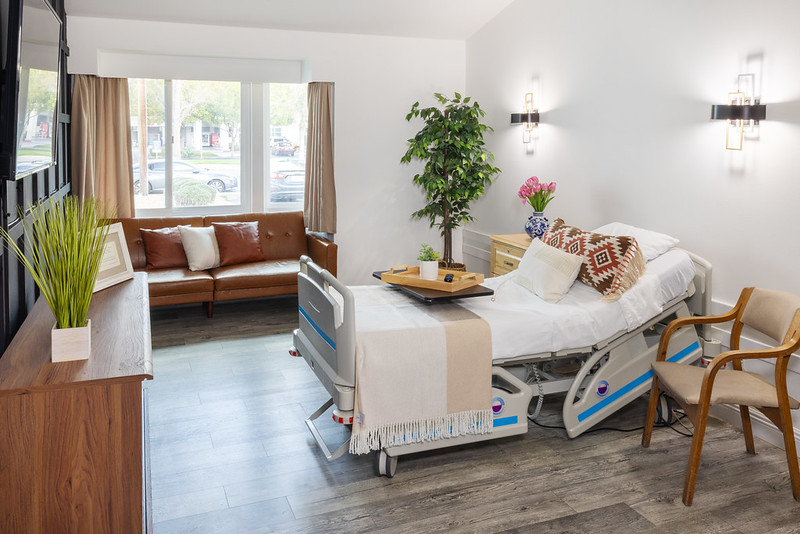
How is San Joaquin Nursing Center And Rehabilitation Cent Staffed?

CMS rates SAN JOAQUIN NURSING CENTER AND REHABILITATION CENT's staffing level at 2 out of 5 stars, which is below average compared to other nursing homes. Staff turnover is 40%, compared to the California average of 46%. This relatively stable workforce can support continuity of care.

What Have Inspectors Found at San Joaquin Nursing Center And Rehabilitation Cent?

State health inspectors documented 87 deficiencies at SAN JOAQUIN NURSING CENTER AND REHABILITATION CENT during 2022 to 2025. These included: 2 that caused actual resident harm and 85 with potential for harm. Deficiencies causing actual harm indicate documented cases where residents experienced negative health consequences.
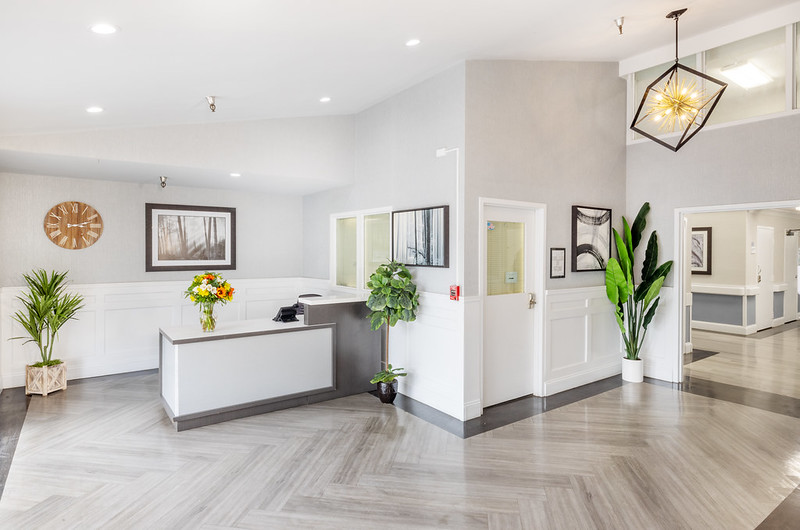
Who Owns and Operates San Joaquin Nursing Center And Rehabilitation Cent?

SAN JOAQUIN NURSING CENTER AND REHABILITATION CENT is owned by a for-profit company. For-profit facilities operate as businesses with obligations to shareholders or private owners. The facility is operated by PACS GROUP, a chain that manages multiple nursing homes. With 99 certified beds and approximately 91 residents (about 92% occupancy), it is a smaller facility located in BAKERSFIELD, California.
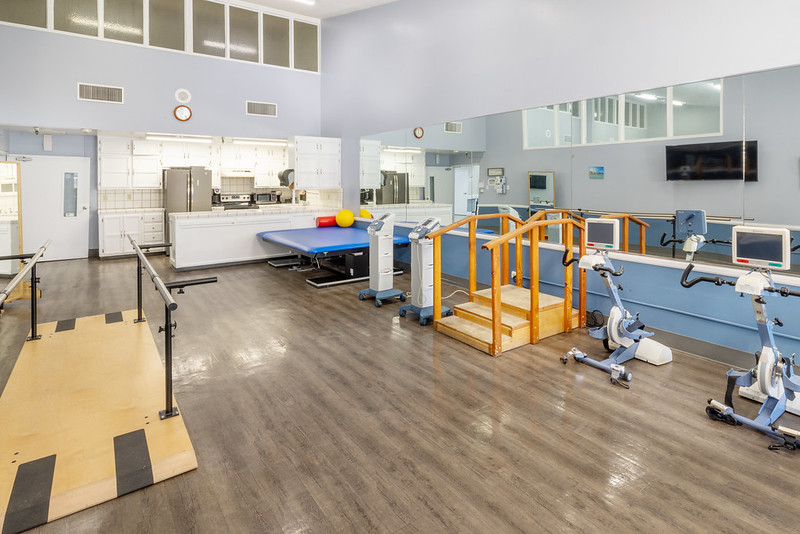
How Does San Joaquin Nursing Center And Rehabilitation Cent Compare to Other California Nursing Homes?

Compared to the 100 nursing homes in California, SAN JOAQUIN NURSING CENTER AND REHABILITATION CENT's overall rating (1 stars) is below the state average of 3.1, staff turnover (40%) is near the state average of 46%, and health inspection rating (1 stars) is much below the national benchmark.

What Should Families Ask When Visiting San Joaquin Nursing Center And Rehabilitation Cent?

Based on this facility's data, families visiting should ask: "Can you walk me through typical staffing levels on day, evening, and night shifts?" "Can I visit during a mealtime to observe dining assistance and food quality?" "How do you handle medical emergencies, and what is your hospital transfer rate?" "Can I speak with family members of current residents about their experience?" These questions are particularly relevant given the below-average staffing rating.

Is San Joaquin Nursing Center And Rehabilitation Cent Safe?

Based on CMS inspection data, SAN JOAQUIN NURSING CENTER AND REHABILITATION CENT has a clean safety record: no substantiated abuse findings (meaning no confirmed cases of resident harm), no Immediate Jeopardy citations (the most serious violation level indicating risk of serious injury or death), and is not on the Special Focus Facility watch list (a federal program monitoring the lowest-performing 1% of nursing homes). The facility has a 1-star overall rating and ranks #100 of 100 nursing homes in California. While no facility is perfect, families should still ask about staff-to-resident ratios and recent inspection results during their visit.

Do Nurses at San Joaquin Nursing Center And Rehabilitation Cent Stick Around?

SAN JOAQUIN NURSING CENTER AND REHABILITATION CENT has a staff turnover rate of 40%, which is about average for California nursing homes (state average: 46%). Moderate turnover is common in nursing homes, but families should still ask about staff tenure and how the facility maintains care continuity when employees leave.

Was San Joaquin Nursing Center And Rehabilitation Cent Ever Fined?

SAN JOAQUIN NURSING CENTER AND REHABILITATION CENT has been fined $47,242 across 1 penalty action. The California average is $33,551. While any fine indicates a compliance issue, fines under $50,000 are relatively common and typically reflect isolated problems that were subsequently corrected. Families should ask what specific issues led to these fines and confirm they've been resolved.

Is San Joaquin Nursing Center And Rehabilitation Cent on Any Federal Watch List?

SAN JOAQUIN NURSING CENTER AND REHABILITATION CENT is not on any federal watch list. The most significant is the Special Focus Facility (SFF) program, which identifies the bottom 1% of nursing homes nationally based on persistent, serious quality problems. Not being on this list means the facility has avoided the pattern of deficiencies that triggers enhanced federal oversight. This is a positive indicator, though families should still review the facility's inspection history directly.