HIGHLAND SPRINGS CARE CENTER
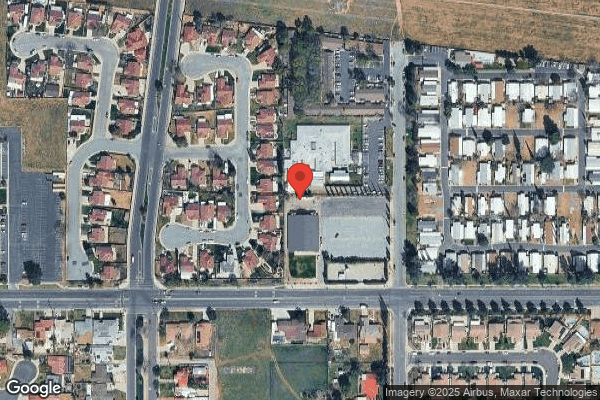
1441 MICHIGAN AVENUE, BEAUMONT, CA 92223 (951) 769-2500
For profit - Limited Liability company 87 Beds LONGWOOD MANAGEMENT CORPORATION Data: November 2025 1 Immediate Jeopardy citation
Trust Grade
13/100
#1041 of 1155 in CA
Last Inspection: July 2024

Within standard 12-15 month inspection cycle. Federal law requires annual inspections.

Overview

Highland Springs Care Center has a Trust Grade of F, indicating poor performance with significant concerns about the quality of care. They rank #1041 out of 1155 facilities in California, placing them in the bottom half, and #51 out of 53 in Riverside County, meaning only two local options are worse. While the facility is showing an improving trend in their issues, dropping from 25 in 2024 to 2 in 2025, they still face serious challenges, including a concerning turnover rate of 49% and high fines totaling $44,879, which is higher than 82% of California facilities. Staffing is relatively strong with a 4/5 star rating, but there is less RN coverage than 80% of facilities, which can limit the quality of care. Specific incidents include a failure to separate residents involved in a physical altercation, resulting in a broken collarbone, and a resident tripping over an in-ground planter, leading to a black eye and a broken nose, highlighting both safety and oversight issues.

Trust Score
F
13/100
In California
#1041/1155
Bottom 10%
Safety Record
High Risk
Review needed
Inspections
Getting Better
25 → 2 violations
Staff Stability
⚠ Watch
49% turnover. Above average. Higher turnover means staff may not know residents' routines.
Penalties
○ Average
$44,879 in fines. Higher than 62% of California facilities. Some compliance issues.
Skilled Nurses
⚠ Watch
Each resident gets only 18 minutes of Registered Nurse (RN) attention daily — below average for California. Fewer RN minutes means fewer trained eyes watching for problems.
Violations
⚠ Watch
46 deficiencies on record. Higher than average. Multiple issues found across inspections.
★☆☆☆☆
1.0
Overall Rating
★★★★☆
4.0
Staff Levels
★★☆☆☆
2.0
Care Quality
★☆☆☆☆
1.0
Inspection Score
Stable
2024: 25 issues
2025: 2 issues

The Good

  • 4-Star Staffing Rating · Above-average nurse staffing levels
  • Full Sprinkler Coverage · Fire safety systems throughout facility
  • No fines on record

Facility shows strength in staffing levels, fire safety.

The Bad

1-Star Overall Rating

Below California average (3.1)

Significant quality concerns identified by CMS

Staff Turnover: 49%

Near California avg (46%)

Higher turnover may affect care consistency

Federal Fines: $44,879

Above median ($33,413)

Moderate penalties - review what triggered them

Chain: LONGWOOD MANAGEMENT CORPORATION

Part of a multi-facility chain

Ask about local staffing decisions and management

The Ugly 46 deficiencies on record

1 life-threatening 2 actual harm
Jul 2025 2 deficiencies
CONCERN (D) 📢 Someone Reported This

A family member, employee, or ombudsman was alarmed enough to file a formal complaint

Potential for Harm - no one hurt, but risky conditions existed

Accident Prevention (Tag F0689)

Could have caused harm · This affected 1 resident

**NOTE- TERMS IN BRACKETS HAVE BEEN EDITED TO PROTECT CONFIDENTIALITY** Based on observation, interview, and record review, the facility failed to ensure for one of one residents (Resident 1) was appr...

Read full inspector narrative →
**NOTE- TERMS IN BRACKETS HAVE BEEN EDITED TO PROTECT CONFIDENTIALITY** Based on observation, interview, and record review, the facility failed to ensure for one of one residents (Resident 1) was appropriately monitored by their sitter in two instances when:Certified Nursing Assistant (CNA) 1 was not fully implementing a 1:1 (one sitter/staff member assigned to closely watch one resident) monitoring on Resident 1; andCNA 2 left Resident 1 unattended during 1:1 monitoring.These failures had the potential to cause harm to Resident 1 and to fellow residents.Findings: On July 14, 2025, at 8:22 a.m., an unannounced visit was made at the facility in order to investigate a complaint stating Resident 1's Certified Nurse Assistant (CNA) was reported asleep while on a 1:1 monitoring duty during the morning of July 4, 2025.1. On July 14, 2025, at 8:35 a.m., Resident 1 was observed asleep in her bed without a staff member nearby. On July 14, 2025, at 12:10 p.m., Resident 1's medical records were reviewed. Resident 1 was admitted to the facility on [DATE], with diagnoses including dementia (memory loss) and anxiety disorder. The facility document titled, NC-IDT (Interdisciplinary Team Conference), dated July 3, 2025, indicated a 1:1 sitter watch was initiated on Resident 1 due to an altercation with another resident.On July 14, 2025, at 4 p.m., the Director of Nursing (DON) was interviewed. The DON stated sitters (one individual assigned to closely monitor one resident) on 1:1 were expected to continuously stay close to their assigned resident to prevent harm. The DON stated a sitter used the monitoring log sheet to log the resident's location every 30 minutes. The DON stated the sitter assigned to conduct 1:1 monitoring must stay in arm's length of the resident in order to intervene if needed. The DON stated the sitter cannot leave the resident alone and must use the call light or call out for help. The DON stated sitters on breaks should be relieved by other staff members. The DON stated she was aware of the incident on July 4, 2025 where CNA 1 was the assigned sitter for Resident 2 and was reported asleep during the 1:1 monitoring. The DON stated according to their investigation, CNA 1 had claimed she was resting her eyes and was not asleep. The DON stated CNA 1 was not paying 100% attention to Resident 1 and that CNA 1's behavior was not acceptable. The DON stated that a guard (Guard 1) had witnessed CNA 1 with her eyes closed and notified the manager on duty.On July 15, 2025, at 12:13 p.m., Guard 1 was interviewed via telephone. Guard 1 stated he worked as a guard on July 4, 2025. On his way to the patio, Guard 1 saw CNA 1 and Resident 2 sitting next to each other on a bench. Guard 1 stated that he saw CNA 1's eyes closed for approximately two to three minutes while on sitter duty for Resident 1. After observing CNA 1 with her eyes closed, Guard 1 notified the Social Services Director (SSD) who then confronted CNA 1. Guard 1 stated a sitter was expected to consistently watch their resident and to remain within one arm's length away.The facility's policy titled, Routine Resident Checks, revised July 2013, indicated .Staff shall make routine resident checks to help maintain resident safety and well-being. 2. On July 14, 2025, at 8:35 a.m., an observation with a concurrent interview was conducted with Resident 1 and CNA 2. Resident 1 was observed asleep in her bed without a staff member nearby. CNA 2 was observed down the hallway from Resident 1's room. In a concurrent interview, CNA 2 stated he was assigned to monitor Resident on 1:1.CNA 2 stated he went to grab supplies and that he should not have left unattended in her room. CNA 2 stated that it was not okay for him to leave Resident 1 unattended. CNA 2 stated he should have asked other staff for help instead of leaving Resident 1.On July 14, 2025, at 12:10 p.m., Resident 2's medical records were reviewed. Resident 1 was admitted to the facility on [DATE], with diagnoses including dementia (memory loss) and anxiety disorder. The facility document titled, NC-IDT (Interdisciplinary Team Conference), dated July 3, 2025, indicated a 1:1 sitter watch was initiated on Resident 1 due to an altercation with another resident.On July 14, 2025, at 4:00 p.m., the Director of Nursing (DON) was interviewed. The DON stated sitters (one individual assigned to closely monitor one resident) on 1:1 were expected to continuously stay close to their assigned resident to prevent harm. The DON stated a sitter used the monitoring log sheet to log the resident's location every 30 minutes. The DON stated that the sitter assigned to conduct 1:1 monitoring must stay in arm's length of the resident in order to intervene if needed. The DON stated the sitter cannot leave the resident alone and must use the call light or call out for help. The DON stated sitters on breaks should be relieved by other staff membersThe facility's policy titled, Routine Resident Checks, revised July 2013, indicated .Staff shall make routine resident checks to help maintain resident safety and well-being.
CONCERN (E) 📢 Someone Reported This

A family member, employee, or ombudsman was alarmed enough to file a formal complaint

Potential for Harm - no one hurt, but risky conditions existed

Deficiency F0742 (Tag F0742)

Could have caused harm · This affected multiple residents

**NOTE- TERMS IN BRACKETS HAVE BEEN EDITED TO PROTECT CONFIDENTIALITY** Based on observation, interview, and record review, the facility failed to ensure, for one of three residents (Resident 1):1.The...

Read full inspector narrative →
**NOTE- TERMS IN BRACKETS HAVE BEEN EDITED TO PROTECT CONFIDENTIALITY** Based on observation, interview, and record review, the facility failed to ensure, for one of three residents (Resident 1):1.The depakote (medication to treat mood disorder) dosage recommended by the general acute hospital (GACH) was carried out when Resident 1 was re-admitted back to the facility; and2.The facility psychiatry nurse practitioner (PNP- an advanced practice registered nurse specializing in mental health care) review the acute hospital assessment and medication adjustment recommendations.These failures had the potential to contribute to unmanaged behavior of Resident 1 and affect overall behavioral condition of the resident. Findings:On July 14, 2025, at 8:38 a.m., Resident 1 was observed awake and lying on bed, with a Certified Nursing Assistant (CNA) sitting outside Resident 1's room.On July 14, 2025, Resident 1's record was reviewed. Resident 1 was admitted to the facility on [DATE], with diagnoses which included dementia (memory loss) with behavior disturbance.A review of Resident 1's Medication Administration Record (MAR), for the month of June 2025, indicated, Divalproex Sodium (Depakote) Delayed Release 250 MG (milligram - unit of measurement).two times a day for dementia.M/B (manifested by) scratching and kicking.; order date June 6, 2025, to June 19, 2025.A review of Resident 1's COC (Change of Condition)/INTERACT ASSESSMENT FORM, dated June 17, 2025, at 12:38 p.m., indicated, .At approximately 1015 910:15 a.m.) this morning the housekeeper heard a commotion in the hallway, as she was walking towards room [ROOM NUMBER]. The housekeeper saw (name of another resident) on the corner and the resident reported to her that (name of Resident 1) approached her and pulled her hair and began slapping her on the face.A review of Resident 1's hospital records indicated the following:- June 17, 2025; .brought in by transport services to (name of GACH) Emergency Department (ED) with concern for psychiatric evaluation. Patient placed on 5150 (a section of the state's Welfare and Institutions Code that allows a designated individual (like a peace officer or authorized professional) to involuntarily confine someone for up to 72 hours for mental health evaluation).Per transfer note, patient aggressive towards staff at her SNF (Skilled Nursing Facility). Patient also went to roommate and started slapping her, pulling her hair unprovoked.Upon arrival to ED.noted to be agitated and aggressive, attempting to kick ED staff.Psychiatry consulted for psych eval.;- June 20, 2025, discharge instructions, indicated the following orders for Depakote (valproic acid):- .valproic acid 250 mg capsule.Take 2 (two) capsules (500 mg total) by mouth every evening ; and- .valproic acid 250 mg capsule.Take 1 (one) capsule (250 mg total) by mouth daily.A review of Resident 1's MAR, for the month of June and July 2025, indicated, Valproic Acid (Depakote) Oral capsule 250 MG.Give 1 (one) capsule by mouth one time a day., order date June 20, 2025, to July 16, 2025. There was no documented evidence the PNP evaluated Resident 1 after the altercation incident on June 17, 2025, and after returning back to the facility from GACH on June 20, 2025.A review of Resident 1's Progress Notes, documented by Licensed Vocational Nurse, dated July 2, 2025, at 10:42 p.m., indicated, .At approximately 1930 (7:30 p.m.), a CAN brought the victim to the nurse's station to inform the charge nurse of this resident's (Resident 1) actions. Resident B (victim) reported that this resident (Resident 1) had started hitting her with their shoe and scratching at her face while yelling in Spanish.When charge nurse went to assess this resident, they were pacing around the room with their (sic) shoe in their (sic) hand. Resident then began hitting charge nurse with the shoe and grabbing her clothes and arms with her hands.A review of Resident 1's Progress Notes, documented by PNP, dated July 8, 2025, at 7:20 p.m., indicated, .Chief complaint: Resident to Resident Altercation.Patient has a hx (history) of aggressive behavior, scratching and kicking during care. Behavior still fluctuates. Staff reported that patient was involved in resident-to-resident altercation on 7/2/25 (July 2, 2025, with another roommate, where this patient happened to be the aggressor. Per staff, this resident hit the roommate in the face with a shoe.Plan.Patient was sent to the hospital for further evaluation r/t (related to) aggressive behavior and back to the facility.Order clarification.Valproic Acid oral Capsule 250 MG.Give 1 (one) capsule by mouth one time a day for mood disorder.On June 22, 2025, at 10:18 a.m., a concurrent interview and record review was conducted with the Director of Nursing (DON). The DON stated the following regarding Resident 1's order for Depakote:- Ordered for Depakote 250 mg twice daily prior to June 6, 2025, to June 17, 2025;- Physician's order for Depakote 250 mg daily since June 20, 2025 (readmitted from GACH);- Hospital discharge instructions of Depakote 250 mg 2 (two) capsules = 500 mg in the evening and 250 mg 1 (one) capsule in the morning, for a total of 750 mg a day- The hospital discharge instructions should be reviewed when a resident is admitted to the facility and carried out. The DON stated the hospital discharge instructions for Depakote should have been followed and carried out to manage Resident 1's behavior.- The PNP did not evaluate Resident 1 after the altercation incident on June 17, 2025, and after the resident came back from GACH on June 20, 2025, not until July 8, 2025 (18 days after readmission date). The DON stated she was uncertain if the PNP reviewed Resident 1's hospital notes on June 17 to 20, 2025.A review of the facility undated document, indicated .Psychiatric Mental Health Nurse Practitioner Standardized Procedures.Obtain psychiatric and medical histories.perform a psychiatric diagnostic assessment.overall health assessment.any presenting problem.A review of the facility's policy and procedure titled, Behavioral Assessment, Intervention and Monitoring, revised March 2019, indicated, .The facility will provide and residents will receive behavioral health services as needed to attain or maintain the highest practicable physical, mental and psychosocial well-being in accordance with the comprehensive assessment and plan of care.the facility will comply.regulatory requirements.use of medications.to manage behavioral changes.the nursing staff.will identify, document and inform.the physician.specific details regarding changes.individual mental status, behavior, and cognition.any recent precipitating or environmental triggers.(e.g. medication changes, infection, recent transfer from hospital).The interdisciplinary team. will evaluate behavioral symptoms.to determine the degree.severity, distress and potential safety risk to the resident.develop a plan of care.safety strategies.implemented immediately.to protect the resident and others from harm.
Nov 2024 1 deficiency 1 IJ (1 affecting multiple)
CRITICAL (K) 📢 Someone Reported This

A family member, employee, or ombudsman was alarmed enough to file a formal complaint

Immediate Jeopardy (IJ) - the most serious Medicare violation

Infection Control (Tag F0880)

Someone could have died · This affected multiple residents

Based on interview and record review, the facility failed to ensure a respiratory protection program (a program intended to establish practices for the selection, use, and care of respiratory protecti...

Read full inspector narrative →
Based on interview and record review, the facility failed to ensure a respiratory protection program (a program intended to establish practices for the selection, use, and care of respiratory protective equipment in the workplace) was implemented, when 47 out of 106 direct care staff (Certified Nursing Assistants [CNA] 1, 2, 3, 4, 5, 6, 7, 8, 9, 10, 11, 12, 13, 14, 15, 16, 17, 18, 19, 20, 21, 22, 23, 24, 25, 26, 27, 28, 29, 30, 31, Licensed Vocational Nurses (LVN) 2, 3, 4, 5, 6, 7, 8, 9, 10, 11, 12, 13, 14, and Registered Nurses (RN) 1, 2, and 3) were fit tested with the use of N-95 filtering facepiece respirator, (FFR - filtering facepiece respirator - a disposable half-mask that covers the user's airway (nose and mouth) and offers protection from particulate materials), in accordance with the facility's policy and procedure and CDC guidelines. This failure had the potential to affect the 43 of 75 remaining vulnerable residents not affected with COVID-19 residing in the facility. As of November 14, 2024, the facility has 32 residents and 12 staff tested positive for COVID-19. On November 12, 2024, at 7:36 p.m., the Administrator (ADMIN), the Director of Nursing (DON), and the Infection Preventionist (IP), were verbally notified of the Immediate Jeopardy (IJ- situation in which the provider's noncompliance with one or more requirements of participation has caused or likely to cause serious injury, harm, impairment, or death to a resident), due to the facility's failure to ensure a respiratory protection program was implemented, when 47 of 106 direct care staff were not fit tested, (to confirm the fit of any respirator that forms a tight seal on the wearer's face before it is used in the workplace) for the use of N95 respirator mask (a respiratory protective device designed to achieve a very close facial fit and very efficient filtration of airborne particles) according to the facility policy and procedure and CDC (Centers for Disease Control and Prevention) guidelines. This failure had the potential to contribute to the spread of COVID-19 among residents and staff and could cause serious harm to a vulnerable and compromised health condition of the 43 remaining residents not affected with COVID-19. On November 14, 2024, at 9:31 a.m., the ADMIN presented an acceptable corrective action plan which included the following: - On November 12, 2024, the administrator provided a verbal consult to the IP regarding failure to follow N95 Fit Testing Policy and procedure, including fit testing upon hire and annually thereafter; - On November 12, 2024, the administrator posted an on-shift message to all staff and requested whoever has not completed a N95 test for the past 12 months must be tested before reporting to work; - On November 12, 2024, a list of employees not fit tested was posted on the timeclock to ensure that they could not clock in unless the fit testing is completed; - On November 12, 2024, the administrator, the DON, and the MDS (Minimum Data Set - a resident assessment tool) nurse contacted all employees not fit tested , and instructed them to complete their N95 Fit testing; - On November 12 and 13, 2024, the administrator and DON conducted in-services regarding N95 Fit Testing guidelines; - On November 13, 2024, two other IPs reported to the facility to assist the facility in N95 fit testing of affected employees. - The facility added N95 Fit Testing to the annual in-service calendar to ensure that all employees will complete their annual fit tests every January. - The facility will conduct follow up in-service for N95 Fit Testing monthly for 3 months, - The administrator and the DON will check 5 (five) randomly selected employee files each week for 3 months, followed by quarterly and as needed to ensure all employee were fit tested. On November 14, 2024, at 4:53 p.m., the Immediate Jeopardy was removed in the presence of the ADMIN, the DON, and the Director of Staff Development (DSD), upon onsite verification of the implementation of the plan of actions. Findings: On November 12, 2024, at 9:43 a.m., an unannounced visit to the facility was initiated to investigate a report of a facility reported incident regarding COVID-19 outbreak. A review of the LTC [long term care] Respiratory Surveillance Line List, [provides a template for data collection and active monitoring of both residents and staff during a suspected respiratory illness cluster or outbreak at a nursing home or other LTC facility] dated November 1, 2024 through November 11, 2024, indicated 12 staff tested positive for COVID-19. A review of the LTC Respiratory Surveillance Line List dated November 1 to 11, 2024, indicated 32 residents tested positive for COVID-19. On November 12, 2024, at 10:16 a.m., an interview was conducted with the Infection Preventionist, (IP). The IP stated the staff were fit tested for the N-95 respirator mask upon hire, annually thereafter, and when new N95 model supply was to be used. On November 12, 2024, at 11:48 a.m., an interview was conducted with Registered Nurse (RN) 1. RN 1 stated all staff were required to wear N95 respirator mask while inside the facility. RN 1 stated she was fit tested with the use of the N95 mask when COVID-19 started back in 2020 and stated she had not been fit tested for awhile, maybe about four (4) years ago. On November 12, 2024, at 2:05 p.m., an interview was conducted with Licensed Vocational Nurse (LVN) 1. LVN 1 stated she was fit tested for the use of N95 mask a few months ago. On November 12, 2024, at 2:11 p.m., an interview was conducted with Certified Nursing Assistant (CNA) 1. CNA 1 stated she could not remember when she was last fit tested for the use of N95 mask. On November 12, 2024, at 3 p.m., the Respirator Fit Test Record was reviewed. The document indicated RN 1, LVN 1, and CNA 1 were not included in the list of direct care staff fit tested for the use of N95. Further review of the documents indicated five (5) out of eight (8) direct staff who worked AM shift (7 am to 3 pm) were not fit tested for the use of N95 mask. On November 12, 2024, at 3:12 p.m., a concurrent interview and record review was conducted with the IP. The IP confirmed the list of N95 fit testing provided was current. The IP stated the facility have 106 direct care staff. The list of direct care staff was reconciled with the N95 Respirator Fit Test Record dated November 7, 2023, to November 5, 2024, with the IP. The documents indicated there were 47 direct care staff who had no recorded annual fit testing for the use of the N95. On November 12, 2024, at 4:09 p.m., a concurrent interview and record review of the employee listing and Respirator Fit Test Record, was conducted with the Director of Nursing (DON). The DON confirmed there were 47 direct care staff who did not have a current N95 fit testing. On November 12, 2024, at 4:36 p.m., during an interview with the IP, she stated she had not prioritized N95 fit testing, as she was ensuring vaccinations and the COVID-19 outbreak were handled. On November 12, 2024, at 6:35 p.m., an interview was conducted with CNA 2. CNA 2 stated she could not recall when she was fit tested for the use of N95 mask. CNA 2 stated it could have been in 2020. On November 12, 2024, at 6:38 p.m., an interview was conducted with CNA 3. CNA 3 stated she was fit tested for her N-95 mask when COVID-19 started in the year 2020. A review of the N95 Respirator Fit Test Record, dated November 7, 2023, to November 5, 2024 indicated CNA 2 and CNA 3 did not have a current N95 fit testing. On November 12, 2024, at 6:45 p.m., an interview was conducted with the Administrator (ADM). The ADM stated the facility did not have a Respiratory Protection Program which included fit testing for the use of N95 mask among staff. The ADM stated N95 fit testing should have been conducted on the staff annually. The ADM stated she was unaware that there were about 47 direct care staff who were not fit tested in accordance with the facility's policy and procedure. A review of the undated facility ' s document titled, Respiratory Protection Program, indicated, .The purpose of this Respiratory Protection Program (RPP) is to maximize the protection afforded by respirators when they must be used . The most common potential exposure for employees involved in patient care will be ATDs [aerosol transmittable diseases - are transmitted through the air in droplets from coughs and sneezes, or through direct contact with mucous membranes in the eyes or respiratory tract] such as tuberculosis or pandemic influenza .Before an employee is required to use any respirator with a tight-fitting facepiece .she/he will be fit tested with the same make, model, style, and size of respirator to be used All employees who must wear respiratory protection shall receive medical clearance before fit testing is performed. Fit tests will be provided at the time of initial assignment and annually thereafter . A review of the web article published by the CDC titled, Proper N95 Respirator Use for Respiratory Protection Preparedness, dated March 16, 2020, indicated, .OSHA (Occupational Safety and Health Administration) requires healthcare workers who are expected to perform patient activities with those suspected or confirmed with COVID-19 to wear respiratory protection, such as an N95 respirator .Fit testing is a critical component to a respiraotry protection program whenever workers use tight-fitting respirators. OSHA requires an initial respirator fit test to identify the right model, style, and size respirator for each worker. Annual fit tests ensure that users continue to receive the expected level of protection. A fit test confirms that a respirator correctly fits the user .
Oct 2024 1 deficiency 1 Harm
SERIOUS (G) 📢 Someone Reported This

A family member, employee, or ombudsman was alarmed enough to file a formal complaint

Actual Harm - a resident was hurt due to facility failures

Free from Abuse/Neglect (Tag F0600)

A resident was harmed · This affected 1 resident

**NOTE- TERMS IN BRACKETS HAVE BEEN EDITED TO PROTECT CONFIDENTIALITY** Based on interview and record review, the facility failed to ensure the residents involved in multiple altercations (physical fi...

Read full inspector narrative →
**NOTE- TERMS IN BRACKETS HAVE BEEN EDITED TO PROTECT CONFIDENTIALITY** Based on interview and record review, the facility failed to ensure the residents involved in multiple altercations (physical fight) (Residents 1 and 2) were separated and distanced away from each other as indicated in the care plan. This failure resulted in Resident 1 being grabbed and pulled out from a chair which led to a closed clavicle fracture (broken collarbone). Findings: On October 2, 2024 at 8:30 a.m., an unannounced visit to the facility was conducted to investigate an allegation of physical abuse (the intentional use of physical force to cause injury or harm to another person). On October 2, 2024, Resident 2's admission record was reviewed. Resident 2 was admitted to facility on February 9, 2024, with diagnoses which included schizophrenia (a severe mental disorder affecting a person's emotions and perception of reality). A review of Resident 2's History and Physical, dated September 20, 2024, indicated Resident 2 does not have the capacity to understand and make decisions. A review of Resident 2's COC(Change of Condition)/Interact Assessment Form, indicated the following: - On September 13, 2024 at 6:34 p.m., indicated, .At 1834 (6:34 p.m.) outside .Staff heard a commotion between two residents .Resident (Resident 2) pushed another resident (Resident 1) on his right side of his head .; and - On September 14, 2024 at 2:00 p.m., indicated, .Resident on 1:1 (one on one) monitoring for aggressive behavior .Around 10:45 a.m .One resident (Resident 1) passed by his room and resident (Resident 2) suddenly attacked and hit the other resident (Resident 1) . A review of Resident 2's Care Plan, dated September 13-14, 2024, indicated .Focus: Resident to resident interaction on 9/13/2024 and 9/14/2024 .Resident is the aggressor .Interventions: Keep the 2 (two) involved residents apart from each other .Provide redirection when needed . A review of Resident 2's Progress Notes, dated September 30, 2024 at 11:01 a.m., indicated, .Resident was observed pulling another resident (Resident 1) out of their chair at approximately 10am unprovoked .Incident observed by staff (IP and DM) and staff unable to redirect resident (Resident 2) prior to him pulling the other resident (Resident 1) out of his chair . On October 2, 2024, Resident 1's admission record was reviewed. Resident 1 was admitted to facility on February 9, 2024 with diagnoses which included Bipolar Disorder (a mental illness that causes extreme mood swings). A review of Resident 1's History and Physical, dated February 9, 2024, indicated Resident 1 can make needs know but cannot make medical decisions. A review of Resident 1's Minimum Data set (MDS - an assessment tool), dated August 12, 2024, indicated Resident 1 had a Brief Interview for Mental Status (tool used to assess a resident's cognitive function) score of 10 (moderate cognitive impairment). A review of Resident 1's COC/Interact Assessment Form, indicated the following: - On September 13, 2024 at 6:34 p.m., indicated, .At 1834 (6:34 p.m.) in the hallway, outside room [ROOM NUMBER] .Staff heard a commotion between two residents .Resident was pushed by another resident on his right side of his head .; and - On September 14, 2024 at 10:45 a.m., indicated, .At 10:45 outside room [ROOM NUMBER] .Staff heard a commotion between two residents .Resident was hit by another resident on his right side of his head . A review of Resident 1's Care Plan, dated September 13, 2024, indicated, .Focus: Resident is at risk for emotional/psychosocial distress related to being victim of a resident to resident (Residents 1 and 2) altercation on 9/13/2024 and 9/14/2024 .Interventions: Keep the 2 involved resident apart from each other .Redirect resident when needed . A review of Resident 1's Progress Notes, indicated the following: - On September 30, 2024 at 10:00 a.m., indicated, .Staff reported that resident was on the floor after being pulled out of his chair at approximately 1000 am .Upon assessment resident complained of pain to the left side of his head and left shoulder .Sent to (name of hospital) for further evaluation . - On September 30, 2024 at 5:12 p.m., indicated, .Received resident from (name of company) transportation @ (at) 1603 hours (4:03 p.m.) .Resident has new diagnosis of closed fracture of left clavicle .Uses sling to support left arm . A review of Resident 1's General Emergency Department Discharge Instructions, dated September 30, 2024, indicated the following: - Diagnosis: Closed fracture of left clavicle .Victim of assault. - XR (X-Ray) Shoulder 2 or More Views-Left .Findings: Minimally displaced distal clavicular fracture with regional soft tissue swelling. On October 2, 2024 at 11:25 a.m., during an interview with the Infection Preventionist (IP), she stated on September 30, 2024 around 10:00 a.m. she was with Resident 2 at the front lobby reception window and saw Resident 1 on his wheelchair coming in the lobby front door. The IP stated she asked the Dietary Manager (DM) to bring Resident 1 to the activity room to divert away from Resident 2 due to previous altercations with each other. The IP stated while the DM was wheeling Resident 1 down the lobby hallway, Resident 1 yelled (vulgar word) to Resident 2. The IP further stated Resident 2 charged towards Resident 1, grabbed his shirt, pulled Resident 1 off his wheelchair, and dropped him on the floor which caused Resident 1 to fall on his left side. The IP stated the DM should have redirected Resident 1 out of the lobby to the alternate entrance at the side of the facility and she should have redirected Resident 2 away from the lobby to prevent interaction between residents. The IP stated Resident 1 and Resident 2 should have been redirected on opposite direction of each other which could have prevented the altercation incident on September 30, 2024. On October 2, 2024 at 12:02 p.m., during an interview with the DM, she stated she was aware Resident 1 and Resident 2 had previous altercation incidents with each other and needed to be apart and redirected away from each other at all times. The DM stated on September 30, 2024 around 10:00 a.m., the IP asked her to bring Resident 1 into the activity room while the IP was with Resident 2 at the front lobby reception window. The DM stated she wheeled Resident 1 down the lobby hallway towards Resident 2 and the IP when Resident 1 turned his head and yelled (vulgar word) to Resident 2. The DM stated Resident 2 ran towards Resident 1 grabbed and pulled his shirt which caused Resident 1 to fall from the chair. The DM stated she should have redirected Resident 1 into the entrance at the side of the facility away from Resident 2 to prevent interaction between the residents which could have avoided the altercation incident on September 30, 2024. On October 2, 2024 at 1:44 p.m., during an interview and review of Resident 1 and Resident 2 ' s progress notes and care plans with the Director of Nursing (DON), she stated Resident 1 and Resident 2 had two previous altercations with each other on September 13 and 14, 2024. The DON stated all facility staff is aware to keep both residents apart from each other at all times. The DON stated Resident 1 and Resident 2 had a third altercation incident on September 30, 2024 around 10:00 a.m. in the front lobby where Resident 2 grabbed and flipped Resident 1's wheelchair which caused Resident 1 to fall on the floor to his left side. The DON further stated Resident 1 was sent to the hospital and came back in the facility with left clavicle fracture related to the fall. The DON stated the DM and the IP should have redirected Resident 1 and Resident 2 in the opposite direction of each other to avoid further contact which could have prevented the altercation incident. A review of the facility policy and procedure titled, Abuse & Mistreatment of Residents, undated, indicated, . Purpose: To uphold a resident ' s right to be free from .abuse .Facility shall make reasonable efforts to protect residents from harm .If the suspected perpetrator is another resident, residents shall be separated to avoid any further contact
Aug 2024 1 deficiency
CONCERN (D) 📢 Someone Reported This

A family member, employee, or ombudsman was alarmed enough to file a formal complaint

Potential for Harm - no one hurt, but risky conditions existed

Deficiency F0558 (Tag F0558)

Could have caused harm · This affected 1 resident

**NOTE- TERMS IN BRACKETS HAVE BEEN EDITED TO PROTECT CONFIDENTIALITY** Based on observation, interview, and record review, the facility failed to ensure two of eleven sampled residents' (Resident 4 a...

Read full inspector narrative →
**NOTE- TERMS IN BRACKETS HAVE BEEN EDITED TO PROTECT CONFIDENTIALITY** Based on observation, interview, and record review, the facility failed to ensure two of eleven sampled residents' (Resident 4 and Resident 5) call lights were within reach. This failure has the potential for Resident 4 and Resident 5 to have unmet needs due to inability to be able to call for assistance. Findings: On August 22, 2024, at 11:20 a.m., an unannounced visit to the facility was conducted for the investigation of two Facility Reported Incidents and one complaint. On August 22, 2024, at 12:48 p.m., a concurrent observation and interview was conducted with Resident 4. Resident 4 was sitting on the right side of her bed in her wheelchair. Resident 4 ' s call light was hanging above the right side of the head of the bed. Resident 4 stated she needed help to be changed and was not able to call for help. Resident 4 stated she was unable to reach her call light. On August 22, 2024, at 12:59 p.m., observed Resident 5 sitting in her wheelchair on the right side of the foot of Resident 4 ' s bed. Resident 5 ' s call light was sitting in the center of the bed, out of her reach. On August 22, 2024, at 12:59 p.m., an interview was attempted with Resident 5. Resident 5 was unable to answer questions. On August 22, 2024, at 1:05 p.m. an interview was conducted with the Certified Nursing Assistant (CNA). The CNA stated that while residents are sitting in their rooms in a wheelchair their call lights should be within reach. The CNA stated Resident 4 and Resident 5 were unable to reach their call lights. A review of Resident 4 ' s medical records indicated she was admitted on [DATE], with diagnoses of diabetes mellitus type 2 (a long-term condition in which the body has trouble controlling blood sugar and using it for energy), osteoarthritis (a progressive disorder of the joints caused by gradual loss of cartilage and resulting in the development of bony spurs and cysts at the margins of the joints), and peripheral vascular disease (condition in which arteries outside the heart become narrowed or blocked). A review of Resident 4 ' s History and Physical dated November 17, 2023, indicated she had fluctuating capacity to make decisions. A review of Resident 4 ' s Care Plan revised December 27, 2022, indicated Focus: Resident has self care deficits: Extensive assistance . related to . muscular weakness, poor balance, poor safety awareness, unsteady gait .Interventions . Call light within reach and attend needs promptly . A review of Resident 5 ' s medical record indicated she was admitted on [DATE], with diagnoses of dementia (a chronic or persistent disorder of the mental processes caused by brain disease or injury and marked by memory disorders, personality changes, and impaired reasoning), diabetes mellitus type 2, major depressive disorder (a mood disorder that causes a persistent feeling of sadness and loss of interest), anxiety disorder (a chronic condition characterized by an excessive and persistent sense of apprehension), and history of falling. A review of Resident 5 ' s History and Physical dated May 17, 2024, indicated she could not make decisions. A review of Resident 5 ' s Care Plan dated July 11, 2024, indicated Focus . Resident has self care deficits: Extensive assistance . related to: cognitive deficits, communication deficits, muscular weakness, poor balance, poor safety awareness, unsteady gait . intervention Call light within reach and attend needs promptly . A review of the facility ' s policy and procedure titled Call Lights dated September 2022, indicated .1. Each resident is provided with a means to call staff directly for assistance from his/her bed, from toileting/bathing facilities, and from the floor .
Jul 2024 18 deficiencies 1 Harm
SERIOUS (G) 📢 Someone Reported This

A family member, employee, or ombudsman was alarmed enough to file a formal complaint

Actual Harm - a resident was hurt due to facility failures

Accident Prevention (Tag F0689)

A resident was harmed · This affected 1 resident

**NOTE- TERMS IN BRACKETS HAVE BEEN EDITED TO PROTECT CONFIDENTIALITY** Based on observation, interview, and record review, the facility failed to provide an environment free from accident hazards for...

Read full inspector narrative →
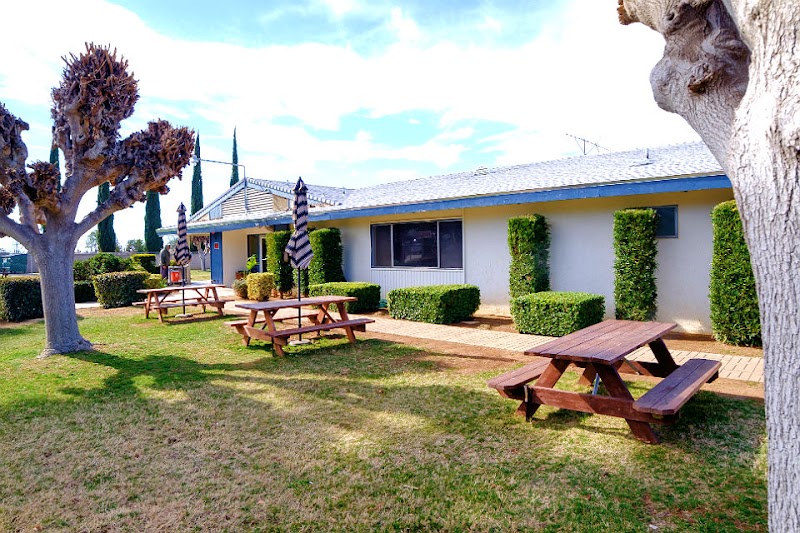
**NOTE- TERMS IN BRACKETS HAVE BEEN EDITED TO PROTECT CONFIDENTIALITY** Based on observation, interview, and record review, the facility failed to provide an environment free from accident hazards for one of four residents reviewed for accidents (Resident 41), when the resident tripped on an in-ground planter (a garden bed or a space dug into the ground where plants are grown) that was approximately 3.25 to 3.5 inch deep above the ground level. This failure resulted for Resident 41 falling and hitting her head on the picnic table, resulting in a periorbital hematoma (black eye- swelling and discoloration around the eye area) and a fracture of the nasal septum (broken or cracked part inside the nose that separated the two sides). Findings: On July 24, 2024, at 9 a.m., Resident 41 was observed walking independently by the nursing station and had dark purplish discoloration on both eyes. A review of the Resident 41's admission RECORD, dated July 23, 2024, indicated, Resident 41 was admitted to the facility on [DATE], with diagnoses which included dementia (loss of memory) and schizophrenia (a mental disorder). A review of Resident 41's History and Physical, dated November 5, 2023, indicated Resident 41 did not have the capacity to make decisions. A review of Resident 41's FALL RISK ASSESSMENT, dated June 30, 2024, indicated, .Score: 18 .a score of 18 or more is High Risk (very likely to fall) . A review of Resident 41's Progress Notes, indicated: - Dated July 15, 2024, .At around 1340 (1:40 p.m.), guard came to the nurses' station stating resident (Resident 41) was in the patio outside DON (Director of Nursing) .with a bloody nose .Upon assessment, resident was sitting on the side of the planter behind DON office crying and yelling. Noted with a cut to the bridge of her nose and bleeding .Resident was transferred out to (name of acute) for further evaluation . - Dated July 15, 2024, .Resident (Resident 41) returned to facility .Resident diagnosed with bilateral nasal fracture. Open wound approx. (approximately) 4x2cm (four by two centimeters) in size on the left side of the nose, with discoloration of the skin on and around the nose. Red drainage noted on left side of the nose with loose skin . - Dated July 16, 2024, .resident (Resident 41) noted with left and right periorbital hematoma and scab to the bridge of nose . A review of Resident 41's CT Maxillofacial (Computed Tomography - uses radiologic and computer technology which evaluates the bones of the face), dated July 15, 2024, indicated, . Impression .Acute mildly displaced bilateral nasal bone fractures .Acute minimally displaced fracture of the anterior-superior (front and upper part) bony nasal septum . A review of Resident 41's IDT (Interdisciplinary Team - group of healthcare professionals who collaborate to develop and implement care plans for residents) Narrative, dated July 17, 2024, indicated, .Team met to discuss the fall that occurred on the outer patio. Resident (Resident 41) stepped off of the walking path and into a planter causing her to fall . On July 23, 2024, at 12:02 p.m., Licensed Vocational Nurse (LVN) 2 was interviewed. LVN 2 stated, on July 15, 2024, the facility guard came to the nurses station to report that Resident 41 had a fall. LVN 2 stated they reviewed the video of the incident. LVN 2 stated, Resident 41 tripped and hit her face on the table. On July 25, 2024, at 8:36 a.m., an interview was conducted with the Facility Guard (FG). The FG stated, after the afternoon smoking break, he heard a scream in the outer patio. The FG further stated he checked and saw Resident 41 sitting by the planter with bleeding from her nose. On July 25, 2024, at 4:04 p.m., a concurrent interview and observation of the outer patio were conducted with the DON. The in-ground planter where Resident 41 tripped was observed approximately 3.25 to 3.5 inches deep relative to the ground level. The DON stated, Resident 41 was walking in the outer patio toward the picnic table when the resident tripped in the in-ground planter and hit her face on the picnic table. The DON stated, Resident 41's fall could have been avoided if the in-ground planter was fixed to prevent tripping and falling. The DON further stated the resident fell due to the unevenness of the pavement and sustained a nasal fracture from the fall on July 15, 2024, at 1:30 p.m. A review of the facility policy and procedure titled, Promoting Safety, Reducing Falls, undated, indicated, .By simply focusing on fall preventions, caregivers can enhance the quality of life for residents .MAJOR RISK FACTORS .Extrinsic factors. These include risk factors outside the resident's body, such as environmental hazards ( .uneven floors, highly patterned floors .) During a review of facility Policy titled, Grounds, dated May 2008, indicated, .Areas around the buildings (i.e., sidewalks, patios, gardens, etc.) shall be maintained in a safe and orderly manner at all times .
CONCERN (D)

Potential for Harm - no one hurt, but risky conditions existed

Deficiency F0578 (Tag F0578)

Could have caused harm · This affected 1 resident

**NOTE- TERMS IN BRACKETS HAVE BEEN EDITED TO PROTECT CONFIDENTIALITY** Based on interview and record review, the facility failed to ensure education and resources regarding Advance Directive (AD - wr...

Read full inspector narrative →
**NOTE- TERMS IN BRACKETS HAVE BEEN EDITED TO PROTECT CONFIDENTIALITY** Based on interview and record review, the facility failed to ensure education and resources regarding Advance Directive (AD - written statement of a person's wishes regarding medical treatment) were provided to one of the three residents reviewed for AD (Residents 44), and or the Resident Representative (RP). This failure had the potential for Resident 44 and the RP to remain uneducated and uninformed about AD and could result in the facility being unable to know and honor the resident's wishes regarding medical treatment. Findings: On July 23, 2024, Resident 44's record was reviewed. Resident 44 was admitted to the facility on [DATE]. A review of Resident 44's History and Physical, dated June 9, 2024, indicated Resident 44 cannot make decisions. A review of Resident 44's Minimum Data Set (an assessment tool), dated June 12, 2024, indicated, Resident 44 had severely impaired cognitive skills. A review of Resident 44's Advance Directive Acknowledgement Form, dated June 10, 2024, indicated Resident 44 had not executed an Advance Directive. There was no documented evidence education and information about AD was provided to Resident 44 or the RP in the medical record. On July 24, 2024, at 9:42 a.m., during a concurrent interview and review of Resident 44's medical record with the Social Service Director (SSD), she stated if a resident does not have an AD, she would offer resources and education to the resident and/or the RP. The SSD stated, Resident 44 had no AD and she did not provide resources and education to Resident 44. The SSD stated she should have provided the resident resources and education and should have documented in the resident's records. On July 25, 2024, at 1:41 p.m., the Director of Nursing (DON) was interviewed. The DON stated, upon admission, the licensed nurses would screen the resident regarding AD, and the SSD would follow-up. The DON stated, if the resident had no AD, the AD should be offered, educated should be provided, and information should be given to the resident and or RP. A review of the facility Policy and Procedure titled, Advance Directives, dated September 2022, indicated, .If the resident or representative indicates that he or she has not established advance directives .the facility staff will offer assistance in establishing advance directives .staff will document in the medical record the offer to assist .or decline assistance .
CONCERN (D)

Potential for Harm - no one hurt, but risky conditions existed

Safe Environment (Tag F0584)

Could have caused harm · This affected 1 resident

Based on observation, interview, and record review, the facility failed to ensure for one of seven residents reviewed for environment (Resident 28) was provided with a clean, safe, and comfortable env...

Read full inspector narrative →
Based on observation, interview, and record review, the facility failed to ensure for one of seven residents reviewed for environment (Resident 28) was provided with a clean, safe, and comfortable environment when: 1. The resident's call light button (a device that alerts healthcare staff for help in a facility) cord was damaged and cracked. In addition, the staff did not report the damaged and cracked call light button cord to maintenance for replacement. This failure had the potential to prevent Resident 28 from receiving assistance as needed. 2. The cabinet above the sink inside the bathroom had rust buildup on the bottom shelf. This failure had the potential to place Resident 28 at risk of living in an unkempt and un-homelike environment. Findings: 1. On July 23, 2024, at 10:34 a.m., during a concurrent observation and interview with Resident 28 in the resident's room, the call light button cord was found to be cracked and with exposed wires. Resident 28 stated he used the call light for help but was not aware his call light was damaged. On July 24, 2024, at 3:04 p.m., during a concurrent observation, interview, and review of the facility document titled, Maintenance Log with the Maintenance Supervisor (MS) in Resident 28's room, the MS stated Resident 28's call light is cracked. The MS further stated the call light should be in proper condition so the resident can call for assistance. The MS stated there was no work order for the resident's call light and and he had not been made aware of the need to replace it. On July 24, 2024, at 3:47 p.m., an interview with Certified Nurse Assistant (CNA) 1, she stated Resident 28's call light was frayed (damaged) and might not work. CNA 1 stated residents should have undamaged call light to call for help as needed. CNA 1 stated nursing staff should have checked and informed Maintenance. CNA 1 further stated the call light should have been repaired. 2. On July 23, 2024, at 10:34 a.m., during an observation inside of Resident 28's bathroom, the bottom shelf of the cabinet above the sink had orange and brown discoloration. On July 24, 2024, at 3:04 p.m., during a concurrent observation and interview inside Resident 28's bathroom with the MS, the MS stated, the lower shelf is rusted. The MS stated he was responsible for making sure the resident's living areas are kept in good condition. The MS further stated there should not be rust on the shelf. On July 24, 2024, at 3:49 p.m., during a concurrent observation and interview with CNA 1 inside Resident 28's bathroom, CNA 1 stated Resident 28's bathroom cabinet had rust on it. CNA 1 further stated the cabinet should not be in like that and residents should be comfortable and live in a home-like environment. On July 25, 2024, at 5:40 p.m., the Director of Nursing (DON) was interviewed. The DON stated, the resident's cabinet should be clean with no rust build up. The DON stated, staff should report to the Maintenance Supervisor when things in the resident's room need maintenance. The DON stated, resident comfort and safety are always the priority. A review of facility policy and procedure titled, Maintenance Service, undated, indicated, .The maintenance department is responsible for maintaining the building, grounds, and equipment in a safe and operable manner at all times .Functions of maintenance personnel include, but are not limited to maintaining the building in good repair .providing routinely scheduled maintenance service to all areas.
CONCERN (D)

Potential for Harm - no one hurt, but risky conditions existed

Transfer Notice (Tag F0623)

Could have caused harm · This affected 1 resident

**NOTE- TERMS IN BRACKETS HAVE BEEN EDITED TO PROTECT CONFIDENTIALITY** Based on interview and record review, the facility failed to notify the Office of the State Long-Term Care Ombudsman (LTC Ombuds...

Read full inspector narrative →
**NOTE- TERMS IN BRACKETS HAVE BEEN EDITED TO PROTECT CONFIDENTIALITY** Based on interview and record review, the facility failed to notify the Office of the State Long-Term Care Ombudsman (LTC Ombudsman - an agency reponsible for advocating on behalf of residents) of a discharge for one of two residents (Resident 39) reviewed for closed records. This failure had the potential to result in the LTC Ombudsman not to be informed about Resident 39's plan of care and condition. Findings: On July 25, 2024, Resident 39's record was reviewed. Resident 39 was admitted to the facility on [DATE], with a diagnosis which included dementia (a group of brain disease that causes loss of memory) and Alzheimer's (a type of dementia). A review of Resident 39's Minimum Data Set (an assessment tool), dated April 5, 2024, indicated, Resident 39 had Brief Interview of Mental Status (quick assessment to check a person's thinking, memory, and overall mental functioning) Score of 5 (severe cognitive impairment). A review of Resident 39's Discharge Summary Report, dated June 3, 2024, indicated, .discharged to Acute Hospital . There was no documented evidence that the facility notified the LTC Ombudsman of Resident 39's transfer. On July 25, 2024, at 9:05 a.m., during a concurrent interview and review of Resident 39's medical record with the Social Service Director (SSD), she stated when residents are transferred or discharged from the facility, a letter is sent to the LTC Ombudsman to notify them of the resident's discharge. The SSD further stated notification is important for resident safety and continuity of care. The SSD stated Resident 39 was discharged on June 3, 2024, and she did not send the discharge notice to the LTC Ombudsman, she further stated I missed it, and I did not see that the notification letter was not sent. The SSD stated she should have sent Resident 39's discharge notice to the LTC Ombudsman. On July 25, 2024, at 9:21 a.m., during a concurrent interview and review of Resident 39's medical record with the Medical Records Director (MRD), he stated, when residents are discharged or transferred from the facility, a written letter is sent to the LTC Ombudsman to indicate a discharge or transfer was initiated. The MRD stated there was no record of the LTC Ombudsman receiving a notification letter regarding Resident 39's discharge from the facility. The MRD further stated the LTC Ombudsman should have been notified of Resident 39's discharge. On July 25, 2024, at 1:37 p.m., during an interview with the Director of Nursing (DON), she stated the process for transfers or discharges requires the SSD to send the discharge notice to the LTC Ombudsman within 72 hours of discharge or transfer. The DON stated Resident 39 was discharged on June 3, 2024, and the discharge notice was not sent to the LTC Ombudsman. The DON further stated the SSD should have sent the discharge notice to the Ombudsman. A review of the facility policy and procedure titled, Transfer or Discharge, Facility-Initiated dated October 2022, indicated, .Notice of Discharge after Transfer .If discharge is initiated by the facility after .transfer to the hospital .The facility will send a copy of the discharge notice to a representative of the Office of the State LTC Ombudsman .Notice to the Office of the State LTC Ombudsman will occur at the same time the notice of discharge is provided to the resident .
CONCERN (D)

Potential for Harm - no one hurt, but risky conditions existed

Deficiency F0658 (Tag F0658)

Could have caused harm · This affected 1 resident

**NOTE- TERMS IN BRACKETS HAVE BEEN EDITED TO PROTECT CONFIDENTIALITY** Based on observation, interview, and record review, the facility failed to ensure, Licensed Vocational Nurse (LVN) 1, administer...

Read full inspector narrative →
**NOTE- TERMS IN BRACKETS HAVE BEEN EDITED TO PROTECT CONFIDENTIALITY** Based on observation, interview, and record review, the facility failed to ensure, Licensed Vocational Nurse (LVN) 1, administered the medication Nifedipine (brand name of medication used for high blood pressure) ER (extended release) 20 milligrams (mg - unit of measurement) as ordered by the physician for one of seven residents (Resident 10) observed for medication administration. This failure has the potential for the resident to not receive the full therapeutic effects of the medication. Findings: On July 24, 2024, at 9:34 a.m., a medication administration observation was conducted with LVN 1 on Resident 10. LVN 1 proceeded to prepare Resident 10's medications that included Nifedipine ER 20 mg one tablet. Indicated on the Nifedipine ER medication label instruction was to hold (not give) the medication if the systolic blood pressure reading (SBP- pressure in the arteries when the heart contracts) is less than 110 mmHg (millimeter of mercury - unit of measurement) and pulse rate is below 60 (normal pulse rate between 60 to 100 beats per minute - pulse rate to be taken by finding pulse on wrist or neck and count the number of beats for at least one minute). LVN 1 was observed to have taken Resident 10's blood pressure reading on her left arm. LVN 1 did not check Resident 10's pulse rate during the observation. In addition, LVN 1 was observed to not have an equipment such as timer, wrist watch, or clock, to use for checking the pulse rate. On July 24, 2024, at 9:50 a.m., LVN 1 administered Resident 10's medications by mouth, including the Nifedipine ER 20 mg one tablet. On July 24, 2024, Resident 10's record ws reviewed. Resident 10 was admitted to the facility on [DATE], with diagnoses that included hypertension (high blood pressure). The physician's order, dated June 6, 2022, indicated to give one tablet of Nifedipine ER 20 mg once a day for hypertension and to hold if SBP below 110 (normal SBP reading below 120 mmhg) or pulse rate below 60. The care plan dated January 12, 2028, indicated, .Focus .Residentis (sic.) at risk for cardiac ditress related to: .Hypertension .Interventions .Monitor pulse rate and BP (blood pressure) as ordered . On July 24, 2024, at 10:00 a.m., an interview was conducted with LVN 1. LVN 1 stated he administered Resident 10's medications including the Nifedipine ER 20 mg one tablet. LVN 1 stated he checked Resident 1's pulse rate while he was checking the resident's blood pressure. LVN 1 stated he did not get an accurate pulse rate reading because he did not time it. LVN 1 stated he administered Resident 10's Nifedipine ER 20 mg without checking for an accurate pulse rate reading. On July 25, 2024, at 9:20 a.m., an interview was conducted with the Director of Nursing (DON). The DON stated LVN 1 should have checked Resident 10's pulse rate prior to giving the medication Nifedipine ER 20 mg. The DON stated LVN 1 should have followed the physician's order for pulse rate parameter prior to giving the medication. The DON stated Resident 10 may have a possible crash in her vitals signs if the ordered parameters were not followed as ordered by the physician. The undated facility policy and procedure titled, Policy & Procedure: Med Pass, was reviewed. The policy indicated, .Prepare the med correctly .administer the med correctly .Vital Signs .When vital signs are included in med order, vital signs are to be takenjust before medication is administered and by the med nurse. A vital sign taken by CAN (sic.) at the beginning of the shift shall NOT be valid .
CONCERN (D)

Potential for Harm - no one hurt, but risky conditions existed

Quality of Care (Tag F0684)

Could have caused harm · This affected 1 resident

**NOTE- TERMS IN BRACKETS HAVE BEEN EDITED TO PROTECT CONFIDENTIALITY** Based on observation, interview, and record review, the facility failed to ensure, an edema (swelling caused by too much fluid i...

Read full inspector narrative →
**NOTE- TERMS IN BRACKETS HAVE BEEN EDITED TO PROTECT CONFIDENTIALITY** Based on observation, interview, and record review, the facility failed to ensure, an edema (swelling caused by too much fluid in the tissues) on the left upper and left lower extremity was appropriately assessed and a care plan was initiated and developed, for one of eight residents reviewed (Resident 24). This failure has the potential for the edema to not be monitored for complications and may also result to the delay in treatment of possible worsening symptoms. Findings: On July 23, 2024, at 10:34 a.m., an observation with a concurrent interview was condcuted with Resident 24. Resident 24 was alert, interviewable, and was sitting sitting on his wheelchair in the activities room. Resident 24's left arm and hand was observed to be swollen and not supported on the wheelchair arm rest. In a concurrent interview, Resident 24 stated the staff did not put any treatment, including elevating or icing, on his left arm and hand. On July 23, 2024, Resident 24's record was reviewed. Resident 24 was admitted to the facility on [DATE], with diagnoses including diabetes (high blood sugar) chronic obstructive pulmonary disease (type of lung disease that blocks airflow and make it difficult to breathe), atherosclerotic heart disease (type of heart disease) and cirrhosis of the liver (type of liver disease). The following documents were reviewed: - The COC/INTERACT ASSESSMENT FORM (SBAR) dated July 4, 2024, at 3:25 p.m., indicated the licensed nurse referred to Resident 4's physician resident's complain of pain to left arm and hand. The nursing notes indicated, .Licensed Nurse Notes .resident complained of pain to left arm, upon skin assessment resident noted with swelling to left arm with edema + 6 (edema grading(+) 1 and up to 2 millimeter [mm- unit of measurement] of depresison; rebounding immediately; + 2 is 3-4mm of depression, rebounding in 15 seconds or less; +3 is 5-6 mm of depression, reboubnding in 60 seconds and + 4 is rebound between 2-3 minutes with an 8 mm depression) . There was no documented evidence of an assessment conducted on the left arm that would include the size and appearance`of the swelling and edema identified on Resident 24 in July 4, 2024. In addition, there was no documented evidence of a care plan developed or initiated to address Reisdent 24's left arm swelling and edema. - The COC/INTERACT ASSESSMENT FORM (SBAR) dated July 13, 2024 at 2:49 p.m., indicated the licensed nurse referred to Resident 4's physician identified blister on his left upper arm. The nursing notes indicated, Resident left hand and arm still noted to be swollen with a blister to the upper arm. MD (medical doctor) notified and received new order for Lasix 20 milligrams (medication used to treat excess fluid in the body) Bid (two times a day) . - The physician's order dated July 13, 2024, indicated, Lasix Oral Tablet 20 MG .Give 1 tablet by mouth two times day for Edema on L (left) upper & (and) lower extremities . There was no documented evidence the edema on Reisdent 24's left upper and lower extremities of an assessment conducted on the left upper and lower extremity edema that would include size and appearance, In addition, there was no documented evidence a care plan was developed and/or initiated to address the edema identified on Resident 24's upper and lower extremity. On July 23, at 3:30 p.m., an interview with a concurrent record review was conducted with the Director of Nursing (DON). The DON stated Resident 24's left arm was swollen because of the recurrent cellulities on Resident 24's left arm. The DON stated there was no documented evidence of an appropriate assessment conducted on Resident 24's left arm when it was identified as +6 edema on July 4, 2024, and the identified edema on the left upper and lower extremities in July 13, 2024. The DON stated the licensed nurses should have assessed and documented the size, and appearance if it was pitting or non-pitting. The DON stated there should have been a documentation on the daily or weekly nursing notes if the edema was decreasing in size. The DON stated she did not see any documentation that the monitoring of the size and appearance of edema on Resident 24 was done. The DON further stated she did not see documentation that a care plan was developed to address the identified edema on Resident 24 in July 4 and 13, 2024. The DON stated these should have been done by the licensed nurse when it was identified in July 4 and 13, 2024. The facility's undated policy and procedure titled, Policy and Procedure: Edema, was reviewed. The policy indicated, .Assessment for edema on the lower extremities will include palpation to identify presence of edema and documentation will include type of edema, extent, locatikon, symmetry and degree of pitting . Edema is usually graded from trace to 3+ or 4+ pitting edema . Further assessment may include weight .The attending physician may request measurements of ankle circumference and recording of intake and output . Chronic edema that was previously indetified and is currently under treatment will be monitored as indicated. Any signs/symptoms of shortmness of breath and/or increase in edema will be reported and orders will be obtained a sindicated . Residents will be monitored for symptoms of acute edema, including SOB (shortness of breath) or any other changes in the degree of edema and this will be reported to attending physician . The policy and procedure titled, Care Plans, Comprehensive Person-Centered, dated March 2023, was reviewed. The policy indicated, .A comprehensive, person-centered care plan that includes measurable objectives and timetables to meet the resident's physical, psychosocial and functional needs is developed and implemented for each resident . Care plan interventions are chosen only after data gathering, proper sequencing of events, careful consideration of the relationship between the resident's problem areas and thier causes, and relevant clicnical decision making . When possible, interventions address the underlying source(s) of the problem area(s), not just symptoms or triggers . Assessments of residenrs are ongoing and care plans are revised as information abou the residents' condition change .
CONCERN (D)

Potential for Harm - no one hurt, but risky conditions existed

Deficiency F0685 (Tag F0685)

Could have caused harm · This affected 1 resident

**NOTE- TERMS IN BRACKETS HAVE BEEN EDITED TO PROTECT CONFIDENTIALITY** Based on interview and record review, the facility failed for one of two residents (Resident 54), to address vision deficits whe...

Read full inspector narrative →
**NOTE- TERMS IN BRACKETS HAVE BEEN EDITED TO PROTECT CONFIDENTIALITY** Based on interview and record review, the facility failed for one of two residents (Resident 54), to address vision deficits when a recommendation for reading glasses was not followed up. This failure had the potential for Resident 54 to have a decline in his vision. Findings: On July 22, 2024, at 8:56 a.m., an interview with Resident 54 in his room, he stated he loved reading books and used to have readers. Resident 54 further stated having reading glasses could help him read better. A review of Resident 54's admission RECORD, printed date July 24, 2024, indicated, Resident 54 was admitted to the facility on [DATE], with diagnoses which included dementia (memory loss). A review of Resident 54's History and Physical dated May 28, 2024, indicated the resident had the capacity to make own decisions. A review of Resident 54's physician's order, dated May 21, 2024, indicated, .Eye-Health and Vision Consult with Follow-Up Treatment as indicated . A review of Resident 54's document from the optometrist (a healthcare professional who specialized in examining, diagnosing, and treating visual conditions), dated June 3, 2024, indicated, .RECOMMENDATIONS .New glasses . reading . On July 23, 2024, at 4:55 p.m., during a concurrent interview and review of Resident 54's optometry exam notes with the Social Service Director (SSD), she stated Resident 54 was seen by an optometrist on June 3, 2024, who recommended reading glasses. The SSD stated while the resident could benefit from this recommendations, it was not acted upon. The SSD stated, the recommendation should have been followed up immediately. On July 25, 2024, at 6:37 p.m., a concurrent interview and record review of Resident 54's optometry exam notes dated June 3, 2024, with the Director of Nursing (DON), she stated Resident 54 had recommendations for reading glasses. The DON further stated there was no follow-up on the recommendations and no documentation indicating that they had been addressed. On July 25, 2024, at 6:55 p.m., an interview was conducted with the SSD. The SSD stated she should have followed up on the reading glasses recommendation for Resident 54. The SSD stated the lack of follow-up could lead to vision problems for the resident. A review of the facility policy and procedure titled, Ancillary/Consultant Physician Services, dated March 2023, indicated, .Consultants provide the administrator with written, dated, and signed reports of each consultation visit. Such reports contain the consultant's findings and recommendations .The facility retains the professional and administrative responsibility for all services provided by consultants .
CONCERN (D)

Potential for Harm - no one hurt, but risky conditions existed

Deficiency F0761 (Tag F0761)

Could have caused harm · This affected 1 resident

**NOTE- TERMS IN BRACKETS HAVE BEEN EDITED TO PROTECT CONFIDENTIALITY** Based on observation, interview, and record review, the facility failed to ensure the following medications were not stored read...

Read full inspector narrative →
**NOTE- TERMS IN BRACKETS HAVE BEEN EDITED TO PROTECT CONFIDENTIALITY** Based on observation, interview, and record review, the facility failed to ensure the following medications were not stored readiliy available for use in the medication cart and medication room: - One bottle of Nutricia UTI Stat Liquid 30 FL Oz (Fluid Ounce - unit of measurement) 887 milliliters (unit of measurement) with an expiration date of [DATE]; - Four acetaminophen suppositories 650 milligrams (mg-unit of measurement) labeled for use on a resident that expired [DATE]; and - One vial of Comimaly Intramuscular Suspension 30 MCG (micrgogram- unit of measurent)/0.3ml (type of Covid{(highly contagious type of respiratory infection}vaccine ) labeled for use on a resident that was discharged from the facility on [DATE]. This failure has ther potential for the residents to receive expired and/or ineffective medications. Findings: On [DATE], at 11:37 a.m., an interview was conducted with Registered Nurse 1 (RN) 1. RN 1 stated all medications stored in the medication cart one (1) was readily available for use. On [DATE], at 11:50 a.m., an observation, interview, and record review, was conducted with Licensed Vocational Nurse (LVN) 3. Stored in medication cart 1 were the following: - One bottle of Nutricia UTI Stat Liquid 30 FL Oz with an expiration date of [DATE]; and - Four acetaminophen suppositories 650 milligrams (mg-unit of measurement) labeled for use on a resident that expired [DATE]. In concurrent interview, LVN 3 stated the Nutricia UTI Stat Liquid 30 FL Oz was expired and it should not have been stored in the medication cart readily available for use. LVN 3 stated it was a supplement and she should have checked for the expiration date. LVN 3 further stated it was not good to use on the residents. LVN 3 stated the four acetaminophen suppositories 650 milligrams labeled for use on Resident 53, should have been pulled out from the medication cart when the resident was discharged [DATE]. LVN 3 stated the acetaminpohen suppositories should have been placed in the medication room for disposal. LVN 3 stated the acetaminophen suppositories should not have been stored in the medication cart readily available for use. On [DATE], at 12:30 p.m., an inspection of the medication room was conducted with LVN 4. LVN 4 stated the medications stored in the medication room were readily available for use. Found stored in the medication refrigerator was one vial of Comimaly Intramuscular Suspension 30 MCG/0.3 ml vial labeled for use on Resident 60. In a concurrent interview, LVN 4 stated Resident 60 has been discharged and the medication should have been pulled out from the medication refrigerator and stored in the cabinet designated for dinscontinued medication. LVN 4 stated the Comimaly Intramuscular Suspension 30 MCG/0.3ml labeled for use on Resident 60 should have been removed and disposed of. On [DATE], at 9:30 a.m., an interrview was conducted with the Director of Nursing (DON). The DON stated the expired one bottle of Nutricia UTI Stat Liquid 30 FL Oz and discontinued medications of Resident 53 (acetaminophen suppositories) and Resident 60 (Comimaly Intramuscular Suspension 30 MCG/0.3 ml vial) should have been pulled out and wasted and should not have been stored in the medication cart and medication room readily available for use. The DON stated this is to prevent a possible medication error by the licensed nurses. On [DATE], the following records were reviewed: - Resident 53 as admitted to the facility on [DATE] and expired in the facility on [DATE]; and - Resident 60 was admitted to the facility on [DATE] and was discharged to home on [DATE]. The facility's undated policy and procedure titled, Storage of Medication, was reviewed. The policy indicated, .The facility stores all drugs and biologicals in a safe, secure, and orderly manner .Discontinued, outdated, or deteriorated drugs or biologicals are returned to the dispensing pharmacy or destructed as indicated .
CONCERN (D)

Potential for Harm - no one hurt, but risky conditions existed

Deficiency F0810 (Tag F0810)

Could have caused harm · This affected 1 resident

Based on observation, interview, and record review, facility failed to provide assistive devices such as plate guard (equipment to prevent food from falling off the plate), for two of eight residents ...

Read full inspector narrative →
Based on observation, interview, and record review, facility failed to provide assistive devices such as plate guard (equipment to prevent food from falling off the plate), for two of eight residents (Resident 13 and Resident 58) observed during mealtime. This failure had the potential for Resident 13 and 58 not meeting the daily nutritional needs, which could lead to weight loss. Findings: a. On July 22, 2024, at 12:05 p.m., a concurrent observation and interview were conducted with Resident 13 in the dining room. Resident 13 was observed scooping the food onto her plate but the food fell off the plate. She stated the food was spilling out of the plate and stated oops my food just fell. On July 24, 2024, at 12:30 p.m., Licensed Vocational Nurse (LVN) 6 was interviewed. LVN 6 stated, Resident 13 spilled food on the floor. LVN 6 stated, Resident 13 could eat by herself, a plate guard should have been provided to prevent food from spilling. On July 24, 2024, at 12:45 p.m., during an interview with the Director of Nursing (DON), she stated Residents13 should have been evaluated and provided assistive eating device. The DON further stated if residents are unable to eat the food properly, residents might not meet their nutritional needs, which could lead to weight loss. b. On July 22, 2024, at 12:15 p.m., a concurrent observation and interview were conducted with Resident 58, inside the resident's room. Resident 58 was observed eating be herself, with food spilling from the plate. Resident 58 had difficulty scooping the food served. Resident 58 stated, the food had spilled off the plate and was on the surface of the overbed table. Resident 58 further stated I can't see the half of the steak .Where did it go? It was noted that one half of the steak fell to the resident's left side and the other half to the right side. On July 22, 2024, at 12:53 p.m., during an observation and interview with the Infection Preventionist (IP), she stated Resident 58's food was falling off the plate, and an assistive device was needed to prevent the food from falling off the plate. The IP further stated, REsident 58 should have an assistive device such as a plate guard. On July 24, 2024, at 12:45 p.m., during an interview with the Director of Nursing (DON), she stated Resident 58 should have been evaluated and provided assistive eating device. The DON further stated if resident unable to eat the food properly, resident could not meet nutritional needs which could lead to weight loss. A review of facility policy and procedure titled, Assistive Devices and Equipment, dated January 2020, indicated, .facility maintains and supervises the use of assistive devices and equipment for residents .certain devices and equipment that assists resident mobility, safety and independence are provided for residents .specialized eating utensils and equipment .
CONCERN (D)

Potential for Harm - no one hurt, but risky conditions existed

Deficiency F0813 (Tag F0813)

Could have caused harm · This affected 1 resident

**NOTE- TERMS IN BRACKETS HAVE BEEN EDITED TO PROTECT CONFIDENTIALITY** Based on observation, interview, and record review, the facility failed to provide safe and sanitary storage of personal food fo...

Read full inspector narrative →
**NOTE- TERMS IN BRACKETS HAVE BEEN EDITED TO PROTECT CONFIDENTIALITY** Based on observation, interview, and record review, the facility failed to provide safe and sanitary storage of personal food for one of one resident (Resident 56) when two expired bags of marshmallows were found inside the resident's closet and were readily available for consumption. This failure had the potential to place Resident 56 at risk for foodborne diseases (illness that result from ingestion of contaminated food). Findings: On July 24, 2024, at 5:17 p.m., a review of Resident 56's medical records indicated he was admitted to the facility on [DATE]. A review of Resident 56's History and Physical, dated November 5, 2023, indicated he had a fluctuating capacity to understand and make decisions. On July 23, 2024, at 9:40 a.m., during a concurrent observation and interview inside Resident 56' room, two bags of expired marshmallows were found in the resident's closet. One of the bags was opened and had a hardened texture. Resident 56 stated the marshmallows were gifts from last Christmas (7 months ago). Resident 56 further stated, I snack on them occasionally. On July 24, 2024, at 3:04 p.m., during a concurrent observation and interview inside Resident 56's room with Licensed Vocational Nurse (LVN) 5, LVN 5 stated Resident 56 had two bags of expired marshmallows indisde his closet readily available to eat. LVN 5 further stated if Resident 56 consumes the expired marshmallows, it could cause stomach upset. On July 24, 2024, at 3:30 p.m., during a concurrent observation and interview inside Resident 56's room with Nursing Assistant (CNA) 1, she stated Resident 56 had two expired bags of marshmallows inside his room closet. CNA 1 further stated, the expired marshmallows should not have been there because they could cause stomachache if consumed. On July 25, 2024, at 5:26 p.m., during an interview with the Director of Nursing (DON), she stated her expectation was that expired food should have been discarded and not readily available for consumption by the resident. The DON further stated if a resident ate expired food, it could cause stomach issues. A review of the facility policy and procedure titled, Resident's Refrigerator/Freezer Storage, undated, indicated, .7. Only cooked/packaged items are allowed to be stored .8. Food items that are expired or beyond the best buy date are discarded .
CONCERN (D)

Potential for Harm - no one hurt, but risky conditions existed

Infection Control (Tag F0880)

Could have caused harm · This affected 1 resident

**NOTE- TERMS IN BRACKETS HAVE BEEN EDITED TO PROTECT CONFIDENTIALITY** 2. During an observation on July 23, 2024, at 9:19 a.m., the PTA was observed entering an isolation room (special hospital rooms...

Read full inspector narrative →
**NOTE- TERMS IN BRACKETS HAVE BEEN EDITED TO PROTECT CONFIDENTIALITY** 2. During an observation on July 23, 2024, at 9:19 a.m., the PTA was observed entering an isolation room (special hospital rooms that keep patients separate from other people while they receive medical care) wearing a gown and gloves prior to performing therapy on resident. The PTA was observed applying ankle weights around the residents' lower legs. During a concurrent observation and interview with the PTA, on July 23, 2024, at 9:32 a.m., the PTA was observed not performing hand hygiene after removing her gloves and not disinfecting the ankle weights after use. The PTA stated, she should have performed hand hygiene and disinfected the weights before bringing them outside of the room because of infection control and the spread of germs to other residents and staff. During an interview on July 24, 2024, at 3:36 p.m., with the Infection Prevention Nurse (IPN), the IPN stated resident was on EBP due to foley catheter use. IPN stated hand hygiene was important to prevent the spread of infection which could lead to an outbreak. IPN stated staff are expected to follow the EBP guidelines posted outside the resident's door, and further stated the PTA should have washed her hands and disinfected the ankle weights after rehab exercise. Resident 347's record was reviewed. Resident 347 was admitted to the facility on [DATE], with diagnoses which included multidrug-resistant organisms (MDRO - bacteria that have become resistant to certain antibiotics) and extended spectrum beta-lactamase (ESBL - a strain of bacteria that is hard to treat) in his urine. During a review of the facility policy and procedure titled, Cleaning and Disinfecting Non-Critical Resident-Care Items,, undated, indicated the policy is to provide guidelines for disinfection of resident care items .Section sub-titled Equipment and Supplies .indicated the following equipment and supplies will be necessary .soap and water, disinfectant solution, wipes, paper towels and PPE as needed. During a review of the facility policy and procedure titled, Policies and Practices- Infection Control, undated, indicated, The facility's infection control policies and practices are intended to facilitate maintaining a safe, sanitary and comfortable environment and to help prevent and manage transmission of disease and infections .Preventing Spread of Infection .the facility must require staff to wash their hands after each direct resident contact for which hand washing is indicated by accepted professional practice. During a review of the facility policy and procedure titled, Enhanced Barrier Precautions, dated June 2024, indicated, Enhanced barrier precautions (EBPs) are utilized to prevent the spread of multi-drug resistant organisms (MDROs) to residents .5. EBPs are indicated for residents with wounds and or indwelling medical devices regardless of MDRO colonization .8. Standard precautions apply to the care of all residents regardless of suspected or confirmed infection or colonization status . Based on observation, interview, and record review, the facility failed to ensure proper infection control practices were observed when: 1. Registered Nurse (RN) 2, did not perform the appropriate hand hygiene prior to, in between, and after a resident contact during a blood sugar check and administration of insulin (medication used for high blood sugar) for one of seven residents observed (Resident 4); and 2. For one of two residents (Resident 347), when a Physical Therapy Assistant (PTA) failed to perform hand hygiene and disinfect ankle weights used after providing care on the resident, who is on an enhanced barrier precautions (EBP - infection prevention and control practices that can help reduce the spread of infection). These deficient practice had the potential to result in cross contamination (physical movement or transfer of harmful bacteria from one person, object, or place to another) and spread of diseases and infection to the facility staff, residents, and visitors. Findings: 1. On July 24, 2024, at 3:46 p.m., an observaiton with a concurrent interview was conducted with RN 2. RN 2 stated Resident 4 was due for a blood sugar check. The following were observed: - At 3: 49 p.m, RN 2 found Resident 4 in the front lobby and brought her back to her room. RN 2 was observed to not wear gloves or perform hand hygiene before and after pushing Resident 4's wheelchair to her room; - At 3:50 p.m., RN 2 explained to Resident 4 she will check her blood sugar, RN 2 wore gloves and proceeded to check Resident 4's blood sugar using the glucometer machine (device used to check bloos sugar level). RN 2 was observed to not have perfomed hand hygiene prior to and after checking Resident 4's blood sugar; - At 4:05 p.m., RN 2 went back to the medication cart and stated she will check Resident 4's the physician orders for insulin. RN 2 wore gloves while she disinfected the glucometer machine, disposed of the used needle and blood sugar test strip in the sharps container, and threw the used alcohol swab and plastic cup in the trash. RN 2 removed used gloves and donned new a new pair of gloves and stated she will prepare Resident 4's insulin. RN 2 proceeded to check Res 4's physician's order for insulin and stated she will need one unit of insulin from the KwikPen (type of insulin brand). RN 2 was not observed to have performed hand hygiene between cleaning her medication cart and equipment and preparing Resident 4's insulin; - At 4:10 p.m., RN 2 went back to Resident 4's room and explained the procedure of insulin administration to the resident. RN 2 donned a new pair of gloves and proceeded to administer the insulin via KwikPen on Resident 4's right upper arm. RN 2 went back to the medication cart and disposed of the used needle, plastic cup, and alcohol swab. RN 2 recorded the insulin administered to Resident 4. RN 2 was not observed to have performed hand hygiene prior to and after administering insulin to Resident 4. In a concurrent interview, RN 2 stated the facility's policy on hand hygiene practice during blood sugar checks and administration of insulin on residents. RN2 stated she forgot to perform hand washing prior to and after checking Resident 4's blood sugar and prior to and after the administartion of insulin. RN 2 stated she should have washed her hands prior to and after checking Resident 4's blood sugar and prior to and after the administration of Resident 4's insulin. On July 24, 2024, at 4:45 p.m., the Infection Preventionist (IP) Nurse was interviewed. The IP nurse stated the expectation was the licensed nurses should wash their hands before and after performing a blood sugar check and before and after administering insulin on a resident, even if gloves were worn during the procedure. The IP Nurse stated RN 2 should have washed her hands prior to and after checking Resident 4's blood sugar, prior to and after administering Resident 4's insulin. The facility's policy and procedure titled, Insulin Administration, dated March 2023, was reviewed. The policy indicated, .Purpose .To provide guidelines for the safe administration of insulin .Steps in the Procedure .Wash hands .Check blood glucose per physician order or facility protocol .Check the order for the amount of insulin .Select an injection site .Clean injection site .Depress the plunger and remove the needle .Dispose of needle in designated container .Wash hands .
CONCERN (D)

Potential for Harm - no one hurt, but risky conditions existed

Deficiency F0883 (Tag F0883)

Could have caused harm · This affected 1 resident

**NOTE- TERMS IN BRACKETS HAVE BEEN EDITED TO PROTECT CONFIDENTIALITY** Based on interview and record review, the facility failed to ensure that one of five residents reviewed for immunizations (Resid...

Read full inspector narrative →
**NOTE- TERMS IN BRACKETS HAVE BEEN EDITED TO PROTECT CONFIDENTIALITY** Based on interview and record review, the facility failed to ensure that one of five residents reviewed for immunizations (Resident 58) was offered the pneumococcal vaccine (vaccines against the bacterium Streptococcus pneumoniae [bacteria that can cause pneumonia]). This failure had the potential for Resident 58 not fully protected against pneumonia (infection of lungs). Findings: A review of Resident 58's admission RECORD, indicated, .Resident 58, is [AGE] year old, admitted to the facility on [DATE], with diagnoses which included chronic obstructive lung disease (COPD-respiratory problem). On July 24, 2024, at 8:37 a.m., during a concurrent interview and review of Resident 58's immunization record, with the Infection Preventionist (IP), the IP stated Resident 58 received one dose of pneumococcal (PPSV23) on april 24, 2023. The IP stated residents who received one dose of Pneumococcal (PPSV23) should be offerred a second dose of pneumococcal (PCV20) after one year. The IP further stated the facility follows current CDC (Centers for Disease Control and Prevention - responsible for protecting public health and safety) guidelines. The IP stated there was no documentation that Resident 58 was offerred the second dose of the pneumococcal vaccine after one year from the initial dose. During a review of the facility policy and procedure titled, Policy: Pneumococcal immunization, dated February 1, 2023, indicated, .The facility will offer pneumococcal vaccines to all residents to ensure that all residents are up to date with pneumococcal vaccination based on CDC guidance . During a review of CDC Website - www.cdc.gov/pneumococcal /hcp/vaccination, the document titled Pneumococcal Recommendation, dated June 27, 2024, indicated, .Previously received only PPSV23: PCV 15 OR 1 dose PCV20. Administer either PCV15 or PCV20 at least 1 year after the last PPSV23 dose .
CONCERN (E)

Potential for Harm - no one hurt, but risky conditions existed

Comprehensive Assessments (Tag F0636)

Could have caused harm · This affected multiple residents

Based on interview and record review, the facility failed to ensure the comprehensive assessments for six of 22 sampled residents (Residents 14, 34, 49, 51, 53, and 82) were completed within 14 calend...

Read full inspector narrative →
Based on interview and record review, the facility failed to ensure the comprehensive assessments for six of 22 sampled residents (Residents 14, 34, 49, 51, 53, and 82) were completed within 14 calendar days after admission. This failure had the potential for residents to not receive resident centered care (care focusing on the needs of individuals) for Residents 14, 34, 49, 51, 53, and 82. Findings: On July 25, 2024, at 11:20 a.m. a concurrent interview and review of the Minimum Data Set (MDS - an assessment tool) comprehensive assessments were conducted with the MDS Nurse. The MDS nurse stated comprehensive assessment should be completed within 14 days after admission. The MDS nurse stated, it is important to complete the resident's MDS on time and submit to Center for Medicare Services (CMS - an agency that manages various aspects of healthcare delivery and funding) within 14 days to assess the residents' health status and provide a resident-centered care plan. The MDS nurse stated the comprehensive assessments for Residents 14, 34, 49, 51, 53, and 82 were not completed within 14 days of admission, as required. On July 25, 2024, at 5:38 p.m., an interview was conducted with the Director of Nursing (DON). She stated the comprehensive assessment should have been completed within 14 days, and completing them within the timeframe is important to provide a resident centered care plan. On July 25, 2024, the policy MDS Completion and Submission Timeframes dated July 2017 was reviewed. It indicated, .The assessment coordinator or designee is responsible for .resident assessments .submitted to CMS .in accordance with current federal and state guidelines. A review of the facility document titled, RAI OBRA-required Assessment Summary dated October 2023, indicated, Assessment Type: admission (Comprehensive) .MDS Completion Date .No Later Than .14th calendar day of the resident's (admission date + 13 calendar days).
CONCERN (E)

Potential for Harm - no one hurt, but risky conditions existed

Pharmacy Services (Tag F0755)

Could have caused harm · This affected multiple residents

**NOTE- TERMS IN BRACKETS HAVE BEEN EDITED TO PROTECT CONFIDENTIALITY** Based on observation, interview, and record review, the facility failed, for four of seven residents (Residents 46, 10, 40, and ...

Read full inspector narrative →
**NOTE- TERMS IN BRACKETS HAVE BEEN EDITED TO PROTECT CONFIDENTIALITY** Based on observation, interview, and record review, the facility failed, for four of seven residents (Residents 46, 10, 40, and 76) to ensure: 1a. Resident 46 was provided privacy by Licensed Vocational Nurse (LVN) 1, when she assessed the resident for back pain; and 1b. Resident 10 was provided privacy by LVN 2, when he applied the Voltaren Cream (pain medication cream applied topically). These failured had the potential toi violate residents rights to privacy during medication administration. and 2a. Resident 40's narcotic medication Norco (brand name or narcotic pain medication) 5-325 milligrams (mg- unit of measurement) was documented as administered by the Licensed Nurse (LN) on June 18 and 27, 2024; and 2b. For Resident 76, the medication Ativan (anti-anxiety medication) was documented as administered by the LN on July 16 and 24, 2024. These failures resulted to the delay in the identification of drug discrepancies and possible medication diversion of controlled medications. Findings: 1a. On July 24, 2024, at 8:42 a.m., a medication pass observation on Resident 46 was conducted with LVN 1. Resident 46 was in bed, alert, and intervieweable. Resident 46's bed was right next to the door and was visible from the hallway. Resident 46 stated he had a back pain. LVN 1 proceeded to assist resident to a sitting position to further assess him. Resident 46 sat on his bed facing the doorway, and removed his shirt. LVN 1 was observed to assess Resident 46' back for pain. Resident 46 can be seen from the hallway sitting on his bed without his shirt while being assessed. LVN 1 was observed to not have closed the door and/or pull Resident 46's privacy curtain around his bed to provide privacy during her assessment. On July 24, 2024, at 10:44 a.m., an interview was conducted with LVN 1. LVN 1 stated Resident 46 complained of back pain during her medication pass so she assessed him. LVN 2 stated she should have provided privacy by closing the door and/or pulling the prIvacy curtain around the resident; 1b. On July 24, 2024, at 9:34 a.m., a medication pass observation on Resident 10, was conducted with LVN 2. LVN 2 prepared Resident 10's medication which included Voltaren Arthritis gel to be applied topically on Resident 10's left knee. On July 24, 2024, at 9:54 a.m., Resident 10 was lying in bed next to the window, the door to the resident's room was left open and Resident 10 can be seen from the hallway. LVN 2 informed Resident 10 he will apply the Voltaren cream on her left knee. Resident was observed to have pulled her left leg pants up to expose her left knee and LVN 1 proceeded to apply the Voltaren cream topically on Resident 10's left knee. LVN 1 was observed to not have provided privacy by closing the privacy curtain around Resident 10's bed and/or closing the door to the resident's room prior to applyiing the Volatern cream on Resident 10's left knee. On July 24, 2024, at 10: 35 a.m., LVN 2 was interviewed. LVN 2 stated he should have provided priivacy on Resident 10 before he applied the Voltaren cream on Rqesident 10's exposed left knee. LVN 2 stated Resident 10 had already pulled her left leg pant up so he did not think of providing privacy at that time. The facility's undated policy and procedure titled, Policy & Procedure: Med Pass, was reviewed. The policy indicated, .RESIDENT RIGHTS/PRIVACY .Any administration of medications that MAY embarass the resident, or MAY embarass other resident or visitors, is to be done in a provate area .Examples include .Administering treatments .Applying pastes. 2a. On July 24, 2024, at 12:10 p.m., an interview with a concurrent record review on Resident 40's narcotic medication was conducted with LVN 3. Resident 40 was admitted to the facility on [DATE]. with diagnoses that included dementia (memory loss). The physician's order dated June 4, 2024, indicated to give Norco Oral Tablet 5-325 mg by mouth every 6 hours as needed for moderate to severe pain. The document titled, ANTIBIOTIC OR CONTROLLED DRUG RECORD, indicated the LN signed out the Norco medication on June 16, 2024 at 5:00 p.m. and June 27, 2024, at 4:00 p.m. The electronic Medication Administration Record (eMAR), dated June 1 to 30, 2024, did not indicate if the medication Norco 5-325 as given to Resident 40 on June 16, 2024 at 5:00 p.m. and June 27, 2024, at 4:00 p.m. There was no documented evidence the medication Norco was given to Resident on June 16, 2024 at 5:00 p.m. and June 27, 2024, at 4:00 p.m. In a concurrent interview, LVN 3 stated the facility's process on giving as needed (PRN) pain medications. LVN 3 stated when a resident asked for as PRN pain med, the LN should assess the resident's pain and pain level, offer non-pharmacological treatement, if ineffective to check the physician order for PRN pain med. LVN further stated the LN should evaluate after a cuple of hours if the PRN pain medications administered was effective. LVN 3 stated the LN should document in the eMAR if the PRN pain medication was given. LVN 3 stated there was no documented evidence the LN who siigned out the medication Norco from the ANTIBIOTIC OR CONTROLLED DRUG RECORD, on June 16, 2024 at 5:00 p.m. and June 27, 2024, at 4:00 p.m. was documented as given to the resident. LVN 3 stated the LN should have documented in eMAR if the prn Norco 5-325 mg was given to Resident 40 on e 16, 2024 at 5:00 p.m. and June 27, 2024, at 4:00 p.m. 2b. On July 24, 2024, at 12:25 p.m. an interview with a concurrent record review on Resident 76's narcotic medication was conducted with LVN 3. Resident 76 was admitted to the facility on [DATE], with diagnoses including anxiety. The physician's order dated July 16, 2024, indicated to give Ativan 0.5 mg orally evcery siz hours as needed (PRN) for anxiety manibfested verbalization of anxiousness. The document titled, ANTIBIOTIC OR CONTROLLED DRUG RECORD, indicated the LN signed out the PRN Ativan 0.5 mg on July 16, 2024 ay 4:05 p.m. and July 20, 2024, (time not legible). The electronic Medication Administration Record (eMAR) dated July 1 to 31, 2024, did not indicate if the PRN Ativan 0.5 mg was given to Resdient 76 by the LN. There was no documented evidence the PRN Ativan 0.5 mg was documented as given to Resdient 76 by the LN on July 16, 2024 ay 4:05 p.m. and July 20, 2024, (time not legible). In a concurrent interview, LVN 3 stated there was no documented evidence the LN who signed out the PRN Ativan 0.5 mg from ANTIBIOTIC OR CONTROLLED DRUG RECORD on July 16, 2024 ay 4:05 p.m. and July 20, 2024, (time not legible), documented in the eMAR if these were given toi Resident 76. LVN 3 stated the LN should have documented in the eMAR if the the signed out PRN Ativan 0,5 mg was given to Resident 76 on those dates The facility's undated policy and procedure titled, Policy &Procedure: Med Pass, was reviewed. The policy indicated, .Prepare the med correctly, administer the med correctly, and chart the med pass correctly . The facility's undated policy and procedure titlerd, PREPARATION AND GUIDELINES .CONTROLLED MEDICATIONS . was reviewed. The policy indicated, .[NAME] a controlled drug is administered, the licensed nurse administerng the medication immediately enters the following informaiton on the accountability record and the medication administration record (MAR) . Date and time of administration . Amount administered . Signature of the nurse administering the dose on the accountability record at the time the medication is removed from the supply . Initials of the nurse administering the dose on the MAR after the medication is administered . The facility's undated policy and procedure titled, Documentation of Medication Administration, was reviewed. The policy indicated, .The facility shall maintain a medication administration record to document all medication administered . A nurse .shall document all medications administered to each resident on the resident's medication administration record . Administration of medication must be documented immediately after (never before) it is given .Documentaion must include .date and time of administration .signature and title of the person admisnitering the medication .resdient response to the medication, if applicable (e.g. PRN (as needed), pain medication, etc .)
CONCERN (E)

Potential for Harm - no one hurt, but risky conditions existed

Deficiency F0802 (Tag F0802)

Could have caused harm · This affected multiple residents

Based on interview and record review, the facility failed to ensure dietary staff could carry out the functions of food and nutrition services safely and effectively when [NAME] (CK) 1, Dietary Aide (...

Read full inspector narrative →
Based on interview and record review, the facility failed to ensure dietary staff could carry out the functions of food and nutrition services safely and effectively when [NAME] (CK) 1, Dietary Aide (DA) 3 and DA 4 were unable to accurately describe the cooldown process for hot food and ambient food temperatures. This failure had the potential to place residents at risk for food borne diseases (illness that result from ingestion of contaminated food) that can cause sickness and or death. Findings: On July 23, 2024, at 11 a.m., during an interview with DA 3 of the cooldown process for hot food and ambient food temperatures inside the kitchen, she stated the hot food cooldown temperature starts at 186 degrees. DA 3 stated the temperature should be checked after two hours, with a goal temperature of 140 degrees. DA 3 further stated she would check the food temperature after another 2 hours with a goal temperature of 34 degrees. DA 3 stated the cooldown process for ambient food temperature, like tuna salad is after the food was made, it should be placed in the refrigerator and checked after four hours, with a goal temperature of 40 degrees. DA 3 further stated if the food did not reach the goal temperature after four hours, she would place the tuna back in the refrigerator for another two hours. DA 3 stated the total cooldown time for ambient food temperature was six hours. On July 23, 2024, at 11:15 a.m., during an interview with DA 4 regarding the cool down process for ambient food temperature, DA 4 stated, after the food was made, the food should be placed in the refrigerator and checked after four hours, with a goal temperature of 40 degrees. DA 4 further stated if the food did not reach the goal temperature after four hours, she will place the food back in the refrigerator for another two hours. DA 4 stated the total cooldown time for ambient food temperature was six hours. On July 23, 2024, at 11:25 a.m., during an interview with CK 1 regarding the cooldown process for ambient food temperature, like tuna salad is after the food was made, the food should be placed in the refrigerator and check after four hours, with a goal temperature of 40 degrees. CK 1 further stated if the food did not reach the goal temperature after four hours, she will place it back in the refrigerator for another hour. CK 1 stated, the total cooldown time for ambient food temperature was five hours. On July 24, 2024, at 3:13 p.m., during an interview with the Registered Dietitian (RD). The RD stated the cooldown process for ambient food temperature, such as tuna, requires the food to be at 40 degrees or less within 4 hours and if that temperature was not achieved the food must be discarded. The RD stated the hot food cooling process, as starting at 140 degrees then cooling to 70 degrees within two hours, and to 40 degrees within four hours, for a total cooling time of six hours. The RD stated her expectation was for the dietary staff to follow the policy and procedure for rapid cooling of hazardous food to ensure the safety of the facility's residents. A review of the facility policy and procedure titled, Safe Cooling Method, dated 2019, indicated, .All cooked food not prepared for immediate use will be cooled to keep bacteria from developing .Within 2 hours from 140°F to 70°F .within another 4 hours from 70 degrees to 40 degrees .total 6 hours . A review of the facility policy and procedure titled, Safe Cooling Method, dated 2019, indicated, .For Ambient Temperature .Food shall be cooled within 4 hours to 40 degrees or less if prepared from room temperature like canned tuna .If food does not reach 40 degrees .Discard food . A review of the facility document titled, Job Description Cook, dated 2019, indicated, .Assures all food items .meet safety and sanitation standards according to State and Federal regulations .Properly stores and refrigerates necessary items .according to the latest FDA Food Code . A review of the facility document titled, Job Description Dietary Aide/Dishwasher, dated 2019, indicated, .Prepares hot and cold foods .Practice safety .according to facility policy .
CONCERN (E)

Potential for Harm - no one hurt, but risky conditions existed

Food Safety (Tag F0812)

Could have caused harm · This affected multiple residents

Based on observation, interview, and record review, the facility failed to ensure a sanitary environment, to prepare, and serve food in accordance with professional standards for food service safety w...

Read full inspector narrative →
Based on observation, interview, and record review, the facility failed to ensure a sanitary environment, to prepare, and serve food in accordance with professional standards for food service safety when: 1. The toaster dial control had a build up of brown-yellowish grime. 2. Multiple cutting boards had yellowish discoloration, deep cuts, indentations, and damaged. 3. The left and right sides of the oven, the front inside surfaces of the left and right oven doors showed brown discoloration. (cross reference F908) 4. The front metal areas of two meal tray carts were stained with brown discoloration. (cross reference F908) These failures had the potential to place residents at risk for food borne diseases (illness that result from ingestion of contaminated food) that can cause sickness and or death. Findings: On July 22, 2024, at 8:30 a.m., during a concurrent walk-through observation and interview inside the kitchen with the Dietary Manager (DM), the following were observed: 1. One toaster had brown-yellowish grime buildup in the front dial control. The DM stated the the toaster is old and needs to be replaced, and the brown-yellowish discoloration was grime build-up. The DM further stated grime should not have been present, as it could cross-contaminate food and cause foodborne illness. 2. One blue cutting board was had multiple deep cuts, indentations, and damaged. Further observed were two green cutting boards with yellowish discoloration, multiple deep cuts, and indentations. The DM stated the blue cutting board was damaged with parts of the plastic lifted, and the green cutting boards had deep cuts, indentations with yellowish discoloration from food residue. The DM stated the cutting boards should not be like that, the surface should be clean, smooth, and undamaged to prevent the growth of microorganisms (germs) that could cause cross contamination and food borne illness. 3. The left and right sides of the oven and the front inside surfaces of the left and right oven doors had brown discoloration. The DM stated the equipment is old, and the brown discoloration was rust. The DM further stated the oven should not be like that, the rust can fall into the resident's food, causing cross-contamination and leading to food borne illness. 4. On July 23, 2024, at 2:44 p.m., during a concurrent observation of mealt tray carts and interview inside the kitchen with the Registered Dietician (RD) and the Maintenance Assistant (MA), the following were observed: - The front right metal area of cart #3 was reinforced with another metal and had brown discoloration. - The front right metal area of cart #4 had brown discoloration. The RD stated the front right corners of the two meal tray carts were wearing out, with surfaces that were not smooth and had brown discoloration. The RD stated the meal tray carts should not have rust and should have a smooth surface to prevent bacterial growth, which could cause cross-contamination and lead to food borne illness. The MA stated the metal at the front right corner of meal tray cart #3 had been welded with a different metal and both carts #3 and #4 had brown discoloration, the MA further stated the brown discoloration was due to corrosion and deterioration. On July 24, 2024, at 3:13 p.m., during an interview with the RD, she stated her expectation was for the kitchen to be clean, with no grime or dust and all equipment to be in safe operating condition, free from corrosion, deterioration, and damage. The RD stated the toaster should be clean with no grime build up, as grime could cross-contaminate food and lead to foodborne illness. The RD stated cutting boards should not have deep indentation, damage, and stain. The RD further stated plastic particles from damaged cutting boards could get into food and the indentations can harbor bacteria, leading to cross- contamination and foodborne illness. The RD stated any decomposition on any kitchen equipment should not be present and rust is a food safety hazard that can fall into food causing cross-contamination and cause foodborne illness. A review of the facility policy and procedure titled, Sanitizing Equipment and Surfaces, undated, indicated, .Dietary staff should ensure that all equipment .are clean and in good condition . A review of the facility policy and procedure titled, Cutting Board Cleaning, undated, indicated, .All cutting boards should be clean and in good condition .Dietary staff to ensure all cutting boards are in good condition . A review of the facility policy and procedure titled, Maintenance, undated, indicated, .Kitchen Appliances .inspect all .appliances in the kitchen to determine that they are working properly .are undamaged . A review of the facility policy and procedure titled, Maintenance Service, dated December 2009, indicated, .Maintenance .shall be provided to all areas of the building .and equipment .maintaining .the equipment in a safe and operable manner at all times . A review of FDA (Food and Drug Administration) Food Code 2022, Section 4-501.12 Cutting Surfaces, indicated, .Cutting surfaces such as cutting boards and blocks that become scratched and scored may be difficult to clean and sanitize .As a result, pathogenic microorganisms transmissible through food may build up or accumulate. These microorganisms may be transferred to foods that are prepared on such surfaces . A review of the FDA Food Code 2022, 4-101.11 Equipment Characteristics, indicated, .FOOD-CONTACT SURFACES of EQUIPMENT .shall be .(D) to have a smooth, easily cleanable surface and .(E) Resistant to pitting, chipping, crazing, scratching, scoring, distortion, and decomposition . A review of the FDA Food Code 2022, Annex 4-501.11 Equipment Good Repair and Proper Adjustment, indicated, .Proper maintenance of equipment to manufacturer specifications helps ensure that it will continue to operate as designed .Failure to properly maintain equipment could lead to violations of the associated requirements of the Code that place the health of the consumer at risk .
CONCERN (E)

Potential for Harm - no one hurt, but risky conditions existed

Room Equipment (Tag F0908)

Could have caused harm · This affected multiple residents

Based on observation, interview, and record review, the facility failed to ensure, one toaster, two oven doors, the left and right sides of the oven and four meal tray carts were maintained in a safe ...

Read full inspector narrative →
Based on observation, interview, and record review, the facility failed to ensure, one toaster, two oven doors, the left and right sides of the oven and four meal tray carts were maintained in a safe operating condition. These failures had the potential to place residents at risk for food borne diseases (illness that result from ingestion of contaminated food) that can cause sickness and or death. Findings: On July 22, 2024, at 8:30 a.m., during a concurrent observation and interview inside the kitchen of the toaster with the Dietary Manager (DM), the toaster dial had chipped and peeled plastic film. The DM stated the toaster was old and needs to be replaced. The DM further stated bacteria can grow into the chipped and peeled areas, can cross contaminate the food and cause food-borne illness. On July 22, 2024, at 8:40 a.m., during a concurrent observation and interview inside the kitchen with the DM, the left and right sides of the oven were observed with chipped and peeled paint, and had brown discoloration. During further observation, the front inside surfaces of the left and right oven doors had brown discoloration. The DM stated the equipment is old, the brown discoloration was rust and the oven paint was chipped and peeled. The DM further stated the oven should not be like that, the rust and peeled paint can fall into the resident's food, causing cross contamination leading to foodborne illness. On July 23, 2024, at 2:44 p.m., during a concurrent observation and interview inside the kitchen of meal tray carts with the Registered Dietician (RD) and the Maintenance Assistant (MA), the following were observed: - The left and right sides of four meal tray carts were with chipped and peeled vinyl sticker. - The front right metal area of cart #3 was reinforced with another metal and had brown discoloration. - The front right metal area of cart #4 had brown discoloration. The RD stated the left and right sides of the four meal tray carts were with chipped and peeled vinyl sticker and the front right corner metal of the two meal tray carts were wearing out, the surface is not smooth and with brown discoloration, further stated rust is brown in color. The RD stated the meal tray carts should have no rust, have a smooth surface, no chipping or peeling to prevent bacterial growth that could cause cross contamination and lead to food borne illness. The MA stated the metal at the front right corner of meal tray cart #3 was welded with a different metal and both cart #3 and cart #4 was with brown discoloration, the MA further stated the brown discoloration was corrosion and deterioration. On July 24, 2024, at 3:13 p.m., during an interview with the RD, she stated her expectation was all the kitchen equipment should be in a safe operating condition, free from corrosion, deterioration and damages. The RD stated rust, peeled paint, or any decomposition on any kitchen equipment should have not been there. The RD further stated rust, peeled paint, vinyl or platic is a food safety hazard that can fall into food and could cross contaminate and cause foodborne illness. A review of the facility policy and procedure titled, Maintenance, undated, indicated, .Kitchen Appliances .inspect all .appliances in the kitchen to determine that they are working properly .are undamaged . A review of the facility policy and procedure titled, Maintenance Service, dated December 2009, indicated, .Maintenance .shall be provided to all areas of the building .and equipment .maintaining .the equipment in a safe and operable manner at all times . A review of the Federal and Drug Administration (FDA) Food Code 2022, 4-101.11 Equipment Characteristics, indicated, .FOOD-CONTACT SURFACES of EQUIPMENT .shall be .(D) to have a smooth, easily cleanable surface and .(E) Resistant to pitting, chipping, crazing, scratching, scoring, distortion, and decomposition . A review of the FDA Food Code 2022, Annex 4-501.11 Equipment Good Repair and Proper Adjustment, indicated, .Proper maintenance of equipment to manufacturer specifications helps ensure that it will continue to operate as designed .Failure to properly maintain equipment could lead to violations of the associated requirements of the Code that place the health of the consumer at risk .
CONCERN (E)

Potential for Harm - no one hurt, but risky conditions existed

Safe Environment (Tag F0921)

Could have caused harm · This affected multiple residents

Based on observation, interview, and record review, the facility failed to provide a comfortable homelike environment for one of eight residents (Resident 87) when multiple damaged window blinds were ...

Read full inspector narrative →
Based on observation, interview, and record review, the facility failed to provide a comfortable homelike environment for one of eight residents (Resident 87) when multiple damaged window blinds were observed. This failure had the potential to disrupt the residents' daily living needs and environment. Findings: On July 22, 2024, at 11:30 a.m., during a concurrent observation and interview with Resident 87's room. Multiple damaged blinds were observed. Resident 87 stated it is too bright and she used curtains to block the light coming through the damaged blinds. On July 24, 2024, at 8:19 a.m., during an interview with the Maintenance Supervisor (MS), He stated he was aware about the damaged window blinds in Resident 87's room. He stated, the blinds need to be replaced. On July 24, 2024, at 8:35 a.m., during an interview with the Facility Administrator (FA), the FA stated she was aware that the damaged window blinds needed to be repaired. The FA further stated the blinds should have been replaced or repaired to provide home like environment for the residents. A review of facility policy and procedure titled, Maintenance Service, dated December 2009, indicated, .The maintenance department is responsible for maintaining the buildings, grounds, and equipment in a safe and operable manner at all times .maintaining the building in good repair .
Jun 2024 1 deficiency
CONCERN (D) 📢 Someone Reported This

A family member, employee, or ombudsman was alarmed enough to file a formal complaint

Potential for Harm - no one hurt, but risky conditions existed

Accident Prevention (Tag F0689)

Could have caused harm · This affected 1 resident

**NOTE- TERMS IN BRACKETS HAVE BEEN EDITED TO PROTECT CONFIDENTIALITY** Based on interview and record review, the facility failed to ensure one of three sampled residents' (Resident 2) whereabout was ...

Read full inspector narrative →
**NOTE- TERMS IN BRACKETS HAVE BEEN EDITED TO PROTECT CONFIDENTIALITY** Based on interview and record review, the facility failed to ensure one of three sampled residents' (Resident 2) whereabout was being frequently monitored. This failure potentially could have contributed for Resident 2 to be able to wander to Resident 1's room and was found on top of the resident on April 27, 2024. Findings: A review of Resident 2 ' s medical record indicated Resident 2 was admitted to the facility on [DATE]. Resident 2 ' s History and Physical (H&P), dated November 17, 2023, indicated Resident 2 had diagnoses which included dementia (impaired ability to remember, think, or make decisions that interfered with doing everyday activities). A review of Resident 2 ' s Minimum Data Set (MDS- an assessment tool) dated March 29, 2024, indicated Resident 2 had severely impaired cognition. A review of Resident 2 ' s care plan dated May 16, 2022, indicated Resident 2 was . at risk for leaving safe area without authorization, leaves premises without authorization secondary to dementia as evidenced by resident wanders around the facility hallway and to other resident rooms .Interventions * Monitor at frequent intervals .Redirect resident to alternatives .provide 1:1 if indicated to redirect behaviors on interim basis . A review of Resident 1's medical record was conducted. Resident 1's 'admission Record, indicated Resident 1 was admitted to the facility on [DATE], with diagnoses which included peripheral vascular disease (reduced circulation to a body part other than brain or heart), hypertension (high blood pressure), and anxiety (mental health condition). Resident 1's History and Physical dated June 29, 2024, indicated Resident 1 cannot make decisions. On May 7, 2024, at 10:53 a.m., an interview with Certified Nursing Assitant (CNA) 1 was conducted. CNA 1 stated Resident 1 was non-verbal. CNA 1 stated on April 27, 2024, at the beginning of the morning shift, she was passing breakfast trays when she found Resident 2 on top of Resident 1. CNA 1 stated Resident 1's gown was lifted; her upper body was exposed, and her briefs were undone. CNA 1 stated Resident 2 was touching Resident 1's chest. CNA 1 stated Resident 1 saw her, got off the bed, and tried to fight her (CNA 1). CNA 1 stated Resident 1 looked scared, and she reported the incident immediately to Licensed Vocational Nurse (LVN) 1. CNA 1 further stated Resident 2 had behavior of going into other residents ' rooms. On May 7, 2024, at 1:08 p.m., an interview with LVN 1 was conducted. LVN 1 stated on April 27, 2024, CNA 1 informed her that Resident 2 was on top of Resident 1. LVN 1 stated when she got to the room, Resident 1 ' s gown was up, and her breasts were exposed, and briefs were undone. LVN 1 stated they immediately removed Resident 2 from the room and provided one on one monitoring. On May 7, 2024, at 3:32 p.m. during an interview, the Director of Nursing (DON) stated Resident 2 did not have any behaviors prior to the incident on April 27, 2024, when he was found on top of Resident 1 in Resident 1 ' s room. There was no other documented evidence that Resident 2 exhibited a behavior of entering other residents ' rooms. On May 30, 2024, at 12:52 p.m. during an interview, the DON stated that residents exhibiting behaviors such as entering other residents ' rooms were redirected and placed on every-30-minute or hourly monitoring to track their location within the facility. The DON she was unaware that Resident 2 exhibited behavior of entering other residents ' room since there was no documented evidence that Resident 2 had exhibited any behavior. The DON stated when Resident 2 was found on top of Resident 1 in Resident 1 ' s room, it was the first time this incident occurred involving Resident 2. The DON stated she did not know that a staff member knew about Resident 2 having behavior of entering residents ' rooms. The DON stated that the staff member who knew about Resident 2 ' s behavior should have reported it to her, to any licensed nurses or any member of the interdisciplinary team. The DON stated if they would have been told about Resident 2 ' s behavior of entering residents ' room, they would have called Resident 2 ' s family member to find out if he had been wandering to resident's rooms; conduct root cause analysis; and provide interventions based on the analysis.
May 2024 2 deficiencies
CONCERN (D) 📢 Someone Reported This

A family member, employee, or ombudsman was alarmed enough to file a formal complaint

Potential for Harm - no one hurt, but risky conditions existed

Deficiency F0551 (Tag F0551)

Could have caused harm · This affected 1 resident

**NOTE- TERMS IN BRACKETS HAVE BEEN EDITED TO PROTECT CONFIDENTIALITY** Based on interview and record review, the facility failed to ensure a resident representative or surrogate decision maker (autho...

Read full inspector narrative →
**NOTE- TERMS IN BRACKETS HAVE BEEN EDITED TO PROTECT CONFIDENTIALITY** Based on interview and record review, the facility failed to ensure a resident representative or surrogate decision maker (authorized individual to make healthcare decisions for the resident) was assigned for decision making, for one of seven residents reviewed (Resident 7). This failure had the potential to result in medical services to not be coordinated in accordance with the resident's needs due to the lack of appropriate decision- making capacity and advocacy for the resident. Findings: On April 24, 2024, at 5:18 p.m., an interview with a concurrent record review was conducted with the Medical Records (MR). Resident 7 was admitted to the facility on [DATE], with diagnoses including schizophrenia (type of personality disorder that affects a person's ability to think, feel, and behave clearly). The following documents of Resident 7 were reviewed with the MR: The Physician's History and Physical, dated March 15, 2024, indicated, .This resident .does not have the capacity to understand and make decisions .Surrogate Decisionmaker .None of file .; The Social Service Note, dated March 14, 2024, indicated, . Attempted to interview resident upon admission, unable to obtain any personal information from resident as he believes his name is Jesus Christ, he is about [AGE] years old and believes he flew to earth at the of 10 .; and The Minimum Data Set (MDS-an assessment tool), dated March 19, 2024, indicated Resident 7's BIMS Summary Score (a screener that aids in detecting cognitive impairment. Scores as follows: 13-15: cognitively intact; 8-12: moderately impaired; 0-7: severe impairment) was 2 (two). There was no documented evidence of a completed and signed Physician's Orders for Life Sustaining Treatment (POLST- a legal document signed by the resident if with capacity to make decision or resident legal representative, and physician, that indicate a resident's preference for life sustaining treatment) and a Consent to Treat form in Resident 7's facility medical record. In a concurrent interview, the MR stated the POLST and Consent to Treat form should have been completed and signed by the resident representative and physician upon his admission to the facility. The MR stated he did not know why Resident 7 did not have a signed POLST and Consent to Treat form in his records. The MR further verified Resident 7 did not have the capacity to understand and make decisions and he did not have an appointed resident representative since admitted in March 13, 2024. On April 24, 2024, at 6:35 p.m., an interview with a concurrent record review was conducted with the Social Service Director (SSD). The SSD stated the facility's process was, if a resident was determined to not have the capacity to understand and make decisions and there was no other decision maker, the Interdisciplinary Team (IDT - a group of healthcare professionals) will meet and determine if the Bioethics committee (facility committee that consists of the facility's licensed healthcare professionals including the Administrator) will be the appointed healthcare decision maker for the resident. The SSD stated she was a member of the IDT team. The SSD verified Resident 7 did not have the capacity to understand and make healthcare decisions. The SSD stated Resident 7's assigned healthcare decision maker should be the facility's Bioethics Committee. The SSD was unable to provide documented evidence on how Resident 7's decision maker should be the Bioethics Committee was determined by the IDT team. In addition, the SSD was unable to show documented evidence the POLST and Consent to treat were discussed by the IDT team and the Bioethics Committee since Resident 7's admission on [DATE] to present. The facility's undated policy and procedure titled, .admission To Secured Unit when Resident Lacks Capacity and There Is No Person With Legal Authority To Make Health Care Decisions On Behalf Of The Resident . was reviewed. The policy indicated, .WHEN A RESIDENT LACKS CAPACITY AND THERE IS NO PERSON WITH LEGAL AUTHORITY TO MAKE HEALTH CARE DECISIONS ON BEHALF OF THE RESIDENT, THE IDT WILL REVIEW THE PHYSICIAN'S PRDERS FOR SECURED UNIT PLACEMENT AND PROVIDE APPROPRIATE RECOMMENDATIONS FOR THE RESIDENT .An IDT meeting will review the physician's assessment of the resident's condition to include at a minimum .H&P (History and Physical) that indicates lack of capacity .Appropriate diagnosis that include cognitive impairment .A discussion of the desires of the resident where known .The type of medical treatment to be used in resident's care .Documented decision by IDT with recommendations, as appropriate for admission to the Secured Unit .The IDT will refer any resident with unresolved or conflicting issues identified for follow up with the Bioethics Committee. The IDT will review the Bioethics Committee's recommendation for further follow up . The facility's undated policy and procedure titled, Bioethics Committee, was reviewed. The policy indicated, .THE BIOETHICS COMMITTEE SHALL ACT TO RESOLVE CONFLICTS REGARDING BIOETHICS IN AREAS OF CONFUSION AND UNCERTAINTY .IT IS THE POLICY OF THIS FACILITY TO INCORPORATE A COMMITTEEE KNOWLEDGEABLE IN ETHICAL PROCEDURES, AS PERTAIN TO HEALTHCARE .The committee has an active duty, as health care providers, to proceed based upon the established principles of bioethics and particularly, the primary principle of do no harm .The committee will investigate and render decisions on each bioethics issue, taking under consideration capacity versus competency', the wishes of the resident, and whether any relevant consent is truly informed or negotiated .
CONCERN (E) 📢 Someone Reported This

A family member, employee, or ombudsman was alarmed enough to file a formal complaint

Potential for Harm - no one hurt, but risky conditions existed

Deficiency F0578 (Tag F0578)

Could have caused harm · This affected multiple residents

**NOTE- TERMS IN BRACKETS HAVE BEEN EDITED TO PROTECT CONFIDENTIALITY** Based on interview and record review, the facility failed to ensure the Physician's Orders for Life Sustaining Treatment (POLST-...

Read full inspector narrative →
**NOTE- TERMS IN BRACKETS HAVE BEEN EDITED TO PROTECT CONFIDENTIALITY** Based on interview and record review, the facility failed to ensure the Physician's Orders for Life Sustaining Treatment (POLST-a legal document signed by the resident if with capacity to make decision or resident legal representative, and physician, that indicate a resident's preference for life sustaining treatment) was identifiable, accurate, and updated, for three of seven residents reviewed (Resident 2, 6, and 7). This failure had the potential for Residents 2, 6, and 7 to receive inappropriate or delayed treatment. Findings: 1. On April 24, 2024, Resident 2's record was reviewed. Resident 2 was admitted on [DATE], with diagnoses including primary hypertension (elevated blood pressure), and syphilis (sexually transmitted disease caused by bacteria). The following documents of Resident 2 were reviewed: - The Physician's History and Physical, dated March 5, 2024, indicated Resident 2's decision making capacity was fluctuating; - The POLST, dated March 4, 2024, indicated, Do Not Attempt Resuscitation/DNR No Hospitalization for Any Reason . POLST section D does not have Resident 2 or Resident's Representative signature or date; and - The Social Services Note, dated March 12, 2024, indicated, .Interdisciplinary Team (IDT) spoke with resident's (family member), he mentioned he would be involved in (Resident 2) care . he gave verbal consent to treat (tx), admission to secured unit and full code POLST . There was no documented evidence Resident 2's POLST (dated March 4, 2024) was updated to a Full Code Status as of April 24, 2024. On April 24, 2024, at 3:17 p.m., an interview and concurrent record review were conducted with the Director of Nursing (DON). The DON stated there was no updated POLST in Resident 2's record to indicate a full code status. She stated the updated POLST (April 24, 2024) should have been in the chart since March 12, 2024. The DON stated Resident 2 having the wrong POLST could be a serious adverse event for the resident. On April 24, 2024, at 2:28 p.m. an interview was conducted with the Social Services Director (SSD). The SSD stated that on admission Resident 2 was self-responsible and her husband was the emergency contact. The SSD stated Resident 2 started exhibiting behaviors on April 12, 2024. The SSD stated Resident 2 signed her POLST on March 4, 2024. The SSD stated during an IDT meeting on March 12, 2024, with Resident 2's family member, on the phone, he gave verbal consent for Resident 2 to be full code. The SSD stated the POLST should have been updated as soon as possible. The SSD stated Resident 2 had fluctuating capacity to make decisions. In addition, the SSD was unable to show documented evidence of the updated POLST since IDT meeting with Resident 2's husband on March 12, 2024, to present. On April 24, 2024, at 2:20 p.m., an interview and concurrent record review was conducted with Registered Nurse (RN) 1. RN 1 stated the Resident 2's POLST, dated March 4, 2024, indicated, Do Not Attempt Resuscitation/DNR No Hospitalization for Any Reason . was the POLST she made copies of and sent with Resident 2 when the resident was transferred to the acute hospital on April 23, 2024. RN 1 stated she did not verify the POLST with the physician before sending the documents with Resident 2 during transfer. RN 1 stated she was not aware that Resident 2 was a full code. 2. On April 24, 2024, Resident 6's record was reviewed. Resident 6 was admitted on [DATE], with diagnoses including schizophrenia (serious mental disorder in which people interpret reality abnormally), bipolar disorder (a disorder associated with episodes of mood swings ranging from depressive lows to manic highs), and major depressive disorder (a mood disorder that causes a persistent feeling of sadness and loss interest). The following documents of Resident 6 were reviewed: - The Physician's History and Physical, dated December 17, 2023, indicated Resident 6 did not have the capacity to understand and make decisions; - The POLST, dated May 11, 2022, indicated, Full Treatment with section D check off for no Advanced Directives. POLST section D did not have Resident 2 or Resident 2's representative signature. Resident 6's POLST was signed by SSD/Bioethics (Social Service Director)/Bioethics (facility committee that consists of the facility's licensed healthcare professionals including the Administrator); and - The Interdisciplinary Team (IDT - a group of healthcare professionals) Quarterly Notes, dated January 22, 2024, indicated the IDT met with resident's Responsible Party (RP-person designated to make decisions) who was the (family member) via teleconference. The IDT team reviewed Resident 6's current diagnosis, treatment and the POLST with no changes being made at this time. On April 24, 2024, at 6:00 p.m., an interview and concurrent record review was conducted with the Director of Nursing (DON) on Resident 6's chart. The DON stated there was no updated POLST in Resident 6's chart. The DON stated the POLST was signed by SSD/Bioethics on May 11, 2022, should have been updated and signed by Resident 2's assigned RP (family member) after IDT meeting on January 22, 2024. The DON stated there was no documented evidence as to why the SSD/Bioethics committee determined and signed Resident 2's POLST on May 11, 2022. The DON stated Resident 2's updated POLST with RP's signature should have been in Resident 2's medical chart. 3. On April 24, 2024, at 5: 18 p.m., an interview with a concurrent record review was conducted with the Medical Records (MR). Resident 7 was admitted to the facility on [DATE], with diagnoses including schizophrenia (type of personality disorder that affects a person's ability to think, feel, and behave clearly). The following documents of Resident 7 were reviewed: The Physician's History and Physical, dated March 15, 2024, indicated, .This resident .does not have the capacity to understand and make decisions .Surrogate Decisionmaker .None of file . The Minimum Data Set (MDS-an assessment tool), dated March 19, 2024, indicated Resident 7's BIMS Summary Score (a screener that aids in detecting cognitive impairment. Scores as follows: 13-15: cognitively intact; 8-12: moderately impaired; 0-7: severe impairment) was 2 (two - severe impairment). There was no documented evidence of a completed and signed Physician's Orders for Life Sustaining Treatment (POLST- a legal document signed by the resident if with capacity to make decision or resident legal representative, and physician, that indicate a resident's preference for life sustaining treatment) and a Consent to Treat form in Resident 7's facility medical record. In a concurrent interview, the MR stated the POLST and Consent to Treat form should have been completed and signed by the resident's assigned representative and physician upon his admission to the facility. The MR stated he did not know why Resident 7 did not have a signed POLST and Consent to Treat form in his records. On April 24, 2024, at 6:35 p.m., an interview with a concurrent record review was conducted with the Social Service Director (SSD). The SSD stated the facility's process was, if a resident was determined to not have the capacity to understand and make decisions and there is no other decision maker, the Interdisciplinary Team (IDT) will meet and determine if Bioethics (facility committee that consists of the facility's licensed healthcare professionals including the Administrator) will be the appointed healthcare decision maker for the resident. The SSD verified Resident 7 did not have the capacity to understand and make healthcare decisions. The SSD stated Resident 7's assigned healthcare decision maker was the facility's Bioethics Committee. The SSD was unable to provide documented evidence on how this was determined by the IDT team. In addition, the SSD was unable to provide documented evidence Resident 7's POLST and Consent to Treat form were discussed by the IDT team and the Bioethics Committee since Resident 7's admission on [DATE], to present. The facility's undated policy and procedure titled, Bioethics Committee, was reviewed. The policy indicated, .THE BIOETHICS COMMITTEE SHALL ACT TO RESOLVE CONFLICTS REGARDING BIOETHICS IN AREAS OF CONFUSION AND UNCERTAINTY .IT IS THE POLICY OF THIS FACILITY TO INCORPORATE A COMMITTEEE KNOWLEDGEABLE IN ETHICAL PROCEDURES, AS PERTAIN TO HEALTHCARE .The committee has an active duty, as health care providers, to proceed based upon the established principles of bioethics and particularly, the primary principle of do no harm .The committee will investigate and render decisions on each bioethics issue, taking under consideration capacity versus competency', the wishes of the resident, and whether any relevant consent is truly informed or negotiated . The facility's undated policy and procedure titled, POLST was reviewed. The policy indicated, THIS FACILITY WILL PROVIDE RESIDENTS WITH THE UPDATED JANUARY 1, 2016 POLST THAT IS VOLUNTARY AND INCLUDES PHYSICIAN ORDERS FOR LIFE-SUSTAINING TREATMENT .THIS POLST WILL .ALLOW RESIDENTS TO HAVE MORE CONTROL OVER THEIR CARE .ALLOW BOTH THE DOCTOR AND PATIENT TO SPECIFY THE TYPES OF MEDICAL TREATMENT THAT THE PATIENT WISHES TO RECEIVE AT THE END OF LIFE .BECOMPLETED BY A PHYSICIAN, NURSE PRATCTITIONER OR PHYSCIAN ASSISTANCT AND THE PATIENT OR HIS/HER LEGALLY RECOGNIZED HEALTHCARE DECISIONMAKER .
Feb 2024 1 deficiency
CONCERN (D) 📢 Someone Reported This

A family member, employee, or ombudsman was alarmed enough to file a formal complaint

Potential for Harm - no one hurt, but risky conditions existed

Quality of Care (Tag F0684)

Could have caused harm · This affected 1 resident

**NOTE- TERMS IN BRACKETS HAVE BEEN EDITED TO PROTECT CONFIDENTIALITY** Based on observation, interview and record review, the facility failed to ensure the resident was monitored following an allegat...

Read full inspector narrative →
**NOTE- TERMS IN BRACKETS HAVE BEEN EDITED TO PROTECT CONFIDENTIALITY** Based on observation, interview and record review, the facility failed to ensure the resident was monitored following an allegation of sexual abuse, for one of two sample residents (Resident 2). This failure had the potential to affect Resident 2 ' s physical, emotional, and psychosocial wellbeing. Findings: On February 6, 2024, an unannounced visit to the facility was conducted to investigate an allegation of sexual abuse. On February 6, 2024, at 11:58 a.m., during an interview with the Director of Nursing (DON), she stated, Resident 1 alleged Resident 2 had touched her breast and private area on January 23, 2024, at around 4 p.m. The DON further stated, Resident 1 and Resident 2 were monitored after the alleged abuse incident for emotional distress, changes in behavior, and bodily injuries. A review of Resident 2 records indicated, Resident 2 was admitted to the facility on [DATE], with diagnoses which included altered mental status. A review of Resident 2's History and Physical, dated June 7, 2023, indicated, Resident 2 had fluctuating decision making capacity. A review of Resident 2's Minimum Data Set (an assessment tool), dated December 8, 2023, indicated Resident 2 had a BIMS (Brief Interview for Mental Status) score of 3 (severe cognitive impairment). There was no documented evidence Resident 2 was monitored for emotional distress, changes in behavior, and or bodily injuries after the sexual abuse allegation incident. On February 6, 2024, at 2:05 p.m., during a concurrent interview and record review with the DON, she stated Resident 2 had no monitoring for emotional distress, changes in behavior, and or bodily injuries after the alleged sexual abuse incident. The DON stated, based on the facility ' s abuse policy, residents who were involved in an abuse allegation needs to be monitored for 72 hours for any negative effect on the residents. The DON further stated, it is important to monitor the residents after an abuse allegation to determine any emotional, psychosocial effects, and or latent bodily injuries. The DON stated nursing should have a 72 hour monitoring and documentation of the involved residents after an abuse incident or allegation. The DON further stated, Resident 2 should have been monitored for any emotional distress, changes in behavior, and or latent bodily injuries. On February 6, 2024, at 2:05 p.m., during a concurrent interview and record review with License Vocational Nurse (LVN) 1, she stated, the monitoring process for residents involved in abuse incidents required them to be monitored for 72 hours after the abuse incident or allegation to see if there was any psychosocial effect, any emotional distress or changes in behavior or any delayed physical injuries to the residents. LVN 1 stated, Resident 2 had no 72-hour monitoring after the alleged sexual abuse incident on January 23, 2024. LVN 1 further stated, Resident 2 should have been monitored for any emotional distress or any behavior changes and the monitoring should have been documented. A review of the facility's policy and procedure titled, Abuse & Mistreatment of Residents, indicated, .Protecting Resident During an Investigation .Observed resident for 72 hours to identify trauma or manifestation of negative effect related to the incident .All findings are to be documented .Monitoring .shall be done to determine any further need of intervention, and to prevent untoward incidence .
Dec 2023 1 deficiency
CONCERN (E) 📢 Someone Reported This

A family member, employee, or ombudsman was alarmed enough to file a formal complaint

Potential for Harm - no one hurt, but risky conditions existed

Quality of Care (Tag F0684)

Could have caused harm · This affected multiple residents

**NOTE- TERMS IN BRACKETS HAVE BEEN EDITED TO PROTECT CONFIDENTIALITY** Based on interview and record review, the facility failed to ensure for one of three sampled residents (Resident B), treatments ...

Read full inspector narrative →
**NOTE- TERMS IN BRACKETS HAVE BEEN EDITED TO PROTECT CONFIDENTIALITY** Based on interview and record review, the facility failed to ensure for one of three sampled residents (Resident B), treatments were completed, as ordered, for a right hip surgical wound. This failure had the potential to delay wound healing, increase the risk of complications and further infections for Resident B. Findings: On November 14, 2023, at 1:00 p.m., an unannounced visit was conducted at the facility to investigate an allegation of abuse. On November 14, 2023, Resident B ' s medical record was reviewed. Resident B was admitted to the facility on [DATE], with diagnoses which included Osteomyelitis (bone infection) of the right hip and Hepatitis C (an infection in the liver caused by a virus). A review of Resident B ' s History and Physical, indicated Resident B has the capacity to make decisions. A review of Resident B ' s Treatment Administration Record (TAR), dated November 2023, indicated the following: .Treatment R (right) hip surgical wound: cleanse with wound cleanser, pat dry apply TAO (triple antibiotic ointment-medication to treat minor skin infections) with alginate (medication used on wounds to treat drainage) and cover with dry dressing ., No documentation noted for November 11, 14, and 15, 2023. .Treatment R hip surgical wound: cleanse wound with wound cleanser pat dry with gauze, Apply skin prep (a liquid used to protect the skin) to peri (surrounding area, edges) wound skin followed by window framing (a technique used around a wound for use with a wound vac) w/ (with) KCI (brand) clear sheet, Apply 1 (one) piece of black foam secured sponge in place with KCI clear sheet, connect to wound VAC (a device used to help heal wounds using negative pressure to remove excess fluid and promote growth of new tissue) set @ (at) 125mm(milli meters- a unit of measurement) Hg (mercury) low continuous every Wed (Wednesday), Sun (Sunday) . There was no documentation noted for November 5, 2023. .Treatment MASD (moisture acquired skin damage) to R hip surgical wound peri-wound: cleanse with NS (normal saline) pat dry, apply zinc oxide (medication for skin) mixed with hydrocortisone (medication to treat skin conditions), and cover with dry dressing every shift for 7 days . no documentation treatment was completed on November 11, 14, 15, 2023. A review of Resident B ' s care plan, dated October 20, 2023, indicated Focus .Altered Skin Integrity Right Hip wound infection .Interventions .Administer TX (treatment) as ordered .Q (every) shift assessment to determine wound status. Treatment as ordered. Medications as ordered . On November 14, 2023, at 3:30 p.m., an interview with the Registered Nurse (RN) was conducted. The RN stated, Resident B ' s wound vac tubing had been pulled, this can cause a leak, and additional complications can develop, decreasing the ability of the wound vac to pull drainage from the wound bed, delay wound healing, and potentially lead to infections, and this can affect Resident B, physical and psychosocial well-being. On November 30, 2023, at 10:25 a.m., an interview and concurrent record review with the Licensed Vocational Nurse (LVN) was conducted. The LVN stated, she fills in as a treatment nurse for the facility on days the other treatment nurse is not working, and on the days no treatment nurse is available, the charge nurses are required to complete their treatments for the residents they are assigned to. The LVN stated, she is familiar with Resident B ' s treatments for the wound on his right hip. The LVN stated, Resident B had a wound consult on November 1, 2023, and the wound consultant comes in once a week to evaluate and treat Resident B ' s wound, the consultant saw Resident B on November 1, 2023, and November 8, 2023, but did not come in on November 15, 2023. The LVN stated, the wound vac is to be changed every Wednesday and Sunday, on November 5, 2023, there was no documentation the wound vac dressing was changed, and there were no nursing notes documenting it was completed. The LVN stated, the orders indicated to treat Resident B ' s right hip surgical wound with triple antibiotic ointment and alginate to the wound bed, and zinc oxide with hydrocortisone to the peri-wound area, she did not know why there was no documentation for treatment on November 11th, 14th, or 15th, 2023. The LVN stated, she spoke with the staffing director and was told there was no treatment nurse working on November 11th, 14th, or 15th, 2023, if there is no documentation on the TAR or in the nursing progress notes, the treatment was not done for Resident B. The LVN stated, if wound care and treatments were not completed as ordered, Resident B ' s wounds would not heal, the wound could get worse, and Resident B can develop additional infections. Review of the facility ' s policy titled Wound Care, dated October 2010, indicated .provide guidelines for the care of wounds to promote healing .The following information should be recorded in the resident ' s medical record .date and time wound care was given .signature and title of the person recording the data .in accordance with facility policy and professional standards of care .
Nov 2023 1 deficiency
CONCERN (D) 📢 Someone Reported This

A family member, employee, or ombudsman was alarmed enough to file a formal complaint

Potential for Harm - no one hurt, but risky conditions existed

Quality of Care (Tag F0684)

Could have caused harm · This affected 1 resident

**NOTE- TERMS IN BRACKETS HAVE BEEN EDITED TO PROTECT CONFIDENTIALITY** Based on interview and record review, the facility failed to ensure for two of three residents (Resident A, Resident B), the fol...

Read full inspector narrative →
**NOTE- TERMS IN BRACKETS HAVE BEEN EDITED TO PROTECT CONFIDENTIALITY** Based on interview and record review, the facility failed to ensure for two of three residents (Resident A, Resident B), the following: 1) Resident A, a care plan was developed with specific goals and interventions addressing the Resident A's dementia ; and 2) Resident B, monitoring of behaviors and non-pharmacological interventions were implemented prior to starting psychotropic medication. These failures had the potential to result in inconsistent and inadequate management of care for both residents. Findings: On June 28, 2023, at 10:45 a.m., an unannounced visit was conducted at the facility for a facility reported incident. 1) On June 28, 2023, Resident A's record was reviewed. Resident A was admitted to the facility on [DATE], with diagnoses which included psychosis (a mental disorder characterized by a disconnection from reality) and dementia (thinking and social symptoms that interfere with daily functioning). A review of Resident A ' s, History and Physical, indicated Resident A does not have the capacity to make decisions. A review of Resident A ' s care plan, dated June 22, 2023, indicated Focus .Dementia, at risk for BPSD (Behavioral or Psychological Symptoms of Dementia) ., no goals or interventions documented. Resident A ' s, Minimum Data Set (MDS-a standardized assessment tool that measures health status in nursing home residents) quarterly review, dated June 5, 2023, indicated Resident A ' s Brief Interview for Mental Status (BIMS) score is 11(moderate cognitive impairment), and in Section I: Active Diagnoses, under Neurological Resident A has Non-Alzheimer ' s dementia (a common type of dementia, occurs with advanced age and has multiple causes). On June 28, 2023, at 12:00 p.m., an interview with the Licensed Vocational Nurse (LVN) was conducted. The LVN stated, Resident A is very nice, but if someone becomes confrontational, Resident A will go after them verbally and physically. On October 26, 2023, at 8:54 a.m., an interview with the Registered Nurse (RN) Supervisor was conducted. The RN stated, Care Plans should have a goal and interventions included with the focus, if there are no goals or interventions a resident ' s condition can become worse and more issues may develop. 2) On June 28, 2023, Resident B ' s medical record was reviewed. Resident B was admitted to the facility on [DATE], with diagnoses which included Non-Alzheimer ' s Dementia and Anxiety disorder (a mental health disorder characterized by feelings of worry, anxiety, fear). A review of Resident B ' s Physician Order, dated May 23, 2023, at 3:20 p.m., indicated .start Depakote 125mg po (by mouth) BID Bipolar Disorder M/B striking out . A review of Resident B ' s Order Summary Report, dated June 29, 2023, indicated: -Depakote tablet DR (delayed release) 250mg (milligram-a unit of measurement) BID (twice a day) for Bipolar (episodes of mood swings ranging from depressive lows to manic highs) disorder, order dated June 21, 2023. -Monitor for episodes of Bipolar disorder M/B striking out (Depakote) Q shift, order dated June 21, 2023. A review of Resident B ' s Medication Administration Record (MAR), dated June 2023, indicated Resident B was on .Depakote oral tablet delayed release 125mg .1 (one) tablet by mouth two times a day for Bipolar disorder M/B striking out ., order dated May 23, 2023, at 3:22 p.m. A review of the MAR indicated no documentation of monitoring for potential side effects of Depakote were found prior to June 21, 2023. A review of the MAR indicated no documentation to monitor episode/s of Bipolar Disorder M/B striking out, and tally by hash-marks for Depakote use were found prior to June 21, 2023. On June 28, 2023, at 2:40 p.m., a concurrent interview and record review was conducted with the Director of Nursing (DON) and the MDS Coordinator. Both stated there was no documentation of monitoring or non-pharmacological interventions implemented for Resident B before starting the initial dose of Depakote. A review of Resident B ' s MDS, dated [DATE], at 2:38 p.m., indicated in Section C: Cognitive Patterns, Resident B had a BIMS of 15, and in Section I: Active Diagnoses, under Neurological Resident B had non-Alzheimer ' s dementia, and under Psychiatric/Mood Disorders Resident B had anxiety listed and no was indicated for Bipolar or Psychotic disorder. A review of Resident B ' s care plan, dated May 26, 2023, indicated Focus .Resident has episodes of mood disorder manifested by: striking out Medication: Depakote . Interventions .Administer medication as ordered. Monitor and record episodes per policy .Observe for side effects and document occurrence of side effects per psychotropic policy . On October 26, 2023, at 8:54 a.m., an interview with the RN was conducted. The RN stated, a change of condition (COC) should be documented or an SBAR completed when a resident has a change requiring interventions or management, such as a new behavior, she could not locate an SBAR or COC for the month of June 2023, indicating behavior monitoring or changes to behavior, prior to June 21, 2023. A review of the facility ' s P&P titled, The Resident Care Plan, not dated, indicated .Care plans are considered comprehensive .reviewed in its entirety. Problems, goals, and approaches can be addressed in more than one or different areas of the plan of care .Goals stated in measurable/observable terms .It is the responsibility of the Licensed Nurse to ensure that the plan of care is initiated and evaluated . A review of the facility ' s Policy titled Psychotherapeutic Medications, no date, indicated .psychotherapeutic medications for adjunct behavioral management to the least amount possible in consideration of a resident ' s overall health and well-being .medication are to be used only for specific behavior .psychotic symptoms .specific diagnosis and a specific behavior or thought process justifying the need for psychotherapy medications .data shall be collected on all episodes of this specific behavior .documentation on the MAR will include a tally of hash-marks for behavior not controlled through intervention with explanation .attempt shall be made by staff to modify behavior . A review of the facility ' s Policy titled Psychotherapeutic Drug Overview, no date, .to promote gradual dose reduction or discontinuation of psychotherapeutic medications .must have proper diagnosis .identified documented behavioral symptoms .alternative to antipsychotic drugs attempted and documented .pharmacy review with recommendations . A review of the facility ' s policy titled Change of Condition, dated January 24, 2017, indicated .proper assessment and follow through for any resident with a change of condition .sudden or marked difference in resident ' s .behavior .resident complaints .any permanent change of condition shall be requiring a new Resident Assessment Instrument (RAI) .
Aug 2023 1 deficiency
CONCERN (D) 📢 Someone Reported This

A family member, employee, or ombudsman was alarmed enough to file a formal complaint

Potential for Harm - no one hurt, but risky conditions existed

Comprehensive Care Plan (Tag F0656)

Could have caused harm · This affected 1 resident

**NOTE- TERMS IN BRACKETS HAVE BEEN EDITED TO PROTECT CONFIDENTIALITY** Based on interview and record review, the facility failed to develop a comprehensive care plan for addressing the resident's hea...

Read full inspector narrative →
**NOTE- TERMS IN BRACKETS HAVE BEEN EDITED TO PROTECT CONFIDENTIALITY** Based on interview and record review, the facility failed to develop a comprehensive care plan for addressing the resident's hearing problem for one of three sampled residents (Resident 1). This failure had the potential to negatively impact the resident's quality of life, inability to communicate his needs effectively, and staff not being aware of the resident's care needs. Findings: On May 23, 2023, at 10:00 a.m., an unannounced visit was conducted at the facility for the investigation of an allegation of abuse. On May 23, 2023, at 10:51 a.m., an interview was conducted with Resident 1. Resident 1 stated, he could not hear well. Resident 1 stated, he needed hearing aids. Resident 1's medical record was reviewed. Resident 1 was admitted to the facility on [DATE], with diagnoses which included psychosis (a mental disorder characterized by disconnection from reality) and sensorineural hearing loss (caused by damage to the inner ear) bilateral (both). A review of Resident 1's ENT (a medical specialist that focuses on ear, nose, and throat disorders) consultation note, dated May 9, 2023, indicated .REASON FOR VISIT .Diminished hearing .Stuffy Ears .PLAN .REFERRALS .Audiogram (hearing test) Recommended: c/o Hearing abnormal by observation and patient also c/o (complains of) hearing problems. During further review of Resident 1's care plans indicated no documentation was found to address Resident 1's hearing problem. On August 8, 2023, at 11:30 a.m., an interview, via telephone, was conducted with the Social Services Director (SSD). The SSD stated, the nursing, the Interdisciplinary team, or the MDS (Minimum Data Set - an assessment tool) nurse should have initiated a care plan as soon as Resident 1's problem was identified. The SSD stated, the purpose of developing a care plan was to make staff aware of Resident 1's problem and to provide appropriate interventions. In a concurrent review of Resident 1's record with the SSD, the SSD stated there was no care plan developed for Resident 1's hearing problem. On August 8, 2023, at 11:41 a.m., an interview, via telephone, with the DON was conducted. The DON stated, the MDS nurse and the charge nurses were responsible for initiating care plans for changes or new problems with residents. DON stated, a care plan should have been initiated for Resident 1's hearing problem. During a review of the facility policy and procedure (P&P), titled The Resident Care Plan (undated), the P&P indicated, .THE RESIDENT CARE PLAN SHALL BE .DEVELOPED THROUGHOUT THE ASSESSMENT PROCESS .It is the responsibility of the Licensed Nurse to ensure that the plan of care is initiated .
Jul 2023 2 deficiencies
CONCERN (D) 📢 Someone Reported This

A family member, employee, or ombudsman was alarmed enough to file a formal complaint

Potential for Harm - no one hurt, but risky conditions existed

Deficiency F0657 (Tag F0657)

Could have caused harm · This affected 1 resident

**NOTE- TERMS IN BRACKETS HAVE BEEN EDITED TO PROTECT CONFIDENTIALITY** Based on interviews and record review, the facility failed to ensure the plan of care (POC) was revised and new interventions ad...

Read full inspector narrative →
**NOTE- TERMS IN BRACKETS HAVE BEEN EDITED TO PROTECT CONFIDENTIALITY** Based on interviews and record review, the facility failed to ensure the plan of care (POC) was revised and new interventions added for one of three residents reviewed (Resident 1), when Resident 1 had frequent loose stools. This failure had the potential for Resident 1 not to receive the appropriate care and treatment needed. Findings: On June 20, 2023, at 10:35 a.m., an unannounced visit was conducted at the facility for a complaint investigation. On June 20, 2023, Resident 1's record was reviewed. Resident 1 was admitted to the facility on [DATE], with diagnoses which included diabetes mellitus (abnormal sugar in the blood), history of falling, and dementia (condition characterized by memory impairment and loss of judgement). Review of Resident 1's COC (change of condition)/Interact Assessment Form dated June 1, 2023, at 5:53 a.m., indicated, .Loose stool with foul smell odor .At around 0545 resident has loose stool X (times) 3 on this shift, mild foul odor noted . Review of Resident 1's Licensed Nurse Record/Change of Condition dated June 2-5, 2023, indicated; -June 2 at 6:54 a.m., .no episode of loose stool . -June 2 at 1:19 p.m., .report of x3 occurrence of loose stool after noon . -June 3 at 3:53 a.m., .no loose stool during this shift . -June 3 at 1:21 p.m., .x1 report of loose stool this shift . -June 3 at 11:42 p.m., .x3 report of loose stool this shift, x 1 report of vomiting . -June 4 at 3:14 a.m., .Resident noted have loose stool x 2 . -June 4 at 1:14 p.m., .reported to have episodes of loose stool on the previous shifts .x1 report of loose stool this shift . -June 4 at 10:46 p.m., .had 2 loose stool in this shift . -June 5 at 3:28 a.m., .had 2 loose stool on this shift . and -June 5 at 2:22 p.m., .continued with loose stools X3 loose stool reported before 10am .MD notified .Report of x3 more loose stool between 10am-1145am .Resident picked up and transported to (name of GACH) . Review of Resident 1's POC indicated, .Focus .Risk for GI (gastrointestinal) Distress secondary to loose stool 3/6/23 . There was no documented evidence the POC was revised and/or updated when Resident 1 had loose stools on June 1, 2023, which continued until Resident 1's transfer to the GACH on June 5, 2023. On June 20, 2023, at 1:47 p.m., an interview was conducted with Licensed Vocational Nurse (LVN) 1. LVN 1 stated when a resident had a change of condition the POC was updated or revised. During a concurrent record review, LVN 1 stated Resident 1 had a change of condition with loose stools on June 1, which continued until his transfer on June 5. LVN 1 stated Resident 1's POC was not updated or revised to indicate his change of condition of loose stools. LVN 1 stated Resident 1's POC should have been updated when the change of condition occurred. On June 20, 2023, at 2:19 p.m., an interview and concurrent record review was conducted with the Infection Preventionist (IP). The IP stated Resident 1 had loose stools and a change of condition was created on June 1. The IP stated there was no documented POC for Resident 1's loose stools. The IP stated when Resident 1 had a change of condition, the POC should have been revised and/or updated and Resident 1's was not. On June 20, 2023, at 3:20 p.m., an interview and concurrent record review was conducted with the Director of Nursing (DON). The DON stated when Resident 1 had a change of condition his POC should have been updated. The DON stated there was no documented POC for Resident 1's loose stools. Review of the facility document titled, Goals and Objectives, Care Plans revised April 2009, indicated, .Care Plans shall incorporate goals and objectives that lead to the resident's highest obtainable level of independence .Goals and objectives are entered on the resident's care plan so that all disciplines have access to such information and are able to report whether or not the desired outcomes are being achieved .Goals and objectives are reviewed and/or revised .when there has been a significant change in the resident's condition .
CONCERN (D) 📢 Someone Reported This

A family member, employee, or ombudsman was alarmed enough to file a formal complaint

Potential for Harm - no one hurt, but risky conditions existed

Quality of Care (Tag F0684)

Could have caused harm · This affected 1 resident

**NOTE- TERMS IN BRACKETS HAVE BEEN EDITED TO PROTECT CONFIDENTIALITY** Based on interview, and record review, the facility failed to ensure the physician was notified, and interventions implemented t...

Read full inspector narrative →
**NOTE- TERMS IN BRACKETS HAVE BEEN EDITED TO PROTECT CONFIDENTIALITY** Based on interview, and record review, the facility failed to ensure the physician was notified, and interventions implemented timely, for one of three residents reviewed, (Resident 1), when Resident 1 continued to have several episodes of loose watery stools over four days. This failure had the potential to result in the delay of the necessary care and treatment needed for Resident 1. Findings: On June 20, 2023, at 10:35 a.m., an unannounced visit was conducted at the facility for a complaint investigation. On June 20, 2023, Resident 1's record was reviewed. Resident 1 was admitted to the facility on [DATE], with diagnoses which included diabetes mellitus (abnormal sugar in the blood), history of falling, and dementia (condition characterized by memory impairment and loss of judgement). Review of Resident 1's Physician Order Summary indicated, .Transfer Resident to (name of the general acute care hospital-GACH) for further eval (evaluation) .s/p (status post) fall; weakness and Loose stools . dated June 1, 2023, and .Send to ER (emergency room) for further evaluation and management. (Generalized weakness and episodes of loose stool . dated June 5, 2023. Review of Resident 1's COC (change of condition)/Interact Assessment Form dated June 1, 2023, at 5:53 a.m., indicated, .Loose stool with foul smell odor .At around 0545 resident has loose stool X (times) 3 on this shift, mild foul odor noted .MD made aware . Review of Resident 1's nursing progress note dated June 1, 2023, at 11:11 a.m., indicated, .Received order from Dr. (name) to d/c (discontinue) Docusate Sodium (stool softener) r/t (related to) episodes of loose stools . Review of Resident 1's Licensed Nurse Record/Change of Condition dated June 2-5, 2023, indicated; -June 2 at 6:54 a.m., .no episode of loose stool since resident came back from hospital . -June 2 at 1:19 p.m., .report of x3 occurrence of loose stool after noon . -June 3 at 3:53 a.m., .no loose stool during this shift . -June 3 at 1:21 p.m., .x1 report of loose stool this shift . -June 3 at 11:42 p.m., .x3 report of loose stool this shift, x 1 report of vomiting . -June 4 at 3:14 a.m., .Resident noted have loose stool x 2 . -June 4 at 1:14 p.m., .Resident noted to be weak in appearance .reported to have episodes of loose stool on the previous shifts .MD notified with new orders .x1 report of loose stool this shift . (10 documented episodes of loose stools before the physician was notified) -June 4 at 10:46 p.m., .had 2 loose stool in this shift . -June 5 at 3:28 a.m., .had 2 loose stool on this shift . and -June 5 at 2:22 p.m., .continued with loose stools X3 loose stool reported before 10am .MD notified .Report of x3 more loose stool between 10am-1145am .Resident picked up and transported to (name of GACH) . (7 more documented episodes of loose stools before Resident 1's physician was notified) On June 20, 2023, at 1:30 p.m., an interview was conducted with Certified Nursing Assistant (CNA) 1. CNA 1 stated the charge nurse was notified after the resident's first loose stool. She stated the charge nurse was updated with each loose stool so they could assess the resident and notify the physician. CNA 1 stated Resident 1 had watery foul stools for three days before he transferred out to the GACH. On June 20, 2023, at 1:40 p.m., an interview was conducted with CNA 2. CNA 2 stated loose stools are reported to the charge nurse right away. CNA 2 stated when the loose stools continued the charge nurse would assess the resident and call the physician. CNA 2 stated she did not provide care to Resident 1 when he was experiencing loose stools. On June 20, 2023, at 1:47 p.m., an interview was conducted with Licensed Vocational Nurse (LVN) 1. LVN 1 stated the CNAs should report the first episode of loose stool to the charge nurse for monitoring and assessment. LVN 1 stated after the third loose stool the physician should be notified for orders, a change of condition created for monitoring, and the plan of care updated. LVN 1 stated continued loose stools could cause dehydration, confusion, and electrolytes (minerals in the blood/body fluids that affect how the body functions) to drop. During a concurrent record review, LVN 1 stated Resident 1 had a change of condition created on June 1, 2023, for loose stools with foul odor. LVN 1 stated Resident 1 continued with loose stools and the physician was not notified until Resident 1 became lethargic (diminished energy, mental capacity, and motivation). LVN 1 stated the physician should have been notified when Resident 1 continued with the loose stools and the intervention of stopping the stool softener did not help. LVN 1 stated the physician should have been notified sooner. On June 20, 2023, at 2:19 p.m., an interview was conducted with the Infection Preventionist (IP). The IP stated staff should report loose watery stools to the physician for orders. The IP stated staff should also notify the IP when the stools continued for preventive measures. The IP stated the resident needed to be assessed for causes of the loose stool especially when the stool had a foul odor, which could indicate infection. The IP stated frequent loose stools could lead to dehydration, and electrolyte imbalance. The IP stated she was unaware of Resident 1's loose foul-smelling stools until he transferred to the GACH on June 5. During a concurrent record review, the IP stated Resident 1 had loose stools with a foul odor on June 1, 2023, and the physician was notified, and an order was received. The IP stated Resident 1 was sent to the GACH on June 1 for a fall and loose stools and was returned June 2, with no new orders from the GACH. The IP stated Resident 1 continued with loose stools on June 2, June 3, and June 4, before the physician was notified on June 4. The IP stated the physician should have been notified when Resident 1's loose stools continued after his return from the GACH on June 2. On June 20, 2023, at 3:05 p.m., an interview was conducted with the Administrator (Adm). The Adm stated Resident 1 was sent out Thursday, June 1, to the GACH for assessment after a fall and for loose stools. The Adm stated Resident 1 returned early Friday morning June 2, with no new orders. The Adm stated when Resident 1 continued with the loose stools after he returned from the GACH, staff should have notified the physician. On June 20, 2023, at 3:20 p.m., an interview was conducted with the Director of Nursing (DON). The DON stated when a resident had loose foul-smelling stools the physician should be notified immediately. The DON stated the IP should also be notified for possible infection. During a concurrent record review, the DON stated Resident 1 had a fall and loose stools on June 1 and was sent to the GACH for evaluation. The DON stated Resident 1 returned from the GACH with no new orders. The DON stated when Resident 1 continued with the loose stools the physician should have been notified for further orders and possible lab work. The DON stated the staff did not contact the physician until June 4, after 3 days and several episodes of loose stools. Review of the facility policy titled, Change in a Resident's Condition or Status revised February 2021, indicated, .Our facility promptly notifies the resident, his or her attending physician, and the resident representative of changes in the resident's medical/mental condition .The nurse will notify the resident's attending physician .when there has been .significant change in the resident's physical condition .a significant change of condition is a major decline or improvement in the resident's status that .will not normally resolve itself without intervention by staff .
May 2023 1 deficiency
CONCERN (D) 📢 Someone Reported This

A family member, employee, or ombudsman was alarmed enough to file a formal complaint

Potential for Harm - no one hurt, but risky conditions existed

Report Alleged Abuse (Tag F0609)

Could have caused harm · This affected 1 resident

**NOTE- TERMS IN BRACKETS HAVE BEEN EDITED TO PROTECT CONFIDENTIALITY** Based on interview and record review, the facility failed to ensure an allegation of physical abuse involving Resident 1 and a c...

Read full inspector narrative →
**NOTE- TERMS IN BRACKETS HAVE BEEN EDITED TO PROTECT CONFIDENTIALITY** Based on interview and record review, the facility failed to ensure an allegation of physical abuse involving Resident 1 and a certified nursing assistant (CNA) was reported to the California Department of Public Health (CDPH) immediately, or not later than two hours after the allegation was made, for one of three sampled residents (Resident 1). This failure had the potential to place Resident 1 at risk for harm from further abuse. Findings: On March 30, 2023, at 4:41 p.m., CDPH received a facsimile (fax - telephonic transmission) report of an allegation of abuse involving Resident 1 and a CNA. The report indicated the Licensed Vocational Nurse (LVN 1) alleged CNA 1 struck Resident 1 with a triangular pillow during resident care around 3:30 p.m., on March 29, 2023. On April 10, at 10:00 a.m., an unannounced visit to the facility was conducted to investigate an allegation of abuse. Resident 1's record was reviewed. Resident 1 was admitted to the facility on [DATE], with diagnoses which included unspecified dementia (memory loss). A review of Resident 1's document titled, HISTORY AND PHYSICAL, dated December 11, 2022, indicated Resident 1 had fluctuating capacity to understand and/or make decisions. A review of Resident 1's document titled, The Change of Condition/Interact Assessment Form, dated March 30, 2023, indicated, .at 14:54 (2:54 p.m.) .alleged physical abused towards the Resident .staff member reported to abuse prevention staff member, per staff member allegedly witnessed another staff member use a wedge pillow to hit pt. With pillow .Skin assessment performed with no changes noted from baseline at this time .No complains of pain or discomfort at this time .pt. unable to answer at this time d/t intermittent confusion .MD notified .RP notified .Reported to CDPH, Police department and to ombudsman . On April 10, 2023, at 10:00 a.m., the DON was interviewed. The DON stated she was notified by the Administrator regarding the allegation on March 30, 2023 (a day after the incident). The DON stated she was not notified on the evening of March 29, 2023, by the nursing staff when the alleged abuse occurred. The DON stated mandated reporters should report an allegation of abuse immediately. The DON stated reporting should be within 2 hours for incidents with injury and if no injury within 24 hours as per facility policy. On April 10, 2023, at 12:41 p.m., the Licensed Vocational Nurse (LVN) 1 was interviewed. LVN 1 Stated she heard CNA 1 speaking to Resident 1 and heard a pounding sound, like a soft object hitting something. She stated she entered the room and it appeared CNA 1 was hitting Resident 1 with a triangular cushion used for positioning residents in bed. LVN 1 stated the CNA was frustrated. She stated it looked like CNA 1 was smacking Resident 1 on top of his body. She stated it appeared he made contact at least one time before he stopped. LVN 1 stated she was shocked. She stated she did not report her observations until the following day to the Administrator. LVN 1 stated she was not aware of the regulations regarding the need to report an abuse within a certain time. On April 10, 2023, at 3:18 p.m., the Registered Nurse (RN) was interviewed. The RN stated LVN 1 reported to her that she heard a sound that was suspicious on March 29, 2023. The RN stated LVN 1 did not report to her that physical abuse was witnessed. The RN stated if there was an allegation of abuse, she should have reported the incident immediately to the DON and abuse coordinator. On May 8, 2023, at 4:02 p.m., the Administrator/Abuse Coordinator (AC) was interviewed. The AC stated as the abuse coordinator it is his expectation that staff report all allegations of abuse. The AC stated allegations of abuse should be reported within 2 hours in accordance with the California Department of Public Health (CDPH) guidance. The facility's policy and procedure titled, Abuse Allegation Reporting, undated, was reviewed. The policy indicated, .All allegations involving mistreatment, neglect, or abuse, including injuries of unknown source and misappropriation or resident property will be reported immediately to the administrator/abuse coordinator .All allegations involving abuse of any type will be reported by the Charge Nurse and/or supervisor immediately to the Director of Nursing. The facility's policy and procedure titled, Abuse & Mistreatment of Residents, undated, was reviewed. The policy indicated, .Mandated abuse reporting regulations .Any mandated reporter in his or her professional capacity, or within scope of his or her employment, has observed or has knowledge of an incident that reasonably appears to be a physical abuse .or is told by an elder or dependent adult that he/she has experienced behavior constituting physical abuse .or reasonably suspects abuse, shall report the known or suspected instance of abuse by telephone immediately or as soon as practically possible.
Apr 2023 1 deficiency
CONCERN (D) 📢 Someone Reported This

A family member, employee, or ombudsman was alarmed enough to file a formal complaint

Potential for Harm - no one hurt, but risky conditions existed

Pharmacy Services (Tag F0755)

Could have caused harm · This affected 1 resident

**NOTE- TERMS IN BRACKETS HAVE BEEN EDITED TO PROTECT CONFIDENTIALITY** Based on observation, interview, and record review, the facility failed to ensure for one sampled resident (Resident A), medicat...

Read full inspector narrative →
**NOTE- TERMS IN BRACKETS HAVE BEEN EDITED TO PROTECT CONFIDENTIALITY** Based on observation, interview, and record review, the facility failed to ensure for one sampled resident (Resident A), medication was not delivered on time. This failure had the potential for Resident A not to attain his highest practicable physical, psychosocial wellbeing. Findings: On February 9, 2023, at 1:10 p.m., an unannounced visit to the facility was conducted to investigate an allegation of abuse. A review of Resident A's record indicated, Resident A was admitted to the facility on [DATE], with diagnoses which included dementia (memory loss), Hypertension (high blood pressure) depression (mood disorder as evidenced by feeling of sadness). Resident A's History and Physical dated September 22, 2022, indicated, Resident A's had fluctuating decision making capacity. Resident A's Physician's order, dated November 13, 2022, indicated Benazepril (medication to lower blood pressure) oral tablet 40 mg .Give 1 tablet by mouth one time a day for hypertensive. Hold if sbp (systolic blood pressure) is <110. Resident A's Physician's order, dated October 12, 2022, indicated, Sertraline Hcl (hydrochloride) (mood stabilizer) oral tablet 100mg .Give 1 tablet by mouth one time a day for depression m/b (manifested by) self-isolation . A review of Resident A's MAR (Medication Administration Record) indicated that on February 2 and 3, 2023, Sertraline was not administered. Benazepril was also not administered on February 3, 2023. Medications were not available. The Resident A's blood pressure was 138/89. On February 27, 2023, at 2:20 p.m., in an interview, with the Licensed Vocational Nurse (LVN 1), she stated the facility practice is to 5 days from the last pill, the pharmacy will be called for refill. The LVN stated if the medications were not administered as ordered there is a potential for aggravation of the symptoms for which it the drug was given. A review of the facility policy and procedure titled, MEDICATION ORDERING AND RECEIVING FROM PHARMACY, dated April 2008, indicated, .Reorder medication five days in advance of need to assure an adequate supply is on hand .
Jan 2023 7 deficiencies
CONCERN (D)

Potential for Harm - no one hurt, but risky conditions existed

Safe Environment (Tag F0584)

Could have caused harm · This affected 1 resident

Based on observation, interview, and record review the facility failed to ensure Resident 31's closet space was free from belongings left by a resident who had been discharged . This failure had the p...

Read full inspector narrative →
Based on observation, interview, and record review the facility failed to ensure Resident 31's closet space was free from belongings left by a resident who had been discharged . This failure had the potential to inhibit Resident 31's ability to have adequate closet space for her belongings. Findings: On January 23, 2023, at 8:40 a.m., Resident 31's closet was found to contain personal belongings of another resident. On January 23, 2023, at 8:49 a.m., an interview with Licensed Vocational Nurse (LVN) 1, was conducted. LVN 1 stated if a resident is no longer in the room, all personal belongings should be removed. On January 23, 2023, at 8:53 a.m., an interview with a Certified Nursing Assistant (CNA) 1 was conducted. CNA 1 stated, when residents are discharged all personal belongings should be sent with them, donated, or thrown away. CNA 1 further stated a discharged resident's personal belongings should not be left in the closet. On January 23, 2023, at 8:58 a.m., an interview was conducted with The Infection Preventionist (IP). The IP stated the belonging's left in Resident 31's closet belonged to a resident who was discharged in September 2022. The IP further stated, belongings should have been removed from the closet upon discharge. On January 26, 2023, at 1:57 p.m., an interview was conducted with The Social Services Director (SSD) was interviewed. The SSD stated, nursing staff bring her the belongings of residents who have been discharged and she arranges for them to be picked up, donated, or disposed of. On January 26, 2023, a review of the facility policy and procedure titled, Personal Property, undated, indicated, .If a resident leaves the facility due to an unplanned discharge; e.g., emergency transfer to acute hospital .Social Services will be responsible, with the help of nursing personnel, to inventory and pack the personal property of the resident and place in a secure location to prevent loss .
CONCERN (D)

Potential for Harm - no one hurt, but risky conditions existed

Medication Errors (Tag F0758)

Could have caused harm · This affected 1 resident

**NOTE- TERMS IN BRACKETS HAVE BEEN EDITED TO PROTECT CONFIDENTIALITY** Based on interview and record review, the facility failed to ensure proper behavior monitoring was implemented for the use of Pr...

Read full inspector narrative →
**NOTE- TERMS IN BRACKETS HAVE BEEN EDITED TO PROTECT CONFIDENTIALITY** Based on interview and record review, the facility failed to ensure proper behavior monitoring was implemented for the use of Provera (medication to treat behavior in men) medication for one of five residents (Resident 50) reviewed for unnecessary psychotropic medication (medication which affects behavior). This failure had the potential for Resident 50 to receive unnecessary psychotropic medication. Findings: On January 25, 2022, Resident 50's record was reviewed. Resident 50 was admitted to the facility on [DATE], with diagnoses which included Alzheimer's (brain disorder), depressive disorder (mood disorder), anxiety disorder (mood disorder), schizoaffective disorder (mental health disorder), and psychosis (mental health disorder). Resident 50 had a BIMS (Brief Interview Mental Status) score of 06 (impaired mental status). The Progress Notes dated, November 13, 2022, at 4:38 p.m., indicated, Pharmacy recommendations noted with MD (doctor) notified with new order for monitoring inappropriate sexually (sic) behavior d/t (due to) resident taking medroxyprogesterone (Provera) . The physician order dated, November 30, 2022, indicated, .Provera Oral Tablet 10 mg (milligram- unit of measurement) .Give 1 tablet by mouth one time a day for Paraphilia (abnormal sexual desire) . The Electronic Medical Administration Record (EMAR) for December 2022 and January 2023, were reviewed. The EMAR indicated Provera was given daily. There was no documented evidence of monitoring for sexual behavior or any side effects related to the use of Provera medication were implemented in the EMAR for Resident 50. On January 26, 2023, at 11:10 a.m., an interview with Pharmacy the Consultant (PC) was conducted. She stated when Provera is used to treat behavior in men, proper monitoring for behaviors is recommended. In addition, she stated there should also be monitoring for side effects of the medication such as weight gain and other related bone disorders. On January 26, 2023, at 1:07 p.m., an interview with Medical Doctor (MD) 1 was conducted. MD 1 stated he was aware Resident 50 is currently on Provera to treat his behavior. He stated proper monitoring for behaviors is required and should have been documented in the Resident 50's record. He further added, monitoring for behaviors is important in order to evaluate effectiveness of the medication. On January 26, 2023, at 3:23 p.m., an interview with MD 2 was conducted. MD 2 stated, he prescribed Provera for Resident 50 on November 30, 2022 to treat sexually inappropriate behavior. He stated Provera is used to alter Resident 50's behavior and it is considered a psychotropic medication. MD 2 stated proper monitoring for behaviors is required and should have been documented in Resident 50's medical record. He stated Resident 50 should also be monitored for any side effects associated with the use of Provera. He further stated monitoring for Resident 50's behavior and side effects are important in order to evaluate effectiveness, risk, and benefits of the medication. On January 26, 2022, at 3:39 p.m., an interview with the Director of Nursing (DON) was conducted. She stated Provera was ordered on November 30, 2022 for Resident 50. She stated there was no monitoring for behaviors or side effects documented in Resident 50's medical record since November 30, 2022. She stated the facility's policy was not followed related to the use of psychotropic medication for Resident 50. A review of the facility's policy and procedure titled, Psychotropic Medication Use, dated October 2017, indicated, .A psychotropic drug is any medication that affects brain activities associated with mental process and behavior .All residents receiving medication used to treat behaviors should be monitored for .Efficacy .Risks .Benefits .harm or adverse consequences .Facility staff should monitor the resident's behavior pursuant to facility policy using a behavior monitoring chart or behavioral assessment record for residents receiving psychotropic medications .
CONCERN (D)

Potential for Harm - no one hurt, but risky conditions existed

Unnecessary Medications (Tag F0759)

Could have caused harm · This affected 1 resident

**NOTE- TERMS IN BRACKETS HAVE BEEN EDITED TO PROTECT CONFIDENTIALITY** Based on observation, interview, and record review, the facility failed to ensure two of twenty-nine opportunities observed duri...

Read full inspector narrative →
**NOTE- TERMS IN BRACKETS HAVE BEEN EDITED TO PROTECT CONFIDENTIALITY** Based on observation, interview, and record review, the facility failed to ensure two of twenty-nine opportunities observed during medication administration were free from a medication error rate of five percent or more when: 1. Lidoderm patch (medication for pain) was not removed as scheduled per the physician order; and 2. Albuterol inhaler (medication to help with breathing) was not administered as recommended by the manufacturer's instructions. These failures resulted in a mediation error rate of 6.9% and could potentially result in residents not receiving the full therapeutic effect of the medication. Findings: 1. On January 24, 2023, at 9:14 a.m., during medication administration, Licensed Vocational Nurse (LVN) 1 was observed. Resident 446 was noted with a white patch on his lower back. LVN 1 removed white patch and then applied a new Lidoderm patch on Resident 446's lower back. On January 24, 2023, Resident 446's record was reviewed. Resident 446 was admitted to the facility on [DATE], with diagnoses which included asthma (difficulty breathing) and muscle wasting. The Order Summary Report, dated January 26, 2023, was reviewed. The document indicated, .Lidoderm patch 5% .Apply to lower back topically on in AM (morning), off as HS (bedtime) for lower back pain and remove per schedule . On January 24, 2023, at 3:11 p.m., an interview with LVN 1 was conducted. She stated before applying the new patch of Lidoderm, she noted Resident 446 with a white patch on his lower back. She stated the white patch was an old Lidoderm patch that was applied yesterday morning and not removed by the night shift nurse per scheduled order. She stated the order for Lidoderm was to be applied in the morning and removed at bedtime (12 hours on and 12 hours off). On January 26, 2023, at 8:21 a.m., an interview with the Director of Nursing (DON) was conducted. She stated Resident 446 Lidoderm order was to be applied in the morning and removed at bedtime (12 hours on and 12 hours off). She stated the night shift nurse forgot to remove the patch as scheduled. She stated prolonged use of Lidoderm patch can cause skin irritation to the site and excessive absorption of the medication. A review of the facility's policy and procedure titled, Medication Administration- General Guidelines, dated October 2017, indicated, .Medications are administered as prescribed in accordance with good nursing principles and practices .Administration .Medications are administered in accordance with written orders of the attending physician . The manufacturer instruction for Lidoderm 5% patch indicated, .Excessive Dosing by applying LIDODERM to larger areas or for longer than the recommended wearing time could result in increased absorption of lidocaine and high blood concentration, leading to serious adverse effects .DOSAGE ADMINISTRATION .Apply the prescribed number of patches .only once for up to 12 hours within 24-hour period . 2. On January 24, 2023, at 3:11 p.m., during medication administration, LVN 1 was observed to administered one puff of albuterol inhaler (medication to help with breathing) to Resident 446 and immediately administered the second puff. On January 26, 2023, at 3:11 p.m., an interview with LVN 1 was conducted. LVN 1 stated Resident 446 has an order to receive two puffs of albuterol inhaler to help with breathing. She stated she did not give enough time to pass in between puffs when she gave the inhaler to Resident 446. She stated, I did not wait at least one minute before giving the second puff. LVN 1 stated she should have allowed time to pass in between puffs when administering the albuterol inhaler for Resident 446. On January 26, 2023, at 8:21 a.m., an interview with the Director of Nursing (DON) was conducted. The DON stated Resident 446's albuterol inhaler was to be given two puffs daily for asthma. She stated LVN 1 should have waited at least 1 minute before she gave the second puff per facility policy. A review of the facility's policy and procedure titled, Oral Inhalation Administration, dated August 2014, indicated, .To allow correct administration of oral inhalers to residents, and for instruction in proper technique for those residents able to administer the medications to themselves .Administer inhaler per manufacturer's recommendations .Wait one (1) minute between puffs for multiple inhalations of the same medications . The manufacturer instruction for albuterol inhaler indicated, .Using your Albuterol Sulfate Inhalation Aerosol inhaler .Step 1: Shake the inhaler well before each use .Step 2: Breathe out as fully as you comfortably can through your mouth .Step 3: While breathing in deeply and slowly, press down on the center of the dose indicator with your index finger until the cannister stops moving in the actuator and puff of medicine has been released .Step 4: Hold your breath as long as you comfortably can, up to 10 seconds .Step 5: If your doctor has prescribed additional puffs of albuterol sulfate inhalation Aerosol, wait 1 minute then shake the inhaler well .Repeat steps 3 through 5 in the section .
CONCERN (D)

Potential for Harm - no one hurt, but risky conditions existed

Deficiency F0761 (Tag F0761)

Could have caused harm · This affected 1 resident

**NOTE- TERMS IN BRACKETS HAVE BEEN EDITED TO PROTECT CONFIDENTIALITY** Based on observation, interview, and record review, the facility failed to ensure medications were stored according to the facil...

Read full inspector narrative →
**NOTE- TERMS IN BRACKETS HAVE BEEN EDITED TO PROTECT CONFIDENTIALITY** Based on observation, interview, and record review, the facility failed to ensure medications were stored according to the facility's policy and procedure and per state and federal requirements when: 1. Diclofenac gel (medication for pain) had the incorrect drug label on the medication when compared to the physician's order; and 2. Two multi-dose vials of Tuberculin for injection had an opened date that was expired. These failures had the potential for medication error to occur or medication to be used with less efficacy. 1.On [DATE], at 9:36 a.m., during medication administration observation, License Vocation Nurse (LVN) 1 was observed preparing diclofenac gel 1% for Resident 31. The diclofenac gel label indicated, .Apply 2 gm (gram- unit of measurement) topically to left shoulder . LVN 1 was observed to apply diclofenac gel to Resident 31's right shoulder. On [DATE], at 3:11 p.m., a concurrent interview and record review with LVN 1 were conducted. LVN 1 stated the diclofenac gel 1% was to be applied topically to the right shoulder for pain as indicated on the physician's order. She stated the actual label attached to the medication that was in the medication cart indicated diclofenac gel 1% to be applied topically to the left shoulder for pain. LVN 1 stated diclofenac gel 1% should have the correct drug label when she applied the medication to Resident 31. On [DATE], at 8:21 a.m., an interview with the Director of Nursing (DON) was conducted. She stated Resident 31 previously had an order for diclofenac gel 1% to be applied to the left shoulder was completed. She stated on [DATE], Resident 31 had an order from the physician to continue the same medication but this time to be applied on the right shoulder. The DON stated the pharmacy did not send a new label indicating the medication to be applied to the right shoulder when the physician reordered the medication for Resident 31 on [DATE]. She further stated, the staff who provided the medication should have caught the error and should have applied a Change of Direction Label per facility policy. A review of the the facility's policy and procedure titled Medication Administration -General Guidelines, dated [DATE], indicated, .Prior to administration, the medication and dosage schedule on the resident's medication administration record (MAR) is compared with the medication label. If the label and MAR are different and the container is not flagged indicating a change in directions or if there is any other reason to question the dosage and directions, the physician's order are checked for the correct dosage schedule . 2. On [DATE], at 3:16 p.m., during inspection of the medication storage room (located in Hallway 40) with LVN 2, two multi-dose vials of Tuberculin Purified Protein Derivatives (used in skin test to help diagnose Tuberculosis [type of lung disease]) for injection were found inside the refrigerator contained in an amber bottle. The two vials inside the amber bottle did not indicate an opened date. However, the amber bottle itself had an opened date of [DATE]. In concurrent interview with LVN 2, she stated per facility' policy all multi-dose vials should have an opened date written on the vial itself and not in the amber bottle where the two vials were found. She stated the Tuberculin vials are only good for up to 30 days once opened. According to the opened date January of 24, 2022, written on the amber bottle, the Tuberculin vials were expired and should have been discarded. On [DATE], at 9:46 a.m., an interview with the Infection Preventionist (IP) was conducted. She stated all multi-dose vials such as Tuberculin should have an open date written on the vial. She stated the open date for Tuberculin found inside the refrigerator was written on the amber bottle instead of the vials. She stated Tuberculin vials are only good for 30 days from the opened date. According to the open date [DATE], written on the amber bottle, the Tuberculin is expired and should have been discarded. A review of the facility's policy and procedure titled, VIALS AND AMPULES OF INJECTABLE MEDICATIONS, dated [DATE], indicated, .Vials and ampules of injectable medications are used in accordance with the manufacturer's recommendations or the provider pharmacy's direction for storage, use and disposal .The date opened and the initials of the fist person to use the vials are recorded on the multi-dose vials (on the vial label or an accessory label affixed for that purposes) .Medication in multi-dose vials may be used until the manufacturer's expiration date . The manufacturer's instructions for Tuberculin, indicated, .vials in use more than 30 days should be discarded due to possible oxidation and degradation which may affect potency .
CONCERN (D)

Potential for Harm - no one hurt, but risky conditions existed

Menu Adequacy (Tag F0803)

Could have caused harm · This affected 1 resident

Based on observation, interview, and record review, the facility failed to ensure the menu was followed during the lunch meal on January 24, 2023, when: 1. Resident 18, with CCHO (Controlled Carbohydr...

Read full inspector narrative →
Based on observation, interview, and record review, the facility failed to ensure the menu was followed during the lunch meal on January 24, 2023, when: 1. Resident 18, with CCHO (Controlled Carbohydrate Diet - a meal plan consisting of having the same amount of carbohydrates every day), low fat and low cholesterol diet (a diet that helps reduce the risk of heart disease), received one whole slice of wheat bread instead of half a slice of wheat bread; and 2. Resident 63, with regular low fat and low cholesterol diet, received regular chicken jambalaya with sausage, instead of the chicken jambalaya without sausage. These failures had the potential to result in compromising the medical and nutritional status of Residents 18 and 63. Findings: 1. During an observation of the lunch meal service on January 24, 2023, beginning at 11:55 a.m., the dietary staff was observed to serve one whole slice of wheat bread instead of half a slice of wheat bread, for Resident 18. A concurrent review of the undated facility document titled, Winter Menus Week 4 TUESDAY 1/24/23, indicated residents with a CCHO and low fat and low cholesterol diet should receive half a slice of wheat bread. During an interview with the Registered Dietician (RD) and the Certified Dietary Manager (CDM) on January 24, 2023, at 12:55 p.m., they verified a resident with CCHO and low fat diet and low cholesterol diet should receive half a slice of wheat bread. 2. During an observation of the lunch meal service on January 24, 2023, beginning at 11:55 a.m., the dietary staff was observed to prepare regular chicken jambalaya with sausage, instead of a low fat/low cholesterol chicken jambalaya (without the sausage) for Resident 63. A concurrent review of the undated facility document, titled Winter Menus Week 4 TUESDAY 12/24/2023, indicated, residents with regular low fat/low cholesterol diet should receive chicken jambalaya with no sausage. During an interview with the RD and the CDM on January 24, 2023, at 12:55 p.m., they stated they were not aware the staff prepared regular chicken jambalaya with sausage for Resident 63. They stated Resident 63 should have received chicken jambalaya without the sausage. During a follow-up interview with the RD on January 24, 2023, at 3:21 p.m., she stated the dietary staff should have followed the menu and paid more attention when preparing meals for the residents. A review of the facility document titled, JOB DESCRIPTION, dated 2019, indicated, .Dietary Supervisor .Responsibilities .Responsible for the preparation and service of all food and ensures that approved menus and accompanying recipes are followed .Ensures residents receive the proper food items to meet the dietary needs .
CONCERN (D)

Potential for Harm - no one hurt, but risky conditions existed

Food Safety (Tag F0812)

Could have caused harm · This affected 1 resident

Based on observation, interview and record review, the facility failed to ensure proper dishwashing procedure was completed when several various sized metal pans were stacked and stored wet. This fail...

Read full inspector narrative →
Based on observation, interview and record review, the facility failed to ensure proper dishwashing procedure was completed when several various sized metal pans were stacked and stored wet. This failure had the potential to cause food-borne illnesses in a medically vulnerable population who consumed food in the facility. The facility census was 80. Findings: On January 23, 2023, at 9:16 a.m., during the initial kitchen tour, one three-quarter (3/4) sheet metal pan, two half (1/2) sheet metal pan, and one, one-third (1/3) sheet metal pan were observed stacked wet and stored in the storage area for clean, dry, and ready for use items. On January 23, 2023, at 9:19 a.m., the [NAME] was interviewed. The [NAME] verified the various sized metal pans were wet. The [NAME] stated the metal pans should have been completely dried before they were be stored. On January 23, 2023, at 9:50 p.m., the Certified Dietary Manager (CDM) was interviewed. The CDM stated the dishes, pots, and pans should all be completely air-dried before storing them away. On January 24, 2023, at 3:39 p.m., a follow-up interview was conducted with the Registered Dietitian (RD). The RD stated the dishes, pots, and pans should be completely air-dried before storing them away to prevent bacterial growth. A review of the facility policy and procedure titled, DISHWASHING PROCEDURES - DISH MACHINE, dated 2019, indicated, .PROCEDURE .Dishes and utensils will be air dried before storage . According to the Food and Drug Administration (FDA) Food Code 2022, Section 4-901.11 Equipment and Utensils, Air-Drying Required, all equipment and utensils must be drained and air-dried before being stacked and stored. In addition, stacking wet items would prevent air drying and promote microorganism growth.
CONCERN (F)

Potential for Harm - no one hurt, but risky conditions existed

Garbage Disposal (Tag F0814)

Could have caused harm · This affected most or all residents

Based on observation and interview, the facility failed to provide a clean and safe environment for the residents and visitors when one out of one dumpster garbage bin located outside the kitchen was ...

Read full inspector narrative →
Based on observation and interview, the facility failed to provide a clean and safe environment for the residents and visitors when one out of one dumpster garbage bin located outside the kitchen was overflowing with trash, and the deformed (bent) lid was not securely closed. This failure had the potential for an unsafe environment for the residents and the visitors due to possible pest infestation and spread of diseases in the facility. Findings: During the kitchen initial tour on January 23, 2023, at 10:09 a.m., one dumpster bin located outside the facility's kitchen was observed overflowing with trash and the lid was not securely closed. In addition, the dumpster lid was observed deformed (bent) and would not close tightly to prevent rodents or pests from entry. A concurrent interview with the Certified Dietary Manager (CDM), she stated the trash should not be overflowing and the lid should be securely closed. On January 24, 2023, at 3:39 p.m., the Registered Dietitian (RD) was interviewed. The RD stated the trash should not overflow and the dumpster lid should completely close to prevent rodents and pests from entering inside the dumpster. A review of the facility policy and procedure titled, WASTE CONTROL AND DISPOSAL, dated 2019, indicated, .Outside garbage bin should be kept closed at all times and surrounding area must be kept clean .Dispose garbage in a timely manner to prevent build up . According to Food and Drug Administration (FDA) Food Code 2022, .Receptacles and waste handling units for REFUSE, recyclables, and returnables used with materials containing FOOD residue and used outside the FOOD ESTABLISHMENT shall be designed and constructed to have tight fitting lids, doors, or covers .
Aug 2019 5 deficiencies
CONCERN (D)

Potential for Harm - no one hurt, but risky conditions existed

Deficiency F0676 (Tag F0676)

Could have caused harm · This affected 1 resident

**NOTE- TERMS IN BRACKETS HAVE BEEN EDITED TO PROTECT CONFIDENTIALITY** Based on observation, interview, and record review, for one of 18 residents reviewed (Resident 6), the facility failed to ensure...

Read full inspector narrative →
**NOTE- TERMS IN BRACKETS HAVE BEEN EDITED TO PROTECT CONFIDENTIALITY** Based on observation, interview, and record review, for one of 18 residents reviewed (Resident 6), the facility failed to ensure the hearing aid amplifier trial was provided. This failure had the potential for the resident's hearing needs to not be met. Findings: On August 21, 2019, Resident 6's record was reviewed. Resident 6 was admitted to the facility on [DATE]. The care plan dated May 21, 2019, indicated, .Impaired Communication related to inability/difficulty to hear or express self through understandable speech pattern related to: Hard of Hearing .Interventions .Notify MD (medical doctor) as indicated/Refer to Audiologist if appropriate . Resident 6 was seen by the audiologist (doctor who specializes in the treatment of hearing problems) on July 18, 2019. The audiologist recommended a hearing aid amplifier trial dated July 18, 2019. On August 21, 2019, at 10:15 a.m., an observation was conducted on Resident 6. Resident 6 was not wearing a hearing aid amplifier as recommended by the audiologist. There was no documented evidence since July 18, 2019, regarding hearing aid amplifier trial follow up for Resident 6. A concurrent interview and record review was conducted with the Social Service Supervisor (SSS). The SSS confirmed the recommendation by the audiologist for the hearing aid amplifier trial on July 18, 2019, was not clarified or followed through with Resident 6 physician. The SSS stated the hearing aid amplifier trial should have been provided to Resident 6. The SSD further stated Resident 6 is hard of hearing and the hearing aid amplifier will help the resident to hear better. The facility policy and procedure dated March 12, 2014, titled Job Description .Social Service Designee, was reviewed. The policy indicated, .Assists in the provision of the medically-related social services to attain the highest practicable physical, mental and psychosocial well-being of each resident .Facilitates any identified problems, dental, visual, communication .
CONCERN (D)

Potential for Harm - no one hurt, but risky conditions existed

Quality of Care (Tag F0684)

Could have caused harm · This affected 1 resident

**NOTE- TERMS IN BRACKETS HAVE BEEN EDITED TO PROTECT CONFIDENTIALITY** Based on observation, interview, and record review, the facility failed, for one of eight residents reviewed (Resident 79), to e...

Read full inspector narrative →
**NOTE- TERMS IN BRACKETS HAVE BEEN EDITED TO PROTECT CONFIDENTIALITY** Based on observation, interview, and record review, the facility failed, for one of eight residents reviewed (Resident 79), to ensure a monitoring for the adverse side effects (ASE) and drug toxicity symptoms related to the use of Keppra (medication used to treat seizures) was conducted on the resident. This failure had the potential for Resident 79 to experience unrecognized symptoms of the Keppra adverse side effects and may result in a delay of treatment if left untreated. Findings: On August 21, 2019, at 8:52 a.m., a medication pass observation was conducted with Licensed Vocational Nurse (LVN) 1 on Resident 79. LVN 1 administered one tablet of Keppra 500 milligrams (mg) to Resident 79. On August 21, 2019, at 10:45 a.m., Resident 79's record was reviewed with Registered Nurse (RN) 1. Resident 79 was admitted to the facility on [DATE], with diagnoses that included seizure disorder (abnormal and excessive brain cell activity). The physician's order dated July 19, 2019, indicated to give Keppra 500 mg one tablet twice a day for seizures. The care plan dated July 19, 2019, indicated, Focus .SEIZURE DISORDER .At risk for potential drug toxicity related to use of KEPPRA .Goal .No unrecognized s/s (signs and symptoms) of drug toxicity daily .Interventions .Assess for potential side effect of the medication and notify MD (medical doctor) .Monitor therapeutic drug levels as ordered; obtain baseline level . There was no documented evidence Resident 79 was monitored for the ASE or drug toxicity symptoms of Keppra. On a concurrent interview, RN 1 stated Resident 79 did not have a laboratory result for the baseline level (type of blood draw that will determine if the current Keppra dose is appropriate for the resident) for Keppra. In addition, RN 1 stated there was no documented evidence Resident 79 was monitored for the ASE and drug toxicity symptoms of Keppra as indicated in Resident 79's care plan. On August 21,2019, at 10:50 a.m., an interview with a concurrent record review was conducted with LVN 1. LVN 1 was asked what symptoms of ASE and drug toxicity symptoms of Keppra were monitored on Resident 79. LVN 1 stated she did not remember the specific symptoms they needed to monitor on Resident 79. LVN 1 reviewed Resident 79's August 2019 Medication Administration Record (MAR) and stated Resident 79 did not have a physician's order to be monitored for the ASE or drug toxicity symptoms of Keppra. On August 21, 2019, at 10:50 a.m., the Director of Nursing (DON) was interviewed. The DON stated a physician's order to monitor Resident 79 for the ASE and drug toxicity symptoms of Keppra should have been obtained upon admission and a baseline Keppra drug level should have been conducted. The DON stated there was no documented evidence Resident 79 was monitored for the ASE and drug toxicity symptoms of Keppra. The DON stated the licensed nurses should have monitored Resident 79 and documented the results in the MAR. According to Lexicomp (drug reference) frequent side effects of Keppra (levitiracetam- generic name of Keppra) included diarrhea, rhinitis (stuffy nose), rhinorrhea (excess nasal drainage), insomnia, abdominal pain, nausea, vomiting, and lack of appetite. The Lexicomp further indicated, .Other side effects of this drug:Talk with your doctor right away if you have any of these signs of .Angioedema (painless swelling under the skin, triggered by allergy to drug) .depression like suicidal ideation, anxiety, emotional instability .infection .hallucinations .severe loss of strength or energy .severe headache .severe dizziness .change in balance .
CONCERN (D)

Potential for Harm - no one hurt, but risky conditions existed

Incontinence Care (Tag F0690)

Could have caused harm · This affected 1 resident

**NOTE- TERMS IN BRACKETS HAVE BEEN EDITED TO PROTECT CONFIDENTIALITY** Based on interview and record review, the facility failed for one of one resident (Resident 185) reviewed for bowel and bladder ...

Read full inspector narrative →
**NOTE- TERMS IN BRACKETS HAVE BEEN EDITED TO PROTECT CONFIDENTIALITY** Based on interview and record review, the facility failed for one of one resident (Resident 185) reviewed for bowel and bladder (B&B) continence (ability to control movements of bowel and urine), to ensure the resident was monitored and evaluated 72 hours upon admission if the resident is a possible candidate for B&B training or scheduled toileting (toileting schedule in which the nurse bring the resident to the bathroom at a certain time for toileting purpose to help prevent incontinence {inability to control movement of bowel and urine}), and restore the highest B&B functioning level. This failure had the potential for a decline in Resident 185's bowel and bladder function. Findings: On August 22, 2019, Resident 185's record was reviewed. Resident 185 was admitted to the facility on [DATE], with diagnoses that included retention of urine (difficulty urinating and emptying the bladder). The physician's order dated August 9, 2019, indicated to discontinue Resident 185's Foley catheter (thin, sterile, flexible tube inserted into the bladder to drain urine). The Base Line Care Plan dated August 9, 2019, indicated, PROBLEM .Incontinence of .Bowel .Bladder .INITIAL CARE PLAN OUTCOME .Resident will have reduced frequency of incontinence in the next 3 months .Resident will have reduced risk of complications from incontinence daily x 3 months .NURSING INTERVENTION .Bowel and Bladder training .Toileting Schedule . The document titled, BOWEL AND BLADDER ASSESSMENT, indicated that on August 9, 2019, Resident 185 was assessed by the licensed nurse as incontinent (inability to control movements of bowel and urine) of B&B and is a candidate for B&B training. The document titled CERTIFIED NURSING ASSISTANT ADL (Activities of Daily Living) SHEET, dated August 10, 2019 to August 22, 2019, was reviewed. The ADL sheet indicated Resident 185 had periods of incontinence in bowel and period of continence and incontinence in bladder. There was no documented evidence a scheduled toileting or B&B training program was conducted on Resident 185. On August 22, 2019, at 11:05 a.m., an interview with a concurrent record review was conducted with Certified Nursing Assistant (CNA) 1. CNA 1 stated she was the nurse assigned to render care on Resident 185. She further stated Resident 185 needed assistance in toileting. CNA 1 stated she was not aware Resident 185 was on B&B training program or Toileting Schedule. On August 22, 2019, at 11:20 a.m., Resident 185's record was reviewed with the Minimum Data Set (MDS - an assessment tool) Licensed Vocational Nurse (LVN). The MDS-LVN stated a 72 hours resident voiding pattern habit and/or scheduled toileting plan should have been conducted by the licensed nurses on Resident 185 after the foley catheter was discontinued upon admission. The MDS-LVN stated after the 72 hours monitoring of B&B voiding pattern on the resident, the licensed nurses should have evaluated Resident 185 to determine if he was a candidate for a B&B retraining program or scheduled toileting. The MDS-LVN stated there was no documented evidence this procedure was done on Resident 185. Th MDS-LVN stated the purpose of B&B training and/or scheduled toileting on Resident 185 is to establish a system in the resident's toileting needs to avoid a decline in his B&B function. The facility's undated policy and procedure titled, POLICY: BOWEL AND BLADDER ASSESSMENT OF INCONTINENCE, was reviewed. The policy indicated, .THE FACILITY WILL ASSESS THE RESIDENT'S BOWEL AND BLADDER CONTINENCE PATTERN FOR 72 HOURS UPON ADMISSION, WITH THE DISCONTINUATION OF AN INDWELLING FOLEY CATHETER, OR WITH A DECLINE IN BOWEL AND BLADDER CONTROL. THE LICENSED NURSES WILL THEN ASSESS THE PATTERN AND THE TYPE OF INCONTINENCE TO DETERMINE FURTHER STEPS TO BE TAKEN TO PROMOTE CONTINENCE AND ACHIEVE HIGHEST LEVEL OF FUNCTION . Post the 72 hour B&B Observation Voiding pattern and Habit/Scheduled Toileting Plan form inside the resident's bathroom door . The licensed nurses will monitor the completion of form every shift . After 72 hours the RN (Registered Nurse) will review the pattern, assess the type of incontinence using the list from the guideline, interview the resident (if possible) and staff, and then complete the summary and toileting plan . Fill out the Toileting Program care plan accordingly .
CONCERN (D)

Potential for Harm - no one hurt, but risky conditions existed

Dental Services (Tag F0791)

Could have caused harm · This affected 1 resident

**NOTE- TERMS IN BRACKETS HAVE BEEN EDITED TO PROTECT CONFIDENTIALITY** Based on observation, interview, and record review, for one of 18 residents reviewed (Resident 16), the facility failed to ensur...

Read full inspector narrative →
**NOTE- TERMS IN BRACKETS HAVE BEEN EDITED TO PROTECT CONFIDENTIALITY** Based on observation, interview, and record review, for one of 18 residents reviewed (Resident 16), the facility failed to ensure the treatment recommendation for full mouth X-ray (FMX)/Re-evaluation for dentures were provided. This failure had the potential to result in Resident 16's to not receive the necessary dental services. Findings: On August 19, 2019, at 10:22 a.m., an observation was conducted with Resident 16. Resident 16's family member was at bedside and assisted Resident 16 to eat. The family member stated the facility staff had ordered the dentures for Resident 16 about two months ago. The family member further stated they did not have an update regarding denture referral until now. On August 20, 2019, Resident 16's record was reviewed. Resident 16 was admitted to the facility on [DATE]. The DENTAL NOTES dated February 18, 2019, indicated, .Initial exam completed. Patient edentulous (no teeth) .Patient wants dentures .Treatment recommendation: FMX/Reevaluation . There was no documented evidence since February 18, 2019, regarding the dental recommendation for FMX and dentures were followed by the facility for Resident 16. On August 20, 2019, at 10:30 a.m., an interview and concurrent record review was conducted with the Social Service Supervisor (SSS). The SSS stated, I totally forgot it and did not follow up about the resident want to have a dentures. The SSS further stated she should have followed up the treatment recommendation and the dentures for Resident 16. The facility policy and procedure dated March 12, 2014, titled Job Description .Social Service Designee, was reviewed. The policy indicated, .Assists in the provision of the medically-related social services to attain the highest practicable physical, mental and psychosocial well-being of each resident .Facilitates any identified problems, dental, visual, communication .
CONCERN (E)

Potential for Harm - no one hurt, but risky conditions existed

Deficiency F0658 (Tag F0658)

Could have caused harm · This affected multiple residents

**NOTE- TERMS IN BRACKETS HAVE BEEN EDITED TO PROTECT CONFIDENTIALITY** Based on interview, and record review, the facility failed, for eight of 14 residents reviewed (Residents 72, 73, 43, 4, 47, 23,...

Read full inspector narrative →
**NOTE- TERMS IN BRACKETS HAVE BEEN EDITED TO PROTECT CONFIDENTIALITY** Based on interview, and record review, the facility failed, for eight of 14 residents reviewed (Residents 72, 73, 43, 4, 47, 23, 6, and 54) to implement an acceptable standard of practice when the recommendations for possible eye related treatments from the optometrist's (physician who specializes in examining the eyes for visual defects and prescribing corrective lenses) visit on May 7, 2019, were addressed and/or clarified with the optometrist and/ or the residents' attending physicians. This failure had the potential to result in a delay in treatment of the residents' visual needs. Findings: 1. On August 21, 2019, at 11:35 a.m. the following records were reviewed: - Resident 72 was admitted to the facility on [DATE], with diagnoses that included ectropion (condition on which the eyelid turns outward leaving the inner eyelid exposed and prone to irritation) of the eyes. The physician's order dated February 24, 2019, indicated to apply artificial tears ointment to both eyes three times a day for ectropion. The Optometric Consultation notes dated May 7, 2019, indicated, .DIAGNOSIS .large Ectropion OU (both eyes) .ATs (artificial tears) BID (twice a day) OU + lid hygiene .RECOMMENDATIONS .Opthalmology (branch of medicine that deals with the diagnosis and treatment of eye disorders) Referral .NOTES .Continue AT (artificial tears) ung (ointment) q (every) pm + ATs SLN (solution) BID OU . There was no documented evidence the facility addressed the optometrist notes for ophthalmology referral. In addition, there was no documented evidence the licensed nurses clarified with the optometrist and/or Resident 72's physician the recommendation for artificial tears with a different direction for use and inconsistent with the current order for artificial tears ointment to treat Resident 72's ectropion; - Resident 73 was re-admitted to the facility on [DATE]. The Optometric Consultation Notes, dated May 7, 2019, indicated, .DIAGNOSIS .Cataracts (clouding of the normally clear lens of the eyes) OU: Monitor .Dryness OU .Ats QD (once a day) OU .RECOMMENDATIONS .Dry Eye Treatment .Opthalmology Referral . Resident 73 did not have a current physician order to treat eye dryness in both eyes. There was no documented evidence the facility addressed the optometrist recommendation for ophthalmology referral and /or clarified with the optometrist or physician the recommendation for dry eye treatment and if the use of artificial tears on Resident 73 needed to be carried out on May 7, 2019; -Resident 43 was re-admitted to the facility on [DATE], with diagnoses that included cataracts. The Optometric Consultation Notes, dated May 7, 2019, indicated, .DIAGNOSIS .Cataracts OU: Monitor .Dryness OU .Ats QD OU .RECOMMENDATIONS .Dry Eye Treatment .Opthalmology Referral . Resident 43 did not have a current physicians order to treat eye dryness in both eyes. There was no documented evidence the facility addressed the optometrist recommendation for ophthalmology referral and/or clarified with the optometrist or physician the recommendation for dry eye treatment and if the use of artificial tears on Resident 43 needed to be carried out on May 7, 2019; -Resident 4 was admitted to the facility on [DATE]. The Optometric Consultation Notes, dated May 7, 2019, indicated, .DIAGNOSIS .Dryness OU .Continue Ats QD OU .RECOMMENDATIONS .Dry Eye Treatment .Opthalmology Referral . Resident 4 did not have a current physician's order to treat eye dryness in both eyes. There was no documented evidence the facility addressed the optometrist recommendation for ophthalmology referral and/or clarified with the optometrist or physician recommendation for dry eye treatment and/or if the use of artificial tears on Resident 4 needed to be carried out on May 7, 2019; - Resident 47 was admitted to the facility on [DATE], with diagnoses that included glaucoma (type of eye disease). The Optometric Consultation Notes, dated May 7, 2019, indicated, .DIAGNOSIS .Dryness OU .Ats QD OU .Glaucoma- Refer to OMD (Opthalmology Medical Doctor) .RECOMMENDATIONS .Dry Eye Treatment . Resident 47 did not have a current physician's order to treat eye dryness in both eyes. There was no documented evidence the facility addressed the optometrist recommendation and or/clarified with the optometrist or physician recommendation for dry eye treatment and/or if the use of artificial tears on Resident 47 needed to be carried out on May 7, 2019; - Resident 23 was admitted to the facility on [DATE], with diagnoses that included cataracts. The Optometric Consultation Notes, dated May 7, 2019, indicated, .DIAGNOSIS .Cataract OS (left eye) .Ectropion OU .Ats QD + lid hygiene .RECOMMENDATIONS .Dry Eye Treatment .Lid Hygiene QD .Opthalmology Referral . Resident 23 did not have a current physician's order to treat eye dryness and/or ectropion to both eyes. There was no documented evidence the facility addressed the optometrist recommendation for ophthalmology referral and/or clarified with the optometrist or physician recommendation for dry eye treatment and/or if the use of artificial tears on Resident 23 needed to be carried out on May 7, 2019; - Resident 6 was admitted to the facility on [DATE], with diagnoses that included cataract. The Optometric Consultation Notes, dated May 7, 2019, indicated, .DIAGNOSIS .Dense Cataract OU .Dryness OU Ats QD OU .RECOMMENDATIONS .Dry Eye Treatment .Lid Hygiene QD .Opthalmology Referral .Cat (cataract) . Resident 6 did not have a current physician's order to treat eye dryness to both eyes. There was no documented evidence the facility addressed the optometrist recommendation for ophthalmology referral and or/clarified with the optometrist or physician recommendation for dry eye treatment and/or if the use of artificial tears on Resident 6 needed to be carried out on May 7, 2019; and - Resident 54 was admitted to the facility on [DATE], with diagnoses that included cataract. The Optometric Consultation Notes, dated May 7, 2019, indicated, .DIAGNOSIS .Blepharitis (eyelid inflammation) OU .lid hygiene BID OU .Cataract OU: Monitor .RECOMMENDATIONS .Dry Eye Treatment .Hot/Cold compress BID (twice a day) .Lid Hygiene QD .Opthalmology Referral . Resident 54 did not have a current physician's order to treat the blepharitis on both eyes. There was no documented evidence the facility addressed the optometrist recommendation for ophthalmology referral and/or clarified with the optometrist or physician, recommendation for dry eye treatment, lid hygiene, and hot/cold compress BID, if needed to be carried out on May 7, 2019. On August 21, 2019, at 1:09 p.m., an interview was conducted with the Director of Nursing (DON). The DON verified there was no documented evidence the licensed nurses referred and/or clarified with the residents' physician the possible dry eye treatments and recommendations for ophthalmology consults, that were documented by the optometrist in the progress notes from the optometry visit on May 7, 2019. The DON stated it was a standard of practice for the licensed nurses to check the residents' record for recommendations or treatments that needed to be addressed and referred to the physician right after the visit. The DON stated the licensed nurses should have checked the residents' record after the optometry visit and addressed and/or clarified with the physicians if the recommendations for ophthalmology referral and dry eye treatment if needed to be carried out. On August 22, 2019, at 9:09 a.m., the Optometrist was interviewed. The Optometrist stated she had seen and examined Residents 72, 73, 43, 4, 47, 23, 6, and 54 on May 7, 2019. The Optometrist stated the artificial tears for eye dryness documented on her progress notes on May 7, 2019, were not physician's orders. The Optometrist explained the opthalmology referral documented on her progress notes for the residents indicated she wanted the residents to be seen by an opthalmologist at least within a year. The Optometrist further stated she did not know if the Social Service Supervisor (SSS) reviewed the recommendations in her progress notes for the residents in May 7, 2019. She further stated during her visit it was expected from the licensed nurses and/or SSS to review the progress consult notes after the visit. On August 22, 2019, at 9:53 a.m., an interview was conducted with the SSS. The SSS verified Residents 72, 73, 43, 4, 47, 23, 6, and 54 were seen and examined by the optometrist in the facility on May 7, 2019. The SSS stated it was her responsibility to review the residents' chart and progress notes to check if there were treatment recommendations that needed to be referred and/or clarified by the licensed nurses to the consulting physician or primary physician. The SSS stated the optometrist had given her the list of residents seen on May 7, 2019. The SSS stated after the list was given to her she did not go back to the residents charts and reviewed possible recommendations that needed referrals or clarifications from the optometrist or attending physicians or the residents. The SSS further stated she should have reviewed the optometrist's progress notes in the residents' chart after the optometry visit on May 7, 2019. The SSS verified the opthalmology referrals and recommendations from the May 7, 2019, optometry visit on the residents were not addressed and/or referred to the residents' primary physician's.
Understanding Severity Codes (click to expand)
Life-Threatening (Immediate Jeopardy)
J - Isolated K - Pattern L - Widespread
Actual Harm
G - Isolated H - Pattern I - Widespread
Potential for Harm
D - Isolated E - Pattern F - Widespread
No Harm (Minor)
A - Isolated B - Pattern C - Widespread

Questions to Ask on Your Visit

  • "What changes have you made since the serious inspection findings?"
  • "Can I speak with families of current residents?"
  • "What's your RN coverage like on weekends and overnight?"

Our Honest Assessment

Strengths
  • • Licensed and certified facility. Meets minimum state requirements.
Concerns
  • • Multiple safety concerns identified: 1 life-threatening violation(s), 2 harm violation(s), $44,879 in fines, Payment denial on record. Review inspection reports carefully.
  • • 46 deficiencies on record, including 1 critical (life-threatening) violation. These warrant careful review before choosing this facility.
  • • $44,879 in fines. Higher than 94% of California facilities, suggesting repeated compliance issues.
  • • Grade F (13/100). Below average facility with significant concerns.
Bottom line: Trust Score of 13/100 indicates significant concerns. Thoroughly evaluate alternatives.

About This Facility

What is Highland Springs's CMS Rating?

CMS assigns HIGHLAND SPRINGS CARE CENTER an overall rating of 1 out of 5 stars, which is considered much below average nationally. Within California, this rating places the facility higher than 0% of the state's 100 nursing homes. A rating at this level reflects concerns identified through health inspections, staffing assessments, or quality measures that families should carefully consider.

How is Highland Springs Staffed?

CMS rates HIGHLAND SPRINGS CARE CENTER's staffing level at 4 out of 5 stars, which is above average compared to other nursing homes. Staff turnover is 49%, compared to the California average of 46%.

What Have Inspectors Found at Highland Springs?

State health inspectors documented 46 deficiencies at HIGHLAND SPRINGS CARE CENTER during 2019 to 2025. These included: 1 Immediate Jeopardy (the most serious level, indicating potential for serious harm or death), 2 that caused actual resident harm, and 43 with potential for harm. Immediate Jeopardy findings are rare and represent the most serious regulatory concerns. They require immediate corrective action.

Who Owns and Operates Highland Springs?

HIGHLAND SPRINGS CARE CENTER is owned by a for-profit company. For-profit facilities operate as businesses with obligations to shareholders or private owners. The facility is operated by LONGWOOD MANAGEMENT CORPORATION, a chain that manages multiple nursing homes. With 87 certified beds and approximately 79 residents (about 91% occupancy), it is a smaller facility located in BEAUMONT, California.

How Does Highland Springs Compare to Other California Nursing Homes?

Compared to the 100 nursing homes in California, HIGHLAND SPRINGS CARE CENTER's overall rating (1 stars) is below the state average of 3.1, staff turnover (49%) is near the state average of 46%, and health inspection rating (1 stars) is much below the national benchmark.

What Should Families Ask When Visiting Highland Springs?

Based on this facility's data, families visiting should ask: "What changes have been made since the serious inspection findings, and how are you preventing similar issues?" "Can I visit during a mealtime to observe dining assistance and food quality?" "How do you handle medical emergencies, and what is your hospital transfer rate?" "Can I speak with family members of current residents about their experience?" These questions are particularly relevant given the facility's Immediate Jeopardy citations.

Is Highland Springs Safe?

Based on CMS inspection data, HIGHLAND SPRINGS CARE CENTER has documented safety concerns. Inspectors have issued 1 Immediate Jeopardy citation (the most serious violation level indicating risk of serious injury or death). The facility has a 1-star overall rating and ranks #100 of 100 nursing homes in California. Families considering this facility should ask detailed questions about what corrective actions have been taken since these incidents.

Do Nurses at Highland Springs Stick Around?

HIGHLAND SPRINGS CARE CENTER has a staff turnover rate of 49%, which is about average for California nursing homes (state average: 46%). Moderate turnover is common in nursing homes, but families should still ask about staff tenure and how the facility maintains care continuity when employees leave.

Was Highland Springs Ever Fined?

HIGHLAND SPRINGS CARE CENTER has been fined $44,879 across 2 penalty actions. The California average is $33,528. While any fine indicates a compliance issue, fines under $50,000 are relatively common and typically reflect isolated problems that were subsequently corrected. Families should ask what specific issues led to these fines and confirm they've been resolved.

Is Highland Springs on Any Federal Watch List?

HIGHLAND SPRINGS CARE CENTER is not on any federal watch list. The most significant is the Special Focus Facility (SFF) program, which identifies the bottom 1% of nursing homes nationally based on persistent, serious quality problems. Not being on this list means the facility has avoided the pattern of deficiencies that triggers enhanced federal oversight. This is a positive indicator, though families should still review the facility's inspection history directly.