SOUTH BAY POST ACUTE CARE
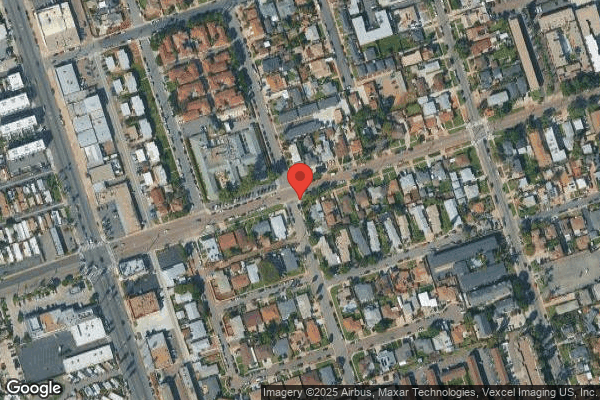

553 F STREET, CHULA VISTA, CA 91910 (619) 426-8611
For profit - Limited Liability company 99 Beds THE ENSIGN GROUP Data: November 2025
Trust Grade
80/100
#201 of 1155 in CA
Last Inspection: May 2025

Inspected within the last 6 months. Data reflects current conditions.

Overview

South Bay Post Acute Care has a Trust Grade of B+, which means it is recommended and above average in quality. It ranks #201 out of 1155 facilities in California, placing it in the top half overall, and #26 out of 81 in San Diego County, indicating there are only 25 local options that perform better. However, the facility's trend is worsening, having increased from 1 issue in 2024 to 2 in 2025. Staffing is relatively strong with a 4 out of 5 star rating, although the turnover rate of 45% is average for California. Importantly, the facility has no fines, which is a positive sign of compliance. On the downside, there are concerns regarding staff responsiveness to residents' call lights, leading to dissatisfaction among residents who feel ignored when they request assistance. Additionally, there is a lack of comprehensive training for staff on behavioral health issues, which could impact care quality for residents with conditions like PTSD. Lastly, there were findings indicating potential misuse of controlled pain medications due to unclear prescribing practices, raising questions about patient safety. Overall, while there are notable strengths, families should be aware of these significant concerns.

Trust Score
B+
80/100
In California
#201/1155
Top 17%
Safety Record
Low Risk
No red flags
Inspections
Getting Worse
1 → 2 violations
Staff Stability
⚠ Watch
45% turnover. Above average. Higher turnover means staff may not know residents' routines.
Penalties
✓ Good
No fines on record. Clean compliance history, better than most California facilities.
Skilled Nurses
✓ Good
Each resident gets 55 minutes of Registered Nurse (RN) attention daily — more than average for California. RNs are trained to catch health problems early.
Violations
⚠ Watch
30 deficiencies on record. Higher than average. Multiple issues found across inspections.
★★★★★
5.0
Overall Rating
★★★★☆
4.0
Staff Levels
★★★★★
5.0
Care Quality
★★★★★
5.0
Inspection Score
Stable
2024: 1 issues
2025: 2 issues

The Good

  • 4-Star Staffing Rating · Above-average nurse staffing levels
  • 5-Star Quality Measures · Strong clinical quality outcomes
  • Full Sprinkler Coverage · Fire safety systems throughout facility
  • No fines on record

Facility shows strength in staffing levels, quality measures, fire safety.

The Bad

Staff Turnover: 45%

Near California avg (46%)

Higher turnover may affect care consistency

Chain: THE ENSIGN GROUP

Part of a multi-facility chain

Ask about local staffing decisions and management

The Ugly 30 deficiencies on record

May 2025 2 deficiencies
CONCERN (D) 📢 Someone Reported This

A family member, employee, or ombudsman was alarmed enough to file a formal complaint

Potential for Harm - no one hurt, but risky conditions existed

Pharmacy Services (Tag F0755)

Could have caused harm · This affected 1 resident

**NOTE- TERMS IN BRACKETS HAVE BEEN EDITED TO PROTECT CONFIDENTIALITY** Based on observation, interview, and record review, the facility failed to provide clear indications (a valid reason to use a ce...

Read full inspector narrative →
**NOTE- TERMS IN BRACKETS HAVE BEEN EDITED TO PROTECT CONFIDENTIALITY** Based on observation, interview, and record review, the facility failed to provide clear indications (a valid reason to use a certain medication) for two of three sampled residents ' (Resident 1 and Resident 2) controlled pain medications (medications with high abuse potential). As a result of this deficient practice, Resident 1 and Resident 2 were at risk of receiving unnecessary controlled pain medications which may lead to misuse. Findings: 1. Resident 1 was admitted to the facility on [DATE], with the diagnosis which included cellulitis (a skin infection) of the right leg per facility's admission Record. A review of Resident 1 ' s physician ' s orders dated 3/21/25, indicated: · Oxycodone HCL Oral Tablet (a type of strong pain reliever that could be habit-forming if not used exactly as prescribed) 5 MG (milligrams). Give 1 tablet by mouth every 6 hours as needed for moderate pain level 4-6 (pain scale that utilize numbers used to evaluate a person ' s perceived pain level). · Oxycodone HCL Oral Tablet 5 MG (Oxycodone HCL). Give 2 tablets by mouth every 6 hours as needed for severe pain level 7-10. These orders included the parameter for use, but did not include the indication of the controlled medications. A review of Resident 1 ' s Progress notes, titled eMAR-Medication Administration Note, dated 5/13/25 at 9:59 A.M., indicated oxycodone was given for .lower back pain A review of Resident 1 ' s Progress notes, titled eMAR-Medication Administration Note, dated 5/11/25 at 6:39 P.M., indicated oxycodone was given for .buttock pain A review of Resident 1 ' s Progress notes, titled eMAR-Medication Administration Note, dated 5/10/25 at 8:46 P.M., indicated oxycodone was given for .generalized pain A review of Resident 1 ' s Progress notes, titled eMAR-Medication Administration Note, dated 5/9/25 at 3:46 P.M., indicated oxycodone was given for .Resident c/o [complained of] pain. A review of Resident 1 ' s Progress notes, titled eMAR-Medication Administration Note, dated 5/7/25 at 9:25 P.M., indicated oxycodone was given. There was no documented location of pain. A review of Resident 1 ' s Progress notes, titled eMAR-Medication Administration Note, dated 5/6/25 at 7:16 P.M., indicated oxycodone was given. There was no documented location of pain. 2. Resident 2 was admitted to the facility on [DATE], with diagnosis which included right femur (thigh bone) fracture per facility's admission Record. A review of Resident 2 ' s physician ' s orders dated 5/4/25, indicated: · Hydrocodone-Acetaminophen Oral Tablet (a type of strong pain reliever that could be habit-forming if not used exactly as prescribed) 5-325 MG. Give 1 tablet by mouth every 4 hours as needed for moderate pain level 4-6. · Hydrocodone-Acetaminophen Oral Tablet 10-325 MG. Give 1 tablet by mouth every 4 hours as needed for severe pain level 7-10. These orders included the parameter for use, but did not include the indication of the controlled medications. A review of Resident 2 ' s Progress notes, titled eMAR-Medication Administration Note, dated 5/13/25 at 4:55 A.M., indicated Hydrocodone-Acetaminophen was given for .pain in her leg. A review of Resident 2 ' s Progress notes, titled eMAR-Medication Administration Note, dated 5/12/25 at 9:54 P.M., indicated Hydrocodone-Acetaminophen was given for Pt [patient] reported 7/10 pain numeric scale There was no documented location of pain. A review of Resident 2 ' s Progress notes, titled eMAR-Medication Administration Note, dated 5/12/25 at 7:09 A.M., indicated Hydrocodone-Acetaminophen was given for Resident wants her pain pill for her leg. A review of Resident 2 ' s Progress notes, titled eMAR-Medication Administration Note, dated 5/10/25 at 7:22 P.M., indicated Hydrocodone-Acetaminophen was given. There was no documented location of pain. A review of Resident 2 ' s Progress notes, titled eMAR-Medication Administration Note, dated 5/9/25 at 8:32 A.M., indicated Hydrocodone-Acetaminophen was given. There was no documented location of pain. A review of Resident 2 ' s Progress notes, titled eMAR-Medication Administration Note, dated 5/8/25 4:35 A.M., indicated Hydrocodone-Acetaminophen was given for .LE (lower extremity) pain On 5/13/25 at 12:08 P.M., an interview and record review was conducted with Licensed Nurse (LN) 1. LN 1 reviewed Resident 1 and Resident 2 ' s physician ' s orders and stated that the orders needed to be updated because they were missing the indication for use. LN 1 stated the physician ' s orders for controlled pain medications, should be more specific to prevent medication misuse. On 5/13/25 at 12:23 P.M., an interview and record review was conducted with the Assistant Director of Nursing (ADON). The ADON stated a complete medication order should include a clear indication of use. The ADON stated clear indications were important to prevent unnecessary use of controlled medications. The ADON reviewed Resident 1 ' s eMAR-Medication Administration Notes and stated Resident 1 ' s oxycodone was administered for different locations of pain. The ADON stated he was unsure what condition Resident 1 ' s oxycodone was intended to treat. The ADON stated Resident 1 and Resident 2 ' s controlled medication orders needed to be clarified with the physician to include a clear indication for their use. On 5/13/25 at 1:56 P.M., an interview was conducted with the Director of Nursing (DON). The DON stated controlled pain medication orders should be written with clear and specific indications of use. The DON stated this was important because a change of condition could be missed when a resident has a new pain. The DON stated the new pain may be different from what the physician had originally intended the medication to treat. On 5/13/25 at 4:29 P.M., an interview and record review was conducted with the DON. The DON stated the facility did not have a Policy and Procedure for unnecessary medication, but the facility followed Physician Orders Policy and Procedure. A review of the facility ' s undated policy titled Physician Orders, indicated, .7. Orders for medications must include: . E. Reason or problem for which given.
CONCERN (D) 📢 Someone Reported This

A family member, employee, or ombudsman was alarmed enough to file a formal complaint

Potential for Harm - no one hurt, but risky conditions existed

Medical Records (Tag F0842)

Could have caused harm · This affected 1 resident

**NOTE- TERMS IN BRACKETS HAVE BEEN EDITED TO PROTECT CONFIDENTIALITY** Based on observation, interview, and record review, the facility failed to accurately document a pain assessment result and cont...

Read full inspector narrative →
**NOTE- TERMS IN BRACKETS HAVE BEEN EDITED TO PROTECT CONFIDENTIALITY** Based on observation, interview, and record review, the facility failed to accurately document a pain assessment result and controlled pain medication (medications with high abuse potential) administration in the Medication Administration Record (MAR) for one of three sampled residents (Resident 1). As a result of this deficient practice, Resident 1 ' s MAR did not accurately reflect the care and treatment provided to the resident. Findings: Resident 1 was admitted to the facility on [DATE], with diagnosis which included cellulitis (a skin infection) of the right leg per facility's admission Record. A review of Resident 1 ' s physician ' s orders dated 3/21/25, indicated: · Oxycodone HCL Oral Tablet (a type of strong pain reliever that could be habit-forming if not used exactly as prescribed) 5 MG (milligrams). Give 1 tablet by mouth every 6 hours as needed for moderate pain level 4-6 (pain scale that utilizes numbers used to evaluate a person ' s perceived pain level). · Oxycodone HCL Oral Tablet 5 MG (Oxycodone HCL). Give 2 tablets by mouth every 6 hours as needed for severe pain level 7-10. A review of Resident 1 ' s Controlled Drug Record (CDR) dated 5/12/25 at 8:12 P.M., indicated two tablets of Oxycodone HCL Oral Tablet 5 MG were removed from the locked medication cart by Licensed Nurse (LN) 3. A review of Resident 1 ' s MAR dated 5/12/25 at 8:12 P.M., indicated one tablet of Oxycodone HCL Oral Tablet 5 MG was administered to Resident 1 by LN 3. The MAR also indicated Resident 1 had a pain level rated 4/10. On 5/13/25 at 3:23 P.M., an interview and record review was conducted with LN 3. LN 3 reviewed Resident 1 ' s MAR and CDR dated 5/12/25 at 8:12 P.M. LN 3 stated he administered two tablets of oxycodone for a pain level of 7 to Resident 1. LN 3 stated the documentation on the MAR was incorrect. On 5/13/25 at 4:25 P.M., an interview with the Director of Nursing (DON) was conducted. The DON stated Resident 1 ' s pain assessment and oxycodone administration should have been documented accurately. A review of the facility ' s undated policy titled Policy Procedure Documentation and Charting, indicated, It is the policy of this facility to provide an accurate account of documentation of the resident ' s clinical care and/or status in the clinical record
Jan 2024 1 deficiency
CONCERN (D) 📢 Someone Reported This

A family member, employee, or ombudsman was alarmed enough to file a formal complaint

Potential for Harm - no one hurt, but risky conditions existed

Pharmacy Services (Tag F0755)

Could have caused harm · This affected 1 resident

**NOTE- TERMS IN BRACKETS HAVE BEEN EDITED TO PROTECT CONFIDENTIALITY** Based on observation, interview, and record review, the facility failed to ensure one resident ' s (Resident 2) controlled medic...

Read full inspector narrative →
**NOTE- TERMS IN BRACKETS HAVE BEEN EDITED TO PROTECT CONFIDENTIALITY** Based on observation, interview, and record review, the facility failed to ensure one resident ' s (Resident 2) controlled medications were secured and disposed of after discharge to the hospital. This deficient practice had the potential to result in drug diversion. Findings: Review of Resident 2 ' s admission Record indicated Resident 2 was admitted on [DATE] to facility with diagnoses including: Sepsis (widespread infection), Acute Respiratory Failure with Hypoxia (Difficulty breathing), and Opioid (pain medication) Dependence. Review of Resident 2 ' s Medication Administration Record (MAR) indicated that Resident 2 received Hydromorphone HCL (Narcotic Pain Medication) 3 x 8 Milligrams(MG) tablets every 6 hours for Chronic Pain and Alprazolam(Anti-anxiety medication) and 1x O.5 MG tablet once a day in the morning for anxiety. On 1/9/24 at 10:30 A.M., an interview with Administrator (ADM) was conducted. ADM stated facility investigation found the following: All of Resident 2 ' s medication were held in the medicine cart including narcotics at the time of discharge on [DATE]. On 12/22/23, Licensed Nurse (LN) 1 made a note on narcotics to hold the medications in anticipation of Resident 2 ' s return and placed note with medications in narcotic box in medication cart. LN 1 went on vacation from 12/22/23 to 12/26/23 and when she returned the medication was not there. Resident 2 returned to facility on 12/30/23, but never missed medication according to ADM. LN 1 reported medications missing on 1/5/24 to ADM, and investigation was done. ADM stated that the facility ' s investigation found all the Resident 2 ' s medication was gone, narcotics and regular medications. ADM stated that all nurses assigned to that medication cart were interviewed, and no one had a memory of the medication being stored there. ADM stated a nursing in-service was done on 1/5/23 the same day medication was discovered missing. ADM stated that the narcotic sheet was revised to include documenting the narcotic count, and the count of resident ' s medication cards. On 1/9/24 at 10:50 A.M., an interview with LN 1 was conducted. LN 1 stated that she normally worked with Resident 2. LN 1 stated that if a resident was discharged to a hospital, the LN should give the medications to the Director of Nursing (DON) to be destroyed. LN 1 stated that it was best practice on the Long-Term Care unit to keep medications in the cart if a resident was discharged to the hospital for a short term stay, 2-3 days, as it often took a long time to get the medications when they returned. LN 1 stated Resident 2 was discharged on 12/17/23 and Resident 2 ' s medications were bundled and put behind the active resident ' s medications in the locked drawer of medication cart. LN 1 stated on 12/22/23 she received a call from hospital that Resident 2 would be returning to facility in a few days. LN 1 stated she put a note on Resident 2 ' s medication to hold it there in anticipation of Resident 2 returning from the hospital. LN 1 stated she reported to the night shift (NOC) nurse that she would be coming back and to hold Resident 2 ' s medication in the cart. LN 1 stated that she thought at that time that the best practice would be to keep the medications in the cart. LN 1 stated she estimated there were 30-40 pills of oxycodone left when she last saw them. LN 1 stated the last time she saw the pills was on 12/22/23 at 3:30 P.M. LN 1 stated when she came back to work on 12/26/23 and the medication was not there, so she checked with the Director of Staff Development (DSD) who was the DON Designee (Acting DON) at the time, if the medications were destroyed. LN 1 stated DSD did not know Resident 2 ' s medications were in the cart after discharge and had not destroyed any medication that month. LN 1 stated that the policy and procedure for drug storage/disposal when a resident is discharged to the hospital was to turn the narcotics into the DON or DON designee within 24 hours for storage and destruction. LN 1 stated the importance of turning in discharged patient ' s controlled medication was to prevent drug diversion. On 1/9/24 at 11:55 A.M. a concurrent observation of medication cart, review of MARs and interview with LN 2 was conducted. A review of the LN 2 ' s process for controlled medications administration and storage was reviewed for Resident 2, Resident 4, and Resident 5. LN 2 stated that if a resident is discharged the controlled medications should be given to the DON for storage prior to destruction. LN 2 stated that she would not hold onto medications when a resident is discharged . LN 2 stated that if the medications were held onto after a resident ' s discharge, they could be taken or lost. On 1/9/24 at 12:50 P.M, an interview was conducted with the DSD. DSD stated that a report from LN 1 was made about Resident 2 ' s controlled medications after LN 1 discovered they were missing. Resident 2 was re-admitted [DATE] and the licensed nurse could not find her original medications. The DSD stated that when Resident 2 was discharged to hospital, the LN is supposed to give the narcotics to the DON /DON designee, and the DON/ DON designee will put the controlled medications in the safe box in her office until the pharmacist comes in to do the destruction of controlled medications with the DON. DSD stated when controlled medications are destroyed, it is recorded in a log. DSD stated that there was no record of Resident 2 ' s narcotics being destroyed by DON and the Pharmacist. DSD stated the LN should have given the narcotics to DON for destruction when Resident 2 was discharged to hospital. DSD stated the importance of giving narcotics to DON when a resident is discharged to the hospital, is to prevent someone from taking the controlled medications of that resident. On 1/10/24 at 7:45 A.M., an interview was conducted with LN 3. LN3 stated he was the night shift nurse the day that Resident 2 was discharged . LN 3 stated that on the night of 12/22/23, Resident 2 had already been discharged . LN 3 stated he had done the controlled substance count for the medication cart. LN 3 stated the count included Resident 2 ' s medication with outgoing evening nurse LN 4. LN 3 stated he was unsure if Resident 2 ' s controlled medications were there, and he thought they were included in the count. LN 3 stated that when a resident is discharged to the hospital, he will leave the medication bundled together in the medication cart in the back of the locked drawer of the medication cart, but remove the medication from the count sheet. LN 3 stated that discharged resident ' s controlled medications should be turned in to the DON or DON designee when possible. LN 3 stated that turning in narcotics to DON would prevent someone from taking the discharged resident ' s medication. On 1/10/24 at 7:57 A.M. an interview with LN 4 was conducted. LN 4 stated that she was the nurse who discharged Resident 2 to the hospital that day on 12/17/23. LN 4 stated she remembered Resident 2 ' s medications all bundled in the back of the medication cart used for controlled medication. LN 4 stated they will typically count all the controlled medication in the drawer every shift including the medication for discharged residents. LN 4 stated she saw the bundle of medications that day after resident was discharged . LN 4 stated when Resident 2 was discharged to the hospital, the nurses usually will put the discharged resident ' s medication toward the back of the locked drawer, until they can give the medications to the DON/DON designee the medication to store prior to destruction by DON and pharmacist. LN 4 stated that an accepted practice on the Long-Term Care/Custodial side of the facility was that nurses keep the medication in cart when the discharged resident is expected to come back to the facility in 2-3 days from hospital. LN 4 stated this is an, accepted practice because it can take up to 4-8 hours to get medications from the pharmacy. LN 4 stated the importance of giving medications to DON after discharge is to prevent controlled medication from being misplaced or taken. On 1/10/24 at 10:19 A.M., an interview with the Pharmacy Consultant (PC) was conducted. PC stated that the expectation is to keep the controlled medication available, but in a secure area with limited access to controlled medication. PC stated that LN who discharged the resident should have given controlled medications to the DON to put in a secured lock box where they could be logged and stored until monthly destruction of narcotics by DON and PC. PC stated the importance of securely storing a discharged resident ' s controlled medication was to prevent drug diversion. On 1/10/24 at 10:45 A.M., an interview with LN 5 was conducted. LN 5 stated that the LN ' s on long term side usually hold controlled medication in the locked drawer in medication cart for 2-3 days or when the resident is expected to come back from the hospital, and medication is still counted in the count. LN 5 stated the expectation was that they would give the medication to the DON for storage before destruction after waiting the 2-3 days. LN 5 stated that she thought the policy was to give the controlled medication to the DON after the resident was discharged . LN 5 stated holding the controlled medications of a discharged resident was a practice they did on the long term/custodial side of the facility, and that they did it mainly because it took a long time to get medications on re-admission. LN 5 stated the importance of giving a discharged resident ' s controlled medication to the DON in timely manner was to prevent drug diversion. On 1/25/24 at 9:36 A.M. an interview with DON was conducted. DON stated that the expectation was the LNs should have turned the medication in to her for locked storage in her office prior to destruction as soon as they could. DON stated that if resident was discharged on a weekday, the LN could give controlled medications that day, or if discharged on night shift, by the next morning. DON stated if resident discharged on a Friday night or over weekend, the LN should turn the controlled medications into her by Monday morning. A review of day of discharge (12/17/23) and day of reporting missing medication (1/5/24) was conducted with the DON. The DON stated that this was an unacceptable practice. DON stated that the importance of timely disposition of discharged resident ' s controlled medication was to prevent drug diversion. Review of policy entitled Narcotic Count dated 2023, indicated .III. Disposal of Medication .2. Medications that are Discontinued by the physician and are controlled medications, will be removed from the eMAR, physically removed from the medication cart after being counted and signed by two staff members, then given to the Director of Nursing/Designee for storage until destruction occurs . Review of policy entitled Medication Storage in the Facility dated January 2022, indicated .IE1: Controlled Substance Disposal .C. All controlled substances remaining in the facility after a resident has been discharged or the order is discontinued, as disposed of 1) In the facility by the director of nursing and/or consultant pharmacist
Nov 2022 16 deficiencies
CONCERN (D)

Potential for Harm - no one hurt, but risky conditions existed

Resident Rights (Tag F0550)

Could have caused harm · This affected 1 resident

**NOTE- TERMS IN BRACKETS HAVE BEEN EDITED TO PROTECT CONFIDENTIALITY** Based on interview and record review, the facility did not assure staff assisted Resident 66 in timely manner to maintain contin...

Read full inspector narrative →
**NOTE- TERMS IN BRACKETS HAVE BEEN EDITED TO PROTECT CONFIDENTIALITY** Based on interview and record review, the facility did not assure staff assisted Resident 66 in timely manner to maintain continence (ability to control movements of the bowels and bladder). As a result, Resident 66 became incontinent (lost control of bowel or bladder) and felt as if she had been ignored and disrespected. Findings: Per the facility's admission Record, Resident 66 was admitted on [DATE]. Per Resident 66's brief mental status exam on the quarterly assessment, dated 9/23/22, the resident had the capacity to make decisions about her care. On 11/16/22 at 3:53 P.M., an interview was conducted with Resident 66. Resident 66 stated a couple of weeks ago on the evening shift, she had to wait to go to the toilet, but could not wait and ended becoming incontinent. Resident 66 stated she asked three CNAs for help, and they all said they were busy. Resident 66 stated she had to wait 30 minutes and felt as if people were ignoring her. Resident 66 stated I kept saying, excuse me, excuse me can you take me to the bathroom. I could not hold it. I finally exploded and the administrator came to help me but by then I had already gone in my pants. On 11/16/22 at 4:37 P.M., an interview was conducted with CNA 22. CNA 22 stated Resident 66 would be really humiliated if she had to go in her pants. CNA 22 stated CNAs should take the time to take Resident 66 to the restroom. On 11/16/22 at 4:38 P.M., an interview was conducted with LN 21. LN 21 stated Resident 66 would be very upset if she was incontinent. LN 21 stated that was why she took her to the bathroom. On 11/17/22 at 12:10 P.M., an interview was conducted with the Director of Staff Development (DSD). The DSD stated it was important to take Resident 66 to the bathroom so that she was not incontinent. The DSD stated it would make Resident 66 feel bad as if she was not important and was ignored. Per the facility's policy, dated 11/2021, titled Resident Rights, Dignity and Privacy, .It is the policy of this facility that all resident be treated with kindness, dignity, and respect .
CONCERN (D)

Potential for Harm - no one hurt, but risky conditions existed

Deficiency F0554 (Tag F0554)

Could have caused harm · This affected 1 resident

**NOTE- TERMS IN BRACKETS HAVE BEEN EDITED TO PROTECT CONFIDENTIALITY** Based on observation, interview, and record review, the facility failed to ensure a self-administration assessment was accurate ...

Read full inspector narrative →
**NOTE- TERMS IN BRACKETS HAVE BEEN EDITED TO PROTECT CONFIDENTIALITY** Based on observation, interview, and record review, the facility failed to ensure a self-administration assessment was accurate for one of one resident (Resident 33) reviewed for self-administration of medication. This failure increased the potential for the unsafe self-administration of medications, and the duplication of administered medications for Resident 33. Findings: Resident 33 was admitted to the facility on [DATE] with diagnoses to include Congestive Heart Failure (CHF - a serious condition in which the heart doesn't pump blood as efficiently as it should), Chronic Obstructive Pulmonary Disease (COPD - a chronic inflammatory lung disease that causes obstructed airflow from the lungs), and Asthma (a condition in which a person's airways become inflamed, narrow, swollen, and produce extra mucus, which makes it difficult to breathe), per the History & Physical, dated 2/10/22. On 11/14/22 at 9:16 a.m., Resident 33 was observed in her bed laying on her left side with a nebulizer (a drug delivery device used to administer medication in the form of a mist inhaled into the lungs) mask covering her nose and mouth. Resident 33's eyes were closed. The nebulizer cup was empty, and the nebulizer machine was on. On 11/14/22 at 10:18 a.m., Resident 33 was observed in her bed laying on her left side with the nebulizer mask on her chin. The nebulizer machine was on. On 11/14/22 at 11:50 a.m., Resident 33 was observed in her bed laying on her left side with her eyes closed, and the nebulizer mask was on her neck. The nebulizer machine was on. On 11/14/22 at 12:05 p.m., Resident 33 was observed in her bed laying on her back with her eyes closed, left leg was dangling off the bed, and the nebulizer machine was on. The resident's lunch tray was at the overbed table. On 11/14/22 at 1:00 p.m., Resident 33 was observed instilling the nebulizer liquid medication into the nebulizer cup through an opening attached to the mask. Resident 33 stated she administered her own breathing treatment because staff did not know what they were doing. Resident 33 stated the medication was left on her bedside table. There was no nurse at bedside. During an interview on 11/14/22, at 1:02 p.m., with LN 2, LN 2 stated she prepared the nebulizer treatment for Resident 33. Resident 33 stated she poured out what LN 2 put in the nebulizer cup and replaced it with the one that was left at her bedside. During an interview on 11/16/22, at 3:54 p.m., with LN 6, LN 6 stated he poured the Albuterol (a medication used to treat patients with Asthma, Bronchitis, Emphysema, and other lung diseases) for Resident 33. LN 6 stated, at times he would hand Resident 33 the Albuterol and she (Resident 33) poured it in the nebulizer cup herself. LN 6 stated he was not aware of Resident 33 keeping medications at bedside. LN 6 stated LN 7 informed him yesterday that an assessment and care plan were completed for Resident 33 to self-administer her medication. LN 6 stated LN 7 informed him that the physician was notified, and a lock box was given to the resident. LN 6 stated Resident 33 was to notify the nurse if she used the medication. LN 6 stated there should be a physician's order for self-administration, and this should be documented in the MAR. LN 6 stated he did not see a lock box in the resident's room. LN 6 stated Resident 33 had the capacity to recall the frequency of medication use. LN 6 stated Resident 33 could remember when to administer the medication, however Resident 33 would not follow the physician's order if she was to administer the medication herself. On 11/17/22, at 9:36 a.m., LN 7 was interviewed. LN 7 stated she completed the Self-Administration of Medication assessment for Resident 33. LN 7 stated Resident 33 had COPD and always requested for a breathing treatment. LN 7 stated Resident 33 asked for the nebulizer at least every hour. LN 7 stated she did not review the facility's policy and procedure prior to completing the Self Administration Assessment. LN 7 stated she showed Resident 33 how to use the Advair (a prescription medication used to treat Asthma) inhaler (a hand-held, portable device that deliver medication to the lungs), and Resident 33 return demonstrated. LN 7 stated the order for the inhaler was one puff twice a day. LN 7 stated she showed Resident 33 how to use the nebulizer, how to twist the cup, place the medication mask on her face, turn on the machine, and place the mask in a plastic bag for infection control. The LN 7 stated she informed Resident 33 to keep the medications in the lock box, and to call for the nurse if she needed a breathing treatment. LN 7 stated LN 6 knew the combination for the lock box, and not Resident 33. LN 7 stated she determined Resident 33 had the capacity to self- administer medications. LN 7 stated she gave Resident 33 three medications to place in the box. LN 7 stated resident was not compliant with medication direction and will not follow physician's order. LN 7 stated she called the physician to inform him of Resident 33's request to have the medication at the bedside. LN 7 stated the IDT (a coordinated group of professionals from several different field), had the meeting on 11/15/22 which included the physician, DON, and herself (LN 7). During a concurrent record review and interview on 11/17/22, at 10:00 a.m., with LN 7, LN 7 stated the progress notes for Resident 33 dated 11/15/22 did not indicate IDT attendance on the notes. On 11/17/22, at 4:04 p.m., Resident 33 was observed in laying on her bed watching TV. A small white box with a light blue top, with a combination lock was observed on top of her overbed table. Resident 33 stated the box was to keep her medication for her breathing treatment. Resident 33 stated she did not request for the locked box, and only the nurses had the combination. The LN-Self Administration of Medications- Initial Evaluation, dated 11/15/22 was reviewed with the LN 7 on 11/21/22, at 11:12 a.m. LN 7 stated number 8 of the evaluation form was inaccurate. The assessment indicated Resident 33 was fully capable to correctly document self-administration of medications. LN 7 stated she did not observe Resident 33 document self-administration of her medication. LN 7 stated Resident 33 also did not demonstrate securing storage for the medication, as indicated on the assessment form. LN 7 stated Resident 33 did not demonstrate documenting the administration of PRN (as needed) medication, as indicated on the assessment form. During an interview with the DON, on 11/21/22 at 11:12 a.m., the DON stated she just gave the lock box to Resident 33 on 11/20/22. The DON stated an assessment was done for residents who requested self-administration, and an IDT meeting was held. The DON stated Resident 33 knew how often the medication should be taken. The DON stated she did not know if Resident 33 could follow directions. The DON stated the box had a padlock for Resident 33 to call for the nurse when she needed the medication. The DON stated the combination was not given to Resident 33 because she might self-administer more than what was needed. During a review of the facility's P&P titled, Care and Treatment, Self-Administration of Medications, without a date, the P&P indicated, 1. If a resident desire to participate in self-administration, the interdisciplinary team will assess .Nursing will be responsible for recording self-administered doses in the resident's medication administration record.
CONCERN (D)

Potential for Harm - no one hurt, but risky conditions existed

Safe Environment (Tag F0584)

Could have caused harm · This affected 1 resident

**NOTE- TERMS IN BRACKETS HAVE BEEN EDITED TO PROTECT CONFIDENTIALITY** 2. Resident 33 was admitted to the facility on [DATE] with diagnoses to include Congestive Heart Failure (CHF - a serious condit...

Read full inspector narrative →
**NOTE- TERMS IN BRACKETS HAVE BEEN EDITED TO PROTECT CONFIDENTIALITY** 2. Resident 33 was admitted to the facility on [DATE] with diagnoses to include Congestive Heart Failure (CHF - a serious condition in which the heart doesn't pump blood as efficiently as it should), per History & Physical, dated 2/10/22. During observation and interview on 11/14/22, at 12:27 p.m., Resident 33 was in her room having lunch. Resident 33 stated she had no teeth but had dentures that were lost 3 months ago. Resident 33 stated she informed the head nurse and was told they will look for them. On 11/17/22, at 10:27 a.m., CNA 4 was interviewed. CNA 4 stated Resident 33 had dentures but refused to wear them. CNA 4 stated Resident 33 had no problems chewing. CNA 4 stated if a resident had missing dentures, she would report it to social services. CNA 4 stated she had not seen Resident 33 wear her dentures in the last 2 weeks. CNA 4 stated she never asked Resident 33 the reason for not wearing her dentures. On 11/17/22, at 10:42 a.m., a joint interview and record review of an undated Inventory of Personal Effects, document was conducted with CNA 4. CNA 4 acknowledged that the document indicated dentures were not marked as one of Resident 33's personal belongings. During a review of the Social Services Assessment/Evaluation V 2 document dated 2/5/21, the document indicated Resident 33 wore a partial, upper denture. During an interview on 11/17/22, at 11:22 a.m., with the SSD, the SSD stated Resident 33 had partial upper dentures upon admission to the facility. The SSD stated if a resident had missing dentures, she would start an investigation, instruct the nurses to check the medication carts, check the laundry, and refer the resident to the dentist. The SSD stated she was informed today (11/17/22) by the LN 7 that Resident 33's dentures were missing. During a review of the facility's undated P&P titled, Admission/Discharge/Transfer, Personal Effects, Inventory of, the P&P indicated The inventory should include the recording of all personal clothing, valuable articles, etc. which are brought into the facility with the resident and retained by the resident. These personal effects shall be recorded on the Inventory of Personal Effects form. Based on observation, interview, and record review, the facility failed to ensure two of two residents' (241 and 33) belongings were inventoried and not lost. These belongings included: 1. Resident 241's right hearing aid was missing. 2. Resident 33's partial upper dentures were missing. These failures could affect the care of these residents by limiting Resident 241's hearing and communication abilities, limiting Resident 33's ability to eat, and increasing the resident's risk for weight loss. Findings: 1. Resident 241 was admitted to the facility on [DATE] with diagnoses that included unspecified dementia per the facility's admission Record. Dementia is a mental disorder that causes a person to lose the ability to think, remember, learn, make decisions, or solve problems. On 11/14/22 at 9:32 A.M., Resident 241's family member (FM) was sitting in a chair beside the resident in bed. The FM stated Resident 241 had dementia that had recently been getting worse, and he was the responsible party (RP) who made decisions for the resident. The FM stated Resident 241 wore hearing aids and was admitted to the facility with only the right one because the left one had been out for repair. Resident 241's FM further stated the resident's right hearing aid was missing shortly after admission. The resident's FM stated it was reported to the staff, and the facility was investigating the loss. According to a review of Resident 241's Social Services Assessment/Evaluation, dated 11/8/22, .Summary: .wears hearing aids in the right ear . During an interview with certified nursing assistant (CNA) 11 on 11/16/22 at 9:18 A.M., CNA 11 stated Resident 241 was cognitively confused. CNA 11 stated Resident 241 lost her right hearing aid. Without hearing aids, the CNA had to be near the resident and speak loudly and clearly, and then the resident seemed to hear and understand. CNA 11 stated, Hearing aids are so small, and they are easily lost. CNA 11 further stated when residents went back to bed, she asked residents to put their hearing aids in a box labeled with their name and gave it to the nurses to lock up in the medication cart. During an interview with the social services director (SSD) on 11/17/22 at 9:15 A.M., the SSD stated she was notified on 11/14/22 that Resident 241's hearing aid was missing. The SSD stated that the hearing aid was not found after a thorough search of the resident's room, laundry, and the facility. The SSD stated after talking to the resident's FM, the hearing aid went missing on either 11/10 or 11/12/22. The SSD further stated the resident's FM was not interested in being reimbursed for the hearing aid, so the SSD entered a detailed note into Resident 241's medical record and did not complete a Theft/Loss report. According to a Social Services note, dated 11/16/22 at 4:59 P.M., .SS (social services) saw a hearing aid in the box and [FM] stated that hearing aid is for the left ear that was brought today after being repaired. SS continues to search room and did not find right hearing aid. SS made [FM] aware of the admission packet form Resident Hearing Aids, Dentures and Glasses. [FM] read the form with E-Signature of [resident]. [FM] stated that regardless of the form, [resident] hardly wears the hearing aids anyways stating that the left hearing aid has been in facility all day and [resident] does not care to have them on. [FM] requested for SS to drop the hearing aid case . During an interview with Resident 241's FM on 11/17/22 at 9:40 A.M., the FM stated a facility staff came in yesterday to look again in the room for the resident's missing hearing aid. The resident's FM stated the staff member showed him a form that the facility was not responsible for lost hearing aids, with the resident's signature. Resident 241's FM stated that the resident could not make decisions or sign any forms due to dementia. The FM stated he did not want to argue with the facility but would like to be reimbursed for the lost hearing aid. According to a review of Resident 241's undated Inventory of Personal Effects, only one shirt was added to the inventory and signed by the resident's FM. Additionally, there was no date or facility representative signature at the bottom of the document. In the Items Acquired After Original Entry section, the left hearing aid was added on 11/16/22. During an interview with CNA 11 on 11/17/22 at 9:53 A.M., CNA 11 stated on admission, CNAs inventoried resident belongings with the licensed nurse (LN) and the resident or responsible party. Additionally, CNA 11 stated they looked for hearing aids and always asked residents if they were wearing hearing aids or dentures. CNA 11 further stated the CNA who did the inventory was to sign the form after the resident or RP signed it. During an interview with the director of nursing (DON) on 11/21/22, the DON stated staff were expected to ask if residents had hearing aids and include them on the admission inventory. The DON stated staff were also supposed to sign the inventory after the resident or RP signed. The DON stated the SSD was following up on the replacement or reimbursement for Resident 241's lost hearing aid. During an interview with the SSD on 11/21/22 at 3:31 P.M., the SSD stated there had been no further follow-up since the last interview on 11/17/22. According to a review of the facility's undated policy titled Inventory of Personal Effects, Policy: It is the policy of the facility to take reasonable steps to protect the personal property of the residents. Purpose: To maintain an inventory for the personal effects of the resident. Procedures: 1. On Admission- A. When a resident is admitted to the facility, an inventory of the resident's personal effects shall be done by a staff member of the facility. The inventory should include the recording of all personal clothing, valuable articles, etc. which are brought into the facility with the resident and retained by the resident. These personal effects shall be recorded on the Inventory of Personal Effects form. B. Following completion of the inventory, the indicated form shall be signed by the resident and responsible party and by the staff member .
CONCERN (D)

Potential for Harm - no one hurt, but risky conditions existed

PASARR Coordination (Tag F0644)

Could have caused harm · This affected 1 resident

**NOTE- TERMS IN BRACKETS HAVE BEEN EDITED TO PROTECT CONFIDENTIALITY** Based on interview and record review, the facility failed to ensure the Pre-admission Screening and Resident Review Level II (PA...

Read full inspector narrative →
**NOTE- TERMS IN BRACKETS HAVE BEEN EDITED TO PROTECT CONFIDENTIALITY** Based on interview and record review, the facility failed to ensure the Pre-admission Screening and Resident Review Level II (PASRR II - an evaluation of the resident's psychiatric treatment requirements) was followed up and completed for one of one resident (Resident 17) reviewed for PASRR. As a result, there was potential for a failure to coordinate the PASRR recommendations to Resident 17's assessment and care planning. Findings: Resident 17 was readmitted to the facility on [DATE] with diagnoses that included Schizoaffective Disorder (a mental illness that is marked by a combination of schizophrenia symptoms, such as hallucinations or delusions, and mood disorder symptoms, such as depression or mania), Post-Traumatic Disorder (PTSD - a disorder in which a person has difficulty recovering after experiencing or witnessing a terrifying event), and Major Depressive Disorder (a mental disorder characterized by pervasive low mood, low self-esteem, and loss of interest or pleasure in normally enjoyable activities), per the admission Record. A review of Resident 17's PASRR Level I (a screening tool for further psychiatric care) completed on 9/15/21 indicated a PASRR Level II was required. During an interview and concurrent record review on 11/21/22 at 3:20 p.m., with LN 7, LN 7 stated she was responsible for completing PASRRs. LN 7 stated a copy of the Level I was provided to the resident and sent to the PASRR agency. LN 7 stated a PASSR staff called her to verify Resident 17's diagnosis, any behavioral episodes, and if the resident had Dementia (loss of memory, language, problem-solving and other thinking abilities that are severe enough to interfere with daily life). LN 7 stated Resident 17 received a letter, dated 1/4/22 from PASRR which indicated, unable to complete due to isolation. LN 7 stated PASRRs were completed annually, and that she did not complete Resident 17 this year. LN 7 stated she did not follow up on Resident 17's PASRR Level II after the resident was removed from isolation. LN 7 stated it was important to follow up on the PASRR Level II to identify the resident's needs and properly place the resident if indicated. During an interview on 11/21/22 at 3:48 p.m., with the DON, the DON stated the purpose of completing the PASRR was to identify the care for the resident and meet the resident's psychosocial needs. During a review of the facility's undated policy and procedure (P&P) titled, Resident Assessment, PASRR, the P&P indicated, Based upon the assessment, the facility will ensure proper referral to appropriate state agencies for the provision of specialized services to residents with ID/RC (Intellectual Disability or Related Condition) or SMI (Serious Mental Illness).
CONCERN (D)

Potential for Harm - no one hurt, but risky conditions existed

Deficiency F0657 (Tag F0657)

Could have caused harm · This affected 1 resident

**NOTE- TERMS IN BRACKETS HAVE BEEN EDITED TO PROTECT CONFIDENTIALITY** Based on observation, interview and record review, the facility failed to update or revise care plans for two of three residents...

Read full inspector narrative →
**NOTE- TERMS IN BRACKETS HAVE BEEN EDITED TO PROTECT CONFIDENTIALITY** Based on observation, interview and record review, the facility failed to update or revise care plans for two of three residents reviewed for care planning (8, 78). This failure had the potential to result in delayed care, miscommunication among caregivers, and decreased physical well-being of the residents. Findings: 1. Resident 8 was admitted to the facility on [DATE] with diagnoses to include dementia (a disorder causing memory problems and impaired reasoning) and muscle weakness, per the facility admission Record. On 11/14/22 at 11:19 A.M., a concurrent observation and record review of Resident 8 was conducted. Resident 8 was in bed, with a fall mat (a protective pad) on the floor next to the bed. The Resident Matrix (a document used to identify care needs) indicated Resident 8 had fallen within the past 90 days. According to a review of Resident 8s IDT (Interdisciplinary Team, a group of healthcare professionals), Resident 8 had fallen twice within the last year. On 5/1/22 Resident 8 was found on the floor, with new interventions of providing a safe and hazard free environment, with the call light within reach and the bed in the lowest position. On 10/29/22 Resident 8 had a fall when a staff member transferred him to a chair by lifting him manually without a mechanical device. An IDT note, dated 11/3/22, indicated, Resident requires mechanical device 2-person assistance in transfer .Continue plan of care and update the care plan. A Falls care plan, initiated 12/9/21, indicated a goal of, Will be free of falls through the review date of 1/21/23. The intervention of 2-person assistance in transfers was not listed as an intervention. On 11/21/22 at 10:25 A.M., an interview was conducted with LN 6. LN 6 stated care plans were used to focus care on the needs of the resident, and based on their goals and plan of action for achieving them. LN 6 stated it was important to have accurate care plans to provide good care and meet the resident's goals. On 11/21/22 at 12:20 P.M., a concurrent interview and record review was conducted with the DON. The DON stated the care plans need to be updated so staff know what interventions were required to keep the resident safe. Per the DON, the IDT was responsible for updating the care plan. The DON reviewed the Falls care plan and stated, I missed this one. My expectation is that updates to the care plan get done during the IDT meeting. We could have another fall if we don't put new interventions in place. 2. Resident 78 was admitted to the facility on [DATE] per the facility admission Record. On 11/14/22 at 11:08 A.M., a concurrent interview and record review was conducted with Resident 78. Resident 78 stated he had been admitted to the facility with a catheter (a device inserted into the bladder to collect urine), but it had been discontinued to prepare him for discharge. The catheter was listed on the MDS Indicator section of the survey facility data. On 11/21/22 a record review was conducted. Resident 78's care plan listed the catheter as a current focus of care, with goals of no catheter-related trauma. On 11/21/22 at 10:25 A.M., a concurrent interview and record review was conducted with LN 6. Per LN 6, care plans were used to focus care on the needs of the resident, and based on their goals and plan of action for achieving them. LN 6 stated it was important to have accurate care plans to provide good care and meet the resident's goals. LN 6 reviewed Resident 78's care plans, and stated, We should have updated the care plan to match the discontinued catheter order. The nurses are responsible for updating the care plans, and this one was not updated. This might cause confusion among the health care providers. On 11/21/22 at 12:20 P.M., an interview was conducted with the DON. The DON stated care plans were used to identify patient needs, and if a catheter was removed, the care plan should have been resolved. Per the DON, If we don't resolve the care plan it could cause confusion among the caregivers. Per an undated facility policy, titled Care Planning/Care Conference, .4. Care plan will be revised as needed .
CONCERN (D)

Potential for Harm - no one hurt, but risky conditions existed

Deficiency F0660 (Tag F0660)

Could have caused harm · This affected 1 resident

**NOTE- TERMS IN BRACKETS HAVE BEEN EDITED TO PROTECT CONFIDENTIALITY** Based on interview and record review, the facility failed to develop a plan for discharge for one of four residents reviewed for...

Read full inspector narrative →
**NOTE- TERMS IN BRACKETS HAVE BEEN EDITED TO PROTECT CONFIDENTIALITY** Based on interview and record review, the facility failed to develop a plan for discharge for one of four residents reviewed for care planning (Resident 49). This failure had the potential to result in an unsafe discharge, and placed Resident 40 at risk for prolonged admission to the facility. Findings: Resident 49 was admitted to the facility on [DATE] with diagnoses to include muscle weakness, per the facility admission Record. On 11/14/22 at 11:51 A.M., an interview was conducted with Resident 49. Resident 49 stated she had been at the facility almost a year, but still had no plans for discharging. Resident 49 stated she would like to be discharged back to her previous neighborhood but nobody had discussed finding her a place to live. According to Resident 49's Brief Interview for Mental Status (BIMS, an assessment tool, dated 9/1/22), Resident 49's score was 15, indicating intact cognition. On 11/30/21, an IDT met for Resident 49's initial care conference. Per the IDT, Resident 49's plan for discharge was for placement in the community. On 1/14/22, a Social Services admission assessment indicated Resident 49's discharge plan was to discharge to the community with home health needs to be determined upon discharge. On 2/4/22, a care plan was initiated, indicating Resident 49 wished to be discharged to her prior living arrangements. Goals were written for a pre-discharge plan to be established with the resident and caregivers, with revisions to the plan as needed. No discussion or revisions were documented. On 5/24/22, a Social Services quarterly assessment indicated Resident 49 now resided at the facility, and no discharge was anticipated. On 8/24/22, a Social Services quarterly assessment indicated Resident 49 resided at the facility and no discharge was anticipated. On 11/17/22 at 4:38 P.M., an interview was conducted with the SSD. The SSD stated discharge planning started when a resident was admitted to the facility. Per the SSD, the facility needed to evaluate the resident's abilities to live independently, and work with them to find an appropriate place to live upon discharge. The SSD stated the discussion about discharge should happen quarterly at the IDT meetings. Per the SSD, the IDT had not documented why Resident 49's discharge plan had changed or whether Resident 49 understood or not. The SSD stated she was not aware Resident 49 wanted to discharge elsewhere. On 11/17/22 at 5:05 P.M., an interview was conducted with the DON. The DON stated a discharge plan needed to reflect the resident's goals and staff interventions to help them meet their goals. The DON stated, I don't see the IDT discussed the discharge with the resident. This could cause an unsafe discharge. Per an undated facility policy, titled Care Planning/Care Conference, .4. Care plan will be revised as needed . Per an undated facility policy, titled Discharge Planning Process, It is the policy of this Facility that the discharge planning process focuses on the resident's discharge goals .c. Include regular re-evaluation of resident .to identify changes that require modification of the discharge plan .
CONCERN (D)

Potential for Harm - no one hurt, but risky conditions existed

Quality of Care (Tag F0684)

Could have caused harm · This affected 1 resident

**NOTE- TERMS IN BRACKETS HAVE BEEN EDITED TO PROTECT CONFIDENTIALITY** 3. Resident 33 was admitted to the facility on [DATE] with diagnoses to include Diabetes type 2 ((a disease in which the body's ...

Read full inspector narrative →
**NOTE- TERMS IN BRACKETS HAVE BEEN EDITED TO PROTECT CONFIDENTIALITY** 3. Resident 33 was admitted to the facility on [DATE] with diagnoses to include Diabetes type 2 ((a disease in which the body's ability to produce or respond to the hormone insulin is impaired), according to the History & Physical, dated 2/10/22. On 11/14/22, at 12:52 PM, LN 2 was observed checking Resident 33's blood sugar. LN 2 stated Resident 33's blood sugar was 206 and administered Humulin R insulin (a hormone created by the pancreas that controls the amount of glucose in the bloodstream). During an interview and record review on 11/16/22, at 3:54 p.m. with LN 6, LN 6 stated Resident 33 had an order for insulin. LN 6 reviewed Resident 33's MAR and stated the physician's order indicated to Hold if BS (blood sugar) 80 or below, but there was no order to conduct fingerstick blood sugar checks. LN 6 stated he assumed the physician wanted a blood sugar check. LN 6 stated he checked Resident 33's blood sugar before the resident ate her meals. LN 6 stated if the resident's blood sugar was checked after a meal, it would be inaccurate and abnormally high. Concurrent review of Resident 33's blood sugar in the MAR, dated 11/14/22, indicated a result of 206 mg/dl (milligram per deciliter). An interview and concurrent record review of Resident 33's physician's order was conducted on 11/21/22, at 10:20 a.m. with LN 2. LN 2 stated the resident's orders indicated inject 24 units of Regular insulin in the morning, and 18 units in the evening. LN 2 stated the order read to hold for blood sugar of 80 mg/dl or less. LN 2 stated she administered 2 units Regular insulin in addition to 24 units Regular insulin on 11/14/22 at 7:33 AM. LN 2 stated at 12:26 p.m., she administered 2 units of Regular insulin. LN 2 was not able to show in the computer what the resident's blood sugar was before administering the insulin. LN 2 stated blood sugars were checked based on the times indicated next to the medication in the MAR. Concurrent review of Resident 33's MAR indicated no physician's order for blood sugar check. LN 2 stated the standard of practice for checking blood sugar was before a resident ate. LN 2 stated the amount of insulin to be given to the resident was dependent on the resident's blood sugar level. LN 2 stated blood sugar check should have been done before breakfast for Resident 33. LN 2 stated the physician's order was not complete. LN 2 stated she should have asked the physician when to check the blood sugar. LN 2 stated It was important to know the resident's baseline of Diabetes, which was the normal sugar in the body before breakfast. LN 2 stated it was important to check blood sugars in order for the physician to review, and determine if resident was stable or not. LN 2 stated she assumed she had to check the resident's blood sugar before giving insulin, even though there was no order. LN 2 stated the insulin administered on 11/14/22 after meals was not accurate, and that it was her mistake. During a review of the facility's Consultant Pharmacist's Medication Regimen Review, for Resident 33, dated 4/21/22, indicated, Residents fingerstick readings show very high blood sugars, mainly >200 on most occasions. Please contact MD to adjust diabetic therapy. On 11/21/22 10:46 a.m. an interview was conducted with the DON. The DON stated blood sugar fingerstick should be completed before meals in accordance with the standard of practice. The DON also stated the nurses should follow the physician's order. A review of the facility's undated P&P titled, Nursing Clinical/Diabetes Mellitus Resident, indicated no guidance regarding when to perform blood sugar fingerstick. Based on observation, interview and record review, the facility failed provide treatment and care according to professional standards of practice when: 1. The need for a PRN (provided as needed) medication was not assessed for one of one residents reviewed for constipation (Resident 36), and 2. A physician's order to assist a resident up in a chair daily was not followed for one of three residents reviewed for care planning (Resident 49). 3. Blood sugar level checks were not performed before meal intakes for one of 3 residents reviewed for diabetes (a disease in which the body's ability to produce or respond to the hormone insulin is impaired) care. These failures had the potential to place the residents at risk for further medical complications. Findings: 1. Resident 36 was admitted to the facility on [DATE], per the facility admission Record. On 11/14/22 at 1:13 P.M., a concurrent observation and interview with Resident 36 was conducted. Resident 36 was sitting in a wheelchair in her room, rubbing her abdomen with her hand. Resident 36 stated she had been constipated for three days, and her abdomen felt tight and painful. Resident 36 stated she had informed her nurse of the constipation, and in the past had needed to go to the hospital due to the painful constipation. On 11/16/22 at 9 A.M., a concurrent observation and interview with Resident 36 was conducted. Resident 36 was sitting in a wheelchair outside of a bathroom, and stated she still had not had a bowel movement. On 11/16/22 at 10 A.M., a concurrent interview and record review was conducted with CNA 1. CNA 1 stated she was assigned to Resident 36 often, and Resident 36 was able to tell staff whether she needed to have a bowel movement or not. CNA 1 reviewed an electronic document titled BM (bowel movement) Report. CNA 1 stated, per the BM Report, Resident 36 had a bowel movement on 11/13/22, three days ago. CNA 1 stated the nurses assigned had access to the BM report, and Resident 36 was able to tell nurses when she was constipated. On 11/16/22 at 10:19 A.M., a concurrent interview and record review was conducted with LN 7. LN 7 stated the LN assigned to Resident 36 should assess her daily for constipation. Per LN 7, the nurses would assess for any pattern of constipation on the facility dashboard, and they should check the CNA Task list. LN 7 stated the nurse should write a progress note if constipation has occurred for several days in a row. LN 7 viewed all electronic documents, and stated, The assessment is not here. Her last bowel movement was three days ago. She (Resident 36) has an order for a prn medication for constipation. The LN should go to dashboard and check, and if nothing is documented for three days, that would trigger on the dashboard. The nurse should write a progress note. There's a hole in the process. The information didn't get documented anywhere. We can't administer a prn medication without asking about bowel movements. On 11/16/22, a record review was conducted. On 8/12/22, Resident 36's Brief Interview for Mental Status (BIMS, an assessment tool) score was 14, indicating intact cognition. Resident 36 had four scheduled (given daily) medications ordered for constipation. In addition, Resident 36 had another medication ordered PRN, (as needed) for constipation. A care plan for constipation had been initiated on 1/29/22, and revised on 8/8/22. The Goal written was, Will have a normal bowel movement at least daily . Interventions implemented included following facility protocol for bowel management. On 11/16/22 at 4:50 P.M., an interview was conducted with Resident 36. Resident 36 stated she always informed the medication nurses when she was constipated. Resident 36 stated the nurses did not ask her about needing a PRN medication for constipation when bringing her morning medications. On 11/16/22 at 5:05 P.M., an interview was conducted with the DON. The DON stated all nurses should assess residents at risk for constipation to determine when the last bowel movement was, and to determine the need for a PRN medication. The DON stated, That would be an important part of the nurses' assessment during medication administration. Per an undated facility policy, titled Bowel Care Management, It is the policy of this facility to follow physician orders and implement bowel care interventions .1. Licensed Nurses will monitor bowel movements every shift through the Clinical Dashboard/Clinical Alerts . 2. Resident 49 was admitted to the facility on [DATE] with diagnoses to include muscle weakness, per the facility admission Record. On 11/14/22 at 11:51 A.M., a concurrent observation and interview was conducted with Resident 49. Resident 49 was sitting up in bed, working on a word puzzle. Resident 49 stated the doctor had ordered for her to be up in her chair daily so she could get ready for discharge. Per Resident 49, staff did not get her up in the chair. Resident 49 stated, How can I get ready for discharge if I can't get into my wheelchair by myself? On 11/17/22 a record review was conducted. On 9/1/22, Resident 49's BIMS score was 15, indicating intact cognition. Per a physician's order, dated 3/3/22, Resident 49 was to be, Up to wheelchair daily. every day shift Per the November Treatment Administration Record (TAR, a list of physician-ordered treatments), LNs signed off the order of Up to wheelchair daily. every day shift every day in November. LN 6 had signed off the TAR for 11/15/22 and 11/16/22. LN 2 had signed off 11/13/22 and 11/14/22. LNs 2 and 6 were not available for interview. Per a facility care plan, initiated 2/6/22, Resident 49, I require assistance/potential to restore function to maximum self-sufficiency for mobility .Will demonstrate the appropriate use of adaptive devices to increase ability in mobility .I am at risk for ADL (activities of daily living, which include getting in and out of bed or a chair) Self Care .Will safely perform .Transfers .Monitor/document/report to MD .any reasons for self-care deficit . No care plan for noncompliance was identified for Resident 49. On 11/17/22 at 10:32 A.M., an interview was conducted with CNA 1. CNA 1 stated she was usually assigned to Resident 49. CNA 1 stated Resident 49 only left the bed to take showers, but had refused to get up in the chair that day. CNA 1 stated she was aware Resident 49 was supposed to get up in the wheelchair daily but had never seen her out of the bed. On 11/17/22 at 11:50 A.M., an interview was conducted with Restorative Nursing Assistants (RNA) 41 and 42. RNA 41 and 42 stated their job was to provide range of motion exercises (ROM) three days a week for Resident 49. RNA 41 stated Resident 49 would complete the exercises, but when encouraged her to sit at the side of the bed she would refuse. RNA 41 stated Resident 49 stayed seated in bed to do her ROM exercises. RNA 42 stated they document the ROM exercises but transferring to a chair was not part of their role as RNAs. On 11/17/22 at 11:04 A.M., a concurrent interview and record review was conducted with LN 7. LN 7 stated if a physician ordered transferring a resident to a chair daily, the CNAs were responsible for the task. Per LN 7, if the resident refused, the CNA should report this to the LN. The LN would then go and discuss the order with the resident and encourage them to complete the transfer. If the resident still refused, the nurse should write a progress note regarding the refusal. LN 7 searched the nurses progress note and stated, There is no documentation (about refusing the order), so we can assume it did not happen. On 11/17/22 at 11:24 A.M., an interview was conducted with LN 42. LN 42 stated if the physician ordered for a resident to be up in the chair daily, the CNA and the LN would be responsible for documenting it. Per LN 42, if a resident refused to comply, the nurse would document the refusal in the progress notes and contact the physician if there was a pattern of noncompliance. LN 42 stated the nurses should create a care plan the noncompliance so staff, including the physician, would be aware. On 11/17/22 at 11:50 A.M., an interview was conducted with the DON. The DON stated if a resident refused to comply with a physician's order, the nurse should inform the physician. The DON stated, We did not communicate that. The order is in the TAR so the nurse can sign it off when the resident has gotten up in the chair, but based on the TAR it would appear she got up in the chair daily. Nurses should not sign off treatments that did not occur. The risk of noncompliance could be a decline (in her health) or her skin integrity could be compromised. This is not our goal for the resident. Per an undated facility policy, titled Charting and Documentation, .The resident's clinical record is an account of treatment, care, response to care .Importance and use of the record: Provides a multidisciplinary record of the physical and mental status of the resident .
CONCERN (D)

Potential for Harm - no one hurt, but risky conditions existed

Accident Prevention (Tag F0689)

Could have caused harm · This affected 1 resident

**NOTE- TERMS IN BRACKETS HAVE BEEN EDITED TO PROTECT CONFIDENTIALITY** Based on observation, interview, and record review, the facility did not ensure a toilet seat was securely attached to the toile...

Read full inspector narrative →
**NOTE- TERMS IN BRACKETS HAVE BEEN EDITED TO PROTECT CONFIDENTIALITY** Based on observation, interview, and record review, the facility did not ensure a toilet seat was securely attached to the toilet bowl in a communal bathroom used by multiple residents. As a result, multiple residents were at risk for falls due to the instability of the loose toilet seat. Findings: Per the facility's admission Record, Resident 83 was admitted to the facility on [DATE] with difficulty walking. Resident 83's records were reviewed. Per the physician's history and physical, dated 10/17/22, Resident 83 had the capacity to make her own decisions. On 11/13/22 at 11:50 A.M., an observation and interview with Resident 83 was conducted. Resident 83 was sitting up on the side of her bed. Resident 83 stated she did not have a bathroom in her bedroom, so she used the bathroom down the hall, Resident 83 stated the bathroom was used by several residents on the hall. Resident 83 stated the toilet seat moved from side to side and when she tried to sit on it, she was afraid of falling because it threw her off balance. On 11/14/22 at 12:03 P.M., a concurrent interview with CNA 21 and observation of the toilet referenced by Resident 83 was conducted. CNA 21 observed the toilet seat and then moved it freely from side to side. CNA 21 stated the toilet seat was loose and could lead to a fall. On 11/14/22 at 12:06 P.M., a concurrent interview with the DON and observation of the toilet referenced by Resident 83 was conducted. The DON moved the toilet seat from side to side. The DON stated when the toilet seat was loose, someone could fall or slip off the toilet seat and land on the floor. Per the undated facility policy, titled Care and Treatment, Accident Intervention, .It is the policy of this facility that the resident environment remains as free of accident hazards as possible .
CONCERN (D)

Potential for Harm - no one hurt, but risky conditions existed

Deficiency F0694 (Tag F0694)

Could have caused harm · This affected 1 resident

**NOTE- TERMS IN BRACKETS HAVE BEEN EDITED TO PROTECT CONFIDENTIALITY** Based on observation, interview, and record review, the facility failed to ensure that one of one residents (31) on intravenous ...

Read full inspector narrative →
**NOTE- TERMS IN BRACKETS HAVE BEEN EDITED TO PROTECT CONFIDENTIALITY** Based on observation, interview, and record review, the facility failed to ensure that one of one residents (31) on intravenous (IV) antibiotic therapy had their PICC line monitored per professional standards and facility policy. A PICC line is a peripherally inserted central catheter that provides access to the large vein carrying blood to the heart to administer medication for long-term use. This failure could potentially increase the risk of infection and delay the identification of catheter-related complications for Resident 31. Findings: Resident 31 was admitted to the facility on [DATE] with diagnoses that included infective endocarditis (a bacterial infection that settles in the heart) and bacteremia (bacteria in the blood), per the facility's admission Record. During an interview with Resident 31 on 11/14/22 at 10:30 A.M., the resident stated he was receiving antibiotics through the IV in his arm because he had an infection in his blood. An IV site was observed in the resident's right upper arm, with a transparent dressing covering the site, which was labeled and dated. According to a review of Resident 31's Medication Administration Record (MAR), the PICC line was in the resident's right brachial vein (in the upper arm), and the dressing was to be changed every seven days. On 11/16/22 between 12:04 and 12:45 P.M., registered nurse (RN) 12 was observed while changing Resident 31's PICC line dressing. At 12:08 P.M., RN 12 placed a clean towel under Resident 31's arm on top of the bed. At 12:11 P.M., RN 12 put a package of sterile supplies on the resident's bedside table. The bedside table was not cleaned or sanitized before placing the supplies. RN 12 commenced removing the resident's dressing using clean gloves. At 12:22 P.M., RN 12 opened the sterile package on the bedside table and donned (put on) sterile gloves. RN 12 ripped the gloves while donning them. RN 12 removed the torn gloves and obtained a new sterile dressing change kit. RN did hand hygiene after placing the sterile equipment on the towel on the resident's bed. At 12:24 P.M., RN 12 opened the sterile kit, donned sterile gloves, and placed a sterile barrier under Resident 31's arm. At 12: 26 P.M., RN 12 removed a paper tape measure from the sterile kit, measured the PICC line from the insertion site to the cap, and then placed the tape measure back into the sterile kit. At 12:27 P.M., RN 12 removed alcohol wipes from the kit and wiped in a circular motion from the insertion site outward with three separate alcohol wipes. RN 12 cleaned the site in the same manner with a sterile antiseptic applicator from the kit. RN 12 discarded the used alcohol wipes and antiseptic on the bedside table with the other discarded items (dirty dressing, torn gloves, and empty sterile glove packages). At 12:29 PM, RN 12 picked up a closed package from the bedside table (next to the discarded items) and attempted to open the package containing the new dressing. At 12:30 P.M., RN 12, while struggling to open the dressing package, ripped one of the sterile gloves. RN 12 gathered the supplies from the bed, placed them on the bedside table, and removed the torn gloves. At 12:31 P.M., RN 12 placed another sterile dressing kit on the towel, did hand hygiene, opened the sterile package, placed the sterile gloves on top of the empty packages of the previous sterile gloves, and donned the sterile gloves. At 12:34 P.M., RN 12 put a sterile barrier under Resident 31's arm and cleaned the PICC line insertion site by wiping back and forth multiple times over the insertion site with the second alcohol wipe. RN 12 then cleaned the site with the antiseptic, starting at the insertion site, circling outward, then wiping toward the insertion site with the antiseptic. At 12:35 P.M., RN 12 picked up the package with the new dressing from the bedside table and opened the package, and placed the dressing on the insertion site. RN 12 completed the dressing change at 12:45 P.M. During an interview with RN 12 on 11/16/22 at 12:50 P.M., RN 12 stated, My big problem was the sterile gloves were too small. RN 12 further stated he did not do a proper job during the dressing change and did not maintain a sterile field. RN 12 stated he was not aware that he wiped back and forth across the insertion site while cleaning the site. During an interview with RN 13 on 11/17/22 at 11:25 A.M., RN 13 stated that a sterile field must be maintained during the dressing change for a PICC line to decrease the risk of infection. RN 13 further stated when doing a PICC line dressing change, they measured the PICC line but did not document the measurements anywhere in the chart. RN 13 stated they just visually monitored if the tubing was longer than last time. During an interview with the director of nursing (DON) on 11/21/22 at 12 P.M., the DON stated it was necessary to maintain a sterile field when changing a PICC line dressing to decrease the risk of infection. In addition, the DON stated measurements of the PICC line should have been documented on the MAR or progress notes during the dressing change to ensure that the PICC line was in the proper placement. According to a review of the facility's undated policy titled PICC line dressing change, Central Vascular Access Device: Peripherally Inserted Central Catheter (PICC) . Procedure: .F. Dispose old dressings and gloves appropriately. G. [NAME] sterile gloves . According to a review of the facility's undated policy titled Dressing Change for Vascular Access Devices [CVAD], Purpose: To prevent local and systemic infection related to the IV site . Equipment: .Dressing Kit (for midlines and central lines) .Sterile gloves (for midlines and central lines) . Procedure: .For Midlines and all CVADs: . 12. Clean site with three (3) alcohol swabs starting from the center moving outward in an increasing spiral pattern. Clean an area larger than dressing to be applied. 13. Prep site with three (3) povidone iodine swabs starting from the center moving outward in an increasing spiral pattern. Clean an area larger than dressing to be applied . 19. Suggested charting: Site assessment .External length, if indicated, for device .
CONCERN (D)

Potential for Harm - no one hurt, but risky conditions existed

Respiratory Care (Tag F0695)

Could have caused harm · This affected 1 resident

**NOTE- TERMS IN BRACKETS HAVE BEEN EDITED TO PROTECT CONFIDENTIALITY** Based on observation, interview and record review, the facility failed to ensure a physician's order for oxygen therapy was foll...

Read full inspector narrative →
**NOTE- TERMS IN BRACKETS HAVE BEEN EDITED TO PROTECT CONFIDENTIALITY** Based on observation, interview and record review, the facility failed to ensure a physician's order for oxygen therapy was followed for one of one resident (Resident 33) reviewed for respiratory care. As a result, Resident 33 was provided with more oxygen than what the physician ordered, which had the potential to cause respiratory problems for the resident. Findings: Resident 33 was admitted to the facility on [DATE] with diagnoses to include Congestive Heart Failure (CHF - a serious condition in which the heart doesn't pump blood as efficiently as it should), Chronic Obstructive Pulmonary Disease (COPD - a chronic inflammatory lung disease that causes obstructed airflow from the lungs), and Asthma (a condition in which a person's airways become inflamed, narrow, swollen, and produce extra mucus, which makes it difficult to breathe), according to the History & Physical, dated 2/10/22, and the Order Summary Report. On 11/16/22, at 4:31 p.m., a concurrent observation of Resident 33's oxygen concentrator (a medical device used to provide oxygen) was conducted with LN 6. The oxygen concentrator was observed at 3.5 liter/minute. LN 6 stated the physician's orders indicated 2 liters/minute. A concurrent record review of Resident 33's physician's order, dated 11/13/22 was conducted with LN 6 on 11/16/22. The order indicated Continuous O2 (oxygen) at 2 liters per minute via nasal cannula. During an interview on 11/21/22, at 11:45 a.m., with the DON, the DON stated staff was not following physician's order regarding Resident 33's oxygen. The DON stated, Resident 33 can have respiratory problems, and too much can harm the resident. During a review of the facility's undated P&P titled, Licensed Nurse Procedures, Oxygen Administration (Mask, Cannula, Catheter), the P&P indicated, It is the policy of this facility that oxygen therapy is administered, as ordered by the physician or as an emergency measure until the order can be obtained.
CONCERN (D)

Potential for Harm - no one hurt, but risky conditions existed

Deficiency F0698 (Tag F0698)

Could have caused harm · This affected 1 resident

**NOTE- TERMS IN BRACKETS HAVE BEEN EDITED TO PROTECT CONFIDENTIALITY** Based on observation, interview and record review, the facility failed to ensure one of four residents reviewed for dialysis (a ...

Read full inspector narrative →
**NOTE- TERMS IN BRACKETS HAVE BEEN EDITED TO PROTECT CONFIDENTIALITY** Based on observation, interview and record review, the facility failed to ensure one of four residents reviewed for dialysis (a process to remove waste products from the blood) had a dressing removed as ordered by the physician (Resident 36). This failure had the potential to cause damage or injury to the dialysis site. Findings: Resident 36 was admitted to the facility on [DATE] with diagnoses to include dependence on renal dialysis (a need for dialysis due to kidney failure), per a facility admission Record. On 11/14/22 at 3:03 P.M., an interview was conducted with Resident 36. Per Resident 36, dialysis was scheduled on Tuesdays, Thursdays and Saturdays. Resident 36 stated the nurses usually removed the dressing from her dialysis access site when she returned at night. On 11/16/22 at 9:37 A.M., a concurrent observation and interview was conducted with Resident 36. Resident 36 stated she had returned from dialysis the previous night. Resident 36 stated the night nurse did not remove the dressing from her access site. Resident 36 pulled her arm from her shirt sleeve and demonstrated the intact dressing, with tape around the dressing and upper arm. On 11/16/22 at 9:40 A.M., an interview was conducted with LN 6. Per LN 6, the evening shift nurses would be responsible for removing the dressing from Resident 36's access site. LN 6 stated the order was for the dressing to be removed four to six hours after dialysis was completed. On 11/16/22 at 9:42 A.M., a concurrent interview and observation was conducted with LN 6 and Resident 36. LN 6 assisted Resident 36 in removing her arm from her shirt, and observed the dressing still in place. Per LN 6, The dressing is still here. The physician ordered for nurses to remove the dressing within four to six hours after dialysis, but the evening shift must have missed it. This could cause her access site to clot, and then she would not be able to receive her dialysis. On 11/16/22 at 10:31 A.M., a concurrent interview and record review was conducted with LN 7. LN 7 stated she was the charge nurse. Per LN 7, there was an order for the nurse to remove the dressing in the Treatment Administration Record (TAR). LN 7 viewed the TAR for the 11/15/22 dressing removal, and stated, It is signed off by (LN 41), he documented it was off. Leaving the dressing on could cause a clot. The nurses need to follow the physician's orders. On 11/16/22 at 4 P.M., an interview was conducted with the DON. The DON stated upon return from dialysis, the LNs were supposed to remove the dressing as ordered by the physician. The DON stated, It is my expectation the nurses follow all physician's order. LN 41 should not sign off something he did not do. On 11/16/22, a record review was conducted. On 5/18/21, the physician ordered to remove the pressure dressing four to six hours after dialysis. Per the order, Refrain from keeping pressure dressing more than 6 hours to minimize risk for access clotting and/or malfunction. Per the TAR, LN 41 had signed off the removal order for the dressing on 11/15/22, indicating he had followed the physician's order. LN 41 was not available for an interview. Per a facility policy, revised March 2009 and titled Dialysis (Renal), Pre and Post Care, It is the policy of this facility to: Assess or evaluate the resident's condition and monitor for complications before and after dialysis treatments .Post Dialysis Care: 1. Upon return to the facility, conduct a post-dialysis evaluation/assessment including but not limited to the evaluation/assessment of the dialysis access site and dressing .3. Post dialysis .access care as ordered .
CONCERN (D)

Potential for Harm - no one hurt, but risky conditions existed

Medication Errors (Tag F0758)

Could have caused harm · This affected 1 resident

**NOTE- TERMS IN BRACKETS HAVE BEEN EDITED TO PROTECT CONFIDENTIALITY** Based on observation, interview and record review, the facility failed to ensure behaviors related to the use of an antipsychoti...

Read full inspector narrative →
**NOTE- TERMS IN BRACKETS HAVE BEEN EDITED TO PROTECT CONFIDENTIALITY** Based on observation, interview and record review, the facility failed to ensure behaviors related to the use of an antipsychotic was accurately monitored for one of 5 residents (Resident 33) reviewed for unnecessary use of psychotropic medications. As a result, Resident 33's documented behavior showed an increase in behavioral episodes which could potentially result in inappropriate dosing of the antipsychotic medication. Findings: Resident 33 was admitted to the facility on [DATE] with diagnoses to include schizoaffective disorder (a mental illness that is marked by a combination of schizophrenia symptoms, such as hallucinations or delusions, and mood disorder symptoms, such as depression or mania), and bipolar disorder (a disorder associated with episodes of mood swings ranging from depressive lows to manic highs), according to Resident 33's face sheet. An interview was conducted with CNA 1 on 11/14/22, at 12:15 p.m. CNA 1 stated Resident 33 preferred to sleep in and not eat breakfast until she wakes up. CNA 1 also stated Resident 33 would get upset if breakfast tray was taken away without Resident 33's consent. On 11/14/22 at 1:00 p.m., Resident 33 was observed instilling the nebulizer liquid medication into the nebulizer cup through an opening attached to the mask. Resident 33 stated she administered her own breathing treatment because staff did not know what they were doing. During an interview on 11/16/22, at 8:38 a.m., with CNA 4, CNA 4 stated Resident 33 liked attention. CNA 4 stated if Resident 33 was given what she needed, she did not use the call light often. CNA 4 stated Resident 33 called a lot for a breathing treatment. CNA 4 stated she sympathized with her residents. CNA 4 stated she gave Resident 33 attention and talked to her prior to care. CNA 4 stated Resident 33 was meaner with other staff, cursed and yelled at them. CNA 4 stated Resident 33 yelled if something was loud or if she could not hear her TV. CNA 4 stated she was able to calm Resident 33 when she explained things. CNA 4 stated she did not observe any changes since admission. CNA 4 stated Resident's yelling would decrease if others talked to her. During an interview on 11/16/22, at 10:37 a.m., with Resident 33, Resident 33 stated that everyone at the facility was nice, but that she had yelled at staff and her doctor. Resident 33 stated, she yelled at them when they told her she could not do something. An interview was conducted on 11/16/22, at 3:54 p.m. with LN 6. LN 6 stated Resident 33 was hard to handle. LN 6 stated Resident 33 got upset if her food tray was taken away without her consent. An interview and joint record review of Resident 33's MAR was conducted on 11/17/22, at 11:00 a.m., with LN 6. LN 6 stated Resident 33 yelled at a CNA on 11/6/22 due to a missing blanket or crayon. LN 6 stated on 11/6/22 Resident 33 stated her blanket was given to another resident. LN 6 stated per the MAR, Resident 33 was being monitored for yelling for no apparent reason related to the use of Seroquel (antipsychotic medication). LN 6 stated there were 3 episodes of Yelling for no apparent reason marked on the MAR for 11/6/22. LN 6 stated Resident 33's yelling on 11/6/22 should not have been considered as Yelling for no apparent reason because Resident 33 was yelling due to her missing blanket and crayon. LN 6 acknowledged that Resident 33's behavior was not monitored accurately. On 11/21/22, at 3:48 p.m., an interview was conducted with the DON. The DON stated Resident 33 was demanding and yelled at times. The DON stated she had observed Resident 33 yelling because she wanted her breathing treatment. The DON stated the physician's order for the use of Seroquel was for Yelling for no apparent reason. The DON stated that Resident 33's behavior for Yelling for no apparent reason was inaccurately monitored because Resident 33 yelled due to her missing items. The DON stated this inaccuracy caused inaccurate information for the physician which could lead to inaccurate medication dosing. A review of the facility's undated P&P title, Psychotropic Drug Use, indicated, .2. The Licensed Nurses shall review the classification of the drug, the appropriateness of the diagnosis, its indication/behavior monitors and related adverse side effects .
CONCERN (D)

Potential for Harm - no one hurt, but risky conditions existed

Medical Records (Tag F0842)

Could have caused harm · This affected 1 resident

**NOTE- TERMS IN BRACKETS HAVE BEEN EDITED TO PROTECT CONFIDENTIALITY** Based on interview and record review, the facility failed to ensure care conference documentation was accurate for one of 20 res...

Read full inspector narrative →
**NOTE- TERMS IN BRACKETS HAVE BEEN EDITED TO PROTECT CONFIDENTIALITY** Based on interview and record review, the facility failed to ensure care conference documentation was accurate for one of 20 resident (Resident 33) reviewed for accurate medical record. This failure did not provide an accurate representation of the care provided to Resident 33 and had the potential to cause confusion amongst care providers. Findings: Resident 33 was admitted to the facility on [DATE] with diagnoses to include Congestive Heart Failure (CHF - a serious condition in which the heart doesn't pump blood as efficiently as it should), according to the History & Physical, dated 2/10/22, and the Order Summary Report. An interview and joint record review was conducted with the SSD on 11/17/22 at 11:22 a.m. The SSD stated that a care conference was scheduled for Resident 33 on 11/7/22. The SSD stated the care conference was canceled by Resident 33's daughter and was scheduled for a later date. The SSD reviewed the IDT (Interdisciplinary team - a coordinated group of professionals from several different field) Care Plan Review, dated 11/7/22, which indicated that a meeting was held, and the participants included Resident 33, the resident's representative, and the physician. The SSD stated that the documentation was inaccurate and that there was no meeting held on 11/7/22. During a telephone interview on 11/17/22, at 4:05 p.m., with Resident 33's daughter, the resident's daughter stated she canceled the IDT care conference scheduled for 11/7/22. The DON was interviewed on 11/21/22, at 3:34 p.m. The DON stated the inaccurate documentation in the IDT-Care Plan Review, did not reflect the events that occurred, and it caused confusion to health care providers. A review of the facility's undated P&P titled, Nursing Clinical/Charting and Documentation was conducted. The policy indicated, The resident's clinical record is an account of treatment, care, response to care, signs, symptoms, and progress of the resident's condition. It also includes data needed for identification and communication with family/responsible party.
CONCERN (D)

Potential for Harm - no one hurt, but risky conditions existed

Infection Control (Tag F0880)

Could have caused harm · This affected 1 resident

**NOTE- TERMS IN BRACKETS HAVE BEEN EDITED TO PROTECT CONFIDENTIALITY** 2. During observation and interview on 11/14/22, at 2:52 p.m., CNA 3 was observed coming out of room [ROOM NUMBER] and carried a...

Read full inspector narrative →
**NOTE- TERMS IN BRACKETS HAVE BEEN EDITED TO PROTECT CONFIDENTIALITY** 2. During observation and interview on 11/14/22, at 2:52 p.m., CNA 3 was observed coming out of room [ROOM NUMBER] and carried a urinal filled with urine, while both hands were gloved. CNA 3 held the urinal with his right hand and closed the door to room [ROOM NUMBER] with his left hand. CNA 3 proceeded to enter the hall restroom and came out holding the urinal with his left hand. CNA 3 turned the doorknob with his right hand to enter room [ROOM NUMBER]. An interview was conducted with the Infection Preventionist (IP) on 11/21/22, at 3:34 p.m. The IP stated staff used the restroom across the hall for room [ROOM NUMBER]. The IP stated he trained staff not to use gloves in the hallway. The IP stated he trained staff to use a barrier on holding a urinal. During a review of the facility's undated P&P, titled, Infection Prevention-Control of Transmission of Infection, the P&P indicated, It is the policy of this facility to implement infection control measures to prevent the spread of communicable diseases and conditions. Standard Precautions- Apply to all contact with resident's blood, body fluids, secretions and excretions . Based on observation, interview, and record review, the facility failed to fully implement infection control standards of practice when one of five staff interviewed was unaware of a resident's (86) transmission-based precautions status. In addition, one staff did not adhere to proper hand hygiene. This failure could expose other residents to potential infection and multi-drug resistant organisms (MDROs). Findings: 1. Resident 86 was admitted to the facility on [DATE] with diagnoses that included sepsis (a potentially life-threatening complication of an infection), resistance to multiple antibiotics, and unspecified E.coli (a bacteria) as the cause of disease classified elsewhere, per the facility's admission Record. On 11/14/22 at 3:25 P.M., a sign outside Resident 83's room indicated Enhanced Barrier Precautions. According to the Centers for Disease Control and Prevention (CDC), Enhanced Barrier Precautions are an infection control intervention designed to reduce transmission of resistant organisms that employs targeted gown and glove use during high-contact resident care activities. On 11/16/22 at 9 A.M., licensed nurse (LN) 15 was observed inside Resident 86's room, standing beside and talking with the resident. LN 15 was not wearing any personal protective equipment (PPE) while in the resident's room. A sign which indicated Enhanced Barrier Precautions and a cart with PPE were just outside Resident 86's door. During an interview with LN 15 on 11/16/22 at 9:39 A.M., LN 15 stated he was unsure of Resident 86's isolation status. At 9:58 A.M., LN 15 stated the resident was on Enhanced Barrier Precautions due to an MDRO in the urine. During an interview with the infection preventionist (IP) on 11/21/22 at 3 P.M., the IP stated Resident 86 was on Enhanced Barrier Precautions due to a urinary tract infection with an MDRO. The IP stated residents with a history of MDROs required the use of gown and gloves for certain high-contact activities to reduce the risk of transmitting MDRO to other residents. In addition, the IP stated that all nurses and direct care staff needed to know why a resident was under precautions to mitigate MDRO transmission risks. According to a review of the facility's policy titled Transmission Based Precaution and Isolation, dated 9/29/17, It is the policy of [Facility] to implement infection control measures to prevent the spread of communicable diseases and conditions . Prevention and Control of MDRO Transmission: .G. Staff Education: is essential in reducing the transmission of MDROs. Healthcare workers should be informed concerning epidemiology of specific MDROs and the role they, the Healthcare worker, play in reducing the potential for transmission of these as well as other microorganisms. The facility will implement a system to alert staff, residents and visitors that a resident is on transmission based precautions .
CONCERN (E)

Potential for Harm - no one hurt, but risky conditions existed

Deficiency F0725 (Tag F0725)

Could have caused harm · This affected multiple residents

**NOTE- TERMS IN BRACKETS HAVE BEEN EDITED TO PROTECT CONFIDENTIALITY** 2. A confidential resident meeting was conducted on 11/15/22. Seven residents were in attendance, and stated they attended month...

Read full inspector narrative →
**NOTE- TERMS IN BRACKETS HAVE BEEN EDITED TO PROTECT CONFIDENTIALITY** 2. A confidential resident meeting was conducted on 11/15/22. Seven residents were in attendance, and stated they attended monthly meetings regarding areas of concern. Residents stated when they used their call lights, staff would call through the intercom and tell them to turn off their call light. Residents stated the more often the call light was used, the more the staff left residents alone. Residents stated when staff responded to call lights, some would say they were not assigned to them. Residents stated call light response had not improved since it was brought up in their monthly meetings. Per a review of the Resident Council meeting minutes from September, October and November of 2022, Residents had documented concerns regarding call light response. No response from Administration was documented on the minutes regarding the concerns. Based on interview and record review, the facility failed to ensure staff promptly answered resident call lights and met resident's needs in a timely manner for two residents interviewed on the initial tour of the facility and three of seven residents from the confidential group interview. This failure could potentially affect these residents' physical and psychosocial well-being. Findings: 1. Resident 42 had a Brief Interview for Mental Status (BIMS) score of 12 (on a scale of 0-15, with 15 being the most cognitively intact), according to the resident's Minimum Data Set (MDS- a resident assessment tool) assessment, dated 9/28/22. This MDS assessment also indicated Resident 42 required extensive assistance with bed mobility. During an interview with Resident 42 on 11/14/22 at 3:18 P.M., the resident stated that it took 30-40 minutes for staff to answer the call light on some night shifts. Resident 42 stated the long wait time had been on the weekends, but not all the time. Resident 42 stated she had called to be repositioned in bed when she had to wait so long. Resident 86 had a BIMS of 15, according to the resident's MDS assessment dated [DATE]. This MDS assessment also indicated Resident 86 required extensive assistance with transfers and toilet use. During an interview with Resident 86 on 11/15/22 at 9:22 A.M., the resident stated that when she used her call light, it took almost an hour to answer. Resident 86 stated she needed help to get to and from the bedside commode. The resident stated she had in the past soiled her brief with urine while having to wait for assistance. Resident 86 further stated yesterday, she had to wait a long time to be helped off the bedside commode, and it became uncomfortable because the bars pushed into her skin. During an interview with certified nursing assistant (CNA) 14 on 11/17/22 at 4:40 P.M., CNA 14 stated she usually worked the night shift. CNA 14 stated that depending on the shift, sometimes the night shift was understaffed. During an interview with the administrator and director of nursing on 11/21/22 at 5 P.M., the administrator stated that leadership did rounds with residents daily and concerns regarding call lights had not come up. The administrator further stated that they did not directly ask residents about call lights.
CONCERN (E)

Potential for Harm - no one hurt, but risky conditions existed

Deficiency F0949 (Tag F0949)

Could have caused harm · This affected multiple residents

Based on interview and record review, the facility failed to ensure all staff were trained regarding behavioral health. Only 17 licensed nurses were in-serviced according to the in-service sign-in she...

Read full inspector narrative →
Based on interview and record review, the facility failed to ensure all staff were trained regarding behavioral health. Only 17 licensed nurses were in-serviced according to the in-service sign-in sheet. As a result, there was a potential for staff to not have the knowledge to care for residents with behavioral health issues. Findings: An interview was conducted on 11/16/22, 9:52 a.m., with CNA 5. CNA 5 stated she was currently caring for a resident with diagnosis of post- traumatic stress disorder (PTSD - a mental condition that is triggered by a terrifying event). CNA 5 stated she did not receive training regarding how to care for residents who have PTSD. An interview was conducted on 11/21/22 at 9:50 a.m. with the Director of Staff Development (DSD). The DSD stated she was unsure if trauma training had been provided to staff. The DSD stated all staff including housekeeping, and maintenance should receive training on behavioral health to avoid triggering a resident's trauma. A record review of the facility's In-service Attendance Record, titled, Trauma & Informed Care/ Behavioral Monitoring Mgt, dated 2/20/22, was conducted. The record indicated that the in-service was provided to 17 licensed nurses and no other disciplines attended the in-service. On 11/21/22 at 3:48 p.m., the DON was interviewed. The DON stated all staff should be trained regarding trauma and PTSD. The DON stated it was important to know how to care for residents with a diagnosis of PTSD. During an interview on 11/21/22, 4:57 p.m. with the DON, the DON stated the facility did not have P&P specific for trauma and/or PTSD training.
Nov 2022 1 deficiency
CONCERN (D) 📢 Someone Reported This

A family member, employee, or ombudsman was alarmed enough to file a formal complaint

Potential for Harm - no one hurt, but risky conditions existed

Medical Records (Tag F0842)

Could have caused harm · This affected 1 resident

**NOTE- TERMS IN BRACKETS HAVE BEEN EDITED TO PROTECT CONFIDENTIALITY** Based on interview and record review, the facility failed to ensure documentation in one clinical record was a clear representat...

Read full inspector narrative →
**NOTE- TERMS IN BRACKETS HAVE BEEN EDITED TO PROTECT CONFIDENTIALITY** Based on interview and record review, the facility failed to ensure documentation in one clinical record was a clear representation of services provided for one resident (1). This failure had the potential to result in confusion and miscommunication related to necessary post (after)-COVID vaccination (vaccine) monitoring, as ordered by the physician (MD), for Resident 1. Findings: Resident 1 was admitted to the facility on [DATE] with diagnoses that included symptoms involving the circulatory and respiratory systems, per the facility's admission Record. Per the same record, Resident 1 expired (passed away) on [DATE]. An unannounced visit was made to the facility on [DATE] in response to a complaint of resident neglect. A review of Resident 1's clinical record was conducted. Per Resident 1's history and physical record dated [DATE], Resident 1 was admitted (to the hospital) with diagnoses of a cerebrovascular accident (CVA; damage to the brain from interruption of its blood supply). The Medication Review Report dated [DATE] through [DATE], included the following recapitulated physician's orders related to the COVID-19 vaccine: . COVID-19 vaccine . May be given when vaccine available . [DATE] . Monitor for Severe Allergic Reaction within minutes to one hour & (and) notify MD . Monitor for side effects post [name of vaccine] administration & notify MD if indicated . Monitor injection site post [name of vaccine] & notify MD if indicated . A joint interview and review of Resident 1's medication administration record (MAR) and progress notes dated [DATE], was conducted with the director of nursing (DON) on [DATE] at 1 P.M. The MAR included a box for the licensed nurse (LN) to document administration of the COVID-19 vaccine on [DATE]. In the box dated [DATE], was documentation with a 2 (two), LN 1's initials, and a 1428 (2:28 P.M.) time record. Per the chart code provided, 2 indicated Hold/See Nurse Note. The DON stated that LN 1 documented at 1428, and referred to the progress note dated [DATE]. Per the progress note dated [DATE], LN 1 documented that Resident 1 was .found sitting up in bed not breathing .confirm that resident had expired . at 1pm . The MAR included a box for the LN to document monitoring of the injection site post vaccine administration. In the box dated [DATE], was documentation with a 2 and LN 2's initials. Per the chart code provided, 2 indicated Hold/See Nurse Note. The DON stated that LN 2 used the 2 to refer to the progress note dated [DATE]. The DON stated this note indicated Resident 1 had expired, which was the reason monitoring of the site injection was not completed. The MAR included a box for the LN to document monitoring of side effects post vaccine administration. In the box dated [DATE], was documentation with a 2 and LN 2's initials. Per the chart code provided, 2 indicated Hold/See Nurse Note. The DON stated that LN 2 used the 2 to refer to the progress note dated [DATE]. The DON stated this note indicated Resident 1 had expired, which was the reason the monitoring of the side effects was not completed. The MAR included a box for the LN to document monitoring of severe allergic reaction within minutes to one hour, and notify the MD if indicated. In the box dated [DATE], was documentation with a 0, a checkmark, LN 1's initials, and a 1145 time record. Per the chart code provided, 0 indicated None noted, and a checkmark indicated administered. The DON stated the checkmark meant that the .monitoring was administered or completed at 11:45 A.M., and that LN 1 documented using a chart code of a 0 indicating Resident 1 did not have severe allergic reactions to the COVID-19 vaccine. A concurrent interview and review of Resident 1's Immunization History Record dated [DATE] was conducted with the DON on [DATE] at 1:12 P.M. The DON referred to the record, and stated it did not include documentation that the COVID-19 vaccine was given to Resident 1. The DON stated that if the vaccine was given, the pharmacist would have documented on this record, and provided a COVID-19 vaccine card. The DON could not locate a COVID-19 vaccine card (or record of a COVID-19 vaccine card) for Resident 1. On [DATE] at 1:18 P.M., a concurrent interview and review of Resident 1's MAR dated [DATE], was conducted with the DON. A U code indicated unknown, and a H code indicated On hold by Physician. The DON referred to the chart follow-up codes and stated that these were more appropriate codes to use on Resident 1's MAR, since Resident 1 was not administered the COVID-19 vaccine. The DON stated there was no need for the LN to monitor Resident 1 for severe allergic reactions to the vaccine since Resident 1 was not given the vaccine. An interview was conducted with LN 1 on [DATE] at 1:24 P.M. LN 1 referred to Resident 1's MAR dated [DATE] and stated she did not remember if Resident 1 was given the COVID-19 vaccine. LN 1 stated that an outside pharmacist used to come to the facility to administer the vaccine to residents, and documented this in a record. LN 1 stated that the LNs monitored the residents who received the vaccine. LN 1 stated she was not sure why she documented 0 to indicate Resident 1 did not have have an allergic reaction to the vaccine. LN 1 stated she probably documented on the wrong record. An interview was conducted with the DON on [DATE] at 1:50 P.M. The DON stated she was not sure why there was documentation of monitoring for severe allergic reaction within minutes to one hour, when there was no documented evidence that Resident 1 received the COVID-19 vaccine. The DON stated that documentation/monitoring for a severe allergic reaction in Resident 1's clinical record was confusing, and acknowledged this documentation did not provide a clear representation of care provided to Resident 1.
Nov 2018 10 deficiencies
CONCERN (D)

Potential for Harm - no one hurt, but risky conditions existed

Deficiency F0578 (Tag F0578)

Could have caused harm · This affected 1 resident

Based on interview and record review the facility did not clarify one of two residents' (287) wishes for life sustaining treatment. This failure created the potential for Resident 287 to receive life...

Read full inspector narrative →
Based on interview and record review the facility did not clarify one of two residents' (287) wishes for life sustaining treatment. This failure created the potential for Resident 287 to receive life sustaining treatment not according to his wishes. Findings: On 11/11/18, Resident 287 was admitted to the facility with chronic kidney disease (Kidney Failure) per the facility admission Record. On 11/26/18, Resident 287's record was reviewed. Per hospital History and Physical, dated 11/6/18, Resident 287 declined dialysis (the process of cleaning the blood through a machine). Per admission physician's orders, dated 11/11/18, Resident 287 was DNR (Do Not Resuscitate). Documentation of Resident 287's wishes regarding life sustaining treatment was absent from the record. The facility did not complete a POLST (Physician Orders for Life Sustaining Treatment) until 11/21/18. On 11/26/18 at 3:34 P.M., an interview was conducted with Resident 287. Resident 287 stated he did not want any hospitalization, just comfort measures. On 11/26/18 at 4:40 P.M., the MRD stated the facility did not address Resident 287's life sustaining wishes on the POLST until 11/21/18. On 11/27/18 at 10:31 A.M., an interview was conducted with Resident 287's Physician Assistant. The Physician Assistant stated he did not complete Resident 287's admission POLST. On 11/29/18 at 9:47 A.M., the DON stated Resident 287's wishes for life sustaining treatment should have been done upon admission and documented in the record. Per the facility policy, revised 12/2012, titled Physician Orders for Life Sustaining Treatment (POLST), .the initial review and discussion about continuing, revising, or revoking the POLST should be documented in the medical record. This documentation should include the time and date of the discussion, the parties, involved, the essence of the conversation, and plans for follow-up action if needed .
CONCERN (D)

Potential for Harm - no one hurt, but risky conditions existed

Deficiency F0658 (Tag F0658)

Could have caused harm · This affected 1 resident

Based on observation, interview, and record review, one of four residents (28) received treatment for a pressure ulcer (injuries to skin and underlying tissue resulting from prolonged pressure on the ...

Read full inspector narrative →
Based on observation, interview, and record review, one of four residents (28) received treatment for a pressure ulcer (injuries to skin and underlying tissue resulting from prolonged pressure on the skin) without a physician's order. This created the potential for Resident 28 to receive unsafe care. Findings: On 1/21/16, Resident 28 was admitted to the facility with a diagnoses which included hemiparesis (paralysis of one side of the body) following a stroke affecting the right dominant side per the facility admission Record. On 11/27/18 at 2:17 P.M., a concurrent observation of Resident 28's skin and interview with CNA 8 was conducted. CNA 8 stated Resident 28 did not have any skin issues. Resident 28's buttocks and tailbone (base of spine) area was observed with CNA 8. A Duoderm patch (used to treat pressure ulcers) was placed over the resident's tailbone area. On 11/27/18 at 2:25 P.M., a record review and interview was conducted with LN 10. LN 10 reviewed Resident 28's treatments and stated there were no orders for treatment to the buttocks and tailbone area. On 11/27/18 at 2:37 P.M., a concurrent observation of Resident 28's buttocks and tailbone was conducted with LN 10 and CNA 8. LN 10 observed the Duoderm placed on the resident's tailbone. LN 10 removed the Duoderm patch and revealed a reddened non-blanchable skin on the resident's tailbone area. LN 10 stated there was no physician's order related to the use of a Duoderm patch. LN 10 stated she placed the Duoderm patch on the resident's tailbone area a few days ago. On 11/29/18 at 8:25 A.M., an interview with LN 10 was conducted. LN 10 stated before a treatment was provided to a resident, there should be a physician's order present. LN 10 stated she should not have applied the Duoderm patch, without a physician's order. On 11/29/18 at 10:06 A.M., an interview with the DON was conducted. The DON stated if there were skin concerns, the nurses would have to call the doctor for the treatment orders, assess, and document the skin conditions. It is the standard of care. Per the facility's policy, revised 6/2013, titled Resident Assessment; Skin Management System, .a treatment order will be obtained from the attending physician for areas requiring treatment According to the Nurse Practice Act, Subsection (b)(4) of Section 2725, authorizes the nurse to implement appropriate standardized procedures or changes in treatment regimen in accordance with standardized procedures after observing signs and symptoms of illness, reactions to treatment, general behavior, or general physical condition, and determining that these exhibit abnormal characteristics. These activities overlap the practice of medicine and may require adherence to a standardized procedure when it is the nurse who determines that they are to be undertaken.
CONCERN (D)

Potential for Harm - no one hurt, but risky conditions existed

ADL Care (Tag F0677)

Could have caused harm · This affected 1 resident

**NOTE- TERMS IN BRACKETS HAVE BEEN EDITED TO PROTECT CONFIDENTIALITY** Based on interview and record review, the facility failed to provide showers and hair washing for one of two sampled residents (...

Read full inspector narrative →
**NOTE- TERMS IN BRACKETS HAVE BEEN EDITED TO PROTECT CONFIDENTIALITY** Based on interview and record review, the facility failed to provide showers and hair washing for one of two sampled residents (187). This failure had the potential for the resident to experience psychological stress and compromised hygiene. Findings: Resident 187 was admitted to the facility of 11/21/18 with diagnoses to include muscle weakness, per the admission Record. On 11/26/18 at 12:19 P.M., an interview was conducted with Resident 187 and his wife. Per Resident 187, his wife came in each morning to change his sheets and wash him in the bathroom. Resident 187 stated he had not washed his hair since admission, and he felt bad his wife had to help him. He also stated when his wife asked about washing his hair, the CNA responded to go ahead, but made no accommodations to assist her, and did not provide supplies. Per Resident 187's wife, the CNA never informed them of a shower room where hair could be washed while accommodating the resident in a wheelchair. On 11/29/18 at 9:09 A.M., a concurrent interview and record review was conducted with CNA 1. CNA 1 reviewed the shower assignment for Resident 187, and stated he was assigned the P.M. shift (3-11 P.M.) on Wednesdays and Saturdays for showers. CNA 1 reviewed the shower records for all residents in the hallway, but was unable to locate any documentation a shower had occurred for Resident 187 since his admission on [DATE]. Per CNA 1, refusal was the only reason not to shower a resident, and the refusal would be documented. CNA 1 stated the shower records were important to document any skin issues. CNA 1 looked at the EMR for the previous Wednesday and Saturdays when Resident 187 should have been showered, and found documentation from CNA 2, an evening shift CNA, that Resident 187 had a sponge bath, but not who provided it or when. Per CNA 1, That's not enough - there is no record of his skin condition. CNA 2 was not available for an interview. On 11/29/18 at 9:30 A.M., an interview was conducted with LN 10. Per LN 10, she was often assigned to Resident 187 and was familiar with his care. LN 10 stated she did not know he had refused showers or any other care, the CNA's had not communicated this to her. LN 10 stated there were several options for residents in wheelchairs, like Resident 187. LN 10 stated Resident 187 could use the shower while in a wheelchair, and showers were important for wound healing and resident satisfaction. On 11/29/18 at 9:45 A.M., an interview was conducted with LN 2. LN 2 stated hygiene was very important, especially for a resident with wounds, like Resident 187. LN 2 stated dignity was also an issue and not showering could affect how the resident felt about himself and his care. LN 2 stated the CNA's had been inserviced, but They need more, I guess. We can't fix what we don't know about. On 11/29/18 at 10:10 A.M., an interview was conducted with the DSD. Per the DSD, CNA's were inserviced on providing hygiene at least every six months, and more often if needed. The DSD stated, It is not acceptable for a resident to go eight days without a shower - it is an infection control issue, and affects the well-being of the resident. Per a facility policy, revised 5/2017 and titled Bath, Shower, It is the policy of this facility to promote cleanliness and hygiene .Non-Ambulatory Residents: .3.shampoo hair .12. Document all appropriate information in medical record. Per a facility job description, undated, titled Certified Nursing Assistant (CNA), .Personal Nursing Care Functions .Assist residents with hair care functions (i.e., .shampooing .
CONCERN (D)

Potential for Harm - no one hurt, but risky conditions existed

Deficiency F0697 (Tag F0697)

Could have caused harm · This affected 1 resident

**NOTE- TERMS IN BRACKETS HAVE BEEN EDITED TO PROTECT CONFIDENTIALITY** 2. Resident 20 was admitted to the facility on [DATE] with diagnoses to include contracture (shortening or stiffening of muscle...

Read full inspector narrative →
**NOTE- TERMS IN BRACKETS HAVE BEEN EDITED TO PROTECT CONFIDENTIALITY** 2. Resident 20 was admitted to the facility on [DATE] with diagnoses to include contracture (shortening or stiffening of muscles which causes deformity) of multiple sites as per the facility admission Record. On 11/26/18 at 9:27 A.M., an interview was conducted with CNA 13. CNA 13 stated, Resident 20 had a contracted right leg and complained of pain when repositioned or transferred. CNA 13 stated she believed the resident had pain because the resident moaned, groaned, and made faces when moved. On 11/27/18 at 9:21 A.M., a record review was conducted. A nursing progress note, dated 9/27/18, documented, . Resident with complaints of severe pain on the left knee upon touch and movement Multiple RNA progress notes, dated between 10/23/18 and 11/20/18, documented .Pt strongly refusing to do her right lower extremity due to pain,asked multiple times, but patient still refused. A care plan for chronic pain was created on 6/6/18. Interventions included pain assessment every shift and reposition for comfort. On 11/27/18 at 2:46 P.M., an interview was conducted with CNA 22 . CNA 22 stated Resident 20 complained of pain when repositioned or transferred. On 11/27/18 at 3:42 P.M., an interview was conducted with CNA 23. CNA 23 stated Resident 20 refused ROM when the resident had pain. On 11/28/18 at 10:30 A.M., a telephone interview was conducted with the responsible party (RP). The RP stated she spoke to the facility a month ago regarding Resident 20's increased pain when repositioned or transferred. On 11/28/18 at 11:40 A.M., an interview was conducted with LN 13. LN 13 stated Resident 20 yelled out when repositioned and transferred because of pain in her right leg. LN 13 stated she did not administer pain medication to Resident 20 this morning. On 11/28/18 at 2:58 P.M., an interview and record review was conducted with CM 1. CM 1 stated she had met with Resident 20's RP about Resident 20's leg pain. CM 1 stated Resident 20 had an order for Tylenol (pain medication) for pain. CM 1 stated no documentation of Resident 20's pain level was recorded for 11/28/18. Pain monitoring documentation showed Resident 20 had no pain since 11/1/18. No pain medication was administered for the month of November 2018. CM 1 stated she was aware Resident 20 frequently yelled out when repositioned or transferred, and the facility should have medicated Resident 20 for pain. On 11/29/18 at 11:27 A.M., an interview was conducted with the DON. The DON stated Resident 20's pain should have been assessed and managed. Per a facility policy, revised 11/2010, titled Pain Management .Resident pain is assessed and managed by an interdisciplinary team who work together .identifying circumstances when pain can be anticipated and developing and implementing a plan, using pharmacological and/or non- pharmacological interventions to manage the pain and/or try to prevent the pain consistent with the resident's goals Based on observation, interview, and record review, the facility failed to assess and manage pain for two of four residents investigated for pain management (24, 20). As a result, the deficient practice had the potential for unmanaged pain. Findings: 1) Resident 24 was admitted on [DATE], with diagnoses which included hemiplegia (total or partial paralysis of one side of the body) affecting the right side, per the facility admission Record. An observation on Resident 24 was conducted on the following dates. - On 11/26/18 at 8:27 A.M., and at 9:24 A.M., Resident 24 was sleeping in bed lying on his back. At 9:47 A.M., Resident 24 was awake, lying on his back. At 1:16 P.M., and at 4:54 P.M., Resident 24 was noted lying at a 45 degree angle. - On 11/27/18 at 7:24 A.M., and at 3 P.M., Resident 24 was observed sleeping lying on his back. - On 11/28/18 at 9:01 A.M., Resident 24 was awake lying on his back. On 11/27/18 at 3:56 P.M., an interview with CNA 11 was conducted. CNA 11 stated Resident 24 was totally dependent and cannot turn himself. CNA 11 stated Resident 24 yelled at the CNAs when the CNAs turned him. CNA 11 stated, Every time I turn the resident to change him, the resident shouted 'ahhhh' at me. CNA 11 stated Resident 24 yelled when his right leg was touched. CNA 11 further stated Resident 24 yelled more when turned on his left side, because his right leg was stiff. On 11/28/18 at 11:05 A.M., an interview with CNA 12 was conducted. CNA 12 stated Resident 24 yelled in pain during care. CNA 12 stated Resident 24 yelled at the CNAs when being turned or when his right leg was moved. CNA 12 stated Resident 24 had a stiff right leg and was unable to turn himself. On 11/29/18 at 7:26 A.M., an interview with LN 13 was conducted. LN 13 stated Resident 24 had a stiff right leg and was unable to turn himself. LN 13 stated Resident 24 usually screamed when CNAs changed him. LN 13 stated she was not aware Resident 24 was screaming due to pain. On 11/29/18, a review of the medical record indicated Resident 24 received one dose of Tylenol (a medication for pain) during the month of November 2018. No other pain medications were ordered. On 11/29/18 at 7:44 A.M., an observation and interview of Resident 24 was conducted. Resident 24 was lying slightly on his side, supported by a pillow. Resident 24 stated he did not get pain medication. Resident 24 stated he did not want to be turned because he was in pain. Resident 24 stated, It is more painful in my right leg. On 11/29/18 at 8:40 A.M., an interview with LN 14 was conducted. LN 14 stated she was not aware of Resident 24's pain during turning or care. LN 14 stated they should have assessed and managed Resident 24's pain. On 11/29/18 at 11:18 A.M., an interview with DON was conducted. DON stated Resident 24's pain should have been assessed and managed. A review of the facility's policy, titled Pain Management, revised on 11/2010, indicated, .Resident pain is assessed and managed by an interdisciplinary team .to achieve the highest practicable outcome.
CONCERN (D)

Potential for Harm - no one hurt, but risky conditions existed

Deficiency F0698 (Tag F0698)

Could have caused harm · This affected 1 resident

**NOTE- TERMS IN BRACKETS HAVE BEEN EDITED TO PROTECT CONFIDENTIALITY** Based on observation, interview, and record review, the facility did not ensure dialysis (the process of cleaning the blood thro...

Read full inspector narrative →
**NOTE- TERMS IN BRACKETS HAVE BEEN EDITED TO PROTECT CONFIDENTIALITY** Based on observation, interview, and record review, the facility did not ensure dialysis (the process of cleaning the blood through a machine) care was given according to professional standards of practice for two of five residents (287, 186). This practice created the potential for: 1. Resident 287's temporary access site (central line located in the right upper chest) and AV fistula (artery and a vein surgical connection created for dialysis treatment) to become infected and for the AV fistula to clot. 2. Resident 186's access site to clot. Findings: 1. On 11/11/18, Resident 287 was admitted to the facility with Chronic Kidney disease (Kidney Failure) per the facility admission Record. On 11/26/18 at 10:57 A.M., an observation of Resident 287 was conducted. Resident 287 had a slightly reddened surgical site with sutures located in the left upper arm. Per Resident 287, the surgical site was an AV fistula, and until the AV fistula was healed, the temporary access site on his chest was to be used for dialysis. The temporary access site was uncovered and sutured in place. The two tubes protruding from the access site had gauze wrapped around them. On 11/26/18 at 10:59 A.M., an interview with LN 6 was conducted. LN 6 stated the left arm surgical site (AV fistula site) was a healing wound and did not know what it was. LN 6 stated Resident 287's temporary access site on his chest, was to be covered with a dressing at the dialysis center and removed by the facility after four hours. On 11/26/18 at 11:05 A.M., an interview was conducted with CNA 6. CNA 6 stated I have not been trained in care of a dialysis patient as a CNA. CNA 6 stated he stayed far away from the dialysis access sites. On 11/27/18 at 3:34 P.M., a concurrent observation of Resident 287 and interview with LN 7 was conducted. LN 7 stated Resident 287's temporary access site on the chest, was to be covered with a dressing by dialysis nurses and taken off 4 hours after Resident 287 returned to the facility. Resident 287 had just received a shower and the temporary access site on the chest was wet and uncovered. In addition, the gauze around the two tubes were wet. LN 7 stated she would not remove the wet gauze around the two tubes or apply a dry dressing to the access site. LN 7 stated she would wait for dialysis center to do the dressing and leave the access site alone. On 11/27/18 at 3:42 P.M., an interview was conducted with CNA 7. CNA 7 stated he had not been trained on how to care for dialysis residents. CNA 7 could not state how to care of the left arm AV fistula. On 11/28/18 at 3:45 P.M., a concurrent observation of Resident 287 and interview with LN 8 was conducted. LN 8 stated he stayed as far away as possible from the dialysis access site on the chest and he was not going to do anything with it. Resident 287's temporary access site on his chest was not covered with a dressing. On 11/28/18 at 4:01 P.M., a telephone interview was conducted with DLN 1 at Resident 287's dialysis treatment center. DLN 1 stated the standard of care for the dialysis access sites were as follows: 1. The temporary access site on the chest should have been covered with a clean and dry dressing at all times to prevent infection. If it became wet, the facility should have contacted the dialysis center immediately. 2. The AV fistula on the arm should have been observed for redness and swelling as well as bleeding at the site and healing of the surgical site to prevent infection. In addition, the blood pressure should not have been taken on the left arm where the AV fistula was located because it could have caused a clot. On 11/29/18 at 8:42 A.M., an interview was conducted with the DSD. The DSD stated the temporary access site on the chest should have been kept clean and dry and the insertion site covered at all times. The nursing staff should have known to observe the dialysis access sites for redness and swelling or bleeding. If there were any issues or the dressing got wet, the staff were to contact the doctor and dialysis center immediately. In addition, CNAs and LNs should have known not to take a blood pressure on the arm where the AV fistula was located. On 11/29/18 at 9:29 A.M., an interview was conducted with the DON. The DON stated the temporary access site on the chest should have been covered and the dressing kept clean and dry. The DON stated the nursing staff should have observed the dialysis access sites for redness and swelling or potential bleeding and reported immediately to the doctor and dialysis center. In addition, The DON stated the nursing staff should have known not to take a blood pressure on the arm with an AV fistula. Per the National Kidney Foundation, copyright 2016, titled Hemodialysis Access What You Need to Know, .Call your dialysis care team at once if the area of the access is sore, swollen, red, or feels hot. This could be a sign of infection Be sure your catheter has a clean, dry dressing during and after every dialysis .Do not let anyone measure your blood pressure on your access arm. Your other arm should be used instead. Do not let anyone take blood from your access arm when you are not on dialysis . 2. Resident 186 was admitted to the facility on [DATE] with diagnoses to include dependence on renal dialysis (the process of cleaning the blood through a machine), per the facility's admission Record. On 11/26/18 at 9:06 A.M., an observation and interview was conducted with Resident 186. Resident 186 stated she goes to dialysis on Tuesdays, Thursdays, and Saturdays. Resident 186 had a pressure dressing (tightly fitted gauze, intended to prevent bleeding) on her left upper arm, with multiple layers of tape holding the dressing in place. When asked, Resident 186 stated the pressure dressing covered her fistula (an access site for dialysis), and should have been removed on Saturday night (two days prior) after she returned from dialysis. On 11/26/18 at 9:18 A.M., an interview was conducted with LN 3. Per LN 3, the pressure dressing should have been removed about four hours after the resident returned from dialysis, or Saturday night around 7 P.M. LN 3 removed the pressure dressing, and stated it was important to be able to assess the site. Per LN 3, We always observe the site for excessive bleeding, thrill and bruit (an assessment of the fistula's function) .well, obviously not this time. On 11/26/18 at 5:10 P.M., an interview was conducted with LN 4. LN 4 stated she was assigned to Resident 186 on Saturday evening. Per LN 4, the pressure dressing should have been checked for bleeding and then removed four hours after the resident returned from dialysis. LN 4 looked through the medical record but was unable to find any documentation of removal of the pressure dressing. LN 4 stated, The dressing should be removed in four to six hours, because it could occlude the fistula. I reinforced the dressing but I did not remove it. I made a mistake. On 11/29/18 at 12:02 P.M., an interview was conducted with the DON. The DON stated the pressure dressing covering Resident 186's fistula should have been removed on Saturday. An undated policy, titled Renal Dialysis, Care of Resident, Hemodialysis Access Site, did not address removal of the pressure dressing.
CONCERN (D)

Potential for Harm - no one hurt, but risky conditions existed

Deficiency F0744 (Tag F0744)

Could have caused harm · This affected 1 resident

**NOTE- TERMS IN BRACKETS HAVE BEEN EDITED TO PROTECT CONFIDENTIALITY** Based on observation, interview and record review, the facility failed to individualize behavioral interventions for one of thre...

Read full inspector narrative →
**NOTE- TERMS IN BRACKETS HAVE BEEN EDITED TO PROTECT CONFIDENTIALITY** Based on observation, interview and record review, the facility failed to individualize behavioral interventions for one of three residents (43). This failure had the potential to result in Resident 43's safety being compromised. Findings: Resident 43 was readmitted to the facility on [DATE], with a diagnosis of dementia (impaired memory) with behavioral disturbances, per the facility admission Record. On 11/29/18 a record review was conducted. Resident 43's MDS, dated [DATE], section C, indicated he had a BIMs of 9 meaning the resident had moderately impaired cognition. The MDS, section G, indicated Resident 43 ambulated with limited assistance. Resident 43's Fall Committee IDT note, dated 11/17/18, the resident had a fall on 11/15/18. The note indicated the resident had periods of severe confusion, was getting up unassisted, and did not use his call light to request assistance. Per the note, nursing interventions implemented to prevent falls included, .continue to remind to use his call light for staff assistance .room closer to nursing station Per the note, the IDT Fall Committee discussed the fall incident and no new recommendations were implemented. Resident 43's physician's orders, dated 9/20/18, indicated Resident 43 was given Seroquel for psychosis (loss of contact with reality). Resident 43's physician's orders, dated 9/20/18, indicated Resident 43 was to be monitored for akathesia (inability to sit still), every shift in relation to Seroquel dose. Resident 43's MAR, for the month of October 2018, indicated Resident 43 presented with akathesia behaviors 72 times. It also indicated with a + that akathesia occurred on 7 additional shifts without a numerical representation of times the behavior occurred. Resident 43's MAR, for the month of November 2018, indicated Resident 43 presented with akathesia behaviors 23 times. It also indicated with a + that akathesia occurred on 6 additional shifts without a numerical representation of times the behavior occurred. Resident 43's fall care plan, dated 11/17/18, had no individualized interventions to address his frequent standing up behavior. Resident 43's psychotropic medication care plan for Seroquel, dated 9/21/18, had no individualized interventions to address his frequent standing up behavior. Resident's restorative nursing notes, dated 11/19/2018, indicated Resident 43 was ambulating 80-100 feet with assistance and was tolerating ambulation and progressing toward goals. Resident 43's psychiatric note, dated 11/26/18, did not mention his frequent behavior of standing up or interventions to address the behavior. Resident 43's psychiatrist's note, dated 11/27/18, indicated Resident 43 had behavioral disturbances and was constantly attempting to stand up with the risk of falling. The note stated, I believe that his Seroquel dosing is to diminish his psychotic and on-going attempts to fall + cause damage. During an interview on 11/29/18, at 11:25 A.M., with CNA 26, he stated he had cared for Resident 43 for two to three weeks. CNA 26 stated Resident 43 was usually calm but would occasionally become frustrated and speak nonsense. CNA 26 stated Resident 43 had recent falls and he walked with a RNA. During an observation and interview on 11/29/18, at 11:50 A.M., Resident 43 was sitting calmly at a table in the activities room. Resident 43 stated he enjoyed writing about observations and experiences. Resident 43 stated he had a very busy job for 20 years that involved a lot of writing and walking. Resident 43 further stated he enjoyed sports and physical activities including hiking. Resident 43 stated he liked to keep busy with activities. During an interview on 11/29/18, at 11:55 A.M., with AA 1, she stated Resident 43 tried to stand up frequently but was easily redirected. During an interview on 11/29/18, at 2:11 P.M., with CM 2, she stated Resident 43 should have been asked why he was standing. CM 2 stated the care team should have developed and implemented interventions that included activities he enjoyed, provided distractions and increased the frequency of his ambulation. CM 2 stated this was not done for Resident 43. CM 2 further stated, Standing up is not a psychotic behavior. It's not appropriate to medicate for standing up with Seroquel. The facility policy, untitled, revised 8/2015, indicated .Psychotherapeutic drug use .Policy: It is the policy of this facility to maintain every resident's right to be free from Psychotherapeutic drugs. The facility shall ensure .that behavioral interventions shall be attempted in an effort to discontinue these drugs The facility policy, untitled, revised 8/2017, indicated .Policy: It is the policy of this facility that the interdisciplinary team (IDT) shall develop a comprehensive person-centered care plan for each resident that includes measurable objectives and timeframes to meet the resident's medical, nursing, mental and psychosocial needs
CONCERN (D)

Potential for Harm - no one hurt, but risky conditions existed

Medication Errors (Tag F0758)

Could have caused harm · This affected 1 resident

**NOTE- TERMS IN BRACKETS HAVE BEEN EDITED TO PROTECT CONFIDENTIALITY** Based on observation, interview and record review, the facility failed to ensure one of five residents (20) reviewed, received a...

Read full inspector narrative →
**NOTE- TERMS IN BRACKETS HAVE BEEN EDITED TO PROTECT CONFIDENTIALITY** Based on observation, interview and record review, the facility failed to ensure one of five residents (20) reviewed, received anti-anxiety medications for an approved indication and behaviors. As a result, Resident 20's distress was not accurately assessed or treated. Findings: Resident 20 was admitted to the facility on [DATE], per the facility admission Record with diagnoses to include dementia (impaired memory) and contracture (shortening or stiffening of muscles which causes deformity) of multiple sites. On 11/26/18 a record review was conducted. Per the history and physical note, Resident 20 did not have the capacity to understand and make decisions. Per a physician's order, dated 11/6/18, Resident 20 was to receive Xanax (an anti-anxiety medication) and be monitored for episodes of anxiety as evidence by calling out during care. On 11/26/18 at 9 A.M., Resident 20 was observed lying quietly in her bed. On 11/26/18 at 9:27 A.M., an interview was conducted with CNA 13. CNA 13 stated Resident 20 had a contracted right leg and had pain with movement. CNA 13 further stated that the resident moaned, groaned, and grimaced during repositioning and transfer. On 11/27/18 at 3:04 P.M., an interview with CNA 22 was conducted. CNA 22 stated Resident 20 cried/called out when repositioned or when care was being provided, because of pain. CNA 22 stated Resident 20 did not scream or call out if staff explained the care to the resident before actually providing the care. CNA 22 also stated if the resident was repositioned slowly and gently, the resident did not scream or call out. CNA 22 stated Resident 20 also expressed pain by facial grimacing and holding her right leg. On 11/27/18 at 3:42 P.M., an interview was conducted with CNA 23. CNA 23 stated Resident 20 yelled when she did not want to do any more exercises or when she was in pain. CNA 23 further stated when Resident 20 was up in the wheelchair and attended activities, the resident was distracted and had less episodes of yelling out. CNA 23 stated talking to Resident 20 before treatment or procedure helped the resident's anxiety. CNA 23 stated she had not noticed any combativeness from Resident 20. On 11/27/18 at 4:27 P.M., an interview with CNA 24 was conducted. CNA 24 stated Resident 20 was combative during the morning session of her ROM treatment. CNA 24 described combative behavior as manifested by Resident 20 holding the hand of CNA 24 and did not want CNA 24 to do any ROM therapy. On 11/28/18 at 8:55 A.M., an observation of CNA 22 was conducted while he provided care to Resident 20. CNA 22 spoke softly and in a calm manner to Resident 20. Resident 20 did not yell while CNA 22 provided care. On 11/28/18 at 10:20 A.M., a telephone interview was conducted with Resident 20's RP. The RP stated Resident 20 cried out during care provided by staff. Per the RP, Resident had a history of leg pain, and had discussed the pain with facility staff about a month ago. On 11/28/18 at 11:40 A.M., an interview was conducted with LN 13. LN 13 stated Resident 20 was never combative or irritated. Resident 20 grimaced and called out during repositioning and transfers. Per LN 13, Resident 20 also called out because of pain on her leg. On 11/28/18 at 2:58 P.M., an interview and record review was conducted with CM 1. Per the physician's orders, dated 11/6/18, Resident 20 was to receive Xanax twice daily for anxiety related to calling out during care. CM 1 stated Resident 20's yelling was not because of anxiety but because of pain. CM 1 stated Resident 20 should have been assessed for pain prior to starting the anti-anxiety medication. On 11/29/18 at 11:19 A.M., a joint interview and record review was conducted with the CM 2 and the DON. CM 2 stated Xanax was ordered for anxiety, calling out during care and for pain. The DON stated the resident's probable cause of behavior (yelling during care) should have been assessed prior to the initiation of Xanax. The DON further stated Resident 20's behavior of yelling could have been due to other causes such as pain. Per a facility policy, revised 8/2015, and titled Psychotherapeutic Drug Use, .It is the policy of this facility to maintain every resident's right to be free from Psychotherapeutic drugs. The facility shall ensure that these drugs are used to treat specific condition as diagnosed by a physician, and that behavioral interventions shall be attempted in an effort to discontinue these drugs .
CONCERN (D)

Potential for Harm - no one hurt, but risky conditions existed

Deficiency F0806 (Tag F0806)

Could have caused harm · This affected 1 resident

**NOTE- TERMS IN BRACKETS HAVE BEEN EDITED TO PROTECT CONFIDENTIALITY** Based on observation, interview and record review, the facility failed to honor dietary preferences for one of four residents (7...

Read full inspector narrative →
**NOTE- TERMS IN BRACKETS HAVE BEEN EDITED TO PROTECT CONFIDENTIALITY** Based on observation, interview and record review, the facility failed to honor dietary preferences for one of four residents (78), which resulted in Resident 78 receiving foods she disliked. Findings: Resident 78 was readmitted to the facility on [DATE] per the facility admission Record. On 11/26/18, a record review was conducted of Resident 78's EMR. Resident 78 had a physician's order, dated 5/10/18, for mirtazapine (a medication for depression) at bedtime daily for depression. Resident 78 had a physician's order, dated 5/11/18, to monitor for episodes of depression as evidenced by poor appetite. On 11/26/18, at 1:11 P.M., an observation and concurrent interview was conducted in Resident 78's room. Resident 78 was sitting in bed with a meal tray in front of her. Resident 78 stated she was given zucchini and meatballs for lunch. Resident 78 further stated she did not like zucchini, meatballs or meatloaf and that she told facility staff numerous times but continued to receive them. The dietary slip on Resident 78's tray was reviewed and the field labeled dislikes was blank. On 11/27/18, at 2:39 P.M., an interview with CNA 22 was conducted. CNA 22 stated Resident 78 was unable to get out of bed. CNA 22 stated Resident 78 was a picky eater and disliked fish. CNA 22 stated if Resident 78's meal tray contained fish, he would get her a peanut butter and jelly sandwich instead of bringing her tray, with fish, to the room. On 11/27/18, at 3:28 P.M., a concurrent interview and record review was conducted with the DSS. The DSS stated she assessed resident's food dislikes upon admission and quarterly. The food dislikes were documented on the resident's diet slip (placed on a resident's meal tray) and in their initial and quarterly assessment notes. The DSS reviewed Resident 78's dietary notes and stated there were no food preferences documented. During the same interview, the DSS stated Resident 78 lost weight, which was a concern, and this was addressed in the IDT care conference. There were no food dislikes documented in the IDT conference note, dated 11/12/18. The DSS further stated meal alternatives were available and a resident who was bed bound or could not leave their room could have requested the list from nursing staff. On 11/27/18, at 3:47 P.M., a concurrent interview was conducted with Resident 78 and the DSS. Resident 78 stated she was not aware a meal alternative list was available. Resident 78 further stated she kept receiving foods she disliked after notifying staff. Resident 78 requested a peanut butter and jelly sandwich on her lunch and dinner trays in case she disliked the food she was served in the future. On 11/27/18, at 9:35 A.M., an interview was conducted with LN 2. LN 2 stated if a resident refused foods she would assess the residents likes and dislikes. She further stated nurses completed a diet communication slip or sent a message to dietary through the computer system, to let dietary know a resident disliked a particular food. LN 2 stated CNAs were the best source of information about resident's dislikes and care needs and should have been included in the IDT process. On 11/28/18, at 9:59 A.M., an interview was conducted with CNA 22. CNA 22 stated he had never attended an IDT care conference. CNA 22 stated he did not know there was a dietary communication slip. CNA 22 stated he had already informed the nurses, the kitchen staff, and a cook of Resident 78's dislikes. Resident 78 continued to be served items she disliked despite his efforts. Per a facility policy, dated 2018, and titled Food Preferences, .Procedure: Food preferences will be obtained .through the initial resident screen .Updating of food preferences will be done as residents' needs change and/or during the quarterly review .
CONCERN (D)

Potential for Harm - no one hurt, but risky conditions existed

Deficiency F0810 (Tag F0810)

Could have caused harm · This affected 1 resident

Based on observation, interview, and record review, one of one resident (28) was not provided adaptive equipment for meals. This failure created the potential for Resident 28 to limit her intake at m...

Read full inspector narrative →
Based on observation, interview, and record review, one of one resident (28) was not provided adaptive equipment for meals. This failure created the potential for Resident 28 to limit her intake at mealtimes. Findings: On 1/21/16, Resident 28 was admitted to the facility with a diagnosis of hemiparesis (paralysis of one side of the body) following a stroke affecting the right dominant side per the facility admission Record. On 11/26/18 at 8:43 A.M., Resident 28 was observed lying in bed with the head of the bed elevated 60 degrees. Resident 28's breakfast tray was on the bedside table positioned over the resident's lower torso. Resident 28 was observed using a regular spoon, pushing food across the plate attempting to scoop up food. The food fell off the plate and landed on the tray. On 11/26/18 at 1:02 P.M., an observation and interview was conducted with Resident 28. Resident 28 stated, My right hand is paralyzed so I can only eat with my left hand. My right side is my dominant side. Resident 28 was observed, for the second time, pushing food with her spoon across the plate and onto the tray. On 11/28/18 at 8:09 A.M., an observation and interview with Resident 28 was conducted. Resident 28 stated she wanted to drink her coffee but was unable to because when she tried to drink the coffee with her left hand, she would burn herself. A standard coffee cup was observed with no lid, and full of coffee. On 11/28/18 at 8:15 A.M., an interview with CNA 9 was conducted. CNA 9 stated the process for residents receiving assistance starts when the CNA tells the nurse the resident needs help. CNA 9 stated Resident 28 may need an evaluation for assistive devices. On 11/28/18 at 11:53 A.M., an interview was conducted with LN 2. LN 2 stated Resident 28 would have benefited from an evaluation of her need for assistive devices when eating or drinking. LN 2 was unable to locate an evaluation of Resident 28's need for adaptive equipment in the medical record. On 11/28/18 at 1:47 P.M., an interview was conducted with CNA 9. CNA 9 stated Resident 28 was given ice tea with lid and straw and drank all of it. CNA 9 stated I am glad we caught that so we could offer her a safer alternative (to drink) with a lid and straw. On 11/29/18 at 9:40 A.M., an interview was conducted with the OT. The OT stated Resident 28 would have benefited from an evaluation. On 11/29/18 at 10:35 A.M., an interview was conducted with the DON. The DON stated an evaluation of Resident 28's need for adaptive equipment while eating would have been beneficial. Per the facility policy, revised 6/2017, titled Nutrition and Hydration Program . the facility is committed to ensuring that each resident .provided appropriate treatment to maintain and/or improve .dining experience .Monitoring of meals .duties may include .3. Evaluate need for additional ADL assistance. 4. Evaluate need for referral to restorative feeding program. 5. Evaluate need for referral to OT/ST
CONCERN (D)

Potential for Harm - no one hurt, but risky conditions existed

Infection Control (Tag F0880)

Could have caused harm · This affected 1 resident

Based on observation, interview, and record review, the facility did not implement infection control related to hand hygiene. This practice created the potential for transmission of HAI (healthcare a...

Read full inspector narrative →
Based on observation, interview, and record review, the facility did not implement infection control related to hand hygiene. This practice created the potential for transmission of HAI (healthcare associated infections) to residents, staff, and visitors. Findings: On 11/26/18 at 12:33 P.M., an observation of CNA 13 was conducted. CNA 13 was holding two clear plastic bags with her bare hands. Inside the clear bags were incontinent briefs and wash cloths with brown material on them. CNA 13 went to the utility room and placed the clear bags in a plastic bin. CNA 13 then left the utility room, without performing hand hygiene, and went to the linen closet and took a clean wash cloth. CNA 13 then proceeded to a resident's room, took a pair of gloves from the wall, and went to the resident's bedside, without performing hand hygiene. On 11/26/18 at 12:37 P.M., CNA 13 came out of a resident's room with a clear plastic bag. Inside the bag was a wash cloth with brown stains. CNA 13 took the clear bag to the utility room and placed the bag in a plastic bin, inside the utility room. CNA 13 then proceeded to a resident's bedside, without performing hand hygiene. On 11/26/18 at 12:38 P.M., an interview with CNA 13 was conducted. CNA 13 stated the resident had a bowel movement. CNA 13 stated after changing the resident and the bed sheets, she placed the incontinent briefs and dirty linens in the clear bag, tied the bag with the dirty gloves, removed the dirty gloves, and threw the gloves in the trash. CNA 13 stated with her bare hands, she picked up the clear bags and dumped them in the utility room. CNA 13 stated she did not perform hand hygiene. CNA 13 stated she should have performed hand hygiene to prevent spread of infection. On 11/29/18 at 10:18 A.M., an interview with the DSD was conducted. The DSD stated CNAs were expected to perform hand hygiene before and after resident contact. The DSD stated hand hygiene was important to prevent the spread of infection. On 11/29/18 at 11:27 A.M., an interview with the DON was conducted. The DON stated CNA 13 should have washed her hands to stop the spread of infection. The facility's undated policy titled, Infection Control Prevention and Control Program- Hand Hygiene, indicated .This facility considers hand hygiene the primary means to prevent spread of infection .4. use an alcohol-based hand rub .or soap and water .b. before and after direct contact with resident.
Understanding Severity Codes (click to expand)
Life-Threatening (Immediate Jeopardy)
J - Isolated K - Pattern L - Widespread
Actual Harm
G - Isolated H - Pattern I - Widespread
Potential for Harm
D - Isolated E - Pattern F - Widespread
No Harm (Minor)
A - Isolated B - Pattern C - Widespread

Questions to Ask on Your Visit

  • "Can I speak with families of current residents?"
  • "What's your RN coverage like on weekends and overnight?"

Our Honest Assessment

Strengths
  • • Grade B+ (80/100). Above average facility, better than most options in California.
  • • No major safety red flags. No abuse findings, life-threatening violations, or SFF status.
  • • No fines on record. Clean compliance history, better than most California facilities.
Concerns
  • • 30 deficiencies on record. Higher than average. Multiple issues found across inspections.
Bottom line: Generally positive indicators. Standard due diligence and a personal visit recommended.

About This Facility

What is South Bay Post Acute Care's CMS Rating?

CMS assigns SOUTH BAY POST ACUTE CARE an overall rating of 5 out of 5 stars, which is considered much above average nationally. Within California, this rating places the facility higher than 99% of the state's 100 nursing homes. This rating reflects solid performance across the metrics CMS uses to evaluate nursing home quality.
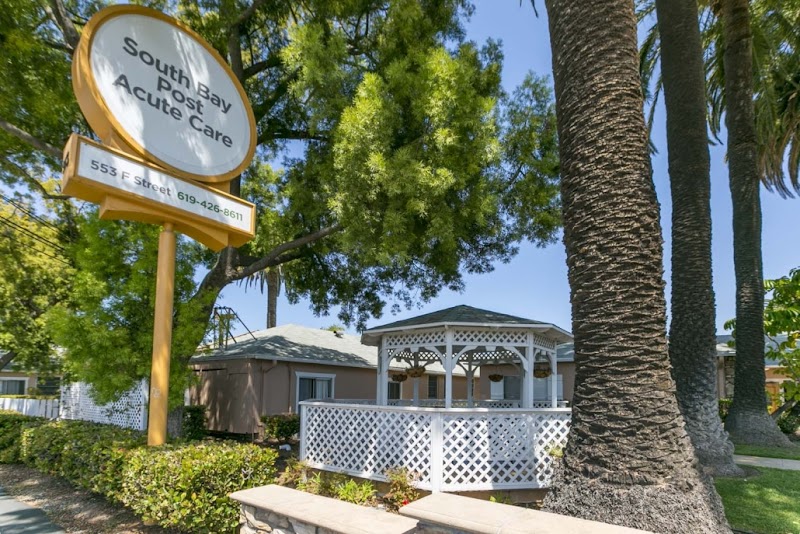
How is South Bay Post Acute Care Staffed?

CMS rates SOUTH BAY POST ACUTE CARE's staffing level at 4 out of 5 stars, which is above average compared to other nursing homes. Staff turnover is 45%, compared to the California average of 46%. This relatively stable workforce can support continuity of care.

What Have Inspectors Found at South Bay Post Acute Care?

State health inspectors documented 30 deficiencies at SOUTH BAY POST ACUTE CARE during 2018 to 2025. These included: 30 with potential for harm.
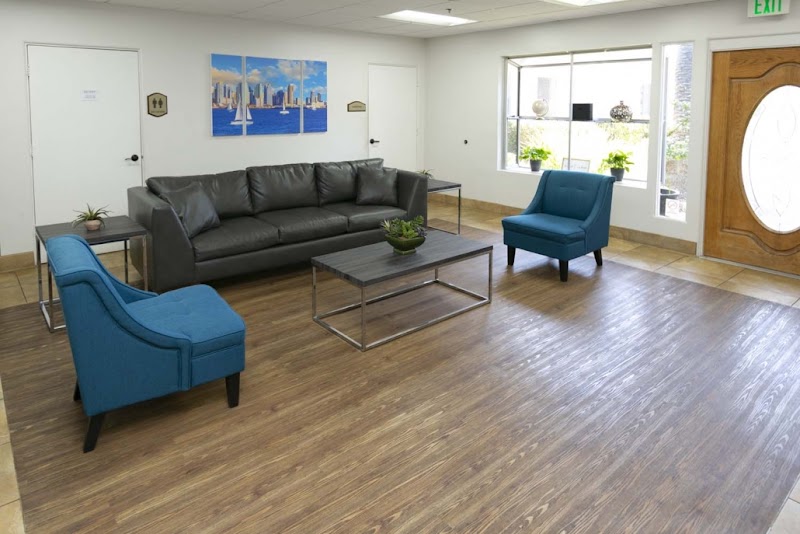
Who Owns and Operates South Bay Post Acute Care?

SOUTH BAY POST ACUTE CARE is owned by a for-profit company. For-profit facilities operate as businesses with obligations to shareholders or private owners. The facility is operated by THE ENSIGN GROUP, a chain that manages multiple nursing homes. With 99 certified beds and approximately 91 residents (about 92% occupancy), it is a smaller facility located in CHULA VISTA, California.
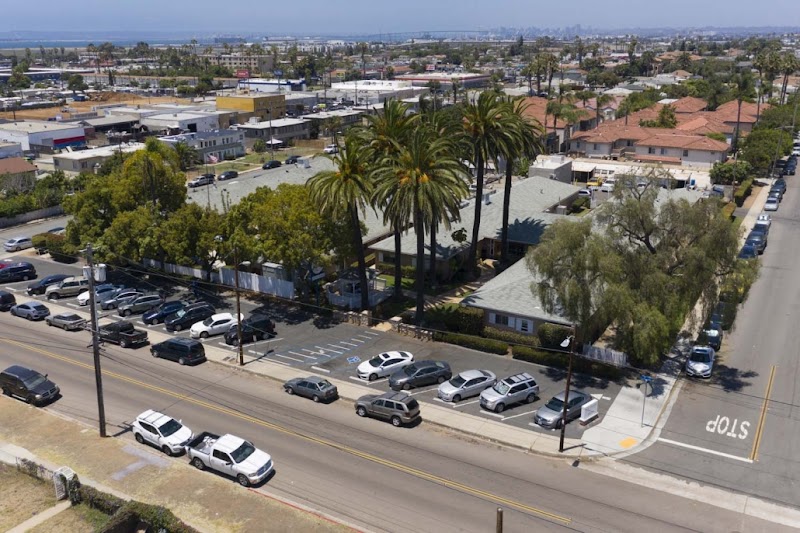
How Does South Bay Post Acute Care Compare to Other California Nursing Homes?

Compared to the 100 nursing homes in California, SOUTH BAY POST ACUTE CARE's overall rating (5 stars) is above the state average of 3.2, staff turnover (45%) is near the state average of 46%, and health inspection rating (5 stars) is much above the national benchmark.

What Should Families Ask When Visiting South Bay Post Acute Care?

Based on this facility's data, families visiting should ask: "Can I visit during a mealtime to observe dining assistance and food quality?" "How do you handle medical emergencies, and what is your hospital transfer rate?" "Can I speak with family members of current residents about their experience?"

Is South Bay Post Acute Care Safe?

Based on CMS inspection data, SOUTH BAY POST ACUTE CARE has a clean safety record: no substantiated abuse findings (meaning no confirmed cases of resident harm), no Immediate Jeopardy citations (the most serious violation level indicating risk of serious injury or death), and is not on the Special Focus Facility watch list (a federal program monitoring the lowest-performing 1% of nursing homes). The facility has a 5-star overall rating and ranks #1 of 100 nursing homes in California. While no facility is perfect, families should still ask about staff-to-resident ratios and recent inspection results during their visit.

Do Nurses at South Bay Post Acute Care Stick Around?

SOUTH BAY POST ACUTE CARE has a staff turnover rate of 45%, which is about average for California nursing homes (state average: 46%). Moderate turnover is common in nursing homes, but families should still ask about staff tenure and how the facility maintains care continuity when employees leave.

Was South Bay Post Acute Care Ever Fined?

SOUTH BAY POST ACUTE CARE has no federal fines on record. CMS issues fines when nursing homes fail to meet care standards or don't correct problems found during inspections. The absence of fines suggests the facility has either maintained compliance or corrected any issues before penalties were assessed. This is a positive indicator, though families should still review recent inspection reports for the full picture.

Is South Bay Post Acute Care on Any Federal Watch List?

SOUTH BAY POST ACUTE CARE is not on any federal watch list. The most significant is the Special Focus Facility (SFF) program, which identifies the bottom 1% of nursing homes nationally based on persistent, serious quality problems. Not being on this list means the facility has avoided the pattern of deficiencies that triggers enhanced federal oversight. This is a positive indicator, though families should still review the facility's inspection history directly.