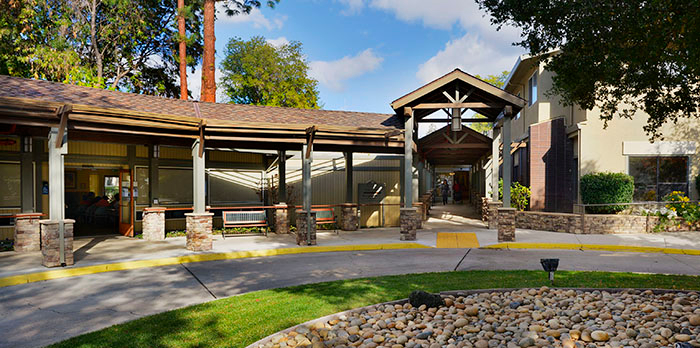



SUNNY VIEW MANOR

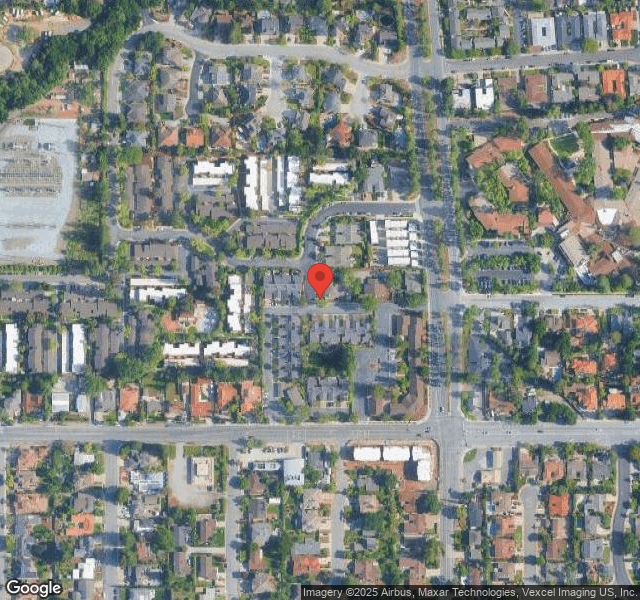
22445 CUPERTINO ROAD, CUPERTINO, CA 95014 (408) 454-5600
Non profit - Corporation 48 Beds FRONT PORCH Data: November 2025
Trust Grade
76/100
#214 of 1155 in CA
Last Inspection: April 2025

Within standard 12-15 month inspection cycle. Federal law requires annual inspections.

Overview

Sunny View Manor has a Trust Grade of B, indicating it is a good choice among nursing homes, though there is room for improvement. It ranks #214 out of 1155 facilities in California, placing it in the top half, and #14 out of 50 in Santa Clara County, meaning only 13 local options are better. The facility is improving, with the number of identified issues decreasing from 10 in 2024 to 4 in 2025. Staffing is a strength, with a 5-star rating and only 26% turnover, which is significantly better than the state average. However, the facility has $8,176 in fines, which is average compared to others. There are some concerns regarding care quality. A serious incident involved staff failing to promptly report a significant change in a resident's condition, resulting in delayed medical attention. Additionally, there were issues with food safety and nutrition, including improperly stored food and meals being kept warm for too long, which could impact residents' health. Overall, while there are strengths in staffing and improvements in overall quality, families should be aware of these care shortcomings.

Trust Score
B
76/100
In California
#214/1155
Top 18%
Safety Record
Moderate
Needs review
Inspections
Getting Better
10 → 4 violations
Staff Stability
✓ Good
26% annual turnover. Excellent stability, 22 points below California's 48% average. Staff who stay learn residents' needs.
Penalties
○ Average
$8,176 in fines. Higher than 71% of California facilities. Some compliance issues.
Skilled Nurses
✓ Good
Each resident gets 45 minutes of Registered Nurse (RN) attention daily — more than average for California. RNs are trained to catch health problems early.
Violations
⚠ Watch
27 deficiencies on record. Higher than average. Multiple issues found across inspections.
★★★★★
5.0
Overall Rating
★★★★★
5.0
Staff Levels
★★★★☆
4.0
Care Quality
★★★★☆
4.0
Inspection Score
Stable
2024: 10 issues
2025: 4 issues

The Good

  • 5-Star Staffing Rating · Excellent nurse staffing levels
  • 4-Star Quality Measures · Strong clinical quality outcomes
  • Low Staff Turnover (26%) · Staff stability means consistent care
  • Full Sprinkler Coverage · Fire safety systems throughout facility
  • No fines on record
  • Staff turnover is low (26%)

    22 points below California average of 48%

Facility shows strength in staffing levels, quality measures, staff retention, fire safety.

The Bad

Federal Fines: $8,176

Below median ($33,413)

Minor penalties assessed

Chain: FRONT PORCH

Part of a multi-facility chain

Ask about local staffing decisions and management

The Ugly 27 deficiencies on record

1 actual harm
Apr 2025 4 deficiencies
CONCERN (D)

Potential for Harm - no one hurt, but risky conditions existed

Respiratory Care (Tag F0695)

Could have caused harm · This affected 1 resident

Based on observation, interview, and record review, the facility failed to follow the physician's order for administering oxygen (colorless and odorless gas which is essential for life) for one of two...

Read full inspector narrative →
Based on observation, interview, and record review, the facility failed to follow the physician's order for administering oxygen (colorless and odorless gas which is essential for life) for one of two residents (Resident 83). This failure had the potential to compromise Resident 83's well- being. Findings: Review of Resident 83's clinical record indicated, Residet 83 was admitted to the facility with diagnoses which included heart failure (the heart is not pumping blood as effective), vascular dementia (a type of dementia (a general term for the loss of memory and other thinking abilities that interfere with daily life) caused by brain damage resulting from impaired blood flow, often due to stroke or other conditions affecting blood vessels), and iron deficiency. During an initial observation, of Resident 83, on 4/14/25, at 2:21 p.m., it was observed that the oxygen flow rate was set to 2 1/2 liters per minute (lpm, liters of oxygen flowing per minute). During an observation on 4/16/25, at 9:13 a.m., the oxygen flow rate was observed to be set at 2 3/4 lpm. During an observation and subsequent interview on 4/17/25, at 8:48 a.m., registered nurse A (RN A) stated Resident 83's oxygen rate was on 3 lpm. RN A further stated she would check the physician's order. During review of Resident 83's physician orders, the orders indicated Oxygen at 2 lpm via nasal cannula (a medical device used to deliver supplemental oxygen). During a review of the facility's undated policy and procedure (P&P), titled Oxygen Therapy, indicated Oxygen therapy is administered by a licensed nurse as ordered by the physician . 12. Set oxygen flow rate as ordered .
CONCERN (E)

Potential for Harm - no one hurt, but risky conditions existed

Deficiency F0801 (Tag F0801)

Could have caused harm · This affected multiple residents

Based on observation, dietary staff interview and document review, the facility failed to ensure staff competency when two of two kitchen staff did not follow manufacturer's instruction when testing t...

Read full inspector narrative →
Based on observation, dietary staff interview and document review, the facility failed to ensure staff competency when two of two kitchen staff did not follow manufacturer's instruction when testing the potency of a chemical used to sanitize kitchen cookware. This failure had the potential of cookware not being sanitized and placed residents at health risk. Findings: During a kitchen observation on 4/16/25, at 3:52 p.m., a kitchen staff was asked to test the potency of the sanitizer from the red bucket (standard receptacle containing sanitized solution used to clean food contact surfaces). The kitchen sous chef (SC, second in command of a kitchen) dipped the test strip into the red bucket for less than 5 seconds three times and began reading the results. On the third time the dipping of the test strip was timed and it was 4.97 seconds. During the observation the SC stated the solution was used to sanitize pots and pans. On 4/16/25, at 4 p.m., the registered dietitian (RD) was observed dipping three test strips each for less than five seconds. The temperature of the solution was 142.8 degrees Fahrenheit (temperature scale). When reading the result, the RD questioned a surveyor why the test strip needed to be dipped for 10 seconds. Review of the In-service Program, Dishwashing Procedure, dated 4/3/23, did not indicate the steps required to test the sanitizer from the red bucket. The documentation indicating kitchen staff competence in performing the test correctly was requested and not provided. Review of the Sanitizing Food Contact Surfaces policy, dated January 1, 2020, under red buckets did not outline the correct procedure to test sanitizer potency. During an interview on 4/17/25, at 12:24 p.m., the administrator (ADM) who reviewed kitchen documents stated the staff inservice confirmed staff received training but not comprehension. Review of the sanitizer direction on the container of the test strip indicated to dip paper in quat solution for 10 seconds, testing solution was to be between 65 to 75 degrees Fahrenheit and testing solution should have a neutral pH (pH of 7 is neutral).
CONCERN (E)

Potential for Harm - no one hurt, but risky conditions existed

Food Safety (Tag F0812)

Could have caused harm · This affected multiple residents

**NOTE- TERMS IN BRACKETS HAVE BEEN EDITED TO PROTECT CONFIDENTIALITY** Based on observation, dietary staff interview and document review the facility failed to ensure cooked foods were stored under s...

Read full inspector narrative →
**NOTE- TERMS IN BRACKETS HAVE BEEN EDITED TO PROTECT CONFIDENTIALITY** Based on observation, dietary staff interview and document review the facility failed to ensure cooked foods were stored under safe temperatures and failed to cover meats and vegetables in the walk-in refrigerator. The failure of not verifying meat temperatures after blast chilling (rapidly chilling food with cold air) had the potential of causing food borne illness had the foods were not chilled to the correct temperature. The failure of not covering refrigerated foods had the potential to diminish its taste and placed the risk for food contamination. Findings: 1. During kitchen observation with the dietary supervisor (DS) on 4/14/25, at 9:30 a.m., there were food racks approximately five feet in length storing uncovered vegetables and meats of chicken, fish, beef and pork in the walk-in refrigerator. One of the tray contained marked or seared [NAME] broil beef, with four pork chop trays under. Another rack stored raw asparagus, partially cooked onion, bell pepper and eggplant on the top rack, foiled macaroni under followed by slider beef patties. Another rack had four racks of salmon, 6 racks of breaded chicken. There were racks containing trays of chicken and waffles. On the side of the racks there were labels indicating foods were to be consumed on 4/14/25 or 4/15/25. On the shelves were two boxes of uncovered sliced mushrooms. All of the mentioned food items on the racks were not covered. During an interview on 4/14/25, at 10:47 a.m., the registered dietitian (RD) confirmed the [NAME] broil steaks were parbroiled (partially cooked), the chicken, pork, salmon and bacon were raw. During a follow up interview on 4/14/25, at 1:04 p.m., the RD stated when a food is opened it needs to be covered to preserve moisture and prevent contamination. A request was made for the policy addressing the storage of food in refrigerators and not provided by 4/17/25. The 2022 FDA (Federal Drug and Administration) Food Code mandated as specified in paragraph 3-305.11(A)(1) and (2) titled Food Storage indicated food shall be protected from contamination by storing the food in a clean, dry location where it is not exposed to dust or other contamination. 2. During an interview on 4/16/25, at 9:33 a.m., the sous chef (SC, the second-in-command in a kitchen) stated the cook marks beef, chicken, and pork by putting it on the grill for 30 seconds to one minute on each side and placing them on the blast chiller to cool. A temperature probe is inserted in the meat and the chiller is set to cool the meat to 33 to 35 degree Fahrenheit (temperature scale). After the chiller stops the meats are placed in the refrigerator and there is no monitoring or temperature log for meats undergoing blast chilling. During an interview on 4/16/25, at 1:30 p.m., the DS stated the blast chiller was acquired a month ago, the temp of the food shows up on the screen. Prior to using the blast chiller food temperatures were checked and the temperatures were recorded on the cool down log. Dietary staff were not checking meat temperatures after blast chilling. Review of the Quick Chill Service and Storage policy, dated January 1, 2020 indicated potentially hazardous food prepared from ambient temperature foods must be cooled to 41 degree Fahrenheit or below within four hours and indicated to measure food temperatures. Review of the undated blast chiller manufacturer instruction did not address the verification of food cooled to proper temperatures.
CONCERN (F)

Potential for Harm - no one hurt, but risky conditions existed

Deficiency F0804 (Tag F0804)

Could have caused harm · This affected most or all residents

Based on observation, dietary staff interview and document review, the facility failed to conserve nutritional food value. The cooked food prepared for lunch on 4/14/25 were placed on the steamtable 1...

Read full inspector narrative →
Based on observation, dietary staff interview and document review, the facility failed to conserve nutritional food value. The cooked food prepared for lunch on 4/14/25 were placed on the steamtable 1 1/2 hours prior to service. This failure had the potential to compromise nutritional quality and palatability of residents who received meals from the kitchen. Findings: Processing and cooking conditions cause variable losses of vitamins. Losses vary widely according to cooking method and type of food. Degradation of vitamins depends on specific conditions during the culinary process, e.g., temperature, presence of oxygen, light, moisture, pH, and, of course, duration of heat treatment (Journal of Food Composition and Analysis, June 2006). The molecular structure of vitamins makes them easily degradable under various conditions such as temperature. During kitchen observation on 4/15/25 beginning at 8:50 a.m., the following cooked food were placed in the steamtable; Tray 1 corned beef, Tray 2 chicken stew, Tray 3 potatoes, and Tray 4 pureed carrots. During an interview at the time of observation on 4/14/25 at 8:50 a.m., the dietary supervisor (DS) stated the food in the steamtable was for lunch and trayline (system of plating food for a meal) began at 10:30 p.m. During an interview on 4/14/25 at 1:04 p.m., the registered dietitian (RD) who reviewed the dietetic service policies stated the lunch food was placed in the steamtable too early. Review of the Dietetic Service - Food Service policy, dated January 1, 2020, indicated to prepare meats just prior to service. Braised or simmered meats may be placed in steam tables for the last 30 minutes of cooking prior to service and it was preferable to steam vegetables as quickly and as close to serving time as possible.
Apr 2024 1 deficiency 1 Harm
SERIOUS (G) 📢 Someone Reported This

A family member, employee, or ombudsman was alarmed enough to file a formal complaint

Actual Harm - a resident was hurt due to facility failures

Quality of Care (Tag F0684)

A resident was harmed · This affected 1 resident

**NOTE- TERMS IN BRACKETS HAVE BEEN EDITED TO PROTECT CONFIDENTIALITY** Based on interview and record review, The facility failed to ensure staff promptly reported a significant change in condition to...

Read full inspector narrative →
**NOTE- TERMS IN BRACKETS HAVE BEEN EDITED TO PROTECT CONFIDENTIALITY** Based on interview and record review, The facility failed to ensure staff promptly reported a significant change in condition to the physician for one of two sampled residents (Resident 1). Staff failed to promptly report a significant change in condition to the physician when Resident 1 showed a reduced level of alertness and Resident 1's Glasgow Coma Scale (a scale used to reliably measure a person's level of consciousness after a brain injury) was 9 out of 15 (where a score of 13 or higher correlates with mild brain injury, a score of 9 to 12 correlates with moderate brain injury, and a score of 8 or less represents severe brain injury). This failure resulted in Resident 1 not being seen promptly by a physician at the time of a change in condition (on 12/11/23) and/or to receive an acute care hospital evaluation, and as a result was subsequently not deemed a candidate for any intervention when admitted to an acute care hospital admission on [DATE], due to Resident 1's late presentation. Resident 1was then placed on comfort care (a type of end-of-life treatment that focuses on providing comfort, quality of life, and dignity instead of extending life), and expired in the acute care hospital on [DATE]. FINDINGS: Review of Resident 1's Face Sheet (document that contains a summary of a patient's personal and demographic information) indicated Resident 1 was admitted to the facility on [DATE], with diagnoses of traumatic subarachnoid hemorrhage (an acute brain injury resulting in swelling in the brain), hemiplegia (severe or complete loss of strength or paralysis on one side of the body) and hemiparesis (mild or partial loss of strength or paralysis on one side of the body) following cerebrovascular accident (commonly referred to as a stroke and also referred to as a CVA in which there is an interruption in the flow of blood to cells in the brain depriving them of oxygen). Resident 1's face sheet further indicated Resident 1's Family Member (FM) was Resident 1's durable power of attorney for healthcare (DPOA, person who has legal authority to make medical decisions for an individual). Resident 1's Face Sheet further indicated Resident 1's code status (type of resuscitation [reviving] interventions [if any] a person would like the healthcare team to perform if their heart stopped beating and/or they stopped breathing) was full code (health care personnel would do everything possible to save your life in a medical emergency). Review of Resident 1's Physical Therapy (PT) Progress Note, dated 12/6/23, indicated Resident 1 actively participated with skilled interventions and there were no barriers impacting treatment. Review of Resident 1's PT Progress Note, dated 12/8/23, indicated Resident 1 actively participated with skilled therapy interventions and barriers impacting treatment were moderate cognitive (relating to or involving the processes of thinking and reasoning) impairment and increased muscle tone and extensor posturing (also called decerebrate posturing, an abnormal body posture that involves the arms and legs being held straight out, the toes being pointed downward, and the head and neck being arched backward). Review of Resident 1's Occupational Therapy (OT) Progress Note, dated 12/8/23, indicated therapy treatment was well tolerated and there were no barriers impacting treatment. Review of Resident 1's PT Progress Note, dated 12/11/23, indicated Resident 1 was observed to be non-verbal and mostly not focusing. PT Progress Note further indicated barriers impacting treatment were decreased attention skills and the nurse on duty was made aware of Resident 1's signs and symptoms. Review of Resident 1's OT Progress Note, dated 12/11/23, indicated Resident 1 did not tolerate the therapy session and Resident 1's Glasgow coma scale was 9/15. OT Progress Note further indicated the nurse on duty was notified. Review of Resident 1's Nurse Progress Note, dated 12/11/23, indicated occupational therapy (OT) reported Resident 1 scored 9/15 on the Glasgow Coma Scale. Nurse Progress Note further indicated there was no documentation in Resident 1's clinical record that the physician was notified. Review of Resident 1's Speech Therapy (ST) Progress Note, dated 12/11/23, indicated Resident 1 had a change in condition per Speech Therapist (ST) observation and the Physical Therapist (PT) and Occupational Therapist (OT) report. ST Progress Note further indicated Resident 1 showed minimal receptiveness and verbalization. The ST Progress Note further indicated Resident 1's response to treatment had noticeably declined. ST Progress Note further indicated that the Speech Therapist recommended imaging (a type of test that makes detailed pictures of areas inside the body) consultation to rule out a Transient Ischemic Attack (TIA, short period of symptoms like those of a stroke) or CVA and consulted with the Charge Nurse regarding Resident 1's status. Review of Resident 1's Nurse Progress Note, dated 12/11/23, indicated Resident 1 was not communicating with PT and when Resident 1 was asked questions Resident 1 did not respond. There was no documentation in Resident 1's clinical record the physician was notified. Review of Resident 1's PT Progress Note, dated 12/13/23, indicated Resident 1 was non-verbal with mild to moderate spasticity (stiff or rigid muscles) noted on both of her lower extremities. PT Progress Note further indicated barriers impacting treatment were reduced level of alertness and increasing muscle tone. PT Progress Note further indicated nursing was made aware of Resident 1's signs and symptoms during the Interdisciplinary Team (IDT, a group of healthcare professionals who meet to discuss and plan patient care) Care Conference on 12/13/23. Review of Resident 1's IDT Care Conference Note, dated 12/13/23, indicated Resident 1 was not eating, had a lot of global extensor tone (Abnormal muscle tone, muscle tone is the resistance of a muscle to active or passive stretch, or the overall stiffness of the muscle) and limited ability to initiate motor movements (actions of the muscles). Review of Nurse Progress Note, dated 12/13/23, indicated Resident 1 was not verbalizing to the nurse and was not following directions during the passing of medication. Nurse Progress Note further indicated Resident 1 was not able to complete the PT session and there was no documentation in Resident 1's clinical record that the physician was notified. Review of Resident 1's Nurse Progress Note, dated 12/14/23, indicated the physician was notified to see Resident 1 regarding therapy noted Resident 1 was non-verbal and had a Glasgow Coma Scale of 9/15 with extensor posturing (involuntary positioning of the arms when stimulated, a result of a severe brain injury). Progress Note further indicated when Resident 1 was admitted to the skilled nursing facility (SNF) Resident 1 was able to say a few words but was now non-verbal. Review of Resident 1's Physician's Progress Note, dated 12/14/23, indicated the physician was called to see Resident 1 for new changes. Progress Note indicated Resident 1 had clinically worsened with decreased responsiveness. Progress Note further indicated Resident 1 was no longer verbalizing, had possible new right-sided weakness, was unable to swallow medications and food, and had extensor posturing. Progress Note further indicated Resident 1's attending physician (AP) suspected an extension of the CVA (cerebrovascular accident, major worsening, or deterioration in neurological [relating to the nervous system] status following an initial stroke requiring medical attention). The Progress Note further indicated that Resident 1 was transferred to the emergency department (ED) by ambulance. Review of Resident 1's acute care hospital Emergency Department Progress Note, dated 12/14/23, indicated Resident 1 had been nonverbal for two days and was brought to the ED for not taking oral medications or talking. ED note further indicated Resident 1 was not following commands or talking with a left gaze preference (an abnormality of gaze that can be observed following an acute cerebral lesion, e.g., stroke) and right arm weakness. Review of Resident 1's acute care hospital History & Physical (H & P) dated, 12/14/23, indicated Resident 1 had a history of a recent stroke and was hospitalized for six days from 11/29/23 through 12/5/23, after falling in her bathroom two days prior at home. At discharge from the acute care hospital on [DATE], to the SNF (skilled nursing facility), Resident 1was able to follow commands and was talking in complete sentences. Subsequently, Resident 1 was then referred to the ED on 12/14/23, after her SNF staff noted Resident 1 was more lethargic (sluggish & lacking energy) and no longer speaking, with a left lateral gaze preference. Resident 1 was admitted to the Intensive Care Unit (ICU) for further evaluation and taken for a Computed Tomography Scan (CT, a diagnostic imaging procedure that can show whether you had a stroke). CT results showed worsening subdural stroke (also known as subdural hematoma, occurs when a blood vessel in the space between the skull and the brain [subdural space] is damaged) in addition to ischemic stroke (occurs when a blood clot blocks blood flow in your brain, versus hemorrhagic stroke is when a blood vessel in your brain ruptures). The H & P further indicated Resident 1 was not deemed a candidate for any intervention at the time of admission to the acute care hospital on [DATE] due to Resident 1's late presentation. It further indicated Resident 1's code status was changed to do not resuscitate (DNR, do not resuscitate or do not perform cardiopulmonary resuscitation [CPR, emergency lifesaving procedure] to restart the heart) and do not intubate (DNI, do not insert a breathing tube) due to Resident 1's chance of surviving being very low. Review of Resident 1's acute care hospital Hospitalist Progress Note dated, 12/17/23, indicated Resident 1 was unresponsive and not following commands at time of admission . Resident 1's Hospitalist Progress Note further indicated Resident 1 presented at the SNF with a 2-day history of progressive lethargy and altered level of consciousness and was found to have an acute chronic subdural hemorrhage (a pool of blood between the brain and its outermost covering) upon admission to the acute care hospital. Review of Resident 1's Hospital Discharge summary, dated [DATE], indicated Resident 1 did not show any neurologic improvement with no potential for any meaningful neurologic recovery after admission and was ultimately placed on comfort care and expired in the acute care hospital on [DATE]. Review of Resident 1's Death Certificate indicated: date of death : 12/19/23 Immediate Cause: COMPLICATIONS OF TRAUMATIC SUBDURAL HEMMORRHAGE and Death Reported to Coroner? Yes. During a telephone interview with Physical Therapist A (PT A), on 3/27/24 at 2:40 p.m., PT A stated that when she first saw Resident 1 on 12/8/23, Resident 1 was conversing, coherent and responding appropriately. PT A further stated that when she saw Resident 1 on 12/11/23, Resident 1 was no longer communicating and functionally Resident 1 was declining with upper extremity extensor posturing (involuntary extension of the upper extremities in response to external stimuli). PT A reported the signs and symptoms to the nurse on duty. During a telephone interview with Speech Therapist B (ST B), on 3/28/24, at 1:45 p.m., ST B stated that when she saw Resident 1 on 12/11/23, Resident 1 was non-responsive with a noted drastic decline in condition and she reported the change in condition to the nurse on duty. ST B further stated it is a nursing protocol to notify the doctor of a change in condition. During a telephone interview, on 4/5/24, at 3:56 p.m., Registered Nurse C (RN C) stated that staff usually let the doctor know if there has been a change in a resident's condition and the doctor will order the resident be transferred out to the hospital for further evaluation or treatment. RN C acknowledged that on 12/11/23 OT reported Resident 1 scored a 9/15 on the Glasgow Coma Scale. RN C also stated it was a change in condition. RN C further stated he does not remember if he reported it to the doctor. RN C acknowledged there was no documentation in Resident 1's clinical record that the change in condition was reported to the doctor. RN C further stated the doctor should have been notified. During a telephone interview with the Minimum Data Set Coordinator (MDSC), on 4/5/24 at 4:25 p.m., MDSC stated she assessed Resident 1 when Resident 1 was admitted to the facility. The MDSC further stated at that time Resident 1 was alert and responsive. The MDSC also stated at the IDT care conference on 12/13/23, therapy reported Resident 1 had a lot of global extensor tone (rigidity) and the MDSC stated that was a change in condition for Resident 1. The MDSC further stated it was something therapy had noted and first brought to her attention at the time of the IDT care conference. MDSC further stated she was not aware if anyone notified the doctor about the Resident 1's change in condition. The MDSC further stated she also did not notify the doctor and that the doctor should have been notified. During a telephone interview, on 4/12/24 at 11:15 a.m., the director of nursing (DON)stated that when there is a change in a resident's condition, staff usually notify the doctor by text message. The DON further stated that she first became aware of Resident 1's change in condition during the IDT Care Conference on 12/13/23. The DON further stated she expected that the MDSC would notify the resident's doctor. DON acknowledged that the doctor was not notified about the Resident 1's change in condition and that the doctor should have been notified. During a telephone interview, on 4/16/24, at 4:00 p.m., Resident 1's attending physician (AP) stated that when she saw Resident 1 on 12/8/23, Resident 1 was alert and talking intermittently. The AP further stated she was called to see Resident 1 six days later (12/14/23) and the PT pointed out Resident 1 had gone from a 14 on the Glasgow Coma Scale to a 9, had stopped taking her medications, had extensor posturing and was no longer verbal. The AP further stated she did not think she was notified of a change in condition prior to seeing Resident 1 on 12/14/23. The AP further stated she notified Resident 1's FM/DPOA and that Resident 1 had possibly extended her stroke (extension or worsening of a stroke following an initial stroke requiring medical attention). The AP further stated Resident 1's FM/DPOA said to send Resident 1 out to the ER (emergency room) for evaluation. Review of the facility's revised November 2016 policy Change in Resident Condition states that any sudden serious change in a resident's condition manifested by a marked change in physical or mental behavior, will be communicated to the physician with a request for a physician visit promptly and/or acute care evaluation. It further states that the resident/resident's representative will be notified that there has been a change in the resident's condition, and what steps are being taken.
Jan 2024 9 deficiencies
CONCERN (D)

Potential for Harm - no one hurt, but risky conditions existed

Comprehensive Care Plan (Tag F0656)

Could have caused harm · This affected 1 resident

Based on observation, interview and record review, the facility failed to develop and implement a comprehensive person-centered care plan when one of 12 sampled residents (Resident 233) did not have a...

Read full inspector narrative →
Based on observation, interview and record review, the facility failed to develop and implement a comprehensive person-centered care plan when one of 12 sampled residents (Resident 233) did not have application of left-arm brace included in the Care Plan (CP). This failure had the potential to result in inadequate communication between staff in providing necessary treatment. Findings: During a review of Resident 233's physician orders dated 1/10/24, it indicated applying left hand resting brace everyday for up to two hours in the morning, two hours in afternoon as tolerated, monitor skin for redness/swelling or changes in skin integrity. During a review of Resident 233's CP, indicated there was no CP for the use of brace. During an interview on 1/12/24 at 12:25 p.m. with Director of Nursing (DON), DON stated there should be a care plan for the brace application. The DON confirmed there was no CP for the left-hand brace. She stated CP should be updated right away with a new order. She further stated to do so, Certified Nursing Assistants (CNA) would know the need and frequency of applying the brace for the resident. During a review of facility's policy and procedure (P&P) titled Care Planning, dated February 2021, the P&P indicated, Resident care planning includes participation from the members of the interdisciplinary team which must include the resident's CNA and a member of the food and nutritional services team at resident care conferences with continual reassessment, and updating at least quarterly, and upon change of condition, until resident's discharge. [ .] Identify the problems or needs. After information has been gathered, the data is analyzed to determine what problems and needs exist.
CONCERN (D)

Potential for Harm - no one hurt, but risky conditions existed

Deficiency F0658 (Tag F0658)

Could have caused harm · This affected 1 resident

Based on observation, interview, and record review, the facility failed to ensure care and services were provided to meet the professional standards of practice for one of five sampled residents (Resi...

Read full inspector narrative →
Based on observation, interview, and record review, the facility failed to ensure care and services were provided to meet the professional standards of practice for one of five sampled residents (Residents 233) when registered nurse C (RN C ) did not shake the Med Plus (nutritional supplement) as directed prior to pouring in the medication cup; the Med Plus was not dated when opened; and RN C provided a wrong consistency of Med Plus to Resident 233, nectar thick consistency (liquids that are easily pourable and are comparable to heavy syrup found in canned fruit) instead of thin liquids as diet ordered. These failures had the potential to jeopardize the health and safety of the residents. Findings: 1a. Review of Resident 233's face sheet (a document that gives a patient's information at a quick glance), dated 12/27/2023, indicated Resident 233 was admitted to the facility with diagnoses including hemiplegia (one-sided muscle paralysis or weakness) and hemiparesis (weakness or the inability to move on one side of the body), and dysphagia (difficulty swallowing). During medication administration observation on 1/9/2024 at 4:12 p.m., licensed vocational nurse D (LVN D) took out an opened Med Plus from the resident's refrigerator in the dining room and handed it to RN C. RN C poured 4 ounces (oz - unit of weight) of Med Plus to a cup without shaking it. At 4:30 p.m., RN C handed the cup of Med Plus to Resident 233. Resident 233 tried to drink it, but the Med Plus was thick, and Resident 233 had a hard time drinking. RN C provided a straw to help Resident 233 in drinking the Med Plus. It took about a minute until Resident 233 was able to drink the Med Plus using a straw. During an interview with RN C on 1/9/2024 at 4:40 p.m., RN C confirmed she did not shake the Med Plus prior to pouring in a cup. 1b. During a concurrent interview with LVN D and director of nursing (DON) on 1/9/2024 at 4:41 p.m., both licensed nurses stated the Med Plus should be dated when opened. LVN D further stated the kitchen staff should have provided a date opened sticker for nurses to label. Review of the Med Plus box label indicated, DIRECTIONS: .Shake well. Twist cap open and pour .STORAGE AND HANDLING: .Refrigerate after opening and use within 3 days. Additional review of the Med Plus box label indicated, Mildly Thick Nectar Consistency. Review of the facility's policy and procedure titled, Medication Administration: General Guidelines, dated 01/23, indicated, b. The nurse shall place a 'date opened' sticker .if one is not provided by the dispensing pharmacy and enter the date opened. 1c. Review of Resident 233's physician's telephone order dated 1/2/2024, indicated, Diet upgrade to mechanical soft chopped/thin. During a concurrent interview with DON and registered dietitian (RD) on 1/12/2024 at 10:40 a.m., RD confirmed the facility only had a nectar thickened Med Plus. RD agreed the doctor's order for Resident 233's liquid consistency was thin liquids and the Med Plus provided should have been thin consistency. DON agreed the doctor's order for Resident 233's fluid consistency was not followed. Review of the facility's policy and procedure titled, Physician Orders, Noting Of, date revised February 2009, indicated, The nurse shall verify each order for completeness, clarity, appropriateness .
CONCERN (D)

Potential for Harm - no one hurt, but risky conditions existed

Deficiency F0676 (Tag F0676)

Could have caused harm · This affected 1 resident

Based on observation, interview, and record review, the facility failed to provide care and services for effective communication when a facility did not provide language assistance or other communicat...

Read full inspector narrative →
Based on observation, interview, and record review, the facility failed to provide care and services for effective communication when a facility did not provide language assistance or other communication aid to two of three sampled residents with language barrier (speaking in foreign language) (Residents 83 and 4). This failure had the potential to affect the psychosocial well-being of these residents and a decline in their activities of daily living. Findings: 1. During a concurrent observation and interview on 1/8/2024 at 9:08 a.m., Resident 83 was sitting up on a wheelchair and the certified nursing assistant F (CNA F) was also inside the room. CNA F stated Resident 83 was Mandarin speaking only. There was no communication binder/board or descriptive pictures observed inside the room. During a follow up observation on 1/8/2024 at 11:24 a.m., inside Resident 83's room, there were no communication binder/board or descriptive pictures on Resident 83's bedside drawers. Another observation on 1/9/2024 at 9:28 a.m., inside Resident 83's room, there was no on-site communication binder/board or descriptive pictures inside the room. During an interview with registered nurse E (RN E) on 1/9/2024 at 3:14 p.m., RN E confirmed he was the nurse assigned to care for Resident 83. RN E stated he used a pictured communication sheet to communicate with Resident 83. RN E confirmed the pictured communication sheet were not inside Resident 83's room. RN E tried to look for the pictured communication sheet at the nurse station and found 2 pages. Review of Resident 83's care plan titled, Communication, dated 1/11/2024, indicated Resident 83 had language barrier and his primary language was Mandarin. The Communication care plan interventions indicated to, Use alphabet communication board .Communicate using descriptive pictures to identify care needs. 2. Review of Resident 4's Quarterly, Minimum Data Set (MDS, an assessment tool) dated 12/21/2023, it indicated Resident 4's preferred language was Mandarin and she wanted or needed an interpreter to communicate with a doctor or health care staff. Review of Resident 4's care plan titled, Communication, dated 11/21/23, indicated Resident 4 had language barrier and her primary language was Mandarin. The Communication care plan interventions indicated to, Use alphabet communication board .Communicate using descriptive pictures to identify care needs. During an initial pool observation on 1/8/2024 at 9:28 a.m., Resident 4 was in bed and spoke Mandarin to this surveyor. There was no communication board/binder or descriptive pictures inside Resident 4's room. During another observation inside Resident 4's room on 1/9/2024 at 9:28 a.m., there was no communication board/binder or descriptive pictures inside the room and on Resident 4's bedside drawers. During an interview with registered nurse E (RN E) on 1/9/2024 at 3:14 p.m., RN E confirmed he was the nurse assigned to care for Resident 4. RN E stated he used a pictured communication sheet to communicate with Resident 4. RN E confirmed the pictured communication sheet were not inside Resident 4's room. RN E tried to look for the pictured communication sheet at the nurse station and found 2 pages. During an interview with CNA F on 1/10/2024 at 2:00 p.m., CNA F stated she was not aware about the communication board/binder or descriptive pictures they could use to communicate to residents with language barrier. During an interview with social services director (SSD) on 1/11/2024 at 8:30 a.m., SSD stated she had a link in her computer regarding different languages. SSD further stated she would print out the appropriate language communication cue cards and leave them at residents' bedside for staff to use. SSD confirmed it is important to have a communication cue card inside residents' room for staff to be able to communicate to residents who had language barrier. During an interview with the director of staff development (DSD) on 1/11/2024 at 10:55 a.m., DSD stated SSD should prepare the communication board or cue cards upon resident's admission. DSD further stated the communication board or cue cards should be placed inside the resident's room. During a review of the facility's policy and procedure titled, Communication Assistance, date revised November 2016, indicated, Alternate methods for communication will be provided to assist with communication needs between the resident and staff .The facility will make arrangements for interpreters or alternate means of communication, such as pictures .to enhance communication between the resident and staff.
CONCERN (D)

Potential for Harm - no one hurt, but risky conditions existed

Deficiency F0700 (Tag F0700)

Could have caused harm · This affected 1 resident

Based on observation, interview and record review, the facility failed to ensure one of three sampled residents (Resident 16) remained free from accident hazards due to the use of bed rail (side rail)...

Read full inspector narrative →
Based on observation, interview and record review, the facility failed to ensure one of three sampled residents (Resident 16) remained free from accident hazards due to the use of bed rail (side rail) when Resident 16 had the left upper bed rail raised up while in bed without bed rail assessment, physician's order and care plan. This failure had the potential to put Resident 16 at risk for entrapment and serious injury. Findings: Review of Resident 16's face sheet (a document that gives a patient's information at a quick glance), last updated 12/21/2023, indicated Resident 16 was admitted to the facility with diagnoses including encounter for palliative care ( a specialized medical care that focuses on providing relief from pain and other symptoms of a serious illness), Alzheimer's disease ( a brain disorder that slowly destroys memory and thinking skills and, eventually, the ability to carry out the simplest tasks) and adult failure to thrive (when an older adult has a loss of appetite, eats and drinks less than usual, loses weight, and is less active than normal). Review of Resident 16's Admission, minimum data set (MDS, an assessment tool), dated 12/13/2023, it indicated Resident 16 required substantial/maximal assistance (staff does MORE THAN HALF the effort. Staff lifts or holds trunk or limbs and provides more than half the effort) with bed mobility and transfer. During an initial pool observation on 1/8/2024 at 9:07 a.m., Resident 16 was lying in bed, asleep, right side of bed was against the wall and the left upper bed rail was raised up. During a follow up observation on 1/9/2024 at 9:26 a.m., Resident 16 was lying in bed, non-coherent, and with left upper bed rail raised up. During a concurrent interview and record review with the minimum data set nurse (MDSN) on 1/11/2024 at 1:20 p.m., MDSN reviewed Resident 16's clinical records. MDSN stated Resident 16's short term and long-term memory was not okay. MDSN confirmed there was no bed rail/side rail assessment, no physician's order for bed rail use and no care plan developed. MDSN stated charge nurses were responsible for initiation of bed rail assessment upon residents' admission, obtained physician's order and bed rail consent and developed care plan. During an interview with the director of nursing (DON) on 1/11/2024 at 1:30 p.m., DON stated there should be a bed rail assessment, physician's order, consent and care planned prior to use of bed rail. During a review of the facility's policy and procedure titled, Side Rails/Assist Bar, dated April 2017, indicated, 1. Bed rails/assist bars should be in the down position and only used as an assistive device during turning and transfers .If it is determined that a bed rail/assist bar is the best alternative, the following requirements must be met: Discuss any concerns or potential safety risks with resident of resident's representative; The physician must be notified to give informed consent to the resident or resident representative; .Care plan the need for use of the bed rail/assist bar.
CONCERN (D)

Potential for Harm - no one hurt, but risky conditions existed

Pharmacy Services (Tag F0755)

Could have caused harm · This affected 1 resident

Based on observation, interview, and record review, the facility failed to ensure a safe administration of medication and accurate accountability of controlled medications (those with high potential f...

Read full inspector narrative →
Based on observation, interview, and record review, the facility failed to ensure a safe administration of medication and accurate accountability of controlled medications (those with high potential for abuse or addiction) when: 1. Registered nurse E (RN E) left the medication at resident's overbed table without ensuring Resident 136 had swallowed the solution. This failure had the potential for resident not taking the medications or having swallowing difficulty or choking without the nurse present for immediate help; and 2. Random controlled medication use audits for 2 out of 5 residents (Residents 135 and 8) did not reconcile. Two medications were signed out of the Controlled Drug Record (CDR, an inventory sheet that keeps record of the usage of controlled medications) but not documented in the Medication Administration Record (MAR) and two medications were signed out of the CDR, wasted with a witnessed nurse but was documented given in the MAR. There was a total of 4 controlled medications unaccounted for. This failure had the potential for misuse or abuse of controlled medications. Findings: 1. During a medication administration observation on 1/10/2024 at 9:50 a.m., RN E prepared and administered Resident 136 routine medications and left one cup of Cholestyramine oral solution (a medication used to treat high cholesterol) on Resident 136 overbed table. RN E stated she will take that later. During a follow up concurrent observation and interview with Resident 136 and RN E on 1/10/2024 at 12:43 p.m., Resident 136 was sitting up on her wheelchair eating lunch inside her room, with overbed table in front of her. The cup of Cholestyramine oral solution was still on the overbed table and was not even consumed. Resident 136 stated she did not know what it was. RN E stated he should have offered the medication again and should have not left the medication at bedside. During an interview with the director of nursing (DON) on 1/12/2024 at 10:38 a.m., DON stated medication should never be left alone at resident's bedside. During a review of the facility's policy and procedure titled, Medication Administration: General Guidelines, dated 01/23, indicated, 4. Medications are to be administered at the time they are prepared .20. The resident is always observed after administration to ensure that the dose was completely ingested. 2. The Controlled Drug Records (CDRs) for five random residents receiving controlled medications were requested for review during the survey on 1/9/2024 at 4:30 p.m. a. Resident 136 was a hospice (a program focuses on the care, comfort, and quality of life of a person with serious illness who is approaching the end of life) resident and had a physician's order dated 12/29/2023, for morphine sulfate (a controlled medication for pain and for comfortable breathing) 20 milligrams (mg, unit of measurement)/milliliters (ml, metric unit of volume), 0.3 ml by mouth every 8 hours around the clock (ATC) for comfort breathing. During a concurrent interview and record review with the director of nursing (DON) on 1/11/2024 at 1:49 p.m., DON stated nurses should sign their name in CDR once a narcotic was pulled out of the narcotic box, and they should document in the residents' MAR once given. DON reviewed Resident 136 CDR for morphine sulfate and the 1/2024 MAR. DON confirmed morphine sulfate 0.3 ml was taken out of the narcotic box and signed out by nurses in CDR on 1/6/2024 at 2 p.m. and 1/9/2024 at 6 a.m. but were never signed as administered in the MAR. DON verified two doses of morphine sulfate were not accounted for. b. Resident 8 had a physician's order dated 12/15/2023 for codeine sulfate (a controlled medication for pain) 30 mg, half tablet three times a day, prior to transfer and after lunch. During a concurrent interview and record review with the DON on 1/12/2024 at 9:39 a.m., a review of Resident 8's CDR for codeine sulfate and the 12/2023 MAR reflected the nursing staff signed out the medication in the CDR and wasted it with another nurse as a witness on 12/18/2023 for the 6 p.m. dose, but documented administered in the MAR. DON confirmed the medication was wasted and should have been documented as not administered by a circle marked around nurse's initial in the MAR. At 10:19 a.m., another review of Resident 8's CDR for codeine sulfate and the 1/2024 MAR reflected the nursing staff signed out the medication in the CDR and wasted it with another nurse on 1/1/2024 for the 1 p.m. dose, but documented administered in the MAR. DON stated the nurse should have marked a circle around his initial and documented at the back of the MAR to indicate the reason why the medication was not administered. During a concurrent interview and record review on 1/12/2024 at 10:22 a.m., licensed vocational nurse H (LVN H) reviewed Resident 8's CDR and the 1/2024 MAR. LVN H confirmed she was the one who witnessed with the day shift nurse who pulled out the codeine sulfate from the narcotic box. LVN H stated they wasted the medication because it fell on the floor. LVN H further stated the medication was not given to the resident and the nurse should have circled his initial and documented at the back of the MAR, the reason why it was not given. During a review of the facility's policy and procedure titled, Medication Administration: Controlled Substances, dated 01/23, indicated, 4. When a controlled medication is administered, the licensed nurse administering the medication immediately enters the following information on the accountability record when removing dose from the controlled storage: a. Date and time of administration; b. Amount administered; c. Signature of the nurse administering the dose. 5. Administer the controlled medication and document dose administration on the MAR. Another review of the facility's policy and procedure titled, Medication Administration: General Guidelines, dated 01/23, indicated, 2. If a dose of regularly scheduled medication is withheld, refused, or given at other than the schedule time .the MAR/eMAR must be appropriately documented and explanatory notation/documentation made .
CONCERN (D)

Potential for Harm - no one hurt, but risky conditions existed

Deficiency F0761 (Tag F0761)

Could have caused harm · This affected 1 resident

**NOTE- TERMS IN BRACKETS HAVE BEEN EDITED TO PROTECT CONFIDENTIALITY** Based on observation, interview and record review, the facility failed to ensure that all drugs and biologicals (therapeutic sub...

Read full inspector narrative →
**NOTE- TERMS IN BRACKETS HAVE BEEN EDITED TO PROTECT CONFIDENTIALITY** Based on observation, interview and record review, the facility failed to ensure that all drugs and biologicals (therapeutic substance like a vaccine or drug) are labeled in accordance with professional standards, when expired Prostat (liquid protein supplement) bottles were found in the medication storage room. This failure could potentially compromise the health and safety of the residents. Findings: During a concurrent observation and interview with Minimum Data Set Nurse (MDSN) on [DATE] at 8:38 a.m., inside the facility's medication room, two bottles of Prostat were stored with labeled expiration date of [DATE]. MDSN stated it should have been discarded and not stored inside the medication room. MDSN also stated nurses and central supply staff were responsible for making sure medications stored were not expired. During an interview with the Director of Nursing (DON) on [DATE] at 8:33 a.m., DON stated the expired Prostat should not have been stored in the medication room. DON further stated all expired medication and biologicals should be discarded. During a review of the facility's policy and procedure (P&P) titled, Medication Storage, dated 1/23, the P&P indicated, Outdated, contaminated, discontinued or deteriorated medications .are immediately removed from the stock, disposed of according to procedures for medication disposal.
CONCERN (D)

Potential for Harm - no one hurt, but risky conditions existed

Deficiency F0800 (Tag F0800)

Could have caused harm · This affected 1 resident

Based on observation, interview, and record review, the facility failed to provide the correct therapeutic diet (A therapeutic diet is a meal plan that controls the intake of certain foods and food co...

Read full inspector narrative →
Based on observation, interview, and record review, the facility failed to provide the correct therapeutic diet (A therapeutic diet is a meal plan that controls the intake of certain foods and food consistency) to one of 41 sampled residents (Resident 4) as ordered by Resident 4's physician. This failure had the potential for Resident 4 to choke on foods not prepared in the correct consistency. Findings: During an observation on 1/9/24, at 10:35 a.m. in the kitchen, [NAME] A requested a mechanical soft ground meal for Resident 4 from [NAME] B. [NAME] A was given a regular consistency (whole meat, not ground) and placed it onto Resident 4's meal tray in the meal cart, then moved onto the next resident's tray. During an interview on 1/9/24, at 10:45 a.m., with [NAME] A, [NAME] A stated, I asked for a mechanical soft ground meat, but was given a regular meal consistency. I plated the regular meal consistency for Resident 4, and the meal ticket tray shows mechanical ground soft is needed, not regular. During an interview on 1/9/24, at 11 a.m., with Registered Dietician (RD), RD stated, Resident 4's meal order was updated this morning to puree, from mechanical soft. His meal was prepped to the wrong consistency meal based on the meal ticket, we did not update the meal ticket after the puree order was placed this morning. During a review of Resident 4's Physician Order, dated 9/22/23, the Order indicated, Diet, Regular, Consistency: Mechanical Soft, Ground Meats. During a review of Resident 4's Care Plan, dated 9/22/23, Care Plan indicated, Dietary Needs: mech soft ground-regular. During a review of the facility's policy and procedure (P&P) titled, Therapeutic Diets & Use of Diet Manual dated 2020, the P&P indicated, It is the policy of the facility to provide therapeutic diets as prescribed by the physician and planned by the Registered Dietitian.
CONCERN (E)

Potential for Harm - no one hurt, but risky conditions existed

Infection Control (Tag F0880)

Could have caused harm · This affected multiple residents

Based on observation, interview and record review, the facility failed to implement infection control practices when: 1. Certified Nursing Assistant F (CNA F) did not perform hand hygiene in between R...

Read full inspector narrative →
Based on observation, interview and record review, the facility failed to implement infection control practices when: 1. Certified Nursing Assistant F (CNA F) did not perform hand hygiene in between Resident 83's bed making task and glove changed; 2. Certified Nursing Assistant G (CNA G) did not perform hand hygiene in between serving food to residents (Residents 15, 184, 16 and 8) and when assisting two residents with meals (Residents 5 and 83); and 3. Registered Nurse C (RN C) did not perform hand hygiene in between medication administration task and glove changed (Residents 134 and 233). These failures had the potential to compromise resident's health and safety in the facility. Findings: 1. During an observation on 1/8/2024 at 9:15 a.m., inside Resident 83's room, CNA F donned (put on) a new pair of gloves without performing hand hygiene. CNA F removed Resident 83's dirty linens and placed them in a laundry bag. She removed her dirty gloves and stepped out of the room to get clean linens located at the hallway without performing hand hygiene. CNA F went back to Resident 83's room, donned a new pair of gloves, without hand hygiene and started to make Resident 83's bed. After bed making task, CNA F removed the used gloves, no hand hygiene performed and took the bag of dirty linens to the shower room. CNA F stepped out of the shower room, took a clean comforter, went back inside Resident 83's room, donned a new pair of gloves, without hand hygiene and placed the comforter on Resident 83's bed. CNA F removed her gloves, hand hygiene was not performed, took Resident 83's breakfast tray and dropped it to the meal cart. During a follow up interview with CNA F on 1/8/2024 at 9:26 a.m., CNA F stated, Oh yes, I should have sanitized my hands. CNA F confirmed she did not perform hand hygiene in between bed making task, before she donned a new pair of gloves, and after removal of gloves. During a concurrent interview with the facility's infection preventionist (IP) and director of staff development (DSD) on 1/11/2024 at 10:53 a.m., both IP and DSD agreed hand hygiene should have been done in between bed making tasks, before donning a new pair of gloves and after doffing (removal) of dirty gloves. 2a. During a meal observation on 1/8/2024 at 11:44 a.m., inside the dining room, CNA G served the meal tray to Resident 15: removed all the plastic wrappers and disposable lids in Resident 15's food and placed them on the plate cover, CNA G then went to throw away all the plastic wrappers and disposable lids to the trash bin under the sink. CNA G did not perform hand hygiene. She started to take another lunch tray from the cart and served it to Resident 184. CNA G touched Resident 184's utensils, poured cranberry juice to a cup and threw away some trash. At 11:50, CNA G served Resident 16's food, did not perform hand hygiene after, adjusted her pants and started to serve Resident 8's food. 2b. During a meal assistance observation on 1/8/2024 at 11:54 a.m., inside the dining room, CNA G sat on a chair in between Resident 5 (located in CNA G's right side) and Resident 83 (located in CNA G's left side) to assist Resident 5 with lunch. CNA G started to scoop Resident 5's food using a spoon to feed her. While feeding Resident 5, CNA G was observed adjusted her face mask, positioned her eyeglasses, touched her hair, and continued to feed Resident 5. At 11:59, still no hand hygiene performed, CNA G helped Resident 83 in wiping his mouth with the used of his tablecloth. CNA G touched Resident 83's cup to offer him to drink, then continued to assist Resident 5, without hand hygiene. CNA G tried to assist Resident 83 with his food, touched his spoon and wiped his mouth again using his table cloth. During an interview with CNA G on 1/8/2024 at 2:31 p.m., CNA G confirmed this surveyor's meal observation. CNA G stated she made a mistake of not performing hand hygiene in between serving residents' lunch trays. CNA G further stated she should have washed her hands in between residents' feeding assistance to prevent cross contamination. CNA G agreed she should have avoided touching her face mask, eyeglasses, hair and even her pants in between dining room tasks. During a concurrent interview with the IP and DSD on 1/11/2024 at 10:39 a.m., both managers agreed hand hygiene should be performed in between serving and setting up resident's meal trays to prevent transmission of infection. Both managers stated hand hygiene should also be performed in between task or in between residents' meal assistance. During a review of the facility's policy and procedure titled, Hand Hygiene Program, dated August 2017, indicated, Hand hygiene is the most important way to prevent the spread of infection and prevents contamination of the resident's environment .Indications for performing hand hygiene: Before and after contact with resident or their environment; Before and after glove use; Before handling clean linen; After disposal of soiled linen; .Before and after preparing food (includes before eating or serving food to residents) .After touching items that are likely to be contaminated. 3. During medication administration observation on 1/9/2024 at 3:50 p.m., RN C went to the medication room to get the ondansetron (medication for nausea) in the emergency kit. At 3:54 p.m., RN C stepped out of the medication room and started to prepare Resident 134's routine and as needed medication without hand hygiene. At 3:57 p.m., RN C went back to the medication room to get metoclopramide (medication for nausea) and continued with Resident 134's medication preparation, still did not perform hand hygiene. At 4:07 p.m., RN C entered Resident 134's room and administered the medications to Resident 134, still no hand hygiene performed. During another medication administration observation on 1/9/2024 at 4:12 p.m., RN C went to Resident 233's room, donned a new pair of gloves without hand hygiene and checked Resident 233's blood pressure (the pressure of blood pushing against the wall of the arteries, which could be measured with the use of an equipment). RN C removed the gloves after checking Resident 233's blood pressure and started to prepare her medications. At 4:30 p.m., RN C donned another pair of gloves without hand hygiene and started to administer Resident 233's routine medications. RN C went out of the room, removed the gloves, and signed the medication administration record (MAR), without performing hand hygiene. During an interview with RN C at 4:40 p.m., RN C confirmed she did not perform hand hygiene in between medication administration task, in between residents, before donning gloves and after removal of gloves. During a concurrent interview with IP and DSD on 1/11/2024 at 10:49 p.m., both managers agreed nurses should performed hand hygiene in between medication administration task/residents and before donning and after removal of gloves. During review of the facility's policy and procedure titled, Medication Administration: General Guidelines, dated 01/23, indicated, Hands are washed with soap and water again after administration and with any resident contact. Antimicrobial sanitizer may be used in place of soap and water as allowed per state nursing regulations.
CONCERN (F)

Potential for Harm - no one hurt, but risky conditions existed

Food Safety (Tag F0812)

Could have caused harm · This affected most or all residents

Based on observation, interview, and record review, the facility failed to ensure safe and sanitary conditions were met for food storage and preparation in the kitchen when: 1. Produce was not labeled...

Read full inspector narrative →
Based on observation, interview, and record review, the facility failed to ensure safe and sanitary conditions were met for food storage and preparation in the kitchen when: 1. Produce was not labeled or dated in the walk-in refrigerator. 2. Hot foods were not kept at 135 degrees Fahrenheit during meal service tray line. These failures had the potential for all residents in the facility to be introduced to food borne illnesses. Findings: 1. During a concurrent observation and interview on 1/8/24, at 8:43 a.m., with Director of Dining Services (DDS) in the kitchen, eight raw whole honeydew melons were noted to be in a non-manufacturer hard plastic container in the walk-in refrigerator. No labels or dates were noted on honeydew melons or the container. Three bags of raw shredded carrots, 1 bag of whole raw radish, 2 bags of raw wedged carrots, and 2 bags of raw pre-cut celery were noted in one non-manufacturer hard plastic container with no labels or dates. DDS stated, the honeydews, carrots, radishes and celery all do not have a date or label on them. They should be labeled and dated when they arrive to the facility and are placed in the fridge. During a review of the facility's policy and procedure (P&P) titled, Dining Services Storage & Inventory dated 2020, the P&P indicated, All prepared foods and foods not in the original containers must be COVERED, LABELED, and DATED. 2. During a concurrent observation and interview on 1/9/24, at 11:25 a.m., with [NAME] A, in the kitchen, [NAME] A prepared a pureed meal tray for Resident 7's meal tray with the prescribed diet of pureed foods during meal service for lunch. [NAME] B placed the meal tray onto the dining cart and moved onto the next resident. [NAME] A checked the temperature of pureed foods kept under a warmer and not in the steam trays, the pureed vegetable temperature indicated 133 degrees Fahrenheit, the pureed rice indicated 133 degrees Fahrenheit, the pureed mashed potatoes indicated 115 degrees Fahrenheit. [NAME] A stated, all hot foods should be kept at 135 degrees Fahrenheit or higher. During a review of the facility's P&P titled, Dining Services Quick Chill Service & Storage dated 2020, the P&P indicated, b. During Service, hot foods must be maintained at 135 F (60 C) or above.
Oct 2022 13 deficiencies
CONCERN (D)

Potential for Harm - no one hurt, but risky conditions existed

Resident Rights (Tag F0550)

Could have caused harm · This affected 1 resident

**NOTE- TERMS IN BRACKETS HAVE BEEN EDITED TO PROTECT CONFIDENTIALITY** Based on observation, interview and record review, the facility failed to ensure dignity and respect for one of twelve sampled r...

Read full inspector narrative →
**NOTE- TERMS IN BRACKETS HAVE BEEN EDITED TO PROTECT CONFIDENTIALITY** Based on observation, interview and record review, the facility failed to ensure dignity and respect for one of twelve sampled residents (Resident 2) when staff did not assist Resident 2 during lunch while another resident at the same table was already eating with staff assistance. This deficient practice violated the resident's right to be treated with dignity. Findings: During dining observation on 10/10/22 at 11:37 a.m., Resident 2 was sitting in the dining room waiting for staff to assist her with lunch. Another resident (Resident 8) at the same table was already eating with staff assistance. During a concurrent observation and interview with licensed vocational B (LVN B) on 10/10/22 at 11:52 a.m., LVN B confirmed the above observation and stated Resident 2 needed staff assistance with eating. LVN B further stated after the certified nursing assistants (CNAs) are done passing the lunch trays. LVN also stated the CNA would assist Resident 2 when she eat her food. During a concurrent observation and interview with the infection preventionist (IP) on 10/10/22 at 11:57 a.m., the IP confirmed the above observation and stated it was not acceptable for Resident 2 to wait longer for the available staff to assist with lunch while other residents in the dining area were already eating, and the other resident at the same table was being assisted by staff. The IP further stated this was a dignity issue. Review of Resident 2's clinical record indicated she was admitted on [DATE] with diagnoses of Alzheimer's disease (disease that destroys memory and mental functions), dementia (decline in mental capacity affecting daily function) and hemiplegia (paralysis of one side of the body) and hemiparesis (weakness on half of the body). Her Minimum Data Set (MDS, an assessment tool) dated 7/6/22, indicated she was cognitively impaired and required staff assistance for eating. A review of the facility policy and procedure titled Patient Dignity and Respect dated February 2009, indicated all residents of the skilled nursing unit, guardians, and family/support members should have been treated in a manner to promote and protect their dignity and respect. Employees should treat all residents with dignity and respect following the ethical standards and practices of their service discipline and to assure staff treat residents and always families/supports with dignity and respect.
CONCERN (D)

Potential for Harm - no one hurt, but risky conditions existed

Deficiency F0554 (Tag F0554)

Could have caused harm · This affected 1 resident

Based on observation, interview and record review, the facility failed to ensure safety when Resident 24 administered his own medication and it was not stored properly for one of twelve sampled reside...

Read full inspector narrative →
Based on observation, interview and record review, the facility failed to ensure safety when Resident 24 administered his own medication and it was not stored properly for one of twelve sampled residents (Resident 24). This failure had the potential to results in improper use of the medications. Findings: During the facility initial tour observation on 10/10/22 at 9:48 a.m., one tube of Neosporin ointment (used to prevent and treat minor skin infections caused by small cuts, scrapes, or burns) medication was observed on Resident 24's bedside table unattended. During a concurrent observation and interview on 10/10/22 at 9:54 a.m., with the director of staff development (DSD), She acknowledge the above observation and she stated that it was not the facility's practice to leave medication at bedside table. DSD also stated there was no physician order for Resident 24 to apply the medication. She further stated the medication should have been kept inside the treatment cart. During an interview on 10/11/22 at 8:30 a.m., with Resident 24 he stated the Neosporin ointment was brought by his family member two weeks ago to apply to his skin tear. He further stated that he used the neosporin ointment two times. During a concurrent interview with the DSD and record review on 10/10/22 at 2:30 p.m., she reviewed Resident 24's clinical records and she stated there was no physician order for the Neosporin ointment. The facility policy and procedure titled Storage of Medication dated 01/2021, indicated medications and biologicals are stored properly. The medication supply should have been accessible only to licensed nursing personnel, pharmacy personnel, or staff members lawfully authorized to administer medications are allowed access to medication carts. Medication rooms, cabinets and medication supplies should have been locked when not in use or attended by persons with authorized access.
CONCERN (D)

Potential for Harm - no one hurt, but risky conditions existed

Deficiency F0574 (Tag F0574)

Could have caused harm · This affected 1 resident

Based on observation, interview, and record review, the facility failed to ensure contact information of the California Department of Public Health District Office (CDPH DO) was accessible for four of...

Read full inspector narrative →
Based on observation, interview, and record review, the facility failed to ensure contact information of the California Department of Public Health District Office (CDPH DO) was accessible for four of four residents (Residents 4, 15, 16, and 20). This failure had the potential for residents not to file for complaints and grievances. Findings: During an interview with Residents 4,15,16, and 20 on 10/11/22 at 10:41 a.m., in the dining room for resident council meeting. All of them stated they did not know how to contact CDPH DO. They have not seen posters or signages indicating CDPH DO contact information. During an interview with Resident 16 on 10/22/22 at 10:45 a.m., she stated there was no information provided to them on the filing of complaints with CDPH DO since February 2022. She further stated no posters were available for them inside the facility on how they could call, e- mail, and contact CDPH DO. During a concurrent observation and interview on 10/11/22 at 11:03 a.m. with Life Enrichment Specialist (LES, activity director), there was no accessible postings or signages displayed for the residents. LES stated CDPH DO contact information should be accessible to residents. A review of the facility's resident council meeting minutes did not indicate any information on how to file a grievance or complaint with CDPH DO. During an interview with director of nursing (DON) on 10/14/22 at 8:54 a.m., she stated the CDPH DO contact information posters were taken off during the facility repair and was not placed back. She further acknowledged the CDPH DO contact information should be made available and accessible for residents right if they need to file complaints and grievances at all times. Review of the facility's policy titled Resident Rights and Community Responsibilities dated 11/2016, it was indicated the facility must ensure the residents remains informed of the agency responsible for their protection and advocay.
CONCERN (D)

Potential for Harm - no one hurt, but risky conditions existed

Quality of Care (Tag F0684)

Could have caused harm · This affected 1 resident

**NOTE- TERMS IN BRACKETS HAVE BEEN EDITED TO PROTECT CONFIDENTIALITY** 3. Review of Resident 14's clinical record indicated he was admitted with diagnosis including senile degeneration of the brain (...

Read full inspector narrative →
**NOTE- TERMS IN BRACKETS HAVE BEEN EDITED TO PROTECT CONFIDENTIALITY** 3. Review of Resident 14's clinical record indicated he was admitted with diagnosis including senile degeneration of the brain (loss of intellectual ability) malignant neoplasm (abnormal growth of tissue in the body), and retention of urine. Review of Resident 14's Minimum Data Set (MDS, a standardized assessment tool) dated 9/22/22, indicated his cognition was not intact. During a concurrent observation and interview with Licensed Vocational Nurse B (LVN B) on 10/10/22 at 9:20 a.m. inside Resident 14's room, FC was bright yellow in color, and cloudy with white particles floating inside the bag. LVN B stated FC drainage should have been monitored, recorded, and should have been reported to a physician. Review of Resident 14's nursing care plan, dated 9/12/22, indicated to monitor for signs and symptoms of urinary tract infection for cloudy, concentrated urine and notify medical doctor (MD) if present. There was no documented evidence Resident 14's FC urinary drainage was monitored and recorded. During a follow up observation and interview with infection preventionist (IP) on 10/12/22 at 11:18 a.m. inside Resident 14's room, she stated the FC urinary drainage was concentrated, and cloudy with sediments. IP further stated the urinary drainage should have been monitored and reported to the physician. During an interview with director of nursing (DON) on 10/14/22 at 8:28 a.m. she stated cloudy and concentrated with sediments urinary drainage are abnormal findings and should have been documented by the licensed nurse and reported to a prescriber. She further stated nursing care plans should be implemented. A review of the facility's policy titled Urinary Catheters - General Guidelines: dated 10/19, indicated urinary output would have been monitored during daily care for change in status which include but are not limited to: color, consistency, and sediment. The physician will be notified of significant changes as appropriate. Based on observation, interview, and record review, the facility failed to provide necessary care and services in accordance with professional standards of practice for three of 12 residents (12, 14 and 16) when: 1. Resident 12 had an arteriovenous (AV) shunt (a connection made between an artery and a vein) for dialysis (a procedure to remove waste products and excess fluid from the blood when the kidneys stop working properly) on her left upper arm. Certified nursing assistant D (CNA D) stated he took Resident 12's blood pressure on her left wrist; 2. Restorative nursing assistant (RNA) program was not followed for Resident 12 to provide two times per week instead of three times per week. Resident 16's RNA program three times per week instead of five times per week as ordered by the physician; and 3. Resident 14 had a Foley catheter (FC, tube that is inserted into the bladder to drain urine) drainage was not monitored and recorded. These failures had the potential to result in residents not receiving proper treatment and their needs not being met. Findings: 1. Review of Resident 12's admission Record indicated she was admitted to the facility on [DATE] with dependence on renal dialysis diagnosis. Review of Resident 12's physician order indicated she had an AV shunt on her left upper arm. During an interview with CNA D on 10/14/22 at 3:37 p.m., CNA D stated he took Resident 12's blood pressure on her left wrist. CNA D requested to observe Resident 12 in her room to confirm his statement. After observing Resident 12 in her room. CNA D confirmed he took Resident 12's blood pressure on her left wrist. Review of the facility's policy, Dialysis, AV Shunt Care, dated 2/2009, indicated Protect the extremity where the shunt is located, . Pressure above or below the extremity should be avoided at all times . Blood pressure or venous puncture will not be performed on the extremity where shunt is located. 2a. Review of Resident 12's admission Record indicated she was admitted to the facility on [DATE] with muscle weakness diagnosis. Review of Resident 12's physician order, dated 9/23/22, indicated the RNA program orders for active range of motion (AROM) on both upper extremities and both lower extremities 10 repetitions times three sets, three times per week for 90 days, and for sit-to-stand exercises using rail in hallway 3-5 times or as tolerated, three times per week for 90 days. Review of Resident 12's Restorative Nursing Record for 9/2022 and 10/2022 indicated for the week of 9/26/22, Resident 12 received RNA two times on 9/26/22 instead of three times per week as ordered by the physician. During an interview with the director of nursing (DON) on 10/14/22 at 4:34 p.m., she confirmed for the week of 9/26/22 Resident 12 received RNA two times a week instead of three times per week as ordered by the physician. 2b. Review of Resident 16's admission Record indicated she was admitted to the facility on [DATE]. During an interview with Resident 16 on 10/10/22 at 9:13 a.m., Resident 16 stated she supposed to ambulate every day but the RNA did not provide ambulation. Review of Resident 16's physician order, dated 10/6/22, indicated she had RNA order for ambulate using front-wheeled walker (FWW) for 40-75 feet with contact guard assist (CGA)/minimal assistance plus wheelchair to follow up and using left knee brace five times per week for 90 days. Review of Resident 16's Restorative Nursing Record indicated from 10/8/22 to 10/14/22, Resident 16 received RNA three times on 10/11/22, 10/12/22, and 10/13/22 instead of five times per week as ordered. During an interview with the DON on 10/14/22 at 4:36 p.m., she confirmed from 10/8/22 to 10/14/22, Resident 16 received RNA three times on 10/11/22, 10/12/22, and 10/13/22 instead of five times per week as ordered. Review of the facility's RNA Job Description, dated 12/2018, indicated to assist the physical, occupational, and speech therapists to carry out physician ordered for plan of care.
CONCERN (D)

Potential for Harm - no one hurt, but risky conditions existed

Unnecessary Medications (Tag F0759)

Could have caused harm · This affected 1 resident

Based on observation, interview, and record review, the facility had a 12 percent (% unit of measurement) error rate when three medication errors out of 25 opportunities were observed during a medicat...

Read full inspector narrative →
Based on observation, interview, and record review, the facility had a 12 percent (% unit of measurement) error rate when three medication errors out of 25 opportunities were observed during a medication pass for three of 11 residents (9, 17, and 231). These failures resulted in medications not given in accordance with prescriber's orders, which had the potential for residents to not receiving the full therapeutic effect of the medications or had the potential for preventable side effects for the residents. Findings: 1. During a medication pass observation on 10/11/22 at 4:18 p.m., licensed vocational nurse E (LVN E) administered Artificial Tears to Resident 17 one drop to her right eye and two drops to her left eye. Review of Resident 17's physician order, dated 8/28/19, indicated she had an order for Refresh Tears ophthalmic solution 0.5%, instill one drop to both eyes two times a day for dry eyes. During an interview with LVN E on 10/11/22 at 5:59 p.m., she confirmed she administered Artificial Tears to Resident 17 one drop to her right eye and two drops to her left eye instead of one drop to both eyes as ordered by the physician. 2. During a medication pass observation on 10/13/22 at 11:21 a.m., licensed vocational nurse A (LVN A) check the Resident 231 blood sugar, and Resident 231 blood sugar reading was 211. Review of Resident 231's physician order, dated 10/1/22, indicated Resident 231 had an order for lispro (insulin that used to control high blood sugar) 100 units/milliliter (ml, a metric unit of volume), inject 3 units if his blood sugar was 211, but LVN A drew 3.5 units of lispro into the insulin syringe and about to inject it to Resident 231's left abdomen. Reviewed the insulin unit reading on the syringe with LVN A, and she acknowledged there was 3.5 units of lispro in the syringe. LVN A ejected some lispro insulin out of the syringe to have 3 units left and she injected the insulin to Resident 231's left abdomen. 3. During a medication pass observation on 10/13/22 at 1:14 p.m., LVN A administered Artificial Tears one drop to each eye for Resident 9. Review of Resident 9's physician order, dated 8/20/22, indicated she had an order for Artificial Tears two drops to each eye three times a day for dry eyes. During an interview with LVN A on 10/13/22 at 2:28 p.m., LVN A reviewed Resident 9's physician order and confirmed she administered Artificial Tears to Resident 9 one drop to each eye instead of two drops to each eye as ordered by the physician. Review of the facility's policy, Medication Administration - General Guidelines, dated 1/2021, indicated medication administration should have been in accordance with written orders of the prescriber.
CONCERN (D)

Potential for Harm - no one hurt, but risky conditions existed

Menu Adequacy (Tag F0803)

Could have caused harm · This affected 1 resident

Based on observation, staff interview, and facilty record review, the facility failed to ensure the planned menu was followed when two out of two residents (Residents # 20, 22) on regular pureed diets...

Read full inspector narrative →
Based on observation, staff interview, and facilty record review, the facility failed to ensure the planned menu was followed when two out of two residents (Residents # 20, 22) on regular pureed diets (texture modified diets for people with chewing or swallowing difficulties) were served the wrong portion size for the entrée. This failure had the potential to result in not meeting the nutritional needs thus further compromising the nutritional status of these residents, out of a facility census of 32. Findings: Review of the facility menu titled Daily Therapeutic Menus for Monday 10/10/22 Lunch indicated for the Puree diet, the following items: Puree Stuffed Bell Pepper (6 oz) (ounce), Puree Yellow Squash ½ cup, Mashed Potato (4 oz). During an observation of the lunch meal service on 10/10/22 starting at 10:41 a.m., in the presence of the Registered Dietitian (RD), Foodservice Worker G (FSW G) portioned foods onto plates and used a gray scoop to serve all the puree stuffed bell pepper. During a concurrent interview on 10/10/22 at 11:05 a.m., after all the plates were served, FSW G confirmed the gray scoop was a four-ounce scoop and she used it to serve the puree stuffed bell pepper to all the puree diets today. During an interview and concurrent record review of the menu at that time, RD confirmed FSW G should have served a six-ounce scoop of the puree stuffed bell pepper. RD stated the puree diets received the wrong portion of the entrée. Review of the facility meal tickets titled Lunch dated 10/10/22 for Residents #20 and 22, indicated under diet order, consistency, and meal size: CCHO NAS Pureed Regular and Regular Pureed Regular, respectively. During an interview on 10/13/22 starting at 1:35 p.m., RD stated she expects staff to follow the menu for serving sizes. Review of facility policy and procedure titled Food Portion Control dated 1/1/20, indicated to know the standard portion for each item on the menu for both regular and therapeutic diets and use the appropriate scoop, measuring cup or ladle when serving portions.
CONCERN (E)

Potential for Harm - no one hurt, but risky conditions existed

Deficiency F0802 (Tag F0802)

Could have caused harm · This affected multiple residents

**NOTE- TERMS IN BRACKETS HAVE BEEN EDITED TO PROTECT CONFIDENTIALITY** Based on observation, interview, and record review, the facility failed to ensure staff had the appropriate competencies and ski...

Read full inspector narrative →
**NOTE- TERMS IN BRACKETS HAVE BEEN EDITED TO PROTECT CONFIDENTIALITY** Based on observation, interview, and record review, the facility failed to ensure staff had the appropriate competencies and skills sets to carry out the functions of the food and nutrition service when one staff did not properly prepare pureed foods (a texture modified diet that minimizes the amount of chewing required and increases the ease of swallowing). This failure had the potential to decrease the attractiveness, flavor, and nutrients, possibly resulting in decreased dietary intake and may result in not meeting the nutrition needs for six residents receiving puree foods out of a facility census of 32. Findings: During a review of the facility menu titled Daily Therapeutic Menu dated 10/11/22 indicated for Lunch Tuesday the puree diet was to get puree chicken cacciatore, pureed risotto, and pureed mixed vegetables. The regular diet was to get chicken cacciatore, risotto, and mixed vegetables. a. During a concurrent observation and interview on 10/11/22, at 10:05 a.m., in kitchen, Food Service Worker H (FSW H) was preparing the risotto puree (a soft Italian rice dish). She mixed vegetable broth with the prepared risotto then blended in a blender. FSW H then poured the fully liquid mixture into a bowl, added two ladles (2 ounce each) of thickener and mixed with a wire whisk until thickened. She stated she used 48 ounces of broth with 16 ounces of risotto into the blender then added thickener and blended until it was mashed potato consistency. FSW H further stated rice has a lot of starch, so it sticks in the blender if don't add a lot of liquid. Review of facility document titled Puree Foods Break Down, undated, indicated for Rice: two pounds rice, five cups water, ½ teaspoon vegetable base, Needed process: Blend, ½ cup thickener. b. During an observation and concurrent interview on 10/11/22 at 10:14 a.m., FSW H was taking temperatures of foods for lunch, the pureed chicken appeared uniformly white, while the chicken cacciatore for the regular diet had vegetables such as tomatoes, olives, onions on top. FSW H confirmed she made the chicken puree, and she pureed plain chicken for all the purees because some of them have a tomato allergy and/or a dislike of tomatoes. Review of facility recipe titled Chicken Cacciatore indicated in addition to chicken such ingredients as onion, garlic, yellow bell pepper, carrot, mushrooms, black olives, thyme, oregano, parsley, basil, red wine, crushed tomatoes, tomato paste, [NAME] tomatoes, red pepper flakes, and had no instructions for puree. Review of the facility meal tickets titled Lunch dated 10/10/22 for Residents # 4, 5, 8, 10, 20, 22 indicated their diet consistency was pureed and that none had allergy or dislike to tomatoes. c. During a concurrent observation and interview on 10/11/22 at 10:14 a.m., FSW H was taking temperatures of the puree vegetables, she stated these are mixed vegetables and are not the same vegetables as the regular diet was having for lunch today. During an interview on 10/11/22 at 12:05 p.m., with FSW H, with the presence of Registered Dietitian (RD), on how she made the puree vegetables today, FSW H stated she put two cups of vegetables with one cup vegetable stock in the blender, then used 2-3 ounces of thickener in a bowl and whisked, to make a mashed potato consistency. Review of facility document titled Puree Vegetables Break Down, undated, indicated to make pureed Vegetables mixed/fresh the following: four pounds vegetables, 2 cups water, 1 teaspoon vegetable base, Needed process: Blend, one cup thickener. Complaints about food not being appetizing were received so a test tray of the regular and puree diets was conducted on 10/11/22 at 11:53 a.m. During the test tray in the dining room with the RD, the puree chicken was white and tasted bland and did not have the same flavors as the regular chicken which had vegetables including tomatoes, olives, onions on top. RD confirmed the observation and agreed the pureed chicken was bland. RD stated she heard how FSW H described how she made the pureed chicken and she should have pureed the same chicken from the regular diet for the puree diets instead of plain chicken. She further stated not all purees have an allergy to tomatoes, and FSW H could have made at least some puree chicken the same as regular chicken. The puree vegetables were gummy and the regular vegetables had good flavor; RD confirmed the puree vegetables were gummy and said the taste was okay for the puree vegetables similar to regular, but they appeared to be different vegetables in color and the texture may be due to having used thickener. During an interview on 10/13/22 at 10:14 a.m., Director of Dining Services (DDS) said the Puree Food Break Down and Pureed Vegetables Break Down recipe sheets are a general guide for making pureed foods, and the facility does not have all the menu items that are served on the recipe sheets. She further stated the facility does not have any other specific guidelines to guide staff in making pureed foods and there are no instructions for puree preparation on each recipe. During an interview on 10/13/22 at 10:02 a.m., FSW H said she has worked at this facility since June 2022; and had previously been a cook for several years at another facility. She stated she was trained at the other facility to make pureed foods. She further stated to make pureed foods she usually uses one cup of the food and adds 1/4 cup liquid (broth), and it depends on the food how much thickener to use. During a concurrent record review of facility recipe Puree Foods Break Down, undated, looking at the recipe for rice, FSW H stated their blender does not fit two pounds of rice so she can not follow the recipe on the Puree Foods Break Down sheet . During an interview on 10/12/22 at 10:37 a.m., with the Executive Chef (EC) in the presence of DDS confirmed that whatever was cooked for the regular menu should have been cooked for the purees, using the same food but puree it. DDS confirmed should have puree same food as regular recipe. During an interview on 10/13/22 at 10:25 a.m., RD confirmed the nutritive value goes down if too much liquid or thickener was used when making pureed foods. During an interview on 10/13/22, at 2:08 p.m., with the RD, how to evaluate employees doing their job correctly, she stated she does not evaluate the employee job performance at this time. RD stated when making puree foods they should have been made with the same foods as the regular diet. RD stated that when making puree vegetables cooks should use the liquid that was already with the vegetables, put that in the blender and then determine whether additional liquid or thickener is needed. When making puree, cooks should only add liquid or thickener as needed. RD confirmed the way FSW H made the puree risotto did not sound correct. RD stated risotto is already creamy, and the cook could have blended without adding any liquid or thickener, if it was a little dry then could add a little vegetable broth, and if needed thickener. RD said staff maybe need a training on puree preparation. During a record review of the facility monthly in-service, titled Pureed Food dated 8/22/22, indicated Food should have been pureed based on the menu/spreadsheet and always after the Final Cooking of the regular food. Some exceptions are there when we have sandwich. Always check the spreadsheet. FSW H's name was on the sign-in sheet. During a review of the facility's document titled Modification in Consistency and Texture- Pureed Diet, undated, indicated This diet was composed of regular foods that are blenderized or have natural pudding like texture. During a review of the facility's policy and procedure (P&P) titled Food Preparation- Dietetic Service- Food Service, dated 1/20/20, indicated Recipes for all items that are prepared for regular and therapeutic diets should have been available, used to prepare attractive, palatable meals in which nutritive values, flavor, and appearance are conserved.
CONCERN (E)

Potential for Harm - no one hurt, but risky conditions existed

Deficiency F0809 (Tag F0809)

Could have caused harm · This affected multiple residents

**NOTE- TERMS IN BRACKETS HAVE BEEN EDITED TO PROTECT CONFIDENTIALITY** Based on observation, interview, and record review, the facility failed to ensure a resident group agreed to a meal span of more...

Read full inspector narrative →
**NOTE- TERMS IN BRACKETS HAVE BEEN EDITED TO PROTECT CONFIDENTIALITY** Based on observation, interview, and record review, the facility failed to ensure a resident group agreed to a meal span of more than 14 hours between a substantial evening meal and breakfast the following day. This failure had the potential to not meet the needs of 31 residents eating meals at the facility out of a census of 32. Findings: During an observation on 10/12/22 at 11:56 a.m., the mealtimes posted in the dining room were Breakfast 7:35 a.m., Lunch 11:30 a.m., Dinner 4:55 p.m. The waiting time was about 14 hours and 40 minutes between dinner and breakfast. During the resident council meeting on 10/11/22 at 10:06 a.m., four residents stated the waiting time from dinner to breakfast takes too long. During an interview on 10/13/22 at 9:02 a.m., Resident 16 confirmed it was not ok for them to wait from dinner to breakfast more than 14 hours to have something to eat and she does not remember signing an agreement for it to be longer than 14 hours. During an interview on 10/13/22 at 1:35 p.m., Registered Dietitian (RD) confirmed mealtimes are 7:35 a.m. for breakfast, 11:30 p.m. for lunch, and 4:55 p.m. for dinner. During an interview on 10/14/22 at 9:54 a.m., RD stated the facility did not have documented evidence that the mealtime span between dinner and breakfast of more than 14 hours was approved by the residential council. She further stated they have a new president of residential council, who started in [DATE] and the issue will be put on the agenda for this month's upcoming residential council meeting. During a review of the facility's policy and procedure (P&P) titled Dining Services -3 meals per day dated 1/1/20, indicated, it was the policy of this facility that 3 meals shall be served daily with no more than 14-hour span between the last meal and the first meal of the following day.
CONCERN (E)

Potential for Harm - no one hurt, but risky conditions existed

Garbage Disposal (Tag F0814)

Could have caused harm · This affected multiple residents

Based on observation, interview and record review, the facility failed to ensure the proper disposal of garbage in the dumpster container when it was not properly contained, overflowing, and left open...

Read full inspector narrative →
Based on observation, interview and record review, the facility failed to ensure the proper disposal of garbage in the dumpster container when it was not properly contained, overflowing, and left open. This failure had the potential for a hazardous environment for the residents and staff due to possible harborage and feeding of pest. Findings: During a concurrent observation and interview on 10/11/22, at 10:57 a.m., at the garbage building outside the facility had two dumpsters, one was inside the covered garbage disposal site located outside by the facility's parking lot near the kitchen back entrance. The other dumpster was outside and open about three inches with trash bags sticking out. Registered Dietitian (RD) confirmed the observation, lid was not completely shut. During a concurrent observation and interview on 10/11/22, at 11:01 a.m., with the Maintenance Manager (MM), the MM verified the observation stating the garbage was overflowing and garbage pickup was every Monday, Wednesday, and Friday. The dumpster should have been inside the garbage building and should have been closed and not overflowing. Review of the facility's policy titled Dispose of garbage and refuse properly dated January 1, 2020 , indicated Proper storage and disposal of garbage and refuse will be initiated to minimize the development of odors, prevent such waste from becoming an attractant and harborage or breeding place for insects and rodents, indicated Outside receptacles must be constructed with tight -fitting lids or covers to prevent the scattering of the garbage or refuse by birds, the breeding of flies, or the entry of rodents. Outside garbage receptacles will not be overloaded with lids open. Lids should remain closed tight at all times, All the garbage receptacles shall be kept closed at all times.
CONCERN (E)

Potential for Harm - no one hurt, but risky conditions existed

Infection Control (Tag F0880)

Could have caused harm · This affected multiple residents

Based on observation, interview and record review, the facility failed to ensure effective infection control process when: 1. An incentive spirometer's (I.S. medical device to improve lung function) h...

Read full inspector narrative →
Based on observation, interview and record review, the facility failed to ensure effective infection control process when: 1. An incentive spirometer's (I.S. medical device to improve lung function) hose was touching the table surface; 2. A dirty oxygen concentrator (medical device for oxygen therapy) was stored in the clean utility room; 3. Used hand sanitizing wipes were left on the dining table accessible to resident; 4. An opened dirty laundry bag was exposed on top of a dirty linen cart; 5. A nasal cannula tubing (device used to deliver oxygen to a person) did not have a date of placement and monitoring sheet; 6. Licensed Vocational Nurse F (LVN F) did not wash her hands before administering the eye drop to Resident 231, and LVN F did not wash or sanitize her hands after administering medication to Resident 231; 7. Resident 5's yankuer (suction tip), suction tubing, and canister (container for storing) had oral secretion inside, and they were not changed and undated; 8. Resient 9's nasal cannula was undated and was not monitored; and 9. Resident 229's used facial mask was exposed and hang at the back of his wheelchair handle. These failures had the potential to result in transmission of infection in the facility. Findings: 1. During an observation on 10/10/22 at 10:01 a.m. inside Resident 28'S room. His I.S. mouth hose was touching the table surface. During a concurrent observation and interview with infection preventionist (IP) on 10/10/22 at 10:02 a.m., observed inside Resident 28's room. IP observed the I.S. hose was touching the table surface. She further stated the IS hose should have not touched the table surface and the I.S. should have been stored inside a clear bag when not in use to prevent contamination. During an interview with director of nursing (DON) on 10/14/22 at 8:28 a.m., she stated the I.S. should have been kept inside a clean bag to avoid contamination of the mouthpiece used by the resident. Review of Centers for Disease Control and Prevention (CDC) policy titled Respiratory Health Spirometry Procedures Manual) dated 1/2008, indicated All hoses used or unused will be placed in a clear container. 2. During a concurrent observation and interview with central supply designee (CSD) on 10/10/22 at 10:11 a.m., inside the clean utility room. An uncovered oxygen concentrator was observed inside the clean utility room. The CSD stated items not covered with plastic were dirty. DSD further acknowledged the oxygen concentrator was dirty and should have not been inside the clean utility room. During an interview with DON on 10/14/22 at 8:29 a.m., she stated resident care items should have been cleaned and properly disinfected before storage in the clean utility room. Review of the facility's policy titled Disinfection of Resident Care Items dated 7/21, the policy indicated Medical equipment (poles, oxygen concentrators.) would have been removed from residents rooms, taken to dirty utility room for full cleaning, and disinfection by housekeeping staff. Once cleaned, it was then moved to a clean closet or clean utility room. 3. During an observation on 10/10/22 at 11:34 a.m. in the dining area. CNA C wiped the hands of Resident 13 with sanitizing wipes. CNA C left the used sanitizing wipes on the dining table accessible to the resident. During an interview with CNA C on 10/10/22 at 11:35 a.m. she acknowledged the used sanitizing wipes should have been thrown away in the trash to avoid contamination. During an interview with DON on 10/14/22 at 8:39 a.m. The DON stated the sanitizing wipes used to clean hands should have been thrown away. A review of CDC's policy titled Cleaning and Disinfecting Workplaces and Community Settings dated 10/4/22, it indicated Any disposable items that have been in direct contact with skin should have been thrown away in the dedicated trash can. 4. During a concurrent observation and interview with Licensed Vocational Nurse A (LVN A) on 10/11/22 at 9:32 a.m., an opened dirty laundry bag was placed on top of a dirty laundry cart. LVN A acknowledged the dirty laundry bag should have been closed and should have been inside the dirty linen cart to avoid contamination. During an interview with IP on 10/11/22 at 9:33 a.m., she stated dirty laundry bags should have been closed and should have not placed on top of a dirty linen cart. During an interview with DON on 10/14/22 at 8:30 a.m., she stated dirty laundry bags should have been closed and dirty laundry bags should have been placed inside the dirty linen container. A review of the facility's policy titled Procedure for Laundry Sanitation (undated). It indicated Soiled linens should have been placed in a soiled linen container. Plastic can liners should have been used to line soiled linen containers. 5. Review of Resident 22's physician orders indicated continuous oxygen at 2 L/min (liters per minute, unit of measurement). During an initial observation on 10/10/22 at 9:15 a.m., inside Resident 22's room. Resident 22's nasal cannula did not have a date of placement. During a follow up observation and interview with Licensed Vocational Nurse B (LVN B) on 10/10/22 at 9:24 a.m. inside Resident 22's room. LVN B acknowledged the above observation. She further stated there was no written monitoring for the description of nasal cannula tubing. During an interview with the DSD/ IP on 10/13/22 at 9:26 a.m., she stated nasal cannula tubing should have been dated. She further stated monitoring should have been documented every shift to describe appearance of oxygen tubing. During an interview with DON on 10/14/22 at 8:50 a.m., she stated oxygen tubing should have been dated and documented when the tubing should have been replaced. 9. During an initial tour of the facility on 10/10/22 at 9:11 a.m., Resident 229's used facial mask was exposed and hang at the back of his wheelchair handle. During a concurrent observation and interview on 10/10/22 at 9:12 a.m., with the infection preventionist (IP), she acknowledged the above observation and stated used facial mask should had been disposed by the facility staff in the garbage to prevent the resident reusing the facial mask and to prevent from the spread of infection. 6. During a medication pass observation on 10/11/22 at 4:45 p.m., licensed vocational nurse F (LVN F) washed her hands, put on gloves, injected two units of Admelog (insulin which can be used to help patients with diabetes control their blood sugar) to Resident 231. LVN F removed the gloves, threw the used syringe into the sharp bin and the gloves in the trash can, then opened the Medication Administration Record (MAR) binder and signed the MAR without washing or sanitizing her hands. During a medication pass observation on 10/11/22 at 5:07 p.m., after administering glipizide (used to treat high blood sugar) 5 milligrams (mg, a metric unit of mass) 1 tablet and Preservision Areds 2 (a supplement that can help slow down vision loss) 1 capsule to Resident 231, LVN F put on gloves and administered dorzolamine (eye drops medication) 2 percent (%, unit of measurement) one drop to Resident 231's left eye without washing her hands. Then LVN F removed the gloves, threw used medication cup and gloves into the trash can, opened the medication cart, returned the box of dorzolamine to the medication cart, opened the MAR binder, and sign the MAR without washing or sanitizing her hands. During an interview with LVN F on 10/11/22 at 5:28 p.m., LVN F stated she should have wash her hands before she administered dorzolamine 2% to Resident 231's left eye, and she should have wash or sanitize her hands after she administered medication to the resident. Review of the facility's policy, Medication Administration - General Guidelines, dated 1/2021, indicated Hands are washed with soap and water and gloves applied before administration of topical, ophthalmic, otic, parenteral, enteral, rectal, and vaginal medications. Hands are washed with soap and water again after administration and with any resident contact. 7. Review of Resident 5's physician order, dated 4/16/22, indicated she had an order for licensed nurse may suction oral secretions as needed for increased oral secretions. During an observation and interview with licensed vocational nurse A (LVN A) on 10/10/22 at 9:17 a.m., Resident 5's yankuer, suction tubing, and canister had oral secretion inside and were undated. LVN A stated Resident 5's yankuer, suction tubing, and canister should have been dated. During an interview with the infection preventionist (IP) on 10/14/22 at 4:05 p.m., she stated Resident 5's suction kit should have been changed after each use. Review of the facility's policy, Suction Equipment, dated 8/2020, indicated The following procedure to clean suction machines after each shift when used by a single resident and replace entire suction kit, daily and as needed. Replace suction catheter after each use. Review of Resident 9's physician order, dated 9/23/22, indicated she had an order for oxygen at one liter (L, a metric unit of volume) per minute via nasal cannula continuously for hypoxia (low levels of oxygen in the body tissues). During an observation with licensed vocational nurse A (LVN A) on 10/10/22 at 8:58 a.m., Resident 9 was on oxygen, and her nasal cannula was undated. During an interview with the director of staff development/infection preventionist (DSD/ IP) on 10/13/22 at 9:26 a.m., she stated nasal cannula tubing should have been dated and it should have been replaced. She further stated monitoring should have been documented every shift to describe appearance of oxygen tubing. During an interview with the director of nursing (DON) on 10/14/22 at 8:50 a.m., she stated oxygen tubing should have been dated and documented when the tubing should be replaced.
CONCERN (E)

Potential for Harm - no one hurt, but risky conditions existed

Deficiency F0925 (Tag F0925)

Could have caused harm · This affected multiple residents

Based on observation, interview and record review, the facility failed to ensure the environment was free of pests as evidenced by flying insects seen near the kitchen drains and ant on the kitchen wa...

Read full inspector narrative →
Based on observation, interview and record review, the facility failed to ensure the environment was free of pests as evidenced by flying insects seen near the kitchen drains and ant on the kitchen wall near the freezer. This failure to maintain an effective pest control program had the potential to cause a health hazard to the residents and staff eating food from the kitchen. Findings: During a concurrent observation and interview, on 10/10/22 at 08:50 a.m., noted one ant in the wall crawling near the freezer wall which verified by the Registered Dietitian (RD). During a concurrent observation and interview on 10/10/22 at 09:47 a.m., a black small flying insect was in the kitchen sink floor drain area with food particles in the strainer on the top of the kitchen drain. Registered Dietitian (RD) and Director of Dining Services (DDS) confirmed the observation. DDS further stated the sink drains are cleaned nightly and she would expect it to be emptied now. During a concurrent observation and interview on 10/10/22 at 09:49 a.m., three black small insects (one flying, two crawling) were around and in the kitchen floor drain in the salad preparation area; the RD and DDS verified the observation. DDS further stated the floor drain is cleaned by maintenance but wasn't sure how often. During a concurrent observation and interview on 10/10/22 at 10:06 a.m., a fly was flying around our heads in the kitchen near clean cups and mugs. RD and DDS confirmed the observation. During a concurrent observation and interview on 10/11/22 at 10:40 a.m., a fly was flying around near where food was being prepared; RD confirmed the observation. During a concurrent interview and record review, on 10/11/22 at 09:43 a.m., with Maintenance Manager (MM) he confirmed that the kitchen drains are not on his weekly checklist. A review of facility document titled Kitchen PM checklist, dated October 2022 indicated kitchen drains are not on the list. During an interview with DDS on 10/13/22 at 2: 27 p.m., DDS stated once staff are done preparing food, the kitchen floor drain strainer should be emptied after each use. DDS indicated she needs to do in-service to the kitchen staff on keeping up with the cleaning. During a review of the facility's policy and procedure (P&P) titled Pest Control, dated January 1, 2020, the P& P indicated for Appropriate action will be taken to eliminate any reported pest situation in the department. During a review of facility's pest invoice titled Pest Elimination dated from 5/5/22, 6/02/22, 7/7/22, 8/04/22, 9/01/22, and 10/06/22 indicated Inspected for pest activity , sprayed the exterior for ants /roaches. According to the Food and Drug Administration (FDA) Food Code 2017, Section 6-501.111 and annex, Controlling Pests, The premises shall be maintained free of insects, rodents, and other pests and Insects and other pests are capable of transmitting disease to humans by contaminating food and food-contact surfaces. Effective measures must be taken to eliminate their presence in food establishments.
CONCERN (F)

Potential for Harm - no one hurt, but risky conditions existed

Deficiency F0801 (Tag F0801)

Could have caused harm · This affected most or all residents

Based of observation, interview, and facility document review, the facility failed to ensure the registered dietitian effectively carried out the functions of the Food and Nutrition Services as eviden...

Read full inspector narrative →
Based of observation, interview, and facility document review, the facility failed to ensure the registered dietitian effectively carried out the functions of the Food and Nutrition Services as evidenced by lapses in the delivery of services associated with staff competency (Cross-reference F802), portion sizes for puree diets (cross-reference F803), food safety and sanitation (Cross-reference F812), and pests in the kitchen (Cross-reference F925). This failure to ensure food and nutrition services systems are accurately and effectively delivered may result in food borne illness for a highly susceptible population and/or not meeting the nutritional needs of the 31 residents who ate food by mouth from the kitchen out of a facility census of 32. Findings: Review of the facility job description titled Registered Dietitian (RD), revised October 2019 and signed 3/23/20 by Registered Dietitian (RD) and Administrator (ADMIN), indicated under Job summary: under the direction of the Director of Dining Services, the Registered Dietitian .works as a team with the [NAME] President of Nutrition and Dining Service and Manager of Nutrition and Dining Services to ensure modified diets are followed, appropriate care center in-services are completed, sanitation audits of the kitchen are completed .and under essential functions .establishes portion sizes, instructs the above personnel in foods to be served to residents on therapeutic diets, supervises preparation and service of food to residents, follows highest standards of cleanliness, follows all federal, state and corporate policies, health codes and guidelines in preparation and handling of foodstuffs, carries out supervisory responsibilities in accordance with the company's policies and applicable laws, responsibilities include directly supervising all employees in the Care Center dining department. During an interview on 10/11/22 at 9:35 a.m., RD stated she works at this facility full time, has been here 2 ½ years, and spends most of her time on the Skilled Nursing Facility (SNF). RD further stated that the Director of Dining Services (DDS) and the Executive Chef (EC) look after the kitchen and she (the RD) does mostly clinical nutrition work at the facility. She stated she does do kitchen audits three to four times per week. RD stated that DDS is fulltime for the whole building including assisted living and memory care not just SNF. During an interview on 10/11/22 at 10:01 a.m., DDS stated she was in charge of the entire kitchen for the entire campus, she oversees the kitchen and supervise to the EC and RD. During a concurrent interview at that time, RD confirmed DDS was her supervisor and the main person over the kitchen. RD does kitchen inspections weekly and monthly and gives any findings to DDS on a monthly basis, but if there was something major she would share immediately with DDS. RD stated she did not have direct contact with the Administrator (ADMIN) regarding kitchen issues for the SNF, RD goes through DDS. During the Federal Re-certification survey conducted from 10/10/22 to 10/14/22, multiple issues were identified with: a) Staff competency when the staff member who made puree foods did not prepare puree foods correctly (Cross-reference F802); b) Serving the wrong portion size of the entrée for pureed diets (Cross-reference F 803); c) Storing and preparing foods and a safe and sanitary environment including time temperature for safety foods (TCS =food that requires time/temperature control for safety to limit the growth of pathogens (i.e., bacterial or viral organisms capable of causing a disease or toxin formation) were improperly cooled down and/or stored above 41 degrees Fahrenheit (°F), a can opener and meat slicer were found stored dirty, food storage bins and utensils drawers had residue build-up, meat had no use by dates in the refrigerator, thawing meat had no dates to indicate when it was put in the refrigerator, cups and mugs were stored unclean, (Cross-reference F812); and d) Flies and ant found in the kitchen (Cross-reference F925). During a review of daily RD kitchen audits titled Kitchen Daily Audit dated April, May, July, August, September 2022, indicated RD found some similar issues as identified during the survey like foods lacking dates, puree foods lacking flavor, flies and ants in kitchen. During a review of RD monthly kitchen audits, dated 4/29/22, 5/27-28/22, 6/26/22, 7/21-26/22, 8/22-23/22, 9/26/22, indicated RD found some similar issues as identified during the survey like ants and flies in the kitchen and lack of dates on foods. In one out of the six months of audits, proper cooling procedure were observed, such as cooling foods in shallow containers, and not deep sealed containers, facilitating foods to cool quickly as required and Potentially hazardous foods are cooled from 135°F (degrees Fahrenheit - a unit of measurement for temperature) to 70°F within 2 hours; from 70°F to 41°F within 4 hours; the total time for cooling from 135°F to 41°F should have not exceed six hours were checked, the other five months were not checked. During an interview on 10/13/22 starting at 1:35 pm, RD stated if the cooling of foods was not checked on the audit form then it means she did not see anything cooling; she does not review the cool down logs to ensure accuracy. During a concurrent record review of RD job description at that time, RD confirmed her job description says she supervises dining service staff, but she did not do her part. She further stated she did not evaluate the employee job performance at this time.
CONCERN (F)

Potential for Harm - no one hurt, but risky conditions existed

Food Safety (Tag F0812)

Could have caused harm · This affected most or all residents

Based on observation, interview and record review, the facility failed to ensure safe sanitary practice in the kitchen. The facility failed to ensure food was stored and prepared under sanitary condit...

Read full inspector narrative →
Based on observation, interview and record review, the facility failed to ensure safe sanitary practice in the kitchen. The facility failed to ensure food was stored and prepared under sanitary conditions when: 1. Time temperature control for safety foods (TCS - another name for Potentially Hazardous food)) that requires time/temperature control for safety to limit the growth of pathogens (i.e., bacterial or viral organisms capable of causing a disease or toxin formation) were not properly cooled down, 2. Cups for fruit, and mugs for juice were stored with residue inside; 3. The meat slicer was stored with food particles on it; 4. The can opener had residue build-up around the blade and base; 5. No use by dates labeled on the eight pieces of vacuumized flat iron steak inside the walk -in refrigerator and thawing meat had no dates to indicate when it was put in the refrigerator; and 6. Four food storage bins and three utensil drawers had residue build-up, These failures had the potential to cause foodborne illness for the 31 residents receiving food from the kitchen out of a census of 32. Findings: 1.a. During a concurrent observation and interview on 10/10/22, at 8:50 a.m., inside the walk-in refrigerator with Registered Dietitian (RD) and Sous Chef (SC), a potato salad (a TCS food) was in a large white plastic container approximate size of 2'x3'x1' (feet) covered with a tightly fitting plastic lid dated 10/08/22. The temperature in the center was 43.5 ºF and 44.1ºF (degrees Fahrenheit). The RD confirmed the observation and said the potato salad had been in the refrigerator since 10/8/22 and was for dinner tonight. She further stated that the potato salad should be 41ºF and should be thrown away. SC stated it was approximately 30 pounds of potato salad in that one container. During a concurrent interview and record review at that time of the kitchen log titled Food Cooling Temperature Log dated August 2022, potato salad temperature was reviewed. The RD and SC confirmed the cool down log had no date written on the log for when the potato salad was made, the log was actually from October 2022, and were unable to determine who made the potato salad. On 10/11/22 at 9:14 a.m. in the presence of RD, thermometers used to measure potato salad temperatures were calibrated (a process using ice water to ensure thermometers are reading temperatures correctly). RD confirmed the correct calibration. Review of facility kitchen log titled Food Cooling Temperature Log, dated August 2022, indicated Potato Salad under Food item quantity 40, with no date when it was made, start temperature was 140ºF at 12:00, temperature at 2:00 (2 hours later) was 130 ºF and at 4:00 (2 hours later) was 40ºF, the Corrective action column was blank. The log indicated the food must reach 70 ºF of below within the first two hours and Food must reach 41 ºF or below within the next 4 hours. Under Action plan and follow-up indicated if the food does not meet minimum temperatures within the required time frame, item must either: 1. Reheated to 165 ºF for 15 seconds and the cooling process re-instituted from the beginning, 2. If there was no adequate time to reinstitute the cooling process, and the food must be discarded. During an interview and concurrent record review of Food Cooling Temperature Log, dated August 2022, on 10/13/22 starting at 1:35 p.m., RD confirmed the potato salad was not properly cooled down, should have been thrown out after 2 hours not reaching 70ºF, should have had a date when it was made and cooled down on the cool down log, and should have been put in a more shallow container and stirred to facilitate faster cooling. During a review of the facility's policy and procedure (P&P) titled Quick Chill Service & Storage, dated January 1, 2020, the P&P indicated, Establish Control Procedures for effective record keeping documenting safe cool down and storage of hot food, Cooked potentially hazardous food may be rapidly cooled from 135 ºF to 70 ºF within a 2-hour period. Food can then continue to be cooled from 70 ºF down to 41 ºF within an additional 4-hour period.; Place food in shallow pans. b. During a concurrent observation and interview in the walk-in refrigerator starting at 8:50 a.m., several covered casseroles were on a rack dated 10/9/22. SC confirmed the observation and stated the casseroles were Moussaka, an eggplant beef casserole. SC stated to make the casserole he cooks the ground beef, cooks the eggplant, and then assembles the casserole and puts in the refrigerator. The casserole was for lunch 10/11/22. During a concurrent interview and record review of Food Cooling Temperature Log, dated August 2022, on 10/10/22 at 9:31 a.m., SC stated this is the cooling log for October 2022, they used the wrong form. The log had two entries Roas Beef and Potato Salad. Director of Dining Services (DDS) stated while looking at cool down log the Roas beef written on cool down log is the beef for the moussaka. She confirmed no date on log for the Roast beef. She further confirmed the cooked eggplant and assembled casserole was not on the cool down log saying cooked vegetables cool fast, so they do not need to be monitored for cool down. According to 2017 Food and Drug Administration (FDA) Food Code, Chapter 1-2 Definitions, Time/temperature control for safety food includes .a plant food that is heat-treated. During a concurrent interview and record review of Food Cooling Temperature Log, dated August 2022, on 10/13/22 starting at 1:35 p.m., RD confirmed the only part of the moussaka on the cool down log was the beef. RD stated she would expect to see the entire moussaka casserole itself on cool down log, instead of just the meat, the whole casserole should be monitored for cool down. The cooked eggplant should have been monitored for cool down since it is cooked vegetable. During a review of the facility's policy and procedure (P&P) titled Quick Chill Service & Storage, dated January 1, 2020, the P&P indicated, Establish Control Procedures for effective record keeping documenting safe cool down and storage of hot food, Cooked potentially hazardous food may be rapidly cooled from 135 ºF to 70 ºF within a 2-hour period. Food can then continue to be cooled from 70 ºF down to 41 ºF within an additional 4-hour period. 2. During a concurrent observation and interview on 10/10/22, at 9:55 a.m., multiple small red plastic Fruit cups and blue mugs were stored upside down on trays under the preparation table in salad preparation area. Two of the red cups had white rings inside. RD stated they are used as juice cup and for thickened juice. When a blue mug was wiped inside with finger, a flaky white substance came off with the presence of the DDS and the RD. RD confirmed they were stored clean for use. DDS confirmed they should have clean and should have thrown out if not cleanable. During a concurrent observation and interview on 10/10/22, at 10:06 a.m., there were three more red bowls with white ring inside. Another blue mug scraped with fingers and white color residue came off which was confirmed by RD. DDS stated maybe thickener residue. Approximately 16 blue mugs had residue inside. Three red mugs and 11 red bowls all with residue inside. There were approximately 20 bowls/mugs per tray and approximately 9 trays. RD and DDS confirmed the observation. During a review of the facility's policy and procedure (P&P) titled Sanitation - regulation Dietetic Services- Sanitation, dated January 1, 2020, the P& P indicated , counters, shelves and equipment shall be kept clean , Plastic ware, imported, and glassware that cannot be sanitized or are hazardous because of chips, cracks, or loss of gaze shall be discarded. 3. During an observation on 10/11/22 at 9:18 a.m., inside the kitchen, the meat slicer was covered with a black plastic bag. Upon inspection, the slicer had a red piece of dried material on the slicer blade, had dried yellowish particles near slicing blade, and a sticky substance was able to be wiped off. During an interview at that time, RD verified that the meat slicer was stored clean if it was covered, it was not clean at that time, and should be stored clean after each use. During a review of the facility's policy and procedure (P&P) titled Electronic Equipment (Blender, Chipper, Grinder, Mixer, Slicer) dated January 1, 2020, indicated the frequency after each use Pay special attention to cleaning the corners, handles and hidden areas. During a review of the facility's policy and procedure (P&P) titled Sanitation - regulation Dietetic Services- Sanitation, dated January 1, 2020, the P& P indicated all utensil, counters, shelves and equipment shall be kept clean. 4. During an observation on 10/11/22 at 9:18 a.m., in the kitchen, the can opener had red particle on blade, base has black particle build-up that can wipe off, and residue around cutting blade. During an interview at that time, RD verified the observation and stated the can opener needs daily cleaning, should have been clean and ready to use. During a review of the facility's policy and procedure (P&P) titled Can Opener & Base, dated January 1, 2020, frequency indicated after each meal, procedures: wash the shank of the can opener by putting through the dish machine, wash and scrub the base with a brush and detergent solution; Clean and sanitize the can opener at least daily to prevent the growth of microorganisms or accumulated food. 5.a. During a concurrent observation and interview on 10/10/22 at 8:50 a.m., with the SC and RD inside the walk-in refrigerator, there were eight vacuum sealed flat iron steaks with delivery date of 10/4/22. No use by date was on the packaging. SC stated the meat comes in fresh and when it turns brown or green or changes color that's how he knows it has gone bad and it should have been discarded. RD stated she was unsure how long could have been in refrigerator and should have been check. b. During a concurrent observation and interview on 10/10/22, at 8:50 a.m., with the SC and RD inside the walk-in refrigerator, there were two boxes of frozen turkey thawing on the bottom shelf. There were no dates on the box. RD confirmed the observation and said there should have been a pull date on it when staff took it out of the freezer. During an interview on 10/13/22 at 1:35 p.m., with the RD inside her office, she stated that it was not correct to use color change of meat to determine whether it was good to use and should have a use-by date on all foods in the refrigerator. RD further confirmed when frozen meat was put in the refrigerator to thaw, it should have been dated when it was taken out of the freezer. During a review of the facility's policy and procedure (P&P) titled Storage & Inventory - General Procedure, dated January 1, 2020, the P & P indicated, All prepared foods and foods not in original containers must be COVERED, LABELED and DATED. 6a. During a concurrent observation and interview on 10/10/22 at 9:52 a.m., a metal 3 drawer cabinet with serving utensils inside, had brownish sticky substance along the three drawer edges. DDS confirmed the observation and should have been cleaned weekly. b. During a concurrent observation and interview on 10/10/22 at 8:35 a.m., in the dry storeroom with RD, masteca mix (a dry powder for making tortillas) container was sticky with residue build-up. RD confirmed the observation. During a concurrent observation and interview on 10/10/22 at 9:45 a.m., three white wheeled containers of dry parboiled rice, oats, and breadcrumbs under a food preparation table had a dried green material, had brownish smudges, and was sticky to touch. DDS confirmed they are a little dirty and they are cleaned weekly by kitchen staff. During an interview on 10/13/22 01:35 p.m., RD stated food bins for dry goods should have been clean at all times. During a review of the facility's policy and procedure (P&P) titled Sanitation - regulation Dietetic Services- Sanitation, dated January 1, 2020, the P& P indicated all utensil, counters, shelves and equipment shall be kept clean.
Understanding Severity Codes (click to expand)
Life-Threatening (Immediate Jeopardy)
J - Isolated K - Pattern L - Widespread
Actual Harm
G - Isolated H - Pattern I - Widespread
Potential for Harm
D - Isolated E - Pattern F - Widespread
No Harm (Minor)
A - Isolated B - Pattern C - Widespread

Questions to Ask on Your Visit

  • "Can I speak with families of current residents?"
  • "What's your RN coverage like on weekends and overnight?"

Our Honest Assessment

Strengths
  • • 26% annual turnover. Excellent stability, 22 points below California's 48% average. Staff who stay learn residents' needs.
Concerns
  • • 27 deficiencies on record, including 1 serious (caused harm) violation. Ask about corrective actions taken.
Bottom line: Generally positive indicators. Standard due diligence and a personal visit recommended.

About This Facility

What is Sunny View Manor's CMS Rating?

CMS assigns SUNNY VIEW MANOR an overall rating of 5 out of 5 stars, which is considered much above average nationally. Within California, this rating places the facility higher than 99% of the state's 100 nursing homes. This rating reflects solid performance across the metrics CMS uses to evaluate nursing home quality.

How is Sunny View Manor Staffed?

CMS rates SUNNY VIEW MANOR's staffing level at 5 out of 5 stars, which is much above average compared to other nursing homes. Staff turnover is 26%, compared to the California average of 46%. This relatively stable workforce can support continuity of care.

What Have Inspectors Found at Sunny View Manor?

State health inspectors documented 27 deficiencies at SUNNY VIEW MANOR during 2022 to 2025. These included: 1 that caused actual resident harm and 26 with potential for harm. Deficiencies causing actual harm indicate documented cases where residents experienced negative health consequences.

Who Owns and Operates Sunny View Manor?

SUNNY VIEW MANOR is owned by a non-profit organization. Non-profit facilities reinvest revenue into operations rather than distributing to shareholders. The facility is operated by FRONT PORCH, a chain that manages multiple nursing homes. With 48 certified beds and approximately 35 residents (about 73% occupancy), it is a smaller facility located in CUPERTINO, California.

How Does Sunny View Manor Compare to Other California Nursing Homes?

Compared to the 100 nursing homes in California, SUNNY VIEW MANOR's overall rating (5 stars) is above the state average of 3.2, staff turnover (26%) is significantly lower than the state average of 46%, and health inspection rating (4 stars) is above the national benchmark.

What Should Families Ask When Visiting Sunny View Manor?

Based on this facility's data, families visiting should ask: "Can I visit during a mealtime to observe dining assistance and food quality?" "How do you handle medical emergencies, and what is your hospital transfer rate?" "Can I speak with family members of current residents about their experience?"

Is Sunny View Manor Safe?

Based on CMS inspection data, SUNNY VIEW MANOR has a clean safety record: no substantiated abuse findings (meaning no confirmed cases of resident harm), no Immediate Jeopardy citations (the most serious violation level indicating risk of serious injury or death), and is not on the Special Focus Facility watch list (a federal program monitoring the lowest-performing 1% of nursing homes). The facility has a 5-star overall rating and ranks #1 of 100 nursing homes in California. While no facility is perfect, families should still ask about staff-to-resident ratios and recent inspection results during their visit.

Do Nurses at Sunny View Manor Stick Around?

Staff at SUNNY VIEW MANOR tend to stick around. With a turnover rate of 26%, the facility is 20 percentage points below the California average of 46%. Low turnover is a positive sign. It means caregivers have time to learn each resident's needs, medications, and personal preferences. Consistent staff also notice subtle changes in a resident's condition more quickly.

Was Sunny View Manor Ever Fined?

SUNNY VIEW MANOR has been fined $8,176 across 1 penalty action. This is below the California average of $33,161. While any fine indicates a compliance issue, fines under $50,000 are relatively common and typically reflect isolated problems that were subsequently corrected. Families should ask what specific issues led to these fines and confirm they've been resolved.

Is Sunny View Manor on Any Federal Watch List?

SUNNY VIEW MANOR is not on any federal watch list. The most significant is the Special Focus Facility (SFF) program, which identifies the bottom 1% of nursing homes nationally based on persistent, serious quality problems. Not being on this list means the facility has avoided the pattern of deficiencies that triggers enhanced federal oversight. This is a positive indicator, though families should still review the facility's inspection history directly.