MISSION SKILLED NURSING & SUBACUTE CENTER
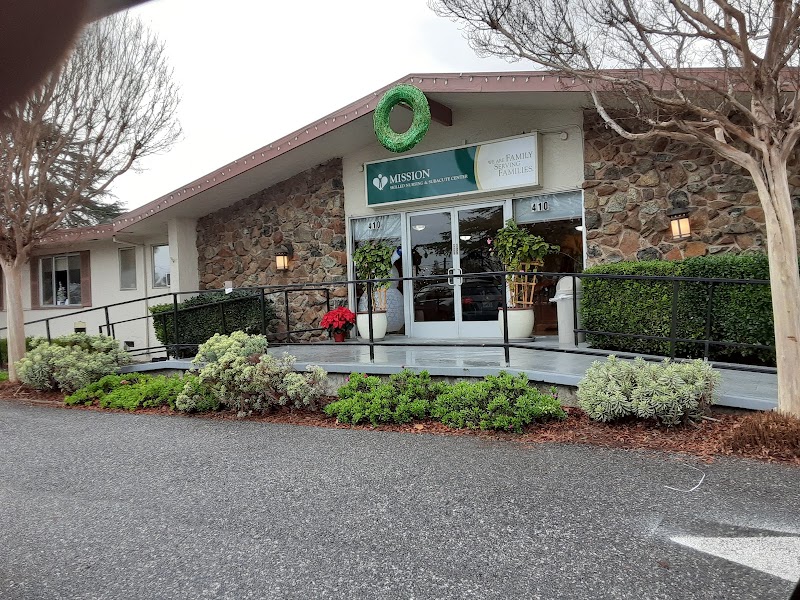
410 NORTH WINCHESTER BOULEVARD, SANTA CLARA, CA 95050 (408) 248-3736
For profit - Corporation 133 Beds COVENANT CARE Data: November 2025
Trust Grade
73/100
#132 of 1155 in CA
Last Inspection: May 2025

Inspected within the last 6 months. Data reflects current conditions.

Overview

Mission Skilled Nursing & Subacute Center has a Trust Grade of B, indicating it is a solid choice, though not without its concerns. It ranks #132 out of 1155 facilities in California, placing it in the top half overall, and #8 out of 50 in Santa Clara County, which means there are only seven local options that are better. However, the facility is experiencing a worsening trend, with issues increasing from 3 in 2024 to 12 in 2025. Staffing is a positive aspect, with a rating of 4 out of 5 stars and a turnover rate of 29%, which is lower than the state average. Notably, there have been serious incidents, including a resident who suffered multiple bruises and injuries, leading to their death, and another resident experiencing emotional distress due to verbal abuse by a staff member. Nevertheless, the facility has no fines on record and enjoys good RN coverage, exceeding 95% of state facilities, which is crucial for catching potential health issues.

Trust Score
B
73/100
In California
#132/1155
Top 11%
Safety Record
Moderate
Needs review
Inspections
Getting Worse
3 → 12 violations
Staff Stability
✓ Good
29% annual turnover. Excellent stability, 19 points below California's 48% average. Staff who stay learn residents' needs.
Penalties
✓ Good
No fines on record. Clean compliance history, better than most California facilities.
Skilled Nurses
✓ Good
Each resident gets 71 minutes of Registered Nurse (RN) attention daily — more than 97% of California nursing homes. RNs are the most trained staff who catch health problems before they become serious.
Violations
⚠ Watch
36 deficiencies on record. Higher than average. Multiple issues found across inspections.
★★★★★
5.0
Overall Rating
★★★★☆
4.0
Staff Levels
★★★★★
5.0
Care Quality
★★★★☆
4.0
Inspection Score
Stable
2024: 3 issues
2025: 12 issues

The Good

  • 4-Star Staffing Rating · Above-average nurse staffing levels
  • 5-Star Quality Measures · Strong clinical quality outcomes
  • Low Staff Turnover (29%) · Staff stability means consistent care
  • Full Sprinkler Coverage · Fire safety systems throughout facility
  • No fines on record
  • Staff turnover is low (29%)

    19 points below California average of 48%

Facility shows strength in staffing levels, quality measures, staff retention, fire safety.

The Bad

Chain: COVENANT CARE

Part of a multi-facility chain

Ask about local staffing decisions and management

The Ugly 36 deficiencies on record

2 actual harm
Jul 2025 1 deficiency
CONCERN (D) 📢 Someone Reported This

A family member, employee, or ombudsman was alarmed enough to file a formal complaint

Potential for Harm - no one hurt, but risky conditions existed

Report Alleged Abuse (Tag F0609)

Could have caused harm · This affected 1 resident

**NOTE- TERMS IN BRACKETS HAVE BEEN EDITED TO PROTECT CONFIDENTIALITY** Based on interview and record review, the facility failed to report an allegation of abuse for one of three sampled residents (R...

Read full inspector narrative →
**NOTE- TERMS IN BRACKETS HAVE BEEN EDITED TO PROTECT CONFIDENTIALITY** Based on interview and record review, the facility failed to report an allegation of abuse for one of three sampled residents (Resident 1). This failure had the potential to delay abuse investigations and compromise Resident 1's safety.Review of Resident 1's medical record indicated he was admitted on [DATE] and had the diagnosis of spinal stenosis (the space inside the bones of the spine gets too small), anxiety disorder (a mental health condition), difficulty in walking, and muscle weakness.Review of Resident 1's Minimum Data Set (MDS, a resident assessment tool), dated 5/1/25, indicated his Brief Interview for Mental Status (BIMS, an assessment tool used by facilities to screen and identify memory, orientation, and judgement status of the resident) score of 15 (BIMS score of 13-15 indicates cognitively intact).During a telephone interview with Resident 1 on 6/3/25, at 12:01 p.m., he stated that he was assaulted by his co-resident and did not feel safe in the facility. Resident 1 stated that his co-resident came to him in the middle of the night and touched his belongings, like bed sheets on 2/20/25. Resident 1 further stated that he reported the assault to the Social Service Director (SSD), but he did not report to the Ombudsman (an advocate for residents of nursing homes, board and care centers, and assisted living facilities).Review of Resident 1's Nursing Progress Notes, dated 2/20/25 at 6:05 a.m., indicated that at around 4:30 a.m., resident yelling & busting the call light multiple times. Resident yelling to the staff to move the roommate immediately/right now. Resident c/o (complain of) roommate smelly, noisy & kept getting up & going to his side.Review of Resident 1's Social Service Progress Notes, dated 2/20/25 at 8:48 p.m., indicated that Resident refusing to have new roommate placed in room. Resident stated it is due to the roommate he received on 2/19/25 not going well. Resident's main concern is having a roommate who is able to get out of bed and come to his side of the room.Review of Resident 1's medical record on 7/16/25 revealed there was no documentation for the allegation of assault which reported by Resident 1.During an interview with the SSD on 6/3/25 at 2:10 p.m., he stated Resident 1 reported that he was assaulted by his roommate on 2/20/25. The SSD stated Resident 1 reported that his roommate came to him and grabbed his covers, like a blanket; Resident 1 denied any physical contact from his roommate. The SSD further stated that he investigated and concluded Resident 1's report was not an allegation of abuse.Review of the SSD's Investigation provided by the SSD on 6/3/25 indicated Incident: Resident 1 reported he was assaulted by his roommate. Asked resident to elaborate on what he meant by assaulted ‘he stated his old roommate was grabbing at his covers.' Asked resident if he was hit or if other resident made physical contact with him, he replied ‘no'.During an interview with the SSD on 6/3/25 at 3:09 p.m., he stated he reported his investigation to the Director of Nursing (DON).During an interview with the DON on 6/3/25 at 3:15 p.m., she confirmed that she received the SSD's Investigation about Resident 1's report. The DON stated that she and the SSD concluded that Resident 1's report was not an allegation of abuse after the investigation performed by the SSD. The DON stated Resident 1's report was not reported to the California Department of Public Health (CDPH) or Ombudsman.During an interview with the DON on 7/16/25 at 10:50 a.m., she stated that the SSD clarified the meaning of the assault reported by Resident 1; Resident 1 stated the meaning of the assault was his roommate grabbed his sheet; Resident 1 was alert and oriented, he was able to define the meaning of the assault. The DON stated she and the SSD concluded that Resident 1's report was not an allegation of abuse.Review of the facility's policy and procedure (P&P) titled Alleged or Suspected Abuse and Crime Reporting, revised 10/2022, indicated, definitions: Abuse is the willful infliction of injury, unreasonable confinement, intimidation, or punishment with resulting physical harm, pain or mental anguish. Alleged violation is a situation or occurrence that is observed or reported .During an interview and the facility's policy titled Alleged or Suspected Abuse and Crime Reporting review with the DON on 7/16/25 at 11 a.m., she acknowledged the definitions of abuse and alleged violation.During an interview and record review with the DON on 7/16/25 at 11:10 a.m., she confirmed there was no documentation of Resident 1's allegation of assault. The DON stated there was no documentation about Resident 1's report in his chart because Resident 1's report was a complaint not an allegation of abuse. The DON further stated Resident 1's report was discussed during the facility morning meeting without documentation, also the SSD's investigation was internal investigation.During an interview with the Administrator (ADM) on 7/16/25 at 11:30 a.m., he stated he was not aware of Resident 1's allegation of assault on 2/20/25; the SSD's investigation was not reported to him. The ADM stated it was reported during the facility's morning meeting that Resident 1 complained about his roommate pulling his sheets. The ADM stated he was the facility's abuse coordinator and would report to the outside agency if he was aware of the allegation of assault reported by Resident 1.During a review of the facility's policy and procedure (P&P) titled Alleged or Suspected Abuse and Crime Reporting, revised 10/2022, the P&P indicated, 8. Reporting/response: It is the responsibility of all employees to immediately report to the facility administrator, and to other officials in accordance with federal and state law, any incident of suspected or alleged abuse, neglect, misappropriation of resident property, exploitation, corporal punishment, involuntary seclusion and any physical or chemical restraint not required to treat the resident's medical symptoms.
May 2025 11 deficiencies
CONCERN (D) 📢 Someone Reported This

A family member, employee, or ombudsman was alarmed enough to file a formal complaint

Potential for Harm - no one hurt, but risky conditions existed

Comprehensive Care Plan (Tag F0656)

Could have caused harm · This affected 1 resident

Based on observation, interview, and record review, the facility failed to develop and implement a comprehensive person centered care plan for one of eight residents with the potential for skin proble...

Read full inspector narrative →
Based on observation, interview, and record review, the facility failed to develop and implement a comprehensive person centered care plan for one of eight residents with the potential for skin problems when the facility failed to develop and implement Resident 49's care plan for preventative foot care. This failure had the potential for Resident 49's feet to deteriorate clinically. Findings: During an interview on 5/5/25 at 9:05 a.m., with Confidential Friend (CF) G, CF G stated, they saw Resident 49's feet and believes her care plan needs to be adjusted, because her toe nails are long and they need to do something about them. CF G stated, Resident 49 had fungal infections in her feet, in the past and if they don't keep them clean it will happen again. During an observation on 5/6/25, at 8:21 a.m., in Resident 49's room, Resident 49's feet were noted to have skin buildup to both feet, with thickened, discolored and longer than average toe nails. During a record review of Resident 49's medical diagnoses list, dated 5/6/25, the list indicated, Resident 49 was diagnosed with Type 2 Diabetes Mellitus(a chronic disease where the body can't produce enough insulin or can't use the insulin effectively). During a review of Diabetic Foot Care an article by the National Institute of Health, dated 2023, article indicated, Patients with diabetes are at increased risk for foot ulceration secondary to neuropathy [nerve pain], microvascular disease[damage to inner walls of small blood vessels], and [changes to anatomy]. During a review of Resident 49's Care Plan dated 5/6/25, it indicated no care plan for preventive foot care was created. During a review of Resident 49's Order Summary List dated 5/6/25 indicated, no orders to be seen by Podiatrist for cutting of toe nails or preventive foot care. During an interview on 5/6/28, at 9:58 a.m., with the Director of Nursing (DON), the DON stated, she does not see a care plan for Resident 49 regarding preventive foot care. The DON also stated, if a resident is at risk of an issue, then they need a care plan for it. During a review of the facility's Policy & Procedure (P&P) titled, Care Plan, Comprehensive, dated 2008, the P&P indicated, It is the policy of the facility to develop, in conjunction with the resident and/or representative, the Comprehensive Resident Care Plan. The care plan is directed toward achieving and maintaining optimal status of health, functional ability, a quality of life.
CONCERN (D)

Potential for Harm - no one hurt, but risky conditions existed

Deficiency F0657 (Tag F0657)

Could have caused harm · This affected 1 resident

Based on interview and record review, the facility failed to revise the care plan for two of 15 residents (Resident 34 & 74) when there was no evidence the facility reviewed or revised the care plan w...

Read full inspector narrative →
Based on interview and record review, the facility failed to revise the care plan for two of 15 residents (Resident 34 & 74) when there was no evidence the facility reviewed or revised the care plan with new recommendations to prevent the Resident from falling again. This failure had the potential to result in further falls and/or injury. Findings: 1. During a review of Resident 34's Fall Report Incident dated 2/21/25, it indicated Resident 34 had a fall on 2/21/25 at 4:30 p.m. During a review of Resident 34's care plans, dated 11/25/24 last revision, indicated no care plan following the 2/21/25 fall or revisions to the previous care plan. During an interview on 5/8/25 at 1:31 p.m. with the Director of Nursing (DON), she stated, the care plan was not updated after the fall. Review of the facility's policy and procedure titled, Fall Prevention and Response, dated 8/2023, indicated Facility will monitor effectiveness of planned fall prevention interventions no less often than quarterly and modify interventions when necessary, such as following a significant COC or fall accident. Review of the facility's policy and procedure titled, Care plan, Comprehensive, dated 2008, indicated It is reviewed and revised by the Interdisciplinary Team quarterly, following completion of the MDS assessment, and following assessment for significant change. Review of the facility's policy and procedure titled, Fall Risk Assessment dated 10/18/24, indicated Monitor the effectiveness of the care plan interventions, and modify the interventions as necessary, in accordance with current standards of practice. 2. During a review of Resident 74's Fall Report Incident dated 1/12/25, indicated Resident 74 had a fall on 1/12/25 at around 7:40 a.m. During a review of Resident 74's care plan dated 5/8/25, it indicated, no care plan for Resident 74's fall on 1/12/25. During an interview on 5/8/25, at 3:47 p.m., with Director of Nursing (DON), DON stated, they did not update the care plan for Resident 74's fall on 1/12/25. During a review of the facility's policy & procedure (P&P) titled, Care Plan, Comprehensive dated 2008, the P&P indicated, It is the policy of the facility to develop, in conjunction with the resident and/or representative, the Comprehensive Resident Care Plan.It is completed.following assessment for significant change.
CONCERN (D)

Potential for Harm - no one hurt, but risky conditions existed

Pressure Ulcer Prevention (Tag F0686)

Could have caused harm · This affected 1 resident

**NOTE- TERMS IN BRACKETS HAVE BEEN EDITED TO PROTECT CONFIDENTIALITY** Based on observation, interview and record review, the facility failed to ensure services were provided to prevent and/or heal p...

Read full inspector narrative →
**NOTE- TERMS IN BRACKETS HAVE BEEN EDITED TO PROTECT CONFIDENTIALITY** Based on observation, interview and record review, the facility failed to ensure services were provided to prevent and/or heal pressure ulcers (damage to the skin or underlying tissue as a result of prolonged pressure) for one of eight sampled residents (Resident 308) with pressureulcers when staff did not follow physician's order for heel protectors (device applied to the feet to minimize pressure on the heels). This failure had the potential to result in worsening of resdient 308's pressure ulcers. Findings: Review of Resident 308's clinical record indicated he was admitted on [DATE] with diagnoses including heart failure (a condition in which the heart doesn't pump blood as well as it should), pancytopenia (abnormally low amounts of all three types of blood cells, red, white and platelets), encephalopathy (disease that affects brain function), and muscle weakness. Review of Resident 308's clinical record indicated a physician order for right and left heel skin barrier film as needed every shift for pressure ulcers. Further review of Resident 308's clinical record indicated a physician order dated 4/26/25, to apply protective boots every evening and night shift for protection while in bed every shift, and on 5/7/25 an order to apply protective boots to both feet every shift. Review of Resident 308's Skin and Wound Evaluation dated 4/25/25 indicated Resident 308's skin was fragile and at risk for skin breakdown. Review of Resident 308s Braden Scale for Predicting Pressure Score Risk dated 4/24/25 indicated a score of 17 (At Risk 15-18), and potential problem with friction and shear (gradual breakdown of the skin from constant rubbing against something and forces that cause body tissues or parts to move in opposite directions) due to weak movement or requiring assistance and skin sliding to some extent against sheets or other devices. Review of Resident 308's Care Plan Report dated 4/25/25 indicated Resident 308 had a new impairment to skin integrity with interventions including, Treatment per order. During observations on 5/5/25 at 9:26 a.m., 5/6/25 at 8:30 a.m., and 5/8/25 at 4:10 p.m., Resident 308 was lying in bed and was not wearing heal protectors on both feet. During a concurrent observation, interview and record review on 5/6/25 at 9:18 a.m., with Licensed Vocational Nurse C (LVN C) during wound care for Resident 308, LVN C stated Resident 308 had stage 1 pressure ulcers to the heels of both feet. LVN C confirmed there was a physician order for bilateral heel protective boots and stated Resident 308 was not wearing any heel protective boots while in bed. During a concurrent observation and interview on 5/6/25 at 2:15 p.m., with Certified Nursing Assistant E (CNA E), CNA E confirmed Resident 308 was not wearing bilateral heel protector boots while in bed. CNA E looked for Resident 308's heel protectors inside the room, inside the closet and in each of Resident 308's drawers. CNA E stated the boots could not be found. During a concurrent interview and record review on 5/8/2023 at 3:30 p.m., with the Director of Nursing (DON), the DON reviewed Resident 308's Order Summary Report and care plan. The DON confirmed the physician's order for bilateral heel protectors on 4/26/2025 and 5/7/25, and stated the heel protector boots must be somewhere in Resident 308's room and should be on his feet while he's in bed. Review of the facility's policy and procedure titled, Pressure Injury Prevention and Management, revised 12/03/2024, indicated, This facility is committed to the prevention of avoidable pressure injuries . and to provide treatment and services to heal the pressure ulcers/injury, prevent infection and the development of additional pressure ulcers/injuries. Basic or routine care interventions could include but are not limited to: .i. Redistribute pressure (such as repositioning, protecting and or offloading heels, etc.); .iv. Provide non-irritating surfaces .
CONCERN (D)

Potential for Harm - no one hurt, but risky conditions existed

Deficiency F0761 (Tag F0761)

Could have caused harm · This affected 1 resident

**NOTE- TERMS IN BRACKETS HAVE BEEN EDITED TO PROTECT CONFIDENTIALITY** Based on observation, interview and record review, the facility failed to ensure expired medication was removed in one of three ...

Read full inspector narrative →
**NOTE- TERMS IN BRACKETS HAVE BEEN EDITED TO PROTECT CONFIDENTIALITY** Based on observation, interview and record review, the facility failed to ensure expired medication was removed in one of three medication carts (med cart AA)) when a bottle of Mirtazapine (used to treat depression [a mood disorder characterized by persistent sadness and a loss of interest in activities]) 15 milligrams (mg, unit of measurement) with expiration date of [DATE] was identified. The failure had the potential for residents to receive medications with reduced potency. Findings: During an inspection of the med cart AA and interview with Licensed Vocational Nurse (LVN) B on [DATE] at 12:08 p.m., a bottle of Mirtazapine was found in the medication cart that expired on [DATE]. LVN B confirmed that the medication has expired and should have been removed. During an interview on [DATE] at 2:20 p.m., with the Director of Nursing (DON), the DON stated the expired medication should have been removed from the medication cart. During a review of the facility's Disposal/Destruction of Expired or Discontinued Medication policy and procedure (P&P), dated [DATE], indicated Facility should place all discontinued or outdated medications in a designated, secure location which is solely for discontinued medications or marked to identify the medications are discontinued and subject to destruction. During a review of the facility's Labeling of Medications and Biologicals P&P, dated [DATE], indicated All medications and biologicals used in the facility will be labeled in accordance with current state and federal regulations to facilitate consideration of precautions and safe administration of medications. During a review of the facility's Medication Storage P&P, dated [DATE], indicated Unused Medications: The pharmacy and all medication rooms are routinely inspected by the consultant pharmacist for discontinued, outdated, defective, or deteriorated medications with worn, illegible, or missing labels .
CONCERN (E)

Potential for Harm - no one hurt, but risky conditions existed

Respiratory Care (Tag F0695)

Could have caused harm · This affected multiple residents

Based on observation, interview and record review the facility failed to follow professional standards of practice for oxygen administration for three of nine residents receiving oxygen therapy in the...

Read full inspector narrative →
Based on observation, interview and record review the facility failed to follow professional standards of practice for oxygen administration for three of nine residents receiving oxygen therapy in the facility when: 1. Resident 20 was administered the wrong dose of oxygen. 2. Resident 49 was administered oxygen without a doctor's order. 3. Resident 16 was administered the wrong dose of oxygen. These failures had the potential to negatively affect Resident 20's, Resident 49's, and Resident 16's health. Findings: 1. During a concurrent observation and interview on 5/5/25, at 1:17 p.m., with Registered Nurse (RN) A, in Resident 20's room, Resident 20 was observed wearing a nasal cannula (plastic tubing which supplies oxygen from a machine). RN A stated, she saw Resident 20s oxygen set to between 2.5 and 3 liters (measure of oxygen give to patient per minute). RN A stated, she will lower it, the order is for 2 liters for Resident 20, it should be at 2 liters per the doctor's order. During a review of Resident 20's Order Summary Report dated 5/8/25 indicated, Resident 20 had an order for Oxygen at 2 LPM [liters per minute] via nasal cannula. During a review of Resident 20's Care Plan dated 10/10/24, Care Plan indicated, The resident has oxygen therapy r/t [related to] COPD [Chronic Obstructive Pulmonary Disease: a group of lung diseases that cause ongoing breathing problems].Interventions.Give medications as ordered by physician. 2. During a concurrent interview and record review on 5/5/25, at 1:15p.m, with RN A, Resident 49's Physician Orders was reviewed. The orders indicated, no order for oxygen. RN A stated, there is no order for oxygen, I will call the Doctor and ask for one, we have to have an order for oxygen. During a concurrent observation and interview on 5/5/25, at 1:25 p.m., with RN A, in Resident 49's room. Resident 49 was observed receiving oxygen through a nasal cannula. RN A stated, the oxygen is set to 4 liters. During a review of the facility's Policy & Procedure (P&P) titled, Oxygen Administration, dated, 2014, the P&P indicated, Purpose to administer oxygen to the resident when insufficient oxygen is being carried but the blood to the tissues.Procedure 1. Check physician's order for liter flow and method of administration. 3. Review of Resident 16's admission Record indicated Resident 16 was admitted to the facility with diagnoses including spinal cord injury (damage to the bundle of nerves that sends and receives signals from the brain), diabetes mellitus (a condition which affects the way the body processes blood sugar), chronic kidney disease, myelofibrosis (chronic blood cancer that causes bone marrow[the soft matter inside the bones] scarring, making it difficult to produce normal blood cells) and anemia (low levels of healthy red blood cells to carry oxygen throughout the body). During an observation on 5/5/25 at 9:23 a.m., Resident 16 was sitting up in bed receiving oxygen through a nasal cannula. Resident 16's oxygen concentrator (machine used to deliver oxygen) was set at 4 LPM. Review of Resident 16's Physician Order Summary Report, dated 8/25/2024, indicated an order of oxygen at 2/LPM. Review of Resident 16's Care Plan Report dated 8/23/2024, indicated, The resident has altered respiratory by difficulty of breathing and has low oxygen level, with an intervention to, Administer oxygen as ordered. During a concurrent observation and interview with LVN B on 5/6/25 at 2:03 p.m., inside Resident 16's room, LVN B confirmed Resident 16's oxygen was administered at 4LPM. LVN B stated Resident 16's oxygen flow rate should have been at 2 LPM. During an interview on 5/6/25 at 2:15 p.m., with the Director of Nursing (DON), the DON stated the oxygen order should always be followed. During a review of the facility's Policy & Procedure (P&P) titled, Oxygen Administration, dated, 2014, the P&P indicated, Purpose to administer oxygen to the resident when insufficient oxygen is being carried but the blood to the tissues.Procedure 1. Check physician's order for liter flow and method of administration.
CONCERN (E)

Potential for Harm - no one hurt, but risky conditions existed

Deficiency F0730 (Tag F0730)

Could have caused harm · This affected multiple residents

Based on interview and record review, the facility failed to ensure 40 out of 69 Certified Nursing Assistants (CNAs) who have worked at the facility for over one year were reviewed annually for a perf...

Read full inspector narrative →
Based on interview and record review, the facility failed to ensure 40 out of 69 Certified Nursing Assistants (CNAs) who have worked at the facility for over one year were reviewed annually for a performance review per federal regulation. This failure resulted in the facility being unaware of 40 CNA's performance through the prior year. This failure also had the potential for CNA's performance to be below the standard or practice for patient care. Findings: During a review of CNA I's employee file, undated, employee file indicated, no annual performance review was documented. CNA I's hire date was 9/29/2021 During a review of CNA J's employee file, undated, employee file indicated, no annual performance review was documented. CNA J's hire date was 1/12/2017. During an interview on 5/07/25, at 1:18 p.m., with the Director of Staff Development (DSD), the DSD stated, she took over the position of DSD as interim for the last two weeks. DSD stated, I do not know what the prior DSD's process was, but we looked in her desk and did not find any annual performance reviews for the CNAs. During an interview on 5/7/25, at 1:28 p.m., with the Director of Nursing (DON), the DON stated, we do not see any performance reviews for CNA I, or CNA J. The DON stated, she would get a list of the current CNAs who have not had a performance review. The DON also stated, the CNAs are supposed to have a performance review annually. During a concurrent interview and record review on 5/8/25, at 3:17 p.m., with the DON, the list of CNAs who have not a performance review was reviewed. The list indicated, 40 CNAs out of 69 di not have their annual performance review. The DON stated, this list is all the CNAs who have worked for over one year at least, and they have not had an annual performance review.
CONCERN (E)

Potential for Harm - no one hurt, but risky conditions existed

Pharmacy Services (Tag F0755)

Could have caused harm · This affected multiple residents

Based on interview and record review, the facility failed to ensure accurate accountability of controlled medication (medication with high potential for abuse and addiction) when random controlled med...

Read full inspector narrative →
Based on interview and record review, the facility failed to ensure accurate accountability of controlled medication (medication with high potential for abuse and addiction) when random controlled medication use audit for three of twelve residents (Residents 93, 3 and 87) did not reconcile when: 1. The medication was documented on the Medication Administration Record (MAR, used to document medications taken by each individual) to indicate they were administered to Resident 93 but was not signed out of the Controlled Drug Record (CDR, an inventory sheet that keeps record of the usage of controlled medications). 2. The medication was signed out of the CDR but not documented on the MAR for Resident 87 and Resident 3. The failure resulted in inaccurate accountability and had the potential for misuse or diversion of controlled medications. Findings: 1. The Controlled Drug Record (CDR) for twelve residents receiving controlled medications were requested for review during the survey. A review of Resident 93's clinical record indicated she had a Physician order for Hydrocodone-Acetaminophen (Norco, a controlled medication for pain) 10-325 milligrams (mg, unit of measurement) 1 tablet every 4 hours for pain, dated 4/24/25. During a concurrent interview and record review on 5/5/25 at 7:48 a.m., with Registered Nurse (RN) H, RN H stated she gave the medication at 12:15 a.m. but forgot to sign the CDR. During an interview on 5/6/25 at 2:16 p.m., with the Director of Nursing (DON), the DON stated that the narcotic sheet, which is the CDR, should be signed as soon as the medication was given and signed in the MAR. 2. A review of Resident 3's clinical record indicated she had a Physician order for Norco 5-325 mg 1 tablet every 6 hours as needed for severe pain, dated 4/17/25. During a concurrent interview and record review on 5/6/25 at 2:32 p.m., with the DON, a review of Resident 3's CDR for Norco and the 4/2025 MAR reflected the nursing staff removed the medication from the locked controlled medication compartment in the medication cart and signed out of the CDR on 4/18/25 at 9:35 a.m., but did not document the respective administration on the MAR. The DON acknowledged that the controlled medication was not accounted for in the MAR. A review of Resident 87's clinical record indicated she had a Physician order for Oxycodone Hydrochloride (a controlled medication for pain) 5 mg per 5 milliliter (ml, unit of measurement) give 2.5 ml every 6 hours as needed for severe pain., dated 4/5/25. During a concurrent interview and record review on 5/6/25 at 2:39 p.m., with the DON, a review of Resident 87's CDR for Oxycodone and the 4/2025 MAR reflected the nursing staff removed the medication from the locked controlled medication compartment in the medication cart and signed out of the CDR on 4/15/25 at 10:15 p.m., but did not document the respective administration on the MAR. The DON acknowledged that the controlled medication was not accounted for in the MAR. A review of the facility's Medication Administration policy and procedure (P&P), dated 4/9/25, indicated Policy Explanation and Compliance Guidelines .21. If medication is a controlled substance, sign narcotic book. A review of the facility's General Dose Preparation and Medication Administration P&P, dated 11/15/24, indicated 5.5 Document the administration of controlled substances in accordance with applicable law .6. After medication administration, facility staff should take all measures required by facility policy and applicable law, including, but not limited to the following: 6.1 Document necessary medication administration/treatment information .on appropriate forms .
CONCERN (E)

Potential for Harm - no one hurt, but risky conditions existed

Deficiency F0757 (Tag F0757)

Could have caused harm · This affected multiple residents

Based on interview and record review, the facility failed to ensure one of 35 sampled residents (Resident 34) was free from inappropriate and unnecessary medication use when the medication Midodrine H...

Read full inspector narrative →
Based on interview and record review, the facility failed to ensure one of 35 sampled residents (Resident 34) was free from inappropriate and unnecessary medication use when the medication Midodrine HCI (to treat low blood pressure) was given outside of the ordered parameters. This failure had the potential for causing harm to Resident 34's health and well-being. Findings: During review of Resident 34's medication administration record (provides a comprehensive, organized record of each medication administered to a patient) (MAR), dated May 2025, the MAR indicated Resident 34 received Midodrine HCI 5 milligrams (a unit of measure) (Mg) on 5/8/25 when the blood pressure (refers to the force of circulating blood against the walls of blood vessels. Blood pressure is measured in two values: systolic [highest pressure during a heartbeat] and diastolic [lowest pressure between heartbeats]) was 126/68. During review of Resident 34's orders dated 3/4/25, the order indicated Midodrine HCl oral tablet 5 MG, one tablet by mouth three times a day for hypotension, hold for SBP (systolic blood pressure) greater than 120 mmHg. During review of Resident 34's MAR dated March 2025 and April 2025, the MAR for March 2025 indicated Midodrine HCl was given five times when SBP was above 120 (3/6/25, 3/8/25, 3/9/25, 3/15/25 and 3/25/25). The MAR for April 2025 indicated Midodrine HCl was given eight times when SBP was above 120 (4/1/25, 4/5/25, 4/15/25 two times, 4/17/25, 4/19/25, and 4/27/25 two times). During a concurrent interview and record review on 5/8/25 at 2:00 p.m. with Licensed Vocational Nurse (LVN) K, Resident 34's orders and MAR for March, April and May 2025 were reviewed. LVN K stated the order indicated to hold for SBP greater than 120 mmHg. LVN K confirmed Resident 34 should not have received medication when the SBP was greater than 120 mmHG on the 14 incidents reviewed. Review of the facility's policy and procedure titled, Medication Administration, dated 4/9/25, indicated Obtain and record vital signs, when applicable or per physician orders. When applicable, hold medication for those vital signs outside the physician 's prescribed parameters.
CONCERN (E)

Potential for Harm - no one hurt, but risky conditions existed

QAPI Program (Tag F0867)

Could have caused harm · This affected multiple residents

Based on interview and record review, the facility failed to identify the lack of annual performance reviews for Certified Nursing Assistants (CNAs) in their Quality Assurance Performance Improvement ...

Read full inspector narrative →
Based on interview and record review, the facility failed to identify the lack of annual performance reviews for Certified Nursing Assistants (CNAs) in their Quality Assurance Performance Improvement Plan (QAPI- a plan developed by the facility with the goal of improving conditions in the facility) when monitoring of employee files was not documented as reviewed for regulatory compliance, per the QAPI monitoring plan. As a result, the facility did not identify 40 of 69 CNAs employeed by the facility did not have a documented annual performance review. (see F730). Findings: During a review of the facility's QAPI Plan, updated 2017, QAPI plan indicated, Quality Surveillance Data.Education/In-Service Tracking, Responsible for Review/reporting to Committee Director of Staff Development, Action Plan(s) required for: Federal/State required in-services not completed per regulations, personnel files audits that result in negative findings. QAPI Plan indicated, Random personnel file reviews should occur quarterly to determine compliance with training and documentation requirements as well as mandatory hiring criteria and license verification. Results of random audits should be reviewed by the Executive Director with training summary and audit findings reported to the QA&A [QAPI] Committee for review and process improvement. During an interview on 5/9/25, at 9:23 a.m., with the Administrator in Training (AIT), the AIT stated, he does not have documentation of the DSD having performed random audits of personnel files. AIT stated the facility was not aware CNA annual performance reviews were not being completed.
CONCERN (E)

Potential for Harm - no one hurt, but risky conditions existed

Infection Control (Tag F0880)

Could have caused harm · This affected multiple residents

**NOTE- TERMS IN BRACKETS HAVE BEEN EDITED TO PROTECT CONFIDENTIALITY** Based on observation, interview and record review, the facility failed to ensure staff were implementing infection prevention pr...

Read full inspector narrative →
**NOTE- TERMS IN BRACKETS HAVE BEEN EDITED TO PROTECT CONFIDENTIALITY** Based on observation, interview and record review, the facility failed to ensure staff were implementing infection prevention practices when: 1. One of four Certified Nursing Assistances (CNA) failed to perform hand hygiene between residents during dining; 2. Resident 309's intravenous (IV, to deliver a medication into a vein) tubing tip left uncapped when not in use. During an observation on 05/06/25 at 12:53 p.m., Certified Nursing Assistant (CNA) F, was in the dining room sitting between Resident 5 and Resident 44 feeding them both lunch without cleaning her hands between Residents. During an interview on 05/06/25 at 3:07 p.m., CNA F stated, She washes hands prior to feeding the residents but does not clean hands between residents when feeding two residents at the same time. Review of the facility's policy and procedure titled Hand Hygiene, dated 5/29/24 indicated, Hand hygiene is indicated and will be performed under the conditions listed in, but not limited to, the attached hand hygiene table .Between resident contacts. Review of the facility's policy and procedure titled Infection Prevention and Control Program, dated 2/5/25 indicated, All staff are responsible for following all policies and procedures related to the program. Review of Resident 309 's clinical record indicated Resident 309 was admitted on [DATE] with diagnoses including post digestive system (a group of organs in the body that break down food into its simplest forms) surgery care, severe protein-calorie malnutrition, and status post gastrostomy (GT tube, a surgical opening into the stomach for the administration of nutrition and medications). Review of the Order Summary Report for Resident 309 indicated a physician order dated 5/4/25 for 0.45% sodium chloride (low salt fluid) intravenous sodium solution. Use intravenously every shift for IV hydration (provides fluid to the body when food by mouth is insufficient or not possible. During a concurrent observation and interview on 5/7/25 at 9:55 a.m. with Licensed Vocational Nurse D (LVN D) inside Resident 309's room, LVN D confirmed the tip of the IV tubing was left uncapped and exposed to air while not in use. LVN D stated, It should not be like that. LVN D also stated, It should have a small cap on the end to prevent infection. Review of the facility's policy and procedure titled, Infection Prevention and Control Program, dated 2/5/25 indicated, All staff are responsible for following all policies and procedures related to the program.
MINOR (B)

Minor Issue - procedural, no safety impact

Deficiency F0912 (Tag F0912)

Minor procedural issue · This affected multiple residents

Based on observations and interviews, the facility failed to ensure all multiple-resident bedrooms provided at least 80 square feet per resident for 9 of 60 rooms observed. This failure had the poten...

Read full inspector narrative →
Based on observations and interviews, the facility failed to ensure all multiple-resident bedrooms provided at least 80 square feet per resident for 9 of 60 rooms observed. This failure had the potential for Residents in rooms #301, #302, #303, #304, #305, #309, #311, #312, and #314 to have less space available for daily care and assistance. Findings: During observations from 5/5/25 to 5/9/2025 in rooms #301, #302, #303, #304, #305, #309, #311, #312, and #314., each room was a two-resident room and measured 13 feet by 11 feet, resulting in a total square footage of 143 square feet, or 71.5 square feet per resident. During the observation, residents reported they had plenty of space and did not have concerns with the size of their rooms. During an interview on 5/5/25 at 8 am with the Administrator, the Administrator, stated social services asks the residents or their families each quarter if there were any problems with the room size and none had been reported. The Administrator indicated the smaller room size did not inhibit resident care, and the facility has a room waiver.
May 2024 1 deficiency 1 Harm
SERIOUS (G) 📢 Someone Reported This

A family member, employee, or ombudsman was alarmed enough to file a formal complaint

Actual Harm - a resident was hurt due to facility failures

Free from Abuse/Neglect (Tag F0600)

A resident was harmed · This affected 1 resident

**NOTE- TERMS IN BRACKETS HAVE BEEN EDITED TO PROTECT CONFIDENTIALITY** Based on interview and record review, one of two sampled residents (Resident 1) was not free from physical abuse when Resident 1...

Read full inspector narrative →
**NOTE- TERMS IN BRACKETS HAVE BEEN EDITED TO PROTECT CONFIDENTIALITY** Based on interview and record review, one of two sampled residents (Resident 1) was not free from physical abuse when Resident 1 was found in bed with multiple bruises to the face and arms, swelling on the bridge of the nose and right eyebrow, a cut on the lower lip, blood in the mouth, on the lips, and on the fingers, and chipped teeth. Resident 1 passed away, and the immediate cause of death was documented as, Blunt force injury [injury caused by forceful impact from an object without sharp edges or points] of head complicating hypertensive [having high blood pressure] and atherosclerotic cardiovascular disease [heart disease involving plaque buildup in the arteries]. Findings: Review of Resident 1's medical record indicated Resident 1 was admitted to the facility on [DATE], and had diagnoses including osteomyelitis (inflammation of bone or bone marrow, usually caused by infection), chronic obstructive pulmonary disease (COPD, a disease that causes obstructed airflow from the lungs), severe protein-calorie malnutrition (significant fat loss and muscle wasting), muscle weakness, paroxysmal atrial fibrillation (a type of irregular heart rate), stage 4 pressure ulcer (an injury resulting from prolonged pressure that involves full thickness tissue loss with exposed bone, tendon or muscle), congestive heart failure (a condition in which the heart cannot pump blood well enough to provide a normal supply to the body), osteoporosis (a condition that causes the bones to become brittle and fragile), and osteoarthritis (degeneration of the joints that causes pain and stiffness). Review of Resident 1's Minimum Data Set (MDS, an assessment tool), dated [DATE], indicated Resident 1 had a brief interview for mental status (BIMS) score of 3 (a score of 0 to 7 indicates severe cognitive impairment [problems with how a person thinks, learn, use judgment and make decisions]). The MDS indicated Resident 1 required substantial/maximal assistance (staff does more than half the effort) for rolling left and right in bed. The MDS also indicated Resident 1 was dependent (staff does all of the effort) for moving from a lying to sitting position in bed and moving from a sitting to lying position in bed. The MDS further indicated Resident 1 refused to move from a sitting to standing position and refused to transfer to and from her bed to a chair or wheelchair. Review of Resident 1's Situation, Background, Assessment, Recommendation (SBAR, a tool used to communicate information to the resident's doctor), dated [DATE], indicated Resident 1 was involved in an incident of alleged physical abuse. The SBAR indicated, Found bruises on the resident's nose bridge, left and right cheek, left forehead, and chin. Also noted that the resident's front upper teeth were chipped and there is dried blood on the lower lip. There is also swelling on the bridge of the nose. The SBAR also indicated Resident 1 had, extensive bruising on face and arms. Blood in mouth and on lips and fingers. The SBAR also indicated Resident 1 has bruising on the right side of the face, bruising on the lips, swelling on the right eyebrow area. The SBAR further indicated, The resident has a multiple discoloration and swelling on her face, chipped upper front teeth and cut on the lower lip. During an interview with certified nursing assistant (CNA) A on [DATE], at 2:13 p.m., CNA A stated when she started work at 3:00 p.m. on [DATE], Resident 1 was in bed sleeping. CNA A stated she later provided care to Resident 1 at 6:30 p.m., at which time the resident did not have any injuries. CNA A stated the next time she saw Resident 1, at around 8:30 p.m. or 9:30 p.m., she saw bruises on Resident 1's face and blood on Resident 1's lips. CNA A stated she did not know of anyone who saw what happened to Resident 1. She stated Resident 1 was not able to get out of bed, and Resident 1 did not have any behaviors of self-harm. During an interview with registered nurse (RN) B on [DATE], at 3:17 p.m., RN B stated on [DATE], she and RN C were informed by RN D that Resident 1 had injuries to her face. RN B stated when staff asked Resident 1 what happened, the resident stated she did not know. RN B stated Resident 1 did not have behaviors of self-harm, and it was unlikely that Resident 1 inflicted the injuries on herself. RN B stated staff had determined Resident 1 did not fall out of bed, as the resident was dependent with care and would not have been able to get up and get herself back into bed after a fall. During an interview with RN C on [DATE], at 3:32 p.m., RN C stated on [DATE], at around 9:45 p.m., she was notified of Resident 1's injuries. RN C stated she went to the resident's room and saw Resident 1 in bed with bruises and swelling on her face, chipped teeth, and a cut on the inside of her lower lip. RN C stated Resident 1 did not remember what happened. RN C stated it was not likely that Resident 1 fell and got herself back into bed. During an interview with RN D on [DATE], at 3:49 p.m., RN D stated on [DATE], she initially saw Resident 1 at around 3:00 p.m. or 4:00 p.m., and Resident 1 did not have injuries at that time. RN D stated she gave medications to Resident 1 between 5:30 p.m. and 6:00 p.m. and the resident still had no injuries. RN D stated CNA A informed her of Resident 1's injuries at around 9:30 p.m. RN D stated she went into Resident 1's room and saw bruising and swelling on Resident 1's face, a chipped tooth, and a cut with dried blood on her lip. RN D stated she did not think Resident 1 would have been able to get herself back into bed if she fell. She also stated she did not think Resident 1 caused the injuries herself, as Resident 1 did not have behaviors of hitting or harming herself. Review of the facility's undated investigation summary indicated that on [DATE], CNA A went into Resident 1's room and noted Resident 1 had, multiple bruises and swelling on her face, chipped front teeth and cut on lower lip. The investigation summary further indicated Resident 1 was sent to the acute hospital for further evaluation. Review of Resident 1's Emergency Department Attending Physician Note, dated [DATE], indicated Resident 1 was brought in by ambulance after Resident 1 was assaulted at her nursing facility. The note indicated, Yesterday evening patient was assaulted between the hours of 9 and 11. The note further indicated, Patient is more altered than normal today. She has not been talking at all today and usually she can have a conversation. She has bruising to the right side of her face and a chipped tooth. Review of Resident 1's Medicine History and Physical from the acute hospital, dated [DATE], indicated, Noted abrasions on left side of face, bruising around the lips with chipped tooth. The Medicine History and Physical indicated diagnostic imaging showed Resident 1 had, Mild right malar soft tissue swelling [mild swelling in the right facial cheek area]. Review of Resident 1's Physician Discharge Summary from the acute hospital, dated [DATE], indicated Resident 1 was declared deceased (dead) at 4:06 p.m. The Physician Discharge Summary further indicated Resident 1's family requested an autopsy (examination to determine the cause of death) and the coroner (an official who investigates violent, sudden, or suspicious deaths) was notified. Resident 1's Certificate of Death, issued [DATE], was reviewed. The first page of the certificate indicated Resident 1's immediate cause of death was Pending. The second page of the certificate contained a Physician/Coroner's Amendment that indicated Resident 1's immediate cause of death was, Blunt force injury of head complicating hypertensive and atherosclerotic cardiovascular disease. The Physician/Coroner's Amendment indicated Resident 1's injury occurred on [DATE] at [facility address] and indicated, Bedbound subject found in bed with facial trauma in a shared room at a skilled nursing facility. The Physician/Coroner's Amendment further indicated Resident 1's manner of death was, Homicide [the killing of one person by another]. The facility's policy titled Alleged or Suspected Abuse and Crime Reporting, revised 10/2022, indicated each resident has the right to be free from abuse.
Feb 2024 2 deficiencies
CONCERN (D)

Potential for Harm - no one hurt, but risky conditions existed

Deficiency F0761 (Tag F0761)

Could have caused harm · This affected 1 resident

**NOTE- TERMS IN BRACKETS HAVE BEEN EDITED TO PROTECT CONFIDENTIALITY** Based on observations, interviews, and facility policy review, the facility failed to ensure 2 of 6 medication carts on 1 of 4 h...

Read full inspector narrative →
**NOTE- TERMS IN BRACKETS HAVE BEEN EDITED TO PROTECT CONFIDENTIALITY** Based on observations, interviews, and facility policy review, the facility failed to ensure 2 of 6 medication carts on 1 of 4 halls were not left unlocked and unattended. Findings included: Review of a facility policy titled, Medication Storage in the Facility, updated in August 2019, revealed, Medications and biologicals are stored safely, securely, and properly, following manufacturer's recommendations or those of the supplier. The medication supply is accessible only to licensed nursing personnel, pharmacy personnel, or staff members lawfully authorized to administer medications. The policy further indicated, Only licensed nurses, pharmacy personnel, and those lawfully authorized to administer medications are allowed access to medications. Medication rooms, carts, and medication supplies are locked or attended by persons with authorized access. An observation on 02/07/2024 at 6:16 AM revealed there were two unlocked medication carts on the 100-Hall. Cart 1A was located between room [ROOM NUMBER] and room [ROOM NUMBER], and Cart 1B was located between room [ROOM NUMBER] and the Director of Nursing's (DON's) office. Both carts contained multiple over the counter (OTC) medications, prescription medications, medical supplies, nutritional supplements, bleach wipes, alcohol wipes, and drug disposal solution. On 02/07/2024 at 6:25 AM, Registered Nurse (RN) #1 was observed exiting room [ROOM NUMBER]. She walked past Cart 1B and did not lock it. She stated that she was responsible for both medication carts. RN #1 confirmed she left the medication carts unlocked and stated that she usually kept them locked. She indicated that if medication carts were left unlocked and unattended, residents or visitors could open them and get anything out of them, including items that may be contraindicated for use. During an interview on 02/08/2024 at 2:01 PM, the DON stated all medication carts were supposed to be locked if not attended. She further stated if the carts were open and unattended, a resident could remove something from the carts. During an interview on 02/08/2024 at 2:23 PM, the Administrator said the medication carts should be locked so that residents could not access the contents.
MINOR (B)

Minor Issue - procedural, no safety impact

Deficiency F0912 (Tag F0912)

Minor procedural issue · This affected multiple residents

Based on observations and interviews, the facility failed to ensure all multiple-resident bedrooms provided at least 80 square feet per resident for 9 of 60 rooms observed. Findings included: During ...

Read full inspector narrative →
Based on observations and interviews, the facility failed to ensure all multiple-resident bedrooms provided at least 80 square feet per resident for 9 of 60 rooms observed. Findings included: During observations on 02/08/2024 from 2:05 PM to 2:12 PM, Maintenance Supervisor (MS) #4 measured Rooms #301, #302, #303, #304, #305, #309, #311, #312, and #314. Each room was a two-resident room and measured 13 feet by 11 feet, resulting in a total square footage of 143 square feet, or 71.5 square feet per resident. During the observation, residents reported they had plenty of space and did not have concerns with the size of their rooms. During an interview on 02/08/2024 at 2:26 PM, Certified Nursing Assistant (CNA) #5 indicated she had plenty of space in the rooms to get her work done. During an interview on 02/08/2024 at 2:32 PM, CNA #6 indicated there was plenty of space in the rooms, and she had no problems. During an interview on 02/08/2024 at 2:54 PM, the Director of Nursing (DON) stated the required room space was 80 square feet per resident. The DON further stated the rooms had enough space to provide care to the residents. During an interview on 02/08/2024 at 2:56 PM, the Administrator stated there was no facility policy addressing square footage per room. The Administrator stated there should be 80 square feet per resident. The Administrator indicated there had been no complaints about the room sizes. The Administrator further stated social services asked the residents or their families each quarter if there were any problems with the room size and none had been reported. The Administrator indicated the smaller room size did not inhibit resident care.
Sept 2023 2 deficiencies
CONCERN (D) 📢 Someone Reported This

A family member, employee, or ombudsman was alarmed enough to file a formal complaint

Potential for Harm - no one hurt, but risky conditions existed

Deficiency F0658 (Tag F0658)

Could have caused harm · This affected 1 resident

Based on interview and record review the facility failed to follow standards of care in obtaining and implementing physician's orders for the treatment and monitoring of skin tears (separation or tear...

Read full inspector narrative →
Based on interview and record review the facility failed to follow standards of care in obtaining and implementing physician's orders for the treatment and monitoring of skin tears (separation or tear in the skin commonly resulting from bumping or moving) for one of three sampled residents (Resident 1). Resident 1 sustained skin tears and physician's orders for treatment were not obtained and carried out. This failure resulted in the lacked of consistent monitoring of the wound status and had the potential for the skin tears to not optimally heal. Findings: Review of Resident 1's Change in Condition Evaluation, dated 5/3/23 at 4:09 p.m., indicated the resident had a new skin tear to his left elbow and a message was sent to the physician. Review of Resident 1's Situation, Background, Assessment, Recommendation (SBAR, a communication tool that addresses and plans care of a resident's condition) form, dated 5/31/23 at 6 p.m., indicated a staff from an ambulance company reported the resident had sustained a skin tear and a primary care provider recommended treatment. During an interview on 9/12/23 at 5:23 p.m., the director of nurses (DON) who reviewed the record stated there should have been but there were no physician orders obtained for the treatment and monitoring of the above noted skin tears. Review of the Skin Integrity policy, dated August 2014, indicated residents identified to be at risk for skin breakdown was to have a routine assessment implemented to maintain and/or improve skin integrity to actively manage skin integrity issue. Review of the Physician Orders policy, dated August 2017, indicated it was the practice of the facility to process physician orders.
CONCERN (D) 📢 Someone Reported This

A family member, employee, or ombudsman was alarmed enough to file a formal complaint

Potential for Harm - no one hurt, but risky conditions existed

Deficiency F0745 (Tag F0745)

Could have caused harm · This affected 1 resident

Based on interview and record review the facility failed to ensure medically-related social services was provided for one of three sampled residents who lost their dentures (Resident 1). There was no ...

Read full inspector narrative →
Based on interview and record review the facility failed to ensure medically-related social services was provided for one of three sampled residents who lost their dentures (Resident 1). There was no documentation of the dentures being lost, no social services documentation of a discussion with a family member regarding how to proceed to replace the loss and no policy addressing under what circumstance the facility was responsible. This failure placed the resident at risk for weight loss, oral discomfort, and general well-being. Findings: Review of Resident 1's Inventory of Personal Effects form, signed on 1/7/23 indicated the resident had one lower denture. During an interview on 7/31/23 at 3:30 p.m., the director of social services (SSD) recalled Resident 1's lower dentures was lost, and he informed a family member the insurance will not cover the cost of the replacement unless the remainder of the resident ' s lower teeth were extracted. The family member then stated to the SSD she did not want the resident to go through the process and to leave things as it was. The SSD confirmed there was no documentation in the medical record of this conversation. Further review of Resident 1's record, the record did not indicate the resident lost his denture and how to address the lost. During an interview on 8/16/23 at 1:30 p.m., the director of nurses stated there should be but she could not find a denture loss policy. Review of the Social Service Responsibilities, dated November 2016, indicated a duty to make appropriate dental referrals.
May 2023 1 deficiency
CONCERN (D) 📢 Someone Reported This

A family member, employee, or ombudsman was alarmed enough to file a formal complaint

Potential for Harm - no one hurt, but risky conditions existed

Medical Records (Tag F0842)

Could have caused harm · This affected 1 resident

**NOTE- TERMS IN BRACKETS HAVE BEEN EDITED TO PROTECT CONFIDENTIALITY** Based on the interview and record review, the facility failed to follow their policy and procedure when a medication administrat...

Read full inspector narrative →
**NOTE- TERMS IN BRACKETS HAVE BEEN EDITED TO PROTECT CONFIDENTIALITY** Based on the interview and record review, the facility failed to follow their policy and procedure when a medication administration was not documented for one of three sampled residents (Resident 1). This failure could affect the determination of the quality of care rendered to the resident. Findings: Review of Resident 1's clinical record, dated April 2023, indicated Resident 1 was admitted on [DATE] and had diagnoses including age-related osteoporosis ( a condition in which bones become weak and brittle) without current pathological fracture. During a review of Resident 1's physician order (PO) dated 4/4/23, the PO indicated, Abaloparatide (a medication used in the management and treatment of osteoporosis) Subcutaneous solution pen-injector 3120 MCG/1.56ml inject 80 Microgram (mcg) subcutaneously at bedtime for osteoporosis. During a concurrent interview and record review on 5/24/23 at 1:40 p.m., with Registered Nurse A (RN A), Resident 1's Medication Administration Record (MAR), dated March 2023 was reviewed. The MAR indicated, on 3/26/23, for the 9:00 p.m. administration time, there were no licensed staff initials in the box for Resident 1's Abaloparatide 80 mcg, to demonstrate the medication was administered. RN A stated there was no documentation on the MAR dated 3/26/23 that indicated Resident 1 received the Abaloparatide 80 mcg at 9:00 p.m. The RN A further stated, I administered the Abaloparatide 80mcg at 9:00 p.m. but forgot to document, and I should have documented immediately after administering the medication. During an interview with the Director of Nursing (DON) on 5/24/23 at 2:59 p.m., the DON stated medication that was administered should be documented in a timely manner. During a review of the facility's policy and procedure (P&P) titled LTC Health Information Practice and Documentation Guideline, the P&P indicated the facility must maintain clinical records on each resident in accordance with accepted professional standards and practices that are complete, accurately documented, readily accessible and systematically organized.
Dec 2022 1 deficiency
CONCERN (D) 📢 Someone Reported This

A family member, employee, or ombudsman was alarmed enough to file a formal complaint

Potential for Harm - no one hurt, but risky conditions existed

Medical Records (Tag F0842)

Could have caused harm · This affected 1 resident

**NOTE- TERMS IN BRACKETS HAVE BEEN EDITED TO PROTECT CONFIDENTIALITY** Based on interview and record review, the facility failed to follow their policy and procedure when the treatment administration...

Read full inspector narrative →
**NOTE- TERMS IN BRACKETS HAVE BEEN EDITED TO PROTECT CONFIDENTIALITY** Based on interview and record review, the facility failed to follow their policy and procedure when the treatment administration record (TAR) was not documented by the licensed nurse after providing wound treatments for one of one resident (Resident 1). This failure could affect the determination of quality of care rendered to the resident. Findings: Review of Resident 1 ' s clinical record indicated he was re-admitted to the facility on [DATE] with diagnoses including left leg atherosclerosis of native arteries of extremities with gangrene (diseases of the circulatory system), peripheral vascular disease (PVD, a slow and progressive circulation disorder) severe sepsis (an infection that caused an organ damage), squamous cell carcinoma of skin (skin cancer that affects the middle and outer layers of the skin). Review of Resident 1 ' s July 2022 TAR indicated the following: Day shift left leg gangrene (dead tissue caused by an infection or lack of blood flow) treatment were not initialed/electronically signed on 7/2, 7/3, 7/4, 7/9 to 7/11, 7/13, 7/14, 7/16, 7/17, 7/19, 7/21, and 7/23. Day shift right first toe, left foot; left heel and left lateral treatment were not initialed/electronically signed on 7/2; 7/3; 7/4; 7/9 to 7/11; 7/13; 7/14; 7/16; 7/17; 7/19; 7/21; and 7/23. Day shift sacrum buttocks were not initialed/electronically signed on 7/4, 7/11, and 7/13. During a telephone interview with the treatment nurse (TN) on 12/6/22 at 10:37 a.m., the TN reviewed the TAR and confirmed the above record review. The TN further stated he might have missed signing the TAR. During a telephone interview with licensed vocational nurse A (LVN A) on 12/13/22 at 1:09 p.m., LVN A reviewed Resident 1 ' s July 2022 TAR and confirmed the above record review. LVN A further stated, we probably forgot to sign the TAR. During another telephone interview with LVN A on 12/13/22 at 3:25 p.m., LVN A stated, the TAR should have been signed after treatments were provided to Resident 1 to make sure the treatments were done. During an interview with the director of nursing (DON) on 12/16/22 at 10:10 a.m., the DON stated nurses should have documented when a treatment was provided to Resident 1. At 10:39 a.m., the DON confirmed there were no late entries in the TAR progress notes regarding Resident 1 ' s treatments. Review of the facility ' s policy, LTC Health Information Practice and Documentation Guidelines dated August 2001 indicated, .a treatment that can be delivered any time during a shift, could have a block of time identified on the treatment record with staff signing that they delivered the treatment during that shift.
Jun 2021 17 deficiencies 1 Harm
SERIOUS (G)

Actual Harm - a resident was hurt due to facility failures

Abuse Prevention Policies (Tag F0607)

A resident was harmed · This affected 1 resident

**NOTE- TERMS IN BRACKETS HAVE BEEN EDITED TO PROTECT CONFIDENTIALITY** Based on observation, interview, and record review, the facility failed to implement their written abuse (the willful infliction...

Read full inspector narrative →
**NOTE- TERMS IN BRACKETS HAVE BEEN EDITED TO PROTECT CONFIDENTIALITY** Based on observation, interview, and record review, the facility failed to implement their written abuse (the willful infliction of injury, unreasonable confinement, intimidation, or punishment with resulting physical harm, pain or mental anguish) policy for one of 24 sampled residents (Resident 14) when certified nursing assistant A (CNA A) continued to provide direct care for activities of daily living (ADLs, such as bed mobility, transfer, dressing, toileting, bathing, personal hygiene, locomotion on unit, and locomotion off unit), had interactions with Resident 14 during weights monitoring and assistance with social dining after an abuse incident investigation when Resident 14 alleged CNA A committed verbal abuse. These failures resulted in Resident 14's emotional distress and social isolation. Findings: Review of Resident 14's undated face sheet indicated she was admitted on [DATE], with diagnoses of diabetes (increase in blood sugar), hemiplegia (paralysis of one side of the body), muscle weakness, and hypertension (increase blood pressure). Review of Resident 14's minimum data set (MDS, an assessment tool) dated 3/23/21, indicated she had a brief interview for mental status (BIMS, cognitive status) score of 15 (a score of 15 means cognitively intact), required staff assistance for bed mobility, transfer, dressing, eating, toilet, bathing, locomotion on unit, locomotion off unit, and personal hygiene. Review of Resident 14's situation, background, assessment, recommendation (SBAR, a way for health care professionals to communicate effectively with one another, and allows for important information to be transferred accurately) dated 12/3/2020, indicated Resident 14 had an allegation of verbal abuse against CNA A, which occurred approximately 11/19/2020 at 11:00 a.m. CNA A called her gordita (Spanish word for fat person per the resident) and Resident 14 identified this incident as a stressor due to her inability to sleep. The goal was to make sure the resident would be safe and free from harm. Review of Resident 14's undated abuse incident investigation related to verbal abuse, Resident 14 was not able to provide the exact date but mentioned the incident occurred around 11/27/2020. Resident 14 did not want CNA A to come back to her room and she did not want to interact with CNA A. CNA A and her supervisor were made aware that she cannot provide any direct care to Resident 14 or her roommate. Facility staff ensured Resident 14's preferences continued and were accommodated. During an observation and interview with Resident 14 on 6/7/21 at 9:20 a.m., Resident 14 was lying in bed and tearful. Resident 14 stated CNA A told her she was so big and the incident happened in 2020. Resident 14 stated CNA A should not come to her room and CNA A was assigned to provide direct care to her. Resident 14 stated CNA A comes to her room and she did not want to see her. Resident 14 stated she felt terrified and scared when she saw CNA A in her room and Resident 14 cried. Resident 14 stated she just wants to stay in her room. Review of the CNAs' assignment sheet indicated on 6/4/21 and 6/5/21, CNA A was assigned to provide direct care to Resident 14. During an interview with CNA A on 6/11/21 at 7:57 a.m., CNA A stated she was assigned to work all stations as both a CNA and RNA (Restorative Nursing Aide). CNA A confirmed she was assigned to provide direct care to Resident 14 on 6/4/21, 6/5/21, and sometimes she was assigned to weigh Resident 14. CNA A also stated she served Resident 14's food on 6/6/21 in the social dining area. CNA A also added Resident 14 requested to go back to her room after being served her food. During an interview with the social service assistant (SSA) on 6/11/21 at 10:25 a.m., she stated Resident 14 was alert, oriented, cooperative, and could make decisions. The SSA confirmed she was aware of the verbal abuse incident reported on 12/3/2020 regarding Resident 14 and CNA A. SSA stated CNA A should not be assigned to Resident 14 and should have no interactions with Resident 14 to prevent emotional distress to the resident. The SSA also stated the nursing staff should have monitored and checked CNA A was no longer assigned to Resident 14. The SSA stated Resident 14 could have emotional distress and psychological distress when CNA A was assigned to her. During an interview with the director of staff development (DSD) on 6/11/21 at 1:40 p.m., she confirmed CNA A was assigned to weigh Resident 14 and sometimes assigned in social dining to assist Resident 14. The DSD stated Resident 14's preference related to not wanting CNA A to provide direct care to her should have been monitored, and discussed during the interdisciplinary meeting (IDT, improve communication technique). The DSD also stated Resident 14 was on the social dining area on 6/6/21 with CNA A, and Resident 14 wanted to return to her room because she did not want to interact with CNA A. During an interview with registered nurse C (RN C) on 6/11/21 at 2:17 p.m., she stated she was the assigned charge nurse for 6/4/21 and assigned CNA A to provide direct care for Resident 14. RN C confirmed she did not know not to assign CNA A to provide direct care to Resident 14. During an interview with the director of nursing (DON) on 6/11/21at 3:34 p.m., the DON stated CNA A should not have been assigned or interacted with Resident 14 on 6/4/21, and 6/5/21. The DON stated Resident 14's preference related to not wanting CNA A to provide direct care to her should have been monitored and implemented to prevent future abuse. DON confirmed there was no facility staff who monitored and checked the CNA A's schedule. Review of the facility's 2016 policy, Abuse Prevention, Interventions, Investigation & Crime reporting policy, indicated the facility is responsible for assuring resident safety by prohibiting verbal, mental, sexual, or physical abuse, corporal punishment, or involuntary seclusion.
CONCERN (D)

Potential for Harm - no one hurt, but risky conditions existed

Deficiency F0558 (Tag F0558)

Could have caused harm · This affected 1 resident

**NOTE- TERMS IN BRACKETS HAVE BEEN EDITED TO PROTECT CONFIDENTIALITY** Based on observation, interview, and record review, the facility failed to ensure needs were accommodated for six of 24 sampled ...

Read full inspector narrative →
**NOTE- TERMS IN BRACKETS HAVE BEEN EDITED TO PROTECT CONFIDENTIALITY** Based on observation, interview, and record review, the facility failed to ensure needs were accommodated for six of 24 sampled residents (14, 31, 68, 28, 52, and 25) when the call light devices were not within reach. This failure had the potential for a delayed response and not meeting the resident needs. Findings: 1. Review of Resident 14's undated face sheet indicated she was admitted on [DATE], with diagnoses of diabetes (increase in blood sugar), hemiplegia (paralysis of one side of the body), muscle weakness, and hypertension (increase blood pressure). Review of Resident 14's minimum data set (MDS, an assessment tool) dated 3/23/21, indicated she had a brief interview for mental status (BIMS, cognitive status) score of 15 (a score of 15 means cognitively intact), required staff assistance for bed mobility, transfer, dressing, eating, toilet, bathing, locomotion on unit, locomotion off unit, and personal hygiene. During an observation of Resident 14 on 6/7/21 at 9:20 a.m., Resident 14 was lying on the bed and the call light device not within reach. During an observation of Resident 14 on 6/11/21 at 8:22 a.m., Resident 14 was lying on the bed and the call light device was at the back side of the bed. During an observation and interview with Resident 14 on 6/11/21 at 8:51 a.m., Resident 14 stated she did have a call light. During an observation and interview with licensed vocational nurse B (LVN B) on 6/11/21 at 8:52 a.m., LVN B confirmed Resident 14's call light was at the back side of the bed and the call light device was not within reach. 2. Review of Resident 31's clinical record indicated he was admitted on [DATE] with diagnoses of hypertension (increase in blood pressure), muscle weakness, and fall. Review of Resident 31's MDS dated [DATE], indicated he required staff assistance for bed mobility, transfer, dressing, toileting, personal hygiene, locomotion on unit and locomotion off unit. During an observation of Resident 31 on 6/7/21 at 10:25 a.m., the resident was lying on the bed and the call light device was on the floor. During an observation and interview with registered nurse I (RN I) on 6/10/21 at 9:37 a.m., RN I confirmed Resident 31 call light device was under the bed and the call light was not within reach. 3. Review of Resident 68's record indicated she has diagnosis of encephalopathy (a disease in which the functioning of the brain is affected), atrial fibrillation (an irregular and often rapid heart rate), neuromuscular dysfunction of bladder (problem with urinary baldder), dysphagia (difficulty in swallowing), and dementia (memory problem). During an observation on 6/7/21 at 9:18 a.m., Resident 68 was lying in bed, the call light was tied on the bed rail and was not within reach. During an observation on 6/9/21 at 10:36 a.m., Resident 68 was lying in bed and the call light was tied to the bed rail, not within reach. During an interview on 6/9/21 at 10:36 a.m. with certified nursing assistant A (CNA A), he stated maintenance told him Resident 68 should have an alternate call light because he was unable to reach it. 4. Review of Resident 28's record indicated she has diagnosis of right femur fracture, dementia, and right elbow contracture. During an observation and interview on 6/7/21 at 9:40 a.m., Resident 28 was up in a wheelchair and the call light was not in reach. CNA A stated he always put the resident's call light within reach. During an observation on 6/10/21, Resident 28 was up in a wheelchair and her call light was on her bed, not within reach. 5. During an observation on 6/7/21 at 10:54 a.m., Resident 52 was lying on her left side in bed and the call light was not in reach. During an observation and interview on 6/10/21 at 9:12 a.m., Resident 52 was up in a wheelchair and the call light was tied to the bed rail, not within reach. CNA B stated she forgot to give Resident 52 her call light and put the call light on her lap. 6. During an observation and interview on 6/10/21, Resident 25 was sleeping on her bed and her call light was on the floor. LVN A stated the resident should have a call light within reach and put the call light within the resident's reach. During an interview on 6/10/21 at 11:15 a.m. with the director of nursing (DON), she stated the resident's call light should have been within reach. Review of the facility's 2/2015 policy, Call Light, Use Of, indicated the purpose was to respond promptly to resident's call for assistance and when providing care to residents be sure to conveniently position the call light for the resident to use'.
CONCERN (D)

Potential for Harm - no one hurt, but risky conditions existed

Safe Environment (Tag F0584)

Could have caused harm · This affected 1 resident

Based on observation, interview, and record review, the facility failed to ensure comfortable and safe temperature levels for five of five rooms (Rooms A, B, C, D, E) when room air temperatures were n...

Read full inspector narrative →
Based on observation, interview, and record review, the facility failed to ensure comfortable and safe temperature levels for five of five rooms (Rooms A, B, C, D, E) when room air temperatures were not maintained in the range of 71 Fahrenheit (F, a scale of temperature) - 81 F. This failure had the potential to result in an unsafe environment for residents. Findings: During an interview on 6/7/21 at 11 a.m. with Resident 78, she stated this room is always cold. During an interview on 6/8/21 at 8:10 a.m., Resident 259 stated his room was cold and it was very cold last night. Resident 259 stated It was always cold in this room. During an interview and observation on 6/8/21 at 8:30 a.m. with the Maintenance Supervisor (MS), the MS checked the air temperature with a thermogun (a device to check room temperature). The temperature for room A was 68 F, room B was 65 F, room C was 66 - 70 F, room D was 65 - 67 F, room E was 69 - 70 F. During an interview on 6/8/21 at 8:55 a.m. with registered nurse A (RN A), she stated It was not warm, and she wears her jacket. During a concurrent observation and interview with certified nursing assistant A (CNA A), on 6/9/21 at 10:36 a.m., Resident 68 tried to pull her blanket and CNA A helped her put on the blanket. CNA A stated Resident 68 was cold. During an interview on 6/10/21 at 11:15 a.m. with the director of nursing (DON), she stated the facility room temperature should have been between 71 - 81 F. During a review of the facility's policy Quality of Life Environmental Services operations manual, revised 6/2016, indicated that comfortable temperature range of 71 - 81F.
CONCERN (D)

Potential for Harm - no one hurt, but risky conditions existed

Deficiency F0688 (Tag F0688)

Could have caused harm · This affected 1 resident

**NOTE- TERMS IN BRACKETS HAVE BEEN EDITED TO PROTECT CONFIDENTIALITY** Based on interview and record review, the facility failed to ensure appropriate treatment and services for one of 24 sampled res...

Read full inspector narrative →
**NOTE- TERMS IN BRACKETS HAVE BEEN EDITED TO PROTECT CONFIDENTIALITY** Based on interview and record review, the facility failed to ensure appropriate treatment and services for one of 24 sampled residents (Resident 87) when restorative nursing aide (RNA, helps residents to gain an improved quality of life by increasing their level of strength and mobility) program was not followed after the rehab therapy evaluated Resident 87. This failure had the potential for Resident 87 to decline in activities of daily living (ADL's such as bed mobility, transfer, personal hygiene, toileting, and bathing) and prevent contractures. Findings: Review of Resident 87's clinical record indicated he was admitted [DATE] with diagnoses of muscle spasm, muscle wasting and atrophy, contracture hand, contracture knee and contracture joint. Review of Resident 87's minimum data set (MDS) dated [DATE], indicated he had functional limitation in range of motion both upper and lower extremities. Review of Resident 87's physical therapy daily treatment note dated 12/8/2020, indicated Resident 87's was re-assessed for RNA program. Resident 87's RNA program focusing on passive range of motion (PROM) with all extremities and joints in all planes. During an interview and record review with RNA D on 6/10/21 at 10:21 a.m., RNA D stated he was the assigned RNA for Resident 87. RNA D also stated Resident 87 was assessed for RNA and he followed the RNA referral treatment on 3/22/18. RNA D stated he did not know Resident 87 was re-assessed with a new RNA referral treatment on 12/8/20. During an interview with the director of rehab (DOR)on 6/10/21 at 11:15 a.m., she confirmed Resident 87 had RNA referral treatment on 12/8/20 and the referral was given to RNA. During an interview and record review with director of staff development (DSD) on 6/10/21 at 11:20 a.m., she confirmed there was new RNA referral therapy treatment for Resident 87 and the RNA treatment was not followed. DSD stated Resident 87 RNA referral treatment should have been filed and updated to prevent decline in ADL's function. Review of the facility's 11/2017, Restorative Nursing Program, indicated the therapist documents which part of the program are to be executed under the RNA program. Residents on the RNA program are expected to continue to make sustained and/or incremental progress toward functional goals in an effort to maintain or prior abilities.
CONCERN (D)

Potential for Harm - no one hurt, but risky conditions existed

Tube Feeding (Tag F0693)

Could have caused harm · This affected 1 resident

Based on observation, interview, and record review, the facility failed to ensure the gastrostomy tube (GT, a device surgically inserted into the stomach through the abdomen used to supply food, fluid...

Read full inspector narrative →
Based on observation, interview, and record review, the facility failed to ensure the gastrostomy tube (GT, a device surgically inserted into the stomach through the abdomen used to supply food, fluids, and medications) placement was checked prior to administering medication for one of 28 opportunities (Resident 104). This failure had the potential to compromise the resident's care and could cause health complications. Findings: During an observation on 6/7/21, at 12:00 p.m., while in Resident 104's room, Licensed Vocational Nurse E (LVN E) was administering medication to Resident 104, inserted a syringe in the GT, then pulled the plunger. No gastric residual (volume of fluid remaining in the stomach) was observed. LVN instilled a few amounts of air, flushed the GT with water, then proceeded with the medication administration. LVN did not check the GT placement. During an interview on 6/10/21 at 3:00 p.m., LVN E acknowledged that she did not check the GT placement prior to administering Resident 104's medication. LVN E further stated that she should check the GT placement using a stethoscope. During an interview with the Registered Nurse Supervisor (RNS) on 6/11/21 at 4:00 p.m., he stated the GT placement should be checked prior to medication administration using a stethoscope. Review of the physician's order, dated 6/2021, indicated Check tube placement before feeding, flush and medication (started on 6/11/2018). Review of the facility's undated policy, Enteral Nutritional Therapy, Tube Feeding, indicated Check position of tube by : Placing stethoscope over stomach and instill a small amount of air into enteral feeding tube. Listen for air to enter the stomach.
CONCERN (D)

Potential for Harm - no one hurt, but risky conditions existed

Deficiency F0761 (Tag F0761)

Could have caused harm · This affected 1 resident

Based on observation, interview, and record review, the facility failed to store and label medications and biologicals in accordance with the manufacturer's instructions and the facility's policy and ...

Read full inspector narrative →
Based on observation, interview, and record review, the facility failed to store and label medications and biologicals in accordance with the manufacturer's instructions and the facility's policy and procedure when: 1. One opened multi-dose vial (medication, usually in liquid, intended for more than one dose of medication) was found without an open date in the medication room; 2. One opened inhaler without an open date and one eye solution bottle were being used past the discard dates were found inside the medication cart in Station 4; and 3. One opened vial of insulin (medication to treat high blood sugar) with no open date and one eye solution bottle were being used past the discard dates were found inside the medication cart in Station 3. The deficient practices had a potential for residents to receive medications with unsafe and reduced potency from being used past their discard dates, and medication errors due to medications not being labeled, which could lead to unsafe and ineffective medications for residents. Findings: 1. During an inspection of the medication room in Station 1 with the director of nursing (DON), on 6/7/21 at 8:20 a.m., identified one opened Tuberculin (an agent indicated to aid diagnosis of tuberculosis infection) vial without an open date. The manufacturer's label on the carton box indicated, Discard opened product after 30 days. During a concurrent interview with the DON, she stated that multi-dose vial should be dated and discarded after six weeks. 2. During a medication cart inspection in Station 4 with licensed vocational nurse E (LVN E), on 6/7/21 at 3:18 p.m., identified the following: a. There was an opened Wixela (inhaler for asthma) for Resident 8 without an open date. The manufacturer label indicated: Discard one month after removal from the pouch. b. An opened Travoprost (treats high pressure inside the eye due to glaucoma) eye solution bottle for Resident 105 was being used past the discard date. The solution bottle indicated it was opened on 4/29/21 and to discard after 5/27/21. During a concurrent interview with LVN E, she verified the above findings. She stated that medications should have an open date after opening and should not be used past the discard date. 3. During a medication cart inspection in Station 3 with registered nurse F (RN F), on 6/9/21 at 3:17 p.m., identified the following: a. There was an opened Admelog (a fast-acting insulin) vial for Resident 74 without the open date. There was a label from the pharmacy indicating Date Opened and Discard After that was not filled out by the facility staff. Manufacturer's reccomendation indicated: opened Admelog vials must be used within 28 days or be discarded. b. An opened Brimodine (treats high pressure inside the eye due to glaucoma) eye solution bottle for Resident 458 was being used past the discard date. The solution bottle indicated it was opened on 4/21/2021 and to discard after 5/18/2021. During a concurrent interview with RN F, she verified the above findings and stated medications should be dated and should not be used past the discard date. Review of the facilty's undated policy, Storage and Expiration, Dating of Medication's, Biologicals, Syringes and Needles, indicated, Once any medication or biological package is opened, facility should follow manufacturer/supplier guidelines with respect to expiration dates for opened medications. Facility staff should record the date opened on the primary medication container (vial, bottle, inhaler) when the medication has a shortened expiration date once opened or opened. If a multi-dose vial of an injectable medication has been opened or accessed, the vial should be dated and discarded within 28 days unless the manufacturer specifies a different date for the opened vial.
CONCERN (D)

Potential for Harm - no one hurt, but risky conditions existed

Menu Adequacy (Tag F0803)

Could have caused harm · This affected 1 resident

Based on observation, interview, and record review, the facility failed to follow the planned menu for renal diet and the cook did not communicate to the dietary manager (DM) regarding the change of t...

Read full inspector narrative →
Based on observation, interview, and record review, the facility failed to follow the planned menu for renal diet and the cook did not communicate to the dietary manager (DM) regarding the change of the planned menu. This failure had the potential to result in the decreased nutrient intake intended to the residents on renal diet. Findings: During a trayline (an assembly line type food service) observation on 6/8/21 at 11:44 a.m., white rice and pasta were served for the renal diet. During a concurrent interview with the DM, she confirmed the menu for renal diet was buttered corn but it was not followed. The DM also stated the cook did not communicate they did not have buttered corn. During a concurrent interview with the registered dietician (RD), she stated the plain white rice, pasta, and buttered corn had different nutritional value. RD also stated the cook should have communicated with the dietary manager. Review of the facility diet spread sheet dated 4/26/21, indicated buttered corn to be served for the renal diet.
CONCERN (D)

Potential for Harm - no one hurt, but risky conditions existed

Deficiency F0806 (Tag F0806)

Could have caused harm · This affected 1 resident

Based on observation, interview, and record review, the facility failed to accommodate food preferences for one of 24 sampled residents (Resident 36) when Resident 36 was served food to which he had a...

Read full inspector narrative →
Based on observation, interview, and record review, the facility failed to accommodate food preferences for one of 24 sampled residents (Resident 36) when Resident 36 was served food to which he had allergies and disliked. This failure had the potential to affect his physical and medical conditions. Findings: Review of Resident 36's clinical record indicated he had diagnoses of acute respiratory failure, diabetes (increased blood sugar), and hypertension (increased blood pressure). Review of Resident 36 minimum data set (MDS, an assessment tool) dated 4/8/21, indicated Resident 36 had a brief interview for mental status (BIMS, cognitive status) score of 15 (a score of 15 means cognitively intact), required assistance for bed mobility, transfer, toileting, and personal hygiene. During a dining observation and interview with Resident 36 on 6/7/21 12:31 p.m., Resident 36 was not eating and the lunch tray had pasta. Resident 36 stated he would vomit if he ate the pasta. Review of Resident 36's dietary slip dated 6/7/21, indicated Resident 36's allergy or dislike was pasta. During a concurrent interview with director of staff development (DSD), she stated Resident 36 should have no pasta on his lunch tray. Review of the facility's 11/2016 policy, Resident Food Preferences, indicated the food and dining services staff would avoid serving products that contribute to food allergies and make every attempt to meet the resident's food preferences.
CONCERN (D)

Potential for Harm - no one hurt, but risky conditions existed

Garbage Disposal (Tag F0814)

Could have caused harm · This affected 1 resident

Based on observation, interview, and record review, the facility failed to properly dispose the garbage when the garbage bag was opened and the garbage container lid was not closed. This failure had t...

Read full inspector narrative →
Based on observation, interview, and record review, the facility failed to properly dispose the garbage when the garbage bag was opened and the garbage container lid was not closed. This failure had the potential to attract pest and transfer harmful microorganism to food leading to foodborne illness to the residents. Findings: During an observation with the dietary manager (DM) on 6/7/21 at 8:48 a.m., there was an opened garbage bag with used food containers and the garbage container lid was open. During a concurrent interview with the DM, she stated the garbage bag should have been closed and the garbage container should have been closed. Review of the facility's 2/2009 policy, Garbage and Rubbish Disposal, indicated to maintain a sanitary and safe environment through effective disposal of garbage and rubbish. Outside dumpsters provided by garbage pickup services must be kept closed.
CONCERN (D)

Potential for Harm - no one hurt, but risky conditions existed

Deficiency F0912 (Tag F0912)

Could have caused harm · This affected 1 resident

Based on observation and interview, the facility failed to ensure multiple bedrooms had at least 80 square feet per resident. Having less than 80 square feet per resident could potentially compromise ...

Read full inspector narrative →
Based on observation and interview, the facility failed to ensure multiple bedrooms had at least 80 square feet per resident. Having less than 80 square feet per resident could potentially compromise the care and service the residents receive. Findings: Rooms No. Beds/Rm. Sq.Ft./Res. 301, 302, 303 2 71.5 304, 305, 309 2 71.5 311, 312, 314 2 71.5 During the survey, residents were observed in their rooms. Nursing care and services were not impacted by the shortage of space. The closets and storage were sufficient to accommodate the needs of the residents. During the survey, interviews were conducted to determine if there were any problems or issues with the lack of space or privacy. The residents and staff verbalized no complaints or concerns regarding space and privacy. Recommend the waiver remains in effect.
CONCERN (D)

Potential for Harm - no one hurt, but risky conditions existed

Safe Environment (Tag F0921)

Could have caused harm · This affected 1 resident

Based on observation, interview, and record review, the facility failed to follow their policy to store chemicals when a housekeeping cart was left opened in the resident hallway. This failure had the...

Read full inspector narrative →
Based on observation, interview, and record review, the facility failed to follow their policy to store chemicals when a housekeeping cart was left opened in the resident hallway. This failure had the potential to compromise the health and safety of the residents. Findings: During an initial tour on 6/7/21 at 1:152 p.m., it was observed that an unattended and unlocked housekeeping cart contained chemicals. Two residents were observed walking in the hallway while the housekeeping cart was open. During an observation and interview with the case manager on 6/7/21 at 1:53 p.m., she stated the housekeeping cart should have been locked while unattended. Review of the facility's 6/2016 policy, Always Lock Door, indicated to store chemicals in a lock-box when not using them.
CONCERN (E)

Potential for Harm - no one hurt, but risky conditions existed

Deficiency F0658 (Tag F0658)

Could have caused harm · This affected multiple residents

**NOTE- TERMS IN BRACKETS HAVE BEEN EDITED TO PROTECT CONFIDENTIALITY** 2. During a concurrent observation and interview with Resident 8, on 6/10/2021, at 8:08 a.m., the resident was sitting in a whee...

Read full inspector narrative →
**NOTE- TERMS IN BRACKETS HAVE BEEN EDITED TO PROTECT CONFIDENTIALITY** 2. During a concurrent observation and interview with Resident 8, on 6/10/2021, at 8:08 a.m., the resident was sitting in a wheelchair, in his room, and was receiving 2 liters per minute (LPM, rate of oxygen administration) via nasal cannula (NC, flexible tubing placed into the nostrils and connected to an oxygen source). According to the resident he used oxygen daily. Review of Resident 8's physician's order, indicated, Oxygen at 2 LPM via nasal cannula as needed for shortness of breath. Physician's order was started on 8/3/2020 and discontinued on 10/3/2020. During a concurrent interview and record review with the DON on 6/10/21, at 1:38 p.m., the DON reviewed Resident 8's record and confirmed that there was no current order for oxygen, and it was discontinued on 10/3/2020. Review of the facility's policy, indicated Oxygen Administration: Check physician's order for liter flow and method of administration. 4. Review of Resident 99's clinical record indicated he was admitted to the facility on [DATE] with diagnoses including heart failure (the heart cannot pump enough blood to meet the body's need) and end-stage renal disease (kidneys can no longer meet the body's need). Further review of Resident 99's clinical record did not indicate an intake and output monitoring (I &O). During a concurrent interview and record review with the health information manager (HIM) on 6/11/21 at 10:58 a.m., the HIM reviewed Resident 99's clinical record and confirmed there was no I&O monitoring in the electronic health record (EHR). During an interview with registered nurse G (RN G) on 6/11/21 at 11:16 a.m., she confirmed Resident 99 had diagnoses of heart failure and has dialysis (clinical procedure to substitute the normal function of the kidneys). RN G further stated there was no order for I &O monitoring. Review of the facility's policy Heart Failure Clinical Protocol Standard dated 10/2015 indicated heart failure protocols includes intake and output monitoring every shift. 5. Review of Resident 308's clinical record indicated he was admitted to the facility on [DATE] with diagnoses including sepsis (life threatening complication of an infection) and urinary tract infection (UTI, an infection in any part if the urinary system). During an observation on 6/7/21 at 10:25 a.m., Resident 308 was lying in bed and had a urinary catheter (a sterile flexible tube that collects urine in the bladder that is connected to a urine bag). During a concurrent interview and record review with the HIM on 6/10/21 at 2:22 p.m., the HIM reviewed Resident 308's clinical record and stated she could not find I & O monitoring. During an interview with the director of nursing (DON) on 6/10/21 at 3:02 p.m., the DON confirmed Resident 308 did not have I&O monitoring. The DON further stated I&O should be monitored at least every two weeks. Review of the facility's policy, Intake and Output (I&O) indicated, monitor I&O for residents with indwelling catheter on admission for 30 days. 6. During an observation on 6/8/21 at 8:32 a.m., while in the hallway, medications inside a bubble pack were left unattended on top of the medication cart. The medication label indicated it was for Resident 108 and there were 13 tablets of Potassium Chloride (used to prevent or treat low blood levels) 20 meq (milliequivalent, the unit of measurement often used for electrolytes) inside the bubblepack. During an interview with Registered Nurse F (RN F), on 6/8/21 at 8:33 a.m., RN F stated that she should not leave medications unattended. She further stated it should be stored inside the medication cart. During a medication pass observation and concurrent interview, on 6/8/21 at 8:50 a.m., RN F went inside Resident 84's room to check his blood pressure. RN F did not lock the medication cart, which was positioned facing towards the hallway. The surveyor intervened and informed RN F that the medication cart was left unlocked. RN F immediately locked the medication cart and stated that it should be kept locked. Based on observation, interview and record review, the facility failed to provide care and services in accordance with professional standards of practice for five of 24 sampled residents (Residents 8, 64, 87, 99 and 309) and 2 non-sampled residents (Residents 108 and 84) when: 1. For Resident 64, dressing changes and flushes were not performed for a PICC line; 2. For Resident 8, facility staff administered oxygen without a physician's order; 3. For Resident 87, licensed nurses did not follow the physician order for oxygen administration; 4. For Resident 99 and Resident 308, fluid intake and output were not monitored; and 5. Medications were left on top of the medication cart unattended and the medication cart was unlocked. These failures had the potential to compromise the residents' health and well-being. Findings: 1. During an observation on 6/7/21 at 9:48 a.m., Resident 64 had a peripherally inserted central catheter (PICC, a thin, soft, long catheter [tube] that is inserted into a vein in arm, leg or neck and the tip of the catheter is positioned in a large vein that carries blood into the heart) line. The PICC line had a transparent dressing on the right upper arm. Review of Resident 64's clinical record indicated he was admitted to the facility on [DATE] with a PICC line on his right upper arm and was to receive intravenous antibiotic therapy every 8 hours until 6/4/21. Review of Resident 64's June 2021 intravenous administration record (IAR) indicated to change the catheter dressing on the right upper arm on admission, each week, and as needed for complications. The IAR further indicated to observe site, measure and document external catheter length, and obtain arm circumference and compare to baseline measurements. Review of the IAR indicated to change the PICC line dressing on 6/3/21 but the IAR was blank for 6/3/21. An IAR entry on 6/8/21 documented a PICC line dressing change was done. There was no documentation of PICC line dressing changes in Resident 64's clinical record prior to 6/8/21. Review of Resident 64's June 2021 intravenous administration record (IAR) indicated to flush the PICC line with 10ml (ml, a unit of measure) of normal saline before and after medication administration three times a day. The IAR indicated flushes performed before medication administration at 5:30 a.m. on 6/3/21, 6/8/21, and 6/9/21. The IAR indicated flushes performed after the medication administration at 9:30 p.m. on 6/4/21, 6/6/21, and 6/7/21. There were no additional flushes of the PICC line documented on the June 2021 IAR. There was no documentation of PICC line flushes in Resident 64's clinical record prior to June 2021. During an interview with the registered nurse supervisor (RNS) on 6/09/21 at 11:10 a.m., he stated PICC line management included changing the dressing every seven (7) days, monitoring the site for signs and symptoms of infection, and flushing the catheter before and after medications were given. During a concurrent record review of Resident 64's clinical record, RNS confirmed there was no documentation to indicate PICC line dressing changes were performed prior to 6/8/21. He further stated there was no evidence that Resident 64's PICC line was being monitored for signs and symptoms of infection and there was no documentation that physician orders were in place to flush the PICC line prior to June 2021. During an interview and concurrent record review with the DON on 6/10/21 at 9:19 a.m., she confirmed there was no documentation of PICC line dressing changes for Resident 64 since the time of admission until 6/8/21. The DON further stated there should be measurements of the length of the external catheter and the arm circumference documented during each dressing change. The DON confirmed there was no documentation the PICC line was flushed before and after medication administration prior to June 2021. She confirmed there were empty spaces missing licensed nurse's initials on the June 2021 IAR for monitoring and flushing of the PICC line. The DON confirmed no dressing change was done on 6/3/21 as indicated on the IAR. Review of the facility's policy, PICC Dressing Change revised 8/15/2008, indicated dressing changes using transparent dressings are performed 24 hours post-insertion or upon admission and at least weekly. The length of external catheter and upper arm circumference is obtained during dressing changes. Review of the facility's policy, PICC Flushing revised 8/15/2008, indicated flushing is performed to ensure and maintain catheter patency and specific flush orders must be documented. Documentation in the medical record includes date and time, prescribed flushing agent, and site assessment. 3. Review of Resident 87's clinical record indicated he was admitted [DATE] with diagnoses of muscle spasm, muscle wasting and atrophy, contracture hand, contracture knee and contracture joint. Review of Resident 87's minimum data set (MDS) dated [DATE], indicated he had functional limitation in range of motion both upper and lower extremities. Review of Resident 87's physician order dated 8/29/20, indicated aerosol mist via tracheostomy (trach, an opening surgically created through the neck into the trachea (windpipe)) mask continuously with oxygen at two liters per minute every shift. During an observation of Resident 87 on 6/10/21 at 9:39 a.m. and 6/10/21 at 10:08 a.m., the resident was lying in bed and receiving three liters of oxygen via the trach mask. During an observation and interview with registered nurse I (RN I) on 6/10/21 at 11:26 a.m., she stated Resident 87's oxygen was three liters per minute via trach mask and the physician order was two liters of oxygen via trach mask. RN I stated the physician order should have been followed.
CONCERN (E)

Potential for Harm - no one hurt, but risky conditions existed

Pharmacy Services (Tag F0755)

Could have caused harm · This affected multiple residents

Based on interview and record review, the facility failed to ensure the ADDS (Automated Drug Delivery System) daily temperature and cycle count was monitored and recorded to ensure the accurate accoun...

Read full inspector narrative →
Based on interview and record review, the facility failed to ensure the ADDS (Automated Drug Delivery System) daily temperature and cycle count was monitored and recorded to ensure the accurate accountability of controlled substances (CS, medications having a high risk for abuse and addiction) for 1 of 3 residents (Resident 71, non-sampled). These failures could result in administering unsafe and ineffective medications to residents and the abuse of controlled medications. Findings: 1. During a concurrent interview and record review of the ADDS Daily Temperature and Cycle Count log on 6/10/2021, at 10:30 a.m., with the director of nursing (DON), indicated record each daily temperature reading, ADDS gauge and ADDS room or immediate area where the ADDS is located and complete at least one dailycycle count and record the signatures of the two attending nurses. Review of the monthly ADDS logs from January 2021 to June 2021, indicated ADDS Temperature and Cycle Count log were not monitored and recorded on the following days: 1/1, 1/2, 1/8, 1/9, 1/12, 1/14, 1/16,1/22/21,1/23/21, 1/24/21, 1/30/21, 2/6/21, 2/20/21, 2/21/21, 2/24/21, 3/4/21, 3/13/21, 3/28/21, 4/14/21, 4/15/21, 4/16/21, 4/17/21, 4/21/21, 4/22/21, 4/24/21, 5/5/21, 5/6/21, 5/7/21, 5/14/21, 5/20/21, 5/28/21. During a concurrent interview with the DON, she acknowledged that staff were not recording and monitoring the ADDS Temperature and Cycle count daily. During a telephone interview with the PIC (Pharmacist in Charge) on 6/11/21 at 3:35 p.m., she stated that ADDS Temperature and Cycle Count should be monitored and recorded daily by the facility staff. Review of the facility's policy, dated 6/19/2019, Automated Drug Delivery System (ADDS) CA - Omnicare, indicated, ADDS temperature gauges and ambient room temperature in the immediate area in which the ADDS is installed shall be monitored and recorded each day on the ADDS Daily Temperature and Cycle Count Log by the authorized facility staff. And, A pharmacist or pharmacy technician . will perform a temperature check, and a check of the facility's Pharmacy ADDS binder at least once a month. The ADDS binder check will include a review of the binder list of contents to ensure all the required documents are in the binder and that daily temperature readings are being recorded by the facility. 2. A review of Resident 71's physician's order, dated 2/29/2020, indicated Oxycodone 5mg (a controlled substance medication for pain management) tablet. Give 1 tablet by mouth every 4 hours as needed for moderate pain and Give 2 tablets by mouth every 4 hours as needed for severe pain. A review of Resident 71's CDR (controlled drug record) dated 5/4/21, indicated Oxycodone 5mg were documented as removed by the licensed nursing staff on: 5/11/21 at 2100 (2 tablets), 5/17/21 at 1200 (2 tablets), 5/24/21 at 2100 (2 tablets), 5/28/21 at 1000 (2 tablets), 5/31/21 at 2100 (2 tablets), 6/1/21 at 2100 (2 tablets), 6/7/21 at 2130 (2 tablets),6/8/21 at 2100 (2 tablets). A review of Resident 71's Medication Administration Record (MAR) for the month of May 2021 and June 2021, indicated no documentation for the administration of Oxycodone 5mg was administered to Resident 71 on, 5/11/21 at 2100 (2 tablets), 5/17/21 at 1200 (2 tablets), 5/24/21 at 2100 (2 tablets), 5/28/21 at 1000 (2 tablets), 5/31/21 at 2100 (2 tablets), 6/1/21 at 2100 (2 tablets), 6/7/21 at 2130 (2 tablets), and 6/8/21 at 2100 (2 tablets). During an interview with the Registered Nurse Supervisor (RNS) on 6/11/21 at 4:30 p.m., RNS acknowledged the controlled drug record for Resident 71 did not match the MAR. He further stated that when a medication is signed out of the controlled drug record, the medication should be signed as administered in the MAR. Review of the facility's policy, Safeguarding Controlled Substances, indicated following removal and administration, the nurse is to document on the resident's MAR the date, time, and reason (if PRN) a controlled substance has been given.
CONCERN (E)

Potential for Harm - no one hurt, but risky conditions existed

Medication Errors (Tag F0758)

Could have caused harm · This affected multiple residents

**NOTE- TERMS IN BRACKETS HAVE BEEN EDITED TO PROTECT CONFIDENTIALITY** Based on observation, interview, and record review, the facility failed to ensure three of 24 sampled residents (Residents 99, 3...

Read full inspector narrative →
**NOTE- TERMS IN BRACKETS HAVE BEEN EDITED TO PROTECT CONFIDENTIALITY** Based on observation, interview, and record review, the facility failed to ensure three of 24 sampled residents (Residents 99, 310, and 44) were free from unnecessary psychotropic medications (drugs that affects brain activities associated with mental processes and behavior) when: 1. For Resident 99 there was no specific target behavior for the use of Wellbutrin (an anti-depressant medication); 2 Resident 310's remeron did not have appropriate indication and no specific target behavior for the use of fluoexitine (Prozac, an anti-depressant); 3. For Resident 44, there was no specific target behavior to monitor Seroquel (an antipsychotic medication to treat mental and mood conditions) and Depakote (a medication to treat seizures and bipolar disorder (a disorder associated with episodes of mood swings ranging from depressive lows to manic high). These failures could result in the lack of adequate monitoring and unnecessary medications for the residents, which had the potential for increased risks associated with the use of psychotropic medications that include but are not limited to sedation, respiratory depression, falls, constipation, anxiety, agitation, and memory loss. Findings: 1. Review of Resident 99's clinical record indicated he was admitted to the facility on [DATE] with diagnoses including major depressive disorder (persistent feeling of sadness and loss of interest). Review of Resident 99's physician order dated 5/20/21 indicated Wellbutrin SR table Extended Release 12 hour 150 milligrams (mg, unit of measurement) one tablet by mouth two times a day for depression. During an interview with registered nurse G (RN G) on 6/11/21 at 11:21 a.m., RN G could not state the target behavior for the use of Wellbutrin. RN G further stated we are checking unusual behavior like changes of mood, agitated if it is more than, restless, very anxious, angry outburst. Review of the June 2021 Behavior Monitoring and Intervention Report, the report had 43 behaviors being monitored. During an interview with the consultant pharmacist (CP) on 6/11/21 at 2:23 p.m., the CP stated Resident 99's target behavior was sad mood as indicated in the care plan. Review of Resident 99's care plan for depression revised 6/7/21, indicated a care plan goal of exhibiting depression indicators such as anxiety or sad mood less than daily. Further review of Resident 99's care plan indicated to monitor 10 signs and symptoms of depression (hopelessness, anxiety, sadness, insomnia, anorexia, verbalizing negative statements, repetitive anxious or health related complaints, tearfulness). During an interview with certified nursing assistant U (CNA U) on 6/11/21 at 3:04 p.m., CNA U stated no one told him what behavior should be monitored for Resident 99. CNA U further stated Resident 99 does not display sad behavior. 2. Review of Resident 310's clinical record indicated he was admitted to the facility on [DATE] with diagnoses including major depressive disorder, obesity, irritability and anger. Review of Resident 310's physician order dated 5/28/21 indicated Fluoxetine HC tablet 10 mg one tablet by mouth one time a day for depression. Additional review of Resident 310's physician order dated 5/27/21, indicated Mirtazapine (remeron, an anti-depressant) 15 mg one tablet by mouth at bed time for appetite stimulant. Review of Resident 310's Behavior Monitoring and Intervention Report from 5/27/21 to 6/5/21 indicated 43 behaviors being monitored. During an interview with the director of nursing (DON) on 6/8/21 at 8:41 a.m., the DON stated he attended Resident 310 because he had angry outbursts. The DON further stated it was the third time the resident had angry outburst behavior. During an interview with licensed vocational nurse S (LVN S) on 6/8/21 at 1:08 p.m., LVN S stated Resident 310 was upset and had an angry outburst in the morning. LVN S acknowledged it was the third time resident had angry outburst. During an interview with certified nursing assistant V (CNA V) on 6/9/21 at 3:29 p.m., she stated Resident 310 ate well, and his average meal intake was 75% to 90%. CNA V further stated she was not aware what behavior was being monitored for Resident 310. During an interview with CNA U on 6/9/21 at 3:35 p.m., he stated Resident 310 ate well with an average meal intake of 75% to 100%. CNA U further stated, there was no behavior being monitored for the resident. During an interview with the registered nurse supervisor (RNS) on 6/9/21 at 3:56 p.m., the RNS reviewed Resident 310's meal intake and confirmed Resident 310's average meal intake was 75-100%. The RNS further confirmed the diagnosis of obesity for Resident 310 and stated the indication for the use of mirtazapine was inappropriate. During an interview with the RNS on 6/9/21 at 4:33 p.m., the RNS stated the [NAME] [a communication tool] was not showing up the behavior being monitored for [Resident 310]. The RNS further confirmed there was no care plan for the use of mirtazapine and fluoexitine. During an interview with the DON on 6/10/21 at 3:11 p.m., she stated there was no care plan for the target behavior for the use of the anti-depressants. 3. Review of Resident 44's clinical record indicated he was admitted to the facility on [DATE] with diagnoses including major depressive disorder and dementia (memory problem). Review of Resident 44's physician order dated 5/25/2020, indicated Seroquel 100 mg to give one tablet at bedtime and Seroquel 50 mg one tablet one time a day for alzheimers (progressive neurologic disorder that causes the brain to shrink (atrophy) and brain cells to die) dementia. Depakote 500 mg one tablet every 12 hours for alzheimers dementia During an interview with registered nurse R (RN R) on 6/10/21 at 4:11 a.m., she stated Resident 44 had a behavior for being physically aggressive toward staff such as hitting and kicking. RN R stated Seroquel and Depakote had no specific target behaviors to monitor. During an interview with the DON on 6/10/21 at 5:12 p.m. she stated Resident 44 had behaviors such as grabbing and threatening. Review of the facility's policy, Psychotropic Medication Management' dated November 2017, indicated Psychotropic medication should reflect the diagnosis and specific condition or targeted behavior being treated.
CONCERN (E)

Potential for Harm - no one hurt, but risky conditions existed

Deficiency F0801 (Tag F0801)

Could have caused harm · This affected multiple residents

Based on observation, interview, and record review, the facility failed to employ staff with the appropriate competency and skills to carry out functions of the food and nutrition service when the die...

Read full inspector narrative →
Based on observation, interview, and record review, the facility failed to employ staff with the appropriate competency and skills to carry out functions of the food and nutrition service when the dietary manager (DM) did not provide in-service to the kitchen staff regarding the proper procedures to sanitize food contact surface areas. This failure could affect proper washing and sanitation that could cause foodborne illness to the residents in the facility. Findings: During an observation and interview with the kitchen aide (KA) on 6/8/21 at 10:38 p.m., KA was asked to demonstrate the sanitation process using the sanitizer strip dipped into sanitized water for two seconds and then compare the color to the chart. The KA stated she needs to dip it for 15 seconds and the color result was 400 parts per million. During a concurrent interview with the DM, she stated the staff needs training regarding the sanitation process. The DM stated the proper strength for sanitization process was 200 parts per million. During an interview with the DM on 6/9/21 at 10:17 a.m., she stated there was no documented evidence regarding training the staff for the sanitation process. Review of the facility's 2/2009 policy, Chemical Sanitizing, indicated proper concentration of chemicals will be used to sanitize equipment and work surface after cleaning.
CONCERN (E)

Potential for Harm - no one hurt, but risky conditions existed

Food Safety (Tag F0812)

Could have caused harm · This affected multiple residents

Based on observation, interview, and record review, the facility failed to ensure food was stored, prepared, and served under sanitary conditions when: 1. wet pans were stored under the preparation ta...

Read full inspector narrative →
Based on observation, interview, and record review, the facility failed to ensure food was stored, prepared, and served under sanitary conditions when: 1. wet pans were stored under the preparation table; 2. the coffee maker did not follow the daily cleaning per the manufacturer's guide; 3. there were undated open bag of macaroni and undated opened bag of pasta; 4. ice build-up in the freezer; 5. water leak on the dishwasher sink; 6. no air gap on the two compartment sink; 7. handwashing sink temp below 100 F 8. the top of the oven was sticky to the touch. These failures had the potential to cause foodborne illness (illness resulting from contaminated food) to the residents who recieved food from the kitchen. Findings: 1. During an initial kitchen observation on 6/7/21 at 8:24 a.m., wet pans were stored under the preparation table. During a concurrent interview with the registered dietician (RD), she stated the pans should have been stored when dry. Review of the facility's policy, Dishwashing -Machine Operation, indicated to air dry all items. 2. During an initial kitchen observation and interview with the dietary manager (DM) on 6/7/21 at 8:27 a.m., there was a big coffee maker and the DM stated it was cleaned once a week. During an interview with kitchen aide L (KA L) on 6/8/21 at 10:54 a.m., she confirmed the big coffee maker was cleaned every Tuesday. During an interview and record review with the DM on 6/8/21 at 11:05 a.m., the DM stated the manufacturer's guide for the coffee maker states it should be cleaned daily. 3. During an initial kitchen observation on 6/7/21 at 8:31 a.m., there were an undated opened bag of macaroni and an undated opened bag of pasta. During a concurrent interview with the DM, she stated the opened bags of macaroni and pasta should have been dated. According to the United States Department of Agriculture (USDA) Food and Safety Inspection Service website (usda.gov) Food Product Dating, it indicated food dating provides consumers information when the product will be at its best quality. 4. During an initial kitchen observation on 6/7/21 at 8:37 a.m., there was an ice build-up on the right corner of the freezer, as well as icicles on the door and the exhaust fan. During a concurrent interview with the DM, she stated they would replace the freezer with a new one. Review of the 2017 Food Code Section 4-501.11 states that equipment must be maintained in a state of repair and condition that meets the requirements specified by the food code. 5. During an initial kitchen observation on 6/7/21 at 8:48 a.m., the dishwasher sink had a leak. During a concurrent interview with the DM, the dishwasher sink had a leak and the maintenance supervisor (MS) was on vacation. Review of the 2017 Food Code Section 4-501.11 states that equipment must be maintained in a state of repair and condition that meets the requirements specified by the food code. 6. During an initial kitchen observation on 6/7/21 at 8:47 a.m., the two compartment sink had no air gap. During a concurrent interview with the RD, she confirmed the two compartment sink had no air gap. Review of the 2017 Food Code Section 5-202.13 states an air gap between the water supply inlet and the flood level rim of the plumbing fixture shall be at least twice the diameter of the water supply inlet and may not be less than 1 inch. 7. During an initial kitchen observation on 6/7/21 at 8:17 a.m. the handwashing sink's water temperature was cold and the kitchen staff washed their hands for 20 seconds. During an observation and interview with the MS on 6/9/21 at 10:21 a.m., the MS checked the water temperature of the handwashing sink and it was 80 degrees Fahrenheit (F, a scale for temperature). The MS took the thermometer, checked the water temperature and after two minutes the water temperature on the handwashing sink was 98 F. Review of the facility's 2/2016 policy, Hand washing techniques, wet hands using warm water at 100 F or hotter. 8. During an initial kitchen observation on 6/7/21 at 8:24 a.m., the oven exterior's was sticky when touched. During a concurrent interview with the DM, she stated the oven exterior should have been cleaned. Review of the 2017 Food Code Section 4-501.11 states that equipment must be maintained in a state of repair and condition that meets the requirements specified by the food code. Review of the facility's undated policy, Food & Dining Services, Equipment Cleaning Procedures, spray daily the oven exterior with a stainless steel cleanser. Polish until the surface is restored.
CONCERN (E)

Potential for Harm - no one hurt, but risky conditions existed

Infection Control (Tag F0880)

Could have caused harm · This affected multiple residents

**NOTE- TERMS IN BRACKETS HAVE BEEN EDITED TO PROTECT CONFIDENTIALITY** During an observation on 6/7/21 at 9:30 a.m., while in Resident 8's room, a nasal cannula was found rolled and placed on top of ...

Read full inspector narrative →
**NOTE- TERMS IN BRACKETS HAVE BEEN EDITED TO PROTECT CONFIDENTIALITY** During an observation on 6/7/21 at 9:30 a.m., while in Resident 8's room, a nasal cannula was found rolled and placed on top of the oxygen concentrator at bedside. During an interview with certified nursing assistant T (CNA T) on 6/7/2021 at 9:40 a.m., CNA T stated that nasal cannula should be stored inside a plastic bag when not in use. During an interview with licensed vocational nurse E (LVN E) on 6/11/2021 at 3:50 p.m., LVN E acknowledged nasal cannula should be stored inside a plastic when not in use. Based on observation, interview, and record review, the facility failed to ensure infection control practices were implemented when: 1. Resident 308's urinary bag was touching the floor; 2. Certified nursing assistant H (CNA H) and the licensed physician (LP) did not properly wear the N95 (a high filtering mask); 3. Staff did not know the procedure for point-of-care testing (POC, rapid test); 4. An isolation gown had a sticky material; 5. Certified nursing assistant Q (CAN Q) did not wear an isolation gown when transferring a resident in the yellow zone; 6. A resident was not wearing a facemask while being wheeled in the hallway and, 7. Resident 8 and Resident 109's oxygen cannulas were left hanging on the oxygen concentrator (device that concentrates the oxygen from a gas supply). These failures could result in the spread of infection and cross-contamination that could affect the 116 residents that reside in the facility. Findings: 1. During an observation on 6/7/21 at 10:25 a.m., Resident 308 was in bed and his urinary bag (bag that is attached to a tube that is connected to the bladder) was touching the floor. During a concurrent interview with certified nursing assistant J (CNA J), she confirmed the above observation. During an interview with the IP on 06/11/21 03:11 p.m., the IP stated urine bag should not be touching the floor to prevent contamination. 2a. During a concurrent observation and interview on 6/7/21 at 11:23 a.m., CNA H exited room [ROOM NUMBER], CNA H's N95 mask was upside down (adjustable noseclip was on the chin). The surveyor informed CNA H of the above observation. CNA H confirmed she wore the N95 mask incorrectly. During an interview with the infection preventionist (IP) on 6/11/21 at 3:10 p.m., the IP stated staff should perform self-seal check when donning N95. Review of The Centers for Disease Control and Prevention (CDC) website https://www.cdc.gov/niosh/docs/2010-133/pdfs/2010-133.pdf indicated place your fingertips from both hands at the top of the metal ( if present) slide finger tips down both sides of the metal strip to mold the nose area to the shape of your nose. 2b. During an observation on 6/9/21 at 10:58 a.m., the licensed physician (LP) was in the nursing station, and the LP's N95 was worn below the nose. During a concurrent interview with the director of nursing (DON), she confirmed the above observation. According to the CDC website https://www.cdc.gov/coronavirus/2019-ncov/hcp/long-term-care.html, Health care provider (HCP) should wear well-fitting source control (e.g facemasks or respirators) at all times while they are in the healthcare facility. According to the CDC website https://www.cdc.gov/coronavirus/2019-ncov/prevent-getting-sick/about-face-coverings.html Your Guide to Masks updated 6/11/21 indicated, mask should completely cover nose and mouth 3a. During an interview with the IP on 6/7/21 at 3:05 p.m., the IP stated surveyors do not need to perform the POC test. The IP further stated the rapid test was for staff. During an observation on 6/8/21 at 7:52 a.m., receptionist K (RECEP K) screened the surveyors and stated surveyors need to do a rapid test. The surveyor informed RECEP K surveyors do not need to perform the POC test. RECEP K then asked the administrator in training (AIT) if the rapid test was mandatory. The AIT informed the surveyors the rapid test was encouraged. During a concurrent interview with the IP, she confirmed surveyors do not need to perform the rapid test. 3b. Review of the staff/visitor pre-visit screening tool dated 6/2/21 indicated eight staff were screened and the POC Test Accession number column were answered N. During an interview with receptionist M (RECEP M) on 6/10/21 at 8:34 a.m., RECEP M confirmed the above record review and stated the POC Test Accession number column should have a number sequence for the rapid test and not an N answer. Further review of the staff/visitor pre-visit screening tool indicated POC Test Accession number [6 digit date= testing sequency number for the day]; Number daily test chronically beginning with 001 each day. During an interview with the IP on 6/11/21 at 8:44 a.m., the IP reviewed the staff/visitor pre-visit screening tool and confirmed the staff should have answered the column with the sequencing number. 3c. During an interview with receptionist O (RECEP O) on 6/10/21 at 1:48 p.m., RECEP O stated once the staff did the rapid test, we keep an eye for the result and check the result within 10 minutes. During an interview with the IP on 6/11/21 at 8:35 a.m., the IP stated I am not sure if I in-serviced everybody. During an observation on 6/11/21 at 11:11 a.m., there were three rapid tests done on the table near the receptionist area. One POC test card was dated 6/11 and with a written 10:10, one POC test card had a written time 10 am. During an observation and interview with receptionist P (RECEP P) on 6/11/21 at 11:13 a.m., she confirmed the above observation and stated the rapid tests were not read at the right time. During an interview with the IP on 6/11/21 at 3:12 p.m., the IP stated staff should know what to do with the rapid test. Review of the facility's Education Plan for Rapid antigen test indicated to read the result after closing the rapid test card. Further review of the in-service (training) attendance dated 12/17/2020 and 12/22/2020, RECEP K, RECEP M, RECEP O, and RECEP P were not in attendance of the infection control update to the screening training. Review of the facility's policy, COVID-19 Management-[name] Point-Of-Care Testing dated November 2020, indicated Read the result in the window 15 minutes after closing the card. Do not read results before 15 minutes of after 30 minutes as lapsed. 4. During a concurrent observation and interview on 6/8/21 at 8:13 a.m., an isolation gown had a sticky material. Licensed vocational nurse S (LVN S) confirmed the observation. Review of the CDC's website https://www.cdc.gov/coronavirus/2019-ncov/hcp/ppe-strategy/isolation-gowns.html#conventional-capacity updated 6/21/21 indicated to routinely inspect washable gowns. 5. During an observation on 6/10/21 at 2:03 p.m., certified nursing assistant Q (CNA Q) was wheeling a resident to a yellow zone room (residents on observation for any signs and symptoms of COVID) without donning an isolation gown (a personal protective equipment [PPE] that serves as a barrier between a patient and healthcare personnel). During concurrent interview with CNA Q, she acknowledged she was transferring the resident to bed. During concurrent interview with the registered nurse supervisor (RNS), the RNS acknowledged the above observation and stated CNA Q should have usedan isolation gown. Review of the facility provided Infection Prevention Manual for Long Term Care indicated use contact precautions for residents with known or suspected to have serious illness transmitted by direct resident contact or contact with resident's environment. The use of gown is recommended. 6. During an observation on 6/7/21 at 4:00 p.m., a resident without a facemask was being wheeled in the yellow zone. During an interview with registered nurse R (RN R) on 6/7/21 at 4:03 p.m., she stated the resident should wear a facemask when being wheeled in the hallway. According the CDC's website https://www.cdc.gov/coronavirus/2019-ncov/hcp/long-term-care.html updated 3/29/21, indicated resident should wear facemask when outside their room. 7. During an observation on 6/7/21 at 3:50 p.m., with the director of nursing (DON), Resident 109's oxygen cannula (a flexible tube that sits inside the nostrils and delivers oxygen) was hanging in the oxygen concentrator and was neither in a bag nor covered. During concurrent interview with the DON, she confirmed the above observation and stated the oxygen cannula should have been covered. During an interview with the IP on 6/11/21 at 3:14 p.m., the IP stated the oxygen cannula should have been in a bag when it was not in use.
Understanding Severity Codes (click to expand)
Life-Threatening (Immediate Jeopardy)
J - Isolated K - Pattern L - Widespread
Actual Harm
G - Isolated H - Pattern I - Widespread
Potential for Harm
D - Isolated E - Pattern F - Widespread
No Harm (Minor)
A - Isolated B - Pattern C - Widespread

Questions to Ask on Your Visit

  • "Can I speak with families of current residents?"
  • "What's your RN coverage like on weekends and overnight?"

Our Honest Assessment

Strengths
  • • No fines on record. Clean compliance history, better than most California facilities.
  • • 29% annual turnover. Excellent stability, 19 points below California's 48% average. Staff who stay learn residents' needs.
Concerns
  • • 36 deficiencies on record, including 2 serious (caused harm) violations. Ask about corrective actions taken.
Bottom line: Mixed indicators with Trust Score of 73/100. Visit in person and ask pointed questions.

About This Facility

What is Mission Skilled Nursing & Subacute Center's CMS Rating?

CMS assigns MISSION SKILLED NURSING & SUBACUTE CENTER an overall rating of 5 out of 5 stars, which is considered much above average nationally. Within California, this rating places the facility higher than 99% of the state's 100 nursing homes. This rating reflects solid performance across the metrics CMS uses to evaluate nursing home quality.

How is Mission Skilled Nursing & Subacute Center Staffed?

CMS rates MISSION SKILLED NURSING & SUBACUTE CENTER's staffing level at 4 out of 5 stars, which is above average compared to other nursing homes. Staff turnover is 29%, compared to the California average of 46%. This relatively stable workforce can support continuity of care.

What Have Inspectors Found at Mission Skilled Nursing & Subacute Center?

State health inspectors documented 36 deficiencies at MISSION SKILLED NURSING & SUBACUTE CENTER during 2021 to 2025. These included: 2 that caused actual resident harm, 32 with potential for harm, and 2 minor or isolated issues. Deficiencies causing actual harm indicate documented cases where residents experienced negative health consequences.

Who Owns and Operates Mission Skilled Nursing & Subacute Center?

MISSION SKILLED NURSING & SUBACUTE CENTER is owned by a for-profit company. For-profit facilities operate as businesses with obligations to shareholders or private owners. The facility is operated by COVENANT CARE, a chain that manages multiple nursing homes. With 133 certified beds and approximately 117 residents (about 88% occupancy), it is a mid-sized facility located in SANTA CLARA, California.

How Does Mission Skilled Nursing & Subacute Center Compare to Other California Nursing Homes?

Compared to the 100 nursing homes in California, MISSION SKILLED NURSING & SUBACUTE CENTER's overall rating (5 stars) is above the state average of 3.2, staff turnover (29%) is significantly lower than the state average of 46%, and health inspection rating (4 stars) is above the national benchmark.

What Should Families Ask When Visiting Mission Skilled Nursing & Subacute Center?

Based on this facility's data, families visiting should ask: "Can I visit during a mealtime to observe dining assistance and food quality?" "How do you handle medical emergencies, and what is your hospital transfer rate?" "Can I speak with family members of current residents about their experience?"

Is Mission Skilled Nursing & Subacute Center Safe?

Based on CMS inspection data, MISSION SKILLED NURSING & SUBACUTE CENTER has a clean safety record: no substantiated abuse findings (meaning no confirmed cases of resident harm), no Immediate Jeopardy citations (the most serious violation level indicating risk of serious injury or death), and is not on the Special Focus Facility watch list (a federal program monitoring the lowest-performing 1% of nursing homes). The facility has a 5-star overall rating and ranks #1 of 100 nursing homes in California. While no facility is perfect, families should still ask about staff-to-resident ratios and recent inspection results during their visit.

Do Nurses at Mission Skilled Nursing & Subacute Center Stick Around?

Staff at MISSION SKILLED NURSING & SUBACUTE CENTER tend to stick around. With a turnover rate of 29%, the facility is 17 percentage points below the California average of 46%. Low turnover is a positive sign. It means caregivers have time to learn each resident's needs, medications, and personal preferences. Consistent staff also notice subtle changes in a resident's condition more quickly.

Was Mission Skilled Nursing & Subacute Center Ever Fined?

MISSION SKILLED NURSING & SUBACUTE CENTER has no federal fines on record. CMS issues fines when nursing homes fail to meet care standards or don't correct problems found during inspections. The absence of fines suggests the facility has either maintained compliance or corrected any issues before penalties were assessed. This is a positive indicator, though families should still review recent inspection reports for the full picture.

Is Mission Skilled Nursing & Subacute Center on Any Federal Watch List?

MISSION SKILLED NURSING & SUBACUTE CENTER is not on any federal watch list. The most significant is the Special Focus Facility (SFF) program, which identifies the bottom 1% of nursing homes nationally based on persistent, serious quality problems. Not being on this list means the facility has avoided the pattern of deficiencies that triggers enhanced federal oversight. This is a positive indicator, though families should still review the facility's inspection history directly.