CAPISTRANO BEACH CARE CENTER
35410 DEL REY, DANA POINT, CA 92624 (949) 496-5786
For profit - Limited Liability company 93 Beds Independent Data: November 2025
Trust Grade
50/100
#763 of 1155 in CA
Last Inspection: September 2024

Within standard 12-15 month inspection cycle. Federal law requires annual inspections.

Overview

Capistrano Beach Care Center has a Trust Grade of C, which means it is average and sits in the middle of the pack compared to other nursing homes. It ranks #763 out of 1155 facilities in California, placing it in the bottom half, and #55 out of 72 in Orange County, indicating that there are better local options available. The facility is improving, with issues decreasing from 32 in 2024 to just 6 in 2025. Staffing is a relative strength with a turnover rate of 36%, which is below the California average, but the RN coverage is concerning as it is less than 84% of state facilities. While there have been no fines, which is a positive sign, there have been significant concerns about food safety and dietary management, including failures to follow therapeutic diets and proper kitchen sanitation, which could put residents at risk for nutritional deficiencies and foodborne illnesses.

Trust Score
C
50/100
In California
#763/1155
Bottom 34%
Safety Record
Low Risk
No red flags
Inspections
Getting Better
32 → 6 violations
Staff Stability
○ Average
36% turnover. Near California's 48% average. Typical for the industry.
Penalties
✓ Good
No fines on record. Clean compliance history, better than most California facilities.
Skilled Nurses
⚠ Watch
Each resident gets only 17 minutes of Registered Nurse (RN) attention daily — below average for California. Fewer RN minutes means fewer trained eyes watching for problems.
Violations
⚠ Watch
73 deficiencies on record. Higher than average. Multiple issues found across inspections.
★★☆☆☆
2.0
Overall Rating
★★☆☆☆
2.0
Staff Levels
★★★★☆
4.0
Care Quality
★★☆☆☆
2.0
Inspection Score
Stable
2024: 32 issues
2025: 6 issues

The Good

  • 4-Star Quality Measures · Strong clinical quality outcomes
  • Full Sprinkler Coverage · Fire safety systems throughout facility
  • No fines on record
  • Staff turnover below average (36%)

    12 points below California average of 48%

Facility shows strength in quality measures, fire safety.

The Bad

2-Star Overall Rating

Below California average (3.1)

Below average - review inspection findings carefully

Staff Turnover: 36%

Near California avg (46%)

Typical for the industry

The Ugly 73 deficiencies on record

Sept 2025 1 deficiency
MINOR (B) 📢 Someone Reported This

A family member, employee, or ombudsman was alarmed enough to file a formal complaint

Minor Issue - procedural, no safety impact

Comprehensive Care Plan (Tag F0656)

Minor procedural issue · This affected multiple residents

**NOTE- TERMS IN BRACKETS HAVE BEEN EDITED TO PROTECT CONFIDENTIALITY** Based on interview, medical record review, and facility P&P review, the facility failed to develop the comprehensive plan of car...

Read full inspector narrative →
**NOTE- TERMS IN BRACKETS HAVE BEEN EDITED TO PROTECT CONFIDENTIALITY** Based on interview, medical record review, and facility P&P review, the facility failed to develop the comprehensive plan of care to reflect the individual care needs for one of six sampled residents (Resident 4). * The facility failed to develop a care plan when Resident 4 had an episode of dislodged nephrostomy tube. This failure had the potential for the residents to not receive the appropriate, consistent, and individualized care. Findings: Review of the facility's P&P titled Care Plans, Comprehensive Person-Centered revised 3/2022 showed a comprehensive, person-centered care plan that includes measurable objectives and timetables to meet the resident's physical, psychosocial and functional needs is developed and implemented for each resident. Medical record review for Resident 4 was initiated on 9/3/25. Resident 4 was admitted to the facility on [DATE], and readmitted on [DATE]. Review of Resident 4's MDS assessment dated [DATE], showed the resident's cognition was moderately impaired. Review of Resident 4's eINTERACT Change in Condition Evaluation - V 5.1 dated 8/19/25, showed the resident had dislodged nephrostomy tube. Review of Resident 4's Progress Notes showed the following:- dated 8/19/25 at 1421 hours, showed the resident's nephrostomy tube was dislodged, the physician was notified and ordered to transfer the resident to the acute hospital for nephrostomy tube re-insertion;- dated 8/19/25 at 1907 hours, showed the resident was transferred to the acute care hospital, and- dated 8/19/25 at 2222 hours, showed the resident arrived at the facility at 2000 hours, with a replaced nephrostomy tube from the acute care hospital. Review of Resident 4's plan of care failed to show a care plan was developed to address the resident's dislodged and replaced nephrostomy tube. On 9/11/25 at 1020 hours, an interview and concurrent medical record review was conducted with LVN 3. LVN 3 verified there was no care plan developed to address Resident 4's dislodged nephrostomy tube. LVN 3 stated whoever initiated the change of condition should have done the care plan for Resident 4's dislodged nephrostomy tube. On 9/11/25 at 1055 hours, an interview and concurrent medical record review was conducted with the DON. The DON verified Resident 4 had an episode of dislodged nephrostomy tube. The DON stated a care plan was being initiated when the resident was admitted to the facility of if there was a change of condition. The DON stated the licensed nurse should have written Resident 4's nephrostomy tube was dislodged and the intervention should include the transfer to the acute care hospital. The DON further stated the care plan intervention should have included keeping the nephrostomy tube site clean and intact.
May 2025 2 deficiencies
CONCERN (D) 📢 Someone Reported This

A family member, employee, or ombudsman was alarmed enough to file a formal complaint

Potential for Harm - no one hurt, but risky conditions existed

Deficiency F0552 (Tag F0552)

Could have caused harm · This affected 1 resident

**NOTE- TERMS IN BRACKETS HAVE BEEN EDITED TO PROTECT CONFIDENTIALITY** Based on observation, interview, medical record review, and facility P&P review, the facility failed to ensure the responsible p...

Read full inspector narrative →
**NOTE- TERMS IN BRACKETS HAVE BEEN EDITED TO PROTECT CONFIDENTIALITY** Based on observation, interview, medical record review, and facility P&P review, the facility failed to ensure the responsible party of one of six sampled residents (Resident 1) was informed in advance of the care that was going to be furnished and of the type of provider who would be furnishing the care to Resident 1. This failure posed the risk of Resident 1's responsible party not being able to make the informed decisions about Resident 1's care. Findings: Review of the facility's P&P titled Informed Consent revised 3/25/24, showed the facility is to uphold the rights of the residents and their responsible party to participate in the planning and decision-making process concerning the resident's care and treatment. Review of the facility's P&P titled Change in Resident's Condition or Status revised 2/2021 showed a nurse or healthcare provider will inform the resident or responsible party of any changes to the resident's medical care or nursing treatments. Medical record review for Resident 1 was initiated on 5/5/25. Resident 1 was readmitted to the facility on [DATE]. Review of Resident 1's H&P examination dated 11/29/24,showed Resident 1's diagnoses which included advanced dementia (a form of dementia that results in increased loss of cognitive and bodily functions). On 5/22/25 at 1002 hours, a telephone interview for Resident 1 was conducted with Responsible Party 1. Responsible Party1 verbalized concerns about not being informed in advance of the psychological tests, psychiatric visits, and orders prescribedby Resident 1's psychiatrist for buspar (medication to treat anxiety). Review of Resident 1's Multidisciplinary Care Conference document dated 4/11/25, signed by the SSD showed a care conference was conducted with Responsible Party 1 and the staff to discuss an incident which occurred on 4/10/25,between Resident 1 and his previous roommate. The section titled last psych date on the document was observed blank. The document showed Resident 1 was compliant with his care and medications. The section titled additional comments showed the interventions included Resident 1 was being closely monitored for behavioral changes or recurrence of aggression. The document did not mention any tests, psychiatric visits, or orders for buspar as part of the interventions for Resident 1. On 5/22/25 at 1043 hours, an interview and concurrent medical record review for Resident 1 was conducted with the SSD. When asked about the care conference meeting held with Responsible Party 1 for Resident 1 on 4/11/25, the SSD verbalized the care conference meeting was conducted to discuss Resident 1's resident-to-resident physical altercation incident on 4/10/25. When asked if she had notified Responsible Party 1 that the psychiatrist and psychologist would be conducting the visits to Resident 1 including the follow-up visits related to Resident 1's 4/10/25 incident, the SSD verified she did not inform Responsible Party 1 of the follow-up visit would be conducted by the psychiatrist. The SSD verified the Multidisciplinary Care Conference document dated 4/11/25, failed to show the psychiatrist would be conducting the follow-up visit. In addition, thedocument showed the interventions for Resident 1 included the resident would be monitored for behavioral changes. Review of the psychiatrist's visit notes dated 4/11/25, showed Resident 1's psychiatrist ordered buspar 150 mg twice daily for Resident 1's status post resident-to-resident physical altercation. Review of the psychiatrist's notes showed under the section titled plan, any recommendations were subject to approval of the interdisciplinary care plan team and for the facility to fax or call Resident 1's primary care physician for the physician's approval. Review of the 4/11/25 visit notes also showed Resident 1's psychiatrist conducted a neuropsychological test on Resident 1. Further review of the document failed to show documented evidence the psychiatrist had informed Responsible Party 1 in advance of the psychiatry treatment plan for Resident 1. On 5/22/25 at 1125 hours, a telephone interview was conducted with Resident 1's psychiatrist. When asked if he had informed the resident's responsible party about the psychiatry treatment plan for Resident 1 including the order for buspar for Resident 1, the psychiatrist verbalized he tried; however, he felt it was the facility's responsibility to obtain an informed consent from Responsible Party 1. The psychiatrist verbalized Responsible Party 1 did not want any medications for Resident 1. When the psychiatrist was asked why he ordered buspar for Resident 1, the psychiatrist verbalized he ordered buspar for Resident 1's behaviors, including the resident-to-resident altercation on 4/10/25.
CONCERN (D) 📢 Someone Reported This

A family member, employee, or ombudsman was alarmed enough to file a formal complaint

Potential for Harm - no one hurt, but risky conditions existed

Quality of Care (Tag F0684)

Could have caused harm · This affected 1 resident

**NOTE- TERMS IN BRACKETS HAVE BEEN EDITED TO PROTECT CONFIDENTIALITY** Based on observation, interview, medical record review, and facility P&P review, the facility failed to ensure the quality care ...

Read full inspector narrative →
**NOTE- TERMS IN BRACKETS HAVE BEEN EDITED TO PROTECT CONFIDENTIALITY** Based on observation, interview, medical record review, and facility P&P review, the facility failed to ensure the quality care and services were provided for one of three sampled residents (Resident 4). * The facility failed to ensure Resident 4's BP was monitored for hypotension. * The facility failed to ensure the results of the CBC test were promptly reported to Resident 4's physician. * The facility failed to ensure Resident 4's urine sample was collected in a timely manner. These failures had the potential for the residents to not receive the necessary care and services to maintain their highest physical well-being. Findings: Review of the facility's P&P titledProvision of Quality Care revised 12/19/22, showed based on the comprehensive assessments, the facility will ensure the residents receive the treatment and care by qualified persons in accordance with professional standards of practice, comprehensive person-centered care plans, and resident choices. The Policy Explanation and Compliance Guidelines section showed each resident will be provided care and services to attain or maintain his/her highest practicable physical, mental, and psychosocial well-being. Closed medical record review for Resident 4 was initiated on 5/22/25. Resident 4 was admitted to the facility on [DATE], and discharged on 4/30/25. Review of Resident 4's MDS assessment dated [DATE], showed the resident's cognition was moderately impaired. a. Review of the facility's P&P titled Blood Pressure, Measuring revised 9/2010 showed the purpose of this procedure is to measure the pressure exerted by the circulating volume of blood on the walls of the arteries, veins and chambers of the heart. The General Guidelines section showed the following: - Hypotension is defined as blood pressure less than 100/60 mmHg. - Hypotension should be reported to the physician. Staff should record several readings throughout the day, including before and after meals. Review of Resident 4's Weights and Vitals Summary dated 5/23/35, showed the resident's BP summary: - 96/63 mmHg: 4/28/2025 at 0910 hours - 91/60 mmHg: 4/28/2025 at 1909 hours - 90/56 mmHg: 4/29/2025 at 1046 hours - 85/55 mmHg: 4/29/2025 at 2142 hours On 5/28/25 at 1233 hours, an interview and concurrent closed medical record review for Resident 4 was conducted with LVN 3. LVN 3 verified Resident 4's BPs were taken twice on 4/28/25, and twice on 4/29/25. LVN 3 acknowledged Resident 4 had hypotension. LVN 3 stated Resident 4 was alert and able to answer questions. LVN 3 stated the licensed nurse usually took the BPs once per shift. On 5/29/25 at 1015 hours, an interview and concurrent closed medical record review for Resident 4 was conducted with RN 3. RN 3 verified the above BP summary. RN 3 acknowledged Resident 4 had hypotension. RN 3 stated she did not know why the BPs were not checked more often. RN 3 further stated she was not there at the time the BPs were taken. RN 3 stated the Resident 4's BPs should have been checked every hour if the resident had hypotension. b. Review or the facility's P&P titled Lab and Diagnostic Test Results – Clinical Protocol revised 11/2018 showed a nurse will identify the urgency of communicating with the attending physician based on physician request, the seriousness of any abnormality, and the individual's condition. Review of Resident 4's Order Summary Report dated 5/23/25, showed a physician's order dated 4/5/25, for CBC every Monday. One time a day. Review of Resident 4's Lab Results Report dated 4/28/25, showed the results of the CBC test was reported to the facility on 4/28/25 at 1256 hours. In addition, the report showed Resident 4's WBC was 17.45 and the reference range was 4.0-11.0. Review of Resident 4's eINTERACT Change in Condition Evaluation - V 5.1 dated 4/28/25, showed the result of the CBC was reported to Resident 4's physician on 4/28/25 at 1609 hours. On 5/28/25 at 1258 hours, an interview and concurrent closed medical record review for Resident 4 was conducted with LVN 3. LVN 3 verified Resident 4's laboratory results for the CBC test were received on 4/28/25 at 1256 hours, and Resident 4's physician was notified on 4/28/25 at 1609 hours. LVN 3 stated Resident 4 had infection and the laboratory results for the WBC test should have been reported right away. On 5/29/25 at 0 hours, an interview and concurrent closed medical record review for Resident 4 was conducted with RN 3. RN 3 verified Resident 4's laboratory results for the CBC test were received on 4/28/25 at 1256 hours, and Resident 4's physician was notified on 4/28/25 at 1609 hours. RN 3 stated she was at the nursing station when Resident 4's WBC results were received. RN 3 stated Resident 4's physician should have been called right away when the results of the CBC test were received. c. According to the Fundamentals of Nursing 10th edition, Types of Orders, a stat order is also a single order, but it is carried out immediately. Review of Resident 4's Order Summary Report dated 4/29/25, showed a physician's order dated 4/28/25 at 1747 hours, for UA with C&S stat, one time only. Review of Resident 4's Progress Notes dated 4/23/25, showed a nurse's note dated 4/28/25 at 2218 hours, showing the urine sample was collected. On 5/29/25 at 1050 hours, an interview and concurrent closed medical record review for Resident 4 was conducted with RN 3. RN 3 verified the UA with C&S stat was ordered on 4/28/25 at 1747 hours, and Resident 4's urine sample was collected on 4/28/25 at 2218 hours. RN 3 stated the charge nurse told her to enter UA with C&S stat order in the computer and she would collect the urine sample. RN 3 further stated the charge nurse asked her to help for Resident 4's straight catheterization on 4/28/25 at around 2200 hours. RN 3 stated Resident 4's urine sample should have been collected right away. On 5/29/25 at 1637 hours, the Administrator and DON were informed and acknowledged the above findings.
Jan 2025 1 deficiency
CONCERN (D) 📢 Someone Reported This

A family member, employee, or ombudsman was alarmed enough to file a formal complaint

Potential for Harm - no one hurt, but risky conditions existed

Quality of Care (Tag F0684)

Could have caused harm · This affected 1 resident

**NOTE- TERMS IN BRACKETS HAVE BEEN EDITED TO PROTECT CONFIDENTIALITY** Based on interview, medical record review, and facility P&P review, the facility failed to provide the necessary care and servic...

Read full inspector narrative →
**NOTE- TERMS IN BRACKETS HAVE BEEN EDITED TO PROTECT CONFIDENTIALITY** Based on interview, medical record review, and facility P&P review, the facility failed to provide the necessary care and services to attain or maintain the highest practicable well-being for one of three sampled residents (Resident 2). * The facility failed to ensure Resident 2 was administered Tamiflu (a medication used to treat the flu or can reduce the chance of getting the flu) as ordered by the physician. This failure had the potential to negatively impact the resident's well-being. Findings: Review of the facility's P&P titled Acute Condition Changes – Clinical Protocol revised March 2018 showed the physician will help identify individuals with a significant risk for having acute changes of condition during their stay. The nurse and physician will discuss and evaluate the situation. The physician will help identify and authorize appropriate treatments. The staff member will monitor and document the resident/ patient's progress and responses to treatment, and the physician will adjust treatment accordingly. Review of the facility's P&P titled Medication Orders revised November 2014 showed the purpose of this procedure is to establish uniform guidelines in the receiving and recording of medication orders. Orders must be written and maintained in chronological order. Review of the facility's P&P titled Administering Medication Orders revised April 2019 showed medications are administered in a safe and timely manner and in accordance with prescriber orders, including any required time frames. Medical record was initiated on 1/24/25. Resident 2 was admitted to the facility on [DATE], and readmitted on [DATE]. Review of Resident 2's H&P examination dated 7/12/24, showed Resident 2 had no capacity and was confused. Review of Resident 2's progress note dated 1/22/25 at 1629 hours, showed Resident 2 had a change of condition. Resident 2 was noted with a cough and the physician ordered Tamiflu 75 mg every day for seven days. Review of Resident 2's Order Summary Report as of 1/24/25, failed to show the physician's order for the Tamiflu medication ordered on 1/22/25. Review of Resident 2's MAR as of 1/24/25, failed to show the Tamiflu medication was administered to Resident 2 after an order was received from the physician on 1/22/25. On 1/24/25 at 1154 hours, an interview and concurrent medical record review with LVN 1 was conducted. LVN 1 stated Resident 2 had a change of condition due to a cough couple of days ago. LVN 1 verified Resident 2's medical record failed to show the written physician's order for the Tamiflu medication and whether the Tamiflu medication was administered to the resident since 1/22/25. On 1/24/25 at 1154 hours, an interview and concurrent medical record review with the IP was conducted. The IP verified Resident 2 had a cough on 1/22/25, and he notified Resident 2's physician. The IP stated he received the order for the Tamiflu 75 mg every day for seven days; however, he did not transcribe the ordered medication into Resident 2's medical record. The IP further stated it was a mistake and he would inform Resident 2's physician. On 1/24/25 at 1349 hours, an interview was conducted with the DON. The DON stated she expected the licensed nurses to timely notify the physician and the residents' family member regarding any changes of condition for the residents and carry out the physician's orders. The DON was informed and acknowledged the above findings. The DON further stated there was a miscommunication between the charge nurse and the IP in regard to carrying out the order for the Tamiflu medication ordered by the physician.
Jan 2025 2 deficiencies
CONCERN (D) 📢 Someone Reported This

A family member, employee, or ombudsman was alarmed enough to file a formal complaint

Potential for Harm - no one hurt, but risky conditions existed

Report Alleged Abuse (Tag F0609)

Could have caused harm · This affected 1 resident

**NOTE- TERMS IN BRACKETS HAVE BEEN EDITED TO PROTECT CONFIDENTIALITY** Based on interview, medical record review, facility document review, and facility P&P review, the facility failed to develop and...

Read full inspector narrative →
**NOTE- TERMS IN BRACKETS HAVE BEEN EDITED TO PROTECT CONFIDENTIALITY** Based on interview, medical record review, facility document review, and facility P&P review, the facility failed to develop and/or implement their P&P for ensuring the reporting of a reasonable suspicion of a crime in accordance with section 1150B of the Act when the facility failed to report an abuse allegation in a timely manner for one of two residents sampled for abuse (Resident1). * The facility failed to ensure an allegation of physical abuse was reported timely when Resident 1 stated the pillows were put on her face by Resident 2. This failure had the potential for the abuse allegation going unreported and uninvestigated. Findings: Review of the facility's P&P titled Abuse, Neglect, Exploitation or Misappropriation - Reporting and Investigation revised 9/2022 showed all the allegations of abuse (including injuries of unknown origin, neglect, exploitation, or theft/misappropriation of resident property are reported to local, state, and federal agencies (as required by current regulations) and thoroughly investigated by facility management. The findings of all the investigations are documented and reported. The section for Reporting Allegations to the Administrator and Authorities showed the following: 1. For the resident abuse, neglect, exploitation, misappropriation of the resident property or injury of unknown source is suspected, the suspicion must be reported immediately to the administrator and to other officials according to state law. 2. The Administrator or the individual making the allegation immediately reports his or her suspicion to the following persons or agencies: a. The state licensing agency responsible for surveying/licensing the facility; b. The local/state ombudsman; c. The resident's representative; d. Adult protective services e. Law enforcement officials; f. The resident's attending physician; and g. The facility medical director. 3. Immediately is defined as: a. within two hours of an allegation involving abuse or result in serious bodily injury; or b. within 24 hours of an allegation that does not involve abuse or result in serious bodily injury. Review of the facility Letter to CDPH, L&C dated 12/20/24, showed a facility notification to the CDPH, L&C for an allegation of abuse involving Residents 1 and 2 which occurred on 12/13/24. The letter further showed LVN 1 heard someone calling for help and immediately went to Room A and saw Resident 1 with two pillows on her face. LVN removed the pillows from Resident 1's face. When asked who put the pillows on her face, Resident 1 stated the pillows were put on her face by Resident 2 and Resident 2 told her to be quiet. a. Medical record review for Resident 1 was initiated on 12/27/24. Resident 1 was admitted to the facility on [DATE] and readmitted on [DATE]. Review of Resident 1's H&P examination dated 9/16/24, showed Resident 1 had the capacity to make and understand decisions. b. Medical record review for Resident 2 was initiated on 12/27/24. Resident 2 was admitted to the facility on [DATE]. Review of Resident 2's H&P examination dated 7/17/24, showed Resident 2 had the capacity to make and understand decisions. Review of the facility's investigative summary dated 12/17/24, showed the alleged abuse involving Residents 1 and 2 took place on 12/13/24 at approximately 1900 hours. RN 1 contacted the Administrator on 12/13/24 at 1930 hours, regarding the allegations of abuse reported by Resident 1. The summary of the investigation further showed the law enforcement agency and ombudsman office were notified. However, the investigation summary failed to show documented evidence the facility had contacted the CDPH, L&C Program on 12/13/24, regarding the abuse allegations. On 1/2/25 at 1151 hours, an interview was conducted with RN 1. RN 1 verified she contacted the Administrator, law enforcement agency, and ombudsman office on 12/13/24, to report the abuse allegations made by Resident 1. RN 1 verified she did not contact the CDPH, L&C Program regarding the alleged abuse. RN 1 acknowledged the facility should have contacted the CDPH, L&C Program of any abuse allegation. On 1/3/25 at 0920 hours, an interview and concurrent medical record review for Resident 1 was conducted with RN 2. RN 2 verified Resident 1's Progress Note dated 12/13/24, showed the facility contacted the Administrator, law enforcement agency, Resident 1's physician, and ombudsman office regarding the abuse allegation made by Resident 1. However, Resident 1's medical record showed no documented evidence the facility had contacted the CDPH, L&C Program on 12/13/24, regarding the allegations of abuse made by Resident 1. RN 2 verified the above findings. On 1/3/25 at 1102 hours, an interview was conducted with the Administrator. The Administrator verified there was no documentation the facility had contacted the CDPH, L&C Program regarding the abuse allegation made by Resident 1 on 12/13/24. The Administrator verified the facility had notified the CDPH, L&C Program regarding Resident 1's alleged abuse on 12/20/24, seven days later. Based on interview, medical record review, facility document review, and facility P&P review, the facility failed to develop and/or implement their P&P for ensuring the reporting of a reasonable suspicion of a crime in accordance with section 1150B of the Act when the facility failed to report an abuse allegation in a timely manner for one of two residents sampled for abuse (Resident1). * The facility failed to ensure an allegation of physical abuse was reported timely when Resident 1 stated the pillows were put on her face by Resident 2. This failure had the potential for the abuse allegation going unreported and uninvestigated. Findings: Review of the facility's P&P titled Abuse, Neglect, Exploitation or Misappropriation – Reporting and Investigation revised 9/2022 showed all the allegations of abuse (including injuries of unknown origin, neglect, exploitation, or theft/misappropriation of resident property are reported to local, state, and federal agencies (as required by current regulations) and thoroughly investigated by facility management. The findings of all the investigations are documented and reported. The section for Reporting Allegations to the Administrator and Authorities showed the following: 1. For the resident abuse, neglect, exploitation, misappropriation of the resident property or injury of unknown source is suspected, the suspicion must be reported immediately to the administrator and to other officials according to state law. 2. The Administrator or the individual making the allegation immediately reports his or her suspicion to the following persons or agencies: a. The state licensing agency responsible for surveying/licensing the facility; b. The local/state ombudsman; c. The resident's representative; d. Adult protective services e. Law enforcement officials; f. The resident's attending physician; and g. The facility medical director. 3. Immediately is defined as: a. within two hours of an allegation involving abuse or result in serious bodily injury; or b. within 24 hours of an allegation that does not involve abuse or result in serious bodily injury. Review of the facility Letter to CDPH, L&Cdated 12/20/24, showed afacility notification to the CDPH, L&C for an allegation ofabuse involving Residents 1 and 2 which occurred on 12/13/24. The letter further showed LVN 1 heard someone calling for help and immediately went to Room A and saw Resident 1 with two pillows on her face. LVN removed the pillows from Resident 1's face. When asked who put the pillows on her face, Resident 1 stated the pillows were put on her face by Resident 2 and Resident 2 told her to be quiet. a. Medical record review for Resident 1 was initiated on 12/27/24. Resident 1 was admitted to the facility on [DATE] and readmitted on [DATE]. Review of Resident 1's H&P examination dated 9/16/24, showed Resident 1 had the capacity to make and understand decisions. b. Medical record review for Resident 2 was initiated on 12/27/24. Resident 2 was admitted to the facility on [DATE]. Review of Resident 2's H&P examination dated 7/17/24, showed Resident 2 had the capacity to make and understand decisions. Review of the facility's investigative summary dated 12/17/24, showed the alleged abuse involving Residents 1 and 2 took place on 12/13/24 at approximately 1900 hours. RN 1 contacted the Administrator on 12/13/24 at 1930 hours, regarding the allegations of abuse reported by Resident 1. The summary of the investigation further showed the law enforcement agency and ombudsman office were notified. However, the investigation summary failed to show documented evidence the facility had contacted the CDPH, L&C Program on 12/13/24, regarding the abuse allegations. On 1/2/25 at 1151 hours, an interview was conducted with RN 1. RN 1 verified she contacted the Administrator, law enforcement agency, and ombudsman office on 12/13/24,to report the abuse allegations made by Resident 1. RN 1 verified she did not contact the CDPH, L&C Program regarding the alleged abuse. RN 1 acknowledged the facility should have contacted the CDPH, L&C Program of any abuse allegation. On 1/3/25 at 0920 hours, an interview and concurrent medical record review for Resident 1 was conducted with RN 2. RN 2 verified Resident 1's Progress Note dated 12/13/24, showed the facility contacted the Administrator, law enforcement agency, Resident 1's physician, and ombudsman office regarding the abuse allegation made by Resident 1. However, Resident 1's medical record showed no documented evidence the facility had contacted the CDPH, L&C Program on 12/13/24, regarding the allegations of abuse made by Resident 1. RN 2 verified the above findings. On 1/3/25 at 1102 hours, an interview was conducted with the Administrator. The Administrator verified there was no documentation the facility had contacted the CDPH, L&C Program regarding the abuse allegation made by Resident 1 on 12/13/24. The Administrator verified the facility had notified the CDPH, L&C Program regarding Resident 1's alleged abuse on 12/20/24, seven days later.
MINOR (B) 📢 Someone Reported This

A family member, employee, or ombudsman was alarmed enough to file a formal complaint

Minor Issue - procedural, no safety impact

Deficiency F0568 (Tag F0568)

Minor procedural issue · This affected multiple residents

**NOTE- TERMS IN BRACKETS HAVE BEEN EDITED TO PROTECT CONFIDENTIALITY** Based on observation, interview, medical record review, facility document review, and facility P&P review, the facility failed t...

Read full inspector narrative →
**NOTE- TERMS IN BRACKETS HAVE BEEN EDITED TO PROTECT CONFIDENTIALITY** Based on observation, interview, medical record review, facility document review, and facility P&P review, the facility failed to provide the quarterly trust fund statements to one of two residents reviewed for personal funds (Resident 5). This failure had the potential for loss and misuse of Resident 5's personal funds. Findings: Review of the facility's P&P titled Management of Residents' Personal Funds revised 3/2021 showed should the facility be appointed the resident's representative payee, and directly receive monthly benefits to which the resident is entitled, such funds are managed in accordance with established policies and federal/state requirements. On 1/2/25 at 0833 hours, an interview was conducted with Resident 5. Resident 5 stated she did not remember receiving her quarterly trust fund statement from the BOM. Resident 5 stated she had not received any statements from the facility or the BOM in years. Resident 5 further stated she probably received her statement when she got admitted in the facility and started her trust account. Medical record review for Resident 5 was initiated on 1/2/25. The Resident 5 was admitted to the facility on [DATE]. Review of Resident 5's H&P examination dated 9/11/24, showed Resident 5 had the capacity to make medical decisions. Review of Resident 5's MDS dated [DATE], showed Resident 5 was cognitively intact. Review of Resident 5's Trust Statement for September 2024 showed the amount of money debited and credited from Resident 5's money with a closing balance. On 1/2/25 at 0904 hours, a telephone interview and concurrent facility document review was conducted with the Account Receivable Consultant. The Account Receivable Consultant stated she worked offsite and managed the resident's trust account. The Account Receivable Consultant stated the quarterly statement for Resident 5 was printed on 10/31/24; however, she was not able to verify if it was handed to the resident. On 1/2/25 at 0935 hours, a telephone interview was conducted with the BOM. The BOM verified Resident 5 had a trust fund (funds that belong to the resident, such as social security checks, pension checks or personal funds) handled by the facility. The BOM stated she was responsible for providing the quarterly statements for Resident 5's trust fund. The BOM stated Resident 5's last quarterly trust fund statement was in November 2024. The BOM stated she personally handed the copies of the statement to Resident 5 on November 2024; however, she did not keep the copy of the statement provided and did not document when Resident 5 was provided with the quarterly statement. The BOM verified there was no documented evidence the resident had received the November 2024 quarterly statement. On 1/3/25 at 1102 hours, an interview and a concurrent facility's document review was conducted with the Administrator. The Administrator was unable to show documented evidence if Resident 5 was provided with the quarterly statement in November 2024. The Administrator acknowledged the above findings. Based on observation, interview, medical record review, facility document review, and facility P&P review, the facility failed to provide thequarterly trust fund statements to one of two residents reviewed for personal funds (Resident 5). This failure had the potential for loss and misuse of Resident 5's personal funds. Findings: Review of the facility's P&P titled Management of Residents' Personal Funds revised 3/2021 showed should the facility be appointed the resident's representative payee, and directly receive monthly benefits to which the resident is entitled, such funds are managed in accordance with established policies and federal/state requirements. On 1/2/25 at 0833 hours, an interview was conducted with Resident 5. Resident 5 stated she did not remember receiving her quarterly trust fund statement from the BOM. Resident 5 stated she had not received any statements from the facility or the BOM in years. Resident 5 further stated she probably received her statement when she got admitted in the facility and started her trust account. Medical record review for Resident 5 was initiated on 1/2/25. The Resident 5 was admitted to the facility on [DATE]. Review of Resident 5's H&P examination dated 9/11/24, showed Resident 5 had the capacity to make medical decisions. Review of Resident 5's MDS dated [DATE], showed Resident 5 was cognitively intact. Review of Resident 5's Trust Statement for September 2024 showed the amount of money debited and credited from Resident 5's money with a closing balance. On 1/2/25 at 0904 hours, a telephone interview and concurrent facility document review was conducted with the Account Receivable Consultant. The Account Receivable Consultant stated she worked offsite and managed the resident's trust account. The Account Receivable Consultant stated the quarterly statement for Resident 5 was printed on 10/31/24; however, she was not able to verify if it was handed to the resident. On 1/2/25 at 0935 hours, a telephone interview was conducted with the BOM. The BOM verified Resident 5 had a trust fund (funds that belong to the resident, such as social security checks, pension checks or personal funds) handled by the facility. The BOM stated she was responsible for providing the quarterly statements for Resident 5's trust fund. The BOM stated Resident 5's last quarterly trust fund statement was in November 2024. The BOM stated she personally handed the copies of the statement to Resident 5 on November 2024; however, she did not keep the copy of the statement provided and did not document when Resident 5 was provided with the quarterly statement. The BOM verified there was no documented evidence the resident had received the November 2024 quarterly statement. On 1/3/25 at 1102 hours, an interview and a concurrent facility's document review was conducted with the Administrator. The Administrator was unable to show documented evidence if Resident 5 was provided with the quarterly statement in November 2024. The Administrator acknowledged the above findings.
Sept 2024 25 deficiencies
CONCERN (D)

Potential for Harm - no one hurt, but risky conditions existed

Deficiency F0552 (Tag F0552)

Could have caused harm · This affected 1 resident

**NOTE- TERMS IN BRACKETS HAVE BEEN EDITED TO PROTECT CONFIDENTIALITY** Based on interview, medical record review, and facility P&P review, the facility failed to ensure one of six final sampled resid...

Read full inspector narrative →
**NOTE- TERMS IN BRACKETS HAVE BEEN EDITED TO PROTECT CONFIDENTIALITY** Based on interview, medical record review, and facility P&P review, the facility failed to ensure one of six final sampled residents (Resident 7) reviewed for psychotropic use was informed of the indication for the use of psychotropic medications (medication affecting brain activities associated with mental processes and behavior). * The facility failed to ensure Resident 7's informed consent was obtained when the indication for the use of risperidone (an antipsychotic medication used for mental illness that causes disturbed or unusual thinking) was changed to racing thought. This failure had the potential for Resident 7 to not be informed of the medication and potential effects of risperidone. Findings: Review of the facility's P&P titled Psychotropic Medication Use dated 7/2023 showed the residents, families, and/or representatives are involved in the medication management process. Residents (and/or representatives) have the right to decline treatment with psychotropic medications. Medical record review for Resident 7 was initiated on 9/19/24. Resident 7 was admitted to the facility on [DATE]. Review of Resident 7's H&P examination dated 6/17/24, showed the resident had the capacity to understand and make decisions. Review of Resident 7's Facility Verification of Informed Consent form dated 6/17/24 , showed risperidone 0.5 mg at bedtime for schizoaffective disorder manifested by injury to self (suicidal ideation) signed by the physician on 6/19/24. Review of Resident 7's Order Summary Report dated 9/19/24, showed an order dated 7/26/24, for risperidone 0.5 mg tablet by mouth at bedtime for schizoaffective disorder manifested by racing thoughts. Review of Resident 7's MAR for September 2024 showed Resident 7 had received risperidone 0.5 mg tablet by mouth at bedtime since 7/11/24. On 9/19/24 at 1444 hours, an interview and concurrent medical record review was conducted with LVN 2. LVN 2 verified the Facility Verification of Informed Consent form showed risperidone 0.5 mg at bedtime for schizoaffective disorder manifested by injury to self . LVN 2 stated the informed consent should have been obtained to indicate the use of risperidone for the manifestation of racing thoughts as per the physician's order. On 9/19/24 at 1514 hours, an interview and concurrent medical record review was conducted with RN 1. RN 1 verified the above findings.
CONCERN (D)

Potential for Harm - no one hurt, but risky conditions existed

Deficiency F0554 (Tag F0554)

Could have caused harm · This affected 1 resident

**NOTE- TERMS IN BRACKETS HAVE BEEN EDITED TO PROTECT CONFIDENTIALITY** Based on observation, interview, medical record review, and facility P&P review, the facility failed to assess one of 21 final s...

Read full inspector narrative →
**NOTE- TERMS IN BRACKETS HAVE BEEN EDITED TO PROTECT CONFIDENTIALITY** Based on observation, interview, medical record review, and facility P&P review, the facility failed to assess one of 21 final sampled residents (Resident 74) for their self-administration of the medications. This failure had the potential to negatively impact the residents' physiological well-being and could administer the medications inaccurately. Findings: Review of the facility's P&P titled Self-Administration of Medications revised February 2021 showed the residents have the right to self-administer medications if the interdisciplinary team has determined that it is clinically appropriate and safe for the resident to do so. The IDT assesses each resident's cognitive and physical abilities to determine whether self-administering medications is safe and clinically appropriate for the resident. Further review of the policy showed resident who are identified as being able to self-administer the medication are asked whether they wish to do so. The policy also showed any medications found at the bedside that are not authorized for self-administration are turned over to the nurse in charge for return to the family or responsible party. On 9/17/24 at 0904 hours, a concurrent observation and interview was conducted with Resident 74. Resident 74 was observed sitting on the side of the bed, the tetrahydrozoline (medication that can relieve minor eye irritation and redness) eye drop medication was observed on the table located at the left side of the bed. Resident 74 stated she had been self-administering the eye drops. Medical record review for Resident 74 was initiated on 9/17/24. Resident 74 was admitted to the facility on [DATE]. Review of Resident 74's H&P examination dated 4/19/24, showed Resident 74 had no capacity to understand and make medical decisions. Review of Resident 74's Admission/readmission Data Tool v2 dated 4/18/24, under the self administration of medication evaluation section, showed Resident 74 did not want to self-administer the medications. Furthermore, there was no documented evidence of a physician's order for self-administration of the tetrahydrozoline eye drop and to be stored at the resident's bedside. On 9/17/24 at 0907 hours, an observation, interview, and concurrent medical record review for Resident 74 was conducted with LVN 6. LVN 6 verified Resident 74 had the tetrahydrozoline eye drop at the bedside and verified Resident 74 had no physician's order for the eye drop medication. LVN 6 stated Resident 74 should not have the eye drop medication at the bedside. On 9/19/24 at 1237 hours, an interview with the DON was conducted. The DON was informed and acknowledged the above findings.
CONCERN (D)

Potential for Harm - no one hurt, but risky conditions existed

Deficiency F0558 (Tag F0558)

Could have caused harm · This affected 1 resident

**NOTE- TERMS IN BRACKETS HAVE BEEN EDITED TO PROTECT CONFIDENTIALITY** 2. Medical record review for Resident 72 was initiated on 9/17/24. Resident 72 was admitted to the facility on [DATE]. On 9/20/2...

Read full inspector narrative →
**NOTE- TERMS IN BRACKETS HAVE BEEN EDITED TO PROTECT CONFIDENTIALITY** 2. Medical record review for Resident 72 was initiated on 9/17/24. Resident 72 was admitted to the facility on [DATE]. On 9/20/24 at 0854 hours, Resident 72's call light was observed on the floor, on the right side of the bed, and not within the resident's reach. When Resident 72 was asked how she called for help if she needed assistance, Resident 72 stated she had a red button to push. When resident 72 was asked if she knew where her call light button was, she stated, I don't know, could you find it for me. On 9/20/24 at 0855 hours, an observation and concurrent interview was conducted with CNA 5 verified Resident 72's call light was on the floor. CNA 5 stated she did not know why it was on the floor and left Resident 72's room. On 9/20/24 at 0858 hours, an observation and concurrent interview was conducted with CNA 5. CNA 5 picked up the call light from the floor, sanitized the call light, and clipped it to the bed on the right side of Resident 72. CNA 5 stated the call light should not have been on the floor and should have been placed where Resident 72 could reach it. Based on observation, interview, medical record review, and facility P&P review, the facility failed to provide the reasonable accommodations to meet the care needs for two of 21 final sampled residents (Residents 4 and 72). * The facility failed to ensure Residents 4 and 72's call lights were kept within the residents' reach. This failure had the potential to negatively impact the residents' psychosocial well-being or result in a delay to provide care and services to the residents. Findings: Review of the facility's P&P titled Answering the Call Light revised 9/2022, showed the purpose of this procedure is to ensure timely responses to the resident's requests and needs. Ensure that the call light is accessible to the resident when in bed, from the toilet, from the shower or bathing facility and from the floor. 1. Medical Record review for Resident 4 was initiated on 9/19/24. Resident 4 was admitted to the facility on [DATE], and readmitted on [DATE]. Review of Resident 4's MDS Quarterly assessment dated [DATE], Section B, showed the resident could make self-understood and can understand others. Section GG for functional abilities and goals showed Resident 4 had impairment in mobility of both upper extremities and in one of the lower extremities. Review of Resident 4's H&P examination dated 9/5/24, showed Resident 4 had the capacity to understand and make decisions. On 9/20/24 at 0814 hours, Resident 4 was observed in bed with the breakfast tray on the overbed table in front of the resident. Resident 4 requested for assistance from the surveyor as she could not reach the call light which was observed to be placed by her left knee on the bed. Resident 4 wanted to reach her juice in the meal tray that was placed on the right upper side of the meal tray. A facility staff was called to assist the resident. On 9/20/24 at 0828 hours, CNA 1 came by and assisted the resident to reposition the resident and placed the juice within the resident's reach. On 9/20/24 at 0940 hours, an interview was conducted with CNA 1. CNA 1 verified Resident 4's call light was not within the resident's reach and was placed by the left knee of the resident.
CONCERN (D)

Potential for Harm - no one hurt, but risky conditions existed

Deficiency F0565 (Tag F0565)

Could have caused harm · This affected 1 resident

**NOTE- TERMS IN BRACKETS HAVE BEEN EDITED TO PROTECT CONFIDENTIALITY** Based on interview, facility P&P review, and facility document review, the facility failed to address and follow through with th...

Read full inspector narrative →
**NOTE- TERMS IN BRACKETS HAVE BEEN EDITED TO PROTECT CONFIDENTIALITY** Based on interview, facility P&P review, and facility document review, the facility failed to address and follow through with the concerns brought up in the resident council meetings (a group of residents gathered to discuss interests and issues noted in facility). * The facility failed to complete the request for the OCTA Access forms for the residents. * The facility failed to thoroughly address regarding the concerns about the CNAs' mannerisms when answering the residents. These failures had the potential for the residents' identified issues to go uncorrected. Findings: Review of the facility's P&P titled Resident Council revised 2/2021 showed the facility supports the residents' rights to organize and participate in the resident council. A Resident Council Response Form will be utilized to track issues and their resolution. The facility department related to any issues will be responsible for addressing the item(s) of concern. 1. Review of the facility's Resident Council Minutes showed the resident council meeting was held on 6/27/24 at 1430 hours. Review of the Resident Council Minutes New Business dated 6/18/24, attached to the Resident Council Minutes dated 6/27/24, showed: the request for the OCTA access forms appointment needed to be clear to the residents. Review of the Department Response Form dated 6/27/24, showed the concern to follow-up for the OCTA access form was delayed. The facility's response showed due to the director of social services no longer with the facility, they had the new Social Services Director who would follow up. The Department Response Form also showed the concern was resolved to Resident(s)'s satisfaction by a circled Yes response; however, there was no documentation to show regarding the follow-up efforts to obtain the OCTA access form for the residents. On 9/19/24 at 0902 hours, an interview and concurrent record review was conducted with the AD. The AD stated she facilitated the resident council meetings, notified the department heads of concerns and made sure there was a follow-through within 72 hours. The AD further stated if there was no follow-through within the 72 hours, she talked to the people responsible to address the concerns and then followed-up with the Administrator. Review of Department Response form dated 6/27/24, showed the concern to follow up for the OCTA access form was delayed. The AD stated the OCTA form was to get authorization for transportation access for the residents to go to the outings. The AD stated she gave the form to the previous Social Services Director, but she left. The AD stated she followed up with the new SSD; however, the SSD returned the blank OCTA access forms to her. On 9/19/24 at 0930 hours, an interview and concurrent record review was conducted with the SSD. When the SSD was asked about the concern documented in the Resident Council Minutes dated 6/27/24, regarding the OCTA access forms, the SSD stated she had not seen the form with the OCTA concerns and was not aware of the concern. The SSD further stated she would have followed up with OCTA and checked on the status of resident's applications had she known about the concern. 2. Review of the facility's Resident Council Minutes showed the resident council meeting was held on 8/15/24 at 1400 hours. Review of the Resident Council Minutes New Business dated 8/15/24, showed the residents in room [ROOM NUMBER]C, 2B, 3C, and 4A were asking for the facility to give constant training to have the CNAs manner when they were answering the residents. Review of the Department Response Form dated 8/16/24, showed upon investigation with the resident in room [ROOM NUMBER]C, per the resident, no complaints. The Department Response Form also showed the facility had interviewed the resident in [NAME] 4A who was alert but with forgetfulness. Upon investigation, the resident did not recall any incident. The Department Response Form failed to show documentation on how the facility addressed the same concern from the residents in room [ROOM NUMBER]C and 2B. The section on the form asking if the concern was resolved to the resident(s) satisfaction was left blank. On 9/19/24 at 0902 hours, an interview and concurrent record review was conducted with the AD. The AD verified the concern documented in the meeting minute dated 8/16/24, by the residents in Rooms 1C, 2B, 3C, and 4A about the CNAs' manners when answering the residents. When the AD was asked who should follow though to make sure the concerns were addressed, she stated, me. When the AD was asked how she missed that all the concerns were not followed through, she stated she forgot about the two residents, (Residents 1C and 2B). The AD also verified the response to the section if the concern was resolved to the resident was left blank. The AD stated there should have been a response. On 09/19/24 at 0944 hours, an interview and concurrent record review was conducted with the DSD. The minutes for 8/16/24, was reviewed with the DSD. The DSD stated she followed-up on the concerns identified with her staff. When asked regarding the concerns brought up by the residents in Rooms 1C, 2B, 3C, and 4A about the request to give constant training to CNAs regarding their manner when they answered the residents. The DSD verified the resident council minutes mentioned four residents; however, the documentation on the Department Response Form only addressed Residents 3C and 4A. The DSD stated she spoke with the resident in room [ROOM NUMBER]B, who said he did not have concerns. The DSD verified she did not include the follow-up documentation for the resident in room [ROOM NUMBER]B . Furthermore, the DSD verified she did not speak with the resident in room [ROOM NUMBER]C regarding concerns about the CNAs. The DSD verified the follow-up section regarding the resident satisfaction was left blank and the investigation was not complete.
CONCERN (D)

Potential for Harm - no one hurt, but risky conditions existed

Deficiency F0578 (Tag F0578)

Could have caused harm · This affected 1 resident

**NOTE- TERMS IN BRACKETS HAVE BEEN EDITED TO PROTECT CONFIDENTIALITY** 8. Medical record review for Resident 76 was initiated on 9/17/24. Resident 76 was admitted to the facility on [DATE]. Review o...

Read full inspector narrative →
**NOTE- TERMS IN BRACKETS HAVE BEEN EDITED TO PROTECT CONFIDENTIALITY** 8. Medical record review for Resident 76 was initiated on 9/17/24. Resident 76 was admitted to the facility on [DATE]. Review of Resident 76's H&P examination dated 6/10/24, showed Resident 76 had the capacity to understand and make decisions. Review of Resident 76's Physician's Orders for Life-Sustaining Treatment (POLST) dated 6/7/24, showed Resident 76 had no advance directive and had a legally recognized decision maker. Review of Resident 76's Advance Healthcare Directive Acknowledgement Form dated 6/7/24, showed Resident 76 had an advance healthcare directive; however, there was no indication whether or not Resident 76's advance directive was requested by the facility or available in the medical record. On 9/18/24 at 1457 hours, an interview and concurrent medical record review for Resident 76 was conducted with the SSD. The SSD stated the social services department was in charge of the residents' advance directives, and if the resident had an advance directive, they would ask the resident or responsible party for a copy and place it in their medical record. The SSD acknowledged there was no documented evidence if Resident 76 had an advance directive available in their medical record. The SSD further stated there was no documented evidence if the facility had followed up with the resident or resident representative to obtain a copy of Resident 76's advance directive. On 9/20/24 at 0927 hours, an interview with the DON was conducted. The DON was informed and acknowledged the above findings. Based on interview, medical record review, and facility P&P review, the facility failed to ensure the advance directive information was documented and/or the information on formulating the advanced directives were offered for seven of 21 final sampled residents (Residents 2, 4, 19, 27, 35, 72 and 76) and one nonsampled resident (Resident 18). * Residents 4, 18, 35, and 72's medical records did not have documented evidence showing the residents were asked if they had an advanced directive in place and if they would like information about formulating one. * Residents 2 and 19's medical record showed the residents did not have an advance directive; however, there was no documented evidence the information on how to formulate advance directive was provided to the residents. * Resident 27's medical record did not show whether the residents had or did not have an advance directive. * Resident 76's copy of advance directive was not available in the medical record. These failures had the potential for the residents/residents' representatives decision regarding healthcare and treatment to not be honored. Findings: Review of the facility's P&P titled Advance Directive revised September 2022 showed the resident or resident representative is provided with written information of their right to formulate an Advance Directive. Information about whether the resident has or does not have an advance directive will be prominently located in the resident's medical record, easily retrievable by staff. 1. Medical record review for Resident 18 was initiated on 9/17/24. Resident 18 was readmitted to the facility on [DATE]. Review of Resident 18's POLST dated 10/7/22, showed no documented evidence showing whether the resident had or did not have an advanced directive in place. Further review of Resident 18's medical record showed no documented evidence if the resident had an advanced directive or if the information about advance directive was provided to the resident. On 9/20/24 at 0910 hours, an interview and concurrent medical record review were conducted with the SSD. The SSD reviewed Resident 18's POLST and verified no documented evidence if the the resident had or did not have an advance directive in place, or if the resident wanted more information on formulating an advance directive. 2. Medical record review for Resident 35 was initiated on 9/17/24. Resident 35 was readmitted to the facility on [DATE]. Review of Resident 35's Advanced Healthcare Directive Acknowledgement form, undated, showed it was blank. On 9/20/24 at 0910 hours, an interview and concurrent medical record review were conducted with the SSD. The SSD stated the Advanced Healthcare Directive Acknowledgement was used to communicate if the resident already had an advanced directive in place, or if the resident would like more information. The SSD reviewed Resident 35's POLST and verified the form was blank and the medical record did not show if the resident had an advanced directive or if the information about advance directive was provided to the resident. 3. Medical record review for Resident 4 was initiated on 9/17/24. Resident 4 was readmitted to the facility on [DATE]. Review of Resident 4's Advanced Healthcare Directive Acknowledgement, undated, showed it was blank. On 9/20/24 at 0910 hours, an interview and concurrent medical record review were conducted with the Social Services Director. The Social Services Director Reviewed Resident 4's Advanced Healthcare Directive Acknowledgement verified it was incomplete and the resident's medical record did not show if the information about advance directive was provided to the resident. 4. Medical record review for Resident 19 was initiated on 9/17/24. Resident 19 was readmitted to the facility on [DATE]. Review of Resident 19's Internal Medicine History & Physical/Progress Note dated 7/22/24, showed the resident had capacity. Review of Resident 19's POLST dated 7/22/24, showed no documented evidence if the resident had or did not have an advanced directive in place. Review of Resident 19's Advanced Healthcare Directive Acknowledgement, undated, showed the resident did not have an advanced directive; however it did not show if the resident wanted more information on formulating an advance directive. On 9/20/24 at 0910 hours, an interview and concurrent medical record review were conducted with the SSD. The SSD reviewed Resident 19's POLST and Advanced Healthcare Directive Acknowledgement and verified the resident's medical record did not show if the resident wanted more information about formulating an advance directive. 5. Medical record review for Resident 27 was initiated on 9/17/24. Resident 27 was readmitted to the facility on [DATE]. Review of Resident 27's POLST dated 9/2/24, showed no documented evidence if the resident had or did not have an advanced directive in place. Review of Resident 27's Advanced Healthcare Directive Acknowledgement dated 8/31/24, showed it was signed by the resident and facility staff; however, there was no documented evidence to show if the resident had an advance directive in place. On 9/20/24 at 0910 hours, an interview and concurrent medical record review were conducted with the SSD. The SSD reviewed Resident 27's Advanced Healthcare Directive Acknowledgement and POLST and verified the resident's medical record did not show if the resident had an advance directive in place. 6. Medical record review for Resident 2 was initiated on 9/17/24. Resident 2 was admitted to the facility on [DATE], and readmitted on [DATE]. Review of Resident 2's Physician's Orders for Life-Sustaining Treatment (POLST) dated 7/28/24, showed Resident 2 did not have an advance directive. Review of Resident 2's Advanced Healthcare Directive Acknowledgement Form, undated, showed Resident 2 did not have an advance healthcare directive; however, there was no documentation to show the resident or the resident's representative was offered information regarding the formulation of an advance directive. On 9/20/24 at 1327 hours, an interview and concurrent medical record review for Resident 2 was conducted with the SSD. The SSD verified the Advance Healthcare Directive Acknowledgement form for Resident 2 was incomplete and stated it should have been completed. The SSD verified the form did not show Resident 2 or the resident representative was offered information regarding the formulation of an advance directive. 7. Medical record review for Resident 72 was initiated on 9/17/24. Resident 72 was admitted to the facility on [DATE]. Review of Resident 72's Advanced Healthcare Directive Acknowledgement Form dated 5/12/24, showed the form was blank. There was no documentation to show if Resident 72 had an advance directive, or if the resident or the resident's representative was offered information regarding the formulation of an advance directive. On 9/20/24 at 1327 hours, an interview and concurrent medical record review for Resident 72 was conducted with the SSD. The SSD verified the Advance Healthcare Directive Acknowledgement form for Resident 72 was blank and stated it should have been completed.
CONCERN (D)

Potential for Harm - no one hurt, but risky conditions existed

Deficiency F0583 (Tag F0583)

Could have caused harm · This affected 1 resident

Based on observation, interview, and facility P&P review, the facility failed to ensure the residents' medical records were safeguarded to protect their confidential health information for two nonsamp...

Read full inspector narrative →
Based on observation, interview, and facility P&P review, the facility failed to ensure the residents' medical records were safeguarded to protect their confidential health information for two nonsampled residents (Residents 56 and 59). This failure had the potential for the residents' personal and health information to be accessed from the unauthorized users. Findings: Review of the facility's P&P titled Confidentiality of Information and Personal Privacy revised 10/2017 showed the facility will safeguard the personal privacy and confidentiality of all resident personal and medical records. Access to the resident personal and medical records will be limited to authorized staff and business associates. On 9/17/24 at 1642 hours, Nursing Station A was observed with three computer monitors turned on. One computer monitor showed the physician's orders for Resident 59. Another computer monitor showed the care tracker/dashboard for Resident 56. Both computer monitors showing residents' information were left unattended. On 9/17/24 at 1644 hours, an observation and concurrent interview was conducted with LVN 6. LVN 6 verified the two computer monitors were turned on and unattended showing the resident information for Residents 56 and 59. LVN 6 stated the computer monitors should not have been left unattended with the resident's information showing. On 9/17/24 at 1650 hours, an observation and concurrent interview was conducted with CNA 6. CNA 6 verified he was using one of the computer monitors and left the monitor unattended to help a resident. When asked, CNA 6 stated he needed to close the monitor.
CONCERN (D)

Potential for Harm - no one hurt, but risky conditions existed

Transfer Notice (Tag F0623)

Could have caused harm · This affected 1 resident

**NOTE- TERMS IN BRACKETS HAVE BEEN EDITED TO PROTECT CONFIDENTIALITY** Based on interview, medical record review, and facility P&P review, the facility failed to notify the resident's representatives...

Read full inspector narrative →
**NOTE- TERMS IN BRACKETS HAVE BEEN EDITED TO PROTECT CONFIDENTIALITY** Based on interview, medical record review, and facility P&P review, the facility failed to notify the resident's representatives of the resident's transfer and reasons for the transfer to the acute care hospital in writing for one of three final sampled resident (Resident 2) reviewed for hospitalization. This failure posed the risk of the resident's representatives not being aware of their appeal rights. Findings: Review of the facility's P&P titled Transfer or Discharge, Facility Initiated dated 10/2022 showed facility-initiated transfers and discharges, when necessary, must meet specific criteria and require resident/ representative notification and orientation, and documentation as specified in this policy. Medical record review for Resident 2 was initiated on 9/20/24. Resident 2 was admitted to the facility on [DATE], and readmitted on [DATE]. Review of Resident 2's H&P examination dated 1/5/24, showed Resident 2 had no capacity to understand and make decisions. Review of Resident 2's Orders Summary Report dated 9/20/24, showed an order dated 7/27/24, to send the resident to the acute care hospital via 911 for further evaluation. Review of Resident 2's Notice of Transfer/Discharge Form dated 7/27/24, showed the resident/resident's representative signature was blank. Review of Resident 2's Progress Notes failed to show a written notification of transfer or discharge was given to the resident's representative. On 9/20/24 at 1426 hours, an interview and concurrent record review was conducted with the SSD. The SSD stated the nurses would usually call or inform the resident or resident's representative of the transfer of the resident to the acute care hospital. The SSD further stated she would follow up as needed; however, the facility did not provide a written notice to the resident or the resident's representative.
CONCERN (D)

Potential for Harm - no one hurt, but risky conditions existed

Deficiency F0637 (Tag F0637)

Could have caused harm · This affected 1 resident

**NOTE- TERMS IN BRACKETS HAVE BEEN EDITED TO PROTECT CONFIDENTIALITY** Based on interview and medical record review, the facility failed to complete a significant change MDS within 14 days after a si...

Read full inspector narrative →
**NOTE- TERMS IN BRACKETS HAVE BEEN EDITED TO PROTECT CONFIDENTIALITY** Based on interview and medical record review, the facility failed to complete a significant change MDS within 14 days after a significant change for one of two final sampled residents reviewed for hospice services (Resident 2). This failure resulted in a delay in a comprehensive reassessment of the resident's changing health status and plan of care, in the effort to attain the resident's highest level of well-being. Findings: Review of the Long-Term Care Facility Resident Assessment Instrument 3.0 User's Manual dated October 2023, showed a Significant Change in Status Assessment (SCSA) must be completed within 14 days when a resident enrolls in a hospice program. Medical record review for Resident 2 was initiated on 9/17/24. Resident 2 admitted to the facility on [DATE], and was readmitted to the facility on [DATE]. Review of Resident 2's Order Summary Report for active orders as of 7/29/24, showed a physician's order dated 7/29/24, for Resident 2 to be admitted to hospice services. Review of Resident 2's MDS assessments failed to show a SCSA, or a comprehensive assessment was completed for the resident within 14 days after hospice services started. On 9/20/24 at 1541 hours, a concurrent interview and medical record review were conducted with the MDS Coordinator. The MDS Coordinator verified Resident 2 was admitted to hospice services on 7/29/24, and a comprehensive or SCSA MDS assessment were not completed within 14 days, and should have been.
CONCERN (D)

Potential for Harm - no one hurt, but risky conditions existed

Comprehensive Care Plan (Tag F0656)

Could have caused harm · This affected 1 resident

**NOTE- TERMS IN BRACKETS HAVE BEEN EDITED TO PROTECT CONFIDENTIALITY** 3. Medical record review for Resident 72 was initiated on 9/17/24. Resident 72 was admitted to the facility on [DATE]. Review of...

Read full inspector narrative →
**NOTE- TERMS IN BRACKETS HAVE BEEN EDITED TO PROTECT CONFIDENTIALITY** 3. Medical record review for Resident 72 was initiated on 9/17/24. Resident 72 was admitted to the facility on [DATE]. Review of Resident 72's H&P examination dated 8/13/24, showed the resident did not have the capacity to make medical decisions. Review of Resident 72's eINTERACT Change in Condition Evaluation - V 5.1 dated 5/29/24, showed Resident 72 went out of her room and wheeled herself around the facility awaiting for the activity room to open. While waiting, Resident 72 transferred herself from the wheelchair to the couch in front of the DON's office. Resident 72 slid off from the couch to the floor while transferring. Review of Resident 72's Plan of Care failed to show a care plan problem was developed to address the fall on 5/29/24. On 9/20/24 at 1032 hours, an interview and concurrent medical record review for Resident 72 was conducted with RN 1. RN 1 verified Resident 72 had a fall on 5/29/24. RN 1 verified there was no care plan problem to address Resident 72's fall in her comprehensive care plan. RN 1 stated there should have been a care plan initiated on the date of the fall to address the interventions for Resident 72. 2. Medical record review for Resident 43 was initiated on 9/18/24. Resident 43 was admitted to the facility on [DATE]. Review of Resident 43's Post-Fall Review dated 7/29/24, showed the resident had a fall on 7/29/24. Review of Resident 43's Progress Notes dated 7/29/24 at 0400 hours, showed at approximately 0330 hours this morning, the resident was found sitting on the floor to the right side of his bed. When asked, the resident stated he slowly slipped off his bed. Review of Resident 43's Minimum Data Set (MDS) - Section C dated 7/18/24, showed his BIMS score was 12 which meant the resident had moderate cognitive impairment. Review of Resident 43's Plan of Care did not show a care plan problem was developed to address the actual unwitnessed fall on 7/29/24. On 09/18/24 at 1225 hours, an interview was conducted with Resident 43 in his room. Resident 43 stated he probably slid off from the bed. On 09/18/24 at 1457 hours, an interview and concurrent medical record review for Resident 43 was conducted with LVN 7. LVN 7 verified there was no care plan developed for Resident 43's actual fall on 7/29/24. LVN 7 also stated the nurses should have initiated a care plan for the fall. On 09/19/24 at 1533 hours, an interview and concurrent medical record review was conducted with the DON. The DON stated when the resident had a fall, the nurse should have initiated a care plan for the fall, and the IDT would update or revise the care plan within 72 hours. The DON verified there was no care plan initiated on 7/29/24, for Resident 43's actual fall. Based on interview, medical record review, and facility P&P review, the facility failed to ensure the plan of care was developed for three of 21 final sampled residents (Residents 13, 43, and 72). * The facility failed to develop a comprehensive person-centered care plan to address Resident 13's fall incident on 7/27/24, and Resident 13's significant weight loss. * The facility failed to develop a plan of care to address the actual fall for Resident 43. * The facility failed to develop a comprehensive person-centered care plan to address Resident 72's fall on 5/29/24. These failures had the potential risk of not providing appropriate, consistent, and individualized care to these residents. Findings: Review of the facility's P&P titled Care Plans, Comprehensive Person-Centered revised March 2022 showed the comprehensive, person-centered care plan describes the services that are to be furnished to attain or maintain the resident's highest practicable physical, mental, and psychosocial well-being including services that would otherwise be provided for the above but are not provided due to the resident exercising his or her rights, including the right to refuse treatment. The facility's P&P also showed comprehensive person-centered care plan that includes measurable objectives and timetables to meet the resident's physical, psychosocial, and functional needs to be developed and implemented for each resident. The P&P further showed comprehensive person-centered care plan would reflect currently recognized standards of practice for problem areas and conditions. 1. Medical record review for Resident 13 was initiated on 9/18/24. Resident 13 was admitted to the facility on [DATE]. a. Review of Resident 13's H&P examination dated 4/29/24, showed Resident 13 had no capacity to understand. Review of Resident 13's Post Fall Review dated 7/29/24, showed Resident 13 had an unwitnessed fall on 7/27/24 at 0650 hours. Review of the Resident 13's Care Plan did not show care plan was developed to address Resident 13's fall incident on 7/27/24 at 0650 hours. On 9/20/24 at 0843 hours, a concurrent interview and medical record review for Resident 13 was conducted with the IP. The IP verified the above findings and stated the care plan for Resident 13 addressing the fall on 7/27/24, at 0650 hours, should have been initiated. On 9/20/24 at 0919 hours, a concurrent interview and medical record review for Resident 13 was conducted with the DON. The DON verified and acknowledged the above findings. b. Review of Resident 13's Weight Change Note dated 9/13/24 at 2041 hours, showed the following weights of Resident 13: - on 3/4/24, 116 pounds; - on 6/4/24, 117 pounds; - on 8/6/24, 105 pounds; and, - on 9/6/24, 103 pounds. Further review of the Weight Change Note showed Resident 13 had 12 % weight loss in 3 months and 11.2% weight loss in 6 months. Review of Resident 13's Care Plan did not show a care plan problem to address the above weight changes of Resident 13. On 9/20/24 at 0859 hours, a concurrent interview and medical record review for Resident 13 was conducted with RN 1. RN 1 verified the above findings and stated Resident 13 was on hospice services; however, the above weight changes were significant weight changes for Resident 13 and a care plan problem to address the above weight changes should have been initiated. On 9/20/24 at 0912 hours, a concurrent interview and medical record review for Resident 13 was conducted with the DON. The DON verified and acknowledged the above findings. Cross references to F692, example #1 and F849, example #1.a.
CONCERN (D)

Potential for Harm - no one hurt, but risky conditions existed

Quality of Care (Tag F0684)

Could have caused harm · This affected 1 resident

**NOTE- TERMS IN BRACKETS HAVE BEEN EDITED TO PROTECT CONFIDENTIALITY** Based on observation, interview, and medical record review, the facility failed to provide services to attain or maintain the hi...

Read full inspector narrative →
**NOTE- TERMS IN BRACKETS HAVE BEEN EDITED TO PROTECT CONFIDENTIALITY** Based on observation, interview, and medical record review, the facility failed to provide services to attain or maintain the highest practicable well-being for one of 21 final sampled residents (Resident 7). * The facility failed to follow the physician's order for Resident 7 for cervical collar at all times every shift. This failure posed the risk of adverse effects to Residents 7's well-being. Findings: Medical record review for Resident 7 was initiated on 09/18/24. Resident 7 was admitted to the facility on [DATE]. Review of the MDS comprehensive assessment dated [DATE] showed the resident's BIMS score of 12. Review of Resident 7's H&P examination dated 9/16/24, showed the resident had the capacity. The H&P examination also showed diagnoses including cervical fracture. Review of the Order Summary Report dated 9/18/24, showed a physician's order dated 6/15/24, for cervical collar at all times every shift. Review of Resident 7's Plan of Care showed a care plan problem initiated on 6/16/24, for Immobilizer- At risk of skin alteration related to presence of neck immobilizer. The interventions initiated 7/14/24, included cervical collar at all times. . On 09/18/24 at 1010 hours, an observation and concurrent interview was conducted with Resident 7. Resident 7 was observed sitting in a chair in her room without a cervical collar. When asked if Resident 7 was supposed to have her cervical collar on, Resident 7 stated no, she stopped wearing the neck collar on Friday 9/6/24, after her appointment with her neurosurgeon. Resident 7 further stated she gave the neck collar to one of her friends on 9/6/24, for safe keeping in case she would need the cervical collar in the future. On 09/18/24 at 1017 hours, an observation and concurrent interview and medical record review were conducted with LVN 8. During an observation of Resident 7, LVN 8 verified Resident 7 did not have a cervical collar on as per the physician's orders. When asked if Resident 7 had an order for the cervical collar, observed LVN 8 printed Resident 7's physician orders from Resident 7's electronic health record and verified there was an order for the cervical collar to be worn at all times every shift, and there was no discontinuation date. LVN 8 also verified there was a care plan for the cervical collar to be worn at all times without a discontinuation date. LVN 8 further stated there should have been a follow up by the licensed nurse when Resident 7 returned from her appointment with her neurosurgeon on 9/6/24; and by not following the physician's order for the cervical collar to be worn at all times, this could potentially affect Resident 7's quality of care and that it was important to make sure Resident 7 was receiving the care as per the physician's orders for her overall health to get better.
CONCERN (D)

Potential for Harm - no one hurt, but risky conditions existed

Pressure Ulcer Prevention (Tag F0686)

Could have caused harm · This affected 1 resident

**NOTE- TERMS IN BRACKETS HAVE BEEN EDITED TO PROTECT CONFIDENTIALITY** Based on observation, interview, and medical record review, the facility failed to ensure the resident's low air loss mattress w...

Read full inspector narrative →
**NOTE- TERMS IN BRACKETS HAVE BEEN EDITED TO PROTECT CONFIDENTIALITY** Based on observation, interview, and medical record review, the facility failed to ensure the resident's low air loss mattress was set appropriately according to the resident's weight for one of two final sampled residents reviewed for pressure ulcer (Resident 13). This failure had the potential for Residents 13 not receiving the appropriate care and services to prevent the development of the pressure ulcers. Findings: On 9/18/24 at 0956 hours,and 9/19/24 at 1355 hours, Resident 13 was observed lying in bed on low air loss mattress. The low air loss mattress was observed being set to 250 pounds. Medical record review for Resident 13 was initiated on 9/18/24. Resident 13 was admitted to the facility on [DATE]. Review of Resident 13's Order Summary Report showed a physician's order dated 12/7/23, for a low air loss mattress and to monitor the low air loss mattress for setting every shift. Review of Resident 13's Braden Scale For Predicting Pressure Sore Risk dated 8/21/24, showed Resident 13 was at a high risk for developing pressure ulcer. Review of Resident 13's MDS dated [DATE], showed Resident 13 was totally dependent on the staff asssitance for bed mobility. Further review of the MDS showed Resident 13 had severely impaired cognitive skills for daily decision making. Review of Resident 13's H&P examination dated 4/29/24, showed Resident 13 had no capacity to understand and make medical decisions. Review of Resident 13's Weight and Vitals Summary showed on 9/6/24, Resident 13's weight was 103 pounds. On 9/19/24 at 1403 hours, a concurrent interview and medical record review for Resident 13 was conducted with the MDS Coordinator. The MDS Coordinator stated the low air loss mattress should be set according to the resident's weight. The MDS Coordinator verified Resident 13's weight was 103 pounds and the resident was at high risk for developing a pressure ulcer. On 9/19/24 at 1412 hours, a concurrent observation and interview was conducted with the MDS Coordinator. Resident 13 was observed lying in bed on air loss mattress, the setting on the air loss mattress showed 250 pounds, the MDS Coordinator verified the observation and stated the setting for the air loss mattress should be set based on the resident's weight which was 103 pounds. The MDS Coordinator was observed changing setting of the low air loss mattress for 103 pounds weight. On 9/19/24 at 1417 hours, an interview was conducted with LVN 9. LVN 9 stated she was responsible to monitor setting on the low air loss mattress. LVN 9 further stated the hospice services provided the mattress for Resident 13, and the setting should be set according to the resident comfort; however, Resident 13 was not able to verbalize the comfort level, so it should have been set according to Resident 13's weight. On 9/20/24 at 0919 hours, an interview was conducted with the DON. The DON acknowledged the above findings.
CONCERN (D)

Potential for Harm - no one hurt, but risky conditions existed

Accident Prevention (Tag F0689)

Could have caused harm · This affected 1 resident

**NOTE- TERMS IN BRACKETS HAVE BEEN EDITED TO PROTECT CONFIDENTIALITY** Based on observation, interview, medical record review, and facility P&P review, the facility failed to ensure two of 21 final s...

Read full inspector narrative →
**NOTE- TERMS IN BRACKETS HAVE BEEN EDITED TO PROTECT CONFIDENTIALITY** Based on observation, interview, medical record review, and facility P&P review, the facility failed to ensure two of 21 final sampled residents (Residents 2 and 86) received the necessary care and services to prevent accident hazards. * The facility failed to thoroughly investigate and document Resident 2's cause of skin tear on the right buttock. * The facility failed to ensure the physician's order for Resident 86 to wear WanderGuard at all times was followed. These failures had the potential to negatively impact the residents' well-being. Findings: Review of the facility's P&P titled Accidents and Incidents-Investigating and Reporting revised 7/2017 showed all accidents or incidents involving residents, employees, visitors, vendors, etc., occurring on our premises shall be investigated and reported to the Administrator. The nurse supervisor/charge nurse and/or the department director or supervisor shall promptly initiate and document investigation of the accident or incident. Medical record review for Resident 2 was initiated on 9/17/24. Resident 2 was admitted to the facility on [DATE], and readmitted on [DATE]. Review of Resident 2's Internal Medicine History & Physical/Progress notes dated 1/5/24, showed Resident 2 had no capacity. Review of Resident 2's Order Summary Report dated 9/18/24, showed the following physician's orders: - dated 8/30/24, for the right buttock open wound (traumatic): to cleanse with wound cleanser, pat dry, apply hydrogel collagen (use to rehydrate dry wound), cover with a foam dressing every day and PRN every 12 hours x 21 days. - dated 8/30/24, for the right buttock open wound (traumatic): to cleanse with wound cleanser, pat dry, apply hydrogel collagen, cover with a foam dressing every day and PRN one time a day for 21 days. Review of Resident 2's Plan of Care showed a care plan problem dated 6/12/24, for the right buttock open wound (traumatic). Review of the H&P Note from the wound physician dated 6/25/24, showed Resident 2 had a right buttock skin tear- traumatic due to fall-nonhealed. Review of the SOAP (Subjective, Objective, Assessment, Plan) Note dated 7/9, 7/24, 8/12, 8/20, 9/3, 9/10, and 9/17/24, showed Resident 2's assessment showing the right buttock skin tear- traumatic due to fall-non healed. On 9/20/24 at 1448 hours, an interview was conducted with LVN 9. LVN 9 stated a CNA notified her on 6/12/24, that Resident 2 fell. LVN 9 stated CNA 7 was the one who reported to her about Resident 2's fall incident LVN 9 stated she did not witness the fall; however, she told LVN 3 about what CNA 7 told her and LVN 9 stated she expected LVN 3 to report her findings. LVN 9 further stated she only focused on Resident 2's skin tear and not the fall. Review of Resident 2's eInteract Change in Condition Evaluation - V 5.1 dated 6/12/24, at 1558 hours, showed the resident had a skin tear to the right buttock and had a recommendation to cleanse with NS (normal saline) pat dry apply triad cream, cover with a foam dressing every day x 14 days. The eInteract Change in Condition Evaluation failed to show documentation about the cause of Resident 2's skin tear. On 9/20/24 at 1528 hours, an interview was conducted with CNA 7. When asked about the facility's process when a resident had an incident of fall, CNA 7 stated if he happened to see a fall or saw a resident on the floor, he needed to report it to the charge nurse immediately. When CNA 7 was asked if he had provided care to Resident 2, he stated, yes. When CNA 7 was asked if he had reported an incident of fall to the charge nurse for Resident 2, CNA 7 stated he did not remember the resident falling, but remembered reporting to LVN 9 about Resident 2's rash on her back. CNA 7 stated there were no falls reported. On 9/20/24 at 1545 hours, an interview and concurrent medical record review for Resident 2 was conducted with LVN 3. LVN 3 verified she was the one who created and closed the eInteract Change in Condition Evaluation dated 6/12/24, for Resident 2's skin tear to the right buttock. When asked what was the process when someone reported a resident sustained a skin tear, LVN 3 stated she would find out how and what happened. LVN 3 verified there was no documentation of the cause of Resident 2's skin tear. On 9/20/24 at 1711 hours, a telephone interview was conducted with the DON, with the presence of RN 1. When asked what she recalled regarding the cause of Resident 2's traumatic wound on the right buttock, the DON stated it was reported to her by LVN 9 regarding Resident 2 had a skin tear on the right buttock. When asked for the reason or cause of Resident 2's skin tear on the right buttock, the DON stated she could not remember. The DON stated it could have been in the progress notes or the COC form. RN 1 verified the COC dated 6/12/24, for Resident 2's skin tear on the right buttock. When asked about the facility's protocol when an injury was identified, the DON stated they looked at the injury, treated the skin tear, notified the family, and notified the physician. The DON further stated if it was an injury of unknown origin, they were to investigate and document in the post event. When asked if the facility investigated and documented in the post event, the DON stated she did not remember, but it would have been documented under post-fall. RN 1 accessed the PCC records to find the documentation to address Resident 2's skin tear on 6/12/24. RN 1 verified there was no documentation of the investigation and the cause of Resident 2's skin tear on the right buttock. 2. Review of the facility's P&P titled Wandering and Elopements revised 3/2019 showed the facility will identify residents who are at risk for unsafe wandering and strive to prevent harm while maintaining the least restrictive environment for residents. Medical record review for Resident 86 was initiated on 9/18/24. Resident 86 was admitted to the facility on [DATE]. Review of Resident 86's H&P examination dated 8/22/24, showed the resident was unable to make decisions. Review of Resident 86's Orders Summary Report dated 9/18/24, showed a physician's order dated 8/21/24, for WanderGuard on the left wrist, to monitor placement every shift. Review of Resident 86's Plan of Care showed a care plan problem initiated on 8/21/24, for at risk for elopement/wandering related to cognitive loss, impaired decision making, wanders outside of facility property, and wanders into the other resident's rooms. The Care plan interventions showed applied WanderGuard to the left wrist. On 9/18/24 at 1211 hours, Resident 86 was observed in bed without a WanderGuard to his left wrist. On 9/18/24 at 1218 hours, an observation and concurrent interview and medical record review for Resident 86 was conducted with LVN 7. LVN 7 verified Resident 86 had a physician's order to wear WanderGuard on the left wrist and was not wearing a WanderGuard. LVN 7 stated Resident 86 should be wearing the WanderGuard for his safety and because he was at risk for wandering and elopement. On 9/18/24 at 1305 hours, an observation and concurrent interview was conducted with RN 1. RN 1 verified Resident 86 was not wearing a WanderGuard. RN 1 stated she knew of Resident 86's physician's order for a WanderGuard to be applied to his left wrist; however, Resident 86 was never provided with a WanderGuard and it was never applied. RN 1 further stated the WandergGuard should have been applied to Resident 86 as per the physican's orders and care plan.
CONCERN (D)

Potential for Harm - no one hurt, but risky conditions existed

Deficiency F0692 (Tag F0692)

Could have caused harm · This affected 1 resident

**NOTE- TERMS IN BRACKETS HAVE BEEN EDITED TO PROTECT CONFIDENTIALITY** Based on interview, medical record review, and facility P&P review, the facility failed to ensure three of six final sampled res...

Read full inspector narrative →
**NOTE- TERMS IN BRACKETS HAVE BEEN EDITED TO PROTECT CONFIDENTIALITY** Based on interview, medical record review, and facility P&P review, the facility failed to ensure three of six final sampled residents reviewed for weight loss (Residents 4, 13, and 35) received the appropriate services needed to maintain acceptable parameters of nutritional status. * The facility failed to implement interventions to maintain Resident 13's nutritional status when the resident experienced severe weight loss. The facility failed to notify Resident 13's physician and responsible party in timely manner and failed to ensure the IDT analyzed and implemented the necessary interventions to address Resident 13's severe weight loss. * Residents 4 and 35's weekly weights were not completed as ordered by the physicians. These failures had the potential to result in the lack of implementation, monitoring, and evaluation of the effectiveness of nutritional interventions and related outcomes and increase the potential for further weight loss and/or nutritional decline. Findings: 1. Review of the facility's P&P titled Weight Assessment and Intervention dated May 2023 showed the resident weights are monitored for undesirable or unintended weight loss or gain. The P&P showed the suggested parameters: a). 1 months- 5% weight loss is significant, greater than 5% is severe; b). 3 month- 7.5% weight loss is significant; greater than 7.5% is severe; and, c). 6 months- 10% weight loss is significant; greater than 10% is severe. Further review of the facility's P&P showed the physician and multidisciplinary team identify condition and medication that may be causing anorexia, weight loss or increasing the risk of weight loss. Medical record review for Resident 13 was initiated on 9/18/24. Resident 13 was admitted to the facility on [DATE]. Review of Resident 13's Weight Change Note dated 9/13/24 at 2041 hours, showed Resident 13's weights on the following dates: - on 3/4/24, 116 pounds; - on 6/4/24, 117 pounds; - on 8/6/24, 105 pounds; and, - on 9/6/24, 103 pounds. Further review of the Weight Change Note showed Resident 13 had 12 % weight loss in 3 months and 11.2% weight loss in six months. Review of the Resident 13's Change in Condition evaluation dated 9/19/24, showed the resident's physician and responsible party were notified of the weight loss (six days after severe weight loss was identified). Further review Resident 13's medical records failed to show documented evidence an IDT evaluation of the severe weight loss was conducted. On 9/20/24 at 0859 hours, a concurrent interview and medical record review for Resident 13 was conducted with RN 1. RN 1 verified the above findings and stated Resident 13 was on hospice services; however, when the facility identified Resident 13's significant weight changes on 9/13/24, the resident's physician and responsible party should have been notified immediately and IDT review of weight loss should have been conducted. On 9/20/24 at 0912 hours, a concurrent interview and medical record review for Resident 13 was conducted with the DON. The DON verified and acknowledged the above findings. Cross reference to F656, example #1.b and F849, example #1.a. 2. Medical record review for Resident 35 was initiated on 9/17/24. Resident 35 was readmitted to the facility on [DATE]. Review of Resident 35's Weight Change Note dated 8/8/24, showed the resident was steadily losing weight and the RD had recommended weekly weights for four weeks. Review of Resident 35's physician's order dated 8/9/24, showed to monitor the resident's weights weekly for four weeks. Review of Resident 35's Weights and Vitals Summary dated 9/20/24, showed the following: - On 7/4/24, a weight of 101 pounds. - On 8/6/24, a weight of 96 pounds. - On 9/6/24, a weight of 95 pounds. There were no weekly weights recorded after 8/6/24. On 9/20/24 at 1337 hours, an interview and concurrent medical record review was conducted with the DON. The DON stated the RD recommendations were provided to the DON and distributed to the Nursing Supervisors to carry out and follow up with the physician. The DON stated the weekly weight orders should be communicated to the RNA, so they would know to weigh the resident weekly. The DON reviewed Resident 35's weight order and weight entries and verified the weekly weights were not completed as ordered. 3. Medical record review for Resident 4 was initiated on 9/17/24. Resident 4 was readmitted to the facility on [DATE]. Review of Resident 4's Dietary/RD note dated 8/21/24, showed an IDT weight meeting was held for the resident's weight loss, and the RD recommended weekly weights for four weeks. Review of Resident 4's physician's order dated 8/23/24, showed an order to monitor weights weekly for four weeks. Review of Resident 4's Weights and Vitals Summary dated 9/20/24, showed the following: - On 8/6/24, a weight of 165 pounds. - On 9/6/24, a weight of 168 pounds. - On 9/12/24, a weight of 165 pounds. There were no weekly weights done as per the 8/23/24 order until 9/6/24. On 9/20/24 at 1337 hours, an interview and concurrent medical record review was conducted with the DON. The DON stated the RD recommendations were provided to the DON and distributed to the Nursing Supervisors to carry out and follow up with the physician. The DON stated the weekly weight orders should be communicated to the RNA, so they would know to weigh the residents weekly. The DON reviewed Resident 4's order for weekly weights and weight entries and verified weekly weights were not completed as ordered. The DON stated the resident should have been weighed withing 24 hours of the order date, then every seven days from that first weekly weight. The DON stated the order was discontinued on 9/1/24, when the resident was transferred to the acute care hospital and was reordered when they returned on 9/4/24. The DON stated the resident missed two weekly weights.
CONCERN (D)

Potential for Harm - no one hurt, but risky conditions existed

Respiratory Care (Tag F0695)

Could have caused harm · This affected 1 resident

**NOTE- TERMS IN BRACKETS HAVE BEEN EDITED TO PROTECT CONFIDENTIALITY** 3. Medical record review for Resident 2 was initiated on 9/17/24. Resident 2 was admitted to the facility on [DATE], and readmit...

Read full inspector narrative →
**NOTE- TERMS IN BRACKETS HAVE BEEN EDITED TO PROTECT CONFIDENTIALITY** 3. Medical record review for Resident 2 was initiated on 9/17/24. Resident 2 was admitted to the facility on [DATE], and readmitted on [DATE]. The resident's admission diagnoses included chronic obstructive pulmonary disease (COPD-a medical condition/lung disease which makes it difficult for the person to breathe) with acute exacerbation (sudden worsening of symptoms) On 9/17/24 at 1019 hours, Resident 2's oxygen concentrator was turned on and the resident was receiving 2L/min of oxygen via nasal cannula. Review of Resident 2's physician's orders did not show an order to administer oxygen. On 9/18/24 at 1113 hours, an observation and concurrent interview and medical record review for Resident 2 was conducted with LVN 6. Resident 2's oxygen concentrator was turned on and the resident was receiving 2L/min of oxygen via nasal cannula. LVN 6 verified Resident 2 was receiving oxygen at 2L/min via nasal cannula. When asked why Resident 2 was receiving oxygen, LVN 6 stated the resident's status was one day up and one day down. Resident 2's physician's orders were reviewed by LVN 6 who verified there was no order currently for Resident 2 to receive oxygen. LVN 6 stated the resident's oxygen saturation level this morning at around 0800 hours, was 89%. LVN 6 stated she repositioned and reassessed Resident 2, and spoke to Resident 2's physician at 0830 hours. However, LVN 6 verified there was no current order to administer oxygen continuously or PRN and there was no documentation of the resident's COC in the resident's medical record. On 9/18/24 at 1129 hours, LVN 6 rechecked Resident 2's oxygen saturation level and noted at 97% with the administration of 2L/min of oxygen. LVN 6 stated she would take off the resident's oxygen. 4. Medical record review for Resident 72 was initiated on 9/17/24. Resident 72 was admitted to the facility on [DATE]. The resident's admission diagnoses included chronic obstructive pulmonary disease with acute exacerbation. Review of Resident 72's Order Summary Report for September 2024 showed the following physician's orders: - dated 8/12/24, to change oxygen humidifier and nasal cannula and tubing every week on Friday and PRN (label with date) every night shift. - dated 8/12/24, to monitor oxygen saturation level every shift. Notify MD if oxygen is less than 92% every shift - dated 9/18/24, to titrate oxygen to start at 2L/min via nasal cannula to maintain oxygen saturation level at 88-89% as needed. On 9/20/24 at 1044 hours, an interview and concurrent medical record review was conducted with RN 1. RN 1 verified the above orders. RN 1 stated Resident 72 was transferred to the hospital on 8/9/24, and returned to the facility on 8/12/24. RN 1 verified at the time the resident was readmitted to the facility, there was no order for oxygen administration because Resident 72 did not need it, the oxygen saturation levels were OK, and the order to change humidifier, nasal cannula and tubing should have been discontinued. When asked for the reason why an oxygen order for Resident 2 was received on 9/18/24, to titrate to start at 2L/min via nasal cannula to maintain oxygen saturation at 88-89%, RN 1 stated she did not know why and Resident 72 did not need it. RN 1 also verified the oxygen order should have included a specific parameter as to how much they cloud titrate the oxygen. RN 1 verified the oxygen order dated 9/18/24, was obtained by LVN 6; however, there was no documentation as to why the physician was contacted to obtain the oxygen order. RN 1 stated there should have been documentation in Resident 72's progress notes. 5. Medical record review for Resident 4 was initiated on 9/17/24. Resident 4 was admitted to the facility on [DATE], and readmitted on [DATE]. On 9/18/24 at 0954 hours, an observation and concurrent interview was conducted with LVN 6. Resident 4 was in bed. Resident 4's suction machine and two suction machine canisters were in a clear plastic bag on the floor to the right side of Resident 4's bed. LVN 6 verified the findings and stated the suction machine and two canisters should not be stored on the floor and needed to be disinfected before placing it on Resident 4's bedside table in the event Resident 4 needed to be suctioned. Based on observation, interview, medical record review, and facility P&P review, the facility failed to provide the necessary respiratory care for five of six final sampled resident (Residents 2, 4, 27, 72, and 442) and one nonsampled resident (Resident 12) reviewed for respiratory care and services. * The facility failed to ensure the physician's order for oxygen therapy was followed for Resident 442. In addition, the facility failed to clarify the physician's order when the order did not show how high the oxygen could be titrated for Resident 442. * Resident 12's oxygen concentrator was observed in the hallway, and the door was closed with compressing oxygen tubing. This failure posed the risk of Resident 12 not receiving her oxygen. * Resident 27 was not administered continuous oxygen as ordered by the physician. *The facility failed to ensure Resident 72's oxygen titration order included the parameter for the oxygen to be titrate up to. * The facility failed to ensure there was a physician's order for the administration of oxygen for Resident 2. In addition, the facility failed to ensure the licensed nurse documented Resident 2's change of condition when the resident had low oxygen saturation level at 89%. * Resident 4's suction machine and two suction machine canisters were observed on the floor. These failures had the potential to negatively affect the residents' medical conditions. Findings: Review of the facility's P&P titled Oxygen Administration revised October 2010 showed to verify the physician's order for the procedure and to review the physician's order or facility protocol for oxygen administration. Under the section for documentation showed after completing the oxygen setup or completion, the information should be recorded in the resident medical record which included the reason for PRN (as needed) administration. 1. On 9/17/24 at 1018 hours, and 9/18/24 at 1237 hours, Resident 442 was observed receiving oxygen through nasal cannula at 4 liters per minutes. Medical record review for Resident 442 was initiated on 9/17/24. Resident 442 was admitted to the facility on [DATE]. Review of the Resident 442's Physician Order Summary dated 9/9/24, showed an order for oxygen to titrate to start at 3 liters per minute through nasal cannula to maintain oxygen saturation level above 88-89% for diagnosis chronic obstructive pulmonary disease. Further review of the Physician Order did not show for the parameters on how high the oxygen could be titrated. Review of Resident 442's MAR for September 2024 showed no documented evidence if Resident 442 had oxygen saturation level less than 88 % requiring the titration of the oxygen. On 9/18/24 at 1240 hours, a concurrent observation, interview and medical record review for Resident 442 was conducted with the MDS Coordinator. The MDS Coordinator verified the above findings and stated Resident 442 received continuous oxygen at 4 liters per minute through nasal cannula. The MDS Coordinator reviewed the records and stated there was no documented evidence if Resident 442 required titration of the oxygen and when the facility titrated the oxygen to 4 liters per minute. The MDS Coordinator acknowledged there should have been documented evidence when the oxygen was titrated to 4 liters per minute and the reason requiring oxygen titration. On 9/18/24 at 1246 hours, a concurrent interview and medical record review for Resident 442 was conducted with the DON. The DON verified the above findings and stated there should have been documented evidence when the oxygen was titrated to 4 liters per minute and the reason requiring oxygen titration for Resident 442. The DON further stated the physician's order should clarify how high the oxygen could be titrated for Resident 442. 3. Medical record review for Resident 27 was initiated on 9/17/24. Resident 27 was readmitted to the facility on [DATE]. Review of Resident 27's Order Summary Report dated 9/19/24, showed the following orders: - An order dated 9/1/24, to administer oxygen 2-3 liters per minute via nasal cannula continuously. - An order dated 9/1/24, to administer oxygen at 10 liters per minute PRN to keep oxygen saturation level above 90%. Review of Resident 27's MAR for September 2024 showed the resident received routine oxygen at 2-3 liters per minute continuous. The document also showed the resident did not receive any additional supplemental oxygen, up to 10 liters per minute as needed. On 9/18/24 at 0936 hours, Resident 27 was observed lying in bed, on room air, without supplemental oxygen. There was no nasal cannula in place and the oxygen concentrator (oxygen delivery equipment) was turned off. On 9/18/24 at 0953 hours, LVN 5 was observed standing with the medication cart in Resident 27's doorway. Resident 27 was observed on room air. On 9/18/24 at 1113 hours, an observation, interview, and concurrent medical record review were conducted with LVN 5. LVN 5 reviewed Resident 27's physician's orders and stated the resident had an order for continuous oxygen at 2-3 liters per minute via nasal cannula, as well as a PRN order for up to 10 liters per minute. When asked how much oxygen the resident was currently on, the LVN stated they had not yet checked that day. LVN 5 proceeded to Resident 27's bedside and verified the resident was not receiving supplemental oxygen. LVN 5 then placed the resident on oxygen at 3 liters per minute. LVN 5 checked the resident's oxygen saturation level with a pulse oximeter showing a reading of 84%, and stated that was a low reading. LVN 5 then increased the resident's oxygen to 6 liters per minute. On 9/19/24 at 1028 hours, Resident 27 was observed with oxygen 7 liters per minute via nasal cannula being administered. On 9/19/24 at 1045 hours, an observation and interview were conducted with LVN 1. LVN 1 stated Resident 27 was on oxygen at 7 liters per minute, and the resident had a PRN order to administer oxygen up to 10 liters per minute. On 9/19/24 1331 hours, an interview and concurrent record review were conducted with RN 2. RN 2 verified Resident 27's administration record for September 2024 showed the resident was administered their routine oxygen at 2-3 liters per minute and did not receive PRN oxygen up to 10 liters per minute. 2. On 9/17/24 at 1004 hours, Resident 12's oxygen concentrator was observed to be on and in the hallway outside Resident 12's room. The room's door was observed closed and compressing Resident 12's oxygen tubing. Medical record review for Resident 12 was initiated on 9/17/24. Resident 12 was readmitted to the facility on [DATE]. Review of Resident 12's H&P examination dated 11/6/23, showed Resident 12's diagnoses included anoxic brain injury, debility, and respiratory failure. Resident 12 was dependent on oxygen for her breathing needs. Review of Resident 12's MAR for September 2024 MAR, showed a physician's order dated 7/11/24, for Resident 12 to be administered with oxygen via nasal cannula continuously for diagnosis chronic obstructive pulmonary disorder. On 9/19/24 at 0835 hours, Resident 12's oxygen concentrator was observed to be on and in the hallway outside Resident 12's room. The room's door was observed closed and compressing Resident 12's oxygen tubing. LVN 3 verified the findings.
CONCERN (D)

Potential for Harm - no one hurt, but risky conditions existed

Deficiency F0697 (Tag F0697)

Could have caused harm · This affected 1 resident

**NOTE- TERMS IN BRACKETS HAVE BEEN EDITED TO PROTECT CONFIDENTIALITY** Based on interview and medical record review, the facility failed to ensure one of three final sampled residents (Resident 62) r...

Read full inspector narrative →
**NOTE- TERMS IN BRACKETS HAVE BEEN EDITED TO PROTECT CONFIDENTIALITY** Based on interview and medical record review, the facility failed to ensure one of three final sampled residents (Resident 62) reviewed for pain management had the pain medication orders to include clear indication for use as evidenced by: * Resident 62 had the orders for acetaminophen (analgesic) and hydrocodone-acetaminophen (opioid analgesic) with the same pain levels for use. This failure posed the risk of the resident's pain not being managed appropriately. Findings: Medical record review was initiated for Resident 62 on 9/17/24. Resident 62 was admitted on [DATE]. Review of Resident 62's admission MDS dated [DATE], showed Resident 62 had severe cognitive impairment. Review of Resident 62's MAR for September 2024 showed an order dated 7/22/24, for acetaminophen for pain levels mild to severe (levels of 1-10, on a 0-10 pain scale, with 0=no pain and 10=worst pain) and order dated 6/15/24, for hydrocodone-acetaminophen for moderate to severe pain (levels of 4-10). On 9/20/24 at 1408 hours, concurrent interview and medical record review was conducted with LVN 4. LVN 4 verified Resident 62 had the above pain medications ordered. LVN 4 verified on 9/18/24, Resident 62 had a pain level of 5 and was administered acetaminophen. LVN 4 stated Resident 62 should have been administered hydrocodone-acetaminophen for a pain level of 5. LVN 4 verified the acetaminophen and hydrocodone-acetaminophen medication orders did not have a clear indication to use related to Resident 62's pain levels.
CONCERN (D)

Potential for Harm - no one hurt, but risky conditions existed

Pharmacy Services (Tag F0755)

Could have caused harm · This affected 1 resident

**NOTE- TERMS IN BRACKETS HAVE BEEN EDITED TO PROTECT CONFIDENTIALITY** Based on observation, interview and facility P&P review, the facility failed to ensure the medications were administered accordi...

Read full inspector narrative →
**NOTE- TERMS IN BRACKETS HAVE BEEN EDITED TO PROTECT CONFIDENTIALITY** Based on observation, interview and facility P&P review, the facility failed to ensure the medications were administered according to the facility's P&P for one nonsampled resident (Resident 59). This failure posed the risk of Resident 59's medications not being administered according to accepted practices. Findings: Review of the facility's P&P titled Administering Medications through an Enteral Tube revised 11/18 showed steps to administer G-tube medications included removing the plunger from the syringe prior to pouring the medications into the syringe barrel. Further steps include to flush the G-tube with water prior to administering medications and also in between administering medications. On 9/19/24 at 0820 hours, a concurrent medication administration observation for Resident 59 and interview was conducted with LVN 3. LVN 3 was observed using the syringe and plunger to push the first medication, then second medication into Resident 59's G-tube. LVN 3 failed to flush Resident 59's G-tube with 50 ml of water prior to administering Resident 59's medications and in between the first and second medications. After LVN 3 finished administering all of Resident 59's medications, an interview was conducted with LVN 3. LVN 3 acknowledged the findings. Medical record review for Resident 59 was initiated on 9/19/24. Resident 59 was readmitted to the facility on [DATE], with post status G-tube placement. Review of Resident 59's September 2024 MAR showed an order dated 9/10/24, to flush G- tube with 30 ml before and after medication.
CONCERN (D)

Potential for Harm - no one hurt, but risky conditions existed

Medication Errors (Tag F0758)

Could have caused harm · This affected 1 resident

**NOTE- TERMS IN BRACKETS HAVE BEEN EDITED TO PROTECT CONFIDENTIALITY** Based on interview, medical record review, and facility P&P review, the facility failed to ensure two of five final sampled resi...

Read full inspector narrative →
**NOTE- TERMS IN BRACKETS HAVE BEEN EDITED TO PROTECT CONFIDENTIALITY** Based on interview, medical record review, and facility P&P review, the facility failed to ensure two of five final sampled residents (Residents 2 and 7) reviewed for psychotropic medications (medication affecting brain activities associated with mental processes and behavior) was free from unnecessary psychotropic medications. * The facility failed to ensure Resident 7's behavior manifestation and side effects were monitored accurately for the use of risperidone (an antipsychotic medication used for mental illness that causes disturbed or unusual thinking). * The facility failed to ensure the PRN order for lorazepam (antianxiety medication)was limited to 14 days for Resident 2. These failures posed the risk of unnecessary medications for these residents and negatively affects the residents' health and well-being. Findings: Review of the facility's P&P titled Psychotropic Medication Use dated 7/2022 showed the drugs in the categories considered psychotropic medications are subject to prescribing, monitoring, and review requirements specific to antipsychotics. Residents receiving psychotropic medications are monitored for adverse consequences including anticholinergic, cardiovascular, metabolic, neurologic, and psychosocial effects. Medical record review for Resident 7 was initiated on 9/19/24. Resident 7 was admitted to the facility on [DATE]. Review of Resident 7's H&P examination dated 6/17/24, showed the resident had the capacity to understand and make decisions. Review of Resident 7's Order Summary Report dated 9/19/24, showed an order dated 7/26/24, for risperidone 0.5 mg tablet by mouth at bedtime for schizoaffective disorder manifested by racing thoughts. Review of Resident 7's MARs for June, July, and August 2024 showed the following: * The June 2024 MAR showed the following physician's orders: - dated 6/17/24, to administer risperidone 0.5 mg at HS for schizoaffective Disorder manifested by injury to self (Suicidal ideation). - dated 6/15/24, to monitor behavior(s) of refusing care every shift for use of risperidone. However, Resident 7's June 2024 MAR failed to show the monitoring of side effects for risperidone medication use. * The July 2024 MAR showed the following physician's order: - dated 7/26/24, to administer risperidone 0.5 mg at bedtime for schizoaffective disorder manifested by racing thoughts . However, Resident 7's July 2024 MAR failed to show the monitoring of the side effects for risperidone medication use and monitoring of the resident's behavior manifestation. * The August 2024 MAR showed the following physician's order: - dated 7/26/24, to administer risperidone 0.5 mg at bedtime for schizoaffective disorder manifested by racing thoughts . However, Resident 7's August 2024 MAR failed to show for the monitoring of the side effects for risperidone and behavior manifestation of racing thoughts In addition, review of Resident 7's September 2024 MAR failed to show the monitoring of the side effects for risperidone and behavior manifestation of racing thoughts. On 9/19/24 at 1444 hours, an interview and concurrent medical record review was conducted with LVN 2. LVN 2 verified Resident 7 received risperidone 0.5 mg at bedtime for schizoaffective disorder manifested by racing thoughts. LVN 2 stated Resident 7 was not currently being monitored for the manifestation of the behavior of racing thoughts and side effects for the use of the risperidone medication. LVN 2 stated the behavior and side effects monitoring should have been completed for the residents receiving antipsychotic medications. On 9/19/24 at 1617 hours, an interview and concurrent medical record review with RN 1 was conducted. RN 1 verified Resident 7's Psychoactive Summary form showed risperidone 0.5 mg at bedtime for schizoaffective disorder for the behavior manifestation of racing thoughts. RN 1 verified the behavior manifestation was inaccurate based on the specific behavior manifestation for the risperidone medication as ordered in June 2024. 2. Review of the facility's P&P titled Psychotropic Medication Use dated July 2022 showed psychotropic medication are not prescribed or given on a PRN basis unless that medication is necessary to treat a diagnosed specific condition that is documented in the clinical record. Further review of the P&P showed the PRN order for psychotropic medication are limited to 14 days. The P&P also showed for psychotropic medication that are not antipsychotic and if prescriber or attending physician believes it is appropriate to extend the PRN medication beyond 14 days, he or she will document the rational for extending the use and include the duration for the PRN order. Medical record review for Resident 2 was initiated on 9/20/24. Resident 2 was admitted to the facility on [DATE] and was readmitted on [DATE]. Review of Resident 2's Physician Order Summary dated 7/28/24 showed an order for lorazepam 0.5 mg every six hours as needed. Further review of the order did not show an end date for lorazepam use. Further review of Resident 2's medical record did not show a documented reason for the extension of lorazepam beyond 14 days. On 9/20/24 at 1421 hours, a concurrent interview and medical record review for Resident 2 was conducted with the DON. The DON verified the above findings and stated the PRN order for psychotropic medication should only be limited to 14 days, if the resident required medication more than 14 days, then there should have been a documented reason for extension of the PRN psychotropic medication. The DON was not able to show the documented reason for extension of the lorazepam medication for Resident 2 beyond 14 days.
CONCERN (D)

Potential for Harm - no one hurt, but risky conditions existed

Deficiency F0800 (Tag F0800)

Could have caused harm · This affected 1 resident

**NOTE- TERMS IN BRACKETS HAVE BEEN EDITED TO PROTECT CONFIDENTIALITY** 2. Medical record review for Resident 62 was initiated on 9/18/24. Resident 62 was admitted to the facility on [DATE]. Review o...

Read full inspector narrative →
**NOTE- TERMS IN BRACKETS HAVE BEEN EDITED TO PROTECT CONFIDENTIALITY** 2. Medical record review for Resident 62 was initiated on 9/18/24. Resident 62 was admitted to the facility on [DATE]. Review of Resident 62's Order Summary Report dated 9/18/24, showed a physician's order dated 6/15/24, for may give Ensure with meals. Review of Resident 62's MAR dated 9/2024, showed an entry for may give Ensure with meals. Review of the Nutrition Risk assessment dated [DATE], showed the following: - Section A1. Diet Order Regular Puree Supplement: Ensure with meals. - Section J15. Accepting Ensure to help with weight gain goals. - Section J17. Underweight related to poor intake as evidenced by Body Mass Index of 18.6. Review of Resident 62's Plan of care showed a care plan problem for at risk for weight loss, malnutrition, and dehydyration dated 6/3/24, and revised 9/13/24. The goal included Resident 2 would receive adequate hydration and nutrition. On 9/17/24 at 1209 hours, an observation and concurrent interview and medical record review was conducted with the IP. Resident 62 was in sitting in the dining room eating his lunch. Resident 62 stated he only received Ensure sometimes, and not with every meal. The IP verified Resident 62 did not have Ensure on his lunch tray and stated Resident 62 should have the Ensure with every meal to make sure the resident received. The IP verified Resident 62 had a physician's order to receive Ensure with every meal. Based on observation, interview, medical record review, and facility document review, the facility failed to ensure daily nutritional and special dietary needs, and preferences were provided for one of 21 final sampled residents (Resident 62) and two nonsampled residents (Residents 592 and 593). * Resident 592's lunch tray did not include gluten free pasta. * Resident 593's lunch tray did not include double portions. * Resident 62 did not have Ensure (supplement) to his lunch tray as per the physician's orders. These failures posed the risk for the residents' foods and nutritional needs not being met. Findings: 1. Review of the facility's posted menu showed the lunch menu for 9/18/24, included chicken cacciatore with pasta, and broccoli and cauliflower with Italian green bean salad and cranberry crunch. a. Medical record review for Resident 592 was initiated on 9/18/24. Resident 592 was readmitted to the facility on [DATE]. Review of Resident 592's Order Summary Report dated 9/18/24, showed a physician's order dated 9/8/24, for a non-gluten diet. On 9/18/24, during a concurrent lunch tray line observation and interview with the Corporate Dietary Supervisor, Resident 592's tray was pulled from the tray cart for observation. The resident's tray did not have a pasta alternative, the Corporate Dietary Supervisor stated they had prepared a gluten free pasta, but the staff forgot to put it on the resident's tray. b. Medical record review for Resident 593 was initiated on 9/18/24. Resident 592 was admitted to the facility on [DATE]. Review of Resident 593's Order Summary Report dated 9/18/24, showed a physician's order dated 9/16/24, for a double portion for meals. On 9/18/24, during a concurrent lunch tray line observation and interview with the Corporate Dietary Supervisor, Resident 593's tray was pulled from the tray cart for observation. Review of Resident 593's lunch tray ticket showed, notes: double portions. The resident's tray had single portions, the Corporate Dietary Supervisor stated it was single portion servings and should have been double portions.
CONCERN (D)

Potential for Harm - no one hurt, but risky conditions existed

Deficiency F0847 (Tag F0847)

Could have caused harm · This affected 1 resident

**NOTE- TERMS IN BRACKETS HAVE BEEN EDITED TO PROTECT CONFIDENTIALITY** Based on interview, medical record review, and the facility document review, the facility failed to ensure one of three nonsampl...

Read full inspector narrative →
**NOTE- TERMS IN BRACKETS HAVE BEEN EDITED TO PROTECT CONFIDENTIALITY** Based on interview, medical record review, and the facility document review, the facility failed to ensure one of three nonsampled residents (Resident 45) reviewed for arbitration, who had no mental capacity to understand the terms of the facility's binding arbitration agreement (an agreement that allows parties to resolve disputes and lawsuits privately rather than going to the court) did not sign the Arbitration Agreement. This failure posed the risk for the resident to not have a clear understanding of the arbitration process. Findings: Medical record review for Resident 45 was initiated on 9/20/24. Resident 45 was admitted to the facility on [DATE], and readmitted on [DATE]. Review of Resident 45's MDS - Section C dated 6/6/24, showed the resident's BIMS score was 6 which meant he had severe cognitive impairment. Review of the Arbitration Agreement showed a notice: by signing this contract you are agreeing to have any issue of medical malpractice decided by neutral arbitration and you are giving up your right to a jury or court trial. See article 1 of this contract was signed by Resident 45 on 7/22/24. Review of Resident 45's H&P examination dated 7/23/24, showed the resident did not have the capacity to make medical decisions. On 9/20/24 at 0933 hours, an interview was conducted with the admission Director. The Admissions Director stated Resident 45 was confused lately, and he had explained to Resident 45 about the Arbitration Agreement before; however, he was not sure if Resident 45 understood everything. The Admissions Director also stated he should not have let Resident 45 sign the Arbitration Agreement.
CONCERN (D)

Potential for Harm - no one hurt, but risky conditions existed

Deficiency F0849 (Tag F0849)

Could have caused harm · This affected 1 resident

**NOTE- TERMS IN BRACKETS HAVE BEEN EDITED TO PROTECT CONFIDENTIALITY** b. Medical record review for Resident 2 was initiated on 9/17/24. Resident 2 was admitted to the facility on [DATE], and readmit...

Read full inspector narrative →
**NOTE- TERMS IN BRACKETS HAVE BEEN EDITED TO PROTECT CONFIDENTIALITY** b. Medical record review for Resident 2 was initiated on 9/17/24. Resident 2 was admitted to the facility on [DATE], and readmitted on [DATE]. Review of the Order Summary Report for September 2024 showed an order dated 7/29/24, to admit the resident to the hospice services for a routine care level. Review of Resident 2's monthly weight record in the PCC log showed the following: - The resident had a six pounds weight loss in a month from 110 lbs in August to 104 lbs in September 2024 which was a significant weight loss of 5.45% in a month. - The resident had 32 weight loss in six month (from 136 lbs in March to 104 lbs in September 2024, 23.5% weight loss in 6 months). Further review of Resident 2's medical record showed no documented evidence the hospice services was informed of the resident's significant weight loss. On 9/20/24 at 1428 hours, an interview and concurrent medical record review was conducted with the DON. When asked regarding the notification of significant changes to the hospice, the DON stated the nursing supervisor contacted the hospice of any changes. However, the DON was not able to provide documentation showing the hospice was notified regarding significant weight loss identified for one month and six month for Resident 2.2. Review of the facility's P&P titled Hospice Program revised 7/2017 showed the facility has the responsibility to coordinate with the hospice representative to meet the resident's personal care and nursing needs and to ensure that the level of care provided appropriately based on the resident's needs. Medical record review for Resident 2 was initiated on 9/20/24. Resident 2 was admitted to the facility on [DATE], and readmitted on [DATE]. Review of Resident 2's Order Summary Report showed the resident was admitted to Hospice Provider A on 7/29/24. Review of Hospice Provider A's Integrated Hospice and Facility Plan of Care for Resident 2 showed the frequency for the hospice nurse visit was two times per week for assessment and case management. Review of Resident 2's Staff Sign-In Sheet from Hospice Provider A showed the following visits were conducted by the hospice nurses: - on 7/29/24, by Hospice RN 1 - on 8/1/24, by Hospice RN 1 - on 8/12/24, by Hospice RN 1 - on 8/20/24, by Hospice RN 1 - on 8/22/24, by Hospice RN 1 - on 9/3/24, by Hospice RN 1 - on 9/10/24, by Hospice LVN 1 - on 9/13/24, by Hospice RN 1 - on 9/17/24, by Hospice LVN 1 Review of the Hospice Provider A's Staff Sign-in Sheet for Resident 2 showed the frequency of twice a week visits for resident assessment and case management from hospice licensed nurses was not followed. On 9/20/24 at 1449 hours, an interview and concurrent Hospice document review was conducted with LVN 3. LVN 3 verified the hospice licensed nurses did not visit Resident 2 two times per week as shown on the plan of care. Based on interview, medical record review, and facility P&P review, the facility failed to provide the necessary care and services for two of two final sampled residents reviewed for hospice services (Residents 2 and 13). * The facility failed to ensure the hospice was notified regarding significant weight loss for Residents 2 and 13. * The facility failed to ensure Resident 2 received the hospice nursing visits two times per week as per the plan of care. These failures posed the risk for delays in the communication between the hospice provider and the facility which may affect resident care. Findings: 1. Review of the facility's P&P titled Weight Assessment and Intervention dated May 2023 showed the resident weights are monitored for undesirable or unintended weight loss or gain. The P&P showed the suggested parameters: a). 1 months- 5% weight loss is significant, greater than 5% is severe; b). 3 month- 7.5% weight loss is significant; greater than 7.5% is severe; and, c). 6 months- 10% weight loss is significant; greater than 10% is severe. Review of the facility P&P titled Hospice Program revised 7/2017 showed hospice services are available to the residents at the end of life. In general, it is the responsibility of the facility to meet the resident's personal care and nursing needs in coordination with the hospice representative, and ensure that the level of care provided is appropriately based on the individual resident needs. These responsibilities include notifying the hospice about a significant change in the resident's physical, mental, social, or emotional status. a. Medical record review for Resident 13 was initiated on 9/18/24. Resident 13 was admitted to the facility on [DATE]. Review of Resident 13's Weight Change Note dated 9/13/24, at 2041 hours, showed Resident 13's weights on following dates: - on 3/4/24, 116 pounds; - on 6/4/24, 117 pounds; - on 8/6/24, 105 pounds; and, - on 9/6/24, 103 pounds. Further review of Resident 13's Weight Change Note showed Resident 13 had 12 % weight loss in 3 months and 11.2% weight loss in 6 months. Review of Resident 13's Physician Order Summary dated 4/19/24 showed to admit Resident 13 to hospice services on a routine level of care. Review of Resident 13's medical record did not show the hospice was notified for the above weight changes. On 9/20/24 at 0859 hours, a concurrent interview and medical record review for Resident 13 was conducted with RN 1. RN 1 verified the above finding. RN 1 stated Resident 13 had a significant weight change identified on 9/13/24. RN 1 verified this was a change of condition for the Resident 13 and the hospice should have notified. On 9/20/24 at 0912 hours, a concurrent interview and medical record review for Resident 13 was conducted with the DON. The DON verified and acknowledged the above findings. Cross references to F656 example #1.b and F692, example #1.
CONCERN (D)

Potential for Harm - no one hurt, but risky conditions existed

Room Equipment (Tag F0908)

Could have caused harm · This affected 1 resident

2. On 9/20/24 at 0827 hours, a concurrent observation and interview was conducted with the Maintenance Supervisor and Corporate Dietary Supervisor. During an inspection of the ice machine, the Mainten...

Read full inspector narrative →
2. On 9/20/24 at 0827 hours, a concurrent observation and interview was conducted with the Maintenance Supervisor and Corporate Dietary Supervisor. During an inspection of the ice machine, the Maintenance Supervisor removed two of the ice machine side panels, where the following was observed: - Black duct tape on the plastic ice harvester curtain. - Reddish-brown residue on a gray water pipe. - Reddish-brown residue on a white insulated wire. The Maintenance Supervisor stated the black tape was applied approximately a year ago by an outside vendor to repair a crack in the plastic. The Corporate Dietary Supervisor wiped the wire with a clean paper towel and verified some of the reside transferred onto the paper towel. The Corporate Dietary Supervisor stated the ice machine needed to be cleaned. The facility failed to ensure the equipment was maintained in the safe operating condition when: * The facility's freezer compartments had ice buildup for two of two medication refrigerators. * One of one ice machines had black tape, a non-cleanable surface, and brownish-red residue inside. These failures had the potential to affect the resident's health and well-being. Findings: 1. On 9/18/24 at 1025 hours, a concurrent observation and interview was conducted with RN 1. Station 2 medication refrigerator inspection showed ice buildup. RN 1 verified the freezer compartment for the medication refrigerator in Station 2 had ice buildup. On 9/18/24 at 1110 hours, a concurrent observation and interview was conducted with RN 2. Station 1 medication refrigerator inspection showed ice buildup. RN 2 verified the freezer compartment for the medication refrigerator in Station 1 had ice buildup.
CONCERN (D)

Potential for Harm - no one hurt, but risky conditions existed

Deficiency F0925 (Tag F0925)

Could have caused harm · This affected 1 resident

Based on observation and interview, the facility failed to ensure the facility was free of pests in one resident's room, and the kitchen. * A fly was observed in Resident 10's room and on their uncov...

Read full inspector narrative →
Based on observation and interview, the facility failed to ensure the facility was free of pests in one resident's room, and the kitchen. * A fly was observed in Resident 10's room and on their uncovered cup of milk and on the opening of their bedside insulated water mug. * A fly was observed in the kitchen on multiple occasions over two days, by the coffee machine, puree food preparation and tray line areas. These failures had the potential for transmission of foodborne illness to the residents. Findings: 1. On 9/17/24 at 1504 hours, during a kitchen observation, a fly was observed flying around by the coffee makers, then the stove area. On 9/18/24 at 1003 hours, during the puree food preparation observation, a fly was observed flying around the kitchen by the preparation and tray line area. On 9/18/24 at 1157 hours, a tray line observation in the kitchen was conducted. During the facility's lunch tray line, a fly was observed on a covered loaf of bread. The Corporate Dietary Supervisor verified the observation of fly. 2. On 9/17/24 at 1245 hours, Resident 10 was observed lying in bed with a fly observed flying around the room, the fly then landed on an unoccupied bed in the same room. The room's window was open approximately six inches, and there was no screen in place. CNA 2 brought Resident 10's lunch tray and placed it on the resident's tray table. CNA 2 verified the fly and the open window without a screen. CNA 2 then closed the window. On 9/17/24 at 1302 hours, a fly was observed flying around Resident 10's lunch tray. The fly landed on the rim of Resident 10's cup of milk, then flew and landed on the top opening of Resident 10's insulated drinking mug. CNA 2 entered the room, observed the fly on the resident's water mug, and verified it was the resident's water.
CONCERN (E)

Potential for Harm - no one hurt, but risky conditions existed

Food Safety (Tag F0812)

Could have caused harm · This affected multiple residents

Based on observation, interview, facility document review, and facility P&P review, the facility failed to ensure the food safety and sanitation guidelines were followed when: * The food and beverages...

Read full inspector narrative →
Based on observation, interview, facility document review, and facility P&P review, the facility failed to ensure the food safety and sanitation guidelines were followed when: * The food and beverages in the walk-in refrigerator were not discarded by the use-by date. * The appropriate hair restraints were not worn by four staff in the kitchen (The DSS, Cooks 1 and 2, and the Maintenance Supervisor). * One uncovered bucket of cleaning chemical was stored next to two containers of broth base and one container of oil. * The cooking utensils, cutting boards did not have cleanable surfaces. * One rubber spatula had white residue on the spatula and handle. * 12 baking sheets had black residue. * The trash can lid was on top of the handwashing sink * One dry goods bin with white granulated powder was unlabeled. * Two dry goods scoops, with powdery white residue, were on the food preperation counter * Two oven mitts were discolored and had frayed edges. These failures had the potential to result in foodborne illnesses for the residents receiving kitchen services. Findings: Review of the facility matrix dated 9/17/24, showed 89 of 92 residents consumed food prepared in the kitchen. 1. According to the USDA Food Code 2022 Annex 6 Food Processing Criteria, (F) Recommendations for Safe Curing of Meat and Poultry, (3) HACCP (Hazard Analysis and Critical Control Point: food safety management system that aims to reduce the risk of foodborne illness by identifying and controlling potential problems before they occur) (b) Raw Material Handling (i) Thawing must be monitored and controlled to ensure thoroughness and to prevent temperature abuse. Improperly thawed meat could cause insufficient cure penetration. Temperature abuse can cause spoilage or growth of pathogens. a. On 9/17/24 at 0803 hours, a concurrent observation and interview were conducted with the DSS. Inside the walk-in refrigerator, the following items were observed: - A sealed package of beef, undated and unlabeled as to when it was placed in the refrigerator. - A 20-pound box of diced chicken, undated and unlabeled as to when it was placed in the refrigerator. The DSS stated the beef and chicken packages should have been labeled and dated when they were removed from the freezer for thawing. b. On 9/17/24 at 0803 hours, a concurrent observation and interview were conducted with the DSS. Inside the walk-in refrigerator, the following items were observed: - A container labeled as gelatin with a use-by date of 9/12/24. - A container labeled as grape juice with a use-by date 9/14/24. The DSS also stated the gelatin and grape juice should have been discarded as per their use-by date. 2. According to the USDA Food Code 2022, Section 2-402.11 (A), Food employees shall wear hair restraints such as hats, hair coverings or nets, beard restraints, and clothing that covers body hair, that are designed and worn to effectively keep their hair from contacting exposed food; clean equipment, utensils. On 9/17/24 at 1504 hours, a concurrent interview and kitchen observation was conducted with the Maintenance Supervisor and [NAME] 2. -The Maintenance Supervisor was observed on a step stool, over the coffee machine, with parts disassembled while working on the machine. The Maintenance Supervisor was observed with a hair net on; however, the Maintenance Supervisor's ponytail was not tucked in to the hair net and was hanging down. - [NAME] 2 was observed without a covering for his facial hair. On 9/18/24 at 1003 hours, a concurrent puree food preparation observation and interview was conducted with the Corporate Dietary Supervisor. The DSS was observed walking from the back office to the stove, puree preparation area without a facial hair restraint for his beard. The Corporate Dietary Supervisor verified the finding and stated hair should be restrained. 3. According to the USDA Food Code 2022, Section 3-304.14 (E), chemical sanitizing solutions in which wet wiping cloths are held between uses shall be stored off the floor and used in a manner that prevents contamination of food and equipment. On 9/17/24 at 1504 hours, a concurrent interview and observation were conducted with the Corporate Dietary Supervisor. A red bucket contained liquid and a rag was observed on the bottom shelf next to two containers of broth base and one container of cooking oil. The Corporate Dietary Supervisor stated it was quaternary ammonium compounds solution (a chemical that cleans and disinfects). 4. According to the USDA Food Code 2022 Annex 3 Section 4-201.11 Equipment and Utensils showed, Equipment and utensils must be designed and constructed to be durable and capable of retaining their original characteristics so that such items can continue to fulfill their intended purpose for the duration of their life expectancy and to maintain their easy cleanability. If they cannot maintain their original characteristics, they may become difficult to clean, allowing for the harborage of pathogenic microorganisms, insects, and rodents. On 9/17/24 at 1504 hours, a concurrent kitchen observation and interview were conducted with the Corporate Dietary Supervisor. The following items were observed: - One slotted spoon with a melted black handle - Four spatulas with melted handles - One black scoop with a melted handle The Corporate Dietary Supervisor verified the findings. 5. According to FDA Food Code 2022, 4-601.11, Equipment, Food-Contact Surfaces, Nonfood Contact Surfaces, and Utensils, the equipment food-contact surfaces and utensils shall be clean to sight and touch, the food-contact surfaces of cooking equipment and pans shall be kept free of encrusted grease deposits and other soil accumulations; and the nonfood-contact surface of equipment shall be kept free of an accumulation of dust, dirt, food residue, and other debris. On 9/17/24 at 1504 hours, a concurrent kitchen observation and interview was conducted with the Corporate Dietary Supervisor. The following items were observed: - 12 baking sheet pans with black greasy residue - A rubber spatula with white residue on the spatula end and handle. - Two dry scoop cups on the counter, with white powdery residue. - Two oven mitts with dark buildup and frayed edges. - Two white cutting boards with visible black markings. The Corporate Dietary Supervisor verified the findings. 6. According to FDA Food Code 2022, Section 4-501.12, Cutting Surfaces, surfaces such as cutting boards and blocks that become scratched and scored may be difficult to clean and sanitize. As a result, pathogenic microorganisms transmissible through food may build up or accumulate. These microorganisms may be transferred to the foods that are prepared on such surfaces. On 9/17/24 at 1504 hours, a concurrent kitchen observation and interview was conducted with the Corporate Dietary Supervisor. A red cutting boards with a scored surface from use was observed. The Corporate Dietary Supervisor verified the finding. 7. According to the USDA Food Code 2022, 5-204.11 Handwashing Sinks, hands are a common vehicle for the transmission of pathogens to foods and can become soiled with a variety of contaminants during routine operations. The transfer of contaminants can be limited by providing food employees with handwashing sinks that are properly equipped and conveniently located. Handwashing sinks that are blocked by portable equipment or stacked full of soiled utensils and other items, are rendered unavailable for employee use. Nothing must block the approach to a handwashing sink thereby discouraging its use, plus it must be kept clean and well stocked with soap and sanitary towels to facilitate frequent use. On 9/20/24 at 0827 hours, a concurrent kitchen observation and interview was conducted with the Maintenance Supervisor. Upon entering the kitchen, the lid of a portable trash receptacle was observed on top of the handwashing sink and wheeled trash receptacle. Two kitchen staff were discarding food items into the trash receptacle. The Maintenance Supervisor stated the trash can lid should not be on top of the hand washing sink. 8. On 9/17/24 at 1504 hours, a concurrent kitchen observation and interview was conducted with the Corporate Dietary Supervisor. A bulk bin with a white granulated powder was observed, unlabeled. The Corporate Dietary Supervisor stated it was the thickener and the bin should be labeled with its contents.
MINOR (B)

Minor Issue - procedural, no safety impact

Assessment Accuracy (Tag F0641)

Minor procedural issue · This affected multiple residents

**NOTE- TERMS IN BRACKETS HAVE BEEN EDITED TO PROTECT CONFIDENTIALITY** Based on interview and medical record review, the facility failed to ensure the MDS assessment was accurate for two of 21 final ...

Read full inspector narrative →
**NOTE- TERMS IN BRACKETS HAVE BEEN EDITED TO PROTECT CONFIDENTIALITY** Based on interview and medical record review, the facility failed to ensure the MDS assessment was accurate for two of 21 final sampled residents (Residents 2 and 71). * The facility failed to ensure Resident 71's gender was coded accurately. * The facility failed to ensure Resident 2's hospice services and weight loss was coded accurately. These failures placed the residents at risk for lack of continuity of care. Findings: 1. Medical record review for Resident 71 was initiated on 9/20/24. Resident 71 was admitted to the facility on [DATE]. Review of Resident 71's H&P examination dated 7/12/24, showed Resident 71 was male. Review of Resident 71's MDS dated 1/25, 2/1 and 2/13/24, showed Resident 71's gender was coded female. On 9/20/24 at 1039 hours, a concurrent interview and medical record review for Resident 71 was conducted with the MDS coordinator. The MDS coordinator verified above findings and stated Resident 71 was a male and the MDS for Resident 71's gender was not coded accurately on 1/25, 2/1 and 2/13/24. On 9/20/24 at 1549 hours, the DON and Administrator acknowledged the above findings. 2. Medical record review for Resident 2 was initiated on 9/17/24. Resident 2 admitted to the facility on [DATE], and readmitted to the facility on [DATE]. a. Review of Resident 2's Order Summary Report for active orders as of 7/29/24, showed a physician's order dated 7/29/24, for Resident 2 to be admitted to hospice services. Review of Resident 2's Annual MDS dated [DATE], failed to show the resident received hospice services. b. Review of Resident 2's Weight and Vitals Summary dated 9/20/24, showed the following: - On 8/6/24, a weight of 110 pounds (9% weight loss since 7/4/24, and 20% weight loss since 2/4/24). - On 7/4/24, a weight of 121 pounds. - On 2/4/24, a weight of 139 pounds. Review of Resident 2's Annual MDS dated [DATE], showed the resident weighed 110 pounds. The MDS was coded no or unknown under the section asking if the resident had a weight loss of 5% or more in the last month, or 10% or more in the last 6 months. On 9/20/24 at 1541 hours, a concurrent interview and medical record review was conducted with the MDS Coordinator. The MDS Coordinator verified Resident 2 was admitted to the hospice services on 7/29/24, and stated Resident 2's MDS was not coded accurately to show they received hospice services. The MDS Coordinator reviewed Resident 2's past weights and verified Resident 2's MDS was not coded accurately to show the resident had a weight loss of 5% or more in the last month, or 10% or more in the last 6 months.
MINOR (B)

Minor Issue - procedural, no safety impact

Garbage Disposal (Tag F0814)

Minor procedural issue · This affected multiple residents

Based on observation and interview, the facility failed to dispose and store trash in a sanitary manner. This failure posed a threat for pest contamination. Findings: According to the US Food Code 201...

Read full inspector narrative →
Based on observation and interview, the facility failed to dispose and store trash in a sanitary manner. This failure posed a threat for pest contamination. Findings: According to the US Food Code 2013, 5-501.113, Covering Receptacles, receptacle units for refuse shall be kept covered with tight fitting lids after they are filled. On 9/20/24 at 0827 hours, an observation of the facility's trash dumpsters and recycling bin was conducted with the Maintenance Supervisor. The following was observed: - One of one recycling bin was observed with flattened cardboard boxes piled above the rim of the bin, preventing the lids from closing properly. - Two of two trash dumpsters were observed with black trash bags preventing the lids from closing properly. The Maintenance Supervisor stated the trash and recycle bin lids should be closed fully, and not propped up, to prevent pests from getting into the bins.
Jul 2024 1 deficiency
MINOR (B) 📢 Someone Reported This

A family member, employee, or ombudsman was alarmed enough to file a formal complaint

Minor Issue - procedural, no safety impact

Deficiency F0573 (Tag F0573)

Minor procedural issue · This affected multiple residents

**NOTE- TERMS IN BRACKETS HAVE BEEN EDITED TO PROTECT CONFIDENTIALITY** Based on interview, medical record review, and facility P&P review, the facility failed to provide the requested medical and bil...

Read full inspector narrative →
**NOTE- TERMS IN BRACKETS HAVE BEEN EDITED TO PROTECT CONFIDENTIALITY** Based on interview, medical record review, and facility P&P review, the facility failed to provide the requested medical and billing records for one of two sampled residents (Resident 1). This failure had the potential to violate the resident's rights. Findings: Review of the facility's P&P titled Release of Information revised 11/2009showed all information contained in the resident's medical record is confidential and may only be released by the written consent of the resident or his/her legal representative, consistent with state laws and regulations. The resident may initiate a request to release such information contained in his/her records and charts to anyone he/she wishes. Such requests will be honored only upon the receipt of a written, signed, and dated request from the resident or representative. A resident may have access to his or her records within 48 hours of the resident's written or oral request. Closed medical record for Resident 1 was initiated on 7/22/24. Resident 1 was admitted to the facility on [DATE], and discharged on 9/4/23. Review of Resident 1's Authorization for the Release of Medical Information form dated 7/2/24, showed Resident 1's RP had requested a copy of Resident 1's medical record. On 7/22/24 at 1120 hours, an interview was conducted with the Medical Records Director. The Medical Records Director stated she received the medical records request for Resident 1 by mail on 7/8/24. On 7/22/24 at 1140 hours, an interview was conducted with the Administrator. The Administrator verified and acknowledged the medical records for Resident 1 had not been sent as requested by the RP.
Jul 2024 1 deficiency
MINOR (B) 📢 Someone Reported This

A family member, employee, or ombudsman was alarmed enough to file a formal complaint

Minor Issue - procedural, no safety impact

Safe Environment (Tag F0921)

Minor procedural issue · This affected multiple residents

Based on observation, interview, and facility P&P review, the facility failed to ensure a safe environment was provided for the residents. * The facility failed to ensure the broken shower bench in Sh...

Read full inspector narrative →
Based on observation, interview, and facility P&P review, the facility failed to ensure a safe environment was provided for the residents. * The facility failed to ensure the broken shower bench in Shower Room C was removed. This failure had the potential to affect the safety of the residents in the facility. Findings: Review of the facility's P&P titled Maintenance Service revised December 2009 showed the maintenance service shall be provided to all areas of the building, grounds, and equipment. The maintenance department is responsible for maintaining the buildings, grounds, and equipment in a safe and operable manner at all times. On 7/1/24 at 0949 hours, an observation was conducted in Shower Room C. A broken shower bench was found in the shower room. The chair had a hanging metal at one end and the legs of the shower bench were not even. On 7/1/24 at 1007 hours, an observation and concurrent interview was conducted with CNA 1. CNA 1 observed, touched, and moved the shower bench in Shower Room C. CNA 1 verified the shower bench in Shower Room C was broken. CNA 1 stated it was her first time to see the broken shower bench in Shower Room C. CNA 1 further stated usually there was no shower bench in the shower room because the staff usedthe rolling shower chair for the residents. CNA 1 stated whoever saw a broken bench should report it to the maintenance. On 7/3/24 at 1318 hours, interview was conducted with the Maintenance Director. The Maintenance Director verified the above findings. The Maintenance Director stated the two flat plastic saucers on the two legs of the shower bench were broken. The hanging metal on the shower bench was not broken and there was one metal piece missing. The Maintenance Director stated any broken shower chair should be removed in the shower room and reported for the safety of the residents. On 7/3/24 at 1540 hours, an interview was conducted with the Administrator and DON. The Administrator and DON were informed and acknowledged the above findings.
Apr 2024 1 deficiency
CONCERN (D) 📢 Someone Reported This

A family member, employee, or ombudsman was alarmed enough to file a formal complaint

Potential for Harm - no one hurt, but risky conditions existed

Deficiency F0760 (Tag F0760)

Could have caused harm · This affected 1 resident

**NOTE- TERMS IN BRACKETS HAVE BEEN EDITED TO PROTECT CONFIDENTIALITY** Based on interview, medical record review, and facility document review, the facility failed to ensure the medications were admi...

Read full inspector narrative →
**NOTE- TERMS IN BRACKETS HAVE BEEN EDITED TO PROTECT CONFIDENTIALITY** Based on interview, medical record review, and facility document review, the facility failed to ensure the medications were administered as ordered for one of six sampled residents (Resident 1). * Resident 1's evening medications were not administered on the admission day because they were not delivered by the pharmacy. This failure had the potential to negatively impact the resident's well-being. Findings: Review of the facility's P&P titled Administering Medications revised 4/2019 showed the medications are to be administered in accordance with the prescriber's orders and within the required time frame. Medical record review for Resident 1 was initiated on 3/18/24. Resident 1 was admitted to the facility on [DATE]. Review of Resident 1's H&P examination dated 3/11/24, showed Resident 1 had the capacity to understand and make medical decisions. Resident 1 had active medical problems, including hypertension, hyperlipidemia, diabetes, peripheral vascular disease, and an infection in the bone of his right big toe. Review of Residents 1's MDS dated [DATE], showed the resident had moderate cognitive impairment. On 3/20/24 at 1119 hours, an interview and concurrent medical record review was conducted with the MDS Coordinator. Review of Resident 1's MAR for March 2024 showed the following medications were not given as scheduled on 3/7/24: - Atorvastatin Calcium 10 mg one tablet by mouth at bedtime for hyperlipidemia - Betimol Ophthalmic Solution 0.5% one drop in both eyes two times a day for glaucoma - Cardura 2 mg give one tablet by mouth in the evening for high blood pressure - Gabapentin 300 mg one capsule by mouth three times a day for nerve pain - Glimepiride 4 mg one tablet by mouth two times a day for diabetes mellitus - Metformin HCL 1000 mg one tablet by mouth two times a day for diabetes mellitus - Metoprolol Succinate ER Extended Release 50 mg one tablet by mouth in the evening for high blood pressure - Senna 8.6 mg one tablet by mouth two times a day for bowel management - Xalatan Ophthalmic Solution 0.005% one drop in both eyes at bedtime for glaucoma. Further review of the MAR showed the orders for the medications were entered on 3/7/24 at 1342 hours. Review of the nursing progress notes dated 3/7/24 at 2136 hours, showed the medications had not been delivered yet. The nursing progress notes did not show the physician was notified of the medications not being given. There was no documented evidence of the follow up with the pharmacy. On 3/20/24 at 1300 hours, a telephone interview was conducted with LVN 4. LVN 4 stated the pharmacy had a four-to-six-hour window from when the resident arrived at the facility to deliver the medications. LVN 4 stated after six hours, the next step would be to call the pharmacy and notify the physician. LVN 4 confirmed he did not call the pharmacy or notify the physician. On 3/20/24 at 1340 hours, an interview was conducted with the DON. The DON stated the pharmacy was supposed to deliver the medications to the facility within four to six hours. The DON stated the physician should have been notified that Resident 1 had not received his medications. The DON confirmed Resident 1 had the potential for high blood pressure and an increase in blood sugar levels due to not receiving his medications as ordered. On 3/20/24 at 1345 hours an interview was conducted with the Administrator. The Administrator stated if the physician had been notified, he may have ordered an increase in monitoring.
Feb 2024 4 deficiencies
CONCERN (D) 📢 Someone Reported This

A family member, employee, or ombudsman was alarmed enough to file a formal complaint

Potential for Harm - no one hurt, but risky conditions existed

Deficiency F0692 (Tag F0692)

Could have caused harm · This affected 1 resident

**NOTE- TERMS IN BRACKETS HAVE BEEN EDITED TO PROTECT CONFIDENTIALITY** Based on interview, medical record review, and facility P&P review, the facility failed to ensure the RD and IDT evaluations and...

Read full inspector narrative →
**NOTE- TERMS IN BRACKETS HAVE BEEN EDITED TO PROTECT CONFIDENTIALITY** Based on interview, medical record review, and facility P&P review, the facility failed to ensure the RD and IDT evaluations and interventions related to weight loss were conducted timely for one of two sampled residents (Resident 1). This failure had the potential for a delay in providing care and interventions and continued weight loss for the resident. Findings: Review of the facility's P&P titled Weight Assessment and Intervention revised March 2022 showed any weight change of 5% or more since last weight assessment is retaken the next day for conformation, if the weight is verified, nursing will immediately notify the dietitian in writing, and the suggested parameters for evaluating significant of unplanned or undesired weight loss/gain will be based on the following criteria: a. 1 (one) month - 5% weight loss is significant; greater than 5% is severe. b. 3 (three) months - 7.5 % weight loss is significant; greater than 7.5% is severe. c. 6 (six) months - 10% weight loss is significant; greater than 10% is sever. Review of the facility's document titled Weight Variance System (undated) showed the IDT will have a weekly Weight Variance Meeting. The meeting will be held on the same day and time every week and within two days of when the weights were taken and entered into PCC, and the section significant weight changes showed the following: - Weekly: 3% or more in a week - Monthly: 5% and 5 lbs weight change in a month (3% and 3 lbs if resident is less than 100 lbs.) - Three months: 7.5% in three months - Six months: 10% in six months Further review of the facility document showed all residents with a significant weight change will be monitored for a minimum of four weeks, and only to be discontinued once their weight is stable. Under the Documentation section showed for the initial significant weight change, use the IDT Weight Variance Assessment and complete during the meeting, and IDT Weight Variance Update should be used for follow-up notes. Medical record review for Resident 1 was initiated on 2/13/24. Resident 1 was admitted to the facility on [DATE]. Review of Resident 1's Weights and Vitals Summary report dated 2/13/24, showed Resident 1 weighed 96 lbs on 12/15/23. Review of the facility's document titled Weekly Weight Log showed Resident 1's weights were documented as follows: - 96 lbs on 12/17/23; - 88 lbs on 12/24/23 (a loss of 8 lbs./8.3% in one week); - 88 lbs on 12/31/23; - 86 lbs on 1/7/24 (a loss of 10 lbs./10.4% in the past three weeks); - 84 lbs (undated); - 85 lbs on 1/21/24 (a loss of 11 lbs./11.4% in 5 weeks); and - 83 lbs on 1/28/24 (a loss of 13 lbs./ 13.5% in 6 weeks). Review of Resident 1's Multidisciplinary Care Conference form dated 12/26/23, showed an admission care conference was conducted. However, the document failed to show Resident 1's weight loss of 8 lbs in one week was discussed. Review of Resident 1's Change in Condition Evaluation form dated 1/3/24, showed Resident 1 had a weight loss of 8 lbs in one week. The evaluation form further showed the primary clinician recommended an RD consult. Review of Resident 1's Nutrition Risk Assessment for admission dated 1/8/24, showed the RD documentation of Resident 1's significant weight loss of 10%. Further review of Resident 1's medical record failed to show other RD assessment or notes after 1/8/24. Review of the Resident 1's IDT Weight Management update dated 1/29/24, showed Resident 1 had a significant weight loss of 10 lbs (equal to 10.4%) in one month. Further review of Resident 1's medical record failed to show the weekly weight management prior to 1/29/24. On 2/23/24 at 1117 hours, an interview and concurrent medical record review was conducted with the DON. The DON verified the RD assessment and Nutritional Risk Assessment for Resident 1 was completed on 1/8/24, 15 days after Resident 1's initial and significant weight loss and 26 days after Resident 1's admission. The DON stated the IDT reviewed all resident's weights from the Weekly Weight Log and RD documents from the IDT assessments notes. The DON stated the IDT discussed Resident 1's weight loss at their Weight Variance meeting on 1/8/24. The DON verified there was no documented evidence to show Resident 1's weights were reviewed during the IDT Weight Variance meeting between 1/8/24 and 1/29/24. The DON stated the RD was in the facility weekly and should have evaluated Resident 1 weekly for weight loss.
CONCERN (D) 📢 Someone Reported This

A family member, employee, or ombudsman was alarmed enough to file a formal complaint

Potential for Harm - no one hurt, but risky conditions existed

Deficiency F0757 (Tag F0757)

Could have caused harm · This affected 1 resident

**NOTE- TERMS IN BRACKETS HAVE BEEN EDITED TO PROTECT CONFIDENTIALITY** Based on interview and medical record review, the facility failed to ensure one of two sampled residents (Resident 1) did not re...

Read full inspector narrative →
**NOTE- TERMS IN BRACKETS HAVE BEEN EDITED TO PROTECT CONFIDENTIALITY** Based on interview and medical record review, the facility failed to ensure one of two sampled residents (Resident 1) did not receive the unnecessary medication when the licensed nurse failed to enter or implement the physician's order correctly. This failure had the potential for the resident to experience adverse effects and negatively impact the resident's well-being. Findings: Medical record review for Resident 1 was initiated on 2/13/24. Resident 1 was admitted to the facility on [DATE]. Review of Resident 1's MAR for December 2023 showed Resident 1 received the following medications: - ethambutol HCl 100 mg 10 tablets by mouth one time a day every Monday, Wednesday, and Friday at 0900 hours for MAC infection on 12/15, 12/18, 12/20, 12/22, 12/25, 12/27, and 12/29/23. - ethambutol HCl 400 mg 2.5 tablets by mouth in the evening for MAC infection with dinner at 1800 hours on 12/23, /12/24, 12/25, 12/26, 12/27, 12/28, and 12/29/23. Review of Resident 1's MAR for January 2024 showed Resident 1 received the following medications: - ethambutol HCl 100 mg 10 tablets by mouth one time a day every Monday, Wednesday, and Friday at 0900 hours for MAC infection on 1/1, 1/3, 1/5, 1/8, 1/10, and 1/12/24. - ethambutol HCl 400 mg 2.5 tablets by mouth in the evening for MAC infection with dinner at 1800 hours on 1/1, 1/2, 1/3, and 1/7/24. Further review of Resident 1's MAR for January 2024 showed ethambutol HCl 100 mg 10 tablets by mouth one time a day every Monday, Wednesday, and Friday at 0900 hours was ordered on 12/13/23, and discontinued on 1/19/24; and the ethambutol HCl 400 mg 2.5 tablets by mouth every evening at 1800 hours was ordered on 12/22/23, and discontinued on 1/8/24. However, review of Resident 1's medical record showed the letter from the Infectious Disease Specialist dated 12/21/23 was faxed to the facility on [DATE]. The Infectious Disease Letter showed the physician's recommendation to administer ethambutol 400 mg 2.5 tablets by mouth three times a week in the evenings with dinner on Mondays, Wednesdays, and Fridays. On 2/20/24 at 1304 hours, a telephone interview was conducted with the Infection Disease Physician. The Infectious Disease Physician stated he reviewed the order summary from the facility and his office faxed the order summary with the written notes and his progress notes, which included the correct orders. The Infection Disease Physician stated he recommended the ethambutol to be administered at dinner time to space it out from other Resident 1's medications to prevent gastric upset. On 2/23/24 at 1451 hours, an interview and concurrent medical record review was conducted with the DON. The DON verified the LVN should have discontinued the original ethambutol HCl order and entered the new order correctly for ethambutol HCl three days a week, not daily. The DON verified both active ethambutol orders equaled 10 gm per week instead of the Infectious Disease Physician's order of three gm per week. On 2/29/24 at 1033 hours, a telephone interview was conducted with the Nurse Practitioner. The Nurse Practitioner stated she worked with Resident 1's physician. The NP stated she reviewed the fax with the Infectious Disease Physician's recommendations and gave a verbal order to the LVN to follow the recommended orders.
CONCERN (D) 📢 Someone Reported This

A family member, employee, or ombudsman was alarmed enough to file a formal complaint

Potential for Harm - no one hurt, but risky conditions existed

Deficiency F0804 (Tag F0804)

Could have caused harm · This affected 1 resident

Intakes: CA00882864 Based on observation, interview, and medical record review, the facility failed to ensure the resident's meals were served at the desired temperatures for two of two sampled reside...

Read full inspector narrative →
Intakes: CA00882864 Based on observation, interview, and medical record review, the facility failed to ensure the resident's meals were served at the desired temperatures for two of two sampled residents (Residents 1 and 2). This failure had the potential for the undesirable food temperatures to result in decreased oral meal intake and undesirable weight loss for the residents. Findings: Review of the facility's document titled Resident Council Minutes dated 10/19/23, showed the residents complained of the temperatures of the hot food were not hot. On 2/13/24 at 0857 hours, an interview was conducted with Resident 1. Resident 1 stated the hot food on their meal trays were often cold, and Resident 1 often needed to ask the staff to reheat her food. On 2/13/24 at 0930 hours, an interview was conducted with Resident 2. Resident 2 stated the hot food items on their meal tray were not hot enough, and sometimes lukewarm at best. On 2/14/24 at 0945 hours, an interview was conducted with the DSS. The DSS stated the facility was aware of the residents' complaint of food not being hot enough and tried to figure out where the issue was coming from since the food temperatures were fine prior to the trays leaving the kitchen. The DSS stated the facility had seven tray carts used to store and deliver the meal trays to the residents. The DSS stated one cart was currently out of use pending maintenance issues with the casters and some of the cart doors did not close all the way which could be a factor. On 2/14/24 at 1143 hours, an observation of the lunch's tray line was conducted. [NAME] 1 was observed checking the food temperatures at the steam table prior to portioning the food on plates for the residents. The following food items were checked and showed: - chicken enchiladas at 165 degrees Fahrenheit; - black beans at 180 degrees Fahrenheit; and - rice at 185 degrees Fahrenheit; The food was placed on plates stored in a plate warmer, placed on a tray, and covered with a plate dome. The sides, desserts, beverages, utensils, and condiments were placed on the meal trays and then placed inside the metal tray carts with doors. On 2/14/24 at 1219 hours, a test tray was requested to be added to Station 2's meal tray cart. On 2/14/24 at 1221 hours, the tall meal tray cart containing the test tray and meal trays for Residents 1 and 2 left the kitchen and was delivered to Station 2 where the MDS Coordinator started checking the trays. On 2/14/24 at 1225 hours, the MDS Coordinator closed the meal tray cart doors. The staff opened the tray cart doors within 10 seconds. On 2/14/24 at 1228 hours, the staff closed the tray cart doors and moved the tray cart down the hall. The staff were still passing the trays at 1231 hours with the meal tray cart doors open. On 2/14/24 at 1235 hours, the lunch trays were still being passed, and the right-side door of the tall meal tray cart was observed open with the trays inside. On 2/14/24 at 1238 hours, all the trays were passed except for the test tray and a tray for Resident 1 who was not currently in the room. The staff placed the test tray on the nurses' station counter ledge, and the DSS grabbed the covered test tray and brought it to the Administrator's office. On 2/14/24 at 1239 hours, the test tray food temperatures were checked by the DSS and HFEN and showed the beans were at 128 degrees Fahrenheit and the rice was at 110 degrees Fahrenheit. Taste tests of the meals were done by the DSS and HFEN with the rice and beans being warm, but not hot. The DSS verified the rice and beans temperature went down and did not feel hot. The DSS stated and verified the meal tray cart doors were left open while the meal trays were being passed.
CONCERN (D) 📢 Someone Reported This

A family member, employee, or ombudsman was alarmed enough to file a formal complaint

Potential for Harm - no one hurt, but risky conditions existed

Room Equipment (Tag F0908)

Could have caused harm · This affected 1 resident

Based on observation, interview, and facility document review, the facility failed to ensure five of six meal tray carts used for meal distribution to the residents were maintained in the proper funct...

Read full inspector narrative →
Based on observation, interview, and facility document review, the facility failed to ensure five of six meal tray carts used for meal distribution to the residents were maintained in the proper functioning order. This failure had the potential for undesirable food temperatures and unsafe food temperatures. Findings: Review of the facility's document titled Resident Council Minutes dated 10/19/23, showed the residents complained of temperature of hot food was not hot. On 2/13/24 at 0857 hours, an interview was conducted with Resident 1. Resident 1 stated the hot food on their meal trays were often cold, and Resident 1 often needed to ask the staff to reheat her food. On 2/13/24 at 0930 hours, an interview was conducted with Resident 2. Resident 2 stated the hot food items on their meal tray were not hot enough, and sometimes lukewarm at best. On 2/14/24 at 0945 hours, an interview was conducted with the DSS. The DSS stated the facility have seven meal tray carts used to store and deliver the meal trays to the residents. The DSS stated one meal tray cart was currently out of use pending maintenance issues with the casters and some of the meal tray carts doors did not close all the way. Review of the facility's document titled Maintenance Request Log for the Dietary Department showed the following: - On 8/9/23, the cart doors were not closing. The correction showed a blank comment. - On 10/26/23, the tray carts doors were not closing. The correction showed a blank comment. - On 11/20/23, the food carts were not closing well. The correction done on 11/20/23, showed straighten doors. - On 1/5/24, the food cart doors were not closing. The correction done on 1/6/24, showed fix bent door. On 2/14/24 at 1248 hours, an interview and concurrent observation was conducted with the DSS. The facility used two tall meal tray carts with 18-tray capacity and four short meal tray carts with 14-tray capacity for lunch delivery. The following was observed: - One short meal tray cart had a broken left door latch. The DSS stated the door would not close all the way. - One short meal tray cart had a missing right door latch. The DSS verified the findings. - One short meal tray cart had both doors open. The DSS stated the doors had to be pushed hard for the right door to stay closed, but the left door would not close. The DSS was observed closing the left door, but it swung back open. - One short meal tray cart was in the dining room. The DSS stated the right door of the meal cart would not stay closed. - One tall meal tray cart was missing the left doorknob. The DSS verified the findings. The DSS stated the broken meal tray carts were reported to the department heads during their routine stand-up meetings.
Dec 2023 1 deficiency
CONCERN (D) 📢 Someone Reported This

A family member, employee, or ombudsman was alarmed enough to file a formal complaint

Potential for Harm - no one hurt, but risky conditions existed

Free from Abuse/Neglect (Tag F0600)

Could have caused harm · This affected 1 resident

**NOTE- TERMS IN BRACKETS HAVE BEEN EDITED TO PROTECT CONFIDENTIALITY** Based on interview, medical record review, facility document review, and facility P&P review, the facility failed to ensure one ...

Read full inspector narrative →
**NOTE- TERMS IN BRACKETS HAVE BEEN EDITED TO PROTECT CONFIDENTIALITY** Based on interview, medical record review, facility document review, and facility P&P review, the facility failed to ensure one of two sampled residents (Resident 1) was free from sexual abuse. This failure placed Resident 1 at risk for psychological and emotional harm. * On 12/15/23, Resident 2 was observed with his hands down on Resident 1's pants and making a jerking motion. Resident 1 had severe cognitive impairment and did not have the capacity to consent. Resident 1 was not consistently monitored for 72 hours after the incident. Findings: Review of the facility's P&P titled Abuse, Neglect, Exploitation, and Misappropriation Prevention Program revised 4/2021 showed the residents have the rights to be free from abuse. Review of the facility's P&P titled Abuse and Neglect – Clinical Protocol revised 3/2018 showed sexual abuse is defined as non-consensual sexual contact of any type with a resident. The P&P also showed the staff and physician will monitor the individuals who have been abused to address any issues regarding their medical condition, mood, and function. Review of the facility's P&P titled Acute Condition Changes – Clinical Protocol revised 3/2018 showed the staff will monitor and document the resident's progress and responses to the treatment. a. Medical record review for Resident 1 was initiated on 12/19/23. Resident 1 was admitted to the facility on [DATE]. Review of Resident 1's H&P examination dated 10/4/23, showed Resident 1 did not have the capacity to understand and make medical decisions. Resident 1 had a diagnosis of Alzheimer's dementia. Review of Residents 1's MDS dated [DATE], showed the resident had severe cognitive impairment. Review of the IDT note dated 12/19/23, showed on 12/15/23, Resident 1 was inappropriately touched in his genitals by another male resident (Resident 2). Both residents did not recall the incident. The nurse did the body check, and no injuries or bruises were noted. The IDT recommended to increase supervision for both residents to prevent similar incidents in the future. Review of Resident 1's nursing progress notes did not show the nursing staff had monitored Resident 1 specifically in regard to the sexual abuse for the night shifts of 12/15 and 12/16/23 (2300 to 0700 hours), the day shift of 12/17/23 (0700-1500 hours), and the evening shift of 12/17/23 (1500-2300 hours). b. Medical record review for Resident 2 was initiated on 12/19/23. Resident 2 was admitted to the facility on [DATE]. Review of Resident 2's H&P examination dated 10/23/23, showed Resident 2 had the capacity to understand and make medical decisions. The H&P examination also showed Resident 2 had a diagnosis of dementia. Review of Residents 2's MDS dated [DATE], showed the resident had moderate cognitive impairment. The MDS also showed Resident 2's vision was severely impaired. Review of Resident 2's plan of care showed a care plan problem initiated on 11/20/23, addressing the resident verbalized sexual comments to the staff. The interventions included to monitor and redirect the behaviors. Review of the Change in Condition Evaluation dated 12/15/23, showed the CNA reported Resident 2 was hunched over Resident 1 with his hand in Resident 1's pant with jerking movements. The incident happened in the hallway behind the nursing station. Both residents were separated immediately. On 12/19/23 at 1230 hours, an interview was conducted with the Administrator and DON. The DON stated on the morning of 12/15/23, CNA 1 reported Residents 1 and 2 were sitting in their wheelchairs next to the nurses' station. CNA 1 reported she saw Resident 2 with his hands in Resident 1's pants and was touching and stroking Resident 1's genitals. The DON stated Resident 2 had fluctuating mental capacity and a history of making sexual remarks towards the staff. The DON stated during her interview with Resident 2, Resident 2 told her thathe remembered having his hands down another man's pants, and when she asked him why he did it, he said it was because it felt good. The Administrator stated Resident 2 was legally blind and dependent on the staff for transferring and mobility. On 12/19/23 at 1519 hours, an interview was conducted with LVN 2. LVN 2 stated Resident 2 had a history of making inappropriate comments to both male and female staff. On 12/19/23 at 1615 hours, an interview was conducted with CNA 1. CNA 1 stated she saw Resident 2 leaning over Resident 1 with his hands inside Resident 1's pants and making a jerking motion. CNA 1 stated Resident 1 looked like he did not know what was going on and had a blank smile on his face which was normal for him. On 12/20/23 at 1237 hours an interview was conducted with LVN 4. LVN 4 stated Resident 2 had a behavioral problem and made sexual comments towards the staff. LVN 4 stated Resident 2 was currently not allowed to be near other residents. On 12/20/23 at 1315 hours, an interview and concurrent medical record review was conducted with the DON. The DON confirmed the above findings. The DON stated the nursing staff were required to document in regard to a change of condition every shift for 72 hours, following a change in condition incident.
Aug 2023 1 deficiency
CONCERN (D) 📢 Someone Reported This

A family member, employee, or ombudsman was alarmed enough to file a formal complaint

Potential for Harm - no one hurt, but risky conditions existed

Quality of Care (Tag F0684)

Could have caused harm · This affected 1 resident

**NOTE- TERMS IN BRACKETS HAVE BEEN EDITED TO PROTECT CONFIDENTIALITY** Based on interview and medical record review, the facility failed to provide the necessary care and services for one of two samp...

Read full inspector narrative →
**NOTE- TERMS IN BRACKETS HAVE BEEN EDITED TO PROTECT CONFIDENTIALITY** Based on interview and medical record review, the facility failed to provide the necessary care and services for one of two sampled residents (Resident 1) to maintain their highest physical well-being. Resident 1 was admitted from the acute care hospital with status post bilateral foot surgery. * The facility failed to provide the wound treatment to Resident 1's bilateral feet and failed to apply the wound VAC to his right first toe amputation on 8/5/23. * The facility failed to obtain Resident 1's laboratory blood test on 8/7/23, as per the physician's order. These failures had the potential to negatively affect the residents' health and well-being. Findings: Medical record review was initiated for Resident 1 on 8/16/23. Resident 1 was admitted to the facility on [DATE], from the acute care hospital. Review of Resident 1's History and Physical examination dated 8/1/23, showed Resident 1 was admitted to theacute care hospital with bilateral foot wounds, sepsis, and acute kidney injury. Resident 1 underwent bilateral foot debridement on 7/26 and 8/1/23, and had the right first toe amputation with wound VAC. a. Review of Resident 1's Admission/readmission Data Tool dated 8/4/23, under the Identify All Skin Abnormalities section, showed Resident 1 had a right toe amputation. Under the Additional Skin Abnormalities section, the option No was checked. Review of Resident 1's Wound Documentation Sheet showed Resident 1 had the right foot surgical site with staples and left foot diabetic ulcer with the wound identified dated 8/4/23. Review of Resident 1's Order Summary Report for August 2023 showed the following: - a physician's order dated 8/4/23, to follow up with the podiatrist and the outpatient wound care. - a physician's order dated 8/6/23, to apply wound VAC every 72 hours to the right foot diabetic ulcer. - physician's order dated 8/6/23, to cleanse the left foot outer diabetic ulcer with NS (mixture of sodium chloride and water), pat dry, apply medihoney calcium alginate, cover with anABD wrap (dressing) with bulk every day for 21 days. Review of Resident 1's MAR for August 2023 showed Resident 1 did not receive the left foot treatment on 8/5 and 8/6/23, and there was no documentation the wound VAC was applied to the right foot. On 8/16/23 at 1030 hours, a concurrent interview and medical record review was conducted with the Treatment Nurse 1. When asked about the resident's new admission process from the acute care hospital, the treatment nurse stated the wound care center was closed on Sunday 8/5/23, and she would call the facility's wound treatment physician to get the wound treatment orders for Resident 1. The Treatment Nurse 1 stated she did not work on 8/5/23, the treatment nurse who worked on 8/5/23, should have initiated to call the wound treatment physician to get the wound treatment orders. Treatment Nurse 1 stated when she came on 8/6/23, she called the wound treatment physician for the wound treatment orders, performed the wound treatment, and applied the wound vacuum for Resident 1, but did not document the wound treatment in the TAR. On 8/16/23 at 1420 hours, a concurrent and medical record review was conducted with the admission Nurse about wound assessment and wound treatment orders. The admission Nurse stated they did the initial general assessment, and the treatment nurse would do the skin assessment on the following day. The admission Nurse verified she did not assess and document all Resident 1's wounds in the Admission/readmission Data Stool. When asked about the wound treatment orders, the admission Nurse stated she focused on the medication orders, and the treatment nurse would work on the wound treatment orders. On 8/17/23 at 0845 hours, an interview was conducted with Treatment Nurse 2. Treatment Nurse 2 stated he worked as a treatment nurse when Treatment Nurse 1 did not work. Treatment Nurse 2 stated Resident 1 came to the facility on 8/4/23. On 8/5/23, Resident 1 asked for his wound treatment, Treatment Nurse 2 checked the wound treatment orders and did not see the wound treatment and wound VAC orders. Treatment nurse 2 stated he assessed Resident 1 and found Resident 1had two wounds on both feet. Treatment Nurse 2 stated he just cleaned the wounds with NS and put on the new dressing. Treatment Nurse 2 was asked why he did not call the physician for wound treatment orders for Resident 1. Treatment Nurse 2 stated the admission Nurse should call the physician to verify the wound treatment orders. b. Review of Resident 1's Order Summary Report for August 2023 showed a physician's order dated 8/4/23, to obtain the CBC, CMP, and Hemoglobin A1C blood tests for the resident on 8/7/23. Review of Resident 1's medical record failed to show any blood test results or documented evidence the order for CBC, CMP, and Hemoglobin A1C laboratory request was carried out. On 8/16/23 at 1325 hours, an interview and concurrent medical record review for Resident 1 was conducted with the DON. The DON verified the above findings.
Jul 2023 2 deficiencies
CONCERN (D) 📢 Someone Reported This

A family member, employee, or ombudsman was alarmed enough to file a formal complaint

Potential for Harm - no one hurt, but risky conditions existed

Deficiency F0558 (Tag F0558)

Could have caused harm · This affected 1 resident

**NOTE- TERMS IN BRACKETS HAVE BEEN EDITED TO PROTECT CONFIDENTIALITY** Based on observation, interview, and medical record review, the facility failed to ensure the call light was placed within reach...

Read full inspector narrative →
**NOTE- TERMS IN BRACKETS HAVE BEEN EDITED TO PROTECT CONFIDENTIALITY** Based on observation, interview, and medical record review, the facility failed to ensure the call light was placed within reach for one of three sampled residents (Resident 3). * Resident 3 relied on staff assistance for toileting but was unable to call for assistance when he needed due to a CNA placing the call light out of the resident's reach. This failure had the potential for Resident 3 to not have his care needs met and resulted in Resident 3 feeling helpless. Findings: On 7/6/23 at 1330 hours, an observation and concurrent interview was conducted with Resident 3 at the bedside. Resident 3 stated there were times when the staff would leave the call light out of his reach, so he was unable to call for help. When asked how he felt, Resident 3 stated he felt helpless. Resident 3 was asked to show his call light. Resident 3 stated he did not see it. Resident 3's call light was observed draped over a wheelchair between his bed and his roommate's bed. Resident 3 stated he was unable to reach the call light. Resident 3 stated he did not know how long it had been out of reach. On 7/6/23 at 1335 hours, an observation and concurrent interview was conducted with CNA 2. CNA 2 stated she was assigned to Resident 3 and had assisted him recently with changing his brief. CNA 2 was asked if she placed the call light within Resident 3's reach when she left the room, and CNA 2 stated yes. CNA 2 was asked to verify the location of the call light. CNA 2 verified the call light was draped over the wheelchair out of Resident 3's reach and stated she must have forgotten when she left the room. Medical record review for Resident 3 was initiated on 7/6/23. Resident 3 was admitted to the facility on [DATE]. Review of Resident 3's POC (Point of Care) Response History for toilet use dated 6/29/23 to 7/6/23, showed Resident 3 required extensive assistance (resident involved in activity, staff provide weight bearing support) to total dependence (full staff performance) for toilet use.
CONCERN (D) 📢 Someone Reported This

A family member, employee, or ombudsman was alarmed enough to file a formal complaint

Potential for Harm - no one hurt, but risky conditions existed

Deficiency F0757 (Tag F0757)

Could have caused harm · This affected 1 resident

**NOTE- TERMS IN BRACKETS HAVE BEEN EDITED TO PROTECT CONFIDENTIALITY** Based on interview, medical record review, and facility P&P review, the facility failed to ensure one of three sampled residents...

Read full inspector narrative →
**NOTE- TERMS IN BRACKETS HAVE BEEN EDITED TO PROTECT CONFIDENTIALITY** Based on interview, medical record review, and facility P&P review, the facility failed to ensure one of three sampled residents' (Resident 3) drug regimen was free from unnecessary medication. * Resident 3 had a physician's order for a stool softener with a parameter to hold the medication if Resident 3 experienced loose stools. The facility continued to administer the stool softener when Resident 3 experienced loose stools. This failure put Resident 3 at risk of adverse effects. Findings: Review of the facility's P&P titled Administering Medications revised 4/2019 showed the medications are administered in accordance with the prescriber's orders, including any required time frame. On 7/6/23 at 1330 hours, an interview was conducted with Resident 3 at the bedside. Resident 3 stated he had experienced loose stools and did not know why. Medical record review for Resident 3 was initiated on 7/6/23. Resident 3 was admitted to the facility on [DATE]. Review of Resident 3's MAR with a printed date of 7/6/23 at 1350 hours, showed an order dated 6/29/23, to administer docusate sodium (a medication used to soften the stool) 100 mg one capsule by mouth two times a day for bowel management and hold if loose stools. Further review of the MAR showed Resident 3 received docusate sodium on multiple occasions, including on 7/3/23 at 0900 and 1700 hours and 7/6/23 at 0900 hours. Review of Resident 3's POC Response History for bowel movements showed Resident 3 experienced loose stool/diarrhea on 7/3/23 at 2200 and 2201 hours, 7/4/23 at 1430 hours, and 7/6/23 at 0659 hours. On 7/6/23 at 1352 hours, an interview and concurrent medical record review was conducted with the DON. The DON was asked to review Resident 3's MAR and bowel movement history. The DON verified Resident 3 experienced loose stools on the above dates yet received the stool softener, which was not in accordance with the physician's order. On 7/6/23 at 1522 hours, an interview and concurrent medical record review was conducted with LVN 1. LVN 1 stated she was assigned to Resident 3 and administered themedications at 0900 hours. LVN 1 stated at 1405 hours, she changed Resident 3's medical record to show she did not administer the docusate sodium because Resident 3 had refused to take it. LVN 1 was asked about the consistency of Resident 3's stools. LVN 1 stated CNA 2 informed her that Resident 3's stools were soft, not loose, so she attempted to administer the medication to Resident 3 three times. LVN 1 was asked to review the POC Response History for bowel movements for Resident 3. LVN 1 verified Resident 3 experienced loose stool on 7/6/23 at 0659 hours, and stated she should not have offered the medication.
May 2023 2 deficiencies
CONCERN (D) 📢 Someone Reported This

A family member, employee, or ombudsman was alarmed enough to file a formal complaint

Potential for Harm - no one hurt, but risky conditions existed

Report Alleged Abuse (Tag F0609)

Could have caused harm · This affected 1 resident

**NOTE- TERMS IN BRACKETS HAVE BEEN EDITED TO PROTECT CONFIDENTIALITY** Based on interview, medical record review, and facility P&P review, the facility failed to implement the P&P for ensuring the re...

Read full inspector narrative →
**NOTE- TERMS IN BRACKETS HAVE BEEN EDITED TO PROTECT CONFIDENTIALITY** Based on interview, medical record review, and facility P&P review, the facility failed to implement the P&P for ensuring the reporting of a reasonable suspicion of a crime in accordance with section 1150B of the Act for one of three sampled residents (Resident 3). * On 3/30/23, a facility staff observed Resident 2 with both hands between Resident 3's legs, touching Resident 3's groin area. Resident 3 did not have the capacity to consent. The facility failed to report the alleged sexual abuse after Administrator 1 and the DON had knowledge of the alleged incident. This failure had the potential to result in ongoing and undetected sexual abuse in the facility. Findings: Review of the facility's P&P titled Abuse, Neglect, Exploitation, or Misappropriation – Reporting and Investigating revised 4/2021 showed the Administrator or the individual making the allegation should immediately report his/her suspicions to the following persons or agencies: the State Licensing/Certification program (CDPH), local Ombudsman office, Adult Protective Services agency, and law enforcement agency. a. Medical record review for Resident 3 was initiated on 5/3/23. Resident 3 was admitted to the facility on [DATE]. Review of Resident 3's MDS dated [DATE], showed Resident 3 had severe cognitive impairment. b. Closed medical record review for Resident 2 was initiated on 4/25/23. Resident 2 was admitted to the facility on [DATE], and discharged on 3/30/23. Review of Resident 2's MDS dated [DATE], showed Resident 2 had severe cognitive impairment. Review of Resident 2's Progress Notes dated 3/30/23 at 1014 hours, showed Resident 3 was observed being restless, aggressive and refused her anxiety medications. The document also showed CNA 1 saw Resident 2 touching the private parts of Resident 3. Resident 2 was also observed hitting another resident who was sitting in a wheelchair. Further review of Resident 2's Progress Notes showed the following incidences: - dated 3/9/23 at 1430 hours, Resident 2 was observed being very aggressive, combative, biting, kicking staff, and removing her clothes. - dated 3/18/23 at 1200 hours, Resident 2 was trying to get out of the facility several times, continued to go into other residents' rooms and trying to bite facility staff when approached to render care. - dated 3/28/23 at 1911 hours, Resident 2 was observed punching another resident (Resident 1) on her right chest and right upper arm. On 5/2/23 at 1016 hours, an interview was conducted with CNA 1. CNA 1 stated shereported the incident where she observed Resident 2 touching Resident 3's private parts to LVN 2 and the Staffing Coordinator. On 5/4/23 at 0722 hours, a follow-up telephone interview was conducted with CNA 1. CNA 1 stated on the morning of 3/30/23, she observed Resident 2 standing next to Resident 3's bed. Resident 2 had both of her hands between Resident 3's legs, touching the skin right below the incontinence brief, on Resident 3's groin area. CNA 1 stated Resident 3 was just lying there, not saying anything, and not moving. On 5/2/23 at 1330 hours, a telephone interview was conducted with LVN 2. LVN 2 stated CNA 1 reported Resident 2 had her hands between the legs of Resident 3. LVN 2 stated she reported the incident to RN 1. On 5/2/23 at 0909 hours, an interview was conducted with RN 1. RN 1 verified she was made aware of the incident between Residents 2 and 3. However, RN 1 stated she was not aware if the alleged incident was reported to the appropriate agencies. RN 1 stated the facility's Administrator or DON took care of all the abuse reporting. On 5/2/23 at 1120 hours, an interview was conducted with the Staffing Coordinator. The Staffing Coordinator stated on 3/30/23, CNA 1 reported she had observed Resident 2 with her hands between Resident 3's legs. The Staffing Coordinator stated she immediately informed both the DON and Administrator 1 of the allegations. On 5/2/23 at 1110 hours, an interview was conducted with Administrator 1. Administrator 1 confirmed he did not report it to any of the appropriate agencies, including the CDPH, Licensing/Certification program. Cross reference to F610.
CONCERN (D) 📢 Someone Reported This

A family member, employee, or ombudsman was alarmed enough to file a formal complaint

Potential for Harm - no one hurt, but risky conditions existed

Investigate Abuse (Tag F0610)

Could have caused harm · This affected 1 resident

**NOTE- TERMS IN BRACKETS HAVE BEEN EDITED TO PROTECT CONFIDENTIALITY** Based on interview, medical record review, facility document review, and facility P&P review, the facility failed to thoroughly ...

Read full inspector narrative →
**NOTE- TERMS IN BRACKETS HAVE BEEN EDITED TO PROTECT CONFIDENTIALITY** Based on interview, medical record review, facility document review, and facility P&P review, the facility failed to thoroughly investigate the allegation of sexual abuse as per the facility's P&P for one of threesampled residents (Resident 3). * On 3/30/23, CNA 1 observed Resident 2 with both of her hands between Resident 3's legs, touching Resident 3's groin area. Resident 3 did not have the capacity to consent. The abuse allegation was reported to Administrator 1 and the DON;however, the facility failed to show documentation an investigation of the allegation of sexual abuse involving Residents 2 and 3 was conducted. This failure had the potential for further abuse to occur and put other residents at risk for abuse. Findings: Review of the facility's P&P titled Abuse, Neglect, Exploitation, or Misappropriation - Reporting & Investigating revised 4/2021 showed all allegations of abuse are thoroughly investigated, initiated by the administrator, and may be assigned to someone trained in investigating such allegations. The policy also showed the individual conducting the investigation will, as a minimum: review the completed documentation and evidence; review the resident's medical record to determine the resident's physical and cognitive status; interview the person(s) reporting the incident; interview any witnesses to the incident; interview the resident (as medically appropriate) or the resident's representative; interview the resident's roommate, family members and visitors; interview staff members on all shifts who had contact with the resident during the period of the alleged incident; review events leading up to the incident; and document the investigation completely and thoroughly. Closed medical record review for Resident 2 was initiated on 4/25/23. Resident 2 was admitted to the facility on [DATE], and discharged on 3/30/23. Review of Resident 2's Progress Notes dated 3/30/23 at 1014 hours, showed CNA 1 saw Resident 2 touching the private parts of Resident 3. On 5/4/23 at 0722 hours, a telephone interview was conducted with CNA 1. CNA 1 stated on the morning of 3/30/23, she observed Resident 2 standing next to Resident 3's bed. Resident 2 had both of her hands between Resident 3's legs, touching the skin right below the incontinence brief, on Resident 3's groin area. CNA 1 stated Resident 3 was just lying there, not saying anything, and not moving. On 5/2/23 at 1120 hours, an interview was conducted with the Staffing Coordinator. The Staffing Coordinator stated on 3/30/23, CNA 1 reported she had observed Resident 2 with her hands between Resident 3's legs. The Staffing Coordinator stated she immediately informed both the DON and Administrator 1of the allegations. On 5/8/23 at 1330 hours, an interview was conducted with Administrator 2. Administrator 2 stated if there was an abuse allegation, the facility should follow its policy to conduct an investigation. However, there was no documented evidence the facility had conducted an investigation of the alleged sexual abuse after CNA 1 reported she had observed Resident 2 with both of her hands between Resident 3's legs and touching Resident 3's groin area. On 5/8/23 at 1430 hours, a follow-upinterview was conducted with Administrator 2. Administrator 2 confirmed there was no documented evidence an investigation of the alleged sexual incident between Residents 2 and 3 was conducted. Cross reference to F609.
Apr 2023 1 deficiency
CONCERN (D) 📢 Someone Reported This

A family member, employee, or ombudsman was alarmed enough to file a formal complaint

Potential for Harm - no one hurt, but risky conditions existed

Deficiency F0697 (Tag F0697)

Could have caused harm · This affected 1 resident

**NOTE- TERMS IN BRACKETS HAVE BEEN EDITED TO PROTECT CONFIDENTIALITY** Based on interview, medical record review, and facility P&P review, the facility failed to provide pain management in accordance...

Read full inspector narrative →
**NOTE- TERMS IN BRACKETS HAVE BEEN EDITED TO PROTECT CONFIDENTIALITY** Based on interview, medical record review, and facility P&P review, the facility failed to provide pain management in accordance with professional standards of practice for two of two sampled residents (Residents 1 and 2). * Resident 1 had two narcotic pain medications ordered with the same indication for use in two different forms (liquid and tablet). * Residents 1 and 2 were given narcotic pain medications not in accordance with the physician's orders. * Residents 1 and 2 were not consistently offered non-pharmacological interventions prior to the use of narcotic pain medication. These failures put the residents at risk of not having their pain managed effectively, and adverse effects such as underdosing or overdosing. Findings: Review of the facility's P&P titled Pain Assessment and Management revised 3/2020 showed non-pharmacological interventions may be appropriate alone or in conjunction with medications. Some non-pharmacological interventions included environmental, physical, exercise, and cognitive or behavioral. Pharmacological interventions (i.e. pain medications) may be prescribed to manage pain, however they do not usually address the cause of pain and can have adverse effects on the resident (e.g. drowsiness, increased risk of falling, loss of appetite). On 4/18/23 at 1204 hours, an interview was conducted with LVN 1. LVN 1 was asked how pain was assessed for the residents. LVN 1 stated the facility used a numerical pain scale of one to 10 with mild pain = a pain level of 1-3, moderate pain = a pain level of 4 to 6, and severe pain = a pain level of 7-10. LVN 1 stated the physician's order needed to specify the level of pain as an indication for use. LVN 1 was asked about non-pharmacological interventions prior to the use of the pain medications. LVN 1 stated she attempted the non-pharmacological interventions prior to giving the pain medications and documented them in the medical record. On 4/18/23 at 1209 hours, an interview was conducted with LVN 2. LVN 2 was asked how pain was assessed for the residents. LVN 2 stated the facility used a numerical pain scale of 1 to 10 with mild pain = a pain level of 1-4, moderate pain = a pain level of 5-7, and severe pain = a pain level of 8-10. LVN 2 stated the physician's order must specify the level of pain. 1. Medical record review for Resident 1 was initiated on 4/18/23. Resident 1 was admitted to the facility on [DATE]. Review of Resident 1's plan of care showed a care plan problem dated 3/24/23, to address the resident's risk for pain or discomfort. The Interventions included to implement the non-pharmacological interventions such as repositioning, dim light/quiet environment, relaxations technique, and reassuring words/gestures. Review of Resident 1's MAR dated April 2023 showed the following orders: - An order dated 3/14/23, for hydromorphone hcl (a narcotic pain medication) oral liquid 1 mg/ml 2 ml by mouth every four hours as needed for severe pain. The order was discontinued on 4/12/23. - An order dated 4/12/23, for hydromorphone hcl oral liquid 1 mg/ml 2 ml by mouth every four hours as needed for severe pain. - An order dated 4/12/23, for hydromorphone hcl oral tablet 2 mg one tablet by mouth every four hours as needed for severe pain (7-10). Review of the MAR showed Resident 1 received both hydromorphone hcl oral liquid and tablets multiple times daily between 4/14/23 and 4/18/23, for an indication of severe pain. For example: - On 4/15/23 at 1750 hours, Resident 1 received hydromorphone 2 ml oral liquid; and at 2107 hours, Resident 1 received hydromorphone 2 mg tablet. - On 4/16/23 at 1315 hours, Resident 1 received hydromorphone 2 ml oral liquid; and at 1703 hours, Resident 1 received 2 mg tablet. - On 4/17/23 at 1343 hours, Resident 1 received hydromorphone 2 mg tablet; and at 1640 hours, Resident 1 received hydromorphone 2 ml oral liquid. Further review of the MAR showed Resident 1 received hydromorphone hcl on multiple occasions for moderate pain. For example: On 4/1, 4/3, and 4/6/23, Resident 1 received the hydromorphone for a pain level of 6 (moderate). On 4/8/23, Resident 1 received the hydromorphone for a pain level of 5 (moderate). Further review of Resident 1's medical record failed to show there was a physician's order for the use of hydromorphone for the resident's moderate pain level. In addition, review of the MAR dated April 2023 failed to show any non-pharmacological interventions were done prior to the use of the pain medications. On 4/18/23 at 1250 hours, an interview and concurrent medical record review was conducted with RN 1. RN 1 reviewed Resident 1's physician's orders and verified there were two medications with the same indication for use (severe pain) in two different forms. RN 1 was asked to review Resident 1's MAR. RN 1 verified Resident 1 received hydromorphone in both liquid and tablet form on the above dates, outside of the parameters for severe pain. RN 1 stated severe pain was a pain level of 7 to 10 on the 1-10 pain scale. In addition, RN 1 was unable to show non-pharmacological interventions had been attempted prior to the administration of the medications. 2. Medical record review for Resident 2 was initiated on 4/18/23. Resident 2 was admitted to the facility on [DATE]. Review of Resident 2's Order Summary Report showed the following: - An order dated 3/27/23, for Norco (a narcotic pain medication) oral tablet 10-325 mg one tablet by mouth every four hours as needed for moderate pain (4-6). - Another order dated 3/27/23, for Norco oral tablet 10-325 mg two tablets by mouth every four hours as needed for severe pain (7-10). Review of Resident 2's MAR showed Resident 2 received Norco outside of the parameters ordered by the physician on multiple occasions. For example: - On 4/1/23 at 1000 hours, Resident 2 received Norco 10-325 mg two tablets for a pain level of 6, instead of one tablet as ordered. - On 4/5/23 at 0553 hours, Resident 2 received Norco 10-325 mg two tablets for a pain level of 5, instead of one tablet as ordered. - On 4/6/23 at 1749 and 2043 hours, Resident 2 received Norco 10-325 mg two tablets for a pain level of 6, instead of one tablet as ordered. - On 4/15/23 at 1321 hours, Resident 2 received Norco 10-325 mg two tablets for a pain level of zero. Further review of the MAR showed Resident 2 received Norco on 4/1/23 at 2230 hours, and 4/14/23 at 2118 hours. There were no non-pharmacological interventions documented prior to the administration of the pain medications. On 4/18/23 at 1250 hours, an interview and concurrent medical record review was conducted with RN 1. RN 1 verified Resident 2 did not receive Norco as per the physician's orders as above. RN 1 stated this posed a risk of underdosing or overdosing.
Feb 2023 2 deficiencies
CONCERN (D) 📢 Someone Reported This

A family member, employee, or ombudsman was alarmed enough to file a formal complaint

Potential for Harm - no one hurt, but risky conditions existed

Deficiency F0679 (Tag F0679)

Could have caused harm · This affected 1 resident

**NOTE- TERMS IN BRACKETS HAVE BEEN EDITED TO PROTECT CONFIDENTIALITY** Based on observation, interview, and medical record review, the facility failed to ensure one of six sampled residents (Resident...

Read full inspector narrative →
**NOTE- TERMS IN BRACKETS HAVE BEEN EDITED TO PROTECT CONFIDENTIALITY** Based on observation, interview, and medical record review, the facility failed to ensure one of six sampled residents (Resident 1) was provided a person-centered activities program. This had the potential for Resident 1 to not maintain his highest level of mental and psychosocial well-being. Findings: On 12/20/22 at 1155 hours, an observation and interview was conducted with Resident 1. Resident 1 was observed lying in bed with the television on. Resident 1 stated she was bored staying in bed all day, had not gotten up, had no other activities except for the television, and wanted to go to dining room for meals. Resident 1 stated when she was in the short-term unit, she had meals in the dining room. Resident 1 stated she had not gone up to have meals in the dining room starting October 2022 when she moved to long term care unit. On 12/20/22 at 1300hours, Resident 1 was observed lying in bed with thetelevision off. Medical record review for Resident 1 was initiated on 12/20/22. Resident 1 was admitted to the facility on [DATE]. Review of the physician's Progress Note dated 12/1/23, showed Resident 1 was alert and oriented. Review of Resident 1's Order Summary Report showed a physician's order dated 8/10/22, showed Resident 1 may participate in activities not in conflict with treatment plan. Review of Resident 1's MDS dated [DATE], showed Resident 1 required extensive assistance from two people for transfers from the bed to the wheelchair, and one person assistance to move to and from different locations within the facility such as activities. Review of the Activity Participation Review dated 8/21 and 11/20/22, showed Resident 1's activity preference included reading books and newspapers, listening to music, keeping up with news, doing things with a group of people, and going outside when weather is good. The Summary and Plan of Care Recommendations showed it was encouraged to continue independent as well as group activities, and to follow up with weekly one on one visits from activities staff. Review of Resident 1's plan of care showed a care plan problem initiated 8/21/22, revised 12/04/22, showedResident 1 was alert and able to make activity choices to meet activity needs. The goal was for Resident 1 to pursue self-directed activities daily and express new interests during one-on-one visits. The care plan interventions included to encourage daily activity choices, provide one-on-one visits to monitor activity needs, and offer the daily chronicle (a newsletter). On 12/20/22 at 1210 hours, an interview was conducted with CNA 1. When asked if Resident 1 had gotten out of bed for activities or meals in the dining room, CNA 1 stated Resident 1 got up and went to the dining room a few days ago, and Resident 1 did not go to activities. CNA 1 stated Resident 1 asked her to get out of bed today. CNA 1 stated she told Resident 1 that she would help the resident get up when shehad a chance. On 12/20/22 at 1230 hours, an interview and concurrent medical record review was conducted with the Activities Director. The Activities Director stated normal activities were provided in the dining room for all residents including leg exercise, singing alone, and bingo; and room visits were provided for the residents not coming to group activities. The Activities Director stated Resident 1 was provided the room visits, including daily chronicle, books, and music. When asked where the staff documented the attendance and participation of residents in activities or for in-room visits, the Activities Director could not provide documentation of Resident 1 having the room visits or having been encouraged to attend group activities.
CONCERN (D) 📢 Someone Reported This

A family member, employee, or ombudsman was alarmed enough to file a formal complaint

Potential for Harm - no one hurt, but risky conditions existed

Safe Environment (Tag F0921)

Could have caused harm · This affected 1 resident

Based on observation, interview and facility record review, the facility failed to ensure a safe, functional, and sanitary environment in multiple areas throughout the facility as evidenced by: *The c...

Read full inspector narrative →
Based on observation, interview and facility record review, the facility failed to ensure a safe, functional, and sanitary environment in multiple areas throughout the facility as evidenced by: *The channel button of the television remote control in Room A Bed B was observed not working. * The facility failed to maintain the integrity of the tiles in Hallway A in front of Room B. * Paint was observed peeling off from the wall in front of Rooms C and D in Hallway A. * The ceiling in Hallway A where the ceiling light and electric switch located was cracked. These had the potential for resident accident and disease-causing microorganisms to develop and flourish. Findings: On 12/20/22 at 0955 hours, an environmental inspection was conducted with the Maintenance Director and the following wasidentified: 1. The channel button of the television remote control in Room A Bed B was observed not working. 2. Four floor tiles in Hallway A in front of Room B were observed lifting off the floorcreating an uneven surface and a hazard. An accumulated black substance was observed along the perimeter of the tiles. 3. The wall paint of Rooms C and D in Hallway A were observed peeling off. The Maintenance Director stated the walls in the hallway needed to be repainted. 4. The ceiling of Hallway A, where the ceiling light and electric switch was located was observed with multiple cracks. The ceiling in this area appeared to be protruding and cracked. The Maintenance Director verified the above findings and stated the cracks on the ceiling caused by the water leaks a few weeks ago, and it needed to be patched. On 12/20/22 at 1040 hours, an interview and review of the Maintenance Log showed the following maintenance requests: - On 11/23/22, the television in Room A bed B was not working; - On 12/6/22, the tiles in Hallway A coming off the foundation, a visitor stated she almost tripped; - On 12/17/22, the tiles slipped off in Hallway A. The Maintenance Director verified the above findings and stated he did not see the above requests.
Dec 2021 15 deficiencies
CONCERN (D)

Potential for Harm - no one hurt, but risky conditions existed

Safe Environment (Tag F0584)

Could have caused harm · This affected 1 resident

**NOTE- TERMS IN BRACKETS HAVE BEEN EDITED TO PROTECT CONFIDENTIALITY** Based on observation and interview, the facility failed to safeguard one of the 18 final sampled residents (Resident 74)'s perso...

Read full inspector narrative →
**NOTE- TERMS IN BRACKETS HAVE BEEN EDITED TO PROTECT CONFIDENTIALITY** Based on observation and interview, the facility failed to safeguard one of the 18 final sampled residents (Resident 74)'s personal belonging from loss or theft. * Resident 74's irreplaceable personal pictures were lost when he was moved to another room in the facility. This failure had the potential to negatively impact the resident's well-being. Findings: Medical record review for Resident 74 was initiated on [DATE]. Resident 74 was admitted to the facility on [DATE]. On [DATE] at 0813 hours, an interview was conducted with Resident 74. Resident 74 stated he used to have a bulletin board by his bedside with the pictures of his family and friends posted on it. Resident 74 stated one of the pictures was of his wife who had died. Resident 74 stated all of his pictures which were precious to him got lost when he was transferred to another room. Resident 74 stated he had told the facility staff about it but no one could find them. During an interview with the SSD on [DATE] at 1314 hours, the SSD stated she was aware of Resident 74's missing his family pictures which used to be posted at his bedside. The SSD acknowledged Resident 74's pictures should not have gotten lost when he changed room.
CONCERN (D)

Potential for Harm - no one hurt, but risky conditions existed

Comprehensive Care Plan (Tag F0656)

Could have caused harm · This affected 1 resident

**NOTE- TERMS IN BRACKETS HAVE BEEN EDITED TO PROTECT CONFIDENTIALITY** 3. Medical record review for Resident 74 was initiated on 12/8/21. Resident 74 was admitted to the facility on [DATE]. Review of...

Read full inspector narrative →
**NOTE- TERMS IN BRACKETS HAVE BEEN EDITED TO PROTECT CONFIDENTIALITY** 3. Medical record review for Resident 74 was initiated on 12/8/21. Resident 74 was admitted to the facility on [DATE]. Review of the Order Summary Report dated 12/8/21, showed a physicians order dated 10/13/21, for a regular diet pureed/level 4 texture, nectar mildly thick consistency. Review of the plan of care did not address Resident 74's religious food preferences. On 12/6/21 at 0837 hours, an interview was conducted with Resident 74. Resident 74 stated he followed a vegetarian diet related to his religious beliefs. On 12/8/21 at 1344 hours, an interview was conducted with Resident 74's son. Resident 74's son stated Resident 74 followed a vegetarian diet and did not eat chicken. On 12/8/21 at 1500 hours, an interview was conducted with the RD. The RD verified a care plan problem addressing the resident's religious dietary preferences was not developed. Cross reference to F806. Based on observation, interview, medical record review, and facility P&P review, the facility failed to develop and implement the comprehensive person-centered care plans for three of 18 final sampled residents (Resident 29, 74, and 425). * The facility failed to develop a care plan to address Resident 425's smoking. * The facility failed to develop a care plan to address Resident 29's use of antidepressant medication. * The facility failed to develop a care plan to address Resident 74's religious food preferences. These failures had the potential to negatively impact the care needed for the residents. Findings: Review of the facility's P&P titled Care Plans, Comprehensive Person Centered revised on 12/2016 showed it is the policy of the facility to develop and implement a comprehensive person-centered care plan for each resident, consistent with resident rights, that includes measurable objectives and timeframes to meet a resident's medical, nursing, and mental and psychosocial needs that are identified in the resident's comprehensive assessment. 1. On 12/06/21 at 0758 hours, during the initial tour, Resident 425 was observed being awake in bed. Resident 425 stated he smoked at the patio and kept his own smoking material. Resident 425 showed his lighter from his pocket and cigarette from his bedside table drawer. Resident 425 stated he was not aware of the facility's smoking time and the staff was not in attendance everytime he went out to the patio to smoke. Resident 425 the staff had helped him opening the patio door everytime he went out to smoke. Medical record review for Resident 425 was initiated on 12/7/21. Resident was admitted to the facility on [DATE]. Review of the MDS dated [DATE], showed Resident 425 needed limited to extensive assistance with his ADL care. Review the plan of care did not show a care plan problem was initiated to address Resident 425's smoking. On 12/06/21 at 1110 hours, an interview was conducted with LVN 3. LVN 3 stated Resident 425 smoked in the back patio at least three times per day and kept his own cigarettes and lighter. On 12/07/21 1014 hours, an interview and concurrent medical record review for Resident 425 was conducted with the MDS Coordinator. The MDS Coordinator verified a care plan addressing Resident 425's smoking was not initiated. Cross reference to F689. 2. Medical record review for Resident 29 was initiated on 12/7/21. Resident 29 was admitted to the facility on [DATE]. Review of the Order Summary Report dated 12/7/21, showed a physicians order dated 11/03/21, to administer Remeron (antidepressant medication) 15 mg by mouth at bedtime for appetite stimulant. Review of the plan of care did not show a care plan problem addressing Resident 29's use Remeron for depression was developed. On 12/09/21 at 0832 hours, an interview and concurrent medical record review for Resident 29 was conducted with MDS Coordinator. The MDS Coordinator stated the charge nurses were responsible in developing Resident 29's plan of care to address the resident's care needs. The MDS Coordinator verified there was no care plan formulated for Resident 29 's use of Remeron. On 12/09/21 at 1009 hours, an interview and concurrent medical record review for Resident 425 and Resident 29 was conducted with the DON. The DON verified the findings. The DON stated the care plans should have been initiated by the licensed nurses to address the residents' care needs.
CONCERN (D)

Potential for Harm - no one hurt, but risky conditions existed

Accident Prevention (Tag F0689)

Could have caused harm · This affected 1 resident

**NOTE- TERMS IN BRACKETS HAVE BEEN EDITED TO PROTECT CONFIDENTIALITY** Based on observation, interview, medical record review, and facility P&P review, the facility failed to provide an environment f...

Read full inspector narrative →
**NOTE- TERMS IN BRACKETS HAVE BEEN EDITED TO PROTECT CONFIDENTIALITY** Based on observation, interview, medical record review, and facility P&P review, the facility failed to provide an environment free from accident hazards for one of 18 final sampled residents (Resident 425). * The facility failed to ensure Resident 425 was assessed for safe smoking. This failure posed the risk of fire and injury to the residents and staff in the facility. Findings: Review of the facility's P&P titled Smoking Policy - Residents revised 7/2017 showed the residents will be informed of the facility smoking policy and evaluated on admission to determine if the resident is a smoker or non-smoker. If the resident is a smoker, they will be evaluated the ability to smoke safely with or without supervision. The residents without independent smoking privileges may not keep any smoking materials except when they are under direct supervision of staff. Medical record review for Resident 425 was initiated on 12/7/21. Resident 425 was admitted to the facility on [DATE]. Review of the Order Summary Report showed an physician's order dated 11/18/21, to administer oxygen at 2 liters per minute via nasal cannula continuously. Another physician's order 11/22/21, showed to apply nicotine patch 21 mg transdermally one time a day to Resident 425 for smoking cessation. Review of the MDS dated [DATE], showed Resident 425 needed limited to extensive assistance with his ADL care. Review of the Admission/readmission Data Tool v2 dated 11/18/21, under the section for Smoking Assessment, showed Resident 425 was a non smoker. There was no other smoking assessment conducted for Resident 425. Further review of the medical record did not show a care plan problem addressing Resident 425's smoking habits. There were no interventions in place to address Resident 425's smoking practices. On 12/06/21 at 1031 hours, a concurrent observation and interview was conducted with Resident 425. Resident 425 was observed in bed awake. Resident 425 had an oxygen concentrator at bedside but was not wearing his nasal cannula. Resident 425 stated he needed oxygen due to his medical condition. Resident 425 stated he was admitted to the yellow zone for observation and not allowed to get out to smoke; however, he resumed his smoking habits as soon as he was transferred to the green zone. Resident 425 stated he would go to the back patio to smoke and had kept his own cigarettes and lighter. Resident 425 took a lighter out from his pocket and a pack of cigarette from his bedside table drawer. Resident 425 stated he would usually go out to the back patio by himself to smoke and the staff opened the door for him. When asked what time he usually went out to smoke, Resident 425 stated he was not aware of any smoking schedule time. On 12/06/21 at 1042 and 1236 hours, Resident 425 was observed smoking in the back patio with another resident. There was no facility staff present in the patio when Resident 425 was observed smoking. On 12/06/21 at 1110 hours, an interview was conducted with LVN 3. LVN 3 stated Resident 425 smoked in the back patio at least three times per day and had kept his cigarettes and lighter. LVN 3 stated the staff should be present to supervise Resident 425 everytime he smoked. On 12/06/21 at 1236 hours, an interview was conducted with CNA 3. CNA 3 stated Resident 425 was smoking alone in the back patio and able to lit up his cigarette using his own lighter. CNA 3 stated the staff were not present to supervise Resident 425 when went out to smoke. On 12/06/21 at 1522 hours, an interview with the Administrator and DON for Resident 425 was conducted. The DON acknowledged Resident 425 was not assessed for smoking when he was transferred to another room. The Administrator stated the charge nurse and MDS coordinator were responsible for assessing the residents who smoked. The Administrator stated Resident 425 should have been assessed for smoking for safety reasons. On 12/07/21 1014 hours, an interview and concurrent medical record review for Resident 425 was conducted with MDS Coordinator. The MDS Coordinator stated the charge nurse or the admitting nurse was responsible in performing the smoking assessment when the residents were admitted to the facility. The MDS Coordinator stated Resident 425 had a history of smoking but was assessed as a non smoker when admitted . The MDS Coordinator verified the most recent smoking assessment was not performed when Resident 425 decided to resume his smoking habits. On 12/09/21 at 1330 hours, an interview and concurrent medical record review for Resident 425 was conducted with the DON. The DON verified the findings. The DON acknowledged the charge nurses should have conducted a smoking assessment for Resident 425 when he decided to smoke cigarettes. Cross reference to F656.
CONCERN (D)

Potential for Harm - no one hurt, but risky conditions existed

Pharmacy Services (Tag F0755)

Could have caused harm · This affected 1 resident

**NOTE- TERMS IN BRACKETS HAVE BEEN EDITED TO PROTECT CONFIDENTIALITY** Based on observation, interview, medical record review, facility document review, and facility P&P review, the facility failed t...

Read full inspector narrative →
**NOTE- TERMS IN BRACKETS HAVE BEEN EDITED TO PROTECT CONFIDENTIALITY** Based on observation, interview, medical record review, facility document review, and facility P&P review, the facility failed to provide the pharmaceutical services to meet the needs of each resident when: * The facility failed to ensure Resident 6's lorazepam (anti-anxiety medication) was accurately reconciled. Five tablets for lorazepam had been removed from Resident 6's medication bubble pack after it had been discontinued on 11/24/21. The number of tablets of lorazepam removed showing on the Antibiotic or Controlled Drug Record did not match the number of tablets in the electronic MAR as administered to Resident 6. This failure had the possibility of diversion of controlled medications. * The facility failed to ensure the oral medications emergency kit was replaced in a timely manner. In addition, the coumadin tablet removed from the emergency kit was not documented in the emergency kit medication log. These failures had the potential for to contribute to a decreased availability of medications in an emergency. * LVN 1 failed to provide the necessary instructions to Resident 56 for proper technique on how to take Breo Ellipta inhaler (medication to decrease the inflammation of the airways). This failure had the potential to result in an incomplete drug dose administration. * The facility failed to ensure the medications were administered in a timely manner for two of 18 final sampled residents (Residents 7 and 74) and five nonsampled residents (Residents 3, 8, 17, 54, and 70). Residents 3, 7, 8, 17, 54, 70, and 74 received their morning medications 4-6 hours later than the schedule times. These failures had the potential for the residents' medical needs to go untreated. Findings 1. Medical record review for Resident 6 was initiated on 12/8/21. Resident 6 was admitted to the facility on [DATE]. Review the MDS dated [DATE], showed Resident 6 had severe cognitive impairment. Resident 6 was on antianxiety medication. Review of the Order Summary Report dated 12/8/21, showed a physician's order dated 10/25/21, to administer lorazepam 0.5 mg tablet by mouth every 8 hours as needed for anxiety manifested by pacing back and forth, for 14 days with an end date of 11/24/2021. Review of Resident 6's Antibiotic or Controlled Drug Record for lorazepam showed lorazepam was signed out by LVN 3 five times during the period of 11/29/21 to 12/07/21, on following dates and times: - On 11/29/21, at 2300 hour; - On 11/30/21, at 1200 hour; - On 12/4/21, at 1200 hour; - On 12/5/21, at 0200 hour; and - On 12/7/21, at 0945 hour. Review of Resident 6's electronic MAR dated November and December 2021 did not show lorazepam was administered to Resident 6 on the dates and times as shown in the narcotic count sheet. On 12/08/21, at 1333 hours, a controlled medication reconciliation for Resident 6 was conducted with LVN 2. LVN 2 stated the facility's process for administering the PRN (as needed) controlled medication was for the licensed nurse to sign out the medication from the narcotic count sheet, administer the medication to the resident, and document the reason for giving the medication, date and time when the medication was administered, and effectiveness of the medication in the electronic MAR. Review of Resident 6's Antibiotic or Controlled Drug Record for lorazepam showed the medication was signed out by LVN 3 five times during the period of 11/29/21 to 12/07/21, on following dates and times: - On 11/29/21, at 2300 hour; - On 11/30/21, at 1200 hour; - On 12/4/21, at 1200 hour; - On 12/5/21, at 0200 hour; and - On 12/7/21, at 0945 hour. There were 11 tablets remaining based on the drug record. An observation of Resident 6's medication bubble pack (a package used to dispense medications) for lorazepam showed 11 tablets remaining. The number of tablets in the bubble pack matched the number of lorazepam tablets in the Antibiotic or Controlled Drug Record. Review of Resident 6's electronic MAR dated November and December 2021 did not show the five lorazepam tablets removed from the medication bubble pack were administered to Resident 6 on the dates shown in the Antibiotic or Controlled Drug Record. LVN 2 stated Resident 6's lorazepam was discontinued by the physician on 11/24/21. LVN 2 stated Resident 6's lorazepam should not have been removed from the medication bubble pack and signed out from the Antibiotic or Controlled Drug Record from 11/29/21 to 12/7/21, since the medication had already been discontinued. LVN 2 stated Resident 6's lorazepam should have been handed over to the DON for disposal. On 12/09/21 at 1532 hours, an interview was conducted with LVN 3. LVN 3 stated she signed out lorazepam for Resident 6 on the above dates. LVN 3 stated she was unaware that Resident 6's lorazepam had been discontinued. LVN 3 stated she administered the five lorazepam tablets to Resident 6 but forgot to document in the electronic MAR. On 12/09/21 at 1540 hours, an interview was conducted with the DON. The DON stated LVN 3 should not have signed out Resident 6's lorazepam when it was already discontinued. The DON stated signing out the medication from the narcotic count sheet and not documenting in the electronic MAR created the possibility of medication diversion. 2. According to the facility's P&P titled Emergency Medications dated April 2007 showed any medications that is removed from the emergency kit must be documented on the emergency medication administration log. According to the facility's P&P titled Medication Ordering and Receiving from Pharmacy dated August 2014 showed when exchanging the kits, the used sealed kits are replaced within a new sealed kits within 72 hours opening. On 12/08/21 at 1248 hours, during the medication storage room inspection with RN 1, the emergency kit for oral medications was observed with yellow zip ties. One tablet of Coumadin 3 mg was removed from the emergency kit. The medication log inside the emergency kit had no entry to reflect the removal of Coumadin from the kit. RN 1 stated the yellow zip ties were used to lock the emergency kit after the medications were removed from it. RN 1 verified the medication log inside the emergency kit was not filled out. RN 1 stated the nurse had to fill out the medication log when removed the medications from the emergency kit. RN 1 stated if the medication log in the emergency kit was not filled out, no one would know the medication was used for which resident. RN 1 stated once an emergency kit was opened, the nurse had to inform the pharmacy for an immediate replacement. RN 1 stated this was to ensure the facility would not run out of the medications which could result in delay in administration of the emergency medications. On 12/09/21 at 1425 hours, an interview was conducted with Pharmacist 1. Pharmacist 1 was informed of the above findings. Pharmacist 1 stated when a licensed nurse removed a medication from the emergency kit, the medication log inside the kit should have been filled out immediately with the name of resident, medication, dose, and date and time when it was taken out. Pharmacist 1 stated after removing medication from the emergency kit, the licensed nurse should call the pharmacy immediately to replace it. On 12/09/21 at 1452 hours, an interview with the DON was conducted. The DON stated the LN should have documented in the emergency kit log immediately after removing the medication from the kit. 3. According to the manufacturer's instruction titled Patient Information: Instruction for Use for the Breo Ellipta Inhaler showed to breathe out fully, then put the mouthpiece between lips and close lips firmly around it. Take one long, steady deep breath in through mouth, remove the inhaler from mouth and hold breath for 3-4 seconds, breathe out slowly and gently. Medical Record Review for Resident 56 was initiated on 12/8/21. Resident 56 was admitted to the facility on [DATE], and readmitted [DATE]. Review of Resident 56's Order Summary Report showed a physician's order dated 9/22/21, to administer Breo Ellipta Aerosol powder breath activated 200-25 mcg one puff inhale orally one time a day, and instruct to hold breath for 3-4 seconds and rinse with water after use. On 12/08/21 at 0801 hours, a medication administration observation for Resident 56 was conducted with LVN 4. LVN 4 administered the Breo Ellipta inhaler to the Resident 56. LVN 4 was observed instructing Resident 56 to exhale and placed the mouthpiece of the inhaler in between Resident 56's lips. Then, LVN 4 instructed Resident 56 to inhale and gave Resident 56 a small cup of water to rinse her mouth. LVN 4 did not instruct Resident 56 to close her mouth to form a tight seal around the mouthpiece of the Breo Ellipta Inhaler. Resident 56's mouth was observed to be opened while inhaling the medication. LVN 4 did not provide instruction for Resident 56 to hold her breath for 3-4 seconds as ordered by the physician. On 12/08/21 at 0823 hours, an interview was conducted with LVN 4. LVN 4 acknowledged she did not provide instructions for Resident 56 to close her mouth completely sealed the mouthpiece of the inhaler and to hold her breath after inhalation of the medication for 3-4 seconds. LVN 4 stated it was important for Resident 56 to completely sealed the mouthpiece of inhaler with her lips and hold her breath for 3-4 seconds to ensure a complete dose of the medication was taken. On 12/09/21 at 1452 hours, an interview with the DON was conducted. The DON acknowledged the above findings. 4. Review of the facility's P&P titled Administering Medications dated 4/2019 showed the medications are to be administered in accordance with the prescriber orders including any time frame. Additionally, the P&P showed the medications are to be administered within one hour of their prescribed time unless otherwise indicated. On 12/8/21 at 1310 hours, LVN 1 stated he had 33 residents to take care of and still had not administered the morning medications to all of his residents. LVN 1 stated he would administer the morning medications with the afternoon medications. a. Medical Record Review for Resident 3 was initiated on 12/8/21. Resident 3 was admitted to the facility on [DATE]. Review of Resident 3's Medication Administration Audit Report dated 12/8/21, showed Resident 3 had seven medications scheduled at 0900 hours; however, they were administered four hours and 30 minutes later. For example, Resident 3 had hydralazine 25 mg (a medication to lower blood pressure) and metoprolol 25 mg ( medication that lowers blood pressure and heart rate) scheduled at 0900 hours, but they were administered at 1339 hours. b. Medical Record Review for Resident 7 was initiated on 12/8/21. Resident 7 was admitted to the facility on [DATE]. Review of Resident 7's Medication Administration Audit Report dated 12/8/21, showed Resident 7 had two medications ordered to be given at 0800 hours, and 10 medications were ordered to be given at 0900 hours. However, the 0800 hours medications were administered at 1341 hours, and the 0900 hours medications were administered at 1342 hours. c. Medical Record Review for Resident 74 was initiated on 12/8/21. Resident 74 was admitted to the facility on [DATE]. Review of Resident 74's Medication Administration Audit Report dated 12/8/21, showed Resident 74 had 13 medications scheduled to be administered at 0900 hours, but they were administered at 1452 hours (five hours late). d. Medical Record Review for Resident 8 was initiated on 12/8/21. Resident 8 was admitted to the facility on [DATE]. Review of Resident 8's Medication Administration Audit Report dated 12/8/21, showed Resident 8 had three medications scheduled at 0900 hours; however they were administered at 1407 hours. e. Medical Record Review for Resident 17 was initiated on 12/8/21. Resident 17 was admitted to the facility on [DATE]. Review of Resident 17's Medication Administration Audit Report dated 12/8/21, showed Resident 17 had five medications scheduled for 0900 hours; however, they were administered at 1400 hours (five hours late). f. Medical Record Review for Resident 54 was initiated on 12/8/21. Resident 54 was admitted to the facility on [DATE]. Review of Resident 54's Medication Administration Audit Report dated 12/8/21, showed Resident 54 had nine medications scheduled at 0900 hours. However, six of them were administered at 1328 hours, and three of them were administered at 1500 hours (six hours late). For example, Resident 54 had Insulin 35 units scheduled to be administered subcutaneously (under the skin) at 0900 hours; however, Resident 54's Medication Audit Report showed the insulin was administered at 1521 hours (6 hours and 30 minutes late). g. Medical Record Review for Resident 70 was initiated on 12/8/21. Resident 70 was admitted to the facility on [DATE]. Review of Resident 70's Medication Administration Audit Report dated 12/8/21, showed Resident 70 had three medications and two supplements scheduled to be administered at 0900 hours, but they were administered at 1526 hours (six hours late).
CONCERN (D)

Potential for Harm - no one hurt, but risky conditions existed

Deficiency F0761 (Tag F0761)

Could have caused harm · This affected 1 resident

Based on observation, interview, and facility P&P review, the facility failed to ensure the safe medication storage was observed in three of seven medication carts (Medication Cart 4, Treatment Cart 2...

Read full inspector narrative →
Based on observation, interview, and facility P&P review, the facility failed to ensure the safe medication storage was observed in three of seven medication carts (Medication Cart 4, Treatment Cart 2, and IV Cart 1). * An expired bottle of vitamin E was stored in Medication Cart 4. * An expired acetic acid solution was stored in Treatment Cart 2. * Two bags of expired IV fluids were stored in IV Cart 1. These failures had the potential for the residents to be exposed to the expired medications. Findings: According to the facility's P&P titled Storage of Medications, discontinued, outdated, or deteriorated drugs or biologicals are returned to the dispensing pharmacy or destroyed. 1. On 12/08/21 at 1420 hours, during the inspection of Medication Cart 4 with LVN 5, a bottle of vitamin E with an expiration date of 9/21/21, was observed in the first drawer. LVN 5 verified the findings and stated the expired bottle of vitamin E should have been disposed. 2. On 12/08/21 at 1534 hours, during the inspection of Treatment Cart 2 with LVN 2, an opened bottle of 0.25% Acetic acid irrigation solution with an expiration date of 10/10/21, was observed in the middle drawer. LVN 2 verified the findings and stated the irrigation solution should have been disposed. 3. On 12/8/21 at 1545 hours, during the inspection of IV Cart 1 with RN 1, the following was observed: - one alcohol swab stick with an expiration date of 08/2021; - one povidone iodine swab stick with an expiration date of 04/2020; - one bag of 1000 ml 5% Dextrose with 0.9% Sodium Chloride Solution (IV solution) with an expiration date of 08/2021; and - one bag of 1000 ml 5% Dextrose with 0.45% Sodium Chloride Solution (IV solution) with an expiration date of 08/2021. RN 1 verified the findings and stated the items were expired and should have been disposed. On 12/09/21 at 1436 hours, an interview with the DON was conducted. The DON acknowledged and verified the above findings.
CONCERN (D)

Potential for Harm - no one hurt, but risky conditions existed

Deficiency F0804 (Tag F0804)

Could have caused harm · This affected 1 resident

Based on observation, interview, and facility record review, the facility failed to ensure the nutritive value of minced/moist and pureed vegetables were conserved when minced/moist and pureed vegetab...

Read full inspector narrative →
Based on observation, interview, and facility record review, the facility failed to ensure the nutritive value of minced/moist and pureed vegetables were conserved when minced/moist and pureed vegetables were prepared with additional liquid and held in a hot oven for more than an hour and a half prior to meal service. This failure placed four residents who received a minced/moist diet and seven residents who received a puree diet at risk for compromised nutritional status. Findings: The nutritional value of food, in particular vegetables, which are heated multiple times compromises both the palatability and nutritional value of food (Nutrition.gov). Review of the facility's recipe titled Capri Blend Veg undated showed for minced/moist diets, to mince regular portions, making sure all particles are no more than 4 millimeters x 4 millimeters (1/8 inch) long with no separate thin liquid prior to service. For puree diets, the recipe showed to place prepared servings into a blender or processor. Process until fine. For every five portions needed, add ¼ cup thickener, process until smooth. Scrape down the sides of the bowl; reprocess 30 seconds. Reheat to 165 degrees F. On 12/7/21 at 1015 hours, an observation and concurrent interview of the vegetable preparation for the minced/moist and pureed diets was conducted with [NAME] 1. [NAME] 1 stated he was preparing 14 portions of minced/moist vegetables. [NAME] 1 placed 14 #8 spoodles of vegetables into the food processor, (a device used to chop and puree foods). [NAME] 1 added one cup of chicken broth and 15 tablespoons of thickener to the food processor then blended the ingredients. The prepared vegetables were put in the oven at 350 degrees F and held until the lunch meal service at 1220 hours. Cook 1 then proceeded to prepare 15 portions of pureed vegetables. [NAME] 1 placed 15 #8 scoops of vegetables, ¾ cup of chicken broth and six tablespoons of thickener into the processor and blended the ingredients. The pureed vegetables were put in the oven at 350 degrees F and held until the lunch meal service at 1220 hours. [NAME] 1 verified the findings. Cross reference to F801.
CONCERN (D)

Potential for Harm - no one hurt, but risky conditions existed

Deficiency F0805 (Tag F0805)

Could have caused harm · This affected 1 resident

Based on observation, interview, and facility record review, the facility failed to ensure one sampled resident (Resident 18) and one nonsampled resident (Resident 58) received food prepared in a form...

Read full inspector narrative →
Based on observation, interview, and facility record review, the facility failed to ensure one sampled resident (Resident 18) and one nonsampled resident (Resident 58) received food prepared in a form to meet their individual dietary needs. This failure placed Resident 18 and Resident 58 at risk for aspiration (accidental breathing in of food or fluid into the lungs). Findings: Review of the facility document titled Week 3 Monday Cycle 4 2021 showed mechanical soft diets should have received a finely chopped salad. 1. During the lunch meal service observation on 12/6/21 at 1238 hours, Resident 58 was in the dining room for the lunch meal. Review of Resident 58's lunch meal ticket showed the diet was a regular diet with mechanical soft consistency. Resident 58's lunch meal consisted of ground meat, pasta, garlic bread and a regular tossed salad. When asked, LVN 2 verified Resident 58's salad should be finely chopped and removed the salad from the meal tray. 2. On 12/6/21 at 1330 hours, a lunch meal service observation was conducted with sampled Resident 18. Review of Resident 18's lunch meal ticket showed the diet was a fortified diet with mechanical soft consistency. Resident 18's lunch meal consisted of soup, ground meat, pasta, garlic bread, and a regular tossed salad. When asked, RNA 1 confirmed the salad for Resident 18 should be finely chopped and removed the salad from the meal tray. On 12/8/21 at 1700 hours, an interview was conducted with the RD. The RD confirmed all recipes, menus and spreadsheets should always be followed. Cross reference to F801.
CONCERN (D)

Potential for Harm - no one hurt, but risky conditions existed

Deficiency F0806 (Tag F0806)

Could have caused harm · This affected 1 resident

**NOTE- TERMS IN BRACKETS HAVE BEEN EDITED TO PROTECT CONFIDENTIALITY** Based on observation, interview and facility document review, the facility failed to honor religious food preferences for one sa...

Read full inspector narrative →
**NOTE- TERMS IN BRACKETS HAVE BEEN EDITED TO PROTECT CONFIDENTIALITY** Based on observation, interview and facility document review, the facility failed to honor religious food preferences for one sampled resident (Resident 74). This failure posed the risk of Resident 74's religious and nutritional needs not to be met. Findings: Review of the facility's P&P titled Resident Food Preferences dated July 2017 showed individual food preferences will be assessed upon admission and communicated to the interdisciplinary team. The Food Services Department will offer a variety of foods at each scheduled meal, as well as access to nourishing snacks throughout the day and night. Medical record review for Resident 74 was initiated on 12/6/21. Resident 74 was admitted to the facility on [DATE]. Review of the facility document titled Week 3, Cycle 4 2021, Therapeutic Spreadsheets did not include a Vegetarian diet. Review of the Physician's orders dated 12/8/21, showed Resident 74's diet was a regular diet, pureed/level 4 texture, Nectar Mildly thick consistency. Review of the Dietary Profile/Preferences dated 8/3/21 showed Food Dislikes: no meats (turkey and fish) and List any cultural/ethnic/religious food preferences: no documentation was observed. On 12/6/21 at 0837 hours, an interview was conducted with Resident 74. Resident 74 stated he followed a vegetarian diet related to his religious beliefs. On 12/8/21 at 1244 hours, an observation of the lunch meal service and concurrent interview was conducted with Resident 74 in the presence of the Speech Therapist (ST). Resident 74's lunch meal contained one scoop of minced/moist chicken, minced/moist carrots, chopped pasta with alfredo sauce, soup, puree bread, and puree dessert. The ST confirmed she had ordered a trial of minced/moist foods for lunch. Resident 74 stated he followed a vegetarian diet and was upset because his lunch meal contained chicken. Resident 74 stated, They shouldn't put this stuff on my plate. Review of Resident 74's lunch meal ticket showed the diet was puree/level 4, regular with nectar thick liquids; and under dislikes section showed all meats (fish ok). 12/8/21 at 1303 hours, an interview was conducted with [NAME] 1. When asked if vegetarian options had been made for any residents, [NAME] 1 stated he had not made vegetarian options for any residents but would give cheese or yogurt as a substitute. 12/8/21 at 1313 hours, an interview was conducted with the CDM. When asked to locate the vegetarian diet on the therapeutic spreadsheet (a document that specifies what foods to serve for each diet), the CDM verified the vegetarian diet was not listed on the therapeutic spreadsheet. The CDM further stated there was one resident (Resident 74) who was a vegetarian but he had not had a chance to visit the resident yet. When asked if the CDM had gone to the store to purchase the vegetarian items that Resident 74 would prefer, the CDM stated he had not because Resident 74 did not like those types of foods. The CDM stated Resident 74 should have receive fish. The CDM added Resident 74 followed vegetarianism for his religious beliefs but the CDM had not documented this in the medical record. When asked where the CDM documented the resident's food preferences, the CDM stated he wrote it on a piece of paper and entered the information in the meal tray ticket system but did not document in the medical chart. The CDM stated he was still learning the computer system for documentation of resident's preferences. On 12/8/21 at 1344 hours, an interview was conducted with Resident 74's son. Resident 74's son stated Resident 74 followed a vegetarian diet and did not eat chicken. On 12/8/21 at 1500 hours, an interview was conducted with the RD. The RD confirmed a vegetarian diet was not on the therapeutic spreadsheet. The RD further stated she was not aware of Resident 74 following a vegetarian diet for his religious preference but thought it was just his personal preference. The RD further stated she had helped the CDM with the computer system to document resident's food preferences. The RD stated it was her expectation that the CDM know the computer system when he started to work at the facility three months ago.
CONCERN (D)

Potential for Harm - no one hurt, but risky conditions existed

Deficiency F0813 (Tag F0813)

Could have caused harm · This affected 1 resident

Based on interview and facility record review, the facility failed to ensure the policy regarding food brought to the facility for the residents by the family or visitors was followed. This failure po...

Read full inspector narrative →
Based on interview and facility record review, the facility failed to ensure the policy regarding food brought to the facility for the residents by the family or visitors was followed. This failure posed the risk for potential unsafe food handling practices. Findings: According to the facility's P&P titled Food Brought by Family/Visitors dated October 2017 showed all personnel involved in preparing, handling, serving or assisting the resident with meals or snacks will be trained in safe food handling practices. On 12/7/21 at 1447 hours, an interview was conducted with the LVN 2. LVN 2 was familiar with the facility procedure for food brought to the facility for the residents by the family or visitors. However, LVN 2 stated she could not remember if she had received any safe food handling training. On 12/7/21 at 1459 hours, an interview was conducted with the CNA 2. CNA 2 stated she had not received training on safe food handling practices regarding food brought to the facility for the residents by the family or visitors. 12/7/21 at 1501 hours, an interview was conducted with the DSD. The DSD stated she could not recall if she had given any training on safe food handling practices regarding food brought to the facility for the resident by the family or visitors. The DSD stated perhaps, the IP had conducted training on safe food handling practices. On 12/7/21 at 1505 hours, an interview was conducted with the IP. The IP stated she had worked at the facility for one month. The IP stated she had not conducted any training on safe food handling practices regarding food brought to the facility for the residents by the family or visitors.
CONCERN (D)

Potential for Harm - no one hurt, but risky conditions existed

Medical Records (Tag F0842)

Could have caused harm · This affected 1 resident

**NOTE- TERMS IN BRACKETS HAVE BEEN EDITED TO PROTECT CONFIDENTIALITY** Based on interview and medical record review, the facility failed to ensure the medical record for one of 18 sampled residents (...

Read full inspector narrative →
**NOTE- TERMS IN BRACKETS HAVE BEEN EDITED TO PROTECT CONFIDENTIALITY** Based on interview and medical record review, the facility failed to ensure the medical record for one of 18 sampled residents (Resident 7) was complete. * Resident 7's POLST (Physician Orders for Life Sustaining Treatment is a medical order that helps give people control over their care during a medical emergency) form was blank, but was signed and dated by the physician. This had the potential for the resident's emergency care needs not being met because his medical information was incomplete. Findings: Medical record review for Resident 7 was initiated on 12/6/2021. Resident 7 was admitted to the facility on [DATE]. Review of the H&P examination dated 8/26/21, showed Resident 7 was able to make his own medical decisions. Review of Resident 7's POLST dated 8/15/21, showed it was signed and dated by the physician, but the information was not filled in. On 12/6/21 at 1246 hours, RN 1 confirmed the POLST was missing the resident's wishes regarding his medical treatment in the case of an emergency. RN 1 stated the nurses should have completed it upon admission.
CONCERN (D)

Potential for Harm - no one hurt, but risky conditions existed

Infection Control (Tag F0880)

Could have caused harm · This affected 1 resident

**NOTE- TERMS IN BRACKETS HAVE BEEN EDITED TO PROTECT CONFIDENTIALITY** Based upon observation, interview, and facility document review, the facility failed to follow the infection control practices f...

Read full inspector narrative →
**NOTE- TERMS IN BRACKETS HAVE BEEN EDITED TO PROTECT CONFIDENTIALITY** Based upon observation, interview, and facility document review, the facility failed to follow the infection control practices for three of 18 final sampled residents (Residents 52, 56, and 578): * LVN 4 failed to perform hand hygiene during the medication administration for Resident 56. * Resident 52's indwelling urinary catheter drainage tubing was observed dragging on the ground under the wheelchair. * Resident 578's wheelchair was dirty and had brown stains on the seat. These failures had the potential to cause growth and the spread of microorganisms. Findings: 1. Review of the facility's P&P titled Handwashing/Hand Hygiene revised August 2019 showed all personnel shall follow the handwashing/hand hygiene procedures to help prevent the spread of infection to other personnel, residents, and visitors. Use an alcohol-based hand rub containing at least 62% alcohol; or alternatively, soap (antimicrobial or non-antimicrobial) and water for the following situation - after contact with resident's intact skin, after contact with objects (e.g., medical equipment) in the immediate vicinity of the resident, after removing gloves. On 12/08/21 at 0801 hours, a medication administration observation for Resident 56 was conducted with LVN 4. LVN 4 was observed administering the oral medication to Resident 56. While giving Resident 6's oral medication, LVN 4 was observed touching Resident 56's hand and the privacy curtains, then proceeding to don a pair of gloves. LVN 4 administered Resident 6's inhaler. LVN 4 was not observed performing hand hygiene before donning a pair of gloves. After administering Resident 6's inhaler, LVN 4 doffed the gloves and then donned a new pair of gloves. LVN 4 administered the eyedrops to Resident 6. LVN 4 was not observed performing hand hygiene between the glove change. On 12/08/21 at 0823 hour, an interview was conducted with LVN 4. LVN 4 acknowledged she did not perform hand hygiene before donning of the gloves and in between glove change. LVN 4 stated she should have performed hand hygiene before and in between the glove change. On 12/09/21, at 1436 hour, an interview was conducted with the DON. The DON acknowledged and verified the above findings. 3. On 12/7/21 at 1422 hours, during the Resident Council Meeting, Resident 578 stated her current wheelchair was dirty and soiled with brown stains. Resident 578 stated she had informed a facility staff about her wheelchair being dirty. Resident 578 stated the facility staff tried to clean the wheelchair but the brown stain remained. On 12/8/21 at 0835 hours, a concurrent observation and interview was conducted with LVN 2. LVN 2 lifted up the sheet covering Resident 578's wheelchair seat and verified the brown stain on the seat cushion. LVN 2 stated the housekeeping staff were supposed to wash it. On 12/8/21 at 0857 hours, a concurrent observation and interview was conducted with the IP. The IP verified Resident 578's wheelchair was dirty. The IP stated the resident's equipment should be cleaned and sanitized before use. 2. Medical record review was initiated for Resident 52 on 12/6/21. Resident 52 was admitted to the facility on [DATE], and readmitted on [DATE]. On 12/6/21 at 1230 hours, Resident 52 was observed propelling her wheelchair independently down the hallway and around the facility. Resident 52's indwelling urinary catheter drainage tubing was observed to be dragging on the floor under her wheelchair. On 12/6/21 at 1235 hours, an interview and observation were conducted with the IP. The IP was asked about Resident 52's indwelling urinary catheter drainage tubing under the wheelchair. The IP stated the indwelling urinary catheter drainage tubing should not be dragging on the floor under Resident 52's wheelchair because it did not follow infection prevention guidelines and could cause an urinary tract infection.
CONCERN (D)

Potential for Harm - no one hurt, but risky conditions existed

Deficiency F0887 (Tag F0887)

Could have caused harm · This affected 1 resident

**NOTE- TERMS IN BRACKETS HAVE BEEN EDITED TO PROTECT CONFIDENTIALITY** Based on interview and medical record review, the facility failed to ensure one of 18 final sampled residents (Resident 7) was o...

Read full inspector narrative →
**NOTE- TERMS IN BRACKETS HAVE BEEN EDITED TO PROTECT CONFIDENTIALITY** Based on interview and medical record review, the facility failed to ensure one of 18 final sampled residents (Resident 7) was offered the second dose of COVID-19 vaccine. This failure had the potential for the resident not being fully vaccinated against COVID-19. Findings: Medical record review for Resident 7 was initiated on 12/9/21. Resident 7 was admitted to the facility on [DATE]. On 12/09/21 at 1355 hours, concurrent interview and medical record review was conducted with the facility's IP. Resident 7's Immunization Record showed Resident 7 received one dose of the Moderna COVID-19 vaccine on 8/14/21. When asked about Resident 7's second dose of the vaccine, the IP verified there was no documentation to show Resident 7 was offered the second dose of the Moderna COVID-19 vaccine.
CONCERN (F)

Potential for Harm - no one hurt, but risky conditions existed

Deficiency F0801 (Tag F0801)

Could have caused harm · This affected most or all residents

Based on observation, interview, facility document and P&P review, the facility failed to ensure the CDM was competent to manage the day to day operations of the food service department as evidenced b...

Read full inspector narrative →
Based on observation, interview, facility document and P&P review, the facility failed to ensure the CDM was competent to manage the day to day operations of the food service department as evidenced by: 1. The CDM failed to provide food in a manner that was in accordance with current food safety guidelines. 2. The CDM failed to ensure recipes were followed and correct portion sizes were served. 3. The CDM failed to ensure therapeutic diets were followed. 4. The CDM failed to ensure foods were prepared to conserve nutritive value. 5. The CDM failed to ensure mechanically altered diets were served food consistent with the prescribed texture. 6. The CDM failed to follow and document the residents' food preferences. These failures posed the risk of food borne illness for all residents who received food from the kitchen, resident's nutritional needs to not be met, aspiration risk for those residents on a mechanically altered diet, and residents' food preferences not honored. Findings: Review of the Centers for Medicare/Medicaid Services (CMS) form 672 titled Census and Conditions of Residents completed by the facility dated 12/7/21, showed 77 of 80 residents residing in the facility received food prepared in the kitchen. During the survey from 12/6/21 to 12/9/21, for the food service department, the following was identified: 1. Multiple expired food items were not discarded. Foods were not thawed according to safety guidelines and the cooling log to monitor time temperature control foods was not in place. Multiple food items were not dated and produce was not fresh and stored properly. A sanitizing solution was not being used properly in the three compartment sink. The ice machine and three compartment sink did not have an air gap. The kitchen equipment was not clean or in good repair. Cross reference to F812, examples #1, #2, #3, #4, #5, #6, #7, and #8. 2. Recipes were not followed for peanut butter pie, minced/moist vegetables, puree vegetables, puree ham, ham glaze, and puree corn bread. Cross reference to F803, example #1. In addition, the correct portion sizes were not followed for regular ham, chopped ham, mechanical soft ham, minced/moist ham, puree ham, mechanical soft vegetables, and minced/moist vegetables. Cross reference to F803, example #3. 3. Therapeutic diets were not followed for one sampled resident (Resident 582) and two nonsampled residents (Residents 53 and 32). Cross reference to F803, example #2. 4. Minced/moist and pureed foods were not prepared using methods to preserve nutritive value. Cross reference to F804. 5. Mechanically altered diets were not served foods consistent with the diet order. Cross reference to F805. 6. Resident food preferences were not honored for one sampled resident (Resident 74) and new admission resident food preferences were not documented in the medical record. Cross reference to F806. During an interview with the Administrator and RRD on 12/9/21 at 1315 hours, both agreed that the CDM had the responsibilities to ensure the day to day operations of the food service department met regulations and food was provided in a safe and sanitary manner. The RRD stated the CDM had received training from herself, the previous CDM, nurse consultant, and contract RD on topics including menus and documenting the resident's preferences in the computer system. The RRD stated she expected an experienced CDM to be aware of the problems found in the kitchen. Review of an email provided by the facility dated 10/13/21, showed the CDM had received training for the menu system, spend down report, maintenance issues, in-service staff on labeling and dating, and cleaning schedules. Review of the facility document titled Dietary Supervisor signed and dated by the CDM on 9/13/21, showed essential duties and responsibilities included: supervising, staffing and training dietary staff, partnering with the Dietitian to ensure diet is in accordance with the resident's nutritional needs, monitoring staff to confirm they adhere to all sanitation, safety and procedural guidelines within the department, inspecting special diet trays to confirm the correct diet is served to the resident, and ensuring charted dietary progress notes are informative and descriptive of meals provided. Review of the facility document titled Missing Entries Report dated 12/9/21, showed more than 50 dietary profiles/preferences were not completed.
CONCERN (F)

Potential for Harm - no one hurt, but risky conditions existed

Menu Adequacy (Tag F0803)

Could have caused harm · This affected most or all residents

Based on observation, interview, and facility P&P review, the facility failed to ensure the menu was followed. * The facility failed to ensure the recipes were followed. * The facility failed to ensu...

Read full inspector narrative →
Based on observation, interview, and facility P&P review, the facility failed to ensure the menu was followed. * The facility failed to ensure the recipes were followed. * The facility failed to ensure the therapeutic diets were followed. * The facility failed to ensure the correct portion sizes were followed. These failures had the potential for resident's nutritional needs not to be met which could further compromise their medical status. Findings: Review of the CMS 672 Resident Census and Conditions of Residents completed by the facility dated 12/6/21, showed 77 of 80 residents in the facility received food prepared in the kitchen. 1. Review of the facility's P&P titled Menus dated 10/2017 showed menus meet the nutritional needs of the residents in accordance with the recommended dietary allowances of the Food and Nutrition Board. a. Review of the facility's recipe titled Peanut Butter Pie showed the following ingredients for the filling: cream cheese, powdered sugar, skim milk, peanut butter, vanilla extract, and cream half & half, whipped. On 12/7/21 at 0900 hours, an observation of [NAME] 1 making peanut butter pie was conducted. [NAME] 1 added an unmeasured amount of milk, unmeasured peanut butter, and three bags of vanilla pudding mix to the mixer. [NAME] 1 did not use the measuring cups or spoons. When asked about the recipe and ingredients for the peanut butter pie, [NAME] 1 stated he did not follow the recipe for the peanut butter pie because he did not have the correct ingredients listed in the recipe. [NAME] 1 did not have cream cheese, powered sugar, vanilla extract, or cream half and half whipped. b. Review of the facility's recipe titled Capri Blend Veg showed the following ingredients: capri blend vegs, salt, granulated garlic, black pepper, and margarine. Minced/moist (MM5): mince regular portions making sure all particles are no more than 15 millimeters x 15 millimeters (1/2 inch) in size. Serve with a #8 scoop. On 2/7/21 at 1015 hours, an observation of [NAME] 1 preparing the Capri Blend vegetables for the minced/moist diet was conducted. [NAME] 1 stated he was preparing 14 portions of minced/moist vegetables. [NAME] 1 added 14 #8 scoops of cooked Capri Blend vegetables, 15 tablespoons of thickener, and one cup of chicken broth to the processor and blended the ingredients. [NAME] 1 placed the processed vegetables into the oven at 350 degrees F. c. Review of the facility's recipe titled Capri Blend Veg showed the following ingredient: capri blend vegs, salt, granulated garlic, black pepper, and margarine. Puree Diets: place prepared servings in a blender or processor. Process until fine. For every 5 portions needed add ¼ cup thickener. Process until smooth. Scrape down the sides of the bowl; reprocess 30 seconds. Reheat to 165 degrees F and serve with a # 10 scoop. On 12/7/21 at 1025 hours, an observation of the preparation of the pureed Capri Blend vegetables and concurrent interview was conducted with [NAME] 1. [NAME] 1 stated he was preparing 15 portions of vegetables. [NAME] 1 added 15 #8 scoops of cooked vegetables, ¾ cups of chicken broth, and 6 tablespoons of thickener into the blender. The ingredients were blended until smooth. [NAME] 1 placed the pureed vegetables into the oven at 350 degrees F. d. Review of the facility recipe titled Cola Glazed Ham showed the following ingredients: Ham, smoked, light brown sugar, cola, 8 oz Apple juice, ground cloves, and Allspice. Pureed diets: place portions needed from regular prepared recipe in to a food processor. Process to a fine texture. For every five portions needed, prepare a slurry with four tablespoons thickener and 3/4 cup of hot liquid; mix well with a wire whip. Add 1/2 of the slurry to the meat; process for one minute. If too dry, add more slurry until meat is pudding consistency. With a rubber spatula, scrape down the sides of the bowl; reprocess 30 seconds. Reheat to 165 degrees and serve with two #8 scoops. On 12/7/21 at 1135 hours, an observation of [NAME] 1 making pureed ham was conducted. [NAME] 1 stated he was making 15 servings of pureed ham using three ounces of ham per portion. [NAME] 1 placed 15 three ounce portions of ham and 2 ¼ cups of glaze into the processor. The ingredients were blended to a pudding consistency. e. Review of the facility's recipe titled Cola Glazed Ham showed the following ingredients: Ham, smoked, light brown sugar, cola, 8 oz Apple juice, ground cloves, and Allspice. Mix all the remaining ingredients in a medium sauce pan; cook until slightly thickened. Brush the glaze over the ham; let cool, slightly before slicing. On 12/7/21 at 1200 hours, an interview was conducted with [NAME] 1. [NAME] 1 was asked how he made the glaze for the ham. [NAME] 1 stated he mixed juice from sweet potatoes with brown sugar and thickener. f. Review of the facility's recipe titled Cornbread showed the following ingredients: cornbread mix, water, margarine. Cut each full-sized steamtable pan, 8 inches x 12 inches, for 96 portions. Puree diet: place portions of cornbread/margarine into a food processor. Process to fine crumbs and add 1 cup of warm milk or water. On 12/7/21 at 1200 hours, an observation of corn bread puree was conducted with [NAME] 2. [NAME] 2 stated he was making 19 portions of puree corn bread. [NAME] 2 added an unmeasured quantity of broken corn bread pieces, three cups of milk, and 15 tablespoons of margarine to the processor and blended until smooth. When asked for the recipe of the puree cornbread, [NAME] 2 stated he did not have the recipe and used the cornbread mix from the box. On 12/8/21 at 1500 hours an interview was conducted with the RD, she stated all menus, recipes, and portion sizes should be followed. Cross reference to F801. 2. Review of the facility's P&P, titled Menus, dated 10/201, showed menus meet the nutritional needs of residents in accordance with the recommended dietary allowances of the Food and Nutrition Board. a. Review of the facility's document titled Week 3 Tuesday Cycle 4 2021 Therapeutic Spreadsheets dated 4/2021 showed the lunch meal minced/moist diets should include: 4 ounces of minced/moist Cola Glazed Ham, #12 scoop of puree sweet potato, #8 scoop of minced/moist Capri Blend vegetables, 1 each moist cornbread, #12 scoop of puree peanut butter pie, water, and four ounces of whole milk. On 12/7/21 at 1215 hours, an observation of the lunch meal tray line was conducted. Resident 582's lunch meal ticket read, Diet: Regular Minced/moist with thin liquids. Resident 582's lunch tray consisted of one #12 scoop (2.6 ounces) of minced/moist ham, #12 scoop of sweet potato, and #12 scoop of mince/moist Capri Blend vegetables, and peanut butter pie. Resident 582's lunch meal did not contain cornbread, pureed sweet potato, or pureed peanut butter pie. The tray was verified by Diet Aid 1. b. Review of the facility's document titled Week 3 Tuesday Cycle 4 2021 Therapeutic Spreadsheets dated 4/2021 showed RCS (Restricted Concentrated Sweets) Liberal Renal diets should include: 1 each Cola Glazed Pork Chop, #8 scoop of SF (salt free) Noodles, #8 scoop of Capri Blend vegetables, 1 slice of bread and margarine, 1 serving of graham crackers, and water. During the lunch meal tray line observation on 12/7/21 at 1215 hours, Resident 53's tray was observed. Resident 53's lunch meal ticket read; Diet: Regular RCS Liberal Renal. Resident 53's lunch tray consisted of one piece Country Fried Steak, 4 ounces of sweet potatoes, one piece of cornbread, #8 scoop of Capri Blend vegetables, 1 package of graham crackers, and four ounces of milk. Resident 53's lunch meal tray was verified by Diet Aid 1. Resident 53's lunch meal did not include Cola Glazed pork chop, SF noodles, or bread and margarine. Resident 53's lunch meal should not have received milk. c. Review of the facility's document titled Week 3 Tuesday Cycle 4 2021 Therapeutic Spreadsheets dated 4/2021, showed Minced/Moist RCS Liberal Renal diets should include: one each minced/moist cola glazed pork chop, #8 scoop of SF noodles, #8 scoop of minced/moist Capri Blend vegetables, bread and margarine, and #12 scoop of puree peanut butter pie. During the lunch meal tray line observation on 12/7/21 at 1215 hours, Resident 32's tray was observed. Resident 32's lunch meal ticket read: Minced/Moist RCS Liberal Renal. Resident 32's lunch tray consisted of one #12 scoop of minced/moist ham, one #12 scoop of puree sweet potatoes, one #12 of minced/moist Capri Blend vegetables, four ounces of apple juice nectar thick, four ounces of mocha mix, and applesauce. Resident 32's lunch meal did not include minced/moist Cola Glazed pork chip, SF noodles, bread and margarine or 1/2 square of puree peanut butter pie. Resident 32's lunch meal tray was verified by Diet Aid 1. On 12/8/21 at 1500 hours, an interview was conducted with the Registered Dietitian (RD), she stated all menus, recipes, and portion sizes should be followed. The RD stated she would be notified via phone if any menu changes. The RD confirmed she had not been notified of any menu changes this week. Cross reference to F801. 3. Review of the facility's document titled Week 3 Tuesday Cycle 4 2021 Therapeutic Spreadsheets dated 4/2021 showed minced/moist Capri Blend vegetables required a # 8 scoop, mechanical soft Capri Blend vegetables required a # 8 scoop, pureed ham required two #8 scoops, mechanical soft ham required 4 ounces (# 8 scoop), minced/moist ham required 4 ounces (#8 scoop), chopped ham required 4 ounces, and regular sliced ham required 4 ounces. a. On 12/7/21 at 1050 hours, an observation of the ham preparation and concurrent interview was conducted with [NAME] 1. [NAME] 1 sliced the ham into three ounce portion sizes by weighing each slice of ham. [NAME] 1 clarified each slice weighed three ounces. The scale showed each slice of ham weighed three ounces. b. On 12/7/21 at 1220 hours, an observation of tray line portion sizes and concurrent interview with the [NAME] 1 was conducted. The following discrepancies were observed: - for the minced/moist Capri Blend vegetables, a #12 scoop was used, - for the mechanical soft Capri Blend vegetables, a #12 scoop was used, - for the puree ham, a #12 scoop was used, - for the mechanical soft ham, a #12 scoop was used, - for the minced/moist ham, a #12 scoop was used, and - for the chopped ham, a #10 scoop was used. Cook 1 confirmed the portions sizes used. On 12/8/21 at 1500 hours, an interview was conducted with the RD, she stated all menus, recipes, and portion sizes should be followed. Cross reference to F801.
CONCERN (F)

Potential for Harm - no one hurt, but risky conditions existed

Food Safety (Tag F0812)

Could have caused harm · This affected most or all residents

Based on observation, interview, and facility P&P review, the facility failed to ensure the sanitary requirements were met in the kitchen. * The facility failed to ensure the expired foods were discar...

Read full inspector narrative →
Based on observation, interview, and facility P&P review, the facility failed to ensure the sanitary requirements were met in the kitchen. * The facility failed to ensure the expired foods were discarded. * The facility failed to ensure proper thawing of frozen food in the refrigerator. * The facility failed to ensure a cooling log was in place. * The facility failed to ensure proper covering, labeling, and dating of foods in the kitchen. * The facility failed to ensure the proper storage of produce. * The facility failed to ensure the proper use of the sanitizing solution in the sanitizing sink. * The facility failed to ensure proper backflow prevention of two of three air gaps. * The facility failed to ensure proper sanitary condition of the hood over the stove. * The facility failed to ensure proper sanitary condition of the drain sink under the tray line table. * The facility failed to ensure replacement of missing kitchen floor tile and grout. These failures had the potential to cause foodborne illnesses in a medically vulnerable resident population who consumed food prepared in the kitchen. Findings: Review of the CMS 672 Resident Census and Conditions of Residents completed by the facility dated 12/6/21, showed 77 of 80 residents in the facility received food prepared in the kitchen. 1. Review of the facility's P&P titled Food Receiving and Storage dated 7/2014 showed all foods in the refrigerator or freezer will be covered, labeled and dated (use by date). Review of the facility's P&P titled Food Receiving and Storage dated 7/2014 showed leftover cooked meats are stored in the refrigerator for a maximum time of 3 days. Hard boiled eggs (peeled or with shells) are stored in the refrigerator for a maximum time of 5 days. Review of the facility's P&P titled Food Receiving and Storage dated 7/2014 showed dry foods stored in the bins will be removed from the original packaging, labeled, and dated (use by date). a. On 12/6/21, at 0845 hours, during initial tour of kitchen with the CDM, an observation of the reach-in refrigerator showed the expired foods were not discarded, which included the small and large tortillas, hard cooked eggs, spaghetti sauce, cooked ground beef, sliced ham, evaporated milk, sliced cheese, corn tortillas, tomato sauce, and turkey bacon. Employee's food, undated, was found in the reach-in refrigerator. The CDM was asked about the expired food (past use by date). The CDM stated the food was expired and should be discarded immediately. The CDM was asked about the undated employee food. The CDM stated the employee food should not be kept in the reach-in kitchen refrigerator. When asked about expired and undated food items in the refrigerators, the RRD stated all expired and undated food should be discarded. b. On 12/6/21 at 0900 hours, hard boiled eggs in the plastic bags were found in boxes in the walk-in refrigerator with no dates. When asked about the eggs, the CDM verified the hard boiled eggs did not have a use by date on the box or expiration date on the plastic bag, and should be discarded. c. On 12/6/21 at 0900 hours, during the inspection of the reach-in refrigerator with the CDM, a bag of cooked ground beef was observed with no date. When asked about the meat, the CDM stated the bag with the cooked ground meat was not dated and should be discarded. 2. Review of the facility's P&P titled Refrigerated dated 2/4/20, showed thaw meats on bottom shelf so that melted liquids do not drop into other foods. On 12/7/21 at 0920 hours, a concurrent observation and interview was conducted with the CDM. Raw chicken was observed thawing on the shelf above the hard boiled eggs in the walk-in refrigerator. When asked about the chicken thawing in the refrigerator, the CDM acknowledged the chicken was thawed on the wrong shelf and should have been placed below the cooked hard boiled eggs. On 12/7/21 at 1045 hours, a concurrent observation and interview were conducted with the RRD. The RRD was asked about the chicken thawing. The RRD verified the chicken was thawing on the shelf above the eggs and should be moved to the bottom shelf. 3. Review of the facility's P&P titled Leftovers dated 2/4/20, showed leftovers should be cooled as per the current regulations. On 12/6/21 at 0830 hours, during the initial tour of the kitchen with the CDM, a bag of cooked ground beef was observed with no date in the reach-in refrigerator. When asked about the ground beef, the CDM stated the ground beef was cooked and cooled down yesterday, then placed in the refrigerator. The CDM stated the cool down process was recorded in the cool down log. On 12/8/21 at 1000 hours an observation and interview were conducted with the [NAME] 1. When asked about the cooling log for documenting the cool down process for the cooked ground beef, [NAME] 1 stated the kitchen did not have currently have a cooling log and could not find it. On 12/8/21 at 1000 hours, a concurrent observation and interview was conducted with the RRD. When asked about the cooling log, the RRD stated the kitchen should have a cooling log binder. The RRD acknowledged the cooling process of the cooked ground beef should have been recorded in the cooling log. 4. Review of the facility's P&P titled Food Receiving and Storage dated 7/2014 showed all foods in the refrigerator or freezer will be covered, labeled, and dated (use by date). Review of the facility's P&P titled Food Receiving and Storage dated 7/2014 showed dry foods are stored in bins will be removed from original packaging, labeled and dated (use by date). Such foods will be rotated using a first in-first out system. a. On 12/6/21 at 0720 hours, an initial tour was conducted with the CDM. Storage bins filled with graham crackers, sugar, and thickener were observed with no dates or labels. When asked about the missing labels and dates on the storage bins, the CDM stated the dry storage bins should be labeled and dated. On 12/6/21 at 0830 hours, an observation and interview were conducted with the RRD. The RRD was asked about the dry storage bins. The RRD stated the dry storage bins should have been dated and labeled. b. On 12/6/21 at 0745 hours, during the inspection of the walk-in freezer with the CDM, the following items were observed: - Three bags of frozen chicken were not dated and one bag was opened. - Trays of ice cream had no dates. When asked about the undated bags and one opened bag of frozen chicken, the CDM stated the three frozen bags of chicken should be dated and should not be opened. The CDM stated the ice cream should have been dated and needed to be discarded. 5. Review of the facility's P&P titled Produce Storage Guidelines showed citrus, oranges, lemons, and grapefruit are stored in the refrigerator for a maximum time of 2 weeks. [NAME] or red peppers are stored in the refrigerator for a maximum time of one week. Review of the facility's P&P titled Refrigerated dated 2/4/20, showed to check fruits and vegetables for spoilage daily. On 12/6/21 at 0815 hours, during the initial tour with the CDM, the lemons, limes, green pepper, and red pepper were spoiled and had mold growth observed inside the walk-in refrigerator. An undated onions wrapped in plastic with no gateways observed inside the reach-in refrigerator. The CDM stated the produce were spoiled and undated. The CDM stated the lemons, limes, peppers, and onions should be discarded. On 12/6/21 at 0900 hours, an observation and interview were conducted with the RRD. The RRD was asked about the produce. The RRD stated the produce were undated and spoiled, and should be discarded. 6. Review of the facility's P&P titled Manual Washing: Three Compartment Sink Method dated 2/4/20, showed submerge in the sanitizing sink (#3) according to the chemical vendor's time requirements. On 12/7/21 at 0830 hours, an observation and interview were conducted with [NAME] 3 regarding manual ware washing in the three-compartment sink. [NAME] 3 stated she submerged the cooking equipment in the sanitizing sink (#3) for 45 seconds as indicated on the poster on the wall . However, the chemical vendor's time requirements on the sanitizing bottle showed to submerge cooking equipment for 60 seconds. On 12/7/21 at 0845 hours, an observation and interview were conducted with the RRD. The RRD was asked about the proper submerging time for dishes in sink #3 as per the manufacturer's recommendations. The RRD stated the chemical vendor's time requirements was 60 seconds, not 45 seconds as indicated on the poster. 7. According to the USDA Food Code 2017, 5-202.13, Backflow prevention, Air Gap, an air gap between the water supply inlet and flood level rim of the plumbing fixture, equipment, or nonfood equipment shall be at least twice the diameter of the water supply inlet and may not be less than 25 mm. a. On 12/6/21 at 1000 hours, an observation and interview was conducted with the Maintenance Supervisor regarding the air gap for the ice machine. An observation of the drainpipe from the ice machine showed the drain was below the flood line and had no gap. When asked about the lack of an air gap, the Maintenance Supervisor stated there was no air gap and it had to be repaired. b. On 12/8/21 at 1015 hours, an observation of the drain for the three compartment sink and concurrent interview was conducted with the Maintenance Supervisor. The Maintenance Supervisor confirmed the three compartment sink drain did not have an air gap. 8. Review of the facility's P&P titled Sanitation dated 10/2008 showed all utensils, counters, shelves, and equipment shall be kept clean, maintained in good repair. a. On 12/6/21 at 0900 hours, during initial tour, the hood over the stove was swiped with a paper towel. [NAME] grease was observed on the paper towel. When asked about the uncleanliness of the hood, the CDM stated the hood was not clean and the outside cleaning company had just been there to clean the hood. b. On 12/6/21 at 1040 hours, the missing tile and grout was observed on the kitchen floor. An observation and interview was conducted with the Maintenance Supervisor. When asked about the missing tile and grout, the Maintenance Supervisor was not able to show any records on repairs of the tile/grout. c. On 12/6/21 at 1045 hours, an observation was made of the floor drain sink with trash debris under the tray line table. When asked, the Maintenance Supervisor stated the floor drain sink was not clean and should be addressed. Cross reference to F801.
Feb 2020 11 deficiencies
CONCERN (D)

Potential for Harm - no one hurt, but risky conditions existed

Deficiency F0554 (Tag F0554)

Could have caused harm · This affected 1 resident

Based on observation, interview, and medical record review, the facility failed to ensure one nonsampled resident had a physician's order to self administer medications. Resident 388 was observed with...

Read full inspector narrative →
Based on observation, interview, and medical record review, the facility failed to ensure one nonsampled resident had a physician's order to self administer medications. Resident 388 was observed with medications at the bedside with no physician's order to have the medications and no physician's order to self-administer medications. This posed the risk of complications for Resident 388. Findings: On 2/11/2020 at 0729 hours, during the initial tour, an observation and concurrent interview was conducted with Resident 388. Resident 388's bedside cabinet was observed with a bottle of artificial tears and two red colored lozenges. Resident 388 stated the medications were his own medications. When asked what the eye drops were for, Resident 388 stated it was for the redness on his lower inner eyelid. When asked if the nurses were aware he was using the eye drops, Resident 388 stated yes. Review of Resident 388's Order Summary Report dated 2/7/2020, showed a physician's order for medications and treatments; however, there were no physician's orders for the use of the artificial tears and lozenges or for Resident 388 to self-administer the medications. Review of the Admission/readmission Nursing Data Tool dated 2/7/2020, under the section Self-Administration of Medication Evaluation showed Resident 388 did not want to self-administer the medications. On 2/11/2020 at 1000 hours, an observation and concurrent interview for Resident 388 was conducted with LVN 4. LVN 4 verified the bottle of artificial tears and the two lozenges were on Resident 388's bedside cabinet. LVN 4 was asked if there were physician's orders for Resident 388 to use of the medications. LVN 4 checked Resident 388's medical record and stated there were no physician's orders to self-administer the artificial tears or lozenges.
CONCERN (D)

Potential for Harm - no one hurt, but risky conditions existed

Safe Environment (Tag F0584)

Could have caused harm · This affected 1 resident

Based on observation and interview, the facility failed to ensure a safe and homelike environment was maintained for two of 18 final sampled residents (Residents 51 and 43). * The furnishings in Resi...

Read full inspector narrative →
Based on observation and interview, the facility failed to ensure a safe and homelike environment was maintained for two of 18 final sampled residents (Residents 51 and 43). * The furnishings in Resident 51's room were soiled and in poor repair. This posed the potential to impact the resident's well-being and posed the risk of exposing the resident to disease causing organisms. * Resident 43's bedside cabinet door was broken, but the facility failed to ensure the cabinet door was fixed after being informed by the resident. This posed the risk of injury to the resident. Findings: 1. On 2/11/2020 at 1606 hours, a concurrent observation and interview was conducted with Resident 51. The privacy curtain next to Resident 51's bed was observed with brown substances and a dark red spot near the area where the curtain was touched when pulled. One of the window curtains near the resident's bed was observed to be hemmed with staples. Resident 51 stated the dirty privacy curtain and the stapled curtain hem had been there for five months, the staff was aware and the curtain was not repaired. On 2/13/2020 at 1059 hours, a concurrent observation and interview was conducted with the Maintenance Director and the Janitor. The Janitor stated facility policy was to take down and wash the privacy curtains every two weeks and the janitor was to record an entry in the log book. The Maintenance Director stated the facility was inspected monthly for damages. The Maintenance Director and the Janitor verified the privacy curtains were dirty and the window curtain was stapled. On 2/13/2020 at 1300 hours, a subsequent interview and facility document review was conducted with the Maintenance Director. The Maintenance Director stated the privacy curtain washing log was not found; however, a document titled Curtain Wash Schedule showed the privacy curtains in Resident 51's room were to be washed on the first Tuesday and third Monday of the month. The Maintenance Director stated he went through the facility monthly to inspect for damage but was not aware the window curtain in Resident 51's room was hemmed with staples. On 2/13/2020 at 1405 hours, during a subsequent interview with the janitor and Maintenance Director, the Maintenance Director stated the privacy curtains were to be washed every two weeks because they got dirty and could cause the spread of infections. The janitor stated the privacy curtains were to be washed every two weeks, but were only washed every two months. 2. On 2/12/2020 at 1009 hours, an observation and concurrent interview was conducted with Resident 43. The door to Resident 43's bedside cabinet was observed broken and unable to be closed. Resident 43 stated he was aware his bedside cabinet was broken; he informed the staff a week ago, but they did not fix it. On 2/12/2020 at 1029 hours, CNA 1 was summoned to Resident 43's bedside. CNA 1 verified Resident 43's bedside cabinet was broken. The door was hanging and could not totally close. CNA 1 stated Resident 43 informed her, and the staff was aware, but had not fixed it. CNA 1 stated they usually informed the maintenance staff to fix the broken furniture. On 2/12/2020 at 1529 hours, an interview and concurrent observation of Resident 43's bedside cabinet was conducted with the Maintenance Director. The Maintenance Director was asked if he was aware of Resident 43's broken bedside cabinet door. The Maintenance Directed stated no. When asked how he was made aware of broken resident's furniture, the Maintenance Director stated there was a maintenance log book at each nurses' station for the staff to request maintenance or the need for repairs. The Maintenance Director was asked to review the maintenance log book at the nurses' station. After reviewing the log book for the dates between 2/4 and 2/9/2020, the Maintenance Director verified the request for Resident 43's broken bedside cabinet was not documented in the log book. On 2/12/2020 at 1539 hours, an interview regarding Resident 43 was conducted LVN 5. LVN 5 stated if any equipment or furniture needed repair, he informed the Maintenance Director through the maintenance log book at the nurses' station. When asked if he was aware of Resident 43's broken bedside cabinet, LVN 5 stated he did not get a report of the broken cabinet.
CONCERN (D)

Potential for Harm - no one hurt, but risky conditions existed

Transfer Notice (Tag F0623)

Could have caused harm · This affected 1 resident

**NOTE- TERMS IN BRACKETS HAVE BEEN EDITED TO PROTECT CONFIDENTIALITY** Based on interview and medical record review, the facility failed to notify the Long-Term Care Ombudsman upon transfer/discharge...

Read full inspector narrative →
**NOTE- TERMS IN BRACKETS HAVE BEEN EDITED TO PROTECT CONFIDENTIALITY** Based on interview and medical record review, the facility failed to notify the Long-Term Care Ombudsman upon transfer/discharge for one of three closed medical record sampled residents (Resident 90). This failure had the potential of the Long-Term Care Ombudsman not being aware of the circumstances should an appeal be filed by the resident or their representative regarding the transfer/discharge. Findings: Closed medical record review for Resident 90 was initiated on 2/1/2020. Resident 90 was admitted to the facility on [DATE], and was transferred/discharged to an acute rehabilitation hospital on [DATE]. Review of Resident 90's medical record failed to show documentation regarding notification of the Long-Term Care Ombudsman of Resident 90's discharge. On 2/14/2020 at 1604 hours, an interview and concurrent medical record review was conducted with the DON. The DON stated, upon discharge, the expectation was for the staff to notify Resident 90's physician and the Long-Term Care Ombudsman of the discharge to the rehabilitation hospital. The DON was unable to show any documentation the Long-Term Care Ombudsman was notified of Resident 90's transfer to the rehabilitation hospital. The DON verified the finding.
CONCERN (D)

Potential for Harm - no one hurt, but risky conditions existed

Deficiency F0638 (Tag F0638)

Could have caused harm · This affected 1 resident

**NOTE- TERMS IN BRACKETS HAVE BEEN EDITED TO PROTECT CONFIDENTIALITY** Based on interview and medical record review, the facility failed to complete the Quarterly MDS assessments for three nonsampled...

Read full inspector narrative →
**NOTE- TERMS IN BRACKETS HAVE BEEN EDITED TO PROTECT CONFIDENTIALITY** Based on interview and medical record review, the facility failed to complete the Quarterly MDS assessments for three nonsampled residents (Residents 4, 5, and 6). * Resident 4's quarterly MDS was not completed. The assessment reference date showed the quarterly MDS was 27 days past due. * Resident 5's quarterly MDS was not initiated. The assessment reference date showed the quarterly MDS was 19 days past due. * Resident 6's quarterly MDS was not initiated. The assessment reference date showed the quarterly MDS was 33 days past due. These failures created the potential for the staff not identifying the residents' preferences, specific care needs, functional and health status, strengths and needs, and goals, as well as not providing guidance for further assessments once the problems had been identified. Findings: Review of the Long-Term Care Facility Resident Assessment Instrument 3.0 User's Manual dated October 2018 showed a quarterly MDS assessment must be completed on a quarterly basis (at least every 92 days). The completion date must be no later than 14 days after the assessment reference date (ARD). 1. Medical record review for Resident 4 was initiated on 2/12/2020. Resident 4 was admitted to the facility on [DATE]. Review of Resident 4's MDSs showed an admission MDS dated [DATE], and a quarterly MDS dated [DATE]. The quarterly MDS was initiated 20 days after the ARD of 1/4/2020. The quarterly MDS was not completed, but was in progress. This was 27 days past the required completion date of 1/18/2020. On 2/14/2020 1343 hours, an interview and concurrent medical record review for Resident 4 was conducted with the MDS Coordinator. The MDS Coordinator stated the last MDS for Resident 4 was submitted on 10/4/19, over 120 days ago. The MDS Coordinator stated the quarterly MDS was in progress. The MDS Coordinator stated the quarterly MDS was not complete and had not been submitted. The MDS Coordinator verified Resident 4's quarterly MDS was 27 days overdue. 2. Medical record review for Resident 5 was initiated on 2/12/2020. Resident 5 was admitted to the facility on [DATE]. The ARD for this resident's quarterly MDS was 1/12/2020, with a completion date of 1/26/2020. This was 19 days past the required completion date. Review of Resident 5's MDS showed the most recent completed MDS for Resident 5 was an annual MDS dated [DATE]. No quarterly MDS for Resident 5 had been initiated. On 2/14/2020 1343 hours, an interview and concurrent medical record review for Resident 5 was conducted with the MDS Coordinator. The MDS Coordinator stated the last MDS for Resident 5 was submitted on 10/12/19, over 120 days ago. The MDS Coordinator stated no quarterly assessment had been initiated for Resident 5. The MDS Coordinator verified Resident 5's quarterly MDS was 19 days overdue. 3. Medical record review for Resident 6 was initiated on 2/12/2020. Resident 6 was admitted to the facility on [DATE]. The ARD for Resident 6's quarterly MDS was 12/29/19, with a completion date of 1/12/2020. This was 33 days past the required completion date. Review of Resident 6's MDS showed the last completed MDS for Resident 5 was an annual MDS dated [DATE]. No quarterly MDS for Resident 6 had been initiated. On 2/14/2020 1343 hours, an interview and concurrent medical record review for Resident 6 was conducted with the MDS Coordinator. The MDS Coordinator stated the last MDS for Resident 6 was submitted on 9/28/19, over 120 days ago. The MDS Coordinator stated no quarterly assessment had been initiated for Resident 6. The MDS Coordinator verified Resident 6's quarterly MDS was 33 days overdue.
CONCERN (D)

Potential for Harm - no one hurt, but risky conditions existed

Quality of Care (Tag F0684)

Could have caused harm · This affected 1 resident

**NOTE- TERMS IN BRACKETS HAVE BEEN EDITED TO PROTECT CONFIDENTIALITY** Based on observation, interview, and medical record review, the facility failed to provide the necessary care and services to en...

Read full inspector narrative →
**NOTE- TERMS IN BRACKETS HAVE BEEN EDITED TO PROTECT CONFIDENTIALITY** Based on observation, interview, and medical record review, the facility failed to provide the necessary care and services to ensure one of 18 final sampled residents (Resident 87) attained and maintained their highest practicable physical well-being. The facility failed to follow the physician's order to perform a wound dressing change to Resident 87's right foot wound. This failure created the risk of not providing appropriate and consistent wound care to Resident 87. Findings: Medical record review for Resident 87 was initiated on 2/12/20. Resident 87 was admitted to the facility on [DATE], and was readmitted on [DATE]. Review of the History and Physical Examination dated 1/29/2020, showed Resident 87 had the capacity to understand and make decisions. Review of the Resident 87's Order Details dated 2/7/2020, showed to perform the right foot osteomyelitis (infection of the bone usually caused by bacteria that has entered through a wound) wound care as follows: wash with Puracyn (a wound care solution), dry completely, use an off-loading pad, Aquacel AG (silver impregnated antimicrobial dressing) to ulceration, pad with a gauze, and apply a dry sterile dressing one time daily every Monday and Thursday beginning on 2/10/2020. On 2/11/2020 at 0838 hours, Resident 87 was observed sitting in bed with her right foot elevated. An elastic brown bandage was observed wrapped around Resident 87's right foot. Resident 87 stated she was admitted to the facility for treatment to her right foot. Resident 87 stated her bandage felt tight. Resident 87 stated the bandage on her foot had been placed at the previous doctor's appointment on 2/7/2020, and had not been changed by the staff at the facility. On 2/12/2020 at 1639 hours, Resident 87 was observed lying in bed with her right foot elevated. An elastic brown bandage was observed wrapped around Resident 87's right foot. Resident 87 stated the bandage on her right foot was the same bandage placed on 2/7/2020, and had not been changed by the staff at the facility. On 2/13/2020 at 1457 hours, an interview and concurrent medical record review was conducted with LVN 6. LVN 6 was asked about the wound treatment for Resident 87's right foot. LVN 6 stated Resident 87 was wearing the wound dressing applied by Resident 87's wound care physician on 2/7/2020. LVN 6 stated a dressing change was ordered for Resident 87's right foot beginning on 2/10/2020. While reviewing Resident 87's physician's order and Treatment Administration Record, LVN 6 stated she did not remove Resident 87's previous dressing or complete the dressing change treatment as ordered on 2/10/2020. LVN 6 stated she was aware of the order, but she did not have the supplies to perform the dressing change as ordered. LVN 6 verified this finding. On 2/13/2020 at 1644 hours, an interview was conducted with the DON. The DON stated the expectation was for nursing staff to complete orders as prescribed by the physician. The DON stated the expectation for staff was to notify the physician when an ordered medication or treatment was unavailable, so a treatment would not be missed or delayed. The DON stated all nurses were expected to notify her if a medication or treatment supply was unavailable. The DON reviewed the Treatment Administration Record and verified the treatment was not signed off as completed by LVN 6. On 2/14/2020 at 0812 hours, an interview and concurrent medical review was conducted with the DON. The DON was asked when a baseline wound assessment for a wound should have been completed. The DON stated the expectation was for a baseline wound assessment to be completed the first time the nursing staff saw the wound for treatment. The DON was asked when the wound assessment should have been completed for Resident 87. The DON stated the baseline wound assessment should have been completed on 2/10/2020, as part of the first ordered treatment with measurements, a description of the wound, location, type of wound, date identified, and care planned. The DON verified the wound assessments for 2/10 and 2/13/2020, had not been completed.
CONCERN (D)

Potential for Harm - no one hurt, but risky conditions existed

Deficiency F0692 (Tag F0692)

Could have caused harm · This affected 1 resident

**NOTE- TERMS IN BRACKETS HAVE BEEN EDITED TO PROTECT CONFIDENTIALITY** Based on observation, interview, and medical record review, the facility failed to ensure one of 18 final sampled residents (Res...

Read full inspector narrative →
**NOTE- TERMS IN BRACKETS HAVE BEEN EDITED TO PROTECT CONFIDENTIALITY** Based on observation, interview, and medical record review, the facility failed to ensure one of 18 final sampled residents (Resident 42) who had a significant weight loss received care and services to maintain an acceptable nutritional status. * The facility failed to ensure Resident 42 received the ordered twice daily magic cup snack (a frozen snack providing added calories and protein for weight loss intervention). In addition, the facility failed to implement the RD's recommended interventions including Pro-Stat (a liquid protein based supplement) and an appetite stimulant for Resident 42. These failures had the potential to place Resident 42 at risk for further unplanned weight loss. Findings: Medical record review for Resident 42 was initiated on 2/11/2020. Resident 42 was admitted to the facility on [DATE]. Review of the History and Physical Examination dated 12/31/19, showed Resident 42 had a diagnosis of protein malnutrition. Review of Resident 42's MDS dated [DATE], under Functional status, eating, showed Resident 42 required limited physical assistance from one person. Review of the Weights and Vitals Summary showed the following: On 1/2/2020, Resident 42 weighed 99 pounds; On 1/7/2020, Resident 42 weighed 95 pounds; On 1/14/2020, Resident 42 weighed 92 pounds; On 1/21/2020, Resident 42 weighed 88 pounds; On 1/28/2020, Resident 42 weighed 85 pounds; On 2/3/2020, Resident 42 weighed 83 pounds; and On 2/10/2020, Resident 42 weighed 81 pounds. Review of the care plan showed a care plan problem dated 12/31/19, to address Resident 42's nutritional problem. The interventions included to provide and serve diet and supplements as ordered. a. Review of Resident 42's IDT Weight Management assessment dated [DATE], showed Resident 42 had a weight loss of four pounds. The RD recommended to add a magic cup supplement twice daily between meals at 10 am and 2 pm. Review of Resident 42's Order Summary Report, dated 2/1/2020, showed an order dated 12/31/19, to do weekly weights for 4 weeks. An order dated 1/14/2020, showed to provide a magic cup supplement twice daily between meals at 10 AM and 2 PM. On 2/11/2020 at 0921 hours, an observation and concurrent interview was conducted with Resident 42. Resident 42 was observed looking very thin. Resident 42 stated her usual weight was about 100 pounds. Resident 42 stated she thought she had experienced some weight loss since entering the facility. On 2/12/2020, observations at 1018, 1036, 1057, and 1137 hours were conducted for the delivery and consumption of the magic cup nutritional supplement by Resident 42. During each of those observations, no magic cup supplement was delivered to Resident 42's room or consumed by Resident 42. On 2/12/2020 at 1137 hours, an interview was conducted with Resident 42. Resident 42 stated she had not received a morning snack. Resident 42 stated the last food she had eaten was breakfast. Resident 42 stated she usually only received a snack in the afternoon. On 2/12/2020 at 1137 hours, an interview was conducted with CNA 2. CNA 2 stated she was familiar with the Resident 42 and her eating habits. CNA 2 stated Resident 42 typically ate 25-50% of her breakfast. CNA 2 stated Resident 42 was able to feed herself and required only additional help with set-up. CNA 2 stated Resident 42 was a slower eater. CNA 2 stated she was familiar with the nutritional frozen supplement snack, the magic cup. CNA 2 stated Resident 42 had not received the magic cup snack today. CNA 2 stated Resident 42 usually only received a 2 PM snack. On 2/12/2020, observations at 1408, 1419, 1433, and 1438 hours were conducted for the delivery and consumption of the magic cup nutritional supplement by Resident 42. On 2/12/2020 at 1419 hours, an RNA was observed delivering a glass of juice to Resident 42. A magic cup supplement was not delivered to Resident 42's room. On 2/12/2020 at 1445 hours, an interview was conducted with Resident 42. Resident 42 stated she had not received a magic cup frozen dessert for her 2 PM snack. Resident 42 stated she had only received a glass of apple juice as an afternoon snack. On 2/12/2020 at 1523 hours, an interview and concurrent medical record review was conducted with the DSS. The DSS stated the process for snacks was to simply print the sticky labels of residents who received snacks. If a resident had a sticky label, they received a snack. The DSS stated there was no list of residents who were prescribed snacks, just the printed labels. The DSS stated kitchen staff did not check to verify residents with prescribed snacks were sent snacks. The DSS was asked how the kitchen staff knew a resident who was prescribed a snack, received the snack. The DSS stated the kitchen would not know unless nursing told them. The DSS was asked how the nurses would know what snacks were received without a check off list. The DSS stated they wouldn't know. The DSS was shown Resident 42's snack order for the magic cup. The DSS verified Resident 42 was to receive a magic cup twice daily between meals. The DSS stated it was possible Resident 42 did not receive the prescribed snacks, as the labels had been printed incorrectly and the snacks could have gone to the wrong resident. On 2/12/2020 at 1630 hours, an interview and concurrent medical record review was conducted with the DON. The DON was shown the magic cup order and reviewed the Medication Administration Record for Resident 42. The DON stated the order as placed in the electronic record did not allow for the nurses to verify if the resident had received or eaten the prescribed magic cup supplement. The DON was unable to show documentation the magic cup nutritional supplements had been provided or consumed by Resident 42 for both the 10 am snack and the 2 pm snack. The DON verified the finding. On 2/13/2020 at 0954 hours, a concurrent medical record review and interview was conducted with the RD. The RD was asked about the magic cup supplement intervention. The RD acknowledged Resident 42's significant weight loss of 18 pounds since her arrival to the facility. The RD verified the twice daily magic cup supplement had been part of the interventions to help prevent Resident 42's weight loss. The RD stated each magic cup snack provided about 300 calories and 9 grams of protein. The RD stated the intervention was to be provided between meals to provide Resident 42 with an additional 600 calories each day. The RD stated she was unable to verify Resident 42 had received the intervention. The RD stated she was unable to assess if the magic cup as a weight loss deterrent had been effective. b. Review of Resident 42's IDT Weight Management Update dated 1/22/2020, showed a current weight of 88 pounds, an additional significant weight loss of four pounds, and an IDT recommendation for the RD's consult. Review of Resident 42's IDT weight management Update dated 1/30/2020, showed a current weight of 88 pounds, an additional significant weight loss of three pounds, and an IDT recommendation for the RD's consult. Review of Resident 42's IDT Weight Management Update date 2/4/2020, showed the resident had a current body weight of 83 pounds, which was a weight loss of 16 pounds since 12/31/19, (since Resident 42's admission). The recommendations were to evaluate for an appetite stimulant, add Pro-Stat SF 30 ml twice daily between meals, and liberalize the diet. On 2/13/2020 at 0954 hours, an interview and concurrent medical record review was conducted with the RD. The RD stated the magic cup intervention had not been enough to prevent further weight loss for Resident 42. The RD was shown the IDT Weight Management Updates dated 1/22 and 1/30/2020, showing the IDT recommendations for the RD consult. The RD stated she consulted on 2/4/2020. The RD stated she had recommended additional interventions to help with weight loss on 2/4/2020. The RD stated the additional intervention was to provide Pro-Stat 30 ml a supplement which provided an additional 100 calories and 15 grams of protein and to assess for an appetite stimulant. The RD stated the interventions should have been in place after the IDT meeting on 2/4/2020. The RD verified the interventions, including the Pro-Stat 30 ml had not been ordered until 2/13/2020, when she spoke with the DON. The RD verified these findings.
CONCERN (D)

Potential for Harm - no one hurt, but risky conditions existed

Medication Errors (Tag F0758)

Could have caused harm · This affected 1 resident

**NOTE- TERMS IN BRACKETS HAVE BEEN EDITED TO PROTECT CONFIDENTIALITY** Based on interview and medical record review, the facility failed to ensure two of 18 final sampled residents (Residents 8 and 7...

Read full inspector narrative →
**NOTE- TERMS IN BRACKETS HAVE BEEN EDITED TO PROTECT CONFIDENTIALITY** Based on interview and medical record review, the facility failed to ensure two of 18 final sampled residents (Residents 8 and 74) were free from unnecessary psychotropic medications. * Resident 8 was receiving Seroquel (antipsychotic medication) for behavior manifestation of yelling out. The physician increased the dose of the Seroquel to 50 mg for increased agitation. However, the facility failed to ensure the documented rationale from the physician for increasing the dose of Seroquel was based on Resident 8's assessed condition. In addition, the facility failed to provide documentation showing nonpharmacological interventions were attempted prior to increasing the dose of the medication. * Resident 74's quetiapine (its brand name is Seroquel) did not include a documented diagnosis for use. These failures had the potential for Residents 8 and 74 to experience adverse effects or receive unnecessary antipsychotic medications. Findings: 1. Medical record review for Resident 8 was initiated on 2/14/2020. Resident 8 was admitted to the facility on [DATE]. Review of the History and Physical Examination dated 9/10/19, showed Resident 8 had a diagnosis of dementia (a condition that specifically affects the area of the brain that controls thought, memory, and language). Review of the annual MDS dated [DATE], showed Resident 8 had severe cognitive impairment. a. Review of the Order Summary report dated 2/13/2020, showed a physician's order dated 1/22/2020, to administer one tablet of Seroquel 50 mg by mouth two times a day for behavior manifestations of yelling out. Review of Resident 8's Medication Administration Record for February 2020 showed an order dated 1/22/2020, to administer one tablet of Seroquel 50 mg by mouth two times a day. Review of the Psychoactive Summary form for the use of Seroquel for agitation with mood swings manifested by yelling for the time period of 2019 showed Resident 8 had a total of 32 episodes of yelling out for the month of October 2019. Resident 8 had no episodes of yelling out behavior for the month of November 2019. Resident 8 had a total of 36 episodes of yelling out for the month of December 2019. Review of the Psychoactive Summary form for the use of Seroquel for the diagnosis of psychosis manifested by episodes of yelling out despite reassurance for the time period of 2020 showed Resident 8 had a total of 48 episodes of yelling out for the month of January 2020. Review of the Psychoactive and Sedative/Hypnotic Assessment form showed an assessment dated of 8/23/19, for the use of Seroquel. The form showed the dose of Seroquel was increased from 25 mg at bedtime to 25 mg two times a day on 1/7/19, due to continued yelling behavior. Review of Resident 8's medical record failed to show an informed consent was obtained prior to the increased dose of Seroquel was obtained. On 2/14/2020 at 1051 hours, an interview and concurrent medical record review for Resident 8 was conducted with LVN 1. LVN 1 verified the above findings. LVN 1 stated there was no documented clinical rationale found in the medical record for the increased dose of the Seroquel. On 2/14/2020 at 1136 hours, an interview and concurrent medical record review for Resident 8 was conducted with the DON. The DON verified the above findings. On 2/14/2020 at 1153 hours, LVN 1 was able to show the physician or prescribing practitioner documented a rationale for the increased dose of the Seroquel. Reviewed of the Physician's Brief Narrative Statement and Attestation dated 1/22/2020, showed Resident 8 was on Seroquel 25 mg twice a day for increasing agitation/anxiety. However, the narrative showed the facility requested to increase the dose of Seroquel due to the resident's agitation and anxiety daily. The physician ordered to increase the Seroquel to 50 mg twice daily. On 2/14/2020 at 1208 hours, an interview and concurrent medical record review for Resident 8 was conducted with the DON. The DON verified the findings and stated there should be a valid clinical rationale prior to the increased dose of the Seroquel. b. Review of Resident 8's medical record failed to show any nonpharmacological interventions were attempted prior to increasing the dose of Seroquel. On 2/14/2020 at 1136 hours, an interview and concurrent medical record review for Resident 8 was conducted with the DON. The DON was asked if there was any nonpharmacological interventions attempted prior to increasing the dose of Seroquel for Resident 8. The DON stated there was none. 2. According to medlineplus.gov, older adults with dementia who take antipsychotics such as quetiapine have an increased risk of death during treatment. Medical record review for Resident 74 was initiated on 2/12/2020. Resident 74 was admitted to the facility on [DATE]. with diagnoses including dementia. Review of Resident 74's February 2020 Medication Administration Record showed Resident 74 was administered quetiapine at bedtime for delusional behavior. Further review of Resident 74's medical record failed to show a diagnosis of mental illness for Resident 74's use of quetiapine. On 2/18/2020 at 1547 hours, a concurrent interview and medical record review was conducted with the DON. The DON verified Resident 74's medical record did not show a diagnosis of mental illness for Resident 74's use of quetiapine.
CONCERN (D)

Potential for Harm - no one hurt, but risky conditions existed

Unnecessary Medications (Tag F0759)

Could have caused harm · This affected 1 resident

Based on observation, interview, and medical record review, the facility failed to ensure the medication error rate was below 5%. The facility's medication error rate was 6.45%. Two of two licensed nu...

Read full inspector narrative →
Based on observation, interview, and medical record review, the facility failed to ensure the medication error rate was below 5%. The facility's medication error rate was 6.45%. Two of two licensed nurses (LVN 2 and LVN 3) were found to have made errors during the medication administration observations. * Resident 33 had a physician's order for diltiazem solution (blood pressure medication). LVN 2 failed to administer the diltiazem as ordered due to unavailability of the medication. * LVN 3 failed to check whether Resident 43 had loose bowel movements prior to administering docusate sodium (stool softener). These failures had the potential to negatively affect the residents' health. Findings: On 2/13/2020 beginning at 0800 hours, a medication administration observation for Residents 33 and 43 was conducted with LVN 2 and LVN 3. 1. LVN 2 prepared and administered Resident 33's medication. LVN 2 stated Resident 33 had a physicians's order for diltiazem solution 30 mg via GT scheduled at 0900 hours; however, she could not administer the medication as it was not available and she needed to reorder the diltiazem solution from the pharmacy. Review of Resident 33's Order Summary Report showed a physician's order dated 7/15/19, to administer diltiazem solution 30 mg via GT one time a day for hypertension. On 2/13/2020 at 1249 hours, an interview and concurrent medical record review was conducted with LVN 2. LVN 2 stated when she came in the morning and checked Resident 33's diltiazem solution medication, she found the diltiazem medication bottle was empty. LVN 2 stated they reordered the medications from the pharmacy by phone or in the computer, which was much faster. LVN 2 verified the diltiazem medication was not administered on time due to unavailability of the medication. 2. LVN 3 prepared and administered Resident 43's medication. LVN 3 administered seven medications to Resident 43, including two capsules of docusate sodium 100 mg by mouth. Review of Resident 43's Order Summary Report showed a physician's order dated 7/28/16, to administer two capsules of docusate sodium 100 mg by mouth one time a day for bowel management, hold for loose bowel movement. On 2/13/2020 at 1212 hours, an interview and concurrent medical record review was conducted with LVN 3. LVN 3 verified she administered Resident 43 two capsules of the docusate sodium 100 mg by mouth. LVN 3 was asked if she checked if Resident 43 had loose bowel movements prior to administering the docusate sodium. LVN 3 stated she did not get any report from the previous shift if Resident 43 had a loose bowel movement and she did not ask the CNA who was assigned to Resident 43 if Resident 43 had a loose bowel movement. On 2/18/2020 at 1555 hours, an interview and concurrent medical record review was conducted with the DON. The DON was informed of the above findings and verified the findings.
CONCERN (D)

Potential for Harm - no one hurt, but risky conditions existed

Deficiency F0761 (Tag F0761)

Could have caused harm · This affected 1 resident

2. On 2/13/2020 at 0846 hours, a medication administration observation was conducted with LVN 7. During the observation, LVN 7 was observed pouring Resident 408's Miralax down the Resident's sink afte...

Read full inspector narrative →
2. On 2/13/2020 at 0846 hours, a medication administration observation was conducted with LVN 7. During the observation, LVN 7 was observed pouring Resident 408's Miralax down the Resident's sink after the resident refused to take the medication. On 2/13/2020 at 0922 hours, an interview was conducted with LVN 7. LVN 7 verified she threw the resident's Miralax liquid down the resident's sink, stating she thought, since it was an over the counter liquid, it was acceptable to throw the medication down the sink. On 2/13/2020 at 1045 hours, an interview was conducted with the DON. When asked about the facility's policy for the disposition of a liquid over the counter medication, the DON stated all medications including over the counter and liquids were to be disposed of in the medication waste bin located in the medication room. The DON stated pouring a liquid medication down the sink was not an acceptable practice for disposing of a resident's medication. Based on observation, interview, and facility P&P review, the facility failed to ensure the licensed nurse properly disposed of unused medication for two nonsampled residents (Residents 27 and 408). * LVN 2 disposed of Resident 27's medication into an unsecured trash receptacle readily available to visitors, staff, and confused residents. This had the potential for misuse and diversion of medications. * LVN 7 disposed of Resident 408's Miralax liquid medication down the sink in the resident's room. Findings: Review of the facility's P&P titled Disposal of Medications dated April 2014 showed all medications are placed in the proper waste container per facility policy. Noncontrolled medication destruction occurs in the presence of two licensed nurses and should be documented in the medication disposition form with signatures of witnesses. 1. On 2/13/2020 at 0800 hours, a medication administration observation and concurrent interview was conducted with LVN 2. LVN 2 prepared seven medications for Resident 27, including milk of magnesia suspension (laxative medication) 30 ml. LVN 2 placed the milk of magnesia suspension into a medicine cup for administration to Resident 27. Resident 27 refused to take the milk of magnesia suspension and stated he had a loose bowel movement. LVN 2 disposed of the milk of magnesia suspension into the open trash receptacle attached to Medication Cart 3. When asked about the medication being disposed of in the open receptacle, LVN 2 stated she should have disposed of the medication in a bin intended for disposal of medication in the medication room. On 2/18/2020 at 1555 hours, an interview and concurrent medical record review was conducted with the DON. The DON was informed of the above finding and verified LVN 2 did not dispose of the medication properly.
CONCERN (D)

Potential for Harm - no one hurt, but risky conditions existed

Food Safety (Tag F0812)

Could have caused harm · This affected 1 resident

Based on observation, interview, facility P&P review, and facility document review, the facility failed to ensure sanitary requirements were met in the kitchen as evidenced by: * The facility failed ...

Read full inspector narrative →
Based on observation, interview, facility P&P review, and facility document review, the facility failed to ensure sanitary requirements were met in the kitchen as evidenced by: * The facility failed to ensure the refrigerated foods were properly labeled. * The facility failed to ensure the employees' personal items were not stored in the kitchen. * The facility failed to ensure the plate lids were dry. These failures had the potential to cause an increased risk of cross-contamination and food borne illnesses. Findings: Review of the CMS 672 Resident Census and Conditions of Residents completed by the facility dated 2/11/2020, showed 82 of the 83 residents residing in the facility received food prepared in the kitchen. 1. Review of the facility's P&P titled Labeling and Dating of Food dated 1/3/18, showed all food will be dated, labeled, and prepared for storage to prevent contamination, deterioration, and dehydration. On 2/11/2020 at 0745 hours, an initial tour of the kitchen was conducted with the RD. During the tour, two large boxes of pork were observed in the walk-in refrigerator on a shelf. The pork was not dated showing when it was removed from the freezer. The RD verified the finding and stated the pork was removed from the freezer for lunch. The RD stated the facility process was to label all food items with the date it was removed from the freezer. The RD asked [NAME] 1 when the pork was removed from the freezer. [NAME] 1 stated he removed the pork from the freezer the previous night. 2. According to the USDA Food Code 2017, 6-305.11 Designation, street clothing and personal belongings can contaminate food, food equipment, and food-contact surfaces. Proper storage facilities are required for articles such as purses, coats, shoes, and personal medications. On 2/12/2020 at 1155 hours, a personal cell phone belonging to Dietary Aid 1 was observed in the dry storage kitchen area. The RD verified the finding and stated personal items belonging to the dietary staff should not be stored in the kitchen. 3. According to the USDA Food Code 2017, 4-901.11 Equipment and Utensils/Air-Drying Required, items must be allowed to drain and to air-dry before being stacked or stored. Stacking wet items such as pans prevents them from drying and may allow an environment where microorganisms can begin to grow. On 2/13/2020 at 1230 hours, tray line process was observed. Two tall stacks of wet lids were used to cover the residents' plates after the food was plated. The finding was verified with the RD and RD Consultant.
CONCERN (E)

Potential for Harm - no one hurt, but risky conditions existed

Deficiency F0804 (Tag F0804)

Could have caused harm · This affected multiple residents

**NOTE- TERMS IN BRACKETS HAVE BEEN EDITED TO PROTECT CONFIDENTIALITY** 7. Medical record review for Resident 87 was initiated on 2/12/2020. Resident 87 was admitted to the facility on [DATE], and was...

Read full inspector narrative →
**NOTE- TERMS IN BRACKETS HAVE BEEN EDITED TO PROTECT CONFIDENTIALITY** 7. Medical record review for Resident 87 was initiated on 2/12/2020. Resident 87 was admitted to the facility on [DATE], and was readmitted on [DATE]. Review of the History and Physical Examination dated 1/29/2020, showed Resident 87 had a diagnosis of irritable bowel syndrome with diarrhea and did have the capacity to understand and make decisions. On 2/11/2020 at 0838 hours, an interview was conducted with Resident 87. Resident 87 stated she did not like the food served at the facility. Resident 87 stated she had a medical problem with sugar, (Irritable bowel syndrome) and the food served often caused her gas, bloating, and diarrhea. Resident 87 stated she had informed the nursing staff previously and written notes on her menu to the dietary staff, but nothing changed. On 2/12/2020 at 0811 hours, an observation and concurrent interview was conducted with Resident 87. Resident 87 was observed with a breakfast plate of scrambled eggs, a banana, milk, and juice. No steam was observed coming off the plate. Resident 87 stated the eggs were cold. Resident 87 stated the food was often served cold, which she found unappetizing. Resident 87 stated she had even purchased her own microwave to use at the facility to heat up her food. On 2/12/2020 at 1317 hours, an observation of Resident 87, in a wheelchair with her lunch plate in hand, containing pork chops, black beans, spinach, and corn bread occurred. Resident 87 was visibly upset and speaking with the DON regarding the food she had received. On 2/12/2020 at 1639 hours, an interview was conducted with Resident 87. Resident 87 stated she was unhappy with the lunch meal as it contained black beans, which she could not eat due to her problem with irritable bowel syndrome. Resident 87 was concerned the beans would cause her bloating and were all over her plate. Resident 87 stated it made her feel like the kitchen did not listen. On 2/13/2020 at 1644 hours, an interview was conducted with the DON. The DON stated someone with a diagnosis of irritable bowel syndrome should not be served black beans. 8. Medical record review for Resident 45 was initiated on 2/12/2020. Resident 45 was readmitted to the facility on [DATE]. Review of the History and Physical Examination dated 2/13/2020, showed Resident 45 had the capacity to understand and make decisions. On 2/11/2020 at 1034 hours, an interview was conducted with Resident 45. Resident 45 stated he was a vegetarian and often got a plate full of cold eggs for breakfast, and other meals had cold, wet, unstrained vegetables. Resident 45 stated he did not like the food when it was served cold and wet with the vegetable broth running into all the other food on his plate. Resident 45 stated he was aware the food could be microwaved; however, microwaving made the eggs rubbery and the vegetables hot and soggy. 5. Medical record review was initiated for Resident 21 on 2/12/2020. Resident 21 was admitted to the facility on [DATE]. Review of the History and Physical Examination dated 11/11/19, showed Resident 21 showed Resident 21 was competent and capable of making decisions about her medical/physical treatment. On 2/13/2020 at 0830 hours, Resident 21 was observed eating breakfast. Resident 21 stated the waffles served at the facility tasted cheap and did not taste good. 6. Medical record review was initiated for Resident 51 on 2/12/2020. Resident 51 was admitted to the facility on [DATE]. Review of the History and Physical Examination dated 8/6/19, showed Resident 51 was able and competent to make decisions regarding medical/physical treatment. Review of the Resident Council Meeting Minutes dated 9/24/19, showed Resident 51 was present at the meeting. The minutes showed there was no variety in beef meals, the meals were not well prepared, and the meals were not served hot. On 2/11/2020 at 1553 hours, Resident 51 stated the facility food was served cold and did not taste good. On 2/18/2020 at 1308 hours, a test tray of regular and pureed foods was taste and temperature tested. The regular tray had barbeque chicken, pasta, a bread stick, a side salad, and one piece of cake. The pureed tray had pureed chicken, pasta, a pureed bread stick, pureed green beans and broccoli and one piece of pureed cake. The temperature of the pureed meat dish was 107 degrees F. The pureed green bean/broccoli measured 118 degrees F. The pureed bread stick measured 96 degrees F. The regular barbeque chicken, pasta and cake were tasted and did not have a good flavor. The bread stick had a strong taste of flour and tasted stale. All items were tasted and the food that was supposed to be served warm was only slightly warm. The RD, RD Consultant, and the Administrator also tasted the food on the test trays. When asked how the food tasted, the RD, RD Consultant, and the Administrator had no response. On 2/18/2020 at 1437 hours, an interview was conducted with the Administrator. The Administrator stated since he began work at the facility, he had been informed since his first day the residents were not happy about the food. The Administrator stated the resident had told him the food did not taste good, the chicken did not taste like chicken. 9. On 2/11/2020 at 0928 hours, during the initial tour, an interview was conducted with Resident 43. Resident 43 stated he had a concern with his food temperature; his food was served cold all the time. Resident 43 stated he informed the facility staff about it but nobody listened. On 2/13/2020 at 0953 hours, an interview was conducted with Resident 43. Resident 43 stated his breakfast tray was cold again and he informed the staff. On 2/13/2020 at 1053 hours, an interview regarding Resident 43 was conducted with CNA 2. CNA stated she was familiar with Resident 43; he ate independently after having his food tray set up. CNA 2 was asked about Resident 43's complaint of cold food being served. CNA 2 stated when Resident 43 complained his food was cold, she warmed it in the microwave in the breakroom. CNA 2 stated she sometimes returned the tray back to the kitchen and got another tray. When asked how much food Resident 43 consumed for breakfast, CNA 2 stated Resident 43 had a little bit of egg, drank his liquids and consumed about 25% of his breakfast. On 2/13/2020 at 1336 hours, a concurrent observation and interview regarding Resident 43 was conducted with CNA 2. Resident 43 was served lunch and CNA 2 was observed assisting Resident 43 with his tray set up. Resident 43's plate was observed to include a pureed meat, pureed vegetable and pureed pasta. CNA 2 asked Resident 43 to taste the food on his plate. Resident 43 tasted his pureed food and stated the meat was warm but the vegetables and the pasta were cold. Resident 43 asked CNA 2 if there was a microwave to warm his food. CNA 2 removed the plate, went to the kitchen and brought another tray. CNA 2 served the new tray to Resident 43. Resident 43 tasted his pureed food and stated his food was hot. Based on observation and interview, the facility failed to ensure the food served to nine of 18 final sampled residents (Residents 21, 43, 45, 51, 58, 87, 288, 290, and 291) was palatable and at an appetizing temperature. This had the potential for residents not enjoying their meals and consuming less food. Findings: 1. Review of the CMS-672, Resident Census and Conditions of Residents showed 82 of the 83 residents residing in the facility received food prepared in the kitchen. On 2/12/2020 at 0757 hours, an interview was conducted with Resident 58. When asked about the food served at the facility, Resident 58 stated the food tasted bad. Medical record review for Resident 58 was initiated on 2/12/2020. Resident 58 was admitted to the facility on [DATE]. Review of Resident 58's History and Physical Examination showed Resident 58 was able to make her own medical decisions with no signs of confusion or delirium. 2. On 2/11/2020 at 1245 hours, an interview was conducted with Resident 288. When asked about the food, Resident 288 stated the food for all three meals was cold, sometimes warm, but never hot. Resident 288 stated he complained about the food temperature to staff. On 2/11/2020 at 1301 hours, Resident 288's food tray was observed to include pasta and broccoli. When asked about the food served today, Resident 288 stated the food was not hot enough. Medical record review for Resident 288 was initiated on 2/12/2020. Resident 288 was readmitted to the facility on [DATE]. Resident 288's History and Physical Examination showed the resident was alert and oriented and was able to make his own medical decisions. 3. On 2/11/2020 at 1303 hours, an interview was conducted with Resident 290. When asked about the food, Resident 290 stated the food needed more seasoning and the food temperature was warm. Resident 290 was observed to have pasta served to her. When asked about the pasta, Resident 290 stated she would add salad dressing to the pasta to make it taste better. On 2/13/2020 at 1320 hours, Resident 290 was observed to have pasta and green beans on her food tray. When asked about the food served to her today, Resident 290 stated the tray just arrived and the food was warm. Medical record review for Resident 290 was initiated on 2/11/2020. Resident 290 was admitted to the facility on [DATE]. Resident 290's History and Physical Examination showed the resident was able to make her own medical decisions. There were no signs of confusion or delirium. 4. On 2/13/2020 at 1311 hours, an interview was conducted with Resident 291. Resident 291 was observed to have a red mound and a green mound of food on her plate. Resident 291 was observed eating ice cream. When asked about the food served to her, Resident 291 stated she did not find the food appetizing and preferred to eat just the ice cream. Medical record review for Resident 291 was initiated on 2/12/2020. Resident 291 was admitted to the facility on [DATE]. Review of Resident 291's History and Physical Examination showed the resident was able to make her own medical decisions. There were no signs of confusion or delirium.
Understanding Severity Codes (click to expand)
Life-Threatening (Immediate Jeopardy)
J - Isolated K - Pattern L - Widespread
Actual Harm
G - Isolated H - Pattern I - Widespread
Potential for Harm
D - Isolated E - Pattern F - Widespread
No Harm (Minor)
A - Isolated B - Pattern C - Widespread

Questions to Ask on Your Visit

  • "Can I speak with families of current residents?"
  • "What's your RN coverage like on weekends and overnight?"

Our Honest Assessment

Strengths
  • • No major safety red flags. No abuse findings, life-threatening violations, or SFF status.
  • • No fines on record. Clean compliance history, better than most California facilities.
  • • 36% turnover. Below California's 48% average. Good staff retention means consistent care.
Concerns
  • • 73 deficiencies on record. Higher than average. Multiple issues found across inspections.
  • • Grade C (50/100). Below average facility with significant concerns.
Bottom line: Mixed indicators with Trust Score of 50/100. Visit in person and ask pointed questions.

About This Facility

What is Capistrano Beach's CMS Rating?

CMS assigns CAPISTRANO BEACH CARE CENTER an overall rating of 2 out of 5 stars, which is considered below average nationally. Within California, this rating places the facility higher than 0% of the state's 100 nursing homes. A rating at this level reflects concerns identified through health inspections, staffing assessments, or quality measures that families should carefully consider.
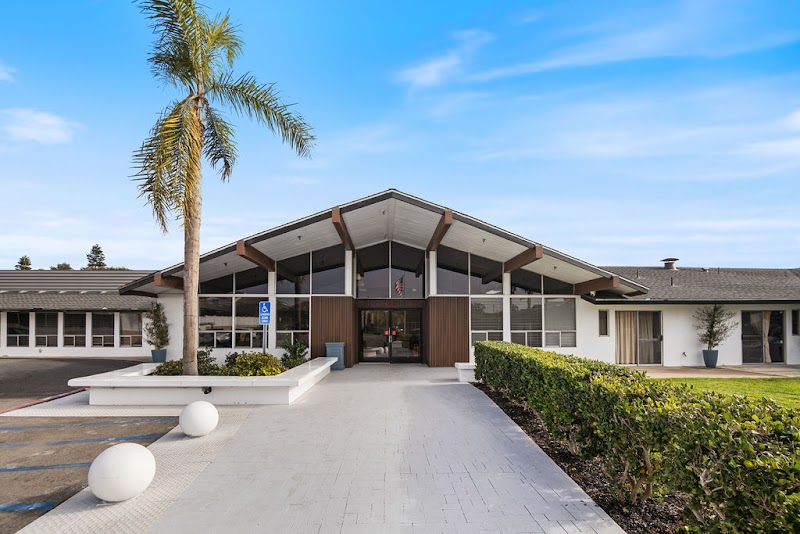
How is Capistrano Beach Staffed?

CMS rates CAPISTRANO BEACH CARE CENTER's staffing level at 2 out of 5 stars, which is below average compared to other nursing homes. Staff turnover is 36%, compared to the California average of 46%. This relatively stable workforce can support continuity of care.

What Have Inspectors Found at Capistrano Beach?

State health inspectors documented 73 deficiencies at CAPISTRANO BEACH CARE CENTER during 2020 to 2025. These included: 67 with potential for harm and 6 minor or isolated issues. While no single deficiency reached the most serious levels, the total volume warrants attention from prospective families.
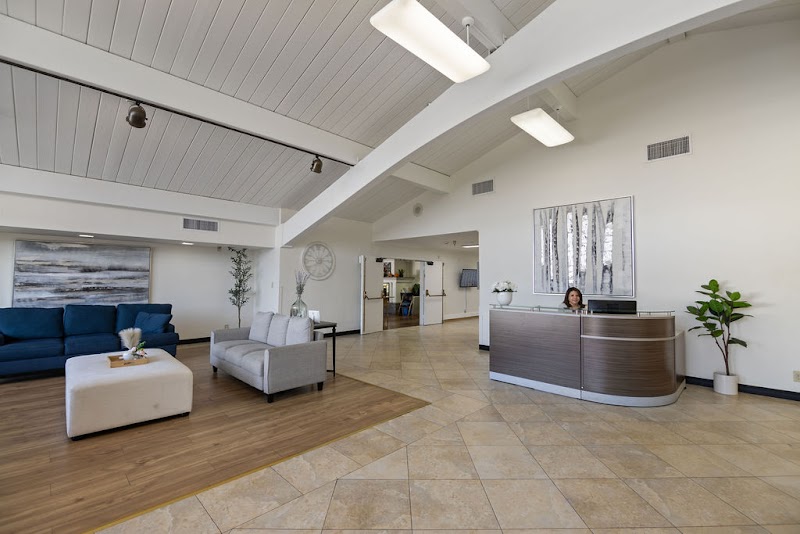
Who Owns and Operates Capistrano Beach?

CAPISTRANO BEACH CARE CENTER is owned by a for-profit company. For-profit facilities operate as businesses with obligations to shareholders or private owners. The facility operates independently rather than as part of a larger chain. With 93 certified beds and approximately 88 residents (about 95% occupancy), it is a smaller facility located in DANA POINT, California.
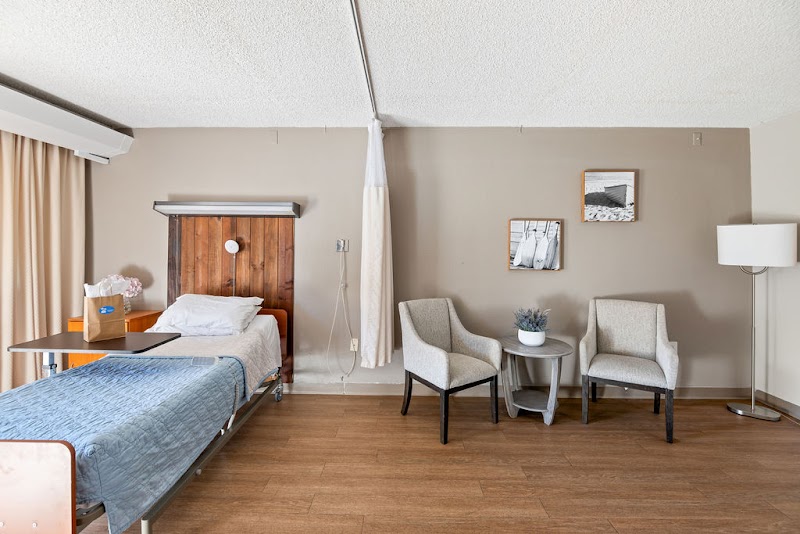
How Does Capistrano Beach Compare to Other California Nursing Homes?

Compared to the 100 nursing homes in California, CAPISTRANO BEACH CARE CENTER's overall rating (2 stars) is below the state average of 3.1, staff turnover (36%) is near the state average of 46%, and health inspection rating (2 stars) is below the national benchmark.

What Should Families Ask When Visiting Capistrano Beach?

Based on this facility's data, families visiting should ask: "Can you walk me through typical staffing levels on day, evening, and night shifts?" "Can I visit during a mealtime to observe dining assistance and food quality?" "How do you handle medical emergencies, and what is your hospital transfer rate?" "Can I speak with family members of current residents about their experience?" These questions are particularly relevant given the below-average staffing rating.

Is Capistrano Beach Safe?

Based on CMS inspection data, CAPISTRANO BEACH CARE CENTER has a clean safety record: no substantiated abuse findings (meaning no confirmed cases of resident harm), no Immediate Jeopardy citations (the most serious violation level indicating risk of serious injury or death), and is not on the Special Focus Facility watch list (a federal program monitoring the lowest-performing 1% of nursing homes). The facility has a 2-star overall rating and ranks #100 of 100 nursing homes in California. While no facility is perfect, families should still ask about staff-to-resident ratios and recent inspection results during their visit.

Do Nurses at Capistrano Beach Stick Around?

CAPISTRANO BEACH CARE CENTER has a staff turnover rate of 36%, which is about average for California nursing homes (state average: 46%). Moderate turnover is common in nursing homes, but families should still ask about staff tenure and how the facility maintains care continuity when employees leave.

Was Capistrano Beach Ever Fined?

CAPISTRANO BEACH CARE CENTER has no federal fines on record. CMS issues fines when nursing homes fail to meet care standards or don't correct problems found during inspections. The absence of fines suggests the facility has either maintained compliance or corrected any issues before penalties were assessed. This is a positive indicator, though families should still review recent inspection reports for the full picture.

Is Capistrano Beach on Any Federal Watch List?

CAPISTRANO BEACH CARE CENTER is not on any federal watch list. The most significant is the Special Focus Facility (SFF) program, which identifies the bottom 1% of nursing homes nationally based on persistent, serious quality problems. Not being on this list means the facility has avoided the pattern of deficiencies that triggers enhanced federal oversight. This is a positive indicator, though families should still review the facility's inspection history directly.