THE REUTLINGER COMMUNITY

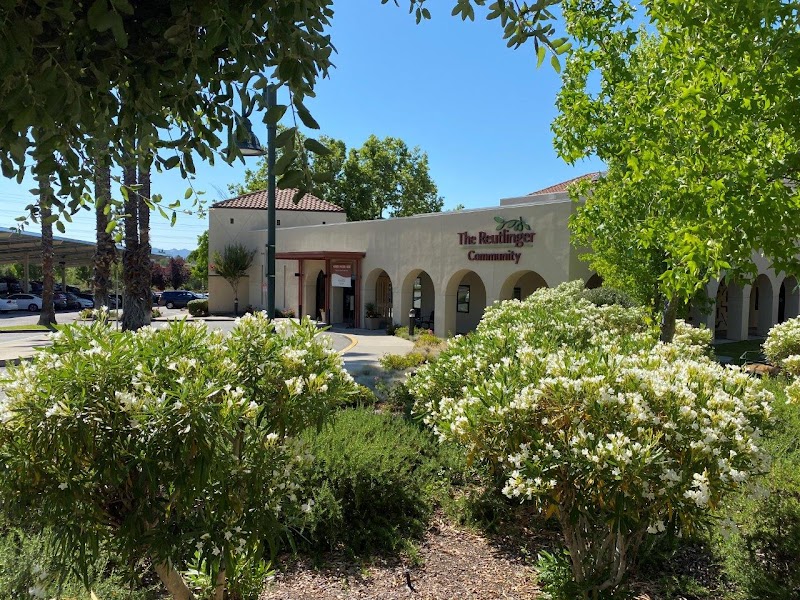
4000 CAMINO TASSAJARA, DANVILLE, CA 94506 (925) 648-2800
Non profit - Corporation 60 Beds Independent Data: November 2025
Trust Grade
85/100
#226 of 1155 in CA
Last Inspection: November 2024

Within standard 12-15 month inspection cycle. Federal law requires annual inspections.

Overview

The Reutlinger Community in Danville, California, holds a Trust Grade of B+, indicating it is above average and recommended for families seeking care. It ranks #226 out of 1155 facilities in California, placing it in the top half, and #12 out of 30 in Contra Costa County, meaning only 11 local options are better. The facility is improving, with a reduction in issues from 10 in 2024 to just 1 in 2025. Staffing receives a perfect 5-star rating, with turnover at 47%, which is average but suggests some stability, and there is more RN coverage than 89% of California facilities, ensuring better oversight of residents' care. Despite these strengths, there are notable weaknesses. The facility has been cited for not completing annual performance reviews for all licensed nurses, which raises concerns about care quality. Additionally, there were issues with not conducting timely reviews of residents' medications, which could jeopardize medication safety, and one resident's medications were found improperly stored, risking expired or ineffective treatments. Overall, while The Reutlinger Community has strong staffing and a good reputation, families should be aware of these areas needing improvement.

Trust Score
B+
85/100
In California
#226/1155
Top 19%
Safety Record
Low Risk
No red flags
Inspections
Getting Better
10 → 1 violations
Staff Stability
⚠ Watch
47% turnover. Above average. Higher turnover means staff may not know residents' routines.
Penalties
✓ Good
No fines on record. Clean compliance history, better than most California facilities.
Skilled Nurses
✓ Good
Each resident gets 58 minutes of Registered Nurse (RN) attention daily — more than average for California. RNs are trained to catch health problems early.
Violations
⚠ Watch
17 deficiencies on record. Higher than average. Multiple issues found across inspections.
★★★★★
5.0
Overall Rating
★★★★★
5.0
Staff Levels
★★★★☆
4.0
Care Quality
★★★★☆
4.0
Inspection Score
Stable
2024: 10 issues
2025: 1 issues

The Good

  • 5-Star Staffing Rating · Excellent nurse staffing levels
  • 4-Star Quality Measures · Strong clinical quality outcomes
  • Full Sprinkler Coverage · Fire safety systems throughout facility
  • No fines on record

Facility shows strength in staffing levels, quality measures, fire safety.

The Bad

Staff Turnover: 47%

Near California avg (46%)

Higher turnover may affect care consistency

The Ugly 17 deficiencies on record

Feb 2025 1 deficiency
CONCERN (D) 📢 Someone Reported This

A family member, employee, or ombudsman was alarmed enough to file a formal complaint

Potential for Harm - no one hurt, but risky conditions existed

Deficiency F0838 (Tag F0838)

Could have caused harm · This affected 1 resident

**NOTE- TERMS IN BRACKETS HAVE BEEN EDITED TO PROTECT CONFIDENTIALITY** Based on interview and record review, the facility failed to follow the Facility Assessment Tool (a document with facility-wide ...

Read full inspector narrative →
**NOTE- TERMS IN BRACKETS HAVE BEEN EDITED TO PROTECT CONFIDENTIALITY** Based on interview and record review, the facility failed to follow the Facility Assessment Tool (a document with facility-wide assessment to determine what resources are necessary to care for its residents competently during day-to-day operations), prior to accepting one of three sampled residents (Resident 1) at the facility. Facility did not ensure a Registered Nurse (RN) was available to care for Resident 1, who required continuous Antibiotic Intravenous Therapy (IV ATB- administration of antibiotic medications directly into the bloodstream through a vein to treat infection) for a period of three weeks. This failure resulted in Resident 1 to experience discomfort, frustration; an unplanned, and an avoidable discharge back to the hospital after three (3) days of being at the facility. Findings: During a review of Resident 1 ' s admission Record (a document with resident ' s basic personal information) printed on 2/12/25, the record indicated Resident 1 was admitted to the facility on [DATE] and discharged to an Acute Care Hospital (ACH) on 1/26/25. During a record review of Resident 1 ' s History & Physical (H&P- a term used to describe doctor ' s examination and care recommendations for a patient) dated 1/23/25, the H&P indicated Resident 1 underwent his third spinal surgery (back bone operation) electively, for a revision (a procedure to redo a previous surgery) and removal of hardware with placement of new hardware on 1/16/25. During a concurrent interview and record review on 2/12/25 at 11:32 a.m., with ADON, Resident 1 ' s Physician Order Summary Report dated 1/23/25 was reviewed. The order indicated Resident 1 was to receive 12 grams of Ampicillin Sodium Injection solution (an antibiotic medication to treat infections) intravenously (IV- administration of fluids, medications, or nutrients directly into a vein using a needle or catheter) every shift for infection, from 1/23/25 to 2/13/25. During an interview on 2/12/25 at 12:49 p.m., Admissions Coordinator (AC) stated she was responsible for receiving the referrals from Hospitals to admit new residents for continued care at the facility. The AC stated one of the admissions criteria at the facility was to meet patient ' s care needs. The AC stated she remembered discussing Resident 1 ' s hospital referral with the Director of Nursing (DON) at that time, prior to saying yes to the hospital. The AC stated she asked the DON if facility was able to care for Resident 1 with the need of continuous IV ATB therapy for 24 hours for three weeks, the DON told her yes, it was just like IV hydration. The AC stated after the DON ' s approval she accepted Resident 1 ' s referral and brought him to the facility on 1/23/25. During a phone interview on 2/12/25 at 3:01 p.m., Licensed Vocational Nurse (LVN 1) stated he worked during evening shift (2:30 pm through 11:00 pm) on 1/25/25. LVN 1 stated there was no Registered Nurse (RN) scheduled to work during the night shift (10:30 pm through 7:00 am) at the facility. LVN 1 stated he was not comfortable with that situation for Resident 1 ' s health and safety because he had to receive continuous IV ATB throughout the night shift. LVN 1 stated he requested Resident 1 ' s doctor to send Resident 1 back to the hospital. During a record review of facility ' s staff Sign-in Sheet dated 1/25/25, the Sign-In sheet indicated facility did not have an RN scheduled to work on the night shift for that day, indicating there was no RN on duty from 11:00 pm on 1/25/25, through 7:00 am on 1/26/25. The DON had approved above Sign-in sheet. During a phone interview on 2/19/25 at 3:59 p.m., with Director of Staff Development (DSD) and Nurse Consultant (NC), the DSD stated it was not under LVN ' s scope of practice and/or under their job description to administer IV ATB therapy. The NC stated an RN was required to be on duty to manage IV ATB therapy. The NC stated it was RN ' s, who were expected to assess/ monitor for adverse/ side- effects and intervene as needed when they were managing residents with IV ATB therapy. During a phone interview on 2/12/25 at 3:05 p.m., Resident 1 ' s Family Representative (FR 1) stated they were assured that the facility was able to administer continuous IV ATB treatment to Resident 1 before he was transferred to the facility on 1/23/25. FR 1 stated, however on 1/25/25, they were informed that facility was not able to take care of Resident 1 anymore. FR 1 stated Resident 1 had a lot of pain in his back due to his recent surgeries, and it was hard to transfer him in and out of bed and from one facility to the other. A review of Resident 1 ' s nursing progress notes dated 1/25/25, LVN 1 documented he spoke to Resident 1 about transporting him back to the hospital as ordered by the facility management due to continuation of IV therapy, Resident 1 got mad and stated he did not want to go. LVN 1 documented that he called 911 and Resident 1 left the facility to a nearby hospital. During an interview on 2/12/25 at 12:43 p.m., Administrator (ADM) stated Resident 1 was transferred back to the hospital as they could not provide care to him. The ADM stated the DON who approved Resident 1 ' s admission to the facility did not work at the facility anymore. The ADM stated Resident 1 ' s unplanned discharge to the hospital was unfavorable for Resident 1. During a concurrent interview and record review on 2/12/25 at 1:55 p.m., with ADM, facility ' s undated booklet titled Facility Assessment Tool was reviewed. The assessment indicated, the facility must conduct and document a facility-wide assessment to determine what resources are necessary to care for its residents competently during both day-to-day operations (including nights and weekends) and emergencies .Admissions Coordinator and Director of Nursing make admission decisions based on abilities to provide care .goal is [one] RN each shift to assist with IV . During a review of facility ' s Policy and Procedures (P&P) titled, Admissions to the facility, dated 3/4/02, with an implementation date of 2020, the P&P indicated, 3. The objectives of our admissions policies are to: b. Admit residents who can be adequately cared for by the facility .
Nov 2024 7 deficiencies
CONCERN (D)

Potential for Harm - no one hurt, but risky conditions existed

Resident Rights (Tag F0550)

Could have caused harm · This affected 1 resident

Based on observation, interview and record review, the facility failed to ensure one of two sampled residents (Resident 7) was treated with respect and dignity when Resident 7 was not promptly assiste...

Read full inspector narrative →
Based on observation, interview and record review, the facility failed to ensure one of two sampled residents (Resident 7) was treated with respect and dignity when Resident 7 was not promptly assisted during lunch on 11/18/24. This failure had the potential to affect Resident 7's psychosocial well-being and nutritional needs. Findings: During a record review of Resident 7's admission Record (AR), printed on 11/21/24, the AR indicated Resident 7 was admitted to the facility in October 2024 with multiple diagnoses that included sepsis (life-threatening complication of infection) and metabolic encephalopathy (damage or disease that affects the brain). During a record review of Resident 7's Minimum Data Set (MDS, a resident assessment instrument used to identify resident care problems to be addressed in an individualized care plan), dated 10/29/24, Resident 7's Brief Interview for Mental Status (BIMS, a scoring system used to determine the resident's cognitive status in regard to attention, orientation, and ability to register and recall information) was 3 out of 15, which indicated severely impaired mental status. During a record review of Resident 7's MDS record, dated 11/6/24, Resident's 7 assessment for Eating indicated Resident 7 needed supervision or touching assistance (helper provides verbal cues and/or touching assistance as resident completes activity). During a record review of Resident 7's Care Plan, revised on 10/21/24, the care plan indicated, Resident 7 is at nutrition/hydration risk related to missing/broken teeth requiring mechanically altered diet, chewing/swallowing difficulty, depression, needs occasional-frequent assistance in feeding. During a concurrent observation and interview on 11/18/24, at 12:03 p.m., in the dining room, Resident 7 was observed sitting at the table with other residents. Assistant Director of Nursing (ADON) and Certified Nurse Assistant (CNA) 2 were observed serving the trays to the residents. Resident 7 received her tray. During a concurrent observation and interview on 11/18/24, at 12:06 p.m., Resident 7 was observed not eating. Resident 7 stated she was ready to eat her lunch and would like to eat the fish that was served to her. During another observation on 11/18/24, at 12:10 p.m., Resident 7 was not touching her food and did not have anybody assisting her while the resident sitting next to her was already eating. During a concurrent observation and interview on 11/18/24, at 12:22 p.m., CNA 1 started assisting Resident 7. CNA 1 stated he did not know that Resident 7 needed assistance because Resident 7 used to eat by herself. During an interview on 11/20/24, at 9:40 a.m., CNA 6 stated Resident 7 required assistance from staff to encourage and provide verbal cues during mealtimes. CNA 6 stated Resident 7 would have not eaten and would have fallen asleep if no one assisted her in eating. CNA 6 stated Resident 7's nutrition would have been affected. During an interview on 11/20/24, at 12:28 p.m., with the Assistant Director of Nursing (ADON), the ADON stated Resident 7 needed cueing and prompting when eating otherwise Resident 7 would have been distracted and would have not eaten. ADON stated Resident 7 should have been assisted in the dining room because the food was getting cold. During an interview on 11/21/24, at 11:52 a.m., with the Director of Nursing (DON), the DON stated the CNAs assigned to the dining room should have asked Resident 7 the reason why she was not eating, and they should have encouraged Resident 7 to eat her lunch. During a record review of the facility's P&P titled, Supervision of Resident Nutrition, dated 7/1/2020, the P&P indicated, 5. Residents needing assistance in eating must be promptly assisted upon being served. During a record review of the facility's P&P titled, Necessary Care and Services: Activities of Daily Living, dated 11/2024, the P&P indicated, Based on the comprehensive assessment of a resident and consistent with resident's needs and choices, the facility must provide the necessary care and services to ensure that a resident's abilities in activities of daily living do not diminish .This includes the facility ensuring that a resident is given appropriate treatment and services to maintain or improve his/her ability to carry out the activities of daily living: .Dining, eating, including meals and snacks
CONCERN (E)

Potential for Harm - no one hurt, but risky conditions existed

Drug Regimen Review (Tag F0756)

Could have caused harm · This affected multiple residents

Based on observation, interview, and record review, the facility failed to ensure Drug Regimen Reviews (DRR- review of all medications the residents were using in order to optimize therapy, identify a...

Read full inspector narrative →
Based on observation, interview, and record review, the facility failed to ensure Drug Regimen Reviews (DRR- review of all medications the residents were using in order to optimize therapy, identify any potential drug reactions, ineffective drug therapy or duplicate drug therapy) by the Consultant Pharmacist (CP, a pharmacist with specialized training to review safety aspects of medication use) were acted upon on a monthly basis for two of four sampled residents (Residents 4 and Resident 34). This failure had the potential to result in not addressing medication safety irregularities in a timely manner and/or help optimize the drug therapy for Resident 4 and Resident 34. Findings: During a review of the facility's document titled, Drug Regimen Review (DRR) binder, the DRR binder did not include the CP's monthly recommendations for June through October 2024. During an interview on 11/21/24, at 8:09 a.m., with the Director of Nursing (DON), the DON stated she did not have the DRR for the months of June through October 2024 because she did not receive them from the CP. During a phone interview on 11/21/24, at 8:50 a.m., with the CP, the CP stated DRR documents were emailed to the DON and the Administrator (ADM) on a monthly basis. The CP stated the DON was responsible for making sure his recommendations were reviewed and implemented accordingly. The CP stated he had noticed that some recommendations were not addressed, and he had to keep repeating them for consideration. During a follow up phone interview on 11/21/24, at 12:50 p.m., with the CP, the CP stated the monthly DRR was re-sent to the DON's email. During a record review of the DRR for the months of August 2024 and September 2024, the DRR indicated the CP's recommendations for Resident 4 and Resident 34 were not addressed as follows: 1. DRR for August 2024 and September 2024 for Resident 4, indicated, The resident is currently receiving the following antibiotic - Doxycycline 100 milligrams/mg (anti-infective medication) once a day for chronic right arm infection, give 1 hour prior to milk products or calcium medications (start date: 2/5/24). The DRR document also indicated, Under Department of Health Services/Centers for Medicare and Medicaid Services please comply with the Antibiotic Stewardship program (a coordinated program that promotes the appropriate use of antimicrobials (including antibiotics), improves patient outcomes, reduces microbial resistance, and decreases the spread of infections caused by multi-drug resistant organisms) per guidelines - STOP DATE IS NEEDED. During a record review of Resident 4's Order Summary Report dated 11/21/24, the document indicated Resident 4 had an order of Doxycycline Hyclate Oral Tablet 100 mg for chronic right arm infection. Give 1 hour prior to milk products or calcium medications. Started from 2/6/24. The order summary report further indicated, Communication Method - Verbal, with Order Status that indicated Active, and Start Date of 6/12/24. The order summary report End Date was blank. 2. DRR for August 2024 and September 2024 for Resident 34, indicated, The resident currently receives long acting/slow-release medication Protonix (medication that reduces stomach acid) 40 mg once a day for gastroparesis (delayed gastric emptying).This medication should never be crushed or altered in any form. The medication has a protective enteric coating that is designed to dissolve in a certain area of the gastro-intestinal tract .Crushing the medication destroys this mechanism and thus alters its bioavailability in the body .Please note medication on MAR (Medication Administration Record) with Do Not Crush. During a record review of Resident 34's Order Summary dated 11/21/24, the order summary indicated, Protonix Tablet Delayed Release 40 mg (Pantoprazole Sodium) Give 1 tablet by mouth one time a day for GERD (gastroesophageal reflux, a condition where acid from the stomach comes up into the esophagus) start date 3/31/2024. The order summary did not include a Do Not Crush note as per CP's recommendation. During an observation, interview and record review on 11/21/24, at 2:02 p.m., with the DON, the DON stated she was responsible in reviewing the monthly DRR and implementing the CP's recommendations accordingly. The DON was observed scanning the DRR binder and stated whatever was included in the DRR binder, were the only documents she had reviewed. The DON stated the DRR binder only included CP's recommendations until May 2024. The DON stated she did not receive the rest of the monthly DRR from the CP. During a follow up interview on 11/21/24, at 3:15 p.m., with the DON, the DON stated it was important to review the DRR and the CP's recommendations every month because some of residents' medications needed correct indications per regulation and/or special instructions. The DON stated some recommendations from the CP also included residents' lab test to know if the medications were working or needed adjustment. The DON stated the physician should have reviewed the monthly DRR and would have written on the DRR binder if the physician agreed or disagreed to the CP's recommendations. The DON stated if she saw an order for antibiotic that did not have a stop date, she would have informed the physician. The DON stated if an antibiotic medication did not have a stop date, the licensed nurses would have given it continuously and it could have given side effects to the residents. The DON stated she made an error because she did not follow up with the CP when she did not receive the DRR from June to October 2024. During a record review of the facility's policy and procedure (P&P), titled, Medication Regimen Review and Reporting, dated 11/17/24, the P&P indicated, Medication Regimen Review (MRR) or Drug Regimen Review is a thorough evaluation of the medication regimen of a resident with the goal of promoting positive outcomes and minimizing adverse consequences and potential risks associated with medication. The MRR includes review of the medical record in order to prevent, identify, report, and resolve medication-related problems, medication errors or other irregularities .8. The consultant pharmacist and the other nursing care center follows up on the recommendations to verify that appropriate action has been taken. Recommendations shall be acted upon within 30 calendar days .c. For recommendations that do not require physician intervention, the director of nursing with licensed designee will address the recommendations.
CONCERN (E)

Potential for Harm - no one hurt, but risky conditions existed

Deficiency F0761 (Tag F0761)

Could have caused harm · This affected multiple residents

Based on observation, interview, and record review, the facility failed to properly store drugs for one out of 12 sampled Residents (Resident 18). These failures had the potential for Resident 18 to t...

Read full inspector narrative →
Based on observation, interview, and record review, the facility failed to properly store drugs for one out of 12 sampled Residents (Resident 18). These failures had the potential for Resident 18 to take expired, less effective and discontinued medication. Findings: During a review of Resident 18's admission Record, printed 11/20/24, indicated, Resident 18 was admitted to the facility in 2024 with multiple diagnosis which included, Pneumonitis (swelling and irritation of lung tissue) due to inhalation of food and vomit, and Type 2 diabetes mellitus (a long-term disease in which the body cannot regulate the amount of sugar in the blood) with diabetic chronic kidney disease (when diabetes damages the kidneys, causing them to filter waste less effectively). During a concurrent observation and interview on 11/19/24, at 12:23 p.m., with Registered Nurse (RN) 2, Medication Cart A was observed. The medication cart had Residents 18's Lantus (a long-acting insulin that helps control blood sugar levels in people with diabetes 100 unit/ml (milliliter) inject 25 units Sub-Q (subcutaneous - under the skin) at bedtime for diabetes mellitus with an open date of 10/14/24. The Lantus container indicated Discard 28 days after opening. RN 2 stated it was beyond 28 days, it was expired, and it should have been destroyed. During an interview on 11/21/24, at 12:02 p.m., with Assistant Director of Nursing (ADON), ADON stated their policy was to destroy insulin 28 days after it was opened. ADON stated insulin that was beyond 28 days from the date it was opened was expired and was a risk to the resident because it may have been less effective and may not have provided the appropriate action. During a review of Resident 18's Doctor's Order, dated 9/29/24, the order indicated Resident 18 had a doctor's order for Lantus Glargine (a long-acting insulin that helps control blood sugar levels in people with diabetes) 100 U (units)/ml inject 25 units Sub-Q at bedtime for diabetes mellitus, that was discontinued on 11/4/24. During a review of Resident 18's Doctor's Order, dated 11/4/24, the order indicated Resident 18 had a doctor's order for Insulin Glargine Solution (a long-acting insulin that helps control blood sugar levels in people with diabetes) 100 unit/ml inject 18 unit subcutaneously at bedtime for diabetes. During a review of the facility's policy and procedure (P&P) titled, Storage of Medications, revised April 2007, the P&P indicated, The facility shall not use discontinued, outdated, or deteriorated drugs or biologicals. All such drugs shall be returned to the dispensing pharmacy or destroyed.
CONCERN (E)

Potential for Harm - no one hurt, but risky conditions existed

Deficiency F0790 (Tag F0790)

Could have caused harm · This affected multiple residents

**NOTE- TERMS IN BRACKETS HAVE BEEN EDITED TO PROTECT CONFIDENTIALITY** Based on observation, interview and record review, the facility failed to intervene for one of the sampled residents (Resident 3...

Read full inspector narrative →
**NOTE- TERMS IN BRACKETS HAVE BEEN EDITED TO PROTECT CONFIDENTIALITY** Based on observation, interview and record review, the facility failed to intervene for one of the sampled residents (Resident 34), when his dentures were not fitting properly for over a month. This failure resulted in Resident 34 feeling frustrated, awful, and placed him at risk for unintended weight loss. Findings: During a review of Resident 34's admission Record (a document used to communicate basic information about a resident) printed on 11/20/24, the record indicated Resident 34 was admitted to the facility on [DATE] and was readmitted on [DATE]. A review of Resident 34's Minimum Data Set (MDS, an assessment used to plan care), dated 11/8/24, indicated, Resident 34 was able to understand others and was able to make himself understood. During a review of Resident 34's Order summary report, dated 3/30/24, the order indicated to perform dental exam and treatment as indicated. A review of Resident 34's Nutrition/Hydration care plan, revised on 11/8/24, indicated Resident 34 was at high risk for nutrition/hydration issues related to edentulous [no teeth in mouth], ill-fitting dentures, chewing/swallowing difficulty . During a concurrent observation and interview with Resident 34 on 11/18/24, at 10:57 a.m., Resident 34 was sitting in the wheelchair, drooling. Resident 34 had no teeth and was not wearing any dentures. Resident 34 stated having no dentures made him feel completely awful, frustrated and he felt like, breaking his fingers. During an interview with Resident 34 on 11/21/24, at 12:06 p.m., in the dining room, Resident 34 stated he was not happy without his dentures for the last 3 months. During an interview with the Certified Nursing Assistant (CNA) 1 on 11/19/24, at 11:29 a.m., CNA 1 stated Resident 34 had upper and lower dentures. CNA 1 stated he offered Resident 34 to wear dentures during mealtimes, but he did not like wearing them. CNA 1 stated he did not know why Resident 34 did not prefer wearing dentures. During a concurrent observation and interview with Registered Nurse (RN) 1 on 11/19/24, at 11:47 a.m., in Resident 34's room, RN 1 stated she did not know Resident 34 had dentures. RN 1 stated Resident 34 was on mechanical soft diet. RN 1 opened Resident 34's nightstand top drawer and found a denture cup with both upper and lower dentures. RN 1 then asked Resident 34 to put them on, Resident 34 repeatedly stated, not correct and refused to wear them. During a concurrent interview and record review with Minimum Data Set Coordinator (MDSC) on 11/21/24, at 01:39 p.m., Resident 34's Dentist Progress Notes dated 7/12/24 and MDS assessment dated [DATE] were reviewed. MDSC stated the dentist note indicated Resident 34's new dentures were delivered on that day. MDSC stated ill-fitting dentures could cause soreness, pain, cavity, chewing and swallowing problems. The MDSC stated she completed Resident 34's MDS assessment on 11/8/24 and was supposed to check his oral status along with denture status as part of the assessment. The MDSC stated, however she did not physically assess Resident 34's oral cavity and did not ensure if his dentures were fitted or not. During a concurrent interview and record review with Social Services Director (SSD) on 11/19/24, at 2:05 p.m., Resident 34's progress notes, dated 10/10/24, were reviewed. SSD stated she called the dentist office and informed that Resident 34 was complaining about dentures not fitting well. SSD stated she was unable to find any documentation if facility ever followed up with the dentist office after 10/10/24 until 11/19/24. During an interview on 11/21/24, at 12:01 p.m., SSD stated she talked to the dentist office on that day and Resident 34's dentures needed to be grinded for proper fitting. During an interview with Director of Nursing (DON) on 11/20/24, at 12:44 p.m., DON stated staff needed to act on dentures related issues as soon as possible, within 72 hours, and document their attempts to address the issue in residents' progress notes. During an interview with Minimum Data Set Coordinator (MDSC) on 11/21/24, at 02:26 p.m., MDSC stated wearing dentures was important for residents to eat, chew and speak better. MDSC stated dentures should be well-fitted to avoid pain in the mouth and to maintain residents' dignity. During a review of facility's Policy and Procedures (P&P) titled, Dental Services, dated 07/01/20, the P&P indicated, In the event that the resident's dentures are damaged, broken, chipped, ill-fitting or lost, nursing will work with Social Services and the attending Physician to obtain a referral for dental services timely; referral made within 3 business days for an appointment.
CONCERN (E)

Potential for Harm - no one hurt, but risky conditions existed

Deficiency F0808 (Tag F0808)

Could have caused harm · This affected multiple residents

**NOTE- TERMS IN BRACKETS HAVE BEEN EDITED TO PROTECT CONFIDENTIALITY** Based on observation, interview, and record review, the facility failed to ensure the therapeutic diet ordered by the physician ...

Read full inspector narrative →
**NOTE- TERMS IN BRACKETS HAVE BEEN EDITED TO PROTECT CONFIDENTIALITY** Based on observation, interview, and record review, the facility failed to ensure the therapeutic diet ordered by the physician were followed for two of four sampled residents (Resident 7 and Resident 35) during a dining observation when: 1. Resident 35, who was on mechanical soft diet (a texture-modified diet that consists of foods that are easy to chew and swallow) with ground meats received a piece of meat, not in bite size as indicated on the meal ticket. 2. Resident 7, who was on a mechanical soft diet received a regular texture of snap peas vegetable. This failure had the potential for Resident 7 and Resident 35 to choke and/or aspirate (inhalation of a foreign object into the airway or lungs). Findings: 1. During a review of Resident 35's admission Record (AR) (a document used to communicate basic information about a resident), dated 11/18/24, AR indicated Resident 35 was admitted to the facility on [DATE]. During a concurrent observation and interview in Resident 35's room on 11/18/24, at 12:07 p.m., Resident 35 was sitting at the edge of her bed, Certified Nurse Assistant (CNA) 2 served the lunch tray to Resident 35, which had a dessert, cooked rice, cooked whole peas, and a whole piece of meat. CNA 2 stated the meat was fish. The meal ticket on Resident 35's tray indicated to serve, Mechanical Soft diet w/ground meats, and bite size entrée. Resident 35 started eating her dessert and attempted to cut the meat. Resident 35 was not able to cut the meat and then refused to eat the rest of the meal. CNA 2 stated licensed nurse should have checked Resident 35's meal tray to ensure Resident 35 received correct meal tray before meal was served but was unable to state if a nurse checked Resident 35's meal tray that day. When asked if Resident 35 received correct meal tray in terms of ground meat, and bite size entrée, CNA 2 stated no and took the tray away for replacement. During a concurrent interview and record review with Registered Nurse (RN) 2 and Assistant Director of Nursing (ADON) on 11/18/24, at 02:24 p.m., Resident 35's diet orders were reviewed. RN 2 stated Resident 35's diet order, dated 8/25/23, indicated to serve Mechanical Soft with Ground meat texture, Regular consistency. RN 2 stated she was assigned to check meal trays for accuracy that day, however she did not check Resident 35's meal tray before her lunch was served that day. ADON stated she was also involved in serving meal trays but did not check Resident 35's tray. RN 2 stated serving a big piece of meat placed Resident 35 at risk for choking. During an interview with Registered Dietitian (RD) 2 on 11/19/24, at 11:58 a.m., RD expected the kitchen staff to plate correct type and texture of foods on residents' meal trays and licensed nurses were to perform another check before meals were distributed to the residents. During an interview with Dietary Manager (DM) on 11/21/24, at 10:23 a.m., DM stated the cook should cut the piece of meat into bite size according to the notes in the meal ticket. 2. During a record review of Resident 7's admission Record (AR), printed on 11/21/24, the AR indicated Resident 7 was admitted to the facility in October 2024 with multiple diagnoses that included sepsis (life-threatening complication of infection) and metabolic encephalopathy (damage or disease that affects the brain). During a record review of Resident 7's Minimum Data Set (MDS, a resident assessment instrument used to identify resident care problems to be addressed in an individualized care plan), dated 10/29/24, Resident 7's Brief Interview for Mental Status (BIMS, a scoring system used to determine the resident's cognitive status in regard to attention, orientation, and ability to register and recall information) was 3 out of 15, which indicated severely impaired mental status. During a record review of Resident 7's care plan, dated 10/21/24, the care plan indicated, Resident 7 is at nutrition/hydration risk related to missing/broken teeth requiring mechanically altered diet, chewing/swallowing difficulty, needs occasional-frequent assistance in feeding. The care plan further indicated, Provide diet as ordered: regular diet, mechanical soft texture with ground meat and finely chopped vegetables, thin liquids (liquids that take little or no effort to drink), no straws. During a concurrent observation, interview and record review on 11/18/24, at 12:03 p.m., in the dining room, a staff served Resident 7's lunch tray that included regular snap peas vegetables that were not finely chopped. Resident 7's meal ticket dated 11/18/24 indicated, Diet Order: Mechanical soft with ground meats, thin liquids. The meal ticket also indicated alerts for finely chopped vegetables, ground meat and no straws. Resident 7 stated she was ready to eat her lunch. During a concurrent observation and interview on 11/18/24, at 12:22 p.m., with Certified Nurse Assistant (CNA) 1, CNA 1 was observed feeding Resident 7. CNA 1 stated he did not know why Resident 7 needed the vegetables to be finely cut. CNA 1 further stated according to the meal ticket, the snap peas should have been cut finely for Resident 7. During an interview on 11/19/24, at 2:19 p.m., with the Director of Dietary Services (DDS), the DDS stated during the tray line (kitchen staff assemble meals on trays), she was responsible for auditing the meal tickets and making sure the meals prepared for the residents were according to their diet orders. The DDS stated she stepped out for a while during the tray line on 11/18/24 and two diet aides took over while she was gone. The DDS stated the meal tickets should have been checked accurately before putting the trays in the meal delivery cart. The DDS further stated the nursing staff should have checked the meal tickets for Resident 7 and Resident 34 prior to serving their meals and the kitchen staff should have been notified of the discrepancies. During an interview on 11/19/24, at 2:23 p.m., with the Registered Dietician (RD), RD stated serving a regular texture diet, including the not finely chopped vegetables to the residents who needed mechanically soft diet could have potentially caused choking or aspiration. During an interview on 11/21/24, at 11:52 a.m., with the Director of Nursing (DON), the DON stated she expected the licensed nurses to have checked the meal tickets for all the residents prior to serving their meals. During a record review of the facility's policy and procedure (P&P), titled, Therapeutic Diets/Texture Alterations, dated 7/1/2020, the P&P indicated, Therapeutic diets and texture alterations shall be prescribed and provided when necessary to support optimal nutritional status. The P&P indicated, A therapeutic diet or texture alteration must be prescribed by the resident's attending physician. During a record review of the facility's P&P, titled, Supervision of Resident Nutrition, dated 7/1/2020, the P&P indicated, 1. Nursing personnel are responsible for assuring that residents are served the correct diet. 2. Prior to serving the tray, check the diet card that it is correct. If there's a doubt, check the written physician's order. 3. If an error has been made, report it to the dietary supervisor so new food tray can be issued.
CONCERN (E)

Potential for Harm - no one hurt, but risky conditions existed

Food Safety (Tag F0812)

Could have caused harm · This affected multiple residents

Based on observation, interview, and record review, the facility failed to ensure food was stored and prepared under sanitary conditions when: 1. Freezer had plant-based patties that were soft to touc...

Read full inspector narrative →
Based on observation, interview, and record review, the facility failed to ensure food was stored and prepared under sanitary conditions when: 1. Freezer had plant-based patties that were soft to touch and had beyond use date. 2. A tabletop can opener had brownish matter. 3. There was black matter on the ice sweep part of the residents' ice machine. These failures had potential to put residents at risk for food borne illness and cross-contamination (transfer of bacteria or other microorganisms from one substance to another) that could result in infection or spread of infection. Findings: 1. During a concurrent observation and interview on 11/18/24, at 9:39 a.m., with the Director of Dietary Services (DDS), the kitchen freezer had a bag of plant-based patties in a box that were soft to touch and had a label that indicated, Defrosting Food and Use by date: 11/2/24 at 8:11 a.m. The DDS touched the plant-based patties and stated they were completely defrosted. 2. During a concurrent observation and interview on 11/18/24, at 9:59 a.m., with the DDS, the tabletop can opener stored in a holder mounted on a table had accumulation of brownish matter. The DDS stated the can opener should have been kept cleaned. During an interview on 11/19/24, at 2:07 p.m., with the Registered Dietician (RD), the RD stated she would have expected everything in the freezer to be frozen and should not have any food that had beyond use by date. The RD stated the kitchen should have discarded the plant-based meat from the freezer. 3. During an interview on 11/21/24, at 9:55 a.m., with the DDS, the DDS stated the staff used the ice machine in the meeting room to provide for the residents. During an observation and interview on 11/21/24, at 9:57 a.m., the Lead Maintenance (LM) was observed opening the ice machine. There was black matter on the inside of the machine called the ice sweep part where the ice was made. During an interview on 11/21/24, at 10:04 a.m., with the DDS, the DDS stated the ice machine should not have had black matter inside where the ice was. DDS stated the black matter could have contaminated the ice and could have made the residents sick. During a record review of the facility's policy and procedure (P&P) titled, Food and Supply Storage, revised January 2024, the P&P indicated, All food, non-food items and supplies used in food preparation shall be stored in such a manner as to prevent contamination to maintain safety and wholesomeness for the food for human consumption. The P&P indicated, Foods past the use by, sell-by, or enjoy by date should be discarded. The P&P indicated, Frozen foods must be held solidly frozen so that they are hard to touch. During a record review of the Food and Drug Administration (FDA) Federal Food Code 2022, the food code indicated, 4-601.11 .Equipment, Food-Contact Surfaces, Nonfood-Contact Surfaces, and Utensils .Equipment food-contact surfaces and Utensils shall be clean to sight and touch.
CONCERN (F)

Potential for Harm - no one hurt, but risky conditions existed

Deficiency F0726 (Tag F0726)

Could have caused harm · This affected most or all residents

Based on interview and record review, the facility failed to complete annual performance review and maintain competency/skills records for 17 of 17 sampled Licensed Nurses (LN's). A licensed nurse is ...

Read full inspector narrative →
Based on interview and record review, the facility failed to complete annual performance review and maintain competency/skills records for 17 of 17 sampled Licensed Nurses (LN's). A licensed nurse is a healthcare professional who has met requirements by state board of nursing to practice nursing skills within defined scope. This failure placed residents residing at the facility at risk to receive care from incompetent LN's. Findings: During a concurrent interview and record review with Director of Staff Development (DSD) on 11/20/24, at 12:17 p.m., an untitled, undated facility's document with facility's active employee names, date of hire, job title, employee ID was reviewed. The document indicated facility had 17 LN's including: nine (9) active Licensed Vocational Nurses (LVNs) and eight (8) active Registered Nurses (RNs). The DSD then provided a binder containing wound competency checklist completed for all LNs on 7/11/24. The DSD stated she was able to locate LN's competency checks completed for skin and wound care only. During a review of facility's undated document titled Licensed Nurse Competency Checklist, the document indicated to add facility's name, employee name, date of hire, if employee met the criteria of a specific task or not, date & initials of the reviewer and comments/training needs. The checklist indicated to assess LN's competency in the following areas: Cardiac (heart), Pulmonary (respiratory system), Gastrointestinal (digestive), Genitourinary (urinary), Orthopedic (bones), Neurological (brain functions), Integumentary (skin), Metabolic, Nutrition/Dietary systems; Care planning/Documentation, and Infection Prevention techniques. The checklist indicated to add date and signature of the evaluator and LNs who was being evaluated. During an interview with DSD on 11/21/24, at 12:23 p.m., the DSD stated facility was required to use a checklist titled Licensed Nurse Competency Checklist to assess LN's competencies. The DSD stated she checked facility's storage, her office and other possible locations at the facility but was unable to find skills/competency checks completed for all 17 LN's. The DSD stated LNs were supposed to have the competency check when they are newly hired, as well as in 90-day period and annual basis. DSD stated competency checks were used to make sure the LNs had the skills and knowledge, essential to have competent people working in the facility. The DSD stated if facility did not complete and retain competency/skills for LNs, it placed residents receiving care from them at risk to have problems awaiting to happen, including lack of care, and hospitalizations. DSD stated she herself, Director of Nursing (DON), and Assistant Director of Nursing (ADON) would be responsible to have the competency check and completed for all LN's. During an interview and record review with the DON on 11/21/24, at 12:32 p.m., in DON's office, personnel records were reviewed. The DON stated she did not complete any competency/skills assessments for any LN's working at the facility within last one year. During a review of facility's Policy and Procedure (P&P) titled, Competency of Nursing Staff, dated 11/2024, the P&P indicated, Ensure that all nursing staff possess the competencies and skill sets necessary to provide nursing and related services to meet resident needs safely and in a manner that promotes each resident's rights, physical, mental, and psychosocial well-being . Competency is a measurable pattern of knowledge, skills, abilities, behaviors, and other characteristics that an individual needs to perform work roles or occupational functions successfully.
Oct 2024 3 deficiencies
CONCERN (D) 📢 Someone Reported This

A family member, employee, or ombudsman was alarmed enough to file a formal complaint

Potential for Harm - no one hurt, but risky conditions existed

Deficiency F0658 (Tag F0658)

Could have caused harm · This affected 1 resident

Based on observation, interview and record review, the facility failed to ensure completion of a physician ' s order of stat (immediate) lab draw for one of the residents (Resident 1) for eight hours....

Read full inspector narrative →
Based on observation, interview and record review, the facility failed to ensure completion of a physician ' s order of stat (immediate) lab draw for one of the residents (Resident 1) for eight hours. This failure resulted in Resident 1 having a delay in the completion of a physician ' s order of stat blood draw which potentially impacted Resident 1 ' s treatment and well-being. Findings: During a record review of Resident 1 ' s face sheet, undated, Resident 1 was admitted in November 2022 with diagnoses of essential hypertension (high blood pressure without identifiable cause). During a record review of Progress Notes written on 11/16/22 at 1715 (5:15 p.m.), the note indicated a physician telephone order at 3:00 p.m. for stat blood draw for complete blood count (CBC-measures number and size of different cells in the blood), basic metabolic panel (BMP-measures glucose, calcium, sodium, potassium, carbon dioxide and chloride levels in the blood and kidney functioning), urinalysis (UA-detects urinary tract infections, kidney disease and diabetes) and culture & sensitivity (C&S-detects infection). During an interview on 8/21/23, at 1:10 p.m., with Laboratory Staff (LS) 1, LS 1 stated the facility called the lab for stat labs on 11/16/22 at 4:18 p.m. Per LS 1, dispatch notes at 11:45 p.m. indicated there was no lab tech available to go to the facility. LS 1 stated the facility contacted the lab and cancelled the lab order on 11/17/22 at 12:44 a.m. as Resident 1 was taken to the hospital. During an interview on 10/1/24, at 9:15 a.m., with the Director of Nursing (DON), the DON stated stat labs had to be done within four hours. Per DON, if in three hours still no lab, call the lab again to get lab draw expedited. During an interview on 10/17/24, at 8:55 a.m., with Licensed Vocational (LVN) 1, LVN 1 stated stat lab order is supposed to be completed within four to six hours. Per LVN 1, if there was still no lab tech, contact the lab ' s area manager to get a status and to get labs get done sooner. During a review of the facility ' s policy and procedure (P&P) titled, Diagnostic Services, dated 5/24/13, the P&P indicated, All requests for diagnostic services must be ordered by a physician and completed timely.
CONCERN (D) 📢 Someone Reported This

A family member, employee, or ombudsman was alarmed enough to file a formal complaint

Potential for Harm - no one hurt, but risky conditions existed

Medical Records (Tag F0842)

Could have caused harm · This affected 1 resident

Based on observation, interview and record review, the facility failed to provide accurate patient records when one resident (Resident 1) was transferred to a hospital. This failure resulted in Reside...

Read full inspector narrative →
Based on observation, interview and record review, the facility failed to provide accurate patient records when one resident (Resident 1) was transferred to a hospital. This failure resulted in Resident 1 not having the correct records at the hospital which potentially delayed identification and treatment. Findings: During a record review of Resident 1 ' s face sheet, undated, Resident 1 was admitted in August 2024 with diagnoses of urinary tract infection (UTI - an infection in the bladder/urinary tract) and unspecified atrial fibrillation (irregular, often heart rate that commonly causes poor blood flow). During a record review of Progress Notes: Health Status Note written on 8/17/24 at 1509 (3:09 p.m.), the note indicated Resident 1 was transported to the hospital at 12:30 p.m. for further evaluation as Resident 1 tested positive for Covid. Per the note, Resident 1 was lethargic (drowsy, not alert), had poor oral intake, and low blood pressure. During an interview on 9/10/24, at 10:29 a.m., with Unit Manager (UM), UM stated when Resident 1 was transferred to the hospital, the transfer packet documents that went with Resident 1 to the hospital was incorrect. Per UM, another nurse handed her an envelope with Resident 1 ' s name on it. UM added she saw a face sheet inside the envelope but did not verify face sheet information. UM stated she usually checked the face sheet. Per UM, the packet had an incorrect face sheet. UM stated it was her fault for not checking the contents of the envelope. Per UM, she knew about the incorrect transfer packet when ADM spoke to her about it as ADM was notified by the hospital. During a review of the facility ' s policy and procedure (P&P) titled, Transfer, dated 10/1999, the P&P indicated, The receiving community will be provided all pertinent medical and other information concerning a resident transferred from this community to assure continuity of care.
CONCERN (D) 📢 Someone Reported This

A family member, employee, or ombudsman was alarmed enough to file a formal complaint

Potential for Harm - no one hurt, but risky conditions existed

Infection Control (Tag F0880)

Could have caused harm · This affected 1 resident

Based on interview and record review, the facility failed to notify one resident ' s (Resident 1) emergency contact family member of a Covid outbreak at the facility. This failure resulted in Resident...

Read full inspector narrative →
Based on interview and record review, the facility failed to notify one resident ' s (Resident 1) emergency contact family member of a Covid outbreak at the facility. This failure resulted in Resident 1 ' s family member not receiving Covid exposure status of Resident 1. Resident 1 subsequently tested Covid positive and was hospitalized . Findings: During a record review of Resident 1 ' s face sheet, undated, Resident 1 was admitted in August 2024 with diagnoses of urinary tract infection (UTI - an infection in the bladder/urinary tract) and unspecified atrial fibrillation (irregular, often heart rate that commonly causes poor blood flow). During an interview on 9/6/24, at 9:52 a.m., with Infection Preventionist (IP), IP stated when a resident tested Covid positive, notifications were made to family members listed on the face sheet. Per IP, Administrator (ADM) would send mass email notifications to residents ' family members. During a record review of the facility ' s Covid status tracking sheet, the Covid status tracking sheet indicated a Covid outbreak on 8/11/24. Resident 1 tested Covid positive on 8/17/24. During an interview on 9/6/24, at 10:25 a.m., with ADM, ADM stated he created the Covid 19 notification letter, and another staff sent out the emails. During an interview at 11:03 a.m., ADM added the facility used the face sheet to get email contact information. Per ADM, Resident 1 ' s family member was not notified of the outbreak as there was no email address on file. ADM stated he assumed everyone had email addresses.
Nov 2022 2 deficiencies
CONCERN (D)

Potential for Harm - no one hurt, but risky conditions existed

Infection Control (Tag F0880)

Could have caused harm · This affected 1 resident

Based on observation, interview, and record review, for two of two sampled residents (Resident 22 and Resident 7), the facility failed to implement infection prevention and control practices when: 1. ...

Read full inspector narrative →
Based on observation, interview, and record review, for two of two sampled residents (Resident 22 and Resident 7), the facility failed to implement infection prevention and control practices when: 1. Licensed Vocational Nurse 2 (LVN 2) did not wear gloves prior to Resident 22's eye drop administration to both eyes. 2. LVN 1 did not perform hand hygiene and glove changes on two occasions; did not set up a clean area for the treatment supplies; did not sanitize reusable scissors after use; and did not dispose and/or sanitize contaminated supplies after performing Resident 7's wound care to top of head, right heel, and left heel. These failures created a risk for cross-contamination (transfer of bacteria or other microorganisms from one substance to another) that could result in infection or spread of infection. Findings: 1. A review of Resident 22's admission Record, dated 4/28/22, indicated Resident 22 was admitted to the facility in 2021 with diagnosis of Glaucoma (a group of eye conditions that causes blindness). A review of Resident 22's Physician Order with a start date of 4/24/22, indicated an order for Dorzolomide HCl-Timolol Mal PF Solution 2-0.5% instill 1 drop in both eyes two times a day for Glaucoma. During a concurrent medication observation and interview on 11/15/22, at 9:25 a.m., LVN 2 entered Resident 22's room to deliver the eye drops. LVN 2 performed handwashing and without donning gloves, administered the eye drops to Resident 22's eyes. LVN 2 acknowledged she forgot to wear gloves during eye drop administration and stated she should have worn gloves to prevent contamination. During an interview on 11/16/22, at 9:23 a.m., with the Director of Nursing (DON), the DON stated after performing handwashing or hand hygiene, the licensed nurse (LN) should don gloves during eye drop administration to prevent contamination. Review of the facility's policy and procedure (P&P) titled, Medication Administration Eye Drops, dated 2007, indicated, To administer ophthalmic solution into eye in a safe and accurate manner .With a gloved finger, gently pull down lower eyelid .Remove and dispose of gloves . Review of the facility's P&P titled, Medication Administration General Guidelines, dated 2007, indicated, Medications are administered as prescribed in accordance with manufacturers' specifications, good nursing principles and practices .Hands are washed with soap and water and gloves applied before administration of topical, ophthalmic . 2. A review of Resident 7's admission Record, dated 11/15/22, indicated Resident 7 was readmitted to the facility in 2022 with diagnosis of chronic ulcer to lower leg. During an observation on 11/15/22, at 8:14 a.m., LVN 1 entered Resident 7's room to provide wound care to three wounds on the top of the head, right heel and left heel. LVN 1 placed a spray bottle of wound cleanser, a stack of gauze and bandage on top of an overbed table without sanitizing or placing a barrier on top of the table. LVN 1 removed Resident 7's scalp bandage, cleansed the wound with wound cleanser, then applied a new bandage without changing gloves or performing hand hygiene. LVN 1 then doffed his gloves, performed hand hygiene, donned new gloves, removed the old dressing from the right heel, cleansed the wound and placed a new dressing without changing gloves or performing hand hygiene. LVN 1 removed his soiled gloves, sanitized and donned new gloves to get a pair of scissors from the treatment cart, and completed wound care to Resident 7's right heel. LVN 1 went back out to the treatment cart, removed his old gloves and without sanitizing, donned new gloves to get some gauze, kerlix, and tape. LVN 1 removed the old dressing to Resident 7's left heel, applied gauze, wrapped with kerlix and then applied the socks to both of Resident 7's feet. After wound treatment, LVN 1 returned the bottle of wound cleanser and contaminated scissors back to the treatment cart. During an interview on 11/15/22, at 8:40 a.m., LVN 1 stated the same bottle of wound cleanser and scissors which were used for Resident 7's wound treatment would be used for other residents. During an interview on 11/16/22, at 12:36 p.m., with the Infection Preventionist (IP), the IP stated staff should perform hand hygiene in between glove changes, sanitize the table and cover with a barrier prior to placing the treatment supplies on the table, and sanitize contaminated supplies brought in the resident's room during wound treatment before placing supplies back on the treatment cart. Review of the facility's P&P titled, Hand Hygiene Program, with revised date 6/6/20, indicated, All personnel shall follow established hand hygiene procedures to prevent the spread of infection and disease to other personnel, residents, and visitors .Alcohol hand rubs may be used when hands are NOT visibly soiled .Handwashing of approximately 20 seconds must be performed under the following conditions: .Before handling clean or soiled dressing, gauze pads, etc.; after removing gloves .the use of gloves does not replace hand hygiene . Review of the facility's P&P titled, Supplies and Equipment, Nursing Services, with revised date 5/18/16, indicated, Nursing service personnel must use assigned equipment and supplies with care to promote safety and accuracy .Equipment will be cleaned/disinfected with appropriate disinfecting agents. Review of the facility's P&P titled, Wound Dressings, with revised date 11/17/15, indicated, All wound dressings will be handled in a safe and sanitary manner and disposed of in a manner to avoid contamination .Disposable items such as bandages, applicators, gauze pads, etc., contaminated with infective material .must be placed in a bag and removed from the resident's room upon completion of the procedure .
CONCERN (E)

Potential for Harm - no one hurt, but risky conditions existed

Food Safety (Tag F0812)

Could have caused harm · This affected multiple residents

Based on observation, interview, and record review, the facility failed to ensure safe food storage and preparation when: 1. Frozen fish products were stored on the same level as frozen poultry produc...

Read full inspector narrative →
Based on observation, interview, and record review, the facility failed to ensure safe food storage and preparation when: 1. Frozen fish products were stored on the same level as frozen poultry products. 2. Staff did not perform hand hygiene when switching between tasks. 3. Personal items were stored in the dried food storage area. These failures placed residents at risk for food borne illness. Findings: 1. During a concurrent observation and interview on 11/14/22, at 12:05 p.m., with [NAME] 1 (CK 1), two boxes of frozen tilapia, one box of frozen salmon and a tub of frozen turkeys in original packaging were observed on the same shelf on a rack in a refrigerator. CK 1 stated that the boxes of frozen fish were not stored properly and should be on a higher level than the thawing turkeys. CK 1 moved the boxes of frozen fish products to the shelf with other frozen fish above the turkeys. During an interview on 11/16/22, at 2:15 p.m., with Registered Dietitian (RD), RD stated cooks were responsible for proper thawing and separation of meats and other frozen food products from each other. During a concurrent interview and record review on 11/17/22, at 10:00 a.m., with Director of Dietary Services (DDS), the facility's policy and procedure (P&P) titled, Food and Supply Storage, dated 01/2021, was reviewed. The P&P indicated if raw animal foods are stored on the same rack, fish should be stored on a higher shelf than poultry. DDS stated it was the responsibility of cooks and DDS to properly separate thawing foods according to facility policy. A review of Federal Food Code, dated 2017, indicated food be protected from cross contamination by separating raw animal foods from each other including fish and poultry during holding and storage. 2. During an observation on 11/14/22, at 11:10 a.m., CK 1 was observed in the meat side of the kitchen assembling bowls and containers for food preparation. CK 1, without putting on gloves or performing hand hygiene, then went to the meat side of kitchen stove and stirred a large pot of food using a large stirring utensil. During an observation on 11/14/22, at 12:15 p.m., CK 1 was observed in the meat side of the kitchen preparing cookware for food preparation. CK 1, without putting on gloves or performing hand hygiene, then went to the dairy side of the kitchen stove and stirred a large pot of food using a large stirring utensil. During an observation on 11/15/22, at 11:45 a.m., Server 1 (SR 1) was observed cleaning the juice dispensing machine. Prior to starting the cleaning procedure, SR 1 entered the kitchen from the dining area without changing gloves or performing hand hygiene. SR 1 removed the juice dispensing nozzles and drip tray from the machine and went to the dishwashing area to clean those items. SR 1 rinsed the nozzles using a hand operated water spraying faucet and sanitized the drip tray through the dishwashing machine. Without changing gloves or performing hand hygiene, SR 1 moved to the clean side of the dishwashing area and removed the drip tray from the dishwashing machine. With the nozzles and drip tray, SR 1 moved back to the juice dispensing machine and installed the nozzles and drip tray back onto the juice machine. During an interview on 11/15/22, at 12:05 p.m., with DDS, DDS stated staff should wear gloves during preparation of food and when moving from the dirty to clean side of the dishwashing area. During an interview on 11/16/22, at 2:15 p.m., with RD, RD stated staff should wear gloves for all aspects of food preparation including stirring pots of food. RD stated staff should change gloves when moving from dirty to clean sides of the dishwashing area as well as when performing tasks such as cleaning equipment. A review of facility P&P titled, Hand Hygiene, dated 1/2021, indicated kitchen staff should wear gloves when handling clean utensils/dishes/equipment and when serving food or assembling patient meals. A review of facility P&P titled, Disposable Glove Use, dated 1/2020, indicated kitchen staff should change gloves when moving from one task to another, such as moving from handling dirty dishes to handling clean dishes. A review of the Federal Food Code, dated 2017, indicated staff should wash their hands after handling soiled equipment or utensils, during food preparation to prevent cross contamination, after engaging in activities that contaminate the hands, and before donning gloves. In addition, single-use gloves shall be used for only one task such as working with ready-to-eat food, used for no other purpose, and discarded when damaged or soiled, or when interruptions occur in the operation. 3. During an observation on 11/14/22, at 11:50 a.m., a gray sweater and a black purse were found on a wire rack in a dry food storage room. The sweater and purse were observed in direct contact with a container of dried rice and over other containers of dried foods. During an interview on 11/16/22, at 2:15 p.m., with RD, RD stated food storage areas were inappropriate for storing personal items. RD further clarified staff should store personal items in storage areas for staff. During a concurrent interview and record review on 11/17/22, at 10:00 a.m., with DDS, the facility's P&P titled, Associate Security Policies for Department, dated 1/2021, was reviewed. DDS stated staff should not store personal items in food storage areas. DDS stated policy indicated, jackets, sweaters, handbags, cell phones and other personal items are to be stored in appropriate locations .these items must not be stored in food production or service areas.
May 2019 4 deficiencies
CONCERN (D)

Potential for Harm - no one hurt, but risky conditions existed

Quality of Care (Tag F0684)

Could have caused harm · This affected 1 resident

Based on observation, interview and record review, for one (Resident 5) of four residents with pressure ulcers (A pressure ulcer develops when one or more layers of skin and tissue are damaged as a re...

Read full inspector narrative →
Based on observation, interview and record review, for one (Resident 5) of four residents with pressure ulcers (A pressure ulcer develops when one or more layers of skin and tissue are damaged as a result of continuous pressure to the area.), the facility failed to follow Resident 5's care plan to turn and reposition to avoid further breakdown of Resident 5's Stage II pressure injury. This failure had the potential for Resident 5's Stage II pressure ulcers to worsen. Findings: Review of Resident 5's medical record indicated that Resident 5 had a Stage II pressure injury located on his right buttock. During an interview on 5/7/19, at 1:25 p.m., Responsible Party (RP) 1 stated that nursing staff did not position Resident 5 correctly and it was not right that Resident 5 was positioned on his back, which was on top of the pressure ulcer. During an observation and concurrent interview on 5/8/19, at 8:25 a.m., Resident 5 was observed in the supine position in his bed. Resident 5's daughter stated that Resident 5 was in the supine position when she had arrived around 8 a.m. Certified Nurse Assistant (CNA) stated that she would not position a resident on the pressure ulcer site. CNA stated that she was not aware Resident 5 had a pressure ulcer. CNA stated that Resident 5's nurse would inform her if any of her residents had a pressure ulcer, and stated that Resident 5's nurse did not inform her. During an interview on 5/8/19, at 8:30 a.m., License Vocational Nurse (LVN) 2 stated Resident 5 had a pressure ulcer on his coccyx. LVN 2 stated that Resident 5 was to be repositioned every two hours. LVN 2 stated that Resident 5's pressure ulcer could worsen if position on top of it. Review of Resident 5's care plan, The resident has a stage 2 pressure ulcer (Right Buttock) r/t (related to) Impaired mobility, poor appetite, initiated on 4/15/19, instructed as followed: Interventions .Follow facility policies/protocols for the prevention/treatment of skin breakdown .The resident needs reminding/assistance to turn/reposition at least every 2 hours, more often as needed or requested. Review of Resident 5's turn and reposition documents dated from 5/6/19 to 5/9/19, showed no documentation or evidence that Resident 5 was repositioned as followed: 5/6/19 from 8 a.m. to 4 p.m., 5/7/19 from 12 a.m. to 2 p.m., 5/8/19 from 12 a.m. to 2 p.m., and 5/9/19 from 8 a.m. to 12 p.m. Resident 5 was also positioned supine and on top of his Stage II pressure injury as followed: 5/6/19 from 2 a.m. to 4 a.m., and 6 p.m. to 8 p.m., 5/7/19 from 8 p.m. to 10 p.m., 5/8/19 from 8 p.m. to 10 p.m., and 5/9/19 from 12 a.m. to 2 a.m.
CONCERN (E)

Potential for Harm - no one hurt, but risky conditions existed

Deficiency F0761 (Tag F0761)

Could have caused harm · This affected multiple residents

Based on observation, interview, and record review, the facility stored 37 of 37 vials of various vaccines in an unlocked refrigerator with no method of monitoring temperature control, comingled with ...

Read full inspector narrative →
Based on observation, interview, and record review, the facility stored 37 of 37 vials of various vaccines in an unlocked refrigerator with no method of monitoring temperature control, comingled with staff food items, and in a shared office with the social worker (SW) who was not a nurse, and was not licensed to have access to vaccines. These failures had the potential for the medications to become ineffective, contaminated, or diverted for unauthorized use. Findings: During an observation in the shared office of the social worker (SW) and the Director of Staff Development (DSD) on 5/9/19 at 8:46 a.m., a mini-refrigerator contained the following vaccines: two boxes of influenza (flu) vaccine [Fifteen vials of 0.5 ml (milliliter)]; one tuberculin vial [5 tu(tuberculin unit)/0.1ml]; five vials of hepatitis b vaccines, and one vial of pneumococcal 13-valent conjugate vaccine. During an observation and concurrent interview with the Director of Nursing (DON) in the shared office of SW and DSD, on 5/9/19 at 9 a.m., DON stated the mini-refrigerator was used by the social worker to store her personal food items. DON confirmed the vaccines in the mini-refrigerator should not be stored in the DSD office, but in the medication room. DON stated the mini-refrigerator had no thermometer to ensure the vaccines storage temperature met the manufacturer's instructions of storage at 36 degrees Fahrenheit (F, a unit of temperature measurement) to 42 F. DON stated the vaccines would not be used, but destroyed, since the actual storage temperature was unknown. During an observation and concurrent interview in the DSD office, with the DSD, on 5/9/19 at 9:59 a.m., DSD confirmed the mini-refrigerator contained vaccines. DSD stated she had forgotten the vaccines were in the mini-refrigerator, which did not have a thermometer, or a temperature log. Review of the facility's policy and procedure titled, Medication Storage Storage of Medication, with a date of 11/7, indicated as followed: 4.1 Storage of Medication. Policy. Medications and vaccines are stored properly, following manufacturer's or provider pharmacy recommendations, to maintain their integrity and to support safe effective drug administration. The medication supply shall be accessible only to licensed nursing personnel, pharmacy personnel, or staff members lawfully authorized to administer medications. Procedures .11. Medications requiring 'refrigeration' or 'temperatures between 2 C (36 F) and 8 C (46 F)' are kept in a refrigerator with a thermometer to allow temperature monitoring .A daily recorded temperature should be documented and signed off. The temperature of any refrigerator that stores vaccines should be monitored and recorded twice daily. A facility policy should be developed which describes the steps that will be followed if temperature falls out of range. A temperature log or tracking mechanism is maintained to verify that temperature has remained within accepted limits .13. Refrigerated medications should be kept in closed and labeled containers, with internal medications separated from external medications and all medications segregated from fruit juices, applesauce, and other foods used in administering medications. Any other foods such as employee lunches and activity department refreshments should not be stored in this refrigerator.
CONCERN (E)

Potential for Harm - no one hurt, but risky conditions existed

Food Safety (Tag F0812)

Could have caused harm · This affected multiple residents

Based on observation, interview, and record review, the facility failed to follow food service safety measures by: 1. Cooking staff did not wash hands between glove changes during tray line service. 2...

Read full inspector narrative →
Based on observation, interview, and record review, the facility failed to follow food service safety measures by: 1. Cooking staff did not wash hands between glove changes during tray line service. 2. Ice machine filters had layers of gray particulate matter. 3. The nursing station ice machine drip tray had layers of foreign substances. These failures placed residents at risk to acquire food borne illness and infection. Findings: 1. During an observation in the kitchen on 5/8/19 at 11:30 a.m., [NAME] (CK) 1, a member of the kitchen tray line staff, wore gloves on both hands while he scooped food onto each resident plate. During tray line service, CK 1 removed his gloves, used the gloves to wipe his hands and forearms, then donned new gloves without performing hand hygiene. During an interview on 5/8/19 at 12:30 p.m., the Director of Dining Services (DDS) stated kitchen staff were required to wash their hands after removing gloves and before donning new gloves. During an interview with Infection Control Nurse (ICN) on 5/9/19 at 9:59 a.m., ICN stated it was possible for a tray line worker to contaminate resident food if the worker omitted hand hygiene between glove changes. A review of the facility's policy and procedure titled, Handwashing/Hand Hygiene, revised 8/15, indicated as followed: Policy Statement. The facility considers hand hygiene the primary means to prevent the spread of infection. Policy Interpretation and Implementation .7. Use an alcohol-based hand rub containing at least 62% alcohol; or, alternatively, soap (antimicrobial or non-antimicrobial) and water for the following situations: .m. after removing gloves .Applying and Removing Gloves. 1. Perform hand hygiene before applying non-sterile gloves. 2. During an observation and concurrent interview on 5/9/19, at 8:09 a.m., the ice machine located in the kitchen had a vent for the collection of dust particles. Environmental Services (ES) pulled out the filters of the ice machine's vent and confirmed there was a build-up of dust. The ES stated he cleaned the vent filters every two weeks, but did not maintain a log for documentation of filter cleaning dates. During an interview on 5/9/19, at 9:59 a.m., the ICN stated the ice machine's vent filters should be cleaned to prevent the spread of infection as dust accumulation could cause respiratory infection or aggravate respiratory distress in residents with impaired breathing conditions such as asthma. A review of the facility's policy and procedure titled, Ice Machines and Ice Storage Chests, revised 1/12, indicated as followed: Policy Statement. Ice machines and ice storage/distribution containers will be used and maintained to assure a safe and sanitary supply of ice. Policy Interpretation and Implementation . 3. Our facility has established procedures for cleaning and disinfecting ice machines and ice storage chests which adhere to the manufacturer's instructions. A review of the manufacturer's instructions for the kitchen ice machine, issue date 9/23/16, indicated, A. Maintenance Schedule. The maintenance schedule below is a guideline. More frequent maintenance may be required depending on water quality, the appliance's environment, and local sanitation regulations Frequency: Bi-Weekly. Area: Air Filters. Task: Inspect. Wash with warm water and neutral cleaner if dirty. 3. During an observation and concurrent interview on 5/9/19 at 8:09 a.m., the ice machine located at the nurse's station had white substances on the drip tray. ES was shown the white substances and stated that the white substances might have been from the water build up. ES stated that the janitor would clean the drip tray every two weeks. ES stated there was no log that documented the last time the drip tray was cleaned. During an interview on 5/9/19, at 9:59 a.m., the ICN stated the drip tray of the ice machine should be cleaned to prevent the spread of infection. A review of the manufacturer's instructions for the nurse station ice machine, dated 10/14, indicated, Maintenance and Cleaning. There are five areas of maintenance: 1. Drip tray and drain system .Drip tray. It is important to keep the drip tray clean of trash. Remove any as soon as it is noticed. Pour hot water into the tray on a regular basis to keep the drain open. Over time the drip tray and cup rest may become coated with scale or dirt. It can be removed to be scrubbed at a wash sink. A review of the facility's policy and procedure titled, Ice Machines and Ice Storage Chests, revised 1/12, indicated as followed: Policy Statement. Ice machines and ice storage/distribution containers will be used and maintained to assure a safe and sanitary supply of ice. Policy Interpretation and Implementation. 1 b. Waterborne microorganisms naturally occurring in the water source .2. To help prevent contamination of ice machines, ice storage chests/containers or ice, staff shall follow these precautions: .f. Clean and sanitize the tray and ice scoop daily .3. Our facility has established procedures for cleaning and disinfecting ice machines and ice storage chests which adhere to the manufacturer's instructions.
MINOR (B)

Minor Issue - procedural, no safety impact

Deficiency F0578 (Tag F0578)

Minor procedural issue · This affected multiple residents

Based on interview and record review, nursing staff did not have readily accessible information for the treatment decisions documented in the Physician Order for Life-Sustaining Treatment (POLST, an a...

Read full inspector narrative →
Based on interview and record review, nursing staff did not have readily accessible information for the treatment decisions documented in the Physician Order for Life-Sustaining Treatment (POLST, an approach to end-of-life planning where patients choose what treatments they do or do not want and their wishes are documented as physician orders) for one (Resident 201) of six sampled residents with POLST orders. For Resident 201, the failure to include her POLST in her medical record had the potential to result in provision of unwanted resuscitation (treatment to restore breathing and/or circulation) if her breathing and heart were to cease functioning. Findings: A review of Resident 201's admission Record indicated the facility admitted Resident 201 on 4/24/19, with an included diagnosis of fracture of the thoracic vertebra (broken spine). During an interview with Licensed Vocational Nurse (LVN) 2 and concurrent review of Resident 201's clinical record on 5/7/19 at 9:52 a.m., LVN 2 stated Resident 201's clinical record did not have a POLST. LVN 2 stated she would provide resuscitation and send Resident 201 to the hospital in the event Resident 201 stopped breathing. During an interview with Social Services Director (SSD) on 5/8/19 at 8:41 a.m., SSD stated Resident 201's clinical record did not contain the POLST orders. SSD stated the POLST was currently waiting for a physician signature, inside the attending physician's signature binder. A review of Resident 20's POLST dated 4/29/19, and signed by Resident 201's representative, indicated Resident 201's code status as DNR(Do Not Resuscitate)/Allow Natural Death.
Understanding Severity Codes (click to expand)
Life-Threatening (Immediate Jeopardy)
J - Isolated K - Pattern L - Widespread
Actual Harm
G - Isolated H - Pattern I - Widespread
Potential for Harm
D - Isolated E - Pattern F - Widespread
No Harm (Minor)
A - Isolated B - Pattern C - Widespread

Questions to Ask on Your Visit

  • "Can I speak with families of current residents?"
  • "What's your RN coverage like on weekends and overnight?"

Our Honest Assessment

Strengths
  • • Grade B+ (85/100). Above average facility, better than most options in California.
  • • No major safety red flags. No abuse findings, life-threatening violations, or SFF status.
  • • No fines on record. Clean compliance history, better than most California facilities.
Concerns
  • • 17 deficiencies on record. Higher than average. Multiple issues found across inspections.
Bottom line: Generally positive indicators. Standard due diligence and a personal visit recommended.

About This Facility

What is The Reutlinger Community's CMS Rating?

CMS assigns THE REUTLINGER COMMUNITY an overall rating of 5 out of 5 stars, which is considered much above average nationally. Within California, this rating places the facility higher than 99% of the state's 100 nursing homes. This rating reflects solid performance across the metrics CMS uses to evaluate nursing home quality.

How is The Reutlinger Community Staffed?

CMS rates THE REUTLINGER COMMUNITY's staffing level at 5 out of 5 stars, which is much above average compared to other nursing homes. Staff turnover is 47%, compared to the California average of 46%.

What Have Inspectors Found at The Reutlinger Community?

State health inspectors documented 17 deficiencies at THE REUTLINGER COMMUNITY during 2019 to 2025. These included: 16 with potential for harm and 1 minor or isolated issues.

Who Owns and Operates The Reutlinger Community?

THE REUTLINGER COMMUNITY is owned by a non-profit organization. Non-profit facilities reinvest revenue into operations rather than distributing to shareholders. The facility operates independently rather than as part of a larger chain. With 60 certified beds and approximately 45 residents (about 75% occupancy), it is a smaller facility located in DANVILLE, California.

How Does The Reutlinger Community Compare to Other California Nursing Homes?

Compared to the 100 nursing homes in California, THE REUTLINGER COMMUNITY's overall rating (5 stars) is above the state average of 3.2, staff turnover (47%) is near the state average of 46%, and health inspection rating (4 stars) is above the national benchmark.

What Should Families Ask When Visiting The Reutlinger Community?

Based on this facility's data, families visiting should ask: "Can I visit during a mealtime to observe dining assistance and food quality?" "How do you handle medical emergencies, and what is your hospital transfer rate?" "Can I speak with family members of current residents about their experience?"

Is The Reutlinger Community Safe?

Based on CMS inspection data, THE REUTLINGER COMMUNITY has a clean safety record: no substantiated abuse findings (meaning no confirmed cases of resident harm), no Immediate Jeopardy citations (the most serious violation level indicating risk of serious injury or death), and is not on the Special Focus Facility watch list (a federal program monitoring the lowest-performing 1% of nursing homes). The facility has a 5-star overall rating and ranks #1 of 100 nursing homes in California. While no facility is perfect, families should still ask about staff-to-resident ratios and recent inspection results during their visit.

Do Nurses at The Reutlinger Community Stick Around?

THE REUTLINGER COMMUNITY has a staff turnover rate of 47%, which is about average for California nursing homes (state average: 46%). Moderate turnover is common in nursing homes, but families should still ask about staff tenure and how the facility maintains care continuity when employees leave.

Was The Reutlinger Community Ever Fined?

THE REUTLINGER COMMUNITY has no federal fines on record. CMS issues fines when nursing homes fail to meet care standards or don't correct problems found during inspections. The absence of fines suggests the facility has either maintained compliance or corrected any issues before penalties were assessed. This is a positive indicator, though families should still review recent inspection reports for the full picture.

Is The Reutlinger Community on Any Federal Watch List?

THE REUTLINGER COMMUNITY is not on any federal watch list. The most significant is the Special Focus Facility (SFF) program, which identifies the bottom 1% of nursing homes nationally based on persistent, serious quality problems. Not being on this list means the facility has avoided the pattern of deficiencies that triggers enhanced federal oversight. This is a positive indicator, though families should still review the facility's inspection history directly.