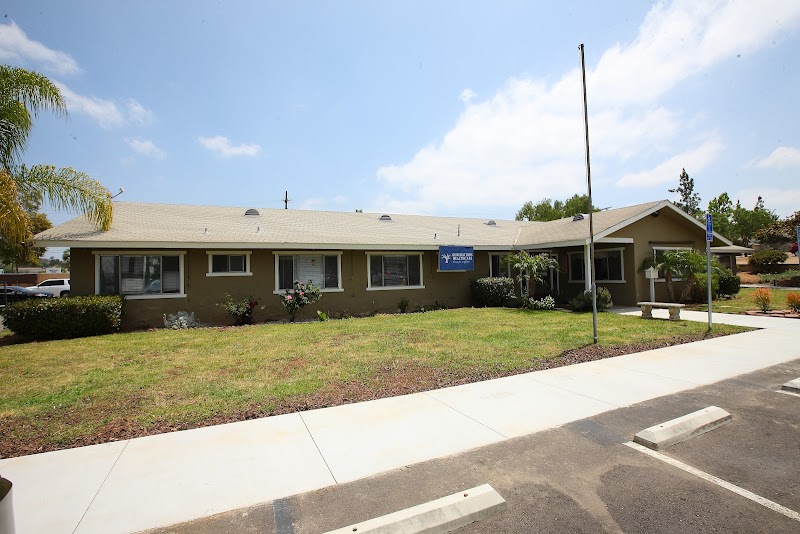
BRADLEY COURT

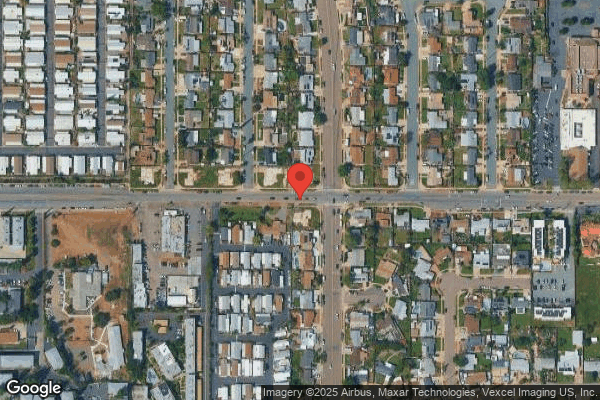
675 E BRADLEY, EL CAJON, CA 92021 (619) 448-6633
For profit - Limited Liability company 56 Beds GENERATIONS HEALTHCARE Data: November 2025
Trust Grade
90/100
#27 of 1155 in CA
Last Inspection: March 2025

Within standard 12-15 month inspection cycle. Federal law requires annual inspections.

Overview

Bradley Court in El Cajon, California, has received an excellent Trust Grade of A, indicating it is highly recommended and performs well compared to other facilities. It ranks #27 out of 1,155 facilities in California, placing it in the top half, and #4 out of 81 in San Diego County, meaning only three local options are better. The facility is improving overall, with the number of issues decreasing from 9 in 2024 to 5 in 2025, and it boasts a strong staffing record with only 11% turnover, significantly below the state average. However, there have been some concerning incidents, such as improper food storage that could risk residents' health, and a failure to conduct hourly checks that led to a resident leaving the facility without permission. Despite these weaknesses, the absence of fines and good RN coverage strengthens the facility's reputation for care.

Trust Score
A
90/100
In California
#27/1155
Top 2%
Safety Record
Low Risk
No red flags
Inspections
Getting Better
9 → 5 violations
Staff Stability
✓ Good
11% annual turnover. Excellent stability, 37 points below California's 48% average. Staff who stay learn residents' needs.
Penalties
✓ Good
No fines on record. Clean compliance history, better than most California facilities.
Skilled Nurses
○ Average
Each resident gets 34 minutes of Registered Nurse (RN) attention daily — about average for California. RNs are the most trained staff who monitor for health changes.
Violations
⚠ Watch
20 deficiencies on record. Higher than average. Multiple issues found across inspections.
★★★★★
5.0
Overall Rating
★★★★★
5.0
Staff Levels
★★★★★
5.0
Care Quality
★★★★★
5.0
Inspection Score
Stable
2024: 9 issues
2025: 5 issues

The Good

  • 5-Star Staffing Rating · Excellent nurse staffing levels
  • 5-Star Quality Measures · Strong clinical quality outcomes
  • Low Staff Turnover (11%) · Staff stability means consistent care
  • Full Sprinkler Coverage · Fire safety systems throughout facility
  • No fines on record
  • Staff turnover is low (11%)

    37 points below California average of 48%

Facility shows strength in staffing levels, quality measures, staff retention, fire safety.

The Bad

Chain: GENERATIONS HEALTHCARE

Part of a multi-facility chain

Ask about local staffing decisions and management

The Ugly 20 deficiencies on record

Mar 2025 5 deficiencies
CONCERN (D)

Potential for Harm - no one hurt, but risky conditions existed

Unnecessary Medications (Tag F0759)

Could have caused harm · This affected 1 resident

**NOTE- TERMS IN BRACKETS HAVE BEEN EDITED TO PROTECT CONFIDENTIALITY** Based on observation, interview and record review, the Facility failed to ensure the facility was free of medication errors less...

Read full inspector narrative →
**NOTE- TERMS IN BRACKETS HAVE BEEN EDITED TO PROTECT CONFIDENTIALITY** Based on observation, interview and record review, the Facility failed to ensure the facility was free of medication errors less than 5% or higher. The facility's medication error rate was 7.69 %. Two (2) medication errors were observed, a total of 28 opportunities, during the medication administration process for two (2) of 4 randomly observed residents (Residents 5, 52 ). As a result, the Facility could not ensure medications were correctly administered to all residents. Findings: 1) Resident 52 was admitted to the facility on [DATE] with diagnoses that included diabetes mellitus (abnormal blood sugar) and schizoaffective disorder (a mental illness that can affect thoughts and mood) per the admission Record. On [DATE] at 7:30 A.M., an observation during medication administration was conducted with licensed nurse (LN) 6. LN 6 administered vitamin C 500 mg to Resident 52 from a bottle that read vitamin C 500 mg, dated opened on [DATE] and expired on [DATE]. A joint interview and record review on 3/12/ 25 at 9:15 A.M., was conducted with LN 6. LN 6 stated that the medication administration record (MAR) indicated, vitamin C oral 1 tablet (Ascorbic acid). Give 1 tablet by mouth one time a day for supplement. LN 6 stated there was no dose indicated on the MAR for the vitamin C that LN 6 gave to Resident 52. LN 6 stated he should have verified the dose prior to administering the medication. LN 6 stated it was important to give the right dose for Resident 52 to prevent possible decline in Resident 52's health and to ensure doctor's orders were followed. An interview with the Director of Nursing (DON) on [DATE] at 9:12 A.M., was conducted. The DON stated every medication should have a dose which was important for Resident 52's health condition. The DON stated it was important to follow the 7 rights of medications administration- right patient, right drug, right dose, right time, right route, right reason and right documentation . 2) Resident 5 was admitted to the facility on [DATE] with diagnoses that included Vitamin D (used to maintain healthy bones and teeth) deficiency and obesity (a disorder that involves having too much body fat) per the admission Record. On [DATE] at 8:00 A.M., an observation during medication administration was conducted with LN 6. LN 6 administered vitamin D3-50 mcg/2000 units to Resident 5 from a bottle that read vitamin D3 50 mcg/2000 IU which was opened on [DATE] and expired on [DATE]. A joint interview and record review on 3/12/ 25 at 9:15 A.M., was conducted with LN 6. LN 6 stated the medication administration record (MAR ) indicated, vitamin D3 50 mcg/ 2000 UT (cholecalciferol ) Give 1 capsule by mouth in the morning for vitamin D deficiency. LN 6 stated he assumed UT was the same measurement as unit. A phone interview on [DATE] at 3:08 P.M., with the facility's contracted pharmacist (PH) was conducted. The PH stated vitamin D3 was always dosed in International Units, and was never dosed in UT. The PH stated UT was not a unit of measurement for any medication. An interview on [DATE] at 9:20 A.M., with the DON was conducted. The DON indicated that it was important to administer the correct dose of all medications to prevent any side effects. A review of the facility's policy titled Medication Administration dated [DATE] indicated, . #4. medications are administered in accordance with the prescriber orders, including required time frame . #10. the individual administering the medication checks the label three (3) times to verify the right resident, right medication, right dosage .before giving medication.
CONCERN (D)

Potential for Harm - no one hurt, but risky conditions existed

Deficiency F0761 (Tag F0761)

Could have caused harm · This affected 1 resident

Based on observation, interview and record review, the facility failed to ensure a medication storage room was free of staff's food and personal belongings. This failure had the potential for lack of ...

Read full inspector narrative →
Based on observation, interview and record review, the facility failed to ensure a medication storage room was free of staff's food and personal belongings. This failure had the potential for lack of oversight and contamination for medications stored in the facility. Findings: On 3/12/25 at 11:02 A.M., a joint observation and interview was conducted with licensed nurse (LN) 6. in the medication storage room. The medication storage room was observed with staff's personal belonging including two large purses. In addition, a box of donuts, a large carafe of coffee was observed on the counter. LN 6 stated the purses and food items belonged to staff, and did not belong to any residents in the facility. LN 6 stated personal belongings should not be stored in a medication storage room which stores medications including controlled drugs (medications which have a potential for abuse and addiction). On 3/13/25 at 9:12 A.M., an interview was conducted with the Director of Nursing (DON). The DON stated personal belongings should never be stored in the medication storage area to prevent drug diversion. The DON stated food items should never be stored in the medicaiton storage room to prevent pest infestation. A review of the facility's undated policy titled, medication labeling, and storage indicated .#2. the nursing staff is responsible for maintaining medication storage and preparation areas in a clean, safe and sanitary manner. #6.medications are stored separately from food and are labeled accordingly.
CONCERN (E)

Potential for Harm - no one hurt, but risky conditions existed

Food Safety (Tag F0812)

Could have caused harm · This affected multiple residents

Based on observation, interview and record review, the facility failed to ensure proper food storage and sanitation practices were met in the kitchen according to standards of practice when: 1. A cut ...

Read full inspector narrative →
Based on observation, interview and record review, the facility failed to ensure proper food storage and sanitation practices were met in the kitchen according to standards of practice when: 1. A cut up onion was undated, covered in a clear plastic wrap, and stored in a bin with uncut onions. 2. Whipped topping 11 days past the use-by date was stored in the refrigerator. 3. A floor sink had piping without an air gap (space) of at least 1 (inch) between the pipe and drain. These failures exposed residents to contaminated food and unsanitary practices, which had the potential to place them at risk of developing foodborne illness. Findings: 1. During the initial kitchen tour on 3/10/25 at 7:50 A.M., an observation and interview with the Food Service Director (FSD) was conducted. A plastic bin filled with fresh onions were observed on a storage shelf at the food preparation area. The plastic bin was labeled with a Received Date of 2/25/25, and a Use By date of 4/25/25. An onion that had been peeled and cut into was observed inside the bin, atop the fresh onions. The peeled/cut onion was wrapped in clear plastic wrap, and did not have a label or date on it. The FSD stated, I think the cook used [the peeled/cut onion] this morning for breakfast . On 3/10/25 at 7:53 A.M., an interview was conducted with [NAME] 1. [NAME] 1 stated he cooked breakfast for the facility this morning, but did not use any onions. [NAME] 1 stated he did not know when the onion was cut, or how long it had been in the plastic bin, and it should have been labeled with a date. A review of the facility's policy titled Labeling and Dating of Foods, dated 2023 indicated, POLICY: All food items in the storeroom, refrigerator, and freezer need to be labeled and dated . 2. During the initial kitchen tour conducted on 3/10/25 8:02 A.M., a plastic bag with a white substance was observed on the top shelf in Refrigerator 2. The plastic bag was labeled, Whipped Topping. There was a sticker label placed on the plastic bag which indicated, Use-by date 2/28/25. The FSD stated the whipped topping should have been discarded on 2/28/25. The FSD stated, .we need to make sure we don't use it if it expired. It can cause diarrhea . A review of the facility's policy titled Storage of Food and Supplies dated 2023 indicated, POLICY: Food and supplies will be stored properly and in a safe manner. 3. During the initial kitchen tour conducted on 7/22/24 at 9:40 A.M., a floor sink drain underneath the dish washing machine was observed with two PVC (polyvinyl chloride) black pipes and one metal pipe extending into the floor drain. The FDS acknowledged the three pipes going into the floor sinks. According to the 2022 Federal FDA Food Code, section 5-402.11(A), .A direct connection may not exist between the sewage system and a drain originating from equipment in which food, portable equipment .are placed .
MINOR (B)

Minor Issue - procedural, no safety impact

Deficiency F0911 (Tag F0911)

Minor procedural issue · This affected multiple residents

**NOTE- TERMS IN BRACKETS HAVE BEEN EDITED TO PROTECT CONFIDENTIALITY** Based on observation and review of the Analysis of Accommodations (document with measurements of the square footage of the useab...

Read full inspector narrative →
**NOTE- TERMS IN BRACKETS HAVE BEEN EDITED TO PROTECT CONFIDENTIALITY** Based on observation and review of the Analysis of Accommodations (document with measurements of the square footage of the useable living space of individual resident rooms and approved capacities), the facility failed to ensure that 1 of 10 resident rooms (room [ROOM NUMBER]) in Building 2 accommodated 4 or less residents. Findings: During the initial tour of Building 2 on 3/10/25, room [ROOM NUMBER] was observed to have 6 resident beds in the room. During a review of the facility's Analysis of Accommodations on 3/13/25, the document indicated room [ROOM NUMBER] had 6 residents housed in the room. There were no quality of care or quality of life issues identified during the survey for the six residents that resided in room [ROOM NUMBER]. A contuinance of a waiver allowing the six-bed room was therefore recommended.
MINOR (B)

Minor Issue - procedural, no safety impact

Deficiency F0912 (Tag F0912)

Minor procedural issue · This affected multiple residents

**NOTE- TERMS IN BRACKETS HAVE BEEN EDITED TO PROTECT CONFIDENTIALITY** Bedrooms must measure at least 80 square feet per resident in multiple resident bedrooms, and at least 100 square feet in single...

Read full inspector narrative →
**NOTE- TERMS IN BRACKETS HAVE BEEN EDITED TO PROTECT CONFIDENTIALITY** Bedrooms must measure at least 80 square feet per resident in multiple resident bedrooms, and at least 100 square feet in single resident rooms. Based on observation and record review, the facility did not meet the minimum requirement of 80 square feet per resident in Building 1 (rooms 2, 3, 4, and 5) and in Building 2 (rooms [ROOM NUMBERS]). Findings: A review of the facility's Analysis of Accommodations indicated there were 6 of 24 resident rooms that did not meet the minimum room size requirement, as follows: 1. Building 1, room [ROOM NUMBER] with 2 resident occupancy, 75 sq. ft. per resident, totaling 150 sq. ft. 2. Building 1, room [ROOM NUMBER] with 2 resident occupancy, 75 sq. ft. per resident, totaling 150 sq. ft. 3. Building 1, room [ROOM NUMBER] with 2 resident occupancy, 75 sq. ft. per resident, totaling 150 sq. ft. 4. Building 1, room [ROOM NUMBER] with 2 resident occupancy, 75 sq. ft. per resident, totaling 150 sq. ft. 5. Building 2, room [ROOM NUMBER] with 4 resident occupancy, 64.5 sq. ft. per resident, totaling 258 sq. ft. 6. Building 2, room [ROOM NUMBER] with 4 resident occupancy, 66.75 sq. ft. per resident, totaling 267 sq. ft. The variations in room size requirements did not adversely affect the resident's health, safety, quality of care, or quality of life during the survey. A continuance of the room size waiver for all affected rooms were recommended.
Nov 2024 1 deficiency
CONCERN (D) 📢 Someone Reported This

A family member, employee, or ombudsman was alarmed enough to file a formal complaint

Potential for Harm - no one hurt, but risky conditions existed

Accident Prevention (Tag F0689)

Could have caused harm · This affected 1 resident

**NOTE- TERMS IN BRACKETS HAVE BEEN EDITED TO PROTECT CONFIDENTIALITY** Based on observation, interview and record review, the facility failed to identify a trash bin as a means for a resident to elop...

Read full inspector narrative →
**NOTE- TERMS IN BRACKETS HAVE BEEN EDITED TO PROTECT CONFIDENTIALITY** Based on observation, interview and record review, the facility failed to identify a trash bin as a means for a resident to elope (leave without notice) the facility for one of one sampled resident (Resident 1). As a result, Resident 1 used the trash bin, jumped off the fence and left the facility unnoticed on 11/4/24. Findings: On 11/5/24, the Department received a facility reported incident (FRI) related to quality of care and resident safety. On 11/6/24, an unannounced onsite to the facility was conducted. Resident 1 was admitted to the facility on [DATE], with diagnoses which included schizophrenia (serious mental illness) and psychosis (a symptom that refers to a loss of touch with reality), per the facility ' s admission Record. A record review was conducted of Resident 1. Resident 1 ' s History and Physical (H&P), dated 10/23/24, indicated the attending physician documented Resident 1 did not have the capacity to understand and make decisions, and was admitted for Special Treatment Program (STP, a mental health program). A record review was conducted of Resident 1. Resident 1 ' s minimum data set (MDS - a federally mandated resident assessment tool), dated 10/28/24, indicated Resident 1 ' s brief interview for mental status (BIMS, ability to recall) score was 8/15 (a score of 13 to 15 suggests the patient is cognitively [process of acquiring knowledge and understanding] intact, 8 to 12 suggests moderately impaired and 0 to 7 suggests severe impairment). A record review was conducted of Resident 1. Resident 1 ' s care plan, indicated, .At risk for elopement r/t (related to) involuntary placement .past hx (history) of elopement . The approaches in the care plan did not indicate identification of supplies and equipment that a resident could use as a means to elope. A record review was conducted of Resident 1. Resident 1 ' s change in condition notes dated 11/4/24, indicated, At approximately 10:45 am on 11/04/2024, a staff member noticed a trash bin positioned next to the shed behind building 2. After further inspection of the premises & initiation of code pink, a head count of all residents was done & [name of Resident 1] could not be accounted for. On facility surveillance cameras, resident is seen moving the trash bin towards the shed & using it to jump the south fence at approximately 10:22 am . On 11/6/24 at 9:48 A.M., a joint review of the facility ' s video recording and an interview was conducted with the Director of Nursing (DON). In the video, Resident 1 was observed pulling a trash bin next to the shed, jumped off the trash bin to get to the roof of the shed, then from the roof, Resident 1 jumped off the fence. The incident was timed at 10:21 A.M. to 10:22 A.M. on 11/4/24. The DON stated it was just a matter of few seconds to a minute. The DON stated Resident 1 was nowhere to be found. On 11/6/24 at 10:25 A.M., a joint observation of the shed was conducted with the DON. The shed was next to the facility ' s concrete fence and a white fence which belonged to the apartment complex near the facility. There were mesh wires attached to the sides of the roof and no mesh wires noted to the front part of the roof of the shed. On 11/6/24 at 10:33 A.M., an interview was conducted with the central supply staff (CSS). The CSS stated on 11/4/24 at around 10:40 A.M., he noticed a footprint on top of the trash bin which was positioned next to the shed. The CSS stated he did not know why the trash bin was next to the shed. The CSS stated after searching the area, Resident 1 was not accounted for. On 11/6/24 at 10:42 A.M., an interview was conducted with the Mental Health Worker (MHW). The MHW stated on 11/4/24 at 10 A.M, there was a group activity that was ongoing. The MHW stated Resident 1 rarely joined the group activity and was encouraged to join. The MHW stated he did not notice Resident 1 came out the building. On 11/6/24 at 10:57 A.M., an interview was conducted with Certified Nursing Assistant (CNA) 1. CNA 1 stated Resident 1 was alert, knew what was going on and oriented. CNA 1 stated Resident 1 was quiet and did not interact to staff or other residents. CNA 1 stated the last time she saw Resident 1 was at 10 A.M. before she went for lunch. CNA 1 stated the staff did hourly rounds/ monitoring of the residents. CNA 1 stated the next hourly round should be at 11 A.M. On 11/6/24 at 11:06 A.M., an interview was conducted with Licensed Nurse (LN 1). LN 1 stated Resident 1 was quiet, isolative, and responded to basic questions like yes, no, fine, and okay. LN 1 stated she last saw Resident 1 on 11/4/24 at 10:10 A.M. LN 1 stated she encouraged Resident 1 to join the group activity. LN 1 stated Resident 1 was nowhere to be found. On 11/6/24 at 12:27 P.M., an interview was conducted with the DON. The DON stated all their residents were high risk for elopement. The DON stated all the trash bins were all outside the fence and that incident just so happened when the kitchen staff used it and the resident used it to jump off the fence. Per the facility ' s policy titled, Behavioral Health Elopement, dated May 2022, .Policy: To maintain a safe and secure environment for all residents. Elopement, or unauthorized departure from the facility, is a serious risk and requires immediate attention. This policy outlines the procedures for preventing, identifying, and responding to elopement incidents in our mental health facility .
May 2024 8 deficiencies
CONCERN (D)

Potential for Harm - no one hurt, but risky conditions existed

Assessment Accuracy (Tag F0641)

Could have caused harm · This affected 1 resident

**NOTE- TERMS IN BRACKETS HAVE BEEN EDITED TO PROTECT CONFIDENTIALITY** 2. A review of Resident 5's admission Record indicated Resident 5 was admitted to the facility on [DATE] with diagnoses which in...

Read full inspector narrative →
**NOTE- TERMS IN BRACKETS HAVE BEEN EDITED TO PROTECT CONFIDENTIALITY** 2. A review of Resident 5's admission Record indicated Resident 5 was admitted to the facility on [DATE] with diagnoses which included a history of arthritis (the swelling and tenderness of one or more joints that can be painful). On 5/16/24 at 10:08 A.M., an observation and interview was conducted with Resident 5, in Resident 5's room. Resident 5 was observed lying in his bed reading and agreed to be interviewed. Resident 5 demonstrated getting out of bed using his body without restrictions and stood up on the floor on the right side of his bed. Resident 5 stated the bed rails don't bother me or restrict me from getting out of bed. I get out of bed just fine and denied being stuck in bed due to the upper bed rails. A record review of Resident 5's MDS dated [DATE], indicated a Brief Interview for Mental Status (BIMS- developed by reviewing the resident's status during the prior seven-day period) score of 10 points out of 15 possible points which indicated Resident 5 had moderate cognitive (pertaining to memory, judgement, and reasoning ability) deficits. On 5/16/24 at 10:29 A.M., a joint interview and record review was conducted with the MDSN. The MDSN reviewed the MDS dated [DATE] and stated, bed rails was coded as a restraint because both upper bed rails were up and was used daily. The MDSN stated he was not familiar with the Resident Assessment Instruments (RAI-MDS manual) definition of a restraint or the coding instructions for coding a restraint. The MDSN reviewed the RAI that indicated .determine whether or not the manual method or physical or mechanical device, material or equipment restrict freedom of movement . The MDSN stated I didn't know that if they were able to get out of bed freely that it would not be a restraint. The MDSN acknowledged that Resident 5's MDS dated [DATE] was coded incorrectly because the bed rails did not restrict Resident 5's body to move freely and needed to be modified and re-transmitted to the federal database. On 5/17/24 at 2:54 P.M., an interview was conducted with the DON. The DON stated he expected that the MDSN reflected Resident 5's status accurately according to the RAI manual. The DON stated that Resident 5's upper bed rails should not be part of Resident 5's plan of care as a restraint and coded as a restraint because Resident 5 is able to move freely with his body and was not confined (restricted) in bed. According to the facility's policy and procedures dated June 2016 titled Physical Restraints, indicated .Procedures .3. Practices that inappropriately utilize equipment to prevent resident mobility are considered restraints and are not permitted, including; [sic] Using side rails that keep a resident from voluntarily getting out of bed . A review of Centers for Medicare and Medicaid Services (CMS, a federal agency) RAI Manual 3.0 October 2023, (Page P-3) Section P0100: Physical Restraints .Steps for Assessment .4. determine whether the manual method or physical or mechanical device, material or equipment restrict freedom of movement . Based on observation, interview, and record review, the facility failed to accurately code the MDS (MDS- a comprehensive assessment tool) for two of two sampled residents (Resident 11 and Resident 5) reviewed for MDS coding. This deficient practice had the potential for residents to not receive an individualized plan of care. In addition, inaccurate information was provided to the Federal database. Findings: 1.Resident 11 was admitted to the facility on [DATE] with diagnoses including hemiplegia (total or partial paralysis of one side of the body) and hemiparesis (muscle weakness on one side of the body) following cerebrovascular disease (group of conditions affecting blood flow and blood vessels in the brain) according to the facility's admission Record. On 5/16/24, at 7:47 A.M. Resident 11 was observed in bed with his eyes closed. The bed was against the wall on the right side of the bed. Resident's head was at the foot side of the bed and a ¼ length bed rail was up on the left side, at the head of the bed. During an interview on 5/16/24, at 7:47 A.M. with CNA 2, CNA 2 stated Resident 11 was able to transfer himself in and out of the bed without assistance. CNA 2 stated Resident 11 used his right leg placed around the bed rail, to pull himself up in bed to a sitting position. A review of Resident 11's care plan revised on 5/6/24 indicated, .placement of 1/4 upper left side rail .1/4 rail to promote independence, use as an enabler . During a joint record review and interview on 5/16/24, at 10:52 A.M. with the MDSN (MDSN- a nurse who assessed and evaluated the quality of care being given to residents), the MDSN reviewed the quarterly MDS dated [DATE] for Resident 11. The MDS section P0100, physical restraints indicated the bed rail was used daily. The MDSN stated the MDS should not have been coded as a restraint because Resident 11 was able to get in and out of the bed and was not restrained. The DON was interviewed on 5/17/24, at 1:50 P.M. The DON stated the MDS should be accurate because it reflected the care and needs of the resident. The DON further stated the MDS generated the resident's care plan and it needed to capture the resident's conditions appropriately and accurately. A review of the Center for Medicare and Medicaid Services (CMS- a government health insurance) Resident Assessment Instrument (RAI- instructions for completing the MDS) manual dated October 2023 was conducted. The RAI manual indicated, .Physical restraints are any manual method or physical or mechanical device, material or equipment attached or adjacent to the resident' body that the individual cannot remove easily which restricts freedom of movement or normal access to one's body .
CONCERN (D)

Potential for Harm - no one hurt, but risky conditions existed

Deficiency F0646 (Tag F0646)

Could have caused harm · This affected 1 resident

**NOTE- TERMS IN BRACKETS HAVE BEEN EDITED TO PROTECT CONFIDENTIALITY** Based on observation, interview, and record review, the facility failed to ensure the Pre-admission Screening and Resident Revie...

Read full inspector narrative →
**NOTE- TERMS IN BRACKETS HAVE BEEN EDITED TO PROTECT CONFIDENTIALITY** Based on observation, interview, and record review, the facility failed to ensure the Pre-admission Screening and Resident Review Level I (PASRR- a federal requirement to help ensure individuals who have a mental disorder or intellectual disabilities are not inappropriately placed in nursing homes for long term care) was re-evaluated after a resident's isolation was discontinued for one of two residents reviewed for PASRR (Residents 9). This failure had the potential for Resident 9 to not receive the appropriate mental health services. Findings: Resident 9 was admitted to the facility on [DATE] with diagnoses including schizoaffective disorder (a mental health disorder with combination of hallucinations or delusions and mood disorder symptoms, such as depression or mania) according to the facility's admission Record. On 5/14/24, at 10:45 A.M., Resident 9 was observed sitting alone in the dining room. Resident 9 spoke in a low voice and stated she had been at the facility for one year. During an interview on 5/16/24, at 7:55 A.M. with CNA 2, CNA 2 stated Resident 9 heard voices. CNA 2 stated Resident 9 heard voices such as razor blades inside her body and her family hurting her. A review of Resident 9's PASRR was conducted. The PASRR Level 1 Screening, dated 9/1/22 indicated, .Level I- Positive (mental illness is suspected and a Level II mental health evaluation may be conducted to determine if the individual can benefit from specialized mental health services) . A document from the State of California- Health and Human Services Agency, Department of Health Care Services dated 9/12/22 was reviewed. The document indicated, .After reviewing the Positive Level I Screening and speaking with staff, a Level II Mental Health Evaluation was not scheduled for the following reason: The individual was isolated as a health or safety precaution .this letter is a courtesy notice for administrative purposes only and does not comprise a completed individualized determination . During an interview on 5/16/24, at 10:52 A.M. with the MDSN (MDSN- a nurse who assessed and evaluated the quality of care being given to residents), the MDSN stated he completed the PASARR for residents. The MDSN stated a Level II evaluation was not completed for Resident 9 because she was on isolation for COVID-19 (a very contagious respiratory virus). The MDSN further stated another PASRR Level I should have been completed when the isolation was discontinued because it was a change in Resident 9's condition. During an interview on 5/17/24, at 1:50 P.M. with the DON, the DON stated a PASARR Level I should be re-submitted if there was a change in resident's condition. The facility's policy and procedure (P&P) titled, Coordination of PASRR and Assessments, dated November 2017 was reviewed. The P&P indicated, .To ensure that the facility coordinates with the appropriate State-designated authority, to ensure that individuals with a mental disorder .receives care and services in the most integrated setting appropriate to their needs .A positive Level 1 screen necessitates an in-depth evaluation of the individual by the state-designated authority, known as PASARR Level II .The facility must notify the state-designated mental health or intellectual disability authority promptly when a resident with MD (mental disorder) or ID (intellectual disorder) experiences a significant change in mental or physical status .
CONCERN (D)

Potential for Harm - no one hurt, but risky conditions existed

Comprehensive Care Plan (Tag F0656)

Could have caused harm · This affected 1 resident

**NOTE- TERMS IN BRACKETS HAVE BEEN EDITED TO PROTECT CONFIDENTIALITY** Based on observation, interview, and record review, the facility failed to develop and implement a comprehensive patient centere...

Read full inspector narrative →
**NOTE- TERMS IN BRACKETS HAVE BEEN EDITED TO PROTECT CONFIDENTIALITY** Based on observation, interview, and record review, the facility failed to develop and implement a comprehensive patient centered care plan for one of 16 residents (Resident 48) reviewed for care plans. This deficient practice had the potential to not meet the resident's needs for comfort and physical well-being. Findings: Resident 48 was admitted to the facility on [DATE] with diagnoses including other abnormalities of gait (walking) and mobility according to the facility's admission Record. An observation and interview was conducted on 5/14/24, at 9:16 A.M. with Resident 48. Resident 48 was observed in her room sitting at edge of her bed rubbing her right knee. Resident 48 stated her right knee was painful. Resident 48 stated her pain level was ten out of ten and dropped to seven out of ten after medication. Resident further stated a stronger pain medication was not recommended by her physician. An interview and joint record review on 5/16/24, at 10:11 A.M. was conducted with licensed nurse (LN) 1. LN 1 reviewed Resident 48's care plans. LN 1 stated there was a care plan initiated on 12/1/23 which indicated, At risk for pain r/t (related to) generalized body pain, pinched shoulder nerves, dental pain . There was no individualized care plan for Resident 48's right knee pain. LN 1 stated there should be a care plan regarding Resident 48's right knee pain for staff to know the plan of care. During an interview on 5/17/24, at 9:47 A.M. with the DOR, the DOR stated Resident 48 was discharged from physical therapy in March 2023. The DOR stated Resident 48 was provided a knee brace upon discharge, which brought Resident 48's knee pain to a level of three out of ten. The DOR stated he was not aware of Resident 48 having knee pain again. During an interview on 5/17/24, at 10:18 A.M. with Resident 48, Resident 48 stated she had not used the knee brace for a few weeks because it was causing more pain on her right knee. Another interview and concurrent record review was conducted on 5/17/24, at 10:20 A.M. with LN 1. LN 1 stated he was not aware of Resident 48 not using her knee brace for pain. LN 1 reviewed Resident 48's care plan and stated the care plan should have been followed since Resident 48 has been having right knee pain. The DON was interviewed on 5/17/24, at 1:50 P.M. The DON reviewed Resident 48's care plan and stated there was no care plan for Resident 48's refusal to use the knee brace. The DON stated the right knee pain was also not in the care plan. The DON further stated care plans reflected on the care and needs of the resident. A review of the facility's policy and procedure (P&P) titled, Develop-Implement Comprehensive Care Plans, revised on March 2018 was conducted. The P&P indicated, .The facility develops a person-centered comprehensive care plan developed and implemented to meet his other preferences and goals, and address the resident's medical, physical, mental and psychosocial needs .When a resident's choice to decline care or treatment poses a risk to the resident's health or safety, the comprehensive care plan must: (1) Identify the care or service being declined; (ii) The risk the declination poses to the resident; and (iii) Efforts by the interdisciplinary team (IDT- team members with various areas of expertise who work together toward the goals of their residents) to educate the resident . (iv) Attempts to find alternative means to address the identified risk .
CONCERN (D)

Potential for Harm - no one hurt, but risky conditions existed

Deficiency F0699 (Tag F0699)

Could have caused harm · This affected 1 resident

**NOTE- TERMS IN BRACKETS HAVE BEEN EDITED TO PROTECT CONFIDENTIALITY** Based on observation, interview and record review, the facility failed to ensure one of three residents (Resident 48) received T...

Read full inspector narrative →
**NOTE- TERMS IN BRACKETS HAVE BEEN EDITED TO PROTECT CONFIDENTIALITY** Based on observation, interview and record review, the facility failed to ensure one of three residents (Resident 48) received Trauma Informed Care (TIC- an intervention and organizational approach that focuses on how trauma may affect an individual's life and his or her response to behavioral health). This failure resulted in the facility's inability to identify possible triggers that could result in re-traumatization (the reactivation of trauma symptoms via thoughts, memories, or feelings related to the past torture experience). Findings: Resident 48 was admitted to the facility on [DATE] with diagnoses including post-traumatic stress disorder (PTSD- a disorder in which a person has difficulty recovering after experiencing or witnessing a terrifying event) according to the facility's admission Record. On [DATE], at 9:16 A.M., Resident 48 was observed in her room sitting at the edge of her bed with a flat affect (without showing emotional expressions). During an interview on [DATE], at 7:51 A.M. with CNA 2, CNA 2 stated resident slept in late mornings and chose which staff member she was comfortable with. CNA 2 stated resident had a diagnosis of PTSD, but she was unsure of what triggered Resident 48's PTSD. An interview was conducted on [DATE], at 10:11 A.M. with LN 1. LN 1 checked Resident 48's diagnoses in the computer for PTSD. LN 1 stated he was not aware of Resident 48's diagnosis of PTSD and what would trigger the PTSD. LN 1 further stated it was important to know the triggers for Resident 48 to help Resident 48 to cope and prevent re-traumatization. During an interview on [DATE], at 11:10 A.M. with the SSD, the SSD stated she was aware of Resident 48's diagnosis of PTSD. The SSD stated she could not remember was the triggers were and it was important for staff to be aware to prevent re-traumatization. During an interview on [DATE], at 2:50 P.M. with Resident 48, Resident 48 stated there had been many traumatic events in her life. Resident 48 stated the one that hurt her the most was when her husband died from a fire. Resident 48 further stated she kept the light on at night but did not want to discuss why. An interview was conducted with the DON on [DATE], at 1:50 P.M. The DON stated it was the facility's policy to identify resident's triggers for PTSD. The DON further stated the triggers should be in the resident's care plan to prevent the resident from experiencing the traumatic event again. During a review of the facility's policy and procedure (P&P) titled, Trauma-Informed and Culturally Competent Care, dated [DATE], the P&P indicated, .To guide staff in providing care that is culturally competent and trauma-informed in accordance with professional standards of practice .[Trauma-informed care] an approach to delivering care that in delivering care [sic] that involves understanding, recognizing and responding to the effects of all types of trauma .For trauma survivors, the transition to living in an institutional setting (and the associated loss of independence) can trigger profound re-traumatization .Assessment involves an in-depth process of evaluating the presence of symptoms, their relationship to trauma, as well as the identification of triggers .
CONCERN (D)

Potential for Harm - no one hurt, but risky conditions existed

Medical Records (Tag F0842)

Could have caused harm · This affected 1 resident

**NOTE- TERMS IN BRACKETS HAVE BEEN EDITED TO PROTECT CONFIDENTIALITY** Based on interview and record review, the facility failed to accurately record the discharge date of one of three residents (Res...

Read full inspector narrative →
**NOTE- TERMS IN BRACKETS HAVE BEEN EDITED TO PROTECT CONFIDENTIALITY** Based on interview and record review, the facility failed to accurately record the discharge date of one of three residents (Resident 47) reviewed for closed medical records. This deficient practice resulted with Resident 47's discharge record to be inaccurately transmitted (submitted) to the federal database and the potential to cause confusion of Resident 47's discharge status. Findings: A review of Resident 47's admission Record indicated Resident 47 was admitted to the facility on [DATE] with diagnoses which included a history of bipolar disorder (a serious mental illness that causes unusual shifts in mood). On 5/15/24 at 9:34 A.M., a record review on Resident 47's medical record was conducted. Resident 47's progress note dated 5/8/24 indicated .Resident discharged to B&C [sic], left the facility around 0925 transported by facility van with discharge instructions. All medications and personal belongings sent with resident with instructions provided and voiced understanding . On 5/15/24 at 3:20 P.M., a record review of Resident 47's MDS (MDS: nursing assessment tool) dated 5/7/24 section A2000 indicated that Resident 47 was discharged on 5/7/24. On 5/17/24 at 3:06 P.M., an interview and record review was conducted with the MDSN. The MDSN confirmed that resident left the faciity on 5/8/24 and had entered the incorrect discharge date in the MDS. The MDSN stated that it was important that the MDS was accurate to reflect Resident 47's discharge tracking to avoid confusion. The MDSN stated that the discharge MDS needed to be modified to 5/8/24 which was the day Resident 47 discharged and re-transmitted to the federal database. On 5/17/24 at 2:54 P.M., an interview was conducted with the DON. The DON stated that his expectations was for the MDSN to provide accurate information according to the Resident Assessment Instrument (RAI-MDS manual). The DON stated that Resident 47's discharge MDS should have reflected the accurate discharged date of when Resident 47 was discharged . According to the facility's policy and procedures dated November 2017 titled Electronic Transmission of the MDS, indicated .Guidelines .8. The MDS Nurse(s) is responsible for ensuring that appropriate edits are made prior to transmitting MDS data . A review of Centers for Medicare and Medicaid Services (CMS, a federal agency) RAI Manual 3.0 October 2023, (Page A-41) Section A2000: discharge date . This is the date the resident leaves the facility .
CONCERN (E)

Potential for Harm - no one hurt, but risky conditions existed

Infection Control (Tag F0880)

Could have caused harm · This affected multiple residents

Based on interview, observation and record review, the facility did not ensure food was served in a sanitary manner. This failure potentially put residents at risk for foodborne illness as well as ba...

Read full inspector narrative →
Based on interview, observation and record review, the facility did not ensure food was served in a sanitary manner. This failure potentially put residents at risk for foodborne illness as well as bacterial contamination of foods. Tray line observation was conducted on 5/15/24, at 11:40 A.M. in the kitchen. The menu consisted of meatloaf, vegetables, mashed potatoes, and garlic bread. During plating, the cook picked up the meatloaf from the tray with his gloved left hand and a spatula on the right hand, then place the meatloaf on the first plate. The cook then picked up a garlic bread with his right hand and placed it on the same plate. The cook continued to use his gloved left hand and spatula on the right hand to pick up the meat loaf and placed the meatloaf on the second and third plates. When the diet aide called out pizza for the next plate, the cook opened the oven behind him, applied oven mittens over his left gloved hand, pulled out a hot pan of pizza from the oven, removed the oven mitten, and did not change gloves. The cook then went to a small drawer to get a pizza slicer. The cook sliced the pizza and used both hands to place the pizza on a plate. The cook continued to serve meatloaf by touching the meat loaf with his gloved left hand and spatula. The cook did not change his gloves or wash his hands in between touching the food and other surfaces. At 5/15/24, at 11:49 A.M. a joint observation with the DS was conducted during tray line. The DS observed the cook touch the meatloaf and the garlic bread with his gloved hands. The DS placed a tong next to the garlic bread for the cook to use. The cook did not use the tong and continued to use his the same gloved left hand to touch the meatloaf and picked up the garlic bread with his gloved right hand. The DS then instructed the cook to change his gloves. The DS stated the cook should have changed his gloves after opening the oven because the oven handle might be dirty. The DS also confirmed with the cook that he applied the oven mittens with his gloved hands. During an interview on 5/17/24, at 1:50 P.M. with the DON, the DON stated it was an infection control issue if the kitchen staff touched a surface, then the food. The DON further stated the food was contaminated. A review of the facility's policy and procedure (P&P) titled, Food Handling, dated 2023 was conducted. The P&P indicated, Food will be prepared and served in a safe and sanitary manner . According to the 2022 US FDA Food Code, Section 2-301.11 titled Clean Condition .The hands are particularly important in transmitting foodborne pathogens. Food employees with dirty hands and/or fingernails may contaminate the food being prepared. Therefore, any activity which may contaminate the hands must be followed by thorough handwashing in accordance with the procedures outlined in the Code . According to the 2022 US FDA Food Code, Section 2-301.14 titled When to Wash .The hands may become contaminated when the food employee engages in specific activities. The increased risk of contamination requires handwashing immediately before, during, or after .activities . Employees must wash their hands after any activity which may result in contamination of the hands .
MINOR (B)

Minor Issue - procedural, no safety impact

Deficiency F0911 (Tag F0911)

Minor procedural issue · This affected multiple residents

**NOTE- TERMS IN BRACKETS HAVE BEEN EDITED TO PROTECT CONFIDENTIALITY** Bedrooms must accommodate no more than four residents. This requirement was not met as evidenced by: Based on observation, inter...

Read full inspector narrative →
**NOTE- TERMS IN BRACKETS HAVE BEEN EDITED TO PROTECT CONFIDENTIALITY** Bedrooms must accommodate no more than four residents. This requirement was not met as evidenced by: Based on observation, interview, and review of the current Client Analysis of Accommodations (document that shows room size and occupancy number), the facility failed to ensure one of 10 resident rooms in building 2, room five, accommodated no more than four residents. Findings: During the survey from 5/14/24 to 5/17/24, one resident room (room [ROOM NUMBER]) in Building 2 was observed to accommodate six residents. There was no observed quality of care or quality of life concerns that negatively impacted the residents residing in room five of Building 2. On 5/17/24 at 9:05 A.M., a concurrent interview and review of Client Accommodation Analysis was conducted with ADM. ADM stated that rooms 5 in building 2 has 6 residents; 2 more than regulation. ADM stated that he has a waiver for that room and provided copy of waiver. Continuance of a waiver allowing the six-bed room was therefore recommended.
MINOR (B)

Minor Issue - procedural, no safety impact

Deficiency F0912 (Tag F0912)

Minor procedural issue · This affected multiple residents

**NOTE- TERMS IN BRACKETS HAVE BEEN EDITED TO PROTECT CONFIDENTIALITY** Bedrooms must measure at least 80 square feet per resident in multiple resident bedrooms, and at least 100 square feet in single...

Read full inspector narrative →
**NOTE- TERMS IN BRACKETS HAVE BEEN EDITED TO PROTECT CONFIDENTIALITY** Bedrooms must measure at least 80 square feet per resident in multiple resident bedrooms, and at least 100 square feet in single resident rooms. This requirement was not met as evidenced by: Based on observation and record review, the facility did not meet the minimum requirement of 80 square feet per resident in Building 1, Rooms 2, 3, 4, and 5 and in Building 2, rooms [ROOM NUMBERS]. Findings: A review of the facility's Client Analysis of Accommodations (document that shows room size and occupancy number) indicated there were 6 of 24 resident rooms that did not meet the minimum room size requirement, as follows: 1. Building 1, room [ROOM NUMBER] with 2 resident occupancy, 75 sq. ft. per resident, totaling 150 sq. ft. 2. Building 1, room [ROOM NUMBER] with 2 resident occupancy, 75 sq. ft. per resident, totaling 150 sq. ft. 3. Building 1, room [ROOM NUMBER] with 2 resident occupancy, 75 sq. ft. per resident, totaling 150 sq. ft. 4. Building 1, room [ROOM NUMBER] with 2 resident occupancy, 75 sq. ft. per resident, totaling 150 sq. ft. 5. Building 2, room [ROOM NUMBER] with 4 resident occupancy, 78 sq. ft. per resident, totaling 312 sq. ft. 6. Building 2, room [ROOM NUMBER] with 4 resident occupancy, 64.75 sq. ft. per resident, totaling 259 sq. ft. The variations in room size requirements were not observed to adversely affect the residents' health, safety, quality of care, or quality of life during the survey. On 5/17/24 at 9:05 A.M., an interview with ADM, and review of Client Accommodation Analysis was conducted. ADM stated that Rooms 2,3,4, 5 in Building 1, and rooms [ROOM NUMBERS] in Building 2 are all less than 80 square feet per resident. ADM stated that he has a waiver from CMS for those rooms and presented copy of the waiver. Continuance of the room size waiver for all affected rooms was recommended.
Jul 2023 1 deficiency
CONCERN (E) 📢 Someone Reported This

A family member, employee, or ombudsman was alarmed enough to file a formal complaint

Potential for Harm - no one hurt, but risky conditions existed

Accident Prevention (Tag F0689)

Could have caused harm · This affected multiple residents

**NOTE- TERMS IN BRACKETS HAVE BEEN EDITED TO PROTECT CONFIDENTIALITY** Based on observation,interview and record review, the facility failed to conduct hourly checks in the locked unit of Building 2 ...

Read full inspector narrative →
**NOTE- TERMS IN BRACKETS HAVE BEEN EDITED TO PROTECT CONFIDENTIALITY** Based on observation,interview and record review, the facility failed to conduct hourly checks in the locked unit of Building 2 and also failed to ensure accurate documentation of hourly checks. This failure led to the elopement (leaving the facility without permission) of Resident 1. Findings: Resident 1 was admitted to the facility on [DATE] with diagnoses that included paranoid schizophrenia (episodes of recurring delusions and hallucinations with a pattern of feeling suspicious or mistrustful of other people); Anxiety Disorder (excessive worrying); and Atrial Fibrillation (an irregular heartbeat) per the facility's admission record. Resident 1 was admitted to the facility under conservatorship due to no capacity to make decisions and no known family. A review of Resident 1's medical record (progress notes) was conducted on 6/28/23 at 9 A.M. The progress notes indicated Resident 1 was picked up by the transport van from the facility at 12:18 P.M. for a court appearance and returned to the facility at 4:55 P.M. At 9:15 P.M, the charge nurse (CN)1 reported that Resident 1 was not in his room; inside the building or the yard. An interview was conducted with the Director of Nursing (DON) on 6/28/23 at 9:00A.M. The DON stated, Resident 1 left (the facility) after return from the court date and was disappointed that the conservatorship was maintained. An interview was conducted with the Social Services Director (SSD) on 6/28/23 at 9:10 A.M. The SSD stated, I called all the hospitals, emergency rooms and other facilities and there were no admissions under Resident 1's name. An interview was conducted with the assistant Director of Nursing (ADON) on 6/28/23 at 10:30 A.M. The ADON stated, Residents have access from the building to the yard and can go in and out; the alarm must be switched on. An interview was conducted with the Administrator (Admn) on 6/28/23 at 10:40 A.M. The Admn stated,The door is not locked, but the alarm is turned on at 9:00 P.M. A review of the facility's document, titled, Building 2 One-Hour Rounds, dated 6/26/23, indicated room [ROOM NUMBER] A, Resident 1,was in bed at 9 P.M. A concurrent record review and interview was conducted with the ADON on 6/28/23 at 11:10 A.M. The ADON reviewed the hourly rounds document and stated, The Resident is marked being in bed at 9 P.M;but the closed circuit TV (CCTV) video shows the resident going over the fence at 8:39 P.M. A concurrent record review and interview was conducted with the DON on 6/28/23 at 11:20 A.M. The DON reviewed the hourly rounds document. The DON stated, The document indicates Resident was in bed at 9 P.M. and the CCTV video shows the resident going over the fence at 8:39 P.M. That is not accurate documentation. An interview was conducted with the Admn on 6/28/23 at 1:10 P.M. The Admn stated, The 9 P.M. documentation cannot be accurate since the video shows the 8:40 P.M. The CCTV video was viewed by HFEN on 6/26/23 at 2:10 P.M. The video indicated Resident 1 walked from the building, across the yard to the fence and used the fence's chain links as a step and climbed over the fence and walked away. The video is date stamped 8:39:40. A concurrent record review and interview was conducted with certified nursing assistant (CNA)1 on 6/28/23 at 2:16 P.M. CNA 1 stated, I make rounds and residents start going to bed at 9 PM ; at 8:55 P.M. Resident 1 was in his bed. I turned on the alarm at 9 PM, then I saw he wasn't in bed. We searched the building and grounds, no sign of him. I told the CN (1) and searched again and called the police. The hourly rounds document was reviewed with CNA 1. CNA 1 stated, I saw the resident at 8:55 PM. CNA 1 was informed the CCTV video indicated the resident went over the fence at 8:39 P.M. CNA 1 stated, My watch must be wrong; I cannot state accurately he was in bed at 9 PM; I do my rounds a little early because there are so many residents, and I wrote 9PM . An interview was conducted on 6/28/23 at 2:49 P.M. with CNA 2. CNA2 stated, We did rounds and then I turned on the alarm at 9. I walked into the resident's room and he was not there. An interview was conducted with the CN1 on 6/28/23 at 3:01 P.M. CN1 stated, The last time I saw Resident 1 was 8-8:15 P.M. I asked the CNA's to check everyone was in bed at 9PM and I set the alarm. At 9:15 P.M., CNA's 1 and 2 said Resident 1 was not in his room. I searched inside and out and called the police. The fence had chicken-wire and it was bent down, and that's where he went over. An interview was conducted on 6/28/23 at 3:40 P.M. with the ADON. The ADON stated, No one monitors the door until 9 P.M., when the alarm is set. A review of Resident 1's care plan,dated 10/23/22, titled, At risk for Elopement related to involuntary placement, non-adherence to treatment, refusal to take medication, danger to self/community and self well-being indicated: do not open door when resident is close to the exit door. A review of the facility's policy, dated 5/12/23. titled, Elopement, indicated, Definitions: 1. A situation in which a resident leaves the premises or a safe area without the facility's knowledge and supervision, if necessary, would be considered an elopement. This situation represents a risk to the resident's health and safety and places the resident at risk of heat or cold exposure, dehydration and/or other medical complications, drowning, or being struck by a motor vehicle.
Jun 2023 5 deficiencies
CONCERN (D)

Potential for Harm - no one hurt, but risky conditions existed

Resident Rights (Tag F0550)

Could have caused harm · This affected 1 resident

**NOTE- TERMS IN BRACKETS HAVE BEEN EDITED TO PROTECT CONFIDENTIALITY** Based on observation, interview, and record review, the facility failed to provide the needs and preferences for one resident, (...

Read full inspector narrative →
**NOTE- TERMS IN BRACKETS HAVE BEEN EDITED TO PROTECT CONFIDENTIALITY** Based on observation, interview, and record review, the facility failed to provide the needs and preferences for one resident, (Resident 17), reviewed for accommodation. This failure had the potential for Resident 17's needs to be unmet. Findings: A review of Resident 17's admission Record indicated the resident was admitted to the facility on [DATE] with diagnoses that included schizoaffective disorder (a mental health problem where a person experiences mood instability and the inability to recognize reality), bipolar type (a mental illness that causes unusual shifts in a person's mood, energy, activity levels, and concentration), and unspecified psychosis (inability to recognize reality) not due to a substance or known psychological condition. On 6/13/23 at 12:12 P.M., a dining observation of lunch was conducted. Residents were seated together at tables in the dining room. Soft music played quietly in the background. There were conversations between residents and staff. The dining room had homelike furnishings. On 6/13/23 at 12:20 P.M., three residents were observed eating lunch in an office with two staff observing them. The residents were eating at a folding table. There was no music, no homelike furnishings, and no conversations in the office where three residents were eating. Resident 6 was wearing a clothing protector while eating lunch in the office. An interview was conducted with the Director of Nursing (DON) during the lunch observation. The DON stated the residents who were selected to eat in the office instead of the dining room were residents who needed assistance with eating. The DON stated that Resident 6 did not have a special diet and that she ate independently. The DON stated that Resident 6 had not had an evaluation for swallowing. The DON stated that Resident 6 had not had a speech therapy (therapeutic treatment of impairments and disorders of speech, voice, language, communication, and swallowing) evaluation. The DON stated that the office did not have music or decorations. On 6/14/23 at 8:19 A.M., an interview with Resident 6 was conducted. Resident 6 stated she was not asked if she wanted to eat in the office space instead of the dining room. Resident 6 stated she missed eating with her friends and having conversations in the main dining room. Resident 6 stated her wheelchair took up too much room in the dining room and that she ate in the office instead because the office had the space to accommodate the size of her wheelchair. On 6/14/23 at 9:46 A.M., a record review of Resident 6's Ear Nose and Throat (ENT) specialist visit note, dated 5/10/23 was conducted. According to the document, Resident 6 was seen by the ENT specialist due to nasal congestion, postnasal drip, stuffy ear(s), difficulty hearing, heart burn/acid reflux (the backward flow of liquid from the stomach into the esophagus). The document indicated Resident 6 had Procedures include laryngoscopy (a procedure done to examine the larynx or voice box, and its structure). The document also indicated that Resident 6 was diagnosed with GERD (a condition that develops when stomach contents flow back into the esophagus) without esophagitis (inflammation of the esophagus). The document did not indicate that Resident 6 needed further evaluation or that the resident needed assistance and supervision during meals. On 6/14/23 at 3:39 P.M., an interview with the Minimum Data Set (MDS - assessment tool) Coordinator was conducted regarding Resident 6. The MDS Coordinator stated that if Resident 6 needed speech therapy, a request for services would have been made. The MDS Coordinator stated that Resident 6 had not had a speech therapy evaluation because there was no indication for one. On 6/14/23 at 4:10 P.M., a record review of the facility policy titled Dining and Resident Activities dated November 2018 was reviewed. The policy indicated, . 8. Spaces are adaptable for all intended uses. 9. Residents shall have unrestricted access to space. 10. The facility allows the residents and staff to have maximum flexibility in arranging furniture to accommodate residents who use walkers, wheelchairs, and other mobility aids, including space for empty wheelchairs if a resident prefers to sit in a regular chair.
CONCERN (D)

Potential for Harm - no one hurt, but risky conditions existed

Quality of Care (Tag F0684)

Could have caused harm · This affected 1 resident

**NOTE- TERMS IN BRACKETS HAVE BEEN EDITED TO PROTECT CONFIDENTIALITY** Based on observation, interview, and record review, the facility failed to provide quality of care for one resident, (Resident 4...

Read full inspector narrative →
**NOTE- TERMS IN BRACKETS HAVE BEEN EDITED TO PROTECT CONFIDENTIALITY** Based on observation, interview, and record review, the facility failed to provide quality of care for one resident, (Resident 46), reviewed for quality of care. This failure had the potential for Resident 17's care needs to be unmet. Findings: A review of Resident 46's admission Record indicated the resident was admitted to the facility on [DATE] with diagnoses that include foot drop of the left foot (the inability to raise the front part of the foot due to weakness or paralysis of the muscles that lift the foot, or skeletal abnormality). On 6/13/23 at 11:33 P.M., an observation was made of Resident 46 dragging his left foot while mobile in a wheelchair without a leg support. Resident 46 stated he hits his foot on objects at times and it causes stinging. Resident 46 stated his left ankle had previously been fractured and the bone was not set, so it did not heal in the proper position and nothing had been done while admitted to the facility to help with this problem. Resident 46's left foot was noted to be flexed toward the ground. Resident 46 stated he was unable to bend his ankle to position properly on the footrest of a leg support for the wheelchair. Resident 46 stated he is not receiving physical therapy (The use of exercises and physical activities to help condition muscles and restore strength and movement). Resident 46 stated he had not seen a doctor about this problem while admitted at the facility. On 6/16/23 at 8:37 A.M., a record review of Resident 46's orders were conducted. On 12/14/22 a consultation was ordered for .podiatry (the specialty of medical sciences that deals with the diagnosis, treatment, and prevention of foot and leg disorders by medical and surgical means) . and may follow orders. On 2/1/23 a podiatric evaluation and treatment was done in the facility which stated, follow up with orthopedic (a specialized medical field with a primary focus on the musculoskeletal system) and vascular doctors (a doctor who specializes in the treatment of arteries and veins). On 6/16/23 at 9:57 A.M., an interview with the DON was conducted. The DON stated Resident 46's immobility at his ankle and foot as well as his decreased ability to perform activities of daily living and independent mobility are needs the resident has. The DON stated the facility has the responsibility to provide for the needs of the residents it accepts. The DON stated the resident had not been seen by orthopedic and vascular specialists. On 6/16/23 at 10:32 A.M., an interview with the Social Services Director regarding Resident 46 was conducted. The Social Services Director stated Resident 46's insurance was for emergencies only and no further insurance had been obtained. The Social Services Director stated the last communication regarding an attempt by the facility to obtain insurance for Resident 46 was on 2/1/23. The Social Services Director stated she had not followed up though she had contact information for a tribal social worker involved in Resident 46's case. The Social Services Director stated Resident 46 had not seen an orthopedic or vascular specialist. The DON joined the interview and stated the facility is responsible to provide the needs of Resident 46 while he is in the facility and Resident 46 had been waiting too long for services. The DON stated Resident 46 had been admitted at the facility for over six months. The DON stated an evaluation by orthopedic and vascular specialists had been identified as resident needs during the podiatry consultation on 2/1/23.
CONCERN (D)

Potential for Harm - no one hurt, but risky conditions existed

Pharmacy Services (Tag F0755)

Could have caused harm · This affected 1 resident

**NOTE- TERMS IN BRACKETS HAVE BEEN EDITED TO PROTECT CONFIDENTIALITY** Based on observation, interview, and record review, the facility failed to ensure a medication was administered according to the...

Read full inspector narrative →
**NOTE- TERMS IN BRACKETS HAVE BEEN EDITED TO PROTECT CONFIDENTIALITY** Based on observation, interview, and record review, the facility failed to ensure a medication was administered according to the physician's order for one of six residents (Resident 28) during a medication administration observation. As a result, the facility could not ensure medications were administered accurately to residents. Findings: A review of Resident 28's admission Record indicated the resident was admitted to the facility on [DATE]. On 6/15/23 at 4 P.M., a medication administration observation was conducted with licensed nurse (LN) 1. LN 1 prepared 15 milliliters (ml) of lactulose (a medication to promote bowel movements) and then administered it to Resident 28. A review of Resident 28's physician orders dated 9/21/22, indicated the resident was to be administered 30 ml of lactulose twice a day for bowel management. On 6/16/23 at 8:05 A.M., an interview was conducted with LN 1. LN 1 stated she had incorrectly administered Resident 28's lactulose on 6/15/23. LN 1 stated she had made a mistake and should have administered 30 ml of lactulose. On 6/16/23 at 8:17 A.M., an interview was conducted with the director of nursing (DON). The DON stated it was his expectation for the LN to check the medication label with the physician's order to ensure the accuracy of administration. The DON stated Resident 28's physician's order for lactulose should have been followed. A review of the facility's policy titled Administering Medications dated June 2016, indicated, .Medications must be administered in accordance with the orders
MINOR (B)

Minor Issue - procedural, no safety impact

Deficiency F0911 (Tag F0911)

Minor procedural issue · This affected multiple residents

**NOTE- TERMS IN BRACKETS HAVE BEEN EDITED TO PROTECT CONFIDENTIALITY** Bedrooms must accommodate no more than four residents. This requirement was not met as evidenced by: Based on observation and re...

Read full inspector narrative →
**NOTE- TERMS IN BRACKETS HAVE BEEN EDITED TO PROTECT CONFIDENTIALITY** Bedrooms must accommodate no more than four residents. This requirement was not met as evidenced by: Based on observation and review of the current Analysis of Accommodations, the facility failed to ensure one of 10 resident rooms in building 2, room five, accommodated no more than four residents. Findings: During the survey from 6/13/23 to 6/16/23, one resident room (room [ROOM NUMBER]) in Building 2 was observed to accommodate six residents. There was no observed quality of care or quality of life concerns that negatively impacted the residents residing in room five of Building 2. Continuance of a waiver allowing the six-bed room was therefore recommended.
MINOR (B)

Minor Issue - procedural, no safety impact

Deficiency F0912 (Tag F0912)

Minor procedural issue · This affected multiple residents

**NOTE- TERMS IN BRACKETS HAVE BEEN EDITED TO PROTECT CONFIDENTIALITY** Bedrooms must measure at least 80 square feet per resident in multiple resident bedrooms, and at least 100 square feet in single...

Read full inspector narrative →
**NOTE- TERMS IN BRACKETS HAVE BEEN EDITED TO PROTECT CONFIDENTIALITY** Bedrooms must measure at least 80 square feet per resident in multiple resident bedrooms, and at least 100 square feet in single resident rooms. This requirement was not met as evidenced by: Based on observation and record review, the facility did not meet the minimum requirement of 80 square feet per resident in Building 1, Rooms 2, 3, 4, and 5 and in Building 2, rooms [ROOM NUMBERS]. Findings: A review of the facility's Analysis of Accommodations indicated there were 6 of 24 resident rooms that did not meet the minimum room size requirement, as follows: 1. Building 1, room [ROOM NUMBER] with 2 resident occupancy, 75 sq. ft. per resident, totaling 150 sq. ft. 2. Building 1, room [ROOM NUMBER] with 2 resident occupancy, 75 sq. ft. per resident, totaling 150 sq. ft. 3. Building 1, room [ROOM NUMBER] with 2 resident occupancy, 75 sq. ft. per resident, totaling 150 sq. ft. 4. Building 1, room [ROOM NUMBER] with 2 resident occupancy, 75 sq. ft. per resident, totaling 150 sq. ft. 5. Building 2, room [ROOM NUMBER] with 4 resident occupancy, 78 sq. ft. per resident, totaling 312 sq. ft. 6. Building 2, room [ROOM NUMBER] with 4 resident occupancy, 64.75 sq. ft. per resident, totaling 259 sq. ft. The variations in room size requirements were not observed to adversely affect the residents' health, safety, quality of care, or quality of life during the survey. Continuance of the room size waiver for all affected rooms was recommended.
Understanding Severity Codes (click to expand)
Life-Threatening (Immediate Jeopardy)
J - Isolated K - Pattern L - Widespread
Actual Harm
G - Isolated H - Pattern I - Widespread
Potential for Harm
D - Isolated E - Pattern F - Widespread
No Harm (Minor)
A - Isolated B - Pattern C - Widespread

Questions to Ask on Your Visit

  • "Can I speak with families of current residents?"
  • "What's your RN coverage like on weekends and overnight?"

Our Honest Assessment

Strengths
  • • Grade A (90/100). Above average facility, better than most options in California.
  • • No major safety red flags. No abuse findings, life-threatening violations, or SFF status.
  • • No fines on record. Clean compliance history, better than most California facilities.
  • • 11% annual turnover. Excellent stability, 37 points below California's 48% average. Staff who stay learn residents' needs.
Concerns
  • • 20 deficiencies on record. Higher than average. Multiple issues found across inspections.
Bottom line: Generally positive indicators. Standard due diligence and a personal visit recommended.

About This Facility

What is Bradley Court's CMS Rating?

CMS assigns BRADLEY COURT an overall rating of 5 out of 5 stars, which is considered much above average nationally. Within California, this rating places the facility higher than 99% of the state's 100 nursing homes. This rating reflects solid performance across the metrics CMS uses to evaluate nursing home quality.

How is Bradley Court Staffed?

CMS rates BRADLEY COURT's staffing level at 5 out of 5 stars, which is much above average compared to other nursing homes. Staff turnover is 11%, compared to the California average of 46%. This relatively stable workforce can support continuity of care.

What Have Inspectors Found at Bradley Court?

State health inspectors documented 20 deficiencies at BRADLEY COURT during 2023 to 2025. These included: 14 with potential for harm and 6 minor or isolated issues.

Who Owns and Operates Bradley Court?

BRADLEY COURT is owned by a for-profit company. For-profit facilities operate as businesses with obligations to shareholders or private owners. The facility is operated by GENERATIONS HEALTHCARE, a chain that manages multiple nursing homes. With 56 certified beds and approximately 55 residents (about 98% occupancy), it is a smaller facility located in EL CAJON, California.

How Does Bradley Court Compare to Other California Nursing Homes?

Compared to the 100 nursing homes in California, BRADLEY COURT's overall rating (5 stars) is above the state average of 3.2, staff turnover (11%) is significantly lower than the state average of 46%, and health inspection rating (5 stars) is much above the national benchmark.

What Should Families Ask When Visiting Bradley Court?

Based on this facility's data, families visiting should ask: "Can I visit during a mealtime to observe dining assistance and food quality?" "How do you handle medical emergencies, and what is your hospital transfer rate?" "Can I speak with family members of current residents about their experience?"

Is Bradley Court Safe?

Based on CMS inspection data, BRADLEY COURT has a clean safety record: no substantiated abuse findings (meaning no confirmed cases of resident harm), no Immediate Jeopardy citations (the most serious violation level indicating risk of serious injury or death), and is not on the Special Focus Facility watch list (a federal program monitoring the lowest-performing 1% of nursing homes). The facility has a 5-star overall rating and ranks #1 of 100 nursing homes in California. While no facility is perfect, families should still ask about staff-to-resident ratios and recent inspection results during their visit.

Do Nurses at Bradley Court Stick Around?

Staff at BRADLEY COURT tend to stick around. With a turnover rate of 11%, the facility is 35 percentage points below the California average of 46%. Low turnover is a positive sign. It means caregivers have time to learn each resident's needs, medications, and personal preferences. Consistent staff also notice subtle changes in a resident's condition more quickly. Registered Nurse turnover is also low at 10%, meaning experienced RNs are available to handle complex medical needs.

Was Bradley Court Ever Fined?

BRADLEY COURT has no federal fines on record. CMS issues fines when nursing homes fail to meet care standards or don't correct problems found during inspections. The absence of fines suggests the facility has either maintained compliance or corrected any issues before penalties were assessed. This is a positive indicator, though families should still review recent inspection reports for the full picture.

Is Bradley Court on Any Federal Watch List?

BRADLEY COURT is not on any federal watch list. The most significant is the Special Focus Facility (SFF) program, which identifies the bottom 1% of nursing homes nationally based on persistent, serious quality problems. Not being on this list means the facility has avoided the pattern of deficiencies that triggers enhanced federal oversight. This is a positive indicator, though families should still review the facility's inspection history directly.