SAN DIEGO POST-ACUTE CENTER
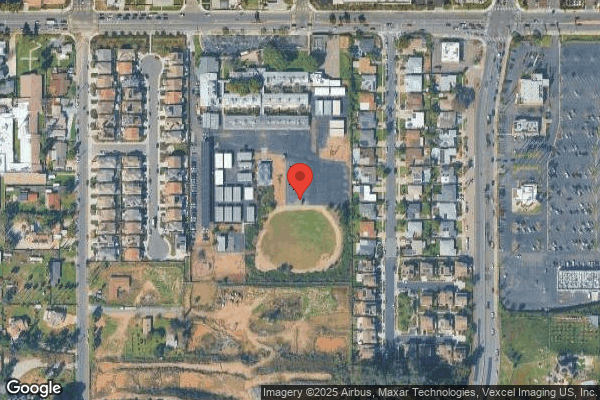
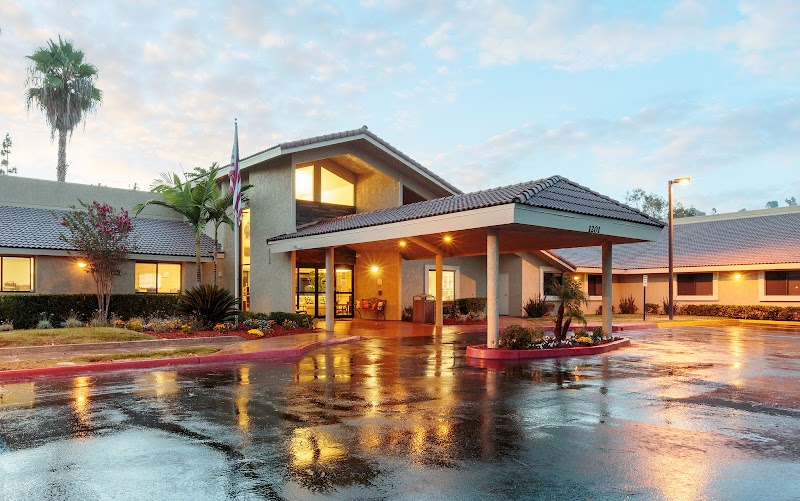
1201 SOUTH ORANGE AVE., EL CAJON, CA 92020 (619) 441-1988
For profit - Limited Liability company 240 Beds PACS GROUP Data: November 2025
Trust Grade
25/100
#1099 of 1155 in CA
Last Inspection: February 2025

Within standard 12-15 month inspection cycle. Federal law requires annual inspections.

Overview

San Diego Post-Acute Center has received a Trust Grade of F, indicating significant concerns about the quality of care provided. They rank #1099 out of 1155 facilities in California, placing them in the bottom half, and #78 out of 81 in San Diego County, meaning there are very few local options that are worse. The facility appears to be worsening, with issues increasing from 7 in 2024 to 24 in 2025. Staffing is rated at 2 out of 5 stars, which is below average, and turnover is around 39%, close to the state average. While the facility has average RN coverage, there have been serious incidents, including a resident leaving unnoticed, leading to a tragic accident, and failures in fall prevention that resulted in a resident sustaining a painful fracture. Additionally, there were concerns about unsanitary kitchen practices that could expose residents to foodborne illnesses. Overall, while there are some areas of standard care, the numerous serious deficiencies make this facility a concerning option for families.

Trust Score
F
25/100
In California
#1099/1155
Bottom 5%
Safety Record
Moderate
Needs review
Inspections
Getting Worse
7 → 24 violations
Staff Stability
○ Average
39% turnover. Near California's 48% average. Typical for the industry.
Penalties
⚠ Watch
$44,997 in fines. Higher than 84% of California facilities, suggesting repeated compliance issues.
Skilled Nurses
⚠ Watch
Each resident gets only 25 minutes of Registered Nurse (RN) attention daily — below average for California. Fewer RN minutes means fewer trained eyes watching for problems.
Violations
⚠ Watch
86 deficiencies on record. Higher than average. Multiple issues found across inspections.
★☆☆☆☆
1.0
Overall Rating
★★☆☆☆
2.0
Staff Levels
★☆☆☆☆
1.0
Care Quality
★★☆☆☆
2.0
Inspection Score
Stable
2024: 7 issues
2025: 24 issues

The Good

  • Full Sprinkler Coverage · Fire safety systems throughout facility
  • No fines on record
  • Staff turnover below average (39%)

    9 points below California average of 48%

Facility shows strength in fire safety.

The Bad

1-Star Overall Rating

Below California average (3.1)

Significant quality concerns identified by CMS

Staff Turnover: 39%

Near California avg (46%)

Typical for the industry

Federal Fines: $44,997

Above median ($33,413)

Moderate penalties - review what triggered them

Chain: PACS GROUP

Part of a multi-facility chain

Ask about local staffing decisions and management

The Ugly 86 deficiencies on record

2 actual harm
Sept 2025 1 deficiency
CONCERN (D) 📢 Someone Reported This

A family member, employee, or ombudsman was alarmed enough to file a formal complaint

Potential for Harm - no one hurt, but risky conditions existed

Deficiency F0761 (Tag F0761)

Could have caused harm · This affected 1 resident

Based on observation, interview, and record request, the facility failed to secure medication carts when not in use by staff, for two of eight medication carts (Station 2 and Station 3), when reviewed...

Read full inspector narrative →
Based on observation, interview, and record request, the facility failed to secure medication carts when not in use by staff, for two of eight medication carts (Station 2 and Station 3), when reviewed for Pharmacy Services.This failure had the potential for residents, visitors, and staff, to obtain unauthorized medications that could cause harm.Findings:On 9/5/25, an unannounced visit was made to the facility in response to a complaint. An observation and interview was conducted in the south hall of Station 2 on 9/5/25 at 10:44 A.M., The medication cart was unlocked and unattended, with a resident sitting in a wheelchair next to the medication cart. Resident 1 stated she was waiting for the nurse to return, so she could get her medication. On top of the medication cart, was an opened Control Drug Record (CDR) with a sheet for Resident 2, for antibiotic administration. On the open computer, was the medication record administration for Resident 3. An observation and interview was conducted with Licensed Nurse 1 (LN 1) on 9/5/25 at 10:48 A.M. after she exited a resident room down the hall. LN 1 stated she went into a room to help a resident and forgot to lock the medication cart and close her computer. LN 1 stated with her leaving the cart unlocked, anyone could have had access to unauthorized medication.An observation was conducted of the west hall of Station 3 on 9/5/25 at 10:51 A.M. The medication cart was unlocked, and no staff were around. Other staff were observed walking past the unlocked medication cart. In the top left-hand drawer were prescription bottles, along with a clear, plastic medication cup that contained four unlabeled medications.An interview was conducted with LN 2 on 9/5/25 at 10:54 A.M., in front of the unlocked medication cart. LN 2 stated she forgot to lock the cart, before she left it and anyone could have removed medications without her knowledge.The Director of Nursing was unavailable for an interview.An interview was conducted with the Assistant Director of Nursing (ADON) on 9/5/25 at 11:06 A.M. The ADON stated she expected all medication carts to be locked and secured when not in use. The ADON stated there was the potential for medication to be removed by anyone passing by, and the medication could have caused harm. According to the facility's policy, titled Security of Medication Carts, dated 2001, .4. Medication Carts must be securely locked at all times when out of the nurses' view.According to the facility's policy, titled Medication Labeling and Storage, dated 2001 .4. Compartments (including, but not limited to, drawers, cabinets, rooms, refrigerators, carts, and boxes) containing medications and biologicals are locked when not in use, potentially available to others.
Jul 2025 2 deficiencies
CONCERN (D) 📢 Someone Reported This

A family member, employee, or ombudsman was alarmed enough to file a formal complaint

Potential for Harm - no one hurt, but risky conditions existed

ADL Care (Tag F0677)

Could have caused harm · This affected 1 resident

**NOTE- TERMS IN BRACKETS HAVE BEEN EDITED TO PROTECT CONFIDENTIALITY** Based on interview and record review, the facility failed to consistently provide a shower on scheduled shower days for one of t...

Read full inspector narrative →
**NOTE- TERMS IN BRACKETS HAVE BEEN EDITED TO PROTECT CONFIDENTIALITY** Based on interview and record review, the facility failed to consistently provide a shower on scheduled shower days for one of three residents (Resident 1) reviewed for Activities of Daily Living (ADL).As a result, Resident 1 was not offered and provided a shower during his first week of admission to the facility. This failure had the potential to negatively affect the resident's well-being.Findings:A review of Resident 1's admission Record indicated the resident was admitted to the facility on [DATE] with a diagnosis of generalized weakness, major depressive disorder and cognitive communication deficit.A review of Resident 1's care plan, dated 7/1/25, indicated, ADL/Mobility: Resident.is at risk for ADL/mobility decline and requires assistance.will have no significant declines in ADL's or mobility.On 7/14/25 at 8:55 A.M., an interview was conducted with Resident 1. Resident 1 stated that the facility did not offer him a shower for a full week after admission.On 7/14/25 at 9:08 A.M., an interview was conducted with Certified Nursing Assistant (CNA) 2. CNA 2 stated upon admission residents were assigned a shower twice a week. CNA 2 stated if a resident refused a shower it had to be documented on a shower sheet as well as in the electronic health record and the nurse would need to be notified. CNA 2 stated Resident 1 was scheduled to receive a shower on Wednesdays and Saturdays.A review of Resident 1's July 2025 shower sheets, indicated the resident first received a shower on 7/7/25, refused a shower on 7/9/25, and received a shower on 7/12/25. There was no documentation a shower had been offered or provided on Resident 1's scheduled shower days 7/2/25 and 7/5/25.A review of Resident 1's electronic health record for CNA documentation related to bathing indicated, No (not scheduled for this shift) was coded on 7/1, 7/2, 7/3, 7/4, 7/5, 7/6, 7/7, and 7/8/25.On 7/14/25 at 12:20 P.M., an interview and record review was conducted with the Charge Nurse (CN). The CN reviewed the unit's showers schedule and stated Resident 1's shower days were on Wednesday and Saturday. The CN reviewed Resident 1's clinical record and stated there was no documentation the resident received a shower on 7/2/25 and 7/5/25 and he should have received a shower. The CN stated that nursing staff kept track of resident showers using the shower sheets.On 7/14/25 at 1:42 P.M., an interview was conducted with the Assistant Director of Nursing (ADON). The ADON stated there was no specific facility policy for resident showers. The ADON stated the facility referred to their Activities of Daily Living (ADL) policy.On 7/14/25 at 1:44 P.M., an interview was conducted with the Director of Nursing (DON). The DON stated Resident 1 should have been given a shower on his scheduled shower days.A review of the facility's policy titled Activities of Daily Living (ADLs), revised on March 2018, indicated, .2. Appropriate care and services will be provided for residents.a. Hygiene (bathing, dressing, grooming, and oral care);.
CONCERN (D) 📢 Someone Reported This

A family member, employee, or ombudsman was alarmed enough to file a formal complaint

Potential for Harm - no one hurt, but risky conditions existed

Pressure Ulcer Prevention (Tag F0686)

Could have caused harm · This affected 1 resident

**NOTE- TERMS IN BRACKETS HAVE BEEN EDITED TO PROTECT CONFIDENTIALITY** Based on observation, interview, and record review, the facility failed to ensure one resident's (Resident 2) Low Air Loss mattr...

Read full inspector narrative →
**NOTE- TERMS IN BRACKETS HAVE BEEN EDITED TO PROTECT CONFIDENTIALITY** Based on observation, interview, and record review, the facility failed to ensure one resident's (Resident 2) Low Air Loss mattress (LAL, a mattress that uses a continuous flow of air through tiny laser made air holes in the top of the mattress surface so that the user floats on a soft cushion of air that helps to prevent pressure ulcers) was functioning properly when a plastic inflatable overlay mattress was placed on top of the LAL mattress.As a result, this had the potential for Resident 2 to experience skin breakdown and develop pressure ulcers.Findings:A review of Resident 2's admission Record indicated the resident was re-admitted to the facility on [DATE] with a diagnosis of functional quadriplegia (paralysis of all four limbs), hereditary motor and sensory neuropathy (a condition that affects the nerves), pressure ulcer of sacral region stage 3 (a pressure injury that goes down into the fat and muscle tissue), pressure-induced deep tissue damage of left heel, and pressure-induced deep tissue damage of right heel.A review of Resident 2's care plan, dated 10/10/24, indicated Skin: Resident has skin impairment (left foot blister) and is at risk for delayed healing.Interventions/Tasks.Low air loss mattress.A review of Resident 2's orders, dated 1/31/25, indicated On low air loss mattress for skin management, Monitor LAL mattress for proper setting (according to residents weight /comfortability every shift).A review of Resident 2's vital summary, dated 6/21/25, indicated the resident weighed 214.5 pounds.On 7/14/25 at 8:58 A.M., an interview and observation was conducted with Resident 2 in his room. Resident 2 was lying on top of a tan colored plastic inflatable overlay mattress that extended the length and width of the LAL mattress and was approximatively three inches thick. The LAL mattress was underneath the plastic inflatable overlay mattress and had been set to firm for a weight of 350 pounds (lbs). Resident 2 stated that he bought the inflatable overlay mattress because his LAL mattress was uncomfortable.On 7/14/25 at 10:54 A.M., an interview was conducted with Licensed Nurse (LN) 11. LN 11 stated he was the nurse for Resident 2 and was familiar with his care needs. LN 11 stated Resident 2 required maximum assistance from staff for Activities of Daily Living (ADL, activities such as transferring, dressing, and bathing) and was at risk for skin breakdown. LN 11 stated he knew Resident 2 had a plastic inflatable overlay mattress over his LAL mattress but he did not know the purpose of a LAL mattress.On 7/14/25 at 11 A.M., an interview and observation was conducted with the Charge Nurse (CN). The CN stated Resident 2 had a LAL mattress to prevent pressure ulcers from developing. The CN went into Resident 2's room to observe the resident's bed and stated she was unaware that the plastic inflatable overlay mattress was on top of the LAL mattress. The CN stated she should have been made aware of Resident 2's plastic inflatable overlay mattress. The CN stated Resident 2's LAL mattress was set to firm for a resident weighing 350 lbs and should not have been set that high.On 7/14/25 at 11:29 A.M., an interview and observation was conducted with the Director of Nursing (DON) in Resident 2's room. The DON observed Resident 2's plastic inflatable overlay mattress on top of the LAL mattress. The DON stated there should not have been an overlay on top of Resident 2's LAL mattress because it could interfere with the functionality of the mattress. The DON stated Resident 2's LAL mattress setting should have been set to his weight and not to 350 lbs.On 7/14/25 at 1:07 P.M., an interview was conducted with the Director of Staff Development (DSD). The DSD stated Resident 2's LAL mattress should not have anything on top of it because it could affect the function of the mattress. The DSD stated an in-service had not been done related to LAL mattresses. The DSD stated nursing staff should know how to operate LAL mattresses and that they should not be covered with any other mattresses.On 7/14/25 at 1:44 P.M., an interview was conducted with the DON. The DON stated that nursing staff should have known the purpose of a LAL mattress and how to check for proper functioning. The DON stated it was her expectation for the nursing staff to round on the residents every two hours and they should have identified the plastic inflatable overlay mattress and removed it.A review of the facility document titled Med-Aire 8 Alternating Pressure Mattress Replacement System with Low Air Loss User Manual, undated, indicated, Warning.adhere to the following instructions. Failure to do so could result in personal injury or equipment damage.Only use attachments and/or accessories that are recommended by the manufacturer.A review of the facility's policy titled Pressure Injury Risk Assessment, dated 2001, indicated, .2. Risk factors that increase a resident's susceptibility to develop or to not heal PIs [pressure injuries] include.b. Impaired/decreased mobility and decreased functional ability; c. the presence of previously healed PI;.A review of the facility's policy titled Pressure Ulcers/Skin Breakdown - Clinical Protocol, dated 2001, indicated, 1. The nursing staff and practitioner will assess and document an individual's significant risk factors for developing pressure ulcers; for example, immobility.and a history of pressure ulcer(s).1. The physician will order.pressure reduction surfaces,.
Jun 2025 1 deficiency
CONCERN (D) 📢 Someone Reported This

A family member, employee, or ombudsman was alarmed enough to file a formal complaint

Potential for Harm - no one hurt, but risky conditions existed

Infection Control (Tag F0880)

Could have caused harm · This affected 1 resident

Based on observation and interview, the facility failed to ensure staff used the appropriate Personal Protective Equipment (PPE) when entering a room placed on Transmission Based Precautions (TBP &nda...

Read full inspector narrative →
Based on observation and interview, the facility failed to ensure staff used the appropriate Personal Protective Equipment (PPE) when entering a room placed on Transmission Based Precautions (TBP – a sign outside of a resident's room which indicated that visitors had to wear PPE to avoid catching an infection from the resident) for two of three staff observed entering rooms on TBP. This failure placed the facility's residents at an increased risk of infection. Findings: On 6/3/25 at 10 A.M., an observation was conducted of Housekeeper (HK) 1 entering the room of resident on TBP. The TBP sign at the entrance to the room directed visitors to wear eye protection before entering the room. HK 1 was not wearing eye protection while he cleaned the floor in the room on TBP. On 6/3/25 at 10:07 A.M., an observation was conducted of Certified Nursing Assistant (CNA) 2 entering the room of a resident on TBP. The TBP sign at the entrance to the room directed visitors to wear eye protection before entering the room. CNA 2 was not wearing eye protection while she went into the TBP room and spoke with a resident. On 6/3/25 at 10:11 A.M., an interview was conducted with CNA 2. CNA 2 stated, she forgot to put on eye protection before entering the TBP room. On 6/3/25 at 10:14 A.M., an interview was conducted with HK 1. HK 1 stated he did not wear eye protection when entering the TBP room because he thought the facility had ran out of the supply of eye protection. On 6/3/25 at 10:22 A.M., an interview was conducted with the Director of Nursing (DON). The DON stated the staff should have worn the correct PPE, including eye protection, when entering the room of a resident on TBP. Per the facility's policy, titled Coronavirus Disease (COVID-19) – Using Personal Protective Equipment revised May 2023, Personnel who enter the room of the resident will adhere to standard precautions and use .eye protection .Eye protection .is applied upon entry to the resident room.
May 2025 2 deficiencies
CONCERN (F) 📢 Someone Reported This

A family member, employee, or ombudsman was alarmed enough to file a formal complaint

Potential for Harm - no one hurt, but risky conditions existed

Food Safety (Tag F0812)

Could have caused harm · This affected most or all residents

Based on observations, interviews, and record reviews the facility failed to ensure sanitary practices in the kitchen were maintained for floor sink drains and the ice machine to prevent debris, slime...

Read full inspector narrative →
Based on observations, interviews, and record reviews the facility failed to ensure sanitary practices in the kitchen were maintained for floor sink drains and the ice machine to prevent debris, slime, mold and other potentially contaminated substances to prevent exposure to unsafe and unsanitary practices that affect foods. These failures had the potential to place residents at risk of developing foodborne illnesses. The facility census was 238. Cross reference F925 Findings: During a record review of the County of San Diego, Department of Environmental Health and Quality, Food Inspection Report dated 5/14/25, the report indicated .Risk Factor/Violation: 23. No rodents, insects, birds or animals Observation: Multiple evidence of rodent infestation (rodent droppings) .behind the oven in the food preparation area. Behind cabinet .Facility using .Pest control company. Last pest control receipt was 5/1/2025 .Corrective Action: Eliminate all rodent activity and harborage immediately. Thoroughly clean and sanitize all food contact surfaces and impacted areas. Facility ordered to cease and desist operating until all evidence of vermin has been eliminated and approval to re-open has been granted by this department . 1. During a concurrent kitchen observation and interview on 5/15/25 at 12:26 P.M., the Registered Dietitian (RD) and Director of Food and Nutrition Services (DFNS) acknowledged an unsealed/uncovered floor drain at the back wall sink area behind the ice machine, and an unsealed/uncovered large floor hole inside the dry storage room. The large hole had a gray rubber bucket on top of it that could be easily lifted. The RD lifted the large bucket to view the hole and stated, that should be sealed and covered. During a record review of the facility vendor's Pest Control Company reports from January 2025 to May 2025 for the Kitchen area, the report recommendations indicate to repair Loose/Broken tiles for rodent control: 1/2/25- observation of loose/broken tiles, location: kitchen area(s) date entered: 1/2/25 recommendation: seal or replace status: pending 2/6/25- observation of cracks and crevices, location: kitchen area(s) date entered: 2/6/25 recommendation: seal gap status: pending 2/6/25- observation of cracks and crevices, location: kitchen area(s) date entered: 2/20/25 recommendation: seal gap status: pending 4/17/25- observation of cracks and crevices, location: kitchen area(s) date entered: 4/17/25 recommendation: seal gap status: pending 5/15/25- observation of cracks and crevices, location: kitchen area(s) date entered: 5/15/25 recommendation: seal gap status: pending During an interview on 5/15/25 at 2:30 P.M with the County Environmental Health Inspector (CEHI), the CEHI stated during his annual routine facility kitchen inspection on 5/14/25 and he found vermin rodent droppings behind the large oven in the food preparation area and one in the entry room to the dry storage area. The CEHI stated he closed the kitchen for food preparation and storage on 5/14/25 due to the rodent droppings but re-opened the kitchen on 5/15/25 because the Pest Control Company placed bait boxes throughout the kitchen and kitchen staff cleaned and sanitized the kitchen the evening of 5/14/25. During an interview on 5/15/25 at 4:19 P.M. with the Maintenance Director (MTD), the MTD stated he schedules the pest control company visits biweekly and the company provides him a report with recommendations after each visit. The MTD stated he has not been able to complete all the repair recommendations made by the previous pest control company, but he acknowledged the open holes and floor sink drains did make it easier for rodents to enter the kitchen area. The MTD further indicated the cluttered equipment and items at the back garbage dumpster needed to be removed because they may help rodents come towards the facility building. During an interview on 5/15/25 at 4:30 P.M. with the Administrator (ADM), Director of Nursing (DON), Assistant Director of Nursing (ADON), Executive Assist to Administrator (EAA), RD, DFNS and MTD, the ADM, DON and RD all acknowledged the kitchen unsanitary conditions regarding uncovered floor drains and openings should have been addressed by the facility staff to prevent the presence of rodents in the kitchen. According to the 2022 Federal Food and Drug Administration (FDA) Food Code, section 6-202.15 titled Outer Openings, Protected.(A) Except as specified in (B), (C), and (E) and under (D) of this section, outer openings of a FOOD ESTABLISHMENT shall be protected against the entry of insects and rodents by: (1) Filling or closing holes and other gaps along floors, walls, and ceilings; (2) Closed, tight-fitting windows; and (3) Solid, self-closing, tight-fitting doors . According to the 2022 Federal Food and Drug Administration (FDA) Food Code, Insects and rodents carry disease-causing microorganisms which may be transmitted to humans by contamination of food and food-contact surfaces. The presence of insects and rodents is minimized by protecting outer openings to the food establishment. (FDA 2022 Annex 3 - Public Health Reasons/Administrative Guidelines, 6-202.15 Outer Openings, Protected) The facility's Kitchen Sanitation policy was requested but not provided. During a review of the facility policy titled Pest Control dated 2001, the policy indicated .1. This facility maintains an on-going pest control program to ensure that the building is kept free of insects and rodents .5. Garbage and trash are not permitted to accumulate and are removed from the facility daily . 2. During a kitchen observation and interview on 5/15/2025 at 12:45 P.M., the Maintenance Director (MTD) opened the ice machine for the Surveyors to view the inside ice making section. There were black, brown and grayish colored spots and grime inside the ice machine grid curtain, water tray, and both sides of the ice chute. The MTD stated he cleaned inside the ice machine every month using a descaler and sanitizer chemical. The MTD, RD, and DFNS acknowledged the black, brown and gray colored debris inside the internal ice machine parts. The MTD stated during the monthly cleaning, he turned off the machine, emptied the ice from the bin, then poured the descaler solution inside the tubing to flow throughout the machine. Then followed up with the sanitizer solution to flow through the machine parts. The MTD stated he did not use a scrub brush to clean between the metal flaps in the ice machine curtain, but acknowledged he should use one to clean the black, brown and gray slime substances on the ice machine parts. The RD and DFNS stated it was important for the residents to have clean ice for drinking and for the kitchen to use ice to keep foods cold and the ice machine should be visibly clean. During a record review of the facility's Ice Machine Manufacturer's Guidelines titled B. Cleaning and Sanitizing Instructions indicated, .1. Cleaning procedure 1) Dilute [Manufacturer's name] Scale Away with warm water .7) .c. Wipe down the .shaft .retainer rod .with cleaning solution .8) Pour the cleaning solution into the water tank .2. Sanitizing Procedure . During a concurrent interview and record review on 5/15/25 at 4:00 P.M., with the RD, the RD stated the Food & Nutrition - RDN Monthly Inspection Checklists dated 4/10/24 through 4/15/25 completed by the facility RD, indicated no identified issues with uncovered floor holes and drains or ice machine cleaning. The RD acknowledged these concerns may have been overlooked during the kitchen inspections but should have been identified so they could be addressed. According to the 2022 US FDA Food Code, Section 3-303.11, titled Ice Used as Exterior Coolant, Prohibited as Ingredient, Ice that has been in contact with unsanitized surfaces .may contain pathogens and other contaminants if this ice is then used as a food ingredient, it could be contaminated . According to the 2022 US FDA Food Code, Section 4-204.17, titled Ice Units, Separation of Drains, Liquid waste drain lines passing through ice machines and storage bins present a risk of contamination due to potential leakage of the waste lines and the possibility that contaminants will gain access to the ice through condensate migrating along the exterior of the lines .The potential for mold and algal growth in this area is very likely due to the high moisture environment. Molds and algae that form on the drain lines are difficult to remove and present a risk of contamination to the ice stored in the bin. During a review of the facility's policy and procedure (P&P) titled Ice Machine Cleaning Procedures, dated 2018, the P&P indicated .The ice machine (bin and internal components), needs to be cleaned .3. The ice machine will be cleaned .per the manufacturer's guidelines .4. Registered Dietitian will monitor the cleanliness of the ice machine .
CONCERN (F) 📢 Someone Reported This

A family member, employee, or ombudsman was alarmed enough to file a formal complaint

Potential for Harm - no one hurt, but risky conditions existed

Deficiency F0925 (Tag F0925)

Could have caused harm · This affected most or all residents

Based on observation, interview and record review, the facility failed to ensure the facility's kitchen was free of pests when: 1) the pest control company recommendations were not carried out to pre...

Read full inspector narrative →
Based on observation, interview and record review, the facility failed to ensure the facility's kitchen was free of pests when: 1) the pest control company recommendations were not carried out to prevent rodents, and 2) unsanitary practices with large uncovered openings and holes were found in the kitchen. This failure led to a kitchen closure by the local health department due to sightings of rodent droppings and had the potential to contaminate the residents' food prepared and stored in the kitchen and dining areas. The facility census was 238. Cross reference F812 Findings: During a record review of the County of San Diego, Department of Environmental Health and Quality, Food Inspection Report dated 5/14/25, the report indicated .Risk Factor/Violation: 23. No rodents, insects, birds or animals Observation: Multiple evidence of rodent infestation (rodent droppings) .behind the oven in the food preparation area. Behind cabinet .Facility using .Pest control company. Last pest control receipt was 5/1/2025 .Corrective Action: Eliminate all rodent activity and harborage immediately. Thoroughly clean and sanitize all food contact surfaces and impacted areas. Facility ordered to cease and desist operating until all evidence of vermin has been eliminated and approval to re-open has been granted by this department . During an interview on 5/15/25 at 11:50 A.M. with the Maintenance Director (MTD), the MTD stated he had not seen any pests in the kitchen, but kitchen staff reported they saw one back in January 2025 near the floor drain behind the kitchen ice machine. The MTD stated he had the pest control company place bait traps in the area, and he placed a metal netted drain cover over the floor sink drain hole. During an interview on 5/15/25 at 12:15 PM with the evening [NAME] (CK) in the kitchen, CK stated they were told the rats and mice were getting in the kitchen through the produce company deliveries. CK stated their coworker said they saw one at the floor sink drain behind the wall of the ice machine a while ago too. During a concurrent kitchen observation and interview on 5/15/25 at 12:26 P.M., the Registered Dietitian (RD) and Director of Food and Nutrition Services (DFNS) acknowledged an unsealed/uncovered floor drain at the back wall sink area behind the ice machine, and an unsealed/uncovered large floor hole inside the dry storage room. The large hole had a gray rubber bucket on top of it that could be easily lifted. The RD lifted the large bucket to view the hole and stated, that should be sealed and covered. During an observation on 5/15/25 at 1:36 P.M. of the facility's garbage area outside the back of the building, the garbage area was filled with clutter including cardboard boxes, worn appliances, equipment, linens, bins and crates. During an interview on 5/15/25 at 2:30 P.M with the County Environmental Health Inspector (CEHI), the CEHI stated during his annual routine facility kitchen inspection on 5/14/25 and he found vermin rodent droppings behind the large oven in the food preparation area and one in the entry room to the dry storage area. The CEHI stated he closed the kitchen for food preparation and storage on 5/14/25 due to the rodent droppings but re-opened the kitchen on 5/15/25 because the Pest Control Company placed bait boxes throughout the kitchen and kitchen staff cleaned and sanitized the kitchen the evening of 5/14/25. During an interview on 5/15/25 at 4:19 P.M. with the Maintenance Director (MTD), the MTD stated he schedules the pest control company visits biweekly and the company provides him a report with recommendations after each visit. The MTD stated he has not been able to complete all the repair recommendations made by the previous pest control company, but he acknowledged the open holes and floor sink drains did make it easier for rodents to enter the kitchen area. The MTD further indicated the cluttered equipment and items at the back garbage dumpster needed to be removed because they may help rodents come towards the facility building. During an interview on 5/15/25 at 4:30 P.M. with the Administrator (ADM), Director of Nursing (DON), Assistant Director of Nursing (ADON), Executive Assist to Administrator (EAA), RD, DFNS and MTD, the ADM, DON and RD all acknowledged the kitchen unsanitary conditions regarding uncovered floor drains and openings should have been addressed by the facility staff to prevent the presence of rodents in the kitchen. During a record review of the facility vendor's Pest Control Company reports from January 2025 to May 2025 for the Kitchen area, the report recommendations indicate to repair Loose/Broken tiles for rodent control: 1/2/25- observation of loose/broken tiles, location: kitchen area(s) date entered: 1/2/25 recommendation: seal or replace status: pending 2/6/25- observation of cracks and crevices, location: kitchen area(s) date entered: 2/6/25 recommendation: seal gap status: pending 2/6/25- observation of cracks and crevices, location: kitchen area(s) date entered: 2/20/25 recommendation: seal gap status: pending 4/17/25- observation of cracks and crevices, location: kitchen area(s) date entered: 4/17/25 recommendation: seal gap status: pending 5/15/25- observation of cracks and crevices, location: kitchen area(s) date entered: 5/15/25 recommendation: seal gap status: pending During a further record review of the facility Vendor's Pest Control reports beginning 11/7/24 to 4/17/25 the report recommendations indicated .replaced bait unit . for rodent control. According to the 2022 Federal Food and Drug Administration (FDA) Food Code, Insects and rodents carry disease-causing microorganisms which may be transmitted to humans by contamination of food and food-contact surfaces. The presence of insects and rodents is minimized by protecting outer openings to the food establishment. (FDA 2022 Annex 3 - Public Health Reasons/Administrative Guidelines, 6-202.15 Outer Openings, Protected) According to the United States Centers for Disease Control and Prevention (CDC), a rat is a known vector for diseases including: .Hantavirus- A family of viruses which can cause serious illnesses and death. These viruses cause diseases like .fever with renal (kidney) dysfunction .that are spread mainly by rodents and are not spread from person-to-person . https://www.cdc.gov/hantavirus/about/index.html During a review of the facility policy titled Pest Control dated 2001, the policy indicated .1. This facility maintains an on-going pest control program to ensure that the building is kept free of insects and rodents .5. Garbage and trash are not permitted to accumulate and are removed from the facility daily .
Mar 2025 1 deficiency
CONCERN (D) 📢 Someone Reported This

A family member, employee, or ombudsman was alarmed enough to file a formal complaint

Potential for Harm - no one hurt, but risky conditions existed

Investigate Abuse (Tag F0610)

Could have caused harm · This affected 1 resident

**NOTE- TERMS IN BRACKETS HAVE BEEN EDITED TO PROTECT CONFIDENTIALITY** Based on observation, interview and record review the facility failed to take appropriate action to protect one (Resident 5) of ...

Read full inspector narrative →
**NOTE- TERMS IN BRACKETS HAVE BEEN EDITED TO PROTECT CONFIDENTIALITY** Based on observation, interview and record review the facility failed to take appropriate action to protect one (Resident 5) of three residents reviewed for abuse, from his alleged perpetrator (person who inflicts harm). This failure had the potential for Resident 5 for repeat abuse from the perpetrator and placing other residents at risk for a potential abuse. Findings: On 3/19/25 at 9:04 A.M., an unannounced onsite visit at the facility was conducted related to a reported resident to resident altercation. Resident 5 was admitted to the facility on [DATE] with diagnoses including Alzheimer's Disease (a brain disorder that slowly destroys memory, thinking skills and eventually the ability to carry out simple tasks) and dementia (loss of memory, language, problem solving and other thinking abilities); (an impairment of brain function, such as memory loss and judgment) according to the facility's admission Record. Resident 9 was admitted to the facility on [DATE] with diagnoses including cognitive communication deficit (problem with communication) and aphasia (language disorder affecting how to communicate) according to the facility's admission Record. On 3/19/25 at 10:12 A.M. Resident 5 was observed sitting in the toilet at a shared bathroom between room [ROOM NUMBER] and room [ROOM NUMBER] (Resident 9's room). A review of Resident 5's progress notes (PN) dated 3/13/25 at 5:44 P.M. was reviewed. The PN indicated Resident 5 was sitting on his bed in his room when Resident 9 wandered into his room. Resident 5 yelled at Resident 9 to leave and Resident 9 hit Resident 5 in the nose. Resident 5 sustained a nosebleed. During an interview on 3/19/25 at 10:15 A.M. with Licensed Nurse (LN) 3, LN 3 stated Resident 9 had episodes of aggression with attempts to hit staff and residents. LN 3 stated she heard that Resident 9 attempted to punch Resident 5 but did not know the details. An interview was conducted on 3/19/25 at 10:23 A.M. with Certified Nurse Assistant (CNA) 2. CNA 2 stated Resident 5 was ambulatory and shared bathrooms with Resident 9. CNA 5 stated Resident 5 did not wander to other residents' rooms. CNA 5 stated she did not hear about Resident 5 being hit by Resident 9. CNA 5 stated Resident 9 was confused, wandered to other rooms and got agitated if other residents got in his way. During an observation and interview on 3/19/25 at 10:36 A.M. with Resident 5, Resident 5 stated he did not feel safe. Resident 5 stated someone hit him on the nose and still saw the other resident (Resident 9). Resident 5's nose was observed with yellow discoloration at the bridge of his nose. During an interview on 3/19/25 at 11:04 A.M. with the Assistant Director of Nursing (ADON), the ADON stated she was not aware that Resident 5 and Resident 9 shared bathrooms. An interview and concurrent record review was conducted on 3/19/25 at 12:09 P.M. with the ADON and the Director of Nursing (DON). The ADON reviewed the wandering assessment for Resident 9. The ADON stated the wandering assessment indicated a score of 12, indicating a wander risk. The ADON reviewed Resident 9's care plan regarding the altercation with Resident 5. The ADON stated the care plan did not indicate separating Resident 9 from Resident 5. The ADON then reviewed Resident 5's care plan regarding the altercation with Resident 9. The ADON stated the care plan for Resident 5 did not indicate separating Resident 5 from Resident 9. The DON stated Resident 5 and Resident 9 should be separated and should not have a shared bathroom to prevent further altercation. The DON further stated it was important to review the plan of care and update as necessary. A review of the facility's policy and procedure (P&P) titled Abuse, Neglect, Exploitation or Misappropriation-Reporting and Investigating dated September 2022 was conducted. The P&P indicated, .All reports of resident abuse .are reported .and thoroughly investigated by facility management. Findings of all investigations are documented .All allegations are thoroughly investigated .The individual conducting the investigation as a minimum .reviews all events leading up to the alleged incident .and documents the investigation completely and thoroughly . A review of the facility's policy and procedure (P&P) titled Resident-to-Resident Altercations, dated September 2022 was conducted. The P&P indicated, .If two residents are involved in an altercation, staff .make any necessary changes in the care plan approaches to any or all of the involved individuals .
Feb 2025 16 deficiencies
CONCERN (D)

Potential for Harm - no one hurt, but risky conditions existed

Transfer Requirements (Tag F0622)

Could have caused harm · This affected 1 resident

**NOTE- TERMS IN BRACKETS HAVE BEEN EDITED TO PROTECT CONFIDENTIALITY** Based on interviews and facility documents review, the facility failed to ensure a safe discharge for one of four sampled reside...

Read full inspector narrative →
**NOTE- TERMS IN BRACKETS HAVE BEEN EDITED TO PROTECT CONFIDENTIALITY** Based on interviews and facility documents review, the facility failed to ensure a safe discharge for one of four sampled residents, reviewed for closed record (Resident 80). This failure had the potential to compromise Resident 80's health, safety and well-being and, as a result, Resident 80 was admitted to an acute care hospital on 2/16/25. Findings: Resident 80 was readmitted to the facility on [DATE], with diagnoses which included encephalopathy (disease that affects the brain), dementia (the loss of cognitive functioning - thinking, remembering, and reasoning - to such an extent that it interferes with a person's daily life and activities), infection of the skin and subcutaneous tissue and, that he needed assistance with personal care, per the facility's admission Record. On 2/25/25, a review of Resident 80's clinical record was conducted. Resident 80's attending physician completed Resident 80's history and physical (H&P) dated 11/1/24. The H & P indicated Resident 80 did not have the capacity to understand and make decisions. Resident 80's minimum data set (MDS - a federally mandated resident assessment tool), completed 11/29/24, indicated Resident 80's brief interview for mental status (BIMS, ability to recall) score was 0/15 (a score of 13 to 15 suggests the patient is cognitively intact, 8 to 12 suggests moderately impaired and 0 to 7 suggests severe impairment). Resident 80's MDS for functional abilities such as toileting, showering, lower body dressing and putting on/ taking off/ footwear indicated Resident 80 needed moderate staff assistance which meant the helper (staff) does less than half the effort. Resident 80's MDS under section bladder and bowel indicated Resident 80 was frequently incontinent on bladder and bowel. Resident 80's nursing progress notes and discharge summary completed by Licensed Nurse (LN) 11, dated 2/11/25, indicated Resident 80 was discharged to a hospice (end of life) house and will be followed up by a home health (HH, medical care delivered in the resident's home) service. On 2/25/25 at 11:13 A.M., a telephone interview was conducted with hospice house owner (HHO). The HHO stated he had independent living facility (ILF, Independent living is designed for seniors who can still live independently, without the 24-hour support from trained caregivers and nurses) not a hospice house. The HHO stated the social service director (SSD) contacted him, informed him about Resident 80's discharge and received Resident 80 to the ILF on 2/11/25. The HHO stated Resident 80's insurance benefits were exhausted and was not eligible for hospice care. The HHO stated the SSD did not inform Resident 80's insurance was exhausted. On 2/25/25 at 12:21 P.M., a telephone interview was conducted with the HH service director (HHSD). The HHSD stated Resident 80 was not referred for home health services. On 2/26/25 at 2:01 P.M., an interview was conducted with Certified Nursing Assistant (CNA) 11. CNA 11 stated Resident 80 had a lot of hallucinations (a false perception of objects or events involving your senses: sight, sound, smell, touch and taste), and a lot of agitation towards staff. CNA 11 stated Resident 80 was bedbound, incontinent on both bowel and bladder and was dependent to staff in his activities of daily living (ADL, self- care activities such as grooming, toileting, etc.). On 2/26/25 at 2:09 P.M., a joint review of Resident 80's clinical record, and an interview with LN 11 was conducted. LN 11 stated Resident 80's capacity to make decisions was in question and could only make his needs known. LN 11 stated Resident 80 was dependent to staff in his ADLs. Per LN 11, the discharge plan for Resident 80 was made by the interdisciplinary team (IDT, group of health care professionals to plan, coordinate and deliver a patient's personalized health care). LN 11 stated Resident 80 was discharged to hospice house on 2/11/25 with a home health service. On 2/26/25 at 3:55 P.M., a joint review of Resident 80's clinical record, and an interview with SSD was conducted. The SSD stated should had she known the hospice house was an ILF, she had not sent Resident 80 to the place. On 2/27/25 at 1:02 P.M., a joint review of Resident 80's clinical record, and an interview with the acting Director of Nursing (aDON) and Assistant DON (ADON) was conducted. The ADON stated Resident 80 had a gradual decline in his cognition from he was able to make his own decision on 1/22/24 to not able to make his own decisions on 11/1/24. The ADON stated the IDT made the decision to discharge Resident 80 to a hospice house. The ADON stated there was no documentation the HHO came to evaluate and if the HHO was able to take care of Resident 80 prior to discharge to the receiving facility. The ADON stated Resident 80's discharge care plan indicated long term care to current facility. The ADON and the aDON stated there was not enough documentation Resident 80 would get enough care where he was supposed to be discharged . The aDON stated it was to ensure the resident was discharged safe. A review of the facility's policy titled, Discharging the Resident, revised 12/2016 was conducted. The policy did not indicate a safe discharge of a cognitively impaired and a dependent resident.
CONCERN (D)

Potential for Harm - no one hurt, but risky conditions existed

Comprehensive Care Plan (Tag F0656)

Could have caused harm · This affected 1 resident

**NOTE- TERMS IN BRACKETS HAVE BEEN EDITED TO PROTECT CONFIDENTIALITY** Based on interview and record review, the facility failed to implement a care plan (detailed plan with information about a patie...

Read full inspector narrative →
**NOTE- TERMS IN BRACKETS HAVE BEEN EDITED TO PROTECT CONFIDENTIALITY** Based on interview and record review, the facility failed to implement a care plan (detailed plan with information about a patient's treatment, goal, and interventions) related to nail care for two of four sampled residents (90 and 131). This failure had the potential to not meet the goals of treatment and needs of Resident 90 and Resident 131. Cross reference to F 677 Findings: 1.Resident 90 was readmitted to the facility on [DATE], with diagnoses which included parkinsonism (a brain disorder that causes unintended or uncontrollable movements) and that he needed assistance with personal care, per the facility's admission Record. Resident 90's attending physician completed Resident 90's history and physical (H&P) dated 12/16/24. The H & P indicated Resident 90 had the capacity to understand and make decisions. On 2/24/25 at 9:44 A.M., an observation and an interview of Resident 90 was conducted in his room. Resident 90 was watching a television show. Resident 90 had a contracted right hand with long fingernails. Resident 90 stated he was fine. On 2/26/25 at 10:49 A.M., a follow up observation and an interview of Resident 90 was conducted in his room. Resident 90 was watching a television show. Resident 90 still had pointed long fingernails in his contracted right hand. Resident 90 stated his nails were cut couple of weeks ago. On 2/26/25 at 2:28 P.M., a joint review of Resident 90's clinical record and an interview with Licensed Nurse (LN) 11 was conducted. LN 11 stated Resident 90's care plan dated 8/17/24, indicated one of the interventions was, nurse to trim nails. On 2/27/25 at 9:22 A.M., a joint interview with the acting Director of Nursing (aDON) and the Assistant DON (ADON) was conducted. The ADON stated the care plan should have been followed and verified if it was implemented because the care plan directed the care provided to the residents. A review of the facility's policy titled, care Plans, Comprehensive Person- Centered, revised 3/2022, indicated, A comprehensive, person-centered care plan that includes measurable objectives and timetables to [NAME] the resident's physical .and functional needs is developed and implemented for each resident .7. The comprehensive, person-centered care plan: a. includes measurable objectives .b. describes the services that are to be furnished to attaint or maintain the resident's highest practicable physical .well-being . 2. Resident 131 was readmitted to the facility readmitted to the facility on [DATE], with diagnoses which included hemiplegia (paralysis that affects only one side of your body) and hemiparesis (weakness or the inability to move on one side of the body, making it hard to perform everyday activities like eating or dressing) and that he needed assistance with personal care, per the facility's admission Record. Resident 131's attending physician completed Resident 131's history and physical (H&P) dated 10/8/24. The H & P indicated Resident 131 did not have the capacity to understand and make decisions. On 2/24/25 at 9:17 A.M., an observation and an interview of Resident 131 was conducted in his room. Resident 131 laid in bed. Resident 131 was unable to express words and muttered incomprehensible words. Resident 131 had long fingernails with black materials underneath all fingernails. On 2/26/25 at 9:19 A.M., a follow up observation of Resident 131 was conducted in his room. Resident 131's hands were exposed with long fingernails and black materials underneath all fingernails. On 2/26/25 at 9:32 A.M., a joint observation of Resident 131 and an interview with Certified Nursing Assistant (CNA) 11 was conducted. CNA 11 stated Resident 131's fingernails were long and dirty. CNA 11 stated he had no idea who trim Resident 131's fingernails. On 2/26/25 at 2:28 P.M., a joint review of Resident 131's clinical record and an interview with Licensed Nurse (LN) 11 was conducted. LN 11 stated Resident 131's care plan dated 6/11/24, indicated one of the interventions was, Trim nails with bathing schedule. On 2/27/25 at 9:22 A.M., a joint interview with the acting Director of Nursing (aDON) and the Assistant DON (ADON) was conducted. The ADON stated the care plan should have been followed and verified if it was implemented because the care plan directed the care provided to the residents. A review of the facility's policy titled, care Plans, Comprehensive Person- Centered, revised 3/2022, indicated, A comprehensive, person-centered care plan that includes measurable objectives and timetables to [NAME] the resident's physical .and functional needs is developed and implemented for each resident .7. The comprehensive, person-centered care plan: a. includes measurable objectives .b. describes the services that are to be furnished to attaint or maintain the resident's highest practicable physical .well-being .
CONCERN (D)

Potential for Harm - no one hurt, but risky conditions existed

Deficiency F0658 (Tag F0658)

Could have caused harm · This affected 1 resident

**NOTE- TERMS IN BRACKETS HAVE BEEN EDITED TO PROTECT CONFIDENTIALITY** Based on observation, interview, and record review, the facility failed to provide treatment in accordance with the facility's p...

Read full inspector narrative →
**NOTE- TERMS IN BRACKETS HAVE BEEN EDITED TO PROTECT CONFIDENTIALITY** Based on observation, interview, and record review, the facility failed to provide treatment in accordance with the facility's policy and procedure when a Licensed Nurse (LN) 12 did not use warm, purified water and completely diluted a resident's (Resident 141) medications during the administration of medications via a gastrostomy tube (g-tube, a tube inserted through the belly that brings nutrition or medications [med/s] directly to the stomach). This failure had the potential for not meeting Resident 141's therapeutic needs and had the potential of clogging the g-tube. Findings: A review of Resident 141's admission Record indicated Resident 141 was readmitted to the facility on [DATE], with diagnoses which included she had a g-tube for medications and nutrition. During a medication pass observation on 2/26/25, at 7:46 A.M., with Licensed Nurse 12 (LN 12), LN 12 was observed preparing four tablet medications and three liquid medications for Resident 141. LN 12 put gloves on, crushed Resident 141's meds and placed each med in a med cup. With gloved hands, LN 12 went to Resident 141's bathroom and filled the empty cups with water from the bathroom sink. After coming out from the bathroom, LN 12 proceeded with the task, disconnected the tube feeding from Resident 141's g-tube, checked Resident 141's g-tube placement, placed the 60 ml syringe to Resident 141's g-tube. LN 12 then flushed the g-tube with water, administered the orange liquid meds, and flushed with water. While the orange liquid meds and the water were being administered through gravity, LN 12 put some water to the crushed med from another med cup, swirled the crushed med with water, administered the crushed med in Resident 141's g-tube, and flushed with water. This time, the meds and the water did not go through the g-tube through gravity, LN 12 then pushed the med with the plunger, the meds and the water still did not go through. LN 12 aspirated the water from the syringe, then placed the water from the syringe back to the plastic cup. LN 12 stated Resident 141's g-tube was clogged. LN 12 then milked (compressing the tube with the fingers and moving them along the course of the tube) the tube towards the resident with an ointment. LN 12 aspirated the syringe and removed a small amount of administered crushed meds from the small tube of the g-tube. LN 12 then received a declogger (a safe, flexible threaded device that bores through occlusions to quickly restore nutrition and medication to patients with obstructed enteral tube), placed the declogger into Resident 141's g-tube and LN 12 maneuvered the declogger back and forth to the g-tube, then flushed the g-tube with water, until the water went through with gravity. LN 12 administered the remaining crushed meds by swirling the crushed meds with water in the med cup. One white powder medication remained in the bottom of the med cup. LN 12 stated that was the lactobacillus. On 2/26/25 at 10:56 A.M., an interview was conducted with LN 12. LN 12 stated she got the water from the bathroom sink and forgot to bring a spoon to stir the crushed meds to fully dissolve the meds. LN 12 stated it was important to completely dilute and fully dissolved the crushed meds because it could stay in the tubing, the resident would not able to get the complete med, the meds would clump, and the g-tube would clog. On 2/27/25 at 9:22 A.M., a joint interview with the acting Director of Nursing (aDON) and the Assistant DON (ADON) was conducted. The ADON stated the expectation was for LN 12 to mix the crushed meds with water, the water should not be coming from the bathroom and used a spoon to fully dissolve the medications to ensure the resident gets the right amount of meds and to prevent clogging the resident's g-tube. A review of the facility's policy, titled Administering Medications through an Enteral Tube, revised 11/2018, indicated. The purpose of this procedure is to provide guidelines for the safe administration of medication through an enteral tube .General Guidelines .6. Use warm, purified water for diluting medications and for flushing .Steps .3. Follow .procedures for crushing, diluting and/ or mixing prior to administration .9. Dilute medication .b. Dilute crushed (powdered) medication with at least 30 ml purified water (or prescribed amount).
CONCERN (D)

Potential for Harm - no one hurt, but risky conditions existed

ADL Care (Tag F0677)

Could have caused harm · This affected 1 resident

**NOTE- TERMS IN BRACKETS HAVE BEEN EDITED TO PROTECT CONFIDENTIALITY** Based on observation, interview, and record review, the facility failed to ensure two of four residents (Resident 90 & Resident ...

Read full inspector narrative →
**NOTE- TERMS IN BRACKETS HAVE BEEN EDITED TO PROTECT CONFIDENTIALITY** Based on observation, interview, and record review, the facility failed to ensure two of four residents (Resident 90 & Resident 131), who were unable to carry out activities of daily living (ADL-self- care activities such as personal hygiene), received assistance with nail care (cleaning, trimming and/or filing of nails). This failure resulted in Resident 98 and Resident 131 having long fingernails which had the potential to negatively impact the residents' hygiene, health and well-being. Cross reference to F 656 Findings: 1.Resident 90 was readmitted to the facility on [DATE], with diagnoses which included parkinsonism (a brain disorder that causes unintended or uncontrollable movements) and that he needed assistance with personal care, per the facility's admission Record. Resident 90's attending physician completed Resident 90's history and physical (H&P) dated 12/16/24. The H & P indicated Resident 90 had the capacity to understand and make decisions. Resident 90's minimum data set (MDS - a federally mandated resident assessment tool), completed 1/27/25, indicated Resident 90's brief interview for mental status (BIMS, ability to recall) score was 15/15 (a score of 13 to 15 suggests the patient is cognitively intact, 8 to 12 suggests moderately impaired and 0 to 7 suggests severe impairment). Resident 90's MDS for functional abilities for personal hygiene indicated Resident 90 needed maximal staff assistance which meant the helper (staff) does more than half of the effort. On 2/24/25 at 9:44 A.M., an observation and an interview of Resident 90 was conducted in his room. Resident 90 was watching a television show. Resident 90 had a contracted right hand with long fingernails. Resident 90 stated he was fine. On 2/26/25 at 10:49 A.M., a follow up observation and an interview of Resident 90 was conducted in his room. Resident 90 was watching a television show. Resident 90 still had pointed long fingernails in his contracted right hand. Resident 90 stated his nails were cut couple of weeks ago. On 2/26/25 at 2:28 P.M., a joint review of Resident 90's clinical record and an interview with Licensed Nurse (LN) 11 was conducted. LN 11 stated Resident 90's care plan dated 8/17/24, indicated one of the interventions was, nurse to trim nails. LN 11 stated the LNs were responsible to trim and clean the residents' nails for infection prevention, safety of the residents, for hygiene and for residents' dignity. On 2/27/25 at 9:22 A.M., a joint interview with the acting Director of Nursing (aDON) and the Assistant DON (ADON) was conducted. The ADON stated the expectation was for the nursing staff to keep residents' nail cleaned and trimmed for safety of the residents, for infection prevention, for their dignity, appearance and hygiene. A review of the facility's policy titled, Activities of Faily Living (ADL), Supporting, revised 3/2018, indicated, .Residents who are unable to carry out activities of daily living independently will receive the services necessary to maintain good .grooming and personal .hygiene .2. Appropriate care and services will be provided for residents who are unable to carry out ADLs independently .in accordance with the plan of care, including appropriate support and assistance with: a. hygiene . 2. Resident 131 was readmitted to the facility readmitted to the facility on [DATE], with diagnoses which included hemiplegia (paralysis that affects only one side of your body) and hemiparesis (weakness or the inability to move on one side of the body, making it hard to perform everyday activities like eating or dressing) and that he needed assistance with personal care, per the facility's admission Record. Resident 131's attending physician completed Resident 131's history and physical (H&P) dated 10/8/24. The H & P indicated Resident 131 did not have the capacity to understand and make decisions. Resident 131's minimum data set (MDS - a federally mandated resident assessment tool), completed 1/9/25, indicated Resident 131's brief interview for mental status (BIMS, ability to recall) score was 0/15 (a score of 13 to 15 suggests the patient is cognitively intact, 8 to 12 suggests moderately impaired and 0 to 7 suggests severe impairment). Resident 131's MDS for functional abilities for personal hygiene indicated Resident 131 needed maximal staff assistance which meant the helper (staff) does more than half of the effort. On 2/24/25 at 9:17 A.M., an observation and an interview of Resident 131 was conducted in his room. Resident 131 laid in bed. Resident 131 was unable to express words and muttered incomprehensible words. Resident 131 had long fingernails with black materials underneath all fingernails. On 2/26/25 at 9:19 A.M., a follow up observation of Resident 131 was conducted in his room. Resident 131's hands were exposed with long fingernails and black materials underneath all fingernails. On 2/26/25 at 9:32 A.M., a joint observation of Resident 131 and an interview with Certified Nursing Assistant (CNA) 11 was conducted. CNA 11 stated Resident 131's fingernails were long and dirty. CNA 11 stated he had no idea who trim Resident 131's fingernails. On 2/26/25 at 2:28 P.M., a joint review of Resident 131's clinical record and an interview with Licensed Nurse (LN) 11 was conducted. LN 11 stated Resident 131's care plan dated 6/11/24, indicated one of the interventions was, Trim nails with bathing schedule. LN 11 stated the LNs were responsible to trim and clean the residents' nails for infection prevention, safety of the residents, for hygiene and for residents' dignity. On 2/27/25 at 9:22 A.M., a joint interview with the acting Director of Nursing (aDON) and the Assistant DON (ADON) was conducted. The ADON stated the expectation was for the nursing staff to keep residents' nail cleaned and trimmed for safety of the residents, for infection prevention, for their dignity, appearance and hygiene. A review of the facility's policy titled, Activities of Faily Living (ADL), Supporting, revised 3/2018, indicated, .Residents who are unable to carry out activities of daily living independently will receive the services necessary to maintain good .grooming and personal .hygiene .2. Appropriate care and services will be provided for residents who are unable to carry out ADLs independently .in accordance with the plan of care, including appropriate support and assistance with: a. hygiene . On 2/27/25 at 9:22 A.M., a joint interview with the acting Director of Nursing (aDON) and the Assistant DON (ADON) was conducted. The ADON stated the care plan should have been followed and verified if it was implemented because the care plan directed the care provided to the residents. A review of the facility's policy titled, care Plans, Comprehensive Person- Centered, revised 3/2022, indicated, A comprehensive, person-centered care plan that includes measurable objectives and timetables to [NAME] the resident's physical .and functional needs is developed and implemented for each resident .7. The comprehensive, person-centered care plan: a. includes measurable objectives .b. describes the services that are to be furnished to attaint or maintain the resident's highest practicable physical .well-being .
CONCERN (D)

Potential for Harm - no one hurt, but risky conditions existed

Accident Prevention (Tag F0689)

Could have caused harm · This affected 1 resident

**NOTE- TERMS IN BRACKETS HAVE BEEN EDITED TO PROTECT CONFIDENTIALITY** Based on interview and record review, the facility failed to ensure a smoking assessment was accurate on 1 out of 8 residents ( ...

Read full inspector narrative →
**NOTE- TERMS IN BRACKETS HAVE BEEN EDITED TO PROTECT CONFIDENTIALITY** Based on interview and record review, the facility failed to ensure a smoking assessment was accurate on 1 out of 8 residents ( Resident 54) reviewed for accidents. This failure had the potential to place Resident 54 at risk for injury. Findings: Resident 54 was admitted to the facility on [DATE] , with diagnoses which included chronic obstructive pulmonary disease (lung disease with difficulty of breathing) and dementia (progressive state of decline in mental abilities) per the admission Record. On 2/27/25 at 9:55 A.M., an interview with Resident 54 was conducted. Resident 54 was alert and was seen on his way walking towards the patio. Resident 54 stated, I was going out to smoke outside, I have been smoking for years. A record review of Resident 54's Minimum Data Set (MDS- a federally mandated assessment tool) dated 2/1/25 with a Brief Interview for Mental Status (BIMS-Cognition assessment used by skilled nursing facilities) score of 09 which indicated Resident 54's cognition was moderately impaired. A record review of Resident 54's smoking assessment dated [DATE] indicated Resident 54 denied smoking or use of all tobacco products. A record review of Resident 54's history and physical dated 1/27/25 indicated Resident 54 was a smoker. A record review of the facility's smoking list dated 2/21/25 indicated Resident 54 was a smoker. An interview on 2/27/25 at 9:58 A.M., with Licensed Nurse (LN) 41 was conducted . LN 41 stated Resident 54 does smoke and goes out in the smoking area or patio. An interview on 2/27/25 at 10:00 A.M. with Hospitality Aide 42 (HA) was conducted. HA 42 stated she was assigned to Resident 54 to watched him and Resident 54 does go out to the patio/ smoking area to smoke cigarettes. A review of the facility's smoking policy dated October 2023 , indicated .#7 resident smoking status is evaluated upon admission .#9 a resident's ability to smoke safely is re-evaluated quarterly, upon a significant change ( physical or cognitive) .
CONCERN (D)

Potential for Harm - no one hurt, but risky conditions existed

Incontinence Care (Tag F0690)

Could have caused harm · This affected 1 resident

**NOTE- TERMS IN BRACKETS HAVE BEEN EDITED TO PROTECT CONFIDENTIALITY** Based on observation, interview, and record review, the facility staff failed to monitor and document urine output (UO) per the ...

Read full inspector narrative →
**NOTE- TERMS IN BRACKETS HAVE BEEN EDITED TO PROTECT CONFIDENTIALITY** Based on observation, interview, and record review, the facility staff failed to monitor and document urine output (UO) per the facility's policy, for one of three sampled residents (Resident 141) with a urinary catheter (a tube inserted into the bladder to aid in urine flow). This failure had the potential for Resident 141 to have urinary retention and developed urinary tract infection (UTI). Findings: Resident 141 was readmitted to the facility on [DATE], with diagnoses which included functional quadriplegia (the complete inability to move due to severe disability or frailty caused by another medical condition without physical injury or damage to the spinal cord) and UTI, per the facility's admission Record. On 2/24/25 at 8:15 A.M., an observation of Resident 141 was conducted in her room. Resident 141 was connected to a breathing machine via a tracheostomy (a hole that surgeons make through the front of the neck and into the windpipe) tube. Resident 141 did not respond to her name. Resident 141 had a urinary catheter attached to the side of the bed rail with white sediments noted in the urinary tubing. On 2/26/25 at 11:11 A.M., a joint review of Resident 141's clinical record and an interview was conducted with Licensed Nurse (LN) 12. LN 12 stated Resident 141 was in a vegetative state (when a person is awake but shows no signs of awareness). LN 12 stated the attending physician for Resident 141 had an order for a urinary catheter for Resident 141. LN 12 stated there was no physicians order to monitor Resident 141's output. LN 12 stated urinary output was measured when a resident had a urinary catheter to ensure the catheter was functioning well. LN 12 stated Resident 141's urinary output was not measured. On 2/27/25 at 9:22 A.M., a joint interview with the acting Director of Nursing (aDON) and the Assistant DON (ADON) was conducted. The ADON stated the expectation was to make sure the urinary output was measured to ensure the resident had enough urine output. A review of the facility's policy titled, Catheter Care, Urinary, revised 8/2022, indicated, The purpose of this procedure is to prevent urinary catheter -associated complications, including urinary tract infections .Input/ Output, 1. Observe the resident's urine level for noticeable increases or decreases .2. Follow the facility procedure for measuring and documenting input and output .
CONCERN (D)

Potential for Harm - no one hurt, but risky conditions existed

Respiratory Care (Tag F0695)

Could have caused harm · This affected 1 resident

**NOTE- TERMS IN BRACKETS HAVE BEEN EDITED TO PROTECT CONFIDENTIALITY** Based on observation, interview, and record review the facility failed to restart Resident 39's (R39) continuous oxygen after tr...

Read full inspector narrative →
**NOTE- TERMS IN BRACKETS HAVE BEEN EDITED TO PROTECT CONFIDENTIALITY** Based on observation, interview, and record review the facility failed to restart Resident 39's (R39) continuous oxygen after transferring her from wheelchair to bed. This failure had the potential to affect the R39's respiratory health. Findings: Review of R39's admission Record indicated that resident was admitted on [DATE] for diagnoses which include Chronic Obstructive Pulmonary Disease (COPD-a group of lung diseases that cause persistent airflow limitation and breathing problems) and Congestive Heart Failure (CHF-chronic condition where the heart muscle is weakened and cannot pump blood effectively.) Review of Minimum Data Set(MDS-Federally mandated assessment tool) section C indicated R39 has a Brief Interview for Mental Status (BIMS- a screening tool that assesses a person's cognitive impairment) Score of 10 which indicates moderate cognitive impairment. Review of physician order from 10/5/25 indicated O2 (Oxygen) 2 Liters NC (Nasal Cannula-a thin, flexible tube that delivers oxygen through the nose) continuous . Review of R39's Care Plan indicated, Focus .Oxygen: Resident requires use of oxygen, continuous, high concentration related to DX(Diagnosis): CHF .Interventions .Administer Oxygen as ordered . On 2/24/25 at 3:09 P.M., during initial pooling, an observation of R39's oxygen machine was conducted. Interview with R39 was attempted, but resident was nonverbal. R39 had nasal cannula in her nostrils, but oxygen machine was turned off. On 2/24/25 at 3:12 P.M., a concurrent interview with Licensed Nurse 21 (LN21) and observation of R39's oxygen machine was conducted. LN21 restarted oxygen for R39 at ordered rate of 2 Liters. LN21 stated that the expectation was for all staff to check oxygen after transfers, and it was responsibility of all staff to make sure oxygen was maintained as ordered. LN21 stated that the importance of maintaining oxygen as ordered was to make sure residents who need oxygen are not deprived of ordered oxygen. Review of Nurse's note from 2/24/25 at 3:15 P.M. indicated Resident was observed without supplemental oxygen for a period of 30 minutes . Review of policy titled OXYGEN ADMINISTRATION, dated 2001 indicated .Steps in the procedure .8. Turn on oxygen .10. Adjust oxygen delivery device so that it is comfortable for the resident and proper flow of oxygen is being administered .13. Observe the resident upon setup and periodically thereafter to be sure oxygen is being tolerated .
CONCERN (D)

Potential for Harm - no one hurt, but risky conditions existed

Deficiency F0757 (Tag F0757)

Could have caused harm · This affected 1 resident

**NOTE- TERMS IN BRACKETS HAVE BEEN EDITED TO PROTECT CONFIDENTIALITY** Based on interview and record review, the facility failed to ensure a resident was free from unnecessary medication when a resid...

Read full inspector narrative →
**NOTE- TERMS IN BRACKETS HAVE BEEN EDITED TO PROTECT CONFIDENTIALITY** Based on interview and record review, the facility failed to ensure a resident was free from unnecessary medication when a resident (Resident 93) was receiving heparin (blood thinner that prevents blood clotting, one side effect is bruising or bleeding) and was not monitored for signs and symptoms of bruising/ bleeding for one of two sampled residents reviewed for anticoagulant. This failure could result in medication related adverse events from inconsistent and poor management of medication therapy for Resident 93. Findings: Resident 93 was readmitted to the facility on [DATE], with diagnoses which included functional quadriplegia (the complete inability to move due to severe disability or frailty caused by another medical condition without physical injury or damage to the spinal cord), per the facility's admission Record. On 2/24/25, a review of Resident 93's clinical record was conducted. There was a physician's order on 10/24/24 for heparin injection 5000 units (unit of measurement) with the direction to inject the resident 5000 units subcutaneously (injected under the layers of the skin) every 8 hours for prevention of blood clots. There was no physicians order and documentation of monitoring for signs and symptoms of bleeding or bruising related to heparin use. On 2/26/25 at 11:28 A.M., a joint review of Resident 93's clinical record and an interview was conducted with Licensed Nurse (LN) 12. LN 12 stated Resident 93 had been receiving heparin injection since 10/24/24. LN 12 stated there was no order for monitoring Resident 93 for bleeding and bruising. LN 12 stated Resident 93 should have been monitored for bruising and bleeding for resident's safety. On 2/27/25 at 9:22 A.M., a joint interview with the acting Director of Nursing (aDON) and the Assistant DON (ADON) was conducted. The ADON stated when a resident received anticoagulation therapy, the nurses should monitor the resident for bruising and bleeding to ensure the side effect of the medication was addressed and the attending physician was notified for resident safety. A review of the facility's policy titled, Adverse Consequences and Medication Errors, dated 2/2023, indicated, The interdisciplinary team monitors medication usage in order to prevent and detect medication-related problems such as adverse drug reactions and side effects .1. An adverse consequence refers to an unwanted, uncomfortable or dangerous effect that a drug may have .An adverse consequence may include .b. Side effect .
CONCERN (D)

Potential for Harm - no one hurt, but risky conditions existed

Medication Errors (Tag F0758)

Could have caused harm · This affected 1 resident

**NOTE- TERMS IN BRACKETS HAVE BEEN EDITED TO PROTECT CONFIDENTIALITY** Based on observation, interview, and record review, the facility failed to indicate the appropriate and measurable target behavi...

Read full inspector narrative →
**NOTE- TERMS IN BRACKETS HAVE BEEN EDITED TO PROTECT CONFIDENTIALITY** Based on observation, interview, and record review, the facility failed to indicate the appropriate and measurable target behavior of antidepressant (medication used to treat depression, sad mood and lack of interest) for one of five sampled residents reviewed for unnecessary psychotropic (mind-altering medications) medication use (Resident 45). This failure had the potential for unnecessary psychotropic medication use, its side effects, and a decline for residents psychological and mental well-being. Findings: Resident 45's admission Record indicated Resident 45 was readmitted to the facility on [DATE] with diagnoses which included schizoaffective disorder (a mental health condition that is marked by a mix of schizophrenia symptoms, such as hallucinations [a false perception of objects or events involving your senses: sight, sound, smell, touch and taste] and delusions, and mood disorder symptoms, such as depression, and mania). A review of Resident 45's physician order dated 12/26/24 indicated the following order: - Mirtazapine tablet for depression. AEB [sic, as evidenced by]: verbalizes sadness. - Mirtazapine - target behavior: depression AEB [sic, as evidenced by]: auditory hallucinations. On 2/24/25 at 10:52 A.M., an observation and an interview with Resident 45 was conducted in her room. Resident 45 laid in her left side with both legs on the floor. Resident 45 stated she felt sleepy. On 2/26/25 at 2:42 P.M., a joint review of Resident 45's clinical record and an interview with Licensed Nurse (LN) 11 was conducted. LN 11 stated Resident 45 sometimes was responsive and sometimes she ignored the staff. LN 11 stated Resident 45 was on mirtazapine for depression AEB verbalizing of sadness. LN 11 stated the target behavior in Resident 45's clinical record indicated Resident 45 was monitored for auditory hallucinations. LN 11 stated that was not the correct target behavior for the mirtazapine order. LN 11 stated it was important to monitor the correct target behavior to ensure the medication use was appropriate for its indication. On 2/27/25 at 9:22 A.M., a joint interview with the acting Director of Nursing (aDON) and the Assistant DON (ADON) was conducted. The ADON stated Resident 45 could verbalize she was sad. The aDON stated the expectation was for the nurses to monitor the appropriate target behavior for the antidepressant used to ensure the medication was effective for its indication. A review of the facility's policy titled, Psychotropic Medication Use, revised 7/2022, indicated, Residents will not receive medications that are not clinically indicated to treat a specific condition .1. A psychotropic medication is any medication that affects brain activity associated with mental processes and behavior, 2. Drugs in the following categories are considered psychotropic medications and are subject to .monitoring, and review requirements specific to psychotropic medications .b. Anti-depressants .
CONCERN (D)

Potential for Harm - no one hurt, but risky conditions existed

Deficiency F0760 (Tag F0760)

Could have caused harm · This affected 1 resident

**NOTE- TERMS IN BRACKETS HAVE BEEN EDITED TO PROTECT CONFIDENTIALITY** Based on observation, interview, and record review the facility failed to prevent a medication error for 1 of 38 residents, (Res...

Read full inspector narrative →
**NOTE- TERMS IN BRACKETS HAVE BEEN EDITED TO PROTECT CONFIDENTIALITY** Based on observation, interview, and record review the facility failed to prevent a medication error for 1 of 38 residents, (Resident 390). This failure had the potential for harm to Resident 390 (R390) from unnecessary medication. Findings: Review of admission Record for R390 indicated resident was admitted on [DATE] for diagnoses which include Type 2 Diabetes Mellitus (a disease in which the body's ability to produce or respond to the hormone insulin is impaired, resulting in abnormal metabolism of carbohydrates and elevated levels of glucose in the blood and urine), morbid obesity (a severe form of obesity characterized by a high body mass index (BMI-a calculation used to estimate body fat percentage based on height and weight) and significant health risks ), cerebral infarction (a medical condition where blood flow to the brain is interrupted, leading to the death of brain cells), and aphasia (a language disorder that affects a person's ability to communicate effectively ). Review of R390's physician orders dated [DATE] indicated Resident is incapable of Understanding Rights, Responsibilities, and Informed Consent. In addition, no insulin or fingerstick orders were indicated for R390. Review of R390's history and physical from [DATE] indicated R390 was alert and oriented x2 (Person and place) with general Left sided weakness. On [DATE] at 11:20 A.M. an interview with Daughter of R390 (DOR) was conducted in R390's room. DOR stated that on the morning of [DATE], R390 was given shot of insulin but was not ordered for R390. DOR stated her mother was okay, and no harm was done. DOR stated that her family reported to the head nurse the evening of [DATE] and that they had a meeting set for 1 P.M. on [DATE] for incident. Record review of License Nurse 25 (LN25) Nurse's Note dated [DATE] at 8:12 P.M. indicated Resident's son notified Writer that at 1100 resident's daughter stated med nurse gave resident 9 units of Aspart (Type of insulin) for BS (Blood Sugar) of 172. Informed resident's family that resident does not have an order for insulin. Notified RP (responsible party-Person responsible for healthcare decisions for patients who are unable to make decisions) and Physician 23(P23) of med error. On [DATE] at 8:15 A.M., a follow-up interview was conducted with DOR. DOR stated R390 had no ill effects of insulin after the medication error. In addition, she and her brother met with Assistant Director of Nursing (ADON )to discuss the medication error on [DATE]. On [DATE] at 8:20 A.M., an interview was conducted with Licensed Nurse 24 (LN24). LN24 stated the process for administering insulin was as follows: Follow 5 rights of drug administration. 1. Right patient, 2. Right drug, 3. Right dose, 4. Right time, and 5. Right route. Draw up medication from vial, each vial is in pill container with resident's name. Check Identification (ID) band for resident, if no ID band or resident is confused need two nurses to confirm residents ID. When ID confirmed educate resident what drug is being administered and where they prefer. Clean site and inject. Make sure no side effects of administration, bleeding or low blood sugar. Dispose of needle safely. Hand sanitizer after. Document in Medication Administration Record (MAR). LN24 stated the process for medication error was as follows: Notify the physician, the RP, and the charge nurse. Stay with resident and take blood sugar every 15 minutes until resident BS is stable. If Blood sugar was low obtain order from physician to give glucagon. When stable document in change in condition note and alert charting for 72 hours. On [DATE] at 8:50 A.M. an interview with Unit Manager Nurse (UMN) was conducted. UMN stated that he reported that he was notified by the evening Licensed Nurse 25 (LN25) that the family of R390 reported that the day nurse, License Nurse 26(LN26) gave the resident insulin at 11 A.M., but R390 have no orders for insulin. UMN reported that LN25 charted the medication error, not the day nurse who made the error, LN26. LN25 wrote Change in Condition note, the nurse's progress note, and the alert charting. UMN stated that when he found out about medication error he reported to the ADON that incident had occurred. UMN stated the process for Insulin administration was as follows: Follow 5 rights of drug administration: 1. Right patient, 2. Right drug, 3. Right dose, 4. Right time, and 5. Right route. Check ID band for resident, if no ID band or resident is confused need two nurses to confirm residents ID. Draw up medication from vial, each vial is in pill container with resident's name. When ID was confirmed, LN needs to educate resident what drug is being administered and where they prefer the injection site. LN needs to clean the site and inject insulin. LN needs to make sure that there are no side effects of administration, bleeding or low blood sugar. Dispose of needle safely. Hand sanitizer after. Document in MAR. UMN stated that if insulin was given in error the process would be: Notify the physician, the RP, and the charge nurse. Stay with resident and take BS every 15 minutes until resident blood sugar was stable. If blood sugar was low get order from physician to give glucagon(a hormone that raises blood sugar levels). When blood sugar was stable document in change in condition note and alert charting for 3 days. On [DATE] at 10:12 A.M., an interview with LN26 was conducted. LN26 stated that she had R390 during the day shift on [DATE]. LN26 stated that she had two residents who had very similar profiles, both were new admissions and both had Diabetes Mellitus. LN26 stated that DOR had asked her about R390's blood sugar and she checked the order on the MAR on the wrong resident. LN26 stated she gave insulin based on the other resident's order. LN26 stated that she did not know she made the mistake until told later that evening by ADON. LN26 stated the normal process for giving insulin was: Follow 5 rights of drug administration:1. Right patient, 2. Right drug, 3. Right dose, 4. Right time, and 5. Right route. Check ID band for resident, if no ID band or resident is confused need two nurses to confirm resident's ID. Draw up medication from vial, each vial is in pill container with resident's name. When ID confirmed educate resident what drug is being administered and where they prefer. Clean site and inject insulin. Make sure no side effects of administration, bleeding or low blood sugar. Dispose of needle safely. Hand sanitizer after. Document in MAR. LN26 stated the process if insulin was given in error would be: Notify the physician, the RP, and the charge nurse. Stay with resident and take BS every 15 minutes until resident blood sugar was stable. If blood sugar was low get order from physician to give glucagon (a hormone that raises blood sugar levels). When blood sugar was stable document in change in condition note and alert charting for 3 days. On [DATE] at 10:45 A.M. an interview with the ADON and the Acting Director of Nursing (aDON) was conducted. The ADON and aDON stated that the expectation is that prior to giving any medication, the resident's ID should be checked against ID band or if no ID present verify with two nurses and the documentation in MAR. The ADON and aDON stated the importance of correctly identifying a resident before administering medications is to prevent medication errors. Review of facility policy titled ADVERSE CONSEQUENCES AND MEDICATION ERRORS, dated 2001 indicated .1. A medication error is defined as the preparation or administration of drugs or biologicals which is not in accordance with physician's orders .2. Examples of medications errors include .Unauthorized use-a drug administered without a physician's order .4. Monitor the resident for medication-related adverse consequences when there is a (an): .f. Medication Error, e.g. wrong or expired medication .6. Promptly notify provider of any significant error. 7. Implemented the provider orders and monitor resident for 24 to 72 hours, or as directed .
CONCERN (D)

Potential for Harm - no one hurt, but risky conditions existed

Infection Control (Tag F0880)

Could have caused harm · This affected 1 resident

**NOTE- TERMS IN BRACKETS HAVE BEEN EDITED TO PROTECT CONFIDENTIALITY** Based on observation, interview, and record review the facility failed to ensure infection control procedures were followed when...

Read full inspector narrative →
**NOTE- TERMS IN BRACKETS HAVE BEEN EDITED TO PROTECT CONFIDENTIALITY** Based on observation, interview, and record review the facility failed to ensure infection control procedures were followed when a Licensed Nurse (LN) 12 did not perform hand hygiene (the practice of cleaning hands to remove germs, dirt, or other harmful substances) consistently after removing her gloves while passing medications (meds) during medication pass observation for 2 residents (Residents 141, 22). This failure had the potential for cross contamination and spread of infection between the residents. Findings: 1. A review of Resident 141's admission Record indicated Resident 141 was readmitted to the facility on [DATE], with diagnoses which included functional quadriplegia (the complete inability to move due to severe disability or frailty caused by another medical condition without physical injury or damage to the spinal cord) and she had a gastrostomy tube (g-tube, a surgical opening fitted with a device to allow feedings/ meds to be administered directly to the stomach common for people with swallowing problems). On 2/26/25 at 7:46 A.M., an observation and an interview were conducted of Licensed Nurse (LN) 12 prepared medications for Resident 141. LN 12 stated she had been observed before. LN 12 put gloves on, crushed Resident 141's medications and placed each med in a med cup. LN 12 removed gloves and did not perform hand hygiene. Upon entering Resident 141's room, LN 12 picked up an alcohol swab from the floor, put on a gown and put gloves on without performing hand hygiene. With gloved hands, LN 12 went to Resident 141's bathroom and filled the empty cups with water from the bathroom sink. After coming out from the bathroom, LN 12 pulled the privacy curtain with gloved hands, retrieved two small boxes of facial tissue from another staff member, proceeded with the task, disconnected the tube feeding from Resident 141's g-tube, checked Resident 141's g-tube placement, placed the 60 ml syringe to Resident 141's g-tube. LN 12 then flushed the g-tube with water, administered the orange liquid meds, flushed with water. While the orange liquid meds and the water were being administered through gravity, LN 12 put some water to the crushed med from another med cup, administered the crushed med in Resident 141's g-tube, and flushed with water. This time, the meds and the water did not go through the g-tube through gravity, LN 12 then pushed the med with the plunger, the meds and the water still did not go through. LN 12 aspirated the water from the syringe, placed the water from the syringe back to the plastic cup. LN 12 stated Resident 141's g-tube was clogged. LN 12 removed gown and gloves asked another staff member to get some ointment for Resident 141. LN 12 then put on a new pair of gloves and gown without performing hand hygiene. LN 12 then milked (compressing the tube with the fingers and moving them along the course of the tube) the tube towards the resident with an ointment. LN 12 removed her gloves, then put on a new pair without performing hand hygiene, put the syringe back to the g-tube. LN 12 removed a small amount of administered crushed meds from the small tube of the gtube. LN 12 removed her gloves, put a new pair of gloves without performing hand hygiene. LN 12 then received a declogger (a safe, flexible threaded device that bores through occlusions to quickly restore nutrition and medication to patients with obstructed enteral tube) from another staff member, placed the declogger into Resident 141's g-tube and LN 12 maneuvered back and forth to the g-tube, then flushed the g-tube with water, until the water went through with gravity. LN 12 was not consistent in performing hand hygiene during the med pass observation. On 2/26/25 at 10:56 A.M., an interview was conducted with LN 12. LN 12 stated she was not consistent in performing hand hygiene during the med pass. LN 12 stated it was important to perform hand hygiene during med pass for infection control. On 2/27/25 at 9:22 A.M., a joint interview with the acting Director of Nursing (aDON) and the Assistant DON (ADON) was conducted. The ADON stated the expectation was for LN 12 to perform hand hygiene in between tasks to prevent infection to the resident. 2. Per the facility's admission record, Resident 22 was admitted on [DATE] with diagnoses that included epilepsy (brain disorder characterized by recurrent, unprovoked seizures) and encephalopathy (general dysfunction of the brain). On 2/26/25 at 8:24 A.M., an observation and an interview were conducted of Licensed Nurse (LN) 21's preparation and administration of medications for Resident 22. LN 21 prepared Resident 22's into a medication cup. LN 21 then knocked on Resident 22's door, identified the resident, explained the procedure to the resident and administered the mediations. LN 21 then came out of the room and performed hand hygiene. LN 21 stated she was finished administering medication to Resident 22. LN 21 was observed not performing hand hygiene prior to administering medications to Resident 22. On 2/26/25 at 8:44 A.M., an interview was conducted with LN 21. LN 21 stated she did not perform hand hygiene prior to administering medications to Resident 22. LN 21 stated it was important to perform hand hygiene to prevent the spread of infection. On 2/27/25 at 9:22 A.M., a joint interview with the acting Director of Nursing (aDON) and the Assistant DON (ADON) was conducted. The ADON stated it is their expectation that all nurses perform hand hygiene prior to administering medications. A review of the facility's policy titled, Administering Medications, revised 4/2019, indicated, Medications are administered in a safe .manner .25. Staff follows established facility infection control procedures (e.g. handwashing .gloves .) for the administration of medications .
CONCERN (D)

Potential for Harm - no one hurt, but risky conditions existed

Room Equipment (Tag F0908)

Could have caused harm · This affected 1 resident

Based on observation, interview, and record review, the facility failed to ensure water from the dishwashing sink drained appropriately onto the drain hole. This failure had the potential for accident...

Read full inspector narrative →
Based on observation, interview, and record review, the facility failed to ensure water from the dishwashing sink drained appropriately onto the drain hole. This failure had the potential for accidents in the dishwashing area and a preventable flooding of the kitchen. Findings: On 2/25/25 at 8:45 A.M. a concurrent observation of dishwashing area and interview with Dietary Aide (DA) was conducted. While DA described the process for washing dishware, water was observed to be draining directly onto the floor beneath the dishwasher sink from the sink pipe and not directly into the drain hole. DA stated that he was not sure how long the water had been draining onto the floor. DA stated that the expectation was the drain water should empty directly into the drain hole and not onto the kitchen floor. DA stated the importance of functioning equipment was for safety of staff washing dishes, as they could slip on the water. On 2/25/25 at 8:50 A.M., a concurrent observation of dishwashing drainpipe and interview with the Dietary Manager (DM) was conducted. The DM stated he was not sure how long the pipe had been draining on the floor, and manually adjusted the pipe so it was emptying into the drain hole. On 2/26/25 at 9:20 A.M., an interview with the DM was conducted. The DM stated that the expectation was that the dishwashing sink should drain directly into the drain hole and not onto the kitchen floor. The DM stated that importance of a working drainpipe, was to prevent staff from slipping on the floor. Review of facility dietary policy titled ACCIDENT PREVENTION-SAFETY PRECAUTIONS, dated 2023, indicated .FALL PREVENTION PRACTICES .Keep floors clean, dry, and free of obstructions .BACKFLOW PREVENTION/AIR GAPS .equipment that discharge liquid waste or condensate shall be drained through an air gap into an open floor sink .
CONCERN (E)

Potential for Harm - no one hurt, but risky conditions existed

Deficiency F0761 (Tag F0761)

Could have caused harm · This affected multiple residents

**NOTE- TERMS IN BRACKETS HAVE BEEN EDITED TO PROTECT CONFIDENTIALITY** Findings: 2b. Per the facility's admission record, Resident 8 was admitted to the facility on [DATE] with diagnoses that include...

Read full inspector narrative →
**NOTE- TERMS IN BRACKETS HAVE BEEN EDITED TO PROTECT CONFIDENTIALITY** Findings: 2b. Per the facility's admission record, Resident 8 was admitted to the facility on [DATE] with diagnoses that included asthma (chronic lung disease). A review of Resident 8's medication orders indicated on 8/8/24, the physician ordered Fluticasone Furoate Inhalation (medication used to treat asthma) .1 inhalation inhale orally one time a day . On 2/26/25 at 11:20 A.M., a joint observation and interview was conducted with LN 31 of medication (med) cart 3C in station 3. In the med cart, an opened box of Fluticasone furoate inhaler. The inhaler was found with no open date. LN 31 stated she opened the box today and forgot to label it. LN 31 stated it should be labeled with the opened date. On 2/27/25 at 2:30 P.M., a joint interview with the acting Director of Nursing (aDON) and the Assistant DON (ADON) was conducted. The ADON stated it is their expectation that all opened multidose medications need to be dated with the opened date. A review of the facility's policy titled, Mediation Labeling and Storage, revised 2/2023, indicated, The facility stores all medications .5. Multi-dose vials that have been opened or accessed .are dated and discarded within 28 days . Findings: 4. A joint observation and interview on 2/25/25 at 8:53 A.M., with Licensed Nurse (LN)43 was conducted. Three tablets of loose medications were found, 1 white oblong, 1 yellow round, 1 pink round pill found on the cycle drawer on the afternoon shift slot. LN 43 stated she does not know which card it belongs to and what medications they were. LN 43 then picked up the medications and placed them in a clear cup to be discarded in the red drug disposal bin. LN 43 stated it was important to not have loose medications anywhere in the medication carts for the safety of the residents. A joint interview on 2/27/25 at 3 P.M.,with the Acting Director of Nursing (aDON) and the Assistant Director of Nursing (ADON) was conducted. The ADON stated it was important not to have loose medications anywhere in the medication cart for residents safety, and to prevent drug diversion. Based on observation, interview, and record review, the facility failed to ensure: 1. The temperature was consistently monitored and documented for one of two medication (med/s) refrigerators, one of one utility room, and one of one utility refrigerator, 2. An opened multi dose flu vaccine was dated with an opened date and an opened inhaler was not labeled and dated, 3. discharged resident medications were kept after more than 30 days and commingled with active resident's medications, and, 4. Loose meds were found in the cycle drawer of the med cart. These failures had the potential to affect the efficacy of medications and effectiveness of treatment, to affect residents to receive expired medications, to affect discharge residents to not have available meds on discharge, and residents' safety. Findings: 1. On 2/24/25 at 3:50 P.M., a joint observation and an interview with Licensed Nurse (LN) 14 was conducted in station 4 med room. The temperature log for the med refrigerator, the utility room and the utility refrigerator had missed entries from July 2024 through December 2024. LN 14 stated the temperature for the med refrigerator was checked twice a day, the utility room once a day and the utility refrigerator was checked twice a day. LN 14 stated the utility room contained the tube feedings for the residents. The missed temperature log entry indicated as follows: Medication refrigerator: 7/1/24 and 7/2/24, 11/27/24, and 12/29/24 - AM shift, 7/1/24, 7/22/24, 7/27/24, 7/28/24, 8/2-8/3/24, 8/8-8/9/24, 8/14-8/15/24, 8/20-8/21/24, 8/26-8/27/24, 10/14/24, 8/19/24, 8/25-8/26-24, 8/31/24, 11/1/24, 11/6-11/7/24, 11/12-11/13/24, 11/18-11/19/24, 11/24/24, and 12/31/24 - PM shifts. Utility room: 7/1/24, and 10/19/24. Utility refrigerator: 7/1/24 and 7/2/24, 11/27/24, and 12/29/24 - AM shift, 7/1/24, 7/22/24, 7/27/24, 7/28/24, 8/2-8/3/24, 8/8-8/9/24, 8/14-8/15/24, 8/20-8/21/24, 8/26-8/27/24, 10/14/24, 8/19/24, 8/25-8/26-24, 8/31/24, 11/1/24, 11/6-11/7/24, 11/12-11/13/24, 11/18-11/19/24, 11/24/24, and 12/31/24 - PM shifts. LN 14 stated there were missed entry logs of the med refrigerator, the utility room and the utility refrigerator. LN 14 stated it was important to check the temperatures to ensure proper temperatures were maintained to ensure safety and potency of the medications and tube feedings. On 2/27/25 at 9:22 A.M., a joint interview with the acting Director of Nursing (aDON) and the Assistant DON (ADON) was conducted. The ADON stated the expectation was for the LNs to check the temperatures of the med refrigerator, the utility room and the utility refrigerator to ensure the range was within the target temperature to ensure proper storage of the meds and tube feedings and were safe to the residents. A review of the facility's undated, policy titled, Medication Storage, Storage of Medication, section 4.1, indicated, Medications and biologicals are store properly . to keep their integrity and to support safe, effective drug administration .10. Medications requiring storage at room temperature are kept at temperatures ranging from 15 degree Celsius to 25 degree Celsius .11. Medications requiring refrigeration .are kept in a refrigerator with a thermometer to allow temperature monitoring . A review of the facility's policy titled, Mediation Labeling and Storage, revised 2/2023, indicated, The facility stores all medications .under proper temperature . 2a. On 2/24/25 at 12:36 P.M., a joint observation and an interview with acting Director of Nursing (aDON) was conducted in station 4 medication (med) room. In the med room, there was a refrigerator containing medications and vaccines. In the door of the refrigerator, there was an opened multidose vial (MDV) of flu vaccine. There was no date in the vial and in the carton indicating the day the vial was opened. The aDON stated the LNs were supposed to date a MDV to know when to discard it for resident safety. The aDON stated it should be discarded after 30 days it was opened. A review of the facility's policy titled, Mediation Labeling and Storage, revised 2/2023, indicated, The facility stores all medications .5. Multi-dose vials that have been opened or accessed .are dated and discarded within 28 days . 3. On 2/24/25 at 12:36 P.M., a joint observation and an interview with acting Director of Nursing (aDON) was conducted in station 4 medication (med) room. In the med room, there was an unlocked locker with an overfilled plastic bag which contained bottles of residents' personal medications. There were two residents' name identified in the medication bottles. One resident was active and one was inactive. The aDON stated the inactive resident was discharged to home on [DATE]. The aDON stated the bottles of medications should have been separated and the LNs should have given the remaining medications of the resident who was discharged to home to ensure the resident could continue taking the meds. On 2/27/25 at 9:22 A.M., a joint interview with the acting Director of Nursing (aDON) and the Assistant DON (ADON) was conducted. The ADON stated the expectation was when the resident was discharged home, the LNs should gave the resident his medications to ensure they have their meds until they were seen by their primary care physician, A review of the facility's policy titled, Medications Brought to the Facility by the Resident/ Family, revised 4/2017, indicated .5. Medications brought into the facility that are not approved for the resident's use shall be returned to the family .
CONCERN (E)

Potential for Harm - no one hurt, but risky conditions existed

Deficiency F0804 (Tag F0804)

Could have caused harm · This affected multiple residents

Based on observation, interview, and record review the facility failed to ensure that food served during lunch was at a palatable temperature for the residents. This failure had the potential to preve...

Read full inspector narrative →
Based on observation, interview, and record review the facility failed to ensure that food served during lunch was at a palatable temperature for the residents. This failure had the potential to prevent the residents from eating their meals and not receive their daily nutrition. Findings: Review of Resident Council Meeting Minutes from 2/20/25 indicated one resident council member stated .that the food is cold when served . On 2/24/25 between 10 A.M. and 11:15 A.M., a Resident Council Meeting was conducted with eight Resident Council members. At 11:03 A.M., a poll of Resident Council members present indicated seven out of eight members felt food was not hot enough. On 2/24/24 during initial pool screening, residents stated the following about the food: .I have meatball that is raw and felt funny . .I had hamburger- no steam, I touched the bun and it is cold .it frequently happens .I asked the nurse to put in microwave for two minutes- somewhat raw - the burger is still red very visible . .scrambled eggs sometimes cold .sometimes sausage and bacon are cold . On 2/25/25 at 11:45 A.M., an observation of lunch tray line and interview with [NAME] 27 (C27) was conducted. C27 stated that .they take temps prior to the tray line and in the middle of plating . C27 was observed taking the metal cover off the steam tray section with alternate meals which included turkey meatballs and eggrolls. Steam tray cover was not replaced during entirety of tray line. At 12:56 P.M.,tray line was completed, sample tray of regular diet and puree diet were made for the last tray on the last cart. At 12:56 P.M., temperature for eggroll was taken by Dietary Manager (DM) with the facility's thermometer; eggroll temperature= 97 F and for meatball temperature=97.4 F. At 1:00 P.M., the last station's cart (Station 3) was brought to the nurse's station for distribution. The last tray was distributed to final resident. On 2/25/25 At 1:09 P.M., a test tray was brought to Bistro Cafeteria by Dietary Manager(DM) and Registered Dietician (RD); temperatures were taken by DM for all entrees and sides for regular and puree diet trays. Temperatures were as follows: Puree tray- Mash Potatoes 130 F, Pureed bread 118 F, Pureed Brussel Sprouts 116 F, Pureed Roast beef 121 F, Milk 49.5 F, Apple Sauce 49 F Regular tray-Roast beef 123 F, Mashed Potatoes 126 F, Brussel Sprouts 110 F, Juice 49 F, Cobbler 58 F Samples of each of the entrees and sides were tasted by DM, RD, and surveyor. Results were as followed: Taste of puree tray: flavor for all Pureed food all seasoned well, warm but not hot food. Taste of regular tray: flavor for all Regular tray items all seasoned well, warm but not hot food. On 2/26/25 an interview was conducted with DM. DM stated that the expectation for hot foods was that their temperature should be close to steam tray temperature of 135 F for main entrée and hot sides, and 140 F for soups and hot cereal. DM stated that the importance of having hot foods at a palatable temperature was to promote residents' nutrition and satisfaction with their meals, and thereby promote their health and well-being. According to the 2022 Food and Drug Administration (FDA) Food Code, Section 3-501.16, titled Time/Temperature Control for Safety Food, Hot and Cold Holding, TIME/TEMPERATURE CONTROL FOR SAFETY FOOD shall be maintained: (1) .135 degrees F or above .or .may be held at a temperature of .130 degrees F or above; .(2) At .41ºF or less. According to the 2022 FDA Food Code, Section 3-403.11, titled Reheating for Hot Holding, .If food is held at improper temperatures for enough time, pathogens have the opportunity to multiply to dangerous numbers. Proper reheating provides a major degree of assurance that pathogens will be eliminated .
CONCERN (E)

Potential for Harm - no one hurt, but risky conditions existed

Food Safety (Tag F0812)

Could have caused harm · This affected multiple residents

Based on observation, interview, and record review the facility failed to store the following foods appropriately: 1. Grilled cheese 2. Soy sauce 3. Food thickener This failure had the potential fo...

Read full inspector narrative →
Based on observation, interview, and record review the facility failed to store the following foods appropriately: 1. Grilled cheese 2. Soy sauce 3. Food thickener This failure had the potential for residents receiving spoiled or contaminated food. Findings: On 2/24/25 an initial tour of the kitchen with the Dietary Manager(DM) and the Registered Dietician (RD) was conducted. During an observation of the walk-in refrigerator at 7:56 A.M., a tray of prepared grilled cheese was observed with a large piece wax paper covering just the top of the grilled cheese on a tray with four small bottles of water weighing down the four corners of the waxed paper. The sides of the grilled cheese were uncovered and open to air. The wax paper was labeled For lunch Prep 2/24/25 for UB (use by) 2/24/25. The DM stated that the grilled cheese should have been sealed with plastic wrap and then disposed of the grill cheese in the trash. On 2/24/25 an initial tour of the dry storage room was conducted at 8 A.M. An opened soy sauce container, dated, opened 1/23/25, and UB date 2/23/25 was observed on sauce shelf. Soy sauce's label indicated Refrigerate after opening. In addition, the Food Thickener bin was observed with a crack extending up the side of the plastic lid, large enough for pests to crawl through. The DM stated the he would replace the broken bin. On 2/26/25 at 9:10 A.M., an interview was conducted with the DM. The DM stated that the expectation for foods prepared in advance such as grilled cheese, should be in a sealed container and labeled with prepared date and time and use by date. The DM stated that the importance of having prepared food in sealed containers is to prevent contamination by outside sources. The DM stated that the expectation for storage of sauces such as soy sauce, was to follow the manufacturer's guidelines on the label of the sauce. The DM stated the importance of following manufacturer's guideline was to maintain the quality of the food stored and prevent spoilage. In addition, the DM stated that the expectation for dry storage bins was that their lids should be completely sealed without any damage or gaps. The DM stated the importance of sealed storage bins was to maintain the quality of the food and to prevent contamination from outside sources. Review of facility document titled PROCEDURE FOR REFRIGERATED STORAGE, dated 2023 .5. Food should be covered . Review of facility document titled STORAGE OF FOOD AND SUPPLIES, dated 2023, indicated .6. Dry bulk foods ( .food thickener .) should be stored in seamless metal or plastic containers with tight covers .11. Liquid foods .which have been opened will be tightly closed, labeled and dated .Check food labels to verify if a food needs to be refrigerated once opened .
CONCERN (E)

Potential for Harm - no one hurt, but risky conditions existed

Deficiency F0865 (Tag F0865)

Could have caused harm · This affected multiple residents

Based on interview and record review, the facility's Quality Assessment Performance improvement (QAPI- plan developed by the QAA (Quality Assessment and Assurance committee-committee that oversees fac...

Read full inspector narrative →
Based on interview and record review, the facility's Quality Assessment Performance improvement (QAPI- plan developed by the QAA (Quality Assessment and Assurance committee-committee that oversees facility conditons and trends) failed to identify deficient practices prior to their recertification survey which include; 1) Call light response time from staff and, 2) Identifying food concerns from resident interviews and during the resident council meeting. This failure had the potential for the facility to overlook trends in resident's health and quality of life. Cross reference : F804 A joint interview on 2/27/25 at 2:27 P.M., with the Administrator (ADM) and the Acting Director of Nursing (aDON) was conducted .The ADM stated they were not aware of the call light issues and food concerns. The ADM stated the expectation was the QAA committee should have identified the trends in the facility prior to being identified by the surveyors. A joint interview on 2/27/2025 at 2:27 P.M., with the ADM and the DON was conducted. The DON stated it was important to identify the residents food concerns to provide the highest quality of life for all residents in the facility.
Jan 2025 1 deficiency
CONCERN (D) 📢 Someone Reported This

A family member, employee, or ombudsman was alarmed enough to file a formal complaint

Potential for Harm - no one hurt, but risky conditions existed

Medical Records (Tag F0842)

Could have caused harm · This affected 1 resident

**NOTE- TERMS IN BRACKETS HAVE BEEN EDITED TO PROTECT CONFIDENTIALITY** Based on observation, interview, and record review the facility failed to ensure complete and accurate medical records were docu...

Read full inspector narrative →
**NOTE- TERMS IN BRACKETS HAVE BEEN EDITED TO PROTECT CONFIDENTIALITY** Based on observation, interview, and record review the facility failed to ensure complete and accurate medical records were documented for two of seven residents (Resident 3 and 7) reviewed for resident records when: 1. Resident 3 and 7's inventory of personal items were not signed by the resident or the resident representative upon transfer to the hospital, 2. There was no documentation regarding following up with Resident 7's responsible party when the resident expired, 3. There was no physician's order to release Resident 7's body to the mortuary. This failure had the potential to result in inaccurate account of residents' belongings. In addition, the RP and md was not aware that Resident 7 expired and there was no physician's order to release Resident 7's body to the mortuary. Findings: 1a. Resident 3 was re-admitted to the facility on [DATE] with diagnoses including congestive heart (a condition in which the heart does not pump blood as well as it should) failure and muscle weakness according to the facility's admission Record. During a review of Resident 3's Minimum Data Set (MDS-a clinical assessment tool) dated [DATE], the MDS indicated a brief interview of mental status (BIMS) score of 14, indicating Resident 3 was cognitively intact. An interview was conducted with Resident 3 on [DATE] at 10:51 A.M. Resident 3 stated he had been in and out of the hospital and the facility. Resident 3 stated his cell phone, $730, gold necklace and green card has been missing. Resident stated he was at the hospital, and they [facility] took everything from him. A review of Resident 3's medical record titled, Inventory of Personal Items was conducted. The inventory form dated [DATE] indicated two pants, two shirts, cell phone with charger, shaver, glasses, and a wallet with identification cards. The Upon Discharge section of the form dated [DATE] did not have signatures from Resident 3 and facility staff. There was no documentation to indicate Resident 3's belongings remained in the facility or given to Resident 3. The inventory form dated [DATE] indicated 2 pants, 1 shirt and socks. The inventory form dated [DATE] indicated two hoodies, six pants, six shirts, a beanie, one belt, a cell phone and phone charger. The On Discharge section of the inventory forms for [DATE] and [DATE] did not have signatures from Resident 3 and facility staff. There was no documentation to indicate if Resident 3's belongings remained in the facility or given to Resident 3. The inventory form dated [DATE] (Resident 3's most current admission) indicated one pants and one shirt only. 1b. Resident 7 was re-admitted to the facility on [DATE] with the diagnoses including hypertensive urgency (a severe elevation in blood pressure without evidence of damage to vital organs) according to the facility's admission Record. During a review of nurse's note for Resident 7 dated [DATE], the nurse's note indicated a code blue (a life-threatening medical emergency) was called for Resident 7 and Resident 7 expired. A review of Resident 7's Inventory of Personal Items was conducted. The inventory indicated multiple clothing for Resident 7. The On Discharge section of the form did not have signatures from the resident's representative and staff. There was no documentation to indicate if Resident 7's belongings remained in the facility or given to Resident 7's responsible party. During an interview on [DATE] at 11:22 A.M. with Certified Nurse Assistant (CNA) 3, CNA 3 stated upon a resident's admission, an inventory of resident's personal belongings was taken and updated as needed. CNA 3 stated if an item was missing, staff would check laundry, notify the charge nurse and social services. An interview was conducted with licensed nurse (LN) 1 on [DATE] at 11:32 A.M. LN 1 stated CNAs were responsible for the inventory and labeling of residents' personal items. LN 1 stated if a resident was transferred to the hospital, the CNA or the LN will check what belongings were left in the room against the resident's inventory list. LN 1 stated if anything was missing, social services would be notified. LN 1 stated he was not sure if the inventory list was signed by the resident or responsible party upon resident's transfer to the hospital. An interview was conducted with LN 2 on [DATE] at 9:54 A.M. LN 2 stated an inventory sheet was completed by the admission nurse or a LN upon resident's admission to the facility. LN 2 stated if the resident was sent out to the emergency room (ER), the resident's belongings were packed by social services and kept in storage. LN 2 stated belongings taken by the resident to ER will be documented. An interview was conducted with the Social Service Assistant (SSA) on [DATE] at 10:36 A.M. The SSA stated the inventory sheet was completed by nursing staff and social services notified the resident's family to log any new items on the inventory sheet. The SSA stated if a resident was transferred to ER, the nursing staff packed the resident's belongings and brought them to the social service's office. The SSA stated resident's belongings were dated and logged when brought to the storage, as well as when the belongings were removed from the storage. The SSA stated inventory sheet was only signed if a resident had a planned discharge, not when a resident was transferred to ER. The SSA stated nursing staff would edit the inventory form if anything was taken out. An interview with the Assistant Director of Nursing (ADON) 1 was conducted on [DATE]. ADON 1 stated it was important to keep track of resident belongings to ensure that nothing was missing. A review of the facility's policy and procedure (P&P) titled, Discharging the Resident, dated [DATE] was conducted. The P&P indicated, .Review the personal effects inventory with the resident or responsible party and have them sign off that they have received all personal effects . A review of the facility's policy and procedure (P&P) titled, Personal Property, dated [DATE] was conducted. The P&P indicated, .The resident's personal belongings and clothing are inventoried and documented upon admission and updated as necessary . 2. Progress notes (PN) for Resident 7 were reviewed. The PN dated [DATE] at 12:59 P.M. indicated a code blue (a life-threatening medical emergency) was called for Resident 7 and Resident 7 expired. The PN indicated the emergency contact was called, but there was no answer. The following PN dated [DATE] at 3:40 P.M. indicated Resident 7 was transferred to the mortuary via gurney. There was no documentation in Resident 7's medical record as other attempts to contact Resident 7's responsible party. The PN dated [DATE] at 3:52 P.M. indicated Resident 7's significant other asked information regarding Resident 7 whom she had not spoken to for one to two weeks and has been very worried. The PN indicated the LN did not have any information and will have the supervisor reach out to the significant other. An interview with the Assistant Director of Nursing (ADON) was conducted on [DATE] at 11:39 A.M. The ADON reviewed the progress notes for Resident 7. The ADON stated Resident 7 had a wife as the emergency contact. The ADON stated the nursing staff and social services had attempted to contact Resident 7's wife but was unsuccessful in reaching her. The ADON stated Resident 7's progress notes did not have documentation that staff attempted to reach Resident 7's wife. The ADON stated it was important for Resident 7's wife to know what had happened to Resident 7. A review of the facility's policy and procedure (P&P) titled, Change in a Resident's Condition or Status, dated February 2021 was conducted. The P&P indicated, .Unless otherwise instructed by the resident, a nurse will notify the resident's representative when .there is a significant change in the resident's physical, mental, or psychological status . a decision has been made to discharge the resident from the facility . 3. Progress notes (PN) for Resident 7 were reviewed. The PN dated [DATE] at 12:59 P.M. indicated a code blue (a life-threatening medical emergency) was called for Resident 7 and Resident 7 expired. The PN dated [DATE] at 3:40 P.M. indicated Resident 7 was transferred to the mortuary via gurney. There was no documentation that the physician was notified, and an order was obtained to release Resident 7 to the mortuary. An interview was conducted with Licensed Nurse (LN) 2 on [DATE] at 9:54 A.M. LN 2 stated a physician's order was needed for residents to be discharged from the facility which included releasing a resident to a mortuary. During an interview with LN 4 on [DATE] at 10:05 A.M., LN 4 stated the resident's attending physician must be notified if a resident expired in the facility. A concurrent record review and interview was conducted with the Assistant Director of Nursing (ADON) on [DATE] at 12:19 P.M. The ADON reviewed the physician's orders for Resident 7. The ADON stated there was no physician's order to release Resident 7's remains to the mortuary. The ADON stated there should be a physician's order for the physician to know where Resident 7 would be discharged to. During a review of the facility's policy and procedure (P&P) titled Physician Orders dated [DATE], the P&P indicated, Physician orders must be given, managed and carried out in accordance with applicable laws and regulations . The P&P did not address obtaining physician's orders to release resident's remains to the mortuary.
Sept 2024 1 deficiency
CONCERN (D) 📢 Someone Reported This

A family member, employee, or ombudsman was alarmed enough to file a formal complaint

Potential for Harm - no one hurt, but risky conditions existed

Deficiency F0726 (Tag F0726)

Could have caused harm · This affected 1 resident

**NOTE- TERMS IN BRACKETS HAVE BEEN EDITED TO PROTECT CONFIDENTIALITY** Based on interview and record review the facility failed to ensure a physician's order was followed when nursing staff did not d...

Read full inspector narrative →
**NOTE- TERMS IN BRACKETS HAVE BEEN EDITED TO PROTECT CONFIDENTIALITY** Based on interview and record review the facility failed to ensure a physician's order was followed when nursing staff did not do vital signs every four hours for one COVID-19 (a highly contagious respiratory disease) positive resident (1) who was transferred and later died at the hospital. This deficient practice delayed the gathering of vital information about Resident 1's condition and potentially impacted the transfer of care to the hospital. Findings: Resident 1 was admitted to the facility on [DATE] with a diagnosis of emphysema (a lung condition that causes shortness of breath) per the facility ' s face sheet. Resident 1 tested positive for COVID-19 on [DATE] per the facility's infection control note, dated [DATE]. A review of Resident 1's physician's orders, dated [DATE], indicated Resident 1's vital signs (clinical measurements of essential body functions including: blood pressure, pulse rate, temperature, respiration rate, and oxygen saturation level), were ordered to be monitored every four hours for a positive diagnosis of COVID-19. On [DATE] at 1:45 P.M., an interview was conducted with certified nursing assistant (CNA) 1 at the facility. CNA 1 stated CNAs are responsible for taking vital signs of all COVID-19 positive residents at the beginning of the shift and whenever else the licensed nurse (LN) directs them to take vital signs. CNA 1 stated abnormal vital signs are reported to the LN immediately. CNA 1 stated vital signs for all residents are documented in the resident's electronic health record. On [DATE] at 2:16 P.M., an interview was conducted with LN 1 at the facility. LN 1 stated vital signs were monitored every four hours for COVID-19 positive residents. LN 1 stated abnormal vital signs such as a high heart rate, high temperature, high blood pressure or low oxygen need to be reported to the physician immediately and documented in the resident's electronic health chart. On [DATE] at 2:33 P.M., a telephone interview was conducted with LN 2. LN 2 stated COVID-19 positive resident's need their vital signs taken every four hours and LN's are to report any abnormal vital signs to the doctor immediately. LN 2 stated vital signs were obtained by the CNAs or the LNs but it was the LN's responsibility to ensure they are done. LN 2 stated COVID-19 positive resident's condition can worsen quickly so it is important to obtain and report abnormal vital signs as ordered by the doctor. LN 2 stated all vital signs are recorded in the resident's electronic health record. On [DATE] at 1:45 P.M., a concurrent interview and record review of Resident 1's electronic health record (EHR) was conducted with the assistant director of nursing/Infection Preventionist (ADON/IP). The ADON/IP stated it was the facility's policy and expectation that vital sign monitoring, which included temperature (T), pulse (P), oxygen level (O2 sat), respirations (RR) and blood pressure (BP), was conducted every four hours and documented in the electronic medication administration record (EMAR) or progress notes. A review of Resident 1's EHR was conducted with the ADON/IP. A review of all progress notes, dated [DATE], and the facility document titled Weights and Vitals Summary (WVS),, effective date range [DATE] - [DATE], indicated, the first set of full vital signs (BP, 02 sat, P, R, T) for Resident 1 obtained on [DATE] at 3:44 AM and were: BP: 116/68O2 sat: 95%P: 85 bpm (beats per minute)R: 18, T: 98.1 degrees Fahrenheit (F) The next full set of vital signs in the WVS were documented on [DATE] at 12:43 P.M. A review of the progress note titled Alert Note, dated [DATE] at 12:31 P.M., indicated, .At 11:15 noted resident . temp 100.4 F . BP 118/60 HR 112 RR 22 spo2% 91 3L NC (nasal cannula) . rechecked an hour later . temp 101.4, spo2 85% 3L NC , HR120-145, gently repositioned resident to sit up, increased o2 5L NC, husband request to send resident out to hospital, respiratory therapist came with o2 tank and mask and nonrebreather. spo2 91% on 5L NC, then went down to 85%, HR 88-120s. Reported change in LOC, desaturation, and fever to MD with new orders to send resident out via 911 . The ADON/IP acknowledged no vital signs had been obtained and documented anywhere in the EHR on [DATE] between the hours of 3:44 A.M. and 11:15 A.M. The ADON/IP acknowledged seven and a half hours elapsed between nursing obtaining vitals for Resident 1 and this exceeded the standard four hour time interval ordered by the doctor. The ADON/IP The ADON/IP stated VS not documented in the HER indicated they were not obtained. The ADON/IP stated abnormal vital signs were considered any change from a resident's normal vital sign measurements and should be reported to the doctor immediately. The ADON/IP stated changes in a COVID-19 positive resident's vital signs happen quickly and if they were not monitored as ordered it could cause a delay in getting care the resident would need. A review of the facility policy titled Coronavirus Disease (COVID-19) – Identification and Management of Ill Residents, revised [DATE], indicated, Policy Statement: Strategies used for the rapid identification and management of SARS-COV-2 infected residents are consistent with current recommendations from the Centers for Disease Control and Prevention. Policy Interpretation and Implementation . Clinical Care . 19. Clinical monitoring of residents with suspected or confirmed SARS-CoV-2 infection is increased, including assessment of symptoms, vital signs, oxygen saturation via pulse oximetry, and respiratory exam, to identify and quickly manage serious infection .
Jul 2024 2 deficiencies 1 Harm
SERIOUS (G) 📢 Someone Reported This

A family member, employee, or ombudsman was alarmed enough to file a formal complaint

Actual Harm - a resident was hurt due to facility failures

Accident Prevention (Tag F0689)

A resident was harmed · This affected 1 resident

**NOTE- TERMS IN BRACKETS HAVE BEEN EDITED TO PROTECT CONFIDENTIALITY** Based on interviews and record reviews, the facility failed to implement their policies related to accidents and supervision, el...

Read full inspector narrative →
**NOTE- TERMS IN BRACKETS HAVE BEEN EDITED TO PROTECT CONFIDENTIALITY** Based on interviews and record reviews, the facility failed to implement their policies related to accidents and supervision, elopements (leave without notice) and signing residents out, when staff did not: 1. Identified one of one resident (Resident 1) who left the facility and implement a search procedure (code green) when Resident 1 was not found in the facility. The facility did not announce a code green until the following day, approximately 12 hours since Resident 1 was last seen in the facility. 2. Consistently obtain a physician's order for an out on pass (OOP - out on pass, leave of absence), assess, and document in his clinical record the time he went out on pass and consistently sign the OOP form. The lack of communication among staff that they did not set eyes on Resident 1 resulted in Resident 1 leaving the facility unnoticed by staff, was hit by a pickup truck, and died on the night of [DATE]. Findings: On [DATE], the Department received a facility reported incident (FRI) related to quality of care and resident safety. On [DATE], a follow up unannounced onsite to the facility was conducted. 1. On [DATE], [DATE], and [DATE], a review of Resident 1's clinical record was conducted. A record review was conducted of Resident 1. Resident 1 was readmitted to the facility on [DATE], with diagnoses which included schizoaffective disorder (a condition where symptoms of both psychotic (a mental disorder characterized by a disconnection in reality and mood disorders are present together during one episode), per the facility's admission Record. A record review was conducted of Resident 1.Resident 1's History and Physical (H & P), dated [DATE], indicated the attending physician (AP) documented Resident 1 was admitted to the facility for rehabilitation and Resident 1 had the capacity to understand and make decisions. A record review was conducted of Resident 1. Resident 1's minimum data set (MDS - an assessment tool), completed [DATE], indicated Resident 1's brief interview for mental status (BIMS, ability to recall) score was 12/15 (a score of 13 to 15 suggests the patient is cognitively [process of acquiring knowledge and understanding] intact, 8 to 12 suggests moderately impaired and 0 to 7 suggests severe impairment). A record review of Resident 1's physician orders were conducted. Per Resident 1's physician order dated [DATE] at 11:27 A.M., Telephone order .may go oop (out on pass) for 4 hours, one time only for oop for 1 Day. A record review was conducted of Resident 1's licensed progress notes. Per a licensed nurse (LN) progress note dated [DATE] at 6:45 P.M., LN 3 documented, Resident observed in facility at approximately 1830 (6:30 pm) at nurse's station talking with staff, in stable condition. A record review was conducted of Resident 1's progress notes. Per a LN progress note dated [DATE] at 12:52 A.M., LN 4 documented, When doing rounds noted resident is not in his room. per pm shift nurse. resident signed out himself. A record review was conducted of Resident 1.Per a change in condition (CIC) progress notes dated [DATE] at 8:57 A.M., LN 1 documented, Nursing observations. evaluation, and recommendations are: Unable to locate resident .code green initiated, res. was not present in facility . A record review was conducted of Resident 1's licensed nurse (LN) progress notes . Per a LN progress note dated [DATE] at 9:30 A.M., LN 1 documented, Certified Nursing Assistant (CNA) notified this nurse at approximately 0815-0830 this morning that res (Resident 1) is not in his room. Rounds made, res is not in his room or anywhere in the facility . A record review was conducted of Resident 1's physician order summary. Per Resident 1's order summary active as of [DATE], indicated there was no physician order for OOP. On [DATE] at 3:22 P.M., an interview with CNA 1 was conducted. CNA 1 stated he worked on [DATE] from 12 midnight (MN) to 6:30 A.M., and Resident 1 was assigned to him. CNA 1 stated Resident 1 was alert, oriented, and was ambulatory without assistive devices. CNA 1 stated he did not find Resident 1 in his bed. Per CNA 1, he looked for Resident 1 in the facility, did not find him and did not report to the licensed nurse (LN) 4 that Resident 1 was nowhere to be found. Per CNA 1, since LN 4 did not ask him to look for Resident 1, he kept his assumption that LN 4 knew Resident 1's whereabouts. CNA 1 stated the facility's policy was when the staff did not find a resident in his/her bed, staff need to inform the LNs, code green is called, and the staff will look for the resident in and out of the building. CNA 1 stated he completed his shift without knowledge of code green initiated. On [DATE] at 4:39 P.M., an interview with CNA 2 was conducted. CNA 2 stated on [DATE], Resident 1 was assigned to him. CNA 2 stated he last saw Resident 1 around 8 P.M. at the nurses' station talking with LN 2. CNA 2 stated he left around 10:30 P.M. and did not check if Resident 1 was in his bed because Resident 1's door was closed. CNA 2 stated Resident 1 would regularly go out of the facility around 6 P.M. and came back around 9 -9:30 P.M. to sleep. CNA 2 stated, Sometimes he stays out longer, we don't see him the next day. If I leave at 10:30 P.M., the time I will get to see him is when I come back the next day. I work 8 hours. CNA 2 stated from 8 -10:30 P.M., no code green was called. On [DATE] at 2:07 P.M., a joint review of Resident 1's clinical record and an interview with LN 1 was conducted. LN 1 stated she was familiar with Resident 1 going OOP. LN 1 stated the facility's process was when a resident went out on pass, LNs would have to assess the resident, obtain a physician's order, signed the resident in and out, document in the binder titled Leave of Absence (LOA - going out on pass to leave the facility) and document in the resident's progress notes. LN 1 stated on [DATE], she obtained an order from Resident 1's AP for OOP and knew Resident 1 left during her shift. LN 1 stated on [DATE] in the morning shift (7 A.M to 3 P.M.), Resident 1 was nowhere to be found and a code green was initiated. On [DATE] at 9:48 A.M., a telephone interview with the AP was conducted. The AP stated she was not aware Resident 1 went OOP few times a day. The AP stated the LNs should have been getting a physician's order every time residents under her care went OOP. The AP stated each OOP was applicable with each event. The AP stated, They have to call me. The AP stated she knew Resident 1 went OOP on [DATE] and that he was back for dinner. The AP stated she did not know what happened until the following morning that Resident 1 was nowhere to be found. On [DATE] at 11:19 A.M., a telephone interview with the Social Services Director (SSD) was conducted. The SSD stated she was informed Resident 1 was not in the facility on [DATE] around 9-9:30 A.M. The SSD stated a code green was called at this time and a search was conducted, but the staff did not find Resident 1 in and out of the building. The SSD stated she called the police department and a police officer called back to inform SSD that on [DATE] at around 10:47 P.M., Resident 1 was crossing the street, got hit by a pickup truck, and died. On [DATE] at 11:58 P.M., a telephone interview with LN 2 was conducted. LN 2 stated she was familiar with Resident 1. LN 2 stated Resident 1 was not assigned to her, but she talked to him on [DATE] around 7-8 P.M. LN 2 stated Resident 1 was alert and oriented and walked independently. LN 2 stated the policy was for the residents to inform the LNs about going OOP, LNs obtained a physician's order, residents sign in and out the LOA binder, and a LN will have to sign them off. LN 2 stated with Resident 1's AP, the LNs were to get a physician's order when her residents requested to go OOP. LN 2 also stated during endorsement or change of shifts, the outgoing and the incoming LNs were to make rounds, give reports and check the residents' whereabouts. LN 2 stated on [DATE], she left the facility around 11:20 P.M., and on her way out, she noticed there was an accident and several police cars and officers in the street (a block away from the facility). On [DATE] at 12:20 P.M., a telephone interview with LN 3 was conducted. LN 3 stated she worked as a floater (move from one section of the facility to another, working in different areas). LN 3 stated she knew Resident 1 in passing and would go OOP accompanied by other LNs. LN 3 stated on [DATE], she worked at 3 P.M - 11 P.M. shift. LN 3 stated Resident 1 was assigned to her, and this was the second time she had him. LN 3 stated she did not consider Resident 1 an elopement risk. LN 3 stated she had seen Resident 1 walked out and come back to the facility. Per LN 3, on [DATE], she received a report from the morning LN that Resident 1 went OOP in the morning and that, He will come back. Per LN 3, around 6:30 P.M., she saw Resident 1 while she was passing medications (meds). Per LN 3, during the shift change (11 PM - 7 AM), the oncoming LN (LN 4) reported to her that Resident 1 was not in his bed. LN 3 stated, I wasn't worried, he knew that he was supposed to sign in. I was busy, I looked over and saw him there, he was back on my shift. Per LN 3, she and LN 4 did not make rounds together. LN 3 stated, I assumed most likely he was around .he does walk around and was not an elopement risk. LN 3 stated she and LN 4 did not verify the leave of absence (LOA) binder if Resident 1 had signed out. LN 3 stated Resident 1 had meds and she did not give it since she thought Resident 1 was not in his bed. LN 3 stated there was no door alarm that went off during her shift. LN 3 further stated, I assume he was asleep. To me, he was fine, he closed his room and I assume he was in his room, I should have not assumed, I learned that now. Should have I known that we should have looked around to find him. On [DATE] at 1:15 P.M., a telephone interview with security guard (SG) was conducted. SG stated on [DATE], he worked from 9 P.M. to 5 A.M. SG stated he last saw Resident 1 headed back to the building at around 9 P.M. Per SG, there was no code green that was called during his shift. On [DATE] at 3:21 P.M., a telephone interview with LN 4 was conducted. LN 4 stated he was familiar with Resident 1. Per LN 4, Resident 1 went in and out of the building any time of the day and sometimes snuck out. Per LN 4, during the change of shift on [DATE], he noticed Resident 1 was not in his bed and asked LN 3. Per LN 4, LN 3 told him Resident 1 signed out. LN 4 stated he did not find the LOA binder to verify if Resident 1 went OOP. LN 4 stated he lost track. LN 4 stated should LN 3 had not mentioned Resident 1 was on OOP, We could have looked for him. LN 4 stated Resident 1 usually visited the area where he had the accident. LN 4 stated, I passed by that area. I saw him there before. 2. On [DATE] at 2:07 P.M., a joint review of Resident 1's clinical record and an interview with LN 1 was conducted. LN 1 stated Resident 1 regularly went OOP. Per LN 1, Resident 1's OOP form had incomplete documentation. LN 1 stated there were columns for residents and the LNs had to fill up which included the date, time out, scheduled return time, name of Responsible Party (RP), signature of RP, nurse initial, RP contact number, time returned, Signature of RP when returned and another column for the nurse initial. LN 1 stated and verified that Resident 1 went OOP on the following dates: - [DATE], Resident 1 left at 12:37 P.M., came back at 4:45 P.M. LN 1 stated the OOP form was incomplete missing the signature of RP when returned. - [DATE], LN 1 stated Resident 1 left again at 7 P.M. LN 1 stated there was no physician's order, and the OOP form was incomplete missing LN signature for the 7 P.M. OOP, RP signature when returned, time returned, and LN signature when Resident 1 came back after the 7 P.M. OOP. - [DATE], LN 1 stated Resident 1 left at 2:25 P.M., came back at 3:30 P.M. LN 1 stated there was no physician's order, and the OOP form was missing the RP signature when returned and LN signature when Resident 1 came back. - [DATE], LN 1 stated Resident 1 left at 11:26 A.M. LN 1 stated the OOP form was missing the scheduled return time, the nurse initial, the RP contact number, the signature of RP when returned and LN signature when Resident 1 came back. - [DATE], LN 1 stated Resident 1 left 4:58 P.M. LN 1 stated there was no physician's order for the 4:58 P.M. OOP and the OOP form was missing the scheduled return time, the RP contact number, the time returned, the signature of RP when returned and LN signature when Resident 1 came back. - [DATE], LN 1 stated there was no physician's order and the OOP form was missing the time out, the scheduled return time, RP signature when returned, time returned and the LNs signature when Resident 1 went out and came back to the facility. - [DATE], LN 1 stated Resident 1's OOP form had two entries. LN 1 stated the OOP form was missing the time out, the scheduled return time, the nurse initial, and the RP signature when returned. LN 1 stated she was the one who signed the resident back at 4 P.M. - [DATE], LN 1 stated Resident 1 left again at 5:26 P.M. LN 1 stated the OOP form was incomplete and missing the scheduled return time, the nurse initial, and the RP signature when returned. LN 1 stated she mistakenly signed the column for nurse initial. LN 1 stated there were no physician's order on both events. - [DATE], LN 1 stated the OOP form was incomplete and missing the time out, the scheduled return time, the nurse initial, and the RP signature when returned. LN 1 stated she was the one who signed the resident back but did not indicate the time. - [DATE], LN 1 stated the OOP form was incomplete and missing the time out, the scheduled return time, the nurse initial, and the RP signature when returned. LN 1 stated she was not sure whose signature was in the form if it was the RP or the LN. - [DATE], LN 1 stated Resident 1 left at 11:46 A.M., and was expected to return 3:45 P.M. LN 1 stated the OOP form was incomplete and missing the signature of RP, the RP contact number, the time returned and the RP signature when returned. LN 1 stated the policy was to fill up the OOP form completely so that the staff knew where the residents were. LN 1 stated aside from obtaining a physician's order and filling out the OOP form, the LNs must document in the residents' clinical record when they leave the facility and when they come back. LN 1 stated the staff should be aware when residents leave OOP and their condition before and after their OOP. The following dates had missing LN progress documentation: [DATE], [DATE], [DATE], [DATE] at 5:26 P.M. event, [DATE], and on [DATE], no documentation when Resident 1 came back to the building. On [DATE] at 12:58 P.M., a telephone interview with LN 5 was conducted. LN 5 stated Resident 1 was admitted on [DATE] and there was no OOP order for the resident. Per LN 5, the LNs should be obtaining an order from the attending physician every time Resident 1 goes OOP. On [DATE] at 3:30 P.M., a telephone interview with the Assistant Director of Nursing (ADON) was conducted. The ADON stated the expectation was when the staff did not see the resident in their room or in their bed, the staff should initiate a code green, start searching for the resident, and notify the attending physician, the RP and the management. The ADON stated if unable to locate the resident, the staff should call the police. The ADON stated the staff should have made rounds to ensure Resident 1 was in his bed for resident safety. The ADON also stated the expectation was to complete the OOP form and document that the residents were acknowledging that they were going out of the building and staff knew they were out. This was to inform the residents that the facility was not liable when they went out of the building and that knew the risks. A record review of the facility's policy was conducted. Per the facility's policy titled Safety and Supervision of Residents, revised [DATE], .Resident safety and supervision and assistance to prevent accidents are facility-wide priorities .Individualized, Resident-Centered Approach to Safety. 1. Our individualized, resident-centered approach to safety addresses safety .for individual residents, 2. The interdisciplinary care team shall analyze information obtained from .observations to identify any specific accident hazards or risks for individual residents .3. The care team shall target interventions to reduce individual risks related to hazards .including adequate supervision .4. Implementing interventions to reduce accident risks .shall include the following: a. Communicating specific interventions to all relevant staff; b. Assigning responsibility for carrying out interventions .d. Ensuring that interventions are implemented; and e. Documenting interventions .Systems Approach to Safety, 1. The facility-oriented and resident-oriented approaches to safety are used together to implement a systems approach to safety, which considers the hazards identified .and individual resident risk factors, and then adjusts interventions accordingly, 2. Resident supervision is a core component of the systems approach to safety .Resident Risks and Environmental Hazards, 1. Due to their complexity and scope, certain resident risk factors .are addressed in dedicated policies and procedures. These risk factors .include .5. Unsafe Wandering . A record review of the facility's policy was conducted. Per the facility's policy titled Elopements, revised [DATE], Staff shall investigate and report all cases of missing residents . Policy Interpretation and Implementation, 1. Staff shall promptly report any resident who .is suspected of being missing to the Charge Nurse or Director of Nursing .4. If an employee discovers that a resident is missing from the facility, he/she shall: a. Determine if the resident is out on an authorized leave of pass; b. If the resident was not authorized to leave, initiate a search of the building(s) and premises; c. If the resident is not located, notify the Administrator and the Director of Nursing Services, the resident's legal representative .the Attending Physician, law enforcement officials .d. Provide search teams .e. Initiate an extensive search of the surrounding area . A record review of the facility's policy was conducted. Per the facility's policy titled Signing Residents Out, revised [DATE], All residents leaving the premises must be signed out .1. Each resident leaving the premises (excluding transfers/ discharges) must be signed out. 2. A sign-out register is located at each nurses' station. Registers must indicate the resident's expected time of return .
CONCERN (D) 📢 Someone Reported This

A family member, employee, or ombudsman was alarmed enough to file a formal complaint

Potential for Harm - no one hurt, but risky conditions existed

Deficiency F0655 (Tag F0655)

Could have caused harm · This affected 1 resident

**NOTE- TERMS IN BRACKETS HAVE BEEN EDITED TO PROTECT CONFIDENTIALITY** Based on interviews and record reviews, the facility failed to develop a baseline care plan (detailed plan with information abou...

Read full inspector narrative →
**NOTE- TERMS IN BRACKETS HAVE BEEN EDITED TO PROTECT CONFIDENTIALITY** Based on interviews and record reviews, the facility failed to develop a baseline care plan (detailed plan with information about a resident's treatment, goal, and interventions) for one of one sampled resident related to a resident's (Resident 1) multiple episodes of leaving the facility. As a result, the lack of a resident centered care plan with specific interventions had Resident 1 left the facility unnoticed by staff, got hit by a pickup truck and died on [DATE]. Findings: On [DATE], the Department received a facility reported incident (FRI) related to quality of care and resident safety. On [DATE], a follow up, unannounced onsite visit to the facility was conducted. Resident 1 was readmitted to the facility on [DATE], with diagnoses which included schizoaffective disorder (a condition where symptoms of both psychotic and mood disorders are present together during one episode), per the facility's admission Record. On [DATE], [DATE] and [DATE], a review of Resident 1's clinical record was conducted. Resident 1's History and Physical (H & P), dated [DATE], indicated the attending physician (AP) documented Resident 1 was admitted to the facility for rehabilitation and he had the capacity to understand and make decisions. Resident 1's minimum data set (MDS - an assessment tool), completed [DATE], indicated Resident 1's brief interview for mental status (BIMS, ability to recall) score was 12/15 (a score of 13 to 15 suggests the patient is cognitively intact, 8 to 12 suggests moderately impaired and 0 to 7 suggests severe impairment). On [DATE] at 3:22 P.M., an interview with Certified Nursing Assistant (CNA) 1 was conducted. CNA 1 stated Resident 1 was alert, oriented and was ambulatory without assistive devices. CNA 1 stated Resident 1 goes in and out of the building. CNA 1 stated he, Assumed Resident 1 went out walking on early morning of [DATE]. On [DATE] at 4:39 P.M., an interview with CNA 2 was conducted. CNA 2 stated Resident 1 would regularly go out around 6 P.M. and came back around 9 -9:30 P.M. to sleep. CNA 2 stated Sometimes he stays out longer, we don't see him the next day. If I leave at 10:30 P.M., the time I will get to see him is when I come back the next day. I work 8 hours. On [DATE] at 2:07 P.M., a joint review of Resident 1's clinical record and an interview with Licensed Nurse (LN) 1 was conducted. LN 1 stated she was familiar with Resident 1 going out on pass (OOP). LN 1 stated she did not create a care plan for Resident 1 leaving the facility. On [DATE] at 12:20 P.M., a telephone interview with LN 3 was conducted. LN 3 stated she knew Resident 1 in passing, would go OOP with the other LNs. LN 3 stated she had seen Resident 1 walked out and come back to the facility. LN 3 stated she did not write a care plan for Resident 1. On [DATE] at 3:21 P.M., a telephone interview with LN 4 was conducted. LN 4 stated he was familiar with Resident 1. Per LN 4, Resident 1 went in and out of the building any time of the day. LN 4 stated Resident 1 sometimes sneaked out. LN 4 stated he did not create a care plan related to Resident 1's leaving the facility. On [DATE] at 11:19 A.M., a telephone interview with the Social Services Director (SSD) was conducted. The SSD stated she was informed Resident 1 was not in the facility on [DATE] around 9-9:30 A.M. The SSD stated a search was conducted but the staff did not find Resident 1 in and out of the building. The SSD stated she called the police department and a police officer called back to inform SSD that on [DATE] at around 10:47 P.M., Resident 1 was crossing the street, got hit by a pick up truck and died. On [DATE] at 3:30 P.M., a telephone interview with the Assistant Director of Nursing was conducted. The ADON stated there was no care plan developed for Resident 1's wandering behavior. The ADON stated the care plan should be individualized and resident centered which included the education about the risk of going out. Per the facility's policy titled, Care Plans, Comprehensive, Person-Centered, revised [DATE], A comprehensive, person-centered care plan should include measurable objectives and timetables to meet the resident's physical, psychosocial and functional needs .1. A comprehensive, person-centered care plan for the resident should be developed by the interdisciplinary team (IDT, group of healthcare professionals) with input from the resident .6. The comprehensive, person-centered care plan should: a. Include measurable objectives and time frames; b. Describe the services that are to be furnished in an attempt to assist the resident attain or maintain that level of physical, mental, and psychosocial wellbeing that the resident desires or that is possible .7. When possible, interventions should address the underlying source(s) of the problem .
May 2024 1 deficiency
CONCERN (D) 📢 Someone Reported This

A family member, employee, or ombudsman was alarmed enough to file a formal complaint

Potential for Harm - no one hurt, but risky conditions existed

Deficiency F0583 (Tag F0583)

Could have caused harm · This affected 1 resident

**NOTE- TERMS IN BRACKETS HAVE BEEN EDITED TO PROTECT CONFIDENTIALITY** Based on observation, interview, and record review the facility failed to protect residents' privacy for two of 9 residents revi...

Read full inspector narrative →
**NOTE- TERMS IN BRACKETS HAVE BEEN EDITED TO PROTECT CONFIDENTIALITY** Based on observation, interview, and record review the facility failed to protect residents' privacy for two of 9 residents reviewed for privacy when male and female residents shared a shower and bathrooms in their room (Resident 5 and 6). As a result, Residents 5 and 6 felt uncomfortable using the bathroom. Findings: Resident 5 was admitted to the facility on [DATE] with diagnoses including need for assistance with personal care according to the facility's admission Record. The admission MDS (a clinical assessment tool) dated 3/21/24, listed Resident 5's cognitive score of 13, indicating cognition was intact. During an observation and interview on 5/9/24, at 10:17 A.M. with Resident 5, Resident 5 stated his bathroom in the room was shared with female residents. Resident 5 walked to the bathroom and showed a shower curtain which separated the female and the male side of the bathroom. The female side had a toilet and a sink. The male side had a walk-in shower, toilet, and sink. Resident 5 stated the shower curtain was short and it did not pull all the way to fully close when he was in the shower. The shower curtain was observed to be approximately 12 inches short. Resident 5 stated he wanted privacy because he was uncomfortable being exposed during shower. Resident 6 was admitted to the facility on [DATE] with diagnoses including abnormalities of gait (walking) and mobility according to the facility's admission Record. The admission MDS dated [DATE] indicated Resident 6's cognitive score of 14, cognition was intact. During an observation and interview on 5/9/24, at 10:38 A.M. with Resident 6, Resident 6 stated she did not know she had a shared bathroom in her room with male residents. Resident 6 stated she preferred not to share bathroom with male residents whom she did not know. Resident 6 further stated she was uncomfortable sharing with males and wanted privacy. An interview was conducted on 5/9/24, at 10:50 A.M. with certified nurse assistant (CNA) 2. CNA 2 stated female and male residents should not share bathrooms because they needed privacy. CNA 2 further stated she would not want female residents to share a bathroom with a male. A joint observation and interview was conducted on 5/9/24, at 10:54 A.M. with licensed nurse (LN) 2. LN 2 stated rooms [ROOM NUMBERS] also had a shared bathroom. LN 2 stated the male residents in room [ROOM NUMBER] were assisted by staff to use the bathroom and the female resident in 303A independently walked to the bathroom. LN 2 went in the shared bathroom and observed the shower curtain separating the male and female bathroom. LN 2 stated the shower curtain did not fully close and did not provide adequate privacy for residents. During another joint observation and interview on 5/9/24, at 11:09 A.M. with LN 3, LN 3 observed the shower curtain in the bathroom did not close fully. LN 3 stated female residents would feel uncomfortable taking a shower if a male resident was using the toilet on the other side of the bathroom. During an interview on 5/9/24, at 11:30 A.M. with the social service director (SSD), the SSD stated her assistant has made room changes recently and did not notice the shared bathrooms between male and female. The SSD stated female and male residents should not share bathrooms for privacy. An interview was conducted with the director of nurses (DON) on 5/28/24, at 3:49 P.M. The DON stated male and female residents should not share bathrooms for privacy. During a review of the facility's policy and procedure (P&P) titled, Resident Rights, dated December 2016, the P&P indicated, .Employees shall treat all residents with kindness, respect, and dignity .Federal and state laws guarantee certain basic rights to all residents of the facility. These rights include the resident's right to .privacy .
May 2024 1 deficiency
CONCERN (D) 📢 Someone Reported This

A family member, employee, or ombudsman was alarmed enough to file a formal complaint

Potential for Harm - no one hurt, but risky conditions existed

Deficiency F0761 (Tag F0761)

Could have caused harm · This affected 1 resident

Based on observation, interview, and record review, the facility failed to ensure only authorized personnel had access to the medication storage cart (med cart)'s keys for one of two sampled med carts...

Read full inspector narrative →
Based on observation, interview, and record review, the facility failed to ensure only authorized personnel had access to the medication storage cart (med cart)'s keys for one of two sampled med carts (1). This failure increased the risk of residents and unauthorized personnel accessing medications. Findings: On 4/24/24 at 9:50 A.M., an observation was conducted of a med cart. There were keys in the lock of the med cart, the cart was unlocked, and it was unattended by staff. After two minutes, an unknown staff member took the keys from the med cart. On 4/24/24 at 10 A.M., an interview was conducted with Licensed Nurse 1. Licensed Nurse 1 stated, he made an error when he left the keys in the med cart instead of locking it and taking the keys with him. On 4/30/24 at 3:25 P.M., an interview was conducted with the Director of Nursing. The Director of Nursing stated, when a nurse left their med cart, they should have locked the cart and taken the keys with them. Per the facility's policy, titled Storage of Medications, revised November 2020, .Drugs and biologicals used in the facility are stored in locked compartments .Only persons authorized to prepare and administer medications have access to locked medications .Compartments .containing drugs and biologicals are locked when not in use. Unlocked medication carts are not left unattended .
Feb 2024 1 deficiency
CONCERN (D) 📢 Someone Reported This

A family member, employee, or ombudsman was alarmed enough to file a formal complaint

Potential for Harm - no one hurt, but risky conditions existed

Accident Prevention (Tag F0689)

Could have caused harm · This affected 1 resident

**NOTE- TERMS IN BRACKETS HAVE BEEN EDITED TO PROTECT CONFIDENTIALITY** Based on observation, interview, and record review, the facility failed to provide a safe supervision and assistance for one of ...

Read full inspector narrative →
**NOTE- TERMS IN BRACKETS HAVE BEEN EDITED TO PROTECT CONFIDENTIALITY** Based on observation, interview, and record review, the facility failed to provide a safe supervision and assistance for one of three sampled residents (1) who was identified as high risk for choking and aspiration (happens when food, liquid, or other material enters a person's airway and eventually the lungs by accident). In addition, the Licensed Nurse (LN) 2 failed to clarify an out on pass order for one resident (4). These failures had the potential for Resident 1 to choke, if not safely assisted and supervised, and there was a potential for Resident 4 to go out on pass without a physician ' s order. Findings: On 2/20/24 at 10:17 A.M., an unannounced onsite to the facility was conducted related to a complaint on quality of care. 1. Resident 1 was readmitted to the facility on [DATE] with diagnoses which included Parkinson ' s disease (movement disorder), and dysphagia (difficulty swallowing), per the facility's admission Record. On 2/20/24, Resident 1's record was reviewed. A review of Resident 1 ' s history and physical (H&P) dated 10/20/23, indicated Resident 1 did not have the capacity to understand and make decisions. A review of Resident 1 ' s acute care hospital record dated 1/26/24, indicated Resident 1 was alert and oriented times two (someone who knows their name and where they are), and had right sided hemiparesis (weakness or the inability to move one side of the body). A review of Resident 1 ' s readmission evaluation assessment form dated 1/31/24, indicated Resident 1 had right sided weakness and paralysis in the upper and lower extremities. Per the form, Resident 1 required assistance with eating. A review of Resident 1 ' s physician order dated 1/31/24 indicated, Resident 1 ' s diet was no-added salt, mechanical soft ground texture, and thickened liquid. On 2/20/24 at 12:26 P.M., an observation of Licensed Nurse (LN) 1 administering medication to Resident 1 was conducted in Resident 1 ' s room. Resident 1 was lying slightly on her right side with the head of the bed elevated. LN 1 administered medications to Resident 1 with apple sauce. LN 1 stated she had a medication in the apple sauce for Resident 1 On 2/20/24 at 12:27 P.M., an observation and an interview with Resident 1 was conducted. Resident 1 had a hard time expressing self. Resident 1 stated she could only speak a little English. Resident 1 stated after her stroke, her right side of the body was paralyzed. Resident 1 tried to lift her right arm, but right arm dropped. Resident 1 also stated she had swallowing issues. Resident 1 stated she coughed when staff gave her water. Resident 1 stated there should be no water when taking her medicines. On 2/20/24 at 12:59 P.M., lunch was served to Resident 1. On 2/20/24 at 1:09 P.M., a follow up observation of Resident 1 was conducted in her room. Resident 1 was eating using her left hand. Resident 1 had hard time scooping the ground meat and the chopped green beans and slowly putting into her mouth. Resident 1 drank the thickened juice. Resident 1 coughed. On 2/20/24 at 1:11 P.M., Resident 1 ' s family member (FM) came. On 2/20/24 at 1:12 P.M., an interview with Certified Nursing Assistant (CNA) 1 and an observation of CNA 1 feeding Resident 1 was conducted in Resident 1 ' s room. CNA 1 stated she was assigned to feed Resident 1. CNA 1 stood up at the left side of Resident 1 ' s bed, with her left hand on her left hip as she assisted and fed Resident 1. After Resident 1 finished the ground meat from the tray, CNA 1 offered fruits to Resident 1. CNA 1 scooped the fruits with a spoon and fed it to Resident 1. Resident 1 stated to CNA 1, It was too big, slow down. CNA 1 gave Resident 1 nectarine juice, Resident 1 coughed. Resident 1 gestured and swayed her left hand away when CNA 1 offered her another sip of thickened juice. On 2/20/24 at 1:19 P.M., an interview with the FM was conducted. The FM stated Resident 1 had swallowing issues after her stroke. On 2/20/24 at 1:29 P.M., an interview with CNA 2 was conducted. CNA 2 stated Resident 1 ' s diet was the same however the water was changed to thickened liquid. CNA 2 stated she did not know why Resident 1 was on thickened liquid. CNA 2 stated Resident 1 could feed herself with staff supervision, on one on one, which meant CNAs had to feed Resident 1 when she got tired. CNA 2 stated Resident 1 was placed on one on one per the family request. CNA 2 stated the facility ' s process was when feeding a resident, the staff should be sitting down to make sure the resident do not choke. On 2/20/24 at 1:52 P.M., an interview with CNA 1 was conducted. CNA 1 stated she knew Resident 1 was recently put on feeders list, had stroke, could not move her right arm, and needed assistance with feeding. CNA 1 stated she did not know why Resident 1 was placed on feeders list. CNA 1 verbalized the process of assisting and feeding a resident, but was not able to verbalize the reason why it was important to keep an eye level with the resident while assisting and feeding them. CNA 1 acknowledged she was standing and had her left hand on her left hip while assisting and feeding Resident 1. On 2/20/24 at 2:07 P.M., a concurrent interview with LN 1 and a review of Resident 1 ' s record was conducted. LN 1 stated she did not know why Resident 1 was on feeding list. LN 1 stated Resident 1 required feeding assistance per family ' s request. LN 1 stated Resident 1 had a stroke, had difficulty swallowing and was placed on thickened liquid. LN 1 stated there was an order for speech therapy (ST) on 2/5/24 for dysphagia and the goal was for Resident 1 to tolerate thickened and adequate quality of speech and quality of swallowing. LN 1 stated the process when a staff member assists and feeds a resident, the staff member should be at the eye contact level and not standing. LN 1 stated, This is for power. We don ' t want the resident to feel you are overpowering them. LN 1 stated maintaining eye contact while assisting and feeding the resident was important to make sure they swallow their food and for safety. On 2/20/24 at 3:23 P.M., an interview with the Director of Nursing (DON) with the presence of Assistant Administrator (AADM) and Assistant Director of Nursing (ADON) was conducted. The DON stated the expectation was when a staff was assisting and feeding a resident, the staff were supposed to be sitting and eye level for engagement, making resident comfortable, for dignity and for safety reasons. A review of the facility ' s policy titled, Safety and Supervision of Residents, revised July 2017, indicated, Resident safety and supervision and assistance to prevent accidents are facility-wide priorities . A review of the facility ' s policy titled, Dignity, revised February 2021 was reviewed. The facility did not address promoting and maintaining dignity during assisting and feeding a resident. 2. Resident 4 was admitted to the facility on [DATE] with diagnoses which osteoarthritis (degenerative joint disease) and was dependent on wheelchair, per the facility's admission Record. A review of Resident 4 ' s history and physical (H&P) dated 2/15/24, indicated Resident 4 did had the capacity to understand and make decisions. On 2/20/24 at 11:51 A.M., a concurrent interview and a record review with LN 2 was conducted. LN 2 stated Resident 4 was alert and oriented times four (oriented to person, place, time, and event). LN 2 stated Resident 4 was admitted to the facility on [DATE] and requested to go out on pass on 2/14/24. LN 2 stated he got an order from the physician for Resident 4 ' s out on pass on 2/14/24. LN 2 stated he took the order and put it on as standing order (standing orders are written protocols that authorize designated members of the health care team [e.g., nurses or medical assistants] to complete certain clinical tasks without having to first obtain a physician order.) LN 2 stated on 2/15/24, Resident 4 went out on pass again. LN 2 stated on that day, Resident 4 ' s physician was onsite, but Resident 4 was already out on pass. LN 2 stated he found out the physician ' s order was good for 2/14/24 and was a one-time order. LN 2 stated he did not clarify the order and Resident 4 was already out of the building. LN 2 stated two facility staff members saw Resident 4 approximately a mile away. LN 2 stated Resident 4 left after signing the log in book. On 2/21/24 at 11:59 A.M., a telephone interview with the DON was conducted. The DON stated it was a miscommunication. The DON stated she was not aware Resident 4 had gone far from the facility. The DON stated the facility was responsible for allowing the resident to go out on pass without clarification of the out on pass order for Resident 4. A review of the facility ' s policy titled, Safety and Supervision of Residents, revised July 2017, indicated, Resident safety and supervision and assistance to prevent accidents are facility-wide priorities .
Feb 2024 1 deficiency
CONCERN (D) 📢 Someone Reported This

A family member, employee, or ombudsman was alarmed enough to file a formal complaint

Potential for Harm - no one hurt, but risky conditions existed

Comprehensive Care Plan (Tag F0656)

Could have caused harm · This affected 1 resident

**NOTE- TERMS IN BRACKETS HAVE BEEN EDITED TO PROTECT CONFIDENTIALITY** Based on interview and record review, the facility failed to refer a resident to hospice as ordered for one of two sampled resid...

Read full inspector narrative →
**NOTE- TERMS IN BRACKETS HAVE BEEN EDITED TO PROTECT CONFIDENTIALITY** Based on interview and record review, the facility failed to refer a resident to hospice as ordered for one of two sampled residents (1). As a result, Resident 1 expired without receiving hospice services. Findings: Per the facility ' s admission Record, Resident 1 was admitted to the facility on [DATE] with diagnoses to include kidney cancer. Per the facility ' s Orders for Resident 1, there was an order dated [DATE], .hospice to evaluate resident . Per the facility ' s Progress Notes, there was a note on [DATE], .(Nurse Practitioner) stated that the labs (laboratory tests) shouldn ' t have been drawn because the resident is supposed to be in hospice. Carried out and order placed. SS (Social Services) made aware . Per the facility ' s Orders for Resident 1, there was another order dated [DATE] for, .hospice eval . Per the facility ' s Orders for Resident 1 there was another order dated [DATE] for, .hospice eval: for (kidney cancer) . The order was discontinued on [DATE] due to Resident 1 had expired. Per the facility ' s Progress Notes, on [DATE] (29 days after the initial order for hospice evaluation) there was a note, .SS faxed hospice order and referral to (hospice agency) . On [DATE] a review of Resident 1 ' s Progress Notes was conducted. There were no notes to show that Resident 1 received a hospice evaluation during their stay at the facility. On [DATE] at 12:14 P.M., an interview was conducted with the Director of Nursing (DON). The DON stated, Resident 1 ' s Nurse Practitioner entered the order for hospice, then Resident 1 ' s Physician ' s Assistant directed a nurse not to refer to hospice, but the order was not discontinued. The DON further stated, the contradictory directions caused Resident 1 not to receive an evaluation for hospice, and the nurse should have discontinued the order for hospice evaluation.
Dec 2023 2 deficiencies
CONCERN (D) 📢 Someone Reported This

A family member, employee, or ombudsman was alarmed enough to file a formal complaint

Potential for Harm - no one hurt, but risky conditions existed

Report Alleged Abuse (Tag F0609)

Could have caused harm · This affected 1 resident

**NOTE- TERMS IN BRACKETS HAVE BEEN EDITED TO PROTECT CONFIDENTIALITY** Based on observation, interview, and record review, the facility failed to report to the California Department of Public Health ...

Read full inspector narrative →
**NOTE- TERMS IN BRACKETS HAVE BEEN EDITED TO PROTECT CONFIDENTIALITY** Based on observation, interview, and record review, the facility failed to report to the California Department of Public Health (CDPH- the State Survey and Certification Agency) an alleged abuse violation regarding a resident-to-resident altercation. (Resident 7 and 14). This deficient practice had the potential for incidents of abuse to go unreported and for residents to be unprotected from abuse. Findings: Resident 7 was admitted to the facility on [DATE] with the diagnoses including catatonic schizophrenia (a mental disorder referring to symptoms of hyperactivity to under activity or lack of responsiveness) according to the facility ' s admission Record. Resident 14 was admitted to the facility on [DATE] with the diagnoses including schizoaffective disorder (a mental health disorder with combination of hallucinations or delusions and mood disorder symptoms, such as depression or mania) according to the facility ' s admission Record. An abbreviated survey was conducted at the facility on 12/6/23 and on 12/20/23 due to an anonymous report regarding Resident 7 ' s complaint of being hit by Resident 14. On 12/6/23, at 2:46 pm Resident 7 was observed in the activity room sitting on a Geri-chair (reclining chair used for those with mobility issues and for bedridden patients who have difficulty sitting upright in a wheelchair) playing bingo. The Director of Nursing (DON) was interviewed on 12/6/23, at 3:35 P.M. The DON stated she was aware of Resident 14 who yelled at Resident 7. The DON stated she did not report the incident between Resident 7 and Resident 14.The DON stated a licensed nurse reported Resident 7 was hit by Resident 14 and social services conducted the interviews but there was no documentation. The DON stated the incident should have been reported. An interview with the Administrator was conducted during a follow up visit at the facility on 12/20/23, at 9:50 A.M. The Administrator stated he was unsure why the allegation of abuse was not reported. The Administrator stated it was important to report allegations of abuse for an investigation to be completed. On 12/20/23, at 10:05 A.M., Resident 7 was observed sitting up in a Geri-chair in front of the nursing station with his eyes closed. An interview was conducted on 12/20/23, at 10:30 A.M. with Certified Nurse Assistant (CNA) 4. CNA 4 stated she was called in to work night shift on 11/14/23 and arrived at the facility at 3:00 A.M. CNA 4 walked towards room [ROOM NUMBER] and demonstrated what she had witnessed between Resident 7 and Resident 14. CNA 4 stated during her rounds around 3:40 A.M. Resident 14 in room [ROOM NUMBER], bed A was sitting up in bed awake and was looking for his glasses. CNA 4 stated she checked Resident 14 ' s surroundings and bedside drawer and was not able to find the glasses. CNA 4 stated Resident 14 became very agitated and accused his roommate in bed B (Resident 7) with taking his glasses. CNA 4 stated she explained to Resident 14 that Resident 7 was not able to get in and out of his bed without staff assistance, but Resident 14 continued to be agitated and yelled profanities to Resident 7. CNA 4 stated Resident 14 threw a water pitcher at Resident 7, but she was standing in between the beds, and she was the one who got wet. CNA 4 stated she called out for Licensed Nurse (LN) 6 by the bathroom door for assistance. As she turned around, CNA 4 stated she saw Resident 7 ' s foot of the bed moved towards bed A, and Resident 14 was next to Resident 7. CNA stated she saw a cut on Resident 7 ' s right cheek and redness on Resident 7 ' s forehead. CNA 4 stated she reported the incident to LN 6 and the Unit Manager (UM) who arrived at 5:00 A.M. An interview on 12/20/23, at 2:09 P.M. with LN 6 was conducted. LN 6 stated she went to assist CNA 4 in room [ROOM NUMBER]. LN 6 stated Resident 14 was aggressive, spitting and was trying to hit her and CNA 4. LN 6 stated after removing Resident 7 from the room, LN 6 stated she observed a discoloration on Resident 7 ' s forehead. LN 6 stated she took Resident 7 ' s vital signs but did not conduct a full body check. LN 6 stated she started the documentation about the incident, but the UM had to check her documentation. Progress notes for Resident 7 by the DON dated 11/14/23, at 1:53 P.M. indicated, LATE ENTRY .Was informed by a staff member that resident said he was hit by his room mate . During an interview on 12/20/23, at 12:30 P.M. with the Assistant Director of Nursing (ADON), the ADON stated the resident-to-resident altercation should have been reported to CDPH. The facility ' s policy and procedure (P&P) titled, Abuse, Neglect, Exploitation and Misappropriation Prevention Program, dated April 2021 was reviewed. The P&P indicated, .9. Investigate and report any allegations within timeframes required by federal requirements .
CONCERN (D) 📢 Someone Reported This

A family member, employee, or ombudsman was alarmed enough to file a formal complaint

Potential for Harm - no one hurt, but risky conditions existed

Investigate Abuse (Tag F0610)

Could have caused harm · This affected 1 resident

**NOTE- TERMS IN BRACKETS HAVE BEEN EDITED TO PROTECT CONFIDENTIALITY** Based on observation, interview, and record review, the facility failed to conduct a thorough investigation of an alleged violat...

Read full inspector narrative →
**NOTE- TERMS IN BRACKETS HAVE BEEN EDITED TO PROTECT CONFIDENTIALITY** Based on observation, interview, and record review, the facility failed to conduct a thorough investigation of an alleged violation of abuse between two residents. (Resident 7 and 14) This deficient practice had the potential to not meet resident ' s needs for safety and well-being. Findings: Resident 7 was admitted to the facility on [DATE] with the diagnoses including catatonic schizophrenia (a mental disorder referring to symptoms of hyperactivity to under activity or lack of responsiveness) according to the facility ' s admission Record. Resident 14 was admitted to the facility on [DATE] with the diagnoses including schizoaffective disorder (a mental health disorder with combination of hallucinations or delusions and mood disorder symptoms, such as depression or mania) according to the facility ' s admission Record. An abbreviated survey was conducted at the facility on 12/6/23 and on 12/20/23 due to an anonymous report regarding Resident 7 ' s complaint of being hit by Resident 14. During an interview on 12/6/23, at 3:40 P.M. with Licensed Nurse (LN) 3, LN 3 stated Resident 14 can get aggressive and will hit, push, or yell at anyone. On 12/6/23, at 2:46 pm Resident 7 was observed in the activity room sitting on a Geri-chair (reclining chair used for those with mobility issues and for bedridden patients who have difficulty sitting upright in a wheelchair) playing bingo. The Director of Nursing (DON) was interviewed on 12/6/23, at 3:35 P.M. The DON stated she was aware of Resident 14 who yelled at Resident 7. The DON stated she did not report the incident to the California Department of Public Health (CDPH- the State Survey and Certification Agency) between Resident 7 and Resident 14. The DON stated a licensed nurse reported Resident 7 was hit by Resident 14 and social services conducted the interviews but there was no documentation. During a follow up visit at the facility on 12/20/23, at 10:30 A.M., Certified Nurse Assistant (CNA) 4 was interviewed. CNA 4 stated she was called in to work night shift on 11/14/23 and arrived at the facility at 3:00 A.M. CNA 4 walked towards room [ROOM NUMBER] and demonstrated what she had witnessed between Resident 7 and Resident 14. CNA 4 stated during her rounds around 3:40 A.M. Resident 14 in room [ROOM NUMBER], bed A was sitting up in bed awake and was looking for his glasses. CNA 4 stated she checked Resident 14 ' s surroundings and bedside drawer and was not able to find the glasses. CNA 4 stated Resident 14 became very agitated and accused his roommate in bed B (Resident 7) with taking his glasses. CNA 4 stated she explained to Resident 14 that Resident 7 was not able to get in and out of his bed without staff assistance, but Resident 14 continued to be agitated and yelled profanities to Resident 7. CNA 4 stated Resident 14 threw a water pitcher at Resident 7, but she was standing in between the beds, and she was the one who got wet. CNA 4 stated she called out for Licensed Nurse (LN) 6 by the bathroom door for assistance. As she turned around, CNA 4 stated she saw Resident 7 ' s foot of the bed moved towards bed A, and Resident 14 was next to Resident 7. CNA stated she saw a cut on Resident 7 ' s right cheek and redness on Resident 7 ' s forehead. CNA 4 stated she reported the incident to LN 6 and the Unit Manager (UM) who arrived at 5:00 A.M. An interview on 12/20/23, at 2:09 P.M. with LN 6 was conducted. LN 6 stated she went to assist CNA 4 in room [ROOM NUMBER]. LN 6 stated Resident 14 was aggressive, spitting and was trying to hit her and CNA 4. LN 6 stated after removing Resident 7 from the room, LN 6 stated she observed a discoloration on Resident 7 ' s forehead. LN 6 stated she took Resident 7 ' s vital signs but did not conduct a full body check. Progress notes for Resident 7 by the DON dated 11/14/23, at 1:53 P.M. indicated, LATE ENTRY .Was informed by a staff member that resident said he was hit by his room mate . There was no documentation regarding injuries to Resident 7 ' s face. During an interview on 12/20/23, at 12:30 P.M. with the Assistant Director of Nursing (ADON), the ADON stated the resident-to-resident altercation between Resident 7 and Resident 14 should have been investigated further to provide appropriate care for residents. The facility ' s policy and procedure (P&P) titled, Abuse, Neglect, Exploitation and Misappropriation Prevention Program, dated April 2021 was reviewed. The P&P indicated, .8. Identify and investigate all possible incidents of abuse, neglect, mistreatment, or misappropriation of resident property .
Oct 2023 1 deficiency
CONCERN (D) 📢 Someone Reported This

A family member, employee, or ombudsman was alarmed enough to file a formal complaint

Potential for Harm - no one hurt, but risky conditions existed

Comprehensive Care Plan (Tag F0656)

Could have caused harm · This affected 1 resident

**NOTE- TERMS IN BRACKETS HAVE BEEN EDITED TO PROTECT CONFIDENTIALITY** Based on observation, interview and record review, the facility failed to update nutritional care plans for two residents review...

Read full inspector narrative →
**NOTE- TERMS IN BRACKETS HAVE BEEN EDITED TO PROTECT CONFIDENTIALITY** Based on observation, interview and record review, the facility failed to update nutritional care plans for two residents reviewed for care planning. (Resident 5 and Resident 6). Failure to update a care plan related to nutrition had the potential for residents to not receive appropriate care, treatment, and interventions to provide nutrition and prevent further weight loss. Findings: Resident 5 was admitted to the facility on [DATE] with diagnoses including dysphagia, orophangeal phase (mouth and/or throat swallowing problem) according to the facility's admission Record. A review of Resident 5's weight record was conducted. Resident 5's recorded weights in the facility's electronic medical record were as follows: 8/27/23 106.6 pounds (lbs) 9/8/23 110.8 lbs. 9/15/23 106.2 lbs. 9/22/23 100 lbs. 9/29/23 95.8 lbs. The facility's Weight Variance Progress Notes (PN) dated 9/21/23 was reviewed. The PN indicated Resident 5's weight on 9/15/23 was 106.2 pounds (lbs.) which indicated, A significant weight loss of 4.2% in one week. The PN further indicated Resident 5 was refusing meals. The PN did not have any new interventions or recommendations to address weight loss and refusal of meals. The IDT (Interdisciplinary Team- members with various areas of expertise who work together toward the goals of their residents) weight variance PN dated 9/28/23 indicated Resident's weight as 100 lbs. which indicated 5.8% weight loss x 1 week .(unplanned) .GWR (goal weight range)120-150 lbs. trays are supplemented with additional foods to promote caloric intake. During a concurrent review and interview on 10/30/23 at 10:28 A.M. with the MDS (Minimum Data Set: a clinical assessment tool) nurse, the MDS Nurse stated there should have been a new intervention in Resident 5's nutritional care plan to address Resident 5's weight loss. The MDS nurse further stated Resident 5's nutritional care plan did not include the intervention to have additional foods on trays to promote caloric intake. The MDS nurse stated the care plan should have been updated to ensure an updated nutritional interventions were made for Resident 5. Resident 6 was re-admitted to the facility on [DATE] with diagnoses including Dysphagia (difficulty swallowing), according to the facility's admission Record. A review of Resident 6's weight record was conducted. Resident 6's recorded weights in the facility's electronic medical record were as follows: 6/10/23 157.2 lbs. 7/17/23 150.8 lbs. 8/13/23 148.8 lbs. 9/10/23 145.4 lbs. During a review of the facility's Weight Variance PN, dated 9/14/23, the PN indicated, Resident [6] has had a gradual weight loss over 3 months .will increase double portions of meals. A concurrent record review and interview on 10/30/23, at 10:28 A.M. was conducted with the MDS nurse. The MDS nurse stated Resident 6's care plan was initiated on 4/29/22 and was not updated to include increasing double portion of meals. The MDS nurse stated Resident 6's care plan should have been updated since it was the dietician's recommendation, and it was the most relevant information pertaining to the resident's plan of care. A review of the facility' policy and procedure (P&P) titled, Care Plans, Comprehensive Person-Centered, dated March 2022 was conducted. The P&P indicated, .The comprehensive, person-centered care plan should: a. Include measurable objectives and time frames; b. Describe the services that are to be furnished in an attempt to assist the resident attain or maintain that level of physical, mental and psychosocial wellbeing .
Oct 2023 3 deficiencies
CONCERN (D) 📢 Someone Reported This

A family member, employee, or ombudsman was alarmed enough to file a formal complaint

Potential for Harm - no one hurt, but risky conditions existed

Deficiency F0657 (Tag F0657)

Could have caused harm · This affected 1 resident

**NOTE- TERMS IN BRACKETS HAVE BEEN EDITED TO PROTECT CONFIDENTIALITY** Based on interview, observation and record review, the facility failed to initiate and implement a shower refusal care plan for ...

Read full inspector narrative →
**NOTE- TERMS IN BRACKETS HAVE BEEN EDITED TO PROTECT CONFIDENTIALITY** Based on interview, observation and record review, the facility failed to initiate and implement a shower refusal care plan for one of one sampled resident (Resident 1). This failure had the potential for Resident 1 to receive inadequate quality of care and miscommunication among health care providers. Findings: Resident 1 was admitted to the facility on [DATE] with diagnoses of chronic pain syndrome, opioid dependence, chronic kidney disease, and chronic obstructive pulmonary disease (lung disease) per her History and Physical. Resident 1 had a Brief Interview Mental Score (method of evaluating mental status) of 14 on 7/28/23, which indicated no cognitive dysfunction. During a concurrent interview and observation, on 9/13/23 at 3:07 PM, Resident 1 was sitting in her bed, calm and cooperative. Resident 1 stated she required assistance to shower, and the facility had not given her a shower in 6 weeks. Resident stated she was unaware there was a shower in her room and she did not know why she had not been showered. During a concurrent interview and record review of Resident 1 with the Charge Nurse (CN), on 9/13/23 at 3:30 PM, the CN stated Resident 1 had been receiving showers from Hospice care until 7/27/23. On review of the Hospice Shower Book, Resident 1 intermittently refused showers. CN stated when a resident refuses a shower, the practice is for the certified nurse assistant to notify the licensed nurse (LN). The LN is then responsible for educating the resident, documenting the refusal in the chart and care planning the refusal. CN acknowledged that showers are important for self-esteem, hygiene and to visually inspect resident's skin for abnormalities. On record review of the LN notes and the facility's shower sheets, Resident 1 refused showers a total of 6 days: 8/1, 8/2, 8/3, 8/8, 8/23, 8/26/23. On chart review on 9/28/23, no documentation of Resident 1 refusing showers was found in the Activities of Daily Living (normal daily activities) care plan. There was no shower refusal care plan found in the medical record. During an interview with the Director of Nursing (DON), on 10/3/23, the DON stated it was important for residents to shower to maintain healthy skin, good hygiene, and self-esteem. She stated care planning shower refusals allowed staff to implement the necessary interventions to help decrease the number of shower refusals. In addition, the DON stated a resident's refusal should be documented on their ADL care plan. Per the policy titled Care Plans, Comprehensive Person-Centered, updated March 2022, the comprehensive, person-centered care plan should . Describe the services that are to be furnished in an attempt to assist the resident attain or maintain that level of physical, mental, and psychosocial wellbeing that the resident desires or that is possible, including services that would otherwise be provided for the above, but are not provided due to the resident exercising his or her rights (including the right to refuse treatments).
CONCERN (D) 📢 Someone Reported This

A family member, employee, or ombudsman was alarmed enough to file a formal complaint

Potential for Harm - no one hurt, but risky conditions existed

Deficiency F0710 (Tag F0710)

Could have caused harm · This affected 1 resident

**NOTE- TERMS IN BRACKETS HAVE BEEN EDITED TO PROTECT CONFIDENTIALITY** Based on observation, interview, and record review, the facility failed to ensure the physician orders were followed for two of ...

Read full inspector narrative →
**NOTE- TERMS IN BRACKETS HAVE BEEN EDITED TO PROTECT CONFIDENTIALITY** Based on observation, interview, and record review, the facility failed to ensure the physician orders were followed for two of two sampled residents (1,2) when, 1. Resident 1 was not transferred to the hospital after his condition started to worsen, and 2. Resident 2 ' s Methadone medication was not administered as ordered, and facility pharmacy was not notified. Failure to follow a physician ' s order had the potential for residents to suffer severe harm which could result to worsening of the resident ' s health. Findings: 1. Resident 1 was admitted on [DATE] with diagnoses which included Cerebral Infarction (stroke), pneumonitis due to inhalation of food and vomit (infection in the lung), dysphagia (trouble with swallowing), and right hip fracture (broken hip bone) and dementia (. Resident 1 was admitted for custodial care (help with activities of daily living). Per Resident 1 ' s medical record, he was intermittently on 2 lpm (liters per minute) of oxygen (O2). During an interview with the Director of Nursing (DON) on 9/15/23 at 2:47 PM, the DON stated Resident 1 had an episode of lethargy, low O2 saturations (level of oxygen in the blood) and increased O2 need. Per the DON, a physician order was obtained following the episode for Resident 1 to be transferred to an acute care hospital should his condition worsen. The DON reported Resident 1 was transferred to a hospital after midnight on 9/3/23 for increased oxygen (O2) need, increased oral secretions and lethargy. During an interview with License Nurse 1 (LN1) on 9/18/23, at 11:30 AM, LN 1 stated Resident 1 was agitated throughout the evening shift on 9/3/23. LN 1 reported at approximately 11:00 PM, Resident 1 became very pale, lethargic, had oxygen saturations (level of oxygen in the blood) in the 60 ' s, and copious oral secretions. To stabilized Resident 1, his mouth was suctioned and his O2 was increased to the highest level the facility could give. LN 1 stated though she was aware of Resident 1 ' s physician order for transfer for a higher level of care, it was delayed due to son ' s refusal to allow transfer. During an interview with Charge Nurse (CN 2) on 9/18/23 at 3:21 PM, CN 2 stated Resident 1 was initially assessed on 9/3/23 at 9:00 PM. CN 2 noted Resident 1 was on 4 Lpm nasal cannula (NC) with saturations 88-90%. CN 2 stated she had noted Resident 1 had increased work of breathing, and copious secretions that required near constant suctioning. Resident 1 required repositioning and suction of his mouth but his upper airway congestion remained (moist mouth and lung sounds). CN 2 stated she was aware of physician order for transfer to hospital and informed Resident 1 ' s son about his father ' s need for a higher level of medical care. CN 2 stated she was concerned about Resident 1 ' s breathing, breath sounds and his need for increased care. CN 2 stated she was aware of Resident 1 ' s physician order for transfer to a hospital, but it was delayed due to son ' s refusal to allow transfer. Per CN 2, on 9/3/23 at approximately 11:15 PM, Resident 1 became unresponsive, had shortness of breath (SOB), labored breathing, and low oxygen saturations requiring increased supplemental oxygen to the highest amount the facility was able to give. Per CN 2, Resident 1 was not immediately transferred to the hospital because of his son ' s refusal to transfer. During an interview with LN 2 on 9/18/23 at 4:10 P.M LN 2 stated he was aware of physician order for Resident 1 to transfer to a hospital if his condition worsened. LN 2 stated he delayed initiating Resident 1 ' s transfer to a hospital because of his son ' s refusal to approve transfer. LN 2 stated Resident 1 was transferred by ambulance on 9/4/23 at approximately 00:30 AM, after the son came to the facility and approved Resident 1 ' s transfer. On review of Resident 1 ' s medical record, on 9/18/23, LN 3 documented Resident 1 was stable following an earlier episode of respiratory distress. LN 3 documented his respirations as even and unlabored on 9/3/23 at 11:30 AM. Per the nurses notes on 9/3/23 at 11:19 PM, LN 1 reported Resident 1 had been restless, screaming, kicking, showing signs of discomfort during the evening shift and showed signs of respiratory distress. Per nurse ' s note from CN 2, documented on 9/4/23 at 0000 AM, Resident 1 showed signs of respiratory distress and lethargy at 11:15 PM. Per nurse note from LN 2, Resident 1 transferred to a hospital on 9/4/23 at 00:15 P.M., after his son ' s arrival at the facility. 2. Resident 2 was admitted to the facility on [DATE] with diagnoses of chronic pain syndrome, opioid dependence, chronic kidney disease, and chronic obstructive pulmonary disease (lung disease) per her History and Physical. Resident 1 had a Brief Interview Mental Score (method of evaluating mental status) of 14 on 7/28/23, which indicated no cognitive dysfunction. During an interview and observation on 9/13/23 at 3:07 PM, Resident 2 was sitting in her bed, calm and cooperative. Resident 1 stated she had been on hospice intermittently. Resident 2 reported she had been prescribed methadone for several months for pain and it had been stopped in August 2023. Resident 2 further stated she had severe pain in August 2023, into September. During an interview with Pharmacist 1 (PH), on 9/28/23 at 4: 30 PM, PH 1 stated Methadone was ordered from the facility pharmacy on 8/13/23 and would have been delivered the same afternoon. PH 1 further stated he was unaware of the missed doses, and delay in giving the methadone ordered on 8/13/23. PH 1 agreed missing doses of Methadone was not recommended due to the possibility the resident suffering drug withdrawal. On record review on 9/27/23, per the physician orders, Methadone was ordered: 1. On 6/5/23, Methadone 20 mg every 8 hours for routine pain management. 2. On 9/13/23, Methadone 15 mg once daily for pain management. On review of the medication administration record, on 9/28/23, Methadone was indicated as not given on: 8/8/23 –10:00 PM 8/9/23 - 6:00 am, 2:00 PM and 10:00 PM 8/10/23 - 6:00 am, 2:00 PM and 10:00 PM 8/11/23 - 6:00 am, 2:00 PM and 10:00 PM 8/12/23 - 6:00 am, 2:00 PM and 10:00 PM 8/13/23 - 6:00 am. On review of the physician orders, on 8/13/23., Methadone 15 mg was ordered to be given once daily. Methadone 15 mg was signed as administered on 8/14/23 at 9:00 am. On review of nurse ' s notes, dated 8/13/23 at 10:12 AM, LN 4 reported a Methadone refill request was sent to the facility pharmacy. On review of the physician progress note, dated 8/18/23 at 4:40 PM, MD 1 reported Resident 2 was having methadone withdrawal with symptoms that included cramping, diarrhea, runny nose and body aches. On 8/20/23, MD 1 recorded Resident 2 was still experiencing Methadone withdrawal. No documentation found in medical record regarding correspondence with the facility pharmacy about Methadone. During an interview Pharmacist (PH) 1, on 9/28/23 4:30 PM, PH 1 stated his pharmacy was unaware of Resident 1 ' s Methadone order prior to 8/13/23. PH 1 denied any knowledge of the missed Methadone doses. PH 1 agreed abrupt withdrawal of Methadone is not recommended due to the potential for opioid withdrawal and this was not safe for any resident on this medication. PH 1 further stated the situation could have been worse as the resident had been on Methadone for an extended time. PH 1 stated facility pharmacy would have been able to supply Methadone uninterrupted had the signed order been received by the pharmacy. On review of e-mail correspondence received on 9/28/23 at 12:19 PM, PH 2 confirmed the facility pharmacy was not aware of the 3/7/23 Methadone order. PH 2 reported the facility pharmacy would have been able to supply the ordered Methadone with a signed medical prescription or physician order. PH 2 reported the reason given for the Methadone being discontinued was per resident preference, with no mention of the duration the medication was used or weaning of the medication. During an interview with the Director of Nursing (DON) on 10/3/23 at 11:50 AM, the DON agreed medications should be given as ordered. In addition, the DON agreed abruptly stopping narcotic medications, such as Methadone, is not recommended and could have resulted in the resident going into opioid withdrawal. Per facility policy, titled Pharmacy Services Overview revised April 2019, The facility shall accurately and safely provide or obtain pharmaceutical services, including. The processes of receiving and interpreting prescriber ' s orders; acquiring, receiving, storing, control-ling, reconciling, . monitoring responses to, using and/or disposing of all medications . which included The process of identifying, evaluating and addressing medication-related issues. This policy further stated, Nursing staff communicate prescriber orders to the pharmacy and are responsible for contacting the pharmacy if a resident ' s medication is not available for administration. The facility did not provide a policy for following physician orders.
CONCERN (D) 📢 Someone Reported This

A family member, employee, or ombudsman was alarmed enough to file a formal complaint

Potential for Harm - no one hurt, but risky conditions existed

Pharmacy Services (Tag F0755)

Could have caused harm · This affected 1 resident

**NOTE- TERMS IN BRACKETS HAVE BEEN EDITED TO PROTECT CONFIDENTIALITY** Based on observation, interview, and record review, the facility failed to notify and account for a physician ' s prescribed Met...

Read full inspector narrative →
**NOTE- TERMS IN BRACKETS HAVE BEEN EDITED TO PROTECT CONFIDENTIALITY** Based on observation, interview, and record review, the facility failed to notify and account for a physician ' s prescribed Methadone (an addictive narcotic medication used to treat severe pain) order to the facility ' s pharmacy for one of one sampled resident (1). As a result, Resident 1 did not receive a total of 11 scheduled medication doses of Methadone. Due to the missed doses of this medication, Resident 1 had the potential to have increased pain levels, increased use of unnecessary alternative narcotic medication and to suffer from opioid withdrawal (the unpleasant physical and mental effects that can result when you stop taking this class of medication). Findings: Resident 1 was admitted to the facility on [DATE] with diagnoses that included: chronic pain syndrome, opioid dependence, chronic kidney disease, and chronic obstructive pulmonary disease (lung disease) per physician ' s History and Physical. Resident 1 had a Brief Interview Mental Score (method of evaluating mental status) of 14 on 7/28/23, indicating no cognitive dysfunction. During a concurrent interview and observation, on 9/13/23 at 3:07 PM, Resident 1 was sitting in her bed, calm and cooperative. Resident 1 stated she had a history of being on hospice (special treatment for dying residents), opioid withdrawal and was frequently in severe pain. Resident 1 reported methadone had been prescribed for her pain management. A record review was completed on 9/27/23. Per physician orders, Methadone was ordered: 1. On 3/7/23 - Methadone 15 mg by mouth every 8 hours for fibromyalgia/chronic pain. 2. On 6/5/23, Methadone 20 mg by mouth every 8 hours for routine pain management. 3. On 9/13/23, Methadone 15 mg by mouth once daily for pain management. 4. On 9/17/23 Methadone discontinued Per facility ' s nursing notes, Methadone was not available from Pharmacy and therefore not administered on: 8/8/23 – 10:00 PM 8/9/23 - 6:00 AM, 2:00 PM and 10:00 PM 8/10/23 - 6:00 AM, 2:00 PM and 10:00 PM 8/11/23 - 6:00 AM, 2:00 PM and 10:00 PM 8/12/23 - 6:00 AM On record review of Resident 1 ' s medical chart, no documentation of the missed Methadone doses was located from the facility pharmacy. Per Licensed Nurse (LN) 1 ' s nurse ' s notes, dated 8/10/23 at 1:39 PM, Resident 1 reported feeling anxiety all of the time. Per these nursing notes, this anxiety was noted to be the reason for her limited Activities of Daily Living (ADLs; normal daily activities). Per medication record, Methadone was given for 3 days from 8/14/23 to 8/17/23. Per LN 1 ' s nurse ' s note, dated 8/17/23 at 2:13 PM, Resident 1 was informed for her to continue the Methadone, she was required to spend 4-5 hours daily at the Methadone Clinic. LN 1 reported immediately following this, Resident 1 requested Methadone to be stopped. No documentation from the facility pharmacy was found in Resident 1 ' s medical record regarding an abrupt stoppage of the opioid medication. On review of the physician progress note, dated 8/18/23 at 4:40 PM, the Medical Director (MD) reported Resident 1 was having Methadone withdrawal with cramping, diarrhea, runny nose and body aches. Per physician progress note dated 8/21/23 at 9:00 AM, MD 1 reported Resident 1 ' s Methadone withdrawal was still present. No pharmaceutical review or notes found in medical record regarding this. During an interview with the Pharmacist (PH) 1, on 9/28/23 4:30 PM, PH 1 stated his pharmacy was unaware of Resident 1 ' s Methadone order prior to 8/13/23. PH 1 denied any knowledge of the missing Methadone doses. PH 1 agreed abruptly stopping methadone was not safe for Resident 1, could cause Resident 1 to go into opioid withdrawal and could have been worse. PH 1 further stated the facility pharmacy would have been able to supply Methadone uninterrupted, had the order been received by the pharmacy. PH 1 stated all resident medication is reviewed by the facility pharmacy, even when supplied elsewhere. On review of e-mail correspondence received on 9/28/23 at 12:19 PM, PH 2 confirmed the facility pharmacy was not aware of Methadone order dated 3/7/23. PH 2 reported [the facility pharmacy could have supplied the ordered Methadone. PH 2 stated all resident medication is reviewed by the facility pharmacy, even when supplied elsewhere. During an interview with the Director of Nursing (DON), on 10/3/23 at 11:50 AM, the DON stated the facility pharmacist should oversee the medication administration for all facility residents, including the medication supplied by another pharmacy. In addition, the DON agreed abrupt withdrawal of Methadone is not recommended and could potentially result in the resident going into opioid withdrawal. On review of the facility policy, titled Pharmacy Services Overview revised April 2019, The facility shall accurately and safely provide or obtain pharmaceutical services, including. The processes of receiving and interpreting prescriber ' s orders; acquiring, receiving, storing, controlling, reconciling, . monitoring responses to, using and/or disposing of all medications ., which included, The process of identifying, evaluating and addressing medication-related issues. This policy further stated, Nursing staff communicate prescriber orders to the pharmacy and are responsible for contacting the pharmacy if a resident ' s medication is not available for administration.
Aug 2023 1 deficiency
CONCERN (D) 📢 Someone Reported This

A family member, employee, or ombudsman was alarmed enough to file a formal complaint

Potential for Harm - no one hurt, but risky conditions existed

Accident Prevention (Tag F0689)

Could have caused harm · This affected 1 resident

**NOTE- TERMS IN BRACKETS HAVE BEEN EDITED TO PROTECT CONFIDENTIALITY** Based on interview and record review the facility failed to implement measures to keep a resident (Resident 1) safe from elopeme...

Read full inspector narrative →
**NOTE- TERMS IN BRACKETS HAVE BEEN EDITED TO PROTECT CONFIDENTIALITY** Based on interview and record review the facility failed to implement measures to keep a resident (Resident 1) safe from elopement (leaving the facility without permission). As a result, Resident 1 eloped and had not been found. Findings: Resident 1 was admitted to the facility on [DATE] with diagnoses that included depression and schizoaffective disorder (a condition that causes hallucinations and dramatic mood changes), per the facility ' s admission Record. A review of Resident 1 ' s care plan, dated 6/3/23, indicated Resident 1 was at risk for elopement related to episode of exit seeking and leaving facility. The care plan did not indicate staff or visitor to check and sign in the log before taking the resident and after dropping the resident off. On 8/2/23 at 9:38 A.M. an interview was conducted with certified nursing assistant (CNA) 1. CNA 1 stated Resident 1 had been placed in a room on station 1 (S1, a secured and alarmed unit for residents at risk of wandering) because she was frequently trying to leave the facility. CNA 1 stated Resident 1 left S1 for a scheduled appointment on 7/31/23 at 1:00 P.M. with Resident 1 ' s responsible party (RP, person who is designated to be responsible for a resident.) CNA 1 stated it was facility policy for both the nurse and the RP to sign residents in and out of S1 when taking the resident out of the building. CNA 1 stated if Resident 1 ' s nurse and Resident 1 ' s RP signed Resident 1 in and out of the building on 7/31/23, it would be documented in the Leave of Absence (LOA) binder. CNA 1 stated the doors to S1 were not locked. On 8/2/23 at 10:13 A.M. an interview and record review were conducted with licensed nurse (LN) 1. LN 1 stated Resident 1 has tried to open exit doors and elope from the facility in the past. LN 1 stated Resident 1 was supposed to return from her appointment on 7/31/23 at 6:00 P.M. but had not returned. LN 1 stated an authorized RP, and an LN were required to sign-in and sign-out all residents on S1 when picking them up and dropping them off for appointments. LN 1 stated in addition to the exit alarm Resident 1 had a wanderguard (WG - an alarm device attached on body) on her left ankle. A review of Resident 1 ' s elopement care plan was conducted with LN 1. Resident 1 ' s care plan, dated 6/9/23 indicated Resident 1 ' s WG was to have placement and functionality checked every shift. LN 1 stated she did not know if Resident 1 ' s WG was working when Resident 1 left for her appointment on 7/31/23 because she had not checked the placement or functionality of Resident 1 ' s WG during her shift. LN 1 stated the facility had not educated her on how to check the functionality of a WG and she did not know the steps to complete this task. On 8/2/23 at 10:49 P.M. a concurrent interview and record review was conducted with LN 1 and LN 2. A review of Resident 1 ' s sign-out/sign-in sheet titled, Temporary Out on Pass Form, for the month of July 2023 was conducted. The record indicated a nurse had not signed Resident 1 in or out for the following dates she left the facility in July 2023: 7/3, 7/5, 7/8, 7/9, 7/10, 7/15, 7/16, 7/17, 7/21, 7/22, 7/23, 7/25, 7/28, 7/31/23. LN 2 stated residents on S1 are required to have an LN sign the resident in and out of the facility. On 8/2/23 at 12:45 P.M., an interview and record review with the director of staffing development (DSD) was conducted. The DSD stated an elopement binder was kept at the front desk with names and pictures of residents at risk for elopement (leaving the facility). The DSD stated any resident with a WG was required to be listed in the binder. A review of the elopement binder was conducted with the DSD. The elopement binder did not indicate a listing of Resident 1 ' s name or picture. The DSD stated if Resident 1 had a WG her name and picture should be in the elopement binder. On 8/25/23 at 1:17 P.M. a telephone interview was conducted with the director of nursing (DON). The DON. The DON stated it was expected that LN ' s sign a resident in and out on the designated log when leaving and returning to the facility. The DON stated if nurses did not sign the resident in and out it would not be following best practice and policy. The DON stated staff should know how to check for WG placement and functionality. A review of the facility policy titled, Signing Residents Out, revised August 2006 indicated, Policy Statement: All residents leaving the premises must be signed out. Policy Interpretation and Implementation 1. Each resident leaving the premises (excluding transfers/discharges) must be signed out. 2. A sign-out register is located at each nurses ' station . 6. Staff observing a resident leaving the premises and having doubts about the resident being properly signed out, should notify their supervisor at once. A review of the facility policy titled Review for Elopement Risk; Wandergaurd Placement, undated, indicated, .Policy: It is the policy of this facility to provide patients who are at risk for wandering, eloping, and/or exit seeking a safe environment and allow them to maintain their highest practicable level of well-being . Procedure . 6. Social Services to update elopement binder (s) with patient ' s demographics sheet, to include picture of patient . 9. Licensed Nurse to check placement and function of Wanderguard every shift. Licensed nurse to use device tester and/or take patient to an exit door. If device is not working the device will be replaced immediately.
Aug 2023 5 deficiencies
CONCERN (D) 📢 Someone Reported This

A family member, employee, or ombudsman was alarmed enough to file a formal complaint

Potential for Harm - no one hurt, but risky conditions existed

Free from Abuse/Neglect (Tag F0600)

Could have caused harm · This affected 1 resident

**NOTE- TERMS IN BRACKETS HAVE BEEN EDITED TO PROTECT CONFIDENTIALITY** Based on observation, interviews and record review, the facility failed to provide an environment that was free from abuse for o...

Read full inspector narrative →
**NOTE- TERMS IN BRACKETS HAVE BEEN EDITED TO PROTECT CONFIDENTIALITY** Based on observation, interviews and record review, the facility failed to provide an environment that was free from abuse for one of two residents (Resident 1) reviewed for abuse, when Resident 1 and Resident 2 were not permanently separated after Resident 2 threatened Resident 1. This failure resulted in Resident 2 slapping Resident 1 on the face. Findings: During an interview on 08/04/2023, at 09:30 A.M., with the Director of Nursing (DON), the DON stated Resident 2 slapped Resident 1 because Resident 2 was annoyed of Resident 1's singing. The DON stated that both residents were separated. The DON stated Resident 2 was out of the facility with family. A record review of Resident 1's facesheet indicated that Resident 1 was admitted to the facility on [DATE] with diagnoses that included Dementia (the impaired ability to remember, think, or make decisions that interferes with doing everyday activities). A record review of Resident 2's facesheet indicated that Resident 2 was admitted to the facility on [DATE] with diagnoses that included Alzheimer's Disease (a brain disorder that slowly destroys memory and thinking skills, and eventually, the ability to carry out the simplest tasks) and Dementia with Agitation (become restless, causing a need to move around or pace, or become upset in certain places or when focused on specific details). During an observation on 08/04/2023 at 10:00 A.M., of Resident 1, Resident 1 was asleep in bed in a private. During an interview on 08/04/2023 at 10:05 A.M., with licensed nurse (LN) 1, LN 1 stated Resident 1 was transferred from Station 1 to Station 2, into a private room, after the incident on 7/30/23 with Resident 2. LN 1 stated Resident 1 did not have visible injuries. LN 1 stated that Resident 1 could verbalize her needs but was not interviewable. During an interview on 08/04/2023, at 10:11 A.M., with LN 2, LN 2 stated she was informed by staff of the incident on 7/30/23 between Resident 1 and Resident 2. LN 2 stated Resident 1 and Resident 2 were roommates. LN 2 stated Resident 2 slapped Resident 1 because Resident 1 was singing. LN 2 stated, when certified nursing assistant (CNA) 2 entered the room, CNA 2 saw that Resident 2 was on top of Resident 1. LN 2 stated CNA 2 separated both residents. LN 2 stated both residents were assessed for injuries, and none were observed. LN 2 stated Resident 1 was moved to a different room first due to Resident 2's aggressiveness. During a telephone interview on 08/04/2023, at 01:29 P.M., with certified nursing assistant (CNA) 2, CNA 2 stated that the night before the incident, Resident 2 threatened Resident 1 of being slapped if Resident 1 did not stop making noises. CNA 2 stated Resident 2 made noises to communicate her needs, especially when she (Resident 1) was soiled. CNA 2 stated she was concerned about the threats made by Resident 2 towards Resident 1 and reported the incident to LN 3. CNA 2 stated that LN 3 did not do anything so she (CNA 3) transferred Resident 1 in a G-chair and placed the G-chair in the hallway until she could find an empty room to put Resident 1 in. CNA 2 stated she reported the incident to the incoming shift CNA. CNA 2 stated she was surprised to find Resident 1 back in the same room with Resident 2 the following night. CNA 2 stated that night, while she was assisting Resident 1, Resident 2 threatened Resident 1 and said, Shut up, shut up, if you don't shut up, I'm going to slap you . CNA 2 stated she decided to sit outside of both residents' room. CNA 2 stated that at around 2:00 A.M., she (CNA 2) heard Resident 2 say, I'm going to slap you across the face , then heard the curtain open. CNA 2 stated she went inside the residents' room, turned on the light, and saw Resident 2 standing by Resident 1's bed and slapped Resident 1 with the back of her left-hand. CNA 2 stated she intervened, and that Resident 2 was really upset, and had mixed emotions of being angry, sad, remorseful. CNA 2 stated CNA 3 came and helped moved Resident 1 to another room. During a telephone interview on 08/04/2023, at 1:55 P.M., with LN 3, LN 3 stated that CNA 2 came to him to let him know that Resident 2 hit Resident 1. LN 3 went to Resident 1 and Resident 2's room and saw Resident 1 was asleep in bed. LN 3 stated he assessed Resident 1's skin and face and found no visible injuries. LN 3 stated he saw Resident 2 sitting by her bed rolling her clothes. LN 3 stated he attempted to interview Resident 2, but Resident 2 only talked to herself and provided no response. LN 3 did not recall working the night before the incident (7/30/23). LN 3 stated it was his first time to care for Resident 1 and 2 on 7/30/23. A review of the facility's attendance sheet for 7/29/23 and 7/30/23 night shift for Station 1 indicated that LN 3 worked on the night before the incident (7/29/23) and the night of the incident (7/30/23). During a telephone interview on 08/04/2023 at 2:57 P.M., with the Assistant Director of Nursing (ADON), the ADON stated that she spoke to CNA 2 the day after the incident. The ADON stated CNA 2 informed her that CNA 2 observed Resident 1 get slapped by Resident 2. The ADON stated CNA 2 told her that earlier that night, Resident 1 was making noises and Resident 2 was yelling at Resident 1 to shut up. The ADON stated CNA 2 stayed outside the door to monitor the behavior. The ADON stated she completed her investigation on the 31st and reported the incident to the Department. The ADON stated abuse occurred being that the incident was witnessed by a staff. During a telephone interview on 08/07/2023, at 03:07 P.M., with CNA 5, CNA 5 confirmed that she worked with CNA 2 the night before the incident occurred between Resident 1 and Resident 2 (7/29/23). CNA 5 stated CNA 2 called her to assist with changing Resident 1's incontinent briefs. CNA 5 stated Resident 1 kept making noises and Resident 2 would tell Resident 1 to shut up. CNA 5 stated that she and CNA 2 tried to explain to Resident 2 what they were doing and why Resident 1 was making noises, but Resident 2 kept saying shut up, shut up . CNA 5 stated CNA 2 reported Resident 2's behavioral concerns to LN 3. During an interview on 08/08/2023, at 10:10 A.M, with the DON, the DON stated both Resident 1 and Resident 2 should have been separated the night before the incident, when Resident 2's behavioral concern was first reported by CNA 2. The DON acknowledged that abuse could have been prevented if Resident 1 and Resident 2 were separated. During a review of the facility's policy and procedure titled. Resident Rights , revised on December 2016, the P&P indicated under Policy Interpretation and Implementation .1.- Federal and state laws guarantee certain basic rights to all residents of this facility. These rights include the resident's right to: .b.- be treated with respect, kindness, and dignity; c.- be free from abuse
CONCERN (D) 📢 Someone Reported This

A family member, employee, or ombudsman was alarmed enough to file a formal complaint

Potential for Harm - no one hurt, but risky conditions existed

Abuse Prevention Policies (Tag F0607)

Could have caused harm · This affected 1 resident

**NOTE- TERMS IN BRACKETS HAVE BEEN EDITED TO PROTECT CONFIDENTIALITY** Based on observation, interviews and record review, the facility failed to implement their abuse policy and procedure for one of...

Read full inspector narrative →
**NOTE- TERMS IN BRACKETS HAVE BEEN EDITED TO PROTECT CONFIDENTIALITY** Based on observation, interviews and record review, the facility failed to implement their abuse policy and procedure for one of two residents (Resident 1) reviewed for abuse when: - Resident 1 and Resident 2 were not separated after continued threats were made by Resident 2 against Resident 1. - The abuse incident that involved Resident 1 and Resident 2 was not thoroughly investigated. These failures resulted in Resident 1 being slapped by Resident 2. In addition, staff who witnessed the threats made by Resident 2 towards Resident 1 were not interviewed in order for the facility to identify areas of improvement that may have contributed to the abuse incident. Findings: During an interview on 08/04/2023, at 09:30 A.M., with the Director of Nursing (DON), the DON stated Resident 2 slapped Resident 1 because Resident 2 was annoyed of Resident 1's singing. The DON stated that both residents were separated. The DON stated Resident 2 was out of the facility with family. A record review of Resident 1's facesheet indicated that Resident 1 was admitted to the facility on [DATE] with diagnoses that included Dementia (the impaired ability to remember, think, or make decisions that interferes with doing everyday activities). A record review of Resident 2's facesheet indicated that Resident 2 was admitted to the facility on [DATE] with diagnoses that included Alzheimer's Disease (a brain disorder that slowly destroys memory and thinking skills, and eventually, the ability to carry out the simplest tasks) and Dementia with Agitation (become restless, causing a need to move around or pace, or become upset in certain places or when focused on specific details). During an observation on 08/04/2023 at 10:00 A.M., of Resident 1, Resident 1 was asleep in bed in a private. During an interview on 08/04/2023 at 10:05 A.M., with licensed nurse (LN) 1, LN 1 stated Resident 1 was transferred from Station 1 to Station 2, into a private room, after the incident with Resident 2 (7/30/23). LN 1 stated Resident 1 did not have visible injuries. LN 1 stated that Resident 1 could verbalize her needs but was not interviewable. During a telephone interview on 08/04/2023, at 01:29 P.M., with certified nursing assistant (CNA) 2, CNA 2 stated that the night before the incident (7/29/23), Resident 2 threatened Resident 1 of being slapped if Resident 1 did not stop making noises. CNA 2 stated Resident 2 made noises to communicate her needs, especially when she (Resident 1) was soiled. CNA 2 stated she was concerned about the threats made by Resident 2 towards Resident 1 and reported the incident to LN 3. CNA 2 stated that LN 3 did not do anything so she (CNA 2) transferred Resident 1 in a G-chair and placed the G-chair in the hallway until she could find an empty room to put Resident 1 in. CNA 2 stated she reported the incident to the incoming shift CNA. CNA 2 stated she was surprised to find Resident 1 back in the same room with Resident 2 the following night. CNA 2 stated that night, while she was assisting Resident 1, Resident 2 threatened Resident 1 and said, Shut up, shut up, if you don't shut up, I'm going to slap you . CNA 2 stated she decided to sit outside of both residents' room. CNA 2 stated that at around 2:00 A.M., she (CNA 2) heard Resident 2 say, I'm going to slap you across the face , then heard the curtain open. CNA 2 stated she went inside the residents' room, turned on the light, and saw Resident 2 standing by Resident 1's bed and slapped Resident 1 with the back of her left-hand. CNA 2 stated she intervened, and that Resident 2 was really upset, and had mixed emotions of being angry, sad, remorseful. CNA 2 stated CNA 3 came and helped moved Resident 1 to another room. During a telephone interview on 08/04/2023, at 1:55 P.M., with LN 3, LN 3 stated that CNA 2 came to him to let him know that Resident 2 hit Resident 1. LN 3 went to Resident 1 and Resident 2's room and saw Resident 1 was asleep in bed. LN 3 stated he assessed Resident 1's skin and face and found no visible injuries. LN 3 stated he saw Resident 2 sitting by her bed rolling her clothes. LN 3 stated he attempted to interview Resident 2, but Resident 2 only talked to herself and provided no response. LN 3 did not recall working the night before the incident (7/30/23). LN 3 stated it was his first time to care for Resident 1 and 2 on 7/30/23. During a telephone interview on 08/04/2023 at 2:57 P.M., with the Assistant Director of Nursing (ADON), the ADON stated that she spoke to CNA 2 the day after the incident. The ADON stated CNA 2 informed her that CNA 2 observed Resident 1 get slapped by Resident 2. CNA 2 told her that earlier that night, Resident 1 was making noises and Resident 2 was yelling at Resident 1 to shut up. The ADON stated CNA 2 stayed outside the door to monitor the behavior. The ADON stated she completed her investigation on the 7/31/23 and reported the incident to the Department. The ADON stated abuse occurred being that the incident was witnessed by a staff. During a telephone interview on 08/07/2023, at 03:07 P.M., with CNA 5, CNA 5 confirmed that she worked with CNA 2 the night before the incident occurred between Resident 1 and Resident 2. CNA 5 stated CNA 2 called her to assist with changing Resident 1's incontinent briefs. CNA 5 stated Resident 1 kept making noises and Resident 2 would tell Resident 1 to shut up. CNA 5 stated that she and CNA 2 tried to explain to Resident 2 what they were doing and why Resident 1 was making noises, but Resident 2 kept saying shut up, shut up . CNA 5 stated CNA 2 reported Resident 2's behavioral concerns to LN 3. During an interview on 08/08/2023, at 09:42 A.M., with the ADON, the ADON stated the Director of Staff Development (DSD) called her to report the incident. The ADON stated she spoke to CNA 2 and LN 3. The ADON stated she did not identify areas improvement during her investigation of the abuse incident between Resident 1 and Resident 2. The ADON stated she completed the investigation of the abuse incident on 7/31/23 (one day after the incident). The ADON acknowledged that she had not interviewed CNA 3 and CNA 5 prior to completing her investigation. The ADON acknowledged that everyone involved in the incident should have been interviewed. The ADON stated it was important to have all the information necessary in the investigation in order to identify areas of improvement that may require staff re-education through in-services. During an interview on 08/08/2023, at 10:10 A.M, with the Director of Nursing (DON), the DON acknowledged that abuse was not prevented during the incident between Resident 1 and Resident 2, when staff did not permanently separate both residents after Resident 2 made threats to Resident 1. The DON acknowledged that the abuse investigation was completed without interviewing all the staff that may have knowledge of the incident. The DON stated the facility's abuse policy related to abuse prevention and abuse investigation was not implemented. During a review of the facility's policy and procedure titled, Abuse, Neglect, Exploitation of Misappropriation - Reporting and Investigating. , revised on September 2022, the P&P indicated under Investigating Allegations .#1 - All allegations are thoroughly investigated #7 - The individual conducting the investigation as a minimum: e. interviews any witnesses to the incident; h. interviews staff members (on all shifts) who have had contact with the resident during the period of the alleged incident. During a review of the facility's policy and procedure titled. Resident Rights , revised on December 2016, the P&P indicated under Policy Interpretation and Implementation .1.- Federal and state laws guarantee certain basic rights to all residents of this facility. These rights include the resident's right to: .b.- be treated with respect, kindness, and dignity; c.- be free from abuse
CONCERN (D) 📢 Someone Reported This

A family member, employee, or ombudsman was alarmed enough to file a formal complaint

Potential for Harm - no one hurt, but risky conditions existed

Medical Records (Tag F0842)

Could have caused harm · This affected 1 resident

**NOTE- TERMS IN BRACKETS HAVE BEEN EDITED TO PROTECT CONFIDENTIALITY** Based on observation, interviews and record review, the facility failed to ensure that one of two residents' (Resident 1) medica...

Read full inspector narrative →
**NOTE- TERMS IN BRACKETS HAVE BEEN EDITED TO PROTECT CONFIDENTIALITY** Based on observation, interviews and record review, the facility failed to ensure that one of two residents' (Resident 1) medical record was complete when incidents involving Resident 1 and her roommate were not documented in Resident 1's medical record. This failure resulted in staff not knowing the altercations that occurred between Resident 1 and Resident 2, which could lead to delayed interventions and further incidents of altercation between the two residents. Findings: During an interview on 08/04/2023, at 09:30 A.M., with the Director of Nursing (DON), the DON stated Resident 2 slapped Resident 1 because Resident 2 was annoyed of Resident 1's singing. The DON stated that both residents were separated. The DON stated Resident 2 was out of the facility with family. A record review of Resident 1's facesheet indicated that Resident 1 was admitted to the facility on [DATE] with diagnoses that Dementia (the impaired ability to remember, think, or make decisions that interferes with doing everyday activities). A record review of Resident 2's facesheet indicated that Resident 2 was admitted to the facility on [DATE] with diagnoses that included Alzheimer's Disease (a brain disorder that slowly destroys memory and thinking skills, and eventually, the ability to carry out the simplest tasks) and Dementia with Agitation (become restless, causing a need to move around or pace, or become upset in certain places or when focused on specific details). During an interview on 08/04/2023, at 10:11 A.M., with LN 2, LN 2 stated she was informed by staff of the incident between Resident 1 and Resident 2. LN 2 stated Resident 1 and Resident 2 were roommates. LN 2 stated Resident 2 slapped Resident 1 during the early mornings of 7/30/23 because Resident 1 was singing. LN 2 stated when certified nursing assistant (CNA) 2 entered the room, CNA 2 saw that Resident 2 was on top of Resident 1. LN 2 stated CNA 2 separated both residents. LN 2 stated both residents were assessed for injuries, and none were observed. LN 2 stated Resident 1 was moved to a different room first due to Resident 2's aggressiveness. During a telephone interview on 08/04/2023, at 01:29 P.M., with certified nursing assistant (CNA) 2, CNA 2 stated that the night before the incident (7/29/23), Resident 2 threatened Resident 1 of being slapped if Resident 1 did not stop making noises. CNA 2 stated Resident 2 made noises to communicate her needs, especially when she (Resident 1) was soiled. CNA 2 stated she was concerned about the threats made by Resident 2 towards Resident 1 and reported the incident to LN 3. CNA 2 stated that LN 3 did not do anything so she (CNA 3) transferred Resident 1 in a G-chair and placed the G-chair in the hallway until she could find an empty room to put Resident 1 in. CNA 2 stated she reported the incident to the incoming shift CNA. CNA 2 stated she was surprised to find Resident 1 back in the same room with Resident 2 the following night (7/30/23). CNA 2 stated that night, while she was assisting Resident 1, Resident 2 threatened Resident 1 and said, Shut up, shut up, if you don't shut up, I'm going to slap you . CNA 2 stated she decided to sit outside of both residents' room. CNA 2 stated that at around 2:00 A.M., she (CNA 2) heard Resident 2 say, I'm going to slap you across the face , then heard the curtain open. CNA 2 stated she went inside the residents' room, turned on the light, and saw Resident 2 standing by Resident 1's bed and slapped Resident 1 with the back of her left-hand. CNA 2 stated she intervened, and that Resident 2 was really upset, and had mixed emotions of being angry, sad, remorseful. CNA 2 stated CNA 3 came and helped moved Resident 1 to another room. During a telephone interview on 08/04/2023, at 1:55 P.M., with LN 3, LN 3 stated that on the day of the incident (7/30/23), CNA 2 came to him to let him know that Resident 2 hit Resident 1. LN 3 stated he went to Resident 1 and Resident 2's room and saw Resident 1 was asleep in bed. LN 3 stated he assessed Resident 1's skin and face, and found no visible injuries. LN 3 stated he saw Resident 2 sitting by her bed rolling her clothes. LN 3 stated he attempted to interview Resident 2, but Resident 2 only talked to herself and provided no response. A review of Resident 1's progress notes for 7/29/23 and 7/30/23 showed no documentation related to the incidents that occurred between Resident 1 and Resident 2. During an interview on 08/08/2023, at 10:10 A.M, with the Director of Nursing (DON), the DON stated the incidents that involved Resident 1 and Resident 2 should have been documented in Resident 1's medical record in order to communicate the incidents to all healthcare provider. The facility did not provide a policy related to complete medical records.
CONCERN (D) 📢 Someone Reported This

A family member, employee, or ombudsman was alarmed enough to file a formal complaint

Potential for Harm - no one hurt, but risky conditions existed

QAPI Program (Tag F0867)

Could have caused harm · This affected 1 resident

Based on interviews and record review, the facility failed to conduct a thorough investigation and a root cause analysis on the abuse incident involving Resident 1 and Resident 2. As a result, the fac...

Read full inspector narrative →
Based on interviews and record review, the facility failed to conduct a thorough investigation and a root cause analysis on the abuse incident involving Resident 1 and Resident 2. As a result, the facility did not identify, during their investigation, areas of improvement that may have led to the altercation between Resident 1 and Resident 2. This could lead to further incidents of altercation between Resident 1 and Resident 2. (Cross reference F-tag 600, F-tag 607, and F-tag 842) Findings: During an interview on 08/04/2023, at 09:30 A.M., with the Director of Nursing (DON), the DON stated Resident 2 slapped Resident 1 because Resident 2 was annoyed of Resident 1's singing. The DON stated that both residents were separated. The DON stated Resident 2 was out of the facility with family. During an interview on 08/08/2023, at 09:42 A.M., with the ADON, the ADON stated the Director of Staff Development (DSD) called her to report the incident. The ADON stated she spoke to CNA 2 and LN 3. The ADON stated she did not identify areas improvement during her investigation of the abuse incident between Resident 1 and Resident 2. The ADON stated she completed the investigation of the abuse incident on 7/31/23 (one day after the incident). The ADON acknowledged that she had not interviewed CNA 3 and CNA 5 prior to completing her investigation. The ADON acknowledged that everyone involved in the incident should have been interviewed. The ADON stated it was important to have all information necessary in the investigation in order to identify areas of improvement that may staff re-education through in-services. The ADON acknowledged that she was not aware that licensed nurse (LN) 3 did not document the incidents in Resident 1's medical record. The ADON stated an incident of abuse should be brought up to the facility's Quality Assurance and Performance Improvement (QAPI), especially when there were areas of improvement that needed to be addressed. The ADON acknowledged that the failure of staff to permanently separate Resident 1 and Resident 2, the lack of LN 3's response to the reported altercation between Resident 1 and Resident 2, and LN 3's lack of documentation of the incident in Resident 1's medical record should have been identified and addressed to help prevent further episodes of abuse. The ADON acknowledged that a thorough root cause analysis of the incident should have been conducted to effectively identify areas of improvement and address them accordingly. A review of the facility's policy and procedure titled Quality Assurance and Performance Improvement, revised February 2020, was conducted. The policy indicated, This facility shall develop, implement, and maintain ongoing, facility-wide, data-driven QAPI Program that is focused on indicators of the outcomes of care and quality of life for our residents. The policy also indicated, .2. The QAPI plan describes the process for identifying and correcting quality deficiencies. Key components of this process include: . d. Systematically analyzing underlying causes of systemic quality deficiencies; e. Developing and implementing corrective action or performance improvement activities .
CONCERN (E) 📢 Someone Reported This

A family member, employee, or ombudsman was alarmed enough to file a formal complaint

Potential for Harm - no one hurt, but risky conditions existed

Accident Prevention (Tag F0689)

Could have caused harm · This affected multiple residents

Based on observation, interviews and record review, the facility failed to provide a hazard free environment in one of the two stations (Station 1) reviewed for accidents when: - An unattended bucket ...

Read full inspector narrative →
Based on observation, interviews and record review, the facility failed to provide a hazard free environment in one of the two stations (Station 1) reviewed for accidents when: - An unattended bucket filled with tools such as a hammer and a trowel (a handheld tool with a flat metal with pointed edges used to apply or spread materials) were left accessible for any residents passing by. - An open bag of powdered building material was left unattended. - A cord laid across the floor of a hallway where ambulatory (able to walk) residents could trip. This failure had the potential for all residents in Station 1 (total of 59 residents) to suffer harm from tripping, falling, and using of construction equipment to harm themselves or others. Findings: During an observation of Station 1 on 08/04/2023 at 10:06 A.M., the nurse's station flooring was removed, and construction tools were stored by the entrance to the nurse's station. The following unattended construction tools and material were observed: · A bucket with tools (hammers, leveling tool-trowel, etc) · An open bag of self-leveling floor material · A cord in the middle of the hallway Residents in the unit were observed walking in the area were the unattended tools and construction material were stored. During an interview on 08/04/2023, at 10:11 A.M., with licensed nurse (LN) 2, LN 2 acknowledged that the unattended tools and construction material posed as a safety hazard for the residents, staff, and visitors. LN 2 stated that a resident could have tripped on the cord in the hallway. LN 2 stated a resident could have grabbed one of the tools and harm himself/herself or others. LN 2 acknowledged that the tools and construction material should not have been left unattended. During an interview on 08/04/2023, at 10:20 A.M., with certified nursing assistant (CNA) 1, CNA 1 stated the construction workers began working at the nurse's station project that morning at around 08:00 A.M. -08:30 A.M. CNA 1 stated that the unattended tools and construction material was a safety hazard because the residents could trip and fall from the cord that was in the hallway. CNA 1 also stated the residents could grab the items and harm themselves or others. During an interview on 08/04/2023, at 11:00 A.M., with the Director of Facility Maintenance (DFM), the DFM stated that he had instructed the construction crew not to leave tools unattended in Station 1 due to the type of residents who resided in the unit. The DFM acknowledged that leaving the tools and construction material posed a safety hazard for the residents in Station 1. During an interview on 08/08/2023, at 10:10 A.M., with the Assistant Director of Nursing (ADON),the ADON stated the construction crew/staff should have secured the equipment prior to leaving the unit to protect the residents from getting hurt. During a review of the facility's policy and procedure (P&P) titled, Safety and Supervision of Residents , revised July 2017, the P&P indicated, under Individualized, Resident-Centered Approach to Safety .3.- The type and frequency of resident supervision may vary among residents and over time for the same resident. For example, resident supervision may need to be increased when there are temporary hazards in the environment (such as construction) or if there is a change in the resident's condition. The P&P also indicated, under Resident Risks and Environmental Hazards 1.- Due to their complexity and scope, certain resident risk actors and environmental hazards are addressed in dedicated policies and procedures. These risk and environmental hazards include: c. Falls; e. Unsafe Wandering; f. Poison Control; g. Electrical Safety .
Jun 2023 1 deficiency
CONCERN (D) 📢 Someone Reported This

A family member, employee, or ombudsman was alarmed enough to file a formal complaint

Potential for Harm - no one hurt, but risky conditions existed

Abuse Prevention Policies (Tag F0607)

Could have caused harm · This affected 1 resident

**NOTE- TERMS IN BRACKETS HAVE BEEN EDITED TO PROTECT CONFIDENTIALITY** Based on observation, interview and record review, the facility failed to implement policies and procedures when a resident's re...

Read full inspector narrative →
**NOTE- TERMS IN BRACKETS HAVE BEEN EDITED TO PROTECT CONFIDENTIALITY** Based on observation, interview and record review, the facility failed to implement policies and procedures when a resident's representative was not notified of a resident's altercation with another resident. (Resident 3) This failure resulted in Resident 3's representative to not be informed of Resident 3's condition. Findings: Resident 3 was admitted to the facility on [DATE] with diagnosis of Polyneuropathy (malfunction of many peripheral nerves throughout the body) and Dementia (loss of thinking, remembering and reasoning which interferes with a person's daily life and activities) according to Resident 3's admission Record. During an observation and interview on 6/29/23, at 10:21 A.M., with Resident 3, Resident 3 was observed standing at the nurse's station. Upon interview Resident 3 stated she was pushed by her previous roommate. Resident 3 stated the roommate claimed she stole the roommate's underwear, so she was pushed down. Resident 3 further stated she was now in another room and felt better. An interview was conducted with Licensed Nurse 1 (LN 1) on 6/29/23, at 10:45 A.M. LN 1 stated Resident 3 and her roommate requested to have the same room. LN 1 stated Resident 3 and the roommate got along well since both were Spanish speaking. LN 1 stated she was unsure what triggered the altercation between Resident 1 and the roommate. During an interview and concurrent record review on 6/29/23, at 2:15 P.M., with the ADON, the ADON stated the resident-to-resident altercation occurred on 6/25/23. The ADON stated Resident 3's progress note indicated Resident 3 was seen sitting on the floor and claimed the roommate pushed her. The progress note indicated Resident 3 had no injury, the roommate was moved, and the physician was notified. The ADON stated Resident 3's progress notes did not have Resident 3's daughter being notified of the altercation. The ADON stated it was important to notify the family so they were aware of the resident's condition. A review of the facility's policy and procedure (P&P), titled, Resident- to- Resident Altercations, dated, September 2022, the P&P indicated, .c. notify each resident's representative and attending physician of the incident .
Jun 2023 1 deficiency
CONCERN (D) 📢 Someone Reported This

A family member, employee, or ombudsman was alarmed enough to file a formal complaint

Potential for Harm - no one hurt, but risky conditions existed

Comprehensive Care Plan (Tag F0656)

Could have caused harm · This affected 1 resident

**NOTE- TERMS IN BRACKETS HAVE BEEN EDITED TO PROTECT CONFIDENTIALITY** Based on interview and record review, the facility failed to complete skin treatments per the plan of care for one of two sample...

Read full inspector narrative →
**NOTE- TERMS IN BRACKETS HAVE BEEN EDITED TO PROTECT CONFIDENTIALITY** Based on interview and record review, the facility failed to complete skin treatments per the plan of care for one of two sampled residents (1). As a result, Resident 1 had an increased risk of discomfort. Findings: Per the facility's admission record, Resident 1 was admitted to the facility on [DATE] with diagnoses to include, need for assistance with personal care. Per the facility's untitled plan of care, Resident 1 had problems dated 3/16/23 with impaired skin integrity related to dry scabby scalp (skin on head), dry and scabby skin around ears, and fungal like skin to lower back. Per the facility's Treatment Administration Record (TAR) dated 3/1/23 through 3/31/23, there was an order for ketoconazole shampoo (a medication for treating fungus infections) to be applied to Resident 1's head two times per week. The medication was not signed as being administered on 3/30/23. Per the facility's TAR dated 3/1/23 through 3/31/23, there were orders for miconazole cream (a medication for treating fungus infections) to be applied to Resident 1's lower back two times per day. The medication was not signed as being administered on the mornings of the 1st, 2nd, 4th, 5th, 23rd, 27th, 31st, and the evening of the 30th. On 5/17/23 an observation and interview was conducted with Resident 1. A dry rash was observed to Resident 1's head. Resident 1 stated, he complained to the facility's staff that the rash to his head itched, but they would not give him any treatment for it. On 6/15/23 at 2:30 P.M., a telephone interview was conducted with the Director of Nursing (DON). The DON stated, she was not able to find any documentation to show why the medications ketoconazole and miconazole were not signed for Resident 1. The DON further stated, if it was not signed, the treatment was not completed. On 6/20/23 at 11:28 A.M., a telephone interview was conducted with Licensed Nurse (LN) 1. LN 1 stated, if he did not sign the TAR, he missed the treatment. On 6/20/23 at 11:31 A.M., a telephone interview was conducted with LN 2. LN 2 stated, he completed the treatment but did not know he needed to sign the TAR. On 6/20/23 at 11:40 A.M., a telephone interview was conducted with LN 3. LN 3 stated, she did not remember why the TAR was not signed, but if it was not signed then the treatment was not completed. LN 4 and LN 5 were not available for interview. Per the facility's policy, titled Documentation of Medication Administration, revised November 2022, .A nurse . documents all medications administered to each resident on the resident's medication administration record .
Mar 2023 4 deficiencies
CONCERN (D) 📢 Someone Reported This

A family member, employee, or ombudsman was alarmed enough to file a formal complaint

Potential for Harm - no one hurt, but risky conditions existed

Investigate Abuse (Tag F0610)

Could have caused harm · This affected 1 resident

Based on interview and record review, the facility failed to ensure the results of their investigation, related to an abuse allegation, was reported to the California Department of Public Health (CDPH...

Read full inspector narrative →
Based on interview and record review, the facility failed to ensure the results of their investigation, related to an abuse allegation, was reported to the California Department of Public Health (CDPH, the State agency that licenses and regulates nursing homes) within 5 working days of the incident. This failure resulted in the CDPH not knowing the outcome of the facility's investigation regarding the alleged abuse. Findings: The facility reported to the CDPH an allegation of abuse on 2/17/23. Per the report, it was alleged that a staff had struck Resident 1 on 2/16/23. On 3/2/23 at 10 A.M., an onsite facility visit was conducted, nine working days after the incident occurred. The assistant director of nursing (ADON) 1 and ADON 2 were interviewed. ADON 1 stated the facility had conducted and concluded an investigation of the alleged incident between the staff and Resident 1. ADON 1 and ADON 2 stated they were unsure if the results of the investigation had been reported to the CDPH. On 3/2/23 at 11:30 A.M., an interview and record review was conducted with ADON 2. ADON 2 provided a copy of the facility ' s untitled investigative report, dated 3/2/23, for the incident regarding Resident 1. ADON 2 stated the results of the facility ' s investigation had not been sent in to the CDPH. The investigative report had been signed by the social services director (SSD). On 3/2/23 at 11:43 A.M., a joint interview and record review was conducted with the SSD and ADON 1. ADON 1 stated the facility ' s investigative report for the incident with Resident 1 was just now written and had not been submitted to the CDPH. The SSD stated the facility ' s process was for the investigative report to be written, given to the administrator for review, and then sent in to the CDPH. A review of the facility ' s policy titled Abuse, Neglect, Exploitation or Misappropriation -Reporting and Investigating, revised September 2022, indicated, All reports of resident abuse . are reported to local, state, and federal agencies . and thoroughly investigated by facility management. Findings of all investigations are documented and reported . 11. Upon conclusion of the investigation, the investigator .provides the completed documentation to the administrator . 1. Within five (5) business days of the incident, the administrator will provide a follow-up investigation report
CONCERN (D) 📢 Someone Reported This

A family member, employee, or ombudsman was alarmed enough to file a formal complaint

Potential for Harm - no one hurt, but risky conditions existed

Deficiency F0655 (Tag F0655)

Could have caused harm · This affected 1 resident

**NOTE- TERMS IN BRACKETS HAVE BEEN EDITED TO PROTECT CONFIDENTIALITY** Based on interview and record review, the facility failed to ensure a baseline care plan related to activities of daily living (...

Read full inspector narrative →
**NOTE- TERMS IN BRACKETS HAVE BEEN EDITED TO PROTECT CONFIDENTIALITY** Based on interview and record review, the facility failed to ensure a baseline care plan related to activities of daily living (ADL, self-care activities such as bathing) was developed within 48 hours of admission for one of three residents (Resident 3). As a result of this deficient practice, there was the potential for Resident 3 to not be provided the appropriate level of ADL assistance to meet his needs. Findings: A review of Resident 3 ' s admission Record indicated the resident was admitted to the facility on [DATE] with diagnoses to include need for assistance with personal care and abnormalities of gait and mobility. On 3/2/23 at 1 P.M., an interview was conducted with licensed nurse (LN) 1. LN 1 stated the amount of assistance a resident needed for ADL care should be clear in the resident ' s written care plan and it should specify when one or two staff were required to perform the ADL care. LN 1 stated providing the right amount of staff assistance when performing a resident ' s ADLs was for both the resident and staff safety and to prevent accidents. On 3/2/23 at 2:47 P.M., a joint interview and record review with MDS (minimum data set) nurses: MDS 1, MDS 2, and MDS 3 was conducted. MDS 1 stated baseline care plans were developed by the admitting nurse for residents within 48 hours of admission to the facility. On 3/2/23 at 3:30 P.M., a joint interview and record review was conducted with the assistant director of nursing (ADON) 1 and ADON 2. ADON 1 and ADON 2 reviewed Resident 3 ' s clinical record and stated the resident did not have a written care plan to address his ADL needs. ADON 1 stated Resident 3 should have had a baseline care plan developed within 48 hours of admission to address his ADL needs. ADON 1 stated this should have been developed for staff to know what assistance Resident 3 required and how to provide the care. ADON 1 stated it was the responsibility of the unit managers to review their residents' care plans for completion and accuracy. A review of the facility ' s policy titled Care Plans- Baseline revised March 2022, indicated, A baseline plan of care to meet the resident ' s immediate health and safety needs is developed for each resident within forty-eight (48) hours of admission . The baseline care plan includes instructions needed to provide effective, person-centered care . The baseline care plan is used until the staff can conduct the comprehensive assessment
CONCERN (D) 📢 Someone Reported This

A family member, employee, or ombudsman was alarmed enough to file a formal complaint

Potential for Harm - no one hurt, but risky conditions existed

Deficiency F0657 (Tag F0657)

Could have caused harm · This affected 1 resident

**NOTE- TERMS IN BRACKETS HAVE BEEN EDITED TO PROTECT CONFIDENTIALITY** Based on interview and record review, the facility failed to ensure two of three residents (Resident 1 and Resident 2) had writt...

Read full inspector narrative →
**NOTE- TERMS IN BRACKETS HAVE BEEN EDITED TO PROTECT CONFIDENTIALITY** Based on interview and record review, the facility failed to ensure two of three residents (Resident 1 and Resident 2) had written care plans for activities of daily living (ADL, self-care activities) that were: 1. Developed within seven days of the completion of the comprehensive assessment and prepared by the interdisciplinary team (IDT) for Resident 2. 2. Developed to be specific as to how many staff were required to provide the ADL care for Resident 1. These failures had the potential for residents not to receive the needed care. Findings: 1. A review of Resident 2 ' s admission Record indicated the resident was admitted to the facility on [DATE] with diagnoses to include need for assistance with personal care. A review of Resident 2 ' s Minimum Data Set Assessment (MDS, a comprehensive assessment) dated, 2/7/23 indicated, the resident needed extensive assistance for bed mobility, dressing, personal hygiene, and bathing; needed limited assistance for transfers and toilet use; and set up help for walking and eating. The MDS further indicated, all ADL activity required one staff to provide assistance. On 3/2/23 at 2:47 P.M., a joint interview with MDS nurses: MDS 1, MDS 2, and MDS 3 was conducted. MDS 1 stated the MDS nurse creates or updates the residents ' care plans after conducting the comprehensive MDS assessment. MDS 1 stated the residents ' care plans should be based off the residents ' MDS assessment. On 3/2/23 at 3:30 P.M., a joint interview and record review was conducted with the assistant director of nursing (ADON) 1 and ADON 2. ADON 2 stated written care plans indicated what care was to be provided to a resident and how it was to be provided. ADON 1 and ADON 2 reviewed Resident 2 ' s clinical record. ADON 1 and ADON 2 stated Resident 2 did not have an ADL care plan. ADON 1 and ADON 2 stated when Resident 2 ' s MDS assessment dated [DATE] was completed, a written care plan for the resident ' s ADL needs should have been created based off the MDS assessment. ADON 1 and ADON 2 acknowledged the IDT should be involved in developing residents ' care plans after completion of the MDS assessment. 2. A review of Resident 1 ' s admission Record indicated, the resident was admitted to the facility on [DATE] with diagnoses that included cerebral infarction (stroke) and morbid (severe) obesity. A review of Resident 1 ' s Minimum Data Set assessment dated , 12/7/22 indicated, the resident was totally dependent on staff for bathing, bed mobility, dressing, eating, and personal hygiene and needed extensive assistance with toileting. The MDS further indicated the resident required two or more staff to provide assistance for bed mobility, transfers, dressing, toilet use, and bathing. The resident required one staff to provide assistance for eating and personal hygiene. A review of Resident 1 ' s written care plan for ADL dated, 4/28/22 indicated, the resident was non-ambulatory and required total assistance with all ADLs to include bathing. On 3/2/23 at 1:30 P.M., an interview was conducted with licensed nurse (LN) 2. LN 2 stated a resident ' s written care plan should be clear and specify when one or two staff were required to perform the ADL care. LN 2 stated the most recent MDS assessment should be reflected in the resident ' s care plan. On 3/2/23 at 2:47 P.M., a joint interview and record review with MDS nurses: MDS 1, MDS 2, and MDS 3 was conducted. MDS 1 stated the MDS nurse creates or updates the residents ' care plans after conducting the comprehensive MDS assessment. MDS 1 stated the residents ' care plans should be based off the residents ' MDS assessment. MDS 1 reviewed Resident 1 ' s MDS assessment (12/7/22) and ADL care plan (4/28/22). MDS 1 stated Resident 1 ' s care plan only indicated total care. MDS 1 stated based off the MDS assessment, Resident 1 needed one staff to provide feeding assistance where two staff were needed for bathing. MDS 1 stated Resident 1 ' s ADL care plan should have been clearer to specify when one or two staff were required to provide assistance. On 3/2/23 at 3:30 P.M., a joint interview and record review was conducted with ADON 1 and ADON 2. ADON 1 and ADON 2 reviewed Resident 1 ' s clinical record and stated the resident ' s ADL care plan (4/28/22/) did not specify how many staff were needed to carry out the resident ' s care. ADON 1 and ADON 2 stated Resident 1 ' s ADL care plan should have matched the MDS assessment (12/7/22) to be clearer and include when one or two staff were needed to perform the different aspects of ADL care. A review of the facility ' s policy titled Care Plans, Comprehensive Person-Centered revised March 2022, indicated, .2. The comprehensive, person-centered care plan is developed within seven (7) days of the completion of the required MDS assessment .and no more that 21 days after admission . 3. The care plan interventions are derived from a through analysis of the information gathered as part of the comprehensive assessment
CONCERN (D) 📢 Someone Reported This

A family member, employee, or ombudsman was alarmed enough to file a formal complaint

Potential for Harm - no one hurt, but risky conditions existed

Quality of Care (Tag F0684)

Could have caused harm · This affected 1 resident

**NOTE- TERMS IN BRACKETS HAVE BEEN EDITED TO PROTECT CONFIDENTIALITY** Based on interview and record review, the facility failed to ensure care was provided in a safe manner for one of three resident...

Read full inspector narrative →
**NOTE- TERMS IN BRACKETS HAVE BEEN EDITED TO PROTECT CONFIDENTIALITY** Based on interview and record review, the facility failed to ensure care was provided in a safe manner for one of three residents (Resident 1) and followed the resident ' s comprehensive assessment and written plan of care for activities of daily living (ADL, self-care activities such as bathing) when one staff instead of two staff provided Resident 1 with a bed bath. This deficient practice had the potential for Resident 1 to be injured during the provision of care. Findings: A review of Resident 1 ' s admission Record indicated the resident was admitted to the facility on [DATE] with diagnoses that included cerebral infarction (stroke) and morbid (severe) obesity. A review of Resident 1 ' s Minimum Data Set Assessment (MDS, a comprehensive assessment) dated 12/7/22, indicated the resident was totally dependent on staff for bathing and required two or more staff to provide bathing assistance. A review of Resident 1 ' s written care plan for ADL, dated 4/28/22, indicated the resident was non-ambulatory and required total assistance with all ADLs to include bathing. On 3/2/23 at 11:07 A.M., a telephone interview was conducted with certified nursing assistant (CNA) 1. CNA 1 stated on 2/16/23, she had provided a bed bath (full body washing performed in bed) to Resident 1 by herself knowing that the resident required two staff to perform this ADL. CNA 1 stated that she needed help to bath the resident. CNA 1 stated everyone was busy at the time and that she had not asked another staff for assistance. A review of CNA 1 ' s signed statement dated 2/16/23, indicated, .I bathe [Resident 1] alone with no help. It was very hard to do my job On 3/2/23 at 1 P.M., an interview was conducted with licensed nurse (LN) 1. LN 1 stated it was understood two staff were to provide care to a resident requiring total care for bathing and bed mobility. LN 1 stated providing the right amount of staff assistance when performing a resident ' s ADLs was for both the resident and staff safety and to prevent accidents. LN 1 stated a resident requiring total assistance could fall off the bed if one staff were to provide bed mobility alone and without another staff. LN 1 stated it was her expectation for a CNA to wait and ask for help when two staff were needed. On 3/2/23 at 1:15 P.M., an interview was conducted with CNA 2. CNA 2 stated a resident requiring total assistance for turning and repositioning, transfers, bathing, and toileting must be done with two staff. CNA 2 stated it was not safe to perform care alone when you needed two staff as someone could get hurt. On 3/2/23 at 2:08 P.M., a joint interview and record review was conducted with the director of staff development (DSD). The DSD stated he was familiar with Resident 1 and the resident required mandatory two staff assistance for bed baths. The DSD stated CNA 1 should not have provided a bed bath to Resident 1 by herself because turning and repositioning was required during a bed bath. The DSD stated CNA 1 should have waited for another staff who could have helped. The DSD reviewed Resident 1 ' s MDS assessment dated [DATE] and stated two staff should have performed the resident ' s bed bath on 2/16/23 as was indicated in the comprehensive assessment. The DSD reviewed CNA 1 ' s 1 to 1 Staff In-Service dated 2/17/22, and stated the topics should have included providing care to residents requiring total assistance with two staff. The DSD further stated he thought all nursing staff could benefit from an in-service about when to provide care with two staff. The DSD stated he had not formally conducted an in-service for that. On 3/2/23 at 3:30 P.M., a joint interview and record review was conducted with ADON 1 and ADON 2. ADON 1 and ADON 2 both stated Resident 1 ' s MDS assessment dated [DATE] indicated the resident required two staff for bathing and the resident ' s plan of care for ADL indicated total assistance was to be provided. ADON 1 and ADON 2 both stated CNA 1 should have waited and found another staff to help before providing a bed bath to Resident 1 on 2/16/23. ADON 1 and ADON 2 both stated CNA 1 should not have provided a bed bath to Resident 1 alone. A review of the facility ' s policy titled Safety and Supervision of Residents revised July 2017, indicated, .Resident safety and supervision and assistance to prevent accidents are facility-wide priorities . Individualized, Resident-Centered Approach to Safety . c. Provide training, as necessary; d. Ensuring that interventions are implemented
Mar 2023 4 deficiencies 1 Harm
SERIOUS (G) 📢 Someone Reported This

A family member, employee, or ombudsman was alarmed enough to file a formal complaint

Actual Harm - a resident was hurt due to facility failures

Accident Prevention (Tag F0689)

A resident was harmed · This affected 1 resident

**NOTE- TERMS IN BRACKETS HAVE BEEN EDITED TO PROTECT CONFIDENTIALITY** Based on interview and record review, the facility failed to provide a safe environment for two of five residents (Resident 1 an...

Read full inspector narrative →
**NOTE- TERMS IN BRACKETS HAVE BEEN EDITED TO PROTECT CONFIDENTIALITY** Based on interview and record review, the facility failed to provide a safe environment for two of five residents (Resident 1 and Resident 2) reviewed for accidents when: 1. Resident 1 ' s fall risk was inaccurately assessed, and no fall preventative measures were initiated after the facility determined that Resident 1 was at risk for fall. 2. Resident 2 was not consistently provided with 1:1 monitoring as planned. As a result, Resident 1 fell and sustained a sacral fracture (a break on the large, triangle-shape bone in the lower spine that forms part of hip) that caused the resident to experience severe pain. For Resident 2, this failure had the potential to result in more falls and/ or fall with injury. Findings: 1. A review of Resident 1 ' s undated admission Record indicated Resident 1 was admitted to the facility on [DATE] with diagnoses that included history of falling. A review of Resident 1 ' s History and Physical, dated 1/20/23, indicated that Resident 1 had generalized weakness and had a fall incident. A review of Resident 1 ' s progress notes, dated 2/2/23, indicated that on 2/1/23 at approximately midnight to 1 am, Resident 1 walked to the bathroom without calling for assistance and fell. According to the same record, Resident 1 was sent to the hospital on 2/1/23. An interview and joint record review of Resident 1 ' s Fall Risk Assessment was conducted with licensed nurse (LN) 1 on 2/10/23 at 1:53 P.M. LN 1 remembered Resident 1 and confirmed that she conducted and completed Resident 1 ' s Fall Risk Assessment on 1/20/23. LN 1 stated, prior to Resident 1 ' s admission to the facility, Resident 1 was treated at the hospital due to a fall that Resident 1 experienced at home. LN 1 stated she had access to Resident 1 ' s hospital medical record and that she (LN 1) knew about Resident 1 ' s history of fall. LN 1 reviewed Resident 1 ' s Fall Risk Assessment completed on 1/20/23. LN 1 stated that Resident 1 scored 8, which according to the Fall Risk Assessment document, dated 1/20/23, a score of 0-8 meant low risk. Further review of the document indicated that Resident 1 did not take any medications, such as antihypertensives (medications use to treat high blood pressure), anticonvulsants (medications for uncontrolled body movement), and psychotropics (medications that affect mental function and behavior) that could be considered contributors to falls. However, a review of Resident 1 ' s hospital visit summary, dated 1/20/23, indicated that Resident 1 took antihypertensive, anticonvulsant, and psychotropic medications while at the hospital, prior to being admitted to the facility. LN 1 stated the Fall Risk Assessment, completed on 1/20/23, was inaccurate. LN 1 acknowledged that if she marked the three medications that Resident 1 took at the hospital, Resident 1 would have been assessed as moderate risk for fall. An interview and joint record review of Resident 1 ' s care plan was conducted with LN 1 on 2/10/23 at 2:05 P.M. LN 1 reviewed Resident 1 ' s care plan but could not locate a care plan related to Resident 1 ' s risk for fall. LN 1 could not locate documentation of fall preventative measures initiated prior to Resident 1 ' s fall incident on 2/1/23. LN 1 stated fall preventative interventions should have been initiated for Resident 1 on admission to help prevent fall incidents. A review of Resident 1 ' s Emergency Department Note, dated 2/1/23, indicated that Resident 1 was taken to the emergency department with a complaint of severe buttock pain after an unwitnessed fall. A review of Resident 1 ' s CT (a medical imaging technique used to obtain detailed internal images of the body) of the Pelvis, completed at the hospital on 2/1/23, indicated, acute transverse fractures involving the S4 and S5 vertebra (two bones on the tailbone broke horizontally to its length). An interview with Assistant Director of Nursing (ADON) 1 was conducted on 3/13/23 at 8:55 A.M. ADON 1 stated that Resident 1 ' s Fall Risk Assessment, completed by LN 1 on 1/20/23, was inaccurate. The ADON stated Resident 1 should have been placed at a high risk for fall on admission due to the resident ' s fall incident at home, prior to going to the hospital. ADON 1 stated fall preventative measures should have been started for Resident 1 immediately on admission to help prevent fall incidents. ADON 1 stated it was important for residents to have accurate fall assessments so staff could initiate appropriate fall preventative measures. ADON 1 also stated that initiating fall preventative measures timely was important to help prevent fall incidents. 2. Resident 2 was admitted to the facility on [DATE] with diagnoses that included abnormalities with gait (manner of walking) and mobility (movement) according to the undated admission Record. A review of Resident 2 ' s Minimum Data Set (MDS -assessment tool), dated 2/13/23, indicated that Resident 2 required extensive assistance with walking in room and in the hallway. A review of Resident 2 ' s Fall Risk Assessment, dated 2/9/23, indicated a score of 4. According to the Fall Risk Assessment document, a score of 0-8 meant low risk for fall. A review of Resident 2 ' s the following Progress Notes indicated Resident 2 ' s fall incidents: - On 2/11/23 at 12:42 A.M., Resident 2 was found on the floor with the left side of his face resting on the floor. Resident 2 was not able to recall and verbalize what happened. Per the same record, Resident 2 ' s physician ordered to send the resident to the hospital. On 2/11/23 at 12:39 P.M., Resident 2 returned to the facility with diagnosis of left ulna fracture (break on one of the forearm bones). On 2/11/23 at 9:36 P.M., Resident 2 was placed on a 1:1 (can only observe one patient at any given time) sitter. - On 2/24/23 at 5:27 P.M., Resident 2 stood up, in the presence of the 1:1 sitter, and lowered himself to the floor and started crawling. According to the note, 1:1 sitter will be continued. - On 2/28/23 at 7:51 A.M., Resident 2 was found sitting on the floor. Resident 2 stated he needed to go to the bathroom. There was no documentation that Resident 2 had a 1:1 sitter at the time of the fall incident. - On 3/2/23 at 1:35 A.M., Resident 2 was found on the floor in the bathroom. The certified nursing assistant (CNA) assigned to Resident 2 was waiting outside of the bathroom door for the resident to call. The CNA heard something fell and found Resident 2 on the bathroom floor. A review of Resident 2 ' s Fall Risk Assessment, dated 2/13/23, indicated a score of 24. Per the document, a score of 16-42 meant high risk for fall. An interview with CNA 1 was conducted on 3/13/23 at 11:01 A.M. CNA 1 stated she took care of Resident 2 in the past. CNA 1 stated that after Resident 2 returned from the hospital on 2/1/23 after a fall, Resident 2 had been placed on 1:1 sitter. A telephone interview with CNA 2 was conducted on 3/13/23 at 2:32 P.M. CNA 2 stated Resident 2 was confused and was able to walk around the facility independently. CNA 2 stated after Resident 2 ' s first fall on 2/11/23, Resident 2 was placed on 1:1 sitter for safety. CNA 2 stated she was the CNA who assisted Resident 2 to the bathroom, on 3/2/23, where the resident was found on the bathroom floor. CNA 2 stated she took Resident 2 the bathroom and left the resident to get a brief. CNA 2 stated when she returned, she found the resident on the floor. CNA 2 acknowledged that she should not have left Resident 2 alone inside the bathroom since the resident was supposed to be on a 1:1 monitoring. CNA 2 stated she should have called for assistance using the call light instead of leaving the resident unsupervised. An interview and joint record review was conducted with LN 2 on 3/14/23 at 6:44 A.M. LN 2 stated Resident 2 was placed on 1:1 monitoring after the resident fell the first time on 2/11/23. LN 2 stated 1:1 monitoring would mean that staff was present with the resident 24 hrs. per day and 7 days a week. LN 2 reviewed Resident 2 ' s progress notes related to the falls on 2/28/23 and 3/2/23. LN 2 stated that if Resident 2 was provided 1:1 monitoring as planned, Resident 2 ' s fall incidents could have been prevented. An interview with LN 3 was conducted on 3/14/23 at 3:14 P.M. LN 3 stated Resident 2 was placed on 1:1 monitoring. LN 3 stated 1:1 monitoring meant that somebody would always be beside the resident. An interview with the Director of Nursing (DON), Assistant Director of Nursing (ADON) 1, and ADON 2 was conducted on 3/14/23 at 3:28 A.M. All three acknowledged that Resident 2 should have been provided 1:1 monitoring to help prevent falls and injuries due to falls. A review of the facility ' s policy and procedure titled Fall Risk Assessment, revised March 2018, was conducted. The policy indicated, .1. Upon admission, the nursing staff and the physician will review a resident ' s record for history of falls, especially falls in the last 90 days and recurrent or periodic bouts of falling overtime. 2. The nursing staff will ask the resident and/or his/her family about any history of the resident falling. 3. The nursing staff, attending physician, and consultant pharmacist will review for medications or medication combinations that could relate to falls or fall risk, such as those that have side effects of dizziness, ataxia (poor muscle control), or hypotension (low blood pressure). A review of the facility ' s policy and procedure titled Managing Falls and Fall Risk, revised March 2018, was conducted. The policy indicated, Based on previous evaluations and current data, the staff will identify interventions related to the resident ' s specific risks and causes to try to prevent the resident from falling and to try to minimize complications from falling. The policy also indicated, .1. The staff, with the input of the attending physician, will implement a resident-centered fall prevention plan to reduce the specific risk factor(s) of falls for each resident at risk or with a history of falls.
CONCERN (D) 📢 Someone Reported This

A family member, employee, or ombudsman was alarmed enough to file a formal complaint

Potential for Harm - no one hurt, but risky conditions existed

Deficiency F0655 (Tag F0655)

Could have caused harm · This affected 1 resident

**NOTE- TERMS IN BRACKETS HAVE BEEN EDITED TO PROTECT CONFIDENTIALITY** Based on interview and record review, the facility failed to develop a fall care plan for one of five residents (Resident 1) rev...

Read full inspector narrative →
**NOTE- TERMS IN BRACKETS HAVE BEEN EDITED TO PROTECT CONFIDENTIALITY** Based on interview and record review, the facility failed to develop a fall care plan for one of five residents (Resident 1) reviewed for baseline care plan. As a result, Resident 1 fell and sustained a sacral fracture (a break on the large, triangle-shape bone in the lower spine that forms part of hip) that caused the resident to experience severe pain. Findings: A review of Resident 1 ' s undated admission Record indicated Resident 1 was admitted to the facility on [DATE] with diagnoses that included history of falling. A review of Resident 1 ' s History and Physical, dated 1/20/23, indicated that Resident 1 had generalized weakness and had a fall incident. A review of Resident 1 ' s progress notes, dated 2/2/23, indicated that on 2/1/23 at approximately midnight to 1 am, Resident 1 ambulated to the bathroom without calling for assistance and fell. According to the same record, Resident 1 was sent to the hospital on 2/1/23. An interview and joint record review of Resident 1 ' s Fall Risk Assessment was conducted with licensed nurse (LN) 1 on 2/10/23 at 1:53 P.M. LN 1 remembered Resident 1 and confirmed that she conducted and completed Resident 1 ' s Fall Risk Assessment on 1/20/23. LN 1 stated, prior to Resident 1 ' s admission to the facility, Resident 1 was treated at the hospital due to a fall that Resident 1 experienced at home. LN 1 stated she had access to Resident 1 ' s hospital medical record and that she (LN 1) knew about Resident 1 ' s history of fall. LN 1 reviewed Resident 1 ' s Fall Risk Assessment completed on 1/20/23. LN 1 stated that Resident 1 scored 8, which according to the Fall Risk Assessment document, dated 1/20/23, a score of 0-8 meant low risk. Further review of the document indicated that Resident 1 did not take any medications, such as antihypertensives (medications use to treat high blood pressure), anticonvulsants (medications for uncontrolled body movement), and psychotropics (medications that affect mental function and behavior) that could be considered contributors to falls. However, a review of Resident 1 ' s hospital record indicated that Resident 1 took antihypertensive, anticonvulsant, and psychotropic medications while at the hospital. LN 1 stated the Fall Risk Assessment, completed on 1/20/23, was inaccurate. LN 1 acknowledged that if she marked the three medications that Resident 1 took at the hospital, Resident 1 would have been assessed as moderate risk for fall. An interview and joint record review of Resident 1 ' s care plan was conducted with LN 1 on 2/10/23 at 2:05 P.M. LN 1 reviewed Resident 1 ' s care plan but could not locate a care plan related to Resident 1 ' s risk for fall. LN 1 stated she should have been on top of developing care plans. LN 1 stated care plans were important in order to care for the residents. An interview with Assistant Director of Nursing (ADON) 1 was conducted on 2/10/23 at 3 P.M. ADON 1 stated a fall care plan should have been developed for Resident 1 on admission to help prevent fall incidents. A review of the facility's policy title Care Plans - Baseline, Revised March 2022, was conducted. The policy indicated, A baseline plan of care to meet the resident's immediate health and safety needs is developed for each residnet within forty-eight (48) hours of admission.
CONCERN (D) 📢 Someone Reported This

A family member, employee, or ombudsman was alarmed enough to file a formal complaint

Potential for Harm - no one hurt, but risky conditions existed

Deficiency F0657 (Tag F0657)

Could have caused harm · This affected 1 resident

**NOTE- TERMS IN BRACKETS HAVE BEEN EDITED TO PROTECT CONFIDENTIALITY** Based on interview and record review, the facility failed to update a fall care plan for one of five residents (Resident 1) revi...

Read full inspector narrative →
**NOTE- TERMS IN BRACKETS HAVE BEEN EDITED TO PROTECT CONFIDENTIALITY** Based on interview and record review, the facility failed to update a fall care plan for one of five residents (Resident 1) reviewed for revision of care plan. This failure had the potential for fall preventative intervention to not be communicated to the health care providers, which could result in a fall. Findings: Resident 2 was admitted to the facility on [DATE] with diagnoses that included abnormalities with gait (manner of walking) and mobility (movement) according to the undated admission Record. A review of Resident 2 ' s Minimum Data Set (MDS -assessment tool), dated 2/13/23, indicated that Resident 2 required extensive assistance with walking in room and in the hallway. A review of Resident 2 ' s Fall Risk Assessment, dated 2/9/23, indicated a score of 4. According to the Fall Risk Assessment document, a score of 0-8 meant low risk for fall. A review of Resident 2 ' s the following Progress Notes indicated Resident 2 ' s fall incidents: - On 2/11/23 at 12:42 A.M., Resident 2 was found on the floor with the left side of his face resting on the floor. Resident 2 was not able to recall and verbalize what happened. Per the same record, Resident 2 ' s physician ordered to send the resident to the hospital. On 2/11/23 at 12:39 P.M., Resident 2 returned to the facility with diagnosis of left ulna fracture (break on one of the forearm bones). On 2/11/23 at 9:36 P.M., Resident 2 was placed on a 1:1 (can only observe one patient at any given time) sitter. - On 2/24/23 at 5:27 P.M., Resident 2 stood up, in the presence of the 1:1 sitter, and lowered himself to the floor and started crawling. According to the note, 1:1 sitter will be continued. - On 2/28/23 at 7:51 A.M., Resident 2 was found sitting on the floor. Resident 2 stated he needed to go to the bathroom. There was no documentation that Resident 2 had a 1:1 sitter at the time of the fall incident. - On 3/2/23 at 1:35 A.M., Resident 2 was found on the floor in the bathroom. The certified nursing assistant (CNA) assigned to Resident 2 was waiting outside of the bathroom door for the resident to call. The CNA heard something fell and found Resident 2 on the bathroom floor. A review of Resident 2 ' s Fall Risk Assessment, dated 2/13/23, indicated a score of 24. Per the document, a score of 16-42 meant high risk for fall. An interview with CNA 1 was conducted on 3/13/23 at 11:01 A.M. CNA 1 stated she took care of Resident 2 in the past. CNA 1 stated that after Resident 2 returned from the hospital on 2/1/23 after a fall, Resident 2 had been placed on 1:1 sitter. A telephone interview with CNA 2 was conducted on 3/13/23 at 2:32 P.M. CNA 2 stated Resident 2 was confused and was able to walk around the facility independently. CNA 2 stated after Resident 2 ' s first fall on 2/11/23, Resident 2 was placed on 1:1 sitter for safety. An interview and joint record review was conducted with licensed nurse (LN) 2 on 3/14/23 at 6:44 A.M. LN 2 stated Resident 2 was placed on 1:1 monitoring after the resident fell the first time on 2/11/23. LN 2 stated 1:1 monitoring would mean that staff was present with the resident 24hrs. per day and 7 days a week. An interview and joint record review of Resident 2's fall care plan was conducted with LN 1 on 3/14/23 at 8:50 A.M. LN 1 stated that Resident 2's fall care plan should have been revised and updated to reflect the 1:1 monitoring as part of the fall preventative measures. An interview with the Director of Nursing (DON), Assistant Director of Nursing (ADON) 1, and ADON 2 was conducted on 3/14/23 at 3:28 A.M. All three acknowledged that Resident 2's fall care plan should have been updated to reflect the 1:1 monitoring. A review of the facility's policy and procedure titled Care Plans Goals and Objectives, revised Aprol 2009, was conducted. The policy indiecated, . 5. Goals and objectives are reviewed and/or revised .
CONCERN (D) 📢 Someone Reported This

A family member, employee, or ombudsman was alarmed enough to file a formal complaint

Potential for Harm - no one hurt, but risky conditions existed

QAPI Program (Tag F0867)

Could have caused harm · This affected 1 resident

Based on interview and record review, the facility's Quality Assurance Performace Imporvement (QAPI - a data driven and proactive approach to quality improvement) program failed to identify areas of i...

Read full inspector narrative →
Based on interview and record review, the facility's Quality Assurance Performace Imporvement (QAPI - a data driven and proactive approach to quality improvement) program failed to identify areas of imrpovement in the facility's fall prevention program. This failure had the potential for issues and concerns to not be identified and addressed which could result in increase number of falls. (refer to Ftag 689) Findings: The Department received three facility reported incidents related to falls to injuries on 2/2/23, 2/10/23, and 2/13/23. According to the Department's Intake Informations: - On 2/1/23, Resident 1 fell and sustained a sacral fracture (broken tailbone). - On 2/7/23, Resident 3 fell and sustained a nasal fracture (broken nose bone). - On 2/11/23, Resident 2 fell and sustained a left ulna fracture (one of the bones on the forearm broke). During an interview and joint record review of Resident 1's medical record, with licensed nurse (LN) 1, on 2/10/23 at 1:53 P.M., LN 1 acknowledged that Resident 1's Fall Risk Assessment was inaccurate and fall preventative measures were not initiated. During an interview with certified nursing assistant (CNA) 3 on 3/13/23 at 11:01 A.M., CNA 3 stated she had seen residents wear a yellow wrist band to help identify a residnet who was fall risk. CNA 3 stated she was unsure how to identify a resident who was a fall risk. During an interview with CNA 4 on 3/13/23 at 11:28 A.M., CNA 4 stated that residents were identified as fall risk if the resident wore a bracelet. During an interview with CNA 5 on 3/13/23 at 2:18 P.M., CNA 5 stated that the facility did not have a system to help identify the residents who were fall risk. During an interview with CNA 2 on 3/13/23 at 2:32 P.M., CNA 2 stated she identified residents with bed alarms as fall risk, and residents without bed alarms were not considered fall risk. An interview with the Director of Nursing (DON), Assistant Director of Nursing (ADON) 1, and ADON 2 was conducted on 3/14/23 at 3:59 P.M. ADON 2 stated that fall was one of the concerns being addressed in the facility''s QAPI. ADON 2 stated fall data such as, where the fall happened, was the fall witnessed or unwitnessed, diagnosis of the resident, and where there contributing factors, were being collected and analyzed. All acknowledged that the facility did not identify the areas of improvement identified by the Department, such as, the facility staff's inability to identify residents who were fall risk, the inaccurate fall risk assessments, and care plans that were not being developed and revised. All acknowledged that the areas of improvement related to falls should have been identified, analyzed, and addressed. A reivew of the facility's policy and procedure titled Quality Assurance and Performance Improvement (QAPI) Program - Analysis and Action, dated March 2020, was conducted. The policy indicated, .1. The QAPI program, overseen by the QAPI committee is designed to identify and address quality deficiencies through the analysis of the underlying cause and actions targeted at correcting systems at a comprehensive level.
Dec 2022 1 deficiency
CONCERN (D) 📢 Someone Reported This

A family member, employee, or ombudsman was alarmed enough to file a formal complaint

Potential for Harm - no one hurt, but risky conditions existed

Free from Abuse/Neglect (Tag F0600)

Could have caused harm · This affected 1 resident

**NOTE- TERMS IN BRACKETS HAVE BEEN EDITED TO PROTECT CONFIDENTIALITY** Based on observation, interview and record review, the facility failed to ensure that one resident was not restrained. This fail...

Read full inspector narrative →
**NOTE- TERMS IN BRACKETS HAVE BEEN EDITED TO PROTECT CONFIDENTIALITY** Based on observation, interview and record review, the facility failed to ensure that one resident was not restrained. This failure put the resident in danger of serious harm from falls and/or entrapment. Findings: Resident 1 was admitted on [DATE] with diagnoses which included dementia, psychosis, and schizoaffective disorder as per facilities admission Record. On 7/20/22 at 9:45 A.M., an observation was conducted in Resident 1 ' s room. Resident 1 was observed to be in her bed with her eyes open. An Interview with Resident 1 was attempted, but Resident 1 was non interviewable. A review of interdisclipinary note, dated 7/20/22, indicates, During morning rounds resident was found in her room inappropriately secured in a seated position in her reclining wheelchair . MDS section C dated July 7, 2022, documented that Resident 449 scored at 00 indicating severely impaired cognition. MDS section P dated June 2, 2022, documented no restraints were being used. On 7/20/22 at 10:55 A.M., an interview was conducted with LN 1. LN 1 stated that Resident 1 was found by day CNA 1 at change of shift, wrapped in two lap belts with a sheet tied over the belts. CNA 1 took a picture and reported it to LN 1, and she reported it to the Abuse Coordinator and DSD. LN 1 stated that the resident wanders. LN 1 stated that it was important not to restraint resident for their safety. LN 1 further stated it could harm the resident. A record review of the facility's policy, titled Use of Restraints, dated December 2007, was conducted. This policy indicated, . ' Physical Restraints ' are defined as any manual method or physical or mechanical device, material, or equipment attached or adjacent to the resident's body that the individual cannot remove easily which restricts freedom of movement or normal access to one's body .3. Examples of devices that are/may be considered physical restraints include soft ties, .wheelchair safety bar, geri-chairs . Furthermore, it reads Restraints shall only be used to treat resident ' s medical symptoms and never for discipline or staff convenience, or the prevention of falls.
Jun 2022 15 deficiencies
CONCERN (D)

Potential for Harm - no one hurt, but risky conditions existed

Resident Rights (Tag F0550)

Could have caused harm · This affected 1 resident

**NOTE- TERMS IN BRACKETS HAVE BEEN EDITED TO PROTECT CONFIDENTIALITY** Based on observation, interview, and record review, the facility failed to ensure the dignity of four of four residents (Residen...

Read full inspector narrative →
**NOTE- TERMS IN BRACKETS HAVE BEEN EDITED TO PROTECT CONFIDENTIALITY** Based on observation, interview, and record review, the facility failed to ensure the dignity of four of four residents (Resident 24,164, 411, 412) when foley catheter bags (collects urine from the bladder into a bag) did not have dignity cover. These failures had the potential for the resident(s) to not be treated with dignity and suffer emotional and psychosocial distress. Findings: 1. Resident 24 was admitted to the facility on [DATE] per the facility's admission Record. On 6/12/22, a review of Resident 24's Minimum Data Set (MDS- a health status screening and assessment tool), dated 3/11/22, indicated a Brief Interview for Mental Status (BIMS- a test for cognitive function) was 15 out of 15, indicating cognition was intact. On 6/13/22 at 10:08 A.M., a concurrent observation and interview was conducted with CNA 12. Resident 24 was observed sitting up in bed a foley catheter bag, hanging off the right side of the bed draining yellow-colored urine. CNA 12 stated, the resident's foley catheter bag did not have a cover on it and was visible from the hallway. CNA 12 further stated, the urine bag should have a cover bag over it to provide the resident with dignity, yet it did not. 2. Resident 164 was admitted to the facility on [DATE] per the facility's admission Record. On 6/12/22, a review of Resident 164's MDS dated [DATE], indicated a BIMS of 14 out of 15, indicating cognition was intact. On 6/13/22 at 10:38 A.M., a concurrent observation and interview was conducted with CNA 11. Resident 164 was observed sitting up in bed with a foley catheter to the right side of the bed draining yellow-colored urine. CNA 11 stated, the resident's urine bag did not have a cover on it and was visible to all. CNA 11 stated, he knew the facility had cover bags for the urine bags but was not sure where they had them or why Resident 164 did not have a cover on his urine bag. CNA 11 further stated, the urine bag should have a cover bag over it to provide the resident with dignity and privacy. 3. Resident 411 was admitted to the facility on [DATE] per the facility's admission Record. On 6/13/22, a review of Resident 411's MDS, dated [DATE], indicated a BIMS was 10 out of 15, indicating mild cognitive impairment. On 6/13/22 at 11:07 A.M., a concurrent interview and record review was conducted with CNA 12. Resident 411 was observed sitting up in a wheelchair with a foley catheter bag next to the left wheel of the resident's wheelchair draining yellow colored urine. CNA 12 stated, the resident's urine bag did not have a cover on it and was visible from the hallway. CNA 12 further stated, the urine bag should have a cover bag over it to provide the resident with dignity, yet it did not. 4. Resident 412 was admitted to the facility on [DATE] per the facility's admission Record. On 6/13/22, a review of Resident 412's MDS dated [DATE], indicated a BIMS was 15 out of 15, indicating cognition was intact. On 6/13/22 at 11:27 A.M., a concurrent observation and interview was conducted with CNA 12. Resident 412 was observed sitting up in a chair with a foley catheter bag next to the left side of the resident's leg draining yellow colored urine. CNA 12 stated, the resident's urine bag did not have a cover on it and was visible from the hallway. CNA 12 further stated, the urine bag should have a cover bag over it to provide the resident with dignity, yet it did not. On 6/16/22 at 11:17 A.M., an interview was conducted with the ADON. The ADON stated, the catheter drainage bags should have had dignity cover bags to provide the resident with dignity and privacy. The ADON stated, staff are to treat all residents with dignity. The ADON further stated, the staff are expected to follow the facility policy and procedure for dignity, and they were not. According to the facility's policy, titled Dignity, revised February 2021, indicated, .12 .Staff are expected to promote dignity and assist residents to keep urinary catheter bags covered . According to the facility's policy, titled Resident Rights, revised February 2021, indicated, .Employees shall treat all residents with kindness, respect, and dignity
CONCERN (D)

Potential for Harm - no one hurt, but risky conditions existed

Deficiency F0578 (Tag F0578)

Could have caused harm · This affected 1 resident

**NOTE- TERMS IN BRACKETS HAVE BEEN EDITED TO PROTECT CONFIDENTIALITY** 2. Resident 77 was re-admitted to the facility on [DATE], with diagnoses which included malignant neoplasm (cancer) of prostate ...

Read full inspector narrative →
**NOTE- TERMS IN BRACKETS HAVE BEEN EDITED TO PROTECT CONFIDENTIALITY** 2. Resident 77 was re-admitted to the facility on [DATE], with diagnoses which included malignant neoplasm (cancer) of prostate per the facility's admission Record. On [DATE] at 2:27 P.M., a record review was conducted. A. There was no code status ordered and listed on Resident 77's EMR. B. Resident 77's paper POLST dated [DATE], located in Resident 77's physical chart, listed Attempt Resuscitation/CPR as Resident 71's choice of code status. On [DATE] at 4:14 P.M., a concurrent interview and record review with the ADON was conducted. The ADON stated there should be a physician's order for resident's code status because it could potentially affect what the resident wanted in case of a code. 3. Resident 177 was re-admitted to the facility on [DATE] with diagnoses which included cerebral palsy (a type of brain disorder) per the facility's admission Record. On [DATE] at 12:10 P.M., a record review was conducted. A. Resident 177's EMR listed the code status as full code. B. A physician's order dated [DATE], indicated full code. C. Resident 177's paper POLST dated [DATE], located in Resident 177's physical chart, listed Do Not Attempt Resuscitation/DNR as Resident 71's choice of code status. On [DATE] at 4:03 P.M., a concurrent interview and record review with the ADON was conducted. The ADON stated if the code status was not clear, it would be an issue because the staff would not know what to do in case of a code. The ADON stated contradictory information could cause a mistake in managing end of life wishes. Per a facility policy, revised [DATE] and titled Physician Orders for Life-Sustaining Treatment (POLST), Our facility will use Physician Orders for Life-Sustaining Treatment (POLST) for .emergency measures to maintain life functions on a patient/resident .any section not completed implies full treatment for that section. POLST complements an Advance Directive .It is recommended that POLST be reviewed periodically . Based on interview and record review, the facility failed to ensure the Physicians Orders for Life Sustaining Treatment (POLST) forms were accurate and matched the facility's code status (the level of medical interventions a person wishes to have if their heart or breathing stops) for three of five residents reviewed for Advanced Directives (Residents 71, 77, and 177). This failure had the potential for Residents 71, 77 and 177 to receive the incorrect care in the event of a medical emergency. Findings: 1. Resident 71 was admitted to the facility on [DATE], with diagnoses to include dementia (a progressive loss of memory and the ability to think), per the facility admission Record. On [DATE] at 9:17 A.M., a record review was conducted. A. Resident 71's electronic medical record (EMR) listed the code status as full code (prolong life by all medically effective means). B. A physician's order, dated [DATE], indicated full code. C. A POLST, dated [DATE], was scanned into the EMR. The POLST listed Do Not Attempt Resuscitation/DNR as Resident 71's choice of code status. D. A paper POLST, located in Resident 71's plastic chart, had no choice checked for either full code or DNR. The paper POLST was dated [DATE]. On [DATE] at 4:05 P.M., a concurrent interview and record review was conducted with the ADON. Per the ADON, the information should match in the EMR and in the paper chart. The ADON stated the Interdisciplinary Team (IDT) was responsible for ensuring the resident's Advanced Directives were current and correct. The ADON stated, I don't see an IDT note confirming they reviewed her code status. The IDT met on [DATE] but there was no documentation they reviewed the code status. On [DATE] at 11:25 A.M., a concurrent interview and record review was conducted with LN 31. Per LN 31, if a resident had a medical emergency, she would check the POLST in the paper chart first. LN 31 identified the paper POLST and stated it had no code status checked. LN 31 then reviewed the EMR, and stated the code status was listed as full code. LN 31 then opened the POLST in the EMR, and noted the DNR. LN 31 stated, We have three different pieces of information: full code, no information, and DNR. This is confusing and it could cause me to not know how to treat the resident. I want to respect the wishes of the resident and their family, but I wouldn't be able to make a good decision with this information.
CONCERN (D)

Potential for Harm - no one hurt, but risky conditions existed

Assessment Accuracy (Tag F0641)

Could have caused harm · This affected 1 resident

**NOTE- TERMS IN BRACKETS HAVE BEEN EDITED TO PROTECT CONFIDENTIALITY** Based on observation, interview, and record review, the facility did not conduct a physical assessment based on standards of car...

Read full inspector narrative →
**NOTE- TERMS IN BRACKETS HAVE BEEN EDITED TO PROTECT CONFIDENTIALITY** Based on observation, interview, and record review, the facility did not conduct a physical assessment based on standards of care for one of 11 residents (Resident 201) with a gastrostomy tube (GT- a surgical opening into the stomach). As a result, there was potential for Resident 201 to have complications related to GT care including infection and/or occlusion (blockage). Findings: A review of Resident 201's admission Record dated [DATE] was conducted. Resident 201 was admitted to the facility on [DATE] with diagnoses which included encounter for gastrostomy. A review of Resident 201's record was conducted. The record indicated a physician's order dated [DATE] to flush GT with 50 milliliters (ml) of water every shift. On [DATE] at 12:06 P.M., a concurrent observation and interview was conducted with LN 4. LN 4 stated Resident 201 did not have a GT. LN 4 stated she had been caring for Resident 201 for the past 2 weeks. LN 4 asked permission from Resident 201 to look at his abdomen to verify if he had a GT and Resident 201 agreed. LN 4 stated while observing Resident 201's GT, Resident does have a G-tube. LN 4 verified the GT dressing was loose and not dated to indicate the last dressing change. LN 4 stated she did not know Resident 201 had a GT because there were no GT orders. LN 4 stated she did not do a physical assessment on residents and only administered medications. On [DATE] at 12:29 P.M., a concurrent interview and record review was conducted with LN 2. LN 2 stated she was the charge nurse for the unit where Resident 201 was receiving care. LN 2 stated LNs should be assessing residents every shift and should know if they have a GT or not. LN 2 stated Resident 201 did not have a GT. LN 2 reviewed Resident 201's medical record and said she was surprised that Resident 201 did have a GT. LN 2 stated I did not know he had a G-tube. On [DATE] at 3:30 P.M., a concurrent record review and interview was conducted with LN 2. LN 2 stated Resident 201 was admitted [DATE], and his last weekly assessment was done by the LN on [DATE]. LN 2 stated there was no other weekly assessment by an RN done at the facility since [DATE]. LN 2 stated there was a flush order for Resident 201's GT but not a dressing change for the GT. LN 2 stated there was no documented evidence Resident 201's GT dressing was changed in the last week. LN 2 stated the physician's order for Resident 201's GT flush was to flush GT with 50 ml of water every shift. On [DATE] at 9:57 A.M., a concurrent interview and record review were conducted with the ADON/IP. The ADON/IP stated it was her expectation the LNs conduct a physical assessment every shift which could include identifying the presence of a GT. The ADON/ IP stated it was also her expectation LNs would be doing a weekly head-to-toe assessment on all residents and document their assessment in the medical record. The ADON/IP stated it was her expectation if the LNs did not have an order from the physician regarding GT care per the facility policy, they would call and get the appropriate orders. The ADON/IP stated it was her expectation all residents who have a GT get a GT dressing change daily per the facility's policy. The ADON/IP stated residents were at risk if they were not assessed by the LNs and it could lead to medical complication for the residents. The ADON/IP stated if residents with GTs were not cared for properly by having dressing changes as ordered it could put the residents at risk for an infection at the GT site. The ADON/IP stated if residents with GTs were not flushed properly per the physician's order it could cause dehydration and/or the GT could become occluded. On [DATE] at 11:03 A.M., a joint record review and interview was conducted with LN 5. LN 5 stated, per the [DATE] Medication Administration Record (MAR), there were no GT flushes per physician's order on the following days: [DATE] evening shift and night shift [DATE] all of the shifts [DATE] day shift [DATE] day shift [DATE] night shift [DATE] day and evening shifts [DATE] night shift [DATE] day shift [DATE] days and night shifts On [DATE] at 11:45 A.M., a concurrent interview and record review were conducted with the facility's ADON/IP. The ADON/ IP stated Resident 201 did have a GT dressing change physician's order in May and part of [DATE], but the order expired on [DATE] and the LNs did not get the order renewed. The ADON/IP stated Resident 201 did not have a GT dressing change on [DATE], [DATE], [DATE], [DATE] even though there was an order. ADON/ IP stated Resident 201 did not have a GT dressing change on [DATE], [DATE], [DATE] and [DATE] because the nurses did not call the physician to renew the original order. The facility was not able to provide a policy on resident assessment.
CONCERN (D)

Potential for Harm - no one hurt, but risky conditions existed

Deficiency F0676 (Tag F0676)

Could have caused harm · This affected 1 resident

**NOTE- TERMS IN BRACKETS HAVE BEEN EDITED TO PROTECT CONFIDENTIALITY** Based on observation, interview and record review, the facility failed to ensure communication tools were provided to two of two...

Read full inspector narrative →
**NOTE- TERMS IN BRACKETS HAVE BEEN EDITED TO PROTECT CONFIDENTIALITY** Based on observation, interview and record review, the facility failed to ensure communication tools were provided to two of two non-English speaking residents (Residents 20 and 187). As a result, there was a potential the residents needs were not met. Findings: 1. Resident 20 was admitted to the facility on [DATE] with Arabic as her primary language per the facility's admission Record. On 6/13/22 at 9:44 A.M., an interview with CNA 41 was conducted. CNA 41 stated she was the CNA for Resident 20 and she was just a Registry. CNA 41 stated Resident 20 only spoke Arabic and was not interviewable because Resident 20 did not speak English. CNA 41 stated she had not used any communication tools or any translator services to speak to Resident 20. On 6/13/22 at 9:50 A.M., a concurrent observation and interview of Resident 20 was conducted. Resident 20 was in her room and was heard talking on the phone speaking in a foreign language. There were no communication board or tools inside the room. Resident 20 stated she spoke only a little English. On 6/15/22 at 9:30 A.M., an interview with CNA 42 was conducted. CNA 42 stated she did not know how to speak Arabic. She stated Resident 20 spoke Arabic and very little English. CNA 42 stated there were no communication tools used for Resident 20 and she did not know if there were language services in the facility. On 6/15/22 at 10:04 A.M., an interview with CNA 43 was conducted. CNA 43 stated she did not know if the facility had translator services or if there were communication tools for non-English speaking residents. On 6/15/22 at 11:05 A.M., an interview with the ADON was conducted. The ADON stated the non-English speaking residents should have a communication board and the staff should have used translation services or utilized the residents' families if needed to communicate with the residents. The ADON stated she did not know if registry staff was oriented on the facility's language services. On 6/16/22 at 9:20 A.M., an interview with LN 41 was conducted. LN 41 stated if the staff and the resident did not understand each other because of language barrier, it can make the resident, Frantic and confused. LN 41 stated it can put a strain on the nurses and the nurses may not be able to carry out their duties and put the residents at risk. She stated she did not know the protocol for language services because she was just Registry. On 6/16/22 at 10:07 A.M., an interview with the ADON was conducted. The ADON stated the staff cannot address and meet the residents' needs if there was a language barrier between the staff and residents. A review of Resident 20's Communication Care Plan dated 3/25/22 indicated Resident 187 had altered communication related to language barrier- speaks Chaldean, manifested by: may miss part or most of message(s) sent; use communication book/board as needed/indicated and use translator as indicated for language barriers. 2. Resident 187 was admitted to the facility on [DATE] with Arabic as her primary language per the facility's admission Record. On 6/15/22 at 9:30 A.M., an interview with CNA 42 was conducted. CNA 42 stated she did not know how to speak Arabic. She stated Resident 187 did not speak English. CNA 42 stated her roommate, Resident 20, would be the one to speak to Resident 187 and she would tell the staff what Resident 187 needed. CNA 42 stated there were no communication tools used for Resident 187 and she did not know if there were language services in the facility. On 6/15/22 at 9:54 A.M., an interview with CNA 44 was conducted. CNA 44 stated Resident 187 talked in her language only. She stated she had not seen a communication tool used for Resident 187 and it would be nice to have one- like maybe a picture to point so residents could let the staff know what they needed. CNA 44 stated she did not know if there were language or translator services in the facility. On 6/15/22 at 10:15 A.M., an interview with CNA 43 was conducted. CNA 43 stated Resident 187 did not speak English but was alert and able to converse in her own language. On 6/15/22 at 11:05 A.M., an interview with the ADON was conducted. The ADON stated the non-English speaking residents should have a communication board and the staff should have used translation services or utilized the residents' families if needed to communicate with the residents. The ADON stated she did not know if registry staff was oriented on the facility's language services. On 6/16/22 at 9:20 A.M., an interview with LN 41 was conducted. LN 41 stated if the staff and the resident did not understand each other because of language barrier, it could make the resident, Frantic and confused. LN 41 stated it could put a strain on the nurses and the nurses may not be able to carry out their duties and put the residents at risk. She stated she did not know the protocol for language services because she was just Registry. On 6/16/22 at 10:07 A.M., an interview with the ADON was conducted. The ADON stated the staff cannot address and meet the residents' needs if there was a language barrier between the staff and residents. A review of Resident 187's Communication Care Plan dated 3/4/22 indicated Resident 187 had altered communication related to .language barrier- speaks Arabic manifested by: may miss part or most of message(s) sent; use communication book/board as needed/indicated and use translator as indicated for language barriers. Per the facility's policy and procedure titled Translation and/or Interpretation of Facility Services revised 11/2020, .15 .in order to provide meaningful access to services provided by this facility, translation and/or interpretation must be provided in a way that is culturally relevant and appropriate to the LEP [limited English proficiency] individual.
CONCERN (D)

Potential for Harm - no one hurt, but risky conditions existed

ADL Care (Tag F0677)

Could have caused harm · This affected 1 resident

**NOTE- TERMS IN BRACKETS HAVE BEEN EDITED TO PROTECT CONFIDENTIALITY** 3. A review of Resident 135's admission Record was conducted. Resident 135 was admitted to the facility on [DATE] with diagnoses...

Read full inspector narrative →
**NOTE- TERMS IN BRACKETS HAVE BEEN EDITED TO PROTECT CONFIDENTIALITY** 3. A review of Resident 135's admission Record was conducted. Resident 135 was admitted to the facility on [DATE] with diagnoses which included end stage renal (kidney) disease, dependence on dialysis (machine used to remove waste from the blood when a person has kidney failure), and diabetes (inability to manger blood sugar in the body). On 6/15/22 at 11:45 A.M., a concurrent observation and interview was conducted with Resident 135. Resident 135 used a pad of paper and pen to communicate. While observing Resident 135, both hands were noted to have very long fingernails. Resident 135 stated he would like his fingernails cut because they were too long. Resident 135 stated the facility had not offered to cut his nails. Resident 135 stated he was going to ask his son to cut his nails next week when he comes to visit. On 6/15/22 at 12:29 P.M., a concurrent observation, interview and record review were conducted with LN 2. LN 2 stated while observing Resident 135's fingernails, his nails were too long and needed to be cut. LN 2 stated CNAs should be assessing nail cleanliness and length during shower days when they give residents showers and documenting it on the shower sheets. LN 2 stated Resident 135 did not have any documentation on 6/9/22 his nails were clipped or cleaned during his shower. LN 2 stated Resident 135 refused his shower on 6/13/22 but CNAs would have given him a bed bath and should have noted if his nails were too long during the bed bath. LN 2 stated she could not find any documented evidence Resident 135's nails were assessed or cared for during the month of May or June 2022. LN 2 stated the nursing staff should be doing a bed bath if the resident refused shower and they should be assessing if the nails needed to be clipped or cleaned every Sunday and on the resident's shower day. On 6/16/22 at 9:52 A.M., a concurrent interview and record review was conducted with the facility's ADON/IP. The ADON/ IP stated it was her expectation the nursing staff keep the residents' fingernails clean and kept short. The ADON/IP also stated it was her expectation all nail care by the nursing staff should be documented in the residents' medical record. The ADON/IP stated nail care at the facility was done every Sunday if not done on shower day. The ADON/IP stated if the residents' fingernails were not kept clean and short it could cause wounds into the skin if the resident had contracted hands. The ADON/IP stated it could cause infections if nails were kept dirty and it could also cause skin tears if fingernails were left too long. 4. A review of Resident 201's admission Record was conducted. Resident 201 was admitted to the facility on [DATE] with diagnoses which included end stage renal (kidney) disease, dependence on dialysis (machine used to remove waste from the blood when a person has kidney failure), and encounter for gastrostomy (hole in the abdomen into the stomach wall to introduce feeding or fluids via a tube). On 6/13/22 at 12:27 P.M., a concurrent observation and interview was conducted with Resident 201. Resident 201 was observed to have very long fingernails with black and brown debris underneath the nails of his left hand. Resident stated when asked if he liked his nails long, What do you think? No. On 6/15/22 at 12:06 P.M., a concurrent observation and interview was conducted with LN 4. LN 4 stated every Sunday the CNAs cut all non-diabetic residents' fingernails and the LNs cut all the diabetic residents' fingernails. LN 4 observed Resident 201's nails and stated his nails were too long and dirty on the left hand. LN 4 stated, while opening up Resident 201's contracted right hand, that the resident was at risk for the nails injuring his skin because the nails were too long. On 6/15/22 at 12:29 P.M., a concurrent observation, interview and record review were conducted with LN 2. LN 2 stated there was no documented evidence Resident 201 had a shower or bed bath on 6/13/22 (his shower day) or nail care. LN 2 stated Resident 201 refused shower on 6/6/22 and there was no documented evidence he had a bed bath or nails clipped or cleaned. LN 2 stated the nursing staff should be doing a bed bath if the resident refused a shower and they should be assessing if the nails needed to be clipped or cleaned every Sunday and on the resident's shower day. On 6/16/22 at 9:52 A.M., a concurrent interview and record review was conducted with the facility's ADON/IP. The ADON/ IP stated it was her expectation the nursing staff keep the residents' fingernails clean and kept short. The ADON/IP also stated it was her expectation all nail care by the nursing staff should be documented in the residents' medical record. The ADON/IP stated nail care at the facility was done every Sunday if not done on shower day. The ADON/IP stated if the residents' fingernails were not kept clean and short it could cause wounds into the skin if the resident had contracted hands. The ADON/IP stated it could cause infections if nails were kept dirty and it could also cause skin tears if fingernails were left too long. A review of a facility policy titled Fingernails/Toenails, Care of dated February 2018 was conducted. The policy indicated, .nail care includes daily cleaning and regular trimming .Proper nail care can aid in the prevention of skin problems .Trimmed and smooth nails prevent the resident from accidentally scratching and injuring his or her skin .The following information should be recorded in the resident's medical record .date and time that nail care was given . Based on observation, interview and record review, the facility failed to ensure four of five residents reviewed for activities of daily living (ADLs, which included hygiene, grooming and bathing) received personal care (150, 44, 135, and 201). As a result, this had the potential to increase residents' risk for infection and injury. Findings: 1. Resident 150 was readmitted to the facility on [DATE], with diagnoses which included complete paraplegia (paralysis of both legs), per the facility's admission Record. On 6/15/22, a review of Resident 150's care plan (nursing interventions and implementations planned to meet resident's needs) revised 5/30/22, indicated one of the interventions was to provide Resident 150 assistance with ADLs. On 6/15/22 at 9:57 A.M., an observation of Resident 150 in his room was conducted. Resident 150 lay on the bed, and did not respond to his name. Resident 150's hands were rolled inward and his fingernails appeared sharp and long. On 6/15/22 at 11:06 A.M., a concurrent observation and interview with Restorative Nursing Assistant (RNA) 22 was conducted. RNA 22 stated Resident 150 was non verbal, and bed-bound. RNA 22 stated she did exercises to Resident 150's upper and lower extremities three times a week. RNA 22 stated she did not notice Resident 150's fingernails were long and needed to be cut. RNA 22 stated it was important for Resident 150's fingernails to be short so as not to cause injury. On 6/15/22 at 11:54 A.M., an interview with CNA 23 was conducted. CNA 23 stated he provided shower to Resident 150 on 6/10/22. CNA 23 stated Resident 150 was bed-bound and getting contracted (tightening and stiffness of the muscles) on his hands. CNA 23 stated he did not notice anything unusual. CNA 23 stated Resident 150's fingernails should have been cut short to prevent from scratching himself. On 6/15/22 at 3:17 P.M., an interview with LN 21 was conducted. LN 21 stated Resident 150 was unable to move his body. LN 21 stated LNs were to cut the diabetic residents' fingernails. LN 21 stated she did not notice Resident 150's fingernails were long. LN 21 stated it was important for Resident 150's fingernails trimmed and short for hygiene and since his hands were contracted, it could embed into his skin. On 6/15/22 at 4:57 P.M., an interview with the ADON was conducted. The ADON stated the staff should make sure residents' fingernails were cut and trimmed especially if they were diabetic because they could injure their skin and could cause an infection. 2. Resident 44 was admitted to the facility on [DATE], with diagnoses which included persistent vegetative state (severe brain damage), per the facility's admission Record. On 6/15/22, a review of the Resident 44's care plan (nursing interventions and implementations planned to meet resident's needs) revised 5/30/22, indicated one of the interventions was to provide Resident 44 an assistance with ADLs. On 6/15/22 at 11:43 A.M., an observation of Resident 44 was conducted in her room. Resident 44 did not respond to her name. Resident 44's hands were contracted and her fingernails appeared long and sharp. On 6/15/22 at 3:07 P.M., a joint observation and interview with CNA 24 was conducted. CNA 24 stated Resident 44 was non-verbal and dependent. CNA 24 stated Resident 44's fingernails were long and sharp, and needed to be trimmed to prevent skin injuries. On 6/15/22 at 3:17 P.M., an interview with LN 21 was conducted. LN 21 stated Resident 44 was bedbound. LN 21 stated staff should cut the residents' fingernails. LN 21 stated she did not notice Resident 44's fingernails were long and sharp. LN 21 stated it was important for Resident 44's fingernails to be trimmed and short for hygiene and since her hands were contracted, to prevent injury to her skin. On 6/15/22 at 4:57 P.M., an interview with the ADON was conducted. The ADON stated the staff should make sure residents' fingernails were cut and trimmed especially if they were diabetic because they could injure their skin and could cause an infection. According to the facility's policy, titled, Fingernails .Care of, revised 2/18, indicated, .The purpose of this procedure are to . keep nails trimmed, and to prevent infections . General Guidelines . 4. Trimmed and smooth nails prevent the resident from accidentally scratching and injuring his or her skin .
CONCERN (D)

Potential for Harm - no one hurt, but risky conditions existed

Accident Prevention (Tag F0689)

Could have caused harm · This affected 1 resident

**NOTE- TERMS IN BRACKETS HAVE BEEN EDITED TO PROTECT CONFIDENTIALITY** 2. Resident 164 was admitted to the facility on [DATE] per the facility's admission Record. On 6/15/22, a review of Resident 164...

Read full inspector narrative →
**NOTE- TERMS IN BRACKETS HAVE BEEN EDITED TO PROTECT CONFIDENTIALITY** 2. Resident 164 was admitted to the facility on [DATE] per the facility's admission Record. On 6/15/22, a review of Resident 164's Minimum Data Set (MDS-a health status screening and assessment tool), dated 01/20/22, indicated a Brief Interview for Mental Status (BIMS- a test for cognitive function) was 14 out of 15, indicating cognition was intact. On 6/15/22 at 9:21 A.M., a concurrent observation and interview was conducted with Resident 164. Resident 164 was in a shared room with another resident (Resident 24). Resident 164 had an overbed table next to him with a medicine cup containing three pills. Resident 164 stated, These are my morning medicines the nurse just gave them to me. Resident 164 further stated, The nurse always gives me my medications in the morning and I just take them when I am ready. On 6/15/22 at 9:36 A.M., an interview and record review with LN 11 was conducted. LN 11 stated, I gave Resident 164 morning medications to take in medication a cup. LN 11 validated from Resident 164's medication record the three pills in the medication cup as follows: Furosemide tablet 20 MG one tab daily by mouth for congestive heart failure (condition of the heart for retention of water) - water pill. Lisinopril tablet 10 MG one tab daily by mouth for hypertension blood - pressure control. Potassium Chloride Extended Release tablet 20 MEQ (milliequivalent a unit of measurement) - a supplement. LN 11 stated, I should have made sure Resident 164 took his medication before leaving the room. Another resident could have taken the medication without anyone knowing. On 6/16/22 at 11:52 A.M., an interview was conducted with the ADON. The ADON stated, it was the expectation for the LNs to ensure residents take medications when given. The ADON stated, The LN should have watched the resident consume all medications before leaving the room. This could be a safety issue another resident could have taken the medication. According to the facility's policy, titled Safety and Supervision of Residents, revised July 2017, . facility strives to make the environment as free from accidents and hazards . 3. Resident 415 was admitted to the facility on [DATE] per the facility's admission Record. On 6/13/22 at 1:02 P.M., an observation and interview was conducted with Resident 415. Resident 415 was observed on the floor, on her left side next to her bed. Resident 415 was attempting to get herself off the floor. Resident 415 stated, I just fell from the bed. I was trying to get myself to the bathroom and my feet got stuck. Resident 415 further stated, I should have called for help, I know better. I did not want to bother the staff as they are busy with other people. On 6/13/22, a review of Resident 415's MDS dated [DATE], indicated a BIMS was 13 out of 15, indicating cognition was intact. On 6/13/22 at 2:33 P.M., an interview was conducted with CNA 11. CNA 11 stated, Resident 415 was alert and awake and able to make her needs known when she needs anything. CNA 11 stated, he rounds on residents a few times during a shift and could not recall the last time he rounded on Resident 415. CNA 11 stated, when he saw Resident 415 on the floor, Resident 415 told him she had fallen. CNA 11 stated, he assisted Resident 415 off the floor, took her to the bathroom and got her back into bed. CNA 11 stated, he did not see Resident 415 fall, he did not know if she was a fall risk nor did he tell the charge LN that Resident 415 had fallen. CNA 11 further stated, I should have told the LN that the resident had fallen in her room. On 6/13/22 at 3:02 P.M., an interview was conducted with LN 12. LN 12 stated, she did not see Resident 415's fall when it happened. LN 12 stated It was unwitnessed. I sent the CNA into the resident room to help her. I was in the middle of passing meds to another resident when I saw her on the floor. I did not report it to the charge nurse. I thought the CNA would let them know. I should have reported it to the charge nurse as soon as it happened and I did not. On 6/13/22 at 3:47 P.M., a concurrent interview and record review was conducted with LN 13. LN 13 stated, she was the charge nurse on station 2 on this date and that she had not been told Resident 415 had fallen. A review of Resident 415's admission assessment dated [DATE] indicated, Resident 415 was at risk for falls per the admission nurse. LN 13 further stated, The staff should have notified me as soon as he found out Resident 415 had fallen, they did not. LN 13 further stated, the staff were not following the facility policy/ procedure for falls. A record review of Resident 415's medical record was conducted: The current MDS section G Functional Status indicated, toileting use required one person assist. admission assessment dated [DATE] indicated, Resident 415 was at risk for falls per the admission nurse. On 6/13/22 at 2:47 P.M., an interview was conducted with the ADON. The ADON stated, the CNA should have reported the resident fall as soon as it happened. The ADON further stated, the staff was not following the facility policy and procedure for resident safety. According to the facility's policy, titled Safety and Supervision of Residents, revised July 2017, .4. Employees shall demonstrate competency on how to identify and report accident hazards . According to the facility's policy, titled Falls and Fall Risk Managing, revised March 2018, .Resident centered approaches to managing [NAME] and fall risks .1 .the staff will implement a resident centered fall prevention plan to reduce the specific risk factor(s) of fall for each resident at risk or with a history of falls. Based on observation, interview and record review, the facility failed to ensure the physical environment was free from hazards when unprescribed medications were left within reach of 2 of 2 residents reviewed for accidents and hazards (Resident 185, 164 ). This failure had the potential for accidental ingestion. and The facility also failed to ensure 1 of 1 sampled residents (415) was assessed as a fall risk, and interventions were in place to ensure thes resident's safety from falls. This failure had the potential to put Resident 415 at risk for injury due to unnecesay falls. Findings: 1. Resident 185 was admitted to the facility 8/24/19 with diagnoses to include traumatic brain injury (brain dysfunction caused by an outside force), per the facility admission Record. On 6/13/22 at 11:04 A.M., a concurrent observation and interview was conducted with Resident 185. Resident 185 was in bed, awake and alert. A plastic bottle, labeled Ammonium lactate 12% lotion, was on a bedside table within reach of the resident. No name or instructions were on the bottle. The bottle was full, and the label indicated, for prescription use only. The bottle had a orange sticker with the word, Morning on it. Resident 185 stated she thought the medication was for skin itchiness, and she did not apply the medication herself. Per Resident 184, I gotta be honest, I think the nurses left it here. On 6/13/22 at 11:10 A.M., an interview was conducted with LN 32. LN 32 stated she was assigned to Resident 185, but Resident 185 did not have an order to self-medicate or keep medications at the bedside. Per LN 32, That's a prescription medication, it shouldn't be left at the bedside. It could be unsafe for the resident to be able to reach it. It should be locked up in the medication cart. On 6/13/22 at 11:14 A.M. a concurrent interview and record review was conducted with Nurse Manager (NM) 31. NM 31 reviewed Resident 185's physician's orders and stated, That medication is not, and never was, ordered for the resident. No medications should be left at the bedside. This medication and all others should be locked up because it is a risk to the residents. The resident does not have the ability to take any medication independently. Per a facility policy, revised November 2020 and titled Storage of Medications, The facility stores all drugs .in a safe, secure, and orderly manner .1. Drugs .used in the facility are stored in locked compartments under proper temperature, light, and humidity controls .
CONCERN (D)

Potential for Harm - no one hurt, but risky conditions existed

Tube Feeding (Tag F0693)

Could have caused harm · This affected 1 resident

**NOTE- TERMS IN BRACKETS HAVE BEEN EDITED TO PROTECT CONFIDENTIALITY** 2. A review of Resident 201's admission Record was conducted. Resident 201 was admitted to the facility on [DATE] with diagnoses...

Read full inspector narrative →
**NOTE- TERMS IN BRACKETS HAVE BEEN EDITED TO PROTECT CONFIDENTIALITY** 2. A review of Resident 201's admission Record was conducted. Resident 201 was admitted to the facility on [DATE] with diagnoses which included end stage renal (kidney) disease, dependence on dialysis (machine used to remove waste from the blood when a person has kidney failure), and encounter for gastrostomy (hole in the abdomen into the stomach wall to introduce feeding or fluids via a tube). A review of Resident 201's record was conducted. The record indicated a physician's order dated [DATE] to flush GT with 50 milliliters (ml) of water every shift and (if used for meds (medications) give 50 ml before meds and 50 ml after meds). On [DATE] 3:30 P.M., a concurrent record review and interview was conducted with LN 2. LN 2 stated there was a flush order for Resident 201's GT. LN 2 stated the physicians order for Resident 201's GT flush was to flush GT with 50 ml of water every shift. On [DATE] 9:57 A.M., a concurrent interview and record review were conducted with the ADON/IP. The ADON/IP stated it was her expectation that the LNs would follow all physician's orders. The ADON/IP stated residents are at risk if they are not assessed by the LNs, and it could lead to medical complication for the residents. The ADON/IP stated if residents with GTs are not flushed properly per the physician's order it could cause dehydration and/or the GT could become occluded. On [DATE] at 11:03 A.M., a joint record review and interview was conducted with LN 5. LN 5 stated, per the [DATE] Medication Administration Record (MAR), there were no GT flushes per physician's order on the following days: [DATE] evening shift and night shift [DATE] all of the shifts [DATE] day shift [DATE] day shift [DATE] night shift [DATE] day and evening shifts [DATE] night shift [DATE] day shift [DATE] day and night shifts In addition, Resident 201 was given a 100 ml flush instead of 50 ml per physician order on [DATE] day shift, [DATE] night shift and [DATE] day shift. LN 5 stated LNs should not be using more than 50 ml to flush the GT because all of Resident 201's medications were ordered by mouth and were not to be administered via GT. The facility's policy and procedure titled Enteral Tube Feeding via Continuous Pump revised 11/2018 did not address following physician's orders for GT. 3. A review of Resident 201's admission Record was conducted. Resident 201 was admitted to the facility on [DATE] with diagnoses which included end stage renal (kidney) disease, dependence on dialysis (machine used to remove waste from the blood when a person has kidney failure), and encounter for gastrostomy (hole in the abdomen into the stomach wall to introduce feeding or fluids via a tube). On [DATE] at 12:06 P.M., a concurrent observation and interview was conducted with LN 4. LN 4 stated Resident 201 did not have a GT. LN 4 stated she had been caring for Resident 201 for the past 2 weeks. LN 4 asked permission from Resident 201 to look at his abdomen to verify if he had a GT and Resident 201 agreed. LN 4 stated while observing Resident 201's GT, Resident does have a G-tube. LN 4 verified the GT dressing was loose and not dated to indicate the last dressing change. LN 4 stated she did not know Resident 201 had a GT because there were no GT orders. LN 4 stated she did not do a physical assessment on residents and only administered medications. On [DATE] at 12:29 P.M., a concurrent interview and record review was conducted with LN 2. LN 2 stated she was the charge nurse for the unit where Resident 201 was receiving care. LN 2 stated LNs should be assessing residents every shift and should know if they have a GT or not. LN 2 stated Resident 201 did not have a GT. LN 2 reviewed Resident 201's medical record and said she was surprised that Resident 201 did have a GT. LN 2 stated I did not know he had a G-tube. On [DATE] 3:30 P.M., a concurrent record review and interview was conducted with LN 2. LN 2 stated Resident 201 was admitted [DATE] and his last weekly assessment was done by the LN on [DATE]. LN 2 stated there was no other weekly assessment by an RN done at the facility since [DATE]. LN 2 stated there was no order for a dressing change for the GT. LN 2 stated there was no documented evidence Resident 201's GT dressing was changed in the last week. On [DATE] at 4:40 P.M., a concurrent interview and record review were conducted with LN 2. LN 2 stated there was no documented evidence in Resident 201's record that there was a current physician's order for a daily GT dressing change. On [DATE] 9:57 A.M., a concurrent interview and record review were conducted with the ADON/IP. The ADON/IP stated it was her expectation the LNs conduct a physical assessment every shift which could include identifying the presence of a GT. The ADON/ IP stated it was also her expectation LNs would be doing a weekly head-to-toe assessment on all residents and document their assessment in the medical record. The ADON/IP stated it was her expectation if the LNs did not have an order from the physician regarding GT care per the facility policy, they would call and get the appropriate orders. The ADON/IP stated it was her expectation all residents who have a GT get a GT dressing change daily per the facility's policy. The ADON/IP stated residents were at risk if they were not assessed by the LNs and it could lead to medical complication for the residents. The ADON/IP stated if residents with GTs were not cared for properly by having dressing changes as ordered it could put the residents at risk for an infection at the GT site. On [DATE] at 11:45 A.M., a concurrent interview and record review were conducted with the facility's ADON/IP. The ADON/ IP stated Resident 201 did have a GT dressing change physician's order in May and part of [DATE], but the order expired on [DATE] and the LNs did not get the order renewed. The ADON/IP stated Resident 201 did not have a GT dressing change on [DATE], [DATE], [DATE], [DATE] even though there was an order. ADON/ IP stated Resident 201 did not have a GT dressing change on [DATE], [DATE], [DATE] and [DATE] because the nurses did not call the physician to renew the original order. Per the facility's policy titled Physician Order revised 6/2013, .A physician's order is needed for .other treatments . Based on observation, interview and record review, the facility failed to ensure: 1. The staff followed physician's orders for gastrostomy (GT- a surgical opening into the stomach) tube feeding for a resident (Resident 174), 2. The staff followed physician's orders for flushing a GT (Resident 201) and, 3. Resident 201 had physician's orders for GT dressing change. As a result, the residents were at risk for GT complications. Findings: 1. Resident 174 was admitted to the facility on [DATE] with diagnoses which included gastrostomy per the facility's admission Record. On [DATE] at 9:02 A.M., an observation of Resident 174's tube feeding was conducted. The tube feeding machine pump displayed Resident 174 received 2,768 milliliters (ml) of the tube feeding. On [DATE] at 9:11 A.M., an observation, interview and record review with LN 42 was conducted. LN 42 stated the physician order for Resident 174's tube feeding was for Resident 174 to receive the total amount of tube feeding of 1,260 ml. LN 42 disconnected the tube feeding and stated Resident 174, Already had what she needed. LN 42 stated she did not know why the amount received by Resident 174 was over the prescribed amount. She stated, Either they didn't clear the pump or hang another one and just let it ran. LN 42 stated the staff did not follow physician's orders for Resident 174's tube feeding. A review of Resident 174's records was conducted. The physician order dated [DATE] indicated to administer tube feeding to Resident 174 with Special Instructions: 63 ml/hr x 20 hrs = 1260 ml . On [DATE] at 9:15 A.M., an interview with LN 41 was conducted. LN 41 stated if the physician orders for tube feefing was not followed, it could put the resident at great risk for malnourishment if underfed or edema and fluid retention when overfed. On [DATE] at 10:04 A.M., an interview with the ADON was conducted. The ADON stated the staff did not follow the physician orders for Resident 174's tube feeding. The ADON stated the potential effect to the resident would be either weight loss or unnecessary weight gain. The facility's policy and procedure titled Enteral Tube Feeding via Continuous Pump revised 11/2018 did not address following physician's orders for GT.
CONCERN (D)

Potential for Harm - no one hurt, but risky conditions existed

Respiratory Care (Tag F0695)

Could have caused harm · This affected 1 resident

**NOTE- TERMS IN BRACKETS HAVE BEEN EDITED TO PROTECT CONFIDENTIALITY** Based on observation, interview and record review, the facility failed to ensure oxygen was administered per physician's order f...

Read full inspector narrative →
**NOTE- TERMS IN BRACKETS HAVE BEEN EDITED TO PROTECT CONFIDENTIALITY** Based on observation, interview and record review, the facility failed to ensure oxygen was administered per physician's order for one of two residents reviewed for oxygen use (Resident 185). This failure had the potential to affect the health and well-being of Resident 185. Findings: Resident 185 was admitted to the facility on [DATE] with diagnoses to include pulmonary disease (a disease of the lungs), per the admission Record. On 6/13/22 at 11:05 A.M., a concurrent interview and observation was conducted with Resident 185. Resident 185 stated the oxygen was for a breathing problem. Resident 185 wore a nasal cannula (NC, a device used to deliver oxygen). The oxygen was set at three liters per minute (LPM). The NC did not have a label or date to indicate when it was changed. On 6/15/22 at 9:13 A.M., an observation was conducted with Resident 185. The oxygen was set at 2.5 LPM. The NC and oxygen tubing was not labeled or dated. On 6/15/22 at 9:03 A.M., a record review was conducted. Per Resident 185's physician orders, dated 1/15/22, Resident 185 was to receive two LPM of oxygen for shortness of breath. On 6/15/22 at 9:16 A.M., a concurrent observation, interview and record review was conducted with LN 32. LN 32 stated she was assigned to provide care for Resident 185. LN 32 reviewed the physician's order for oxygen, and stated the oxygen should be running at two LPM. LN 32 viewed the oxygen setting on Resident 185's oxygen machine, and stated, The oxygen is not set right. The doctor ordered two liters, it is running at 2.5 liters. It's very important to be at the right setting, or it could cause respiratory distress. LN 32 stated she could not tell when the oxygen tubing was changed last, as it was not labeled or dated. On 6/15/22 at 9:25 A.M., an interview was conducted with Nurse Manager (NM) 31. NM 31 stated, We should always follow the physician's order, and we didn't do that. The oxygen tubing should have been changed Sunday night, and labeled. I changed the tubing myself Monday morning, but I did not label it and that is our policy. Per a facility policy, revised October 2010 and titled Oxygen Administration, .Verify that there is a physician's order for this procedure. Review the physician's orders or facility protocol for oxygen administration .
CONCERN (D)

Potential for Harm - no one hurt, but risky conditions existed

Deficiency F0697 (Tag F0697)

Could have caused harm · This affected 1 resident

**NOTE- TERMS IN BRACKETS HAVE BEEN EDITED TO PROTECT CONFIDENTIALITY** Based on observation, interview, and record review, the facility failed to ensure 1 of 1 resident (Resident 59) was medicated fo...

Read full inspector narrative →
**NOTE- TERMS IN BRACKETS HAVE BEEN EDITED TO PROTECT CONFIDENTIALITY** Based on observation, interview, and record review, the facility failed to ensure 1 of 1 resident (Resident 59) was medicated for pain when requested by the resident. This failure had the potential for the resident to experience unnecessary pain. Findings: Resident 59 was admitted to the facility on [DATE], with diagnoses that include Rectal Abcess (a collection of fluid near the opening of the rectum), per the facility's admission Record. On 6/15/22, a review of Resident 59's MDS (a health status screening and assessment tool), dated 3/23/22, indicated a BIMS (Brief Interview for Mental Status-test for cognitive function) was 15 out of 15, indicating cognition was intact. On 6/15/22 at 10:57 A.M., an interview was conducted with Resident 59. Resident 59 stated, he just told the nurse he was in pain allover; dull aches and rated his pain an 8/10 (a rating scale to determine level of pain). Resident 59 stated, I always have pain and I have to ask for my pain medication. Resident 59 stated, he was not offered any options for alternative measures to treat his pain by the nurse. Resident 59 stated, the nurse said I will have to wait because I was given my routine meds and that this should help my pain. On 6/15/22 at 11:08 A.M., a concurrent interview and record review was conducted with LN 14. LN 14 stated, Resident 59 had just requested pain medication for complaint of generalized nonspecific pain. LN 14 stated, Resident 59 usually get Oxycodone 5/325mg 1 tablet for complaint of pain. LN 14 stated, she did not assess Resident 59s' pain or asked the resident for a pain scale nor did she suggest an non-pharmacological pain intervention. LN 14 stated, she told Resident 59 that he would have to wait 30 minutes after getting his Lyrica 25mg which she had just given. LN 14 stated, according to the MAR (medication administration record) the last dose of Oxycodone 5/325mg 1 tab was given on 6/14/22 at 6:00P.M. On 6/16/22 a record review of Resident 59's MD (medical doctor) orders for pain, dated 1/12/22, indicated the following: Oxycodone-Acetaminophen tablet 5-325mg give 1 tablet by mouth every 4 hours as needed for severe pain NTE (not to exceed) 3 GM total APAP per 24 hours. Pain monitoring for presence of pain every shift using a pain scale 0-10: 0 - no pain 1-2 least pain 3-4 mild pain 5-6 moderate pain 7-8 severe pain 9-10 very severe / horrible / worst pain Every shift for pain monitor Pain - Record non-pharmacological pain interventions Q-shift. Using 0-10 scale: 0 - no non-drug intervention needed. 1 - repositioning / limb elevation 2 - reassurance / emotional support 3 - provide distraction / diversionary activities 4 - exercise / ROM (range of motion) / ambulatory / stretching 5 - rest period / quiet environment 6 - deep breathing / relaxation exercise 7 - guided imagery / meditation 8 - laughter / socialization 9 - aromatherapy On 6/17/22 at 11:41 A.M., an interview was conducted with the ADON. The ADON stated, she was not aware of a facility policy / procedure for waiting 30 minutes when routine medications are administered prior to administering pain medications. The ADON stated, it is the expectation that residents receive pain medication as ordered and when requested by the resident as per the facility policy and procedure for pain management. The ADON stated, the LN should have medicated the resident when the resident requested pain medication. The ADON stated, the LN is not following the facility policy / procedure and she should be. According to the facility's policy, titled Pain Assessment and Management, revised March 2020, indicated, .Purpose .help staff identify pain in the resident . 3. Recognizing the presence of pain. Implementing pain management strategies: 1 .Non-pharmacologicl interventions may be appropriate alone or in conjunction with medication .
CONCERN (D)

Potential for Harm - no one hurt, but risky conditions existed

Deficiency F0698 (Tag F0698)

Could have caused harm · This affected 1 resident

**NOTE- TERMS IN BRACKETS HAVE BEEN EDITED TO PROTECT CONFIDENTIALITY** Based on observation and interview, the facility did not properly care for a dialysis access site for one of three dialysis pati...

Read full inspector narrative →
**NOTE- TERMS IN BRACKETS HAVE BEEN EDITED TO PROTECT CONFIDENTIALITY** Based on observation and interview, the facility did not properly care for a dialysis access site for one of three dialysis patients (Resident 135). As a result, this had the potential to increase Resident 135's risk for a dialysis access site infection and clotting of the access. Findings: A review of Resident 135's facility admission Record was conducted. Resident 135 was admitted to the facility on [DATE] with diagnoses which included end stage renal (kidney) disease and dependence on dialysis (machine used to remove waste from the blood when a person has kidney failure). On 6/13/22 at 9:30 A.M., a concurrent observation and interview was conducted with Resident 135. Resident 135 had a dressing on his left upper arm that appeared frayed with yellow drainage on the outside of the dressing. Resident 135 stated it was his dialysis access where the dressing was and his last dialysis was on Friday 6/10/22. Resident 135 stated the last time he had the dressing changed on his left upper arm was on 6/10/22. On 6/13/22 at 9:50 A.M., a concurrent observation and interview was conducted with LN 1. LN 1 observed Resident 135's left upper arm dressing and stated it was a dialysis access dressing. LN 1 stated Resident 135's dressing should have been removed 4-6 hours after the resident returned from dialysis on 6/10/22. LN 1 stated Resident 135's dialysis dressing on his left upper arm was not removed per the facility's policy. LN 1 stated by not removing a dialysis access dressing per the facility policy it could cause an infection for the resident at the dialysis access site. On 6/16/22 at 11:33 A.M., a concurrent record review and interview was conducted with the facility's ADON/IP. The ADON/IP stated it was her expectation dialysis access dressings on residents should be removed by the LNs per the facility's policy. The ADON/IP stated dialysis access dressings should be removed 4-6 hours after the residents return from having dialysis per the facility's policy. The ADON/IP stated while reviewing Resident 135's medical record, there was no documented evidence that Resident 135 had his dialysis access dressing removed on 6/10/22 per the facility's policy. The ADON/IP also stated Resident 135 did not have an order to remove the dialysis dressing after dialysis. The ADON/IP stated by not removing a resident's dialysis access dressing per the facility's policy, it could cause an occlusion of the dialysis access and/or an infection at the dialysis access site. A review of a facility policy titled Dialysis Services dated 2017 was conducted. The policy indicated, .Check AV (Arteriovenous) site dressing .leave intact for 24 hours following dialysis (Or as Ordered) .
CONCERN (D)

Potential for Harm - no one hurt, but risky conditions existed

Deficiency F0802 (Tag F0802)

Could have caused harm · This affected 1 resident

**NOTE- TERMS IN BRACKETS HAVE BEEN EDITED TO PROTECT CONFIDENTIALITY** Based on observation, interview and record review, the Food and Nutrition Services department failed to provide nutritional supp...

Read full inspector narrative →
**NOTE- TERMS IN BRACKETS HAVE BEEN EDITED TO PROTECT CONFIDENTIALITY** Based on observation, interview and record review, the Food and Nutrition Services department failed to provide nutritional supplements (NS, a shake or food product added to a diet, usually for additional calories or protein) as ordered by the physician, for two of six residents reviewed for nutrition (Residents 82, 168). This failure had the potential for the residents to not receive adequate nutrition, further compromising their medical status. Findings: 1. Resident 82 was admitted to the facility on [DATE] with diagnoses to include adult failure to thrive (a decline in medical condition resulting in poor nutrition and weight loss), per a facility admission Record. On 6/13/22 at 12:43 P.M., an observation was conducted of Resident 82. Resident 82 had finished lunch but had eaten less than 25% of the foods on the tray. Resident 82 did not respond to questions. Resident 82's tray ticket indicated she was to receive a NS. No NS was on the tray or at the bedside. On 6/13/22 at 12:46 P.M., an interview was conducted with Certified Nursing Assistant (CNA) 32. CNA 32 was removing the tray from Resident 82's room. Per CNA 32, the NS was not on the tray. CNA 32 stated, It is important because it's for extra calories. I didn't notice it was missing, she should have it. 2. Resident 168 was admitted to the facility on [DATE], with diagnoses to include dementia (a disorder of the brain marked by memory loss and impaired reasoning), per the facility admission Record. On 6/13/22 at 12:25 P.M., an observation of Resident 168 was conducted. Resident 168 was eating lunch independently and did not respond to questions. A tray ticket identified Resident 168's diet order, and included a NS. The NS was not on the tray. On 6/13/22 at 12:30 P.M., an interview was conducted with CNA 31. CNA 31 stated she had not noticed the NS was missing, but she knew how important it was to have it with the meal. CNA 31 stated if it was missing she should go to the kitchen and get a replacement since, It must be ordered for a reason, he must need it. On 6/13/22 at 12:52 P.M., an interview was conducted with Nurse Manager (NM) 31. NM 31 stated the NS was a physician's order, and the Food and Nutrition Services Department should send it. NM 31 stated the CNA's should always ensure it was provided to the residents. Per NM 31, If the kitchen missed it, we can always go get it. It is important for the residents to have the supplement, it may be the only item they eat. On 6/15/22 at 11:43 A.M., an interview was conducted with Registered Dietitian (RD) 1. RD 1 stated, If a supplement is written on tray ticket, it should be on tray. The trayline staff must have missed it. If it is missing the CNA can come to the kitchen and pick it up. Supplements may be the most important part of the meal if the resident is not eating well. It is our responsibility to provide the supplement as ordered. A policy regarding provision of nutritional supplements was requested, but not available.
CONCERN (D)

Potential for Harm - no one hurt, but risky conditions existed

Food Safety (Tag F0812)

Could have caused harm · This affected 1 resident

Based on observation, interview and record review, the facility failed to ensure a safe and sanitary environment that mitigated the risk for foodborne illness and cross contamination when: 1. a counte...

Read full inspector narrative →
Based on observation, interview and record review, the facility failed to ensure a safe and sanitary environment that mitigated the risk for foodborne illness and cross contamination when: 1. a countertop-mounted can opener holder was not clean, and, 2. a wall in a food production area was not clean or repaired. These failures had the potential to place residents at risk for foodborne illness as well as bacterial, chemical and foreign object contamination of foods. Findings: 1. On 6/13/22 at 8:36 A.M., a kitchen tour was conducted with Registered Dietitian Nutritionist (RDN) 1. A countertop-mounted can opener holder was observed to be food/debris encrusted. Per RDN 1, breakfast had just been served and food service staff would be cleaning and sanitizing all areas, including the can opener and the holder. On 6/15/22 at 10:35 A.M., a concurrent observation and interview was conducted with RDN 1. The can opener and holder were again observed to be food/debris encrusted. RDN 1 removed the can opener from the holder, and stated, This should have been sanitized each day. There is a possibility of bacterial contamination from the can opener. On 6/15/22 at 4 P.M., a concurrent interview and record review was conducted with the DDS. A cleaning schedule was reviewed. The Cook's Cleaning Schedule included daily cleaning and sanitizing of the cook's table (where the can opener holder was mounted) and can opener. The Cleaning Schedule was signed off as completed by the cook every day in June. Per the DDS, the cook must have missed the can opener holder in spite of initialing it was completed. The DDS stated she was responsible for ensuring the wall in the production area was clean, she had missed it upon inspection. Per a Food and Nutrition policy/procedure, dated 2018 and titled Can Opener and Base, Proper sanitation and maintenance of the can opener and base is important to sanitary food preparation .3. Wash the base with a brush and cloth and a detergent solution following manufacturers instructions. Make sure the shaft cavity is clean .5. At least once every three months, the underside of the base should be cleaned as well as the area on the table where the base rests. 2. On 6/15/22 at 10:16 A.M., an observation of a food prep table was conducted. Dietary Aid (DA) 1 processed pureed foods for 24 residents on the food prep table. The wall behind the workstation had peeling paint and cracked, broken grout at the wall and table junction. The same wall had a backsplash with white plastic molding, approximately 12 above the table surface. The molding had a tan colored accumulation of sticky debris. DA 1 stated she had not noticed the buildup of debris at the workstation. On 6/15/22 at 10:40 A.M., a concurrent interview and observation was conducted with the Director of Dietary Services (DDS). The DDS stated the sticky debris on the backsplash molding may be from the pest management company, but was unacceptable. The DDS stated the cracked broken grout and peeling paint, as well as the sticky debris, could cause contamination of the food and needed cleaning and repair. On 6/15/22 at 3 P.M., a concurrent interview and observation was conducted with the Administrator (ADM) and Director of Maintenance (DM). Per the DM, dietary staff should inform him of any repairs necessary. The DM stated a book to log maintenance requests was kept outside of the kitchen. Upon observation, the log did not include a request for repairing the wall in the kitchen. Per the DM, the DDS needed to monitor the kitchen for any maintenance requests and log the request in the book. On 6/15/22 at 4:15 P.M. a concurrent interview and record review was conducted with RDN 1. RDN 1 provided a document, titled RDN Monthly Inspection Checklist. RDN 1 stated she last inspected the kitchen with the DDS on 5/23/22. Page 2 indicated, .Are the walls and ceiling in good repair, no paint falling food areas? . RDN 1 had checked the box, indicating the walls were in good repair. Per RDN 1, the sticky debris should have been identified during the inspection. A policy on maintenance and repairs in the Food Service department was not available.
CONCERN (D)

Potential for Harm - no one hurt, but risky conditions existed

Deficiency F0886 (Tag F0886)

Could have caused harm · This affected 1 resident

Based on interview and document review, the facility failed to conduct a COVID-19 (a type of infection) test for two of five sampled unvaccinated employees per the facility's policy. As a result, resi...

Read full inspector narrative →
Based on interview and document review, the facility failed to conduct a COVID-19 (a type of infection) test for two of five sampled unvaccinated employees per the facility's policy. As a result, residents, employees, and visitors were at risk for contracting a COVID-19 infection. Findings: On 6/15/22 at 9:34 A.M., a concurrent document review and interview was conducted with the facility's ADON/IP. The ADON/IP identified LN 6, LN 7, Registered Dietitian Nutritionist (RDN) 2, Physical Therapist (PT) 1, and CNA 3 were unvaccinated employees. The ADON/IP stated per their policy, unvaccinated employees were tested for COVID-19 twice a week . On 6/16/22 at 7:49 A.M., a concurrent document review and interview was conducted with the facility's ADON/IP. The facility assignment sheets and COVID-19 testing logs for May and June 2022 were reviewed. Per the ADON/IP, PT 1 worked the week of 6/12/22 but was not tested that week, and CNA 3 was not tested per policy on six of the eight weeks reviewed. The ADON/IP stated if the unvaccinated employees were not tested per the facility's policy, all residents and employees were at increased risk for COVID-19 infection. A review of the facility's policy titled Coronavirus Disease (COVID-19) Revised Policy on Surveillance Reporting & Management, Testing & Vaccination dated February 2022 was conducted. The policy indicated, . Diagnostic Screening Testing .Staff who are unvaccinated .will have at least twice weekly SARS-COV-2 diagnostic screening .
CONCERN (D)

Potential for Harm - no one hurt, but risky conditions existed

Deficiency F0887 (Tag F0887)

Could have caused harm · This affected 1 resident

**NOTE- TERMS IN BRACKETS HAVE BEEN EDITED TO PROTECT CONFIDENTIALITY** Based on interview, record and document review, the facility failed to have a policy which included resident screening for COVID...

Read full inspector narrative →
**NOTE- TERMS IN BRACKETS HAVE BEEN EDITED TO PROTECT CONFIDENTIALITY** Based on interview, record and document review, the facility failed to have a policy which included resident screening for COVID-19 vaccination (a preventative measure for an infection) status, offering the vaccination and vaccinating residents against COVID-19. As a result, residents, staff and visitors were at risk for COVID-19 infection. Findings: A review of Resident 135's facility admission Record was conducted. Resident 135 was admitted to the facility on [DATE] with diagnoses which included end stage renal (kidney) disease, dependence on dialysis (machine used to remove waste from the blood when a person has kidney failure), and diabetes (inability to manage blood sugar in the body). On 6/15/22 at 11:45 A.M., an interview was conducted with Resident 135. Resident stated the facility never offered him the COVID-19 vaccine since he had been at the facility, but he would take it if they gave it to him. On 6/16/22 at 7:49 A.M., a concurrent record review, interview and document review were conducted with the facility's ADON/IP. The ADON/IP stated the facility did not have a COVID -19 vaccination screening tool for newly admitted residents. The ADON/ IP stated there was no documented evidence in Resident 135's medical record he was screened for COVID- 19 vaccination status or refused the COVID-19 vaccination. The ADON/IP stated there was no documented evidence Resident 135 was offered or given the COVID-19 vaccine since his admission on [DATE]. The ADON/IP stated the facility's COVID-19 vaccination policy did not have any guidelines for when a resident should be offered or given the COVID-19 vaccine after they have been admitted to the facility. On 6/16/22 at 9:05 A.M., a concurrent document review and interview was conducted with the ADM. The ADM stated the facility did not have a clear step by step process in their COVID-19 vaccination policy for screening newly admitted residents for COVID -19. The ADM stated the facility did not have any guidance in their COVID-19 vaccination policy for when a newly admitted resident should be offered or receive the COVID-19 vaccine after they have been admitted to the facility. The ADM stated the facility's COVID -19 vaccination policy needed to be revised so residents were screened properly for COVID-19 vaccine status, offered the COVID-19 vaccine, and given the COVID-19 vaccine in a timely manner to prevent COVID 19 infections. The facility policy did not include a process for screening for COVID-19 vaccination status, offering the vaccination and vaccinating residents against COVID-19 for residents and staff.
CONCERN (E)

Potential for Harm - no one hurt, but risky conditions existed

Infection Control (Tag F0880)

Could have caused harm · This affected multiple residents

**NOTE- TERMS IN BRACKETS HAVE BEEN EDITED TO PROTECT CONFIDENTIALITY** Based on observation, interview, and record review, the facility failed to follow infection control practices when urinary Foley...

Read full inspector narrative →
**NOTE- TERMS IN BRACKETS HAVE BEEN EDITED TO PROTECT CONFIDENTIALITY** Based on observation, interview, and record review, the facility failed to follow infection control practices when urinary Foley (brand name) catheter bags were in contact with the floor for six of six of six residents, (Residents 24, 25, 59, 164, 411, 412), reviewed for urinary catheter care. As a result, there was the potential for Residents 24, 25, 59, 164, 411, 412 to be at risk for a facility acquired infection, which would negatively impact the resident's quality of life. Findings: 1. Resident 24 was admitted to the facility on [DATE], with diagnoses that include Respiratory Failure (a condition affecting the lungs), per the facility's admission Record. On 6/13/22 at 10:08 A.M., a concurrent observation and interview was conducted with CNA 12. Resident 24 was observed laying in bed. CNA 12 stated, she did not know the foley bag on the left side of the bed touching the floor. CNA 12 stated, she was not sure of the facility policy regarding urinary catheter care and stated the urinary bag should not be touching the floor. 2. Resident 25 was admitted to the facility on [DATE], with diagnoses that include Respiratory Failure (a condition affecting the lungs), per the facility's admission Record. On 6/13/22 at 10:31 A.M., a concurrent observation and interview was conducted with CNA 11. Resident 25 was sitting upright in bed with the foley catheter bag on the right side of the bed on the floor. CNA 11 stated, he did not see the foley bag was on the floor. CNA 11 stated, he did not know about the policy regarding urinary catheter care and stated the urine bag should not be on the floor. 3. Resident 59 was admitted to the facility on [DATE], with diagnoses that include Rectal Abcess (a collection of fluid near the opening of the rectum), per the facility's admission Record. On 6/13/22 at 11:41 A.M., a concurrent observation and interview was conducted with CNA 13. Resident 59 was sitting up in bed with the foley catheter bag laying on the right side of the bed on the floor. CNA 13 stated, he did not realize the foley bag was touching the floor. CNA 13 stated, he knew there was a policy regarding catheter care but was not sure what it said. CNA 13 further stated, the urine bag should not be on the floor. 4. Resident 164 was admitted to the facility on [DATE], with diagnoses that include Diabetes (a condition affecting blood sugar levels), per the facility's admission Record. On 6/13/22 at 10:33 A.M., a concurrent observation and interview was conducted with CNA 11. Resident 164 was laying in bed with the foley catheter bag laying on the right side of the bed on the floor. CNA 11 stated, he did not realize the foley bag was touching the floor. CNA 11 stated, he did not know about the policy regarding urinary catheter care and stated the urine bag should not be on the floor. 5. Resident 411 was admitted to the facility on [DATE], with diagnoses that include Asthma (a condition affecting breathing patterns), per the facility's admission Record. On 6/13/22 at 11:08 A.M., a concurrent observation and interview was conducted with CNA 12. Resident 411 was sitting up in her wheelchair with the foley catheter bag underneath her seat on the floor. CNA 12 stated, she did not realize the foley bag was on the floor. CNA 12 stated, she was not sure of the facility policy regarding urinary catheter care and stated the urinary bag should not be touching the floor. CNA 12 further stated, if the urine bag is touching the floor the resident can get an infection. 6. Resident 412 was admitted to the facility on [DATE], with diagnoses that include Atrial Fibrillation (a condition affecting heart beats), per the facility's admission Record. On 6/13/22 at 11:47 A.M., a concurrent observation and interview was conducted with CNA 14. Resident 412 was observed sitting up in a chair with a foley catheter bag touching the floor draining yellow colored urine into the catheter bag. CNA 14 stated, she was not sure of the facility policy regarding urinary catheter care. CNA 14 further stated, the resident urine bag should not be in contact with the floor as it is dirty. On 6/17/22 at 11:33 A.M., an interview was conducted with the IPIC / ADON. The IPIC / ADON stated, the foley catheter bags should not be on the floor. The IPIC / ADON stated, the foley catheter bags need to be kept off the floor to prevent catheter associated infections to the resident(s). The IPIC / ADON further stated, it is the expectation for staff to follow the facility policy and procedure for urinary catheter care and they are not. According to the facility's policy, titled Urinary Catheter Care, revised September 2014, indicated, .Purpose: .prevent catheter-associated urinary tract infections .Infection Control .2.b .Be sure the catheter tubing and drainage bag are kept off the floor .
May 2019 17 deficiencies
CONCERN (D)

Potential for Harm - no one hurt, but risky conditions existed

Deficiency F0558 (Tag F0558)

Could have caused harm · This affected 1 resident

**NOTE- TERMS IN BRACKETS HAVE BEEN EDITED TO PROTECT CONFIDENTIALITY** Based on observation, interview, and record review, the facility failed to ensure communication aids (language boards with pictu...

Read full inspector narrative →
**NOTE- TERMS IN BRACKETS HAVE BEEN EDITED TO PROTECT CONFIDENTIALITY** Based on observation, interview, and record review, the facility failed to ensure communication aids (language boards with pictures and the resident's native language or translation service via phone) were available and utilized for two of two residents (492, 494) reviewed for language/communication who did not speak English. As a result, Residents 492 and 494 had the potential to not have their needs met. Findings: 1. Resident 492 was admitted to the facility on [DATE] per the facility's Resident Face Sheet. On 5/20/19, a record review was conducted. Resident 492's native language was documented incorrectly on the Resident Face Sheet. On 5/20/19 at 8:27 A.M., an observation and interview of Resident 492 was conducted with CNA 11. Resident 492 was observed lying in bed banging on the bedside table and yelling in a foreign language. Per CNA 11, language aids and translation services were absent from the resident's room and he did not know the language Resident 494 spoke. On 5/20/19 at 12:13 P.M., an interview and observation of Resident 492 was conducted with CNA 11. Resident 492 was observed sitting up in bed with a meal on the bedside table. Less than 10% of the meal had been eaten and the meal tray was pushed away from the resident. CNA 11 stated he was unable to ask Resident 492 if the resident wanted something else to eat because there were no communication aides in the room to assist CNA 11 with translation. 2. Resident 494 was admitted to the facility on [DATE] per the facility's Resident Face Sheet. On 5/20/19, a record review was conducted. Resident 494's native language was documented incorrectly on the Resident Face Sheet. On 5/20/19 at 8:30 A.M., an observation and interview was conducted with Resident 494 and spouse. Resident 494's spouse stated the language they spoke was different from the language documented on the facility's Resident Face Sheet. Resident 494's spouse stated they knew little English. On 5/20/19 at 8:32 A.M., an observation of Resident 494's room was conducted with CNA 11. CNA 11 stated there were no communication aides in Resident 494's room. CNA 11 stated the facility used a translation service to communicate with the resident, but he had not used the translation service. On 5/22/19 at 2:17 P.M., an interview was conducted with CNA 12. CNA 12 stated the facility had a translation service available to communicate with residents, but he had not used it yet. On 5/22/19 at 2:31 P.M., an interview was conducted with LN 11. Per LN 11, Resident 494 pulled at his medical tubes and the nurse did not understand why the resident pulled at the tubes. LN 11 stated the facility had a translation service, but she had not used it. On 5/23/19 at 1:10 P.M., an interview with the DON was conducted. The DON stated it was the facility's job to communicate with the resident to maintain their functional status and meet their needs. Per the facility's policy, revised August 2009, titled Quality of Life - Accommodation of Needs, .Policy Statement; Our facility's environment and staff behaviors are directed toward assisting the resident in maintaining and/or achieving independent function, dignity, and well-being .to the extent possible in accordance with the residents' wishes .
CONCERN (D)

Potential for Harm - no one hurt, but risky conditions existed

Deficiency F0578 (Tag F0578)

Could have caused harm · This affected 1 resident

**NOTE- TERMS IN BRACKETS HAVE BEEN EDITED TO PROTECT CONFIDENTIALITY** Based on interview and record review, the facility did not ensure one of five residents (100) reviewed for advanced directives (...

Read full inspector narrative →
**NOTE- TERMS IN BRACKETS HAVE BEEN EDITED TO PROTECT CONFIDENTIALITY** Based on interview and record review, the facility did not ensure one of five residents (100) reviewed for advanced directives (a written document giving instructions for an individual's end of life wishes) had a completed Physician's Order for Life-Sustaining Treatment (POLST) form, when: 1. Resident 100's physician had not signed the POLST; and 2. Resident 100's POLST was signed by someone other then the listed Responsible Party (RP-a designated person responsible for making healthcare decision on behalf of the resident). As a result, there was a potential for end-of-life choices not being discussed by the physician with the RP, and Resident 100 could have received treatment not in accordance with the resident's wishes. Findings: Resident 100 was admitted to the facility on [DATE], with diagnoses which included vascular dementia (impaired blood flow to the brain, resulting in poor memory and judgment), per the facility's Resident Face Sheet. 1. On 5/20/19, a clinical record review was conducted for Resident 100. Per the physician's order, dated 12/5/18, Code Status- Full Code. The POLST section designated for the physician's signature was blank. On 5/21/19 at 3:22 P.M., an interview and record review was conducted with LN 8. LN 8 stated the admitting nurse was responsible for gathering information from the RP and obtaining the POLST signatures. LN 8 stated Resident 100's physician should have signed Resident 100's POLST form. LN 8 stated since the POLST form was not signed by the physician, she could not verify the code status was discussed with the RP. On 5/22/19 at 3:10 P.M., an interview and record review was conducted with the SSD. The SSD stated POLST forms were always reviewed during quarterly care conferences. The SSD stated Resident 100's last quarterly care conference was conducted on 3/19/19. The SSD stated the lack of a physician's signature was not identified during the IDT meeting. On 5/22/19 at 4:03 P.M., an interview was conducted with the DON. The DON stated the physician should have signed the POLST and it was a missed opportunity to correct it during the care conference. 2. Resident 100's POLST form was signed by someone other than the listed RP on 12/9/18. The POLST indicated, Attempt resuscitation .Selective Treatment- .Do not intubate . On 5/21/18 at 3:22 P.M., an interview was conducted with LN 8. LN 8 stated Resident 100's RP was not available at the time of admission, so the RP's spouse signed the POLST instead. LN 8 stated she believed there was documented evidence that Resident 100's RP gave permission for the spouse to sign all the admission forms on the RP's behalf. On 5/22/19 at 8 A.M., a subsequent interview was conducted with LN 8. LN 8 stated she could not find any documented evidence that Resident 100's RP gave permission for anyone to act on the RP's behalf. On 5/22/19 at 4:03 P.M., an interview was conducted with the DON. The DON stated the facility should have obtained documentation from the RP for someone else to act on his behalf when absent or unavailable. Per the facility's policy, titled Physician Orders for Life-Sustaining Treatment (POLST), Revised April 2013, .To be a valid POLST form must be signed by 1) a physician . 2) the patient/resident or decision maker It is recommended that POLST be reviewed periodically .
CONCERN (D)

Potential for Harm - no one hurt, but risky conditions existed

Safe Environment (Tag F0584)

Could have caused harm · This affected 1 resident

**NOTE- TERMS IN BRACKETS HAVE BEEN EDITED TO PROTECT CONFIDENTIALITY** 3. Resident 82 was admitted to the facility on [DATE] with diagnoses which included Down Syndrome (disorder arising from a chrom...

Read full inspector narrative →
**NOTE- TERMS IN BRACKETS HAVE BEEN EDITED TO PROTECT CONFIDENTIALITY** 3. Resident 82 was admitted to the facility on [DATE] with diagnoses which included Down Syndrome (disorder arising from a chromosome defect, mental and physical delays), per the facility's Resident Face Sheet. On 5/20/19 at 9:15 A.M., an observation of Resident 82's room was conducted. Resident 82 did not have any personal belongings visible in her room. On 5/20/19 at 9:22 A.M., an interview with RP 1 was conducted. RP 1 stated she was told to remove all Resident 82's toys, stuffed animals, and dolls in February 2019. RP 1 stated staff had not returned Resident 82's belongings. RP 1 stated she felt like Resident 82's room was a sterile environment without her personal items. On 5/23/19 at 1:26 P.M., an interview with the SSD was conducted. The SSD stated Resident 82's belongings were removed for isolation purposes two months ago. The SSD stated Resident 82 should have had her belongings returned to her. On 5/23/19 at 2:21 P.M., an interview was conducted with the DON. The DON stated Resident 82 should have a more home like environment. The DON stated Resident 82 should have been able to have her toys at the bedside. Per the facility's policy, titled Personal Property, revised September 2012, .The resident is encouraged to maintain his/her room in a home-like environment by bringing personal items (i.e., photographs, knickknacks, etc.) to place on nightstands, television, etc . 2. Resident 135 was admitted to the facility on [DATE], per the facility Resident Face Sheet. On 5/20/19 at 2:44 P.M., an observation and interview with Resident 135 was conducted. Resident 135's bathroom was observed with a chair positioned in front of his bathroom door which blocked his ability to open the bathroom door. Resident 135 stated he would have to move the chair to access the bathroom. In addition, a Geri chair (a reclining wheel chair) and two other wheelchairs were observed to have blocked his path to the toilet. Resident 135 shared his bathroom with three other residents. On 5/21/19 at 2:35 P.M., an observation and interview with Resident 135 was conducted. A Geri chair was observed in front of the toilet, blocking the access for the resident's use. Resident 135 stated sometimes the toilet seat had fecal matter on it. Resident 135 stated he would have to put on the light to call for help to get into the shower because all three wheelchairs would be in the bathroom. Resident 135 stated he had experienced bowel incontinence due to waiting for staff to move the wheelchairs in the bathroom so he could have access to the toilet. On 5/22/19 at 2:33 P.M., an interview was conducted with CNA 13. CNA 13 stated the wheelchairs were to be stored at the side of the residents' beds, and wheelchairs in the bathrooms were a hazard. CNA 13 stated it was important for Resident 135 to be able to go to the bathroom without the Geri chair and wheelchairs in his way. On 5/22/19 at 2:48 P.M., an observation of Resident 135's bathroom and an interview with LN 11 was conducted. LN 11 observed three wheelchairs in the bathroom, all located in front of the toilet. LN 11 stated staff should have removed the clutter from Resident 135's bathroom to provide a clear path for safety. LN 11 stated the resident would not be able to maintain his independence, which was what the facility wanted. On 5/23/19 at 1:10 P.M., an interview with the DON was conducted. The DON stated wheelchairs were not to block Resident 135's toilet, so the resident could use the bathroom for his personal needs. Per the facility's policy, revised May 2017, titled Quality of Life - Homelike Environment, .Policy Statement: Residents are provided with safe, clean comfortable and homelike environment . that emphasizes the residents' comfort, independence, personal needs and preferences Based on observation, interview, and record review, the facility failed to provide a safe, clean, and homelike environment for three of 11 residents (100, 135, 82) reviewed for resident rights when: 1. Resident 100's window curtain was suspended from a curtain rod with zip ties, a cable wall plate was unattached and hanging from the wall, duct tape was unraveling from the edges of a mirror, and one wall was scuffed and dented with chipped paint. 2. Resident 135 did not have clear, easy access to his bathroom. 3. Resident 82 did not have any personal belongings kept at the bedside. These failures resulted in the residents or RP not being happy with their rooms. Findings: 1. Resident 100 was admitted to the facility on [DATE], per the facility's Resident Face Sheet. On 5/20/19 at 9:56 A.M., an observation and interview was conducted with Resident 100 in his room. Resident 100's left window curtain panel was hanging from the curtain rod with four white zip ties. A cable wall plate below the television was hanging from the wall with two loose screws sticking out. Unraveling silver duct tape was hanging from the edges of a wall mirror. Resident 100 stated he did not like his room and thought it looked terrible. Resident 100 pointed to the wall next to his window. The wall was dented, and paint was missing approximately three feet up from the floor. The damaged wall area was estimated to be 2 x 3 feet in size. Resident 100 stated he was a neat, organized person and the room did not represent how he lived his life. Resident 100 stated, I want it fixed and I have told the staff several times that I don't like it. On 5/21/19, the nursing station's maintenance book was reviewed. An entry was made to repair Resident 100's bathroom floor tile on 5/17/19. The repair was completed on 5/21/19. No other issues for Resident 100's room were identified or documented. On 5/21/19 at 2:55 P.M., an interview and observation was conducted with CNA 6. CNA 6 stated when equipment or the need for room repairs were identified by staff, staff would document in the maintenance book. CNA 6 stated maintenance staff checked the book every day and completed the repairs as needed. CNA 6 observed Resident 100's room. CNA 6 stated the wall could use some patching and painting. CNA 6 stated the tape around the mirror was peeling off and it looked bad. CNA 6 stated the room did not represent a clean, homelike environment. On 5/21/19 at 3:03 P.M., an observation and interview was conducted with the MD of Resident 100's room. The MD stated repairs were performed by the maintenance department when staff reported issues or if the maintenance crew identified something. The MD stated the maintenance staff did not randomly inspect residents' rooms and they only kept records if a repair was performed. The MD further stated the facility had a plan to repair the walls of residents' rooms in January 2019, but the facility had not been able to start the repairs. Resident 100's room was inspected with the MD. The MD stated the window curtains should be replaced and the tape around the mirror looked bad, along with the dented wall. The MD acknowledged if random room inspections had been done, these issues might have been identified. On 5/22/19 at 4:03 P.M., an interview was conducted with the DON. The DON stated the facility were unable to implement their plan to repair the walls in residents' rooms due to most of the rooms being occupied. The DON stated maintenance should not rely solely on nursing staff to report issues. The DON stated her expectation was all residents had a clean, homelike room. Per the facility's policy, titled Quality of Life-Homelike Environment, revised May 2017, . The facility staff and management shall maximize, to the extent possible, the characteristics of the facility that reflect a personalized, homelike setting. These characteristics include: a. Clean sanitary and orderly environment; .
CONCERN (D)

Potential for Harm - no one hurt, but risky conditions existed

Comprehensive Care Plan (Tag F0656)

Could have caused harm · This affected 1 resident

**NOTE- TERMS IN BRACKETS HAVE BEEN EDITED TO PROTECT CONFIDENTIALITY** 2. Per the facility's Resident Face Sheet, Resident 52 was admitted to the facility on [DATE]. On 5/20/19 at 9:30 A.M., Residen...

Read full inspector narrative →
**NOTE- TERMS IN BRACKETS HAVE BEEN EDITED TO PROTECT CONFIDENTIALITY** 2. Per the facility's Resident Face Sheet, Resident 52 was admitted to the facility on [DATE]. On 5/20/19 at 9:30 A.M., Resident 52 was observed to be in bed, wearing Peek-a-boo mittens on both hands. A record review was conducted for Resident 52 on 5/20/19. A care plan for physical restraints was not found in Resident 52's medical record. On 5/22/19 at 2:17 P.M., an interview and joint record review was conducted with LN 28. LN 28 was unable to find a care plan regarding physical restraints in Resident 52's medical record. LN 28 stated that care plans should have been done for the resident right away, as soon as we get the order. LN 28 stated licensed nurses were the ones responsible to initiate care plans. LN 28 stated, Care plans are important so we know how to take care of the residents. On 5/22/19 at 2:45 P.M., an interview and joint record review was conducted with the DON. The DON was unable to find a care plan for physical restraints for Resident 52. She stated there should be a care plan and that care plans were necessary. The DON stated, It spells out the plan of care for the interdisciplinary team. Per the facility's policy, titled, Care Plans, Comprehensive Person-Centered, revised December 2016, .A comprehensive, person-centered care plan that includes measurable objectives and timetables to meet the resident's physical, psychosocial and functional needs is developed and implemented for each resident . Based on observation, interview, and record review, the facility failed to develop and implement care plans for two of five residents reviewed for care plans (82, 52). These failures had the potential to result in inconsistent treatment and care. Findings: 1. Resident 82 was admitted to the facility on [DATE] with diagnoses that include Down Syndrome (disorder arising from a chromosome defect, mental and physical delays) and quadriplegia (loss of the ability to move all four limbs) per the facility's Resident Face Sheet. On 5/20/19 at 9:20 A.M., an observation in Resident 82's room was conducted. Resident 82 was lying in bed, with the left leg flexed at 45 degrees and a pillow under her left ankle. Resident 82's feet both extended with all toes curled down. On 5/20/19 at 9:25 A.M., an interview with RP 1 was conducted. RP 1 stated Resident 82 had RNA ordered for five times a week. RP 1 stated one week, Resident 82 received RNA only three times. RP 1 stated there were not enough staff to provide Resident 82 with RNA as ordered. On 5/21/19 a review of Resident 82's Physician Order Report was conducted. An order, dated 3/7/18 indicated RNA for PROM to BLE/BUE, five times a week. A review of Resident 82's Care Plan related to a decline in ROM, dated 5/13/19, indicated an approach to increase Resident 82's ROM was for RNA/ROM program to BLE and BUE, five times a week. A review of Resident 82's Point of Care History for RNA documentation indicated: For the week of 12/30/18-1/5/19, Resident 82 was provided RNA three days. For the week of 1/13/19-1/19/19, Resident 82 was provided RNA three days. For the week of 1/20/19-1/26/19, Resident 82 was provided RNA four days. For the week of 1/27/19-2/2/19, Resident 82 was provided RNA two days. For the week of 2/3/19-2/9/19, Resident 82 was provided RNA three days. For the week of 2/10/19-2/16/19, Resident 82 was provided RNA four days. For the week of 2/17/19-2/23/19, Resident 82 was provided RNA one day. For the week of 2/24/19-3/2/19, Resident 82 was provided RNA two days. For the week of 3/10/19-3/16/19, Resident 82 was provided RNA four days. For the week of 3/17/19-3/23/19, Resident 82 was provided RNA four days. For the week of 3/24/19-3/30/19, Resident 82 was provided RNA three days. For the week of 3/31/19-4/6/19, Resident 82 was provided RNA three days. For the week of 4/7/19-4/13/19, Resident 82 was provided RNA three days. For the week of 4/21/19-4/27/19, Resident 82 was provided RNA four days. On 5/23/19 at 10:10 A.M., a joint interview and record review was conducted with RNA 21, RNA 22, and the DON. RNA 21, RNA 22, and the DON reviewed Resident 82's electronic record for RNA documentation. The DON stated the facility lost two RNAs in January. The DON stated because of the limited RNA staff, residents were not being provided with RNA. RNA 21 and RNA 22 were observed nodding in agreement. The DON stated RNA was not being provided as ordered for Resident 82. On 5/23/19 at 10:54 A.M., an interview with DPT 1 was conducted. DPT 1 stated RNA was a maintenance program for residents who were discharged from physical therapy. DPT 1 stated residents had a potential for decline if residents were not seen by the RNA as ordered. On 5/23/19 at 2:30 P.M., an interview was conducted with the DON. The DON stated she expected the RNAs to follow the plan of care. A review of the facility's policy titled, Resident Mobility and Range of Motion, revised July 2017, indicated .5. The care plan will include specific interventions, exercises and therapies to maintain, prevent avoidable decline in, and/or improve mobility and range of motion. 6. Interventions may include therapies, the provision of necessary equipment, and/or exercises and will be based on professional standards of practice and be consistent with state laws and practice acts.
CONCERN (D)

Potential for Harm - no one hurt, but risky conditions existed

Quality of Care (Tag F0684)

Could have caused harm · This affected 1 resident

**NOTE- TERMS IN BRACKETS HAVE BEEN EDITED TO PROTECT CONFIDENTIALITY** Based on observation, interview, and record review, the facility failed to promptly identify and intervene when a change in cond...

Read full inspector narrative →
**NOTE- TERMS IN BRACKETS HAVE BEEN EDITED TO PROTECT CONFIDENTIALITY** Based on observation, interview, and record review, the facility failed to promptly identify and intervene when a change in condition occurred for one of 35 residents reviewed for quality of care (96). This failure had the potential to result in a life-threatening allergic reaction for Resident 96. Findings: Resident 96 was admitted to the facility on [DATE] with diagnoses which include chronic respiratory failure (long-standing lung disease) per the facility's Resident Face Sheet. A review of Resident 96's MDS, Section C, dated 3/13/19, indicated the resident's BIMS Summary Score (an assessment of mental status) was 14 out of 15, indicating attention, level of orientation, and ability to recall information was intact. On 5/23/19 at 11 A.M., Resident 96 was observed sitting in bed in her room. Resident 96 was scratching a rash on her left leg. Large areas of red, raised rashes were on Resident 96's chest, legs, and arms. Multiple scratches were on both Resident 96's legs. On 5/23/19 at 11:01 A.M., an interview with Resident 96 was conducted. Resident 96 stated the rash and itching started during the night. Resident 96 stated she informed a LN last night about her rash. On 5/23/19 at 11:05 A.M., an interview with LN 21 was conducted. LN 21 stated he was Resident 96's LN for the day shift (7 A.M. to 3 P.M.), but was just informed of the rash by a CNA, and notified LN 16. On 5/23/19 a review of Resident 96's Progress Notes for the dates 5/22/19 and 5/23/19 was conducted. There was no documented evidence that indicated Resident 96's rash was assessed or that a physician was notified during the 11 P.M. to 7 A.M. shift. On 5/23/19 at 1:23 P.M., an interview with LN 16 was conducted. LN 16 stated Resident 96's rashes were hives. LN 16 further stated she did not receive any report from the night LN regarding the hives. LN 16 stated the LN that observed the rash should have notified the physician because she could have an anaphylaxis reaction (a life-threatening type of allergic reaction). On 5/23/19 at 2:21 P.M., an interview with the DON was conducted. The DON stated she expected the LN to assess Resident 96, and if there was a change in condition, staff should have called the doctor. Per the facility's policy, titled Change in a Resident's Condition or Status, revised May 2017, .facility shall promptly notify .his or her Attending Physician .1. The nurse will notify the resident's Attending Physician or physician on call when there has been a (an): .d. significant change in the resident's physical/emotional/mental condition .5. The nurse will record in the resident's medical record information relative to changes in the resident medical/mental condition or status .
CONCERN (D)

Potential for Harm - no one hurt, but risky conditions existed

Pressure Ulcer Prevention (Tag F0686)

Could have caused harm · This affected 1 resident

**NOTE- TERMS IN BRACKETS HAVE BEEN EDITED TO PROTECT CONFIDENTIALITY** Based on observation, interview, and record review, the facility failed to reposition one of eight residents reviewed for pressu...

Read full inspector narrative →
**NOTE- TERMS IN BRACKETS HAVE BEEN EDITED TO PROTECT CONFIDENTIALITY** Based on observation, interview, and record review, the facility failed to reposition one of eight residents reviewed for pressure ulcers (92). This failure had the potential for worsening of Resident 92's pressure ulcer. Findings: Per the facility's Resident Face Sheet, Resident 92 was admitted to the facility on [DATE] with diagnoses which included persistent vegetative state (a long-lasting unresponsive, dependent condition) and pressure ulcer (damage to the skin and underlying tissue). On 5/20/19 at 7:55 A.M., Resident 92 was observed lying in bed on his back. The head of the bed was angled up about 30 degrees and the resident was in a semi-sitting position. On 5/20/19 at 11:34 A.M., and interview was conducted with Resident 92's family member. The family member stated she visited seven days each week, usually about six hours a day. She stated Resident 92 was often soiled brief when she arrived to visit him. She stated the resident was always in bed. The family member stated Resident 92 does not get turned often. On 5/20/19 at 2:30 P.M., Resident 92 was observed to be in the same position as earlier. His family member was with him and stated he had not been turned since about 10 A.M. On 5/21/19 at 3 P.M., a record review for Resident 92 was conducted. Per the progress notes, the resident had a wound treatment. It was recorded that Resident 92's pressure ulcer had increased in severity from Stage II (below the surface of the skin) to a Stage III (below the second layer of skin, into the fatty tissue). Resident 92's Care Plan for Pressure Ulcer, had as one of the approaches used to treat the resident's pressure ulcer, Turn and reposition side to side every two hours and as needed On 5/22/19 at 6:20 A.M., 7:37 A.M., 8:30 A.M., and 9:33 A.M., Resident 92 was observed to be in bed, with the head of the bed raised to about 30 degrees. He was tilted right, facing right. On 5/22/19 at 2:15 P.M., an interview was conducted with CNA 29. CNA 29 stated she was assigned to Resident 92, and the resident had not been turned from 7 A.M. until at least 10:30 A.M. On 5/22/19 at 2:25 P.M., an interview was conducted with LN 28. LN 28 stated Resident 92 should be turned every two hours. She stated, Definitely every two hours to prevent pressure sores from getting worse, especially if he's bedridden. On 5/22/19 at 2:55 P.M., an interview was conducted with the DON. The DON stated residents should be turned every two hours to relieve pressure. She stated this was to prevent pressure ulcers from becoming worse. Per the facility's policy, titled Prevention of Pressure Ulcers/Injuries, revised July 2017, .3. At least every two hours, reposition residents who are reclining and dependent on staff for repositioning. 4. Reposition more frequently as needed, based on the condition of the skin and the resident's comfort .
CONCERN (D)

Potential for Harm - no one hurt, but risky conditions existed

Deficiency F0688 (Tag F0688)

Could have caused harm · This affected 1 resident

**NOTE- TERMS IN BRACKETS HAVE BEEN EDITED TO PROTECT CONFIDENTIALITY** Based on observation, interview, and record review, the facility failed to provide RNA for one of five residents reviewed for li...

Read full inspector narrative →
**NOTE- TERMS IN BRACKETS HAVE BEEN EDITED TO PROTECT CONFIDENTIALITY** Based on observation, interview, and record review, the facility failed to provide RNA for one of five residents reviewed for limited range of motion (82). This failure had the potential to result in further decline of Resident 82's range of motion. Findings: Resident 82 was admitted to the facility on [DATE] with diagnoses which include Down Syndrome (disorder arising from a chromosome defect, mental and physical delays) and quadriplegia (loss of the ability to move all four limbs) per the facility's Resident Face Sheet. On 5/20/19 at 9:20 A.M., an observation in Resident 82's room was conducted. Resident 82 was lying in bed with the left leg flexed at 45 degree and a pillow under her left ankle. Resident 82's feet both extended with all toes curled down. On 5/20/19 at 9:25 A.M., an interview with RP 1 was conducted. RP 1 stated Resident 82 had RNA ordered for five times a week. RP 1 stated one week, Resident 82 received RNA only three times. RP 1 stated there were not enough staff to provide Resident 82 with RNA as ordered. On 5/21/19 a review of Resident 82's Physician Order Report was conducted. An order, dated 3/7/18, stated RNA for PROM to BLE/BUE, five times a week. A review of Resident 82's Point of Care History for RNA documentation indicated: For the week of 12/30/18-1/5/19, Resident 82 was provided RNA three days. For the week of 1/13/19-1/19/19, Resident 82 was provided RNA three days. For the week of 1/20/19-1/26/19, Resident 82 was provided RNA four days. For the week of 1/27/19-2/2/19, Resident 82 was provided RNA two days. For the week of 2/3/19-2/9/19, Resident 82 was provided RNA three days. For the week of 2/10/19-2/16/19, Resident 82 was provided RNA four days. For the week of 2/17/19-2/23/19, Resident 82 was provided RNA one day. For the week of 2/24/19-3/2/19, Resident 82 was provided RNA two days. For the week of 3/10/19-3/16/19, Resident 82 was provided RNA four days. For the week of 3/17/19-3/23/19, Resident 82 was provided RNA four days. For the week of 3/24/19-3/30/19, Resident 82 was provided RNA three days. For the week of 3/31/19-4/6/19, Resident 82 was provided RNA three days. For the week of 4/7/19-4/13/19, Resident 82 was provided RNA three days. For the week of 4/21/19-4/27/19, Resident 82 was provided RNA four days. On 5/23/19 at 10:10 A.M., a joint interview and record review was conducted with RNA 21, RNA 22, and the DON. The DON, RNA 21, and RNA 22 reviewed Resident 82's electronic record for RNA documentation. The DON stated RNA was not being provided as ordered for Resident 82. On 5/23/19 at 10:54 A.M., an interview with DPT 1 was conducted. DPT 1 stated RNA was a maintenance program for residents who were discharged from physical therapy. DPT 1 stated residents have a potential for a decline if residents were not seen by the RNA as ordered. On 5/23/19 at 2:26 P.M., an interview with the DON was conducted. The DON stated RNA should be done as ordered to prevent any decline. A review of the facility's policy titled, Resident Mobility and Range of Motion, revised July 2017, indicated .1. Residents with limited range of motion will receive treatment and services to increase and/or prevent a further decrease in ROM .
CONCERN (D)

Potential for Harm - no one hurt, but risky conditions existed

Accident Prevention (Tag F0689)

Could have caused harm · This affected 1 resident

**NOTE- TERMS IN BRACKETS HAVE BEEN EDITED TO PROTECT CONFIDENTIALITY** 2. Per the Resident Face Sheet, Resident 52 was admitted to the facility on [DATE] with diagnoses to include chronic respiratory...

Read full inspector narrative →
**NOTE- TERMS IN BRACKETS HAVE BEEN EDITED TO PROTECT CONFIDENTIALITY** 2. Per the Resident Face Sheet, Resident 52 was admitted to the facility on [DATE] with diagnoses to include chronic respiratory failure (long-term inability of the lungs to take in enough oxygen) and dysphagia (swallow difficulty). On 5/20/19, a record review of Resident 52's medical chart was conducted. Per a physician's order, dated 4/14/19, Peek-a-boo mittens Special instructions: on q 2hr (every two hours) and off for circulation and hygiene related to pulling out life sustaining devices . On 5/20/19 at 8:55 A.M., an observation of Resident 52 and an interview was conducted with a visitor. Resident 52's mittens were off. The visitor stated she was a family member, and she had taken the mittens off. On 5/20/19 at 2:55 P.M., an observation of Resident 52 alone in his room was conducted. Resident 52's mittens were not on his hands. On 5/20/19 at 3 P.M., an interview was conducted with CNA 26. CNA 26 stated Resident 52 wore peek-a-boo mittens on and off. CNA 26 stated, Yes, it's a restraint. CNA 26 stated the reason for the mittens was Resident 52 pulled on his feeding tube and breathing tube. On 5/20/19, a record review was conducted of Resident 52's physician orders. The order for peek-a-boo mittens was updated on 5/20/19 at 10:07 A.M. to include, .Family may release Peek-a-boo mittens in their presence and put back on when family members not around. On 5/21/19 at 7:05 A.M., an observation of Resident 52 was conducted. Resident 52 was alone in his room, with the right mitten on his hand, and the left mitten missing. On 5/22/19 at 6:40 A.M., CNA 28 was interviewed about Resident 52's mittens. CNA 28 stated she checked on the resident the previous day around 4:30 A.M. and only one mitten was on. CNA 28 stated she was not sure how the mitten went missing, or how long Resident 52 did not have the mitten on. CNA 28 stated she should have told the charge nurse, but she had forgotten. On 5/22/19 at 11:55 A.M., an interview was conducted with LN 27. LN 27 stated she went into the resident's room at 7:30 A.M. on 5/21/19 and noticed the left mitten was missing. LN 27 stated she looked for the mitten but was unable to find it, then replaced the mitten (three hours after CNA 28 noticed the mitten missing). On 5/22/19 at 2:17 P.M., an interview was conducted with LN 28. LN 28 stated she expected licensed staff to ensure the mittens were applied as ordered. LN 28 stated, If a CNA discovered a missing mitten, I would expect them to tell a licensed nurse. On 5/22/19 at 2:45 P.M., an interview was conducted with the DON. The DON stated she expected staff to follow doctor's orders regarding physical restraints. The DON stated CNAs were expected to report issues they notice with the mittens. Per a facility's policy, titled Physician Orders, revised June 2013, .Physician orders must be given, managed and carried out . Based on observation, interview and record review, the facility failed to ensure adequate supervision for two of four residents reviewed for accidents when: 1. Resident 134 was not supervised during meals, and; 2. Resident 52's Peek-a-boo hand mittens (a type of physical restraint which covers the hands) were not applied as ordered. This failure had the potential to place Resident 134 at risk for choking and Resident 52 at risk for pulling out his feeding and/or breathing tubes. Findings: 1. Resident 134 was admitted to the facility on [DATE], with diagnosis to include dysphagia (difficulty swallowing), per the facility's Resident Face Sheet. On 5/22/19 at 8:10 A.M., Resident 134 was observed in his wheelchair, watching television and eating breakfast by himself. There were no staff in the room with the resident. On 5/22/19, a review of Resident 134's medical record was conducted. A physician order, dated 5/20/19, indicated the resident required 1:1 supervision (one staff member must monitor one resident at a time) at all meals to ensure slow rate of eating. Additionally, Resident 134's care plan indicated 1:1 supervision to ensure slow rate. On 5/22/19 at 9:41 A.M., an observation of Resident 134's room, and an interview with Resident 134's RP was conducted. The RP stated the resident was able to feed himself as long as someone was with him. The RP further stated, staff had told him the resident needed supervision during meals. A pink sheet on the bedroom wall indicated, slow rate and small sips, but did not indicate 1:1 supervision. On 5/22/19 at 9:48 A.M., an interview with CNA 16 was conducted. CNA 16 stated, the pink sheets were the SPT's specific instructions to the nursing staff regarding Resident 134's oral feeding. On 5/22/19 at 10:20 A.M., an interview with CNA 17 was conducted. CNA 17 stated CNAs were expected to look at the pink sheets every day because the speech therapy plans changed every day. On 5/22/19 at 3:50 P.M., a concurrent interview and review of Resident 134's medical record was conducted with the SPT. The SPT stated the pink sheets were caregiver information forms for nursing staff related to swallowing recommendations. The SPT stated she observed Resident 134's fast rate when eating, and highly recommended 1:1 supervision with meals. The SPT stated 1:1 supervision required nursing staff to sit at the same table next to the resident during meals. The SPT stated, on 5/20/19, she verbally notified the medication nurse, the CNA, and the charge nurse of Resident 134's 1:1 supervision with meals. The SPT stated she relied on the charge nurses to communicate speech therapy changes through their 24 Hour Report sheet and endorse it to the oncoming staff. On 5/22/19 at 4:08 P.M., a joint observation of Resident 134's room and interview with the SPT was conducted. The SPT read Resident 134's pink sheet and stated, the pink sheet did not mention 1:1 supervision, nor was it updated to reflect and communicate the new order to all nursing staff. The SPT stated Resident 134 was at risk for choking on inadequately chewed food. The SPT further stated the pink sheet should have been updated. On 5/22/19 at 4:12 P.M., an interview and record review was conducted with LN 17. LN 17 stated he was the charge nurse for the PM shift (3 P.M. to 11 P.M. shift) and was only aware of Resident 134's diet order to be out of bed with meals. The charge nurse's 24 Hour Report sheets, dated 5/20/19, 5/21/19 and 5/22/19, did not indicate Resident 134's 1:1 supervision with meals was communicated to the charge LNs between shift changes. A review of Resident 134's medical record was conducted. Speech Therapy Treatment Encounter Notes, dated 5/20/19, indicated, Precautions: Aspiration .supervision during meals On 5/23/19 at 1:39 P.M., an interview and record review was conducted with the DON. The DON stated the SPT would endorse swallow precautions and recommendations to the nursing staff, and post them on the pink sheets in the residents' rooms. The DON stated, all staff were expected to review the pink sheets every day. The DON stated, for safety of Resident 134, the pink sheet should have been updated by the SPT to communicate to the nursing staff of the 1:1 supervision with meals. A review of the facility's policy, titled Safety and Supervision of Residents, revised 7/2017, indicated, .Individualized, Resident-Centered Approach to Safety .Implementing interventions to reduce accident risks and hazards shall include .Communicating specific interventions to all relevant staff .Ensuring that interventions are implemented .The type and frequency of resident supervision is determined by the individual resident's assessed needs and identified hazards
CONCERN (D)

Potential for Harm - no one hurt, but risky conditions existed

Deficiency F0725 (Tag F0725)

Could have caused harm · This affected 1 resident

**NOTE- TERMS IN BRACKETS HAVE BEEN EDITED TO PROTECT CONFIDENTIALITY** Based on interview and record review, the facility failed to ensure there was adequate staff to provide the necessary care for 8...

Read full inspector narrative →
**NOTE- TERMS IN BRACKETS HAVE BEEN EDITED TO PROTECT CONFIDENTIALITY** Based on interview and record review, the facility failed to ensure there was adequate staff to provide the necessary care for 8 of 16 residents reviewed (75, 82, CR4, 6, 8, 10, 11, 14) for sufficient staffing when: 1. Call lights were not answered in a timely manner; or when answered, care was not provided, and; 2. RNA services were not provided as ordered. These failures had the potential to result in physical and emotional harm. Findings: 1. In an interview, CR 4 stated call lights not being answered was an ongoing problem. The resident stated a CNA came into the room in response to a call light, turned it off, and left without addressing CR 4's needs. The resident also stated it took up to half an hour for the call light to be answered. In an interview, CR 11 stated, the CNAs won't say a word when answering call lights, they just turn off the call light without the need being met. In an interview, CR 6 stated on one occasion, a CNA peeked his head into his/her room in response to a call light, turned it off, and left without addressing the resident's need. CR 6 stated the longest wait for help was two hours, but often waited 45 minutes. CR 6 stated this call light problem would happened on every shift. In an interview, CR 10 stated when he/she pressed the call light to be changed, sometimes an RT would answer. Since the RT could not change CR 10, the RT told the resident they would tell the CNA, but the CNA did not come to assist the resident. CR 10 stated, I've pressed the call light at 12:30 and was not changed until 2. In an interview, CR 8 stated that he/she had a difficult time receiving help if the CNA who answered the call light was not the one assigned to the resident. CR 8 stated he/she can sometimes go the whole shift without knowing who the CNA assigned to him/her was. In an interview, CR 14 stated it really takes forever for call lights to be answered. Stated he/she saw other residents who cannot speak for themselves not having their call lights answered. On 5/20/19 at 8:09 A.M., an interview with Resident 75 was conducted. Resident 75 stated the staff would take an hour or more to answer her call light. Resident 75 further stated this happened on every shift, and does not matter the time of day. An interview with CS 1 was conducted. CS 1 stated there were nights the facility was short-staffed. CS 1 stated the lack of staff affects getting people turned, and the call lights answered. CS 1 stated staff will answer call lights, but if it required changing a resident, it would take nursing staff awhile to get to the resident that needs assistance. An interview with CS 2 was conducted. CS 2 stated she does feel short-staffed at times at night. An interview with CS 3 was conducted. CS 3 stated the facility was short on staff. CS 3 stated the LNs did try to help answer call lights, but were busy. CS 3 stated it is hard because I don't have enough time to help. CS 3 stated the RTs will try to answer call lights as well, but the RTs cannot do nursing care. On 5/23/19 at 2:25 P.M., an interview with the DON was conducted. The DON stated she expected staff to answer call lights and provide residents assistance in a timely fashion. 2. Resident 82 was admitted to the facility on [DATE] with diagnoses that include Down Syndrome (disorder arising from a chromosome defect, mental and physical delays) and quadriplegia (loss of the ability to move all four limbs) per the undated Resident Face Sheet. On 5/20/19 at 9:20 A.M., an observation in Resident 82's room was conducted. Resident 82 was lying in bed with the left leg flexed at 45 degrees with a pillow under her left ankle. Resident 82's feet both extended with all toes curled down. On 5/20/19 at 9:25 A.M., an interview with RP 1 was conducted. RP 1 stated Resident 82 had RNA ordered for five times a week. RP 1 stated one week, Resident 82 received RNA only three times. RP 1 stated there were not enough staff to provide Resident 82 with RNA as ordered. On 5/21/19 a review of Resident 82's Physician Order Report was conducted. An order dated 3/7/18, indicated RNA for PROM to BLE/BUE five times a week. A review of Resident 82's Point of Care History for RNA documentation indicated: For the week of 12/30/18-1/5/19, Resident 82 was provided RNA three days. For the week of 1/13/19-1/19/19, Resident 82 was provided RNA three days. For the week of 1/20/19-1/26/19, Resident 82 was provided RNA four days. For the week of 1/27/19-2/2/19, Resident 82 was provided RNA two days. For the week of 2/3/19-2/9/19, Resident 82 was provided RNA three days. For the week of 2/10/19-2/16/19, Resident 82 was provided RNA four days. For the week of 2/17/19-2/23/19, Resident 82 was provided RNA one day. For the week of 2/24/19-3/2/19, Resident 82 was provided RNA two days. For the week of 3/10/19-3/16/19, Resident 82 was provided RNA four days. For the week of 3/17/19-3/23/19, Resident 82 was provided RNA four days. For the week of 3/24/19-3/30/19, Resident 82 was provided RNA three days. For the week of 3/31/19-4/6/19, Resident 82 was provided RNA three days. For the week of 4/7/19-4/13/19, Resident 82 was provided RNA three days. For the week of 4/21/19-4/27/19, Resident 82 was provided RNA four days. On 5/23/19 at 10:10 A.M., a joint interview and record review was conducted with RNA 21, RNA 22, and the DON. RNA 21, RNA 22, and the DON reviewed Resident 82's electronic record for RNA documentation. The DON stated the facility lost two RNAs in January. The DON stated because of the limited RNA staff, residents were not being provided with RNA. RNA 21 and RNA 22 were observed nodding in agreement. On 5/23/19 at 10:36 A.M., an interview with RNA 21 was conducted. RNA 21 stated more RNAs were needed due to the amount of time therapy takes for each resident. RNA 21 stated the facility only allowed 15 minutes of RNA for each resident, because there were too many residents that needed RNA services. RNA 21 stated some residents required two to three RNAs to help with RNA, which took time away from other residents. On 5/23/19 at 2:26 P.M., an interview with the DON was conducted. The DON stated there were not enough RNAs to provide residents with RNA. Per the facility's policy titled, Sufficient Staffing revised 2015 stated, .1. Our facility maintains adequate staffing on each shift to ensure that our residents' needs and services are met .2. Certified Nursing Assistants are available on each shift to provide the needed care and services of each resident .
CONCERN (D)

Potential for Harm - no one hurt, but risky conditions existed

Deficiency F0744 (Tag F0744)

Could have caused harm · This affected 1 resident

**NOTE- TERMS IN BRACKETS HAVE BEEN EDITED TO PROTECT CONFIDENTIALITY** Based on observation, interview and record review, the IDT team (health care team managing resident care) did not fully assess t...

Read full inspector narrative →
**NOTE- TERMS IN BRACKETS HAVE BEEN EDITED TO PROTECT CONFIDENTIALITY** Based on observation, interview and record review, the IDT team (health care team managing resident care) did not fully assess the psychotropic medication regime (medications affecting the nervous system and mental state of an individual) for one of three sampled residents reviewed for psychotropic medications (220). This failure had the potential for a decrease in function for Resident 220. Findings: Resident 220 was admitted to the facility on [DATE] with diagnoses which included dementia (memory loss), per the facility's Resident Face Sheet. On 5/20/19, Resident 220's record was reviewed. The physician's History and Physical, dated 4/20/19, indicated Resident 220 suffered from acute delirium (confusion with fluctuating awareness, delusions-false impressions). The physician's orders, dated 4/22/19, indicated staff should monitor for psychotropic medication side effects, which included sedation, limitation of functional capacity, confusion, and lethargy (diminished energy and mental capacity). Per the nursing progress notes and event observations, the resident displayed hallucinations (perception of things not present), confusion, and sedation. Per the care plan for psychoactive medication, staff were to monitor and observe for medication side effects. Per the physical therapy progress notes, Resident 220 presented with poor participation, lethargy, and confusion, along with diminished ability to walk. Multiple observations of Resident 220 lying in bed with eyes closed were made on: 5/20/19 at 7:27 A.M., 9:40 A.M.,12:20 P.M.; 5/21/19 at 7:40 A.M., 2:20 P.M., 3:35 P.M., 3:55 P.M., 4:10 P.M.; 5/22/19 at 9:14 A.M., 10 A.M., and 11:32 A.M.; and, 5/23/19 at 10:40 A.M. On 5/20/19 at 12:15 P.M., an observation and interview with CNA 14 was conducted. CNA 14 pointed to Resident 220, who was sleeping in bed and stated she slept most of the time. CNA 14 stated Resident 220 only got out of bed for physical therapy three to four times a week. On 5/22/19 at 2:12 P.M., an interview was conducted with CNA 12. CNA 12 stated Resident 220 slept most of the time during the day and night. CNA 12 stated the only time Resident 220 got out of bed was for physical therapy. On 5/22/19 at 11:32 A.M., an interview was conducted with the PTD. The PTD stated he had been taking care of Resident 220. Per the PTD, Resident 220 started PT four weeks ago and could walk 40 feet, and now Resident 220 could barely walk 15 feet. The PTD stated Resident 220 had become more confused and agitated, and did not know where she was or what she was doing. Per the PTD, Resident 220 was so lethargic on 5/21/19, he believed it was unsafe to transfer the resident out of bed. On 5/23/19 at 10:40 A.M., an interview was conducted with LN 12. LN 12 stated Resident 220 got agitated at times and confirmed the resident spent most of the day in bed. LN 12 stated, staying in bed for long periods made Resident 220 agitated. LN 12 confirmed she was part of the IDT team and stated they had not assessed Resident 220's use of psychoactive medications. On 5/23/19 at 11:15 A.M., an interview was conducted with the SSD. The SSD stated the IDT team did not meet to assess Resident 220's use of psychoactive medication. On 5/23/19 at 1:10 P.M., an interview was conducted with the DON. The DON stated the IDT team should have assessed the resident fully to have addressed the resident's behaviors and promote the resident's functioning. Per the facility's policy, revised 3/2015, titled Dementia - Clinical Protocol, . The IDT will review the past and current physical, functional, and psychosocial status of each individual with dementia to formulate an accurate overall picture of the individual's condition, related complications, and functional impairments .
CONCERN (D)

Potential for Harm - no one hurt, but risky conditions existed

Deficiency F0761 (Tag F0761)

Could have caused harm · This affected 1 resident

**NOTE- TERMS IN BRACKETS HAVE BEEN EDITED TO PROTECT CONFIDENTIALITY** Based on observation, interview and record review, the facility failed to secure one of six medication carts reviewed for medica...

Read full inspector narrative →
**NOTE- TERMS IN BRACKETS HAVE BEEN EDITED TO PROTECT CONFIDENTIALITY** Based on observation, interview and record review, the facility failed to secure one of six medication carts reviewed for medication storage. This failure had the potential for residents, visitors, and staff to have access to unauthorized medications. Findings: On 5/21/19 at 4:12 P.M., a medication cart was observed unlocked on station four. The medication cart was backed up against the wall, in the hallway between room [ROOM NUMBER] and 422. No staff were visible in the hallway. Next to the medication cart was a side table, which contained two empty plastic medication dispensing cups and a laptop computer. On 5/21/19 at 4:14 P.M., an unidentified female staff member was observed walking past the medication cart. On 5/21/19 at 4:16 P.M., an observation and interview was conducted with LN 6. LN 6 exited a resident's room and walked toward the medication cart. LN 6 confirmed he was the medication nurse assigned to the cart. LN 6 stated he went to answer a call light and forgot to lock the medication cart. LN 6 stated by not locking the medication cart, someone could have walked by and removed medications without his knowledge. On 05/22/19 at 4:26 P.M., an interview was conducted with LN 7. LN 7 stated the medication cart should never be left unlocked and unattended. LN 7 stated if a cart was left unlocked, anyone could have access to medications. On 5/23/19 at 8:15 A.M., an interview was conducted with the DSD. The DSD stated medication carts must always be locked when unattended. The DSD stated if a cart was left unlocked, anyone could take medications without staff knowing. On 5/23/19 at 10:55 A.M., an interview was conducted with the DON. The DON stated the medication carts should always be locked when unattended, and there were no exceptions. Per the facility's policy, titled Storage of Medications, revised November 2017, .7. Compartments containing drugs and biological's shall be locked when not in use, and trays or carts used to transport such items shall not be left unattended if open or otherwise potentially available to others .
CONCERN (D)

Potential for Harm - no one hurt, but risky conditions existed

Deficiency F0802 (Tag F0802)

Could have caused harm · This affected 1 resident

Based on observations, interviews, and record reviews, the facility failed to ensure the Food & Nutrition Services staff effectively carried out the functions of the department for sanitizer testing o...

Read full inspector narrative →
Based on observations, interviews, and record reviews, the facility failed to ensure the Food & Nutrition Services staff effectively carried out the functions of the department for sanitizer testing of dish machine equipment and red buckets. This failure in staff competency had the potential to cause foodborne illness in the residents who consumed food from the facility's kitchen. The facility census was 215. Cross reference F812 Findings: On 5/20/19 at 2:30 P.M., an observation and interview was conducted with DA 1, RD 1 and RD 2 about the sanitizer buckets and dish machine sanitizer levels. DA 1 tested the sanitizer level in a red bucket. DA 1 dipped an ammonia test strip in the bucket for 15 seconds and stated the color should be green on label test strip container. DA 1 then went to the dish machine and dipped a chlorine test strip into the tank solution to test the chlorine level. DA 1 stated the dish machine was a low-temperature machine and the test strip color should be light purple and match 50 ppm (parts per million). RDs 1 and 2 acknowledged the incorrect sanitizer testing in the red bucket and the chlorine sanitation level of the dish machine by DA 1. RD 1 stated DA 1 did not test the strip in the red bucket for the correct amount of time, and RD 2 stated DA 1 should have used a plate to test the chlorine level of the dish machine. A review of the facility's food and nutrition services department staff in-service, dated 5/10/18, titled Chemical Sanitizers in the kitchen, indicated DA 1 attended and completed a post-test. However, there was no indication of ongoing monitoring of staff competency completed by the DSS or RD. Per the facility's policy, dated 2018, titled Sanitation, .2. The FNS (Food and Nutritional Services) Director is responsible for instructing .personnel in the use of equipment. Each employee shall know how to operate and clean all equipment in his specific work area . Per the facility's policy, dated 2018, titled Dish Washing, .4. The dish machine is to be serviced on a regular basis .to ensure accurate measurements of sanitizing agents .; Low-temperature machine, .the chlorine should read 50-100 ppm on dish surface in final rinse . Per the 2017 Federal Food Code, section 4-501.116 titled Warewashing Equipment, Determining Chemical Sanitizer Concentration, .Concentration of the sanitizing solution shall be accurately determined by using a test kit or other device .
CONCERN (D)

Potential for Harm - no one hurt, but risky conditions existed

Deficiency F0813 (Tag F0813)

Could have caused harm · This affected 1 resident

Based on interview and record review, the facility failed to ensure the staff had the knowledge of proper food storage and heating time of foods brought into the facility by visitors for resident cons...

Read full inspector narrative →
Based on interview and record review, the facility failed to ensure the staff had the knowledge of proper food storage and heating time of foods brought into the facility by visitors for resident consumption. These failures had the potential for foodborne illness. Findings: On 05/21/19 at 3:41 P.M., an interview was conducted with CNA 7. CNA 7 stated if family brought in food from home, the food would be labeled with the resident's name, room number and the date it arrived, then stored in the resident refrigerator. CNA 7 stated he did not know how long food could be stored in the refrigerator. CNA 7 stated he did not know how long the food should be heated in the microwave and he would have to ask the licensed nurse for guidance. On 5/21/19 at 3:48 P.M., an interview was conducted with LN 9. LN 9 stated the charge nurse was responsible for checking the refrigerator temperature each shift, along with discarding any resident food over three days old. LN 9 stated coffee should be heated for one minute and heavier foods like lasagna should be heated for two minutes. LN 9 stated she would check the temperature of the food before serving, by placing a sample of the liquid on her inner forearm. On 5/21/19 at 4:19 P.M., an interview was conducted with CNA 8. CNA 8 stated food brought in by family, needed to be stored in the resident refrigerator and was thrown away after two days. CNA 8 stated resident food should be heated in the microwave for 2-3 minutes. CNA 8 stated there was no way to test the temperature of the food, and he would feel the container to make sure it was the temperature he wanted. On 5/21/19 at 4:26 P.M., an interview was conducted with CNA 9. CNA 9 stated she was never in-serviced on how to store or heat resident food brought in by others. CNA 9 stated she would ask the LNs for guidance on storing and heating the resident's food. On 5/21/19 at 4:32 P.M., an interview was conducted with LN 10. LN 10 stated resident food brought in by family could only be stored for 24 hours and then it needed to be thrown away. LN 10 stated if she needed to heat resident food, she would ask the resident how long they wanted it heated for. LN 10 stated if the resident had dementia (memory loss), she would heat the food for 1-2 minutes, and then test the temperature by inserting a spoon and then placing the spoon on her forearm to make sure it was not too hot. On 5/22/19 at 10:57 A.M., an interview was conducted with the DSD. The DSD stated food brought in for residents by family members needed to be stored in the designated refrigerator with the date received and the resident's name. The DSD stated the food should only be stored for three days and then it needed to be thrown away. The DSD stated food should be heated in 30 second increments while stirring the food in between heating. The DSD stated he had not performed any in-services regarding the storing and heating of resident food in the past three years. On 5/23/19 at 10:12 A.M., an interview was conducted with the DSS. The DSS stated food brought in by families, would go into the residents' refrigerator, labeled with the resident's name, room number and date. The DSS stated all food was discarded after three days or the used by date. The DSS stated food should be heated in 30 second increments and then tested for temperature. On 5/23/19 at 10:55 A.M., an interview was conducted with the DON. The DON stated all staff should know the process of storing and heating resident food and they have already started to in-service staff. The DON stated food should only be stored for 72 hours and should be heated in 30 second increments. The facility's policy, titled Foods Brought by Family/Visitors, revised November 2017, did not address how long food should be stored or heated.
CONCERN (D)

Potential for Harm - no one hurt, but risky conditions existed

Deficiency F0849 (Tag F0849)

Could have caused harm · This affected 1 resident

**NOTE- TERMS IN BRACKETS HAVE BEEN EDITED TO PROTECT CONFIDENTIALITY** Based on interview and record review, the facility did not ensure a hospice agency's written documentation of visits were presen...

Read full inspector narrative →
**NOTE- TERMS IN BRACKETS HAVE BEEN EDITED TO PROTECT CONFIDENTIALITY** Based on interview and record review, the facility did not ensure a hospice agency's written documentation of visits were present in the health record for one of five sampled hospice residents (104). As a result, there was the potential to put Resident 104 at risk for delayed or uncoordinated care between the facility's healthcare team and the hospice agency. Findings: Resident 104 was admitted to the facility on [DATE] on hospice (comfort care at the end of life), per the facility's Resident Face Sheet. On 5/22/19 at 8:28 A.M., Resident 104's health record and separate hospice binder were reviewed with LN 1. According to the hospice visit calendar and visit sign-in sheets, the hospice nurse (HN) had visited Resident 104 multiple times between 2/18/19 and 5/22/19. LN 1 was unable to find documentation of the hospice visits between those dates. LN 1 stated the visit sheets should have been in Resident 104's hospice binder. On 5/22/19 at 9:20 A.M., the DON was interviewed. The DON stated the hospice agency should have provided the facility with documentation of their visits, and the notes should have been in the resident's health record. The DON did not provide follow-up information related to the missing documentation. On 5/22/19 at 9:25 A.M., a telephone interview was conducted with HN 1. HN 1 was unable to explain why documentation of the hospice visits for Resident 104, conducted after 2/18/19, were not provided to the facility. HN 1 stated it may have been an error on our part. According to the contract between the facility and the hospice agency, titled [name of hospice agency] Agreement for Nursing Facility, Inpatient and Inpatient Respite Services, signed and dated 11/6/14, . Communication. The parties will communicate pertinent information Documentation of such communication shall be included in the Residential Hospice Patient's medical record According to the facility's policy, Hospice Program, dated 7/17, 12. The facility has designated [name] Director of Nursing (Title) to coordinate care He or she is responsible for obtaining the following: . (d) Obtaining the most recent plan of care specific to each resident.
CONCERN (D)

Potential for Harm - no one hurt, but risky conditions existed

Deficiency F0919 (Tag F0919)

Could have caused harm · This affected 1 resident

**NOTE- TERMS IN BRACKETS HAVE BEEN EDITED TO PROTECT CONFIDENTIALITY** Based on observation, interview and record review, the facility failed to ensure the call light system was working properly for ...

Read full inspector narrative →
**NOTE- TERMS IN BRACKETS HAVE BEEN EDITED TO PROTECT CONFIDENTIALITY** Based on observation, interview and record review, the facility failed to ensure the call light system was working properly for one of 35 sampled residents (64). As a result, there was the potential Resident 64 would be unable to communicate his needs to the staff. Findings: Resident 64 was re-admitted to the facility on [DATE], per the facility's Resident Face Sheet. A review of Resident 64's MDS (resident assessment tool), dated 3/6/19, indicated the resident's cognitive and decision-making skills were intact. Resident 64 required extensive staff assistance with bed mobility, transfers, dressing, toileting, personal hygiene and bathing. On 5/20/19 at 3:20 P.M., during an observation and interview, Resident 64 tested his call light, and it was not working. Resident 64 demonstrated by pressing the call light button several times. There was no audible alarm heard, nor was there a blinking light observed on the call light indicator, located above the door outside the resident's room. Resident 64 stated, It comes and goes, and has been for a while. Maintenance has been in to fix it. They unplug and replug and sometimes it works. Resident 64 further stated when the call bell did not work, he used his own telephone to call the nurses' station for help. On 5/20/19 at 3:22 P.M., the maintenance log book, kept at the nurses' station, was reviewed with LN 2. LN 2 stated there were no requests to fix Resident 64's call light in the log book. On 5/21/19 at 9:05 A.M., an observation of Resident 64's call light was conducted with CNA 1 and MA 1. CNA 1 stated when Resident 64's call light didn't work, he wiggled the wall connection and it worked. CNA 1 stated he did not report the problem to the charge nurse. MA 1 stated problems with the call light should have been written in the maintenance log. According to the facility's policy, Answering the Call Light, dated 2001, .6. Report all defective call lights to the nurse supervisor promptly .
CONCERN (E)

Potential for Harm - no one hurt, but risky conditions existed

Deficiency F0809 (Tag F0809)

Could have caused harm · This affected multiple residents

Based on observation, interview and record review, the facility failed to consistently offer bedtime snacks to all residents. This failure had the potential to result in residents not having nourishme...

Read full inspector narrative →
Based on observation, interview and record review, the facility failed to consistently offer bedtime snacks to all residents. This failure had the potential to result in residents not having nourishment between evening meals and breakfast the following day. Findings: On 5/21/19, an interview of confidential residents (CRs), was conducted. Four CRs voiced concerns over bedtime snacks. CR 6 stated once in a while he received a bedtime snack. CR 11 stated residents needed to be on a list in order to receive a bedtime snack, or residents had to ask for a snack. CR 7 stated staff did not offer bedtime snacks. CR 8 stated she did not receive bedtime snacks. On 5/21/19 at 3:41 P.M., an interview was conducted with CNA 7 from Station 2. CNA 7 stated evening snacks were delivered to the nursing unit at 8 P.M. CNA 7 stated the snacks would have stickers with residents' names on them and staff would deliver the snack to those residents. CNA 7 stated the snacks usually consisted of sandwiches, pudding, applesauce, and cheese sticks. CNA 7 further stated if other residents requested a snack later in the evening, staff would go to the kitchen and get them something. CNA 7 stated if it was after 9 P.M., and the kitchen was closed, only crackers would be available for the residents. On 5/21/19 at 3:48 P.M., an observation and interview was conducted with LN 9 from Station 2. LN 9 stated residents who requested snacks in advance had food delivered from the kitchen around 8 P.M., with their names listed on each snack. LN 9 stated if a resident did not previously request a snack and they wanted one, they would have to ask staff for it. LN 9 stated they could usually get something from the kitchen for the resident if the kitchen was still open. LN 9 stated if the kitchen was closed, they would give the resident crackers. An inspection of Station 2's resident refrigerator contained no resident snacks. On 5/21/19 at 4:26 P.M., an interview was conducted with CNA 9 from Station 3. CNA 9 stated evening snacks were pre-labeled with resident names, and staff passed out the snacks to those residents. CNA 9 further stated if other residents wanted a snack, they would have to ask staff. CNA 9 stated if the kitchen was still open, staff could usually get them something to eat. CNA 9 stated if the kitchen was closed, staff would only be able to offer crackers to those residents. On 5/21/19 at 4:32 P.M., an observation and interview was conducted with LN 10 from Station 3. LN 10 stated evening snacks consisted of sandwiches, pudding, cheese sticks and applesauce. LN 10 stated some residents routinely had a snack every evening and their names would be on those snacks. LN 10 stated if other residents wanted a snack, they would have to ask staff, because snacks were not routinely offered. The resident refrigerator was inspected, which contained three sealed cups of applesauce. On 5/22/19 10:57 A.M., an interview was conducted with the DSD. The DSD stated bedtime snacks should be offered and available to all residents. On 5/23/19 at 10:12 A.M., an interview was conducted with the DSS. The DSS stated resident snacks go out to the nurses' station three times a day and were stored in the resident refrigerator. The DSS stated the evening snacks had residents' names on them for those residents who requested evening snacks. The DSS stated she expected snacks would be available to all residents who wanted something in the evening. On 5/23/19 at 10:55 A.M., an interview was conducted with the DON. The DON stated bedtime snacks should be offered to all residents and their preference for snacks should be documented. The DON stated she learned the snacks being offered were limited. Per the facility's policy, titled Nourishment, dated 2018, .Bedtime snacks of a nourishment quality will be offered routinely to all residents .7 pm-8 pm .Choose at least one food from the milk, meat, vegetable, fruit or bread group to assure food with nutritional value .
CONCERN (E)

Potential for Harm - no one hurt, but risky conditions existed

Food Safety (Tag F0812)

Could have caused harm · This affected multiple residents

Based on observations, interviews, and record reviews, the facility failed to ensure safe and sanitary practices were met in the Food and Nutrition Services Department when: 1. Hand hygiene was not co...

Read full inspector narrative →
Based on observations, interviews, and record reviews, the facility failed to ensure safe and sanitary practices were met in the Food and Nutrition Services Department when: 1. Hand hygiene was not correctly practiced during garbage disposal, 2. Food temperatures were not taken for food on the trayline steamtable, and 3. A plate warmer with clean plates had brown and black dirt inside. These failures had the potential to cause widespread foodborne illness in the residents who consume food from the facility's kitchen. The facility census was 215. Cross reference 802 Findings: 1. On 5/20/19 at 2:40 P.M., an observation and interview was conducted with DA 2 about the trash removal from the kitchen. DA 2 emptied trash from a medium-sized red trash can into a large grey trash can with gloves on. DA 2 then washed the red trash can and sanitized it without changing gloves or washing hands. DA 2 then took the trash bag from the grey trash can out to the dumpster. After DA 2 tossed the trash into the dumpster and closed the lid, he brought the grey trash can back into the kitchen. DA 2 then washed the grey trash can lid and trash can with a clean white rag from a green bucket that had soap and water in it. Next, DA 2 wiped the trash can with a white rag from a red sanitizer bucket, without washing his hands. After wiping the can with sanitizer, DA 2 removed his gloves and washed hands at the handwash sink. DA 2 then stated he takes the trash out four times a day and follows the same routine. DA 2 stated he received training on how to properly remove trash from the kitchen, but did not realize he should have changed gloves during the process. On 5/20/19 at 2:51 P.M., an interview was conducted with RD 1. RD 1 stated DA 2 should have washed his hands between tasks of handling clean and dirty equipment, and after taking the trash can to the dumpster. RD 1 stated by not washing his hands there was an infection control risk. Per the facility's document dated 2018, titled Sanitation, .15. All Food & Nutrition service staff shall know the proper hand washing technique . Per the 2017 Federal FDA Food Code, section 2-301.12, titled Handwashing, When to Wash .(E) After handling soiled equipment or utensils . 2. On 5/22/19 at 11:13 A.M., an observation and concurrent interview was conducted in the kitchen with CK 1, CK 2, CK 3, and the DSS about the lunch trayline. At 11:19 A.M., CK 2 started the trayline service in the kitchen and plated five meals. At 11:27 A.M., CK 1 walked up to the food prep station to write a list of food temperatures inside the food temperature log book. CK 1 stated CK 3 handed her the list of food temperatures written on parchment paper to record in the food temperature log book for the lunch trayline. A review of the log sheet titled, Daily Food Temperatures Log, Wednesday, May 22, indicated blank spaces in the lunch section on the log sheet. On 5/22/19 at 11:35 A.M., an interview was conducted with CK 3 in the dining room. CK 3 stated the lunch trayline food temperatures were taken at around 11 A.M. in the kitchen for the food on the steamtable. CK 3 stated she forgot to record the temperatures in the temperature log book when the temperatures were taken. CK 3 stated she wrote the temperatures down on parchment paper when she remembered, and handed them to CK 1 to record in the log book. The DSS and RD 2 acknowledged the lunch meal trayline food temperatures were not recorded in the log book before trayline started. The DSS also stated the food temperatures should have been taken and recorded in the log sheet before trayline service started. A review of the facility's document titled, San Diego Post Acute menu, May 19, 2019-May 25, 2019, indicated .Wednesday .Lunch: cheese ravioli with meat sauce, vegetable blend, chocolate chip cookie . Time/Temperature Control for Safety (TCS) foods with protein must be held at specific temperatures and timeframe's to avoid development of pathogens capable of causing foodborne illness. Per the 2017 Federal Food Code, section 3-501.16, titled Time/Temperature Control for Safety Food, Hot and Cold Holding, .Bacterial growth and/or toxin production can occur if time/temperature control for safety food remains in the temperature 'Danger Zone' of .41 degrees Fahrenheit to 135 degrees Fahrenheit, too long .the rate of growth increases with an increase in temperature within this zone . Per the facility's document, dated 2018, titled Meal Service, .2. The Food and Nutrition services staff member will take the food temperatures prior to service of the meal with a thermometer .3. The food will be served on trayline at the recommended temperatures .and may be recorded on a temperature log . 3. On 5/22/19 at 11:16 A.M., an observation and interview was conducted with CK 2 and RD 3 of the plate warmer before lunch trayline. The plate warmer was dirty with brown crumbs and a large reddish-brown substance on the inside, as well as black grime on the handle. CK 2 stated it was cleaned by the A.M. [NAME] daily. RD 3 acknowledged the dirt on the plate warmer and stated it should be cleaned and not have the crumbs and stains on it. On 5/23/19 at 10:47 A.M., an observation of the plate warmer and interview was conducted with CK 1 and the DSS. The plate warmer had the same brown crumbs and large reddish-brown stain on the inside, as well as black grime on the handle. CK 1 stated she cleaned the plate warmer every day at the beginning of the shift by wiping the outside with a sanitizer cloth and did not know why the stains from the previous day were there. The DSS acknowledged the dirty crumbs, reddish-brown stains, and black grime on the plate warmer and stated CK 1 was responsible for cleaning the plate warmer daily. Per the facility's policy, dated 2018, titled Sanitation, indicated .9. All .equipment shall be kept clean .14. The kitchen staff is responsible for all the cleaning . Per the 2017 Federal FDA Food Code, section 4-601.11, titled Equipment Food-Contact Surfaces, Nonfood-Contact Surfaces, and Utensils, .(A) Equipment Food-Contact Surfaces and Utensils shall be clean to sight and touch .(C) Nonfood-Contact Surfaces of Equipment shall be kept free of an accumulation of dust, dirt, Food residue, and other debris . Per the 2017 Federal Food Code, section 4-601.12, titled Equipment Food-Contact Surfaces, Nonfood-Contact Surfaces, and Utensils, .Equipment food-contact surfaces .shall be effectively washed to remove or completely loosen soils by using .detergents .and sanitized after cleaning .Inability to effectively wash, rinse, and sanitize .surfaces of food equipment .may lead to buildup of pathogenic organisms transmissible through food .
Understanding Severity Codes (click to expand)
Life-Threatening (Immediate Jeopardy)
J - Isolated K - Pattern L - Widespread
Actual Harm
G - Isolated H - Pattern I - Widespread
Potential for Harm
D - Isolated E - Pattern F - Widespread
No Harm (Minor)
A - Isolated B - Pattern C - Widespread

Questions to Ask on Your Visit

  • "Can I speak with families of current residents?"
  • "What's your RN coverage like on weekends and overnight?"

Our Honest Assessment

Strengths
  • • 39% turnover. Below California's 48% average. Good staff retention means consistent care.
Concerns
  • • 86 deficiencies on record, including 2 serious (caused harm) violations. Ask about corrective actions taken.
  • • $44,997 in fines. Higher than 94% of California facilities, suggesting repeated compliance issues.
  • • Grade F (25/100). Below average facility with significant concerns.
Bottom line: Trust Score of 25/100 indicates significant concerns. Thoroughly evaluate alternatives.

About This Facility

What is San Diego Post-Acute Center's CMS Rating?

CMS assigns SAN DIEGO POST-ACUTE CENTER an overall rating of 1 out of 5 stars, which is considered much below average nationally. Within California, this rating places the facility higher than 0% of the state's 100 nursing homes. A rating at this level reflects concerns identified through health inspections, staffing assessments, or quality measures that families should carefully consider.
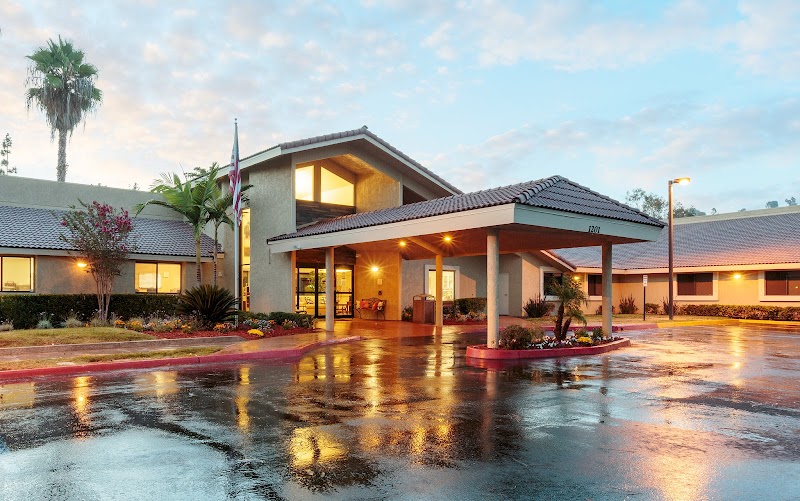
How is San Diego Post-Acute Center Staffed?

CMS rates SAN DIEGO POST-ACUTE CENTER's staffing level at 2 out of 5 stars, which is below average compared to other nursing homes. Staff turnover is 39%, compared to the California average of 46%. This relatively stable workforce can support continuity of care. RN turnover specifically is 66%, which is notably high. RNs provide skilled clinical oversight, so turnover in this role can affect medical care quality.

What Have Inspectors Found at San Diego Post-Acute Center?

State health inspectors documented 86 deficiencies at SAN DIEGO POST-ACUTE CENTER during 2019 to 2025. These included: 2 that caused actual resident harm and 84 with potential for harm. Deficiencies causing actual harm indicate documented cases where residents experienced negative health consequences.
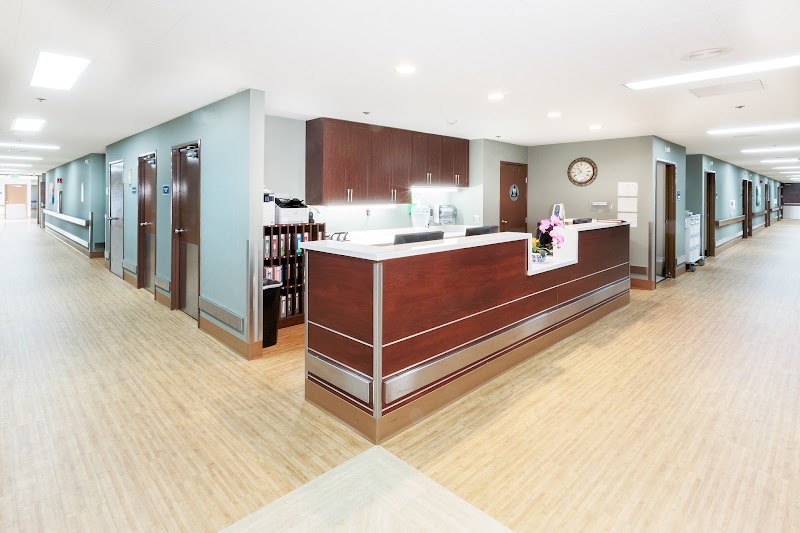
Who Owns and Operates San Diego Post-Acute Center?

SAN DIEGO POST-ACUTE CENTER is owned by a for-profit company. For-profit facilities operate as businesses with obligations to shareholders or private owners. The facility is operated by PACS GROUP, a chain that manages multiple nursing homes. With 240 certified beds and approximately 235 residents (about 98% occupancy), it is a large facility located in EL CAJON, California.

How Does San Diego Post-Acute Center Compare to Other California Nursing Homes?

Compared to the 100 nursing homes in California, SAN DIEGO POST-ACUTE CENTER's overall rating (1 stars) is below the state average of 3.1, staff turnover (39%) is near the state average of 46%, and health inspection rating (2 stars) is below the national benchmark.

What Should Families Ask When Visiting San Diego Post-Acute Center?

Based on this facility's data, families visiting should ask: "Can you walk me through typical staffing levels on day, evening, and night shifts?" "Can I visit during a mealtime to observe dining assistance and food quality?" "How do you handle medical emergencies, and what is your hospital transfer rate?" "Can I speak with family members of current residents about their experience?" These questions are particularly relevant given the below-average staffing rating.

Is San Diego Post-Acute Center Safe?

Based on CMS inspection data, SAN DIEGO POST-ACUTE CENTER has a clean safety record: no substantiated abuse findings (meaning no confirmed cases of resident harm), no Immediate Jeopardy citations (the most serious violation level indicating risk of serious injury or death), and is not on the Special Focus Facility watch list (a federal program monitoring the lowest-performing 1% of nursing homes). The facility has a 1-star overall rating and ranks #100 of 100 nursing homes in California. While no facility is perfect, families should still ask about staff-to-resident ratios and recent inspection results during their visit.

Do Nurses at San Diego Post-Acute Center Stick Around?

SAN DIEGO POST-ACUTE CENTER has a staff turnover rate of 39%, which is about average for California nursing homes (state average: 46%). Moderate turnover is common in nursing homes, but families should still ask about staff tenure and how the facility maintains care continuity when employees leave.

Was San Diego Post-Acute Center Ever Fined?

SAN DIEGO POST-ACUTE CENTER has been fined $44,997 across 2 penalty actions. The California average is $33,529. While any fine indicates a compliance issue, fines under $50,000 are relatively common and typically reflect isolated problems that were subsequently corrected. Families should ask what specific issues led to these fines and confirm they've been resolved.

Is San Diego Post-Acute Center on Any Federal Watch List?

SAN DIEGO POST-ACUTE CENTER is not on any federal watch list. The most significant is the Special Focus Facility (SFF) program, which identifies the bottom 1% of nursing homes nationally based on persistent, serious quality problems. Not being on this list means the facility has avoided the pattern of deficiencies that triggers enhanced federal oversight. This is a positive indicator, though families should still review the facility's inspection history directly.