SOMERSET SUBACUTE AND CARE
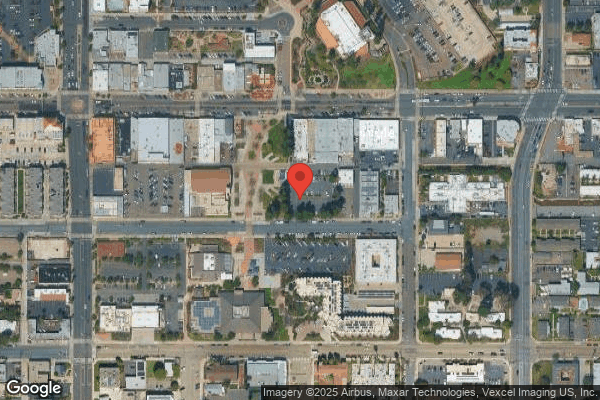
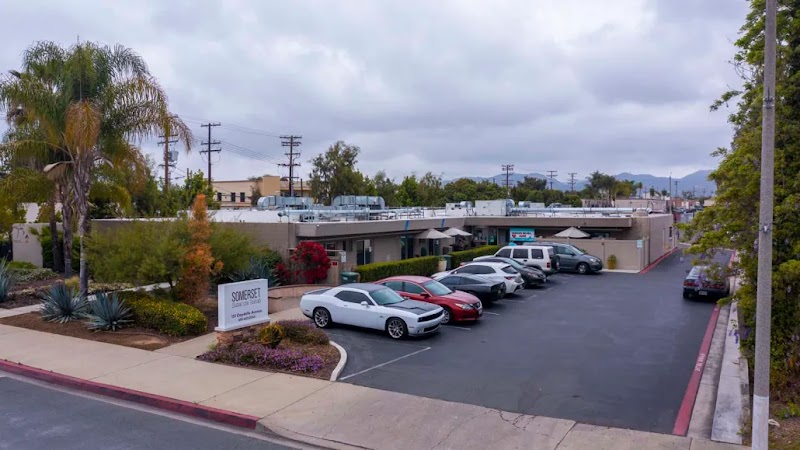
151 CLAYDELLE AVE, EL CAJON, CA 92020 (619) 442-0245
For profit - Corporation 65 Beds THE ENSIGN GROUP Data: November 2025
Trust Grade
25/100
#908 of 1155 in CA
Last Inspection: March 2025

Within standard 12-15 month inspection cycle. Federal law requires annual inspections.

Overview

Somerset Subacute and Care in El Cajon, California has received a Trust Grade of F, indicating significant concerns and a very poor standard of care. Ranking #908 out of 1155 facilities in California places them in the bottom half, and they are #74 out of 81 in San Diego County, meaning they are one of the least favorable options in the area. The facility's trend is worsening, with issues increasing from 14 in 2024 to 16 in 2025. Staffing is a major concern, earning only 1 star out of 5 with a 68% turnover rate, significantly higher than the state average, which suggests instability among caregivers. Additionally, they have accrued $26,728 in fines, indicating compliance issues that are more frequent than 78% of other California facilities. On a positive note, the nursing home has better RN coverage than 85% of its peers, which is beneficial for catching potential problems. However, specific incidents raise serious alarm; for example, one resident was not properly supervised and removed their trach collar, leading to a reintubation, and another resident fell out of bed during a seizure due to a lack of trained staff on seizure procedures, resulting in serious injuries. These findings highlight a troubling pattern of care that families should carefully consider.

Trust Score
F
25/100
In California
#908/1155
Bottom 22%
Safety Record
High Risk
Review needed
Inspections
Getting Worse
14 → 16 violations
Staff Stability
⚠ Watch
68% turnover. Above average. Higher turnover means staff may not know residents' routines.
Penalties
⚠ Watch
$26,728 in fines. Higher than 95% of California facilities. Major compliance failures.
Skilled Nurses
✓ Good
Each resident gets 66 minutes of Registered Nurse (RN) attention daily — more than 97% of California nursing homes. RNs are the most trained staff who catch health problems before they become serious.
Violations
⚠ Watch
52 deficiencies on record. Higher than average. Multiple issues found across inspections.
★★☆☆☆
2.0
Overall Rating
★☆☆☆☆
1.0
Staff Levels
★★★★☆
4.0
Care Quality
★★★☆☆
3.0
Inspection Score
Stable
2024: 14 issues
2025: 16 issues

The Good

  • 4-Star Quality Measures · Strong clinical quality outcomes
  • Full Sprinkler Coverage · Fire safety systems throughout facility
  • No fines on record

Facility shows strength in quality measures, fire safety.

The Bad

2-Star Overall Rating

Below California average (3.1)

Below average - review inspection findings carefully

Staff Turnover: 68%

21pts above California avg (46%)

Frequent staff changes - ask about care continuity

Federal Fines: $26,728

Below median ($33,413)

Moderate penalties - review what triggered them

Chain: THE ENSIGN GROUP

Part of a multi-facility chain

Ask about local staffing decisions and management

Staff turnover is elevated (68%)

20 points above California average of 48%

The Ugly 52 deficiencies on record

3 actual harm
Jul 2025 1 deficiency
CONCERN (E) 📢 Someone Reported This

A family member, employee, or ombudsman was alarmed enough to file a formal complaint

Potential for Harm - no one hurt, but risky conditions existed

Deficiency F0583 (Tag F0583)

Could have caused harm · This affected multiple residents

**NOTE- TERMS IN BRACKETS HAVE BEEN EDITED TO PROTECT CONFIDENTIALITY** Based on interview and record review, the facility failed to ensure the confidentiality of residents' personal and medical infor...

Read full inspector narrative →
**NOTE- TERMS IN BRACKETS HAVE BEEN EDITED TO PROTECT CONFIDENTIALITY** Based on interview and record review, the facility failed to ensure the confidentiality of residents' personal and medical information was protected when binders containing sensitive resident data was left unsecured at the nursing station, resulting in the unauthorized removal of the binders by unauthorized personnel.As a result, all residents at the facility were at risk for unauthorized access to their personal and medical information, in violation of their right to privacy and confidentiality. Findings: A review of the facility census on 6/25/25 indicated the total in house occupancy was 42 residents. Resident 1 was admitted to the facility on [DATE] with a diagnosis of cardiac arrest per the admission record. The record identified a resident family member as the resident representative (RR). The record indicated Resident 1 left the faciity on 6/16/25 against medical advice. During an observation and record review on 6/25/25 at 10:35 A.M., the facility nursing station was unattended, with no staff present near or at the desk. Multiple binders were observed sitting unsecured on an open cart located behind the nursing desk, against the wall. The nursing desk was unobstructed on either side and the binders were accessible within a few steps. The binders were clearly labeled, and included binders titled, Vital Signs, Treatment Audit, Controlled Drug Record, and Monthly Appointments. A review of the records inside the Monthly Appointment binder indicated the binder contained resident face sheets with identifying information such as name, date of birth , insurance identification number, diagnosis and social security number, along with other personal information. The nursing station remained unattended for five minutes. During an interview on 6/25/25 at 11:01 A.M., certified nursing assistant (CNA) 1 stated she was working on 6/15/25 when she witnessed a woman at the nursing station flipping through a binder on the top of the nursing desk. CNA 1 identified the woman as resident 1's resident representative (RR). CNA 1 stated RR said the phrase this is illegal, each time she flipped a page in the binder. CNA 1 stated after a few seconds RR walked away from the nursing desk with two binders and out of the facility. CNA 1 stated she heard licensed nurse (LN) 1 call out for RR to return to the nursing desk with the binders but RR did not comply. CNA 1 stated she did not know what was in the two binders. During an observation and interview on 6/25/25 at 11:17 A.M., LN 1 stated on 6/15/25 he witnessed Resident 1's RR remove two facility binders containing resident information from the top counter of the nursing station and leave the facility. LN 1 pointed to the area of the nursing countertop where the binders had been located and stated that they should have been stored behind the nursing station but had been left out for the phlebotomist (contracted staff who drew blood samples for testing). LN 1 reported that he attempted to stop RR and asked her to return the binders, but she refused. LN1 stated the binders contained resident face sheets, physician orders and requisitions for laboratory and radiology services for multiple residents. During an interview and record review with the Director of Nursing (DON) on 5/25/25 at 11:42 A.M., video footage of the incident on 6/15/25 showed a woman walked down the hallway towards the nursing station, stopped at the nursing desk and flipped through one of the two binders on the top of the desk. The footage indicated two staff members, identified by DON as CNA 1 and LN 1, were standing at the nursing station at the time of the incident. The footage indicated the woman, identified by DON as Resident 1's RR, removed the binder from the desk and walked towards the main exit of the facility. The DON stated RR refused to return the binders upon request. The DON stated RR returned to the facility the following day, 6/16/25, and discharged Resident 1 from the facility's care against medical advice. The DON stated the RR reported she was going to use the information in the binder to bring a malpractice lawsuit against the facility. The DON stated the RR was asked again to return the binders because they contained confidential resident information and RR refused to comply with the second request. DON stated approximately 50 residents were affected by the breach of information. The DON acknowledged that binders containing resident identifiers and personal health information should not be accessible to the public or facility visitors and should be stored in a secure location. The [NAME] stated that the information in the binders included resident names, dates of birth, and Social Security numbers which could be used for identity theft or financial fraud. The DON confirmed, as of the interview, the binders and resident information had not been recovered. A review of a blank facility form the facility stored in the laboratory and x-ray binders that were stolen, titled, Mobile X-ray and EKG Request Form Dispatch, indicated, fields for the resident full name, date of birth , Social Security number, imaging requested, physician name, and billing information, including Medicare or Medicaid number, other insurance details, and the reason for the exam. A review of another blank facility form, provided by the DON and confirmed to be stored in the stolen binders, titled, Comprehensive Test Requisition, indicated fields for the resident's full name, date of birth , social security number, email address, billing address, race, ethnicity, insurance policy number, and laboratory tests requested. A review of the undated facility document titled, NOTICE OF PRIVACY PRACTICES, indicated, . 4. Our legal duty. We are required by law to protect the privacy of your health information, provide this Notice about our privacy practices, follow the privacy practices that are described in this Notice. II. WE HAVE A LEGAL DUTY TO SAFEGUARD YOUR PROTECTED HEALTH INFORMATION (PHI). We are legally required to protect the privacy of your health information. We call this information Protected Health Information, or PHI for short, and it includes information that can be used to identify you that we have created or received about your past, present, or future health or condition; the provision of health care to you; or the payment for this health care. Statement of Resident Rights and Responsibilities: Under federal and state laws, you have the following rights and responsibilities. 11.The resident has the right to personal privacy and confidentiality of his or her personal and clinical records. Rights and Responsibilities under State Law. H. The right to have privacy in treatment and in caring for personal needs, confidentiality in the treatment of personal and medical records, and security in storing and using personal possessions.
Mar 2025 14 deficiencies
CONCERN (D)

Potential for Harm - no one hurt, but risky conditions existed

Deficiency F0558 (Tag F0558)

Could have caused harm · This affected 1 resident

**NOTE- TERMS IN BRACKETS HAVE BEEN EDITED TO PROTECT CONFIDENTIALITY** Based on observation, interview and record review, the facility failed to ensure call lights (device used to communicate a need ...

Read full inspector narrative →
**NOTE- TERMS IN BRACKETS HAVE BEEN EDITED TO PROTECT CONFIDENTIALITY** Based on observation, interview and record review, the facility failed to ensure call lights (device used to communicate a need for help) were within residents' reach for two of two sampled residents (10 and 26). The concerns for the call light within reach had been an ongoing issue during the Resident Council (RC) Meetings from August 2024 through November 2024. In addition, the facility failed to provide the appropriate call bell for one resident (17) with contractures (stiffening/shortening at any joint, that reduces the joint's range of motion). These failures had the potential to not meet the needs of the residents when needing help. Cross reference to F-656. Findings: 1a. Resident 10 was readmitted to the facility on [DATE], with diagnoses which included epilepsy (condition that affects the brain and causes frequent seizures) and the need for assistance with personal care, per the facility's admission Record. Resident 10's attending physician completed Resident 10's history and physical (H & P) dated 2/19/25. The H & P indicated that Resident 10 did not have the capacity to understand and make decisions. On 3/10/25 at 12:41 P.M., an observation was conducted in Resident 10's room. Resident 10 was lying in bed. Resident 10 appeared to be mouthing words, but no sound was coming from his mouth. Resident 10's call light was dangling on the bed's side rails. On 3/13/25 at 9:43 A.M., an interview with the Director of Nursing (DON) was conducted. The DON stated that resident's call light should be within reach to ensure resident safety when they needed help. Per the facility's undated policy tiled, Call light/ Bell, It is the policy of this facility to provide the resident a means of communication with nursing staff .5 .Place the call device within resident's reach before leaving room . 1b. Resident 26 was readmitted to the facility on [DATE], with diagnoses which included respiratory failure, epilepsy (condition that affects the brain and causes frequent seizures) and the need for assistance with personal care, per the facility's admission Record. Resident 26's attending physician completed Resident 26's history and physical (H & P) dated 2/13/24. The H & P indicated that Resident 26 was not able to make his own decisions. On 3/10/25 at 9:09 A.M., an observation was conducted in Resident 26's room. Resident 26 was lying in bed, with a soft pad (call device) hanging from the bed frame. The soft pad was out of reach for Resident 26. On 3/10/25 at 10:15 A.M., a joint observation of Resident 26's call device and an interview with Licensed Nurse (LN) 1 was conducted. LN 1 stated that the call device was not in Resident 26's reach. LN 1 stated it was important to place the call device within resident's reach for the resident to access, and call for help. On 3/13/25 at 9:43 A.M., an interview with the Director of Nursing (DON) was conducted. The DON stated that resident's call light should be within reach to ensure resident safety when they needed help. Per the facility's undated policy tiled, Call light/ Bell, It is the policy of this facility to provide the resident a means of communication with nursing staff .5 .Place the call device within resident's reach before leaving room . 2. A review of the Resident Council (RC) Meeting minutes from August 2024 through November 2024 was conducted. The meeting minutes were as follows: 8/16/24 - Unsampled resident (247) requested call light button within reach before leaving the room. 11/15/24 - Unsampled resident (247) indicated the call light button issue was unresolved. - Unsampled resident (248), call light was left on the floor. - Unsampled resident (249), call light was out of reach. On 3/13/25 at 9:43 A.M., an interview with the Director of Nursing (DON) was conducted. The DON stated that resident's call light should be within reach to ensure resident safety when they needed help. Per the facility's undated policy tiled, Call light/ Bell, It is the policy of this facility to provide the resident a means of communication with nursing staff .5 .Place the call device within resident's reach before leaving room . 3. A review of Resident 17's admission Record indicated Resident 17 was admitted to the facility on [DATE] with diagnoses which included a history of communication deficit and brain damage. A review of Resident 17's Minimum Data Set (MDS- nursing facility assessment tool) dated 1/8/25 indicated that Resident 17 had an impairment of both upper and lower extremities. During a concurrent observation and interview conducted with Licensed Nurse (LN) 12 on 3/10/25 at 11:16 A.M. inside Resident 17's room, Resident 17's hands were contracted (tightened muscles that cause the joints to shorten and become stiff, preventing normal movement). LN 12 stated that Resident 17 had a push button call light that she was not able to press. In addition, LN 12 stated that Resident 17 should have been provided a soft pad call light to accommodate Resident 17's needs. During an interview with the Director of Nursing (DON) on 3/13/25 at 9:09 A.M., the DON stated that all residents, regardless of their mental orientation, should be provided with the appropriate call light to provide dignity and access when residents or family members called for assistance. The DON acknowledged that Resident 17 should have been provided with the soft pad call light that was more appropriate for Resident 17's condition. The facility's undated policy titled Accommodation of Needs indicated, It is the policy of this facility to provide accommodation of reasonable needs to the residents while in the facility.
CONCERN (D)

Potential for Harm - no one hurt, but risky conditions existed

Deficiency F0583 (Tag F0583)

Could have caused harm · This affected 1 resident

Based on observation, interview and record review, the facility failed to protect residents' rights to confidentiality of protected health information (PHI - includes name, diagnoses, treatment of pat...

Read full inspector narrative →
Based on observation, interview and record review, the facility failed to protect residents' rights to confidentiality of protected health information (PHI - includes name, diagnoses, treatment of patients) for multiple residents when a vital signs sheet (VSS - form/record that included residents medical information) was found in the medical cart's trash bin. This failure had the potential to unnecessarily expose residents' PHI to individuals such as visitors and/or other residents. Findings: During a concurrent medication observation and interview on 3/12/25 at 8:24 A.M. with Licensed Nurse (LN) 11, a VSS was observed upward to view, inside LN 11's medication cart's open trash bin. LN 11 stated that the VSS contained residents' names, diagnoses and treatment. LN 11 further stated that the VSS should have been shredded to protect residents' PHI from unauthorized individuals. During an interview with the Director of Nursing (DON) on 3/13/25 at 9:08 A.M., the DON stated that resident PHI should be kept confidential. The DON further stated that the VSS should had been thrown away in the facility's confidential bin for proper shredding, to protect residents' PHI. The facility's policy titled, Access to Electronic Health Record Policy dated 8/2016, indicated Policy .1. The facility is responsible for safeguarding all resident data, ensuring it is protected from accidental or malicious destruction, or modification
CONCERN (D)

Potential for Harm - no one hurt, but risky conditions existed

Comprehensive Care Plan (Tag F0656)

Could have caused harm · This affected 1 resident

**NOTE- TERMS IN BRACKETS HAVE BEEN EDITED TO PROTECT CONFIDENTIALITY** Based on interview and record review, the facility failed to implement a care plan (detailed plan with information about a patie...

Read full inspector narrative →
**NOTE- TERMS IN BRACKETS HAVE BEEN EDITED TO PROTECT CONFIDENTIALITY** Based on interview and record review, the facility failed to implement a care plan (detailed plan with information about a patient's treatment, goal, and interventions) related to having a call light within reach for two of two sampled residents (10 and 26). In addition, the facility failed to implement a physician's order related to the administration of wound treatment and measurement of wound for one resident (37). These failures had the potential to not meet the goals of treatment and needs for Resident 10, Resident 26, and Resident 37. Cross reference to F-558 Findings: 1. Resident 10 was readmitted to the facility on [DATE], with diagnoses which included epilepsy (condition that affects the brain and causes frequent seizures) and the need for assistance with personal care, per the facility's admission Record. Resident 10's attending physician completed Resident 10's history and physical (H & P) dated 2/19/25. The H & P indicated that Resident 10 did not have the capacity to understand and make decisions. On 3/10/25 at 12:41 P.M., an observation was conducted in Resident 10's room. Resident 10 was lying in bed. Resident 10 appeared to be mouthing words but no sound was coming from his mouth. Resident 10's call light was dangling from the bed side rails. A review of Resident 10's care plan related to falls, dated 2/13/25, indicated, Be sure the call light is within reach . On 3/13/25 at 9:43 A.M., an interview with the Director of Nursing (DON) was conducted. The DON stated that the care plan related to ensuring the resident's call light was within reach, should had been implemented to ensure safety of the residents. Per the facility's undated policy tiled, Care Planning/ Care Conference, It is the policy of this facility that the interdisciplinary team (IDT) shall develop a comprehensive care plan for each resident .5. The resident's plan of care will be implemented as appropriate . 2. Resident 26 was readmitted to the facility on [DATE], with diagnoses which included respiratory failure, epilepsy (condition that affects the brain and causes frequent seizures) and the need for assistance with personal care, per the facility's admission Record. Resident 26's attending physician completed Resident 26's history and physical (H & P) dated 2/13/24. The H & P indicated that Resident 26 was not able to make his own decisions. On 3/10/25 at 9:09 A.M., an observation was conducted in Resident 26's room. Resident 26 was lying in bed. A soft pad (call device) was hanging from the bed frame. The soft pad was out of reach for Resident 26. A review of Resident 26's care plan related to falls, dated 2/13/24, indicated, Be sure the call light is within reach . On 3/10/25 at 10:15 A.M., a joint observation of Resident 26's call device and an interview with Licensed Nurse (LN) 1 was conducted. LN 1 stated that the call device was not in Resident 26's reach. LN 1 stated it was important to place the call device within resident's reach for the resident to access and call for help. On 3/13/25 at 9:43 A.M., an interview with the Director of Nursing (DON) was conducted. The DON stated that the care plan related to ensuring the resident's call light was within reach, should had been implemented to ensure safety of the residents. Per the facility's undated policy tiled, Care Planning/ Care Conference, It is the policy of this facility that the interdisciplinary team (IDT) shall develop a comprehensive care plan for each resident .5. The resident's plan of care will be implemented as appropriate . 3. Resident 37 was admitted to the facility on [DATE] with diagnoses which included metastatic prostate cancer (prostate cancer that has spread from the prostate gland to other parts of the body) per undated admission Records. A joint record review was conducted on 3/13/25 at 10:48 A.M., with the Minimum Date Set (MDS) Coordinator. Resident 37's pressure ulcer care plan, initiated on 1/1/25 was reviewed. This care plan included interventions: Administer treatments as ordered and monitor for effectiveness . Assess/Record/monitor wound healing. Measure length, width and depth . Assess and document status of wound perimeter, wound bed and healing progress. Report improvements and declines to the MD (medical doctor; physician) . A concurrent interview and record review was conducted on 3/13/25 at 2 P.M., with the MDS Coordinator. Resident 37's initial admission assessment on 12/31/24 indicated that Resident 37 had an open wound however, there was no documented measurement until 1/7/25. Resident 37's treatment order for the left buttocks dated 1/9/25 indicated Cleanse with NS (Normal Saline), pat dry. Apply Medihoney and Xeroform, and cover with dry dressing . There was no documented evidence that treatments were completed on 1/15/25 through 1/18/25 and on 1/21/25. Resident 37's treatment order for the left buttocks dated 1/21/25 indicated Cleanse with Dakins, pat dry. Apply Medihoney and Xeroform, and cover with dry dressing . There was no documented evidence that treatments were completed on 2/24/25 and 2/27/25. The MDS Coordinator stated that a measurement of the wound should have had been completed on the initial assessment and treatment of the left buttock should have been completed as ordered. The MDS Coordinator acknowledged that Resident 37's care plan interventions related to administration of treatments, measurement of wound during admission, and reporting changes in skin/wound status to the physician were not consistently implemented and should have been. A review of facility's undated policy and procedure, titled Comprehensive Resident Centered Care Plan indicated .The IDT team will also develop and implement a baseline care plan . that meet professional standards of quality care .
CONCERN (D)

Potential for Harm - no one hurt, but risky conditions existed

Deficiency F0658 (Tag F0658)

Could have caused harm · This affected 1 resident

**NOTE- TERMS IN BRACKETS HAVE BEEN EDITED TO PROTECT CONFIDENTIALITY** Based on observation, interview, and record review, the facility failed to provide treatment in accordance with the facility's p...

Read full inspector narrative →
**NOTE- TERMS IN BRACKETS HAVE BEEN EDITED TO PROTECT CONFIDENTIALITY** Based on observation, interview, and record review, the facility failed to provide treatment in accordance with the facility's policy and procedure when a Licensed Nurse (LN) 2 did not auscultate (listening to the stomach with a stethoscope when administration of air to check the placement of the gastrostomy tube [g-tube, a tube inserted through the stomach that brings nutrition or medications directly to the stomach]) before giving a resident (26) his tube feeding (TF) formula. This failure had the potential for Resident 26 to have respiratory aspiration of gastric contents, that may cause a life-threatening aspiration pneumonia (bacterial infection in your lungs, it can happen when you aspirate, or inhale, something other than air into your respiratory tract). Findings: Resident 26 was readmitted to the facility on [DATE], with diagnoses which included respiratory failure, epilepsy (condition that affects the brain and causes frequent seizures) and with a g-tube, per the facility's admission Record. Resident 26's attending physician completed Resident 26's history and physical (H & P) dated 2/13/24. The H & P indicated Resident 26 was not able to make his own decisions. A review of Resident 26's physician order dated, 3/7/24, indicated, Enteral feed: check placement/ patency via air, auscultation (listening to the stomach via stethoscope while injecting 30 cc [cubic centimeter, unit of measurement] of air into the g-tube with a syringe before giving medication and starting TF). On 3/10/25 at 9:09 A.M., an observation and an interview of Resident 26 was conducted in his room. Resident 26 was lying in bed, with TF formula ongoing, connected to Resident 26's g-tube. Resident 26 gestured a thumbs up when asked how he was doing. On 3/11/25 at 3:20 P.M., an observation of LN 2 preparing Resident 26's TF formula was conducted. LN 2 primed (the process of filling the tubing with solution/formula prior to attaching it to the resident) the tubing of the administration set. LN 2 primed the tubing with approximately 6 inches of air at the end of the tubing. LN 2 waited for Resident 26 to be transferred from the geri-chair (padded chair that is designed to help residents with limited mobility) to his bed. After Resident 2 was transferred back to his bed, LN 2 took the 60 ml syringe, connected the syringe to the g-tube, and administered some air to the resident's g-tube. LN 2 did not have a stethoscope and did not auscultate Resident 26's stomach upon administering air. After LN 2 checked the residuals from the g-tube, LN 2 connected the primed tubing with air, to Resident 26, then started the TF. On 3/11/25 at 3:24 P.M., an interview with LN 2 was conducted. LN 2 stated she did not auscultate Resident 26's stomach when she administered air to Resident 26's g-tube because she gave Resident 26 his medications via g-tube 30 minutes prior, in the nurses' station while Resident 26 was in his geri-chair. LN 2 stated she assumed it is still good. LN 2 stated she should have checked and auscultated Resident 26's g-tube to ensure the placement of g-tube and prevent aspiration. On 3/13/25 at 9:43 A.M., an interview with the Director of Nursing (DON) was conducted. The DON stated LN 2 should have listened to the resident's stomach to ensure proper placement of the g-tube and for resident's safety. A review of the facility's undated policy titled, Enteral Feeding Administration, indicated, .7. Check enteral feeding tube placement before initiating feeding .
CONCERN (D)

Potential for Harm - no one hurt, but risky conditions existed

Quality of Care (Tag F0684)

Could have caused harm · This affected 1 resident

**NOTE- TERMS IN BRACKETS HAVE BEEN EDITED TO PROTECT CONFIDENTIALITY** Based on observation, interview and record review, the facility failed to follow physician's order for one of seven sampled resi...

Read full inspector narrative →
**NOTE- TERMS IN BRACKETS HAVE BEEN EDITED TO PROTECT CONFIDENTIALITY** Based on observation, interview and record review, the facility failed to follow physician's order for one of seven sampled residents, when Resident 2's compression stocking (CS- worn to decrease swelling) was not worn. This failure had the potential to affect Resident 2's well-being. Findings: A review of Resident 2's admission record indicated Resident 2 was admitted to the facility on [DATE] with medical diagnoses which included heart failure, hypertension (elevated blood pressure), and edema (swelling). A review of Resident 2's physician order dated, 4/16/24, indicated, Apply ted hose (compression stocking) above the knee to Right Lower Extremity every day shift (morning shift work hours that begin at 7 am) for swelling for 12 hours. A concurrent observation and interview with Resident 2 was conducted on 3/10/25 at 9:20 A.M. inside Resident 2's room. A signage was posted on Resident 2's side of the wall, that indicated Leg compressors at 9 am, off in the evening at 2100 (9 pm). Resident 2 stated he did not know that he needed to wear a compression sock. During a follow-up observation and interview with Licensed Nurse (LN) 13 on 3/10/25 at 3:30 P.M., Resident 2 was observed not wearing a compression stocking on his right leg. LN 13 stated that the nursing staff should have applied the compression stocking on Resident 2's right leg as ordered, to decrease swelling. During an interview with the Director of Nursing (DON) on 3/13/25 at 9:11 A.M., the DON stated that physician's orders should be implemented by nursing staff. The DON further stated that the day shift staff should have applied Resident 2's CS as ordered to prevent Resident 2's leg from swelling. The facility's undated policy and procedure titled, Physician Orders, indicated, Policy .It is the policy of this facility to accurately transcribe and implement orders in addition to medication orders (treatment, procedures .)
CONCERN (D)

Potential for Harm - no one hurt, but risky conditions existed

Pressure Ulcer Prevention (Tag F0686)

Could have caused harm · This affected 1 resident

**NOTE- TERMS IN BRACKETS HAVE BEEN EDITED TO PROTECT CONFIDENTIALITY** Based on interview and record review, the facility did not ensure wound treatment for one of one resident (Resident 37) was comp...

Read full inspector narrative →
**NOTE- TERMS IN BRACKETS HAVE BEEN EDITED TO PROTECT CONFIDENTIALITY** Based on interview and record review, the facility did not ensure wound treatment for one of one resident (Resident 37) was completed as ordered by the physician. This failure had the potential to affect Resident 37's care and well-being. Findings: Resident 37 was admitted to the facility on [DATE] with diagnoses which included metastatic prostate cancer (prostate cancer that has spread from the prostate gland to other parts of the body) per undated admission Records. A review of Resident 37's treatment order for the left buttocks dated 1/9/25 indicated, Cleanse with NS (Normal Saline), pat dry. Apply Medihoney and Xeroform, and cover with dry dressing . A review of Resident 37's treatment order for the left buttocks dated 1/21/25 indicated, Cleanse with Dakins, pat dry. Apply Medihoney and Xeroform, and cover with dry dressing . A concurrent interview and record review of Resident 37's electronic treatment administration record (eTAR) was conducted on 3/13/25 at 2 P.M., with the Minimum Data Set (MDS) Coordinator. The MDS Coordinator stated that the treatment administration record for the left buttocks did not include documentation that the wound treatments were completed for Resident 37 on 1/15/25 through 1/18/25, 1/21/25, 2/24/25, and 2/27/25. The MDS coordinator acknowledged that the wound treatments should have been consistently completed and documented. A review of facility's undated policy and procedure titled Physician Orders indicated, Policy: .It is the policy of this facility to accurately transcribe and implement orders . 6. Medication, treatment or related orders are transcribed in the eMAR (electronic medication administration record), eTAR accurately and verified via the double check system process.
CONCERN (D)

Potential for Harm - no one hurt, but risky conditions existed

Incontinence Care (Tag F0690)

Could have caused harm · This affected 1 resident

**NOTE- TERMS IN BRACKETS HAVE BEEN EDITED TO PROTECT CONFIDENTIALITY** Based on observation, interview, and record review, the facility staff failed to consistently monitor and document urine output ...

Read full inspector narrative →
**NOTE- TERMS IN BRACKETS HAVE BEEN EDITED TO PROTECT CONFIDENTIALITY** Based on observation, interview, and record review, the facility staff failed to consistently monitor and document urine output (UO) per the facility's policy, for three of three sampled residents (8, 37, and 40) with a urinary catheter (a tube inserted into the bladder to aid in urine flow). In addition, there was no urinary catheter order for Resident 40. This failure had the potential for Resident 8, Resident 37 and Resident 40 to have urinary retention and develop urinary tract infection (UTI). Findings: 1. Resident 8 was readmitted to the facility on [DATE], with diagnoses which included encephalopathy (a change in how the brain functions; may cause confusion, agitation) and UTI, per the facility's admission Record. Resident 8's attending physician completed Resident 8's history and physical (H & P) dated 2/10/25. The H & P indicated Resident 8 did not have the capacity to understand and make decisions. On 3/10/25 at 11:45 A.M., an observation of Resident 8 was conducted in the dining room. A urinary catheter was attached to Resident 8's wheelchair. On 3/12/25 at 10:09 A.M., an interview was conducted with Certified Nursing Assistant (CNA) 1. CNA 1 stated that Resident 8 was confused and did not know what was going on. CNA 1 stated Resident 8 had a urinary catheter. CNA 1 stated CNAs should be monitoring and documenting Resident 8's output in Resident 8's clinical record. On 3/12/25 at 10:50 A.M., a joint review of Resident 8's clinical record and an interview with Licensed Nurse (LN) 1 was conducted. LN 1 stated that the clinical record of Resident 8 indicated the CNAs did not consistently measure his urine output. LN 1 stated the record indicated CNAs documented Resident 8's urine output as how many times he was changed, compared to measuring the urine output in milliliters (ml, unit of measurement), to ensure Resident 8 was not retaining urine in his bladder and to prevent Resident 8 from developing UTI. On 3/13/25 at 9:43 A.M., an interview with the Director of Nursing (DON) was conducted. The DON stated that staff should have consistently monitored and documented the urine output in mls, to ensure the residents have enough urine output and address if the residents did not have urine retention. A review of the facility's undated policy titled, Intake and Output, indicated, It is the policy of this facility to maintain an intake and output record when needed to monitor residents for adequate fluid balance .Weekly Assessment .2. I & O assessments will be documented in the resident's medical record . 2. Resident 37 was admitted to the facility on [DATE] with diagnoses which included metastatic prostate cancer (prostate cancer that has spread from the prostate gland to other parts of the body) per undated admission Records. An observation was conducted on 3/10/25 10:25 A.M., in Resident 37's room. A urinary catheter bag was hanging from the side of Resident 37's the bed. A review of Resident 37's physician's order dated 3/3/25 indicated Monitor intake and output every shift for 30 days . A concurrent interview and record review was conducted on 3/13/25 at 2 P.M., with the Minimum Data Set (MDS) Coordinator. The MDS Coordinator stated that Resident 37 had a urinary catheter and that there was a physician's order to monitor Resident 37's intake and output per volume in milliliter (mL). Resident 37's Medication Administration Record dated 3/3/25 through 3/11/25 was reviewed. There was no documentation that Resident 37's urinary output was consistently monitored on 3/4, 3/5, and 3/8 through 3/11/25. The record did not include Resident 37's urinary output per volume in mL. Instead, there was documentation that indicated the number of times Resident 37's urinary catheter was emptied. The MDS coordinator acknowledged that Resident 37's urinary output record should have been documented per volume in mL and not the urinary catheter's frequency of when it was emptied. An interview was conducted on 3/13/25 at 2:35 P.M., with the Director of Nursing (DON). The DON stated that Resident 37's urinary catheter's output monitoring should have been measured accurately. The DON acknowledged that documentation of urinary output should be per volume to ensure that the resident did not have urinary retention. A review of the facility's undated policy titled, Intake and Output, indicated, It is the policy of this facility to maintain an intake and output record when needed to monitor residents for adequate fluid balance .Weekly Assessment .2. I & O assessments will be documented in the resident's medical record . 3. Resident 40 was admitted to the facility on [DATE] with diagnoses which included anemia (the body does not produce enough red blood cells) and atrial fibrillation (irregular heart rhythm that begins in your heart's upper chambers - atria) per undated admission Records. An observation was conducted on 3/10/25 12:28 P.M., in Resident 40's room. A urinary catheter bag was hanging from the side of Resident 40's bed. A review of Resident 40's physician's order dated 3/3/25 indicated, Monitor intake and output every shift for 30 days . A concurrent interview and record review were conducted on 3/13/25 at 2 P.M., with the Minimum Data Set (MDS) Coordinator. The MDS Coordinator stated that Resident 40 had a urinary catheter and that there was had a physician's order to monitor intake and output per volume in mL (milliliter). Resident 40's Medication Administration Record dated 2/7 through 3/11/25 was reviewed. There was no documentation that Resident 40's urinary output was consistently monitored on 2/15, 2/17, 2/18, 2/23, 2/25, 3/2 through 3/8, 3/10 and 3/11/25. The record did not include Resident 40's urinary output per volume in mL. Instead, there was documentation that indicated the number of times Resident 40's urinary catheter was emptied. The MDS coordinator acknowledged that Resident 40's urinary output record should have been documented per volume in mL and not the urinary catheter's frequency of when it was emptied. An interview was conducted on 3/13/25 at 2:35 P.M., with the Director of Nursing (DON). The DON stated that Resident 40's urinary catheter's output monitoring should have been measured accurately. The DON acknowledged that documentation of urinary output should be per volume to ensure that the resident did not have urinary retention. A review of the facility's undated policy titled, Intake and Output, indicated, It is the policy of this facility to maintain an intake and output record when needed to monitor residents for adequate fluid balance .Weekly Assessment .2. I & O assessments will be documented in the resident's medical record . 4. Resident 40 was admitted to the facility on [DATE] with diagnoses which included anemia (the body does not produce enough red blood cells) and atrial fibrillation (irregular heart rhythm that begins in your heart's upper chambers - atria) per undated admission records. A review of Resident 40's progress notes dated 2/1/25 indicated, .Received new order . to place FC (foley catheter) 16 F (16 French - size of FC). Orders were noted and carried out. A review of Resident 40's progress notes dated 2/7/25 indicated, .Resident arrived in facility .admitted from [name of hospital] .foley cath (catheter) patent and draining yellow urine output . A concurrent interview and record review were conducted on 3/13/25 at 2 P.M., with the Minimum Data Set (MDS) Coordinator. Resident 40's physician orders dated 1/23 to 2/11/25 were reviewed. Resident 40's health records did not include physician's orders for a urinary catheter. The MDS Coordinator acknowledged that a physician's order for a urinary catheter should had been obtained and entered in Resident 40's medical records. An interview was conducted on 3/13/25 at 2:35 P.M., with the Director of Nursing (DON). The DON stated the expectation was for staff to obtain a physician's order for a urinary catheter and enter the order in the resident's health record. The DON acknowledged that Resident 40 should have had a physician's order for a urinary catheter, to ensure appropriateness of treatment. A review of the facility's undated policy and procedure titled Physician Orders, Telephone Orders and Recapitulation Process Documentation in a Long Term Care Record indicated, .Policy: .1. Physician's orders shall be obtained prior to the initiation of any medication or treatment . Verbal and Telephone Orders .3. The facility personnel receiving the verbal or telephone order shall transcribe the order into the PCC system . A review of the facility's undated policy and procedure titled Physician Orders indicated, Policy: .It is the policy of this facility to accurately transcribe and implement orders . (treatment, procedures .) only upon the written order of a person duly licensed . 5. Verbal orders must be recorded immediately in the resident's chart .A review of facility's undated policy and procedure titled Physician Orders indicated, Policy: .It is the policy of this facility to accurately transcribe and implement orders . (treatment, procedures .) only upon the written order of a person duly licensed . 5. Verbal orders must be recorded immediately in the resident's chart .
CONCERN (D)

Potential for Harm - no one hurt, but risky conditions existed

Deficiency F0698 (Tag F0698)

Could have caused harm · This affected 1 resident

**NOTE- TERMS IN BRACKETS HAVE BEEN EDITED TO PROTECT CONFIDENTIALITY** Based on observation, interview, and record review, the facility failed to ensure dialysis (the process of cleaning the blood th...

Read full inspector narrative →
**NOTE- TERMS IN BRACKETS HAVE BEEN EDITED TO PROTECT CONFIDENTIALITY** Based on observation, interview, and record review, the facility failed to ensure dialysis (the process of cleaning the blood through a machine) access site was properly cared for one of two residents investigated for dialysis (246). This failure had a potential for Resident 246's dialysis access to clot. Findings: Resident 246 was admitted to the facility on [DATE], with diagnoses that included End Stage Renal Disease (kidney failure), per the admission Record. On 3/10/25 at 9:29 A.M., Resident 246 was observed sleeping in her room, and did not respond to her name. There was a note by the wall indicating Resident 246 had a left arm dialysis access site. On 3/11/25 at 3:19 P.M., an observation of Resident 246 was conducted. Resident 246 arrived via stretcher to the facility, accompanied by transportation staff. Resident 246's left upper arm had a bandage wrapped around her dialysis access site. On 3/12/25 8 A.M, an observation of Resident 246 was conducted in her room. Resident 246 was lying in bed, with her eyes closed and did not respond when her name was called. Resident 246 had a bandage wrapped around her dialysis access site. On 3/12/25 8:42 A.M., an observation and interview with Resident 246 was conducted in her room. Resident was awake, with the bandage on her dialysis access site. Resident 246 stated that she did not know why she still had the bandage on her arm, and that she did not know if the access site bled. Resident 246 stated she had dialysis yesterday (3/11/25). A review of Resident 246 dialysis communication record (communication record between the dialysis center and the facility) was conducted. The dialysis communication record indicated the following special instructions from the dialysis center to the staff at the facility as follows: 3/6/25 - Remove bandage after 4 hours after dialysis. 3/8/25 - Remove bandage after 4 hours after dialysis. 3/11/25 - Remove bandage after 3 hours after dialysis . A review of Resident 246's physician order dated 3/4/25, indicated to remove the dialysis access dressings after 2 hours (after) the resident's dialysis. On 3/12/25 at 11:36 A.M, a joint observation of Resident 246's dialysis access site, an interview and joint record review with Licensed Nurse (LN) 1 was conducted. LN 1 stated that the bandage was still wrapped around Resident 246's dialysis access site. LN 1 stated that Resident 246's dialysis schedule were Tuesdays, Thursdays, and Saturdays. LN 1 stated that the LNs responsibility was to check the resident's access site for signs of bleeding, and infection. LN 1 stated the resident's dialysis access site dressing was removed at the dialysis center. LN 1 stated, I don't take it out. LN 1 stated she did not know about the special instructions from the dialysis center that Resident 246's dressings should have been removed after 4 hours. LN 1 stated, I didn't know about the communication. LN 1 stated it was important to remove the dressing from the access site, since it was a pressure dressing and could cause clotting of the access (site). On 3/13/25 at 9:43 A.M., an interview with the Director of Nursing (DON) was conducted. The DON stated Resident 246's dialysis dressing should have been removed, and that the LNs should have verified the physician order, to monitor the dialysis access site and prevent clotting of Resident 246's dialysis access site. A review of the facility's undated policy titled, Renal Dialysis, Care of Resident, Hemodialysis Access Site, indicated, It is the policy of this facility to provide standards in the care of the residents on renal dialysis and the care of the vascular access site for hemodialysis, 1. Vascular access site care will be provided by Licensed nurse, with physician's orders .
CONCERN (D)

Potential for Harm - no one hurt, but risky conditions existed

Pharmacy Services (Tag F0755)

Could have caused harm · This affected 1 resident

Based on observation, interview and record review, the facility failed to ensure controlled medications (CM -medications with high potential for abuse and addiction) were accurately accounted for when...

Read full inspector narrative →
Based on observation, interview and record review, the facility failed to ensure controlled medications (CM -medications with high potential for abuse and addiction) were accurately accounted for when four out of 10 CMs were not documented on the Electronic Medication Administration Records (EMAR) and controlled drugs accountability sheet (CS-count sheet that monitors the storage and usage of controlled medications) to indicate the CMs were given to the resident. This failure had the potential for misuse or diversion of CMs. An observation of CM handoff (report that typically occurs at the end of the shift; includes necessary information to ensure safe transition of care) between Licensed Nurse (LN) 14 and LN 15 was conducted on 3/11/25 at 3:12 P.M. LN 14 counted 27 tablets of Lacosamide (medication used to treat seizures- abnormal electrical activity in the brain) 200 milligrams (mg-unit of measurement) documented as remaining on the CS. LN 15 counted 26 tablets of Lacosamide in the medication card (container card that packages medication). LN 14 counted 10 tablets of Briviact (medication used to treat seizures) 100 mg tablets documented as remaining on the CS. LN 15 counted nine tablets of Briviact in the medication card. LN 14 counted 16 tablets of Lorazepam (medication used to treat anxiety) 0.5 mg tablets documented as remaining on the CS. LN 15 counted 15 tablets of Lorazepam in the medication card. LN 14 counted 25 Oxycodone (pain medication) 5 mg tablets documented as remaining on the CS. LN 15 counted 24 tablets of Oxycodone in the medication card. During a concurrent interview and record review with LN 14 on 3/11/25 at 3:30 P.M., LN 14 stated that CMs taken out of the medication card should be immediately documented on the CS. Further, LN 14 stated that after CM administration, the time the CM was given should be documented on the EMAR. LN 14 acknowledged that she should have documented the CMs to provide accuracy on the CS, and she should have documented the exact time that residents took the CMs, on the EMAR. During an interview with the Director of Nursing (DON) on 3/13/25 at 10:05 A.M., the DON stated she expected all LNs to document on the CS, all CMs that were taken out of the medication cards. In addition, the DON stated she expected the LN to document the CM administered to the resident, on the EMAR. The DON acknowledged that the quantity of CM that were documented on the CS did not accurately match the quantity of CM tablets that were inside the medication cards. The facility's policy titled, Controlled Medications - Storage and Reconciliation dated 5/2007, indicated, Policy .6. When a controlled medication is administered, the licensed nurse administering the mediation immediately enters all the following information on the accountability record: Date and time of administration, amount administered and signature of the administering the dose, competed after the medication is actually administered.
CONCERN (D)

Potential for Harm - no one hurt, but risky conditions existed

Medication Errors (Tag F0758)

Could have caused harm · This affected 1 resident

**NOTE- TERMS IN BRACKETS HAVE BEEN EDITED TO PROTECT CONFIDENTIALITY** Based on observation, interview, and record review, the facility failed to indicate the appropriate and measurable target behavi...

Read full inspector narrative →
**NOTE- TERMS IN BRACKETS HAVE BEEN EDITED TO PROTECT CONFIDENTIALITY** Based on observation, interview, and record review, the facility failed to indicate the appropriate and measurable target behavior of antidepressant (medication used to treat depression, sad mood and lack of interest) for one of two sampled residents (Resident 8) reviewed for unnecessary psychotropic (mind-altering medications) medication use. This failure had the potential for unnecessary psychotropic medication use, side effects, and a decline for resident's psychological and mental well-being. Findings: Resident 8 was readmitted to the facility on [DATE], with diagnoses which included encephalopathy (a change in how the brain functions; may cause confusion, agitation) and UTI, per the facility's admission Record. Resident 8's attending physician completed Resident 8's history and physical (H & P) dated 2/10/25. The H & P indicated Resident 8 did not have the capacity to understand and make decisions. A review of Resident 8's physician order dated 3/6/25 indicated the following order: - Escitalopram Oxalate Oral Tablet at bedtime for as evidenced by (AEB): Self isolation related to MAJOR DEPRESSIVE DISORDER (MDD, a mood disorder that causes a persistent feeling of sadness and loss of interest), . - ANTI-DEPRESSANT TARGET BEHAVIOR: Depression aeb verbalization of feeling sad, MONITOR EPISODES OF TARGETED BEHAVIOR, every shift . On 3/10/25 at 11:45 A.M., an observation of Resident 8 was conducted in the dining room. Resident 8 was yelling at the staff and requested to return to his room. On 3/12/25 at 10:09 A.M., an interview was conducted with Certified Nursing Assistant (CNA) 1. CNA 1 stated that Resident 8 was confused and did not know what was going on. CNA 1 stated there was no behavioral monitoring for Resident 8. CNA 1 stated, We were not informed to monitor, the information was not passed down to us. On 3/12/25 at 10:50 A.M., a joint review of Resident 8's clinical record and an interview with Licensed Nurse (LN) 1 was conducted. LN 1 stated that Resident 8 was confused and was unable to express that he was sad. LN 1 stated, I am not sure if the target behavior is appropriate for the medication. It is really hard for him because he is confused. On 3/13/25 at 9:43 A.M., an interview with the Director of Nursing (DON) was conducted. The DON stated that the LNs should have checked the appropriate target behavior being monitored for Resident 8's anti-depressant medication. The DON stated it should have been corrected in the physician's order to prevent the use of unnecessary psychotropic medication. A review of the facility's policy titled, Psychotropic Medications, revised 12/2023, indicated, It is the policy of this facility to ensure that residents who have not use psychotropic drugs are not given these drugs unless the medication is necessary to treat a specific condition as diagnosed .Procedure .3. The LN shall review the classification of the drug, the appropriateness of the diagnosis, its indication, behavior monitors .
CONCERN (D)

Potential for Harm - no one hurt, but risky conditions existed

Unnecessary Medications (Tag F0759)

Could have caused harm · This affected 1 resident

Based on observation, interview and record review, the facility had a medication error rate of 6.45% when two medication errors occurred out of 31 opportunities during medication administration, for t...

Read full inspector narrative →
Based on observation, interview and record review, the facility had a medication error rate of 6.45% when two medication errors occurred out of 31 opportunities during medication administration, for two out of four residents (Resident 65 and Resident 27). These failures resulted in medications not given in accordance with the physician's orders which resulted in residents not receiving the therapeutic effects of the medication. Findings: 1. During the medication pass observation on 3/12/25 at 8:15 A.M. with Licensed Nurse (LN) 11, LN 11 did not administer Lexapro (a medication to treat depression; feeling sad) to Resident 65. Resident 65's Physician Order dated, 2/27/25 indicated to give Lexapro 20 milligrams (mg -unit of measurement) 1 tablet by mouth one time a day for verbalization of feeling depressed. During an interview with the Director of Nursing (DON) on 3/13/25 at 10:40 A.M., the DON stated that Resident 65's Lexapro medication card (container card that stores medication) was inside the afternoon (labeled to store medications that were supposed to be administered in the afternoon) drawer and resulted in the LN missing to administer the morning dose. In addition, the DON stated that physician ordered medications should be given to residents. 2. During the medication pass observation and interview on 3/12/25 at 8:36 A.M. with LN 11, LN 11 administered 20 milliliters (ml-unit of measurement) of Potassium Chloride (KCL-medication supplement) liquid to Resident 27. Resident 27's physician order dated 5/7/24 indicated Give KCL liquid 20 milliequivalent (mEq-unit of measurement) per 15 ml. Give 20 mEq . one time a day for hypokalemia (low potassium). During a concurrent interview and record review with LN 11 on 3/12/25 at 3:30 P.M., LN 11 stated that she should have reviewed the physician order and should have administered KCL 15 ml to Resident 27. LN 11 acknowledged that Resident 27 received more than the medication prescribed, which may have caused harm to Resident 27. During an interview with the DON on 3/13/25 at 10:42 A.M., the DON stated that LNs should verify physician's orders before administering medications. The DON acknowledged that the LN should have checked the physician's order and administered the appropriate dose to the patient, to prevent overmedication. The facility's undated policy and procedures titled, Medication Administration indicated, .Procedures .2. Review and verify MD orders and follow 6 Rights of Medication Administration .
CONCERN (D)

Potential for Harm - no one hurt, but risky conditions existed

Deficiency F0761 (Tag F0761)

Could have caused harm · This affected 1 resident

Based on observation, interview and record review the facility failed to ensure safe and appropriate storage of medications when: 1. One out of one intravenous medication cart (IV cart - medications u...

Read full inspector narrative →
Based on observation, interview and record review the facility failed to ensure safe and appropriate storage of medications when: 1. One out of one intravenous medication cart (IV cart - medications used through the vein) was left unlocked and unattended by a licensed nurse (LN). 2. A medication room key was left in the doorknob and left unattended by a LN. 3. Multiple medications were left unattended by a LN in the nursing station. These failures had the potential for unauthorized access of residents, visitors, and/or unlicensed staff to medications. Findings: 1. During a concurrent observation and interview with LN 1 in the facility hallway on 3/10/25 at 7:40 A.M., an IV cart was observed unlocked and unattended by a licensed staff. The drawers of the cart were able to be pulled open. The drawers contained IV medications, needles and tubing. LN 1 stated that the IV cart should have been kept locked to prevent unauthorized access to medication and supplies. During an interview with the Director of Nursing (DON) on 3/13/25 at 10:15 A.M., the DON stated that all treatment and medication carts should be kept locked to prevent residents, visitors and unlicensed staff from gaining access. The facility's undated policy and procedure titled, Medication Administration and Storage, indicated, .Procedures .7. Medication and treatment carts will be kept locked when unattended. 2. During a concurrent observation and interview with LN 1 on 3/10/25 at 11:10 A.M., a medication room key was observed inserted in the medication room doorknob. LN 1 stated that the medication room key should not have been left in the doorknob, to prevent unauthorized people gaining access to medications and supplies stored inside the medication room. During an interview with the DON on 3/13/25 at 10:17 A.M., the DON stated that the medication room key should be with the LN's all the time. The DON further stated that the medication room key should not have been left in the doorknob, to prevent unauthorized people from entering the medication room. The facility's undated policy and procedure titled, Medication Administration and Storage, indicated, .Procedures .4. The door to the medication room should be locked at all times when an authorized staff member is not present. 3. During an observation on 3/10/25 at 11:25 A.M., multiple medications were observed stacked unattended, on top of the nursing station counter. During an interview with LN 1 on 3/10/25 at 2:45 P.M., LN 1 stated that the multiple medications were delivered by the pharmacy, and that the medications should have been brought inside the medication room for safekeeping. During an interview with the DON on 3/13/25 at 10:20 A.M., the DON stated that all medications should be immediately stored in the medication cart or medication room to ensure safety. The facility's undated policy and procedure titled, Medication Administration and Storage, indicated, .Procedures .5. Drugs and/or biologicals should not be left unsecured/unattended. Drug deliveries should be stored immediately after delivery and should not be unattended/unsecured.
CONCERN (E)

Potential for Harm - no one hurt, but risky conditions existed

Food Safety (Tag F0812)

Could have caused harm · This affected multiple residents

Based on observation, interview and record review, the facility failed to ensure food safety and sanitation practices were maintained in the kitchen according to standards of practice and policy when:...

Read full inspector narrative →
Based on observation, interview and record review, the facility failed to ensure food safety and sanitation practices were maintained in the kitchen according to standards of practice and policy when: 1. Expired food items were stored in the kitchen storage and used in the kitchen areas. 2. The Kitchen Supervisor (KS) did not remove gloves and perform hand washing after disposing the kitchen garbage. These failures exposed residents to contaminated food and unsanitary practices, which had the potential to place them at risk of developing a foodborne illness. Findings: 1. A kitchen observation and interview was conducted on 3/10/25 at 8:05 A.M., with the Kitchen Supervisor (KS). The following food items were observed: [brand name] classic yellow mustard - best by date (BB) 2/17/25; Mango Cakes - use by date (UB) 2/16/25; [brand name] Thousand Island salad dressing - BB 3/1/25; [brand name] Blue Cheese Dressing - BB 3/2/25; [brand name] Puree French Toast - BB 1/29-25; [brand name] California Wine - opened date (OD) 10/10/22; [brand name] Vanilla Almond milk - BB 3/9/25; [brand name] Chocolate Milk - BB 3/3/25; [brand name] Hamburger Buns - BB 3/9/25; [brand name] Sliced Bread - BB 3/3/25; [brand name] milk - BB 2/4/25; Sandwich prepared on 3/3/25. The KS acknowledged that these food items with best by and use by dates on or after 3/10/25 were expired food items and included the wine and the prepared sandwiches. An interview was conducted on 3/10/25 at 10 A.M. and 3/13/25 at 9:35 A.M. with Registered Dietician Specialist (RDS). The RDS stated that the stored expired food items should have been disposed after the expiration date. The RDS acknowledged that expired food items can potentially affect resident's health. A review of facility's undated policy and procedure titled Dry Goods Storage Guideline indicated, .This storage length is to be followed unless you have manufacturer's recommendation indicating otherwise. A review of facility's undated policy and procedure titled Storage of Food and Supplies indicated, .Procedures for Dry Storage: 8.All food products will be used per the times specified in the Dry Food Storage Guidelines .No food will be kept longer than the expiration date on the product. 13. Bread will be delivered frequently and used in the order that it is delivered to assure freshness . Check manufacturer's recommendations . According to the Food and Drug Administration (FDA) Food Code 2022, section 3-501.17 (A) (B) (C) (D) indicates the day the original container is opened in the food establishment shall be counted as Day 1 .The date marked shall not exceed a manufacturer's use-by date .mark the date or day of preparation, with a procedure to discard the food on or before the last date or day by which the food must be consumed on the premises. 2. An observation and interview were conducted on 3/12/25 at 4:02 P.M. with the KS. The KS took trash and the trash bin out to the dumpsters and pushed the trash bin back to the kitchen. The KS reentered the kitchen, did not remove his soiled gloves or perform hand hygiene by washing his hands. The KS walked through the kitchen, passed the food preparation areas, and touched the faucets and sink area. Per the KS, he should have removed his soiled gloves and washed his hands when he reentered the kitchen. The Registered Dietician Specialist (RDS) acknowledged that the KS should have removed his gloves, performed hand washing, and put on the new gloves when he reentered the kitchen after he took the trash out to the dumpster. According to the 2022 US FDA Food Code. Annex 3 titled Garbage disposal: . The failure of food-handlers to wash hands in certain situations (such as after using the toilet, handling raw meat, cleaning spills, or carrying garbage), wear clean disposable gloves .is responsible for the foodborne transmission of these pathogens. Non-foodborne routes of transmission, such as from one person to another, are also major contributors in the spread of these pathogens . According to the 2022 US FDA Food Code, Section 2-301.11 titled Clean Condition .The hands are particularly important in transmitting foodborne pathogens. Food employees with dirty hands and/or fingernails may contaminate the food being prepared. Therefore, any activity which may contaminate the hands must be followed by thorough handwashing in accordance with the procedures outlined in the Code . According to the 2022 US FDA Food Code, Section 2-301.14 titled When to Wash .The hands may become contaminated when the food employee engages in specific activities. The increased risk of contamination requires handwashing immediately before, during, or after .activities . Employees must wash their hands after any activity which may result in contamination of the hands . A review of facility's undated policy and procedure titled Hand Hygiene, indicated .Purpose: .All personnel shall follow the handwashing/hand hygiene procedure to help prevent the spread of infections . Procedure: .1. Wash hands with soap and water for the following situations: a. When hands are visibly soiled .
CONCERN (E)

Potential for Harm - no one hurt, but risky conditions existed

Infection Control (Tag F0880)

Could have caused harm · This affected multiple residents

**NOTE- TERMS IN BRACKETS HAVE BEEN EDITED TO PROTECT CONFIDENTIALITY** Based on observation, interview, and record review, the facility failed to ensure infection control procedures were followed whe...

Read full inspector narrative →
**NOTE- TERMS IN BRACKETS HAVE BEEN EDITED TO PROTECT CONFIDENTIALITY** Based on observation, interview, and record review, the facility failed to ensure infection control procedures were followed when: 1. A Licensed Nurse (LN) 2 and two Certified Nursing Assistants (CNA) did not wear a gown when providing care for one resident (Resident 26) on enhanced barrier precautions (EBP - gown and gloves must be worn during high-contact resident care activities [example: residents with medical devices]). 2. Urinary catheter (tube inserted into the bladder to aid in urine flow) bag for two residents (37 and 40) was touching the floor. 3. A resident's (34) nasal cannula (tubing connected to the oxygen and to the resident for supplement) was not properly stored. These failures had the potential for cross contamination, spread of infection, and residents' decline of health. Findings: 1. Resident 26 was readmitted to the facility on [DATE], with diagnoses which included respiratory failure, epilepsy (condition that affects the brain and causes frequent seizures) and with a gastrostomy tube (g-tube, a tube inserted through the stomach that brings nutrition or medications directly to the stomach) per the facility's admission Record. Resident 26's attending physician completed Resident 26's history and physical (H & P) dated 2/13/24. The H & P indicated Resident 26 was not able to make his own decisions. On 3/10/25 at 9:09 A.M., an observation and interview was conducted in Resident 26's room. An EBP sign was posted on Resident 26's door and there were personal protective equipment (PPE; safety gear includes the use of gown, gloves, mask, goggles) supplies in the cart. Resident 26 was lying in bed, with TF formula ongoing connected to Resident 26's g-tube. Resident 26 gestured a thumbs up when asked how he was doing. On 3/11/25 at 3:04 P.M., an observation was conducted in Resident 26's room. Three staff members (Licensed Nurse [LN] 2, Certified Nursing Assistants 2 and 3) were transferring Resident 26 from the geri-chair (padded chair for residents with limited mobility) to the bed. The three staff members were not wearing a gown. During the transfer, CNA 1 was holding Resident 26's feet and touched the CNA's scrub suit. LN 2 was helping Resident 26 position himself in the bed, while CNA 2 was controlling the remote of the lift (equipment used to help transfer a patient). On 3/11/25 at 3:24 P.M., an interview with LN 2 was conducted. LN 2 stated that they did not wear PPE while transferring Resident 26 from the chair to his bed. LN 2 stated that they had forgotten to wear PPE. LN 2 stated the staff were required to wear PPE when touching or providing care to residents with medical devices such as g-tube. LN 2 stated it was important (to wear PPE) to prevent transmission of infection to the resident and for infection control prevention. On 3/11/25 at 8:58 A.M., an interview with CNA 2 was conducted. CNA 2 stated that she helped CNA 3 the day before (on 3/10/25) to transfer Resident 26 from the chair to his bed. CNA 2 stated she did not know what the use of PPE was for, when transferring a resident from the chair to the bed. CNA 2 stated she did not know the purpose of that. On 3/11/25 at 4:18 P.M., an interview with the Infection Preventionist (IP) was conducted. The IP stated that when transferring a resident on EBP from a chair to the bed, as long as there was high contact activity, the expectation was for the staff to wear PPE to prevent cross contamination and infection. On 3/12/25 at 10:28 A.M., an interview with CNA 1 was conducted. CNA 1 stated that when transferring a resident on EBP, .they were told not to do so, but if we have to gown up, then we have to gown up. On 3/13/25 at 9:43 A.M., an interview with the Director of Nursing (DON) was conducted. The DON stated the staff were expected to wear PPE when transferring a resident on EBP, to prevent spread of infection. A review of the EBP sign dated 8/2/24, utilized by the facility was conducted. The EBP sign indicated that use of gown and gloves were required when transferring a resident on EBP. A review of the facility's policy titled, IPCP Standard and Transmission Based Precautions, revised 9/2023, indicated, It is the policy of this facility to implement infection control measures to prevent the spread of communicable diseases and conditions .c. Examples of high-contact resident care activities requiring gown and glove use for Enhanced Barrier Precaution include: iii. Transferring . 2a. Resident 37 was admitted to the facility on [DATE] with diagnoses which included metastatic prostate cancer (prostate cancer that has spread from the prostate gland to other parts of the body) per undated admission Records. Observations were conducted on 3/10/25 at 10:25 A.M. and 2:24 P.M., and on 3/11/25 at 8:49 A.M. and 10:36 A.M., in Resident 37's room. During each observation, Resident 37's urinary catheter bag was hanging from the bed and touching the floor/mat. A concurrent observation and interview was conducted on 3/12/25 at 8:20 A.M., with Certified Nurse Assistant (CNA) 21. Resident 37's urinary catheter bag was hanging from the bed and touching the floor. CNA 21 stated that Resident 37's urinary catheter bag was touching the floor/mat and acknowledged that the urinary catheter bag should not touch the floor/mat, to prevent contamination and spread of infection. In a concurrent observation and interview on 3/12/24 at 8:24 A.M., with Licensed Nurse (LN) 21, LN 21 verified that Resident 37's urinary catheter bag was touching the floor/mat and acknowledged that the urinary catheter bag should not touch the floor/mat to prevent contamination and to protect the resident from infection. An interview was conducted on 3/12/25 at 8:42 A.M., with the Director of Nursing (DON). The DON acknowledged that the urinary catheter bag should not touch the floor, to prevent infection and for the safety of the resident. The facility's policy and procedure titled Catheter Care, Indwelling, last reviewed 12/2019 indicated .Policy: It is the policy of this facility that each resident with an indwelling catheter will receive catheter care daily and PRN (as needed) for soiling. Purpose: To promote hygiene, comfort and decrease risk of infection for catheterized residents. Procedures: .13. Keep foley drainage bag from touching the floor or landing mat . 2b. Resident 40 was admitted to the facility on [DATE] with diagnoses which included anemia (the body does not produce enough red blood cells) and atrial fibrillation (irregular heart rhythm that begins in your heart's upper chambers - atria) per undated admission Records. Observations were conducted on 3/10/25 at 12:28 P.M. and 3/12/25 at 8:33 A.M., in Resident 40's room. Resident 40's urinary catheter was hanging from the bed and touching the floor/mat. A concurrent observation and interview was conducted on 3/12/25 at 8:35 A.M., with Certified Nurse Assistant (CNA) 21. Resident 40's urinary catheter bag was hanging from the bed and touching the floor/mat. CNA 21 acknowledged that the urinary catheter bag should not touch the floor/mat to prevent contamination and spread of infection. A concurrent observation and interview was conducted on 3/12/25 at 8:37 A.M. with Licensed Nurse (LN) 21. LN 21 verified that Resident 40's urinary catheter bag was touching the floor/mat and acknowledged that the urinary catheter bag should not touch the floor/mat to prevent contamination and to protect the resident from infection. An interview was conducted on 3/12/25 at 8:42 A.M., with the Director of Nursing (DON). The DON acknowledged that the urinary catheter bag should not touch the floor to prevent infection and for the safety of the resident. The facility's policy and procedure titled Catheter Care, Indwelling last reviewed 12/2019 indicated .Policy: It is the policy of this facility that each resident with an indwelling catheter will receive catheter care daily and PRN (as needed) for soiling. Purpose: To promote hygiene, comfort and decrease risk of infection for catheterized residents. Procedures: .13. Keep foley drainage bag from touching the floor or landing mat . 3. A review of Resident 34's admission Record indicated, Resident 34 was in the facility on 4/2/24 with medical diagnoses which included asthma (condition with difficulty of breathing) and muscle weakness. Resident 34's physician order dated 4/2/24 indicated, May use oxygen supplement via nasal cannula (NC- device applied in the nose to deliver oxygen). During an observation conducted on 3/10/25 at 11:57 A.M. inside Resident 34's room, a NC was observed directly placed on top of slippers on Resident 34's personal storage rack. During a concurrent observation and interview with the respiratory therapist (RT) on 3/10/25 at 12:40 P.M., the RT stated Resident 34's NC should had been stored in a clean, plastic bag to prevent cross contamination (transfer of germs). During an interview with the Infection Preventionist (IP) on 3/11/25 at 4 P.M., the IP acknowledged that NCs should be kept in a storage bag when not being used, to protect the residents from infection. The facility's undated policy titled, Infection Control Policy/Procedure indicated, Procedures .2. The oxygen tubing will be stored appropriately if not in use
Feb 2025 1 deficiency
CONCERN (D) 📢 Someone Reported This

A family member, employee, or ombudsman was alarmed enough to file a formal complaint

Potential for Harm - no one hurt, but risky conditions existed

Accident Prevention (Tag F0689)

Could have caused harm · This affected 1 resident

**NOTE- TERMS IN BRACKETS HAVE BEEN EDITED TO PROTECT CONFIDENTIALITY** Based on interview and record review, the facility failed to provide adequate assistance to a resident (Resident 2) who required...

Read full inspector narrative →
**NOTE- TERMS IN BRACKETS HAVE BEEN EDITED TO PROTECT CONFIDENTIALITY** Based on interview and record review, the facility failed to provide adequate assistance to a resident (Resident 2) who required total dependence with activities of daily living (ADL-bathing or showering, dressing, getting in and out of bed or a chair, walking, toileting and eating) reviewed for accidents. This failure resulted in Resident 2 falling from bed. Findings: Resident 2 was admitted to the facility on [DATE] with diagnoses including chronic respiratory failure with hypoxia (a condition where the lungs fail to adequately exchange oxygen, leading to low oxygen in the blood) and dependence on ventilator (breathing machine) according to the facility's admission Record. A complaint investigation was conducted on 2/5/25 at the facility. At 8:57 A.M during an interview with Licensed Nurse (LN) 1, LN 1 stated Resident 2 was still at the hospital due to a fall incident. An interview was conducted with Certified Nurse Assistant (CNA) 1 on 2/5/25 at 9:45 A.M. CNA 1 stated she was assigned to the subacute (a place where residents require higher level of care including ventilator [breathing machine] dependent residents) side of the facility. CNA 1 stated she had been assigned to Resident 2. CNA 1 stated Resident 2 had a tracheostomy (an opening on the neck with a tube to help with breathing) connected to a ventilator. CNA 1 stated Resident 2 was dependent on staff for all ADLs. CNA 1 stated Resident 2 required two-person assist with brief change because Resident 2 was heavy, had a tracheostomy and had episodes of being combative. An interview was conducted with CNA 2 on 2/5/25 at 9:55 A.M. CNA 2 stated she had been assigned to Resident 2. CNA 2 stated Resident 2 was dependent with ADLs. CNA 2 stated Resident 2 was, A big guy and moved a lot. CNA 2 stated she had to ask for another staff to assist with changing Resident 2's brief for safety. CNA 2 further stated Resident 2 had episodes of refusing care and had struck out at staff. During an interview on 2/5/25 at 10:15 A.M. with Licensed Nurse (LN) 2, LN 2 stated she was the assigned nurse on the day Resident 2 fell out of bed. LN 2 stated she was at another room when she heard a CNA calling for the Respiratory Therapist (RT). LN 2 stated she followed the RT to Resident 2's room and saw Resident 2 lying on the floor, perpendicular to the bed. LN 2 stated she assessed Resident 2 and found skin tears on the left great toe, a red mark on the left eyebrow and reddened knees. LN 2 stated upon interview of CNA 3, CNA 3 told LN 2 that Resident 2 rolled off the bed during brief change. An interview was conducted with CNA 3 on 2/5/25 at 10:27 A.M. CNA 3 stated she was assigned to Resident 2 the day of the fall incident. CNA 3 stated Resident 2 had a bowel movement with smears on Resident 2's face and arms. CNA 3 stated she stood on the left side of Resident 2's bed as she cleaned Resident 2' s face and arm. CNA 3 stated she pulled the flat sheet under Resident 2 towards her then turned Resident 2 to his right side. CNA 3 stated as she cleaned Resident 2's back, Resident 2, Moved his arms, wiggled his body and started rolling off the bed. CNA 3 stated she was not able to stop Resident 2 from rolling off the bed and Resident 2 landed on the floor. CNA 3 stated she usually had a second person to assist with caring for Resident 2, but at that time CNA 3 stated, It was a lapse in my judgment. During a review of Resident 2's weights in the electronic medical record, the weight record indicated Resident 2 weighed 175.1 pounds as of 1/3/25. A review of a fall assessment for Resident 2 dated 12/2/24 indicated a score of 13 . High Risk. A review of Resident 2's care plans were conducted. A care plan for Resident 2 titled, ADL Self Care Performance Deficit r/t Chronic respiratory failure, dated 12/3/24 indicated Resident 2 required total assistance with personal hygiene, toilet use, bathing, dressing. The care plan did not address the number of staff assistance Resident 2 required for ADLs. During a review of Resident 2's fall risk care plan dated 12/3/24, the care plan indicated, At risk for falls r/t: Epilepsy [a brain disorder causing seizures], CVA [Cerebrovascular Accident-stroke] .Goal .Will be free of falls . A review of Resident 2's Minimum Data Set (MDS-a clinical assessment tool), dated 12/6/24 was conducted. The MDS section GG0170A indicated, 01 .Roll left and right: The ability to roll from lying on back to left and right side, and return to lying on back on the bed . The MDS indicated coding of 01 indicated, Dependent-Helper does ALL of the effort. Resident does none of the effort to complete the activity or the assistance of 2 or more helpers is required for the resident to complete the activity . An interview was conducted on 2/14/25 with the Director of Nursing (DON). The DON stated Resident 2's CNA should have called for someone to assist her during resident's care. The DON stated it was best practice to have two people to care for Resident 2 for safety. A review of the facility's undated policy and procedure (P&P) titled, Fall Prevention was conducted. The P&P indicated, .When a resident is admitted to this facility, a Fall assessment will be completed for the resident .A care plan is formulated based on that assessment. If a potential for a fall is triggered, a care plan will be formulated pertaining to fall prevention . The policy did not indicate fall preventive measures.
Dec 2024 2 deficiencies
CONCERN (D) 📢 Someone Reported This

A family member, employee, or ombudsman was alarmed enough to file a formal complaint

Potential for Harm - no one hurt, but risky conditions existed

Safe Transfer (Tag F0626)

Could have caused harm · This affected 1 resident

**NOTE- TERMS IN BRACKETS HAVE BEEN EDITED TO PROTECT CONFIDENTIALITY** Based on interview and record review, the facility failed to readmit one of three sampled residents (Resident 1), who was transf...

Read full inspector narrative →
**NOTE- TERMS IN BRACKETS HAVE BEEN EDITED TO PROTECT CONFIDENTIALITY** Based on interview and record review, the facility failed to readmit one of three sampled residents (Resident 1), who was transferred to a General Acute Care Hospital (GACH) for medical care, when the facility did not document a reason for refusal to readmit Resident 1 after GACH 2 had deemed Resident 1 medically and psychologically safe for discharge back to the facility according to facility policy. This deficient practice placed the resident at risk for confusion and psychosocial harm related to the inability to return to the facility and an unnecessary, extended stay at the GACH 2. Findings: Resident 1 was admitted to the facility on [DATE] with a diagnosis of suicidal ideations (thoughts about or a plan to commit suicide) and chronic respiratory failure (a condition that makes it difficult to breathe on one's own) requiring a tracheostomy (a surgical procedure that creates an opening in the neck to provide an alternative airway for breathing) and ventilator (a machine that helps patients breathe) per the facility's admission record. A review of Resident 1's Post-Event IDT Review, dated 9/2/24, indicated Resident 1 was transferred and admitted to GACH 1 on 8/31/24 for attempted self-harm after he was discovered in his room with a charger cord wrapped around his neck and he verbalized a plan to kill himself. The Post-Event IDT Review indicated Resident 1's room was prepared for return to the facility by removal of potential self-harm items and that staff were in-serviced regarding care and monitoring on resident safety. A review of Resident 1's Post-Event IDT Review, dated 9/12/24, indicated Resident 1 was readmitted to the facility on [DATE] following an acute care admission at GACH 1 for a suicide attempt on 8/31/24. The IDT Review recommended Resident 1 be assessed for suicidal intent every shift. A review of Resident 1's History and Physical Examination (H&P), dated 9/13/24, indicated, . transferred back to the hospital . after reportedly wrapping a cord around his neck at his post-acute facility . deemed psychiatrically stable for discharge back to post-acute facility . The H&P indicated Resident 1 had a documented history of chronic passive thoughts of self-harm on a daily basis. On 11/21/24 at 11:04 AM, an interview was conducted with certified nursing assistant (CNA) 1 at the facility. CNA 1 stated the facility accepted residents with psychiatric conditions. CNA 1 stated the facility provides in-services that review interventions for psychiatric residents that have a history of harming themselves. CNA 1 stated staff were trained to periodically take inventory of resident drawers for items that were used to self-harm and frequent visual checks. CNA 1 stated she was familiar with Resident 1. CNA 1 stated Resident 1 had history of trying to hurt himself and stated he had previously attempted to wrap a cord around his neck at the facility. CNA 1 stated the facility accepted him back from the hospital after this incident and safety interventions were put in place. CNA 1 stated Resident 1 was recently sent out for attempting to hurt himself by drinking hydrogen peroxide rinse (a diluted solution of hydrogen peroxide used to clean the mouth of bacteria). On 11/21/24 at 11:36 AM, an interview was conducted with facility licensed nurse (FLN) 1 at the facility. FLN 1 stated she was the nurse for Resident 1 the day he swallowed the hydrogen peroxide oral rinse. FLN 1 stated Resident 1 was transferred out to GACH 2 per the NP's order. FLN 1 stated Resident 1 had suicidal ideations in the past. FLN 1 stated Resident 1 had previously gone to the hospital for putting a cord around his neck. FLN 1 stated safety interventions were put in place after the hospital stay which included placing cords out of reach, removing sharp items and liquids from the room, and making sure no medications were left on the counter. FLN 1 stated the facility conducted in-services on suicidal ideations which included not leaving any type of liquids at the bedside. FLN 1 stated Resident 1 had not stated or verbalized an intention to hurt anyone else and was not physically aggressive towards others. FLN 1 stated Resident 1 had signed a seven-day bed hold. FLN 1 stated care plan for suicidal ideation was created for Resident 1 following the ingestion of hydrogen peroxide oral rinse. A review of Resident 1's nursing progress note, dated 11/11/24 at 6:02 P.M., indicated Resident 1 was ordered to be transferred to GACH 2 by the nurse practitioner (NP) after he reported he drank something he found in his drawer and verbalized that he wanted to die. The note indicated registered nurse (RN) 1 found an empty 2-ounce bottle of hydrogen peroxide oral rinse near the resident. A review of Resident 1's physician's orders (PO) indicated an order to transfer to GACH 2 was placed on 11/11/24. A review of the facility document, completed for Resident 1, titled, eINTERACT Transfer Form V4.1 (ETF), dated 11/11/24 at 7:20 P.M, indicated, B. Transfer Details . Reason(s) for: Other: suicidal attempt/ideation . 2. Primary Goals of Care at Time of Transfer; 1. Rehabilitation and/or Medical Therapy with intent of returning home . 3. Conditions of Return . Nursing Home Would be able to Accept Resident Back Under the Following Conditions . 1. ED determines diagnoses, and treatment can be done in NH (nursing home); 2. VS (vital signs) stabilized and follow up plan can be done in NH . On 11/21/24 at 2:18 P.M., an interview with the facility case manager/social services director (CM/SSD) was conducted at the facility. The CM/SSD stated Resident 1 was transferred out to GACH 2 after an attempted suicide by trying to drink a solution. CM/SSD stated Resident 1 had a seven-day bed hold. CM/SSD stated GACHs notified the facility when a resident was ready to discharge from the hospital and return to the facility. CM/SSD stated the director of nursing (DON), and the care team reviewed the hospital discharge paperwork and would readmit the resident for transfer if there was a bed available. The CM/SSD stated she had spoken with GACH 2 who stated Resident 1 had been cleared for discharge. The CM/SSD stated she had spoken with Resident 1 over the phone, and he reported not feeling stable. The CM/SSD stated she told the hospital the facility did not feel they could accept the resident back. The CM/SSD stated the facility had not gone to the hospital to assess Resident 1. The CM/SSD stated she had not reported to anyone at GACH 2 regarding Resident 1's reports of feeling unstable. A review of Resident 1's social services progress note, dated 11/18/24, at 3:08 P.M., authored by the CM/SSD, indicated, .Spoke with CM (case manager) from [name of hospital] to explain why [name of facility] is not the appropriate setting for this resident . The facility is not a psych facility . The facility has concerns the resident would attempt suicide again . it is of the utmost importance that the resident gets the care that he needs and not get put back into a LTC (long term care) without regular psych visits and meetings. The facility would rather the resident be safe in a psych related facility . On 11/25/24 at 11:46 A.M., a follow-up telephone interview and record review of Resident 1's clinical record was conducted with CM/SSD. The CM/SSD stated she had spoken to Resident 1 on the phone multiple times and was concerned about readmitting him. CM/SSD stated she did not document any of the phone calls she had with Resident 1. CM/SSD stated the interdisciplinary care team (IDT) discussed reasons for not wanting to readmit Resident 1 to the facility at their clinical meeting. CM/SSD acknowledged the clinical record did not contain documentation that indicated the reasons why the facility determined they were no longer able to care for Resident 1. The CM/SSD stated the full discussion of why the facility did not want to accept Resident 1 back from the hospital was not reflected in the clinical documentation. A review facility social services progress notes, dated 9/16/24 through 11/10/24 were conducted. The social service progress notes did not indicate Resident 1 was exhibiting suicidal ideation, mood, and behavioral issues the facility was unable to accommodate during this time period. On 11/25/24 at 1:52 P.M., an interview with the facility nurse practitioner (NP) was conducted. NP stated she was readmitted to the hospital following a recent suicide attempt. The NP stated Resident 1 was in the hospital two months ago following a previous suicide attempt. The NP stated she had read the facility progress notes indicating the resident was not returning to the facility because the facility was unable to meet Resident 1's needs. The NP stated she was not involved in the decision to not accept the resident back from the facility. A review of the facility document, dated 11/11/24, titled, Physician Discharge Summary, indicated Resident 1 was discharged to the hospital on [DATE]. The section of the document, titled, DISCHARGE DIAGNOSIS, was left blank. The section of the document, titled, A FINAL SUMMARY OF RESIDENT'S STATUS AT TIME OF DISCHARGE, was left blank. The document included a physician signature, dated 11/11/24. The document did not indicate the reason for the hospital transfer or that the facility was unable to provide ongoing care for Resident 1's psychological need. A review of Resident 1's Post-Event IDT Review, dated 11/11/24, indicated Resident 1 was transferred and admitted to GACH 2 for verbalizing wanting to die and consuming a bottle of hydrogen peroxide oral rinse found in his drawer. The Post-Event IDT Review recommendations included emergency room evaluation for self-harm intent, a psychiatric evaluation, follow-up with the acute care facility regarding resident discharge planning, staff training, and a re-evaluation of Resident 1's preferred activities by the activity department. An inability to care for the resident's psychosocial needs upon discharge from the hospital was not documented. The NP and medical doctor were not listed as IDT members involved in the IDT review. A review of GACH 2 case manager note, dated 11/13/24, indicated, .Called and spoke with [Marketer name] @ [facility name] and is able to return if he's doing better . A review of GACH 2 case manager note, dated 11/18/24, indicated, .Called [Marketer name] back . agreed to accept patient back tomorrow at 10am . transportation set up for tomorrow @ 10am . A review of GACH 2 document titled, Discharge Summary, dated 11/19/24, indicated, .Patient is now cleared by psychiatrist for discharge back to skilled nursing care facility . A review of GACH 2 nurse note, dated 11/19/24, indicated, .Patient is discharge back to [facility name] today and scheduled for pick up at 10 am. A review of GACH 2 case manager note, dated 11/19/24, indicated, .Unable to transport patient d/t - facility not accepting per [CM/SSD name] . On 11/21/2024 at 4:00 P.M., a telephone interview was conducted with the director of case management at GACH 2 (GACH 2 DCM). GACH 2 DCM stated Resident 1 was still at the GACH 2 and had been medically and psychologically cleared for discharge back to the facility. GACH 2 DCM stated, on 11/19/24, the facility notified GACH 2 they were unable accept Resident 1 back to the facility. On 12/13/24 at 4:06 P.M., an interview with the director of nursing (DON) was conducted. The DON stated the facility accepted Resident 1 back to the facility after the first suicide attempt involving the cord around his neck because they felt they could provide a safe environment for Resident 1 and manage his psychological needs. The DON acknowledged the facility did not document why the facility was unable to care for Resident 1's needs following the second suicide attempt. The DON acknowledged the facility did not follow their policy on transfer and discharge requirements. A review of the facility census, dated 11/20/24, indicated 8 of 42 total beds were empty and unoccupied. The census indicated there were no new pending admissions. A review of the facility policy, titled, Criteria for Transfer and Discharge, revised 12/2023, indicated, .Policy: It is the policy of this facility that each resident will remain in the Facility, and not be transferred or discharged unless the discharge or transfer is appropriate as per the existing criteria. When the Facility transfers or discharges a resident, the Facility shall ensure that the transfer or discharge is documented in the resident's medical record . Procedure: The Facility shall permit each resident to remain in the Facility, and not transfer or discharge the resident from the Facility unless: a. The transfer or discharge is necessary for the resident's welfare and the resident's needs cannot be met in the Facility . 5. If the transfer or discharge is necessary for the resident's welfare and the resident's needs cannot be met in the Facility, the resident's physician shall document the following in the resident's medical record: a. The specific resident need(s) that cannot be met; b. Facility attempts to meet the resident needs; and c. The service available at the receiving Facility to meet the need(s) . 10. If the Facility determines that a resident, who was transferred with an expectation of returning to the Facility cannot return to the Facility, this constitutes a discharge and this policy shall apply. Therefore, a refusal to readmit the resident to the Facility is considered a discharge, and the requirements of 42 CFR Section 483.15 in terms of documentation, notice before transfer, and orientation for transfer/discharge apply .
CONCERN (D) 📢 Someone Reported This

A family member, employee, or ombudsman was alarmed enough to file a formal complaint

Potential for Harm - no one hurt, but risky conditions existed

Deficiency F0843 (Tag F0843)

Could have caused harm · This affected 1 resident

**NOTE- TERMS IN BRACKETS HAVE BEEN EDITED TO PROTECT CONFIDENTIALITY** Based on interview and record review, the facility did not have a written transfer agreement in place with a General Acute Care ...

Read full inspector narrative →
**NOTE- TERMS IN BRACKETS HAVE BEEN EDITED TO PROTECT CONFIDENTIALITY** Based on interview and record review, the facility did not have a written transfer agreement in place with a General Acute Care Hospital (GACH) when the facility ordered a resident (1) to transfer to GACH 2 for medical and psychological treatment. This failure could potentially place residents at risk for inadequate continuity of care and treatment. Findings: Resident 1 was admitted to the facility on [DATE] with a diagnosis of suicidal ideations (thoughts about or a plan to commit suicide) and chronic respiratory failure (a condition that makes it difficult to breath on one ' s own) requiring a tracheostomy (a surgical procedure that creates an opening in the neck to provide an alternative airway for breathing) and ventilator (a machine that helps patients breathe) per the facility's admission record. Resident 1's was transferred and admitted to GACH 2 on 11/11/24 for verbalizing a desire to die and consuming a bottle of hydrogen peroxide oral rinse (a diluted solution of hydrogen peroxide used to clean the mouth of bacteria), per the facility's Post-Event IDT record. A review Resident 1's physician's orders (PO), dated 11/11/24, indicated Resident 1 was ordered to transfer to GACH 2 for further assessment. On 11/21/24 at 11:36 AM, an interview was conducted with facility licensed nurse (FLN) 1 at the facility. FLN 1 stated she was the nurse for Resident 1 the day he swallowed the hydrogen peroxide oral rinse. FLN 1 stated Resident 1 was transferred out to GACH 2 per the nurse practitioner's (NP) order. On 11/25/24 at 12:15 PM a telephone interview with the director of nursing (DON )was conducted . A request for a copy of the facility's hospital transfer agreement with GACH 2 was made. On 11/25/24 at 3:40 PM, a follow-up telephone interview with the director of nursing (DON) was conducted. The DON stated the facility did not have a written transfer agreement with GACH 2 on file. The DON stated he checked with the facility's contract department and the facility did not have a written transfer agreement for any GACH the facility transferred patients to on file. The facility was not able to provide a record of a written transfer agreement with GACH 2 or any other GACH upon request. The facility did not provide a policy on transfer agreements upon request.
Mar 2024 12 deficiencies 1 Harm
SERIOUS (G)

Actual Harm - a resident was hurt due to facility failures

Pressure Ulcer Prevention (Tag F0686)

A resident was harmed · This affected 1 resident

**NOTE- TERMS IN BRACKETS HAVE BEEN EDITED TO PROTECT CONFIDENTIALITY** 2. Resident 26 was admitted to the facility on [DATE] with diagnoses which included moderate protein calorie malnutrition (a nut...

Read full inspector narrative →
**NOTE- TERMS IN BRACKETS HAVE BEEN EDITED TO PROTECT CONFIDENTIALITY** 2. Resident 26 was admitted to the facility on [DATE] with diagnoses which included moderate protein calorie malnutrition (a nutritional deficiency that can impact healing), and quadriplegia (inability to move arms and legs independently), and cognitive communication deficit (impairment in the ability to communicate). An observation of the turning schedule posted on the wall at the head of Resident 26's bed indicated 12 AM back. 2 AM door. 4 AM window. 6 AM back. 8 AM door. 10 AM window. noon back. 2 PM door. 4 PM window. 6 PM back. 8 PM door. 10 PM window. Observations of Resident 26 were conducted on the following dates and times: 3/18/24 at 4:35 P.M., Resident 26 was observed in bed on her back with the head of the bed raised to fifteen degrees (a slight incline). According to the turning schedule, Resident 26 should have been positioned on her left side facing the window. 3/19/24 at 11:37 A.M., Resident 26 was observed in bed on her back. According to the turning schedule, Resident 26 should have been positioned on her left side facing the window. 3/20/24 at 5:15 P.M., Resident 26 was observed in bed on her back. According to the turning schedule, Resident 26 should have been positioned on her left side facing the window. 3/21/24 at 8:10 A.M., Resident 26 was observed in bed on her back. According to the turning schedule, Resident 26 should have been positioned on her right side. An observation and interview were conducted on 3/20/24 at 11:08 A.M., with the wound care nurse (WCN) during wound care for Resident 26. The WCN stated Resident 26 had a facility acquired pressure injury on her right hip that started as a skin tear from a brief. An interview was conducted on 3/21/24 at 8:13 A.M., with CNA 22. CNA 22 stated all residents should be repositioned every two hours at a minimum. CNA 22 stated, The importance of turning is for the comfort of the residents and to prevent bed sores. An interview was conducted on 3/21/24 at 8:37 A.M., with CNA 23 who stated, In the past couple of months the turning became strict. The importance of the resident of being turned regularly is for good circulation and to make them comfortable and out of pain. If a resident is left in one position too long, they might have skin breakdown and get open wounds. An interview was conducted on 3/21/24 at 10:34 A.M., with the WCN who stated, The sign on the headboard was implemented two months ago. Prior to 2 months ago the turning was hit or miss. (Resident 26's) right hip wound developed in the facility because the brief was too tight and caused a scratch. It happens like this every time because the urine is acidic. Her skin was macerated (a breakdown of skin resulting from prolonged exposure to moisture). Lack of turning was part of the cause. In addition, the WCN stated, Intervention of turn and reposition as tolerated is vague. An interview with the Director of Nursing was conducted on 3/21/24 at 1:36 P.M. regarding Resident 26's position during the above observation times. The DON stated, They always seem to be on their back. A review of the risk for skin breakdown care plan initiated on 10/17/23 for Resident 26 indicated, Turn and reposition as tolerated. Encourage to turn and reposition, provide assistance as necessary. Follow facility policies/ protocols for the prevention/ treatment of skin breakdown. Educate resident, family/ caregivers as to causes of skin breakdown; including: .frequent repositioning. Needs monitoring/ reminding/ assistance to turn/ reposition. Resident 26 could not reposition herself due to her diagnosis of quadriplegia. A review of physician orders dated 2/18/24 for Resident 26 indicated Santyl external ointment 250 unit/ gram (Collagenase) apply to right trochanter topically each day shift for stage 4 pressure injury for 21 days. This was the first physician order related to treatment of the pressure injury. An interview was conducted with the WCN on 3/21/24 at 10:24 A.M. The WCN stated, The right trochanter wound developed in the facility. A review of the facility Interdisciplinary Team (IDT) Care Plan Review dated 3/11/24 was conducted. Resident 26's right hip wound was not mentioned in the IDT document although the existence of the wound was known to the facility and physician who wrote an order for wound care on 2/18/24. A review of the Physician Progress Note dated 3/14/24 indicated Resident 26 had decreased movement of both right and left upper and lower extremities. A review of the Change of Condition (COC) note dated 3/17/24 indicated wound on left groin area. This wound was not present on admission to the facility. A review of the Wound Physician Note dated 3/13/24 indicated Change in Health: Noted sacral wound increased in size.Wound 7: right trochanter stage 3 (a wound in which fatty tissue may be visible) pressure injury. Tissue bed: 11.5 x 10.5 x 0.4 cm (centimeters, a metric unit of measurement). A review of an undated facility policy titled, System: Skin/ Wound Prevention Management Best Practice indicated, frequent turning and repositioning as tolerated. A review of a staff training titled Proper Positioning dated 1/26/24 indicated, Importance of turning every 2 hours and as tolerated. 26 staff members signatures were on the Attendance Record, seven of which were CNAs and one of which was a Restorative Nursing Aid (RNA). An interview was conducted on 3/21/24 at 1:36 P.M., with the Director of Nursing (DON), who stated Turning patients is a typical nursing responsibility, we are taught that in school. My expectation is the staff should turn the residents every 2 hours at least. They always seemed to be on their back. Turning should be automatic. There was no turning protocol prior to January 2024. I said to myself, they say that they're turning their patients so why does it look like they're still in the same positions? If a resident who is high risk for pressure ulcer development is not turned their skin would erupt, it would not stay intact. A review of the facility's undated policy titled Pressure Ulcer Management indicated, .Procedures: 6. Turn and Reposition as tolerated . Based on observation, interview and record review, the facility failed to provide interventions to prevent the development of pressure injuries (skin damaged by lack of movement for staying in a position for too long) for two of six residents reviewed for pressure injuries (Resident 17, Resident 26.) As a result, Resident 17 developed a new pressure injury on the right trochanter (hip) and Resident 26 developed a new pressure injury on the right trochanter area. Findings: 1. Resident 17 was admitted to the facility on [DATE] with diagnoses that included chronic respiratory failure; subdural hemorrhage (bleeding in the brain); anoxic brain damage (lack of oxygen to the brain); tracheostomy (a surgical opening in the neck to help air and oxygen reach the lungs, and sepsis (a serious infection that leads to organ failure) per the facility's admission Record. A record review of Resident 17's document titled, Braden Scale for Predicting Pressure Sore Risk, dated 3/6/24 indicated Resident 17 was at high risk for developing pressure injuries due to very limited mobility . cannot always communicate discomfort ., and chairfast .cannot bear own weight . A review of Resident 17's care plan dated 1/2022 related to potential for pressure ulcer development due to weakness indicated, .skin checks as needed, use lift sheet to reduce friction, requires LAL (pressure relieving) bed mattress . A review of Resident 17's undated care plan related to pressure injury indicated, .Resident 17 has actual skin impairment r/t (right) trochanter Stage 4 pressure injury identified 11/24/23, follow facility protocols for treatment of injury . and turn and reposition every shift . The turning and repositioning began in January 2024. Observations of Resident 17 were conducted on the following dates and times: 3/18/24 8:20 A.M., Resident was turned on his left side and a soft pillow was placed under his back. A large sign was posted on the wall behind the bed labeled, Turning Schedule, indicating every 2-hour schedule of turning from back-door-window. On 3/18/24 at 10:20 A.M., Resident was turned on his left side and a soft pillow was placed under his back. On 3/18/24 at 12 P.M., Resident was turned on his left side and a soft pillow was placed under his back. On 3/20/24 at 8:41 A.M. a concurrent observation and interview was conducted with the Wound Care Nurse (WCN) 31 during a dressing change. Resident 17 was positioned on his back. The right trochanter pressure injury measured approximately 1.6 centimeters (cm) and had a hole in the center. WCN 31 stated the depth of the wound was not known. There was approximately 4 cm of scar tissue around the wound. WCN 31 stated, It is a facility acquired (developed while the resident was in the facility) pressure injury. We just implemented the turning and repositioning protocol 2 months ago. It was not consistently done prior to that and that contributed to the pressure injury development. He also has multiple co-morbidities. An interview was conducted on 3/20/24 at 10:42 A.M. with WCN 31.WCN 31 stated, The resident developed the right trochanter pressure ulcer on 11/19/23 and was seen by the nurse practitioner one week later and the wound was now a stage 4 pressure ulcer. A review of the Interdisciplinary Team (IDT) Skin Review-Weekly Update dated 11/29/23 was conducted on 3/20/24 at 8:45 A.M. Section II: Wound Management/Pressure Ulcer Review indicated: .Wound location/etiology: right trochanteric/Stage 4 pressure injury Tissue Bed 5x5x0 cm (centimeters), slough 30% with biofilm (70%) Inflammation/Infection: without periwound cellulitis, purulent or pain out of proportion. Moisture: mild serous exudate Edge of Wound normal defined edge Preoperative Indications: Slough, biofilm poor healing. Procedure: debridement (muscle) Operative Note: pain control was achieved by topical 20% benzocaine spray. A curettage debridement technique was employed using a 3mm (millimeter) surgical steel curette. Devitalized muscle tissue was identified and excised until healthy, bleeding tissue was encountered. Hemostasis was achieved with direct pressure. Estimated blood loss was less than 5cc (cubic centimeters) Wound was dressed as described below. Post-op dimension 5x5x1. Dressing used Dakin's solution, gauze apply island dressing . A review of the Turning and Positioning documentation for March 2024 for Resident 17 was reviewed. March turning schedule (1st through 21st, 2024): AM (day) shift - positioned x1 PM (evening) shift - positioned x 1 NOC (night) shift - positioned x 1 From March 1 through March 21, Resident 17 was only turned once per shift. A concurrent interview and record review of the above turning and positioning documentation was conducted on 3/20/24 at 10:20 A.M. with the Director of Nursing (DON). The DON stated, Documentation was not done for night shift. If it is not documented, it is not done. Four things we need for pressure injury prevention are nutrition, treatment, equipment (LAL-low air loss mattress) and doing turning and repositioning. Not turning residents according to the protocol can contribute to the slowing/decline in healing of the pressure injury. An interview was conducted with certified nursing assistant (CNA) 32 on 3/20/24 8:59 A.M. CNA 32 stated he had worked for the facility for 2 months and, Our protocol is to turn residents every 2 hours. An interview was conducted on 3/20/24 at 2:07 P.M. with CNA 33. CNA 33 stated she worked for the facility for two months and We have a turn protocol, it is posted near the bed, and we stick to it. An interview was conducted on 3/20/24 at 2:54 P.M. with CNA 34. CNA 34 stated, Turn protocol only started two months ago. I have been here three months; before that, there was no schedule, it was if we noticed the resident was in the same position, we would turn them. An interview was conducted on 3/20/24 at 3:32 P.M. with CNA 35. CNA 35 had worked for the facility for six months. CNA 35 stated, We have a turning protocol posted above the patient's bed that tells us what to do and when. It has been in place about one month. Prior to that, it was based on the CNA's knowledge to just do it. Residents (including Resident 17) did not get turned and repositioned every two hours regularly before and that can lead to bed sores. An interview was conducted on 3/21/24 at 1:33 P.M. with the DON. The DON stated, The turning protocol should have always been in place, it is taught in school, but it was started probably around November 2023. January 2024 was when I started pushing it because wounds (facility residents with doucumented pressure injuries including Resident 17 ) were not improving. Staff said they were turning residents, but based on my observations, it wasn't happening, and wounds were not improving. I couldn't tell if they were really turning. As DON, I expected residents to be turned every two hours at least; especially for non-verbal residents. The progression of this ulcer (Resident 17) should have been identified and reported. It is documented that the pressure ulcer was avoidable; if a resident is high risk and not turned, a pressure ulcer would erupt. The turning change implemented two months ago did not help prevent this resident's (Resident 17) injury in November. Also, care plans (all) that say q (every) shift are wrong! That is 8 hours in the same position.
CONCERN (D)

Potential for Harm - no one hurt, but risky conditions existed

Deficiency F0557 (Tag F0557)

Could have caused harm · This affected 1 resident

**NOTE- TERMS IN BRACKETS HAVE BEEN EDITED TO PROTECT CONFIDENTIALITY** Based on interview and record review the facility failed to promote care in a manner that maintains two of 15 sampled residents ...

Read full inspector narrative →
**NOTE- TERMS IN BRACKETS HAVE BEEN EDITED TO PROTECT CONFIDENTIALITY** Based on interview and record review the facility failed to promote care in a manner that maintains two of 15 sampled residents (Resident 20 and Resident 17) with dignity and respect when: 1. Resident 20 was inappropriately dressed in a hospital gown and covered with a shower blanket on a stretcher in the nursing hallway for an outside appointment and a urinary catheter bag not covered with a dignity bag (a cover that conceals the urinary catheter bag to promote dignity). 2. Resident 17 was in the shower room with doors wide open exposing Resident 2's feet while being showered by CNA 2. This failure had potential to violate the Resident 20's and Resident 17's rights for respect and dignity. Findings: 1. A review of Resident 20's admission Record indicated Resident 20 was re-admitted to the facility on [DATE] with diagnoses which included a history of functional quadraplegia (complete inability to move due to severe disability or frailty caused by another medical condition without brain or spinal cord injury). A record review of Resident 20's MDS (nursing facility assessment tool) dated 2/12/24 indicated Resident 20 had clear speech, was able to express his ideas and wants and understood what others along with an MD history and physical (H&P) note dated 3/11/24 that indicated, .This resident has the capacity to understand and make decisions. On 3/18/24 at 11:10 A.M., an observation was conducted in the nursing hallway with Resident 20 on a stretcher assisted by the DOR with a hospital gown exposing Resident 20's lower extremities without footwear and an uncovered urinary catheter bag positioned to the right side of the stretcher without a dignity bag. Resident 20 was seen stretching and pulling gown down to cover lower extremities and moving body to get comfortable on the stretcher. The DOR grabbed a shower blanket and placed blanket over Resident 20 while on the stretcher to be transported to Resident 20's outside appointment. On 3/18/24 at 12:15 P.M., an observation was conducted upon Resident 20's return from his appointment outside of Resident 20's room in the hallway. Resident 20's urinary catheter bag was draining yellow urine without a dignity bag was seen directly outside Resident 20's room in the hallway. On 3/20/24 at 7:59 A.M., an interview was conducted with Resident 20, in Resident 20's room. Resident 20 stated that he had gone to an appointment on Monday (3/18/23) to see his MD. Resident 20 stated he was not asked what he wanted to wear prior to his MD appointment and would have wanted to be asked. On 3/20/24 at 8:06 A.M., an interview was conducted with CNA 1. CNA 1 stated that prior to going out for appointments, Resident 20 should had been groomed and dressed appropriately to include dignity bags to cover urinary catheter bags. CNA 1 stated it was a shared responsibility to check and make sure a dignity bag was available for his urinary catheter to prevent embarrassment for Resident 20. CNA 1 stated that the Resident 20 had his own clothing and should have been asked to pick out his own clothing prior to the appointment versus using the hospital gown to prevent feeling embarrassed. CNA 1 stated that Resident 20 should have been dressed in his room to provide privacy instead of the hallway while he was on a stretcher to avoid feeling embarrassed and uncomfortable when he was pulling down on his gown for comfort. On 3/20/24 at 8:25 A.M., an interview was conducted with the DOR. The DOR stated that she was helping Resident 20 get ready for a MD appointment the morning of 3/18/23 and helped resident get ready on the stretcher outside the hallway. The DOR stated she helps the nursing staff for transfers and an extra hand for the nursing staff. The DOR stated being aware Resident 20 had a gown on prior to his appointment. The DOR stated she was aware Resident 20 had his own clothing but stated I did not feel he [Resident 20] would feel embarrassed wearing the hospital gown because he had a urinary catheter, and it was Resident 20's preference. The DOR stated that she usually offered facility residents their preference of clothing but had not offered Resident 20 that choice. The DOR stated, It should have been offered and would have made any residents to [sic] feel better. The DOR stated that the transportation service was rushing as to why she covered Resident 20 in the hallway with a shower blanket. The DOR stated that Resident 20's urinary catheter without a dignity bag is a dignity issue to promote privacy and self-esteem. A record review of Resident 20's clinical record did not indicate hospital gown as a personal preference. On 3/20/24 at 9:42 A.M., an interview was conducted with LN 1. LN 1 stated that Resident 20 is alert and oriented and able to make needs known. LN 1 stated that Resident 20 has personal items such clothing and it was important that Resident 20 look presentable with own clothes during appointments. LN 1 stated Resident 20 should have been able to make his own choices because if not his needs were not being met. LN 1 stated this can make someone feel that their needs are not taking inconsideration and emotionally you'll feel down and potentially embarrassed. LN 1 stated Resident 20's catheter bag should had been covered to prevent Resident 20 from feeling self-conscious about people looking at his urinary catheter and feeling uncomfortable during his appointment. On 03/20/24 10:51 A.M., an interview was conducted with the DON. The DON confirmed that Resident 20 had a cardiology appointment on 3/18/24. The DON stated that Resident 20 should had been appropriately dressed and stated especially if they have a catheter bag it should be stealthily (done without attracting attention or hidden) hidden. The DON stated his expectations are for any residents with outside appointments to be properly dressed in their own clothing before they leave the room and not outside of public spaces to prevent Resident 20 from feeling embarrassed and not cared for. According to the facility's undated policy and procedures titled Dignity and Privacy, indicated .2. Residents will be appropriately dressed in clean clothes arranged comfortably . 3. Residents shall be examined and treated in a manner that maintains the privacy Privacy [sic] of a Resident's body shall be maintained during toileting, bathing, and other activities of personal hygiene . 2. A review of Resident 17's admission Record indicated Resident 17 was re-admitted to the facility on [DATE] with diagnoses which included a history of chronic respiratory failure (a lung disorder that prevents the right amount of oxygen needed for the body to breathe normally). A record review of Resident 17's MDS (Minimum data set: nursing facility assessment tool) dated 1/20/24 indicated Resident 17 was rarely or never understood with severe cognitive (the mental processes that take place in the brain, including thinking, attention, language, learning, memory and perception) deficits to understand and make decisions. On 3/21/24 at 8:08 A.M., an observation was conducted outside the conference room hallway in front of the shower room. The shower door was wide open with Resident 17 being showered that exposed Resident 17's feet. CNA 2 was seen behind the shower curtains showering Resident 17 on a shower bed and RT 1 sitting by the doorway with the computer. On 3/21/24 at 8:18 A.M., an observation of RT 1 and CNA 2 was seen exiting the shower room with Resident 17 who was covered with a shower blanket on the shower bed to wheel Resident 17 back into his room. On 3/21/24 at 8:29 A.M., an interview was conducted with RT 1, while CNA 2 provided daily care for Resident 17. RT 1 stated that her role was to be on the side to help CNA 2 with Resident 17 due to tracheotomy (a procedure to help air and oxygen reach the lungs by creating an opening into the windpipe through the neck) care. RT 1 stated that the shower door should have been closed during Resident 17's shower to prevent his feet from being exposed and to provide privacy. RT 1 stated not closing the door during a shower could have caused Resident 17 to feel uncomfortable and embarrassed. On 3/21/24 at 8:48 A.M., an interview was conducted with CNA 2. CNA 2 stated when giving showers to any residents it's important to close curtains and doors for privacy. CNA 2 stated that the door was not closed timely when Resident 17 was on the shower bed, and this could have caused Resident 17 to feel embarrassed or disrespected. CNA 2 stated Resident 17 has the right to feel comfortable and his privacy respected to promote dignity. On 3/21/24 at 10:54 A.M., and interview was conducted with the DON. The DON stated that his expectations were that the staff who showered Resident 17 should have closed the door immediately to provide privacy and respect for Resident 17's dignity. According to the facility's undated policy and procedures titled Dignity and Privacy, indicated .2. Residents will be appropriately dressed in clean clothes arranged comfortably . 3. Residents shall be examined and treated in a manner that maintains the privacy Privacy [sic] of a Resident's body shall be maintained during toileting, bathing, and other activities of personal hygiene .
CONCERN (D)

Potential for Harm - no one hurt, but risky conditions existed

Deficiency F0558 (Tag F0558)

Could have caused harm · This affected 1 resident

**NOTE- TERMS IN BRACKETS HAVE BEEN EDITED TO PROTECT CONFIDENTIALITY** Based on observation, interview and record review, the facility failed to ensure one of 15 sampled residents (Resident 12) was a...

Read full inspector narrative →
**NOTE- TERMS IN BRACKETS HAVE BEEN EDITED TO PROTECT CONFIDENTIALITY** Based on observation, interview and record review, the facility failed to ensure one of 15 sampled residents (Resident 12) was assessed and provided with the appropriate call light type to call staff when needed. This failure increased the risk for Resident 12 to experience psychological and physical harm (banging on bed rails)with needs not addressed appropriately. Findings: A review of Resident 12's admission Record indicated Resident 12 was re-admitted to the facility on [DATE] with diagnoses which included a history of traumatic brain injury (happens when a sudden, external, physical assault damages the brain). A record review of Resident 12's MDS (Minimum data set: nursing facility assessment tool) dated 3/5/24 indicated that Resident 12 was rarely or never understood with severe cognitive (the mental processes that take place in the brain, including thinking, attention, language, learning, memory, and perception) deficits to understand and make decisions. On 3/18/24 at 10:46 A.M., an observation and interview was conducted with CNA 3 and the DOR, in Resident 12's room. Resident 12 was heard banging on his bed rails with his mitted right hand throughout the hallways and nursing station. CNA 3 stated Resident 12 banged his right hand on the right bed rail to get the staffs attention. The DOR walked in during the interview with CNA 3 and stated Resident 12 has a push button call light but is unable to use the call light because he does not know how to use it. The DOR stated that the resident would pull on the call light to make the call light turn on in the hallway to communicate his needs. The DOR stated Resident 12 did not need a modified call light because he was being checked every 15 minutes for safety. CNA 3 stated that Resident 12 had punched her just now and attempted to bite her (CNA 3) hand while trying to re-position resident with the DOR. On 3/18/24 at 11:53 A.M., a record review of Resident 12's care plan for falls dated 10/3/21 indicated .Interventions Be sure the call light is within reach and encourage to use it to call for assistance as needed . Resident 12's care plan dated 7/28/2023 indicated Xanax, (medication used for mood to relieve anxiety) AEB (as evidenced by) nervousness, repeated banging of side rails or sides of gerichair (a specialized seating solution designed specifically for seniors and individuals with limited mobility) when out of bed . Resident 12's care plan dated 3/9/22 indicated Resident noted with episodes of hitting his leg, grabbing staff, pulling on tubes . There was no documented evidence recorded related to safety checks every 15 minutes in Resident 12's clinical record. On 3/18/24 at 3:38 P.M., a phone interview was conducted with Resident 12's RP. The RP stated that Resident 12 would get frustrated and will bang his right hand on the bed rail for the staff to go in his room to check on him. RP stated that the facility has never tried to use a modified call light in the past and has relied on staff to check on him (Resident 12) when he bangs his hands on the bed rail. On 3/19/24 at 12:09 P.M., an interview with CNA 1 was conducted. CNA 1 stated that even though Resident 12 is non-verbal that there were other ways Resident 12 would communicate, such as using his body language and vital signs if he was in pain or uncomfortable. CNA 1 stated Resident 12 would get physically aggressive when he needed staff attention and nodded his head or made facial expressions to communicate. CNA 1 stated Resident 12 had a call light next to him but it would not be beneficial for Resident 12 because of his padded right hand mitten that kept him from clicking the call light. On 3/20/24 at 9:51 A.M., an observation and interview was conducted with LN 1, in Resident 12's room. LN 1 stated Resident 12 would bang on the bed rail when in bed or when he was out of bed would bang on the walls to communicate that he needed something. LN 1 stated that when staff addressed his banging that Resident 12 demonstrated signs of frustration and would physically grab you and pull you toward him. LN 1 confirmed Resident 12 required the use of his right hand to click the call light with his finger but would not be able to do it because Resident 12 had a padded right-hand mitten. LN 1 stated she did not think Resident 12's call light was appropriate due to Resident 12's inability to grip and click the call light with his right padded hand mitten. LN 1 stated that using an appropriate call light to accommodate Resident 12's physical limitations would be beneficial and a safer option to prevent the use of Resident 12's right hand from banging against his bed rail. On 3/20/24 at 11:01 A.M., an interview was conducted with the DON. The DON stated that Resident 12 had gross (using large muscles such as your arm for movement) motor movement to grab a Styrofoam (a cup made from foam) cup but has not demonstrated fine motor skills such as clicking. The DON stated that using a pressure sensor call light for Resident 12 may be beneficial. The DON stated that his expectations were for all the staff to have some interaction with Resident 12 and check on him more often to prevent Resident 12's frustration and promote safety. According to the facility's undated Resident's Rights policy and procedures titled Accommodation of Needs, indicated It is the policy of this facility to provide accommodation of reasonable needs to the resident's while in the facility.
CONCERN (D)

Potential for Harm - no one hurt, but risky conditions existed

Deficiency F0658 (Tag F0658)

Could have caused harm · This affected 1 resident

**NOTE- TERMS IN BRACKETS HAVE BEEN EDITED TO PROTECT CONFIDENTIALITY** Based on observation, interview, record review, and document reviews, the facility failed to ensure a low air loss mattresses (L...

Read full inspector narrative →
**NOTE- TERMS IN BRACKETS HAVE BEEN EDITED TO PROTECT CONFIDENTIALITY** Based on observation, interview, record review, and document reviews, the facility failed to ensure a low air loss mattresses (LAL - an air flow mattress used to prevent skin breakdown by distributing weight over the mattress to reduce pressure to the skin) were set according to the physician's order for one of six residents (Resident 30) reviewed for pressure ulcer. These failures increased the risk for skin breakdown for all residents. Findings: 1. A review of Resident 30's admission Record indicated the resident was re-admitted to the facility on [DATE] with diagnoses that included non-traumatic acute subdural hemorrhage (develops when tiny veins that are located between the membranes covering the brain (the meninges) leak blood after an injury to the head). A record review of the Resident 30's Minimum Data Set (MDS, nursing assessment tool), dated 3/6/24, indicated Resident 30 was at risk for developing pressure ulcers and had severe impairment (diminishment or loss of function) in cognition (the understanding of thought processing with language, learning, attention, and memory). A review of Resident 30's physician's order, dated 3/15/24 indicated an order for a pressure relieving device, .LAL (Low air loss Mattress: a specialty mattress used to relieve pressure to boney areas while in bed that to off-load pressure and help with healing and prevention of pressure ulcers) for skin maintenance. A review of Resident 30's Braden scale (pressure ulcer risk assessment) dated 3/14/24 indicated Resident 30 at high risk for developing pressure ulcers. A review of Resident 30's care plans indicated Resident 30 had a Stage 4 pressure ulcer injury to the left hip bone initiated 3/15/24, a left stage 4 (the worst pressure injury that is a deep wound that extends to muscle, tendon and bone) foot pressure injury initiated 3/15/24, right posterior chest stage 4 pressure injury, and a left ankle stage 4 pressure ulcer initiated 3/15/24. On 3/20/24 at 2:00 PM an observation and interview was conducted with CNA 5, in Resident 30's room. CNA 5 stated that Resident 30 needed to be repositioned every two hours and/or as tolerated. CNA 5 also checked LAL mattress setting and was set on 150 lbs (pounds). On 3/20/24 at 2:03 P.M., an observation, interview and record review was conducted with LN 2, in Resident 30's room. LN 2 stated that the purpose of the LAL mattress was to help with wound healing and to offset pressure on boney prominences (areas where bones are close to the surface without fatty cushion). LN 2 stated that it was important to follow manufacture directions regarding LAL mattress. LN 2 stated that Resident 30's clinical record confirmed Resident 30's was weighed on 3/15/24 at 95.5 lbs. LN 2 checked Resident 30's LAL mattress and stated that it was set on 150 lbs. LN 2 stated that the LAL mattress settings were not set properly and could compromise the prevention or healing of pressure ulcers and should be set according to Resident 30's weight for the right amount of air and firmness to off load Resident 30's weight and pressure. On 3/21/24 at 2:01 P.M., an interview was conducted with the DON. The DON stated that Resident 30's LAL mattress should be set based on the Resident 30's weight according to the manufacturer's recommendations. The DON further stated the correct setting would help with the prevention and healing of Resident 30's pressure ulcers. The DON expected that the nursing staff including the wound nurse to responsible and check the correct settings when doing wound rounds. The undated facility policy and procedure titled, Pressure Injury Prevention and Management, indicated .Evaluation of treatment effectiveness . A review of the manufacturer guidelines for Low Air Loss, provided by the facility: [Brand Name] Alternating Pressure Mattress Mattress [sic] Low Air Loss Mattress manual undated Adjust the dial to correspond to the patients' appropriate weight setting or comfort level .
CONCERN (D)

Potential for Harm - no one hurt, but risky conditions existed

Deficiency F0725 (Tag F0725)

Could have caused harm · This affected 1 resident

Based on observation, interview and record review, the facility failed to provide enough staff to meet the needs of three of six residents (Resident 26, 27, 28) reviewed for basic nursing care and RNA...

Read full inspector narrative →
Based on observation, interview and record review, the facility failed to provide enough staff to meet the needs of three of six residents (Resident 26, 27, 28) reviewed for basic nursing care and RNA services. As a result, three residents did not receive RNA services as prescribed by a physician and were not positioned according to the posted facility turning schedule. Cross-Reference F688 Findings: On 3/18/24 through 3/21/24 the position of residents 26, 27 and 28 in their beds was observed as mostly on their backs without position changes every two hours. On 3/21/24 at 10:34 A.M., an interview was conducted with the WCN who stated, The acuity is too high for the number of staff. We try our best to turn and reposition the residents but due to low census the staff get [sic] cut. Full timers have been asked to work double shifts. Being a CNA here is a lot of work, they're running like headless chickens. On 3/21/24 at 1:36 P.M., an interview was conducted with the DON who stated, They (facility staff) say that they're turning their patients so why does it look like they're still in the same positions? They always seemed to be on their backs. On 3/21/24 at 4:58 P.M., an interview was conducted with the DOR who stated Residents 26, 27 and 28 had physician orders to receive RNA services four times per week. The DOR stated, The residents didn't get RNA four times per week because of staffing. The DOR stated RNA records for Resident 28 could not be located. The DOR stated, If I had the record I would have expected that Resident 28 would have had the same number of services as the other two residents. A review of the facility records of RNA services provided for Resident 26 indicated six encounters were documented between March 1, 2024 and March 21, 2024. Resident 26 should have had 12 encounters in that time period. A review of the facility records of RNA services provided for Resident 27 indicated seven encounters were documented between March 1, 2024 and March 21, 2024. Resident 27 should have had 12 encounters in that time period. A review of the facility's staffing waiver dated 7/17/23 indicated .When the facility cannot provide 2.4 certified nurse assistant direct care service hours per day, the facility shall use licensed vocational nurses and/or registered nurses. The facility shall employ and schedule additional staff as needed to ensure quality resident care based on the needs of individual residents and to ensure compliance with all applicable state and federal staffing requirements . A facility policy regarding staffing based on Resident needs was requested. The facility stated they did not have a written policy.
CONCERN (D)

Potential for Harm - no one hurt, but risky conditions existed

Unnecessary Medications (Tag F0759)

Could have caused harm · This affected 1 resident

Based on observation, interview, and record review, the facility failed to ensure the medication error rate was less than five percent. The facility's medication error rate was 6.45%. Two medication e...

Read full inspector narrative →
Based on observation, interview, and record review, the facility failed to ensure the medication error rate was less than five percent. The facility's medication error rate was 6.45%. Two medication errors were observed out of 31 opportunities, during the medication administration process for two of three randomly observed residents (Resident 3, 17, 39). As a result, the facility could not ensure medications were correctly administered to all residents. Findings: 1. On 03/19/2024 at 10:18 A.M., an observation of medications administration was conducted with LN 11. LN 11 prepared and administered medications to Resident 39, which included Ivermectin (drug to prevent scabies caused by mites) by mouth. LN 11 administered three (3) tablets of Ivermectin 3 mg per tablet. On 03/21/2024 a medication reconciliation for Resident 39 was conducted. Per the physician order, dated 3/5/24 listed Ivermectin oral tablet, give 15 mg by mouth in the morning starting on the 6th and ending on the 20th for prophylactically [sic] until 3/20/24. Give on March 6, 7, 10, 14 and 20, 2024. The facility had Ivermectin oral tablet available in 3 mg tablet form. On 3/19/24 at 10:40 A.M., an observation and interview was conducted with LN 11. LN 11 administered medications to Resident 39, including three tablets of Ivermectin 3 mg per tablet. On 3/21/24 at 10:55 A.M., a concurrent observation, interview and record review was conducted with LN 12. LN 12 stated the Ivermectin delivered by the pharmacy had one remaining 3 mg tablet. The Ivermectin pharmacy package label indicated Resident 39's name, Ivermectin 3 mg tablet, give 5 tablets by mouth in the morning on 14th and 20th. LN 12 stated the pharmacy package label indicated 10 each which meant ten tablets was delivered. LN 12 stated five tablets should have been given to follow physician's order of 15 milligrams. On 3/21/24 at 3: 45 P.M., an interview and record review was conducted with the DON and Nurse resource. The DON stated LN 11 was not working today. The DON stated he called LN 11 and confirmed LN 11 gave only three tablets of Ivermectin 3 mg per tablet. The DON stated LN 11 should have given five tablets to make the correct dose of 15 milligrams of Ivermectin per the physician order. 2. On 3/20/24 at 9:40 A.M., an observation of medications administration was conducted with LN 13. LN 13 prepared and administered medications to Resident 17 which included Vitamin C. LN 13 administered a half tablet of Vitamin C. Vitamin C was a house supply available in 500 milligram tablet. On 3/21/24, a medication reconciliation was conducted. Resident 17 had a physician order of, ascorbic acid (Vitamin C) give two tablets of 250 mg enterally every 12 hours for iron absorption and wound management. On 3/21/24 a review of Resident 17's admission Record indicated Resident 17's diagnoses to include anemia (a decrease in red cells carrying oxygen to a person's body) On 3/21/24 at 10:45 A.M., an interview and record review was conducted with LN 13. LN 13 stated the Resident 17's physician order was 500 mg of Vitamin C. LN 13 she should have given 500 mg Vitamin C. On 3/21/24 at 3:57 P.M., an interview and record review was conducted with the DON. The DON stated LNs should follow the physician order and administer the correct dose. Per the undated facility policy titled Section: Nursing Services Subject: Physician Orders indicated .7. Administer all medications as ordered . Per the undated facility policy titled Section: Medication Administration Subject: Medication Administration and Storage indicated .2. Review and verify MD orders and follow 6 Rights of Medication Administration .
CONCERN (D)

Potential for Harm - no one hurt, but risky conditions existed

Deficiency F0882 (Tag F0882)

Could have caused harm · This affected 1 resident

Based on interview and record review, the facility failed to designate one or more individuals with specialized training (prior to assuming the role of the Infection Preventionist) in Infection Preven...

Read full inspector narrative →
Based on interview and record review, the facility failed to designate one or more individuals with specialized training (prior to assuming the role of the Infection Preventionist) in Infection Prevention and Control who are responsible for the facility Infection Control Program. This failure had the potential to cause a decline in Infection Control practices in the facility. Findings: An interview was conducted on 3/20/24 at 7:50 A.M. with the IP. The IP stated he was also the DSD. The IP further stated, I have taken the Center for Disease Control (CDC) on-line course but I have not taken the test and so, I don't have a credential. I was also scheduled to take the San Diego County Infection Control (IC) training this week, but had to cancel. In addition, the facility was not able to provide any proof of specialized IC training for the IP. An interview was conducted on 3/21/24 at 3:42 P.M. with the DON. The DON stated, We need a full time IP because there is a lot to do and coordinate.
CONCERN (E)

Potential for Harm - no one hurt, but risky conditions existed

Deficiency F0688 (Tag F0688)

Could have caused harm · This affected multiple residents

**NOTE- TERMS IN BRACKETS HAVE BEEN EDITED TO PROTECT CONFIDENTIALITY** f. A review of Resident 12's admission Record indicated Resident 12 was re-admitted to the facility on [DATE] with diagnoses to ...

Read full inspector narrative →
**NOTE- TERMS IN BRACKETS HAVE BEEN EDITED TO PROTECT CONFIDENTIALITY** f. A review of Resident 12's admission Record indicated Resident 12 was re-admitted to the facility on [DATE] with diagnoses to include a history of traumatic brain injury (happens when a sudden, external, physical assault damages the brain). A record review of Resident 12's MDS (Minimum data set: nursing facility assessment tool) dated 3/5/24 indicated that Resident 12 was rarely or never understood with severe cognitive (the mental processes that take place in the brain, including thinking, attention, language, learning, memory, and perception) deficits to understand and make decisions. A review of Resident 12's physician's order, dated 6/3/22 indicated, .RNA GENTLE PROME [sic] in all planes of notion on LUE/BLE and apply LUE splint for 4-6 hrs (hours) . On 3/18/24 at 11:28 A.M., an interview was conducted with LN 2. LN 2 stated that Resident 12 used a splint on his left hand due to contractures and had minimal usage of his left lower extremities. LN 2 stated that Resident 12 communicated by nodding head yes or no and could be un-cooperative. On 3/20/24 at 8:13 A.M., an interview was conducted with CNA 1, in Resident 12's room. CNA 1 stated that Resident 12 had contractures on both hands and had limited movement on his legs. CNA 1 stated that he (Resident 12) was on an RNA program to assist with ROM exercises. CNA 1 further stated it was important for residents on the RNA program to prevent the worsening of contractures and maintain their mobility. On 3/20/24 at 8:20 A.M., an interview was conducted with RNA 1. RNA 1 stated that Resident 12 required the use of splints for his left hand for contracture (the shortening of muscles due to lack of movement) management and was on RNA program to get ROM exercises to his LUE and BLE. RNA 1 stated that the Resident 12 did not receive services for his ordered RNA program on 3/6/24, 3/7/24 and 3/13/24 because the facility was short on CNA staff to provide resident care. RNA 1 stated that it was important to provide Resident 12 with his ordered RNA program because Resident 12 has contractures and to prevent the worsening of contractures and to increase his (Resident 12) mobility and overall well-being versus staying in bed all day and not being moved. RNA 1 stated that there was two RNA's for the facility and both get called on the floor when there was a staffing shortage of CNAs. On 3/20/24 at 8:20 A.M., an interview and record review was conducted with the DOR. The DOR reviewed the RNA program list and confirmed that Resident 12 was on a RNA program as ordered by the MD. The DOR stated that it was important to have a RNA program because the program helped the maintenance of mobility with ROM exercises, to prevent the limitation and decline in mobility for all residents on the RNA program. The DOR stated that the RNA's provide gentle LUE, BLE and L hand splints for Resident 12. The DOR also confirmed that Resident 12 did not receive RNA services on 3/6/24, 3/7/24 and 3/13/24 due to CNA shortage. On 3/20/24 at 9:51 A.M., an interview was conducted with LN 1. LN 1 stated RNAs were an important part of the nursing team to provide all residents on RNA with 1:1 exercise and to also motivate residents on the program to not loose their mobility and for some residents to improve mobility as well. LN 1 stated complications for Resident 12 could include the worsening of contractures due to lack of movement. On 3/20/24 at 11:01 A.M., an interview and a record review was conducted with the DON. The DON stated that his expectations was for any residents with RNA program orders to be followed as ordered by the MD. The DON confirmed that Resident 12 was not provided RNA services on 3/6/24, 3/7/24 and 3/13/24. The DON stated that complications could include the back track [sic] from improvement on mobility and expected that if Resident 12 had orders as stated to be done 4-5 times per week that we [nursing staff] should adhere to those orders. A review of the facility's undated policy and procedure titled Restorative Care, indicated It is the policy of this facility that: 1. Restorative care will be provided to each resident according to his/her individual needs and desires as determined by assessment and interdisciplinary care planning. 2. The resident will receive services to attain and maintain the highest possible mental/physical functional status and psychosocial well-being . c. From 3/18/24 through 3/21/24 range of motion exercises and splint applications for Resident 26 was not observed as provided by staff. A review of physician orders for Resident 26 indicated RNA to apply PROME on BUE/BLE in all planes of motion then apply soft hand splints on both hands x4 hrs (four hours) and remove [sic] skin checks and skin breakdown QD 4x/wk. A review of Resident 26's physical mobility care plan indicated Nursing rehab: RNA to apply PROME on BUE/BLE in all planes of motion then apply soft hand splints on both hands x4 [sic] (four days per week) and remove [sic] skin checks. Initiated 3/1/23. There were no other interventions in this care plan. On 3/21/24 at 4:58 P.M., an interview was conducted with the DOR who stated Resident 26 had physician orders to receive RNA services four times per week. The DOR stated, The residents didn't get RNA four times per week because of staffing. A review of the facility records of RNA services provided for Resident 26 indicated six encounters were documented between March 1, 2024 and March 21, 2024. Resident 26 should have had 12 encounters in that time period. A review of the undated facility policy titled Restorative Care indicated, Restorative care will be provided to each resident according to his/ her individual needs and desires as determined by assessment and interdisciplinary care planning. The resident will receive services to attain and maintain the highest possible mental/ physical functional status and psychosocial well-being defined by the comprehensive assessment and plan of care. Resident's restorative care requires close intervention and follow-through by physical, occupational and speech therapies and the nursing department. d. From 3/18/24 through 3/21/24 range of motion exercises and splint applications for Resident 27 was not observed as provided by staff. A review of Resident 27's physical mobility care plan indicated Nursing rehab: RNA PROME on BUE/ BLE in all planes of motion and apply bilateral soft splints x4 hours on both hands and skin checks before and after application QD x4/wk (week). On 3/21/24 at 4:58 P.M., an interview was conducted with the DOR who stated Resident 27 had physician orders to receive RNA services four times per week. The DOR stated, (Resident 27) didn't get RNA four times per week because of staffing. A review of the facility records of RNA services provided for Resident 27 indicated seven encounters were documented between March 1, 2024 and March 21, 2024. Resident 27 should have had 12 encounters in that time period. A review of the undated facility policy titled Restorative Care indicated, Restorative care will be provided to each resident according to his/ her individual needs and desires as determined by assessment and interdisciplinary care planning. The resident will receive services to attain and maintain the highest possible mental/ physical functional status and psychosocial well-being defined by the comprehensive assessment and plan of care. Resident's restorative care requires close intervention and follow-through by physical, occupational and speech therapies and the nursing department. e. From 3/18/24 through 3/21/24 range of motion exercises and splint applications for Resident 28 was not observed as provided by staff. A review of Resident 28's physical mobility care plan indicated Nursing rehab: RNA PROME on BLE in all planes of motion, no PROM on both shoulders except elbows, wrist and hands and apply soft splints on bilateral hand x 4 hrs (hours) and remove for skin checks and hygiene before and after application QD 4x/wk. Date initiated 3/8/24. There were no other interventions in this care plan. On 3/21/24 at 4:58 P.M., an interview was conducted with the DOR who stated Resident 28 had physician orders to receive RNA services four times per week. The DOR stated, The resident didn't get RNA four times per week because of staffing. The DOR stated RNA records for Resident 28 could not be located. The DOR stated, If I had the record I would have expected that Resident 28 would have had the same number of services as the other two residents. A review of the undated facility policy titled Restorative Care indicated, Restorative care will be provided to each resident according to his/ her individual needs and desires as determined by assessment and interdisciplinary care planning. The resident will receive services to attain and maintain the highest possible mental/ physical functional status and psychosocial well-being defined by the comprehensive assessment and plan of care. Resident's restorative care requires close intervention and follow-through by physical, occupational and speech therapies and the nursing department. Based on interview and record review, the facility failed to provide RNA services for six of six residents reviewed (Residents 2, 3,12, 26, 27, 28). This failure had the potential to cause: 1. A reduction in range of motion (ability to move and use joints) for six residents. 2. An increase in contractures due to splints not being used for three residents. Findings: a. Resident 2 was re-admitted to the facility on [DATE] with diagnoses that included generalized muscle weakness and abnormalities of gait and mobility according to the facility's admission Record. A review of Resident 2's Preadmission Screening and Resident Review (PASRR) Level II, dated 12/21/22 indicated Recommended Specialized Services: Physical Therapy Consultation: Services to enhance and restore functional ability and quality of life to those with physical impairments. A review of Resident 2's medical record was conducted on 3/19/24 at 11:10 A.M. Resident 2's undated care plan, titled, has limited mobility r/t weakness indicated : Interventions: Nursing Rehab: RNA to provide AAROM on BUE/BLE QD 4x (times)/week A concurrent interview and record review with RNA 1 was conducted on 3/19/24 at 11:44 A.M. RNA 1 stated, The Resident was resistant to RNA at first but now participates. She has an order for 4x per week. A record review of RNA documentation for March 2024 indicated that the week of 3/4/24, the Resident received only two days of RNA, and the week of 3/11/24, also only two times per week. RNA 1 stated, I didn't do it those weeks, because I got pulled to do another things. It is ordered for 4x per week and it is important because the resident could decline in range of motion (ROM). A concurrent interview and record review with the DOR was conducted on 3/19/24 at 11:57 A.M. The DOR reviewed the RNA documentation for Resident 2 for March 2024. The DOR stated, She only had two times per week because we are having a problem with finding RNA's and sometimes they get pulled to do four hours of CNA work and then four hours of RNA work. An interview was conducted with the DON on 3/21/24 at 3:30 P.M. The DON stated, The RNA's were covering for the CNA's; Residents could lose progress if the RNA is not done; RNA is very important. A review of the facility's undated policy, titled, Restorative Care, indicated, Policy: It is the policy of this facility that: 1. Restorative care will be provided to each resident according to his/her individual needs . 2. The resident will receive services to attain and maintain the highest possible mental/physical functional status and psychosocial well-being defined by the comprehensive assessment and plan of care . 3. Residents restorative care requires close intervention and follow-through by physical, occupational and speech therapies and the nursing department . b. Resident 3 was admitted to the facility on [DATE] with diagnoses that included abnormalities of gait and mobility per the facility's admission Record. A review of Resident 3's medical record was conducted on 3/19/24 at 11:10 A.M. Resident 3's care plan, titled, has limited physical mobility r/t weakness indicated : Interventions: RNA AMB (ambulate) inside parallel bars distance as tolerated with w/c (wheelchair) in tow 4X/week. A concurrent interview and record review with RNA 1 was conducted on 3/19/24 at 11:44 A.M. RNA 1 stated, He has an order for 4x per week. A record review of RNA documentation for March 2024 indicated that the week of 3/4/24, the Resident received only two days of RNA, and the week of 3/11/24, also only two times per week. RNA 1 stated, I didn't do it those weeks, because I got pulled to do another things. It is ordered for 4x per week and it is important because the resident could decline in range of motion (ROM). A concurrent interview and record review with the DOR was conducted on 3/19/24 at 11:57 A.M. The DOR reviewed the RNA documentation for Resident 3 for March 2024. The DOR stated, He only had two times per week because we are having a problem with finding RNA's and sometimes they get pulled to do four hours of CNA work and then four hours of RNA work. An interview was conducted with the DON on 3/21/24 at 3:30 P.M. The DON stated, The RNA's were covering for the CNA's; Residents could lose progress if the RNA is not done; RNA is very important. A review of the facility's policy, undated, titled, Restorative Care, indicated, Policy: It is the policy of this facility that: 1. Restorative care will be provided to each resident according to his/her individual needs . 2. The resident will receive services to attain and maintain the highest possible mental/physical functional status and psychosocial well-being defined by the comprehensive assessment and plan of care . 3. Residents restorative care requires close intervention and follow-through by physical, occupational and speech therapies and the nursing department .
CONCERN (E)

Potential for Harm - no one hurt, but risky conditions existed

Pharmacy Services (Tag F0755)

Could have caused harm · This affected multiple residents

Based on observation, interview and record review, the facility failed to document administration of a controlled medication (a medication with a high potential for abuse) on the Controlled Drug Recor...

Read full inspector narrative →
Based on observation, interview and record review, the facility failed to document administration of a controlled medication (a medication with a high potential for abuse) on the Controlled Drug Record for three of unsampled residents (12, 20, 37). As a result, there was a potential risk for diversion (theft) of controlled medications. Findings: A random record review was conducted on 3/19/24 of a controlled medication for Residents 12, 20 and 37. On 3/20/24 at 3:25 P.M., an interview and record review were conducted with the DON, Nurse resource and LN 15: a. Resident 37 had a physician order of Tramadol 50 mg give 0.5 tablet via G- tube (gastrostomy/surgical insertion of device to the abdomen for feeding, hydration and medicine) every 6 hours as needed for moderate pain 4-6 and give one tablet via G -tube every 6 hours as needed for severe pain 7-10. Resident 37's Tramadol 50 mg was delivered by facility pharmacy in a bubble pack and dispensed as ½ tablet (25 mg) in each bubble. Resident 37's Tramadol 50 mg: On 3/2/24 at 10 A.M., Tramadol 50 mg, ½ tablet was pulled from the Controlled Drug Record. There was no documentation on 3/2/24 on the MAR. LN 15 stated LNs should have documented in the MAR to indicate Resident 37 really got it (administered to Resident 37). On 3/7/24 at 11:26 A.M., Tramadol 50 mg, ½ tablet mg was pulled from the Controlled Drug Record. The MAR indicated there was documentation of pain level of 7 on 3/7/24 and given ½ (25 mg) tablet. On 3/11/24 at 11:39 A.M., Tramadol 50 mg, ½ tablet was pulled from the Controlled Drug Record. The MAR indicated there was documentation of pain level of 7 on 3/11/24 and given ½ (25 mg) tablet. On 3/12/24 at 9:56 A.M., Tramadol 50 mg, ½ tablet was pulled from the Controlled Drug Record. The MAR indicated there was documentation of pain level of 7 on 3/12/24 and given ½ (25 mg) tablet. b. On 9/28/23, Resident 12 had a physician order of Oxycodone 5 mg, give 5 mg enterally every 4 hours as needed for moderate body pain (4-6) and another physician order of Oxycodone 5 mg, give 10 mg enterally every 6 hours for severe body pain (7-10). Resident 12's Oxycodone 5 mg tablet was delivered by facility pharmacy and with label give one tablet via G tube every 4 hours as needed for moderate pain or two tablets every 6 hours as needed for severe pain. Resident 12's Oxycodone 5 mg: On 8/19/23 at 12 P.M., Oxycodone 5 mg was pulled from Controlled Drug Record. There was no documentation on the MAR on 8/19/23. On 8/24/23 at 6 A.M., Oxycodone 5 mg was pulled from the Controlled Drug Record. There was no documentation on the MAR on 8/24/23. c. On 3/14/24, Resident 20 had a physician order of Lorazepam 2 mg give one tablet by mouth every 4 hours as needed for anxiety for 14 days. Resident 20's Lorazepam was delivered by the facility pharmacy as Lorazepam 0.5 mg, take one tablet by mouth every 6 hours as needed for anxiety. The MAR indicated Resident 20 received Lorazepam 2 mg by mouth every 6 hours as needed for anxiety on 11/15/23, 11/17/23, 11/23/23 and 12/1/23. There was no documentation on Resident 20's Controlled Drug Record to indicate Lorazepam 2 mg was pulled out on 11/15/23 (11/15/23 was struck out), 11/17/23 and 11/23/23. During this interview and record review with the DON, Resource nurse and LN 15. The DON stated for Resident 37 and Resident 12, LNs should document on both the Controlled Drug Record and MAR. The DON stated Resident 37's and Resident 12's Controlled Drug Record should match Resident 37's and 12's MAR respectively.The DON stated documentation on Resident 37's and Resident 12's Controlled Drug Record indicated the medication was pulled out and documentation in Resident 37's and 12's MAR indicated Resident 37 and Resident 12 actually received the medication. The DON stated for Resident 37 and Resident 20, LNs did not follow the physician's order and given the wrong dose. The Controlled Drug Record did not match the Resident 20's MAR. Resource nurse stated would ask facility pharmacy to separate the medications for moderate and severe pain. Per the undated facility policy entitled Section: Nursing Services Subject: Physician Orders indicated .7. Administer all medications as ordered. Per the undated facility policy entitled Section: Medication Administration Subject: Medication Administration and Storage indicated .2. Review and verify MD orders and follow 6 Rights of Medication Administration . Per the undated facility policy entitled 'Section: Medication Administration Subject: Controlled Medications- Storage and Reconciliation indicated .6. When a controlled medication is administered, the licensed nurse administering the medication immediately enters all of the following information on the accountability record: Date and time of administration .Amount of administered .Signature of the nurse administering the dose, completed after the medication is actually administered .
CONCERN (E)

Potential for Harm - no one hurt, but risky conditions existed

Deficiency F0761 (Tag F0761)

Could have caused harm · This affected multiple residents

Based on observation, interview and record review, the facility failed to ensure: 1. Medications were stored and labeled according to the manufacturer's specifications and policy. 2. Medications wer...

Read full inspector narrative →
Based on observation, interview and record review, the facility failed to ensure: 1. Medications were stored and labeled according to the manufacturer's specifications and policy. 2. Medications were disposed appropriately. As a result, the facility could not ensure medications were safely stored to ensure their integrity. Findings: 1. The respiratory cart (RT cart/medication cart for inhalers) was inspected with RT 11 on 3/20/24 at 1:48 P.M. Resident 2's Levalbuterol 0.63 mg/3 ml solution (medication to help breathing) had a date written 2/28/24. RT 11 stated date written 2/28/24 was the date medication was opened. RT 11 stated Levalbuterol inhalation should be thrown away and order a new one. According to the manufacturer's specifications written on foil pouch, .Once the foil pouch is opened, the vials should be used within two weeks . 2. On 3/20/24 at 3:02 P.M., an inspection of medication room (med room) was conducted with LN 15 and LN 16. There were objects that look like pills, loosed particles and unidentified debris on the floor in the medication room. LN 15 picked up about 6 1/2 medications on the floor. LN 16 verified the 6 ½ pills on the floor. LN 16 stated LNs should dispose the medications properly on the medication disposal bin to prevent someone diverting the medications. LN 16 stated the medication room should be cleaned more often. On 3/21/24 at 4:17 P.M., an interview was conducted with the DON. The DON stated the LNs should be careful, to check their surroundings and check the floor for any medications to prevent other persons getting the medications on the floor. The DON stated we do not know what medications were on the med room floor. The DON stated the med room should contain only stock medications. Per the undated facility policy entitled Section: Medication Administration Subject: Medication, Destruction of -CA indicated .It is the policy of this facility to establish uniform guidelines concerning the destruction of medications safely and effectively . 3. Pharmaceutical waste shall be placed in a sturdy container . Per the undated facility policy entitled Section: Medication Administration Subject: Medication Administration and Storage indicated .It is the policy of this facility to .ensure the proper and safe storage of drugs and biologicals . 4. Drugs and/or biologicals should not be left unsecured/unattended .
CONCERN (E)

Potential for Harm - no one hurt, but risky conditions existed

QAPI Program (Tag F0867)

Could have caused harm · This affected multiple residents

Based on interview and document review, the facility failed to maintain an effective Quality Assurance and Performance Improvement (QAPI - a data driven and proactive approach to quality improvement) ...

Read full inspector narrative →
Based on interview and document review, the facility failed to maintain an effective Quality Assurance and Performance Improvement (QAPI - a data driven and proactive approach to quality improvement) when: - The facility's pressure injury (a localized damage to the skin and underlying soft tissue usually over a bony area) data was not analyzed to identify trends. - A root cause analysis (a collective term that describes a wide range of approaches, tools, and techniques used to uncover causes of problems) was not attempted to identify cause of acquired pressure injuries in the facility. (Refer to F 686, F 725) Findings: An interview with the Administrator (ADM), Director of Nursing (DON), and facility consultant (FC) 1 and FC 2 was conducted on 3/21/24 at 6:01 P.M. to discuss the facility QAPI projects. The DON, the ADM, and FC 1 stated that pressure injury was one of the items being reviewed in the facility QAPI. The DON stated that he met with the wound physician and nurse practitioner around November or December of last year to discuss the increase of pressure injury in the facility. The facility was asked to verbally provide the survey team their pressure injury data that were discussed during their QAPI meetings to determine the facility trends and action plan taken by the facility. The facility was not able to provide the survey team with data that were discussed during QAPI meetings and action plans taken to address identified concerns. The DON stated that sufficient staffing was not looked at or discussed as a probable cause of the increased in facility acquired pressure injury. The DON stated complete analysis of the pressure injury concerns was not conducted. The DON stated that root cause analysis should have been completed to identify the possible causes of the increased incidents of facility acquired pressure injury. A review of the facility's undated 2024-2025 Quality Assurance and Performance Improvement (QAPI) Plan indicated, . A. Our facility uses systemic approach to determine when in-depth analysis is needed to fully understand the problem, its causes, and implications of a change. B. Our facility applies a thorough and highly organized/structured approach to determine whether and how identified problems may be caused or exacerbated by the way care and services are organized or delivered. C. Our facility's approach comprehensively assesses all involved systems to prevent future events and promote sustained improvement. D. Our facility also has developed policies and procedures regarding expectations for the use of root cause analysis when problems are identified.
MINOR (B)

Minor Issue - procedural, no safety impact

Staffing Information (Tag F0732)

Minor procedural issue · This affected multiple residents

Based on observation and interview, the facility failed to post actual staffing hours for four of four days. This failure resulted in the total number of staff and actual hours worked by staff not ac...

Read full inspector narrative →
Based on observation and interview, the facility failed to post actual staffing hours for four of four days. This failure resulted in the total number of staff and actual hours worked by staff not accessible to residents and visitors. Findings: An observation of posted projected staffing of RNAs, CNAs, Licensed Vocational Nurses (LVNs) and Registered Nurses (RNs) was conducted on 3/18/24 at 9:20 A.M. No actual staffing hours were posted. An observation of posted projected staffing of RNAs, CNAs, LVNs and RNs was conducted on 3/19/24 at 9:02 A.M. No actual staffing hours were posted. An observation of posted projected staffing of RNAs, CNAs, LVNs and RNs was conducted on 3/20/24 at 7:45 A.M. No actual staffing hours were posted. An observation of posted projected staffing of RNAs, CNAs, LVNs and RNs was conducted on 3/21/24 at 7:55 A.M. No actual staffing hours were posted. An interview was conducted on 3/20/24 at 3:00 P.M., LN 24 who stated, I was not aware that we have to post our actual staffing hours. I did not receive any specific training. An interview was conducted on 3/20/24 at 3:15 P.M., with the Human Resources Specialist (HRS) who stated, Normally I post the actual staffing but the last few days I didn't get it done. A review of the staffing waiver dated 7/17/23 indicated .The facility shall post in a prominent place readily accessible to residents and visitors information about staffing levels that includes the current number of licensed and unlicensed staff directly responsible for resident care . A facility policy regarding posting of actual staffing was requested. The facility stated they did not have a written policy.
Dec 2023 1 deficiency
CONCERN (D) 📢 Someone Reported This

A family member, employee, or ombudsman was alarmed enough to file a formal complaint

Potential for Harm - no one hurt, but risky conditions existed

Pharmacy Services (Tag F0755)

Could have caused harm · This affected 1 resident

**NOTE- TERMS IN BRACKETS HAVE BEEN EDITED TO PROTECT CONFIDENTIALITY** Based on observation, interview and record review the facility failed to reconcile, dispose, and account for a discontinued cont...

Read full inspector narrative →
**NOTE- TERMS IN BRACKETS HAVE BEEN EDITED TO PROTECT CONFIDENTIALITY** Based on observation, interview and record review the facility failed to reconcile, dispose, and account for a discontinued controlled medication (medications that are regulated by the government due to the likelihood for being misused and high risk for abuse) to prevent drug diversion (the illegal distribution or abuse of prescription drugs) for one resident (Resident 1). As a result of this deficient practice, six tablets of the controlled medication went missing, and there was an inaccurate count of the controlled medication. Findings: Resident 1 was re-admitted to the facility on [DATE] with the diagnoses including chronic respiratory failure with hypoxia (a condition where there is not enough oxygen in the body) and dependence on ventilator (breathing machines that keep lungs working) according to the facility's admission Record. An abbreviated survey for a facility reported incident was conducted on 11/16/23. During an interview and concurrent observation with the Assistant Director of Nursing (ADON) on 11/16/23, at 9:20 A.M., the ADON showed a large, white container in the medication room. The ADON stated non-controlled medications (medications prescribed by a physician and over the counter medications) were disposed in the container and sealed once full. The ADON further stated controlled medications were given to the Director of Nursing (DON) for disposal. The ADON then went to the DON's office and the DON showed a locked drawer. The DON unlocked the drawer, and it contained one card of Alprazolam 0.5 milligrams (mg) labeled with Resident 1's name. The medication count sheet titled, Controlled Drug Record, was reviewed with the DON. The count sheet did not have signatures under dose given, but had two signatures dated 7/6/23, indicating 30 doses were received. During an observation of Resident 1 on 11/6/23, at 9:27 A.M., Resident 1 was in bed with eyes closed. Resident 1 was observed with a tracheostomy (an opening on the neck with a tube to help with breathing) connected to a ventilator. An interview and concurrent record review was conducted with Licensed Nurse (LN) 1 on 11/16/23, at 10:43 A.M. LN1 stated discontinued controlled medications were counted and compared with the count sheet to ensure accuracy. LN 1 stated any inaccuracies were reported to the DON. LN 1 stated controlled medications were given to the DON for disposal. LN 1 checked Resident 1's medication administration record with LN 3. LN 1 and LN 3 confirmed that Resident 1 did not receive Alprazolam for the months of October and November this year (2023) because the medication was already discontinued. During an interview on 11/16/23, at 10:50 A.M., with LN 2, LN 2 stated discontinued controlled medication were logged in a binder in the DON's office and handed to the DON personally for disposal. An interview was conducted on 11/16/23, at 1:59 P.M., with LN 5. LN 5 stated on 11/9/23 he witnessed LN 6 in the medication room holding a controlled medication card for disposal. LN 5 informed LN 6 that controlled medications were to be given to the DON. LN 5 stated he notified the charge nurse (LN 4) of the incident. An interview was conducted on 11/16/23, at 4:23 P.M., with LN 4. LN 4 stated as he was going to the medication room, LN 6 was heading towards the medication cart. LN 4 stated LN 6 handed the medication card with Resident 1's name, observed 24 tablets of Alprazolam on the card, and the count sheet had 30 tablets remaining. LN 4 stated LN 6 indicated there was another medication card that was disposed in the trash. LN 6 was not able to identify which trash can the medication card was disposed. LN 4 stated all trash cans and outside dumpster were searched and there was no other medication card found. During an interview on 11/16/23, at 12:05 P.M., with the ADON, the ADON stated Resident 1 was re-admitted on [DATE] and did not have an order for the controlled medication (Alprazolam). An interview was conducted on 12/4/23, at 4:48 P.M., with the facility's pharmacist. The pharmacist stated it was his expectation for licensed nurses to give discontinued controlled medications to the DON as soon as possible to prevent drug diversion. During an interview on 12/8/23, at10:18 A.M., with the DON, the DON acknowledged the discontinued controlled medication should not be in the medication cart due to the risk of diversion. A review of the facility's undated policy and procedure (P&P) titled, Nursing Clinical .Controlled Medications-Storage, Reconciliation and Disposition, the P&P indicated, .Controlled Drugs that have been discontinued shall be given to the Director of Nursing and must be secured in a double locked container/space until disposed .Controlled medications remaining in the facility after the order has been discontinued are retained in the facility in a securely locked area with restricted access until destroyed by a DEA representative; destroyed by the facility's DNS or authorized designee, and consultant pharmacist .
May 2023 9 deficiencies 1 Harm
SERIOUS (G) 📢 Someone Reported This

A family member, employee, or ombudsman was alarmed enough to file a formal complaint

Actual Harm - a resident was hurt due to facility failures

Accident Prevention (Tag F0689)

A resident was harmed · This affected 1 resident

**NOTE- TERMS IN BRACKETS HAVE BEEN EDITED TO PROTECT CONFIDENTIALITY** Based on interview and record review, the facility failed to prevent an avoidable accident for one of three residents (Resident ...

Read full inspector narrative →
**NOTE- TERMS IN BRACKETS HAVE BEEN EDITED TO PROTECT CONFIDENTIALITY** Based on interview and record review, the facility failed to prevent an avoidable accident for one of three residents (Resident 1), when: - 1:1 supervision (one staff assigned to provide continuous supervision to a resident) was not provided when Resident 1 was agitated and pulling on her trach (tracheostomy tube/breathing tube) collar (device that secured a trach in position). - Resident 1 ' s cognitive impairment and behavior was identified, but was not evaluated, analyzed, or care planned with resident-specific interventions to meet the resident ' s behavioral, and supervision needs. - Resident 1 ' s quetiapine (a psychotropic medication used to control mood and behavior) indicated for use when resident pulled at life sustaining tubes (trach) was not administered when the resident ' s behavior was observed. As a result, Resident 1 removed her trach collar and decannulated herself (tracheostomy tube was removed from the trachea/windpipe) while unsupervised. Resident 1 had to be reintubated (reinsertion of the tracheostomy tube) at the facility, transferred to the hospital, and experienced an anoxic brain injury (brain death occurring from lack of oxygen) per the hospital record. Findings: A review of Resident 1 ' s admission Record, dated [DATE], indicated the resident was admitted to the facility on [DATE] with diagnoses to include acute and chronic respiratory failure, attention to tracheostomy (opening in the trachea to insert a breathing tube/trach), attention to gastrostomy (opening in the abdomen to insert a feeding tube/g-tube), unspecified dementia (condition characterized impaired judgement and memory loss), severe, with behavioral disturbance, and Alzheimer ' s disease (affects memory and other important mental functions). On [DATE] at 8:46 A.M., a telephone interview was conducted with Resident 1 ' s family member (FM) 1. FM 1 stated she or another family member spent most of the day at the facility supervising Resident 1. FM 1 stated Resident 1 would touch and manipulate her trach and g-tube. FM 1 stated she would have to move the resident ' s hands away from those areas. FM 1 stated Resident 1 pulled out her intravenous line (IV, used to put medication or fluids into the bloodstream) and had pulled out her g-tube three times. FM 1 stated she had asked nursing staff to place mittens (a restraint device used to prevent fingers from grasping) or to tie the resident ' s hands down at night when she was not there to watch the resident. FM 1 stated Resident 1 had dementia and was confused. FM 1 stated Resident 1, Always tried to get up and would stand up. FM 1 stated she had asked nursing staff to place Resident 1 on 1:1 supervision at night and was told there was not enough staff to accommodate the family ' s request. FM 1 stated she told staff to call her day or night and she would come to watch Resident 1. FM 1 stated, It was my nightmare leaving her [Resident 1] at night that she ' d pull the trach out. FM 1 stated she did receive a call (on [DATE]) that Resident 1 had pulled her trach out and staff had to perform CPR (cardiopulmonary resuscitation-a hands on procedure to revive a person) and send the resident to the hospital via 911. FM 1 stated Resident 1 died four days later at the hospital. A review of Resident 1 ' s Minimum Data Set Assessment (MDS, a comprehensive assessment tool) dated [DATE], indicated the brief interview of mental status was not completed due to the resident ' s severe cognitive impairment. On [DATE] at 1:55 P.M., an interview was conducted with certified nursing assistant (CNA) 1. CNA 1 stated she often took care of Resident 1 during the daytime and that the resident was confused and would be, Moving around too much. CNA 1 stated Resident 1 required close monitoring, but in the daytime the resident ' s daughters were in the facility to watch her. CNA 1 stated Resident 1 ' s daughters cared for their mom and, Helped a lot with taking care of her during the day. CNA 1 stated when Resident 1 was awake and alone in bed, Resident 1 would try to get up and would start grabbing things. A review of Resident 1 ' s progress notes indicated: [DATE], a licensed nurse (LN) documented, .Gtube was dislodged and replaced [DATE] at 6:23 A.M., a LN documented, .Resident is alert with bouts of confusion .Several times tried to get out of bed, found once sitting on the floor [DATE], a LN documented, .At around 0400H [4 A.M.] pt [patient] was found with her Gtube out [DATE] at 9:53 P.M., a respiratory therapist (RT) documented, .Pt is restless and refuses to stay in bed. Pt removes trach collar often and needs continuous supervising. RN [registered nurse] is aware [DATE], a LN documented, @ 2042H [At 8:42 P.M.] medication nurse went to give her due medication, nurse noted Pt ' s skin looked from pale to yellowish but warm. Nurse tried to shake pt on the shoulder to wake her up but there was no response. Upon checking her neck, nurse found out that her tracheostomy was gone .Pt has no pulse and not breathing . CPR started .@2050H [At 8:50 P.M.] 911 responders came .they left the facility with the pt @2109H [9:09 P.M.] [DATE], a RT documented, .Pt was received on trach collar stable but restless at the beginning of shift . At around 8:50 pm she was found unresponsive and without a pulse after self decannulation. Immediately trach tube was reinserted and CPR was initiated On [DATE] at 2:10 P.M., a joint interview and record review was conducted with licensed nurse (LN) 2. LN 2 stated Resident 1 required the trach and could not adequately breathe on her own without it. LN 2 stated Resident 1 was confused and had dementia. LN 2 stated Resident 1 ' s behavior was manageable in the daytime because the resident ' s family was present to watch the resident and kept her busy. LN 2 stated Resident 1 ' s hands were always moving, and when the resident ' s daughter was not there, staff had to sit the resident at the nurses ' station for increased supervision. LN 2 stated the resident liked to be in a place where she could see everyone. LN 2 stated staff would give her linens to fold, and it kept her busy. LN 2 stated she would hear from the NOC (night shift from7 P.M. to 7 A.M.) nurses that Resident 1 was difficult to take care of at night and was sometimes combative. LN 2 reviewed Resident 1 ' s clinical record and stated there should have been a written plan of care to address the resident ' s dementia and behavior especially at night. LN 2 stated Resident 1 would pull her life sustaining tubes (g-tube/trach) and that this was a dangerous behavior and an immediate safety concern. LN 2 stated Resident 1 could not be redirected in this behavior and did not comprehend the implications of pulling her life sustaining tubes. LN 2 stated when Resident 1 pulled out her g-tube on [DATE] and [DATE], was found sitting on the floor on [DATE], and was pulling at her trach collar on [DATE], these were behaviors that should have been immediately discussed with the interdisciplinary team (IDT) and a plan of care developed to address it. LN 2 stated she did not see any documentation the resident ' s unsafe behaviors had been addressed by the IDT or care planned. A review of Resident 1 ' s physician ' s order dated [DATE], indicated the resident was to receive quetiapine 50 mg (milligrams) every six hours as needed for pulling at life sustaining tubes. There was also an order dated [DATE] to monitor the episodes of this behavior of pulling at the life sustaining tubes. A review of Resident 1 ' s medication administration record (MAR) for [DATE], indicated the resident ' s behavior of pulling at life sustaining tubes had been observed: 2 times on [DATE], 5 times on [DATE], 5 times on [DATE], 2 times on [DATE]. The same MAR indicated that Resident 1 had not been administered a quetiapine dose on 3/23, 3/24, 3/25, and [DATE]. On [DATE] at 2:51 P.M., a joint interview and record review was conducted with LN 4. LN 4 stated she was familiar with Resident 1. LN 4 stated Resident 1 was confused and had dementia. LN 4 reviewed Resident 1 ' s clinical record and stated when Resident 1 pulled out her g-tube on [DATE] and [DATE], was found sitting on the floor on [DATE], and pulled at her trach collar on [DATE], these were behaviors that should have been immediately discussed with the IDT and a plan of care developed to address it. LN 4 stated in the daytime, Resident 1 ' s daughters were in the facility and there were more staff and activities taking place. LN 4 stated there should have been an individualized dementia care plan that addressed Resident 1 ' s supervision and behavioral needs at night. LN 4 stated having a plan of care that addressed Resident 1 ' s behavior and supervision needs may have prevented her from pulling out her trach on [DATE]. LN 4 reviewed Resident 1 ' s quetiapine order dated [DATE] and the [DATE] MAR. LN 4 stated when the LN first observed Resident 1 pulling at life sustaining tubes, the resident should have been administered a dose of quetiapine. LN 4 stated, There ' s a reason for the quetiapine order. It should have been followed. LN 4 reviewed Resident 1 ' s progress note on [DATE] at 9:53 P.M., and authored by the RT. LN 4 stated she did not see documentation that the RT ' s concern about Resident 1 needing continuous supervision had been acted upon. LN 4 stated there was no documentation that Resident 1 had been provided increased supervision. LN 4 stated at a minimum, the resident should have been put on Q15 monitoring (checking up on a resident every 15 minutes). LN 4 stated when there was a risk to the airway, Q15 monitoring would not be frequent enough. On [DATE] at 3:55 P.M., a joint interview and record review, was conducted with LN 4 and the medical records director (MRD). Resident 1 ' s electronic medical record, paper chart, and the medication cart binders were reviewed. Both LN 4 and the MRD stated there was no documentation Resident 1 had been placed on increased or scheduled supervision such as Q15 monitoring. LN 4 and the MRD stated if Resident 1 had received increased or scheduled supervision it would have been documented in the EMR, paper chart, or medication cart binders. On [DATE] at 4:26 A.M., an interview was conducted with RT 1. RT 1 stated she was familiar with Resident 1. RT 1 stated Resident was confused and would often pull at her trach and the oxygen mask that was applied to it. RT 1 stated if Resident 1 was really agitated or touching and pulling at her trach, then she needed to be placed on 1:1 supervision. RT 1 stated Resident 1 required the trach in order to adequately breathe. On [DATE] at 4:46 A.M., a joint interview and record review was conducted with LN 3. LN 3 stated Resident 1 was confused most of the time. LN 3 stated Resident 1 would become anxious at night after her daughters left. LN 3 stated Resident 1 would pretend to sleep, and as soon as her daughters left, she would start getting up and asking to go home. LN 3 stated she started her shift on [DATE] at 7 P.M. and saw Resident 1 sometime between 7 P.M. to 8 P.M. LN 3 stated she had observed Resident 1 to be agitated and pulling at her trach and oxygen mask. LN 3 stated Resident 1 needed 1:1 supervision at that time, but there was no one to do it. LN 3 stated there was not enough staff. LN 3 reviewed Resident 1 ' s clinical record and stated when she went into Resident 1 ' s room at 8:42 P.M., she thought the resident was asleep in bed. LN 3 stated Resident 1 had her blanket pulled up to her chin and could not visualize her trach site. LN 3 stated when Resident 1 did not respond, she pulled the blanket down and found the resident ' s trach next to her hip on the bed. LN 3 stated Resident 1 was dependent on the trach and could not adequately breathe without it. LN 3 stated, She needed a sitter [1:1 supervision] at night when agitated. LN 3 stated she could have called Resident 1 ' s daughter to come in but had not done so. LN 3 stated she did not attempt to place mittens (restraint device that prevents finger grasping) on the resident or call the physician. LN 3 stated she was the only LN on the subacute unit on [DATE], and she was just too busy. LN 3 stated there should have been enough staff available to provide the supervision that Resident 1 required on [DATE]. LN 3 further stated she did not report the staff shortage in a timely manner to management. On [DATE] at 5:42 A.M., an interview was conducted with CNA 2. CNA 2 stated, It was hard taking care of her [Resident 1] at night. CNA 2 stated he worked day and NOC shift, and the resident ' s daughters took care of her needs during the day. CNA 2 stated at night, Resident 1 kept trying to get out of bed and was restless. CNA 2 stated Resident 1 was quick and that he had to reapply the resident ' s oxygen mask several times after the resident removed it from her trach. CNA 2 stated there were a couple times when he worked that he briefly provided 1:1 supervision for Resident 1 when the resident was agitated. CNA 2 stated Resident 1 would calm down when someone was there and responded well to 1:1 supervision. CNA 2 stated Resident 1 needed 1:1 supervision when she was awake at night because she was impulsive. On [DATE] at 6:20 A.M., a joint interview and record review was continued with LN 3. LN 3 reviewed Resident 1 ' s physician order dated [DATE], indicating the resident was to receive a dose of quetiapine every six hours as needed for pulling out life sustaining tubes. LN 3 stated when she observed Resident 1 attempting to pull at her trach on [DATE], she should have administered a quetiapine dose. LN 3 stated quetiapine would not work immediately but it could have helped, and should have been given. A review of the facility census, dated [DATE], indicated the subacute unit was at maximum occupancy with 16 resident and one resident listed as a bed hold (out on leave). On [DATE] at 10:30 A.M., an interview was conducted with the director of staff services (DSD). The DSD stated, It was a full house [maximum occupancy] on the subacute unit on [DATE] which was too much for one nurse to manage. The DSD stated the facility management should have been notified promptly that a LN did not show up to work so a replacement could have been found. The DSD stated if a resident required 1:1 then extra staff should have been provided to meet the resident ' s needs. On [DATE] at 12:05 P.M., a joint interview and record review was conducted with the director of nursing (DON) and assistant director of nursing (ADON). The DON and ADON reviewed Resident 1 ' s clinical record. The DON stated Resident 1 ' s family was present to watch the resident during the day. The DON stated Resident 1 was a special case and the facility allowed the family to stay at night to watch the resident. The DON stated the family should have been called to come in to watch Resident 1 when LN 3 noticed the resident was agitated and pulling at her trach. The DON acknowledged it was the facility ' s responsibility to supervise the resident. The DON stated Resident 1 ' s behavior should have been discussed as an IDT and care planned. The DON further stated when LN 3 observed Resident 1 pulling at her trach, the resident should have been administered a quetiapine dose as was ordered. The DON stated LN 3 should have taken immediate action when she noticed Resident 1 ' s behavior on [DATE]. The DON stated Resident 1 should have been provided 1:1 supervision. The DON stated, More could have been done. A review of Resident 1 ' s hospital documentation titled Discharge summary dated [DATE], indicated, .Diagnoses . Anoxic brain injury . overall poor prognosis . family decided to transition to comfort care and the patient passed away on [DATE] at 1855 [6:55 P.M.] On [DATE] at 3:05 P.M., a virtual interview was conducted with hospital medical doctor (MD) 1. Also present during the interview was the hospital director of regulatory affairs. MD 1 stated he was a pulmonologist (physician specializing in the respiratory system) and ICU (intensive care unit) physician and had treated Resident 1 during her hospital ICU stay ([DATE] through [DATE]). MD 1 stated he could not say with 100% certainty that Resident 1 ' s self-removal of her trach (on [DATE] at the skilled nursing facility) was the direct or only cause of her anoxic brain injury. MD 1 stated Resident 1 ' s self-removal of her trach on [DATE] was, Most definitely a contributing cause of the anoxic brain injury. MD 1 further stated residents with cognitive impairment and behavioral issues, who were attempting to pull on their trach, should have a sitter (1:1 supervision), be given a psychotropic medication to calm them down, or placed in restraints (device such as mittens) as a last resort. A review of the facility ' s undated policy titled Accident Intervention, indicated, Policy .The purpose is to ensure that the facility provides an environment that is free of hazards over which the facility has control and provides appropriate supervision to each resident to prevent avoidable accidents. This includes systems and processes designed to: identify hazard(s) and risk(s); evaluate and analyze hazard(s) and risk(s); implement interventions to reduce hazard(s) and risk(s)
CONCERN (D) 📢 Someone Reported This

A family member, employee, or ombudsman was alarmed enough to file a formal complaint

Potential for Harm - no one hurt, but risky conditions existed

Deficiency F0657 (Tag F0657)

Could have caused harm · This affected 1 resident

**NOTE- TERMS IN BRACKETS HAVE BEEN EDITED TO PROTECT CONFIDENTIALITY** Based on interview and record review, the facility failed to ensure one of three residents (Resident 1) had their written plan o...

Read full inspector narrative →
**NOTE- TERMS IN BRACKETS HAVE BEEN EDITED TO PROTECT CONFIDENTIALITY** Based on interview and record review, the facility failed to ensure one of three residents (Resident 1) had their written plan of care revised after a fall incident. As a result of this deficient practice, there was the potential for Resident 1 to experience further falls. Findings: A review of Resident 1's admission Record, dated 4/20/23, indicated the resident was admitted to the facility on [DATE] with diagnoses to include unspecified dementia (condition characterized impaired judgement and memory loss), severe, with behavioral disturbance, and abnormalities of gait and mobility. A review of Resident 1's progress notes dated 3/7/23, indicated, .Resident is alert with bouts of confusion .Several times tried to get out of bed, found once sitting on the floor On 4/19/23 at 2:51 P.M., a joint interview and record review was conducted with licensed nurse (LN) 4. LN 4 reviewed Resident 1's progress note dated 3/7/23 and stated when a resident was found on the floor, and the incident was unwitnessed, it was considered a fall. LN 4 stated when a resident had a fall, the nurse was supposed to notify the physician and the resident's responsible party. LN 4 stated the nurse also was required to complete an incident report that was brought to the interdisciplinary team (IDT) for review. LN 4 stated the IDT would investigate the cause of the fall incident and recommend new interventions to prevent further falls. LN 4 stated the resident's written plan of care would then be revised to include the IDT's recommendations. LN 4 stated aside from documentation of the fall incident, none of the other expectations were completed. LN 4 stated when Resident 1 fell of 3/7/23, the fall policy should have been implemented to include revision of the resident's fall care plan. A review of Resident 1's care plan titled [Resident name] is at risk for falls dated 3/4/23, indicated the resident's plan of care had not been revised following the resident's actual fall on 3/7/23. On 4/22/23 at 4:46 A.M., a joint interview and record review was conducted with LN 3. LN 3 stated she was the medication nurse on 3/7/23 and had found Resident 1 sitting on the floor. LN 3 stated that was considered a fall. LN 3 stated she informed the charge nurse of the incident. LN 3 stated it was the charge nurse who called the responsible party and physician to notify them of the fall, performed a complete assessment of the resident, initiated neurochecks (monitoring of a resident in case they hit their head), and completed the incident report that was reviewed by the IDT. LN 3 stated the IDT would investigate the fall incident and update the resident's care plan. LN 3 reviewed Resident 1's clinical record and stated the resident's fall on 3/7/23 had not been acted upon and the fall policy had not been followed. LN 3 stated Resident 1's fall care plan had not been updated to reflect the 3/7/23 fall. On 5/10/23 at 12:05 P.M., a joint interview and record review was conducted with the director of nursing (DON) and assistant director of nursing (ADON). The DON and ADON reviewed Resident 1's clinical record. Both the DON and ADON stated when Resident 1 was found on the floor on 3/7/23, it was considered a fall. The ADON stated the facility's fall protocol had not been followed. The ADON stated there was no documentation the IDT investigated the fall and updated the resident's care plan. A review of the facility's undated policy titled Fall Prevention, indicated, .If the resident sustains a fall . The care plan or an update to an existing care plan will then be generated
CONCERN (D) 📢 Someone Reported This

A family member, employee, or ombudsman was alarmed enough to file a formal complaint

Potential for Harm - no one hurt, but risky conditions existed

Quality of Care (Tag F0684)

Could have caused harm · This affected 1 resident

Based on observation, interview and record review, the facility failed to provide timely care to one of one resident. (Resident 5) when Resident 5 ' s midline intravenous catheter (midline IV catheter...

Read full inspector narrative →
Based on observation, interview and record review, the facility failed to provide timely care to one of one resident. (Resident 5) when Resident 5 ' s midline intravenous catheter (midline IV catheter, a long tubing placed into a peripheral vein) transparent dressing was not cared for. This had the potential for a delay in the provision of necessary care and treatment in accordance with professional standards of practice. Findings: A review of Resident 5 ' s face sheet (document with resident ' s medical information) indicated medical diagnoses of altered mental status, intracranial injury (brain dysfunction). Review of Resident 5 ' s minimum data set (MDS, an assessment tool) indicated she was cognitively impaired. A concurrent observation and interview with licensed vocational nurse (LVN A) on 4/22/23 at 5:55a.m. inside Resident 5 ' s room. Resident 5 ' s midline IV catheter transparent dressing was observed soaked with red liquid. The midline catheter was not connected to an IV fluid. The LN A stated she reported the incident to registered nurse (RN B). LN A further stated she was not IV certified (post licensed credential that LVN ' s earn by passing an exam to have the authorization to administer IV medications) and was not allowed to assess or handle midline IV catheters. A follow up observation and interview were conducted with registered nurse (RN C) on 4/22/23 at 8:10 A.M. inside Resident 5 ' s room. Resident 5 ' s midline IV catheter dressing was still observed soaked with red liquid. LN C stated Resident 5 ' s midline catheter-soaked dressing should have been changed at the time the change of condition was reported to provide timely care and avoid complications. During a concurrent interview and record review with RN C on 4/22/23 at 9:30 A.M. in the nursing station. RN C stated there were no documentations that the soaked midline IV catheter dressing was changed. Review of RN B ' s nurses progress notes dated 4/22/23 at 5:49 A.M. indicated Line shows signs of bleeding. May be compromised. An interview conducted with the director of nursing (DON) on 4/22/23 at 10:45 A.M., the DON stated licensed nurses who were IV certified should change soaked midline IV catheter dressings immediately to prevent complications and must be reported to a prescriber on call for further orders. Review of the facility ' s policy IV Documentation (undated) indicated, Dressing changes for use in peripheral and central access. Include the actual time of change, dressing type.
CONCERN (D) 📢 Someone Reported This

A family member, employee, or ombudsman was alarmed enough to file a formal complaint

Potential for Harm - no one hurt, but risky conditions existed

Deficiency F0725 (Tag F0725)

Could have caused harm · This affected 1 resident

**NOTE- TERMS IN BRACKETS HAVE BEEN EDITED TO PROTECT CONFIDENTIALITY** Based on interview and record review, the facility failed to ensure sufficient nursing staff were on duty to provide nursing car...

Read full inspector narrative →
**NOTE- TERMS IN BRACKETS HAVE BEEN EDITED TO PROTECT CONFIDENTIALITY** Based on interview and record review, the facility failed to ensure sufficient nursing staff were on duty to provide nursing care and supervision to 16 residents on the subacute unit (residents with more complex illnesses, often reliant on breathing machines) on [DATE] during the NOC shift (7 P.M. to 7:30 A.M.), when licensed nurse (LN) 6 failed to report to work and a replacement LN was not called in. In addition, LN 6 ' s sign-in attendance sheet, time clock record, and time adjustment request form (TARF) were inaccurate. As a result, Resident 1, who was cognitively impaired and required increased nursing supervision, removed her trach collar (device that secured a breathing tube in position) and decannulated herself (tracheostomy tube was removed from the trachea/windpipe) while unsupervised. Resident 1 had to be reintubated (reinsertion of the tracheostomy tube) at the facility, transferred to the hospital and experienced an anoxic brain injury (brain death occurring from lack of oxygen) per the hospital record. Additionally, there was the potential for other residents on the subacute unit have their safety put at risk. Findings: A review of Resident 1 ' s admission Record, dated [DATE], indicated the resident was admitted to the facility on [DATE] with diagnoses to include acute and chronic respiratory failure, attention to tracheostomy (opening in the trachea to insert a breathing tube/trach), attention to gastrostomy (opening in the abdomen to insert a feeding tube/g-tube), unspecified dementia (condition characterized impaired judgement and memory loss), severe, with behavioral disturbance, and Alzheimer ' s disease (affects memory and other important mental functions). On [DATE] at 8:46 A.M., a telephone interview was conducted with Resident 1 ' s family member (FM) 1. FM 1 stated she or another family member spent most of the day at the facility supervising Resident 1. FM 1 stated Resident 1 would touch and manipulate her trach and g-tube. FM 1 stated she would have to move the resident ' s hands away from those areas. FM 1 stated Resident 1 pulled out her intravenous line (IV, used to put medication or fluids into the bloodstream) and had pulled out her g-tube three times. FM 1 stated she had asked nursing staff to place mittens (a restraint device used to prevent fingers from grasping) or to tie the resident ' s hands down at night when she was not there to watch the resident. FM 1 stated Resident 1 had dementia and was confused. FM 1 stated Resident 1, Always tried to get up and would stand up. FM 1 stated she had asked nursing staff to place Resident 1 on 1:1 supervision at night and was told there was not enough staff to accommodate the family ' s request. FM 1 stated she told staff to call her day or night and she would come to watch Resident 1. FM 1 stated, It was my nightmare leaving her [Resident 1] at night that she ' d pull the trach out. FM 1 stated she did receive a call (on [DATE]) that Resident 1 had pulled her trach out and staff had to perform CPR (cardiopulmonary resuscitation-a hands on procedure to revive a person) and send the resident to the hospital via 911. FM 1 stated Resident 1 died four days later at the hospital. A confidential interview was conducted with a resident ' s FM 2. FM 2 stated she had concerns about the facility ' s nurse staffing at night. A confidential interview was conducted with a resident ' s FM 3. FM 3 stated the facility, Needed more help on the weekends -especially at night. FM 3 stated there were times when she visited her family member around 8 A.M. in the morning on the weekends, and she would find the resident soaked with urine. FM 3 stated they would see the resident ' s urinary catheter (tube used to drain urine from the bladder) crimped and that urine had escaped around the catheter and got the bed wet. FM 3 stated there had been so much urine in the bed that it had to have happened over a long period of time. FM 3 stated this had occurred on the last weekend of March (2023), but she did not recall the exact day. On [DATE] at 1:38 P.M., an interview was conducted with activities aid (AA) 1. AA 1 stated Resident 1 ' s daughters were very involved and were at the facility every day. AA 1 stated Resident 1 was fidgety and, We had to keep her hands busy. On [DATE] at 1:55 P.M., an interview was conducted with certified nursing assistant (CNA) 1. CNA 1 stated she often took care of Resident 1 during the daytime and that the resident was confused and would be, Moving around too much. CNA 1 stated Resident 1 required close monitoring, but in the daytime the resident ' s daughters were in the facility to watch her. CNA 1 stated Resident 1 ' s daughters cared for their mom and, Helped a lot with taking care of her during the day. CNA 1 stated when Resident 1 was awake and alone in bed, Resident 1 would try to get up and would start grabbing things. On [DATE] at 2:10 P.M., an interview was conducted with LN 2. LN 2 stated Resident 1 required the trach and could not breathe adequately on her own without it. LN 2 stated Resident 1 ' s hands were always moving but the family was present in the daytime to watch the resident and keep her busy. LN 2 stated she would hear from the NOC nurses that Resident 1 was difficult to take care of at night and sometimes combative. LN 2 stated she considered daytime staffing to be sufficient. LN 2 stated NOC shift nurses had complained about being short staffed at night and having to share staff with the skilled nursing side of the facility. A review of Resident 1 ' s progress notes indicated: [DATE], a licensed nurse (LN) documented, .Gtube was dislodged and replaced [DATE] at 6:23 A.M., a LN documented, .Resident is alert with bouts of confusion .Several times tried to get out of bed, found once sitting on the floor [DATE], a LN documented, .At around 0400H [4 A.M.] pt [patient] was found with her Gtube out [DATE] at 9:53 P.M., a respiratory therapist (RT) documented, .Pt is restless and refuses to stay in bed. Pt removes trach collar often and needs continuous supervising. RN [registered nurse] is aware [DATE], a LN documented, @ 2042H [At 8:42 P.M.] medication nurse went to give her due medication, nurse noted Pt ' s skin looked from pale to yellowish but warm. Nurse tried to shake pt on the shoulder to wake her up but there was no response. Upon checking her neck, nurse found out that her tracheostomy was gone .Pt has no pulse and not breathing . CPR started .@2050H [At 8:50 P.M.] 911 responders came .they left the facility with the pt @2109H [9:09 P.M.] [DATE], a RT documented, .Pt was received on trach collar stable but restless at the beginning of shift . At around 8:50 pm she was found unresponsive and without a pulse after self decannulation. Immediately trach tube was reinserted and CPR was initiated On [DATE] at 4:07 A.M., an onsite visit was conducted during the NOC shift. On [DATE] at 4:26 A.M., an interview was conducted with RT 1. RT 1 stated she was familiar with Resident 1. RT 1 stated Resident 1 was confused and would often pull at her trach and the oxygen mask that was applied to it. RT 1 stated if Resident 1 was really agitated or touching and pulling at her trach, she needed to be placed on 1:1 supervision. RT 1 stated Resident 1 required the trach in order to adequately breathe. On [DATE] at 4:46 A.M., a joint interview and record review was conducted with LN 3. LN 3 stated Resident 1 was confused most of the time. LN 3 stated Resident 1 would become anxious at night after her daughters left. LN 3 stated Resident 1 would pretend to sleep, and then as soon as her daughters left, she would start getting up and asking to go home. LN 3 stated she started her shift on [DATE] at 7 P.M. and saw Resident 1 sometime between 7 P.M. to 8 P.M. LN 3 stated she had observed Resident 1 to be agitated and pulling at her trach and oxygen mask. LN 3 stated Resident 1 needed 1:1 supervision when she had observed that, but there was no one to do it. LN 3 stated there were two CNAs at that time that had other residents that needed care and could not be pulled to do 1:1 supervision. LN 3 stated there was not enough staff because LN 6 did not show up for work. LN 3 stated, I was by myself with about seventeen subacute patients. LN 3 reviewed Resident 1 ' s clinical record and stated when she went into Resident 1 ' s room at 8:42 P.M., she thought the resident was asleep in bed. LN 3 stated Resident 1 had her blanket pulled up to her chin and she could not visualize her trach site. LN 3 stated when Resident 1 did not respond, she pulled the blanket down and found the resident ' s trach next to her hip on the bed. LN 3 stated Resident 1 was dependent on the trach and could not adequately breathe without it. LN 3 further stated when the resident census was full, there was supposed to be two licensed nurses from 7 P.M. to 7 A.M. and two CNAs from 7 P.M. to 11 P.M., then from 11 P.M. to 7 A.M. there was one CNA. LN 3 reviewed a text message on her personal cell phone to LN 6 at around 9 P.M. on [DATE] asking where LN 6 was. There was a text response from LN 6 after 9 P.M. indicating he was on his way. LN 3 reviewed a text dated [DATE] at 6:52 A.M., to the director of staff development (DSD), informing him that LN 6 had not shown up for work. The DSD responded to LN 3 ' s text that LN 6 had reported at 3 A.M. that he was in the hospital having had a car accident. LN 3 reviewed the subacute staff sign-in sheet dated [DATE] and stated LN 6 signed that he was present, but he was not. LN 3 stated she should have notified the DSD or director of nursing (DON) in the beginning of the shift to inform them LN 6 did not show up and she needed help. LN 3 stated she had been too busy to call. LN 3 stated there should have been enough staff to provide the supervision that Resident 1 required. A review of the resident census dated [DATE] indicated there were 16 residents on the subacute unit [maximum capacity] and one resident listed as a bed hold (resident on leave of absence). On [DATE] at 7:25 A.M., an interview was conducted with LN 5. LN 5 stated Resident 1 had dementia. LN 5 stated Resident 1 would pretend to be asleep sometimes and then start to get up and pull on her tubes (g-tube and trach). LN 5 stated, It ' s easy in the daytime because her [Resident 1 ' s] daughters were here. LN 5 stated Resident 1 ' s behavior at night should have been discussed as an interdisciplinary team (IDT) and a dementia plan of care developed to help the NOC shift manage the resident ' s behavior. LN 5 stated it was unsafe on the subacute without enough staff. LN 5 stated management had to be promptly notified if there was a LN who did not show up. LN 5 stated staffing had been a problem on the subacute. LN 5 stated there were instances wherein someone from the skilled nursing facility (SNF) side would get borrowed when the subacute was short staffed at night. LN 5 stated the SNF side will help but only after they took care of the residents on the SNF side first. LN 5 stated, When borrowing from the SNF side, you just pray to god the shift goes ok and no one gets hurt. LN 5 stated even when there were two LNs and two CNAs until 11 P.M. and then one CNA until 7 A.M., with a resident needing increased supervision, that was not enough. On [DATE] at 10:30 A.M., a joint interview and record review was conducted with the DSD. The DSD stated he was responsible for staffing and that the protocol was for nursing staff to send out a group text to the DSD, DON, and administrator within four hours of calling out so that a replacement could be found. The DSD stated LNs were required to report their peers as a no show within 30 minutes of the start of the shift. The DSD stated having enough staff on the subacute unit was important to meet the needs of the residents. The DSD reviewed the facility census dated [DATE] and stated it was a full house [maximum occupancy] on the subacute and that would have been too many residents for one LN to manage as the residents were very acute [had a lot of medical needs]. The DSD stated when the resident census was full, it was required to be staffed with two LNs from 7 P.M. to 7 A.M. and two CNAs from 7 P.M. to 11 P.M. then one CNA from 11 P.M. to 7 A.M. The DSD reviewed LN 6 ' s sign in-sheet, time clock entry, and text messages for [DATE]. The DSD stated it did not make sense that LN 6 text messaged that he was in the hospital during the 7 P.M. to 7 A.M. shift ([DATE] to [DATE]), and LN 3 reported he did not show up, and then he signed in as being present on the sign-in sheet and had a time clock entry for that timeframe. The DSD reviewed LN 6 ' s TARF dated [DATE]. LN 6 ' s TARF indicated that he worked on [DATE] from 7 P.M. to 7 A.M. on [DATE]. The DSD stated a TARF was completed when someone forgot to clock-in or out. The DSD stated when staff clocked-in a fingerprint was required, and when a TARF was done, the time was manually entered by human resources. The DSD stated the staff ' s supervisor was supposed to sign the TARF and that he did not recognize the supervisor signature on LN 6 ' s TARF. The DSD stated LN 6 was assigned on [DATE] as the subacute unit charge nurse. The DSD stated the charge nurse during a 12-hour shift would have been responsible for daily charting on the residents. At 11:36 A.M., the medical records director (MRD) joined the interview and stated there was no documentation from LN 6 during the entire 12-hours shift starting at 7 P.M. to 7 A.M. on [DATE]. The DSD stated, This doesn ' t add up and is suspicious. The DSD stated there was no evidence that LN 6 had worked on [DATE]. On [DATE] at 12:05 P.M., a joint interview was conducted with the DON and assistant director of nursing (ADON). The DON and ADON stated there was no evidence LN 6 had worked on [DATE] at 7 P.M. to 7 A.M. on [DATE]. The DON and ADON reviewed the facility census dated [DATE] and stated the subacute unit was full and there should have been two LNs on duty for the [DATE] NOC shift. The DON stated LN 3 should have reported LN 6 ' s absence by 7:30 P.M. so that a replacement LN could have been found and brought in to cover the shift. The DON stated on [DATE], when LN 3 noticed Resident 1 pulling on her trach, the resident should have been provided 1:1 supervision. The DON stated there should have been enough staff to provide the needed supervision to Resident 1. The DON stated, More could have been done. A review of Resident 1 ' s hospital documentation titled Discharge summary dated [DATE], indicated, .Diagnoses . Anoxic brain injury . overall poor prognosis . family decided to transition to comfort care and the patient passed away on [DATE] at 1855 [6:55 P.M.] On [DATE] at 3:05 P.M., a virtual interview was conducted with hospital medical doctor (MD) 1. Also present during the interview was the hospital director of regulatory affairs. MD 1 stated he was a pulmonologist (physician specializing in the respiratory system) and ICU (intensive care unit) physician and had treated Resident 1 during her hospital ICU stay ([DATE] through [DATE]). MD 1 stated he could not say with 100% certainty that Resident 1 ' s self-removal of her trach (on [DATE] at the skilled nursing facility) was the direct or only cause of her anoxic brain injury. MD 1 stated Resident 1 ' s self-removal of her trach on [DATE] was, Most definitely a contributing cause of the anoxic brain injury. MD 1 further stated residents with cognitive impairment and behavioral issues, who were attempting to pull on their trach, should have a sitter (1:1 supervision), be given a psychotropic medication to calm them down, or placed in restraints (device such as mittens) as a last resort. On [DATE] at 8:56 A.M. a telephone interview was conducted with the DON. The DON stated the facility did not have a policy related to staffing based on resident needs. A review of the facility provided document titled Subacute Staffing -Requirements, revised 5/2010, described how to compute staffing hours, but did not provide guidance related to staffing levels to meet the needs of the residents. A review of the facility ' s undated document titled Attendance and Tardiness Policy Acknowledgement, indicated, .An employee shall be counted as ' absent ' if he or she fails to work more than one half of a scheduled shift . Failure to call in at least two (2) hours before the start of a shift is unacceptable and will result in disciplinary action . The document did not provide guidance related to reporting a peer ' s no-show.
CONCERN (D) 📢 Someone Reported This

A family member, employee, or ombudsman was alarmed enough to file a formal complaint

Potential for Harm - no one hurt, but risky conditions existed

Deficiency F0744 (Tag F0744)

Could have caused harm · This affected 1 resident

**NOTE- TERMS IN BRACKETS HAVE BEEN EDITED TO PROTECT CONFIDENTIALITY** Based on interview and record review, the facility failed to ensure one of three residents (Resident 1) with dementia (condition...

Read full inspector narrative →
**NOTE- TERMS IN BRACKETS HAVE BEEN EDITED TO PROTECT CONFIDENTIALITY** Based on interview and record review, the facility failed to ensure one of three residents (Resident 1) with dementia (condition characterized by impaired judgement and memory loss) had a person-centered plan of care with individualized interventions that managed the resident ' s supervision and behavioral needs. As a result, Resident 1, who required increased supervision and resident-specific behavioral interventions, removed her trach collar (device used to secure a tracheostomy/trach tube [breathing tube] in its position) and decannulated herself (tracheostomy tube was removed from the trachea/windpipe) while unsupervised. Resident 1 had to be reintubated (reinsertion of the tracheostomy tube) at the facility, transferred to the hospital, and experienced an anoxic brain injury (brain death occurring from lack of oxygen) per the hospital record. Findings: A review of Resident 1 ' s admission Record, dated [DATE], indicated the resident was admitted to the facility on [DATE], with diagnoses to include acute and chronic respiratory failure, attention to tracheostomy (opening in the trachea to insert a breathing tube/trach), attention to gastrostomy (opening in the abdomen to insert a feeding tube/gastrostomy tube [g-tube]), unspecified dementia (condition characterized impaired judgement and memory loss), severe, with behavioral disturbance, and Alzheimer ' s disease (affects memory and other important mental functions). On [DATE] at 8:46 A.M., a telephone interview was conducted with Resident 1 ' s family member (FM) 1. FM 1 stated she or another family member spent most of the day at the facility supervising Resident 1. FM 1 stated Resident 1 would touch and manipulate her trach and g-tube. FM 1 stated she would have to move the resident ' s hands away from those areas. FM 1 stated Resident 1 pulled out her intravenous line (IV, used to put medication or fluids into the bloodstream) and had pulled out her g-tube three times. FM 1 stated she had asked nursing staff to place mittens (a restraint device used to prevent fingers from grasping) or to tie the resident ' s hands down at night when she was not there to watch the resident. FM 1 stated Resident 1 had dementia and was confused. FM 1 stated Resident 1, Always tried to get up and would stand up. FM 1 stated she had asked nursing staff to place Resident 1 on 1:1 supervision at night and was told there was not enough staff to accommodate the family ' s request. FM 1 stated she told staff to call her day or night and she would come to watch Resident 1. FM 1 stated, It was my nightmare leaving her [Resident 1] at night that she ' d pull the trach out. FM 1 stated she did receive a call (on [DATE]) that Resident 1 had pulled her trach out and staff had to perform CPR (cardiopulmonary resuscitation-a hands on procedure to revive a person) and send the resident to the hospital via 911. FM 1 stated Resident 1 died four days later at the hospital. A review of Resident 1 ' s Minimum Data Set Assessment (MDS, a comprehensive assessment tool) dated [DATE], indicated the brief interview of mental status was not completed due to the resident ' s severe cognitive impairment. On [DATE] at 1:38 P.M., an interview was conducted with activities aid (AA) 1. AA 1 stated Resident 1 ' s daughters were very involved and were at the facility every day. AA 1 stated Resident 1 was fidgety and, We had to keep her hands busy. AA 1 stated Resident 1 ' s hands were kept busy with a deck of playing card and magazines. On [DATE] at 1:55 P.M., an interview was conducted with certified nursing assistant (CNA) 1. CNA 1 stated she often took care of Resident 1 during the daytime and that the resident was confused and would be, Moving around too much. CNA 1 stated Resident 1 required close monitoring, but in the daytime the resident ' s daughters were in the facility to watch her. CNA 1 stated Resident 1 ' s daughters cared for their mom and, Helped a lot with taking care of her during the day. CNA 1 stated when Resident 1 was awake and alone in bed, Resident 1 would try to get up and would start grabbing things. A review of Resident 1 ' s progress notes indicated: [DATE], a licensed nurse (LN) documented, .Gtube was dislodged and replaced [DATE] at 6:23 A.M., a LN documented, .Resident is alert with bouts of confusion .Several times tried to get out of bed, found once sitting on the floor [DATE], a LN documented, .At around 0400H [4 A.M.] pt [patient] was found with her Gtube out [DATE] at 9:53 P.M., a respiratory therapist (RT) documented, .Pt is restless and refuses to stay in bed. Pt removes trach collar often and needs continuous supervising. RN [registered nurse] is aware [DATE], a LN documented, @ 2042H [At 8:42 P.M.] medication nurse went to give her due medication, nurse noted Pt ' s skin looked from pale to yellowish but warm. Nurse tried to shake pt on the shoulder to wake her up but there was no response. Upon checking her neck, nurse found out that her tracheostomy was gone .Pt has no pulse and not breathing . CPR started .@2050H [At 8:50 P.M.] 911 responders came .they left the facility with the pt @2109H [9:09 P.M.] [DATE], a RT documented, .Pt was received on trach collar stable but restless at the beginning of shift . At around 8:50 pm she was found unresponsive and without a pulse after self-decannulation. Immediately trach tube was reinserted, and CPR was initiated On [DATE] at 2:10 P.M., a joint interview and record review was conducted with licensed nurse (LN) 2. LN 2 stated Resident 1 required the trach and could not adequately breathe on her own without it. LN 2 stated Resident 1 was confused and had dementia. LN 2 stated Resident 1 ' s behavior was manageable in the daytime because the resident ' s family was present to watch the resident and keep her busy. LN 2 stated Resident 1 ' s hands were always moving, and when the resident ' s daughter was not there, we had to sit her at the nurses ' station for increased supervision. LN 2 stated the resident liked to be in a place where she could see everyone. LN 2 stated staff would give her linens to fold, and it kept her busy. LN 2 stated she would hear from the NOC (night shift from7 P.M. to 7 A.M.) nurses that Resident 1 was difficult to take care of at night and sometimes combative. LN 2 reviewed Resident 1 ' s clinical record and stated there should have been a written plan of care to address the resident ' s dementia and behavior especially at night. LN 2 stated Resident 1 would pull her life sustaining tubes (g-tube, trach) and that this was a dangerous behavior and an immediate safety concern. LN 2 stated Resident 1 could not be redirected in this behavior and did not comprehend the implications of pulling her life sustaining tubes. LN 2 stated when Resident 1 pulled out her g-tube on [DATE] and [DATE], was found sitting on the floor on [DATE], and was pulling at her trach collar on [DATE], these were behaviors that should have been immediately discussed with the interdisciplinary team (IDT) and a plan of care developed to address it. LN 2 stated she did not see any documentation the resident ' s unsafe behavior had been addressed by the IDT or care planned. LN 2 stated there was a care plan for risk for impaired cognitive function/dementia dated [DATE], but it was not individualized and did not address Resident 1 ' s specific behavior. LN 2 further stated Resident 1 had dementia and cognitive impairment and was not at risk for cognitive impairment or dementia. LN 2 stated there was a care plan for Resident 1 ' s quetiapine use (a psychotropic medication that controlled mood and behavior) dated [DATE], but it had automated interventions that were not resident specific. LN 2 stated one of the interventions in this care plan was to provide snacks and Resident 1 had a physician ' s order for nothing by mouth. LN 2 stated another intervention was redirection, which did not work for Resident 1. On [DATE] at 2:51 P.M., a joint interview and record review was conducted with LN 4. LN 4 stated she was familiar with Resident 1 and that the resident was confused and had dementia. LN 4 reviewed Resident 1 ' s clinical record and stated when Resident 1 pulled out her g-tube on [DATE] and [DATE], was found sitting on the floor on [DATE], and pulled at her trach collar on [DATE], these were behaviors that should have been immediately discussed with the IDT and a plan of care developed to address it. LN 4 stated in the daytime, Resident 1 ' s daughters were in the facility and there were more staff and activities taking place. LN 4 stated there should have been an individualized dementia care plan that addressed Resident 1 ' s supervision and behavioral needs at night. LN 4 stated Resident 1 ' s behaviors could have been sundowning (symptom of dementia characterized by a state of confusion occurring in the late afternoon and lasting into the night with behaviors such as anxiety, aggression, ignoring directions, pacing, or wandering) and that this should have been discussed as an IDT and care planned. LN 4 stated having a dementia plan of care that addressed Resident 1 ' s behavior and supervision needs may have prevented her from pulling out her trach on [DATE]. On [DATE] at 4:26 A.M., an interview was conducted with RT 1. RT 1 stated she was familiar with Resident 1 and that the resident was confused and would often pull at her trach and the oxygen mask that was applied to it. RT 1 stated if Resident 1 was really agitated or touching and pulling at her trach, she needed to be placed on 1:1 supervision. RT 1 stated Resident 1 required the trach in order to adequately breathe. On [DATE] at 4:46 A.M., a joint interview and record review was conducted with LN 3. LN 3 stated Resident 1 was confused most of the time. LN 3 stated Resident 1 would become anxious at night after her daughters left. LN 3 stated Resident 1 would pretend to sleep and then as soon as her daughters left, she would start getting up and asking to go home. LN 3 stated Resident 1 did not have anything to do at night. LN 3 stated she started her shift on [DATE] at 7 P.M. and saw Resident 1 sometime between 7 P.M. to 8 P.M. LN 3 stated she had observed Resident 1 to be agitated and pulling at her trach and oxygen mask. LN 3 stated Resident 1 needed 1:1 supervision at that time, but there was no one to do it. LN 3 stated there was not enough staff. LN 3 reviewed Resident 1 ' s clinical record and stated when she went into Resident 1 ' s room at 8:42 P.M., she thought the resident was asleep in bed. LN 3 stated Resident 1 had her blanket pulled up to her chin and could not visualize her trach site. LN 3 stated when Resident 1 did not respond, she pulled the blanket down and found the resident ' s trach next to her hip on the bed. LN 3 stated Resident 1 was dependent on the trach and could not adequately breathe without it. On [DATE] at 5:42 A.M., an interview was conducted with CNA 2. CNA 2 stated, It was hard taking care of her [Resident 1] at night. CNA 2 stated he worked both day and NOC shift, and the resident ' s daughters took care of her needs during the day. CNA 2 stated at night, Resident 1 kept trying to get out of bed and was restless. CNA 2 stated Resident 1 was quick and that he had to reapply the resident ' s oxygen mask several times after the resident removed it from her trach. CNA 2 stated there were a couple times when he worked that he briefly provided 1:1 supervision for Resident 1 when the resident was agitated. CNA 2 stated Resident 1 would calm down having someone there and responded well to 1:1 supervision. CNA 2 stated Resident 1 needed 1:1 supervision when she was awake at night because she was impulsive. On [DATE] at 6:20 A.M., a joint interview and record review was continued with LN 3. LN 3 reviewed Resident 1 ' s clinical record and stated there was no documentation of an IDT to discuss Resident 1 ' s dementia care, behavioral, and supervision needs. LN 3 stated Resident 1 did not have an individualized written care plan to address and manage her dementia care. On [DATE] at 7:25 A.M., an interview was conducted with LN 5. LN 5 stated Resident 1 had dementia. LN 5 stated Resident 1 would pretend to be asleep sometimes and then start to get up and pull on her tubes (g-tube and trach). LN 5 stated, It ' s easy in the daytime because her [Resident 1 ' s] daughters were here. LN 5 stated Resident 1 ' s behavior at night should have been discussed as IDT and a dementia plan of care developed to help the NOC shift manage the resident ' s behavior. On [DATE] at 12:05 P.M., a joint interview and record review was conducted with the director of nursing (DON) and assistant director of nursing (ADON). The DON stated Resident 1 ' s family was present to watch the resident during the day. The DON stated Resident 1 was a special case and the facility allowed the family to stay at night to watch the resident. The DON acknowledged it was the facility ' s responsibility to supervise the resident. The DON and the ADON stated the difficulties at night managing Resident 1 ' s behaviors were not communicated to them. The DON stated Resident 1 ' s behaviors should have been discussed as an IDT and care planned. The DON stated potential person-centered interventions to manage Resident 1 ' s behavior at night were: call the family to come stay with the resident, bring the resident out to the nurses ' station, place mittens (restraint device that prevented fingers from grasping) on the resident, a resident-centered activity like folding linens, or provide 1:1 supervision. The DON stated there should have been an individualized dementia plan of care in place to meet Resident 1 ' s needs. The DON stated Resident 1 should have been provided 1:1 supervision. The DON stated, More could have been done. A review of Resident 1 ' s hospital documentation titled Discharge summary dated [DATE], indicated, .Diagnoses . Anoxic brain injury . overall poor prognosis . family decided to transition to comfort care and the patient passed away on [DATE] at 1855 [6:55 P.M.] On [DATE] at 3:05 P.M., a virtual interview was conducted with hospital medical doctor (MD) 1. Also present during the interview was the hospital director of regulatory affairs. MD 1 stated he was a pulmonologist (physician specializing in the respiratory system) and ICU (intensive care unit) physician and had treated Resident 1 during her hospital ICU stay ([DATE] through [DATE]). MD 1 stated he could not say with 100% certainty that Resident 1 ' s self-removal of her trach (on [DATE] at the skilled nursing facility) was the direct or only cause of her anoxic brain injury. MD 1 stated Resident 1 ' s self-removal of her trach on [DATE] was, Most definitely a contributing cause of the anoxic brain injury. MD 1 further stated residents with cognitive impairment and behavioral issues, who were attempting to pull on their trach, should have a sitter (1:1 supervision), be given a psychotropic medication to calm them down, or placed in restraints (device such as mittens) as a last resort. A review of the facility ' s policy titled Dementia Care Policy, revised 1/2021, indicated, It is the policy of this facility to provide residents who displays or is diagnosed with dementia with the appropriate treatment and services, that is person-centered through an interdisciplinary team (IDT) approach to attain or maintain his or her highest practicable physical, mental, and psychosocial well-being . 2. Develop and implement person-centered care plans that include and support the dementia care needs . 3. Develop individualized interventions related to the resident ' s symptomology and rate of progression
CONCERN (D) 📢 Someone Reported This

A family member, employee, or ombudsman was alarmed enough to file a formal complaint

Potential for Harm - no one hurt, but risky conditions existed

Pharmacy Services (Tag F0755)

Could have caused harm · This affected 1 resident

**NOTE- TERMS IN BRACKETS HAVE BEEN EDITED TO PROTECT CONFIDENTIALITY** Based on interview and record review, the facility failed to ensure one of three residents (Resident 1) was administered a prn (...

Read full inspector narrative →
**NOTE- TERMS IN BRACKETS HAVE BEEN EDITED TO PROTECT CONFIDENTIALITY** Based on interview and record review, the facility failed to ensure one of three residents (Resident 1) was administered a prn (as needed) medication according to the physican ' s instructions when licensed nurses (LN) observed the resident ' s behavior of pulling at life sustaining tubes (such as breathing tubes and feeding tubes). As a result of this deficient practice, there was a potential for Resident 1 ' s behavior to increase in severity and for life sustaining tubes to become pulled out. Findings: A review of Resident 1 ' s admission Record, dated 4/20/23, indicated the resident was admitted to the facility on [DATE] with diagnoses to include acute and chronic respiratory failure, attention to tracheostomy (opening in the trachea to insert a breathing tube/trach), attention to gastrostomy (opening in the abdomen to insert a feeding tube/g-tube), and unspecified dementia (condition characterized impaired judgement and memory loss), severe, with behavioral disturbance. A review of Resident 1 ' s physician ' s order dated 3/6/23, indicated the resident was to receive quetiapine (a psychotropic medication used to control mood and behavior) 50 mg (milligrams) every six hours as needed for psychosis as evidenced by pulling out life sustaining tubes (g-tube and/or trach). There was also an order dated 3/6/23 to monitor the episodes of this behavior of pulling at the life sustaining tubes. A review of Resident 1 ' s medication administration record (MAR) for March 2023, indicated the resident ' s behavior of pulling at life sustaining tubes had been observed: 8 times on 3/6/23, 8 times on 3/7/23, 8 times on 3/8/23, 6 times on 3/9/23, 6 times on 3/10/23, 6 times on 3/11/23, 4 times on 3/12/23, 2 times on 3/23/23, 5 times on 3/24/23, 5 times on 3/25/23, 2 times on 3/26/23. The same MAR indicated quetiapine 50 mg had been given once on 3/10/23. On 4/19/23 at 2:51 P.M., a joint interview and record review was conducted with LN 4. LN 4 reviewed Resident 1 ' s physician order dated 3/6/23 for quetiapine and the resident ' s March 2023 MAR. LN 4 stated the behavior monitoring for Resident 1 ' s quetiapine marked the number of times the behavior was observed by the LN. LN 4 stated Resident 1 should have been administered a dose of quetiapine when the LN first observed the resident pulling at her g-tube or trach. LN 4 stated, There ' s a reason for the quetiapine order. It should have been followed. On 4/22/23 at 6:20 A.M., a joint interview and record review was conducted with LN 3. LN 3 reviewed Resident 1 ' s order for quetiapine order dated 3/6/23 and March 2023 MAR. LN 3 stated when Resident 1 was first observed pulling at her life sustaining tubes, she should have been administered a dose of quetiapine. On 5/10/23 at 12:05 P.M., a joint interview and record review was conducted with the director of nursing (DON) and assistant director of nursing (ADON). The DON and ADON reviewed Resident 1 ' s clinical record and stated the resident ' s quetiapine order should have been followed. The DON and ADON both stated Resident 1 should have been administered the quetiapine when she was first observed to have been pulling at life sustaining tubes. A review of the facility ' s undated policy titled Medication Administration, indicated, It is the policy of this facility to accurately prepare. [sic] Administer and document medications . 2. Review and verify physician ' s orders
CONCERN (D) 📢 Someone Reported This

A family member, employee, or ombudsman was alarmed enough to file a formal complaint

Potential for Harm - no one hurt, but risky conditions existed

Medical Records (Tag F0842)

Could have caused harm · This affected 1 resident

**NOTE- TERMS IN BRACKETS HAVE BEEN EDITED TO PROTECT CONFIDENTIALITY** Based on interview and record review, the facility failed to ensure nursing documentation in one of three residents ' ( Resident...

Read full inspector narrative →
**NOTE- TERMS IN BRACKETS HAVE BEEN EDITED TO PROTECT CONFIDENTIALITY** Based on interview and record review, the facility failed to ensure nursing documentation in one of three residents ' ( Resident 1) medical records was accurate. As a result, there was the potential residents ' medical records would not truly reflect care that was provided and/or received. Findings: A review of Resident 1 ' s admission Record, dated 4/20/23, indicated the resident was admitted to the facility on [DATE] with diagnoses to include acute and chronic respiratory failure, attention to tracheostomy (opening in the trachea to insert a breathing tube/trach), attention to gastrostomy (opening in the abdomen to insert a feeding tube/g-tube), and unspecified dementia (condition characterized impaired judgement and memory loss), severe, with behavioral disturbance. A review of Resident 1 ' s progress notes dated 3/21/23, indicated, .At around 0400H [4 A.M.] pt [patient] was found with her Gtube out A review of Resident 1 ' s change of condition note dated 3/21/23, indicated the resident ' s gtube was pulled out. A review of Resident 1 ' s physician ' s order dated 3/6/23, indicated licensed nurses (LN) were to monitor the resident ' s behavioral episodes of pulling out the life sustaining tubes (gtube and/or trach). A review of Resident 1 ' s medication administration record (MAR) for March 2023, indicated the resident ' s behavior of pulling out life sustaining tubes was marked as zero episodes on 3/21/23. On 4/19/23 at 2:51 P.M., a joint interview and record review was conducted with LN 4. LN 4 reviewed Resident 1 ' s progress note and change of condition note dated 3/21/23 and the March 2023 MAR. LN 4 stated Resident 1 ' s behavior monitoring on the MAR when marked as zero episodes on 3/21/23 was not accurate because the resident had pulled out her g-tube. On 4/22/23 at 6:20 A.M., a joint interview and record review was conducted with LN 3. LN 3 reviewed Resident 1 ' s progress notes on 3/21/23 and March 2023 MAR. LN 3 stated she was the nurse taking care of Resident 1 when the resident pulled out her g-tube. LN 3 stated her documentation on 3/21/23 was not accurate when she marked zero episodes of pulling out life sustaining tubes. On 5/10/23 at 12:05 P.M., a joint interview and record review was conducted with the director of nursing (DON) and assistant director of nursing (ADON). The DON and ADON reviewed Resident 1 ' s clinical record. The ADON stated Resident 1 ' s MAR for monitoring episodes of pulling life sustaining tubes on 3/21/23 was not accurate. The ADON stated Resident 1 pulled out her g-tube and the MAR should not have been marked as zero episodes on 3/21/23. The ADON stated documentation should have been accurate. A review of the facility ' s policy titled Daily Skilled Nursing Documentation dated 10/1/13, did not provide guidance related to accuracy of nursing documentation.
CONCERN (D) 📢 Someone Reported This

A family member, employee, or ombudsman was alarmed enough to file a formal complaint

Potential for Harm - no one hurt, but risky conditions existed

QAPI Program (Tag F0867)

Could have caused harm · This affected 1 resident

Based on interview and record review, the facility ' s Quality Assurance and Performance Improvement (QAPI- a systematic, interdisciplinary, comprehensive, and data-driven approach to maintaining and ...

Read full inspector narrative →
Based on interview and record review, the facility ' s Quality Assurance and Performance Improvement (QAPI- a systematic, interdisciplinary, comprehensive, and data-driven approach to maintaining and improving safety and quality in nursing homes) failed to identify areas of improvement related to resident safety after one resident (Resident 1), who was cognitively impaired, pulled out her trach (a breathing tube inserted into a surgical opening into the windpipe). This failure placed cognitively impaired residents who used a trach for breathing at increased risk of self-decannulation events (removal of the breathing tube). Cross reference F689, F725, and F744. Findings: On 4/22/23 at 12:45 P.M., an interview was conducted with the director of nursing (DON) and the clinical consultant (CC). Resident 1 ' s incident of self-decannulation that took place on 3/26/23 was discussed. The DON stated the facility had not investigated the incident and had not brought the issue to QAPI. The DON stated the facility ' s QAPI should have investigated the incident. The DON stated self-decannulation was considered an immediate safety concern and did not have to wait to be reviewed during the quarterly QAPI. Both the DON and CC stated the incident on 3/26/23 involving Resident 1 should have been brought to the QAPI and the safety committee immediately after the incident occurred. A review of the facility ' s policy titled Quality Assurance and Performance Improvement, revised 1/2022, indicated, .The facility will .continually assess the facility ' s performance in all service areas, so that systems and processes achieve the delivery of person-centered care, and which maximizes the individual ' s highest practicable physical, mental, and social well-being . b. The committee will meet at least quarterly or more often as the facility deems necessary . d. Committee functions include: QAPI plan, identifying and prioritizing PIPs [performance improvement projects], implementing actions to correct quality issues . 3. Identification of, and prioritizing of, PIPs through: .f. Prioritizing through identification of high-risk, high volume, or problem-prone issues
CONCERN (E) 📢 Someone Reported This

A family member, employee, or ombudsman was alarmed enough to file a formal complaint

Potential for Harm - no one hurt, but risky conditions existed

Comprehensive Care Plan (Tag F0656)

Could have caused harm · This affected multiple residents

**NOTE- TERMS IN BRACKETS HAVE BEEN EDITED TO PROTECT CONFIDENTIALITY** Based on observation, interview, and record review, the facility failed to ensure written care plan interventions were implement...

Read full inspector narrative →
**NOTE- TERMS IN BRACKETS HAVE BEEN EDITED TO PROTECT CONFIDENTIALITY** Based on observation, interview, and record review, the facility failed to ensure written care plan interventions were implemented for four of six residents (Resident 2, 3, 4, and 5) when: 1. Resident 5 was not provided floor mats (used to prevent injuries from falls). 2. Resident 3 was not consistently provided Q15 (every 15 minutes) monitoring. 3. Residents 2 and 4 were not provided floor mats. As a result of these deficient practices, there was the potential for residents to experience injuries and to have their safety compromised. Findings: 1. A review of Resident 5's admission Record indicated the resident was admitted to the facility on [DATE]. A review of Resident 5's written care plan for fall risk dated 6/22/23, indicated, .Floor mats at bedside On 7/12/23 at 11 A.M., an observation of Resident 5 was conducted inside the resident's room. Resident 5 was in bed and there were no floor mats observed inside the resident's room. On 7/12/23 at 11:50 A.M., an interview was conducted with the assistant director of nursing (ADON). The ADON stated Resident 5 should have been provided fall mats. The ADON stated, It's on the care plan and should have been implemented. On 7/13/23 at 11:55 A.M., an interview was conducted with the director of nursing (DON). The DON stated fall mats should have been provided to Resident 5 as it was indicated on the resident's fall care plan. The DON stated it was her expectation for residents' care plans to be fully implemented. 2. A review of Resident 3's admission Record indicated the resident was readmitted to the facility on [DATE] with diagnoses to include respiratory failure with dependence on a ventilator (machine that breathes for a person), tracheostomy (opening in the windpipe for insertion of a breathing tube), and cognitive communication deficit. A review of Resident 3's undated written care plan for having had an episode of pulling out life sustaining tubes (breathing tube or feeding tube), indicated, .Monitor and check resident at least q 15 mins for safety On 7/13/23 at 8:05 A.M., an interview was conducted with certified nursing assistant (CNA) 1. CNA 1 stated Resident 3 had to be checked up on every 15 minutes to prevent self-decannulation. CNA 1 stated Resident 3 had a history of trying to remove his own breathing tube. CNA 1 stated there had been times she observed Resident 3's hands near his breathing tube and she would educate the resident about his breathing tube and he would then lower his hands. A review of Resident 3's Risk Assessment Self-Decannulation dated 7/3/23, indicated the resident had a history of pulling life-sustaining tubes, was deemed to be at high risk for self-decannulation, and was to have the following interventions: Q15 minute visual checks and bilateral hand mittens (prevents fingers from grasping). A review of Resident 3's Q15 Monitoring Record was conducted. On 7/8/23, the 11 P.M. to 7 A.M., shift had no entries on the record and the 7 A.M. to 3 P.M., and 3 P.M. to 11 P.M., shifts had inconsistent entries on the record. On 7/9/23, the 11 P.M., to 7 A.M., shift had no entries on the record. On 7/11/23, there were inconsistent entries on the record for the 7 A.M. to 3 P.M. and 3 P.M. to 11 P.M. shifts. On 7/13/23 at 9 A.M., a joint interview and record review was conducted with respiratory therapist (RT) 2. RT 2 reviewed Resident 3's Q15 Monitoring Record on 7/8, 7/9, and 7/11/23 and stated the Q15 monitoring should have been consistently performed and documented. RT 2 stated staff had to be more careful with residents like Resident 3 who had a history of self-decannulation attempts. RT 2 stated if the residents with a self-decannulation history become short of breath, they may feel anxious and pull at their breathing tube. On 7/13/23 at 9:55 A.M., a joint interview and record review was conducted with the assistant director of nursing (ADON). The ADON stated the Risk Assessment Self-Decannulation was done for all residents admitted or readmitted with a breathing tube. The ADON reviewed Resident 3's Risk Assessment Self-Decannulation dated 7/3/23, and stated the resident was at high risk for a self-decannulation event and had Q15 monitoring and hand mittens as interventions to prevent self-decannulation. The ADON reviewed Resident 3's Q15 Monitoring Record and stated there were blank entries on 7/8, 7/9, and 7/11/23. The ADON stated it was his expectation that Resident 3's Q15 minute visual checks were being consistently done and documented. On 7/13/23 at 11:55 A.M., an interview was conducted with the director of nursing (DON). The DON stated it was her expectation for written care plans to be fully implemented. The DON stated it was her expectation for Resident 3's Q15 monitoring to have been consistently provided and documented. 3a. Resident 2 was admitted to the facility on [DATE] with diagnoses which included loss of consciousness, hypertension (increase in blood pressure), tracheostomy per the facility's admission Record. Resident 2's fall care plan nursing intervention, dated 6/21/23, indicated, Resident 2 was at risk for falls related to impaired mobility, weakness. Floor mats at bedside A joint observation and interview was conducted on 7/12/23 at 10:10 A.M. with the clinical nurse consultant (CNC) inside Resident 2's room. The CNC stated there were no fall mats on the floor. A concurrent record review and interview on 7/12/23 at 11:15 A.M. was conducted with the assistant director of nursing (ADON). Resident 2's Fall Risk Evaluation dated 5/22/23, indicated a score of 13. The ADON stated a fall risk evaluation score of 13 indicated Resident 2 had a high risk of falling. The ADON further stated the floor mats should have been placed at bedside per care plan. 3b. Resident 4 was admitted to the facility on [DATE] per the facility's admission Record. Resident 4's fall care plan nursing intervention, dated 6/21/23, indicated, Resident 4 was at risk for falls related to impaired mobility, weakness. Floor mats at bedside. An observation and interview were conducted on 7/12/23 at 10:29 A.M. inside Resident 4's room with certified nursing assistant (CNA 11). CNA 11 stated there were no floor mats at Resident 4's bedside. CNA 11 further stated she was not made aware by licensed staff that Resident 2 should have bedside floor mats. A concurrent record review and interview conducted on 7/12/23 at 11:22 A.M. with the ADON. Resident 4's Fall Risk Evaluation dated 5/20/23, indicated score of 11. The ADON stated a fall risk evaluation score of 11 indicated Resident 2 had a moderate risk of falling. The ADON further stated the floor mats should have been placed at bedside per care plan and should have been communicated to nursing staff for implementation. An interview conducted on 7/13/23 at 12:15 P.M. with the Director of Nursing (DON). The DON stated fall care plans should be implemented and should be communicated to nursing team to prevent or lessen the impact of a fall. A review of the facility's undated policy titled Care Planning/Care Conference did not provide guidance related to implementation of the residents' care plans.
May 2023 1 deficiency
CONCERN (D) 📢 Someone Reported This

A family member, employee, or ombudsman was alarmed enough to file a formal complaint

Potential for Harm - no one hurt, but risky conditions existed

Pharmacy Services (Tag F0755)

Could have caused harm · This affected 1 resident

Based on interview and record review, the facility failed to ensure an accurate controlled drug storage for one of three residents (Resident 1). This failure had the potential for controlled drug dive...

Read full inspector narrative →
Based on interview and record review, the facility failed to ensure an accurate controlled drug storage for one of three residents (Resident 1). This failure had the potential for controlled drug diversion. Findings: A review of Resident 1 ' s physician order dated 1/25/23 indicated, clonazepam (generic name of a drug, to treat anxiety) oral tablet 1 milligram (mg, unit of measurement) give one tablet every 12 hours for anxiety as exhibited by (AEB, manifestation of symptom) pulling life sustaining tubes. A review of the facility ' s pharmacy provider delivery log form dated 3/21/23 indicated 62 tablets of clonazepam were delivered to the facility. A facility staff signature was entered on 3/21/23. A phone interview and record review were conducted with licensed nurse (LN A) on 4/28/23 at 3:09 P.M. LN A stated it was his signature indicated on the pharmacy delivery log form and the 62 clonazepam tablets were not accounted for. He further stated he could have left the medication on top of LN B ' s medication cart and may have verbally informed her of the delivery. LN A stated he should have endorsed the medication accordingly by counting the number of tablets and waited for the other licensed nurse to lock it inside the controlled drug drawer. During a phone interview with LN B on 5/16/23 at 3:45 P.M. LN B stated she should have acknowledged the controlled substance by counting the number of clonazepam tablets and both LNs should have signed the controlled substance count sheet and she should have stored the controlled medications inside a locked drawer. A phone interview conducted with the director of nursing (DON) on 5/22/23 at 10:25 A.M. The DON stated all licensed nurses should allot time to ensure accurate number of controlled drugs were documented and stored securely. Review of the facility ' s policy (undated) indicated It is the policy of the facility to safeguard and maintain accurate accounting of controlled substances by establishing a system of medication records that enables periodic accurate reconciliation and accounting of all controlled medications.
Nov 2022 1 deficiency 1 Harm
SERIOUS (G) 📢 Someone Reported This

A family member, employee, or ombudsman was alarmed enough to file a formal complaint

Actual Harm - a resident was hurt due to facility failures

Accident Prevention (Tag F0689)

A resident was harmed · This affected 1 resident

**NOTE- TERMS IN BRACKETS HAVE BEEN EDITED TO PROTECT CONFIDENTIALITY** Based on observation, interview, and record review, the facility failed to prevent a resident, Resident 1, from falling out of b...

Read full inspector narrative →
**NOTE- TERMS IN BRACKETS HAVE BEEN EDITED TO PROTECT CONFIDENTIALITY** Based on observation, interview, and record review, the facility failed to prevent a resident, Resident 1, from falling out of bed while having a seizure (a sudden, uncontrolled surge of electrical activity in the brain, resulting in uncontrolled muscle and body movements) when, A) Resident 1 was left unattended with the bed in a high position, at an unsafe level. B) Certified nurse's assistants (CNAs) were not trained on procedures to protect the resident during a seizure. As a result, Resident 1 suffered a fractured ankle and head trauma and required transfer to the hospital. In addition, Resident 1 stated she no longer felt safe in the facility and had increased pain. Findings: A review of the admission Record was conducted on 10/26/22, the document indicated, Resident 1 was admitted to the facility on [DATE], with diagnoses including chronic respiratory failure, tracheostomy (tube in trachea used for breathing), and epilepsy (abnormal nerve cell activity in the brain resulting in seizures). A review of the History and Physical, dated 10/14/22, the document indicated, Resident 1 was . [AGE] year-old s/p (status post) readmission secondary to seizure; L (left) distal tibia/fibula (lower leg bones); proximal fibular neck fracture secondary to fall from seizure (fractured lower leg bones). The review of the MDS (Minimum Data Set)(a mandated standardized assessment tool), dated 9/8/2022, Section G0400, indicated Resident 1 had a Functional Limitation in Range of Motion . A. Upper extremity (shoulder, elbow, wrist, hand) the score was 2 indicating an impairment on both sides) . B. Lower extremity (hip, knee, ankle, foot) the score was 2 (impairment on both sides). A) The Director of Nursing (DON) was interviewed on 10/26/22 at 1 P.M. The DON stated, The CNA went to Resident 1's room on 10/8/22 to provide care. The DON stated, The bed was in a high position because the CNA was about to provide care . During care, the resident had a seizure . The CNA did not know what to do; she turned to call the nurse . As the CNA turned away to call the nurse, the resident fell on the ground. The CNA's statement was reviewed on 10/26/22 at 1:15 P.M. The statement dated 10/10/22 indicated, . I came out to pick up the linen to change (Resident 1). I noticed she was having a seizure more intense than usual . Because I got scared, I poked my head out of the room and yelled for the nurse. The nurse headed my way . I heard the patient fall out of bed. I turned around and saw the patient on the floor. A concurrent observation and interview were conducted on 10/26/22 at 1:30 P.M. with Resident 1. Resident 1 was observed lying in bed on her left side in her room. Resident 1's eyes were open and tracking bedside activity. Resident 1 had a tracheostomy which was capped (capping a tracheostomy allows the patient to breathe in and out through their nose and mouth and speak). Resident 1's arms and legs were observed to be contracted (a permanent tightening of the muscles, tendons, skin, and nearby tissues, causing the joints to shorten and become stiff). Resident 1's bed was in a low position, and there was a landing mat on the left and right sides of the bed. During the interview, Resident 1 stated, I remember the day I fell out of my bed. The CNA came in to clean me. I had a seizure. The CNA left me alone, and the bed was in a high position when I fell. There was no mat on the floor. Resident 1 further stated, I broke my ankle. I don't feel safe here. Licensed Nurse (LN 1) was interviewed on 10/26/22 at 1:45 P.M. LN 1 stated, I was the Licensed nurse taking care of [Resident 1] on 10/8/22. The CNA was changing [Resident 1]. The bed was flat and in a high position when she stepped out to get me. [Resident 1] fell on the left side of the bed. There was no landing mat. The CNA left the bedside for 5 to 10 seconds to get me. The nurses' progress notes dated 10/8/22 at 2:06 P.M. were reviewed on 10/26/22. The progress notes indicated, Resident 1 . found on the floor at 1330 [1:30 P.M.]. CNA stated had started to prepare supplies to change patient's [Resident 1] brief. Stated, upon entering room, patient. [Resident 1] was on the floor, [head at the foot of bed]. Patient [Resident 1] no longer seizing when entering the room. Pt A and O x 4 [Alert, oriented to self, place, time, and event]. Patient [Resident 1] tearful. Pt [Resident 1] stated having hit head . Pattient [Resident 1] was found with her left lower leg bent behind her left thigh . patient. [Resident 1] further assessed and found laceration on left great toe-at nail bed . Patient [Resident 1] states pain is more than her usual pain/cramping in legs. A review of the nursing progress note dated 10/8/22, at 22:37 hours was conducted on 10/26/22. The note indicated, . X-ray from left leg completed. The results documented on the Radiology Interpretation report dated 10/8/22, indicated, LEFT TIBIA-FIBULA 2 VIEWS: Shift distal tibial cortical disruption consistent with a fracture in a study limited by patient's condition. IMPRESSION: Distal tibial fracture (significant Findings). A concurrent review of Resident 1's Fall Risk Evaluation dated 3/2/22, and interview with the DON was conducted on 10/26/22 at 2 P.M. Resident 1's Fall Risk Evaluation indicated; Resident 1's score was 15 out of a possible 15 (High risk). On 6/2/22, Resident 1's Fall Risk Evaluation was 13 out of a possible 15 (High risk). On 9/2/22, Resident 1's Fall Risk Evaluation was 12 out of possible 15 (High risk). The DON stated, A score of 10 or more indicates high risk for falls. A review of nursing progress note dated 10/9/22 at 6:19 A.M. was conducted on 10/26/22. The progress note indicated, . Patient continues to c/o [complain of] pain to left lower area of the leg with evident swelling and bruising. A review of nursing progress note dated 10/9/22 at 10:34 A.M. was conducted on 10/26/22. The progress note indicated, . Patient x-ray results showed a left distal tibial fracture. Reported to Physician 1 (P 1) and Physician 2 (P2). Physician 1 ordered to send out to hospital for evaluation on 10/9/22 at 10:20 hours .RN provided report to EMT (Emergency Medical Technician) .Informed that patient. was having elevated HR (heart rate)-Informed that pt. blood thinner was held related to X-ray results indicating a break . Patient left facility at 12:25 hours with ambulance . A review of the Hospital Discharge summary dated [DATE] was conducted on 10/26/22. The progress note indicated, Reason for visit . Leg pain, Fever . Tibial and Fibular fractures, Seizure . B) The Director of Staff Development (DSD) was interviewed on 10/26/22 at 2:15 P.M. The DSD said he oversaw the training of the Certified Nurses Assistants. The DSD stated, CNAs were trained during orientation and as needed. The DSD stated during orientation, CNAs were taught never to leave a resident alone when providing care. The CNA taking care of [Resident 1] said she just turned her head then the patient fell. The bed was in a high position because she was providing care, and the resident needed to be changed. The DSD further stated, Seizure training is not part of my lesson plan. I've never given an in-service on seizure training. A concurrent interview and a review of the Order Listing Report . Anticonvulsants, dated 10/1/22 -11/30/22 was conducted with the DON On 10/28/22 at 11:15 A.M. The DON stated, We have 21 residents with seizure disorders. The Order Listing Report .Anticonvulsants, document indicated nine residents were on the list. Resident 1 was prescribed eight anticonvulsant medications, Resident 2 was prescribed three anticonvulsant medications, Residents 3 and 4 were each prescribed two anticonvulsant medications. Residents 5, 6, 7, 8, 9 and 10 were each prescribed one anticonvulsant medication. The DON stated, We don't have a policy for seizure precautions. The DON further stated, The nurses use their own discretion when applying pads to bedside rails and placing landing mats at the bedside. The CNAs have never been trained on what to do if a resident has a seizure. Seizure precautions is the responsibility of the licensed nurse. CNA 1 was interviewed on 11/2/22 at 4:30 P.M. CNA 1 stated, I have been working here for four months. If a resident has a seizure, I ask them to calm down and wait 3 to 5 seconds until the seizure is done. I would not touch them. I would just wait for someone who knows the resident better to help me. CNA 1 said she was never trained on what to do if a resident has a seizure. CNA 2 was interviewed on 11/2/22 at 5:15 P.M. CNA 2 stated, I've worked in this facility for four years. If a resident that I am taking care of has a seizure, I would wait for the resident to calm down. I would make sure she was in the middle of the bed and pillows were around her to protect her from injury. CNA 2 stated, I have not had an in-service on seizure training since working here. CNA 3 was interviewed on 11/2/22 at 5:25 P.M. CNA 3 stated, I've worked here for ten years. If a resident has a seizure, I will let the nurse know. I would wait for the seizure to calm down, and I would not do anything to the resident. CNA 3 further stated, I have not had an in-service on seizure precaution since working in this facility. An interview with the DSD On 11/3/22 at 11:45 A.M. The DSD stated, CNAs should be educated on seizure training because they are the ones who provide bedside care and assist with ADLs (Activities of daily living). Resident 1's nursing progress notes dated from 9/9/22 at 3:27 A.M. through 11/8/22 at 7:37 A.M. were reviewed on 10/26/22. The notes dated 9/9/22 through 10/8/22 prior to when Resident 1 fell out of bed on 10/8/22 1:30 P.M. indicated no complaints of pain by Resident 1. Further review of Resident 1's nursing progress notes indicated, on 10/8/22 at 2:06 P.M., . Patient tearful . Patient requesting for pain medication for left leg . states pain is more than her usual pain . A review of progress note dated, 10/14/22 at 12:34 P.M. indicated, Resident in visible severe pain related to left tibial break. A review of a progress note dated 10/27/22 at 9:42 A.M. indicated, .Pt is requesting to go to the hospital due to having severe right leg pain . A review of a nursing progress note dated, 10/29/22 at 9:04 A.M. indicated, Resident verbalized anxiety AEB (As evidenced by) crying during patient care related to worrying she's going to fall out of bed. A review of a progress note dated 11/3/22 at 03:44 A.M. indicated, Resident visible and audible pain AEB crying out loud during patient care related to tibial fracture in left leg. A review of a progress note dated, 11/5/22 at 08:31 A.M indicated, Resident given Xanax for anxiety. Resident verbalized she is falling .grabbing on to padded side rails . On 11/7/22 at 08:07 A.M. a nursing progress note indicated, Resident crying out, visibly anxious. Pt states, [I'm scared I'm going to fall out of bed]. A review of Resident 1's nursing progress note dated 11/8/22 at 1:32 P.M. indicated, Patient is alert and verbalized anxiety. Patient stated, [I don't want to fall] Further review of Resident 1's nursing progress note indicated, . she was crying throughout this shift .Received oxycodone for left foot pain . A concurrent interview and review of Resident 1's progress notes dated 9/9/22 at 3:27 A.M. through 11/8/22 at 7:37 A.M. were conducted on 11/9/22 at 2:30 P.M. During the interview, the DON stated, I haven't spoken to [Resident 1]. I did not notice if she was crying. The DON further stated, She (Resident 1) has not seen a psychologist or social services for psychological support (mental health support) after she fell. A review of the policy titled Fall Management System, dated January 2022, was conducted on 11/09/22. The policy indicated, . 1. On admission, the Fall Risk Evaluation will be completed to determine his/her risk for sustaining a fall. 2. Residents with high risk factors identified on the Fall Risk Evaluation will have an individualized care plan developed that includes measurable objectives and timeframes . a. The care plan interventions will be developed to prevent falls by addressing the risk factors and will consider the elements of the evaluation that put the resident at risk . 3. When a resident sustains a fall, a physical assessment will be completed by a licensed nurse, with results documented in the medical record. A. The Attending Physician and Resident Representative shall be notified of the fall and the resident's status.
Jun 2022 10 deficiencies
CONCERN (D)

Potential for Harm - no one hurt, but risky conditions existed

Resident Rights (Tag F0550)

Could have caused harm · This affected 1 resident

**NOTE- TERMS IN BRACKETS HAVE BEEN EDITED TO PROTECT CONFIDENTIALITY** Based on interview and record review, the facility failed to ensure one of 14 residents (Resident 42) was treated with respect a...

Read full inspector narrative →
**NOTE- TERMS IN BRACKETS HAVE BEEN EDITED TO PROTECT CONFIDENTIALITY** Based on interview and record review, the facility failed to ensure one of 14 residents (Resident 42) was treated with respect and dignity when the resident had his head shaved without consent. This failure had the potential for Resident 42 to experience shame and embarrassment. Findings: A review of Resident 42's admission Record indicated the resident was admitted on [DATE] and readmitted on [DATE] with diagnoses to include dependence on a respirator (machine that breathes for a person). On 1/14/22 at 10:41 A.M., a telephone interview was conducted with Resident 42's responsible party (RP). The RP stated Resident 42 was not able to communicate his needs and that she made decisions on behalf of the resident. The RP stated the facility had contacted her in October 2021 offering to provide haircut services to Resident 42. The RP stated Resident 42 had a full head of hair that was usually cut in a barber's cut (hair cut close to the sides of the head, longer on top, and usually combed over to one side). The RP stated when the facility reached out to her offering to provide Resident 42 a haircut, the resident's hair was a little long and she consented to a trim. The RP stated she saw the resident on 10/11/21 and, They shaved his [entire] head. The RP stated Resident 42 had always taken pride in his appearance and kept his hair in the same barber cut fashion for decades. The RP stated she cried when she saw Resident 42's shaved head and barely recognized the resident. The RP stated Resident 42 would have been horrified to have his head shaved. The RP stated Resident 42 had not been treated with respect. On 6/22/22 at 8:11 A.M., a joint interview and record review was conducted with the activity director (AD). The AD stated she arranged resident haircuts and communicated what the resident or RP wanted to the beautician. The AD stated the beautician came about once every six weeks. The AD stated she recalled Resident 42 and that he had longer hair and then recalled seeing that the resident's head had been shaved. The AD stated she recalled that Resident 42 could not communicate. The AD reviewed the untitled facility invoice for resident haircuts that indicated, Date of service 10-8-21 and had Resident 42 on the list. The haircut invoice further indicated, Service Provided Haircut. The AD stated Haircut meant trim and not a head shave. The AD stated the beautician was a trained professional who would not shave a resident's head unless it was specifically requested. The AD stated Resident 42 had been scheduled for a trim on 10/8/21 and not a head shave. The AD stated she did not take a look at the residents after the haircuts had been provided. The AD stated she thought she should check after haircuts had been done in order to ensure haircuts were appropriate and provided as requested. The AD was asked how it would feel to have her head shaved without consenting to it. The AD stated, I wouldn't like that to happen to me. The facility beautician could not be reached for interview. On 6/22/22 at 8:45 A.M., an interview was conducted with licensed nurse (LN) 4. LN 4 stated he remembered Resident 42 and the incident with the resident's hair being shaved off. LN 4 stated he believed Resident 42's head had been shaved by a staff member and not the beautician. LN 42 stated he recalled Resident 42's family members being very upset about it. LN 42 further stated if he had his head shaved without agreeing to it, he would not like that. LN 42 stated, It's not dignified. On 6/22/22 at 2:45 P.M., an interview was conducted with the director of nursing (DON). The DON stated it was her expectation when a resident went from having hair to having their head shaved that the LN would document the incident and question what had happened. The DON stated the incident with Resident 42's head being shaved was not documented. The DON stated the incident occurred in the facility, but she could not ascertain who was responsible for shaving Resident 42's head. The DON stated Resident 42 was not treated with dignity when his head was shaved without consent. The DON further stated it was her expectation for the AD to observe the residents after a haircut was provided to make sure the haircut was what was communicated to the beautician. The DON stated the AD's post haircut observations should be documented. A review of the facility's policy titled Dignity and Respect revised 5/2007, indicated, .It is the policy of this facility that all residents be treated with kindness, dignity and respect
CONCERN (D)

Potential for Harm - no one hurt, but risky conditions existed

Deficiency F0604 (Tag F0604)

Could have caused harm · This affected 1 resident

**NOTE- TERMS IN BRACKETS HAVE BEEN EDITED TO PROTECT CONFIDENTIALITY** 2. Resident 37 was admitted to the facility on [DATE], per the facility's admission Record. A review of Resident 37's admission ...

Read full inspector narrative →
**NOTE- TERMS IN BRACKETS HAVE BEEN EDITED TO PROTECT CONFIDENTIALITY** 2. Resident 37 was admitted to the facility on [DATE], per the facility's admission Record. A review of Resident 37's admission History and Physical dated 5/19/22, indicated the resident was diagnosed with schizoaffective disorder (a mental disorder characterized by abnormal thought process and an unstable mood) and nontraumatic intracerebral hemorrhage (stroke, disruption of blood supply in the brain) affecting right dominant side. A review of Resident 37's Minimum Data Set Assessment (MDS, an assessment tool) dated 05/25/22, indicated the resident scored 00 on the brief interview of mental status (a score of 00 meant the resident was severely cognitively impaired) . On 6/20/22 at 3:36 P.M., an observation of Resident 37 was conducted in the resident's room. Resident 37 was in bed laying on his back, partially covered with a sheet. Resident 37 had a tracheostomy (opening created via surgical incision so a tube can be inserted into the windpipe) connected to a ventilator (a machine used that act as bellows to move air in and out of lungs). Resident 37 had a hand mitt applied on his left hand, and restricted the movement of his left hand. During a concurrent observation and interview, with resident's responsible party (RP), on 6/21/22 at 11:05 A.M., in the resident's room, the RP stated Resident 37 was admitted since May 2022 after a stroke, with right side of the body paralyzed. The RP stated that she had seen Resident 37 with a hand mitt applied to the left hand intermittently. The RP stated the hand mitt on the left hand restricted freedom of movement of the resident's left hand and the resident was not able to remove it by himself. During a concurrent interview and record review on 6/21/22 at 3:30 P.M., with Medical Records Director (MRD), Resident 37's clinical record was reviewed. The clinical record indicated there was no physician's order for the application of the hand mitt. MRD stated there should have been a physician's order for the use of a hand mitt. During an interview with Certified Nursing Assistant (CNA)17, on 6/22/22 at 1:10 P.M., CNA 17 stated Resident 37 had a hand mitt on the left hand intermittently. CNA 17 stated that the use of a hand mitt restricted the freedom of movement of the left hand, and the resident could not remove it himself. During a concurrent interview and record review with Licensed Nurse (LN) 17, on 6/22/22 at 1:20 P.M., Resident 37's clinical record was reviewed. The clinical record indicated, there was no physician's order for the application of the hand mitt to Resident 37's left hand. LN 17 stated a physician's order was needed before applying a hand mitt for the resident's safety. LN 17 stated hand mitts restrict freedom of movement and Resident 37 could not remove it the way it had been applied. LN 17 stated the hand mitt was a form of physical restraint. During an interview with the Director of Nursing (DON), on 6/22/22 at 3:45 P.M., DON stated that there was no physician's order for the hand mitt application, and it was a form of physical restraint. The DON stated application of a hand mitt to Resident 37 without a physician's order was not following the facility's policy on restraints. A review of the facility's undated policy titled Restraint, Physical, indicated, . 2. A physician order is required for use of restraints .5.Any patient that is restrained will be evaluated for proper body alignment, neurocirculatory compromise due to the restraint and safety issues Based on observation, interview, and record review, the facility failed to ensure two of 14 residents (Resident 392 and 37) were evaluated for the need of hand mitts (a type of physical restraint that covers a person's entire hand and limits the ability to grasp and use fingers) and had physician's orders for hand mitts prior to the use of the physical restraint. In addition, there was no documentation Resident 392 and 37 were being monitored for proper body alignment, neurocirculatory compromise, and other safety issues while the physical restraint was in use. These deficient practices had the potential to negatively impact Resident 392 and Resident 37's well-being while restrained. Findings: 1. A review of Resident 392's admission record indicated the resident was admitted to the facility on [DATE] with diagnoses to include cerebral infarction (stroke) with hemiplegia and hemiparesis (paralysis and weakness affecting one side of the body), dysphagia (unsafe/difficulty swallowing), and chronic respiratory failure with tracheostomy (artificial airway created through a person's neck to access the trachea in order to insert a breathing tube). On 6/20/22 at 9:47 A.M., an observation of Resident 392 was conducted inside the resident's room. Resident 392 was in bed and his eyes were open but he did not respond to interview attempts. Resident 392 had a cervical collar on (device used to immobilize the neck) and was receiving assistance with breathing via a tracheostomy. Resident 392's right upper extremity was covered with a bed sheet. Resident 392's left upper extremity was visible and had a hand mitt that fully covered his hand and was secured around the wrist. Resident 392's left hand and fingers were not visible inside the restraint. According to the State Operations Manual dated 11/22/17, a physical restraint is .defined as any manual method, physical or mechanical device, equipment, or material that meets all of the following criteria: Is attached or adjacent to the resident's body; cannot be removed easily by the resident [removed intentionally in the same manner as it was applied by staff]; and restricts the resident's freedom of movement or normal access to his/her body On 6/21/22 at 1:56 P.M., a joint observation of Resident 392 and interview was conducted with certified nursing assistant (CNA) 1. Resident 392 was observed in his room, lying in bed, and he was wearing the left hand mitt. CNA 1 stated Resident 392 could not move his right upper extremity and that the resident's left upper extremity was very strong. CNA 1 stated Resident 392 had to wear a mitt on his left hand at all times because the resident was confused and would attempt to pull out his breathing tube. CNA 1 stated Resident 392 was not able to independently remove the hand mitt. CNA 1 stated Resident 392's hand mitt was not considered a restraint because the resident needed it for safety. On 6/21/22 at 2:03 P.M., a joint observation, interview, and record review was conducted with licensed nurse (LN) 2. LN 2 stated Resident 392 was confused and wore the left hand mitt at all times because the resident would pull out his breathing tube and other necessary medical devices. LN 2 stated the use of a hand mitt was considered the use of a physical restraint. LN 2 reviewed Resident 392's clinical record and stated there was no routine monitoring of the resident's body positioning, neurocirculatory integrity, and safety checks documented during the resident's use of the hand mitt. LN 2 stated Resident 392 was monitored every two hours for the use of a left arm sling. LN 2 stated an arm sling was not the same thing as a hand mitt. Resident 392 was observed in his room lying in bed. LN 2 stated the resident had on a left hand mitt and was not wearing a left arm sling. LN 2 stated she did not know where the arm sling was. A review of Resident 392's Physical Restraint Consent form dated 6/2/22 indicated the resident had a wrist restraint (physical restraint that secured the person's wrist in one position limiting total arm movement) applied. A review of Resident 392's Consent to Treat dated 6/2/22 indicated, .Please put L [left] hand restraint On 6/21/22, a review of Resident 392's written care of plan indicated there was an active care plan for a physical restraint (wrist restraint) dated 6/2/22 and an active care plan related to potential skin tear related to the use of left hand mitt dated 6/3/22. On 6/21/22 at 2:25 P.M. a joint interview and record review was conducted with LN 3. LN 3 stated a hand mitt was considered a physical restraint. LN 3 stated residents had to be evaluated by the interdisciplinary team (IDT) for the need of a restraint, have the frequency of checks and duration of the restraint use indicated in the written care plan, have consent for restraint use obtained from the resident's responsible party, and have a physician's order in place prior to placing any restraint on a resident. LN 3 reviewed Resident 392's care plan for physical restraint (wrist restraint) dated 6/2/22 and Physical Restraint Consent form dated 6/2/22 for a wrist restraint and stated the documents did not make sense since the facility did not use wrist restraints. LN 3 reviewed Resident 392's clinical record and stated there was no documentation the resident was monitored during the use of the hand mitt and could not determine how long the physical restraint had been in use. LN 3 stated monitoring of a resident with a restraint should be done every two hours for body positioning, neurocirculatory integrity, safety checks, and it should be documented on the resident's medication administration record. LN 3 reviewed Resident 392's clinical record and stated there was no documentation the resident had been evaluated for the need of a physical restraint. LN 3 stated this should have been done and documented in the resident's clinical record. On 6/21/22 at 3 P.M., a joint observation and interview was conducted with LN 3 inside of Resident 392's room. LN 3 observed Resident 392 and stated the resident had a hand mitt and not a wrist restraint. LN 3 further stated she did not see a left arm sling on the resident or in the resident's room. On 6/21/22 at 3:40 P.M., an interview was conducted with the director of nursing (DON). The DON stated LN 1 had admitted Resident 392 to the facility on 6/2/22 and applied the hand mitt upon admission due to the responsible party's request. The DON stated LN 1 applied the physical restraint without discussing it with the resident's physician and without a physician's order. The DON stated there should have been a physician's order prior to placing the hand mitt on the resident. The DON stated the facility's policy for the use of physical restraints had not been followed. LN 1 could not be reached for interview. On 6/22/22 at 1:28 P.M., another interview was conducted with LN 2. LN 2 stated she regularly provided care to Resident 392 and that the resident had been using a left hand mitt since he was admitted to the facility. LN 2 stated a physician's order was required prior to placing a hand mitt on a resident. On 6/22/22 at 2:45 P.M., another interview was conducted with the DON. The DON stated Resident 392 was not evaluated for the need of hand mitt prior to placing one on the resident. The DON stated this should have been done. The DON further stated Resident 392 had an order for the hand mitt on 6/12/22, but it had not been evaluated or re-evaluated at that time. The DON further stated it was her expectation that the Physical Restraint Consent form be completed accurately as to the type of restraint being used. The DON further stated resident's with physical restraints should be monitored every two hours for proper body alignment, neurocirculatory compromise, and other safety issues while the physical restraint was in use. The DON stated the two hour monitoring should be documented in the resident's clinical record.
CONCERN (D)

Potential for Harm - no one hurt, but risky conditions existed

Comprehensive Care Plan (Tag F0656)

Could have caused harm · This affected 1 resident

**NOTE- TERMS IN BRACKETS HAVE BEEN EDITED TO PROTECT CONFIDENTIALITY** Based on observation, interview, and record review, the facility failed to ensure one of 14 residents (Resident 392) reviewed fo...

Read full inspector narrative →
**NOTE- TERMS IN BRACKETS HAVE BEEN EDITED TO PROTECT CONFIDENTIALITY** Based on observation, interview, and record review, the facility failed to ensure one of 14 residents (Resident 392) reviewed for care plans, had a written care plan that was individualized and resident specific for the use of a hand mitt (a type of physical restraint that covers a person's entire hand and limits the ability to grasp and use fingers). This failure had the potential for Resident 392's care and safety needs to not be met while being physically restrained (Cross reference F604 #1). Findings: A review of Resident 392's admission record indicated the resident was admitted to the facility on [DATE] with diagnoses to include cerebral infarction (stroke) with hemiplegia and hemiparesis (paralysis and weakness affecting one side of the body), dysphagia (unsafe/difficulty swallowing), and chronic respiratory failure with tracheostomy (artificial airway created through a person's neck to access the trachea in order to insert a breathing tube). On 6/20/22 at 9:47 A.M., an observation of Resident 392 was conducted inside the resident's room. Resident 392 was in bed and his eyes were open but he did not respond to interview attempts. Resident 392 had a cervical collar on (device used to immobilize the neck) and was receiving assistance with breathing via a tracheostomy. Resident 392's right upper extremity was covered with a bed sheet. Resident 392's left upper extremity was visible and had a hand mitt that fully covered his hand and was secured around the wrist. Resident 392's left hand and fingers were not visible inside the restraint. On 6/21/22 at 2:25 P.M., a joint interview and record review was conducted with LN 3. LN 3 stated a hand mitt was considered a physical restraint. LN 3 stated residents had to be evaluated by the interdisciplinary team (IDT) for the need of a restraint, have the frequency of checks and duration of the restraint use indicated in the written care plan, have consent for restraint use obtained from the resident's responsible party, and have a physician's order in place prior to placing any restraint on a resident. LN 3 reviewed Resident 392's care plan for physical restraint (wrist restraint) dated 6/2/22 and stated it did not make sense since the facility did not use wrist restraints. LN 3 stated Resident 392's care plan for the physical restraint (wrist restraint) was for the left hand mitt and should have included guidance as to the duration of use and the frequency of monitoring. LN 3 stated the care plan interventions for monitoring should have included every two hour checks for body positioning, neurocirculatory integrity, and safety checks. LN 3 further stated the care plan had interventions for how the resident should toilet himself while restrained and to educate the resident about the use of the restraint. LN 3 stated this written care plan was not resident specific or individualized because Resident 392 was not capable of toileting himself or cognitively able to receive education about restraints. LN 3 stated Resident 392 should have had an individualized, resident specific care plan to guide the safety and care of the resident when he had a left hand mitt on. On 6/21/22 at 3 P.M., a record request was made with the facility's medical records director (MRD) for a copy of Resident 392's written care plan for physical restraint (wrist restraint) dated 6/2/22. On 6/23/22 at 7:50 A.M., a joint interview was conducted with the director of nursing (DON), assistant director of nursing (ADON), and the MRD. The ADON stated he had unintentionally deleted the requested 6/2/22 care plan for Resident 392's physical restraint (wrist restraint). The DON, ADON, and MRD all stated they reached out to the facility's IT department and the requested care plan could not be retrieved. The DON stated her expectation was for Resident 392's restraint care plan to be accurate as to the type of restraint used and individualized to the resident's needs. The DON and MRD left the interview. The ADON stated he had reviewed Resident 392's care plan for physical restraint (wrist restraint) dated 6/2/22 before it was deleted. The ADON stated Resident 392's physical restraint care plan had not been specific enough to guide staff for when the left hand mitt was supposed to go on, be taken off, be monitored for neurocirculatroy integrity and safety. The ADON further stated Resident 392's restraint care plan had interventions that were not applicable to the resident. The ADON stated Resident 392's restraint care plan should have been accurate as to the type of restraint that was used and had clear guidance for the use of the restraint/hand mitt. The ADON stated having an accurate and resident specific restraint care plan would protect the resident from misuse of a restraint. A review of the facility's policy titled Comprehensive Person Centered Care Planning revised 8/2017, indicated, .The interdisciplinary team (IDT) shall develop a comprehensive person-centered care plan for each resident that includes measurable objectives and timeframes to meet a resident's medical, nursing, mental, and psychosocial needs
CONCERN (D)

Potential for Harm - no one hurt, but risky conditions existed

Quality of Care (Tag F0684)

Could have caused harm · This affected 1 resident

**NOTE- TERMS IN BRACKETS HAVE BEEN EDITED TO PROTECT CONFIDENTIALITY** Based on observation, interview, and record review, the facility did not assure that 1 of 14 residents received accurate daily a...

Read full inspector narrative →
**NOTE- TERMS IN BRACKETS HAVE BEEN EDITED TO PROTECT CONFIDENTIALITY** Based on observation, interview, and record review, the facility did not assure that 1 of 14 residents received accurate daily assessments of their medical condition when Resident 1 went to the hospital for pulmonary edema (fluid in the lungs). As a result, Resident 1 potentially suffered from difficulty breathing. Findings: Per the facility admission Record, Resident 1 was admitted on [DATE] with heart failure (a weakness of the heart that leads to a buildup of fluid in the lungs and surrounding body tissue) and dementia (memory disorder with impaired reasoning). Resident 1's chart was reviewed. Per Resident 1's physician orders, dated 5/1/22 to 5/31/22, the resident received nothing by mouth due to an inability to swallow. Resident 1 received liquid nutrition, supplemental water, and medications through a tube in his stomach (enteral). Per the same physicians' orders Resident 1 had a urinary catheter (tube placed in the body to drain and collect urine from the bladder) and an order to monitor and record the fluid the resident received and the urine output for every shift every day. Per the Medication Administration Record (MAR) for May 1 through May 7, 2022, Resident 1's urine output was recorded as times 2 ( the number of times the catheter bag was emptied by the nursing staff), instead of cc's (liquid measurement in the meter system used to determine if the fluids the resident is receiving is about the amount being excreted in the urine). Per the resident's weight record for May 2022, on 5/1/22 Resident 1 weighed 119.3 lbs. On 5/6/22, Resident 1 weighed 132.5 lbs., a weight gain of 13.2 lbs. over 4 days. Per the nursing note, dated 5/7/22 at 2:05 A.M., Resident 1 developed difficulty breathing and was sent to the emergency room for evaluation. The resident was admitted to the hospital for worsened heart failure and pulmonary edema. On 6/22/22 at 11:18 A.M., an interview was conducted with the certified nursing assistant (CNA) 9. CNA 9 stated the nursing assistants were to measure the cc's of urine output for Resident 1 every shift and report it to the medication nurse to input into the MAR. On 6/22/22 at 1:50 P.M., an interview and record review was conducted with licensed nurse (LN) 9. LN 9 stated the CNAs were to measure the cc's of urine output every shift and inform the medication nurse and charge nurse of Resident 1's urine output. LN 9 stated the nurses were to monitor, measure, and track the intake and output of Resident 1 and record the results in the MAR. Per the MAR, reviewed with LN 9, Resident 1's urine output had not been measured in cc's from 5/2/22 to 5/7/22. On 6/24/22 at 11: 22 A.M. an interview was conducted with the director of nursing (DON). The DON stated intake and output should be measured in cc's, monitored, and recorded every shift for patients that have impaired cardiovascular and respiratory functioning and are receiving liquid nutrition. The DON stated it was important to assess Resident 1's fluid status and weight so that the nurses know if a patient is retaining fluid. Per the facility's job description, Registered Nurse, dated 12/17/2021, . the primary purpose of your job position is to provide primary care to specific residents under the medical direction and supervision of the resident's attending physician or the Medical Director of the facility, with an emphasis on assessment, illness prevention, and health care management .
CONCERN (D)

Potential for Harm - no one hurt, but risky conditions existed

Deficiency F0692 (Tag F0692)

Could have caused harm · This affected 1 resident

**NOTE- TERMS IN BRACKETS HAVE BEEN EDITED TO PROTECT CONFIDENTIALITY** Based on observation, interview, and record review, the facility did not ensure a physician's ordered amount of enteral (tube) f...

Read full inspector narrative →
**NOTE- TERMS IN BRACKETS HAVE BEEN EDITED TO PROTECT CONFIDENTIALITY** Based on observation, interview, and record review, the facility did not ensure a physician's ordered amount of enteral (tube) feeding (liquid food provided via tube) was followed for one of seven residents (Resident 37) reviewed for tube feeding. As a result, Resident 37 had a potential to have protein-calorie malnutrition (a form of malnutrition where there is lack of dietary protein and/or calories) and unplanned weight loss while receiving nutrition via tube feeding. Findings : Resident 37 was admitted to the facility on [DATE], per the facility's admission Record. A review of Resident 37's admission History and Physical dated 5/19/22, indicated the resident was diagnosed with schizoaffective disorder (a mental disorder characterized by abnormal thought process and an unstable mood), nontraumatic intracerebral hemorrhage (stroke, disruption of blood supply in the brain) affecting right dominant side and dysphagia (difficulty swallowing). During an observation and interview with licensed nurse (LN) 17, on 6/22/22 at 10:15 A.M., LN 17 turned off Resident 37's tube feeding pump. LN 17 stated that tube feeding for Resident 37 needs to be turned off at 10 A.M. daily no matter what. During a concurrent interview and record review on 6/22/22 at 3:20 P.M., with the assistant director of nursing (ADON), Resident 37's clinical record was reviewed. The physician order dated 5/24/22, indicated, Enteral feed order one time a day stop enteral feeding at 1000 [10 A.M.] or until dose is complete. The physician's order dated 5/26/22 indicated, Enteral feed order every shift , enteral feeding via pump of [brand name] 1.5 at 60 cc [cubic centimeters]/hour x [times] 20 hours to provide 1200 cc/1800 kcal [kilocalories] or until dose is complete. The ADON stated that the order was to stop the tube feeding at 10 A.M., or when the dose was completed. The ADON stated the order was to then restart the tube feeding again at 2 P.M. for a new 24-hour tube feeding cycle. The ADON stated the tube feeding was to total 1200 cc in a 24-hour cycle. The ADON stated the physician's order had not been followed. During a concurrent observation and interview with the ADON on 6/22/22 at 3:30 P.M., Resident 37's tube feeding pump history was reviewed with the ADON. The resident's tube feeding pump indicated for the past 72 hours from 6/19/22 through 6/21/22, Resident 37 received 3246 cc of tube feeding formula. According the the physician's order, Resident 37 was to receive 3600 cc of tube feeding formula. The ADON stated Resident 37 had not received adequate nutrition for the last 72 hours. During an interview with the director of nursing (DON) on 6/22/22 at 3:45 P.M., the DON stated Resident 37's tube feeding order had not been followed. The DON stated Resident 37 was not getting the registered dietitian's (RD) recommendations for tube feeding and there was a potential for Resident 37 to have unplanned weight loss, if not corrected. During a phone interview with facility's RD consultant, on 6/23/22 at 2:30 P.M., the RD consultant stated the expectation was for nursing to follow physician's orders based on the RD's recommendation for tube feeding. The RD consultant stated if the order was not followed, it had the potential not to provide adequate nutrition to Resident 37. A review of facility's policy titled Enteral Feeding Protocol, dated 4/28/18, did not provide guidance related to following the RD's recommendation and physician's orders.
CONCERN (D)

Potential for Harm - no one hurt, but risky conditions existed

Medication Errors (Tag F0758)

Could have caused harm · This affected 1 resident

**NOTE- TERMS IN BRACKETS HAVE BEEN EDITED TO PROTECT CONFIDENTIALITY** Based on observation, interview, and record review for 1 of 14 residents the facility failed to ensure that Resident 14 was suff...

Read full inspector narrative →
**NOTE- TERMS IN BRACKETS HAVE BEEN EDITED TO PROTECT CONFIDENTIALITY** Based on observation, interview, and record review for 1 of 14 residents the facility failed to ensure that Resident 14 was sufficiently assessed for the use and side effects of her psychotropic drug treatment. This created the potential for Resident 14 to experience side effects that affected her mood and level of independence. Findings: Per the facility's admission Record, Resident 14 was admitted to the facility on [DATE] with respiratory failure (condition in which your blood doesn't have enough oxygen and it can be difficult to breathe), anxiety (feeling of worry, nervousness, or unease) and depression (illness that negatively affects how you feel, the way you think, and how you act). Resident 14's record was reviewed. Per the physician's orders for the month of June 2022, Resident 14 had orders to receive three antianxiety drugs and two antidepressant drugs. 1. Ativan for anxiety as exhibited by verbalization of distress 2. Buspar for anxiety as exhibited by excessive worry 3. Clonazepam for anxiety as exhibited by panic attacks 4. Citalopram for depression as exhibited by verbalization of sadness 5. Trazodone for depression as exhibited by inability to sleep Per Resident 14's records, there was no clinical assessment from a psychiatrist or physician that supported the use of three drugs for anxiety at the same time along with two drugs for depression. Per the medication administration record (MAR) for June 2022, Resident 14 was to be monitored for side effects of the antianxiety and antidepressant drugs she was receiving. The side effects included dizziness, blurred vision, headache, and confusion. According to the MAR, Resident 14 had 0 side effects from the antianxiety and antidepressant treatment. On 6/23/22 at 10:20 A.M., an interview was conducted with Resident 14. The resident stated for the last few weeks she felt out of it all the time, sometimes her vision was blurry, and she had a constant headache. Resident 14 stated she wanted to be more active but the resident felt dizzy and was afraid of falling. On 6/23/22 at 10:50 A.M., an interview and record review was conducted with licensed nurse (LN) 9. LN 9 stated Resident 14 had been complaining of blurred vision, a headache, and feeling dizzy. LN 9 stated the MAR that tracked documented episodes of confusion, dizziness, blurred vision, and headache related to psychotropic drug use, specified Resident 14 experienced 0 episodes for the month of June. On 6/23/22 at 11 A.M., an interview and record review was conducted with the director of nursing (DON). The DON stated Resident 14 should be assessed for psychotropic medication side effects and the doctor should be notified if the resident was displaying those side effects. The DON stated they needed to have a psychiatrist assess Resident 14's treatment regimen for her anxiety and depression to make sure the resident was only receiving the medications she needed. Per the facility policy, dated 8/2017, titled Psychotropic Drug Use, .Psychotropic meds shall not be administered for the purpose of discipline or convenience. They are administered only when required .resident will be referred .to the psychiatrist to ensure . monitoring for adverse consequences and effectiveness of medications are in place .
CONCERN (D)

Potential for Harm - no one hurt, but risky conditions existed

Unnecessary Medications (Tag F0759)

Could have caused harm · This affected 1 resident

Based on observation, interview, and record review, the facility failed to ensure a medication error rate of less than 5%. The facility's medication error rate was 8.33%. Three medication errors were ...

Read full inspector narrative →
Based on observation, interview, and record review, the facility failed to ensure a medication error rate of less than 5%. The facility's medication error rate was 8.33%. Three medication errors were observed, with a total of 36 opportunities, during the administration process for one of 3 randomly observed residents ( Resident 37). As a result, the facility failed to ensure medications were administered correctly to Resident 37. Findings : On 6/22/22 at 9:50 A.M., an observation of medication administration was conducted with licensed nurse (LN) 17. LN 17 prepared and administered 8 medications to Resident 37 through a gastrostomy tube (G-tube, a surgically-placed device for direct access to the stomach), which included : Acidophilus tablet, one tablet ( used to break down food and absorb nutrients) Amlodipine tablet 10 mg, one tablet ( used to treat high blood pressure) Clonidine tablet 0.1 mg, one tablet ( used to treat high blood pressure) Carvedilol tablet 12.5 mg ( used to treat high blood pressure) Lacosamide tablet 100 mg, one tablet ( used to prevent seizures) Multivitamins with minerals , one tablet Quetiapine tablet 25 mg, one tablet ( used for schizophrenia- a mental disorder) Senna tablet 8.6 mg, one tablet ( for bowel management) LN 17 crushed each medication, and placed them into separate 30 milliliters (ml) medication cups. LN 17 added 20 ml of water to each cup and administered the crushed medications one by one using a 60 ml syringe attached to the gastrostomy tube. LN 17 followed administration of the last medication with 30 ml of clear water. LN 17 stated the medication pass for Resident 37 was completed. A visual inspection of the medication cups revealed residual medication in the bottom of the three medication cups ( Clonidine, Multivitamins with minerals and Senna), that did not dissolved. LN 17 stated based on the amount of residual medication in the three medication cups, the full doses of the medications had not been given. During an interview on 6/22/22, at 3:45 P.M., with the director of nursing (DON), the DON stated LN 17 should have ensured all medications were given, for the medications to be effective. According to the facility's policy, Enteral Tube Medication Administration, dated 8/15/20, The facility assures the safe and effective administration and medications via enteral tubes .
CONCERN (D)

Potential for Harm - no one hurt, but risky conditions existed

Medical Records (Tag F0842)

Could have caused harm · This affected 1 resident

**NOTE- TERMS IN BRACKETS HAVE BEEN EDITED TO PROTECT CONFIDENTIALITY** Based on interview and record review, the facility failed to ensure licensed nurses (LN) documented insulin (injectable hormone ...

Read full inspector narrative →
**NOTE- TERMS IN BRACKETS HAVE BEEN EDITED TO PROTECT CONFIDENTIALITY** Based on interview and record review, the facility failed to ensure licensed nurses (LN) documented insulin (injectable hormone that regulates blood sugar) administration for one of 14 residents (Resident 12), reviewed for documentation. As a result of this deficient practice, it could not be determined if Resident 12 consistently received insulin. Findings: A review of Resident 12's admission record indicated the resident was admitted to the facility on [DATE] with diagnoses to include diabetes (body's inability to regulate blood sugar levels). Resident 12's physician orders dated 4/20/22 indicated, (brand name) insulin (a short-acting insulin) given as a sliding scale dose (unit dosage was dependent on blood sugar reading) before meals and at bedtime and to hold if the blood sugar reading was below 70. The physician orders further indicated (brand name) insulin (a short-acting insulin)18 units to be given before meals routinely and to hold if blood sugar reading was below 110. Resident 12's June 2022 medication administration record (MAR) was reviewed and indicated (brand name) sliding scale (short-acting) insulin administrations were blank for the 9 P.M. dose on 6/13 and 6/17. There was also no record of the resident blood sugar reading on 6/13 and 6/17 at 9 P.M. Resident 12's June 2022 MAR was reviewed and indicated (brand name) routine (18 units) insulin (short-acting) administrations were blank for the breakfast (6:30 A.M.) dose on 6/2, 6/7, 6/14, 6/15, 6/18, 6/19, 6/20, and 6/23. Further review of Resident 12's June 2022 MAR indicated the resident's blood sugar (BS) reading had been taken at 6:30 A.M. by LN 5 with the following values: 6/2 BS 162 6/7 BS 182 6/14 BS 192 6/15 BS 149 6/18 BS 286 6/19 BS 149 6/20 BS 120 6/23 BS 122 On 6/23/22 at 9:25 A.M., a joint interview and record review was conducted with the assistant director of nursing (ADON). The ADON reviewed Resident 12's June 2022 MAR and stated if the entry was blank, it could not be verified that the medication was administered to the resident. The ADON stated the expectation was for the nurse to sign the MAR entry as appropriate, indicating if the medication was administered, held, or refused by the resident. The ADON stated the MAR entries should not be blank. The ADON stated Resident 12's (brand name) 18 units at 6:30 A.M. doses were blank on 6/2, 6/7, 6/14, 6/15, 6/18, 6/19, 6/20, and 6/23. The ADON stated the blood sugar readings taken at 6:30 A.M. on 6/2, 6/7, 6/14, 6/15, 6/18, 6/19, 6/20, and 6/23 were within the physician ordered parameter to give 18 units of (brand name) insulin and the resident should have received the insulin. The ADON stated LN 5 had been the medication nurse providing care to Resident 12 on 6/2, 6/7, 6/14, 6/15, 6/18, 6/19, 6/20, and 6/23 during the 6:30 A.M. administration time. On 6/23/22 at 9:44 A.M., a telephone interview was conducted with LN 5. Also present during the call were the ADON and the director of nursing (DON). LN 5 stated Resident 12 often refused his medications and when the resident refused, he left the MAR entry blank. LN 5 stated he did not put a note in Resident 12's clinical record indicating a resident refusal. LN 5 acknowledged it could not be verified that Resident 12 refused when the MAR was blank and there was no other documentation. LN 5 stated he could not recall if Resident 12 refused to take (brand name) insulin 18 units this morning (6:30 A.M.), nor if he had administered it to the resident. On 6/23/22 at 10:30 A.M., an interview was conducted with Resident 12 while inside the resident's room. Resident 12 stated there were some times where he did refuse to take some of his medications. Resident 12 stated, The nurse just gives me insulin and I don't check it. Resident 12 further stated he did not recall if his insulin had been administered to him this morning, nor if he had refused it. On 6/23/22 at 10:40 A.M., an interview was conducted with the DON. The DON stated it was unacceptable for the LN to leave entries blank on the MAR. The DON stated there should always be a response entered into a resident's MAR to indicate if the medication was given, held, or refused. A review of the facility's policy titled Daily Skilled Nursing Documentation dated 2013, indicated, . 1. All observations/assessment data .such as administration of medications .must be documented in the resident's clinical record
CONCERN (D)

Potential for Harm - no one hurt, but risky conditions existed

Infection Control (Tag F0880)

Could have caused harm · This affected 1 resident

**NOTE- TERMS IN BRACKETS HAVE BEEN EDITED TO PROTECT CONFIDENTIALITY** Based on observation, interview, and record review, the facility failed to ensure infection control processes were followed when...

Read full inspector narrative →
**NOTE- TERMS IN BRACKETS HAVE BEEN EDITED TO PROTECT CONFIDENTIALITY** Based on observation, interview, and record review, the facility failed to ensure infection control processes were followed when : 1) Hand hygiene (washing hands with soap and water or using an alcohol-based hand rub) was not performed according to CDC hand hygiene guidelines. 2) Licensed Nurse (LN) 17 entered a contact isolation room (required personal protective equipment such as gloves and gowns when entering to prevent the spread of infection) and placed a notebook from her pocket on Resident 37's side table and then placed it back into her pocket. As a result, residents were at risk for healthcare acquired infections. Findings : Resident 37 was admitted to the facility on [DATE], per the facility's admission Record. A review of Resident 37's admission History and Physical dated 5/19/22, indicated the resident was diagnosed with bacteremia ( presence of viable bacteria in the circulating blood). On 6/22/22 at 9:35 A.M., an observation of LN 17 giving medications to Resident 37 was conducted. LN 17 removed her gloves after crushing a medication, touched the computer mouse, and put on new gloves to prepare another medication. LN 17 removed her gloves and then put on new gloves. LN 17 did not perform hand hygiene after removing gloves and before putting on new gloves. LN 17 was then observed going inside Resident 37's room. Resident 37 was in a contact isolation room. LN 17 took out a paper notebook from her pocket and placed it on the resident's side table. LN 17 began administering medications to Resident 37. LN 17 put the notebook back in her pocket upon the completion of medication administration to Resident 37. LN 17 then removed her gloves, put the used medication cups into the trash without doing hand hygiene and exited the room. On 6/22/22 at 1:20 P.M., an interview was conducted with LN 17. LN 17 stated she should have performed hand hygiene after removing her gloves. LN stated hand hygiene was important to prevent cross contamination. LN 17 further stated Resident 37's room was on contact isolation. LN 17 stated she should not have taken the notebook out of her pocket and placed it on Resident 37's side table. LN 17 stated it was an infection control issue. On 6/22/22 at 3:45 P.M., an interview was conducted with the director of nursing (DON). The DON stated LN 17 should have performed hand hygiene after removing used gloves and before donning new gloves to ensure infection control. Per the Centers for Disease Control (CDC) Hand Hygiene guidance, dated 1/30/2020, .Healthcare personnel should use alcohol based hand-rub or wash with soap and water for the following clinical conditions: .After touching a patient or patient's immediate environment; After contact with . contaminated surfaces; Immediately after glove removal
CONCERN (E)

Potential for Harm - no one hurt, but risky conditions existed

Food Safety (Tag F0812)

Could have caused harm · This affected multiple residents

**NOTE- TERMS IN BRACKETS HAVE BEEN EDITED TO PROTECT CONFIDENTIALITY** Based on observation, interview, and record review, the facility failed to ensure food was stored in a safe/sanitary manner and ...

Read full inspector narrative →
**NOTE- TERMS IN BRACKETS HAVE BEEN EDITED TO PROTECT CONFIDENTIALITY** Based on observation, interview, and record review, the facility failed to ensure food was stored in a safe/sanitary manner and in accordance with acceptable standards of practice when: 1. Spoiled produce was stored among non-spoiled produce. 2. Salad dressings that required refrigeration were stored unrefrigerated. 3. Personal food items were stored in the main kitchen refrigerators and dry storage room. 4. Bread and biscuit mix were not properly labeled/dated. Failure to ensure safe food storage operations may result in exposing resident food to cross contamination and bacterial growth which may result in foodborne illness. Foodborne illness may further compromise the medical and nutritional status of the residents. Findings: 1. On 6/20/22 at 7:45 A.M., a joint observation of the facility's kitchen and interview was conducted with cook (CK) 1. Refrigerator 1 was observed to have: - a peach with the bottom half squished in and slippery - a [NAME] with the stem end covered with fuzzy gray material resembling mold - a bag of mini peppers that were covered with black spots and fuzzy gray material resembling mold - an undated bag of green grapes that were covered with brown spots - a bunch of celery that was limp, wilted, and brown - two heads of lettuce and three heads of green cabbage that had brown and yellow, wilted leaves - a bag of shredded cabbage that was gray, brown, and had slime - a sliced purple cabbage that had gray, soft areas that easily pressed in when touched - a plastic tub marked Cilantro and dated 6/11/22 that had malodorous yellow and black cilantro floating in a yellowish fluid - a two liter bottle of [name brand] lemonade that was half empty. CK 1 stated there should not have been spoiled produce stored in the refrigerated storage. CK 1 stated the peach, [NAME], grapes, cabbage, celery, cilantro and peppers should go in the trash. CK 1 stated it was the responsibility of all kitchen staff to check the quality of the food in the refrigerators daily. CK 1 stated she did not know when she last checked the food in the refrigerators. CK 1 stated the director of dietetic services (DDS) usually checked all the food storage areas. CK 1 further stated the [brand name] lemonade was a personal staff food item and should not have been kept in the kitchen's refrigeration unit. On 6/20/22 at 8:10 A.M., a joint observation of the facility's kitchen and interview was conducted with CK 1. The dry storage room was observed to have: a box of white onions with an onion that was soft and dark gray in color. CK 1 stated it's moldy, and threw it in the trash. A box of potatoes had a soft, wet potato and a potato that was cracked open and black inside. CK 1 stated, That's not good, and threw them in the trash. On 6/22/22 at 9:50 A.M., an interview was conducted with the DDS. The DDS stated there should not be any spoiled food in the refrigerated or dry storage areas. The DDS stated it was everyone's responsibility to check the food storage areas daily. The DDS stated he did not keep logs of the food storage checks and could not verify they were being done regularly. On 6/22/22 at 2:45 P.M., an interview was conducted with the director of nursing (DON). The DON stated there should not be spoiled food items in the food storage areas. The DON stated spoiled food could contaminate the non-spoiled food. A review of the facility's policy titled Storing Produce dated 2018, indicated, 1. Check boxes of fruit and vegetables for rotten, spoiled items. One rotten tomato, apple or potato in a box can cause the rest of the produce to spoil faster. Throw away all spoiled items . 9. Remove the wilted or spoiled portions of lettuce, celery, and other fresh vegetables in the refrigerator often so they don't cause the rest of the vegetable [sic] to spoil 2. On 6/20/22 at 8:05 A.M., a joint observation of the facility's kitchen and interview was conducted with CK 1. There was a drawer adjacent to the stove which held condiments. The drawer was not temperature controlled. There were several individual sized [brand name] ranch dressings which read on the label keep refrigerated stored inside the drawer. The ranch dressings felt warm to the touch. CK 1 stated she was unaware the dressing required refrigeration and that they had been stored in the drawer since yesterday. In the dry storage room, there were two boxes of approximately 50 plus individual dressings each [brand name] ranch and [brand name] honey mustard which read on the labels keep refrigerated. The thermometer in the dry storage room read 66 degrees Fahrenheit. CK 1 stated the dressings should have been stored in the refrigerator as it was indicated on the product packaging. On 6/22/22 at 9:50 A.M., an interview was conducted with the DDS. The DDS stated the ranch and honey mustard salad dressings were improperly stored. The DDS stated the salad dressings should have been refrigerated. The DDS stated not refrigerating the dressings was a food safety concern. On 6/22/22 at 2:45 P.M., an interview was conducted with the DON. The DON stated food items requiring refrigeration should be stored in refrigeration. The DON stated this was done to prevent foodborne illnesses. 3. On 6/20/22 at 8:10 A.M., a joint observation of the facility's kitchen and interview was conducted with CK 1. Refrigerator 2 was observed to have: A personal plastic container with what resembled soup dated 6/9/22, a personal plastic container with what resembled hot sauce dated 6/2/22, and a personal plastic container with what resembles salsa dated 6/2/22. CK 1 stated, Personal food shouldn't be in there. CK 1 stated personal staff food being stored in the kitchen refrigeration units could accidentally be given to a resident. CK 1 stated personal food belonged in the staff refrigerator located in the employee break room. On 6/20/22 at 8:30 A.M., a joint observation of the facility's kitchen and interview was conducted with CK 1. The dry storage room was observed to have a box of white onions. Directly on top of the onions was a bag filled with candy and religious items. CK 1 stated those were personal items and should not have been stored on top of food. On top of the bread rack was an opened bag of tortilla chips with a hand written date of 5/13 (2022). CK 1 was asked how long the tortilla chips were good for once opened. CK 1 stated she did not know for how long the tortilla chips could be stored once opened. CK 1 stated she would eat one to see if it was still good before serving them to a resident. On 6/20/22 at 8:45 A.M., a joint observation of the facility's kitchen dry storage room and interview was conducted with the DDS. The DDS stated the bag with candy and religious items were personal items and should not have been kept on top of the facility's food. The DDS stated the tortilla chips were also personal items and should have been stored in the staff break room. The DDS stated when personal food items were stored with the facility's food, they could mistakenly be given to a resident. The DDS stated there was no way to ensure personal food was safe for resident consumption. On 6/22/22 at 2:45 P.M., an interview was conducted with the DON. The DON stated personal food should be stored in the staff break room. A review of the facility's policy titled Personal Food Storage dated 2010, did not provide guidance related to where staff should store personal food items. 4. On 6/20/22 at 8:30 A.M., a joint observation of the facility's kitchen and interview was conducted with CK 1. The dry storage room was observed to have: - a bag of English muffins with factory date 5/4 (2022) and a hand written date 4/27 (2022) - a bag of hamburger buns with factory date June 6 (2022) and hand written date 5/25 (2022). CK 1 stated bread was good for 10 days, but that she was unsure facility's hand written received date was the start of 10 days, or if the factory date could be followed. On 6/20/22 at 8:45 A.M., a joint observation of the dry food storage and interview was conducted with the DDS. A plastic container containing biscuit mix had a hand written date of 2/15/21 and a factory label affixed to the plastic container with date 7/29/21. The DDS stated once opened, the biscuit mix was good for one year. On 6/22/22 at 9:50 A.M., another interview was conducted with the DDS. The DDS stated the biscuit mix had not been labeled properly. The DDS stated it should have been dated when it was opened so they could determine when to dispose of it. The DDS further stated the English muffins with factory date 5/4 (2022) and a hand written date 4/27 (2022) and hamburger buns with factory date June 6 (2022) and hand written date 5/25 (2022) were not stored according to the policy. The DDS stated the English muffins and hamburger buns should not have been stored past seven days. On 6/22/22 at 2:45 P.M., an interview was conducted with the DON. The DON stated food items should be labeled and dated per facility policy to ensure food safety. A review of the facility's policy titled Labeling and Dating of Foods dated 2020, indicated, . All food items in the storeroom, refrigerator, and freezer need to be labeled and dated .Newly opened food items will need to be closed and labeled with an open date and used by the date that follows guidelines on pages 6.6, 6.7, 6.8, 6.13, 6.15, and 6.17 . Biscuit, brownie, and muffin mixes .opened [good for] .6 months .Bread .unopened [good for] .on shelf 5-7 days .
Understanding Severity Codes (click to expand)
Life-Threatening (Immediate Jeopardy)
J - Isolated K - Pattern L - Widespread
Actual Harm
G - Isolated H - Pattern I - Widespread
Potential for Harm
D - Isolated E - Pattern F - Widespread
No Harm (Minor)
A - Isolated B - Pattern C - Widespread

Questions to Ask on Your Visit

  • "Why is there high staff turnover? How do you retain staff?"
  • "Can I speak with families of current residents?"
  • "What's your RN coverage like on weekends and overnight?"

Our Honest Assessment

Strengths
  • • Licensed and certified facility. Meets minimum state requirements.
Concerns
  • • Multiple safety concerns identified: 3 harm violation(s), $26,728 in fines. Review inspection reports carefully.
  • • 52 deficiencies on record, including 3 serious (caused harm) violations. Ask about corrective actions taken.
  • • $26,728 in fines. Higher than 94% of California facilities, suggesting repeated compliance issues.
  • • Grade F (25/100). Below average facility with significant concerns.
Bottom line: Trust Score of 25/100 indicates significant concerns. Thoroughly evaluate alternatives.

About This Facility

What is Somerset Subacute And Care's CMS Rating?

CMS assigns SOMERSET SUBACUTE AND CARE an overall rating of 2 out of 5 stars, which is considered below average nationally. Within California, this rating places the facility higher than 0% of the state's 100 nursing homes. A rating at this level reflects concerns identified through health inspections, staffing assessments, or quality measures that families should carefully consider.
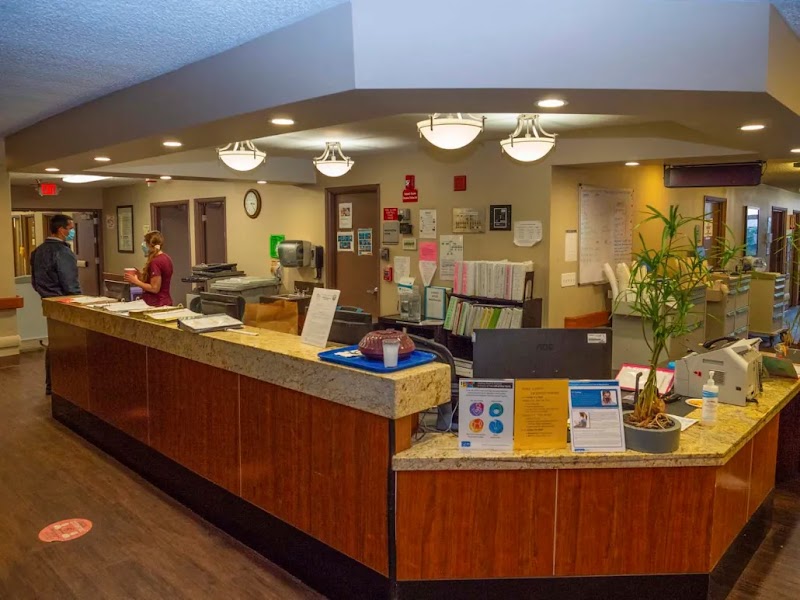
How is Somerset Subacute And Care Staffed?

CMS rates SOMERSET SUBACUTE AND CARE's staffing level at 1 out of 5 stars, which is much below average compared to other nursing homes. Staff turnover is 68%, which is 21 percentage points above the California average of 46%. High turnover can affect care consistency as new staff learn residents' individual needs. RN turnover specifically is 74%, which is notably high. RNs provide skilled clinical oversight, so turnover in this role can affect medical care quality.

What Have Inspectors Found at Somerset Subacute And Care?

State health inspectors documented 52 deficiencies at SOMERSET SUBACUTE AND CARE during 2022 to 2025. These included: 3 that caused actual resident harm, 48 with potential for harm, and 1 minor or isolated issues. Deficiencies causing actual harm indicate documented cases where residents experienced negative health consequences.
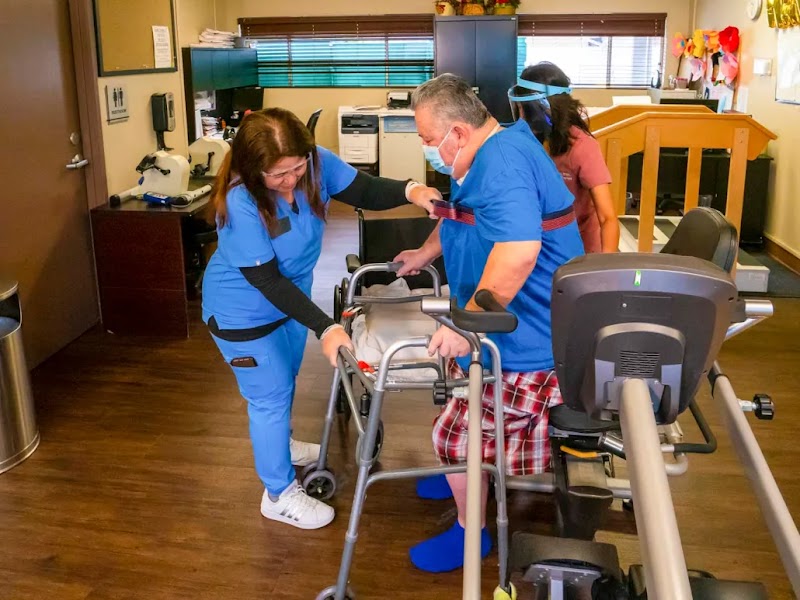
Who Owns and Operates Somerset Subacute And Care?

SOMERSET SUBACUTE AND CARE is owned by a for-profit company. For-profit facilities operate as businesses with obligations to shareholders or private owners. The facility is operated by THE ENSIGN GROUP, a chain that manages multiple nursing homes. With 65 certified beds and approximately 42 residents (about 65% occupancy), it is a smaller facility located in EL CAJON, California.
How Does Somerset Subacute And Care Compare to Other California Nursing Homes?

Compared to the 100 nursing homes in California, SOMERSET SUBACUTE AND CARE's overall rating (2 stars) is below the state average of 3.1, staff turnover (68%) is significantly higher than the state average of 46%, and health inspection rating (3 stars) is at the national benchmark.

What Should Families Ask When Visiting Somerset Subacute And Care?

Based on this facility's data, families visiting should ask: "How do you ensure continuity of care given staff turnover, and what is your staff retention strategy?" "Can you walk me through typical staffing levels on day, evening, and night shifts?" "Can I visit during a mealtime to observe dining assistance and food quality?" "How do you handle medical emergencies, and what is your hospital transfer rate?" These questions are particularly relevant given the facility's high staff turnover rate and the below-average staffing rating.

Is Somerset Subacute And Care Safe?

Based on CMS inspection data, SOMERSET SUBACUTE AND CARE has a clean safety record: no substantiated abuse findings (meaning no confirmed cases of resident harm), no Immediate Jeopardy citations (the most serious violation level indicating risk of serious injury or death), and is not on the Special Focus Facility watch list (a federal program monitoring the lowest-performing 1% of nursing homes). The facility has a 2-star overall rating and ranks #100 of 100 nursing homes in California. While no facility is perfect, families should still ask about staff-to-resident ratios and recent inspection results during their visit.

Do Nurses at Somerset Subacute And Care Stick Around?

Staff turnover at SOMERSET SUBACUTE AND CARE is high. At 68%, the facility is 21 percentage points above the California average of 46%. Registered Nurse turnover is particularly concerning at 74%. RNs handle complex medical decisions and coordinate care — frequent RN changes can directly impact care quality. High turnover means new staff may not know residents' individual needs, medications, or preferences. It can also be disorienting for residents, especially those with dementia who rely on familiar faces. Families should ask: What is causing the turnover? What retention programs are in place? How do you ensure care continuity during staff transitions?

Was Somerset Subacute And Care Ever Fined?

SOMERSET SUBACUTE AND CARE has been fined $26,728 across 1 penalty action. This is below the California average of $33,346. While any fine indicates a compliance issue, fines under $50,000 are relatively common and typically reflect isolated problems that were subsequently corrected. Families should ask what specific issues led to these fines and confirm they've been resolved.

Is Somerset Subacute And Care on Any Federal Watch List?

SOMERSET SUBACUTE AND CARE is not on any federal watch list. The most significant is the Special Focus Facility (SFF) program, which identifies the bottom 1% of nursing homes nationally based on persistent, serious quality problems. Not being on this list means the facility has avoided the pattern of deficiencies that triggers enhanced federal oversight. This is a positive indicator, though families should still review the facility's inspection history directly.