ENCINITAS NURSING AND REHABILITATION CENTER

900 SANTA FE DRIVE, ENCINITAS, CA 92024 (760) 753-6423
For profit - Corporation 99 Beds COVENANT CARE Data: November 2025
Trust Grade
70/100
#343 of 1155 in CA
Last Inspection: May 2025

Inspected within the last 6 months. Data reflects current conditions.

Overview

Encinitas Nursing and Rehabilitation Center has a Trust Grade of B, indicating it is a good choice for care, though not without its flaws. It ranks #343 out of 1155 facilities in California, placing it in the top half of nursing homes in the state, and #41 out of 81 in San Diego County, meaning there are only a few better options nearby. However, the facility is worsening, with the number of issues increasing from 7 in 2024 to 10 in 2025. Staffing is average, with a turnover rate of 47%, which is higher than the state average, but there are no fines on record, which is a positive sign. Specific incidents of concern include failing to keep food service equipment clean, risking foodborne illness, and not completing required quarterly resident assessments on time, which could impact care quality. Overall, while there are strengths such as good RN coverage and a decent overall star rating, families should also be aware of these weaknesses when considering this facility.

Trust Score
B
70/100
In California
#343/1155
Top 29%
Safety Record
Low Risk
No red flags
Inspections
Getting Worse
7 → 10 violations
Staff Stability
⚠ Watch
47% turnover. Above average. Higher turnover means staff may not know residents' routines.
Penalties
✓ Good
No fines on record. Clean compliance history, better than most California facilities.
Skilled Nurses
⚠ Watch
Each resident gets only 19 minutes of Registered Nurse (RN) attention daily — below average for California. Fewer RN minutes means fewer trained eyes watching for problems.
Violations
⚠ Watch
41 deficiencies on record. Higher than average. Multiple issues found across inspections.
★★★★☆
4.0
Overall Rating
★★★☆☆
3.0
Staff Levels
★★★★★
5.0
Care Quality
★★★☆☆
3.0
Inspection Score
Stable
2024: 7 issues
2025: 10 issues

The Good

  • 5-Star Quality Measures · Strong clinical quality outcomes
  • Full Sprinkler Coverage · Fire safety systems throughout facility
  • No fines on record

Facility shows strength in quality measures, fire safety.

The Bad

Staff Turnover: 47%

Near California avg (46%)

Higher turnover may affect care consistency

Chain: COVENANT CARE

Part of a multi-facility chain

Ask about local staffing decisions and management

The Ugly 41 deficiencies on record

Jul 2025 2 deficiencies
CONCERN (D) 📢 Someone Reported This

A family member, employee, or ombudsman was alarmed enough to file a formal complaint

Potential for Harm - no one hurt, but risky conditions existed

Deficiency F0657 (Tag F0657)

Could have caused harm · This affected 1 resident

**NOTE- TERMS IN BRACKETS HAVE BEEN EDITED TO PROTECT CONFIDENTIALITY** Based on interview and record review, the facility failed to ensure one of three residents (Resident 1) had a written plan of ca...

Read full inspector narrative →
**NOTE- TERMS IN BRACKETS HAVE BEEN EDITED TO PROTECT CONFIDENTIALITY** Based on interview and record review, the facility failed to ensure one of three residents (Resident 1) had a written plan of care revised after a pressure injury (damage to the skin and underlying structures caused by unrelieved pressure) worsened from a stage 2 (a partial-thickness, or shallow, loss of skin appearing as a shallow open ulcer or a clear fluid filled blister) to unstageable (a full-thickness ulcer where the depth cannot be determined because it is covered with dead tissue) As a result of this deficient practice, there was the potential for Resident 1 to experience further deterioration of the wound. Findings: A review of Resident 1's admission Record indicated Resident 1 was admitted to the facility on [DATE] with diagnoses which included left femur fracture (a broken thigh bone), need for assistance with personal care, and cognitive communication deficit (impaired thought processes such as memory and reasoning) and discharged home on 4/29/25. A review of Resident 1's Skin and Wound Evaluation, dated 4/24/25, indicated Resident 1 had a stage 2 pressure injury to the right heel which worsened to unstageable (a wound with full-thickness skin and tissue loss). A review of Resident 1's care plan dated 4/19/24 indicated, [Resident 1] was noted to have right heel blister. The care plan had not been revised when the wound became unstageable. On 7/7/25, a joint interview and record review was conducted with the Assistant Director of Nursing (ADON). The ADON stated Resident 1's care plan should have been revised when her wound worsened from a stage 2 to unstageable pressure injury. The ADON stated it was important to update the care plan because, .it allows the resident to have the appropriate care. A review of the facility's policy titled Care Plan, Episodic dated 8/2014 indicated, It is the policy of this facility to develop an episodic/short term care plan for acute temporary changes and/or condition .to establish guidance to all disciplines on meeting the individual needs of the resident .
CONCERN (D) 📢 Someone Reported This

A family member, employee, or ombudsman was alarmed enough to file a formal complaint

Potential for Harm - no one hurt, but risky conditions existed

Pressure Ulcer Prevention (Tag F0686)

Could have caused harm · This affected 1 resident

**NOTE- TERMS IN BRACKETS HAVE BEEN EDITED TO PROTECT CONFIDENTIALITY** Based on observation, interview and record review, the facility failed to provide treatment and services to heal pressure injuri...

Read full inspector narrative →
**NOTE- TERMS IN BRACKETS HAVE BEEN EDITED TO PROTECT CONFIDENTIALITY** Based on observation, interview and record review, the facility failed to provide treatment and services to heal pressure injuries (damage to the skin and underlying structures caused by unrelieved pressure) for two of three sampled residents (Resident 1 and Resident 2) when: 1. Wound care orders for a pressure injury that worsened from a stage 2 pressure injury (a partial-thickness loss of skin appearing as a shallow open ulcer or a clear fluid filled blister) to an unstageable pressure injury (a full-thickness ulcer where the depth cannot be determined because it is covered with dead tissue) were not implemented, an Interdisciplinary Team (IDT-a group of individuals with different areas of expertise) Meeting was not conducted to address Resident 1's pressure injury and the attending physician was not notified of the worsening of the pressure injury for Resident 1 and 2. A low air loss mattress for one resident with a pressure injury (Resident 2) was not correctly set to the resident's weight. Findings: 1. During a review of Resident 1's admission Record, the admission Record indicated Resident 1 was admitted to the facility on [DATE] with diagnoses which included left femur fracture (a broken thigh bone), need for assistance with personal care, and cognitive communication deficit and discharged home on 4/29/25. During a review of Resident 1's Braden Scale for Predicting Pressure Sore Risk dated 3/5/25, the assessment indicated Resident 1 was at risk for developing a pressure injury. During a review of Resident 1's Minimum Data Set (MDS- an assessment tool) dated 3/10/25, Resident 1 had a BIMS (Brief Interview of Mental Status- a tool to measure cognition) of 4, which indicated severe cognitive impairment. The MDS indicated Resident 1 did not have any pressure injuries when admitted to the facility. During a record review on 6/25/25, the Change in Condition dated 4/19/25 indicated Resident 1 was noted with a intact clear fluid filled blister (a stage 2 pressure injury) to the right heel. The record indicated, Things that make the condition or symptoms unchanged .not floating heels or positioning .Other relevant information: resident with fragile skin . During a record review on 6/25/25, the MD/NP/PA note dated 4/24/25 at 9:15 A.M. indicated WOUND 1 (Date assessed 4/17/25) LOCATION/ETIOOGY: R heel/unstageable .TISSUE BED: 1.2 x 0.9 x UTD cm3 .Slough [dead tissue] 100% .DRESSING USED: medihoney [a dressing used to treat open wounds] and foam dressing . During a record review on 6/25/25, the Treatment Administration Record (TAR) indicated, apply skin prep to blister to right heel .). The TAR indicated skin prep (a barrier wipe designed to protect intact skin) was applied to Resident 1's right heel wound on 4/20/25, 4/22/25, 4/23/25, 4/24/25, 4/26/25, 4/27/25, and 4/28/25. The TAR did not indicate that medihoney was used to treat Resident 1's right heel wound. On 7/2/25 at 9:18 A.M., a telephone interview was conducted with the Wound Nurse Practitioner (WNP) 1. WNP 1 stated a clear fluid filled blister to the heel was a stage 2 pressure injury (a partial thickness, or superficial, wound). WNP 1 stated when he assessed Resident 1's right heel wound on 4/17/25, the blister had opened and the wound was covered with slough, which meant the wound had worsened to unstageable. Per WNP 1, .we don't know the depth [of an unstageable pressure injury], but it would be a stage 3 or 4 [full thickness, or deeper, wounds] . WNP 1 stated his recommendation was to change the wound care order to cleanse the wound, apply medihoney then apply a foam dressing. WNP 1 stated applying skin prep to an open wound, .wouldn't make it better or worse .but applying the medihoney probably would have been better for the wound . During a joint interview and record review with the Assistant Director of Nursing (ADON) on 7/7/25 at 9:30 A.M., the ADON stated an IDT meeting was not done for Resident 1's wounds. The ADON stated, .the ultimate goal of an IDT is to prevent further wounds from happening, and to figure out what to do for the wounds to get better . The ADON stated there was no treatment order implemented for Resident 1's unstageable pressure injury to the right heel. The ADON stated it was important to follow up with wound care recommendations from WNP 1. She stated, .[the treatment order] should have been changed to medihoney . The ADON further stated, .I checked several places [in Resident 1's medical records], there was no notification to the doctor . The ADON stated Resident 1's attending physician should have been notified that Resident 1's wound had worsened from a stage 2 to an unstageable pressure injury. During a review of the facility policy titled Pressure Injury Prevention and Management revised 12/3/24, the policy indicated, The facility shall establish and utilize a systematic approach for pressure injury prevention and management, including prompt assessment and treatment; intervening to stabilize, reduce or remove underlying risk factors; monitoring the impact of the interventions; and modifying the interventions as appropriate .After completing a thorough assessment/evaluation, the interdisciplinary team shall develop a relevant care plan that includes measurable goals for prevention and management of pressure injuries .The attending physician will be notified of: The presence of a new pressure injury upon identification .the progression towards healing, or lack of healing, of any pressure injuries weekly .Any complications . 2. During a record review on 6/25/25, the admission Record indicated Resident 2 was admitted to the facility on [DATE] with diagnoses which included metabolic encephalopathy and Moyamoya disease (a rare disease that affects the brain's blood vessels). A review of the Minimum Data Set (MDS-an assessment tool) dated 6/11/25 indicated resident had a BIMS (Brief Interview of Mental Status-a cognition tool) of 00, which indicated resident had severe cognitive impairment. The MDS indicated Resident 2 required either Substantial/maximal assistance or was dependent on all Activities of Daily Living (ADL's-personal care, eating, dressing, hygiene). The MDS indicated Resident 2 had a stage 3 (full thickness) pressure injury and had a pressure reducing device for the bed. During a record review on 6/25/25, the Physician's Order dated 6/8/25 indicated, Low Air loss Mattress for Wound Management. On 6/25/25 at 10:06 A.M., an observation was conducted Resident 2's room. Resident 2 was laying in bed, on an low air loss mattress. The mattress was connected to a control unit, which indicated the mattress was set to a firmness for a resident who weighed 250 pounds. On 6/25/25 at 10:20 A.M., a joint interview and record review was conducted with Treatment Nurse (TN) 1. TN 1 stated LAL mattresses were used to help treat and heal pressure injuries. LN 1 stated it was important for the LAL mattress to be set appropriately based on Resident 2's weight. TN 1 stated, .[Resident 2] definitely doesn't weigh 250 pounds . and that the mattress was not set to Resident 2's weight. According to the Weight Summary dated 6/16/25, Resident 2 weighed 91 pounds. TN 1 stated, We have to make sure it isn't too hard, so it is helping to heal the wound . TN 1 stated her expectation was for a low air loss mattress to be set correctly based on Resident 2's weight. During a review of the facility's policy titled Pressure Injury Prevention and Management revised 12/3/24 indicated, Evidence-based interventions .will be implemented for all residents who are assessed at risk or who have a pressure injury present. Basic or routine care interventions could include, but are not limited to: .Provide appropriate, pressure-redistributing, support surfaces . The policy did not provide guidance regarding the settings of low air loss mattresses.
May 2025 8 deficiencies
CONCERN (D)

Potential for Harm - no one hurt, but risky conditions existed

Deficiency F0582 (Tag F0582)

Could have caused harm · This affected 1 resident

**NOTE- TERMS IN BRACKETS HAVE BEEN EDITED TO PROTECT CONFIDENTIALITY** Based on interview, record review, and facility document review, the facility failed to ensure staff provided appropriate notice...

Read full inspector narrative →
**NOTE- TERMS IN BRACKETS HAVE BEEN EDITED TO PROTECT CONFIDENTIALITY** Based on interview, record review, and facility document review, the facility failed to ensure staff provided appropriate notices of payor source changes to residents when the residents were discharged from Medicare Part A Skilled Services with days of eligibility remaining. This deficient practice affected 2 (Resident #34 and Resident #45) of 3 residents reviewed for beneficiary notification. Findings included: An untitled and undated document provided by the facility as their policy revealed a section of the document titled, 50 - Advance Beneficiary Notice of Non-coverage (ABN) included, Section 1879 of the Act [Social Security Act ] (where the LOL [ limitation on liability] provisions are located) requires a healthcare provider or supplier (i.e.[id est, that is] notifier) to notify a beneficiary in advance of furnishing an item or service when s/he believes the items or services will likely be denied by Medicare for any of the reasons specified in the statuary provision in order to shift financial liability to the beneficiary for the denial. The document revealed the section titled 50.6-Completing the ABN, included, If the beneficiary refuses to choose an option and/or refuses to sign the ABN when required, the notifier should annotate the original copy of the ABN indicating the refusal to sign or chose an option and may list witness(es) to the refusal on the notice although this is not required. If a beneficiary refuses to sign a properly delivered ABN, the notifier should consider not furnishing the item/services, unless the consequences (health and safety of the patient, or civil liability in case of harm) are such that is not an option. In any case, the notifier should provide a copy of the annotated ABN to the beneficiary, and keep original version of the annotated notice in the patient's file. The document revealed the section titled, 50-8-Effective ABN Delivery included, ABN delivery is considered to be effective when the ABN is: 1. Delivered to a suitable notifier to a capable recipient and comprehended by that recipient. 3. Delivered to the beneficiary in person if possible. 4. Provided far enough in advance of delivering potentially non-covered items or services to allow sufficient time for the beneficiary to consider all available options. 6. Signed by the beneficiary. The document revealed the section titled, 50.8.1 - Options for Delivery Other than In-person, included, ABNs should be delivered in-person and prior to the delivery of medical care which is presumed to be non-covered. In circumstances when in-person delivery is not possible, notifiers may deliver an ABN using another method. Examples include: -Direct telephone contact; -Mail; -Secure fax machine; or -Internet e-mail. All methods of delivery require adherence to all statutory privacy requirements under HIPPA [Health Insurance Portability and Accountability Act]. The notifier must receive a response from the beneficiary or his/her representative in order to validate delivery, when delivery is not in-person, the notifier must verify that contact was made in his/her records. In order to consider effective, the beneficiary should not dispute such contact. Telephone contacts should be followed immediately by either a hand-delivered, mailed, emailed, or a faxed notice. The beneficiary should sign and retain the notice and send a copy of this signed notice to the notifier for retention in the patient's record. The notifier must keep a copy of the unsigned notice on file while awaiting receipt of the signed notice. If the beneficiary does not return a signed copy, the notice should document the initial contact and subsequent attempts to obtain a signature in appropriate records or on the notice itself. Further review revealed the document did not include any direction for the Notice of Medicare Non-Coverage (NOMNC). 1. An admission Record revealed the facility admitted Resident #34 on 09/08/2022. According to the admission Record, the resident had a medical history that included diagnoses of hypertensive heart disease without heart failure (onset date 01/25/2025) and stage 3 chronic kidney disease (onset date 01/25/2025). The admission Record indicated the resident had a responsible party and a health care decision maker. A quarterly Minimum Data Set assessment, with an Assessment Reference Date (ARD) of 01/02/2025, revealed the resident was independent in cognitive skills for daily decision-making and had short-term and long-term memory problems per a Staff Assessment of Mental Status (SAMS). A Census List for Resident #34 revealed that the resident was Transferred In from Hospital on 01/25/2025 and had a Payor Change on 02/02/2025. Resident #34's Skilled Nursing Facility Advance Beneficiary Notice of Non-Coverage (SNF ABN), signed by two staff members and dated 02/07/2025, revealed, Medicare does not pay for everything, even some care that you or your health care provider think you need. The Skilled Nursing Facility (SNF) or its Utilization Review Committee believes that the care listed below does not meet Medicare coverage requirements. Beginning on 02/02/25, you may have to pay out of pocket for this care if you do not have other insurance that may cover these costs. Further review revealed the form did not indicate which care did not meet Medicare coverage requirements. The form revealed a table titled OPTIONS: that directed staff that only one box could be checked, and that staff could not choose a box for the resident. The form revealed Option 1 was checked which indicated, I want the daily skilled care listed above, which includes custodial services and room and board charges. I want Medicare to be billed for an official decision on payment, which will be sent to me on a Medicare Summary Notice (MSN). I understand that if Medicare does not pay, I am responsible for paying, but I can appeal to Medicare by following the directions on the MSN. The form revealed that in the blank where the resident or their representative should sign, two staff members signed. Further review revealed the resident, or their representative did not sign the form. Resident #34's Notice of Medicare Non-Coverage form revealed that two staff members signed the form and dated it 01/29/2025. The resident or the resident's representative did not sign the form. During an interview on 04/29/2025 at 1:31 PM, Case Manager (CM) #1 confirmed that it was her signature and the signature of a social services staff member on Resident #34's SNF ABN and NOMNC. She stated that they provided the SNF ABN after the resident was discharged from Part A Skilled Services, the day following. She stated that she was not sure when the forms needed to be provided, and the Social Worker was on maternity leave, so she had been trying to cover. She stated she did not remember if she called Resident #34's family member and did not believe that it was documented anywhere that they had called them since the resident was unable to sign. She stated she would look to see if she could find some documentation to show they had verbal consent from the resident or the resident's family. She stated that she checked the box for Option #1 because she thought that meant they did not want to continue therapy services and did not know it meant the resident wanted to continue to receive services and appeal the decision. During an interview on 04/29/2025 at 1:52 PM, CM #1 verified that she did not have documentation to show she had provided the SNF ABN to Resident #34 or the resident's representative or that they refused to sign. During an interview on 05/01/2025 at 12:01 PM, the Director of Nursing (DON) stated she expected that the staff provide the NOMNC within 72 hours of the resident's discharge from Part A skilled services. The DON stated that the SNF ABNs were a little more difficult as they were only given to residents who were moving to long-term care. The DON stated most residents came into the facility for short-term care then would transition to long-term care. The DON stated she expected staff to provide the notices timely and to document when they were given and if the resident or their responsible party signed or not. During an interview 05/01/2025 at 12:05 PM, the Administrator stated he expected staff to provide the NOMNC and SNF ABN as required and to document in the record if the resident did not or could not sign or if their responsible party was called and was not present to sign. 2. An admission Record revealed the facility originally admitted Resident #45 on 07/28/2020 and readmitted the resident on 02/28/2025. According to the admission Record, the resident had a medical history that included diagnoses of depression, need for assistance with personal care, cognitive communication deficit, spinal stenosis, chronic kidney disease stage 3, chronic pain syndrome, and acute embolism and thrombosis of superficial veins of right upper extremity. The admission Record revealed the resident was listed as their own responsible party and health care decision maker. An annual Minimum Data Set (MDS), with an Assessment Reference Date (ARD) of 01/13/2025, revealed the resident had a Brief Interview of Mental Statue (BIMS) score of 15, which indicated the resident had intact cognition. Resident #45's Census List revealed that the resident was readmitted to the facility on [DATE] and had a Payor Change on 04/13/2025. Resident #45's Skilled Nursing Facility Advance Beneficiary Notice of Non-Coverage (SNF ABN) form signed by two staff members and dated 04/12/2025, revealed, Medicare does not pay for everything, even some care that you or your health care provider think you need. The Skilled Nursing Facility (SNF) or its Utilization Review Committee believes that the care listed below does not meet Medicare coverage requirements. Beginning on 04/13/25, you may have to pay out of pocket for this care if you do not have other insurance that may cover those costs. Further review revealed the form did not indicate which care did not meet Medicare coverage requirements. The form revealed a table titled OPTIONS: that directed staff that only one box could be checked, and that staff could not choose a box for the resident. The form revealed Option 1 was checked which indicated, I want the daily skilled care listed above, which includes custodial services and room and board charges. I want Medicare to be billed for an official decision on payment, which will be sent to me on a Medicare Summary Notice (MSN). I understand that if Medicare does not pay, I am responsible for paying, but I can appeal to Medicare by following the directions on the MSN. The form revealed that in the blank where the resident or their representative should sign, two staff members signed. Further review revealed the resident, or their representative did not sign the form. During an interview on 04/29/2025 at 1:15 PM, Resident #45 stated they did not know who signed their SNF ABN. During an interview on 04/29/2025 at 1:31 PM, Case Manager (CM) #1 confirmed that it was her signature and the signature of a social services staff member on Resident #45's SNF ABN. She stated that they provided the SNF ABN after the resident was discharged from Part A Skilled Services, the day following. She stated that Resident #45 refused to sign but she did not believe that they documented it anywhere. She stated she was not sure when the forms needed to be provided, and the Social Worker was on maternity leave, so she had been trying to cover. She stated that she checked the box for Option #1 because she thought that meant they did not want to continue therapy services and did not know it meant the resident wanted to continue to receive services and appeal the decision. During an interview on 04/29/2025 at 1:52 PM, CM #1 verified that she did not have documentation to show she had provided the SNF ABN to Resident #45. During an interview on 05/01/2025 at 12:01 PM, the Director of Nursing (DON) stated if a resident did not want to sign or if staff needed to call the resident's representative, she expected staff to document in the record when they gave the notifications. The DON stated she expected staff to provide the notices timely and to document when they were given and if the resident or their responsible party signed or not. During an interview on 05/01/2025 at 12:05 PM, the Administrator stated he expected staff to provide the SNF ABN as required and to document in the record if the resident did not or could not sign or if their responsible party was called and was not present to sign.
CONCERN (D)

Potential for Harm - no one hurt, but risky conditions existed

Comprehensive Assessments (Tag F0636)

Could have caused harm · This affected 1 resident

2. An admission Record revealed the facility admitted Resident #28 on 09/03/2018. According to the admission Record, the resident had a medical history that included diagnoses of Parkinson's disease w...

Read full inspector narrative →
2. An admission Record revealed the facility admitted Resident #28 on 09/03/2018. According to the admission Record, the resident had a medical history that included diagnoses of Parkinson's disease without dyskinesia (movement disorder characterized by involuntary movements), restless leg syndrome, and schizoaffective disorder. Resident #28's annual MDS, with an ARD of 02/27/2025, revealed Section Z0500 reflected that the Director of Nursing (DON) signed the assessment as complete on 04/25/2025, more than 14 days from the ARD. During an interview on 05/01/2025 at 10:42 AM with the DON, the MDS Manager, and MDS Assistant #4, the MDS Manager stated she had only been working as the MDS Manager for about three weeks. MDS Assistant #4 stated that each month she reviewed each resident's record to identify who required an MDS, so she could open the assessments. MDS Assistant #4 further stated she had 14 days from the ARD of each assessment for the assessment to be completed. MDS Assistant #4 stated, We are already behind, and further stated that she made a spreadsheet the week prior to try to stay on track with MDS due dates. The DON stated MDS Assistant #4 was new to MDS work and had only been working in the MDS department for the past year. The DON further stated the facility also had part-time staff who were willing to come in to assist with the completion of MDS assessments. The DON stated, I know we are late, and I have been dedicating a lot of my days to doing MDS [assessments]. MDS Assistant #4 stated that as of 05/01/2025, they were working on MDS assessments from the second week of 03/2025. During an interview on 05/01/2025 at 11:26 AM, the Administrator stated he expected MDS assessments to be completed timely. The Administrator stated the facility had experienced some challenges in regard to MDS assessments, and he expected all hands on deck to get caught up. The Administrator stated that he expected MDS staff to follow the RAI manual for submission, completion, and transmission of MDS assessments. Based on interview, record review, facility policy review, and review of the Centers for Medicare and Medicaid (CMS) Long-Term Care Resident Assessment Instrument (RAI) 3.0 User's Manual, the facility failed to ensure comprehensive Minimum Data Set (MDS) assessments were signed as complete within 14 days of the Assessment Reference Dates (ARDs) for 2 (Resident #106 and Resident #28) of 17 residents reviewed for resident assessments. Findings included: A facility policy titled, Resident Assessment - RAI [Resident Assessment Instrument], dated 09/18/2024, revealed, This facility makes a comprehensive assessment of each resident's needs, strengths, goals, life history and preferences using the resident assessment instrument (RAI) specified by CMS. The policy indicated, 1. The current version of the RAI (MDS 3.0) will be utilized when conducting a comprehensive assessment of each resident in accordance with the instructions found in the RAI Manual. The CMS Long-Term Care RAI 3.0 User's Manual, Version 1.19.1, dated 10/2024, revealed Chapter 2: Assessments for the Resident Assessment Instrument (RAI), specified, 02. Annual Assessment (A0310A=3) The annual assessment is a comprehensive assessment for a resident that must be completed on an annual basis (at least every 366 days) unless an SCSA (significant change in status assessment) or an SCPA (significant correction a prior comprehensive assessment) has been completed since the most recent comprehensive assessment was completed. The manual specified, -The ARD [Assessment Refence Date] (item A2300) must be set within 366 days after the ARD of the previous OBRA [Omnibus Budget Reconciliation Act] comprehensive assessment (ARD of previous comprehensive assessment + 366 calendar days) AND within 92 days since the ARD of the previous OBRA Quarterly or SCQA [significant correction to prior quarterly assessment] (ARD of previous OBRA Quarterly assessment + 92 calendar days). -The MDS completion date (item Z0500B) must be no later than 14 days after the ARD (ARD + 14 calendar days). 1. An admission Record revealed the facility admitted Resident #106 on 05/04/2024. According to the admission Record, the resident had a medical history that included diagnoses of chronic obstructive pulmonary disease; adult failure to thrive; dementia in other diseases classified elsewhere, unspecified severity, without behavioral disturbance, psychotic disturbance, mood disturbance and anxiety; and disorientation. Resident #106's MDS history included a quarterly MDS and a modification of a quarterly MDS, both with an ARD of 01/06/2025, followed by an annual MDS, with an ARD of 03/26/2025. The resident's MDS history indicated the annual MDS with an ARD of 03/26/2025 was still In Progress. Resident #106's annual MDS, with an ARD of 03/26/2025, revealed that not all sections were complete; only Sections C, D, K, and parts of Section J were complete. Section Z0500 revealed the assessment had not yet been signed to indicate the assessment was complete. During an interview on 05/01/2025 at 10:42 AM with the Director of Nursing (DON), the MDS Manager, and MDS Assistant #4, the MDS Manager stated she had only been working as the MDS Manager for about three weeks. MDS Assistant #4 stated that each month she reviewed each resident's record to identify who required an MDS, so she could open the assessments. MDS Assistant #4 further stated she had 14 days from the ARD of each assessment for the assessment to be completed. MDS Assistant #4 stated, We are already behind, and further stated that she made a spreadsheet the week prior to try to stay on track with MDS due dates. The DON stated MDS Assistant #4 was new to MDS work and had only been working in the MDS department for the past year. The DON further stated the facility also had part-time staff who were willing to come in to assist with the completion of MDS assessments. The DON stated, I know we are late, and I have been dedicating a lot of my days to doing MDS [assessments]. MDS Assistant #4 stated that as of 05/01/2025, they were working on MDS assessments from the second week of 03/2025. The DON stated Resident #106's annual MDS, with an ARD of 03/26/2025, was not completed timely, because it was not yet completed. During an interview on 05/01/2025 at 11:26 AM, the Administrator stated he expected MDS assessments to be completed timely. The Administrator stated the facility had experienced some challenges in regard to MDS assessments, and he expected all hands on deck to get caught up. The Administrator stated that he expected MDS staff to follow the RAI manual for submission, completion, and transmission of MDS assessments.
CONCERN (D)

Potential for Harm - no one hurt, but risky conditions existed

PASARR Coordination (Tag F0644)

Could have caused harm · This affected 1 resident

**NOTE- TERMS IN BRACKETS HAVE BEEN EDITED TO PROTECT CONFIDENTIALITY** Based on interview, record review, and facility policy review, the facility failed to ensure a new Level I Preadmission Screenin...

Read full inspector narrative →
**NOTE- TERMS IN BRACKETS HAVE BEEN EDITED TO PROTECT CONFIDENTIALITY** Based on interview, record review, and facility policy review, the facility failed to ensure a new Level I Preadmission Screening and Resident Review (PASARR) was submitted after 1 (Resident #110) of 4 sampled residents reviewed for PASARR requirements was diagnosed with additional mental disorders. Findings included: A facility policy titled, Resident Assessment-Coordination with PASARR Program, reviewed/revised in 05/2024, revealed, The facility coordinates assessments with the preadmission screening and Resident review (PASARR) program under Medicaid to ensure that individuals with a mental disorder, intellectual disability, or a related condition receives care and services in the most integrated setting appropriate to their needs. The Policy Explanation and Compliance Guidelines specified, 9. Any Resident who exhibits a newly evident possible serious mental disorder, intellectual disability or a related condition will be referred promptly to the state mental health or intellectual disability authority for a level II Resident review. An admission Record revealed the facility admitted Resident #110 on 07/25/2024. According to the admission Record, the resident had a medical history that included diagnoses of generalized anxiety disorder; major depressive disorder, recurrent, moderate; and schizoaffective disorder, depressive type. The admission Record indicated the diagnosis of generalized anxiety disorder was classified as an admission diagnosis and had an onset date of 07/25/2024, and the diagnoses of major depressive disorder, recurrent, moderate (onset date 08/05/2024) and schizoaffective disorder, depressive type (onset date 10/09/2024) were classified as diagnoses added during the resident's stay. Resident #110's quarterly Minimum Data Set (MDS), with an Assessment Reference Date (ARD) of 01/09/2025, revealed the resident had a Brief Interview of Mental Status (BIMS) score of 15, which indicated the resident was cognitively intact. The MDS indicated that the resident had active diagnoses of anxiety disorder, depression, and schizophrenia at the time of the assessment and received antipsychotic and antidepressant medications during the seven-day assessment look-back period. Resident #110's Level I PASARR, completed at a local hospital on [DATE], revealed the screening type was an Initial Preadmission Screening (PAS). The resident's medical record revealed no documented evidence that any subsequent Level I PASARRs were completed after the resident was diagnosed with major depressive disorder, recurrent, moderate on 08/05/2024 or after the resident was diagnosed with schizoaffective disorder, depressive type on 10/09/2024. During an interview on 04/29/2025 at 10:58 AM, the Assistant Director of Nursing (ADON) stated she would look to see if she could locate any additional Level I PASARRs for Resident #110. During an interview on 04/29/2025 at 11:09 AM, the ADON confirmed she did not locate any additional Level I PASARRs for Resident #10. The ADON stated the facility should have submitted a Level I PASARR change after the resident was diagnosed with new mental illness. During an interview on 05/01/2025 at 9:27 AM, the Director of Nursing (DON) acknowledged the facility was not updating Level I PASARRs when psychiatric diagnoses were added. During an interview on 05/01/2025 at 10:01 AM, the Administrator stated that Level I PASARRs should be updated anytime a resident received additional diagnoses.
CONCERN (D)

Potential for Harm - no one hurt, but risky conditions existed

Deficiency F0645 (Tag F0645)

Could have caused harm · This affected 1 resident

**NOTE- TERMS IN BRACKETS HAVE BEEN EDITED TO PROTECT CONFIDENTIALITY** Based on interview, record review, and facility policy review, the facility failed to ensure a Level I Preadmission Screening an...

Read full inspector narrative →
**NOTE- TERMS IN BRACKETS HAVE BEEN EDITED TO PROTECT CONFIDENTIALITY** Based on interview, record review, and facility policy review, the facility failed to ensure a Level I Preadmission Screening and Resident Review (PASARR) accurately reflected the presence of a diagnosed mental illness for 1 (Resident #110) of 4 sampled residents reviewed for PASARR requirements. Findings included: A facility policy titled, Resident Assessment-Coordination with PASARR Program, reviewed/revised in 05/2024, revealed, The facility coordinates assessments with the preadmission screening and Resident review (PASARR) program under Medicaid to ensure that individuals with a mental disorder, intellectual disability, or a related condition receives care and services in the most integrated setting appropriate to their needs. The Policy Explanation and Compliance Guidelines specified, 1. Applicants to this facility will be screened for serious mental disorders or intellectual disabilities and related conditions in accordance with the State's Medicaid rules for screening. a. PASARR Level I - initial pre-screening that is completed prior to admission. An admission Record revealed the facility admitted Resident #110 on 07/25/2024. According to the admission Record, the resident had a medical history that included a diagnosis of generalized anxiety disorder. The admission Record indicated the diagnosis of generalized anxiety disorder was classified as an admission diagnosis and had an onset date of 07/25/2024. Resident #110's admission Minimum Data Set (MDS), with an Assessment Reference Date (ARD) of 08/01/2024, revealed the resident had a Brief Interview of Mental Status (BIMS) score of 15, which indicated the resident was cognitively intact. The MDS indicated that the resident had an active diagnosis of anxiety at the time of the assessment and received antipsychotic and antidepressant medications during the seven-day assessment look-back period. Resident #110's Level I PASARR, completed at a local hospital on [DATE], revealed the screening type was an Initial Preadmission Screening (PAS). Section III - Serious Mental Illness reflected the resident did not have a serious diagnosed mental disorder, such as Depressive Disorder, Anxiety Disorder, Panic Disorder, Schizophrenia/Schizoaffective Disorder, or symptoms of Psychosis, Delusions, and/or Mood Disturbance. The Level I PASARR did not reflect Resident #110's diagnosis of generalized anxiety disorder and did not reflect that the resident received psychotropic medications. As a result, the resident's Level I PASARR was considered negative, and a Level II PASARR Evaluation was not required. During an interview on 04/29/2025 at 10:58 AM, the Assistant Director of Nursing (ADON) stated that hospital staff completed the Level I PASARRs, and if there were errors, she or MDS staff completed another Level I PASARR. The ADON stated she would look to see if she could locate any additional Level I PASARRs for Resident #110. During an interview on 04/29/2025 at 11:09 AM, the ADON confirmed she did not locate any additional Level I PASARRs for Resident #10. The ADON stated she and other facility staff members met during morning meetings to review the Level I PASARRs for accuracy. She stated if they determined the information was not correct, they should complete a new Level I PASARR. After reviewing Resident #110's Level I PASARR, dated 07/25/2024, the ADON stated the resident was admitted with a diagnosis of major depressive disorder, so they should have submitted a corrected Level I PASARR upon the resident's admission to the facility. During an interview on 05/01/2025 at 9:27 AM, the Director of Nursing (DON) stated Level I PASARRs were completed at the hospital prior to admission, and the facility received a copy once a resident was admitted . The DON stated that approximately two months prior, the facility started checking Level I PASARRs, because they noticed the hospitals were missing diagnoses. However, the DON stated they had not gone back to review all PASARRs for accuracy; they only reviewed for accuracy of Level I PASARRs for the most recent admissions. During an interview on 05/01/2025 at 10:01 AM, the Administrator stated that for Level I PASARRs, he expected staff to review them for accuracy, and if they were not accurate, he expected staff to submit a new one.
CONCERN (D)

Potential for Harm - no one hurt, but risky conditions existed

Accident Prevention (Tag F0689)

Could have caused harm · This affected 1 resident

Based on observation, interview, record review, and facility policy review, the facility failed to ensure staff implemented interventions as outlined in the resident care plan to minimize or reduce th...

Read full inspector narrative →
Based on observation, interview, record review, and facility policy review, the facility failed to ensure staff implemented interventions as outlined in the resident care plan to minimize or reduce the risk of falls. Specifically, the facility failed to ensure the use of a floor mat for 1 (Resident #107) of 2 sampled residents reviewed for accidents and falls. Findings included: A facility policy titled, Fall Management, dated 08/2014, revealed the section titled, Fall Prevention Procedure, included, 1. Evaluate risk factors for sustaining falls upon admission, with comprehensive assessment, and while conducting interdisciplinary care plan reviews. 2. Initiate a fall prevention care plan when appropriate with strategies to minimize risk and potential for injuries. An admission Record indicated the facility admitted Resident #107 on 06/07/2024. According to the admission Record, the resident had a medical history that included diagnoses of hemiplegia (paralysis of one side of the body) and hemiparesis (weakness of one side of the body) as a result of a previous cerebral infarction (stroke) which affected the resident's left side, and generalized anxiety disorder. A quarterly Minimum Data Set (MDS), with an Assessment Reference Date (ARD) of 02/11/2025, revealed Resident #107 had a Brief Interview for Mental Status (BIMS) score of 1, which indicated the resident had severe cognitive impairment. The MDS revealed the resident was dependent on staff for chair/bed-to-chair transfers, going from sitting to lying position, and lying to sitting position. The MDS revealed the residents used a wheelchair during the assessment's lookback period. The MDS revealed the resident had not had a fall since their prior assessment. Resident #107's Care Plan Report, included a focus area dated 06/07/2024, that indicated the resident was at a high risk for falls. Interventions directed staff to place the bed in the lowest position with a floor mat next to the bed (initiated 06/13/2024). A quarterly Risk Fall Assessment dated 02/11/2025 indicated Resident #107 had a high risk for falls. During an observation on 04/29/2025 at 2:52 PM, Resident #107 was lying in bed with their call device in bed near their right shoulder. There was no fall mat present on the floor beside the resident's bed. During an observation on 04/30/2025 at 1:17 PM, Resident #107 was lying in bed with no fall mat present on the floor beside the bed. During an interview on 04/29/2025 at 2:03 PM, Licensed Vocational Nurse (LVN) #8 said Resident #107 would frequently call out verbally and was sometimes confused and thought they needed to get dressed to go to work. LVN #8 said the staff used a fall mat beside the resident's bed and kept the bed in the lowest and locked position. LVN #8 said sometimes the resident could be redirected to use their call device, and other times they were too confused. LVN #8 said that in addition to the use of a fall mat, certified nursing assistants (CNAs) were expected to perform frequent rounding on the resident. During an interview on 04/30/2025 at 1:18 PM, CNA #9 said they were familiar with Resident #107 and said the resident had a high risk for falls. CNA #9 said that when the resident was in bed, it should be in a low position with a fall mat placed on the floor. During a concurrent observation, CNA #9 went into Resident #107's room and noted there was no fall mat present. CNA #9 was unable to locate Resident #107's fall mat in the room. CNA #9 said she had seen a fall mat in the room the previous day but was unsure what had happened to it. During an interview on 04/30/2025 at 1:21 PM, LVN #10 said they were assigned to Resident #107. LVN #10 said Resident #107 was known to crawl out of bed. He said the resident's fall mat may have been moved to their roommate's bed and was not sure why there was not a fall mat present for Resident #107. LVN #10 said he expected CNAs to place a fall mat on the floor when the resident was helped back to bed. LVN #10 said no one had informed him that Resident #107 was back in bed or that there was no fall mat present. During an interview on 05/01/2025 at 12:56 PM, CNA #9 said she checked on Resident #107 every fifteen minutes or so. She said the fall mat was first noticed to be missing the previous day and said they thought the fall mat was there on Monday (04/28/2025). CNA #9 said she was not sure why the fall mat was not present on Tuesday (04/29/2025) or Wednesday (04/30/2025). CNA #9 said the resident was able to use their call light and usually would use it. CNA #9 said the resident was able to make their needs known. CNA #9 said the nurses expected the CNAs to put the fall mat down when the resident was in bed. CNA #9 said CNAs were able to document on interventions like the bed being in a low position, environment free of clutter, and resident belongings being kept within reach, but said they did not document whether the fall mat was in place and thought nurses would be responsible for that. During an interview on 05/01/2025 at 1:09 PM, the Assistant Director of Nursing (ADON) said the fall mat should never leave Resident #107's room. The ADON said nurses would oversee ensuring the fall mat was in place, and said CNAs did not document whether the mat was in place. The ADON said the fall mat should have been at the bedside and placed on the floor beside the bed any time the resident was in bed. During an interview on 05/01/2025 at 1:55 PM, LVN #2 said she was assigned to Resident #107 on Monday (04/28/2025) and remembered seeing the resident's fall mat that day. LVN #2 said they were not sure what happened to the fall mat between Monday (04/28/2025) and Tuesday (04/29/2025). LVN #2 said they would let the CNAs know if a resident needed to have a fall mat put down. During an interview on 05/01/2025 at 2:01 PM, the Director of Nursing (DON) said the CNAs and LVNs were responsible for ensuring interventions were in place when the resident was in bed. The DON said everyone was responsible for noticing if a fall mat was missing and placing one down. The DON said there was a risk of injury if the fall mat was not used properly. During an interview on 05/01/2025 at 9:19 AM, the Administrator said he was not familiar with Resident #107. The Administrator said if a resident was admitted and was at risk for falls, they expected the resident to be monitored to prevent falls and for interventions to be in place to help prevent falls. The Administrator said he expected nurses to ensure interventions like fall mats were being used.
CONCERN (D)

Potential for Harm - no one hurt, but risky conditions existed

Infection Control (Tag F0880)

Could have caused harm · This affected 1 resident

Based on observation, interview, record review, and facility policy review, the facility failed to ensure staff stored respiratory equipment in accordance with the facility policy and standard precaut...

Read full inspector narrative →
Based on observation, interview, record review, and facility policy review, the facility failed to ensure staff stored respiratory equipment in accordance with the facility policy and standard precautions. Specifically, the facility failed to store nebulizer masks and Continuous Positive Airway Pressure (CPAP) masks in a manner which limited the spread of infection for 2 (Resident #202 and Resident #298) of 2 residents reviewed for respiratory care. Findings included: 1. An undated facility policy titled, Oxygen Therapy and Devices, revealed the section titled, Oxygen Devices, included, 4) Simple Mask f. Place in a labeled bag when not in use. Further review revealed that the policy did not address the use of a nebulizer mask. During an interview on 04/30/2025 at 10:11 AM, the Director of Nursing (DON) said they were still looking for a more specific policy pertaining to the nebulizer masks and acknowledged that the provided policy covered several other types of respiratory masks, but not nebulizer masks. The DON said nebulizer masks should be stored in bags when not in use, just like the other mask types listed in the policy. The DON did not provide any additional policies. An admission Record indicated the facility admitted Resident #202 on 04/23/2025. According to the admission Record, the resident had a medical history that included diagnoses of pneumonia, chronic obstructive pulmonary disease (COPD), and hypoxemia (low blood oxygen content). An admission Minimum Data Set (MDS), with an Assessment Reference Date (ARD) of 04/30/2025, revealed the resident had a Brief Interview for Mental Status (BIMS) score of 13, which indicated the resident had intact cognition. Resident #202's Order Summary Report, with active orders as of 04/30/2025, included an order dated 04/23/2025, for ipratropium-albuterol inhalation solution 0.5-2.5 3 milligrams (mg) per 3 milliliters (ml), with instructions to have the resident 3 ml inhale orally every 4 hours for COPD exacerbation/Pneumonia While awake. Resident #202's Care Plan Report included a focus area initiated 04/29/2025, that indicated the resident had an altered respiratory status related to their diagnosis of COPD and pneumonia. Interventions directed staff to administer medications as ordered, including puffers. During an interview on 04/28/2025 at 11:01 AM, Resident #202 stated they had pneumonia. During a concurrent observation, a nebulizer mask was observed to be sitting on top of the bedside table unbagged, with other personal items. During an observation on 04/29/2025 at 9:01 AM, Resident #202 was observed sitting in a wheelchair, and the nebulizer mask was observed sitting on the bedside table unbagged. The portion of the mask that made contact with the resident's face was observed to be touching the table. During a concurrent interview, Resident #202 stated the mask was for breathing treatments. Resident #202 stated staff put medicine in the nebulizer and managed the equipment. Resident #202 stated they did not know if staff changed out the mask. Resident #202 stated they used the mask twice a day. Resident #202 stated they did not like the mask sitting out on the table and thought it should have been taken and washed. Resident #202 said they did not know why it was sitting on the table. During an observation on 04/29/2025 at 1:31 PM, Resident #202 was observed sitting in a wheelchair. The nebulizer mask was placed on top of an oxygen concentrator unbagged, with the portion of the mask that covered the resident's nose and mouth exposed and touching the concentrator. During a concurrent interview, Resident #202 stated they had received one breathing treatment that morning since they were last interviewed (on 04/29/2025 at 9:01 AM). During an observation on 04/29/2025 at 3:15 PM, Resident #202's nebulizer mask was observed sitting on top of an oxygen concentrator unbagged. There was a clear, undated plastic bag on the back of the concentrator with nothing in it. During an observation on 04/30/2025 at 8:35 AM, Resident #202's nebulizer mask was observed sitting on top of an oxygen concentrator unbagged. During an interview on 04/30/2025 at 9:45 AM, RN #15 said they worked with Resident #202 last night (on 04/29/2025). RN #15 said that regarding the prescribed nebulizer treatments, they placed the liquid medication in the nebulizer and turned on the concentrator for ten minutes. RN #15 said the resident received the medication via a mask which covered their nose and mouth. RN #15 said that due to the resident's age, staff placed the mask on the resident and removed it afterwards. RN #15 said when the nebulizer mask was not being used, it should be kept in a plastic bag. RN #15 said after the breathing treatment was completed last night (on 04/29/2025), he noted the mask looked dirty and added that it may have been dropped during care. RN #15 said he thought he had thrown it away and gotten a new mask, which he placed on the bedside table unbagged. RN #15 then said he was unsure if he ever brought a clean mask back from the supply room. During an observation on 04/30/2025 at 9:43 AM, Resident #202 was in bed and their nebulizer mask was observed to be sitting on top of an oxygen concentrator unbagged. During an observation on 04/30/2025 at 10:03 AM, Resident #202 was lying in bed wearing their nebulizer mask and was receiving a nebulizer treatment. During an observation on 04/30/2025 at 10:14 AM, Resident #202 was sitting in their bed. Their nebulizer mask was observed to be hanging off the side of the bedside table unbagged. During an interview on 04/30/2025 at 10:15 AM, LVN #14 said she was assigned to Resident #202 that morning and had administered their breathing treatment. LVN #14 said she placed the mask on the resident's face and removed the mask afterwards. During the interview, a separate staff member brought a clear plastic bag to LVN #14 who then acknowledged the mask was unbagged. During an interview on 04/30/2025 at 10:23 AM, Certified Nurse Assistant (CNA) #16 said he cared for residents who used oxygen equipment. CNA #16 said he did not do anything with the nebulizer masks and said that the nurses were responsible for the masks. CNA #16 said the nebulizer masks should be stored in a bag, so they were not touching things in the environment. CNA #16 said the CNAs could place the nebulizer masks in a bag if they noticed it sitting out unbagged. During an interview on 04/30/2025 at 1:28 PM, Respiratory Therapist (RT) #17 said that since Resident #202 was not currently on a respiratory program, it would be the responsibility of the nurses who administered the nebulized medications to ensure the mask was stored properly. RT #17 said the mask should be stored in a clear plastic bag, separate from the nasal cannula. During an interview on 04/30/2025 at 10:11 AM, the Director of Nursing (DON) said all oxygen mask types should be stored in a bag when not in use. The DON said nurses should have a plastic bag to place resident's nebulizer masks inside when not in use. The DON said the nurses were responsible for maintaining the masks and equipment. The DON said nebulizer masks should be changed every Wednesday by nurses on the night shift and placed in a bag with a date written on it. The DON said the nebulizer masks should also be changed as needed. The DON said the purpose of ensuring masks were stored in bags was to keep them clean and to prevent the spread of infection. The DON said staff were educated by the Infection Preventionist (IP) on the importance of proper storage of respiratory equipment. The DON said the storage bags were accessible to nursing staff and could be found in the utility rooms. The DON said staff were informed of the location of the bags during orientation. The DON said CNAs could also help store a mask in a bag if they happened to notice it sitting out and there was no medication in the nebulizer. During an interview on 05/01/2025 at 9:10 AM, the Administrator said he knew where the oxygen equipment storage room was but was not familiar with the oxygen and respiratory devices. The Administrator said he thought nurses were responsible for changing nebulizer masks and tubing weekly. The Administrator said he expected staff to ensure oxygen equipment was maintained according to facility policy and stored in bags when not in use to reduce the spread of infection. 2. An undated facility policy titled, Oxygen Therapy and Devices, revealed the section titled, Oxygen Devices, included, 4) Simple Mask f. Place in a labeled bag when not in use. An admission Record revealed the facility admitted Resident #298 on 04/25/2025. A Skilled Nursing admission History And Physical, with a service date of 04/28/2025, indicated that Resident #298 had a medical history that included diagnoses of acute hypoxic respiratory failure, pneumonitis, and obstructive sleep apnea. A 5-day Minimum Data Set (MDS), with an Assessment Reference Date (ARD) of 04/29/2025, revealed that Resident #298 had a Brief Interview for Mental Status (BIMS) score of 15, which indicated the resident had intact cognition. Resident #298's Order Summary Report, with active orders as of 04/29/2025, contained an order, dated 04/26/2025, for supplemental oxygen at 5 liters per minute (LPM) via nasal cannula (NC), continuous every shift for acute hypoxemic respiratory failure. The Order Summary Report contained an order dated 04/25/2025, for staff to connect a continuous positive airway pressure (CPAP) mask to supplemental oxygen delivery source and deliver at the same rate ordered for the continuous supplemental oxygen, every evening shift. The Order Summary Report contained an order dated 04/25/2025, for the resident's CPAP to be on at 9:00 PM and off at 9:00 AM or when the patient awakens. The Order Summary Report contained an order dated 04/25/2025, for ipratropium-albuterol inhalation solution 0.5-2.5 3 milligrams (MG)/3 milliliters (ML), with instructions to inhale orally four times a day for acute respiratory failure/obstructive sleep apnea (ARF)/(OSA). An observation on 04/28/2025 at 10:47 AM of Resident #298 revealed that a CPAP with a mask attached and nebulizer machine with a mask attached was lying in an uncovered box, on top of the resident's bedside table. Both masks were noted not to be bagged. During an interview on 04/28/2025 at 10:47 AM, Resident #298 stated that staff put the masks on and off, and that staff stored the masks in the box. An observation on 04/29/2025 at 8:41 AM of Resident #298 revealed that the resident's CPAP unit was on the overbed table with the CPAP face mask lying flat down on the overbed table next to the CPAP unit. The nebulizer unit was on the overbed table with the nebulizer mask was noted to be face down on the overbed table next to nebulizer unit. During an interview on 04/29/2025 at 8:41 AM, Resident #298 stated that they used the CPAP machine during the night, and the nurse also had to give them a nebulizer treatment during the night. Resident #298 stated that the nurse placed the masks on and off them for the CPAP and the nebulizer treatment. An observation on 04/30/2025 at 8:53 AM of Resident #298 revealed that the resident's CPAP unit was on the overbed table with the CPAP face mask lying flat down on the overbed table next to the CPAP unit. The nebulizer unit was on the overbed table with the nebulizer mask noted to be face down on the overbed table next to nebulizer unit. During an interview on 04/30/2025 at 8:53 AM, Resident #298 stated that the supplemental oxygen they received was good, and they used the CPAP during the night and were given a nebulizer treatment during the night. Resident #298 stated that they did not believe that they were given a nebulizer treatment that morning. Resident #298 stated that they took their CPAP mask off that morning to eat breakfast. Resident #298 stated that the nurse had been in the room that morning to give them their medication. During an interview on 04/30/2025 at 9:00 AM, Certified Nursing Assistant (CNA) #6 stated that as a CNA she checked vital signs and oxygen saturation and checked to see if the resident's oxygen was on and would let the nurse know. She stated that the nurse put nebulizer, supplemental oxygen, and CPAP masks on and off the resident. She stated that it was not a CNA task, and if the masks needed to be put on properly, she would let the nurse know. She stated that the masks were kept in plastic zip-top style bags when not in use. CNA #6 stated that sometimes Resident #298 would take off the different masks themselves but usually asked for staff assistance to take them off. During an interview on 04/30/2025 at 9:07 AM, Licensed Vocational Nurse (LVN) #7 stated that she had worked at the facility for one month. She stated that the nurses were responsible for placing supplemental oxygen, nebulizer, or CPAP masks on or off the residents based on their orders. She stated that when supplemental oxygen, CPAP, or nebulizer masks were not in use, they should be stored in the resident's room in a bag, which should be labeled. She stated that if the nurse noticed that the masks were not stored properly, the masks should be replaced and then stored in a bag. She stated that related to Resident #298, she did not give a nebulizer treatment that morning but had been in the room to give oral medication and noted that the CPAP and nebulizer masks were on the overbed table. She stated that she could not be sure if they were stored in bags. During a concurrent observation with LVN #7 or Resident #298, the resident's CPAP mask and the nebulizer mask were noted to be lying on the overbed table unbagged. LVN #7 stated that the masks should have been stored in bags. During an interview on 05/01/2025 at 8:56 AM, the Director of Nursing (DON) stated that for residents who used nebulizers, licensed nurses and respiratory therapists were responsible for cleaning and storing the nebulizer mask as well as supplemental oxygen, and they should be in a bag. She stated that every Wednesday the night shift licensed nurses would change the bags and would know if bags were changed by the date on the bag. She stated that bags should also be changed as needed. The DON stated that the purpose of storing the respiratory masks in bags was to keep them clean and to keep them from being contaminated. She stated that the risk related to unbagged respiratory masks would be exposure to bacteria and other things. She stated that that would include oxygen masks, CPAP masks, and all respiratory masks. The DON stated that staff were educated by the Infection Preventionist (IP) on infection prevention related to storage of masks and changing all respiratory equipment weekly. She stated all nurses were trained as to where to find the respiratory equipment. The DON stated that her expectation was that nurses store the masks in bags when not in use, and aides should store the mask in the bags if they noticed it was not appropriately stored. The DON stated that the facility staff also conducted rounds to ensure that things were clean, appropriately stored, and not on the floor. During an interview on 05/01/2025 at 9:10 AM, the Administrator stated that everyone should know where the storage rooms were, and that respiratory equipment should be stored appropriately. The Administrator stated he expected that the respiratory masks be cleaned and stored per the policy.
CONCERN (E)

Potential for Harm - no one hurt, but risky conditions existed

Deficiency F0638 (Tag F0638)

Could have caused harm · This affected multiple residents

Based on interview, record review, and review of the Centers for Medicare and Medicaid Services (CMS) Long-Term Care Facility Resident Assessment Instrument (RAI) 3.0 User's Manual, the facility faile...

Read full inspector narrative →
Based on interview, record review, and review of the Centers for Medicare and Medicaid Services (CMS) Long-Term Care Facility Resident Assessment Instrument (RAI) 3.0 User's Manual, the facility failed to ensure quarterly Minimum Data Set (MDS) assessments were completed at least once every three months and were signed as complete within 14 days of the Assessment Reference Dates (ARDs) for 7 (Residents #41, #47, #100, #26, #31, #110, and #27) of 17 residents reviewed for resident assessments. Findings included: The CMS Long-Term Care RAI 3.0 User's Manual, Version 1.19.1, dated 10/2024, revealed Chapter 2: Assessments for the Resident Assessment Instrument (RAI), specified, 05. Quarterly Assessment (A0310A=2) The Quarterly assessment is an OBRA [Omnibus Budget Reconciliation Act] non-comprehensive assessment that must be completed at least every 92 days following the previous OBRA assessment of any type. The manual specified, -The ARD must be within 92 days after the ARD of the previous OBRA assessment (Quarterly, Admission, SCSA [significant change in status assessment], SCPA [significant correction to a prior comprehensive assessment], SCQA [significant correction to a prior quarterly assessment], or Annual assessment + 92 calendar days). -The MDS completion date (item Z0500B) must be no later than 14 days after the ARD (ARD + 14 calendar days). 1. An admission Record revealed the facility admitted Resident #41 on 01/19/2024. According to the admission Record, the resident had a medical history that included a diagnosis of sequelae of cerebral infarction. Resident #41's MDS history included an annual MDS with an ARD of 12/12/2024, followed by a quarterly MDS with an ARD of 03/03/2025. Resident #41's quarterly MDS, with an ARD of 03/03/2025, revealed Sections A, GG, H, P, and S were not completed until 03/27/2025; parts of Section B and Section E were not completed until 04/22/2025 and 04/27/2025; Section Q was not completed until 04/22/2025; and Section L, Section M, and parts of Section J were not completed until 04/27/2024. Section Z0500 revealed the Director of Nursing (DON) signed the assessment as complete on 04/28/2025, more than 14 days after the assessment ARD. During an interview on 05/01/2025 at 10:42 AM with the DON, the MDS Manager, and MDS Assistant #4, the MDS Manager stated she had only been working as the MDS Manager for about three weeks. MDS Assistant #4 stated that each month she reviewed each resident's record to identify who required an MDS, so she could open the assessments. MDS Assistant #4 further stated she had 14 days from the ARD of each assessment for the assessment to be completed. MDS Assistant #4 stated, We are already behind, and further stated that she made a spreadsheet the week prior to try to stay on track with MDS due dates. The DON stated MDS Assistant #4 was new to MDS work and had only been working in the MDS department for the past year. The DON further stated the facility also had part-time staff who were willing to come in to assist with the completion of MDS assessments. The DON stated, I know we are late, and I have been dedicating a lot of my days to doing MDS [assessments]. MDS Assistant #4 stated that as of 05/01/2025, they were working on MDS assessments from the second week of 03/2025. During an interview on 05/01/2025 at 11:26 AM, the Administrator stated he expected MDS assessments to be completed timely. The Administrator stated the facility had experienced some challenges in regard to MDS assessments, and he expected all hands on deck to get caught up. The Administrator stated that he expected MDS staff to follow the RAI manual for submission, completion, and transmission of MDS assessments. 2. An admission Record revealed the facility admitted Resident #47 on 12/05/2021. According to the admission Record, the resident had a medical history that included a diagnosis of congestive heart failure. Resident #47's MDS history included a quarterly MDS with an ARD of 11/28/2024, followed by a quarterly MDS with an ARD of 02/17/2025. Resident #47's quarterly MDS, with an ARD of 02/17/2025, revealed Sections A, B, E, H, I, L, O, P, S, Q, and parts of Section M were not completed until 04/16/2025; Section N and parts of Section J were not completed until 04/18/2025; and parts of Section M were not completed until 04/23/2025. Section Z0500 revealed the Director of Nursing (DON) signed the assessment as complete on 04/24/2025, more than 14 days after the ARD. During an interview on 05/01/2025 at 10:42 AM with the DON, the MDS Manager, and MDS Assistant #4, the MDS Manager stated she had only been working as the MDS Manager for about three weeks. MDS Assistant #4 stated that each month she reviewed each resident's record to identify who required an MDS, so she could open the assessments. She further stated she had 14 days from the ARD of each assessment for the assessment to be completed. MDS Assistant #4 stated, We are already behind, and further stated that she made a spreadsheet the week prior to try to stay on track with MDS due dates. The DON stated MDS Assistant #4 was new to MDS work and had only been working in the MDS department for the past year. The DON further stated the facility also had part-time staff who were willing to come in to assist with the completion of MDS assessments. The DON stated, I know we are late, and I have been dedicating a lot of my days to doing MDS [assessments]. MDS Assistant #4 stated that as of 05/01/2025, they were working on MDS assessments from the second week of 03/2025. During an interview on 05/01/2025 at 11:26 AM, the Administrator stated he expected MDS assessments to be completed timely. The Administrator stated the facility had experienced some challenges in regard to MDS assessments, and he expected all hands on deck to get caught up. The Administrator stated that he expected MDS staff to follow the RAI manual for submission, completion, and transmission of MDS assessments. 3. An admission Record revealed the facility admitted Resident #100 on 10/24/2023. According to the admission Record, the resident had a medical history that included diagnoses of senile degeneration of brain and encounter for palliative care. Resident #100's quarterly MDS, with an ARD of 12/16/2024, revealed that per Section Z0500, the Director of Nursing (DON) did not sign the MDS as complete until 01/06/2025, more than 14 days after the ARD. During an interview on 05/01/2025 at 10:42 AM with the DON, the MDS Manager, and MDS Assistant #4, the MDS Manager stated she had only been working as the MDS Manager for about three weeks. MDS Assistant #4 stated that each month she reviewed each resident's record to identify who required an MDS, so she could open the assessments. MDS Assistant #4 further stated she had 14 days from the ARD of each assessment for the assessment to be completed. MDS Assistant #4 stated, We are already behind, and further stated that she made a spreadsheet the week prior to try to stay on track with MDS due dates. The DON stated MDS Assistant #4 was new to MDS work and had only been working in the MDS department for the past year. The DON further stated the facility also had part-time staff who were willing to come in to assist with the completion of MDS assessments. The DON stated, I know we are late, and I have been dedicating a lot of my days to doing MDS [assessments]. MDS Assistant #4 stated that as of 05/01/2025, they were working on MDS assessments from the second week of 03/2025. During an interview on 05/01/2025 at 11:26 AM, the Administrator stated he expected MDS assessments to be completed timely. The Administrator stated the facility had experienced some challenges in regard to MDS assessments, and he expected all hands on deck to get caught up. The Administrator stated that he expected MDS staff to follow the RAI manual for submission, completion, and transmission of MDS assessments. 4. An admission Record revealed the facility admitted Resident #26 on 04/13/2021. According to the admission Record, the resident had a medical history that included diagnoses of hemiplegia and hemiparesis (paralysis or weakness on one side of the body) following cerebral infarction (stroke) affecting right dominant side; nontraumatic subdural hemorrhage; major depressive disorder, single episode; unspecified convulsions; obesity; and other psychoactive substance dependence. Resident #26's MDS history included an annual MDS with an ARD of 12/20/2024, followed by a quarterly MDS with an ARD of 03/10/2025. The MDS history indicated the 03/10/2025 quarterly MDS was In Progress. The MDS history further revealed the resident's next quarterly MDS should have an ARD no later than 03/22/2025 (92 days from the date of the resident's last comprehensive MDS assessment), and was 24 days overdue. Resident #26's quarterly MDS, with an ARD of 03/10/2025, revealed Section C, Section D, and parts of Section J were completed on 03/09/2025; Section K was completed on 03/11/2025; and Sections A, GG, H, P, and S were completed on 03/28/2025. No other sections were completed, and section Z0500 was not signed to indicate the assessment was complete. During an interview on 05/01/2025 at 10:42 AM with the Director of Nursing (DON), the MDS Manager, and MDS Assistant #4, the MDS Manager stated she had only been working as the MDS Manager for about three weeks. MDS Assistant #4 stated that each month she reviewed each resident's record to identify who required an MDS, so she could open the assessments. MDS Assistant #4 further stated she had 14 days from the ARD of each assessment for the assessment to be completed. MDS Assistant #4 stated, We are already behind, and further stated that she made a spreadsheet the week prior to try to stay on track with MDS due dates. The DON stated MDS Assistant #4 was new to MDS work and had only been working in the MDS department for the past year. The DON further stated the facility also had part-time staff who were willing to come in to assist with the completion of MDS assessments. The DON stated, I know we are late, and I have been dedicating a lot of my days to doing MDS [assessments]. MDS Assistant #4 stated that as of 05/01/2025, they were working on MDS assessments from the second week of 03/2025. The DON stated Resident #26's quarterly MDS, with an ARD of 03/10/2025, was not considered timely, because the quarterly MDS was not yet completed. During an interview on 05/01/2025 at 11:26 AM, the Administrator stated he expected MDS assessments to be completed timely. The Administrator stated the facility had experienced some challenges in regard to MDS assessments, and he expected all hands on deck to get caught up. The Administrator stated that he expected MDS staff to follow the RAI manual for submission, completion, and transmission of MDS assessments. 5. An admission Record revealed the facility admitted Resident #31 on 08/31/2022. According to the admission Record, the resident had a medical history that included diagnoses of epilepsy, morbid obesity due to excessive calories, conversion disorder with seizures or convulsions, chronic kidney disease, schizoid personality disorder, major depressive disorder, obsessive compulsive disorder, and attention-deficit hyperactivity disorder. Resident #31's MDS history included a quarterly MDS, with an ARD of 12/06/2024, followed by a quarterly MDS with an ARD of 02/24/2025. Resident #31's quarterly MDS, with an ARD of 02/24/2025, revealed Sections A, B, E, H, L, M, N, O, P, and S and parts of Section J were not completed until 04/18/2025 and Section Q and Section I were not completed until 04/22/2025. Section Z0500 revealed that the Director of Nursing (DON) signed the assessment as complete on 04/24/2025, more than 14 days after the assessment ARD. During an interview on 05/01/2025 at 10:42 AM with the Director of Nursing (DON), the MDS Manager, and MDS Assistant #4, the MDS Manager stated she had only been working as the MDS Manager for about three weeks. MDS Assistant #4 stated that each month she reviewed each resident's record to identify who required an MDS, so she could open the assessments. She further stated she had 14 days from the ARD of each assessment for the assessment to be completed. MDS Assistant #4 stated, We are already behind, and further stated that she made a spreadsheet the week prior to try to stay on track with MDS due dates. The DON stated MDS Assistant #4 was new to MDS work and had only been working in the MDS department for the past year. The DON further stated the facility also had part-time staff who were willing to come in to assist with the completion of MDS assessments. The DON stated, I know we are late, and I have been dedicating a lot of my days to doing MDS [assessments]. MDS Assistant #4 stated that as of 05/01/2025, they were working on MDS assessments from the second week of 03/2025. During an interview on 05/01/2025 at 11:26 AM, the Administrator stated he expected MDS assessments to be completed timely. The Administrator stated the facility had experienced some challenges in regard to MDS assessments, and he expected all hands on deck to get caught up. The Administrator stated that he expected MDS staff to follow the RAI manual for submission, completion, and transmission of MDS assessments. 6. An admission Record revealed the facility admitted Resident #110 on 07/25/2024. According to the admission Record, the resident had a medical history that included diagnoses of chronic obstructive pulmonary disease; mild cervical dysplasia; major depressive disorder; generalized anxiety disorder; schizoaffective disorder, depressive type; and other stimulant dependence. Resident #110's MDS history included a quarterly MDS, with an ARD of 01/09/2025, followed by a quarterly MDS, with an ARD of 03/28/2025. The MDS History indicated the resident's 03/28/2025 quarterly MDS was still In Progress. Resident #110's quarterly MDS, with an ARD of 03/28/2025, revealed that staff had only completed Sections C, D, GG, K, and parts of Section J. Section Z0500 revealed the assessment had not been signed to indicate the assessment was complete. During an interview on 05/01/2025 at 10:42 AM with the Director of Nursing (DON), the MDS Manager, and MDS Assistant #4, the MDS Manager stated she had only been working as the MDS Manager for about three weeks. MDS Assistant #4 stated that each month she reviewed each resident's record to identify who required an MDS, so she could open the assessments. She further stated she had 14 days from the ARD of each assessment for the assessment to be completed. MDS Assistant #4 stated, We are already behind, and further stated that she made a spreadsheet the week prior to try to stay on track with MDS due dates. The DON stated MDS Assistant #4 was new to MDS work and had only been working in the MDS department for the past year. The DON further stated the facility also had part-time staff who were willing to come in to assist with the completion of MDS assessments. The DON stated, I know we are late, and I have been dedicating a lot of my days to doing MDS [assessments]. MDS Assistant #4 stated that as of 05/01/2025, they were working on MDS assessments from the second week of 03/2025. The DON stated Resident #110's quarterly MDS, with an ARD of 03/28/2025, was not considered timely. During an interview on 05/01/2025 at 11:26 AM, the Administrator stated he expected MDS assessments to be completed timely. The Administrator stated the facility had experienced some challenges in regard to MDS assessments, and he expected all hands on deck to get caught up. The Administrator stated that he expected MDS staff to follow the RAI manual for submission, completion, and transmission of MDS assessments. 7. An admission Record revealed the facility initially admitted Resident #27 on 07/08/2024 and most recently admitted the resident on 08/26/2024. According to the admission Record, the resident had a medical history that included diagnoses of congestive heart failure, encounter for palliative care, and chronic kidney disease. Resident #27's quarterly MDS, with an ARD of 02/18/2025, revealed that per Section Z0500, the Director of Nursing did not sign the assessment as complete until 04/25/2025, more than 14 days after the ARD. During an interview on 05/01/2025 at 10:42 AM with the Director of Nursing (DON), the MDS Manager, and MDS Assistant #4, the MDS Manager stated she had only been working as the MDS Manager for about three weeks. MDS Assistant #4 stated that each month she reviewed each resident's record to identify who required an MDS, so she could open the assessments. She further stated she had 14 days from the ARD of each assessment for the assessment to be completed. MDS Assistant #4 stated, We are already behind, and further stated that she made a spreadsheet the week prior to try to stay on track with MDS due dates. The DON stated MDS Assistant #4 was new to MDS work and had only been working in the MDS department for the past year. The DON further stated the facility also had part-time staff who were willing to come in to assist with the completion of MDS assessments. The DON stated, I know we are late, and I have been dedicating a lot of my days to doing MDS [assessments]. MDS Assistant #4 stated that as of 05/01/2025, they were working on MDS assessments from the second week of 03/2025. During an interview on 05/01/2025 at 11:26 AM, the Administrator stated he expected MDS assessments to be completed timely. The Administrator stated the facility had experienced some challenges in regard to MDS assessments, and he expected all hands on deck to get caught up. The Administrator stated that he expected MDS staff to follow the RAI manual for submission, completion, and transmission of MDS assessments.
CONCERN (F)

Potential for Harm - no one hurt, but risky conditions existed

Food Safety (Tag F0812)

Could have caused harm · This affected most or all residents

Based on observation, record review, interview, facility document review, and facility policy review, the facility failed to maintain its food service equipment in a clean and sanitary manner related ...

Read full inspector narrative →
Based on observation, record review, interview, facility document review, and facility policy review, the facility failed to maintain its food service equipment in a clean and sanitary manner related to 1 of 1 low temperature dishwashing machine observed. As a result, the residents of the facility were placed at risk for food borne illnesses. Findings included: An undated facility policy titled, Food & Dining Services Equipment Cleaning Procedures, revealed the section titled, 8. Dish Machine/Dishwasher, included, After every meal: 7. Wipe soap dispenser electrodes, outside of soap dispenser and dish machine with clean, damp cloth. Wipe dry. Further review revealed that the section also included, Dish machine de-liming weekly, with instructions to, 5. Wash any other areas that have build-up. The 04/2025 AM Dishwasher Cleaning Schedule revealed a check-off form with no areas on the form that would indicate the schedule and actual cleaning of the dishwashing machine. The AM Dishwasher Cleaning Schedule revealed that the last time the Dish area walls/fan were checked off as being cleaned was on 04/18/2025. The form indicated that the Dish area walls/fan should be cleaned on Thursdays. An observation of the kitchen on 04/28/2025 at 9:28 AM revealed that the kitchen housed a low-temperature dishwashing machine. Dietary Aide #13 was observed operating the dishwashing machine. Dietary Aide #13 was running the morning meal dishes through the dishwashing machine. The dishwashing machine was noted with a white and brown chalky build-up around the opening of the dirty loading doors, around the opening of the clean exit doors, and covering the top of the dish machine. An observation on 04/30/2025 at 8:04 AM revealed the dishwashing machine was noted with a white and brown chalky build-up around the opening of the dirty loading doors, around the opening of the clean exit doors, and covering the top of the machine. During a concurrent interview, the Certified Dietary Manager (CDM) revealed that the dishwashing machine was cleaned daily and de-limed weekly. The CDM stated he was unsure of the date that the dishwashing machine was last cleaned. The CDM stated the dishwashing machine was not on the check-off form but was typically cleaned when the Dish area walls/fan were cleaned, which would be on Thursdays. The CDM stated that 04/18/2025 would have been the last time the dishwashing machine was cleaned unless staff had forgotten to document that they cleaned it. During an interview on 05/01/2025 at 9:24 AM, Registered Dietitian (RD) #5 stated that he was covering for the facility in the absence of their regular RD. The RD #5 stated that his expectation was that kitchen equipment should be clean, usable, and regularly cleaned according to a cleaning schedule. RD #5 stated that the dishwashing machine should be working and clean when in use. RD #5 stated that the machine typically should be checked before use and should be free from hard water build-up. RD #5 stated that the dishwashing machine should have been cleaned before use, and that information should have been documented on the cleaning schedule check-off form that would have stated when the equipment was cleaned or de-limed. RD #5 said he expected staff to clean the dishwashing machine per the cleaning schedule. During an interview on 05/01/2025 at 8:09 AM, the Director of Nursing (DON) stated that her expectation related to cleanliness of equipment in the building was that staff were to follow infection control standards and consult with the Environmental Manager to ensure that all equipment was kept clean, and that training was provided to staff. The DON stated that related to kitchen equipment, the Kitchen Manager and RD were to conduct monthly audits. She said the Kitchen Manager should have been conducting weekly audits, which should have revealed the kitchen's cleanliness and made sure the equipment was clean and functioning. The DON stated that her expectation related to the dishwashing machine was that the machine should have scheduled cleaning, and staff should follow the standards of the dirty and clean process. The DON said she expected the cleaning of the dishwashing machine to be documented in the audits. During an interview on 05/01/2025 at 8:25 AM, the Administrator stated that he expected the equipment to be cleaned, sanitized, and ready to go, and that staff documented when equipment was cleaned and sanitized. The Administrator said he expected kitchen equipment to be cleaned. The Administrator stated he expected the dishwashing machine to be cleaned and sanitized to match the regulation and that it should have been documented each time it was cleaned.
Nov 2024 2 deficiencies
CONCERN (D) 📢 Someone Reported This

A family member, employee, or ombudsman was alarmed enough to file a formal complaint

Potential for Harm - no one hurt, but risky conditions existed

Free from Abuse/Neglect (Tag F0600)

Could have caused harm · This affected 1 resident

**NOTE- TERMS IN BRACKETS HAVE BEEN EDITED TO PROTECT CONFIDENTIALITY** Based on interview and record review, the facility failed to protect one resident (Resident 2) from physical abuse when Resident...

Read full inspector narrative →
**NOTE- TERMS IN BRACKETS HAVE BEEN EDITED TO PROTECT CONFIDENTIALITY** Based on interview and record review, the facility failed to protect one resident (Resident 2) from physical abuse when Resident 1, who had a history of wandering, wandered into the dining hall unsupervised and hit Resident 2 on the arm. This deficient practice had the potential for Resident 2 and other residents to feel unsafe in the facility. Findings: A review of Resident 2's admission Record indicated the resident was admitted to the facility on [DATE]. A review of Resident 1's admission Record indicated the resident was admitted to the facility on [DATE] with diagnoses to include Alzheimer's Disease (a progressive irreversible brain disorder that causes memory and thinking skills to decline) and delirium (mental state characterized by confusion, disorientation, and inability to think). On 11/7/24 at 9:30 A.M., an onsite visit was conducted to investigate a facility reported allegation of abuse that occurred on 11/3/24 between Resident 1 and Resident 2. A review of Resident 1's interdisciplinary team (IDT) note dated 11/7/24, indicated, .Event: On 11/03/24 [Resident 2] reported that this resident allegedly ' hit' another female resident's LUE [left upper extremity] in the dining room. Prior to incident: [Resident 1] was last seen propelling in the hallway . Determination: After investigation and interview, IDT determined that [sic] incident of abuse occurred A review of Resident 1's care plan for elopement dated 8/16/24, indicated, .[Resident 1] wheels about aimlessly . enters others' room and explores others' belongings A review of Resident 1's care plan for mood dated 9/17/24, indicated, .[Resident 1] has a behavior problem aeb [as evidenced by] physically aggressive towards others, being agitated, anxious, restless, having delusions, rummaging A review of Resident 1's Social Services assessment dated [DATE], indicated, .Resident interests/hobbies . wandering around in her wheelchair On 11/7/24 at 10:05 A.M., an interview was conducted with Resident 2. Resident 2 stated she was having a private conversation with another resident in the dining hall after dinner (on 11/3/24). Resident 2 stated Resident 1 came into the dining hall in her wheelchair and intruded upon their conversation and started taking food off their dinner trays. Resident 2 stated they told Resident 1 the food was not hers and to not touch it. Resident 2 stated that Resident 1 began yelling and then hit her hard on the arm. Resident 2 stated, I was mortified when it happened. Resident 2 stated staff were not present, and she had to use her cell phone to call for staff assistance. Resident 2 stated a certified nursing assistant (CNA) came and removed Resident 1 from the dining hall. Resident 2 stated Resident 1 had a habit of wandering into her room and other residents' rooms and took personal items. Resident 2 stated staff told her there was nothing they could do about Resident 1's behavior of wandering around. On 11/7/24 at 10:25 A.M., an interview was conducted with a confidential resident (CR) 3. CR 3 stated Resident 1 frequently wandered into his room, and he did not feel safe. CR 3 stated he was sometimes uncomfortable sleeping because he was worried Resident 1 would come into his room. CR 3 stated Resident 1 intruded during mealtimes by wandering around and taking residents' food. CR 3 further stated, No one watches [Resident 1] . they need to put a CNA on her. On 11/7/24 at 11:40 A.M., an interview was conducted with CNA 4. CNA 4 stated Resident 1 had to have staff assistance to get into her wheelchair and could not do that independently. CNA 4 stated once Resident 1 was in her wheelchair, the resident would go around the facility room to room. CNA 4 stated Resident 1's behavior of wandering caused altercations between residents and could lead to abuse. CNA 4 stated Resident 1 needed 1:1 supervision (one staff assigned to the resident at all times) when up in her wheelchair to prevent this behavior from happening. On 11/7/24 at 11:55 A.M., an interview was conducted with the activity assistant (AA) 6. AA 6 stated Resident 1 could be aggressive and that she had observed the resident kick at others who told her not to do something. AA 6 stated Resident 1 wandered all around and entered other resident rooms. AA 6 stated the other residents did not like that and there were times these incidents caused fights and altercations between residents. On 11/7/24 at 12:10 P.M., an interview was conducted with CNA 5. CNA 5 stated Resident 1 had, A big problem with wandering. CNA 5 stated Resident 1 would go into other residents' rooms and take personal items. CNA 5 stated Resident 1 would become agitated when told the item did not belong to her. CNA 5 stated Resident 1 required 1:1 supervision when up in her wheelchair to prevent this. On 11/7/24 at 2:10 P.M., an interview was conducted with licensed nurse (LN) 7. LN 7 stated Resident 1 wandered, entered other residents' rooms, and took personal items. LN 7 stated this was an unsafe behavior that could lead to altercations between residents and/or abuse. LN 7 stated Resident 1, Needs constant redirection when up in wheelchair which requires someone to be there constantly. LN 7 stated Resident 1 should have been on 1:1 supervision when up in her wheelchair for everyone's safety. On 11/7/24 at 4:40 P.M., an interview was conducted with the director of nursing (DON). The DON stated Resident 1's intrusive behavior, wandering into other rooms, and rummaging could lead to altercations and potential abuse. The DON stated Resident 1's plan of care should have included increased supervision to prevent further incidents from occurring. A review of the facility's policy titled Alleged or Suspected Abuse Crime Reporting revised 10/2022, indicated, Each resident has the right to be free from abuse . 4. Prevention .Identifying, correcting and intervening in situations in which abuse .is more likely to occur with the deployment of trained and qualified, registered, licensed, and certified staff on each shift in sufficient numbers to meet the needs of the residents, and assure staff assigned have knowledge of the individual residents' care needs and behavioral symptoms . The identification, ongoing assessment, care planning for appropriate interventions, and monitoring of residents with needs and behaviors which might lead to conflict or neglect
CONCERN (D) 📢 Someone Reported This

A family member, employee, or ombudsman was alarmed enough to file a formal complaint

Potential for Harm - no one hurt, but risky conditions existed

Comprehensive Care Plan (Tag F0656)

Could have caused harm · This affected 1 resident

**NOTE- TERMS IN BRACKETS HAVE BEEN EDITED TO PROTECT CONFIDENTIALITY** Based on interview and record review, the facility failed to ensure written care plans for one resident (Resident 1) were reside...

Read full inspector narrative →
**NOTE- TERMS IN BRACKETS HAVE BEEN EDITED TO PROTECT CONFIDENTIALITY** Based on interview and record review, the facility failed to ensure written care plans for one resident (Resident 1) were resident specific to include interventions that addressed the resident's need for increased supervision when up in her wheelchair and wandering the facility. As a result of this deficient practice, Resident 1 was able to wander around the facility unsupervised which caused altercations with other residents and led to an incident of physical abuse (cross reference F600). Findings: A review of Resident 1's admission Record indicated the resident was admitted to the facility on [DATE] with diagnoses to include Alzheimer's Disease (a progressive irreversible brain disorder that causes memory and thinking skills to decline) and delirium (mental state characterized by confusion, disorientation, and inability to think). On 11/7/24 at 9:30 A.M., an onsite visit was conducted to investigate a facility reported allegation of abuse that occurred on 11/3/24 between Resident 1 and Resident 2. A review of Resident 1's interdisciplinary team (IDT) note dated 11/7/24, indicated, .Event: On 11/03/24 [Resident 2] reported that this resident allegedly ' hit' another female resident's LUE [left upper extremity] in the dining room. Prior to incident: [Resident 1] was last seen propelling in the hallway . Determination: After investigation and interview, IDT determined that [sic] incident of abuse occurred A review of Resident 1's care plan for elopement dated 8/16/24, indicated, .[Resident 1] wheels about aimlessly . enters others' room and explores others' belongings A review of Resident 1's care plan for mood dated 9/17/24, indicated, .[Resident 1] has a behavior problem aeb [as evidenced by] physically aggressive towards others, being agitated, anxious, restless, having delusions, rummaging On 11/7/24 at 11:40 A.M., an interview was conducted with certified nursing assistant (CNA) 4. CNA 4 stated Resident 1 had to have staff assistance to get into her wheelchair and could not do that independently. CNA 4 stated once Resident 1 was in her wheelchair, the resident would go around the facility room to room. CNA 4 stated Resident 1's behavior of wandering caused altercations between residents and could lead to abuse. CNA 4 stated Resident 1 needed 1:1 supervision (one staff assigned to the resident at all times) when up in her wheelchair to prevent this behavior from happening. On 11/7/24 at 2:10 P.M., a joint interview and record review was conducted with licensed nurse (LN) 7. LN 7 stated Resident 1 wandered, entered other residents' rooms, and took personal items. LN 7 stated this was an unsafe behavior that could lead to altercations between residents and/or abuse. LN 7 stated Resident 1, Needs constant redirection when up in wheelchair which requires someone to be there constantly. LN 7 stated Resident 1 should have been on 1:1 supervision when up in her wheelchair for everyone's safety. LN 7 reviewed Resident 1's written care plans and stated the constant supervision and 1:1 the resident required when up in her wheelchair was not in the care plans. LN 7 stated that was an individualized intervention to prevent the unsafe wandering and should be in the resident's written care plans. On 11/7/24 at 2:50 P.M., an interview was conducted with LN 8. LN 8 stated Resident 1 had a behavior of wandering in the hallway unattended. LN 8 stated Resident 1's unsupervised wandering could lead to altercations and potential abuse. LN 8 stated in order to keep Resident 1 and other residents safe, Resident 1 should have had 1:1 supervision while in her wheelchair. LN 8 stated this intervention should have been included in Resident 1's individualized care plan. On 11/7/24 at 4:40 P.M., an interview was conducted with the director of nursing (DON). The DON stated Resident 1's intrusive behavior, wandering into other rooms, and rummaging could lead to altercations and potential abuse. The DON stated Resident 1's plan of care should have included increased supervision to prevent further incidents from occurring. A review of the facility's policy titled Care Plan, Comprehensive dated December 2017, indicated, .1. Care plans are individualized through the identification of resident concerns, unique characteristics, strengths and individual needs
Oct 2024 1 deficiency
CONCERN (D) 📢 Someone Reported This

A family member, employee, or ombudsman was alarmed enough to file a formal complaint

Potential for Harm - no one hurt, but risky conditions existed

Report Alleged Abuse (Tag F0609)

Could have caused harm · This affected 1 resident

**NOTE- TERMS IN BRACKETS HAVE BEEN EDITED TO PROTECT CONFIDENTIALITY** Based on interview and record review, the facility failed to send the results of an abuse investigation to the State agency (Cal...

Read full inspector narrative →
**NOTE- TERMS IN BRACKETS HAVE BEEN EDITED TO PROTECT CONFIDENTIALITY** Based on interview and record review, the facility failed to send the results of an abuse investigation to the State agency (California Department of Public Health, CDPH-licensing and certification agency) within five working days. This deficient practice had the potential for residents to not be protected from abuse. Findings: A review of Resident 1 ' s admission Record indicated the resident was admitted on [DATE]. A review of Resident 2 ' s admission Record indicated the resident was readmitted on [DATE]. A review of Resident 1 ' s Interdisciplinary Team (IDT) note dated 10/18/24, indicated on 10/13/24 Resident 1 had hit Resident 2. On 10/24/24 at 9:25 A.M., an onsite investigation was conducted. The administrator (ADM) and director of nursing (DON) were interviewed. The ADM and DON both stated the facility ' s abuse investigation between Resident 1 and Resident 2 was completed and the results of the investigation were sent to the CDPH, but that they would verify this was done. On 10/24/24 at 11:25 A.M., an interview was conducted with the DON. The DON stated she did not report the results of the facility ' s abuse investigation between Resident 1 and Resident 2 to CDPH. The DON stated the results of the abuse investigation should have been sent to CDPH no later than 10/18/24. On 10/24/24 at 3:25 P.M., an interview was conducted with the ADM and DON. The ADM stated the facility did not send the results of their investigation to CDPH within five working days, and that they should have. A review of the facility ' s policy titled Alleged or Suspected Abuse and Crime Reporting revised 10/2022, indicated, .The facility Administrator, or designee, shall report investigative findings to officials in accordance with State law, including State Licensing and Certification agency, within five working days of the incident
May 2024 1 deficiency
CONCERN (D) 📢 Someone Reported This

A family member, employee, or ombudsman was alarmed enough to file a formal complaint

Potential for Harm - no one hurt, but risky conditions existed

Comprehensive Care Plan (Tag F0656)

Could have caused harm · This affected 1 resident

**NOTE- TERMS IN BRACKETS HAVE BEEN EDITED TO PROTECT CONFIDENTIALITY** Based on observation, interview, and record review, the facility failed to identify and develop a care plan for a resident at ri...

Read full inspector narrative →
**NOTE- TERMS IN BRACKETS HAVE BEEN EDITED TO PROTECT CONFIDENTIALITY** Based on observation, interview, and record review, the facility failed to identify and develop a care plan for a resident at risk for abuse for one of two residents investigated. This failure meant that staff was unaware of the resident's risk for abuse and of measures to mitigate those risks. Findings: On May 9, 2024, a Health Facilities Evaluator Nurse (HFEN) entered the facility for an investigation of a Facility Reported Incident involving a physical and verbal altercation between two residents. According to the Record of Admission, undated, Resident 1 (Res 1) was admitted to the facility on [DATE], with health conditions that included: Malignant neoplasm (Cancer) of .lung; Major depressive disorder (a mood disturbance of feelings of sadness or loss of interest, that can affect how one thinks, feels, and behaves). In an interview on May 9, 2024, at 10 A.M. the Administrator (ADM) stated that Res 1 can push (mentally, psychologically, not physically) people and expects others to back down. In an interview on May 9, 2024, at 3:35 P.M. Licensed Nurse 1 (LN 1) stated: Everyone knows Res 1, I get along with him. LN 1 stated, If you meet his needs, he is reasonable. He wants what he wants, the way he wants it, and right now. In an interview on May 9, 2024, at 4:13 P.M., CNA 6 stated: I had worked with Res 1 before. CNA 6 stated that if Res 1 would mind his own business he wouldn't get as upset. CNA 6 stated Res 1 inserts himself into other interactions and will give advice to other residents and staff. Resident 2 was admitted on [DATE], for short term rehab, with health conditions that included: . orthopedic aftercare following surgical amputation; acquired absence of right leg below the knee; other abnormalities of gait and mobility (an unusual walking pattern). An interview with Resident 2 (Res 2) was held May 9, 2024, at 3:50 P.M. Res 2 summarized the incident that occurred between himself and Res 1. Res 2 stated he just pushed me over the edge, I didn't know I could get that upset anymore . On 5/9/24 at 1:10 P.M., a review of Res 1's IDT (interdisciplinary team-multiple staff with different backgrounds and skill sets, usually nursing, therapy, and social services) note dated 4/29/24, reflected that the root cause of the incident between Res 1 and Res 2 was because Res 2 felt Res 1 was verbally aggressive towards staff, and another resident and himself. Res 2 felt Res 1 should have minded his own business. The IDT note reflected that Res 1 has multiple behaviors, including: showing physical aggression, accusing, cursing, threatening others, refusing care, being anxious, being agitated, speaks aggressively to staff. The IDT note of 4/29/24 also reflected various recomnendations including staff education and revision of the care plan. One recommendation was to remind Res 1 to notify staff when others are aggressive and remove self from the situation. A record review of Res 1s Cognitive Patterns assessment, the BIMS, dated 3/26/24, reflected a score of 15 out of 15, or cognitively intact - no impairment in the ability to think, learn, remember, use judgement and make decisions. A joint interview and record review of Res 1s care plan for Risk for decline in psychosocial well being related to: Allegation of Abuse , dated 4/27/24, and Res 1s IDT note of 4/29/24 re: incident with another patient on 4/27/24, was reviewed with the facility Administrator (ADM), and the Director of Nursing (DON) on 5/9/24, at 5:28 P.M. The ADM noted that the recommendations of the IDT note were not listed on the care plan. The DON and ADM both stated the care plan as written did not include personalized interventions for Res 1 as discussed in the IDT: encouraging Res 1 to notify staff of another resident being aggressive, and to remove self from the situation. The ADM stated that the staff were looking at Res 1s history of aggression towards others, and didn't realize that Res 1 could be a victim due to his own behaviors. When questioned on how to keep Res 1 safe, the ADM stated, I've never looked at it that way. The DON stated, we look at how to keep others safe from Res 1. The ADM and DON both stated, REsident 1's care plan has no interventions in place to keep Res 1 safe from altercations, and that the care plan was not specific or personalized regarding interventions for Res 1s stated behavior problems. The facility policy Alleged or Suspected Abuse and Crime Reporting, revision dated 10/22 was reviewed with the ADM and DON on 5/9/24 at 5:28 P.M. Section 4. Prevention reflects: The facility will implement policies and procedures to prevent and prohibit all types of abuse.that achieves: .the identification, ongoing assessment, care planning for appropriate interventions, and monitoring for residents with needs and behaviors which might lead to conflict. Section 5. Identification reflects: .The facility will monitor the adequacy of assessment, care planning and monitoring of residents with needs or behaviors that may likely lead to conflict, altercation, abuse, exploitation and misappropriation and mistreatment such as: Physically aggressive or self-injurious behaviors, Verbally abusive behavior towards others, Socially inappropriate or disruptive behaviors, Wandering into the rooms or personal space of others.
Apr 2024 1 deficiency
CONCERN (D) 📢 Someone Reported This

A family member, employee, or ombudsman was alarmed enough to file a formal complaint

Potential for Harm - no one hurt, but risky conditions existed

Resident Rights (Tag F0550)

Could have caused harm · This affected 1 resident

Based upon observation, interview and record review, the faclity failed to provide privacy for one unsampled resident (Resident 3) during bathing. As a result the facility failed to provide dignified ...

Read full inspector narrative →
Based upon observation, interview and record review, the faclity failed to provide privacy for one unsampled resident (Resident 3) during bathing. As a result the facility failed to provide dignified care when bathing Resident 3. Findings: On 4/25/24 at 9:35 A.M., from the main hallway, the shower room door was observed to be held wide open with a large magnet. A curtain partially obscurred a shower stall, and a male resident, Resident 3, was observed seated in a shower chair, facing the door, and rinsing self with a hand-held shower head. The resident was without clothing. A staff member was observed next to Resident 3 and a male voice was giving verbal cues to Resident 3. On 4/25/24 at 9:37 A.M. an interview was held with LN 1, who identified CNA 1 as the staff member assisting Resident 3 in the shower, and stated that CNA 1 is not a new employee. LN 1 stated it is policy that the shower room door be closed with the sign up noting occupied when a resident is bathing. LN 1 said residents should have privacy in the shower. On 4/25/24 at 10:13 A.M., CNA 1 was interviewed. CNA 1 stated the policy for the shower room door depends as there are a lot of staff in and out to gather supplies so I usually leave it open. CNA 1 said I would not feel good if I was exposed and people were walking by the shower room. CNA 1 identified Resident 3, as the resident he was assisting who required assistance with bathing. On 4/25/24 at 11:40 A.M. Resident 3 was observed resting in bed, fully dressed. Resident 3 stated his privacy is number one in importance, and would feel embarrassed if someone unknown saw him using the bathroom, bathing or clothing being changed. On 4/25/24 at 11:55 A.M. CNA 3 was interviewed and stated part of showering a resident was closing the curtain and the shower room door to provide privacy. On 4/25/24 a concurrent record review of facility Policies and Procedures for Bath, Shower and Resident Rights, and interview was held with the Director of Nursing (DON). The DON stated privacy should be provided for all personal care of residents to avoid discomfort and embarrassment. The Procedure, dated 2006, for Bath, Shower directed.cover resident with appropriate drape. The Policy and Procedure, dated 10/22, Resident Rights directed The resident has the right to a dignified existence. 4. Respect and dignity. The resident has a right to be treated with respect and dignity.
Apr 2024 1 deficiency
CONCERN (D) 📢 Someone Reported This

A family member, employee, or ombudsman was alarmed enough to file a formal complaint

Potential for Harm - no one hurt, but risky conditions existed

Deficiency F0760 (Tag F0760)

Could have caused harm · This affected 1 resident

**NOTE- TERMS IN BRACKETS HAVE BEEN EDITED TO PROTECT CONFIDENTIALITY** Based on observation, interview, and record review, the facility failed to administer six out of 14 medications ordered by the p...

Read full inspector narrative →
**NOTE- TERMS IN BRACKETS HAVE BEEN EDITED TO PROTECT CONFIDENTIALITY** Based on observation, interview, and record review, the facility failed to administer six out of 14 medications ordered by the physician for a total of eight days for one of three residents (Resident 1) reviewed for significant medication error. As a result, Resident 1 did not receive medications as ordered by a physician and there was no treatment provided for diagnosed health conditions. Resident 1 was at risk for worsening breathing problems, increased blood pressure, increased heart rate, and possible stroke from blood clot formation. Findings: On 3/25/24, an unannounced visit was made to the facility regarding three complaints related to medication errors which involved one resident (Resident 1). Resident 1 was admitted to the facility on [DATE], with diagnoses to include cancer in the right lung and Pneumonia in the left lung, per the facility ' s admission Record. On 3/25/24 at 10:45 A.M., an interview was conducted with the Assistant Director of Nursing (ADON). The ADON stated when Resident 1 was admitted , the licensed nurse (LN 2) who processed Resident 1 ' s admission paperwork did not enter Resident 1 ' s physician orders into the computer system. As a result, some of the medications had not been administered. The ADON stated they realized the error, eight days later when Resident 1 was sent to the hospital for radiation treatment. The ADON stated the facility performed a thorough investigation of Resident 1 ' s admission process. On 3/25/24, Resident 1 ' s clinical record was reviewed. Resident 1 had a Durable Power of Attorney (DPOA-a person selected by the resident to make health care decisions on resident ' s behalf.) According to the initial hospital discharge summary, Resident 1 had Pneumonia (an infection in the lungs), and a new onset of atrial fibrillation (an irregular and often rapid heat beat.) The resident was to start on new medications after arriving at the Skilled Nursing Facility. The new medications included Prednisone (a steroid used for the inflammation in the lungs), Amiodarone (a medication that works directly on the heart to maintain a normal heart rhythm, and Apixaban (used to prevent blood clots from forming). The previous admission orders, dated 3/7/24 and the Medication Administration Record (MAR) from 3/7/24 through 3/15/24, were provided by the ADON for review. The facility ' s Progress Notes were reviewed, dated 3/15/24 at 9:10 P.M. LN 3 documented, Went to Radiology around 3:30 P.M., Later received call from DPOA, resident admitted to (name of hospital) for pneumonia, sepsis (infection in the blood) rapid A-fib (atrial fibrillation) heart rate of 180-200 (beats per minute) PET scan (positron emission tomography-an imagining test that uses radioactive material to diagnose diseases) to r/o (rule out) stroke, facial dropping. The facility ' s documented vital signs (blood pressure, heart rate, respiratory rate) were reviewed from 3/7/24 through 3/15/24: The blood pressure ranged from 106/63 (lowest on 3/9/23) to 135/77 (highest on 3/13/24). On 3/15/24 prior to leaving the facility, the blood pressure was 131/69. The heart rate ranged from 70 (lowest on 3/13/23) to 111 (highest on 3/11/24). On 3/15/24 prior to leaving the facility the heart rate was 108 beats per minutes. The respiratory rate ranged from 17 (lowest on 3/7/24 and 3/10/24) to highest 20 (highest on 3/8/24 and 3/14/24). On 3/15/24 the respiratory rate was 18 breaths per minute. On 3/25/24 at 11:15 A.M., an observation of Resident 1 in her room was conducted. Resident 1 was sitting straight up in bed with oxygen being delivered to her nose via a nasal cannula (plastic flexible tube that administers oxygen to the nose from an oxygen machine). Resident 1 was short of breath, and non-verbal. A home caregiver and the resident ' s significant other were sitting next to the resident. On 3/25/24 at 11:25 A.M., an interview was conducted with Licensed Nurse 1 (LN 1). LN 1 stated when residents arrive for admission, the LN was required to orient the resident ' s and their family to the facility, conduct a head-to-toe assessment, review their medication orders, and enter them into the computer system, then develop care plans based on the resident ' s medical condition. LN 1 stated if the medications were not entered into the computer system, they would not appear on the Medication Administration Record (MAR), so the medication nurses would not know the medications were supposed to be given. LN 1 continued, stating medications for the heart and to thin out the blood were very important and could cause medical complications to the resident, if not administered as ordered by the physician. On 3/25/24 at 11:39 A.M., an interview and record review was conducted with LN 2. LN 2 stated she had been at this facility since August 2023, and has admitted over 30 residents before this incident. LN 2 reviewed the admission orders and the MAR from 3/7/24 through 3/15/24. LN 2 stated Resident 1 ' s admission orders were written differently than she was used to seeing. LN 2 stated she later learned she had missed entering some of Resident 1 medications into the computer system, after the resident was sent to the hospital on 3/15/24. LN 2 stated she thinks one of the medication pages must have gotten stuck to the first medication page, and that was the reason she missed some of the medications into their computer system. LN 2 reviewed the medication listed and the MAR. LN 2 stated Resident 1 was supposed to have received a total of 14 medications, and she only received eight of those medications from 3/7/24, until she went to the hospital on 3/15/24. LN 2 stated Resident 1 missed the following medications: · Cardizem 180 milligrams (mg), 1 tablet once a day for Arial Fibrillation · Escitalopram 10 mg, tablet once a day for depression · Prednisone 10 mg, tablet once a day for pneumonia for a total of 10 days · Protonix 40 mg, tablet once a day for gastric/esophageal reflex disease (GERD) · Amiodarone 200 mg, one tablet, twice a day for atrial fibrillation · Apixaban 5 mg, one tablet, twice a day for atrial fibrillation LN 2 stated she manually checked off the medications on the first page of the admission orders as she was entering them, which was her usual practice, and no check marks were found on the second page of medications. LN 2 stated since she did not enter those six medications into the computer system, and the medications were never ordered or entered on the MAR, and the other staff were unaware they should have been given. LN 2 stated Resident 1 ' s lungs and breathing problems could have worsened, her blood pressure could have been elevated along with her heartrate, and she could have had suffered a stroke. On 3/25/24 at 12:01 P.M., a record review was conducted of LN 2 ' s employee file. LN 2 had completed a competency assessment upon hire and had no disciplinary actions in her file. On 3/25/24 at 12:05 P.M., a follow-up interview was conducted with the ADON. The ADON stated because Resident 1 missed the medications, she could have had a stroke, increased infection in her lung, and an elevated heartrate. The ADON stated she was relieved Resident 1 did not experience any lasting ill-effects from the medications omitted. On 3/27/24 at 9:46 A.M., an interview was conducted with the facility ' s pharmacist (Pharm). The Pharm stated she was notified of Resident 1 ' s medications not being administered. The Pharm stated by not administering the Cardizem, it could have affected the resident ' s atrial fibrillation which could include an increased heartrate. The Pharm stated Prednisone should never be stopped suddenly, but the new order was never started so the only harm was the resident could have had a worsening of the pneumonia and increased inflammation to the lung tissues. The Pharm stated by Resident 1 not receiving her two atrial fibrillation medications, she could have had increased risk of blood clotting, leading to a stroke and a prolonged recovery process. The Pharm stated the medications were never entered into the system, so they were never delivered by the pharmacy, and they were unaware of the order. On 3/27/24 at 1:09 P.M., an interview was conducted with Resident 1 ' s Medical Doctor (MD 1). MD 1, stated with Resident 1 not receiving the Prednisone for lung inflammation, it was difficult to say what could have occurred, and he could not speculate what the harm could have been. MD 1 stated by not receiving the Cardizem, Resident 1 ' s heart rate could have increased and by not receiving the two atrial fibrillation medication, she could have formed a blood clot. MD 1 stated he examined Resident 1 and could not identify any ill-effects or long-term injury from missing the medications. According to the facility ' s policy, titled, admission of a Resident, undated, .1 . b. Once the resident or family has selected the facility .iii. Physician ' s orders, iv. Medications and/or treatment record, .2. Upon admission the designated facility staff will obtain information and perform assessments as per their respective departments and as per facility protocol .
Feb 2024 1 deficiency
CONCERN (D) 📢 Someone Reported This

A family member, employee, or ombudsman was alarmed enough to file a formal complaint

Potential for Harm - no one hurt, but risky conditions existed

Comprehensive Care Plan (Tag F0656)

Could have caused harm · This affected 1 resident

**NOTE- TERMS IN BRACKETS HAVE BEEN EDITED TO PROTECT CONFIDENTIALITY** Based on observation, interview and record review, the facility failed to develop a written care plan related to refusal of medi...

Read full inspector narrative →
**NOTE- TERMS IN BRACKETS HAVE BEEN EDITED TO PROTECT CONFIDENTIALITY** Based on observation, interview and record review, the facility failed to develop a written care plan related to refusal of medications for one of three sampled residents (Resident 1). This failure had the potential to not meet the goals of treatment and needs of Resident 1. Findings: On 1/23/24 at 12:45 P.M., an unannounced onsite to the facility was conducted related to a complaint on Resident Rights. Resident 1 was admitted to the facility on [DATE], with diagnoses which included Parkinson ' s disease (movement disorder) and human immunodeficiency virus (HIV, virus that weakens a person ' s immune system), per the facility's admission Record. According to Resident 1's history and physical (H & P), dated 12/28/23, Resident 1 had fluctuating capacity to make his own medical decisions. On 1/23/24 at 1:07 P.M., an observation and an interview of Resident 1 was conducted in his room. Resident 1 was sitting in bed. Resident 1 stated he did not know what his goals in the facility were. Resident 1 stated his medications were changed and was not informed about the change. Resident 1 stated no one came to explain anything to him. Resident 1 stated, I don ' t want to take some medications. I can refuse, right? The final decision is mine. On 1/23/24 at 1:29 P.M., an interview with Certified Nursing Assistant (CNA) 1 was conducted. CNA 1 stated Resident 1 easily got agitated. CNA 1 stated Resident 1 had called the police, punched, and broke the windows in his room, and refused to take his medications. CNA 1 stated the Licensed Nurse (LN) did not know what medications Resident 1 was on. CNA 1 stated, He should know, right? On 1/23/24 at 1:53 P.M., an interview with LN 1 was conducted. LN 1 stated Resident 1 was alert and confused. LN 1 stated Resident 1 was paranoid and wanted the LNs to open his medications from its package in front of him. LN 1 stated Resident 1 had concerns of the medications he was taking. LN 1 stated Resident 1 refused 90% of his medications. LN 1 stated he could not force Resident 1 to take his medicines. LN 1 stated when Resident 1 refused to take his medications, the other LNs did not have patience with the resident. On 1/23/24 at 2:17 P.M., a concurrent interview with LN 2 and a review of Resident 1 ' s record was conducted. LN 2 stated Resident 1 refused his medications and had behaviors like calling the police, had exit seeking behaviors, had paranoia, had punched, and broke the windows in his room. LN 2 stated she did not see a care plan in Resident 1 ' s record. LN 2 stated, I didn ' t realize it should have been care planned. The LNs were doing the care plan. On 1/23/24 at 3:12 P.M., a concurrent interview with the Assistant Director of Nursing (ADON) and a review of Resident 1 ' s record was conducted. The ADON stated she did not see a care plan in Resident 1 ' s record. The ADON stated there should be a care plan for Resident 1 ' s behavior. The ADON stated the care plan served as a guide on what was the care provided to the resident during his stay at the facility and as to what was the goal for the resident. On 1/23/24 at 3:49 P.M., an interview with the Director of Nursing (DON) was conducted. The DON stated the LNs should have developed a care plan for Resident 1 ' s refusal of medications to explain the risk and benefits of not taking his medications. The DON further stated the LNs should have developed a care plan on his behaviors like exit seeking, calling the police, punching, and breaking his windows for safety purposes and prevent him from endangering himself. The DON stated the care plan was the plan of care that needed to be communicated to the staff on what the goal was for the resident. A review of the facility's undated policy, titled, Comprehensive Care Plans, indicated, Policy: It is the policy of this facility to develop and implement a comprehensive person-centered care plan for each resident, consistent with resident rights .Policy Explanation and Compliance Guidelines . 3. The comprehensive care plan will describe, at a minimum, the following . b. Any services that would otherwise be furnished, but are not provided due to the resident's exercise of his or her right to refuse treatment .
Aug 2023 13 deficiencies
CONCERN (D)

Potential for Harm - no one hurt, but risky conditions existed

Deficiency F0552 (Tag F0552)

Could have caused harm · This affected 1 resident

**NOTE- TERMS IN BRACKETS HAVE BEEN EDITED TO PROTECT CONFIDENTIALITY** Based on observation, interview, and record review, the facility failed to obtain a written informed consent for the use of a ps...

Read full inspector narrative →
**NOTE- TERMS IN BRACKETS HAVE BEEN EDITED TO PROTECT CONFIDENTIALITY** Based on observation, interview, and record review, the facility failed to obtain a written informed consent for the use of a psychotropic (medication that affect the chemical make-up of the brain), medication prior to administration for one of three residents (Resident 77), reviewed for medication review. As a result, Resident 77 was not informed of the risk, benefits, or possible side effects when taking this medication. Findings: Resident 77 was admitted to the facility on [DATE], with diagnoses which included dementia (progressive memory loss) and depression, per the facility's admission Record. Resident 77 was listed as her own responsible party for making health care decisions on the facility's admission Record. On 8/17/23 at 7:47 A.M., an observation was conducted of Resident 77, while in the dining room. Resident 77 was in a wheelchair and a staff member was sitting beside her, assisting the resident with eating breakfast. On 8/17/23, Resident 77's clinical record was reviewed. The quarterly MDS (a clinical assessment tool), dated 8/1/23, listed a cognitive score of 9, indicating moderately impaired cognition. The physician's order, dated 7/7/23, listed Sertraline (a medication used to treat depression), 25 milligrams one time a day for depression. There was no documented evidence a written informed consent was obtained prior to the administration of Sertraline. The MAR was reviewed for July and August 2023. The medication, Sertraline was administered orally every day from 7/8/23 through 8/17/23. On 8/17/23 at 10:17 A.M., an interview and record review was conducted with LN 22. LN 22 stated signed consents for psychotropic medications were scanned into the electronic medical record. LN 22 stated prior to administering a new psychotropic medication, she was required to check the medical record to confirm a signed consent was in place. LN 22 stated if the medication had been administered weeks prior by another nurse, she most likely would not check the medical record, and would just assume the consent was already there. LN 22 stated she had administered the Sertraline medication to Resident 77 this morning. LN 22 reviewed Resident 77's electronic clinical record and stated she could not find a written consent for Sertraline. LN 22 stated with no signed consent, staff could not verify Resident 77 was informed of the risk when taking this medication. On 8/17/23 at 10:27 A.M., an interview was conducted with LN 11. LN 11 stated before administering a psychotropic medication, she was required to confirm a signed informed consent was obtained. LN 11 stated the LN who took the order was responsible for obtaining the written consent. LN 11 stated if a written consent was not obtained prior to administering the psychotropic medication, the LN could not ensure the resident and family were informed of the risk and possible side effects when taking the medication, which could cause harm. On 8/17/23 at 10:43 A.M., an interview was conducted with the ADON. The ADON stated all LNs were required to ensure a signed consent for a psychotropic medication was obtained prior to the administration of any psychotropic medication. The ADON stated if consent was not obtained, then the resident and family were not informed. The ADON stated Sertraline could be harmful and had a black box (labels used by the FDA to warn the public of severe side effects) warning. According to the facility's policy, titled Psychotropic Medication Management, dated November 2017, .7. Informed Consent for psychoactive medications must be verified prior to use .
CONCERN (D)

Potential for Harm - no one hurt, but risky conditions existed

Deficiency F0645 (Tag F0645)

Could have caused harm · This affected 1 resident

**NOTE- TERMS IN BRACKETS HAVE BEEN EDITED TO PROTECT CONFIDENTIALITY** Based on observation, interview and record review, the facility failed to adequately train staff to perform PASRR (Preadmission ...

Read full inspector narrative →
**NOTE- TERMS IN BRACKETS HAVE BEEN EDITED TO PROTECT CONFIDENTIALITY** Based on observation, interview and record review, the facility failed to adequately train staff to perform PASRR (Preadmission Screening and Resident Review- a federally required document screening to ensure residents are appropriately placed and/or receive appropriate services) screening for one of one resident (Resident 346), reviewed for PASRR completion. This failure had the potential to place Resident 346 at risk for unmet care needs and inappropriate placement. Findings: Resident 346 was admitted to the facility on [DATE] with the diagnoses of down syndrome (a genetic disorder) according to the facility's admission Record. Resident 346 was observed sitting on a wheelchair in his room on 8/14/23 at 10:20 A.M. Resident 346 was unable to respond to questions clearly and stated, yeah as a response to simple questions. During interview and concurrent record review on 8/17/23, at 8:40 A.M., with the MDSN (a nurse who specializes in clinical assessments), the MDSN stated she completed the PASRR for Resident 346 on 8/11/23. The PASRR indicated, .Section II-Intellectual or Developmental Disability (ID)/(DD) .5. The Individual has a history of substantial disability prior to the age of 22 .[answer:] Unknown. 6. The Individual has received services through a Regional Center .[answer:] Unknown. 7. The Individual has received ID/DD (developmental delay) services, from another agency or facility .[answer:] Unknown. 8. Has the individual ever been referred to Regional Center Services .[answer:] Unknown. The MDSN stated Resident 346 had a diagnosis of down syndrome and did not follow up with Resident 346's RP regarding the questions in the PASRR. The MDSN further stated there was no other referral for Resident 346. The MDSN stated she had no formal training regarding completion of the PASRR and should have followed up with Resident 346's RP to have accurate completion of the PASRR. An interview was conducted on 8/17/23, at 11:40 A.M., with the DON. The DON stated there were specific referrals required for residents with down syndrome or with DD (developmental delay). The DON stated it was important to accurately complete the PASRR to provide needed services for the resident. The facility did not provide policies and procedures regarding PASRR completion as required by Federal law.
CONCERN (D)

Potential for Harm - no one hurt, but risky conditions existed

Comprehensive Care Plan (Tag F0656)

Could have caused harm · This affected 1 resident

**NOTE- TERMS IN BRACKETS HAVE BEEN EDITED TO PROTECT CONFIDENTIALITY** Based on observation, interview, and record review, the facility failed to develop a person-centered care plan for one of two re...

Read full inspector narrative →
**NOTE- TERMS IN BRACKETS HAVE BEEN EDITED TO PROTECT CONFIDENTIALITY** Based on observation, interview, and record review, the facility failed to develop a person-centered care plan for one of two residents (Resident 198), reviewed for dialysis (the process of removing excess fluid and toxins from the blood in people whose kidneys no longer function). As a result, there was the potential for Resident 198 to be at risk for fluid overload, infection, bleeding, swelling, and for the staff to not consistently assess for these risks. Findings: Resident 198 was admitted to the facility on [DATE], with diagnoses which included Acute (sudden) kidney failure and dependence on renal (kidney) dialysis, per the facility's admission Record. On 8/14/23 at 10:28 A.M., an observation and interview was conducted with Resident 198 as she returned from dialysis. Resident 198 stated she did not know if she had a shunt (a graft which connects an artery and a vein and used as an access site for dialysis) or a catheter (a device inserted under the skin to allow access to the bloodstream). Resident 198 pointed to her right chest wall, which had a clean, white gauze taped over a catheter site. Resident 198 stated she was extremely tired and needed to rest. On 8/15/23 Resident 198's clinical record was reviewed. According the 5-day MDS (a clinical assessment tool), dated 8/9/23, the cognitive score was 9, indicating moderately impaired cognition. Per the physician's order, dated 8/7/23, .Inspect dialysis access site right chest cath (catheter) for infection daily, localized pain, erythema (redness), warmth, edema, or abnormal drainage every shift . There was no documented evidence a person-centered care plan had been developed specifically for the catheter access site or for dialysis treatment. There was a care plan titled Actual impairment skin integrity related to dialysis, impaired mobility, incontinence; dated 8/10/23, with no goals or interventions listed. The Interdisciplinary Team (IDT) admission Assessment, dated 8/7/23, was reviewed. The IDT meeting did not have any documented evidence the catheter access site or dialysis treatments were discussed. On 8/16/23 at 8:54 A.M., an interview and record review was conducted with LN 3. LN 3 stated care plans were important for communication among staff, to identify potential issues, and to provide consistent care with interventions. LN 3 stated if a resident was a new dialysis patient, she would expect to see a care plan for dialysis and for the access site. LN 3 reviewed Resident 198's clinical record and could not find a care plan for dialysis or for checking the access site for infection, redness, or potential problems. On 8/16/23 at 9:04 A.M., an interview and record review was conducted with the DON. The DON stated if a resident was on dialysis, she would expect to see a care plan for dialysis with goals and interventions. The DON stated care plans were important for consistent care and for staff communication. The DON reviewed all of Resident 198's care plans and stated she could not locate a person-centered care plan for dialysis or for the care of the access site. The DON stated Resident 198 should have a care plan for dialysis and she did not. According to the facility's policy, titled Care Plan, Comprehensive, dated December 2017, .Procedure: .2. Care plans are based on using fundamental information .gathered through observation and evaluation. Care plans become a comprehensive tool for the IDT to utilize as a reference for identified concerns and approaches to establish guidance for meeting a resident's individual needs .
CONCERN (D)

Potential for Harm - no one hurt, but risky conditions existed

Accident Prevention (Tag F0689)

Could have caused harm · This affected 1 resident

Based on observation, interview, and record review, the facility failed to secure one of two (north/east hallway) housekeeping closets, which contained chemicals and disinfectants. As a result, there...

Read full inspector narrative →
Based on observation, interview, and record review, the facility failed to secure one of two (north/east hallway) housekeeping closets, which contained chemicals and disinfectants. As a result, there was the potential for confused residents to have access to chemicals which could be toxic if ingested. Findings: On 8/14/23 at 2:45 P.M., an observation was conducted of the housekeeping closet on the north/east hallway, outside of the rehabilitation department. The door was ajar and unlocked, with a wooden door stop on the floor between the door and the door frame, leaving the door approximately 2 inches open. Inside the closet was a large sink with chemicals on the wall above the sink. The chemicals were in clear, plastic one gallon bottles stored. Identifying the chemicals from left to right were labeled: glass cleaner (blue in color), all purpose cleaner (yellow), disinfectant (pale yellow) and bathroom cleaner (pink). On 8/14/23 at 2:47 P.M., an observation and interview was conducted with the ADM and Supervising Housekeeper (S-HSKP), at the housekeeping closet. The S-HSKP stated yes, the facility had confused residents. The S-HSKP stated if these confused residents had access to the chemicals stored in the housekeeping closet, it could be hazardous if those chemicals were ingested. The ADM stated he expected all closets with hazardous items to be locked and always secured. On 08/16/23 at 9:09 A.M., an interview was conducted with the DON. The DON stated all closets with hazardous materials should always remain locked and unavailable to residents, because they could be ingested or cause harm. According to the facility's policy, titled Safe, Clean, Comfortable, and Homelike Environment, dated June 2023, .10. The facility will strive to maintain/enhance a safe, clean, comfortable environment by engaging in the following general practices and considerations: .e. Maintaining chemicals, cleaning agents, and biologicals in a safe and secured manner .
CONCERN (D)

Potential for Harm - no one hurt, but risky conditions existed

Respiratory Care (Tag F0695)

Could have caused harm · This affected 1 resident

**NOTE- TERMS IN BRACKETS HAVE BEEN EDITED TO PROTECT CONFIDENTIALITY** Based on observation, interview and record review, the facility failed to ensure the oxygen level was being administered accordi...

Read full inspector narrative →
**NOTE- TERMS IN BRACKETS HAVE BEEN EDITED TO PROTECT CONFIDENTIALITY** Based on observation, interview and record review, the facility failed to ensure the oxygen level was being administered according to physician's order for one of one resident (Resident 38) reviewed for oxygen therapy. As a result, Resident 38 did not receive oxygen therapy as ordered by the physician. Findings: Resident 38 was admitted to the facility on [DATE] with the diagnoses of congestive heart failure (a condition in which the heart does not pump or fill blood as well as it should) according to the facility's admission Record. During an observation on 8/14/23, at 10:28 A.M., Resident 38 was in bed attempting to get out of bed. An oxygen concentrator (machine that provides oxygen) was next to Resident 38's bed with an oxygen tubing attached. The concentrator was observed on at 3.5 liters and the oxygen tubing was on Resident 38's chest area. LN 2 arrived in Resident 38's room and re-applied Resident 38's oxygen to the nose. LN 2 then checked the concentrator and stated the oxygen level on the concentrator was set at 3 liters per minute. An observation and interview were conducted on 8/15/23, at 7:58 A.M., with LN 33. Resident 38's oxygen tubing was not on Resident 38's nose. LN 33 placed Resident 38's oxygen in Resident 38's nose. LN 33 stated the oxygen concentrator was set at 1.5 liter per minute. LN 33 further stated she was going to check the physician's order for the oxygen level. During an interview on 8/15/23, at 3:12 P.M., with LN 11, LN 11 stated Resident 38 had physician's orders for oxygen to be administered at 2-4 liters per minute. A review of Resident 38's physician's orders titled, Order Summary Report, the physician's orders indicated, .Oxygen at 2 LPM (liters per minute) via NC (nasal cannula-tubing to the nose) PRN (as needed) SOB (shortness of breath) During an interview with the DON on 8/17/23, 11:40 A.M., the DON stated it was important to follow physician's orders for the care and treatment of residents. A review of the facility's policy and procedure (P&P) was conducted. The P&P titled, Oxygen Administration, dated August 2014 indicated, .Check physician's order for liter flow and method of administration .Connect tubing to humidifier outlet and adjust liter flow as ordered .
CONCERN (D)

Potential for Harm - no one hurt, but risky conditions existed

Deficiency F0697 (Tag F0697)

Could have caused harm · This affected 1 resident

**NOTE- TERMS IN BRACKETS HAVE BEEN EDITED TO PROTECT CONFIDENTIALITY** Based on observation, interview and record review, the facility failed to ensure pain medication was administered timely prior t...

Read full inspector narrative →
**NOTE- TERMS IN BRACKETS HAVE BEEN EDITED TO PROTECT CONFIDENTIALITY** Based on observation, interview and record review, the facility failed to ensure pain medication was administered timely prior to wound treatment for one of three residents (Resident 55) reviewed for pain management. This failure resulted in the Resident 55 enduring pain during wound treatment. Findings: Resident 55 was re-admitted to the facility on [DATE] with the diagnosis of stage four pressure ulcer (bedsore extended to muscle, tendon or bone) of sacral region (the triangular shaped bone at the base of the back) according to the facility's admission record. An observation and interview were conducted with Resident 55 on 8/15/23, at 2:40 P.M. Resident 55 was in bed with a wound vacuum (wound vac-a device which pulls fluid from a wound over time) on the floor next to the right side of Resident 55's bed. Resident 55 further stated he was aware of a wound on his back and experienced pain during treatments. During an observation and interview on 8/16/23, at 11:20 A.M., with LN 33. LN 33 stated Resident 55 had physician's orders for wound treatment every three days of the pressure ulcer on the sacrum. On 8/16/23 11:25 A.M., LN 11 entered Resident 55's room. LN 11 stated she administered two tablets of Tylenol 325 mg (milligram) for pain prior to wound treatments. Simultaneously on 8/16/23 at 11:25 A.M., LN 33 was observed preparing supplies for wound treatment. LN 33 then proceeded with the pressure ulcer treatment after hearing Resident 55 moaning while waiting. After LN 33 completed with the pressure ulcer treatment, LN 33 repositioned Resident 55 and Resident 55 yelled out, Oww, during repositioning. An interview of LN 33 was conducted on 8/16/23, at 11:55 A.M. LN 33 stated Tylenol should have been administered to Resident 55, 30 minutes to one hour prior to the pressure ulcer treatment since Resident had pain. During an interview on 8/17/23, at 11:40 A.M., with the DON. The DON stated it was important to pre-medicate residents prior to wound treatment at least 30 minutes to one hour for comfort. The DON further stated a resident yelling was indicative of presence of pain and the Wong-Baker faces pain scale tool (a tool used to rate the level of pain) should have been used. During a review of the facility's policy and procedure (P&P) titled, Pain Management Process, dated 6/09, the P&P indicated, .It is the responsibility of the licensed nurse to consistently assess, manage, and monitor pain for all residents. The results of the assessment .monitoring of behaviors are necessary components .
CONCERN (D)

Potential for Harm - no one hurt, but risky conditions existed

Deficiency F0698 (Tag F0698)

Could have caused harm · This affected 1 resident

**NOTE- TERMS IN BRACKETS HAVE BEEN EDITED TO PROTECT CONFIDENTIALITY** Based on observation, interview and record review, the facility did not ensure staff were knowledgeable in assessing a resident'...

Read full inspector narrative →
**NOTE- TERMS IN BRACKETS HAVE BEEN EDITED TO PROTECT CONFIDENTIALITY** Based on observation, interview and record review, the facility did not ensure staff were knowledgeable in assessing a resident's dialysis (procedure done by a trained professional to remove wastes and excess fluids from the body) access site for one of two residents (Resident 11) reviewed for dialysis. This failure had the potential for the delayed detection, reporting, and/or management of complications from the dialysis access site for Resident 11. Findings: Resident 11 was re-admitted to the facility on [DATE] with the diagnoses of end stage renal disease (the last stage of kidney disease which the kidneys can no longer support the body's needs) according to the facility's admission record. A review of Resident 11's MDS (tool that measures health status of residents), dated 7/1/23, listed a cognitive score of 15, indicating cognition was intact. The MDS section I further indicated an active diagnosis of dependence on renal dialysis. An interview of Resident 11 was conducted on 8/14/23, at 8:19 A.M. Resident 11 stated he was hospitalized three weeks ago due to swelling of his right arm from the dialysis tube. Resident 11 further stated he lost circulation on the right arm and was at the hospital for one week. During an interview on 8/15/23, at 2:54 P.M. with LN 11, LN 11 stated Resident 11 went out for dialysis treatments on Tuesdays, Thursdays and Saturdays. LN 11 stated Resident 11 had a chest port for dialysis access treatments. LN 11 further stated the chest port was checked for function by palpating around the port. An interview with LN 3 was conducted on 8/16/23, at 8:35 A.M. LN 3 stated Resident 11 had a shunt (connection between an artery and a vein used as an access site for dialysis) on the right upper arm. LN 3 stated the shunt's bruit (a sound heard through a stethoscope) was checked by feeling the shunt with two fingers, and the shunt was checked for thrill (vibrations felt through palpation) by feeling bounding at the site. An interview with LN 35 was conducted on 8/16/23, at 3:02 P.M. LN 35 stated dialysis shunts were checked for warmth, redness, swelling and he could not remember what else should be checked. During an observation and interview on 8/17/23, at 7:36 A.M., with Resident 11, Resident 11 was observed with a right upper arm dialysis shunt with purple discoloration surrounding it. Resident 11 stated facility staff did not consistently check his shunt. An interview was conducted on 8/17/23, at 11:40 A.M., with the DON. The DON stated it was important for licensed nurses to assess dialysis shunts for bruit and thrill to check for function prior to dialysis treatments. The DON further stated residents would have to be sent to the hospital if dialysis shunts were non-functional. During a review of the facility's policy and procedure (P&P) titled, Hemodialysis Care, dated September 2007, the P&P indicated, .Check AV shunt or AV graft site for bruit and thrill .Listen for bruit (Swish) with a clean stethoscope placed over the access vein .Place your fingertip lightly over the access vein and feel for the thrill (pulsation) .
CONCERN (D)

Potential for Harm - no one hurt, but risky conditions existed

Medication Errors (Tag F0758)

Could have caused harm · This affected 1 resident

**NOTE- TERMS IN BRACKETS HAVE BEEN EDITED TO PROTECT CONFIDENTIALITY** Based on observation, interview, and record review the facility did not assure two of six residents (16, 17) were free from unne...

Read full inspector narrative →
**NOTE- TERMS IN BRACKETS HAVE BEEN EDITED TO PROTECT CONFIDENTIALITY** Based on observation, interview, and record review the facility did not assure two of six residents (16, 17) were free from unnecessary use of psychotropic medication (major tranquilizer used when the resident may harm himself or others) when: 1. Resident 16 was ordered an antipsychotic medication without a clear indication for its use. 2. Resident 17 was ordered an antipsychotic medication without a clear indication for its use. As a result, Resident 16 and Resident 17 had the potential to be expose to unnecessary side effects of the medications. Findings: 1. Per the facility's admission Record, Resident 16 was admitted to the facility on [DATE] with a diagnosis of dementia. Resident 16's records were reviewed. Per the physician's History and Physical, dated 2/18/23, Resident 16 did not have the capacity to make his own decisions. Per the physician's orders, dated 9/30/22, Resident 16 was started on Seroquel (an antipsychotic medication). There was no clinical assessment and evaluation that identified the benefit of using Seroquel for Resident 16's dementia. There was no interdisciplinary care plan team (health care team that included the physician, nurse, social service, pharmacy, activities) meeting to determine Resident 16's behaviors or assess the need for Seroquel. Per the (MAR) for April, May, June, July, August 2023 and nursing notes for the year of 2023, there was no documented evidence of Resident 16 trying to harm himself or others. On 8/14/23 at 10:50 A.M., 8/15/23 at 8:28 A.M., 8/15/23 at 3:22 P.M., 8/16/23 at 9:21 A.M., and 08/16/23 at 3:46 P.M., Resident 16 was observed to have no behaviors of trying to harm himself or others. On 8/15/23 at 3:20 P.M., an interview with CNA 1 was conducted. CNA 1 stated that Resident 16 slept most of the day and had not displayed a desire to harm himself or others. On 8/15/23 at 3:23 P.M., an interview was conducted with LN 1. LN 1 stated Resident 16 did not display a desire to harm himself or others. On 8/16/23 at 8:54 A.M., an interview was conducted with CNA 2. CNA 2 stated Resident 16 did not display a desire to harm himself or others. On 8/16/23 at 3:44 P.M., an interview was conducted with CNA 3. CNA 3 stated that Resident 16 normally slept during the day and did not display a desire to harm himself or others. On 8/16/23 at 3:46 P.M., an interview was conducted with the Pharm D (Doctor of Pharmacology). The Pharm D stated the standards for using antipsychotics were to not used for dementia because it had the potential to harm the elderly. The Pharm D stated for the residents to receive these antipsychotic medications, they needed to be causing harm to themselves or others. On 8/17/23 at 8:52 A.M., an interview was conducted with the DON. The DON stated that the standard of care for psychotropic drug use was to determine the need for the drug through psychiatric evaluation and determine if the drug was indicated for use in the medical condition. The DON stated that Resident 16 should be free of antipsychotic medication use if it was not indicated for his medical condition. Per the facility policy, dated November 2017, titled Psychotropic Medication Management, .medication prescribed outside the federal guidelines are to be supported by documented evidence from the practitioner evaluating risks versus benefits of use Observed or reported behaviors, effectiveness of non-drug approaches, and monitoring of medication side effect are to be documented in the electronic medical record . 2. Per the facility's admission Record, Resident 17 was admitted on [DATE] to the facility with a diagnosis of dementia. Resident 17's records were reviewed: Per the physician's History and Physical, dated 8/15/22, Resident 17 did not have the capacity to make his own decisions. Per the physician's orders, dated 3/6/23 Resident 17 was started on risperidone (an antipsychotic medication). There was no clinical assessment and evaluation by the physician identifying the benefit of using risperidone for Resident 17's dementia. There was no interdisciplinary care plan team (health care team that included the physician, nurse, social service, pharmacy, activities) meeting to determine Resident 17's behaviors or assess the need for risperidone. Per the MAR for April, May, June, July, August 2023 and nursing notes for the year of 2023, there were no documented episodes of Resident 17 trying to harm himself or others. On 8/14/23 at 10:48 A.M., 8/15/23 at 8:26 A.M., 8/15/23 at 3:20 P.M., 8/16/23 at 9:19 A.M., and 08/16/23 at 3:44 P.M., Resident 17 was observed without behaviors of trying to harm himself or others. On 8/15/23 at 3:20 P.M., an interview with CNA 1 was conducted. CNA 1 stated Resident 17 had not acted as if he would harm himself or others. On 8/15/23 at 3:23 P.M., an interview was conducted with LN 1. LN 1 stated he had not seen any behaviors that indicated Resident 17 would harm himself or others. On 8/16/23 at 9:19 A.M., an interview was conducted with CNA 2. CNA 2 stated Resident 17 does not try to harm me or himself when I care for him. On 8/16/23 at 3:44 P.M., an interview was conducted with CNA 3. CNA 3 stated that Resident 17 had not tried to harm himself or others when she cared for him. On 8/16/23 at 3:46 P.M., an interview was conducted with the Pharm D (Doctor of Pharmacology). The Pharm D stated the standards for using antipsychotics were to not use for dementia because it had the potential to harm the elderly. The Pharm D stated for the residents to receive these antipsychotic medications, they needed to be causing harm to themselves or others. On 8/17/23 at 8:52 A.M., an interview was conducted with the Director of Nursing (DON). The DON stated that the standard of care for psychotropic drug use was to determine the need for the drug through psychiatric evaluation and determine if the drug was indicated for use in the medical condition. The DON stated that Resident 17 should be free of antipsychotic medication use if it was not indicated for his medical condition. Per the facility policy, dated November 2017, titled Psychotropic Medication Management, .medication prescribed outside the federal guidelines are to be supported by documented evidence from the practitioner evaluating risks versus benefits of use Observed or reported behaviors, effectiveness of non-drug approaches, and monitoring of medication side effect are to be documented in the electronic medical record .
CONCERN (D)

Potential for Harm - no one hurt, but risky conditions existed

Unnecessary Medications (Tag F0759)

Could have caused harm · This affected 1 resident

Based on observation, interview and record review, the facility failed to ensure the medication error rate was less than five percent. The facility's medication error rate was 12.9%. Four medication e...

Read full inspector narrative →
Based on observation, interview and record review, the facility failed to ensure the medication error rate was less than five percent. The facility's medication error rate was 12.9%. Four medication errors were observed out of 31 opportunities, during the medication administration process for two of three randomly observed residents (Resident 4, 27, 66). As a result, the facility could not ensure medications were correctly administered to all residents. Findings: 1. On 8/16/23 at 8:32 A.M., an observation of medications administration was conducted with LN 11. LN 11 prepared and administered 16 medications to Resident 27. One of the 16 medications was Culturelle Digestive Daily Capsule (Lactobacillus-Inulin) 15 billion cell-200 mcg (microgram). On 8/16/23 a medication reconciliation for Resident 27 was conducted. Per the physician order, dated 6/29/22, listed Culturelle Digestive Daily Capsule (Lactobacillus-Inulin) the dose of 10 billion cell-200 mcg was ordered, not 15 billion cell-200 mcg as administered. On 08/16/23 02:53 P.M., an interview and record review was conducted with LN 11. LN 11 stated Culturelle Digestive Capsule was 10 billion on the order. LN 11 stated Culturelle Digestive Capsule 15 billion was given instead of the 10 billion which was incorrect. LN 11 stated she should have triple checked the physician order to verify the correct dose. On 8/17/23 at 11 A.M., an interview was conducted with the DON. The DON stated LN 11 did not follow physician's order. The DON stated LN 11 should have made sure the physician order matched the medication. The DON stated when the medication dose did not match the physician's order, LN 11 should have notified the doctor. 2. On 8/16/23 at 9:37 A.M., an observation of medications administration was conducted with LN 11. LN 11 prepared and administered 15 medications to Resident 4. Three medications were missed. a. On 8/16/23 a medication reconciliation was conducted. Resident 4 had a physician order of Calcium-Magnesium-Zinc oral tablet, one tablet by mouth one time a day for supplement. On 8/16/23 at 9:37 A.M., an interview was conducted with LN 11. LN 11 stated the medication was not available. LN 11 stated she called hospice yesterday but hospice did not call back. LN 11 stated she informed LN 3 to follow up. On 8/16/23 at 3 P.M., an interview was conducted with LN 11. LN 11 stated she did not notify the doctor for Calcium-Magnesium-Zinc was not administered to Resident 4. On 8/16/23 at 3:42 P.M., an interview with the Pharmacist was conducted. Pharmacist stated Calcium-Magnesium-Zinc was a house supply and it was the facility's responsibility to refill the house supply. On 8/16/23 at 4:38 P.M., a concurrent observation and interview was conducted with the LN 3. The LN 3 stated the facility did not carry Calcium-Magnesium-Zinc. LN 3 stated Resident 4 was the only resident taking the medication and the pharmacy would restock it. On 8/17/23 at 10:55 A.M., and interview was conducted with the DON. The DON stated LNs should communicate a when a medication was not available. The DON stated she should have called the pharmacy to reorder, notify the physician, resident/responsible party (RP). 3. On 8/16/23 at 9:37 A.M., an observation of medications administration was conducted with Licensed Nurse (LN) 11. LN 11 prepared and administered medication to Resident 4. On 8/16/23 a record review was conducted. Resident 4 had a physician order for Diclofenac Sodium external gel 1% apply two grams topically four times a day to lower back for pain and Diclofenac Sodium external gel 1% apply two grams four times a day to right shoulder for pain. On 8/16/23 at 10:34 A.M., an interview was conducted with LN 11. LN 11 stated the medication was not available. LN 11 stated there were two orders because there were two areas to apply the medication. On 8/16/23 at 3 P.M., an interview was conducted with LN 11. LN 11 stated she did not notify the doctor that Resident 4 missed a total of 4 doses of medication for the two Diclofenac Sodium orders for two areas to apply. On 8/16/23 at 3:47 P.M., an interview was conduced with the Pharmacist. The pharmacist stated she did not received a request to refill the two Diclofenac Sodium topical gel today. The Pharmacist stated the last time the Diclofenac Sodium gel was refilled was on April 21, 2023. On 8/17/23 at 10:55 A.M., and interview was conducted with the DON. The DON stated LNs should communicate when a medication was not available. The DON stated LNs should have called the pharmacy to reorder, notify the physician, resident/responsible party (RP). Per the facility's Policy entitled 10.2 Medication-Related Errors, revision date 5/1/2010, indicated .1. Medication Errors .Notify Pharmacy .Notify Physician/Prescriber and obtain further instructions and/or orders .4. Administration Errors .4.3 Dose error: Facility administers to the resident a medication dose that is greater than or less than the amount ordered by Physician/Prescriber .4.9 Omission error: Facility fails to administer an ordered dose to the resident .
CONCERN (D)

Potential for Harm - no one hurt, but risky conditions existed

Deficiency F0760 (Tag F0760)

Could have caused harm · This affected 1 resident

**NOTE- TERMS IN BRACKETS HAVE BEEN EDITED TO PROTECT CONFIDENTIALITY** Based on observation, interview, and record review, the facility did not assure that one of one resident (31) received medicatio...

Read full inspector narrative →
**NOTE- TERMS IN BRACKETS HAVE BEEN EDITED TO PROTECT CONFIDENTIALITY** Based on observation, interview, and record review, the facility did not assure that one of one resident (31) received medication ordered by the physician for her blood pressure, reviewed during significant medication error. As a result, Resident 31 was at risk to experience high blood pressure. Findings: Per the facility's admission Record, Resident 31 was admitted on [DATE] with hypertension (high blood pressure). Resident 31's records were reviewed. Per the physician's History and Physical, dated 5/23/22, Resident 31 had the capacity to make her own health care decisions. Per the physician's orders for the month of August 2023, Resident 31 was to receive Lisinopril daily in the morning to regulate her blood pressure. Resident 31's blood pressure was to be taken before she received the lisinopril. Per Resident 31's MAR, on 8/14/23, the resident did not receive her lisinopril or have her blood pressure monitored and recorded to assess her current medical need for the blood pressure medication. On 8/14/23 at 8:44 A.M., an interview was conducted with Resident 31. Resident 31 stated that she had a concern about not receiving the medications ordered by the physician. Resident 31 stated that often her medications were late or not given at all. On 8/14/23 at 12:15 P.M., an interview and record review of Resident 31's MAR was conducted with LN 2. LN 2 stated that Resident 31's blood pressure medication was not available to give at the ordered time, 9 A.M and it was left blank on the MAR. LN 2 stated the CNA had taken Resident 31's blood pressure earlier in the morning but it had not been taken lately. On 8/14/23 at 3:10 P.M., an interview was conducted with LN 2. LN 2 stated that the blood pressure medication was still not available for Resident 31 to take. On 8/15/23 at 9:24 A.M., an interview was conducted with Resident 31. Resident 31 stated that her blood pressure was 139/83. Resident 31 stated they did not give her blood pressure medication yesterday. On 8/14/23 at 3:10 P.M., an interview was conducted with LN 3. LN 3 stated that Resident 31 had not received her medication yesterday nor had her blood pressure been taken to monitor the effects of going without her blood pressure medication for the entire day. LN 3 stated it was the responsibility of the nurse to monitor the blood pressure, report the missing medication, and to obtain the medication as soon as possible. On 8/17/23 at 11:21 A.M., an interview was conducted with the DON. The DON stated that Resident 31 had the right to receive her blood pressure medication as ordered. The DON stated it is the responsibility of the facility to assure the medication is available, the nurse should administer the medication according to the doctor's orders and monitor Resident 31's blood pressure. The DON stated missing a dose of blood pressure medication could cause a stroke or a heart attack. Per the facility policy entitled 10.2 Medication-Related Errors, revision date 5/1/2010, indicated .1. Medication Errors .Notify Pharmacy .Notify Physician/Prescriber and obtain further instructions and/or orders .4. Administration Errors .4.3 Dose error: Facility administers to the resident a medication dose that is greater than or less than the amount ordered by Physician/Prescriber .4.9 Omission error: Facility fails to administer an ordered dose to the resident .
CONCERN (D)

Potential for Harm - no one hurt, but risky conditions existed

Deficiency F0761 (Tag F0761)

Could have caused harm · This affected 1 resident

Based on observation, interview and record review, the facility failed to ensure: 1. The temperature log for a medication refrigerator was complete for May 2023 and 2. The temperature for medication...

Read full inspector narrative →
Based on observation, interview and record review, the facility failed to ensure: 1. The temperature log for a medication refrigerator was complete for May 2023 and 2. The temperature for medication refrigerator was consistently monitored for one of two medication refrigerators and 3. Medications were stored and labeled according to the manufacturer's specifications and policy. As a result, the facility could not ensure medications were safely stored to ensure their integrity. Findings: 1. The medication room at the South station was inspected with the ADON on 08/16/23 at 11:18 A.M. The temperature log from April to August 2023 were requested. The temperature log for May 2023 was not available. 2. The medication room at the South station was inspected with the ADON on 08/16/23 at 11:18 A.M. The temperature log for the medication refrigerator had missed entry on 8/10/23. The ADON stated it should not be blank. On 8/17/23 at 1044 A.M., an interview was conducted with the DON. The DON acknowledged there was a missed entry on August 10, 2023 and the May 2023 could not be located. The DON stated there were specific medications that should be stored in specific temperature in order to be effective. Therefore, without the temperature log, the facility could not ensure the medications were stored at the appropriate temperatures. Per the facility policy entitled 5.3 Storage and Expiration of Medications, Biologicals, Syringes and Needles, revision date 1/1/2013, indicated .11. Facility should ensure medications and biologicals are stored at their appropriate temperatures .Facility staff should monitor the temperature .11.2 Refrigeration: 36° - 46° F (farenheit) or 2° - 6° C (celcius) . 3 a. The medication cart in the South station was inspected with LN 11 on 08/17/23 at 8:17 A.M. Resident 44's Incruse Ellipta inhaler (medication to help breathing) medication did not contain the open date or the beyond-use date (BUD, a date after which a medication should not be used or stored. LN 11 stated the LN who opened the medication should have labeled the medication following the manufacturer's specification for storage time. According to the manufacturer's specifications, . safely throw away Incruse Ellipta in the trash 6 weeks after you open the tray or when the counter reads 0, whichever comes first. Write the date you open the tray on the label on the inhaler . 3 b. The medication cart in the South station was inspected with LN 11 on 08/17/23 at 8:22 A.M. Resident 67's Spiriva Respimat mist inhaler medication did not contain the open date or the beyond-use date (BUD, a date after which a medication should not be used or stored. LN 11 stated LN should have labeled the medications following the manufacturer's specification for storage. According to the manufacturer's specifications, .three months after insertion of cartridge, throw away the Spiriva Respimat even if it has not been used, or when the inhaler is locked, or when it expires, whichever comes first . 3 c. The medication cart in the South station was inspected with LN 11 on 08/17/23 at 8:27 A.M. Resident 56's Symbicort inhaler (medication to help breathing) medication did not contain the open date or the beyond-use date (BUD, a date after which a medication should not be used or stored. LN 11 stated LN should have labeled the medications following the manufacturer's specification for storage. According to the manufacturer's specifications, . throw away Symbicort when the counter reaches zero (0) or 3 months after you take Symbicort out of its foil pouch, whichever comes first . On 8/17/23 at 8:53 A.M., a concurrent observation and interview was conducted with the DON. The DON stated inhalers should have a name and date on the medication container. On 8/18/23 at 11 A.M., an interview with the DON was conducted. The DON stated inhalers should be labeled and dated when opened. Per the facility policy entitled, 5.3 Storage and Expiration of Medications, Biologicals, Syringes and Needles, revision dated 1/1/2013, indicated .4. Facility should ensure that medications .4.1 Have an Expiration Date on the label, 4.2 Have not been retained longer than recommended by manufacturer or supplier guidelines .5. Once any medication .is opened. Facility should follow manufacturer/supplier guidelines with respect to expiration dates for opened medications. Facility staff should record the date opened on the medication container or when the medication has a shortened date once opened .
CONCERN (D)

Potential for Harm - no one hurt, but risky conditions existed

Food Safety (Tag F0812)

Could have caused harm · This affected 1 resident

Based on observation, interview, and record review, the facility failed to safely document used-by-date and seal food containers stored in two of four stand-alone refrigerators (Refrigerators 2 and 3)...

Read full inspector narrative →
Based on observation, interview, and record review, the facility failed to safely document used-by-date and seal food containers stored in two of four stand-alone refrigerators (Refrigerators 2 and 3), during initial kitchen inspection. As a result, residents were at risk of food-borne illness. Findings: On 8/14/23 at 7:35 A.M., an observation was conducted during initial kitchen tour of the refrigerators. During inspection of Refrigerator #3, on the right side, second shelf down from the top, was a plate of sliced red tomatoes. The plate of tomatoes was not dated, for when prepared or stored, and the clear cellophane wrap was covering ¾ of the plate, leaving the remaining ¼ plate exposed to the air within the refrigerator. On the left side of Refrigerator #3, third shelf down was a round Styrofoam container with a loose-fitting plastic lid. The Styrofoam container contained what appeared to be red salsa. The container was not dated of when placed in the refrigerator and the lid was not secured. On 8/14/23 at 7:42 A.M. ,an observation of refrigerator #2 was conducted. On the right side, second shelf was a blue Tupperware bowl. The container was not dated. Inside the Tupperware was what appeared to be beef stew. On 8/14/23 at 7:47 A.M., an observation and interview was conducted with [NAME] 1 (CK 1) of refrigerator #3 and #2. CK 1 stated he did not check the refrigerators this morning when he reported to work, and he should have. CK 1 stated all food placed in the refrigerators need to be labeled, dated, and sealed properly before placing them in the refrigerator, so all staff knew when it expired. CK 1 stated if the food was not dated and covered, it had the potential to cause food-borne illness, if consumed. On 8/14/23 at 10:38 A.M., an interview was conducted with the RD. The RD stated she expected all food placed in the refrigerators to be dated and secured, to prevent any food-borne illness. The RD stated it was responsibility of all the staff to inspect the refrigerators for dated and sealed foods. According to the facility's policy, titled Food Safety in receiving and Storage, dated February 2009, .general food storage guidelines: .3. Food that is repackaged will be placed in a leak-proof, pest-proof, non-absorbent, sanitary container with a tight fitting lid. The container will be labeled with the name of the contents and dated with the date it was transferred to the new container .
CONCERN (E)

Potential for Harm - no one hurt, but risky conditions existed

Infection Control (Tag F0880)

Could have caused harm · This affected multiple residents

**NOTE- TERMS IN BRACKETS HAVE BEEN EDITED TO PROTECT CONFIDENTIALITY** 3. Resident 12 was re-admitted to the facility on [DATE] with the diagnoses of stage four pressure ulcer (bedsore extended to mu...

Read full inspector narrative →
**NOTE- TERMS IN BRACKETS HAVE BEEN EDITED TO PROTECT CONFIDENTIALITY** 3. Resident 12 was re-admitted to the facility on [DATE] with the diagnoses of stage four pressure ulcer (bedsore extended to muscle, tendon or bone) of sacral region (the triangular shaped bone at the base of the back) according to the facility's admission Record. During an observation on 8/14/23, at 8:19 A.M., Resident 12 was in bed with a tubing connected to a small collection device on the right side of the bed, which was on the floor. During an observation and interview on 8/15/23, at 2:19 P.M., with CNA 36, CNA 36 stated Resident 12's room door was kept open for close monitoring because Resident 12 did not feel well. Resident 12 was observed from the hallway and in bed watching TV. CNA 36 stated Resident 12 had a wound vacuum (wound vac-a device which pulls fluid from a wound over time) for an ulcer on Resident 12's buttock. CNA 36 pointed at the wound vac container on the right side of the bed, resting on the floor. During an interview on 8/15/23, at 3:05 P.M., with LN 11, LN 11 stated Resident 12's wound vac container should be hooked on something or place on the nightstand and not on the floor. LN 11 stated it was not sanitary for the wound vac container to be on the floor, because the floor was dirty. The facility's policy and procedure (P&P) titled, Wound Vac Therapy, dated 2008, the P&P did not address placement of the wound vac container for infection control measures. 4. Resident 38 was admitted to the facility on [DATE] with the diagnoses of congestive heart failure (a condition in which the heart does not pump or fill blood as well as it should) according to the facility's admission Record. During an observation and interview on 8/14/23, at 10:28 A.M., Resident 38 was in bed attempting to get out of bed. An oxygen concentrator (machine that provides oxygen) was next to Resident 38's bed with an oxygen tubing attached, which was undated. LN 2 stated the oxygen tubing was changed every Saturday and dated. LN 2 stated Resident 38's oxygen tubing was not dated. LN 2 further stated it was important to change the tubing because germs could grow within the tubing. An interview and observation were conducted on 8/15/23, at 3:12 P.M., with LN 11. LN 11 stated oxygen tubing was changed daily and as needed. LN 11 stated there should be a bag hanging on the oxygen concentrator with a date taped on the tubing when the tubing was last changed. LN 11 further stated Resident 34 did not have a bag hanging on the concentrator, and no tape with date on the tubing. An interview was conducted on 8/17/23, at 11:40 A.M., with the DON. The DON stated oxygen tubing was changed every Sunday and labeled with a tape for infection control purposes. The DON stated if the oxygen tubing was not changed, mucus or drainage could grow bacteria due to the moist environment and cause respiratory infection. A review of the facility's P&P titled, Oxygen Administration, dated August 2014, the P&P did not address frequency of changing oxygen tubing or infection control measures. Based on observation, interview, and record review, the facility failed to ensure safe infection control practices when: 1. CNA 22 did not properly don (to put on) the required personal protective equipment (PPE) prior to entering one of 15 COVID positive (a highly contagious virus), resident rooms; 2. A urinary catheter drainage bag was in contact with the floor for one of three residents (Resident 83), reviewed for urinary catheter care; 3. A wound vac on floor was on the floor for one of one resident (Resident 55) reviewed for pressure ulcers and; 4. An oxygen tubing was not dated for one of one resident (Resident 38) reviewed for respiratory care. As a result, residents, staff and medical equipment were at risk for cross contamination. Finding: 1. On 8/14/23 at 9:08 A.M., an observation was conducted of a resident call light being on and staff (CNA 22) preparing to enter the isolated room. The door to the room was closed. Taped to the front of the door was a colored contact precaution warning, indicating all who entered the room were required to wear an N-95 mask (forms a tight seal against the user's face to prevent particles from entering the nose and mouth), a protective gown, and gloves prior to entering. Outside the door was a plastic three-drawer cart which contained personal protective equipment (PPE-protective gowns, a box of N-95 masks, box of disposable gloves, and face shields). CNA 22 had on a surgical mask (helps block large-particle droplets, splashes, or sprays, from entering the mouth and nose), and put on a pair of disposable gloves and then a protective gown outside the room. CNA 22 entered the room and closed the door. On 8/14/23 at 9:33 A.M., an interview was conducted with CNA 22 after he exited the COVID positive room. CNA 22 stated he did not put on an N-95 mask and he should have. CNA 22 stated by not putting on the required protective equipment, he placed other residents, staff, and visitors at risk of acquiring the COVID infection. On 8/16/23 at 9:12 A.M., an interview was conducted with the Infection Control Nurse (ICN). The ICN stated all COVID positive room were clearly marked with signage on the exterior door and PPE carts are outside the rooms. The ICN stated she expected all staff to follow infection control practices when entering a COVID positive room, by putting on all of the required equipment, listed on the signage. The ICN stated when CNA 22 entered the resident room with a surgical mask, he was not following proper procedure and he put all other residents and staff at risk of contracting the COVID infection. On 8/16/23 at 9:16 A.M., an interview was conducted with the DON. The DON stated she expected all staff to follow the COVID infection prevention procedures by donning the appropriate equipment before entering a COVID positive room. The DON stated by not donning the required equipment, CNA 22 put the facility at risk of cross contamination. On 8/17/23 at 8:13 A.M., an interview and record review was conducted with the ICN of CNA 22's last competency training in June 2022, which included donning and doffing (to take off) PPE. The ICN stated CNA 22 had proof of participating in the competency event, but there was no documentation he was signed off on proper donning and doffing of PPE. According to the facility's Infection Prevention Manual for Long Term Care, undated, listed Donning PPE: .Gown-fully cover torso, Mask-fit snug to face and below chin, Gloves-Extend to cover wrist . 2. Resident 83 was admitted to the facility on [DATE], with diagnoses which included benign prostatic hyperplasia with lower urinary tract symptoms (frequent or urgent need to urinate with a possible urine infection), per the facility's admission Record. On 8/15/23 at 7:55 A.M., an observation was conducted in the doorway of Resident 83's room. Resident 83's urinary drainage collection bag was lying flat on the floor, near the left side of the bed, and visible from the doorway. On 8/15/23 at 8 A.M., an observation and interview was conducted with CNA 23. CNA 23 stated she had been in Resident 83's room this morning to obtain his vital signs (Blood pressure, pulse and respirator rate), and to bring him coffee. CNA 23 looked inside Resident 83's room and stated his catheter drainage bag was on the floor and the dignity bag (a blue bag that covers the urine) had fallen off. CNA 23 stated with the drainage bag on the floor, the catheter tube could be pulling on the resident, and he could also be gathering bacteria from the floor, resulting in a possible infection. On 8/15/23, Resident 83's clinical record was reviewed. Per the physician's order, dated 8/8/23, .Foley (brand name) catheter 16 French (size), to gravity drainage every shift for urinary retention . On 8/16/23 at 9:12 A.M., an interview was conducted with the Infection Control Nurse (ICN). The ICN stated urinary catheter drainage bags should never be in contact with the floor. The ICN stated the floor contained bacteria which could travel up the catheter bag and contaminate the resident. On 8/16/23 at 9:16 A.M., an interview was conducted with the DON. The DON stated she expected all staff to ensure urinary catheter bags were not in contact with the floor, in order to prevent cross contamination. The facility's policy titled, Catheter Care, Indwelling Catheter, dated 2006, did not address the positioning of the catheter drainage bag or infection prevention.
Jun 2023 1 deficiency
CONCERN (D) 📢 Someone Reported This

A family member, employee, or ombudsman was alarmed enough to file a formal complaint

Potential for Harm - no one hurt, but risky conditions existed

Medical Records (Tag F0842)

Could have caused harm · This affected 1 resident

**NOTE- TERMS IN BRACKETS HAVE BEEN EDITED TO PROTECT CONFIDENTIALITY** Based on interview and record review, the facility failed to document a blood sugar check and insulin administration for one of ...

Read full inspector narrative →
**NOTE- TERMS IN BRACKETS HAVE BEEN EDITED TO PROTECT CONFIDENTIALITY** Based on interview and record review, the facility failed to document a blood sugar check and insulin administration for one of two sampled residents (1). This failure placed Resident 1 at an increased risk of high blood sugar. Findings: Per the facility ' s admission Record, Resident 1 admitted to the facility on [DATE] with diagnoses to include diabetes (abnormal blood sugar). Per the facility ' s Medication Administration Record, dated 4/1/23 through 4/30/23, there was an order on 4/19/23 for Resident 1 to have insulin as per sliding scale (a variable dose determined by a blood sugar reading). The blood sugar reading and subsequent insulin administration were not documented on 4/26/23 at 7 A.M. or 12 P.M. On 6/1/23 at 2:42 P.M., an interview and record review was conducted with the Director of Nursing (DON). The DON stated, she was not able to find documentation to explain why Resident 1 ' s blood sugar and insulin administration were not completed on 4/26/23. On 6/1/23 at 3:52 P.M., a telephone interview was conducted with Licensed Nurse (LN) 1. LN 1 stated, she thought Resident 1 refused her blood sugar check on 4/26/23 and she forgot to document what happened. Per the facility ' s policy, titled 6.0 General Dose Preparation and Medication Administration, revised 1/1/13, .After medication administration, Facility staff should .Document necessary medication administration .when medications are given .if medications are refused .
Apr 2023 2 deficiencies
CONCERN (D) 📢 Someone Reported This

A family member, employee, or ombudsman was alarmed enough to file a formal complaint

Potential for Harm - no one hurt, but risky conditions existed

Comprehensive Care Plan (Tag F0656)

Could have caused harm · This affected 1 resident

**NOTE- TERMS IN BRACKETS HAVE BEEN EDITED TO PROTECT CONFIDENTIALITY** Based on interview and record review, the facility failed to develop a care plan related to Foley catheter care for one of one s...

Read full inspector narrative →
**NOTE- TERMS IN BRACKETS HAVE BEEN EDITED TO PROTECT CONFIDENTIALITY** Based on interview and record review, the facility failed to develop a care plan related to Foley catheter care for one of one sampled resident (1). This failure had the potential for miscommunication among staff and delay in care. Findings: Resident 1 was admitted to the facility on [DATE] with diagnoses which included neuromuscular dysfunction of the bladder (a lack of bladder control due to a brain, spinal or nerve condition). On 4/15/23 at 11:20 A.M.,a phone interview was conducted with Resident 1's family member (FM). FM indicated the following event happened: 1. Per FM, on 2/27/23 at 6 P.M., Resident 1's foley catheter ( a sterile tube inserted into the bladder to drain urine) tubing and container bag was noted to have cloudy dark drainage. FM stated, she notified license nurse (LN) of the observation and asked to notify the physician. FM then stated, LN 1 responded to her that Resident 1 had most recent lab done on 2/17/23 and result was normal, most likely will not order more lab at this time. 2. FM came to visit Resident 1 on 2/28/23 at 6 P.M., and observed specks of red spots in the Foley catheter tubing. In addition, Resident one had dry cracked lips and her mouth was dry. FM stated she asked LN 2 to see if anyone was addressing the abnormal urine color and dryness in Resident 1's oral area. Per FM, LN 2 responded she had no knowledge of the situation. 3. FM contacted the case manager on 3/1/23 and requested intervention be implemented. Per FM, an order to obtain lab work was obtained on 3/2/23. The resident was transferred to the hospital on 3/2/23. On 4/20/23, at 10 A.M., an interview was conducted with assistant director of nursing (ADON). ADON was not able to find evidence of documentation that a care plan was developed for Resident 1's foley catheter care. The ADON was not able to find documented evidence that nursing staff provided Foley catheter care to Resident 1 from the day she was admitted , 2/16/23 until she was transferred to the hospital on 3/2/23. On 4/20/23 at 10:20 A.M., a joint interview was conducted with the ADON and certified nursing assistant (CNA) 1. CNA 1 stated she was assigned to care for Resident 1 on 3/2/23 during AM shift. CNA 1 stated she did not remember the care she provided for Resident 1 other than being assigned to Resident 1. A review of the facility P&P (policy and procedure), entitled, Catheter Care, Indwelling Catheter, dated 2006, documented . CARE PLAN DOCUMENTATION GUIDELINES Enter the catheter care as an approach under the appropriate underlying problem on the resident's care plan; The use of an indwelling catheter is an approach to a specific problem .
CONCERN (D) 📢 Someone Reported This

A family member, employee, or ombudsman was alarmed enough to file a formal complaint

Potential for Harm - no one hurt, but risky conditions existed

Incontinence Care (Tag F0690)

Could have caused harm · This affected 1 resident

**NOTE- TERMS IN BRACKETS HAVE BEEN EDITED TO PROTECT CONFIDENTIALITY** Based on observation, interview and record review, the facility failed to ensure nursing staff provided Foley catheter care for ...

Read full inspector narrative →
**NOTE- TERMS IN BRACKETS HAVE BEEN EDITED TO PROTECT CONFIDENTIALITY** Based on observation, interview and record review, the facility failed to ensure nursing staff provided Foley catheter care for one of one sampled resident (1). This failure had the potential for Resident 1 to develop urinary tract infection. Findings: Resident 1 was admitted to the facility on [DATE] with diagnoses which included neuromuscular dysfunction of the bladder (a lack of bladder control due to a brain, spinal or nerve condition). On 4/15/23 at 11:20 A.M., a phone interview was conducted with Resident 1's family member (FM). FM indicated the following event happened: 1. Per FM, on 2/27/23 at 6 P.M., Resident 1's foley catheter ( a sterile tube inserted into the bladder to drain urine) tubing and container bag was noted to have cloudy dark drainage. FM stated, she notified license nurse (LN) of the observation and asked to notify the physician. FM then stated, LN 1 responded to her that Resident 1 had most recent lab done on 2/17/23 and result was normal, most likely will not order more lab at this time. 2. FM came to visit Resident 1 on 2/28/23 at 6 P.M. and observed specks of red spots in the Foley catheter tubing. In addition, Resident one had dry cracked lips and her mouth was dry. FM stated she asked LN 2 to see if anyone was addressing the abnormal urine color and dryness in Resident 1's oral area. Per FM, LN 2 responded she had no knowledge of the situation. 3. FM contacted the case manager on 3/1/23 and requested intervention be implemented. Per FM, an order to obtain lab work was obtained on 3/2/23. The resident was transferred to the hospital on 3/2/23. On 4/20/23 at 10:20 A.M., a joint interview was conducted with the assistant director of nursing (ADON) and certified nursing assistant (CNA) 1. CNA 1 stated she was assigned to care for Resident 1 on 3/2/23 during AM shift. CNA 1 stated she did not remember the care she provided for Resident 1 other than being assigned to Resident 1. A concurrent interview and record review was conducted on 4/20/23 at 10 A.M., with the ADON. Resident 1's medication administration record (MAR) indicated an order for, Foley Catheter: May irrigate with 100 cc (cubic centimeters) NS (normal saline) prn (as needed) tube clogging. Per this MAR, there were no evidence of documentation that this treatment was done from 2/16/23 thru 3/2/23. The ADON stated nurses would have signed their initials on the MAR if treatment was done. The ADON was not able to provide evidence of documentation that Foley catheter care was provided to Resident 1. There were no nursing notes that nursing staff address Resident 1's FM concern of the abnormality of the Foley catheter, nor that Foley catheter care was provided to Resident 1. A review of the facility policy and procedure, titled, Catheter Care, Indwelling Catheter, dated 2006, indicated, .ASSESSMENT GUIDELINES May include, but not limited to: Color, consistency, amount of urine . DOCUMENTATION GUIDELINES; Any unusual condition or change in condition; Color, amount, consistency and odor of urine ;Notification of the physician of any condition change .
Dec 2022 1 deficiency
CONCERN (D) 📢 Someone Reported This

A family member, employee, or ombudsman was alarmed enough to file a formal complaint

Potential for Harm - no one hurt, but risky conditions existed

Pressure Ulcer Prevention (Tag F0686)

Could have caused harm · This affected 1 resident

**NOTE- TERMS IN BRACKETS HAVE BEEN EDITED TO PROTECT CONFIDENTIALITY** Based on observation, interview, and record review, the facility failed to prevent the development of pressure ulcers (injury to...

Read full inspector narrative →
**NOTE- TERMS IN BRACKETS HAVE BEEN EDITED TO PROTECT CONFIDENTIALITY** Based on observation, interview, and record review, the facility failed to prevent the development of pressure ulcers (injury to skin tissue from prolonged pressure) for 1 of 3 sampled residents (1). In addition, the facility failed to ensure proper assessment, treatment, and care for Resident 1 per the standards of practice once the resident developed pressure ulcers. These failures could have contributed to the development and delayed healing of Resident 1's wound. Findings: Resident 1 was admitted to the facility on [DATE] with diagnoses that included surgical repair of a left hip fracture per the facility's admission Record. According to a review of Resident 1's admission Nursing Assessment, dated 1/5/22, and the IDT (Interdisciplinary Team) admission Assessment, dated 1/7/22, the resident had a surgical incision at the left hip. In addition, Resident 1's Minimum Data Set (a resident assessment tool) assessment, dated 1/8/22, indicated the resident was at risk of developing pressure ulcers but did not have unhealed pressure ulcers. During an interview with the wound treatment nurse (LN 2) on 2/16/22 at 11:15 A.M., LN 2 stated Resident 1 developed Stage II pressure ulcers on her right and left buttocks after admission. (Stages describe pressure ulcers: Stage I is intact skin with redness; Stage II is partial-thickness skin loss involving the first two layers of skin- the dermis and epidermis; and Stage III full-thickness skin loss extends to the third layer of skin- the subcutaneous tissue.) On 2/16/22 at 11:22 A.M., LN 2 stated according to Resident 1's Treatment Administration Record (TAR), a pressure ulcer risk assessment was ordered to be done weekly for three weeks but was not done on 1/12/22 or 1/26/22. In addition, LN 2 stated the TAR also indicated no treatments were done for the pressure ulcer on the resident's right buttocks from 1/16/22 through 1/23/22. Finally, LN 2 also stated a treatment on the TAR to cleanse a Stage I wound on the resident's buttocks did not indicate the location of the wound and was not consistently done. During an interview on 2/16/22 at 11:25 A.M., LN 2 stated Resident 1 tested positive for COVID-19 on 1/19/22 and was moved into the red zone, which was an area of the facility where COVID-19-positive residents were grouped on transmission-based precautions. Transmission-based precautions are isolation precautions that include using personal protective equipment (PPE- such as gowns, masks, and gloves) to prevent the spread of disease. LN 2 stated the nurses caring for residents in the red zone did the wound treatments. LN 2 further stated the wound specialist who consulted and treated residents with wounds came in weekly but would not see the residents in the red zone. According to a review of Resident 1's Wound Weekly Assessment, dated 1/13/22, a Stage II pressure ulcer was identified on the right buttocks measuring 0.4 x 0.5 cm (centimeters in length and width.) In addition, on 1/24/22, documentation indicated the wound had not changed in appearance or measurements. On 1/31/22, the wound was documented to remain a Stage II pressure ulcer but had increased in size to 1.0 cm x 1.0 cm. According to a review of Resident 1's Skin Inspection Assessment, dated 1/21/22 to 1/28/22, Right buttock- open area; Left buttock- open area . According to a review of Resident 1's Wound Weekly Assessment, dated 1/31/22, a Stage III pressure ulcer was identified on 1/30/22 on the left buttocks. There were no measurements of the wound, and it was described as 50% granulation (red healing tissue) and 50% slough (yellowish dead tissue). Comments indicated the wound was related to MASD moisture-associated skin damage. Treatment included cleansing, applying a debridement agent (an enzyme to remove the dead tissue), and applying a dry dressing. During an interview with the wound treatment nurse (LN 3) on 8/4/22 at 11:39 A.M., LN 3 stated she had replaced the previous wound treatment nurse (LN 2), who returned to the role of medication nurse. On 8/4/22 at 12:40 A.M., LN 3 reviewed Resident 1's medical record. LN 3 stated Resident 1 was admitted on [DATE] with a surgical incision on her left hip and no other skin issues. LN 3 stated it was difficult to put together a picture of Resident 1's wounds from the documentation in the resident's record. LN 3 stated it looked like MASD progressed to a Stage II pressure ulcer on the resident's right buttocks and a Stage III pressure ulcer on the left buttocks. LN 3 stated that without documentation on the TAR, there were no treatments done from 1/16/22 through 1/23/22. LN 3 stated, Wounds will progress if no treatment is done. LN 3 further stated the TAR was different from the change of condition documentation, which indicated a Stage II wound, but treatment was for MASD. LN 3 also stated no change of condition was documented for the wound on the left buttocks as it progressed to Stage III. During a concurrent interview and record review with LN 3 on 8/4/22 at 1:06 P.M., LN 3 stated it did not look like there was a wound care consultation until 1/25/22 when the orders were changed for treatments every three days. LN 3 stated there were no notes from the wound consultant. LN 3 stated the documentation regarding Resident 1's wounds was conflicting and confusing. According to a review of Resident 1's care plan related to skin integrity, initiated 1/7/22, The resident has actual impairment to skin integrity r/t (related to) surgical wound of the left hip .Interventions/Tasks: .Treatment per order . Weekly treatment documentation to include measurement of each area of skin breakdown's width, length, depth, type of tissue and exudate (drainage) and any other notable changes or observations . There was no mention of pressure ulcers or skin changes in the care plan During an interview with the director of nursing (DON) on 8/4/22 at 4:27 P.M., the DON stated Resident 1 developed a pressure ulcer at the facility after being admitted . The DON stated that Resident 1 did not like to change positions and that the resident's care plans were not updated to reflect the resident's non-compliance to position changes or the change in skin conditions. The DON stated during the resident's stay at the facility, she developed COVID-19, and the DON was informed after returning from a week's leave that the wound consultant refused to go into the red zone to see residents. The DON further stated it was an issue, and the facility took steps to change the wound treatment nurse (LN 2) and the wound consultants. The DON stated wound treatments and assessments were expected to be provided and documented to adhere to all standards of practice and acknowledged that was not the case with Resident 1. According to a review of the facility's policy titled Skin Integrity Standard, dated 11/21, Practice: Patients identified to be at risk for skin breakdown (pressure ulcers) will have a routine assessment and interdisciplinary (IDT) care plan process implemented to maintain and/or improve skin integrity issue(s) and determine appropriate referrals or interventions to achieve positive clinical outcomes. Procedure: .In addition to the initial skin assessment completed within eight hours of admission, the comprehensive risk assessment ( .Pressure Ulcer Risk Assessment) is completed weekly for three weeks (for total of four weekly assessments following admission), quarterly, and with any significant change of condition . A weekly comprehensive head to toe assessment conducted by licensed nurse on all patients. Documentation includes but not limited to body check/skin inspection . Skin inspection .for any new skin concerns not previously identified . If a new concern is identified, the licensed nurse will complete .Change of Condition, complete notification of MD (physician) and RP (responsible party), initiate a comprehensive wound assessment . indicating the skin condition and up-date the care plan to reflect current status of the wound, treatment plan, turning and positioning program, and additional intervention to promote healing .Per Director of Nursing Services, the patient with the newly identified wound may be added to IDT walking Rounds for further review and identification of necessary interventions. Identified skin integrity issues (at admission or post admission) will have a comprehensive sound assessment completed. Comprehensive Wound Assessment Specifics: a. Location of wound- as specifically as possible b. Wound measurements . IDT may determine additional necessary interventions .
Nov 2022 1 deficiency
CONCERN (D) 📢 Someone Reported This

A family member, employee, or ombudsman was alarmed enough to file a formal complaint

Potential for Harm - no one hurt, but risky conditions existed

Pharmacy Services (Tag F0755)

Could have caused harm · This affected 1 resident

**NOTE- TERMS IN BRACKETS HAVE BEEN EDITED TO PROTECT CONFIDENTIALITY** Based on observation, interview and record review, the facility failed when a licensed nurse administered the wrong dosage of ox...

Read full inspector narrative →
**NOTE- TERMS IN BRACKETS HAVE BEEN EDITED TO PROTECT CONFIDENTIALITY** Based on observation, interview and record review, the facility failed when a licensed nurse administered the wrong dosage of oxycodone (narcotic pain medication) for 1 of 2 sampled residents, Resident 1. The licensed nurse (LN) administered 80 mg (milligrams) of oxycodone to Resident 1 instead of the physician ordered amount of 20 mg of oxycodone. As a result, Resident 1 was sent to the emergency room for an evaluation related to the wrong dosage of pain medication administered by the facility's licensed Nurse (LN). Findings: Resident 1 was admitted to the facility on [DATE] with a diagnoses which included osteomyelitis (an infection of the bone) of the right foot and ankle per the admission Record. Resident 1's history and physical, dated 9/12/22, indicated Resident 1 had the capacity to understand and make decisions. A review of Resident 1's minimum data set (MDS- an assessment tool), dated 9/13/22, indicated Resident 1's brief interview for mental status (BIMS - test the resident's cognition status) was 14 (13- 15 meant intact cognition). On 10/25/22 at 1:25 P.M., a joint observation and interview with Resident 1 was conducted. Resident 1 was observed in her room sitting up in bed reading. Resident 1 stated that on 10/15/22 at approximately 4 A.M., in the morning, Resident 1 had requested pain medication for severe pain 8/10. Resident 1 stated, she was given pain medication by the LN (Licensed Nurse). Resident 1 stated, less than a minute after receiving the pain medication the LN told me (Resident 1) that she (LN 1) administered the wrong dose of pain medication by mistake. On 10/25/22 at 2:15 P.M., a joint review of the medication administration record (MAR) was conducted with the Assistant Director of Nursing (ADON). The MAR indicated, Oxycodone Hydrochloride (narcotic pain medication) tablet 20 mg, give 1 tablet by mouth every 4 hours for severe pain. The ADON stated, the pharmacy delivered 20 mg tablets instead of 5 mg tablets with the current punch card (a multi-dose medication card with individually packed medications that each tablet is individually sealed and numbered) The ADON stated, the LN was required to account for any change in medication dosage, new order clarification or an alert label should have been placed by the LN to note the differance in the dosage per tablet. On 10/25/22 at 3:30 P.M., a joint review of the medication punch card, the Controlled Medication Count Record (CMCR), dated 10/15/22 and the Change in Condition Evaluation, dated 10/15/22 for Resident 1 was conducted with the ADON. The ADON stated the medication punch card indicated Oxycodone HCL 20 mg Tablet. Take one tablet by mouth every 4 hours as needed for severe pain, fill date 10/10/22, Rx (prescription #). The ADON stated the punch card and the CMCR dated 10/15/22, indicated that the nurses had given 4 tablets of 20 mg for a total dose of 80 mg, instead of the ordered dose of 20 mg. The ADON acknowledged that this was a drug error. The ADON stated that the LN should have noted the variance in the dosage of medication during the LN's check related to the 6 Rights of medication administration (right drug, right dose, right time, right route, right resident, right documentation). 10/26/22 at 9:01 A.M., an interview with LN 1 was conducted. LN 1 stated, she was the assigned nurse to Resident 1 on 10/15/22 and that she was familiar with Resident 1 receiving pain medication. LN 1 stated, she medicated Resident 2 for severe pain as indicated per the physician order. LN 1 stated, she did not note the change in the milligram dosage of the Oxycodone HCL tablet until after she had already administered the medication to Resident 1. LN 1 stated, she had administered four (4) Oxycodone 20mg tablets from Resident 1's punch card and not Oxycodone 5mg tablets. LN 1 stated, she did not follow the facility policy and procedure for administration of medications: right drug, right dose, right time, right route, right resident, right documentation, and she should have. According to the facility's policy, titled, Medication Administration, revised January 2009, indicated, .Medications will be given in a manner which will prevent error related to the prescribing, dispensing and administration, or monitoring of a drug .Administer medications using the 6R's: right drug, right dose, right time, right route, right resident, right documentation . According to the After Care Instructions from the hospital Emergency room, Resident 1 received an accidental overdose of pain medication and returned to the facility on [DATE].
Oct 2019 6 deficiencies
CONCERN (D)

Potential for Harm - no one hurt, but risky conditions existed

Pressure Ulcer Prevention (Tag F0686)

Could have caused harm · This affected 1 resident

**NOTE- TERMS IN BRACKETS HAVE BEEN EDITED TO PROTECT CONFIDENTIALITY** Based on observation, interview, and record review, the facility failed to ensure prescribed treatments were implemented for one...

Read full inspector narrative →
**NOTE- TERMS IN BRACKETS HAVE BEEN EDITED TO PROTECT CONFIDENTIALITY** Based on observation, interview, and record review, the facility failed to ensure prescribed treatments were implemented for one of six residents (12) reviewed for pressure ulcers. In addition, interventions to prevent the progression of pressure ulcers were not consistently implemented for one of six sampled residents (229) reviewed for pressure ulcers. These failures had the potential for pressure ulcers to worsen and affect healing. Findings: 1. Resident 12 was admitted to the facility on [DATE] with diagnoses that included an unstageable (the wound was covered in a dark scab that prevented the depth of the wound being visible) pressure ulcer (a localized area of dead tissue caused by prolonged pressure) on his right heel, per the facility's undated admission Record. On 10/22/19 at 9:30 A.M., an observation was conducted of a pressure ulcer dressing change on Resident 12's right heel. Resident 12's right heel bone was exposed and granulation tissue (formed on a wound as the wound healed) was observed around the exposed bone. The dressing change was performed by the Tx Nurse. The Tx Nurse cleaned the wound with normal saline (salt water), applied a thick layer of debridement ointment (a prescription medicine that removed dead tissue from wounds) to the area around the exposed heel bone with a wooden spatula, and covered the wound with a large square dressing of gauze (sealed wounds in and ensured germs stayed out) that adhered to the outer skin around the pressure ulcer. On 10/23/19 Resident 12's record was reviewed: The Physician Order Summary Report, dated 8/29/19, included, Santyl ointment 250 Unit/GM (Collagenase) (breaks down dead tissue in wounds). Apply to heel right topically (applied to the surface) every day shift for wound pressure (sic). Wound Site: Cleanse with normal saline, apply Santyl ointment, apply Bordered gauze daily . The Physician Wound Orders, dated 8/29/19, included, Wound #1, Right Posterior (the back) Heel, . cleanse/irrigate wound with normal saline. Apply Santyl Ointment. Cover dressing with dry gauze and wrap with Kerlix (rolled gauze). Do not put tape directly on the skin . The Physician Wound Orders, dated 9/12, 9/19, 10/3, 10/10, and 10/17/19, included, Wound #1, Right Posterior Heel, .Cleanse/irrigate wound with normal saline. Apply Santyl Ointment. Apply Calcium Alginate (a wound care product that absorbed moisture and promoted wound healing). Cover dressing with dry gauze and wrap with Kerlix. Do not put tape directly on the skin . The TAR for August, September, and October 2019, included, Santyl Ointment 250 Unit/GM (Collagenase) Apply to heel right topically every day shift for pressure wound site: Cleanse with normal saline, apply Santyl ointment, apply Bordered gauze daily. On 10/24/19 at 10:20 A.M., an interview and record review was conducted with the Tx Nurse. The Tx Nurse stated when he received verbal orders from the wound doctor the Tx Nurse clarified the order at that time, with the doctor. The Tx Nurse stated he had not seen the updated physician's orders to apply calcium alginate and Kerlix to Resident 12's pressure ulcer. On 10/24/19 at 3:09 P.M., an interview and record review was conducted with the DON. The DON stated when the wound doctor inspected residents' wounds, the Tx Nurse took notes of any changed orders, and entered any updated orders into residents' charts. The DON stated Resident 12's order was changed and Calcium Alginate was added, but the new treatment was not implemented by the Tx Nurse. The DON stated if the changed treatment was not implemented, Resident 12's wound had the potential to worsen. The facility's policy titled Physician/Prescriber Authorization and Communication of Orders to Pharmacy, dated December 2017, included, .12. Facility should follow the following procedures for verbal orders: . 12.5 Facility should ensure that the person receiving a verbal order immediately records it in the resident's chart or electronic order system, including the date and time of the order, the name of Physician/Prescriber, and the signature of the person recording the order. All verbal orders should be recorded by a licensed nurse . 2. Resident 229 was admitted to the facility on [DATE] with diagnoses, which included diabetes (blood sugar imbalance that may require medicine to correct), hypertensive chronic kidney disease (kidney damage due to chronic high blood pressure), and adult failure to thrive (a state of decline which may be caused by chronic diseases and functional impairments), per the facility's admission Record. During an interview with Resident 229 on 10/21/19 at 12:42 P.M., the resident stated she did not have any skin issues or wounds. During the interview Resident 229 was sitting up in bed with legs under the covers, and her heels resting on the mattress. No heel protector boots or pillow was observed under her legs to off-load the pressure on her heels. According to a review of Resident 229's admission notes, dated 10/8/19, the resident had unstageable deep tissue injuries (DTIs) on both right and left heels. During an interview with Resident 229's family member (FM) on 10/21/19 at 4:56 P.M., the FM stated the resident developed pressure ulcers on both heels while in the hospital. The FM stated she did have heel protectors in the hospital, but not since she had been at the facility. The FM stated the staff would usually put a pillow under her legs at night. At the time of the interview Resident 229 was observed in her bed with her knees bent and her feet flat on the mattress, there was no pillow under her legs. Resident 229 was observed multiple times while she was in bed on 10/22/19. At 7:50 A.M., the resident was observed with her legs flat under the covers with heels resting on the bed and no off-loading. At 10:11 A.M., the resident was observed with her legs on top of the covers with heels resting on the mattress, no off-loading was observed. At 12:13 P.M., Resident 229 was lying in bed eating lunch, with legs straight and heels resting on the mattress, no off-loading was observed. At 3:51 P.M., the resident was observed with her heels resting on the mattress and no off-loading. During an interview with CNA 11 on 10/22/19 at 4:34 P.M., CNA 11 stated he was not aware of any pressure ulcers or bruising on Resident 229. According to a review of Resident 229's Care Plan, dated 10/9/19, .Actual Pressure Ulcer: SDTI (suspected deep tissue injury) to left and right heel . Interventions: . Provide off loading of ulcer site . On 10/23/19 at 8:15 A.M., Resident 229 was observed in bed finishing her breakfast, her legs were straight with no off-loading observed for her heels. During an interview with the Tx Nurse on 10/23/19 at 9:20 A.M., the Tx Nurse stated Resident 229 needed to have her heels off-loaded whenever she was in bed. During an interview with CNA 12 on 10/24/19 at 8:55 A.M., CNA 12 stated she was not aware that Resident 229 had any pressure ulcers. During an interview with the DON on 10/24/19 at 10:54 A.M., the DON stated resident care plan interventions were communicated to the CNAs through the facility's plan of care charting. The DON stated all direct care staff should have known that a resident had a wound. The DON further stated pressure ulcer interventions were important to be implemented so that a resident's wound did not get worse. According to a review of the facility's policy titled Skin Integrity, dated 12/16, .Purpose: Residents identified to be at risk for skin breakdown (pressure ulcers) will have a routine assessment and interdisciplinary (IDT) care plan process implemented to maintain and/or improve skin integrity. The objective is to create an on-going process to identify and actively manage risk and/or skin integrity issue(s) and determine appropriate referrals or interventions to achieve positive clinical outcomes . Procedure: .3. Care plan implementation of a preventive program to maintain skin integrity will be implemented at time of admission for at risk residents .
CONCERN (D)

Potential for Harm - no one hurt, but risky conditions existed

Deficiency F0698 (Tag F0698)

Could have caused harm · This affected 1 resident

**NOTE- TERMS IN BRACKETS HAVE BEEN EDITED TO PROTECT CONFIDENTIALITY** Based on observation, interview, and record review, the facility failed to ensure nursing staff knew the correct procedure for a...

Read full inspector narrative →
**NOTE- TERMS IN BRACKETS HAVE BEEN EDITED TO PROTECT CONFIDENTIALITY** Based on observation, interview, and record review, the facility failed to ensure nursing staff knew the correct procedure for assessing and monitoring the AV fistula (connection between a vein and an artery) used for renal dialysis (an artificial process of removing waste products and extra fluid from the body) for 1 of 3 residents (26) reviewed for dialysis care. This failure had the potential to cause complications related to dialysis monitoring and treatment. Findings: Resident 26 was admitted to the facility on [DATE] with diagnoses that included end stage renal disease (kidney failure) and dependence on renal dialysis, per the facility's undated admission Record. Per the MDS assessment dated [DATE], Resident 26 had a BIMS score (an assessment tool) of 15. A BIMS score of 15 meant a person was mentally intact. On 10/22/19 at 11:55 A.M., an interview was conducted with Resident 26. Resident 26 stated she attended dialysis three times a week. Resident 26 stated the only place the doctor could put in an AV shunt (connection between a vein and an artery used for dialysis), was in the upper right side of her chest, just below her collar bone. A review of Resident 26's Order Summary Report, dated 9/29/19, included, Dialysis - (AV Shunt or Graft) Check AV Access site to R (right) upper chest every shift for active Bruit and Thrill . On 10/23/19 at 9:45 A.M., an interview was conducted with LN 22. LN 22 stated the staff usually performed the thrill assessment (the feel of the blood flow). LN 22 stated she did not know about the bruit (the sound associated with blood flow) assessment or how to listen for the bruit. LN 22 stated it was important for all LNs to know how to listen for the bruit, and feel for the thrill because any LN in the facility might be required to monitor a resident's dialysis fistula site. On 10/24/19 at 3:27 P.M., an interview was conducted with the DON. The DON stated it was important that all LNs knew how to assess for the bruit and thrill of an AV fistula, to ensure the fistula remains patent (open). The facility's policy titled Hemodialysis Care, dated September 2007, included, .Procedure to check AV Shunt or AV Graft patency: a. Check AV shunt or AV graft site for bruit and thrill daily or per physician's order . c. Listen for bruit (Swish) with a clean stethoscope placed over the access vein .
CONCERN (D)

Potential for Harm - no one hurt, but risky conditions existed

Deficiency F0757 (Tag F0757)

Could have caused harm · This affected 1 resident

**NOTE- TERMS IN BRACKETS HAVE BEEN EDITED TO PROTECT CONFIDENTIALITY** Based on observation, interview, and record review, the facility failed to ensure two facility staff were able to demonstrate or...

Read full inspector narrative →
**NOTE- TERMS IN BRACKETS HAVE BEEN EDITED TO PROTECT CONFIDENTIALITY** Based on observation, interview, and record review, the facility failed to ensure two facility staff were able to demonstrate or verbalize the proper facility process for monitoring side effects of psychotropic medications (medicine used to treat a group of mental disorders). In addition, psychotropic medication side effect monitoring was not documented for one of three residents (6) reviewed for psychotropic medication. This failure had the potential for side effects of residents' psychotropic medication to go unnoticed. Findings: 1. Resident 35 was admitted to the facility on [DATE] with diagnoses, which included dementia (a loss of mental abilities that leads to impairments in memory, reasoning, planning, and behavior), and bipolar disorder (a mood disorder that can cause radical mood swings), per the facility's admission Record. According to a review of Resident 35's physician orders, dated 9/5/18, Psychotropic Medication Side Effect Monitoring . Refer to Care Plan or Drug Information sheet for potential SE's (side effects) every shift. During an interview with LN 13 on 10/24/19 at 7:58 A.M., LN 13 stated the nurses documented the presence or absence of any psychotropic medication side effects (SEs) on the MAR every shift. LN 13 stated residents were frequently on multiple psychotropic medications and it was important for the LN to know the SEs of each medication so they could provide quality care. On 10/24/19 at 8 A.M., LN 13 was concurrently interviewed while she reviewed Resident 35's record. LN 13 stated Resident 35 received an antianxiety and an antipsychotic medication. LN 13 stated the antianxiety and antipsychotic medications had different side effects. LN 13 stated when SE monitoring was documented on the MAR it was for all the psychotropic medications a resident received. LN 13 stated that specific SEs for each medication was located on the resident's care plan. On 10/24/19 at 8:11 A.M., LN 13 reviewed Resident 35's care plans and psychotropic medication physician's orders. LN 13 stated she was not able to find SEs in the resident's care plan or physician's orders. LN 13 stated she was not sure how to find the SEs for each individual medication Resident 35 received. LN 13 reviewed the resident's MAR which indicated to refer to the resident's care plan for the medication side effects. LN 13 reviewed Resident 35's care plans, and was able to find the SEs for the antipsychotic medication the resident received, but was not able to find the antianxiety care plan with those SEs. LN 13 stated she was unable to verbalize all the SEs of Resident 35's psychotropic medication from memory. LN 13 stated she needed to be able to find the SEs from the resident's record so SE monitoring was accurate. 2. Resident 6 was admitted to the facility on [DATE] with diagnoses, which included cerebral infarction (stroke), psychotic disorder (a severe emotional and behavioral disorder), and mild cognitive impairment per the facility's admission Record. During a concurrent interview and record review on 10/24/19 at 8:28 A.M., LN 14 stated Resident 6 received an antipsychotic for a psychotic mood disorder. LN 14 stated he knew mouth movements and tremors were SEs of the antipsychotic the resident received. LN 14 stated he did not know where to document his assessment that Resident 6's antipsychotic side effects were monitored. According to a review of Resident 6's Order Summary Report, dated 10/24/19, there was no order to monitor SEs for any of the psychotropic medications the resident received. During a phone interview with the consultant pharmacist (CP) on 10/24/19 at 9:57 A.M., the CP stated the residents care plans listed the specific SEs for each psychotropic medication they received. The CP stated she reviewed resident records monthly looking for medication SEs. The CP stated the LNs should be able to verbalize or quickly find the SEs from the resident care plans, to ensure SE monitoring was documented accurately. During an interview with the DON on 10/24/19 at 10:04 A.M., the DON stated the LNs were expected to be able to assess, monitor, and accurately document SEs of all psychotropic medication a resident received. The DON stated the LNs should have been able to verbalize or find SEs for the residents' psychotropic medications. The DON stated the LNs' inability to identify a potentially harmful medication SE could hurt the residents. According to a review of the facility's policy titled Psychotropic Medication Management, dated 2/07, .9. Monitoring of medication side effects are to be documented in the electronic health record .
CONCERN (D)

Potential for Harm - no one hurt, but risky conditions existed

Deficiency F0808 (Tag F0808)

Could have caused harm · This affected 1 resident

**NOTE- TERMS IN BRACKETS HAVE BEEN EDITED TO PROTECT CONFIDENTIALITY** Based on observation, interview, and record review the facility failed to ensure one un-sampled resident's (3) lunch tray provid...

Read full inspector narrative →
**NOTE- TERMS IN BRACKETS HAVE BEEN EDITED TO PROTECT CONFIDENTIALITY** Based on observation, interview, and record review the facility failed to ensure one un-sampled resident's (3) lunch tray provided the diet recommended by the registered dietician, as indicated on Resident 3's dietary tray ticket. This failure had the potential to contribute to Resident 3's weight loss. Findings: Resident 3 was admitted to the facility on [DATE] with diagnoses, which included dementia (a loss of mental abilities that leads to impairments in memory, reasoning, planning, and behavior) and nutritional anemia (low iron in the blood due to not consuming a balanced diet), per the facility's admission Record. On 10/23/19 at 11:43 A.M., during an observation of lunch tray line (a system of food preparation used in facilities), Resident 3's dietary tray ticket indicated the resident was to receive a magic cup (frozen dessert designed to add dietary calories and nutrients) and a health shake (milk shake to add dietary calories and nutrients) with her lunch. Resident 3's lunch tray was observed to be completed and placed into the delivery cart by the dietary aide (DA). The DA was asked to remove the tray from the cart and asked if Resident 3's lunch tray was complete. The DA looked at the tray ticket and added the magic cup and returned the tray to the cart. The DA was asked again to remove the tray and asked if the tray was complete. The DA again reviewed the tray ticket and added the health shake to Resident 3's tray and returned the tray to the cart. During an interview with the DSS on 10/23/19 at 12:13 P.M., the DSS stated magic cups and health shakes were added to Resident 3's diet to address the resident's weight loss. The DSS stated the resident lunch trays were expected to be accurate and match their dietary tray tickets before they left the kitchen. According to a review of the facility's policy titled Serving Meals, dated 2/09, .The appearance of the table and room tray . 5. Be accurate in serving of meals. Be sure correct . beverages are served .
CONCERN (D)

Potential for Harm - no one hurt, but risky conditions existed

Medical Records (Tag F0842)

Could have caused harm · This affected 1 resident

**NOTE- TERMS IN BRACKETS HAVE BEEN EDITED TO PROTECT CONFIDENTIALITY** Based on interview, and record review, the facility failed to ensure documentation of post dialysis nursing assessments were rec...

Read full inspector narrative →
**NOTE- TERMS IN BRACKETS HAVE BEEN EDITED TO PROTECT CONFIDENTIALITY** Based on interview, and record review, the facility failed to ensure documentation of post dialysis nursing assessments were recorded in a readily accessible way for 1 of 3 residents (26) reviewed for dialysis care. This failure had the potential to affect the resident's care. Findings: Resident 26 was admitted to the facility on [DATE] with diagnoses that included end stage renal disease (kidney failure) and dependence on renal dialysis (an artificial process of removing waste products and extra fluid from the body) per the facility's undated admission Record. On 10/24/19 at 10:50 A.M., an interview was conducted with LN 13. LN 13 stated the bruit and thrill assessment of a resident's dialysis access site, was supposed to be recorded on the Dialysis Care Communication/Coordination Form every time a resident returned from dialysis treatment. On 10/24/19 at 11:30 A.M., an interview was conducted with LN 22. LN 22 stated if the Dialysis Communication/Coordination Form was not completed, some nurses would document their assessment in a resident's progress note. On 10/24/19 at 12:30 P.M., an interview and record review was conducted with LN 24. LN 24 stated the bruit and thrill assessments were sometimes recorded on the resident's MAR once every shift. LN 24 stated Resident 26's bruit and thrill assessments were not recorded on the Dialysis Communication/Coordination Form, the progress notes, or the MAR, for the dates of 8/30/19, 9/16/19, or 10/12/19. On 10/24/19 at 3:27 P.M., an interview was conducted with the DON. The DON stated it was important that all licensed nurses needed to be trained about the correct place to record post dialysis assessments. The DON stated the bruit and thrill assessments should have been recorded in the same place, so the information was easily retrieved by all staff. The facility's policy titled Hemodialysis Care, dated September 2007, included, . Facility/Dialysis Center Communication Guidelines; The facility and dialysis center will communicate by telephone or in writing . emergent changes in the resident's condition, unusual occurrences involving the resident, pertinent resident information as it relates to the dialysis treatment itself and/or as needed to facilitate continuity with ongoing dialysis care and services.
CONCERN (D)

Potential for Harm - no one hurt, but risky conditions existed

Infection Control (Tag F0880)

Could have caused harm · This affected 1 resident

**NOTE- TERMS IN BRACKETS HAVE BEEN EDITED TO PROTECT CONFIDENTIALITY** Based on observation, interview and record review, the facility failed to ensure the consistent implementation of their infectio...

Read full inspector narrative →
**NOTE- TERMS IN BRACKETS HAVE BEEN EDITED TO PROTECT CONFIDENTIALITY** Based on observation, interview and record review, the facility failed to ensure the consistent implementation of their infection prevention and control program when: 1. Dirty gloves were not removed and hand hygiene was not performed at the completion of a dressing change before touching one resident (19) and her belongings. 2. After the irrigation of a wound the soiled barrier was not removed from under a resident (19) at the completion of the dressing change for one resident. 3. A laundry hand washing sink was used for cleaning paint brushes. These failures had the potential to cause cross-contamination (an unintended transfer of germs from one surface to another) of soiled items to both residents and staff. Findings: 1. Resident 19 was admitted to the facility on [DATE] with diagnoses that included Parkinson's disease (a progressive nervous system disorder that affects movement), pressure ulcer (injuries to skin and underlying tissue resulting from prolonged pressure of the skin) of the sacral region Stage III (involves the full thickness of the skin and may extend into the subcutaneous tissue layer) and dementia (diseases and conditions characterized by a decline in memory, language, problem-solving and other thinking skills), per the facility's admission Record. On 10/22/18 at 8:20 A.M., an observation of the dressing change of Resident 19's pressure ulcer of the sacrum was conducted with the Tx Nurse. The Tx Nurse completed the dressing change, repositioned resident, raised the head of the bed using the controller and gave Resident 19 her call light without removing his dirty gloves and performing hand hygiene. On 10/22/19 at 8:35 A.M., an interview was conducted with the Tx Nurse. The Tx Nurse stated he should have removed his soiled gloves and performed hand hygiene before touching the resident, her bed control or call light because of infection control concerns. On 10/24/19 at 2:30 P.M., an interview was conducted with the IP. The IP stated the Tx Nurse should have taken his dirty gloves off and performed hand hygiene at the end of the dressing change, prior to touching Resident 19, her bed control, and her call light because it is an infection control issue. A review of the facility's policy revised November 2017, titled Hand Hygiene, indicated, Purpose: to decrease the risk of transmission of infection .III. Performing Hand Hygiene, Staff must perform hand hygiene (even if gloves are used) at minimum: before and after contact with resident; Before performing an aseptic task; After contact with blood, body fluids .after contact with object in the resident's room, after removing personal protective equipment . 2. Resident 19 was admitted to the facility on [DATE] with diagnoses that included Parkinson's disease (a progressive nervous system disorder that affects movement), pressure ulcer (injuries to skin and underlying tissue resulting from prolonged pressure of the skin) of sacral region stage 3 (involves the full thickness of the skin and may extend into the subcutaneous tissue layer) and Dementia (diseases and conditions characterized by a decline in memory, language, problem-solving and other thinking skills), per the facility's admission Record. On 10/22/19 at 8:20 A.M., an observation of the dressing change of Resident 19's pressure ulcer of the sacrum was conducted with the Tx Nurse. The Tx Nurse used hand sanitizer to sanitize his hands, and applied clean gloves after he removed the soiled dressing. The Tx Nurse then irrigated the wound with normal saline, which seeped into Resident 19's brief. The Tx Nurse had not placed a formal barrier between the resident and the brief Resident 19 was wearing. The Tx Nurse completed the wound dressing and re-attached the wet brief to Resident 19. On 10/22/19 at 8:35 A.M., an interview was conducted with the Tx Nurse. The Tx Nurse stated at the completion of the dressing change he had reapplied the existing brief to the resident. The Tx Nurse stated the existing brief was contaminated with the irrigation solution that had drained into the resident's brief. The Tx Nurse stated I should have changed her brief, because it was contaminated with the irrigation solution, which was an infection control concern. On 10/24/19 at 2:30 P.M., and interview was conducted with the IP. The IP stated the Tx Nurse should have used a barrier underneath the resident to catch the irrigation solution being used during the dressing change. The IP stated this was important for infection control purposes. The IP stated hand hygiene education was provided upon hire, annually and as needed. A review of the facility's policy dated 2012, titled, Infection Prevention Program Overview, . I. Goals: The goals of the infection prevention program are to: .C. Identify and correct problems relating to infection prevention practices . 3. On 10/23/19 at 8:20 A.M., a laundry room observation was conducted with the ESM. A handwashing sink was located in a corner of the laundry room. The sides of the handwashing sink were covered in a layer of commercial paint. A paint brush was leaning against the inside of the handwashing sink. A bottle of bleach were also placed inside the sink. The ESM stated the maintenance staff cleaned the dirty paint brushes in the handwashing sink. On 10/23/19 at 9:27 A.M., an interview was conducted with the IP. The IP stated the laundry handwashing sink should have only been used for handwashing, and not for cleaning paint brushes. The IP stated it was an infection control issue. Per the facility's Infection Prevention Program Overview, dated 2012, 1. Goals: The goals of the infection prevention program are to: A. Decrease the risk of infection to residents and personnel . C. Identify and correct problems relating to infection prevention practices .
Understanding Severity Codes (click to expand)
Life-Threatening (Immediate Jeopardy)
J - Isolated K - Pattern L - Widespread
Actual Harm
G - Isolated H - Pattern I - Widespread
Potential for Harm
D - Isolated E - Pattern F - Widespread
No Harm (Minor)
A - Isolated B - Pattern C - Widespread

Questions to Ask on Your Visit

  • "Can I speak with families of current residents?"
  • "What's your RN coverage like on weekends and overnight?"

Our Honest Assessment

Strengths
  • • No major safety red flags. No abuse findings, life-threatening violations, or SFF status.
  • • No fines on record. Clean compliance history, better than most California facilities.
Concerns
  • • 41 deficiencies on record. Higher than average. Multiple issues found across inspections.
Bottom line: Mixed indicators with Trust Score of 70/100. Visit in person and ask pointed questions.

About This Facility

What is Encinitas's CMS Rating?

CMS assigns ENCINITAS NURSING AND REHABILITATION CENTER an overall rating of 4 out of 5 stars, which is considered above average nationally. Within California, this rating places the facility higher than 99% of the state's 100 nursing homes. This rating reflects solid performance across the metrics CMS uses to evaluate nursing home quality.
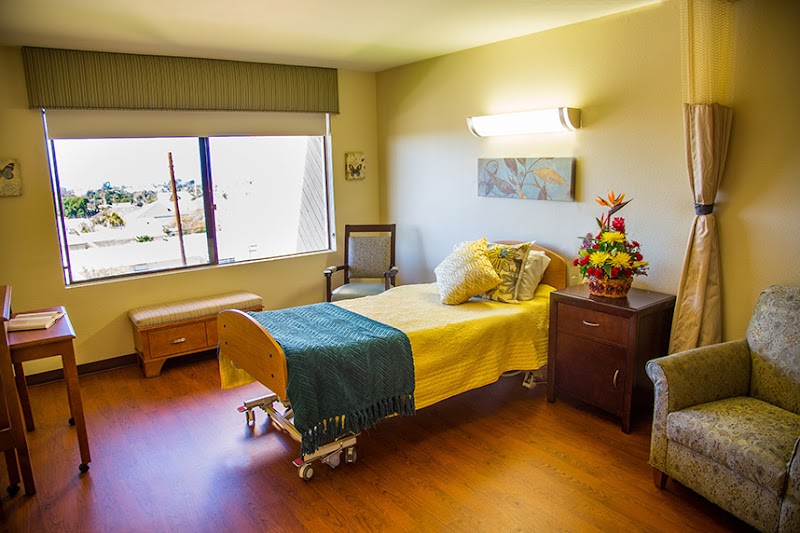
How is Encinitas Staffed?

CMS rates ENCINITAS NURSING AND REHABILITATION CENTER's staffing level at 3 out of 5 stars, which is average compared to other nursing homes. Staff turnover is 47%, compared to the California average of 46%.

What Have Inspectors Found at Encinitas?

State health inspectors documented 41 deficiencies at ENCINITAS NURSING AND REHABILITATION CENTER during 2019 to 2025. These included: 41 with potential for harm.
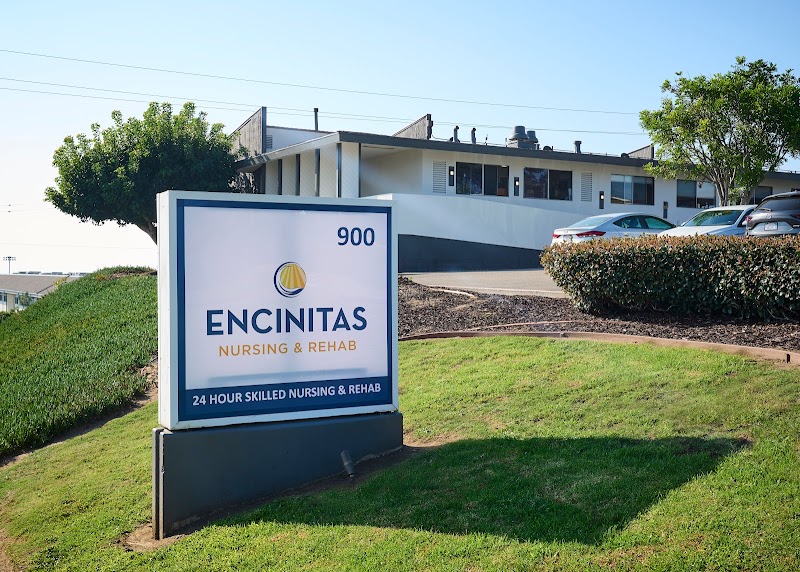
Who Owns and Operates Encinitas?

ENCINITAS NURSING AND REHABILITATION CENTER is owned by a for-profit company. For-profit facilities operate as businesses with obligations to shareholders or private owners. The facility is operated by COVENANT CARE, a chain that manages multiple nursing homes. With 99 certified beds and approximately 96 residents (about 97% occupancy), it is a smaller facility located in ENCINITAS, California.

How Does Encinitas Compare to Other California Nursing Homes?

Compared to the 100 nursing homes in California, ENCINITAS NURSING AND REHABILITATION CENTER's overall rating (4 stars) is above the state average of 3.2, staff turnover (47%) is near the state average of 46%, and health inspection rating (3 stars) is at the national benchmark.

What Should Families Ask When Visiting Encinitas?

Based on this facility's data, families visiting should ask: "Can I visit during a mealtime to observe dining assistance and food quality?" "How do you handle medical emergencies, and what is your hospital transfer rate?" "Can I speak with family members of current residents about their experience?"

Is Encinitas Safe?

Based on CMS inspection data, ENCINITAS NURSING AND REHABILITATION CENTER has a clean safety record: no substantiated abuse findings (meaning no confirmed cases of resident harm), no Immediate Jeopardy citations (the most serious violation level indicating risk of serious injury or death), and is not on the Special Focus Facility watch list (a federal program monitoring the lowest-performing 1% of nursing homes). The facility has a 4-star overall rating and ranks #1 of 100 nursing homes in California. While no facility is perfect, families should still ask about staff-to-resident ratios and recent inspection results during their visit.

Do Nurses at Encinitas Stick Around?

ENCINITAS NURSING AND REHABILITATION CENTER has a staff turnover rate of 47%, which is about average for California nursing homes (state average: 46%). Moderate turnover is common in nursing homes, but families should still ask about staff tenure and how the facility maintains care continuity when employees leave.

Was Encinitas Ever Fined?

ENCINITAS NURSING AND REHABILITATION CENTER has no federal fines on record. CMS issues fines when nursing homes fail to meet care standards or don't correct problems found during inspections. The absence of fines suggests the facility has either maintained compliance or corrected any issues before penalties were assessed. This is a positive indicator, though families should still review recent inspection reports for the full picture.

Is Encinitas on Any Federal Watch List?

ENCINITAS NURSING AND REHABILITATION CENTER is not on any federal watch list. The most significant is the Special Focus Facility (SFF) program, which identifies the bottom 1% of nursing homes nationally based on persistent, serious quality problems. Not being on this list means the facility has avoided the pattern of deficiencies that triggers enhanced federal oversight. This is a positive indicator, though families should still review the facility's inspection history directly.