REDWOOD TERRACE HEALTH CENTER
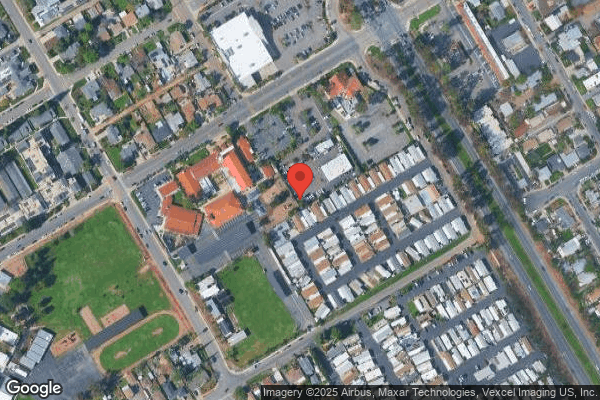

710 W 13TH AVE, ESCONDIDO, CA 92025 (760) 747-4306
Non profit - Corporation 59 Beds HUMANGOOD Data: November 2025
Trust Grade
88/100
#176 of 1155 in CA
Last Inspection: December 2022

Over 2 years since last inspection. Current conditions may differ from available data.

Overview

Redwood Terrace Health Center has a Trust Grade of B+, indicating it is above average and recommended for families seeking care. It ranks #176 out of 1,155 facilities in California, placing it in the top half of nursing homes in the state, and #24 out of 81 in San Diego County, meaning only a few local options are better. The facility is improving, with issues decreasing from four in 2022 to just one in 2025. Staffing is a strong point, rated 5 out of 5 stars with a turnover rate of only 22%, significantly lower than the state average, which means caregivers are likely to have more consistent relationships with residents. However, the facility has faced some concerns, including incidents involving expired medications being left unattended and a lack of proper food safety dating, which could pose health risks. Overall, while the facility shows strengths in staffing and quality ratings, families should be aware of these areas needing improvement.

Trust Score
B+
88/100
In California
#176/1155
Top 15%
Safety Record
Low Risk
No red flags
Inspections
Getting Better
4 → 1 violations
Staff Stability
✓ Good
22% annual turnover. Excellent stability, 26 points below California's 48% average. Staff who stay learn residents' needs.
Penalties
○ Average
$3,250 in fines. Higher than 62% of California facilities. Some compliance issues.
Skilled Nurses
✓ Good
Each resident gets 64 minutes of Registered Nurse (RN) attention daily — more than 97% of California nursing homes. RNs are the most trained staff who catch health problems before they become serious.
Violations
⚠ Watch
15 deficiencies on record. Higher than average. Multiple issues found across inspections.
★★★★★
5.0
Overall Rating
★★★★★
5.0
Staff Levels
★★★☆☆
3.0
Care Quality
★★★★★
5.0
Inspection Score
Stable
2022: 4 issues
2025: 1 issues

The Good

  • 5-Star Staffing Rating · Excellent nurse staffing levels
  • Low Staff Turnover (22%) · Staff stability means consistent care
  • Full Sprinkler Coverage · Fire safety systems throughout facility
  • No fines on record
  • Staff turnover is low (22%)

    26 points below California average of 48%

Facility shows strength in staffing levels, staff retention, fire safety.

The Bad

Federal Fines: $3,250

Below median ($33,413)

Minor penalties assessed

Chain: HUMANGOOD

Part of a multi-facility chain

Ask about local staffing decisions and management

The Ugly 15 deficiencies on record

Apr 2025 1 deficiency
CONCERN (D) 📢 Someone Reported This

A family member, employee, or ombudsman was alarmed enough to file a formal complaint

Potential for Harm - no one hurt, but risky conditions existed

Report Alleged Abuse (Tag F0609)

Could have caused harm · This affected 1 resident

**NOTE- TERMS IN BRACKETS HAVE BEEN EDITED TO PROTECT CONFIDENTIALITY** Based on interview and record review, the facility failed to send the results of an alleged staff to resident (Resident 1) abuse...

Read full inspector narrative →
**NOTE- TERMS IN BRACKETS HAVE BEEN EDITED TO PROTECT CONFIDENTIALITY** Based on interview and record review, the facility failed to send the results of an alleged staff to resident (Resident 1) abuse investigation to the State agency (California Department of Public Health, CDPH-licensing and certification agency) within five working days. This deficient practice had the potential for residents to not be protected from abuse. Findings: A review of Resident 1 ' s admission Record indicated the resident was admitted to the facility on [DATE] with diagnoses which included dementia (decline in thinking abilities) . On 4/29/25 at 8:55 A.M., an onsite investigation was conducted to investigate an allegation of abuse between Resident 1 and a staff member. The administrator (ADM) was interviewed and stated the facility's abuse investigation between the staff member and Resident 1 was completed on 4/23/25 and the results of the investigation were sent via fax to the CDPH, on 4/23/25. A record review of the facility ' s document titled Confidential Summary of Incident Investigation, fax receipt dated 4/23/25, indicated the facility was made aware of the incident of alleged abuse between Resident 1 and the staff member on 4/15/25 and started their investigation on 4/15/25. On 4/29/25 at 12:35 P.M., an interview was conducted with the ADM. The ADM stated the facility sent the results of their investigation to CDPH seven working days after having knowledge of the incident. The ADM stated the results of their investigation of the incident of alleged abuse should have been sent to CDPH within five working days. A review of the facility ' s policy titled Elder Abuse Prevention, Identification, Response, Reporting revised 10/2023, indicated, .Section E. d. iii. Report the results of all investigations within five working days to the administrator orhis/her designated representative and to the other officials in accordance with State law, including to the State survey and certifications agency
Dec 2022 4 deficiencies
CONCERN (D)

Potential for Harm - no one hurt, but risky conditions existed

Deficiency F0688 (Tag F0688)

Could have caused harm · This affected 1 resident

**NOTE- TERMS IN BRACKETS HAVE BEEN EDITED TO PROTECT CONFIDENTIALITY** Based on interview and record review, the facility failed to ensure restorative nursing (care to improve or maintain the functio...

Read full inspector narrative →
**NOTE- TERMS IN BRACKETS HAVE BEEN EDITED TO PROTECT CONFIDENTIALITY** Based on interview and record review, the facility failed to ensure restorative nursing (care to improve or maintain the functional ability of the resident) was conducted per the physician's order for one of seven sampled residents reviewed for limited mobility (7). As a result, there was a potential for Resident 7 to experience a decrease in mobility. Findings: Resident 7 was re-admitted to the facility on [DATE] with diagnoses which included osteoporosis (decrease in bone mass) per the facility's Profile Face Sheet. On 12/14/22 at 2:10 P.M., a concurrent interview and record review was conducted with RNA 1. The physician order dated 10/12/22 indicated RNA ambulation program 5x/wk (times/week), Monday to Friday through 1/12/23 for Resident 7. RNA 1 stated if the order was 5x/wk on Monday to Friday, then it has to be followed. RNA 1 stated the consequence of not conducting the RNA per physician's order would be Resident 7 may lose the ability to walk and that was not good. Resident 7's RNA program's chart indicated in 2022: week of 10/24, Resident 7 had RNA 3x/wk week of 10/31, Resident 7 had RNA 4x/wk week of 11/7, Resident 7 had RNA 4x/wk week of 11/14, Resident 7 had RNA 4x/wk week of 11/21, Resident 7 had RNA 4x/wk week of 11/28, Resident 7 had RNA 4x/wk week of 12/5, Resident 7 had RNA 4x/wk On 12/14/22 at 2:35 P.M., an interview with the DON was conducted. The DON stated if the physician's order for Resident 7's RNA program was not being consistently followed, then there was a potential decline for a resident in activities of daily living [walking]. Per the facility's policy and procedure titled, Restorative Nursing Services, dated 2001, Policy Statement Residents will receive restorative nursing care as needed to help promote optimal safety and independence.
CONCERN (D)

Potential for Harm - no one hurt, but risky conditions existed

Food Safety (Tag F0812)

Could have caused harm · This affected 1 resident

**NOTE- TERMS IN BRACKETS HAVE BEEN EDITED TO PROTECT CONFIDENTIALITY** Based on observation, interview, and record review, the facility failed to ensure food stored and prepared in the kitchen was in...

Read full inspector narrative →
**NOTE- TERMS IN BRACKETS HAVE BEEN EDITED TO PROTECT CONFIDENTIALITY** Based on observation, interview, and record review, the facility failed to ensure food stored and prepared in the kitchen was in accordance with professional standards for food and service safety when: 1. the walk-in refrigerator had open and undated food, and 2. a box of lemon-glycerin swabsticks (lemon-flavored medical swab sticks that were 4-inch plastic swabs with [NAME] or foam tips) was stored in the residents' reach-in freezer. As a result, there was a potential for the staff to serve contaminated or spoiled food, and swabsticks may accidentally be ingested by a confused resident. Findings: 1. On 12/12/22 at 8:20 A.M., a joint observation and interview were conducted with CK 1. Inside the walk-in refrigerator, there was a tray of cube potatoes spread evenly on the tray with no cover, label, or date, and a tray of small plastic cups containing a yellow-colored substance. The tray had no date or label. CK 1 stated prepared items should have been labeled and dated. On 12/12/22 at 8:40 A.M., an interview was conducted with RDS 1. RDS 1 stated the kitchen staff should label and date the prepared foods. RDS 1 further stated it was essential to date items to ensure the items prepared first should have been served first. Per the facility's policy and procedure, titled Production, Purchasing, Storage, dated 1/22, .Cover, label, and date unused portions and open packages .Date and rotate items . 2. On 12/13/22 at 4:38 P.M., the residents' food refrigerator with freezer in the communal area was observed with the DON. A box of lemon-glycerin swabs was found inside the freezer. The DON stated the ST used the items for treatment and should not be inside the resident's refrigerator. A follow-up interview was conducted with ST 1. ST 1 acknowledged she put the lemon-glycerin swabs in the resident's refrigerator and used the swabs during treatment. Furthermore, ST 1 stated she should not place the swabs with the residents' food. On 12/14/22 at 11:25 A.M., an interview was conducted with RDS 2. RDS 2 stated the lemon-glycerin swabs were not food and should not be inside the resident's refrigerator. Per the facility's policy and procedure, titled Production, Purchasing, Storage, dated 1/22, .All food, non-food items and supplies used in food preparation shall be stored in a manner as to prevent contamination to maintain the safety and wholesomeness of the food for human consumption .
CONCERN (D)

Potential for Harm - no one hurt, but risky conditions existed

Infection Control (Tag F0880)

Could have caused harm · This affected 1 resident

**NOTE- TERMS IN BRACKETS HAVE BEEN EDITED TO PROTECT CONFIDENTIALITY** Based on observation, interview, and record review, the facility failed to follow infection control prevention for one of 13 sam...

Read full inspector narrative →
**NOTE- TERMS IN BRACKETS HAVE BEEN EDITED TO PROTECT CONFIDENTIALITY** Based on observation, interview, and record review, the facility failed to follow infection control prevention for one of 13 sampled residents (28) when the LN put on new gloves without performing hand hygiene. As a result, there was a potential for cross-contamination. Findings: Resident 28 was admitted to the facility on [DATE] with diagnoses which included diabetes mellitus (abnormal blood sugar) per the facility's Profile Face Sheet. On 12/12/22 at 2:26 P.M., LN 2 was observed conducting a wound dressing change to Resident 28. LN 2 cleansed Resident 28's right foot with gloved hands and then, LN 2 removed her gloves. LN 2 put on new gloves without performing hand hygiene, and proceeded to complete the wound dressing change. After Resident 28's dressing change, an interview was conducted with LN 2. LN 2 stated she did not perform hand hygiene after removing the soiled gloves and applying new ones. LN 2 further stated she should have performed hand hygiene between glove changes. On 12/14/22 at 3:55 P.M., an interview was conducted with the DON. The DON stated the staff should perform hand hygiene between glove changes to prevent cross-contamination. Per the facility's policy and procedure, titled Handwashing/Use of Alcohol-Based Hand Rubs, dated 8/20, .Perform hand hygiene before applying non-sterile gloves .When removing gloves .perform hand hygiene.
CONCERN (E)

Potential for Harm - no one hurt, but risky conditions existed

Deficiency F0761 (Tag F0761)

Could have caused harm · This affected multiple residents

**NOTE- TERMS IN BRACKETS HAVE BEEN EDITED TO PROTECT CONFIDENTIALITY** Based on observation, interview, and record review, the facility failed to ensure LN removed an expired medication from the medi...

Read full inspector narrative →
**NOTE- TERMS IN BRACKETS HAVE BEEN EDITED TO PROTECT CONFIDENTIALITY** Based on observation, interview, and record review, the facility failed to ensure LN removed an expired medication from the medication cart for one of two medication carts observed. In addition, LN left medications unattended in residents room and allowing residents to self-administer without proper assessment and qualification for two of 13 sampled residents (27 and 88), and five unsampled residents (16, 30, 32, 194 and 200). As a result, there was a potential for staff to administer expired medication. In addition, staff would not have been able to verify the appropriate dose taken by the residents. Findings: 1. On 12/15/22 at 10:21 A.M., an observation of a medication cart was conducted with LN 2. A bottle of calcium citrate tablets was noted to have expired on 8/22. On 12/15/22 at 10:28 A.M., an interview with LN 2 was conducted. LN 2 stated if a resident was given an expired medication, it could have less effectiveness. On 12/15/22 at 10:30 A.M., an interview with LN 6 was conducted. LN 6 stated there should have not been expired medications in the medication cart. On 12/15/22 at 1:45 P.M., an interview with the DON was conducted. The DON stated if there were expired medications in the medication cart, there was a risk it would be given to a resident which could cause potential harm. Per the facility's policy and procedure titled Storage of Medication, dated 9/18, .Procedures .14 .Outdated, .medications .are immediately removed .disposed of . 2a. Resident 30 was admitted to the facility on [DATE] with diagnoses which included glaucoma (vision loss), per the facility's Profile Face Sheet. On 12/12/22 at 8:25 A.M., Resident 30 was observed during the initial tour of the facility. There were two bottles of eye drops on the overbed table. Resident 30 stated she used artificial tears four times a day and the other eye drop at bedtime. A review of Resident 30's medical record was conducted. There was no evidence that Resident 30 could self-administer eye drops. 2b. Resident 16 was admitted to the facility on [DATE] with diagnoses which included hypertension (abnormal blood pressure), per the facility's Profile Face Sheet. On 12/12/22 at 10:16 A.M., during the initial tour of the facility, it was observed that Resident 16's bedside drawer was opened, and there were two large bottles of over-the-counter (OTC) medicine. Resident 16 stated the staff knew about her medications at the bedside and It's fine!. A review of Resident 16's medical record was conducted. There was no evidence Resident 16 had an order from the physician for the OTC or approval for self-administration of medications. 2c. Resident 27 was admitted to the facility on [DATE] with diagnoses which included congestive heart failure (heart problem), per the facility's Profile Face Sheet. On 12/12/22 at 10:33 A.M., during the initial tour of the facility. Resident 27 had a nasal spray bottle on the overbed table. Resident 27 stated he had difficulty squeezing the bottle, so he had to drip the solution into his nose. A review of Resident 27's medical record was conducted. There was no evidence Resident 27 had an order from the physician for the nasal spray or approval for self-administration of medications. 2d. Resident 32 was admitted to the facility on [DATE] with diagnoses which included severe obesity, per the facility's Profile Face Sheet. On 12/12/22 at 10:49 A.M., during the initial tour of the facility, Resident 32's bathroom was observed. On the countertop was a medicine cup with a pink-color cream inside. Resident 32 stated the LN applied the cream last night on her bottom. On 12/13/22 at 3:24 P.M., an interview was conducted with LN 1. LN 1 stated residents who wish to keep their medication at the bedside should have an assessment and an order from the physician. LN 1 further stated the cream on Resident 32's bathroom was a medicated cream. A review of Resident 32's medical record was conducted. There was no evidence Resident 32 had a physician's order for the cream or approval for self-administration of medications. 2e. Resident 88 was admitted to the facility on [DATE] with diagnoses which included a fracture of the left femur (broken thigh bone) per the facility's Profile Face Sheet. On 12/12/22 at 3:20 P.M., during the initial tour of the facility, Resident 88 was observed. Resident 88 had two single-use vials of eye drops inside a medicine cup on the overbed table. Resident 88 stated she used the eye drops four times a day. A review of Resident 88's medical record was conducted. There was no evidence Resident 88 could self-administer eye drops. On 12/13/22 at 3:24 P.M., an interview was conducted with LN 1. LN 1 stated residents who wish to keep their medication at the bedside should have an assessment and an order from the physician. LN 1 further stated no residents in the facility had approval from the physician to self-administer. On 12/14/22 at 3:55 P.M., an interview was conducted with the DON. The DON stated no residents had approval from the physician to self-administer medications. The DON stated the LNs should not leave the medications unattended to ensure residents' safety. 2f. Resident 194 was re-admitted to the facility on [DATE] with diagnoses which included mild cognitive (thinking ability) impairment per the facility's Profile Face Sheet. On 12/13/22 at 8:28 A.M., an observation of medication administration to Resident 194 was conducted. LN 1 prepared six medications for Resident 194, placed it in the medicine cup, left the medications on the breakfast tray, and then left the room without observing Resident 194 take the medications. On 12/13/22 at 9 A.M., an interview with LN 1 was conducted. LN 1 stated she knew she should not have left Resident 194's medications without observing her take them. LN 1 stated she should have watched Resident 194 take the medications for patient safety or not take the medications. On 12/13/22 at 10:13 A.M., an interview with the DON was conducted. The DON stated the staff should have taken the medications with her if she had to leave the resident's room prior to the resident taking the medications. The DON stated without observation, the staff would not know what the resident did with the medications. 2g. Resident 200 was admitted to the facility on [DATE] per the facility's Profile Face Sheet. On 12/14/22 at 4:34 P.M., during an observation of medication administration with LN 7 and LN 8, a bottle of vitamin and mineral supplements were found inside Resident 200's drawer inside his room. LN 7 stated Resident 200 may take more than what was prescribed if the medications were kept in his room. On 12/14/22, an interview with LN 2 was conducted. LN 2 stated Resident 7 should not have the medication inside his room. LN 2 stated the medication was in Resident 200's drawer since admission. LN 2 stated Resident 7 may overdose on the medication if it was kept in his room. A record review was conducted. There was no self-administration assessment conducted for Resident 200 prior to 12/14/22. On 12/15/22 at 8:06 A.M., an interview with the DON was conducted. The DON stated if a resident did not pass a self-administration assessment and a medication was kept inside a resident's room, there was always a risk of a resident taking more than what was prescribed which could cause potential harm. Per the facility's policy and procedure, titled Medication Administration Self-Administration by Resident, dated 11/17, .The interdisciplinary team determines the resident's ability to self-administer medications by means of a skill assessment . Per the facility's policy and procedure, titled Medication Storage, dated 9/18, .The medication supply shall be accessible only to licensed nursing personnel .
Mar 2020 5 deficiencies
CONCERN (D)

Potential for Harm - no one hurt, but risky conditions existed

Comprehensive Care Plan (Tag F0656)

Could have caused harm · This affected 1 resident

**NOTE- TERMS IN BRACKETS HAVE BEEN EDITED TO PROTECT CONFIDENTIALITY** Based on interview and record review, the facility failed to implement a comprehensive care plan for Resident 22's actual weight...

Read full inspector narrative →
**NOTE- TERMS IN BRACKETS HAVE BEEN EDITED TO PROTECT CONFIDENTIALITY** Based on interview and record review, the facility failed to implement a comprehensive care plan for Resident 22's actual weight loss. This failure had the potential for Resident 22 to not receive person-centered care for their weight loss. Findings: Resident 22 was admitted to the facility on [DATE] as indicated by the Face Sheet. A record review of Resident 22's documented weights was conducted: 12/31/19 120 lbs. 3/2/20 108 lbs. On 3/3/20, a record review of Resident 22's care plans was conducted. A care plan for actual weight loss was not found. On 3/3/20 at 2:41 P.M., an interview with LN 21 was conducted. LN 21 stated, the Registered Dietitian (RD) created Resident 22's nutritional care plan titled, Potential risk for altered nutritional status. During an interview on 3/5/20 at 1:25 P.M. with the Registered Dietitian (RD), the RD stated, Resident 22's nutritional care plan was for potential risk for weight loss. The RD stated, she did not implement a care plan for Resident 22's actual weight loss. A review of the facility's policy and procedure (P&P) titled, Nutrition Alert Committee, dated 1/20, the P&P indicated, During the Nutritional Alert meeting .care plans are updated accordingly.
CONCERN (D)

Potential for Harm - no one hurt, but risky conditions existed

Pressure Ulcer Prevention (Tag F0686)

Could have caused harm · This affected 1 resident

**NOTE- TERMS IN BRACKETS HAVE BEEN EDITED TO PROTECT CONFIDENTIALITY** Based on observation, interview and record review, the facility failed to ensure one of two residents (Res38), low air loss matt...

Read full inspector narrative →
**NOTE- TERMS IN BRACKETS HAVE BEEN EDITED TO PROTECT CONFIDENTIALITY** Based on observation, interview and record review, the facility failed to ensure one of two residents (Res38), low air loss mattress (a medical air mattress used to prevent skin breakdown) was properly set up. This failure had the potential to cause Resident 38's pressure ulcer (skin injury which developed because of pressure over a bony area of the body) to worsen. Findings: Resident 38 was admitted to the facility on [DATE] according to the facility's Face Sheet. During an observation on 3/2/20, at 9:38 A.M., in Resident 38's room, Resident 38 was observed in bed, moaning. A low air loss mattress (LAL) was observed on Resident 38's bed. The LAL mattress was set to static 450 lbs. and was locked. A review of Resident 38's Physician order dated 2/18/20 indicated the LAL mattress was for Resident 38's skin management. A review of Resident 38's skin assessment dated [DATE] indicated, Resident 38 had a stage 1 pressure ulcer (skin injury to the surface layer of skin) on her coccyx and was at risk for pressure ulcers. During an observation on 3/2/20, at 2:53 P.M., in Resident 38's room, Resident 38 was observed in bed. Resident 38's LAL mattress settings was observed and set to static at 450 lbs. ON 3/2/20 2:55 P.M., CNA 24 stated Resident 38 had pressure ulcers on her buttocks and the wound LN had changed Resident 38's pressure ulcer dressings that morning. On 3/4/20 at 9:14 A.M., an interview with CNA 21 was conducted. CNA 21 stated, the LN's were responsible to monitor Resident 38's LAL mattress to ensure the settings were correct. On 3/4/20 at 2:29 P.M., an interview with RNA 21 was conducted. RNA 21 stated, the LAL mattress settings were based on resident's weight and comfort level. RNA 21 stated, he was responsible for checking Resident 38's weight and then he would adjust the settings of Resident 38's LAL mattress based on Resident 38's current weight. RNA 21 stated, he had adjusted Resident 38 LAL mattress settings recently to 150 lbs. RNA 21 stated, 450 lbs was too hard for Resident 38. RNA 21 stated, if the mattress was too hard it defeated the purpose of preventing pressure on the resident's skin. A review of Resident 38's weight log for February 2020 was conducted. On 2/24/20 Resident 38's weight was documented at 117.8 lbs. On 3/5/20 at 2:22 P.M., an interview with the DON was conducted. The DON stated, LAL mattress settings are based on the resident's weight and comfort. The DON also stated, 450 lbs. was not the correct setting for Residentn 38.
CONCERN (D)

Potential for Harm - no one hurt, but risky conditions existed

Staffing Information (Tag F0732)

Could have caused harm · This affected 1 resident

Based on observation, interview and record review, the facility failed to ensure nurse staffing data was posted in a prominent place accessible to residents and visitors to include: total number of ac...

Read full inspector narrative →
Based on observation, interview and record review, the facility failed to ensure nurse staffing data was posted in a prominent place accessible to residents and visitors to include: total number of actual hours worked by nursing staff (Registered Nurses, Licensed Vocational Nurses, Certified nurse aides) & resident census. This failure had the potential to result in residents and visitors having to ask the facility for their staffing information. Findings: On 3/5/20 at 3:20 P.M. an observation at the facility's care center nursing station was conducted. The nurse staffing information posted did not include total hours worked by licensed and unlicensed nursing staff for the following categories: Registered Nurses, Licensed Vocational Nurses and Certified Nurse Aides. During an interview with the facility's DSD on 3/5/20 at 3:26 P.M., the DSD stated, the completed nurse staffing information was taken down by the facility's Administrator (Admin) when the facility was remodeled. On 3/5/20 at 3:29 P.M., an interview with the facility's Admin was conducted. The Admin stated, the completed nurse staffing information was in a book at the nurse's station. The Admin stated, going forward it would be posted on the shelf next to our annual survey results for residents and visitors to review.
CONCERN (D)

Potential for Harm - no one hurt, but risky conditions existed

Deficiency F0761 (Tag F0761)

Could have caused harm · This affected 1 resident

**NOTE- TERMS IN BRACKETS HAVE BEEN EDITED TO PROTECT CONFIDENTIALITY** Based on observation, interview, and record review, the facility failed to remove expired medical supplies and specimen tubes (u...

Read full inspector narrative →
**NOTE- TERMS IN BRACKETS HAVE BEEN EDITED TO PROTECT CONFIDENTIALITY** Based on observation, interview, and record review, the facility failed to remove expired medical supplies and specimen tubes (used to collect samples for medical testing) from one of one medication storage room. In addition, the facility failed to assess for the ability to self-medicate and obtain a physician's order to keep medications at the bedside for one of two residents (8 ) reviewed for self - administration of medications. This failure had the potential: 1. to affect the test results for the use of expired medical supplies, and; 2. to place Resident 8 at risk not to take their prescribed medication and gave other residents access to the medications left at the bedside. Findings: 1. On [DATE] at 2:54 P.M., an observation of the medication storage room, and interview was conducted with LN 11. On the counter of the medication room, inside a blue bin, there were five (3 cubic centimeter-cc) syringes with needles had an expiration date of 9/2019. On one of the bottom shelf, inside the medication room, a bottle of iodoform packing strip (used for wound care management) had an expiration date of 9/2019. In one of the drawers, inside the medication room, there were 20 pieces of aerobic and anaerobic culture swab tubes (used for specimen collection and transport) with the expiration date of [DATE]. LN 11 stated the medical supplies should have been removed from the medication storage room. LN 11 stated expired medical supplies would have decreased its effectiveness and expired culture swab would no longer provide an accurate result. On [DATE] at 11:28 A.M., an interview was conducted with the Director of Nursing (DON). The DON stated expired medical supplies should have been removed from the medication storage room. Expired culture swab could have a false negative result and would affect the resident's treatment. A review of the facility's undated policy, titled, Storage of Medications, indicated The facility shall store drugs and biologicals in a safe, secure and orderly manner . The facility did not have a specific policy addressing the storage of medical supplies. 2. Resident 8 was admitted to the facility on [DATE], with a diagnoses which included diabetes mellitus ( high levels of the sugar in the blood) per the facility's Profile Face Sheet. On [DATE] at 8:48 A.M., an observation and interview was conducted of Resident 8 in her room. Resident 8 was sitting in a chair, by herself, and she was holding a medicine cup with numerous medications inside the cup. Resident 8 stated she already took some of her morning medications. On [DATE] at 8:50 A.M., an interview was conducted with LN 12, while in the hallway. LN 12 stated, she had given Resident 8's morning medications that were scheduled for 9 A.M., and thought Resident 8 have taken all her medications. LN 12 went back to Resident 8's room and asked Resident 8 why she had not taken all her medications that she had given her. Resident 8 stated, I waited to take the other half of my medications. On [DATE] at 9 A.M., an observation was conducted with the Director of Nursing (DON) in Resident 8's room. On the floor, was a white round pill, and Resident 8 stated I might have dropped that pill this morning. The DON picked up the pill and stated it was a vitamin. On [DATE], a review of Resident 8's medication record indicated she was scheduled to have received 12 pills at 9 A.M. On [DATE], a review of Resident 8's signed physician orders, dated [DATE], indicated there were no order for Resident 8 to self-administer medications. On [DATE] at 11:24 A.M., an interview was conducted with the DON in her office. The DON stated, the LN should have observed the resident taking all the medications before the LN left the room. The DON further stated, it is our policy for the nurse to observe the resident taking all the pills before leaving the room. Per the facility's policy, undated, titled Self - Administration of Medications, .residents have the right to self - administer medications if the interdisciplinary team has determined that it is clinically appropriate and safe for the resident to do so .
CONCERN (D)

Potential for Harm - no one hurt, but risky conditions existed

Medical Records (Tag F0842)

Could have caused harm · This affected 1 resident

**NOTE- TERMS IN BRACKETS HAVE BEEN EDITED TO PROTECT CONFIDENTIALITY** Based on observation, interview, and record review, the facility failed to ensure a resident's personal information was protecte...

Read full inspector narrative →
**NOTE- TERMS IN BRACKETS HAVE BEEN EDITED TO PROTECT CONFIDENTIALITY** Based on observation, interview, and record review, the facility failed to ensure a resident's personal information was protected, when an empty medication bubble pack for one unsampled resident (25) was left on top of a medication cart. This failure had the potential for the resident's information to be viewed by anyone who passed by the cart. Findings: 1. Resident 25 was admitted to the facility on [DATE], per the facility's Profile Face Sheet. On 3/2/20 at 10:09 A.M., an observation was conducted in the hallway of rooms 201 to 214. A medication cart was observed unattended near room [ROOM NUMBER]. On the top of the cart was an empty medication bubble pack that displayed the name of Resident 25, name and strength of the drug, directions for use, expiration date, and the name of the prescriber. On 3/2/20 at 10:17 A.M., a concurrent observation and interview was conducted with the Assistant Director of Nursing (ADON) in front of the medication cart. The ADON picked up the empty medication bubble pack and stated the Licensed Nurse should not have left the medication pack unattended to protect the resident's information. On 3/5/20 at 11:24 A.M., an interview was conducted with the Director of Nursing (DON). The DON stated resident information must be protected and should not be left in an area where information was accessible for public viewing. A review of the facility's policy and procedure, dated 6/28/18, titled Confidentiality of Protected Health Information, indicated . 3 .family and visitors must be restricted from viewing information and may not be left alone in an area where such information is accessible .
Jan 2019 5 deficiencies
CONCERN (D)

Potential for Harm - no one hurt, but risky conditions existed

Deficiency F0726 (Tag F0726)

Could have caused harm · This affected 1 resident

Based on observation, interview and record review,the facility failed to ensure that licensed nurses received skilled competency training for medication management. This failure created the potential ...

Read full inspector narrative →
Based on observation, interview and record review,the facility failed to ensure that licensed nurses received skilled competency training for medication management. This failure created the potential for medication errors. Findings: 1. On 1/23/19 at 11:25 A.M., LN 2 prepared a Novolog FlexTouch Pen (insulin injection cartridge for insulin administration) for Resident 11. LN 2 took Resident 11's Novolog FlexTouch pen (insulin) and rotated the dial to the correct dosage without priming (flushing air out) the needle. LN 2 stated she did not need to prime the needle. LN 2 then administered the insulin to Resident 11. In addition, LN 2 stated she was unaware of the facility's process for insulin administration and had not received skills training for licensed nurses. Per the manufacturer's instructions, revised 12/2018, titled NovoLog FlexTouch, .Step 7: Turn the dose selector to select 2 units; Step 8: Hold the pen with the needle pointing up. Tap the top of the Pen gently a few times to let air bubbles rise to the top. Step 9: Hold the pen with the needle point up. Press and hold the dose button until the does counter show 0. The 0 must line up with the dose pointer. A drop of insulin should be seen at the needle tip . Per the facility policy, revised 9/2014, titled Insulin Administration, . the nursing staff will have access to specific instructions (from the manufacturer if appropriate) on all forms of insulin delivery systems prior to their use . 2. On 1/24/19 at 12:13 P.M., an observation of the 200 hall Treatment Cart (cart that safeguards treatments for residents) and an interview with LN 1 was conducted. Ketoconazole Cream 2% (anti fungal) was observed without a residents name, directions for use, an open date, and an expiration date. LN 1 stated the label had fallen off and stated an open date and an expiration date were missing. LN 1 further stated she did not know the process for medication labeling and storage and had not received skills competency training in the last year. On 1/24/19, a review of licensed nurse personnel files was conducted. LN 1, LN 2, LN 3, LN 4, and LN 5 had not received skills competency training for medication management. On 1/25/19 at 8:43 A.M., an interview was conducted with the DSD and DON. The DSD stated medication management and the FlexTouch insulin pen had not been covered in licensed nurse training. The DON stated it was appropriate for the nurses to know safe medication administration as well as storage and labeling guidelines. Per the facility policy, undated, titled Staff Development Program, .the primary purpose of our facility's inservice training is to provide our employees with an in-depth review of our established operational policies and procedures, their positions, methods and procedures to follow in implementing assigned duties, and to provide up to date information that will assist in providing quality care .
CONCERN (D)

Potential for Harm - no one hurt, but risky conditions existed

Deficiency F0761 (Tag F0761)

Could have caused harm · This affected 1 resident

Based on observation, interview and record review, the facility did not ensure one medication was labeled with a residents name, directions for use, an open date, and an expiration date for one of thr...

Read full inspector narrative →
Based on observation, interview and record review, the facility did not ensure one medication was labeled with a residents name, directions for use, an open date, and an expiration date for one of three treatment carts (200 Hallway). This failure created the potential for resident(s) to receive unsafe medication. Findings: On 1/24/19 at 12:13 P.M., an observation and interview with LN 1 was conducted. Ketoconazole Cream 2% (anti fungal) was observed without a residents name, direction for use, an open date, and an expiration date. LN 1 stated the label had fallen off and stated an open date and an expiration date were missing. On 1/25/19 at 8:43 A.M., an interview was conducted with the DSD and DON. The DSD stated storage and labeling of medication had not been covered in licensed nurse training. The DON stated it was appropriate for the nurses to know safe medication storage and labeling guidelines. Per the facility policy, revised 4/2007, titled Labeling of Medication Containers, .labels for individual drug containers shall include all necessary information such as . the residents name .the date the medication was dispensed .the expiration date .and directions for use .appropriate accessory and cautionary statements .
CONCERN (E)

Potential for Harm - no one hurt, but risky conditions existed

Food Safety (Tag F0812)

Could have caused harm · This affected multiple residents

Based on observation, interview and record review, the facililty failed to ensure that frozen foods and refrigerated foods had a received-on date and a use-by date. This failure had the potential to ...

Read full inspector narrative →
Based on observation, interview and record review, the facililty failed to ensure that frozen foods and refrigerated foods had a received-on date and a use-by date. This failure had the potential to expose a vulnerable population to food-borne illness. Findings: During the initial tour of the kitchen with the Registered Dietician (RD), Administrator (Admin) and [NAME] on 1/22/19 at 9 A.M. the following observations were made: 1. In the freezer, there were 2 boxes of frozen steaks, 2 boxes of frozen salmon and 2 boxes of frozen shrimp with no received-by dates and no use-by dates; 2. In the refrigerator, there were boxes of fresh tomatoes, fresh mushrooms, fresh apples, fresh oranges, fresh pineapples and fresh asparagus with no received-by dates and no use-by dates; 3. In the refrigerator, there was an opened 32 ounce container of a honey nectar-thick soy beverage with no date to indicate when it was opened. An interview was conducted with the RD on 1/22/19 at 9:20 A.M. The RD stated, It (food) should be labeled, no one would know if it is ok to use. An interview was conducted with the [NAME] on 1/22/19 at 9:25 A.M. The [NAME] stated, Everything should be labeled, so nothing is used that is expired. An interview was conducted with the Consultant Registered Dietician (CRD) on 1/23/19 at 9:30 A.M. The CRD stated, The foods should have been labeled; it is important because staff need to know it is still usable. An interview was conducted with the DON on 1/24/19 at 9 A.M. The DON stated, It is important to label food items with dates because our residents are vulnernable to food-borne illness. Based on the 2017 US Food Code Section 3-501.17 Ready-to-Eat, Time/Temperature Control for Safety Food, Date Marking: .refrigerated, READY-TO EAT, TIME/TEMPERATURE CONTROL FOR SAFETY FOOD prepared and held in a FOOD ESTABLISHMENT for more than 24 hours shall be clearly marked to indicate the date or day by which the FOOD shall be consumed on the PREMISES, sold, or discarded .
CONCERN (E)

Potential for Harm - no one hurt, but risky conditions existed

Infection Control (Tag F0880)

Could have caused harm · This affected multiple residents

2. Surveillance of staff implementing contact isolation and hand washing was absent from the infection control record. The ICN and DON confirmed there was no process to track health care provider com...

Read full inspector narrative →
2. Surveillance of staff implementing contact isolation and hand washing was absent from the infection control record. The ICN and DON confirmed there was no process to track health care provider compliance with hand washing and contact isolation in the facility. Per the facility policy, revised 3/18, titled Infection Control Plan, .It is the policy of this facility to establish an Infection Control Committee which oversees and implements the plan of the Infection Control Program .Maintain accurate records of . infection control measures and surveillance . Based on observation, interview and record review, the facility did not ensure that Infection Control Surveillance was developed or implemented. In addition, staff did not implement contact precautions for two of 14 residents (11, 41) consistently. Findings: The following observations and interviews were conducted on 1/22/19 at 9:50 A.M.: 1a. Resident 11 was on contact precautions. Outside Resident 11's door was posted a large sign that indicated, Contact Precautions: see nurse before entering. Also, outside of the room were PPE supplies: gowns, gloves, shoe covers, masks. Resident 11 was observed in her room, sitting in a chair, doing a crossword puzzle with a visitor. The visitor was not wearing a gown, gloves, or mask. The visitor stated, I don't have to wear any gown or gloves because I am not touching the resident; just the puzzle. 1b. Resident 41 was on contact precautions. Outside Resident 41's door was posted a large sign that indicated, Contact Precautions: see nurse before entering.Resident 41 was observed in her bed, sitting up. Resident 41 called out for help. The VPR entered the room without wearing a gown, gloves or mask. The VPR stated, I should have seen the sign and worn the protective equipment that was there. An interview was conducted with the ICN on 1/25/19 at 8:10 A.M. The ICN stated, Not following contact precautions is a problem because it can expose the rest of the community to the pathogen. An interview was conducted with the DON on 1/25/19 at 8:12 A.M. The DON stated, Staff should follow contact precautions; because two staff entered 2 rooms without following contact precautions, our process is not effective. A review of the facility's policy, titled, Infection Control, General Policy Statements, dated 9/08, indicated, .This facility follows Guidelines for the Prevention and Control of Nosocomial Infections and Universal Precautions as provided by the Center for Disease Control . A review of the Center for Disease Control Guidelines, dated 2/17, indicated, .Use personal protective equipment (PPE) appropriately, including gloves and gowns. Wear a gown and gloves for all interactions that may involve contact with the patient or the patient's environment. Donning PPE upon room entry and properly discarding before exiting the patient room is done to contain pathogens.
CONCERN (E)

Potential for Harm - no one hurt, but risky conditions existed

Antibiotic Stewardship (Tag F0881)

Could have caused harm · This affected multiple residents

**NOTE- TERMS IN BRACKETS HAVE BEEN EDITED TO PROTECT CONFIDENTIALITY** Based on observation, interview and record review, the facility failed to ensure that an Antibiotic Stewardship Program was impl...

Read full inspector narrative →
**NOTE- TERMS IN BRACKETS HAVE BEEN EDITED TO PROTECT CONFIDENTIALITY** Based on observation, interview and record review, the facility failed to ensure that an Antibiotic Stewardship Program was implemented for 2 of 14 residents (11, 40). This failure had the potential for these residents to receive unnecessary antibiotics. Findings: 1. Resident 11 was admitted to the facility on [DATE] with diagnoses which included urinary tract infection and dehydration per the facility's Profile Face Sheet. On 1/22/19 at 9: 45 A.M., Resident 11 was observed in her room, doing a crossword puzzle with a visitor. A review of Resident 11's medical record indicated a physician's order, dated 1/23/19, nitrofuranton [sic](an antibiotic) 50 mg po (by mouth) q (every) hs (bedtime) maintenance for UTI (urinary tract infection- bladder infection) prophylaxis (prevention). An interview was conducted with the ICN on 1/25/19 at 8:10 A.M. The ICN stated, There is no documentation in Resident 11's medical record that the ordering physician was contacted regarding the antibiotic ordered. An interview was conducted with the DON on 1/25/19 at 8:15 A.M. The DON stated, Antibiotic Stewardship includes communicating with physicians when there is no clear criteria for antibiotic use. There is no documentation in Resident 11's medical record that the ordering physician was contacted regarding the antibiotic ordered. 2. Resident 40 was admitted to the facility on [DATE] with diagnoses that included multiple fractures, urinary tract infection and dehydration per the facility's Profile Face Sheet. On 1/22/19 at 11:30 A.M., Resident 40 was observed sleeping in her bed. She had several bruises on her arms and her face. A review of Resident 40's medical record indicated a physician's order, dated 12/26/18, Cipro (an antibiotic) 250 mg tablet by mouth every 12 hours for prophylaxis. An interview was conducted with the ICN on 1/25/19 at 8:10 A.M. The ICN stated, There is no documentation in Resident 40's medical record that the ordering physician was contacted regarding the antibiotic ordered. An interview was conducted with the DON on 1/25/19 at 8:15 A.M. The DON stated, Antibiotic Stewardship includes communicating with physicians when there is no clear criteria for antibiotic use. There is no documentation in Resident 40's medical record that the ordering physician was contacted regarding the antibiotic ordered. A review of the facility's policy, titled Antibiotic Stewardship, dated, 10/12/16, indicated, .identify residents who do not meet criteria for antibiotic use, and assure that each antibiotic order contains a stop order . Furthermore, the policy indicated the following: .Overuse and misuse includes, use of antibiotics when not needed, continued treatment when no longer necessary, use of broad spectrum agents to treat very susceptible bacteria, prescribing the wrong antibiotic to treat a particular bacteria; The Director of Nursing is responsible and accountable to maintain the program .Monitor for the development of resistance .Identify residents who do or do not meet criteria for antibiotic use once lab results are available .Assure that each antibiotic order contains a stop order and that this date is transcribed to the medication administration record .Regardless of the stop order, communicate with the provider when an antibiotic is no longer necessary.
Understanding Severity Codes (click to expand)
Life-Threatening (Immediate Jeopardy)
J - Isolated K - Pattern L - Widespread
Actual Harm
G - Isolated H - Pattern I - Widespread
Potential for Harm
D - Isolated E - Pattern F - Widespread
No Harm (Minor)
A - Isolated B - Pattern C - Widespread

Questions to Ask on Your Visit

  • "Can I speak with families of current residents?"
  • "What's your RN coverage like on weekends and overnight?"

Our Honest Assessment

Strengths
  • • Grade B+ (88/100). Above average facility, better than most options in California.
  • • No major safety red flags. No abuse findings, life-threatening violations, or SFF status.
  • • $3,250 in fines. Lower than most California facilities. Relatively clean record.
  • • 22% annual turnover. Excellent stability, 26 points below California's 48% average. Staff who stay learn residents' needs.
Concerns
  • • 15 deficiencies on record. Higher than average. Multiple issues found across inspections.
Bottom line: Generally positive indicators. Standard due diligence and a personal visit recommended.

About This Facility

What is Redwood Terrace's CMS Rating?

CMS assigns REDWOOD TERRACE HEALTH CENTER an overall rating of 5 out of 5 stars, which is considered much above average nationally. Within California, this rating places the facility higher than 99% of the state's 100 nursing homes. This rating reflects solid performance across the metrics CMS uses to evaluate nursing home quality.

How is Redwood Terrace Staffed?

CMS rates REDWOOD TERRACE HEALTH CENTER's staffing level at 5 out of 5 stars, which is much above average compared to other nursing homes. Staff turnover is 22%, compared to the California average of 46%. This relatively stable workforce can support continuity of care.

What Have Inspectors Found at Redwood Terrace?

State health inspectors documented 15 deficiencies at REDWOOD TERRACE HEALTH CENTER during 2019 to 2025. These included: 15 with potential for harm.

Who Owns and Operates Redwood Terrace?

REDWOOD TERRACE HEALTH CENTER is owned by a non-profit organization. Non-profit facilities reinvest revenue into operations rather than distributing to shareholders. The facility is operated by HUMANGOOD, a chain that manages multiple nursing homes. With 59 certified beds and approximately 53 residents (about 90% occupancy), it is a smaller facility located in ESCONDIDO, California.

How Does Redwood Terrace Compare to Other California Nursing Homes?

Compared to the 100 nursing homes in California, REDWOOD TERRACE HEALTH CENTER's overall rating (5 stars) is above the state average of 3.2, staff turnover (22%) is significantly lower than the state average of 46%, and health inspection rating (5 stars) is much above the national benchmark.

What Should Families Ask When Visiting Redwood Terrace?

Based on this facility's data, families visiting should ask: "Can I visit during a mealtime to observe dining assistance and food quality?" "How do you handle medical emergencies, and what is your hospital transfer rate?" "Can I speak with family members of current residents about their experience?"

Is Redwood Terrace Safe?

Based on CMS inspection data, REDWOOD TERRACE HEALTH CENTER has a clean safety record: no substantiated abuse findings (meaning no confirmed cases of resident harm), no Immediate Jeopardy citations (the most serious violation level indicating risk of serious injury or death), and is not on the Special Focus Facility watch list (a federal program monitoring the lowest-performing 1% of nursing homes). The facility has a 5-star overall rating and ranks #1 of 100 nursing homes in California. While no facility is perfect, families should still ask about staff-to-resident ratios and recent inspection results during their visit.

Do Nurses at Redwood Terrace Stick Around?

Staff at REDWOOD TERRACE HEALTH CENTER tend to stick around. With a turnover rate of 22%, the facility is 23 percentage points below the California average of 46%. Low turnover is a positive sign. It means caregivers have time to learn each resident's needs, medications, and personal preferences. Consistent staff also notice subtle changes in a resident's condition more quickly. Registered Nurse turnover is also low at 25%, meaning experienced RNs are available to handle complex medical needs.

Was Redwood Terrace Ever Fined?

REDWOOD TERRACE HEALTH CENTER has been fined $3,250 across 1 penalty action. This is below the California average of $33,111. While any fine indicates a compliance issue, fines under $50,000 are relatively common and typically reflect isolated problems that were subsequently corrected. Families should ask what specific issues led to these fines and confirm they've been resolved.

Is Redwood Terrace on Any Federal Watch List?

REDWOOD TERRACE HEALTH CENTER is not on any federal watch list. The most significant is the Special Focus Facility (SFF) program, which identifies the bottom 1% of nursing homes nationally based on persistent, serious quality problems. Not being on this list means the facility has avoided the pattern of deficiencies that triggers enhanced federal oversight. This is a positive indicator, though families should still review the facility's inspection history directly.