FALLBROOK SKILLED NURSING
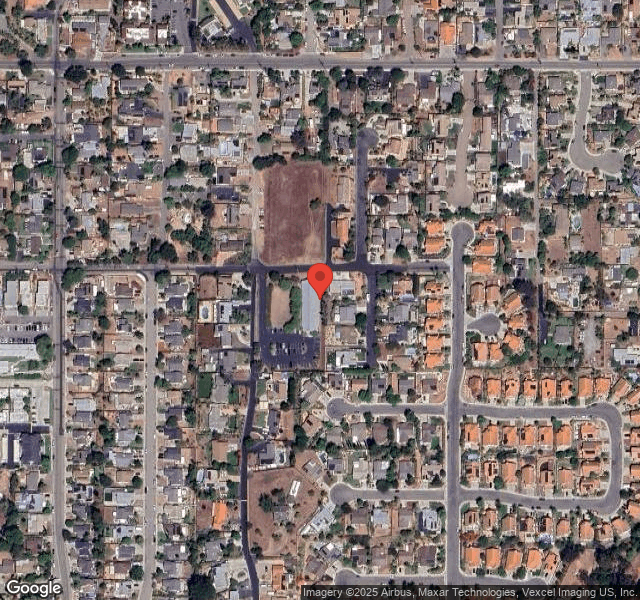
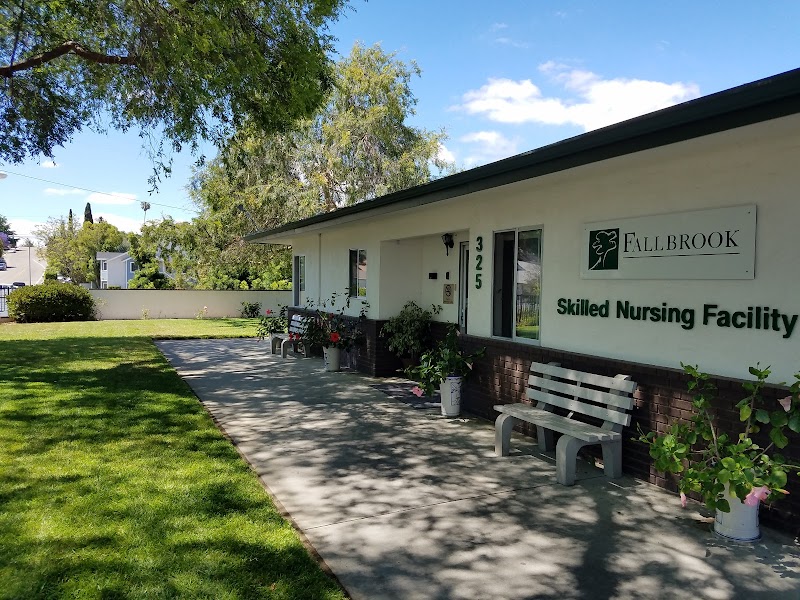
325 POTTER STREET, FALLBROOK, CA 92028 (760) 728-2330
For profit - Limited Liability company 93 Beds PROGRESSIVE HEALTH CARE CENTERS Data: November 2025
Trust Grade
70/100
#348 of 1155 in CA
Last Inspection: May 2025

Inspected within the last 6 months. Data reflects current conditions.

Overview

Fallbrook Skilled Nursing has a Trust Grade of B, which indicates it is a good choice overall. With a state rank of #348 out of 1155, it falls in the top half of California facilities, and it is ranked #43 out of 81 in San Diego County, meaning only a few local options are better. However, the facility's trend is worsening, with issues increasing from 1 in 2024 to 7 in 2025. Staffing is rated 4 out of 5 stars, but the turnover rate of 47% is average, and there is concerning RN coverage, as they have less than 83% of California facilities, which may impact resident care. While the facility has no fines on record, recent inspections revealed issues such as food not being labeled and dated, which can lead to safety concerns, and a lack of RN coverage on weekends, which residents reported as problematic.

Trust Score
B
70/100
In California
#348/1155
Top 30%
Safety Record
Low Risk
No red flags
Inspections
Getting Worse
1 → 7 violations
Staff Stability
⚠ Watch
47% turnover. Above average. Higher turnover means staff may not know residents' routines.
Penalties
✓ Good
No fines on record. Clean compliance history, better than most California facilities.
Skilled Nurses
⚠ Watch
Each resident gets only 17 minutes of Registered Nurse (RN) attention daily — below average for California. Fewer RN minutes means fewer trained eyes watching for problems.
Violations
⚠ Watch
21 deficiencies on record. Higher than average. Multiple issues found across inspections.
★★★★☆
4.0
Overall Rating
★★★★☆
4.0
Staff Levels
★★★☆☆
3.0
Care Quality
★★★★☆
4.0
Inspection Score
Stable
2024: 1 issues
2025: 7 issues

The Good

  • 4-Star Staffing Rating · Above-average nurse staffing levels
  • Full Sprinkler Coverage · Fire safety systems throughout facility
  • No fines on record

Facility shows strength in staffing levels, fire safety.

The Bad

Staff Turnover: 47%

Near California avg (46%)

Higher turnover may affect care consistency

Chain: PROGRESSIVE HEALTH CARE CENTERS

Part of a multi-facility chain

Ask about local staffing decisions and management

The Ugly 21 deficiencies on record

Sept 2025 2 deficiencies
CONCERN (D) 📢 Someone Reported This

A family member, employee, or ombudsman was alarmed enough to file a formal complaint

Potential for Harm - no one hurt, but risky conditions existed

Deficiency F0760 (Tag F0760)

Could have caused harm · This affected 1 resident

**NOTE- TERMS IN BRACKETS HAVE BEEN EDITED TO PROTECT CONFIDENTIALITY** 22 CCR S 72313S 72313. Nursing Service--Administration of Medications and Treatments(a) Medications and treatments shall be admi...

Read full inspector narrative →
**NOTE- TERMS IN BRACKETS HAVE BEEN EDITED TO PROTECT CONFIDENTIALITY** 22 CCR S 72313S 72313. Nursing Service--Administration of Medications and Treatments(a) Medications and treatments shall be administered as follows:(1) No medication or treatment shall be administered except on the order of a person lawfully authorized to give such order.(2) Medications and treatments shall be administered as prescribed.(3) Tests and taking of vital signs, upon which administration of medications or treatments are conditioned, shall be performed as required and the results recorded.(4) Preparation of doses for more than one scheduled administration time shall not be permitted.Based on interview and record review, the facility failed to ensure 3 of 4 residents reviewed for omitted medication doses, (Residents 1, 3, and 4) and this failure placed the residents at risk of harm due to uncontrolled high blood presure. Findings:Resident 1 was admitted to the facility on [DATE], with diagnosis (health problems) that included Type 2 diabetes (a disorder of hormone secretion, that causes high blood sugar levels and complications such as kidney failure, circulatory problems, and vision problems); essential hypertension (High blood pressure, which contributes to strokes, heart disease, and kidney disease); and end stage kidney disease (a complication of diabetes and high blood pressure, where kidneys no longer function, leading to a build up of waste products and fluid in the body); and dependence on dialysis (a procedure where blood is artificially filtered by machines that take over the function of the kidneys).Resident 3 was admitted to the facility on [DATE], with diagnosis that included: End stage renal disease, dependence on dialysis, Type 2 diabetes, and essential hypertension,Resident 4 was admitted to the facility on [DATE], with diagnosis that included: end stage renal disease; dependence on dialysis; type 2 diabetes; essential hypertension.An interview was conducted with Resident 1 on 9/18/25 at 10:55 A.M. Resident 1 stated there were many problems here with medication, he does not recieve his medications regularly when he is out at dialysis. The nurses are nice, but not good with the medicines.On 9/18/25 at 11:45 A.M., a simultaneous interview with the Director of Nursing (DON) and review of Resphysician orders, and medication administration records for Residents 1, 3, and 4.Resident 1 orders included: an informative order that Resident 1 had dialysis on Tuesdays, Thursdays, and Saturdays every week, with a check in time of 9:45 A.M, and a medication order for Hydraliazine Hcl ( a medication for high blood pressure), 25mg tablet, take 1 tablet by mouth three times a day for high blood pressure, and hold (do not give) if the SBP (systolic blood pressure-the top number in a blood pressure reading) is less than 110.For the month of August, there were 93 opportunities for this medication to be given. Scheduled times are 9 A.M., 1 P.M. and 5 P.M. The medication was not given for 14 opportunities, once at the 9 A.M. time, 11 times at the 1 P.M. time frame, and 1 time at the 5 P.M. time frame. The reasons documented for not giving the medication were absent without meds 1 time; Hold - see notes 1 time; and Other see notes 12 times. The notes were reviewed, and stated resdent was at dialysis - the 1 P.M. missed medications occurred on the Tuesday, Thursday and Saturday of Resident 1's dialysis days.Resident 1 also had a physicians order for Calcium Acetate (a calcium supplement) 667mg, give two tablets three times a day, at 7 A.M., 1 P.M., and 5 P.M.For the month of August 2025, there were 93 opportunities for this medication to be given. 12 times the medication was not given, with a reason - see progress notes, which reflected Resident 1 was at dialyis. Resident 3 physician orders included an informational order that resident 3 went to dialysis on Tuesdays, Thursdays, and Saturdays, with a pick up time of 1:30 P.M., and a return time of 6:45 P.M; and medication orders for: Hydralazine (a medication for high blood pressure) 100mg two times a day at 9 A.M., and 5 P.M.In August 2025, there were 62 opportunites for this medication to be given; 24 opportunities were missed, the medication was not given. The reasons documented were hold - see progress notes and Other-see progress notes with 3 reasons as hospitalized . The missed doses were Tuesday, Thursday and Saturday, 15 times at the 5 P.M. time, and 8 times at the 9:00 AM times. One dose was marked NA, but checked as given on Friday, 8/23/25. On six days, (Aug. 2, 12, 14,16, 21, and 26) Residnet 3 did not receive any of this medication.Resident 3 also has a physician order, dated 1/20/25, for Carvedilol (a medication for both high blood pressure or an irregular heart beat), 25mg orally twice a day for high blood pressure with directions to hold (not give) if Resident 3's blood pressure was less than 100 or his heart rate was less than 60. Out of 62 opportunities for this medication to be given, it was omitted 17 times, with reasons documented as other/hold - see progress notes 15 times; in hospital three times; and vitals outside of parameter one time.Resident 4 physician orders included: an informational order that resident went to dialysis on Tuesdays, Thursdays, and Saturdays, and pick up time was 1 P.M. No return time was listed.Resident 4 had medication orders including: Isosorbide Mononitrate ER 60mg (a blood pressure medication) give once daily for hypertension, hold if blood pressure less than 100 or heart rate (beats per minute) less than 60. Out of 31 opportunities, the record is blank for August 1, the medication was not given due to Resident 4 refusing three times, and was held as outside of parameters once. The medication was given in error on August 10, 2025 when Resident 4's heart rate was below 60 (58).LN 1 was interviewed on 9/18/25 at 12:30 P.M. and stated Resident 1 recently had the dialysis pick up time changed, and he misses one dose of his blood pressure medications when he is out. LN 1 stated for fully oriented residents, he would give the medication to go with them and take with their lunch, but he does not do that for Resident 1, does not feel he would remember to do it. LN 1 stated he had not notified the doctor regarding the missed doses, or let the charge nurse know so they could notify the doctor. LN 1 stated Resident 1 could have problems, like increased signs of high blood pressure, for missing a dose.The DON was interviewed on 9/18/25 at 12:40 P.M. The DON stated it is expected that all residents get their medications as ordered. The DON also stated the issue needed to be worked on by the facility notifying the physician of the missed medications, and clarify whether to change the administration times for the medications or send with the resident to dialysis. This Health Facilities Evaluator Nurse requested any policy regarding sending residents with their medications, and received a policy titled Medication Holds, dated April 2007, that stated temporary edication holds may be ordered by the resident's attending physician, and a policy titled Dispensing Medications to Residewnts on Leave/Pass, dated April 2007, which stated: the facility shall provide resdients with necesary mediication(s) when they leave the facility temporarily. 1. Residents who are away from the facility during medications passes will be given scheduled and essential PRN (as needed) medication(s) to take with them. They will only be given the amounts and dosages needed for the length of the anticipated absence.
CONCERN (D) 📢 Someone Reported This

A family member, employee, or ombudsman was alarmed enough to file a formal complaint

Potential for Harm - no one hurt, but risky conditions existed

Medical Records (Tag F0842)

Could have caused harm · This affected 1 resident

**NOTE- TERMS IN BRACKETS HAVE BEEN EDITED TO PROTECT CONFIDENTIALITY** 22 CCR S 72543S 72543. Patients' Health Recordsa) Records shall be permanent, either typewritten or legibly written in ink, be c...

Read full inspector narrative →
**NOTE- TERMS IN BRACKETS HAVE BEEN EDITED TO PROTECT CONFIDENTIALITY** 22 CCR S 72543S 72543. Patients' Health Recordsa) Records shall be permanent, either typewritten or legibly written in ink, be capable of being photocopied and shall be kept on all patients admitted or accepted for care. All health records of discharged patients shall be completed and filed within 30 days after discharge date and such records shall be kept for a minimum of 7 years, except for minors whose records shall be kept at least until 1 year after the minor has reached the age of 18 years, but in no case less than 7 years. All exposed X-ray film shall be retained for seven years. All required records, either originals or accurate reproductions thereof, shall be maintained in such form as to be legible and readily available upon the request of the attending licensed healthcare practitioner acting within the scope of his or her professional licensure, the facility staff or any authorized officer, agent, or employee of either, or any other person authorized by law to make such request.(b) Information contained in the health records shall be confidential and shall be disclosed only to authorized persons in accordance with federal, state and local laws. (f) Patients' health records shall be current and kept in detail consistent with good medical and professional practice based on the service provided to each patient. Such records shall be filed and maintained in accordance with these requirements and shall be available for review by the Department. All entries in the health record shall be authenticated with the date, name, and title of the persons making the entry.(g) All current clinical information pertaining to a patient's stay shall be centralized in the patient's health record. Based on interview and record review, the facility staff failed to maintain accurate and complete health records for two of four residents (Residents 3, 4) reviewed for medication administration. This failure had the potential for resident harm by not presenting a full and accurate record of the resident's status, and potentially missing a change in health. Findings:Resident 3 was admitted to the facility on [DATE], with diagnosis that included: Type 2 diabetes (a disorder of hormone secretion, that causes high blood sugar levels and complications such as kidney failure, circulatory problems, and vision problems); essential hypertension (High blood pressure, which contributes to strokes, heart disease, and kidney disease); and end stage kidney disease (a complication of diabetes and high blood pressure, where kidneys no longer function, leading to a build up of waste products and fluid in the body); and dependence on dialysis (a procedure where blood is artificially filtered by machines that take over the function of the kidneys).Resident 4 was admitted to the facility on [DATE], with diagnosis that included: Type 2 diabetes (a disorder of hormone secretion, that causes high blood sugar levels and complications such as kidney failure, circulatory problems, and vision problems); essential hypertension (High blood pressure, which contributes to strokes, heart disease, and kidney disease); and end stage kidney disease (a complication of diabetes and high blood pressure, where kidneys no longer function, leading to a build up of waste products and fluid in the body); and dependence on dialysis (a procedure where blood is artificially filtered by machines that take over the function of the kidneys).On 9/18/25 at 11:45 A.M. a review of the physician orders, and medication administration records for Residents 3 and 4 was conducted with the Director of Nursing (DON).Resident 3 had a physician order, dated 1/20/25, for Carvedilol (a medication for both high blood pressure or an irregular heart beat), 25mg orally twice a day for high blood pressure with directions to hold (not give) if Resident 3's blood pressure was less than 100 or his heart rate was less than 60. Out of 62 opportunities for this medication to be given, it was omitted 17 times, with reasons documented as other/hold - see progress notes 15 times; in hospital three times; and vitals outside of parameter one time. For the Vitals outside of parameters, there is no documentation of Resident 3's blood pressure or heart rate.Resident 4 had medication orders including: Isosorbide Mononitrate ER 60mg (a blood pressure medication) give once daily for hypertension, hold if blood pressure less than 100 or heart rate (beats per minute) less than 60. Out of 31 opportunities, the record is blank for August 1, the medication was not given due to Resident 4 refusing three times, and was held as outside of parameters once. The blood pressure and heart rate were not documented on the refusals, only an N/A. The medication was given in error on August 10, 2025 when Resident 4's heart rate was below 60 (58). Resident 4 medication order of Glargine Insulin (a long acting medication used to lower blood sugar), dated 9/4/2024, of 8 units subcutaneously (under the skin) daily had 31 opportunities to be given in August 2025. 22 opportunities the insulin was not given, with a notation resident refused and twice the medication was not given for other-see note. On those 22 opportunities, the blood sugar value was not entered, with an N/A (not applicable) entered instead. Resident 4's medication order for Lispro insulin, dated 9/4/24 ( a short acting medication to lower blood sugars) was ordered according to a sliding scale (give a larger dose for a higher blood sugar) at 9 PM. Out of 31 opportunities, one date (August 8) is blank, the medication was documented as given once, on August 1. The blood sugar is listed as 214, and there is no space to document how many units of insulin were given. The remaining 28 days the documention reflects Resident 4 refused the insulin, and there is no record of what the blood sugar was at the time.The DON was interviewed on 9/18/25 at 12:40 P.M. The DON stated it is expected that all residents get their medications as ordered. The DON stated the record should be complete, when the resident is in the facility, of what the vital signs were that caused the medication to be held, so it is entered into the record and trends can be recognized. The DON also stated it is expected that the physician is notified of any missed or refused medications.
May 2025 5 deficiencies
CONCERN (D)

Potential for Harm - no one hurt, but risky conditions existed

Deficiency F0558 (Tag F0558)

Could have caused harm · This affected 1 resident

Based on observation, interview, record review, and facility policy review, the facility failed to ensure a resident's call light was placed within reach for 1 (Resident #1) of 19 sampled residents. F...

Read full inspector narrative →
Based on observation, interview, record review, and facility policy review, the facility failed to ensure a resident's call light was placed within reach for 1 (Resident #1) of 19 sampled residents. Findings included: A facility policy titled, Strategies for Reducing the Risk of Falls revised 03/2018, indicated Call light within resident's reach. An admission Record indicated the facility readmitted Resident #1 on 11/21/2022. According to the admission Record, the resident had a medical history that included a diagnosis of personal history of traumatic brain injury. A quarterly Minimum Data Set (MDS), with an Assessment Reference Date (ARD) of 04/03/2025, revealed Resident #1 had a Brief Interview for Mental Status (BIMS) score of 13, which indicated the resident had intact cognition. During an observation on 04/29/2025 at 2:42 PM, Resident #1 was observed in bed and their call light was noted on the floor behind the resident's bed. During an interview on 04/29/2025 at 3:29 PM, Licensed Vocational Nurse #5 stated Resident #1's call light should be close to them. During a concurrent interview and observation on 04/30/2025 at 11:40 AM, Resident #1 was observed up in their wheelchair next to their bed in their room and their call light was noted on their bed. Resident #1 shook their head in a no motion when asked if they could reach their call light. During a concurrent observation and interview on 04/30/2025 at 12:22 PM, Certified Nursing Assistant (CNA) #7 stated she brought Resident #1 back to their room and placed the resident next to their bed. CNA #7 stated she placed the resident's call light on their bed, but she should have placed the call light near the resident. CNA #7 observed Resident #1's call light on their bed and stated the resident would not be able to reach the call light. CNA #7 then moved the resident's call light within their reach. During an interview on 05/01/2025 at 12:42 PM, the Director of Nursing stated she expected the staff to make sure a resident's call light was within reach of the resident at all times. During an interview on 05/01/2025 at 1:23 PM, the Administrator stated he expected the staff to make sure a resident's call light was within reach of the resident.
CONCERN (D)

Potential for Harm - no one hurt, but risky conditions existed

Deficiency F0645 (Tag F0645)

Could have caused harm · This affected 1 resident

Based on record review and interview, the facility failed to ensure a Level I preadmission screening and resident review (PASARR) was completed prior to admission for 1 (Resident #8) of 5 sampled resi...

Read full inspector narrative →
Based on record review and interview, the facility failed to ensure a Level I preadmission screening and resident review (PASARR) was completed prior to admission for 1 (Resident #8) of 5 sampled residents reviewed for PASARR. Findings included: An admission Record indicated the facility admitted Resident #8 on 01/07/2021. According to the admission Record, the resident had a medical history that included diagnoses of schizophrenia and major depressive disorder. A quarterly Minimum Data Set (MDS), with an Assessment Reference Date (ARD) of 05/23/2025, revealed Resident # 8 had a Brief Interview for Mental Status (BIMS) score of 14, which indicated the resident had intact cognition. The MDS indicated that the resident had active diagnoses to include depression and schizophrenia. Resident #8's Care Plan Report included a focus area initiated 03/03/2025, that indicated the resident had a nutritional problem or the potential for a nutritional problem related to diagnoses to include dementia, schizophrenia, and major depressive disorder. Resident #8's medical record revealed no evidence to indicate a Level I PASARR had been completed. During an interview on 05/01/2025 at 11:13 AM, the Business Office Manager (BOM) stated she was responsible for making sure the PASARR was completed and accurate. The BOM stated Resident #8 should have had a Level I and Level II PASARR due to their mental illness diagnoses. During an interview on 05/01/2025 at 12:41 PM, the Director of Nursing (DON) stated the BOM was responsible for ensuring the PASARR was completed. Per the DON, Resident #8 should have had a Level I completed and the resident should have been referred for a Level II. During an interview on 05/01/2025 at 1:23 PM, the Administrator stated he expected the PASARR to be completed timely.
CONCERN (D)

Potential for Harm - no one hurt, but risky conditions existed

ADL Care (Tag F0677)

Could have caused harm · This affected 1 resident

Based on observation, interview, record review, and facility policy review, the facility failed to ensure a resident's fingernails and toenails were kept cleaned and trimmed for 3 (Residents #1, #23, ...

Read full inspector narrative →
Based on observation, interview, record review, and facility policy review, the facility failed to ensure a resident's fingernails and toenails were kept cleaned and trimmed for 3 (Residents #1, #23, and #40) of 4 sampled residents reviewed for activities of daily living (ADL). Findings included: A facility policy titled, Activities of Daily Living (ADLs), Supporting revised 03/2018, indicated, Residents who are unable to carry out activities of daily living independently will receive the services necessary to maintain good nutrition, grooming and personal and oral hygiene. 1. An admission Record indicated the facility readmitted Resident #1 on 11/21/2022. According to the admission Record, the resident had a medical history that included a diagnosis of personal history of traumatic brain injury. A quarterly Minimum Data Set (MDS), with an Assessment Reference Date (ARD) of 04/03/2025, revealed Resident #1 had a Brief Interview for Mental Status (BIMS) score of 13, which indicated the resident had intact cognition. The MDS indicated the resident was dependent on staff for ADLs. Resident #1's Care Plan Report included a focus area care initiated 03/04/2025, that indicated the resident had an ADL self-care performance deficit related to activity intolerance and impaired balance. Interventions directed staff to check the resident's nail length and trim and clean on bath day and as necessary (initiated 03/04/2025). During an observation on 04/28/2025 at 10:25 AM and 04/29/2025 at 11:41 AM, Resident #1 was noted to have long fingernails on both hands. During a concurrent observation and interview on 04/29/2025 at 2:42 PM, Certified Nursing Assistant (CNA) #1 stated trimming a resident's nails was a part of the provision of ADL care. CNA #1 stated Resident #1 was dependent on staff for nail care. CNA #1 observed Resident #1's fingernails and stated the resident's fingernails needed to be trimmed. During an interview on 04/29/2025 at 3:13 PM, Licensed Vocational Nurse (LVN) #2 stated Resident #1 required staff to keep their nails trimmed and cleaned. Per LVN #2, Resident #1's fingernails were long and needed to be trimmed. During an interview on 04/30/2025 at 12:07 PM, Registered Nurse #3 stated nurses were supposed to trim a resident's fingernails and Resident #1 was dependent on staff for their personal hygiene care. 2. An admission Record indicated the facility readmitted Resident #23 on 09/04/2024. According to the admission Record, the resident had a medical history that included diagnoses of dementia and end stage renal disease. A significant change in status Minimum Data Set (MDS), with an Assessment Reference Date (ARD) of 02/12/2025, revealed Resident #23 had a Brief Interview for Mental Status (BIMS) score of 12, which indicated the resident had moderate cognitive impairment. The MDS indicated the resident required substantial/maximal assistance with bathing and personal hygiene. Resident #23's Care Plan Report included a focus area care initiated 09/04/2024 and revised 02/04/2025, that indicated the resident had an ADL self-care performance deficit related to a right, above the knee amputation, a diagnosis of dementia, and the disease process of end stage renal disease. Interventions directed staff to check the resident's nail length and trim and clean on bath day and as necessary (initiated 09/04/2024). During a concurrent observation and interview on 04/28/2025 at 10:43 AM, Resident #23 had dirty fingernails and stated they would like staff to keep their fingernails trimmed and cleaned. During a concurrent observation and interview on 04/29/2025 at 2:45 PM, Certified Nursing Assistant (CNA) #1 stated trimming a resident's nails was a part of the provision of ADL care. CNA #1 stated Resident #23 was dependent on staff for nail care. CNA #1 observed Resident #23's fingernails and stated the resident's fingernails needed to be trimmed and cleaned. During a concurrent observation and interview on 04/29/2025 at 3:00 PM, Licensed Vocational Nurse (LVN) #4 stated the CNAs normally trimmed a resident's fingernails. LVN #4 observed Resident #23's fingernails and confirmed the resident had long, dirty fingernails that needed to be trimmed and cleaned. During a concurrent observation and interview on 04/30/2025 at 10:38 AM, Resident #23 had long, dirty fingernails and stated they liked to keep their nails cleaned and trimmed. During an interview on 04/30/2025 at 12:07 PM, Registered Nurse #3 stated nurses were supposed to trim a resident's fingernails and Resident #23 was dependent on staff for their personal hygiene care. 3. An admission Record indicated the facility readmitted Resident #40 on 06/12/2023. According to the admission Record, the resident had a medical history that included diagnoses of congestive heart failure and dementia. A quarterly Minimum Data Set (MDS), with an Assessment Reference Date (ARD) of 03/08/2025, revealed Resident #40 had a Brief Interview for Mental Status (BIMS) score of 14, which indicated the resident had intact cognition. The MDS indicated the resident required substantial/maximal assistance with bathing and personal hygiene. Resident #40's Care Plan Report included a focus area initiated 09/16/2024 and revised 03/05/2025, that indicated the resident had a potential for actual impairment to skin integrity related to fragile skin and incontinence. Interventions directed staff to keep the resident's fingernails short (initiated 09/16/2024). During a concurrent observation and interview on 04/28/2025 at 12:56 PM, Resident #40 stated they needed to have their toenails trimmed and they had not been trimmed in a long time. Resident #40's toenails were long and curled and their fingernails were long. Resident #40 stated they liked long nails, but not long and jagged and that no one had ever offered to trim their nails. During a concurrent observation and interview on 04/29/2025 at 2:45 PM, Certified Nursing Assistant (CNA) #1 stated CNAs trimmed a resident's fingernails but not their toenails. CNA #1 stated Resident #40's fingernails needed to be filed and trimmed to prevent the resident from scratching themselves. During an interview on 04/29/2025 at 3:05 PM, Licensed Vocational Nurse (LVN) #2 stated after observing Resident #40's feet that the resident did need to have their toenails trimmed and it looked as though the resident had not had their toenails trimmed in a while. Per LVN #2, Resident #40's fingernails were jagged and needed to either be trimmed or filed to prevent the resident from scratching themselves. During an interview on 04/29/2025 at 3:25 PM, LVN #5 stated the CNAs should inform a nurse when a resident's toenails needed to be trimmed. Per LVN #5, the CNAs should trim a resident's fingernails. LVN #5 stated it was very important for a resident to have their nails trimmed so they would not scratch themselves. LVN #5 observed Resident #40's fingernails and stated the resident's fingernails were jagged and their toenails needed to be trimmed by a podiatrist. LVN #5 stated Resident #5 was dependent on staff for their personal hygiene care. During an interview on 04/30/2025 at 12:07 PM, Registered Nurse #3 stated nurses were supposed to trim a resident's fingernails and Resident #40 was dependent on staff for their personal hygiene care. During an interview on 05/01/2025 at 12:42 PM, the Director of Nursing stated she expected the staff to keep a resident's fingernails trimmed and cleaned. During an interview on 05/01/2025 at 1:23 PM, the Administrator stated he expected the staff to keep the residents nails trimmed and clean.
CONCERN (D)

Potential for Harm - no one hurt, but risky conditions existed

Infection Control (Tag F0880)

Could have caused harm · This affected 1 resident

Based on observation, interview, record review, and facility policy review, the facility failed to ensure a resident's catheter tubing and privacy bag were kept off the floor for 1 (Resident #14) of 3...

Read full inspector narrative →
Based on observation, interview, record review, and facility policy review, the facility failed to ensure a resident's catheter tubing and privacy bag were kept off the floor for 1 (Resident #14) of 3 sampled residents reviewed for urinary catheters. Findings included: A facility policy titled, Catheter Care, Urinary revised 09/2014, indicated, 3b. Be sure the catheter tubing and drainage bag are kept off the floor. An admission Record indicated the facility admitted Resident #14 on 11/14/2012. According to the admission Record, the resident had a medical history that included a diagnosis of epilepsy. A quarterly Minimum Data Set (MDS), with an Assessment Reference Date (ARD) of 03/24/2025, revealed Resident #14 had a Brief Interview for Mental Status (BIMS) score of 6, which indicated the resident had severe cognitive impairment. The MDS indicated that the resident had an indwelling catheter. Resident #14's Care Plan Report included a focus area revised 01/10/2025, that indicated the resident had a potential for actual impairment due to skin integrity related to fragile skin, diagnoses, seizure, incontinence, and the use of an indwelling urinary catheter. During an observation on 04/28/2025 at 10:37 AM, Resident #14's catheter was noted in a privacy bag, which was noted on the floor. During an observation on 04/28/2025 at 2:07 PM, Resident #14 was in bed and their urinary catheter tubing was noted on the floor. During an observation on 05/01/2025 at 8:56 AM, Resident #14's catheter was in a privacy bag that was noted lying on the floor beside the resident's bed. During an observation on 05/01/2025 at 9:27 AM, a certified nursing assistant (CNA) entered Resident #14's room to remove their breakfast tray. Resident #14's catheter was in a privacy bag that was lying on the floor beside the resident's bed. The CNA did not remove the resident's catheter privacy bag from off the floor. During an interview on 05/01/2025 at 12:41 PM, the Administrator stated staff were trained and expected to know how to care for and maintain a resident's urinary catheter.
CONCERN (F)

Potential for Harm - no one hurt, but risky conditions existed

Food Safety (Tag F0812)

Could have caused harm · This affected most or all residents

Based on observation, interview, and facility policy review, the facility failed to ensure leftover and opened food items were labeled and dated when placed in the refrigerator. This deficient practic...

Read full inspector narrative →
Based on observation, interview, and facility policy review, the facility failed to ensure leftover and opened food items were labeled and dated when placed in the refrigerator. This deficient practice had the potential to affect all residents who received food from the kitchen. Findings included: 1. An undated facility policy titled, Leftover Foods indicated, Policy: Leftover foods will be stored and served in a safe manner. Procedure: Leftover foods are those that have been prepared for a meal and not served. 1. Storage of leftovers b. Label and date. During an observation of the reach-in refrigerator on 04/29/2025 at 11:14, there were two plates that contained a hamburger and French fries and one place that contained a pureed hamburger and pureed French fries that were not labeled or dated. The Dietary Manager stated the plates should be labeled and dated and that he would discard them now. 2. An undated facility policy titled, Foods Brought by Family /Visitors indicated, 6. Perishable foods must be stored in re-sealable containers with tightly fitting lids in the refrigerator. Containers will be labeled with the resident's name, the item and the use by date. During an observation of the nourishment refrigerator on Station 1 on 04/29/2025 at 11:22 AM, there was an empty drink bottle, a box of opened strawberry snack cakes, and an opened bottle of a sports-themed beverage that were not labeled or dated. The Dietary Manager (DM) stated those items should not be in the refrigerator as they looked to belong to staff and this was the residents' refrigerator. The DM stated the items should be dated and labeled and he would discard them. During an interview on 05/01/2025 at 9:45 AM, Certified Nursing Assistant (CNA) #9 stated staff were not allowed to use the residents' refrigerator for personal use. CNA #9 stated all food items were to be labeled and dated when placed in the refrigerator. During an interview on 05/01/2025 at 10:16 AM, Licensed Vocational Nurse #11 stated that staff were not allowed to utilize the residents' refrigerators and that all food items should be labeled, dated, and discarded after 72 hours. During an interview on 05/01/2025 at 10:24 AM, Registered Nurse #3 stated the CNAs and nurses were responsible for checking the refrigerator daily to ensure food items were properly labeled and dated. During an interview on 05/01/2025 at 12:41 PM, the Director of Nursing (DON) stated the facility had a resident only refrigerator on each nursing station for resident use only. The DON stated that it was the nursing staff responsibility to ensure all food items were properly labeled, dated and removed after 72 hours. During an interview on 05/01/2025 at 1:23 PM, the Administrator stated all food items should be labeled and dated.
Oct 2024 1 deficiency
CONCERN (D) 📢 Someone Reported This

A family member, employee, or ombudsman was alarmed enough to file a formal complaint

Potential for Harm - no one hurt, but risky conditions existed

Deficiency F0555 (Tag F0555)

Could have caused harm · This affected 1 resident

**NOTE- TERMS IN BRACKETS HAVE BEEN EDITED TO PROTECT CONFIDENTIALITY** Based on interview and record review, the facility failed to honor a resident ' s preference for their personal physician for on...

Read full inspector narrative →
**NOTE- TERMS IN BRACKETS HAVE BEEN EDITED TO PROTECT CONFIDENTIALITY** Based on interview and record review, the facility failed to honor a resident ' s preference for their personal physician for one of three residents (Resident 1) when reviewed. This failure ignored the resident ' s right to choose a physician and caused Resident 1 to feel ignored and depressed. Findings: Resident 1 was admitted to the facility on [DATE] with diagnosis that included: recurrent enterocolitis (stomach inflammation, causing pain or diarrhea or constipation); heart disease; major depressive disorder; anxiety. Resident 1 has the capacity (ability) to make her own health care decisions. On 9/17/24 at 11:35 A.M. Resident 1 was interviewed. Resident 1 stated she had made an appointment to see her regular doctor outside of the facility. Resident 1 said when her daughter called the facility to ask about transportation arrangements related to the doctor appointment, her daughter was told the facility staff cancelled the appointment and explained (Res 1) must see our doctor. Resident 1 said she was upset about not seeing her own doctor and goes to bed crying most nights and has been so depressed she is having meals in her room. On 9/19/24 at 11:25 the Progress Note, dated 9/13/24 and signed by the Director of Social Services (SSD), was reviewed. The progress note reflected Resident 1 came to the SSD office and asked to see her own doctor. SSD explained to (Resident 1) that since she is in a nursing home now her doctor now is (name of doctor) .Resident got very agitated, saying she can do whatever she wants.we (SSD and DON) explained to (Resident 1) if she fires (name of doctor) she won ' t have a doctor and can ' t stay here without a doctor. On 10/29/24 at 10:15 A.M. an interview was conducted with the SSD and the Director of Nurses (DON). The SSD stated Resident 1 ' s doctor appointment was cancelled because she was concerned one of the doctors (the facility ' s doctor and Resident 1 ' s choice of doctor) would not get paid. The DSS stated she believed that Resident 1 wanted both the facility doctor and her own doctor. SSD also stated she had not confirmed with Resident 1 her wishes on making changes to the doctor assigned to her. SSD had not checked with Resident 1 ' s insurance to see if coverage was available for medical transportation, or what, if any, costs would be involved for Resident 1 to see her own doctor outside of the facility. The SSD stated Resident 1 would be required to see the doctor monthly. The DON stated that if a resident was stable, a doctor visit was required every three months. The DON stated Resident 1 has the right to choose her own doctor. The DON stated, normally the facility transports residents to their medical appointments, but she recalls the bus was broken when Resident 1 had her first medical appointment. The DON stated because the facility did not know if Resident 1 ' s transportation to medical appointments was covered she would follow up to ensure the insurance questions were answered, and then advise Resident 1. On 10/29/24 the facility ' s policy titled Resident Rights was reviewed. Per the policy, 1.f. communication with and access to people and services, both inside and outside the facility .h.be supported by the facility in exercising his or her rights .s. choose an attending physician and participate in decision-making regarding his or her care.
Jul 2023 8 deficiencies
CONCERN (D)

Potential for Harm - no one hurt, but risky conditions existed

Deficiency F0604 (Tag F0604)

Could have caused harm · This affected 1 resident

**NOTE- TERMS IN BRACKETS HAVE BEEN EDITED TO PROTECT CONFIDENTIALITY** Based on observation, interview and record review, the facility failed to ensure a resident (Resident 1) was free from a physica...

Read full inspector narrative →
**NOTE- TERMS IN BRACKETS HAVE BEEN EDITED TO PROTECT CONFIDENTIALITY** Based on observation, interview and record review, the facility failed to ensure a resident (Resident 1) was free from a physical restraint when a lap tray was used to keep Resident 1 from falling out of the wheelchair. This deficient practice had the potential to increase Resident 1's risk for injury and potentially a further decline in mobility. Findings: Resident 1 was admitted to the facility on [DATE] with a diagnoses that included traumatic brain injury (TBI). On 7/18/23 at 8:51 A.M., a review of Resident 1's MDS (a health status screening and assessment tool), dated 11/21/22, indicated a BIMS (Brief Interview for Mental Status-test for cognitive function) was 14 out of 15, indicating cognition is intact. On 7/17/23 at 3:14 P.M., an observation of Resident 1 in his room was conducted. Resident 1 was observed sitting in a high back wheelchair leaning forward with his arms supported by a black padded board. The black padded board was laying across the resident and attached with two Velcro straps to the left and right arm rest. Resident 1 was not wearing shoes or non-slip socks and his feet were dangling unsupported. On 7/17/23 at 3:15 P.M., an observation and interview was conducted in Resident 1's room with LN 21. LN 21 stated, Resident 1 had a stroke and was totally dependent on staff for his needs. LN 21 stated, the table attached to the wheelchair prevented Resident 1 from sliding and falling out of the chair. LN 21 stated, Resident 1's mobility was restricted because he was not able to remove the table without help from the staff. On 7/17/23 at 3:23 P.M., a concurrent observation and interview was conducted with Resident 1 and CNA 21 in Resident 1's room. CNA 21 stated, Resident 1 was always in the wheelchair. CNA 21 stated, Resident 1 was not able to remove the lap table and get out of the wheelchair by himself. CNA 21 asked Resident 1 to try and remove the lap table on his own. Resident 1 stated, no when asked if he was able to remove the table to get out of the wheelchair. CNA 21 stated, Resident 1 could slide out of the chair without the table when he got agitated. On 7/19/23 at 12:50 P.M., a telephone interview with Resident 1's resident representative (RR) was conducted. The RR stated the tray table kept Resident 1 from falling out of the wheelchair. The RR stated, Resident 1 had previously fallen out of the wheelchair when he sneezed and had to go to the hospital. On 7/20/23 at 10:37 A.M., an interview with the director of nursing (DON) was conducted. The DON stated, a restraint is considered anything that restricts or impedes a resident's movement. The DON stated, it would be a safety issue and considered a restraint if the resident could not remove the object or device restricting movement. The DON stated, a doctor's order is required for a restraint and the expectation is that restraints are monitored for safety. A record review of Resident 1's physician orders for July 2023, signed 7/12/23, indicated Resident 1 did not have an order for a wheelchair table, lap tray or any other adaptive physical device. The record did not indicate Resident 1 had an order for a restraint. A record review of Resident 1's most recent physical therapy evaluation, signed by the medical doctor on 1/27/21, indicated Resident 1 had impaired ROM and was unable to balance himself while sitting. The record indicated a wheelchair mobility assessment had not been completed and the record did not indicate a wheelchair table or lap tray was recommended for positioning. A record review on 7/20/23 did not indicate a care plan was in place for a wheelchair table, lap tray or any other adaptive physical device. A review of the facility policy titled, Use of Restraints, revised April 2017, indicated, Policy Statement . Restraints shall only be used to treat the resident's medical symptom(s) and never for discipline or staff convenience, or for the prevention of falls .
CONCERN (D)

Potential for Harm - no one hurt, but risky conditions existed

Deficiency F0676 (Tag F0676)

Could have caused harm · This affected 1 resident

**NOTE- TERMS IN BRACKETS HAVE BEEN EDITED TO PROTECT CONFIDENTIALITY** Based on observation, interview and record review, the facility failed to provide alternative language accommodations for 3 of 1...

Read full inspector narrative →
**NOTE- TERMS IN BRACKETS HAVE BEEN EDITED TO PROTECT CONFIDENTIALITY** Based on observation, interview and record review, the facility failed to provide alternative language accommodations for 3 of 18 sampled residents; (Residents 1, 49, and 45), who had been identified to need alternative communication. This deficient practice had the potential to affect Residents (1, 49, and 45) care and accomedations not being met. Findings: 1. Resident 1 was admitted to the facility on [DATE] with diagnoses that included traumatic brain injury (TBI), and epilepsy (a seizure disorder) per the facility facesheet. On 7/17/23 at 11:17 A.M. an observation and interview with Resident 1 was conducted in Resident 1's room. Resident 1 was observed making sounds with his mouth but was unable to verbalize clear sentences when responding to a question. No communication tools were observed in Resident 1's room or bedside. Resident 1's speech was incomprehensible and unclear. On 7/18/23 at 8:51 A.M., a review of Resident 1's MDS (a health status screening and assessment tool), dated 11/21/22, indicated a BIMS (Brief Interview for Mental Status-test for cognitive function) was 14 out of 15, indicating cognition is intact. On 7/20/23 at 8:49 A.M., an interview was conducted with CNA 22. CNA 22 stated she could only understand a few of the words Resident 1 tried to say when he spoke. CNA 22 stated she had not used a communication aide or tool when providing care for Resident 1. CNA 22 stated the facility had a communication board available to help residents who had trouble expressing their needs due to language barriers. CNA 22 stated a communication board could be helpful to better understand Resident 1's needs. On 7/20/23 at 9:21 A.M., an interview was conducted with LN 23. LN 23 Stated Resident 1 was not able to verbalize words clearly. LN 23 stated she assessed Resident 1's needs by asking yes or no questions. LN Stated she had not used a communication board or other communication tools when caring for Resident 1. LN 23 stated a communication board could be helpful in determining what Resident 1 may be trying to say while speaking. LN 23 stated being able to communicate your needs is part of being human and all residents should be given the tools to express themselves. A record review of Resident 1's speech therapy evaluation, dated 2/8/23, indicated Resident 1 had a past medical history of cerebellar ataxia (disease or injury to part of the brain that controls muscle movement). A record review of Resident 1's occupational evaluation, dated 1/3/21, indicated Resident 1's baseline slurred speech. A review of Resident 1's activity care plan, reviewed July 2023, needs to be given time to make needs known .voice weaker now. 2. Resident 49's admission record indicated Resident 49 was admitted on [DATE] under hospice care (end of life care) with a diagnosis of depression and bilateral hearing loss (loss of hearing in both ears). A record review of Resident 49's admission assessment, dated 6/20/23 indicated Resident 49's preferred language was Chaldean (a Aramaic language). On 7/20/23 at 8:53 A.M., an interview was conducted with CNA 22. CNA 22 stated Resident 49 did not speak English. CNA 22 stated she did not know what language Resident 49 spoke. CNA 22 stated the facility had visual cue cards and communication boards in other languages, but she had not used any of these tools to communicate with Resident 49. CNA 22 stated she was not aware if the facility had access to a language line or interpreter because she had never utilized that service. On 7/20/23 at 9:18 A.M., an observation and interview were conducted with Resident 49 who's primary language was Chaldean. A communication board with English words was laying on Resident 49's bedside table. Resident 49 shook her head no when shown the communication board and asked if she could read the words. On 7/20/23 at 9:21 A.M., an interview with LN 23 was conducted. LN 23 stated she thought resident 49 spoke Arabic. LN 23 stated she had never used a language line or translation tool to speak to Resident 49 in Arabic. LN 23 stated if the family is not there to interpret for Resident 49 she will use hand gestures to point and communicate with Resident 49. LN 23 stated the facility had communication boards that have simple commands and pictures in different languages that are used to communicate with residents. LN 23 stated she was not aware if the facility had a communication board in Arabic. 3. Resident 45 was admitted to the facility on [DATE] with diagnoses of major depressive disorder and dysphagia per the facility facesheet. A review of Resident 45's quarterly MDS assessment, dated 7/22/23, indicated resident's preferred language was Korean and would like an interpreter to communicate with staff. A review of Resident 45's social services evaluation (SSE), dated 7/19/23, indicated Resident 45 needed an interpreter. On 7/20/23 at 9:02 A.M., and interview was conducted with CNA 22. CNA 22 stated Resident 45 spoke Korean. CNA 22 stated she did not use any communication tools to interact with Resident 45. CNA 22 stated she knew when Resident 45 wanted something because Resident 45 became angry and yelled in Korean. CNA 22 Stated she had not thought of using an interpreter or language line because she knew Resident 45's routines. On 7/20/23 at 9:27 A.M., and interview with LN 23 was conducted. LN 23 stated Resident 45 spoke Korean. LN 23 stated she knew when Resident 45 was not understanding her because Resident 45 got upset and yelled in Korean. LN 23 stated she does not speak Korean and had not used an interpreter or a communication board with Resident 45. LN 23 stated a communication board could be helpful to help try to understand the reasons for Resident 45 agitation. On 7/20/23 at 9:28 A.M., an interview with the activities director (AD) was conducted. The AD stated the facility did not have communication boards in Korean and Arabic. The AD stated it was important to have a communication board at the bedside in the resident's preferred language. On 7/20/23 at 10:37 A.M., an interview with the DON was conducted. The DON stated the expectation for communicating with residents was that staff use all the available tools to understand the needs of each resident. The DON stated the facility does not have a language line available for staff to use but they can use their personal phones if they want to use a translation application. The DON stated if a resident becomes visibly frustrated and they speak a language other than English an attempt to communicate in their native language should be made with the tools available. The DON stated the expectation is that all Residents have an assessment of communication skills and verbal skills as part of admission. A record review of the facility assessment was conducted on 7/19/23 at 8:35 A.M., The Facility Assessment indicated the facility would place non-English-speaking residents with staff who speak the same language, ask family members to stay and use the language line or Google translate. A request for the facility communication policy and procedure was requested, and none was provided.
CONCERN (D)

Potential for Harm - no one hurt, but risky conditions existed

Accident Prevention (Tag F0689)

Could have caused harm · This affected 1 resident

**NOTE- TERMS IN BRACKETS HAVE BEEN EDITED TO PROTECT CONFIDENTIALITY** Based on observation, interview and record review, the facility failed to ensure a resident (Resident 12) safely consumed admini...

Read full inspector narrative →
**NOTE- TERMS IN BRACKETS HAVE BEEN EDITED TO PROTECT CONFIDENTIALITY** Based on observation, interview and record review, the facility failed to ensure a resident (Resident 12) safely consumed administered medications when medications were found in Resident 12's bedside drawer. This deficient practice had the potential to put the health and safety of all residents at risk. Findings: Resident 12 was admitted to the facility on [DATE] with diagnoses that included heart failure and atrial fibrillation (a chronic progressive condition that affects the heart) per the facility facesheet. On 7/17/23 at 12 P.M., an observation and concurrent interview were conducted with Resident 12 in her room. Resident 12 opened the bedside table drawer and removed two clear plastic medication cups which contained 5 pills: 1. Two small round peach-colored tablets 2. One small round reddish/brown colored tablet 3. One medium round white colored tablet 4. One medium oblong purple color tablet Resident 12 stated, four of the pills were from the morning medication administration (7/17/23 A.M.) and one of the pills was from lunch time the previous day 7/16/23. Resident 12 stated, she did not like to take her morning medications until after lunch because the medication upset her stomach. On 7/17/23 at 12:31 P.M., an observation, interview and record review was conducted with licensed nurse (LN) 22. LN 22 stated she administered Resident 12's morning medications that was scheduled at 9 A.M. LN 22 walked to Resident 12's room; Resident 12 opened her bedside table and LN 12 validated the following: 2 medication cups with 5 pills were in Resident 12's drawer. LN 22 stated, it was the expectation for nurses to observe residents take all their administered medications and that LN 22 should not have left Resident 12's morning medications at the bedside. In a review of Resident 12's MAR, LN 22 stated, the five pills in the cup to be the following: 1. Aspirin 81mg chewable, give two tablets(162mg) by mouth daily for deep vein thrombosis prophylaxis (small round peach color). Last administered 7/17/23 at 9 A.M. 2. Ferrous sulfate 325mg tablet, one by mouth twice a day for anemia (small round reddish/brown color). Last administered 7/17/23 at 9 A.M. 3. Vitamin C 500mg tablet, one tablet by mouth daily for supplement. (medium round white color). Last administered 7/17/23 at 9 A.M. 4. Movantik 25mg tablet, one tab by mouth daily at noon for bowel management (medium oblong purple color). Last administered 7/16/23 at noon. The MAR indicated LN 22 had administered the aspirin, the ferrous sulfate and the vitamin C at 9 A.M. on 7/17/23. LN 22 stated, the Movantik was from a previous administration as it was not a morning medication she had administered. LN 22 disposed of the medication cup containing the five (5) bedside medications in the medication waste bin. LN 22 stated, medications should not be left at the bedside because it is not an acceptable practice and could be accessed by others. On 7/20/23 at 2:13 P.M., an interview and record review with the director of nursing (DON) was conducted. The DON stated, LN 22 should have watched Resident 12 swallow her medications. The DON stated, it was a safety issue for all residents if medications were left unconsumed at the bedside. The DON stated, the MAR should accurately reflect what medications were consumed by the resident at the time the nurse administered the medications to the resident. A review of the facility policy titled Administering Medications, revised April 2019, indicated Policy Statement: Medications are administered in a safe and timely manner, and as prescribed. Policy Interpretation and Implementation . 21. If a drug is withheld, refused, or given at a time other than the scheduled time, the individual administering the medication shall initial and circle the MAR space provided for that drug and dose . 27. Residents may self-administer their own medications only if the Attending Physician, in conjunction with the Interdisciplinary Are Planning Team, has determined that they have the decision-making capacity to do so safely.
CONCERN (D)

Potential for Harm - no one hurt, but risky conditions existed

Respiratory Care (Tag F0695)

Could have caused harm · This affected 1 resident

**NOTE- TERMS IN BRACKETS HAVE BEEN EDITED TO PROTECT CONFIDENTIALITY** Based on observation, interview and record review, the facility failed to ensure a physicians' order for oxygen therapy was foll...

Read full inspector narrative →
**NOTE- TERMS IN BRACKETS HAVE BEEN EDITED TO PROTECT CONFIDENTIALITY** Based on observation, interview and record review, the facility failed to ensure a physicians' order for oxygen therapy was followed for 1 of 18 sampled residents, Resident 10. As a result, Resident 10 did not receive oxygen therapy as ordered. Findings: Resident 10 was admitted to the facility on [DATE] with diagnoses which included chronic respiratory failure (a progressive lung disease that makes it difficult to breathe), per the facility's Face Sheet. On 7/18/23 at 8:51 A.M., a review of Resident 10's MDS (a health status screening and assessment tool), dated 6/11/23, indicated a BIMS (Brief Interview for Mental Status-test for cognitive function) was 12 out of 15, indicating mild impairment of cognition. On 7/18/23 at 9:01 A.M., Resident 10 was observed sitting in her wheelchair in front of her room with oxygen on at 1 1/2 liters per minute (LPM) via nasal cannula (NC) (a plastice tubing connected from the oxygen tank to the resident's nostrils). On 7/18/23 at 9:15 A.M., an interview with Resident 10 was conducted. Resident 10 stated she had been on oxygen at 2 LPM via NC for two years for her breathing problems. On 7/19/23 at 9:21 A.M., Resident 10 was observed sitting in her wheelchair in front of the nursing station with oxygen on at 1 1/2 liters per minute (LPM) via nasal cannula (NC). On 7/19/23 at 9:34 A.M., a review of Resident 10's clinical record was conducted. A physician's order, dated 3/14/23, indicated, Continuous Oxygen at 2 LPM via Nasal Canula. On 7/19/23 at 9:51 A.M., a review of Resident 10's clinical record was conducted. According to the care plan, dated 3/15/23, .continuous oxygen 2L/min via nasal canula as ordered. On 7/19/23 at 10:09 A.M., a concurrent observation of Resident 10 and interview with LN 25 was conducted. LN 25 confirmed Resident 10 was on 1 1/2 LPM of oxygen instead of the ordered 2 LPM. On 7/19/23 at 10:28 A.M., a concurrent interview and record review of Resident 10's treatment sheet dated 7/19/23 was conducted with LN 25. LN 25 confirmed Resident 10 should have been on oxygen at 2 LPM. On 7/19/23 at 2:28 P.M., an interview with the DON was conducted. The DON stated, it is the expectation for the LN staff to carry out orders as written to ensure residents receive the prescribed treatment. On 7/19/23 at 3:31P.M., Review of facility policy titled, Administering Medications, dated 12/2012, indicated, 3.Medications must be administered in accordance with the orders, .
CONCERN (D)

Potential for Harm - no one hurt, but risky conditions existed

Deficiency F0761 (Tag F0761)

Could have caused harm · This affected 1 resident

Based on observation, interview, and record review the facility failed to discard a residents' medication from the medication storage room when the resident was discharged from the facility. This had...

Read full inspector narrative →
Based on observation, interview, and record review the facility failed to discard a residents' medication from the medication storage room when the resident was discharged from the facility. This had the potential risk for other residents to be given the wrong medication. Findings: On 7/19/23 at 10:16 A.M., an observation, interview and record review was conducted with LN 24. An observation of a clear plastic bag containing several small bottles of a liquid Lidocaine (a numbing medication to reduce discomfort) was found on the counter of the medication storage room. The clear plastic bag had a pharmacy label that indicated a resident name, a date (10/14/2022) and the resident room number. LN 24 stated, the medication should not be in the medication storage room. LN 24 stated, the resident was no longer in the facility per the census. LN 24 further stated, the medication should have been discarded when the resident was discharged . On 7/19/23 at 11:33 A.M., an interview with the DON was conducted. The DON stated, it is the expectation of staff to discard unused medications of any discharged residents to prevent other residents from potentially being given the wrong medication. The DON further stated, the staff need to follow the facility policy and procedure. On 7/19/23 at 2:31P.M., Review of facility policy titled, Disposal of Non - Controlled Medications, no date, indicated, .(c) Patient drugs supplied by prescription .those which remain in the facility after discharge of the patient shall be destroyed by the facility .
CONCERN (D)

Potential for Harm - no one hurt, but risky conditions existed

Infection Control (Tag F0880)

Could have caused harm · This affected 1 resident

**NOTE- TERMS IN BRACKETS HAVE BEEN EDITED TO PROTECT CONFIDENTIALITY** Based on observation, interview and record review, the facility failed to ensure infection control practices within the facility...

Read full inspector narrative →
**NOTE- TERMS IN BRACKETS HAVE BEEN EDITED TO PROTECT CONFIDENTIALITY** Based on observation, interview and record review, the facility failed to ensure infection control practices within the facility when: 1. The facility did not ensure a residents oxygen tubing was labeled and dated when last changed. In additon, 2. The facility did not implement a water management system program. This lack of infection control practices had the potential to expose a vulnerable population of residents to harmful organisms. Findings: 1. Resident 10 was admitted to the facility on [DATE] with diagnoses which included chronic respiratory failure (a progressive lung disease that makes it difficult to breathe), per the facility's Face Sheet. On 7/18/23 at 8:51 A.M., a review of Resident 10's MDS (a health status screening and assessment tool), dated 6/11/23, indicated a BIMS (Brief Interview for Mental Status-test for cognitive function) was 12 out of 15, indicating mild impairment of cognition. On 7/18/23 at 9:01 A.M., Resident 10 was observed sitting in her wheelchair in front of her room with oxygen on at 1 1/2 liters per minute (LPM) via nasal cannula (NC); no label or date for when tubing was last changed. On 7/19/23 at 9:21 A.M., Resident 10 was observed sitting in her wheelchair in front of the nursing station with oxygen at 1 1/2 liters per minute (LPM) via nasal cannula (NC); no label or date for when tubing was last changed. On 7/19/23 at 10:09 A.M., a concurrent observation of Resident 10 and interview with LN 25 was conducted. LN 25 confirmed that the oxygen tubing had no label or date for when the oxygen tubing was last changed. LN 25 further stated, she was not sure when the tubing was last changed or how long the tubing was good for. On 7/19/23 at 11:43 A.M., an interview with the IPIC nurse was conducted. The IPIC nurse stated, the oxygen cannula and tubing are changed every seven (7) days. The IPIC nurse further stated, the oxygen tubing should have had a label on it indicating when it was last changed. The IPIC nurse further stated, it is important to have a label on the oxygen tubing with the last changed date to prevent potential infection to the resident. On 7/20/23 at 1:43 P.M., A Review of the facility policy titled, Respiratory Therapy - Prevention of Infection, dated 12/2011, indicated, 7.Change the oxygen cannula and tubing every seven (7) days, . 2. On 7/19/23 at 9:47 A.M., an interview was conducted with the IPIC. The IPIC stated the facility had not assessed, created or implemented a water management program to detect the presence of Legionella; or any other waterborne diseases in the facility. The IP stated it was important to have a water management program to prevent waterborne illnesses and to keep residents safe. On 7/19/23 at 11:09 A.M., an interview was conducted with the director of maintenance (DOM). The DOM stated the facility did not need a water management program because the facility did not have storage tanks; and the water came directly from the city. ON 7/19/23 at 11:16 A.M., a concurrent interview and record review was conducted with the facility administrator (ADMN). The facility document for Legionella and water management system was reviewed. The ADMN stated, the facility utilized the centers for disease control (CDC) guidance for implementing industry standards which was included in the document for Legionella. The ADMN stated the facility assessed a need for a water management program by filling out page 2 of the document, Developing a Water Management Program to Reduce Legionella Growth and Spread in Buildings: A Practical Guide to Implementing Industry Standards, dated June 5, 2017. titled Identifying Buildings at Increased Risk. (IBIR). A review of page 2 of the IBIR indicated, the facility marked yes to a need for a water management program for the facility's hot and cold-water distribution system. The facility did not have a water management program implemented. On 7/19/23 at 3 P.M. an interview with the DON was conducted. The DON stated the facility did not have a water management program that tests for Legionella because the facility is not high risk for Legionella. DON further stated that they are not responsible for testing the water because the facility water source comes from the city. On 7/20/23 at 3:43 P.M., A Review of the facility policy titled, Legionella Water Management Program, revised July 2017, indicated, Policy Statement: Our facility is committed to the prevention, detection and control of water-borne contaminants, including Legionella. Policy Interpretation and Implementation: 1. As part of the infection prevention and control program, our facility has a water management program that is overseen by the water management team . 3. The purposes of the water management program are to identify areas in the water system where Legionella bacteria can grow and spread, and to reduce the risk of Legionnaire's disease .5. The water management program includes the following elements .b. A detailed description and diagram of the water system in the facility . c. The identification of areas in the water system that that could encourage the growth and spread of Legionella or other waterborne bacteria . d. The identification of situations that can lead to legionella growth . e. Specific measures used to control the introduction and/or spread of legionella . f. The control of limits or parameters that are acceptable and that are monitored . g. A diagram of where control measures are applied . h. a system to monitor control limits and the effectiveness of control measures . i. A plan for when control limits are not meta and control measures are not effective . j. Documentation of the program .
CONCERN (E)

Potential for Harm - no one hurt, but risky conditions existed

Deficiency F0727 (Tag F0727)

Could have caused harm · This affected multiple residents

Based on observation, interview and record review, the facility failed to provide a registered nurse (RN) on duty 8 consecutive hours per day, seven days per week. This failure had the potential for ...

Read full inspector narrative →
Based on observation, interview and record review, the facility failed to provide a registered nurse (RN) on duty 8 consecutive hours per day, seven days per week. This failure had the potential for more advanced assessments and care activities provided by an RN to be unavailable to residents. Findings: During the initial tour of the facility on 7/17/23 at 10 A.M., there were no RN's observed to be on duty. During a resident council meeting on 7/18/23 at 9:56 A.M., Resident (4) stated, The staffing schedule was messed up; weekends are especially hard, staff call off and it makes it hard on residents. During a resident council meeting on 7/18/23 at 9:10 A.M., seven of seven residents (4,13,25,33,37,51,125) stated there were lots of registry staff, some are rude and ignore residents, and there are no RN's, only LVN's. A review of the facility's document, titled Staffing Assignments, for July 17, July 18 and July 19 2023, indicated a blank space for the column RN. A review of the PBJ (payroll based journal) Staffing Data Report, CASPER report 1705D, FY (fiscal year) Quarter 2, indicated, .triggered: four or more days within the quarter with no RN hours . Further review of the staffing data report indicated: ' .Infraction dates: 01/07; 01/08; 01/14; 01/15; 01/22; 02/04; 02/05; 02/11; 02/12; 02/18/; 02/25; 02/26; 03/11;03/12; 03/18; 03/19; 03/25; 03/26. A concurrent interview and record review was conducted with the Director of Nursing (DON) on 7/19/23 at 10:05 A.M. The DON reviewed the staffing assignments and stated, We don't have an RN for 8 hrs a day for 7 days a week, sorry, we just don't. It is too hard to find someone. The DON continued to state, this has been the case since January (2023), we do not have an RN for 8 hrs a day and we do not have a waiver. An interview was conducted with the DON on 7/20/23 at 10:15 A.M., The DON stated, It is important to have an RN on duty because only RN's can do assessments and IV antibiotics. A review of the Facility Assessment, dated, 3/17/23, indicated, . Part 3: Facility resources needed to provide competent care and support for our Resident population every day and during emergencies .3.1 Staff Type: Nursing Services: .Registered Nurses (RN) . A review of the facility's policy, dated 10/2017, titled, Staffing, indicated, Our facility provides sufficient numbers of staff with the skills and competency necessary to provide care and services for all residents in accordance with resident care plans and the facility assessment.
CONCERN (E)

Potential for Harm - no one hurt, but risky conditions existed

Food Safety (Tag F0812)

Could have caused harm · This affected multiple residents

Based on observation, interview and record review, the facility failed to ensure that all food items were labeled and dated. In addition, the facility did not ensure that there were no expired food it...

Read full inspector narrative →
Based on observation, interview and record review, the facility failed to ensure that all food items were labeled and dated. In addition, the facility did not ensure that there were no expired food items. This failure had the potential for all residents who eat at the facility to become ill due to increased bacteria growth in the food, and/or have decreased food intake leading to weight loss due to poor food palatability. Findings: An initial tour/observation of the facility's kitchen was conducted on 7/17/23 at 9:50 A.M., with the facility's Dietary Services Manager (DSM). In the walk in refrigerator, there was a bakers rack with two trays of cappuccino mousse, two trays of fruit salad, and two trays of lettuce salad with no made-on date nor an expiration date. In the dry storage area, there were the following items with no expiration date: Four 6-pound cans of black beans; Two 6-pound cans of pinto beans; Two 6-pound cans of sweet potatoes; Nine 6-pound cans of beef stew. An interview was conducted with the DSM on 7/17/23 at 10:00 A.M. The DSM stated, The cans have no expiration date on them. An expiration date is important because it tells us when the food is no longer good, it can cause stomach trouble for the residents. An interview was conducted with the administrator (Admn) on 7/20/23 at 9:02 A.M. The Admn stated, Different manufacturers use expiration codes; we didn't know that. An interview was conducted with the Director of Nursing (DON) on 7/20/23 at 9:40 A.M. The DON stated, Expiration dates on food are important because expired food can cause food-borne illness for the residents. An interview was conducted via telephone with the Registered Dietitian (RD) on 7/20/23 at 9:42 P.M. The RD stated, Staff need to make sure food is labeled so we know when to get rid of it. Canned foods need an expiration date, so residents aren't eating spoiled food. A review of the facility's policy, dated, July 2023,and titled Food Receiving and Storage, indicated, foods shall be received and stored in a manner that complies with safe food handling ; 9.all foods stored in the refrigerator or freezer will be covered and labeled and dated (use-by date); 7.any received foods that do not display an expiration date will be returned to the manufacturer .
Feb 2023 1 deficiency
CONCERN (E) 📢 Someone Reported This

A family member, employee, or ombudsman was alarmed enough to file a formal complaint

Potential for Harm - no one hurt, but risky conditions existed

Safe Environment (Tag F0584)

Could have caused harm · This affected multiple residents

**NOTE- TERMS IN BRACKETS HAVE BEEN EDITED TO PROTECT CONFIDENTIALITY** Based on observation, interview, and record review, the facility failed to ensure a wall panel thermostat was secured and turned...

Read full inspector narrative →
**NOTE- TERMS IN BRACKETS HAVE BEEN EDITED TO PROTECT CONFIDENTIALITY** Based on observation, interview, and record review, the facility failed to ensure a wall panel thermostat was secured and turned on to a comfortable temperature for three of three Confidential Residents (CR1, CR2, CR3). As a result, CR1, CR2, and CR3 felt cold. Findings: On 1/20/23, the California Department of Public Health (CDPH) received a complaint about the facility not having heat. An unannounced visit was conducted to the facility on 1/21/23. Upon entrance to main lobby, the wall panel thermostat temperature read, 68 degrees Fahrenheit. Along the hallway in the B Hall was an opened wall thermostat with a temperature reading of 68.7 degrees Fahrenheit and the Off warning sign was blinking. Above the thermostat was a thermometer that read close to 65 degrees Fahrenheit. On 1/21/23 at 7:25 A.M., a joint observation and interview was conducted with LN1. LN 1 read the thermostat then stated, It's cold, temperature read 68.7 degrees Fahrenheit. During the same time, CR1 was observed sitting on her wheelchair by the hallway wearing a beanie hat, thick jacket, and a blanket across her lap. The resident then stated, Frio (cold). On 1/21/23 at 7:45 A.M., a second observation of the thermostat was conducted with LN 2. LN 2 stated the temperature read 68.7 degrees Fahrenheit. LN 2 stated it felt cold because the thermostat was off. LN 2 further stated, Someone must have turned the heat off. LN 2 could not say how long the thermostat had been off. In addition, LN 2 stated that the thermostat should have had a cover so no one could adjust the temperature. On 1/21/23 at 7:55 A.M., a joint observation and interview with the Maintenance Person (MP) was conducted. The following temperature readings were obtained by the MP using a laser thermometer in Hallway C: room [ROOM NUMBER] - 63 degrees Fahrenheit room [ROOM NUMBER] - 67 degrees Fahrenheit room [ROOM NUMBER] - 65 degrees Fahrenheit room [ROOM NUMBER] - 65 to 67 degrees Fahrenheit On 1/21 23 at 8:25 A.M., a joint observation and interview of the Maintenance Director (MD) was conducted. The MD read the thermostat then stated, Someone turned this off. The MD stated he did not know for how long the thermostat was off. In addition, the MD stated the thermostat should have had a cover to prevent unauthorized person from changing the setting. On 1/21/23 8:34 A.M., an observation and interview of CR2 and CR3 was conducted. CR2 was observed laying on her bed with three blankets on. CR2 stated, It was cold last night. CR3 was observed sitting on her wheelchair wearing a beanie hat, sweater, and long pants. CR3 stated, It was awfully cold. On 1/21/23 at 8:25 A.M., an interview was conducted with the MD. The MD stated he did random room temperature checks but did not record the results. In addition, the MD stated he was not sure if the MP did room and hallway temperature checks on the weekends. On 1/21/23 at 10:08 A.M., an interview was conducted with the MP. The MP stated he did not do room temperature checks today. The MP further stated he did not record or wrote down any room temperature checks he did. The facility was unable to provide a policy regarding room temperature checks and safe guarding wall panel thermostats.
Sept 2019 4 deficiencies
CONCERN (D)

Potential for Harm - no one hurt, but risky conditions existed

Quality of Care (Tag F0684)

Could have caused harm · This affected 1 resident

**NOTE- TERMS IN BRACKETS HAVE BEEN EDITED TO PROTECT CONFIDENTIALITY** Based on interview and record review the facility failed to ensure bruising was evaluated and communicated to the wound treatmen...

Read full inspector narrative →
**NOTE- TERMS IN BRACKETS HAVE BEEN EDITED TO PROTECT CONFIDENTIALITY** Based on interview and record review the facility failed to ensure bruising was evaluated and communicated to the wound treatment nurse for monitoring for one of two residents (45) sampled for anticoagulation (blood thinner) medication side effects. This failure had the potential for bruising to increase in size without monitoring and lead to a delay in treatment for Resident 45. Findings: Resident 45 was admitted to the facility on [DATE] with diagnoses, which included end stage heart failure (weakened heart muscle is unable to pump enough blood) and palliative care (comfort care to treat symptoms and side effects of serious illnesses), per the facility's Face Sheet. According to Resident 45's physician orders, dated 7/26/19, the resident received clopidogrel (a blood thinner that affects blood clotting) daily for blood clot prevention. According to Resident 45's physician orders, dated 9/5/19, the resident received warfarin (a blood thinner that counteracts the clotting actions of Vitamin K in the blood). According to a review of Resident 45's CNA Shower Sheets, on 9/10/19, .Small bruises on R (right) back R arm, and on 9/17/19, .Her leg is looking purple . According to a review of Resident 45's Anticoagulant Care Plan, initiated 7/27/19, .Potential for injury: bleeding r/t (related to) anticoagulation therapy . Approaches: .Report new area of bruising . A record review of Resident 45's Treatment Administration Record, weekly nursing summary, and nursing progress notes was conducted with the MDS nurse on 9/18/19 at 9:14 A.M. The MDS nurse stated she did not see anything in Resident 45's records to indicate she had any current bruising. During an interview with LN 4 on 9/18/19 at 11 A.M., LN 4 stated Resident 45 was started on a second blood thinner on 9/5/19 and it was important for any signs or symptoms of bleeding to be monitored. During an interview with the wound treatment nurse (tx nurse) on 9/18/19 at 11:36 A.M., the tx nurse stated Resident 45 had bruising on her arms and left lower leg when admitted on [DATE], which were all resolved on 8/24/19. The tx nurse stated she was not aware of the bruising described on the 9/10 and 9/17/19 CNA shower sheets. The tx nurse stated the nursing progress notes and summary for those dates should have included the bruising identified by the CNA on the shower sheets, and should have been reported to the tx nurse for monitoring. During an interview with the DON on 9/18/19 at 1:49 P.M., the DON stated any bruising identified by the CNA should have been reported to the charge nurse, and the resident should have been monitored for bruising. The DON stated it was important for residents on anticoagulants to be monitored for any signs of internal bleeding. According to a review of the facility's undated policy titled Orders for Anticoagulants, .Orders for anticoagulants shall be prescribed only with proper clinical . monitoring . 4. Nursing Services must notify the physician if the resident has any signs or symptoms of internal bleeding such as hematuria (blood in urine) or excessive bruising .
CONCERN (D)

Potential for Harm - no one hurt, but risky conditions existed

Accident Prevention (Tag F0689)

Could have caused harm · This affected 1 resident

**NOTE- TERMS IN BRACKETS HAVE BEEN EDITED TO PROTECT CONFIDENTIALITY** Based on observation, interview and record review, the facility failed to ensure one of five residents (3) investigated for fall...

Read full inspector narrative →
**NOTE- TERMS IN BRACKETS HAVE BEEN EDITED TO PROTECT CONFIDENTIALITY** Based on observation, interview and record review, the facility failed to ensure one of five residents (3) investigated for falls, had an interdisciplinary team (IDT) meeting (to discuss and implement an updated care plan) following a fall. This had the potential to contribute to additional falls with injury for Resident 3, and miscommunication among health care providers. Findings: Resident 3 was admitted to the facility on [DATE] with diagnoses, which included non-traumatic subdural hemorrhage (bleeding into the brain not caused by external injury) and dementia (a loss of mental abilities that leads to impairments in memory, reasoning, planning, and behavior), per the facility's Face Sheet. According to a review of Resident 3's physicians order, dated 5/31/19, the resident was admitted to the facility following a fall. According to a review of Resident 3's Fall Risk Assessments, dated 5/31 and 9/6/19, the resident was at high risk for falls. On 9/15/19 at 12:36 P.M., Resident 3 was observed lying in bed under the covers with family members at his bedside. The resident's bed was in the lowest position; a landing mat was on the floor next to the bed, with a bed pressure alarm (a device to alert staff if resident attempts to get out of bed) in place. Resident 3's family member stated the resident had a few falls since his admission, with the most recent one a few weeks ago where he bumped his head falling out of his wheelchair while he was at the nursing station. A small lump approximately the size of a quarter with light green-yellow bruising was observed on the left top and side of the resident's forehead, approximately one inch above his eyebrow. During an interview with CNA 1 on 9/17/19 at 2:11 P.M., CNA 1 stated Resident 3 was a fall risk and would try to get up on his own when he got confused. CNA 1 stated the resident did not use the call light and they needed to check on him frequently. According to a review of Resident 3's nursing progress notes, dated 9/8/19, the resident had a witnessed fall out of his wheelchair onto his knees and then hit his head on the floor. According to a review of Resident 3's care plan, initiated 5/31/19, the resident was at risk for falls and injury. This care plan was last updated on 8/26/19 and indicated Resident 3 had actual falls on 7/6 and 8/26/19. This care plan did not indicated Resident 3 had a fall on 9/8/19. During a concurrent interview and record review with the MDS nurse on 9/18/19 at 9:27 A.M., the MDS nurse stated she was part of the IDT that met after a resident had a fall. The MDS nurse stated the IDT included the DON, case manager, social services, and physical therapy. The IDT met after a resident had a fall to review the incident and determine the reason and find new interventions to prevent further falls. The MDS nurse stated Resident 3 had a few falls, but she did not see an IDT note or remember an IDT for the fall documented on 9/8/19. The MDS nurse stated nursing or any member of the IDT should update the resident's care plan after a fall. During a concurrent interview and record review with LN 4 on 9/18/19 at 10:50 A.M., LN 4 stated when a resident had a fall, an incident report was completed and turned into the DON. LN 4 stated the IDT then followed up on the resident's fall. LN 4 stated he witnessed Resident 3's fall on 9/8/19. LN 4 stated he should have updated the care plan to include the fall on 9/8/19. LN 4 stated after the IDT met they would also update the care plan with any new interventions identified at the IDT meeting. During an interview with the DON on 9/18/19 at 1:54 P.M., the DON stated after a resident had a fall, nursing was supposed to create an incident report so that the DON could review the fall with the IDT the next day. The DON stated the IDT would attempt to determine the cause of a fall and recommend interventions to prevent the resident from having further falls. The DON stated Resident 3's care plan should have been updated by the nurse, MDS, or the IDT. The DON stated she was working on a better process to communicate falls to the IDT. According to a review of the facility's undated policy titled Assessing Falls and Their Causes, Purpose: The purpose of this procedure are to provide guidelines for assessing a resident after a fall and to assist staff in identifying causes of the fall . General Guidelines: .5. Resident must be assessed in a timely manner for potential causes of falls . Steps in the Procedure: .3. Identifying Causes of a Fall or Fall Risk: a) Within 24 hours of a fall, the nursing staff will begin to try to identify possible or likely causes of the incident . b) Staff will evaluate chains of events or circumstances preceding a recent fall . c) The staff will continue to collect and evaluate information until they either identify the cause of falling or determine that the cause cannot be found . According to a review of the facility's policy titled Fall Risk Assessment, dated 3/00, Policy Statement: It is the policy of this facility to assess residents for risk of falls, to follow up and evaluate all falls of residents in order to assess the individual's condition, to identify the reason for the fall and prepare a plan of care to reduce the potential for future falls . Monitoring: 7. A care plan 'Status Post Fall' will be added to the permanent care plan. The circumstances of the fall will be addressed .
CONCERN (D)

Potential for Harm - no one hurt, but risky conditions existed

Pharmacy Services (Tag F0755)

Could have caused harm · This affected 1 resident

**NOTE- TERMS IN BRACKETS HAVE BEEN EDITED TO PROTECT CONFIDENTIALITY** Based on observation, interview, and record review, the facility failed to ensure LNs followed their policy and procedure for ch...

Read full inspector narrative →
**NOTE- TERMS IN BRACKETS HAVE BEEN EDITED TO PROTECT CONFIDENTIALITY** Based on observation, interview, and record review, the facility failed to ensure LNs followed their policy and procedure for checking the medication label for the expiration date prior to administering for one randomly sampled resident (276). As a result, Resident 276 received two doses of an expired medication. Findings: Resident 276 was admitted to the facility on [DATE], with diagnoses to include anemia (decreased amount of red blood cells in the body), per the facility's Face Sheet. Resident 276's admission physician orders included folic acid (vitamin important to red blood cell production) 1 mg daily. On 9/17/19 at 8:45 A.M., during a medication observation, LN 5 prepared and administered 11 medications to Resident 276, including folic acid 1 mg. On 9/17/19 at 9:25 A.M., LN 5 was interviewed. LN 5 inspected Resident 276's folic acid bubble pack (method of packing medications, where each dose was placed in a small plastic bubble and backed by a sheet of foil and cardboard) and pharmacy label. LN 5 stated the label indicated the medication expired on 4/30/19. LN 5 stated I gave an expired med. LN 5 further stated she had administered the folic acid to Resident 276 on 9/16/19, using the same bubble pack. On 9/17/19 at 1:35 P.M., LN 6 was interviewed. LN 6 stated LNs were responsible for checking the medication labels for accuracy and expiration dates. LN 6 stated the folic acid should not have been administered to Resident 276. According to the undated facility's policy, Administering Medications, . 8. The expiration date on the medication label must be checked prior to administering.
CONCERN (E)

Potential for Harm - no one hurt, but risky conditions existed

Food Safety (Tag F0812)

Could have caused harm · This affected multiple residents

Based on observation, interview, and record review, the facility failed to ensure food was prepared and stored in accordance with professional standards of food service safety when: 1. Proper food co...

Read full inspector narrative →
Based on observation, interview, and record review, the facility failed to ensure food was prepared and stored in accordance with professional standards of food service safety when: 1. Proper food cool down procedures were not followed. 2. Two resident unit refrigerator temperatures were not consistently monitored. Food in one refrigerator was unlabeled and undated, and one refrigerator was not clean. These failures had the potential for bacterial growth in resident's food and placed residents at risk for food borne illness. Findings: 1. During an initial tour of the kitchen on 9/15/19 at 9:36 A.M., cook 1 stated the book where the cool down log was kept had been updated, therefore there was no current cool down log. [NAME] 1 stated she cooked a beef roast this morning, which was removed from the oven at approximately 7 A.M., and placed in the freezer for cool down. [NAME] 1 stated the roast was moved from the freezer just before 9 A.M. and placed in the refrigerator. On 9/15/19 at 9:40 A.M., a pan of roast beef was observed on the middle shelf of the walk-in refrigerator covered with foil, which was dated 9/15/19. [NAME] 1 checked the temperature of the roast, which was 43.3 degrees (°) Fahrenheit (F). [NAME] 1 stated she recalled the temperature was approximately 48° F when she moved the roast out of the freezer. [NAME] 1 stated she should have written down the times and temperatures on a piece of paper until she could find the cool down log. During an interview with the DSS on 9/16/19 at 11:20 A.M., the DSS stated cook 1 should have written the times and temperatures for the roast beef on a plain piece of paper until she found the new cooling log. According to a review of the facility's previous cool down logs, on 6/11/19, roast beef was 160° F at 7 A.M., and 120° F at 9 A.M. During a concurrent interview and review of previous cool down logs on 9/16/19 at 11:21 A.M., the DSS stated the cool down log on 6/11/19 indicated at two hours the roast beef had not been cooled to or below 70° F. The DSS stated if the temperature of the roast beef on 6/11/19 was 120° F after two hours of cool down, the food should have been reheated to 165° F and the cool down process started again. The DSS stated the cool down log did not indicate the food was reheated as it should have been. On 9/16/19 at 12:18 P.M., the DSS stated it was important to document the times and temperatures on the cool down log and to properly follow cool down protocol to prevent food contamination and keep residents from getting sick. According to a review of the facility's policy titled Cooling and Reheating Potentially Hazardous Foods, dated 2015, Policy: Cooked potentially hazardous foods shall be cooled and reheated in a method to ensure food safety . The Two-Stage Method: • Cool cooked food from 140° F to 70° F within two hours. • Then cool from 70° F to 41° F or less in an additional four hours for a total cooling time of six hours . • When cooling down food, use the Cool Down Log to document proper procedure. .Take corrective action as follows: Reheat cooked, hot food to 165° F for 15 seconds and start the cooling process again using a different cooling method when the food is: Above 70° F and 2 hours or less into the cooling process . Note any corrective action taken on the Cool Down Log . 2. An observation of the resident refrigerator located at nursing station two was made with LN 1 on 9/17/19 at 3:24 P.M. A partially eaten pie and a covered container filled with chunks of watermelon were in the refrigerator without a resident name or date labeled on the containers. LN 1 stated all food needed to be labeled with a resident name and dated so that they knew when the food expired to prevent residents from getting sick from eating spoiled food. LN 1 also stated the refrigerator temperature needed to be checked and documented on the log. LN 1 was unable to find the temperature log. An observation of the resident refrigerator located in the charting room across from nursing station one was made with LN 2 on 9/17/19 at 3:28 P.M. The temperature inside the resident refrigerator read 50° F. The plastic bin at the bottom of the refrigerator was covered with a beige colored substance on the top and down the sides of the bin. LN 2 stated it looked like something had spilled. LN 2 also stated she did not know where the temperature monitoring log was located for the resident refrigerator. LN 2 stated if the refrigerator was warm the food could spoil and make the residents sick. According to a review of the resident refrigerator temperature log for nursing station two, temperatures were monitored sporadically for the month of 4/19, and one temperature was documented on 9/17/19. No temperature logs were found between 4/19 and 9/19. During an interview on 9/17/19 at 4:40 P.M., LN 3 stated the clipboard with the temperature logs had been moved from the refrigerator, and was found in a different area of nursing station two. LN 3 stated residents refrigerator temperatures needed to be monitored and recorded daily. During a concurrent interview and review of the station two resident refrigerator log, LN 3 stated the temperatures had not been monitored consistently. During an interview on 9/17/19 at 4:47 P.M., LN 2 stated she was unable to find any temperature logs for nursing station one's resident refrigerator. During an interview on 9/18/19 at 11:52 A.M., the Infection Control Nurse (ICN) stated the nursing staff were expected to monitor and document temperatures of the residents refrigerators on the log for each refrigerator, and all food should have been labeled with the resident name and dated. The ICN stated if the refrigerator temperatures were not in the correct range, or if the food was stored too long, it increased the risk for residents to develop food borne illness. During an interview with the Maintenance Supervisor (MS) on 9/18/19 at 11:54 P.M., the MS stated housekeeping cleaned the residents refrigerators monthly and tossed any old or unlabeled food. During an interview with the MS on 9/18/19 at 12:03 P.M., the MS stated the nursing staff were supposed to be monitoring and logging refrigerator temperatures and report to him if the temperatures were out of range. The MS stated he had a communication book at each nursing station that he checked every two hours, and the nurses called him directly with any issues that needed immediate attention. The MS stated he was not aware the resident refrigerators were not monitored or out of range. During an interview with the DON on 9/18/19 at 1:58 P.M., the DON stated she did find more temperature logs for August and September. The DON stated there were a number of gaps in those logs, and stated the refrigerator temperatures were not monitored consistently. The DON stated it was important to monitor refrigerator temperatures daily to ensure the temperatures were in the proper range so they would not harbor bacteria. The DON stated food in resident refrigerators needed to be labeled with the resident names and dated for the same reason. According to a review of the facility's document titled Temperature Log Refrigerator, .Instructions: Record temperature daily . If temperature is not in acceptable range [31° to 43° F], record corrective action taken (i.e. adjusted temperature, engineering notified, etc.) in space below corresponding date . According to a review of the facility's undated policy titled Foods Brought by Family/Visitors, .Storing Perishable Foods: 6. Perishable foods must be stored in re-sealable containers with tightly fitting lids in the refrigerator. Containers will be labeled with the resident's name, the time and the 'use by' date. Discarding perishable Foods: 7. The nursing staff is responsible for discarding perishable foods on or before the 'use by' date .
Understanding Severity Codes (click to expand)
Life-Threatening (Immediate Jeopardy)
J - Isolated K - Pattern L - Widespread
Actual Harm
G - Isolated H - Pattern I - Widespread
Potential for Harm
D - Isolated E - Pattern F - Widespread
No Harm (Minor)
A - Isolated B - Pattern C - Widespread

Questions to Ask on Your Visit

  • "Can I speak with families of current residents?"
  • "What's your RN coverage like on weekends and overnight?"

Our Honest Assessment

Strengths
  • • No major safety red flags. No abuse findings, life-threatening violations, or SFF status.
  • • No fines on record. Clean compliance history, better than most California facilities.
Concerns
  • • 21 deficiencies on record. Higher than average. Multiple issues found across inspections.
Bottom line: Mixed indicators with Trust Score of 70/100. Visit in person and ask pointed questions.

About This Facility

What is Fallbrook Skilled Nursing's CMS Rating?

CMS assigns FALLBROOK SKILLED NURSING an overall rating of 4 out of 5 stars, which is considered above average nationally. Within California, this rating places the facility higher than 99% of the state's 100 nursing homes. This rating reflects solid performance across the metrics CMS uses to evaluate nursing home quality.
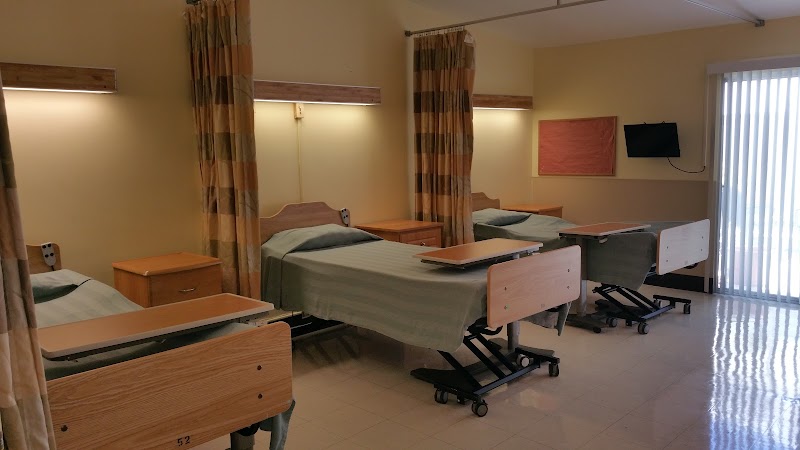
How is Fallbrook Skilled Nursing Staffed?

CMS rates FALLBROOK SKILLED NURSING's staffing level at 4 out of 5 stars, which is above average compared to other nursing homes. Staff turnover is 47%, compared to the California average of 46%.

What Have Inspectors Found at Fallbrook Skilled Nursing?

State health inspectors documented 21 deficiencies at FALLBROOK SKILLED NURSING during 2019 to 2025. These included: 21 with potential for harm.
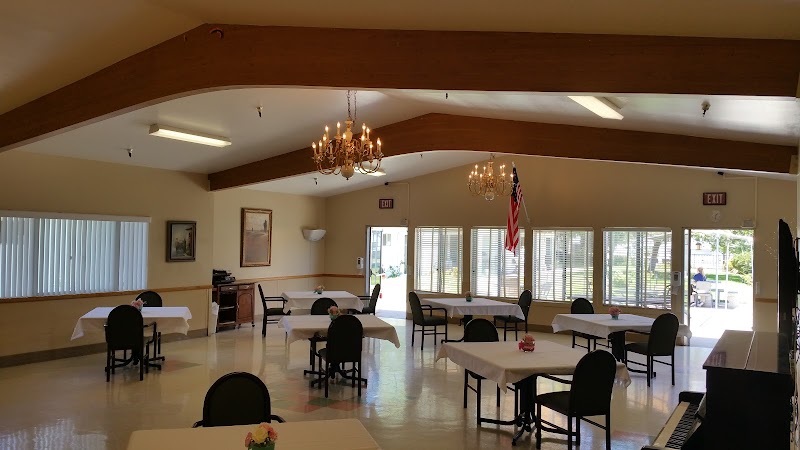
Who Owns and Operates Fallbrook Skilled Nursing?

FALLBROOK SKILLED NURSING is owned by a for-profit company. For-profit facilities operate as businesses with obligations to shareholders or private owners. The facility is operated by PROGRESSIVE HEALTH CARE CENTERS, a chain that manages multiple nursing homes. With 93 certified beds and approximately 73 residents (about 78% occupancy), it is a smaller facility located in FALLBROOK, California.
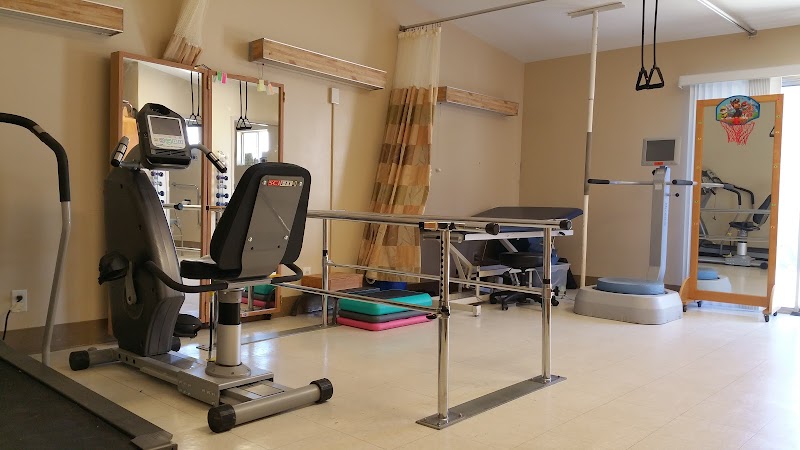
How Does Fallbrook Skilled Nursing Compare to Other California Nursing Homes?

Compared to the 100 nursing homes in California, FALLBROOK SKILLED NURSING's overall rating (4 stars) is above the state average of 3.2, staff turnover (47%) is near the state average of 46%, and health inspection rating (4 stars) is above the national benchmark.

What Should Families Ask When Visiting Fallbrook Skilled Nursing?

Based on this facility's data, families visiting should ask: "Can I visit during a mealtime to observe dining assistance and food quality?" "How do you handle medical emergencies, and what is your hospital transfer rate?" "Can I speak with family members of current residents about their experience?"

Is Fallbrook Skilled Nursing Safe?

Based on CMS inspection data, FALLBROOK SKILLED NURSING has a clean safety record: no substantiated abuse findings (meaning no confirmed cases of resident harm), no Immediate Jeopardy citations (the most serious violation level indicating risk of serious injury or death), and is not on the Special Focus Facility watch list (a federal program monitoring the lowest-performing 1% of nursing homes). The facility has a 4-star overall rating and ranks #1 of 100 nursing homes in California. While no facility is perfect, families should still ask about staff-to-resident ratios and recent inspection results during their visit.

Do Nurses at Fallbrook Skilled Nursing Stick Around?

FALLBROOK SKILLED NURSING has a staff turnover rate of 47%, which is about average for California nursing homes (state average: 46%). Moderate turnover is common in nursing homes, but families should still ask about staff tenure and how the facility maintains care continuity when employees leave.

Was Fallbrook Skilled Nursing Ever Fined?

FALLBROOK SKILLED NURSING has no federal fines on record. CMS issues fines when nursing homes fail to meet care standards or don't correct problems found during inspections. The absence of fines suggests the facility has either maintained compliance or corrected any issues before penalties were assessed. This is a positive indicator, though families should still review recent inspection reports for the full picture.

Is Fallbrook Skilled Nursing on Any Federal Watch List?

FALLBROOK SKILLED NURSING is not on any federal watch list. The most significant is the Special Focus Facility (SFF) program, which identifies the bottom 1% of nursing homes nationally based on persistent, serious quality problems. Not being on this list means the facility has avoided the pattern of deficiencies that triggers enhanced federal oversight. This is a positive indicator, though families should still review the facility's inspection history directly.