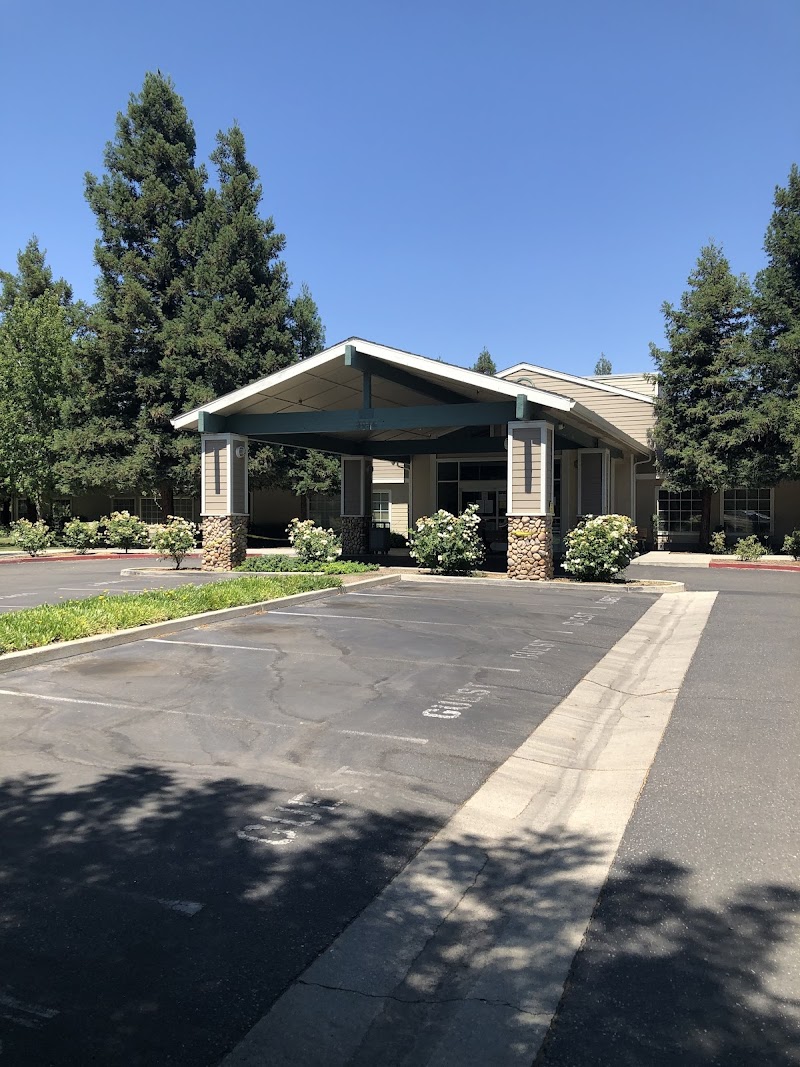
HORIZON HEALTH & SUBACUTE CENTER

3034 E HERNDON, FRESNO, CA 93720 (559) 321-0883
For profit - Limited Liability company 180 Beds GENERATIONS HEALTHCARE Data: November 2025 1 Immediate Jeopardy citation
Trust Grade
16/100
#822 of 1155 in CA
Last Inspection: March 2025

Within standard 12-15 month inspection cycle. Federal law requires annual inspections.

Overview

Horizon Health & Subacute Center has received a Trust Grade of F, indicating significant concerns about its operations and care quality. It ranks #822 out of 1155 facilities in California, placing it in the bottom half, and #25 out of 30 in Fresno County, showing that there are many better options nearby. The facility is worsening, having increased its issues from 8 in 2024 to 20 in 2025. Staffing is a relative strength with a rating of 4 out of 5 stars, although turnover is at 46%, which is average for the state. However, the facility has faced substantial fines totaling $22,913 and has been cited for serious incidents, including failing to provide adequate supervision for a resident with a known risk of injury, leading to a hospitalization for a broken arm, and not maintaining proper infection control, such as leaving nebulizer tubing on the floor and not cleaning equipment properly. Overall, while staffing appears stable, the facility's trend and serious deficiencies raise significant concerns for potential residents and their families.

Trust Score
F
16/100
In California
#822/1155
Bottom 29%
Safety Record
High Risk
Review needed
Inspections
Getting Worse
8 → 20 violations
Staff Stability
⚠ Watch
46% turnover. Above average. Higher turnover means staff may not know residents' routines.
Penalties
✓ Good
$22,913 in fines. Lower than most California facilities. Relatively clean record.
Skilled Nurses
○ Average
Each resident gets 32 minutes of Registered Nurse (RN) attention daily — about average for California. RNs are the most trained staff who monitor for health changes.
Violations
⚠ Watch
43 deficiencies on record. Higher than average. Multiple issues found across inspections.
★★☆☆☆
2.0
Overall Rating
★★★★☆
4.0
Staff Levels
★★★☆☆
3.0
Care Quality
★★☆☆☆
2.0
Inspection Score
Stable
2024: 8 issues
2025: 20 issues

The Good

  • 4-Star Staffing Rating · Above-average nurse staffing levels
  • Full Sprinkler Coverage · Fire safety systems throughout facility
  • No fines on record

Facility shows strength in staffing levels, fire safety.

The Bad

2-Star Overall Rating

Below California average (3.1)

Below average - review inspection findings carefully

Staff Turnover: 46%

Near California avg (46%)

Higher turnover may affect care consistency

Federal Fines: $22,913

Below median ($33,413)

Minor penalties assessed

Chain: GENERATIONS HEALTHCARE

Part of a multi-facility chain

Ask about local staffing decisions and management

The Ugly 43 deficiencies on record

1 life-threatening 1 actual harm
Mar 2025 2 deficiencies
CONCERN (D) 📢 Someone Reported This

A family member, employee, or ombudsman was alarmed enough to file a formal complaint

Potential for Harm - no one hurt, but risky conditions existed

Safe Environment (Tag F0584)

Could have caused harm · This affected 1 resident

**NOTE- TERMS IN BRACKETS HAVE BEEN EDITED TO PROTECT CONFIDENTIALITY** Based on observation, interview, and record review the facility failed to provide a safe, clean, comfortable and homelike enviro...

Read full inspector narrative →
**NOTE- TERMS IN BRACKETS HAVE BEEN EDITED TO PROTECT CONFIDENTIALITY** Based on observation, interview, and record review the facility failed to provide a safe, clean, comfortable and homelike environment for one of five residents (Resident 1) when the supply ventilation duct (an opening which allow cool or warm air to pass through supplied by a HVAC; Heating, Ventilation, and Air Conditioning system) in Resident 1's room was covered with three pieces of rubber material and two pieces of the rubber material were loose (hanging from the ceiling). This failure posed as a fire hazard endangering the lives of Resident 1, other residents and staff members. Findings: During an observation and interview on 3/26/25 at 11:30 a.m. with Resident 1 in Resident 1's room, the supply ventilation duct on Resident 1's ceiling was covered with three pieces of material with screws and one screw was missing leaving two pieces of the material loose and hanging from the ceiling. Resident 1 stated cold air came through the supply ventilation duct and the facility covered it with the material three years ago. During a concurrent observation and interview on 3/26/25 at 11:35 a.m. with the Maintenance Assistant (MA) in Resident 1's room, the MA stood on a chair and inspected the material covering the supply ventilation duct. The MA stated the material was made of rubber. The MA stated he was not aware if the rubber material was a fire hazard. During a review of Resident 1's admission Record (AR), dated 3/26/25, the AR indicated, Resident 1 was admitted on [DATE] with a history of Rheumatoid Arthritis, Functional Quadriplegia (the complete inability to move due to severe disability or frailty, without physical injury or damage to the brain or spinal cord), Colostomy (a surgical procedure that creates an opening in the abdominal wall to divert fecal matter from the large intestine to an external bag), Unspecified acquired deformity of hand, left hand, Muscle Wasting and Atrophy (a decrease in size of an organ or tissue) right and left thigh, and Atrial Fibrillation (a condition where the upper chambers of the heart beat irregularly and rapidly). During a review of Resident 1's Minimum Data Set (MDS; process for clinical assessment of all residents of long term care nursing facilities), dated 12/24/24, the MDS indicated, Resident 1's Brief Interview for Mental Status (BIMS; an assessment of a resident's cognitive status; the ability to remember, concentrate, learn new things, and/or make decisions that affect their everyday life) score was 15 (a score of 0 to 7 indicated severe impairment, 8 to 12 indicated moderate impairment, and 13 to 15 indicated minimal to no impairment). The MDS indicated, Resident 1 had upper and lower extremities impairments on both sides and was dependent with ADLs (Activities of Daily Living such as dressing, toileting, washing, feeding, mobility, and transferring). During an interview on 3/26/24 at 11:45 a.m. with the Director of Maintenance (DM), the DM stated the rubber material covering the supply ventilation duct in Resident 1's room was a fire hazard and unacceptable. The DM stated Resident 1's room should be safe and comfortable for Resident 1. The DM stated the rubber material would be removed and a permanent air deflector (a device made of plastic or metal, that redirects airflow from a ceiling vent, preventing drafts or hot/cold air from blowing directly on someone or something) will be installed to ensure a safe homelike environment for Resident 1. During an interview on 3/26/24 at 11:50 a.m. with the Administrator (ADM), the ADM stated rubber material covering the supply ventilation duct in Resident 1's room was a fire hazard and unacceptable. The DM stated Resident 1's room should be safe and comfortable for Resident 1. The DM stated the rubber material would be removed and a permanent air deflector will be installed to ensure a safe homelike environment for Resident 1. During a review of the facility's policy and procedure (P&P) titled, Homelike Environment, dated 2/2021, the P&P indicated, Policy Statement: Residents are provided with a safe, clean, comfortable and homelike environment and encouraged to use their personal belongings to the extent possible . Policy Interpretation and Implementation: 1. Staff provides person-centered care that emphasizes the resident's comfort, independence and personal needs and preferences. 2. The facility staff and management maximizes, to the extent possible, the characteristics of the facility that reflect a personalized, homelike setting. These characteristics include: a. clean, sanitary and orderly environment . During a professional reference review retrieved from https://ac-control.com/2023/07/28/the-dangers-of-blocking-hvac-vents/#:~:text=Blocking%20HVAC%20vents%20can%20lead,hazards%2C%20and%20increased%20humidity%20levels titled The Dangers of Blocking HVAC Vents, dated 7/28/23, the professional reference indicated, . Blocked HVAC vents can also pose a significant fire hazard. When vents are obstructed, heat can build up in the ductwork, increasing the risk of a fire. Additionally, if flammable materials are placed near blocked vents, the chances of a fire spreading rapidly are heightened. It is crucial to keep your vents clear of any obstructions to minimize the risk of fire accidents. Blocking HVAC vents can lead to a range of dangers, including reduced energy efficiency, uneven temperature distribution, strain on HVAC equipment, decreased indoor air quality, fire hazards, and increased humidity levels .
CONCERN (D) 📢 Someone Reported This

A family member, employee, or ombudsman was alarmed enough to file a formal complaint

Potential for Harm - no one hurt, but risky conditions existed

Deficiency F0658 (Tag F0658)

Could have caused harm · This affected 1 resident

**NOTE- TERMS IN BRACKETS HAVE BEEN EDITED TO PROTECT CONFIDENTIALITY** Based on observation, interview, and record review the facility failed to meet professional standards of quality for one of five...

Read full inspector narrative →
**NOTE- TERMS IN BRACKETS HAVE BEEN EDITED TO PROTECT CONFIDENTIALITY** Based on observation, interview, and record review the facility failed to meet professional standards of quality for one of five residents (Resident 1) when Resident 1 had an appointment on [DATE] for a CT scan (Computed Tomography; a medical imaging procedure used to create detailed pictures of the inside of the body) of the right lower leg due to a history of DVT (Deep Vein Thrombosis; a condition where a blood clot forms in a deep vein, typically in the legs) at [name of outside agency; a facility that provides a certain type of service the facility did not] and the CT scan was canceled because the outside agency was not informed that Resident 1 required a mechanical lift (a mechanical device used by caregivers to safely transfer individuals with limited mobility, such as those who are bedbound or unable to bear their own weight) for transfer. The outside agency did not have a mechanical lift and staff trained to use a mechanical lift. These failures resulted in the cancellation of Resident 1's CT scan on [DATE] and delayed care in the management of Resident 1's DVT in the right leg and the potential for problems related to DVT to go unidentified. Findings: During an observation and interview on [DATE] at 11:30 a.m. with Resident 1, in Resident 1's room, Resident 1 was in bed. Resident 1's left and right fingers were deformed (abnormal shapes or positions of the fingers, which can affect their function and appearance). Resident 1 stated she had a history of Rheumatoid Arthritis (a chronic autoimmune disease that primarily affects the joints). Resident 1 stated she was unable to walk, bear weight, and transfer herself. Resident 1 stated she required a mechanical lift for transfer. Resident 1 stated she had Atrial Fibrillation (a condition where the upper chambers of the heartbeat irregularly and rapidly) and a blood clot in her right thigh for 10 years. Resident 1 stated she had an appointment on [DATE] at the hospital for a CT scan of her right leg to see if the blood clot increased in size. Resident 1 stated when she was at the appointment, the hospital staff informed her they did not have a mechanical lift to transfer her out of her Geri Chair (a specialized, often reclining chair designed for use by elderly or disabled individuals) to complete the CT scan and Resident 1 was sent back to the facility. During a review of Resident 1's admission Record (AR), dated [DATE], the AR indicated, Resident 1 was admitted on [DATE] with a history of Rheumatoid Arthritis, Functional Quadriplegia (the complete inability to move due to severe disability or frailty, without physical injury or damage to the brain or spinal cord), Colostomy (a surgical procedure that creates an opening in the abdominal wall to divert fecal matter from the large intestine to an external bag), Unspecified acquired deformity of left hand, Muscle Wasting and Atrophy (a decrease in size of an organ or tissue) right and left thigh, Supraventricular Tachycardia (a type of heart rhythm disorder characterized by a rapid, regular heartbeat that originates above the lower chambers of the heart), and Atrial Fibrillation. During a review of Resident 1's Minimum Data Set (MDS; process for clinical assessment of all residents of long term care nursing facilities), dated [DATE], the MDS indicated, Resident 1's Brief Interview for Mental Status (BIMS; an assessment of a resident's cognitive status; the ability to remember, concentrate, learn new things, and/or make decisions that affect their everyday life) score was 15 (a score of 0 to 7 indicated severe impairment, 8 to 12 indicated moderate impairment, and 13 to 15 indicated minimal to no impairment). The MDS indicated, Resident 1 had upper and lower extremities impairments on both sides and was dependent (Helper does all the effort. Resident does none of the effort to complete the activity) with ADLs (Activities of Daily Living; dressing, toileting, washing, feeding, mobility, and transferring). During a review of Resident 1's Care Plan Report (CPR), dated [DATE], the CPR indicated, I have an ADL Self Care Performance Deficit limited mobility r/t (related to) rheumatoid arthritis with multiple hand and lower extremities contractures and deformities . Interventions: Transfer: The resident required 2 (two) staff assistance with transfers, [brand name] mechanical lift . During a concurrent interview on [DATE] at 8:45 a.m. with the Unit Manager (UM) 1, the UM 1 stated Resident 1 had an appointment on [DATE] to check the DVT to Resident 1's right lower leg. The UM 1 stated a referral was sent to the outside agency and the outside agency was informed that Resident 1 was arriving by Geri Chair and required total assistance (Helper does all the effort. Resident does none of the effort to complete the activity). The UM 1 stated the appointment was not completed on [DATE] because the outside agency did not have a mechanical to safely transfer Resident 1 out of the Geri Chair. The UM 1 stated she should have communicated in the referral that a mechanical lift was required for transferring Resident 1. The UM 1 stated moving forward, she will specify the type of device a resident required so the outside agency can accommodate the resident. The UM 1 stated it was standard of practice to communicate pertinent information with the outside agency so Resident 1 could receive the care she required. During a review of the facility's Appointment Calendar (AC), dated 10/2024, the AC indicated, Resident 1 had an appointment (with name of outside agency) on [DATE] at 3:00 p.m. During a review of Resident 1's [name of outside agency] Result Encounter Note (RES), dated [DATE], the RES indicated, CT ABDOMEN AND PELVIS WO (without) CONTRAST (Canceled) on [DATE]. During a review of Resident 1's Progress Notes (PN), dated [DATE], the PN indicated, Abdominal CT rescheduled at [name of outside agency] [DATE] at 1630 (4:30 p.m.) with arrival time of 1600 (4:00 p.m.) During a review of Resident 1's [name of outside agency] CT Abdomen and Pelvis (CT scan), dated [DATE], the CT scan indicated, . 3. There is abnormal distention of the right external iliac vein (a large vein in the pelvis) into the right common femoral vein (a major vein in the thigh) with mild perivesical stranding (increased density and a wavy appearance of the fat tissue surrounding the bladder). These findings are atypical (not typical) and concerning for presence of deep vein thrombus. Recommend correlation with venous duplex (an imaging test that uses high-frequency sound waves to visualize blood flow and structures within veins) . During a review of Resident 1's [name of outside agency] US (ultrasound; an imaging test that uses high-frequency sound waves to visualize blood flow and structures within veins) DVT Extremity Lower Right (US), dated [DATE], the US indicated, . FINDINGS: Sonographic evaluation of the right lower extremity performed. There is occlusive thrombus noted within the right external iliac vein, right common iliac vein and superior right superficial femoral vein corresponding to the filling defect within the deep vein seen on comparison CT of [DATE]. This was not clearly identified on the CT of [DATE]. There is incomplete compressibility consistent with non-occlusive thrombus within the right mid and inferior superficial femoral vein. Minimal blood flow demonstrated within the mid and inferior superficial femoral vein on color Doppler imaging (ultrasound) with venous waveforms noted. No filling defects noted within the IVC (Inferior Vena Cava; a large vein that carries deoxygenated blood from the lower body to the right atrium of the heart) . NOTE: Case discussed with ordering provider, [name physician] who requested patient to return to [name of facility] and he will arrange for follow-up with vascular surgery (a surgical specialty that focuses on the diagnosis and treatment of disorders affecting the blood vessels) . During an interview on [DATE] at 11:26 a.m. with the Director of Social Services (DSS), the DSS stated referrals were ordered by the physician. The DSS stated it was standard of practice to communicate relevant and pertinent medical information about the resident and what type of device the resident required with outside agencies when referrals were made. The DSS stated referrals were sent via (by) fax (an image of a document made by electronic scanning and transmitted as data) and the resident's medical information should be on the referral as well as verbal confirmation with the outside agency that they received the information. The DSS stated it was important to communicate the information so the facility can clarify questions the outside agency may have, and the outside agency can complete the referral, and residents can receive the service required. During an interview on [DATE] at 1:40 p.m. with the Director of Nursing (DON), the DON stated it was required to inform the outside agency Resident 1 required a mechanical lift to complete the CT scan on [DATE]. The DON stated it was standard of practice to communicate effectively to ensure residents were accommodated to meet their needs and to receive the care they required on time. During an interview on [DATE] at 1:45 p.m. with the Administrator (ADM), the ADM stated it was required to inform the outside agency Resident 1 required a mechanical lift to complete the CT scan on [DATE]. The ADM stated it was standard of practice to communicate effectively to ensure residents were accommodated to meet their needs and to receive the care they required on time. During a review of the facility's policy and procedure (P&P) titled, Referrals, Social Services, dated 12/2008, the P&P indicated, Referral, Social Services. Policy Statement: Social services personnel shall coordinate most resident referrals with outside agencies. Policy Interpretation and Implementation: 1. Social services shall coordinate most resident referrals. Exceptions might include emergency or specialized services that are arranged directly by a physician or the nursing staff . 3. Social services will collaborate with the nursing staff or other pertinent disciplines to arrange for services that have been order by the physician .
Mar 2025 16 deficiencies
CONCERN (D)

Potential for Harm - no one hurt, but risky conditions existed

Resident Rights (Tag F0550)

Could have caused harm · This affected 1 resident

**NOTE- TERMS IN BRACKETS HAVE BEEN EDITED TO PROTECT CONFIDENTIALITY** Based on observation, interview, and record review, the facility failed to ensure residents were treated with respect and dignit...

Read full inspector narrative →
**NOTE- TERMS IN BRACKETS HAVE BEEN EDITED TO PROTECT CONFIDENTIALITY** Based on observation, interview, and record review, the facility failed to ensure residents were treated with respect and dignity in an environment that promotes and enhances quality of life for two of six sampled residents (Residents 1 and 74) when Certified Nursing Assistants (CNA's 2 and 3) stood to fed them lunch. This failure violated Residents 1 and 74's right to be offered a dignified dining experience and made Resident 1 feel uncomfortable and disrespected. Findings: During an observation on 3/3/25 at 1:25 p.m. in the dining room, CNA 2 stood while she fed Resident 74 during lunchtime. CNA 2 spoke to Resident 74 while she stood over her, not sitting at eye level. During an interview at 3/3/25 at 1:46 p.m. with CNA 2, CNA 2 stated she should have sat down with Resident 74 during mealtime. CNA 2 stated she should have sat down on a chair next to Resident 74 and made sure she was at eye level when she fed him. CNA 2 stated Resident 74 could have felt uncomfortable and rushed when she stood to fed him. CNA 2 stated Resident 74 could have choked on his food when she did not feed him at eye level. CNA 2 stated she did not remember the last time she had an in-service on how to feed residents training. During a review of Resident 74's admission Record (AR- document containing resident demographic information and medical diagnosis) dated 3/6/25, the AR indicated, Resident 74 was admitted to the facility on [DATE]. The AR indicated, Resident 74 's diagnosis included, cerebral infraction (stroke-a condition where blood flow to the brain is interrupted, causing brain cells to die), visuospatial deficit (difficulties in understanding and interpreting visual and spatial information, leading to problems with spatial awareness, object recognition, and navigation.) expressive language disorder (a condition that affects a person's ability to communicate their thoughts and ideas through spoken or written language), visual disturbances (any changes in vision that affect the ability to see clearly or comfortable) and pain. During a review of Resident 74's Minimum Data Set (MDS - a resident assessment tool used to identify cognitive [mental processes] and physical functional level assessment), dated 1/26/25 the MDS, indicated, Resident 74 had a Brief Interview for Mental Status (BIMS - a test given by medical professionals to determine cognitive understanding on a scale of 1-15 ) score of 3 (a score of 0-7 suggests severe cognitive impairment, 8-12 suggests moderately impaired, 13-15 suggests cognitively intact) indicating Resident 74 was severely cognitive impaired. During a review of Resident 74's Care Plan (CP- a structured document that outlines the specific healthcare needs of a residents and the interventions necessary to meet those needs), dated revision 2/6/24, the CP indicated, Resident 74 assist with meals set up and hand to mouth assist as needed. During an observation on 3/3/25 at 1:42 p.m. in Resident 1's room, CNA 3 stood next to Resident 1 and fed her during lunch. During an interview on 3/3/25 at 1:50 p.m. in Resident 1's room, Resident 1 stated she needed help during meals. Resident 1 stated she felt uncomfortable and did not like when CNA's stood when they fed her. Resident 1 stated she felt disrespected and bad. During an interview with on 3/3/25 at 1:53 p.m. with CNA 3, CNA 3 stated she helped Resident 1 with meals. CNA 3 stated, Resident 1 required assistance all the time and was fully dependent (relying on another person or thing for support) with meals. CNA 3 stated she should have sat down when she fed Resident 1's lunch. CNA 3 stated Resident 1 could have felt rushed and could not have gotten a pleasurable dining experience. CNA 3 stated Resident 1 could have felt uncomfortable or a lack of dignity when she stood to fed Resident 1. CNA 3 stated she was not sure when the last in-service was for meal assistance. During a review of Resident 1's AR dated 3/6/25, the AR indicated, Resident 1 was admitted to the facility on [DATE] with diagnosis of quadriplegia (a medical condition characterized by the partial or complete loss of motor and sensory function in all four limbs (arms and legs), contracture left elbow, contracture left wrist, contracture right elbow and right wrist, muscle spasm, neuromuscular dysfunction (group of conditions that affect the nerves (neuromuscular system) and muscles) and pain. During a review of Resident 1s MDS dated 1/25/25 the MDS, indicated, Resident 1 had a Brief Interview for Mental Status (BIMS - a test given by medical professionals to determine cognitive understanding on a scale of 1-15) score of 15 (a score of 0-7 suggests severe cognitive impairment, 8-12 suggests moderately impaired, 13-15 suggests cognitively intact) indicating Resident 1 was cognitively intact. During a review of Resident 1's CP, dated revision 3/2/20, the CP indicated, The Resident requires total staff assistance to eat. During an interview on 3/05/25 at 3:29 p.m. with Licensed Vocation Nurse (LVN) 1, LVN 1 stated, The CNA's should be sitting at eye level with residents during dining. LVN 1 stated, CNA's could have made residents feel uncomfortable and intimidated by standing over them. LVN 1 stated, Sitting with them [resident] makes them feel comfortable and easy for meals. LVN 1 stated, It is part of a dignity for residents. LVN 1 stated, residents could have choked on food and might not eat or felt rushed. During an interview on 3/07/25 at 12:33 p.m. with the Director of Nursing (DON) the DON stated, the staff should have sat down at eye level during assistance with meals. The DON stated, Sitting down provided dignity and respect for the residents. The DON stated resident psychosocial wellbeing (a person's overall mental, emotional and social health) was better when staff sat down during dining. The DON stated, the residents could have felt undignified (lack of dignity). The DON stated the residents could have felt no human connection and compassion when staff stood over during meals. The DON stated, We all are responsible to ensure the residents were treated with dignity. During a review of the facility' policy and procedure (P&P) titled, Assistance with Meals dated 3/2022, the P&P indicated, Residents shall receive assistance with meals in a manner that meets the individual needs of each resident . Resident who cannot feed themselves will be fed with attention to safety, comfort and dignity for example. A. not standing over residents while assisting them with meals .
CONCERN (D)

Potential for Harm - no one hurt, but risky conditions existed

Deficiency F0561 (Tag F0561)

Could have caused harm · This affected 1 resident

**NOTE- TERMS IN BRACKETS HAVE BEEN EDITED TO PROTECT CONFIDENTIALITY** Based on observation, interview and record review the facility failed to ensure one of six sampled residents (Resident 53) had t...

Read full inspector narrative →
**NOTE- TERMS IN BRACKETS HAVE BEEN EDITED TO PROTECT CONFIDENTIALITY** Based on observation, interview and record review the facility failed to ensure one of six sampled residents (Resident 53) had the right to make choices about aspects of his life in the facility when his choice to have a shower on a Saturday instead of a Friday was not honored. This failure resulted in Resident 53's skin on his upper cheat and left upper arm becoming red, dry and itchy leading to him scratching himself opening the skin and the potential for an increased risk for infection. Findings: During a review of Resident 53's admission Record (AR- document containing resident demographic information and medical diagnosis) dated [DATE], the AR indicated, Resident 53 had diagnoses of end stage renal disease (condition where the kidneys have permanently lost their ability to function properly), diabetes mellitus (a chronic metabolic disorder characterized by high blood sugar (glucose) level), heart failure (when the heart muscle doesn't pump blood as well as it should) , hypertensive heart disease (a condition that develops when high blood pressure (hypertension) damages the heart over time), pain and history of falls. During a review of Resident 53's Minimum Data Set (MDS - a resident assessment tool used to identify cognitive [mental processes] and physical functional level assessment), dated [DATE] the MDS, indicated Resident 53 had a Brief Interview for Mental Status (BIMS - a test given by medical professionals to determine cognitive understanding on a scale of 1-15 ) score of 15 (a score of 0-7 suggests severe cognitive impairment, 8-12 suggests moderately impaired, 13-15 suggests cognitively intact) indicating Resident 53 was cognitively intact. During a review of Resident 53's Care Plan Report (CPR- comprehensive document that outlines a resident's health status, treatment goals, and interventions to achieve optimal outcomes) dated [DATE], the CPR indicated, [box] Focus: It is my preferences to have showers before breakfast on assigned shower days . [box]Goal: I will not experience any dignity complications through next review . [box]Interventions/Task: Resident's wishes will be honored . During a review of Resident 53's Progress Notes (PG- written records that document a resident 's health and care) dated [DATE], the PG indicated, . New self-inflicted scratch noted to left triceps . During a review of Resident 53's PG dated [DATE] at 11:59 p.m., the PG indicated, Resident refused shower and bed bath x 3. Educate the resident risk/benefits. During a review of Resident 53's PG dated [DATE] [Friday] at 11:22 p.m., the PG indicated, Resident refused shower and bed bath x 3. Educate the resident risk/benefits. During a review of Resident 53's PG dated [DATE] at 10:07 p.m., the PG indicated, Resident refused shower x3, CNA [Certified Nursing Assistant] and writer ask resident if he would like a bed bath instead resident refused. During a review of Resident 53's PG dated [DATE] [Friday] at 9:24 p.m., the PG indicated, Resident refused shower and bed bath x 3, resident said that he don't like to take shower on his dialysis days. Educate the resident risk/benefits. During a review of Resident 53's PG dated [DATE] [Friday] at 10:50 p.m., the PG indicated, Resident refused shower and bed bath x 3. Educate the resident risk/benefits. During a review of Resident 53's PG dated [DATE] at 10:09 p.m., the PG indicated, Resident refused shower and bed bath x 3. Educate the resident risk/benefits. During a review of Resident 53's PG dated [DATE] [Friday] at 9:59 p.m., the PG indicated, Resident refused shower and bed bath x 3. CNA and writer went in resident room ask if he would like a bed bath instead. Resident still refused. During a review of Resident 53's PG dated [DATE] at 11:29 p.m., the PG indicated, Resident refused shower and bed bath x 3. Educate the resident risk/benefits. During an observation and interview on [DATE] at 10:44 a.m. in Resident 53's room, Resident 53 had scattered scratches to his upper chest and both upper arms. Resident 53 stated his skin was itchy from not being able to shower. Resident 53 stated, I have showers on Tuesdays and Fridays. Resident 53 stated, I go to dialysis on Mondays, Wednesdays and Fridays. Resident 53 stated he was too tired to shower on his dialysis days. Resident 53 stated, he needed a shower due to his skin being itchy and dry. Resident 53 stated he was notified his shower days were on Tuesday and Saturdays when he was admitted to the facility. Resident 53 stated he notified the CNAs and nurses, and no one is doing anything about it. During an interview on [DATE] at 2:07 p.m. with Certified Nursing Assistant (CNA) 4, CNA 4 stated, Resident 53's shower days were on Tuesday and Fridays. CNA 4 stated Resident 53 refused showers on Friday last week when she was working. CNA 4 stated she notified the nurses when Resident 53 refused his showers. CNA 4 stated nurses were responsible to speak to the residents when they refused showers. CNA 4 stated residents chosen shower days should have been honored. CNA 4 stated residents have the right to choose their shower days, and it was their choice. CNA 4 stated Resident 53 could have felt neglected and felt the facility did not honor their wishes. CNA 4 stated residents and could have gotten upset and refused the schedule shower days. During an interview at [DATE] at 3:04 p.m. with License Vocation Nurse (LVN) 1, LVN 1 stated, We have a shower sheet, it has the date, the CNA and nurse will sign it. LVN 1 stated, each resident will get a shower sheet. LVN 1 stated, Residents were asked if they wanted bed bath when they refused showers. LVN 1 stated nurses should have document the reason a resident refused showers. LNV 1 stated Resident 53 could have refused to shower due to being tired from dialysis. LVN 1 stated, 'It is important because it is his right and he has the right to take showers on the days he wants. LVN 1 stated there was a potential for Resident 53's skin to have breakdown when he did not get showered. LVN 1 stated, his skin can get itchy skin which can potential causes bleeding and infection. LVN 1 stated it is all of our responsibility, nurse social services, CNA, unit manager, ADON [Assistant Director of Nursing] and DON [Director of Nursing], it is the staff's responsibility to ensure his wishes are honor. During an interview on [DATE] at 4:50 p.m. with LVN 3, LVN 3 stated, she was not sure about the process about changing the resident's showers days. LVN 3 stated she was not sure who made the schedule for the showers. LVN 3 stated, residents' choices were important to meet their needs and wellbeing. LVN 3 stated residents could have been depressed, upset and felt like their rights were not being honored. LVN 3 stated residents had a right to change their shower days. During an interview on [DATE] at 5:11 p.m. with LVN 4, LVN 4 stated, the process at the facility when Resident 53 refused showers was the nurses were supposed to talk to him and try to figure out how to help him when he refused his showers. LVN 4 stated, the nurses should have asked why Resident 53 refused the showers on the days he was scheduled. LVN 4 stated Resident 53 could have itchy skin and had potential for skin breakdown. LVN 4 stated Resident 53 was at risk for infection from broken skin. LVN 4 stated, they should be talking to him and figure out what to do. LVN 4 stated, Resident 53 should have been involved with his care and should had a say in his care. LVN 4 stated, We have not identified the reason why he is refusing, LVN 4 stated, We only identify he would like his shower early on Tuesday, but do not know why he is refusing showers on Friday. LVN 4 stated, His needs and choices were not meet. During an interview on [DATE] at 12:17 p.m. with the Director of Nursing (DON) the DON stated, We should be able modify schedule as needed. The DON stated, The CNA should report to the charge nurse so it could be modified. The DON stated, The staff should have changed the showers to Saturdays to accommodate to his choice. The DON stated, residents had the right to get showers on the days requested. The DON stated Resident 53 was uncleaned when he refused showers. The DON stated, refusing showers could affect his dignity, safety and had increased risk for a urinary tract infection (UTI-an infection of the urinary tract, which includes the bladder, kidneys, ureters, and urethra). The DON stated, Resident 53 could have had skin issue such as dryness and changes in skin condition. The DON stated, his choice was not honored. During a review of facility's policy and procedure titled, Resident's Rights, dated 2/2021, the P&P indicated, Federal and state laws guarantee certain basic rights to all residents of this facility. These rights include the resident's rights to . self-determination [having the right to control one's own life and [NAME], encompassing the ability to make choices, set goals, and advocate for oneself] .
CONCERN (D)

Potential for Harm - no one hurt, but risky conditions existed

Safe Environment (Tag F0584)

Could have caused harm · This affected 1 resident

**NOTE- TERMS IN BRACKETS HAVE BEEN EDITED TO PROTECT CONFIDENTIALITY** Based on observation, interview and record review, the facility failed to provide a comfortable and homelike environment for one...

Read full inspector narrative →
**NOTE- TERMS IN BRACKETS HAVE BEEN EDITED TO PROTECT CONFIDENTIALITY** Based on observation, interview and record review, the facility failed to provide a comfortable and homelike environment for one of eight residents (Resident 55), when the facility did not respond to Resident 55's complaint of air from the vent in his room blowing on his face. This failure resulted in Resident 55 feeling cold, frustrated, and uncomfortable in his bed. Findings: During a concurrent observation and interview on 3/3/25 at 11:16 a.m. with the caregiver of Resident 55 in his room, a small white trash bag taped to the side of the over the bed table (a rolling table designed to be positioned over a bed, providing a stable surface for activities like eating, reading, or working while in bed), was observed waving back and forth as if being blown by the wind. The table was placed over the bed where the resident's upper body and head would have been if the resident had been in the bed. Resident 55 was sitting at the end of his bed in a wheelchair watching the television that belonged to the A bed and Resident 55 was in B bed. Resident 55's caretaker stated, .he was unable to watch tv from in his bed, because he preferred to sit at the end of his bed as much as possible to avoid the wind being blown on him by the vent. The caretaker stated, . maintenance had come into the room and looked at the vent and told her there was not anything that could be done . During a review of Resident 55's Record of Admission (AR), dated 3/6/25, the AR indicated, Resident 55 was admitted to the facility on [DATE], with diagnoses which included, Encephalopathy (a disorder or disease that affects the function or structure of the brain), dysphagia (difficulty swallowing), Parkinson's Disease (a progressive neurological disorder that affects movement, balance, and coordination), Anemia (a condition in which the body does not have enough healthy red blood cells or hemoglobin), and Neoplasm of Thyroid (a tumor of the thyroid). During a review of Resident 55's Minimum Data Set (MDS-a resident assessment tool used to identify resident cognitive, physical abilities and needs), dated 2/11/25, the MDS indicated, Resident 55's Brief Interview for Mental Status (BIMS-screening tool used to assess resident cognition status on a scale of 0 to15 [0-6 severe cognitive deficit, 7-12 moderate cognitive deficit, 13-15 no cognitive deficit), score was 3 out of 15 which indicated, Resident 55 had a severe cognitive deficit. During a concurrent observation and interview on 3/6/25 at 9:09 a.m. with Certified Nursing Assistant (CNA) 7, in Resident 55's room, CNA 7 put her hand near the top of Resident 55's bed and stated she could feel the wind being blown on her hand. CNA 7 stated, . the air is blowing on the resident's face . it has not been corrected . the air still blows on the resident's face . the family states that the resident complains that it was cold, and he uncomfortable . Maintenance is aware, and they would be the ones [department], to fix the a/c [air conditioning] . During a concurrent interview and record review on 3/6/25 at 9:15 a.m. with Licensed Vocational Nurse (LVN) 4, the Horizon Health and Subacute Deficiency Report (DR), dated 1/2/25 was reviewed. The DR indicated, on 1-2-25, cold air coming from the vent in Resident 55's room was reported. The DR was marked and initialed as completed (date and time of completion was not listed). LVN 4 stated, . a Maintenance Log [DR], is kept in a binder at each Nurse Station, items needing repair are placed on the log . once the issue has been placed on the log the maintenance department is responsible for investigating and correcting the issue . Resident 55's maintenance issue has not been corrected . During a concurrent observation, and interview on 3/6/25 at 11:10 a.m. with the Maintenance Director (MD), in Resident 55's room, Resident 55 was observed sitting up in his bed with his blankets pulled up under his chin, the wind from the vent was blowing the white tag on Resident 55's blanket. The MD stated, . the wind from the vent was blowing on the residents head and if the resident is uncomfortable the air vents can be moved to prevent the air from blowing on him, it is an easy fix and I do not know why it has not been done . The MD stated, This is not what my expectations are for my staff, this is not a home like environment for the resident. During a review of the facility's policy and procedure (P&P), titled, Homelike Environment dated 2/2021, indicated, . Staff provides person-centered care that emphasizes the residents' comfort, independence and personal needs and preferences . comfortable and safe temperatures .
CONCERN (D)

Potential for Harm - no one hurt, but risky conditions existed

Transfer Notice (Tag F0623)

Could have caused harm · This affected 1 resident

**NOTE- TERMS IN BRACKETS HAVE BEEN EDITED TO PROTECT CONFIDENTIALITY** Based on interview and record review the facility failed to notify the Ombudsman (a public official who advocates for residents'...

Read full inspector narrative →
**NOTE- TERMS IN BRACKETS HAVE BEEN EDITED TO PROTECT CONFIDENTIALITY** Based on interview and record review the facility failed to notify the Ombudsman (a public official who advocates for residents' rights, health, safety, and well-being, investigating and resolving complaints and concerns), and the resident representative, (RP-person designated to make decisions for a resident), in writing of a resident's transfers to the hospital for one of six sampled residents (Resident 66) when the facility did not inform the ombudsman of Resident 66's transfer to the hospital and the RP was not given written notice of Resident 66's transfer to the hospital. This failure violated Residents 66's right to have his RP and Ombudsman properly informed of his hospitalization on 7/8/24. Findings: During an interview on 3/5/25 at 11:43 a.m. with Registered Nurse (RN) 1, RN 1 stated Resident 66's RP was only called for his transfer to the hospital on 7/8/24 and was not given the notification in writing. RN 1 stated she did not know residents and their RP's needed to be notified in writing of their transfer to the hospital. RN 1 stated it was important to notify the RP in writing because it ensured they really knew why the resident was sent to the hospital. During an interview on 3/7/25 at 9:31 a.m. with the Social Services Director (SSD), the SSD stated the social services department can notify the resident's RP if the resident was transferred to the hospital. The SSD stated the Ombudsman is also notified of all transfers to the hospital. The DSD stated Resident 66's transfer to the hospital was not given in writing to his RP or to the Ombudman. The DSD stated it was important to notify the Ombudsman and RP of transfer to the hospital because it was the residents rights to have the people informed. During a concurrent interview and record review on 3/7/25 at 9:56 a.m. with the social services aasistant (SSA), Resident 66's Notice of Transfer dated 7/8/24 was reviewed. The Notice of Transfer indicated, indicated Resident 66's RP was called for his transfer to the hospital without a written notice, and the Ombudman was not notified. The SSA stated Resident 66's RP should have been notified of the hospital transfer in writing and the Ombudsman should have also been informed. The SSA stated it was important to have all the involved parties informed because if any issue regarding the hospitalization came up they would be able to help Resident 66. During an interview on 3/7/25 at 11:12 a.m. with the Director of Nursing (DON), the DON stated it was important to notify Resident 66's Ombudsman and RP in writing of his transfer to the hospital because it was the residents right to have their RP and Ombudsman informed of where they were. During a review of Resdient 66's admission Record (AR) dated 3/6/25, the AR indicated, Resident 66 was admitted to the facility on [DATE]. During a review of the facility's policy and procedure (P&P) titled, Transfer or Discharge, Facility-Initiated, dated 10/22, the P&P indicated, .4. Notice of Transfer is provided to the resident and representative as soon as practicable before the transfer and to the long term care (LTC) ombudsman when practicable . 6. Notices are provided in a form and manner that the resident can understand .
CONCERN (D)

Potential for Harm - no one hurt, but risky conditions existed

Deficiency F0658 (Tag F0658)

Could have caused harm · This affected 1 resident

**NOTE- TERMS IN BRACKETS HAVE BEEN EDITED TO PROTECT CONFIDENTIALITY** Based on observation, interview, and record review, the facility failed to meet professional standards of practice for two of se...

Read full inspector narrative →
**NOTE- TERMS IN BRACKETS HAVE BEEN EDITED TO PROTECT CONFIDENTIALITY** Based on observation, interview, and record review, the facility failed to meet professional standards of practice for two of seven sampled residents (Residents 52 and 113) when: 1. Resident 52's tube feeding bag (TF - a liquid form of nutrition that is carried through your body through a flexible tube) was not labeled with the date it was hung (set up for administration). 2. Resident 113's TF bag was not labeled with the time the TF bag was hung. These failures had the potential to result in Residents 52 and 113 to receive nutrition that was outdated or expired and put them at risk of food borne illness (any illness resulting from eating contaminated/spoiled foods). Findings: During an observation on 3/3/25 at 9:35 a.m. in Resident 52's room, Resident 52 was dressed, lying in bed asleep with her head elevated. Resident 52 had a TF attached to a feeding pump (a machine that delivers specific amount of fluids per hour of nutrition) that was not administering TF to Resident 52. Resident 52's TF bag had no date listed indicating when the TF was hung, and the feeding pump was set to paused. During a concurrent observation and interview on 3/3/25 at 9:37 a.m. with Licensed Vocational Nurse (LVN) 6 in Resident 52's room, Resident 52's TF bag had no date listed. LVN 6 stated the TF bag should have been dated when it was hung. LVN 6 stated the TF bag needed to be changed every 24 hours. LVN 6 stated the TF bag needed a date in order to see when it was last changed. LVN 6 stated if there was no date on the bag, Resident 6 could have received a feeding that had gone bad from being in the bag too long. During a review of Resident 52's admission Record (AR - a summary of information regarding a patient which includes patient identification, past medical history, insurance status, care providers, family contact information and other pertinent information), dated 3/5/25, the AR indicated, Resident 52 was admitted to the facility from a hospital on [DATE] with diagnoses of acute respiratory failure (a serious condition that occurs when the lungs cannot get enough oxygen into the blood or remove enough carbon dioxide [a waste gas] from the blood), subarachnoid hemorrhage (bleeding in the space between the brain and the membrane that covers it), Congestive heart failure (CHF-a heart disorder which causes the heart to not pump the blood efficiently, sometimes resulting in leg swelling), and dysphagia (difficulty swallowing). During a review of Resident 52's Minimum Data Set (MDS - a resident assessment tool used to identify cognitive [mental processes] and physical functional level assessment), dated 1/16/25, the MDS section C indicated, Resident 52 had a Brief Interview for Mental Status (BIMS - a test given by medical professionals to determine cognitive (involving the process of thinking, learning and understanding) understanding on a scale of 1-15 ) score of zero (a score of 0-7 suggests severe cognitive impairment, 8-12 suggests moderately impaired, 13-15 suggests cognitively intact), which suggested Resident 52 was severely cognitively impaired. During a review of Resident 52's Order Summary Report, dated 3/5/25, the Order Summary Report indicated, . Enteral Feed Order [tube feeding] in the evening related to DYSPHAGIA, OROPHARYNGEAL PHASE (the middle part of the throat, behind the mouth) . Enteral: (Feeding Brand Name) at 50 milliliters per hour (mL/HR - unit of measurement) x [every] 16 hours (800ml total) via G-Tube (a surgical opening fitted with a device to allow feedings to be administered directly to the stomach). Start Feeding . at 1700 [5:00 pm]. Continue infusion until complete . During an observation on 3/3/25 at 10:10 a.m. in Resident 113's room, Resident 113 was dressed, lying on his back, head elevated with his arms bent up toward his chest. Resident 113's TF was infusing at a rate of 40ml/HR. Resident 113's TF bag had no label with the time it was hung. During a review of Resident 113's AR, dated 3/6/25, the AR indicated, Resident 113 was admitted to the facility from a hospital on 7/31/24 with diagnoses of chronic respiratory failure (a serious condition that occurs when the lungs cannot get enough oxygen into the blood or remove enough carbon dioxide [a waste gas] from the blood), intracranial hemorrhage (bleeding in and around the brain), Tracheostomy (a surgical opening in the windpipe to allow air and oxygen reach the lungs), and transient ischemic attack (TIA - a short period of symptoms similar to those of a stroke, caused by a brief blockage of blood flow to the brain). During a review of Resident 113's MDS, dated 12/28/24, the MDS section C indicated, Resident 113 had a BIMS score of zero, which suggested Resident 113 was severely cognitively impaired. During a review of Resident 113's Order Summary Report, dated 3/6/25, the Order Summary Report indicated, . enteral feed order in the evening . tube feeding [tube feeding brand name] at 40 ml/HR x 20hrs . Start Feeding . at 1700 until total volume is met . During an interview on 3/06/25 at 9:29 a.m. with LVN 7, LVN 7 stated feeding tube and fluid bags should have been changed every night and the bags should have had a label with the date and time they were changed. LVN 7 stated staff needed to know when the TF was hung and if the infusion was completed at the ordered time. LVN 7 stated most tube feedings were given over 20 hours. LVN 7 stated the TF bag could have been changed at any time and having the date and time it was hung helped staff know if the amount infused within a certain time was correct for the resident. During an interview on 3/06/25 at 4:33 p.m. with the Director of Nursing (DON), the DON stated the TF bag should have been dated and timed when it was hung. The DON stated labeling the TF bag was a safe practice and it was a guideline set by the manufacture. The DON stated the nurses have 48 hours to give the tube feeding before it needed to be changed out. The DON stated the tube feeding consistency could have changed if it was left in the bag too long. The DON stated staff would be giving food to the resident that had gone bad. The DON stated labeling tube feeding with dates and times would also be considered an infection prevention practice which would prevent the resident from getting a food borne illness (any illness resulting from eating contaminated or spoiled foods). During a review of the facility's policy and procedure (P&P) titled, Enteral Nutrition, dated 11/2018, the P&P indicated, . adequate nutritional support through enteral nutrition is provided to residents as ordered . the nurse confirms that orders for enteral nutrition are complete . administration method . volume and rate of administration . instructions for flushing (solution, volume, frequency, timing and 24-hour volume) .
CONCERN (D)

Potential for Harm - no one hurt, but risky conditions existed

Deficiency F0790 (Tag F0790)

Could have caused harm · This affected 1 resident

**NOTE- TERMS IN BRACKETS HAVE BEEN EDITED TO PROTECT CONFIDENTIALITY** Based on observation, interview, and record review, the facility failed to maintain routine dental services to meet the needs ea...

Read full inspector narrative →
**NOTE- TERMS IN BRACKETS HAVE BEEN EDITED TO PROTECT CONFIDENTIALITY** Based on observation, interview, and record review, the facility failed to maintain routine dental services to meet the needs each for one of two residents when Resident 76 had treatment recommendations for a bone spur (an abnormal bony growth that forms on or around joints or along the edges of bones) removal and a new full set of dentures (a removable plate or frame holding one or more artificial teeth) and no action taken by the facility since 9/15/23, leaving the resident without dental service intervention for 17 months and three weeks. These failures resulted in Resident 76 wearing dentures that did not fit properly and caused her pain had the potential to result in poor oral health, difficulty eating and speaking, and decreased quality of life that could lead to depression (a mood disorder that causes a persistent feeling of sadness and loss of interest) and anxiety (a mental health disorder characterized by feelings of worry, anxiety, or fear that are strong enough to interfere with one ' s daily activities). Findings: During a concurrent observation and interview on 3/3/25 at 9:25 a.m. with Resident 76 in Resident 76 ' s room, Resident 76 was observed sitting upright, awake in bed on her tablet with bedside table across her bed with drinks and snacks. Resident 76 stated, I have dentures, but they don ' t fit right. This is my second set [of dentures]. Resident 76 stated I have a bone sticking out on the bottom right row of my mouth and because of this the dentures are uncomfortable to wear and cause pain. Resident 76 stated the dentures were uncomfortable and did not fit right and staff had been informed. Resident 76 stated not wearing the dentures had not affected her diet or contributed to weight loss but, I have to be careful when eating some hard foods like chips. During an interview on 3/6/25 at 8:38 a.m. with Resident 76, Resident 76 stated she would prefer to wear dentures and would love to have a beautiful smile. Resident 76 stated, right now I prefer not to wear my dentures because they hurt. Resident 76 stated, I think if I could wear dentures it will make me feel better about myself. During a review of Resident 76 ' s admission Record (AR) dated 3/6/25, the AR indicated the resident was initially admitted on [DATE] and readmitted on [DATE]. The AR indicated Resident 76 is her own Responsible Party (RP- healthcare decision maker). The AR indicated, .Diagnosis Information . Major Depressive . anxiety disorder . During a review of Resident 76 ' s Care Plan (CP) dated 12/8/24, the CP indicated, Focus: Resident has dental appliance - removable dentures. At risk for gum irritation and difficulty chewing. Date initiated: 12/18/2024 . Interventions/Tasks: Monitor/document/report to MD [Medical Director] PRN [as needed] s/sx [signs and symptoms] of oral/dental problems needing attention: Pain (gums, toothache, palate [roof of the mouth]) . Date initiated:12/18/2024 . Refer to dentist as needed. Date initiated: 12/18/2024 . During a review of dental note from [contracted dental office], dated 7/7/23, the dental note indicated, . Initial done . Bone spur on lower right, pt [patient] cannot wear F2 [upper and lower dentures]. Need to remove bone spur . The dental note indicated, . [Treatment] Recommendations: . removal of bone spur . During a review of dental note from [contracted dental office], dated 7/14/23, the dental note indicated, . Evaluation. Pt has a bone spur area [number] 29 [number location of tooth] [through] 30 [number location of tooth]. Per pt it causes pain and is unable to wear F2 . During a review of dental note from the [contracted dental office], dated 9/15/23, the dental note indicated, . [evaluation] [with] x-ray [a photographic or digital image of the internal composition of something] only . Treatment in progress: NOA [notice of insurance authorization] pending . During a review of Social Service Note dated 7/10/23, the Social Service Note indicated, .Resident was seen by the Dentist on 7/7/23. Please refer to notes reflecting visit under DOCUMENTS Tab/PHYSICIAN CONSULTATIONS . During a review of Social Service Note dated 7/17/23, the Social Service Note indicated, .Resident was seen by the Dentist on 7/14/23. Please refer to notes reflecting visit under DOCUMENTS Tab/PHYSICIAN CONSULTATIONS . During a review of Social Service Note dated 9/18/23, the Social Service Note indicated, .Resident was seen by the Dentist on 9/15/23. Please refer to notes reflecting visit under DOCUMENTS Tab/PHYSICIAN . During a review of Social Service Note dated 3/6/23, the Social Service Note indicated, Writer spoke with [dental office employee] from [the contracted dental office] regarding the status of resident ' s recommendations from Dentist of removal of bone spur [due to] dentures not fitting well. Per [dental office employee] stated, they had the resident as discharged as of December 2024. [Dental office employee] was sent via email current facesheet and has scheduled the resident to be seen by the dentist on 3/10/25. Resident made aware and satisfied . During an interview on 3/6/25 at 11:55 a.m. with the Social Services Director (SSD), the SSD stated when he spoke with dental healthcare in the morning, Resident 76 was discharged on their census since December 2024 due to an acute hospital visit and was not readmitted to their services upon Resident 76 ' s return to the facility. The SSD stated every month a census is sent to dental services before they are to come in and perform their monthly evaluations on residents and dental services had received a facility census for January 2025 and February 2025. The SSD stated the individual in the facility to coordinate care between dental services and the resident would be social services. The SSD stated, I should have reviewed dental notes and followed up on resident care. The SSD stated he is responsible for reviewing the dental notes for residents when they are made and when they are uploaded. During an interview on 3/6/24 at 4:52 p.m. with the Director of Nursing (DON), the DON stated, even if a resident is their own RP, the facility should be the [NAME] to coordinate dental services with a resident. The DON stated the SSD should have stepped in to coordinate services between the resident and dental care services. During an interview on 3/7/25 at 9:15 a.m. with the DON, the DON stated if dental issues or getting dentures for a resident are not addressed, it may affect how a resident feels about themselves. During a review of the facility ' s policy and procedure (P&P) titled Dental Services dated 2001, the P&P indicated, .6. Social services representatives will assist residents with their appointments, transportation arrangements, and for reimbursement of dental services under the state plan, if eligible . 10. If dentures are damaged or lost, residents will be referred for dental services within 3 days. If the referral is not made within 3 days, documentation will be provided regarding what is being done to ensure that the resident is able to eat and drink adequately while awaiting the dental services; and the reason for the delay . During a review of the job description Director of Social Services dated 2003, the Director of Social Services indicated, .Administrative Functions: . Coordinate social service activities with other departments as necessary. Work with the facility ' s consultants as necessary and implement recommended changes as required .
CONCERN (D)

Potential for Harm - no one hurt, but risky conditions existed

Deficiency F0802 (Tag F0802)

Could have caused harm · This affected 1 resident

Based on observation, interview and record review, the facility failed to ensure two out of twenty-three kitchen staff (KS 1 and 2) had appropriate competencies and skill sets to safely and effectivel...

Read full inspector narrative →
Based on observation, interview and record review, the facility failed to ensure two out of twenty-three kitchen staff (KS 1 and 2) had appropriate competencies and skill sets to safely and effectively carry out the functions of food and nutrition services when: 1. KS 1 used a #12 scoop (1/3 cup, 2.67 ounces) to portion chopped meat when the menu did not indicate portion sizes for chopped meat; and 2. KS 2 did not use the correct portion size when preparing tuna and egg salad sandwiches. These failures had the potential to result in residents receiving inadequate protein which could result in frailty (decreased energy), weight loss, delayed wound healing, loss of muscle, and increased risk of fractures (broken bones). Findings: 1. During an observation of the lunch meal service on 3/4/25 at 12:37 p.m. KS 1 was plating chopped hamburger for residents on prescribed chopped diets. Hamburger patties were pre-chopped and paced in a container on the steam table prior to the start of meal service. Hamburger pieces were approximately ½ inch in size. KS 1 used a full #12 scoop to portion chopped hamburger meat for Residents 107, 34, 74, and 26. During an interview on 3/4/25 at 1:30 p.m. with KS 1 at the completion of the lunch meal service, KS 1 stated a full #12 scoop was used for regular portion sizes. For residents with ordered small portion sizes a #12 scoop should be used and filled up halfway. KS 1 stated she had been employed at the facility for eight years. During a review of the lunch spreadsheet titled, Daily Spreadsheet dated 3/4/25 the spreadsheet indicated, food portion sizes for mechanical soft (easily chewable) and puree (blended smooth) diets but did not indicate portion sizes for a chopped diet. During a review of the facilities document titled, Resident Alert Tally Report dated 3/5/25, the report indicated, Resident 107, 34, 74 and 26 required chopped meat, regular portion sizes. During an interview on 3/4/25 at 4:48 p.m. with Registered Dietitian (RD), RD stated it was her expectation for staff to follow all recipes and portions. During an interview on 3/5/25 at 11:14 a.m. with Dietary Services Supervisor (DSS), the DSS stated the regular chopped hamburger portion size amount should have been 3 ounces for the patty. DSS stated a #12 scoop would have been an appropriate portion for residents with ordered small portions, but not for residents with regular portion size. During a concurrent interview and record review on 3/5/25 at 11:15 a.m. with the DSS, the facilities policy and procedure (P&P) titled, Portion Control, dated 8/1/23 was reviewed. The P&P indicated, Food and nutrition services staff would receive training on proper portion sizes at regular intervals . #12 scoop equaled 2.67 ounces or 1/3 cup . #10 scoop equaled 3 ¼ ounces. DSS stated a #12 scoop equaled a 2.67-ounce portion and the #10 scoop would have been 3 1/4 ounces. DSS stated the #10 scoop should have been used when KS 1 portioned out the chopped hamburger during meal service. DSS stated he did not have any competency evaluations (knowledge skills checks) for KS 1. During an interview on 3/5/25 at 3:35 p.m. with RD, the RD stated she reviewed and approved the facility menu. RD stated that it was possible to add a column on the menu spreadsheet to indicate portions required for chopped diets. RD stated regular chopped diets required the same portion amounts as regular diets. RD stated it was important for the serving size of regular chopped foods to be accurate and the same as regular diets. To ensure the portions were accurate, RD stated it was her expectation of staff to get a whole hamburger patty (regular portion), chop it and plate immediately during meal service. RD stated that was how she trained staff to prepare chopped diets. RD stated she did not have a copy of the training in-service. RD stated she believed there were training issues among kitchen staff. During a review of KS 1 personnel file, there was no job competency. During an interview with DSS on 3/5/25 at 3:59 p.m. the DSS stated there was no job competency completed for KS 1. 2. During an observation on 3/3/25 at 4:07 p.m. in the kitchen, KS 2 was putting prepared sandwiches away (three egg salad, two tuna). KS 2 stated she made them ahead of time for residents that may request them for dinner. KS 2 stated she used a plastic spoon to scoop and measure out how much tuna and egg salad to put on the bread. KS 2 stated she placed 1-2 plastic spoonful's per sandwich. During an interview on 3/4/25 at 9:35 a.m. with DSS. The DSS stated KS 2 had come to him and asked how much filling should be added when tuna and egg sandwiches were prepared. The DSS stated he in-serviced KS 2 on how to properly make sandwiches. The recipes were printed out and hung for kitchen staff reference. The DSS stated a #8 scoop (1/2 cup) should be used to fill sandwiches. The expectation was kitchen staff would scoop it off and measure when sandwiches were prepared. The DSS stated the sandwiches that were prepared by KS 2 the day before were remade. During an interview on 3/4/25 at 4:48 p.m. with RD, RD stated it was her expectation of staff to follow recipes and portions when preparing food. During a review of the facilities policy and procedure (P&P) titled, Portion Control dated 8/1/2023, the P&P indicated, #8 scoop is equal to ½ cup or four ounces . scoops should be leveled off (not overflowing) for the most accurate portion size . portions that are too small result in the individual not receiving the nutrients needed . Food and nutrition service staff will receive training on proper portion sizes at regular intervals . During a review of a dietary department in-service sign in sheet titled Meal service, tray line, following correct portion sizes according to spreadsheet, dated 8/15/24 indicated KS 2 had not received the provided training along with six other dietary department staff. During a review of KS 2 personnel file, there was no job competency. During an interview with DSS on 3/5/25 at 11:14 a.m. DSS stated there was no job competency completed for KS 2. During a review of the facilities policy and procedure (P& P) titled Evaluating Food and Nutrition Services and Clinical Nutrition Personnel, dated 2023, the P&P indicated, The director of food and nutrition services will complete periodic written evaluations for department staff . clinical staff should be evaluated using competency based assessment . the registered dietitian nutritionist should evaluate nutrition support staff . the employee competency checklist will be completed at the end of 30/60/90 days and periodically as needed .
CONCERN (D)

Potential for Harm - no one hurt, but risky conditions existed

Safe Environment (Tag F0921)

Could have caused harm · This affected 1 resident

**NOTE- TERMS IN BRACKETS HAVE BEEN EDITED TO PROTECT CONFIDENTIALITY** Based on observation, interview and record review, the facility failed to ensure one of six sampled residents (Resident 35) area...

Read full inspector narrative →
**NOTE- TERMS IN BRACKETS HAVE BEEN EDITED TO PROTECT CONFIDENTIALITY** Based on observation, interview and record review, the facility failed to ensure one of six sampled residents (Resident 35) area was maintained a safe, functional, sanitary and comfortable environment for residents staff and the public when, Resident 35's room had a bag of adult diapers, multiple t-shirts, sweaters and jackets stacked on top of a walker and wheelchair at the foot of the hospital bed, blocking access to the window. These failures had the potential to cause injuries, falls and a fire safety hazard for Resident 35 and her roommate. Findings: During a review of Resident 35's admission Record (AR- document containing resident demographic information and medical diagnosis) dated 3/6/25 the AR indicated, Resident 35 was admitted to the facility on [DATE]. Resident 35's diagnosis included, chronic kidney disease (a long-term condition where the kidneys gradually lose their ability to filter waste products and excess fluid from the blood), pain, hypertension (high blood pressure), anxiety, depressive disorder (a common mental health condition characterized by persistent feelings of sadness, hopelessness, and loss of interest or pleasure in activities) and hyperlipidemia (abnormally high levels of lipids (fats) in the blood). During a review of Resident 35's Minimum Data Set (MDS - a resident assessment tool used to identify cognitive [mental processes] and physical functional level assessment), dated 2/18/25 the MDS, indicated, Resident 35 had a Brief Interview for Mental Status (BIMS - a test given by medical professionals to determine cognitive understanding on a scale of 1-15 ) score of 10 (a score of 0-7 suggests severe cognitive impairment, 8-12 suggests moderately impaired, 13-15 suggests cognitively intact) indicating Resident 35 cognition was moderately impaired. During an observation and interview on 3/3/25 at 10:07 a.m. in Resident 35's room, there were four shirts hanging on a doorknob, four loose adult diapers, a bag of adult diapers, men and women t-shirts, sweaters and jackets were stacked on top of a walker and wheelchair at the foot of the hospital bed, blocking access to the window. Resident 35 stated she has been a resident at the facility for more than seven years. During an interview on 3/05/25 at 12:09 p.m., the Director of Social Services (DSS) stated Resident 35's family member brought clothing and personal items for her. The DSS stated Resident 53 had issues with hoarding (accumulation of items) and the facility tried to assist her. The DSS stated all staff members were responsible to help keep the area free from clutter. The DSS stated the Certified Nursing Assistant's (CNA) and nurses should have help organized the clothes during personal care. The DSS stated, Resident 35's personal area should be cleaned, clear and organized for everyone's safety. The DSS stated, the cluttered area was a safety risk, and residents were at risk for falls. The DSS stated, the cluttered area was blocking a clear path and was a fire hazard. The DSS stated the clothes could have contained mold. The DSS stated it was not a home-like environment because the room was cluttered. During an interview on 3/5/25 at 12:25 p.m. with CNA 4, CNA 4 stated CNAs were responsible for organizing and making sure Resident 53's room was cleaned and organized. CNA 4 stated Resident 35 could have fallen due to the area not having a clear pathway for her to walk. CNA 4 stated the foot of the bed should have been cleaned and cleared. NA 4 stated it was not a home-like environment. During an interview on 3/5/25 at 2:47 p.m. with License Vocational Nurse (LVN) 1, LVN 1 stated Resident 35 cluttered area had been ongoing for awhile. LVN 1 stated all staff were responsible to keep the area cleaned and free from clutter. LVN 1 stated Resident 35 loved clothes and staff tried to organize her clothing, but her closet was full. LVN 1 stated, Resident 35, roommate and staff could have fallen from the cluttered area. LVN 1 stated the foot of the bed should have been cleared because it was a fire safety hazard. During a concurrent interview and record review on 3/7/25 at 12:28 p.m. with the Director of Nursing (DON), the facility policy and procedure (P&P) titled, Homelike Environment, dated February 2021 was reviewed. The P&P indicated, The facility staff and management maximize, to the extent possible, the characteristic of the facility that reflect a personalized, homelike setting. These characteristics include . a. clean, sanitary and orderly environment. The DON stated the facility staff should have followed the P&P but didn't. The DON stated, There should be a clear pathway to the restroom, and it is everyone's responsibility to ensure it is safe and clean. The DON stated Resident 35's area was not cleaned and clutter free. The DON stated, Resident 35's area should have been clean and orderly environment. The DON stated Resident 35, and her roommate were at risk of falling. The DON stated the cluttered area was a safety concern and in the event of disaster it would have made it difficult to get to the residents. The DON stated the cluttered area could have caused injures and harm.
CONCERN (E)

Potential for Harm - no one hurt, but risky conditions existed

Comprehensive Care Plan (Tag F0656)

Could have caused harm · This affected multiple residents

**NOTE- TERMS IN BRACKETS HAVE BEEN EDITED TO PROTECT CONFIDENTIALITY** 4.During a concurrent observation and interview on 3/3/25 at 11:20 a.m. with Resident 114 in her room, Resident 114 was sitting ...

Read full inspector narrative →
**NOTE- TERMS IN BRACKETS HAVE BEEN EDITED TO PROTECT CONFIDENTIALITY** 4.During a concurrent observation and interview on 3/3/25 at 11:20 a.m. with Resident 114 in her room, Resident 114 was sitting up in her room in her wheelchair watching television. Resident 114 stated she has had a fall in the past and now she uses the wheelchair to prevent falling again. During a review of Resident 114's admission Record (AR), (a document containing pertinent resident profile information) dated 3/6/25, the AR indicated, Resident 114 was admitted to the facility on [DATE], with diagnoses which included Anemia (a condition that develops when your blood produces a lower-than-normal amount of healthy red blood cells, history of falls, urinary tract infection, adult failure to thrive (decline in overall health and well-being, marked by symptoms like unintentional weight loss, reduced appetite, and decreased physical function), and Depression (a mental health condition characterized by a persistent low mood and loss of interest in activities). During a review of Resident 114's Minimum Data Set (MDS-a resident assessment tool used to identify resident cognitive, physical abilities and needs) assessment dated [DATE], the MDS assessment indicated, Resident 114's Brief Interview for Mental Status (BIMS-screening tool used to assess resident cognition status on a scale of 015 [0-6 severe cognitive deficit, 7-12 moderate cognitive deficit, 13-15 no cognitive deficit) assessment score was 15 out of 15 which indicated Resident 114 had no cognitive deficit. During a review of Resident 114's Medication Administration Record (MAR), dated 3/6/25, the MAR indicated, Resident 114 was prescribed Apixaban Oral Tablet 2.5 MG (unit of measure) . two times daily for DVT prophylaxis (to prevent blood clots) . During a concurrent interview and record review on 3/6/25 at 1:30 p.m. with Licensed Vocational Nurse (LVN) 4, all of Resident 114's active Care Plans (CP), dated 3/6/25 were reviewed. The CP indicated, a CP for anticoagulants was not created. LVN 4 stated, a CP was required for all residents taking anticoagulants and the care plan should include what to monitor while resident is receiving anticoagulants. During an interview on 3/6/25 at 2:57 p.m. with the Director of Nurses (DON), the DON stated, Resident 114 did not have an anticoagulant care plan. Resident should have had a care plan to monitor for adverse reactions such bruising, bleeding, or light headedness. During a review of the facility's policy and procedure (P&P), titled Resident Participation - Assessment Care Plans dated 2001, indicated, .Resident assessments are begun on the first day of admission . any specialized services to be provided . reflects currently recognized standards of practice for problem areas and conditions . Based on observation, interview, and record review, the facility failed to develop and implement a comprehensive person centered care plan for four of 12 residents (Residents 66, 72, 118 and 114) when: 1. Resident 66's divalproex sodium (a medication used to treat involuntary movements and mental disorders) care plan (a detailed document that outlines a patient's individual healthcare needs) had interventions for lithium (mood stabilizing medicine used to treat certain mental illnesses) and not divalproex sodium (an anticonvulsant [anti-seizure] medication also used as a mood stabilizer). This failure had the potential to cause Resident 66's divalproex sodium administration side effects such as weight loss, loose stools, and drowsiness to go unmonitored. 2. Resident 72 had no documentation describing behaviors to be monitored for in the medication care plan for Escitalopram (medication used to treat depression and generalized anxiety disorder). 3. Resident 118 had no documentation describing behaviors to monitored for in the care plan for the antipsychotic medication Olanzapine (antipsychotic medication used to treat mental disorders including schizophrenia [a chronic mental health conditional characterized by significant disruptions in thought processes, perceptions, emotions and behavior] and bipolar disorder [a chronic mental health condition characterized by extreme shifts in mood, energy and behavior]). These failures had the potential to result in Residents 72 and Resident 118 not having their mental and psychosocial (pertaining to the influence of social factors on an individual ' s mind or behavior, and to the interrelation of behavioral and social factors) needs met. 4. Resident 114 did not have a care plan to monitor for side effects of Apixaban (anticoagulant - prevent blood clots from forming). This failure put Resident 114 at risk for harm by not identifying and monitoring for harmful side effects such as bleeding, bruising, and passing out. Findings: 1. During a concurrent interview and record review on 3/4/25 at 1:32 p.m. with Licensed Vocational Nurse (LVN) 8, Resident 66's Care Plan, dated 3/4/25 and Order Summary Report, dated 3/4/25 were reviewed. The Order Summary Report indicated, give 1500 milligrams (mg- a unit of measurement) by mouth in the evening related to schizophrenia (mental health condition characterized by significant disruptions in thought processes, emotions, and behavior) . The Care Plan indicated, . Focus . Receiving anticonvulsant medications [divalproex sodium] as a mood stabilizer . Interventions/Tasks . Administer LITHIUM as ordered by physician. Monitor for side effects and effectiveness [every] SHIFT . Monitor/ report PRN (as needed) and adverse reactions of LITHIUM therapy . LVN 8 stated the divalproex sodium needed to have a care plan specific to it in order to properly monitor the side effects of the medication. LVN 8 stated the interventions for Resident 66's divalproex sodium were all about lithium and not divalproex sodium. LVN 8 stated Resident 66's divalproex sodium care plan should have included interventions for divalproex sodium and not lithium. LVN 8 stated having the wrong medication's interventions on the care plan could have caused Resident 66 to have unmonitored symptoms from the divalproex sodium such as weight loss, loose stools, and drowsiness. During an interview on 3/7/25 at 11:12 a.m. with the Director of Nursing (DON), the DON stated Resident 66's Care Plan should have had interventions for the divalproex sodium and not for lithium. The DON stated having an inaccurate care plan could lead to Resident 66's needs not being addressed. The DON stated Resident 66's Care Plan should have been individualized to better serve him. During a review of Resident 66's admission Record (AR- a document that provides resident contact details, a brief medical history, level of functioning, preferences, and wishes), dated 3/6/25, the AR indicated, Resident 66 was admitted to the facility on [DATE], with the following diagnoses: schizophrenia, altered mental status (change in the way the brain thinks), insomnia (condition making sleeping difficult), traumatic brain injury (an injury to the brain caused by an external force, such as a bump, blow, jolt, or penetrating object). During a review of the facility's policy and procedure (P&P) titled, Care Plans Comprehensive, dated 2001, the P&P indicated, .7. The comprehensive, person-centered care plan: a. includes measurable objectives and timeframes; b. describes the services that are to be furnished to attain or maintain the resident's highest practicable, mental, and psychosocial wellbeing .c. includes the residents stated goals . and desired outcomes . care plans interventions are chosen only after data gathering, proper sequencing of events, careful consideration of the relationship between the resident's problem area and their causes . when possible interventions address the underlying source(s) of the problem area(s), not just symptoms or triggers . 2. During a review of Resident 72 ' s admission Record (AR) dated 3/6/25, the AR indicated, Resident 72 was admitted to the facility on [DATE]. The AR indicated, . Diagnosis Information . Major Depressive Disorder (mental health condition characterized by persistent feelings of sadness hopelessness and loss of interest or pleasure in activities) . schizoaffective disorder (mental health condition that combines symptoms of schizophrenia and a mood disorder, such as depression or bipolar disorder) . anxiety disorder (condition in which a person has excessive worry and feelings of fear, dread and uneasiness) . During a review of Resident 72 ' s Care Plan (CP) (a written document that outlines a resident ' s individual healthcare needs, goals and nursing interventions required to achieve those goals) dated 6/11/24, the CP indicated, Focus: Receiving antidepressant medication [related to] medical diagnosis: Depression, [as evidenced by]: [blank area with no documentation]. Medication: [escitalopram]. At risk for adverse drug reaction. Date initiated: 06/11/2024 Revision on: 10/09/2024 . During a concurrent interview and record review on 3/6/24 at 4:34 p.m. with Licensed Vocational Nurse (LVN) 3, Resident 72 ' s CP for escitalopram dated 6/11/24 was reviewed. The CP indicated, Focus: Receiving antidepressant medication [related to] medical diagnosis: Depression, [as evidenced by]: [blank area with no documentation] . LVN 3 stated Resident 72 ' s care plan was incomplete and should have included what behaviors to observe for. LVN 3 stated it was important to have behaviors (a resident ' s actions, reactions and conduct) to monitor for in the care plan so those caring for the resident can be aware of and monitor for those behaviors. LVN 3 stated it is important to have behaviors listed to monitor for behavior changes and update behavior monitoring if needed. 3. During a review of Resident 118 ' s AR dated 3/6/25, the AR indicated, Resident 118 was admitted to the facility on [DATE]. The AR indicated, . Diagnosis Information . Alzheimer ' s disease (a disease characterized by a progressive decline in mental abilities) . unspecified psychosis (a diagnosis used when there is not enough information to diagnose a specific psychotic disorder), major depressive disorder, adjustment disorder with mixed anxiety and depressed mood (mental health condition characterized by a combination of symptoms of anxiety and depression that develop in response to a significant stressor) . During a review of Resident 118 ' s CP dated 8/22/24, the CP indicated, Focus: Receiving antipsychotic medication [related to] Medical Diagnosis: delirium [serious disturbance in mental abilities that results in confused thinking and reduced awareness of surroundings], [as evidenced by]: [blank area with no documentation]. Medication: [Olanzapine]. At risk for adverse drug reaction. Revision Date 8/22/2024 . During a review of Resident 118 ' s CP dated 8/22/24, the CP indicated, Focus: Receiving antipsychotic medication [related to] Medical Diagnosis: delirium [as evidenced by]: psychosis [manifested by] visual and auditory hallucinations [an experience involving the apparent perception of something not present] ARB having conversations with unknown people . Date initiated: 08/22/2024. Revision on 03/06/2025 . During an interview on 3/6/25 at 11:37 a.m. with LVN 2, LVN 2 indicated the CP for Olanzapine Resident 118 is incomplete and missing behaviors to observe for. LVN 2 stated if the care plan does not specify what behaviors to observe for, staff will not know what behaviors to monitor for. During an interview on 3/6/25 at 4:37 p.m. with LVN 3, LVN 3 stated Resident 118 ' s CP for Olanzapine was revised but prior to the revision the CP was incomplete, and behaviors were missing from the care plan. LVN 3 stated it was important to have a complete care plan because behaviors change LVN 3 stated a complete care plan was important for those caring for the resident could be aware of and monitor the resident for the behaviors listed. During an interview on 3/7/25 at 9:15 a.m. with the Director of Nursing (DON), the DON stated the care plans that did not have behaviors included were incomplete care plans. The DON stated there must be a target behavior (specific actions) listed so a nurse can monitor specifically if that medication is effective for that behavior and nurses know what behavior to observe for. During a review of the facility ' s policy and procedure (P&P) titled, Care Plans, Comprehensive Person-Centered dated 2001, the P&P indicated, .7. The comprehensive, person-centered care plan: . b. describes the services that are to be furnished to attain or maintain the residents highest practicable physical, mental and psychosocial well-being . 11. Assessments of residents are ongoing and care plans are revised as information about the residents and the residents ' condition change .
CONCERN (E)

Potential for Harm - no one hurt, but risky conditions existed

Deficiency F0730 (Tag F0730)

Could have caused harm · This affected multiple residents

Based on observation, interview and record review the facility failed to ensure three of the five sampled Certified Nursing Assistant's (CNA) received nurse aide performance evaluation (a formal asses...

Read full inspector narrative →
Based on observation, interview and record review the facility failed to ensure three of the five sampled Certified Nursing Assistant's (CNA) received nurse aide performance evaluation (a formal assessment of a nurse aide's job performance, covering areas like clinical competence, communication, teamwork, and professionalism, to identify strengths and areas for improvement) every 12 months. This failure resulted in CNAs not getting their performance check and had the potential for weak areas to not be identified and improved. Finding: During a concurrent interview and record review on 3/6/25 at 12:00 p.m. with the Director of Staff Development (DSD), CNA 4's annual performance evaluation was reviewed. The DSD stated, I don't see one done for the year of 2024. The DSD stated CNA 4 should had one done in 2024. The DSD stated CNA 4 last in-service infection control, communication and behavior health training were done on 12/18/23. The DSD stated CNA 4 should have had the trainings completed annually. During a concurrent interview and record review on 3/6/25 at 12: 15 p.m. with the DSD, CNA 5's annual evaluation was reviewed. The DSD stated CNA 5's annual evaluation was last done on 5/11/23. The DSD stated it should have been done on 4/11/24 and it was not. The DSD stated CNA 5 skills competency check was done on 8/4/23 and should have been done competed annually. During a concurrent interview and record review on 3/6/25 at 12:30 p.m. with the DSD, CNA 6's annual evaluation was reviewed. The DSD stated CNA 6 did not have one done for the year 2024 and should had one done on 11/28/24. During an interview on 3/6/25 at 12:30 p.m. with the DSD, the DSD stated, in- services (staff training) are done twice a month and attempted three times. The DSD stated, It is the DSD responsibility to ensure the staff does their annual in-services. The DSD stated, It is important so they can be updated on the resident's need and to better provide care for the residents. The DSD stated annual in-services and training were good refresher for training with new ideas. The DSD stated, not doing annual training would affect the CNA's certification and the training was needed to provide better care for the residents. The DSD stated annual performance training and evaluations could help CNA's address issues or concerns with their skills. The DSD stated, The training should be done annually and as needed depending on the needs of the facility. The DSD stated the CNA's evaluation was done annually to see the growth or decline. The DSD stated Not doing annual performance evaluation, the facility won't see the areas the staff needs improvement in. During an interview on 3/7/25 at 12:57 p.m. with the Director of Nursing (DON), the DON stated, Staff should be getting annually evaluation for job performance and competency. The DON stated, We are not following their performing, not adhering to competency skills check, identify weakness and performance. The DON stated, we would not identify areas that would need improvement, and we would not be able to celebrate growth, strength professional development. During an interview on 03/07/25 at 1:16 p.m. with the Administrator (ADM), the ADM stated, The expectation is annual evaluation for skills competency and performance for the feedback. The ADM stated, There is potential for the staff to not meet their requirements. The ADM stated We should ensure the staff are competent. And we should do it through skills check and performance evaluation. The ADM stated without the training performance evaluation the standard of care would not be provided for residents. During a review of the facility's policy and procedure titled, Staffing, Sufficient and Competent Nursing, dated 2011 the P&P indicated, Competency requirements and training for nursing staff are restabilized and monitored by nursing leadership with input from the medication director to ensure that: . gaps in education are identified and addressed .
CONCERN (E)

Potential for Harm - no one hurt, but risky conditions existed

Deficiency F0757 (Tag F0757)

Could have caused harm · This affected multiple residents

**NOTE- TERMS IN BRACKETS HAVE BEEN EDITED TO PROTECT CONFIDENTIALITY** Based on interview, and record review, the facility failed to prevent residents from receiving unnecessary medications for three...

Read full inspector narrative →
**NOTE- TERMS IN BRACKETS HAVE BEEN EDITED TO PROTECT CONFIDENTIALITY** Based on interview, and record review, the facility failed to prevent residents from receiving unnecessary medications for three out of seven sampled residents (Residents 8, 38, and 126) when: 1.Resident 8 and 126's did not have liver function test labs (LFT- blood tests that measure how well your liver is functioning) completed or monitored while taking valproic acid (a medication used to treat seizure disorders [sudden burst of electrical activity in the brain], certain psychiatric conditions [a wide range of conditions that affect a person's thoughts, emotions and behavior]). These failures resulted in the status of Resident 8 and 126's liver function being unknown and had the potential to cause serious negative effects including toxic levels of valproic acid leading to increased sedation (a state of calmness, relaxation or sleepiness), confusion, seizures, tremors, and liver failure which may become life threatening. 2.Resident 38 was administered oxycodone (opioid pain killer)-acetaminophen (combined pain medication use to treat moderate (pain scale [a zero to 10 scale where zero is no pain progressing to 10 being the most pain imaginable] level 4-6) to severe (pain level 7-10 pain) 10-325 mg (milligram-unit dose of measurement) no pain and for mild pain (level is pain level 1-3). This failure resulted in Resident 38 getting unnecessary medication for mild pain and resulting in medication error. Findings: 1.Resident 8 During a review of Resident 8's admission Record (AR- document containing resident demographic information and medical diagnosis) dated 3/05/25, the AR indicated, Resident 8 was admitted to the facility on [DATE] with diagnoses of unspecified mood affective disorder (mental health condition that primarily affects your emotional state), bipolar disorder (mental health condition that causes extreme mood swings), anxiety disorder (intense, excessive, and persistent worry and fear about everyday situations), major depressive disorder (mental health disorder characterized by persistently depressed mood or loss of interest in activities) and seizures. During a review of Resident 8's Minimum Data Set (MDSC - a resident assessment tool used to identify cognitive [mental processes] and physical functional level assessment), section C dated12/12/24, the MDSC indicated, Resident 8 had a Brief Interview for Mental Status (BIMS - a test given by medical professionals to determine cognitive understanding on a scale of 1-15 ) score of 15 (a score of 0-7 suggests severe cognitive impairment, 8-12 suggests moderately impaired, 13-15 suggests cognitively intact) indicating, Resident 8 was cognitively intact. During a review of Resident 8's Order Summary Report (OSR) dated 3/05/25, the OSR indicated, .[trade name for valproic acid] Tablet Delayed Release 500MG (mg-milligram, a unit of measure) . Give 3 tablets by mouth relate to OTHER SEIZURES . Start Date . 09/27/2024 . [lab test orders] CBC (complete blood count-a blood test), CMP (comprehensive metabolic panel-a blood test), TSH (thyroid stimulating hormone-a hormone made by the brain that tells the thyroid [a small gland in the neck] to make other hormones that control energy), Lipid Panel (labs that measure fats in the blood, HgbA1C (hemoglobin a1c-measures the average amount of sugar in your blood over the past three months), Vit D (vitamin d-an essential nutrient that helps support a healthy immune response) . The OSR did not indicate any lab test orders to monitor LFTs. During an interview on 3/05/25 at 10:58 a.m. with Licensed Vocational Nurse (LVN) 8, LVN 8 stated valproic acid levels should be done every six months. LVN 8 stated, if LFT's were not monitored, toxic levels of valproic acid could have occurred that could have led to side effects such as diaphoresis, insomnia, seizures, and tremors. During a concurrent interview and record review on 3/05/25 at 11:37 a.m. with the facility's Consultant Pharmacist (CP), Resident 8's Lab Results Report (LRR) dated 8/20/24 to present were reviewed. The LRR did not indicate LFT labs were drawn. The CP stated, he did not see LFT lab results documented on the LRR and Resident 8 should have had an LFT lab ordered. The CP stated, he recommended an LFT to be done around the first month of starting valproic acid. The CP stated, if labs were not done, there could have been a rise in liver enzymes (compounds in the liver that speed up chemical reactions in the body) and had the potential for liver damage overtime. The CP stated, that no orders, past or present, had been given to draw LFTs. During and interview on 3/07/25 at 10:23 a.m. with the Director of Nursing (DON), the DON stated, she expected staff to monitor psychotropic medications (medications that affect the brain) labs for toxicity and other adverse effects. The DON stated, when the CP recommended lab draws, staff should have acted on the recommendation. The CP stated, if labs were not monitored, toxic levels of valproic acid could have occurred, potentially leading to the resident's death. During a review of the CP's Medication Regimen Review (MRR) dated 3/1/25 and 3/7/25, the MRR indicated, .the resident is receiving [brand name for valproic acid], which ay cause blood dyscrasias and impair liver function, especially early in therapy .please consider monitoring .LFTs every six months . During a review of Resident 8's Care Plan (CP) dated 4/26/25, the CP indicated, .Resident taking [brand name for valproic acid] Tablet Delayed Release 500mg for Seizure . the resident has seizure disorder . Obtain and monitor lab/diagnostic work as ordered . Report results to Physician and follow up as indicated . During a review of the facility's policy and procedure (P&P) titled, Psychotropic Medication Use dated 2001, the P&P indicated, .Psychotropic medication management includes: . adequate monitoring for efficacy and adverse consequences . residents receiving psychotropic medication are monitored for adverse consequences . During a review of the Professional Reference (PR) found on https://www.accessdata.fda.gov/drugsatfda_docs/label/2011/018723s037lbl.pdftitled, Depakote (divalproex sodium) Tablets dated 10/07/2011, the PR indicated, .WARNINGS: LIFE THREATENING ADVERSE REACTIONS . Hepatotoxicity (a condition characterized by damage to the liver cause by chemicals), including fatalities, usually during the first 6 months of treatment . Monitor patients closely, and perform liver function tests prior to therapy and at frequent intervals thereafter . During a review of Resident 126's AR dated 3/05/25, the AR indicated, Resident 126 was admitted to the facility on [DATE] with diagnoses of schizophrenia (a mental condition that affects a person's ability to think, feel, and behave clearly), hypothyroidism (condition in which the thyroid gland doesn't produce enough thyroid hormone), essential hypertension (high blood pressure that is not due to another medical condition) and unspecified convulsions (rapid, involuntary muscle contractions that cause uncontrollable shaking and limb movement). During a review of Resident 126's MDSC dated 8/15/24, the MDSC indicated, Resident 126 had a BIMS score of 99 indicating Resident 126 was cognitively impaired. During a review of Resident 126's OSR dated 3/05/25, the OSR indicated, . [trade name for valproic acid] Tablet Delayed Release 500MG . Give 1 tablets by mouth two times a day related SCHIZOPHRENIA . Start Date .08/16/2024 . The OSR did not indicate any orders to monitor LFTs. During a concurrent interview and record review on 3/05/25 at 2:27 p.m. with the facility's CP, Resident's 126's LRR dated 08/21/24 to present were reviewed. The LRR did not indicate LFT labs were drawn. The CP stated, he could not find LFT labs ordered. The CP stated, a baseline LFT should have been ordered. The CP stated, it was important to ensure LFTs were monitored to ensure liver damage did not happen. The CP stated, liver damage from valproic acid could have resulted in jaundice (a condition where the skin and eyes become yellow due to liver damage), change in bowel habits, and shaking hands. During an interview on 3/07/25 at 10:23 a.m. with the DON, the DON stated, she expected staff to monitor psychotropic medications (medications that affect the brain) labs for toxicity and other adverse effects. The DON stated, when the CP recommended lab draws , staff should have acted on the recommendation. The DON stated, if labs were not monitored, toxic levels of valproic acid could have occurred, potentially leading to the resident's death. During a review of the CP's MRR dated 3/1/25 and 3/7/25, the MRR indicated, .New Start [brand name for valproic acid] 8/2024 .triglycerides [fats in the blood] 433 mg/dl (mg/dl- milligrams per deciliter [a unit of measure])-high .can be due to antipsychotic use, continue to monitor and consider lipid therapy if appropriate . During a review of the facility's Progress Notes (PN) dated 8/19/24, the PN indicated, .Pharmacy: Pharmerica-Fresno .Yes .labs were ordered [specific labs were not listed] . During an interview on 7/07/25 at 10:53 a.m. with LVN 9, LVN 9 stated, no follow up LFT labs had been ordered for Resident 126. LVN 9 stated, it was important to monitor Resident 126's LFTs while on valproic acid because the medication could have caused liver damage. During a review of Resident 126's CP dated 1/03/25, the CP indicated, .Medical Diagnosis: schizophrenia, unspecified . Medication: [brand name for valproic acid] . At risk for adverse drug reaction . monitor/report labs as ordered by Physician .ammonia levels (a byproduct of liver metabolism that can be toxic in high levels). During a review of the facility's policy and procedure (P&P) titled, Psychotropic Medication Use dated 2001, the P&P indicated, . Psychotropic medication management includes: .adequate monitoring for efficacy and adverse consequences . residents receiving psychotropic medication are monitored for adverse consequences . During a review of the Professional Reference (PR) found on https://www.accessdata.fda.gov/drugsatfda_docs/label/2011/018723s037lbl.pdftitled, Depakote (divalproex sodium) Tablets dated 10/07/2011, the PR indicated, .WARNINGS: LIFE THREATENING ADVERSE REACTIONS . Hepatotoxicity (a condition characterized by damage to the liver cause by chemicals), including fatalities, usually during the first 6 months of treatment . Monitor patients closely, and perform liver function tests prior to therapy and at frequent intervals thereafter . 2. During a review of Resident 38's admission Record (AR- document containing resident demographic information and medical diagnosis) dated 3/5/25, the AR indicated, Resident 38 was admitted to the facility on [DATE]. Resident 38 's diagnosis included, congestive heart failure (CHF- a condition where the heart muscle is weakened and cannot pump blood effectively), diabetes mellitus (DM- a chronic metabolic disorder characterized by high blood sugar (glucose) levels), chronic pain, chronic obstructive pulmonary disease (COPD- a group of lung diseases that cause airflow obstruction and breathing difficulties), anxiety, bipolar disorder ( chronic mental health condition characterized by significant and persistent shifts in mood, energy, and activity levels) and dysphagia (difficulty swallowing). During a review of Resident MDSC dated 12/17/24, the MDSC indicated, Resident 38 BIMS score of 13 indicating Resident 38 was moderately cognitively impaired. During a review of Resident 38's Medication Administration Record (MAR-a standardized record that organizes essential information about a resident and their prescribed medications, dated February 2025, the MAR indicated, Oxycodone-Acetaminophen oral tablet 10-325mg-give 1 tablet by mouth every 4 hours as needed for moderate to severe pain. Do not exceed 3 grams in . 24 hrs. [box 2/3/25] Mon: 3 . [box] pain level: 3 . [box 2/9/25] Sun: 9 . [box] pain level: 0 . During a review of Resident 38's MAR, dated [DATE], the MAR indicated, Oxycodone-Acetaminophen oral tablet 10-325mg-give 1 tablet by mouth every 4 hours as needed for moderate to severe pain. Do not exceed 3 grams . in 24 hrs. [box 3/3/25] Mon: 3 .[box] pain level: 0 . During a concurrent interview and record review on 2/5/25 at 11:15 a.m. with License Vocational Nurse (LVN) 1, Resident 38's MAR dated February 2025 and March 2025, was reviewed. The MAR indicated, on 2/3/25, Resident 38 was administered Oxycodone-acetaminophen oral tablet 10-325 for pain of three out of 10 and on 2/9/25 for pain level of zero out of 10. LVN 1 stated, the order for oxycodone-acetaminophen 10-325mg was for moderate to severe pain and should not have been given for mild pain. LVN 1 stated, Resident 38 had 0/10 pain on 2/9/25 and 3/3/25 should not have received any medication. LVN 1 stated on 2/3/25 Resident 38 had 3/10 pain and should have received less invasive drug [acetaminophen] and not oxycodone-acetaminophen. LVN 1 stated it was important to follow the physician order to prevent drug abuse. LVN 1 stated, We [nurses] should be following the [physician] order. LVN 1 stated, giving oxycodone-acetaminophen for 0-3 pain was considered a medication error and we should have followed the physician order to prevent medication errors. During an interview on 3/7/25 at 12:22 p.m. with the Director of Nursing (DON), the DON stated, nurses should have followed the physician order. The DON stated, nurses did not give the appropriate medication for the pain level base on the MAR. The DON stated nurse should have followed the physician order and given Resident 38 medication based what was written. The DON stated, the unit managers and assistance director of nursing should have checked to make sure the physician order were being followed. During review of the facility's policy and procedure (P&P) titled, Administering Medication dated April 2019, the P&P indicated, Medications are administered in a safe and timely manner, and as prescribed . 4. Medication are administered in accordance with prescriber orders, including any required time frame . During a review of the facility's policy and procedure (P&P) titled, Pain Assessment and Management, dated October 2022, the P&P indicated, The purpose of this procedure are to help the staff identify pain in the resident, and to develop interventions that are consistent with the resident's goals and needs and that address the underlying cause of pain .4 standardized pain assessment tool, as indicated per facility protocol; and .assess pain using a consistent approach and a standardized pain assessment instrument appropriate to the resident's cognitive level .
CONCERN (E)

Potential for Harm - no one hurt, but risky conditions existed

Unnecessary Medications (Tag F0759)

Could have caused harm · This affected multiple residents

**NOTE- TERMS IN BRACKETS HAVE BEEN EDITED TO PROTECT CONFIDENTIALITY** Based on observation, interview, and record review, the facility failed to ensure the medication error rate was less than five p...

Read full inspector narrative →
**NOTE- TERMS IN BRACKETS HAVE BEEN EDITED TO PROTECT CONFIDENTIALITY** Based on observation, interview, and record review, the facility failed to ensure the medication error rate was less than five percent when the facility ' s medication error rate was 14.81 percent. There were 27 opportunities for errors and four medication errors occurred with two of four sampled residents (Residents 25 and 85) when: 1. Resident 25 was administered an fluticasone propionate and salmeterol inhalation (medication that is inhaled and helps reduce swelling in the airways) and did not rinse mouth after use as indicated in the prescriber order. 2. Resident 85 was administered one Bumetanide tablet (medication that can treat fluid retention and high blood pressure [force exerted by blood on the walls of the arteries as it is pumped by the heart throughout the body]) at 9:32 a.m. when it was scheduled to be administered at 8:00 a.m. (over an hour past the administration time). 3. Resident 85 was administered Carvedilol (medication to treat heart failure [condition in which the heart cannot pump enough blood to all parts of the body] and high blood pressure) without food as indicated in the prescriber order. 4. Resident 85 was administered a nutritional supplement (powder medication mixed in water used to support wound healing and build lean body mass) in an unmeasured amount of liquid when the prescriber order indicated to mix in four ounces (unit of weight measurement) of water. These failures resulted in medication errors (observed or identified preparation or administration of medications not in accordance with prescriber orders, manufacturer specifications and accepted professional standards) and had the potential to result in adverse drug reactions and ineffective action of the medications for Residents 25 and 85. Findings: 1. During an observation on 3/5/25 at 8:19 a.m. in Resident 25 ' s room, Licensed Vocational Nurse (LVN) 2 was administering Resident 25 her morning medications. LVN 2 first administered by mouth medications and once completed, proceeded to hand Resident 25 the fluticasone propionate and salmeterol inhalation and Resident 25 administered the medication to herself. Once Resident 25 completed the self-administration of fluticasone propionate and salmeterol inhalation, Resident 25 did not rinse out her mouth. Once Resident 25 completed self-administering the medication, LVN 2 did not instruct Resident 25 to rinse her mouth. During a review of Resident 25 ' s admission Record (AR) dated 3/5/25, the AR indicated Resident 25 was admitted on [DATE]. The AR indicated, . Diagnosis Information . Chronic Obstructive pulmonary disease [COPD- a chronic lung disease causing difficulty in breathing] . sleep apnea [a sleep disorder in which breathing repeatedly stops and starts] . mild persistent asthma [experience symptoms, such as wheezing, coughing, chest tightness and shortness of breath, more than twice per week but not as frequently as once per day] . During a review of Resident 25 ' s Medication Order Details, (undated), the Medication Order Details indicated, . [fluticasone propionate and salmeterol] Inhalation Aerosol Powder Breath Activated . 1 puff inhale orally two times a day . Rinse mouth after each use . During an interview on 3/5/25 at 2:11 p.m. with LVN 2, LVN 2 stated Resident 25 did not rinse her mouth after using the inhaler. LVN 2 stated if a resident did not rinse their mouth after using an inhaler, this could leave white patches in the resident ' s mouth that could lead to a respiratory tract infection. 2. During an observation on 3/5/25 at 9:32 a.m. LVN 2 administered one Bumetanide medication to Resident 85. During a review of Resident 25 ' s admission Record (AR) dated 3/5/25, the AR indicated Resident 85 was admitted on [DATE]. The AR indicated The AR indicated, . Diagnosis Information: . unspecified diastolic (Congestive) heart failure [CHF-a heart disorder which causes the heart to not pump the blood efficiently, sometimes resulting in leg swelling] . morbid obesity [severe form of obesity characterized by a significantly excessive body weight] .chronic ulcer [a wound that fails to heal within the expected time frame due to underlying issues such as poor circulation, pressure or other health conditions] . essential (primary) hypertension [high blood pressure that develops over time and has no clear cause] . During a review of Resident 85 ' s Medication Order Details, (undated), the Medication Order Details indicated, [Bumetanide] oral tablet 1 mg [milligram - a unit of measure]. Give 1mg by mouth in the morning for edema [swelling caused by an accumulation of excess fluid in the body ' s tissue]. The Medication Order Details indicated, Bumex is to be administered at [8:00]. During an interview on 3/5/25 at 2:20 p.m. with LVN 2, LVN 2 stated Bumetanide was administered over an hour late. LVN 2 stated it is important to administer medications at or around the ordered time to ensure the medication is more effective. 3. During an observation on 3/5/25 at 9:32 a.m. in Resident 85 ' s room, LVN 2 gave Resident 85 a cup full of medications that included Carvedilol. Resident 85 self-administered the cup full of medication. Resident 85 was not eating and there was no food in Resident 85 ' s room. During a review of Resident 85 ' s Prescriber Order dated 5/25/23, the Prescriber order indicated, Carvedilol oral tablet 6.25 mg . Give with food . During an interview on 3/7/25 at 1:11 p.m. with LVN 3, LVN 3 stated if a medication is ordered to be given with food and is not it can cause gastrointestinal (relating to the stomach and intestines) upset. During an interview on 3/7/25 at 1:51p.m. with LVN 2, LVN 2 stated Carvedilol was not administered with food. LVN 2 stated it is important to administer medication with food when ordered to prevent the resident from having an upset stomach. 4. During an observation on 3/5/25 at 9:32 a.m. in Resident 85 ' s room, LVN 2 administered medications to Resident 85. LVN 2 opened the nutritional supplement packet and mixed the packet into the resident ' s bottle of water. LVN 2 did not measure the fluid to be mixed with the nutritional supplement packet. During a review of Resident 85 ' s Prescriber Order dated 9/3/24, the Prescriber Order indicated, . Order summary: [nutritional supplement] two times a day for wound management 1 packet [nutritional supplement] mixed with 4 [ounces] (120[milliliters]) water BID [twice a day] . During an interview on 3/5/25 at 2:27 p.m. with LVN 2, LVN 2 stated the order for Resident 85 ' s nutritional supplement was not followed when the water was not measured to match the order of four ounces. LVN 2 stated it is important to mix medication in the correct amount of liquid because if more liquid is used than is ordered, the medication could be less effective. During an interview on 3/7/25 at 9:15 a.m. with the Director of Nursing, the DON stated the expectation for nurses during medication administration is for nurses to follow the policy and procedure on medication administration that includes verifying orders. The DON stated if medication orders were not followed it could be a safety risk. During a review of the facility ' s policy and procedure (P&P) titled, Administering Medications, dated 2001, the P&P indicated, . 4. Medications are administered in accordance with prescriber orders, including any required time frame . The P&P indicated, . 7. Medications are administered within one (1) hour of their prescribed time, unless otherwise specified (for example, before and after meal orders) . 10. The individual administering the medication checks the label THREE (3) times to verify the right resident, right medication, right dosage, right time and right method (route) of administration before giving the medication . During a review of the job description Charge Nurse dated 2003, the job description indicated, .Drug Administration Functions: Prepare and administer medications as ordered by the physician .
CONCERN (E)

Potential for Harm - no one hurt, but risky conditions existed

Deficiency F0761 (Tag F0761)

Could have caused harm · This affected multiple residents

**NOTE- TERMS IN BRACKETS HAVE BEEN EDITED TO PROTECT CONFIDENTIALITY** 3. During a concurrent observation and interview on [DATE] at 3:15 p.m. with Licensed Vocational Nurse (LVN) 4, in nurse station...

Read full inspector narrative →
**NOTE- TERMS IN BRACKETS HAVE BEEN EDITED TO PROTECT CONFIDENTIALITY** 3. During a concurrent observation and interview on [DATE] at 3:15 p.m. with Licensed Vocational Nurse (LVN) 4, in nurse station three, one of six medication carts had three of three open bottles of eye drop medications for three of three residents (Resident 76, 115, and 145), that were not labeled with resident information or a date the bottle was opened. Three of three medication boxes were labeled, but the bottles of medication inside were not labeled. LVN 4 stated, the individual medication bottles need to be labeled with resident information. LVN 4 stated, if the box to the medication was lost, the unlabeled medication bottle could be given to the wrong resident and cause unwanted side effects. During an interview on [DATE] at 3:25 p.m. with the Director of Nurses (DON), the DON stated she expects the staff to label both the box and bottle of medications. The DON stated if the medications are not labeled with resident name and date the bottle was opened, residents could receive the wrong medication and/or an expired medication. The DON stated, receiving a wrong or expired medication could cause an allergic reaction or not be as effective if the medication has expired. During an interview on [DATE] at 9:40 a.m. with Resident 76, Resident 76 stated she takes a lot of medicine, . she does not know what all of it is, she depends on the nurse to know what it is . During a review of Resident 76's admission Record (AR), dated [DATE], the AR indicated, Resident 76 was admitted on [DATE] from a hospital (with diagnosis of Heart Failure (HF), Diabetes Mellitus (DM-a condition where your body does not make enough insulin), Major Depressive Disorder (a mood disorder that causes sadness, and loss of interest), Bilateral Retinoschisis (a condition that happens when your retina-[ the light-sensitive tissue lining the back of your eye that converts light into signals and sends them to the brain for processing, allowing you to see], divides into two or more layers) and Macular Degeneration (an eye disease that causes gradual loss of vision in the center of the eye. During a review of Resident 76's Minimum Data Set (MDS-a resident assessment tool used to identify resident cognitive, physical abilities and needs) assessment dated [DATE], the MDS assessment indicated, Resident 76's Brief Interview for Mental Status (BIMS-screening tool used to assess resident cognition status on a 0-15 scale-[0-6 severe cognitive deficit, 7-12 moderate cognitive deficit, 13-15 no cognitive deficit) assessment score was 0 out of 15 which indicated Resident 76 had severe cognitive deficits. During a review of Resident 76's Medication Administration Record (MAR), dated [DATE], the MAR indicated, Resident 76 had a medication order for Polyvinyl Alcohol-Povidone Ophthalmic Solution 0.5-0.6%, instill one drop in both eyes as needed every six hours for dry eyes. Start date [DATE] at 5:15 p.m During an interview on [DATE] at 10:00 a.m. with Resident 115, Resident 115 stated she took eye drops for her eyes, they are always dry and scratchy. Resident 115 stated she does not know what they are called, she asks the nurse for them, and she/he brings them. Resident 115 stated she never looked on the bottle to see if it was her name on the bottle, she assumed the nurse would not bring her someone else's medicine. During a review of Resident 115's AR dated [DATE], the AR indicated, Resident 115 was admitted from a hospital on [DATE] with the diagnosis of Sequelae (long term affects) of Cerebral (brain) Infarction (Stroke - when blood flow is interrupted), hemiplegia (paralysis on one side of the body), hemiparesis (weakness on one side of the body, often affecting the arm, leg, face, or hand, making it difficult to perform everyday tasks), and chronic pain. During a review of Resident 115's MDS assessment dated [DATE], the MDS assessment indicated, Resident 115's BIMS assessment score was 10 out of 15 which indicated Resident 115 had moderate cognitive deficits. During a review of Resident 115's MAR, dated [DATE], the MAR indicated, Resident 115 had a medication order for Lubricant Eye Drops Ophthalmic Solution (Carboxymethylcellulose Sodium), instill one drop in both eyes twice daily for dry eyes. Start date [DATE] at 9:00 a.m. During an interview on [DATE] at 4:10 p.m. with Resident 145, Resident 145 stated, she would not know if the eye medication that was being given to her was hers unless it had a label with her name on it. Resident 145 stated, she would be afraid of taking another resident's eye medication because it could possibly blind her. During a review of Resident 145's AR dated [DATE], the AR indicated, Resident 76 was admitted from a hospital on [DATE] with the diagnosis of history of falls, difficulty walking, chronic kidney disease, anxiety (feeling of fear or dread), disorder, and dry eye syndrome (a condition where the eyes do not produce enough tears or tears of poor quality, resulting in discomfort, irritation, and potential vision problems). During a review of Resident 145's MDS assessment dated [DATE], the MDS assessment indicated, Resident 145's BIMS assessment score was 15 out of 15 which indicated Resident 145 had no cognitive deficits. During a review of Resident 145's MAR, dated [DATE], the MAR indicated, Resident 145 had a medication order for Polyvinyl Alcohol-Povidone Ophthalmic Solution 0.5-0.6%, instill one drop in both eyes as needed every 8 hours for dry eyes. Start date [DATE] at 8:15 p.m. During a review of the facility's policy and procedure (P&P) titled, Medication Labeling and Storage date 2/2023, the P&P indicated, . nursing staff sis responsible for maintaining medication storage . in a clean, safe, and sanitary manner . labeling of medications and biologicals dispensed by the pharmacy is consistent with applicable federal and state requirements and currently accepted pharmaceutical practices . the medication label includes, at a minimum: . expiration date . resident's name . Based on observations, interview, and record review, the facility failed to properly store and label medications in two of six medication carts when: 1. Eight of fifteen liquid bottled medications did not have an open date in the long-term wing medication cart. Seven of these nine medications were for Residents 1, 25, 34, 62 and 100. This failure had the potential to decrease medication potency that could compromise the therapeutic effectiveness of stored medications 2. Five of 11 eye drop bottles did not have patient labels for Residents 1, 62, and 94 in the long-term wing medication cart. This failure had the potential to result in misidentification of a medication, patient safety risks, and incorrect dosage. 3. One of six medication carts had eye drop medication for three of three residents (residents 76, 115, and 145), that were not labeled with resident name or date the medication was opened. This failure had the potential for residents to receive other residents' medications and/or expired medication that could lead to resident harm. Findings: 1. During an observation on [DATE] at 2:28 p.m. with Licensed Vocational Nurse (LVN) 2, four medication carts were checked for written open dates and expiration dates. In one of four medication carts, eight liquid medication bottles, including one multiuse (used for multiple residents) bottle of Acetaminophen (medication used to relieve mild or chronic pain and reduce fevers) 160 milligram [mg- unit of measure] / 5 milliliter [mL- unit of measure], four bottles of Lactulose (medication used to treat constipation and liver disease) and one bottle of Nystatin (an antibiotic used to treat fungal infections) 100,000 unit/ml bottled medications, had been opened with no open date written on the bottle. During a review of Resident 1 ' s Order Details dated [DATE], the Order Details indicated, Order Summary: Nystatin Mouth/Throat Suspension 10000UNIT/ML (Nystatin (Mouth-Throat). Give 5 ml by mouth every 6 hours for Thrush for 10 days swish and swallow. During a review of Resident 34 ' s Order Details dated [DATE], the Order Details indicated, Order summary: Lactulose Oral Solution 10GM [gram - a metric unit of measurement]/15ML [milliliter - unit of measure that is one thousandth of a liter] (Lactulose). Give 30 mL by mouth every 24 hours as needed for constipation one time a day. During a review of Resident 62 ' s Order Details dated [DATE], the Order Details indicated, Order Summary: Lactulose Encephalopathy Oral Solution 10 GM/15ML . Give 30 ml by mouth every 72 hours as needed for constipation. During a review of Resident 100 ' s Order Details dated [DATE], the Order Details indicated, Order Summary: Lactulose Oral Solution 20 GM/30ML (Lactulose). Give 30 ml by mouth three times a day for bowel regularity. Mix with 2-3 oz of water or juice/ Hold for loose watery stool. During an interview on [DATE] at 2:51 p.m. with Licensed Vocational Nurse (LVN) 2, LVN 2 stated it was important to put open date on a multiuse medication bottle to make sure a nurse was not administering an expired medication. LVN 2 stated some medications have a shorter expiration date when opened, therefore it is important to put open date on the medication. 2. During an observation on [DATE] at 3:04 p.m. at the long-term wing medication cart, five of 11 eye medications, including four bottles of artificial tears (eye drops used to relieve eye dryness and soreness) and one tube of eye lubricating ointment, with no patient label on the medication bottle for Resident 1, Resident 25, Resident 34, and Resident 94. During a review of Resident 62 ' s Order Details dated [DATE], the Order Details indicated, Order Summary: Polvinyl Alcohol [artificial tears] ophthalmic solution 1.4% . Instill 1 drop in both eyes two times a day for dry eyes. During a review of Resident 94 ' s Order Details dated [DATE], the Order Details indicated, Order Summary: Artificial Tears [lubricating eye drops used to relieve dryness and irritation] Ophthalmic [eye] Solution 0.2-0.2-1% . Instill 1 drop in both eyes three times a day for [complaints of] dry eyes 1 [drop] each eye. During an interview on [DATE] at 3:07 p.m. with LVN 2, LVN 2 stated it was important to put a patient label on an eye medication bottle and not just the box, just in case the bottle gets separated from the box. LVN 2 stated it was important to make sure there is a patient label on the bottle to ensure correct medication is being given to the right resident. During an interview on [DATE] at 3:17 p.m. with LVN 3, LVN 3 stated all medications that are opened need to be labeled with an open date. LVN 3 stated it was important to have medication patient label on medication just in case resident moves rooms. During an interview on [DATE] at 9:15 a.m. with the Director of Nursing (DON), the DON stated all medications that are opened should have an open date written on them. The DON stated for eye medication, if the bottle is out of the box and on its own the eye medication should be thrown away immediately and replaced. The DON stated it is important to label medications so the nurse administering the medication can identify which resident it is for. The DON stated if medications do not have a resident label and/or do not have an open date this could be a safety issue. During a review of the facility ' s policy and procedure (P&P) titled Medication Labeling and Storage dated 2001, the P&P indicated, .Medication Labeling . 2. The medication label includes, at a minimum: a. medication name (generic and/or brand); b. prescribed dose; c. strength; d. expiration date, when applicable; e. resident ' s name; f. route of administration; and g. appropriate instructions and precautions . 5. Multi-dose vials that have been opened or accessed ([example] needle punctured) are dated and discarded within 28 days unless the manufacturer specifies a shorter or longer date for the open vial .
CONCERN (E)

Potential for Harm - no one hurt, but risky conditions existed

Food Safety (Tag F0812)

Could have caused harm · This affected multiple residents

**NOTE- TERMS IN BRACKETS HAVE BEEN EDITED TO PROTECT CONFIDENTIALITY** Based on observation, interview, and record review the facility failed to ensure food was stored, prepared and distributed in ac...

Read full inspector narrative →
**NOTE- TERMS IN BRACKETS HAVE BEEN EDITED TO PROTECT CONFIDENTIALITY** Based on observation, interview, and record review the facility failed to ensure food was stored, prepared and distributed in accordance with professional standards when: 1. Kitchen staff (KS 3) did not monitor had not recorded the temperature during the cooling process after preparing tuna salad that was at ambient temperature (room temperature) ; 2. Kitchen staff (KS 4) did not wear a beard net while preparing resident juice cups nor did kitchen staff (KS 5) wear a beard net while putting away equipment and wiping down surfaces; 3. Two robot coupes were stored wet with water inside, pooled on bottom and condensation on the lid; 4. A black serving scoop was stored inside a dry storage bin containing thickener; and 5. A box containing hash brown potatoes was on the floor inside the walk-in freezer. The facility's failure to maintain professional standards for food service safety had the potential to expose highly susceptible residents who received food from the kitchen to foodborne illness (an illness that occurs when you eat or drink something contaminated with harmful bacteria, viruses, toxins, or chemicals) due to cross-contamination (bacteria unintentionally transferred from one substance or object to another, with harmful effect). 6.A box of yellow crackers was not labeled with resident name and open dated. This failure had the potential for unlabeled food items to be given to the wrong residents and undated food to be served to residents after they had expired which had the potential to cause foodborne illness (an illness caused by consuming contaminated food or beverages and cross-contamination (the transfer of harmful bacteria from one person, object, or place to another). Findings: 1. During an interview on 3/4/25 at 10:27 a.m. with KS 3, KS 3 stated she had prepared tuna salad that morning around 9:30 a.m. KS 3 stated she had gotten the tuna from the dry storage room and the mayo from the fridge. KS 3 stated the prepared tuna salad would be used for sandwiches. KS 3 stated once she had completed making the tuna salad, she would label and date with todays and the use- by date. KS 3 stated she does not take temperature of the food/tuna after making it. KS 3 stated she would just put it in the refrigerator. During an observation on 3/04/25 at 10:45 a.m. the tuna salad in refrigerator, dated 3/4/25 and use-by 3/8/25, had a recorded temperature of temp 47.1 degrees Fahrenheit (F- temperature scale). During an observation on 3/04/25 at 1:17 p.m. the tuna salad in refrigerator, dated 3/4/25 use by 3/8/25, had a recorded temp of 43.6 degrees F. During an interview on 3/4/25 at 4:48 p.m. with Registered Dietitian (RD), RD stated it was her expectation of staff to follow the cool down process for the ambient and the time frame to get it cool. During an interview with Dietary Services Supervisor (DSS) on 3/5/25 at 9:20 a.m. the DSS stated with small cans of tuna, it had not been the expectation for staff to monitor or check temperatures. DSS stated that he was now trying to put small tuna cans in the refrigerator prior to making the tuna salad. During a review of the facilities policy and procedure (P&P) titled, Food Receiving and Storage, dated 11/2022, indicated, Danger zone means temperatures above 41 degrees Fahrenheit and below 135 degrees Fahrenheit that allow the rapid growth of pathogenic microorganisms that can cause foodborne illness. Potentially Hazardous Foods (PHF) or Time/Temperature Control for Safety (TCS) foods held in the danger zone for more than four hours (if being prepared from ingredients at ambient temperature) or six hours (if cooked and cooked) may cause a foodborne illness outbreak if consumed. During a review of the facilities policy and procedure (P&P) titled, Food Preparation and Service, dated 11/2022, indicated, If time is used in place of temperature as a means of ensuring food safety, the amount of time potentially hazardous foods are held out of temperature control is tracked and foods are discarded accordingly . Proper hot and cold temperatures are maintained during food distribution and service. Foods that are held in the temperature danger zone are discarded after four hours. During a review of professional reference titled, Food and Drug Administration (FDA) Food Code 2022, section 3-501.14 Cooling, Time/Temperature control for Safety Food shall be cooled within 4 hours to 5 degrees Celsius (41 degrees F) or less if prepared from ingredients at ambient temperature, such as . canned tuna . 2. During a concurrent observation and interview on 3/5/25 at 11:14 a.m. with DSS in the kitchen, KS 4 poured juice into cups for the tray line. KS 4 wore a surgical mask, but the facial hair on the sides and below the mask hung out, uncovered. KS 5 was putting away equipment and wiping down surfaces. He had a fully trimmed beard and was only wearing a surgical mask. Although his beard was short, it was still uncovered on the sides and neck area. DSS stated the expectation was beards should be covered with a beard net. DSS at that moment had KS 4 and 5 don beard nets. During a review of the facilities policy and procedure (P&P) titled, Food Preparation and Service, dated 11/2022, the P&P indicated, Food and nutrition service staff wear hair restraints (hair net, hat, beard restraint, etc) so that hair does not contact food . 3. During an observation on 3/3/25 at 8:58 a.m. during initial kitchen tour, two of two facility robot coupes (food processor equipment) were stored on their bases, indicating they were ready for use. Both robot coupes were wet, with water pooled at the bottom, and one lid had condensation on it. During an interview on 3/4/25 at 4:48 p.m. with RD, the RD stated it was her expectation kitchen equipment would be air dried, and equipment should not be nested (arrange or fit, typically smaller ones inside larger ones ) wet. During a review of the facilities policy and procedure (P&P) titled, Sanitization, dated 11/2022, the P&P indicated, Food preparation equipment and utensils that are manually washed are allowed to air dry whenever practical . 4.During a concurrent observation and interview on 3/3/25 at 8:58 a.m. with DSS during the initial kitchen tour, a large rolling bin containing thickener had a black scoop inside. The lid was left open. The DSS stated the scoop should not be stored inside the bin. During an interview on 3/4/25 at 4:48 p.m. with RD, the RD stated it was her expectation that scoops were not stored in products of food. During a review of professional reference titled, FDA Food Code 2022, section 3-304.12, In-Use Utensils, Between-Use Storage, During pauses in food preparation or dispensing, Food preparation and dispensing utensils shall be stored: b) in in food that is not time/temperature control for food safety with their handles above the top of the food within containers or equipment that can be closed, such as bins of sugar, . 5. During an observation on 3/3/25 at 8:58 a.m. during initial kitchen tour a box containing potatoes was on the floor inside the deep freezer. During an interview on 3/3/25 at 9:05 a.m. with DSS stated the facility had not received any food shipments that morning. The DSS also stated boxes should not have been stored on the floor. During a review of professional reference titled, FDA Food Code 2022, section 3-305.11 Storage of Food, Food shall be protected from contamination by storing the food: (3) At least 15 cm (6 inches) above the floor. 6. During a review of Resident 98's admission Record (AR- document containing resident demographic information and medical diagnosis) dated 3/6/25, the AR indicated, Resident 98 was admitted to the facility on [DATE]. The AR indicated, Resident 98 had diagnoses of difficulty in walking, history of falling, weakness, hypertension (high blood pressure), hyperlipidemia (a condition characterized by elevated levels of lipids (fats) in the blood, such as cholesterol and triglycerides), pain, and constipation. During a review of Resident 98's Minimum Data Set (MDS - a resident assessment tool used to identify cognitive [mental processes] and physical functional level assessment), dated 1/13/25 the MDS, indicated, Resident 98 had a Brief Interview for Mental Status (BIMS - a test given by medical professionals to determine cognitive understanding on a scale of 1-15 ) score of 12 (a score of 0-7 suggests severe cognitive impairment, 8-12 suggests moderately impaired, 13-15 suggests cognitively intact) indicating Resident 98 was moderately impaired. During an observation and interview on 3/3/25 at 9:25 a.m. in Resident 98's room, an opened box of yellow crackers snack was on Resident 98's nightstand. The open box of snack had no resident name listed on the box and had no opened date labeled. Resident 98 stated her family member brought the snack for her. Resident 98 stated it should have been tossed in the garbage can. Resident 98 stated her family member brought the yellow crackers over three months ago. Resident 98 stated she would like it thrown away and the staff should have thrown it away. During an observation and interview on 3/5/25 at 11:52 a.m. with Certified Nursing Assistant (CNA) 1, CNA 1 stated, the nurses were responsible to check snacks to make sure it was within resident's physician ordered diet. CNA 1 stated CNA's were responsible for labeling the residents name, received and opened date on snack items. CNA 1 stated it was important to label the snack items to make sure the items were not expired and given to wrong residents. CNA 1 stated, residents could have experienced nausea, vomiting or become sick from consuming expired foods. CNA 1 stated snacks without resident names could have been given to the wrong residents and caused cross-contamination and sickness. CNA 1 stated she was not sure when the last in-service (training) was done at the facility for food brought from home. During an interview on 3/5/25 at 2:59 p.m. with License Vocation Nurse (LVN), LVN 1 stated, The nurses were responsible to make sure it is ok and within their [residents] diet. LVN 1 stated If it is [snack items] at the bedside, we need to make sure was dated with an open date, their name and room number. LVN 1 stated, it was important to label food items with open date, name and room number to prevent infections. LVN 1 stated, snack items could have been expired or given to the wrong residents. LVN 1 stated residents could have experienced a stomachache, diarrhea, vomiting and nausea when food items were not labeled properly. LVN 1 stated The CNA should be checking bedside and making sure nothing is there and left out. LVN 1 stated, We all should be checking to make sure residents [snack items] be labeled with resident's name and received date. During an interview on 3/7/25 at 12:37 p.m. with the Director of Nursing (DON), the DON stated, food brought in by family member should be clearly distinguished between facility and should be labeled with patient's room number and name opened date. The DON stated, We all are responsible for it. The DON stated it was important to label food items with resident name to prevent confusion among residents. The DON stated labeling items could prevent residents from consuming expired food. The DON stated residents could have gotten sick or food poisoning from consuming expired food. The DON stated, we did not follow the facility policy and procedure titled, Foods brought by family/visitors. During a review of the facility's policy and procedure (P&P) titled, Foods brought by family/Visitors dated 3/2022, the P&P indicated, Food brought by family/visitors that is left with the resident to consume later is labeled and stored in a manner that it is clearly distinguishable .
CONCERN (E)

Potential for Harm - no one hurt, but risky conditions existed

Medical Records (Tag F0842)

Could have caused harm · This affected multiple residents

**NOTE- TERMS IN BRACKETS HAVE BEEN EDITED TO PROTECT CONFIDENTIALITY** Based on observation, interview and record review, the facility failed to ensure accurate and complete medical records in accord...

Read full inspector narrative →
**NOTE- TERMS IN BRACKETS HAVE BEEN EDITED TO PROTECT CONFIDENTIALITY** Based on observation, interview and record review, the facility failed to ensure accurate and complete medical records in accordance with professional standards of practices were maintained for seven of twelve sampled residents (Residents 15, 16, 33, 45, 52, 106, and 126), when the Physician Orders for Life-Sustaining Treatment (POLST- a form that contains written medical orders for healthcare professionals regarding specific medical treatments that can or cannot be done at the end-of life) were not accurate and complete. This failure had the potential for Resident 15, 16, 33, 45, 52, 106, and 126's decisions regarding treatment options and end of life wishes to not be honored. Findings: During a review of Resident 15's Physician Orders for Life Sustaining Treatment (POLST-is a medical order that helps give people with serious illness more control over their care during a medical emergency) dated [DATE], the POLST indicated, . Date Form Prepared . (no date written) . During a concurrent interview and record review on [DATE] at 3:07 p.m. with the Admissions Nurse (AN), Resident 15's POLST, dated [DATE] was reviewed. The POLST indicated, a preparation date was not filled. The AN stated, Resident 15's POLST was missing a preparation date. The AN stated, she was responsible for filling out a new resident's POLST form. The AN stated, POLST forms needed to be completed in full, including preparation dates, for the form to be considered valid doctor's orders. The AN stated, POLST's should have been accurate and up to date. The AN stated, if a POLST was not accurate or up to date, it was incomplete, and potentially staff might not now know what to do in an emergency. During a concurrent interview and record review on [DATE] at 3:42 p.m. with the Minimum Data Set Nurse (MDSN), Resident 15's POLST, dated [DATE] was reviewed. The POLST indicated, a preparation date was not filled. The MDSN stated, the preparation date for Resident 15's POLST was missing. The MDSN stated, she took responsibility for completing a resident's Minimum Data Set (MDS-a standardized assessment tool measuring health status in nursing home residents). The MDSN stated, the AN was responsible for filling out and completing the POLST. The MDSN stated, when the AN completed the POLST, medical records audited it to ensure everything was filled out completely. The MDSN stated, once medical records reviewed the completed POLST, she completed the resident's MDS. The MDSN stated, a POLST was considered a doctor's orders. the MDS stated, for a POLST to be valid it must have, a doctor's signature, the resident's signature or the responsible party (RP), and all boxes filled out and dated, including the dates when it was prepared and signed. The MDSN stated, if there was no preparation date, the POLST form would have been considered invalid, and the resident's decision regarding treatment options and end of life wishes would not have been honored. During a review of Resident 15's AR (AR - a summary of information regarding a patient which includes patient identification, past medical history, insurance status, care providers, family contact information and other pertinent information), dated [DATE], the AR indicated, Resident 15 was admitted to the facility on [DATE]. Resident 15 had diagnoses of schizoaffective disorder (a mental condition that causes mood problems, hallucinations [seeing or hearing things that are not there] delusions [false belief]), chronic pulmonary obstructive disease (a lung disease that makes it hard to breath), hypothyroidism (a condition where the thyroid [a small gland in the body] does not make enough hormones), chronic viral hepatitis c (a long term liver infection caused by a virus[a microscopic organism that causes disease]), insomnia (unable to sleep), other chronic pain, gastro-esophageal reflux disease without esophagitis (a condition where stomach acid flows up the throat causing heartburn [a burning feeling in the chest] without inflammation, constipation (difficulty having bowel movements), and nicotine dependance (an addiction to nicotine [an addictive chemical usually found in tobacco). During a review of Resident 15's Minimum Data Set (MDS-a standardized assessment tool measuring health status in nursing home residents) dated [DATE], the MDS section C indicated, Resident 15 had a score of 15, which suggested Resident 15's cognitive functions (a person's ability to think, learn, and reason) was intact. During a review of Resident 15's POLST dated [DATE], the POLST indicated, .Full Treatment-primary goal of prolonging life by all medically effective means . [cross checked] Patient (Patient Has Capacity) . [Resident 15's signature present] . During an observation on [DATE] at 9:21 a.m. in Resident 16's room, Resident 16 was asleep in bed, turned to his right side, right and left hand contracted. Resident 16's tracheostomy (a surgical opening in the windpipe to allow air and oxygen reach the lungs) site was observed with a clean dressing. During a review of Resident 16's AR dated [DATE], the AR indicated, Resident 16 was admitted to the facility from a hospital on [DATE] with diagnoses of chronic respiratory failure (a serious condition that occurs when the lungs cannot get enough oxygen into the blood or remove enough carbon dioxide [a waste gas] from the blood), anoxic brain damage (brain damage due to a complete lack of oxygen to the brain), tracheostomy (a surgical opening in the windpipe to allow air and oxygen reach the lungs), and persistent vegetative state (when a person is awake, but shows no signs of awareness). During a concurrent interview and record review on [DATE] at 3:42 p.m. with the MDSN, Resident 16's POLST, (undated) was reviewed. The POLST indicated, it was missing the date it was prepared. The MDSN stated Resident 16's POLST was missing the date the POLST was prepared. The MDSN stated the POLST guided care for the resident in an emergency or if something happened to the resident. The MDSN stated the POLST informed staff whether to do cardiopulmonary resuscitation (CPR - an emergency lifesaving procedure performed when the heart stops beating or the person stops breathing), intubate (to place a flexible plastic tube into the windpipe to keep it open), if the resident wanted long term nutrition and whether to put the resident on a ventilator (a machine or device used medically to support or replace the breathing of a person) or not. The MDSN stated the date the POLST was prepared should have been filled in. The MDSN stated Resident 16's POLST was incomplete because it was missing the date. The MDSN stated she did not work on the floor with residents and did not know if the POLST was sent with residents when they were sent out of the facility. During an observation on [DATE] at 11:16 a.m. in Resident 33's room, Resident 33 was in bed with her eyes open but did not respond when spoken to. Resident 33's tracheostomy (a surgical opening in the windpipe to allow air and oxygen reach the lungs) site was covered with a clean dressing. During a review of Resident 33's AR, dated [DATE], the AR indicated, Resident 33 was re-admitted to the facility from a hospital on [DATE] with an initial admission date of [DATE] and an original admission date of [DATE]. Resident 33 had diagnoses of chronic respiratory failure, injury of the head, seizure (a burst of uncontrolled electrical activity between brain cells that causes temporary abnormalities in muscle tone or movements, behaviors, sensations or states of awareness), and dysphagia (difficulty swallowing). During a review of Resident 33's MDS, dated [DATE], the MDS section C indicated Resident 33 had a score of zero, which suggested Resident 33 was severely cognitively impaired. During a review of Resident 33's Order Summary Report, dated [DATE], the Order Summary Report indicated, . Code Status - Do Not Resuscitate (DNR) . During a concurrent interview and record review on [DATE] at 3:42 p.m. with the MDSN, Resident 33's POLST, (undated) was reviewed. The POLST indicated, . Date Form Prepared . was undated and section D . Information and Signatures . Signature of Physician/Nurse Practitioner/Physician Assistant (physician/NP/PA) . Date . was undated. The MDSN stated Resident 33's POLST was not complete. The MDSN stated nursing staff would need to review the latest POLST on file to see what treatment to give Resident 33 during an emergency. During an observation on [DATE] at 11:28 a.m. in Resident 45's room, Resident 45 was in bed on his back leaning to the right with right and left hands contracted. A clean dressing was observed over Resident 45's tracheostomy site. During a review of Resident 45's AR, dated [DATE], the AR indicated. Resident 45 was admitted to the facility from a hospital on [DATE] with initial admission on [DATE]. Resident 45 was admitted with diagnoses of chronic respiratory failure, anoxic brain damage, tracheostomy, dependence on respirator (ventilator - a machine or device used medically to support or replace the breathing of a person), and persistent vegetative state (when a person is awake, but shows no signs of awareness). During a review of Resident 45's Order Summary Report, dated [DATE], the Order Summary Report indicated, . Code Status - FULL CODE . During a concurrent interview and record review on [DATE] at 3:50 p.m. with the MDSN, Resident 45's POLST, (undated) was reviewed. The POLST indicated, the date completed was not filled in. The MDSN stated the POLST is a Physician's order and should have been dated when it was completed. The MDSN stated the POLST was not considered completed and not a valid order if the date completed was not filled in. During an observation on [DATE] at 9:35 a.m. in Resident 52's room, Resident 52 was dressed, lying in bed asleep with her tracheostomy site covered with a clean dressing. During a review of Resident 52's AR, dated [DATE], the AR indicated, Resident 52 was admitted to the facility from a hospital on [DATE] with diagnoses of acute respiratory failure, subarachnoid hemorrhage (bleeding in the space between the brain and the membrane that covers it), Congestive heart failure (CHF-a heart disorder which causes the heart to not pump the blood efficiently, sometimes resulting in leg swelling), and dysphagia. During a review of Resident 52's MDS, dated [DATE], the MDS section C indicated, Resident 52 had a score of zero, which suggested Resident 52 was severely cognitively impaired. During a review of Resident 52's Order Summary Report, dated [DATE], the Order Summary Report indicated, . code status - Do Not Resuscitate [DNR- a medical order written by a doctor to instruct health care providers NOT to do CPR if breathing stops or the heart stops beating]) . During a concurrent interview and record review on [DATE] at 3:50 p.m. with the MDSN Resident 52's POLST, (undated), was reviewed. The POLST indicated, . date form prepared . was not completed, and section . B . Medical Interventions . Full Treatment - primary goal of prolonging life by all medically effective means . Selective Treatment - goal of treating medical conditions while avoiding burdensome measures . Comfort-Focused Treatment - primary goal of maximizing comfort . was not complete. The MDSN stated Resident 52's POLST was missing the date it was prepared and section B should have been filled in. The MDSN stated Resident 52's POLST helped guide care for Resident 52 so staff would have known what treatment to give Resident 52, if she or her RP wanted only comfort focused treatment. The MDSN stated Resident 52's POLST was not complete. The MDSN stated the nurse who completed Resident 52's POLST should have made sure it was filled in. The MDSN stated Resident 52's POLST should have been reviewed in Resident 52's care conference. The MDSN stated all sections of a resident's POLST should have been completed in order for the POLST to be complete and valid. During a review of Resident 106's POLST dated [DATE], the POLST indicated, . Date Form Prepared . (no date written) .Full Treatment-primary goal of prolonging life by all medically effective means . [cross checked] Patient (Patient Has Capacity) . [Resident 106's signature present] . During a concurrent interview and record review on [DATE] at 3:07 p.m. with the AN, Resident 106's POLST, dated [DATE] was reviewed. The POLST indicated, a preparation date was not filled. The AN stated, Resident 106's POLST was missing a preparation date. The AN stated, she was responsible for filling out a new resident's POLST form. The AN stated, POLST forms needed to be completed in full, including preparation dates, form it to be considered valid doctor's orders. The AN stated, POLST's should have been accurate and up to date. The AN stated, if a POLST was not accurate or up to date, it was incomplete, and potentially staff might now know what to do in an emergency. During a concurrent interview and record review on [DATE] at 3:42 p.m. with the MDSN, Resident 106's POLST, dated [DATE] was reviewed. The POLST indicated, preparation date was not filled. The MDSN stated, the preparation date for Resident 106's POSLT was missing. The MDSN stated, she took responsibility for completing a resident's MDS. The MDSN stated, the AN was responsible for filling out and completing the POLST. The MDSN stated, when the AN complete the POLST, medical records audited it to ensure everything was filled out completely. The MDSN stated, once medical records reviewed the completed POLST, she completed the resident's MDS. The MDSN stated, a POLST was considered a doctor's orders. the MDS stated, for a POLST to be valid, a doctor's signature, the resident's signature or the responsible party (RP), and all boxes filled out and dated, including the dates when it was prepared and signed, were required. The MDSN stated, if there was no preparation date, the POLST form would have been considered invalid, and the resident's decision regarding treatment options and end of life wishes would not have been honored. During a review of Resident 106's AR, dated [DATE], the AR indicated, Resident 106 was admitted to the facility on [DATE]. Resident 106 had diagnoses of schizoaffective disorder, anxiety disorder (Intense, excessive, and persistent worry and fear about everyday situations), major depressive disorder (persistent depressed moods or loss of interest in activities), Type 2 Diabetes Mellitus (a disease in which your blood glucose, or blood sugar, levels are too high), and nicotine dependence. During a review of Resident 106's MDS dated [DATE], the MDS section C indicated, Resident 106 had a score of 15, which suggested Resident 106 cognitive functions was intact. During a concurrent interview and record review on [DATE] at 3:07 p.m. with the AN, Resident 126 POLST, dated [DATE] was reviewed. The POLST indicated, a preparation date was not filled. The AN stated, she was responsible for filling out a new resident's POLST form. The AN stated, Resident 126's POLST was missing a preparation date. The AN stated, POLST forms needed to be completed in full, including preparation dates, form it to be considered valid doctor's orders. The AN stated, POLSTs should have been accurate and up to date. The AN stated, if a POLST was not accurate or up to date, it was incomplete, and potentially staff might now know what to do in an emergency. During a concurrent interview and record review on [DATE] at 3:42 p.m. with the MDSN, Resident 126's POLST, dated [DATE] was reviewed. The POLST indicated, a preparation date was not filled. The MDSN stated, the preparation date for Resident 126's POSLT was missing. The MDSN stated, she took responsibility for completing a resident's Minimum Data Set (MDS-a standardized assessment tool measuring health status in nursing home residents). The MDSN stated, the AN was responsible for filling out and completing the POLST. The MDSN stated, when the AN complete the POLST, medical records audited it to ensure everything was filled out completely. The MDSN stated, once medical records reviewed the completed POLST, she completed the resident's MDS. The MDSN stated, a POLST was considered a doctor's orders. the MDS stated, for a POLST to be valid, a doctor's signature, the resident's signature or the responsible party (RP), and all boxes filled out and dated, including the dates when it was prepared and signed, were required. The MDSN stated, if there was no preparation date, the POLST form would have been considered invalid, and the resident's decision regarding treatment options and end of life wishes would not have been honored. During a review of Resident 126 AR, dated [DATE], the AR indicated Resident 126 was admitted to the facility on [DATE]. Resident 126 had diagnoses schizophrenia (mental illness that affects how a person thinks, feels, and behaves), hypothyroidism, unspecified convulsions (rapid, involuntary muscle contractions that cause uncontrollable shaking and limb movement), and prediabetes (a condition where blood sugars are higher than normal). During a review of Resident 126's MDS dated [DATE], the MDS section C indicated Resident 126 had a score of 99, which suggested Resident 126 cognitive functions was impaired. During a review of Resident 126 POLST dated [DATE], the POLST indicated, .Full Treatment-primary goal of prolonging life by all medically effective means . During an interview on [DATE] at 9:29 a.m. with Licensed Vocational Nurse (LVN) 7, LVN 7 stated resident's POLST's were important. LVN 7 stated if a resident started coding (stopped breathing/heart stopped beating), nurses would have looked at the resident's POLST first to see what care to give. LVN 7 stated if a resident was in the hospital for approximately one week, the facility would have needed a new POLST completed. LVN 7 stated a resident's POLST would have been the first paperwork that needed to be signed by the resident or responsible party (RP). LVN 7 stated the facility would have requested a POLST the first day the resident was brought to the facility. LVN 7 stated nurses would have sent a copy of the resident's POLST with the resident if the resident was sent out of the facility or went to another station in the facility. LVN 7 stated the nurse would have printed out two copies, one would go to the Emergency Medical Technician (EMT - a medical professional that provides emergency medical services) and one for the receiving facility. LVN 7 stated the POLST was not considered complete if it was not dated and signed. LVN 7 stated nurses would have looked at the most recent POLST for the resident, so the POLST needed to have the date it was prepared. LVN 7 stated the resident's RP could have changed their mind on the resident's code status, so the date prepared needed to be filled in. LVN 7 stated nurses would have needed to perform a full code on the resident if the resident did not have a completed POLST. LVN 7 stated a completed POLST was very important, so nurses were not guessing on what care to provide to the resident. LVN 7 stated staff could have wasted time during an emergency situation figuring out if a resident was a DNR or full code. LVN 7 stated the resident's RP and physician signature should have been dated. LVN 7 stated the POLST was not valid if it was incomplete. During an interview on [DATE] at 4:33 p.m. with the Director of Nursing (DON), the DON stated a resident's POLST should have been dated when it was prepared and discussed with the resident. The DON stated a resident's POLST was important as it gave instruction and direction for resident care and wishes during an emergency. The DON stated if the POLST was not dated, it was considered incomplete and invalid. The DON stated if the resident was a DNR and their POLST was incomplete, staff would do a full code on the resident. The DON stated if the resident was discharged and returned to the facility, staff would complete a new POLST. The DON stated nurses knew to use the latest POLST in the system. The DON stated if the resident's POLST was not completed, there was a risk of going against the resident or RP's wishes for life sustaining treatment. During a review of the facility's policy and procedure (P&P) titled, Advanced Directives, dated 9/2022, the P&P indicated, . completion of the POLST (Physician Orders for Life-Sustaining Treatment) form is voluntary and not required. The state-appointed conservator must respect any wishes expressed in a . POLST . if a DNR (Do Not Resuscitate) or POLST has not been signed by the conservator, all LPS ([NAME]-Petris-Short) conservatees will be treated as Full Code (full support which includes cardiopulmonary resuscitation [CPR], if the patient has no heartbeat and is not breathing) .
CONCERN (F)

Potential for Harm - no one hurt, but risky conditions existed

Infection Control (Tag F0880)

Could have caused harm · This affected most or all residents

**NOTE- TERMS IN BRACKETS HAVE BEEN EDITED TO PROTECT CONFIDENTIALITY** Based on observation, interview, and record review, the facility failed to establish and maintain an effective infection prevent...

Read full inspector narrative →
**NOTE- TERMS IN BRACKETS HAVE BEEN EDITED TO PROTECT CONFIDENTIALITY** Based on observation, interview, and record review, the facility failed to establish and maintain an effective infection prevention and control program when: 1. When Resident 16's handheld nebulizer (a flexible tube that fits into a small, handheld machine that turns liquid medicine into a mist and resident inhale the mist through the mouthpiece for delivery of medication) tubing was on the floor. 2. The washing machine had a white substance buildup on and below the front-loading door and on the handle of the front-loading door. These failures placed residents at risk for cross-contamination (the process when germs are unintentionally transferred from one substance or object to another, which causes a harmful effect) and infection (an invasion of the body by germs that cause disease). 3. One of one Licensed Vocational Nurses (LVN) 1, did not properly clean and disinfect a glucometer (a glucose (sugar) meter, a medical device for determining the approximate concentration of glucose in the blood) after use on Resident 80. This failure had the potential to result in the spread and transmission of communicable (infectious disease - a condition that can be transmitted from one person to another through various means including direct contact and indirect contact) diseases and infections. Findings: 1. During an observation on 3/03/25 at 9:21 a.m. in Resident 16's room, Resident 16 was asleep in bed, turned to his right side with his right and left hand contracted (a permanent tightening of the muscles, tendons, skin and nearby tissue, that causes the joints to shorten and become very stiff). Resident 16 had a tracheostomy (a surgical opening in the windpipe to allow air and oxygen reach the lungs). A nebulizer that was in Resident 16's bedside dresser drawer was not in use with part of the tubing on the floor and not placed in a bag that was on the bedside dresser. During a review of Resident 16's admission Record (AR - a summary of information regarding a patient which includes patient identification, past medical history, insurance status, care providers, family contact information and other pertinent information), dated 3/5/25, the AR indicated, Resident 16 was admitted to the facility from a hospital on 3/21/11 with diagnoses of chronic respiratory failure (a serious condition that occurs when the lungs cannot get enough oxygen into the blood or remove enough carbon dioxide [a waste gas] from the blood), anoxic brain damage anoxic brain damage (brain damage due to a complete lack of oxygen to the brain), tracheostomy (a surgical opening in the windpipe to allow air and oxygen reach the lungs), and persistent vegetative state (when a person is awake, but shows no signs of awareness). During a concurrent observation and interview on 3/03/25 at 9:47 a.m. with Licensed Vocational Nurse (LVN) 6 in Resident 16's room, Resident 16's nebulizer tubing was on the floor. LVN 6 stated Resident 16's nebulizer tubing should not have been on the floor. LVN 6 stated the tubing should have been wrapped up and placed in a bag when not in use. LVN 6 stated there was a risk of cross-contamination to the resident. During an interview on 3/05/25 at 10:28 a.m. with the Restorative Nursing Assistant (RNA), the RNA stated Resident 16's nebulizer tubing should not have been touching floor. The RNA stated the tubing should have been in a bag, and the nebulizer machine should have been in Resident 16's bed side drawer when not in use. The RNA stated the nurses put the tubing and machine away after use. The RNA stated if the tubing was on the floor, it was an infection control problem and put Resident 16 at risk for cross-contamination. During an interview on 3/06/25 at 4:33 p.m. with the Director of Nursing (DON), the DON stated Resident 16's nebulizer tubing should not have been on the floor. The DON stated the tubing should have been put in a bag and dated. The DON stated if the tubing was on the floor, the nurse should have changed the tubing immediately. The DON stated it was a risk of infection to resident. During an interview on 3/05/25 at 3:25 p.m. with the Infection Preventionist (IP) the IP stated nebulizer tubing should not have been on floor, it should have been stored in a bag when not in use. The IP stated the tubing could have gotten dirty and the resident could have caught an infection. The IP stated having the tubing put in a bag was for infection control. The IP stated staff should have discarded the tubing, got a new tubing, and stored the tubing properly. During a review of the facility's job description document titled, Certified Nursing Assistant, dated 2023, the document indicated, . keep excess supplies and equipment off the floor. Store in designated areas . During a review of the facility's policy and procedure (P&P) titled, Administering Medications through a Small Volume (Handheld) Nebulizer, dated 10/2010, the P&P indicated . rinse and disinfect the nebulizer equipment according to facility protocol . when equipment is completely dry, store in a plastic bag with the resident's name and the date on it . During a review of the facility's P&P titled, Infection Prevention and Control Program, dated 10/2017, the P&P indicated . the goals of the facility Infection Prevention and Control Program are to . implement control measures and decrease opportunities for cross contamination . staff and resident education focuses on risk of infection and practices to decrease risk . 2. During an observation and interview on 3/06/25 at 10:00 a.m. with Laundry staff (LND) 1 in the laundry room, the washing machines had a white substance buildup around and below the front-loading door of the machine and on the back tubes of the machine. LND 1 stated she did not know what the white substance was, but did not think it would have gotten on resident's clothes. LND 1 stated she did not know when the washers were serviced. LND 1 stated the washer had been fixed but water leaked at times. During an interview on 3/06/25 at 11:21 a.m. with the Maintenance Director (MD), the MD stated he was not sure who did the washing machine cleaning. The MD stated he would check on washing machine logs and the last maintenance of the machines. The MD stated cleaning the washing machines was important due to infection control. The MD stated it was possible for cross contamination if the machines were not clean. No maintenance logs were presented for the washing machines by the end of the survey. During an interview on 3/06/25 at 2:51 p.m. with the IP, the IP stated a buildup on the front of the washing machine was considered dirty. The IP stated dirty washing machines should have been kept cleaned. The IP stated there was the possibility for cross-contamination and infection risk if the buildup got on resident's clothes. During an interview on 3/06/25 at 4:27 p.m. with the Housekeeping Director (HD), the HD stated the maintenance department was responsible for cleaning washing machines. The HD stated there was a possibility for cross contamination if the substance buildup got on resident's clothes. The HD stated his staff would dry the wet area on the front of the machine when they saw it leaking. The HD stated it could be an infection control issue if staff were not cleaning behind the washing machines. During a review of the facility's job duties document titled, Maintenance Supervisor, dated 2023, indicated, . assist in the orientation and training of maintenance personnel . ensure that personnel follow the manufacturer's guidelines when servicing equipment . ensure that . repairing of facility equipment is accomplished win accordance with established policies . During a review of the facility's job duties document titled Laundry Supervisor, dated 2023, the document indicated, . conduct daily inspections of assigned work areas to assure cleanliness and sanitary conditions are maintained . During a review of the facility document titled, Maintenance, (undated), the document indicated . end of day . clean the wash drum, door glass, and door gasket of residual detergent and all foreign matter . clean the machine's exposed surfaces with all-purpose cleaner . 3. During an observation on 3/5/25 at 11:24 a.m. outside of Resident 80's room, LVN 1 gathered supplies to collect Resident 80's blood glucose (level of sugar in the bloodstream) level. LVN 1 placed a glucometer, lancet (small medical instrument used to obtain a small blood sample through a finger stick), and alcohol wipe on a paper plate. LVN 1 entered Resident 80's room holding the paper plate, placed the paper plate on top of the resident's bed sheet and prepped to obtain a blood glucose reading. LVN 1 wiped Resident 80's right index finger with an alcohol wipe, waited to dry, grabbed the glucometer and inserted a strip into glucometer. LVN 1 then grabbed the lancet, poked the resident's right index finger, wiped a drop of blood and placed the strip that was inserted in the glucometer to the second drop of blood on Resident 80's finger. Once blood was collected, LVN 1 put the glucometer placed back on top of paper plate to await results. During an observation on 3/5/25 at 11:30 a.m. LVN 1 exited Resident 80's room and returned to the medication cart. LVN 1 placed the used glucometer on top of the medication cart, disposed of old gloves, hand sanitized and placed new gloves. LVN 1 cleaned the glucometer with a bleach wipe, wiping the glucometer front to back for one minute. LVN 1 then placed the wet glucometer directly on top of the medication cart and left it to dry. After three minutes of drying, LVN 1 placed the glucometer into the medication cart. During an interview on 3/5/25 at 11:42 a.m. with LVN 1, LVN 1 stated after using a glucometer on a resident, I clean [the glucometer] for about 1 minute front and back and let it sit to dry for three minutes. LVN 1 stated the glucometer machine would not be cleaned again prior to being used on the next resident because it was cleaned before being placed back into the medication cart. During an interview on 3/5/25 at 11:47 a.m. with LVN 2, LVN 2 stated she would use a bleach wipe to clean a glucometer. LVN 2 stated she would first wipe the front and back of the glucometer, then the glucometer is wrapped in a wipe and kept there for four minutes. LVN 2 stated after four minutes, she would let the glucometer dry for five minutes then place in the medication cart. During an interview on 3/5/25 at 12:04 p.m. with LVN 4, LVN 4 stated to clean a glucometer, first the glucometer was wiped down with a bleach wipe. LVN 4 stated once the glucometer is wiped down, the glucometer was wrapped in a bleach wipe for five minutes. LVN 4 stated once this is done, the glucometer was left to dry for three minutes and then placed into the medication cart. LVN 4 stated it is important to clean and disinfect the glucometer after resident use to prevent the spread of infection. During an interview on 3/5/25 at 12:06 p.m. with LVN 5, LVN 5 stated to clean a glucometer the first step was to use a bleach wipe to wipe the glucometer. LVN 5 stated once the glucometer was wiped down, the glucometer was wrapped in a bleach wipe for five minutes. LVN 5 stated after this, the glucometer would sit to dry for three minutes. LVN 5 stated it was important to clean and disinfect the glucometer after resident use to kill pathogens (a bacterium, virus, or other microorganism that can cause disease). LVN 5 stated if the glucometer is not cleaned and disinfected it could lead to blood borne pathogens (infectious microorganisms that are present in blood and can cause disease) being spread from resident to resident. During an interview on 3/6/24 at 3:46 p.m. with the Infection Preventionist (IP), the IP stated to clean and disinfect a glucometer, the process was to first wipe the glucometer front and back with a bleach wipe. The IP stated the next step was to wrap the glucometer with a new bleach wipe. The IP stated the dwell time (the amount of time a disinfectant needs to remain visibly wet on a surface to effectively kill germs, viruses and bacteria) depended on the manufacturer guideline of the product being used. The IP stated once the dwell time was complete, then let the glucometer air dry and once completely dry will put the machine away (back into the medication cart). The IP stated if the glucometer is not cleaned and disinfected properly it could spread infection from one resident to another. During an interview on 3/6/25 at 4:52 p.m. with the Director of Nursing (DON), the DON stated to clean the glucometer, the process was to start by cleaning all sides with a bleach wipe. The DON stated once this was done, then disinfect the glucometer by leaving the glucometer wrapped in a bleach wipe for three minutes. The DON stated after this was complete, let the glucometer completely air dry and return to the medication cart. The DON stated it was important to clean and disinfect the glucometer to prevent infection. During a review of Resident 80's ARdated 3/5/25, the AR indicated, Resident 80 was admitted to the facility on [DATE] with Type 2 Diabetes Mellitus (a chronic condition causing high blood sugar levels). During a review of the facility's policy and procedure (P&P) titled, Obtaining a Fingerstick Glucose Level, dated 2001, the P&P indicated, .3. Always ensure that blood glucose meters intended for reuse are cleaned and disinfected between resident uses .18. Clean and disinfect reusable equipment between uses according to the manufacturer's instructions and current infection control standards of practice . During a review of the manufacturer guideline for the glucometer titled, [Brand Name] Blood Glucose Monitoring System, (undated), the manufacturer guideline indicated, .Cleaning and Disinfecting Your Meter and Lancing Device . 4. To disinfect your meter, clean the meter with one of the validated disinfecting wipes listed below . [Bleach Wipe] Disinfecting, Deodorizing, Cleaning Wipes with Alcohol . Wipe all external areas of the meter including both front and back surfaces until visibly clean . Allow the surface of the meter to remain wet at room temperature for the contact time listed on the wipe's directions for use . During a review of the manufacturer guideline, Healthcare Cleaning and Disinfectant Wipes, (undated) for [Brand Name] Bleach Wipes contact times. Contact time for disinfectant is the amount of time a surface must remain wet with the product to achieve disinfection The manufacturer guideline indicated, . Kills Clostridium difficile [a bacterium that can infect the intestines and cause diarrhea] spores [single cells that are main reproductive units for fungi] in 3 minutes and Candida auris [a species of fungus that grows as yeast] in 2 minutes .
Feb 2025 1 deficiency
CONCERN (D) 📢 Someone Reported This

A family member, employee, or ombudsman was alarmed enough to file a formal complaint

Potential for Harm - no one hurt, but risky conditions existed

Accident Prevention (Tag F0689)

Could have caused harm · This affected 1 resident

**NOTE- TERMS IN BRACKETS HAVE BEEN EDITED TO PROTECT CONFIDENTIALITY** Based on observation, interview, and record review, the facility failed to ensure each resident received adequate supervision to...

Read full inspector narrative →
**NOTE- TERMS IN BRACKETS HAVE BEEN EDITED TO PROTECT CONFIDENTIALITY** Based on observation, interview, and record review, the facility failed to ensure each resident received adequate supervision to prevent accidents for one of three residents (Resident 1), when Resident 1 required two person assist for turning and repositioning but was turned by Certified Nursing Assistant (CNA) 1 during briefs (adult diaper) change alone (without another person to assist) on [DATE]. This failure resulted in Resident 1 falling out of bed and onto the floor on [DATE] and the potential for Resident 1 to be injured. Findings: During a review of Resident 1's admission Record (AR), dated [DATE], the AR indicated, Resident 1 was admitted on [DATE] with a history of Anoxic Brain Damage (when the brain is completely deprived of oxygen, which can lead to brain cell death), Persistent Vegetative State (a condition in which a person is awake but lacks awareness of themselves or their surroundings), Tracheostomy (an opening surgically created through the neck into the windpipe to allow air to fill the lungs), and Gastrostomy (a surgical opening through the skin of the abdomen to the stomach). During a review of Resident 1's Minimum Data Set (MDS; process for clinical assessment of all residents of long term care nursing facilities), dated [DATE], the MDS indicated, Resident 1's Brief Interview for Mental Status (BIMS; an assessment of a resident's cognitive status; the ability to remember, concentrate, learn new things, and/or make decisions that affect their everyday life) score was 0 (a score of 0 to 7 indicated severe impairment, 8 to 12 indicated moderate impairment, and 13 to 15 indicated minimal to no impairment). The MDS indicated, Resident 1 was dependent (relying on others) on toileting hygiene (the ability to maintain cleanliness after voiding or bowel movement) and dependent on rolling left and right while in bed. During a review of the facility's IDT (Interdisciplinary Team; a group of staff members consisting of nursing, dietary, rehabilitation, social services, activities, and administration who meet regularly to discuss incidents that occurred involving the well-being of residents and staff) Post Accident/Fall, dated [DATE], the IDT indicated, 1. IDT Review & Recommendations. Accident/Fall. 1. Date and Time: [DATE] (no time indicated) . Root Cause Analysis. 3. CNA (CNA 1) when changing brief the blusters (bolsters; a device that supports or cushions tissue) were loose and resident (Resident 1) legs were hanging off bed and he started to slip out of bed and lowered him slowly to floor placing pillow on his head . Long-term Care Plan. 6. 1:1 (one to one) Education to CNA. Cares in pairs (2 staff members to provide care to one resident) . During a review of Resident 1's Emergency Department Notes (EDN), dated [DATE], the EDN indicated, History of Present Illness: (Resident 1) is a [AGE] year old male who presents to the ED (Emergency Department) for evaluation of fall from [name of facility] witnessed fall, assisted to the floor by staff . Medical Decision Making . On examination he (Resident 1) is hemodynamically stable (a patient's cardiovascular system being in a stable and functional state), there are no obvious signs of fracture (broken bones) on physical examination . At this point there is no acute medical emergency requiring further treatment or evaluation. Patient will be discharged back to his care facility . During an observation on [DATE] at 9:15 a.m. in Resident 1's room, in the subacute unit (a type of specialized care for patients who need more intensive care than a nursing facility but less than an acute hospital), Resident 1 was in bed with eyes open but unresponsive to verbal stimulation. Resident 1 had a tracheostomy tube and gastrostomy tube. Resident 1's arms and legs were contracted (a medical condition where muscles, tendons, ligaments, or skin become abnormally tight and shortened, restricting movement and causing joint stiffness). During an interview on [DATE] at 9:16 a.m. with CNA 2, CNA 2 stated Resident 1 required two staff members to assist when turning and repositioning during ADL (activities of daily living) care and required to be turned and repositioned every two hours. CNA 2 stated all the residents in the subacute unit were dependent and required two staff members to assist. During an interview on [DATE] at 9:17 a.m. with the Unit Manager (UM), the UM stated CNA 1 changed Resident 1's briefs without assistance on [DATE] and Resident 1 fell out of bed. The UM stated Resident 1 was in a persistent vegetative state and required total care. The UM stated all the residents in the subacute unit required two staff members to assist when turning and repositioning because all the residents were at risk (likelihood) of falling. During a review of Resident 1's Fall Risk Evaluation (FRE), dated [DATE], the FRE indicated, Score 18. Moderate Risk (being greater than minimal but is not considered high). During a review of Resident 1's Care Plan Report (CPR), dated [DATE], the CPR indicated, .ADL Self Care Performance Deficit . Interventions/Tasks: . Bathing: The resident is totally dependent on staff to provide a partial bed bath daily as necessary . Bed mobility: The resident is unable to reposition self; 2 person assist for turning and repositioning . During a review of Resident 1's CPR, dated [DATE], the CPR indicated, . Moderate Risk for Falls . Intervention/Tasks: . 1:1 staff education. Cares in pairs . During an interview on [DATE] at 12:03 p.m. with CNA 1, CNA 1 stated on [DATE] he was changing Resident 1's briefs (adult diaper) and bed sheets. CNA 1 stated he provided care to Resident 1 without another assistant. CNA 1 stated Resident 1 required two staff members to provide care, but another staff member was unavailable. CNA 1 stated he turned Resident 1 over to his (Resident 1) left side and the bolster was loose. CNA 1 stated Resident 1 started to slip off the bed and CNA 1 assisted Resident 1 to the floor. CNA 1 stated he was provided education by the UM to have two staff members provide care to Resident 1 after the incident. During an interview on [DATE] at 11:14 a.m. with the Assistant Director of Nursing (ADON), the ADON stated Resident 1's care plan indicated two staff members were required to provide care when turning and repositioning. The ADON stated two staff members were required to provide care in the subacute unit since all the residents required total care (complete care from head to toe). The ADON stated two staff members were required to ensure safe care was provided so residents did not fall out of bed. During an interview on [DATE] at 11:15 a.m. with the Administrator (ADM), the ADM stated Resident 1's care plan indicated two staff members were required to provide care during turning and repositioning. The ADM stated residents in the subacute unit required extensive care (care that is thorough for people with chronic illnesses or disabilities). The ADM stated two staff members were required for the residents' safety in the subacute unit to prevent falling out of bed. During a review of the facility's policy and procedure (P&P) titled, Fall Program, dated [DATE], the P&P indicated, Purpose: To identify resident's who are at risk of falling and prevent accidents by providing an environment that is free from hazards. To enhance each resident's mobility by removing the risk of falls when possible and reduce the incidence of falls and injuries that may accompany falls. Policy: . The resident's care plan is to be developed by the interdisciplinary team to include the lease restrictive methods possible to keep the resident safe. The resident's environment is to remain as free of accident hazard as possible and all resident is to receive adequate supervision and assistive devices to prevent accidents . During a review of the facility's P&P titled, Safety and Supervision of Residents, dated 11/2017, the P&P indicated, Policy Statement: Our facility strives to make the environment as free from accident hazards as possible. Resident safety and supervision and assistance to prevent accidents are facility-wide priorities . Policy Interpretation and Implementation: . Individualized, Resident-Centered Approach to Safety . 2. The interdisciplinary care team shall analyze information obtained from assessments and observations to identify any specific accident hazards or risks for individual residents . 3. The care team shall target interventions to reduce individual risks related to hazards in the environment, including adequate supervision and assistive devices .
Feb 2025 1 deficiency
CONCERN (D) 📢 Someone Reported This

A family member, employee, or ombudsman was alarmed enough to file a formal complaint

Potential for Harm - no one hurt, but risky conditions existed

Report Alleged Abuse (Tag F0609)

Could have caused harm · This affected 1 resident

**NOTE- TERMS IN BRACKETS HAVE BEEN EDITED TO PROTECT CONFIDENTIALITY** Based on interview and record review, the facility failed to implement their policy to ensure Injuries of Unknown Origin (any in...

Read full inspector narrative →
**NOTE- TERMS IN BRACKETS HAVE BEEN EDITED TO PROTECT CONFIDENTIALITY** Based on interview and record review, the facility failed to implement their policy to ensure Injuries of Unknown Origin (any injury without a reason the injury could have or did occur) were reported to all Local and State Officials in the required time frame, as defined by law, for one of three sampled residents (Resident 1) when, the facility discovered Resident 1, a non-verbal and non-mobile resident, had a closed fracture of his left humerus (a brake in the bone of the upper left arm) and did not report it to the Police Department or Ombudsman. This failure resulted in the delay of investigation by outside agencies, assistance in the facility ' s investigation, and had the potential to result in resident abuse not being discovered, putting all residents at risk of abuse. Findings: During an interview on 2/7/25 at 8:30 a.m. with the Ombudsman (an advocate for residents of nursing homes, board and care centers, and assisted living facilities), the Ombudsman stated, he had not been informed of any injuries of unknown origin from the facility. During a concurrent observation and interview, on 2/7/25 at 8:22 a.m. with Resident 1 and Registered Nurse (RN) 1, in Resident 1 ' s room, Resident 1 was reclined, lying on his back, in bed. Resident 1 was in a clean gown with clean sheets on his bed. Resident 1 was attached to monitors, a ventilator machine (a machine that breaths for the person), and a feeding tube (a tube going directly into the stomach). Resident 1 ' s left arm was resting on a pillow. RN 1 stated, Resident 1 could communicate by answering yes or no questions with his right index finger. RN 1 stated, Resident 1 moved his index finger up and down for yes, and side to side for no. RN 1 stated, Resident 1 mostly spoke Spanish and she could interpret. Multiple questions asked to Resident 1 regarding injury. Resident 1 moved his right index finger up and down (yes) when asked if he knew how his arm was injured. Resident 1 moved his right index finger side to side (no) if there were any staff in room when arm was injured. Resident 1 moved his right index finger up and down (yes) when asked if he was afraid of any staff. Resident 1 moved his right index finger side to side (no) when asked if there was a nurse or CNA he was afraid of. Resident 1 moved his right index finger up and down (yes) when asked if he was afraid of the Director of Nursing (DON). Resident 1 moved his right index finger side to side (no) when asked if the DON had hurt him physically. Resident 1 moved his right index finger up and down (yes) when asked if the DON yelled at him. Resident 1 moved his right index finger side to side (no) when asked if he knew how his arm became broken. Resident 1 moved his right index finger side to side (no) when asked again if he was afraid of DON. RN 1 stated he (Resident 1) isn ' t always consistent with his answers. During an interview on 2/7/25 at 1:06 p.m. with Certified Nursing Assistant (CNA) 1, CNA 1 stated, she had last cared for Resident 1 on 2/2/25 and that he understood English and Spanish but she could not rely on his answers. CNA 1 stated, Resident 1 ' s answers to the same questions could change from yes to no. CNA 1 stated, she had read the facility ' s policy and procedure (P&P) on abuse and been trained through the facility. CNA 1 stated, all abuse or suspected abuse of a resident that caused serious injury must be reported to the appropriate authorities within two hours of the discovery of the injury. During a concurrent interview and record review, on 2/7/25 at 11:07 a.m. with the DON, Resident 1 ' s Electronic Medical Record (EMR) was reviewed. Resident 1 ' s Face Sheet (front page of the chart that contains a summary of basic information about the resident) indicated, Resident 1 was a [AGE] year-old male with a history of motor vehicle accident, head trauma (any injury to the scalp, skull, or brain, ranging from a minor bump to a severe brain injury), and quadriplegia (not able to move arms and legs). Resident 1 ' s Minimum Data Set (MDS - a federally mandated resident assessment tool) dated,12/20/2024 was reviewed. Resident 1 ' s MDS Section B- Hearing, Speech, and Vision indicated, Resident 1 could rarely/never make himself understood and rarely/never had the ability to understand others. Resident 1 ' s MDS Section C - BIMS (Brief Interview for Mental Status-an assessment tool used by facilities to screen and identify memory, orientation, and judgement status of the resident) indicated, the interview should not be conducted with Resident 1 because he is rarely/never understood. Resident 1 ' s MDS Section GG - Functional Abilities, indicated, Resident 1 was impaired on both sides of upper and lower extremities and was dependent on others for all activities of daily living. An SBAR (situation, background, assessment, recommendation-a communication tool used by healthcare workers when there is a change of condition among the residents) dated, 2/4/25 at 9:48 p.m. indicated, the swelling noticed by the nurse to Resident 1 ' s left arm. Resident 1 was sent to the hospital on 2/5/25 for an x-ray (procedure used to create images of the inside of the body) of left arm due to likelihood of fracture. Resident 1 returned to the facility from the hospital on 2/6/25 at 2:52 p.m. The facility reported the injury to outside agency on 2/6/25 at 2:23 p.m. The DON stated, the facility notified the outside agency, the resident ' s doctor, and the resident ' s Responsible Party (RP - a person who is responsible for another person ' s care) but did not notify the Ombudsman or police because the facility had already ruled out abuse. The DON stated she had asked Resident 1 if anyone had hurt or abused him and Resident 1 moved finger side to side to indicate no. During an interview on 2/7/25 at 11:37 a.m. with Administrator (ADM), ADM stated, the facility had not reported the incident to the police or ombudsman because they didn ' t think the resident ' s injury was caused by abuse. The ADM stated, Resident 1 had indicated to the DON that he did not have an injury and was not scared of anyone. During a concurrent interview and record review, on 2/7/25 at 12:52 p.m. with the DON, the facility ' s P&P titled, Abuse, Neglect, Exploitation or Misappropriation - Reporting and Investigating, dated 9/2022 was reviewed. The P&P indicated, All reports of resident abuse (including injuries of unknown origin) . are reported to local, state and federal agencies (as required by current regulations) . The DON indicated, after reviewing the P&P, she believes the facility should have reported the injury to the police and the ombudsman as well. The DON stated, all allegations of suspected abuse and neglect should be reported to the outside agency, Ombudsman, and local Police Department (PD). The DON stated, if the facility believed Resident 1 ' s injury was caused by abuse, they would have reported to the PD and Ombudsman. The DON stated, the facility did not believe Resident 1 ' s injury was caused by abuse because Resident 1 denied he was abused. Based on interview and record review, the facility failed to implement their policy to ensure Injuries of Unknown Origin (any injury without a reason the injury could have or did occur) were reported to all Local and State Officials in the required time frame, as defined by law, for one of three sampled residents (Resident 1) when, the facility discovered Resident 1, a non-verbal and non-mobile resident, had a closed fracture of his left humerus (a brake in the bone of the upper left arm) and did not report it to the Police Department or Ombudsman. This failure resulted in the delay of investigation by outside agencies, assistance in the facility's investigation, and had the potential to result in resident abuse not being discovered, putting all residents at risk of abuse. Findings: During an interview on 2/7/25 at 8:30 a.m. with the Ombudsman (an advocate for residents of nursing homes, board and care centers, and assisted living facilities), the Ombudsman stated, he had not been informed of any injuries of unknown origin from the facility. During a concurrent observation and interview, on 2/7/25 at 8:22 a.m. with Resident 1 and Registered Nurse (RN) 1, in Resident 1's room, Resident 1 was reclined, lying on his back, in bed. Resident 1 was in a clean gown with clean sheets on his bed. Resident 1 was attached to monitors, a ventilator machine (a machine that breaths for the person), and a feeding tube (a tube going directly into the stomach). Resident 1's left arm was resting on a pillow. RN 1 stated, Resident 1 could communicate by answering yes or no questions with his right index finger. RN 1 stated, Resident 1 moved his index finger up and down for yes, and side to side for no. RN 1 stated, Resident 1 mostly spoke Spanish and she could interpret. Multiple questions asked to Resident 1 regarding injury. Resident 1 moved his right index finger up and down (yes) when asked if he knew how his arm was injured. Resident 1 moved his right index finger side to side (no) if there were any staff in room when arm was injured. Resident 1 moved his right index finger up and down (yes) when asked if he was afraid of any staff. Resident 1 moved his right index finger side to side (no) when asked if there was a nurse or CNA he was afraid of. Resident 1 moved his right index finger up and down (yes) when asked if he was afraid of the Director of Nursing (DON). Resident 1 moved his right index finger side to side (no) when asked if the DON had hurt him physically. Resident 1 moved his right index finger up and down (yes) when asked if the DON yelled at him. Resident 1 moved his right index finger side to side (no) when asked if he knew how his arm became broken. Resident 1 moved his right index finger side to side (no) when asked again if he was afraid of DON. RN 1 stated he (Resident 1) isn't always consistent with his answers . During an interview on 2/7/25 at 1:06 p.m. with Certified Nursing Assistant (CNA) 1, CNA 1 stated, she had last cared for Resident 1 on 2/2/25 and that he understood English and Spanish but she could not rely on his answers. CNA 1 stated, Resident 1's answers to the same questions could change from yes to no. CNA 1 stated, she had read the facility's policy and procedure (P&P) on abuse and been trained through the facility. CNA 1 stated, all abuse or suspected abuse of a resident that caused serious injury must be reported to the appropriate authorities within two hours of the discovery of the injury. During a concurrent interview and record review, on 2/7/25 at 11:07 a.m. with the DON, Resident 1's Electronic Medical Record (EMR) was reviewed. Resident 1's Face Sheet (front page of the chart that contains a summary of basic information about the resident) indicated, Resident 1 was a [AGE] year-old male with a history of motor vehicle accident, head trauma (any injury to the scalp, skull, or brain, ranging from a minor bump to a severe brain injury), and quadriplegia (not able to move arms and legs). Resident 1's Minimum Data Set (MDS – a federally mandated resident assessment tool) dated,12/20/2024 was reviewed. Resident 1's MDS Section B- Hearing, Speech, and Vision indicated, Resident 1 could rarely/never make himself understood and rarely/never had the ability to understand others. Resident 1's MDS Section C - BIMS (Brief Interview for Mental Status-an assessment tool used by facilities to screen and identify memory, orientation, and judgement status of the resident) indicated, the interview should not be conducted with Resident 1 because he is rarely/never understood. Resident 1's MDS Section GG – Functional Abilities, indicated, Resident 1 was impaired on both sides of upper and lower extremities and was dependent on others for all activities of daily living. An SBAR (situation, background, assessment, recommendation-a communication tool used by healthcare workers when there is a change of condition among the residents) dated, 2/4/25 at 9:48 p.m. indicated, the swelling noticed by the nurse to Resident 1's left arm. Resident 1 was sent to the hospital on 2/5/25 for an x-ray (procedure used to create images of the inside of the body) of left arm due to likelihood of fracture. Resident 1 returned to the facility from the hospital on 2/6/25 at 2:52 p.m. The facility reported the injury to outside agency on 2/6/25 at 2:23 p.m. The DON stated, the facility notified the outside agency, the resident's doctor, and the resident's Responsible Party (RP – a person who is responsible for another person's care) but did not notify the Ombudsman or police because the facility had already ruled out abuse. The DON stated she had asked Resident 1 if anyone had hurt or abused him and Resident 1 moved finger side to side to indicate no . During an interview on 2/7/25 at 11:37 a.m. with Administrator (ADM), ADM stated, the facility had not reported the incident to the police or ombudsman because they didn't think the resident's injury was caused by abuse. The ADM stated, Resident 1 had indicated to the DON that he did not have an injury and was not scared of anyone. During a concurrent interview and record review, on 2/7/25 at 12:52 p.m. with the DON, the facility's P&P titled, Abuse, Neglect, Exploitation or Misappropriation – Reporting and Investigating , dated 9/2022 was reviewed. The P&P indicated, All reports of resident abuse (including injuries of unknown origin) . are reported to local, state and federal agencies (as required by current regulations) . The DON indicated, after reviewing the P&P, she believes the facility should have reported the injury to the police and the ombudsman as well. The DON stated, all allegations of suspected abuse and neglect should be reported to the outside agency, Ombudsman, and local Police Department (PD). The DON stated, if the facility believed Resident 1's injury was caused by abuse, they would have reported to the PD and Ombudsman. The DON stated, the facility did not believe Resident 1's injury was caused by abuse because Resident 1 denied he was abused.
Nov 2024 1 deficiency
CONCERN (D) 📢 Someone Reported This

A family member, employee, or ombudsman was alarmed enough to file a formal complaint

Potential for Harm - no one hurt, but risky conditions existed

Free from Abuse/Neglect (Tag F0600)

Could have caused harm · This affected 1 resident

Based on observation, interview, and record review, the facility failed to ensure one of four residents (Resident 1) was free from abuse, neglect, and exploitation when Licensed Vocational Nurse (LVN)...

Read full inspector narrative →
Based on observation, interview, and record review, the facility failed to ensure one of four residents (Resident 1) was free from abuse, neglect, and exploitation when Licensed Vocational Nurse (LVN) 1 used profane language (language that is considered offensive, vulgar, or irreverent) toward Resident 1 and instructed staff not to assist Resident 1 after an unwitnessed fall (when an individual falls to the ground or a lower surface without anyone seeing it) on 11/17/24. These failures had the potential for Resident 1 to experience agitation, intimidation, disrespect, and fear. Findings: During a review of Resident 1's admission Record (AR), dated 11/22/24, the AR indicated, Resident 1 had a history of Schizophrenia (a chronic mental illness that affects a person's ability to think, feel, and behave normally) and Anxiety Disorder (a condition that causes excessive and persistent feelings of fear, dread, and uneasiness). During a concurrent observation and interview on 11/22/24 at 3:10 p.m. with Resident 1, in Resident 1's room, Resident 1 stated, on 11/17/24 he was sitting on the bed in his room and slipped onto the floor. Resident 1 stated, he had arthritis (a condition that causes inflammation in the joints, which are the places where two bones meet) in his knees and could not walk. Resident 1 stated, staff came to help him get up from the floor, but LVN 1 was mean. Resident 1 stated, if you look at her (LVN 1) she will yell like a witch. Resident 1 stated, he did not want LVN 1 to provide care to him. During an interview on 11/22/24 at 3:23 p.m. with Mental Health Worker (MHW), MHW stated, on 11/17/24 at 6:30 p.m., MHW was at the nursing station, when Resident 1's roommate came to the nursing station and informed staff that Resident 1 fell onto the floor. MHW stated she, Certified Nursing Assistant (CNA) 1, and LVN 1 went to Resident 1's room, and Resident 1 was on the floor with a pillow under his head. MHW stated, CNA 1 asked Resident 1 if he fell, and LVN 1 said to Resident 1, there's no way that you fucking fell, you always do this kind of shit. I'm sick and tired of your shit, always needing something. MHW stated, LVN 1 was using vulgar language and diminishing Resident 1. MHW stated, Resident 1 stated that he did fall. MHW stated, at that time, CNA 2 and CNA 3 came to assist Resident 1 and MHW left the room. MHW stated Resident 1's assigned LVN 2 was at the nursing station, and LVN 1 reported, the incident to LVN 2 that Resident 1 was on the floor but not to document the incident as a fall because Resident 1 did this all the time. During an interview on 11/22/24 at 3:40 p.m. with CNA 1, CNA 1 stated on 11/17/24 Resident 1 was found on the floor with a pillow under his head. CNA 1 stated, she and CNA 3 assisted Resident 1 back to bed. CNA 1 stated, she did not witness LVN 1 using foul language. CNA 1 stated, Resident 1 was using foul language. CNA 1 stated, Resident 1 said, we're racist because we don't help him. CNA 1 stated, Resident 1 was verbally abusive toward staff. During an interview on 11/22/24 at 3:33 p.m. with CNA 2, CNA 2 stated, on 11/17/24 she went to Resident 1's room and found Resident 1 on the floor with a pillow under his head. CNA 2 stated, Resident 1 said he fell and LVN 1 said he did not fall, and Resident 1 called LVN 1 a bitch. CNA 2 stated, LVN 1 told Resident 1 not to say that. CNA 2 stated, LVN 1 was not using profanity in the room, but when LVN 1 left the room, LVN 1 said she, shouldn't be talked to like this, that this is bullshit. During an interview on 11/27/24 at 10:34 a.m. with CNA 3, CNA 3 stated on 11/17/24 around 5:20 p.m. Resident 1 was in his room on the floor with a pillow under his head. CNA 3 stated, Resident 1, had manipulative behaviors (when a person uses controlling and harmful behaviors to avoid responsibility, conceal their true intentions, or cause doubt and confusion), he puts himself on the floor, and acts like he can't do anything. CNA 3 stated he, CNA 1, and LVN 1 were in Resident 1's room and LVN 1 stated, shit he did it again. CNA 3 stated, he and CNA 1 helped Resident 1 back to bed and LVN 1 said to Resident 1 you're doing it again; you're putting yourself on the floor. CNA 3 stated, Resident 1 replied by calling LVN 1, a bitch and fuck you. CNA 3 stated, when he and CNA 1 assisted Resident 1 onto the bed, Resident 1 started to slide off the bed. CNA 3 stated LVN 1 said, he can do the rest himself and instructed CNA 1 and CNA 3 not to continue assisting Resident 1. CNA 3 stated, Resident 1 did not like LVN 1 because LVN 1 was very direct. CNA 3 stated, it was not appropriate to use profane language in the workplace. CNA 3 stated, staff needed to be direct with Resident 1 but be professional. CNA 3 stated, it was necessary to treat all residents with kindness and compassion. During an interview on 11/22/24 at 4:46 p.m. with LVN 1, LVN 1 stated, on 11/17/24 LVN 1 was informed Resident 1 was on the floor. LVN 1 stated, she went to Resident 1's room and saw Resident 1 on the floor with a pillow under his head. LVN 1 stated, Resident 1 had a history of putting himself on floor and a history of accusing staff of not helping him. LVN 1 stated, she told Resident 1, you're doing this again. LVN 1 stated, Resident 1 started cursing (using profane and vulgar language) and stated he fell. LVN 1 stated, she told Resident 1 he did not fall because there was a pillow under his head. LVN 1 stated, Resident 1 was angry and said, fuck you and told her to shut the fuck up and then told staff to get him the fuck up. LVN 1 stated, 2 CNAs assisted Resident 1 on to the bed. LVN 1 stated, after the CNAs put Resident 1 on the bed, LVN 1 stated she told Resident 1 he can do the rest himself and instructed the CNAs not to assist Resident 1 further because Resident 1 had manipulative behaviors. LVN 1 stated, the incident was reported to Resident 1's assigned nurse (LVN 2) that Resident 1 did not fall and was found on floor. LVN 1 stated, she informed LVN 2 that Resident 1 was laying there perfectly fine with a pillow under his head. LVN 1 denied using profane language during the incident. During an interview on 11/26/24 at 6:08 p.m. with LVN 2, LVN 2 stated on 11/17/24 LVN 2 was passing medication and she saw Resident 1 sitting on the edge of his bed. LVN 1 stated, Resident 1 looked like he was going to fall so LVN 1 asked CNA 4 to help reposition Resident 1. LVN 2 stated, at 7:00 p.m., LVN 1 approached her and informed her that Resident 1 put himself on the floor and to mark 1 on the behavior form for attention seeking. LVN 2 stated, she went to assess (evaluate a patient's condition and health status) Resident 1 and did not ask Resident 1 what happened. LVN 2 stated, she should have asked Resident 1 if he fell. LVN 2 stated, Resident 1 did not complain of pain or discomfort. LVN 2 stated, she instructed Resident 1 to ask for assistance when needed and Resident 1 did not reply. LVN 2 stated, it was not appropriate to use profane language in the workplace. LVN 2 stated it was required to redirect residents with behaviors in a professional, caring, and compassionate manner at all times. During an interview on 11/22/24 at 3:47 p.m. with Program Director (PD), PD stated, no one especially staff was allowed to use profanity or speak in a derogatory (insulting or disrespectful) way in the workplace. PD stated, staff was expected to always behave professionally even when they are frustrated. PD stated, all residents regardless of behaviors must be treated with dignity, respect, and compassion. During an interview on 12/4/24 at 11:44 a.m. with Director of Nursing (DON), DON stated, staff was expected to treat everyone with respect and dignity. DON stated, staff was expected to provide assistance as needed and not deprive residents of care. During an interview on 12/4/24 at 11:50 a.m. with Administrator (ADM), ADM stated, staff was expected to treat residents with respect, dignity, and compassion. ADM stated, residents with behaviors should not be deprived of care. ADM stated, staff was expected to redirect residents with behaviors in a professional manner. ADM stated, Resident 1 had a history of lying on the floor, but any nurse was expected to assess the resident appropriately and follow fall protocol (a set of evidence-based procedures used in the event of a fall). During a review of the facility's document titled, 5-day Summary (a report of findings done by the facility), dated 11/22/24 indicated, . [Resident 1] . Staff: [LVN 1] . After investigation and interviews we are substantiating the allegation of abuse against [LVN 1] . During a review of the facility's policy and procedure (P&P) titled, Falls – Clinical Protocol, dated 2001, the P&P indicated, Assessment and Recognition .5. The staff will evaluate and document falls that occur while the individual is in the facility; for example, when and where they happen, any observations of the events, etc.7. Falls should also be identified as witnessed or unwitnessed events.Monitoring and Follow-Up .1. The staff, with the physician's guidance, will follow up on any fall with associated injury until the resident is stable and delayed complications such as late fracture (broken bone) or subdural hematoma (bleeding in the brain) have been ruled out or resolved . During a review of the facility's (P&P) titled, Standards of Conduct, undated, the P&P indicated, The Employer can only be successful by having an environment in which certain behaviors are upheld by its employees; The Employer's Mission statement speaks of professionalism of staff.All employees are expected to act in a mature, professional, kind and responsible way at all times . During a review of the facility's (P&P) titled, Resident Right, dated 7/1/22, the P&P indicated, Policy. Employees shall treat all residents with kindness, respect, and dignity.Policy Interpretation and Implementation. 1. c. be free from abuse, neglect, misappropriation of property, and exploitation .
Oct 2024 1 deficiency
CONCERN (D) 📢 Someone Reported This

A family member, employee, or ombudsman was alarmed enough to file a formal complaint

Potential for Harm - no one hurt, but risky conditions existed

Infection Control (Tag F0880)

Could have caused harm · This affected 1 resident

**NOTE- TERMS IN BRACKETS HAVE BEEN EDITED TO PROTECT CONFIDENTIALITY** Based on observation, interview, and record review the facility failed to provide a safe, sanitary and comfortable environment t...

Read full inspector narrative →
**NOTE- TERMS IN BRACKETS HAVE BEEN EDITED TO PROTECT CONFIDENTIALITY** Based on observation, interview, and record review the facility failed to provide a safe, sanitary and comfortable environment to help prevent the development and transmission of communicable diseases and infections when two boxes containing 48 [brand name] Covid-19 (an infectious disease caused by the SARS-CoV-2 virus) self-test kits were expired on 8/23/24 in the clean utility supply room (a space for storing, preparing, and distributing clean and sterile supplies for patient care). This failure had the potential to produce inaccurate Covid-19 test results. Findings: During a concurrent observation and interview on 10/4/24 at 12:10 p.m. with Infection Preventionist (IP; a healthcare professional designated to prevent the spread of infections in healthcare facilities) in the clean utility room supply room, two boxes of [brand name] Covid-19 self-test kits were on the shelf. Each box contained 12 kits with four individual tests inside. The label on the boxes indicated the expiration date was 1/23/24. IP stated according to the Food and Drug Administration (FDA; a federal agency responsible for protecting the public health by ensuring the safety, efficacy, and security of human and veterinary drugs, biological products, and medical devices) the expiration date was extended 15 to 22 months. When the lot number (a unique identifier for a specific batch of products that is used to track and trace them throughout the supply chain) was entered into the manufacturer ' s extended expiration website (a collection of files and related resources accessible through the internet), the extended expiration date was 8/23/24. During an interview on 10/4/24 at 12:30 p.m. with IP, IP stated Central Supply (an area of the facility involved in receiving, storing, and distributing medical supplies and equipment) staff was required to check the expiration date of the [brand name] Covid-19 self-test kits before storing them in the clean utility room for use. IP stated self-test kits used outside the expiration date can give a false reading. During an interview on 10/4/24 at 12:35 p.m. with Director of Nursing (DON), DON stated IP was responsible to ensure [brand name] Covid-19 self-test kits were not expired to ensure accurate results. During a review of the facility ' s job description (JD), titled, Infection Preventionist, dated 9/2022, the JD indicated, The Infection Preventionist is responsible for coordinating the implementation of the infection and control program . 2. The Infection Preventionist remains current with infection prevention and control issues and is aware of national organizations ' guidelines as well as those from national/state/local public health authorities . During a review of the facility ' s policy and procedure (P&P) titled, Coronavirus Disease (COVID-19) – Infection Prevention and Control Measures, dated 5/2023, the P&P indicated, .This facility follows infection prevention and control (IPC) practices recommended by the Centers for Disease Control and Prevention to prevent the transmission of COVID-19 within the facility. Policy Interpretation and Implementation 1. The infection prevention and control measures that are implemented to address the SARS-CoV-2 pandemic are incorporated into the facility infection prevention and control plan. These measures include: .j. performing testing as recommended by current guidelines . During a professional reference review retrieved from https://www.cdc.gov/flu/hcp/testing-methods/nursinghomes.html?CDC_AAref_Val=https://www.cdc.gov/flu/professionals/diagnosis/testing-management-considerations-nursinghomes.htmtitled, Testing and Management Considerations for Nursing Home Residents, dated 11/14/23, the professional reference indicated, Guidance: .2. Test any resident with symptoms of COVID-19 or influenza (an infectious disease caused by influenza viruses) for both SARS-CoV-2 and influenza viruses as soon as possible. Symptomatic residents should be tested for SARS-CoV-2 and influenza to distinguish between COVID-19 and influenza and other respiratory viral diseases and to guide decisions about treatment and infection prevention and control measures . A) Obtain respiratory specimens for influenza and SARS-CoV-2 testing. Check the manufacturer's package insert for approved respiratory specimens . During a professional reference review retrieved from https://www.fda.gov/emergency-preparedness-and-response/mcm-legal-regulatory-and-policy-framework/expiration-dating-extension#manufacturer titled, Expiration Dating Extension, dated 7/25/24, the professional reference indicated, .A medical product is typically labeled by the manufacturer with an expiration date. This reflects the time period during which the product is expected to remain stable, or retain its identity, strength, quality, and purity, when it is properly stored according to its labeled storage conditions . During a review of the [brand name] Covid-19 self-test kit manufacturer ' s guideline titled, Abbott Diagnostics [NAME], Inc.: [brand name] COVID-19 Ag Self -Test 15-month to 22-month shelf-life extension granted by the FDA December 21, 2022, dated 12/21/22, the manufacturer ' s extended expiration date for [brand name] Covid-19 self-test kit [lot number] was 8/23/24.
Jul 2024 3 deficiencies
CONCERN (D) 📢 Someone Reported This

A family member, employee, or ombudsman was alarmed enough to file a formal complaint

Potential for Harm - no one hurt, but risky conditions existed

Free from Abuse/Neglect (Tag F0600)

Could have caused harm · This affected 1 resident

Based on interview and record review, the facility failed to ensure one of three residents (Resident 1) was free from physical abuse when one Mental Health Worker (MHW) placed both of his hands on Res...

Read full inspector narrative →
Based on interview and record review, the facility failed to ensure one of three residents (Resident 1) was free from physical abuse when one Mental Health Worker (MHW) placed both of his hands on Resident 1's shoulders and shoved him backwards. This failure resulted in Resident 1 stumbling backwards and experiencing mental anguish, including intimidation, feeling threatened, frightened, and increased agitation. Findings: During a review of the document titled SOC341 – Report of Suspected Dependent Adult/Elder Abuse (submitted to the Department from the facility), dated 6/24/24, the SOC341 indicated that on that date between 5 PM and 5:15 PM, Resident 1 was observed in his bathroom yelling. [MHW] attempted to de-escalate the patient. Resident [1] then pushed [MHW. MHW] responded by pushing patient with two hands on each shoulder causing resident to stumble back. During a review of Resident 1's admission Record (AR), dated 7/9/24, the AR indicated he was admitted to the facility with diagnoses that included Schizoaffective Disorder (a mental disease that affects the person's ability to understand what is real); Obsessive-Compulsive Disorder (is a long-lasting disorder in which a person experiences uncontrollable and recurring thoughts and engages in repetitive behaviors, or both; Restlessness and Agitation ; and Anxiety Disorder (usually involves a persistent feeling of anxiety or dread, which can interfere with daily life). During a review of Resident 1's Progress Notes (PN), dated 6/24/24, at 9:13 PM, the PN indicated, Approx. [5:15 PM to 5:30 PM] resident [1] was observed yelling in his bathroom. Staff attempted to de-escalate. Resident [1] yelling at staff to close bathroom door and staff denied. Resident [1] push staff, in return staff placed two hands on residents shoulders and returned a push causing resident [1] to stumble a few steps back in his bathroom. Staff member then walked out of room and returned to his office. During an interview on 7/9/24, at 11:40 AM, with the Administrator, the Administrator stated the MHW's employment with the facility was terminated. The Administrator stated, As a Mental Health Worker, I really don't think he was a good fit. He was triggering residents. During a review of the facility document titled, Employee Warning/Discipline Memo (EWDM), addressed to MHW, dated 7/1/24, the EWDM indicated, On 6/24/2024, you were asked to assist a resident when he was in an agitated state. During your interaction with the resident you were observed by other staff who saw you engaging with the resident in a manner which is not consistent with the [de-escalation] training you received. In doing so, you placed yourself in a situation which increased the likelihood of assaultive behavior and physical injury. The resident became more agitated and pushed you as he was likely feeling threatened by your presence in a small space and no way to remove himself as you were blocking the exit of the restroom. When the resident became more agitated, you were observed to push the resident by placing hands on him and shoving him back into the restroom. Due to the nature and severity of this violation in our code of conduct we are moving forward with termination. The EWDM was signed by the Administrator and the MHW. During an interview on 7/9/24, at 12:10 PM, with the Program Director (PD), the PD stated she was the MHW's supervisor. The PD stated she looked into the incident between Resident 1 and the MHW occurring on 6/24/24, and stated, [MHW] violated our code of conduct, he stood in the doorway intimidating [Resident 1]. We don't want to intimidate patients, we want to de-escalate them. When the assault happened, [the MHW] was not able to conduct himself in a professional manner. During an interview on 7/9/24, at 3:15 PM, with Licensed Vocational Nurse (LVN) 1, LVN 1 stated, I saw this happen. LVN 1 stated Resident 1 has a history of behavioral issues. LVN 1 stated earlier in the day on 6/24/24, he was swinging his arms in the air with a closed fist, to try and silence the voices and staff were monitoring him closely, to protect himself and others. LVN 1 stated these behaviors were normal for Resident 1. LVN 1 stated after dinner on 6/24/24, Resident 1 went into his bedroom and began yelling, which was also normal behavior for him. LVN 1 stated she observed the MHW enter Resident 1's room in effort to de-escalate him. LVN 1 stated she was at the edge of the nurses' station and could see the interaction between Resident 1 and the MHW through Resident 1's open bedroom door. LVN 1 stated Resident 1 was in his bathroom and yelled at the MHW to close the bathroom door. LVN 1 stated Resident 1 told the MHW to close the door three times, then pushed the MHW on the shoulders. LVN 1 stated the MHW then pushed [Resident 1] back on his shoulders, using both hands, one on each shoulder. It was a good enough push to take a couple of steps back. My focus then was to get [MHW] away from [Resident 1]. It did end up escalating his behavior for 20-30 minutes after the fact. He came out and approached a staff person, wanting to fight them, which was out of the ordinary for him. LVN 1 stated she then notified the Director of Nursing, who instructed her to send the MHW home for putting hands on a resident. LVN 1 stated, Putting hands on a resident is absolutely abuse. In response to being pushed, it kind of looked like he wanted to retaliate against the resident. LVN 1 stated Certified Nursing Assistant (CNA 1) also was a witness to the event between Resident 1 and the MHW. During an interview on 7/11/24, at 3:50 PM, with CNA 1, CNA 1 stated he was a witness to event between Resident 1 and the MHW occurring on 6/24/24. CNA 1 stated, Resident 1 was in his room, yelling, which was not uncommon, and he usually de-escalates himself. CNA 1 stated, I was monitoring him for his safety. He went into his restroom and [the MHW] went into his him to try to talk him down. [Resident 1] got louder and louder, yelling at [the MHW] to ' get out.' [Resident 1] was standing at the inside of his restroom doorway, [MHW] was standing just outside the restroom doorway. [Resident 1] then pushed [MHW], and maybe five seconds later, [MHW] pushed [Resident 1] back, causing him to stumble backyards a couple of feet. [MHW] used both his hands, shoving [Resident 1] on his shoulders, and upper body area. [Resident 1] didn't fall, but he did stumble backwards. [MHW] then immediately left the room. It escalated so quickly. I made sure [Resident 1] was ok, [LVN 1] was there, and she assessed him. I asked [Resident 1] if he felt frightened, and he stated yes. His vital signs were ok. I was shocked that it escalated so quickly. My first thought was to make sure [Resident 1] was ok. I was taken aback by this incident. During a review of the facility's policy and procedure (P&P) titled, Fraud and Abuse Prevention and Reporting Policy, dated 11/24/27, the P&P indicated, in part, It is the policy of this facility that all employees and agents will provide residents an environment free from abuse and retaliation. Definitions: Abuse – the willful infliction of injury, unreasonable confinement, intimidation, or punishment with resulting physical harm, pain or mental anguish.
CONCERN (D) 📢 Someone Reported This

A family member, employee, or ombudsman was alarmed enough to file a formal complaint

Potential for Harm - no one hurt, but risky conditions existed

Abuse Prevention Policies (Tag F0607)

Could have caused harm · This affected 1 resident

Based on interview and record review, the facility failed to check the references of one of three employees (Mental Health Worker, or MHW) prior to employment. This failure resulted in the potential f...

Read full inspector narrative →
Based on interview and record review, the facility failed to check the references of one of three employees (Mental Health Worker, or MHW) prior to employment. This failure resulted in the potential for one unqualified employee (MHW) to provide care to residents [Cross Reference with F600]. Findings: During a review of the document titled SOC341 – Report of Suspected Dependent Adult/Elder Abuse (submitted to the Department from the facility), dated 6/24/24, the SOC341 indicated that on that date between 5 PM and 5:15 PM, Resident 1 was observed in his bathroom yelling. [MHW] attempted to de-escalate the patient. Resident [1] then pushed [MHW. MHW] responded by pushing patient with two hands on each shoulder causing resident to stumble back. During an interview on 7/9/24, at 11:40 AM, with the Administrator, the Administrator stated the MHW's employment with the facility was terminated. The Administrator stated, As a Mental Health Worker, I really don't think he was a good fit. He was triggering residents. During a review of the facility document titled, Employee Warning/Discipline Memo (EWDM), addressed to MHW, dated 7/1/24, the EWDM indicated, On 6/24/2024, you were asked to assist a resident when he was in an agitated state. During your interaction with the resident you were observed by other staff who saw you engaging with the resident in a manner which is not consistent with the [de-escalation] training you received. In doing so, you placed yourself in a situation which increased the likelihood of assaultive behavior and physical injury. The resident became more agitated and pushed you as he was likely feeling threatened by your presence in a small space and no way to remove himself as you were blocking the exit of the restroom. When the resident became more agitated, you were observed to push the resident by placing hands on him and shoving him back into the restroom. Due to the nature and severity of this violation in our code of conduct we are moving forward with termination. The EWDM was signed by the Administrator and the MHW. During a concurrent record review and interview, on 7/9/24, at 12 PM, with the Director of Staff Development (DSD), MHW's employee file was reviewed. There were two documents titled Pre-Employment Reference Check (PERC), both dated 9/25/23. The two PERCs contained the names of former employers of MHW and their telephone numbers, but references were not completed. The DSD confirmed the findings. During a concurrent record review and interview, on 7/9/24, at 12:02 PM, with the Staffing Coordinator (SC), MHW's employee file was reviewed. The SC stated, There should be two references in there. The SC stated that normally, the candidate for employment fills it out and they get sent to the former employers, and I don't see where that was done. It is our policy to conduct references on new hires. During a review of the facility's policy and procedure (P&P), titled Background Checks, dated 12/23, the P&P indicated, in part: Policy – All background checks will be processed on potential candidates before being hired with the company and as necessary, through the course of employment as required by applicable governing agencies. Procedure – after interviewing the candidate, obtaining two references.
CONCERN (D) 📢 Someone Reported This

A family member, employee, or ombudsman was alarmed enough to file a formal complaint

Potential for Harm - no one hurt, but risky conditions existed

Report Alleged Abuse (Tag F0609)

Could have caused harm · This affected 1 resident

Based on interview and record review, the facility failed to report the findings of an investigation of an abuse allegation to the Department within five days. This failure had the potential for an al...

Read full inspector narrative →
Based on interview and record review, the facility failed to report the findings of an investigation of an abuse allegation to the Department within five days. This failure had the potential for an allegation of abuse to not be thoroughly investigated and result in further abuse [Cross Reference with F600]. Findings: During a review of the document titled SOC341 – Report of Suspected Dependent Adult/Elder Abuse (submitted to the Department from the facility), dated 6/24/24, the SOC341 indicated that on that date between 5 PM and 5:15 PM, Resident 1 was observed in his bathroom yelling. [Mental Health Worker, or MHW] attempted to de-escalate the patient. Resident [1] then pushed [MHW. MHW] responded by pushing patient with two hands on each shoulder causing resident to stumble back. During an interview on 7/9/24, at 4:30 PM, with the Administrator, the Administrator stated, We don't have a 5-day follow up report. During a review of the facility's policy and procedure (P&P) titled, Reporting of Alleged Violations, dated 3/18, the P&P indicated, A completed copy of all investigation findings, documentation forms and written statements from witnesses, for all allegations of abuse, must be provided to the Administrator/designee; and to other officials in accordance with State law, including to the State Survey Agency, within 5 working days of the incident, and if the alleged violation is verified appropriate corrective action must be taken.
Mar 2024 2 deficiencies 1 IJ
CRITICAL (J)

Immediate Jeopardy (IJ) - the most serious Medicare violation

Quality of Care (Tag F0684)

Someone could have died · This affected 1 resident

2. A review of Resident #105's admission Record, revealed the facility admitted the resident on 04/20/2023 with diagnoses that included type 2 diabetes mellitus, congestive heart failure, morbid obesi...

Read full inspector narrative →
2. A review of Resident #105's admission Record, revealed the facility admitted the resident on 04/20/2023 with diagnoses that included type 2 diabetes mellitus, congestive heart failure, morbid obesity, localized edema. Per the admission Record, the resident received a diagnosis of non-pressure chronic ulcer of the left lower leg on 04/28/2023. A review of Resident #105's quarterly Minimum Data Set (MDS), with an Assessment Reference Date (ARD) of 01/27/2024, revealed the resident had a Brief Interview for Mental Status (BIMS) score of 15, which indicated the resident was cognitively intact. A review of Resident #105's care plan, revised on 08/30/2023, revealed the resident had a venous/stasis ulcer of the left and right lower leg. Interventions directed staff to administer treatment as ordered by the physician. A review of Resident #105's Order Summary Report with active orders as of 02/29/2024, revealed an order dated 02/05/2024, for staff to cleanse the resident's left and right lower leg with normal saline, pat dry, apply a three-layer compression gauze bandage then kerlix, and secure in place with kerlix from the base of the resident's toes to below the knee every day shift on Mondays, Wednesdays, and Saturdays. During a concurrent observation and interview on 02/26/2024 at 11:36 AM, Resident #105 stated the wound care nurse (WCN) had not been in over the weekend to change out their dressings on their legs. The surveyor noted the dressing on Resident #105's right lower leg had a date of 02/21/2024 and the initials of the WCN. During a concurrent observation and interview on 02/28/2024 at 1:18 PM, Licensed Vocational Nurse (LVN) #8 confirmed Resident #105's dressings were dated 02/21/2024. LVN #8 exclaimed Oh my and stated it had been a week since the resident's dressings had been changed. LVN #8 stated that was not right. During an interview on 02/28/2024 at 2:01 PM, the WCN stated all treatments should be administered per physician's orders. She stated she was off the prior weekend and the floor nurses should have completed the resident's dressing change. According to the WCN, she left early on 02/26/2024, did not perform the resident's dressing change as ordered, and did not report to the floor nurses that the resident's dressings were not changed. During an interview on 03/01/2024 at 9:45 AM, the Director of Nursing stated the nurses should be follow the physician's order for dressing changes. During an interview in 03/01/2024 at 11:15 AM, the Administrator stated he expected the nurses to follow the physician's order to ensure a resident's dressings were changed as ordered. Based on observations, interviews, record reviews, and facility policy reviews, the facility failed to: 1) ensure staff monitored urinary output in accordance with the physician's order, and the facility policy; 2) immediately address Resident #1's complaint of severe pain; and 3) ensure the resident's stage four pressure ulcers were treated as ordered by the physician. On 02/26/2024 at 11:12 AM, Resident #1 notified Certified Nursing Assistant (CNA) #1 of their pain; however, staff did not intervene and address the resident's complaint of pain until 1:10 PM. Resident #1 experienced severe pain for greater than two hours, suffered bladder distension due to a malfunctioning catheter and had an infected pressure ulcer that was left uncovered. Once the malfunctioning catheter was removed, Resident #1 expelled a copious (large in quantity) amount of urine. The copious amount of urine expelled by the resident leaked onto the resident's uncovered, infected stage four pressure ulcers on their buttocks and sacrum. High volumes of urine removed at once could cause serious clinical complications for 1 (Resident #1) of 6 sampled residents reviewed for urinary catheter. It was determined the facility's non-compliance with one or more requirements of participation had caused, or was likely to cause, serious injury, harm, impairment, or death to residents. The Immediate Jeopardy (IJ) was related to State Operations Manual, Appendix PP, 483.25 (Quality of Care) at a scope and severity of J. The IJ began on 02/26/2024 at 11:00 AM, when Resident #1 verbalized pain and was observed writhe in pain from bladder distention due to a lack of urinary output since. The last time staff indicated the resident had urinary output was during the 3:00 PM to 11:00 PM shift on 02/25/2024. The Administrator and Director of Nursing (DON) were notified of the IJ and provided with the IJ Template on 02/27/2024 at 9:00 AM. A Removal Plan was requested. The Removal Plan was accepted by the state survey agency on 03/01/2024 at 1:17 PM. The IJ was removed on 03/01/2024 at 5:00 PM, after the survey team performed onsite verification that the Removal Plan had been implemented. Noncompliance for F684 remained at the lower scope and severity of G. Furthermore, the facility failed to follow the physician's order for 1 (Resident #105) of 2 sampled residents reviewed for non-pressure related skin concerns. Specifically, the facility failed to ensure staff changed the resident's bilateral lower leg compression dressings as ordered by the physician. Findings included: 1. A review of the facility policy titled, Wound Care, revised on 09/19/2022, revealed The purpose of this procedure is to provide guidelines for the care of wounds to promote healing and prevent infection. The policy specified, 7. Apply treatments as ordered by the physician. A review of the facility policy titled, Catheter Care - Urinary, revised on 07/01/2023, revealed The purpose of this procedure is to prevent catheter-associated urinary tract infections. Per the policy, 3. Observe the resident's urine level for noticeable increases or decreases. If the level stays the same, or increases rapidly, report it to the physician or supervisor. The policy revealed, Complications 1. Observed the resident for complications associated with urinary catheter. a. If the resident indicates that his or her bladder is full or that he or she needs to void (urinate), notify the physician or supervisor. b. Check the urine for unusual appearance. c. Notify the physician or supervisor in the event of bleeding, or if the catheter is accidentally removed, d. Report any complaints the resident may have of burning tenderness, or pain in the urethral area. e. Observe for other signs and symptoms of urinary tract infection or urinary retention. Report findings to the physician or supervisor immediately. A review of Resident #1's admission Record revealed the facility admitted the resident on 04/11/2023, with diagnoses that included quadriplegia, hypertension, constipation, stage four pressure ulcer of the sacral regional and left buttock, muscle spasm, and neuromuscular dysfunction of the bladder. A review of Resident #1's quarterly Minimum Data Set (MDS), with an Assessment Reference Date (ARD) of 01/18/2024, revealed the resident had a Brief Interview of Mental Status (BIMS) of 15, which indicated the resident was cognitively intact. The MDS revealed the resident was dependent on staff for toileting and personal hygiene. Per the MDS, the resident had an indwelling catheter and was always incontinent of bowel. The MDS revealed the resident had occasional pain and received a scheduled pain medication regimen, as needed pain medication, and non-medication interventions for pain. Per the MDS, the resident had a stage four pressure ulcer that was present on admission and other opened lesion(s) other than ulcers, rashes, or cuts. A review of Resident #1's care plan, revised on 03/02/2022, revealed the resident had an indwelling urinary catheter related to diagnoses of neuromuscular dysfunction of the bladder and quadriplegia. Interventions directed staff to monitor/record/report to the physician signs and symptoms of urinary tract infection to include pain, blood-tinged urine, and no urinary output, deepening of urine color. A review of Resident #1's care plan, revised on 02/05/2024, revealed the resident had actual skin impairment of a stage four pressure ulcer to their left buttocks. Interventions directed staff to provide treatment as ordered by the MD. A review of Resident #1's Order Summary Report, with active orders as of 02/29/2024, revealed an order dated 04/11/2023, for indwelling catheter output every shift. If no output, assess the resident's bladder for distention, check for malfunction, and notify the MD as needed. The order dated 02/13/2024, directed staff to cleanse the resident's stage four pressure ulcer to the left buttocks with wound cleanser, pat dry, apply skin prep to the periwound (tissue that surrounded a wound), and apply a topical antiseptic solution with a soaked gauze sprinkled with Flagyl (an antibiotic) 500 milligrams crushed to wound bed, then cover with a foam dressing every day shift for 28 days. The order dated 02/21/2024, directed staff to cleanse the resident's stage four pressure ulcer to the right buttocks with a topical antiseptic solution, pat dry, apply medical honey to the wound bed, cover with an abdominal pad, and secure with paper tape every day shift. The order dated 02/21/2024, directed staff to cleanse the resident's stage four pressure ulcer to the sacrum with a topical antiseptic solution, pat dry, apply medical honey to the wound bed, cover with abdominal pad, and secure with paper tape every day shift. On 02/26/2024 at 11:00 AM, Resident #1 stated their catheter leaked and their bladder hurt. The surveyor noted the resident writhed (to move or proceed with twists and turns) in pain and hit their bed with their hands/fists. At 11:10 AM, the resident pressed their call light for assistance. At 11:12 AM, CNA #1 entered the resident's room to answer the resident's call light and stated she would notify Licensed Vocational Nurse (LVN) #2 of the resident's complaints. At 11:30 AM, the resident used a telephone to call the front desk of the facility to request their nurse. Resident #1 complained of bladder pain and was noted to writhe in bed. At 11:32 AM, a staff member (later identified as the unit clerk) approached the bedside of Resident #1 and stated their nurse (LVN #2) was at lunch and that another nurse had been made aware of the resident's complaint. At 11:39 AM, CNA #1 returned to Resident #1's bedside and asked the resident if they had been assisted yet. Resident #1 asked CNA #1 to reposition them in bed. As CNA #1 performed perineal care on Resident #1, the surveyor noted the resident had numerous uncovered pressured ulcers on their buttocks. The numerous uncovered pressure ulcers had bled/wept onto the disposable bed pad that was underneath the resident. The disposable bed pad was wet with moisture and CNA #1 stated she did not know if the disposable bed pad was wet from the resident's catheter that leaked or the resident's pressure ulcers. CNA #1 also reported that she was unaware of how long the resident's pressure ulcers had been uncovered. According to Resident #1, the wound care nurse (WCN) would perform wound care after the resident had a shower. At 11:50 AM, the surveyor noted there was no urine in Resident #1's catheter drainage bag. At 11:59 AM, LVN #2 entered the resident's room to administer the resident their medication(s) to include pain medication. According to LVN #2, she did not do anything with the resident's catheter. Per LVN #2, the resident's catheter and pressure ulcers were managed by the WCN. LVN #2 acknowledged Resident #1 had no urine in their catheter drainage bag and stated the WCN would complete the dressing change for the resident's pressure ulcers once the resident had a shower. At 12:03 PM, the resident acknowledged they were in pain. LVN #2 stated the facility was in the process of getting an urology consultation for the resident as staff did not want to keep having to change the resident's urinary catheter. On 02/26/2024 at 1:10 PM, the surveyor entered Resident #1's room just as the WCN removed the resident's catheter. LVN #2 stated since the resident was in so much pain, she decided to handle the resident's urinary catheter. Once the urinary catheter was removed from the resident, the resident began to urinate a copious amount of urine. The WCN stated she did not know how long it had been since the resident last had urine in their catheter drainage bag. The resident's mattress and two disposable bed pads were saturated, and the two disposable bed pads dripped of fluid as they were placed in a trash bag. The resident was noted to have an additional 300 cubic centimeters of dark yellow, blood-tinged urine that drained into the catheter drainage bag once a new catheter was inserted by LVN #2, who was under the direction of the WCN. Resident #1 stated they felt better now that their bladder had been emptied. As the resident was turned so the staff could remove the soiled bedding, Resident #1 began to have a bowel movement. While staff cleaned the resident of bowel, the WCN noticed the resident's lunch meal tray had arrived. In a hurried manner, the WCN placed a dressing on the resident's pressure ulcers to cover the areas and stated she would be back after lunch to place a fresh dressing on the resident's pressure ulcers. A review of Resident #1' catheter output document, revealed on 02/25/2024, staff documented the resident had 400 cc of output for the 3:00 PM to 11:00 PM shift. Per the document, there was no documentation of urinary output during the 11:00 PM to 7:00 AM shift that began on 02/25/2024 and ended on 02/26/2024 until the 3:00 PM to 11:00 shift on 02/26/2024. A review of facility Removal Plan, signed by the Administrator revealed in the early hours of 02/26/2024 at 2:44 AM, a CNA inadvertently removed the dressings from Resident #1's pressure ulcers. Per the Removal Plan, the CNA failed to inform the nurse of the need to replace the resident's pressure ulcer dressings. The Removal Plan revealed Resident #1's pressure ulcer dressings were replaced on 02/26/2024 at 1:24 PM. A review of Resident #1's Progress Notes, dated 02/26/2024 at 12:00 PM, revealed the resident complained of pressure in their bladder. The Progress Note indicated the resident's bladder was palpated (examine by touch) and noted to be slightly distended. Per the Progress Note, once the resident's indwelling urinary catheter was removed, the resident urinated on their bed. A review of Resident #1's Progress Notes, dated 02/26/2024 at 12:10 PM, revealed the resident's indwelling urinary catheter was changed and the resident had 300 cc of blood-tinged urine output. During an interview on 02/26/2024 at 1:47 PM with the DON and Regional Nurse Consultant, they stated the resident's pressure ulcers should be covered per the physician's order and they were unsure how long the pressure ulcers had not been covered. It was reported they would follow up with the night shift to figure out why the resident's pressure ulcers were not covered. During an interview on 02/27/2024 at 9:39 with the DON and WCN, the WCN stated she was not responsible for the care of the resident's catheter, but if she did see a problem, she would address it. The WCN stated she adjusted the resident's catheter and noticed it was clogged. Per the WCN, once the resident's catheter was adjusted, urine started to flow. According to the WCN, someone approached her and told her that Resident #1's bandages needed to be changed. The WCN states she was unsure how long the resident's pressure ulcers had been uncovered. The WCN stated from her observation of Resident #1, the resident only received pain relief once they were able to expel urine from their bladder. During an interview on 02/28/2024 at 3:30 PM, LVN #2 acknowledged it was around 11:10 AM on 02/26/2024 that CNA #1 notified her that Resident #1 was in pain. LVN #2 stated she then checked on a different resident and took a lunch break. LVN #2 stated once she returned from her lunch break, she went to Resident #1's room to address the resident's concerns. LVN #2 stated she did not know when the resident's pressure ulcer bandages were removed. LVN #2 acknowledged it would her responsibility to place a new pressure ulcer dressing in the event the WCN was unavailable. During a telephone interview on 02/29/2024 at 5:10 PM, the Medial Director (MD) stated staff informed him that Resident #1's indwelling urinary catheter was obstructed, and the resident had bladder distention. The MD stated he was not aware Resident #1 had no urine output for 12 hours. During an interview on 03/01/24 at 11:00 AM, the Administrator stated he expected the staff to acknowledge a resident's complaint of pain and address it immediately. The Administrator stated the nurse and CNA should monitor to ensure the resident had urinary output in order to determine what further needed to be done to treat the resident. The Administrator stated a resident's pressure ulcer should be covered and staff should replace the dressing as ordered by the physician. According to the Administrator, he would have wanted the concern with Resident #1 to be addressed with a greater sense of urgency. On 03/01/2024 at 1:17 PM, a Removal Plan was submitted by the facility and accepted by the state survey agency. It read as follows: Removal Plan F684 Failure to provide care to indwelling catheter and to measure output in accordance with professional standard and facility policy and procedure: 1. Resident #1's catheter was checked by nursing staff who were unable to get urine to flow. The catheter was changed by nursing staff on 02/26/2024, completed by 1:24 PM. Root cause analysis determined the catheter was non-functioning. 2. On February 26th, 2024, Resident #1 was scheduled for hourly checks to ensure the proper functioning and care of the catheter. Licensed nurses will verify the catheter's proper function every hour, with documentation to be recorded in the electronic medication administration record (EMAR) system. 3. Urology consult was in process with the insurance company. Authorization was given by the facility to proceed with scheduling without insurance authorization. A urology office was found on 02/27/2024 that will see private pay (by the facility) and their scheduling department is arranging the date. 4. Resident #1's primary care physician was made aware of concerns and came to review the resident on 02/27/2024. The physician left a report detailing his visit. 5. On 02/27/2024, the Assistant Director of Nursing (ADON) conducted an audit of all residents with urinary catheters to confirm the presence of orders, care plans, and documentation of urinary intake and/or output. The purpose was to ensure compliance and identify any potential issues. The audit revealed no other issues or discrepancies. 6. On 02/27/2024, the Director of Nursing (DON) in-serviced the AM [ante meridiem, translated as before midday] and PM [post meridiem, translated as the time after noon] licensed nurses and CNAs [certified nursing assistants] regarding Urinary Catheter Care. Topics covered under Catheter Care, Urinary: Preparation, General Guidelines, Catheter Evaluation, Perineal Care, Infection Control, Input/Output, Maintaining Unobstructed Urine Flow, Changing Catheters, Complications, Cleaning and Disinfecting Drainage Bags, Equipment and Supplies, Proper Procedures, Documentation. The ADON or designee will in-service the remaining employees before start of the staff's next scheduled shift. Additionally, all in-service material will be placed at each station available for staff review prior to starting their shift. 7. Because the issue of taking a break without checking on a resident was isolated to the resident's assigned licensed nurse, on 02/28/2024 the DON educated the licensed nurse, who took the lunch break before checking with the resident, that it is her responsibility to make sure any concerns shared with the nurse are addressed or delegated prior to taking their break. The MDS [minimum data set] nurse mentioned was determined to be a unit clerk. 8. On 02/28/2024, the ADON in-serviced all PM and NOC [nocturnal, night shift] licensed nurses and CNAs regarding not leaving for breaks with unresolved resident care needs and/or without proper delegation to another licensed nurse. On 02/29/2024, the DON in-serviced all AM licensed nurses and CNAs on the same topics. The ADON or designee will in-service the remaining employees, including the unit clerk, before the start of their next scheduled shift. Additionally, all in-service material will be placed at each station available for staff review prior to starting their shift. 9. Certified Nursing Assistants (CNAs) and licensed nurses are required to check the proper function of catheters during each shift. Over the next 90 days, until 05/31/2024, the Director of Nursing (DON) or assigned representative will conduct weekly audits of all residents with urinary catheters. These audits will verify the presence of necessary documentation, including care orders, removal/change procedures, care plans, and documentation of urinary intake and/or output. 10. An impromptu meeting of the Quality Assurance Committee was held on 02/28/2024, which included the Administrator, Medical Director, DON, RN [registered nurse] ADON [assistant director of nursing], Activity Director, Director of Staff Development, Minimum Data Set Nurse, and Wound Licensed Vocational Nurse to review the above findings and corrective actions. Topics discussed were those identified above: failure to provide care to indwelling catheter, failure to immediately address severe pain, and failure to provide care to a diagnosed pressure ulcer. Also discussed were the root causes identified, the training given, the audits to be completed, and the reports to be given to the Quality Assurance Committee. Any issues found during the performance of the items above will be shared with the Quality Assurance Committee for review and action as necessary. Failed to immediately address severe pain of Resident #1, after notifying the CNA and nursing staff, for over 2 hours. 1. Upon the return from her break at 12:00 PM, Resident #1's licensed nurse administered the resident's scheduled hydrocodone [a medication used to treat moderate to severe pain]. On 02/26/2024 when the catheter was adjusted and ultimately removed, the resident's bladder emptied, and the discomfort was relieved. It was determined that the root cause of the resident's pain was the non-functioning catheter. 2. The DON educated Resident #1's assigned licensed nurse that it is her responsibility to make sure that any concerns shared with her are addressed or delegated prior to taking her break on 02/28/2024. 3. On 02/27/2024, the resident was interviewed and felt comfortable with the current measures for pain management. 4. Licensed nurses will assess pain every shift and as needed and document in the EMAR system. 5. On 02/27/2024, all other residents with recorded pain were audited by the DON for any un-addressed pain, including residents with catheters. No other issues were found. 6. On 02/27/2024, The DON in-serviced licensed nurses and CNAs regarding Pain Assessment and Management, including how to recognize and report pain. Topics on Pain Assessment and Management covered: General Guidelines, Equipment and Supplies, Recognizing Pain, Assessing Pain, Identifying the Causes of Pain, Defining Goals and Appropriate Interventions, Implementing Pain Management Strategies, Monitoring and Modifying Approaches, Promptly Addressing Resident's Complaints of Pain, Documentation, Reporting. The ADON or designee will in-service remaining employees before the start of their next scheduled shift. Additionally, all in-service material will be placed at each station available for staff review prior to starting their shift. 7. For the next 90 days, until 05/31/2024, on a weekly basis, the DON or designee will audit resident pain scores to ensure proper pain management, including resident interviews to ensure timely responses. 8. An impromptu meeting of the Quality Assurance Committee was held on 02/28/2024, which included the Administrator, Medical Director, DON, RN ADON, Activity Director, Director of Staff Development, Minimum Data Set Nurse, and Wound Licensed Vocational Nurse to review the above findings and corrective actions. Topics discussed were those identified above: failure to provide care to indwelling catheter, failure to immediately address severe pain, and failure to provide care to a diagnosed pressure ulcer. Also discussed were the root causes identified, the training given, the audits to be completed, and the reports to be given to the Quality Assurance Committee. Any issues found during the performance of the items above will be shared with the Quality Assurance Committee for review and action as necessary. Failed to provide care to diagnosed pressure ulcer and follow physician's orders on wound care for Resident #1. 1. The root cause analysis revealed the following: According to the physician's orders, dressings on each wound were to be changed during every AM shift and as needed. In the early hours of February 26, 2024, at 2:44 am, while receiving peri-care administered by the NOC CNA, the dressings were inadvertently removed. The CNA did not inform the floor nurse about the need to replace the dressings. Around 8 am, during peri-care performed by the AM CNA, the absence of dressings was observed, prompting immediate notification of the treatment nurse. Assuming the resident's shower was imminent, the treatment nurse planned to reapply the dressings afterward. However, the treatment nurse was mistaken, and it was scheduled for a later time. 2. On 02/26/2024, following the catheter change completed by 1:24 PM, new dressings were placed on the pressure ulcers by the treatment nurse. A shower was given to the resident at 2:00 PM, and new dressings were placed immediately afterward and again the next morning on 02/27/2024. 3. Resident #1's has an order in place, dated 02/21/2024, for daily treatment and dressing changes for pressure ulcers and/or PRN due to soiling or dislodged. Floor staff nurses to date and initial all dressings and report any issues to a nurse supervisor when performing daily dressing changes. 4. On 02/27/2024, all other residents with pressure ulcers were audited by Assistant Directors of Nursing and Unit Supervisors to ensure that orders were in place, being followed, and dressings were in place accordingly. No other issues were found. 5. On 02/27/2024, the DON in-serviced AM and PM licensed nurses and CNAs regarding wound care. Wound Care topics covered: Preparation, Equipment and Supplies, Proper Procedures, Infection Control, Dating with Time and Initials, Timely Changing of Dressings (including promptly responding when dislodged dressings are reported), Appropriate Coordination of Dressing Changes with Regards to Showers, Monitoring for Signs and Symptoms of Infection, Medication use when appropriate, Documentation, Reporting. The ADON or designee will in-service remaining employees before the start of their next shift. Additionally, all in-service material will be placed at each station available for staff review prior to starting their shift. 6. On 02/28/2024, all PM and NOC shift CNAs were in-serviced by the ADON, and on 02/29/2024 all CNAs were in-serviced by the DON regarding the requirement to notify nursing in the event of detached dressings and/or uncovered pressure ulcers/wounds. The ADON or designee will in-service the remaining employees before the start of their next scheduled shift.) 7. For the next 90 days, ending on 05/31/2024, on a weekly basis, the Director of Nursing or designee will audit all pressure ulcers to ensure that orders are in place, being followed, and dressings are in place according to physician's orders, including the dressing having the appropriate date and initials. 8. An impromptu meeting of the Quality Assurance Committee was held on 02/28/2024, which included the Administrator, Medical Director, DON, RN ADON, Activity Director, Director of Staff Development, Minimum Data Set Nurse, and Wound Licensed Vocational Nurse to review the above findings and corrective actions. Topics discussed were those identified above: failure to provide care to indwelling catheter, failure to immediately address severe pain, and failure to provide care to a diagnosed pressure ulcer. Also discussed were the root causes identified, the training given, the audits to be completed, and the reports to be given to the Quality Assurance Committee. Any issues found during the performance of the items above will be shared with the Quality Assurance Committee for review and action as necessary. All corrections were completed on 02/29/2024. The immediacy of the IJ was removed on 02/29/2024. Onsite Verification: The IJ was removed on 03/01/2024 at 5:00PM, after the survey team verified the implementation of the Removal Plan as follows: Failure to provide care to indwelling catheter and to measure output in accordance with professional standard and facility policy and procedure: 1. Verified through interview and review of the quality assurance and performance improvement (QAPI) minutes with the Administrator on 03/01/2024. An impromptu QAPI meeting was held with the facility MD, DON, Administrator, and ADON on 02/28/2024. In this meeting, the resident was discussed, and a root cause was determined to be the resident's non-functioning catheter. 2. Verified through audit review and interview with LVNs on 03/01/2024. Verified through record review on 03/01/2024. 3. Verified through resident record review and interview with DON on 03/01/2024 at 3:30 PM. He stated the urology consultation was being sought in the community. The facility called the hospital where the resident was sent and asked the nurse to include a urology consultation at the hospital. Review of progress notes revealed the hospital staff documented the request. 4. Verified through resident record review and interview on 02/29/2024 at 5:15 PM with the physician. The physician's note was included in the chart and revealed the resident's condition of suprapubic abdominal distention and urinary obstruction. 5. Verified through interview and audit record review on 03/01/2024 with the ADON. No other issues were found during the audits. Audits reviewed residents with catheters for pain, input and output and proper placement. 6. Verified through interviews on 03/01/2024 with dayshift and nightshift CNAs, LVNs, ad RNs. No concerns were identified. 7. Verified through interview with LVN #2 on 03/01/2024 at 2:24 PM. Verified through in-service document review on 03/01/2024. 8. Verified through interviews on 03/01/2024 with the DON. He stated output and input would be monitored, any pain, discoloration, odor, signs and symptoms of infection, and catheter functioning. Audit will be conducted weekly, residents who have catheter will be interviewed and functionality checked. Verified through record review on 03/01/2024. Failed to immediately address severe pain of Resident #1, after notifying the CNA and nursing staff, for over two hours. 1. Verified through interview and review of the QAP) minutes with the Administrator on 03/01/2024. An impromptu QAPI meeting was held with the facility MD, DON, Administrator, and ADON on 02/28/2024. In this meeting, the resident was discussed, and a root cause was determined to be the resident's non-functioning catheter. 2. Verified through interview with LVN #2 on 03/01/2024 at 2:24 PM. Training provided to LVN #2 verified through in-service review on 03/01/2024 at 2:18 PM. 3. Validated through interview and observation with the resident on 02/26/2024 and 02/27/2024 after the issues were addressed. The resident reported their pain was controlled, and they were not in pain. 4. Verified through interviews on 03/01/2024 with d[TRUNCATED]
CONCERN (D)

Potential for Harm - no one hurt, but risky conditions existed

Respiratory Care (Tag F0695)

Could have caused harm · This affected 1 resident

2. A review of Resident #304's admission Record, revealed the facility admitted the resident on 02/23/2024, with diagnoses that included acute respiratory failure with hypoxia, asthma, and morbid obes...

Read full inspector narrative →
2. A review of Resident #304's admission Record, revealed the facility admitted the resident on 02/23/2024, with diagnoses that included acute respiratory failure with hypoxia, asthma, and morbid obesity. A review of Resident #304's care plan, initiated on 02/23/2024, revealed the resident was at risk for hypoxemia related to diagnoses of acute respiratory failure with hypoxia and morbid obesity. Interventions directed staff to apply the resident's CPAP device at the prescribed time and setting as indicated by the physician's order. A review of Resident #304's Order Summary Report, revealed an order dated 02/24/2024 for staff apply the resident's CPAP/auto-adjusting positive airway pressure (APAP) device at bedtime and remove in the morning upon awakening. The order did not specify the PEEP setting for the CPAP/APAP. During an interview on 02/29/2024 at 7:18 AM, Licensed Vocational Nurse #7 acknowledged staff did not verify Resident #304's physician order to ensure the order was complete. During an interview on 02/29/2024 at 9:42 AM, the Respiratory Therapist stated the nursing staff was responsible for ensuring the physician's order was complete. During an interview on 02/29/2024 at 2:01 PM, the Director of Nursing (DON) stated the CPAP/APAP PEEP settings were not touched by the nurses as the residents were admitted from home or the hospital with already established settings. Per the DON, the physician's order should be complete with the CPAP/APAP PEEP settings so that the nurses could verify the settings to ensure the resident wore the CPAP/APAP as ordered by the physician. During an interview on 03/01/2024 at 11:10 AM, the Administrator stated the nurses should verify the physician ordered PEEP setting for a CPAP/APAP machine before the CPAP was placed on a resident.
Feb 2024 1 deficiency
MINOR (C) 📢 Someone Reported This

A family member, employee, or ombudsman was alarmed enough to file a formal complaint

Minor Issue - procedural, no safety impact

Medical Records (Tag F0842)

Minor procedural issue · This affected most or all residents

**NOTE- TERMS IN BRACKETS HAVE BEEN EDITED TO PROTECT CONFIDENTIALITY** Based on observation, interview, and record review, the facility failed to maintain complete, accurate, and readily accessible d...

Read full inspector narrative →
**NOTE- TERMS IN BRACKETS HAVE BEEN EDITED TO PROTECT CONFIDENTIALITY** Based on observation, interview, and record review, the facility failed to maintain complete, accurate, and readily accessible documentation of records for three of three sampled residents (Resident 1, 2, and 3) when Resident 1, 2, and 3 required turning and repositioning every two hours and the facility was unable to obtain documentation of turning and repositioning Resident 1, 2, and 3 every two hours. This failure was not the standard of practice according to the facility's policy and procedure titled, Charting and Documentation. Findings: During a review of Resident 1's admission Record (AR), dated 2/2/24, the AR indicated, Resident 1 was admitted on [DATE] with a history of Respiratory Failure (a condition in which blood does not have enough oxygen or has too much carbon dioxide), Subarachnoid Hemorrhage (the accumulation of blood in the space between the arachnoid membrane and the [NAME] mater around the brain), Cerebral Aneurysm (a weak or thin spot on an artery in the brain that balloons or bulges out and fills with blood), Cerebral Edema (when fluid builds up around the brain, causing an increase in pressure known as intracranial pressure), Tracheostomy (a surgical procedure to create an opening through the neck into the trachea), Gastrostomy (A tube inserted through the wall of the abdomen directly into the stomach), and Pressure Ulcer (wound on the skin caused by prolong pressure) of sacral region (the bottom of the spine and lies between the fifth segment of the lumbar spine and the coccyx) stage 4. During a review of Resident 1's Minimum Data Set (MDS - an evaluation of a resident's cognitive and functional status), dated 11/13/23, the MDS indicated the Brief Interview for Mental Status (BIMS) score (an assessment of a resident's cognitive status for memory recall) was 0 (a score of 0 - 7 indicated severe impairment, 8 - 12 indicated moderate impairment, and 13 - 15 indicated minimal to no impairment). During a review of Resident 1's MDS for Functional Abilities And Goals (FAAG) dated 11/13/23, the FAAG indicated Resident 1 was dependent (relied on others) and required two or more assistants to complete activities of daily living (eating, toileting, bathing, transferring, etc.) During a review of Resident 1's Weekly Pressure Ulcer (WPU) report (a pressure injury tool used to assess pressure injuries), dated 1/26/24, the WPU indicated, Site: Coccyx. Type: Pressure. Length: 2.5 cm (centimeter - unit of measurement). Width: 2.3 cm. Depth: 1.2 cm. Stage: Unstageable (Fill thickness tissue loss in which the base of the ulcer (wound) is covered by slough [yellow, tan, gray, green or brown] and/or eschar [tan, brown or black] in the wound bed). During a concurrent observation and interview on 2/2/24 at 9:57 a.m. with Licensed Vocational Nurse (LVN) 1 in Resident 1's room, Resident 1 was in bed, non-verbal (not able to speak) and non-responsive (not able to react to stimulation). There was a quarter size stage 4 Pressure Ulcer PU on Resident 1's coccyx and pea size dry scabs (healing wounds) on Resident 1's left palm and 5th finger. LVN 1 stated Resident 1 had a stage 4 PU on his coccyx on admission and required dressing changes every day and turning and repositioning every two hours. LVN 1 stated it was unknown how the scabs on Resident 1 left hand appeared. During an interview on 2/2/24 at 11:05 a.m. with Medical Doctor (MD), MD stated he was a Wound Specialist (physician with specialized skills and knowledge in wound care) and has been following Resident 1 since admission. MD stated Resident 1 had a stage 4 PU to his coccyx on admission. MD stated he expected staff to turn and reposition Resident 1 every two hours to prevent Resident 1's PU from worsening and preventing new PU from occurring. MD stated the wounds on Resident 1's left hand was a result of a PU from lying on it for long periods of time. During an interview on 2/2/24 at 2:21 p.m. with Certified Nursing Assistant (CNA) 1, CNA 1 stated Resident 1 had a PU on his coccyx and required to be turned and repositioned every two hours. CNA 1 stated turning and repositioning immobile (unable to move) residents every two hours was required to provide comfort and prevent pressure injuries from occurring. CNA 1 stated documenting turning and repositioning every two hours was required to indicate residents were turned and repositioned as required. During an interview on 2/9/24 at 11:39 a.m. with CNA 2, CNA 2 stated Resident 1 had a PU on his coccyx and required to be turned and repositioned every two hours. CNA 2 stated Resident 1 required to be turned and repositioned every two hours because Resident 1 could not turn himself. CNA 2 stated turning and repositioning every two hours was required to improve circulation and comfort. CNA 2 stated it was important to document Resident 1 was turned and repositioned every two hours to show care was provided as required. During an interview on 2/9/24 at 11:46 a.m. with CNA 3, CNA 3 stated Resident 1 had a PU on his coccyx and required turning and repositioning every two hours. CNA 3 stated the turning and repositioning was documented in the ADL (activities of daily living) section in the Resident 1's electronic health record (EHR - the computer program the facility uses to document and store resident health information). CNA 3 stated the time required to turn and reposition a resident was indicated by a box that was checked by staff that the resident was turned and repositioned at that time. CNA 3 stated it was important to turn and reposition immobile residents every two hours to take pressure off the wound to heal. CNA 3 stated it was important to document accurately in the resident's EHR to keep track of the turning and repositioning of the resident and to ensure that the turning and repositioning was done at that time. During a review of Resident 1's Care Plan (CP), dated 6/9/23, the CP indicated, At risk for skin impairment and further decline of skin integrity r/t (related to) decreased mobility with high risk for friction, thin fragile skin, head of bed elevated most times, history of abnormal lab values. Interventions: Encourage and assist if needed with turning and repositioning (shifting weight to relieve pressure) on rising, before and after meals, and as needed. During a review of Resident 1's CP, dated 1/11/24, the CP indicated, Resident has redness to buttock r/t (related to) immobility. Interventions: Reposition resident frequently. During a review of Resident 1's CP, dated 1/15/24, the CP indicated, Resident has reoccurring shear to left buttock. Interventions: Reposition PT (patient) frequently. During a review of Resident 1's CP, dated 1/25/24, the CP indicated, Resident has scabs to left hand and palm. Interventions: Monitor scabs to left hand/palm for s/s (signs and symptoms) of worsening. During a review of Resident 1's turn and reposition report dated 1/1/24 - 1/31/24, the report indicated Resident 1 was turned and repositioned every shift (every 8 hours). During a review of Resident 2's admission Record (AR), dated 3/5/24, the AR indicated, Resident 2 was admitted on [DATE] with a history of Alzheimer (a brain condition that causes a decline in memory, thinking, learning and organizing skills over time), Diabetes Mellitus (a chronic disease characterized by high levels of sugar in the blood), Parkinsonism (a brain condition that causes slowed movements, rigidity (stiffness) and tremors), End Stage Renal Disease (a medical condition in which a person's kidneys cease functioning on a permanent basis leading to the need for a regular course of long-term dialysis or a kidney transplant to maintain life), Dependence on renal dialysis (a procedure to remove waste products and excess fluid from the blood when the kidneys stop working properly), Cerebrovascular Disease (a group of conditions that affect blood flow and the blood vessels in the brain), and Pressure Ulcer (wound on the skin caused by prolong pressure) of sacral region (the bottom of the spine and lies between the fifth segment of the lumbar spine and the coccyx) stage 4. During a review of Resident 2's Minimum Data Set (MDS - an evaluation of a resident's cognitive and functional status), dated 12/13/23, the MDS indicated the Brief Interview for Mental Status (BIMS) score (an assessment of a resident's cognitive status for memory recall) was 0 (a score of 0 - 7 indicated severe impairment, 8 - 12 indicated moderate impairment, and 13 - 15 indicated minimal to no impairment). During a review of Resident 2's MDS for Functional Abilities And Goals (FAAG) dated 12/13/23, the FAAG indicated Resident 2 was dependent (relied on others) and required two or more assistants to complete activities of daily living (eating, toileting, bathing, transferring, etc.) During a review of Resident 2's turn and reposition report dated 1/1/24 - 2/1/24, the report indicated Resident 2 was turned and repositioned every shift (every 8 hours). During a review of Resident 3's admission Record (AR), dated 3/5/24, the AR indicated, Resident 3 was admitted on [DATE] with a history of Nontraumatic Intracerebral Hemorrhage (bleeding into the substance of the brain in the absence of trauma or surgery), Chronic Respiratory Failure (when the respiratory system is unable to adequately exchange oxygen and carbon dioxide in the body, leading to decreased oxygen levels and increased carbon dioxide levels), Tracheostomy (an opening surgically created through the neck into the trachea (windpipe) to allow air to fill the lungs), Dependence on Respirator (reliance on a mechanical ventilator to compensate for decreased lung function), and Persistent Vegetative State (a chronic disorder in which an individual with severe brain damage appears to be awake but shows no evidence of awareness of their surroundings). During a review of Resident 3's Minimum Data Set (MDS - an evaluation of a resident's cognitive and functional status), dated 1/10/24, the MDS indicated the Brief Interview for Mental Status (BIMS) score (an assessment of a resident's cognitive status for memory recall) was 0 (a score of 0 - 7 indicated severe impairment, 8 - 12 indicated moderate impairment, and 13 - 15 indicated minimal to no impairment). During a review of Resident 3's MDS for Functional Abilities And Goals (FAAG) dated 1/10/24, the FAAG indicated Resident 3 was dependent (relied on others) and required two or more assistants to complete activities of daily living (eating, toileting, bathing, transferring, etc.) During a review of Resident 3's turn and reposition report dated 2/1/24 - 3/1/24, the report indicated Resident 3 was turned and repositioned every shift (every 8 hours). During an interview on 2/9/24 at 12:49 p.m. with Director of Nursing (DON), DON stated it was standard of practice to turn and reposition immobile residents every two hours to minimize and prevent PU. DON stated the facility was unable to obtain documentation of turning and repositioning every two hours. DON stated the facility was only able to obtain documentation of turning and repositioning every shift. DON stated the facility was required to obtain complete and accurate documentation to indicate care was provided as required. During an interview on 2/20/24 at 9:55 a.m. with Administrator (ADM), ADM stated the facility was only able to obtain documentation of turning and repositioning every shift. ADM stated staff turned and repositioned Resident 1 every two hours during each shift. ADM stated the facility was unable to obtain documentation that Resident 1 was turned and repositioned every two hours. ADM stated the facility did not maintain medical records that were complete, accurate, and readily accessible, for turning and repositioning every two hours. During a review of the facility's policy and procedure (P&P) titled, Charting and Documentation, dated 7/1/20, the P&P indicated, POLICY. It is the policy of this facility that all services provided to the resident, progress toward the care plan goals, or any changes in the resident's medical, physical, functional, or psychosocial condition, shall be documented in the resident's medical record. The medical record should facilitate communication between the interdisciplinary team regarding the resident's condition and response to care. POLICY INTERPRETATION AND IMPLEMENTATION . 2. The following information is to be documented in the resident medical record: a. Objective observations; b. Medications administered; c. Treatments or services performed; d. Changes in the resident's condition; e. Events, incidents or accidents involving the resident; and f. Progress toward or changes in the care plan goals and objectives. 3. Documentation in the medical record will be objective, complete and accurate as much as possible. During a professional reference review retrieved from https://www.hopkinsmedicine.org/health/conditions-and-diseases/bedsores titled, Bedsores (pressure injuries), dated 2024, the professional reference indicated, Bedsores can be prevented by inspecting the skin for areas of redness (the first sign of skin breakdown) every day with particular attention to bony areas. Other methods of preventing bedsores and preventing existing sores from getting worse include: Turning and repositioning every 2 hours. Sitting upright and straight in a wheelchair, changing position every 15 minutes. Providing soft padding in wheelchairs and beds to reduce pressure. Providing good skin care by keeping the skin clean and dry. Providing good nutrition because without enough calories, vitamins, minerals, fluids, and protein, bed sores can't heal, no matter how well you care for the sore Bedsores are ulcers that happen on areas of the skin that are under pressure from lying in bed, sitting in a wheelchair, and/or wearing a cast for a prolonged period. Bedsores can happen when a person is bedridden, unconscious, unable to sense pain, or immobile .
Nov 2023 1 deficiency
CONCERN (D) 📢 Someone Reported This

A family member, employee, or ombudsman was alarmed enough to file a formal complaint

Potential for Harm - no one hurt, but risky conditions existed

Deficiency F0658 (Tag F0658)

Could have caused harm · This affected 1 resident

**NOTE- TERMS IN BRACKETS HAVE BEEN EDITED TO PROTECT CONFIDENTIALITY** Based on interview and record review, the facility failed to meet professional standards of quality when one of three residents ...

Read full inspector narrative →
**NOTE- TERMS IN BRACKETS HAVE BEEN EDITED TO PROTECT CONFIDENTIALITY** Based on interview and record review, the facility failed to meet professional standards of quality when one of three residents (Resident 1) complained of persistent and severe pain following a right hip replacement (a surgical procedure in which the diseased parts of the hip joint; ball and socket of the pelvis is replaced with new, artificial parts) and staff did not notify the Attending Physician (medical doctor assigned to care for a patient) according to the facility ' s policy and procedure titled, Change in a Resident ' s Condition or Status. This failure resulted in delaying the identification of the dislocation (when the ball of the new hip implant comes out of the socket) of Resident 1 ' s right hip. Findings: During an interview with Resident 1 ' s son on 10/31/23 at 10:10 a.m., son stated, Resident 1 had a total right hip replacement on 9/19/23 and was admitted to the facility on [DATE] for rehabilitation (services to improve skills and functioning for daily living that have been lost or impaired). Son stated on 10/10/23 Resident ' s 1 right leg was discolored (abnormal color), Resident 1 was unable to move her right leg, and complained of pain. Son stated, Resident 1 was given pain medication but continued to complain of pain. Son stated, on 10/13/23 an X-ray (invisible electromagnetic energy beams to produce images of internal tissues, bones, and organs) of Resident 1 ' s right hip was requested, and staff was to obtain an order for the X-ray from the physician. Son stated, on 10/17/23 staff indicated the X-ray requested was still pending (waiting to hear back from the physician). Son stated, Resident 1 had a follow up appointment with her Orthopedic physician (medical doctor specialized in the correction of deformities of bones or muscles) on 10/18/23 of her right hip. Son stated when Resident 1 was at the Orthopedic appointment, an X-ray was performed which indicated Resident 1 ' s right hip was dislocated. Son stated Resident 1 was transferred to the hospital from the Orthopedic office. During a review of Resident 1 ' s admission Record (AR), dated 11/9/23, the AR indicated, Resident 1 was a [AGE] year old female admitted to the facility on [DATE] with a medical history of Unilateral Primary Osteoarthritis, right hip (a degenerative joint disease), Chronic Pain (long standing pain that persists beyond the usual recovery period), and Dementia (the loss of cognitive functioning — thinking, remembering, and reasoning — to such an extent that it interferes with a person's daily life and activities). During a review of Resident 1's Minimum Data Set (MDS, a federally mandated process for clinical assessment of all residents of long term care nursing facilities) dated 9/28/23, the MDS indicated Resident 1's Brief Interview for Mental Status (BIMS, an assessment of a resident's cognitive status (the ability to remember, concentrate, learn new things, and/or make decisions that affect their everyday life) score was 14 (a score of 0 - 7 indicate severe cognitive impairment, a score of 8 - 12 indicate moderate cognitive impairment, and a score of 13 - 15 indicate the resident is cognitively intact). During a review of Resident 1's MDS for Functional Status (FS) dated 9/28/23, the FS indicated Resident 1 required extensive to total assistance of two person with bed mobility (how resident moves to and from lying position, turn side to side) and Resident 1 required two-person physical assistance with transfers (how residents move between surfaces including to or from: bed, chair, wheelchair, standing position). During a review of Resident 1 ' s ED (emergency department; a hospital unit that is staffed 24 hours a day, 7 days a week, and provides unscheduled outpatient services to patients whose condition requires immediate care) Provider Note (EPN), dated 10/18/23, the EPN indicated, Pt brought in by ambulance pt (patient) reports she was being transferred from chair to bed when she felt a pop to right hip . XR (X-ray) Right 1 view: Right hip arthroplasty (the surgical reconstruction or replacement of a joint) noted in place . XR Pelvis (bones at the base of the spine that support the legs) Limited: Dislocated right hip prosthesis (when the ball of the new hip implant comes out of the socket). During a review of Resident 1 ' s Hospital Discharge Summary (HDS), dated 10/19/23, the HDS indicated, .the patient has right hip pain since Friday (11/11/23). She heard a popping sound when she was transferred from wheelchair to bed in rehab. Was seen in orthopedic clinic yesterday (10/18/23) and noted to have a dislocation of right hip. Right hip was shortened and rotated (deformity suspicious of a hip misalignment) and the patient was brought into ED. Right hip dislocation was reduced (ball and socket was put back into place) in ED . During a review of Resident 1 ' s Medication Administration Record (MAR), dated 10/2023, the MAR indicated, on 10/12/23 and 10/13/23 Resident 1 ' s pain level was 3 (a system used to measure the level of pain a person is experiencing with a score of 0 indicating no pain up to a score of 10 indicating worse pain imaginable) and Resident 1 was administered Acetaminophen (a non-opioid analgesic and antipyretic agent used to relieve mild to moderate pain) 325 mg (milligrams – unit of measurement) 2 tablets (solid unit dosage form of medication). The MAR indicated, on 10/14/23, 10/15/23, 10/16/23, and 10/17/23 Resident 1 ' s pain level was 9 and Resident 1 was administered Oxycodone (an opioid medicine used to relieve severe pain) 5 mg 1 tablet. During an interview on 11/8/23 at 2:12 p.m. with Licensed Vocational Nurse (LVN) 3, LVN 3 stated she was assigned to Resident 1 on 10/9/23, 10/10/23, and 10/16/23. LVN 3 stated Resident 1 consistently asked for pain medication. LVN 3 stated Resident 1 ' s pain was related to being constipated (unable to defecate). LVN 3 stated she did not notify the physician and there was no swelling, no redness, warmth, or discharge from Resident 1 ' s right hip. During a concurrent interview on 11/8/23 at 2:40 pm. with Certified Nursing Assistant (CNA) 5 and CNA 6, CNA 5 and CNA 6 stated they provided a shower to Resident 1 on 10/11/23 and Resident 1 screamed of pain to her right hip during the shower. CNA 5 and CNA 6 stated they would assist in pulling Resident 1 up in bed and Resident 1 screamed of pain to her right hip. During an interview on 11/8/23 at 3:48 p.m. with CNA 7, CNA 7 stated Resident 1 constantly complained of right hip pain. CNA 7 stated Resident 1 was unable to rate her pain and was constantly crying and yelling of pain. CNA 7 stated it was Resident 1 ' s normal behavior. CNA 7 stated Resident 1 had a dressing on her right hip which fell off and the wound was healed. CNA 7 stated when a resident constantly complained of pain, staff were required to notify the charge nurse. During an interview on 11/8/23 at 3:36 p.m. with Registered Nurse Supervisor (RNS), RNS stated on 10/13/23, Resident 1 ' s daughter came to the nursing station and complained that a CNA (unable to provide name) was rough with Resident 1 during transfer from wheelchair to bed on 10/12/23 and wanted Resident 1 ' s right hip assessed (an evaluation of a resident ' s medical condition). RNS stated, RNS assessed Resident 1 ' s right hip and there was no bruising, redness, or swelling to the right hip. RNS stated, Resident 1 ' s physician should have been contacted for further evaluation and was not. RNS stated staff should have called the physician to obtain an X-ray of Resident 1 ' s right hip. During an interview on 11/29/23 at 11:15 p.m. with Physical Therapist Assistant (PTA), PTA stated she provided physical therapy (a medical treatment used to restore functional movements, such as standing, walking, and moving different body parts) to Resident 1. PTA stated, on 10/16/23 and 10/17/23 Resident 1 complained of severe pain to her right hip during the therapy session and was unable to complete the therapy. PTA stated she notified the nurse, and the nurse should have notified the physician to obtain further assessment of Resident 1 ' s right hip. PTA stated residents with hip replacement were at risk for dislocating the hip. During an interview on 11/29/23 at 12:00 p.m. with Director of Nursing (DON), DON stated staff left a message with Resident 1 ' s physician on 10/13/23 to obtain an X-ray of Resident 1 ' s right hip. DON stated staff documented in Resident 1 ' s progress notes on 10/13/23, 7:32 p.m. Resident (1) is c/o (complaining) of more pain to right hip already has a Fracture to right hip family is requesting X-ray [name of physician] notify waiting for reply. DON stated staff should have followed up with Resident 1 ' s physician to obtain an X-ray of Resident 1 ' s right hip before Resident 1 ' s Orthopedic appointment on 10/18/23. DON stated complaints of persistent and severe pain indicated a change in condition and physician notification was required. During an interview on 12/13/23 at 2:57 p.m., LVN 1 stated on 10/13/23 Resident 1 complained of increased pain to her right hip and Resident 1 ' s daughter requested an X-ray of Resident 1 ' s right hip. LVN 1 stated she texted (the creation and transmission of short electronic text messages between two or more mobile device users over a network) the Attending Physician with the request on 10/13/23 at 7:32 p.m. LVN 1 stated the Attending Physician did not reply. LVN 1 stated she should have attempted to contact the Attending Physician again within the hour to ensure the Attending Physician received the message. LVN 1 stated if the Attending Physician was unavailable, the Medical Director (a physician who provides guidance and leadership on the use of medicine in a healthcare organization) was available to respond to the request. LVN 1 stated persistent and severe pain was considered a change in condition and physician notification was required. During an interview on 12/13/23 at 2:39 p.m., with the Attending Physician (AP), AP stated he did not recall receiving a message from the facility on 10/13/23 regarding Resident 1. AP stated facility staff were required to contact the exchange (a telephone service used to communicate) to relay all messages to AP. AP stated, If staff were unable to contact me, the Medical Director was also available. AP stated staff should attempt to call back in an hour or two if they do not hear back from the physician. AP stated he visits the facility twice a week and was in the facility on 10/12/23, 10/16/23, and 10/19/23. AP stated, Staff should have informed me of Resident 1 ' s condition so I can go check on Resident 1. AP stated, Complaints of persistent and severe pain was considered a change in condition. During a review of the facility ' s policy and procedure (P&P) titled, Change in a Resident ' s Condition or Status, dated 2017, the P&P indicated, Policy Interpretation and Implementation. 1. The nurse will notify the resident ' s Attending Physician or physician on call when there has been a(an): d. significant change in the resident ' s physical/emotional/mental condition; e. need to alter the resident ' s medical treatment significantly . 2. A significant change of condition is a major decline or improvement in the resident ' s status that: a. Will not normally resolve itself without intervention by staff or by implementing standard disease-related clinical interventions (is not self-limiting); . 5. Except in medical emergencies, notifications will be made withing twenty-four (24) hours of a change occurring in the resident ' s medical/mental condition or status .
Mar 2023 1 deficiency
CONCERN (D) 📢 Someone Reported This

A family member, employee, or ombudsman was alarmed enough to file a formal complaint

Potential for Harm - no one hurt, but risky conditions existed

Pharmacy Services (Tag F0755)

Could have caused harm · This affected 1 resident

Based on observation, interview, and record review, the facility failed to ensure one resident (R1) received timely medications as prescribed when a Registered Nurse (RN) did not open the clamp on the...

Read full inspector narrative →
Based on observation, interview, and record review, the facility failed to ensure one resident (R1) received timely medications as prescribed when a Registered Nurse (RN) did not open the clamp on the IV (intravenous – going directly into the vein through a needle) tubing for the pump (the device that allows medication to enter the bloodstream slowly.) This failure had the potential to delay recovery for R1. Findings: During an interview on 7/23/21 a 8:22 a.m. with the daughter of R1, daughter stated when she visited her mother on 7/21/21 at around 4 p.m. she noticed the tubing for the pump was clamped and the antibiotic fluid was not infusing (entering the body.) Daughter stated she notified the nurse on duty. During a concurrent observation and interview on 7/23/21 at 12:35 p.m. with R1, R1 stated she was unhappy with the facility because they are sometimes slow in giving her medications for pain. R1 did not recall having missed a dose of antibiotics on 7/21/21, but stated, it wouldn ' t surprise me. R1 stated she was happy to be leaving the facility today (7/23/21) and she was being transferred to a different facility closer to her daughter. During an interview and record review on 7/23/21 at 11:30 with the Director of Nursing (DON), the DON stated she received a call from Licensed Vocational Nurse (LVN)1 on the evening of 7/21/21 informing her that R1 had a missed medication and that R1 ' s physician had been notified. The physician ordered another dose to be prepared and given. The DON stated the missed medication was [brand name] an antibiotic which was being administered for osteomyelitis (bone infection). The DON stated the missed dose would have been the last dose for R1, so the last dose was delayed. During an interview on 7/26/21 at 3:25 p.m. with LVN1, LVN1 stated when he came into R1 ' s room at about 4 p.m. he saw that the IV infusion ball was still inflated, and the device was clamped. LVN1 stated this meant the antibiotic that was prepared earlier in the day had not infused, and the medication could not be administered because it had been prepared too far in advance. LVN1 stated he notified the DON and the physician of the missed medication. During an interview on 7/26/21 at 11:15 a.m. with RN1, RN1 stated she was working on the day of the incident and was called to start the IV antibiotic for R1. RN1 stated the antibiotics come pre-mixed from the pharmacy, and the nurse just has to clean the ports, remove the cap, insert the line, and open the clamp. RN stated she thinks she might not have inserted the tubing far enough into the device, which would cause the medication not to infuse, or she may have forgotten to open the clamp. RN1 stated she knows how the pump works, it was just human error. During a review of facility policy titled, Medication Administration, dated 4/2011, the policy indicated, .PURPOSE: To ensure that all medications are handled and administered accurately and safely to each resident . SIX RIGHTS OF MEDICAITON ADMINISTRATION: 4. Right time .6. Right documentation .Administration of Medications to Resident: . 15. Medications are to be administered as soon as possible, no more than one hour prior to and one hour after the scheduled time, but no more than two hours after doses are prepared. During a review of the manufacturer ' s instructions for use for the IV pump used for the IV medications at the facility, the instructions indicated, INFUSION .5. Open the clamp to start the infusion .
Feb 2023 1 deficiency
CONCERN (E) 📢 Someone Reported This

A family member, employee, or ombudsman was alarmed enough to file a formal complaint

Potential for Harm - no one hurt, but risky conditions existed

Quality of Care (Tag F0684)

Could have caused harm · This affected multiple residents

Based on observation, interview, and record review, the facility failed to ensure each resident received care and treatment (a fundamental principle) to enable residents maintain their highest practic...

Read full inspector narrative →
Based on observation, interview, and record review, the facility failed to ensure each resident received care and treatment (a fundamental principle) to enable residents maintain their highest practicable level of physical, mental and psychosocial wellbeing for six of six resident (Resident 1, 2, 3, 4, 5, and 6) when: Resident 1, 2, 3, 4, 5 and 6 was not provided a shower according to each resident's shower schedule and residents preference to maintain good personal hygiene. This failure resulted for Resident 1, 2, 3, 4, 5, and 6 not to received good personal hygiene, and for Resident 6 to experienced itchiness on his skin. Findings: During an interview on 1/10/22, at 10:30 p.m., with Resident 1, Resident 1 stated her shower schedule was Monday and Thursday afternoon. Resident 1 stated she did not receive a shower for a week. Resident 1 stated she felt dirty. Resident 1 stated I feel like a dog cage in. During a review of Resident 1's admission Record (AR- a document which contains patient brief medical history and contact details), dated 5/20/2016, the AR indicated Resident 1 was admitted in the facility with diagnosis of Quadriplegia (is the complete inability to move due to severe disability caused by another medical condition without physical injury or damage to the spinal cord (is a column of nerves that connects your brain with the rest of your body, allowing you to control your movements). During a review of Resident 1's Minimum Data Set (MDS- an evaluation of a resident's functional and cognitive status) assessment, dated 12/2021, the MDS indicated, Resident 1's Brief Interview for Mental Status (BIMS- an assessment of a resident's cognitive status) scored 15 of 15 which indicated Resident 1 was cognitively intact. During a review of Resident 1's MDS dated 12/2021, the MDS indicated, under Section G Resident 1 was totally dependent with bathing. During a review of Resident 1's Care Plan (CP- specifies the type of nursing care the resident needs and the nursing interventions to meet the requirements), dated 9/2017, the CP indicated, Resident 1 required showers bi-weekly with bed bath on alternate days. During an interview, on 1/10/22, at 10:45 a.m., with Certified Nursing Assistant (CNA) 1, CNA 1 stated she did not provide a shower to her assigned residents. CNA 1 stated there was enough CNA scheduled and there was no reason not to provide showers to residents. CNA 1 stated showers was important to residents for good personal hygiene. During an interview on 1/10/22, at 10:58 a.m., with Resident 2, Resident 2 stated her shower schedule was Tuesday and Friday afternoon. Resident 2 stated she did not receive her shower as scheduled. Resident 2 stated she cannot remember the date when she had her last shower. Resident 2 stated I don't think it's right, I think at this time with COVID-19 (Coronavirus Disease 2019- a highly contagious respiratory disease) everybody should receive a shower and get clean, But they [CNA] are not going to do that, they are too busy. During a review of Resident 2's AR, dated 12/20/21, the AR indicated Resident 2 was admitted in the facility with diagnoses of Muscle weakness, and difficulty in walking. During a review of Resident 2's MDS, dated 2/2022, the MDS indicated, Resident 2's BIMS scored 15 of 15 which indicated Resident 2 was cognitively intact During a review of Resident 2's MDS dated 2/2022, the MDS indicated, under Section G Resident 2 required physical assistance with bathing. During a review of Resident 2's shower scheduled titled PM Showers, dated 12/2021 and 1/ 2021, the PM Showers indicated, Resident 2's shower schedule was every Tuesday and Friday. During a review of Resident 2's CP, dated 12/28/21, the CP indicated, Resident 2 required one to two person assistance with bathing or showering. During an interview on 1/10/22, at 11:02 a.m., with Resident 3, Resident 3 stated her shower schedule was Tuesday and Friday. Resident 3 stated she did not receive a shower for two weeks. Resident 3 stated she felt dirty. During a review of Resident 3's AR, dated 11/16/21, the AR indicated Resident 3 was admitted in the facility with diagnoses of Spinal Stenosis (narrowing of the spinal canal), Muscle weakness, and difficulty in walking. During a review of Resident 3's MDS, dated 11/2021, the MDS indicated, Resident 3's BIMS scored 14 of 15 which indicated Resident 3 was cognitively intact During a review of Resident 3's MDS dated 11/2021, the MDS indicated, under Section G Resident 3 required physical assistance with bathing. During a review of Resident 3's shower scheduled titled PM Showers, dated 12/2021 and 1/ 2021, the PM Showers indicated, Resident 3's shower schedule was every Tuesday and Friday. During a concurrent interview, and record review, on 1/10/22, at 11:09 a.m., with Registered Nurse (RN) 1, RN 1 stated she was the nurse assigned to Resident 1. RN 1 stated Resident 1 shower schedule was Monday and Thursday afternoon. Resident 1's shower log was reviewed. Resident 1's shower log dated 12/2021 to 1/2022, indicated, Resident 1 did not receive a shower on Thursday 12/27/21. RN 1 stated Resident 1 should have been provided a shower on Thursday 12/27/21. RN 1 stated Resident 1 should have been asked if she wanted a shower today and provided a shower for good personal hygiene. During an observation on 1/10/22, at 11:18 a.m., in the nursing station, Resident 6 approached RN 1 and requested to have a shower. Resident 6 told RN 1 he did not receive a shower for a week and he his skin was itchy. During an interview on 1/10/22 at 11:22 a.m., with License Vocational Nurse (LVN) 1, LVN 1 stated she was not aware the CNAs did not provide showers to residents. LVN 1 stated she assumed the CNAs were doing their job and provided showers to residents. During an interview on 1/10/22 at 11:27 a.m., with CNA 2, CNA 2 stated she was the CNA assigned to Resident 1 today. CNA 2 stated she did not provide showers to her assigned residents. CNA 2 stated there were four CNAs scheduled, and there was no excuse not provide showers. CNA 2 stated she should have provided showers to residents. During an interview on 1/10/22, at 11:33 a.m., with RN 1, RN 1 stated she was not aware the CNAs did not provide showers to residents. RN 1 stated the CNAs should have provided showers to residents. RN 1 stated the license nurse was responsible to make sure CNAs provide showers to residents. During an interview on 1/10/22 at 11:56 a.m., with Resident 4, Resident 4 stated her shower schedule was Tuesday and Friday morning. Resident 4 stated she did not received a shower for a week. Resident 4 stated she felt dirty. During a review of Resident 4's AR, dated 3/13/20, the AR indicated Resident 4 was admitted in the facility with diagnoses of Obesity and chronic pain. During a review of Resident 4's MDS dated 11/2021, the MDS indicated, under Section G Resident 4 required physical assistance with bathing. During a review of Resident 4's CP, dated 3/13/20, the CP indicated, Resident 4 required one to two person assistance with bathing and showering. During a review of Resident 4's shower scheduled titled PM Showers dated 12/2021 and 1/ 2021, the shower schedule indicated, Resident 4's shower schedule was every Tuesday and Friday. During an interview on 1/10/22, at 12 p.m., with Resident 5, Resident 5 stated her shower schedule was Tuesday and Monday morning. Resident 5 stated she did not received her showers as scheduled. Resident 5 stated she felt bad and dirty. During a review of Resident 5's AR, dated 10/30/2011, the AR indicated Resident 5 was admitted in the facility with diagnosis of Quadriplegia. During a review of Resident 5's MDS, dated 12/2021, the MDS indicated, Resident 5's BIMS scored 15 of 15 which indicated Resident 5 was cognitively intact During a review of Resident 5's MDS dated 11/2021, the MDS indicated, under Section G Resident 5 was totally dependent with bathing. During a review of Resident 5's CP, dated 1/2/15, the CP indicated, Resident 5's showers was bi-weekly with bed bath on alternate days. During a review of Resident 5's shower scheduled titled PM Showers dated 12/2021 and 1/2021, the shower schedule indicated, Resident 5's shower schedule was every Tuesday and Friday. During an interview on 1/10/22, at 12:10 p.m., with Resident 6, Resident 6 stated, his shower schedule was Monday, and Friday. Resident 6 stated he preferred to take a shower. Resident 6 stated he did not received his showers as scheduled and felt itchy. During a review of Resident 6's AR, dated 6/16/20, the AR indicated Resident 6 was admitted in the facility with diagnoses of End Stage Renal Disease (kidneys can no longer function on their own). During a review of Resident 6's MDS, dated 1/2021, the MDS indicated, Resident 6's BIMS scored 15 of 15 which indicated Resident 6 was cognitively intact During a review of Resident 6's MDS dated 11/2021, the MDS indicated, under Section G Resident 6 required physical assistance with bathing. During a review of Resident 6's shower scheduled titled PM Showers dated 12/2021 and 01/2021, the shower schedule indicated, Resident 6's shower schedule was every Monday and Friday. During a review of Resident 6's CP, dated 6/16/20, the CP indicated, Resident 6 preferred to take showers at least twice per week and as needed. During an interview on 1/10/22, at 1:15 p.m., with CNA 3, CNA 3 stated he has been working in the facility as a CNA for 6 months. CNA 3 stated he did not provide showers to his assigned residents. CNA 3 stated he did not have time to provide showers. During a concurrent interview, and record review, on 1/10/22, at 3:05 p.m., with the Director of Nursing (DON), Resident 1, Resident 2, Resident 3, Resident 4, Resident 5, and Resident 6's shower log was reviewed. Resident 1's shower log dated 12/27/21, indicated, Resident 1 did not receive a shower. Resident 2's shower log dated 1/4/22 indicated, Resident 2 did not received a shower. Resident 3's shower log dated 12/21/21, indicated Resident 3 did not receive a shower. Resident 4's shower log dated 12/17/21, and 12/28/21, indicated Resident 4 did not receive a shower. Resident 5's shower log dated 12/10/21, 12/17/21, 12/21/21, and 12/24/21, indicated Resident 5 did not receive a shower. Resident 6's shower log dated 12/24/21, indicated Resident 6 did not receive a shower. The DON stated the CNAs should provide showers to residents for good personal hygiene. The DON stated the license nurse were responsible to make sure the showers were done. During a review of the facility's policy and procedure (P&P) titled, Activities of Daily Living, dated 11/24/2017, the P&P indicated, To preserve the resident's ability to carry out one's own basic activities of self-care as long as possible and to receive assistance as needed to maintain one's dignity . Resident are to be provide assistance as needed to maintain good personal hygiene including . Care of skin, Shampooing and grooming of hair . Bathing and showering . Nursing staff to assist the resident with daily self-care task including, but not limited to: Bathing which includes showers, bed baths . Resident are to be showered at least twice a week according to facility schedule, or the resident's preference. Every accommodation is to be made to meet the resident's preferred bathing schedule and method .
Jan 2023 1 deficiency
CONCERN (E) 📢 Someone Reported This

A family member, employee, or ombudsman was alarmed enough to file a formal complaint

Potential for Harm - no one hurt, but risky conditions existed

Pressure Ulcer Prevention (Tag F0686)

Could have caused harm · This affected multiple residents

Based observation, interview, and record review, the facility failed to provide necessary treatment and services, consistent with professional standards of practice, to promote healing, prevent infect...

Read full inspector narrative →
Based observation, interview, and record review, the facility failed to provide necessary treatment and services, consistent with professional standards of practice, to promote healing, prevent infection, and prevent ulcers from developing for four of five sampled residents (Resident 1, 2, 3, and 4), when treatment was not administered as ordered. This failure had the potential to delay wound healing for Resident 1,2, 3, and 4. Findings: During a review of Resident 1 ' s wound assessment, titled Progress Note Details (PND), dated 12/16/21, the PDN indicated, Wound # 1 Sacrococcygeal (area between the sacrum and coccyx; tailbone) is a Deep Tissue Pressure Injury (damage to the top layer of the skin, fatty tissue, and muscle) Persistent non-blanchable deep red, maroon or purple discoloration Pressure Ulcer (sore on the skin as a result of prolong pressure) and has received a status of Not Healed . 9 cm (centimeters – unit of measurement) x (by) 9.5 cm width, with an area of 85.5 sq (square – unit of measurement) cm . During a review of Resident 1 ' s Order Summary Report (OSR), dated, 9/16/22, the OSR indicated, Unstageable PU (unable to determine stage of pressure ulcer) to coccyx- cleanse with normal saline (an aqueous solution mixed with 0.9% salt and water), pat dry, apply skin prep top peri wound, apply [brand name ointment] to wound bed and cover with foam dressing every day shift for 14 Days. During a review of Resident 1 ' s Treatment Administration Record (TAR), dated 12/1/21 – 12/31/21, the TAR indicated, no treatment was administered on 12/21 and 12/28/21. During a review of Resident 2 ' s wound assessment, titled Integumentary Assessment Sheet (IAS), dated 9/14/22, the IAS indicated, Right Buttocks shear (tear) 0.5 x 0.3 x 0.1 (cm). Left Buttocks III (stage 3 pressure ulcer; skin sore in which the top two layers and fatty tissue has broken) 0.7 x 0.6 x 0.2 (cm). During an observation on 9/15/22, at 10:15 a.m., Resident 2 had a skin tear to the right buttock and a stage 3 pressure ulcer wound to the right buttock. During a review of Resident 2 ' s Order Summary Report (OSR), dated, 9/15/22, the OSR indicated, Cleanse Right buttock Shear with NS, pat dry, apply [brand name ointment] cover with Foam Dressing every day shift for Shear for 14 Days then reevaluate, and Cleanse Stage 3 Pressure Ulcer to Left buttocks with NS, pat dry, apply [brand name ointment] and cover with foam dressing every 8 hours as needed for soilage or dislodgement for 30 Days then reevaluate, and Clean Stage 3 Pressure Ulcer to Left buttocks with NS, pat dry, apply [brand name ointment] and cover with foam dressing every day shift for Stage 3 Pressure Ulcer for 30 Days. During a review of Resident 2 ' s Treatment Administration Record (TAR), dated 9/1/22 – 9/30/22, the TAR indicated, no treatment was administered on 9/3/22, 9/8/22, 9/9/22, 9/10/22, and 9/11/22 for the Left buttocks. No record was provided for the Right buttocks. During a review of Resident 3 ' s wound assessment, titled Integumentary Assessment Sheet (IAS), dated 9/14/22, the IAS indicated, Sacrococcygeal shear 2 x 1.8 x 0.1 (cm). Left Heel [illegible] 3 x 4 x UTD (unable to determine) (cm). During an observation on 9/15/22, at 10:21 a.m., Resident 3 had a stage 2 (skin sore in which the top two layers of skin has been broken) pressure ulcer wound to the right buttock with foam dressing and a stage 4 (skin sore in which the top two layers, fatty layer, and muscle layer has broken) pressure ulcer to the left heel. During a review of Resident 3 ' s Order Summary Report (OSR), dated, 9/15/22, the OSR indicated, Cleanse left heel vascular wound with NS, pat dry, apply [brand name ointment] every day shift Vascular Wound for 14 days then reevaluate, and Cleanse shear to Buttocks with NS, pat dry, apply [brand name ointment] cover with Foam dressing every shift for Shear for 14 days then reevaluate, and [brand name] with fungal components to Sacrococcygeal clean with normal saline, pat dry, apply [brand name ointment] mixed with Nystatin powder 100,000 units per GM to wound every day shift for MASD with Fungal Components for 14 days then reevaluate. During a review of Resident 3 ' s Treatment Administration Record (TAR), dated 9/1/22 – 9/30/22, the TAR indicated, no treatment was administered on 9/1/22, 9/2/22, 9/3/22, 9/4/22, 9/5/22, 9/6/22, 9/7/22, and 9/8/22 for the Sacrococcygeal wound. The TAR indicated, no treatment was administered on 9/1/22, 9/2/22, 9/3/22, 9/4/22, 9/5/22, 9/6/22, 9/8/22, 9/10/22, 9/11/22, 9/12/22, 9/12/22, 9/13/22, and 9/14/22for the shear to the Buttocks. No record was provided for the Left heel. During a review of Resident 4 ' s wound assessment, titled Integumentary Assessment Sheet (IAS), dated 9/7/22, the IAS indicated, Left Heel 2.5 x 5 x UTD (cm). During an observation on 9/15/22, at 10:30 a.m., Resident 4 had a stage 4 pressure ulcer wound to the left heel. The pressure ulcer was black in color. The heel was elevated on a pillow. During a review of Resident 4 ' s Order Summary Report (OSR), dated, 9/15/22, the OSR indicated, Apply [brand name ointment] to Left Heel Daily every day shift for DTI (Deep Tissue Injury) Keep off Pressure Left Heel. During a review of Resident 4 ' s Treatment Administration Record (TAR), dated 9/1/22 – 9/30/22, the TAR indicated, no treatment was administered on 9/3/22. During an interview on 9/15/22, at 9:30 a.m., with the Treatment Nurse (TN), TN stated, his duties were to dress wounds, apply barrier creams and ointment as ordered, assess for drainage, redness, note any changes, and notified the resident ' s Primary Physician and Wound Physician and responsible party of changes. TN stated, he worked 6 days a week Monday through Friday and sometimes on Sunday. TN stated, if he was off duty, the nurses were responsible for the wound care and treatments. TN stated continuity of care was important to ensure residents receive quality treatment to prevent pressure ulcers and infection. During a concurrent interview and record review on 9/15/22, at 12:12 p.m., with TN, Resident 1, 2, 3, and 4 ' s TAR was reviewed. TN stated, if a treatment was not documented, it was not administered. TN stated wound orders were typically active for 14 days or 30 days. Renewal orders required evaluation to see if treatment was effective. TN validated Resident 2 did not receive wound treatments, on 9/8/22, 9/9/22, 9/10/22, and 9/11/22. TN stated, the treatment order required renewal on 9/8/22. TN stated he did not see the renewal order and was off duty until 9/12/22 when he renewed the treatment order . TN stated the nurse on duty should have renewed the treatment order while he was off duty, but they did not. TN stated, Resident 3 was readmitted from the hospital on 9/1/22. TN validated Resident 3 did not receive wound treatments on 9/1/22, 9/2/22, 9/3/22, 9/4/22, 9/5/22, 9/6/22, 9/8/22, 9/10/22, 9/11/22, 9/12/22, 9/12/22, 9/13/22, and 9/14/22. TN stated the admission Nurse should have renewed Resident 3 ' s treatment orders and did not. TN stated, I was asked to see Resident 3 on the 9/5/22 and that ' s why I renewed the treatment orders. During a concurrent interview and record review on 9/15/22, at 1:45 p.m. with the Administrator (ADM), Residents 1, 2, 3, and 4 ' s TAR was reviewed. ADM stated, if the record indicated no documentation that a treatment was administered then the treatment was not administered. ADM stated complete and accurate documentation was required in the TAR. ADM stated the facility was responsible to take appropriate actions to prevent pressure ulcers. ADM stated appropriate actions include notifying the physician of wound changes and documentation of wound assessments and treatments. ADM stated, Treatment orders required updates to for orders to get renewed. Renewal orders required reevaluation and treatments . All licensed nurses were responsible for updating and renewing orders. ADM stated, Treatment orders were 14 or 30 days which required reevaluation to indicate if the treatment was working or not. If treatment was ineffective staff needed to notify the physician and try other things. ADM stated a staff in-service to renew treatment orders was in order. During a review of the facility ' s policy and procedure (P&P) titled, Treatment Administration, dated, 7/9/15, the P&P indicated, Purpose: To ensure that all treatments are carried out accurately and safely to each resident. Policy: It is the policy of this facility that licensed nurses will administer treatments in accordance with physician ' s orders. Procedure: 2. Treatments may include, but not limited to: a. Skin/wound treatments . 5. Read resident ' s treatment administration (TAR) in its entirety prior to carrying out treatments . 6. Treatments are to be administered during the shift scheduled, or as ordered by the physician.
Jun 2019 11 deficiencies 1 Harm
SERIOUS (G)

Actual Harm - a resident was hurt due to facility failures

Accident Prevention (Tag F0689)

A resident was harmed · This affected 1 resident

**NOTE- TERMS IN BRACKETS HAVE BEEN EDITED TO PROTECT CONFIDENTIALITY** Based on observation, interview and record review, the facility failed to ensure one of three sampled residents (Resident 62) wi...

Read full inspector narrative →
**NOTE- TERMS IN BRACKETS HAVE BEEN EDITED TO PROTECT CONFIDENTIALITY** Based on observation, interview and record review, the facility failed to ensure one of three sampled residents (Resident 62) with known risk for injuries due to the diagnosis of contracture's (a condition of shortening and hardening of muscles, tendons, or other tissue, often leading to deformity and rigidity of joints), received adequate supervision and assistance to prevent injuries when Licensed Nurses (LN) failed to provide assistance and monitor Resident 62's body repositioning every two hours as prescribed by the physician. This failure resulted in Resident 62's hospitalization with a diagnoses of a left arm spiral fracture (broken bone [spiral] occurs due to a rotational, or twisting, force) when he received care from one Certified Nursing Assistant (CNA) without assistance by the licensed nursing staff as ordered by the physician. Findings: During an interview with Licensed Vocational Nurse (LVN) 5, on 1/30/19, at 7:22 a.m., LVN 5 stated she worked on 1/15/19, during the 3:00 p.m., to 11:00 p.m., shift and did not notice any problems with Resident 62's left arm during her eight-hour shift. LVN 5 stated Resident 62's left arm was contracted as usual. During an interview with CNA 3, on 1/30/19, at 8:12 a.m., he stated, I work from 2:45 [p.m.] to 11:45 p.m., on [1/15/19] and [Resident 62] was one of my residents to care for during my shift. CNA 3 stated, I did not notice any problems with [Resident 62's] left arm during my shift. During an interview with Registered Nurse (RN) 1, on 1/30/19, at 1:40 p.m., he stated, [Resident 62] needs total care for all of his needs. RN 1 stated Resident 62 required two-person assistance for repositioning (turning). During an interview with LVN 2, on 1/30/19, at 2:15 p.m., she stated during report on 1/16/19 [morning shift report] she was informed Resident 62 was found in his bed by CNA 4 with swelling and redness to his left arm. LVN 2 stated CNA 4 reported Resident 62's left arm was limp, looked abnormal and not contracted as was his usual physical condition. During an interview with CNA 4, on 1/30/19, at 3:15 p.m., she stated Resident 62 required complete assistance with all of his care and repositioning movements. CNA 4 stated, We should have two persons to change [Resident 62's] briefs, but sometimes we are short staffed. CNA 4 stated it was not safe to provide care for Resident 62 using one person because of Resident 62's contractures, stiffness and it was, Hard to provide care with one person. During a review of Resident 62's clinical record, the face sheet (a document with personal identifiable and medical information) undated, indicated Resident 62 was admitted to the facility on [DATE] with diagnosis which included, contracture of muscle to left upper arm, and disorders of bone density and structure. During an interview with LVN 6, on 4/24/19, at 7:25 a.m., LVN 6 stated he worked night shift on 1/16/19 and was assigned to Resident 62. LVN 6 stated at 4:10 a.m., CNA 4 called him to Resident 62's room and notified him that Resident 62's left arm was limp, swollen and not in its usual condition (contracted). LVN 6 stated, I went into [Resident 62's room] and noticed Resident 62's left arm was above the covers and turned in an awkward position [not his usual position]. LVN 6 stated, I went to get the registered nurse on duty. LVN 6 stated, I did not help [CNA 4] throughout the entire shift to reposition or change [Resident 62's] brief. LVN 6 stated, I offered to help [CNA 4], but she refused help. During an interview with CNA 4, on 4/24/19, at 7:40 a.m., CNA 4 stated she was assigned to provide care to Resident 62 on 1/15/19 to 1/16/19 from 11 p.m. to 7 a.m. CNA 4 stated on 1/15/19 at 11 p.m., she conducted resident rounds (checking each resident and receiving a report of care and any changes of condition from the PM [3-11 p.m.] shift staff). CNA 4 stated, PM CNA did not report any unusual occurrences with Resident 62 during the shift. CNA 4 stated she returned to Resident 62's room at around 12:30 a.m., on 1/16/19 to perform care, turned and repositioned Resident 62 in his bed. CNA 4 stated Resident 62's left arm was positioned with a pillow under his arm due to his contracture. CNA 4 stated the left arm was unchanged from Resident 62's normal condition. CNA 4 stated she turned Resident 62 onto his left side to reposition and check his brief to determine if it needed to be changed. CNA 4 stated at approximately 4 a.m., she returned to Resident 62's room to again reposition him and provide care. CNA 4 stated she removed the pillows from underneath Resident 62's left arm, To get them out of the way to change Resident 62's soiled brief. CNA 4 stated she placed a pillow between the resident and the bed rail to, Keep him from rolling further onto the rail or onto his left arm. CNA 4 stated she provided incontinent care (a change of a wet or soiled brief and cleansing of the skin) using one hand while she held resident on his left side with the other hand. CNA 4 stated she changed the soiled brief by herself and when she moved Resident 62 back onto his back and moved his left arm she noticed it was flaccid (hanging loosely or limply) and not contracted like it usually was. CNA 4 stated she called LVN 6 into Resident 62's room to report the condition of the left arm. CNA 4 stated, [LVN 6] and myself were the only people who went into his room all night. During a concurrent interview and record review with LVN 6, on 4/24/19 at 7:50 a.m., LVN 6 stated Resident 62's Nurse Progress Note dated 1/16/19 at 4:30 a.m., indicated, CNA 4 asked LVN 6 to go into Resident 62's room. CNA 4 reported to LVN 6 that Resident 62's left arm was not in its usual position. LVN 6 performed an assessment on Resident 62's left arm and found a small indentation on the upper area of the left arm near the bicep (a large muscle in the upper arm which turns the hand to face palm uppermost and flexes the arm and forearm). The Nurse Progress Note dated 1/16/19 at 4:30 a.m., indicated, The indentation looked suspicious. LVN 6 stated, I was also not present [to assist and monitor body repositioning during care] and may be partly to blame for not helping my CNA [4]. During a concurrent observation and interview with CNA 4, on 4/24/19, at 8:05 a.m., Resident 62 was lying on his bed, had a tracheostomy (a surgically created hole through the front of the neck and into the windpipe to provide an air passage to help in breathing) tube in place and was wearing a sling on his left arm. Resident 62 was unable to speak and unable to move on his own. CNA 4 stated Resident 62 was wearing the sling because he broke his left arm. CNA 4 stated Resident 62 was unable to speak and did not have the ability to move on his own, and required staff to perform all of his body repositioning movements. During a review of the clinical record for Resident 62, the Minimum Data Sheet (MDS) assessment (assessment of healthcare and functional needs) dated 1/14/19, indicated Resident 62 required total dependence with two-person physical assistance for his bed mobility, transfer, dressing, toilet use, and personal hygiene. During a review of the clinical record for Resident 62, the Nurse Progress Note dated 1/16/19 at 7:30 a.m., indicated, [Doctor] notified regarding swelling to LUE [left upper extremity] .order received for STAT [urgent or rushed] x-ray to LUE [due to] swelling . [at 11:21 a.m., Doctor] reviewed [x-ray] results and ordered to transfer resident to [hospital] .[at 9:58 p.m.,] spoke with [Doctor] at [hospital]. She stated resident will be admitted for fracture .waiting surgery consultation . During a review of the clinical record for Resident 62, the Physician Order Summary Report dated 1/11/19, indicated, LICENSED NURSE TO ASSIST AND MONITOR REPOSITIONING EVERY 2 HOURS AND DOCUMENT EVERY TIME YOU [LN] REPOSITION. During a review of the clinical record for Resident 62 the bone (left arm) x-ray results dated 1/17/19, indicated, There is a spiral, displaced fracture (break) of the proximal (situated closest to the center of the body or the point of attachment) shaft of the left humerus [long bone in the left arm] with one shaft width medial (middle) displacement of the distal [end of the bone] fracture fragment. During a concurrent interview and record review with LVN 5, on 6/20/19, at 4:53 p.m., LVN 5 reviewed Resident 62's physician orders dated 1/11/19, which indicated, . Licensed Nurse [LN] to assist and monitor repositioning every 2 hours and document every time you reposition . every 2 hours .do not turn onto [left] side . LVN 5 stated she was aware of the physician's order which indicated Resident 2 required two staff members to assist in his activities of daily living (ADL's). LVN 5 stated, .We do not turn [Resident 62] on the left side because of the fracture of the left arm [sustained on 1/16/19]. Prior to [the fracture], we did turn him on the left and right side . LVN 5 stated she signed the physicians order that indicated she assisted and monitored Resident 2 every two hours during repositioning but had not actually implemented the physicians order. During an interview with CNA 3, on 6/21/19, at 8 a.m., CNA 3 stated he was familiar with Resident 62's care needs and was frequently assigned to care for Resident 62. CNA 3 stated Resident 62 always received a one person assist with ADL's. CNA 3 stated, The nurses don't help all the time with the repositioning [of residents]. CNA 3 stated he was not aware there was a physician's order for the LN's to assist and monitor the repositioning of Resident 62 every two hours. CNA 3 stated LN's should inform CNA's if there was a physician's order for two staff members to turn and reposition a resident but he was not informed by the LN's. During a concurrent interview and record review with LVN 6, on 6/21/19, at 8:01 a.m., LVN 6 reviewed Resident 62's Medication Administration Record (MAR), dated 1/4/19, 1/15/19 and 1/16/19, which indicated, . Licensed Nurse to assist and monitor repositioning every 2 hours and document every time you reposition . Do not turn onto [left] side . LVN 6 stated, That order was not there before . Oh it [order] is dated 1/4/19, I guess it was there. I should have checked the physician's order but I did not during that night. I signed it [initialed the doctors order indicating he performed the task ordered] but I didn't think it was a doctor's order. I didn't even know there was a doctor's order. When I signed it [Initialing the order] means I did it, but I didn't [follow the physician order to assist and monitor Resident 62 ADL care]. I just asked [CNA 4] if she needed help and she told me she was fine, she got it, so I didn't help her . LVN 6 reviewed Resident 62's care plan dated 7/11/18 which indicated, . [Resident 62] has an ADL Self Care Performance Deficit [related to] immobility secondary to brain injury .admitted with contractures. At risk for unavoidable . increase contractures . LVN 6 stated he was not aware Resident 62 was a high risk for injury. LVN 6 stated, All I knew is [Resident 62] was contracted. LVN 6 stated it was important to follow physician's orders and review residents care plan interventions. LVN 6 stated he signed the physician's orders which indicated he assisted and monitored the CNA while Resident 62 was repositioned every 2 hours without ever performing that task. LVN 6 stated he signed without implementing the physicians order. The facility policy and procedure titled, Documentation Standards dated 12/1/15, indicated . It is the policy of this facility to observe all legal and regulatory requirements and standards representing good professional practice relative to documentation in medical records by all health care professionals . Standards . 9. Documentation should be factual, concise, truthful, and accurate . Review of the facility document titled, Job Description Licensed Nurse (RN or LVN) undated, indicated, .The primary purpose of your job position is to provide direct nursing care to the residents and to supervise the day to day nursing activities performed by the nursing assistants. Such supervision must be in accordance with current federal, state and local standards, guidelines, and regulations that govern our facility . to ensure that the highest degree of quality care is maintained at all times . Chart and ensure that care plans are complete on all accidents/incidents involving the resident. Follow established procedures . Make periodic checks to assure that prescribed treatments are being properly administered by the nursing assistants and to evaluate the resident's physical .status .Review the resident's chart for specific treatments, medication order . Write any changes that need to be made on the care plan. Review care plans daily to ensure that appropriate care is being rendered. Ensure that your nurses' notes reflect that the care plan is being followed. Review resident care plans for appropriate resident goals, problems, approaches and revisions based on nursing needs. Ensure that your assigned nursing assistants are aware of the resident care plans and that they are used in administering daily care to the resident . During a concurrent interview and record review with the Director of Nursing (DON), on 6/21/19, at 10 a.m., the DON reviewed Resident 62's physician orders dated 1/11/19 which indicated Resident 62 required a LN to assist and monitor Resident 62 during turning and repositioning. The DON stated it was Unit Manager (UM) 1 who documented the physician's order for Resident 62. The DON stated when UM 1 obtained the physician's order, UM 1 should have documented it in Resident 62's care plan with interventions to ensure Resident 62 was monitored and assisted by LN's during repositioning. The DON stated it was important to communicate to the staff when there was a new physician's order to ensure the safety of the resident. The DON stated LNs should have read the physician's order on the Medication Administration Record and the Treatment Administration record (TAR) if they are not familiar with a resident's care needs. The DON stated LNs and CNA's should have followed the physician's order all the time and implement care plan interventions to ensure Resident 62's safety during turning and repositioning, and in this case, that did not occur. During a telephone interview with CNA 4, on 6/21/19 at 10:49 a.m., CNA 4 stated Resident 62 required the assistance of two staff members to turn and reposition after the fracture. CNA 4 stated, I was not aware [Resident 62] was a two person assist [with ADL's]. I do turn him by myself because sometimes there is no help available. We are supposed to turn him every 2 hours and document it right away but it does not happen because we get busy and there's other tasks that become a priority. The nurses don't help us all the time and I have been turning and repositioning the resident all by myself for a long time now. There have only been a few times the nurses helped me reposition [Resident 62]. The facility policy and procedure titled Nursing Responsibilities dated 11/24/17, indicated .Policy: It is the policy of this facility to provide person centered care to meet the needs and preferences of each resident, following current nursing standards of care, state and federal regulations . Procedures . 2. Nursing services, but not be limited to . b .11. Nursing is to assure that the environment is free of hazards and implement measures to prevent resident . injuries .7. Licensed Nurses are responsible for administering .treatment as follows . b .treatment are to be administered as prescribed .
CONCERN (D)

Potential for Harm - no one hurt, but risky conditions existed

Transfer Notice (Tag F0623)

Could have caused harm · This affected 1 resident

**NOTE- TERMS IN BRACKETS HAVE BEEN EDITED TO PROTECT CONFIDENTIALITY** Based on interview and record review, the facility failed to send a copy of the resident transfer and discharge notification to ...

Read full inspector narrative →
**NOTE- TERMS IN BRACKETS HAVE BEEN EDITED TO PROTECT CONFIDENTIALITY** Based on interview and record review, the facility failed to send a copy of the resident transfer and discharge notification to a representative of the Office of the State Long-Term Care Ombudsman (an official appointed to represent the elderly and frail residents rights under public authorities) for one of four sampled residents (Resident 98) when Resident 98 was transferred for hospitalization and the local Ombudsman was not notified. This failure had the potential to result in inappropriate resident transfer and discharge practices for Resident 98. Findings: During a review of the clinical record for Resident 98, the admission Record dated 6/21/19, indicated Resident 98 was readmitted to the facility on [DATE]. During a review of the clinical record for Resident 98, the progress note dated 1/24/19 at 8:40 a.m., indicated . Resident appeared to be in respiratory distress [as evidence by] rapid abdominal breathing and diaphoresis (profuse sweating) . Ordered by [medical doctor] to send resident out to [local hospital] for further evaluation . During a concurrent interview and record review with Discharge Planner (DP), on 6/19/19, at 4:37 p.m., she stated she was responsible to notify the Ombudsman of discharges and transfers from the facility. The DP stated she was to notify the Ombudsman anytime a resident transfers to the hospital, transfers to another facility, and discharged home. The DP reviewed her log for Resident 98's discharges in January 2019 and May 2019. The DP stated she did not have Ombudsman notification for January 2019 discharge to the hospital. During an interview with the Director of Nursing (DON), on 6/21/19, at 8:57 a.m., she stated the administrator tried to find the binder of notifications that the previous discharge planner had, but did not find anything. The DON stated the Ombudsman notifications should have been done and was not done. The facility policy and procedure titled Transfer and Discharge Notice dated 6/19/17, indicated . Purpose: To provide resident and/or responsible party proper notice of transfer and discharge . Notice to the Office of the State Long Term Ombudsman . 2. A list of residents temporarily transferred to the acute hospital on an emergency basis, for evaluation, is to be submitted to the Ombudsman monthly.
CONCERN (D)

Potential for Harm - no one hurt, but risky conditions existed

Deficiency F0676 (Tag F0676)

Could have caused harm · This affected 1 resident

**NOTE- TERMS IN BRACKETS HAVE BEEN EDITED TO PROTECT CONFIDENTIALITY** Based on observation, interview, and record review, the facility failed to ensure grooming needs were met for one of two sampled...

Read full inspector narrative →
**NOTE- TERMS IN BRACKETS HAVE BEEN EDITED TO PROTECT CONFIDENTIALITY** Based on observation, interview, and record review, the facility failed to ensure grooming needs were met for one of two sampled residents (Resident 116) when Certified Nursing Assistants (CNA's) and Licensed Nurses (LN's) failed to provide Resident 116 with nail care to keep nails short and well trimmed as indicated in her plan of care. This failure resulted in Resident 116's self inflicted scratches to her left arm and leg and placed her at risk for a skin infection. Findings: During a concurrent observation and interview with Resident 116, on 6/18/19, at 4:28 p.m., Resident 116 was sitting up in bed and itching her left thumb. Resident 116 stated she was itchy. Resident 116's nails were long with mauve colored nail polish on both hands. Resident 116 stated she told the nurses she was itchy. During a review of the clinical record for Resident 116, the admission Record dated 6/20/19, indicated Resident 116 was admitted to the facility on [DATE] with diagnoses which included pruritus (itchiness) and diabetes (inability to control blood sugar). During a review of the clinical record for Resident 116, the Minimum Data Set (MDS) assessment (an evaluation of a resident's cognitive and functional status) dated 5/26/19, indicated Resident 116 was cognitively impaired and required extensive assistance (resident involved in activity, staff provide weight bearing support) with one person physical assist to complete personal hygiene. During a concurrent observation and interview with Resident 116, on 6/19/19, at 9 a.m., she was sitting up in bed. Resident 116 had scabs to the left arm. Resident 116 stated she was itchy as she scrathed her left arm and leg with her long nails. During a concurrent observation and interview with Unit Manager (UM) 1 on 6/20/19, at 8:54 a.m., he observed Resident 116's arms and stated Resident 116 appeared to have a heat rash on her upper left arm. UM 1 stated Resident 116's nails were long and not short. UM 1 stated nail care was done every Sunday. UM 1 stated the CNAs will not cut her nails if she was diabetic and the licensed nurses would cut and trim her nails. During a concurrent observation and interview with UM 1 and Licensed Vocational Nurse (LVN) 1, on 6/20/19, at 9:30 a.m., in Resident 116's room, LVN 1 and UM 1 stated Resident 116's nails could be shorter to help reduce the risk of self inflicted scratches. LVN 1 stated Resident 116 scratched her left leg as UM 1 pulled the top sheet that was smeared with Resident 116's blood. LVN 1 stated Resident 116 had broken skin with red [bleeding] scratches. During an interview with LVN 1, on 6/20/19, at 9:36 a.m., she stated Resident 116 had been scratching her body since she started working in the facility in August 2018. During a concurrent observation in Resident 116's room and interview with CNA 6, on 6/21/19, at 8:33 a.m., she stated CNAs could file residents' nails, but could not cut their nails if the resident was a diabetic. CNA 6 stated, CNAs notify the charge nurses when [Resident 116's] nails need to be cut. CNA 6 stated she knew Resident 116 she was itchy all of the time. CNA 6 stated activities department provided nail care in the dining room and would also send someone to the rooms to do the resident's nail care. CNA 6 stated nail care was not part of the tasks to be documented in the electronic medical record. CNA 6 went into Resident 116's room and looked at her nails. CNA 6 stated her right nails were cut and filed with no nail polish and the left finger nails were long and unpolished. During a interview with the Director of Nursing (DON), on 6/21/19, at 8:55 a.m., she stated nail care was a basic care need that all nursing staff could perform. The DON stated if the CNA did not feel comfortable filing resident nails, then the CNA should have notified the charge nurse to provide resident nail care. During a concurrent interview and record review with Activity Assistant (AA) 1, on 6/21/19, at 10:12 a.m., AA 1 stated Resident 116 received room visits on 6/3/19, 6/10/19, 6/11/19, 6/12/19, 6/19/19, and 6/20/19. AA 1 stated she did not provide nail care activity to Resident 116 during any of the room visits provided druing the month of June 2019. During an interview with LVN 1, on 6/21/19, at 12 p.m., she stated there was a risk for infection when Resident 116 used her nails to scratch her arms and legs. LVN 1 stated nail care was part of the ADL care that nursing should be completing every shift. During a review of the clinical record for Resident 116, the care plan dated 4/14/19, indicated . The resident has the potential for skin breakdown due to .episode of scratching self . Interventions/Tasks . Keep nails short and well trimmed . The facility policy and procedure titled Activities of Daily Living dated 9/15/17, indicated . Purpose .to receive assistance as needed to maintain one's dignity . 3. Residents are to be provided assistance as needed to maintain good personal hygiene including . e. Cleaning and cutting finger and toe nails .
CONCERN (D)

Potential for Harm - no one hurt, but risky conditions existed

Deficiency F0761 (Tag F0761)

Could have caused harm · This affected 1 resident

Based on observation, interview, and record review, the facility failed to ensure drugs were stored safely inside the medication cart (med cart) when Licensed Vocational Nurse (LVN) 1 left an over the...

Read full inspector narrative →
Based on observation, interview, and record review, the facility failed to ensure drugs were stored safely inside the medication cart (med cart) when Licensed Vocational Nurse (LVN) 1 left an over the counter (OTC) drug on top of the med cart unattended. This failure had the potential for the medication to be left unattended on top of the med cart which could result to unauthorized access by other residents, staff, and visitors in the facility. Findings: During a medication administration observation with LVN 1, on 6/20/19, at 7:30 a.m., LVN 1 prepared eight scheduled morning medications which included 1 capsule of Vitamin D 5,000 units for Resident 91. The bottle of Vitamin D 5,000 units was placed on top of the med cart. and left unattended while LVN 1 entered and administered the medication to Resident 91. LVN 1 returned to the med cart in front of Resident 91's door, and observed the over the counter bottle of Vitamin D 5,000 units was left on top of the med cart. During an interview with LVN 1, on 6/20/19, at 2:30 p.m., she stated she should have ensured all medications were safely stored in the med cart including the over the counter Vitamin D and locked it before leaving the med cart unattended. During an interview with the Unit Manager (UM) 1 and the Director of Nursing (DON), on 6/20/19, at 3:32 p.m., UM 1 and the DON stated the expectation would be to have all medications safely stored inside the medication cart. The DON stated medications could not be left unattended and could not be accessible to everyone. The facility policy and procedure titled, Medication Storage dated 11/24/19, indicated, POLICY: It is the policy of this facility that all medications, drugs and biologicals are to be stored in a safe, secure and orderly manner . and accessible to only licensed nurses and the pharmacist in accordance with the federal and state regulation . PROCEDURE: . Over the counter medications, vitamins and supplements are to be stored . in a locked medication cart .
CONCERN (D)

Potential for Harm - no one hurt, but risky conditions existed

Deficiency F0790 (Tag F0790)

Could have caused harm · This affected 1 resident

Based on observation, interview and record review, the facility failed to provide timely dental services for one of one sampled residents (Resident 111) when there was no follow up for Resident 111's ...

Read full inspector narrative →
Based on observation, interview and record review, the facility failed to provide timely dental services for one of one sampled residents (Resident 111) when there was no follow up for Resident 111's dentures from the dental office since 2/8/19. This failure delayed Resident 111's acquisition of his full upper and lower dentures that would enable him to eat regular food and enhance his well-being. Findings: During a concurrent observation and interview in Resident 111's room on 6/18/19, at 3:17 p.m., Resident 111 had missing upper and lower teeth. Resident 111 stated he had been served ground food and he wanted to eat regular food. Resident 111 stated he went to a dental office about four months ago for his upper and lower dental impressions. Resident 111 stated he did not get his dentures. Resident 111 stated he asked the facility staff about getting dentures and he was told they were working on it. Resident 111's family who was present during the interview, validated Resident 111 had not yet received his upper and lower dentures. During a concurrent interview and record review with the Social Service Assistant (SSA), on 6/19/19, at 10:39 a.m., the SSA reviewed Resident 111's social service notes dated 10/4/19, indicated Resident 111 had an initial visit on 9/10/18, with his dentist and received recommendation for new full dentures. The SSA reviewed Resident 111's social service notes dated 1/10/19, at 11:16 a.m., and stated Resident 111 was seen by the dentist on 1/7/19 and ordered full upper and lower denture impressions. The SSA stated Resident 111 was seen by the dentist on 2/8/19 for a full lower and upper denture bite try in. Resident 111 prosthetic evaluation indicated,Must use adhesive due to low bone ridge. The dentist recommended the full lower and upper dentures delivered to facility. Social Services to follow up as needed. The SSA reviewed Resident 111's social service notes dated 3/23/19 and 4/23/19, but there was no mention of the full upper and lower dentures. The SSA reviewed Resident 111's social service notes dated 4/2/19, documented by the Social Service Director (SSD) indicated the SSD informed the resident the dentures were in the process of being made and could take a couple of months to be delivered. The Resident understood. Social services to follow up as needed. The SSA stated the SSD followed up Resident 111's denture in March when the resident inquired about them. During an interview with the SSD, on 6/19/19, at 11 a.m., she stated she contacted the dental office and was informed Resident 111's denture were delivered to the facility. The SSD stated the facility did not receive any dentures and if the facility did the dentures would have been included in Resident 111's inventory sheet. The SSD stated the resident's dentures should have been followed up when it was scheduled for delivery in 2/8/19. The facility's policy and procedure titled Social Services dated 11/24/17, indicated Purpose: To assure that resident's are provided with the provision of dental services. PROCEDURE .5 b. Social service designee is to document contact with referral sources including any delays that may occur in the resident's dental service .
CONCERN (E)

Potential for Harm - no one hurt, but risky conditions existed

Deficiency F0658 (Tag F0658)

Could have caused harm · This affected multiple residents

**NOTE- TERMS IN BRACKETS HAVE BEEN EDITED TO PROTECT CONFIDENTIALITY** Based on observation, interview, and record review, the facility failed to ensure services provided met professional standards o...

Read full inspector narrative →
**NOTE- TERMS IN BRACKETS HAVE BEEN EDITED TO PROTECT CONFIDENTIALITY** Based on observation, interview, and record review, the facility failed to ensure services provided met professional standards of quality for two of three sampled residents (Resident 136 and Resident 91) when: 1. Licensed Vocational Nurse (LVN) 4 did not follow the facility's policy and procedure on self-medication administration for Resident 136 and left his prepared medications on top of his bedside table unattended; LVN 4 signed the medications as being administered without first verifying Resident 136 took his medications and LVN 2 failed to take the necessary precautions to store Resident 136 medication left at his bed side table by LVN 4. This failure placed Resident 136 at risk for medication error and for unauthorized personnel to access Resident 136's medications. 2a. LVN 1 administered Resident 91's medication without explaining what the medications were being administered for; and 2b. LVN 9 did not notify Resident 91's physician of the resident's non-compliance with the physician's order to shower everyday as part of the treatment for Resident 91's skin condition. These practices failed to keep Resident 91 informed on the reason medications were being administered and the missed opportunity to have a revised treatment plan for Resident 91's skin condition. Findings: 1. During a concurrent observation and interview with Resident 136, on 6/18/19, at 3:14 p.m., in Resident 136's room, Resident 136 laid in bed halfway with his legs dangled over the foot of the bed. There were three medication tablets inside a clear plastic cup on top of Resident 136's bedside table. Resident 136 stated, I don't know what it is. I don't recognize those pills [1 yellow pill, 1 orange pill and 1 green pill]. During a concurrent observation and interview with Certified Nursing Assistant (CNA) 2, on 6/18/19, at 3:15 p.m., in Resident 136's room, CNA 2 stated there were three pills inside a clear plastic cup on top of Resident 136's bedside table. CNA 2 stated she did not know if the three medications belonged to Resident 136. CNA 2 stated there was one yellow pill, one orange pill, and one green pill inside the clear medication cup. During a concurrent observation and interview with LVN 2, on 6/18/19, at 3:17 p.m., in Resident 136's room, LVN 2 stated there were three pills of medication inside the clear plastic cup on top of Resident 136's bedside table. LVN 2 stated, Those [medications inside the clear plastic cup] weren't mine [not prepared myb LVN 2]. I am due to give [Resident 136] his Metformin (a medication that controls high blood sugar levels) but that's not until 5 p.m., and I only give him one pill. LVN 2 left Resident 136's room and the three pills on top of Resident 136's bedside table. During a concurrent observation and interview with Resident 136, on 6/18/19, at 3:23 p.m., in Resident 136 laid in bed with his legs dangling over the foot of the bed. The three pills inside the plastic medication cup were still on top of Resident 136's bedside table. Resident 136 stated, I'm not sure enough to take it [medications inside the clear plastic cup]. There's a pink [pill], a yellow [pill] and a green [pill]. I'm not going to take it. I don't even know what [the medications] are for. I'm afraid to take it. I can't tell which is which. During a concurrent interview and record review with LVN 3, on 6/18/19, at 3:25 p.m., LVN 3 reviewed Resident 136's clinical record and was unable to find documented assessment Resident 136 was competent and could safely self-administer his medications. LVN 3 stated there was no documented care plan interventions to ensure Resident 136 was able to safely self-administer his medications. LVN 3 stated it was important for Licensed Nurses (LNs) to ensure residents could effectively and safely self-administer their own medications. During a concurrent observation and interview with Resident 136, on 6/18/19, at 3:30 p.m., Resident 136 laid in bed. The medications inside the clear plastic cup were no longer on top of his bedside table. Resident 136 stated, I didn't take [the medications]. I don't know where they went. I was not going to take it anyway. It's too risky. I don't remember those pills. I never told the nurses to just leave the medication there. I told them, I want to take it on my own but not to leave it there [pointing at the bedside table]. I don't know if that's the right medication I'm supposed to take. I know I should be taking Aspirin (a medication that reduces pain, fever, inflammation and serves a blood thinner) but I can't tell now if it was Aspirin in the cup, I did not take those medications. I don't know what happened to them. They are gone. [from the bedside table]. During a concurrent interview and record review with LVN 2, on 6/18/19, at 3:44 p.m., LVN 2 reviewed Resident 136's clinical record and was unable to find documented evidence that reflected Resident 136 was assessed to self administer his own medications. LVN 2 stated, I can't leave the [medications unsupervised] .I don't know if he is competent to take [medications on his own] . The day nurse should have checked to make sure [Resident 136] took his medications. I did not know [the medication was left unsupervised on top of Resident 136's bedside table]. Nobody told me .I would not leave medication [on top of the bedside table] unsupervised because it is not best practice. During a concurrent interview and record review with LVN 4, on 6/18/19, at 4 p.m., LVN 4 reviewed Resident 136's Medication Administration Record (MAR) dated 6/18/19, and stated Resident 136 had three medications due to be administered at 1 p.m. LVN 4 stated Resident 136 was scheduled to be given Aspirin tablet 81 milligrams (mg) (a dry unit of measurement), Losartan Potassium (a medication used to treat high blood pressure) 50 mg and a multivitamin with minerals tablet. LVN 4 stated she prepared Resident 136's medications and placed it on top of Resident 136's bedside table. During a concurrent interview and record review with LVN 4, on 6/18/19, at 4:05 p.m., LVN 4 stated, I was running late. I was helping with call lights. I just reminded [Resident 136] that it was time to take his medications and left his medications on top of his bed side table. I think he is competent he usually remembers to take his medications. I usually go back if he takes his medications. I go in there and ask him. During a concurrent interview and record review with LVN 4, on 6/18/19, at 4:05 p.m., LVN 4 stated, I Usually sign [the MAR] when I leave [the medications] at his bedside table. I do not observe [Resident 136] taking his medications. I just leave it [at his bedside]. LVN 4 stated she should not have left Resident 136's medication unattended and at his bedside. LVN 4 stated she should not have signed Resident 136's MAR as medications given and taken by Resident 136 when she did not ensure the medications were taken by Resident 136. LVN 4 stated, Today was just a bad day . It was not best practice to sign the medications without actually making sure residents took their medications. LVN 4 stated she did not document an assessment Resident 136 could safely and effectively self-administer his own medications. During a concurrent interview and record review with the Director of Staff Development (DSD) 1, on 6/19/19, at 3:54 p.m., DSD 1 reviewed Resident 136's clinical record and stated there was no nursing assessment or the interdisciplinary team (IDT) (a group formed by a Phscian, a nurse, a social service and activity designee) performed an assessment on Resident 136 to ensure he could safely and effectively self-administer his medications. DSD 1 stated Resident 136's care plan did not have interventions in place to ensure Resident 136 could safely self-administer his medications. DSD 1 stated nurses should not pre-sign medications as given when they have not ensured the medications were taken by the resident. DSD 1 stated best practice called for nurses to sign the MAR after a resident took his or her medication. DSD 1 stated, The assessment for self-medication administration should have been completed by the IDT. They should have been aware and [the physician] should have been notified and care plan interventions put in place for [Resident 136's] self medication administration. DSD 1 stated, There is always a risk and possibility of another resident taking medication left unsupervised. DSD 1 stated LVN 4 should have made sure Resident 136 actually swallowed the medication and should have not left unsupervised medication on top of his bedside table. During an interview with the Director of Nursing (DON), on 6/20/19, at 11:55 a.m., the DON stated before Resident 136 could self-administer medications, LN's should have completed an assessment to ensure he could safely and effectively administer his own medications. The DON stated the physician should have been informed and there should have been a physician's order in place allowing Resident 136 to self administer his medications. The DON stated there should be a care plan documented with interventions to ensure Resident 62 was able to safely self-administer his medications. The DON stated LN's should not pre-sign for medications prior to administering them to the residents. The DON stated LN's were responsible to make sure residents always took their medications before signing them as administered. During a review of the clinical record for Resident 136, the face sheet (a document with personal identifiable and medical information) undated, indicated Resident 136 was admitted to the facility on [DATE] with diagnoses which included hypertension (high blood pressure) and muscle weakness. During a review of the clinical record for Resident 136, the Minimum Data Set (MDS) assessment (an evaluation of healthcare and functional needs) dated 5/23/19, indicated Resident 136's had no cognitive impairment with a Brief Interview for Mental Status (BIMS) (assessment of cognitive status) score of 14 of 15 points. The facility policy and procedure titled, Medications, Self-Administration dated 11/24/17, indicated, It is the policy of this facility that an individual may self-administer specific medications if the IDT has determined that this practice is safe and the physician writes an order for self-administration of the specific medication . Procedure . 2. If a resident voices desire to self-administer medications, the IDT is to assess the resident's cognitive, physical and visual ability to carry out this responsibility . 5. The resident may not begin self-administration of medications prior to the approval of the physician and IDT . 11. The licensed nurse is to document what and when the resident administers medications independently . a. A paper MAR is to be kept at bedside for the resident to record each dose of medication administered. B. Licensed nurses are to check the paper MAR each shift . 16. Licensed Nurses is to update the resident's care plan to reflect self-administration of medications . The facility policy and procedure titled Medication Administration dated 11/24/17, indicated, . It is the policy of this facility that . licensed nurses is to administer medications in accordance with physician orders . Six rights of medication administration . 1. Right individual, 2. Right medication, 3. Right dose, 4. Right time, 5. Right route, 6. Right documentation . Procedures: Medications are not to be prepared (pre-pouring) prior to the scheduled administration time . 10. The licensed nurse is not to leave the resident's side until it has been verified that the resident did indeed swallow/consume all administered medications. 11. When the resident has consumed all administered medications, the licensed nurse is to save her EMAR (E-Electronic) documentation by clicking Save The nurse's electronic signature and initials are applied to the EMAR. The licensed nurse initials on the MAR indicate that the medication was given and taken by the resident . 15. Medications are to be administered as soon as possible; no more than one hour prior to and one hour after the scheduled time, but no more than two hours after doses are prepared. Medications are to be administered by the same licensed nurse who prepared the medications for administration . Review of professional reference titled Standards BoosterPak for Safe Medication Storage dated 4/14, indicated Secure Area (source http://www.cms.hhs.gov/manuals/Downloads/som107ap_a_hospitals.pdf ): A secure area is an area in which drugs and biologicals are stored in a manner to prevent unmonitored access by unauthorized individuals .Security of Medications Who can have access to medications? According to the CMS .Organizations should define authorized personnel in their policies .Organizations need to develop and implement policies and procedures to keep medications secure and minimize the risk of tampering and diversion. Staff who are allowed access to medications should be properly educated on how to perform their job with respect for the regulations . 2a. During a medication administration observation with LVN 1, on 6/20/19, at 7:30 a.m., LVN 1 handed Resident 91 a medication cup which contained eight medication pills scheduled for the morning. LVN 1 watched as Resident 91 self administered each pill without informing Resident 91 about her medications. During an interview with Resident 91, on 6/20/19, at 2 p.m., she stated it would have been better if the nurses explained to her what medications she was taking and the medical need for the medications. During a review of the clinical record for Resident 91, the MDS assessment dated [DATE], indicated Resident 91 had no cognitive impairment with a BIMS score of 14 out of 15 points. During an interview with LVN 1, on 6/20/19, at 2:30 p.m., she stated she should have explained to Resident 91 the medications being administered in order to keep Resident 91 informed and did not do so. Professional reference titled Safe Medication Administration dated 6/25/19, retrieved from https://opentextbc.ca/clinicalskills/chapter/6-1-safe-medication-administration/, indicated . Communicate with your patient before and after administration. Provide information to patient about the medication before administering it. Answer questions about the medication regarding usage, dose and special considerations. Give the patient the opportunity to ask questions. Include family members if appropriate . Review of professional reference titled, Fundamentals of Nursing-[NAME]-Perry dated 2005, pages 847 indicated Restorative Care. Because of the numerous type of restorative settings, medication activity vary . Regardless of the type medication activity the nurse remains responsible for instructing clients and families in medication action, administration and side effects. The nurse is also responsible for monitoring compliance with medication and determines the effectiveness of medications that had been prescribed . 2b. During a concurrent observation and interview with Resident 91, on 6/20/19, at 4:30 p.m., Resident 91 pointed to her lower legs and scalp and stated she had dermatitis (inflammation of the skin, characterized by itchiness, red skin and a rash) and had recently seen a doctor for it. Resident 91 stated she had an order to shower everyday, but would refuse because the shower room was so cold. Resident 91 stated her shower schedule was in the afternoon between 3 p.m. to 7 p.m. During a review of the clinical record for Resident 91, the dermatologist (a physician who treats skin disorders) order dated 5/24/19, indicated . The diagnosis is most consistent with actinic keratosis [is a crusty, scaly growth caused by damage from exposure to ultraviolet radiation] . Patient is losing moisture r/t [related to] lack of showering. Patient must take a shower daily . During a review of the clinical record for Resident 91, Resident 91's medication administration record (MAR) dated 6/19, indicated Resident to shower everyday every evening shift for Dermatitis . start date of 5/25/19. During a review of the clinical record for Resident 91, Resident 91's MAR dated 5/19 indicated there were two days that showers were provided to Resident 91 on 5/26 and 5/31. Resident 91's MAR dated 6/19 indicated there were seven days that showers were provided to Resident 91 on 6/1, 6/4, 6/5, 6/13, 6/14, 6/17 and 6/19. During a telephone interview with LVN 11, on 6/21/19, at 2:15 p.m., she stated it was the licensed nurse's responsibility to inform the physician when a resident was non-compliant with a physician's order. During a telephone interview with LVN 9, on 6/21/19, at 2:25 p.m., she stated she was in-charge of Resident 91 and she knew Resident 91 had a physician's order to receive a shower everyday for Resident 91's treatment for dermatitis. LVN 9 stated when Resident 91 refused a shower, she only checked the button [electronic medical record] for refusal and did not notify Resident 91's physician about the resident's refusal. LVN 9 stated she should have notified the physician right away regarding Resident's 91's non-compliance and refusal to shower daily. LVN 9 stated they could have allowed the physician an opportunity to make changes to the Resident 91's skin treatment and plan of care. During a concurrent interview with UM 1 and the DON, on 6/21/19, at 2:30 p.m., the UM 1 and DON stated licensed nurses should notify the physician when a resident was non-compliant with the medications and treatments. The facility's policy and procedure titled,Nursing Responsibilities dated 11/24/17, indicated, POLICY: To provide quality nursing care for residents in the facility . PROCEDURE: . 3. The nurse is to notify the physician promptly of . g. the facility's inability to obtain or administer . services as prescribed under conditions which present a risk to the health, . of the resident . 17. Licensed nurses are responsible for administering medications and treatment as follows: . b. Medication and treatment are to be administered as prescribed; . The facility document titled, Job Description Licensed Nurse (RN or LVN) undated, indicated, . The primary purpose of your job position is to provide direct nursing care to the residents and to supervise the day to day nursing activities performed by the nursing assistants. Such supervision must be in accordance with current federal, state and local standards, guidelines, and regulations that govern our facility . to ensure that the highest degree of quality care is maintained at all times .Follow established procedures . Make periodic checks to assure that prescribed treatments are being properly administered by the nursing assistants .
CONCERN (E)

Potential for Harm - no one hurt, but risky conditions existed

Quality of Care (Tag F0684)

Could have caused harm · This affected multiple residents

**NOTE- TERMS IN BRACKETS HAVE BEEN EDITED TO PROTECT CONFIDENTIALITY** Based on observation, interview and record review, the facility failed to provide adequate care and services to assure residents...

Read full inspector narrative →
**NOTE- TERMS IN BRACKETS HAVE BEEN EDITED TO PROTECT CONFIDENTIALITY** Based on observation, interview and record review, the facility failed to provide adequate care and services to assure residents received the care to attain and maintain their highest practicable physical, mental, and psychosocial well being for two of two sampled residents (Resident 136 and Resident 22) when: Resident 136 and 22 were not assisted to the bathroom in a timely manner. This failure resulted in Resident 136 and Resident 22 feeling upset and frustrated and the potential for the residents to experience an incontinent episode and a fall. Findings: 1. During a concurrent observation and interview with Resident 136, on 6/18/19, at 3:14 p.m. Resident 136 laid in his bed laying across his bed with his legs dangling off the bed. Resident 136 reached for his call light and and turned his call light on. Resident 136 requested assistance to use the restroom and stated, Can you help me go to the bathroom? During an observation on 6/18/19, at 3:15 p.m. in Resident 136's room, Certified Nursing Assistant (CNA) 2 entered Resident 136's room. Resident 136 asked CNA 2 for assistance and stated, I need help going to the bathroom. CNA 2 left Resident 136's room and did not assist Resident 136 to the bathroom. During a concurrent observation and interview with Resident 136, on 6/18/19, at 3:17 p.m. in Resident 136's room, Resident 136's call light remained on. CNA 2 entered Resident 136 room and did not assist Resident 136 to the bathroom. Resident 136 remained in the same position in the bed with his legs dangling at the foot of the bed. Resident 136 stated, I don't remember how I ended up in this position but I fell before [attempting to get up without assistance]. I have a history of falling. I don't remember ending up this way but I need help going to the bathroom. During an observation on 6/18/19, at 3:25 p.m., Resident 136 received assistance and was taken to the restroom by a different CNA. During an interview with Resident 136, on 6/18/19, at 3:30 p.m., Resident 136 stated, I didn't like [waiting that long]. I needed to go to the bathroom to pee and I had to wait. During an interview with CNA 2, on 6/18/19, at 4:55 p.m., she stated she was not assigned to Resident 136. CNA 2 stated she saw Resident 136's call light and did not assist him. CNA 2 stated she should have answered Resident 136 call light and assisted him promptly but did not do so. During a review of Resident 136's clinical record, titled, Face sheet (a document with personal identifiable and medical information) undated, indicated Resident 136 was admitted to the facility with diagnoses which included difficulty in walking and muscle weakness. During a review of the clinical record for Resident 136, the Minimum Data Set (assessment of healthcare and functional needs) assessment dated [DATE], indicated a Brief Interview for Mental Status (BIMS (assessment of memory and recall) score of 14 of 15 points which indicated Resident 136 was cognitively intact. The MDS also indicated Resident 136 required the assistance of one staff member to transfer from one surface to another. During a review of the clinical record for Resident 136, the care plan dated 12/18/18, indicated .[Resident 136] is at moderate risk for falls . actual fall on 10/29/18 . Interventions . Anticipate and meet all the resident's needs for toileting . Inquire to the resident's needs throughout shift and before leaving the resident's room . During an interview with the Director of Staff Development (DSD) 1, on 6/19/19, at 3:54 p.m., she stated, Call lights are for [all staff members to respond to]. Our residents belong to all [staff] cumulatively. If they are walking for their break time and they are passing in another unit, they have to check the resident to make sure they are safe. [CNAs] should help [answer the call light]. It's about safety of the residents. [Staff] have to make sure [residents] are safe and not just pass by. [Staff] should answer all the call lights and see what the residents need. During an interview with the Director of Nursing (DON), on 6/20/19, at 11:55 a.m., she stated, Everybody is responsible to check the call lights. It's everybody's responsibility to check what the resident needs. CNA's should answer the call lights even if it's not in their section. They should check what the resident needs. 2. During an interview with Resident 22, on 6/19/19, at 8:36 a.m., she stated, I had to wait for one hour for somebody to help me. I had my phone and I looked at it and it took them one hour to help me. The problem with the CNA's here is that if they [are not assigned to you], they will not help you. Resident 22 stated she could not recall the date she had to wait for an hour for assistance. Resident 22 stated staff often turned the call light off instead of answering the call for help. Resident 22 stated, There have been times when I wet myself and I felt so upset because it hurts holding the pee for a long time. I called the front desk many times. It makes me so upset I had to wait a long time for somebody to help me. During an interview with CNA 1, on 6/20/19, at 7:17 a.m., she stated she knew and cared for Resident 22. CNA 1 stated, [Resident 22] is very alert and continent and knows when she needs to use the bedpan to pee. Sometimes I don't have her in my section but when I see her call light I answer it. CNA 1 stated Resident 22 almost experienced an incontinent spell a few weeks ago because of the delay in staff answering her call light. CNA 1 stated, She told me a couple of weeks ago, I don't remember the exact date, but she waited for a long time and she was holding her pee and she needed to go pee, [Resident 22] was upset. CNA 1 stated, There are CNA's who do not answer call lights when it is not their assigned resident calling for help. We should all answer call lights for all residents to make sure residents are safe. During a review of Resident 22's face sheet, undated, indicated Resident 22's diagnoses included functional quadriplegia (complete inability to move due to severe disability caused by another medical condition without physical injury or damage to the brain or spinal cord). During a review of the clinical record for Resident 22, the MDS assessment dated [DATE], indicated a BIMS score of 15 of 15 points which indicated Resident 22 was cognitively intact. The MDS indicated Resident 22 required extensive assistance (resident is involved, staff provide weight bearing assistance) of one staff member to use the toilet or bedpan. During an interview with the Director of Nursing (DON), on 6/20/19, at 11:55 a.m., she stated, Everybody is responsible to check the call lights. It's everybody's responsibility to check what the resident needs. CNA's should answer the call lights even if it's not in their section. They should check what the resident needs. The facility policy and procedure titled, Call Light System dated 11/24/17, indicated, Policy: It is the policy of this facility that each resident's call light will be . answered by any staff . Procedure . 3. Any employee of the facility can answer a resident's call light. If the employee is unable to assist the resident as needed, they are to report the resident's request to the charge nurse or CNA responsible for the resident . 7. Always return to the resident with a response to their request if the employee in unable to assist the resident at that time .
CONCERN (E)

Potential for Harm - no one hurt, but risky conditions existed

Food Safety (Tag F0812)

Could have caused harm · This affected multiple residents

2. During an observation in the dining room on 6/18/19, at 5:34 p.m., RNA 2 placed her hands inside her mouth and touched her face while waiting for food to be served. RNA 2 served plates of food to r...

Read full inspector narrative →
2. During an observation in the dining room on 6/18/19, at 5:34 p.m., RNA 2 placed her hands inside her mouth and touched her face while waiting for food to be served. RNA 2 served plates of food to residents and did not perform hand hygiene after she covered her mouth and touched her face. During an interview with RNA 2, on 6/18/19 at 6:52 p.m., she stated, I put my hand inside my mouth because it is a nervous habit. I am aware that after putting my hands in my mouth, I am required to wash my hands prior to serving plates of food but I did not do it. I should have washed my hands. During an interview with the Registered Dietitian (RD), on 6/19/19, at 3:45 p.m., she stated staff in the dining area should always perform hand hygiene prior to serving food and meal trays. The facility policy and procedure titled,Personal Hygiene dated 05/01/16, indicated .Procedure .1 . staff will wear clean clothing and a hair net at all times when working in the kitchen . Procedure .4 .staff are to wash their hands prior to start of work duties, and throughout their shift when working with food, beverages . The facility policy and procedure titled Hand Hygiene dated 05/01/16, indicated .Procedure 4 . c . Proper hand washing techniques including duration . Based on observation, interview, and record review, the facility failed to safely store, prepare and serve food safely when: 1. Multiple open contianers of condiments were stored and available for use without an open date inside the spice rack and walk-in refrigerator. 2. Restorative Nursing Assistant (RNA) 2 her face, hair and mouth while serving plates of food to residents in the dining room. These failures to ensure effective dietetic service operations placed the residents at risk for foodborne illness. Findings: 1. During a concurrent observation and interview with the Certified Dietary Manager (CDM), on 6/18/19, at 1:35 p.m., in the kitchen, the following spices were observed open and without an open date labeled: Ground Nutmeg powder, poultry seasoning, ground turmeric powder, whole bay leaves, light chili powder, and dill weed. The CDM stated, These open spices should all be dated. During a concurrent observation and interview with the CDM, on 6/18/19, at 2:00 p.m., in the walk-in refrigerator, the following items were observed open and without an open date: a small bottle of hot sauce and a gallon of lemon juice. The CDM stated, These should all be dated. The facility policy and procedure titled Dry Good Storage dated 4/30/17, indicated .Procedure: . 5.Products should be dated to assure First-In-First -Out (FIFO) Method .7 .Food items will be labeled and dated with an open date and use by date . The facility policy and procedure titled Refrigerator Storage dated 4/30/17, indicated .Procedure .9 .All foods must be labeled and dated to assure they will be used first
CONCERN (E)

Potential for Harm - no one hurt, but risky conditions existed

Medical Records (Tag F0842)

Could have caused harm · This affected multiple residents

Based on observation, interview, and record review, the facility failed to ensure the dialysis record used as a communication tool was documented accurately and completely for two of two sampled resid...

Read full inspector narrative →
Based on observation, interview, and record review, the facility failed to ensure the dialysis record used as a communication tool was documented accurately and completely for two of two sampled residents (Resident 111 and Resident 105). This failure resulted in an incomplete and inaccurate documentation of Resident 111's and 105's clinical records and potentially to disrupt the continuity of care between providers. Findings: 1. During a concurrent observation in Resident 111's room and interview with Resident 111, on 6/18/19, at 3:26 p.m., Resident 111 stated he received dialysis (the process of removing waste products and excess fluid from the body to treat both acute (temporary) and chronic (permanent) kidney failure) services. Resident 111 showed the arterio-venous (AV) fistula shunt (a graft inserted to help with dialysis treatment) on his left upper arm. Resident 111 stated he went to the dialysis clinic every Tuesday, Thursday and Saturday at 10 a.m. During a review of the clinical record for Resident 111, the face sheet (a document that contains personal information) included a diagnosis of End Stage Renal Disease (end of life of kidney disease). Resident 111's care plan (a plan developed to meet the resident's needs) dated 1/11/19, indicated Resident 111 received Hemodialysis (through a blood exchange). Resident 111's medication administration record (MAR) dated 6/19, indicated Resident 111's fistula shunt was located on his left upper arm. During a concurrent interview with Unit Manager (UM) 1 and record review for Resident 111, on 6/19/19, at 3 p.m., Resident 111's dialysis communication forms completed by Licensed Vocational Nurse (LVN) 14 dated 5/7/19, 5/18/19, 6/1/19, 6/11/19, 6/18/19, were incomplete. UM 1 stated LVN 14 did not identify and circle Resident 111's fistula shunt site on the form as required. During a concurrent interview with UM 2 and record review for Resident 111, on 6/20/19, at 3 p.m., Resident 111's dialysis communication form completed by UM 2 dated 5/16/19 was incomplete. UM 2 stated Resident 111's fistula shunt site should have been documented in the dialysis communication form. 2. During a concurrent observation and interview in Resident 105's room with Resident 105, on 6/18/19, at 4:30 p.m., Resident 105 stated he was on dialysis and showed the fistula shunt on his left upper arm. Resident 105 stated he went to the dialysis center every Monday, Wednesday, and Friday at 4 p.m. and sometimes every Thursday depending on the doctor's order. Resident 105 stated this happened [going on Thursday] when he was not compliant with his diet. During a review of the clinical record for Resident 105, the face sheet included a diagnosis of End Stage Renal Disease. Resident 105's physician's order and the MAR dated 6/19, indicated Resident 105's fistula shunt was located on the resident's left upper arm. During a concurrent interview with Director of Staff Development (DSD) 2 and record review for Resident's 105, on 6/20/19, at 2:47 p.m., she reviewed Resident 105's dialysis communication form dated 6/13/19,Dialysis Site: RT (right). DSD 2 stated her documentation of the location of Resident 105's fistula shut was incorrect. DSD 2 stated she should have documented correctly the location of Resident 105's fistula shunt site on Resident 105's left upper arm. During a concurrent interview with UM 1 and record review for Resident 105, on 6/20/19, at 2:50 p.m., Resident 105's dialysis communication forms documented by LVN 16 dated 6/6/17 was incomplete. Resident 105's dialysis communication forms documented by LVN 9 dated 6/7/19 and 6/12/19 were incomplete. The three dialysis forms did not identify and circle Resident 105's fistula shunt site as required on the form. During a concurrent interview with UM 1 and the Director of Nursing (DON) on 6/20/19 at 3:05 p.m., UM 1 and the DON stated the licensed nurses were expected to document the skin integrity including the site of the residents' fistula shunt sites as required in the documentation. Both stated clinical documentation by the licensed nurses should have been accurate and complete that meet the standard of good professional practice expected in clinical documentation. Review of the facility's policy and procedure titled, Dialysis, Care of Resident dated 11/24/17, indicated, PURPOSE: To ensure continuity of care, timely documentation and ongoing assessments of residents who receive dialysis. POLICY . It is the policy of this facility to assess residents before and after dialysis, and share resident specific information with the dialysis center to ensure continuity of care between providers . PROCEDURE: . Prior to Dialysis 1. The licensed nurse is to assess the resident prior to being transported to dialysis. the assessment should include, but not limited to . b. Skin integrity including shunt site Return from Dialysis . 3. The licensed nurse is to assess the resident upon return to the facility. This assessment is to be documented on the Dialysis Communication form. The assessment should include, but is not limited to . b. Skin integrity including shunt site . Review of the facility's policy and procedure titled, Documentation standards dated, 12/1/15, indicated,It is the policy of this facility to observe all legal and regulatory requirements and standards representing good professional practice relative to documentation in medical records by all health care professionals. PROCEDURE: STANDARDS . 7. Blank areas or lines should not be left in licensed nursing charting . 9. Documentation should be factual, concise, truthful, and accurate .
CONCERN (E)

Potential for Harm - no one hurt, but risky conditions existed

Infection Control (Tag F0880)

Could have caused harm · This affected multiple residents

2. During a dining observation on 6/18/19, at 5:20 p.m., in the dining room, there were five NDS gathered at the food serving area where the steam table was located behind the counter. The Dietary Ass...

Read full inspector narrative →
2. During a dining observation on 6/18/19, at 5:20 p.m., in the dining room, there were five NDS gathered at the food serving area where the steam table was located behind the counter. The Dietary Assistant Supervisor/cook/server (DAS) was observed serving the food onto plates. The NDS were going in and out of the service area behind the counter to wash their hands and to pick up food plates to serve the residents. The NDS going behind the counter were not wearing hair nets. During a concurrent observation and interview on 6/18/19, at 5:52 p.m., in the food serving area of the dining room, several staff members continued going behind the counter (where food was being plated) to wash their hands. The counter between the sink and the empty clean plates had become wet and water had pooled near the clean plates. DSD 2 stated the wet counter and the empty plates could possibly get splashed with water and soap from the handwashing in the sink. During an interview with the Administrator (ADM) on 6/18/19, at 5:54 p.m., the ADM stated the clean plates on the counter next to the sink could get wet from the handwashing done in the sink on the same counter. During an interview with the Certified Dietary Manager (CDM) on 6/18/19, at 7:20 p.m. she stated, There were more staff at the dinner service than needed and instead of helping, it caused problems. The CDM stated that during normal dinner service, staff was not allowed behind the counter with the DAS. During a concurrent observation and interview with the Dietary Aid (DA 1), on 6/19/19, at 12:20 p.m., in the dining room, there were lids used to cover the plates of food that were stacked on the counter with the inner side up, next to the handwashing sink, and under the soap and hand sanitizer dispensers. DA 1 stated the lids under the soap dispenser and the hand sanitizer next to the sink could get splashed during hand washing and should be removed from the counter. The ADM asked DA 2 to check the lids that were stacked under the hand soap and sanitizer. DA 2 stated one of the lids was wet. During an interview with the Registered Dietitian (RD), on 06/19/19, at 3:45 p.m., she stated there were too many people behind the counter trying to assist the DAS during the 6/18/19 dinner service. The RD stated, The behavior at the dinner service was not normal practice and many things that took place during the dinner service were not best practice. The RD stated, The NDS staff should not be putting their hands in their mouth or touching their face and serving food to the residents . The RD stated the DAS should not have NDS in his serving area without hair nets and going behind the counter to wash their hands. During an interview with the CDM, on 06/21/19, at 11:03 a.m., she stated, staff behind the counter in the dining room service area should be wearing hair nets. During an interview with HR 1, on 6/21/19, at 1:20 p.m., she stated, On 6/18/19 at approximately 5 p.m. during the dinner service, the DON told me to make sure to go out there and help them out in the main dining room. HR 1 was observed walking behind the serving counter, washed her hands and stood behind the DAS without a hair net while he was plating food. HR 1 stated that she has not had any formal dietary or infection prevention training and had only helped serve food once during a Christmas dinner event. Review of the facility policy and procedure titled Personal Hygiene dated 5/01/16, indicated, .Procedure .1 . staff will wear clean clothing and a hair net at all times when working in the kitchen . Procedure .4 .staff are to wash their hands prior to start of work duties, and throughout their shift when working with food, beverages . Review of the facility policy and procedure titled Hand Hygiene dated 05/01/16, indicated .Procedure 4 . c . Proper hand washing techniques including duration . Based on observation, interview and record review, the facility failed to maintain an effective infection control and prevention program for three of three sampled residents (Resident 44, 62 and 141) when: 1. For Resident 44, Resident 62, Resident 141, the Respiratory Therapist (RT) used his stethoscope (a medical instrument for listening to the action of someone's heart or breathing) and did not sanitized the stethoscope's diaphragm (the flat part at the end of the tubing which contains thin plastic used to listen to high pitch sounds such as lung sounds) in between use of residents. 2. The handwashing sink was located on the same counter as the clean plates and lids next to the steam table holding the food. 3. Six of six non-dietary staff (NDS) (Human Resource -HR 1, Director of Staff Development- DSD 1, DSD 2, Restorative Nursing Assistant- RNA 2, RNA 3, and LVN 14) were observed washing their hands in the kitchen sink and were not wearing hair nets in the food service area in the dining room. These failures placed the residents and staff at high risk for cross contamination and contracting blood-borne (pathogenic microorganisms that are present in human blood and can cause disease in humans) diseases. Findings: 1. During an observation of Resident 44 in his room on 6/18/19, at 1:55 p.m. the RT used his stethoscope and auscultated Resident 44's breath sounds. The RT hung his stethoscope around his neck and did not sanitize the stethoscope's diaphragm that had come in contact with the resident. During an observation of Resident 141 in his room on 6/18/19, at 1:57 p.m. the RT auscultated (listened to) Resident 141's breath sounds with the RT's un-sanitized stethoscope then hung it again around his neck without sanitizing the stethoscope diaphragm after use. The RT retrieved the sterile sponges supply box from the supply cart outside Resident 141's room and brought the box inside the room to Resident 141's bedside table, and replenished resident's supply. The RT then returned the sterile gauze box back on the supply cart for the other residents' use. During an observation of Resident 62 in his room on 6/18/19, at 2 p.m., the RT auscultated Resident 62 's breath sounds with the use of the RT's un-sanitized stethoscope and did not sanitized the stethoscope after. During a telephone interview with the RT, on 6/20/19 at 4 p.m., he stated he should have sanitized the diaphragm of his stethoscope after use and before it was used on other residents. The RT stated he should not have brought the sterile gauzes supply box inside a resident's room in order not to contaminate the sterile supply box intended for the use of all residents in the subacute wing. During an interview with the Director of the Rehab[ilitation] Services (DRS), on 6/20/19, at 4:45 p.m., he stated the RT should have sanitized the diaphragm of his stethoscope in between resident's use. The DRS stated the medical supplies intended for multi resident's use should not have been brought inside Resident 141's room. Review of the facility's policy and procedure titled Cleaning, Disinfection and Sterilization, dated 12/30/17, indicated POLICY: It is the policy of this facility that all equipment used directly with residents or in connection with resident care is to be cleaned, disinfected or sterilized prior to each use. PROCEDURE: 1. Supplies and equipment are to be cleaned immediately after use . The facility's policy and procedure titled Resident care Equipment & Supplies dated 11/24/17 indicated, . PROCEDURE . 2. All staff are to be educated in proper control practices, including how to clean and disinfect equipment and surfaces .
CONCERN (F)

Potential for Harm - no one hurt, but risky conditions existed

Deficiency F0802 (Tag F0802)

Could have caused harm · This affected most or all residents

Based on observation, interview, and record review, the facility failed to ensure the food services staff were competent to carry out the functions of food services safely and effective for all reside...

Read full inspector narrative →
Based on observation, interview, and record review, the facility failed to ensure the food services staff were competent to carry out the functions of food services safely and effective for all residents being provided meals from the kitchen when two of two food service staff were unable to verbalize the cool down process. This failure had the potential for untrained staff to place residents at risk of exposure for foodborne illnesses (food poisoning). Findings: During an interview with [NAME] 1 and Certified Dietary Manager (CDM), on 6/19/19, at 10:25 a.m., [NAME] 1 stated staff started the cool down process when the food was cooked and was cooled by placing it inside the walk in refrigerator. [NAME] 1 was unable to verbalized the temperature of the cooling down process. During an interview with [NAME] 2 and the CDM, on 6/19/19, at 10:31 a.m., regarding cool down food process, [NAME] 2 stated cool down process began by cooling the food down to 71 degrees Fahrenheit (F) within a four hour period and proceeded to further cool down from 71 F to 41 F within a two hour period. The CDM stated food should be cooled down from 140 degrees F to 70 degrees F within two hours, then from 70 F to 41 F within additional four hours with the total of six hours. The CDM stated [NAME] 1 and 2 were unable to verbalize the cooling down food process. The facility policy and procedure titled Cool Down dated 4/30/17, indicated . Policy the facility to cool down the temperature of cooked foods .Procedure: 1 after food is cooked to appropriate internal temperature .3 .Food must be cooled to 70 degrees Fahrenheit (F) within two (2) hours and then 41 degrees F within the next four (4)hours . Professional Reference Food Code U.S. Public Health Services, FDA[Federal Food and Drug Administration] U.S. food & Drug administration dated 2017, indicated using improper cooling and holding temperature activities, directly relate to food safety concerns and food borne illness risk factors. To effectively reduce the occurrence of food-borne risk factors, food service operators develop and implement food safety management systems to prevent, eliminate or reduce the occurrence of food-borne illness risk factors. The FDA Food Code identified a preventative rather than a reactive approach to food safety through a continuous system of monitoring and verification. Control measures essential to food safety, such as proper cooking, cooling, refrigeration, includes time/temperature control for foods. For example, within two hours of cooking, the internal food temperature shall reach 70 degrees Fahrenheit or less and 41 degrees F or less after an additional four hours.
Understanding Severity Codes (click to expand)
Life-Threatening (Immediate Jeopardy)
J - Isolated K - Pattern L - Widespread
Actual Harm
G - Isolated H - Pattern I - Widespread
Potential for Harm
D - Isolated E - Pattern F - Widespread
No Harm (Minor)
A - Isolated B - Pattern C - Widespread

Questions to Ask on Your Visit

  • "What changes have you made since the serious inspection findings?"
  • "What safeguards are in place to prevent abuse and neglect?"
  • "Can I speak with families of current residents?"
  • "What's your RN coverage like on weekends and overnight?"

Our Honest Assessment

Strengths
  • • Licensed and certified facility. Meets minimum state requirements.
Concerns
  • • Multiple safety concerns identified: Federal abuse finding, 1 life-threatening violation(s), 1 harm violation(s). Review inspection reports carefully.
  • • 43 deficiencies on record, including 1 critical (life-threatening) violation. These warrant careful review before choosing this facility.
  • • $22,913 in fines. Higher than 94% of California facilities, suggesting repeated compliance issues.
  • • Grade F (16/100). Below average facility with significant concerns.
Bottom line: This facility has a substantiated abuse finding. Extreme caution advised. Explore alternatives.

About This Facility

What is Horizon Health & Subacute Center's CMS Rating?

CMS assigns HORIZON HEALTH & SUBACUTE CENTER an overall rating of 2 out of 5 stars, which is considered below average nationally. Within California, this rating places the facility higher than 0% of the state's 100 nursing homes. A rating at this level reflects concerns identified through health inspections, staffing assessments, or quality measures that families should carefully consider.

How is Horizon Health & Subacute Center Staffed?

CMS rates HORIZON HEALTH & SUBACUTE CENTER's staffing level at 4 out of 5 stars, which is above average compared to other nursing homes. Staff turnover is 46%, compared to the California average of 46%.

What Have Inspectors Found at Horizon Health & Subacute Center?

State health inspectors documented 43 deficiencies at HORIZON HEALTH & SUBACUTE CENTER during 2019 to 2025. These included: 1 Immediate Jeopardy (the most serious level, indicating potential for serious harm or death), 1 that caused actual resident harm, 40 with potential for harm, and 1 minor or isolated issues. Immediate Jeopardy findings are rare and represent the most serious regulatory concerns. They require immediate corrective action.

Who Owns and Operates Horizon Health & Subacute Center?

HORIZON HEALTH & SUBACUTE CENTER is owned by a for-profit company. For-profit facilities operate as businesses with obligations to shareholders or private owners. The facility is operated by GENERATIONS HEALTHCARE, a chain that manages multiple nursing homes. With 180 certified beds and approximately 155 residents (about 86% occupancy), it is a mid-sized facility located in FRESNO, California.

How Does Horizon Health & Subacute Center Compare to Other California Nursing Homes?

Compared to the 100 nursing homes in California, HORIZON HEALTH & SUBACUTE CENTER's overall rating (2 stars) is below the state average of 3.1, staff turnover (46%) is near the state average of 46%, and health inspection rating (2 stars) is below the national benchmark.

What Should Families Ask When Visiting Horizon Health & Subacute Center?

Based on this facility's data, families visiting should ask: "What changes have been made since the serious inspection findings, and how are you preventing similar issues?" "What safeguards and monitoring systems are in place to protect residents from abuse or neglect?" "Can I visit during a mealtime to observe dining assistance and food quality?" "How do you handle medical emergencies, and what is your hospital transfer rate?" These questions are particularly relevant given the facility's Immediate Jeopardy citations and the substantiated abuse finding on record.

Is Horizon Health & Subacute Center Safe?

Based on CMS inspection data, HORIZON HEALTH & SUBACUTE CENTER has documented safety concerns. The facility has 1 substantiated abuse finding (meaning confirmed case of resident harm by staff or other residents). Inspectors have issued 1 Immediate Jeopardy citation (the most serious violation level indicating risk of serious injury or death). The facility has a 2-star overall rating and ranks #100 of 100 nursing homes in California. Families considering this facility should ask detailed questions about what corrective actions have been taken since these incidents.

Do Nurses at Horizon Health & Subacute Center Stick Around?

HORIZON HEALTH & SUBACUTE CENTER has a staff turnover rate of 46%, which is about average for California nursing homes (state average: 46%). Moderate turnover is common in nursing homes, but families should still ask about staff tenure and how the facility maintains care continuity when employees leave.

Was Horizon Health & Subacute Center Ever Fined?

HORIZON HEALTH & SUBACUTE CENTER has been fined $22,913 across 1 penalty action. This is below the California average of $33,308. While any fine indicates a compliance issue, fines under $50,000 are relatively common and typically reflect isolated problems that were subsequently corrected. Families should ask what specific issues led to these fines and confirm they've been resolved.

Is Horizon Health & Subacute Center on Any Federal Watch List?

HORIZON HEALTH & SUBACUTE CENTER is not on any federal watch list. The most significant is the Special Focus Facility (SFF) program, which identifies the bottom 1% of nursing homes nationally based on persistent, serious quality problems. Not being on this list means the facility has avoided the pattern of deficiencies that triggers enhanced federal oversight. This is a positive indicator, though families should still review the facility's inspection history directly.