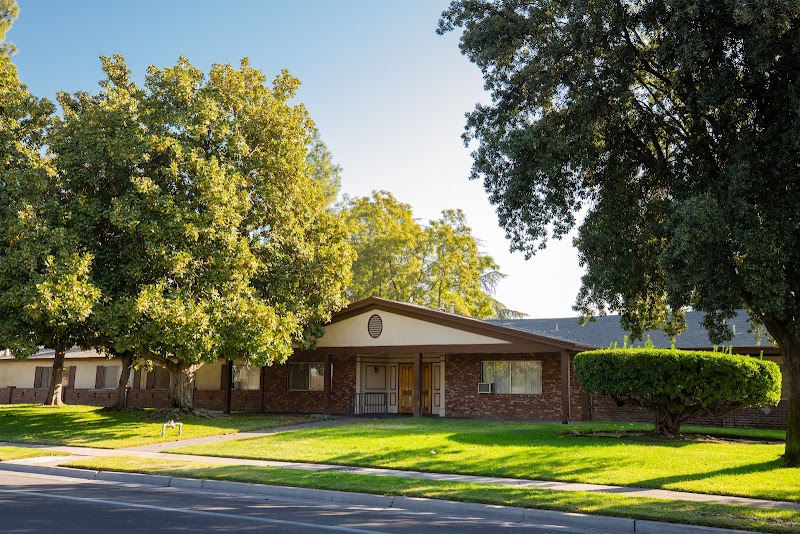
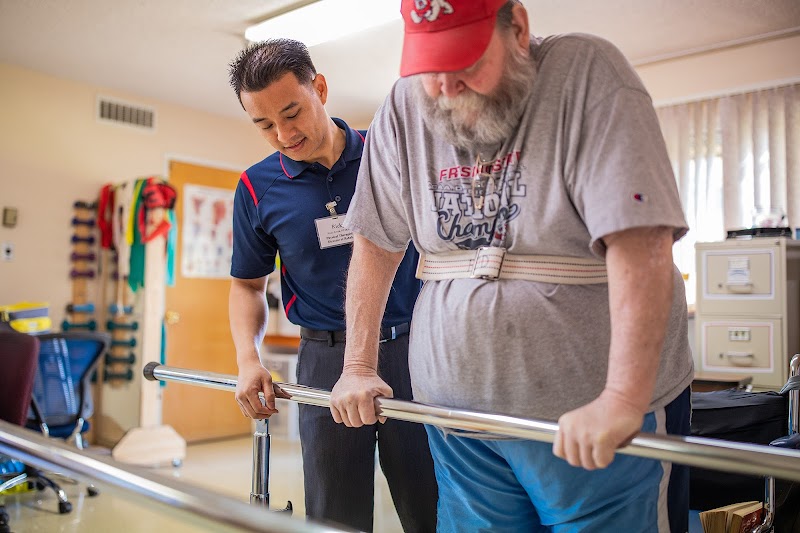
KEYSTONE POST-ACUTE

3672 NORTH FIRST STREET, FRESNO, CA 93726 (559) 227-5383
For profit - Limited Liability company 65 Beds EDURO HEALTHCARE Data: November 2025
Trust Grade
10/100
#833 of 1155 in CA
Last Inspection: May 2025

Inspected within the last 6 months. Data reflects current conditions.

Overview

Keystone Post-Acute in Fresno, California has received a Trust Grade of F, indicating significant concerns about the quality of care provided. With a state rank of #833 out of 1155 facilities in California, they fall in the bottom half, and they are ranked #26 out of 30 in Fresno County, showing limited local options for better care. The facility's trend is improving, having reduced serious issues from 20 to 13 over the last year, but it still has a high staffing turnover rate of 72%, which is concerning compared to the state average of 38%. They have accumulated $89,993 in fines, higher than 94% of California facilities, reflecting repeated compliance problems. Notably, residents have been moved without proper notification, and one resident fell from an unattended wheelchair, resulting in a serious injury, highlighting both weaknesses in communication and safety protocols. However, the facility does have average RN coverage, which can help catch issues that other staff might miss.

Trust Score
F
10/100
In California
#833/1155
Bottom 28%
Safety Record
High Risk
Review needed
Inspections
Getting Better
20 → 13 violations
Staff Stability
⚠ Watch
72% turnover. Very high, 24 points above average. Constant new faces learning your loved one's needs.
Penalties
✓ Good
$89,993 in fines. Lower than most California facilities. Relatively clean record.
Skilled Nurses
⚠ Watch
Each resident gets only 24 minutes of Registered Nurse (RN) attention daily — below average for California. Fewer RN minutes means fewer trained eyes watching for problems.
Violations
⚠ Watch
50 deficiencies on record. Higher than average. Multiple issues found across inspections.
★★☆☆☆
2.0
Overall Rating
★★☆☆☆
2.0
Staff Levels
★★★☆☆
3.0
Care Quality
★★☆☆☆
2.0
Inspection Score
Stable
2024: 20 issues
2025: 13 issues

The Good

  • Full Sprinkler Coverage · Fire safety systems throughout facility
  • No fines on record

Facility shows strength in fire safety.

The Bad

2-Star Overall Rating

Below California average (3.1)

Below average - review inspection findings carefully

Staff Turnover: 72%

25pts above California avg (46%)

Frequent staff changes - ask about care continuity

Federal Fines: $89,993

Well above median ($33,413)

Moderate penalties - review what triggered them

Chain: EDURO HEALTHCARE

Part of a multi-facility chain

Ask about local staffing decisions and management

Staff turnover is very high (72%)

24 points above California average of 48%

The Ugly 50 deficiencies on record

4 actual harm
May 2025 12 deficiencies
CONCERN (D)

Potential for Harm - no one hurt, but risky conditions existed

Resident Rights (Tag F0550)

Could have caused harm · This affected 1 resident

**NOTE- TERMS IN BRACKETS HAVE BEEN EDITED TO PROTECT CONFIDENTIALITY** Based on observation, interview and record review the facility failed to promote quality of life for two of 11 sampled residents...

Read full inspector narrative →
**NOTE- TERMS IN BRACKETS HAVE BEEN EDITED TO PROTECT CONFIDENTIALITY** Based on observation, interview and record review the facility failed to promote quality of life for two of 11 sampled residents (Resident 59 and Resident 30) when Resident 59 did not receive a shower on 5/8, 5/12, 5/15, 5/19, and 5/26 and Resident 30 did not receive a shower on 5/9, 5/13, 5/16, and 5/20. This failure resulted in nine missed opportunities for personal hygiene care and resulted in Resident 59 to feel dirty, neglected and isolated and Resident 30 to feel dirty and gross. Findings: During interview on 5/27/25 at 10:23 a.m. with Resident 59 in her room, Resident 59 stated she had not received a shower in three weeks and expressed a desire to have one. Resident 59 stated staff were not providing her scheduled showers and had not provided a reason for why she was not receiving them. Resident 59 stated she is supposed to be showered on Monday and Thursday. Resident 59 stated she had not refused any showers. Resident 59 stated this made her feel dirty and neglected, and as a result she mostly stayed in her room. During a review of Resident 59 ' s admission Record (AR - a summary of information regarding a patient which includes patient identification, past medical history, insurance status, care providers, family contact information and other pertinent information), dated 5/29/255, the AR indicated Resident 59 was admitted to the facility from an acute care hospital on 4/10/25 with diagnoses of muscles weakness, type two diabetes mellitus ( DM-a disorder characterized by difficulty in blood sugar control and poor wound healing), fracture of left femur (a break in the bone of the thigh), and hypertension (HTN-high blood pressure). During a review of Resident 59 ' s Minimum Data Set (MDS - a resident assessment tool used to identify cognitive [mental processes] and physical functional level assessment), dated 4/15/25, the MDS section C indicated Resident 59 had a Brief Interview for Mental Status (BIMS - a test given by medical professionals to determine cognitive (involving the process of thinking, learning and understanding) understanding on a scale of 1-15 ) score of 15 (a score of 0-7 suggests severe cognitive impairment, 8-12 suggests moderately impaired, 13-15 suggests cognitively intact), which suggested Resident 59 was cognitively intact. During an interview on 5/27/25 at 11:27 a.m. with Resident 30 in her room, Resident 30 stated she last received a shower two weeks ago and expressed that she would like to receive showers on her scheduled days. Resident 30 stated I feel dirty and smelly because she had not been receiving regular showers. Resident 30 stated she felt gross and wished she could have a shower. During a review of Resident 30 ' s AR, dated 5/30/25, the AR indicated Resident 59 was admitted to the facility from an acute care hospital on [DATE] with diagnosis of muscle weakness, type two diabetes mellitus, and major depressive disorder (a mood disorder that causes a persistent feeling of sadness and loss of interest). During a review of Resident 30 ' s MDS, dated 4/7/25, the MDS section C indicated Resident 30 had a BIMS score of 11, which suggested Resident 30 was moderately impaired. During an interview on 5/29/25 at 1:56 p.m. with Certified Nursing Assistant (CNA) 7, CNA 7 stated resident showers were scheduled and that residents should have received showers twice a week. CNA 7 explained the facility maintained a binder with the shower schedule and that staff were expected to complete a shower sheet was given. CN 7 stated the nurse would then sign the sheet. CNA 7 stated that residents had the right to be showered. During a concurrent interview and review of facility Shower Binder on 5/30/25 at 4:35 p.m. with CNA 7, dated for the month of May 2025, CNA 7 stated there were no completed shower sheet filed for Resident 59 on Thursday 5/8/25, Monday 5/12/25, Thursday 5/15/25, and Thursday 5/22. The record showed Resident received a shower on Monday 5/5/25 and refused a shower on Monday 5/19/25. During an interview on 5/30/25 at 10:42 a.m. with CNA 8, CNA 8 stated resident showers were documented in two areas. One area was the shower binder, where staff filled out the form and filed it according to the date. CNA 8 stated the second method was through the electronic medical record. CNA 8 stated if a shower was not provided, staff entered NA. CNA 8 stated the risk to the resident from not receiving regular showers included potential for infections, skin issues, self-esteem problems, matted hair and buildup of grime. During a concurrent interview and review of Shower Binder dated May 2025 and Documentation Survey Report, dated May 2025 on 5/30/25 at 4:35 p.m. with Licensed Vocational Nurse (LVN) 3, LVN 3 stated Resident 30 was scheduled to receive showers on Tuesdays and Fridays. However, there were no shower sheets filed for Tuesday 5/6/25, Friday 5/9/25, Tuesday 5/13/25, Friday 5/16/25 or Tuesday 5/20/25. The shower sheet for Friday 5/23/25 indicated Resident 30 had refused the shower on that date. The Documentation Survey Report, dated May 2025 indicated for Resident 30 she had missed five scheduled showers during the month of May-on 5/9/25, 5/16/25, 5/20/25, 5/27/25 and 5/30/25. During a concurrent interview and record review on 5/30 at 4:35 p.m. with LVN 3, Resident 59 ' s Documentation Survey Report, dated May 2025 was reviewed. LVN 3 stated the Documentation Survey Report, and the information documented in the shower binder were accurate, Resident 59 had only received one shower for the month of May, on 5/5/25. LVN 3 verified there was no progress notes associated with missed or refused showers and no care plans addressing bathing/showering or potential refusal in Resident 59 and 30 ' s medical record. During an interview on 6/3/25 at 9:32 a.m. with Director of Staff Development (DSD) 2, the DSD 2 stated it was her expectation for CNAs to complete resident showers as scheduled. DSD 2 stated her expectation was CNAs to shower the residents on their scheduled days, complete the shower sheet and have the nurse sign it. The DSD 2 stated there should have been a shower sheet filed for each scheduled shower day, indicating whether the shower was given or not-there should not have been any blank spaces. DSD 2 stated blank spaces, and N/A indicated a missed shower. The DSD 2 stated a progress note should have been written by the nurse if a resident missed or refused a shower. During an interview on 6/3/25 at 11:38a.m. with the Infection Preventionist (IP) 1, the IP 1 stated that her expectation of the nursing staff was to address the reasons why residents were missing their scheduled showers. IP 1 stated staff should have escalated a reason why a shower was not given to a resident. IP 1 emphasized showers were important because they provided an opportunity to assess the resident and because it was the resident ' s right to receive them. The IP 1 stated that there had not been any recent issues with water or equipment that would have impacted the ability to provide showers during the month of May. During an interview on 6/3/25 at 11:45 a.m. with the Director of Nursing (DON), the DON stated, it was her expectation of staff to escalate the issue of missed showers. The DON emphasized that showering and bathing preferences are part of resident rights and should have been addressed accordingly.
CONCERN (D)

Potential for Harm - no one hurt, but risky conditions existed

Deficiency F0551 (Tag F0551)

Could have caused harm · This affected 1 resident

**NOTE- TERMS IN BRACKETS HAVE BEEN EDITED TO PROTECT CONFIDENTIALITY** Based on observation, interview and record review, the facility failed to ensure one of eleven sampled residents (Resident 38) w...

Read full inspector narrative →
**NOTE- TERMS IN BRACKETS HAVE BEEN EDITED TO PROTECT CONFIDENTIALITY** Based on observation, interview and record review, the facility failed to ensure one of eleven sampled residents (Resident 38) was provided the opportunity to participate in his care process when the facility did not attempt to contact Resident 38's family or friends to act as a representative or decision maker on or throughout admission and did not involve Resident 38's, family, friends or a patient care representative prior to obtaining informed consents. This failure had the potential to result in Resident 38's wishes and preferences not being upheld by the acting facility representative which had the potential to lead to decreased autonomy (ability to make own decisions and control own actions) or participation in his care planning process. Findings: During a review of Resident 38's admission Record (AR- document containing resident personal information), dated [DATE], the AR indicated, Resident 38 was admitted to the facility on [DATE], with diagnoses which included dementia (decline in cognitive functioning that interfere with daily life), major depressive disorder (mood disorder that causes persistent feeling of sadness and loss of interest), dysphagia (difficulty swallowing) and muscle weakness. The AR indicated Resident 38's decision maker and representative was the Administrator (ADM). The AR indicated Resident 38 had a Family Friend (FF) 1 allowed to obtain medical information. During a review of Resident 38's Minimum Data Set (MDS- a resident assessment tool) assessment, dated [DATE], the MDS assessment indicated Resident 38's Brief Interview for Mental Status (BIMS- an assessment tool used by facilities to screen and identify memory, orientation, and judgement status of the resident) assessment score was 10 out of 15 which indicated Resident 38 had moderate cognitive deficit (a decline in thinking abilities, like memory, reasoning, and problem-solving). During a review of Resident 38's Informed Consent to Treat (ICT), dated [DATE], the ICT indicated, the administrator (ADM) signed the consent on [DATE]. The form indicated the ADM gave permission for the facility to treat Resident 38. The form was not signed or acknowledged by Resident 38, FF 1 or a resident representative. During a review of Resident 38's Physician Orders for Life-Sustaining Treatment (POLST- set of medical orders reflect a resident's wished for end-of-life intervention), dated [DATE], the POLST indicated, the ADM signed the consent on [DATE]. The form was not signed or acknowledged by Resident 38, FF 1 or a resident representative. During a review of Resident 38's Side/Bed Rail Informed Consent, dated [DATE], the Side/Bed Rail Informed Consent indicated, the ADM signed the consent on [DATE]. The form was not signed or acknowledged by Resident 38, FF 1 or a resident representative. During a review of Resident 38's Facility Verification of Resident Informed Consent for Physical Restraints, Psychotherapeutic Drugs, or Prolonged Use of a Device, dated [DATE], the Facility Verification of Resident Informed Consent for Physical Restraints, Psychotherapeutic Drugs, or Prolonged Use of a Device indicated, the medical provider obtained informed consent from the ADM on [DATE] for .Sertraline [psychotherapeutic drug-used to treat major depressive disorder] 12.5 mg [milligrams- unit of measurement for dosing medication] . The form was not signed or acknowledged by Resident 38, FF 1 or a resident representative. During a review of Resident 38's Medical Record (MR), dated [DATE], the MR did not indicate the facility completed interdisciplinary team (IDT) meetings prior to the ADM signing consents for the ICT, POLST, Side/Bed Rail Informed Consent, or Facility Verification of Resident Informed Consent for Physical Restraints, Psychotherapeutic Drugs, or Prolonged Use of a Device. The MR did not indicate Resident 38, FF 1 or a resident representative was involved, contacted or consulted for the ICT, POLST, Side/Bed Rail Informed Consent, or Facility Verification of Resident Informed Consent for Physical Restraints, Psychotherapeutic Drugs, or Prolonged Use of a Device. During an interview on [DATE] at 2:54 p.m. with the Family Friend (FF) 1, FF 1 stated Resident 38 had no family involved in his care. FF 1 stated he had known Resident 38 for a couple of years. FF 1 stated he was a patient advocate for Resident 38 at the previous facility Resident 38 was admitted to. FF 1 stated nobody from the facility contacted him to inquire if he would be Resident 38's decision maker or representative. FF 1 stated he had not received any updates on Resident 38's care or treatment. FF 1 stated Resident 38 and himself met with the Social Services Director (SSD) in February 2025 and Resident 38 agreed for FF 1 to receive medical updates and be involved in his care. FF 1 stated he had not been consulted or involved in obtaining any informed consents for Resident 38. FF 1 stated he did not know the ADM was Resident 38's decision maker or representative. FF 1 stated he did not understand how the ADM could make informed decisions for Resident 38 because he did not know him. FF 1 stated it was in Resident 38's best interest to include people who knew Resident 38 when making medical decisions to ensure Resident 38's wishes and preferences were upheld. During a concurrent interview and record review on [DATE] at 3:21 p.m. with the Social Services Director (SSD), Resident 38's MR, dated [DATE] was reviewed. The SSD stated, Resident 38 did not have the mental capacity to make his own medical decisions but was able to make his needs known. The SSD stated the ADM was Resident 38's acting decision maker and representative. The SSD stated Resident 38 was previously admitted to another facility within the same network and the ADM was assigned as the decision maker there. The SSD stated the facility assumed responsibility for each resident when they were admitted , regardless if the previous facility was in the same network. The SSD stated it was the responsibility of the facility to ensure each resident's decision maker was appropriately assigned on admission. The SSD stated there was no documentation in Resident 38's MR to reflect attempts were made to contact Resident 38's family, friends, or listed contacts to act as a decision maker or patient representative on admission. The SSD stated on [DATE] she met with Resident 38 and FF 1. The SSD stated Resident 38 gave permission for FF 1 to be involved in his care and receive medical updates. The SSD stated approximately a month ago the California Department of Aging provided an in-service on Interdisciplinary Team Process for Unrepresented Residents. The SSD stated the facility was expected to adhere to the in-service provided. The SSD stated if the facility received a medical treatment order requiring informed consent and no legal decision maker, family or friend was available to provide consent, an application was expected to be submitted to the California Department of Aging to assign a state-appointed patient representative. The SSD stated an IDT meeting was expected to be held for each medical decision requiring informed consent, and the family member, friend, or appointed patient representative was expected to participate. All IDT members were expected to agree on the treatment, document the meeting and decision, after which consent for the treatment could be obtained. The SSD stated this process was not followed for Resident 38. The SSD stated she was involved in IDT meetings. The SSD stated she could not recall attending IDT meetings for Resident 38's informed consents since admission. The SSD could not locate IDT meeting notes to determine the IDT met to discuss informed consents or consulted Resident 38's family, FF 1, or patient representative for the ICT, POLST, Side/Bed Rail Informed Consent, or Facility Verification of Resident Informed Consent for Physical Restraints, Psychotherapeutic Drugs, or Prolonged Use of a Device. The SSD stated it was important to ensure IDT meetings were performed for each medical treatment that required informed consent. The SSD stated it was important Resident 38, Resident 38's family, friends or a patient representative was involved in IDT informed consent meetings to ensure Resident 38's wishes and preferences were upheld. During a concurrent interview and record review on [DATE] at 9:03 a.m. with the Administrator (ADM), Resident 38's MR, dated [DATE], was reviewed. The ADM stated he was not related to Resident 38 and did not know Resident 38 prior to his admission to the facility. The ADM stated Resident 38 was previously admitted to another facility within the same network and he became the decision maker for Resident 38 before he was transferred to the current facility. The ADM was unable to locate IDT meeting notes to reflect attempts were made to contact Resident 38's family, friends or listed contacts to act as his decision maker on admission to the facility. The ADM could not locate any IDT meeting notes to indicate IDT met prior to obtaining informed consents for Resident 38's ICT, POLST, Side/Bed Rail Informed Consent, or Facility Verification of Resident Informed Consent for Physical Restraints, Psychotherapeutic Drugs, or Prolonged Use of a Device. The ADM could not locate any documentation to reflect Resident 38's, family, friends or patient representative were involved in obtaining informed consent for Resident 38's ICT, POLST, Side/Bed Rail Informed Consent, or Facility Verification of Resident Informed Consent for Physical Restraints, Psychotherapeutic Drugs, or Prolonged Use of a Device. The ADM stated himself, the Assistant Administrator (AADM), the Director of Nursing (DON), the SSD, the Minimum Data Set Coordinator (MDS), Infection Preventionist (IP), and Director of Staff Development (DSD) participated in IDT meetings and were responsible for making medical decisions that required informed consent for Resident 38. The ADM stated Resident 38 was at risk for not having his wishes or preferences upheld if there was no documentation to reflect Resident 38's, FF 1's, or a patient representatives' participation in the care planning process. During a concurrent interview and record review on [DATE] at 9:56 a.m. with the Director of Nursing (DON), Resident 38's MR, dated [DATE], was reviewed. The DON stated the ADM was Resident 38's decision maker. The DON stated the ADM became Resident 38's decision maker at the previous facility he was admitted to. The DON stated the facilities were within the same network and the ADM remained Resident 38's decision maker when he was transferred. The DON stated it was the responsibility of the facility to ensure Resident 38's decision maker was appropriate on admission. The DON stated the facility was responsible, on admission, for making their own attempts to reach Resident 38's family, friends or patient representative to inquire if they would be his decision maker or be involved in the decision-making process. The DON could not locate documentation to reflect the facility had attempted to contact Resident 38's family, friends, or a patient representative to act as Resident 38's decision maker or be involved in the decision-making process. The DON stated with the ADM as the acting decision maker the IDT was responsible to meet and discuss medical treatments that required informed consent for Resident 38. The DON stated it was expected Resident 38, family, friends, or a patient representative was involved in each IDT meeting to ensure Resident 38's preferences were upheld. The DON stated it was expected the IDT documented meetings and determinations for Resident 38's plan of care with each medical decision that required informed consent. The DON could not locate any IDT meeting notes to indicate IDT met or discussed Resident 38's plan of care prior to obtaining informed consents for Resident 38's ICT, POLST, Side/Bed Rail Informed Consent, or Facility Verification of Resident Informed Consent for Physical Restraints, Psychotherapeutic Drugs, or Prolonged Use of a Device. The DON could not locate any documentation to reflect Resident 38's, family, friends or patient representative were involved in obtaining informed consent for Resident 38's ICT, POLST, Side/Bed Rail Informed Consent, or Facility Verification of Resident Informed Consent for Physical Restraints, Psychotherapeutic Drugs, or Prolonged Use of a Device. The DON stated the facility placed Resident 38 at risk for not being represented accurately or honoring his wishes and preferences. During a review of the facility's handout provided by the California Department of Aging titled, Interdisciplinary Team Process for Unrepresented Residents, undated, the handout indicated, . as of [DATE], skilled nursing and intermediate care facilities that conduct interdisciplinary team (IDT) reviews of medical interventions requiring informed consent (California Health and Safety Code section 1418.8) must: include a patient representative when they convene an IDT to make medical decisions requiring informed consent for residents who lack capacity and have no legal surrogate .provide notices containing specified information both before and after an IDT review to the resident who is the subject of the IDT and to the resident's patient representative .provide specified data to the California Department of Aging (CDA), Office of the Long-Term Care Patient Representative as required .under these requirements, facilities are responsible for identifying a friend or relative, whose interests are aligned with the resident, to serve as a patient representative when an interdisciplinary team is convened .if the facility is unable to identify a representative, the Office of the Long-Term Care Patient Representative (OLTCPR), a program within the CDA, can help .the OLTCPR will provide trained representatives for specified residents who may need medical treatment but lack the capacity to make health care decisions, have no legal surrogate authorized to make decisions on their behalf, and have no friend or relative who can represent them on an IDT . During a review of the facility's policy and procedure (P&P) titled, 784.29. Informed Consent to Medical Treatment, undated, the P&P indicated, .verify that the client's health record contains documentation that the client has given informed consent to the proposed treatment or procedure . During a review of the facility's P&P titled, Resident Representative, dated 2/2021, the P&P indicated, .the resident's wishes and preferences are considered in the exercise of rights by the representative . resident representative is defined as: an individual chosen by the resident to act on behalf of the resident in order to support the resident in decision-making; access medical, social or other personal information of the resident; manage financial matters; or receive notifications; b. a person authorized by state or federal law including but not limited to agents under power of attorney, representative payees, and other fiduciaries) to act on behalf of the resident in order to support the resident in decision-making; access medical, social or other personal information of the resident; manage financial matters; or receive notifications; legal representative, as used in section 712 of the Older Americans Act; or d. the court-appointed guardian or conservator of a resident . Whether or not the resident has been judged incompetent by a court of law, if it is determined that the resident understands the risks, benefits, and alternatives to a proposed health care decision and expresses a preference, the resident's wishes are considered to the degree practicable .the resident may exercise his or her rights not delegated to a resident representative, including the right to revoke a delegation of rights (except as limited by state law) .the director of nursing (or designee) is responsible for making reasonable efforts to obtain updates or changes that are made by the resident, including the resident's revocation of delegated rights, to ensure that the resident's preferences are being upheld . During a review of the facility's P&P titled, Resident Rights, dated 2/2021, the P&P indicated, .resident's rights to .appoint a legal representative of his or her choice .exercise rights not delegated to a legal representative . During a review of the facility's P&P titled, Advanced Directives, dated 2/2021, the P&P indicated, .prior to or upon admission of a resident, the social services director or designee inquires of the resident, his/her family members and/or his or her legal representative, about the existence of any written advance directives .upon admission the interdisciplinary team assesses the residents decision-making capacity and identifies the primary decision-maker if the resident is determined not to have decision-making capacity .the interdisciplinary team conducts ongoing review of the residents decision-making capacity and invokes the resident representative or health care agent if the resident is determined not to have decision-making capacity. Changes are documented in the care plan and medical record .
CONCERN (D)

Potential for Harm - no one hurt, but risky conditions existed

Safe Environment (Tag F0584)

Could have caused harm · This affected 1 resident

**NOTE- TERMS IN BRACKETS HAVE BEEN EDITED TO PROTECT CONFIDENTIALITY** Based on observation, interview and record review, facility failed to ensure one of 11 sampled residents (Resident 16) was provi...

Read full inspector narrative →
**NOTE- TERMS IN BRACKETS HAVE BEEN EDITED TO PROTECT CONFIDENTIALITY** Based on observation, interview and record review, facility failed to ensure one of 11 sampled residents (Resident 16) was provided with safe, clean, comfortable furniture that is in good working condition when the over-the-bed table had an approximate 2-inch by 1.5-inch chip out of the corner of the table with exposed sharp edges and a visible area that would be considered a porous surface leaving the area a potential for injury and unable to be cleaned. This failure had a potential to result in Resident 16 sustaining serious injuries, including skin tears and infection. Findings: During a review of Resident 16's admission Record (AR, a document containing resident personal information), dated 5/29/25, the AR indicated, Resident 16 was admitted to the facility on [DATE] with diagnoses which in included Cerebral Infarction (when part of the brain and brain cells does not get enough blood and oxygen because a blood vessel is blocked and those brain cells can die), Type 2 Diabetes (a disorder characterized by difficulty in blood sugar control and poor wound healing) and Cognitive Communication Deficit (when someone has a hard time talking or understanding because their brain is having trouble with thinking skills). During a review of Resident 16's Minimum Data Set (MDS - a resident assessment tool) assessment dated 3/27/25, the MDS assessment indicated Resident 16's Brief Interview for Mental Status (BIMS- an assessment tool used by facilities to screen and identify memory, orientation, and judgement status of the resident) assessment score was 6 out of 15 which indicated Resident 16 had had moderate cognitive deficit (a decline in thinking abilities, like memory, reasoning, and problem-solving). During a concurrent observation and interview on 5/27/2025 at 4:04 p.m. with Resident 16 in Resident 16's room, Resident 16's over-the-bed table had a 2-inch by 1.5-inch chip out of the corner of the table with exposed sharp edges and a visible area that would be considered a porous surface. Resident 16 stated he had noticed a big chip on his over-the-bed table. Resident 16 stated the big chip had been there for approximately 6 months. Resident 16 stated he would like a new table. During a concurrent observation and interview on 5/29/25 at 1:52 p.m. with Certified Nursing Assistant (CNA) 2 in Resident 16's room, CNA 2 stated that all furniture should be in good shape and that it may not look the prettiest, but it should be free of things that could harm the resident. CNA 2 stated that Resident 16's over-the-bed table had a large chip in the corner that had exposed sharp edges and a porous surface and that if Resident 16 fell onto the table he could get cut badly. CNA 2 stated Resident 16 should not have an over-the-bed table like that in Resident 16's room. During an observation on 5/29/25 at 3:47 p.m. Resident 16's over-the-bed table with the chip out of it remained in the room and Resident 16 has personal items placed on it. During an interview at the Nurse's station on 5/29/25 at 3:54 p.m. with Licensed Vocational Nurse (LVN) 4, LVN 4 reviewed a picture dated 5/28/25 of the resident's over-the-bed table and LVN 4 stated that Resident 16 had an over-the-bed table that had exposed sharp edges and a porous surface. LVN 4 stated there was the strong possibility of a skin tear and a stronger possibility of a bacteria infection. LVN 4 stated that Resident 16 could fall on to it and sustain a serious injury. LVN 4 stated the exposed part could be a trap for food as well. LVN 4 stated that the table needs to be replaced. During an observation on 5/29/25 at 6:00 p.m. Resident 16's over-the-bed table with the chip out of it remained in the room and Resident 16 had personal items placed on it. During a concurrent observation and interview on 5/30/25 at 8:22 a.m. with the Director of Staff Development (DSD) 2, who also works as an Infection Preventionist part-time for the facility, in Resident 16's room, DSD 2 stated that Resident 16's over-the-bed table had exposed sharp edges and a porous surface and Resident 16 could sustain a bad skin tear from the sharp edge. DSD 2 stated from an infection control standpoint, the area where the table is chipped would be considered porous and would not be cleaned easily therefore blood or bacteria could stay in the porous areas. During a concurrent interview and record reviewed on 6/3/25 at 10:20 a.m. with the Director of Nurses (DON), the DON reviewed a picture of Resident 16's over-the-bed table dated 5/28/25 of Resident 16's over-the-bed table. The DON stated that the over-the-bed table has very rough edges and is porous. The DON stated that it is everyone's responsibility to maintain a safe environment by keeping equipment clean and intact, so no skin tears can occur, and no bacteria can harbor in the porous area. The DON stated the over-the-bed table should have been removed immediately. The DON stated the staff did not follow the policies by notifying the Maintenance department promptly and removing the over-the-bed table as soon as the chip occurred. During a review of the policy and procedure (P&P) titled, Patient Room Management, undated, P&P indicated, . patient rooms will be maintained in a manner . ensuring they are free from hazards . requires that patient rooms meet standards for cleanliness, safety and privacy .maintenance staff will address repairs in patient rooms promptly to ensure the room is safe and functional .rooms will be free of potential hazards . the Administrator or designee will conduct regular inspections to ensure rooms meet cleanliness, safety . During a review of the policy and procedure (P&P) titled Accidents dated 9/2/22 indicated .the resident environment will remain as free of accidents as is possible .hazards refers to elements of the resident's environment that have the potential to cause injury . During a review of the policy and procedure (P&P) titled Safe and Homelike Environment dated 12/19/22 indicated .report any furniture in disrepair to Maintenance promptly .
CONCERN (D)

Potential for Harm - no one hurt, but risky conditions existed

Comprehensive Care Plan (Tag F0656)

Could have caused harm · This affected 1 resident

**NOTE- TERMS IN BRACKETS HAVE BEEN EDITED TO PROTECT CONFIDENTIALITY** Based on observation, interview and record review, the facility failed to ensure a comprehensive individualized care plan was de...

Read full inspector narrative →
**NOTE- TERMS IN BRACKETS HAVE BEEN EDITED TO PROTECT CONFIDENTIALITY** Based on observation, interview and record review, the facility failed to ensure a comprehensive individualized care plan was developed and implemented for one of 15 residents (Resident 57) when Resident 57 ' s care plan was not developed and implemented for monitoring and care of his central venous catheter port (a thin tube that goes into a vein in your arm or chest and ends at the right side of your heart and is attached to a device [port] under the skin) and surgical incision wound. This failure had the potential to put Resident 50 at increased risk for wound infection, pain, discomfort and medical complications of his indwelling central line due to improper care and monitoring of his device and surgical incision wound. Findings: During a concurrent observation and interview on 5/27/25 at 10:51 a.m. with Resident 57 in Resident 57 ' s room, Resident 57 was observed dressed sitting in a wheelchair with a dressing on his right upper chest. Resident 57 stated he had been at the facility for a couple of weeks. Resident 57 stated he had a port put in for chemotherapy (a drug treatment used to stop the growth of cancer cells). Resident 57 stated nurses have not changed his dressing and staff do not wear a gown or gloves when providing care. No enhanced barrier precautions (EBP- an infection control intervention designed to reduce transmission of resistant organisms [bacteria that have become resistant to certain antibiotics] that requires gown and glove use during high contact resident care activities) sign was observed on Resident 57 ' s door. During a review of Resident 57 ' s admission Record (AR - a summary of information regarding a patient which includes patient identification, past medical history, insurance status, care providers, family contact information and other pertinent information), dated 5/30/25, the AR indicated Resident 57 was admitted to the facility from an acute care hospital on [DATE] with diagnoses of fracture of left femur (a break in the bone of the thigh), liver cell carcinoma (a cancer of the liver), cerebral ischemia (damage to tissues in the brain due to a loss of oxygen to the area), and major depressive disorder (a mental health disorder characterized by persistently depressed mood or loss of interest in activities). During a review of Resident 57 ' s Minimum Data Set (MDS - a resident assessment tool used to identify cognitive [mental processes] and physical functional level assessment), dated 4/4/25, the MDS section C indicated Resident 57 had a Brief Interview for Mental Status (BIMS - a test given by medical professionals to determine cognitive (involving the process of thinking, learning and understanding) understanding on a scale of 1-15 ) score of seven (a score of 0-7 suggests severe cognitive impairment, 8-12 suggests moderately impaired, 13-15 suggests cognitively intact), which suggested Resident 57 was severely impaired. During an interview on 5/29/25 at 2:39 p.m. with Certified Nursing Assistant (CNA) 4, CNA 4 stated the CNAs did not look at resident ' s care plans (CP)s but received report on the residents from other CNAs or the nurse. CNA 4 stated residents on EBP because of a wound or catheter line would have had an EBP sticker by their name, and she would have gone to the nurse to find out what type of precautions the resident was on. CNA 4 stated she usually received report from the nurse or other CNAs on residents with wounds and on EBP. During a concurrent interview and record review on 5/29/25 at 4:15 p.m. with the Infection Preventionist (IP), Resident 57 ' s Care Plan (CP), undated was reviewed. The CP indicated there was no care plan for monitoring Resident 57 ' s catheter line or surgical incision. The IP stated Resident 57 did not have a care plan for his catheter line and Resident 57 ' s catheter line was new. The IP stated Resident 57 ' s catheter line was put in last week on 5/20/25. The IP stated Resident 57 should have had a CP for monitoring his catheter line site. The IP stated the CP was important to let staff know how to monitor for signs and symptoms of infection, behaviors, interventions to take, and if something happened to the resident, when to reach out to the doctor. The IP stated the CP was to ensure each resident received proper care. The IP stated Resident 57 ' s CP should have been put in when he returned to the facility after having his catheter line put in. The IP stated the CP needed to be individualized for each resident because everyone was different. The IP stated the CP needed to be personalized according to the needs and preferences of the resident. During an interview on 6/3/25 at 8:53 a.m. with the Director of Nursing (DON), the DON stated residents should have had a CP completed by the admission nurse, then followed up by the IP. If the IP was in the facility, she would have initiated the CP. The DON stated the nurses could have also updated a resident ' s care plan. The DON stated residents should have had a CP for EBP if they had wounds or central catheter lines, and the CP should have been resident specific. The DON stated the CP was important for staff to know how to take care of the resident. The DON stated if there was no CP for Resident 57, there was the risk of not giving Resident 57 the proper care needed. The DON stated if there was no care plan for catheter line site monitoring for Resident 57, he did not have a specific plan to meet his needs, and his CP would not have been individualized. During a review of the facility ' s job description document titled, MDS Coordinator, dated 11/24/16, indicated, . conduct resident assessments as required, develop plans of care, evaluate residents ' responses to intervention . complete . observations and care plans as needed . ensure all medications, treatments and at risk conditions . are included on resident ' s plan of care after the admission nurses have completed their admission care plans and significant change of condition care plans . During a review of the facility ' s job description document titled, Registered Nurse (RN), dated 1/22/25, indicated, . review care plans daily to verify that appropriate care is being rendered . verify that nurses ' notes reflect that the care plan is being followed when administering nursing care or treatment . ensure that assigned certified nursing assistants (CNAs) are aware of the resident care plans. Ensure that the CNAs refer to the resident ' s care plan prior to administering daily care to the resident . During a review of the facility ' s job duties document titled, Director of Nursing, dated 11/1/16, indicated, . assist the Resident Assessment/Care Plan Coordinator in the scheduling of care plans and assessments to be presented and discussed at each committee meeting . ensure that all personnel involved in providing care to the resident are aware of the resident ' s care plan. Ensure that nursing personnel refer to the resident ' s care plan prior to administering daily care to the resident . review nurses ' notes to determine if the care plan is being followed . During a review of the facility ' s policy and procedure (P&P) titled, Care Planning, dated 12/19/22, indicated, . the facility will inform the resident and/or resident representative of the risks and benefits of proposed care, of treatment . the care planning process will include an assessment of the resident ' s strengths and needs . the facility will discuss the plan of care with the resident and/or representative at regularly scheduled care plan conferences . initially, at routine intervals, and after significant changes .
CONCERN (D)

Potential for Harm - no one hurt, but risky conditions existed

Deficiency F0658 (Tag F0658)

Could have caused harm · This affected 1 resident

Based on observation, interview and record review the facility failed to follow professional standards for one of 11 sampled residents (Resident 216) when Resident 216 did not have his urinary cathete...

Read full inspector narrative →
Based on observation, interview and record review the facility failed to follow professional standards for one of 11 sampled residents (Resident 216) when Resident 216 did not have his urinary catheter(a hollow tube inserted into the bladder to drain and collect urine) changed per physician order, the physician was not notified that the catheter was not changed and Resident 216 had signs that included mucus and sediment in the catheter tubing, amber-colored foul-smelling urine. This failure resulted in a missed urinary catheter change, and the lack of notification regarding Resident 216 ' s catheter tubing had the potential of delayed diagnosis and treatment of a urinary tract infection, increasing risk of worsening infection. Findings: During an observation on 5/27/25 at 10:38 a.m. in Resident 216 ' s room, Resident 216 ' s urinary catheter bag contained dark-colored urine and there was visible sediment and mucus in the catheter tubing. The room had a strong odor of urine. During a review of Resident 216 ' s admission Record (AR - a summary of information regarding a patient which includes patient identification, past medical history, insurance status, care providers, family contact information and other pertinent information), dated 5/8/25, the AR indicated Resident 216 was admitted to the facility from an acute care hospital on 5/8/25 with diagnoses of urinary retention (unable to empty bladder completely), hemiplegia (total paralysis of the arm, leg and trunk on the same side of the body), and cerebrovascular accident (CVA-a stroke, loss of blood flow to a part of the brain). During a review of Resident 216 ' s Minimum Data Set (MDS - a resident assessment tool used to identify cognitive [mental processes] and physical functional level assessment), dated 5/13/25, the MDS section C indicated Resident 216 had a Brief Interview for Mental Status (BIMS - a test given by medical professionals to determine cognitive (involving the process of thinking, learning and understanding) understanding on a scale of 1-15 ) score of three (a score of 0-7 suggests severe cognitive impairment, 8-12 suggests moderately impaired, 13-15 suggests cognitively intact), which suggested Resident 216 was severely impaired. During a concurrent observation and interview on 5/29/25 at 10:32 a.m. at Resident 216 ' s bedside, Certified Nursing Assistant (CNA) 6 stated Resident 216 had dark-colored urine that was odorous and contained visible sediment. CNA 6 stated the symptoms of a urinary tract infection (UTI- an infection in the bladder/urinary tract) included confusion, pain foul-smelling urine and the presence of sediment. CNA 6 stated these findings should be alerted to the nurse. During an interview on 5/29/25 at 10:52 a.m. with CNA 7, CNA 7 stated symptoms of a urinary tract infection included bad smelling and abnormal colored urine. CNA 7 stated they were expected to notify the nurse if anything abnormal was found. During an interview on 5/29/25 at 11:05 with Licensed Vocational Nurse (LVN) 6, LVN 6 stated the symptoms of a urinary tract infection included foul-smelling urine. LVN 6 stated the entire catheter was to be changed monthly. LVN 6 stated if there was sediment in the catheter tubing, it should be changed, as this could be an indicator of an infection. During a concurrent interview and record review on 5/29/25 at 11:09 a.m. with LVN 6, Resident 216 ' s Order Summary Report, dated 5/29/25 was reviewed. The report indicated a physician order to change the catheter drainage bag on the 15TH of each month and as needed. During a concurrent interview and record review on 5/29/25 at 11:09 a.m. with LVN 6, Resident 216 ' s Treatment Administration Record (TAR), dated 5/1/25 - 5/31/25 was reviewed. LVN 6 stated the TAR indicated the physician ' s order for when to change Resident 216 ' s catheter was not generated as a task in the TAR and, therefore, was not scheduled or completed as ordered. LVN 6 stated the photo taken on 5/27/25 at 10:38a.m. of Resident 216 ' s catheter tubing indicated it should be changed. LVN 6 stated failing to timely identify or address these symptoms of a urinary track infection could lead to sepsis (a life-threatening blood infection). LVN 6 stated it was beneficial to the resident ' s health to catch these symptoms early. LVN 6 stated if they had been the nurse assigned, they would have assessed the urine, flushed the catheter, notified the physician, and documented the findings in a progress note. LVN 6 stated the physician would most likely have ordered a urinalysis (test that checks for infection in urine) to verify if Resident 216 had a UTI. During an interview on 6/3/25 at 11:38a.m. with the Infection Preventionist (IP)1, IP 1 stated catheter tubing should be clear and free from any discoloration or visible debris. IP 1 stated her expectation of staff was they should be competent in providing catheter care. IP 1 stated if there were any issues or concerns, they should have been escalated to the physician and nursing staff. IP 1 stated Resident 216 ' s catheter tubing should have been changed and the risk to the resident was the potential for developing an infection. During an interview on 6/3/25 at 11:45 a.m. with the Director of Nursing (DON), the DON stated it was her expectation of staff to be competent in inserting and maintaining a catheter. The DON stated if there were signs and symptoms of an infection-such as pain, foul odor, cloudy urine or sediment-staff were expected to escalate the finding by notifying the physician, changing the catheter tubing, completing a urinalysis and documenting a change in condition. The DON reviewed the picture of Resident 216 ' s catheter tubing taken on 5/27/25 at 10:38 a.m., the DON stated she would have expected staff to have taken those actions. During a review of Resident 216 ' s Indwelling Urinary Catheter Care Plan (CP), dated 5/9/25, the CP indicated, change catheter as ordered by physician .report to physician signs and symptoms of UTI: pain, burning, deepening of color, foul smelling urine. During a review of the facility ' s job description document titled Registered Nurse, dated 2025, the job description indicated, .initiate request for consultation or referral .discriminate between normal and abnormal findings, in order to recognize when to refer the resident to a physician for evaluation, supervision or directions .make written and oral reports/recommendations to the attending physician, medical director, or the DON, concerning the status and care of the residents . During a review of RegisteredNursing.org professional reference titled, Does a Nurse Always Have to Follow a Doctor ' s Orders?, dated 1/18/25, (found at https://www.registerednursing.org/articles/does-nurse-always-follow-doctors-orders/#:~:text=Unless%20there%20is%20a%20safety,not%20follow%20a%20doctor's%20order.) the reference indicated, .nurses cannot just randomly decide which order to follow and which not to follow. Unless there is a safety concern or an order that conflicts with personal or religious beliefs, failing to carry out orders can be grounds for discipline by the employer as well as the board of nursing, as it could be deemed neglect. During a professional reference review from the Centers for Disease Control and Prevention (CDC) titled, Guideline for Prevention of Catheter-Associated Urinary Tract Infections 2009, dated 6/6/2019, (retrieved from https://www.cdc.gov/infection-control/media/pdfs/Guideline-CAUTI-H.pdf) indicated, .What are the best practices for preventing UTI associated with obstructed urinary catheters? The available data examined the following practices: .Methods to prevent/reduce encrustations or blockage .Catheter materials preventing blockage For this question, available relevant outcomes included blockage/encrustation. We did not find data on the outcomes of CAUTI .
CONCERN (D)

Potential for Harm - no one hurt, but risky conditions existed

Administration (Tag F0835)

Could have caused harm · This affected 1 resident

**NOTE- TERMS IN BRACKETS HAVE BEEN EDITED TO PROTECT CONFIDENTIALITY** Based on observation, interview, and record review, the facility failed to ensure one of eleven sampled residents (Resident 38) ...

Read full inspector narrative →
**NOTE- TERMS IN BRACKETS HAVE BEEN EDITED TO PROTECT CONFIDENTIALITY** Based on observation, interview, and record review, the facility failed to ensure one of eleven sampled residents (Resident 38) was effectively and efficiently cared for by the administrator to maintain Resident 38's highest practicable physical, mental, and psychosocial well-being when the Administrator (ADM) was the acting decision maker for Resident 38. This failure had the potential to result in Resident 38 to not maintain his highest well-being, wishes and preferences not being upheld which had the potential to lead to decreased autonomy (ability to make own decisions and control own actions) or participation in his care planning process. Findings: During a review of Resident 38's admission Record (AR- document containing resident personal information), dated [DATE], the AR indicated, Resident 38 was admitted to the facility on [DATE], with diagnoses which included dementia (decline in cognitive functioning that interfere with daily life), major depressive disorder (mood disorder that causes persistent feeling of sadness and loss of interest), dysphagia (difficulty swallowing) and muscle weakness. The AR indicated Resident 38's decision maker was the Administrator (ADM). The AR indicated Resident 38 had a Family Friend (FF) 1 who was allowed to obtain medical information. During a review of Resident 38's Minimum Data Set (MDS- a resident assessment tool) assessment, dated [DATE], the MDS assessment indicated Resident 38's Brief Interview for Mental Status (BIMS- an assessment tool used by facilities to screen and identify memory, orientation, and judgement status of the resident) assessment score was 10 out of 15 which indicated Resident 38 had moderate cognitive deficit (a decline in thinking abilities, like memory, reasoning, and problem-solving). During a review of Resident 38's Informed Consent to Treat (ICT), dated [DATE], the ICT indicated, the ADM signed the consent on [DATE]. The form indicated the ADM gave permission for the facility to treat Resident 38. During a review of Resident 38's Physician Orders for Life-Sustaining Treatment (POLST- set of medical orders reflect a resident's wished for end-of-life intervention), dated [DATE], the POLST indicated, the ADM signed the consent on [DATE]. During a review of Resident 38's Side/Bed Rail Informed Consent (SBR), dated [DATE], the Side/Bed Rail Informed Consent indicated, the ADM signed the consent on [DATE]. During a review of Resident 38's Facility Verification of Resident Informed Consent for Physical Restraints, Psychotherapeutic Drugs, or Prolonged Use of a Device (RIPD), dated [DATE], the Facility Verification of Resident Informed Consent for Physical Restraints, Psychotherapeutic Drugs, or Prolonged Use of a Device indicated, the medical provider obtained informed consent from the ADM on [DATE] for .Sertraline [psychotherapeutic drug-used to treat major depressive disorder] 12.5 mg [milligrams- unit of measurement for dosing medication] . During an interview on [DATE] at 2:54 p.m. with Family Friend (FF) 1, FF 1 stated Resident 38 had no family involved in his care. FF 1 stated he had known Resident 38 for a couple of years. FF 1 stated he was a patient advocate for Resident 38 at the previous facility Resident 38 was admitted to. FF 1 stated nobody from the facility contacted him to inquire if he would be Resident 38's decision maker or be involved in Resident 38's care. FF 1 stated he had not received any updates on Resident 38's care or treatment. FF 1 stated Resident 38 and himself met with the Social Services Director (SSD) in February 2025 and Resident 38 agreed for FF 1 to receive medical updates and be involved in his care. FF 1 stated he had not been consulted or involved in obtaining any informed consents for Resident 38. FF 1 stated he did not know the ADM was Resident 38's decision maker. FF 1 stated he did not understand how the ADM could make informed decisions for Resident 38 because he did not know him. FF 1 stated it was in Resident 38's best interest to include people who knew Resident 38 when making medical decisions to ensure Resident 38's wishes and preferences were upheld. During a concurrent interview and record review on [DATE] at 3:21 p.m. with the Social Services Director (SSD) , Resident 38's Medical Record (MR), dated [DATE] was reviewed. The SSD stated it was the responsibility of the facility to ensure each resident's decision maker was appropriately assigned on admission. The SSD stated the ADM was Resident 38's acting decision maker and has been since his admission on [DATE] . The SSD stated on [DATE] she met with Resident 38 and FF 1. The SSD stated Resident 38 gave permission for FF 1 to be involved in his care and receive medical updates. The SSD stated approximately a month ago the California Department of Aging provided an in-service on Interdisciplinary Team Process for Unrepresented Residents. The SSD stated the facility was expected to adhere to the in-service provided. The SSD stated if the facility received a medical treatment order requiring informed consent and no legal decision maker, family or friend was available to provide consent, an application was expected to be submitted to the California Department of Aging to assign a state-appointed patient representative. The SSD stated an interdisciplinary team (IDT) meeting was expected to be held for each medical decision requiring informed consent, and the family member, friend, or appointed patient representative was expected to participate. All IDT members were expected to agree on the treatment, document the meeting and decision, after which consent for the treatment could be obtained. The SSD stated there was no documentation within Resident 38's MR to reflect the ADM met with the interdisciplinary team prior to signing Resident 38's informed consents for, ICT, POLST, SBR or RIPD. The SSD stated there was no documentation within Resident 38's MR to reflect the ADM met or consulted with Resident 38, FF 1 or a patient representative prior to signing Resident 38's informed consents for, ICT, POLST, SBR or RIPD. The SSD stated Resident 38 was at risk for not having his medical decision wishes and preferences upheld if the ADM did not meet with the IDT Resident 38, FF 1 or a patient representative to discuss plan of care prior to signing informed consents. The SSD stated it was best practice to include decision makers who knew Resident 38 personally. The SSD stated it would be difficult for the ADM to know Resident 38's wishes and preferences with no input from his interdisciplinary team, FF 1, patient representative, or Resident 38. During a concurrent interview and record review on [DATE] at 9:03 a.m. with the ADM, Resident 38's MR, dated [DATE], was reviewed. The ADM stated he was not related to Resident 38 and did not know Resident 38 prior to his admission to the facility. The ADM stated he was not aware of any family involved in Resident 38's life. The ADM stated he was aware Resident 38 had known FF 1 for several years and FF 1 was previously involved in his care at a previous facility. The ADM stated he was aware the California Department of Aging visited the facility approximately a month ago and had provided an in-service on Interdisciplinary Team Process for Unrepresented Residents. The ADM stated he expected the facility to follow the California Department of Aging on Interdisciplinary Team Process for Unrepresented Residents to ensure the facility did what was best for Resident 38 and ensured Resident 38's highest level of physical, mental, and psychosocial well-being. The ADM could not state or locate documentation to reflect he met with the interdisciplinary team prior to signing Resident 38's informed consents for, ICT, POLST, SBR or RIPD. The ADM could not state or locate documentation to reflect he met or consulted with Resident 38, FF 1 or a patient representative prior to signing Resident 38's informed consents for, ICT, POLST, SBR or RIPD. The ADM stated Resident 38 was at risk for not having his wishes or preferences upheld if there was no indication of a meeting to reflect Resident 38's, FF 1's, or a patient representatives' participation in the care planning process when acquiring informed consent. The ADM stated it was best to include individuals who knew residents personally to ensure resident preferences were upheld. During a concurrent interview and record review on [DATE] at 9:56 a.m. with the Director of Nursing (DON) , Resident 38's MR, dated [DATE], was reviewed. The DON stated the ADM had been Resident 38's decision maker since admission. The DON could not locate documentation to reflect the ADM met with the interdisciplinary team prior to signing Resident 38's informed consents for, ICT, POLST, SBR or RIPD. The DON could not locate documentation of a meeting to reflect the ADM met or consulted with Resident 38, FF 1 or a patient representative prior to signing Resident 38's informed consents for, ICT, POLST, SBR or RIPD. The DON stated with the ADM as the acting decision maker the interdisciplinary team was responsible to meet and discuss medical treatments that required informed consent for Resident 38 to ensure Resident 38's highest level of physical, mental, and psychosocial well-being. During a review of the facility's job description titled, Administration, dated [DATE], the job description indicated, . plan and implement all policies and procedures, in accordance with laws, regulations and legal requirements governing the operation of the property. Ensures compliance with all federal, state and legal regulations and company policies and procedures . During a review of the State requirements professional reference titled, Title 22 California Code of Regulations (CCR) Section §72501 Licensee- General Duties,, indicated, .except where provided for in approved continuing care agreements, or except when approved by the Department, no facility owner, administrator, employee or representative thereof shall act as guardian or conservator of a patient therein or of that patient's estate, unless that patient is a relative within the second degree of consanguinity . During a review of the facility's handout provided by the California Department of Aging titled, Interdisciplinary Team Process for Unrepresented Residents, undated, the handout indicated, . as of [DATE], skilled nursing and intermediate care facilities that conduct interdisciplinary team (IDT) reviews of medical interventions requiring informed consent (California Health and Safety Code section 1418.8) must: include a patient representative when they convene an IDT to make medical decisions requiring informed consent for residents who lack capacity and have no legal surrogate .provide notices containing specified information both before and after an IDT review to the resident who is the subject of the IDT and to the resident's patient representative .provide specified data to the California Department of Aging (CDA), Office of the Long-Term Care Patient Representative as required .under these requirements, facilities are responsible for identifying a friend or relative, whose interests are aligned with the resident, to serve as a patient representative when an interdisciplinary team is convened .if the facility is unable to identify a representative, the Office of the Long-Term Care Patient Representative (OLTCPR), a program within the CDA, can help .the OLTCPR will provide trained representatives for specified residents who may need medical treatment but lack the capacity to make health care decisions, have no legal surrogate authorized to make decisions on their behalf, and have no friend or relative who can represent them on an IDT . During a review of the facility's policy and procedure (P&P) titled, 784.29. Informed Consent to Medical Treatment, undated, the P&P indicated, .verify that the client's health record contains documentation that the client has given informed consent to the proposed treatment or procedure . During a review of the facility's P&P titled, Resident Representative, dated 2/2021, the P&P indicated, .the resident's wishes and preferences are considered in the exercise of rights by the representative . resident representative is defined as: an individual chosen by the resident to act on behalf of the resident in order to support the resident in decision-making; access medical, social or other personal information of the resident; manage financial matters; or receive notifications; b. a person authorized by state or federal law including but not limited to agents under power of attorney, representative payees, and other fiduciaries) to act on behalf of the resident in order to support the resident in decision-making; access medical, social or other personal information of the resident; manage financial matters; or receive notifications; legal representative, as used in section 712 of the Older Americans Act; or d. the court-appointed guardian or conservator of a resident . Whether or not the resident has been judged incompetent by a court of law, if it is determined that the resident understands the risks, benefits, and alternatives to a proposed health care decision and expresses a preference, the resident's wishes are considered to the degree practicable .the resident may exercise his or her rights not delegated to a resident representative, including the right to revoke a delegation of rights (except as limited by state law) .the director of nursing (or designee) is responsible for making reasonable efforts to obtain updates or changes that are made by the resident, including the resident's revocation of delegated rights, to ensure that the resident's preferences are being upheld .During a review of the facility's P&P titled, Resident Rights, dated 2/2021, the P&P indicated, .resident's rights to .appoint a legal representative of his or her choice .exercise rights not delegated to a legal representative .
CONCERN (D)

Potential for Harm - no one hurt, but risky conditions existed

Infection Control (Tag F0880)

Could have caused harm · This affected 1 resident

**NOTE- TERMS IN BRACKETS HAVE BEEN EDITED TO PROTECT CONFIDENTIALITY** Based on observation, interview, and record review, the facility failed to establish and maintain an effective infection prevent...

Read full inspector narrative →
**NOTE- TERMS IN BRACKETS HAVE BEEN EDITED TO PROTECT CONFIDENTIALITY** Based on observation, interview, and record review, the facility failed to establish and maintain an effective infection prevention and control program for two of 26 sampled residents (Resident 57 and Resident 216) when: 1. When Resident 57 was not placed on Enhanced Barrier Precautions (EBP - an infection control intervention designed to reduce transmission of resistant organisms [bacteria that have become resistant to certain antibiotics] that requires gown and glove use during high contact resident care activities) for his central venous catheter port (a thin tube that goes into a vein in your arm or chest and ends at the right side of your heart and is attached to a device [port] under the skin) incision wound. This failure placed Resident 57 at risk for cross-contamination (the process when germs are unintentionally transferred from one substance or object to another, which causes a harmful effect) and infection (an invasion of the body by germs that cause disease). 2. When Resident 216 ' s urinary catheter (a hollow tube inserted into the bladder to drain and collect urine) was observed to have visible mucus (a sticky fluid that can show up in a catheter tube if there is irritation or infection), sediment (tiny little flakes or particles) in the tubing, the urine had a foul odor and was dark in color. This failure had the potential to result in the spread of infection, delayed treatment and increased risk of complications such as sepsis (infection in the blood) and hospitalization. 1. During a concurrent observation and interview on 5/27/25 at 10:51 a.m. with Resident 57 in Resident 57 ' s room, Resident 57 was observed dressed sitting in a wheelchair with a dressing on his right upper chest. Resident 57 stated he had been at the facility for a couple of weeks. Resident 57 stated he had a port put in for chemotherapy (a drug treatment used to stop the growth of cancer cells). Resident 57 stated nurses have not changed his dressing and staff do not wear a gown or gloves when providing care. No EBP sign on Resident 57 ' s door. During a review of Resident 57 ' s admission Record (AR - a summary of information regarding a patient which includes patient identification, past medical history, insurance status, care providers, family contact information and other pertinent information), dated 5/30/25, the AR indicated Resident 57 was admitted to the facility from an acute care hospital on [DATE] with diagnoses of fracture of left femur (a break in the bone of the thigh), liver cell carcinoma (a cancer of the liver), cerebral ischemia (damage to tissues in the brain due to a loss of oxygen to the area), and major depressive disorder (a mental health disorder characterized by persistently depressed mood or loss of interest in activities). During a review of Resident 57 ' s Minimum Data Set (MDS - a resident assessment tool used to identify cognitive [mental processes] and physical functional level assessment), dated 4/4/25, the MDS section C indicated Resident 57 had a Brief Interview for Mental Status (BIMS - a test given by medical professionals to determine cognitive (involving the process of thinking, learning and understanding) understanding on a scale of 1-15 ) score of seven (a score of 0-7 suggests severe cognitive impairment, 8-12 suggests moderately impaired, 13-15 suggests cognitively intact), which suggested Resident 57 was severely impaired. During a concurrent observation and interview on 5/27/25 at 4:10 p.m. with Registered Nurse (RN) 1, outside Resident 57 ' s room. No Enhanced Barrier Precautions (EBP - an infection control intervention designed to reduce transmission of resistant organisms [bacteria that have become resistant to certain antibiotics] that requires gown and glove use during high contact resident care activities) sign or personal protective equipment (PPE - clothing and equipment that is worn or used to provide protection against hazardous substances and/or environments) cart was observed outside Resident 57 ' s room. RN 1 stated EBP was required for everyone who had an opening in their body to the outside or wound. RN 1 stated EBP was for infection control to protect the residents and staff from getting or transferring infections. RN 1 stated all staff who provided direct care for Resident 57 should have worn the appropriate PPE which was a gown and gloves. RN 1 stated Resident 57 was not on EBP for his Central venous catheter port (a thin tube that goes into a vein in your arm or chest and ends at the right side of your heart and is attached to a device [port] under the skin, and he should have been put on EBP after he had his port placed. During an interview on 5/27/25 at 4:15 p.m. with Certified Nursing Assistant (CNA) 5, CNA 5 stated EBP was put in place to protect residents and to prevent staff from carrying germs into resident rooms. CNA 5 stated the resident should have had a cart outside their door and a sign on their door if they were on EBP so staff would know they needed to gown up to provide care for the resident. CNA 5 stated residents who had catheters, open areas, wounds, ports, colostomy (a surgical procedure that brings one end of the large intestine out through the abdominal wall to allow waste to leave the body) bags, or any opening should have been put on EBP. CNA 5 stated if a resident was not on EBP and should have been on EBP, there was a risk of the resident getting an infection. During an interview on 6/03/25 at 8:53 a.m. with the Director of Nursing (DON), the DON stated if a resident needed to be put on EBP, he should have been put on EBP on admission. The DON stated the desk nurse would have informed the Charge Nurse if a resident needed to be on EBP if the Infection Preventionist (IP) was not at the facility and the IP would have followed up with staff when she came in. The DON stated if a resident was not on EBP and should have been, there was a risk of spreading infection. The DON stated if staff was not protected with a gown, they could have transmitted germs to another resident. During a review of the facility ' s job description document titled Infection Preventionist, dated 2022, the job description indicated, . develops and implements an ongoing infection prevention and control program to prevent, recognize and control the onset and spread of infections . establishes facility-wide systems for the prevention . and control of infections . oversees resident care activities that increase risk of infection (i.e., use and care of urinary catheters, wound care . During a review of the facility policy and procedure (P&P) titled, Enhanced Barrier Precautions, dated 9/2/22, indicated, . it is the policy of this facility to implement enhanced barrier precautions for the prevention of transmission of multidrug resistant organisms (MDRO) . enhanced barrier precautions refer to the use of gown and gloves for use during high-contact resident care activities for residents known to be colonized or infected with a MDRO as well as those at increased risk of MDRO acquisition (e.g., residents with wounds or indwelling medical devices) . clear signage will be posted on the door or wall outside of the resident room indicating the type of precautions, required personal protective equipment (PPE), and the high-contact resident care activities that require the use of gown and gloves . an order for enhanced barrier precautions will be obtained for residents with any of the following . wounds (e.g., unhealed surgical wounds .) and/or indwelling medical devices (e.g., central lines . ) . 2. During an observation on 5/27/25 at 10:38 a.m. in Resident 216 ' s room, Resident 216 ' s urinary catheter bag contained dark-colored urine and there was visible sediment and mucus in the catheter tubing. The room had a strong odor of urine. During a review of Resident 216 ' s AR, dated 5/8/25, the AR indicated Resident 216 was admitted to the facility from an acute care hospital on 5/8/25 with diagnoses of urinary retention (unable to empty bladder completely), hemiplegia (total paralysis of the arm, leg and trunk on the same side of the body), and cerebrovascular accident (CVA-a stroke, loss of blood flow to a part of the brain). During a review of Resident 216 ' s MDS, dated 5/13/25, the MDS section C indicated Resident 216 had a BIMS score of three which suggested Resident 216 was severely impaired. During a concurrent observation and interview on 5/29/25 at 10:32 a.m. at Resident 216 ' s bedside, Certified Nursing Assistant (CNA) 6 stated Resident 216 had dark-colored urine that was odorous and contained visible sediment. CNA 6 stated the symptoms of a urinary tract infection (UTI- an infection in the bladder/urinary tract) included confusion, pain foul-smelling urine and the presence of sediment. CNA 6 stated these findings should be alerted to the nurse. During an interview on 5/29/25 at 10:52 a.m. with CNA 7, CNA 7 stated symptoms of a urinary tract infection included bad smelling and abnormal colored urine. CNA 7 stated they were expected to notify the nurse if anything abnormal was found. During an interview on 5/29/25 at 11:05 with Licensed Vocational Nurse (LVN) 6, LVN 6 stated the symptoms of a urinary tract infection included foul-smelling urine. LVN 6 stated the entire catheter was to be changed monthly. LVN 6 stated if there was sediment in the catheter tubing, it should be changed, as this could be an indicator of an infection. During a concurrent interview and record review on 5/29/25 at 11:09 a.m. with LVN 6, Resident 216 ' s Order Summary Report, dated 5/29/25 was reviewed. The report indicated a physician order to change the catheter drainage bag on the 15TH of each month and as needed. During a concurrent interview and record review on 5/29/25 at 11:09 a.m. with LVN 6, Resident 216 ' s Treatment Administration Record (TAR), dated 5/1/25 - 5/31/25 was reviewed. The TAR indicated the physician ' s order for when to change Resident 216 ' s catheter was not generated as a task in the TAR and, therefore, was not scheduled or completed as ordered. During a concurrent interview and photo review on 5/29/25 at 11:09 a.m. with LVN 6. Photo was taken on 5/27/25 at 10:38 a.m. during the initial pool process. LVN 6 described the photo as showing mucus and sediment stuck along the inside wall of the catheter tubing. The tubing appeared discolored and the urine in the collection bag was amber in color. LVN 6 stated the catheter tubing should be changed. LVN 6 stated failing to timely identify or address these symptoms of a urinary track infection could lead to sepsis (a life-threatening blood infection). LVN 6 stated it was beneficial to the resident ' s health to catch these symptoms early. LVN 6 stated if they had been the nurse assigned, they would have assessed the urine, flushed the catheter, notified the physician, and documented the findings in a progress note. LVN 6 stated standard practice was to notify the physician and document the condition in a progress note. LVN 6 verified the physician had not been contacted regarding the missed catheter change that was ordered for 5/15/25. LVN 6 stated the physician would most likely have ordered a urinalysis (test that checks for infection in urine) to verify if Resident 216 had a UTI. During an interview on 6/3/25 at 11:38a.m. with the Infection Preventionist (IP)1, IP 1 stated catheter tubing should be clear and free from any discoloration or visible debris. IP 1 stated her expectation of staff was they should be competent in providing catheter care. IP 1 stated if there were any issues or concerns, they should have been escalated to the physician and nursing staff. IP 1 stated Resident 216 ' s catheter tubing should have been changed and the risk to the resident was the potential for developing an infection. During an interview on 6/3/25 at 11:45 a.m. with the Director of Nursing (DON), the DON stated it was her expectation of staff to be competent in inserting and maintaining a catheter. The DON stated if there were signs and symptoms of an infection-such as pain, foul odor, cloudy urine or sediment-staff were expected to escalate the finding by notifying the physician, changing the catheter tubing, completing a urinalysis and documenting a change in condition. After reviewing the picture of Resident 216 ' s catheter tubing taken on 5/27/25 at 10:38 a.m., the DON verified the photo showed mucus and sediment stuck along the inside wall of the catheter tubing. The tubing appeared discolored and the urine in the collection bag was amber in color. The DON stated she would have expected staff to have taken those actions. During a review of Resident 216 ' s Indwelling Urinary Catheter Care Plan (CP), dated 5/9/25, the CP indicated, change catheter as ordered by physician .report to physician signs and symptoms of UTI: pain, burning, deepening of color, foul smelling urine. During a review of the facility ' s job description document titled Registered Nurse, dated 2025, the job description indicated, .administer services within the applicable scope of nursing practice, which may include: catheterization .obtain sputum, urine and other specimens for lab tests .review care plans daily to verify that appropriate care is being rendered . During a review of the facility ' s job description document titled Licensed Vocational Nurse, dated 2023, the job description indicated, .provide assessment and diagnostic services to residents. Perform an assessment evaluation using techniques including observation, inspection and palpation .
CONCERN (D)

Potential for Harm - no one hurt, but risky conditions existed

Deficiency F0919 (Tag F0919)

Could have caused harm · This affected 1 resident

**NOTE- TERMS IN BRACKETS HAVE BEEN EDITED TO PROTECT CONFIDENTIALITY** Based on observation, interview and record review, the facility failed to ensure one of 11 sampled residents (Resident 46) had a...

Read full inspector narrative →
**NOTE- TERMS IN BRACKETS HAVE BEEN EDITED TO PROTECT CONFIDENTIALITY** Based on observation, interview and record review, the facility failed to ensure one of 11 sampled residents (Resident 46) had access to a call light when Call light cord was found strung over the head of the bed and the call light was tucked between the mattress and the bed frame. This failure resulted in Resident 46 not being able to directly call for assistance and had the potential to place Resident 46 at risk for accidents and injuries. Findings: During a review of Resident 46's admission Record (AR, a document containing resident personal information), dated 5/29/25, the AR indicated, Resident 46 was admitted to the facility on [DATE] with diagnoses which in included wedge compression lumbar fracture of the first vertebra (the first bone in the lower back has been squished or crushed in a way that makes it look like a wedge - narrower in the front than the back) dysphagia (difficulty swallowing), Alzheimer's (a disease characterized by a progressive decline in mental abilities) and Cognitive Communication Deficit (when someone has a hard time talking or understanding because their brain is having trouble with thinking skills). During a review of Resident 46's Minimum Data Set (MDS - a resident assessment tool) assessment dated 3/28/2025, the MDS assessment indicated Resident 46's Brief Interview for Mental Status (BIMS- an assessment tool used by facilities to screen and identify memory, orientation, and judgement status of the resident) assessment score was unable to be determined due to Resident 46's severe cognitive deficit (a decline in thinking abilities, like memory, reasoning, and problem-solving) and could not complete the interview. During an observation on 5/27/25 at 8:50 a.m. in Resident 46's room, Resident 46 was observed disheveled with uncombed hair and crumbed-filed clothes. Resident 46 was unable to coherently answer questions or make eye contact when asked questions. Resident 46 stated [NAME] to questions asked. Resident 46's call light was observed strung over the head of the bed and was tucked between the mattress and the bed frame. Resident 46's call light was not in reach. During a concurrent observation and interview on 5/27/25 at 9:13 a.m. with Certified Nursing Assistant (CNA) 3, CNA 3 stated that the resident's call light should not be strung over the head of the bed with the call light was tucked between the mattress and the bed frame. CNA 3 stated that the call light needs to be where Resident 46 could reach it. CNA 3 stated it would be a potential accident if the resident could not call for staff. CNA 3 stated even though Resident 46 was confused, Resident 46 still need to have the call light available. CNA 3 stated it would be a potential accident if the resident could not call for staff. During an interview on 5/27/25 at 9:23 a.m. with Certified Nursing Assistant (CNA) 2, CNA 2 stated it is important for all residents to have their call light accessible to them and that having a a call light strung over the head of the bed and tucked between the mattress and the bed frame would not be considered accessible. CNA 2 stated Resident 46 would not be able to call for help. CNA 2 stated that it doesn't matter if Resident 46 is confused. Resident 46 should have their call light within their reach. CNA 2 stated that if she would have seen a call light out of reach of a resident that she would have moved it so resident could have access to it. CNA 2 stated that Resident 46 might not be able to get help in an emergency. CNA 2 stated if Resident 46's call light was not within reach, Resident 46 was at risk for an accident or injury such as, .choking . and would not be able to call out for assistance During an interview on 5/27/25 at 9:47 a.m. with Licensed Vocational Nurse (LVN) 4, LVN 4 stated that the call light should not be out of reach for any resident. LVN 4 stated a call light tucked under the mattress out of the resident's reach should not be like that. LVN 4 stated that if the resident can't reach the call light how can they call if they need help which could lead to serious problems. LVN 4 stated that no matter how confused a resident is, they need to have a call light in reach. They may need to be redirected a lot, but they still need it so maybe they will be able to use it. LVN 4 stated that without access to the call light, they could become an even higher risk for falls. LVN 4 stated if there was a medical emergency Resident 46 may not be able to call for help. LVN 4 stated that every resident, no matter of the confusion level, needs to have an accessible call light. During an interview on 5/27/25 at 4:30 p.m. with Responsible Party (RP) 2, RP 2 stated Resident 46 had Alzheimer's and was often very confused. RP 2 stated that Resident 46 should have the call light within reach for help when needed. During an interview on 6/3/25 at 10:17 a.m. with the Director of Nurses (DON), the DON stated that all residents should have call lights within reach; even for confused residents the call light should be within reach. The DON stated not having a call light within reach has the potential for residents to be frustrated or upset. The DON stated that Resident 46's call light behind head of bed tucked into mattress was not in reach and had the call light been in reach, in the event of an emergency, Resident 46 could possibly have used it. The DON stated the staff did not follow policies or in-service training regarding call lights. During a review of the minutes from an in-service held on 5/14/25 at 2:30 p.m. titled Call lights: Response Time/Within Reach the minutes indicated, .a call light within reach is crucial for patient safety and well-being . key reasons why a call light should be within reach: Timely Assistance, Fall Prevention, Reduced Anxiety . During a review of the facility's policy and procedure (P&P) titled, Call Lights: Accessibility and Timely Response dated 9/2/22, the P&P indicated, .Staff will ensure the call light is within reach of residents and secured, as needed .the call system will be accessible residents while in their bed .
CONCERN (E)

Potential for Harm - no one hurt, but risky conditions existed

Pharmacy Services (Tag F0755)

Could have caused harm · This affected multiple residents

Based on observation, interview, and record review, the facility failed to ensure pharmaceutical services met the needs of two out of three sampled resident's (Resident 54 and Resident 166) when three...

Read full inspector narrative →
Based on observation, interview, and record review, the facility failed to ensure pharmaceutical services met the needs of two out of three sampled resident's (Resident 54 and Resident 166) when three controlled medication (medication with a high potential for physical and mental dependence) entries for Resident 54 and four controlled medication entries for Resident 166 did not have received by dates in the controlled drug disposition log. This failure resulted in inadequate record keeping of controlled medication which had the potential to lead to inaccurate controlled medication inventory, delayed medication destruction, diversion (when healthcare providers obtain or use prescription medicines illegally) of controlled medications and delayed identification of controlled medication diversion. Findings: During a concurrent interview and record review on 5/28/25 at 2:27 p.m. with the Director of Nursing (DON) the facility's Controlled Drug Disposition Log, dated 5/2025, was reviewed. The disposition log indicated, Resident 54 had three controlled medication entries listed on the log for disposition: oxycodone with acetaminophen (controlled medication commonly used to treat pain), lorazepam (controlled medication commonly used to treat anxiety or seizures), and morphine sulfate (controlled medication commonly used to treat pain). Resident 166 had four controlled medication entries listed on the log for disposition: lorazepam twice and hydromorphone (controlled medication commonly used to treat pain) twice. The DON stated Resident 54's and Resident 166's-controlled medications had been brought to her by the floor nurse for waste. The disposition log entries did not include received by dates from the floor nurse to the DON. The DON could not identify or state the date she received the seven controlled medications based on the disposition log. The DON stated it was expected every time she received a controlled medication for waste from the floor nurse that she documented the received by date on the disposition log. The DON stated this process was not completed for Resident 54's three controlled medications or Resident 166's four controlled medications. The DON stated the facility policy was for the floor nurse to bring the DON controlled drug waste, complete the controlled drug disposition log in entirety, and then the medication would be disposed of with the pharmacist monthly or as needed. The DON stated it was important to document the received by date for each controlled medication to ensure timely disposition of controlled medications. The DON stated all controlled medications needed to be disposed of with the pharmacist within three months. The DON stated it was important the controlled drug disposition log was correctly and accurately completed to prevent drug diversion and ensure all controlled medications were accounted for. During an interview on 5/29/25 at 2:25 p.m. with the Pharmacist (PC), the PC stated she visited the facility monthly or as needed to review the Controlled Drug Disposition Log with the DON and dispose of controlled medications. The PC stated when a floor nurse needed to dispose of a controlled medication it is brought to the DON. The PC stated the DON then documented the residents name, prescription number, quantity, floor nurses name, and received by date from the floor nurse in the disposition log. The PC stated it was important the Controlled Drug Disposition Log was correctly and accurately completed to prevent drug diversion and ensure all controlled medications were accounted for. The PC stated it was important the received by date was documented to ensure timely disposition of controlled medications. The PC stated all controlled medications were required to be disposed of within 3 months. The PC stated without a received by date for each medication the facility could not ensure controlled medications were disposed of timely. The PC stated she expected the Controlled Drug Disposition Log to be completed accurately by the floor nurse and the DON. During an interview on 6/3/25 at 9:56 a.m. with the DON, the DON stated the Controlled Drug Disposition Log had not be filled out and completed accurately for Resident 54's three controlled medications and Resident 166's four controlled medications. The DON stated the received by date was expected, per policy and procedure, to be documented by her and the floor nurse on the disposition log for each controlled medication entry. The DON stated it was facility policy and procedure to ensure timely and accurate disposal of controlled medications. The DON stated facility policy and procedure had not been followed when the floor nurse and herself did not follow controlled medication disposition procedures for Resident 54's three controlled medications and Resident 166's four controlled medications. During a review of the facility's policy and procedure (P&P) titled 72371. Pharmaceutical Service-Disposition of Drugs, undated, the P&P indicated, .medications will be disposed of in accordance with federal, state and local regulations .the name of the patient, the name and strength of the drug, the prescription number, the amount destroyed, the date of destruction and the signatures of the witnesses required above shall be recorded in the patient's health record or in a separate log . During a review of the facility's P&P titled Controlled Substances, dated 11/2022, the P&P indicated, .controlled substances are counted upon delivery. The nurse receiving the medication, along with the person delivering the medication, must count the controlled substances together. Both individuals sign the designated controlled substance record .controlled substance inventory is monitored and reconciled to identify loss or potential diversion in a manner that minimizes the time between loss/diversion and detection/follow-up .
CONCERN (E)

Potential for Harm - no one hurt, but risky conditions existed

Deficiency F0760 (Tag F0760)

Could have caused harm · This affected multiple residents

**NOTE- TERMS IN BRACKETS HAVE BEEN EDITED TO PROTECT CONFIDENTIALITY** Based on observation, interview and record review, the facility failed to ensure residents were free of significant medication e...

Read full inspector narrative →
**NOTE- TERMS IN BRACKETS HAVE BEEN EDITED TO PROTECT CONFIDENTIALITY** Based on observation, interview and record review, the facility failed to ensure residents were free of significant medication errors for three of 15 residents (Residents 3, 16, and 31) when Residents 3, 16 and 31 failed to receive insulin (a short-acting insulin [a hormone that lowers the levels of sugar in the blood] used to treat diabetes [a disorder characterized by difficulty in blood sugar control and poor wound healing]) prior to eating their meal per physician's orders and manufacturer's recommendations. This failure had the potential to place the Residents 3, 16, and 31 at risk of not receiving the desired amount of insulin which could result in hypoglycemia (low blood glucose [b/s - a simple sugar] the body's primary source of energy from food) and potentially lead to negative medical outcomes. Findings: During a concurrent observation and interview on 5/28/25 at 7:48 a.m. with Registered Nurse (RN) 1 in Resident 3's room, observed meal carts in the hallway outside Resident 3's room while RN 1 was observed checking Resident 3's blood sugar (b/s) levels. Resident 3 was observed dressed, sitting on the side of her bed with her bedside table in front of her. RN 1 stated she was checking Resident 3's b/s close to her mealtime so she could give Resident 3's insulin right before Resident 3 ate her meal. RN 1 stated she was behind with the resident's b/s checks. Observed RN 1 poke Resident 3 three times with a needle due to continued error messages from the glucometer (an instrument for measuring the concentration of glucose in the blood), which delayed Resident 3's insulin administration. During an observation on 5/28/25 at 8:18 a.m. in Resident 3's room, observed Resident 3 sitting on the side of her bed eating her breakfast. RN 1 interrupted Resident 3's meal and administered insulin in the left upper quadrant of Resident 3's abdomen. During a review of Resident 3's admission Record (AR - a summary of information regarding a patient which includes patient identification, past medical history, insurance status, care providers, family contact information and other pertinent information), dated 3/15/24, the AR indicated Resident 3 was admitted to the facility from an acute care hospital on 7/13/22 with diagnoses of type 2 Diabetes Mellitus (when the blood sugar levels in the body are too high), schizophrenia (a disorder that affects a person's ability to think, feel, and behave clearly), acute respiratory failure (a serious condition that occurs when the lungs cannot get enough oxygen into the blood or remove enough carbon dioxide [a waste gas] from the blood), heart failure (a condition when the heart muscle doesn't pump enough blood to meet the body's needs which can cause fatigue and shortness of breath), and cognitive communication deficit (difficulty with thinking and how someone uses language). During a review of Resident 3's Minimum Data Set (MDS - a resident assessment tool used to identify cognitive [mental processes] and physical functional level assessment), dated 34/29/25, the MDS section C indicated Resident 3 had a Brief Interview for Mental Status (BIMS - a test given by medical professionals to determine cognitive (involving the process of thinking, learning and understanding) understanding on a scale of 1-15 ) score of 0 (a score of 0-7 suggests severe cognitive impairment, 8-12 suggests moderately impaired, 13-15 suggests cognitively intact), which suggested Resident 3 was severely impaired. During a review of Resident 3's Order Summary Report (OSP), dated 6/3/25, the OP indicated, . insulin Regular (human) inject 13 units subcutaneously (under the skin) before meals for Type II Diabetes Mellitus (DM) . insulin Regular (Human) inject as per sliding scale . subcutaneously before meals for Type II DM . During a concurrent observation and interview on 5/28/25 at 8:55 a.m. in Resident 16's room, Resident 16 was observed dressed in his wheelchair. Resident 16 stated he already ate his meal. RN 1 observed checking Resident 16's b/s. RN 1 stated she would notify Resident 16's physician due to Resident 16 already ate his meal prior to his b/s check. During a concurrent observation and interview on 5/28/25 at 9:01 a.m. with RN 1 in Resident 16's room, RN 1 was observed administering insulin to Resident 16 in the right upper quadrant of the abdomen. RN 1 stated Resident 16's physician stated to administer insulin as ordered and monitor the resident. During a review of Resident 16's AR, dated 6/3/25, the AR indicated Resident 16 was admitted on [DATE] from a skilled nursing facility with diagnoses of cerebral infarction (damage to tissues in the brain due to a loss of oxygen to the area), type II DM, acute respiratory failure, cognitive communication deficit, and acquired absence of right and left legs below the knees. During a review of Resident 16's MDS, dated 4/1/25, the MDS section c indicated Resident 16 had a BIMS score of zero, which indicated Resident 16 was severely impaired. During a review of Resident 16's OSR, dated 6/3/25, the OSR indicated, . (brand name insulin) . inject as per sliding scale . subcutaneously before meals . During a concurrent observation and interview on 5/28/25 at 8:23 a.m. with RN 1 in Resident 31's room, Resident 31 was observed dressed sitting in bed with his meal tray on his bedside table. RN 1 asked Resident 31 if he already ate his meal, which Resident 31 replied yes. RN 1 stated she needed to call Resident 31's physician as she had not checked Resident 31's fasting b/s prior to him eating his meal. During a concurrent observation and interview on 5/28/25 at 8:35 a.m. RN 1 observed administering insulin to Resident 31 in the right lower quadrant. RN 1 stated the physician ordered 2 units (unit of measurement) to be given and to monitor the resident. During a review of Resident 31's AR dated 6/3/25, the AR indicated Resident 31 was admitted from the acute care hospital on 3/25/25 and re-admitted on [DATE] with diagnoses of hemiplegia (paralysis [the loss of the ability to move and sometimes to feel anything] of one side of the body) and hemiparesis (muscle weakness or partial paralysis on one side of the body that can affect the arms, legs, and facial muscles), type II diabetes mellitus, cognitive communication deficit, and partial amputation (surgical removal) of two or more left lesser toes. During a review of Resident 31's MDS, dated 5/28/25, the MDS section C indicated Resident 31 had a BIMS score of 12, which suggested resident 31 was moderately impaired. During a review of Resident 31's OSP, dated 6/3/25, the OSP indicated, . (brand name insulin) . inject as per sliding scale . subcutaneously before meals and at bedtime for DM2 . During an interview on 5/28/25 at 10:05 a.m. with RN 1 stated resident's b/s checks should be taken before the residents eat their meal to get an accurate reading of the resident's blood sugar. RN 1 stated residents could have gotten adverse (harmful) side effects from the medication. RN 1 stated staff needed to monitor the residents. During an interview on 6/03/25 at 9:13 a.m. with the Director of Nursing (DON), the DON stated her expectation was resident' b/s should have been taken prior to the residents eating their meals so the nurse would get an accurate reading of the resident's blood sugar. The DON stated the residents could have had a higher reading of their blood sugar after eating their meal than if they were fasting. The DON stated the resident's insulin should not have been given. During a review of the facility job description document titled, Registered Nurse, dated 1/22/25, the document indicated, . the Registered Nurse is responsible for providing direct nursing care to the residents. Such care must be delivered in accordance with current federal, state, and local standards, guidelines, and regulations that govern our facility . prepare and administer medications as ordered by the physician . During a review of professional reference titled, Insulin, Regular, dated 7/3/23, retrieved from: https://www.ncbi.nlm.nih.gov/books/NBK553094/#:~:text=Insulin%2C%20regular%20when%20administrated%20subcutaneously,injection%20sites%20to%20avoid%20lipodystrophy, indicated . Insulin, regular when administrated subcutaneously, should be injected 30 to 40 minutes before each meal . if insulin is administered not with meals or inappropriate dosage, it can be life-threatening. Untreated hypoglycemia (low blood sugar) can cause seizures, coma, and even death, especially in elderly patients . During a review of the Food and Drug Administration (FDA) information packet titled, INFORMATION FOR THE PHYSICIAN (Insulin brand name) REGULAR INSULIN HUMAN INJECTION, USP, (rDNA ORIGIN) 100 UNITS PER ML (U-100) DESCRIPTION, dated 3/20/11, retrieved from: https://www.accessdata.fda.gov/drugsatfda_docs/label/2011/018780s120lbl.pdf indicated, . OVERDOSAGE Excess insulin may cause hypoglycemia and hypokalemia . hypoglycemia may occur as a result of an excess of insulin relative to food intake, energy expenditure, or both . adjustments in drug dosage, meal patterns, or exercise may be needed . DOSAGE AND ADMINISTRATION (Insulin brand name) U-100, when used subcutaneously, is usually given three or more times daily before meals .
CONCERN (E)

Potential for Harm - no one hurt, but risky conditions existed

Deficiency F0761 (Tag F0761)

Could have caused harm · This affected multiple residents

Based on observations, interview, and record review, the facility failed to properly label medication in the medication room and in two of three medication carts when: 1. Resident 25's inhaler was sto...

Read full inspector narrative →
Based on observations, interview, and record review, the facility failed to properly label medication in the medication room and in two of three medication carts when: 1. Resident 25's inhaler was stored in the medication room and not labeled. 2. Resident 11's, Resident 19's and Resident 28's eye drops, as well as Resident 167's liquid morphine sulfate (controlled medication used to treat pain) was stored in medication cart A and not labeled. 3. Resident 39's and Resident 216's eye drops was stored in medication cart B and not labeled. These failures had the potential to result in misidentification of a medication, for Residents 25, 11, 19, 28, 167, 39 and 216 and had the potential for needed medication to not be available for resident use. Findings: 1. During a concurrent observation and interview on 5/28/25 at 2:27 p.m. with the Director of Nursing (DON) in the medication room, Resident 25's albuterol sulfate (powder medication that is inhaled and used to treat shortness of breath) inhaler was observed with no resident or pharmacy label on the inhaler. The DON stated Resident 25's inhaler did not have a resident or pharmacy label on the inhaler. The DON stated all inhalers were expected to have a pharmacy label on the inhaler. The DON stated pharmacy was responsible to place pharmacy labels on all inhalers. The DON stated the nurse administering the inhaler should have identified that the inhaler did not have a resident or pharmacy label on the inhaler and notified pharmacy. The DON stated it was important to ensure all inhalers were labeled so the correct medication was administered to the correct resident as ordered. 2. During a concurrent observation and interview on 5/29/25 at 12:57 p.m. with Licensed Vocational Nurse (LVN) 6 at medication cart A, Resident 11's latanoprost (a liquid medication placed in the eye to treat conditions that cause increased pressure in the eye) eye drops, Resident 19's lubricant eye (a liquid medication placed in the eye to treat dry eyes) drops, and Resident 28's brinzolamide (a liquid medication placed in the eye to treat conditions that cause increased pressure in the eye) eye drops were observed with no resident or pharmacy label on the eye drop bottles. Resident 167's morphine sulfate (controlled drug medication used to treat pain) liquid bottle was observed with no resident or pharmacy label on the medication bottle. LVN 6 stated all eye drop bottles were expected to have resident or pharmacy labels on the bottle. LVN 6 stated it was important to have resident or pharmacy labels on eye drop bottles to ensure the correct medication was administered to the correct resident. LVN 6 stated eye drop bottles were at risk for falling out of their box and without a label the medication could not be linked to the correct resident accurately, especially if multiple residents were prescribed the same eye drop medication. LVN 6 stated all morphine sulfate liquid bottles were expected to have a resident or pharmacy label on the bottle. LVN 6 stated it was important to have a resident or pharmacy label on the bottle to ensure the controlled medication was administered to the correct resident. 3. During a concurrent observation and interview on 5/29/25 at 1:56 p.m. with Registered Nurse (RN) 2 at medication cart B, Resident 39's olopatadine (a liquid medication placed in the eye to treat eye itchiness) eye drops and Resident 216's bimatoprost (a liquid medication placed in the eye to treat conditions that cause increased pressure in the eye) eye drops were observed with no resident or pharmacy label on the eye drop bottles. RN 2 stated all eye drop bottles were expected to have resident or pharmacy labels on the bottle. RN 2 stated it was important to have resident or pharmacy labels on eye drop bottles to ensure the correct medication was administered to the correct resident. RN 2 stated if the eye drop bottles were lost it would not be known which medication belonged to each resident and could potentially lead to the incorrect medication. RN 2 stated there was a risk for spreading infections if the wrong eye drop bottle was administered to the wrong resident. During an interview on 5/29/25 at 2:18 p.m. with the Pharmacist in Charge (PIC), the PIC stated all resident medication within the medication room and medication carts were expected to be labeled with a resident pharmacy label on the bottle of the medication. The PIC stated Resident 25's albuterol sulfate inhaler was expected to have a resident pharmacy label on the inhaler. The PIC stated Resident 11's latanoprost eye drops, Resident 19's lubricant eye drops, and Resident 28's brinzolamide eye drops were expected to have a resident pharmacy label on the eye drop bottle. The PIC stated Resident 167's morphine sulfate liquid bottle was expected to have a resident pharmacy label on the bottle. The PIC stated Resident 39's olopatadine eye drops and Resident 216's bimatoprost eye drops were expected to have a resident pharmacy label on the eye drop bottle. The PIC stated pharmacy was responsible to ensure resident medication had pharmacy labels on the bottle. The PIC stated it was the floor nurse's responsibility to notify pharmacy if they identified a resident medication did not have a resident pharmacy label on the medication bottle. The PIC stated it was important each resident medication, inhaler or eye drop had a resident pharmacy label to ensure the correct medication bottle was used to administer medication to the correct resident. During an interview on 6/3/25 at 9:56 a.m. with the DON, the DON stated she expected every medication assigned to a resident to have a resident or pharmacy label on the inhaler, eye drop or medication bottle to ensure the medication was administered to the correct resident. The DON stated residents were at risk of infection if the wrong bottle of medication was administered to the wrong resident. The DON stated eye drops and inhalers touched the eyes and mouth of resident's and if not labeled there was a risk the medication was administered to the wrong resident with a similar prescription. The DON stated it was important to label morphine sulfate to ensure accurate controlled drug monitoring. The DON stated it was the policy of the facility to ensure pharmacy placed a resident label on each resident inhaler, eye drop and medication bottle. The DON stated the facility had not followed medication labeling policies for Resident 25, Resident 11, Resident 19, Resident 28, Resident 167, Resident 39 or Resident 216. During a review of the facility's policy and procedure (P&P) titled, 72357. Pharmaceutical Service- Labeling and Storage of Drugs, undated, the P&P indicated, .all drugs obtained by prescription shall be labeled . During a review of the facility's P&P titled, Medication Administration, dated 9/2/22, the P&P indicated, .compare medication source (bubble pack, vital, etc.) with MAR to verify resident name, medication name, form, dose, route, and time .
CONCERN (F)

Potential for Harm - no one hurt, but risky conditions existed

Food Safety (Tag F0812)

Could have caused harm · This affected most or all residents

Based on observation, interview and record review the facility failed to prepare and distribute food in accordance with professional standards for food service safety when one three-compartment sink i...

Read full inspector narrative →
Based on observation, interview and record review the facility failed to prepare and distribute food in accordance with professional standards for food service safety when one three-compartment sink in the kitchen did not contain air gaps (unobstructed vertical space between the water outlet and the flood level of a fixture) to prevent backflow of sewage (waste) water on 5/27/25 for 58 of 59 residents who consumed food prepared in the kitchen. This failure placed residents at risk for foodborne illness (illness caused by consuming contaminated food or drink) and food contamination. Findings: During an observation and interview on 5/27/25 at 9:15 a.m., with Kitchen Staff (KS) 1, during a tour of the kitchen, three-compartment sink did not have a visible air gap (unobstructed vertical space between the water outlet and the flood level of a fixture) to prevent backflow of sewage (waste) water. KS 1 stated the three-compartment sink was utilized by the cooks to clean their dishes. At the time of the observation, compartment 1 of the sink was filled with hot water and sanitizer. During an observation on 5/28/25 at 7:55 a.m., in the kitchen two turkey breasts were observed thawing under running water in compartment two of the three-compartment sink while compartment one contained sanitizer solution and dirty dishes. During an interview on 5/28/25 at 8:07 a.m., with Maintenance Director (MD), MD stated there were no air gaps for any of the sinks in the kitchen. During a concurrent observation and interview on 5/28/25 at 11:40 a.m., with [NAME] 1, lunch meat was observed thawing under running water in compartment two of the three-compartment sink, while dirty dishes were soaking in compartment one. [NAME] 1 stated there was no dedicated prep sink in the kitchen and the three-compartment sink was utilized for both food preparation and cleaning the dirty dishes. During a concurrent observation and interview on 5/28/25 at 12:17 p.m., in the kitchen, [NAME] 1 opened two large cans of diced pears and poured them into a colander (bowel used to strain off liquid) in compartment two of the two-compartment sink. At the time, compartment one was being used to soak dirty dishes. [NAME] 1 stated an air gap is used to prevent backflow. [NAME] 1 stated food could become contaminated if the sink backed up while being used for food preparation. During an interview on 5/30/25 at 9:19 a.m., with Certified Dietary Manger (CDM), the CDM stated there was potential for cross-contamination (transfer from one substance or object to another) to occur. The CDM stated if the sink were to become backed up, it could contaminate the food in the sink, which could lead to foodborne (a disease aquired from eating contaminated food or drinks) illness among the residents. During a review of the facilities policy and procedure (P&P) titled, Sanitation, dated 2023, the P&P indicated, .if a connection exists between the system and a source of contaminated water during times of negative pressure, contaminated water may be drawn into and foul the entire system .an air gap is the most reliable backflow prevention device. It is the physical separation of the potable and on and non-potable water supply systems by an air space. All steam tables, ice machines and bins, food preparation sinks, display cases, soda fountains, espresso machines and other equipment that discharge liquid waste or condensate shall be drained through an air gap into an open floor sink . During a review of the facilities policy and procedure (P&P) titled Thawing of Meats, dated 2023, the P&P indicated, .thaw in a clean and sanitized food sink separate from wash sinks . During a review of professional reference titled, FDA Food Code 2022, section 5-402.11 Backflow Prevention, (A) A direct connection may not exist between the sewage system and a drain originating from equipment in which food, portable equipment, or utensils are placed. (B) Equipment and fixtures used for food preparation or utensil washing must be installed with an air gap or air brake as required to prevent backflow of sewage into the equipment.
Mar 2025 1 deficiency
CONCERN (D) 📢 Someone Reported This

A family member, employee, or ombudsman was alarmed enough to file a formal complaint

Potential for Harm - no one hurt, but risky conditions existed

Accident Prevention (Tag F0689)

Could have caused harm · This affected 1 resident

**NOTE- TERMS IN BRACKETS HAVE BEEN EDITED TO PROTECT CONFIDENTIALITY** Based on interview and record review, the facility failed to provide adequate supervision and an accident-free environment for o...

Read full inspector narrative →
**NOTE- TERMS IN BRACKETS HAVE BEEN EDITED TO PROTECT CONFIDENTIALITY** Based on interview and record review, the facility failed to provide adequate supervision and an accident-free environment for one of two sampled residents (Resident 1), when Resident 1 eloped (a resident who departs from a facility unsupervised and undetected) on 3/10/25 from the facility through the front entrance door and was found on 3/14/25 when resident returned back to her apartment. This failure resulted in Resident 1 eloping from the facility on 3/10/25, which placed Resident 1 at risk for harm, injury and/or death. Findings: During a review of Resident 1's admission Record (a summary of important information regarding a patient which include patient identification, past medical history, insurance status, care providers, family contact information and other pertinent information), the admission record indicated, Resident 1 was admitted to the facility on [DATE] with a diagnosis history that includes but not limited to epilepsy (A disorder in which nerve cell activity in the brain is disturbed, causing seizures), cerebral ischemia (a condition in which there is insufficient blood flow to the brain), atelectasis (partial or complete collapse of the lung.), urinary tract infection (an infection in any part of the urinary system), syncope and collapse (a loss of consciousness), and unspecified convulsions (a sudden, violent, irregular movement of a limb or of the body, caused by involuntary contraction of muscles and associated especially with brain disorders such as epilepsy). During a review of Resident 1's Minimum Data Set (MDS - a resident assessment tool used to identify resident cognitive and physical function) assessment dated [DATE], Resident 1's MDS assessment indicated Resident 1's Brief Interview for Mental Status (BIMS -assessment of cognitive status for memory and judgment) assessment score was 11 out of 15 (0-7 severe cognitive impairment, 8-12 moderate cognitive impairment, 13-15 no cognitive impairment) indicating moderate cognitive impairment. During a review of Resident 1's admission Initial Eval -Elopement Risk, dated 3/7/2025, the Elopement Risk, indicated, .a score of 6 was obtained and Risk Determination indicates if total score is 10 or greater, resident is considered an Elopement Risk . During an interview on 3/11/25, at 3:15 p.m., with the Administrator (ADM), the ADM stated on 3/10/25 he was notified that resident eloped from the facility at approximately 4:30. from the facility. A Code GREEN (Elopement Code notifying staff of a missing resident) was called by the floor nurse and staff conducted a search of the premises and surrounding areas. Resident 1 was not located. On 3/11/25 the local police department was notified and assisted with search of surrounding area, as well as Resident 1's last known residence. During a review of Resident 1's Progress Note, dated 3/11/25 at 3:38, Resident 1's IDT Review - (Interdisciplinary Team-group of health professionals that address the care of a resident) indicated .Resident was noted to be in her room at [4:10 pm] on 3/10/25 speaking to . visitors in her room at bedside. Resident was no longer observed by facility staff in her room around [4:40 pm]. Charge nurse notified and charge nurse initiated a Code GREEN. A sweep of the facility grounds was completed inside and outside premises by staff/managers. [Inter disciplinary team] visitors .in which they stated resident did not leave with them. Emergency contact, Medical Doctor, . Police Department and Adult Protective Services were notified . During an interview on 3/11/25 at 3:42 p.m., with Certified Nursing Assistant (CNA) 1, CNA 1 stated Resident 1 had just been admitted . CNA 1 stated on 3/10/25, the day of the elopement, she was assigned to Resident 1 and had observed Resident 1 speaking with two gentlemen while in her room at approximately 4 p.m. before CNA 1. CNA 1 stated she returned from her break at approximately 4:20 p.m. at that time she noticed Resident 1 was no longer in her room visiting with her visitors. CNA 1 stated she notified her charge nurse and charge nurse initiated a Code GREEN for the eloped resident. During an interview on 3/11/25 at 4 p.m., with Resident 2, Resident 2 stated on the day of the elopement, Resident 1 was visiting with two gentleman who had brought her some personal items. Resident 2 stated Resident 1 got up with the visitors and stated she was leaving and that was the last time she saw Resident 1 in their room. Resident 2 stated CNA 1 came looking for Resident 1 and she let her know Resident 1 said she was leaving. During an interview on 3/11/25 at 4:18 p.m., with Visitor 1, Visitor 1 stated they came to visit Resident 1 on 3/10/25 to bring her some personal items. Visitor 1 stated when it was time to leave Resident 1 assumed she would be leaving with the visitors, and he let her know she was not allowed to go with them and would need to check with the facility. During an interview on 3/11/25 at 4:32 p.m., with Police Officer (FPO), FPO stated they were advised that Resident 1 was missing on 3/10/25 at approximately 4:45-. FPO stated personnel went to facility to canvass the surrounding areas but were unable to locate the resident. FPO stated Resident 1 remains missing at this time and Missing Persons unit has been notified. FPO stated they also went to last known location of residence but Resident 1 was not there. During an interview on 3/11/25 at 4:41 p.m., with Licensed Vocational Nurse (LVN 1), LVN 1 stated she was assigned to Resident 1 on 3/10/25 when Resident 1 eloped from facility. LVN 1 stated on the day of the incident, Resident 1 was seen visiting two gentlemen. Resident 1 was currently taking antibiotics for her recent urinary tract infection and was alert and oriented to person, place and time at the time during her shift. LVN 1 stated at approximately 4:30 p.m., CNA 1 notified her that Resident 1 was no longer was in her room. LVN 1 stated she followed CNA 1 back to Resident 1 room and a Code GREEN was called for the eloped resident. LVN 1 stated the inside and outside the facility was searched, the Police Department, Resident 1's MD and emergency contact was notified. LVN 1 stated an elopement is when a resident leaves the facility without permission or notification. LVN 1 stated she would consider Resident 1 potentially at risk of being injured or possibly killed. LVN 1 stated Resident 1 was not a high risk for elopement based on her recent elopement risk assessment. During an interview on 3/11/25 at 4:52 p.m., with the Director of Nurses (DON), the DON stated an elopement is when someone is off the premises unattended, and she would consider Resident 1 as an eloped resident. The DON stated Resident 1's safety and well-being were at risk. The DON stated Resident 1 was also at risk for, injury or potential death. During an interview on 3/11/25 at 5:14 p.m., with the ADM, the ADM stated Resident 1 is considered an eloped resident because she left the facility premises unsupervised without the knowledge of staff. The ADM stated facility policy indicates staff to call Code GREEN as soon as knowledge of an eloped resident is known and to begin a search of inside and outside of the facility along with proper notification of emergency contacts, MD, local law enforcement and leadership. During an interview on 3/17/25 at 10 a.m., with the Administrator in Training (AIT), the AIT stated Resident 1 was at her home address. AIT stated Resident 1's history of substance abuse did not place a resident at higher risk for elopement. During a review of the acute care hopitals Case Management Discharge Summary/Orders Report, dated 3/6/25, the Case Management Discharge Summary/Orders Report indicated, Resident 1 had a history of substance abuse and was counseled to quit using with patient voicing understanding. During an interview on 3/20/25 at 9 a.m., with the admission Nurse (AN), the AN stated Elopement risk assessment was conducted upon admission 3/6/25 with designated elopement questions being generated by facility systems. AN stated he reviews medical history when doing elopement risk assessment but he was not aware of Resident 1's history of substance abuse as indicated in the Case Management Discharge Summary/Orders Report. AN stated prior drug abuse would not have changed the outcome or score of Resident 1's elopement risk. AN stated Resident 1 indicated she was homeless and that information did not have affect the elopement risk score. During a review of the facility policy and procedure (P&P) titled, Wandering and Elopements dated March 2019, the policy and procedure indicated, If identified as at risk for wandering, elopement, or other safety issues, the resident's care plan will include strategies and interventions to maintain the resident's safety.If a resident is missing, initiate the elopement/missing resident emergency procedure: Determine if the resident is out on an authorized leave or pass; if the resident was not authorized to leave, initiate a search of the building(s) and premises; and if the resident is not located, notify the administrator and the director of nursing services, the residents legal representative, the attending physician, law enforcement officials and (as necessary) volunteer agencies .
Oct 2024 2 deficiencies
CONCERN (D) 📢 Someone Reported This

A family member, employee, or ombudsman was alarmed enough to file a formal complaint

Potential for Harm - no one hurt, but risky conditions existed

Comprehensive Care Plan (Tag F0656)

Could have caused harm · This affected 1 resident

**NOTE- TERMS IN BRACKETS HAVE BEEN EDITED TO PROTECT CONFIDENTIALITY** Based on interview and record review, the facility failed to revise and implement a comprehensive person-centered care plan for ...

Read full inspector narrative →
**NOTE- TERMS IN BRACKETS HAVE BEEN EDITED TO PROTECT CONFIDENTIALITY** Based on interview and record review, the facility failed to revise and implement a comprehensive person-centered care plan for two of six sampled residents (Resident 1 and Resident 2) when Resident 1 and Resident 2 were involved in a resident to resident verbal altercation on 9/20/24, the Interdisciplinary Team (IDT-a group of health care professionals with various areas of expertise who work together to establish goals for residents) met on 9/23/24 and implemented Social Services Director (SSD) and Activities Director (AD) daily visits from 9/23/24 to 9/25/24 and Resident 1 and Resident 2's care plans were not updated to reflect these interventions. Resident 1 and Resident were not seen by the SSD and the AD on 9/24/24 and 9/25/24. This failure resulted in Resident 1 and Resident 2 at risk of not receiving appropriate, consistent, and individualized care interventions to ensure their safety and well-being. Findings: During a review of Resident 1's admission Record (AR), dated 10/3/24, the AR indicated Resident 1 was admitted to the facility on [DATE]. During a review of Resident 1's Progress Note (PN), dated 9/23/24, the PN indicated . IDT Event Review . Events being reviewed: Resident-to-resident, event occurred on 9/20/24 approximately on [2:15 p.m.] . Root Cause Analysis for event: [Resident 2] was in dining room . [with] screen door open to patio, [Resident 1] was on the patio waiting for dialysis transport, when [Resident 2] made a comment. Per [Resident 1]: Resident said oh there he goes to sit outside and vape (a device for inhaling vape containing nicotine) . [Resident 1] had gotten upset and spoke loudly towards [Resident 2], words were exchanged between both residents . New interventions suggested following current IDT review: IDT interventions: SSD daily visits, Activities daily visit . During a review of Resident 1's Mood Care Plan, dated 9/20/24, the Mood Care Plan indicated . Interventions .monitor for psychosocial distress for 72 hours . Social Services, or Nursing to Address the Altered Mood and Behaviors as Applicable . The Mood Care Plan was not revised to indicate SSD and AD daily visits for 72 hours starting on 9/23/24. During a review of Resident 2's AR dated on 10/3/24, the AR indicated Resident 2 had been admitted to the facility on [DATE]. During a review of Resident 2's PN dated 9/23/24, the PN, indicated . New interventions suggested following current IDT review: IDT interventions . SSD daily visits, Activities daily visit . During a review of Resident 2's Mood Care Plan, dated 9/20/24, the Mood Care Plan indicated . Interventions .Encourage Activity Services of Interest Daily . monitor for psychosocial distress for 72 [hours] . Social Services, or Nursing to Address the Altered Mood and Behaviors as Applicable . The Mood Care Plan did not indicate daily visits from the SSD and the AD for 72 hours starting on 9/23/24. During an interview on 10/9/24 at 3:39 p.m. with the Social Services Director (SSD), the SSD stated she visited Resident 2 on 9/23/24 and 9/24/24. The SSD stated there was no visit done on 9/25/24 and should have. During a concurrent interview and record review on 10/11/24 at 9:14 a.m. with the Assistant Director of Nursing (ADON), Resident 1's PN dated 9/23/24 and Resident 2's PN dated 9/23/24 and Mood Care Plan dated 9/20/24 were reviewed Resident 1's PN indicated . New interventions suggested following current IDT review: IDT interventions: SSD daily visits, Activities daily visit . The ADON stated Resident 1 ' s care plan should have been updated on 9/23/24 to reflect the SSD and AD daily visits. The PN indicated . New interventions suggested following current IDT review: IDT interventions: . SSD daily visits, Activities daily visit . The ADON stated Resident 2 ' s care plan should have been updated with the new IDT interventions. The ADON stated the ADON or the SSD are responsible for updating care plans with the IDT interventions. The ADON stated the importance of updating the care plan and implementing interventions was to follow up with the residents and make sure there was no psychosocial distress [unpleasant emotions that can negatively impact a person ' s quality of life], and to make sure the residents did not retaliate against each other. During a concurrent interview and record review on 10/11/24 at 11:50 a.m. with the Activities Director (AD), Resident 1's Mood Care Plan dated 9/20/24 and Resident 2's Mood Care Plan dated 9/20/24 and PN dated 9/23/24 were reviewed. The AD stated the activities visits for Resident 1 and Resident 2 were to start on 9/20/24 to 9/23/24 (72 hours). The AD validated Resident 1 ' s Mood Care Plan did not indicate activities daily visits for 72 hours. The AD stated Resident 1's Mood Care Plan should have been updated and reflected in the care plan. The AD stated she was not part of the IDT meeting on 9/23/24. The AD stated Resident 2 had daily AD visits from 9/20/24 to 9/23/24 but did not have AD visits on 9/24/24 and 9/25/24 as indicated by the IDT. The AD stated Resident 2's Mood Care Plan did not reflect activities daily visits. The AD stated the activities daily visits intervention for 72 hours should have been included in the care plan for Resident 1 and Resident 2. The AD did not conduct daily visits for Resident 1 and Resident 2 on 9/24/24 and 9/25/24. During a concurrent interview and record review on 10/11/24 at 2:07 p.m. with the ADON, Resident 1's PN dated 9/23/24 was reviewed. The PN did not indicate how long SSD and AD daily visits were to occur. The ADON stated the SSD and AD daily visits interventions were to begin following the IDT Meeting on 9/23/24 for 72 hours. The ADON stated a time frame was not written in the IDT Meeting Progress note but those in attendance at the IDT meeting were aware the interventions were to begin on 9/23/24 for 72 hours. During a concurrent interview and record review on 10/11/24 at 2:17 p.m. with the SSD, Resident 1's PN dated 9/24/24 was reviewed. The SSD stated when she conducted visits with residents, she would go and sit with them, .ask them how they are doing, if they have any concerns regarding the situation they were involved in . when I do this, I do both observing and talking to residents. The SSD stated on 9/24/24 and 9/25/24 she did not visit Resident 1 as discussed in the IDT meeting. During a review of the facility's P&P titled Person Centered Care Planning, dated 9/27/24, the P&P indicated .The care planning process will include .the resident's .needs .and will incorporate goals of care. During a review of the facility's Policy & Procedure (P&P), titled, Care Planning -Interdisciplinary Team, dated 3/2022, the P&P indicated, .2. Comprehensive, person-centered care plans are based on resident assessments and developed by an interdisciplinary team (IDT) .
CONCERN (D) 📢 Someone Reported This

A family member, employee, or ombudsman was alarmed enough to file a formal complaint

Potential for Harm - no one hurt, but risky conditions existed

Medical Records (Tag F0842)

Could have caused harm · This affected 1 resident

**NOTE- TERMS IN BRACKETS HAVE BEEN EDITED TO PROTECT CONFIDENTIALITY** Based on interview and record review, the facility failed to maintain complete, accurately documented and readily accessible med...

Read full inspector narrative →
**NOTE- TERMS IN BRACKETS HAVE BEEN EDITED TO PROTECT CONFIDENTIALITY** Based on interview and record review, the facility failed to maintain complete, accurately documented and readily accessible medical records in accordance with accepted professional standards and practices for three of six sampled residents (Resident 1, Resident 2, and Resident 4) when: 1.Resident 1 had care plan interventions for 15 Minute Checks (staff member is checking on resident every 15 minutes) documentation from 9/20/24 to 9/23/24 (72 hours) and facility staff was unable to locate 15 Minute Checks documentation for 9/20/24 to 9/21/24. 2.Resident 2 ' s care plan had goals documented for Resident 1. 3.Resident 4 had care plan intervention for 15 Minute Checks documentation from 9/15/24 to 9/18/24 (72 hours) and facility staff was unable to locate 15 Minute Checks documentation for 9/17/24 and 9/18/24. This failure resulted in incomplete medical records for Resident 1, Resident 2 and Resident 4, inaccurate medical record for Resident 1 or 2 and the facility not following their policy and procedure titled, Charting and Documentation. Findings: 1.During a review of Resident 1's admission Record (AR), dated on 10/3/24, the AR indicated Resident 1 was admitted to the facility on [DATE]. During a review of Resident 1's Mood Care Plan dated 9/20/24, the Mood Care Plan indicated, . [Resident 1] was involved in a resident to resident verbally aggressive . Interventions . Monitor [every] 15 minute checks, for 72 hours date initiated 9/20/24 . During a review of Resident 1's Progress Note, dated 9/23/24, the PN indicated .Interventions initiated and residents response/compliance with Intervention: Immediate interventions on 9/20/24 .monitor for [signs and symptoms] of psychosocial distress [(unpleased emotions that can negatively impact a person's quality of life)]. Q15min [every 15 minute] check for 72 hours .New Interventions suggested following current IDT review: . During a review of Resident 1's 15 Minute Checks dated 9/21/24 to 9/23/24 the 15 Minute Checks indicated, Resident 1 was monitored from 9/21/24 starting at 6:30 a.m. to 9/23/24 ending at 6:15 a.m. There was incomplete documentation to indicate Resident 1 was monitored every 15 minutes from 9/20/24 at 2:30 p.m., after the incident occurred, to 9/21/24 at 6:30 a.m. During a concurrent interview and record review on 10/3/24 at 3:55 p.m. with the Director of Staff Development (DSD), the DSD reviewed the Certified Nursing Assistant (CNA) assignment binder and was unable to locate Resident 1's 15 Minute Checks documentation for 9/20/24 to 9/21/24. During an interview with Assistant Director of Nursing (ADON), on 10/3/24 at 4 p.m. the ADON stated she unable to locate Resident 1's every 15 minute checks documentation for 9/20/24 and 9/21/24. During an interview on 10/9/24 at 2:30 p.m. with Licensed Vocational Nurse (LVN) 1 stated every 15 minute checks were documented on the resident paper charts. During an interview on 10/11/24 at 9:14 a.m. with the ADON, the ADON stated she was unable to locate Resident 1's every 15 Minute Checks for 9/20/24 and 9/21/24. During a review of the facility's Policy & Procedure (P&P), titled, Charting and Documentation, dated 7/2017, the P&P indicated, . 2. The following information is to be documented in the resident medical record: .a. Objective observations .c. Treatments or services performed 3. Documentation in the medical record will be objective (not opinionated or speculative), complete, and accurate .7. Documentation of procedures and treatments will include care-specific details, including: a. the date and time the procedure/treatment was provided; b. the name and title of the individual(s) who provided the care; c. the assessment data and/or any unusual findings obtained during the procedure/treatment; . g. the signature and title of the individual documenting . During a professional reference reviewed retrieved from https://bok.ahima.org/doc?oid=301868 titled, Ethical Standards for Clinical Documentation Improvement (CDI) Professionals dated June 2016, the professional reference review indicated, .Ethical Standards .Facilitate accurate, complete, and consistent clinical documentation within the health record to demonstrate quality care . 2. During a review of Resident 2's AR dated 10/3/24, the AR indicated Resident 2 was admitted to the facility on [DATE]. Resident 2's admitting diagnosis included cognitive communication deficit (difficulty with communication that is affected by a disruption in thought). During a review of Resident 2's Mood CP dated 9/20/24, the Mood CP indicated, . [Resident 2] is At Risk for Altered Mood and Behavior [As Evidenced By]: Resident to resident incident [manifested by] making threatening comments to peer .Goal . [Resident 1] will have no signs and symptoms of altered mood and behavior status . During a concurrent interview and record review on 10/9/24 [AC5] at 3:15 p.m. with LVN 2, Resident 2 ' s Mood Care Plan, dated 9/20/24 was reviewed. LVN 2 stated .Goal .[Resident 1] will have no signs and symptoms of altered mood and behavior status identified . LVN 2 stated, the medical record was inaccurate because Resident 2 ' s CP had Resident 1 ' s name and it should have goals for Resident 2. During a concurrent interview and record review on 10/11/24 at 9:14 a.m. with the ADON, Resident 2's Mood Care Plan, dated 9/20/24 was reviewed. The Mood Care Plan, indicated .Goal . [Resident 1] will have no signs and symptoms of altered mood and behavior status identified .The ADON stated, .this would be considered a typo [error] . The ADON stated the goals sections should have Resident 2's name on it and not Resident 1's name. During a review of the facility's Policy & Procedure (P&P), titled, Charting and Documentation, dated 7/2017, the P&P indicated, . 2. The following information is to be documented in the resident medical record: .a. Objective observations .c. Treatments or services performed 3. Documentation in the medical record will be objective (not opinionated or speculative), complete, and accurate .7. Documentation of procedures and treatments will include care-specific details, including: a. the date and time the procedure/treatment was provided; b. the name and title of the individual(s) who provided the care; c. the assessment data and/or any unusual findings obtained during the procedure/treatment; . g. the signature and title of the individual documenting . During a professional reference reviewed retrieved from https://bok.ahima.org/doc?oid=301868 titled, Ethical Standards for Clinical Documentation Improvement (CDI) Professionals dated June 2016, the professional reference review indicated, .Ethical Standards .Facilitate accurate, complete, and consistent clinical documentation within the health record to demonstrate quality care . 3.During a review of Resident 4's AR dated on 10/3/24, the AR indicated Resident 4 was admitted to the facility on [DATE]. During a review of Resident 4's Progress Notes (PN) dated 9/16/24, the PN indicated, . [Resident 4 to Resident 3 [altercation] occurred on 9/15/24 at 5:18 p.m. related to seating arrangements in the dining room Root Cause Analysis for event: Resident 4 had Resident to resident to altercation with Resident 3 over seating arrangements in the dining room. Resident 4 was also seated on the table by the sliding glass door, facing the TV. Per Resident 4: I told her to move out of my seat, because I like sitting next to the window. Resident 3 was already sitting next to the glass door. Resident 3 manages to kick Resident 4 in the right lower extremity Interventions initiated and residents response/compliance with intervention: immediate intervention on 9/15/24 . immediately separated . assessed resident for any injuries, no injuries . every 15 minutes checks . new interventions suggested following current interdisciplinary team (IDT review: Intervention on 9/16/24 . continue with every 15 minute checks] . During a review of Resident 4's CP dated 9/15/24 and revised on 9/16/24, the CP indicated, . [Resident to resident altercation Resident stating was kicked in the left lower leg . Interventions . Every 15 minute checks for 72 hours to monitor whereabouts to ensure resident safety for coming within arms reach with resident involved in resident-to-resident altercation .]. During a concurrent interview and record review on 10/11/24 at 9:15 a.m., with the ADON, Resident 4's 15 Minutes Checks were reviewed. The ADON stated Resident 4 had an altercation with Resident 3 on 9/15/24 and one of the interventions implemented was to begin 15 minutes checks and to document. The ADON stated the 15 minutes checks were started on 9/15/24 for 72 hours. The ADON stated the IDT met on 9/16/24 at 6:35 p.m. and continued the 15 minutes checks as an intervention. The ADON stated the 15 minute checks for 9/17/24 and 9/18/24 were missing. The ADON was unable to provide the 15 minutes checks documentation for Resident 4. During a review of Resident 4's 15 Minute Checks dated 9/15/24 to 9/16/24 the 15 Minute Checks indicated, Resident 4 was monitored from 9/15/24 starting at 5:30 p.m. to 9/16/24 ending at 6:15 a.m. There was missing documentation to indicate Resident 4 was monitored every 15 minutes on 9/17/24 and 9/18/24. During a review of the facility ' s Policy & Procedure (P&P), titled, Charting and Documentation, dated 7/2017, the P&P indicated, . 2. The following information is to be documented in the resident medical record: .a. Objective observations .c. Treatments or services performed 3. Documentation in the medical record will be objective (not opinionated or speculative), complete, and accurate .7. Documentation of procedures and treatments will include care-specific details, including: a. the date and time the procedure/treatment was provided; b. the name and title of the individual(s) who provided the care; c. the assessment data and/or any unusual findings obtained during the procedure/treatment; . g. the signature and title of the individual documenting . During a professional reference reviewed retrieved from https://bok.ahima.org/doc?oid=301868 titled, Ethical Standards for Clinical Documentation Improvement (CDI) Professionals dated June 2016, the professional reference review indicated, .Ethical Standards .Facilitate accurate, complete, and consistent clinical documentation within the health record to demonstrate quality care .
Aug 2024 1 deficiency
CONCERN (E) 📢 Someone Reported This

A family member, employee, or ombudsman was alarmed enough to file a formal complaint

Potential for Harm - no one hurt, but risky conditions existed

Safe Environment (Tag F0584)

Could have caused harm · This affected multiple residents

Based on interview and record review, the facility failed to ensure a safe environment for six of 61 sampled residents (Resident 1, Resident 2, Resident 3, Resident 4, Resident 5, Resident 6) when an ...

Read full inspector narrative →
Based on interview and record review, the facility failed to ensure a safe environment for six of 61 sampled residents (Resident 1, Resident 2, Resident 3, Resident 4, Resident 5, Resident 6) when an unknown visitor entered the building on two occasions, and on the second occasion, entered three resident rooms and stole a cellular telephone from Resident 1. This failure resulted in Resident 1 and Resident 2 experiencing fear and a theft of a cellular telephone from Resident 1. Findings: During a review of the facility document titled Facility Reported Event (FRE), dated 7/27/24, the FRE indicated, Around 6:45 am on 7.27.24, a visitor entered the facility. It was unknown who the visitor was there to visit or his purpose there. The visitor followed closely behind an employee and entered the building where he was seen walking through the building and entered and exited 3 Resident rooms. [Resident 1] reported that her phone is missing and that the visitor took it from her room. The visitor has come in the building the night before and was asked to leave. The visitor was escorted out of the building by facility staff, who also called police. [A new phone was purchased for Resident 1]. During a review of Resident 4 ' s Progress Notes (PN) dated 7/28/24, at 1:40 PM, the PN indicated, Resident [4] had an unknown visitor entering the resident ' s room on the morning of 7/27/24, at 6:45am. Resident [4] was in her room. During a review of Resident 6 ' s PN dated 7/29/24, at 1:54 PM, the PN indicated, Resident [6] had an unknown visitor entering the resident ' s room on the morning of 7/27/24, at 6:45am. Resident [6] was in the room at the time of the visitor. During a review of Resident 3 ' s PN dated 7/28/24, at 1:55 PM, the PN indicated, Resident [3] had an unknown visitor entering the resident ' s room on the morning of 7/27/24, at 6:45am. Resident [3] was in her room sleeping. During a review of Resident 5 ' s PN dated 7/29/24, at 2:04 PM, the PN indicated, Resident [5] had an unknown visitor entering the resident ' s room on the morning of 7/27/24, at 6:45am. Resident [5] was in the room at the time of the visitor. During a review of Resident 2 ' s PN dated 7/29/24, at 2:29 PM, the PN indicated, Resident [2] had an unknown visitor entering the resident ' s room on the morning of 7/27/24, at 6:45am. Resident [2] was in the room at the time of the visitor. During a review of Resident 2 ' s PN, dated 7/27/24, at 2:53 PM, the PN indicated, .visited with Resident due to homeless person that was in the building and went to [her] room. Resident [2] stated, yes man was here I was scared[.] During an interview on 8/7/24, at 10:10 AM, with the Administrator stated staff was able to recount the rooms the unknown visitor went into, a total of three, each housing two residents. The Administrator stated he seemed to be looking for stuff; police came and detained him, but apparently did not arrest him. During in interview, on 8/7/24, at 1:30 PM, with the Director of Staff Development (DSD), DSD stated she assisted with the investigation of the incident on 7/27/24 of the intruder. The DSD stated that a Certified Nursing Assistant (CNA) wrote a statement that indicated the CNA was present during the intrusion and noticed a man walking down the hallway who was not a resident. The CNA then notified a nurse, who escorted him from the building and then called the police. The DSD stated, All entry doors to facility are locked between 8 PM to 6 AM. During an interview with Resident 1, on 8/7/24, at 2:10 PM, in her room, Resident 1 stated she recalled the incident on 7/27/24. Resident 1 stated, I was sleeping in my bed when I was awakened by the sound of someone rustling through my papers in my drawers over there by my bed. I looked and saw a man going through my papers, I thought he was a resident here, that happens sometimes. I stopped him. He had my remote control to my TV in his hand. I don ' t know if I ' ll ever feel safe here again – ever. If he had a weapon, he could have killed everyone, I guess he was here the day before too. After he left, I noticed my cell phone was missing. They reimbursed my sister the cost of the phone, I have the replacement here. But now I sleep with it under the covers with me, I don ' t let it sit out on the table overnight. I ' ve been here 2 years. No, I do not feel safe here anymore. Those doors should be locked at all times, and someone needs to go around and make sure the doors are locked. During a review of Resident 1 ' s Minimum Data Set (MDS, a comprehensive, standardized assessment tool), dated 5/25/24, the MDS indicated at C500 – Brief Interview for Mental Status a score of 15 out of a possible 15, which indicated Resident 1 was cognitively intact. During a review of the Facility Assessment (FA), dated 2/21/24, the FA indicated, Building Security - . recognizing homeless, uninvited visitors, or suspicious behavior around the facility that may threaten patient safety[.]
Jun 2024 1 deficiency
CONCERN (F) 📢 Someone Reported This

A family member, employee, or ombudsman was alarmed enough to file a formal complaint

Potential for Harm - no one hurt, but risky conditions existed

Food Safety (Tag F0812)

Could have caused harm · This affected most or all residents

Based on observation, interview, and record review, the facility failed to ensure safe and sanitary food preparation and storage practices in the kitchen when large pantry storage room temperatures we...

Read full inspector narrative →
Based on observation, interview, and record review, the facility failed to ensure safe and sanitary food preparation and storage practices in the kitchen when large pantry storage room temperatures were 96 degrees Fahrenheit (F- a unit used for measuring temperature) in the large pantry where dry goods (sugar, flour, oatmeal, cream of wheat, canned fruit, pancake mix, cornbread mix, chicken and beef flavored base, bottled lemon juice, packaged Jello, cooking oil, and packaged condiments) were stored. This failure had the potential for the dry goods to spoil and cause food-borne illness (stomach illness acquired from ingesting contaminated food) for residents that ate from the kitchen. Findings: During a concurrent observation and interview on 6/13/24 at 6:22 p.m., with the Dietary [NAME] (DC), in the kitchen, an observation was made in the large pantry (room temperature was 96 degrees F. Dietary [NAME] confirmed both the temperature from a temperature gun (a device that provides temperature measurement) in addition to the thermometer on the wall of the large pantry storage room were both reading 96 degrees F. DC stated the temperature in the Large Pantry Storage Room was not appropriate for the food that was stored and the food could go bad and spoil. DC stated the residents are at risk for food poisoning if the food spoiled and the ingredients from the large pantry storage room were used for meals. During a concurrent observation and interview on 6/13/24 at 6:30 p.m., with License Vocation Nurse (LVN) 1, in the dry storage room, LVN 1 stated the temperature read 96 degrees F and it was very hot in the room. LVN 1 stated the temperature was not appropriate for food storage. LVN 1 stated condense milk and broth liquids being stored in the large pantry storage room indicate on their packages store in a dry cool space. LVN 1 stated she would not consider 96 degrees F in the dry storage room as a dry cool space. LVN 1 stated it was hot and not safe for food being stored because it could go bad . During a concurrent observation and interview on 6/13/24 at 6:49 p.m., with DC, in the large pantry storage room, DC stated current temperature was set for 63 degrees F. DC confirmed the current temperature was 97 degrees F. DC stated the portable the dry storage temperature is usually between 70-80 degrees F, DC stated his supervisor, and the facility management were aware of the increased temperatures. During an interview on 6/13/24 at 7:25 p.m., with Dietary Supervisor (DS), the DS stated temperatures in the large pantry storage room should be 75-80 degrees F. DS stated foods stored in dry storage area indicate on package to Store in cool dry places. DS stated considering the temperatures in the large pantry storage room were 96-97 degrees F, that would not be appropriate for dry goods. During a concurrent observation and interview on 6/13/24 at 7:45 p.m., with DS, in the kitchen, an observation was made in the large pantry storage room. The large pantry storage room temperatures on the thermometer on the wall inside the room indicated the temperature was 94 degrees F. DS stated current temperatures are not appropriate for items in the large pantry storage room and will need be disposed of. During an interview on 6/13/24 at 8:45 p.m., with the DS, the DS stated there was a potential risk for residents getting sick because of the high temperature in the room which could cause the food to spoil. During a concurrent interview and record review on 6/13/24 at 9 p.m. with the DS, the facility's Dry Storage Room Temperature Log Sheets for the month of June 2024 was reviewed. The Large Pantry Storage Room Temperature Log Sheets indicated on 6/3/24 to 6/13/24 the temperature range was from 77 to 104 degrees F. The DS verified the Large Pantry Storage Room Temperature Log. During a professional reference reviewed retrieved from https://www.anfponline.org/docs/default-source/legacy-docs/docs/fpc022016.pdf?sfvrsn=2, titled Safe Dry Goods Storage, dated February 2016, .The ideal storage room temperature is between 50 degrees F and 70 degrees F, with cooler being better . During a review of the facility's policy and procedure (P&P) titled, Storage of Food and Supplies, not dated, indicated, .The storeroom should be .cool, dry and clean at all times .recommended temperatures is 50 degrees F-85 degrees F .
Apr 2024 16 deficiencies
CONCERN (D)

Potential for Harm - no one hurt, but risky conditions existed

Deficiency F0692 (Tag F0692)

Could have caused harm · This affected 1 resident

**NOTE- TERMS IN BRACKETS HAVE BEEN EDITED TO PROTECT CONFIDENTIALITY** Based on observation, interview, and record review, the facility failed to implement a comprehensive systemic approach to ensure...

Read full inspector narrative →
**NOTE- TERMS IN BRACKETS HAVE BEEN EDITED TO PROTECT CONFIDENTIALITY** Based on observation, interview, and record review, the facility failed to implement a comprehensive systemic approach to ensure effective monitoring and systems to maintain acceptable parameters of nutritional status for one of five sampled Residents (Resident 45) reviewed for nutrition care when Resident 45 experienced a severe unplanned weight loss of 22 pounds (lbs-measurement of weight) or 11.2 % of admitting weight in 41 days from 3/6/24 to 4/16/24 when the Nutrition Assessment was not completed in a timely manner. As a result of these failures, Resident 45's compromised nutritional status was not addressed timely by the Registered Dietitian which could lead to further medical complications including but not limited to dehydration, loss of muscle mass with decreased mobility and negatively affect the diagnoses for Resident 45 and the reasons for admission to the facility. Findings: During an observation, on 4/16/24 10:35 a.m., Resident 45 stated food is good, but no appetite. Resident 45 stated she is losing weight. During a meal observation on 4/16/24 at 12:09 p.m., Resident 45 was feeding herself. Review of the meal ticket showed soft and bite sized food, extra gravy and sauce. Resident 45 ate all pudding, half of green beans and the resident stated only a couple of bites of corn dressing. Resident 45 stated the food didn't taste good and she was done eating. During an observation on 4/17/24 12:23 p.m. in Resident 45's room, Resident 45 stated she is not feeling well today again and didn't want to eat much. Resident 45 stated she had a banana and a couple bites of pudding. Resident 45's bed was not elevated to eating height, bed approximately at a 45-degree angle. CNA 16 at bedside and stated she would classify the meal tray as 0-25%. During a review of Resident 45's admission Record (document containing resident demographic information and medical diagnosis) showed Resident 45 was admitted to the facility on [DATE], readmitted [DATE]. During a review of Resident 45's History and Physical (H&P-formal document that physicians produce through the interview with the patient, physical exam, and the summary of the testing either obtained or pending), undated, the H&P indicated, Resident 45 was admitted from a hospital for fall on 3/6/24 to the facility, with a diagnoses that included weakness, deconditioning (the decline in physical function of the body as a result of physical inactivity and/or bedrest or an extremely sedentary lifestyle), history of falling. The H&P indicated .Plan .The patient will be observed and monitored for progress and worsening of overall well-being .and plan will be modified accordingly . During a review of Resident 45's Minimum Data Set (MDS-tool for implementing standardized assessment and for facilitating care management in nursing homes), dated 3/27/24, the MDS Section K-Swallowing/Nutritional Status, K0300 Weight Loss, indicated Resident 34 had a 5% or more weight loss in the last month and was not on physician-prescribed weight-loss regimen. During a review of Resident 45's Care Area Assessment Worksheet (CAA-provides guidance on how to focus on key issues identified during a comprehensive MDS assessment and serves as the link between the MDS and the Care Plan [CP]), dated 3/27/24, the CAA indicated through MDS assessment Patient 45 had a triggering condition due to a weight loss of 5% or more in the last month that was not on prescribed weight-loss regimen. The CAA indicated that nutritional status will be addressed in the care plan. During a review of Resident 45's Comprehensive Care Plans (CCP), Resident 45's CCP did not include a care plan for Resident 45's severe weight loss until 4/16/24. Cross Reference F656 During a review of Resident 45's Weights and Vitals Summary (WVS), dated 4/18/24, the WVS indicated Resident 45's weight were: 3/7/24 10:15 a.m. 195 lbs 3/12/24 2:15 p.m. 191 lbs 3/22/24 8:45 p.m. 190.4 lbs 3/26/24 8:46 a.m. 185 lbs .-5% change [Comparison weight 3/7/24, 195.0 lbs, -5.1%, -10.0lbs] 4/3/24 3:41 p.m. 175 lbs .-10% change [Comparison weight 3/7/24, 195.0 lbs, -10.3%, -20.0 lbs], -3% change from last weight [Comparison weight 3/26/24 185.0 lbs, -5.4%, -10.0 lbs], -5% change [Comparison weight 3/7/24, 195.0 lbs, -10.3%, -20.0 lbs], -7.5% change [Comparison weight 3/7/24, 195.0 lbs, -10.3.%, -20.0 lbs] 4/16/24 7:58 a.m. 173 lbs .-10% change [Comparison weight 3/7/24,195.0 lbs, 11.3%, -22lbs], -5% change [Comparison weight 3/22/24, 190.4 lbs, -9.1%, 17.4 lbs], -7.5% change [Comparison weight 3/7/24, 195.0 lbs, -11.3%, -22 lbs] During a review of Resident 45's Weekly Weight List (WWL), dated 3/11/24 to 4/8/24, the WWL indicated Resident 45's weight were: 3/11/24 Previous weight-195, Weight Not Documented 3/18/24 Previous weight -191, Weight -LOA 3/25/24 Previous weight-LOA, Weight-185 (-5) 4/1/24 No Record Found 4/8/24 Previous weight-175, Weight 171 (-4) During a review of Resident 45's Progress Notes (PN), dated 4/5/24, the PN indicated, .Resident is noted with insidious weight loss of 10 lbs x1 week with total weight loss of 20 lbs x1 month since admission .Primary Care Provider Feedback .resident to have the following labs done: CBC (complete blood count-used to look at overall health and find a wide range of conditions), CMP (comprehensive metabolic panel-to look at body's fluid balance, levels of electrolytes like sodium and potassium, and how well the kidneys and liver are working), LFT (liver function test-used to help find the cause of your symptoms and monitor liver disease or damage), Prealbumin (a protein that is made mainly by your liver and a blood test that may be used to see if you are getting enough nutrition in your diet) level and also to start on four ounces (oz)(unit of measurement for weight) of house supplement (nutrition supplement - a liquid drink with calories and protein and can also help you meet your daily requirements of essential nutrients) TID (it is an abbreviation for ter in die which in Latin means three times a day) and follow up ST(Speech Therapy) evaluation for any significant changes . The progress note did not contain if this was an interdisciplinary team meeting note and what members were present, if any. During a review of Resident 45's Change in Condition Evaluation (CIC), dated 4/5/24, the CIC indicated Resident 45 had a change in condition regarding weight loss. CIC indicated, Resident is noted with insidious weight loss of 10lbs (pounds) x (times) 1 week with total wt (weight) loss of 20lbs x1 month is since admission . CIC indicated physician ordered Resident 45 to start four oz. on house supplement three times a day. During a review of Resident 45's Clinical Report (CR), undated, the CR indicated the following physician orders: Dated 3/6/24, a Regular diet, regular texture, thin consistency, and with an end date of 3/11/24. Dated 3/11/24, a Regular diet, soft and bite size texture, thin consistency, extra gravy/sauce/syrup, and with an end date of 3/21/24. Dated 3/22/24, a Regular diet, pureed texture, thin consistency, extra gravy/sauce/syrup, with an end date of 4/5/24. Dated 4/5/24, a Regular diet, soft and bite size texture, thin consistency regular bread ok, with an end date of 4/17/24. Dated 4/5/24, House supplement after meals for insidious weight loss. Dated 4/17/24, Regular diet, soft and bite size texture, thin consistency regular bread ok. During a review of Resident 45's Nutrition Assessment (NA), dated 4/16/24, the RD documented, Resident 45 was receiving a soft and bite size diet and regular bread was okay, extra gravy/sauce/syrup with all meals and nutrition supplements between meals TID. The most Recent Weight of 173 lbs on 4/16/2024. RD documented Resident 45's admitting weight was 195 lbs RD documented the recent significant weight changes-Comparison wt 3/7/24, 195 lbs, -11.3%, -22 lbs over 40 days since admission. Comparison wt on 3/2/24. 207lbs, -5.6%, -11.6lbs from hospital wt to admission wt. The RD documented Resident 45's estimated nutrition needs to be 1700 to 1900 calories, 85 to 95 grams (1.2 grams per kilogram body weight) of protein per day and 2375 milliliters of fluid per day. The RD documented prealbumin was 16 and low. The RD documented Resident 45 had a fair appetite and had some missing teeth and swallowing difficulties. The RD documented the summary: Hospital weight:206.6lbs (3.4.24) usual body weight 187lbs. She was discharged return anticipated 3/12/24 and reentered 3/22/24 weighing 190.4 lbs. Significant/severed unplanned weight loss related to both fluid status and inadequate oral intake. RD documented the resident stated, My appetite isn't good. I haven't been wanting to eat like normally eat. Denied difficulty chewing or swallowing. Resident mentioned water (Edema) on her things. Partial upper dental plate is at her home .encourage her to eat . Nutrition Assessment completed 41 days after admission and 26 days after readmission. During a concurrent interview and record review on 4/18/24 at 10:14 a.m. with the Registered Dietitian (RD), Resident 45's Electronic Medical Record (EMR) was reviewed. The EMR indicated first intervention for weight loss was a house supplement beginning on 4/5/24 initiated by a registered nurse (RN). The RD stated there is no timeframe for assessments to be completed. The RD stated she personally evaluates the weights weekly and Point Click Care (PCC-charting system used by facility) alerts patients who have a triggered weight loss/gain. PCC does not require a sign off to verify the weight loss/gain of the triggers. RD validated in EMR that Resident 45 had a triggered alert for weight loss on 3/26/24, 4/3/24, and 4/16/24. RD stated after the 5% weight loss triggered by PCC on 3/26/24, there was not an absolute need for a care plan for patient 45. The RD stated she likes to wait until the third week after admission before doing a nutritional assessment and implementing care plans to see the baseline for the patient. The RD validated only intervention for Resident 45 from 3/6/24 (admission) to 4/16/24 (nutrition assessment) was a house supplement and lab work on 4/5/24. RD stated the change in condition note on 4/3/24 was nursing notes and that it was not an Interdisciplinary note. RD stated she was involved in that note however it was on an internal document that was deleted. During a concurrent interview and record review on 4/18/24 at 11:39 a.m. with the Director of Nursing (DON), Resident 45's EMR was reviewed. The DON verified nutritional assessment and care plan should have been done before they were, and nutritional assessment and care plan were late. The DON confirmed nutritional assessments are done 7 days after completion of comprehensive assessment. The DON stated this was not an acceptable practice and the expectation is for all staff to do all assessments as outlined in policy. The DON acknowledged the documentation on 4/5/24 did not show if it was an Interdisciplinary team note and what members were present during the weight meeting. The DON stated the old process was internal charting and not in the record. During a review of the facility's policy and procedure (P&P) titled, Nutritional Assessment (NA), undated, the P&P indicated, As part of the comprehensive assessment, a nutritional assessment, including current nutritional status and risk factors for impaired nutrition, shall be conducted for each resident .2. As part of the comprehensive assessment, the nutritional assessment will be a systematic, multidisciplinary process that includes gathering and interpreting data and using that data to help define meaningful interventions for the resident at risk for or with impaired nutrition. During a review of the facility's policy and procedure titled, Weight Assessment and Intervention ([NAME]), dated March 2022, the P&P indicated, .Resident weight are monitored for undesirable or unintended weight loss or gain .2. Weights are recorded in each unit's weight record chart and in the individual's medical record .3. Any weight change of 5% or more since the last weight assessment is retaken the next day for confirmation. A. IF the weight is verified, nursing will immediately notify the dietitian in writing .5. A. 1 month-5% weight loss is significant, greater than 5% is severe .Evaluation 1. Undesirable weight change is evaluated by the treatment team whether or not the criteria for significant weight change has been met .b. the resident's calorie, protein, and other nutrient needs comparted with the resident's current intake; c. the relationship between current medical condition or clinical situation and recent fluctuations in weight; and d. whether and to what extent weight stabilization or improvement can be anticipated. During a review of professional reference titled, Involuntary Weight Loss can lead to Muscle Wasting . Depression and an increased rate of Disease Complications (www.aafp.org/afp American Family Physician). Dated 2/15/02, indicated, . Various studies demonstrated a strong correlation between weight loss and morbidity (the condition of suffering from a disease or medical condition) and mortality. One study showed that nursing home patients had a significantly higher mortality rate in the six months after losing 10 percent of their body weight, irrespective of diagnoses or cause of death. In another study, institutionalized elderly patients who lost five percent of their body weight in one month were found to be four times more likely to die within one year . During a review of a professional reference publication titled, Nutrition Care of the Older Adult from the Academy of Nutrition and Dietetics, dated 2016, indicated, . The goal of Medical Nutrition Therapy is to maintain or restore the individual's usual body weight . During a review of professional reference titled, The Academy of Nutrition and Dietetics Evidence Analysis Library regarding Unintended Weight Loss for Older Adults Evidence-Based Nutrition Practice Guidelines dated 2007-2009, indicated, . The Registered Dietitian should monitor and evaluate weekly body weights of older adults with unintended weight loss, until body weight has stabilized, to determine effectiveness of medical nutrition therapy (MNT) .
CONCERN (D)

Potential for Harm - no one hurt, but risky conditions existed

Deficiency F0883 (Tag F0883)

Could have caused harm · This affected 1 resident

Based on interview, and record review, the facility failed to ensure one of five residents (Resident 16) was offered or administered the pneumonia (infection that affects one or both lung) vaccine (a ...

Read full inspector narrative →
Based on interview, and record review, the facility failed to ensure one of five residents (Resident 16) was offered or administered the pneumonia (infection that affects one or both lung) vaccine (a substance injected into the body to protect it against diseases). This failure placed Resident 16 at risk to develop pneumonia. Findings: During a concurrent interview and record review on 04/17/24 at 5:09 p.m. with the Infection Preventionist (IP), Resident 16 Electronic Medical Record (EMR) dated April 2024 was reviewed. The IP stated, there were no records the pneumonia vaccine being given since admission. The IP stated, there were no past records of the resident receiving or refusing a pneumonia vaccine. The IP stated a declination form the refusal of the Pneumonia Vaccine should have been signed if it was offered and refused. During a review of Resident 16's Minimum Data Set (MDS - a resident assessment tool used to identify cognitive [mental processes] and physical functional level assessment) Section C, dated 3/24/24, the MDS Section C indicated Resident 16 had a Brief Interview for Mental Status (BIMS - a test given by medical professionals to determine cognitive understanding on a scale of 1-15 ) score of 08 (a score of 0-7 suggests severe cognitive impairment, 8-12 suggests moderately impaired, 13-15 suggests cognitively intact) indicating Resident 16 had moderate cognitive impairment. During an interview on 04/24/24 at 11:48 with the Director of Nurses (DON), the DON stated, consents that show acceptance or refusals for immunizations must be signed by the RP or the patient's themselves. During a review of the facility's policy and procedure (P&P) titled, Vaccination of Residents, dated October 2019, the P&P indicated, All residents will be offered vaccines that aid in preventing infectious diseases unless the vaccine is medically contraindicated, or the resident has already been vaccinated. The P&P indicated, All new residents shall be assessed for current vaccination status upon admission.
CONCERN (D)

Potential for Harm - no one hurt, but risky conditions existed

Room Equipment (Tag F0908)

Could have caused harm · This affected 1 resident

**NOTE- TERMS IN BRACKETS HAVE BEEN EDITED TO PROTECT CONFIDENTIALITY** Based on observation, interview, record review), the facility failed to ensure physical environmental maintenance were maintaine...

Read full inspector narrative →
**NOTE- TERMS IN BRACKETS HAVE BEEN EDITED TO PROTECT CONFIDENTIALITY** Based on observation, interview, record review), the facility failed to ensure physical environmental maintenance were maintained when: 1. There were multiple areas of the floor throughout the kitchen that had missing sections of epoxy (a type of synthetic resin floor system that is laid on top of concrete substrates as a form of protection and decoration). resulting in a build-up of food particles. This failure had the potential to result in the growth of pathogenic (an organism which can cause diseases in a host [person)] organisms and create an environment for pest harborage for the 62 residents eating food in the facility. 2. The heating, ventilation and air conditioning (HVAC) unit (an appliance or system used to control the humidity, ventilation, and temperature in a building) was not maintained to prevent water damage for four of eight Residents (Residents 1, 7, 26, and 271) that access the restroom. This failure had the potential for Residents 1, 7, 26, and 271's shared bathroom ceiling to develop mold (a fungal growth that forms and spreads on various kinds of damp or decaying organic matter), and cause Residents 1, 7, 26, and 271 to develop infections in their lungs. Findings: 1. It would be the standard of practice to ensure the materials for indoor floor, wall, and ceiling surfaces under conditions of normal use are maintained to ensure they are smooth, durable and easily cleanable. Additionally, the presence of food debris or dirt on nonfood contact surfaces may provide a suitable environment for the growth of microorganisms which employees may inadvertently transfer to food. If these areas are not kept clean, they may also provide harborage for insects, rodents, and other pests. (US Food and Drug Administration (FDA) Food Code, 2022). It is the standard of practice to ensure maintenance of the physical environment. Floors are to be smooth and of durable construction and are nonabsorbent for easy cleaning. Requirements and restrictions regarding floor coverings, utility lines, and floor/wall junctures are intended to ensure that regular and effective cleaning is possible, and that insect and rodent harborage is minimized (FDA Food Code Annex, 2022). During general food services observations on 4/16/24 beginning at 9:32 a.m. in kitchen, there were multiple sections of the floor with layers missing, deteriorated, pulled up. a. Large area approximately 40 inches by 15 inches with top layer of epoxy flooring missing in front and underneath the 3-compartment sink. This area also had second and third layer of flooring missing revealing cement like surface with old red remains of flooring attached to it. There appeared to be dark unidentifiable substances all around the missing floor. Dirt was visible and stuck to the jagged edges. This area was not smooth or easily cleanable. b. A rectangular shape approximate size of 40 inches by 15 inches floor has been replaced with new flooring in front and underneath the steamer. There is a approximately ¼ inch to ½ inch gap around the rectangular area that is not flush with old flooring allowing debris, dirt, possible harboring of vermin to reside. Debris, food, dirt visible in the gap. This area was not smooth or easily cleanable. c. Attached to the rectangular gap, there is a 4 inch by 4 inch by 4 inch triangular gap between the new and old flooring. The edge of one side of the triangle is raised up about 1 inch with duct tape attempting to hold it down. The duct tape is not successful holding down the piece of flooring. The duct tape is folded over on itself and coming off and has debris, dirt, and hair attached to it. In this triangle there is no covering or flooring. In the triangle it appears to be a dirt floor. There is debris, food, hair in the gap. This area was not smooth or easily cleanable. d. Multiple other areas including 14 inches by 5 inches near the back door; and area pulled up and can see pipes approximately 10 inches in length by 5 inches underneath the dish machine. There were multiple areas in the dry storage room by the reach in freezers that had areas with epoxy flooring missing; one was approximately 12 inches by 1 inch, two other spots were approximately 2 inches, there was a large space approximately 20 inches in length by 12 inches under the reach in freezer with no epoxy flooring. This area was not smooth or easily cleanable. During a concurrent observation and interview on 4/16/24 at 4:14 p.m. with Environmental Services Director (ESD) in the kitchen, ESD stated some areas of the kitchen floor had epoxy coming off due to draining and flooding in the past. ESD could not recall time of draining and flooding. ESD stated started process to get quotes to redo entire kitchen floor. ESD received one verbal quote of approximately 55 thousand dollars. ESD does not have any documentation of this quote. MS does not recall the vendor's name of the quote. ESD stated the quote was received approximately in February 2024. ESD stated he felt it was expensive and he didn't bring it up since there was a change of ownership of the facility that was in process. During an interview on 4/17/24 at 11:06 a.m. with Registered Dietitian (RD), RD stated she is doing kitchen sanitation inspections quarterly, but will be changing to monthly. During a review of Registered Dietitian Job Description (JD), undated, the JD indicated, .this individual is responsible for .the department is maintained in a clean, safe, and sanitary manner .14. Works with the corporate dietitian .to maintain the Dining Services Department in a clean, safe, and sanitary manner . During a review of the facility policy and procedure titled, Maintenance Service dated 2001 revised 12/09, showed maintenance service shall be provided to all areas of the building. It showed the functions of maintenance personnel include but are not limited to: a. maintaining the building in compliance with current federal, state and local laws, regulations and guidelines. b. maintaining the building in good repair. 2. During an observation on 4/16/24 at 11:09 a.m. in Resident 1, 7, 26 and 271's shared bathroom, the bathroom ceiling was observed to have blackened areas measuring one-half to two inches, with a two and one-half by two inch hole in the ceiling in Residents 1, 7, 26, and 271's bathroom. During a review of Resident 1's admission Record (AR), dated 4/19/24, the AR indicated Resident 1 was admitted on [DATE] with diagnoses of acute respiratory failure acute respiratory failure (a serious condition that occurs when the lungs cannot get enough oxygen into the blood or remove enough carbon dioxide [a waste gas] from the blood) with hypoxia (absence of enough oxygen in the tissues to sustain bodily functions), pleural effusion (a buildup of fluid between the tissues that line the lungs and the chest), and schizophrenia (a disorder that affects a person's ability to think, feel, and behave clearly). During a review of Resident 1's Minimum Data Set (MDS - a resident assessment tool used to identify cognitive [mental processes] and physical functional level assessment), dated 2/20/24, the MDS section C indicated Resident 1 had a Brief Interview for Mental Status (BIMS - a test given by medical professionals to determine cognitive understanding on a scale of 1-15 with 15 being the highest score) score of 12 (a score of 0-7 suggests severe cognitive impairment, 8-12 suggests moderately impaired, 13-15 suggests cognitively intact), which indicated Resident 1 was moderately impaired. During a review of Resident 7's, AR, dated 4/17/24, the AR indicated Resident 7 was admitted on [DATE] with diagnoses of paraplegia (paralysis [the loss of the ability to move and sometimes to feel anything] that occurs in the lower half of the body), psychosis (a mental disorder characterized by a disconnection from reality), anxiety disorder (disorder (a mental health disorder characterized by feelings of worry, anxiety, or fear that are strong enough to interfere with one's daily activities), cognitive communication deficit (difficulty with thinking and how someone uses language), and major depressive disorder (a mental health disorder characterized by persistently depressed mood or loss of interest in activities). During a review of Resident 7's MDS, dated 2/3/24, the MDS Section C indicated Resident 7 had a BIMS score of 11, which indicated Resident 7 was moderately impaired. During a review of Resident 26's AR, dated 4/19/24, the AR indicated, Resident 26 was admitted on [DATE] with diagnoses of displaced fracture of second cervical vertebra (a broken bone in the neck region of the spine), Alzheimer's disease, (a brain disorder that slowly destroys memory and thinking skills, and eventually, the ability to carry out the simplest tasks), and major depressive disorder. During a review of Resident 26's MDS, dated 3/16/24, the MDS section C indicated Resident 26 had a BIMS score of 3, which indicated Resident 26 was severely cognitively impaired. During a review of Resident 271's AR dated 4/19/24, the AR indicated Resident 271 was admitted on [DATE] with diagnoses of Alzheimer's disease, dementia (loss of memory, language, problem-solving and other thinking abilities that are severe enough to interfere with daily life), and major depressive disorder. During a review of Resident 271's MDS, dated 4/11/24, the MDS section C indicated Resident 271 had a BIMS score of 11, which indicated Resident 271 was moderately impaired. During an interview on 4/18/24 at 10:59 with the Infection Preventionist (IP), the IP stated the black spots on Resident 1, 7, 26, and 271's shared bathroom ceiling was possibly mold. The IP stated the black spots looked like they had been there a while. The IP stated the ceiling with black spots should not be that way. The IP stated if the black spots were mold, it could cause respiratory distress and different illnesses for the residents. The IP stated the bathroom ceiling would need to be corrected right away. During a concurrent observation and interview on 4/18/24 at 11:11 a.m. with the IP and the Administrator (ADM) in Resident 1, 7 26, and 271's shared bathroom, Resident 1, 7, 26 and 271's bathroom ceiling with black spots and a hole by the fire sprinkler was observed. The ADM stated the bathroom ceiling was not acceptable. The ADM stated the bathroom smelled like it needed to be aired out. The ADM stated he suspected the black areas in the ceiling were due to standing water. The IP stated if there is water leakage, it could turn to mold if it continued. During a concurrent observation and interview on 4/18/24 at 11:32 a.m. with the Environmental Services Director (ESD) in Resident 1, 7, 26, and 271's bathroom, the bathroom and bathroom ceiling were observed. The ESD stated the facility had an HVAC leak. The ESD stated he suspected the black areas on the ceiling were mold. The ESD stated he would not move the residents in the attached rooms when he bleached the ceiling but would close the bathroom door and have the bathroom fan on. The ESD stated he did not usually test for mold. The ESD stated when he was in the facility, staff would just tell him if repairs were needed. The ESD stated there was no written logbook to track needed repairs in the facility. During an interview on 4/18/24 at 12:11 p.m. with the ESD, the ESD stated, the condensation (water which collects as droplets on a cold surface when humid air [air that contains extremely small drops of water] is in contact with it) pan from the HVAC unit could overflow and cause a leak if the condensation hose was backed up. The ESD stated Residents 1, 7, 26, and 271's shared bathroom had water leak over the condensation pan onto the resident's bathroom ceiling. The ESD stated he had an HVAC vendor who would go check the HVAC unit if the ESD could not do the repairs. The ESD stated he did not keep a maintenance log for the HVAC unit. The ESD stated there was not really anything to service on the HVAC unit. The ESD stated the black spots were discovered about three weeks to one month ago. The ESD stated he forgot to do the repairs to Resident 1, 7, 26, and 271's shared bathroom. A recommended maintenance schedule for the AC unit was not provided as requested. During a telephone interview on 4/18/24 at 3:31 p.m. with the HVAC Vendor (ACV) 1, ACV 1 stated, on 7/23/23 there was a water leak in the ceiling from the condensation pan which was similar to a service he performed on site earlier last week. No documentation for the service performed one week ago from ACV 1 or the ESD was provided as requested. During a review of the facility's job duties for the ESD titled, .Supervisor . Maintenance, dated 5/2019 indicated, .this position is responsible for maintaining the facility . follow the facility's written maintenance program to both prevent and correct problems of the facility in maintaining appliances, equipment, etc. perform regular inspections of resident rooms, halls and common areas for order, safety and any repairs that may be required . During a review of the facility's policy and procedure (P&P) titled, Maintenance Service, dated 12/2009, indicated, . the Maintenance Department is responsible for maintaining the buildings, grounds, and equipment in a safe and operable manner at all times .maintaining the heat/cooling system . in good working order . establishing priorities in providing repair service . the Maintenance Director is responsible for developing and maintaining a schedule of maintenance service to assure that the buildings, grounds, and equipment are maintained in a safe and operable manner . maintenance personnel shall follow the manufacturer's recommended maintenance schedule . the Maintenance Director is responsible for maintaining the following records/reports . inspection of building . work order requests . maintenance schedules . records shall be maintained in the Maintenance Director's office . During a review of the facility's P&P titled Inspection of Heat/Air-Conditioning Systems, dated 5/2008, indicated, . prior to the beginning of each heating/cooling season our facility's heating and air-conditioning systems shall be inspected for possible gas leaks, lines that have burst, etc. During a review of the facility's P&P titled, Construction and Renovation - Maintaining Air Quality and Safety, dated 12/2006, indicated, . this facility shall take environmental infection control measures pertaining to air quality and safety . ventilation systems are maintained by the Environmental Services Director (or designee) consistent with manufacturers' instruction and Centers for Disease Control and Prevention (CDC) and Healthcare Infection Control Practices Advisory Committee (HICPAC) recommendations to ensure optimal removal of particulates, elimination of excess moisture . During a review of the AC Brand Name Unit Maintenance Manual (Manual), dated (undated), the Manual indicated . on initial start-up and periodically during operation, it will be necessary to perform certain routine service checks . a recommended maintenance schedule is located at the end of this section .
CONCERN (D)

Potential for Harm - no one hurt, but risky conditions existed

Deficiency F0924 (Tag F0924)

Could have caused harm · This affected 1 resident

**NOTE- TERMS IN BRACKETS HAVE BEEN EDITED TO PROTECT CONFIDENTIALITY** Based on observation, interview, and record review, the facility failed to ensure one of three hallways, handrail was firmly sec...

Read full inspector narrative →
**NOTE- TERMS IN BRACKETS HAVE BEEN EDITED TO PROTECT CONFIDENTIALITY** Based on observation, interview, and record review, the facility failed to ensure one of three hallways, handrail was firmly secured to the wall. This failure had the potential to result in injury to residents, visitors, and staff. Findings: During a concurrent observation and interview on 04/16/24 at 3:49 p.m. with Certified Nursing Assistant (CNA) 12, in the Hollywood BLVD hallway, the side handrail between rooms [ROOM NUMBERS] was loose and moved back and forth. CNA 12 stated, the handrail is lose and moved back and forth an inch. CNA 12 stated, the handrail is probably not safe for the residents to hold on to. During a concurrent observation and interview on 04/18/24 at 11:40 a.m. with the Environmental Service Director (ESD), in the hallway between rooms [ROOM NUMBERS], the ESD stated, the handrails are loose and needed to be tightened. The ESD stated, the loose handrails had the potential to cause injury if the rails come off while the residents were using it. During an interview on 04/24/24 at 11:42 a.m. with the Director of Nursing (DON), the DON stated, the loose handrails should have been fixed. DON stated, the loose rails had the potential to cause a resident to fall. During an interview on 04/25/24 at 3:00 p.m. with the Administrator (ADM), the ADM stated, loose handrails are not safe, they're not suitable to be called safe. The ADM stated, loose and unsecured handrails could lead to residents or staff losing their balance resulting in a fall. During a review of the facility's policy and procedure (P&P), titled, Maintenance Service, dated December 2009, the P&P indicated, Maintenance service shall be provided to all areas of the building, grounds, and equipment. The P&P indicated, .maintenance department is responsible for maintaining the building .and equipment in a safe and operable manner at al times. The P&P indicated, .maintaining the building in good repair and free from hazards. During a review of the professional standard (PS) from the Legal Information Institute titled, Cal. Code Regs. Tit. 22, § 72635-Handrails, undated, the PS indicated, Corridors shall be equipped with firmly secured handrails as required by Section T17-058I, Title 24.
CONCERN (E)

Potential for Harm - no one hurt, but risky conditions existed

Deficiency F0552 (Tag F0552)

Could have caused harm · This affected multiple residents

Based on observation, interview and record review, the facility failed to ensure a physician obtained Informed Consents (a process in which residents are given important information of the possible ri...

Read full inspector narrative →
Based on observation, interview and record review, the facility failed to ensure a physician obtained Informed Consents (a process in which residents are given important information of the possible risk and benefits of the use of psychoactive medications) for the use of psychotropic medications (medication capable of affecting mind, emotions, and behavior) was completed for four of ten sampled residents (Residents 2, 34, 41, and 50) when: 1. Resident 2 received Olanzapine (an antipsychotic medication that can treat several mental health conditions like schizophrenia (a mental disorder characterized by disruptions in thought processes, perceptions, emotional responsiveness, and social interactions) and bipolar disorder (a mental health condition that affects your moods) without an informed consent. 2. Resident 34 received Quetiapine (an antipsychotic medication that treats several kinds of mental health conditions including schizophrenia and bipolar disorder) without an informed consent. 3. Resident 41 received Trazodone HCl (an antidepressant medication used to treat major depressive disorder, anxiety disorders, and insomnia) without an informed consent. 4. Resident 50 received Mirtazapine (an antidepressant medication used to treat major depressive disorder) without an informed consent. These failures resulted in Residents 2, 34, 41 and 50 to receive psychotropic medications without being fully informed of the risk and benefits of the medication being administered; preventing them from making an informed choice which placed the resident at risk of negative side effects. Findings: 1. During a review of Resident 2's admission Record (AR-a document that provides resident contact details, a brief medical history, level of functioning, preferences, and wishes) dated 4/16/2024, the AR indicated, admission Date 7/13/2022 . Diagnosis Information . Schizophrenia (a mental disorder characterized by disruptions in thought processes, perceptions, emotional responsiveness, and social interactions.) . During a review of Resident 2's Minimum Data Set Section C Cognitive Patterns (MDS-comprehensive, standardized assessment of residents' functional capabilities and health needs) indicated, .BIMS .13 [indicating normal cognitive level (related to thinking, learning and understanding)] . During an observation on 4/17/2024 at 1:15 p.m., in Resident 2's room, Resident 2 was propped up in bed and eating her lunch. Resident 2 stated she felt safe and gets good care. During a review of Resident 2's Order Summary Report (OSR) dated 3/1/2024, the OSR indicated .Olanzapine Give 10 mg (milligrams) by mouth at bedtime for paranoid delusions (reflect profound fear and anxiety along with the loss of the ability to tell what's real and what's not real) related to Schizophrenia .m/b (manifested by) screaming and yelling at others without purpose .order date 12/23/2023 . During a review of Resident 2's Medication Administration Record (MAR) dated 2/1/2024 through 2/29/2024, the MAR indicated .Olanzapine 10 mg by mouth at bedtime . was administered daily at 2100 hours (9 p.m.) during the month of February 2024. The MAR indicated resident refusal on 2/23/2024. During a review of Resident 2's Medication Administration Record (MAR) dated 3/1/2024 through 3/31/2024, the MAR indicated .Olanzapine 10 mg by mouth at bedtime . was administered daily at 2100 hours (9 p.m.) during the month of March 2024. During an interview on 4/19/2024 at 12:03 p.m , with Licensed Vocation Nurse (LVN) 2, LVN 2 stated when a psychotropic medication is ordered, a note is entered into the Electronic Medical Record (EMR), it is then printed out and signed by physician. LVN 2 stated they do not document the resident/RP choice on the form. LVN 2 stated the resident/RP does not sign anything. During a concurrent interview and record review on 4/23/24 at 2:39 p.m., with LVN 2 of Resident 2's Verification of Resident Informed Consent for Psychotherapeutic Drugs (VRICPD), dated 7/13/2022, the VRICPD indicated .Medications & Strength: Olanzapine 5 mg (milligrams-unit of measurement) 2 tabs (tablets) PO (by mouth) Q (every) HS (at bedtime) . LVN 2 stated the form is incomplete because Resident/RP and Physician signatures are not present on the form, there is no indication for use (Diagnosis) present on form. During a review of Resident 2's PMIC dated 8/3/2023, the PMIC indicated .3. Medication Name Olanzapine . Dose: 10 mg at bedtime .5. Indication for use Psychosis .6. Targeted behavior warranting the use of this medication M/B schizophrenia AEB (as evidenced by) screaming, yelling at others w/o (without) purpose . PMIC form indicated 9. Date consent obtained: 8/3/2023 . 11. Received Informed Consent From (Name) [brother] .Resident/RP and Physician signatures were not present on the PIMC. During an interview on 4/26/2024 at 10:05 a.m., with the Interim Director of Nursing (IDON), the IDON stated the current consents are missing physician documentation of the risks and benefits of the proposed antipsychotic medication has been had with either the resident or RP and current process is not requiring the resident/RP signs confirming their choice after being informed by the physician. IDON stated it is his expectation the form is filled out correctly, the provider should be obtaining consent and reviewing risk versus benefits with resident or RP and documenting that this task has been completed and filed/housed in EMR/paper chart. During a telephone interview on 4/26/2024 at 1:34 p.m., with Pharmacist (PharmD) 1, PharmD 1, stated any new or change in physician order for psychotropic medications requires a new [informed] consent to be signed. During a review of the facility's policy and procedure (P&P) titled, Resident Rights, dated February 2021, the P&P indicated, .1. Federal and state laws guarantee certain basic rights to all residents of this facility. These rights include the resident's right to .p. be informed of, and participate in, his or her care planning and treatment . During a review of the facility's P&P titled, Antipsychotic Medication Use, dated July 2022, the P&P indicated .13. Residents (and/or resident representatives) will be informed of the recommendation, risks, benefits, purpose and potential adverse (negative) consequences of antipsychotic medication use. Residents (and/or representatives) may refuse medications of any kind . 2. During a review of Resident 34's admission Record (AR-a document that provides resident contact details, a brief medical history, level of functioning, preferences, and wishes) dated 4/16/2024, the AR indicated, admission Date 1/20/2023 . Diagnosis Information . Delirium (a mental state in which you are confused, disoriented, and not able to think or remember clearly), adjustment disorder with depressed mood, bipolar disorder (a mental health condition that causes extreme mood swings that include emotional highs (mania or hypomania) and lows (depression) . During a review of Resident 34's Minimum Data Set Section C Cognitive Patterns (MDS-comprehensive, standardized assessment of residents' functional capabilities and health needs) indicated, .BIMS .12 [indicating moderate cognitive impairment] . During an observation on 4/16/24 at 3:53 p.m. in Resident 34's room, resident was lying in bed. Resident 34 states he has no concerns, is treated well, and has no complaints. During a review of Resident 34's Order Summary Report (OSR) dated 3/1/2024, the OSR indicated .Quetiapine 100 mg .give 10 mg by mouth one time a day related to bipolar disorder m/b angry outburst . order date 2/28/2024. During a review of Resident 34's MAR dated 2/1/2024 through 2/29/2024, the MAR indicated .Quetiapine 100 mg .give 1 tablet by mouth one time a day . was administered at 2100 hours (9 p.m.) on 2/1, 2/8, and 2/12/24. The MAR indicated resident refusal on 2/2 through 2/7, 2/9 through 2/11 and 2/13 through 2/15/24. During a review of Resident 34's MAR dated 3/1/2024 through 3/31/2024, the MAR indicated .Quetiapine 100 mg .give 1 tablet by mouth one time a day . was administered at 2100 hours (9 p.m.) on 3/1, 3/2, 3/5 through 3/9, 3/12 through 3/16, 3/20, 3/22, 3/23, 3/25, 3/28, and 3/29/2024. The MAR indicated resident refusal on 3/3, 3/4, 3/10, 3/11, 3/17, 3/18, 3/19, 3/21, 3/24, 3/26, 3/27, 3/30, and 3/31/2024. During an interview on 4/19/2024 at 12:03 p.m., with Licensed Vocation Nurse (LVN) 2, LVN 2 stated when a psychotropic medication is ordered, a note is entered into the Electronic Medical Record (EMR), it is then printed out and signed by physician. LVN 2 stated they do not document the resident/RP choice on the form. LVN 2 stated the resident/RP does not sign anything. During a concurrent interview and record review on 4/23/24 at 2:45 p.m., with LVN 2 of Resident 34's Psychoactive Medication: Informed Consent California v1 (PMIC), dated 2/28/2024, the PMIC indicated .3. Quetiapine 100 mg . 5. Indication for use (Diagnosis) bipolar disorder .6. Targeted behavior warranting the use of this medication manifested by (m/b) angry outburst .13. Prescriber signature: present. LVN 2 stated Resident 34 is his own RP and that there is no RP signature on the PMIC form indicating Resident 34's consent to be administered the ordered psychotropic medication ordered. During an interview on 4/26/2024 at 10:05 a.m., with the Interim Director of Nursing (IDON), the IDON stated the current consents are missing physician documentation of the risks and benefits of the proposed antipsychotic medication has been had with either the resident or RP and current process is not requiring the resident/RP signs confirming their choice after being informed by the physician. IDON stated it is his expectation the form is filled out correctly, the provider should be obtaining consent and reviewing risk versus benefits with resident or RP and documenting that this task has been completed and filed/housed in EMR/paper chart. During a telephone interview on 4/26/2024 at 1:34 p.m., with Pharmacist (PharmD) 1, PharmD 1, stated any new or change in physician order for psychotropic medications requires a new [informed] consent to be signed. During a review of the facility's policy and procedure (P&P) titled, Resident Rights, dated February 2021, the P&P indicated, .1. Federal and state laws guarantee certain basic rights to all residents of this facility. These rights include the resident's right to .p. be informed of, and participate in, his or her care planning and treatment . During a review of the facility's P&P titled, Antipsychotic Medication Use, dated July 2022, the P&P indicated .13. Residents (and/or resident representatives) will be informed of the recommendation, risks, benefits, purpose and potential adverse (negative) consequences. 3. During a review of Resident 41's admission Record (AR-a document that provides resident contact details, a brief medical history, level of functioning, preferences, and wishes) dated 4/16/2024, the AR indicated, admission Date 1/23/2020 . Diagnosis Information . insomnia (inability to sleep), major depressive disorder (a common and serious mental disorder that negatively affects how you feel, think, act, and perceive the world.), alcohol dependence in remission (a decrease in or disappearance of signs and symptoms of) . During a review of Resident 41's Minimum Data Set Section C Cognitive Patterns (MDS-comprehensive, standardized assessment of residents' functional capabilities and health needs) indicated, .BIMS .14 [indicating normal cognitive level] . During an observation on 4/16/24 at 2:32 p.m. Resident 41 was seated at side of the bed wearing a hospital gown. Resident 41 stated he had no concerns; staff treat him well. During a review of Resident 41's Order Summary Report (OSR) dated 3/1/2024, the OSR indicated .Trazodone HCl give 50 mg by mouth at bedtime for inability to sleep . order date 12/19/2023. During a review of Resident 41's MAR dated 2/1/2024 through 2/29/2024, the MAR indicated .Trazodone HCl .give 50 mg by mouth one time a day . was administered at 2100 hours (9 p.m.) from 2/1/2024 to 2/29/2024. The MAR indicated resident refusal on 2/9, 2/10, 2/16, and 2/17/2024. During a review of Resident 41's MAR dated 3/1/2024 through 3/31/2024, the MAR indicated .Trazodone HCl .give 50 mg by mouth one time a day . was administered at 2100 hours (9 p.m.) from 3/1/2024 to 3/31/2024. The MAR indicated resident refusal on 3/20/2024. During an interview on 4/19/2024 at 12:03 p.m , with Licensed Vocation Nurse (LVN) 2, LVN 2 stated when a psychotropic medication is ordered, a note is entered into the Electronic Medical Record (EMR), it is then printed out and signed by physician. LVN 2 stated they do not document the resident/RP choice on the form. LVN 2 stated the resident/RP does not sign anything. During a concurrent interview and record review on 4/23/24 at 2:52 p.m., with LVN 2 of Resident 41's VRICPD, dated 6/15/2023, .Medications & Strength: Trazodone HCl 50 mg tab .Dose to give 1 tab PO QHS . LVN 2 stated the form is incomplete because Resident/RP signature is not present on the form, and there is no indication for use (Diagnosis) present on form. During an interview on 4/26/2024 at 10:05 a.m., with the Interim Director of Nursing (IDON), the IDON stated the current consents are missing physician documentation of the risks and benefits of the proposed antipsychotic medication has been had with either the resident or RP and current process is not requiring the resident/RP signs confirming their choice after being informed by the physician. IDON stated it is his expectation the form is filled out correctly, the provider should be obtaining consent and reviewing risk versus benefits with resident or RP and documenting that this task has been completed and filed/housed in EMR/paper chart. During a telephone interview on 4/26/2024 at 1:34 p.m., with Pharmacist (PharmD) 1, PharmD 1, stated any new or change in physician order for psychotropic medications requires a new [informed] consent to be signed. During a review of the facility's policy and procedure (P&P) titled, Resident Rights, dated February 2021, the P&P indicated, .1. Federal and state laws guarantee certain basic rights to all residents of this facility. These rights include the resident's right to .p. be informed of, and participate in, his or her care planning and treatment . During a review of the facility's P&P titled, Antipsychotic Medication Use, dated July 2022, the P&P indicated .13. Residents (and/or resident representatives) will be informed of the recommendation, risks, benefits, purpose and potential adverse (negative) consequences of antipsychotic medication use. Residents (and/or representatives) may refuse medications of any kind . 4. During a review of Resident 50's admission Record (AR-a document that provides resident contact details, a brief medical history, level of functioning, preferences, and wishes) dated 4/16/2024, the AR indicated, admission Date 4/5/2021 . Diagnosis Information . Schizophrenia . Psychosis (a collection of symptoms that affect the mind, where there has been some loss of contact with reality.) not due to a substance or known physiological condition . anxiety disorder (a condition in which a person has excessive worry and feelings of fear, dread, and uneasiness), major depressive disorder . During a review of Resident 50's Minimum Data Set Section C Cognitive Patterns (MDS-comprehensive, standardized assessment of residents' functional capabilities and health needs) indicated, .BIMS .6 [indicating severe cognitive impairment] . During an observation on 4/16/2024 at 4:03 p.m., Resident 50 was seated in a wheelchair at doorway to his room, resident was smiling, and his hair was not combed. Resident denies any concerns with care. During a review of Resident 50's Order Summary Report (OSR) dated 3/1/2024, the OSR indicated . Mirtazapine Oral tablet 15 mg give 1 tablet by mouth at bedtime for depression . order date 12/9/2023. During a review of Resident 50's MAR dated 2/1/2024 through 2/29/2024, the MAR indicated .Mirtazapine Oral tablet 15 mg give 1 tablet by mouth at bedtime for depression . was administered at 2100 hours (9 p.m.) from 2/1/2024 to 2/29/2024. During a review of Resident 50's MAR dated 3/1/2024 through 3/31/2024, the MAR indicated .Mirtazapine Oral tablet 15 mg give 1 tablet by mouth at bedtime for depression . was administered at 2100 hours (9 p.m.) from 3/1/2024 to 3/31/2024. The MAR indicated resident refusal on 3/5/2024. During an interview on 4/19/2024 at 12:03 p.m , with Licensed Vocation Nurse (LVN) 2, LVN 2 stated when a psychotropic medication is ordered, a note is entered into the Electronic Medical Record (EMR), it is then printed out and signed by physician. LVN 2 stated they do not document the resident/RP choice on the form. LVN 2 stated the resident/RP does not sign anything. During a concurrent interview and record review on 4/23/24 at 2:59 p.m., with LVN 2 of Resident 50's PMIC, dated 12/9/2023, the PMIC indicated .3. Mirtazapine Dose 15 mg . 5. Indication for use (Diagnosis) Depression .6. Targeted behavior warranting the use of this medication m/b eating < (less than) 50% [of meals] . LVN 2 stated Resident 50 and Physician's signatures are not present on the PMIC. During an interview on 4/26/2024 at 10:05 a.m., with the Interim Director of Nursing (IDON), the IDON stated the current consents are missing physician documentation of the risks and benefits of the proposed antipsychotic medication has been had with either the resident or RP and current process is not requiring the resident/RP signs confirming their choice after being informed by the physician. IDON stated it is his expectation the form is filled out correctly, the provider should be obtaining consent and reviewing risk versus benefits with resident or RP and documenting that this task has been completed and filed/housed in EMR/paper chart. During a telephone interview on 4/26/2024 at 1:34 p.m., with Pharmacist (PharmD) 1, PharmD 1, stated any new or change in physician order for psychotropic medications requires a new [informed] consent to be signed. During a review of the facility's policy and procedure (P&P) titled, Resident Rights, dated February 2021, the P&P indicated, .1. Federal and state laws guarantee certain basic rights to all residents of this facility. These rights include the resident's right to .p. be informed of, and participate in, his or her care planning and treatment . During a review of the facility's P&P titled, Antipsychotic Medication Use, dated July 2022, the P&P indicated .13. Residents (and/or resident representatives) will be informed of the recommendation, risks, benefits, purpose and potential adverse (negative) consequences of antipsychotic medication use. Residents (and/or representatives) may refuse medications of any kind .
CONCERN (E)

Potential for Harm - no one hurt, but risky conditions existed

Safe Environment (Tag F0584)

Could have caused harm · This affected multiple residents

**NOTE- TERMS IN BRACKETS HAVE BEEN EDITED TO PROTECT CONFIDENTIALITY** Based on observation, interview, and record review, the facility failed to provide a homelike environment for 10 of 16 sampled r...

Read full inspector narrative →
**NOTE- TERMS IN BRACKETS HAVE BEEN EDITED TO PROTECT CONFIDENTIALITY** Based on observation, interview, and record review, the facility failed to provide a homelike environment for 10 of 16 sampled residents (Residents 1, 7, 26, 29, 35, 39, 45, 48, 53, and 271) when: 1. Residents 1, 7, 26 and 271's shared bathroom had blackened floor tiles with dirt on the floor, a loose doorknob with the doorknob plate hanging on the doorknob, missing paint and chipped areas on the lower bathroom door frame, and scattered black areas measuring one-half to two inches on the bathroom ceiling and a hole on the bathroom ceiling measuring two and one-half by two inches. Residents 1,7,26 and 271 2. Resident 29 and 53's joint bathroom had a discolored bathroom ceiling with bubbling and peeling paint. 3. Resident 35's wall guard protector (devices installed into walls made to stop beds and equipment from touching walls) was found to have peeling paint, and a large hole. 4. Resident 39's room had an exposed floor with missing tiles and visible dirt. 5. Resident 45's bathroom was observed to have dirt and a yellow spot on the floor. The toilet had yellow fluid in the bowl and there was a white substance on the toilet seat. The wooden lower door frame of the bathroom was chipped and had missing pieces of wood. The hole in the ceiling had a hardened yellow substance not fully covering the hole. 6. There was low water pressure, with water trickling out of the faucet in Resident 48's bathroom Resident 48. These failures resulted in Residents 1, 7, 26, 29, 35, 39, 45, 48, 53, and 271 not being provided a safe, comfortable, and clean homelike environment. Findings: 1. During an observation on 4/16/24 at 11:09 a.m. in Resident 1, 7, 26 and 271's shared bathroom, the bathroom floor was observed with dirt and black areas on the floor. The lower door frame to Resident 7's bathroom was chipped and missing paint. The doorknob was loose, with the doorknob plate hanging on the doorknob in Resident 7's bathroom. The bathroom ceiling was observed to have blackened areas measuring one-half to two inches, with a two and one-half by two-inch hole in the ceiling in Resident 7's bathroom. During a review of Resident 1's admission Record (AR), dated 4/19/24, the AR indicated Resident 1 was admitted on [DATE] with diagnoses of acute respiratory failure acute respiratory failure (a serious condition that occurs when the lungs cannot get enough oxygen into the blood or remove enough carbon dioxide [a waste gas] from the blood) with hypoxia (absence of enough oxygen in the tissues to sustain bodily functions), pleural effusion (a buildup of fluid between the tissues that line the lungs and the chest ) . During an interview on 4/18/24 at 10:59 with the Infection Preventionist (IP), the IP stated the black spots on Resident 1, 7, 26, and 271's shared bathroom ceiling was possibly mold. The IP stated the black spots looked like they had been there a while. The IP stated the ceiling with black spots should not be that way. The IP stated the black spots were mold, it could cause respiratory issues and different illnesses for our clients. The IP stated it would need to be corrected right away. The IP stated the dirty floors and chipped doorway could cause abrasions and spread bacteria. The IP stated having dirty floors and chipped doorways was a dignity issue and not a homelike environment. The IP stated if residents used a dirty toilet, it could spread infections or bacteria. The IP stated a dirty toilet was not a homelike environment and residents could get sick. During a concurrent observation and interview on 4/18/24 at 11:11 a.m. with the IP and the Administrator (Admin.) in Resident 1, 7 26, and 271's shared bathroom, Resident 1, 7, 26 and 271's bathroom ceiling with black spots and a hole by the fire sprinkler was observed. The Admin. stated the bathroom ceiling was not acceptable. The Admin. stated the bathroom smelled like it needed to be aired out. The Admin. stated he suspected the black areas in the ceiling were due to standing water. The IP stated if there is water leakage, it could turn to mold if it continued. During a concurrent observation and interview on 4/18/24 at 11:32 a.m. with the Environmental Services Director (ESD) in Resident 1, 7, 26, and 271's bathroom, the bathroom and bathroom ceiling were observed. The ESD stated the facility had an Air Conditioner (AC) leak. The ESD stated he suspected the black areas on the ceiling were mold. The ESD stated he would bleach the area really well. The ESD stated he would not move the residents in the attached rooms when he bleached the ceiling but would close the bathroom door and have the bathroom fan on. The ESD stated he did not usually test for mold. The ESD observed the broken door handle in Resident 7 and 271's shared bathroom and reattached the door handle plate. The ESD observed the chipped edges on Resident 1, 7, 26, and 271's bathroom door frame. The ESD stated the chipped edges were not a homelike environment. The ESD stated residents could get injured if they bumped into the edges of the door frame. The ESD stated staff communicated repairs to him through an electronic maintenance system (TELS). The ESD stated if he was in the facility, staff would just tell him. The ESD stated there was no written logbook. During a review of the facility's policy and procedure (P&P) titled, Maintenance Service, dated 12/2009, indicated, . the Maintenance Department is responsible for maintaining the buildings, grounds, and equipment in a safe and operable manner at all times . maintaining the building in good repair and free from hazards . maintaining the heat/cooling system, plumbing fixtures, wiring, etc., in good working order .maintenance personnel shall follow the manufacturer's recommended maintenance schedule . the Maintenance Director is responsible for maintaining the following records/reports . inspection of building . work order requests . maintenance schedules . records shall be maintained in the Maintenance Director's office . maintenance personnel shall follow established safety regulations to ensure the safety and well-being of all concerned . During a review of the facility's policy and procedure (P&P) titled, Homelike Environment, dated 2/2021, indicated, . residents are provided with a safe, clean, comfortable and homelike environment . these characteristics include . clean, sanitary and orderly environment . During a review of the facility's P&P titled Cleaning and Disinfection of Environmental Surfaces, dated 8/2019, indicated, . non-critical items are those that come in contact with intact skin but not mucous membranes . non-critical environmental surfaces include bed rails, some food utensils, bedside tables, furniture and floors . housekeeping surfaces (e.g., floors, tabletops) will be cleaned on a regular basis, when spills occur, and when these surfaces are visibly soiled . 2. During a concurrent observation and interview on 04/16/24 at 10:12 a.m. with Licensed Vocational Nurse (LVN) 5 in Resident 29's and 53's joint bathroom, on the bathroom ceiling had yellow stains and peeling paint. LVN 5 stated, the ceiling had yellow and brown stains as well as peeling paint in the bathroom ceiling. LVN 5 stated, the stains could possibly be water stains. LVN 5 stated, this is not a home-like environment and needed to be repaired. During a concurrent observation and interview on 04/18/24 at 11:15 a.m. with the Administrator (ADM), inside Resident 29's and 53's joint bathroom, the ADM stated, stated the brown and yellow stains in the ceiling could be water leakage and agreed that it is not a homelike environment. During a concurrent observation and interview on 04/18/24 at 11:40 a.m. with the Environmental Service Director (ESD) in Resident 29's and 53 joint bathrooms, the ESD stated, the stains could be the result of water leakage. The ESD stated, this had to be repaired so the environment could more homelike. During an interview on 04/24/24 at 11:39 a.m., with the Interim Director of Nurses (IDON), the IDON stated, the water stains and leakage in the bathroom ceiling should have been fixed. The IDON stated, the stains and leaks do not make for a homelike environment. During a review of the facility's policy and procedure (P&P), titled, Homelike Environment, dated February 2021, the P&P indicated, The facility staff and management maximizes, to the extent possible .a .homelike setting. These characteristics include .clean .environment. During a review of the facility's P&P titled, Resident Rights, dated February 2021, the P&P indicated, Federal and state laws guarantee .a dignified existence. During a review of the facility's (P&P), titled, Maintenance Service, dated December 2009, the P&P indicated, Maintenance service shall be provided to all areas of the building, grounds, and equipment. The P&P indicated, .maintenance department is responsible for maintaining the building .and equipment in a safe and operable manner at all times. The P&P indicated, .maintaining the building in good repair and free from hazards. 3. During a concurrent observation and interview on 04/16/24 at 10:21 a.m. with Licensed Vocational Nurse (LVN) 4, in Resident 35's room, a wall guard protector had peeling paint and had a hole with sharp edges. LVN 5 stated, the wall guard had peeling paint as well having sharp edges from the hole which might cause a potential for injury for residents. LVN 5 stated, this is not a homelike environment and must be repaired. During an interview on 04/16/24 at 11:12 a.m. with the Environmental Service Director (ESD), the ESD stated, this [peeling paint and hole in the wall guard] isn't acceptable and needs to be repaired. The ESD stated, this doesn't add to a homelike environment. During an interview on 04/24/24 at 11:39 a.m., with the Interim Director of Nurses (IDON), the IDON stated, the peeling paint and hole in Resident 35's room does not make for a homelike environment and needs to be repaired. During a review of the facility's policy and procedure (P&P), titled, Homelike Environment, dated February 2021, the P&P indicated, The facility staff and management maximizes, to the extent possible .a .homelike setting. These characteristics include: .clean .environment. During a review of the facility's (P&P), titled, Maintenance Service, dated December 2009, the P&P indicated, Maintenance service shall be provided to all areas of the building, grounds, and equipment. The P&P indicated, .maintenance department is responsible for maintaining the building .and equipment in a safe and operable manner at all times. The P&P indicated, .maintaining the building in good repair and free from hazards. 4. During a concurrent observation and interview on 4/16/24 at 11:26 a.m. with Certified Nursing Assistant (CNA) 3 in Resident 39's room, the floor was observed with missing tile and dirt in the untiled flooring areas by the sliding door. CNA 3 stated there is a build up of dirt on the floor where the tile is missing. CNA 3 stated the floor is dirty and it could have bacteria. During a review of the facility's policy and procedure (P&P) titled, Homelike Environment, dated 2/2021, indicated, . residents are provided with a safe, clean, comfortable and homelike environment . these characteristics include . clean, sanitary and orderly environment . 5. During a concurrent observation and interview on 4/17/24 at 9:00 a.m. with CNA 4 in Resident 45's, bathroom, Resident 45's bathroom floor was observed to have dirt on the floor, and a yellow spot on the floor in front of the toilet. Resident 45's toilet had yellow fluid in it and the toilet seat in Resident 45's bathroom had a white substance on the seat. The lower door frame in Resident 45's bathroom was chipped with paint missing. CNA 4 stated Resident 45's toilet chair needed to be cleaned due to possible body secretions. CNA 4 stated the CNAs clean the toilets. CNA 4 stated Resident 45's bathroom floor looked like it was stained. CNA 4 stated housekeeping cleaned the floors. CNA 4 stated the chipped door frame could cause a cut or injury if the resident rubs against it. During a review of Resident 45's AR, dated 4/17/24, the AR indicated Resident 45 was admitted on [DATE] with diagnoses of acute respiratory failure (a serious condition that occurs when the lungs cannot get enough oxygen into the blood or remove enough carbon dioxide [a waste gas] from the blood), cognitive communication deficit, heart failure, acute kidney failure . During a review of the facility's policy and procedure (P&P) titled, Maintenance Service, dated 12/2009, indicated, . the Maintenance Department is responsible for maintaining the buildings, grounds, and equipment in a safe and operable manner at all times . maintaining the building in good repair and free from hazards . During a review of the facility's policy and procedure (P&P) titled, Homelike Environment, dated 2/2021, indicated, . residents are provided with a safe, clean, comfortable and homelike environment . these characteristics include . clean, sanitary and orderly environment . During a review of the facility's P&P titled Cleaning and Disinfection of Environmental Surfaces, dated 8/2019, indicated, . non-critical items are those that come in contact with intact skin but not mucous membranes . non-critical environmental surfaces include bed rails, some food utensils, bedside tables, furniture and floors . housekeeping surfaces (e.g., floors, tabletops) will be cleaned on a regular basis, when spills occur, and when these surfaces are visibly soiled . 6. During a concurrent observation and interview on 4/16/24 at 4:19 p.m. with Resident 48, in Resident 48's room, Resident 48 was observed dressed in her wheelchair. Observed low water pressure with water trickling out in Resident 48's bathroom sink and peeling paint with exposed drywall in Resident 48's bathroom. Resident 48 stated she had told staff and the maintenance about the water pressure being low. Resident 48 stated it took a long time to get warm water . During an interview on 4/26/24 at 10:52 a.m. with the IDON, the IDON stated low water pressure in the resident's bathroom sink was not a homelike environment. The IDON stated residents would not be able to properly wash their hands. The IDON stated it could lead to potential infection. The IDON stated residents should have appropriate water pressure in their bathroom sinks. During a review of the facility's policy and procedure (P&P) titled, Maintenance Service, dated 12/2009, indicated, . the Maintenance Department is responsible for maintaining the buildings, grounds, and equipment in a safe and operable manner at all times . maintaining the building in good repair and free from hazards . During a review of the facility's policy and procedure (P&P) titled, Homelike Environment, dated 2/2021, indicated, . residents are provided with a safe, clean, comfortable and homelike environment . these characteristics include . clean, sanitary and orderly environment .
CONCERN (E)

Potential for Harm - no one hurt, but risky conditions existed

Comprehensive Care Plan (Tag F0656)

Could have caused harm · This affected multiple residents

**NOTE- TERMS IN BRACKETS HAVE BEEN EDITED TO PROTECT CONFIDENTIALITY** Based on interview, and record review, the facility failed to develop and implement a comprehensive person-centered care plan (C...

Read full inspector narrative →
**NOTE- TERMS IN BRACKETS HAVE BEEN EDITED TO PROTECT CONFIDENTIALITY** Based on interview, and record review, the facility failed to develop and implement a comprehensive person-centered care plan (CP-a detailed approach to care customized to an individual resident's needs) for four of 62 sampled residents (Resident 11, Resident 41, Resident 44, and Resident 45) ) when: 1. Resident 45 did not have an individualized care plan developed and implemented for unintentional severe weight loss until 41 days after admission. This failure placed Resident 45 at risk for complications from not having care needs planned by licensed nurses to determine if nursing interventions needed to be added, changed, or completed. 2. Resident 11 did not have a person-centered CP to address his dental needs. This failure resulted in resident 11's dental and nutrition needs to go unmet. 3. Residents 41 and 44 did not have a person-centered CP to address the use of oxygen (O2) therapy. This failure resulted in Resident 41's oxygen needs to go unmet and caused Resident 44 to receive unnecessary oxygen therapy. Findings: 1. During a review of Resident 45's admission Record (document containing resident demographic information and medical diagnosis) showed Resident 45 was admitted to the facility on [DATE], readmitted [DATE]. During a review of Resident 45's History and Physical (H&P-formal document that physicians produce through the interview with the patient, physical exam, and the summary of the testing either obtained or pending), undated, the H&P indicated, Resident 45 was admitted from a hospital for fall on 3/6/24 to the facility, with a diagnoses that included weakness, deconditioning (the decline in physical function of the body as a result of physical inactivity and/or bedrest or an extremely sedentary lifestyle), history of falling. The H&P indicated .Plan .The patient will be observed and monitored for progress and worsening of overall well-being .and plan will be modified accordingly . During a review of Resident 45's Minimum Data Set (MDS-tool for implementing standardized assessment and for facilitating care management in nursing homes), dated 3/27/24, the MDS Section K-Swallowing/Nutritional Status, K0300 Weight Loss, indicated Resident 34 had a 5% or more weight loss in the last month and was not on physician-prescribed weight-loss regimen. During a review of Resident 45's Care Area Assessment Worksheet (CAA-provides guidance on how to focus on key issues identified during a comprehensive MDS assessment and serves as the link between the MDS and the Care Plan [CP]), dated 3/27/24, the CAA indicated through MDS assessment Patient 45 had a triggering condition due to a weight loss of 5% or more in the last month that was not on prescribed weight-loss regimen. The CAA indicated that nutritional status will be addressed in the care plan. During a review of Resident 45's Comprehensive Care Plans (CCP), Resident 45's CCP did not include a care plan for Resident 45's severe weight loss until 4/16/24. During a review of the facility's policy and procedure titled, Comprehensive Assessments (CA), dated 10/23, the P&P indicated, Comprehensive MDS assessments are conducted to assist in developing person-centered care plans .3. A comprehensive assessment includes .c. development of the comprehensive care plan . During a review of the facility's policy and procedure titled, Care Planning-Interdisciplinary Team, undated, the P&P indicated, .1. Resident care plan are developed according to the timeframe's and criteria established by § 483.21. § 483.21 indicated, .(2) A comprehensive care plan must be .(i) Developed within 7 days after completion of the comprehensive assessment. During a concurrent interview and record review on 4/18/24 at 11:39 a.m. with the Director of Nursing (DON), Resident 45's EMAR was reviewed. The DON verified the care plan should have been done before it was and the care plan was late. 2. During a concurrent observation and interview on 4/16/2024 at 3:45 p.m., with Resident 11, in Resident 11's room, Resident 11 stated he has a hard time eating hard to chew foods like meat, so he does not eat it. Resident 11 stated that he has repeatedly asked facility staff for help with obtaining dentures to help him with eating his meals. During a review of Resident 11's admission Record (AR-a document that provides resident contact details, a brief medical history, level of functioning, preferences, and wishes) dated 4/16/2024, the AR indicated, admission Date 11/3/2023 . Diagnosis Information . Dysphasia (swallowing difficulties), dependence on renal (kidney) dialysis (treatment that removes toxins [poison] from the blood . Diabetes (high blood sugar levels) . During a review of Resident 11's Minimum Data Set Section C -Cognitive Patterns (MDS-comprehensive, standardized assessment of residents' functional capabilities and health needs), dated 3/2/2024, the BIMS score indicated, .BIMS .15 [indicating normal level of cognition (related to thinking, learning and understanding)] . During a concurrent interview and record review on 4/18/2024 at 2:13 p.m., with Licensed Vocational Nurse (LVN) 3, LVN 3 stated she is aware that Resident 11 would like to have upper dentures. LVN 3 stated she is not able to find documentation of Resident 11's request for dentures in the Electronic Medical Record (EMR). LVN 3 stated that the facility Social Services Director (SSD) had set up dentist to come out to the facility, but Resident 11 has been out of facility when they have come out. LVN 3 stated the current CP for Resident 11 did not include dental needs. LVN 3 stated that once the Licensed Nurse (LN) learned of Resident 11's request a CP should have been initiated and a referral sent to the SSD to follow up on a dental evaluation appointment. During an interview on 4/18/24 at 2:17 p.m., with SSD, the SSD stated she had recently returned to the facility as the SSD and had not been made aware of Resident 11's request for dentures. During a concurrent interview and record review on 4/18/2024 at 2:32 p.m., with LVN 3, LVN 3 stated Resident 11 did not have a care plan (CP) for dentures or dental needs present in the Electronic Medical Record (EMR). LVN 3 stated a CP is the nurses plan for care of the resident, without a CP the nurse would not know how to meet the residents needs. During a review of the facility's policy and procedure (P&P), titled, Care Plans, Comprehensive Person-Centered, dated March 2022, the P&P indicated, Policy Statement A comprehensive, person-centered care plan that includes measurable objectives and timetables to meet the resident's physical, psychosocial and functional needs is developed and implement for each resident .4. Each resident's comprehensive person-centered care plan is consistent with the resident's rights to participate in the development and implementation of his or her plan of care, including the right to: a. participate in the planning process; .d. request revisions to the plan of care; .g. receive the services and/or items included in the plan of care .7. The comprehensive, person-centered care plan . b. describes the services that are to be furnished to attain or maintain the resident's highest practicable physical, mental, and psychosocial well-being . c. includes the resident's stated goals upon admission and desired outcomes .11. Assessments of residents are ongoing and care plans are revised as information about the resident's and the resident's conditions change .12. The interdisciplinary team (IDT) review and update the care plan . 3. During an observation on 04/16/2024 at 11:10 a.m., Resident 44 was wearing a nasal cannula (NC- while seated in a wheelchair in the facility television area. During a review of Resident 44's AR dated 4/16/2024, the AR indicated, admission Date 3/16/2024 . Diagnosis Information . Dependence on renal (kidney) dialysis (treatment that removes toxins [poison] from the blood . Anemia (too few red blood cells in the body) . Congestive Heart Failure (CHF- a long-term condition in which your heart can't pump blood well enough to meet your body's needs) . During a review of Resident 44's MDS, the MDS section C, dated 3/22/2024, indicated, .BIMS .14 [indicating normal level of cognition (related to thinking, learning and understanding)] . During a review of Resident 44's OSR, dated 2/27/2024, the OSR indicated, there was no physician order for oxygen therapy administration present in the Electronic Medical Record (EMR) from 3/1/2024 through date of record review 4/16/2024. During an observation on 4/16/2024 at 2:28 p.m., in Resident 41's room, there was an oxygen (O2) concentrator (a medical device that gives extra O2) near Resident 41's bed with Nasal Cannula (NC- a device that delivers extra oxygen through a tube and into your nose) was draped over the concentrator. Resident 41 stated he uses O2 as needed when he gets short of breath (SOB). During a review of Resident 41's AR, dated 4/16/2024, the AR indicated, admission Date 1/23/2020 . Diagnosis Information . Personal History of Covid-19, Personal History of Nicotine Dependence . During a review of Resident 41's MDS Section C dated 3/2/2024, the BIMS score indicated, .BIMS .14 [indicating normal level of cognition (related to thinking, learning and understanding)] . During a review of Resident 41's Order Summary Report (OSR), dated 2/27/2024, the OSR indicated, there was no physician order for O2 therapy administration present in the Electronic Medical Record (EMR). During a concurrent observation and interview on 4/16/2024 at 4:23 p.m., Resident 44 was seated in a wheelchair with NC on resident face. Resident 44 was being wheeled back to her room by Registered Nurse (RN) 2, for medication administration. RN 2 stated the portable O2 tank on wheelchair indicated Resident 44's O2 was flowing at 1L/m (liter per minute). An O2 concentrator was observed on Resident 44's bedside. During an interview on 04/18/24 at 2:44 p.m., with LVN 3, LVN 3 stated Resident 44 will usually come back from dialysis wearing it [oxygen by NC] because Resident 44 reports she gets SOB while at dialysis. LVN 3 stated nurses send Resident 44 with an O2 tank and NC in case dialysis staff need to apply O2 for support during transportation back to the facility. During a concurrent interview and record review on 4/18/2024 at 2:32 p.m., with LVN 3, LVN 3 stated Resident 41 did not have a care plan (CP) for O2. LVN 3 stated if a resident is on O2, she would expect to see an O2 resident centered CP. LVN 3 stated a CP is the nurses plan for care of the resident, without a CP the nurse would not know how to meet the residents needs. During an interview on 4/26/2024 at 10:05 a.m., with the facility Interim Director of Nursing (IDON), IDON stated it is his expectation that all residents have a care plan. IDON stated a care plan should be initiated no later than 14 days after admission. IDON stated departments are expected to complete their portion within the first 14 days of admission and to update the care plan as needed. IDON stated the care plan is important because it gives the nurses guidelines on how to deliver person-centered care to each resident. IDON stated not having a care plan can lead to resident harm and risk for either unnecessary treatment or not receiving essential care. During a review of the facility's policy and procedure (P&P), titled, Care Plans, Comprehensive Person-Centered, dated March 2022, the P&P indicated, Policy Statement A comprehensive, person-centered care plan that includes measurable objectives and timetables to meet the resident's physical, psychosocial and functional needs is developed and implement for each resident .4. Each resident's comprehensive person-centered care plan is consistent with the resident's rights to participate in the development and implementation of his or her plan of care, including the right to: a. participate in the planning process; .d. request revisions to the plan of care; .g. receive the services and/or items included in the plan of care .7. The comprehensive, person-centered care plan . b. describes the services that are to be furnished to attain or maintain the resident's highest practicable physical, mental, and psychosocial well-being . c. includes the resident's stated goals upon admission and desired outcomes .11. Assessments of residents are ongoing and care plans are revised as information about the resident's and the resident's conditions change .12. The interdisciplinary team (IDT) review and update the care plan .
CONCERN (E)

Potential for Harm - no one hurt, but risky conditions existed

Deficiency F0658 (Tag F0658)

Could have caused harm · This affected multiple residents

Based on observation, interview and record review, the facility failed to provide care and services in accordance with professional standards of practice for three of seven sampled residents (Resident...

Read full inspector narrative →
Based on observation, interview and record review, the facility failed to provide care and services in accordance with professional standards of practice for three of seven sampled residents (Residents 11, 41, and 44) when: 1. Licensed Nurses (LNs) did not have physician orders for oxygen therapy (treatment intended to relieve or heal a disorder) administration for Resident 41 and Resident 44. 2. Oxygen tubing was not labeled with date/time and stored in a protective covering (such as a bag) when not in use to prevent contamination for Residents 11, 41, and 44. These failures resulted in residents receiving unnecessary oxygen treatment and the potential for infection from contaminated oxygen tubing. Findings: 1. During a review of Resident 41's admission Record (AR-a document that provides resident contact details, a brief medical history, level of functioning, preferences, and wishes) dated 4/16/2024, the AR indicated, admission Date 1/23/2020 . Diagnosis Information . Personal History of Covid-19, Personal History of Nicotine Dependence . During a review of Resident 41's Minimum Data Set Section C Cognitive Patterns (MDS-comprehensive, standardized assessment of residents' functional capabilities and health needs) indicated, .BIMS .14 [indicating normal level of cognition (related to thinking, learning and understanding)] . During a review of Resident 41's Order Summary Report (OSR), dated 2/27/2024, the OSR indicated, there was no physician order for oxygen therapy administration present in the Electronic Medical Record (EMR). During an observation on 04/16/2024 at 2:28 p.m., in Resident 41's room, there was an oxygen concentrator (a medical device that gives extra oxygen) near Resident 41's bed, with unlabeled Nasal Cannula (NC-device used to deliver oxygen that is placed in a resident's nose) at 4L/min (liters per minute- units of measurement) tubing draped over the oxygen concentrator. Oxygen tubing was not labeled. Resident 41 stated that he uses oxygen as needed when he gets short of breath. During a review of Resident 44's AR dated 4/16/2024, the AR indicated, admission Date 3/16/2024 . Diagnosis Information . Dependence on renal (kidney) dialysis (treatment that removes toxins [poison] from the blood . Anemia (too few red blood cells in the body) . Congestive Heart Failure (CHF- a long-term condition in which your heart can't pump blood well enough to meet your body's needs) . During a review of Resident 44's MDS, the MDS section C indicated, .BIMS .14 [indicating normal level of cognition (related to thinking, learning and understanding)] . During a review of Resident 44's OSR, dated 2/27/2024, the OSR indicated, there was no physician order for oxygen therapy administration present in the Electronic Medical Record (EMR) from 3/1/2024 through date of record review 4/16/2024. During an observation on 04/16/2024 at 11:10 a.m., Resident 44 was wearing NC while in wheelchair. During an interview on 04/18/24 at 2:44 p.m., with LVN 2, LVN 2 stated that Resident 44 will usually come back from dialysis wearing it, Resident 44 reports she gets SOB while at dialysis. Staff here send her with oxygen tank and NC and dialysis staff apply as needed (PRN) for support during transportation back to the facility. During an observation on 04/16/2024 at 4:23 p.m., Resident 44 was seated in a wheelchair being wheeled back to her room for medication administration by Registered Nurse (RN) 2. O2 concentrator was at bedside with a portable O2 tank on wheelchair with oxygen flowing at 1L/m (liter per minute) with NC on resident face. During a review of the facility's policy and procedure (P&P) titled, Oxygen Administration dated October 2012, the P&P indicated .1. Verify that there is a physician's order for this procedure . 2. During a review of Resident 11's AR dated 4/16/2024, the AR indicated, admission Date 11/3/2023 . Diagnosis Information . Chronic Obstructive Pulmonary Disease (COPD-condition involving constriction of the airways and difficulty or discomfort in breathing) . Chronic Respiratory Failure . During a review of Resident 11's MDS, the MDS section C dated 3/1/2024, the MDS indicated, .BIMS (Brief Interview for Mental Status) Summary Score .15 [indicating normal level of cognition (related to thinking, learning and understanding)] . During a review of Resident 11's OSR, dated 2/27/2024, the OSR indicated, .O2 [Oxygen] via NC every shift for Shortness of Breath related . During an observation on 04/16/24 at 3:45 p.m., in Resident 11's room, there was an oxygen concentrator (a medical device that gives extra oxygen) near Resident 11's bed, with unlabeled breathing treatment mask and tubing laying on top of Resident 11's nightstand. During an observation on 04/16/2024 at 2:28 p.m., in Resident 41's room, there was an oxygen concentrator (a medical device that gives extra oxygen) near Resident 41's bed, with unlabeled nasal canula tubing draped over the oxygen concentrator. Oxygen tubing was not labeled, Resident 41 stated the oxygen tubing at his bedside (Resident 41 points to oxygen concentrator and NC tubing) was his and was used as needed for when he is short of breath. During a concurrent observation and interview on 4/16/24 at 4:23 p.m., with Resident 44 and RN 1, in Resident 44's room, an oxygen concentrator was at bedside. A NC was draped across the oxygen concentrator which hung down toward the floor. RN 1 stated it was not supposed to be like that, [it was] supposed to be in a bag for prevention of bacteria on the tubing. RN 1 stated tubing should be dated. RN 1 stated usually NOC [Night] shift, on Saturday's, is supposed to change and label tubing. RN 1 stated the oxygen tubing is supposed to be kept in a black bag to protect from possible contamination. Resident 44 stated she wanted the tubing changed for her safety from germs. During an interview on 4/18/2024 at 2:29 p.m. with LVN 1, LVN 1 stated the LN is responsible for dating tubing and dating oxygen humidifier fluid bottle (a refillable plastic bottle that infuses the normal flow of oxygen with water droplets). LVN 1 stated NOC shift LNs change and label tubing. LVN 1 stated dating the tubing helps with infection control. During an interview on 4/26/2024 at 10:00 a.m., with the Interim Director of Nursing (IDON), the IDON stated if the oxygen tubing is not being used it should be kept in a bag. IDON stated his expectation is that nurses are following physician orders and storing oxygen supplies (tubing) by labeling tubing and placing tubing in a black bag when not in use. IDON stated these expectations keep the resident safe from inappropriate use of oxygen and from infection. During a professional reference review retrieved from https://www.emphysemafoundation.org/index.php/about-uss/privacy/97-therapeutic-toolbox-articles/519-managing-supplemental-oxygen-supplies#:~:text=Clean%20oxygen%20concentrator%20filters%20weekly,replace%20the%20nasal%20cannula%20immediately. titled, Managing Supplemental Oxygen Supplies, dated 2023, .For people living with chronic obstructive pulmonary disease (COPD), supplemental oxygen is one of the most important therapies available when they experience reduced oxygen levels. But effectively managing oxygen can be challenging. To help, the National Heart, Lung, and Blood Institute (NHLBI), part of the National Institutes of Health (NIH), has published tips for doing so, including managing tubing, keeping supplies clean, and practicing oxygen safety . Keeping it clean . Ideally, nasal cannulas should be replaced every two weeks and the long oxygen tubing attached to stationary equipment every three months . During a review of the facility policy and procedure (P&P) titled Oxygen Administration, dated October 2010, the P&P indicated .Preparation 1. Verify that there is a physician's order for this procedure. Review the physician's orders or facility protocol for oxygen administration 2. Review the resident's care plan to assess for any special needs of the resident . During a review of the facility P&P titled Medication and Treatment Orders, dated July 2016, the P&P indicated .Policy Statement Orders for medications and treatments will be consistent with the principles of safe and effective order writing .1. Medications shall be administered only upon the written order of a person duly licensed and authorized to prescribe such medications in this state [California] . 3. Drug and biological orders must be recorded on the physician's order sheet in the resident's chart .
CONCERN (E)

Potential for Harm - no one hurt, but risky conditions existed

Deficiency F0726 (Tag F0726)

Could have caused harm · This affected multiple residents

Based on interview and record review, the facility failed to provide sufficient staff with the appropriate competencies and skill sets to provide nursing services and ensure residents receive services...

Read full inspector narrative →
Based on interview and record review, the facility failed to provide sufficient staff with the appropriate competencies and skill sets to provide nursing services and ensure residents receive services to maintain their highest practicable physical, mental, and psychosocial well-being when: 1. One of seven Licensed Vocational Nurses (LVN)s did not receive a blood glucometer (a small portable device used to check sugar levels in the blood) competency skills check off after being hired. This failure had the potential to place residents at risk of being exposed to the spread of infections. 2. Four of seven LVNs did not complete their required mandatory annual competency trainings. 3. One of five Certified Nursing Assistants (CNA)s did not receive a competency skills check off after being hired. 4. Two of five CNAs did not complete their required mandatory annual competency trainings. These failures had the potential to place residents at risk for care not provided in a safe and competent manner. Findings: 1. During an interview on 4/23/24 at 2:29 p.m. with the DSD, the DSD stated all staff go through mandatory competency training upon hire and annually. During an interview on 4/23/24 at 4:21 p.m. with the IDON, the IDON stated competencies and annual trainings should be completed on time. The IDON stated he was ultimately responsible for making sure staff had completed their competencies and training. During a concurrent interview and record review on 4/24/24 at 11:35 a.m. with the DSD, LVN 8's Personnel File (PF), dated (undated) was reviewed. The PF indicated, LVN 8 had not completed her blood glucometer competency. The DSD stated if LVN 8 did not complete the blood glucometer competency, LVN 8 would not be able to perform blood sugar testing on residents until the competency was completed. 2. During a concurrent interview and record review on 4/23/24 at 11:16 a.m. with the Director of Staff Development (DSD), Licensed Vocational Nurse (LVN) 4's PF, dated (undated) was reviewed. The DSD stated LVN 4 had no competency training for 2024. The DSD stated LVN 4 should have completed her competency training for dementia, falls, communication, customer service and resident rights in January 2024. During a concurrent interview and record review on 4/23/24 at 4:00 p.m. with the DSD and the IDON, the Minimum Data Set (MDS) Coordinator's PF, dated (undated) was reviewed. The PF indicated the MDS's orientation packet was not completed. The DSD stated the MDS's orientation packet was not completed. The IDON stated the orientation packet should have been completed the first week of employment with the facility. The DSD stated the MDS had not completed her abuse and dementia (loss of memory, language, problem-solving and other thinking abilities that are severe enough to interfere with daily life) training. During an interview on 4/23/24 at 4:10 p.m. with the DSD, the DSD stated the importance of dementia training was to give knowledge and training to staff on how to deal with residents with a dementia diagnosis. The DSD stated the importance of abuse training was to prevent abuse, to identify abuse, and know how to report abuse. The DSD stated abuse training was to educate staff on the process of being a mandated reporter and to know how to provide safety for the resident. During an interview on 4/23/24 at 4:21 p.m. with the IDON, the IDON stated the importance of annual staff competencies was it kept staff educated and trained on their skills to provide care for the residents. The IDON stated knowing how to care for residents with dementia, and knowing how to approach them to see what assistance they needed was very important, since the facility had a large population of residents with a diagnosis of dementia. The IDON stated abuse training was important for staff to know how to report abuse. The IDON stated all staff were mandated reporters. The IDON stated competencies and annual trainings should be completed on time. The IDON stated he was ultimately responsible for making sure staff had completed their competencies and training. During a concurrent interview and record review on 4/24/24 at 11:35 a.m. with the DSD, LVN 8's PF, dated (undated) was reviewed. The PF indicated, LVN 8 had not completed her annual competency training since 8/2022. The DSD stated she could not find documentation of competency training for 2024. The DSD stated LVN 8 was overdue for her yearly competency training. During a concurrent interview and record review on 4/24/24 at 11:45 a.m. with the DSD, LVN 9's PF, dated (undated) was reviewed. The PF indicated LVN 9's last competency training was 8/2022. The DSD stated LVN 9 was overdue for her yearly training. During an interview on 4/24/24 at 12:32 p.m. with the DSD, the DSD stated she did not keep track of CNA hours of training. 3. During a concurrent interview and record review on 4/23/24 at 3:33 p.m. with the DSD and Interim Director of Nursing (IDON), Certified Nursing Assistant (CNA) 18's PF, dated (undated) was reviewed. The PF indicated CNA 18 did not have an initial skills check off in her personnel folder. The DSD stated there was no current training documented in CNA 18's PF. During an interview on 4/23/24 at 4:21 p.m. with the IDON, the IDON stated competencies and annual trainings should be completed on time. The IDON stated he was ultimately responsible for making sure staff had completed their competencies and training. During an interview on 4/24/24 at 12:32 p.m. with the DSD, the DSD stated she did not keep track of CNA hours of training. 4. During a concurrent interview and record review on 4/23/24 at 3:33 p.m. with the DSD and Interim Director of Nursing (IDON), Certified Nursing Assistant (CNA) 18's PF, dated (undated) was reviewed. The PF indicated CNA 18 did not have mandatory annual training for 2024. The DSD stated there was no current training for dementia, abuse, falls, communication, resident rights or infection control documented in CNA 18's PF. During an interview on 4/23/24 at 4:21 p.m. with the IDON, the IDON stated competencies and annual trainings should be completed on time. The IDON stated he was ultimately responsible for making sure staff had completed their competencies and training. During a concurrent interview and record review on 4/23/24 at 5:03 p.m. with the DSD, CNA 9's PF, dated (undated) was reviewed. The PF indicated, CNA 9's annual skills check and evaluation was last completed in 2018. The DSD stated the annual skills check for CNA 9 was due in July 2024 to correspond with her hire date in July. During an interview on 4/24/24 at 12:32 p.m. with the DSD, the DSD stated she did not keep track of CNA hours of training. During a review of the facility's policy and procedure (P&P) titled, In-Service Training, Nurse Aide, dated 8/2022, indicated, .all personnel are required to participate in regular in-service education . annual in-services address the special needs of the residents . include training that addresses the care of residents with cognitive impairment . include training in dementia management and resident abuse prevention . required training topics for all staff (including nurse aides) include . communication resident rights and facility responsibilities . abuse, neglect and exploitation of residents . quality assurance and performance improvement (QAPI) . infection control . compliance and ethics . behavioral health . nurse aid participation in training is documented by the staff development coordinator, or his or her designee and includes . the hours of training completed . During a review of the facility's P&P titled, In-Service Training, All Staff, dated 8/2022, indicated, . all staff must participate in initial orientation and annual in-service training . [staff] means all new and existing personnel . the primary objective of the in-service training is to ensure that staff are able to interact in a manner that enhances the resident's quality of life and quality of care and can demonstrate competency in the topic areas of the training . required training topics include . effective communication with residents and family (direct care staff) . resident rights and responsibilities . preventing abuse, neglect, exploitation, and misappropriation of resident property including . activities that constitute abuse, neglect, exploitation or misappropriation of resident property . procedures for reporting incidences of abuse, neglect, exploitation or misappropriation of resident property . dementia management and resident abuse prevention . elements and goals of the facility QAPI program . the infection prevention and control program standards, policies and procedures . behavioral health . the compliance and ethics program standards, policies and procedures . training requirements are met prior to staff providing services to residents, annually, and as necessary . training is documented by the staff development coordinator, or his or her designee and includes . the hours of training completed . During a review of the facility's document titled, Job Title: Staff Development Coordinator/Director of Staff Development, dated 5/2019, indicated, . this position will ensure proper identification, planning, development, organization, implementation, evaluation of educational needs including in-services . identify in-service needs and ensure proper in-services are presented to staff and accurately documented . keep and record in-service attendance records on all personnel . During a review of the facility's document titled, Job Title: Director of Nursing, dated 5/2019, indicated, . training and development duties include . develop and participate in planning, implementing, conducting and scheduling orientation, training and in service educational activities for nursing services personnel . maintain professional competence . through participation in continuing education programs, seminars and training programs . quality assurance activities duties include . in-service tracking system . During a professional reference review retrieved from https://casetext.com/regulation/california-code-of-regulations/title-22-social-security/division-5-licensing-and-certification-of-health-facilities-home-health-agencies-clinics-and-referral-agencies/chapter-25-certified-nurse-assistant-program/article-4-continuing-education-and-in-service-training/section-71847-in-service-training-program titled, In-Service Training Program, dated 4/26/24, professional reference indicated, . each facility shall complete a performance review of every nurse assistant employed by the facility at least once every 12 months and must provide regular in-service training based on the outcome of these reviews . a nursing facility shall keep all records of in-service training programs on file for a period of four years starting from the date the first classes were offered . During a professional reference review retrieved from https://pubmed.ncbi.nlm.nih.gov/27059825/ titled, CNA Training Requirements and Resident Care Outcomes in Nursing Homes, dated 6/2017, the professional reference indicated, . a higher ratio of clinical to didactic (to teach or lecture) hours was related to better resident outcomes . total and in-service training hours also were related to outcomes .
CONCERN (E)

Potential for Harm - no one hurt, but risky conditions existed

Medical Records (Tag F0842)

Could have caused harm · This affected multiple residents

**NOTE- TERMS IN BRACKETS HAVE BEEN EDITED TO PROTECT CONFIDENTIALITY** Based on interview, and record review, the facility failed to ensure medical records were complete and accurately documented in ...

Read full inspector narrative →
**NOTE- TERMS IN BRACKETS HAVE BEEN EDITED TO PROTECT CONFIDENTIALITY** Based on interview, and record review, the facility failed to ensure medical records were complete and accurately documented in accordance with accepted professional standards of practice for two of eight sampled residents (Residents 23 and 31) when Resident 23 and 31's copy of Physician Orders for Life-Sustaining Treatment (POLST - a medical order signed by both the patient and medical provider that specifies the types of medical treatment a patient wishes to receive toward the end of life) were incomplete. This failure had the potential for Resident 23 and 31's decisions regarding treatment options and end of life wishes to not be honored. Findings: During a review of Resident 23's admission Record (AR), dated [DATE], the AR indicated Resident 23 was admitted on [DATE] with diagnoses of kidney failure (a condition when the kidneys are unable to filter waste products from the blood), Type 2 Diabetes Mellitus (when the blood sugar levels in the body are too high), and major depressive disorder (a mental health disorder characterized by persistently depressed mood or loss of interest in activities). During a review of Resident 23's Minimum Data Set (MDS - a resident assessment tool used to identify cognitive [mental processes] and physical functional level assessment), dated [DATE], the MDS Section C indicated Resident 23 had a Brief Interview for Mental Status (BIMS - a test given by medical professionals to determine cognitive understanding on a scale of 1-15 ) score of 15 (a score of 0-7 indicates severe cognitive impairment, 8-12 indicates moderately impaired, 13-15 indicates cognitively intact), which indicated Resident 23 was cognitively intact. During a concurrent interview and record review on [DATE] at 9:56 a.m. with the Medical Records (MR) Director, Resident 23's POLST, dated [DATE] was reviewed. The MR stated the POLST was missing the date of the physician's signature. The MR stated Resident 23's POLST was incomplete. During a review of Resident 31's AR, dated [DATE], the AR indicated Resident 31 was admitted on [DATE] with diagnoses of heart failure (a condition when the heart muscle doesn't pump enough blood to meet the body's needs which can cause fatigue and shortness of breath), cognitive communication deficit (difficulty with thinking and how someone uses language), acute myocardial infarction (a blockage of blood flow to the heart muscle), major depressive disorder (a mental health disorder characterized by persistently depressed mood or loss of interest in activities), and anxiety disorder (a mental health disorder characterized by feelings of worry, anxiety, or fear that are strong enough to interfere with one's daily activities). During a review of Resident 31's MDS, dated [DATE], the MDS section C indicated Resident 31 had a BIMS score of 15, which indicated Resident 31 was cognitively intact. During a concurrent interview and record review on [DATE] at 10:27 a.m. with the MR coordinator, Resident 31's POLST, dated [DATE] was reviewed. The POLST indicated the physician, physician assistant's license number, or Nurse Practitioner Certification number and physician signature date were missing. The MR stated Resident 31's POLST was not complete. During an interview on [DATE] at 11:56 a.m. with Licensed Vocational Nurse (LVN) 3, LVN 3 stated the importance of a POLST is to know if the resident or family wants the resident to have cardiopulmonary resuscitation (CPR-lifesaving procedure done when someone's heart stops beating) in case of an emergency. LVN 3 stated if the resident is transferred out of the facility, staff will make a double-sided copy of the POLST and send it with the resident to the hospital. LVN 3 stated if the POLST was missing the physician phone number, license number, or date of the physician's signature, the POLST would not be complete. During an interview on [DATE] at 10:52 a.m. with the Interim Director of Nursing (IDON), the IDON stated the POLST is a physician order, so staff would know what life sustaining measures to perform on the resident. The IDON stated the facility would send the POLST with the resident when the resident would leave the facility. The IDON stated an incomplete POLST made it difficult to know the resident's wishes for life-sustaining treatment. The IDON stated if the POLST was missing the physician's phone number, it would be difficult for the next provider to contact the resident's physician. The IDON stated if the resident's POLST was not completed, it could affect the resident's wishes for end-of-life care. The IDON stated the Director of Nursing (DON) was responsible for making sure the resident's POLST was completed. The IDON stated Resident 23 and 31's POLST should have been completed. During a review of the facility's document titled, Job Description . Medical Records, dated 5/2019, indicated, . medical records duties include . monitoring the resident charts to ensure that all entries are complete, and made in a timely manner as long as the resident resides in the care center . each open resident's chart should be audited at least monthly for possible deficiencies; a record of such audits should be kept and address any possible medical record problems .
CONCERN (E)

Potential for Harm - no one hurt, but risky conditions existed

Infection Control (Tag F0880)

Could have caused harm · This affected multiple residents

Based on observation, interview, and record review, the facility failed to ensure a safe, and sanitary environment to help prevent diseases and infections when: 1. One of four residents sampled (Resi...

Read full inspector narrative →
Based on observation, interview, and record review, the facility failed to ensure a safe, and sanitary environment to help prevent diseases and infections when: 1. One of four residents sampled (Resident 32's) oxygen (O2) nasal cannula (NC-a tube that directs oxygen into the nose) was found on the floor and part of the tube was laying on top of a garbage can. 2. Three of four oxygen concentrators (a medical device that gives you extra oxygen) and filters sampled, were visibly soiled with dust and debris, and not cleaned according to manufacturer's recommendation. 3. One of one (central) nurses' station countertop was peeling, cracked and/or missing veneer (a thin decorative covering of fine wood applied to a coarser wood or other material) which exposed the porous, non-wipe-able countertop. 4. The facility did not have a Legionella (a microscopic organism that can cause disease) when there's an outbreak (sudden occurrence of disease) water testing protocol, nor did they perform Legionella water testing. 5. One of two medication (med) carts sampled were visibly soiled with drip marks on the outside back wall of the medication cart and on the sharps (used needles and other sharp instruments) container affixed to the medication cart. 6. Two of two brand name pill crushers were visibly soiled with white, yellow, and orange colored powder-like substance encrusted on the devices. These failures had the potential to result in the spread of germs and bacteria, contamination of resident water, oxygen equipment and surfaces that could result in infections and illness. Findings: 1. During a concurrent observation and interview on 04/16/24 at 9:31 a.m. with Certified Nursing Assistant (CNA) 11 in Resident 32's room, an oxygen cannula was observed on the floor and part of the tubing was on top of a garbage bin. CNA 11 stated, the tubing shouldn't be on the floor. During an interview on 04/17/24 at 4:14 p.m. with CNA 15, CNA 15 stated, the O2 tubing should not be touching the floor; this could potentially cause bacteria to get inside the resident. During an interview on 04/17/24 at 4:31 p.m. with Licensed Vocational Nurse (LVN 2), LVN 2 stated she was the nurse for Resident 32 today and stated the oxygen cannula shouldn't be on the floor or touching the garbage, no, it shouldn't. LVN 2 stated, pathogens on the floor could travel up the resident's nose and cause illness. During an interview on 04/17/24 at 5:09 p.m. with the Infection Preventionist (IP), the IP stated, the O2 tubing shouldn't have been on the floor and it shouldn't have been touching the garbage can. The IP stated, when not in use, the cannula should be in a dated bag resting on the side of the O2 concentrator and never be touching the floor. The IP stated, the dirty cannula can cause bacterial growth inside the tubing which will go in the resident's lungs and cause respiratory or bloodstream infections. During an interview on 04/24/24 at 11:46 a.m. with the Interim Director of Nurses (IDON), the IDON stated, the tubing should not have been on the floor or touching the garbage can. The DON stated this could potentially cause infections in the resident. During a review of the facility's policy and procedure (P&P) titled, Infection Prevention and Control Program, dated Quarter 3 2021, the P&P indicated, Important facets of infection prevention include: . ensuring that they adhere to proper techniques and procedures . During a review of the facility's P&P, titled, Cleaning and Disinfection of Environmental Surfaces, dated August 2019, the P&P indicated, Semi-critical items consist of items that may come in contact with mucous membranes (the moist, inner lining of some organs and body cavities (such as the nose, mouth, lungs, and stomach) or non-intact skin (e.g., respiratory therapy equipment). Such devices should be free from all microorganisms (a living thing that on its own is too small to be seen without a microscope). 2. During an observation on 4/16/2024 at 10:15 a.m., during a tour of the unit, oxygen concentrators at Resident 2, Resident 41, and Resident 44's bedside, were visibly soiled with dust particles and debris on the machine and filters. During a review of Resident 2's admission Record (AR-a document that provides resident contact details, a brief medical history, level of functioning, preferences, and wishes) dated 4/16/2024, the AR indicated, admission Date 17/13/2022 . Diagnosis Information . shortness of breath . During a review of Resident 2's Minimum Data Set Section C Cognitive Patterns (MDS-comprehensive, standardized assessment of residents' functional capabilities and health needs), dated 2/28/2024, the MDS indicated, .BIMS .13 [indicating normal level of cognition (related to thinking, learning and understanding)] . During a review of Resident 41's AR, dated 4/16/2024, the AR indicated, admission Date 1/23/2020 . Diagnosis Information . Personal History of Covid-19, Personal History of Nicotine Dependence . During a review of Resident 41's MDS, the MDS section C dated 3/2/2024. indicated, .BIMS .14 [indicating normal level of cognition (related to thinking, learning and understanding)] . During a review of Resident 44's AR dated 4/16/2024, the AR indicated, admission Date 3/16/2024 . Diagnosis Information . Dependence on renal (kidney) dialysis (treatment that removes toxins [poison] from the blood . Anemia (too few red blood cells in the body) . Congestive Heart Failure (CHF- a long-term condition in which your heart can't pump blood well enough to meet your body's needs) . During a review of Resident 44's MDS, the MDS section C, dated 3/22/2024, indicated, .BIMS .14 [indicating normal level of cognition (related to thinking, learning and understanding)] . During a concurrent observation and interview on 4/16/2024 at 4:23 p.m., with Resident 44 and Registered Nurse (RN) 2, in Resident 44's room, an oxygen concentrator was at bedside. NC is draped across the concentrator hanging down toward the floor, but not touching the floor. RN 2 stated it is not supposed to be like that, [it is] supposed to be in a bag for prevention of bacteria on the tubing. RN 2 stated tubing should be dated and filter for concentrator is supposed to be cleaned. RN 2 stated usually NOC [Night] shift, on Saturday's, changes and labels tubing. RN 2 stated the oxygen tubing is supposed to be kept in a black bag to protect from possible contamination. RN 2 stated the filter on concentrator should be cleaned monthly and he has not had an opportunity to clean or change since [he's] worked here. Resident 44 stated she wanted the tubing changed and machine [concentrator] to be kept clean for her safety from germs. During an interview on 4/18/2024 at 2:29 p.m. with LVN 5, LVN 5 stated the Licensed Nurse is responsible for dating tubing, dating oxygen humidifier fluid, and cleaning of the outside casing of concentrator weekly and as needed (PRN). LVN 5 stated she knows there are filters in the machine, which should be cleaned. LVN 5 stated she was not sure of frequency on cleaning. LVN 5 stated NOC shift LN's change tubing, and wipe machine [oxygen concentrator]. LVN 5 stated the Housekeeper will clean the concentrator when a patient discharges. LVN 1 stated machine cleaning and tubing dating helps with infection control. During an interview on 04/18/2024 at 02:29 p.m., with LVN 3, LVN 3 stated the LN's are responsible to ensure tubing is dated, O2 humidifier [bottle] is dated, and concentrator is cleaned weekly/PRN outside casing. LVN 3 stated she knows there are filters in the machine, that should be cleaned but is not sure of frequency on cleaning. During an interview on 04/19/2024 at 9:59 a.m., with the IP, IP stated her expectation is that Licensed Nurses (LN's) keep the oxygen concentrators clean, no visible debris, no drips, and no visible soiled state. IP stated the tubing (NC) should be in a bag and typically ties onto the concentrator, on a clean surface not touching the floor. IP stated that LN's should change the tubing weekly, and as needed (PRN) if it appears soiled, touches the floor or other soiled surface. IP stated the tubing should be labeled and dated with date when opened. IP stated the maintenance department is responsible for cleaning and replacing oxygen concentrator filters. IP stated the current condition of the oxygen concentrators and tubing places the resident at risk for infection and possibly not receiving the necessary/ordered oxygen therapy. During an interview on 4/26/2024 at 10:00 a.m., with the IDON, IDON stated it is his expectation that the LN change and/or clean the oxygen equipment weekly and as needed. IDON stated if the oxygen tubing is not being used it should be kept in a bag. IDON stated these expectations keep the resident safe. During a review of the manufacturer's instructions for [brand name] Concentrator Maintenance the instructions indicated Section 6-Maintenance .1. Remove the filter and clean at least once a week depending on environmental conditions . Cleaning the cabinet Clean the cabinet with a mild household cleaner and non-abrasive cloth or sponge . 3. During a concurrent observation and interview on 4/17/2024 at 12:34 p.m., with the IDON, at the central nurses' station, the IDON stated the peeling, cracked and missing veneer makes these surfaces non-wipe-able surfaces. IDON stated they should be wipe-able and non-porous, could have collection of bacteria. During a concurrent observation and interview on 4/18/2024 at 1:49 p.m., with LVN 3, at the central nurse's station and visitor reception desk, the counter tops had peeling and missing pieces of veneer. LVN 3 stated no, in its current condition, the countertops were not easily cleanable which could lead to potential cross contamination and illness. During a review of the facility's policy and procedure (P&P) titled, Infection Prevention and Control Program, dated Quarter 3 2021, the P&P indicated, Important facets of infection prevention include: . ensuring that they adhere to proper techniques and procedures . During a review of the facility's P&P, titled, Cleaning and Disinfection of Environmental Surfaces, dated August 2019, the P&P indicated, Semi-critical items consist of items that may come in contact with mucous membranes (the moist, inner lining of some organs and body cavities (such as the nose, mouth, lungs, and stomach) or non-intact skin (e.g., respiratory therapy equipment). Such devices should be free from all microorganisms (a living thing that on its own is too small to be seen without a microscope). 4. During an interview on 04/17/24 at 5:35 p.m. with the Infection Preventionist (IP), the IP stated, to prevent Legionella from developing in the water pipes, maintenance only runs hot water. The IP stated, maintenance only test the water for Legionella. During an interview on 04/18/24 at 2:04 p.m. with the Environmental Service Director (ESD), the ESD stated, the hot water is run every Friday. The ESD stated, we don't do any Legionella testing. The ESD stated, the facility has no testing protocols for Legionella. During an interview on 04/18/24 at 2:53 p.m. with the Administrator (ADM), the ADM stated, is unaware if maintenance has done any testing for Legionella at all. During an interview on 04/24/24 at 11:42 a.m. the IDON, the IDON stated, doesn't know when the last time the water was for Legionella. The IDON stated, not testing the water can cause Legionnaire's disease (a lung infection) which is life threatening. 5. During a concurrent observation and interview on 4/17/2024 at 8:20 a.m., with LVN 4, LVN 4 stated the medication cart is cleaned, daily in between patients and at start and end of shift. LVN 4 stated the LN is responsible to restock, wipe down the cart with disinfectant wipes, computer wipe down, trash, cups restocking. LVN 4 stated the medication cart drawers are cleaned weekly and as needed (PRN). LVN 4 stated NOC shift normally checks the carts and makes sure maintenance including deep cleaning. LVN 4 stated LN's change out sharp's containers. During a concurrent observation and interview on 4/17/2024 at 8:55 a.m., with LVN 4, on the unit at Medication Cart B, drip marks, orange in color were observed on the attached sharps container, and drip marks, brown in color, were observed on back of med cart. LVN 4 stated med carts are supposed to be cleaned at least once per shift and as needed. LVN 4 stated the potential harm to residents of not maintaining a clean medication administration work surface, such as the medication cart could be contamination of medications while being prepared at dirty station could cause infection, or allergic/adverse reaction. During an interview on 4/17/2024 at 12:34 p.m., with IDON, IDON stated, it is his expectation that LN's wipe down of all med cart surfaces daily, at each shift at least, tabletop and other medication preparation an administration device. IDON states that monthly deep cleaning of the medication carts is coordinated with the housekeeping and maintenance departments. During an interview on 04/19/2024 at 9:59 a.m., with the IP, IP stated her expectation is that the LN passing med's takes responsibility of the cart, clean before and after shift and PRN that includes all surfaces that may be touched or items that are used to prepare the medications (pill crusher). 6. During a concurrent observation and interview on 4/16/2024 at 10:54 a.m., on the unit at Medication Cart A with LVN 5, LVN 5 stated the brand name pill crushers on the medication cart did not appear clean. LVN 5 stated the medication cart along with the pill crushers are cleaned every shift at the end of the shift. LVN 5 stated the whole cart should be cleaned every shift by LN. LVN 5 stated the powder, white in color with some brown spots and build up in the inside of the device does not look like it was cleaned by the prior (NOC) shift. During a concurrent observation and interview on 4/17/2024 at 8:55 a.m., with LVN 4 at Medication Cart B, brand name pill crusher had residue/powder build-up, brown/orange in color on the device. LVN 4 stated the possible harm to residents if not clean is contamination of medications while being prepared at a dirty station that could cause infection, or allergic/adverse reaction. During a concurrent observation and interview on 4/17/2024 at 12:34 p.m., with the IDON, IDON stated it is his expectation that the LN's are wiping down of all cart surfaces at each shift at least tabletop and other med devices, daily. IDON stated the medication carts undergo a monthly deep cleaning. IDON stated these cleanings are coordinated with the housekeeping and maintenance departments. IDON stated the main nurses station with missing or peeling veneer made the surfaces on counter non-wipe-able. IDON stated the surface should be wipe-able and non-porous, could have collection of bacteria. During an interview on 04/19/2024 at 9:59 a.m., with the IP, IP stated her expectation is that the LN passing med's takes responsibility of the cart, clean before and after shift and PRN that includes all surfaces that may be touched or items that are used to prepare the medications (pill crusher). During a review of the facility's P&P titled, Infection Prevention and Control Program, dated Quarter 3 2021, the P&P indicated, Important facets of infection prevention include: .ensuring that they [staff] adhere to proper techniques and procedures . During a review of the facility's P&P, titled, Cleaning and Disinfection of Environmental Surfaces, dated August 2019, the P&P indicated, Policy Statement Environmental surfaces will be cleaned and disinfected according to current CDC (Centers for Disease Control) recommendations for disinfection of healthcare facilities .14. Horizontal surfaces will be wet dusted regularly (e.g., daily, three times per week) .15. Spills of blood and other potentially infectious materials will promptly be cleaned and decontaminated .
CONCERN (E)

Potential for Harm - no one hurt, but risky conditions existed

Deficiency F0940 (Tag F0940)

Could have caused harm · This affected multiple residents

Based on interview and record review, the facility failed to implement and maintain an effective training program for new and existing Licensed Nurses (LN's), Certified Nursing Assistants (CNAs), and ...

Read full inspector narrative →
Based on interview and record review, the facility failed to implement and maintain an effective training program for new and existing Licensed Nurses (LN's), Certified Nursing Assistants (CNAs), and ancillary (additional) support staff for demonstrated competency consistent with their expected roles in the areas of abuse, neglect and exploitation (the action of using someone or something unfairly for your own benefit) training, dementia (loss of memory, language, problem-solving and other thinking abilities that are severe enough to interfere with daily life) training, communication training, resident rights training, infection control training, and falls training, for six of 13 direct care staff. This failure had the potential to place residents at risk for care not provided in a safe and competent manner. Findings: During a concurrent interview and record review on 4/23/24 at 11:16 a.m. with the Director of Staff Development (DSD), Licensed Vocational Nurse (LVN) 4's Personnel File (PF), dated (undated) was reviewed. The PF indicated LVN 4 completed dementia training on 1/27/23, falls training completed on 1/27/23, communication/customer service training completed on 1/27/23, and resident rights training was completed on 1/27/23. The DSD stated LVN 4 had no competency training for 2024. The DSD stated LVN 4 should have completed her competency training for dementia, falls, communication/customer service and resident rights in January 2024. During a concurrent interview and record review on 4/23/24 at 3:33 p.m. with the DSD and Interim Director of Nursing (IDON), Certified Nursing Assistant (CNA) 18's PF, dated (undated) was reviewed. The PF indicated CNA 18 did not have an initial skills check in her personnel folder. CNA 18's dementia training was last completed on 8/21/2015, abuse training was last completed 8/18/2015, falls training was completed on 8/19/2015, resident rights training was last completed on 8/18/2015, infection control training was last completed on 3/3/2018, and communication/customer service training was not found in CNA 18's PF. The DSD stated there was no current training for dementia, abuse, falls, communication, resident rights or infection control documented in CNA 18's PF. During a concurrent interview and record review on 4/23/24 at 4:00 p.m. with the DSD and the IDON, the Minimum Data Set (MDS) Coordinator's PF, dated (undated) was reviewed. The PF indicated the MDS had not completed her abuse training and dementia training, and the MDS's orientation packet was not completed. The DSD stated the MDS's orientation packet was not completed. The IDON stated the orientation packet should have been completed the first week of employment with the facility. During an interview on 4/23/24 at 4:10 p.m. with the DSD, the DSD stated the importance of dementia training was to give knowledge and training to staff on how to deal with residents with a dementia diagnosis. The DSD stated the importance of abuse training was to prevent abuse, to identify abuse, and know how to report abuse. The DSD stated abuse training was to educate staff on the process of being a mandated reporter and to know how to provide safety for the patient. The DSD stated she does not do an exit interview when staff leave the facility to report to Quality Assurance and Performance Improvement (QAPI) (a systematic, comprehensive, and data-driven approach to maintaining and improving safety and quality in nursing homes while involving all nursing home caregivers in problem solving) During an interview on 4/23/24 at 4:21 p.m. with the IDON, the IDON stated the importance of annual staff competencies was it kept staff educated and trained on their skills to provide care for the residents. The IDON stated knowing how to care for residents with dementia, and knowing how to approach them to see what assistance they needed was very important, since the facility had a large population of residents with a diagnosis of dementia. The IDON stated abuse training was important in order for staff to know how to report abuse. The IDON stated all staff were mandated reporters. The IDON stated competencies and annual trainings should be completed on time. The IDON stated he was ultimately responsible for making sure staff had completed their competencies and training. During a concurrent interview and record review on 4/23/24 at 5:03 p.m. with the DSD, CNA 9's PF, dated (undated) was reviewed. The PF indicated, CNA 9's annual skills check/evaluation was last completed in July 2018. The DSD stated she did not see a documented current annual skills check/evaluation. The DSD stated she did not have the annual skills check for CNA 9 scheduled until July 2024 to correspond with her hire date. During an interview on 4/24/24 at 11:10 a.m. with the DSD, the DSD stated QAPI staff training was not completed. The DSD stated she was trained as a department head on QAPI. The DSD stated she did not give QAPI training to staff. The DSD stated education, including compliance and ethics training was provided to staff when a situation arose. During a concurrent interview and record review on 4/24/24 at 11:35 a.m. with the DSD, LVN 8's PF, dated (undated) was reviewed. The PF indicated, LVN 8 had not completed her blood glucometer (a small portable device used to check sugar levels in the blood) competency. The DSD stated she could not answer why her glucometer competency was not completed. The DSD stated she could not find documentation of training for dementia, abuse, falls, communication/customer service, resident rights, and infection control training completed in 2024 for LVN 8. The DSD stated the last training for LVN 8 was 3/9/23. The DSD stated LVN 8 was overdue for her yearly training. During a concurrent interview and record review on 4/24/24 at 11:45 a.m. with the DSD, LVN 9's PF, dated (undated) was reviewed. The PF indicated LVN 9's dementia training was last completed on 8/25/22, abuse training was last completed on 8/25/22, falls training was last completed on 8/25/22, communication/customer service training was last completed on 8/25/22, resident rights training was last completed on 8/25/22, and infection control training was last completed on 8/25/22. The DSD stated LVN 9 was overdue for her yearly training. During an interview on 4/24/24 at 12:32 p.m. with the DSD, the DSD stated she did not keep track of the required training hours for the Certified Nursing Assistants. During a review of the facility's Resident Matrix (a listing of residents by medical conditions), dated 4/16/24, the Resident Matrix indicated there were 27 out of 62 residents with a diagnosis of Alzheimer's disease (an irreversible, progressive brain disorder that slowly destroys memory and thinking skills and, eventually, the ability to carry out the simplest tasks) or Dementia. During an interview on 4/23/24 at 4:21 p.m. with the IDON, the IDON stated the importance of annual staff competencies was it kept staff educated and trained on their skills to provide care for the residents. The IDON stated knowing how to care for residents with dementia, and knowing how to approach them to see what assistance they needed was very important, since the facility had a large population of residents with a diagnosis of dementia. The IDON stated competencies and annual trainings should be completed on time. The IDON stated he was ultimately responsible for making sure staff had completed their competencies and training. During a review of the facility's policy and procedure (P&P) titled, In-Service Training, Nurse Aide, dated 8/2022, indicated, . all personnel are required to participate in regular in-service education . annual in-services address the special needs of the residents . include training that addresses the care of residents with cognitive impairment . include training in dementia management and resident abuse prevention . required training topics for all staff (including nurse aides) include . communication resident rights and facility responsibilities . abuse, neglect and exploitation of residents . quality assurance and performance improvement (QAPI) . infection control . compliance and ethics . behavioral health . nurse aid participation in training is documented by the staff development coordinator, or his or her designee and includes . the hours of training completed . During a review of the facility's P&P titled, In-Service Training, All Staff, dated 8/2022, indicated, . all staff must participate in initial orientation and annual in-service training . [staff] means all new and existing personnel . the primary objective of the in-service training is to ensure that staff are able to interact in a manner that enhances the resident's quality of life and quality of care and can demonstrate competency in the topic areas of the training . required training topics include . effective communication with residents and family (direct care staff) . resident rights and responsibilities . preventing abuse, neglect, exploitation, and misappropriation of resident property including . activities that constitute abuse, neglect, exploitation or misappropriation of resident property . procedures for reporting incidences of abuse, neglect, exploitation or misappropriation of resident property . dementia management and resident abuse prevention . elements and goals of the facility QAPI program . the infection prevention and control program standards, policies and procedures . behavioral health . the compliance and ethics program standards, policies and procedures . training requirements are met prior to staff providing services to residents, annually, and as necessary . training is documented by the staff development coordinator, or his or her designee and includes . the hours of training completed . During a review of the facility's P&P titled, Abuse and Neglect - Clinical Protocol, dated 3/2018, indicated, . the physician and staff will help identify risk factors for abuse within the facility, for example . issues related to staff knowledge and skill, or performance that might affect resident care . During a review of the facility's P&P titled, Dementia-Clinical Protocol, dated 11/2018, indicated, . nursing assistants will receive initial training in the care of residents with dementia and related behaviors. In-services will be conducted at least annually thereafter. During a review of the facility's document titled, Job Title: Staff Development Coordinator/Director of Staff Development, dated 5/2019, indicated, . this position will ensure proper identification, planning, development, organization, implementation, evaluation of educational needs including in-services . identify in-service needs and ensure proper in-services are presented to staff and accurately documented . keep and record in-service attendance records on all personnel . During a review of the facility's document titled, Job Title: Director of Nursing, dated 5/2019, indicated, . training and development duties include . develop and participate in planning, implementing, conducting and scheduling orientation, training and in service educational activities for nursing services personnel . maintain professional competence . through participation in continuing education programs, seminars and training programs . quality assurance activities duties include . in-service tracking system . The professional reference document titled Center for Clinical Standards and Quality/Survey & Certification Group, dated 9/14/12, indicated . the Affordable Care Act: Section 6121 requires the Centers for Medicare & Medicaid Services (CMS) to ensure that nurse aides receive regular training on caring for residents with dementia and on preventing abuse. CMS created this training program to address the requirement for annual nurse aides training on these important topics . During a professional reference review retrieved from https://www.nursinghomeabuse.org/articles/nursing-home-abuse-training/ titled, Abuse and Neglect Training in Nursing Homes, dated 3/31/21, the professional reference indicated, . Nursing home abuse and neglect is unfortunately still a problem in nursing homes across the country. Nursing homes can significantly reduce the incidence of abuse and neglect in their facilities by investing in training and prevention. Nursing home facilities that do offer training have shown to have fewer cases of abuse and neglect .
CONCERN (F)

Potential for Harm - no one hurt, but risky conditions existed

Deficiency F0700 (Tag F0700)

Could have caused harm · This affected most or all residents

**NOTE- TERMS IN BRACKETS HAVE BEEN EDITED TO PROTECT CONFIDENTIALITY** Based on observation, interview, and record review, the facility failed to ensure 16 of 16 Residents (Residents 6, 8, 25, 27, 29...

Read full inspector narrative →
**NOTE- TERMS IN BRACKETS HAVE BEEN EDITED TO PROTECT CONFIDENTIALITY** Based on observation, interview, and record review, the facility failed to ensure 16 of 16 Residents (Residents 6, 8, 25, 27, 29, 32, 35, 37, 38, 41, 43 44, 45, 48, 53, 270) were assessed for the risk of entrapment (resident caught, trapped, or entangled in the space in or about the bed and side rail) from bed (side) rails (adjustable metal or rigid plastic bars in various sizes that attach to the bed, and can be placed in a guard [raised] or lowered position) and bed assist rails (a bed rail used to assist the resident with repositioning or getting in and out of bed) prior to installation, had consent (form signed by resident or family explaining the risks of bed rail use), used appropriate alternatives, and followed the manufacturers' recommendations and specifications for installing and maintaining bed rails prior to the use of the bed (side) rails when: 1. Resident 6, 8, 27, 38 had bed assist rails (U-Rail) up on one side of the bed and did not have a bed rail risk assessment, consent, physician orders, and no care plan (an individualized plan of care) prior to the use of the bed rails. 2. Resident 25, 29, 32, 37, 41, 43, 45, 48, 53, 270 had 1/4 bed rails up both sides of the bed in the guard position and did not have a physician's order, consent, bed rail risk assessment, and no care plan prior to the use of the bed rails. 3. Residents 35 and 44 had bed assist rails up on both sides of the bed and did not have a bed rail risk assessment, consent, physician orders, and no care plan prior to the use of the bed rails. These failures had the potential to cause entrapment, serious harm, injury, or death to Residents 6, 8, 25, 27, 29, 32, 35, 37, 38, 41, 43 44, 45, 48, 53, 270. Findings: 1. During an observation on 04/16/24, at 9:38 a.m., in Resident 6's room, Resident 6 was asleep in bed. Resident 6's bed had one bed assist rail on left side of the bed. During a review of Resident 6's Minimum Data Set (MDS - a resident assessment tool used to identify cognitive [mental processes] and physical functional level assessment) Section C, dated 02/22/24 was reviewed. The MDS Section C indicated Resident 6 had a Brief Interview for Mental Status (BIMS - a test given by medical professionals to determine cognitive understanding on a scale of 1-15 ) score of 13 (a score of 0-7 suggests severe cognitive impairment, 8-12 suggests moderately impaired, 13-15 suggests cognitively intact) indicating Resident 8 had severe cognitive impairment. During a review of Resident 6's admission Record (AR), dated 04/18/24, the AR indicated, Resident 6 had a diagnosis (process of identifying a disease) of, Morbid (severe) obesity (very overweight), difficulty walking, and muscle weakness (generalized. During an observation on 4/16/24 at 10:18 a.m. in Resident 8's room, Resident 8 was observed dressed, and sitting in her wheelchair. Resident 8's bed was observed to have a U-rail on the right side of the bed. The left side of Resident 8's bed was against the wall. During a review of Resident 8's admission Record (AR), dated 4/23/24, the AR indicated Resident 8 was admitted on [DATE] with diagnoses of cerebral infarction (damage to tissues in the brain due to a loss of oxygen to the area), cognitive communication deficit (difficulty with thinking and how someone uses language), and major depressive disorder (a mental health disorder characterized by persistently depressed mood or loss of interest in activities, causing significant impairment in daily life). During a review of Resident 8's MDS Section C, dated 03/08/24, the MDS Section C indicated, Resident 8 had a score of 6 indicating Resident 8 had severe cognitive impairment. During an observation on 04/16/24 at 3:57 p.m. in Resident 38's room, Resident 38 was observed sleeping. Resident 38's bed was observed to have a bed assist rail on the right side. During a review of Resident 38's MDS Section C, dated 02/17/24, the MDS Section C indicated, Resident 38 had a BIMS of 15, indicating Resident 38 was cognitively intact (no mental impairment). During a review of Resident 38's AR, dated 04/23/24, the AR indicated Resident 38 had a diagnosis of, Rheumatoid Arthritis (a disease affecting the joints causing inflammation and pain), Osteopathy after poliomyelitis (gradual muscle weakness and atrophy after being infected with polio [highly infectious disease caused by a virus]), and Muscle weakness. During an interview on 4/19/24 at 11:56 a.m. with Licensed Vocational Nurse (LVN) 3, LVN 3 stated, restraints were not used in the facility. LVN 3 stated having a side rail up on a resident's bed would be considered a restraint and the facility would need to get a consent for the use of bed rails. LVN 3 stated the resident could get injured with a bed rail. LVN 3 stated if the resident had a non-mobile upper extremity, it could get stuck in the bed rail. During an observation on 04/22/24, at 10:25 a.m., in Resident 27's room, Resident 27's bed was observed to have a single bed assist rail installed on the left side of the bed. During a review of Resident 27's MDS Section C, dated 02/24/24, the MDS Section C indicated, Resident 27 had a BIMS of 11, indicating Resident 27's cognition (ability to think, reason and problem solve) was moderately impaired. During a review of Resident 27's AR, dated 04/23/24, the AR indicated Resident 27 had a diagnosis of, Intervertebral disc degeneration (breakdown of the tissue between the bones of the spine) Muscle weakness. During a concurrent interview and record review on 4/22/24 at 2:09 p.m., with the with the Assistant Administrator (AADM) of Resident 38's Electronic Medical Record (EMR) dated April 2024, was reviewed. The EMR indicated no records of bed rail assessments, consents, or physician orders. The AADM stated, there were no physician orders for Resident 38 prior to 04/16/24. The AADM stated, there were no consents for Resident 38 prior to 4/16/24. During an interview on 4/22/24 at 4:21 p.m. with the Interim Director of Nurses (IDON), the IDON stated the facility did not have documentation of bed rails being installed according to manufacturer's recommendations, which would include assessing the resident's bed for the correct size and weight accommodation of Resident 8, or the date the bed rails were installed. During a concurrent interview and record review on 04/22/24 at 4:39 p.m., with the Assistant Administrator (AADM), Resident 6's physician orders, dated April 2024 was reviewed the AADM stated, yes she's got bed rails. The AADM stated, bed rail orders, and assessments and consent for the rails were put in on 4/16/24. The AADM stated, these should have been done prior to the use of the rails. During a concurrent interview and record review on 4/22/24 at 4:46 p.m., with the Minimum Data Set Coordinator (MDSC), Resident 8's Siderail Enabler Assessment (Assessment), dated 11/29/22 was reviewed. The MDSC stated the Assessment was not signed by Resident 8. The MDSC stated the Assessment was not completed. The MDSC stated no consent for the use of bed rails was found in resident 8's chart. During a concurrent interview and record review on 04/22/24 at 5:30 p.m. with the AADM, Resident 27's EMR dated April 2024 was reviewed. The AADM stated, Resident 27 did not have signatures for consents for the rails. The AADM stated, there was no physician order for the use of bed rails, I don't see an order for him. The AADM stated, there were no care plans for the side rails, I don't see a care plan. The AADM stated, Resident 27 should have had orders and care plans. During an interview on 4/22/24 at 6:18 p.m., with the MDSC, the MDSC stated the importance of using alternative methods prior to using bed rails was bed rails were also used as a restraint. The MDSC stated if the facility could use something else that was less invasive than a bed rail, which could restrict the resident's free space, then we should have done that first. The MDSC stated a risk assessment for bed rail use was to let the resident or responsible party (RP) know what the risks versus the benefits of using a bed rail was. The MDSC stated the risk assessment would let the resident or Responsible Party (RP-an individual who makes final decisions regarding a certain individual) know what we were trying to obtain with using the bed rail. The MDSC stated the risk assessment was the consent for using bed rails. The MDSC stated the resident or RP would need to sign the risk assessment prior to using bed rails. During a concurrent interview and record review on 04/23/24 at 2:18 p.m., with the Physical Therapist (PT), Resident 6's Bed Rail Assessments, dated 04/16/24 was reviewed. The PT stated, the Bed Rail Assessment was done on 04/16/24. The PT stated, there should be an assessment before placing a bed rail to determine the resident's functional needs and the type of rail that is appropriate. During a concurrent interview on 04/24/24 at 11:15 a.m., with the IDON, the IDON stated, the process for the bed rails were not being followed. The IDON stated, there should have been consents and orders prior to the rails being installed. During an interview on 04/24/24 at 3:00 p.m. with the Administrator (ADM), the ADM stated, bed rails must have assessments, consents, orders and care plans must be in place if a bed rails were needed for a resident. The ADM stated, orders are important so the staff knows what the resident is ordered to have so that it can be followed safely and effectively as well as their rights are being honored. The ADM stated, if there are no orders, there are no orders, there are potential harm to the residents because their rights are not being honored and safety concerns are not properly addressed. During an interview on 04/26/24 at 10:00 a.m., with the IDON, the IDON stated, before a resident receives bed rails, they must be evaluated by the PT. The IDON stated once that evaluation is done, there needs to be a consent, orders and care plans put in [the resident's EMR. The IDON stated, without consents, orders, and care plans risk assessments, and orders, there is a potential risk for injury such as the resident getting stuck or trapped if bed rails are put in without following the process. the IDON stated, if there are no care plans, improper use of the bed rails can happen because there would be no instructions or monitoring when the rails are being used. During a review of the facility's policy and procedure (P&P) titled, Bed Safety and Bed Rails, dated 8/2022, indicated, . the use of bed rails is prohibited unless the criteria for use of bed rails have been met . the residents sleeping environment is evaluated by the interdisciplinary team . consideration is given to the resident's safety, medical conditions, comfort, and freedom of movement, as well as input from the resident and family regarding previous sleeping habits and bed environment . bed frames, mattresses and bed rails are checked for compatibility and size prior to use . bed dimensions are appropriate for the resident's size . bed rails are properly installed and used according to the manufacturer's instructions, specifications and other pertinent safety guidance to ensure proper fit .additional safety measures are implemented for residents how have been identified as having a higher than usual risk for injury including bed entrapment (e.g., altered mental status, restlessness, etc.) . the use of bed rails or side rails (including temporarily raising the side rails for episodic use during care) is prohibited unless the criteria for use of bed rails have been met, including attempts to use alternatives, interdisciplinary evaluation, resident assessment and informed consent . before using bed rails for any reason, the staff shall inform the resident or representative about the benefits and potential hazards associated with bed rails and obtain informed consent . During a review of the facility's P&P titled, Safety and Supervision of Residents, dated July 2017, the P&P indicated, The interdisciplinary care team shall analyze information obtained from assessments and observations to identify any specific accident hazards or risks for individual residents. The P&P indicated, The care team shall target interventions to reduce individual risks related to hazards in the environment, including .assistive devices. The P&P indicated, .certain risk factors .are addressed in dedicated policies and procedures. These risk factors .and hazards include the following: .bed safety . During a review of the facility's P&P titled, Care Planning-Interdisciplinary Team, dated March 2022, the P&P indicated, Resident care plans are developed according to the timeframes established by §483.21 .Comprehensive, person-centered care plans are based on resident assessment . During a review of the facility's P&P titled, Resident Rights, dated February 2021, the P&P indicated, Federal and sate laws guarantee certain basic rights to all residents of this facility. These rights include the resident's right to: .be informed of .his or her care planning and treatment. 2. During an observation on 04/16/24 at 9:31 a.m. in Resident 32's room, Resident 32's bed had rails on both sides of the bed, both in the guard position (side rails are up). During review of Resident 32's Minimum Data Set (MDS - a resident assessment tool used to identify cognitive [mental processes] and physical functional level assessment) Section C, dated 03/08/2024 indicated Resident 32 had a Brief Interview for Mental Status (BIMS - a test given by medical professionals to determine cognitive understanding on a scale of 1-15 ) score of 9 (a score of 0-7 suggests severe cognitive impairment, 8-12 suggests moderately impaired, 13-15 suggests cognitively intact) indicating moderate cognitive impairment. During a review of Resident 32's admission Record (AR), dated, 04/18/2024, the AR indicated Resident 32 had a diagnosis of, Hemiplegia [severe or complete loss of strength on side of the body] and Hemiparesis [weakness or the inability to move on one side of the body], Muscle weakness. During an observation on 4/16/24 at 10:28 a.m. in Resident 29's room, Resident 29 bed had rails on both sides of the bed, both in the guard position. During a review of Resident 29's MDS Section C, dated 04/01/24, the MDS Section C indicated, Resident 29 had a BIMS of 14, indicating Resident 29 was cognitively intact (no mental impairment). During a review of Resident 29's AR, dated 04/23/24, the AR indicated Resident 29 had a diagnosis of, Muscle weakness, and Difficulty in walking. During an interview on 4/19/24 at 11:56 a.m. with Licensed Vocational Nurse (LVN) 3, LVN 3 stated, having a side rail up on a resident's bed would be considered a restraint and the facility would need to get a consent for the use of bed rails. LVN 3 stated for phone consents staff would notify the RP of the risks and benefits of using bed rails. If the RP gave consent over the phone, we would print out the consent and the doctor would sign, or we would send the consent by facsimile (FAX) to the doctor to sign and send back to us. LVN 3 stated the nurse would sign the note in the electronic medical record. LVN 3 stated the resident could get injured with a bed rail. LVN 3 stated if the resident had a non-mobile upper extremity, it could get stuck in the bed rail. During an observation on 4/22/24 at 9:34 a.m. in Resident 45's room, Resident 45 was observed sleeping in her bed. Resident 45's bed had two bed rails up at the head of the bed, one on the right side of the bed and one on the left side of the bed. During a review of Resident 45's AR, dated 4/17/24, the AR indicated Resident 45 was admitted on [DATE] with diagnoses of acute respiratory failure (a serious condition that occurs when the lungs cannot get enough oxygen into the blood or remove enough carbon dioxide [a waste gas] from the blood), cognitive communication deficit, heart failure, acute kidney failure, and spondylosis of thoracic spine (wearing down of bones, cartilage and ligaments of the spine in the mid-back area). During a review of Resident 45's MDS Section C, dated 3/27/24, the MDS Section C, indicated Resident 45 had a BIMS score of 8, which indicated Resident 45 was moderately impaired. During an observation on 4/22/24 at 9:35 a.m. in Resident 48's room, Resident 48 was observed in bed sleeping. Resident 48's bed had two bed rails up, one on the right side of the bed and one on the left side of the bed, in the guard position. During a review of Resident 48's AR dated 4/17/24, the AR indicated Resident 48 was admitted on [DATE] with diagnoses of heart failure, Type 2 Diabetes, and acquired absence of left leg below the knee. During a review of Resident 48's MDS Section C, dated 3/14/24, the MDS Section C indicated Resident 48 had a BIMS score of 15, which indicated Resident 48 was cognitively intact. During a concurrent observation and interview on 04/22/24 at 9:35 a.m. with Resident 53, in Resident 53's room, Resident 53 was observed in bed. Resident 53's bed had bed rails up on both sides of the bed. Resident 53 stated, the rails have been on the bed since admission. During a review of Resident 53's MDS Section C, dated 03/16/24, the MDS Section C indicated, Resident 53 had a BIMS of 15, indicating Resident 53 was cognitively intact (no mental impairment). During review of Resident 53's AR, dated 04/23/24, the AR indicated Resident 53 had a diagnosis of, Muscle weakness, and Difficulty in walking. During a concurrent observation and interview on 4/22/24 at 9:59 a.m. with Resident 43 in Resident 43's room, Resident 43 was observed dressed, sitting in his wheelchair in the doorway of his room. Resident 43's bed was observed with two bed rails up; one on the right side of the bed, and one on the left side of the bed in the guard position. Resident 43 stated staff did not talk to him about safety with using the bed rails. During a review of Resident 43's AR, dated 4/23/24, the AR indicated Resident 43 was admitted on [DATE] with diagnoses of hemiplegia and hemiparesis following cerebral infarction affecting left non-dominant side, congestive heart failure, major depressive disorder, and cognitive communication deficit. During an observation on 4/22/24 at 10:00 a.m. in Resident 270's room, Resident 270's bed was observed with two bed rails up at the head of the bed, one on the right side and one on the left side, in the guard position. During a review of Resident 270's AR, dated 4/23/24, the AR indicated Resident 270 was admitted on [DATE] with diagnoses of heart failure and cognitive communication deficit. During a review of Resident 270's MDS Section C, dated 2/19/24, the MDS Section C indicated Resident 270 had a BIMS score of 15, which indicated Resident 270 was cognitively intact. During an observation on 4/22/24 at 10:00 a.m. in Resident 25's room, Resident 25's bed had two bed rails up, one on the upper left and one on the upper right side of the bed. During a review of Resident 25's AR, dated 4/23/24, the AR indicated, Resident 25 was admitted on [DATE] with diagnoses of acute kidney failure (a condition when the kidneys suddenly are unable to filter waste products from the blood), congestive heart failure (a condition when the heart muscle doesn't pump enough blood to meet the body's needs which can cause fatigue and shortness of breath), and Type 2 Diabetes Mellitus (when the blood sugar levels in the body are too high) and cognitive communication deficit. During a review of Resident 25's MDS Section C, dated 3/8/24, the MDS Section C indicated Resident 25 had a BIMS score of 14, which indicated Resident 25 was cognitively intact. During a concurrent observation and interview on 4/22/24 at 10:55 a.m. in Resident 37's room, Resident 37 was observed in bed watching TV with Resident 37's Caregiver (CG) present. Resident 37's bed had bed rails up on the upper left and upper right side of the bed in the guard position with the left side of the bed against the wall. The CG stated Resident 37 had limited movement with his arms and hands but was able to put his hands through the rails to help him move in bed. Resident 37 stated he used the bed rails to help reposition himself in bed. Resident 37 was observed placing his hand through each grab bar to demonstrate how he turned himself. Resident 37 stated staff had not talked to him about using the bed rail safely. During a review of Resident 37's AR, dated 4/16/24, the AR indicated Resident 37 was admitted on [DATE] with diagnoses of fracture of upper end of left humerus (a break in the bone of the upper arm), fracture of upper end of right humerus, fracture of shaft of right tibia (a break in the lower leg bone below the knee and above the ankle), fracture of shaft of left fibula (a break in the lower leg bone from below the knee to the outside of the ankle), traumatic subdural hemorrhage ( a rapidly developing brain bleed, caused by a significant head injury) without loss of consciousness, and cognitive communication deficit. During a review of Resident 37's MDS Section C, dated 1/27/24, the MDS Section C indicated Resident 37 had a BIMS score of 13, which indicated Resident 37 was cognitively intact. During an interview on 4/22/24 at 4:21 p.m. with the IDON, the IDON stated the facility did not have documentation of bed rails being installed according to manufacturer's recommendations on Resident 25, Resident 37, Resident 43, Resident 45, Resident 48 bed and Resident 270, which would include assessing Resident 45 and Resident 48 bed for the correct size and weight accommodation of Resident 45, or the date the bed rails were installed. During a concurrent interview and record review on 04/22/24 at 4:39 p.m. with the Assistant Administrator (AADM), Resident 32's Electronic Medical Record (EMR), dated April 2024 was reviewed. The AADM stated, the EMR did not indicate orders for the rails prior to 04/16/24. The AADM stated, the orders should have been in place prior to the use of the rails. During a concurrent interview and record review on 4/22/24 at 4:46 p.m. with the Minimum Data Set Coordinator (MDSC), Resident 25's Assessment, dated 4/17/24 was reviewed. The MDS stated the Assessment in Resident 25's chart was not signed by Resident 25, the physician or nurse. The MDSC stated the Assessment was not completed. The MDSC reviewed Resident 25's Consent, dated 4/17/24 for the use of bed rails signed by the MDSC dated 4/17/24. During a concurrent interview and record review on 04/22/24 at 4:55 p.m. with the AADM, Resident 29's EMR, dated April 2024 was reviewed. The AADM stated, the EMR did not indicate a bed rail assessment, consent, orders, or care plans for Resident 29's rails. The AADM stated, assessments consents, orders, and care plans are needed to have the bed rails in place. During a concurrent interview and record review on 4/22/24 at 4:56 p.m. with the MDSC, Resident 37's Assessment, dated 4/17/24 was reviewed. The MDSC stated the Assessment in Resident 37's chart was not signed by Resident 37, the physician or nurse. The MDS stated the Assessment was not completed. The MDSC stated there was no Consent, for the use of bed rails in Resident 37's chart and the MDSC stated she was unable to find any documentation regarding alternative methods used prior to the resident using bed rails. During a concurrent interview and record review on 4/22/24 at 5:00 p.m. with the MDSC, Resident 43's Assessment, dated 4/17/24 was reviewed. The MDSC stated the Assessment in Resident 43's chart was not signed by Resident 43, the physician or nurse. The MDSC stated the Assessment was not completed. The MDSC stated there was a Consent dated 4/17/24 for the use of bed rails in Resident 43's chart signed by two nurses and the MDS coordinator but was not signed by Resident 43. The MDSC stated she was unable to find any documentation regarding alternative methods used prior to the resident using bed rails. During a review of Resident 43's MDS Section C, dated 3/8/24, the MDS Section C indicated Resident 43 had a BIMS score of 14, which indicated Resident 43 was cognitively intact. During a concurrent interview and record review on 4/22/24 at 5:10 p.m. with the MDSC, Resident 48's Assessment, dated 4/16/24 and Resident 270's Assessment, dated 4/17/24 were reviewed. The MDSC stated the Assessment in Resident 48's chart was signed by Resident 48, the MD and nurse. Resident 48's Consent dated 4/16/24 for the use of bed rails was observed in Resident 48's chart signed by Resident 48 and the MDS coordinator. The MDSC stated the Assessment in Resident 270's chart was not signed by Resident 270, the MD and nurse. The MDSC stated Resident 270's Assessment was not completed. Resident 270's Consent dated 4/17/24 for the use of bed rails was observed in Resident 270's chart signed by Resident 270 and the MDS coordinator. The MDSC stated she was unable to find any documentation regarding alternative methods used prior to the resident using bed rails for either Resident 48 or Resident 270. During an interview on 4/22/24 at 5:19 p.m. with the MDSC, the MDSC stated the assessment of the residents would involve all departments, and the resident or RP would be educated on the recommendations. The MDSC stated the importance of education for bed rails was if side rails were in place, then it would be considered a restraint. Education would be provided to inform the resident or RP how to properly use the bed rails. The MDSC stated the resident could injure them self if they did not use the bed rails appropriately. During a concurrent interview and record review on 04/22/24 at 5:50 p.m. with the AADM, Resident 41's EMR, dated April 2024, was reviewed. The AADM stated, the EMR did not indicate consents, orders, or care plans for the Resident 41's bed rails. During an interview on 4/22/24 at 6:18 p.m. with the MDSC, the MDSC stated the importance of using alternative methods prior to using bed rails was bed rails were also used as a restraint. The MDSC stated if the facility could use something else that was less invasive than a bed rail, which could restrict the resident's free space, then we should have done that first. The MDSC stated a risk assessment for bed rail use was to let the resident or RP know what the risks versus the benefits of using a bed rail was. The MDSC stated the risk assessment would let the resident or RP know what we were trying to obtain with using the bed rail. The MDSC stated the risk assessment was the consent for using bed rails. The MDSC stated the resident or RP would need to sign the risk assessment prior to using bed rails. During an interview on 04/26/24 at 10:00 a.m., with the IDON, the IDON stated, before a resident receives bed rails, they must be evaluated by the Physical Therapist (PT). Once that evaluation is done, there needs to be a consent, orders, and care plans put in. The IDON stated, without consents, orders, and care plans risk assessments, and orders, there is a potential risk for injury such as the resident getting stuck or trapped if bed rails are put in without following the process. He stated, if there are no care plans, improper use of the rails can happen because there would be no instructions or monitoring when the rails are being used. During an interview on 04/24/24 at 3:00 p.m. with the Administrator (ADM), the ADM stated, bed rails must have assessments, consents, orders and care plans must be in place if a bed rail(s) were needed for a resident. The ADM stated orders are important so the staff knows what the resident is ordered to have so that it can be followed safely and effectively as well as their rights are being honored. The ADM stated, if there's no orders, there are no orders, there are potential harm to the residents because their rights are not being honored and safety concerns are not properly addressed. During a review of the facility's P&P titled, Bed Safety and Bed Rails, dated 8/2022, indicated, . the use of bed rails is prohibited unless the criteria for use of bed rails have been met . the residents sleeping environment is evaluated by the interdisciplinary team . consideration is given to the resident's safety, medical conditions, comfort, and freedom of movement, as well as input from the resident and family regarding previous sleeping habits and bed environment . bed frames, mattresses and bed rails are checked for compatibility and size prior to use . bed dimensions are appropriate for the resident's size . bed rails are properly installed and used according to the manufacturer's instructions, specifications and other pertinent safety guidance to ensure proper fit .additional safety measures are implemented for residents how have been identified as having a higher than usual risk for injury including bed entrapment (e.g., altered mental status, restlessness, etc.) . the use of bed rails or side rails (including temporarily raising the side rails for episodic use during care) is prohibited unless the criteria for use of bed rails have been met, including attempts to use alternatives, interdisciplinary evaluation, resident assessment and informed consent . before using bed rails for any reason, the staff shall inform the resident or representative about the benefits and potential hazards associated with bed rails and obtain informed consent . During a review of the facility's P&P titled, Safety and Supervision of Residents, dated July 2017, the P&P indicated, The interdisciplinary care team shall analyze information obtained from assessments and observations to identify any specific accident hazards or risks for individual residents. The P&P indicated, The care team shall target interventions to reduce individual risks related to hazards in the environment, including .assistive devices. The P&P indicated, .certain risk factors .are addressed in dedicated policies and procedures. These risk factors .and hazards include the following: .bed safety . During a review of the facility's P&P titled, Care Planning-Interdisciplinary Team, dated March 2022, the P&P indicated, Resident care plans are developed according to the timeframes established by §483.21 .Comprehensive, person-centered care plans are based on resident assessment . During a review of the facility's P&P titled, Resident Rights, dated February 2021, the P&P indicated, Federal and sate laws guarantee certain basic rights to all residents of this facility. These rights include the resident's right to: .be informed of .his or her care planning and treatment. 3. During an observation on 4/22/24 at 9:36 a.m. in Resident 35's room, Resident 35's bed bilateral (both sides) bed rail assist bars, one on the right and one on the left side of the bed. During a review of Resident 35's Admissions Record (AR), dated 4/23/24, the AR indicated, Resident 35 was admitted on [DATE] with diagnoses of traumatic subdural hemorrhage (a rapidly developing brain bleed, caused by a significant head injury) with loss of consciousness, Aphasia (a language disorder that affects a person's ability to speak) following cerebral in[TRUNCATED]
CONCERN (F)

Potential for Harm - no one hurt, but risky conditions existed

Deficiency F0727 (Tag F0727)

Could have caused harm · This affected most or all residents

Based on interview and record review, the facility failed to ensure a registered nurse was designated as the Director of Nursing (DON) on a full time basis when the facility did not have a designated ...

Read full inspector narrative →
Based on interview and record review, the facility failed to ensure a registered nurse was designated as the Director of Nursing (DON) on a full time basis when the facility did not have a designated DON from 3/13/24 to 4/16/24. This failure resulted in the lack of guidance, direction and leadership to all nursing staff, and had the potential to impact the quality of care, quality of life and medical treatment and services for all facility residents. Findings: During an interview on 4/16/24 at 9:27 a.m. with the Administrator (ADM), the ADM stated the Director of Nursing (DON) was out on medical leave. The ADM stated the facility has an Interim DON (IDON) filling in full-time as the DON. During an interview on 4/23/24 at 4:16 p.m. with the IDON, the IDON stated he was hired with the facility on 1/31/24 as the Minimum Data Set (MDS) Coordinator. The IDON stated he started as on-call (available by phone) IDON on 3/18/24. The IDON stated he transferred to the full-time DON on 4/16/24. During an interview on 4/24/24 at 4:45 p.m. with the ADM, the ADM stated the DON went on leave of absence (LOA) on 3/13/24. During an interview on 4/25/24 at 8:28 a.m. with the ADM, the ADM stated the nurses would go to the IDON when he was working in the capacity as the MDS Consultant when the DON was not present. The ADM stated the MDS Consultant filled in as the IDON on an on-call basis when the DON went on leave. The ADM stated when the IDON was on-call, nurses could reach him by phone if they needed to speak with him. During a review of the facility's document titled, .Job Description .Director of Nursing, dated 5/2019, the Job Description indicated, . the primary purpose of the position is to ensure the highest quality of resident care available, support staff . Director of Nursing will plan, organize, develop and direct the overall operation of the Nursing Services Department . to ensure that the highest degree of quality care can be provided to the residents at all times .assist in developing and implementing methods for coordinating nursing services with other resident services .assist in planning, developing, implementing and maintaining resident discharge procedures and plans, monitor resident's treatment and medications to ensure residents are receiving proper care .develop and participate in planning, implementing, conducting and scheduling orientation training and in service educational activities for nursing services personnel . must work in an office and other areas of the facility as needed .
CONCERN (F)

Potential for Harm - no one hurt, but risky conditions existed

Medication Errors (Tag F0758)

Could have caused harm · This affected most or all residents

**NOTE- TERMS IN BRACKETS HAVE BEEN EDITED TO PROTECT CONFIDENTIALITY** Based on observation, interview, and record review the facility failed to ensure ten out of .residents (Residents 37, 17, 7, 50,...

Read full inspector narrative →
**NOTE- TERMS IN BRACKETS HAVE BEEN EDITED TO PROTECT CONFIDENTIALITY** Based on observation, interview, and record review the facility failed to ensure ten out of .residents (Residents 37, 17, 7, 50, 41, 34, 16, 11, 26, 2) were free from unnecessary psychotropic (drugs that affect brain activities associated with mental processes and behavior) medications when: 1. Resident 37 was administered fluoxetine (an antidepressant medication) and did not implement adequate behavior monitoring and side effect monitoring for the use of fluoxetine. 2. Resident 17 was administered buspirone and trazodone (antidepressant medications) and did not implement resident specific non-pharmacological (behavioral) interventions and adequate behavior monitoring for the use of buspirone and trazodone. 3. Resident 7 was administered duloxetine (antidepressant medication), alprazolam (antianxiety medication), and olanzapine (antipsychotic medication that alters brain chemistry to help reduce symptoms of the mind where there has been some loss of contact with reality) and did not implement resident specific non-pharmacological interventions and adequate behavior monitoring for the use of duloxetine, alprazolam and olanzapine, and appropriate use of olanzapine. 4. Resident 50 was administered mirtazapine (antidepressant medication) and did not implement adequate behavior monitoring and non-pharmacological interventions for the use of mirtazapine. 5. Resident 41 was administered trazodone and sertraline (antidepressant medication) and did not implement adequate behavior monitoring, resident specific non-pharmacological interventions for the use of trazodone and sertraline, and appropriate dose increase for the use of sertraline. 6. Resident 34 was administered quetiapine (antipsychotic medication) and did not implement adequate behavioral monitoring, resident specific non-pharmacological interventions, and manufacturer specified monitoring for the use of quetiapine. 7. Resident 16 was administered quetiapine and lorazepam (antianxiety medication), and did not implement adequate behavioral monitoring, resident specific non-pharmacological interventions for the use of quetiapine and lorazepam and did not implement adequate side effect monitoring for the use of lorazepam. 8. Resident 11 was administered clonazepam (antianxiety medication), and sertraline (antidepressant medication), and did not implement resident specific non-pharmacological interventions and adequate behavior monitoring for the use clonazepam and sertraline. 9. Resident 26 was administered alprazolam (antianxiety medication) and mirtazapine and did not implement resident specific non-pharmacological interventions, adequate side effect monitoring and adequate behavior monitoring for the use of alprazolam and mirtazapine. 10. Resident 2 was administered olanzapine and did not implement adequate side effect monitoring and manufacturer specified monitoring for the use of olanzapine. These failures resulted in the potential for unnecessary psychotropic medications for Residents 37, 17, 7, 50, 41, 34, 16, 11, 26, and 2, which increased the potential for medical interactions, adverse reactions, and unidentified risks associated with the use of psychotropic medications including but not limited to sedation, respiratory depression, constipation, anxiety, agitation, memory loss, and death. Findings: 1. During a concurrent interview and record review on 4/25/24 at 11:02 a.m., with Licensed Vocational Nurse (LVN) 4, Resident 37's admission Record (AR), undated, Physician Order (PO) dated 2/27/24, and Medication Administration Record (MAR) dated 4/1/24 to 4/30/24 were reviewed. Resident 37's AR indicated that Resident 37 was admitted to the facility on [DATE], with diagnoses including depression. Resident 37's PO indicated fluoxetine 10 mg (milligrams- unit of measure) daily for depression manifested by sad facial expression. When asked to describe Resident 37, LVN 4 stated Resident 37 was verbal and able to communicate needs. During a review of Resident 37's MAR, Resident 37's MAR indicated, Monitor for depression m/b [manifested by] sad facial expression . LVN 4 acknowledged Resident 37 was verbal and able to communicate needs. LVN 4 stated nursing staff would ask resident how he's feeling but it was not being monitored. LVN 4 stated Resident 37 was non-verbal when he arrived at the facility and had progressed and was now alert and verbal. LVN 4 acknowledged monitoring sadness by facial expression was not adequate. During a review of Resident 37's MAR, LVN 4 was unable to provide documentation of monitoring of side effects related to the use of fluoxetine prior to 4/25/24. LVN 4 acknowledged that prior to 4/24/24, nursing staff did not monitor Resident 37 for side effects related to the use of fluoxetine. LVN 4 stated it was important to monitor side effects for patient safety and also to be able to notify doctor if any changes from baseline. 2. During a concurrent interview and record review on 4/25/24 at 11:45 a.m. with LVN 4, Resident 17's AR, undated, PO dated 8/3/23, 1/27/24, MAR dated 4/1/24 to 4/30/24 and Care Plan (CP) were reviewed. Resident 17's AR indicated Resident 17 was admitted to the facility on [DATE], with diagnoses including lack of expected normal physiological development in childhood, insomnia, chronic pain, and cognitive communication deficit. Resident 17's PO indicated buspirone 15 mg three times daily for anxiety manifested by yelling, screaming even after all needs met, starting 1/27/24 and trazodone 25 mg at bedtime for inability to sleep starting 8/3/23. During a review of Resident 17's CP for anxiety initiated 4/24/24, Resident 17's CP indicated non-pharmacological interventions as, Goal . Will have improvement of episodes of anxiety disorder & [and] behaviors through the review date . Interventions . 1) 1:1 [one on one supervision] 2) TV (Walker Texas Ranger) 3) Backrub 4) Give Fluids 5) Give Food 6) Redirect 7) Remove Resident from Environment take resident outside 8) Return to room [ROOM NUMBER]) Toilet . During a review of Resident 17'a CP for insomnia (inability to sleep) initiated 4/24/24, Resident 17's CP indicated non-pharmacological interventions as, Goal . Will have improvement of episodes of insomnia through the review date . Interventions . 1)1:1 2)TV (Walker Texas Ranger) 3) Backrub 4) Give Fluids 5) Give Food 6)Redirect 7) Remove Resident from Environment take resident outside 8) Return to room [ROOM NUMBER]) Toilet . LVN 4 acknowledged Resident 17's CP for anxiety and insomnia non-pharmacological interventions CP were initiated the day prior on 4/24/24, and did not have resident specific non-pharmacological interventions and measurable objective goals for anxiety and insomnia. LVN 4 stated nursing staff was unable to determine number of episodes for anxiety and insomnia established for Resident 17's goal. LVN 4 stated having an objective goal was important to help determine effectiveness of Resident 17's anxiety and insomnia medications and whether to increase or decrease medication dose. When asked about the monitoring of Resident 17's yelling and crying to get attention even after all needs met, LVN 4 stated Resident 17 was non-verbal and uses yelling and crying to get attention. LVN 4 stated when staff asks questions, Resident 17 nods yes or to have needs met. LVN 4 was unable to provide information on how nursing staff was able to determine whether Resident 17 was having anxiety or wanting needs met. 3. During a concurrent interview and record review on 4/25/24 at 12:22 p.m. with LVN 4, Resident 7's AR, undated, MAR dated 4/1/24 to 4/30/24 and CP were reviewed. Resident 7's AR indicated Resident 7 was admitted to the facility on [DATE], with diagnoses including psychosis, generalized anxiety, depression, insomnia, and cognitive communication deficit. Resident 7's MAR indicated, duloxetine 90 mg once daily for depression manifested by negative statements regarding health status with a start date of 2/27/24, olanzapine 5 mg at bedtime related to unspecified psychosis manifested by history of responding of internal stimuli, starting 2/26/24, alprazolam 0.5 mg every 12 hours for anxiety manifested by feelings of panic, causing self-distress, starting 3/3/24. During a review of Resident 7's MAR, Resident 7's MAR indicated for monitoring of Resident 7's behavior of anxiety, depression, and psychosis, nursing staff documented no. LVN 4 acknowledged nursing staff was expected to document the number of episodes of behavior per shift. When asked about Resident 7's combativeness to care for use of olanzapine, LVN 4 stated, I haven't found specific documentation for combativeness of care, she came in on Zyprexa [olanzapine]. During a review of Resident 7's MAR, Resident 7's MAR indicated non-pharmacological interventions to manage behaviors for the use of alprazolam, duloxetine, and olanzapine, starting 4/25/24, as, 1) 1:1 2) Activity 3) TV 4) Backrub 5) Change Position 6) Give Fluids 7) Give Food 8) Redirect 9) Keep room quiet. LVN 4 acknowledged Resident 7's non-pharmacological interventions were generalized and not resident specific. LVN 4 stated non-pharmacological interventions should be specific for each behavior pertinent to resident. 4. During a concurrent interview and record review on 4/25/24 at 2:26 p.m., with LVN 4, Resident 50's AR, undated, MAR dated 4/1/24 to 4/30/24 and CP were reviewed. Resident 50's AR indicated Resident 50 was admitted to the facility on [DATE] with diagnoses including depression. Resident 50's PO dated 12/9/23, indicated mirtazapine 15 mg at bedtime for depression manifested by less than 50 percent. During a review of Resident 50's MAR, LVN 4 was unable to provide documentation for the monitoring of Resident 50's behavior of eating less than 50 percent for the behavior of depression. LVN 4 stated nursing staff was not monitoring and documenting the appropriate behavior. During a review of Resident 50's CP for depression initiated 4/24/24, Resident 50's CP indicated, 1)1:1 2) Activity 3) Adjust Room Temperature 4) Watch TV In room [ROOM NUMBER]) Change Position 6) Give Fluids 7) Give Food 8) Redirect 9) Other -Refer to Progress note 10) Remove Resident from Environment take outside. 11)Return to room [ROOM NUMBER]) Toilet LVN 4 was unable to provide documentation of measurable objective goal for Resident 50's behavior manifested by depression, and stated non-pharmacological interventions for depression were not specific to address the behavior related to depression Resident 50 was having. 5. During a concurrent interview and record review on 4/25/24 at 3:39 p.m., with LVN 4, Resident 41's AR, undated, MAR dated 4/1/24 to 4/30/24, Progress Note (PN) dated 12/23/23, and CP were reviewed. Resident 41's AR indicated Resident 41 wad admitted to the facility on [DATE], with diagnoses including insomnia, depression, diabetes, and hyperlipidemia. Resident 41's MAR indicated, sertraline 50 mg daily for depression manifested by extreme irritability with start date 12/24/23, trazodone 25mg at bedtime for inability to sleep with start date 4/12/24. During a review of Resident 41's MAR, Resident 41's MAR indicated for monitoring of Resident 41's behavior of depression, nursing staff documented no. LVN 4 acknowledged nursing staff was expected to document the number of episodes of behavior per shift. During a review of Resident 41's PN dated 12/232/3 at 11:57 a.m., Resident 41's PN indicated for sertraline 25 mg daily to be discontinued and to start sertraline 30 mg daily. LVN 4 was unable to provide documentation for clarification of sertraline dose to 50 mg daily. During a review of Resident 41's CP for depression initiated 4/18/24 and insomnia initiated 4/24/24, Resident 17's CP indicated non-pharmacological interventions as, Interventions . 1)1:1 2) Activity 3) Watch TV 4) Backrub 5) Change Position 6)Give Fluids 7)Give Food 8)Redirect 9)Let me sleep 10) Remove Resident from Environment take resident outside . LVN was unable to provide documentation for measurable objective goal for monitoring of behavioral episodes for insomnia and depression, and acknowledged Resident 41's non-pharmacological interventions for depression and insomnia were generalized and not resident specific. 6. During a concurrent interview and record review on 4/25/24 at 4:17 p.m., with LVN 4, Resident 34's AR, undated, MAR dated 4/1/24 to 4/30/24, PO dated 4/5/24, and CP were reviewed. Resident 34's AR indicated Resident 34 was admitted to the facility on [DATE], with diagnoses including adjustment disorder with depressed mood and bipolar disorder. Resident 34's PO indicated quetiapine 25 mg daily for bipolar disorder for two weeks manifested by angry outburst. During a review of Resident 34's MAR, Resident 34's MAR indicated nursing staff documented yes and no. LVN 4 acknowledged nursing staff was expected to document the number of episodes of behavior per shift. During a review of Resident 34's CP for bipolar disorder initiated 4/24/24, Resident 34's CP indicated non-pharmacological interventions as, Interventions .1) repositioning 2) dim lights 3) quiet environment 4) relaxation techniques . LVN was unable to provide documentation of objective goal for behavior manifested by bipolar disorder and acknowledged Resident 34's non-pharmacological interventions were general and not resident specific. When asked for Resident 34's annual lipid and TSH (thyroid stimulating hormone) monitoring as specified by the manufacturer for quetiapine, LVN was unable to provide documentation and stated the physician did not order annual monitoring for Resident 34's lipid and TSH. During a review of Lexicomp, a nationally recognized reference, the manufacturer for quetiapine indicated, .frequency of antipsychotic monitoring . TSH . annually . lipid panel . 4 months after initiation; annually. 7. During a concurrent interview and record review on 4/25/24 at 4:43 p.m., with LVN 4, Resident 16's AR, undated, MAR dated 4/1/24 to 4/30/24, PO dated 9/1/23, 9/20/23 and CP were reviewed. Resident 16's AR indicated Resident 16 was admitted to the facility on [DATE] with diagnoses including hypoglycemia, depression, dementia with behavioral disturbance, cognitive communication deficit and anxiety. Resident 16's PO indicated, quetiapine 25 mg twice daily for unspecified psychosis related to agitation and combativeness and 50 mg at bedtime for agitation with a start date of 9/1/23, and lorazepam 0.5 mg every 12 hours for anxiety with a start date of 9/20/23. LVN 4 stated Resident 16's lorazepam was for exit seeking behaviors, and acknowledged Resident 16 also had a diagnosis of dementia. During a review of Resident 16's MAR, Resident 16's MAR indicated nursing staff documented no for episodes of refusal of care and combativeness, and for episodes of exit seeking behaviors related to anxiety. LVN 4 acknowledged nursing staff was expected to document the number of episodes of behavior per shift. LVN 4 was unable to provide documentation of monitoring for side effects related to the use of lorazepam prior to 4/24/24. During a review of Resident 16's CP for anxiety and unspecified psychosis, Resident 16's CP indicated non-pharmacological interventions as, Goal . Will have improvement in anxiety disorder & behaviors through the review date . Interventions . NON-PHARMACOLOGICAL INTERVENTIONS TO MANAGE BEHAVOIRS AS APPLICABLE FOR Lorazepam and quetiapine: 1) Adjust Room Temperature 2) Backrub 3) Change Position 4) Give Fluids 5) Give Food 6) Redirect 7) Remove Resident from Environment 8) Take outside accompanied by staff 9) Toilet . LVN 4 acknowledged Resident 16's non-pharmacological interventions were generalized and not resident specific. During a review of Lexicomp, a nationally recognized reference, the manufacturer for quetiapine indicated, Elderly patients with dementia-related psychosis treated with antipsychotic drugs are at an increased risk of death. 8. During a concurrent interview and record review on 4/26/24 at 10:13 a.m., with LVN 6, Resident 11's AR, undated, MAR dated 4/1/24 to 4/30/24, and CP were reviewed. Resident 11's AR indicated Resident 11 was admitted to the facility on [DATE] with diagnoses including cognitive communication deficit, diabetes, and depression. During a review of Resident 11's MAR dated 4/1/24 to 4/30/24, Resident 11's MAR indicated physician orders for sertraline 50 g at bedtime for depression manifested by withdrawal from activity with a start date of 4/4/24, and clonazepam 1 mg twice daily for anxiety manifested by repetitive health complaints or concerns with a start date of 3/22/24. LVN 6 was unable to provide documentation of resident specific non-pharmacological interventions. During a review of Resident 11's MAR, Resident 11's MAR indicated nursing staff documented no for episodes of withdrawal from activities of interest and repetitive health complaints or concerns. During a review of Resident 11's CP for depression and anxiety, Resident 11's CP indicated non-pharmacological interventions for sertraline and clonazepam as, . Interventions . NON-PHARMACOLOGICAL INTERVENTIONS TO MONITORFOR BEHAVIORS AS APPLICABLE FOR .: 1) 1:1 2) Activity 3) Give Fluids 5) Give Food 3) Provide with quiet room . LVN 6 acknowledged Resident 11's CP did not have objective measurable goal to reassess behaviors related to the use of clonazepam and sertraline. 9. During a concurrent interview and record review on 4/26/24 at 10:56 a.m., with LVN 6, Resident 26's AR, undated, MAR dated 4/1/24 to 4/30/24, and CP were reviewed. Resident 26's AR indicated Resident 26 was admitted to the facility on [DATE] with diagnoses including cognitive communication deficit, Alzheimer's disease (memory disorder), and depression. During a review of Resident 26's MAR dated 4/1/24 to 4/30/24, Resident 26's MAR indicated physician orders for alprazolam 0.25 mg in the evening for anxiety, manifested by verbalizing fear of being alone with a start date of 9/8/23 and mirtazapine 7.5 mg at bedtime for depression manifested by poor oral intake with a start date of 9/9/23. During a review of Resident MAR, LVN 6 was unable to provide documentation for side effect monitoring for alprazolam and mirtazapine prior to 4/24/24. Resident 26's MAR also indicated nursing staff documented no for episodes of verbalizing fear of being alone. LVN 6 acknowledged nursing staff was expected to document number of behavioral episodes per shift and not yes or no. During a review of Resident 2's6 CP for anxiety and depression, Resident 26's CP indicated goals for alprazolam as, Resident 26's CP indicated non-pharmacological interventions for alprazolam and mirtazapine as, Goal . Will have improvement in anxiety disorder & behaviors through the review date. Interventions . NON-PHARMACOLOGICAL INTERVENTIONS TO MANAGE BEHAVIORS AS APPLICABLE FOR Mirtazapine: 1) 1:1 2) Activity 3) Change Position 4) Give Fluids 5) Give Food 6) Redirect and provide baby doll 7) Remove Resident from Environment 8) Return to room [ROOM NUMBER]) Toilet. LVN 6 acknowledged Resident 26's CP did not have objective measurable goals for Resident 26's behaviors related to the use of alprazolam and mirtazapine. 10. During a concurrent interview and record review on 4/26/24 at 11:29 a.m., with LVN 6, Resident 2's AR, undated, MAR dated 4/1/24 to 4/30/24, and CP were reviewed. Resident 2's AR indicated Resident 2 was admitted to the facility on [DATE] with diagnoses including cognitive communication deficit, diabetes, schizophrenia, and hyperlipidemia. During a review of Resident 2's MAR dated 4/1/24 to 4/30/24, Resident 2's MAR indicated a physician order for olanzapine 10 mg at bedtime for schizophrenia related to paranoid delusions manifested by screaming and yelling at others without purpose with a start date of 12/23/23. LVN 6 started Resident 2's olanzapine was initiated on admission on [DATE]. When asked about a gradual dose reduction for Resident 2's olanzapine, LVN 6 was unable to provide documentation. For side effect monitoring related to the use of olanzapine, Resident 2's MAR indicated tardive dyskinesia (abnormal and involuntary facial, tongue movement), cognitive impairment, akathisia (inability to sit still), and parkinsonism (tremors, drooling, stiffness). LVN 6 acknowledged the side effects being monitored for the use of olanzapine was inadequate. When asked for Resident 2's TSH monitoring as specified by the manufacturer for quetiapine, LVN was unable to provide documentation and stated the physician did not order annual monitoring for Resident 2's TSH. During a review of Lexicomp, a nationally recognized reference, the manufacturer for olanzapine indicated, .frequency of antipsychotic monitoring . TSH annually. Monitor for and instruct patient to report signs of extrapyramidal symptoms [group of involuntary muscle movements], constipation, suicide ideation, sedation, CNS changes, and neuroleptic malignant syndrome (fever, muscle rigidity, confusion). During an interview on 4/26/24 at 12:02 p.m., with Interim Director of Nursing (IDON), IDON stated he was aware Residents 37, 17, 7, 50, 42, 34, 16, 1, and 26's non-pharmacological interventions were general, and the facility was working on them. IDON stated non-pharmacological interventions should be personalized for each individual resident to help with their mood and behaviors. IDON acknowledged nursing staff did not appropriately monitor behavioral episodes for Residents 37, 17, 7, 50, 4, 34, 16, 11, 26, and 2. IDON stated the expectation was for nursing staff to count and document the number of episodes so staff will know if medications were working and to give staff a better goal. IDON acknowledged the facility was not able to assess the effectiveness of the psychotropics if staff was not documenting the number of behavioral episodes related to each psychotropic medication. IDON also acknowledged inadequate side effect monitoring related to the use of psychotropics for Residents 37, 16, 26 and 2, and stated the expectation was for nursing staff to be able to adequately monitor the side effects of the psychotropics so immediate action could be taken to treat side effect if identified. IDON acknowledged Residents 17, 7, 50, 41, 34, 16, 11, and 26's CP did not have objective goals for behavioral monitoring related to the use of psychotropic medications. IDON stated it was important to have a measurable goal for the number of behavioral episodes on each resident's CP in order to see if the medication was effective. IDON stated if a resident's CP did not have an objective goal for the number of behavioral episodes, then the team will not be able to assess if a resident is meeting goal. When asked about documentation of combativeness for Resident 7's use of olanzapine, IDON was unable to provide documentation. IDON stated the facility should have documentation of combativeness in notes prior to olanzapine being given. For Resident 16, when asked how nursing staff was able to differentiate if exit seeking behavior was due to Resident 16's dementia or having anxiety, IDON was unable to provide documentation. IDON stated he was aware of the black box warning related to the use of quetiapine, increasing the risk of death in dementia patients. IDON acknowledged the facility did not obtain manufacturer specified TSH, lipid labs for Residents 34 and TSH lab for Resident 2. IDON stated, If manufacturer specifies lab, we would follow the specification, we would draw lab to ensure there are no potential side effects. IDON acknowledged Resident 37 was verbal and stated the expectation was for nursing staff to change Resident 37's monitoring for depression to verbal expression of sadness. For Resident 17's use of buspirone for yelling and screaming after needs met, IDON was unable to provide documentation of how nursing staff was able to differentiate if yelling/screaming was for anxiety or wanting a need met. During a telephone interview on 4/26/24 at 12:51 p.m., with Doctor of Nursing Practice (DNP), DNP acknowledged nursing staff was expected to collect behavioral data, DNP stated, How can you treat if no behavior documented? For Resident 16, DNP stated nursing staff was expected to identify if Resident 16 had other causes of exit seeking behavior and acknowledged Resident 16's exit seeking behavior could be related to dementia. During a telephone interview on 4/26/24 at 1:33 p.m. with consultant pharmacist (CRPH), CRPH acknowledged nursing staff was expected to implement resident specific non-pharmacological interventions. CRPH stated, Each resident responds to different things and if you find out what the resident responds best to, then that's where you focus. For appropriate monitoring of behaviors, CRPH stated the expectation was for nursing staff to appropriately track the number of behavioral episodes so they can report to the doctor how many times the resident is having the behavior. For monitoring of side effects, CRPH stated the expectation was for nursing staff to appropriately monitor side effects and be able to differentiate an adverse event from disease so action can be taken if needed. CRPH acknowledged the importance to have objective measurable goal for behaviors in each resident's CP and stated it gave nursing staff an idea of what to aim for the resident's therapy. During a review of the facility's Policy and Procedure (P&P), titled, Antipsychotic Medication Use dated 2022, the P&P indicated, Residents who are admitted from community or transferred from a hospital and who are already receiving antipsychotic medications will be evaluated for the appropriateness and indications for use . diagnosis of a specific condition for which antipsychotic medications are necessary to treat will be based on a comprehensive assessment of the resident.
CONCERN (F)

Potential for Harm - no one hurt, but risky conditions existed

Food Safety (Tag F0812)

Could have caused harm · This affected most or all residents

**NOTE- TERMS IN BRACKETS HAVE BEEN EDITED TO PROTECT CONFIDENTIALITY** Based on observation, interview, record review, the facility failed to ensure food and ice were stored in accordance with profes...

Read full inspector narrative →
**NOTE- TERMS IN BRACKETS HAVE BEEN EDITED TO PROTECT CONFIDENTIALITY** Based on observation, interview, record review, the facility failed to ensure food and ice were stored in accordance with professional standards for food service safety for all residents eating and drinking at the facility when: 1. The ice machine was not sanitized according to the manufacturer's directions 2. The dishes in dish machine were not sanitized according to the manufacturer's directions and the facility policy and procedure These failures had the potential to result in the growth of microorganisms and could lead to foodborne illnesses for the 63 residents eating food and drinking in the facility. Findings: 1. During an observation on 4/16/21 at 11:21 a.m., Kitchen Aid 1 (KA) as filling up a tray of cups of punch with ice from the kitchen ice machine and 35 cups water with ice. During a concurrent observation and interview on 4/16/24 at 4:16 p.m. with the Environmental Services Director (ESD) in the kitchen, MS stated he had responsibility for cleaning and sanitizing the ice machine. MS stated he cleans the ice machine two months in a row and a third-party vendor cleans it quarterly on the third month. MS stated he follows the manufacturer's recommendations which were on the door when he opened the top of the ice machine. MS stated he uses one gallon to one ounce cleaner for sanitizing of the bin compartment of the ice machine. When the ice machine was opened, and the curtain was removed there was brown/black substance on the bottom lip where water was present. The Surveyor wiped the substance with a clean glove and the substance came off. MS validated the substance and stated the substance should not be there. During a concurrent interview and record review on 4/16/24 at 4:35 p.m. with ESD, the Manufacturer's Recommendations titled Cleaning/Sanitizing Procedure (CP), was reviewed. The CP indicated, .Step 16. When water trough has refilled (approximately 1 minute) and the display indicates; add the proper amount of ice machine sanitizer to the water trough by pouring between the water curtain and evaporator.model 1000 .Amount of Sanitizer .3 ounces . ESD stated step 16 was missed when cleaning of the ice machine was performed. ESD validated step 16 on the CP was not followed per the manufactures recommendation for cleaning and sanitizing of the ice machine. During a phone interview with the Contract Company that services the facility ice machine on 4/17/24 2:59 p.m. Contract employee (CE) 1, stated they come to facility for the ice machine every 3-4 months to do deep clean and every other month change filters. CE 1 stated the facility office person gets emails with invoice accounts payable. CE 1 stated the service technician who went to this facility frequently was recently got laid off. CE 1 stated there is another service technician who has done it in the past and she would put him through on the line. Contract Service Technician (CST) stated he would wash coils with water and empty bin, wipe it down look for signs of mold or mildew, then tear down clean and change out water filter every 6 months. CST stated he would use the chemical Nu-Calgon nickel safe food grade cleaner when cleaning the ice machine. He stated they were last there on [DATE]; and in January 2024 for a repair and clean. CST stated they come out every 4-6 months. CST confirmed they just wipe with hot water only. CST confirmed that they do not use or put in ice machine sanitizer in the ice machine. CST stated he was looking up that manufacturer's directions for the facility ice machine and confirmed that a sanitizer should be used, and they had not been doing that. CST stated they would start following manufacturer's directions and use the sanitizer as recommended by the manufacturer since they want to do a good job. During a review of the facility's policy and procedure titled, Ice Machines and Ice Storage chests, dated January 2012, the P&P indicated, .3. Our facility has established procedures for cleaning and disinfecting ice machines and ice storage chests which adhere to manufacturer's instructions . 2. During a concurrent observation and interview on 4/17/24 at 8:34 a.m. with KA 2 in the kitchen, KA 2 stated the temperatures of the dish machine needed to be 150 degrees Fahrenheit (F) for the wash cycle and 180 degrees F for the rinse cycle. It was noted that through multiple machine-wash cycles, the dishwasher thermometer did not reach the manufactures specifications of 180 degrees F for the rinse cycle. The surveyor's thermometer was placed inside the dish machine cycle during dishwashing and the thermometer indicated a temperature of 156.8 degrees F. KA2 did not check the temperature of each dishwashing cycle. The temperature on the rinse cycle through multiple cycles on the machine was 160-178 degrees F. KA2 validated the rinse temperature on the washing machine did not reach manufacture specification of 180 degrees F on the rinse cycle when asked to check temperature. KA2 stated this was not an acceptable temperature for rinse cycle. Additional rinse cycles revealed similar temperatures. During a concurrent observation and interview on 4/17/24 at 8:46 a.m. with the Dietary Supervisor (DS) in the kitchen, the DS observed the dishwasher did not reach manufactures specifications of 180°F on the rinse cycle. The DS validated the temperature did not reach 180°F. The DS stated this was not an acceptable practice. The DS stated they do not validate temperature of the dishwasher with thermometer going through the dishwasher, just by outside thermometer of the dishwasher. During a review of the Dish Machine Temperature Log (DMTL), dated April 2024, the DMTL indicated, .April 11th Wash-145 .Final Rinse-147 .April 17th Wash-151 .Final Rinse-180 . During a review of the facility's P&P titled, Dishwashing Machine Use, dated March 2010, the P&P indicated, .3. Dishwashing machine hot water sanitation rinse temperatures may not be more than 194°F, or less than .b.180°F .7. The operator will check temperatures using the machine gauge with each dishwashing machine cycle .the operator will monitor the gauge frequently during dishwashing machine cycle .8. The supervisor will check the calibration of the gauge weekly by: a. Running a secondary thermometer through the machine to compare temperatures . During a review of AM15 Dishwasher Technical Manual 208-240V/60/3 (TM) (undated), indicated on page 18, .Operating temperature for all models are as follows: Rinse Temperature .Minimum Rinse 180°F .
Nov 2023 1 deficiency 1 Harm
SERIOUS (G) 📢 Someone Reported This

A family member, employee, or ombudsman was alarmed enough to file a formal complaint

Actual Harm - a resident was hurt due to facility failures

Accident Prevention (Tag F0689)

A resident was harmed · This affected 1 resident

**NOTE- TERMS IN BRACKETS HAVE BEEN EDITED TO PROTECT CONFIDENTIALITY** Based on observation, interview and record review, the facility failed to ensure one of three sampled residents (Resident 7) was...

Read full inspector narrative →
**NOTE- TERMS IN BRACKETS HAVE BEEN EDITED TO PROTECT CONFIDENTIALITY** Based on observation, interview and record review, the facility failed to ensure one of three sampled residents (Resident 7) was free from accidents, when Resident 7, who was identified as being at-risk for falls with a history of multiple falls in the facility, fell and was injured when left unattended in her unlocked wheelchair on 8/31/23. This failure resulted in Resident 7 being sent to the general acute care hospital (GACH) for evaluation. Resident 7 was diagnosed with an odontoid fracture (break of the second bone in the neck) and was hospitalized from [DATE] to 9/8/23. Findings: During a review of Resident 7's admission Record (a summary of important information regarding a patient which include patient identification, past medical history, insurance status, care providers, family contact information and other pertinent information), the admission record indicated, Resident 1 was admitted to the facility on [DATE] with a diagnosis which included Alzheimer's Disease (a progressive disease with memory loss and possibly leading to loss of the ability to carry on a conversation and respond to the environment. Disease involves parts of the brain that control thought, memory and language), Bilateral (both ears) hearing loss, age-related osteoporosis (bones become weak and brittle) without current fracture (broken bones). During Resident 7's stay at the facility, she had been diagnosed with cerebral vascular accident disease (CVA- an interruption of blood flow to the brain-stroke), generalized muscle weakness, and cognitive communication deficit (ability to think, learn and remember). During a review of Resident 7's Minimum Data Set (MDS - a resident assessment tool used to identify resident cognitive and physical function) assessment dated [DATE], Resident 7's MDS assessment indicated Resident 7's Brief Interview for Mental Status (BIMS -assessment of cognitive status for memory and judgment) assessment score was 99 out of 15 (a score of 13-15 indicates cognitively intact, 08-12 indicates moderately impaired, and 00-07 indicates severe impairment). A BIMS summary score of 99 indicated Resident 7 was unable to complete the interview. The BIMS assessment indicated Resident 7 had a severe cognitive impairment (a person that has trouble remembering, learning new things, concentrating, or making decisions that affect their everyday life). During a review of Resident 7's Care Plan (CP), dated 9/12/22, the CP indicated, Focus .At risk for falls and fall related injuries due to history of falls, impaired safety awareness due to cognitive deficit (impairment of an individual's mental process which affects how an individual understands and acts in the world), diagnosis of Alzheimer's Disease .CVA, generalized weakness, osteoporosis, history of fracture .hearing loss .Resident requires extensive assist (direct physical help from another individual for weight-bearing support) with Activities of Daily Living (ADL- Activities such as toileting, brushing teeth, putting on clothes, feeding oneself), bed mobility and transfers. Resident observed with episode of bending forward when up in wheelchair .on 4/16/23 resident was noted lying on the floor in between the wheelchair and bed .on 6/4/23, residents' half of the body was laying on the floor mat with bed at the lowest position .on 8/31/23, resident fell forward from wheelchair .Goal: Minimize risk for falls and fall related injuries through next 90 day review .Interventions: .Continue with PT [Physical Therapy] focus on safe transfers and wheelchair positioning/posture, date initiated 4/19/23 . During a review of Resident 7's Fall- Nurses Note (NN), dated 8/31/23, the NN indicated, .CNA (Certified Nursing Assistant) writer, ' Resident is on floor in room, she fell from her wheelchair .I was going to put her in bed because she was sleepy, I walked out from the room to get the lift [device used to assist with transfers and movement of individuals who require support for mobility beyond the manual support provided by caregivers alone] that was outside the resident's door and I hear a patient screaming from room [number], I went to look really quick at her and when I came back, patient was on the floor.' Upon writer entering resident's room, resident was noted leaning forward with top of head on the floor mat that was placed by the wall (floor mat was placed by the wall in order to have space for the lift) patient was noted with more inclination towards left upper extremities, knees were down on floor. Upon assessment writer noted [Resident 7] with facial grimaces and raised bump to [left] side of head, abrasion to 3rd [left] finger, bruise to 2nd [left] finger and [left] metacarpal (finger). Writer asked patient is she was ok, [Resident 7] stated, ' I don't know . Writer and fellow nurse noted increased in facial grimaces, episodes of moaning and an increase in [blood pressure] . per [Medical Doctor] to transfer resident to hospital for further evaluation . During a review of Resident 7's Fall Assessment-Post Incident (FAP), dated 8/31/23, the FAP indicated, (Resident 7) . Category: High Risk .Type: Initial Post Incident . Default Category: High Risk . 3. History of falls within last six months: 1 – 2 times . 9. Confined to a Chair: If resident cannot walk even when assisted by staff are they: 1. Confined to a chair and oriented . 11. Gait [the pattern that a person walks] Analysis: . 11. Not applicable- bed/chair bound . During a review of Resident 7's Progress Notes (PN), dated 9/6/23, the PN indicated, .Event being reviewed: .unwitnessed fall at resident's room on 8/31/23 at 3:15 p.m., . Root Cause Analysis for event: .Resident possibly fell asleep while sitting up in a wheelchair, then fell forward to the floor in the resident's room. Prior to the fall, resident was wheeled by the Certified Nursing Assistant to the resident's room to put her back to bed when CNA and licensed nurses noted resident sleepy while sitting up in a wheelchair in front of the nurse's station. Assigned CNA just stepped out outside the room by the resident's door to get the [brand name] lift (equipment to lift a resident who cannot support their own body weight), when CNA came back to the room resident was on the floor. Resident was noted in prone [lying face down] left side lying position with top of head touching the floor mat (floor mat was against the wall) .Interventions initiated and residents response/compliance with intervention: .Resident was on the floor- noted a raised bump to left side of head, abrasion (skin scrape) to third left finger, purplish discoloration to second left finger and left metacarpal (finger) .resident remains awake, conversant and with confusion .noted increased in facial grimaces, episodes of moaning when touching left hand and increased blood pressure of 166/85 mmHg (millimeters of mercury-unit of measurement) when resident was in bed . Ambulance was called immediately .Medical Doctor (MD) notified with new order to send out resident to emergency room for further evaluation .update was given at the facility that resident has a neck fracture .Resident was admitted due to ground level fall with odontoid fracture [break of the second bone in the neck]. During a review of Resident 7's Summary Report of Meeting: In-Service [training] (SRM), dated 8/31/23 and 9/1/23, the SRM indicated, .Meeting Notes: Method of Presentation: Lecture, Discussion . Subjects Covered: At-risk for fall residents .Summary and Conclusions: .Do not leave unattended in the room when up in wheelchair . During an interview on 9/8/23 at 12:50 p.m., with the Director of Nursing (DON), the DON stated on 8/31/23 Resident 7 was tired and sleepy in her wheelchair located at the nurse's station and CNA 2 took the resident back to her room. The DON stated when CNA 2 got back to Resident 7's room, she heard another resident yell from across the hall and went to that room to check on her leaving Resident 7 alone in the wheelchair. The DON stated CNA 2 left Resident 7 by herself for a minute or two and when she came back to Resident 7, she was lying face down on the floor. The DON stated Resident 7's safety was put at-risk when CNA 2 left Resident 7 up in the wheelchair and left the resident's room. The DON stated the fall was avoidable and CNA 2 should not have left Resident 7 unattended when Resident 7 was sleepy sitting in the wheelchair. The DON stated Resident 7's fall resulted in an injury and hospital admission. The DON stated Resident 7 had a history of falls at the facility including a prior fall on 4/16/23 where she fell forward in her wheelchair. The DON stated Resident 7 had a fall-risk score that resulted in being a high-risk for falls resident. The DON stated Resident 7 required extensive assistance (individual cannot perform any ADL or weight bearing without another person providing assistance) for all transfers. During an interview on 9/8/23 at 2:30 p.m., with Certified Nursing Assistant (CNA) 2, CNA 2 stated she was the CNA responsible for Resident 7's care when Resident 7 fell. CNA 2 stated she knew Resident 7 was a high fall-risk and had cared for her many times before. CNA 2 stated Resident 7 needed staff for basically everything and required extensive assistance. CNA 2 stated on 8/31/23 Resident 7 was leaning forward in her wheelchair and looked tired and uncomfortable at the nurse's station. CNA 2 stated she wheeled Resident 7 back to her room with the intention of putting her in bed. CNA 2 stated she parked Resident 7 in her room in front of the dresser facing her bed. CNA 2 stated Resident 7's feet were flat on the floor and she did not lock the wheelchair. CNA 2 stated she left Resident 7's room to get the lift to put her in bed when she heard a resident across the hall yell something. CNA 2 stated she left Resident 7 for around a minute. CNA 2 stated when she came back into Resident 7's room, she was face down on the floor and her face appeared to hit the floor. CNA 2 stated she should have never left Resident 7 up in the wheelchair by herself in the condition she was in. CNA 2 stated she did not meet the expectation of the facility which was to stay with Resident 7 and not leave her alone. CNA 2 stated Resident 7 fell because she left her unattended. During an interview on 9/8/23 at 4:45 p.m., with Licensed Vocational Nurse (LVN) 1, LVN 1 stated she was the nurse responsible for Resident 7 at the time of the fall. LVN 1 stated Resident 7 had fallen before and was a high fall-risk resident. LVN 1 stated CNA 2 took Resident 7 to her room because she was tired. LVN 1 stated CNA 2 left Resident 7 by herself in her room, and she fell forward out of her wheelchair hitting the ground. LVN 1 stated when she came to the room Resident 7 had a big bump on her forehead with facial grimacing and appeared to be in pain. During an observation on 9/15/23 at 11:30 a.m., Resident 7 was sitting in her wheelchair, asleep, in front of the nurse's station. Resident 7 had black and purple under each eye and on both eye lids. Resident 7 had a grey neck brace on and a 1-inch (unit of measurement) circular bump on her forehead above her left eye. During a review of Resident 7's History and Physical (H&P), from Hospital 1, dated 8/31/23, the H&P indicated, .Chief Complaint: .Patient presents with Fall .Ground level fall unwitnessed at skilled nursing facility (SNF) .Mechanism of injury: .unable to provide history. Per Emergency Medical Systems deformity to wrist and hematoma [swelling that is filled with blood caused by a break in the wall of a blood vessel] to face .Per son SNF called says she fell from her chair was down for at most 15 minutes .Past medical history: .does not want any surgeries .Objective: Physical Exam- .Mental status: mumbling incoherent speech .Head: .hematoma to face .Face: hematoma to left forehead .Extremities: Left upper extremity [a part of the body, such as a hand or a foot]: Chronic deformity to left wrist, ecchymosis (type of bruise) to 2nd and 3rd finger and tender to palpation (a method of feeling with the fingers or hands during a physical examination) . Assessment/Plan: .Odontoid fracture [a broken bone in the neck] .Hematoma of scalp .large, to left forehead .Ground-level fall .Plan: Admit medicine and surgery to follow . During a review of Resident 7's Discharge Summary (DS), from Hospital 1, dated 9/8/23, the DS indicated, admit date : [DATE], discharge date : [DATE] .Chief complaint: Fall .admission diagnosis: Odontoid fracture .Discharge Diagnoses: .(Principal) Odontoid Fracture, hematoma of scalp, confusion, Ground-level fall .Alzheimer's dementia with anxiety .Resolved Hospital Problems: No resolved problems to display . Images: .XR (X-Ray) Spine Cervical (neck) .Result date: 9/6/23 .stable transverse (lying across, crosswise or from left to right) odontoid process fracture .Computed Tomography (CT- diagnostic imaging procedure) Cervical (spine) with Contrast (a substance injected into an intravenous (in the vein) line that causes the particular organ/tissue/bone under study to be seen more clearly) result date: 8/31/23 .Impression: 1. There is a nondisplaced transverse (bone not moved far enough to be out of alignment) odontoid fracture .3. The bones are osteopenic (bone loss) .CT Head without Contrast, Result Date 8/31/23 . Impression: 1. Large area of soft tissue contusion (bruise to an area of the body that is not bone) with hematoma of the left forehead and frontal area extending cephalad (toward the head) . During a review of the facility's policy and procedure (P&P) titled, Falls and Fall Risk, Managing, dated July 2023, the P&P indicated, .Policy Statement: Based on previous evaluations and current data, the staff will identify interventions related to the resident's specific risks and causes to try to prevent the resident from falling and to try to minimize complications from falling . A fall is defined as: Unintentionally coming to rest on the ground, floor or other lower level, but not as a result of an overwhelming external force . when a resident is found on the floor, a fall is considered to have occurred .Fall Risk Factors: .Resident conditions that may contribute to the risk of falls include: .lower extremity weakness .functional impairments .Medical factors that contribute to the risk of falls include: .neurological disorders; and balance and gait disorders . Resident-Centered Approaches to Managing Falls and Fall Risk .The staff .will implement resident-centered fall prevention plan to reduce the specific risk factor(s) of falls for each resident or with a history of falls . If falling recurs despite initial interventions, staff will implement additional or different interventions or indicate why the current approach remains relevant .Monitoring Subsequent Falls and Fall Risk .The staff will monitor and document each resident's response to interventions intended to reduce falling or risk of falling .If the resident continues to fall, staff will re-evaluate the situation and whether it is appropriate to continue or change current interventions .
Oct 2023 1 deficiency
CONCERN (D) 📢 Someone Reported This

A family member, employee, or ombudsman was alarmed enough to file a formal complaint

Potential for Harm - no one hurt, but risky conditions existed

Comprehensive Care Plan (Tag F0656)

Could have caused harm · This affected 1 resident

**NOTE- TERMS IN BRACKETS HAVE BEEN EDITED TO PROTECT CONFIDENTIALITY** Based on interview and record review, the facility failed to develop and implement a comprehensive person-centered care plan (a ...

Read full inspector narrative →
**NOTE- TERMS IN BRACKETS HAVE BEEN EDITED TO PROTECT CONFIDENTIALITY** Based on interview and record review, the facility failed to develop and implement a comprehensive person-centered care plan (a plan that provides direction for individualized care of the resident) for one of three sampled residents (Resident 1) when a fall intervention was not implemented for Resident 1. This failure resulted in an unwitnessed fall for Resident 1 on 8/23/23. Findings: During a review of Resident 1's Face Sheet (document containing resident demographic information and medical diagnosis) dated 8/10/23, the face sheet indicated, Resident 1 was admitted to the facility on [DATE] with a diagnosis which included Senile Degeneration of Brain (a progressive disease with memory loss), Encephalopathy (brain disease that alters brain function), Dementia (forgetfulness, limited social skills and thinking that interferes with daily functioning) and Bipolar Disorder (disorder associated with episodes of mood swings). During a review of Resident 1's Minimum Data Set (MDS - a resident assessment tool used to identify resident cognitive and physical function) assessment dated [DATE], Resident 1's MDS assessment indicated Resident 1's Brief Interview for Mental Status (BIMS -assessment of cognitive status for memory and judgment) assessment score was 4 out of 15 (a score of 13-15 indicates cognitively intact, 08-12 indicates moderately impaired, and 00-07 indicates severe impairment). The BIMS assessment indicated Resident 1 had a severe cognitive impairment (a person that has trouble remembering, learning new things, concentrating, or making decisions that affect their everyday life). During a review of Resident 1's Fall Risk Assessment (FRA), dated 3/17/23, the FRA indicated, .Fall Risk Score Greater than 10 (highest score) .is the resident currently at risk for falls? Yes . During a review of Resident 1's Care Plan (CP), dated 3/17/23, the CP indicated, .Focus: At risk for fall related to history multiple falls at home, use of medication, senile degeneration of brain, encephalopathy, incontinence (lack of voluntary control of urination), impaired (weakened or damaged) safety awareness. Diagnosis: Dementia, impaired balance, unsteady gait, generalized muscle weakness, impulsiveness (engaging in behavior without thinking first) . Goal: Minimize risk for falls and fall related injuries . Interventions: . Provide one to one intervention (one staff member dedicated to the resident at all times) Date Initiated: 3/17/23 . During a review of Resident 1's Progress Notes (PN), dated 8/23/23, the PN indicated, .Nurses note: .Administrator notified writer that resident (Resident 1) had fallen . resident sitting in front of [social service director] desk . Resident back sitting against filing cabinet, Resident stated, I tried to stand up and fell . Resident transferred from floor onto wheelchair via two certified nursing assistant assistance via Hoyer lift (equipment to lift a person that is totally dependent on staff to move) . Interdisciplinary Team Event Review . Event being reviewed: .unwitnessed fall at the front office on 8/23/23 at 9:30 a.m., .Root cause analysis for event: .Resident lost her balance while ambulating behind social services director desk to reach for the crackers, noted wheelchair next to the desk locked . Prior to the fall, Resident self-propelling her wheelchair using her feet with non-skid socks . During a review Resident 1's MDS Section G , dated 8/24/23, the MDS Section G titled, functional status indicated, .locomotion (ability for a person to move from one place to another) on unit- how resident moves between locations in her room and adjacent corridor on the same floor. If in wheelchair, self-sufficiency once in chair .Self-Performance = 3 (3=extensive assistance- resident involved in activity, staff provide weight-bearing support) . During an interview on 9/15/23, at 10:30 a.m., with the Director of Nursing (DON), the DON stated, Resident 1 was a high fall risk at the time of the fall. The DON stated, Resident 1 had fallen three times since her date of admission at the facility. The DON stated CPs are there for staff to follow and keep resident's safe. During an interview on 9/15/23, at 11:50 a.m., with CNA 4, CNA 4 stated, that she was responsible for Resident 1's care on 8/23/23. CNA 4 stated the facility stopped Resident 1's one-to-one supervision. CNA 4 stated there was a meeting about Resident 1's supervision and after that, Resident 1 was put on every fifteen-minute checks. CNA 4 said she had never seen Resident 1's CP and was unsure of what it said. During an interview on 9/15/23, at 1:15 p.m., with the Administrator (ADM), the ADM stated, she was not sure who was supposed to be watching Resident 1 when she fell. The ADM stated based on Resident 1's CP, staff or herself should have been watching her and they were not. The ADM stated the facility had a different staff member rotating every thirty minutes to watch Resident 1. During a concurrent interview and record review on 9/15/23, at 4:45 p.m., with the DON, Resident 1's CP dated, 3/17/23 and 6/15/23 was reviewed. The CP indicated that Resident 1 was a high fall risk and had a CP in place for one-to-one intervention. The DON validated that Resident 1's CP had one to one supervision, and every fifteen-minute checks but staff were completing every 15 minute checks for Resident 1. The DON stated, the CP had both options as fall risk interventions. The DON stated that the CP was confusing for staff because both the one-on-one and fifteen-minute checks were active on the CP at the same time. The DON stated the fall could have been prevented if staff had been watching her like we were supposed to . During a review of the facility's policy and procedure (P&P) titled, Care Plans, Comprehensive Person-Centered , dated 3/2022, the P&P indicated, .Care plans shall incorporate goals and objectives that lead to the resident's highest obtainable level of independence .Care plan goals and objectives are defined as the desired outcome for a specific resident problem .Care plan goals and objectives are derived (obtained) from information contained in the resident's comprehensive assessment and .are resident oriented .are behaviorally stated .are measurable; and .contain timetables to meet the resident's needs in accordance with the comprehensive assessment .Goals and objectives are entered on the resident's care plan so that all disciplines have access to such information and are able to report whether or not the desired outcomes are being achieved .
May 2023 1 deficiency
CONCERN (D) 📢 Someone Reported This

A family member, employee, or ombudsman was alarmed enough to file a formal complaint

Potential for Harm - no one hurt, but risky conditions existed

Deficiency F0583 (Tag F0583)

Could have caused harm · This affected 1 resident

Based on observation, interview and record review, the facility failed to maintain personal privacy and confidentiality for one of three sampled residents (Resident 1) when Resident 1 ' s photograph a...

Read full inspector narrative →
Based on observation, interview and record review, the facility failed to maintain personal privacy and confidentiality for one of three sampled residents (Resident 1) when Resident 1 ' s photograph and medical communication between the nurse and doctor was texted (sent) on an unsecured personal phone. This failure placed Resident 1 ' s medical record at a potential risk to be compromised and accessible to unauthorized individuals. Findings: During an interview on 11/10/22, at 10:53 a.m., with LVN (Licensed Vocational Nurse) 2, LVN 2 stated she kept her personal cellphone with her while administering medications to residents. LVN 2 stated the facility did not provide nurses with cellphones. LVN 2 stated she often used her personal cellphone to communicate with physicians regarding patients. During a concurrent observation and interview on 11/10/22, at 10:54 a.m., LVN 2 produced (showed) Text Message Conversations (TMC) on her cellphone between her and Medical Doctor (MD) 1. LVN 2 scrolled through TMC text messages to MD 1 which indicated, dates in May of 2022, June of 2022, and a text titled Yesterday 11:11 AM (YAM). During a concurrent observation and interview on 11/10/22, at 10:55 a.m., with LVN 2, LVN 2 stated she took photos in the YAM so MD 1 could see exactly what she saw and what she was telling MD 1. The YAM text showed two photos of a person ' s upper body (Resident 1). LVN 2 stated she could have erased the text messages but have not done it. During an interview on 11/10/22, at 11:49 a.m., with the Regional Clinical Director of Operations (RCDO), the RCDO stated, the facility did not provide cellphones to the nurses. The RCDO stated, the facility had been unable to find cellphones that are HIPAA (Health Insurance Portability and Accountability Act, a federal law that required standards to protect sensitive health information) compliant. The RCDO stated, the instruction to employees was to communicate verbally with physicians and physicians should come into the building to visualize a resident. During a review of the facility ' s policy and procedure (P&P) titled, Protected Health Information (PHI), Management and Protection, dated 4/2014, the P&P indicated, . It is the responsibility of all personnel who have access to resident and facility information to ensure that such information is managed and protected to prevent unauthorized release or disclosure . During a review of a professional reference, titled, U.S. Department of Health and Human Services HIPAA Administrative Simplification (HIPAA), dated 3/26/13, retrieved from https://www.hhs.gov/sites/default/files/ocr/privacy/hipaa/administrative/combined/hipaa-simplification-201303.pdf , the HIPAA indicated, . Security Standards for the Protection of Electronic Protected Health Information . Definitions . Encryption means the use of an algorithmic process to transform data into a form in which there is a low probability of assigning meaning without use of a confidential process or key . Technical safeguards . Implement a mechanism to encrypt and decrypt electronic health information . Standard: Transmission security. Implement technical security measures to guard against unauthorized access to electronic protected health information that is being transmitted over an electronic communications network .
Dec 2022 3 deficiencies 1 Harm
SERIOUS (H) 📢 Someone Reported This

A family member, employee, or ombudsman was alarmed enough to file a formal complaint

Actual Harm - a resident was hurt due to facility failures

Deficiency F0559 (Tag F0559)

A resident was harmed · This affected multiple residents

**NOTE- TERMS IN BRACKETS HAVE BEEN EDITED TO PROTECT CONFIDENTIALITY** Based on observation, interview and record review, the facility failed to ensure residents' right to receive written notice, inc...

Read full inspector narrative →
**NOTE- TERMS IN BRACKETS HAVE BEEN EDITED TO PROTECT CONFIDENTIALITY** Based on observation, interview and record review, the facility failed to ensure residents' right to receive written notice, including the reason for the change, before the resident's room or roommate was changed, was not supported for 16 of 26 sampled residents (Resident 1,2,3,4,5,7,8,9,11,12,13,14,15,16,18,22) when Resident 1, Resident 2, Resident 3, Resident, 4, Resident 5, Resident 7, Resident 8, Resident 9, Resident 11, Resident 12, Resident 13, Resident 14, Resident 15, Resident 16, Resident 18 and Resident 22 were moved from their assigned room to another room in the facility without first receiving written notice. Resident 1 was moved to another room on 12/5/22 without first receiving written notice, including the reason for the room change and 15 other residents were moved without first providing residents' written notice and reason for the room change. These failures resulted in a situation where residents' rights were not protected and honored. Subsequent to the room change, Resident 1 experienced sadness, periods of uncontrollable crying, not wanting to participate in facility activities and mental anguish. Resident 2 on 10/7/22 (date of room change), experienced sadness and uncontrollable crying and on 10/13/22 stated he did not want to live. Resident 4 was moved rooms on 11/9/22 and experienced feeling twisted around and angry. Resident 4 stated it affected her physically by causing upset stomach and digestive issues. Resident 11 experienced feeling ignored and insulted like she didn't have a mouth or a brain. The failures associated with Residents 1, 2, 4 and 11 resulted in a pattern of actual harm. This facility practice placed 14 residents (Resident 3, Resident 4, Resident 5, Resident 7, Resident 8, Resident 9, Resident 11, Resident 12, Resident 13, Resident 14, Resident 15, Resident 16, Resident 18, Resident 22) at a potential to experience feelings of anxiety and insecurity and could lead to emotional distress and decline in their well-being. Findings: During an interview on 12/9/22, at 12:46 p.m., with the Activities Assistant (AA), the AA stated, the ADM and the AC had been moving residents in the facility without their consent. The AA stated they were moving long term residents to new rooms. The AA stated, Resident 1 was moved to another room on 12/5/22. The AA stated, Resident 1 had been refusing to transfer rooms, so staff were directed to move her belongings to a new room while Resident 1 was out of the room. The AA stated, residents at the facility had the right to refuse room changes. The AA stated, he had told the ADM that residents had the right to refuse room changes. The AA stated, the ADM told him he was going have the staff start charting negative behaviors to provide a reason for changing a resident's room. During a phone interview on 12/9/22, at 6:30 p.m., with the Administrator (ADM) 1, ADM 1 was made aware Resident 1 suffered harm caused by moving resident to another room. The ADM 1 stated he did not know how changing residents' rooms could cause harm to the residents. During an interview on 12/12/22 at 12:22 p.m., with the admission Coordinator (AC), the AC stated, he started working as the AC on 11/12/22. The AC stated he had been assisting with room changes since the Social Services Director (SSD) 1 left the facility at the end of November. The AC stated the process for room changes at the facility should have been that the SSD, MDS Coordinator and the ADM 1 would meet for an Interdisciplinary Team (IDT) meeting and discuss resident room changes. The AC stated the facility's process for room changes was not followed due to the facility not having an SSD. The AC stated the SSD would document what was discussed in a care conference note and document the room changes in the Electronic Medical Record (EMR). The AC stated he had not attended any IDT meetings regarding room changes. The AC stated he had not read the facility's policy and procedure for room changes. The AC stated that he was documenting notes in the Electronic Medical Record (EMR) regarding resident room changes. The AC stated the facility had hired a new SSD on 12/7/22. The AC stated the new SSD had not been involved in room changes. The AC stated the new SSD had not been working with him on resident room changes. The AC stated moving a resident from one room to another to take an admission was not an acceptable reason for a room change. The AC stated the residents' rooms at the facility were their home. The AC stated he had not ever provided a written notice with reason for room change to residents or Responsible Party's (RP, a person that is responsible for making decisions for another person) for residents that moved to new rooms. During an interview, on 12/13/22, at 1:30 p.m., with ADM 1, ADM 1 stated, This facility had been a long-term care (LTC) skilled facility for many years. The residents and staff had been here for years. I would like for this facility to grow and have a Short Term Unit more Medicare . Rehabilitation (Physical Therapy, Occupational Therapy). ADM 1 stated, Room changes were, and are being made and many staff don't like change. ADM 1 stated, Resident 1 is very manipulative . She makes false allegations, throws urine in her roommate's bed, water on the floor, and turns on the television too loud . We had to move her to another room. The reason she does these acts . she wants to be in one bed-bedroom, alone, no roommates. During a concurrent interview and record review on 12/13/22, at 1:35 p.m., with ADM 1, ADM 1 stated the Policy and Procedure (P& P) for Room Changes was revised on 9/27/2017. ADM 1 presented a binder titled, QAPI (Quality Assurance/Performance Improvement) 2022. The QAPI dated 10/2022 did not indicate the Quality Assurance members (including the Medical Director, ADM 1, Director of Nurses, Department Heads) had reviewed nor approved the P & P for Room Changes. When asked who made decisions to change the resident's rooms, ADM 1 stated, The Interdisciplinary Team (IDT) does but if emergency move/room transfers are needed, the Licensed Nurses will initiate the move and report up . we use Notice for room changes. During an interview on 12/14/22, at 9:35 a.m., with the SSD 2, SSD 2 stated she started working at the facility on 12/7/22. SSD 2 stated she had worked as an SSD for 8 years at a different facility. SSD 2 stated she had not been involved in room changes at the facility. SSD 2 stated she had not seen the facility's policy and procedure for room changes. SSD 2 stated the process for room changes based on her professional work experience, was for the IDT to meet and discuss why the room change was necessary. SSD 2 stated if the resident requested a room change and there were no beds available or if there was no available room at the facility, the facility must provide resident with options. SSD 2 stated an example of options would be to wait for a bed to become empty or come up with other interventions. During an interview on 12/15/22, at 4:41 p.m., with ADM 1, ADM 1 stated ultimately, he was responsible for resident's room changes. During an interview, on 12/18/22, at 2:10 p.m. to 3:22 p.m., with the DON, the DON stated, From when I started in 10/17/22, I know of 22 resident room change . I was not involved in initiating nor had any knowledge until after the 21 room changes had been completed. The administrator (ADM 1) and the admissions coordinator were the ones who made decisions for room changes. DON stated, I am only aware of Resident 1's room changes . Resident 1 was moved to prevent altercation between her and her roommate. Resident 1 threw urine toward roommate (urine did not get to the roommate). DON stated, The facility did not provide a copy of the room change notice to the residents and their responsible parties (RP), for all 22 residents. DON stated, Residents have rights to refuse room transfers . If the resident or RP refuses the room change, then we must respect the resident's right to refuse and document their refusal. DON stated, ADM 1 had the ultimate responsibility to run the facility and ensure the rights of all residents are respected . right to be treated with dignity and respect and/or right to refuse room transfers. During an interview, on 12/20/22, at 9:56 a.m., with Director of Rehabilitation (DOR), DOR stated he had been employed at this facility since 7/15/2019. The DOR stated, There are many facility- specific changes. We are transitioning from Long Term Care (LTC) Skilled Nursing Facility (SNF, a facility that provides 24-hour skilled nursing care) to Short-Term (Medicare/Rehab) facility. The DOR stated, During a stand-up (meetings that are regularly held to provide status reports) back in 10/2022, ADM told us there would be many room/bed changes to be made to support filling up/admit and build census up with Medicare/Short term residents. During a review of Resident 1's admission Record (AR), dated 12/13/22, the AR indicated Resident 1 was admitted to the facility on [DATE]. The AR indicated Resident 1 had diagnoses of Anxiety Disorder (mental condition characterized by excessive fear of or apprehension about real or perceived threats, leading to altered behavior and often to physical symptoms such as increased heart rate or muscle tension), Major Depressive Disorder (a mental condition characterized by a persistently depressed mood and long term loss of pleasure or interest in life), recurrent (the experience of additional episodes of depression after periods of time without symptoms), Unspecified Dementia (a mental disorder in which a person loses the ability to think, remember, learn, make decisions, and solve problems), unspecified severity, without behavioral disturbance, Psychotic (related to or affected with a psychosis) Disturbance, Mood Disturbance, and anxiety, Schizoaffective Disorder (a combination of symptoms of schizophrenia [a disorder that affects a person's ability to think, feel and behave clearly] and mood disorder). During a review of Resident 1's Minimum Data Set (MDS - a comprehensive, standardized assessment of each residents' functional capabilities and health needs), dated 11/23/22, the MDS indicated, Resident 1 had a BIMS (Brief Interview for Mental Status) of 14 (a score of 0-7 suggests severe impairment, 8-12 suggests moderately impaired, 13-15 suggests cognitively intact). During a review of the facility's document Census, (undated), the Census indicated Resident 1 was in room [ROOM NUMBER] B from 12/20/20 to 10/05/22. Resident 1 was moved on 10/5/22 from room [ROOM NUMBER] B to 30 B. Resident 1 was moved on 11/9/22 from room [ROOM NUMBER] B to room [ROOM NUMBER] B. Resident 1 was moved on 12/5/22 from room [ROOM NUMBER] B to room [ROOM NUMBER] B. During an interview on 12/9/22, at 2:06 p.m., with Certified Nursing Assistant (CNA) 2, CNA 2 stated she had worked at the facility for 5 years. CNA 2 stated, she was familiar with Resident 1. CNA 2 stated, Resident 1 was moved to a new room (29 B) without her consent. CNA 2 stated, when Resident 1 was in her old room (41 B), she was out of her room all the time and would eat her meals in the dining room. CNA 2 stated, since Resident 1 was moved to the new room, Resident 1 no longer ate her meals in the dining room. CNA 2 stated, after Resident 1 was moved to the new room she had not seen Resident 1 leave the room. During an interview on 12/9/22, at 2:09 p.m., with CNA 3, CNA 3 stated she had worked at the facility for 4 years. CNA 3 stated, she was familiar with Resident 1. CNA 3 stated, Resident 1 had been moved multiple times in the facility. CNA 3 stated, when Resident 1 was in her old room she used to participate in activities and ate in the dining area. CNA 3 stated, after Resident 1 was moved to the new room she had stopped participating in activities and no longer ate in dining room. During an interview on 12/9/22, at 2:15 p.m. with CNA 5, CNA 5 stated she had worked at the facility for 20 years. CNA 5 stated, she was familiar with Resident 1. CNA 5 stated, when Resident 1 was in her old room she used to get out of her room and walk around the facility. CNA 5 stated, that since Resident 1 was moved to the new room she has not been out of bed. CNA 5 stated, Resident 1 had rights and should not have been moved without her consent. CNA 5 stated, Resident 1 felt like her old room was her home. CNA 5 stated, she would feel horrible and sad if she was moved from her home without consent. During an observation on 12/9/22, at 2:20 p.m. in Resident 1's new room (room [ROOM NUMBER] B), Resident 1 was lying in bed wearing a red shirt, covered by a blue blanket. Resident 1's eyes were closed. Resident 1's head was at the foot of the bed and her feet were at the head of the bed. Resident 1's walker and bedside table were next to the bed. During a concurrent observation and interview on 12/9/22, at 5:36 p.m., with the AA, in Resident 1's new room (29 B), Resident 1 was lying in bed covered with a blanket. Resident 1's head was located at the foot of the bed and her feet were at the head of the bed. The AA stated, Resident 1 used to hang out by her door when she was in her old room. The AA stated, Resident 1 had not been getting out of bed since being moved to the new room. Resident 1 stated, she was moved to another room without her consent. Resident 1 stated, she had been in room [ROOM NUMBER] B for a long, long time. Resident 1 stated, room [ROOM NUMBER] B was her home. Resident 1 stated, the ADM told her she would be moved to another room. Resident 1 became tearful and distressed. Resident 1 stated, when she thinks about being moved to her new room she cries. Resident 1 became tearful and wiped tears from her eyes. Resident 1 stated she makes decisions for herself. Resident 1 stated, she was not provided with a written notice with reason for moving rooms. Resident 1 stated she liked to go to the dining room when she was in her old room. Resident 1 stated she used to go to Bingo when she was in her old room. Resident 1 stated she had not been going to Bingo or eating in the dining room because she was sad. Resident 1 stated, she had not been leaving her room since being moved to the new room. Resident 1 wiped away tears from her eyes. Resident 1 stated, she would feel better if she was back in her old room. Resident 1 stated, if she was back in her old room, she would do activities again and would eat in the dining room again. During a review of Resident 1's facility's document Social Services Quarterly Progress Note (SSQPN), dated 6/2/22, the SSQPN indicated, . Resident is alert and oriented . Able to make her needs known to staff. Good short and long term memory . She enjoys sitting in the halls talking to other peers or just watching others . Also enjoys standing and looking out her window. Attends BINGO at times . During a review of Resident 1's facility's document SSQPN, dated 9/30/22, the SSQPN indicated, . Resident is alert and oriented . Able to make her needs known to staff. Good short and long term memory . Mood . Involve in activities of her choice (Bingo, morning social) She enjoys sitting in the halls and talking to other peers or just watching others . Also enjoys standing and looking out her window. Attends BINGO at times. Will sit in the door way during the day. When the weather is cooler will sit on the Patio . Resident also refuses to move to another room to stating No I'm not moving this is my place . Signed by [SSD 1] . Signed Date 11/23/22 . During an observation on 12/12/22, at 12:02 p.m., in the dining room, Resident 1 was absent from the dining room. During an observation on 12/12/22, at 12:04 p.m., in Resident 1's room, Resident 1 was lying in bed. Resident 1's head was at the foot of the bed and her feet at the head of the bed. Resident 1 was eating food in her bed. During a concurrent interview and record review, on 12/12/22 at 12:22 p.m., with the AC, Resident 1's MDS Section E, dated 11/6/22, was reviewed. The MDS indicated Resident 1 had no physical behavioral symptoms directed towards others (e.g., hitting, kicking, pushing, scratching, grabbing, abusing others sexually), no verbal behavioral symptoms directed towards others (e.g., threatening others, screaming at others, cursing at others) and no other behavioral symptoms that were not directed towards others (e.g., physical symptoms such as hitting or scratching self, pacing, rummaging, public sexual acts, disrobing in public, throwing or smearing food or bodily wastes, or verbal/vocal symptoms like screaming, disruptive sounds). Resident 1's MDS section E, dated, 12/1/22, was reviewed. The MDS indicated Resident 1 had no physical behavioral symptoms directed towards others, no verbal behavioral symptoms directed towards others and no other behavioral symptoms that were not directed towards others. The AC stated, Resident 1 had no behaviors documented in the MDS on 11/6/22 and 12/1/22. The AC stated there should be behaviors documented in the MDS if a resident is exhibiting behaviors. The AC stated, he was shocked that Resident 1 did not have behaviors documented in the MDS. The AC stated an example of an appropriate reason to do a room change at the facility would be for a resident needing an isolation room. The AC stated the facility's designated room for isolation was room [ROOM NUMBER]. The AC stated Resident 1 had moved rooms on 10/5/22. The AC stated the reason for the room change was noted as Resident 1 was not keeping the room clean and not wanting others in the room. The AC stated an appropriate reason for a room change would be if someone needed an isolation room. The AC stated not keeping a room clean or not wanting others in the room was not an appropriate reason for a room change. The AC stated a room change for not cleaning a room or wanting others in the room was not an appropriate reason to change rooms. The AC stated, Resident 1 yelled at her roommate's family members, so she was moved to another room on 12/5/22. The AC stated the ADM wanted to move the residents that were the problem out of the room, stating It's not fair to the other person in the room, they weren't the one causing the problem. 00 During a review of Resident 1's Notification of Room/Roommate Change (NOR/RC), dated 10/5/22, the NOR/RC indicated Resident 1 moved rooms on 10/5/22, at midnight. Resident 1 was notified of the room change at 10/5/22 at midnight. The reason for change was Medical Management (isolation, acuity (the severity of a person's illness and the level of attention or service they will need from professional staff), medical treatments, etc.) . Comments: Resident was not keeping the room clean, not wanting others in the room. During an observation on 12/12/22, at 1:47 p.m., in Resident 1's room, Resident 1 was lying in bed with eyes closed. Resident 1's head was at the foot of the bed and her feet were at the head of the bed. During an interview on 12/12/22, at 3:46 p.m. with Licensed Vocational Nurse (LVN) 2, LVN 2 stated he had worked at the facility for four years. LVN 2 stated, he had not witnessed Resident 1 having behaviors at the facility. LVN 2 stated, room changes at the facility were happening almost every day. LVN 2 stated he used to see Resident 1 go to the dining area all of the time when she was in her old room (41 B). LVN 2 stated, prior to her room change Resident 1, was really out of her room all the time. LVN 2 stated, he had not seen Resident 1 at all recently. LVN 2 stated, resident 1 stopped eating in the dining room after being moved to her new room. During a concurrent observation and interview on 12/12/22, at 4:09 p.m., with CNA 2 in Resident 1's room, Resident 1 was sitting up in bed. CNA 2 stated Resident 1 was not her normal, seems sad and crushed. Resident 1 stated, she ate lunch in her room. Resident 1 stated she used to go to the dining area but stopped after being moved to new room. Resident 1 stated she had friends close to her old room and she missed them. Resident 1 stated she used to go outside with them and talk. Resident 1 stated she felt like I'm nothing here. During an interview on 12/12/22, at 4:45 p.m., with LVN 1, LVN 1 stated, Resident 1 was moved from her old room to her new because the room was needed for another resident. LVN 1 stated, Resident 1 liked her old room and felt it was her home. LVN 1 stated, Resident 1's mood while in her old room was content. LVN 1 stated, when Resident 1 was in her old room she usually participated in Bingo and was always in the dining room, always sitting in the hallway with Resident 2 and another resident. LVN 1 stated, after Resident 1 had moved to a new room she had not seen Resident 1 leave her room. LVN 1 stated, she had tried to get Resident 1 to dine in the dining room again but she would not budge. LVN 1 stated, Resident 1 would lie in bed all day. LVN 1 stated, not participating in activities and lying-in bed all day were signs and symptoms of depression. During a review of Resident 1's Care plan, (undated), The Care Plan indicated, Resident 1 had a diagnosis of depression manifested by sad pained facial expressions. Resident 1's Care Plan dated 8/31/22, indicated Resident 1 had the potential for complication related to depression with intervention/tasks of Targeted behaviors monitored daily a) withdrawal from activities b) tearfulness/crying c) verbalization for sadness. During a review of the facility's document Medication Administration Record (MAR), dated 11/1/22 through 11/30/22, the MAR indicated Resident 1 was being monitored for episodes of sad facial expression and tearfulness [every] shift related to MAJOR DEPRESSIVE DISORDER . During a concurrent interview and record review on 12/12/22, at 4:55 p.m. with CNA 1, Resident 1's Participation Record, dated 12/2022 was reviewed. The Participation Record indicated Resident 1 had attended coffee social and bingo on 12/3/22 and 12/4/22. CNA 1 stated coffee social and bingo are activities that are held outside of a resident's room. CNA 1 stated Resident 1 had not participated in coffee socials or bingo since changing rooms on 12/5/22. During a concurrent observation and interview on 12/13/22, at 10:26 a.m., with Resident 1 in Resident 1's room, Resident 1 was wearing a red top and covered with a blue blanket. Resident 1 stated she did not go to the dining room for dinner the day before. Resident 1 stated she would not dine in the dining room until she was moved back to her old room (41 B). During an interview on 12/13/22, at 11:42 a.m., with CNA 4, CNA 4 stated she had worked at the facility for about a year. CNA 4 stated, she worked with Resident 1 five days a week. CNA 4 stated, Resident 1 was in her old room for 2 years. CNA 4 stated, Resident 1 missed her old room and thought of it as her home. CNA 4 stated, Resident 1 talked a lot before she was moved to the new room. CNA 4 stated, Resident 1 would sit in the hallway and talk to people passing by. CNA 4 stated, since Resident 1 was in her new room she stopped going to the dining area, stopped leaving her room and laid in bed and stared off into the distance. CNA 4 stated, she would feel sad and powerless if she was moved from her home when she did not want to be. CNA 4 stated, it was important for residents to have a choice for where they live so they would feel stability and safety in their setting. During an observation on 12/13/22, at 12:14 p.m., in the dining room, Resident 1 was not present for noon-time meal. During a concurrent observation and interview on 12/13/22, at 5:53 p.m., with CNA 3, in Resident 1's room, Resident 1 was sitting up eating off a plate that was placed on top of her walker's seat cushion. CNA 3 stated, Resident 1 wanted to go back to her old room. Resident 1 became tearful when talking about wanting to return to her old room. Resident 1 stated, I just want to be in my old room. During a concurrent interview and record review on 12/16/22, at 3:25 p.m., with the Dietary Manager (DM), Dining Location Assignment, dated 12/8/22 was reviewed. The Dining Location Assignment indicated, Resident 1 was not eating breakfast, lunch or dinner in the dining room. The DM stated, Resident 1 used to come down to the dining room for lunch or dinner and sit at table 1 but she was no longer participating in dining in the dining room. During a concurrent interview and record review on 12/17/22, at 4:00 p.m. with LVN 1, Resident 1's EMR (undated) was reviewed. Resident 1's EMR indicated Resident 1 had been moved five times since October 2022. LVN 1 stated reason for resident 1's room change on 10/5/22 was medical management. LVN 1 stated there was no definition for why medical management documented for the move. LVN 1 stated Resident 1 was moved on 11/9/22 for safety. LVN 1 stated there was no definition for the reason safety was documented for the move. LVN 1 stated resident was moved on 12/5/22 with the reason for safety. LVN 1 stated no written notice with reason for room change was documented. LVN 1 stated if written notice was not provided then residents rights were not respected. LVN 1 stated there was a Progress Notes on 12/5/22 in the EMR stating due to resident behaviors over the weekend. Resident notified of room change this morning. LVN 1 stated the documentation was a late entry (when a pertinent entry is missed or not written in a timely manner, a late entry is used to enter the information in the medical record) by the AC. During a concurrent observation and interview on 10/12/22, at 12:32 p.m., with Resident 2, in the dining room, Resident 2 was sitting in a wheelchair with glassy-eyed (having a fixed stare and a wide-eyed appearance, due to boredom, lack of emotion, attention, or interest) expression. Both corners of Resident 2's mouth were pointed downward. Resident 2 stated he had moved into a new room (14 C) at the facility. Resident 2 stated he did not want to move to the new room. Resident 2 stated he did not know why he had to move to a new room. Resident 2 stated he was sad in his new room. Resident 2 stated he had been in his old room (38 B) for 5 years. During a review of Resident 2's admission Record (AR), dated 10/13/22, the AR indicated Resident 2 was admitted to the facility on [DATE]. The AR indicated Resident 2 had diagnoses of Major Depressive Disorder, Recurrent. During a review of Resident 2's facility's document Census List dated 12/13/22, the Census List indicated Resident 2 was moved on 10/7/22 to room [ROOM NUMBER] C. During a review of Resident 2's MDS, dated 8/25/2022, the MDS indicated Resident 2 had a BIMS of 11 (a score of 0-7 suggests severe impairment, 8-12 suggests moderately impaired, 13-15 suggests cognitively intact). During an interview on 10/12/22, at 12:38 p.m., with the Family Member (FM), the FM stated Resident 2 was a positive person prior to being moved to his new room. The FM stated, Resident 2 was good friends with another resident (Resident 27) who lived in a room right across from Resident 2's old room. The FM stated, Resident 2's old room was right across the hall from Resident 27. The FM stated his new room was on the other side of the facility, far away from Resident 27 and that made him sad. The FM stated Resident 2's old room [ROOM NUMBER] B was his home. The FM stated, Resident 2 had patio access in his old room and liked to go outside often. The FM stated, Resident 2 had become depressed and withdrawn after being moved to his new room. The FM stated, Resident 2 had told her he doesn't want to live anymore after moving to his new room. The FM stated, Resident 2's mouth had turned down after he moved to his new room. The FM stated, Resident 2 cried when he talked about the room change. The FM stated, Resident 2 was moved for financial reasons. During an interview on 10/12/22, at 1:58 p.m., with the Social Services Director (SSD) 1, SSD 1 stated she and the Administrator (ADM) 1 were responsible for resident room changes. The SSD stated the process at the facility for room changes was to notify the resident or the RP to the room change. The SSD stated Resident 2 was moved to a new room on 10/7/22. The SSD stated she did not speak with Resident 2's RP about the room change. The SSD stated previous residents at the facility had room changes when the facility needed an isolation room or to make a private room for a resident who is in the process of dying. The SSD stated Resident 2 was moved to a new room to make his old room available for new residents discharged from the hospital. During an observation on 10/12/22, at 2:02 p.m., in Resident 2's new room three beds were seen. The new room did not have an attached patio. The new room had a window next to the furthest bed. Resident 2 was not in the new room. During a concurrent observation and interview on 10/12/22, at 2:02 p.m., with Resident 25, in Resident 25's room (Resident 2's old room) there were 2 beds in the room. The first bed (A Bed) was occupied by Resident 25. The second bed (B Bed) was empty. The room had a sliding glass door that led to an outside patio area. Resident 25 stated his previous roommate was Resident 2. Resident 25 stated Resident 2 was moved to another room. Resident 25 stated he had been in his room for 3 years. Resident 25 stated Resident 2 was in the room for longer than 3 years. Resident 25 stated ADM 1 wanted him and Resident 2 to move out of the room so the room could be used for new residents coming from the hospital to the facility. During a review of Resident 25's MDS, dated 8/26/2022, the MDS indicated Resident 25 had a BIMS of 15 (a score of 0-7 suggests severe impairment, 8-12 suggests moderately impaired, 13-15 suggests cognitively intact). During an interview on 10/12/22, at 2:40 p.m., with LVN 8, LVN 8 stated, she was the nurse assigned to Resident 2 when he lived in his old room. LVN 8 stated, she was working the day Resident 2 was moved to a new room. LVN 8 stated Resident 2 came to her tearful and emotionally sad and stated he did not want to move to a new room. LVN 8 stated, Resident 2 did not understand why he had to move to a new room. LVN 8 stated, Resident 2 had a sad face where his bottom lip was turned down. LVN 8 stated, Resident 2 liked to talk to another resident across from him that spoke his primary language. LVN 8 stated, Resident 2 was moved to make room for hospital admissions of residents and to quarantine (a state, period or place of isolation in which people that may have been exposed to infectious disease are placed) new admissions. During an interview on 10/12/22, at 2:46 p.m. with the RP, the RP stated, Resident 2 was happy when he in previous room, prior to the room change. The RP stated, she was notified of Resident 2 moving rooms by Resident 2 calling her. The RP stated, Resident 2 did not want to move rooms. The RP stated, Resident 2 did not know why he was moving rooms. The RP stated, Resident 2 called her while he was being moved to the new room. The RP stated, Resident 2 had been in his old room for 5-6 years. The RP stated, she came down to the facility on [DATE] and requested to speak with ADM 1 regarding the room change. The RP stated, she did not give consent for Resident 2 to be moved to another room. The RP stated she was not given the option for Resident 2 to stay in his old room. The RP stated, Resident 2 was moved for financial reasons and continue caring for others being discharged from the hospital. The RP stated, Resident 2 continues to call her nightly and cry about the room change. The RP stated, Resi[TRUNCATED]
CONCERN (E) 📢 Someone Reported This

A family member, employee, or ombudsman was alarmed enough to file a formal complaint

Potential for Harm - no one hurt, but risky conditions existed

Abuse Prevention Policies (Tag F0607)

Could have caused harm · This affected multiple residents

**NOTE- TERMS IN BRACKETS HAVE BEEN EDITED TO PROTECT CONFIDENTIALITY** Based on interview and employee record review, the facility failed to develop and implement written policies and procedures (P&P...

Read full inspector narrative →
**NOTE- TERMS IN BRACKETS HAVE BEEN EDITED TO PROTECT CONFIDENTIALITY** Based on interview and employee record review, the facility failed to develop and implement written policies and procedures (P&P) which included screening of potential employees for a history of abuse, neglect, exploitation, or misappropriation of resident property for six of seven (Licensed Vocational Nurse [LVN] 4, LVN 7, LVN 5, LVN 3, Registered Nurse [RN] 1, and Director of Nursing [DON]) facility staff when past employment history was not checked for LVN 4, LVN 7, LVN 5, LVN 3, RN 1, and DON. This failure had placed all residents at risk to be abused, mistreated, or exploited as a result of hiring and retaining staff that had not been screened prior to employment. Findings: During an interview on 12/20/22, at 12:14 p.m., with the DON, the DON stated the hiring of staff was done by the Director of Staff Development (DSD). DON stated it was the DSD's responsibility to do background and employment history checks. DON stated the hiring process included background checks and urine drug tests. DON stated the DSD had resigned (undisclosed date). DON stated she was interviewed and hired by corporate staff and ADM 1. DON stated RN 1 was interviewed and hired by ADM 1. DON stated she hired LVN 7. During a review of employee files on 12/20/22, the employee files indicated, LVN 4, LVN 7, LVN 5, LVN 3, RN 1, and DON did not have documented evidence of past employment check done by the facility's DSD, DON, or by Human Resources (HR) director or any other designated person. The employee files indicated: 1. DON was hired on 11/18/22. There was no application on file and no documented evidence the DON's past employment history was checked. 2. LVN 7 was hired on 11/11/22. There was no documented evidence LVN 7's past employment history was checked. 3. LVN 5 was hired on 11/14/22. There was no documented evidence LVN 5's past employment history was checked. 4. LVN 3 was hired on 11/16/22. There was no documented evidence LVN 3's past employment history was checked. 5. RN 1 was hired on 11/22/22. There was no documented evidence RN 1's past employment history was checked. 6. LVN 4 was hired on 11/29/22. There was no documented evidence RN 1's past employment history was checked. During an interview on 12/20/22, at 12:18 p.m., with the DON, DON stated staff were not screened for past employment. DON stated, There's no requirement for screening for past employment. During an interview on 12/20/22, at 2:12 p.m., with LVN 4, LVN 4 stated she was not aware of any reference (professional) or past employment checked done by the facility when she got employed. During a review of the facility's P&P titled, Hiring copyright date of 2001 [Company Name] and revise date of 2008, indicated, . 8. The following steps will be followed when accepting applications from outside the facility: a. An applicant must complete and sign a job application form; c. A first interview will be conducted by the HR (Human Resources) director; d. A second interview will be conducted by the director of the department in which the opening/new position exists; e. The department director will decide, subject to Administrator approval, f. The HR director will extend an offer of employment to the chosen applicant, g. The HR director will then conduct any applicable investigations and determine whether the applicant is legally eligible to work in the United States . During a review of an article titled, Pre-Employment Screening and Reference Checks dated 12/29/21, published online by [NAME] Human Services (Berkleyhumanservices.com/preemployment screening), indicated Failure to properly screen employees . can result in significant negligent hiring liability. Negligent hiring is based on the premise that employers have an obligation to protect employees and clients from harm or injury (or foreseeable acts) caused by an employee. If a company fails to conduct a background check prior to hiring and an employee commits a crime, the employer assumes the liability for the employee's actions . A comprehensive screening process should be implemented in compliance with applicable laws and regulations including the U.S. Equal Employment Opportunity Commission (EEOC) and Fair Credit Reporting Act (FCRA). A well-defined prescreening policy should include Application for Employment, In-Person Interviews, Reference Checks (prior employment and personal), Verification of Licenses and Certifications, Background Checks (criminal, sex offender, elder abuse). An application for employment provides the basic information on the candidate's qualifications in relation to the position's job demands. It also has been used to ask if the candidate has ever been arrested or convicted of a crime. Reference Checks, a process of checking both personal and employment references is recommended. At least three (3) checks should be conducted. It is important to note that if your policy is to check three (3), then you MUST check three (3). Due to the potential liability, most employers will only answer limited questions to confirm dates of employment, salary and rehire status. While this information may be limited, there are occasions where there are gaps or conflicts with the information provided by the candidate.
CONCERN (E) 📢 Someone Reported This

A family member, employee, or ombudsman was alarmed enough to file a formal complaint

Potential for Harm - no one hurt, but risky conditions existed

Drug Regimen Review (Tag F0756)

Could have caused harm · This affected multiple residents

**NOTE- TERMS IN BRACKETS HAVE BEEN EDITED TO PROTECT CONFIDENTIALITY** Based on interview and record review, the facility failed to act on the drug irregularities (use of medication without adequate ...

Read full inspector narrative →
**NOTE- TERMS IN BRACKETS HAVE BEEN EDITED TO PROTECT CONFIDENTIALITY** Based on interview and record review, the facility failed to act on the drug irregularities (use of medication without adequate indication, without adequate monitoring, in excessive doses, and/or in the presence of adverse consequences) reported by the Pharmacist (Pharm) on the monthly (October and November 2022) medication regimen review (MRR, a thorough evaluation of the medication regimen of a resident, with the goal of minimizing adverse consequences and potential risks associated with medication) for seven of 26 residents (Residents 1, 4, 12, 14, 15, 20, 26) when the pharmacist's recommendations were not followed up or acted upon by the Physician, Director of Nursing and Administrator. This failure placed Residents 1, 4, 12, 14, 15, 20, 26 at risk for undetected adverse consequences (unwanted, uncomfortable, or dangerous effects that a drug may have, such as impairment or decline in an individual's mental or physical condition or functional or psychosocial status), behavioral changes, mood disturbances, impaired coordination resulting in falls, lethargy (slow movements), restlessness, respiratory difficulty, and/or excessive sedation. Findings: During an interview on 12/19/22 at 11:29 a.m., VPCS, stated Pharm conducted MRR on 10/2022 and 11/2022. VPCS stated we (facility management staff) waited for Pharm to send the copies of the MRR to the facility. VPCS stated Pharm had confirmed the MRR had been sent to the MDS Coordinator (no longer employed at the facility. VPCS stated current DON (Director of Nursing) did not receive the Pharmacist recommendations. During a review of the pharmacy document titled, Executive Summary of Consultant Pharmacist's Medication Regimen Review dated 10/31/22, indicated Data compiled for outcomes between 10/1/22 and 10/30/22 . Residents reviewed: 59 . Ten recommendations were forwarded to the physician . Three most prevalent areas of focus dealt with Anxiety therapy, diagnoses, antidepressant therapy . Controlled drug destruction and reconciliation done 10/19/22 . Entered and Exited with DON. During a review of the pharmacy document titled, Analysis of Recommendation Categories and Subcategories dated 10/31/22, indicated Residents reviewed 59 . Total recommendations made: three (3) . two (2) antidepressant and one (1) antipsychotic dose reduction was recommended, one possible duplicate antipsychotic, as needed (PRN) use of anxiolytic (treats anxiety), and (no) diagnoses (for medication use). During a review of pharmacy document titled, Consultant Pharmacist's Medication Regimen Review Recommendations Pending a Final Response - For outcomes between 11/23/22 and 11/28/22, dated 12/1/22, indicated the following: 1. Resident 1, [AGE] years old, has been taking antipsychotic [Olanzapine brand name] 5 milligrams [a unit of measurement] Q HS [at bedtime] since 9/30/21. Please evaluate the current dose and consider reduction . Routed [recommendation] to IDT [interdisciplinary team - a group of professionals who meet, discuss, and collaborate to ensure the health, welfare, security of each resident]. 2. Resident 4, Diagnoses for [Apixaban brand name] [blood thinner] 2.5 mg. could not be located in the medication orders. Please indicate which diagnoses should be added to patient profile. 3. Resident 12 has an order for Ondansetron 4 mg PRN. The medication has not been used since 1/1/22. Please consider evaluation of continued need or discontinuation. 4. Resident 14, [AGE] years old patient has been taking [Flouxetine brand name] [antidepressant] since 11/13/21. Please evaluate current dose and consider dose reduction. 5. Resident 15, [AGE] years old, has been taking [Paroxetine brand name] [antidepressant] 20 mg. daily since 10/15/20. Please evaluate current dose and consider a dose reduction. 6. Resident 20, on Tamsulosin [treats symptoms of enlarged prostate], diagnoses could not be located in the medication orders. Please indicate which diagnoses should be added to patient profile. 7. Resident 26, [AGE] years old, patient is currently on PRN Lorazepam with the following diagnosis: anxiety. Please evaluate current diagnosis, behaviors and usage and evaluate continued need. During an interview on 12/20/22 at 4:49 p.m., with the DON, the DON validated MMR was not completed (recommendations not done) since the Pharmacist recommendation was sent to a staff who no longer worked at the facility. DON validated the facility should have followed up with the Pharmacist when the MMR was not received. During a review of the policy and procedure (P&P) titled, Medication Regimen Reviews, dated Q3 (3rd quarter) 2022, indicated, . The primary purpose . is to help the facility maintain each resident's highest practicable level of functioning by helping them utilize medications appropriately and prevent or minimize adverse consequences related to medication therapy . If the situation is serious . the Consultant Pharmacist will contact the Physician directly to report the information to the Physician and will document such contacts. If . no action has been taken . will then contact the Medical Director, or -if the Medical Director is the Physician of Record--- the Administrator .
Aug 2022 11 deficiencies 2 Harm
SERIOUS (G)

Actual Harm - a resident was hurt due to facility failures

Comprehensive Care Plan (Tag F0656)

A resident was harmed · This affected 1 resident

**NOTE- TERMS IN BRACKETS HAVE BEEN EDITED TO PROTECT CONFIDENTIALITY** Based on observation, interview, and record review, the facility failed to develop and implement a comprehensive person-centered...

Read full inspector narrative →
**NOTE- TERMS IN BRACKETS HAVE BEEN EDITED TO PROTECT CONFIDENTIALITY** Based on observation, interview, and record review, the facility failed to develop and implement a comprehensive person-centered care plan to prevent falls, for one of five sampled residents (Resident 27), when Resident 27 had known behavior of getting up unassisted from bed, was assessed as being a high fall risk, had a history of falls (2/6/22, 2/27/22, 4/2/22 and 4/11/22) in the facility, and the facility did not develop and implement interventions that were person-specific in the comprehensive care plan to prevent Resident 27 from falling. This failure resulted in Resident 27 getting out of bed unassisted on 4/11/22. Resident 27 fell and sustained a displaced right intertrochanteric fracture (broken hip bone that have moved out of their normal position) and right anterolateral (in front and to the side) second, third, fourth, fifth, sixth and seventh rib fractures and experienced pain. Resident 27 required surgical intervention and required hospitalization at the acute care hospital from [DATE] to 4/16/22 (four days). Resident 27 experienced severe pain and a change of mobility and ability to perform activities of daily living due to the fall with injury. Findings: During a review of Resident 27's, admission Record (a document with personal and medical information), dated 4/21/22, the admission Record indicated Resident 27 was admitted to the facility on [DATE], with diagnosis which included intracerebral hemorrhage (bleeding into the brain tissue), borderline personality disorder (mental illness that severely impacts a person's ability to regulate their emotions), history of falling, history of traumatic fracture and pain. During a review of Resident 27's, Minimum Data Set (MDS assessment of healthcare and functional needs) assessment, dated 2/4/22, the MDS assessment indicated Resident 27's Brief Interview for Mental Status (BIMS-assessment of cognitive status for memory and judgement) assessment score was five out of 15 (a score of 13-15 indicates cognitively intact, 08-12 indicates moderately impaired, and 00-07 indicates severe impairment) indicating Resident 27 had severe cognitive impairment in decision making. During a review of Resident 27's MDS Assessment Section G, dated 2/4/22 (prior to fall on 4/11/22), the MDS assessment indicated, A. Bed mobility- how resident moves to and from lying position, turns side to side, and positions body while in bed .2. Limited assistance .2. One person physical assist .B. Transfers- how resident moves between surfaces including to or from: bed, chair, wheelchair, standing position .2. Limited assistance .2. One person physical assist . C. Walk in room-how resident walks between locations in his/her room .7. Activity occurred only once or twice .1. Setup help only . E. Locomotion on unit- how resident moves between locations in his/her room and adjacent corridor on the same floor .1. Supervision .1. Setup help only .F. Locomotion off unit- how resident moves to and returns from off-unit locations .1. Supervision .1. Setup help only .G. Dressing- how resident puts on fastens and takes off all items of clothing .2. Limited assistance .2. One person physical assist .I. Toilet use- how resident uses the toilet room .3. Extensive assistance .2. One person physical assist .J. Personal hygiene- how resident maintains personal hygiene .2. Limited assistance .2. One person physical assist . During a review of Resident 27's MDS Assessment Section G, dated 4/27/22 (post fall on 4/11/22), the MDS assessment indicated, A. Bed mobility- how resident moves to and from lying position, turns side to side, and positions body while in bed .3. Extensive assistance .2. One person physical assist .B. Transfers- how resident moves between surfaces including to or from: bed, chair, wheelchair, standing position .3. Extensive assistance .2. One person physical assist . C. Walk in room-how resident walks between locations in his/her room .8. Activity did not occur .8. ADL activity itself did not occur . E. Locomotion on unit- how resident moves between locations in his/her room and adjacent corridor on the same floor .3. Extensive assistance .2. One person physical assist .F. Locomotion off unit- how resident moves to and returns from off-unit locations .3. Extensive assistance .2. One person physical assist .G. Dressing- how resident puts on fastens and takes off all items of clothing .3. Extensive assistance .2. One person physical assist .I. Toilet use- how resident uses the toilet room .4. Total dependence .2. One person physical assist .J. Personal hygiene- how resident maintains personal hygiene .3. Extensive assistance .2. One person physical assist . During an interview on 4/21/22, at 9:22 a.m., with Certified Nursing Assistant (CNA) 4, she stated she had worked in the facility for nine months and had taken care of Resident 27 prior to resident 27's fall on 4/11/22. CNA 4 stated Resident 27 had episodes of confusion and had a history of getting out of bed unassisted and not calling for assistance. CNA 4 stated Resident 27 did not like using her call light and tried to do everything herself. During an interview on 4/21/22 at 10 a.m., with Licensed Vocational Nurse (LVN) 5, LVN 5 stated she was an LVN employed through a Registry/Agency (employees that can be hired out for temporary or long-term work) utilized by the facility as needed for staffing needs. LVN 5 stated she was assigned to work the morning shift (7 a.m. to 3 p.m.) and was assigned to Resident 27 today (4/21/22). LVN 5 stated she had worked with Resident 27 once, prior to Resident 27's fall on 4/11/22 and twice since Resident 27 returned from the General Acute Care Hospital (GACH) (4/16/22). LVN 5 stated Resident 27 had a history of transferring herself unassisted. During an interview on 4/21/22, at 10:57 a.m., with the Physical Therapist (PT), the PT stated PT worked with Resident 27 on 4/4/22 and Resident 27 was discharged from PT services on 4/11/22 because Resident 27 had a fall on 4/11/22 and was sent out to GACH. The PT stated Resident 27 was very high-risk for fall. The PT stated Resident 27 was impulsive (act suddenly), had a history of falling and not following cueing (reminders). The PT stated she attended Interdisciplinary Team (IDT) meetings and she remembered discussing during an IDT meeting to keep Resident 27 in a wheelchair in a supervised area has worked and recommended to have one on one (referring to one staff and one resident) care. The PT stated she did not know if the facility followed her recommendation to provide one on one supervision. During a telephone interview on 7/6/22, at 4:14 p.m., with CNA 5, CNA 5 stated she was assigned to work the afternoon shift (2:30 p.m. to 11 p.m.) on 4/11/22 and was assigned to Resident 27. CNA 5 stated Resident 27 ate dinner in her room and she helped her to bed. CNA 5 stated Resident 27 tried to get out of bed unassisted and not calling for assistance prior to Resident 27's fall. CNA 5 stated she was charting in the hallway, when she heard Resident 27 calling out for help. CNA 5 stated she responded to Resident 27 and found Resident 27 sitting on the floor next to her bed. CNA 5 stated Resident 27 complained of pain to the charge nurse while the nurse performed Resident 27's body assessment. CNA 5 stated she was not sure where resident 27 complained of pain. CNA 5 stated Resident 27 had a history of getting out of bed unassisted and not asking for assistance. During a concurrent telephone interview and record review on 7/6/22, at 4:38 p.m., with LVN 1, Resident 27's medical records were reviewed. LVN 1 stated he worked on 4/11/22, the afternoon shift (2 pm-11:30 p.m.). LVN 1 stated prior to Resident 27's fall on 4/11/22, Resident 27 was alert with confusion and forgetfulness. LVN 1 stated after Resident 27's fall on 4/11/22, Resident 27 was more confused. LVN 1 stated on the day of the fall, he did not remember where Resident 27 was, but Resident 27 was usually up in her wheelchair, in the hallway, near the nurse station. LVN 1 reviewed Resident 27's medical record, specific to his note titled, Event Initial Note dated 4/11/22 at 8:30 p.m. LVN 1 stated he walked down the hallway, then he heard Resident 27 calling out in Spanish, Help me, help me. LVN 1 stated he ran towards Resident 27's room and found Resident 27 sitting on the floor between her bed and wheelchair. LVN 1 stated Resident 27 stated she tried to transfer herself from the wheelchair to bed unassisted and lost her balance and ended on the floor. LVN 1 stated Resident 27 had a history of falls, getting out of bed unassisted, and she did not like using her call light to ask for assistance. LVN 1 reviewed Resident 27's fall care plan dated 2/7/22, LVN 1 stated the interventions were, .Monitor for post fall injuries . Neurochecks (evaluation of a person's nervous system) to be performed . Therapy to screen post fall . LVN 1 reviewed Resident 27's fall care plan dated 2/27/22, LVN 1 stated the interventions were: .Check range of motion . Monitor/document/report PRN (as needed) X 72h (seventy two hours) to MD (Medical Doctor) for s/sx (signs and symptoms) Pain, bruises, change in mental status . Neuro-checks x24 hours. LVN 1 reviewed Resident 27's fall care plan dated 4/2/22, LVN 1 stated the interventions were: .Monitor for 72hrs (hours) for delayed injuries . Monitor for pain Qshift (every shift) .Neurochecks for 72 hrs . LVN 1 stated the interventions were not patient-centered and did not prevent Resident 27 from falling again. During a concurrent observation and interview on 8/1/22, at 10:22 a.m., in Resident 27's room, Resident 27 sat at the edge of the bed, there was a floor mat (floor covering that is placed on the floor) on the floor. Resident 27 was unable to be interviewed. During a concurrent interview and record review on 8/5/22, at 9:35 a.m., with the Infection Preventionist (IP)/Minimum Data Set Nurse (MDS), Resident 27's medical records were reviewed. The IP/MDS stated Resident 27 was considered high risk for falls and all four of Resident 27's falls (2/6/22, 2/27/22, 4/2/22 and 4/11/22) were due to Resident 27 transferring self-unassisted and not asking for assistance. The IP/MDS reviewed Resident 27's fall care plan dated 2/7/22, which indicated, .Focus: At risk for injuries due to recent fall on 2/6/22 due to poor safety awareness and wanting to take self to the bathroom . Interventions: Monitor for post fall injuries for 72 hours . Neurochecks to be performed . Therapy to screen post fall . The IP/MDS reviewed Resident 27's fall care plan dated 2/27/22, which indicated, .Focus: Resident had a claimed fall with no injury . Interventions: Check range of motion (Specify #) times daily . Monitor/document/report PRN X 72 h to MD for s/sx: Pain, bruises, change in mental status, new onset: confusion, sleepiness, inability to maintain posture (position), agitation . Neuro-checks x24 hours . The IP/MDS reviewed Resident 27's fall care plan dated 4/2/22, which indicated, .Focus: unwitnessed fall . Interventions: Monitor for 72 hrs for delayed injuries . Monitor for pain Q shift . Neuro checks for 72 hrs . The IP/MDS reviewed Resident 27's fall care plan dated 4/11/22, which indicated, .Focus: Fall 4/11/22 due to attempting self transfer . Interventions: Assess for pain every shift and during routine rounds . Bed in low position . Call light placed within reach and instruction given to press on the button if she needs to get up or needs any assistance . Inform resident about the importance of locking wheelchair before transferring . Neurocheck started . Pharmacy to review medications . Resident was having pain and sent out to ER (emergency room) for further evaluation . The IP/MDS stated, .The interventions were not appropriate and not resident-centered, the interventions did not address the causes of falls, the facility should have tried to do more . The IP/MDS reviewed Resident 27's medical record titled, Risk for falls, dated 7/24/18, which indicated, .Score: 14 Category: Resident at risk . A. Risk for falls 1. LOC (level of consciousness- term used to describe a person's awareness and understanding of what is happening in their surroundings)/MENTAL STATUS/COGNITIVE SKILLS . 4. Intermittent confusion .3. Ambulation (ability to walk)/Elimination Status . 2. Chair bound-requires assist with elimination . 7. Medications: Response based on the following type of medications: anesthetics (drug to induce insensitivity to pain), antihistamines (medication used to block the action of histamines [allergic reactions]), antihypertensives (medication used to lower blood pressure), Antiseizures (medication used to prevent uncontrolled electrical disturbance in the brain), Cathartics (medication to stimulate bowels), Diuretics (water pills, help rid your body of salt and water), Hypoglycemics (medication used to lower sugar levels in blood), Narcotics (medication used to treat moderate to severe pain) . 4. Takes 3-4 of these medications currently and/or within last 7 days . The IP/MDS stated Resident 27's fall risk score was 14, which meant Resident 27 was high risk for falls. The IP/MDS stated Resident 27 was at risk for falls since she was admitted in the facility on 7/24/18. During a review of Resident 27's Medical Record titled, Fall Assessment-Post Incident, dated 4/2/22, the Fall Assessment -Post Incident, indicated, .Category: High Risk . 3. History of falls within last six months . Multiple Falls 4. Medication Use . hypoglycemia (condition in which your blood sugar level is lower than the standard range) . Antihypertensive . NSAID's (non-steriodal anti inflammatory drug- drug class to reduce pain, decreases inflammation, decreases fever, and prevents blood clots) . Psychotropics (drug or other substance that affects how the brain works and causes changes in mood, awareness, thoughts, feelings, or behavior) . Sedatives/Hypnotic's chemical substance used to reduce tension and anxiety and induce calm or to induce sleep) 9. Confined to a chair: .Confined to a chair and disoriented . 11. Gait (walk) Analysis . Unable to independently come to a standing position. Exhibits loss of balance while standing . Requires hands-o assistance to move from place to place . Uses an assistive device, e.g. cane, walker . During a concurrent interview and record review on 8/5/22, at 1:14 p.m., with the Director of Nursing (DON), the DON reviewed Resident 27's fall care plans dated 2/7/22, 2/27/22, 4/2/22 and 4/11/22 and stated the care plans for Resident 27 were not resident specific and the interventions did not help to prevent additional falls. The DON stated the care plan interventions should have been more resident specific to address the cause of each fall. During a review of Resident 27's Event Initial Note, dated 4/11/22 at 20:30 [8:30p.m.] the Event Initial Note indicated, .Event Type: S/P (status post) unwitnessed fall . Time of event: 2030 [8:30 p.m.] . Detailed description of event . Writer heard 'Ayuda me cai [speaking in Spanish].' Help I fell . resident sitting on the floor next to her bed and wheelchair . Patients description of event: Resident verbally stated she was trying to transfer from the wheelchair to her bed when she lost her balance and fell on her bottom . New Interventions initiated (should address any abnormal assessment findings): Neurochecks . During a review of Resident 27's Event follow up note, dated 4/12/22 at 7:56 a.m. the Event follow up note indicated, .Event Type: S/P unwitnessed fall .Full Range of Motion Assessment findings (i.e. [example] wnl [within normal limit] for resident, or describe abnormal findings): .Severe pain to right lower extremity . Describe any new injuries or complaints of new pain or enter none: Severe pain to right lower extremity . Treatment for injuries/pain r/t [related to] event responding to treatment or resolving: .at around 7:30 a.m. while receiving care resident started c/o [complained of] severe pain to right lower extremity, refused to be turned d/t [due to] pain. Resident was noted to be touching right hip area with two hands while grunting with a tense body posture . New orders received/New treatments initiated: Sent out to [name of general acute care hospital] for further evaluation, to rule out fx [fracture] r/t severe pain . During a review of Resident 27's medical record titled, Transfers/Discharge Report, dated 4/12/22, the reported indicated, . Chief Complaint (reason for transfer) Severe pain to right hip s/p Fall ibuprofen (type of pain medication) at 700 a.m. During a review of Resident 27's medical record titled, Acute Care Surgery Service Discharge Summary, dated 4/16/22, the record indicated, .admit date : [DATE], discharge date : [DATE] . Injuries: R (right) intertrochanteric femur (thigh bone) fracture (s/p IMN [intramedullary nail- metal rod that is inserted into the cavity of a bone and across the fracture] with orthopedics (medicine dealing with the correction of deformities of bones or muscles) 4/13). Right rib fractures 2-7 (two to seven) . admission diagnosis: Fall from ground level .Result Date: 4/12/22 .Displaced right intertrochanteric fracture is demonstrated .Right anterolateral second, third, fourth, fifth, sixth and seventh rib fractures .Proximal right femoral shaft intertrochanteric fracture . During a review of facility's policy and procedure (P&P) titled, Care Plan, Comprehensive Person-Centered dated 2018, the P&P indicated, Policy Statement .A comprehensive, person-centered care plan with measurable objectives and timetables to meet the resident's physical, psychosocial and function needs is developed and implemented for each resident. Policy Interpretation and Implementation .1. The Interdisciplinary Team (IDT), in conjunction with the resident and his/her family or legal representative, develops and implements a comprehensive, person-centered care plan for each resident .7. The comprehensive, person-centered care plan will .a. Include measurable objectives and timeframes .b. Describe the services that are to be furnished to attain or maintain the resident's highest practicable physical, mental, and psychosocial well-being .g. Incorporate identified problem areas; h. Incorporate risk factors associated with identified problems . k. Reflect treatment goals, timetables and objectives in measurable outcomes .m. Aid in preventing or reducing decline in the resident's function status and/or functional levels .o. Reflect currently recognized standards of practice for problem areas and conditions .8. Areas of concern that are identified during the resident assessment will be evaluated before interventions are added to the care plan .9. Identifying problem areas and their causes, and developing interventions that are targeted and meaningful to the resident .13. Assessments of residents are ongoing and care plans are revised as information about the residents and the residents' conditions change . During a review of the facility's P&P titled, Falls and fall Risk, Managing, dated 2018, the P&P indicated, .the staff will identify interventions related to the resident's specific risks and causes to try to prevent the resident from falling and try to minimize complications . will implement a resident-centered fall prevention plan to reduce specific factors of falls . Staff will monitor and document each resident's response to interventions intended to reduce falling . If resident continues to fall, staff will re-evaluate the situation and whether it is appropriate to continue or change current interventions . During a review of the facility's P&P titled, Assessing Falls and Their Causes, dated 2018, the P&P indicated, .provide guidelines for evaluating/gathering data on a resident after a fall and to assist staff in identifying causes of the fall .Review the resident's care plan to assess for any special needs of the resident . Refer to resident-specific evidence including medical history, known functional impairment . During a review of the facility's P&P titled, Falls-Clinical Protocol, dated 2018, the P&P indicated, .Assessment and Recognition .While many falls are isolated individual incidents, a few individuals fall repeatedly. Those individuals often have an identifiable underlying cause .the nurse shall assess and document/report .All current medications, especially those associated with dizziness or lethargy .Cause Identification .For an individual who has fallen, the staff and practitioner will begin to try to identify possible causes within 24 hours of the fall .Often, multiple factors contribute to a falling problem .Treatment/Management .the staff and physician will identify pertinent interventions to try to prevent subsequent falls and to address the risks of clinically significant consequences of falling .Monitoring and Follow-Up .If the individual continues to fall, the staff .will re-evaluate the situation and reconsider possible reasons for the resident's falling (instead of, or in addition to those that have already been identified) and also reconsider the current interventions .
SERIOUS (G)

Actual Harm - a resident was hurt due to facility failures

Accident Prevention (Tag F0689)

A resident was harmed · This affected 1 resident

**NOTE- TERMS IN BRACKETS HAVE BEEN EDITED TO PROTECT CONFIDENTIALITY** Based on observation, interview and record review, the facility failed to ensure residents were free from accidents for one of f...

Read full inspector narrative →
**NOTE- TERMS IN BRACKETS HAVE BEEN EDITED TO PROTECT CONFIDENTIALITY** Based on observation, interview and record review, the facility failed to ensure residents were free from accidents for one of five sampled residents (Resident 45), when Resident 45 was identified as being at risk for falls with a history of multiple falls in the facility and the care plan intervention to place the bed in the low position was not implemented on 12/27/21. This failure resulted in Resident 45 experiencing an unwitnessed fall from the bed on 12/27/21 onto the floor. After the fall, Resident 45 experienced left side pain and was sent to the general acute care hospital (GACH) for evaluation. Resident 45 was diagnosed with a left femur fracture (broken thighbone) and required surgical repair and was hospitalized from [DATE] to 1/4/22 (eight days). After the fall, Resident 45 experienced a decline in mobility and pain due to the fall and injury. Findings: During a review of Resident 45's admission Record (document containing resident demographic information and medical diagnosis), dated 1/5/22, the admission record indicated Resident 45 was admitted to the facility on [DATE]. Resident 45's diagnosis included .ALZHEIMER'S (progressive disease that destroys memory and other important mental functions) .PULMONARY EMBOLISM (condition in which one or more arteries in the lungs become blocked by a blood clot) .ACUTE EMBOLISM AND THROMBOSIS OF UNSPECIFIED DEEP VEINS OF LOWER EXTREMITY BILATERAL (blood clot forms in one or more of the deep veins in the body) .DEMENTIA (a chronic or persistent disorder of the mental processes caused by brain disease or injury and marked by memory disorders, personality changes, and impaired reasoning) .MAJOR DEPRESSIVE DISORDER (mental health disorder characterized by persistently depressed mood or loss of interest in activities, causing significant impairment in daily life) . (MORBID (SEVERE) OBESITY (commonly defined as being 100 pounds over ideal body weight) .FRACTURE OF LEFT FEMUR MUSCLE WEAKNESS .DIFFICULTY WALKING . During a review of Resident 45's Care Plan (CP) dated 10/26/21, the CP indicated, .At risk for falls related [disease] of Alzheimer's Dementia, Major Depressive Disorder, Obesity, Pulmonary Embolism, DVT (deep vein thrombosis), LE (lower extremity) muscle weakness; not steady and requiring assistance by staff with walking, toileting, and sit to stand, and poor safety awareness .Resident slid from bed while sitting at the edge of bed on 12/12/2020; [status post] unwitnessed on 12/22/2020 in room; on 1/21/21 CNA (Certified Nursing Assistant) was assisting resident with the walker to the bathroom and he just stopped walking and kneeled down by the doorway to the bathroom-CNA helped lower him to the floor. 2/8/2021, resident as noted laying on the floor. On 5/25/2021 resident rollover from bed. Unwitnessed fall on 8/29/2021 with a redden area to left side of thigh. Unwitnessed fall on 12/04/2021 self-transfer from bed to wheelchair. Unwitnessed fall on 12/11/21 self-transfer from wheelchair to bed. Date initiated: 10/14/2020 .Goal Minimize risk for falls and fall related injuries. Date Initiated: 10/14/2020 .Target Date: 1/24/2022 .Interventions .Assess for pain and medicate as needed .Bed in low position . During a review of Resident 45's Minimum Data Set (MDS - a resident assessment tool used to identify resident cognitive and physical function) Assessment, dated 10/21/21, the MDS indicated Resident 45's Brief Interview for Mental Status (BIMS -an evaluation of attention, orientation and memory recall) score of 4 (0-7 severe cognitive impairment, 8-12 moderate cognitive impairment, 13-15 no cognitive impairment), indicating Resident 4 had severe cognitive impairment. During a review of Resident 45's Progress Note (PN), dated 12/27/21, the PN indicated, .[status post] Unwitnessed fall Date of Event: 12/27/21 Time of Event: [8:15 p.m.] . Writer heard resident verbally yelling for help upon entering residents room writer noticed resident laying on his left side next to his bed. Resident [45] [complained of] pain to [left] hip. Writer administered [as needed] Medication. Resident [45] was lifted with lyft [sic] and placed in bed. No delayed injuries noted except [complaints of left] hip .Resident verbally stated [h]e just fell down .Patients description of event: Resident verbally stated He just fell down .If Fall note-injury how patient was found, environment footwear, last toileted, [Fasting Blood Sugar-amount of sugar in the blood overnight] if diabetic (a person who's body cannot turn sugar into energy): Resident was found in a side laying position to [left] side, resident was wearing non-skid socks, last time toileted was one hour ago .Author [Licensed Vocational Nurse1] . During a review of Resident 45's Neuro Check (an evaluation of person's nervous system), dated 12/27/21, the Neuro Check indicated, .Was there any injury sustained .Yes .If yes, explain .Resident [complains of] [left] hip pain .Change in range of motion .Yes .If yes, explain .unable to move [left lower] Body extremity .Is resident experiencing any pain .Yes .If yes, explain in detail .[blank] . During a review of Resident 45's Fall Assessment-Post Incident, dated 12/27/21, the Fall Assessment-Post Incident indicated, .History of falls within last six months .1-2 times . During a review of Resident 45's Pain Assessment-Post Incident, dated 12/27/21, Pain Assessment-Post Incident indicated, .Pain location and characteristics .Based on appropriate pain scale for Resident, what is the current level of pain? .0 .If able to verbalize what is the Residents acceptable level of pain? .0 .What appears to increase the resident's pain? . Moving resident [left] hip .What is most likely cause of pain? .Resident fell on [left]side and hurts to [left] hip . During an observation in 1/5/22, at 2:05 p.m., in Resident 45's room, Resident 45 was asleep in bed, snore like sounds were heard. Resident 45 was unable to be interviewed. During a concurrent observation and interview on 1/5/22, at 2:45 p.m., with Registered Nurse (RN) 1, at the nurse's station, Resident 45 was observed calling out for assistance in the room. RN 1 stated, Resident 45 had returned to the facility from a GACH today (1/5/22) and Resident 45 was non weight bearing (when an area of the body cannot withstand pressure from body weight) on his left side. RN 1 stated, Physical Therapy (PT) needed to assess him in order to determine the assistance Resident 45 needed. RN 1 stated, prior to Resident 45's fall on 12/27/21. RN 1 stated Resident 45 was able to get up and use the bathroom prior to his 12/27/21 fall with assistance and post fall (1/5/22) Resident 45 could not get up, he needed to use a urinal (a vessel into which a bedridden person urinates) at his bedside. During an interview on 1/5/22, a 2:57 p.m., with RN 2, RN 2 stated, Resident 45 did not complain of pain prior to his fall on 12/27/21. RN 2 stated, after the fall Resident 45 complained of left sided pain. RN 2 stated, Certified Nursing Assistance (CNA) 3 found Resident 45 on the floor on 12/27/21. During an interview on 1/5/22, at 3:10 p.m., with Licensed Vocational Nurse (LVN) 1, LVN 1 stated, he entered Resident 45's room on 12/27/21, when Resident 45 was on the floor. LVN 1 stated, CNA 3 called out for assistance with Resident 45. LVN 1 stated, Resident 45 was on the floor next to his bed. LVN 1 stated, Resident 45 wanted to be placed back into bed after the initial fall assessment was completed and that Resident 45 had no visible injuries and Resident 45 said he was ok. LVN 1 stated after placing Resident 45 back into bed, Resident 45 complained of pain to the left side of his body. LVN 1 stated he called an ambulance to transfer Resident 45 to a GACH. During a review of Resident 45's Care Conference Summary v2.0 (Care Conference), dated 1/14/22, the Care Conference indicated, .Nursing .Summary of Nursing Services/Concerns .[Resident 45] does [complain of] pain to the left leg due to recent fracture of the femur that was a result of a fall. [Status post open reduction and internal fixation (ORIF- a type of surgery that is used to repair broken bones that need to be put back together) to [his] left femur .At this time requires extensive to total assist with [Activities of Daily Living-ADLs] such as bed mobility, toileting, personal hygiene and bathing. Resident [45] does not transfer at this time per [Doctors] orders due to being toe touch weight bearing (resident can place their toe on the ground for very subtle balance) on the left leg only but unable to tolerate .Medication Changes/Concerns .none .Falls/Accidents .Briefly describe any falls/accidents. If none, Enter none .none .Signed By .MDS Coordinator .Signed Date .01/27/2022 .Therapy/Restorative .Summary of Therapy/Restorative Services or Concerns .[Resident 45] presents with [left] hip [fracture with] new ORIF from acute .and has been currently on therapy services to address pain, functional mobility, [lower extremity strength, activity tolerance .Signed By .[Physical Therapy] .Date .01/14/22 . During a review of Resident 45's Care Plan, dated 4/22/22, Resident 45's Care Plan indicated, .Resident [45] has physical functioning deficit related to: Total dependency with Mobility impairment, [status post Open Reduction Internal Fixation for Broken (surgery to fix a severely broken bone)] to left femur . Date Initiated: 01/06/2022 . During a review of Resident 45's Section G Functional Status (Section G) (prior to fall on 12/27/21), dated 12/27/21, Section G indicated, .Activities of Daily Living (ADL) Assistance (term used in healthcare to refer to person daily self-care activities ability) .ADL Self Performance .Coding .2. Limited assistance-resident highly involved in activity; staff provide guided maneuvering of limbs or other non-weight bearing assistance .C. Walk in room-how resident walks between locations in his/her room .2 .D. Walk in corridor-how resident walks in corridor on unit .2 .F. Locomotion off unit-how resident moves to and returns from off-unit locations .2 . During a review of Resident 45's Section G Functional Status (Section G) (post fall 12/27/21) dated 7/14/22, the Section G indicated, .Activities of Daily Living (ADL) Assistance .ADL Self Performance .Coding .8. Activity did not occur .C. Walk in room-how resident walks between locations in his/her room .8 .D. Walk in corridor-how resident walks in corridor on unit .8 . F. Locomotion off unit-how resident moves to and returns from off-unit locations .8 . During an interview on 7/28/22, at 3 p.m., with CNA 3, CNA 3 stated, on 12/27/21, he had placed Resident 45 in his wheelchair at approximately 6 p.m. CNA 3 stated, he was not Resident 45's assigned CNA for the shift. CNA 3 stated, when he walked by Resident 45's room at approximately 7:45 p.m., Resident 45 was in his bed. CNA 3 stated, he had not placed Resident 45 in his bed and the bed was not in the lowest position from the floor. CNA 3 stated, after he passed Resident 45's room and turned the corner, he heard Resident 45 yell out for help and when CNA 3 returned to Resident 45's room, Resident 45 was on the floor. CNA 3 stated, it was important that Resident 45's bed be placed in the lowest position because he was considered a fall risk. During a concurrent observation and interview on 8/4/22, at 3:52 p.m., with CNA 3, in Resident 45's room, Resident 45 was in his bed. Resident 45's bed was observed at a height that was not in the lowest position. CNA 3 stated, when Resident 45 had fallen out of bed on 12/27/21, Resident 45's bed was raised slightly higher. CNA 3 raised the height of Resident 45's bed. CNA 3 was observed with a measuring tape. CNA 3 measured the height of Resident 45's bed, the height of Residents 45 bed was 22 inches (unit of measurement) from the bottom of the mattress to the floor. CNA 3 stated, Resident 45 was a fall risk, and the bed should always be at the lowest height. CNA 3 lowered Resident 45's bed to the lowest position and measured the height from the bottom of the mattress to the floor, the height measurement was 14 inches (a difference of 8 inches). CNA 3 stated, before Resident 45's fall on 12/27/21, Resident 45 was able to assist with transfers, however Resident 45 is a two person transfer now (post fall). During an interview on 8/4/22, at 4:05 p.m., with LVN 1, LVN 1 stated, Resident 45 was more mobile prior to his fall on 12/27/21 than he was on 1/5/22. LVN 1 stated, prior to Resident 45's fall on 12/27/21 fall, Resident 45 could assist with moving himself in his bed. LVN 1 stated, Resident 45 post fall on 12/27/21 was a two-person transfer. During an interview on 8/5/22, at 10:03 a.m., with the Director of Physical Therapy (DPT), the DPT stated, prior to 12/27/21, Resident 45 was a sit to stand mid assist (when a resident needs minimal assistance to move from sitting to standing) and had a higher level of function. The DPT stated, Resident 45 post fall on 12/27/21 is a two-person transfer with a mechanical lift (devices used to assist with transfers and movement of individuals who require support for mobility beyond the manual support provided by caregivers alone). During a review of Resident 45's [X-Ray] (picture through the body to see bones) Femur Left Final Result (XR femur), dated 12/28/21, the XR femur indicated, .REASON FOR EXAM .Fall .Pain .FINDINGS/IMPRESSION .Comminuted (bone that is broken in at least two places), mildly displaced fracture of the subtrochanteric (below the femur) left femur with 1.4 [centimeter-cm unit of measurement] displacement . During a review of Resident 45's [X-Ray] Hip Left Complete (XR hip), dated 12/28/21, the XR hip indicated, .REASON FOR EXAM .Fall .Pain .FINDINGS/IMPRESSION .Comminuted oblique (incline) fracture of the proximal (near center) femur just below the intertochanteric (area of femur where angle changes) region. There is a 9 [millimeter-mm unit of measurement] displacement . During a review of Resident 45's, Patient Care Timeline 12/27/21 to 12/30/21 (PCT), the PCT indicated, .12/27/2021 .[10:26 p.m.] . Patient arrived in the [Emergency Department (ED)] .[10:33 p.m.] Pain Assessment Pain Scale Used: Faces Wong-Baker Faces Scale (patients are not able to understand the standard 0-10 pain scale): 2-Hurts a little bit .[10:35 p.m.] ED Fall Risk .Fall Risk: High Risk .12/28/2021 .[1:05 a.m.] fentanyl (powerful drug used in the treatment of severe pain) .injection 25mcg (micrograms-unit of measurement) .[3:00 a.m.] .fentanyl .injection 25 mcg .[3:10 a.m.] .[Patient] was placed in bucks traction (used for fractures in the lower body) .[6:33 a.m.] morphine (drug used to relieve pain) injection 4 mg (milligrams- unit of measurement) .[6:38 a.m.] Pain Assessment .Pain Scale Used: Faces .[NAME] Faces Scale: 8-Hurts a whole lot .Pain Type: Acute pain .Pain Location: Leg .Pain Orientation: Bilateral (both sides) .Pain Quality 1: Aching .Patients Acceptable Level of Pain: No Pain .Pain Intervention(s): Medication .[9:50 a.m.] .Pain Assessment .Pain Assessment Pain Scale Used: 0-10 .Rank your current pain where 0 is no pain and 10 is severe pain: 10 .Pain Type: Acute pain .Pain Intervention(s): Medication .[9:54 a.m.] morphine injection 4 mg .[2:15 p.m.] . Pain Assessment .Pain Assessment Pain Scale Used: 0-10 .Rank your current pain where 0 is no pain and 10 is severe pain: 10 .Pain Type: Acute pain .Pain Location: Leg .Pain Intervention(s): Medication .[2:24 p.m.] .morphine injection 4 mg .12/29/2021 .[11:40 a.m.] . Pain Assessment .Pain Assessment Pain Scale Used: 0-10 .Rank your current pain where 0 is no pain and 10 is severe pain: 6 .Pain Type: Acute pain .Pain Intervention(s): Medication .[11:58 a.m.] .HYDROmorphone (drug used to relieve severe pain) .injection 1 mg . During a review of Resident 45's Operative Report, dated 1/1/22, the Operative Report indicated, .DATE OF OPERATION: 12/30/2021 .POSTOPERATIVE DIAGNOSIS: Left subtrochanteric hip fracture .OPERATIVE PROCEDURE: Intramedullary nailing (a permanent nail or rod is placed into the center of the bone), left hip fracture . During a review of Resident 45's Discharge Summary (from the acute care hospital), dated 1/4/22, the Discharge Summary indicated, .the patient took a fall before his presentation, suffering left hip pain. Workup significant for left hip fracture requiring ORIF . During a review of the facility's policy and procedure (P&P) titled, Assessing Falls and Their Causes, dated 2018, the P&P indicated, .Falling may be related to underlying clinical or medical conditions, overall functional decline, medication side effects, and/or environmental risk factors Appropriate interventions taken to prevent future falls . During a review of the facility's P&P titled, Falls-Clinical Protocol, dated 2018, the P&P indicated, .Assessment and Recognition .While many falls are isolated individual incidents, a few individuals fall repeatedly. Those individuals often have an identifiable underlying cause .Often, multiple factors contribute to a falling problem .Treatment/Management .the staff and physician will identify pertinent interventions to try to prevent subsequent falls and to address the risks of clinically significant consequences of falling .Monitoring and Follow-Up .If the individual continues to fall, the staff .will re-evaluate the situation and reconsider possible reasons for the resident's falling (instead of, or in addition to those that have already been identified) and also reconsider the current interventions . During a review of the facility's P&P titled, Falls and Fall Risk, Managing, dated March 2018, the P&P indicated, .Based on previous evaluations and current date, the staff will identify interventions related to the resident's specific risks and causes to try to prevent the resident from falling and to try to minimize complications from falling .Resident-Centered Approaches to Managing Falls and Fall Risk .The staff .will implement resident-centered fall prevention plan to reduce the specific risk factor(s) of falls for each resident or with a history of falls . If falling recurs despite initial interventions, staff will implement additional or different interventions or indicate why the current approach remains relevant .Monitoring Subsequent Falls and Fall Risk .The staff will monitor and document each resident's response to interventions intended to reduce falling or risk of falling .If the resident continues to fall, staff will re-evaluate the situation and whether it is appropriate to continue or change current interventions .
CONCERN (D)

Potential for Harm - no one hurt, but risky conditions existed

Pharmacy Services (Tag F0755)

Could have caused harm · This affected 1 resident

Based on interview and record review, the facility failed to ensure pharmaceutical procedures were followed on two of two occasions (6/17/22 and 7/25/22), when unused medications were disposed of (was...

Read full inspector narrative →
Based on interview and record review, the facility failed to ensure pharmaceutical procedures were followed on two of two occasions (6/17/22 and 7/25/22), when unused medications were disposed of (wasted) and a witness signature was not present per the facility's policy and procedure titled, Disposal of Medications. This failure resulted in the facility to waste medications that were not in accordance with the facility's practice and had a potential for diversion (involving the transfer of any legally prescribed controlled substance from the individual for whom it was prescribed to another person for any illicit use). Findings: During a review of the facility's Method of Disposition log, dated 6/17/22 and 7/25/22, the log had one licensed staff signature. The witness signature was blank. During a concurrent interview and record review on 8/3/22, at 8:57 a.m., with the Director of Nursing (DON), the facility's Method of Disposition log dated 6/17/22 and 7/25/22 was reviewed. The DON stated, two licensed staff were required to count, record, and destroy any unused medications. The DON stated, the witness section of the log should not have been left blank. During an interview on 8/4/22, at 7:24 a.m., with Licensed Vocational Nurse (LVN) 3, LVN 3 stated, on 7/25/22, LVN 3 wasted unused non-controlled (unregulated) medications with LVN 4. LVN 3 stated, after counting and recording the unused medications onto the log, LVN 4 attended a resident and did not return to co-sign as witness. LVN 3 stated, a witness signature was required to dispose the medications properly. During an interview on 8/5/22, at 10:46 a.m. with LVN 4, LVN 4 stated, LVN 4 counted and verified the medications for destruction with LVN 3 on 7/28/22. LVN 4 stated, LVN 4 was required to co-sign as witness on the 7/28/22 disposition log. LVN 4 stated, LVN 4 was called to attend a resident after the count and did not return to sign the log as witness. LVN 4 stated, two licensed staff were required to verify the disposition of unused medications. During a review of the facility's policy and procedure (P&P) titled, Disposal of Medications, dated November 2017, the P&P indicated, Disposal of Medications . Policy . 3. Methods of disposition are consistent with applicable state and federal requirements, local ordinances, and standards of practice . Procedures . 5. Medications not listed in Schedules (categories; Schedule I is for the drugs with the highest dangers, and Schedule V is for narcotics with a relatively low potential for addiction) II, III, IV, and V shall be destroyed by the nursing care center in the presence of a pharmacist or nurse and one other witness .
CONCERN (D)

Potential for Harm - no one hurt, but risky conditions existed

Deficiency F0761 (Tag F0761)

Could have caused harm · This affected 1 resident

**NOTE- TERMS IN BRACKETS HAVE BEEN EDITED TO PROTECT CONFIDENTIALITY** Based on observation, interview, and record review, the facility failed to ensure drugs were labeled in accordance with accepted...

Read full inspector narrative →
**NOTE- TERMS IN BRACKETS HAVE BEEN EDITED TO PROTECT CONFIDENTIALITY** Based on observation, interview, and record review, the facility failed to ensure drugs were labeled in accordance with accepted professional principles, when one of one Tuberculin (combination of proteins that are used in the diagnosis of tuberculosis [potentially serious infectious bacterial disease that mainly affects the lungs]) vial (small container) was opened, and there was no indication of a used-by-date or when the vial was opened. This failure had the potential to yield inaccurate purified protein derivative (PPD- skin test is a test that determines if you have tuberculosis) results and or cause harm to a vulnerable population if administered beyond the manufacturer's used-by date. Findings: During a concurrent observation and interview on [DATE], at 8:57 a.m., with the Director of Nursing (DON), the facility's medication refrigerator was observed. An opened vial of Tuberculin was found in the medication refrigerator, with no opened or used-by date label. The DON stated, all opened vials of medication should be labeled with a used-by date, according to manufacturer's guideline. During a review of the facility's policy and procedure (P&P) titled, Medications and Medication Labels, dated [DATE], the P&P indicated, Policy: The pharmacy will use sound professional judgment and acceptable industry practices for establishing pharmacy's formulary. Medications are labeled in accordance with currently accepted professional principles including appropriate auxiliary and cautionary instructions to promote safe medication use following state and federal laws . Procedures: 1. Each prescription medication will be labeled to include: .h. Expiration or end-of-use date, if not dispensed in original manufacturer packaging. End-of-use dating, which only includes the month and year (01/2017), falls to the last day of that month (expires [DATE]) . During a professional reference reviewed retrieved from https://www.fda.gov/drugs/pharmaceutical-quality-resources/expiration-dates-questions-and-answers#:~:text=How%20are%20expiration%20dates%20established,FDA%20approval%20of%20their%20drug titled, Expiration Dates - Questions and Answers, undated, the professional reference review indicated, Drug expiration dates reflect the time period during which the product is known to remain stable, which means it retains its strength, quality, and purity when it is stored according to its labeled storage conditions . It's important to be aware that there are several potential harms that may occur from taking an expired medicine or one that may have degraded because it was not stored according to the labeled conditions. If a drug has degraded, it might not provide the patient with the intended benefit because it has a lower strength than intended. In addition, when a drug degrades it may yield toxic compounds that could cause consumers to experience unintended side effects. Patients with serious and life-threatening diseases may be particularly vulnerable to potential risks from drugs that have not been stored properly . During a professional reference review retrieved from https://www.cdc.gov/injectionsafety/providers/provider_faqs_multivials.html#:~:text=If%20a%20multi%2Ddose%20has,date%20for%20that%20opened%20vial, titled, Questions about Multi-dose vials dated [DATE], the professional reference indicated, .5. When should multi-dose vials be discarded? .Medication vials should always be discarded whenever sterility (the quality or condition of being free from germs) is compromised or cannot be confirmed .If a multi-dose has been opened or assessed .the vial should be dated and discarded within 28 days unless the manufacturer specifies a different (short or longer) date for that opened vial .
CONCERN (E)

Potential for Harm - no one hurt, but risky conditions existed

Deficiency F0658 (Tag F0658)

Could have caused harm · This affected multiple residents

Based on observation, interview and record review, the facility failed to ensure services provided met professional standards of quality when: 1. Licensed Vocational Nurse (LVN) 6 and LVN 7 signed the...

Read full inspector narrative →
Based on observation, interview and record review, the facility failed to ensure services provided met professional standards of quality when: 1. Licensed Vocational Nurse (LVN) 6 and LVN 7 signed the Electronic Medical Administration Record (EMAR), which indicated administration of medications, prior to administering medications to two of six sampled residents (Resident 15 and Resident 4). This failure had the potential for Resident 15 and Resident 4's EMAR to have inaccurate documentation. 2. LVN 6 administered one of one sampled residents' (Resident 24) medications via G-tube (gastrostomy tube- tube inserted through the belly to the stomach) by administering the crushed tablets prior to administering the liquid medications first, against the facility's policy and procedure (P&P). This failure had the potential for Resident 24's liquid medication to not be absorbed effectively and had the potential for blockage of the G-tube. 3. One of six sampled residents (Resident 24) had two medications with a direction order change, and the medications did not have a change of direction sticker to indicate the change. This failure had a potential to result in a medication error for Resident 24 since the orders and the medication labels did not match. Findings: 1. During a concurrent observation and interview on 8/3/22, at 6:50 a.m., with LVN 7 during medication pass, LVN 7 clicked the EMAR [indicating the medication was already given] after she prepared insulin (medication for diabetes) for Resident 15. LVN 7 walked into Resident 15's room and administered the medication. LVN 7 stated she already documented she administered the medication prior to administering the medication. LVN 7 stated the practice was to give the medication then document, it was a nursing standard of practice. During a concurrent observation and interview, on 8/3/22, at 8:05 a.m., with LVN 6 during medication administration, LVN 6 prepared medications for Resident 4, clicked the EMAR indicating she gave the medications. LVN 6 walked into Resident 4's room and administered the medications. LVN 6 stated she already documented she administered the medications to Resident 4. LVN 6 stated she should have waited to document after she administered the medication. During an interview on 8/4/22, at 2:30 p.m., with the Director of Nursing (DON), the DON stated LVN 6 and LVN 7 should have waited until after they had administered the medications to the residents to chart in the EMAR. During a review of the facility's policy and procedure (P&P) titled, Medication Administration General Guideline, dated 2007, the P&P indicated, . The individual who administers the medication dose, records the administration on the resident's MAR immediately following the medication being given . 2. During a concurrent observation, interview, and record review on 8/3/22, at 8:40 a.m., with LVN 6, LVN 6 prepared Resident 24's medications. LVN 6 entered Resident 24's room and administered Resident 24's medications through the G-tube. LVN 6 administered the crushed medications mixed with water, then administered liquid medications. LVN 6 stated she did not know the liquid medications were supposed to be administered first, then the crushed tablets. LVN 6 reviewed the facility P&P titled, Medication Administration Enteral Tubes, dated 2007, the P&P indicated, .Administer liquid medications first, then those that need to be diluted, Reserve thick medications for last . LVN 6 stated, . Now I know to give the liquid medications first . During an interview on 8/4/22, at 2:30 p.m., with the DON, the DON stated the facility P&P on administration of medications through a G-tube was to give the liquid medications first. During a review of the facility's P&P titled, Medication Administration Enteral Tubes, dated 2007, the P&P indicated, .Administer liquid medications first, then those that need to be diluted. Reserve thick medications for last . 3. During a concurrent observation, interview, and record review on 8/3/22, at 8:41 a.m., with LVN 6, LVN 6 prepared Resident 24's medications. LVN 6 reviewed Resident 24's medications which included, .Levetiracetam (medication used to treat seizures) 100 mg/ml (milligram/milliliter- unit of measurements] give 15 ml (milliliter) by g-tube . Lactulose (medication to treat constipation) 10GM/15ml (grams- unit of measurement) by mouth . LVN 6 stated the Levetiracetam order was changed on 7/23/22, but the medication label indicated to give 20 ml. LVN 6 stated there should have been a sticker placed on the medication bottle to indicate there was a direction changed. LVN 6 stated the label on the Lactulose medication was not correct because Resident 24's medications were given through his G-tube. LVN 6 stated there should have been a sticker to indicate a direction changed. LVN 6 reviewed the old Levetiracetam order dated 8/29/19, indicated, .Levetiracetam solution 100mg/ml . give 2000 mg via G-Tube two times a day related to .2000=20ml . During an interview on 8/4/22, at 2:30 p.m., with the DON, the DON stated the nurse should have checked the medication order for Resident 24, compared the label with the medication order in the EMAR to ensure everything was up to date. The DON stated the practice was to place a direction changed sticker when there was a change in direction or to call the Pharmacy to send a new medication to reflect the change of dose or direction. During a review of the facility's policy and procedure (P&P) titled, Medication Administration General Guideline, dated 2007, the P&P indicated, . Apply a direction change sticker to label if direction have changed from the current label .
CONCERN (E)

Potential for Harm - no one hurt, but risky conditions existed

Deficiency F0679 (Tag F0679)

Could have caused harm · This affected multiple residents

**NOTE- TERMS IN BRACKETS HAVE BEEN EDITED TO PROTECT CONFIDENTIALITY** Based on observation, interview, and record review, the facility failed to provide an ongoing activities program to support resi...

Read full inspector narrative →
**NOTE- TERMS IN BRACKETS HAVE BEEN EDITED TO PROTECT CONFIDENTIALITY** Based on observation, interview, and record review, the facility failed to provide an ongoing activities program to support residents in their choice of activities when the facility failed to provide individual activities and independent activities designed to meet the interest of four of seven sampled residents (Residents 19, 21, 28, and 248). This failure had the potential to result in Residents 19, 21, 28, and 248 to be bored, which could affect their physical, mental, and psychosocial well-being. Findings: During a review of Resident 19's clinical record titled, admission Record, (document containing resident personal information) dated 8/5/22, the admission Record indicated Resident 19 was admitted to the facility on [DATE], with diagnosis that included, .subdural hemorrhage (bleeding between the brain and the skull), Chronic Obstructive Pulmonary Disease (lung disease that block airflow and make it difficult to breathe ) and muscle weakness. During an observation on 8/1/22, at 10:14 a.m., in Resident 19's room, Resident 19 was observed lying in bed with their eyes closed and covered with a bed sheet. During a review of Resident 19's Minimum Data Set (MDS- a resident assessment tool used to identify resident cognitive [pertaining to reasoning, memory and judgement] and physical functional level) assessment, dated 5/19/22, the MDS indicated Resident 19's Brief Interview for Mental Status (BIMS-screening tool used in nursing home to assess cognition) assessment score was 3 (three) out of 15 (0-15 scale [0-6 severe cognitive deficit, 7-12 moderate cognitive deficit, 13-15 no cognitive deficit]) indicating Resident 19 had severe cognitive deficit. During a review of Resident 21's clinical record titled, admission Record, dated 8/3/22, the admission Record, indicated Resident 21 was admitted to the facility on [DATE], with diagnosis that included, .Encephalopathy (brain disease that alters brain function), Dysphagia (difficulty swallowing) and muscle weakness. During an observation on 8/1/22, at 10:52 a.m., in Resident 21's room, Resident 21 was lying in bed, therapy staff was at the bedside, working with Resident 21. During a review of Resident 21's MDS assessment dated [DATE], the MDS assessment indicated Resident 21's BIMS assessment score was 3 (three) out of 15, indicating Resident 19 had severe cognitive deficit. During an interview on 8/2/22, at 12:21 p.m., with Resident 28, Resident 28 stated, there has not been any activities for a couple of months. Resident 28 stated, he liked to play cards with others and has not been allowed to do so. Resident 28 stated, he was told there are no activities due to staff testing positive for SARS-CoV-2 (COVID 19- a highly contagious respiratory illness) and that residents must be on lockdown and cannot participate in group activities. Resident 28 stated, he lives in the facility and wanted activities. Resident 28 stated he wants the facility to figure out a way for him to be able participate in the activities he enjoyed, such as cards. Resident 28 stated, he felt lonely without his activities. During a review of Resident 28's MDS assessment, dated 6/3/22, the MDS assessment indicated, Resident 28's BIMS assessment score was 15, indicating Resident 28 had no cognitive impairment. During an interview on 8/2/22, at 5:07 p.m., with Resident 248, Resident 248 stated, she would like to go on outings to the [brand name discount store that sells items for a dollar] to pick out items she liked, on her own. During a review of Resident 248's MDS assessment, dated 7/22/22, the MDS assessment indicated, Resident 248's BIMS assessment score was 15, indicating Resident 248 had no cognitive impairment. During a concurrent interview and record review on 8/3/22, at 1:58 p.m., with the Activities Director (AD), the AD reviewed Resident 19's clinical record titled, care plan which indicated, Focus: I am now under Hospice care . I cannot tolerate the things I used to enjoy . Interventions: . Play music for me, it is comforting to me . Recreational Services to do 1 1 visits with me twice weekly . Visit with me and encouraged me to make verbal comments . The AD stated activities staff visit Resident 19 for stimulation and sensory and 1 ; 1 visit should be two to three times a week but sometimes it does not happen. The AD reviewed Resident 19's activity participation log for the month of July 2022. The AD stated there was only four entries in a month. The AD reviewed Resident 19's clinical record titled, Recreational Quarterly Assessment, dated 5/20/22, the quarterly assessment indicated, .Attendance and Participation Summary .2. Describe resident's favorite activities, special accomplishments, and/or new interest, resident listens to radio daily in her room . The AD stated Resident 19 did not have a radio in her room to listen to, the AD stated the activities staff played the music in their phone during room visits and it only lasts for fifteen minutes. The AD stated the facility was not meeting Resident 19's activity needs. During a concurrent interview and record review on 8/3/22 at 2:09 p.m., with the AD, she reviewed Resident 21's activity participation for the month of July 2022. The AD stated, . [Resident 21] only received 2 visits of 1 : 1 for the month of July. The AD stated Resident 21 enjoyed listening spiritual and music on the radio and she watched television also. The AD reviewed Resident 21's care plan dated, 6/9/22. The care plan indicated, .Interventions .please provide me with questions requiring short verbal responses . Assist me to and from activities as needed . Invite me to sit in during activity programs . The AD stated, It does not sound like we are meeting her activities needs . During an interview on 8/3/22, at 2:43 p.m., with Certified Nursing Assistant (CNA) 1, CNA 1 stated he is the CNA assigned to both Residents 19 and 21. CNA 1 stated Residents 19 and 21 stayed in bed during his shift. CNA 1 stated he did not remember if there were any activities provided to both Residents 19 and 21. During an interview on 8/3/22, at 4:10 p.m., with AD, the AD stated, she had not received any complaints from residents that they wanted activities. The AD stated, she had a cart with craft projects, coloring and word puzzles that was available to all residents. The AD stated, in the past, Resident 28 enjoyed poker games with a few other Residents weekly. The AD stated, she had not thought of way to make a poker game possible for Resident 28 since staff had tested positive for COVID-19. The AD stated Resident 28's activities assessment was completed by her, and that it indicated that Resident 28 would like weekly poker games and a book club. The AD stated, weekly poker games had not occurred since 6/3/22 and a book club was never started. The AD stated, she had not met the needs of the facility residents. The AD stated on weekends and evenings, there was no one from the activities department working. During an interview on 8/3/22, at 4:34 p.m., with the AD, the AD stated they facility does not offer transportation and cannot take Resident 248 to [brand name discount store that sells items for a dollar] for an activity. During a concurrent interview and record review, on 8/3/22, at 5:09 p.m., with the AD, the June 2022 [facility name] Activity Calendar and July 2022 [facility name] Activity Calendar (activity calendar) were reviewed. The activity calendars indicated that each day of the week, there were multiple activities planned for each day. The AD stated, she does not keep a calendar of what activities, if any were completed during June 2022 and July 2022. The AD stated the activities on the calendar were not completed as indicated due to staff testing positive for COVID-19. During a concurrent interview and record review, on 8/5/22, at 8:19 a.m., with the AD, Resident 28's Participation Record, dated June 2022 and July 2022 were reviewed. The Participation Record for June 2022 indicated, Resident 28 participated in four activities in the month of June. The Participation Record for July 2022 indicated, Resident 28 participated in four activities for July 2022. The AD verified that the activity entries indicated were the only activities that Resident 28 had participated in for June 2022 and July 2022. During a concurrent interview and record review, on 8/5/22, at 8:22 a.m., with the AD, Resident 248's Participation Record, dated July 2022 was reviewed. The Participation Record for July 2022 indicated, Resident 248 participated in no activities in the month of July. AD verified that there had not been activities for Resident 248 since she had been admitted on [DATE]. During a concurrent interview and record review, on 8/5/22, at 8:25 a.m., with the AD, the facility policy and procedure (P&P) titled, Group Programs and Activities Calendar, dated June 2018 were reviewed. The P&P indicated, .Group activities are available in this facility and an activities calendar is completed and maintained to inform residents, families, and staff of the activity opportunities available .Residents are encouraged to participate in all group activities especially those that re best suited for their interests .Modifications, time changes, cancellations or substitutions are reflected on all large posted calendars as soon as possible .final versions of the monthly calendar be kept on file for three years .Calendar development and changes are discussed with the Resident Council to keep them informed .The Activity Director/Coordinator periodically reviews the current types of activity program in terms of the current facility population and changes are made based on this analysis with the input of Resident Council and the interdisciplinary team . The AD stated, she did not know she was supposed to keep track of which activities occurred or which were canceled. The AD stated, she should know what information is in the activities care plans for individual residents so that she can meet the needs of the Residents. The AD stated, the facility does not have an interdisciplinary meeting to discuss individual resident activity needs. The AD stated, she is the Activities Director and was responsible for the Activities Department. The AD stated, since COVID-19, she has not met the needs of the facility residents. During a review of the facility's P&P titled, Activity Programs-Staffing dated June 2018, the P&P indicated, .Ensuring that the activity goals and approaches reflected in the residents' care plans are individualized to match the skills, abilities and interest/preference if each resident .Monitoring and evaluating the residents' responses to actives and revising the approaches as appropriate .When a qualified professional is not on premises, the day-today functions of the activity programs are under the supervision of an assistant activity director/coordinator .Sufficient activity personnel are on duty to meet the needs of the residents and the functions of the activity programs . During a review of the facility's P&P titled, Activity Programs, dated June 2018, the P&P indicated, .Activities offered are based on the comprehensive resident-centered assessment and the preferences of each resident .Activities are scheduled seven days a week .activity programs consist of individual, small group and large group activities that are designed to meet the needs and interests of each resident . During a review of the facility's P&P titled, Off-Premise Activities, dated June 2018, the P&P indicated Off-premise activities are scheduled to facilitate resident participation in the community .Some activities are scheduled away from the facility and residents are encouraged to participate in such events .The activity Director/Coordinator is responsible for arranging transportation to off-premises events .
CONCERN (E)

Potential for Harm - no one hurt, but risky conditions existed

Menu Adequacy (Tag F0803)

Could have caused harm · This affected multiple residents

Based on observation, interview, and record review, the facility failed to ensure the menu was followed when the incorrect scoop size for the pureed (a thick liquid suspension made from cooked food gr...

Read full inspector narrative →
Based on observation, interview, and record review, the facility failed to ensure the menu was followed when the incorrect scoop size for the pureed (a thick liquid suspension made from cooked food ground finely) diet was used when serving the pureed green beans during the lunch meal service on August 2, 2022, for eight of eight sampled residents (Residents 5, 9, 14, 19, 21 23, 35 and 43). This failure had the potential for Residents 5, 9, 14, 19, 21 23, 35, and 43 to receive the wrong caloric intake (the number of calories consumed), which could further compromise their medical status. Findings: During a review of the facility's document titled, [Name of Vendor] Menus Lunch Daily Spreadsheet dated 8/2/22, the document indicated for the puree menu, the skillet green beans #10 (number of the scoop) scoop (2.75 ounces [units of measurement]). During an observation of the lunch meal service on 8/2/22, at 11:53 a.m., the steam table had a container of pureed green beans with a #8 scoop (4 ounces). The Dietary [NAME] (DC) served eight residents (Residents 5, 9, 14, 19, 21, 23, 35, and 43) on a puree diet. During a review of the facility's document titled, Diet Order Tally Report, dated 8/3/22, the Diet Order Tally Report indicated the residents (Residents 5, 9, 14, 19, 21, 23, 35, and 43) were on a pureed diet. During a concurrent interview and record review on 8/2/22, at 12:16 p.m., with the DC, the [Name of Vendor] Menus Lunch Daily Spreadsheet, dated 8/2/22 was reviewed. The [Name of Vendor] Menus Lunch Daily Spreadsheet indicated .Skillet [NAME] Beans PUREE #10 . The DC verified she used the #8 scoop when the #10 scoop should have been used for the pureed green beans during the lunch meal service. The DC stated she mixed it up and used the wrong scoop size. During an interview on 8/2/22, at 4:23 p.m., with the Registered Dietitian (RD), the RD stated the portion sizes on the menu should be followed. During a review of the facility's policy and procedure (P&P) titled, Menus, dated October 2021, the P&P indicated, .6. Deviations from posted menus are recorded (including the reason for the substitution and/or deviation) and archived .8. Menus provide a variety of foods from the basic daily food groups and indicate standard portions at each meal . During a review of the facility's P&P titled, Food and Nutrition Services, dated Qtr (quarter) 3, 2018, the P&P indicated, Each resident is provided with a nourishing, palatable, well-balanced diet that meets his or her daily nutritional and special dietary needs, taking into consideration the preferences of each resident .
CONCERN (E)

Potential for Harm - no one hurt, but risky conditions existed

Infection Control (Tag F0880)

Could have caused harm · This affected multiple residents

**NOTE- TERMS IN BRACKETS HAVE BEEN EDITED TO PROTECT CONFIDENTIALITY** Based on observation, interview and record review, the facility failed to establish and maintain an infection prevention and con...

Read full inspector narrative →
**NOTE- TERMS IN BRACKETS HAVE BEEN EDITED TO PROTECT CONFIDENTIALITY** Based on observation, interview and record review, the facility failed to establish and maintain an infection prevention and control program to provide a safe, sanitary, and comfortable environment to help prevent infections for four of five sampled residents (Residents 4, 5, 24 and 26) when: 1. Licensed Vocational Nurse (LVN) 6 failed to sanitize (disinfect) the blood pressure cuff (device used to measure the pressure of blood in the circulatory system) in between use for Residents 4, 5, and 26; and 2. LVN 7 did not properly sanitize the glucometer (device used to measure and display the amount of sugar in the blood) according to the facility policy. These failures had the potential to result in cross contamination (bacteria or other microorganisms are unintentionally transferred from one substance or object to another, with harmful effect) and transmission of infection between residents. Findings: 1. During a concurrent observation and interview on 8/3/22, at 7:04 a.m., with LVN 6 during medication pass, LVN 6 walked into Resident 5's room and checked Resident 5's blood pressure with an arm cuff. LVN 6 walked out of the room and wrote the blood pressure on a paper on top of the medication cart and placed the blood pressure cuff on top of the medication cart. LVN 6 did not sanitize the blood pressure cuff. LVN 6 walked into Resident 4's room and placed the blood pressure cuff on Resident 4's arm. LVN 6 walked out of Resident 4's room and placed the blood pressure cuff on top of the medication cart. LVN 6 did not sanitize the blood pressure cuff. LVN 6 walked into Resident 24's room and placed the blood pressure cuff on Resident 24's arm. LVN 6 walked out of Resident 24's room and placed the blood pressure cuff on top of the medication cart. LVN 6 did not sanitize the blood pressure cuff. LVN 6 stated she should have sanitized the blood pressure cuff after she checked Residents 5, 4 and 26's blood pressures and before using the blood pressure cuff on another resident. LVN 6 stated it was an infection control issue and may cause cross contamination of infection. During a review of Resident 5's clinical record titled, admission Record, (document containing resident personal information), dated 8/3/22, the admission Record indicated, Resident 5 was admitted to the facility on [DATE], with diagnoses that included . Dysphagia (difficulty swallowing), muscle weakness, hypertension (high blood pressure) . During a review of Resident 4's clinical record titled, admission Record, undated, the admission Record indicated, Resident 4 was admitted to the facility on [DATE], with diagnoses which included, .Hypertension, Diabetes (high blood sugar level) and muscle weakness . During a review of Resident 26's clinical record titled, admission Record, undated, the admission Record indicated, Resident 26 was admitted to the facility on [DATE], with diagnoses which included .hypertension, bradycardia (slow heart rate) Hemiplegia (paralysis of one side of the body) and hemiparesis (weakness on one side of the body). During an interview on 8/4/22, at 2:30 p.m., with the Director of Nursing (DON), the DON stated the blood pressure cuff should have been sanitized using the sanitizing wipes after every use on residents. The DON stated it was an infection control issue especially with the whole facility on yellow zone (individuals under isolation due to possible exposure to a virus). During an interview on 8/5/22, at 9:55 a.m., with the Infection Preventionist/Minimum Data Set (IP/MDS), the IP/MDS stated the nurse should have sanitized the blood pressure cuff after each use on residents to prevent cross contamination. During a review of the professional reference, retrieved from https://www.cdc.gov/infectioncontrol/guidelines/disinfection/index.html, titled, Disinfection and Sterilization, Guideline for Disinfection and Sterilization in Healthcare Facilities dated 2008, the professional reference indicated, .Recommendation .Process noncritical patient-care devices using a disinfectant and the concentration of germicide . Disinfect noncritical medical devices (example blood pressure cuff) with EPA (U.S.Environmental Protection Agency) registered hospital disinfectant using the label's safety precautions and use directions . Ensure that, at a minimum, noncritical patient-care devices are disinfected when visibly soiled and on a regular basis (such as after use on each patient) . 2. During a concurrent observation and interview on 8/3/22, at 6:50 a.m., with LVN 7 during medication pass, LVN 7 walked out of room [number] with a glucometer in her hand. LVN 7 took out a piece of sanitizing wipe [brand name] to sanitize the glucometer. LVN 7 wiped around the glucometer once, then placed the glucometer directly on top of the medication cart. LVN 7 stated she did not follow the correct procedure to sanitize the glucometer and should not have placed the glucometer directly on top of the medication cart because she did not sanitize the top of her medication cart. LVN 7 stated it could lead to cross contamination. During an interview on 8/4/22, at 2:30 p.m., with the DON, the DON stated the facility practice to sanitize a glucometer was to keep the glucometer wet by swaddling the glucometer and follow the kill time (the time that the disinfectant needs to stay wet on a surface in order to ensure efficacy) in the container of the disinfectant wipes and not to placed it directly on top of the medication cart. The DON stated it was an infection control issue especially with the whole facility on yellow zone. During an interview on 8/5/22, at 9:55 a.m., with the IP/MDS, the IP/MDS stated the practice of sanitizing a glucometer was to wipe the glucometer using the sanitizing wipes then swaddle to keep the glucometer wet for three minutes and not to place the glucometer directly on top of the medication cart. The IP/MDS stated it was an infection control issue which could lead to cross contamination. During a review of the facility's policy and procedure (P&P) titled, Blood Glucose Monitor Decontamination Skills Competency Policy (P&P), undated, the P&P indicated, .Leave monitor damp for maximal kill time indicated on product label. If the monitor begins to dry before maximal kill time, use another wipe for the total dampness kill time indicated .
CONCERN (F)

Potential for Harm - no one hurt, but risky conditions existed

Food Safety (Tag F0812)

Could have caused harm · This affected most or all residents

Based on observation, interview, and record review, the facility failed to store and serve ice in accordance with professional standards for food safety service for 51 out of 52 sampled residents, whe...

Read full inspector narrative →
Based on observation, interview, and record review, the facility failed to store and serve ice in accordance with professional standards for food safety service for 51 out of 52 sampled residents, when the ice machine was not properly cleaned and sanitized according to the manufacturer's guidelines. This failure had the potential to result in the growth of microorganisms (organisms that can only be seen through a microscope). Findings: During an observation on 8/2/22, at 9:22 a.m., in the kitchen, the Dietary Services Manager (DSM) filled cups with ice from the ice machine and placed them on a tray. During an observation on 8/2/22, at 11:03 a.m., in the kitchen, the DSM filled cups with ice from the facility's ice machine for tray line beverages. During a concurrent observation and interview on 8/2/22, at 3:04 p.m., with the Plant Manager (PM), in the kitchen, the facility's ice machine was observed. The shield and chute of the ice machine contained a yellow and brown substance. The PM stated he cleaned the ice machine every other month. The PM stated he removed the ice from the machine and placed the ice into an ice chest. The PM stated he used two ounces (unit of measurement) of the ice machine cleaner to run through the cleaning cycle of the ice machine. The PM stated he used a ratio (a comparison of two numbers that indicates their sizes in relation to each other) of 9:1 bleach and water to clean the bin. The PM stated he cleaned the removable parts of the ice machine in the kitchen's sink. During a concurrent interview and record review, on 8/2/22, at 3:07 p.m., with the PM, the manufacture's guidelines for the ice machine's Cleaning/Sanitizing Procedure(undated) was reviewed. The Cleaning/Sanitizing Procedure indicated, .STEP 10 MIX A SOLUTION OF SANITIZER AND LUKEWARM WATER .STEP 12 USE ½ OF THE SANITIZER/WATER SOLUTION TO SANITIZE ALL FOODZONE SURFACES OF THE ICE MACHINE AND BIN . The PM confirmed he did not use the sanitizer in the ice machine and only used it in the bin. During an interview on 8/3/22, at 11:30 a.m., with the DSM, the DSM stated the facility followed the manufacture's guidelines for cleaning the ice machine. During a review of the facility's document titled, Ice Machine Service Record (IMSR), the IMSR indicated, 7/29/22 .Clean & Sanitize Check filter . During a review of the facility's policy and procedure (P&P) titled, Ice Machines and Ice Storage Chests dated January 2012, the P&P indicated .Ice machines and ice storage/distribution containers will be used and maintained to assure a safe and sanitary supply of ice .3. Our facility has established procedures for cleaning and disinfecting ice machines and ice storage chests which adhere to the manufacturer's instructions . During a review of the facility's policy and procedure (P&P) titled, Sanitization, (undated), the P&P indicated, .12. Ice machines and ice storage containers will be drained, cleaned and sanitized per manufacturer's instructions and facility's policy .
CONCERN (F)

Potential for Harm - no one hurt, but risky conditions existed

Antibiotic Stewardship (Tag F0881)

Could have caused harm · This affected most or all residents

Based on interview and record review, the facility failed to establish an infection prevention and control program that included antibiotic stewardship (program designed to reduce unnecessary use of a...

Read full inspector narrative →
Based on interview and record review, the facility failed to establish an infection prevention and control program that included antibiotic stewardship (program designed to reduce unnecessary use of antibiotics and to limit the spread of antibiotic resistance [happens when germs like bacteria and fungi develop the ability to defeat the drugs designed to kill them] in bacteria) when seven of seven sampled months (January 2022, February 2022, March 2022, April 2022, May 2022, June 2022 and July 2022) did not have evidence surveillance was completed to accurately monitor the use of antibiotics for residents. This failure had the potential for residents to be placed at risk for an adverse effect of antibiotics and/or develop an antibiotic-resistant (not effective to treat infection) organisms (living thing made up of one or more cells and able to carry on the activities of life) from unnecessary or inappropriate antibiotic use. Findings: During a concurrent interview and record review on 8/5/22, at 2:24 p.m., with the Infection Preventionist/MDS Coordinator (IP/MDS), the IP/MDS reviewed the antibiotic surveillance logs for January 2022, February 2022, March 2022, April 2022, May 2022, June 2022 and July 2022. The IP/MDS, stated he did not have the surveillance logs completed in their entirety for January 2022, February 2022, March 2022, April 2022, May 2022, June 2022 and July 2022. The IP stated, he had been busy and had not worked on the surveillance logs. The IP stated the type of infection, symptoms/date of onset, catheter (a flexible tube inserted into the body) use, cultures (the growth of small living cells in the laboratory), treatments, and whether the infection was a healthcare associated infection (HAI- infections that residents can get in a healthcare facility) or community acquired infection (CAI- infections that resident can get outside of the facility) surveillance documentation was required on the logs. The IP stated, it was important to track antibiotic use so residents would receive the correct medications to treat their infections correctly. During an interview on 8/5/22, at 3:20 p.m., with the Administrator (ADM), the ADM stated, he believed that the facility's corporate clinical leadership was responsible for follow up of the facility's antibiotic stewardship program and he will Look into it. During a concurrent interview and record review on 8/5/22, at 3:50 p.m., with the IP/MDS, the facility policy and procedure (P&P) titled, Surveillance for Infections, dated 2018 was reviewed. The P&P indicated, .The Infection Preventionist will conduct ongoing surveillance for Healthcare-Associated Infections (HAIs) and epidemiologically (method used to find the causes of health outcomes and diseases in populations) significant infections that have a substantial impact on potential resident outcome .The purpose of the surveillance of infections is to identify both individual cases and trends of endemiological significant organisms and Healthcare-Associated Infections to guide appropriate interventions and to prevent future infections .The Infection Preventionist or designed infection control personnel is responsible for gathering and interpreting surveillance date .The surveillance should include a review of any or all of the following information to help identify possible indicators of infections .Laboratory records .Skin care sheets .Infection control rounds or interviews .Verbal reports from staff .Infection documentation records .Temperature loss .Pharmacy records .Antibiotic Review .summaries .Using the current suggested criteria for healthcare-Associated infections, determine if the resident has a Healthcare Associated Infection .DAILY .Record detailed information about the resident and infection on the individual infection report .MONTHLY .Collect information from individual resident infection reports and enter line listing of infections by resident for the entire month .MONTHLY .Summarize monthly date for each nursing unit by pathogen .MONTHLY/QUARTERLY .Identify predominant pathogens (microorganism that causes, or can cause, disease) or sites of infection among residents in the facility or in a particular units by recoding them month to month and observing trends .MONTHLY/QUARTERLY .Compare incidence of current infections to previous data to identify trends and patterns, Use an average infection rate over a previous time period determine the incidence of infections per 1000 resident days .Analyze the data to identify trends .Surveillance data will be provided to the Infection Control Committee regularly . The IP/MDS stated, he was not monitoring the use of antibiotics in the facility. The IP/MDS stated antibiotic use by residents was information that he could easily obtain by running a report. The IP stated, he should have had an antibiotic stewardship program for the facility.
CONCERN (F)

Potential for Harm - no one hurt, but risky conditions existed

Deficiency F0882 (Tag F0882)

Could have caused harm · This affected most or all residents

Based on observation, interview and record review, the facility failed to ensure the facility had a dedicated Infection Preventionist (IP- professional who ensures healthcare workers and patients are ...

Read full inspector narrative →
Based on observation, interview and record review, the facility failed to ensure the facility had a dedicated Infection Preventionist (IP- professional who ensures healthcare workers and patients are doing all the things they should to prevent infections) who was responsible for the facility's infection prevention control program when one of one staff (IP/Minimum Data Set [MDS- nurse that is responsible to provide a comprehensive assessment of each resident's functional capabilities]) worked in both roles as the MDS nurse and the facility IP. This failure resulted in the facility to have an IP responsible for two roles (Infection Preventionist and MDS Coordinator) in the facility and had the potential for the IP duties and tasks to not be completed, ultimately affecting resident care. Findings: During an interview on 8/4/22, at 2:47 p.m., with the Infection Preventionist/MDS Coordinator (IP/MDS), the IP/MDS stated, he was the IP and the MDS Coordinator. The IP/MDS stated, he does not document how his time was split between both roles. During an observation 8/5/22, at 7:59 a.m., in the front hallway in an enclosed bulletin board, a sign was posted and the sign listed the facility's management team. The sign indicated, MDS Coordinator/Infection Preventionist .IP/MDS]. During an interview on 8/5/22, at 3:20 p.m., with the Administrator (ADM), the ADM stated, the IP does work as the MDS coordinator for the facility, in addition to IP job duties. During a review of the facility's document titled Job Title: Infection Preventionist dated 1/5/22, the facility document indicated .The IP (Infection Preventionist) collaborates with teams and individuals to create infection prevention strategies, provide feedback, and sustain infection prevention strategies .Program Management .Develop, implement, and evaluate the organizational infection prevention program .Surveillance .Develop an annual surveillance plan based on the population served, services provided, and analysis of surveillance data .Regulatory Requirements .Comply with regulatory and mandatory reporting requirements at the local, state, and federal levels .Performance Improvement (PI) .Utilize PI methodology as means of enacting change .I have read the above job description and can perform all duties as outlined .Signature .[signed] .Date .1/5/2022 . During a review of [name of facility] COVID 19 Mitigation Plan (prepared and adopted by the facility to govern facility process), dated January 2022, the [name of facility] COVID 19 Mitigation Plan, indicated, Our facility will meet the required components of a COVID-19 Mitigation Plan set forth by CDPH (California Department of Public Health) in [All Facilities Letter] 20-52 .Infection Prevention and Control .Facility will designate an Infection Preventionist .Facility will ensure IP/IP's review guidance and recommendations provided by [Center for Disease Control and Prevention], [California Department of Public Health], and/or [Local Health Department] to maintain consistent situational awareness with the highly evolving nature of COVID .IP will monitor and collect all guidance from [Local Health Department], [California Department of Public Health], and [Center for Disease Control and Prevention] and counsel all staff and best practices to ensure consistent application of safe IP practices . During a professional reference reviewed retrieved from https://www.cdph.ca.gov/Programs/CHCQ/LCP/Pages/AFL-20-85.aspx, titled State of California-Health and Human Services Agency California Department of Public Health AFL (All Facilities Letter) 20-85 dated November 2020, the professional reference indicated, .This AFL notifies skilled nursing facilities (SNFs) of the passage of AB 2644 (Chapter 287, Statutes of 2020), requiring SNFs (skilled nursing facilities) to have a full-time, dedicated infection preventionist (IP) . Effective January 1, 2021, AB 2644 requires a SNF to have a full-time IP, a role that may be shared by two staff members if the total time dedicated to the IP role is equivalent to one full-time staff member .
Understanding Severity Codes (click to expand)
Life-Threatening (Immediate Jeopardy)
J - Isolated K - Pattern L - Widespread
Actual Harm
G - Isolated H - Pattern I - Widespread
Potential for Harm
D - Isolated E - Pattern F - Widespread
No Harm (Minor)
A - Isolated B - Pattern C - Widespread

Questions to Ask on Your Visit

  • "Why is there high staff turnover? How do you retain staff?"
  • "Can I speak with families of current residents?"
  • "What's your RN coverage like on weekends and overnight?"

Our Honest Assessment

Strengths
  • • Licensed and certified facility. Meets minimum state requirements.
Concerns
  • • Multiple safety concerns identified: 4 harm violation(s), $89,993 in fines, Payment denial on record. Review inspection reports carefully.
  • • 50 deficiencies on record, including 4 serious (caused harm) violations. Ask about corrective actions taken.
  • • $89,993 in fines. Extremely high, among the most fined facilities in California. Major compliance failures.
  • • Grade F (10/100). Below average facility with significant concerns.
Bottom line: Trust Score of 10/100 indicates significant concerns. Thoroughly evaluate alternatives.

About This Facility

What is Keystone Post-Acute's CMS Rating?

CMS assigns KEYSTONE POST-ACUTE an overall rating of 2 out of 5 stars, which is considered below average nationally. Within California, this rating places the facility higher than 0% of the state's 100 nursing homes. A rating at this level reflects concerns identified through health inspections, staffing assessments, or quality measures that families should carefully consider.

How is Keystone Post-Acute Staffed?

CMS rates KEYSTONE POST-ACUTE's staffing level at 2 out of 5 stars, which is below average compared to other nursing homes. Staff turnover is 72%, which is 25 percentage points above the California average of 46%. High turnover can affect care consistency as new staff learn residents' individual needs. RN turnover specifically is 69%, which is notably high. RNs provide skilled clinical oversight, so turnover in this role can affect medical care quality.

What Have Inspectors Found at Keystone Post-Acute?

State health inspectors documented 50 deficiencies at KEYSTONE POST-ACUTE during 2022 to 2025. These included: 4 that caused actual resident harm and 46 with potential for harm. Deficiencies causing actual harm indicate documented cases where residents experienced negative health consequences.

Who Owns and Operates Keystone Post-Acute?

KEYSTONE POST-ACUTE is owned by a for-profit company. For-profit facilities operate as businesses with obligations to shareholders or private owners. The facility is operated by EDURO HEALTHCARE, a chain that manages multiple nursing homes. With 65 certified beds and approximately 61 residents (about 94% occupancy), it is a smaller facility located in FRESNO, California.

How Does Keystone Post-Acute Compare to Other California Nursing Homes?

Compared to the 100 nursing homes in California, KEYSTONE POST-ACUTE's overall rating (2 stars) is below the state average of 3.1, staff turnover (72%) is significantly higher than the state average of 46%, and health inspection rating (2 stars) is below the national benchmark.

What Should Families Ask When Visiting Keystone Post-Acute?

Based on this facility's data, families visiting should ask: "How do you ensure continuity of care given staff turnover, and what is your staff retention strategy?" "Can you walk me through typical staffing levels on day, evening, and night shifts?" "Can I visit during a mealtime to observe dining assistance and food quality?" "How do you handle medical emergencies, and what is your hospital transfer rate?" These questions are particularly relevant given the facility's high staff turnover rate and the below-average staffing rating.

Is Keystone Post-Acute Safe?

Based on CMS inspection data, KEYSTONE POST-ACUTE has a clean safety record: no substantiated abuse findings (meaning no confirmed cases of resident harm), no Immediate Jeopardy citations (the most serious violation level indicating risk of serious injury or death), and is not on the Special Focus Facility watch list (a federal program monitoring the lowest-performing 1% of nursing homes). The facility has a 2-star overall rating and ranks #100 of 100 nursing homes in California. While no facility is perfect, families should still ask about staff-to-resident ratios and recent inspection results during their visit.

Do Nurses at Keystone Post-Acute Stick Around?

Staff turnover at KEYSTONE POST-ACUTE is high. At 72%, the facility is 25 percentage points above the California average of 46%. Registered Nurse turnover is particularly concerning at 69%. RNs handle complex medical decisions and coordinate care — frequent RN changes can directly impact care quality. High turnover means new staff may not know residents' individual needs, medications, or preferences. It can also be disorienting for residents, especially those with dementia who rely on familiar faces. Families should ask: What is causing the turnover? What retention programs are in place? How do you ensure care continuity during staff transitions?

Was Keystone Post-Acute Ever Fined?

KEYSTONE POST-ACUTE has been fined $89,993 across 2 penalty actions. This is above the California average of $33,979. Fines in this range indicate compliance issues significant enough for CMS to impose meaningful financial consequences. Common causes include delayed correction of deficiencies, repeat violations, or care failures affecting resident safety. Families should ask facility leadership what changes have been made since these penalties.

Is Keystone Post-Acute on Any Federal Watch List?

KEYSTONE POST-ACUTE is not on any federal watch list. The most significant is the Special Focus Facility (SFF) program, which identifies the bottom 1% of nursing homes nationally based on persistent, serious quality problems. Not being on this list means the facility has avoided the pattern of deficiencies that triggers enhanced federal oversight. This is a positive indicator, though families should still review the facility's inspection history directly.