VETERANS HOME OF CALIFORNIA - FRESNO


2811 W CESAR CHAVEZ BLVD, FRESNO, CA 93706 (559) 493-4400
Government - State 120 Beds Independent Data: November 2025
Trust Grade
80/100
#244 of 1155 in CA
Last Inspection: February 2025

Within standard 12-15 month inspection cycle. Federal law requires annual inspections.

Overview

The Veterans Home of California - Fresno has received a Trust Grade of B+, which indicates that it is above average and recommended for families considering care options. It ranks #244 out of 1,155 facilities in California, placing it in the top half of the state, and #4 out of 30 in Fresno County, meaning only three local facilities are rated higher. The facility is showing improvement, with the number of issues decreasing from 10 in 2024 to 9 in 2025. Staffing is a strong point with a perfect rating of 5/5 stars and a turnover rate of 31%, which is below the California average of 38%, indicating stability and familiarity among staff. While the home has no fines, which is encouraging, there are some concerns related to food safety and medication administration. For example, the kitchen had a build-up of grease and grime, posing a risk of food contamination. Additionally, there were instances where medications were given without following proper procedures, such as not checking a resident's blood pressure before administering heart medication. These findings highlight areas for improvement, but overall, the facility demonstrates solid strengths alongside some notable weaknesses.

Trust Score
B+
80/100
In California
#244/1155
Top 21%
Safety Record
Low Risk
No red flags
Inspections
Getting Better
10 → 9 violations
Staff Stability
○ Average
31% turnover. Near California's 48% average. Typical for the industry.
Penalties
✓ Good
No fines on record. Clean compliance history, better than most California facilities.
Skilled Nurses
✓ Good
Each resident gets 85 minutes of Registered Nurse (RN) attention daily — more than 97% of California nursing homes. RNs are the most trained staff who catch health problems before they become serious.
Violations
⚠ Watch
25 deficiencies on record. Higher than average. Multiple issues found across inspections.
★★★★★
5.0
Overall Rating
★★★★★
5.0
Staff Levels
★★★★★
5.0
Care Quality
★★★★☆
4.0
Inspection Score
Stable
2024: 10 issues
2025: 9 issues

The Good

  • 5-Star Staffing Rating · Excellent nurse staffing levels
  • 5-Star Quality Measures · Strong clinical quality outcomes
  • Full Sprinkler Coverage · Fire safety systems throughout facility
  • No fines on record
  • Staff turnover below average (31%)

    17 points below California average of 48%

Facility shows strength in staffing levels, quality measures, fire safety.

The Bad

Staff Turnover: 31%

15pts below California avg (46%)

Typical for the industry

The Ugly 25 deficiencies on record

Jul 2025 1 deficiency
CONCERN (D) 📢 Someone Reported This

A family member, employee, or ombudsman was alarmed enough to file a formal complaint

Potential for Harm - no one hurt, but risky conditions existed

Accident Prevention (Tag F0689)

Could have caused harm · This affected 1 resident

**NOTE- TERMS IN BRACKETS HAVE BEEN EDITED TO PROTECT CONFIDENTIALITY** Based on interview and record review, the facility failed to provide adequate supervision for one of three sampled residents (Re...

Read full inspector narrative →
**NOTE- TERMS IN BRACKETS HAVE BEEN EDITED TO PROTECT CONFIDENTIALITY** Based on interview and record review, the facility failed to provide adequate supervision for one of three sampled residents (Resident 1), when Certified Nursing Assistant 1 (CNA 1) transferred Resident 1 with the Sara lift (resident mobility lift), alone. This failure had the potential to negatively impact the resident's safety and increased risk for injury. Findings: A review of Resident 1's clinical record titled, admission Face Sheet (record containing resident personal information), indicated Resident 1 was [AGE] years old. Resident 1 had multiple diagnoses which included Left Hemiplegia (paralysis of left side of the body from a stroke), and contracture of left hand (deformity of hand). During an interview on 6/30/25 at 9:58 a.m., Resident 1 stated, I have to use the Sara lift because my left side hand, leg, and ankle were affected by the stroke. Frequently, just one person gets me on the Sara lift but they are required to have two people. I could hear her [CNA] straining to get me up from the bed and I'm in danger because I can't balance. I don't like her pushing me on it. Resident 1's Minimum Data Set (MDS-a resident assessment tool used to identify resident care needs) dated 5/20/25, contained a brief interview for mental status which identified a score of 15/15, which indicated his cognition was intact. An assessment of functional abilities of upper extremity (shoulder, elbow, wrist, hand) and lower extremity (hip, knee, ankle, foot) identified a score of 1/15, which indicated very little functional ability. During an interview on 6/30/25 at 1:43 p.m., CNA 1 stated she was behind on shower day (6/17/25) and Resident 1 was ready for his shower. She stated she assisted R1 onto the Sara lift by herself. CNA 1 acknowledged she should not have assisted Resident 1 onto the Sara lift by herself. During an interview on 7/1/25 at 1:10 p.m., Physical Therapist (PT) stated each resident was assessed for height, side weakness, cognition, and weight to determine if the Sara lift is a 1- or 2- person assist for use. PT stated the facility should follow common industry practice of a 2-person assist for all mechanical lifts, for the safety of residents. PT stated Resident 1 should have been a 2-person assist for all transfers. During an interview on 7/1/25 at 1:18 p.m., Occupational Therapist (OT) stated Resident 1 was tall, heavy, and he had no functionality on the left side of his body. OT stated Resident 1 required a 2-person assist for all transfers for resident safety. During a review of the facility's training course titled, Reminders 2-person use of Hoyer and Sara lift for Safety dated September 23, 2024, the Training Course indicated CNA 1 attended the training as evidence by her signature. During a review of Resident 1's Comprehensive Plan of Care (CCP) dated September 26, 2023- July 12, 2025 the CCP indicated Resident 1 had impaired physical and functional mobility .balance problem during transitions requiring assistance with transfers .use of mechanical ([NAME]) lift in transfers .non-ambulatory .ROM (Range of Motion) limitation to LUE (Left Upper Extremity) and LLE (Left Lower Extremity). Review of facility's instructions for use titled, [NAME] Flex dated May 2020 indicated, Safety Instructions . It is the responsibility of the caregiver to determine if a 1- or 2-person transfer is more appropriate, based on the following .Patient's condition, the task, patients' weight, environment, capability . Review of facility's policy and procedure (P&P) titled, Activities of Daily Living, Standards reviewed April 18, 2024 indicated, Mechanical Devices . staff will use approved mechanical devices available for comfort and safety according to [Facility] policies and manufacturers recommendation .
Mar 2025 1 deficiency
CONCERN (D) 📢 Someone Reported This

A family member, employee, or ombudsman was alarmed enough to file a formal complaint

Potential for Harm - no one hurt, but risky conditions existed

Comprehensive Care Plan (Tag F0656)

Could have caused harm · This affected 1 resident

**NOTE- TERMS IN BRACKETS HAVE BEEN EDITED TO PROTECT CONFIDENTIALITY** Based on observation, interview, and record review, the facility failed to develop and implement a comprehensive person-centered...

Read full inspector narrative →
**NOTE- TERMS IN BRACKETS HAVE BEEN EDITED TO PROTECT CONFIDENTIALITY** Based on observation, interview, and record review, the facility failed to develop and implement a comprehensive person-centered care plan for one of three sampled residents (R3) when the interdisciplinary team (IDT) did not develop a new intervention after R3 fell on 3/14/25. This failure has the potential risk for R3 to sustain another fall and possible injuries. Findings: An unannounced visit was made on 3/26/25 to investigate a facility report of a fall R1 had on 3/14/25. Three residents were selected who had an actual fall within 30 days. R3 was sampled for the investigation. During a review of R3 facesheet (demographics) indicated R3 was admitted on [DATE] with diagnoses including heart failure, hypertension, peripheral vascular disease. R3 Minimum Data Set (MDS) dated [DATE] indicated R3 was severely cognitively impaired and had a history of two falls with injuries. During a concurrent observation and interview on 3/26/25 at 1:30 pm with R3 in R3's room, R3 was sitting in a recliner. There was a sign posted in the room indicating Call Don't Fall. R3 stated he did not recall falling in his room. During a concurrent interview with Licensed Vocational Nurse (LVN) and record review of R3 chart on 3/26/25 at 1:40 pm, LVN reviewed the fall risk assessment and stated the last assessment date was 3/14/25. LVN stated R3 scored 21 which indicated a high risk for falls. During a concurrent interview with Quality Assurance Nurse (QAN) and record review of R3 chart on 3/26/25 at 1:54 pm., QAN reviewed the IDT note for the fall on 3/14/25 and care plan for falls and stated IDT recommended to continue the plan of care for R3. QAN stated IDT did not need to develop new interventions every time a fall happens if the current interventions were already in place. QAN reviewed the interventions that were in documented in the current care plan for at risk for falls and stated there were no new interventions developed after the fall on 3/14/25. During a review of R3 post-fall nursing note dated 3/14/25, indicated R3 was found on the floor in his room. Under care plan revision/updates section indicated to continue with the current plan of care. During a review of R3 IDT note dated 3/14/25, indicated under new or revised interventions, the facility had no new interventions added to the fall care plan. During a review of R3 current at risk for falls care plan initiated on 12/12/23, indicated there was no new interventions developed after R3's fall on 3/14/25. During an interview with Director of Nursing (DON) on 3/26/25 at 2:29 pm, DON stated IDT was not expected to develop a new intervention after each resident fall. During a review of the facility policy titled Fall Prevention and Intervention Program dated 5/23/24, indicated .Based upon the Fall Risk Assessment, if the Resident is assessed as a high risk (score of 10 or higher), the RN will: 1. Develop and implement a plan of care based upon the identified risks defined by the Fall Risk Assessment, individual deficits .history of falls, and any other needs that will affect the plan of care .The IDT will .review current interventions and implement new approaches to the care plan upon the IDT findings .
Feb 2025 7 deficiencies
CONCERN (D)

Potential for Harm - no one hurt, but risky conditions existed

Resident Rights (Tag F0550)

Could have caused harm · This affected 1 resident

**NOTE- TERMS IN BRACKETS HAVE BEEN EDITED TO PROTECT CONFIDENTIALITY** Based on observation, interview, and record review, the facility failed to enhance one of 26 sampled residents (Resident 68) qua...

Read full inspector narrative →
**NOTE- TERMS IN BRACKETS HAVE BEEN EDITED TO PROTECT CONFIDENTIALITY** Based on observation, interview, and record review, the facility failed to enhance one of 26 sampled residents (Resident 68) quality of life, when Resident 68 qualification assessment for power wheelchair request was not provided. This failure resulted in a violation of Resident 68's Rights and had the potential to negatively impact the resident's quality of life. Findings: During a review of the Resident 68's Demographics (Face Sheet), the Face Sheet indicated Resident 68 was admitted to the facility on [DATE] with diagnoses which included Parkinson (disorders that affect movement, balance, and coordination). During an interview on 2/25/2025 at 8:55 a.m. with Resident 68, Resident 68 stated he frequently participated in completing the puzzles in the common area, near his room; however, he has had difficulty with movement around puzzle table due to limitations in manual wheelchair. Resident 68 stated he had been requesting an assessment for a power wheelchair, and had not received an assessment. During an interview on 2/26/2025 at 2:22 p.m. with Restorative Nursing Assistant (RNA), RNA stated Resident 68 requested an assessment for power wheelchair approximately one month ago during a session with her. RNA stated she spoke to a staff member in the Physical Therapy department about Resident 68's request, but did not remember who she spoke to. During a concurrent interview and record review on 2/26/2025 at 3:17 p.m. with Occupational Therapist (OT), OT stated Occupational Therapy department performed resident qualification assessments for power wheelchairs. OT stated Occupational Therapy department received referral form with resident's request for assessment from nursing department, and OT arranged for assessment to be performed with the resident. OT confirmed there was no referral form for assessment for power wheelchair for Resident 68. There was no evidence of an assessment conducted by the OT staff found in Resident 68's clinical record. During a concurrent observation and interview on 2/27/2025 at 9:31 a.m. with Resident 68, Resident 68 was observed pushing himself in manual wheelchair with some difficulty and at a very slow pace. Resident 68 stated a power wheelchair would have made it easier, quicker to move around and less of a hassle to attend and participate in activities. During an interview on 2/27/2025 at 12:28 p.m. with Director of Nursing Services (DON), DON stated the RNA should have communicated Resident 68's request to the licensed nurse for a follow up.
CONCERN (D)

Potential for Harm - no one hurt, but risky conditions existed

Deficiency F0675 (Tag F0675)

Could have caused harm · This affected 1 resident

**NOTE- TERMS IN BRACKETS HAVE BEEN EDITED TO PROTECT CONFIDENTIALITY** Based on observation, interview and record review, the facility failed to provide necessary services for one of 26 sampled resid...

Read full inspector narrative →
**NOTE- TERMS IN BRACKETS HAVE BEEN EDITED TO PROTECT CONFIDENTIALITY** Based on observation, interview and record review, the facility failed to provide necessary services for one of 26 sampled residents (Resident 68) to maintain highest practicable physical and psychosocial well-being, when Resident 68 request for qualification assessment for power wheelchair was not fulfilled. This failure had the potential to result in a decline of Resident's 68 physical and psychosocial well-being. Findings: During a review of the Resident 68's Demographics (Face Sheet), the Face Sheet indicated Resident 68 was admitted to the facility on [DATE] with diagnoses which included Parkinson (disorders that affect movement, balance, and coordination). During a review of Resident 68's Physician's Monthly Orders, dated February 2025, the physician's orders indicated, Resident 68 had the capacity to make own healthcare decisions. During a review of Resident 68's Minimum Data Set (MDS-an assessment care-planning tool), dated 2/11/2025, the MDS indicated, Resident 68 had the ability to understand others and make himself understood by others. During an interview on 2/25/2025 at 8:55 a.m. with Resident 68, Resident 68 stated he frequently participated in completing the puzzles in the common area near his room; however, he has had difficulty with movement around puzzle table due to limitations in manual wheelchair. Resident 68 stated he had been requesting an assessment for a power wheelchair and had not received an assessment. During an interview on 2/26/2025 at 2:22 p.m. with Restorative Nursing Assistant (RNA), RNA stated Resident 68 requested an assessment for power wheelchair approximately one month ago during a session with her. RNA stated she spoke to a staff member in the Physical Therapy department about Resident 68's request, but did not remember who she spoke to. During a concurrent interview and record review on 2/26/2025 at 3:17 p.m. with Occupational Therapist (OT), OT stated Occupational Therapy department performed resident qualification assessments for power wheelchairs. OT stated Occupational Therapy department received referral form with resident's request for assessment from nursing department, and OT arranged for assessment to be performed with the resident. OT confirmed there was no referral form for assessment for power wheelchair for Resident 68. There was no evidence of an assessment conducted by the OT staff found in Resident 68's clinical record. During a concurrent observation and interview on 2/27/2025 at 9:31 a.m. with Resident 68, Resident 68 was observed pushing himself in manual wheelchair with some difficulty and at a very slow pace. Resident 68 stated a power wheelchair would have made it easier, quicker to move around, and less of a hassle to attend and participate in activities. During an interview on 2/27/2025 at 12:28 p.m. with Director of Nursing Services (DON), DON stated the RNA should have communicated Resident 68's request to the licensed nurse for a follow up.
CONCERN (D)

Potential for Harm - no one hurt, but risky conditions existed

Medical Records (Tag F0842)

Could have caused harm · This affected 1 resident

Based on interview and record review, the facility failed to maintain accurate and systematically organized medical records for two of 26 sampled residents (Resident 68 and Resident 550) when: 1. Resi...

Read full inspector narrative →
Based on interview and record review, the facility failed to maintain accurate and systematically organized medical records for two of 26 sampled residents (Resident 68 and Resident 550) when: 1. Resident 68's Restorative Nurses Aid-Weekly Notes documentation had incorrect dates. 2. Resident 550's medical chart contained Physician Progress Notes belonging to another resident. These failures had the potential to result in inaccurate clinical records. Findings: 1. During a concurrent interview and record review on 2/26/2025 at 2:22 p.m. with Restorative Nursing Assistant (RNA), Resident 68's Restorative Nurses Aide-Weekly Notes (RNA-Weekly Notes), dated February 2025, were reviewed. The RNA-Weekly Notes indicated, restorative nursing aide staff notations for February 2025 sessions with the following session dates documented: 1/4/25, 1/6/25, 1/11/25, 1/13/25, 1/17/25, 11/20/25, and 11/23/25. RNA confirmed RNA-Weekly Notes was for February 2025. RNA stated the dates were written incorrectly. During a review of the facility's Policy and Procedure (P&P) titled, Documentation Principles, dated 10/15/2024, the P&P indicated, Staff will follow facility documentation principles and record keeping practices to ensure that resident health records are current and kept in detail consistent with good medical and professional practice . These records will be complete, accurately documented, readily accessible, systematically organized . 2. During a concurrent interview and record review on 2/26/2025 at 4:11 p.m. with Quality Registered Nurse (QRN), Resident's 550's clinical record was reviewed. A progress note belonging to another resident was found in Resident 550's clinical record. The QRN confirmed the progress note was not Resident 550's. During a review of the facility's Policy and Procedure (P&P) titled, Documentation Principles, dated 10/15/2024, the P&P indicated, Staff will follow facility documentation principles and record keeping practices to ensure that resident health records are current and kept in detail consistent with good medical and professional practice . These records will be complete, accurately documented, readily accessible, systematically organized .
CONCERN (D)

Potential for Harm - no one hurt, but risky conditions existed

Infection Control (Tag F0880)

Could have caused harm · This affected 1 resident

**NOTE- TERMS IN BRACKETS HAVE BEEN EDITED TO PROTECT CONFIDENTIALITY** Based on observation, interview, and record review, the facility failed to follow their infection control policy for one of seve...

Read full inspector narrative →
**NOTE- TERMS IN BRACKETS HAVE BEEN EDITED TO PROTECT CONFIDENTIALITY** Based on observation, interview, and record review, the facility failed to follow their infection control policy for one of seven sampled residents (Resident 65) when staff did not wear gowns prior to high care activity to Resident 65 who had indwelling foley catheter (a thin tube inserted into the bladder to drain urine) and was in Enhanced Barrier Precaution (EBP - an infection control strategy where staff wears gowns and gloves in high care activity). This failure had the potential for Resident 65 to contract further infections. Findings: During a review of Resident 65's face sheet (resident's demographic) indicated that the Resident 65 was admitted to the facility on [DATE] with diagnoses included Alzheimer's Disease, pneumonitis, chronic kidney disease, and retention of urine. During a review of the quarterly Minimum Data Set (MDS - a standardized assessment and care screening tool) for Resident 65, dated 12/27/2024, confirmed that Resident 65 had an indwelling foley catheter. During an observation on 2/25/2025 at 3:30 p.m. in the Resident 65's room, Certified Nursing Assistant (CNA) 1 and CNA 2 were observed transferring Resident 65 from wheelchair to bed without wearing gowns. During an interview on 2/25/2025 at 3:38 p.m. at the nursing station, CNA 1 stated, they were not aware of Resident 65's EBP since they were usually not wearing any gown. CNA 1 and CNA 2 confirmed they were not checking the door sign prior to entering Resident 65's room. During an interview on 2/26/2025 at 4:03 p.m. with Director of Nursing (DON), DON stated staff were expected to wear gowns prior to transferring resident in high-contact and in EBP to break the chain of infection. During a review of the facility's Policy and Procedure (P&P) titled, ENHANCED BARRIER PROTECTION, undated, the P&P indicated, EBP are indicated for residents with any of the following, regardless of where they reside in the facility: . indwelling medical devices even if the resident is not known to be infected . Indwelling medical device examples include central lines, urinary catheter . The P&P also stated dressing, transferring, and changing briefs are included in the high-contact resident care activities. During a review of the Centers for Disease Control and Prevention (CDC) titled Implementation of Personal Protective Equipment (PPE) Use in Nursing Homes to Prevent Spread of Multidrug-resistant Organisms (MDROs), dated 4/2/2024, CDC indicated transferring resident with urinary catheter was a high-contact care, and the use of gown and gloves was indicated.
CONCERN (E)

Potential for Harm - no one hurt, but risky conditions existed

Deficiency F0658 (Tag F0658)

Could have caused harm · This affected multiple residents

Based on observation, interview and record review, the facility failed to meet professional standards of quality for three of 26 sampled residents (Residents 77, 51 and 47) when: 1. Resident 77, Dilt...

Read full inspector narrative →
Based on observation, interview and record review, the facility failed to meet professional standards of quality for three of 26 sampled residents (Residents 77, 51 and 47) when: 1. Resident 77, Diltiazem, Lisinopril and Metoprolol (Treatment for Heart/Blood pressure) medications were administered to the resident without checking the blood pressure/ heart rate as per physician's orders. 2. Resident 51, Alfuzosin (prostate medication) was administered without food as per physician's orders. 3. Resident 47, Novolog insulin (Treatment for blood sugar) was administered via ASPART insulin flexpen without priming the medication as per the manufacturer's instructions . These deficient practices had the potential to adversely affect the residents' medical health condition. Findings: 1. During a review of the clinical record for Resident 77, the physician order dated 10/30/2024, indicated Diltiazem (heart/ blood pressure medication) capsule 360 mg (milligram - unit of measure) ER (extended release), take one (1) tablet by mouth daily, hold for SBP (systolic blood pressure) less than 90. During a concurrent medication pass observation and interview on 2/26/2025 at 7:11 a.m. with Licensed Vocational Nurse (LVN) 2 , LVN 2 administered Diltiazem 360 mg ER to Resident 77 orally without checking Resident 77's blood pressure. There was no evidence to indicate that LVN 2 took the resident's blood pressure prior to the medication administration during the medication pass observation. During an interview on 2/26/2025 at 2:10 p.m. with Director of Nursing Services (DON), DON stated the licensed nurse should have taken the resident's blood pressure, right before the medication administration. During a review of the facility's policy and procedure (P&P) titled, Medication Treatment Administration dated 1/17/2025, P&P indicated, . Tests and taking of vital signs, upon which administration of medications or treatments are conditioned, will be performed as required . During a review of the clinical record for Resident 77, the physician order dated 10/30/2024 indicated, Lisinopril (blood pressure medication) tab 10 mg (milligram), take one (1) tablet by mouth daily. Hold if SBP [Systolic Blood pressure] less than 110; or HR [Heart rate] less than 60. During a concurrent medication pass observation and interview on 2/26/2025 at 7:11 a.m. with LVN 2, LVN 2 administered Lisinopril 10 mg orally to Resident 77 without checking Resident 77's blood pressure and heart rate. There was no evidence to indicate that LVN 2 took the resident's blood pressure and heart rate prior to the medication administration during the medication pass observation. During an interview on 2/26/2025 at 2:10 p.m. with the DON, DON stated the licensed nurse should take the heart rate and blood pressure right before the medication administration. During a review of the facility's policy and procedure (P&P) titled, Medication Treatment Administration dated 1/17/2025, P&P indicated, . Tests and taking of vital signs, upon which administration of medications or treatments are conditioned, will be performed as required . During a review of the clinical record for Resident 77, the physician order dated 12/1/2024 indicated, Metoprolol suc [succinate] [heart/ blood pressure medication] tablet 25 mg (milligram) ER, take one (1) tablet by mouth daily, HOLD if heart [rate] less than 50. During a concurrent medication pass observation and interview on 2/26/2025 at 7:11 a.m. with LVN 2 , LVN 2 administered Metoprolol 25 mg ER to Resident 77 without checking Resident 77's heart rate. There was no evidence to indicate that LVN 2 took the resident's blood pressure or heart rate prior to the medication administration during the medication pass observation. During an interview on 2/26/2025 at 2:10 p.m. with the DON, DON stated the licensed nurse should take the heart rate and blood pressure right before the medication administration. During a review of the facility's policy and procedure (P&P) titled, Medication Treatment Administration dated 1/17/2025, P&P indicated, . Tests and taking of vital signs, upon which administration of medications or treatments are conditioned, will be performed as required . 2. During a review of the clinical record for Resident 51, the physician order dated on 6/20/2024 indicated, Alfuzosin tablet 10 mg (milligram) ER, take one (1) tablet by mouth daily with food for BPH [Benign prostate hypertrophy]. During a medication pass observation on 2/26/2025 at 7:50 a.m. with Registered Nurse (RN) 1, RN 1 administered Alfuzosin 10 mg ER orally to Resident 51 without food. During a review of the facility's policy and procedures (P&P) titled, Medication Treatment Administration dated 1/17/2025, P&P indicated, Medications that are ordered in relation to meals are administered as follows: . B. WITH MEALS - Administer during meal and up to 30 minutes after meal time. 3. During a medication pass observation on 2/26/2025 at 11:37 a.m. with LVN 3, LVN 3 administered 9 units of Novolog insulin subcutaneously (injection into fat layer under skin) via an ASPART insulin flexpen (device used to inject insulin medication) to Resident 47's abdomen without visualizing a drop from priming the device. During an interview on 2/26/2025 at 4:10 p.m. with DON, DON stated that the insulin flexpen needs to be primed with two units before administration. During a review of the manufacturer's instructions titled Patient Information Insulin Aspart under Giving the Airshot before each injection, it indicated Before each injection small amounts of air may collect in the cartridge during normal use. To avoid injecting air and to ensure proper dosing . A drop of insulin should appear at the needle tip. If not, change the needle and repeat the procedure no more than 6 times. If you do not see a drop of insulin after 6 times, do not use the Insulin Aspart Flexpen .
CONCERN (E)

Potential for Harm - no one hurt, but risky conditions existed

Unnecessary Medications (Tag F0759)

Could have caused harm · This affected multiple residents

Based on observation, interview, and record review, the facility failed to ensure the facility medication error rate did not exceed five percent (5%) or greater during the medication pass observation ...

Read full inspector narrative →
Based on observation, interview, and record review, the facility failed to ensure the facility medication error rate did not exceed five percent (5%) or greater during the medication pass observation for three of 26 sampled residents (Residents 77, 51 and 47) when: 1. Resident 77, Diltiazem, Lisinopril and Metoprolol (Treatment for Heart/Blood pressure) medications were administered to the resident without checking the blood pressure/ heart rate. 2. Resident 51, Alfuzosin (Prostate medication) was administered without food. 3. Resident 47, Novolog insulin (Treatment for blood sugar) was administered via ASPART insulin flexpen without priming the medication. The facility had a cumulative medication error rate of 15.15% consisting of five errors out of 33 opportunities. These deficient practices had the potential to adversely affect the residents' medical health condition. Findings: 1. During a review of the clinical record for Resident 77, the physician order dated 10/30/2024, indicated Diltiazem (heart/ blood pressure medication) capsule 360 mg (milligram - unit of measure) ER (extended release), take one (1) tablet by mouth daily, hold for SBP (systolic blood pressure) less than 90. During a concurrent medication pass observation and interview on 2/26/2025 at 7:11 a.m. with Licensed Vocational Nurse (LVN) 2 , LVN 2 administered Diltiazem 360 mg ER to Resident 77 orally without checking Resident 77's blood pressure. There was no evidence to indicate that LVN 2 took the resident's blood pressure prior to the medication administration during the medication pass observation. During an interview on 2/26/2025 at 2:10 p.m. with Director of Nursing Services (DON), DON stated the licensed nurse should have taken the resident's blood pressure, right before the medication administration. During a review of the facility's policy and procedure (P&P) titled, Medication Treatment Administration dated 1/17/2025, P&P indicated, . Tests and taking of vital signs, upon which administration of medications or treatments are conditioned, will be performed as required . During a review of the clinical record for Resident 77, the physician order dated 10/30/2024 indicated, Lisinopril (blood pressure medication) tab 10 mg (milligram), take one (1) tablet by mouth daily. Hold if SBP [Systolic Blood pressure] less than 110; or HR [Heart rate] less than 60. During a concurrent medication pass observation and interview on 2/26/2025 at 7:11 a.m. with LVN 2, LVN 2 administered Lisinopril 10 mg orally to Resident 77 without checking Resident 77's blood pressure and heart rate. There was no evidence to indicate that LVN 2 took the resident's blood pressure and heart rate prior to the medication administration during the medication pass observation. During an interview on 2/26/2025 at 2:10 p.m. with the DON, DON stated the licensed nurse should take the heart rate and blood pressure right before the medication administration. During a review of the facility's policy and procedure (P&P) titled, Medication Treatment Administration dated 1/17/2025, P&P indicated, . Tests and taking of vital signs, upon which administration of medications or treatments are conditioned, will be performed as required . During a review of the clinical record for Resident 77, the physician order dated 12/1/2024 indicated, Metoprolol suc [succinate] [heart/ blood pressure medication] tablet 25 mg (milligram) ER, take one (1) tablet by mouth daily, HOLD if heart [rate] less than 50. During a concurrent medication pass observation and interview on 2/26/2025 at 7:11 a.m. with LVN 2 , LVN 2 administered Metoprolol 25 mg ER to Resident 77 without checking Resident 77's heart rate. There was no evidence to indicate that LVN 2 took the resident's blood pressure or heart rate prior to the medication administration during the medication pass observation. During an interview on 2/26/2025 at 2:10 p.m. with the DON, DON stated the licensed nurse should take the heart rate and blood pressure right before the medication administration. During a review of the facility's policy and procedure (P&P) titled, Medication Treatment Administration dated 1/17/2025, P&P indicated, . Tests and taking of vital signs, upon which administration of medications or treatments are conditioned, will be performed as required . 2. During a review of the clinical record for Resident 51, the physician order dated on 6/20/2024 indicated, Alfuzosin tablet 10 mg (milligram) ER, take one (1) tablet by mouth daily with food for BPH [Benign prostate hypertrophy]. During a medication pass observation on 2/26/2025 at 7:50 a.m. with Registered Nurse (RN) 1, RN 1 administered Alfuzosin 10 mg ER orally to Resident 51 without food. During a review of the facility's policy and procedures (P&P) titled, Medication Treatment Administration dated 1/17/2025, P&P indicated, Medications that are ordered in relation to meals are administered as follows: . B. WITH MEALS - Administer during meal and up to 30 minutes after meal time. 3. During a medication pass observation on 2/26/2025 at 11:37 a.m. with LVN 3, LVN 3 administered 9 units of Novolog insulin subcutaneously (injection into fat layer under skin) via an ASPART insulin flexpen (device used to inject insulin medication) to Resident 47's abdomen without visualizing a drop from priming the device. During an interview on 2/26/2025 at 4:10 p.m. with DON, DON stated that the insulin flexpen needs to be primed with two units before administration. During a review of the manufacturer's instructions titled Patient Information Insulin Aspart under Giving the Airshot before each injection, it indicated Before each injection small amounts of air may collect in the cartridge during normal use. To avoid injecting air and to ensure proper dosing . A drop of insulin should appear at the needle tip. If not, change the needle and repeat the procedure no more than 6 times. If you do not see a drop of insulin after 6 times, do not use the Insulin Aspart Flexpen .
CONCERN (F)

Potential for Harm - no one hurt, but risky conditions existed

Food Safety (Tag F0812)

Could have caused harm · This affected most or all residents

Based on observations, interview, and record review, the facility failed to store and serve food in accordance with professional standards for food service safety when the fryer had a build-up of grea...

Read full inspector narrative →
Based on observations, interview, and record review, the facility failed to store and serve food in accordance with professional standards for food service safety when the fryer had a build-up of grease on the wheels and on the compartment underneath. The tile floor in front of the cooking line was missing grout between the tiles and it had a black build-up of food and grease. The floor under the center island of the cooking line had a build-up of black grime and old food. This failure resulted in the potential for food to be contaminated and cause food borne illness in 98 of 98 medically compromised residents who received food from the kitchen. Findings: During a concurrent observation and interview on 2/24/2025 at 9:40 a.m., with the Dietary Director (DD), in the main kitchen, the fryer had a build-up of yellow grease on the wheels and in the compartment underneath. The DD stated the fryer should be cleaned more often to prevent grease build-up. In the same area there was a compartment that housed the gas lines and inside this area there was black grease build-up. The DD stated it should be kept clean. On the floor in front of the cooking line (fryer, stove top, griddle), the tiles were missing the white grout and between the tiles was a build-up of grime and grease. The floor under the center island of the cooking area had a build-up of black grime and old food. The DD stated it was difficult for them to keep the floor under this island clean. During an interview on 2/24/2025 at 2:15 p.m. with DD, DD stated maintenance strips and cleans (deep cleaning of flooring) main kitchen floor once a quarter. DD stated deep cleaning should have been done more often. During an interview on 2/24/2025 at 2:30 p.m. with Director Plant Operations II (DPO), DPO stated a contract request had been filed on 12/11/24 for a complete rehaul of the tile flooring in the main kitchen. DPO stated it was a six-month process requiring approval, in the meantime he could have the grout redone in this area where there is build-up of grease in between the tiles but he was not aware it was an issue. The dietary team did not inform him. During an interview on 2/26/2025 at 10:30 a.m., with DD, DD stated her expectation was the fryer should be cleaned daily to prevent build-up. DD stated she should have had the cabinet next to the stove that housed the gas lines on the cleaning schedule. During a review of Cooks Cleaning List AM's, dated 2/16/2025 through 2/23/2025, the Cooks Cleaning List AM's indicated Prep area - wipe down all prep tables and prep sink. Clean stove. Clean floor drains, clean ovens, inside and outside, Sweep and mop floor. During a review of facilities policy and procedure (P&P) titled, Food & Nutrition Services - Sanitation (All Homes), dated 8/7/2024, the P&P indicated, Kitchen and serving area will be kept clean, free from litter and rubbish . floors . will be kept clean and maintained in good repair (i.e. free from breaks, corrosion, holes, cracks, chips, dirt, and/or grime). During a review of Food Code, U.S. Food and Drug Administration 4-601.11 (C), dated 2022, the Food Code, U.S. Food and Drug Administration 4-601.11 (C) indicated Nonfood-contact surfaces of equipment shall be kept free of an accumulation of dust, dirt, food residue, and other debris . to remove soil from nonfood contact surfaces so that pathogenic microorganisms (disease causing bugs or fungus) will not be allowed to accumulate, and insects and rodents will not be attracted. During a review of Food Code, U.S. Food and Drug Administration 4-602.13, dated 2022, the Food Code, U.S. Food and Drug Administration 4-602.13 indicated, Nonfood-contact surfaces of equipment shall be cleaned at a frequency necessary to preclude accumulation of soil residues . Hard-to-clean areas could result in the attraction and harborage of insects and rodents and allow the growth of foodborne pathogenic microorganisms.
Aug 2024 1 deficiency
CONCERN (D) 📢 Someone Reported This

A family member, employee, or ombudsman was alarmed enough to file a formal complaint

Potential for Harm - no one hurt, but risky conditions existed

Accident Prevention (Tag F0689)

Could have caused harm · This affected 1 resident

**NOTE- TERMS IN BRACKETS HAVE BEEN EDITED TO PROTECT CONFIDENTIALITY** Based on observation, interviews, and record review, the facility failed to maintain a safe environment, free from accidents and...

Read full inspector narrative →
**NOTE- TERMS IN BRACKETS HAVE BEEN EDITED TO PROTECT CONFIDENTIALITY** Based on observation, interviews, and record review, the facility failed to maintain a safe environment, free from accidents and hazards, for one of the three sampled residents (Resident 1). Resident 1, who was fully dependent and required assistance for all Activities of Daily Living (ADLs), sustained an injury while being repositioned by a Certified Nursing Assistant (CNA). This failure resulted in Resident 1 sustaining a head injury when his head hit the headboard of the bed, resulting in an abrasion on the posterior head, accompanied by a bump and bleeding. Findings: During a review of Resident 1's admission Face Sheet Record (document containing resident demographic information and medical diagnosis) undated, the admission record indicated Resident 1 was admitted to the facility on [DATE] with diagnoses which included, vascular dementia (a chronic condition that affect memory, thinking, and behavior), unspecified osteoarthritis (a degenerative joint disease), repeated falls. During a review of Resident 1's Minimum Data Set (MDS- a resident assessment tool used to identify cognitive [mental processes] and physical functional level) dated 6/7/24, the MDS indicated Resident 1's Brief Interview for Mental Status (BIMS - screening tool used to assess resident cognitive level) score was 99- the resident was unable to complete the interview . Section GG (Function Status) indicated . A Roll left and right: The ability to roll from lying on back to left and right side and return to lying on back on the bed [was] code 01 Dependent, [required] helper does all of the effort. Resident does none of the effort to complete the activity . During a review of Resident 1's Nurses Progress Notes (NPN), dated 7/4/24, the NPN indicated, CNA reported around 0430 [4:30 a.m.] that resident accidently hit his head against the head board of the bed. Upon assessment, noted 3 x 4 cm abrasion to posterior head with bump and some bleeding . During an interview on 8/21/24 at 9:58 a.m., with Supervising Registered Nurse 2 (SRN 2), SRN 2 confirmed that on 7/4/24 at around 4:30 a.m., a CNA reported that Resident 1 accidentally hit his head against the headboard during repositioning. SRN 2 noted that Resident 1 sustained a 3 x 4 cm (unit of measure) abrasion with a bump and some bleeding. It was also mentioned that the incident could have been prevented. SRN 2 noted that Resident 1 was non-ambulatory and fully dependent on assistance, as indicated in the MDS. During an interview on 8/22/24 at 1:48 p.m., with SRN 1, SRN 1 acknowledged the hospice nurse (a nurse who specializes in providing care for the terminally ill patients in the final stages of their life), as part of a collaborative care approach, informed the RP. During an interview on 8/23/24 at 6:28 a.m., with CNA 1, CNA 1, who assigned to Resident 1 on 7/4/24, confirmed that Resident 1 was totally dependent on care. She stated that while repositioning Resident 1, his head hit the headboard, resulting in a head injury. Upon noticing the injury, CNA 1 immediately sought assistance from a nurse. During an interview on 8/23/24 at 10:15 a.m., with MDS Nurse, MDS Nurse confirmed that Resident 1's quarterly assessment and care screening were completed on 6/7/24. The assessment indicated that Resident 1 was completely dependent on assistance for repositioning, requiring the support of one or more helpers. The nurse emphasized that Resident 1 needed assistance for all activities and was not capable of completing them independently. MDS Nurse stated Resident 1 was not a big person, and he needed 1 staff assistance for positioning. During a review of Resident 1's care plan dated 3/30/23, the care plan indicated .decreased functional mobility .Resident is non-ambulatory .generalized weakness requiring extensive to total assist with ADLs .Provide extensive to total assistance in all his ADLs while promoting independence if able . Reposition resident for comfort, avoid shearing . During a review of the Policy and Procedure (P&P) titled, Accident Prevention, dated 1/22/24, the P&P indicated, The facility will ensure that the resident environment remains as free of accident hazards as is possible and each resident receives adequate supervision and assistance devices to prevent accidents. I. The facility will develop a culture of safety and commitment to implement systems that address resident risk and environmental hazards to minimize the likelihood of accident .
Mar 2024 9 deficiencies
CONCERN (D)

Potential for Harm - no one hurt, but risky conditions existed

Resident Rights (Tag F0550)

Could have caused harm · This affected 1 resident

**NOTE- TERMS IN BRACKETS HAVE BEEN EDITED TO PROTECT CONFIDENTIALITY** Based on observation, interview, and record review, the facility failed to ensure two of 34 sampled residents (Resident 34, 49) ...

Read full inspector narrative →
**NOTE- TERMS IN BRACKETS HAVE BEEN EDITED TO PROTECT CONFIDENTIALITY** Based on observation, interview, and record review, the facility failed to ensure two of 34 sampled residents (Resident 34, 49) were treated with dignity, when Certified Nursing Assistant (CNA) 1 was standing while feeding the residents during a dining meal observation. This failure had the potential to violate Resident 34 and 49's dignity by being rushed to eat that could have lead to psychosocial harm while eating. Findings: During an observation on 3/18/24, at 12:30 p.m., during a dining meal observation in Resident 49's room, CNA 1 was in Resident 49's room standing while assisting with feeding. During an observation on 3/18/24 at 12:44 p.m., during a dining meal observation in Resident 34's room, CNA 1 was in Resident 49's room standing while assisting with feeding. During an interview on 3/18/24 at 3:39 p.m., with CNA 1, CNA 1 stated she would typically feed residents while sitting down to be at same eye level as the residents. CNA 1 stated sitting down with residents while feeding them ensured their dignity while eating. During an interview on 3/20/24 at 9:44 a.m., with Registered Nurse (RN) 1, RN 1 stated CNAs needed to be sitting while assisting residents with meals. RN 1 stated residents could feel rushed to eat if a CNA was hovering over them while feeding them. RN 1 stated there had been in-services about sitting with residents when feeding them. RN 1 stated sitting with residents while feeding them ensured their dignity while eating. During an interview on 3/20/24 at 10:44 a.m., with Supervising Registered Nurse (SRN) 2, SRN 2 stated CNAs should be at an eye level when feeding residents. SRN 2 stated CNAs sitting with residents while feeding them ensured their dignity and not feeling like staff were hovering over them while eating. During a review of Resident 49's admission Record (AR), dated 2/2/24, the AR indicated, .admit date [DATE] .Current Diagnosis .Alzheimer's Disease (progressive disease beginning with mild memory loss and possibly leading to loss of the ability to carry on a conversation and respond to the environment) . During a review of Resident 49's Minimum Data Set Section GG Functional Abilities and Goals (MDS-comprehensive, standardized assessment of residents' functional capabilities and health needs), dated 12/11/23, the MDS indicated, Resident 49 required maximum assistance from staff when eating. During a review of Resident 34's admission Record (AR), dated 11/13/23, the AR indicated, .admit date [DATE] .Current Diagnosis .Dementia (a general term for the impaired ability to remember, think, or make decisions that interferes with doing everyday activities) . During a review of Resident 34's MDS Section GG Functional Abilities and Goals dated 1/26/24, the MDS, indicated, Resident 49 required maximum assistance from staff when eating. During a review of the facility's policy and procedure (P&P) titled, RNA - CNA Dining Program, dated 5/4/23, the P&P indicated, .1. Provide feeding assistance and close monitoring to those residents identified as having a need for one-on-one assistance and/or cuing at mealtime. 2. Provide and environment conducive to meeting resident's nutritional needs and PO (by mouth) intake . During a review of the facility's P&P titled, Residents Rights, dated 7/12/23, the P&P indicated, The Home will observe, promote, and respect personal rights of all Residents .
CONCERN (D)

Potential for Harm - no one hurt, but risky conditions existed

Comprehensive Care Plan (Tag F0656)

Could have caused harm · This affected 1 resident

**NOTE- TERMS IN BRACKETS HAVE BEEN EDITED TO PROTECT CONFIDENTIALITY** Based on observation, interview, and record review the facility failed to ensure one of 34 sampled residents (Resident 10) activ...

Read full inspector narrative →
**NOTE- TERMS IN BRACKETS HAVE BEEN EDITED TO PROTECT CONFIDENTIALITY** Based on observation, interview, and record review the facility failed to ensure one of 34 sampled residents (Resident 10) activities of daily living (ADL) care plan was revised and updated based on his needs. This failure had the potential for the facility to not meet Resident 10's ADL needs. Findings: During a concurrent observation and interview on 3/18/24 at 12:44 p.m. with Resident 10 in the dining room, Resident 10 was sitting in his wheelchair and he stated that he had a history of falls and had recently fallen from his wheelchair. During a review of Resident 10's face sheet (demographic data) indicated Resident 10 was admitted to the facility on [DATE], with diagnoses including Atherosclerosis Heart Disease (ASHD- type of vascular disease where the blood vessels carrying oxygen away from the heart becomes damaged) and Chronic Kidney Disease (CKD-a condition in which the kidneys are damaged and cannot filter blood as well as they should). During a concurrent interview and record review on 3/20/24 at 10:15 a.m. with the Minimum Data Set (MDS-an assessment tool) Registered Nurse (MDSRN), the MDSRN stated Resident 10 had a significant change of condition (SCOC) due to decline in activities of daily living on 10/30/23 related to weakness and falls. Quarterly MDS dated [DATE] indicated, Resident 10 required limited assist for transfers, independent for eating, limited assistance with one person assist for bed mobility. MDSRN stated, Resident 10 was able to ambulate prior to SCOC. There were documented fall incidents on 8/20/23, 10/15/23, and 10/17/23. SCOC assessment dated [DATE], indicated Resident 10 required extensive assist for transfers, maximum assist for bed mobility and a set up with one person assist for eating. Further review of Resident 10's medical record indicated that on 9/27/23 to 10/16/23, Resident 10 was placed on physical therapy (PT) and occupational therapy (OT) (PT and OT- treatment services to restore functional movements including standing, walking and moving different body parts). Interdiscplinary (IDT-group of healthcare professionals who worked together toward the goal of the resident) Team Care Conference dated 10/30/23, indicated Resident noted with a decline in ADL functions and requires maximal assistance with most of his ADLs .has not ambulated due to weakness and fall. During a review of Resident 10's IDT Progress Note dated 10/26/23 indicated, Received a referral for ADL decline from nursing staff and noted a decline for past two weeks .resident was started on antibiotics for UTI (urinary tract infection) and will re-assess resident next week after the completion of antibiotics. During an interview on 3/20/24, at 2:05 p.m. with Certified Nursing Assistant (CNA) 2, CNA 2 stated Resident 10 required extensive assistance on transfers. CNA 2 stated Resident 10 was not able to ambulate at this time. During a concurrent interview and record review on 3/20/24 at 10:56 a.m. with OT, OT stated Resident 10 was screened on 10/30/23 for the SCOC and would be re-evaluated after completing antibiotic therapy. IDT Progress Note dated on 11/2/23 indicated Resident 10 was not able to tolerate PT and OT at this time. During a follow up interview on 3/20/24 at 2:22 p.m. with Resident 10, Resident 10 stated, I wanted to go back walking again. During a review of the At risk for self care deficit and further decline in ADL initial care plan dated 8/24/21 the care plan was reviewed on 11/3/23 and 2/6/24. The care plan indicated rehabilitation therapy was discontinued on 10/29/23. There was no documentation of interventions on how Resident 10 would be able to maintain or improve his ADLs after the discontinuation of the rehabilitation therapy or to prevent further decline in range of motion and mobility. During a review of the facility's policy and procedure titled Care Plans dated 2/13/2024, indicated, (name of the facilty) will develop and implement a person-centered care plan for each resident . will include the Resident's preference, goals, and address the Resident's medical, physical, mental, and psychosocial needs.
CONCERN (D)

Potential for Harm - no one hurt, but risky conditions existed

Deficiency F0688 (Tag F0688)

Could have caused harm · This affected 1 resident

**NOTE- TERMS IN BRACKETS HAVE BEEN EDITED TO PROTECT CONFIDENTIALITY** Based on observation, interview, and record review, the facility failed to ensure one of 34 sampled residents (Resident 10) was ...

Read full inspector narrative →
**NOTE- TERMS IN BRACKETS HAVE BEEN EDITED TO PROTECT CONFIDENTIALITY** Based on observation, interview, and record review, the facility failed to ensure one of 34 sampled residents (Resident 10) was re-evaluated to maintain or improve his activities of daily living (ADL). This failure had the potential for Resident 10 to not receive appropriate treatment and services to prevent further decline in range of motion and mobility. Findings: During a concurrent observation and interview on 3/18/24 at 12:44 p.m. with Resident 10 in the dining room, Resident 10 was sitting in his wheelchair and he stated, that he had a history of falls and had recently fallen from his wheelchair. During a review of Resident 10's face sheet (demographic data) indicated Resident 10 was admitted to the facility on [DATE], with diagnoses including Atherosclerosis Heart Disease (ASHD- type of vascular disease where the blood vessels carrying oxygen away from the heart becomes damaged) and Chronic Kidney Disease (CKD-a condition in which the kidneys are damaged and cannot filter blood as well as they should). During a concurrent interview and record review on 3/20/24 at 10:06 a.m. with the Minimum Data Set (MDS-clinical assessment tool to guide care) Registered Nurse (MDSRN), MDSRN stated Resident 10 had a Brief Interview for Mental Status (BIMS) score on 1/26/24 of 30. (BIMS score of 24 to 30 indicated no cognitive impairment). MDSRN stated, Resident 10 is alert and able to make decisions. Quarterly MDS dated [DATE] indicated Resident 10 required limited assist for transfers, independent for eating, limited assistance with one person assist for bed mobility. MDSRN stated, Resident 10 had a significant change of condition (SCOC) due to decline in ADL on 10/30/23 related to weakness and falls. SCOC assessment indicated Resident 10 required extensive assist for transfers, maximum assist on bed mobility and a set up with one person assist on eating. Resident 10 was able to ambulate prior to SCOC. Resident 10 had fall incidents on 8/20/23, 10/15/23, and 10/17/23. In addition, MDSRN stated the quarterly MDS conducted on 1/26/24, indicated Resident 10 remained on same level of assistance in his ADL. Further review of Resident 10's medical record indicated that on 9/27/23 to 10/16/23, Resident 10 was placed on physical therapy (PT) and occupational therapy (PT and OT- treatment services to restore functional movements including standing, walking and moving different body parts). Interdiscplinary (IDT-group of healthcare professionals who worked together toward the goal of the resident) Team Care Conference dated 10/30/23, indicated Resident noted with a decline in ADL functions and requires maximal assistance with most of his ADLs .has not ambulated due to weakness and fall. During a concurrent interview and record review on 3/20/24 at 10:56 a.m. with OT, OT stated Resident 10 was screened on 1/18/24 and 1/23/24. The OT/PT screen form indicated PT and OT evaluation is not indicated. During an interview on 3/20/24, at 2:05 p.m. with Certified Nursing Assistant (CNA) 2, CNA 2 stated Resident 10 required extensive assistance on transfers and he was not able to ambulate at this time. During a follow up interview on 3/20/24 at 2:22 p.m. with Resident 10, Resident 10 was sitting in his wheelchair in the dining room and he stated, I wanted to go back walking again and I know I was in the therapy before but I am willing to try and participate again. During an interview on 3/20/24, at 3:06 p.m. with Chief Restorative Care (CRC) and MDSRN, CRC stated the nursing staff was responsible for referring residents to the facility's Restorative Nursing Program (a program actively focuses on achieving and maintaining optimal physical, mental and psychosocial functioning). The CRC also stated the nursing staff should have communicated to the rehabilitation department what residents would benefit from the restorative nursing program. The MDSRN stated Resident 10 was not re-evaluated and was not placed on restorative nursing program after the PT and OT was discontinued. During a review of the undated facility's policy and procedure titled Restorative Nursing Program indicated, A. Residents who no longer require specialized rehabilitation therapy services .may be referred to Restorative Nursing Program to maintain functional levels of independence gained through the therapy.
CONCERN (D)

Potential for Harm - no one hurt, but risky conditions existed

Deficiency F0697 (Tag F0697)

Could have caused harm · This affected 1 resident

Based on observation, interview, and record review, the facility failed to ensure adequate pain management for one of 34 sampled residents (Resident 88) when the physician progress notes were not foll...

Read full inspector narrative →
Based on observation, interview, and record review, the facility failed to ensure adequate pain management for one of 34 sampled residents (Resident 88) when the physician progress notes were not followed up on and the comprehensive care plan was not updated. This failure had the potential to negatively impact the resident's physical and psychosocial well-being. Findings: During a concurrent observation and interview on 3/18/24 at 9:55 a.m. with Resident 88 in Resident 88's room, Resident 88 was lying in bed positioned on his right side while guarding his right arm. Resident 88 stated that he had bad pain in his right arm that had not been treated as well as pain from a hernia (a bulging of an organ or tissue through an abdominal opening). Resident 88 stated no doctor had been in to see him, he would have liked the doctor to see him so he could get treated and not be in pain anymore. During a review of Resident 88's Facesheet (demographic data), the Facesheet indicated Resident 88 was admitted to the facility originally on 6/16/14, with diagnoses that included: benign prostatic hyperplasia (age associated prostate enlargement), parkinsonism (umbrella term that refers to brain conditions that cause slowed movements, rigidity, and tremors), chronic kidney disease (a condition in which the kidneys are damaged and cannot filter blood as well as they should) and vitamin D deficiency. During a review of Resident 88's MDS (Minimum Data Set - an assessment tool), the MDS indicated Resident 88's BIMS (Brief Interview for Mental Status) was a 15 (score of 15 indicated no cognitive impairment). The MDS Section J - Health Conditions, indicated that Resident 88 did have presence of pain and that the intensity of Resident 88's pain was a 5 (on a 0-10 scale). During an interview on 03/20/24 at 10:56 a.m., with Licensed Vocational Nurse (LVN) 1, LVN 1 stated that Resident 88 had complained about right shoulder pain and that he got Diclofenac gel (topical gel that eased pain and reduced inflammation) twice a day. LVN 1 stated Resident 88 had an order for Acetaminophen (Tylenol) but that it did not help. LVN 1 stated she was not aware of Resident 88 having pain anywhere else and was not aware that Resident 88 was complaining of hernia-like pain. During an interview on 3/20/24 at 11:21 a.m., with Physician (MD1), MD1 stated that he assessed Resident 88 on 3/18/24. MD1 stated that Resident 88 complained of right elbow and forearm pain and based off of assessment he diagnosed Resident 88 with lateral epicondylitis (an irritation of the tissue connecting the forearm muscle to the elbow) and that he ordered topical Diclofenac gel, no imaging of right arm necessary at this time. MD1 also stated that he assessed Resident 88 for right groin pain and based on assessment ruled out a palpable hernia. During a concurrent observation and interview on 3/20/24 at 11:33 a.m. with Resident 88 in Resident 88's room, Resident 88 was lying in bed and talking on the phone. Resident 88 stated he recently started getting some salve (ointment used to promote healing of the skin or as protection) rubbed onto his arm and that it helped dull the pain but did not get rid of the pain. Resident 88 stated he was still having hernia pain and that the only medication he had was Tylenol and that did not help his pain so he did not even ask for it. During a concurrent interview and record review on 3/21/24 at 8:55 a.m. with Supervising Registered Nurse (SRN) 1, Physician Progress Notes, dated 3/18/24 was reviewed. The Physician Progress Notes indicated Resident 88 .c/o (complained of) right forearm/elbow pain also pain at right groin. Record also indicated MD performed a physical exam and that Resident 88's right forearm was tender at the lateral epicondyle (the bump on the outer side of the elbow) and that Resident 88's right groin was tender with no palpable hernia. Record further indicated for Resident 88's right groin pain .Request US/CT (ultrasound - a diagnostic procedure that utilizes high-energy sound waves to look at tissues and organs inside the body./computed tomography - a diagnostic imaging procedure that uses combination of x-ray and computer technology to produce images of the inside of the body). SRN1 stated she was unaware of any request and no physician order was found for a US/CT in Resident 88's medical record. During a concurrent interview and record review on 3/21/24 at 9:02 a.m. with SRN1, Resident 88's Comprehensive Plan of Care for .At Risk for Pain ., dated with an updated date of 1/10/2024 was reviewed. The Comprehensive Plan of Care included goals and interventions for right knee and right shoulder pain that was added to care plan on 1/10/24. The Comprehensive Plan of Care also indicated interventions for Resident 88 that included .assess site and severity of pain using pain scale 1-10 . Administer pain medication(s) are ordered. Monitor effectiveness and if ineffective/notify physician SRN1 stated that Resident 88's Comprehensive Plan of Care for pain should have been updated to include right elbow pain and right groin pain. During an interview with SRN1, on 3/21/24 at 9:23 a.m, SRN1 stated that she was wrong about the care plan needing to be updated and that nursing had to wait for physician to provide diagnosis before any updates could be made to Resident 88's plan of care. During an interview with Director of Nursing (DON), on 3/21/24 at 9:50 a.m., DON stated that licensed nurses can update care plans as needed based off of updates in the Physician Progress Notes. DON also stated that licensed nurses do not need a diagnosis from the physician to add a new site of pain to the care plan. DON stated that licensed nurses should be reviewing the Physician Progress Notes daily and making updates to Resident's care plan as necessary. DON also stated licensed nursing should have followed up with the physician regarding the US/CT noted in the Physician Progress Notes. During a review of Nurses Progress Notes, dated 3/17/24, the Nurses Progress Notes indicated that at 11:30 a.m. Resident 88 was assessed by MD1 and a new order was received to apply .Diclofenac gel 1% 2 gram (unit of measurement) TID (Three times a day) q (every) shift for joint pain . During a review of Treatment Administration Record (TAR) for the month of March 2024, the TAR indicated that staff assessed Resident 88's .highest level of pain every shift . as a 0 on a scale of 0-10 every day and every shift. Record indicated that a score of 0 indicated no pain. During a review of Pain Assessment, dated 3/21/24, the Pain Assessment indicated that Resident had pain rated a 5/10 on a 0-10 scale. Record indicated that a score of 4-6 indicated moderate pain. During a review of the policy and procedure (P&P) titled, Care Plans, (undated), indicated, .Comprehensive Care Plan A. The facility must develop and implement a comprehensive person-centered care plan for each resident (consistent) with the Resident rights and measurable objectives and timeframes to meet a Resident's medical, nursing, and mental and psychosocial needs that are identified in the comprehensive assessment .F. Each discipline will be responsible for the initiation and ongoing follow up for the care plan as related to their area of expertise .
CONCERN (D)

Potential for Harm - no one hurt, but risky conditions existed

Deficiency F0761 (Tag F0761)

Could have caused harm · This affected 1 resident

Based on observation, interview and record review, the facility failed to ensure an opened probiotic medication (medication used to improve digestion) bottle was stored at an appropriate temperature i...

Read full inspector narrative →
Based on observation, interview and record review, the facility failed to ensure an opened probiotic medication (medication used to improve digestion) bottle was stored at an appropriate temperature in one of eight medication carts. This failure had the potential for the medication to be less effective. Findings: During a concurrent medication storage inspection and interview on 3/19/24 at 10:40 a.m. in building 5B with Registered Nurse (RN) 3, an opened Acidophilus Probiotic bottle was found inside the medication cart. The medication bottle had a product label which indicated Refrigerated after opening. RN 3 stated, It's never used and there were no resident(s) that had an order for it. RN 3 was not able to determine when the medication was last administered. RN 3 counted the capsules in the bottle and there were 30 capsules left (100 capsules bottle). During an interview on 3/20/24 at 9:05 a.m. with the Pharmacist (Pharm), Pharm stated the opened probiotic medication bottle should have been refrigerated and not stored in the medication cart. The Pharm stated that once the medication bottle was opened and stored at room temperature, it was unusable, had less effectiveness and should be discarded. During a review of the Acidophilus Probiotic manufacturer's (name of the manufacturing company) product information, the product information indicated, Refrigeration required after opening. During a review of the facility's policy and procedure (P&P) titled, Storage of Medications, dated 3/18/24, the P&P indicated, Medications will be stored securely and according to manufacturer's recommendation to maintain their integrity and shelf life promoting safe administration.
CONCERN (D)

Potential for Harm - no one hurt, but risky conditions existed

Room Equipment (Tag F0908)

Could have caused harm · This affected 1 resident

Based on observation, interview, and record review, the facility failed to maintain kitchen equipment in safe operating condition when there was a leak at the water hose connection site, located under...

Read full inspector narrative →
Based on observation, interview, and record review, the facility failed to maintain kitchen equipment in safe operating condition when there was a leak at the water hose connection site, located under a food preparation table. This failure had the potential to negatively affect the ability of the dietary staff to prepare residents' meals in a safe and sanitary manner. Findings: During an observation on 3/18/24 at 10:11 a.m. in the Main Kitchen, there was water leaking from a water hose at the connection site found under the stainless-steel countertop in the food preparation area. During a review of a work order titled, Work Order: 23_039137, dated 8/17/23, the work order indicated, The water spigot under the prep sink on the back line by the stove is leaking water even in the off position. It is the one that connects to the big red hose. The work order indicated a new part for the water hose had to be bought and installed to fix the leak. During an interview on 3/20/24 at 2:14 p.m. with the Director of Dietetics (DD), DD stated there was a miscommunication and the part needed was not ordered. During a review of the facility's policy and procedure (P&P) titled, Food & Nutrition Services - Equipment (All Homes), dated 11/5/23, the P&P indicated, Equipment will be provided and maintained in good working order. During a review of the facility's policy and procedure (P&P) titled, Food & Nutrition Services - Sanitation (All Homes), dated 11/5/23, the P&P indicated, All . equipment will be kept clean and maintained in good repair (i.e. free from breaks .).
CONCERN (E)

Potential for Harm - no one hurt, but risky conditions existed

Safe Environment (Tag F0584)

Could have caused harm · This affected multiple residents

**NOTE- TERMS IN BRACKETS HAVE BEEN EDITED TO PROTECT CONFIDENTIALITY** Based on observation, interview, and record review, the facility failed to ensure residents disposable care equipment (DCE-basin...

Read full inspector narrative →
**NOTE- TERMS IN BRACKETS HAVE BEEN EDITED TO PROTECT CONFIDENTIALITY** Based on observation, interview, and record review, the facility failed to ensure residents disposable care equipment (DCE-basin, urinal and bedpan) were stored in a clean and sanitary manner and the facility's policy and procedure (P&P) was not followed in building five in multiple bathrooms. These failures had the potential for residents to live in an unsafe and unclean, non-homelike environment. Findings: During an observation on 3/18/24 at 9:20 a.m. to 11:02 a.m. mutiple residents DCE were found on mutiple residents bathroom in building five that were undated unlabeled. There were basins that were stacked together with unknown residue inside. The following observations were made: a. room [ROOM NUMBER]- two unlabeled and undated basins were found stacked together and one unlabeled and undated urinal was placed on top of the linen hamper. b. room [ROOM NUMBER]- two undated and unlabeled and unclean basins were found stacked together. Inside the basins there was an unknown brown residue and they were placed on top of the hamper. c. room [ROOM NUMBER]- one undated and unlabeled basin that was found on the floor with a urine bag and three used cotton swabs. d. room [ROOM NUMBER]- three undated and unlabeled basins were stacked together on top of the hamper. e. room [ROOM NUMBER]- one basin was undated and unlabeled on top of the shower chair. f. room [ROOM NUMBER]- one undated and unlabeled bedpan was on top of the linen hamper. g. room [ROOM NUMBER]- one undated and unlabeled bedpan was on top of the shower chair. h. room [ROOM NUMBER]- one undated and unlabeled urinal. i. room [ROOM NUMBER]- one urinal was undated and unlabeled. j. room [ROOM NUMBER]- one urinal was unlabeled and undated. k. room [ROOM NUMBER]- one urinal was undated and unlabeled. l. room [ROOM NUMBER]- three unlabeled and undated basins were stacked on top of the linen hamper. m. room [ROOM NUMBER]- one urinal was undated and unlabeled. n. room [ROOM NUMBER]- one undated and unlabeled urinal and one used undated and unlabeled bedpan was on top of the linen hamper. During an interview on 3/19/24 at 11:16 a.m. with Registered Nurse (RN) 2 RN 2 stated the DCE were changed every week and should not have been stored on the floor or on top of the hamper. RN 2 also stated the items were not required to be labeled and dated. RN 2 stated the facility had no policy in regards to care and disposal of residents care equipment. RN 2 stated she did not know when DCE was replaced. During an interview on 3/20/24, at 8:37 a.m. with Certified Nursing Assistant (CNA) 2, CNA 2 stated the nursing staff in the units were responsible for changing the DCE every three or four days and did not need to be dated and labeled. CNA 2 stated the items should be washed, dried, put it in a plastic bag and stored in the bottom of the sink. During an interview on 3/20/24, at 3:55 p.m. with the Infection Control Registered Nurse (ICRN), the ICRN stated the night shift staff were responsible for replacing DCE every Sunday and were not required to date and label them. The ICRN also stated that storing the DCE in a plastic bag was not a facility practice and the nursing staff should have disposed the old DCE and have the new DCE in place. During an interview on 3/20/24 at 4:07 p.m. with CNA 3, CNA 3 stated the night shift staff were responsible for replacing the DCE every Sunday. CNA 3 stated the facility did not need to date or label the DCE with the resident's name. DCE should be stored in the bathroom, the bedpans would be covered with a plastic bag, and basins should be placed on the shower area, clean and dry. During a review of the facility's policy and procedure titled Cleaning Environmental dated 1/14/24, indicated .the [name of the facility] will ensure a safe, sanitary, orderly and comfortable interior environment . Disposable items such as urinals, bedpans .are labeled with the projected discard date . and labeled with the resident's name .
CONCERN (E)

Potential for Harm - no one hurt, but risky conditions existed

Menu Adequacy (Tag F0803)

Could have caused harm · This affected multiple residents

Based on observation, interview, and record review, the facility failed to follow the menu for lunch on March 18, 2024 when the pureed cheesecake was served with a #16 scoop (1/4 cup) and the menu ind...

Read full inspector narrative →
Based on observation, interview, and record review, the facility failed to follow the menu for lunch on March 18, 2024 when the pureed cheesecake was served with a #16 scoop (1/4 cup) and the menu indicated it should be served with a #12 scoop (1/3 cup). This failure resulted in residents receiving less dessert and had the potential to affect the nutritional status of the 10 residents who were assigned to receive pureed dessert from the kitchen. Findings: During an observation on 3/18/24 at 11:37 a.m. in Building Five Satellite Kitchen, Food Service Tech I (FST) prepared dessert for residents in Skilled Nursing Building 5A. FST pureed cheesecake slices then dished out the servings using the #16 scoop (1/4 cup) utensil. During a review of the facility's lunch menu, dated 3/18/24, the menu indicated, #12 scoop (1/3 cup) Pureed Chzcake (cheesecake) would be served to residents with a pureed or a finely chopped diet. During a review of the Portion Control Menu Planner (PCMP), (undated), the PCMP indicated the blue #16 scoop utensil had a capacity of ¼ cup and the green #12 scoop utensil had a capacity of 1/3 cup. The PCMP also indicated, Delivering proper nutrition .demands accurate, repeatable portion sizing. During an interview on 3/19/24 at 11:55 a.m. with the Director of Dietetics (DD), DD stated staff were trained to use the PCMP as their color guide when picking which scoop utensil to use. During an interview on 3/20/24 at 2:22 p.m. with DD, DD stated staff should use the scoop size indicated on the menu. During a review of the facility's policy and procedure (P&P) titled, Food & Nutrition Services - Diet Manual & Menu Guidelines (All Homes), dated 10/31/23, the P&P indicated, Menus will meet the nutritional needs in accordance with established national guidelines . Menus must be prepared in advance and followed.
CONCERN (F)

Potential for Harm - no one hurt, but risky conditions existed

Food Safety (Tag F0812)

Could have caused harm · This affected most or all residents

Based on observation, interview, and record review, the facility failed to store and prepare food in accordance with professional standards for food service safety when: 1. The ice machine in the sate...

Read full inspector narrative →
Based on observation, interview, and record review, the facility failed to store and prepare food in accordance with professional standards for food service safety when: 1. The ice machine in the satellite kitchen in building five and the ice machine in the satellite kitchen in building one had a build-up of a yellow substance and discoloration on their water tubes. This failure had the potential to contaminate the water and the ice after it was formed. 2. Buildup of dirt and debris were found under kitchen appliances and countertops, and crumbs were found behind an ice machine and on the bottom shelf of a reach-in freezer. This failure had the potential for microorganism growth and to attract pests. 3. The bulk sugar was contaminated with a black substance. This failure had the potential to contaminate the residents' food. 4. Dust, grime (dirt stuck to surface), and food residue were found in toolboxes used to store clean utensils. This failure had the potential for microorganism growth and to attract pests. The kitchen served meals for a population of 99 residents. Findings: 1. During a concurrent observation and interview on 3/18/24 at 3:38 p.m. with the Plant Operations Chief Engineer (PCOE) in Building 5 Satellite Kitchen, there was black discoloration on the tubing where the water was running through the ice machine. PCOE stated the tubing was supposed to be changed as needed. During an observation on 3/18/24 at 3:46 p.m. in Building Five Satellite Kitchen, there was yellow residue wiped with a paper towel from the ice chute. During an interview on 3/18/24 at 3:54 p.m. with the Director of Dietetics (DD), DD stated ice from the ice machines are used for residents' beverages and ice baths (ice placed under food containers to keep food cold) on the snack cart. During an observation on 3/18/24 at 3:56 p.m. in Building One Satellite Kitchen, there was purple discoloration on the tubing where the water was running through in the ice machine. During a concurrent observation and interview on 3/18/24 at 3:57 p.m. with PCOE in Building One Satellite Kitchen, there was yellow residue wiped with a paper towel from the ice chute. PCOE stated his staff did not usually clean the area of the ice chute where the yellow residue was found. During an intervieon 3/20/24 at 2:19 p.m. with DD, DD stated food-contact surfaces should not have any build-up or any discoloration that may be mold (fungus growth on wet surfaces that can look black, blue, red, and/or green) or mildew (white-like growth of fungus on damp surfaces). During an interview on 3/20/24 at 3 p.m. with the Chief of Plant Operations (CPO), CPO stated the ice machine tubing should be replaced if it was discolored. CPO stated anything that might touch the water or ice that the residents consumed should be kept clean. During a review of the facility's policy and procedure (P&P) titled, Cleaning and Sanitizing Ice Machine, dated November 2023, the P&P indicated, Clean all internal and external surfaces of the machine with the disinfecting solution. During a review of the facility's policy and procedure (P&P) titled, Food & Nutrition Services - Sanitation (All Homes), dated 11/5/23, the P&P indicated, Ice used in connection with food or drink will be from a sanitary source and will be handled and discarded in a sanitary manner. Ice machines will be cleaned according to manufacturer's guidelines. During a review of the ice machine manufacturer's guidelines titled, Modular Crescent Cuber Instruction Manual, dated 12/2/13, the manual indicated, The icemaker must be cleaned and sanitized at least once a year. More frequent cleaning and sanitizing may be required in some water conditions. During a review of the Food and Drug Administration's Food Code, dated 2022, Section 4-602.11 indicated, .Ice makers, and ice bins must be cleaned on a routine basis to prevent the development of slime, mold, or soil residues that may contribute to an accumulation of microorganisms. In addition, If the manufacturer does not provide cleaning specifications for food-contact surfaces of equipment that are not readily visible, the person in charge should develop a cleaning regimen that is based on the soil that may accumulate in those particular items of equipment. 2. During an observation on 3/18/24 at 9:47 a.m. in the Main Kitchen, there were crumbs scattered on the bottom shelf of the reach-in freezer. During a concurrent observation and interview on 3/18/24 at 10:13 a.m. with the Director of Dietetics (DD) in the Main Kitchen, there was a buildup of dirt, food residue, and black grime under the grill and countertops at the food preparation area. DD stated the area under the kitchen equipment like the grill was hard to clean. During an observation on 3/18/24 at 10:27 a.m. in the Main Kitchen, there was a buildup of dirt and grime behind the ice machine. During an interview on 3/20/24 at 2:13 p.m. with DD, DD stated the freezer shelves were supposed to be wiped out daily. During an interview on 3/20/24 at 2:19 p.m. with DD, DD stated it was hard to clean behind or under large equipment. During a review of the facility's policy and procedure (P&P) titled, Food & Nutrition Services - Sanitation (All Homes), dated 11/5/2023, the P&P indicated, All utensils, counters, shelves, and equipment will be kept clean . During a review of the Food and Drug Administration's Food Code, dated 2022, Section 4-601.11 indicated, Nonfood contact surfaces . shall be kept free of an accumulation of dust, dirt, food residue, and other debris. In addition, The objective of cleaning focuses on the need to remove organic matter from food-contact surfaces so that sanitization can occur and to remove soil from nonfood contact surfaces so that pathogenic (able to cause disease) microorganisms will not be allowed to accumulate and insects and rodents will not be attracted. 3. During a concurrent observation and interview on 3/18/24 at 9:47 a.m. with the Director of Dietetics (DD) in the Main Kitchen, the bulk sugar was contaminated with a black substance. DD stated staff must discard the contaminated food item, wash and sanitize the bulk food bin, and then refill. During a review of the facility's policy and procedure (P&P) titled, Food & Nutrition Services - Food Storage (All Homes), dated 11/5/2023, the P&P indicated, .Food shall be protected from contamination by storing the food in a clean, dry location . All food should be protected against contamination. Contaminated food shall be discarded immediately upon discovery. During a review of the Food and Drug Administration's Food Code, dated 2022, Section 3-305.11 indicated, Food shall be protected from contamination. 4. During an observation on 3/18/24 at 9:35 a.m. in the Main Kitchen, there were two red [brand name] tool cabinets, with chipped paint and a buildup of dust, grime, and food residue, being used as storage for clean utensils. During an interview on 3/20/24 at 2:08 p.m. with the Director of Dietetics (DD), DD stated the [brand name] tool cabinet drawers should have been kept clean with daily cleanings. DD also stated the [brand name] tool cabinets may not have been food-safe equipment, and storage might have to be changed. During a review of the facility's policy and procedure (P&P) titled, Food & Nutrition Services - Sanitation (All Homes), dated 11/5/2023, the P&P indicated, All utensils, counters, shelves, and equipment will be kept clean and maintained in good repair (i.e. free from breaks, corrosion, open seams, cracks, and chipped areas). During a review of the Food and Drug Administration's Federal Food Code, dated 2022, Section 4-202.16 indicated, Nonfood-contact surfaces shall be free of unnecessary ledges, projections, and crevices, and designed and constructed to allow easy cleaning and to facilitate maintenance. In addition, Hard-to-clean areas could result in the attraction and harborage of insects and rodents and allow the growth of foodborne pathogenic microorganisms. Well-designed equipment enhances the ability to keep nonfood-contact surfaces clean.
Sept 2023 1 deficiency
CONCERN (E)

Potential for Harm - no one hurt, but risky conditions existed

Infection Control (Tag F0880)

Could have caused harm · This affected multiple residents

Based on observation, interview, and administrative policy review, the facility failed to maintain an infection prevention and control program when: 1. Two resident rooms did not have signs posted o...

Read full inspector narrative →
Based on observation, interview, and administrative policy review, the facility failed to maintain an infection prevention and control program when: 1. Two resident rooms did not have signs posted outside their room indicating precautions before entering the rooms. 2. Certified Nurse Assistant (CNA) 1 incorrectly wore a surgical mask under a N95 respirator mask in an isolation unit for COVID-19. 3. Staff wore the same personal protective equipment (PPE) while working with both positive COVID-19 residents and non-positive COVID-19 residents in the isolation unit. These failures had the potential risk for spreading transmission-based infections to residents, staff, and visitors. Findings: 1. During a concurrent observation and interview in building one with infection control nurse (ICN) on 8/30/23 at 10:45 am and 11:04 am, there was a cart containing PPE to the left of two Resident rooms (Resident 1 and Resident 2). There was no sign observed posted by nor on either door to indicate what precautions were required when donning PPE. ICN stated Residents 1 & 2 tested positive for COVID-19 and confirmed there was no signs posted. During a review of the facility's policy titled COVID-19 Infection Control Precautions dated 3/20/23, indicated, .Personal Protective Equipment (PPE) .7. Signs will be posted outside of resident rooms indicating appropriate infection control, prevention, precautions; including required PPE in accordance with CDPH [California Department of Public Health] and LHD [Local Health Department] guidance . 2. During an observation in building one on 8/30/23 at 11:10 am, CNA 1 was seen with two masks on her face. CNA 1 had a surgical mask underneath a blue N95 mask. During a concurrent observation and interview with CNA 1 and SNF administrator (Admin) on 8/30/23 at 11:19 am, CNA 1 was wearing two masks, one surgical mask and a blue N95 mask over the surgical mask. CNA 1 stated she did not know she could not wear her masks in the order she had it. CNA 1 stated the unit was on isolation because of COVID-19 positive residents. CNA 1 stated she was assigned to provide care to one resident who was COVID-19 positive along with non-positive COVID-19 residents. Admin confirmed CNA 1 was wearing two masks. During an interview with ICN on 8/31/23 at 1 pm, ICN stated it was not the facility practice to wear two masks. ICN stated the N95 would not have a seal on the person's face if the surgical mask is worn underneath the N95. It would make the N95 mask irrelevant. During a review of the facility's policy titled COVID-19 Infection Control Precautions dated 3/20/23, indicated, .Personal Protective Equipment (PPE) .6. Staff will be trained on selecting, donning and doffing appropriate PPE and demonstrate competency of skills during resident care . 3. During an observation of station two in building one on 8/30/23 at 11:26 am, there was a sign on the front door labeled Isolation Unit. Staff were observed wearing N95 masks and gowns on the unit. There was no PPE carts nor trash barrels to dispose of PPE near the outside of resident rooms. During an interview with Registered Nurse (RN) on 8/30/23 at 11:28 am, RN stated there were 10 residents who were tested positive for COVID-19 on the unit and four residents who were tested negative for COVID-19. During an interview with CNA 2 on 8/30/23 at 11:30 am, CNA 2 stated staff were required to wear N95 mask, gown, and gloves during resident care in the Isolation Unit. CNA 2 stated there were no PPE carts nor barrels inside or outside of resident rooms because the whole unit was on isolation. CNA 2 stated the PPE carts were taken away a couple of days ago. CNA 2 stated she kept on the same PPE when providing care in COVID-19 positive resident rooms and non-COVID-19 positive resident rooms. During an interview with ICN on 8/30/23 at 12:17 pm, ICN stated the PPE carts were removed yesterday. ICN stated staff would change their PPE depending on the level of care was provided to COVID-19 positive residents. ICN stated if their PPE is visibly soiled, staff would need to change it. During an interview with Medical Director (MD) on 8/30/23 at 12:30 pm, MD stated it was not acceptable infection control practice to wear the same PPE used in a COVID-19 positive resident rooms and non-COVID-19 resident rooms. During a review of the facility policy titled COVID-19 Infection Control Precautions dated 3/20/23, indicated, .Personal Protective Equipment (PPE) 1. All staff must wear appropriate PPE as required by the LHD and the applicable licensing authority. 2. The Home has developed a plan for adequate provision of PPE, including .Usage information .5. Staff will be provided and instructed to wear recommended PPE to care for a positive COVID-19 resident(s) .
Mar 2023 5 deficiencies
CONCERN (D)

Potential for Harm - no one hurt, but risky conditions existed

Comprehensive Care Plan (Tag F0656)

Could have caused harm · This affected 1 resident

**NOTE- TERMS IN BRACKETS HAVE BEEN EDITED TO PROTECT CONFIDENTIALITY** Based on interviews and record review, the facility failed to develop and implement resident focused care plans for two of 22 sa...

Read full inspector narrative →
**NOTE- TERMS IN BRACKETS HAVE BEEN EDITED TO PROTECT CONFIDENTIALITY** Based on interviews and record review, the facility failed to develop and implement resident focused care plans for two of 22 sampled residents (Resident 60 and 56) when: 1. For Resident 60, there was no care plan developed for diagnosis of Diabetes Mellitus Type 1 (DM1). 2. For Resident 56, care plan was not developed for receiving oxygen treatment. These failures had the potential to result in Residents 60 and 56 not having their care needs met. Findings: 1. During a review of the clinical record for Resident 60, the History and Physical, dated 2/16/23, indicated the resident was admitted on [DATE] to the facility from acute care where she was treated for AMS (altered mental status) and low BS (blood sugar). During a review of the clinical record for Resident 60, titled Physician's Monthly Orders dated 3/1/23, showed the resident was ordered Insulin sliding scale (a pre-determined amount of insulin given based on resident blood sugar levels). There was an order for staff to check Resident 60's blood sugar using Dexcom reader (real-time continuous blood glucose monitoring sensor) four times daily and as needed (PRN) for DM1. The order also included a hypoglycemic (low blood sugar) protocol for administering Glucose gel or Glucagon for BS less than 70mg/dl. During a review of Resident 60's blood sugar results from 3/01/23 - 3/21/23 showed the blood sugar levels were between the ranges of 124 - 500 mg/dl. During a record review of Resident 60's care plans on 3/21/23, there was no specific care plan in place to address Resident 60's DM1. During an interview and concurrent record review with Supervisor Registered Nurse (SRN1) on 3/21/23 at 3:05 PM, SRN1 confirmed there was no care plan initiated to address Resident 60's diagnosis of DM1. During an interview with Director of Nursing (DON) on 03/22/23 at 1:26 PM, DON confirmed Resident 60 did not have a careplan to address DM1. A review of facility policy and procedure titled, Comprehensive SNF/ICF Care Plans, reviewed 6/15/22, indicated the facility would develop and implement a comprehensive care plan for each resident that included .problem statement that is resident oriented and expressed in measurable, objective terms. It is to include goals and outcomes that are .measurable, specific, realistic and attainable .Parts of the goal/outcome .time frame. 2. During an interview on 3/22/23 at 9:18 AM, with Registered Nurse (RN1), RN1 stated Resident 56 had a physician order for 1- 2 L (liters) of oxygen continuously for Shortness of Breath (SOB) to keep oxygen saturation greater than 90%. RN1 stated she couldn't locate Resident 56's care plan for oxygen use. During a concurrent observation and interview on 3/22/23 at 9:35 AM, RN1 confirmed Resident 56 was exercising with no oxygen on. During an interview on 3/23/23 at 10:09 AM, with Medical Doctor (MD1), MD1 stated Resident 56's order for oxygen was continuous. MD1 stated continuous oxygen meant all the time. During a review of the facility policy titled Comprehensive SNF (skilled Nursing Facility) .Care Plans dated 6/15/22 was reviewed. The policy indicated, . A comprehensive care plan will be developed for every Resident admitted to skilled or intermediate care nursing . Resident Care Plan - An individualized plan of care designed to ensure a systematic and comprehensive approach for meeting Resident's needs . Assessment: Comprehensive collection and analysis of data about the Resident's strengths, limitations and interests
CONCERN (D)

Potential for Harm - no one hurt, but risky conditions existed

Deficiency F0658 (Tag F0658)

Could have caused harm · This affected 1 resident

Based on observation, interview, and record review, the facility failed to meet professional standards of quality when: 1. Licensed Vocational Nurse (LVN1) did not administer oxygen per physician's o...

Read full inspector narrative →
Based on observation, interview, and record review, the facility failed to meet professional standards of quality when: 1. Licensed Vocational Nurse (LVN1) did not administer oxygen per physician's order for Resident 436. 2. Resident 56 was not wearing his oxygen as ordered. These failures had the potential for Resident 436 and 56 to receive inadequate amount of oxygen. Findings: 1. During a concurrent observation in Resident 436's room and interview with Registered Nurse (RN1) on 3/20/23 at 10:35 AM, Resident 436 was observed lying in bed with oxygen machine set at 1.5L (liters) of oxygen via nasal cannula (NC- thin plastic tube that delivers oxygen directly into the nose through two small prongs). The NC was below Resident 436's nose. RN1 stated Resident 436 had an order for 2L of oxygen via NC continuously for shortness of breath (SOB) to keep oxygen saturation greater than 90%. RN1 stated nursing staff should have followed the physician's orders. During an interview with LVN1 on 3/20/23, at 2:10 PM, LVN1 confirmed Resident 436's oxygen was set on 1.5L and should be at 2L. During a record review of Resident 436, titled, Physician Orders, dated 3/10/23, indicated, 02 [at] 2LPM [Liter flow per minute] via NC continuously for SOB to keep 02 [saturation] greater than 90% . During a review of Resident 436's care plan, titled Oxygen in use by resident continuously 2LPM via Nasal cannula . dated 3/11/23, indicated, .Resident will have no episode of shortness of breath or will maintain oxygen saturation of 90 % or greater . 2. During observation 3/22/23 at 9:35 AM, 9:40 AM and 1:45 PM, Resident 56 was observed with no oxygen on. Observation on 3/23/23 at 9:40 AM, Resident 56 was seen without oxygen. During a observation in the dining room with RN2 on 3/22/23 at 9:40 AM, RN2 did not check Resident 56's oxygen saturation prior to administrating oxygen. During an interview with LVN 2 on 3/23/23 at 9:51 AM, she was aware Resident was not wearing his oxygen. LVN2 was aware Resident 56 had an physician order for continous oxygen. During an interview on 3/23/23 at 10:09 AM, Medical Doctor (MD1) stated Resident 56's order for oxygen was continuous. MD1 stated continuous oxygen meant all the time. During a review of the facility policy titled Oxygen dated 3/6/2023 indicated, .Licensed nursing personnel may initiate Oxygen therapy by Physician order. All oxygen orders will include flow rate and method of administration .
CONCERN (D)

Potential for Harm - no one hurt, but risky conditions existed

Deficiency F0676 (Tag F0676)

Could have caused harm · This affected 1 resident

**NOTE- TERMS IN BRACKETS HAVE BEEN EDITED TO PROTECT CONFIDENTIALITY** Based on interview and record review, the facility failed to complete an evaluation for physical therapy services to ensure the ...

Read full inspector narrative →
**NOTE- TERMS IN BRACKETS HAVE BEEN EDITED TO PROTECT CONFIDENTIALITY** Based on interview and record review, the facility failed to complete an evaluation for physical therapy services to ensure the resident's physical abilities were maintained to the highest practicable well-being for one of 22 sampled residents (Resident 136). This failure placed Resident 136 at risk for decline in activities of daily living (ADL). Findings: During a review of Resident 136's Face sheet, (FS- a document containing resident profile information), the FS indicated Resident 136 was admitted to the facility on [DATE], with diagnoses which included muscle weakness and repeated falls. A review of Resident 136's facility document titled, Interdisciplinary Team Care Conference dated 3/08/23, indicated Resident 136 was at risk for falls. Resident 136 had 3 falls in the past 30 days prior to admission and used a four wheel walker and manual wheelchair. During a review of facility document titled, Physical Therapy Screen Form dated 3/03/23, for Resident 136, Physical Therapist (PT2) documented .Continuation of 1:1 physical therapy is discussed and will be resumed in the next 7-10 days if appropriate and after he settles in to the new environment and by MD order. On the same form, PT2 marked that a physical therapy evaluation was indicated. During a review of Resident 136's Care Plan (CP) dated 3/09/23, the CP indicated, H/o (history of) multiple falls . generalized muscle weakness . resident and staff believe he is capable of increased independence. Interventions for documented needs indicated, PT (physical therapy) and OT (occupational therapy) to eval and treat as indicated. During an interview with Supervisor Registered Nurse (SRN1) on 3/21/23 at 3:16 PM, he reviewed the clinical record and was unable to find documentation of a physical therapy evaluation, a physical therapy order, nor physical therapy notes. During an interview with Physical Therapist Manager (PTM1) on 3/22/23 at 2:26 PM, he confirmed that no evaluation was completed for Resident 136. PTM1 stated, Normally an evaluation should have been done by the PT within the stated timeframe, in order to either place resident on caseload or not. During a review of the facility policy titled, Physical Therapy Services approved 9/11/15, the policy indicated, Assisting the physician in an evaluation of the Resident's rehabilitation potential . Assessment (evaluation), development of a care plan (followed and monitored by the physical therapist) . shall be written and entered in each resident's health record.
CONCERN (D)

Potential for Harm - no one hurt, but risky conditions existed

Quality of Care (Tag F0684)

Could have caused harm · This affected 1 resident

**NOTE- TERMS IN BRACKETS HAVE BEEN EDITED TO PROTECT CONFIDENTIALITY** Based on observation, interview and record review, the facility failed to document physician notification and verbal orders for ...

Read full inspector narrative →
**NOTE- TERMS IN BRACKETS HAVE BEEN EDITED TO PROTECT CONFIDENTIALITY** Based on observation, interview and record review, the facility failed to document physician notification and verbal orders for finger stick blood sugar (BS) monitoring for Resident 60 when resident's Dexcom (real-time continuous blood glucose monitoring sensor) stopped working. This failure had the potential to result in inconsistent BS monitoring for Resident 60. Findings: During an interview with Resident 60 on 3/21/23 at 10:11 AM, Resident stated she had a Dexcom monitor that stopped working within the past week. Resident 60 stated without the Dexcom functioning she had to have finger sticks done to check her BS four times a day. Resident 60 stated the finger sticks can be uncomfortable since she must get them done so frequently. During a review of the clinical record for Resident 60 titled, History and Physical, dated 2/16/23, indicated the Resident was admitted on [DATE] to the facility from acute care hospital where she was treated for AMS (altered mental status) and low BS. During a review of Resident 60's Medication Administration Record (MAR) for the month of March 2023, it showed physician order for staff to check resident's BS using Dexcom reader four times daily and PRN (as needed) for diagnosis of Diabetes Mellutis Type 1 (DM1). During a review of the clinical record for Resident 60 titled, Nurses Progress Notes dated 3/18/23 at 6:00 PM, indicated Resident 60's BS was checked using a finger stick. During an interview with Licensed Vocational Nurse ( LVN3) on 3/22/23 at 9:07 AM, LVN3 stated she was unsure when Resident 60's Dexcom stopped working. LVN3 stated the licensed nurse on duty will check the residents BS and document it on the MAR; however, the MAR does not show how the reading was obtained. The MAR BS documentations were under the order for Dexcom. LVN3 stated she had been aware the Dexcom was not functioning as of 3/20/23 and failed to report it. During a review of the clinical record for Resident 60 titled, Physician Orders dated 3/10/23 - 3/20/23 lacked documentation of an updated order to obtain Resident 60's BS levels via finger stick. During an interview with SRN1 on 3/23/23 at 8:40 AM SRN1 stated he was unsure of when the physician was notified about Resident 60's Dexcom not working, nor if the physician was notified prior to 3/21/23. SRN1 checked Resident 60's clinical record and stated that no documentation of physician notification was in the clinical record. SRN1 stated staff were expected to notify the physician for updated orders. SRN1 was unable to find any documentation the physician was notified the Dexcom was not working, nor orders for routine finger sticks. During an interview with the Medical Doctor (MD1) on 3/23/23 at 9:35 AM, MD1 stated he was notified over the weekend that Resident 60's Dexcom had stopped working and that he gave updated verbal orders to do routine finger sticks to check Resident 60's BS. A review of facility policy and procedure titled, Charting Documentation, reviewed on 10/31/22, indicated, .All observations, medications administered, services performed, etc., must be documented in the Resident's health record .Documentation of procedures and treatments will include care-specific details and will include at a minimum .The assessment data and/or any unusual finding obtained during the procedure/treatment, and notification of family, physician or other staff, if indicated. A review of facility policy and procedure titled, Physician Orders and Progress Notes, reviewed on 10/24/22, indicated, .Telephone Orders (an order given by the prescriber over the telephone that is not written by the prescriber at the time the order is executed) for SNF Residents are to be signed by the physician or nurse practitioner within five days.
CONCERN (E)

Potential for Harm - no one hurt, but risky conditions existed

Food Safety (Tag F0812)

Could have caused harm · This affected multiple residents

**NOTE- TERMS IN BRACKETS HAVE BEEN EDITED TO PROTECT CONFIDENTIALITY** Based on observation, interview, and record review, the facility failed to ensure safe and sanitary food preparation and storage...

Read full inspector narrative →
**NOTE- TERMS IN BRACKETS HAVE BEEN EDITED TO PROTECT CONFIDENTIALITY** Based on observation, interview, and record review, the facility failed to ensure safe and sanitary food preparation and storage practices in the kitchen when: 1. There were multiple areas in the kitchen covered with brown debris. 2. There were torn gaskets found in multiple food storage coolers. 3. The gaskets on the reach in freezer and walk-in refrigerator had black and brown grime. 4. Trash, brown debris, and food particles were found on the floor behind dish machine, dry storage room and walk in refrigerator. 5. The can opener was not cleaned after each use. 6. One of the AM cooks hair was not fully covered. 7. Unlabeled beverages were found in the Resident's refrigerator in Kitchenette 5B. 8. There were several opened food items exposed to the air in walk- in freezer. These failures had potential for cross contamination and exposure of microorganisms (a microscopic organism, especially a bacterium, virus, or fungus) that harbor foodborne pathogens (a bacterium, virus, or other microorganism that can cause disease) of residents' food resulting in food-borne illness (stomach illness acquired from ingesting contaminated food) to a population of 83 of 83 residents who received food from the kitchen. Findings: 1. During a concurrent observation and interview on 3/20/23 at 10:33 AM, with the Director of Dietetics (DRD), in the walk-in refrigerator, a black pipe behind ventilator was observed covered with brown debris. There was a storage shelf under the black pipe. The DRD stated, The black pipe is dusty. The DRD stated the dust on the black pipe was not supposed to be there. During a concurrent observation and interview on 3/20/23 at 10:53 AM, with the DRD, in the kitchen, she confirmed two fire hood pipes above the tilt skillet were covered with brown debris and grease. A cook was observed sautéing mixed onion and peppers by using the tilt skillet. During a concurrent observation and interview on 3/20/23 at 11:00 AM, with the DRD, in the kitchen main cook area, she confirmed a fire hood pipe above the stove and the hood exhaust system were covered with brown debris. During a concurrent observation and interview on 3/20/23 at 11:34 AM, with the DRD, in Unit 5 satellite kitchen, she confirmed three fire hood pipes above the stove were covered with brown debris and grease. During a concurrent observation and interview on 3/20/23 at 2:56 PM, with the DRD, in the Memory Care satellite kitchen, she confirmed the number three refrigerator's ventilator fan covers were covered with black debris. There was a tray ( approximately 50 individual packages with 231 mililiters per package) of nutrition supplement drinks, stored under the ventilator fans. During a concurrent observation and interview on 3/20/23 at 3:01 PM, with the DRD, in the Memory Care satellite kitchen, she confirmed three fire hood pipes above stove were covered with brown debris. During an interview on 3/22/23 at 8:21 AM, with the DRD, she stated the facility hired an outside vendor to clean Ansul system, the fire hood pipes and the hood exhaust system, every 6 months.The DRD stated, last service of the Anusul system was on September 2022. The DRD stated the Ansul system should not have build up, brown debris, nor grease, and the DRD expected the Ansul system cleaned all the time. During a review of the facility's policy titled, Food and Nutrition Services - Sanitation (All Homes), reviewed 10/7/22, indicated, The kitchen will be kept clean and sanitized. Kitchen and serving area(s): A. Will be kept clean . EQUIPMENT II. All . equipment will be kept clean . 2. During an initial kitchen tour and interview on 3/20/23 at 10:18 AM, with the DRD, she confirmed the gasket (rubber piece that lined between the equipment's door and the equipment to prevent leaking cool air) on the door of the walk-in freezer was torn. During an initial kitchen tour and interview on 3/20/23 at 10:33 AM, with the DRD, bottom of the gasket on the door of the walk-in refrigerator was observed to be torn. The DRD stated the torn gasket on the walk- in refrigerator needed to replace. During a concurrent observation and interview on 3/20/23 at 11:18 AM, with the DRD, at 5A, she confirmed the gasket on the door of the refrigerator one was observed to be torn. During a concurrent observation and interview on 3/20/23 at 11:33 AM, with the DRD, at 5A [NAME] café, she confirmed the gasket on the door of the Merchandiser refrigerator was observed to be torn. During a concurrent observation and interview on 3/20/23 at 11:44 AM, with the DRD, at Unit 5 satellite kitchen, she confirmed the gasket on the door of the Reach in Refrigerator one was observed to be torn. During a concurrent observation and interview on 3/20/23 at 11:54 AM, with the DRD, at 5B, she confirmed the gasket on the door of Refrigerator one was observed to be torn. During a concurrent observation and interview on 3/20/23 at 3:08 PM, with the DRD, at Memory Care satellite kitchen,she confirmed the gasket on the door of the Reach in Refrigerator two was observed to be torn. During an interview on 3/20/23 at 3:37 PM, Chief of Plant Ops (CPO) stated maintainance department only checked food storage coolers' gaskets semi-annually. CPO further stated, maintainance department depended on food service workers to report maintenance issues. During an interview on 3/21/23 at 9:21 AM, DRD stated the food service workers were not trained to check the torn gaskets of the equipment. During a review of the facility's policy titled, Preventive Maintenance, reviewed 6/23/22, indicated, . Preventive Maintenance: The systematic servicing, inspection, and prevention of failure and abuse of the facilities equipment. It includes the proper care .preservation, .of the facilities equipment, inspection, .minor repairs, and parts replacement necessary to eliminate incipient difficulties before they become major. 3. During a concurrent observation and interview on 3/20/23 at 10:13 AM, with the DRD, in the kitchen, the reach in freezer's gaskets had black and brown grime. The DRD stated the reach in freezer's gaskets were not supposed to have black and brown grime. During a concurrent observation and interview on 3/20/23 at 10:18 AM, with the DRD, in the kitchen, she confirmed black and brown grime found was on the walk- in freezer gasket. During a review of the facility's policy titled, Food and Nutrition Services - Sanitation (All Homes), reviewed 10/7/22, indicated, .EQUIPMENT II. All . equipment will be kept clean . 4. During a concurrent observation and interview on 3/20/23 at 9:30 AM, with the DRD, in the dish washing area, she confirmed there was brown debris and trash found on the floor behind the dish machine. The DRD stated the brown debris and trash were not supposed to be there because brown debris and trash had potential to attract pests. During a concurrent observation and interview on 3/20/23 at 10:00 AM, with the DRD, in the Dry Food Storage room, there was brown debris and food particles found on the floor under the food storage shelves. The DRD stated dust and food particles should not be found on the floor under the food storage shelves because brown debris and trash had the potential attract pests. During a concurrent observation and interview on 3/20/23 at 10:42 AM, with the DRD, in the walk- in refrigerator, there was black and brown grime found on the floor under the food storage shelves. During a review of the facility's policy titled, Food and Nutrition Services - Sanitation (All Homes), reviewed 10/7/22, indicated, The kitchen will be kept clean and sanitized. Kitchen and serving area(s): A. Will be kept clean, free from litter and rubbish floors .will be kept clean .(i.e., free from .dirt, and/or grime) . 5. During an observation on 3/21/23 at 9:42 AM, in the kitchen, Diet Aide (DA) 1 was observed opening a can of peaches with a can opener. Staff did not clean after use. During an observation on 3/21/23 at 9:51 AM, in the kitchen, [NAME] 2 was observed using the uncleaned can opener which previously used by the DA 1 to open a can of diced tomatoes and green chilies. [NAME] 2 did not clean the can opener after use. During an interview on 3/21/23 at 11:02 AM, with the DRD, in the kitchen, she confirmed it needed to be clean after each use. During a review of the Food and Drug Administration (FDA) Food Code 2022, Can Openers section 4-204.19, indicated, Since the cutting or piercing surfaces of a can opener directly contact food in the container being opened, these surfaces must be protected from contamination. 6. During an observation on 3/21/23 at 10:41 AM, in the kitchen in front of the tilt skillet, [NAME] 1 had exposed hair while observed sautéing mixed onion and peppers. During an interview on 3/21/23 at 11:02 AM, DRD acknowledged [NAME] 1's hair was not fully covered. During a review of the Food and Drug Administration (FDA) Food Code 2022, Hair restraints section 2-402.11, indicated, Hair can be both a direct and indirect vehicle of contamination. Food employees may contaminate their hands when they touch their hair. A hair restraint keeps dislodged hair from ending up in the food and may deter employees from touching their hair. 7. During a concurrent observation and interview on 3/20/23 at 11:47 AM, with the DRD, in the Kitchenette 5B, there were two unlabeled 500 milliliter beverages found in resident's refrigerator. The DRD stated the two beverages should label with resident's name. During a review of the facility's policy titled, Food and Nutrition Services - Outside Food for Residents (All Homes), reviewed 5/23/22, indicated, . b. All . beverages brought by resident, family or visitors for resident's use will be stored in the unit refrigerator; labeled with the resident's name and the date item was stored .LABELED AND DATED . f. Any . beverage that is not labeled with resident name and dated will be discarded immediately . 8. During a concurrent observation and interview on 3/20/23 at 10:18 AM, with the DRD, in the walk-in freezer, an opened bag of Turkey sausage links, an opened bag of omelets, an opened bag of Frozen plant egg patties, an opened bag of gluten free fully cooked breaded chicken breast strip, and an opened bag of Cod Loin were found exposed to the air. The DRD stated opened foods items needed to be sealed. During a review of the facility's policy titled, Food and Nutrition Services - Food & Nutrition Service - Food Preparation Guidelines (All Homes), reviewed 10/26/22, indicated .COVER, LABELED AND DATED .7. All cooled and stored foods will be tightly covered
Understanding Severity Codes (click to expand)
Life-Threatening (Immediate Jeopardy)
J - Isolated K - Pattern L - Widespread
Actual Harm
G - Isolated H - Pattern I - Widespread
Potential for Harm
D - Isolated E - Pattern F - Widespread
No Harm (Minor)
A - Isolated B - Pattern C - Widespread

Questions to Ask on Your Visit

  • "Can I speak with families of current residents?"
  • "What's your RN coverage like on weekends and overnight?"

Our Honest Assessment

Strengths
  • • Grade B+ (80/100). Above average facility, better than most options in California.
  • • No major safety red flags. No abuse findings, life-threatening violations, or SFF status.
  • • No fines on record. Clean compliance history, better than most California facilities.
  • • 31% turnover. Below California's 48% average. Good staff retention means consistent care.
Concerns
  • • 25 deficiencies on record. Higher than average. Multiple issues found across inspections.
Bottom line: Generally positive indicators. Standard due diligence and a personal visit recommended.

About This Facility

What is Veterans Home Of California - Fresno's CMS Rating?

CMS assigns VETERANS HOME OF CALIFORNIA - FRESNO an overall rating of 5 out of 5 stars, which is considered much above average nationally. Within California, this rating places the facility higher than 99% of the state's 100 nursing homes. This rating reflects solid performance across the metrics CMS uses to evaluate nursing home quality.
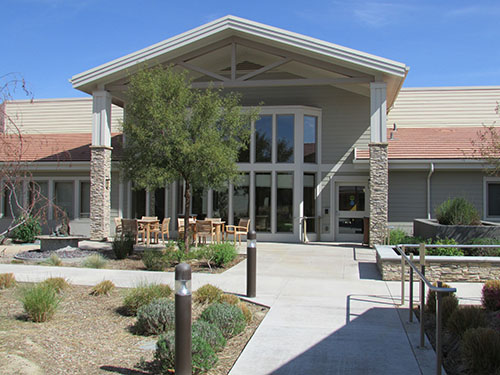
How is Veterans Home Of California - Fresno Staffed?

CMS rates VETERANS HOME OF CALIFORNIA - FRESNO's staffing level at 5 out of 5 stars, which is much above average compared to other nursing homes. Staff turnover is 31%, compared to the California average of 46%. This relatively stable workforce can support continuity of care.

What Have Inspectors Found at Veterans Home Of California - Fresno?

State health inspectors documented 25 deficiencies at VETERANS HOME OF CALIFORNIA - FRESNO during 2023 to 2025. These included: 25 with potential for harm.
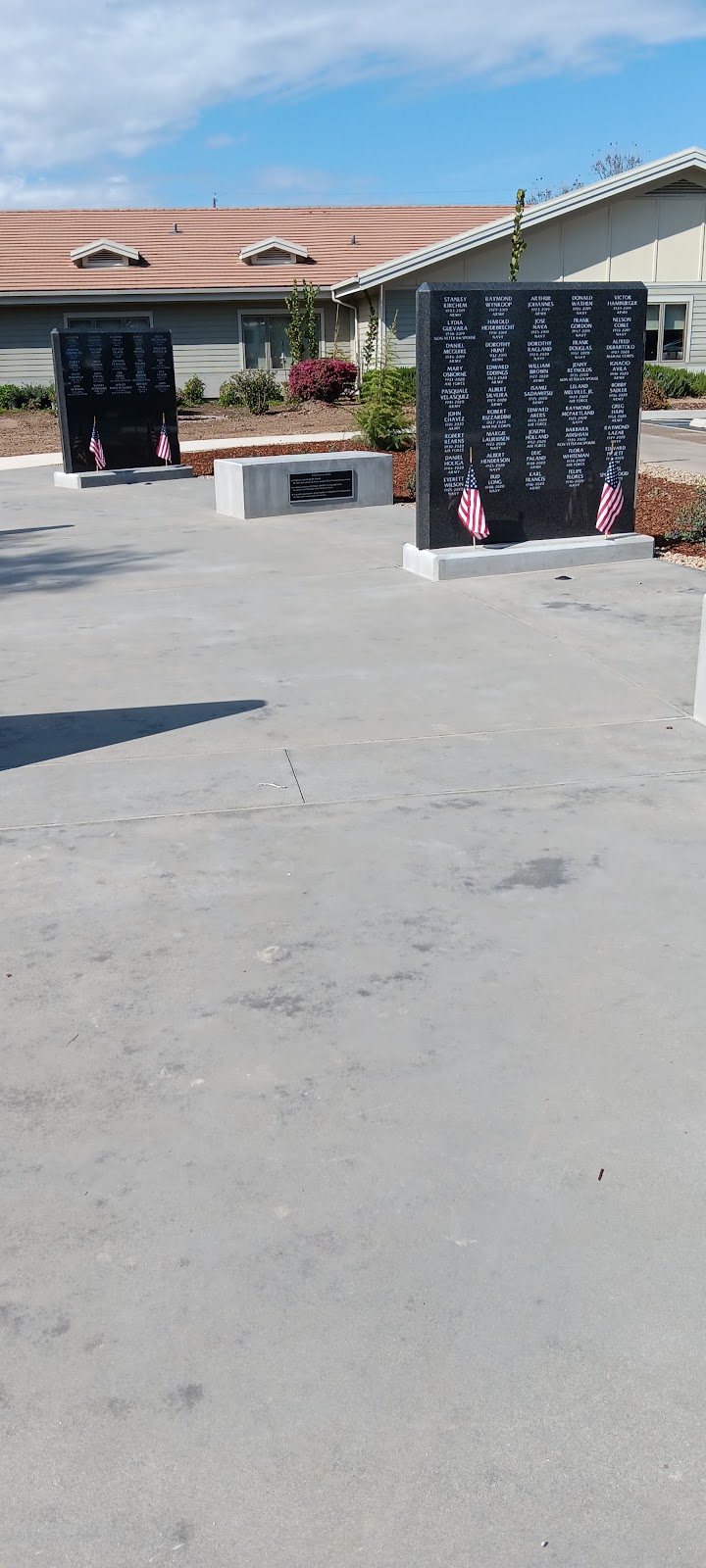
Who Owns and Operates Veterans Home Of California - Fresno?

VETERANS HOME OF CALIFORNIA - FRESNO is owned by a government entity. Government-operated facilities are typically run by state, county, or municipal agencies. The facility operates independently rather than as part of a larger chain. With 120 certified beds and approximately 106 residents (about 88% occupancy), it is a mid-sized facility located in FRESNO, California.
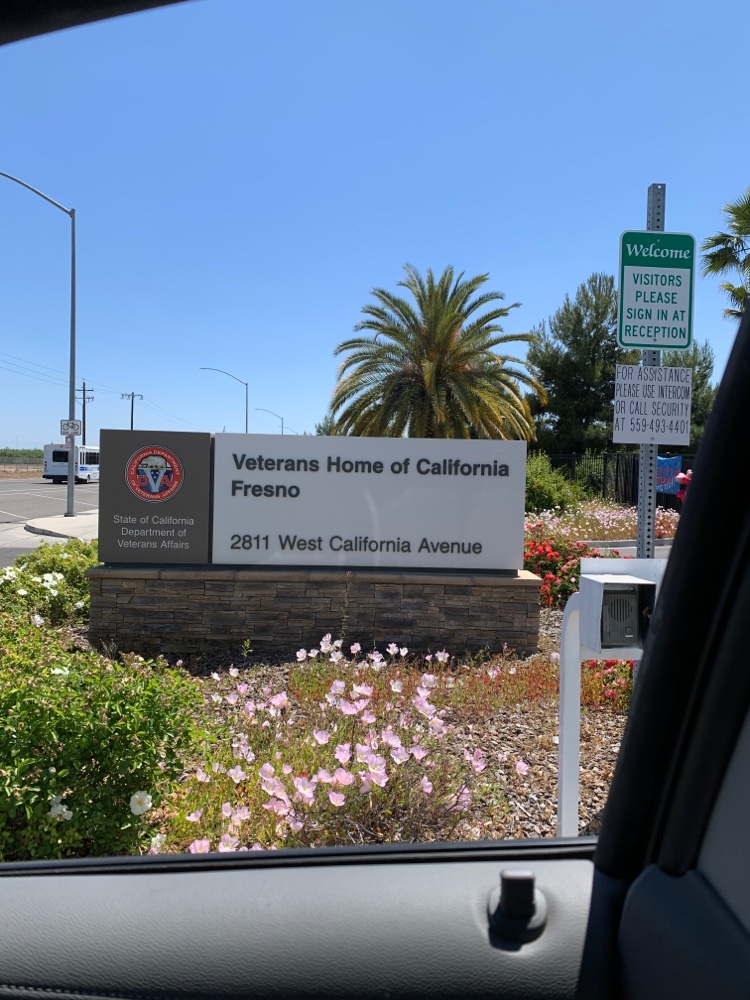
How Does Veterans Home Of California - Fresno Compare to Other California Nursing Homes?

Compared to the 100 nursing homes in California, VETERANS HOME OF CALIFORNIA - FRESNO's overall rating (5 stars) is above the state average of 3.2, staff turnover (31%) is significantly lower than the state average of 46%, and health inspection rating (4 stars) is above the national benchmark.

What Should Families Ask When Visiting Veterans Home Of California - Fresno?

Based on this facility's data, families visiting should ask: "Can I visit during a mealtime to observe dining assistance and food quality?" "How do you handle medical emergencies, and what is your hospital transfer rate?" "Can I speak with family members of current residents about their experience?"

Is Veterans Home Of California - Fresno Safe?

Based on CMS inspection data, VETERANS HOME OF CALIFORNIA - FRESNO has a clean safety record: no substantiated abuse findings (meaning no confirmed cases of resident harm), no Immediate Jeopardy citations (the most serious violation level indicating risk of serious injury or death), and is not on the Special Focus Facility watch list (a federal program monitoring the lowest-performing 1% of nursing homes). The facility has a 5-star overall rating and ranks #1 of 100 nursing homes in California. While no facility is perfect, families should still ask about staff-to-resident ratios and recent inspection results during their visit.

Do Nurses at Veterans Home Of California - Fresno Stick Around?

VETERANS HOME OF CALIFORNIA - FRESNO has a staff turnover rate of 31%, which is about average for California nursing homes (state average: 46%). Moderate turnover is common in nursing homes, but families should still ask about staff tenure and how the facility maintains care continuity when employees leave.

Was Veterans Home Of California - Fresno Ever Fined?

VETERANS HOME OF CALIFORNIA - FRESNO has no federal fines on record. CMS issues fines when nursing homes fail to meet care standards or don't correct problems found during inspections. The absence of fines suggests the facility has either maintained compliance or corrected any issues before penalties were assessed. This is a positive indicator, though families should still review recent inspection reports for the full picture.

Is Veterans Home Of California - Fresno on Any Federal Watch List?

VETERANS HOME OF CALIFORNIA - FRESNO is not on any federal watch list. The most significant is the Special Focus Facility (SFF) program, which identifies the bottom 1% of nursing homes nationally based on persistent, serious quality problems. Not being on this list means the facility has avoided the pattern of deficiencies that triggers enhanced federal oversight. This is a positive indicator, though families should still review the facility's inspection history directly.