ST. CATHERINE HEALTHCARE

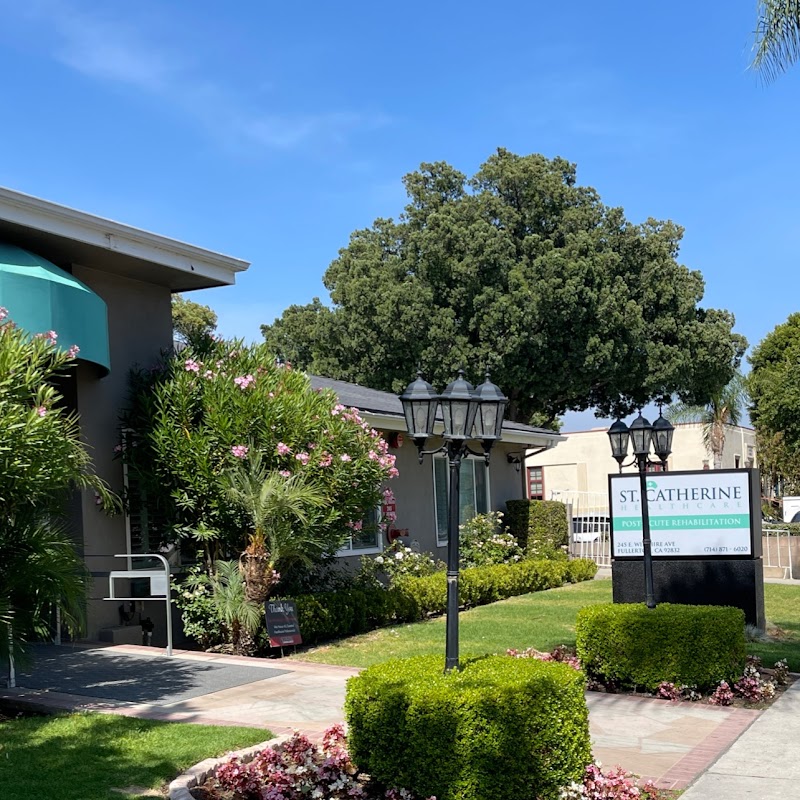
245 E WILSHIRE AVENUE, FULLERTON, CA 92832 (714) 871-6020
For profit - Corporation 99 Beds THE ENSIGN GROUP Data: November 2025
Trust Grade
75/100
#468 of 1155 in CA
Last Inspection: September 2024

Within standard 12-15 month inspection cycle. Federal law requires annual inspections.

Overview

St. Catherine Healthcare in Fullerton, California has a Trust Grade of B, indicating it is a good choice, though not without some concerns. It ranks #468 out of 1,155 facilities in California, placing it in the top half, and #36 out of 72 in Orange County, meaning only a few local options are better. The facility is improving, with issues dropping significantly from 21 in 2024 to just 1 in 2025. Staffing is decent with a turnover rate of 21%, below the state average, and there are no fines recorded, which is a positive sign. However, there have been issues noted, such as failures in food safety and sanitation protocols, including improper thawing of meats and unclean kitchen utensils, which could pose risks for residents. Additionally, the infection control practices have been criticized for not adequately monitoring infections among residents, highlighting areas for improvement despite the facility’s overall good reputation.

Trust Score
B
75/100
In California
#468/1155
Top 40%
Safety Record
Low Risk
No red flags
Inspections
Getting Better
21 → 1 violations
Staff Stability
✓ Good
21% annual turnover. Excellent stability, 27 points below California's 48% average. Staff who stay learn residents' needs.
Penalties
✓ Good
No fines on record. Clean compliance history, better than most California facilities.
Skilled Nurses
⚠ Watch
Each resident gets only 22 minutes of Registered Nurse (RN) attention daily — below average for California. Fewer RN minutes means fewer trained eyes watching for problems.
Violations
⚠ Watch
42 deficiencies on record. Higher than average. Multiple issues found across inspections.
★★★★☆
4.0
Overall Rating
★★★☆☆
3.0
Staff Levels
★★★★★
5.0
Care Quality
★★★☆☆
3.0
Inspection Score
Stable
2024: 21 issues
2025: 1 issues

The Good

  • 5-Star Quality Measures · Strong clinical quality outcomes
  • Low Staff Turnover (21%) · Staff stability means consistent care
  • Full Sprinkler Coverage · Fire safety systems throughout facility
  • No fines on record
  • Staff turnover is low (21%)

    27 points below California average of 48%

Facility shows strength in quality measures, staff retention, fire safety.

The Bad

Chain: THE ENSIGN GROUP

Part of a multi-facility chain

Ask about local staffing decisions and management

The Ugly 42 deficiencies on record

Jul 2025 1 deficiency
CONCERN (D) 📢 Someone Reported This

A family member, employee, or ombudsman was alarmed enough to file a formal complaint

Potential for Harm - no one hurt, but risky conditions existed

Respiratory Care (Tag F0695)

Could have caused harm · This affected 1 resident

**NOTE- TERMS IN BRACKETS HAVE BEEN EDITED TO PROTECT CONFIDENTIALITY** Based on observation, interview, medical record review, and facility P&P, the facility failed to ensure the protocols were follo...

Read full inspector narrative →
**NOTE- TERMS IN BRACKETS HAVE BEEN EDITED TO PROTECT CONFIDENTIALITY** Based on observation, interview, medical record review, and facility P&P, the facility failed to ensure the protocols were followed for oxygen administration for four of four sampled residents (Residents 1, 2, 3, and 4). * Residents 2, 3, and 4 were administered with more than the liters per minute ordered by the physician. * Resident 1's MAR failed to show documentation of the administration of the oxygen PRN. These failures had the potential for adverse respiratory outcomes and resulted in inaccurate administration records for the residents. Findings: Review of the facility's P&P titled Oxygen Administration reviewed 2/2023 showed the oxygen shall be administered as ordered by the physician. Review of the facility's P&P titled Guidelines For Medication Administration (undated) showed the medication administration shall be recorded on the appropriate documentation record. 1. Medical record review for Resident 1 was initiated on 6/6/25. Resident 2 was readmitted to the facility on [DATE]. Review of Resident 2's Order Summary Report showed a physician's order dated 11/30/24, for continuous oxygen to be administered at 2 LPM via nasal cannula or mask. On 6/6/25 at 1348 hours, Resident 2 was observed lying in bed with the supplemental oxygen being administered via nasal cannula. The regulator dial showed 5 LPM was administered to the resident. On 6/6/25 at 1455 hours, an observation and concurrent interview was conducted with LVN 1 at Resident 2's bedside. LVN 1 observed Resident 2's oxygen regulator and verified the resident was currently receiving the oxygen at 5 LPM. On 6/6/25 at 1459 hours, a follow-up interview and concurrent medical record review for Resident 2 was conducted with LVN 1. LVN 1 reviewed Resident 2's physician's orders and verified the order for the oxygen administration was for 2 LPM. On 6/6/25 at 1502 hours, an interview was conducted with LVN 2. LVN 2 she was Resident 2's nurse and had not changed the resident's oxygen during her shift. 2. Medical record review for Resident 3 was initiated on 6/6/25. Resident 3 was admitted to the facility on [DATE]. Review of Resident 3's Order Summary Report showed a physician's order dated 5/28/25, to administer supplemental oxygen at 2 LPM PRN via nasal cannula or mask to keep the oxygen saturation levels above 90%. On 6/6/25 at 1344 hours, Resident 3 was observed sitting up in bed with the oxygen being administered via nasal canula. The regulator showed the oxygen was being administered at 4 LPM. On 6/6/25 at 1456 hours, an observation and concurrent interview was conducted with LVN 1 at Resident 3's bedside. LVN 1 observed Resident 3's oxygen regulator and verified the resident was currently receiving the oxygen at 4 LPM. The LVN stated she did not change the resident's oxygen during her shift. On 6/6/25 at 1459 hours, a follow-up interview and concurrent medical record review for Resident 3 was conducted with LVN 1. LVN 1 reviewed Resident 3's physician's orders and verified the order was for 2 LPM PRN. 3. Medical record review for Resident 4 was initiated on 6/6/25. Resident 4 was readmitted to the facility on [DATE]. Review of Resident 4's Order Summary Report showed a physician's order dated 4/19/25, to administer supplemental oxygen at 2 LPM PRN via nasal cannula or mask, to keep the oxygen saturation above 90%. On 6/6/25 at 1344 hours, Resident 4 was observed sitting up in bed with the oxygen being administered via nasal canula at 3 LPM. On 6/6/25 at 1456 hours, an observation and concurrent interview was conducted with LVN 1 at Resident 4's bedside. LVN 1 observed the resident's oxygen regulator and verified the resident was currently receiving the oxygen at 3 LPM. LVN 1 stated she did not adjust the resident's oxygen during her shift. On 6/6/25 at 1459 hours, a follow-up interview and concurrent medical record review for Resident 4 was conducted with LVN 1. LVN 1 reviewed Resident 3's physician's orders and verified the order was to administer the oxygen for 2 LPM PRN. 4. Closed medical record for Resident 1 was initiated on 6/6/25. Resident 1 was admitted to the facility on [DATE], and discharged to an acute care hospital on 5/19/25. Review of Resident 1's Order Summary Report showed a physician's order dated 4/16/25, for oxygen to be administered PRN at 2 LPM via nasal cannula or mask, to keep the resident's oxygen saturation levels above 90%. Review of Resident 1's MDS assessment dated [DATE], showed the resident was cognitively intact. Review of Resident 1's MAR for 5/2025 showed PRN oxygen at 2 LPM was administered on 5/19/25 at 0000 hours. There was no other documentation in the MAR to show the oxygen was administered on any other days. However, review of Resident 1's Weights and Vitals Summary showed the resident was on oxygen via nasal cannula daily from 5/1 to 5/19/25. Review of Resident 1's LN - Nursing Summary - Weekly dated 5/11/25, showed PRN oxygen was administered to the resident at 2 LPM. Review of Resident 1's LN - Nursing Summary - Weekly dated 5/16/25, showed the resident received continuous oxygen at 2 LPM. Review of Resident 1's Dialysis Communications Records showed the following: - On 5/1/25 at 1820 hours, Resident 1 was on oxygen via nasal cannula. - On 5/10/25 at 1835 hours, Resident 1 was on oxygen at 2 LPM via nasal cannula. Review of Resident 1's N Adv (Nursing Advanced) Skilled Evaluations showed the following: - dated 5/1, 5/3, 5/4, 5/5, 5/6, 5/7, 5/8, 5/9, 5/10, 5/11, 5/12, 5/13, 5/14, 5/15, 5/16, 5/17, and 5/18/25, showed Resident 1 received oxygen via nasal cannula. - dated 5/2 and 5/10/25, showed Resident 1 received PRN oxygen at 2 LPM via nasal cannula. On 7/2/25 at 0916 hours, a telephone interview was conducted with Resident 1. Resident 1 stated he was on continuous oxygen while at the facility. On 7/2/25 at 1033 hours, an interview and concurrent closed medical record review for Resident 1 was conducted with LVN 3. LVN 3 stated Resident 1 was on continuous oxygen when she was assigned to him. LVN 3 reviewed Resident 1's physician's orders and verified the order was for PRN oxygen use. LVN 3 reviewed Resident 1's MAR for 5/2025 and verified the MAR failed to show Resident 1 frequently received the oxygen PRN. LVN 3 stated the oxygen administered should be documented in the MAR. On 7/2/25 at 1125 hours, an interview and concurrent closed medical record review for Resident 1 was conducted with the DON. The DON stated per Resident 1's medical record, the resident was pretty much on continuous oxygen, and verified the order was for PRN and should have clarified the order to match the resident's needs.
Dec 2024 3 deficiencies
CONCERN (D) 📢 Someone Reported This

A family member, employee, or ombudsman was alarmed enough to file a formal complaint

Potential for Harm - no one hurt, but risky conditions existed

Quality of Care (Tag F0684)

Could have caused harm · This affected 1 resident

**NOTE- TERMS IN BRACKETS HAVE BEEN EDITED TO PROTECT CONFIDENTIALITY** Based on interview, medical record review, and facility P&P review, the facility failed to provide the necessary care and servic...

Read full inspector narrative →
**NOTE- TERMS IN BRACKETS HAVE BEEN EDITED TO PROTECT CONFIDENTIALITY** Based on interview, medical record review, and facility P&P review, the facility failed to provide the necessary care and services for one of ninesampled residents (Resident 2). * The facility failed to timely provide and administer Resident 2's medications as per the physician's orders on 11/26 and 11/27/24. * The facility failed to follow up and notify the physician regarding Resident 2 of not receiving his medications due to pending delivery status of the ordered medications. These failures had the potential to negatively affect the resident's health condition and well-being. Findings: Review of the facility's P&P titled Prescriber Medication Orders dated 1/2019 showed the prescriber shall be contacted for direction when delivery of a medication will be delayed, or medication is not available. new medications except for emergency or stat medications are ordered as follows: the first dose of medication is scheduled to be given after the next regularly scheduled pharmacy delivery to the care center. If needed before the next regular delivery, inform the pharmacy of the need for prompt delivery. Timely delivery of new orders is required so that medication is not delayed. If available, the emergency kit is used when the residents needs a medication prior to pharmacy delivery. Closed medical record review for Resident 2 was initiated on 12/6/24. Resident 2 was admitted to the facility on [DATE] and transferred to the acute care facility on 12/2/24. Resident 2 had diagnoses including Type II DM, HTN, and HLD. Review of Resident 2's H&P examination dated 11/26/24, showed Resident 2 had fluctuating capacity to understand and make decisions. a. Review of Resident 2's Order Summary Report dated 11/25/24, showed the following physician's orders: - alfuzosin HCL (antihypertensive medication)ER tablet 10 mg, give one tablet one time a day for benign prostate hyperplasia (BPH) - aspirin EC (NSAID) tablet delayed release 81 mg, give one tablet one time a day for CVA prophylaxis - atorvastatin calcium (antilipidemic medication) oral tablet 80 mg, give one tablet one time a day for HLD - escitalopram oxalate (antidepressant medication) tablet 20 mg, give 0.5 mg tablet one time a day for depression - ezetimibe tablet (antilipemic medication) 10 mg, give one tablet by mouth at bedtime for HLD - finasteride tablet (medication to treat enlarged prostate) 5 mg, give one tablet one time a day for BPH - glipizide (anti-diabetic) tablet 10 mg, give one tablet by mouth one time a day for diabetes before meals - losartan potassium (antihypertensive medication)oral tablet 25 mg, give one tablet by mouth one time a day for HTN - protonix tablet (treat high levels of stomach acid) delayed release 40 mg, give one tablet by mouth one time a day for GERD before breakfast - sitagliptin phosphate (anti-diabetic) tablet 50 mg, give one tablet by mouth one time a day for DM - carvedilol (antihypertensive medication) oral tablet 6.26 mg, give 0.5 mg by mouth two times a day for hypertension Review of Resident 2's MAR for November 2024 showed the following medications were coded as 7 (other, see nurses notes). - alfuzosin HCL ER tablet 10 mg one tablet one time a day - aspirin EC tablet delayed release 81 mg one tablet one time a day - atorvastatin calcium oral tablet 80 mg one tablet one time a day - escitalopram oxalate tablet 20 mg 0.5 mg tablet one time a day - ezetimibe tablet 10 mg one tablet at bedtime - finasteride tablet 5 mg one tablet one time a day - glipizide tablet 10 mg one tablet one time a day - losartan potassium oral tablet 25 mg one tablet one time a day - protonix tablet delayed release 40 mg one tablet one time a day - sitagliptin phosphate tablet 50 mg one tablet one time a day - carvedilol oral 6.26 mg, give 0.5 mg tablet two times a day Review of Resident 2's eMAR Medication Administration Note for November 2024 showed the following medications were pending delivery: - on 11/26/24 losartan potassium 25 mg pending delivery-new admission - on 11/26/24 protonix delayed release 40 mg pending delivery-new admission - on 11/26/24 sitagliptin phosphate 50 mg tablet pending delivery-new admission - on 11/26/24 glipizide 10 mg tablet pending delivery-new admission - on 11/26/24 escitalopram oxalate 20 mg pending delivery-new admission - on 11/26/24 losartan potassium 25 mg pending delivery-new admission - on 11/26/24 finasteride 5 mg pending delivery-new admission - on 11/26/24 aspirin EC delayed release 81 mg pending delivery-new admission - on 11/26/24 carvedilol 6.25 mg pending delivery-new admission - on 11/26/24 alfuzosin HCl ER 10 mg pending delivery-new admission - on 11/26/24 atorvastatin calcium 80 mg pending delivery-new admission - on 11/27/24 ezetimibe 10 mg awaiting pharmacy delivery - on 11/27/24 carvedilol 6.25 mg pending delivery - on 11/27/24 atorvastatin calcium 80 mg pending delivery - on 11/27/24 alfuzosin HCl ER 10 mg pending delivery - on 11/27/24 protonix delayed release 40 mg pending delivery - on 11/27/24 sitagliptin phosphate 50 mg tablet pending delivery - on 11/27/24 glipizide 10 mg tablet pending delivery - on 11/27/24 finasteride 5 mg pending delivery - on 11/27/24 losartan potassium 25 mg pending delivery - on 11/27/24 escitalopram oxalate 20 mg pending delivery-new admission b. According to the Center for Disease Control and Prevention Managing Blood Sugar dated 5/2024 showed the blood sugar target before a meal range from 80-130 mg/dL and two hours after the start of a meal should be less than 180 mg/dL. According to the Center for Disease Control and Prevention Your Brain and Diabetes dated 7/2024, your brain is your body's command center. To do all its work, your brain uses sugar in your blood for energy. In fact, the brain is the most energy-demanding organ. It needs half of all the sugar energy in the body to function properly. If your blood sugar levels fall outside your normal range, it can throw your command center off balance. In the same way diabetes can damage nerves in other parts of your body, it can damage nerves in your brain. Having frequent episodes of high blood sugar (hyperglycemia) can stress the brain. The effects of high blood sugar happen over time and aren't obvious right away. People often don't know that their brain is being affected. High blood sugar over time damages blood vessels in the brain that carry oxygen-rich blood. When your brain receives too little blood, brain cells can die. This can cause problems with memory and thinking and eventually can lead to vascular dementia. Steps to improve or prevent problems with brain health and diabetes, such as: keep your blood sugars within target levels and to take medicine as prescribed. Review of Resident 2's Care Plan showed the following focus and interventions: - dated 12/2/24, at risk for elevated blood pressure related to HTN. The interventions included to give the antihypertensive medication as ordered, monitor for the medication side effects, and report to MD as necessary. - dated 12/2/24, at risk for hypoglycemia/hyperglycemia r/t diabetes mellitus. The interventions included to administer the diabetes medications as ordered, monitor/document for the side effects and effectiveness, and educate regarding medications and importance of compliance. - dated 12/2/24, resident has the potential for discomfort, complications related to benign prostatic hyperplasia. The interventions include to administer the medications as ordered. - dated 12/2/24, resident on escitalopram for depression. The interventions included to give the antidepressant medications as ordered. Review of Resident 2's Blood Sugar Summary dated on 12/2/24, showed a result of 514 mg/dL. On 12/12/24 at 1425 hours, a concurrent interview and closed medical record review was conducted with the DON. When asked if Resident 2 was on any blood sugar monitoring, the DON stated per the resident's family member, he was not on the blood sugar monitoring at home. The DON stated for the respite care residents, the facility uses the resident's home medications. When asked what the process was when Resident 2 did not receive his medications on 11/26 and 11/27/24 and if the resident'sblood sugar would have been monitored. The DON stated she was not aware Resident 2 did not receive his medications. The DON stated the resident's family member was supposed to bring the medications for the resident. When asked what the process was if the family member did not bring the medications timely, the DON stated, we will order, and notify the resident's physician. When asked what 7 was in the MAR, the DON stated it meant pending delivery. When asked who was responsible for following up for pending medication delivery, the DON stated the charge nurses. When asked if it was documented the physician was notified regarding Resident 2's medications had not been administered due to pending delivery, the DON stated, no not that I can see. When asked if Resident 2's blood sugars levels were being monitored, the DON stated on 12/2/24, Resident 2's blood sugar was checked prior to being sent out to the acute care facility. When asked why Resident 2 was being sent out to the acute care facility, the DON stated Resident 2 was difficult to arouse, and his oxygen saturation was 88%. When asked what Resident 2's blood sugar result was on 12/2/24, the DON stated 514 mg/DL. When asked if that was a high reading, the DON stated that's pretty high. The DON verified Resident 2's medications were not administered on 11/26 and 11/27/24 due to pending delivery, and the physician was not notified the medications were not administered as ordered due to pending medication delivery. On 12/12/24 at 1638 hours, the DON and the Administrator Assistant acknowledged the above findings.
CONCERN (D) 📢 Someone Reported This

A family member, employee, or ombudsman was alarmed enough to file a formal complaint

Potential for Harm - no one hurt, but risky conditions existed

Accident Prevention (Tag F0689)

Could have caused harm · This affected 1 resident

**NOTE- TERMS IN BRACKETS HAVE BEEN EDITED TO PROTECT CONFIDENTIALITY** Based on observation, interview, medical record review, facility P&P review, the facility failed to ensure three of nine sampled...

Read full inspector narrative →
**NOTE- TERMS IN BRACKETS HAVE BEEN EDITED TO PROTECT CONFIDENTIALITY** Based on observation, interview, medical record review, facility P&P review, the facility failed to ensure three of nine sampled residents (Residents 3, 4, and 5) remained free from accident hazards. * Resident 3's fall risk care plan showed the interventions including for the resident's bed to be in the lowest position and for the bilateral floor mats. However, the bed was not in the lowest position and the floor mat was folded up against the wall. * Resident 4's fall risk care plan addressing the resident's actual fall showed interventions including to maintain a clear pathway, free of obstacles, needs a safe environment: floor free from spills and/or clutter. However, the bedside table was placed on top of the floor mat next to the resident's bed. * Resident 5's fall risk care plan addressing the resident's actual fall showed interventions including for the resident's bed to be in the lowest position, for bilateral floor mats, and to maintain a clear pathway, free of obstacles, needs a safe environment: floor free from spills and/or clutter. However, the bed was not in the lowest position, and the bedside table was placed on top of the floor mat. These failures had the potential to place the residents at risk for injury. Findings: Review of the facility's P&P titled Fall Management (undated) showed it is policy of this facility to investigate the circumstances surrounding each resident's fall and implement actions to reduce incidences of additional falls and minimize potential for injury. The care plan or an update to an existing care plan will then be generated. Review of the facility's P&P titled Fall Prevention revised 8/2020 showed toidentify the resident who are high risk for fall, and if appropriate, interventions will be initiated per IDT member recommendation and when necessary, physician's orders (i.e., physical therapy services, initiation, or medication of a device etc.) for any fall related incident. 1. Medical record review for Resident 3 was initiated on 12/6/24. Resident 3 was admitted to the facility on [DATE]. Review of Resident 3's H&P examination dated 6/28/24, showed Resident 3 had the capacity to understand and make decisions. Review of Resident 3's plan of care showed a care plan problem initiated on 7/5/24, addressing risk for further falls. The interventions included floor mats at bedside and bed in lowest position. Review of Resident 3's Fall Risk Evaluation dated 9/24/24, showed Resident 3's score was 14 which was categorized as high risk for falls. On 12/6/24 at 0955 hours, an observation was made of Resident 3's bed and floor mats. The right-side floor mat was observed folded up against the wall and the bed was not in the lowest position. On 12/6/24 at 1003 hours, a concurrent observation and interview was conducted with the DON. The DON verified Resident 3's right-side floor mat was folded up against the wall and stated Resident 3's care plan interventions included for the bilateral floor mats. On 12/6/24 at 1010 hours, a concurrent observation and interview was conducted with the Administrator. The Administrator acknowledged the right-side floor mat was against the wall. When asked if Resident 3's bed was at the lowest position, the Administrator went to check, and the bed went down another inch. 2. Medical record review for Resident 4 was initiated on 12/6/24. Resident 4 was admitted to the facility on [DATE]. Review of Resident 4's H&P examination dated 11/14/24,showed Resident 4 had no capacity to understand and make decisions. Review of Resident 4's plan of care addressing the resident's actual fall initiated on 11/13/24, showed interventions including to maintain a clear pathway, free of obstacles, needs a safe environment, floors free from spills, and/or clutter. On 12/6/24 at 1629 hours, an observation was made of Resident 4's bedside table that was placed on top floor mat on the left side of the bed, and one end of the floor mat was observed to be flipped up. On 12/6/24 at 1639 hours, a concurrent observation and interview was conducted with RN 1. RN 1 verified Resident 4's bedside table was on top of the floor mat and stated, feels more like a fall risk because she gets up so much. RN 1 stated she observed the floor mat was flipped up, and the table was on top of the floor mat. 3. Medical record review for Resident 5 was initiated on 12/12/24. Resident 5 was admitted to the facility on [DATE]. Review of Resident 5's plan of care showed a care plan problem initiated on 10/24/24,addressing the actual fall. The care plan showed interventions including for thebed to be in the lowest position, bilateral floor mats, maintain a clean pathway, needs a safe environment: floor free from spills, and/or clutter. Review of Resident 5's H&P examination dated 10/26/24. Resident 5 had the capacity understand and make decisions. On 12/12/24 at 0834 hours, Resident 5's bed was observed not in the lowest position and on the left side of the bed, the bedside table was observed on top of the floor mat. On 12/12/24 at 0839 hours, a concurrent observation and interview was conducted with CNA 2. Upon entering Resident 5's room, CNA 2 was asked if Resident 5's bed was in the lowest position. CNA 2 moved the bedside table from off the floor mat to reach the remote control for the bed control. When asked if the bed was in the lowest position, the CNA 2 lowered the bed further with the remote control. CNA 2 stated the bed was not in the lowest position, and acknowledged he moved the bedside table that was on top of the floor mat. On 12/12/24 at 1425 hours, an interview was conducted with the DON. When asked if the bedside table should be placed on top of the floor mats, the DON stated, it shouldn't be there. On 12/12/24 at 1638 hours, the DON and the Administrator Assistant acknowledged the above findings.
MINOR (B) 📢 Someone Reported This

A family member, employee, or ombudsman was alarmed enough to file a formal complaint

Minor Issue - procedural, no safety impact

Medical Records (Tag F0842)

Minor procedural issue · This affected multiple residents

**NOTE- TERMS IN BRACKETS HAVE BEEN EDITED TO PROTECT CONFIDENTIALITY** Based on interview, medical record review, and the facility's P&P review, the facility failed ensure the accuracy of the MAR for...

Read full inspector narrative →
**NOTE- TERMS IN BRACKETS HAVE BEEN EDITED TO PROTECT CONFIDENTIALITY** Based on interview, medical record review, and the facility's P&P review, the facility failed ensure the accuracy of the MAR for one of nine sampled residents (Resident 2). This failure had the potential for the resident's care needs not being met. Findings: Review of the facility's P&P titled Documentation dated 5/2007 showed the resident's clinical record is concise and accurate account of treatment, care, response to care, signs, symptoms, and progress of the resident's condition. Closed medical record review for Resident 2 was initiated on 12/6/24. Resident 2 was admitted to the facility on [DATE],for respite care and was transferred to theacute care facility on 12/2/24. Review of Resident 2's H&P examination dated 11/26/24, showed Resident 2 had fluctuating capacity to understand and make decisions. Review of Resident 2's Order Summary Report dated 11/25/24, showed to administer carvedilol oral tablet 6.25 mg-give 0.5 mg by mouth two times a day for hypertension and ezetimibe tablet 10 mg-give one tablet by mouth at bedtime for HLD. Review of Resident 2's eMAR Medication Administration Note for November 2024 showed: - on 11/26/24 carvedilol 6.25 mg was documented as pending delivery-new admission - on 11/27/24 carvedilol 6.25 mg was documented as pending delivery - on 11/27/24 ezetimibe 10 mg showed awaiting pharmacy delivery However, review of Resident 2's Medication Administration Record for November 2024 showed the following medications were administered: - on 11/26/24 at 1700 hours, carvedilol 6.25 mg - on 11/26/24 at 2100 hours, ezetimibe 10 mg On 12/12/24 at 1425, a concurrent interview and closed medical review was conducted with the DON. The DON verified Resident 2's medications that were pending delivery were not administered and were error in the documentation as administered. On 12/12/24 at 1638 hours, the DON and the Administrator Assistant acknowledged the findings.
Sept 2024 16 deficiencies
CONCERN (D)

Potential for Harm - no one hurt, but risky conditions existed

Deficiency F0554 (Tag F0554)

Could have caused harm · This affected 1 resident

**NOTE- TERMS IN BRACKETS HAVE BEEN EDITED TO PROTECT CONFIDENTIALITY** Based on observation, interview, medical record review, and facility P&P review, the facility failed to determine if it was safe...

Read full inspector narrative →
**NOTE- TERMS IN BRACKETS HAVE BEEN EDITED TO PROTECT CONFIDENTIALITY** Based on observation, interview, medical record review, and facility P&P review, the facility failed to determine if it was safe for one of 18 final sampled residents (Resident 77) to self-administer medications. * Resident 77 was observed to have medications inside a medicine cup at the bedside. Resident 77 did not have an assessment, a physician's order, or a care plan problem addressing the self-administration of medications. This faiure had the potential for Resident 77 to administer medications inaccurately. Findings: Review of the facility's P&P titled Self Administration of Medications dated 2/2021 showed it is the policy of the facility to respect the wishes of alert, competent residents to self-administer prescribed as allowable under state regulations. If a resident desires to participate in self-administration, the interdisciplinary team will assess and periodically re-evaluate the resident based on change in the resident's status. If the resident is a candidate for self-administration of medications, this will be indicated in the chart. Appropriate notation of these determinations will be placed in the resident's care plan. On 9/23/24 at 0829 hours, an observation and concurrent interview was conducted with RN 1. Multiple medications inside a medicine cup was observed at Resident 77's bedside. RN 1 verified the findings and acknowledged he should not have left the medications at Resident 77's bedside. Medical record review for Resident 77 was initiated on 9/23/24. Resident 77 was admitted to the facility on [DATE]. Review of Resident 77's H&P examination dated 5/25/24, showed Resident 77 had the capacity to understand and make decisions. Review of Resident 77's medical record failed to show documented evidence of the following for Resident 77 to safely self-administer medications: - a physician's order, - assessment, and - a care plan problem addressing Resident 77's self-administration of medications. On 9/24/24 at 1512 hours, an interview and concurrent medical record review was conducted with the DON. The DON verified Resident 77 did not have a self-administration of medication assessment, physician's order, or care plan in place.
CONCERN (D)

Potential for Harm - no one hurt, but risky conditions existed

PASARR Coordination (Tag F0644)

Could have caused harm · This affected 1 resident

**NOTE- TERMS IN BRACKETS HAVE BEEN EDITED TO PROTECT CONFIDENTIALITY** Based on interview, medical record review, and facility P&P review, the facility failed to ensure recommendations from the Pread...

Read full inspector narrative →
**NOTE- TERMS IN BRACKETS HAVE BEEN EDITED TO PROTECT CONFIDENTIALITY** Based on interview, medical record review, and facility P&P review, the facility failed to ensure recommendations from the Preadmission Screening and Resident Review (PASARR, a federal requirement to help ensure that individuals are not inappropriately placed in nursing homes for long term care) level II determination was followed up, as per the facility P&P and incorporated into the resident's plan of care for one of two final sampled resident (Resident 8) reviewed for PASARR. This failure had the potential for Resident 8 not receiving the adequate care that was recommended by PASARR level II determination and evaluation report assessed by an appropriate state-designated authority. Findings: Review of the facility's P&P titled PASRR revised 7/22 showed after admission IDT members will review the Level I PASRR assessment for accuracy and the need for PASRR Level II referral. Based upon the assessment, the facility would ensure proper referral to appropriate state agencies for the provision of specialized services to residents with intellectual disabilities or related conditions or serious mental illnesses. Social services shall contact the appropriate State Agency for referral of specialized care and services the resident may require. Review of the facility's P&P titled Comprehensive Resident Centered Care Plan revised 1/21 showed a comprehensive person-centered care plan would be developed and implemented for each resident. Medical record review for Resident 8 was initiated on 9/23/24. Resident 8 was admitted to the facility on [DATE], and readmitted in 12/17/22, with the diagnosis of schizophrenia, anxiety disorder, and major depressive disorder. Review of the letter sent to Resident 8 by the Department of Health Care Services dated 1/9/23, showed the PASARR Level II Evaluation was conducted on 1/7/23. The letter also showed the facility staff would receive the copy of the determination report and discuss the result with Resident 8 and would incorporate the recommendations into Resident 8's care plan. Review of Resident 8's PASARR Individualized Determination Report dated 1/9/23, showed Resident 8 required nursing facility services due to a medical and/or mental health condition. The PASARR Individualized Determination Report further showed special services were recommended. The report showed the Determination Report was based on a review of Resident 8's medical and social history which showed a significant medical condition with mental stressors that require nursing care. Review of Resident 8's H&P examination dated 1/23/24, showed Resident 8 had the capacity to understand and make decisions. Review of the Resident 8's medical record did not show the recommendations from the PASARR Individualized Determination Report was followed up. Review of the Resident 8's plan of care failed to show a care plan problem addressing the recommendations from the PASARR Individualized Determination Report. On 9/24/24 at 1428 hours, an interview and concurrent medical record review for Resident 8 was conducted with the MDS Coordinator. The MDS Coordinator stated when the Level I Screening was positive, the Department of Health Care Services would contact the facility to conduct a Level II Determination. Once the determination was complete, the facility would obtain and print the determination results and incorporate the recommendations into the resident's plan of care. The MDS Coordinator further stated each resident would have an individualized PASARR care plan to addressed the specific PASARR recommendations. The MDS Coordinator verified the above findings and stated she was unable to find the documentation the results of the determination were discussed with Resident 8, and was unable to find documentation an IDT meeting was conducted to discuss the PASARR level II recommendations for Resident 8. On 9/26/24 at 1034 hours, an interview was conducted with the DON. The DON was informed and acknowledge the above findings.
CONCERN (D)

Potential for Harm - no one hurt, but risky conditions existed

Tube Feeding (Tag F0693)

Could have caused harm · This affected 1 resident

**NOTE- TERMS IN BRACKETS HAVE BEEN EDITED TO PROTECT CONFIDENTIALITY** Based on observation, interview, medical record review, and facility P&P review, the facility failed to ensure the appropriate c...

Read full inspector narrative →
**NOTE- TERMS IN BRACKETS HAVE BEEN EDITED TO PROTECT CONFIDENTIALITY** Based on observation, interview, medical record review, and facility P&P review, the facility failed to ensure the appropriate care and services were provided related to the use of a GT for one of 18 final sampled residents (Resident 65). * The facility failed to ensure Resident 65's GT was checked for placement prior to medication administration, flushed with at least 5 ml of water between each medication as per the facility's P&P, and flushed with 20 to 30 ml of water following medication administration as per the physician's order. This failure had the potential for GT blockage affecting the resident's health and well-being. Findings: Review of the facility's P&P titled Medication Administration - Enteral Tubes dated 1/2019 showed the facility assures the safe and effective administration of enteral formulas and medications. Enteral tubes are flushed before administering medications and after all medications have been administered with at least 30 ml of water. The P&P also showed to verify the tube placement and administer each medication separately, flushing tube with at least 5 ml of water after each dose. On 9/24/24 at 0835 hours, an observation of the medication administration for Resident 65 was conducted with LVN 1. LVN 1 stated Resident 65's medications had to be administered via the GT. LVN 1 prepared and administered Resident 65's medications via the GT. During the observation of the medication administration with LVN 1 for Resident 65, LVN 1 failed to do the following for Resident 65: - check placement of the GT prior to medication administration, - flush the GT with at least 5 ml of water between each medication, and - flush the GT with 20-30 ml of water following medication administration. Medical record review for Resident 65 was initiated on 9/23/24. Resident 65 was admitted to the facility on [DATE], and readmitted on [DATE]. Review of Resident 65's Order Summary Report dated 9/24/24, showed a physician's order dated 7/4/24, to check the tube placement before the medication administration and flush the tubing with 20 to 30 ml of water after the medications. On 9/24/24 at 1220 hours, an interview was conducted with LVN 1. LVN 1 verified the above findings.
CONCERN (D)

Potential for Harm - no one hurt, but risky conditions existed

Deficiency F0694 (Tag F0694)

Could have caused harm · This affected 1 resident

**NOTE- TERMS IN BRACKETS HAVE BEEN EDITED TO PROTECT CONFIDENTIALITY** Based on observation, interview, and medical record review, the facility failed to provide the necessary care and services relat...

Read full inspector narrative →
**NOTE- TERMS IN BRACKETS HAVE BEEN EDITED TO PROTECT CONFIDENTIALITY** Based on observation, interview, and medical record review, the facility failed to provide the necessary care and services related to a PICC line for one of 18 final sampled residents (Resident 537). * The facility failed to obtain the measurement of the right upper arm circumference upon admission and dressing changes. In addition, the facility failed to develop a care plan problem to address the use of a PICC line catheter. These failures posed the risk for the resident to development complication such as catheter migration and dislodgement. Findings: According to the literature titled Nursing Advanced Skills dated 2023 in the National Library of Medicine's database, showed if a PICC line is in place, arm circumference is also measured each shift and results compared to previous readings. If arm circumference consistently increases, a deep vein thrombosis may be suspected. Accurate documentation of site assessment and related monitoring are essential. Medical record review for Resident 537 was initiated on 9/23/24. Resident 537 was admitted to the facility on [DATE]. On 9/23/24 at 0817 hours, Resident 537 was observed with a PICC line on the right upper arm covered with a transparent dressing. Review of Resident 537's Order Summary Report dated 9/25/24, showed the physicians orders dated 9/4/24, for PICC catheter, measure the external catheter with the site dressing every day shift every seven days and Meropenem (antibiotic) 1 gram intravenously every 12 hours for leukocytosis (a condition where there are abnormally high levels of white blood cells in the blood). Review of Resident 537's Order Summary Report dated 9/25/24, showed a physician's order dated 9/5/24, for daptomycin-sodium chloride (antibiotic) 700 mg intravenously one time a day for leukocytosis/MRSA of wound. Further review of Resident 537's medical record failed to show the documentation of the measurements of Resident 537's right arm circumference and a care plan problem addressing Resident 537's use of a PICC line catheter in place. On 9/25/24 at 0922 hours, an interview and concurrent medical record review was conducted with RN 2. RN 2 verified the above findings and stated they did not measure the arm circumference for the resident's PICC line.
CONCERN (D)

Potential for Harm - no one hurt, but risky conditions existed

Deficiency F0698 (Tag F0698)

Could have caused harm · This affected 1 resident

**NOTE- TERMS IN BRACKETS HAVE BEEN EDITED TO PROTECT CONFIDENTIALITY** Based on observation, interview, medical record review, and facility P&P review, the facility failed to provide the necessary ca...

Read full inspector narrative →
**NOTE- TERMS IN BRACKETS HAVE BEEN EDITED TO PROTECT CONFIDENTIALITY** Based on observation, interview, medical record review, and facility P&P review, the facility failed to provide the necessary care and services to attain and maintain the highest well-being for one of 18 final sampled residents (Resident 63). * The facility failed to monitor Resident 63's fluid restriction as per the physician's order. In addition, the facility failed to ensure Resident 63's dialysis access site was assessed prior and after dialysis treatments. These failures had the potential to negatively impact the resident's well-being. Findings: Review of the facility's P&P titled Dialysis (Renal), Pre and Post Care revised 1/2020 showed it is the policy of the facility to assist resident in maintaining homeostasis pre- and post-renal dialysis, assess and maintain patency of renal dialysis access, and assess resident daily for function related to renal dialysis. Dialysis access should be assessed upon return to the facility for patency, and any unusual redness or swelling. Documentation: assess care given, and condition of renal dialysis access. Medical record review for Resident 63 was initiated on 9/23/24. Resident 63 was admitted to the facility on [DATE], and readmitted on [DATE], with diagnoses including end stage renal disease with dependence on renal dialysis with a dialysis accesss site of a right upper chest permacath (a flexible tube that's inserted into a blood vessel in the neck or upper chest and used for dialysis or other medical procedures). Review of Resident 63's Order Summary Report dated 9/25/24, showed a physician's order dated 4/17/24, for dialysis three times a week on Mondays, Wednesdays, and Fridays at the outpatient dialysis center. a. Review of Resident 63's Order Summary Report dated 9/25/24, showed a physician's order dated 10/20/23, to monitor intake and output every shift and on fluid restriction of 1200 ml per 24 hours. Review of Resident 63's Intake and Output Record showed the resident's fluid intake amount was more than 1200 ml on the following dates: - 8/5/24, 1420 ml - 8/6/24, 1220 ml - 8/9/24, 1300 ml - 8/11/24, 1220 ml - 8/15/24, 1220 ml - 8/17/24, 1500 ml - 8/18/24, 1500 ml - 8/27/24, 1320 ml - 9/1/24, 1420 ml - 9/3/24, 1320 ml - 9/5/24, 1340 ml - 9/7/24, 1300 ml - 9/8/24, 1300 ml - 9/15/24, 1220 ml - 9/17/24, 1300 ml - 9/18/24, 1300 ml - 9/19/24, 1320 ml Further review of Resident 63's Intake and Output Record failed to show for the documentation of the fluid intake for the following dates and shifts: - 8/20/24, 3-11 shift - 8/21/24, 3-11 shift - 8/22/24, 7-3 shift - 8/23/24, 7-3 shift - 8/25/24, 3-11 shift b. Review of Resident 63's Dialysis Communication Records failed to show an assessment of the dialysis site was done for the following dates: - 7/1/24, pre-dialysis - 7/31/24, post-dialysis - 8/21/24, pre-dialysis - 8/30/24, pre and post-dialysis - 9/18/24, pre-dialysis - 9/20/24, pre-dialysis - 9/25/24, pre-dialysis On 9/26/24 at 1037 hours, an interview and concurrent medical record review was conducted with LVN 2. LVN 2 verified and acknowledged the above findings.
CONCERN (D)

Potential for Harm - no one hurt, but risky conditions existed

Deficiency F0700 (Tag F0700)

Could have caused harm · This affected 1 resident

**NOTE- TERMS IN BRACKETS HAVE BEEN EDITED TO PROTECT CONFIDENTIALITY** Based on observation, interview, medical record review, and facility P&P review, the facility failed to implement alternative me...

Read full inspector narrative →
**NOTE- TERMS IN BRACKETS HAVE BEEN EDITED TO PROTECT CONFIDENTIALITY** Based on observation, interview, medical record review, and facility P&P review, the facility failed to implement alternative measures prior to the use of bed rails for two of 18 final sampled residents (Residents 63 and 537). This failure created the potential to put the residents at risk for entrapment and serious injury. Findings: Review of the facility's P&P titled Bedrail Assessment revised 8/2017 showed it is the policy of the facility to attempt to use appropriate alternatives prior to installing a side or bed rail. After the facility has attempted alternatives to bed rails and determined that these alternatives failed to meet the resident's assessment needs, the facility IDT will assess the resident for risks of entrapment and possible benefits of using the bed rail. 1. On 9/23/24 at 0800 hours, Resident 63 was observed sitting on the bed with the bilateral bed rails elevated. Medical record review for Resident 63 was initiated on 9/23/24. Resident 63 was admitted to the facility on [DATE], and readmitted on [DATE]. Review of Resident 63's Order Summary Report dated 9/25/24, showed a physician's order dated 10/30/23, for bilateral half side rails as enabler for bed mobility and positioning. Review of Resident 63's Bed Rail Safety Evaluation dated 8/22/24, failed to show any alternative interventions were attempted prior to the bed rail use. 2. On 9/23/24 at 0817 hours, Resident 537 was observed lying in bed with the bilateral bed rails elevated. Medical record review for Resident 537 was initiated on 9/23/24. Resident 537 was admitted to the facility on [DATE]. Review of Resident 537's Order Summary Report dated 9/25/24, showed a physician's order dated 9/4/24, for bilateral grab bars as enabler for bed mobility and positioning. Review of Resident 537's Bed Rail Safety Evaluation dated 9/4/24, failed to show any alternative interventions were attempted prior to the bed rail use. On 9/26/24 at 1034 hours, an interview and concurrent medical record review was conducted with RN 2. RN 2 verified and acknowledged the above findings.
CONCERN (D)

Potential for Harm - no one hurt, but risky conditions existed

Pharmacy Services (Tag F0755)

Could have caused harm · This affected 1 resident

**NOTE- TERMS IN BRACKETS HAVE BEEN EDITED TO PROTECT CONFIDENTIALITY** Based on observation, interview, medical record review, and facility P&P review, the facility failed to ensure one of 18 final s...

Read full inspector narrative →
**NOTE- TERMS IN BRACKETS HAVE BEEN EDITED TO PROTECT CONFIDENTIALITY** Based on observation, interview, medical record review, and facility P&P review, the facility failed to ensure one of 18 final sampled residents (Resident 7) was provided the medications as ordered by the physician. * The facility failed to ensure Resident 7 had a physician's order for nasal moisturizing spray. This failure had the potential of not meeting the resident's needs. Findings: Review of the facility's P&P titled Administration of Drugs revised 2/2022 showed it is the policy of the facility that medications shall be administered as prescribed by the attending physician. Medications must be administered in accordance with the written orders of the attending physician. On 9/25/24 at 0930 hours, Resident 7 was observed to have three bottles of Nasal Moisturizing Spray inside her bedside top drawer. Medical record review for Resident 7 was initiated on 9/25/24. Resident 7 was admitted to the facility on [DATE]. Review of Resident 7's Self-Administration of Medications Evaluation dated 8/23/24, showed the IDT had determined that it was safe for the resident to self-administer medications. Review of Resident 7's MDS Section C dated 8/28/24, showed Resident 7 had no cognitive impairment. Review of Resident 7's Order Summary Report dated 9/26/24, showed a physician's order dated 9/23/24, for resident may self-administer medications and keep medications at bedside. However, further review of Resident 7's Order Summary Report failed to show a physician's order for use of the nasal moisturizing spray. On 9/26/24 at 1300 hours, an interview and concurrent medical record review was conducted with LVN 3. LVN 3 verified and acknowledged the above findings.
CONCERN (D)

Potential for Harm - no one hurt, but risky conditions existed

Deficiency F0761 (Tag F0761)

Could have caused harm · This affected 1 resident

**NOTE- TERMS IN BRACKETS HAVE BEEN EDITED TO PROTECT CONFIDENTIALITY** Based on observation and interview, the facility failed to ensure for the safe storage of the medications and supplies. * The IV...

Read full inspector narrative →
**NOTE- TERMS IN BRACKETS HAVE BEEN EDITED TO PROTECT CONFIDENTIALITY** Based on observation and interview, the facility failed to ensure for the safe storage of the medications and supplies. * The IV Cart was observed to contain the expired supplies along with other supplies without a manufacturing or expiration date. * An opened bottle of Gerilanta (a laxative medication) was observed in Medication Cart 2 with no open date. These failures had the potential to result in unsafe administration of the medications. Findings: a. On [DATE] at 0827 hours, an inspection of the IV Cart was initiated with RN 4. The following items were observed in the IV Cart: - 78 Red Plus Luer Lock Caps with no manufacturing or expiration dates, - five [NAME] Vial Mate Adapter with no manufacturing or expiration dates, - seven BD Vacutainer Luer Lock Access Device with no manufacturing or expiration dates, - two BD Blue Insyte Autoguard Winged Catheters with the expiration dates of [DATE] and [DATE]. RN 4 verified the above findings. b. On [DATE] at 1135 hours, an inspection of Medication Cart 2 was initiated with LVN 2. One opened bottle of Gerilanta was observed without an open date documented on the bottle. LVN 2 verified the findings.
CONCERN (D)

Potential for Harm - no one hurt, but risky conditions existed

Menu Adequacy (Tag F0803)

Could have caused harm · This affected 1 resident

**NOTE- TERMS IN BRACKETS HAVE BEEN EDITED TO PROTECT CONFIDENTIALITY** Based on observation, interview, facility document review, and facility P&P review, the facility failed to ensure the menus were...

Read full inspector narrative →
**NOTE- TERMS IN BRACKETS HAVE BEEN EDITED TO PROTECT CONFIDENTIALITY** Based on observation, interview, facility document review, and facility P&P review, the facility failed to ensure the menus were followed when fortified (additional nutrients added through foods such as butter and cream) diets were not followed for one nonsampled resident (Resident 19). This failure had the potential for Resident 19 to not receive the diet as planned which may lead to compromised nutritional status. Findings: Review of the facility's P&P titled Fortification of Food: Increasing Calories and/or Protein in the Diet dated 2023 showed the enrichment of foods would be done on an individual basis for residents who cannot consume adequate amounts of calories and/or protein to sustain their weight or nutrition status. Identification of the residents in need of fortification would be done by the facility RD or the FNS Director. The physician would then order a fortified diet. Calories and/or protein would be added to selected foods. The facility RD or FNS Director would select the fortification method from the list provided for foods commonly agreed upon to be consumed or utilize the Healthcare Menus Direct, LLC's Fortified Menu Plan. Review of the facility's document titled Fall Menus for Week 4- Tuesday 9/24/24, showed the following items served for lunch on 9/24/24: Pacific Rim Pork Roast with Pacific Rim gravy, red beans and rice, carrots with parsley, tossed green salad, and apple bread pudding. Review of the facility's document titled Healthcare Menus Direct LLC for Week 4-Fall 2024 showed for Tuesday, to add ½ oz of melted margarine to the red beans and rice entrée, to fortify the entrée. Medical record review for Resident 19 was initiated on 9/24/24. Resident 19 was admitted to the facility on [DATE], with a diagnosis of unspecified protein-calorie malnutrition. Review of Resident 19's Order Summary Report dated 9/25/24, showed a physician's order dated 8/5/24, for fortified, puree texture diet with nectar thick consistency. On 9/24/24 at 1245 hours, an observation was conducted of the lunch meal tray line with the DSS. The DSS was asked how the entrees were fortified for fortified diet orders. The DSS stated the butter or margarine would be added to the entrees. The DSS further stated the cooks followed a set menu which was indicated for each specific day and meal, the instructions on how to fortify the entrée. An observation of Resident 19's lunch tray was conducted with the DSS. Resident 19's meal ticket showed Resident 19's diet was pureed, fortified, and nectar thick fluid. The DSS verified Resident 19's bean and rice entrée did not have the margarine. The DSS stated the cook should have added the margarine prior to the tray being delivered. On 9/26/24 at 1040 hours, an interview was conducted with the DON. The DON stated the purpose of a fortified diet was because some of the residents required more caloric intake. The DON stated she expected the residents who were ordered a fortified diet to receive a fortified meal trays and the potential risks of not receiving fortified meals as ordered would be not meeting their required caloric intake and weight loss. On 9/26/24 at 1430 hours, an interview was conducted with the Administrator, DON, and DSS. The Administrator, DON, and DSS were informed and acknowledged the above findings.
CONCERN (D)

Potential for Harm - no one hurt, but risky conditions existed

Deficiency F0805 (Tag F0805)

Could have caused harm · This affected 1 resident

**NOTE- TERMS IN BRACKETS HAVE BEEN EDITED TO PROTECT CONFIDENTIALITY** Based on observation, interview, medical record review, and facility P&P review, the facility failed to ensure dietary texture g...

Read full inspector narrative →
**NOTE- TERMS IN BRACKETS HAVE BEEN EDITED TO PROTECT CONFIDENTIALITY** Based on observation, interview, medical record review, and facility P&P review, the facility failed to ensure dietary texture guidelines were followed as per the facility's P&P, for one nonsample resident (Resident 19) who was on a pureed diet. This failure had the potential to lead to choking or aspiration (a condition in which food, liquids, saliva, or vomit is breathed into the airway) for Resident 19. Findings: Review of the facility's P&P titled Regular Pureed Diet dated 2020 showed the pureed diet is a regular diet that has been designed for residents who have difficulty chewing and/or swallowing. The texture of the food should be of a smooth and moist consistency and able to hold its shape. Medical record review for Resident 19 was initiated on 9/24/24. Resident 19 was admitted to the facility on [DATE], with a diagnosis of dysphagia (difficulty swallowing), oropharyngeal phase (from the oropharynx to the esophagus). Review of Resident 19's Order Summary Report dated 9/25/24, showed a physician's order dated 8/5/24, for fortified, puree (mashed potato consistency) texture diet with a nectar thick consistency. On 9/24/24 at 1245 hours, during the lunch meal tray line, an observation of Resident 19's lunch tray was conducted with the DSS. Review of Resident 19's lunch meal ticket showed Resident 19 was on a pureed, fortified, and nectar thick liquid diet. An observation of Resident 19's lunch tray showed a scoop of pureed pork with gravy and beans and rice. The beans and rice on the plate were observed running into the scoop of the pureed pork with gravy. When asked about the consistency, the DSS stated the pureed entrée should hold shape. The DSS further stated the beans and rice was runny. On 9/26/24 at 1430 hours, an interview was conducted with the Administrator, DON, and DSS. The Administrator, DON, and DSS were informed and acknowledged the above findings.
CONCERN (D)

Potential for Harm - no one hurt, but risky conditions existed

Deficiency F0813 (Tag F0813)

Could have caused harm · This affected 1 resident

Based on interview, facility document review, and facility P&P review, the facility failed to ensure the education was provided to the staff and family/visitor on safe food handling of outside food as...

Read full inspector narrative →
Based on interview, facility document review, and facility P&P review, the facility failed to ensure the education was provided to the staff and family/visitor on safe food handling of outside food as per the facility's P&P. This failure had the potential to cause foodborne illnesses to the medically vulnerable resident population who consumed food brought from outside sources. Findings: Review of CMS S&C-09-39 dated 5/29/09, showed the residents have the right to choose to accept food from visitors, family, friends, or other guests according to their rights to make choices. The CMS guideline further shows the facility has the responsibility under the food safety regulation to help the visitors to understand safe food handling practices such as not holding or transporting foods containing perishable ingredients at temperatures above 41 degrees Fahrenheit. Review of the facility's P&P titled Foods Brought by Family and Visitor revised 7/21/21, showed foods brought to a resident by family/visitors must be accepted by the resident, inspected before facility storage, and stored and served in accordance with food safety professional standards. The Resident and/or Resident Representative will be informed of the policy and provided safe food handling guidance in the form of RD/Designee education. On 9/23/24 at 1300 hours, an interview was conducted with the DSS. The DSS was asked about her role when the food was brought from outside for the residents to consume. The DSS stated she educated residents, RP, and visitors regarding how long food would be kept in the refrigerator at the facility, and once reheated, food would be discarded if not consumed. When asked about the education provided to the visitors and RP regarding safe food handling, the DSS stated she instructed the family/visitors to ensure proper cool down of food intended for storage. When asked about the specifics of the education provided, the DSS stated she did not address for the proper cooking and cooling temperatures of foods. When asked if she provided the family/visitors with any literature regarding safe food handling practices, the DSS stated she did not. On 9/25/24 at 0955 hours, an interview was conducted with LVN 4. When asked about what education she provided to the resident's family regarding food brought from outside, LVN 4 stated she discussed the policy for outside food and the RD/Designee was responsible for discussing with the visitor/RP about safe food handling guidelines. On 9/26/24 at 0837 hours, an interview was conducted with the DSD. When asked about what education/in-services were provided to staff regarding safe food handling practices, the DSD stated she reviewed the facility P&P for food brought from outside with the staff and reminded the staff to check the resident's bedsides, to ensure food items were labeled properly. The DSD stated she did not provide education to the staff regarding safe food handling practices for the preparation of food or educate about safe cooking and cooling temperatures. The DSD further stated the licensed staff and aides do not reheat food for the residents and reheating was done by the cooks in the kitchen. On 9/26/24 at 1040 hours, an interview was conducted with the DON. The DON stated the microwave used to reheat the residents' food was located in the kitchen. If the residents wanted to consume food brought by the visitors, reheating of the food would be done by the kitchen staff. The DON further stated the kitchen operated until 2100 hours, daily and if the residents wanted to consume their food brought from outside after that time, the residents were explained the facility was not able to reheat their food. On 9/26/24 at 1430 hours, the Administrator, DON, and DSS were informed and acknowledged the above findings.
CONCERN (D)

Potential for Harm - no one hurt, but risky conditions existed

Antibiotic Stewardship (Tag F0881)

Could have caused harm · This affected 1 resident

**NOTE- TERMS IN BRACKETS HAVE BEEN EDITED TO PROTECT CONFIDENTIALITY** Based on interview, medical record review, facility document review, and facility P&P review, the facility failed to implement t...

Read full inspector narrative →
**NOTE- TERMS IN BRACKETS HAVE BEEN EDITED TO PROTECT CONFIDENTIALITY** Based on interview, medical record review, facility document review, and facility P&P review, the facility failed to implement their antibiotic stewardship program when the facility failed to conduct an assessment for the McGeer's criteria to determine the true infection. This failure had the potential for inaccurately identifying for true infections and potentially inhibited the residents' physicians from discontinuing the unnecessary antimicrobials. Findings: Review of the facility's P&P titled Infection Prevention and Control Program: Antibiotic Stewardship dated 9/2017 showed it is the policy of the facility to implement an Antibiotic Stewardship Program that is incorporated in the overall Infection Prevention and Control Program which will promote appropriate use of antibiotics while optimizing the treatment of infections at the same time reducing the possible adverse events associated with antibiotic use. This policy has the potential to limit antibiotic resistance in the post- acute care setting, while improving treatment efficacy and resident safety, and reducing treatment related costs. The Core Elements of stewardship are the same for both acute care setting and nursing homes, as outlined by CDC; however, facilities may have a difference in the implementation of these elements: leadership, accountability, drug expertise, action to implement recommended policies or practices, tracking measures, reporting data, education for clinicians, nursing staff, residents, and families about antibiotic resistance and opportunities for improvement. Review of the facility's infection control binder showed Surveillance Data Collection Form being used to assess for McGeer's criteria to determine the true infection. Review of the facility's monthly Infection Prevention and Control Surveillance Log from January through August 2024 showed the following surveillance data: - January 2024, 11 infected residents with antibiotics - February 2024, 20 infected residents with antibiotics - March 2024, 11 infected residents with antibiotics - April 2024, 20 infected residents with antibiotics - May 2024, 39 infected residents with antibiotics - June 2024, 32 infected residents with antibiotics - July 2024, 27 infected residents with antibiotics - August 2024, 21 infected residents with antibiotics a. Medical record review for Resident 738 was initiated on 9/24/24. Resident 738 was admitted to the facility on [DATE]. Review of Resident 738's Surveillance Data Collection Form dated 2/22/24, showed Resident 738 was prescribed cefurioxime 250 mg every 12 hours until 3/1/24 and the bottom portion of the form showed the infection was CAI. The form showed two criterion must be present; however, Resident 738 only met one of the criteria. b. Medical record review for Resident 739 was initiated on 9/24/24. Resident 739 was admitted to the facility on [DATE]. Review of Resident 739's Surveillance Data Collection Form dated 2/20/24, showed Resident 739 was prescribed azithromycin 500 mg for respiratory tract infection. However, the bottom portion of the form did not show if the infection was CAI, HAI, or did not meet the criteria. c. Medical record review for Resident 740 was initiated on 9/24/24. Resident 740 was admitted to the facility on [DATE]. Review of Resident 740's Surveillance Data Collection Form dated 2/20/24, showed Resident 740 was prescribed ofloxacin (antibiotic) eye drops. However, the bottom portion of the form did not show if the infection was CAI, HAI, or did not meet the criteria. d. Medical record review for Resident 741 was initiated on 9/25/24. Resident 741 was admitted to the facility on [DATE]. Review of Resident 741's Surveillance Data Collection Form dated 5/2/24, showed Resident 741 was prescribed doxycycline 100 mg by mouth daily for 30 days. However, the bottom portion of the form did not show if the infection was CAI, HAI, or did not meet the criteria. e. Medical record review for Resident 742 was initiated on 9/25/24. Resident 742 was admitted to the facility on [DATE]. Review of Resident 742's Surveillance Data Collection Form dated 6/27/24, showed Resident 743 was prescribed Keflex 500 mg for seven days. However, the bottom portion of the form did not show if the infection was CAI, HAI, or did not meet the criteria. f. Medical record review for Resident 743 was initiated on 9/25/24. Resident 743 was admitted to the facility on [DATE]. Review of Resident 743's Surveillance Data Collection Form dated 6/23/24, showed Resident 743 was prescribed azithromycin 500 mg daily for seven days. However, the bottom portion of the form did not show if the infection treated was CAI, HAI or did not meet the criteria. Review of Resident 743's Surveillance Data Collection Form dated 6/23/24, showed Resident 742 was prescribed vancomycin 1500 mg intravenously twice a day for seven days. However, the bottom portion of the form did not show if the infection treated was CAI, HAI, or did not meet the criteria. On 9/24/24 at 0826 hours, an interview and concurrent facility document review was conducted with the IP and DSD. The IP and DSD acknowledged the above findings. On 9/26/24 at 1354 hours, an interview and concurrent facility document review was conducted with the DSD and DON. The DON verified the above findings. On 9/26/24 at 1600 hours, an interview was conducted with the Administrator and DON. The Administrator and DON were informed and acknowledged the above findings.
CONCERN (E)

Potential for Harm - no one hurt, but risky conditions existed

Food Safety (Tag F0812)

Could have caused harm · This affected multiple residents

Based on observation, interview, facility document review, and facility P&P review, the facility failed to ensure the food safety and sanitation requirements were met in the kitchen when: * The facili...

Read full inspector narrative →
Based on observation, interview, facility document review, and facility P&P review, the facility failed to ensure the food safety and sanitation requirements were met in the kitchen when: * The facility failed to ensure the thawing process for meats was followed as per the facility's P&P. * The facility failed to ensure the kitchen utensils and equipment were stored or kept in sanitary conditions. * The facility failed to ensure the food preparation equipment were in good condition. * The facility failed to remove a bag of ham with freezer burns. * The facility failed to ensure a food preparation sink had an air gap for back flow prevention. These failures had the potential to pose the risk for exposure to food-borne illnesses in a medical vulnerable population of 86 that received food prepared in the kitchen. Findings: Review of the facility's document titled Diet Order Tally Report- All Special Diets dated 9/3/24, showed 86 of 90 residents received food prepared in the kitchen. 1. Review of the facility's P&P titled Thawing of Meats dated 2023 showed thawing the meat could be done in a refrigerator at 41 degrees F (Fahrenheit) or colder. Allow two to three days to defrost, depending on quantity and total weight of meat. To label defrosting meat with the pull and use-by date. Further review of the facility's P&P showed once thawed, uncooked meat was to be used within two days. Review of the facility's P&P titled Labeling and Dating of Foods dated 2023 showed once daily, the PM [NAME] and/or PM Diet Aide would be responsible to inspect the refrigerators and discard perishable foods that are TCS in order to ensure food safety. On 9/23/24 at 0800 hours, during the initial kitchen tour, an interview and concurrent observation of Refrigerator 2 was conducted with the DSS. A clear bag of thawed chicken labeled with an out date of 6/21/24, and a use-by date of 6/22/24, was observed. The DSS verified the above finding. The DSS stated the cooks were responsible for checking the items in the refrigerator at the end of each day. The DSS further stated, per the label on the bag, the thawed chicken should have been discarded yesterday. On 9/24/24 at 0935 hours, an interview was conducted with [NAME] 2. [NAME] 2 stated the process for the thawing of the meat was to remove the meat from the freezer and label with the date the meat was removed (from the freezer) and the use-by date. [NAME] 2 stated the thawed meat was good for three days from the date it was removed from the freezer. [NAME] 2 further stated the cooks are responsible for checking the refrigerator every day in the morning and at the end of the day. When asked about the thawed chicken found in the refrigerator, [NAME] 2 stated she was the person who labeled and placed the chicken in the refrigerator to thaw. [NAME] 2 stated she had removed the chicken from the freezer on 9/20/24 and verified she incorrectly labeled the date on the chicken. 2. According to the USDA Food Code 2022, 4-601.11 Equipment, Food - Contact Surfaces, Nonfood Contact Surface, and Utensils, the equipment food-contact surfaces and utensils shall be clean to sight and touch, the food-contact surfaces of cooking equipment and pans shall be kept free of encrusted grease deposits and other soil accumulations; and the nonfood- contact surface of equipment shall be kept free of an accumulation of dust, dirt, food residue, and other debris. According to the USDA Food Code 2022, 4-602.13, Non- Contact Surfaces, nonfood-contact surfaces of equipment shall be cleaned at a frequency necessary to preclude accumulation of soil residues. Review of the facility's P&P titled Sanitation dated 2023, showed all utensils, counters, shelves, and equipment shall be kept clean, maintained in good repair and shall be free from breaks, corrosions, open seam, cracks, and chipped areas. The kitchen staff was responsible for all the cleaning with the exception of ceiling vents, light fixtures, and the hood over the stove, which will be cleaned by maintenance staff. a. On 9/23/24 at 0800 hours, during an initial tour of the kitchen, the following items were observed: - Two large plastic bins were observed storing clean cooking utensils. The bins were observed with multiple dry particles at the inner base. A paper towel was used to wipe the inner bottom of the bins and small particles were observed on the paper towel. - The plate warmer was observed holding plates, however the inner bottom compartment was observed with white debris of various sizes and pieces of a broken plate. The DSS verified the above findings. On 9/26/24 at 1110 hours, an interview was conducted with the Maintenance Director. The Maintenance Director stated he was responsible for cleaning the base of the plate warmer, upon notification by the kitchen staff. The Maintenance Director stated he had not been informed to clean the plate warmer in the past week. b. On 9/24/24 at 1115 hours, an observation and concurrent interview was conducted with the DSS. The following was observed: - The fan inside of Refrigerator 1 was observed with brown fuzzy substances. A paper towel was used to wipe the fan and brown residue was observed on the paper towel. - The fan inside Refrigerator 2 was observed with dark brown substances. A paper towel was used to wipe the fan and was observed with brown fuzzy substance on the paper towel. - Two of two fans inside Refrigerator 3 were observed with gray fuzzy substances. The fans were observed directly over the oranges and plastic container of strawberries. - Two of two fans inside Freezer 2 were observed with black fuzzy substances. The DSS verified the above findings. 3. According to the USDA Food Code 2022, Section 4-101.11, Multiuse, Characteristics, for materials that are used in the construction of utensils and food contact surfaces of equipment may not allow the migration of deleterious substances or impart colors, odors, or tastes to food and under normal use conditions shall be safe, durable, corrosion-resistant, nonabsorbent, finished to have a smooth, easily cleanable surface, and resistant to pitting, chipping, crazing, scratching, scoring, distortion, and decomposition. According to the USDA Food Code 2022, Section 4-501.12, Cutting Surfaces, for surfaces such as cutting boards and blocks that become scratched and scored may be difficult to clean and sanitize. As a result, pathogenic microorganisms transmissible through food may build up or accumulate. These microorganisms may be transferred to the foods that are prepared on such surfaces. Review of the facility's P&P titled Sanitation dated 2023 showed all utensils, counters, shelves, and equipment shall be kept clean, maintained in good repair and shall be free from breaks, corrosions, open seam, cracks, and chipped areas. The kitchen staff was responsible for all the cleaning with the exception of ceiling vents, light fixtures, and the hood over the stove, which will be cleaned by maintenance staff. a. On 9/23/24 at 0800 hours, during an initial tour of the kitchen, two cutting boards were observed heavily marred with knife marks. The DSS verified the findings. b. On 9/24/24 at 0924 hours, a white spatula was observed with cracks. The DSS verified this finding. 4. Review of the facility's P&P titled Procedure for Freezer Storage dated 2023 showed to store the frozen foods in an airtight moisture-resistant wrapper such as a plastic bag or freezer paper to prevent freezer burn. On 9/23/24 at 0800 hours, during an initial tour of the kitchen, an observation of Freezer 3 and concurrent interview was conducted with the DSS. A bag of frozen sliced ham was observed with freezer burn (a condition caused by air reaching the surface of the food). The DSS verified the finding. 5. According to the USDA Food Code 2022 5-402.11 Backflow Prevention, (A) a direct connection may not exist between the sewage system and a drain originating from equipment in which food, portable equipment, or utensils are placed. Review of the facility's P&P titled Accident Prevention- Safety Precautions dated 2023 showed if a connection exists between the system and a source of contaminated water during times of negative pressure, contaminated water may be drawn into and foul the entire system. An air gap is the most reliable backflow prevention device. All steam tables, ice machines and bins, food preparation sinks, display cases, soda fountains, espresso machines, and other equipment that discharge liquid waste and condensate shall be drained through an air gap into an open floor sink. On 9/23/24 at 0800 hours, during an initial tour of the kitchen, a food preparation sink near Refrigerator 2 was observed without an air gap. The DSS verified the finding and stated the sink was used to wash vegetables and fruits. On 9/26/24 at 1430 hours, the Administrator, DON, and DSS were notified and acknowledged the above findings.
CONCERN (E)

Potential for Harm - no one hurt, but risky conditions existed

Infection Control (Tag F0880)

Could have caused harm · This affected multiple residents

**NOTE- TERMS IN BRACKETS HAVE BEEN EDITED TO PROTECT CONFIDENTIALITY** Based on observation, interview, facility document review, and facility P&P review, the facility failed to ensure the infection ...

Read full inspector narrative →
**NOTE- TERMS IN BRACKETS HAVE BEEN EDITED TO PROTECT CONFIDENTIALITY** Based on observation, interview, facility document review, and facility P&P review, the facility failed to ensure the infection control practices designed to provide a safe and sanitary environment and help prevent the development and transmission of infections were implemented as evidenced by: * The facility failed to implement their infection control surveillance program for January through August 2024. The facility conducted surveillance of resident infections based on whether the residents were prescribed antimicrobials. Residents who were not prescribed antimicrobials were not included in the facility's infection control surveillance program. * The facility failed to accurately track and monitor for the infections for February, May, and June 2024. * The facility failed to ensure the infection control practices were implemented on a resident with transmission-based precautions. * The facility failed to ensure the facility staff performed hand hygiene during the GT dressing change for one of 18 final sampled resident (Resident 65). These failures posed the risk for not identifying infections and controlling the transmission of communicable diseases to other residents throughout the facility. Findings: Review of the facility's P&P titled Infection Prevention and Control Program, (undated), showed the Infection Prevention and Control Program is designed to provide safe, sanitary, and comfortable environment and to help prevent the development and transmission of communicable disease and infections. Under the Surveillance of Infections and Reporting section, there is an on-going monitoring for infections among resident and personnel and subsequent documentation of infections that occur. Surveillance tools are used to recognize the occurrence of infections, record their number and frequency, detect outbreaks and epidemics, monitor employee infections, and detect unusual pathogens with infection control implications. This also includes reporting of communicable diseases per CDC (Center for Disease Control and Prevention) guidelines. 1.a. Review of the facility's monthly Prevention and Control Surveillance Log from January through August 2024 showed the following surveillance data: - January 2024, total of 11 cases including 5 CAI and 6 HAI - February 2024, total of 20 cases including 9 CAI and 11 HAI - March 2024, total of 11 cases including 6 CAI and 5 HAI - April 2024, total of 20 cases including 8 CAI and 12 HAI - May 2024, total of 39 cases including 8 CAI and 31 HAI - June 2024, total of 32 cases including 13 CAI and 19 HAI - July 2024, total of 27 cases including 10 CAI and 17 HAI - August 2024, total of 21 cases including 7 CAI and 14 HAI Review of the facility's monthly Infection Prevention and Control Surveillance Log from January 2024 through August 2024 showed documentation of the residents having an HAI or CAI and prescribed with antimicrobial medications. Further review of the facility's monthly Infection Prevention and Control Surveillance Log from January through August 2024 showed the facility failed to conduct surveillance for all resident infections, specific to the residents who had signs and symptoms of infection, met the McGeer's criteria (method used to retrospectively counting true infection), and were not prescribed antimicrobial medications. b. Review of the facility's monthly Infection Prevention and Control Surveillance Log for February 2024 showed the following: - an onset date of 2/22/24, for Resident 738's cefuroxime (antibiotic) 250 mg every 12 hours. - an onset date of 2/20/24, for Resident 739's azithromycin (antibiotic) 500 mg one tablet by mouth for seven days. :However, the log did not show whether the residents had HAI, CAI or did not meet the McGeer's criteria. Review of the facility's montly Infection Prevention and Control Surveillance Log for May 2024 showed the following: - an onset date of 5/2/24, for Resident 741's doxycycline (antibiotic) 100 mg one tablet by mouth daily for 30 days; and the log showed prophylaxis was documented under the comment section. However, the log did not show whether the resident had HAI, CAI or did not meet the McGeer's criteria. Review of the facility's monthly Infection Prevention and Control Surveillance Log for June 2024 showed the following: - an onset date of 6/23/24, for Resident 742's Keflex (antibiotic) 500 mg one capsule by mouth for seven days; and the log showed prophylaxis was documented under the comment section. However, the log did not show whether the resident had HAI, CAI or did not meet the McGeer's criteria. - an onset date of 6/26/24, for Resident 743's azithromycin (antibiotic) 500 mg one tablet by mouth daily for seven days and vancomycin (antibiotic) 1500 mg intravenously twice daily for seven days. However, the log did not show whether the resident had HAI, CAI or did not meet the McGeer's criteria. On 9/24/24 at 0826 hours, an interview and concurrent facility document review was conducted with the IP and DSD. The IP and DSD acknowledged and verified the above findings. The IP and DSD verified the monthly Infection Prevention and Control Surveillance Log from January through August 2024 did not include the residents with symptoms of infection who met the McGeer's criteria but were not prescribed with antimicrobial medications. On 9/26/24 at 1600 hours, an interview was conducted with the Administrator and DON. The Administrator and DON were informed and acknowledged the above findings. 3. Review of the facility's P&P titled Infection Control revised 10/2022 showed for the facility to provide the necessary supplies, education and oversight to ensure healthcare workers perform hand hygiene based on accepted standards. Procedure: 1. Wash hands with soap and water for the following situations; a. When hands are visibly soiled (e.g., blood, body fluids) b. After caring for a resident with known or suspected Clostridiodes (C.) or Norovirus infection during an outbreak, or if infection rates of C. Difficile Infection (CDI) are high. 2. Use an alcohol-based hand rub containing at least 62% alcohol; or, alternatively, soap (antimicrobial or non-antimicrobial) and water for the following situations: c. before and after performing any non-surgical invasive procedure g. before handling clean or soiled dressings, gauge pads, etc. i. after contact with resident's intact skin k. after handling used dressing, contaminated equipment m. after removing gloves. Medical Record review for Resident 65 was initiated on 9/24/24. Resident 65 was readmitted on [DATE]. Review of Resident 65's progress note dated 7/9/24, showed Resident 65 was admitted with a GT. On 9/23/24 at 1130 hours, a GT dressing change observation for Resident 65 and concurrent interview was conducted with LVN 8. LVN 8 sanitized a small gray tray on top of treatment cart and placed the sterile and clean supplies for the GT dressing change. LVN 8 washed hands and entered Resident 65's room to greet Resident 65 and CNA 1. CNA 1 repositioned Resident 65 to her back. LVN 8 placed the small gray tray with the sterile and clean supplies on the mattress at the foot of Residents 65's bed. Residents 65's Family Member 1's purse and cell phone were on the mattress at the foot of the bed. LVN 8 put on gloves and removed Resident 65's GT dressing. LVN 8 removed the gloves and put on new gloves without performing the hand hygiene. LVN 8 opened a sterile gauze poured normal saline on the gauze and cleansed Resident 65's GT site. LVN 8 removed the gloves and put new gloves on without performing the hand hygiene. LVN 8 then placed a new GT dressing on Resident 65's GT site. LVN 8 removed the gloves, taped Resident 65's GT dressing, and removed the supplies from the mattress at the foot of the bed. When LVN 8 was asked about the process for changing gloves and performing hand hygiene during GT dressing change, LVN 8 said the facility used the three-glove change process. LVN 8 said they could remove gloves and put on new gloves 3 times during a dressing change before performing the hand hygiene. On 9/24/24 at 1017 hours, an interview was conducted with the IP. The IP stated hand hygiene needed to be done before and after changing the gloves during the dressing change. The IP further stated LVN 8 did not follow the infection control practices by changing gloves and performing hand hygiene in between steps for changing the GT dressing. On 7/31/24 at 1030 hours, an interview was conducted with the DON. The DON was made aware of the findings and verified the expectation was for hand hygiene to be performed before and after changing gloves during a GT dressing change. The DON further verified the supplies used during the GT dressing change needed to be placed on the sanitized surface. 2. On 9/24/24 at 0835 hours, an observation of the medication administration for Resident 65 was conducted with LVN 1. LVN 1 was observed to not don a gown during medication administration. Medical record review for Resident 65 was initiated on 9/23/24. Resident 65 was admitted to the facility on [DATE], and readmitted on [DATE]. Review of Resident 65's Order Summary Report dated active as of 9/24/24, showed a physician's order dated 7/9/24, for enhanced barrier precautions (an infection control intervention designed to reduce transmission of multidrug-resistant organisms [MDROs] in facilities) for GT. On 9/24/24 at 1220 hours, an interview was conducted with LVN 1. LVN 1 acknowledged she did not don appropriate PPE during medication administration for Resident 65.
MINOR (B)

Minor Issue - procedural, no safety impact

Deficiency F0552 (Tag F0552)

Minor procedural issue · This affected multiple residents

**NOTE- TERMS IN BRACKETS HAVE BEEN EDITED TO PROTECT CONFIDENTIALITY** Based on interview, medical record review, and facility P&P review, the facility failed to properly obtain the informed consents...

Read full inspector narrative →
**NOTE- TERMS IN BRACKETS HAVE BEEN EDITED TO PROTECT CONFIDENTIALITY** Based on interview, medical record review, and facility P&P review, the facility failed to properly obtain the informed consents (permission granted in the knowledge of the possible consequences) for the use of psychotropic medications (medications affecting brain activity) and treatments from the responsible party (person designated to make decisions on behalf of the residents) for one of 18 final sampled residents (Resident 23). This failure posed the risk for Resident 23 and their responsible parties to not be informed of their medications and the potential side effects. Findings: Review of the facility's P&P titled Care and Treatment, Informed Consents revised 5/19 showed the residents who has a physician's order related for the use of psychotropic medications should not be initiated until an informed consent was obtained. Medical record review for Resident 23 was initiated on 9/25/24. Resident 23 was admitted to the facility on [DATE]. Review of Resident 23's Physician Progress Note dated 9/3/24, showed Resident 23 was seen by the physician and the resident appeared more anxious and in visible pain. The physician planned to increase the dose of diazepam (antianxiety medication) medication. Review of Resident 23's Physician's Order dated 9/3/24, showed to increase the dose of diazepam from 10 mg to 15 mg twice a day for anxiety for 14 days. Review of the Facility Verification of Informed Consent for the use of diazepam medication dated 9/3/24, showed the informed consent was obtained for diazepam 10 mg dose; however, there was no documented evidence the informed consent was obtained for the ordered increased dose of 15 mg. On 9/26/24 at 1152 hours, an interview and concurrent medical record review for Resident 23 was conducted with LVN 1. LVN 1 verified Resident 23's physician's order for the use of diazepam medication and verified the increased dose of the medication was ordered. LVN 1 stated the increase of the diazepam medication dose was due to the resident's anxiety. LVN 1 verified the informed consent for the use of diazepam medication should have been obtained when the dose of the medication was increased. On 9/26/24 at 1521 hours, an interview and concurrent medical record review for Resident 23 was conducted with the DON. The DON was informed and verified the above finding.
MINOR (B)

Minor Issue - procedural, no safety impact

Deficiency F0578 (Tag F0578)

Minor procedural issue · This affected multiple residents

**NOTE- TERMS IN BRACKETS HAVE BEEN EDITED TO PROTECT CONFIDENTIALITY** Based on interview, medical record review, and facility P&P review, the facility failed to obtain and maintain copies of the adv...

Read full inspector narrative →
**NOTE- TERMS IN BRACKETS HAVE BEEN EDITED TO PROTECT CONFIDENTIALITY** Based on interview, medical record review, and facility P&P review, the facility failed to obtain and maintain copies of the advance directive in the medical record for one of 18 final sampled residents (Resident 10). This failure had the potential for confusion or failure to provide care and life sustaining measures in accordance with the residents' treatment wishes. Findings: Review of the facility's P&P titled Advance Directives revised 11/2019 showed it is the policy of the facility that a resident's choice about advance directives will be recognized and respected. Prior to, upon, or immediately after admission, the Social Services staff or through IDT meeting will ask residents and/or their family members, about the existence of any advance directives. Should the resident indicate that he or she has issued advance directives about his/her care and treatment, the facility will require that a copy of such directives be included in the medical record. The care plan team will periodically, at least quarterly, annually, and on any change of condition, review the advance directive and/or preferences regarding treatment options with the resident if his/her representative to ensure that they are still the wishes if the resident. Medical record review for Resident 10 was initiated on [DATE]. Resident 10 was admitted to the facility on [DATE], and readmitted on [DATE]. Review of the Physician Orders for Life-Sustaining Treatment (POLST) dated [DATE], under Section A- Cardiopulmonary Resuscitation (CPR), showed the option for Do Not Resuscitate/DNR to allow natural death was selected; under Section B- Medical Interventions showed Comfort-Focused Treatment was selected with additional orders to administer oxygen only; and under Section- D Information and Signatures showed advance directive was selected. The form was signed by Resident 10's family member. Review of Resident 10's H&P examination dated [DATE], showed Resident 10 could make some needs known but could not make medical decisions. Review of Resident 10's Order Summary dated [DATE], showed a physician's order dated [DATE], for Resident 10's code status as DNR, comfort treatment, and no tube feeding. Review of Resident 10's annual Social Services Assessment/Evaluation dated [DATE], under the section for Advance Directives- the Resident has issued advance directives about his/her care and treatment, showed Yes was selected. Additionally, a note showed to obtain a copy of such directives to be included in the resident's medical record. Review of Resident 10's readmission Social Services Assessment/Evaluation dated [DATE], under the section Advance Directives- the Resident has issued advance directives about his/her care and treatment, showed Yes was selected with instructions to obtain a copy of such directives to be included in the resident's medical record. Review of Resident 10's medical record failed to show a copy of Resident 10's advance directive. There was no documentation showing the facility had followed up to obtain a copy of Resident 10's advance directive. On [DATE] at 1329 hours, an interview and concurrent medical record review for Resident 10 was conducted with the SSD. The SSD verified the above findings. On [DATE] at 1017 hours, an interview was conducted with the DON. The DON stated the advance directives were the residents' wishes for health care decisions in the event the resident was no longer capable of making decisions on their own. The DON stated upon admission, the residents were asked if they had formulated an advance directive. If they did, the social worker was responsible to follow-up to obtain a copy and would document their attempts to follow-up. The DON was informed and acknowledged the above findings.
Jun 2024 2 deficiencies
CONCERN (D) 📢 Someone Reported This

A family member, employee, or ombudsman was alarmed enough to file a formal complaint

Potential for Harm - no one hurt, but risky conditions existed

Quality of Care (Tag F0684)

Could have caused harm · This affected 1 resident

**NOTE- TERMS IN BRACKETS HAVE BEEN EDITED TO PROTECT CONFIDENTIALITY** Based on interview, medical record review, and facility document review, the facility failed to complete the post fall neuro-che...

Read full inspector narrative →
**NOTE- TERMS IN BRACKETS HAVE BEEN EDITED TO PROTECT CONFIDENTIALITY** Based on interview, medical record review, and facility document review, the facility failed to complete the post fall neuro-checks at the specific time frames as per the facility's 72 hours Neuro-check Monitoring process for one of three sampled residents (Resident 1). This failure had the potential for Resident 1 to experience medical complications which could go unnoticed post fall. Findings: Review of the facility's 72 hours Neuro-check Monitoring showed the neuro-checks must be monitored every 30 min for two times, every hour for three times, every two hours for two times, every four hours for four times, and every eight hours for six times. Medical record review for Resident 1 was conducted on 6/4/24. Resident 1 was admitted to the facility on [DATE], with diagnoses including Parkinson's disease, OPD, lack of coordination, difficulty in walking, cognitive communication deficits, muscle weakness, and osteoarthritis. Review of Resident 1's progress note dated 5/31/24 at 0300 hours, showed Resident 1 fell from his wheelchair and hit his left hip on the floor. Review of Resident 1's neuro-check report dated 5/31/24, showed the neuro-checks were monitored at 0300, 0330, 0630, 0930, and 1230 hours. Further review of the medical record showed the resident was transferred to the acute care hospital on 5/31/24 at 1250 hours. On 6/5/24 at 0840 hours, an interview and concurrent medical record review was conducted with LVN 1. When asked about the facility's protocol after the resident having a fall, LVN 1 stated the nurse would need to assess the resident, do the neuro-checks for 72 hours, and complete the change of condition's fall risk assessment, progress notes, and care plan. LVN 1 verified the neuro-checks for Resident 1 were completed on the following dates and times: - 5/31/24 at 0300 hours - 5/31/24 at 0330 hours - 5/31/24 at 0630 hours - 5/31/24 at 0930 hours - 5/31/24 at 1230 hours LVN 1 confirmed the nurses did not assess Resident 1's neuro-checks for the specified time frames, every 30 min for two times, every hour for three times, and every two hours for two times from 0300 hours until 1250 hours when the resident was transferred to the acute care hospital. On 6/5/24 at 1237 hours, an interview was conducted with the DON. When asked about the unwitnessed fall on 5/31/24, and the completed neuro-checks, the DON verified the nurses did not monitor the resident every 30 min for two times, every hour for three times, every two hours for two times, every four hours for four times as per the facility's 72 hours Neuro-check Monitoring process. The DON stated the nurses should have monitored the resident at the appropriate intervals.
MINOR (B) 📢 Someone Reported This

A family member, employee, or ombudsman was alarmed enough to file a formal complaint

Minor Issue - procedural, no safety impact

Medical Records (Tag F0842)

Minor procedural issue · This affected multiple residents

Based on interview, medical record review, facility document review, and facility P&P review, the facility failed to ensure the accuracy of medication administration documented on the MAR for one of t...

Read full inspector narrative →
Based on interview, medical record review, facility document review, and facility P&P review, the facility failed to ensure the accuracy of medication administration documented on the MAR for one of three sampled residents (Resident 1). This failure posed the risk of having error in medical care and delay in treatment. Findings: Review of the facility's P&P titled Medication Administration General Guidelines revised 1/2019 showed the individual who administers the medication dose records the administration on the resident's MAR directly after the medication is given and when PRN medications are administered, date and time of administration, dose, route of administration, complaint and results achieved from giving the dose are documented. Medical record review for Resident 1 was conducted on 6/4/24. Review of the nurses' notes dated 5/31/24 at 1104 hours, show the resident had a new order for Norco 10 mg/325 mg one time for severe pain. Review of the E-kit log dated 5/31/24, showed Norco 10 mg/325 mg was taken out from the E-kit on 5/31/24 at 1110 hours. However, review of Resident 1's MAR for May 2024 showed Norco 10 mg/325 mg was administered to Resident 1 on 5/31/24 at 1230 hours. On 6/5/24 at 0840 hours, an interview was conducted with LVN 1. LVN 1 stated at 0830 hours, the assigned nurse followed up and documented the resident's pain scale of 10 (on a pain scale of 0 to 10 with 0 = no pain and 10 = worst pain). The assigned nurse notified the doctor and received an order for Norco10 mg/325 mg (narcotic pain medication). LVN 1 checked the MAR and stated Norco 10 mg/325 mg was given at 1230 hours. On 6/5/24 at 1237 hours, an interview was conducted with the DON. The DON stated the assigned morning nurse had received the order for Norco 10 mg/325 mg at 1100 hours. The assigned nurse took the medication from the E-kit at 1110 hours and gave the medication to Resident 1 right away. However, the assigned nurse was busy and did not document the pain medication administration until 1230 hours. The DON also stated the MAR showing the Norco 10 mg/325 mg given at 1230 hours, was incorrect. The DON confirmed the assigned nurse should have documented it right away after giving the medication to the resident at 1110 hours.
Feb 2023 1 deficiency
CONCERN (D) 📢 Someone Reported This

A family member, employee, or ombudsman was alarmed enough to file a formal complaint

Potential for Harm - no one hurt, but risky conditions existed

Quality of Care (Tag F0684)

Could have caused harm · This affected 1 resident

**NOTE- TERMS IN BRACKETS HAVE BEEN EDITED TO PROTECT CONFIDENTIALITY** Based on interview, medical record review, and facility P&P review, the facility failed to provide the necessary medical service...

Read full inspector narrative →
**NOTE- TERMS IN BRACKETS HAVE BEEN EDITED TO PROTECT CONFIDENTIALITY** Based on interview, medical record review, and facility P&P review, the facility failed to provide the necessary medical services and treatments to two of two sampled residents (Residents 1 and 2). This failure had the potential to negatively impact the residents' health conditions. * The facility failed to provide Resident 1's BIPAP machine and carry out the physician's order for Resident 1's BIPAP use. * The facility failed to carry out a physician's order for Resident 2's routine ipratropium bromide/albuterol sulfate (breathing treatment medication). Findings: Review of the facility's P&P titled admission Criteria revised 5/2007 showed it is the policy of this facility to admit only those residents whose medical and nursing care can be adequately provided. Review of the facility's P&P titled Physician Order, Transcribing and Notification revised 5/2021 showed it is the policy of this facility that physician orders including verbal, telephone orders, prescriber written including monthly or other periodic recapitulation of orders are accurately transcribed and documented in resident record and all medications and treatment orders are to be transcribed to electronic medication and treatment records. 1. Review of Resident 1's medical record was initiated on 1/12/23. Resident 1 was admitted to the facility on [DATE], with diagnoses including acute and chronic respiratory failure with hypercapnia, chronic obstructive pulmonary disease, and sleep apnea. Review of Resident 1's hospital Order Requisition dated 1/3/23, showed a physician's order for BIPAP use. Review of Resident 1's Order Summary for January 2023 failed to show a physician's order for BIPAP use. On 2/17/23 at 1546 hours, an interview was conducted with the Admissions Coordinator. The Admissions Coordinator acknowledged Resident 1's BIPAP machine was ordered prior to Resident 1's admission to the facility but not delivered by the time Resident 1 was admitted . Review of Resident 1's Respiratory Medical Services Delivery Receipt dated 1/4/23, showed Resident 1's BIPAP machine was delivered to the facility. On 2/17/23 at 1632 hours, a concurrent interview and Resident 1's medical record review was conducted with RN 1. RN 1 verified Resident 1's BIPAP machine was delivered on 1/4/23, during the afternoon shift. When asked if there was a physician order for Resident 1's BIPAP use, RN 1 stated Resident 1 did not have a physician order for BIPAP use. On 2/21/23 at 1521 hours, an interview was conducted with LVN 1. LVN 1 verified Resident 1's BIPAP machine did not arrive on 1/3/23. LVN 1 was unable to provide documentation that Resident 1's physician was notified when the BIPAP machine was not available for Resident 1's use on 1/3/23. When asked if LVN 1 carried out the physician order for Resident 1's BIPAP use, LVN 1 stated she did not carry out the physician order for Resident 1's BIPAP use. 2. Review of Resident 2's medical record was initiated on 1/12/23. Resident 2 was admitted to the facility on [DATE]. Review of Resident 2's hospital Reconciliation Complete Report of Discharge Medication dated 1/5/23, showed a physician's order to administer ipratropium bromide/albuterol sulfate 3 ml inhalation via nebulizer (a device which delivers medication mist to a person via mouthpiece or mask) every six hours. Resident 2's routine breathing treatment medication indicated to be continued upon discharge. Review of Resident 2's Order Summary Report failed to show a physician order to administer ipratropium bromide/albuterol sulfate 3 ml inhalation via nebulizer every six hours. Review of Resident 2's Progress Notes dated 1/5/23, showed Resident 2's physician was informed on 1/5/23, of Resident 2's admission to the facility and continued all orders from hospital. On 2/21/23 at 1536 hours, an interview and concurrent medical record review was conducted with RN 2. RN 2 verified the above findings. RN 2 stated Resident 2's physician's order for ipratropium bromide/albuterol sulfate medication every six hours should have been carried out. RN 2 verified there was no documentation to discontinue Resident 2's routine breathing treatment medication upon admission.
Dec 2022 1 deficiency
CONCERN (D) 📢 Someone Reported This

A family member, employee, or ombudsman was alarmed enough to file a formal complaint

Potential for Harm - no one hurt, but risky conditions existed

Free from Abuse/Neglect (Tag F0600)

Could have caused harm · This affected 1 resident

**NOTE- TERMS IN BRACKETS HAVE BEEN EDITED TO PROTECT CONFIDENTIALITY** Based on observation, interview, medical record review, facility document review, and facility P&P review, the facility failed t...

Read full inspector narrative →
**NOTE- TERMS IN BRACKETS HAVE BEEN EDITED TO PROTECT CONFIDENTIALITY** Based on observation, interview, medical record review, facility document review, and facility P&P review, the facility failed to prevent sexual abuse against one sampled resident (Resident 1). Resident 2 admitted to digitally penetrating and pleasuring themselves in front of Resident 1. This failure had the potential to cause Resident 1 to experience sexual abuse and psychosocial distress. Findings: Review of facility's P&P titled Abuse: Prevention of and Prohibition against revised 4/2019 showed under the Policy section, it is the policy of the facility that each resident has the right to be free from abuse, neglect, misappropriation of resident property, and exploitation. Review of the facility's SOC 341 (a form used to report suspected dependent adult/elder abuse) dated 12/21/22, showed Resident 1 alleged Resident 2 sexually touched Resident 1 inappropriately last night. On 12/22/22 at 1025 hours, an interview was conducted with Resident 1. Resident 1stated a tall man (later identified as Resident 2) had entered her room on the evening of 12/21/22, and touched her bottom inappropriately and without her consent. Resident 1 stated she yelled at the man to get out, and he then left Resident 1's room. Medical record review for Resident 1 was initiated on 12/22/22. Resident 1 was admitted to the facility on [DATE]. Review of Resident 1's H&P examination dated 11/7/22, showed Resident 1 has capacity to make needs known and make medical decisions. Review of Resident 1's MDS dated [DATE], showed Resident 1 required assistance from facility staff for most ADL care. Review of Resident 1's Progress Note dated 12/21/22 at 1200 hours, showed Resident 1 verbalized inappropriate touching by a male resident had occurred the evening prior. Medical record review for Resident 2 was initiated on 12/22/22. Resident 2 was readmitted to the facility on [DATE]. Review of Resident 2's MDS dated [DATE], showed Resident 2's cognition was intact and could perform most ADL care independently. Review of Resident 2's Progress Note dated 12/21/22 at 1207 hours, showed Resident 2 confirmed he did touch Resident 1 in a sexual manner because he was under the impression Resident 1 wanted him to do it. Review of Resident 2's Progress Note dated 12/21/22 at 1520 hours, showed the police department arrested Resident 2 and took him under custody. On 12/22/22 at 1220 hours, an interview was conducted with OT 1. OT 1 stated Resident 1 informed her a tall man had entered Resident 1's room the evening prior and was touching himself in front of Resident 1 and digitally penetrated Resident 1. OT 1 further stated Resident 1 verbalized she was scared Resident 2 might do it again. Review of Resident 1's IDT note dated 12/22/22 at 1227 hours, showed Resident 1 stated she was inappropriately touched by a male resident the night before in her room. Upon interview with Resident 2, Resident 2 confirmed the allegations were true. Review of Resident 1's Psychiatry Note dated 12/23/22 at 1235 hours, showed Resident 1 appeared depressed and expressed shame about the incident that had occurred on 12/20/22, with Resident 2. Review of the facility's completed investigation report dated 12/27/22, showed the facility substantiated the incident between Residents 1 and 2. On 12/27/22 at 1545 hours, an interview was conducted with the Administrator. The Administrator was made aware of the above findings.
Dec 2022 1 deficiency
CONCERN (D) 📢 Someone Reported This

A family member, employee, or ombudsman was alarmed enough to file a formal complaint

Potential for Harm - no one hurt, but risky conditions existed

Free from Abuse/Neglect (Tag F0600)

Could have caused harm · This affected 1 resident

**NOTE- TERMS IN BRACKETS HAVE BEEN EDITED TO PROTECT CONFIDENTIALITY** Based on observation, interview, medical record review, and facility P&P review, the facility failed to ensure two of two sample...

Read full inspector narrative →
**NOTE- TERMS IN BRACKETS HAVE BEEN EDITED TO PROTECT CONFIDENTIALITY** Based on observation, interview, medical record review, and facility P&P review, the facility failed to ensure two of two sampled residents (Residents 1 and 2) were free from abuse. * Resident 1 was upset with the noise Resident 2 made and shoved the bedside table, hitting Resident 2. This failure had the potential to result in further injury to Resident 2 and negatively impact Resident 2's well-being. Findings: Review of the facility's P&P tilted Abuse: Prevention of and Prohibition Against revised 11/28/2019, showed each resident has the right to be free from abuse, neglect, misappropriation of resident property, and exploitation. The Facility will provide oversight and monitoring to ensure that its staff, who are agents of the Facility, deliver care and service in a way that promotes and respects the rights of the residents to be free from abuse, neglect, misappropriation of resident property, and exploitation. Review of the facility's SOC 341 (a form used to report suspected dependent adult/elder abuse) dated 11/23/22, showed Resident 1 pushed a bedside table towards Resident 2 because Resident 2 was making noise in bed. Resident 2 sustained a skin tear to the back of hand and forehead. Review of the facility's final investigation report showed Resident 1 appeared to have shoved the bedside table into Resident 2 behind his privacy curtain, causing two skin tears to his left hand and some eye injuries. Medical record review was initiated for Resident 1 on 12/2/22. Resident 1 was admitted to the facility on [DATE], with diagnoses including mood disorder, anxiety disorder, and major depressive disorder. Review of Resident 1's History and Physical Note dated 9/9/22, showed Resident 1 had the capability to make needs known and medical decisions. Review of Resident 1's care plan initiated on 8/16/21, showed the resident had the potential for mood problem related to diagnoses of anxiety and depression. The interventions showed to provide a calm environment. Medical record review was initiated for Resident 2 on 12/2/22. Resident 2 was admitted to the facility on [DATE], with diagnoses including Parkinson's disease; major depressive disorder; anxiety disorder;, personal history of other mental and behavioral disorder; and dementia. Review of Resident 2's History and Physical Examination dated 2/17/22, showed Resident 2 had the capacity to understand and make decisions. Review of Resident 2's Nurse Progress Notes dated 11/22/22, showed loud voices heard from room, one voice saying, don't do that and then the other saying stop it. The CNA entered room and saw Resident 1 pushing rolling table towards Resident 2. RN came in and noted blood on the floor, curtain separating beds, and on Resident 2. Resident 2 was noted with three bleeding skin tear abrasions to the left forehead and two skin tears to the back of the left hand. Resident 1 stated he was angry at the noises Resident 2 was making. Resident 1 noted to be pushing table towards Resident 2 in the past when angry, no injury noted in the past. The RN made decisions to move Resident 2 to another room for safety. On 12/2/22 at 0852 hours, a concurrent observation and interview was conducted with Resident 2. Resident 2 was alert, sitting up in bed and watching TV. Resident 2 was chewing on a white towel and making grunting noise. Three spots of dark, dry scabs were observed on the left side of Resident 2's forehead and a dressing covered on the back of Resident 2's left hand. Resident 2 nodded his head and stated yes when he was asked if he remembered he was hit by his roommate, Resident 1. On 12/2/22 at 0906 hours, an interview was conducted with the LVN. The LVN stated Resident 2 usually moaned and Resident 1 could be easily agitated. On 12/2/22 at 0916 hours, a concurrent observation and interview was conducted with Resident 1. Resident 1 was alert, sitting up in bed and watching TV. Resident 1 stated he did not remember when he was asked if he pushed his bedside table and hit his roommate at the next bed. On 12/2/22 at 0940 hours, an interview was conducted with CNA 1. CNA 1 stated Resident 2 usually made noise. On 12/2/22 at 1155 hours, a concurrent interview and medical record review for Resident 1 was conducted with SSD. The SSD stated Resident 1 had a previous altercation with a different roommate on 7/7/22, because the roommate's TV was loud. The roommate refused to turn down the TV when Resident 1 asked. Resident 1 bit the roommate's finger. The SSD further stated Resident 2 was always chewing on a towel and the noise could be loud. On 12/2/22 at 1400 hours, an interview was conducted with RN 1. RN 1 stated Resident 1 could get upset about the noise in his room. On 12/2/22 at 1430 hours, an interview was conducted with the DON. The DON stated Resident 1 was stable for a while after the altercation on 7/7/22. Resident 1 had another roommate at bed C and did not have a roommate in Bed B until Resident 2. The DON acknowledged Resident 1 did not like noise and Resident 2 made muffled noise all the time, so it was likely Resident 1 was fed up with the noise and pushed the bedside table towards Resident 2. On 12/2/22 at 1510 hours, an interview was conducted with RN 2. RN 2 stated she was called to the room for both Resident 1 and Resident 2 after the CNA heard the yelling sounds from the room. Resident 1 was saying to Resident 2, stop and be quiet. RN 2 stated Resident 1 saying stop and be quiet to Resident 2 was not a new behavior. On 12/2/22 at 1535 hours, an interview was conducted with the CNA 2. CNA 2 stated she was walking down the hallway and heard yelling from the Resident 1 and 2's room. CNA 2 stated Resident 1 was sitting in the wheelchair and pushing the bedside table back and forth. CNA 2stated Resident 2 was making sounds. On 12/16/22 at 1313 hours, a follow-up interview was conducted with the SSD. The SSD stated it was suitable for Residents 1 and 2 to be in the same room as roommates. When asked if Resident 1's history of complaining about noise was considered before transferring Resident 2 (a resident who makes a lot of noise) to be in the same room, the SSD stated she did not think about it.
Dec 2021 11 deficiencies
CONCERN (D)

Potential for Harm - no one hurt, but risky conditions existed

Deficiency F0552 (Tag F0552)

Could have caused harm · This affected 1 resident

**NOTE- TERMS IN BRACKETS HAVE BEEN EDITED TO PROTECT CONFIDENTIALITY** Based on interview, medical record review, and facility P&P review, the facility failed to properly obtain the informed consent ...

Read full inspector narrative →
**NOTE- TERMS IN BRACKETS HAVE BEEN EDITED TO PROTECT CONFIDENTIALITY** Based on interview, medical record review, and facility P&P review, the facility failed to properly obtain the informed consent (permission granted in the knowledge of the possible consequences) from the responsible party/POA (persons designated to make decisions on behalf of the residents) for one of 18 final sampled residents (Resident 22). * A verbal consent for medical treatment and influenza (a contagious respiratory illness caused by flu viruses spread mainly by coughing, sneezing, and close contact) vaccine administration was obtained from Resident 22 who was assessed by the physician as not able to make medical decisions. The facility failed to ensure the consent for medical treatment and influenza vaccination was obtained from Resident 22's responsible party. This failure placed Resident 22 at risk for making health care decisions when she was not able to understand the benefits and reasonable risks of medications or treatment, and reasonable available alternatives based on the resident's medical condition, Findings: Review of the facility's policy titled Advance Directives revised 5/2017 showed it is the policy of the facility that a resident's choice about advance directives will be respected. Medical record review for Resident 22 was initiated on 11/30/21. Resident 22 was admitted to the facility on [DATE], and readmitted on [DATE]. Review of Resident 22's H&P examination dated 8/15/21, showed Resident 22 could make needs known but could not make medical decisions. Review of the MDS dated [DATE], showed Resident 22 had moderate cognitive impairment. Review of Resident 22's Advance Directive and Durable Power of Attorney for Health Care dated 12/3/12, showed Resident 22 designated an individual as her POA to make health care decisions on her behalf. Review of the form titled Consent to Treatment-After Hours dated 9/5/21, showed a verbal consent was obtained from Resident 22. The consent showed Resident 22 acknowledged her medical treatment and care from the attending physician. Review of the form titled Influenza Immunization Informed Consent dated 10/6/21, showed a verbal consent was obtained from Resident 22 to receive the influenza vaccine. Resident 22 had given permission to receive the Influenza vaccine. On 12/2/21 at 1225 hours, an interview and concurrent medical record review for Resident 22 was conducted with the DON. The DON verified Resident 22 named a friend as POA for her care. The DON stated the person with the POA for care had to be notified about Resident 22's plan of care. The DON stated the physician had assessed Resident 22 as not able to make medical decisions. Resident 22's POA should have been notified to obtain consent for treatment and to receive the influenza vaccine.
CONCERN (D)

Potential for Harm - no one hurt, but risky conditions existed

Quality of Care (Tag F0684)

Could have caused harm · This affected 1 resident

**NOTE- TERMS IN BRACKETS HAVE BEEN EDITED TO PROTECT CONFIDENTIALITY** Based on observation, interview, and medical record review, the facility failed to follow the physician's order for one of 18 fi...

Read full inspector narrative →
**NOTE- TERMS IN BRACKETS HAVE BEEN EDITED TO PROTECT CONFIDENTIALITY** Based on observation, interview, and medical record review, the facility failed to follow the physician's order for one of 18 final sampled residents (Resident 18). Resident 18 was administered guiafenesin instead of the dextrometorphan guiafenesin ordered by the physician. This failure had the potential for adverse outcomes to the resident. Findings: On 12/2/21 at 0752 hours, a medication administration observation was conducted with LVN 1. LVN 1 was observed administering guaifenesin (a cough medication used to thin secretions) 200 mg to Resident 18. Medical record review for Resident 18 was initiated on 12/2/21. Resident 18 was admitted to the facility on [DATE]. Review of Resident 18's physician's orders showed an order dated 11/28/21, to administer Tussin DM Syrup 10-100 mg/5ml dextromethorphan-guaifenesin (a cough suppressant and to thin secretions) 10 ml every 6 hours as needed for cough. On 12/2/21 at 1020 hours, a concurrent observation, interview, and medical record review was conducted with LVN 1. LVN 1 was asked to show the cough medication bottle administered to Resident 18. LVN 1 removed the bottle of Geri-tussin (guaifenesin) from the medication cart and verified it was as the medication bottle used. LVN 1 pulled up Resident 18's electronic Medication Administration Record and compared it with to the medication bottle. LVN 1 stated Resident 18's physician's order was to administer Tussin DM Syrup (dextromethorphan-guaifenesin), and verified only guaifenesin was administered to the resident. LVN 1 stated the dextromethorphan-guaifenesin medication was not in the medication cart.
CONCERN (D)

Potential for Harm - no one hurt, but risky conditions existed

Tube Feeding (Tag F0693)

Could have caused harm · This affected 1 resident

**NOTE- TERMS IN BRACKETS HAVE BEEN EDITED TO PROTECT CONFIDENTIALITY** Based on observation, interview, medical record review, and facility P&P review, the facility failed to provide the necessary ca...

Read full inspector narrative →
**NOTE- TERMS IN BRACKETS HAVE BEEN EDITED TO PROTECT CONFIDENTIALITY** Based on observation, interview, medical record review, and facility P&P review, the facility failed to provide the necessary care and services for the GT feeding of one of 18 final sampled residents (Residents 21). * The facility failed to ensure Resident 21 received the accurate amount of enteral feeding as ordered by the physician. This failure had the potential for not meeting the resident's nutritional needs Findings: Review of the facility's P&P titled Enteral Formulas, Administration of Closed System revised 2/2021 showed it is the policy of the facility that all residents requiring tube feedings will be set up on continuous feeding pumps, after appropriate diagnoses have been obtained for justification of pump, administering adequate tube feeding formula according to established criteria outcomes, utilizing closed system products when applicable. The policy provides a means to safely administer a complete nutritional feeding to the resident using a premixed formula in a closed container system protecting formula from exposure to harmful contaminants. Medical record review for Resident 21 was initiated on 11/30/21. Resident 21 was admitted to the facility on [DATE], and readmitted on [DATE]. Review of the Order Summary Report showed a physician's order dated 8/25/21, to administer Glucerna 1.5 via GT/EP/Pump kit at 70 ml/hr to provide 1400 ml/2100 kcal over 20 hours or until volume limit completed, restart at 1400 hours. On 12/7/21 at 0840 hours, Resident 21 was observed with an empty bottle of enteral feeding labeled Glucerna 1.5. Resident 21's Glucerna 1.5 feeding bottle label showed a full bottle contained 1.5 L (1500 ml) with a date written as 12/6/21, start time of 1615 hours, and rate of 70 ml/hr. This meant Resident 21 received 1500 ml from 1615 hours on 12/6/21 to 0840 hours on 12/7/21 (a total of 16 hours and 25 minutes) instead of 1400 ml for 20 hours as ordered. On 12/7/21 at 0848 hours, a concurrent observation and interview was conducted with LVN 6. LVN 6 verified the feeding bottle was empty. LVN 6 verified Resident 21's full bottle of Glucerna 1.5 was started on 12/6/21 at 1615 hours at a rate of 70 ml/hr, for a duration of 17 hours. LVN 6 verified Resident 21 should have only have received 1190 ml of the enteral feeding. LVN 6 stated Resident 21's enteral feeding should have 310 ml remaining in the bottle. On 12/7/21 at 0910 hours, a concurrent observation and interview was conducted with the DON and LVN 6. The DON verified Resident 21's enteral feeding bottle of Glucerna 1.5 was already empty. The DON verified Resident 21 should only have received 1190 ml of feeding for the past 17 hours. The DON acknowledged there should have been about 310 ml of enteral feeding left for the remaining three hours. When asked what could potentially happen with the inaccurate administration of feeding, LVN 6 stated Resident 21 may not receive the correct amount of nutrients as prescribed by the physician.
CONCERN (D)

Potential for Harm - no one hurt, but risky conditions existed

Respiratory Care (Tag F0695)

Could have caused harm · This affected 1 resident

**NOTE- TERMS IN BRACKETS HAVE BEEN EDITED TO PROTECT CONFIDENTIALITY** Based on observation, interview, medical record review, and facility P&P review, the facility failed to provide the necessary re...

Read full inspector narrative →
**NOTE- TERMS IN BRACKETS HAVE BEEN EDITED TO PROTECT CONFIDENTIALITY** Based on observation, interview, medical record review, and facility P&P review, the facility failed to provide the necessary respiratory care and services to one nonsampled resident (Resident 36). * Resident 36 was administered oxygen without a physician's order. In addition, Resident 36's oxygen tubing touching the floor. These failures had the potential to put Resident 36 at risk for negative health outcomes and adverse effects of the improper care and administration of oxygen. Findings: According to the facility's P&P title Oxygen Administration revised date 1/2016 showed it is the policy of this facility that oxygen therapy is administered as ordered by the physician. On 11/30/21 at 1117 hours, and 12/1/21 at 0755 hours, Resident 36 was observed being awake in bed and receiving oxygen via nasal cannula (a small, flexible tube that contains two open prongs for oxygen delivery intended to sit just inside the nostril) at two liters per minute. Resident 36's oxygen tubing was observed touching the floor. Resident 36 stated she had been oxygen therapy at two liters per minute. On 12/1/21 at 0755 hours, an observation and concurrent interview was conducted with the IP. The IP verified Resident 36's oxygen cannula tubing was touching the floor. The IP stated it should not be on the floor for infection control reasons. On 12/2/21 at 0735 hours, Resident 36 was observed in bed receiving oxygen via nasal cannula at two liters per minute. Medical record review for Resident 36 was initiated on 12/3/21. Resident 36 was admitted to the facility on [DATE]. Review of the MDS dated [DATE], showed Resident 36 moderate cognitive impairment. Resident 36 needed extensive assistance with her ADL care. Resident 36 was not on oxygen therapy. Review of the Order Summary Report dated 11/5/21, showed a physician's order to administer oxygen at two liters per minute and monitor oxygen saturation level every shift and as needed for Resident 36. Review of the physician's order in the electronic medical record showed an order dated 11/19/21, to discontinue Resident 36's oxygen therapy and oxygen saturation level monitoring. Review of Resident 36's Medication Administration Record dated 12/1/21 to 12/31/21, did not show an order to provide oxygen therapy and monitor oxygen level saturation. Review of the plan of care showed a care plan problem was initiated on 8/25/21, addressing Resident 36's hypoxia (condition where the tissues are not oxygenated adequately) and hypercapnia (too much carbon dioxide (CO2) in the blood), with a goal to to display optimal breathing pattern. Interventions were to continue oxygen as ordered by the physician. On 12/7/21 at 0924 hours, an interview and concurrent medical review was conducted with LVN 5. LVN 5 verified Resident 36 was on oxygen therapy. When asked if Resident 36's physician had ordered to administer oxygen for Resident 36, LVN 5 verified there was no current order. LVN 5 stated there should be an order obtained from the physician prior to administering oxygen. On 12/7/21 at 1001 hours, an interview and concurrent medical record review was conducted with the DON. The DON verified the above findings.
CONCERN (D)

Potential for Harm - no one hurt, but risky conditions existed

Deficiency F0697 (Tag F0697)

Could have caused harm · This affected 1 resident

**NOTE- TERMS IN BRACKETS HAVE BEEN EDITED TO PROTECT CONFIDENTIALITY** Based on interview and medical record review, the facility failed to ensure the appropriate pain management for one of 18 final ...

Read full inspector narrative →
**NOTE- TERMS IN BRACKETS HAVE BEEN EDITED TO PROTECT CONFIDENTIALITY** Based on interview and medical record review, the facility failed to ensure the appropriate pain management for one of 18 final sampled residents (Resident 280). * The facility failed to ensure Resident 280's pain was addressed when she reported a pain level of 7 (severe pain) on a pain scale of 0-10 (with 0=no pain and 10=worst pain). Resident 280 had reported severe pain with a pain level of 7 multiple times but was only provided a pain medication prescribed by the physician for moderate pain (pain level of 4-6). This failure had the potential to affect the resident's well-being and unnecessary pain. Findings: Medical record review for Resident 280 was initiated on 11/30/21. Resident 280 was admitted to the facility on [DATE]. Review of Resident 280's H&P examination dated 11/23/21, showed Resident 280 had sustained an ankle fracture with pending surgical intervention. Review of Resident 280's Order Summary Report dated 12/7/21, showed the following pain management orders: - Monitor pain level every shift using the following pain scale: 0 for no pain, 1-3 for mild pain, 4-6 for moderate pain, and 7-10 for severe pain, ordered on 11/22/21. - acetaminophen (an over-the-counter pain medication) 650 mg every 4 hours as needed for mild pain, ordered 11/22/21. - hydrocodone-acetaminophen (an opioid pain medication) 5-325 mg every 6 hours as needed for moderate pain, ordered on 11/22/21. There were no orders to treat severe pain. Review of the Medication Administration Record for November 2021 showed Resident 280 was administered hydrocodone-acetaminophen for a pain level of 7 (severe pain) on 11/26/21 at 2331 hours, and 11/30/21 at 1832 hours. Review of the Medication Administration Record for December 2021 showed Resident 280 was administered hydrocodone-acetaminophen for a pain level of 7 (severe pain) on 12/1/21 at 1630 hours, and 12/3/21 at 0715 and 2030 hours. However, the hydrocodone-acetaminophen medication was ordered for moderate pain, a pain scale of 4-6. On 12/7/21 at 1034 hours, an interview and concurrent medical record review were conducted with LVN 2. LVN 2 stated moderate pain was for pain levels of 4-6 and severe pain was for levels of 7 and higher on the 0-10 pain scale. LVN 2 verified Resident 280 had reported pain levels of 7 and was administered one tablet of hydrocodone acetaminophen 5-325 mg which was prescribed for moderate pain on five different occasions. LVN 2 stated the physician should have been notified to obtain the orders to address Resident 280's severe pain.
CONCERN (D)

Potential for Harm - no one hurt, but risky conditions existed

Deficiency F0700 (Tag F0700)

Could have caused harm · This affected 1 resident

Based on observation, interview, and medical record review, the facility failed to ensure the assessment for entrapment, alternative for the use of side rails and the care plan was completed for one o...

Read full inspector narrative →
Based on observation, interview, and medical record review, the facility failed to ensure the assessment for entrapment, alternative for the use of side rails and the care plan was completed for one of 18 final sampled residents (Resident 59). * Resident 59 was observed with bilateral side rails. The facility failed to ensure the entrapment assessment, physician's order, and care plan problem were initiated prior to its use. Failure to establish a comprehensive approach for the use of bed rails posed a potential risk for residents including entrapment and/or injury due to lack of proper installation and preventive maintenance, and not meeting resident needs by informing them of risk and benefits. Findings: According to FDA.gov, Bed Rail Safety dated 8/30/18, deaths and serious injuries related to side rail entrapment have occurred with the use of side rails. Review of the facility's P&P titled Guidance: Bed Rails dated 1/2021 showed the facility would assess the resident for the use of bed side rails, grab bars as needed and with a change of condition that may warrant the use of bed rails or grab bars. Bed rail use for treatment of a medical symptom or condition should be accompanied by a care plan (treatment program) designed for that symptom or condition. Bed rail use for patient's mobility and/ or transferring, for example turning and positioning within the bed and providing a handhold for getting into or out of bed, should be accompanied by a care plan. Reassess the patient's needs and re-evaluate the equipment if an episode of entrapment or near-entrapment occurs, with or without serious injury. On 11/30/21 at 1540 hours, and 12/6/21 at 1341 hours, Resident 59 was observed lying on his bed with bilateral side rails elevated. On 12/7/21 at 1009 hours, a concurrent observation and interview was conducted with Resident 59. Resident 59 was observed lying on his bed with bilateral side rails elevated. Resident 59 stated was not able to use the side rails. Review of Resident 59's medical record was initiated on 11/30/21. Resident 59 was admitted in the facility on 9/17/21, with a diagnosis of physical debilitation (a gradual sinking and wasting away of mind or body). Review of the History and Physical Examination dated 9/17/21, showed Resident 59 had the capacity to understand and make decisions. Review of Resident 59's Order Summary Report dated 12/6/21, showed no documented evidence of physician's order for the use of side rails. Review of the Resident 59's care plan did not show a care plan problem addressing the use of grab bars. Review of the Restraint/ Enabling Device/ Safety Device Evaluation dated 12/7/21, showed no documented evidence Resident 59 was assessed for entrapment for the bilateral side rails use. On 12/7/21 at 1021 hours, an interview was conducted with the DON. The DON acknowledged Resident 59 was not assessed for the risk for entrapment. On 12/7/21 at 1206 hours, an interview was conducted with LVN 1. LVN 1 verified there was no physician's order for the use of bilateral side rails and stated it was missed. On 12/7/21 at 1212 hours, an interview was conducted with the MDS Coordinator. The MDS Coordinator acknowledged a care plan was not initiated for the use of bilateral side rails and an assessment for entrapment for bilateral grab bars was not completed.
CONCERN (D)

Potential for Harm - no one hurt, but risky conditions existed

Medical Records (Tag F0842)

Could have caused harm · This affected 1 resident

**NOTE- TERMS IN BRACKETS HAVE BEEN EDITED TO PROTECT CONFIDENTIALITY** Based on interview and medical record review, the facility failed to ensure one of 18 final sampled residents (Resident 59's) me...

Read full inspector narrative →
**NOTE- TERMS IN BRACKETS HAVE BEEN EDITED TO PROTECT CONFIDENTIALITY** Based on interview and medical record review, the facility failed to ensure one of 18 final sampled residents (Resident 59's) medical record was complete. * Resident 59's medical record did not include the physician's progress notes. This failure had the potential for the physician's plan of care for the resident to not be effectively communicated to the interdisciplinary team. Findings: Medical record review for Resident 59 was initiated on 11/30/21. Resident 59 was admitted to the facility on [DATE]. Review of Resident 59's medical record failed to include Resident 59's physician's progress notes. On 12/7/21 at 1459 hours, an interview and concurrent medical record review was conducted with the DON. The DON stated the physician documented Resident 59's progress on the paper records. The DON verified the progress notes were not found in Resident 59's medical records. On 12/7/21 at 1537 hours, an interview was conducted with the Medical Records Director. The Medical Records Director was not able to locate any physician progress notes for Resident 59.
CONCERN (E)

Potential for Harm - no one hurt, but risky conditions existed

Food Safety (Tag F0812)

Could have caused harm · This affected multiple residents

Based on observation, interview, and facility document review, the facility failed to ensure the food safety and sanitation requirements were met in the kitchen. * The facility failed to ensure the m...

Read full inspector narrative →
Based on observation, interview, and facility document review, the facility failed to ensure the food safety and sanitation requirements were met in the kitchen. * The facility failed to ensure the measuring buckets used for food portioning were air dried prior to storing. * The facility failed to ensure the kitchen utensils were clean, free of food particles, and not worn out. These failures had the potential to cause foodborne illnesses in a medically vulnerable resident population who consumed food prepared in the kitchen. Findings: Review of the form CMS-672 Resident Census and Conditions of Residents completed by the facility dated 11/30/21, showed 69 of 77 residents residing in the facility received food prepared in the kitchen. 1. According to the USDA Food Code 2017, Section 4-901.11, Equipment and Utensils, Air-Drying Required, items must be allowed to drain and air-dry before being stacked or stored. Stacking wet items prevents them from drying and may allow an environment where microorganism can begin to grow. On 12/2/21 at 1301 hours, during a tray line observation, three measuring container buckets were observed stacked on top of each other and two measuring buckets were observed being wet. The DSS verified the finding and stated the measuring buckets were used for food portioning. 2. According to the USDA Food Code 2017, 4-601.11 Equipment, Food- Contact Surfaces, Nonfood Contact Surface, and Utensils, the food- contact surfaces of cooking equipment and pans shall be kept free of encrusted grease deposits and other soil accumulations. Nonfood- contact surface of equipment shall be kept free of an accumulation of dust, dirt, food residue, and other debris. On 12/2/21 at 1028 hours, an observation and concurrent interview was conducted with the RD. One metal spatula with dry food particles was observed being stored inside a plastic bin for ready to use clean utensils. The RD verified the findings. 3. According to the USDA Food Code 2017, Section 4-101.11, Multiuse, Characteristics, materials that are used in the construction of utensils and food contact surfaces of equipment may not allow the migration of deleterious substances or impart colors, odors, or tastes to food and under normal use conditions shall be durable, corrosion-resistant, nonabsorbent, finished to have a smooth, easily cleanable surface, and resistant to pitting, chipping, crazing, scratching, scoring, distortion, and decomposition. On 12/2/21 at 1028 hours, an observation and concurrent interview was conducted with the RD. One worn out basting brush with the bristles coming off was observed inside a plastic bin for clean utensils. The RD verified the finding. The RD stated these should have been discarded.
CONCERN (E)

Potential for Harm - no one hurt, but risky conditions existed

Infection Control (Tag F0880)

Could have caused harm · This affected multiple residents

Based on observation, interview, and facility document review, the facility failed to maintain the infection control practices to help prevent the development and transmission of diseases and infectio...

Read full inspector narrative →
Based on observation, interview, and facility document review, the facility failed to maintain the infection control practices to help prevent the development and transmission of diseases and infections during a COVID-19 facility outbreak. * The facility failed to follow timely reporting of a COVID-19 outbreak to local and state health agencies. * The facility failed to follow the infection control practices in the clean linen area. These failures had the potential to delay response time and containment of a COVID-19 outbreak. Findings: 1. Review of the County of Orange Health Care Agency - Public Health Services' document for Reportable Disease Conditions revised March 2020, showed to report COVID-19 immediately by telephone. The document showed the contact numbers for reporting, including a number for reporting on holidays, weekends, and after hours. Review of the facility's P&P titled Surveillance of Infections and Reporting revised September 2017 showed any resident or staff with suspected or diagnosed as having a reportable communicable/infectious disease shall be promptly reported to the appropriate local and/or state health department officials. On 12/2/21 at 0956 hours, an interview was conducted with the IP. The IP stated the following: - On the evening of 11/25/21, an acute care hospital staff notified the facility that a resident who was transferred from the facility on 11/24/21, tested positive for COVID-19. - On 11/25/21, the facility initiated the COVID-19 response-driven testing of residents and staff. - On 11/28/21, the test results from the 11/25/21 testing showed one resident and three staff members were tested positive for COVID-19. The resident was transferred to a nursing facility with a COVID-19 unit. - On 11/29/21 at 0830 hours, the IP attempted to notify their local health department contact and did not receive a response. - On 11/29/21 at around 1900 hours, the IP electronically notified the CDPH of a failure to report the four positive COVID-19 cases on the COVID-19 dashboard (a dashboard for daily facility reporting of COVID-19). - On 11/30/21 at 0930 hours, the IP was able to get in contact with their local health department contact. The IP stated they did not call the outbreak reporting line or email to notify the local health department. - On 12/2/21, a positive COVID-19 test result for another resident was received. The resident was transferred to a nursing facility with a COVID-19 unit. The local health department instructed the facility to consider all residents as potentially exposed to COVID-19 and placed the residents in quarantine with appropriate COVID-19 PPE. The facility was instructed to close for new admissions and encourage outside visits (between residents and visitors). - On the morning of 12/3/21, three residents and one staff member were tested positive for COVID-19, from the response-driven testing completed on 12/2/21. Approximately half of the test results were still pending. The facility opened a COVID-19 Unit. On 12/3/21 at 1303 hours, the Administrator stated the remaining COVID-19 test results were received showing a total of 11 residents and three staff members tested positive for COVID-19. The facility was in the process of relocating their COVID-19 Unit to a more appropriate location in the facility. 2. Review of the facility's P&P titled Laundry Personnel revised 5/2007 showed no eating, drinking, or smoking except in designated areas. On 12/1/21 at 1445 hours, a laundry area inspection was conducted with the Maintenance Director. A water bottle and two used faceshields were observed on the table in the laundry clean area where the clean linens were stored. The Maintenance Director verified the findings.
CONCERN (E)

Potential for Harm - no one hurt, but risky conditions existed

Antibiotic Stewardship (Tag F0881)

Could have caused harm · This affected multiple residents

**NOTE- TERMS IN BRACKETS HAVE BEEN EDITED TO PROTECT CONFIDENTIALITY** Based on interview, facility document review, and facility P&P review, the facility failed to accurately and timely identify and...

Read full inspector narrative →
**NOTE- TERMS IN BRACKETS HAVE BEEN EDITED TO PROTECT CONFIDENTIALITY** Based on interview, facility document review, and facility P&P review, the facility failed to accurately and timely identify and report CAI and HAI cases. This failure had the potential of not accurately identifying infections and timely notification to the health care provider resulted in inaccurate data being reviewed by the Infection Control Committee. Findings: According to the CDC, repeated and/or improper use of antibiotics was the primary cause of the proliferation of drug-resistant bacteria. Each time a person uses antibiotics, the sensitive bacteria are killed; however, resistant bacteria may result. These resistant bacteria may then grow and multiply. When the antibiotics fail to work, the consequences include longer lasting illnesses, extended hospital stays, and the need for more expensive and toxic medications. Some resistant infections can even cause death. Review of the facility's P&P titled Infection Control and Control Program revised September 2017 showed the following: * Ongoing monitoring for infections with subsequent documentation of infections. Surveillance tools are used to recognize the occurrence of infections, record their number and frequency, and monitor outbreaks. * Reports of infections are presented to the Infection Control Committee, and data is used to inform the committee of potential issues and trends. * The Infection Preventionist will review and report findings to facility staff and the Quality Assurance Committee. Review of the facility's P&P titled Infection Control and Control Program - Antibiotic Stewardship revised September 2017 showed the Infection Control Program will promote appropriate use of antibiotics and to limit antibiotic resistance while mproving treatment efficacy and resident safety. Review of the facility's P&P titled Surveillance and Reporting revised September 2017 showed the Infection Preventionst will review the surveillance log during their morning routine to ensure all potential or actual infections are being identified. 1. On 12/3/21 1002 hours, an interview, facility document review, and concurrent medical record review was conducted with the IP. The IP stated her process for antibiotic stewardship was the following: * Trying to run a report on the electronic health record (EHR) every Friday for new antibiotic orders. * Entering the resident data and antibiotic information on the Infection Prevention and Control Surveillance Log. * Conducting a more detailed review to determine if criteria is met for infection using the Surveillance Data Collection Form or the Infection Surveillance form in the EHR. The IP further stated the CAI was an infection which the resident had an antibiotic order for at the hospital prior to being admitted to the facility. When asked how weekly monitoring of antibiotic affected timely antibiotic review, for example, if an order was written on Saturday and the antibiotic order report was reviewed every Friday, the Infection Preventionist verified it would result in a delay of antibiotic review. 1. On 12/3/21 at 1002 hours, an interview and concurrent medical record review was conducted with the IP. a. Review of the Surveillance Data Collection forms located in the IP's binder showed Resident 63 started antibiotics on 11/13/21, for a UTI (urinary tract infection). The form showed the resident was admitted to the facility on [DATE], and the infection was classified as a CAI. When asked why Resident 63's infection was classified as CAI, the IP stated they classified it incorrectly. b. Review of the Surveillance Data Collection forms located in the IP's binder showed Resident 31 started antibiotics on 11/3/21, for an abnormal UA (urine analysis). The form showed the resident was admitted to the facility on [DATE], and the infection was classified as a CAI. When asked why Resident 63's infection was classified as CAI, the IP stated they classified it incorrectly. 2. Review of the Monthly Infection Surveillance Report for October 2021 showed seven HAIs with infection rate of 2.73%, and 11 CAI with an infection rate of 4.3% were reported to the infection control committee. On 12/3/21 at 1002 hours, an interview and concurrent facility document review was conducted with the IP. When asked to clarify why the IP misidentified HAI and CAI infections for the above residents (Residents 31 and 63), the IP stated when completing the surveillance data, she thought HAI meant the resident transferred from the hospital with an antibiotic order and CAI referred to a new infection acquired while at the facility. The IP stated she was recently told otherwise and had not corrected the data. The IP stated the October's data presented at the infection control committee meeting in November 2021 was based on the inaccurate HAI and CAI reporting.
MINOR (B)

Minor Issue - procedural, no safety impact

Garbage Disposal (Tag F0814)

Minor procedural issue · This affected multiple residents

Based on observation and interview, the facility failed to ensure the garbage and refuse were properly stored in one of three garbage dumpster. The lid of the one garbage dumpster was left partially o...

Read full inspector narrative →
Based on observation and interview, the facility failed to ensure the garbage and refuse were properly stored in one of three garbage dumpster. The lid of the one garbage dumpster was left partially open. This failure had the potential to harbor pests or rodents which carry diseases. Findings: According to the US Food Code 2013, 5-501.113, Covering Receptacles, receptacle units for refuse shall be kept covered with tight fitting lids after they are filled. On 12/2/21 at 0935 hours, an observation and concurrent interview was conducted with the Maintenance Director. One dumpster located adjacent to the kitchen was observed with the lid partially propped open. A garbage bag filled with used boxes was observed sticking out of the dumpster, preventing the garbage lid from closing completely. The Maintenance Director verified the findings. The Maintenance Director stated the lids had to be fully closed to prevent flies, rats, and other animals from getting to it and to prevent contamination.
Jul 2019 6 deficiencies
CONCERN (D)

Potential for Harm - no one hurt, but risky conditions existed

Resident Rights (Tag F0550)

Could have caused harm · This affected 1 resident

**NOTE- TERMS IN BRACKETS HAVE BEEN EDITED TO PROTECT CONFIDENTIALITY** 2. On 7/9/19 at 1130 hours, during the lunch observation, Resident 31 was observed repeatedly placing his feet directly on the d...

Read full inspector narrative →
**NOTE- TERMS IN BRACKETS HAVE BEEN EDITED TO PROTECT CONFIDENTIALITY** 2. On 7/9/19 at 1130 hours, during the lunch observation, Resident 31 was observed repeatedly placing his feet directly on the dining table where he and another resident were seated. There were six staff members observed in the dining room. None of the staff redirected or repositioned Resident 31. On 7/9/19 at 1223 hours, an interview was conducted with CNA 3. CNA 3 verified Resident 31's feet were on the table and should have been removed. Based on observation, interview, and medical record review, the facility failed to ensure one of 22 final sampled resident (Resident 33) and one nonsampled resident (Resident 31) were provided care in a manner to promote dignity and respect. * The facility failed to ensure the staff responded to Resident 33's request to open the window. This resulted in Resident 33 feeling upset. * The facility failed to ensure the staff positioned Resident 31 properly at dining table. This resulted in Resident 31 unknowingly placing feet on the dining table during lunch. These failures created the potential of affecting the residents' self-esteem and self-worth and resulted in the residents feeling frustrated, upset, humiliated, and embarrassed. Findings: 1. On 7/8/19 at 1424 hours, during an interview with Resident 33, Resident 33 stated he had a concern about the staff not opening the window when he requested them to. Resident 33 stated he often asked the staff to open the window, but the staff did not open the window. Resident 33 stated this happened again today around 1130 hours. Resident 33 stated the staff was assisting his roommate to change his incontinence brief. Resident 33 stated the room smelled so bad he was suffocating. Resident 33 stated he had to get up and open the window himself, even though he knew he should not have gotten up by himself. Resident 33 stated he felt upset and felt the staff did not care about how he felt. Resident 33 stated he was not able to eat his lunch because the room smelled. Medical record review for Resident 33 was initiated on 7/8/19. Review of the MDS dated [DATE], showed Resident 33 had no cognitive impairment. On 7/10/19 at 0822 hours, an interview was conducted with CNA 5. CNA 5 stated Resident 33 complained about the smell in the room, and did not eat his lunch on 7/8/19. CNA 5 stated when she went to the room on 7/8/19, she observed the window was open, and the room did not smell that much anymore. On 7/11/19 at 0920 hours, an interview was conducted with CNA 6. CNA 6 stated he was assigned to Resident 33's roommate on 7/8/19. CNA 6 stated when she went inside the room and closed the curtain for Resident 33. CNA 6 stated while she was assisting Resident 33's roommate to change his incontinence brief, she heard Resident 33 asking her to open the window. CNA 6 stated she was not able to open the window because she was assisting Resident 33's roommate. Cross reference to F689.
CONCERN (D)

Potential for Harm - no one hurt, but risky conditions existed

Dental Services (Tag F0791)

Could have caused harm · This affected 1 resident

**NOTE- TERMS IN BRACKETS HAVE BEEN EDITED TO PROTECT CONFIDENTIALITY** Based on observation, interview, and medical record review, the facility failed to ensure the dental services were provided for ...

Read full inspector narrative →
**NOTE- TERMS IN BRACKETS HAVE BEEN EDITED TO PROTECT CONFIDENTIALITY** Based on observation, interview, and medical record review, the facility failed to ensure the dental services were provided for one of 22 final sampled residents (Resident 13). This posed the risk for delay in receiving timely dental care services. Findings: On 7/8/19 at 1451 hours, an interview was conducted with Resident 13. Resident 13 stated he had been waiting two years for dentures and had not heard about it since. Resident 13 stated it made him feel frustrated. Medical record review for Resident 13 was initiated on 7/8/19. Resident 13 was originally admitted to the facility on [DATE], and readmitted to the facility on [DATE]. Review of Resident 13's History and Physical Examination dated 4/1/19, showed Resident 13 had the capacity to understand and make decisions. Review of Resident 13's Notice of Denti-Cal Action dated 5/21/19, showed Resident 13 was denied partial upper dentures and was deferred for full lower dentures. Review of Resident 13's Oral Health Care dated 2/11/19, showed Resident 13 did not have dentures, but needed to have six teeth extracted. Review of Resident 13's Dental Notes dated 8/29/18, showed Resident 13 was edentulous (had no teeth) of the lower teeth. The treatment recommendation was to extract six of the upper teeth, plus surgically extract three other teeth from the upper teeth. Review of a note to the Social Services Department from the dental group dated 9/14/18, showed the treatment authorization request was sent on 9/14/18, and they were waiting for Denti-Cal to process the treatment authorization request. Review of Resident 13's Annual MDS dated [DATE], showed Resident 13 was coded as not edentulous. Review of Resident 13's care plan failed to address Resident 13 was edentulous of his bottom teeth. Review of Resident 13's Psychosocial Assessment and Social History dated 1/14/19, showed Resident 13 had his own teeth and was seen by the dentist on 8/29/18, for exam with no recommendation. On 7/10/19 at 0830 hours, and on 7/11/19 at 1611 hours, interviews and concurrent medical record reviews were conducted with the SSD. The SSD stated she was not aware Resident 13 had concerns regarding his dentures. The SSD stated she was not aware of the Denti-Cal Action Notice. The SSD stated they were responsible for following up with the resident's dentures and verified there was no follow up for Resident 13's dentures. On 7/11/19 at 0906 hours, an interview and concurrent medical record review was conducted with the MDS Coordinator. The MDS Coordinator was asked about Resident 13's annual MDS assessment and care plan addressing Resident 13's dental status. The MDS Coordinator verified the above findings.
CONCERN (D)

Potential for Harm - no one hurt, but risky conditions existed

Menu Adequacy (Tag F0803)

Could have caused harm · This affected 1 resident

Based on observation, interview, and facility document review, the facility failed to ensure the spreadsheet was followed for CCHO/RCS (concentrated carbohydrate/reduced concentrated sweets, diabetic)...

Read full inspector narrative →
Based on observation, interview, and facility document review, the facility failed to ensure the spreadsheet was followed for CCHO/RCS (concentrated carbohydrate/reduced concentrated sweets, diabetic) diets. * The facility failed to provide smaller portions of dessert for the residents receiving RCS diets. This placed 24 residents receiving RCS diets at risk of not receiving the menu as planned. Findings: Review of the facility's document titled Order Listing Report showed 24 residents were to receive a RCS diet. Review of the facility's document titled Copy of Southern Entrée Select - Spring/Summer, 2019 showed the CCHO/RCS diet included half of the 2x3 square of the orange angel dream cake. On 7/10/19 at 1225 hours, during the trayline observation and concurrent interview with Dietary Aide 1, Dietary Aide 1 was asked to show Residents 32 and 434's lunch trays which were observed in the food cart to be sent out to the floor. Residents 32 and 434's lunch trays were observed containing a full square of the orange angel dream cake. Resident 32's lunch tray card showed NAS (no added salt), RCS diet. Resident 434's lunch tray showed RCS, NAS, low fat/cholesterol diet. Dietary Aide 1 verified the above findings. When asked about Residents 32 and 434's desserts, Dietary Aide 1 stated they provided the full square of the cake and only cut the cake in half for small portion diets. On 7/10/19 at 1230 hours, during the trayline observation and concurrent interview with the CDM, the CDM was asked to show Residents 41 and 53's lunch trays, which were observed in the food cart to be sent out to the floor. Residents 41 and 53's lunch trays were observed containing a full square of the orange angel dream cake. Resident 41's lunch tray card showed RCS, NAS diet. Resident 53's lunch tray showed NAS, RCS diet. The CDM verified the above findings. When asked about Residents 41 and 53's desserts, the CDM stated residents on RCS diets should have been given only half of the dessert.
CONCERN (D)

Potential for Harm - no one hurt, but risky conditions existed

Infection Control (Tag F0880)

Could have caused harm · This affected 1 resident

Based on observation, interview, and facility P&P review, the facility failed to maintain the effective infection control practices. The staff did not wash her hands before she donned (put on) or remo...

Read full inspector narrative →
Based on observation, interview, and facility P&P review, the facility failed to maintain the effective infection control practices. The staff did not wash her hands before she donned (put on) or removed gloves and provided hands on care to residents. This failure placed the residents at increased risk for infections. Findings: Review of the facility's P&P titled Hand Hygiene dated 1/10/19, showed the employees are required to wash their hands thoroughly: before beginning the work day, between patients, between procedures on the same patient, after touching objects that maybe soiled, after removing gloves, any time hands become soiled, before meals, and after restroom use. On 7/9/19 at 1054 hours, CNA 4 was observed handling soiled linen from room C, removed her gloves, and without washing her hands or using hand sanitizer, pushed the hamper to enter room B. In room B, CNA 4 was observed donning new gloves, handled soiled linen with gloves on, touched the fan with the gloves on, and cleaned the bed mattress. CNA 4 removed her gloves, and without washing her hands or using hand sanitizer, CNA 4 proceeded to room A. CNA 4 donned new gloves without washing her hands and assisted the resident to put on clothing. CNA 4 was observed without gloves taking the soiled linen to the hamper, pushed the hamper, proceeded to room B, donned new gloves without washing her hands or using hand sanitizer, and placed clean linen on the bed. On 7/9/19 at 1109 hours, CNA 4 acknowledged she did not wash her hands after touching objects that may have been soiled, after removing her gloves and touching another resident. CNA 4 stated her hands got numb if she touched soap and water. When asked if she could use hand sanitizer, CNA 4 stated yes.
CONCERN (D)

Potential for Harm - no one hurt, but risky conditions existed

Room Equipment (Tag F0908)

Could have caused harm · This affected 1 resident

Based on observation, interview, and facility document review, the facility failed to ensure the proper maintenance of essential equipment. * The facility failed to ensure the freezer was functioning...

Read full inspector narrative →
Based on observation, interview, and facility document review, the facility failed to ensure the proper maintenance of essential equipment. * The facility failed to ensure the freezer was functioning properly to maintain the required temperature of 0 degrees F or lower. * The facility failed to repair the refrigerator to ensure it was no longer leaking. These failures had the potential for equipment not functioning in the way they were intended and in turn cause contamination of food, leading to illnesses for the residents. Findings: According to the CMS Form-672, Resident Census and Conditions of Residents completed by the DON and dated 7/9/19, 77 of the 78 residents in the facility received food prepared in the kitchen. Review of the facility's P&P titled Storing Frozen Foods revised 1/2013 showed the freezers are used to maintain foods at internal temperatures of 0 degrees F or lower. 1. On 7/10/19 at 1130 hours, a technician was observed in the storage area where the freezer and refrigerator were located. On 7/10/19 at 1230 hours, an interview was conducted with the CDM. The CDM stated the facility called the technician in the morning because the freezer was not working. On 7/10/19 at 1545 hours, an observation and interview was conducted with the CDM. The freezer was observed with a temperature of 20 degrees F. Boxes of frozen vegetables, potato fries, wheat dough rolls, and shakes were observed inside the freezer. The CDM verified the above findings, and stated the technician who came in the morning was not able to fix the freezer. On 7/10/19 at 1708 hours, an observation and interview was conducted with the CDM, with the Administrator present. A technician was observed fixing the freezer. The CDM stated the freezer temperatures were from 23 to 19 degrees F. The Administrator was informed the freezer had not been working since that morning. On 7/12/19 at 1013 hours, an observation and interview was conducted with the CDM. A box of ice cream and a box of carrots were observed inside the freezer. The CDM stated the freezer was functioning properly and she had ordered food to replace what was thrown out. The freezer temperature was 20 degrees F. The CDM verified the above findings. 2. On 7/9/19 at 0920 hours, an observation and concurrent interview was conducted with the CDM. Several towels were observed underneath the refrigerator. The CDM verified the above findings. The CDM stated the towels were placed underneath the refrigerator because the refrigerator was leaking. On 7/11/19 at 1011 hours, an observation and concurrent interview was conducted with the Maintenance Supervisor. Several towels were observed underneath the refrigerator. The Maintenance Supervisor verified the above findings. The Maintenance Supervisor stated the leak was from the refrigerator. The Maintenance Supervisor stated the refrigerator was moved and the pipe from the refrigerator was connected to the sink. On 7/11/19 at 1055 hours, an observation and concurrent interview and facility document review was conducted with the CDM. Several towels were observed underneath the refrigerator. The CDM verified the above findings. The CDM stated the Maintenance Supervisor was not able to fix the leak from the refrigerator. The CDM stated the maintenance department was responsible for the upkeep of equipment. When asked how she communicated with the maintenance department, the CDM stated she documented in the kitchen maintenance log. Review of the Repair/Maintenance Requisition Log for 2019 showed entries on 6/4/19, water leak under the refrigerator; and on 6/12/19, refrigerator leak. Further review of the maintenance log, under date completed, and work performed showed blank entries. The CDM verified the above findings. On 7/11/19 at 1111 hours, an interview and concurrent facility document review was conducted with the Maintenance Supervisor. The Maintenance Supervisor stated he was not aware of the notes on the maintenance log regarding the leak from the refrigerator.
CONCERN (E)

Potential for Harm - no one hurt, but risky conditions existed

Food Safety (Tag F0812)

Could have caused harm · This affected multiple residents

Based on observation, interview, facility P&P review, and facility document review, the facility failed to ensure the sanitary conditions were maintained in the dietary department. * The facility fail...

Read full inspector narrative →
Based on observation, interview, facility P&P review, and facility document review, the facility failed to ensure the sanitary conditions were maintained in the dietary department. * The facility failed to ensure the hair restraints were used. * The facility failed to ensure the food brought in by visitors was properly stored. * The facility failed to ensure the cutting boards were in a sanitary condition. * The facility failed to air dry equipment. * The facility failed to ensure the kitchen equipment storage was clean. * The facility failed to ensure the employees' personal items were not stored in the food preparation area. These failures had the potential to cause foodborne illnesses in a medically vulnerable resident population who consumed food prepared in the kitchen. Findings: According to the CMS Form-672, Resident Census and Conditions of Residents completed by the DON and dated 7/9/19, 77 of the 78 residents in the facility received food prepared in the kitchen. 1. According to the USDA Food Code 2017, Section 2-402.11, Hair Restraints, food employees shall wear hair restraints such as hats, hair coverings or nets, beard restraints, and clothing that covers body hair, that are designed and worn to effectively keep them from contacting exposed food, clean equipment, utensils, and linens; and unwrapped single-service and single-use articles. On 7/10/19 at 1225 hours, during a trayline observation, a technician was observed entering the kitchen without a hairnet. On 7/10/19 at 1230 hours, an interview was conducted with the CDM. The CDM verified the technician was inside the storage area and the kitchen without a hairnet. 2. Review of the facility's P&P titled Personal Food Storage revised 4/2017 showed all opened food will be labeled with the resident's name, date, and placed in storage. Food should not be stored for more than 72 hours. On 7/8/19 at 1410 hours, an observation of the refrigerator used to store residents' food brought in by visitors and a concurrent interview was conducted with LVN 3. A bag which contained a sandwich was undated, and a plate with shrimp spring roll was dated 6/17/19. When asked about the residents' food items, LVN 3 stated food items should be dated and labeled with the resident's name or room number when placed in the refrigerator. When asked how long food products were allowed in the refrigerator, LVN 3 stated food items should be discarded after three days. 3. According to the USDA Food Code 2017, Section 4-501.12, Cutting Surfaces, surfaces such as cutting boards and blocks that become scratched and scored may be difficult to clean and sanitize. As a result, pathogenic microorganisms transmissible through food may build up or accumulate. These microorganisms may be transferred to foods that are prepared on such surfaces. On 7/9/19 at 0920 hours, three cutting boards were observed to be heavily marred with knife marks. The CDM verified the cutting boards needed to be replaced. 4. According to the USDA Food Code 2017, Section 4-901.11, Equipment and Utensils, Air-Drying Required, items must be allowed to drain and to air-dry before being stacked or stored. Stacking wet items prevents them from drying and may allow an environment where microorganism can begin to grow. On 7/9/19 at 0920 hours, an observation and concurrent interview was conducted with the CDM. The Robot Coupe was observed with the lid on. When the lid was opened, the lid was observed dripping with water, and the inside of the Robot Coupe was observed wet. The CDM verified the findings, and stated the Robot Coupe should be air-dried before storing. 5. According to the USDA Food Code 2017, 4-602.13, Non-Food Contact Surfaces, nonfood-contact surfaces of equipment shall be cleaned at a frequency necessary to preclude accumulation of soil residues. a. On 7/9/19 at 1015 hours, a ladle and a frying spatula with dried food particles were observed from a hanging rack. [NAME] 1 verified the above findings. [NAME] 1 stated the utensils hanging from the hanging rack were ready to be used. [NAME] 1 was observed taking the ladle and frying spatula from the hanging rack and placed them in the dishwashing area. b. On 7/9/19 at 1016 hours, the plates inside the Lowerator (heated plate dispenser) were observed with dried food particles. The Lowerator was observed with food particles, pieces of broken ceramic, and with rust. The CDM verified the above findings and stated it should have been properly cleaned. c. On 7/11/19 at 1055 hours, an observation and concurrent interview was conducted with [NAME] 2 and the CDM. Black dirt particles were observed on the floor, and on top of the bins which contained rice and flour. The CDM verified the above findings. The CDM stated the dirt could be from the air conditioner vents. The air conditioner vent were located above the refrigerator, the bins of rice and flour, a box of food service film, and the food preparation area. [NAME] 2 stated the dirt fell from the air conditioner vents. [NAME] 2 stated he prepared sandwiches and salad in the food preparation area, and he just cleaned the area when dirt was blown from the air conditioner vents. 6. According to the USDA Food Code 2017, Section 6-305.11, Dressing Areas and Lockers, lockers or other suitable facilities shall be provided for the orderly storage of employees' clothing and other possessions. On 7/8/19 at 1330 hours, during the initial tour of the kitchen, an observation of the food preparation area and concurrent interview was conducted the CDM. A key ring with multiple keys was observed on a tray with bowls of cold cereal. A pair of glasses was observed on a tray where sugar packets were stored. The CDM verified the above findings.
Understanding Severity Codes (click to expand)
Life-Threatening (Immediate Jeopardy)
J - Isolated K - Pattern L - Widespread
Actual Harm
G - Isolated H - Pattern I - Widespread
Potential for Harm
D - Isolated E - Pattern F - Widespread
No Harm (Minor)
A - Isolated B - Pattern C - Widespread

Questions to Ask on Your Visit

  • "Can I speak with families of current residents?"
  • "What's your RN coverage like on weekends and overnight?"

Our Honest Assessment

Strengths
  • • No major safety red flags. No abuse findings, life-threatening violations, or SFF status.
  • • No fines on record. Clean compliance history, better than most California facilities.
  • • 21% annual turnover. Excellent stability, 27 points below California's 48% average. Staff who stay learn residents' needs.
Concerns
  • • 42 deficiencies on record. Higher than average. Multiple issues found across inspections.
Bottom line: Generally positive indicators. Standard due diligence and a personal visit recommended.

About This Facility

What is St. Catherine Healthcare's CMS Rating?

CMS assigns ST. CATHERINE HEALTHCARE an overall rating of 4 out of 5 stars, which is considered above average nationally. Within California, this rating places the facility higher than 99% of the state's 100 nursing homes. This rating reflects solid performance across the metrics CMS uses to evaluate nursing home quality.
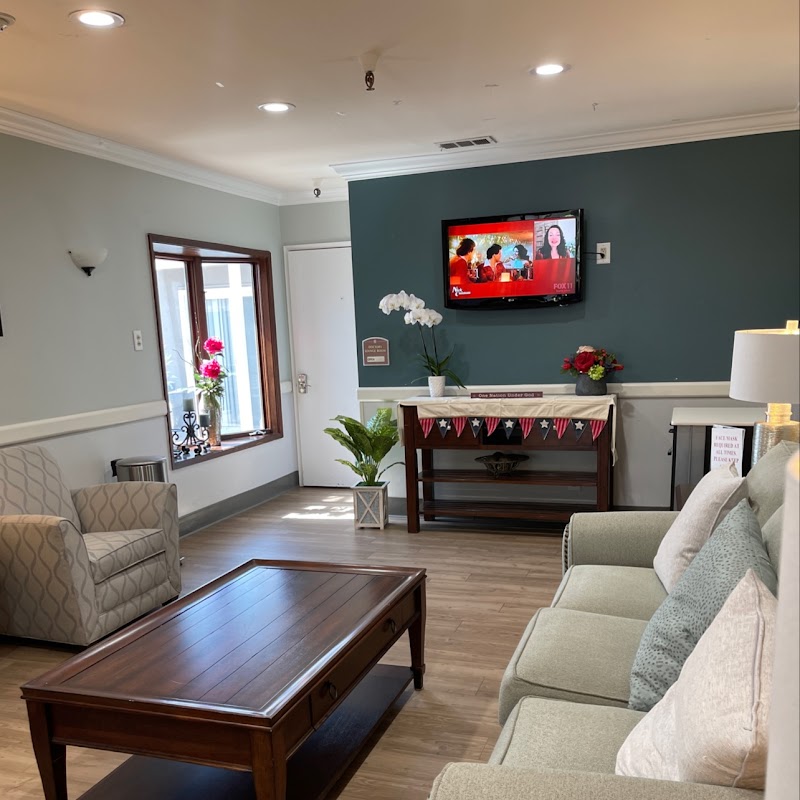
How is St. Catherine Healthcare Staffed?

CMS rates ST. CATHERINE HEALTHCARE's staffing level at 3 out of 5 stars, which is average compared to other nursing homes. Staff turnover is 21%, compared to the California average of 46%. This relatively stable workforce can support continuity of care.

What Have Inspectors Found at St. Catherine Healthcare?

State health inspectors documented 42 deficiencies at ST. CATHERINE HEALTHCARE during 2019 to 2025. These included: 37 with potential for harm and 5 minor or isolated issues.
Who Owns and Operates St. Catherine Healthcare?

ST. CATHERINE HEALTHCARE is owned by a for-profit company. For-profit facilities operate as businesses with obligations to shareholders or private owners. The facility is operated by THE ENSIGN GROUP, a chain that manages multiple nursing homes. With 99 certified beds and approximately 87 residents (about 88% occupancy), it is a smaller facility located in FULLERTON, California.

How Does St. Catherine Healthcare Compare to Other California Nursing Homes?

Compared to the 100 nursing homes in California, ST. CATHERINE HEALTHCARE's overall rating (4 stars) is above the state average of 3.2, staff turnover (21%) is significantly lower than the state average of 46%, and health inspection rating (3 stars) is at the national benchmark.

What Should Families Ask When Visiting St. Catherine Healthcare?

Based on this facility's data, families visiting should ask: "Can I visit during a mealtime to observe dining assistance and food quality?" "How do you handle medical emergencies, and what is your hospital transfer rate?" "Can I speak with family members of current residents about their experience?"

Is St. Catherine Healthcare Safe?

Based on CMS inspection data, ST. CATHERINE HEALTHCARE has a clean safety record: no substantiated abuse findings (meaning no confirmed cases of resident harm), no Immediate Jeopardy citations (the most serious violation level indicating risk of serious injury or death), and is not on the Special Focus Facility watch list (a federal program monitoring the lowest-performing 1% of nursing homes). The facility has a 4-star overall rating and ranks #1 of 100 nursing homes in California. While no facility is perfect, families should still ask about staff-to-resident ratios and recent inspection results during their visit.

Do Nurses at St. Catherine Healthcare Stick Around?

Staff at ST. CATHERINE HEALTHCARE tend to stick around. With a turnover rate of 21%, the facility is 25 percentage points below the California average of 46%. Low turnover is a positive sign. It means caregivers have time to learn each resident's needs, medications, and personal preferences. Consistent staff also notice subtle changes in a resident's condition more quickly. Registered Nurse turnover is also low at 17%, meaning experienced RNs are available to handle complex medical needs.

Was St. Catherine Healthcare Ever Fined?

ST. CATHERINE HEALTHCARE has no federal fines on record. CMS issues fines when nursing homes fail to meet care standards or don't correct problems found during inspections. The absence of fines suggests the facility has either maintained compliance or corrected any issues before penalties were assessed. This is a positive indicator, though families should still review recent inspection reports for the full picture.

Is St. Catherine Healthcare on Any Federal Watch List?

ST. CATHERINE HEALTHCARE is not on any federal watch list. The most significant is the Special Focus Facility (SFF) program, which identifies the bottom 1% of nursing homes nationally based on persistent, serious quality problems. Not being on this list means the facility has avoided the pattern of deficiencies that triggers enhanced federal oversight. This is a positive indicator, though families should still review the facility's inspection history directly.