TERRACE VIEW CARE CENTER

201 EAST BASTANCHURY, FULLERTON, CA 92835 (714) 870-0060
For profit - Corporation 59 Beds NAHS Data: November 2025
Trust Grade
80/100
#219 of 1155 in CA
Last Inspection: February 2025

Within standard 12-15 month inspection cycle. Federal law requires annual inspections.

Overview

Terrace View Care Center has earned a Trust Grade of B+, indicating it is above average and recommended for families considering care options. It ranks #219 out of 1,155 facilities in California, placing it in the top half, and #15 out of 72 in Orange County, meaning there are only a few local facilities that perform better. The facility is improving, with issues decreasing from 22 in 2024 to just 10 in 2025. Staffing is a relative strength, with a rating of 4 out of 5 stars and a turnover rate of 32%, which is lower than the state average of 38%. While the center has not incurred any fines, which is a positive sign, there have been several concerning incidents, such as failures in infection control practices, including inadequate hand hygiene by staff and not properly cleaning equipment between uses. Overall, while there are notable strengths in staffing and a lack of fines, families should be aware of the specific areas needing improvement.

Trust Score
B+
80/100
In California
#219/1155
Top 18%
Safety Record
Low Risk
No red flags
Inspections
Getting Better
22 → 10 violations
Staff Stability
○ Average
32% turnover. Near California's 48% average. Typical for the industry.
Penalties
✓ Good
No fines on record. Clean compliance history, better than most California facilities.
Skilled Nurses
○ Average
Each resident gets 39 minutes of Registered Nurse (RN) attention daily — about average for California. RNs are the most trained staff who monitor for health changes.
Violations
⚠ Watch
51 deficiencies on record. Higher than average. Multiple issues found across inspections.
★★★★★
5.0
Overall Rating
★★★★☆
4.0
Staff Levels
★★★★★
5.0
Care Quality
★★★★☆
4.0
Inspection Score
Stable
2024: 22 issues
2025: 10 issues

The Good

  • 4-Star Staffing Rating · Above-average nurse staffing levels
  • 5-Star Quality Measures · Strong clinical quality outcomes
  • Full Sprinkler Coverage · Fire safety systems throughout facility
  • No fines on record
  • Staff turnover below average (32%)

    16 points below California average of 48%

Facility shows strength in staffing levels, quality measures, fire safety.

The Bad

Staff Turnover: 32%

13pts below California avg (46%)

Typical for the industry

Chain: NAHS

Part of a multi-facility chain

Ask about local staffing decisions and management

The Ugly 51 deficiencies on record

Feb 2025 10 deficiencies
CONCERN (D)

Potential for Harm - no one hurt, but risky conditions existed

Quality of Care (Tag F0684)

Could have caused harm · This affected 1 resident

**NOTE- TERMS IN BRACKETS HAVE BEEN EDITED TO PROTECT CONFIDENTIALITY** Based on observation, interview, medical record review, and facility P&P review, the facility failed to ensure the quality care ...

Read full inspector narrative →
**NOTE- TERMS IN BRACKETS HAVE BEEN EDITED TO PROTECT CONFIDENTIALITY** Based on observation, interview, medical record review, and facility P&P review, the facility failed to ensure the quality care and services were provided for one of 14 final sampled residents (Resident 8) and two nonsampled residents (Residents 26 and 293). * The facility failed to ensure the physician's order was obtained, the assessment was completed, and the appropriate instructions were obtained to maintain the appropriate care of the resident's blood glucose monitoring device for Resident 26. * The facility failed to ensure the transfer orders and instructions from the acute care hospital were followed through and communicated to the resident's attending physician for Resident 293. * The facility failed to assess Resident 8 and notify the physician timely when Resident 8's oxygen saturation levels were 91 to 92% as per the physician's order to keep the oxygen saturation above 92%. These failures had the potential for the residents to not receive the necessary care and services to maintain their highest physical well-being. Findings: 1. Review of the facility's P&P titled Obtaining a Fingerstick Glucose Level dated 3/2024 showed the facility would ensure the equipment and devices are working properly by performing any calibrations or checks as instructed by the manufacturer. On 2/24/24 at 0937 hours, an observation and concurrent interview was conducted with Resident 26. Resident 26 was awake and observed in the bathroom. Resident 26 stated he had diabetes and the facility staff were monitoring his blood sugar level. Resident 26 added that he also had his own continuous blood sugar monitoring device, Dexcom G6. Resident 26 was able to show the transmitter device placed on his abdomen which was covered with a dressing. Review of the Dexcom G6 manual instructions dated 3/2022 showed a warning for a failure to use the machine and its components according to the instructions for use and all indications, contraindications, warnings, precautions, and cautions may result in the resident missing a severe hypoglycemia (low blood sugar) or hyperglycemia (high blood sugar) occurrence and/or making a treatment decision may result in injury. The instructions included to clean the insertion site with alcohol wipes to prevent infections. The insertion of the sensor monitor can cause infection, bleeding, or pain, an there has a chance a sensor wire could break or detach and remain under the skin. Medical record review for Resident 26 was initiated on 2/24/25. Resident 26 was admitted to the facility on [DATE], with a diagnosis of diabetes mellitus (a group of diseases that resulted in too much sugar in the blood). Review of Resident 26's Order Summary Report dated 2/25/25, showed a physician's order dated 7/15/24, to administer Novolin R solution (fast acting insulin) solution per sliding scale subcutaneously before meals and at bedtime for DM as follows: if blood sugar level 71 to 200 mg/dl, no insulin; if blood sugar level 201 to 250 mg/dl, give 6 units of insulin; if blood sugar level 251 to 300 mg/dl, give 8 units of insulin; if blood sugar level 301 to 350 mg/dl, give 10 units of insulin; if blood sugar level 351 to 400 mg/dl, give 12 units of insulin, and if blood sugar level 401 to 1000 mg/dl, give 15 units of insulin, recheck after one hour and if blood sugar level more than 401 mg/dl to notify the Medical Doctor. However, there was no physician's order for the use of the blood glucose monitoring device, Dexcom G6 and care for the monitor probe placed on the resident's skin. Further review of Resident 26's medical record failed to show documented evidence the use of the blood glucose monitoring device, Dexcom G6. Review of Resident 26's plan of care showed a care plan problem dated 7/15/24, addressing Resident 26's risk of low blood sugar due to DM. However, the plan of care failed to show documented evidence a care plan problem was developed to address Resident 26's use of blood glucose monitoring device. On 2/25/25 at 0938 hours, an observation and concurrent interview was conducted with Resident 26. Resident 26 was observed sitting in his chair. Resident 26 stated he changed by himself the transmitter probe placed on his abdomen every 10 days. Resident 26 stated the facility staff were aware about his blood sugar monitoring device and acknowledged the facility staff were not taking care of his device because he did it by himself. On 2/25/25 at 1426 hours, an interview and concurrent medical record review for Resident 26 was conducted with LVN 2. LVN 2 verified Resident 26 had his own blood sugar monitoring device and the resident took care of the device. LVN 2 was asked if there was a physician's order and care plan was formulated for the use of Resident 26's blood sugar monitoring device. LVN 2 verified there was no physician's order and care plan for Resident 26's use of blood sugar monitoring device, Dexcom G6. On 2/26/25 at 0933 hours, an interview and concurrent medical record review for Resident 26 was conducted with the DON. The DON stated the facility staff would ask the resident who had their own blood sugar monitoring devices to check and monitor for the use of the device as per the physician's order. The DON was informed about Resident 26's own blood sugar monitoring device attached to the resident. The DON verified and acknowledged there was no documentation regarding Resident 26's personal blood sugar monitoring device in the resident's medical record. The DON stated the licensed nurses should have been assessed and documented the resident's own blood sugar monitoring device upon admission and communicated to the physician and obtained an order; care planed; and communicated to other licensed nurses to continue to monitor and provided care. 2. Review of the facility's P&P titled admission Assessment and Follow up: Role of the Nurse dated 9/2024 showed upon admission, the residents' information was gathered about the resident's physical, emotional, cognitive, and psychosocial condition to manage the resident and completing the required admission assessment. In addition, the nurse would reconcile the list of medications, admitting orders and discharge summary from previous institution. The P&P also showed to contact the Attending Physician to communicate and review the findings of initial assessment and any other pertinent information. Medical record review for Resident 293 was initiated on 2/25/25. Resident 293 was admitted to the facility on [DATE]. Review of Resident 293's H&P examination dated 2/7/25, showed Resident 293 had a diagnosis of Chronic Diastolic Heart Failure. Review of Resident 293's Physician's Transfer Orders and CHF Discharge Instruction dated 2/5/25, from the acute care hospital showed to track the weight of Resident 293 daily and the resident was on fluid restriction of 2,000 ml per day. Review of Resident 293's Order Summary Report dated 5/25/25, failed to show a physician's order was obtained for the monitoring of the daily weight and fluid restriction for Resident 293. Further review of Resident 293's medical record failed to show documented evidence the attending physician was notified and informed about Resident 293's transfer orders and instruction from the acute care hospital when Resident 293 was admitted to the facility. On 2/26/25 at 1504 hours, an interview and concurrent medical record review for Resident 293 was conducted with RN 1. RN 1 stated the admission nurse was responsible for the assessment of the residents, review the transfer orders from the acute care hospital, and communicate to the attending physician about the transfer orders. RN 1 was asked about Resident 293's transfer orders and instructions. RN 1 verified Resident 293's diagnosis of CHF and with the instructions from the acute care hospital. RN 1 acknowledged there was no documentation the attending physician was made aware by the admission nurse about the transfer instruction from the acute care hospital. RN 1 reviewed Resident 293's medical record and verified there were no physician's order and progress notes documented by the attending physician regarding the daily weight and fluid restriction. On 2/27/25 at 1000 hours, an interview and concurrent medical record review for Resident 293 was conducted with the DON. The DON stated the admission nurse would assess the resident, review all the transfer orders, and instruction, and communicate to the attending physician. The DON was informed about Resident 293's transfer orders and instructions. The DON acknowledged and verified the transfer orders and instruction for the resident from the acute care hospital. The DON verified and acknowledged the findings. 3. Review of the facility's P&P titled Acute Condition Changes- Clinical Protocol revised 12/2024 showed during the initial assessment, the physician will help identify individuals with a significant risk for having acute changes of condition during their stay. Before contacting a physician about someone with an acute change of condition, the nursing staff will make detailed observations and collect pertinent information to report to the physician. Medical record review for Resident 8 was initiated on 2/24/25. Resident 8 was admitted to the facility on [DATE], and readmitted on [DATE], with a diagnosis of Influenza, COPD, and dependence on supplemental oxygen. Review of Resident 8's H&P examination dated 12/21/24, showed Resident 8 had no capacity to understand and make decisions. Review of Resident 8's MDS assessment dated [DATE], showed Resident 8 received the oxygen therapy and required non-invasive mechanical ventilator while at the facility. Review of Resident 8's Order Summary Report for December 2024 showed the following physician's orders dated 7/31/24: - to administer continuous oxygen every shift via nasal canula at three to four liters per minute to maintain the oxygen saturation level greater than 92% due to CHF; - to check the oxygen saturation level routinely to keep the oxygen saturation level above 92% every shift; - to monitor the oxygen saturation level every hour to ensure safety and comfort; and - to check the oxygen saturation level as needed. Review of Resident 8's MAR for December 2024 showed the following entries: - for the monitoring for the oxygen saturation level every hour to ensure safety and comfort, it was documented on 12/15/24, as follows: * at 0800, 0900, and 1000 hours, the oxygen saturation level was 92%; * at 1100, 1200, and 1300 hours, the oxygen saturation level was 91%; and * at 1400 hours, the oxygen saturation level was 90%. - for the checking of the oxygen saturation routinely to keep the oxygen saturation level above 92% every shift, it was documented on 12/15/24, as follows: * 92% oxygen saturation level for the day shift. Review of Resident 8's Weights and Vitals Summary from 12/13/24 to 12/15/24, showed the following oxygen saturations levels documented: - on 12/15/24 at 0040 hours, 96% on CPAP; - on 12/15/24 at 0917 hours, 92% on oxygen via the nasal canula; - on 12/15/24 at 1009 hours, 91% on oxygen via the nasal canula; - on 12/15/24 at 1300 hours, 84% on oxygen via the nasal canula; - on 12/15/24 at 1313 hours, 90% on oxygen via the nasal canula; and - on 12/15/24 at 1353 hours, 96% on high flow oxygen. Review of Resident 8's SBAR Communication Form and Progress Note dated 12/15/25, showed Resident 8 had a change of condition for non-productive cough and lethargy. The SBAR showed Resident 8's change on condition started on 12/15/25 at 1200 hours. The document showed Resident 8's oxygen saturation level was 90 % via the nasal cannula obtained on 12/15/25 at 1313 hours. Review of Resident 8's Progress Notes dated 12/15/24, showed at 1312 hours, the physician was informed per Resident 8's family member when Resident 8 was noted to be more lethargic and with some intermittent coughs. The vital signs were documented as BP of 126/64 mmHg, HR of 70 beats per minute, RR of 17 breaths per minute, and oxygen saturation level of 90%. Further review of Resident 8's Progress Notes failed to show any documentation Resident 8's oxygen saturation level was rechecked or any documentation of the nursing interventions when Resident 8's oxygen saturation levels were documented at 91% and 92% on 12/15/24 from 0800 to 1200 hours. On 2/26/25 at 1312 hours, an interview and concurrent medical record for Resident 8 was conducted with RN 1. RN 1 stated for the residents with a physician's order to monitor the oxygen saturation level to keep above 92%, and if the resident's oxygen saturation level was 91 or 92% and outside of the resident's baseline, that was considered a change in condition. RN 1 stated the licensed nurse should have evaluated the resident, rechecked the resident's oxygen saturation level, and documented any interventions implemented and reassessment after. RN 1 further stated upon retaking the resident's oxygen saturation level and the oxygen saturation level was 92% or lower, the nurse should have informed the physician and documented in the progress notes. RN 1 reviewed Resident 8's medical record and verified the above findings. RN 1 stated there was no documentation showing Resident 8's oxygen saturation level at 91 to 92% was addressed until Resident 8's family member informed the staff of Resident 8's condition. On 02/27/25 at 1016 hours, an interview and concurrent medical record review for Resident 8 was conducted with the DON. The DON stated the oxygen saturation level was checked every shift, unless specified by the physician. The DON stated an abnormal oxygen saturation level was when it was below 90% or outside of the resident's baseline. When asked, the DON stated if the physician's order was to check the oxygen saturation level to keep the oxygen saturation level greater than 92 %, for the resident's oxygen saturation level documented at 92%, the DON expected the nurse to reevaluate the resident's oxygen saturation level and document the reevaluated oxygen saturation level. The DON stated if the oxygen saturation level remained at 92%, she expected the nurse to do further evaluation/assessment of the resident, inform the physician, and document in the progress notes. The DON reviewed Resident 8's medical record and verified the above findings. The DON stated for Resident 8's oxygen saturation level of 92%, Resident 8's medical record failed to show a documentation that it was addressed until the change in condition occurred when the resident's family member had informed the nurse. The DON acknowledged the change in condition could have been addressed sooner. On 2/27/25 at 1040 hours, a follow-up interview was conducted with the DON. The DON was informed and acknowledged the above findings.
CONCERN (D)

Potential for Harm - no one hurt, but risky conditions existed

Deficiency F0694 (Tag F0694)

Could have caused harm · This affected 1 resident

**NOTE- TERMS IN BRACKETS HAVE BEEN EDITED TO PROTECT CONFIDENTIALITY** Based on observation, interview, medical record review, and facility P&P review, the facility failed to provide the necessary ca...

Read full inspector narrative →
**NOTE- TERMS IN BRACKETS HAVE BEEN EDITED TO PROTECT CONFIDENTIALITY** Based on observation, interview, medical record review, and facility P&P review, the facility failed to provide the necessary care and services to maintain the intravenous accesses for one of 14 final sampled residents (Resident 33), and two nonsampled residents (Residents 292 and 293). * The facility failed to ensure the PICC line external catheter baseline measurements were obtained and documented for Resident 292. * The facility failed to ensure the PICC line external catheter baseline measurements were obtained and documented for Resident 293. * The facility failed to ensure Resident 33's PIV site was labeled with the date, time, and licensed nurse's initials. These failures had the potential to delay the identification of intravenous catheter related complications for the residents. Findings: 1. Review of the facility's P&P titled Central Venous Catheter Dressing Changes dated 4/2024 showed the dressing of the central venous catheter is routinely changed at least five to seven days or as needed when the dressing becomes wet, soiled, or not intact. The licensed nurse would document the condition of the central venous catheter insertion site, any complications, and interventions that were done. a. Medical record review for Resident 292 was initiated on 2/25/25. Resident 292 was admitted to the facility on [DATE]. On 2/24/25 at 0837 hours, Resident 292 was observed in bed with a family member at the bedside. Resident 292 stated he had an infection in the blood and needed an IV antibiotic medication. Resident 292 stated he had a PICC line on the left upper arm and showed his PICC line with the transparent dressing. The PICC line dressing was observed with a label dated 2/22/25. Resident 292's family member stated the nurse changed the dressing on the PICC line several times. Review of Resident 292's Order Summary Report showed a physician's order dated 2/16/25, to measure the midline external catheter and arm circumference every seven days. However, Resident 292's medical record failed to show the baseline measurement of the length of the external catheter and arm circumference above the insertion site were obtained upon admission. On 2/25/25 at 1137 hours, an interview and concurrent medical record review for Resident 292 was conducted with LVN 2. LVN 2 verified Resident 292 had a PICC line on the left upper arm. LVN 2 stated the RNs were responsible for the care and maintenance of the PICC lines. b. Medical record review for Resident 293 was initiated on 2/25/25. Resident 293 was admitted to the facility on [DATE]. On 2/24/25 at 0822 hours, Resident 293 was observed lying in bed with a PICC line on the right upper arm with a transparent dressing in placed and dated 2/20/25. Resident 293 stated he had a surgery on his foot and was on the IV antibiotic medications. Review of Resident 293's Order Summary Report showed a physician's order dated 2/5/25, to monitor the IV PICC on the RUE every shift and to administer ertapenem sodium injection solution reconstituted (antibiotic medication) 500 mg intravenously via PICC line in the morning for osteomylitis of the right foot at 1000 hours, for 41 days. However, Resident 293's medical record failed to show the baseline measurements of the length of the external catheter and arm circumference above the insertion site were obtained upon admission. On 2/26/25 at 1143 hours, an interview and concurrent medical record review for Residents 292 and 293 was conducted with RN 1. RN 1 stated the admission nurse was responsible for the assessment of the residents who had a PICC or central line upon admission. RN 1 stated they usually changed the PICC line dressing on the following day after the admission and they measured the length of the external catheter and arm circumference of the resident. RN 1 was asked on how she would know if there were any changes to the measurements of the length of the catheter and arm circumference. RN 1 stated she would compare the measurements from the previous measurements to know if there were any changes. RN 1 was asked if there were a baseline measurements of the length of the external catheter and arm circumference for Residents 292 and 293 obtained upon admission. RN 1 reviewed Residents 292 and 293's medical records and verified there were no baseline measurements of the length of the external catheter and arm circumference for Residents 292 and 293. On 2/27/25 at 0955 hours, an interview and concurrent medical record review for Residents 292 and 293 was conducted with the DON. The DON stated she expected the resident's central line should have been properly cared and maintained upon admission. The DON stated the licensed nurses and RNs were responsible for providing care of the central lines. The DON stated the assessment of the central line would be documented in the residents' medical record. The DON was informed and verified the above findings. 2. Review of the facility's P&P titled Peripheral IV Dressing Changes dated 5/2022 showed to change the dressing at the time of the catheter site rotation (every 72 to 96 hours) or immediately upon observing that the integrity of the dressing has been compromised. To place a new transparent semi-permeable membrane dressing over the insertion site and to label the peripheral IV dressing with the date, time, and initials. Medical record review for Resident 33 was initiated on 2/24/25. Resident 33 was admitted to the facility on [DATE]. Review of Resident 33's H&P examination dated 1/29/25, showed Resident 33 had no capacity to understand and make decisions. Review of Resident 33's Order Summary Report showed a physician's order dated 2/22/25, to administer levofloxacin (antibiotic medication) 250 mg intravenously daily for urinary tract and ESBL in the urine. Review of Resident 33's Progress Notes showed a Daily Nurses Note on 2/21/25 at 1702 hours, showing the insertion of the PIV to Resident 33's left forearm. On 2/24/25 at 0923 hours, an observation and concurrent interview was conducted with LVN 1. Resident 33 was observed with a PIV to the right arm. The dressing of the right arm's PIV site was not observed labeled with the date, time, and initial of the staff who inserted the PIV. LVN 1 verified the above findings and stated the PIV dressing should be labeled with the date to ensure the facility staff were aware when the PIV was inserted or when the PIV dressing was last changed. On 2/24/25 at 0935 hours, an observation and concurrent interview was conducted with RN 1. RN 1 verified Resident 33's right arm PIV dressing did not have a date. RN 1 stated the PIVs were changed every 72 hours and may be extended (with a physician's order) for seven days if the resident had poor venous access. RN 1 further stated Resident 33's PIV was due to be changed today. On 2/25/25 at 1519 hours, a follow-up interview and concurrent medical record review for Resident 33 was conducted with RN 1. RN 1 stated the PIV site and insertion date should be documented in the residents IV Administration Record and progress notes to ensure communication to the other shifts regarding when the PIV was placed and when it needed to be changed. When RN 1 was asked when Resident 33's right arm PIV was placed, RN 1 reviewed Resident 33's medical record and stated there was no documentation in Resident 33's medical record to show when the right arm PIV was inserted. On 2/27/25 at 1016 hours, an interview was conducted with the DON. The DON stated upon the insertion of the PIV, the nurse was expected to label the PIV dressing with the date and initial. The DON further stated the nurse was expected to document the insertion of the resident's new PIV including the site in the IV Administration Record and nursing progress notes. On 2/27/25 at 1040 hours, a follow-up interview was conducted with the DON. The DON was informed and acknowledged the above findings.
CONCERN (D)

Potential for Harm - no one hurt, but risky conditions existed

Respiratory Care (Tag F0695)

Could have caused harm · This affected 1 resident

**NOTE- TERMS IN BRACKETS HAVE BEEN EDITED TO PROTECT CONFIDENTIALITY** 2. On 2/24/25 at 1038 hours and 2/25/25 at 0808 hours, an observation and concurrent interview was conducted with Resident 294. ...

Read full inspector narrative →
**NOTE- TERMS IN BRACKETS HAVE BEEN EDITED TO PROTECT CONFIDENTIALITY** 2. On 2/24/25 at 1038 hours and 2/25/25 at 0808 hours, an observation and concurrent interview was conducted with Resident 294. Resident 294 was observed in bed with the CPAP machine at the bedside drawer, the mask placed on top of the drawer, and the tubing was touching the floor. Resident 294 stated she put the CPAP mask on her face and the staff assisted her on putting the strap at the back of her head. Resident 294 added the staff did not need to do anything on the machine, she just turned on by herself and turned off and take it off after she used. Review of the ResMed AirSence 10 (CPAP machine) user guide (undated) showed under the caring for the device section, to regularly clean the tubing assembly, water tub, and mask to prevent the growth of the germs that can adversely affect the health; and clean the device weekly as directed. Medical record review for Resident 294 was initiated on 2/25/25. Resident 294 was admitted to the facility on [DATE]. Review of Resident 294's Plan of Care showed a care plan problem dated 2/9/25, addressing Resident 294's problem of sleep disorder. The interventions included to clean the CPAP machine. Review of Resident 294's Order Summary Report dated 2/25/25, showed the following physician's orders for the care of the CPAP machine: - dated 2/7/25, to change the CPAP filter as needed for excessive soilage - dated 2/9/25, to wash the CPAP headgear and tubing with soap and water and air to dry every Saturday. However, there was no physician's order obtained to clean the CPAP device weekly as directed by the user's guide. On 2/25/25 at 1417 hours, an interview for Resident 294 was conducted with CNA 7. CNA 7 stated Resident 294 asked for assistance to have the CPAP put on her. CNA 7 stated the licensed nurses were responsible for the cleaning of the CPAP machine. On 2/25/25 at 1432 hours, an interview and concurrent medical record review for Resident 294 was conducted with LVN 2. LVN 2 stated Resident 294 did not want anyone to touch her machine and very independent. LVN 2 was informed of the observation of the CPAP machine mask and tubing were placed on top of the drawer with the tubing touching the floor. LVN 2 acknowledged the CPAP machine mask and tubing should be placed in the clear plastic bag when not in use. LVN 2 stated the night nurses were responsible for cleaning the machine. On 2/26/25 at 1314 hours, an interview and concurrent medical record review for Resident 294 was conducted with the DON. The DON stated she expected the licensed nurses to be responsible for the cleanliness and functionality of the devices used by the residents. The DON was asked about Resident 294's CPAP machine use and informed her about the observation of the resident's CPAP at the bedside drawer with the mask with strap was on top of the drawer and the tubing was on the floor. The DON stated she expected the CPAP machine mask and tubing should have been placed in the clear plastic bag when not in use. The DON was asked about the cleaning and maintenance of the CPAP machine. The DON stated they cleaned the facemask with the strap once a week and as needed. The DON reviewed the physician's orders and was able to show the order for cleaning of the CPAP strap and tubing on Saturdays, however, when asked if there was a specific physician's order for the cleaning of the CPAP machine device, the DON acknowledged there was no physician's order. The DON verified there was a cleaning instructions per the user guide of the CPAP machine and acknowledged they did not follow the cleaning instruction as per the manufacturer's user guide. The DON verified there was no documentation on the TAR regarding the cleaning of the CPAP machine. Based on observation, interview, medical record review, facility document review, and facility P&P review, the facility failed to provide the safe respiratory care services for two of four final sampled residents (Residents 8 and 294) reviewed for the respiratory care. * The facility failed to ensure Resident 8's non-invasive ventilator machine was cleaned as per the manufacturer's guidelines and the headgear and tubing were cleaned as per the facility's P&P. * The facility failed to ensure Resident 294's CPAP machine was cleaned as per the manufacturer's guidelines and failed to ensure the mask with straps and tubing were placed in the clear plastic bag when not in used. These failures had the risk for equipment contamination and respiratory complications, which might adversely affect the health and well-being of Residents 8 and 294. Findings: Review of the facility's P&P titled CPAP/BiPAP P&P revised 12/2024 showed to review the physician's order to determine the oxygen concentration and flow, and the PEEP pressure for the machine. Under the general guidelines for cleaning showed the following: - Machine cleaning: to wipe the machine with soapy water and rinse at least once a week and as needed. - Humidifier (if used): use clean, distilled water only in the humidifier chamber; to clean the humidifier weekly and air dry; and to disinfect using vinegar-water solution (1:3) in the clean humidifier. To soak for 30 minutes and rinse thoroughly. - Filter cleaning: to rinse the washable filter under running water once a week to remove dust and debris. - Mask and nasal pillows: to wipe with isopropyl alcohol daily after use. - Tubings and headgear (strap): to wash with soapy water, rinse, and air dry weekly. 1. Review of the facility's document titled ResMed Astral series (CPAP machine) user guide dated 5/2018 under the cleaning and maintenance section showed a [resident] treated by mechanical ventilation is highly vulnerable to the risks of infection. Dirty or contaminated equipment is a potential source of infection. To clean the exterior surfaces of the Astral device with a damp cloth using mild cleaning solution. To inspect the condition of the air filter and check whether it is blocked by dirt or dust. With normal use, the air filter needs to be replaced every six months (or more often in a dusty environment). CAUTION: do not wash the air filter. The air filter is not washable or reusable. Medical record review for Resident 8 was initiated on 2/24/25. Resident 8 was admitted to the facility on [DATE], and readmitted on [DATE], with a diagnosis of COPD and dependence on supplemental oxygen. Review of Resident 8's MDS assessment dated [DATE], showed Resident 8 received oxygen therapy and required non-invasive mechanical ventilator at the facility. Review of Resident 8's Plan of Care showed a care plan problem dated 1/28/25, addressing Resident 8's risk for ineffective airway exchange/chest congestion, shortness of breath secondary to COPD. The interventions showed to administer the non-invasive ventilator machine at bedtime with settings of: min EPAP 5.0, max EPAP 10.0, min P 5 cm H20 5.0, max P5 cm H20 18.0, auto EPAP on every night shift, related to COPD. However, further review of the care plan failed to show the interventions for the care and maintenance of Resident 8's BiPAP device and equipment. Review of Resident 8's Order Summary Report showed the following physician's orders: - dated 12/19/24, for the non-invasive ventilator machine, to change the filter as needed for excessive soilage; - dated 1/28/25, to apply the non-invasive ventilator machine at bedtime with the following setting: minimum EPAP 5.0, maximum EPAP 10.0. minimum P 5 cm H20 5.0, maximum P 5 cm H20 18.0, auto EPAP on every night shift related to COPD and monitor the number of hours in use; - dated 2/8/25, to wash the headgear and tubing with soap and water and air dry every day shift on Saturdays; and - dated 2/26/25, for the cleaning of the filter, to rinse the washable filter under running water once a week to remove the dust and debris and every day shift on Saturdays. Review of Resident 8's TAR for February 2025 showed the following: - dated 1/30/25, for an order clarification to wash the headgear and tubing with soap and water and air to dry every Thursday and wash every day shift on Thursdays. The record showed it was washed on 2/6/25, during the day shift. - dated 2/15/25, for an order clarification to wash the headgear and tubing with soap and water and air to dry every Thursday and wash every day shift on Saturdays. There was no documentation the headgear and tubing were washed. Further review of Resident 8's TAR failed to show the documentation the non-invasive ventilator device was cleaned, or the filter was checked. On 2/27/25 at 0725 hours, Resident 8 was observed sleeping in bed. Resident 8 was observed with the mask and headgear applied and the ResMed BiPAP machine on. On 2/27/25 at 0816 hours, Resident 8 was observed in bed receiving oxygen at three liters per minute via the nasal canula. Resident 8's nasal canula tubing was observed connecting to the oxygen concentrator with the nasal canula tubing observed touching the ground. Additionally, Resident 8's BiPAP headgear and mask were observed inside a clear plastic bag; however, the oxygen tubing connected to the BiPAP mask was observed hanging out of the plastic bag and the tubing touching the ground. On 2/27/25 at 0821 hours, an observation, interview and concurrent medical record review for Resident 8 was conducted with LVN 1. LVN 1 verified the above findings. LVN 1 stated the nasal canula tubing and BiPAP oxygen tubing should not touch the ground. Additionally, LVN 1 verified Resident 8 used the BiPAP machine at bedtime and continuous oxygen at three liters per minute via the nasal cannula during the day. LVN 1 stated the night shift nurses or day shift nurses were responsible for removing Resident 8's headgear and mask in the morning and placed the mask, head gear, and tubing in a clear plastic bag. When asked, LVN 1 stated Resident 8's headgear and mask were cleaned by the morning nurse every Saturday and documented in the TAR. When asked about the cleaning of the BiPAP machine, LVN 1 stated she was not sure and did not touch the machine. When asked when the BiPAP machine was last cleaned, LVN 1 was unable to provide the documentation for the cleaning of Resident 8's BiPAP machine. When asked about the last time Resident 8's BiPAP headgear, tubing, and mask were last cleaned, LVN 1 reviewed Resident 8's medical record and verified the BiPAP headgear, tubing, and mask were cleaned on 2/6/25, more than a week ago. On 2/27/25 at 1016 hours, an interview was conducted with the DON. The DON stated for the residents on CPAP/BiPAP, the cleaning of the CPAP/BiPAP device as well as the headgear, mask, and tubing were done by the treatment nurse every Saturday and documented in the TAR. The DON further stated the CPAP/BiPAP devices should be cleaned as per the user guide to ensure the proper care and maintenance of the device. On 2/27/25 at 1040 hours, an interview was conducted with the DON. The DON was informed and acknowledged the above findings.
CONCERN (D)

Potential for Harm - no one hurt, but risky conditions existed

Pharmacy Services (Tag F0755)

Could have caused harm · This affected 1 resident

**NOTE- TERMS IN BRACKETS HAVE BEEN EDITED TO PROTECT CONFIDENTIALITY** Based on observation, interview, medical record review, and facility P&P review, the facility failed to provide the pharmaceutic...

Read full inspector narrative →
**NOTE- TERMS IN BRACKETS HAVE BEEN EDITED TO PROTECT CONFIDENTIALITY** Based on observation, interview, medical record review, and facility P&P review, the facility failed to provide the pharmaceutical services to ensure the accurate administration of the medications as evidenced by: * LVN 2 failed to administer Resident 542's dexamethasone (steroid, anti-inflammation medication) as per the physician's order. This failure had the potential to negatively affect Resident 542's health condition, for possible complications. Findings: Review of the facility's P&P titled Administering Medications revised 4/2024 showed the medications are administered in accordance with the prescriber orders, including any required time frame. Medications are administered within one hour of their prescribed time, unless otherwise specified. On 2/25/25 at 0906 hours, a medication administration observation for Resident 542 was conducted with LVN 2. LVN 2 prepared and administered Resident 542 the following medications: - one-half tablet of dexamethasone 1 mg; - one tablet of atorvastatin (anticholesterol) 10 mg; - one table of hydralazine (antihypertensive) 50 mg; - one tablet of jardiance (antidiabetic) 10 mg; - one tablet of felodipine (antihypertensive) ER 10 mg; - one tablet of levetiracetam (anticonvulsant) 1000 mg; - one tablet of lacosamide (anticonvulsant) 100 mg; - one table of metoprolol (antihypertensive) 25 mg; - one tablet of losartan (antihypertensive) 100 mg; and - one injection of enoxaparin (anticoagulant) 40 mg. Medical record review for Resident 542 was initiated on 2/25/25. Resident 542 was admitted to the facility on [DATE]. Review of Resident 542's Order Summary Report showed a physician's order dated 2/22/25, for dexamethasone 1 mg one-half tablet by mouth in the morning every other day. The order further showed to take the medication with breakfast. On 2/25/25 at 0927 hours, an interview and concurrent medical record review for Resident 542 was conducted with LVN 2. LVN 2 verified Resident 542's dexamethasone medication 1 mg one-half tablet every other day was scheduled to be administered at 0715 hours, with breakfast. LVN 2 stated Resident 542's breakfast was served at 0815 hours on 2/25/25. LVN 2 verified the dexamethasone medication was administered late, not administered with breakfast as per the physician's order. On 2/27/25 at 1040 hours, an interview was conducted with the DON. The DON was informed and acknowledged the above findings.
CONCERN (D)

Potential for Harm - no one hurt, but risky conditions existed

Medication Errors (Tag F0758)

Could have caused harm · This affected 1 resident

**NOTE- TERMS IN BRACKETS HAVE BEEN EDITED TO PROTECT CONFIDENTIALITY** Based on interview, medical record review, and facility review, the facility failed to ensure three of five final sampled reside...

Read full inspector narrative →
**NOTE- TERMS IN BRACKETS HAVE BEEN EDITED TO PROTECT CONFIDENTIALITY** Based on interview, medical record review, and facility review, the facility failed to ensure three of five final sampled residents (Residents 27, 33, and 36) reviewed for the unnecessary medications were free from the unnecessary psychotropic drugs. * The facility failed to ensure Resident 33's orthostatic blood pressure was monitored as ordered by the physician related to the use of the sertraline (antidepressant) medication. * The facility failed to ensure Resident 36's orthostatic blood pressures were accurately monitored for the use of the Seroquel (antipsychotic medication), bupropion (antidepressant medication), and desvenlafaxine (antidepressant medication); the facility failed to document the implementation of the non-pharmacological interventions for Resident 36's use of the Seroquel, bupropion, desvenlafaxine, and Depakote(mood stabilizer) medications. In addition, the facility failed to accurately monitor the specific behavior manifestation for Resident 36's use of the Seroquel medication. * The facility failed to ensure Resident 27 was properly monitored for orthostatic blood pressures as ordered by the physician for the use of the olanzapine (a medication for mental disorders including schizophrenia and bipolar disorder). These failures had the potential for the residents to have adverse complications from the medications and the potential of not providing the correct data to the prescriber in order to adjust the dose of the psychotropic medications for the residents. Findings: Review of the facility's P&P titled Antipsychotic Medication Use revised 3/2024 showed the staff will observe, document, and report to the Attending Physician/psychiatrist information regarding the effectiveness of any interventions, including antipsychotic medications. The nursing staff shall monitor for and report any of the following side effects and adverse consequences of antipsychotic medication to the Attending Physician/psychiatrist: b. Cardiovascular: orthostatic, arrythmias 1. Medical record review for Resident 33 was initiated on 2/24/25. Resident 33 was admitted to the facility on [DATE]. Review of Resident 33's H&P examination dated 1/29/25, showed Resident 33 had no capacity to understand and make decisions. Review of Resident 33's Order Summary Report dated 2/25/25, showed a physician's order dated 1/25/25, to administer sertraline 50 mg one tablet by mouth daily for the verbalization of feeling sad, and to monitor the side effects of the sertraline medication such as sedation, dry mouth, blurred vision, constipation, urinary retention, tachycardia, headache, weight gain, and orthostatic hypotension every shift. Review of Resident 33's MAR for February 2025 showed the following: - Resident 33 was administered sertraline 50 mg one tablet by mouth daily from 2/1 to 2/25/25 at 0900 hours, and - Resident 33 was monitored for the side effects from the sertraline medication usage such as sedation, dry mouth, blurred vision, constipation, urinary retention, tachycardia, headache, weight gain, and orthostatic hypotension. However, the MAR showed, - from 2/1 to 2/24/25, for the day, evening, and night shifts. However, further review of Resident 33's MAR failed to show the documentation of the BP readings for Resident 33's orthostatic hypotension monitoring related to the use of the sertraline medication. Review of Resident 33's Plan of Care showed a care plan problem dated 1/25/25, addressing Resident 33's tendency towards depression as manifested by the verbalization of feeling sad. The interventions included to monitor the side effects of the sertraline medication usage such as sedation, dry mouth, blurred vision, constipation, urinary retention, tachycardia, headache, weight gain, and orthostatic hypotension. On 2/26/25 at 1337 hours, an interview and concurrent medical record review for Resident 33 was conducted with RN 1. RN 1 verified the above findings. RN 1 stated the orthostatic hypotension was being monitored by obtaining the resident's blood pressure in three different positions such as sitting, lying, and standing, and comparing the blood pressures to determine if there was a drop in the blood pressure, which would indicate orthostatic hypotension. RN 1 reviewed Resident 33's medical record and stated there was no documentation Resident 33 was monitored for the orthostatic hypotension. On 2/27/25 at 1016 hours, an interview was conducted with the DON. The DON stated for the residents prescribed with antipsychotic medications, the licensed nurses would monitor the residents for the potential side effects related to the antipsychotic medications every shift. When asked, the DON stated the orthostatic hypotension should be monitored by obtaining the resident's blood pressure in different positions such as lying, sitting, and standing. The DON further stated the blood pressure measurements obtained for each position should be documented. On 2/27/25 at 1040 hours, a follow-up interview was conducted with the DON. The DON was informed and acknowledged the above findings. 2. Medical record review for Resident 36 was initiated on 2/24/25. Resident 36 was admitted to the facility on [DATE]. Review of Resident 36's H&P examination dated 1/25/25, showed Resident 36 had no capacity to understand and make decisions. Review of Resident 36's Order Summary Report dated 2/25/25, showed the following physician's orders for the use of bupropion medication: - dated 1/22/25, to monitor and record the number of depression episode as manifested by verbalization of feeling sad due to the bupropion medication use every shift; - dated 1/22/25, to monitor for the side effects of the bupropion medication: sedation, dry mouth, blurred vision, constipation, urinary retention, tachycardia, headache, weight gain, orthostatic hypotension every shift; and - dated 2/21/25, to administer bupropion extended release 150 mg by mouth daily related to major depressive disorder manifested by verbalization of feeling sad. Review of Resident 36's Order Summary Report dated 2/25/25, showed the following physician's orders for the use of the desvenlafaxine medication: - dated 1/22/25, to monitor and record the number of depression episode as manifested by crying spells due to desvenlafaxine use every shift; - dated 1/22/25, to monitor for side effects of the desvenlafaxine medication: sedation, dry mouth, blurred vision, constipation, urinary retention, tachycardia, headache, weight gain, orthostatic hypotension every shift; and - dated 2/21/25, to administer desvenlafaxine extended release 50 mg, two tablets by mouth in the morning related to major depressive disorder manifested by crying spells. Review of Resident 36's Order Summary Report dated 2/25/25, showed the following physician's orders for the use of the Depakote medication: - dated 2/1/25, to administer Depakote Delayed Release 250 mg one tablet every 12 hours for mood lability from pleasant to angry outbursts; and - dated 2/1/25, to monitor and record the number of psychotic behaviors as manifested by mood lability from pleasant to angry outburst, every shift. Review of Resident 36's Order Summary Report dated 2/25/25, showed the following physician's orders for the use of the Seroquel medication: - dated 2/10/25, to monitor and record the number of psychotic behaviors as manifested by dementia with behavior disturbances every shift; - dated 2/10/25, to monitor the orthostatic blood pressure lying, sitting, and standing positions due to Seroquel medication use every day shift on Sundays; and - dated 2/19/25, to administer Seroquel 200 mg, one tablet by mouth at bedtime for dementia with behavior disturbances as manifested by aggressive behavior towards staff. Further review of the physician's orders showed the following orders for non-pharmacological intervention: - dated 1/22/25, to record the non-pharmacological interventions for depression and to document the following: 1- Music/Radio/TV, 2- Activity/Exercise, 3- Redirection/Refocus/Diversion, 4- Removal of stimuli, 5- 1:1 conversation, 6- Verbal cues/Prompting/Encouraging, 7- Reassurance/orientation, 8- Massage, 9- Other, as needed; and - dated 2/10/25, to record the non-pharmacological interventions for psychosis and to document the following: 1- Music/Radio/TV, 2- Activity/Exercise, 3- Redirection/Refocus/Diversion, 4- Removal of stimuli, 5- 1:1 conversation, 6- Verbal cues/Prompting/Encouraging, 7- Reassurance/orientation, 8- Massage, 9- Other, as needed. a. Review of Resident 36's MAR for February 2025 showed the following: - on 2/16/25, the blood pressure readings were documented as 144/85 mmHg for the lying, sitting, and standing positions; and - on 2/23/25, the blood pressure readings were documented as 140/74 mmHg for the lying, sitting and standing positions. For the monitoring of Resident 36 for the side effects from the bupropion medication usage such as sedation, dry mouth, blurred vision, constipation, urinary retention, tachycardia, headache, weight gain, orthostatic hypotension, the MAR showed, - from 2/1 to 2/24/25 for the day, evening, and night shifts. For the monitoring of Resident 36 for side effects from the desvenlafaxine medication usage such as sedation, dry mouth, blurred vision, constipation, urinary retention, tachycardia, headache, weight gain, orthostatic hypotension, the MAR showed, - from 2/1 to 2/24/25 for the day, evening, and night shifts. b. Review of Resident 36's MAR for February 2025, showed the following: * Resident 36 had the episodes of depression manifested by the verbalization of feeling sad for the usage of the bupropion medication on the following dates: - on 2/11 and 2/12/25, two episodes during the day shift, and - on 2/19/25, three episodes during the day shift. * Resident 36 had the episodes of depression behaviors manifested by crying spells for the usage of the desvenlafaxine medication as follows: - on 2/11, 2/12, and 2/19/25, two episodes during the day shift, * Resident 36 had the episodes of psychotic behaviors manifested by mood lability from pleasant to angry outbursts as follows: - on 2/12, and 2/19/25, three episodes during the day shift, - on 2/22/25, three episodes during the day, evening, and night shift; and - on 2/23/25, three episodes during the evening shift. * Resident 36 had the episodes of psychotic behaviors manifested by dementia with behavior disturbances as follows: - on 2/12/25, five episodes during the day shift, - on 2/16/25, three episodes during the day shift, and two episodes during the evening shift, - on 2/17/25, one episode during the evening shift, - on 2/18/25, two episodes during the evening shift, - on 2/19/25, three episodes during the day shift and one episode during the evening shift, - on 2/20/25, three episodes during the day and evening shift, - on 2/21/25, three episodes during the evening shift and four episodes during the night shift, - on 2/22/25, six episodes during the day, evening, and night shifts, and - on 2/23/25, seven episodes during the day shift and three episodes during the evening shift. Further review of the MAR failed to show documentation of the non-pharmacological interventions were provided to Resident 36 for the above documented behavioral episodes. On 2/26/25 at 1414 hours, an interview and concurrent medical record review for Resident 36 was conducted with LVN 1. When asked about the monitoring of orthostatic hypotension, LVN 1 stated the orthostatic hypotension was obtained by taking the resident's blood pressure in the lying, sitting, and standing positions, and comparing the blood pressure measurements to determine if there was a drop in the blood pressure. LVN 1 further stated if there was a drop in the blood pressure due to the position changes, the physician needed to be informed. LVN 1 reviewed Resident 36's MAR for February 2025 and verified the orthostatic blood pressure measurements for the lying, sitting, and standing positions were the same on 2/16 and 2/23/25. On 2/27/25 at 1016 hours, an interview and concurrent medical record review for Resident 36 was conducted with the DON. The DON stated for the use of the psychotropic medications, the nurse was responsible for entering the physician's orders, including the orders for the monitoring of the specific behaviors for the use of the psychotropic medication, and the monitoring for side effects related to the use of the medication. The DON stated the nurses were responsible for ensuring the behavior being monitored accurately reflected the behavior the resident was manifesting for the use of the antipsychotic medication. The DON stated every shift, the nurses were responsible for monitoring the resident and recording the number of behaviors the resident was exhibiting related to the use of the antipsychotic medication. The DON further stated if any behaviors were present, the nurses were expected to provide and document the non-pharmacological interventions provided. The DON reviewed Resident 36's medical record and verified the above findings. Additionally, the DON verified Resident 36 was monitored for the behavior disturbances (for the use of the Seroquel medication) instead of the monitoring for the aggressive behavior towards staff as ordered by the physician. On 2/27/25 at 1040 hours, a follow-up interview was conducted with the DON. The DON was informed and acknowledged the above findings. 3. Medical record review for Resident 27 was initiated on 2/25/25. Resident 27 was admitted to the facility on [DATE], and readmitted on [DATE]. Review of Resident 27's H&P examination dated 1/15/25, showed Resident 27 had no capacity to understand and make decisions. Review of Resident 27's Psychiatric Note dated 2/6/25, showed the diagnosis of unspecified psychosis due to a substance or known physiological condition. Review of Resident 27's Order Summary Report dated 2/12/25, showed a physician's orders dated 1/14/25, to monitor the orthostatic BP when lying, sitting, and standing for olanzapine use every Sunday. Review of Resident 27's MARs for January and February 2025, showed the orthostatic BP was scheduled to be monitored every Sunday. However, Resident 27's BP readings for the lying, sitting, and standing were the same as follows on the following: - dated 1/26/25, the BP readings were 118/69 mmHg for the lying, sitting, and standing position; - dated 2/2/25, the BP readings were 107/59 mmHg for the lying, sitting, and standing position; and - dated 2/9/25, the BP readings were 115/62 mmHg for the lying, sitting, and standing position. On 2/27/25 at 0817 hours, an interview and concurrent medical record review was conducted with RN 1. RN 1 verified Resident 27's orthostatic BP were the same for the lying, sitting, and standing positions on 1/26, 2/2, and 2/9/25. RN 1 stated Resident 27 should have a different BP readings from different positions. RN 1 further stated there can be a difference on the BP result on lying, sitting or different positions. RN 1 stated the olanzapine medication could cause the blood pressure to drop or orthostatic hypotension. On 2/27/25 at 0922 hours, an interview and concurrent medical record review was conducted with the DON. The DON verified above findings. The DON acknowledged the licensed nurse did not do the proper orthostatic BP monitoring for Resident 27. The DON stated the orthostatic BP monitoring should have been done properly to know if there was a significant adverse reaction from olanzapine medication.
CONCERN (D)

Potential for Harm - no one hurt, but risky conditions existed

Food Safety (Tag F0812)

Could have caused harm · This affected 1 resident

Based on observation, interview, and facility P&P review, the facility failed to ensure the food safety and sanitation guidelines were followed when: * Seven cups of apple juice and one cup of yogurt ...

Read full inspector narrative →
Based on observation, interview, and facility P&P review, the facility failed to ensure the food safety and sanitation guidelines were followed when: * Seven cups of apple juice and one cup of yogurt were unlabeled and undated inside the walk-in refrigerator. This failure had the potential to result in foodborne illnesses for the residents receiving food prepared in the kitchen. Findings: Review of the facility's document showed 55 of 55 residents receiving food prepared in the kitchen. Review of the facility's P&P titled Labeling/Date Marking and Safe Storage of Refrigerated and Frozen Foods revised 1/1/18, showed to provide a means for the safe storage of refrigerated items that have been opened and may not be in their original container. Any foods removed from original container will be properly labeled as follows: the name of the food item being stored and the date the food was removed from its original container and stored. On 2/24/25 at 0800 hours, during the initial tour of the kitchen, an observation and concurrent interview was conducted with the DSS. Seven cups of apple juice and one cup of yogurt were observed undated and unlabeled inside the walk-in refrigerator. The DSS acknowledged and verified the findings. The DSS stated the kitchen staff prepared the above food items last night and should be labeled and dated. On 2/26/25 at 0843 hours, a follow-up interview was conducted with the DSS. When asked regarding the facility's process when removing the food from the original container, the DSS stated the food removed from the original container needed to be dated and labeled. On 2/27/25 at 1318 hours, an interview was conducted with the Administrator and DON. The Administrator and DON were informed and acknowledged the above findings.
CONCERN (D)

Potential for Harm - no one hurt, but risky conditions existed

Deficiency F0838 (Tag F0838)

Could have caused harm · This affected 1 resident

**NOTE- TERMS IN BRACKETS HAVE BEEN EDITED TO PROTECT CONFIDENTIALITY** Based on interview and facility document review, the facility failed to ensure the Facility Assessment addressed or included the...

Read full inspector narrative →
**NOTE- TERMS IN BRACKETS HAVE BEEN EDITED TO PROTECT CONFIDENTIALITY** Based on interview and facility document review, the facility failed to ensure the Facility Assessment addressed or included the following: 1. Active involvement of required individuals in developing the Facility Assessment; 2. Resources necessary to care for residents including weekends; 3. A plan to maximize recruitment and retention of direct care staff; and 4. A contingency plan for staffing needs. This failure had the potential to not meet the residents' care needs if the assessed population's needs and resources were not comprehensively identified and addressed. Findings: According to the CMS QSO-24-13-NH dated 6/18/24, with an implementation date of 8/8/24, CMS had issued a revised guidance for long-term care facility assessment requirement. The Facility Assessment should address and included the active involvement of the direct care staff in developing the Facility Assessment. Also included the staffing resources necessary to care for the residents, including the weekends; a plan to maximize recruitment and retention of direct care staff member, and a contingency plan for staffing needs for the events not to activate the facility's emergency plan. Review of the Facility's assessment dated [DATE], did not show the direct care staff member, direct care representatives, residents, residents' representatives, and residents' family members were actively involved in developing the Facility Assessment; the resources necessary to care for the residents including weekends; and a plan to maximize recruitment and retention of the direct care staff, or include a contingency plan for the staffing needs. On 2/27/25 at 1042 hours, an interview and concurrent facility document review of the Facility Assessment was conducted with Administrator. The Administrator verified the Facility Assessment was dated 6/6/24, and acknowledged he was not aware of the new update of the Facility Assessment from the CMS. The Administrator verified there were no direct care staff, direct care representatives, residents, resident representatives, and family members actively involved in developing the Facility Assessment. The Administrator further verified there were no resources necessary to care for the residents including weekends, and a plan to maximize recruitment and retention of the direct care staff, or include a contingency plan for the staffing needs. The Administrator verified and acknowledged the Facility Assessment was not updated based on the latest update from the CMS.
CONCERN (D)

Potential for Harm - no one hurt, but risky conditions existed

Infection Control (Tag F0880)

Could have caused harm · This affected 1 resident

**NOTE- TERMS IN BRACKETS HAVE BEEN EDITED TO PROTECT CONFIDENTIALITY** 2. On 2/25/25 at 0826 hours, an observation and concurrent interview for Resident 294 was conducted with CNA 8. Resident 294 was...

Read full inspector narrative →
**NOTE- TERMS IN BRACKETS HAVE BEEN EDITED TO PROTECT CONFIDENTIALITY** 2. On 2/25/25 at 0826 hours, an observation and concurrent interview for Resident 294 was conducted with CNA 8. Resident 294 was observed in bed being assisted by CNA 8 to change the resident's soiled disposable briefs. CNA 8 was observed not wearing a gown. A posted signage was observed at Resident 294's doorway indicating Resident 294 was on enhanced barrier precaution, and the staff must wear a gown and gloves when providing high contact resident care such as changing incontinent briefs or assisted in toiletry. CNA 8 was asked about the resident and stated the resident needed assistance for changing the disposable briefs for incontinent episodes. CNA 8 was asked about the resident's isolation precaution. CNA 8 stated she was told by the charge nurse that Resident 294 was not on any isolation precaution anymore, so she did not wear a gown when providing care to the resident. CNA 8 was asked what the posted signage on the doorway of the resident was. CNA 8 acknowledged the room was on enhanced barrier precaution and she should wear a gown when providing the care to the resident. Medical record review for Resident 292 was initiated on 2/25/25. Resident 292 was admitted to the facility on [DATE]. Review of Resident 292's Order Summary Report showed a physician's order dated 2/17/25, to place Resident 292 on an enhanced barrier precaution due to the presence of the left upper extremity midline every shift. Review of Resident 292's Plan of Care showed a care plan problem dated 2/9/25, addressing the enhance barrier precaution. The interventions included to wear a gown and gloves within the room before high contact care activities; and remove and discard the PPEs in regular trash bins when the activity was completed before leaving room. On 2/25/25 at 1137 hours, an interview and concurrent medical record review for Resident 294 was conducted with LVN 2. LVN 2 verified Resident 294 was on the enhanced barrier protection due to Resident 294 had a PICC line on the left upper arm. LVN 2 was asked what the staff should do when providing the care including changing the soiled disposable brief to the resident on the enhanced barrier protection and . LVN 2 stated the CNA should wear a PPE such as gloves and gown when in contact with the resident such as changing the disposable briefs. On 2/27/25 at 0955 hours, an interview for Resident 294 was conducted with the DON. The DON was asked about the residents who were on enhanced barrier precaution. The DON stated she expected all the facility staff should be aware and knowledgeable about the residents who were placed on the enhanced barrier precaution. The DON was informed and acknowledged the above findings. Based on observation, interview, and facility P&P review, the facility failed to perform the hand hygiene and maintain the infection practices to help prevent the development and transmission of diseases and infection. * The Activity Assistant failed to performed hand hygiene after removing the PPE when coming out of Room A with Novel Respiratory Precaution sign. * CNA 7 failed to perform hand hygiene after removing the PPE and leaving Room A. * CNA 1 failed to performed hand hygiene after removing the PPE from answering the call light in Room A. * The facility failed to ensure CNA 8 followed the enhanced barrier precautions for Resident 292 when changing the resident's disposable briefs. These findings failed to prevent the development and transmission of communicable diseases and infections. Findings: Review of the facility's P&P titled Handwashing/Hand Hygiene revised 8/2022 showed this facility considers hand hygiene the primary means to prevent the spread of infection. Hand hygiene is the final step after removing and disposing of personal protective equipment. On 2/24/25 at 0841 hours, during the initial tour of the facility, Room A had a sign outside the door stop - Novel Respiratory Precaution. 1.a. On 2/25/25 at 0855 hours, an observation and concurrent interview was conducted with the Activity Assistant. The Activity Assistant was observed donning off PPE when leaving Room A and did not perform hand washing and proceeded to go to another resident's room. The Activity Assistant was informed on the findings and stated she should wash her hands after coming out of Room A. b. On 2/25/25 at 1407 hours, an observation was conducted with CNA 7. CNA 7 was observed coming out from Room A, removing the PPE and bringing the soiled barrel in the laundry without hand hygiene and proceeded to answer the call light in room [ROOM NUMBER]. CNA 7 acknowledge the findings, did not perform hand hygiene before answering the call light in room [ROOM NUMBER]. c. On 2/26/25 at 0759 hours, an observation was conducted with CNA 1. CNA 1 was observed answering the call light on Room A. CNA 1 was observed removing her PPE and putting another pair of gloves without hand washing. On 2/26/25 at 0822 hours, an interview was conducted with CNA 1. CNA 1 verified she did not perform hand hygiene when she answered the call light and put another pair of gloves in Room A. On 2/27/25 at 0803 hours, an interview was conducted with the DSD. The DSD was informed of the above findings. The DSD stated hand washing before and after PPE use would prevent transmission of disease and infection control. On 2/27/25 at 1318 hours, an interview was conducted with the Administrator and DON. The Administrator and DON were informed and acknowledged the above findings.
MINOR (B)

Minor Issue - procedural, no safety impact

Assessment Accuracy (Tag F0641)

Minor procedural issue · This affected multiple residents

**NOTE- TERMS IN BRACKETS HAVE BEEN EDITED TO PROTECT CONFIDENTIALITY** Based on interview and medical record review, the facility failed to ensure the MDS was coded accurately for one of 14 final sam...

Read full inspector narrative →
**NOTE- TERMS IN BRACKETS HAVE BEEN EDITED TO PROTECT CONFIDENTIALITY** Based on interview and medical record review, the facility failed to ensure the MDS was coded accurately for one of 14 final sampled residents (Resident 33). This failure had the potential for the resident to not receive individualized plans of care to address the resident's individual care needs. Findings: Medical record review for Resident 33 was initiated on 2/24/25. Resident 33 was admitted to the facility on [DATE]. Review of Resident 33's Order Summary Report dated 2/25/25, showed a physician's order dated 1/25/25, to administer heparin (anticoagulant medication) 5000 units subcutaneously every 12 hours for DVT prophylaxis. Review of Resident 33's admission MDS dated [DATE], showed Resident 33 was not coded for the use of an anticoagulant medication. On 2/26/25 at 1511 hours, an interview and concurrent medical record review for Resident 33 was conducted with the MDS Coordinator. The MDS Coordinator verified the above findings and stated she coded the MDS assessment incorrectly. On 2/27/25 at 1040 hours, an interview was conducted with the DON. The DON was informed and acknowledged the above findings.
MINOR (B)

Minor Issue - procedural, no safety impact

Deficiency F0883 (Tag F0883)

Minor procedural issue · This affected multiple residents

**NOTE- TERMS IN BRACKETS HAVE BEEN EDITED TO PROTECT CONFIDENTIALITY** Based on interview, medical record review, and facility P&P review, the facility failed to ensure the pneumococcal immunization ...

Read full inspector narrative →
**NOTE- TERMS IN BRACKETS HAVE BEEN EDITED TO PROTECT CONFIDENTIALITY** Based on interview, medical record review, and facility P&P review, the facility failed to ensure the pneumococcal immunization was offered and administered to one nonsampled residents (Resident 15) reviewed for pneumococcal immunization. This failure placed the residents at risk to acquire pneumococcal infection (also known as pneumococcal disease, is caused by the bacteria Streptococcus pneumoniae, or pneumococcus). Findings: Review of the facility's P&P titled Pneumococcal Vaccine revised 10/2019 showed all the residents will be offered pneumococcal vaccines to aid in preventing pneumonia/pneumococcal infections. Review of the Pneumococcal Conjugate Vaccine: What You Need to Know vaccine information sheet dated 5/12/23, showed pneumococcal conjugate vaccine helps protect against bacteria that cause pneumococcal disease. There are three pneumococcal conjugate vaccines (PCV13, PCV15, and PCV20). The different vaccines are recommended for different people based on the age and medical status. Adults 65 years or older who have not previously received pneumococcal conjugate vaccine should receive pneumococcal conjugate vaccine. Closed medical record review for Resident 15 was initiated on 1/30/25. Resident 15 was admitted to the facility on [DATE]. Review of Resident 15's Immunization Record showed Resident 15 received Pneumonia 23 vaccine on 6/1/15. However, the Immunization Record did not show documented evidence of the administration of the pneumococcal conjugate vaccine. Review of Resident 15's Physician Progress Note dated 7/4/24, showed Resident 15 had encephalopathy (a disturbance of brain function). On 2/27/25 at 1039 hours, an interview and concurrent closed medical record review was conducted with the IP. When asked about the immunization process, the IP stated the admitting nurse would offer the PCV20 vaccine upon admission, notify the physician, and obtain an order to administer the vaccine. The IP verified Resident 15 received Pneumonia 23 vaccine on 6/1/15, and the pneumococcal conjugate vaccine was not given. The IP stated the admitting nurse should have offered the PCV20 vaccine to Resident 15. On 2/27/25 at 1126 hours, an interview was conducted with the DON. The DON acknowledged the above findings. The DON stated the pneumococcal conjugate vaccine should have been offered again to Resident 15.
Dec 2024 3 deficiencies
CONCERN (D) 📢 Someone Reported This

A family member, employee, or ombudsman was alarmed enough to file a formal complaint

Potential for Harm - no one hurt, but risky conditions existed

Free from Abuse/Neglect (Tag F0600)

Could have caused harm · This affected 1 resident

**NOTE- TERMS IN BRACKETS HAVE BEEN EDITED TO PROTECT CONFIDENTIALITY** Based on interview, medical record review, facility document review, and facility P&P review, the facility failed to protect the...

Read full inspector narrative →
**NOTE- TERMS IN BRACKETS HAVE BEEN EDITED TO PROTECT CONFIDENTIALITY** Based on interview, medical record review, facility document review, and facility P&P review, the facility failed to protect the resident's rights from the verbal and physical abuses by another resident for two of six sampled residents (Residents 2 and 3). * Resident 1 was being assisted by two nursing aide students when Resident 1 angrily yelled and demanded Resident 2 to leave Room A. Resident 1 hit Resident 2's right foot as witnessed by the two nursing aide students on 11/16/24. Resident 2 was assessed with no physical injuries, monitored for emotional distress, and transferred to Room B. * CNA 3 witnessed Resident 1 yelling and cursing at Resident 3 on 12/13/24. Resident 3 stated Resident 1 also raised his walker as if going to hit him. Resident 3 stated he felt scared to go back to Room A. Resident 3 was then transferred to Room C. These failures had the potential to cause further serious injuries and/or psychosocial harm to Residents 2 and 3, and risk to other residents. Findings: Review of the facility's P&P titled Preventing Abuse revised 12/2023 showed the facility does not condone any form of resident abuse, and the facility's goal was to achieve and maintain an abuse-free environment. The P&P showed the facility's abuse prevention/intervention program included assessing, care planning, and monitoring residents with needs and behaviors that may lead to conflict or neglect. Review of the facility document titled #171 Physical Aggression Initiated dated 11/16/24, showed a statement by RN 3. RN 3's statement showed they received a report from a CNA who stated two nursing aide students had witnessed Resident 1 pulled Resident 2's privacy curtain, yelled angrily at Resident 2 and demanded Resident 2 to leave the room. The statement further showed the two nurse aide students hadwitnessed Resident 1 hitting Resident 2 on the right foot. Review of the facility document titled Staff Statement dated 11/16/24, showed the statements by the two nurse aide students. The statements included the following: - Resident 2 was watching TV when Resident 1 aggressively opened his curtain, yelled at him, and then hit him on the right foot. - The two nurse aide students were assisting Resident 2 to the bathroom when Resident 1 pulled open Resident 2's curtain and angrily demanded for him to leave, and that was when Resident 1 intentionally hit him and Resident 2 flinched and screamed Oh. a. Medical record review for Resident 1 was initiated on 12/3/24. Resident 1 was admitted to the facility on [DATE]. Review of Resident 1's MDS dated [DATE], showed Resident 1 had severe cognitive impairment, with no impairment to upper and lower extremities, and required supervision/ touching assistance with bed mobility. Review of Resident 1's H&P evaluation dated 11/8/24, showed Resident 1 was originally admitted to the SNF for aggressive behavior and increasing confusion. Review of Resident 1's SBAR Communication Form and Progress Note – V4 dated 11/16/24, showed on 11/16/24 at 1150 hours, physical aggression was initiated manifested by hitting his roommate on the right foot with his hand. Review of Resident 1's Progress Notes, under Incident Note dated 11/16/24 at 1420 hours, showed at around 1200 hours, RN 3 informed LVN 2 that two CNA students reported Resident 1 hit Resident 2's right foot with fist. b. Medical record review for Resident 2 was initiated on 12/3/24. Resident 2 was admitted to the facility on [DATE]. Review of Resident 2's MDS dated [DATE], showed Resident 2 had hearing and speech impairment but was cognitively intact and required substantial/maximal assistance with self-care and mobility. Review of Resident 2's SBAR Communication Form and Progress Note – V4 dated 11/16/24, showed on 11/16/24 at 1150 hours, Resident 2 was the subject of physical aggression, was hit on the right foot by roommate without provocation. On 12/18/24 at 1041 hours, an interview was conducted with CNA 1. CNA 1 stated Resident 2 was deaf and mute, but could communicate with a board, or with hand gestures. CNA 1 stated Resident 1 could not speak in English and could only speak and understand a foreign language. CNA 1 stated Resident 1 could walk using a walker by himself. CNA 1 stated Resident 1 had a history of being verbally aggressive. CNA 1 stated she heard Resident 1 saying, Who is he? What is he doing here? in an angry voice, cursing, and referring to Resident 2. CNA 1 stated she did not remember the exact date, but it happened two to three times, and she had always reported each time to RN 3. CNA 1 stated the licensed nurses asked her to calm Resident 1 down. On 12/18/24 at 1149 hours, a concurrent interview and medical record review for Residents 1 and 2 was conducted with RN 1. RN 1 stated Resident 2 had history of being verbally and physical aggressive to the staff, but not to the resident. On 12/19/24 at 1348 hours, a telephone interview was conducted with RN 3. RN 3 stated on 11/16/24, she was approached by the two nurse aide students and CNA 4. RN 3 stated the two nurse aide students reported to her that they had witnessed Resident 1 pulled Resident 2's privacy curtain open and Resident 1 hit Resident 2's right foot. Cross references to F609 and F610. 2. Review of the facility's SOC 341 dated 12/18/24, identified the facility had reported an allegation of resident-to-resident verbal abuse on 12/13/24. Resident 1 allegedly yelled and used profanity in a foreign language directed at Resident 3. Resident 3 stated Resident 1 attempted to lift his walk like he was going to throw it at him. Review of the facility's document titled Staff Interview with CNA 3 dated 12/18/24, showed CNA 3 was trying to help Resident 3 get into the bed when Resident 1 started yelling. Resident 1 was holding his walker and tried to suddenly lift it up, but he did not throw it at him. a. Review of Resident 1's Progress Notes dated 12/13/24, showed at approximately 1835 hours, Resident 3 approached RN 2 and stated Resident 1 had been yelling and used profanity against him. Resident 1 stated Resident 3 told him that he owned the facility and for Resident 3 to leave the room. The note further showed per Resident 3, he was afraid Resident 1will do something to him while he was asleep and was starting to get emotionally affected by his verbal abuse. RN 2 went to talk to Resident 1 and explained to him about his new roommate, but Resident 1 yelled and used profanity. Resident 1 insisted he did not want a roommate in his room. Resident 3 was then transferred to another room. b. Medical record review for Resident 3 was initiated on 12/3/24. Resident 3 was admitted to the facility on [DATE]. Review of Resident 3's MDS dated [DATE], showed Resident 3 was cognitively intact, with impairment to one side of lower extremities, and required supervision/touching assistance with bed mobility. On 12/18/24 at 1428 hours, a concurrent interview and medical record review for Residents 1 and 3 was conducted with RN 2. RN 2 verified the above findings. RN 2 stated Resident 3 was transferred to Room A, with Resident 1 as his roommate. RN 2 stated Resident 3 informed her that Resident 1 yelled at him and told him to get out. RN 2 stated when she spoke with Resident 1, he used profanity in a foreign language. RN 2 stated Resident 3 was transferred to another room. RN 2 stated she reported this incident to the DON. RN 2 stated she documented the incident in Resident 1's progress notes but did not complete it and the documentation remained as a draft. RN 2 verified there was no documentation Residents 1 and 3were monitored by the facility staff after the incident. The SSD did not monitor Residents 1 and 3. On 12/18/24 at 1454 hours, a concurrent interview and medical record review for Residents 1 and 3 was conducted with the SSD. When asked about an incident between Residents 1 and 3, the SSD stated she was informed by Resident 3 about Resident 1 yelling at him. The SSD stated Resident 3 just wanted to change his room. The SSD stated she documented the incident in Resident 1's progress notes but did not complete it and the documentation remained as a draft. The SSD was not able to show documentation. On 12/18/24 at 1523 hours, a concurrent interview and medical record review for Residents 1 and 3 was conducted with the DSD. The DSD stated she was responsible for providing in-services to the staff including abuse training. The DSD stated there should be a willful intention to harm to be considered an abuse. The DSD stated the person who was the alleged abuser had to have an interion, and the alleged victim must feel threatened or harm. When asked about the incident between Residents 1 and 3, the DSD stated she was not aware of the incident, but did not consider this as a verbal abuse, because it has not happened yet. When asked to elaborate, the DSD stated Resident 3 reported Resident 1 yelled at him and was scared to go back to the room because Resident 1 might do something to him, but nothing happened yet. On 12/18/24 at 1547 hours, an interview was conducted with Resident 3. Resident 3 stated he was transferred to Room A on 12/13/24, after lunchtime. Resident 3 stated he had a few hours in the room when he tried to speak with Resident 1. Resident 3 stated, the first word that came out of his mouth was profanity, and Resident 1 yelled at him in an angry tone. Resident 3 stated Resident 1 saw another side of him, and he was violent. He raised his walker as if he is going to hit me with the walker. Resident 3 stated he did not trust Resident 1, and felt that Resident 1 was going to hurt him. Resident 3 stated, I will not let him treat me like a pet or a dog. Resident 3 stated Resident 1 could walk and could attack anybody at any moment. Resident 3 stated, Overall, I feel safe. I just have to know where to go and who not to speak to. Resident 3 stated he reported this to RN 2, CNA 3, and the SSD. On 12/18/24 at 1624 hours, a concurrent interview, medical record review, and facility document review for Residents 1, 2, and 3, was conducted with the DON. The DON verified the above findings. The DON stated RN 2 informed her about the incident between Residents 1 and 3, but she was told that Resident 1 was yelling and using in profanity not directed against Resident 3, and it was more of incompatibility, meaning they were not compatible as roommates. On 12/19/24 at 1551 hours, a concurrent interview, medical record review, and facility document review for Residents 1 and 3 was conducted with the DON, with the SSD present. The DON stated she spoke to CNA 3 on 12/18/24, and CNA 3 informed her that she was in Room A when she heard Resident 1 yelling at Resident 3, and Resident 3 even tried to calm Resident 1 down, and CNA 3 stated Resident 1 slightly lift his walker but did not throw it at Resident 3. Cross references to F609 and F610.
CONCERN (D) 📢 Someone Reported This

A family member, employee, or ombudsman was alarmed enough to file a formal complaint

Potential for Harm - no one hurt, but risky conditions existed

Report Alleged Abuse (Tag F0609)

Could have caused harm · This affected 1 resident

**NOTE- TERMS IN BRACKETS HAVE BEEN EDITED TO PROTECT CONFIDENTIALITY** Based on interview, medical record review, facility document review, and facility P&P review, the facility failed to implement t...

Read full inspector narrative →
**NOTE- TERMS IN BRACKETS HAVE BEEN EDITED TO PROTECT CONFIDENTIALITY** Based on interview, medical record review, facility document review, and facility P&P review, the facility failed to implement the P&P for ensuring the reporting of a reasonable suspicion of a crime in accordance with section 1150B of the Act when the facility did not report the allegation of abuse timely as per the facility's P&P for two of six sampled residents (Resident 2 and 3) * Resident 1 was being assisted by two nurse aide students when Resident 1 angrily yelled and demanded Resident 2 to leave Room A. Resident 1 hit Resident 2's right foot as witnessed by the two nurse aide students, on 11/16/24. Resident 2 was assessed with no physical injuries, monitored for emotional distress, and was then transferred to Room B. The initial SOC-341 filed to CDPH on 11/16/24, was incomplete and did not show the description of the incident. Additional information to show the description of the incident was filed on 11/18/24, which was 48 hours after the incident. * CNA 3 witnessed Resident 1 yell and curse at Resident 3 on 12/13/24. Resident 3 stated Resident 1 also raised his walker as if to hit him. Resident 3 stated he felt scared to go back to Room A. Resident 3 was then transferred to Room C. This incident was reported to RN 2 by Resident 3 on 12/13/24. However, this was not reported to the CDPH, L&C Program, ombudsman office, and law enforcement agency. The SOC 341 was filed on 12/18/24, which was five days after the incident. This failure posed the risk for resident abuse not being identified and reported at a facility with a highly vulnerable resident population and posed the risk of continued abuse of the residents. Findings: Review of the facility's P&P titled Abuse, Neglect, Exploitation or Misappropriation – Reporting and Investigating revised 1/2023 showed the following: - All reports of resident abuse, neglect, exploitation, or theft/misappropriation of resident property are reported to local, state and federal agencies as required by current regulations, and thoroughly investigated by facility management. - If resident abuse, neglect, exploitation, misappropriation of resident property or injury of unknown source is suspected, the suspicion must be reported immediately to the administrator and to other officials according to state law; - The administrator or the individual making the allegation immediately reports his or her suspicion to the following persons or agencies: (a) the state licensing/certification agency responsible for surveying/licensing the facility; (b) the local/state ombudsman; (c) the resident's representative; (d) the law enforcement officials; (e) the resident's attending physician; and (f) the facility medical director; - Immediately is defined as (a) within two hours of an allegation involving abuse or result in serious bodily injury; or (b) within 24 hours of an allegation that does not involve abuse or result in serious bodily injury; and - Notices include, as appropriate: (a) the resident's name; (b) the resident's room number; (c) the type of abuse that is alleged (i.e., verbal, physical, sexual, neglect, etc.); (d) the date and time the alleged incident occurred; (e) the name(s) of all persons involved in the alleged incident; and (f) what immediate action was taken by the facility. 1. Review of the facility's SOC 341 dated 11/16/24, showed the facility had reported an allegation of physical abuse on 11/13/24, which identified Resident 2 as the alleged victim, and Resident 1 as the alleged suspected abuser. Further review of the SOC 341 form showed Section C, (Reporter's observations, beliefs, and statements by victim if available) was not completed. The SOC 341 further failed to show a description of the incident, and the immediate actions taken by the facility. This was faxed to CDPH, L&C Program on 11/16/24. Review of the facility document titled #171 Physical Aggression Initiated dated 11/16/24, showed a statement by RN 3. RN 3's statement showed they received report from a CNA who stated two nurse aide students had witnessed Resident 1 pulled Resident 2's privacy curtain, yelled angrily at Resident 2, and demanded Resident 2 leave the room. The statement further showed the two nurse aide students witnessed Resident 1 hitting Resident 2 on the right foot. This was sent electronically to CDPH, L&C Program on 11/18/24, which was 48 hours after the incident. On 12/18/24 at 1624 hours, a concurrent interview, medical record review, and facility document review for Residents 1 and 2 was conducted with the DON. The DON verified the above findings. The DON verified the SOC 341 was initially filed on 11/16/24, and the DON verified the SOC 341 form was incomplete as RN 3 did not provide the description of the incident. The DON stated she emailed the additional information on 11/18/24. 2. Review of the facility's SOC 341 dated 12/18/24, identified the facility had reported an allegation of resident-to-resident verbal abuse on 12/13/24. Resident 1 allegedly yelled and used profanity in a foreign language directed at Resident 3. Resident 3 stated Resident 1 attempted to lift his walk like he was going to throw it at him. a. Review of Resident 1's Progress Notes dated 12/13/24, showed at approximately 1835 hours, Resident 3 approached RN 2 and stated Resident 1 had been yelling and used profanity against him. Resident 1 stated Resident 3 told him thathe owned the facility and for Resident 3 to leave the room. The note further showed per Resident 3, he was afraid that Resident 1 will do something to him while he was asleep, and that he was starting to get emotionally affected by his verbal abuse. RN 2 went to talk to Resident 1 and explained to him about his new roommate, but Resident 1 yelled and used profanity. Resident 1 insisted he did not want a roommate in his room. Resident 3 was then transferred to another room. Further review of Resident 1's medical record did not show this incident was reported to any appropriate agencies. b. Medical record review for Resident 3 was initiated on 12/3/24. Resident 3 was admitted to the facility on [DATE]. Review of Resident 3's MDS dated [DATE], showed Resident 3 was cognitively intact, with impairment to one side of lower extremities, and required supervision/touching assistance with bed mobility. Further review of Resident 3's medical record did not show this incident was reported to any appropriate agencies. On 12/18/24 at 1428 hours, a concurrent interview and medical record review for Residents 1 and 3 was conducted with RN 2. RN 2 verified the above findings. RN 2 stated Resident 3 was transferred to Room A, with Resident 1 as his roommate. RN 2 stated Resident 3 informed her that Resident 1 yelled at him and told him to get out. RN 2 stated when she spoke with Resident 1, he used profanity in a foreign language. RN 2 stated she did not think it was a verbal abuse because Resident 1 had been using profanity directed at everyone. RN 2 stated Resident 3 was transferred to another room. RN 2 stated she reported this incident to the DON. On 12/18/24 at 1454 hours, a concurrent interview and medical record review for Residents 1 and 3 was conducted with the SSD. When asked about an incident between Residents 1 and 3, the SSD stated she was informed by Resident 3 about Resident 1 yelling at him. The SSD stated Resident 3 just wanted to change the room. The SSD acknowledged she did not report this incident to the appropriate agencies. On 12/18/24 at 1547 hours, an interview was conducted with Resident 3. Resident 3 stated he was transferred to Room A on 12/13/24. Resident 3 stated he tried to speak to Resident 1, but Resident 1yelled at him in an angry tone. Resident 3 stated Resident 1 raised his walker as if he is going to hit me with the walker. Resident 3 stated he reported this to RN 2, CNA 3, and the SSD. On 12/18/24 at 1624 hours, a concurrent interview, medical record review, and facility document review for Residents 1, and 3, was conducted with the DON. The DON verified the above findings. The DON stated RN 2 informed her about the incident between Residents 1 and 3 on 12/13/24, but she was told Resident 1 was yelling and using in profanity not directed against Resident 3, and it was more of incompatibility, meaning they were not compatible as roommates. The DON stated she did not report this incident to the appropriate agencies.
CONCERN (D) 📢 Someone Reported This

A family member, employee, or ombudsman was alarmed enough to file a formal complaint

Potential for Harm - no one hurt, but risky conditions existed

Investigate Abuse (Tag F0610)

Could have caused harm · This affected 1 resident

**NOTE- TERMS IN BRACKETS HAVE BEEN EDITED TO PROTECT CONFIDENTIALITY** Based on interview, medical record review, facility document review, and facility P&P review, the facility failed to investigate...

Read full inspector narrative →
**NOTE- TERMS IN BRACKETS HAVE BEEN EDITED TO PROTECT CONFIDENTIALITY** Based on interview, medical record review, facility document review, and facility P&P review, the facility failed to investigate an allegation of abuse as per the facility's P&P and monitor the residents after the alleged abuse for three of three sampled residents (Residents 1, 2, and 3). * Resident 1 was being assisted by two nurse aide students, when Resident 1 angrily yelled and demanded Resident 2 to leave Room A. Resident 1 hit Resident 2's right foot, as witnessed by the two nurse aide students, on 11/16/24. Resident 2 was assessed with no physical injuries, monitored for emotional distress, and was then transferred to Room B. The facility failed to interview staff members on all shifts who had a contact with the resident during the period of the alleged incident asper the facility's P&P. Furthermore, the facility failed to ensure the SSD visited Residents 1 and 2 daily for 72 hours, as per the facility's investigation report. * CNA 3 witnessed Resident 1 yell and curse at Resident 3 on 12/13/24. Resident 3 stated Resident 1 also raised his walker as if to hit him. Resident 3 stated he felt scared to go back to Room A. Resident 3 was then transferred to Room C. This incident was reported to RN 2 by Resident 3 on 12/13/24. The facility failed to ensure this incident was further investigated. These failures posed the risk for resident abuse not being identified and investigated, at a facility with a highly vulnerable resident population. Failure to conduct an abuse investigation posed the risk for continued abuse of the residents. Findings: Review of the facility's P&P titled Abuse, Neglect, Exploitation or Misappropriation – Reporting and Investigating revised 1/2023 showed the individual conducting the investigation as a minimum, interviews staff members (on all shifts) who have had contact with the resident during the period of the alleged incident. 1. Review of the facility document titled #171 Physical Aggression Initiated dated 11/16/24, showed a statement by RN 3. RN 3's statement showed they received report from a CNA who stated two nurse aide students had witnessed Resident 1 pulled Resident 2's privacy curtain, yelled angrily at Resident 2, and demanded Resident 2 to leave the room. The statement further showed the two nurseaide students witnessed Resident 1 hittingResident 2 on the right foot. This was sent electronically to CDPH, L&C Program on 11/18/24, which was 48 hours after the incident. a. Review of the facility's investigation report showed interview statements from the two nursing aide students, LVN 2, and RN 3. Further review of the investigation report did not show interviews with the staff members (on all shifts) who had a contact with the resident during the period of the alleged incident were conducted. b. Further review of the facility's document titled Investigation Report Statement dated 11/20/24, regarding the incident between Residents 1 and 2 showed the actions taken by the facility included daily visits to Residents 1 and 2 by the SSD for 72 hours. c. Medical record review for Resident 1 was initiated on 12/3/24. Resident 1 was admitted to the facility on [DATE]. Review of Resident 1's MDS dated [DATE] showed Resident 1 had severe cognitive impairment, with no impairment to upper and lower extremities, and required supervision/ touching assistance with bed mobility. Review of Resident 1's Progress Notes, under Social Service Note, showed the following: - On 11/18/24 at 1039 hours, showed a late entry documentation entry by the SSD, showing the SSD visited Resident 1; and - On 11/20/24 at 1406 hours, showed a late entry documentation entry by the SSD, showing the SSD visited Resident 1. Further review of Resident 1's medical record review did not show Resident 1 was visited daily by the SSD for 72 hours. d. Medical record review for Resident 2 was initiated on 12/3/24. Resident 2 was admitted to the facility on [DATE]. Review of Resident 2's MDS dated [DATE] showed Resident 2 had hearing and speech impairment but was cognitively intact and required substantial/maximal assistance with self-care and mobility. Review of Resident 2's Progress Notes, under the Social Service Note, showed the following: - On 11/18/24 at 1108 hours, showed a late entry documentation entry by the SSD, showing the SSD visited Resident 2; and - On 11/20/24 at 1030 hours, showed a late entry documentation entry by the SSD, showing the SSD visited Resident 2. Further review of Resident 1's medical record review did not show Resident 1 was visited daily by the SSD for 72 hours. On 12/18/24 at 1454 hours, a concurrent interview and medical record review for Residents 1 and 2 was conducted with the SSD. When asked about the SSD daily visits for 72 hours, the SSD stated she was supposed to check on the residents and monitor how they were after the incident, daily for three to four days. The SSD stated the incident between Residents 1 and 2 happened on 11/16/24, which was a weekend, so she initiated her visit on 11/18/24. Review of Residents 1 and 2's medical records showed the SSD visited them on 11/18 and 11/20/24. The SSD verified she missed one visit for each resident. On 12/18/24 at 1624 hours, a concurrent interview, medical record review, and facility document review for Residents 1 and 2 was conducted with the DON. The DON verified the above findings. When asked about the interviews conducted regarding the incident between Residents 1 and 3, the DON verified the report only included the interview statements from the two nurse aide students, LVN 2, and RN 3. 2. Review of the facility's SOC 341 dated 12/18/24, identified the facility had reported an allegation of resident-to-resident verbal abuse on 12/13/24. Resident 1 allegedly yelled and used profanity in a foreign language directed at Resident 3. Resident 3 stated Resident 1 attempted to lift his walk like he was going to throw it at him. a. Review of Resident 1's Progress Notes dated 12/13/24, showed at approximately 1835 hours, Resident 3 approached RN 2 and stated Resident 1 had been yelling and used profanity against him. Resident 1 stated Resident 3 told him that he owned the facility and for Resident 3 to leave the room. The note further showed per Resident 3, he was afraid that Resident 1 will do something to him while he was asleep and was starting to get emotionally affected by his verbal abuse. RN 2 went to talk to Resident 1 and explained to him about his new roommate, but Resident 1 yelled and used profanity. Resident 1 insisted he did not want a roommate in his room. Resident 3 was then transferred to another room. Further review of Resident 1's medical record did not show any monitoring or investigation of the alleged verbal abuse between Residents 1 and 3. b. Medical record review for Resident 3 was initiated on 12/3/24. Resident 3 was admitted to the facility on [DATE]. Review of Resident 3's MDS dated [DATE], showed Resident 3 was cognitively intact, with impairment to one side of lower extremities, and required supervision/touching assistance with bed mobility. Further review of Resident 3's medical record did not show any monitoring, reporting, or investigation of the alleged verbal abuse between Residents 1 and 3. On 12/18/24 at 1428 hours, a concurrent interview and medical record review for Residents 1 and 3 was conducted with RN 2. RN 2 verified the above findings. RN 2 stated Resident 3 was transferred to Room A, with Resident 1 as his roommate. RN 2 stated Resident 3 informed her that Resident 1 yelled at him and told him to get out. RN 2 stated when she spoke with Resident 1, he used profanity in a foreign language. RN 2 stated she did not think it was a verbal abuse because Resident 1 had been using profanity directed at everyone. RN 2 stated Resident 3 was transferred to another room. RN 2 stated she reported this incident to the DON. RN 2 acknowledged she did not investigate the incident between Residents 1 and 3. On 12/18/24 at 1454 hours, a concurrent interview and medical record review for Residents 1 and 3 was conducted with the SSD. When asked about an incident between Residents 1 and 3, the SSD stated she was informed by Resident 3 about Resident 1 yelling at him. The SSD acknowledged she did not investigate the incident between Residents 1 and 3. On 12/18/24 at 1547 hours, an interview was conducted with Resident 3. Resident 3 stated he was transferred to Room A on 12/13/24. Resident 3 stated he tried to speak to Resident 1, but Resident 1yelled at him in an angry tone. Resident 3 stated Resident 1 raised his walker as if he is going to hit me with the walker. Resident 3 stated he reported this to RN 2, CNA 3, and the SSD. On 12/18/24 at 1624 hours, a concurrent interview, medical record review, and facility document review for Residents 1, and 3, was conducted with the DON. The DON verified the above findings. The DON stated RN 2 informed her about the incident between Residents 1 and 3 on 12/13/24, but she was told Resident 1 was yelling and using profanity not directed against Resident 3, and it was more of incompatibility, meaning they were not compatible as roommates. The DON stated she did not investigate the incident between Residents 1 and 3.
Mar 2024 19 deficiencies
CONCERN (D)

Potential for Harm - no one hurt, but risky conditions existed

Deficiency F0554 (Tag F0554)

Could have caused harm · This affected 1 resident

**NOTE- TERMS IN BRACKETS HAVE BEEN EDITED TO PROTECT CONFIDENTIALITY** Based on observation, interview, medical record review, and facility P&P review, the facility failed to ensure one of 22 final s...

Read full inspector narrative →
**NOTE- TERMS IN BRACKETS HAVE BEEN EDITED TO PROTECT CONFIDENTIALITY** Based on observation, interview, medical record review, and facility P&P review, the facility failed to ensure one of 22 final sampled residents (Resident 505) was assessed to safely self-administer the medications prior to performing the self-administration of medications. This failure had the potential to negatively impact the resident's physiological well-being and could administer the medications inaccurately. Findings: Review of the facility's P&P titled Self-Administration of Medications showed the residents who wish to self-administer their medications may do so, if it is determined that they are capable of doing so. As part of their overall evaluation, the staff and practitioner will assess each resident's mental and physical abilities to determine whether a resident is capable of self-administering medications. If the staff determine that a resident cannot safely self-administer medications, the nursing staff will administer the resident's medication. In addition, the staff shall identify and give to the Charge Nurse any medications found at the bedside that are not authorized for bedside storage, for return to the family or responsible party. During the initial tour of the facility on 3/19/24 at 0923 hours, an observation was conducted with Resident 505. The following medications were observed at Resident 505's dresser: - six individual packets of Emergen-C (vitamin C supplement) powder - one opened container of Vicks VapoRub (use to relieve minor throat irritation and cough) ointment. Medical record review for Resident 505 was initiated on 3/19/24. Resident 505 was admitted to the facility on [DATE]. Review of Resident 505's H&P examination dated 1/12/24, showed Resident 505 could make needs known but could not make medical decisions. Review of Resident 505's MDS dated [DATE], showed Resident 505 with a BIMS score of 8 (according to the MDS RAI Manual, a score of 8-12 indicates moderate cognitive impairment). Review of Resident 505's Medication Self-Administration Screen v1 dated 1/11/24, showed Resident 505 did not choose to participate in a self-medication administration program and the licensed nurse would administer all the medications. Further Review of Resident 505's medical record failed to show the physician's orders for the self-administration of the Emergen-C powder and Vicks VapoRub ointment and for these medications to be stored at the resident's bedside. In addition, there was no care plan problem initiated or developed to address the resident's self-administration of the medications. On 3/19/24 at 0938 hours, an observation and concurrent interview was conducted with the DON. The DON verified Resident 505 had the above medications at bedside. The DON stated she was not aware Resident 505 had the medications at bedside. The DON stated Resident 505 did not have the physician's order to self-administer medications. On 03/19/24 at 1040 hours, an interview was conducted with Resident 505. When asked about the medications at her bedside, Resident 505 stated both medications were brought from home. Resident 505 stated she added the Emergen-C packet to her water daily because she liked the taste of it and applied the Vicks VapoRub ointment to the outside of her nostrils as needed. On 3/20/24 at 1411 hours, an interview and concurrent medical record review was conducted with RN 1. RN 1 verified Resident 505 did not have the physician's orders to self-administer and store the above medication at the bedside. RN 1 verified there was no care plan problem addressing the resident's self-administration of the above medications. In addition, RN 1 verified the Medication Self-Administration Screen for Resident 505 showed the licensed nurse would administer all the medications.
CONCERN (D)

Potential for Harm - no one hurt, but risky conditions existed

Notification of Changes (Tag F0580)

Could have caused harm · This affected 1 resident

**NOTE- TERMS IN BRACKETS HAVE BEEN EDITED TO PROTECT CONFIDENTIALITY** Based on observation, interview, medical record review, and facility P&P review, the facility failed to ensure the physician was...

Read full inspector narrative →
**NOTE- TERMS IN BRACKETS HAVE BEEN EDITED TO PROTECT CONFIDENTIALITY** Based on observation, interview, medical record review, and facility P&P review, the facility failed to ensure the physician was notified of the changes in conditions for one of 22 final sampled residents (Resident 305) as evidenced by: * The facility failed to notify the physician for Resident 305's multiple scattered reddish, maroon colored skin discoloration to the bilateral upper extremities. This failure had the potential for Resident 305 not to receive the appropriate treatment to address his medical needs and to have a delay in care and treatments. Findings: Review of the facility's P&P titled Change in a Resident's Condition or Status revised September 2023 showed the Nurse Supervisor/Charge Nurse will notify the resident's Attending Physician or On-Call Physician when there has been: i. instructions to notify the physician of changes in the resident's condition. Regardless of the resident's current mental or physical condition, the Nursing Supervisor/Charge Nurse will inform the resident of any changes in the resident's medical/mental condition or status. The Nurse Supervisor/Charge Nurse will record in the resident's medical record information relative to changes in the resident's medical/mental condition or status. Review of the facility's P&P titled Pressure Ulcer Risk Assessment revised September 2022 showed under the monitoring section, the staff will perform routine skin inspections (with daily care); nurses are to be notified to inspect the skin if skin changes are identified; and nurses will conduct skin assessments at least weekly to identify changes. Once inspection of skin is completed proceed to the admission Assessment or Weekly Skin Integrity tool (depending on whether this is a new admission or an existing resident) and complete documentation of findings. If a new skin alteration is noted, initiate a (pressure or non-pressure) form related to the type of alteration in skin. Proceed to care planning and interventions individualized for the resident and their particular risk factors. Notification. Document the procedure. During the initial facility tour on 3/19/24 at 0925 hours, Resident 305 was observed with multiple scattered reddish, maroon-colored skin discoloration to bilateral hands and upper extremities. Resident 305 stated he bruised easily but did not bleed. Medical record review for Resident 305 was initiated on 3/19/24. Resident 305 was readmitted to the facility on [DATE]. Review of Resident 305's H&P examination dated 3/15/24, showed Resident 305 had intermittent capacity to understand and make decisions. Review of Resident 305's Order Summary Report for March 2024 showed the following physician's order for Resident 305's skin discolorations: - dated 3/13/24, to monitor the resident's skin bruising on the right hand for skin integrity every shift for 14 days, - dated 3/13/24, to monitor the resident's skin bruising on the left hand for skin integrity every shift for 14 days. Review of Resident 305's Admission/readmission Screener dated 3/13/24, under the skin integrity section, showed the following skin issues: - redness on scrotum, - left hand bruising, - right hand bruising, - Stage 1 pressure injury on the right buttock, and - Stage 1 pressure injury on the left buttock and scab on the middle of the nose. However, the Order Summary Report for March 2024 did not show the order to monitor for the bilateral upper extremities multiple scattered skin discoloration. Review of Resident 305's SBAR Communication Form and Progress Notes for March 2024 did not show documentation of the resident's multiple scattered reddish, [NAME]-colored skin discoloration to the bilateral upper extremities were identified or the physician was notified of the resident's skin changes. Review of Resident 305's Progress Notes for March 2024 did not show documented evidence to show Resident's 305's multiple scattered reddish, [NAME]-colored skin discoloration to the bilateral upper extremities were identified or the physician was notified of the skin changes. On 3/21/24 at 0824 hours, an observation and concurrent interview was conducted with CNA 4. CNA 4 verified Resident 305 had multiple scattered reddish, maroon-colored skin discoloration to the bilateral upper extremities. CNA 4 stated Resident 305's skin discoloration to the bilateral upper extremities were old and had been reported to the charge nurse. On 3/21/24 at 0836 hours, an observation, interview, and concurrent medical record review was conducted with LVN 4. LVN 4 verified the above findings. LVN 4 verified Resident 305 had multiple scattered reddish, maroon-colored skin discoloration to the bilateral upper extremities. LVN 4 stated Resident 305's multiple scattered reddish, maroon-colored discoloration to the bilateral upper extremities were present upon admission. LVN 4 stated she forgot to clarify to add the bilateral upper extremities skin discoloration in the orders and documentation. LVN 4 stated when the residents had new skin issues, she would assess the resident's skin, initiate a change of condition, notify the physician of the changes, and receive recommendation for treatment, notify family of the changes, and initiate a care plan. LVN 4 verified there were no documentation of the change of condition regarding Resident 305's multiple scattered reddish, maroon-colored skin discoloration to the bilateral upper extremities nor the physician was notified of Resident 305's skin changes. On 3/22/24 at 1452 hours, the DON was informed and acknowledged the above findings. Cross reference to F684.
CONCERN (D)

Potential for Harm - no one hurt, but risky conditions existed

Deficiency F0583 (Tag F0583)

Could have caused harm · This affected 1 resident

**NOTE- TERMS IN BRACKETS HAVE BEEN EDITED TO PROTECT CONFIDENTIALITY** 4. On 3/19/24 at 0830 hours, a medication administration observation was conducted with LVN 2. LVN 2 exposed Resident 24's abdom...

Read full inspector narrative →
**NOTE- TERMS IN BRACKETS HAVE BEEN EDITED TO PROTECT CONFIDENTIALITY** 4. On 3/19/24 at 0830 hours, a medication administration observation was conducted with LVN 2. LVN 2 exposed Resident 24's abdomen and attempted to administer the medications via GT. LVN 2 left the privacy curtain for Resident 24 open. LVN 2 did not cover Resident 24 with a blanket exposing Resident 24's diaper and legs as well. The room door was also left open showing the medication administration to others in the hallway. Medical record review for Resident 24 was initiated on 3/19/24. Resident 24 was admitted to the facility on [DATE], and readmitted on [DATE]. Review of Resident 24's MDS assessment dated [DATE], showed Resident 24 was cognitively impaired and totally dependent on the staff for ADL care. Review of Resident 24's H&P examination dated 7/17/23, showed Resident 24 had no capacity to make decisions. On 3/19/24 at 1215 hours, an interview was conducted with LVN 2. LVN 2 verified the privacy curtain should have been used and Resident 24 should have been covered with blanket to provide privacy during medication administration. On 3/20/24 at 1521 hours, an interview was conducted with the DON. The DON stated the staff should always maintain the privacy for the residents during treatment procedures to promote dignity. The DON acknowledged the above findings. 3. Medical record review for Resident 14 was initiated on 3/20/24. Resident 14 was admitted to the facility on [DATE]. Review of Resident 14's H&P examination dated 3/21/23, showed Resident 14 had the capacity to understand and make medical decisions. During an interview with the SSD in the hallway near Resident 14's room on 3/20/24 at 0943 hours, Resident 14's privacy curtain was observed pulled halfway of Resident 14's bed. CNA 6 was observed changing Resident 14's upper body clothes. Resident 14's upper body was exposed and seen from the hallway. The SSD verified the findings. On 3/20/24 at 0950 hours, an interview was conducted with Resident 14. Resident 14 stated she would feel bad if someone in the hallway saw her body exposed while being changed. On 3/20/24 at 0955 hours, an interview was conducted with CNA 6. CNA 6 verified the above findings. CNA 6 stated the privacy curtain moved whenever she provided care to Resident 14. CNA 6 stated the resident's privacy curtain should be pulled completely. Based on observation, interview, medical record review, and facility P&P review, the facility failed to ensure the privacy was provided for one of 22 final sampled residents (Resident 18) and three nonsampled residents (Residents 14, 24, and 32). * The privacy curtain was not pulled while providing the ADL care to Residents 14, 18, and 32. * The facility failed to ensure the privacy was provided during the GT medication administration for Resident 24. These failures had the potential to negatively affect the dignity of the residents and violate the residents' right to privacy. Findings: Review of the facility's P&P titled Dignity revised November 2023 showed the residents are always treated with dignity and respect. Staff promote, maintain, and protect resident privacy, including bodily privacy during assistance with personal care and during treatment procedures. 1. On 3/19/24 at 0822 hours, CNA 5 was observed inside Resident 18's room. Resident 18's privacy curtain was observed open and Resident 18 was observed not wearing pants. Resident 18's disposable underwear was observed visible from the hallway outside the resident's room. CNA 5 was observed inside the resident's bathroom with the door open and Resident 18 was visible from the hallway. Resident 18 was then observed standing up from the toilet. Resident 18's buttocks were then exposed and visible from the hallway. On 3/19/24, at 1135 hours, an interview was conducted with CNA 5. CNA 5 acknowledged she did not provide personal privacy to Resident 18. 2. On 3/19/24 at 1008 hours, LVN 4 and CNA 3 were observed checking Resident 32's disposable underwear. Resident 32's body was exposed. Resident 32's window curtain was observed open and the facility's parking lot was visible from the window. A male passerby was observed walking outside Resident 32's window glancing towards Resident 32's window. The finding was verified with LVN 4. On 3/20/24 medical record review for Resident 32 was initiated. Resident 32 was admitted to the facility on [DATE]. Review of Resident 32's H&P examination showed Resident 32 was admitted with diagnoses including dementia and Parkinson's disease. Resident 32 had no capacity to understand and make decisions.
CONCERN (D)

Potential for Harm - no one hurt, but risky conditions existed

Deficiency F0655 (Tag F0655)

Could have caused harm · This affected 1 resident

**NOTE- TERMS IN BRACKETS HAVE BEEN EDITED TO PROTECT CONFIDENTIALITY** Based on interview, medical record review, and facility P&P review, the facility failed to provide a summary of the baseline car...

Read full inspector narrative →
**NOTE- TERMS IN BRACKETS HAVE BEEN EDITED TO PROTECT CONFIDENTIALITY** Based on interview, medical record review, and facility P&P review, the facility failed to provide a summary of the baseline care plan for two of 22 final sampled residents (Residents 304 and 307). This failure had the potential for inappropriate interventions and care for these residents. Findings: Review of the facility's P&P titled Care Plans- Baseline revised March 2022 showed the resident and/or representative are provided a written summary of the baseline care plan (in a language that the resident/representative can understand) that includes, but is not limited to the following: - the stated goals and objectives of the resident; - a summary of the resident's medications and dietary instructions; - any services and treatments to be administered by the facility and personnel acting on behalf of the facility; and - any updated information based on the details of the comprehensive care plan as necessary. Provision of the summary to the resident and/or resident representative is documented in the medical record. 1. During the initial facility tour on 3/19/24 at 0919 hours, Resident 304 stated she had not received a copy of her baseline care plan or had the staff discussed her plan of care with her. Medical record review for Resident 304 was initiated on 3/19/24. Resident 304 was admitted to the facility on [DATE]. Review of Resident 304's H&P examination dated 2/29/24, showed Resident 304 had the capacity to understand and make decisions. Review of Resident 304's Baseline Care Plan form dated 2/26/24, showed a licensed nurse's signature. However, the form did not show documentation Resident 304 or Resident 304's representative was provided a copy or acknowledgement that the baseline care plan was discussed and received by Resident 304 or Resident 304's representative. Review of Resident 304's Interdisciplinary (IDT) Care Conference dated 2/27/24, showed the checked marks indicating Resident 304 and Resident 304's representative had attended and participated in the meeting. However, the document did not show a signature from Resident 304 and Resident 304's representative that they were provided a copy of the IDT Care Conference, which included a Summary of the Baseline Care Plan and acknowledgement receipt from Resident 304 or Resident 304's representative. Review of Resident 304's All Progress Notes for February and March 2024 did not show documented evidence a copy of Resident 304's Summary of the Baseline Care Plan was provided to Resident 304 or Resident 304's representative. On 3/20/24 at 1134 hours, an interview and concurrent medical record review was conducted with the MDS Coordinator. The MDS Coordinator verified the above findings. The MDS Coordinator stated the admission nurse created the assessment for the baseline care plan when a resident was admitted to the facility. The MDS Coordinator stated each IDT member which included the nursing, rehabilitation, activities, dietitian, and social services representative completed a section in the baseline care plan. The MDS Coordinator stated she would print a copy of the baseline care plan and brought the document during the IDT care conference meeting for the resident and resident's representative to sign as proof that the resident's initial plan of care was discussed and provided copy of the baseline care plan summary. The MDS Coordinator verified there was no documentation showing Resident 304 or Resident 304's representative was provided or received copy of Resident 304's Baseline Care Plan Summary. On 3/22/24 at 1446, the DON was informed and acknowledged the above findings. 2. During the initial facility tour on 3/19/24 at 1020 hours, Resident 307 stated he had not attended a care plan meeting. Medical record review for Resident 307 was initiated on 3/19/24. Resident 307 was admitted to the facility on [DATE]. Review of Resident 307's H&P examination dated 3/14/24, showed Resident 307 had the capacity to understand and make decisions. Review of Resident 307's Baseline Care Plan dated 3/12/24, did not show documentation of acknowledgement Resident 307 or Resident 307's representative was provided or received a copy of Resident 307's baseline care plan summary. Review of Resident 307's IDT Care Conference dated 3/13/24, showed Resident 307 and Resident 307's representative attended the meeting. However, the IDT Care Conference form did not show a signature or acknowledgement from Resident 307 and Resident 307's representative as a receipt to show a copy of the IDT Care Conference which included a Summary of the Baseline Care Plan was provided or received by Resident 307 or Resident 307's representative. Review of Resident 307's All Progress Notes for March 2024 did not show documented evidence a copy of Resident 307's Summary of the Baseline Care Plan was provided to Resident 307 or Resident 307's representative. On 3/20/24 at 1124 hours, an interview and concurrent medical record review was conducted with the MDS Coordinator. The MDS Coordinator verified the above findings. The MDS Coordinator stated she could not find documentation Resident 307 or Resident 307's representative was provided a copy of Resident 307's baseline care plan summary. On 3/22/24 at 1446 hours, the DON was informed and acknowledged the above findings.
CONCERN (D)

Potential for Harm - no one hurt, but risky conditions existed

Comprehensive Care Plan (Tag F0656)

Could have caused harm · This affected 1 resident

**NOTE- TERMS IN BRACKETS HAVE BEEN EDITED TO PROTECT CONFIDENTIALITY** 3. Medical record review for Resident 505 was initiated on 3/19/24. Resident 505 was admitted to the facility on [DATE]. Review ...

Read full inspector narrative →
**NOTE- TERMS IN BRACKETS HAVE BEEN EDITED TO PROTECT CONFIDENTIALITY** 3. Medical record review for Resident 505 was initiated on 3/19/24. Resident 505 was admitted to the facility on [DATE]. Review of Resident 505's H&P examination dated 1/12/24, showed Resident 505 could make needs known but could not make medical decisions. Review of Resident 505's plan of care showed a care plan problem dated 2/21/24, addressing Resident 505's actual fall incident. The plan of care included an intervention to apply pressure pad alarm in bed and wheelchair. On 3/19/24 at 1201 hours, an observation and concurrent interview was conducted with Resident 505 in Room A. Resident 505 was observed sitting on a cushion in the wheelchair. Resident 505 stated the facility placed the cushion on the wheelchair to prevent her from sliding off. On 3/20/24 at 1004 hours, an observation of Resident 505's room was conducted. There was no pressure pad alarm observed on Resident 505's bed and/or wheelchair. However, a thick cushion was observed on Resident 505's wheelchair seat. On 3/20/24 at 1143 hours, an observation, interview, and concurrent medical record review was conducted with RN 1. RN 1 reviewed Resident 505's plan of care addressing her actual fall and verified the interventions included to apply pressure pad alarm in the bed and wheelchair. RN 1 verified there was no pressure pad alarm on Resident 505's bed and/or wheelchair. Based on observation, interview, medical record review, and facility P&P review, the facility failed to develop and implement the comprehensive plans of care to reflect the individual care needs of three of 22 final sampled residents (Residents 12, 304, and 505). * The facility failed to develop a care plan with goal and interventions to address Resident 12's RNA services. * The facility failed to implement a care plan intervention to place TED hose (Thrombo-Embolic Deterrent, specially designed knee-high, thigh-high or waist high stockings that help prevent blood clots and swelling in your legs) to swollen extremities for Resident 304. * The facility failed to implement a pad alarm in bed/wheelchair for Resident 505. These failures posed the risk of not providing appropriate, consistent, and individualized care to these residents. Findings: Review of the facility's P&P titled Care Plans-Comprehensive revised September 2023 showed each resident's comprehensive care plan is designed to incorporate identified problems; incorporate risk factors associated with identified problems; reflect treatment goals, timetables, and objectives in measurable outcomes; identify the professional services that are responsible for each element of care; aide in preventing or reducing decline declines in the resident's functional status and/or functional levels; enhanced the optimal functioning of the resident by focusing on a rehabilitative program; and reflect currently recognized standards of practice for problem areas and conditions. Identifying problem areas and their causes and developing interventions that are targeted and meaningful to the resident are interdisciplinary processes that require careful data gathering, proper sequencing of events and complex clinical decision making. 1. Medical record review for Resident 12 was initiated on 3/21/24. Resident 12 was admitted to the facility on [DATE]. Review of Resident 12's H&P examination dated 5/11/23, showed Resident 12 had the capacity to understand and make decisions. Review of Resident 12's Order Summary Report for March 2024 showed the following physician's orders: - dated 12/29/23, late entry for 12/21/23, for Resident 12 to receive RNA services for passive range of motion to the bilateral upper extremities five times a week as tolerated, - dated 12/30/23, reclarification of RNA services to do range of motion exercises on Resident 12's both lower extremities daily five times a week or as tolerated. Review of Resident 12's Tasks tab for March 2024, under RNA range of motion services to bilateral upper and lower extremities, showed RNAs were providing range of motion exercises as per the physician's orders. However, review of Resident 12's Comprehensive Plan of Care did not reflect a care plan problem to address the RNA services as per the physician's orders. On 3/21/24 at 1313 hours, an interview was conducted with Resident 12. Resident 12 stated she could move both arms, but her legs were weak. Resident 12 stated the staff did provide range of motion exercises. On 3/21/24 at 1314 hours, an interview was conducted with RNA 1. RNA 1 stated he provided range of motion exercises to Resident 12's bilateral lower extremities when she transferred the resident from the bed to wheelchair and vice versa. On 3/21/24 at 1325 hours, an interview and concurrent medical record review was conducted with RN 2. RN 2 verified the above findings. RN 2 stated the rehabilitation department initiated the care plans when a resident was placed in the RNA services. On 3/21/24 at 1333 hours, an interview and concurrent medical record review was conducted with OT 1. OT 1 verified the above findings. OT 1 stated the primary therapist who recommended the RNA services initiated the care plan. OT 1 verified there was no care plan problem developed for Resident 12's RNA services in the comprehensive care plan. 2. Medical record review for Resident 304 was initiated on 3/19/24. Resident 304 was admitted to the facility on [DATE]. Review of Resident 304's H&P examination dated 2/29/24, showed Resident 304 had the capacity to understand and make decisions. Review of Resident 304's Comprehensive Plan of Care showed the following: -a care plan problem initiated on 2/26/24, addressing the risk for occurrence of edema (RLE edema 4+) with an intervention as TED hose as ordered. -a care plan problem initiated on 2/26/24, addressing the risk for occurrence of edema (LLE edema 4+) with an intervention as TED hose as ordered. - a care plan problem initiated on 2/26/24, addressing the risk for occurrence of edema (RUE edema 2+) with an intervention as TED hose as ordered. - a care plan problem initiated on 2/26/24, addressing the risk for occurrence of edema (LUE edema 2 +) with an intervention as TED hose as ordered. Review of Resident 304's Order Summary Report for March 2024 showed the following physician's orders: - dated 2/26/24, to elevate Resident 304's bilateral lower extremities while in bed for edema management. - dated 2/29/24, to apply ace wrap to Resident 304's RLE and LLE for 12 hours daily due to edema, and to apply at 0900 hours, and remove at 2100 hours per schedule. However, there was no physician's order for the use of TED hose to Resident 304's extremities. On 3/21/24 at 0815 hours, Resident 304's right shin was observed with a gauze dressing and elevated with pillows. There was no TED hose observed in Resident 304's BLEs or BUEs. On 3/21/24 at 0952 hours, Resident 304 was observed lying in bed and the resident's bilateral lower extremities wrapped in a brown colored ace bandage and bilateral upper extremities without TED hose. On 3/21/24 at 1036 hours, an observation, interview, and concurrent medical record review was conducted with LVN 4. LVN 4 verified the above findings. LVN 4 stated the intervention for the edema in Resident 12's extremities were incorrect for the use of the TED hose. LVN 4 stated upon admission of a resident, there was a standard care plan initiated by the admission nurse regarding skin and she had not revised the care plan yet. LVN 4 stated the order for Resident 12's BLEs edema was to wrap with an ace bandage and to have all the extremities elevated with pillows. On 3/22/24 at 1450 hours, the DON was informed and acknowledged the findings.
CONCERN (D)

Potential for Harm - no one hurt, but risky conditions existed

Deficiency F0657 (Tag F0657)

Could have caused harm · This affected 1 resident

**NOTE- TERMS IN BRACKETS HAVE BEEN EDITED TO PROTECT CONFIDENTIALITY** Based on interview, medical record review, and facility P&P review, the facility failed to ensure the comprehensive plans of car...

Read full inspector narrative →
**NOTE- TERMS IN BRACKETS HAVE BEEN EDITED TO PROTECT CONFIDENTIALITY** Based on interview, medical record review, and facility P&P review, the facility failed to ensure the comprehensive plans of care for one of 22 final sampled residents (Resident 12) was revised to reflect the resident's current care needs and interventions. * The facility failed to ensure Resident 12's plan of care was revised to reflect Resident 12 was discharged from therapy services. This failure posed the risk of not providing Resident 12 with individualized and person-centered care. Findings: Review of the facility's P&P titled Care Plans-Comprehensive revised September 2023 showed the Care Planning/Interdisciplinary Team is responsible for the review and updating of care plans when there had been a significant change in the resident's condition; when the desired outcomes is not met; when the resident has been readmitted to the facility from a hospital stay; and at least quarterly. Medical record review for Resident 12 was initiated on 3/21/24. Resident 12 was admitted to the facility on [DATE]. Review of Resident 12's H&P examination dated 5/11/23, showed Resident 12 had the capacity to understand and make decisions. Review of Resident 12's MDS dated [DATE], showed Resident 12 had received ST services from 12/23-12/26/23, and OT and PT services from 11/23-12/21/23. Review of Resident 12's Order Summary Report for March 2024 did not show a current physician's order for the therapy services. However, review of Resident 12's Comprehensive Plan of Care showed an active care plan problem addressing Resident 12 requiring SLP, OT, and PT services. On 3/21/24 at 1325 hours, an interview and concurrent medical record review was conducted with RN 2. RN 2 verified the above findings. On 3/21/24 at 1333 hours, an interview and concurrent medical record review was conducted with OT 1. OT 1 verified the above findings. OT 1 stated the care plan problems for the SLP, OT, and PT services should have been resolved because the resident was currently not receiving therapy services.
CONCERN (D)

Potential for Harm - no one hurt, but risky conditions existed

Deficiency F0676 (Tag F0676)

Could have caused harm · This affected 1 resident

**NOTE- TERMS IN BRACKETS HAVE BEEN EDITED TO PROTECT CONFIDENTIALITY** Based on observation, interview, medical record review, and facility P&P review, the facility failed to ensure a non-English spe...

Read full inspector narrative →
**NOTE- TERMS IN BRACKETS HAVE BEEN EDITED TO PROTECT CONFIDENTIALITY** Based on observation, interview, medical record review, and facility P&P review, the facility failed to ensure a non-English speaking resident's communication needs were met for one nonsampled resident (Resident 31) and failed to ensure the translation service contact information was available for staff. These failures had the potential for a delay in the facility's ability to communicate with the resident. Findings: Review of the facility's P&P titled Communication Barriers, Reduction Of, undated, showed the facility will provide methods of communication to assure adequate communication between residents and staff. Medical record review for Resident 31 was initiated on 3/21/24. Resident 31 was admitted to the facility on [DATE]. Review of Resident 31's MDS dated [DATE], showed Resident 31 spoke a non-English language and requested an interpreter to communicate with the health care staff. Review of Resident 31's SBAR Communication Form and Progress Note - V 3 dated 3/17/24, showed a change of condition for the resident, and the resident was noted to have skin discolorations on the right forearm and scratches and scabs on their right thigh and the left lower leg. The record also showed the resident had episodes of yelling during incontinent cares. Review of Resident 31's Social Service Note dated 3/18/24 at 1033 hours, showed the Social Services became aware of an incident where Resident 31's roommate stated Resident 31 was moaning and crying while being changed by two CNAs, and the roommate stated the noises happened all the time when staff were changing Resident 31. The Social Service note showed the Social Services staff went to Resident 13's room and due to the language barrier and not being able to communicate using the resident's communication sheets, she gave the resident a thumbs up to ask if everything was okay, and the resident seemed in good spirits and did not show any signs of distress. Review of Resident 31's Social Service Note dated 3/19/24 at 1116 hours, showed the Social Services staff spoke to Resident 31's family member on the telephone about the incident and the family member stated Resident 13 did not express any concerns to the family member. On 3/22/24 at 0935 hours, an interview and concurrent medical record review was conducted with the SSD. The SSD stated on the morning of 3/18/24, she was notified by the DON of a change of condition for Resident 31. The SSD stated she was told that Resident 31's roommate stated while Resident 31 was receiving incontinent cares from the two CNAs, the resident was moaning and yelling out. The SSD stated they went to speak to Resident 31, but the communication sheets were not effective, so she called the resident's family member and left a message. The SSD stated they gave Resident 31 a thumbs up and smiled at the resident to ask if she was okay, and she smiled back and nodded. When asked if the facility had a translation service available, the SSD replied not that they were aware of, but stated some staff used Google translate, but it was not always accurate. The SSD stated Family Member 1 later called back and told her that Resident 31 did not mention any concerns to them. When asked if the SSD asked Family Member 1 to translate via telephone for her so she could talk to Resident 31 about her yelling out and moaning during incontinent cares, they stated no. On 3/22/24 at 1038 hours, an observation and concurrent interview was conducted with the Activity Director with Resident 31 in the activity room. Resident 31 was observed in their wheel chair watching TV. The back pocket of the resident's wheelchair had multiple sheets with English and foreign characters. The Activity Director stated the sheets were the resident's communication sheets. The Activity Director stated she was not sure if the resident could read their language on the sheets. This writer pointed to the foreign characters next to the English word good morning, the resident nodded. Then, this writer pointed to the characters next to Nice to meet you, the resident nodded. When this writer pointed to the characters next to no, the resident nodded. On 3/22/24 at 1116 hours, an interview was conducted with LVN 5. LVN 5 stated Resident 31 had the communication sheets in the resident's language. LVN 5 stated they had asked the resident a question several times using the communication sheets and would usually get a head nod or shake for yes or no answers. LVN 5 stated they usually called the resident's family member if they could not figure out what the resident wanted. When asked if they had a translation service, the LVN replied they believed the facility had a language translation service, but they had not used it. On 3/22/24 at 1119 hours, an interview and concurrent observation was conducted with RN 3. RN 3 stated the facility had a translation service available by telephone. When asked where the translation service contact information was located, RN 3 was unable to locate it in Station 1. RN 3 went to Station 3 and stated she was unable to locate the translation service contact information. On 3/22/24 at 1145 hours, a follow-up interview was conducted with LVN 5. LVN 5 stated using the communication sheets for Resident 31 did not work well because the resident nodded to everything.
CONCERN (D)

Potential for Harm - no one hurt, but risky conditions existed

Quality of Care (Tag F0684)

Could have caused harm · This affected 1 resident

**NOTE- TERMS IN BRACKETS HAVE BEEN EDITED TO PROTECT CONFIDENTIALITY** Based on observation, interview, medical record review, and facility P&P review, the facility failed to ensure the necessary car...

Read full inspector narrative →
**NOTE- TERMS IN BRACKETS HAVE BEEN EDITED TO PROTECT CONFIDENTIALITY** Based on observation, interview, medical record review, and facility P&P review, the facility failed to ensure the necessary care and services were provided to attain or maintain the highest practicable well-being for one of 22 final sampled residents (Resident 305). * The facility failed to identify and assess for Resident 305's multiple scattered reddish, maroon-colored skin discoloration to his bilateral upper extremities. This failure had the potential risk of not providing appropriate care for Resident 305. Findings: Review of the facility's P&P titled Change in a Resident's Condition or Status revised September 2023 showed the Nurse Supervisor/Charge Nurse will notify the resident's Attending Physician or On-Call Physician when there has been: i. instructions to notify the physician of changes in the resident's condition. Regardless of the resident's current mental or physical condition, the Nursing Supervisor/ Charge Nurse will inform the resident of any changes in the resident's medical/mental condition or status. The Nurse Supervisor/Charge Nurse will record in the resident's medical record information relative to changes in the resident's medical/mental condition or status. Review of the facility's P&P titled Pressure Ulcer Risk Assessment revised September 2022 showed under the monitoring section, the staff will perform routine skin inspections (with daily care); nurses are to be notified to inspect the skin if skin changes are identified; and nurses will conduct skin assessments at least weekly to identify changes. Once inspection of skin is completed proceed to the admission Assessment or Weekly Skin Integrity tool (depending on whether this is a new admission or an existing resident) and complete documentation of findings. If a new skin alteration is noted, initiate a (pressure or non-pressure) form related to the type of alteration in skin. Proceed to care planning and interventions individualized for the resident and their particular risk factors. Notification. Document the procedure. During the initial facility tour on 3/19/24 at 0925 hours, Resident 305 was observed with multiple scattered reddish, maroon-colored skin discoloration to the bilateral hands and upper extremities. Resident 305 stated he bruised easily, but did not bleed. Medical record review for Resident 305 was initiated on 3/19/24. Resident 305 was readmitted to the facility on [DATE]. Review of Resident 305's H&P examination dated 3/15/24, showed Resident 305 had intermittent capacity to understand and make decisions. Review of Resident 305's Order Summary Report for March 2024 showed the following physician's order for Resident 305's skin discolorations: -dated 3/13/24, to monitor the skin bruising on the right hand for skin integrity every shift for 14 days, -dated 3/13/24, to monitor the skin bruising on the left hand for skin integrity every shift for 14 days. However, the Order Summary Report for March 2024 did not show an order to monitor for the bilateral upper extremities multiple scattered skin discoloration. Review of Resident 305's Admission/readmission Screener dated 3/13/24, under the skin integrity section, showed the following skin issues: - redness on scrotum, - left hand bruising, - right hand bruising, - Stage 1 pressure injury on the right buttock, and - Stage 1 pressure injury Stage 1 on the left buttock and scab on the middle of the nose. Review of Resident 305's SBAR Communication Form and Progress Notes for March 2024 did not show documentation of the multiple scattered reddish, [NAME]-colored skin discoloration to the bilateral upper extremities were identified or the physician was notified of Resident 305's skin changes. Review of Resident 305's All Progress Notes for March 2024 did not show documented evidence Resident's 305's multiple scattered reddish, [NAME]-colored skin discoloration to the bilateral upper extremities were identified or the physician was notified of the skin changes. On 3/21/24 at 0824 hours, an observation and concurrent interview was conducted with CNA 4. CNA 4 verified Resident 305 had multiple scattered reddish, maroon-colored skin discoloration to the bilateral upper extremities. CNA 4 stated Resident 305's skin discoloration to the bilateral upper extremities were old and had been reported to the charge nurse. On 3/21/24 at 0836 hours, an observation, interview, and concurrent medical record review was conducted with LVN 4. LVN 4 verified the above findings. LVN 4 verified Resident 305 had multiple scattered reddish, maroon-colored skin discoloration to the bilateral upper extremities. LVN 4 stated Resident 305's multiple scattered reddish, maroon-colored discoloration to the bilateral upper extremities were present upon admission. LVN 4 stated she forgot to clarify the bilateral upper extremities skin discoloration in the orders and documentation. LVN 4 stated when the residents had new skin issues, she would assess the resident's skin, initiate a change of condition, notify the physician of the changes, and receive recommendation for the treatment, notify the resident's family of the changes, and initiate a care plan. LVN 4 verified there were no documentation the change of condition related to Resident 305's multiple scattered reddish, maroon-colored skin discoloration to the bilateral upper extremities nor the physician was notified of Resident 305's skin changes. On 3/22/24 at 1452 hours, the DON was informed and acknowledged the above findings. Cross reference to F580.
CONCERN (D)

Potential for Harm - no one hurt, but risky conditions existed

Accident Prevention (Tag F0689)

Could have caused harm · This affected 1 resident

**NOTE- TERMS IN BRACKETS HAVE BEEN EDITED TO PROTECT CONFIDENTIALITY** Based on interview, medical record review, facility document review, and facility P&P review, the facility failed to ensure one ...

Read full inspector narrative →
**NOTE- TERMS IN BRACKETS HAVE BEEN EDITED TO PROTECT CONFIDENTIALITY** Based on interview, medical record review, facility document review, and facility P&P review, the facility failed to ensure one of 22 final sampled residents (Resident 505) remained free from the accident hazards. * The facility failed to monitor Resident 505 for 72 hours after her fall according to the facility's P&P. This failure had the potential to place the resident at risk for serious injury. Findings: Review of the facility's P&P titled Assessing Falls and Their Causes revised November 2023 showed after a fall observe for delayed complications of a fall for approximately forty-eight (48) hours after an observed or suspected fall and will document findings in the medical record. Review of the facility's P&P titled Neurological Assessment revised November 2023 showed neurological assessments are indicated: (a) upon physician order; (b) following an unwitnessed fall; (c) following a fall or other accident/injury involving head trauma; or (d) when indicated by resident's condition. Medical record review for Resident 505 was initiated on 3/19/24. Resident 505 was admitted to the facility on [DATE]. Review of Resident 505's MDS dated [DATE], showed Resident 505 had a BIMS score of 8 which indicated moderate cognitive impairment. Review of Resident 505's SBAR Communication Form and progress note dated 2/21/24, showed Resident 505 had an unwitnessed fall. Review of Resident 505's plan of care showed a care plan problem dated 2/21/24, addressing Resident 505's actual fall incident. The plan of care showed an intervention to initiate the 72 hours neuro checks. Review of the facility's 72 Hours Neuro-Checklist showed the following timelines to conduct and document the neuro check assessments: - first 24 hours: two times every 30 minutes, three times every hour, three times every 2 hours, and four times every four hours, and - next 48 hours: six times every eight hours. However, review of Resident 505's Neuro-Checks V2 showed the neuro checks were performed on the following dates and times: - 2/21/24 at 0944 hours; - 2/22/24 at 1715 hours; - 2/23/24 at 0315 hours; and - 2/24/24 at 1115 hours. On 3/19/24 at 1201 hours, an interview was conducted with Resident 505. Resident 505 stated she tried to pick up the medication off the floor and slid out of the wheelchair. On 3/20/24 at 1138 hours, an interview was conducted with LVN 3. LVN 3 stated when a resident had a fall, the licensed nurse had to complete an assessment, initiate the neuro checks, notify the physician, order an x-ray (diagnostic procedure to detect abnormalities inside the body), and educate the resident. On 3/21/24 at 0913 hours, an interview and concurrent medical record review was conducted with the DON. The DON verified the above findings. The DON stated after a fall, the fall packet should be completed by the licensed nurses, which included the 72 Hours Neuro-Checklist. On 3/22/24 at 0935 hours, a follow-up interview was conducted with the DON. The DON stated she could not find the 72 Hours Neuro-Checklist for Resident 505. However, the DON provided the above four Neuro-Checks documents dated 2/21, 2/22, 2/23, and 2/24/24.
CONCERN (D)

Potential for Harm - no one hurt, but risky conditions existed

Tube Feeding (Tag F0693)

Could have caused harm · This affected 1 resident

**NOTE- TERMS IN BRACKETS HAVE BEEN EDITED TO PROTECT CONFIDENTIALITY** Based on observation, interview, medical record review, and facility P&P review, the facility failed to provide the necessary GT...

Read full inspector narrative →
**NOTE- TERMS IN BRACKETS HAVE BEEN EDITED TO PROTECT CONFIDENTIALITY** Based on observation, interview, medical record review, and facility P&P review, the facility failed to provide the necessary GT care for one nonsampled resident (Resident 24). * The facility failed to ensure the gastric residual volume (volume of fluid remaining in the stomach) was checked before flushing and administering a bolus feeding (a single dose of medication or other substance given over a short period of time) to Resident 24. This failure posed the potential risk for Resident 24 to have aspiration during the medication administration and for developing complications related to GT. Findings: Review of the facility's P&P titled Administering Medications Through an Enteral Tube revised March 2023 showed to check the gastric residual volume (GRV) to assess for tolerance of enteral feeding and when correct tube placement and acceptable GRV had been verified, flush tubing with 15-30 ml warm sterile water (or prescribed amount). On 3/19/24 at 0830 hours, a medication administration observation was conducted with LVN 2. LVN 2 held the tube feeding and attempted to flush the GT with warm water. LVN 2 did not check the GRV prior to flushing the GT. LVN 2 attempted twice to flush the GT but it was unsuccessful. LVN 2 stated the GT might had been clogged. Medical record review for Resident 24 was initiated on 3/19/24. Resident 24 was admitted to the facility on [DATE], and readmitted on [DATE]. Review of Resident 24's H&P examination dated 7/17/23, showed Resident 24 had no capacity to make decisions. Review of Resident 24's Order Summary Report showed the following physician's orders dated 7/14/23: - Enteral Feed Jevity 1.2 (enteral feeding formula) to run via pump at 70 ml/hr to provide a total of 1400 ml/1680 kcal - Check residual every shift. Hold feeding if greater than 100 ml, recheck in one hour, if greater than 100 ml, notify MD. Document numbers of ml. On 3/19/24 at 1215 hours, an interview and concurrent record review was conducted with LVN 2. LVN 2 stated he should have checked the GRV first before flushing the resident's GT. On 3/20/24 at 1521 hours, an interview was conducted with the DON. The DON stated before flushing or giving medications via GT, the nurse should have checked the residual volume first to assess if the resident was tolerating the feeding and by doing so it could have determined as well if the GT was clogged when resistance was assessed. The DON acknowledged the above findings.
CONCERN (D)

Potential for Harm - no one hurt, but risky conditions existed

Pharmacy Services (Tag F0755)

Could have caused harm · This affected 1 resident

**NOTE- TERMS IN BRACKETS HAVE BEEN EDITED TO PROTECT CONFIDENTIALITY** Based on observation, interview, medical record review, and facility P&P review, the facility failed to provide the pharmaceutic...

Read full inspector narrative →
**NOTE- TERMS IN BRACKETS HAVE BEEN EDITED TO PROTECT CONFIDENTIALITY** Based on observation, interview, medical record review, and facility P&P review, the facility failed to provide the pharmaceutical services for three of 22 final sampled residents (Residents 9, 13, and 50) and one nonsampled resident (Resident 51) to meet the needs of each resident as evidenced by: * The facility failed to ensure the controlled drug Percocet (opioid analgesic) 5 mg-325 mg tablet signed out from the controlled drug record was documented as administered on the MAR for Resident 9; and the controlled drug, Norco (opioid analgesic) 5 mg-325 mg tablet signed out from the controlled drug record was documented as administered on the MAR for Resident 50. * The facility failed to the removed and not used controlled drug tablet was properly discard and not placed back into the bubble pack and taped for Resident 51. * Resident 13's Fleets enema (a liquid laxative administered into the rectum) was not administered as ordered by the physician. These failures posed the risk of diversion of the controlled medication and had the potential for poor health outcome. Findings: Review of the facility's P&P titled Administering Medication revised December 2021 showed the following: - The individual administering the medication must initial the resident's MAR on the appropriate line after giving each medication and before administering the next ones. - As required or indicted for a medication, the individual administering the medication will record in the resident's medical record: a. The date and time the medication was administered; b. The dosage; c. The route of administration; d. The injection site if applicable; e. Any complaints or symptoms for which the drug was administered; f. Any results achieved and when those results were observed; and g. The signature and title of the person administering the drug. Review of the facility's P&P titled Controlled Substance revised December 2023 showed unless otherwise instructed by the Director of Nursing Services, when a resident refuses a non-unit dose medication (or it is not given), or a resident receives partial tablets or single dose ampules (or it is not given), the medication should be destroyed and may not be returned to the container. 1. On 3/20/24 at 1044 hours, during the inspection of Medication Cart 2, the Controlled Medication Count Sheet Records were reviewed with LVN 5. a. Resident 9's Controlled Medication Count Sheet Record for Percocet was reviewed with LVN 5. The Controlled Medication Count Sheet Record showed Resident 9 was administered Percocet 5 mg-325 mg one tablet on 3/18/24 at 1204 hours, for pain. Resident 9's MAR for March 2024 was reviewed with LVN 5. Resident 9's MAR did not show an administration documentation of Resident 9's Percocet on 3/18/24 at 1204 hours. LVN 5 verified Resident 9's Controlled Medication Count Sheet Record for Percocet did not match Resident 9's MAR for March 2024. Medical record review of Resident 9 was initiated on 3/20/24. Resident 9 was admitted to the facility on [DATE], and readmitted on [DATE]. Review of Resident 9's Order Summary Report showed a physician's order dated 2/27/24, to administer Percocet oral tab 5 mg-325 mg by mouth one tablet every six hours as needed for moderate pain. b. Resident 50's Controlled Medication Count Sheet Record for Norco was reviewed with LVN 5. The Controlled Medication Count Sheet Record showed Resident 50 was administered Norco 5 mg-325 mg one tablet on 3/13/24 at 1430 hours, for pain. Resident 50's MAR for March 2024 was reviewed with LVN 5. Resident 50's MAR did not show an administration documentation of Resident 50's Norco on 3/13/24 at 1430 hours. LVN 5 verified Resident 50's Controlled Medication Count Sheet Record for Norco did not match Resident 50's MAR for March 2024. Medical record review of Resident 50 was initiated on 3/20/24. Resident 50 was admitted to the facility on [DATE], and readmitted on [DATE]. Review of Resident 50's Order Summary Report showed a physician's order dated 3/3/24, to administer Norco oral tablet 5 mg-325 mg by mouth one tablet every six hours as needed for moderate pain and two tablets every six hours as needed for severe pain. On 3/20/24 at 1453 hours, an interview was conducted with the DON. When asked regarding the controlled drug documentation, the DON stated the nurse should sign the Controlled Medication Count Sheet Record and MAR right away when the controlled drug was administered. The DON acknowledged the above findings. 2. On 3/20/24 at 1100 hours, during the inspection of Medication Cart 2, Resident 51's bubble pack for Norco 5 mg-325 mg was observed showing the number 34 tablet was popped out from the bubble pack and put back and the back of the number 34 of the bubble pack had a tape. LVN 5 verified the tablet was popped out and the back of the bubble pack was taped. Resident 51's Controlled Medication Count Sheet Record for Norco was reviewed with LVN 5. The Controlled Medication Count Sheet Record did not show an administration nor wasted documentation for the number 34 tablet from the bubble pack. Medical record review of Resident 51 was initiated on 3/20/24. Resident 51 was admitted to the facility on [DATE]. Review of Resident 51's Order Summary Report showed a physician's order dated 2/17/24, to administer Norco oral tablet 5 mg-325 mg by mouth one tablet every four hours as needed for moderate to severe pain. On 3/20/24 at 1453 hours, an interview was conducted with the DON. The DON stated if the controlled drug was not given to the resident, it should be destroyed and never be put back in the bubble pack. The DON acknowledged the above findings. 3. Medical record review for Resident 13 was initiated on 3/29/24. Resident 13 was admitted to the facility on [DATE]. Review of Resident 13's MAR for March 2024 showed an order dated 3/13/24, for a Fleets enema to be administered in the afternoon for bowel management. The MAR showed it was signed as administered on 3/13/24 at 1300 hours. On 3/19/24 at 1038 hours, an interview was conducted with Resident 13. Resident 13 stated they did not receive an enema. On 3/21/24 at 1225 hours, a telephone interview was conducted with LVN 2. LVN 2 stated they did not administer an enema to Resident 13. LVN 2 stated the resident preferred a female nurse to administer the rectal medication and the LVN endorsed it to the oncoming female nurse. On 3/21/24 at 1503 hours, an interview was conducted with LVN 6. LVN 6 stated they did not administer Resident 13's fleets enema. The LVN stated LVN 2 reported to her at the shift change to administer it if the resident needed it. The LVN stated the resident did not ask for it, so they did not administer it.
CONCERN (D)

Potential for Harm - no one hurt, but risky conditions existed

Medication Errors (Tag F0758)

Could have caused harm · This affected 1 resident

**NOTE- TERMS IN BRACKETS HAVE BEEN EDITED TO PROTECT CONFIDENTIALITY** Based on interview, medical record review, and facility P&P review, the facility failed to ensure one of 22 final sampled reside...

Read full inspector narrative →
**NOTE- TERMS IN BRACKETS HAVE BEEN EDITED TO PROTECT CONFIDENTIALITY** Based on interview, medical record review, and facility P&P review, the facility failed to ensure one of 22 final sampled residents (Resident 2) was provided the management for the use of psychotropic medications (medications that affect the mind, emotions, and behavior). * The facility failed to ensure the non-pharmacological approaches were provided to Resident 2 while receiving alprazolam (to treat anxiety disorders and panic disorders-sudden, unexpected attacks of extreme fear and worry about these attacks), bupropion (to treat depression), citalopram (to treat depression), and Quetiapine (Seroquel, medicine used to treat several kinds of mental health conditions including schizophrenia and bipolar disorder. It helped regulate the mood, behaviors, and thoughts) medications. This failure had the potential to cause harm to Resident 2. Findings: Review of the facility's P&P titled Behavioral Assessment, Intervention and Monitoring revised March 2023 showed non-pharmacological approaches would be utilized to the extent possible to avoid or reduce the use of antipsychotic medications to manage behavioral symptoms. Medical record review for Resident 2 was initiated on 3/21/24. Resident 2 was admitted to the facility on [DATE], and readmitted on [DATE]. Review of Resident 2's Order Summary Report for March 2024 showed the following physician's orders: - A physician's order dated 9/25/23, to administer Seroquel oral table by mouth 25 mg one tablet in the evening related to psychosis manifested by continuous screaming or yelling. - A physician's order dated 11/20/23, to administer alprazolam oral tablet 0.25 mg by mouth one tablet at bedtime for verbalization of feeling anxious related to anxiety disorder. - A physician's order dated 12/11/23, to administer bupropion oral tablet 75 mg by mouth one tablet one time a day related to major depressive disorder manifested by verbalization of feeling sad. - A physician's order dated 12/24/22, to administer citalopram hydrobomide oral tablet 10 mg by mouth one tablet one time a day related to major depressive disorder manifested by crying spells. Further review of Resident 2's care plan problem addressing the use of alprazolam, bupropion, citalopram, and Seroquel medications failed to show documentation of the interventions for non-pharmacological implementation for the use of the above medications. Further review of Resident 2's MAR failed to show non-pharmacological interventions were provided for the use of alprazolam, bupropion, citalopram, and Seroquel medications. On 3/21/24 at 1016 hours, a concurrent observation and interview with Resident 2 was conducted. Resident 2 was sitting in bed. Resident 2 stated she was feeling fine today but yesterday she just wanted to be in bed. Resident 2 stated she liked to attend the bingo activity in the facility and her daughter usually visited her. On 3/21/24 at 1406 hours, a concurrent interview and medical record review was conducted with the DON. The DON stated they had a behavior note for the residents who were on psychotropics medications, which was documented every week. However, the DON failed to show non-pharmacological interventions were provided to the residents with psychotropic medications.
CONCERN (D)

Potential for Harm - no one hurt, but risky conditions existed

Unnecessary Medications (Tag F0759)

Could have caused harm · This affected 1 resident

**NOTE- TERMS IN BRACKETS HAVE BEEN EDITED TO PROTECT CONFIDENTIALITY** Based on observation, interview, medical record review, and facility P&P review, the facility failed to ensure the medication er...

Read full inspector narrative →
**NOTE- TERMS IN BRACKETS HAVE BEEN EDITED TO PROTECT CONFIDENTIALITY** Based on observation, interview, medical record review, and facility P&P review, the facility failed to ensure the medication error rate was below 5%. The facility's medication rate was 10.34%. One of two licensed nurses (LVN 2) observed administering the medications was found to have errors while administering the medications to two nonsampled residents (Residents 24 and 404). * The facility failed to ensure Resident 24 received the prescribed nasal gel and correct amount of the diclofenac sodium topical gel (to relieve pain from arthritis in certain joints such as those of the knees, ankles, feet, elbows, and hands). * LVN 2 prepared the expired vitamin D3 for Resident 404 during the medication pass observation. These failures had the potential for the residents to receive ineffective therapeutic effects of the medications and had negatively affect the residents' health. Findings: 1. Review of the facility's P&P titled Administering Medications revised date December 2021 showed the individual administering the medication must check the label three times to verify the right resident, right medication, right dosage, right time, and right method (route) of administration before giving the medication. On 3/19/24 at 0805 hours, a medication administration observation was conducted with LVN 2. LVN 2 administered nasal spray on each nostril of Resident 24. LVN 2 applied the diclofenac topical gel approximately one inch to Resident 24's right knee and two drops on the left knee. Medical record review of Resident 24 was initiated on 3/19/24. Resident 24 was admitted to the facility on [DATE], and readmitted on [DATE]. Review of Resident 24's H&P examination dated 7/17/23, showed Resident 24 had no capacity to make decisions. Review of Resident 24's Order Summary Report for March 2024 showed: - a physician's order dated 7/14/23, to apply Ocean Nasal Moisturizer Nasal Gel in both nostrils one strip three times a day - a physician's order dated 8/10/23, to apply diclofenac sodium external Gel 1% to the left knee topically 4 grams four times a day for pain management - a physician's order dated 8/10/23, to apply diclofenac sodium external Gel 1% to the right knee topically 4 grams four times a day for pain management On 3/19/24 at 1215 hours, an interview and concurrent medical record review was conducted with LVN 2. LVN 2 stated the nasal spray was different from the nasal gel. LVN 2 stated he would use the medicine cup to measure how much diclofenac topical gel 4 grams was and the box would show the equivalent of 4 grams. LVN 2 showed the diclofenac box with the manufacturer instruction showing to use enclosed dosing card to measure a dose. Lower body dose 4.5 inches were equivalent to 4 grams. LVN 2 stated he did not use the enclosed dosing card to measure a dose and he did not apply 4.5 inches of the topical gel to each knee of Resident 24. On 3/20/24 at 1521 hours, an interview was conducted with the DON. The DON stated before administering the medication, the licensed nurse should double check in the PCC for the right prescribed medication and dosage, and to follow the manufacturer's specification for the equivalence of the customary units. The DON acknowledged the above findings. 2. Review of the facility's P&P titled Administering Oral Medications revised date October 2010 showed to check the expiration date on the medication and return any expired medications to the pharmacy. On 3/19/24 at 0859 hours, a medication administration observation was conducted with LVN 2. LVN 2 verified he would give vitamin D3 two tablets to Resident 404. LVN 2 showed the vitamin D3 bottle; however, the bottle's label showed an expiration date of 12/2023. At 0907 hours, LVN 2 was observed going to Resident 404 to administer the medication. LVN 2 was stopped and asked about the expiration date of vitamin D3, LVN 2 read the bottle label and stated it was expired. LVN 2 stated he would discard the expired medicine and get a new bottle of vitamin D3. Medical record review of Resident 404 was initiated on 3/19/24. Resident 404 was admitted to the facility on [DATE]. Review of Resident 404's H&P examination dated 3/12/24, showed Resident 404 had the capacity to understand and make her own decisions. Review of Resident 404's Order Summary Report showed a physician's order dated 3/10/24, to administer cholecalciferol oral capsule 50 mcg by mouth one capsule in the morning. On 3/20/2 at 1521 hours, an interview was conducted with the DON. The DON stated the administering nurse should always check the expiration date on the medicine bottle. The DON stated the residents should never receive an expired medication. The DON acknowledged the above findings.
CONCERN (D)

Potential for Harm - no one hurt, but risky conditions existed

Deficiency F0761 (Tag F0761)

Could have caused harm · This affected 1 resident

**NOTE- TERMS IN BRACKETS HAVE BEEN EDITED TO PROTECT CONFIDENTIALITY** 5. Review of the facility's P&P titled Storage of Medication revised April 2023 showed the drugs shall be stored in an orderly m...

Read full inspector narrative →
**NOTE- TERMS IN BRACKETS HAVE BEEN EDITED TO PROTECT CONFIDENTIALITY** 5. Review of the facility's P&P titled Storage of Medication revised April 2023 showed the drugs shall be stored in an orderly manner in cabinets, drawers, carts or automatic dispensing systems, and only persons authorized to prepare and administer medication shall have access to the medication. Review of the facility's P&P titled Self-Administration of Medication revised December 2023 showed the staff shall identify and give to the charge nurse any medications found at the bedside that are not authorized for bedside storage to return to the family or responsible party. On 3/19/24 at 0923 hours, an observation of Resident 505's room was conducted. There were two tubes of Aspercream (use for pain) 5 ounces, six individual bags of vitamin C (supplement) 1000 mg, one jar of Vicks Vaporub (nasal decongestant) 6 ounces, one jar of Treat - Antifungal powder 3 ounces, 11 capsules of Probiotic, one tube of zinc oxide 4 ounces, and one tube of skin cream 2 ounces at Resident 505's bedside dresser. On 3/19/24 at 0938 hours, an interview with the DON was conducted. The DON verified all the medications at Resident 505's bedside dresser and stated she was not aware of the resident having the medications at the bedside. On 3/19/24 at 1040 hours, an interview with Resident 505 was conducted in her room. When asked about the medications at her bedside, she stated she brought all the medications. Based on observation, interview, facility record review, and facility P&P review, the facility failed to ensure the medications were properly stored and labeled for two of 22 sampled residents (Residents 307 and 505) and one nonsampled resident (Resident 37); and failed to ensure the medication room refrigerator temperatures were monitored in accordance with the facility's P&P. * The facility failed to dispose the insulin pen beyond the used by date for Resident 37. * The facility failed to dispose the medication and medical supplies after the expiration date. * The facility failed to dispose the opened sterile packages of Collagen dressing and disposable urinary drainage bag. * The facility failed to appropriately label the Apokyn Pen, blood glucose strips, and Miralax bottle with an open date. * The facility failed to monitor the temperatures of the medication room refrigerator. * The facility failed to ensure the medications for Resident 307 were not left unattended at the bedside. * The facility failed to ensure Resident 505's medications were not kept at the bedside. These failures had the potential to negatively impact the residents' well-being and potential access of other residents to the medications. Findings: 1. Review of the facility's P&P titled Administering Medications revised date December 2021 showed the expiration/beyond use date on the medication label must be checked prior to administering. When opening a multi-dose container, the date opened shall be recorded on the container. On 3/19/24 at 1141 hours, a concurrent medication administration observation and interview was conducted with LVN 3. LVN 3 stated she would give Lantus (insulin, used for diabetic) to Resident 37 for blood sugar level of 186 mg/dl. LVN 3 was observed checking the Lantus insulin pen 100 units. When asked when it was opened, LVN 3 stated the open date label was 2/12/24. LVN 3 stated it was the only Lantus insulin pen in Medication Cart 1 and she would have to get a new one from the medication room. LVN 3 stated the insulin pen was good only for 28 days after the open date. LVN 3 further stated the insulin pen passed the 28 days after the open date and should not be in the active medication cart anymore, and it should have been discarded. Medical record review of Resident 37 was initiated on 3/19/24. Resident 37 was admitted to the facility on [DATE]. Review of Resident 37's H&P examination dated 3/13/23, showed Resident 37 had the capacity to understand and make her own decisions. Review of Resident 37's Order Summary Report showed a physician's order dated 3/12/23, to administer Insulin Lispro per sliding scale subcutaneously before meals and at bedtime. On 3/20/24 at 1453 hours, an interview was conducted with the DON. The DON stated the insulin pen should be discard after the 28 days of the open date and it should never be kept in the active medication cart because there was a potential for it to be reused. 2. Review of the facility's P&P titled Storage Medications revised April 2023 showed the facility should not use discontinued, outdated, or deteriorated drugs or biologicals. All such drugs should be returned to the dispensing pharmacy or destroyed. Drug containers that have missing, incomplete, improper, or incorrect labels shall be returned to the pharmacy for proper labeling before storing. On 3/20/24 at 0850 hours, an inspection of the medication storage and labeling of the treatment cart was conducted with LVN 4 with the following findings verified with LVN 4: - one Packing Strip Iodoform (used for sterile drainage of open and/or infected wounds) had expired on 10/20/23, - one culture swab had expired on 11/30/23, - one opened sterile Collagen Dressing Powder (used to treat wounds or pressure ulcers), partially used, and - one opened sterile disposable urinary drainage bag. On 3/20/24 at 1044 hours, an inspection of the medication storage and labeling of Medication Cart 2 was conducted with LVN 5. The following findings were verified with LVN 5: - one insulin Lantus Kwik Pen with an open date of 1/26/24, passed the 28 days after the opened date, and LVN 5 verified it was still being used for a resident. - Apokyn Pen (medicine used to treat hypomobility in people with Parkinson's disease) with no open date, and LVN 5 verified it was still being used for a resident. - Blood glucose strips bottle with 29 strips (of 50 strips total) left inside had no open date. - Miralax (used as laxative) bottle had no open date, and LVN 5 verified it was still being used for a resident. Review of the manufacturer specification (Assure Platinum Blood Glucose Test Strips by Arkray), undated, showed to use the blood glucose strips within 90 days (three months) of first opening. On 3/20/24 at 1453 hours, an interview was conducted with the DON. The DON stated all the items which were expired and had no label for open date and all sterile items which were opened should not be in the treatment and medication carts because it was in infection control issue. The DON also stated for the medications supplied by the residents' family members, they would ask the residents' family to bring new medications so they could properly label it. The DON acknowledged the above findings. 3. Review of the facility's P&P titled Medication Refrigerator Temperature Log (undated) showed the licensed nurse on 11 PM -7 AM and 7 AM - 3 PM shifts would check the presence of the refrigerator thermostat to obtain the temperatures. The temperatures would be recorded in the refrigerator medication log on the 11 PM -7 AM and 7 AM -3 PM shifts for both the fridge and the freezer. The licensed nurse had to ensure the temperatures were kept in the ranges from 15 °C (59° F) to 30° C (86° F). The licensed nurses to report to the maintenance supervisor in any deviation from the required temperature ranges. The Nursing supervisor on the 3 PM -11 PM shift was to check the log at least on a weekly basis for compliance and to ensure the temperatures were within the required range. On 3/20/24 at 0808 hours, an inspection of the medication storage and labeling in Station 1 medication room and concurrent interview was conducted with RN 1. RN 1 stated the medication refrigerator temperatures should be checked twice a day. Review of the March 2024 medication room refrigerator temperature log showed no documented evidence of the temperature monitoring at 12 PM on 3/11, 3/12, 3/13, 3/14, 3/15, 3/16, 3/17, 3/18, and 3/19/24. On 3/20/24 at 1605 hours, an interview was conducted with the DON. The DON stated the medication refrigerator temperature should be checked once for 11 PM -7 AM shift and once for 7 AM -3 PM shift by any licensed nurse. The DON acknowledged the above findings. 4. Review of the facility's P&P titled Administering Oral Medications revised date October 2010 showed the nurse must remain with the resident until all the medications have been taken. On 3/19/24 at 1558 hours, a medication administration observation was conducted with LVN 1. LVN 1 was observed to administer glipizide (medicine used for diabetes) 5 mg, lacosamide (medicine used to treat seizures) 100 mg, levetiracetam (medicine used to treat seizures) 750 mg, metformin (medicine used for diabetes) 500 mg, and warfarin (medicine used to treat and prevent blood clots) 4 mg to Resident 307. LVN 1 left the medications with Resident 307 unattended when she went to the medication cart to sanitize her hands and donned on gloves. LVN 1 verified she left the medications unattended when she went outside the room. Medical record review of Resident 307 was initiated on 3/19/24. Resident 307 was admitted to the facility on [DATE]. Review of Resident 307's H&P examination dated 3/14/24, showed Resident 307 had the capacity to understand and make his own decisions. Review of Resident 307's Order Summary Report showed the following: - a physician's order dated 3/12/24, to administer glipizide oral tablet 5 mg by mouth one tablet two times a day - a physician's order dated 3/12/24, to administer metformin HCl oral tablet 500 mg by mouth one tablet two times a day, take with food - a physician's order dated 3/12/24, to administer lacosamide oral tablet 100 mg by mouth one tablet two times a day - a physician's order dated 3/12/24, to administer levetiracetam oral tablet 1500 mg by mouth two times a day - a physician's order dated 3/12/24, to administer warfarin sodium oral tablet 4 mg by mouth one tablet every Monday, Tuesday, Wednesday, Friday, and Sunday - a physician's order dated 3/12/24, to administer warfarin sodium oral tablet 6 mg by mouth one tablet every Thursday On 3/30/24 at 1520 hours, an interview was conducted with the DON. The DON stated the licensed nurses should never leave the medications at the bedside unattended. The DON further stated the nurses should bring the medications with them if they needed to step out of the resident's room. The DON acknowledged the above findings.
CONCERN (D)

Potential for Harm - no one hurt, but risky conditions existed

Medical Records (Tag F0842)

Could have caused harm · This affected 1 resident

**NOTE- TERMS IN BRACKETS HAVE BEEN EDITED TO PROTECT CONFIDENTIALITY** Based on interview and medical record review, the facility failed to ensure the medical record for one of 22 final sampled resid...

Read full inspector narrative →
**NOTE- TERMS IN BRACKETS HAVE BEEN EDITED TO PROTECT CONFIDENTIALITY** Based on interview and medical record review, the facility failed to ensure the medical record for one of 22 final sampled residents (Resident 13) was complete and accurate. This failure had the potential for the resident's accurate clinical status not being available and communicated to care team. Findings: Medical record review for Resident 13 was initiated on 3/29/24. Resident 13 was admitted to the facility on [DATE]. a. Review of Resident 13's MAR for March 2024 showed an order dated 3/13/24, for a Fleets enema (a liquid laxative administered into the rectum) to be administered in the afternoon for bowel management. The MAR showed it was signed as administered on 3/13/24 at 1300 hours. On 3/19/24 at 1038 hours, an interview was conducted with Resident 13. Resident 13 stated she did not receive an enema. On 3/21/24 at 1225 hours, a telephone interview was conducted with LVN 2. LVN 2 stated he did not administer an enema to Resident 13, and if the MAR showed a check mark for administered, it was done in an error. On 3/21/24 at 1511 hours, an interview and concurrent medical record review was conducted with RN 2. RN 2 reviewed Resident 13's MAR for March 2024 and verified the medical record showed a fleets enema was administered to Resident 1 on 3/13/24. b. Review of Resident 13's MAR for March 2024, showed the following physician's orders dated 2/28/24: - Miralax Powder (a laxative), 17 grams, to be administered with Senna (a laxative), as needed for no bowel movement for two days. The record showed it was administered on 3/20/24 at 1937 hours. - Senna 8.6 mg, to be administered with Miralax as needed for no bowel movement for two days. The record showed it was administered on 3/20/24 at 1937 hours. Review of Resident 13's CNA cares Documentation Survey Report dated 2/21/24, showed Resident 13 had a bowel movement on 3/20/24 at 1426 hours. While hovering over the electronic documentation, the record showed it was entered by CNA 4. On 3/21/24 at 1034 hours, a telephone interview was conducted with CNA 4. When asked about Resident 13's bowel movement documented by CNA 4 on 3/20/24 at 1426 hours, CNA 4 stated he did not have the resident yesterday and must have documented the roommate's bowel movement incorrectly.
CONCERN (D)

Potential for Harm - no one hurt, but risky conditions existed

Deficiency F0919 (Tag F0919)

Could have caused harm · This affected 1 resident

**NOTE- TERMS IN BRACKETS HAVE BEEN EDITED TO PROTECT CONFIDENTIALITY** Based on interview and observation, the facility failed to ensure the call light in the resident's room was functioning for one ...

Read full inspector narrative →
**NOTE- TERMS IN BRACKETS HAVE BEEN EDITED TO PROTECT CONFIDENTIALITY** Based on interview and observation, the facility failed to ensure the call light in the resident's room was functioning for one of 22 final sampled residents (Resident 204). This failure had the potential for a delay in assisting the resident. Findings: Medical record review for Resident 204 was initiated on 3/19/24. Resident 204 was admitted to the facility on [DATE]. On 3/19/24 at 0816 hours, an interview and concurrent observation was conducted with Resident 204. Resident 204 stated they would like their television volume turned up. When asked if the resident pressed her call light button for the staff's assistance, the resident stated she just did. An observation of the call light illuminator in the hallway, above the resident's doorway, was not illuminated to show the call-light button was activated. The resident was asked to push the call light button again, and it was observed that the resident used her thumb to press the call light button. However, there was still no indicator light illuminated above the resident's doorway. On 3/19/24 at 0820 hours, an interview and concurrent observation was conducted with the Unit Coordinator. The Unit Coordinator stated when the call lights was on, the room light went up on the display panel on the nurses' station wall and pointed to a black rectangular panel on the wall. The Unit Coordinator stated the panel did not show any call-lights were on. The Unit Coordinator was asked to go check Resident 204's call light. The Unit Coordinator went to Resident 204's room and pressed the call light, verified the resident's call light indicator did not illuminate above the resident's doorway, and tried the call light button again. On 3/19/24 at 0830 hours, the Unit Coordinator stated she was not able to get the call light button to work and notified the maintenance staff.
CONCERN (E)

Potential for Harm - no one hurt, but risky conditions existed

Infection Control (Tag F0880)

Could have caused harm · This affected multiple residents

**NOTE- TERMS IN BRACKETS HAVE BEEN EDITED TO PROTECT CONFIDENTIALITY** Based on observation, interview, medical record review, and facility P&P review, the facility failed to ensure the appropriate i...

Read full inspector narrative →
**NOTE- TERMS IN BRACKETS HAVE BEEN EDITED TO PROTECT CONFIDENTIALITY** Based on observation, interview, medical record review, and facility P&P review, the facility failed to ensure the appropriate infection control practices designed to provide a safe and sanitary environment and help prevent the development and transmission of infections were implemented. * The facility failed to include the residents who exhibited sign and symptoms of infection who were not prescribed antibiotics on the Surveillance program from January 2023 to February 2024. * CNA 3 failed to perform hand hygiene after touching Resident 35's shoulder and prior to serving a meal tray to Resident 50. * The facility failed to clean and disinfect the blood pressure machine between Resident 24 and Resident 404's use. * The facility failed to disinfect the blood glucose monitoring device after being used and the LVN did not change gloves prior to insulin administration for Resident 37. * The facility failed to allow the alcohol to dry prior to Lovenox (Enoxaparin Sodium, a medicine used to treat or prevent a type of blood clot called deep vein thrombosis or DVT) injection for Resident 404. * The staff failed to wear gowns in isolation rooms while providing direct resident care to Residents 16, 32, and 24. * The staff failed to perform hand hygiene after providing toileting care to Resident 18. * The facility failed to ensure the staff practiced the contact precautions when entering Resident 45's room that had a posted signage out the room for contact precautions. These failures posed the risk for not identifying infections and controlling the transmission of communicable disease to other residents throughout the facility. Findings: Review of the facility's undated P&P titled Infection Control Program showed the facility shall establish an infection control program designed to provide a safe, sanitary and comfortable environment for residents and staff to help prevent the development and transmission of disease and infection. Surveillance of residents and their family members will include: maintenance of an infectious disease log by facility's staff; reporting individual incidents of infection; monthly recording of incidents by infection sites; and auditing medical records of diagnostic tests, lab and x-ray reports and screening exams. Further review of the facility's P&P showed to designate responsibility for completion of an infection report for all resident infections, according to the infection criteria using the Infection Surveillance Information 1. Review of the facility's monthly infection control surveillance forms from January 2023 through February 2024 showed the following surveillance data: - January 2023: total of 41 cases which were 10 HAI and 31 CAI - February 2023: total of 30 cases which were 14 HAI and 16 CAI - March 2023: total of 27 cases which were 3 HAI and 24 CAI - April 2023: total of 37 cases which were 19 HAI and 18 CAI - May 2023: total of 23 cases which were 10 HAI and 13 CAI - June 2023: total of 42 cases which were 14 HAI and 28 CAI - July 2023: No data - August 2023: total of 31 cases which were 4 HAI and 27 CAI - September 2023: total of 60 cases which were 12 HAI and 33 CAI - October 2023: tottal of 40 cases which were 7 HAI and 23 CAI - November 2023: total of 49 cases which were 13 HAI and 24 CAI - December 2023: total of 71 cases which were 16 HAI and 48 CAI - January 2024: total of 49 cases which were 4 HAI and 36 CAI - February 2024: total of 46 cases which were 5 HAI and 21 CAI Review of the facility's Monthly Infection Surveillance Report from January 2023 through February 2024 showed data specific to the facility's total monthly infected residents with prescribed antibiotics. All residents who had signs and symptoms of infections and did not receive antimicrobials were not included in the facility's infection control surveillance program from January 2023 to February 2024. On 3/21/24 at 1107 hours, an interview was conducted with the DON and RN 2 When asked if the residents with symptoms of infections who were not prescribed antibiotic therapy were included the in the facility's infection surveillance log, the DON and IP stated those residents were not included; however, the residents were documented in the COC log for the nurses to monitor them. 2. Review of the facility's P&P titled Handwashing/Hand Hygiene revised 8/2022 showed all personnel shall follow the handwashing/hand hygiene procedures to help prevent the spread of infections to other personnel, residents, and visitors. Use an alcohol-based hand rub containing at least 62% alcohol; or, alternatively, soap (anticobial or non-antimicrobial) and water before and after assisting a resident with meals. On 3/19/24 at 1236 hours, a dining observation was conducted. CNA 3 placed a meal tray in front of Resident 35 and touched the resident's shoulder. CNA 3 then proceeded to serve Resident 50 his meal tray, which was handed to CNA3 by another staff, uncovered the drinks and meal plate, and touched the utensils without performing hand hygiene. On 3/19/24 at 1238 hours, an interview was conducted with CNA 3. CNA 3 verified she did not perform hand hygiene after touching Resident 35's shoulder and prior to serving the meal tray to Resident 50. CNA 3 stated she would have normally used hand sanitizer in between serving the residents' meal trays; however, another staff handed Resident 50's meal tray to her, and she gave and prepared the meal tray for Resident 50. 3. Review of the facility's P&P titled Cleaning and Disinfection of Resident-Care Items and Equipment revised date July 2022 showed the reusable care equipment will be decontaminated and/or sterilized between residents according to manufacturers' instructions. On 3/19/24 at 0805 hours, a medication administration observation was conducted with LVN 2. LVN 2 checked Resident 24's vital signs and used the portable BP machine. LVN 2 did not clean or disinfect the BP machine after used. On 3/19/24 at 0857 hours, a medication administration observation was conducted with LVN 2. LVN 2 used the unclean BP machine to check the vital signs of Resident 404. On 3/19/24 at 1215 hours, an interview was conducted with LVN 2. LVN 2 stated he forgot to disinfect the BP machine used between Residents 24 and 404. On 3/20/24 at 1521 hours, an interview was conducted with the DON. The DON stated the reusable equipment like the BP machine should be disinfected between the residents otherwise it would be an infection prevention issue if it was not done. The DON acknowledged the above findings. 4. Review of the facility's P&P titled Blood Sampling-Capillary (Finger Sticks) revised November 2023 showed to always ensure the blood glucose meters intended for reuse are cleaned and disinfected between resident uses. Review of the facility's P&P titled Standard Precautions revised date December 2023 showed to change the gloves, as necessary, during the care of a resident to prevent cross-contamination from one body site to another or when moving from a dirty site to a clean one. On 3/19/24 at 1141 hours, a medication administration observation was conducted with LVN 3. LVN 3 checked the blood sugar level using the blood glucose monitoring device of Resident 37. LVN 3 placed back the blood glucose monitoring device in Medication Cart 1 without cleaning or disinfecting it after used. On 3/19/24 at 1205 hours, a medication administration observation was conducted with LVN 3. LVN 3 did hand hygiene and donned gloves; however, LVN 3 did not change the gloves after touching the overbed table and privacy curtain in Resident 37's room prior to administering Resident 37's insulin injection. On 3/19/24 at 1441 hours, an interview was conducted with LVN 3. LVN 3 stated she forgot to disinfect the blood glucose monitoring device she used for Resident 37. LVN 3 further stated she should have changed gloves to prevent contamination prior to administering the insulin injection to Resident 37 since she touched the environment. 5. Review of the manufacturer's (Techdow, USA) instruction for Lovenox administration, undated, showed to clean the injection site with an alcohol wipe and let the skin dry before injecting. On 3/19/24 at 0911 hours, a medication administration observation was conducted with LVN 2. LVN 2 wiped the resident's left lower quadrant abdomen with alcohol and administered right away the Lovenox injection without letting the skin to dry. Medical record review of Resident 404 was initiated on 3/19/24. Resident 404 was admitted to the facility on [DATE]. Review of Resident 404's Order Summary Report showed a physician's order dated 3/11/24, to administer enoxaparin sodium (anticoagulant) solution 30 mg/0.3 ml by subcutaneous one time a day. On 3/19/24 at 1215 hours, an interview was conducted with LVN 2. LVN 2 stated he thought he aired the abdomen out a little bit but he should have waited until the skin was completely dried before injecting the Lovenox (brand name for enoxaparin sodium) to Resident 404. On 3/20/24 at 1521 hours, an interview was conducted with the DON. The DON stated for any medication given by injection, after wiping with alcohol, the skin should dry first before administering the medication. The DON acknowledged the above findings.10. Review of the facility's Contact Precaution signage showed the following: - Everyone must clean their hands before entering and when leaving the room. - Put on gloves before room entry, discard gloves before room exit. - Put on gown before room entry, discard gown before room exit. Do not wear the same gown and gloves for the care of more than one person. - Use dedicated or disposable equipment. Clean and disinfect reusable equipment before use on another person. Medical record review for Resident 45 was initiated on 3/20/24. Resident 45 was admitted to the facility on [DATE]. Review of Resident 45's Order Summary Report for March 2024 showed a physician's order dated 3/12/24, to place Resident 24 in contact isolation due to positive for stool for Clostridioides difficile (C. difficile or C. diff, a germ that causes diarrhea and inflammation of the colon) until 3/25/24. Review of Resident 45's MAR for March 2024 showed the licensed nurses monitored for contact isolation precautions every shift until 3/25/24. On 3/20/24 at 0811 hours, a signage for contact precautions was observed posted in Resident 45's wall near the room door wall with a three-tier cart which contained disposable gowns, equipment, gloves, and sanitization wipes. Resident 45 was calling out for help. CNA 1 was observed wearing a surgical mask. CNA 1 was observed donning a disposable yellow gown and gloves. CNA 1 was observed entering room [ROOM NUMBER]'s room to attend to him. However, CNA 1 was not observed cleaning her hands prior to entering Resident 45's room per contact precautions signage. On 3/20/24 at 0815 hours, an observation and concurrent interview was conducted with CNA 1. CNA 1 verified the above findings. CNA 1 stated she should had performed alcohol-based hand rub prior to donning on PPE and entering Resident 45's room. On 3/20/24 at 0833 hours, an observation and concurrent interview was conducted with the DON. The DON verified the above findings. The DON stated Resident 45 was on contact precaution for C. diff. The DON stated all staff should wash hands before and after care of the residents. 6. On 3/20/24 at 1145 hours, LVN 5 was observed performing a blood sugar check on Resident 16. Resident 16's room was observed with signage outside his room indicating Resident 16 was on enhanced standard precaution. The signage showed the PPE needed to provide direct care to Resident 16 included wearing a gown. LVN 5 was observed not wearing a gown while checking Resident 16's blood sugar. LVN 5 verified she was not wearing a gown while directly touching Resident 16's body. On 3/20/24, medical record review for Resident 16 was initiated. Resident 16 was admitted to the facility on [DATE]. Review of Resident 16's physician's progress note dated 3/18/24, showed Resident 16's diagnoses included diabetic wound infection to her left foot, post status amputation, and right foot diabetic pressure sore. Review of Resident 16's March 2024 Order Summary Report showed Resident 16 had an order dated 1/20/24, for enhanced standard precautions due to the resident's left foot infection. 7. On 3/19/24 at 0800 hours, LVN 2 was observed inside Resident 24's room. LVN 2 was accessing Resident 24's GT. Resident 24's room was observed with signage outside his room showing Resident 24 was on enhanced standard precaution. Per this signage, the PPE were needed to provide direct care to Resident 16 included wearing a gown. On 3/19/24 at 1045 hours, an interview was conducted with LVN 2. When asked about the PPE needed for Resident 24, LVN 2 verbalized he did not need to wear a gown. 8. On 3/19/24 at 1031 hours, LVN 4 and CNA 3 were observed providing direct care to Resident 32. Resident 32's room was observed with signage outside his room indicating Resident 32 was on enhanced standard precaution. The signage showed the PPE were needed to provide direct care to Resident 32 included wearing a gown. Both LVN 4 and CNA 3 were observed not wearing a gown while providing direct care to Resident 32. When asked about the PPE needed when providing direct care to Resident 32, LVN 4 stated a gown was only needed when touching the residents' open skin. On 3/20/24, medical record review for Resident 32 was initiated. Resident 32 was admitted to the facility on [DATE]. Review of Resident 32's H&P dated 10/23/23 showed Resident 32's diagnoses included leukopenia. Review of Resident 32's March 2024 MAR showed Resident 32 had an order for enhanced standard precaution. 9. On 3/19/24 at 0832 hours, CNA 5 was observed cleaning Resident 18's buttocks after Resident 18 finished using the toilet. CNA 5 was observed removing the gloves she used to wipe Resident 18's buttocks. CNA 5 was then observed pinching her nose with her hands, touching one of the ear pieces of a headset she wore, and touching Resident 18's clean clothes, without performing hand hygiene after removing the gloves used on Resident 18. On 3/19/24 at 1135 hours, an interview was conducted with CNA 5. CNA 5 acknowledged she did not do hand hygiene after removing her dirty gloves.
CONCERN (E)

Potential for Harm - no one hurt, but risky conditions existed

Antibiotic Stewardship (Tag F0881)

Could have caused harm · This affected multiple residents

Based on interview, medical record review, and facility P&P review, the facility failed to implement their antibiotic stewardship program when the facility failed to conduct an assessment for the McGe...

Read full inspector narrative →
Based on interview, medical record review, and facility P&P review, the facility failed to implement their antibiotic stewardship program when the facility failed to conduct an assessment for the McGeer's criteria to determine the true infection. This failure had the potential for inaccurately identifying for true infections and potentially inhibited the residents' physicians from discontinuing the unnecessary antibiotics. Findings: Review of the facility's P&P titled Antibiotic Stewardship revised 12/2021 showed antibiotics will be prescribed and administered to residents under the guidance of the facility's antibiotic stewardship program. Review of the facility's infection control binder showed McGeer's Infection Surveillance form or Surveillance Data Collection Form being used to assess for McGeer's criteria to determine the true infection. Review of the facility's monthly infection control surveillance forms from 6/2023 through 2/2024, showed the following surveillance data. However, the facility failed to show documentation the McGeer's/Surveillance Data Collection form was done to assess for the true infection: - June 2023: 42 infected residents with antibiotics; - July 2023: no data documented - August 2023: 31 infected residents with antibiotics, - September 2023: 60 infected residents with antibiotics, - October 2023: 40 infected residents with antibiotics, - November 2023: 49 infected residents with antibiotics, - December 2023: 71 infected residents with antibiotics, - January 2024: 49 infected residents with antibiotics, and only 14 assessments were done. - February 2024: 46 infected residents with antibiotics, On 3/21/24 at 1107 hours, an interview was conducted with RN 2. RN 2 stated the facility used the McGeer's criteria tool; however, transitioned to the electronic records in 2/2023. The residents with symptoms were logged, physicians were notified, carried out the orders for antibiotic, and the licensed nurses completed the McGeer's criteria tool (Survillance Data) and let the physician know whether it met or did not meet the McGeer's criteria. On 3/21/24 at 1412 hours, an interview and concurrent medical record review was conducted with RN 2. The 2023 infection control binder showed no surveillance log for 6/2023 and 7/2023. There were no copies of McGeer's criteria forms for June through December 2023. On 3/21/24 at 1527 hours, an interview and concurrent medical record review was conducted with the DON. The DON stated the facility had a designee to assist with the IP surveillance and completed the surveillance log from January through May 2023; however left in June of 2023. The DON was informed the infection control binder for June through December 2023 did not have McGeer's assessment to show met versus not met for true infection and antibiotic use. The DON verified the findings. The DON also verified July 2023 did not have surveillance log for infections.
CONCERN (E)

Potential for Harm - no one hurt, but risky conditions existed

Room Equipment (Tag F0908)

Could have caused harm · This affected multiple residents

Based on observation, interview, and facility document review, the facility failed to maintain the essential equipment in a safe operating condition. * The facility failed to ensure the ice machine l...

Read full inspector narrative →
Based on observation, interview, and facility document review, the facility failed to maintain the essential equipment in a safe operating condition. * The facility failed to ensure the ice machine located in the dining room was cleaned and sanitized as per the manufacturer's instruction manual. This failure had the potential for the ice machine not being maintained in a safe operating condition and posed the risk of equipment to function improperly. Findings: According to the USDA Food Code 4-501.11 Equipment 4-501.11 Good Repair and Proper Adjustment, (A) Equipment shall be maintained in a state of repair and condition that meets the requirements specified under Parts 4-1 and 4-2. Review of the ice machine manufacturer's instruction manual, Section B showed in part, cleaning and sanitizing instructions. The icemaker must be cleaned and sanitized at least once a year. More frequent cleaning and sanitizing may be required in some water conditions. - Step 9. In bad or severe water conditions, turn off the power supply, then remove, clean (cleaning solution = 5 oz. Hoshizaki Scale Away per gallon of warm water), rinse, and replace the cube guide, float switch, water supply tubes, spray tubes, and spray guides; turn on the power supply when complete. Otherwise, continue to step 10. - Step 12. Remove the front insulation panel, then pour 0.6 fl. oz. (18 ml) of an 8.25% sodium hypochlorite solution (chlorine bleach) into the water tank. Replace the front insulation panel. IMPORTANT! Use regular bleach with no additives. Using a bleach with additives causes excessive foaming during sanitizing, reducing the effectiveness of sanitizing. - Step 15. Clean the dispenser unit/ice storage bin liner using a neutral cleaner. Rinse thoroughly after cleaning. On 3/19/24 at 0854 hours, an observation of the ice machine located in the facility dining room and concurrent interview with the ED was conducted. The ED stated he cleaned the inside of the ice machine monthly. The ED stated he used [Hoshizaki] scale remover to clean the ice machine and bleach to sanitize the ice machine. The ED stated he put the scale remover into the tank of the ice machine and ran it through the ice machine. The ED stated he drained the ice machine and ran water through the machine. The ED stated he sprayed the inside of the ice storage bin with a solution of water with a little bleach. The ED stated he rinsed the ice storage bin with water and dried it with a clean cloth. On 3/19/24 at 1431 hours, an interview and concurrent facility document review was conducted with the ED. The [Hoshizaki] ice machine manufacturer's instruction manual on cleaning and sanitizing the ice machine was reviewed with the ED. The ED explained the process he followed to clean the portion of the ice machine that produced ice. The ED confirmed he did not follow the ice machine manufacturer's instructions to sanitize the portion of the ice machine that produced the ice. The ED further explained he cleaned the ice storage bin with a solution of water and bleach. The ED was asked how he cleaned the ice storage bin. The ED stated the solution of water and bleach was the cleaning agent he used to clean the ice storage bin. The ED was asked if he received training on the ice machine manufacturer's instruction. The ED confirmed he did not receive the ice machine manufacturer's training but had 18 years of experience as a maintenance technician. On 3/19/24 at 1517 hours, an interview and concurrent facility document review was conducted with the ED and RD. The [Hoshizaki] ice machine manufacturer's instruction manual on cleaning and sanitizing the ice machine was reviewed with the RD and ED. The ED confirmed he ran the internal components of the ice machine that produced ice through the facility dish machine. The ED confirmed he did not follow the step number nine for cleaning the internal components of the ice machine that produced ice per the ice machine manufacturer's instruction manual. The step number 15 of the ice machine manufacturer's instruction manual which showed to clean the dispenser unit/ice storage bin liner using a neutral cleaner was reviewed with the RD. The RD stated she would contact the ice machine manufacturer to get clarification on the term neutral cleaner. On 3/20/24 at 0831 hours, an interview was conducted with the RD. The RD shared a video from the ice machine manufacturer which showed how to clean the ice storage bin. The video showed to clean the ice storage bin with the [Hoshizaki] scale remover and sanitize the ice storage bin with the bleach solution. The RD confirmed the ED did not follow the manufacturer's guidelines to clean the ice storage bin.
May 2023 19 deficiencies
CONCERN (D)

Potential for Harm - no one hurt, but risky conditions existed

Resident Rights (Tag F0550)

Could have caused harm · This affected 1 resident

**NOTE- TERMS IN BRACKETS HAVE BEEN EDITED TO PROTECT CONFIDENTIALITY** Based on observation, interview, medical record review, and facility P&P review, the facility failed to promote the dignity and ...

Read full inspector narrative →
**NOTE- TERMS IN BRACKETS HAVE BEEN EDITED TO PROTECT CONFIDENTIALITY** Based on observation, interview, medical record review, and facility P&P review, the facility failed to promote the dignity and respect for one of 18 final sampled residents (Resident 13). This failure led to the resident's needs not being met and posed the risk to negatively impact the resident's physical and emotional well-being. Findings: Review of the facility's P&P titled Assistance with Meals dated 3/2022 showed the residents requiring full assistance who cannot feed themselves will be fed with attention to safety, comfort, and dignity; for example not standing over residents while assisting them with meals. Review of Resident 13's medical record was initiated on 5/8/23. Resident 13 was admitted to the facility on [DATE], and readmitted on [DATE]. On 5/8/23 at 1240 hours, Resident 13 was observed sitting upright when CNA 2 was standing assisting the resident with pureed meal. Resident 13's eyes level was at CNA 2's waist. On 5/8/23 at 1318 hours, an interview was conducted with CNA 2. CNA 2 was asked why she was standing while she was assisting to feed Resident 13. CNA 2 stated she already had her lunch there and had to walk far to get the chair. It was already late. CNA 2 knew she needed to be sitting down while assisting with the feeding for Resident 13. CNA 2 verified the above findings. On 5/9/23 at 0910 hours, an interview was conducted with Resident 13. Resident 13 was asked regarding the feeding assistance. Resident 13 stated she would prefer the staff member sitting down and did not feel rush. Sometimes, the nurse was standing while feeding her.
CONCERN (D)

Potential for Harm - no one hurt, but risky conditions existed

Deficiency F0554 (Tag F0554)

Could have caused harm · This affected 1 resident

**NOTE- TERMS IN BRACKETS HAVE BEEN EDITED TO PROTECT CONFIDENTIALITY** Based on observation, interview, medical record review, and facility P&P review, the facility failed to ensure one of 18 final s...

Read full inspector narrative →
**NOTE- TERMS IN BRACKETS HAVE BEEN EDITED TO PROTECT CONFIDENTIALITY** Based on observation, interview, medical record review, and facility P&P review, the facility failed to ensure one of 18 final sampled residents (Resident 14) who was not a candidate for self-administered medication had an ointment medication at the bedside and self-administered it. * Resident 14 had three foil packets of Calmoseptine (skin barrier cream) 3.5 gram ointment at the bedside which she self-administered to her bottom area. Resident 14's Self-Administration of Medication assessment dated [DATE], showed Resident 14 was not a candidate for self-administration of medication. Resident 14 did not have a physician's order to self-administer the Calmoseptine. This failure had the potential for poor health outcomes to Resident 14. Findings: Review of the facility's P&P titled Self-Administration of Medication dated 2/21 showed if the team determines that a resident cannot safely self-administer medications, the nursing staff administer the resident's medication. The IDT evaluates options which allow residents to safely participate in the medication administration process if they wish to do. The self-administered medications are stored in a safe and secure place which is not accessible by other residents. Any medications found at bedside that are not authorized for self-administration are turned over to the nurse on charge for return to family or responsible party. Medical record review for Resident 14 was initiated on 5/8/23. Resident 14 was admitted to the facility on [DATE]. Review of the Medication Self-Administration Screen dated 9/27/21, showed the following: - For question 1, Does the resident choose to participate in a self medication administration program? The answer documented was No. - For question 7, Is the resident a candidate for self-administration of his/ her own medicine? The answer documented was No. - For question 8, Does the resident's attending physician give permission for the resident to self-administer his/ her own medication? The answer documented was No. - For question 9, If resident is a candidate for self-administration, have you indicated on the Physician's Order sheet MAY SELF- ADMINISTER MEDICATIONS? The answer documented was No. On 5/9/23 at 1120 hours, LVN 4 was summoned to the room. Resident 14 was observed having three packages of Calmoseptine at the bedside. Resident 14 stated she self-administered the ointment to her bottom area to prevent sore from the diaper, and the nurse gave it to her. LVN 4 verified the findings. On 5/11/23 at 0945 hours, an interview and concurrent medical record review was conducted with the DON. The DON stated the resident's medication self-administration screening dated 9/27/21, showed the resident could not self-administer medicine. The DON was informed and verified the findings.
CONCERN (D)

Potential for Harm - no one hurt, but risky conditions existed

Deficiency F0578 (Tag F0578)

Could have caused harm · This affected 1 resident

**NOTE- TERMS IN BRACKETS HAVE BEEN EDITED TO PROTECT CONFIDENTIALITY** Based on interview, medical record review, and facility P&P review, the facility failed to obtain a copy of an advance directive...

Read full inspector narrative →
**NOTE- TERMS IN BRACKETS HAVE BEEN EDITED TO PROTECT CONFIDENTIALITY** Based on interview, medical record review, and facility P&P review, the facility failed to obtain a copy of an advance directive for inclusion in the medical record for two of 18 final sampled residents (Residents 300 and 302). * The facility documented Resident 300's healthcare directives were clearly stated on Resident 300's POLST form. However, the facility failed to obtain or review Resident 300's advance directive for healthcare. * The facility documented Resident 302 had formulated and advance directive and a copy was maintained within Resident 302's medical record. However, Resident 302's medical record did not contain a copy of Resident 302's advance directive, rather, a copy of Resident 302's DNR order from the hospital was obtained by the facility and referred to as Resident 302's advance directive. These failures had the potential for the residents' advanced care planning decisions regarding their health care and treatment not being honored. Findings: Review of the facility's P&P titled Advance Directives revised 12/2020 showed upon admission, the social services director or designee will inquire of the resident, his/her family members and/or his or her legal representative, about the existence of any written advance directives. The plan of care for each resident will be consistent with his or her documented treatment preferences and/or advance directive. 1. Medical record review for Resident 300 was initiated on 5/8/23. Resident 300 was admitted to the facility on [DATE]. On 5/8/23 at 1015 hours, an interview was conducted with Resident 300. Resident 300 stated she had formulated an advance directive specific to her healthcare, and her family member had a copy of her advance directive. Review of Resident 300's Advance Directive Acknowledgement dated 4/7/23, showed documentation added by the SSD dated 5/8/23, which showed the SSD spoke with Resident 300, and Resident 300 indicated she had formulated a health care directive. The SSD documented Resident 300's directives were clearly stated on Resident 300's POLST. Review of Resident 300's POLST dated 4/7/23, failed to show documentation specific to whether Resident 300 had formulated an advance directive and failed to show documentation specific to what was contained in Resident 300's advance directive. On 5/9/23 at 0954 hours, an interview and concurrent medical record review was conducted with the SSD. The SSD reviewed Resident 300's medical record and verified a copy of Resident 300's advance directive was not obtained, therefore, it was not included in Resident 300's medical record. The SSD verified she documented on Resident 300's Advance Directive Acknowledgement form dated 4/7/23, that on 5/8/23, she spoke with Resident 300, and Resident 300's directives were clearly stated on Resident 300's POLST dated 4/7/23. The SSD then reviewed Resident 300's POLST dated 4/7/23, and stated the POLST was not considered an advance directive. The SSD stated the facility had not obtained a copy of or reviewed Resident 300's advance directive. The SSD stated since she had not reviewed Resident 300's advance directive, she therefore did not know what information was contained in Resident 300's advance directive. The SSD was asked to explain the differences between an advance directive and a POLST. The SSD stated one difference between an advance directive and a POLST was the POLST did not contain information specific to whether a resident wished to donate their organs; however, this information could be included in the advance directive for healthcare. The SSD stated she did not speak to Resident 300 regarding her organ donation wishes. The SSD verified having documented on 5/8/23 (on Resident 300's Advance Directive Acknowledgement form dated 4/7/23), that Resident 300's directives were clearly stated on Resident 300's POLST was inaccurate information. Cross reference to F842, example #1 2. Medical record review for Resident 302 was initiated on 5/8/23. Resident 302 was admitted to the facility on [DATE]. Review of Resident 302's Advance Directive Acknowledgment dated 4/8/23, showed documentation that per Resident 302, an advance directive was formulated at the hospital and a copy was contained in Resident 302's medical record. Review of Resident 302's medical record showed a copy of Residents 302's DNR order dated 4/3/23, was obtained by the facility from the hospital and placed in Resident 302's medical record. However, Resident 302's medical record failed to contain a copy of Resident 302's advance directive. Review of Resident 302's Social Services assessment dated [DATE], showed Resident 302 had formulated an advance directive and the assessment also contained documentation specific to Resident 302's designated Power of Attorney. On 5/9/23 at 1038 hours, an interview and concurrent medical record review was conducted with the SSD. The SSD verified she documented on Resident 302's Advance Directive Acknowledgment form dated 4/8/23, that per Resident 302, an advance directive was formulated at the hospital, and a copy was contained in Resident 302's medical record. The SSD reviewed Resident 302's medical record and located Resident 302's DNR order from the hospital, dated 4/3/23. The SSD then stated this was the document she referenced as being the advance directive formulated at the hospital (as per her documentation on Resident 302's Advance Directive Acknowledgment dated 4/8/23). Further review of Resident 302's DNR order from the hospital dated 4/3/23, was conducted with the SSD. The SSD then verified Resident 302's DNR order from the hospital dated 4/3/23, was not an advance directive formulated by Resident 302. The SSD verified her Social Services assessment dated [DATE], showing Resident 302 had formulated an advance directive and designated a Power of Attorney. The SSD reviewed Resident 302's medical record and verified a copy of Resident 302's advance directive was not contained in Resident 302's medical record. The SSD further reviewed Resident 302's medical record and stated she had not documented having followed up with Resident 302's Power of Attorney, in an attempt to obtain a copy of Resident 302's advance directive. Cross reference to F842, example #2
CONCERN (D)

Potential for Harm - no one hurt, but risky conditions existed

Grievances (Tag F0585)

Could have caused harm · This affected 1 resident

**NOTE- TERMS IN BRACKETS HAVE BEEN EDITED TO PROTECT CONFIDENTIALITY** Based on observation, medical record review, interview, facility P&P review, and facility document review, the facility failed t...

Read full inspector narrative →
**NOTE- TERMS IN BRACKETS HAVE BEEN EDITED TO PROTECT CONFIDENTIALITY** Based on observation, medical record review, interview, facility P&P review, and facility document review, the facility failed to implement the facility's grievance/complaint P&P. * The facility failed to post on the facility's consumer board the information regarding the facility's grievance procedure. * The facility's Grievance Official failed to provide the residents who filed a grievance with the written result within the 10 days from the date when the complaint was submitted for three nonsampled residents (Residents 31, 602, and 603) and one of 18 final sampled residents (Resident 303). These failures posed the risk for the residents' grievances not being addressed and resolved timely and unaware of the grievance outcome. Findings: Review of the facility's undated P&P titled Grievance/Complaints showed that information regarding the facility's Grievance procedures is provided upon admission and is posted on the Consumer Board in the main lobby area. Further review of the P&P also showed within 10 days from the date complaint was submitted, the person submitting the grievance/complaint will be informed orally and in writing, of the results of the grievance investigation by the Grievance Official, Social Services, or other department head as appropriate as related to the nature of the complaint. Review of the medical records for Residents 31, 303, 602, and 603 was initiated on 5/8/23. The medical records showed the following: - Resident 31 was admitted to the facility on [DATE], and readmitted on [DATE]. - Resident 303 was admitted to the facility on [DATE]. - Resident 602 was admitted to the facility on [DATE]. - Resident 603 was admitted to the facility on [DATE]. Review of the facility's Grievance/Complaint Log dated 5/2021 showed two grievances were filed by Resident 31 on 5/12 and 9/22/21. The section for the date when informed Resident 31 of the findings was blank. Review of the facility's Grievance/Complaint Log dated 3/2022, showed the grievances filed by Resident 602 on 3/3/22, and Resident 603 on 3/3/23. Review of the facility's Grievance/Complaint Log dated 5/2023, showed a grievance filed by Resident 303 on 5/8/23. On 5/9/23 at 1530 hours, an interview and concurrent review of the facility's Consumer Boards was conducted with the DON. The DON verified the procedure for grievance/complaints was not posted on two consumer boards in the main lobby. On 5/9/23 at 1605 hours, an interview was conducted with the SSD. The SSD was asked regarding the facility's process to address the grievance/complaints received. The SSD stated there was a grievance form to be filled out and the nature of the grievance was documented on the form. The SSD further stated she gave the grievance form to the person in charge of the department, based on a grievance filed, to conduct the investigation. The SSD stated the facility informed the residents about the action taken and asked the residents to let her know if there were any other concerns. On 5/11/23 at 0947 hours, a follow-up interview was conducted with the SSD. When the SSD was asked if she had informed the residents in writing about the outcome of the grievance investigation, the SSD stated she had not and was not aware that she had to provide a written information to the residents about the resolution.
CONCERN (D)

Potential for Harm - no one hurt, but risky conditions existed

Deficiency F0645 (Tag F0645)

Could have caused harm · This affected 1 resident

**NOTE- TERMS IN BRACKETS HAVE BEEN EDITED TO PROTECT CONFIDENTIALITY** Based on interview and medical record review, the facility failed to ensure the level 1 PASRR screening (utilized to ensure a re...

Read full inspector narrative →
**NOTE- TERMS IN BRACKETS HAVE BEEN EDITED TO PROTECT CONFIDENTIALITY** Based on interview and medical record review, the facility failed to ensure the level 1 PASRR screening (utilized to ensure a resident with a mental illness is evaluated and receives care in a setting appropriate to meet their needs) contained accurate information for one of 18 final sampled residents (Resident 303). * Resident 303 had a diagnosis of bipolar disorder {a disorder associated with episodes of extreme mood swings that include emotional highs (mania or hypomania) and lows (depression)} and was prescribed Depakote (mood stabilizer medication); however, the level 1 PASRR screening showed Resident 303 had no diagnosed mental illness and was not prescribed psychotropic medications. This failure posed the risk for inappropriate placement in a long-term care nursing home if a PASRR level 2 (used to determine if residents with a mental disorder are placed in an appropriate setting and receive necessary recommendations for specialized services) was indicated, and the facility subsequently could not provide the resident with the necessary mental health services. Findings: Medical record review for Resident 303 was initiated on 5/8/23. Resident 303 was admitted to the facility on [DATE]. Review of Resident 303's Level 1 PASRR screening dated 5/5/23, showed Resident 303 had no diagnosis of mental illness and no prescribed psychotropic medications. The form showed the PASRR level 1 screening was negative, and a level 2 evaluation was not required for reasons, which included Resident 303 did not have a mental illness. Review of Resident 303's acute care hospital Progress Note dated 5/4/23 at 1211 hours, showed Resident 303 had a diagnosis of bipolar disorder. Review of Resident 303's physician's order dated 5/6/23, showed an order for Depakote 1500 mg at bedtime for mood lability from pleasant to angry outbursts related to bipolar disorder. On 5/10/23 at 1113 hours, an interview and concurrent medical record review was conducted with RN 1. RN 1 verified Resident 303 had a diagnosis of bipolar disorder and was prescribed Depakote; however, the level 1 PASSR screening showed Resident 303 did not have a diagnosed mental disorder and was not prescribed psychotropic medications. RN 1 verified the information contained on Resident 303's level PASRR 1 screening was inaccurate which could potentially prevent Resident 303 from receiving a PASRR level 2 evaluation. RN 1 stated a PASRR level 2 evaluation was conducted by the state-designated authority. The state-designated authority would determine whether a resident had a mental illness, determine the appropriate setting for the resident, and recommend any specialized services the resident may need.
CONCERN (D)

Potential for Harm - no one hurt, but risky conditions existed

Comprehensive Care Plan (Tag F0656)

Could have caused harm · This affected 1 resident

**NOTE- TERMS IN BRACKETS HAVE BEEN EDITED TO PROTECT CONFIDENTIALITY** Based on observation, interview, and medical record review, the facility failed to ensure the comprehensive care plan was implem...

Read full inspector narrative →
**NOTE- TERMS IN BRACKETS HAVE BEEN EDITED TO PROTECT CONFIDENTIALITY** Based on observation, interview, and medical record review, the facility failed to ensure the comprehensive care plan was implemented for one of 18 final sampled residents (Resident 15). * The facility failed to implement the floor mats as per the fall risk care plan. This failure placed the resident at risk for not being provided appropriate and individualized care. Findings: Medical record review for Resident 15 was initiated on 5/8/23. Resident 15 was admitted to the facility on [DATE], and readmitted on [DATE]. Review of Resident 15's care plan titled At Risk for Fall or Injury Due to Generalized Weakness initiated 4/3/22, showed an intervention for floor mats for fall preventive measures, initiated 4/28/22. On 5/10/23 at 1600 hours, an observation and concurrent interview was conducted with RN 1. Resident 15 was observed lying in bed with no floor mats in place. RN 1 stated Resident 15 had a history of falls and sustained a fracture resulting from a fall in 2021. RN 1 stated Resident 1 remained at risk for falls. RN 1 verified Resident 15's care plan titled Risk for Fall or Injury Due to Generalized Weakness showed an intervention for floor mats was initiated on 4/28/22, for fall prevention. RN 1 verified there were no floor mats in place for Resident 15. RN 1 stated Resident 15 should have the floor mats in place adjacent to both sides of her bed to reduce the chance of injury, should Resident 15 fall from her bed.
CONCERN (D)

Potential for Harm - no one hurt, but risky conditions existed

Deficiency F0676 (Tag F0676)

Could have caused harm · This affected 1 resident

**NOTE- TERMS IN BRACKETS HAVE BEEN EDITED TO PROTECT CONFIDENTIALITY** Based on observation, interview, medical record review, and facility P&P review, the facility failed to accommodate the needs of...

Read full inspector narrative →
**NOTE- TERMS IN BRACKETS HAVE BEEN EDITED TO PROTECT CONFIDENTIALITY** Based on observation, interview, medical record review, and facility P&P review, the facility failed to accommodate the needs of one of 18 final sampled residents (Resident 37). * The direct staff did not know what language Resident 37 to communicate. A Korean communication board was not available when required by Resident 37 for communication. This had the potential to impede the resident in maintaining and/or achieving independent functioning, dignity, and well-being. Findings: Review of the facility's P&P titled Language Barrier, Communication dated 11/20 showed when encountering Limited English Proficiency residents, activity director, social service director/ designee or staff members will assess the language that resident speak, identify facility staff who speaks the same language, family members and friends are encouraged for visiting and or helping the translation on the phone, utilize communication board, phone app for translation, activity director or social services will coordinate the language access program when needed. All LEP residents shall receive a written or oral notice in their primary language of their rights to obtain competent oral translation service free of charge. Medical record review of Resident 37 was initiated on 5/8/23. Resident 37 was admitted to the facility on [DATE]. On 5/8/23 at 1215 hours, Resident 37 was observed laying in his back in bed with the head of the bed at 30 degrees. Resident 37 had spoken foreign language when CNA 2 helped to reposition the resident facing the window. CNA 2 stated there was language barrier, I do not understand. Then CNA 2 proceeded to help the resident's roommate. CNA 2 was asked if there was any communication board. There was no communication board was observed in the room. On 5/8/23 at 1230 hours, an interview was conducted with LVN 3. LVN 3 was asked if she had communicated with Resident 37. LVN 3 stated Resident 37 spoke in Korean and did not respond when she speaks English to him. LVN 3 stated she observed the family speaking Korean with Resident 37 and never heard they communicated in English. On 5/8/23 at 1315 hours, an interview was conducted with CNA 2. CNA 2 stated the resident could talk few words in foreign language but CNA 2 did not know what language Resident 37 had spoken. CNA 2 did not understand Resident 37 so she did not inform CNA 3. CNA 2 acknowledged there was no communication board in the room. CNA 2 verified the finding. On 5/8/23 at 1445 hours, an interview was conducted with CNA 3. CNA 3 was asked regarding the resident's language. CNA 3 stated he did not know what language Resident 37 speaking. CNA 3 stated he still explained to the resident in English when provided the care. CNA 3 was asked if he knew any staff speaking same language with the resident. CNA 3 stated he did not know. There was no communication board in the room. CNA 3 verified the findings. On 5/9/23 at 1515 hours, an interview was conducted with Resident 37's family member. Resident 37's family member was asked about the communication with Resident 37. The family member of Resident 37 stated most of the time, they communicated to the resident in Korean and the resident could understand very little English. On 5/9/23 at 1530 hours, an interview and concurrent medical record review was conducted with the DON. The DON was asked if she could show a care plan to address the resident's problem with communication or language. The DON was unable to provide the documentation. The DON verified the above findings. The DON stated to address the resident's communication, the nursing interventions should include to provide a staff who could speak the same language, communication board, and translation application. The DON stated they had a Korean speaking staff which included the charge nurse who was also a treatment charge nurse working in the weekend and a MDS staff during Monday to Friday. Both of the staff were working in the morning. When asked regarding during the evening and night shifts. The DON stated the nurse knew some words and knew to call the resident's family member.
CONCERN (D)

Potential for Harm - no one hurt, but risky conditions existed

Quality of Care (Tag F0684)

Could have caused harm · This affected 1 resident

**NOTE- TERMS IN BRACKETS HAVE BEEN EDITED TO PROTECT CONFIDENTIALITY** 3. On 5/9/23 at 1110 hours, Resident 502 was observed sitting up in a wheelchair inside her room, not wearing a back brace. Med...

Read full inspector narrative →
**NOTE- TERMS IN BRACKETS HAVE BEEN EDITED TO PROTECT CONFIDENTIALITY** 3. On 5/9/23 at 1110 hours, Resident 502 was observed sitting up in a wheelchair inside her room, not wearing a back brace. Medical record review for Resident 502 was initiated on 5/8/23. Resident 502 was admitted to the facility on [DATE]. Review of Resident 502's Order Summary Report dated 5/10/23, showed an order dated 5/6/23, to apply TLSO to the back, wear brace at all times when upright and out of bed; and okay to take off brace when laying down flat. On 5/9/23 at 1113 hours, Resident 502 was asked if she was wearing the back brace daily. Resident 502 stated she should wear the back brace all the times when out of bed. On 5/9/23 at 1113 hours, CNA 1 verified Resident 502 while up in wheelchair in her room was not wearing the ordered back brace. CNA 1 stated the nurse was supposed to apply the back brace to the resident. On 5/10/23 at 1530 hours, an interview and concurrent medical record review was conducted with LVN 1. LVN 1 was asked who was supposed to apply Resident 502's back brace. LVN 1 stated the resident, nurse or physical therapist could apply the back brace to the resident. LVN 1 verified Resident 502 should have the back brace to wear at all times when upright and out of bed, and okay to take off the brace when laying down flat. On 5/10/23 at 1600 hours, an interview and concurrent record review was conducted with the DON. The DON verified the resident's back brace had to be worn at all times when upright and out of bed, and okay to take off when laying down flat. The DON verified the above findings. Based on observation, interview, medical record review, and facility P&P review, the facility failed to ensure the staff reported the skin discolorations for three of 18 final sampled resident (Residents 4, 14, and 502) in a timely manner. * Residents 14 had the right hand and forearm skin discolorations; however, the CNAs failed to report these skin discolorations to the licensed nurses to conduct a thorough assessments and seek orders for appropriate treatment. * Resident 4 had a bruise to the right forearm. There was no documented evidence of the resident's right forearm bruise identified in the medical record and there was no care plan addressing the resident's right forearm bruise. * Resident 502 did not have a back brace applied when up in the upright position as ordered. These failures had the potential to negatively impact the residents' well-being. Findings: 1. Medical record review for Resident 14 was initiated on 5/8/23. Resident 14 was admitted to the facility on [DATE]. Review of the facility's P&P titled Resident Skin Check dated May 2022 showed the CNAs will check the resident's skin during ADL care (dressing and undressing, toileting, pericare, bathing, etc.) for any changes. Under section 4 showed to follow the change in condition procedure for any identified skin problem; A. MD notification, B. Responsible party notification, C. Implementation of intervention including treatment if ordered, D. Care plan, and E. monitoring. Applicable skin sheet report will be initiated and weekly progress documented until skin problem is resolved. Review of the H&P examination dated 12/7/22, showed Resident 14 had the capacity to understand and make decisions. Review of the resident's skin assessment dated [DATE] showed Resident 14 had normal, warm, and dry skin. Review of the skin or wound notes dated 4/25 and 5/2/23, showed the weekly skin assessment was done, and all other skin were dry, warm, and intact. On 5/8/23 at 0830 hours, Resident 14 was observed having purple skin discoloration to the right hand. Resident 14 was asked regarding the skin discoloration. Resident 14 stated she hit the wheel chair when she propelled herself last week. On 5/9/23 at 1015 hours, an interview was conducted with CNA 4. CNA 4 stated she was working with Resident 14 last Friday, but she did not seethe skin discoloration, and did not see it either this morning. On 5/9/23 at 1030 hours, an interview and medical record review was conducted with LVN 4. LVN 4 was asked if the resident had any skin issues. LVN 4 stated Resident 14 had no pressure sore and had the right hand discoloration. LVN 4 was asked when did she found out Resident 14 had right hand skin discoloration, LVN 4 stated she just found out about it. LVN 4 was not aware of it. LVN 4 was asked to provide the documentation for the skin assessment regarding the skin discoloration on the right hand. LVN 4 was unable to provide the documentation. LVN 4 stated the CNA providing the shower and never reported the resident's right hand discoloration to her. LVN 4 was asked if there was any care plan to address Resident 14's right hand skin discoloration. LVN 4 was unable to provide the documentation and stated the intervention was to give the resident's gloves. LVN 4 was informed the resident's right hand discoloration was observed since yesterday (5/8/23). LVN 4 verified the findings. On 5/9/23 at 1120 hours, LVN 4 was summoned to Resident 14's room. LVN 4 was asked regarding Resident 14's skin discoloration. Resident 14 stated she hit her hand while she was propelling her wheelchair. Further review of Resident 14's progress note dated 5/9/23, showed the weekly skin assessment with new discoloration on the right hand, new order to monitor the skin integrity; and all other skin was dry, warm, and intact. On 5/11/23 at 1515 hours, an interview and concurrent medical record review was conducted LVN 2. LVN 2 was asked how they assessed the resident's skin discoloration. LVN 2 stated they did not document the size of the skin discoloration. LVN 2 was asked how the other nurse knew if the skin discoloration was getting better or worse or just the same. LVN 2 acknowledged the size should be documented. LVN 2 verified the findings. On 5/15/23 at 1445 hours, an interview was conducted with the DON. The DON was asked how the nurse should assess the skin discoloration. The DON stated the nurse should assess the skin color, size, and signs and symptoms of infection. 2. Medical record review for Resident 4 was initiated on 5/8/23. Resident 4 was admitted to the facility on [DATE], and readmitted to the facility on [DATE]. Review of the H&P examination dated 12/31/22, showed Resident 4 had the capacity to understand and make decisions. Review of the skin or wound note dated 4/25/23, showed the weekly skin evaluation was done, and all skin were intact, warm and dry. The note showed the resident continued to have redness between the buttocks. Review of the skin or wound notes dated 5/4 and 5/9/23, showed the weekly skin evaluation was done, all skin were intact, warm, and dry. The note showed the resident continued to have redness between the buttocks and right great toenail evulsion monitoring. On 5/8/23 at 1527 hours, Resident 4 was observed with bruising on the right forearm. On 5/15/23 at 0845 hours, Resident 4 was sitting up in wheel chair and observed having purplish discoloration on the right forearm. However, review of the medical record showed no documented evidence of the resident's right forearm bruise identified or possible cause of the bruise. There was no care plan developed to address the resident's bruise. On 5/15/23 at 0900 hours, an interview was conducted with LVN 4. LVN 4 was asked if she knew about Resident 4's right forearm purplish discoloration. LVN 4 stated she just found out today, this morning. On 5/15/23 at 0945 hours, an interview was conducted with LVN 4. LVN 4 was asked about the resident's right forearm skin discoloration. LVN 4 stated a new bruise normally was purplish red, and Resident 4's right forearm skin discoloration was an old bruise because the color was blue and green. LVN 4 asked Resident 4 but the resident could not state where she got it. LVN 4 assessed Resident 4's discoloration and stated it was not from a blood draw, but there was a possibility the resident had bumped into something. LVN 4 acknowledged no care plan was developed to address the bruise or the resident's discoloration. LVN 4 verified the findings. On 5/15/23 at 1418 hours, an interview was conducted with CNA 4. CNA 4 was asked regarding the skin discoloration to the resident's right forearm. CNA 4 stated he saw it yesterday, but he thought the other nurse had reported the skin discoloration to the charge nurse. CNA 4 verified the findings.
CONCERN (D)

Potential for Harm - no one hurt, but risky conditions existed

Accident Prevention (Tag F0689)

Could have caused harm · This affected 1 resident

**NOTE- TERMS IN BRACKETS HAVE BEEN EDITED TO PROTECT CONFIDENTIALITY** Based on observation, interview, and medical record review, the facility failed to ensure one of 18 final sampled residents (Res...

Read full inspector narrative →
**NOTE- TERMS IN BRACKETS HAVE BEEN EDITED TO PROTECT CONFIDENTIALITY** Based on observation, interview, and medical record review, the facility failed to ensure one of 18 final sampled residents (Resident 15) remained free from accident hazards. * The facility failed to implement the floor mats as per the physician's order for Resident 15. This failure had the potential to place the resident at risk for serious injury. Findings: Medical record review for Resident 15 was initiated on 5/8/23. Resident 15 was admitted to the facility on [DATE], and readmitted on [DATE]. Review of Resident 15's Physician Discharge Summary from the acute care hospital dated 12/2/21 at 1009 hours, showed Resident 15 was admitted to the acute care hospital for a fall resulting in a hip fracture. Review of Resident 15's Order Summary Report showed a physician's order dated 4/28/22, for floor mats for fall preventive measures every shift. Review of Resident 15's care plan titled At Risk for Fall or Injury Due to Generalized Weakness initiated 4/3/22, showed an intervention for floor mats for fall preventive measures was initiated on 4/28/22. On 5/10/23 at 1515 hours, an observation of Resident 15 was conducted. Resident 15 was observed lying in bed with no floor mats in place. On 5/10/23 at 1600 hours, an observation and concurrent interview was conducted with RN 1. Resident 15 was observed lying in bed with no floor mats in place. RN 1 stated Resident 15 had a history of falls and sustained a fracture resulting from a fall in 2021. RN 1 stated Resident 1 remained at risk for falls. RN 1 verified Resident 15 had a physician's order for floor mats for fall prevention. RN 1 verified no floor mats were in place for Resident 15. RN 1 stated Resident 15 should have floor mats in place adjacent to both sides of her bed, to reduce the chance of injury, should Resident 15 fall from her bed. Cross reference to F656.
CONCERN (D)

Potential for Harm - no one hurt, but risky conditions existed

Deficiency F0698 (Tag F0698)

Could have caused harm · This affected 1 resident

**NOTE- TERMS IN BRACKETS HAVE BEEN EDITED TO PROTECT CONFIDENTIALITY** Based on observation, interview, facility P&P review, and medical record review, the facility failed to ensure the necessary car...

Read full inspector narrative →
**NOTE- TERMS IN BRACKETS HAVE BEEN EDITED TO PROTECT CONFIDENTIALITY** Based on observation, interview, facility P&P review, and medical record review, the facility failed to ensure the necessary care and services were provided for one of 18 final sampled resident (Resident 600). * The facility failed to accurately document Resident 600's dialysis access site. * The facility failed to ensure the fluid restriction order was followed and accurately documented Resident 600's intake in the MAR. * The facility failed to notify Resident 600's physician regarding the fluid intake exceeding the fluid restriction ordered. These failures had the potential to result in health complications to the resident. Findings: Review of the facility's P&P titled Dialysis Care revised 5/11/23, showed the facility assures that each resident receives care and services for the provision of hemodialysis and/or peritoneal dialysis consistent with professional standards of practice including the ongoing assessment of the resident's condition and monitoring for complications before and after dialysis treatments received at a certified dialysis facility regarding dialysis care and services. Further review of the P&P showed to monitor intake and output as ordered; observe fluid restrictions as ordered by the physician; notify physician of any change in mental or physical status; and obtain vital signs of resident upon return from dialysis an complete the Pre/Post Dialysis Communication Form. Review of the facility's P&P titled Hemodialysis Access Care revised 9/2020 showed the general medical nurse should document in the resident's medical record for the location of the catheter and observation post-dialysis. Review of the facility's P&P titled Intake and Output Policy showed the 3-11 shift licensed nurse will be responsible for recording the total daily intake and output at the end of the shift and complete weekly average intake and output every 7 days. Medical record review for Resident 600 was initiated on 5/8/23. Resident 600 was admitted to the facility on [DATE]. a. On 5/8/23 at 1135 hours, Resident 605 was observed with dialysis access site on her right upper chest. Review of the facility's dialysis communication forms dated 4/21, 4/24, 4/26, 4/28, 5/3, and 5/5/23, showed the dialysis center documented Resident 600's dialysis access site was the CVC on the right upper chest. Review of the facility's Dialysis Forms dated 4/21, 4/24, 4/26, 4/28, 5/1, 5/3, and 5/5/23, showed an AV (ateriovenous shunt - connects an artery to a vein in preparation for dialysis) access with an associated bruit (swishing sound of blood flowing through a narrowed portion of an artery) and thrill (a vibration felt on the skin overlying an area of turbulence) assessment. Review of the facility's dialysis form dated 4/26/23, showed no documentation of the post dialysis assessment from the facility. The post dialysis section was blank. On 5/11/23 at 1425 hours, an interview and concurrent medical record review was conducted with LVN 2. LVN 2 verified Resident 600's dialysis access site was a perma-cath (flexible tube used for dialysis treatment) on the right upper chest. LVN 2 also verified Resident 600's dialysis communication forms had inaccurate documentation of the dialysis site as the AV shunt. LVN 2 stated she checked Resident 600's dialysis access site; however, she made a mistake when documenting the resident had an AV shunt instead of a perm-a-cath. When asked what could potentially happen with the inaccurate information on the dialysis communication forms, LVN 2 stated a consequence of the mistake could be for the dialysis center to be confused with the correct site leading to the resident not receiving proper treatment. LVN 2 also verified she made a documentation error for three days on the dialysis form on 4/21, 4/28, and 5/3/23. On 5/11/23 at 1511 hours, an interview and concurrent medical record review was conducted with RN 1. RN 1 verified Resident 600 had a perma-cath on the right upper chest. b. Review of Resident 600's Order Summary Report showed a physician's order dated 5/1/23, to monitor intake and output due to fluid restriction of 1000 ml/24 hours. Another physician's order 5/4/23, for fluid restriction of 1000 ml/day: nursing to provide 280 ml, 120 ml for AM shift, 120 ml for PM shift, and 40 ml for NOC shift; and dietary to provide 720 ml: breakfast 360 ml, lunch 120 ml, and dinner 240 ml. Review of the MAR from 5/1-5/31/23, showed the resident's intakes for each shift as follows: - 5/1/23, 40 ml for the NOC Shift - 5/2/23, 500 ml for the AM and PM shifts and 40 ml for the NOC shift (total of 1040 ml) - 5/3/23, 550 ml for each shift (total of 1650 ml) - 5/4/23, 550 ml for each shift (total of 1650 ml) - 5/5/23, 550 ml for the AM shift, 200 ml for the PM shift, and 40 ml for the NOC shift (total of 790 ml) - 5/6/23, 500 ml for the AM and PM shifts and 40 ml for the NOC shift (total of 1040 ml) - 5/7/23, 500 ml for the AM shift, 360 ml for the PM shift, and 40 ml for the NOC shift (total of 900 ml) - 5/8/23, 600 ml for the AM and PM shifts and 40 ml for the NOC shift (total of 1240 ml) - 5/9/23, 600 ml for the AM and PM shifts and 40 ml for the NOC shift (total of 1240 ml) - 5/10/23, 600 ml for the AM shift, 120 ml for the PM and NOC shifts (total of 840 ml) - 5/11/23, 600 ml for the AM and PM shifts, and 40 ml for the NOC shift (total of 1240 ml) - 5/12/23, 550 ml for the AM shift, 200 ml for the day shift, and 40 ml for the NOC shift (total of 790 ml) - 5/13/23, 600 ml for the AM shift, 200 ml for the PM shift, and 40 ml for the NOC shift (total of 840 ml) - 5/14/23, 600 ml for the AM shift, 200 ml for the PM shift, and 40 ml for the NOC shift (total of 840 ml) In addition, another section of the MAR showed the following total daily intakes which were not consistent with the above recorded intakes: - 180 ml for 5/1, 5/2, 5/3, and 5/4/23 - 200 ml for 5/5 and 5/6/23 - 900 ml each day from 5/7 to 5/14/23 On 5/15/23 at 1523 hours, an interview and concurrent medical record review was conducted with the DON. The DON verified Resident 600's documented Intake & Output in the MAR were incorrect. The DON stated the facility staff were in-serviced on how to document fluid intake. On 5/15/23 at 1613 hours, a follow-up interview and concurrent medical record review was conducted with the DON. The DON verified the discrepancies of the total daily fluid intakes documented in the MAR. The DON also verified Resident 600's intakes were over the fluid restriction of 1000 ml/day as ordered by the physican on 5/2, 5/3, 5/4, 5/8, 5/9, and 5/11/23. When asked what could potentially happen when the resident received more than the fluids ordered by the physician, the DON stated Resident 600 could be at risk for fluid overload. The DON also verified Resident 600's physician was not notified when the resident received fluid more than the fluid restriction ordered by the physician.
CONCERN (D)

Potential for Harm - no one hurt, but risky conditions existed

Deficiency F0726 (Tag F0726)

Could have caused harm · This affected 1 resident

**NOTE- TERMS IN BRACKETS HAVE BEEN EDITED TO PROTECT CONFIDENTIALITY** 3. Medical record review for Resident 503 was initiated on 5/8/23. Resident 503 was admitted on [DATE]. Review of Resident 503'...

Read full inspector narrative →
**NOTE- TERMS IN BRACKETS HAVE BEEN EDITED TO PROTECT CONFIDENTIALITY** 3. Medical record review for Resident 503 was initiated on 5/8/23. Resident 503 was admitted on [DATE]. Review of Resident 503's Order Summary Report showed a physician order dated 4/11/23, to monitor the dialysis shunt site for presence of bruit and thrill every shift. Review of Resident 503's plan of care showed a focus care plan problem dated 4/11/23, addressing the diagnosis of renal failure and at risk for infection or bleeding at the catheter insertion site to the left upper arm AV shunt. The interventions included to monitor for presence of bruit and thrill every shift. On 5/9/ 23 at 0821 hours, an interview was conducted with LVN 1. When LVN 1 was asked how the dialysis access site was checked, LVN 1 stated to feel the blood with stethoscope and he did not really know how to check the thrill and bruit, only did one time before. LVN 1 stated the facility did not conduct a competency skill check after his orientation to the facility when he was newly hired. On 5/15/23 at 1439 hours, an interview was conducted with the DON. The DON stated the left upper arm AV shunt was assessed by feeling the thrill and listening to the bruit using a stethoscope. The DON verified the above findings and stated the licensed nurses knew how to assess the dialysis access site but was confused of what it was called or what they were assessing for. Based on observation, interview, medical record review, and facility P&P review, the facility failed to ensure the licensed nurses had specific competencies and skill sets needed to care for two of three sampled residents (Residents 503 and 600) as evidenced by: * The facility failed to conduct the staff competency assessment annually. LVN 2 was not aware on how to respond in the event of an emergency if Resident 600 were to bleed from the dialysis access site. * The facility failed to ensure the licensed nurses assessed Resident 600's dialysis access site and documented accurately. * The facility failed to ensure LVN 1 received competency skill checks after his orientation to the facility when newly hired. These failures had the potential to put the residents at risk for care not provided in a safe and competent manner. Findings: Review of the facility's P&P titled Hemodialysis Access Care revised 9/2020 showed hemodialysis devices may only be accessed by medical personnel who have received training and demonstrated clinical competency regarding use of these devices. Review of the facility's P&P titled Nursing Staff revised 2/2022 showed it is the policy of the facility to assist nursing staff developing skills and evaluate their skills competency after orientation within 90 days of hire and annually. 1. On 5/11/23 at 1449 hours, an observation and concurrent interview was conducted with LVN 2. When asked how she would respond in the event Resident 600 started to bleed from her dialysis access site (perma-cath on the right upper chest), LVN 2 stated in the event Resident 600 began bleeding from her dialysis access site, LVN 2 stated she would need more tape and a longer tourniquet to wrap around Resident 600's chest to stop the bleeding. LVN 2 further stated she needed more dialysis training. On 5/15/23 at 1414 hours, an interview was conducted with the DON. The DON verified the competency checks must be done within 90 days of hire and annually. The DON also verified there was no competency checks done regarding dialysis care with any of the licensed staff since 11/2021. 2. Medical record review for Resident 600 was initiated on 5/8/23. Resident 600 was admitted to the facility on [DATE]. Review of the facility's dialysis communication forms dated 4/21, 4/24, 4/26, 4/28, 5/3, and 5/5/23, showed the dialysis center documented Resident 600's dialysis access site was the CVC on the right upper chest. Review of the facility's Dialysis Forms dated 4/21, 4/24, 4/26, 4/28, 5/1, 5/3, and 5/5/23, showed an AV access with an associated bruit and thrill assessment. On 5/11/23 at 1425 hours, an interview and concurrent medical record review was conducted with LVN 2. LVN 2 verified Resident 600's dialysis access site was a perma-cath (flexible tube used for dialysis treatment) on the right upper chest. LVN 2 also verified Resident 600's dialysis communication forms had inaccurate documentation of the dialysis site as the AV shunt. LVN 2 stated she checked Resident 600's dialysis access site; however, she made a mistake when documenting the resident had an AV shunt instead of a perm-a-cath. When asked what could potentially happen with the inaccurate information on the dialysis communication forms, LVN 2 stated a consequence of the mistake could be for the dialysis center to be confused with the correct site leading to the resident not receiving proper treatment. LVN 2 also verified she made a documentation error for three days on the dialysis form on 4/21, 4/28, and 5/3/23.
CONCERN (D)

Potential for Harm - no one hurt, but risky conditions existed

Pharmacy Services (Tag F0755)

Could have caused harm · This affected 1 resident

**NOTE- TERMS IN BRACKETS HAVE BEEN EDITED TO PROTECT CONFIDENTIALITY** 3. Review of the facility's P&P titled Medication Storage, Controlled Substance Storage dated January 2017 showed at each shift,...

Read full inspector narrative →
**NOTE- TERMS IN BRACKETS HAVE BEEN EDITED TO PROTECT CONFIDENTIALITY** 3. Review of the facility's P&P titled Medication Storage, Controlled Substance Storage dated January 2017 showed at each shift, or when keys are transferred, a physical inventory of all controlled controlled substances including the emergency supply, is conducted by two licensed nurses and is documented. On 5/15/23 at 1503 hours, the Narcotic Count Log for Station 1 dated 5/2023 was reviewed with LVN 3. LVN 3 verified the record showed a missing outgoing licensed nurse's signature on 5/12/23. LVN 3 stated the narcotic medications should be accounted and signed for by both the incoming and outgoing licensed nurses. On 5/15/23 at 1622 hours, an interview and concurrent record review was conducted with the DON. The DON stated the incoming and outgoing licensed nurses should ensure the narcotic medication counts were reconciled, once the count was confirmed, the incoming and outgoing licensed nurses had to sign the shift narcotic count log and the keys would be endrosed. The DON verified the above findings. Based on observation, interview, and medical record review, the facility failed to provide the pharmaceutical services to meet the residents' needs. * The facility failed to ensure the medications for two nonsampled residents (Residents 20 and 45) were administered with meal and food as per the physician's orders. This posed the risks for Residents 20 and 45 to experience side effects from the medications. * The facility failed to ensure a physical inventory of the controlled medications were conducted by two licensed nurses as per the facility's P&P, creating the risk for drug diversion. Findings: 1. Medical record review for Resident 20 was initiated on 5/8/23. Resident 20 was admitted to the facility on [DATE], with a diagnosis of DM. Review of Resident 20's Order Summary Report for May 2023 showed to administer metformin (antidiabetic medication) 500 mg one tablet orally two times a day with breakfast. On 5/10/23 at 1003 hours, a medication administration observation for Resident 20 and concurrent interview was conducted with LVN 3. LVN 3 was observed administering metformin 500 mg tablet with yogurt to Resident 20 after the breakfast meal. When asked, LVN 3 confirmed this medication should have been given with the breakfast meal. On 5/10/23 at 1620 hours, an interview was conducted with the DSS. The DSS confirmed the breakfast meal was served this morning at 0715 hours. 2. Medical record review for Resident 45 was initiated on 5/8/23. Resident 45 was admitted to the facility on [DATE]. Review of Resident 45's Order Summary Report for May 2023 showed to administer aspirin (antiplatelet medication) 325 mg one tablet by mouth two times a day with food. On 5/10/23 at 0846 hours, a medication administration observation for Resident 45 was conducted with LVN 3. LVN 3 was observed administering aspirin 325 mg. However, LVN 3 did not administer aspirin with food as per the physician's order. During an interview with LVN 3 on 5/10/23 at 1533 hours, LVN 3 verified she did not administer aspirin with food to Resident 45 during the morning medication administration.
CONCERN (D)

Potential for Harm - no one hurt, but risky conditions existed

Deficiency F0760 (Tag F0760)

Could have caused harm · This affected 1 resident

**NOTE- TERMS IN BRACKETS HAVE BEEN EDITED TO PROTECT CONFIDENTIALITY** Based on observation, interview, and medical record review, the facility failed to ensure one nonsampled resident (Resident 20) ...

Read full inspector narrative →
**NOTE- TERMS IN BRACKETS HAVE BEEN EDITED TO PROTECT CONFIDENTIALITY** Based on observation, interview, and medical record review, the facility failed to ensure one nonsampled resident (Resident 20) was free of significant medication errors. * Resident 20 received hydralazine 25 mg one tablet from 4/21/23 to 5/10/23, instead of 50 mg of hydralazine as ordered. This failure posed the risk for adverse consequences to the resident. Findings: Medical record review for Resident 20 was initiated on 5/8/23. Resident 20 was admitted to the facility on [DATE]. Review of Resident 20's Order Summary Report for May 2023 showed an order dated 4/19/23, to administer hydralazine hcl (antihypertensive medication) 25 mg two tablets by mouth three times a day for hypertension. However, review of Resident 20's MARs for April and May 2023 showed hydralazine 25 mg one tablet was administered from 4/24 to 4/28/23, 5/1 to 5/5/23, and 5/8 to 5/12/23 at 0900 and 1300 hours. Review of Resident 20's three medication bubble packs (30 tablets each pack) showed dispense dates of 4/20 and 4/21/23, for hydralazine 25 mg one tablet by mouth three times daily for hypertension. There were 43 tablets observed in the bubble packs which meant 47 doses had already been administered. During an interview with LVN 2 on 5/10/23 at 0931 hours, LVN 2 stated the physician's order for the hydralazine was a total of 50 mg; however, the label on the medication card was 25 mg one tablet by mouth daily for hypertension. LVN 2 verified the direction on the medication bubble packs for the hydralazine medication was incorrect. On 5/10/23 at 1213 hours, an interview and concurrent medical record review was conducted with RN 1. RN 1 verified the nurses were not administering the correct dose of 25 mg two tablets of hydralazine (a total dose of 50 mg). RN 1 stated if Resident 20 did not receive the correct dose, the patient could develop high blood pressure or other complications such as chest pain. RN 1 confirmed she would look for the right dosage when carrying out a physician's order. During an interview with LVN 3 on 5/10/23 at 1515 hours, LVN 3 acknowledged from 4/21 until today (5/10/23), LVN 3 administered hydrazaline 25 mg one tablet to Resident 20. On 5/10/23 at 1711 hours, a follow-up interview and concurrent medical record review was conducted with RN 1. RN 1 stated she did not know how this error was overlooked by the nursing staff. RN 1 stated the medication nurses should check the electronic medical record for the medication order against the medication bubble packs and notify the pharmacy for any discrepancies. RN 1 stated the LVN who was assigned to the medication cart was responsible for ensuring accurate dosing by matching the medication bubble packs. On 5/11/23 at 0747 hours, RN 1 provided a copy of the Multipurpose Drug Disposition Record which showed on 4/24/23, one bubble pack with 27 tablets of hydralazine 50 mg and another bubble pack with 30 tablets of hydralazine 50 mg were disposed. RN 1 stated the facility had disposed of the incorrect medication bubble packs and the hydralazine 25 mg supply should have been disposed.
CONCERN (D)

Potential for Harm - no one hurt, but risky conditions existed

Deficiency F0761 (Tag F0761)

Could have caused harm · This affected 1 resident

**NOTE- TERMS IN BRACKETS HAVE BEEN EDITED TO PROTECT CONFIDENTIALITY** Based on observation, interview, and medical record review, the facility failed to ensure the medication for one non-sampled res...

Read full inspector narrative →
**NOTE- TERMS IN BRACKETS HAVE BEEN EDITED TO PROTECT CONFIDENTIALITY** Based on observation, interview, and medical record review, the facility failed to ensure the medication for one non-sampled residents (Resident 45) was labeled in accordance with currently accepted professional principles. This posed the risk for Resident 45 to be administered with the incorrect dosage resulting in undesirable side effects. Findings: Medical record review for Resident 45 was initiated on 5/8/23. Resident 45 was admitted to the facility on [DATE]. Review of Resident 45's Order Summary Report for May 2023 showed an order dated 5/10/23, to apply diclofenac sodium (nonsteroidal anti-inflammatory medication) external gel 1% 2 grams to the left and right knees four times a day and apply diclofenac sodium external gel 1% 2 grams to the right knee four times a day for pain management. On 5/10/23 at 0915 hours, a medication administration observation for Resident 45 was conducted with LVN 3. LVN 3 was observed applying diclofenac to Resident 45's left and right knees. However, review of the medication label showed to apply diclofenac sodium 1% gel 4 grams instead of 2 grams as ordered. During an interview with LVN 3 on 5/10/23 at 1547 hours, LVN 3 acknowledged the label on Resident 45's diclofencac showed to apply 4 grams of diclofenac to the left/right knees instead of 2 grams as ordered.
CONCERN (D)

Potential for Harm - no one hurt, but risky conditions existed

Medical Records (Tag F0842)

Could have caused harm · This affected 1 resident

**NOTE- TERMS IN BRACKETS HAVE BEEN EDITED TO PROTECT CONFIDENTIALITY** Based on interview and medical record review, the facility failed to ensure the medical record was accurately maintained for two...

Read full inspector narrative →
**NOTE- TERMS IN BRACKETS HAVE BEEN EDITED TO PROTECT CONFIDENTIALITY** Based on interview and medical record review, the facility failed to ensure the medical record was accurately maintained for two of 18 final sampled residents (Residents 300 and 302). * Residents 300 and 302's POLST failed to show documentation as to whether the residents had formulated an advance directive. This failure had the potential for the residents' care needs not being met as the medical record was incomplete. Findings: 1. Medical record review for Resident 300 was initiated on 5/8/23. Resident 300 was admitted to the facility on [DATE]. On 5/9/23 at 0942 hours, an interview and concurrent medical record review was conducted with RN 1. Review of Resident 300's POLST, Section D (advance directive) dated 4/7/23, failed to show documentation as to whether Resident 300 had formulated an advance directive. RN 1 verified the findings and stated the POLST form was utilized when a resident was transferred emergently to the hospital, at which time the hospital may utilize the POLST form to obtain information as to whether Resident 300 had formulated an advance directive for healthcare, providing the hospital with the necessary information to ensure the resident's wishes specific to healthcare were honored. 2. Medical record review for Resident 302 was initiated on 5/8/23. Resident 302 was admitted to the facility on [DATE]. On 5/9/23 at 1038 hours, an interview and concurrent medical record review was conducted with the SSD. Review of Resident 302's POLST, Section D (advance directive) dated 4/8/23, failed to show documentation as to whether Resident 302 had formulated an advance directive. The SSD verified the findings and stated the advance directive section of the POLST should be filled out to provide the healthcare providers with information specific if Resident 302 had formulated an advance directive, to ensure Resident 302's healthcare wishes were honored.
CONCERN (D)

Potential for Harm - no one hurt, but risky conditions existed

Infection Control (Tag F0880)

Could have caused harm · This affected 1 resident

Based on observation, interview, and facility P&P review, the facility failed to ensure the appropriate infection control practices designed to provide a safe and sanitary environment were implemented...

Read full inspector narrative →
Based on observation, interview, and facility P&P review, the facility failed to ensure the appropriate infection control practices designed to provide a safe and sanitary environment were implemented for one nonsampled resident (Resident 605). This failure posed the risk of transmission of disease causing microorganisms. Findings: Review of the facility's P&P titled Handwashing/Hand Hygiene revised 8/2020 showed all personnel shall follow the handwashing/hand hygiene procedures to help prevent the spread of infections to other personnel, residents, and visitors. Further review of the P&P showed to perform hand hygiene after removing gloves. On 5/10/23 at 0837 hours, during the medication pass observation, LVN 3 placed a nebulizer mask with gloved hands to Resident 605's face to administer a breathing treatment. During the administration of the breathing treatment to Resident 605, LVN 3 removed her gloves. LVN 3 did not perform handwashing after removing the gloves and was observed touching Resident 605's nebulizer mask with her left hand while Resident 605 was receiving the breathing treatment. At 0843 hours, LVN 3 was observed donning gloves. LVN 3 did not perform handwashing prior to donning gloves. LVN 3 removed the nebulizer mask from Resident 605's face and placed inside a plastic bag. On 5/11/23 at 0826 hours, LVN 3 verified she did not wear gloves while touching Resident 605's nebulizer mask and did not wash her hands in between procedures.
CONCERN (E)

Potential for Harm - no one hurt, but risky conditions existed

Food Safety (Tag F0812)

Could have caused harm · This affected multiple residents

Based on observation, interview, facility document review, and facility P&P review, the facility failed to ensure the food safety and sanitation requirements were met in the kitchen as evidenced by: *...

Read full inspector narrative →
Based on observation, interview, facility document review, and facility P&P review, the facility failed to ensure the food safety and sanitation requirements were met in the kitchen as evidenced by: * The facility failed to ensure the ice machine utilized for the residents and staff was maintained in a sanitary condition. * The facility failed to ensure the cutting board was in sanitary condition and with cleanable surface. * The facility failed to ensure the countertop mounted can opener was in sanitary condition and free of residue. * The facility failed to ensure the kitchen equipment was air dried prior to storage. * The facility failed to ensure the kitchen utensils had smooth cleanable surface and were not worn out. These failures had the potential to cause foodborne illnesses in a medically vulnerable resident population who consumed food prepared in the kitchen. Findings: Review of the form CMS-672 Resident Census and Conditions of Residents completed by the DON dated 5/8/23, showed 51 of 54 residents residing in the facility received food prepared in the kitchen. 1. According to the USDA Food Code 2017, Section 4-601.11, the equipment food-contact surfaces and utensils shall be clean to sight and touch. On 5/8/23 at 0849 hours, an observation, interview, and concurrent facility record review was conducted with the Maintenance Supervisor. The Maintenance Supervisor stated the facility had one ice machine for the residents used located in the residents' dining room. The Maintenance Supervisor stated he was in charge of cleaning and maintenance of the ice machine. Review of the Ice Machine Preventive Maintenance log showed the ice machine was last cleaned, disinfected, and filter was changed on 4/10/23. Observation of the inside of the ice machine bin was made with the Maintenance Supervisor. The ice bin was observed full of ice. Inside the ice bin back panel adjacent to the evaporator located directly above the ice bin, a black residue was observed. The ice machine top cover was observed with yellow residue. The Maintenance Supervisor verified the findings and stated the ice bin needs to be cleaned to protect the ice from getting contaminated with molds. On 5/11/23 at 1343 hours, an observation with concurrent interview was conducted with the Administrator. A picture of the black residue from the ice machine bin was shown to the Administrator and verified the findings. The Administrator stated he was uncertain what the black residue was and unsure how long it had been in the ice machine bin. The Administrator was asked if he would serve the ice from the ice machine bin to the residents and he replied, he would not serve ice until the ice machine was clean. On 5/15/23 at 1757 hours, an observation with concurrent interview was conducted with RD 2. A picture of the black residue from the ice machine bin was shown to RD 2 who verified the findings. RD 2 stated she had called the ice machine manufacturer and was told the ice machine was clean and the black residue was a scale. RD 2 was uncertain what the black residue was in the ice machine bin. RD 2 was asked if she would serve the ice from the ice machine bin to the resident and she replied no. 2. According to the 2017 FDA Food Code 2017, Section 4-202.11, multi-use food contact surfaces shall be smooth; free of breaks, open seams, cracks, chips, inclusions, pits, and similar imperfections; free of sharp internal angles, corners, and crevices; and finished to have smooth welds and joints. Review of the facility's P&P titled FOOD PREPARATION SUBJECT: FOOD PREPARATION dated 2018, under Procedures, showed cutting boards may be nonporous acrylic or wooden, and in good condition without deep cuts. During the initial kitchen tour on 5/8/23 at 0828 hours, a concurrent observation and interview was conducted with the DSS. A brown cutting board was observed with deep groves, heavily marred, and fuzzy. The DSS verified the findings and stated the cutting board should have been replaced because the bacteria could grow on the creases, and the cutting board could not be cleaned properly. 3. According to the USDA Food Code 2017, Section 4-101.11, Multiuse, Characteristics, materials that are used in the construction of utensils and food contact surfaces of equipment may not allow the migration of deleterious substances or impart colors, odors, or tastes to food and under normal use conditions shall be durable, corrosion-resistant, nonabsorbent, finished to have a smooth, easily cleanable surface, and resistant to pitting, chipping, crazing, scratching, scoring, distortion, and decomposition. On 5/8/23 at 0831 hours, an observation and concurrent interview was conducted with the DSS. The countertop mounted can opener was observed with rusty residue on the blade. The DSS acknowledged the findings and verbalized uncertainty as to when the can opener was last replaced. The DSS stated the can opener should have been changed to prevent bacteria from getting mixed to the food. 4. According to the USDA Food Code 2017, Section 4-901.11, Equipment and Utensils, Air-Drying Required, items must be allowed to drain and to air-dry before being stacked or stored. Stacking wet items prevents them from drying and may allow an environment where microorganism can begin to grow. Cloth drying of equipment and utensils is prohibited to prevent the possible transfer of microorganisms. During the initial kitchen tour on 5/8/23 at 0825 hours, a concurrent observation and interview was conducted with the DSS. Two measuring water pitchers were stored wet in the metal shelf, and traces of water were observed inside the pitchers. The DSS verified the findings and stated the pitchers should have been air dried to prevent the growth of bacteria. 5. According to the USDA Food Code 2017, Section 4-101.11, Multiuse, Characteristics, materials that are used in the construction of utensils and food contact surfaces of equipment may not allow the migration of deleterious substances or impart colors, odors, or tastes to food and under normal use conditions shall be durable, corrosion-resistant, nonabsorbent, finished to have a smooth, easily cleanable surface, and resistant to pitting, chipping, crazing, scratching, scoring, distortion, and decomposition. On 5/8/23 at 0837 hours, four spatulas with partially melted red handles were observed to be discolored and chipped on the edges. In addition, one basting brush with white handle was observed to be dirty and bristles were spread out with rusty discoloration and worn out. The DSS verified the findings. The DSS stated the basting brush was used for garlic bread spread, and the basting brush and spatulas should have been changed to avoid from getting mixed with the food.
MINOR (B)

Minor Issue - procedural, no safety impact

Deficiency F0574 (Tag F0574)

Minor procedural issue · This affected multiple residents

Based on interview and facility record review, the facility failed to ensure the State Survey Agency's contact information provided to the residents was correct. This posed the risk of the residents n...

Read full inspector narrative →
Based on interview and facility record review, the facility failed to ensure the State Survey Agency's contact information provided to the residents was correct. This posed the risk of the residents not being able to contact the state should the residents require the state services. Findings: Review of the facility's Resident Rights packet provided to the residents showed the contact information for State Survey Agency. On 5/11/23 at 1030 hours, an interview and concurrent facility document review was conducted with the SSD. An attempt to call the phone number of the State Survey Agency showing on the resident's right document was made with the presence of the SSD. However, no one picked up the call and the recorded voice stated this number was for a transportation company. The SSD stated she was not aware the documented phone number on the packet was inaccurate. The SSD further stated no one had informed her about the incorrect phone number.
MINOR (B)

Minor Issue - procedural, no safety impact

Garbage Disposal (Tag F0814)

Minor procedural issue · This affected multiple residents

Based on observation and interview, the facility failed to ensure the garbage lid and refuse was properly stored for one of two garbage dumpsters. The lid of one garbage dumpster were left partially o...

Read full inspector narrative →
Based on observation and interview, the facility failed to ensure the garbage lid and refuse was properly stored for one of two garbage dumpsters. The lid of one garbage dumpster were left partially open. The failure of the facility to ensure the garbage was contained and covered had the potential to attract pests or rodents that carried diseases. Findings: According to the 2022 FDA (Food and Drug Administration) Food Code, outside garbage receptacles must be constructed with tight-fitting lids or covers to prevent the scattering of the garbage or refuse by birds, the breeding of flies, or the entry of rodents. On 5/10/23 at 0919 hours, an observation and concurrent interview with the DSS was conducted. One of two garbage dumpsters located outside of the facility's back parking lot adjacent to the kitchen was observed to have the lid partially propped open by garbage, preventing the lid from fully closing. The DSS verified the findings and stated the maintenance were responsible for the dumpsters. On 5/10/23 at 0927 hours, an observation and concurrent interview with the Maintenance Supervisor was conducted. The Maintenance Supervisor acknowledged the dumpster lids were left partially open. The Maintenance Supervisor stated the lid had to be fully closed to prevent flies, rats, insects from getting to it and for infection control purposes.
Understanding Severity Codes (click to expand)
Life-Threatening (Immediate Jeopardy)
J - Isolated K - Pattern L - Widespread
Actual Harm
G - Isolated H - Pattern I - Widespread
Potential for Harm
D - Isolated E - Pattern F - Widespread
No Harm (Minor)
A - Isolated B - Pattern C - Widespread

Questions to Ask on Your Visit

  • "Can I speak with families of current residents?"
  • "What's your RN coverage like on weekends and overnight?"

Our Honest Assessment

Strengths
  • • Grade B+ (80/100). Above average facility, better than most options in California.
  • • No major safety red flags. No abuse findings, life-threatening violations, or SFF status.
  • • No fines on record. Clean compliance history, better than most California facilities.
  • • 32% turnover. Below California's 48% average. Good staff retention means consistent care.
Concerns
  • • 51 deficiencies on record. Higher than average. Multiple issues found across inspections.
Bottom line: Generally positive indicators. Standard due diligence and a personal visit recommended.

About This Facility

What is Terrace View's CMS Rating?

CMS assigns TERRACE VIEW CARE CENTER an overall rating of 5 out of 5 stars, which is considered much above average nationally. Within California, this rating places the facility higher than 99% of the state's 100 nursing homes. This rating reflects solid performance across the metrics CMS uses to evaluate nursing home quality.
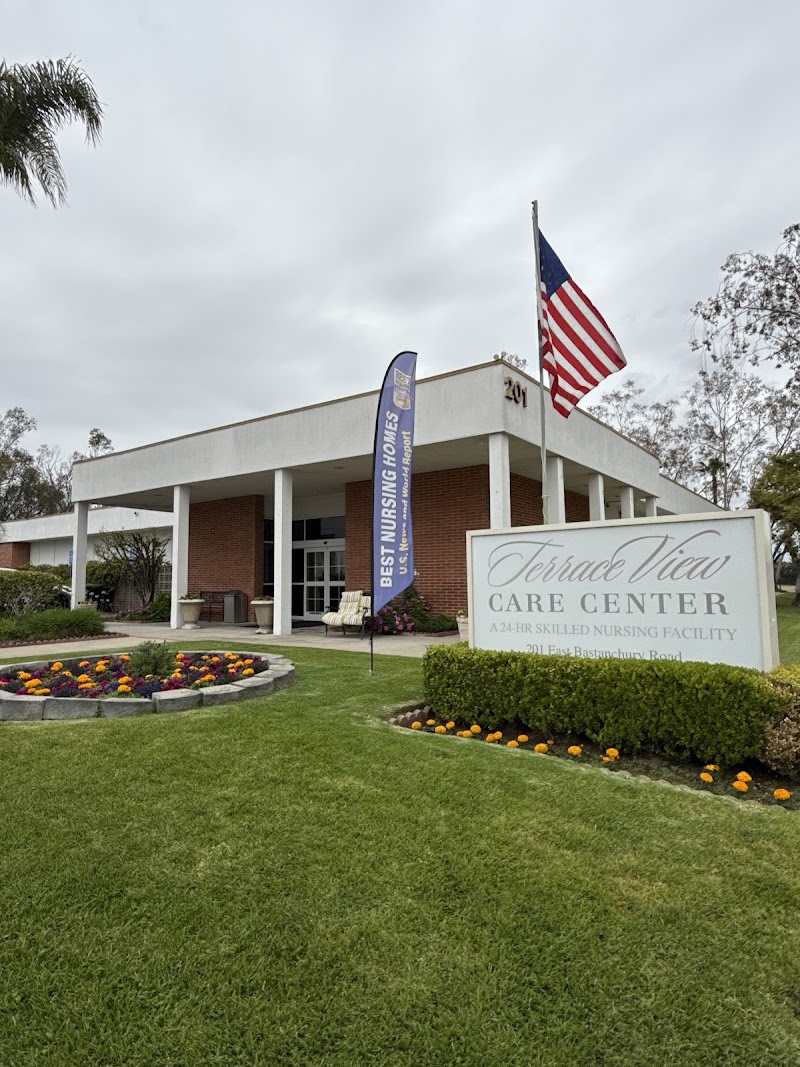
How is Terrace View Staffed?

CMS rates TERRACE VIEW CARE CENTER's staffing level at 4 out of 5 stars, which is above average compared to other nursing homes. Staff turnover is 32%, compared to the California average of 46%. This relatively stable workforce can support continuity of care.

What Have Inspectors Found at Terrace View?

State health inspectors documented 51 deficiencies at TERRACE VIEW CARE CENTER during 2023 to 2025. These included: 47 with potential for harm and 4 minor or isolated issues. While no single deficiency reached the most serious levels, the total volume warrants attention from prospective families.

Who Owns and Operates Terrace View?

TERRACE VIEW CARE CENTER is owned by a for-profit company. For-profit facilities operate as businesses with obligations to shareholders or private owners. The facility is operated by NAHS, a chain that manages multiple nursing homes. With 59 certified beds and approximately 52 residents (about 88% occupancy), it is a smaller facility located in FULLERTON, California.
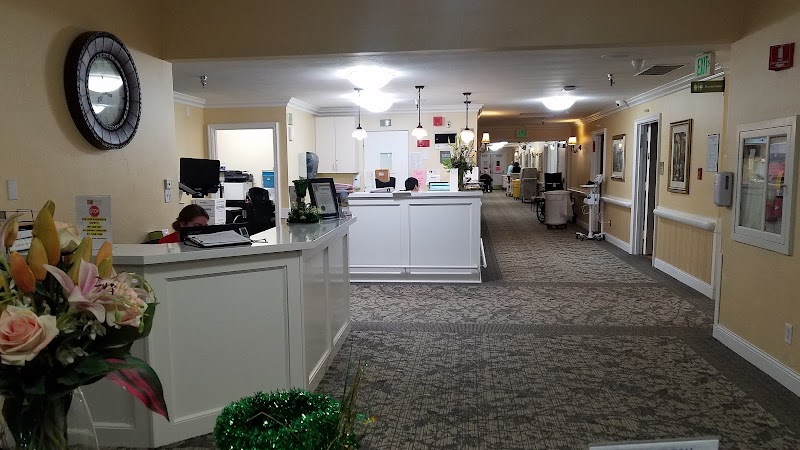
How Does Terrace View Compare to Other California Nursing Homes?

Compared to the 100 nursing homes in California, TERRACE VIEW CARE CENTER's overall rating (5 stars) is above the state average of 3.2, staff turnover (32%) is significantly lower than the state average of 46%, and health inspection rating (4 stars) is above the national benchmark.

What Should Families Ask When Visiting Terrace View?

Based on this facility's data, families visiting should ask: "Can I visit during a mealtime to observe dining assistance and food quality?" "How do you handle medical emergencies, and what is your hospital transfer rate?" "Can I speak with family members of current residents about their experience?"

Is Terrace View Safe?

Based on CMS inspection data, TERRACE VIEW CARE CENTER has a clean safety record: no substantiated abuse findings (meaning no confirmed cases of resident harm), no Immediate Jeopardy citations (the most serious violation level indicating risk of serious injury or death), and is not on the Special Focus Facility watch list (a federal program monitoring the lowest-performing 1% of nursing homes). The facility has a 5-star overall rating and ranks #1 of 100 nursing homes in California. While no facility is perfect, families should still ask about staff-to-resident ratios and recent inspection results during their visit.

Do Nurses at Terrace View Stick Around?

TERRACE VIEW CARE CENTER has a staff turnover rate of 32%, which is about average for California nursing homes (state average: 46%). Moderate turnover is common in nursing homes, but families should still ask about staff tenure and how the facility maintains care continuity when employees leave.

Was Terrace View Ever Fined?

TERRACE VIEW CARE CENTER has no federal fines on record. CMS issues fines when nursing homes fail to meet care standards or don't correct problems found during inspections. The absence of fines suggests the facility has either maintained compliance or corrected any issues before penalties were assessed. This is a positive indicator, though families should still review recent inspection reports for the full picture.

Is Terrace View on Any Federal Watch List?

TERRACE VIEW CARE CENTER is not on any federal watch list. The most significant is the Special Focus Facility (SFF) program, which identifies the bottom 1% of nursing homes nationally based on persistent, serious quality problems. Not being on this list means the facility has avoided the pattern of deficiencies that triggers enhanced federal oversight. This is a positive indicator, though families should still review the facility's inspection history directly.