

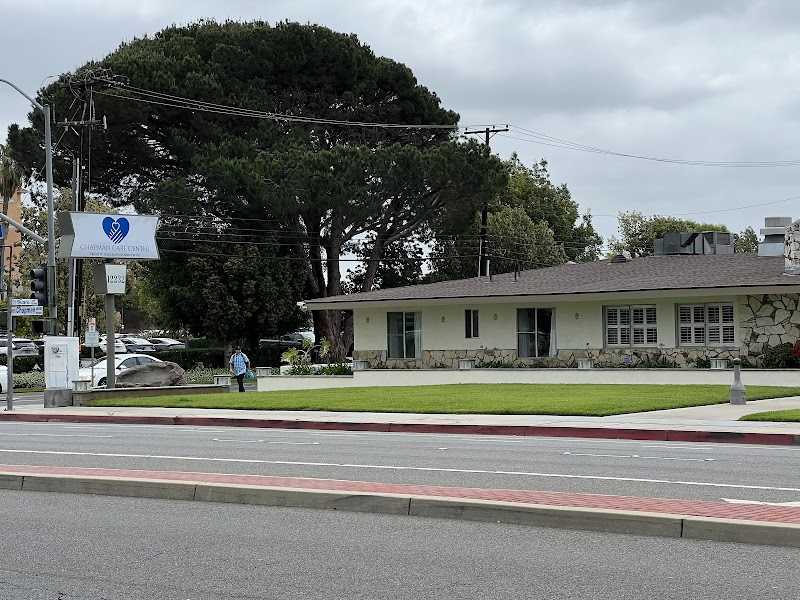
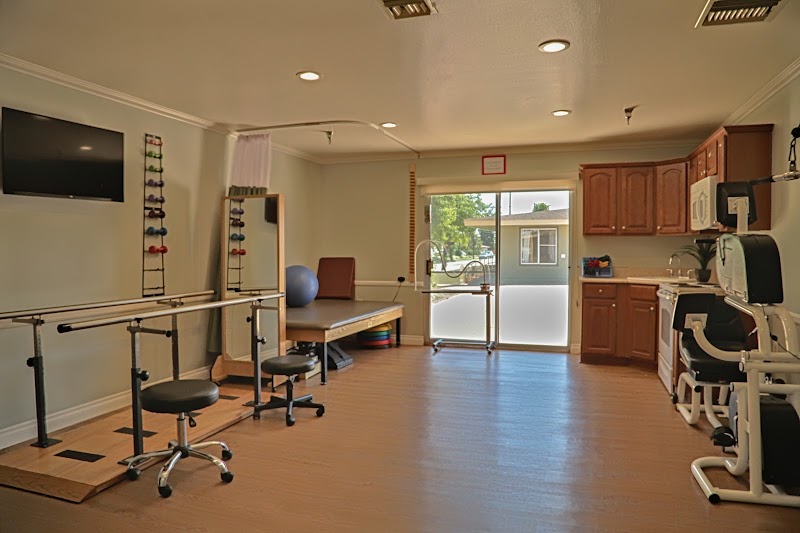
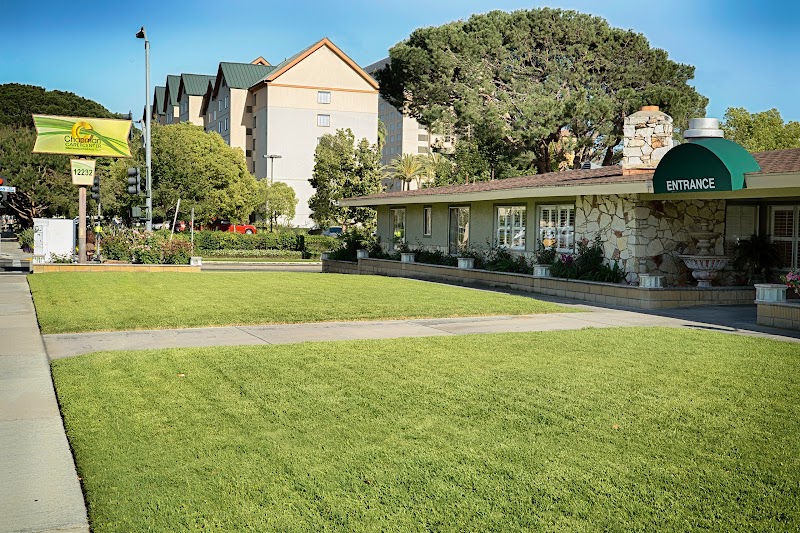
CHAPMAN CARE CENTER

12232 CHAPMAN AVE, GARDEN GROVE, CA 92840 (714) 971-5517
For profit - Limited Liability company 99 Beds THE MANDELBAUM FAMILY Data: November 2025
Trust Grade
70/100
#310 of 1155 in CA
Last Inspection: December 2024

Within standard 12-15 month inspection cycle. Federal law requires annual inspections.

Overview

Chapman Care Center has a Trust Grade of B, indicating it is a good choice for families looking for a nursing home, though not without its issues. It ranks #310 out of 1,155 facilities in California, placing it in the top half of all nursing homes in the state, and #22 out of 72 in Orange County, meaning only 21 local options are better. The facility is improving, with a significant drop in reported issues from 27 in 2024 to just 2 in 2025. Staffing is rated at 3 out of 5 stars, with a turnover rate of 32%, which is below the California average, suggesting that staff tend to stay longer and build relationships with residents. However, there have been concerns regarding food safety practices, including improper storage of food and equipment, which poses a risk for foodborne illnesses, as well as issues with unqualified staff providing respiratory care in the past. Overall, while Chapman Care Center has strengths in its ranking and staffing, families should be aware of the ongoing compliance issues highlighted in inspections.

Trust Score
B
70/100
In California
#310/1155
Top 26%
Safety Record
Low Risk
No red flags
Inspections
Getting Better
27 → 2 violations
Staff Stability
○ Average
32% turnover. Near California's 48% average. Typical for the industry.
Penalties
✓ Good
No fines on record. Clean compliance history, better than most California facilities.
Skilled Nurses
✓ Good
Each resident gets 48 minutes of Registered Nurse (RN) attention daily — more than average for California. RNs are trained to catch health problems early.
Violations
⚠ Watch
51 deficiencies on record. Higher than average. Multiple issues found across inspections.
★★★★☆
4.0
Overall Rating
★★★☆☆
3.0
Staff Levels
★★★★★
5.0
Care Quality
★★★☆☆
3.0
Inspection Score
Stable
2024: 27 issues
2025: 2 issues

The Good

  • 5-Star Quality Measures · Strong clinical quality outcomes
  • Full Sprinkler Coverage · Fire safety systems throughout facility
  • No fines on record
  • Staff turnover below average (32%)

    16 points below California average of 48%

Facility shows strength in quality measures, fire safety.

The Bad

Staff Turnover: 32%

14pts below California avg (46%)

Typical for the industry

Chain: THE MANDELBAUM FAMILY

Part of a multi-facility chain

Ask about local staffing decisions and management

The Ugly 51 deficiencies on record

Jul 2025 2 deficiencies
CONCERN (D) 📢 Someone Reported This

A family member, employee, or ombudsman was alarmed enough to file a formal complaint

Potential for Harm - no one hurt, but risky conditions existed

Infection Control (Tag F0880)

Could have caused harm · This affected 1 resident

**NOTE- TERMS IN BRACKETS HAVE BEEN EDITED TO PROTECT CONFIDENTIALITY** Based on observation, interview, medical record review, and facility P&P review, the facility failed to implement the infection ...

Read full inspector narrative →
**NOTE- TERMS IN BRACKETS HAVE BEEN EDITED TO PROTECT CONFIDENTIALITY** Based on observation, interview, medical record review, and facility P&P review, the facility failed to implement the infection control practices designed to provide a safe and sanitary environment to help prevent the development and transmission of diseases and infections for one sampled resident (Resident 8) observed for infection control practices. * The facility failed to ensure CNA 1 donned the appropriate PPE when providing care to Resident 8 with a physician's order for EBP. This failure posed the risk of transmission of infections to the residents throughout the facility.Findings:Review of the facility's P&P titled Enhanced Standard Precautions revised on 5/2024 showed the following:- Enhanced Standard Precautions provide the Skilled Nursing Facility a framework for reducing Multi-Drug Resistant Organism (MDRO) transmission through Healthcare Professional (HCP) use of gowns and gloves while caring for residents at high risk for MDRO transmission at the point of care during specific activities with the greatest risk for MDRO contamination of HCP hands, clothes, and the environment. Also is a resident-centered and activity-based approach for preventing MDRO transmission in SNF;- Enhanced Barrier Precautions (EBP) is an approach of targeted gown and glove use during high contact resident care activities, designed to reduce transmission of Staphylococcus aureus and MDROs;- California Department of Public Health (CDPH) recommends the use of ESP primarily the use of gowns and gloves for specific high contact care activities based on the resident's characteristics that are associated with a high risk of MDRO colonization and transmission including presence of indwelling devices such as urinary catheter, feeding tube, endotracheal or tracheostomy tube, vascular catheters and wounds; and- Six Moments of Enhanced Standard Precautions include everyone must perform hand hygiene before entering the room. Anyone participating in any of the following six moments must don gown and glove, which includes during morning and evening care, toileting or changing of incontinence briefs, care for devices, invasive procedures sites and giving medical treatment, wound care, mobility assistance and preparing to leave the resident's room and cleaning of the environment. Medical record review for Resident 8 was initiated on 7/8/25. Resident 8 was readmitted to the facility on [DATE]. Review of Resident 8's H&P examination dated 12/28/24, showed Resident 8 had no capacity to understand and make decisions. Review of Resident 8's MDS assessment dated [DATE], showed the BIMS assessment was not conducted for Resident 8 due to not having the capacity to understand. Review of Resident 8's Order Summary Report dated 7/8/25, showed the following physician's order:- dated 12/26/24, to check the GT placement and patency every shift; and- dated 12/27/24, for EBP every shift due to GT.On 7/7/25 at 0925 hours, an EBP signage was posted outside Resident 8's room and a PPE cart was also observed outside the resident's room. CNA 1 was observed providing care to Resident 8 and was not wearing a gown. On 7/7/25 at 0930 hours, an observation and concurrent interview for Resident 8 was conducted with RN 2. RN 2 was asked regarding the use of PPE for the residents on EBP. RN 2 stated the PPE was used when the staff were providing care to the residents as shown on the six moments of the EBP signage posted outside Resident 8's room. RN 2 stated all the residents in Resident 8's room were on EBP due to the presence of a Foley catheter or GT. RN 2 observed CNA 1 was providing incontinent care to Resident 8 and not wearing a gown. RN 2 verified the above findings. RN 2 stated Resident 8 had a GT and was on EBP. Furthermore, RN 2 stated the staff must wear the appropriate PPE which included the gloves and gowns when providing the incontinence care for the residents on the EBP. On 7/7/25 at 1105 hours, an observation and concurrent interview for Resident 8 was conducted with the DSD. The DSD observed and verified Resident 8's room was on EBP and the resident had a GT. The DSD was asked about the facility's practice pertaining to the residents on the EBP. The DSD stated the staff must wear the appropriate PPE (gloves and gowns) inside Resident 8's room during the specified six moments signage posted outside the resident's door. The DSD stated the staff must wash their hands and don a gown and gloves prior to providing care on each resident in the room. The DSD stated the staff's failure to follow the infection control protocol for the residents on the EBP would compromise the residents' health. On 7/7/25 at 1330 hours, an interview was conducted with CNA 1. CNA 1 was asked about the EBP in Resident 8's room. CNA 1 stated for the resident's on the EBP, there was a signage posted outside Resident 8's room with the information on what PPE to use and when to use it. CNA 1 stated it was his mistake for not wearing a gown when he provided the incontinent care to Resident 8. CNA 1 stated Resident 8 had a GT, and he must wear the appropriate PPE which included the gloves and gown during care. On 7/7/25 at 1525 hours, an interview was conducted with the IP. The IP was asked about the facility's practice pertaining to the residents on EBP. The IP stated the staff must wear gowns and gloves when the staff provided care to the residents listed under the six moments of EBP, perform hand hygiene before and after providing care, change the gloves, and perform hand hygiene or wash hands if visibly soiled between residents. In addition, the IP stated the importance of following infection control protocol was for the residents and staff to be free from possible infection.On 7/8/25 at 1650 hours, an interview was conducted with the Administrator and DON. The DON stated the staff must wear the appropriate PPE for the residents on the EBP, which included face mask, gloves, and gowns when providing care to the residents as listed on the six moments of EBP. The DON and Administrator were informed and acknowledged the above findings.
MINOR (B) 📢 Someone Reported This

A family member, employee, or ombudsman was alarmed enough to file a formal complaint

Minor Issue - procedural, no safety impact

Comprehensive Care Plan (Tag F0656)

Minor procedural issue · This affected multiple residents

**NOTE- TERMS IN BRACKETS HAVE BEEN EDITED TO PROTECT CONFIDENTIALITY** Based on interview, medical record review, and facility P&P review, the facility failed to develop a care plan problem for one s...

Read full inspector narrative →
**NOTE- TERMS IN BRACKETS HAVE BEEN EDITED TO PROTECT CONFIDENTIALITY** Based on interview, medical record review, and facility P&P review, the facility failed to develop a care plan problem for one sampled resident (Resident 8) who was placed on the EBP due to the presence of a GT. This failure placed the resident at risk to not receive the appropriate interventions needed for GT care and EBP status.Findings:Review of the facility's P&P titled Enhanced Standard Precautions revised10/2017 showed the following:- It is the policy of the facility that a comprehensive resident-centered care plan be developed for each resident that includes measurable objectives and timeframes to meet each resident's medical, nursing, mental, and psychosocial needs that are identified in the comprehensive assessment. Medical record review for Resident 8 was initiated on 7/8/25. Resident 8 was readmitted to the facility on [DATE]. Review of Resident 8's Order Summary Report dated 7/8/25, showed the following physician's order:- dated 12/26/24, to check the GT placement and patency every shift; and- dated 12/27/24, for EBP every shift due to gastrostomy tube. Review of Resident 8's care plan problems dated 12/27/24, failed to show a care plan was developed to address the resident was on the EBP due to the presence of the GT as ordered by the physician. On 7/8/25 at 1520 hours, an interview and concurrent medical record review for Resident 8 was conducted with RN 1. RN 1 verified there was no care plan developed for the resident's EBP due to the presence of a GT. RN 1 stated for the newly admitted residents, the admitting nurse would initiate the baseline care plan and the other RNs or MDS staff would add more care plans as needed. RN 1 verified Resident 8 had a GT since readmission and the physician ordered for the EBP on 12/27/25.On 7/8/25 at 1650 hours, an interview was conducted with the Administrator and DON. The DON stated the care plan must be initiated after receiving the physician's order for the EBP. The DON stated the MDS staff would review the residents' care plans for completion. The DON and Administrator were informed and acknowledged the above findings.
Dec 2024 24 deficiencies
CONCERN (D)

Potential for Harm - no one hurt, but risky conditions existed

Deficiency F0554 (Tag F0554)

Could have caused harm · This affected 1 resident

**NOTE- TERMS IN BRACKETS HAVE BEEN EDITED TO PROTECT CONFIDENTIALITY** Based on observation, interview, medical record review, and facility P&P review, the facility failed to ensure one nonsampled re...

Read full inspector narrative →
**NOTE- TERMS IN BRACKETS HAVE BEEN EDITED TO PROTECT CONFIDENTIALITY** Based on observation, interview, medical record review, and facility P&P review, the facility failed to ensure one nonsampled resident (Resident 343) was safe to self-administer a medication. * Resident 343 had self-administered the lidocaine 5% cream (local anesthetic used to temporarily numb and relieve pain) and kept it at the bedside. Howevever, there was no physician's order for the lidocaine cream and self administration. Resident 343 was not a candidate for self-administer the medications as per the assessment. This failure had the potential for Resident 343 to administer the medication inaccurately. Findings: Review of the facility's P&P titled Medication - Self-Administration dated 1/2017 showed the following: - It is the policy of the facility that residents have the right to self-administer medications if the IDT determines that this practice is clinically appropriate; - On admission or shortly thereafter, each resident will be assessed to determine if they wanted to self-administer their medications; and - It is the responsibility of the IDT to determine if it safe for the resident to self-administer drugs before the resident may exercise that right. The IDT must determine whether the resident or the nursing staff will be responsible for storage and documentation of the administration of the medications, as well as the location where the medications will be administered. These determinations should appear on the resident's comprehensive care plan. On 12/4/24 at 0845 hours, Resident 343 was observed lying in bed, and a container of lidocaine 5% cream was observed on the resident's bedside table. Resident 343 stated he applied the lidocaine cream on his left leg, and the nurses were aware that he was applying the lidocaine cream by himself. On 12/4/24 at 0847 hours, an observation for Resident 343 and concurrent interview was conducted with RN 5. Resident 343 was observed lying in bed, and a container of lidocaine 5% cream was observed on the resident's bedside table. RN 5 verified the above findings. RN 5 stated the residents were allowed to self-administer if they had been assessed to be able to self-administer their medications. Medical record review for Resident 343 was initiated on 12/3/24. Resident 343 was admitted to the facility on [DATE]. Review of Resident 343's H&P evaluation dated 11/27/24, showed Resident 343 had the capacity to understand and make decisions. Review of Resident 343's Self-Administration of Medication assessment dated [DATE], showed Resident 343 was not a candidate for safe self-administration of medications. Review of Resident 343's Order Summary Report for December 2024 did not show the physician's orders to administer the lidocaine cream and for Resident 343 to self-administer the lidocaine medication. On 12/6/24 at 1232 hours, an interview and concurrent medical record review for Resident 343 was conducted with LVN 1. LVN 1 verified the above findings. LVN 1 stated the residents were assessed upon admission whether they could self-administer any medications. LVN 1 verified Resident 343 did not have the physician's orders for the administration of lidocaine and self-administer any medications; and Resident 343 was not a candidate for safe self-administration of medications as per the assessment.
CONCERN (D)

Potential for Harm - no one hurt, but risky conditions existed

Deficiency F0558 (Tag F0558)

Could have caused harm · This affected 1 resident

**NOTE- TERMS IN BRACKETS HAVE BEEN EDITED TO PROTECT CONFIDENTIALITY** Based on observation, interview, medical record review, and facility P&P review, the facility failed to provide the reasonable a...

Read full inspector narrative →
**NOTE- TERMS IN BRACKETS HAVE BEEN EDITED TO PROTECT CONFIDENTIALITY** Based on observation, interview, medical record review, and facility P&P review, the facility failed to provide the reasonable accommodations to meet the needs for one of 18 final sampled residents (Resident 339) and one nonsampled resident (Resident 45). * The facility failed to ensure the call light was within reach and accessible for Residents 45 and 339. This failure had the potential to negatively impact the residents' psychosocial well-being or result in a delay to receive care. Findings: Review of the facility's P&P titled Call Lights dated 1/2017 showed when the resident is in bed or in the wheelchair or chair in the room, staff should make sure that the call light is within easy reach of the resident. 1. On 12/3/24 at 1222 hours, Resident 339 was observed sitting in the wheelchair on the left side of the bed and near the foot of the bed. Resident 339 asked for her call light. The call light was observed clipped on the right side of the headboard and was not within Resident 339's reach. Resident 339 stated the CNA changed her bed and forgot to place the call light where she could reach it. Resident 339 stated she needed her call light so she could call the staff when she needed assistance. On 12/3/24 at 1223 hours, an observation for Resident 339 and concurrent interview was conducted with CNA 2. Resident 339 was observed sitting in the wheelchair on the left side of the bed and near the foot of the bed. The call light was observed clipped on the right side of the headboard and was not within Resident 339's reach. CNA 2 verified the above findings. Medical record review for Resident 339 was initiated on 12/3/24. Resident 339 was admitted to the facility on [DATE]. Review of Resident 339's MDS dated [DATE], showed Resident 339 was cognitively intact and dependent on toileting and lower body dressing. 2. On 12/3/24 at 1233 hours, Resident 45 was observed sitting in bed. Resident 45 asked, Can you help me look for my call light? The call light was observed clipped on the left side rail. Resident 45 was informed her call light was on the left side rail. Resident 45 observed attempting to use her right arm to reach the call light. Resident 45 stated the call light was too short and she could not reach the call light. On 12/3/24 at 1235 hours, an observation for Resident 45 and concurrent interview was conducted with CNA 3. Resident 45 was observed sitting in bed. The call light was observed clipped on the left side rail and was not within Resident 45's reach. CNA 3 verified the above findings. On 12/6/24 at 1301 hours, an interview was conducted with the DSD. When asked about the residents' call light, the DSD stated the call light should be within the resident's reach at all times when the resident was in bed, chair, wheelchair, and in the bathroom.
CONCERN (D)

Potential for Harm - no one hurt, but risky conditions existed

PASARR Coordination (Tag F0644)

Could have caused harm · This affected 1 resident

**NOTE- TERMS IN BRACKETS HAVE BEEN EDITED TO PROTECT CONFIDENTIALITY** Based on interview, medical record review, and facility document review, the facility failed to ensure one of 18 final sampled r...

Read full inspector narrative →
**NOTE- TERMS IN BRACKETS HAVE BEEN EDITED TO PROTECT CONFIDENTIALITY** Based on interview, medical record review, and facility document review, the facility failed to ensure one of 18 final sampled residents (Residents 55) was referred to PASRR level II review when Resident 55's diagnosis was changed from Alzheimer's with psychosis to schizoaffective disorder. This failure had the potential for Resident 55 to not receive the specialized care and services appropriate for her condition. Findings: Review of the facility's P&P titled PASRR revised 3/2019 showed it is the policy of the facility to screen each resident, regardless of payment source, when applying for admission to, or residing in the facility, which is a Medicaid-certified facility, for mental illness and intellectual disability. Medical record review for Resident 55 was initiated on 12/4/24. Resident 55 was admitted to the facility on [DATE]. Review of Resident 55's Department of Health Care Services PASRR Level I Screening dated 7/1/24, showed Resident 55 had no diagnosis of serious mental disorder. Review of Resident 55's MDS dated [DATE], showed Resident 55 had severe cognitive impairment. Review of Resident 55's Psychiatric Evaluation Note dated 11/15/24, showed Resident 55's diagnosis was changed from Alzheimer's with psychosis to schizoaffective disorder. Review of Resident 55's Order Summary Report for December 2024 showed a physician's order dated 11/15/24, to administer risperidone (antipsychotic medication) 1 mg by mouth two times a day for schizoaffective disorder manifested by poor impulse control as evidenced by getting up from bed/wheelchair unassisted. Further review of Resident 55's medical record failed to show documented evidence the resident was referred for level II resident review when newly diagnosed with schizoaffective disorder. On 12/5/24 at 1513 hours, an interview and concurrent record review for Resident 55 was conducted with the ADON. Resident 55's PASRR Level I Screening's section for serious mental illness diagnosis was reviewed with the ADON. The ADON verified the answer to the question Does the individual have a serious diagnosed mental disorder such as Depressive Disorder, Anxiety Disorder, Panic Disorder, Schizophrenia/Schizoaffective Disorder, or symptoms of Psychosis, Delusions, and/or Mood Disturbance? was documented as no. The ADON acknowledged Resident 55's new diagnosis of schizoaffective disorder. The ADON stated the schizoaffective disorder diagnosis was added after the PASRR Level I Screening was conducted. The ADON stated there should have been a review of Resident 55's PASRR because of the new diagnosis. The ADON further stated Resident 55's PASRR level should have been reviewed so the facility could determine Resident 55's accurate PASRR level and update the PASRR level. The ADON stated the facility could update the care plan once the facility got an accurate PASRR level. On 12/6/24 at 1252 hours, an interview and concurrent medical record review for Resident 55 was conducted with the DON. The DON verified the above findings and stated a PASRR resident review should have been done. The DON stated the PASRR system would show if the resident was positive or needed a follow up. On 12/6/24 at 1650 hours, an interview was conducted with the Administrator and DON. The Administrator and DON were informed and acknowledged the above findings.
CONCERN (D)

Potential for Harm - no one hurt, but risky conditions existed

Deficiency F0692 (Tag F0692)

Could have caused harm · This affected 1 resident

**NOTE- TERMS IN BRACKETS HAVE BEEN EDITED TO PROTECT CONFIDENTIALITY** Based on observation, interview, medical record review, facility document review, and facility P&P review, the facility failed t...

Read full inspector narrative →
**NOTE- TERMS IN BRACKETS HAVE BEEN EDITED TO PROTECT CONFIDENTIALITY** Based on observation, interview, medical record review, facility document review, and facility P&P review, the facility failed to ensure one of two residents (final sampled resident, Resident 26) reviewed for nutrition received the appropriate services needed to maintain acceptable parameters of nutritional status when: * The facility failed to ensure the RD recommendations on 9/26/24, were followed-up with the physician and addressed in the IDT weight variance meeting when Resident 26 had severe weight loss of 11 lbs in 20 days. This failure had the potential for Resident 26 not to receive the necessary intervention to prevent further weight loss. Findings: Review of the facility's P&P titled Weight Variance Committee dated 4/2017 showed it is the policy of the facility to review and monitor the residents with weight variances, at an interdisciplinary team (IDT) meeting on a regular scheduled basis. Under the section for Procedure showed the following: - Screening of weights variances will be done on a regular basis per nursing (DON or Designee) or dietary (RD in house or consultant RD or supervisor); - The list of residents with weight variances will be established and shall be referred to the interdisciplinary committee members; - These residents will be reviewed at the next weight variance committee meeting; - The committee meeting will be held as established by the committee members. Members may include nursing staff, dietary, occupational therapy, speech pathology and social service; - The recommendation from the committee will be carried out by the designated responsible discipline; - The resident with weight variances will continue to be reviewed at the committee meeting until the IDT determines the problem has been resolved or is unable to be impacted, due to resident diagnoses or condition; - Documentation including assessments and care planning will be maintained in the resident's medical record; - Any weight gain/loss of greater than 3% per week should be reviewed by the IDT for cause and further recommendation. Medical record review for Resident 26 was initiated on 12/3/24. Resident 26 was admitted to the facility on [DATE], with diagnoses which included right heart failure, acute respiratory failure, and dysphagia. Review of Resident 26's H&P examination dated 6/17/24, showed Resident 26 had no capacity to understand and make decisions. Review of Resident 26's MDS dated [DATE], showed Resident 26 had severe cognitive impairment, and required set up assistance for eating. Review of Resident 26's Nutritional assessment dated [DATE], showed Resident 26 was 59 inches in height, ideal body weight range 86-96-106 and Resident 26's body weight was 132 lbs. Review of Resident 26's Weights and Vitals Summary showed Resident 26's weight was documented as follows: - on 9/3/24, 132 lbs; - on 9/24/24,121 lbs, a loss of 11 lbs /8.33% in 20 days compared to 9/3/24; - on 10/1/24, 121 lbs; - on 10/8/24, 122 lbs; - on 10/15/24, 120 lbs; - on 10/22/24, 121 lb; - on 10/29/24, 119 lbs; - on 11/7/24, 116 lbs; - on 11/12/24, 120 lbs; - on 11/19/24,117 lbs; - on 12/3/24, 117 lbs, a loss of 15 lbs/11.4% in three months compared to 9/3/24. Review of the facility document titled RD Reviewed and With Recommendations dated 9/26/24, showed the following recommendations for Resident 26: - appetite stimulant, reason for recommendation showed poor PO intake and weight loss; - snacks TID, reason for recommendation showed wound and weight loss; and - VHC boost (very high calorie nutritional drink) BID. a. Review of Resident 26's Physician Order Summary dated 9/1/24 to 12/6/24, showed an order dated 9/26/24, for RD review for significant weight loss and variable PO intake. Further review of Resident 26's medical record failed to show the documentation the facility had followed up with the physician regarding the RD recommendations on 9/26/24. On 12/5/24 at 0925 hours, a concurrent interview and medical record review for Resident 26 was conducted with the ADON. The ADON stated he was one of the members of the weight variance committee in the facility. The ADON further stated if the resident had a significant weight changes, the resident would be added to the weight variance list, then the physician and/or the weight variance committee would request for an RD consultation. The ADON stated the physician would be notified if he would like to order what the RD had recommended for the resident. When asked who was responsible to follow up with the physician regarding the RD recommendations, the ADON stated he was responsible to make sure the RD recommendations were relayed to the physician and the DON would oversee if the recommendations from the RD were followed. The ADON stated the physician's notification of the RD recommendations should be documented in the resident's medical record. The ADON verified the above findings and stated he was not able to find the documented evidence if the RD recommendations for Resident 26 from 9/26/24, for the appetite stimulant, snacks TID, VHC boost BID were followed up with the physician. On 12/5/24 at 1442 hours, a concurrent interview and medical record review for Resident 26 was conducted with the RD. The RD stated she worked in the facility on a consultant basis, she stated she visited the facility once a week and reviewed the resident's weekly and monthly weights and provided the recommendations. The RD stated she provided the recommendations she made to the DSS, then the DSS provided the RD recommendations to the nursing department, and the nursing department followed up with the physician if he would like to order the RD recommendations for the resident. The RD verified Resident 26's 11 lbs weight loss from 9/3/24 to 9/24/24, and the recommendations she made on 9/26/24, was not followed up by the facility. The RD stated Resident 26 had multiple comorbidities which could lead to weight loss for Resident 26; however, the RD recommendations were crucial to maintain the nutritional status of Resident 26. On 12/6/24 at 1120 hours, a telephone interview was conducted with Physician 1. Physician 1 stated he had been taking care of Resident 26 for a long time. When asked Physician 1 if he was aware of the weight loss of 11 lbs on 9/24/24 in 20 days for Resident 26, Physician 1 stated he was aware about the Resident 26's weight loss. Physician 1 stated Resident 26 had multiple co morbidities and was at high risk for weight changes. When asked Physician 1 if he was notified of the RD recommendations on 9/26/24, with appetite stimulant, snacks TID, and VHC boost BID, Physician 1 stated he was not able to remember if he was contacted with the above recommendations for Resident 26. b. Review of Resident 26' s Weight Variance Progress Note showed the following: - on 9/24/24, Resident 26 had 11 lbs weight loss since 9/3/24. Resident 26 had sporadic PO intake with Alzheimer and dementia (memory loss). The physician was notified. Resident 26 was admitted to weight variance. The RD was to review and Resident 26's representative was made aware about the weight loss. - on 10/2/24, Resident 26's weight was 121 lbs. Resident 26's ideal body weight range was between 86-106 lbs. Resident 26 had variable PO intake, and to continue the current plan of care. Further review of the weight variance progress notes did not show the RD recommendations on 9/26/24, was discussed in the weight variance IDT meeting. On 12/6/24 at 1518 hours, an interview and medical record review for Resident 26 was conducted with the DON. The DON verified the above findings. The DON confirmed the above weight changes for Resident 26. The DON stated the DSS, ADON, and RN supervisor from subacute unit, were in the IDT Weight Variance Committee. When asked, the DON stated the RD came to the facility once a week and was not part of the Weight Variance Committee. When asked if the RD recommendations were discussed in the IDT weight variance meeting, the DON stated the facility would discuss the RD recommendations in the IDT weight variance meetings. The DON verified the RD recommendations for Resident 26 on 9/26/24, were not discussed in the subsequent IDT weight variance meetings. The DON further stated the facility missed to discuss the RD recommendations on 9/26 and 10/3/24, for Resident 26. The DON verified and acknowledged the above findings.
CONCERN (D)

Potential for Harm - no one hurt, but risky conditions existed

Tube Feeding (Tag F0693)

Could have caused harm · This affected 1 resident

**NOTE- TERMS IN BRACKETS HAVE BEEN EDITED TO PROTECT CONFIDENTIALITY** Based on interview, medical record review, and facility P&P review, the facility failed to ensure necessary care and services re...

Read full inspector narrative →
**NOTE- TERMS IN BRACKETS HAVE BEEN EDITED TO PROTECT CONFIDENTIALITY** Based on interview, medical record review, and facility P&P review, the facility failed to ensure necessary care and services related to GT feeding were provided for two of 18 final sampled residents (Residents 18 and 58) reviewed for tube feeding. * The facility failed to ensure Residents 18 and 58 had the updated tube feeding care plans following a revision of tube feeding orders. * The facility failed to ensure Residents 18 and 58's physician's orders for tube feeding had a start time and specified stop time or until dose complete. These failures posed the risk for developing complications related to a GT. Findings: 18 Review of the facility's P&P titled Gastrostomy Tube Feeding via Continuous Pump revised 1/2017 showed it is the policy of the facility to provide nourishment via continuous pump to residents who are unable to obtain adequate nourishment orally, as ordered by the resident's attending physician, verify that there is a physician's order for this procedure and review the resident's care plan and provide for any special needs of the resident. 1.a. Medical record review for Resident 58 was initiated on 12/4/24. Resident 58 was admitted on [DATE]. Review of Resident 58's H&P examination dated 8/12/24, showed Resident 58 had the capacity to understand and make decisions. Review of Resident 58's Order Summary Report showed a physician's order dated 10/23/24, for every shift to provide 1200 cc/1800 kcal of Isosource 1.5 (feeding formula) via GT and enteral pump at 60 ml/hr over 20 hours. Review of Resident 58's Care Plan: Tube Feeding dated 8/3/24, showed to provide tube feedings as per MD, Jevity 1.2 1320 kcal/1100 ml over 20 hours. b. Medical record review for Resident 18 was initiated on 12/5/24. Resident 18 was admitted to the facility 2/23/16. Review of Resident 18's H&P examination dated 3/19/24, showed Resident 18 could make needs known but could not make medical decisions. Review of Resident 18's Order Summary Report showed a physician's order dated 11/18/24, to provide 1000 cc/1200 kcal/day of Diabetisource (feeding formula) via GT and enteral pump at 50 cc/hr over 20 hours. Review of Resident 18's Care Plan: Tube Feeding dated 4/15/24, showed Glucerna 1.2 at 55 cc/hr for 20 hrs via GT enteral pump. On 12/5/24 at 1441 hours, a concurrent interview and medical record review was conducted with the DON. The DON verified when a resident had a tube feeding order, the order should be reflected in the resident's care plan. The DON reviewed Residents 18 and 58's care plans and order summary reports. The DON verified the information on Residents 58 and 18's care plans did not reflect the revisions made to the tube feeding orders. 2.a. Medical record review for Resident 58 was initiated on 12/4/24. Resident 58 was admitted on [DATE]. Review of Resident 58's H&P examination dated 8/12/24, showed Resident 58 had the capacity to understand and make decisions. Review of Resident 58's Order Summary Report showed a physician's order dated 10/23/24, for every shift to provide 1200 cc/1800 kcal of Isosource 1.5 via GT and enteral pump at 60 ml/hr over 20 hours. b. Medical record review for Resident 18 was initiated on 12/5/24 at 1040 hours. Resident 18 was admitted to the facility on [DATE]. Review of Resident 18's H&P examination dated 3/19/24, showed Resident 18 could make needs known but could not make medical decisions. Review of Resident 18's Order Summary Report showed a physician's order dated 11/18/24, to provide 1000 cc/1200 kcal/day of Diabetisource via GT and enteral pump at 50 cc/hr over 20 hours. However, Residents 18 and 58's physician's orders for GT feeding did not include the start and stop times. On 12/5/24 at 0951 hours, an interview was conducted with LVN 11. LVN 11 verified when a resident had an order for a tube feeding, the type of formula, rate, frequency, and duration needed to be verified. LVN 11 stated he knew when to start and stop the tube feeding based on the physician's order . LVN 11 stated if the physician's order did not include a start and stop time, he must call the doctor to clarify the order. LVN 11 stated if the total dose of tube feeding was not infused in the time specified, he needed to let it run until the feeding completed. LVN 11 verified the tube feeding order should state until dose complete. On 12/5/24 at 1030 hours, a concurrent interview and medical record review was conducted with LVN 11 at his designated medicine cart. LVN 11 reviewed the tube feeding orders for Residents 18 and 58. LVN 11 verified the orders did not specify the start time or include the verbiage until dose complete. LVN 11 stated they usually started the tube feedings around 1200 hours, but the start and stop time should be included in the physician's order. On 12/5/24 at 1441 hours, a concurrent interview and medical record review was conducted with the DON. The DON stated when a resident had a tube feeding order, the nurses needed to verify the type of formula, rate, and dose as ordered by the physician. The DON verified the start time for the tube feeding should be in the physician's order. The DON verified all orders needed to have a start time and specify until dose complete. The DON verified the tube feeding order for Residents 58 and 18 were missing the start time and missing the verbiage until until dose complete.
CONCERN (D)

Potential for Harm - no one hurt, but risky conditions existed

Respiratory Care (Tag F0695)

Could have caused harm · This affected 1 resident

**NOTE- TERMS IN BRACKETS HAVE BEEN EDITED TO PROTECT CONFIDENTIALITY** 10. Medical record review for Resident 58 was initiated on 12/4/24. Resident 58 was admitted to the facility on [DATE]. Review o...

Read full inspector narrative →
**NOTE- TERMS IN BRACKETS HAVE BEEN EDITED TO PROTECT CONFIDENTIALITY** 10. Medical record review for Resident 58 was initiated on 12/4/24. Resident 58 was admitted to the facility on [DATE]. Review of Resident 58's H&P examination dated 8/12/24, showed Resident 58 had the capacity to understand and make decisions. Review of Resident 58's Order Summary Report showed a physician's order dated 8/6/24, for the ventilator settings of Mode: AC VT: 450 Rate: 20 O2: 3 LPM Peep: 5 PS: 0 every four hours, every shift. Review of Resident 58's Care Plan initiated on 8/3/24, showed a care plan problem addressing Resident 58's respiratory distress. The interventions for tracheostomy/ventilator included respiratory therapy as ordered, oxygen as ordered, respiratory treatment as ordered, notify MD for any changes. On 12/5/24 at 1120 hours, an interview and concurrent medical record review was conducted with RT 1. RT 1 verified the respiratory therapy staff were responsible for setting, modifying, and monitoring the ventilators. RT 1 reviewed Resident 58's ventilator settings and verified the physician's order showed to monitor the ventilator setting for Resident 58 every 4 hours. RT 1 provided Resident 58's Continuous Ventilator Flow Sheets from 11/15/24 to 12/5/24. Resident 58's Continuous Ventilator Flow Sheets provided by RT 1 indicated the frequency of verification for the ventilator settings should be every four hours. However, further review of the Continuous Ventilator Flow Sheets showed the respiratory staff documented Resident 58's ventilator settings every six hours. On 12/5/24 at 1441 hours, an interview and concurrent medical record review was conducted with the DON regarding the ventilator monitoring for Resident 58. The DON reviewed Resident 58's ventilator orders and stated she interpreted the order as the respiratory staff were supposed to verify the ventilator settings every four hours. Upon review of Resident 58's Continuous Ventilator Flow Sheets, the DON verified the respiratory staff documented Resident 58's ventilator settings every six hours. 5. Medical record review for Resident 51 was initiated on 12/3/24. Resident 51 was initially admitted to facility on 4/24/23, and readmitted on [DATE]. Review of Resident 51's medical record showed the resident's diagnoses included Acute and Chronic Respiratory Failure with hypoxia and dependence on respiratory ventilator status. Review of Resident 51's Order Summary Report showed physician's order dated 4/24/24, for tracheostomy tube on admission, Portex size 7 (seven) cuffed, and to titrate oxygen flow to maintain oxygen saturation level equal or greater than 92 %. On 12/3/24 at 0912 and 1025 hours, an observation was conducted for Resident 51. Resident 51 was observed in bed with head slightly elevated and had tracheostomy tube connected to the ventilator machine that was connected to an oxygen concentrator. Resident 51 room had no No smoking/Oxygen in Use sign posted at the door. On 12/3/24 at 1108 hours, an observation of Resident 51 and concurrent interview was conducted with LVN 4. Resident 51 had no No smoking/Oxygen in Use sign posted at the door. LVN 4 verified there was no No smoking/Oxygen in Use sign posted at Resident 51's door. LVN 4 stated there should be a sign at the door. 6. Medical record review for Resident 76 was initiated on 12/3/24. Resident 76 was admitted to the facility on [DATE]. Review of Resident 76's medical record showed the resident's diagnoses included acute respiratory failure whether with hypoxia or hypercapnia and dependence on respirator/ventilator status. Review of Resident 76's Order Summary Report showed the following physician's orders: - dated 7/8/24, for the tracheostomy tube on admission, Shiley size 8 (eight) cuffed, and to titrate the oxygen flow to maintain oxygen saturation equal or greater than 92 %, and - dated 8/22/24, for the ventilator settings of TV-450, and oxygen at five liters per minute every shift. On 12/3/24 at1050 hours, an observation was conducted with Resident 76. Resident 76 was observed in bed with head slightly elevated, and had a tracheostomy tube connected to the ventilator machine, that was connected to an oxygen concentrator. Resident 76's room had no No smoking/Oxygen in Use sign posted at the door. On 12/3/24 at 1105 hours, an observation of Resident 76 and concurrent interview was conducted with LVN 4. LVN 4 verified there was no No smoking/Oxygen in Use sign posted at Resident 76's door. LVN 4 stated there should be a sign at the door. 7. Medical record review for Resident 37 was initiated on 12/3/24. Resident 37 was admitted to the facility on [DATE]. Review of Resident 37's medical record showed the resident's diagnoses included acute respiratory failure whether with hypoxia or hypercapnia, dependence on respirator/ventilator status, and tracheostomy. On 12/3/24 at 1148 hours, an observation was conducted for Resident 37. Resident 37 was observed in bed with tracheostomy in placed, connected to the ventilator machine that was connected to an oxygen concentrator. Resident 37 room had no No smoking/Oxygen in Use sign posted at the door. On 12/3/24 at 1315 hours, an observation of Resident 37 and concurrent interview was conducted with LVN 4. LVN 4 verified there was no No smoking/Oxygen in Use sign posted at Resident 37's door. LVN 4 stated the Infection control nurse might have removed the no smoking sign when she placed the contact isolation sign on the door. LVN 4 acknowledged there should be Oxygen In Use sign posted at the door. 8. Medical record review for Resident 23 was initiated on 12/3/24. Resident 23 was admitted to the facility on [DATE]. Review of Resident 23's medical record showed the resident's diagnoses included acute respiratory failure whether with hypoxia or hypercapnia, dependence on respirator/ventilator status, and tracheostomy. Review of Resident 23's Order Summary dated 12/6/24, showed the following physician's orders: - dated 9/03/24, for tracheostomy tube on admission, Shiley size 6 (six) cuffed, and to titrate the oxygen flow to maintain oxygen saturation equal or greater than 92 %, and - dated 12/05/24, for the ventilator settings of TV-400 and oxygen at three liters per minute four times a day. On 12/3/24 at 1126 hours, an observation of Resident 23 and concurrent interview was conducted with LVN 4. Resident 23 was observed in bed with head slightly elevated, and had tracheostomy tube connected to ventilator machine that was connected to an oxygen concentrator. There was no No smoking/Oxygen in Use sign posted at the door. LVN 4 verified there was no No smoking/Oxygen in Use sign posted at Resident 23's door. 9. Review of the facility's P&P titled Oxygen Administration dated 3/2017 showed it is the policy of the facility to provide guidelines for the administration of oxygen. Under the section for Procedure, showed to verify if there is a physician's order for oxygen administration. On 12/3/24 at 0921 hours, Resident 588 was observed lying in bed receiving oxygen through nasal cannula at 1.5 liters per minute. An open package of suction tubing and suction canister was observed stored in a set up bag on the nightstand on the left side of the Resident 588's bed. The set-up bag was dated 11/24/24. Medical record review for Resident 588 was initiated on 12/3/24. Resident 588 was admitted to the facility on [DATE]. Review of Resident 588's Care Plan dated 11/24/24, showed a care plan problem addressing Resident 558's ineffective breathing pattern related to COPD, the interventions included oxygen as ordered. Review of Resident 588's Order Summary Report showed following physician's orders: - dated 11/24/24, to administer oxygen at two liters per minute via nasal cannula continuously to keep the oxygen saturation above 92%. - dated 12/3/24, to change the suction canister, Yankeur, and tubing every Tuesday and Friday and as needed to prevent infection. On 12/3/24 at 0934 hours, a concurrent observation and interview was conducted with LVN 7. LVN 7 verified the above observation and verified Resident 588 was receiving oxygen at 1.5 liters per minute, and the set-up bag containing an open package of suction tubing and canister was labeled 11/24/24. On 12/3/24 at 0944 hours, a concurrent follow-up interview and medical record review for Resident 588 was conducted with LVN 7. LVN 7 verified the above findings and stated Resident 588 should have been receiving oxygen at two liters per minute, and the suction tubing and canister should have been changed every Tuesday and Friday as ordered by the physician. On 12/5/24 at 1426 hours, an interview was conducted with the DON. The DON was informed and acknowledged the above findings. Based on observation, interview, medical record review, and facility P&P review, the facility failed to provide the necessary care and services for six of 18 final sampled residents (Residents 51, 58, 70, 76, 339, and 588) and four nonsampled residents (Residents 23, 37, 338, and 340) reviewed for respiratory care. * The facility failed to ensure the oxygen administration to Resident 70 was performed by a licensed nurse and failed to ensure Resident 70's oxygen administration was documented in the MAR. In addition, the facility failed to ensure a No Smoking/Oyxgen in Use sign was posted outside the resident's door per the facility's P&P. * The facility failed to ensure a No Smoking/ Oxygen in Use sign was posted outside the resident's door as per the facility's P&P for Resident 23, 37, 51, 76, and 339. * The facility failed to ensure Resident 340's suction was stored in a sanitary manner. * The facility failed to ensure Resident 338's nasal cannula tubing was stored in a sanitary manner. * The facility failed to ensure Resident 588 was administered with oxygen as ordered by the physician. In addition, the facility failed to ensure Resident 558's suction tubing and canister was replaced as ordered by the physician. * The facility failed to monitor Resident 58's ventilator settings as ordered by the physician. These failures had the potential to affect the respiratory health and well-being of the residents in the facility. Findings: Review of the facility's P&P titled Oxygen Administration dated 3/2017 showed the following: - To verify that there is a physician's order for oxygen administration and to review the resident's care plan for any special needs of the resident; - Oxygen therapy is administered by way of an oxygen mask, nasal cannula or non-rebreather mask; and - A No Smoking/Oxygen in use signs were necessary. Review of the facility's document titled Lesson Plan on Oxygen Safety and Administration (undated) showed the following: - The oxygen tubing should be changed weekly and as needed, including changing the mask, cannula, nebulizer equipment, etc. When not in use, the oxygen tubing should be stored in a clean set-up bag; and - Oxygen usage and storage areas will be mark with oxygen use. Review of the facility's document titled Lesson Plan on Oxygen Administration: P&P (undated) showed the oxygen will be administered to the residents as needed per the attending physician's orders by a licensed personnel, and since oxygen is based on a physician's order, it is considered a licensed staff procedure. 1.a. On 12/3/24 at 0925 hours, during the initial tour of the facility, Resident 70 was observed in bed receiving two liters per minute of oxygen via nasal cannula. A No Smoking/Oxygen in Use sign was not posted at the door of Resident 70's room. b. On 12/5/24 at 0909 hours, Resident 70 was observed sleeping in bed. The oxygen concentrator adjacent to Resident 70's bed was turned off, and the nasal cannula tubing was inside a set-up bag. On 12/5/24 at 0943 hours, a concurrent observation for Resident 70 and interview was conducted with the Hospice Aide. Resident 70 was observed awake, lying in bed, and receiving two liters of oxygen via nasal cannula. When asked about Resident 70's oxygen, the Hospice Aide stated when she came in the morning, she checked Resident 70's oxygen saturation level and it was 78%. The Hospice Aide stated she turned on Resident 70's oxygen concentrator and provided the resident with two liters of oxygen via nasal cannula. The Hospice Aide stated Resident 70's oxygen saturation level was at 80% after receiving two liters of oxygen via nasal cannula. When asked if she spoke to the licensed nurse, the Hospice Aide stated she asked the licensed nurse earlier to borrow the pulse oximeter before providing oxygen to Resident 70 but had not reported to the licensed nurse about Resident 70's oxygen saturation level of 80% with two liters per minute of oxygen. When asked about the normal oxygen saturation level, the Hospice Aide answered, about 80% for her. On 12/5/24 at 1009 hours, an interview was conducted with LVN 2. When asked about Resident 70's oxygen use, LVN 2 stated the Hospice Aide informed her about Resident 70's oxygen concentrator being turned off. LVN 2 stated she let the Hospice Aide borrowed her pulse oximeter, and the Hospice Aide turned the oxygen concentrator on and placed the nasal cannula tubing on Resident 70. LVN 2 stated the Hospice Aide did not report Resident 70's oxygen saturation at 78% nor at 80%. Medical record review for Resident 70 was initiated on 12/3/24. Resident 70 was admitted to the facility on [DATE]. Review of Resident 70's Order Summary Report dated 11/21/24, showed the following physician's orders dated: - 9/19/24, to administer oxygen at two liters per minute via nasal cannula to keep oxygen saturation level above 92%; and - 10/16/24, to administer oxygen at two liters per minute via nasal cannula as needed for shortness of breath or wheezing. Cross reference to F849. c. Review of Resident 70's MAR for November 2024 did not show the documentation of oxygen administration to Resident 70 on 12/3, 12/4, and 12/5/24. On 12/5/24 at 1221 hours, a concurrent interview and medical record review was conducted with LVN 2. LVN 2 reviewed Resident 70's MAR for November 2024 and LVN 2 verified the oxygen administration to Resident 70 was not documented in the MAR. 2. On 12/3/24 at 0916 hours, during the initial tour of the facility, Resident 339 was observed in bed and receiving two liters of oxygen via nasal cannula. A No Smoking/Oxygen in Use sign was not posted at the door of Resident 339's room. On 12/3/24 at 0937 hours, an observation for Resident 339 and concurrent interview was conducted with RN 5. RN 5 verified the above findings. RN 5 verified the No Smoking/Oxygen in Use sign was not posted at the door for Residents 70 and 339. 3. On 12/3/24 at 0959 hours, during the initial tour of the facility, Resident 338 was observed in bed. An undated and unlabeled nasal cannula tubing was observed hanging on the right grab rail and was not stored in a clean set-up bag. On 12/3/24 at 1008 hours, an observation for Resident 338 and concurrent interview was conducted with RN 5. RN 5 verified the above findings. 4. On 12/3/24 at 0959 hours, during the initial tour of the facility, Resident 340 was observed in bed. A Yankauer suction tip was observed inside an undated and unlabeled set-up bag. The Yankauer suction tip was connected to a suction canister with yellowish fluid. On 12/3/24 at 0934 hours, an observation for Resident 340 and concurrent interview was conducted with the DON. The DON verified the above findings. The DON stated the Yankauer suction should be changed weekly.
CONCERN (D)

Potential for Harm - no one hurt, but risky conditions existed

Deficiency F0698 (Tag F0698)

Could have caused harm · This affected 1 resident

**NOTE- TERMS IN BRACKETS HAVE BEEN EDITED TO PROTECT CONFIDENTIALITY** Based on observation, interview, and medical record review, the facility failed to provide the necessary care and services to at...

Read full inspector narrative →
**NOTE- TERMS IN BRACKETS HAVE BEEN EDITED TO PROTECT CONFIDENTIALITY** Based on observation, interview, and medical record review, the facility failed to provide the necessary care and services to attain or maintain the highest physical well-being for one of one final sampled residents (Resident 341) reviewed for hemodialysis care. * The facility failed to ensure the physician's order for Resident 341's dialysis and plan of care addressing Resident 341's hemodialysis care showed the correct location of the permacath site on the right upper chest. This failure had the potential for the delay in Resident 341's dialysis site assessment and resident's poor health outcomes. Findings: Medical record review for Resident 341 was initiated on 12/9/24. Resident 341 was admitted to the facility on [DATE]. Review of Resident 341's Initial Nursing History and assessment dated [DATE], showed the permacath site on the right upper chest. Review of Resident 341's Order Summary Report dated 12/5/24, showed a physician's order dated 11/26/24, to monitor the permacath site on the left upper chest for any signs of infection, bleeding, itchiness or tenderness and signs of malfunction. Review of Resident 341's plan of care showed a care plan problem dated 11/29/24, addressing Resident 341's dialysis care. The plan of care showed the type of catheter as permacath [NAME]. On 12/5/24 at 1605 hours, an observation for Resident 341 and concurrent interview was conducted with LVN 3. Resident 3's permacath site was observed on the right upper chest. LVN 3 verified the above findings. On 12/5/24 at 1610 hours, an interview and concurrent medical record review was conducted with RN 2. RN 2 verified the above findings. RN 2 verified the physician's order and plan of care for Resident 341's dialysis care showed the wrong site of the permacath.
CONCERN (D)

Potential for Harm - no one hurt, but risky conditions existed

Deficiency F0700 (Tag F0700)

Could have caused harm · This affected 1 resident

**NOTE- TERMS IN BRACKETS HAVE BEEN EDITED TO PROTECT CONFIDENTIALITY** Based on observation, interview, medical record review, and facility P&P review, the facility failed to ensure two of 18 final s...

Read full inspector narrative →
**NOTE- TERMS IN BRACKETS HAVE BEEN EDITED TO PROTECT CONFIDENTIALITY** Based on observation, interview, medical record review, and facility P&P review, the facility failed to ensure two of 18 final sampled residents (Residents 29 and 339) remained free from accident hazards associated with the use of elevated side rails. * The facility failed to obtain an informed consent and initiate a care plan for the use of the bilateral grab bars for Resident 29. * The facility failed to ensure the least restrictive alternatives were implemented prior to the installation of the grab rails for Resident 339. In addition, the facility failed to ensure the informed consent forms for the use of the grab rails showed who obtained the consent from Resident 339. These failures had the potential to place the residents at risk for an entrapment and serious injury. Findings: Review of the facility's P&P titled Siderails or Bedrails revised 8/2018 showed the informed consent for the physical restraint, including the use of bed or siderails even for episodic use is required to be obtained from the resident or legal representative. Potential negative outcomes and benefits should be discussed. The use of anything attached to a normal bed (i.e., one-fourth rails as an enabler, grab bar attached to the bed, any assistive device, etc.) requires a comprehensive assessment, physician's order, informed consent and a care plan to address the use. 1. Medical record review for Resident 29 was initiated on 12/4/24. Resident 29 was admitted to the facility on [DATE]. Review of Resident 29's H&P examination dated 4/1/24, showed Resident 29 had the capacity to understand and make decisions. Review of Resident 29's Order Summary Report showed a physician's order dated 5/13/23, for the bilateral grab bars to facilitate bed independence with turning and repositioning every shift for medical necessity. On 12/3/24 at 1002 hours, an observation was conducted for Resident 29. Resident 29 was observed awake in bed, watching TV with the bilateral grab bars elevated. On 12/5/24 at 0851 hours, an observation was conducted for Resident 29. Resident 29 was in bed sleeping with the bilateral grab bars elevated. On 12/6/24 at 0932 hours, an interview was conducted with Resident 29. Resident 29 stated she used the grab bars on her own and the grab bars helped her to reposition and get out of the bed. On 12/6/24 at 1511 hours, an interview and concurrent medical record review was conducted with RN 1. RN 1 verified the informed consent for the side rails in Resident 29's chart was from the previous admission and there was no current informed consent obtained from Resident 29 for the use of the bilateral grab bars. In addition, RN 1 was unable to locate a care plan for the side rails use in Resident 29's chart. On 12/6/24 at 1343 hours, an interview and concurrent medical record review was conducted with the DON. The DON verified that obtaining an informed consent and initiating a care plan were part of the facility's policy when a resident needed the side rails. The DON was unable to locate an inform consent was obrained or the care plan was developed for Resident 29's bilateral grab bar use. 2. The FDA issued a Safety Alert titled Entrapment Hazards with Hospital Bed Side Rails (1995), which showed the residents most at risk for entrapment are those who are frail or elderly or those who have conditions such as agitation, delirium, confusion, pain, uncontrolled body movement, hypoxia, fecal impaction, acute urinary retention, etc., that may cause them to move about the bed or try to exit from the bed. Entrapment may occur when a resident is caught between the mattress and bed rail or in the bed rail itself. Inappropriate positioning or other care related activities could contribute to the risk of entrapment. On 12/3/24 at 0916 and 0937 hours, 12/4/24 at 0900 hours, 12/5/24 at 0941 hours, and 12/6/24 at 0906 hours, Resident 339 was observed in bed with the bilateral grab rails elevated. Medical record review for Resident 339 was initiated on 12/3/24. Resident 339 was admitted to the facility on [DATE]. Review of Resident 339's MDS dated [DATE], showed Resident 339 was cognitively intact with no impairment on the upper and lower extremities, and required a substantial/maximal assistance from the staff member for bed mobility. Review of Resident 339's Bedrail/ Grab Bar Use and Entrapment Risk Evaluation dated 11/12/24, showed the grab bars were considered to promote the independence of the resident and to aid in turning and repositioning. Review of Resident 339's Order Summary Report dated 12/4/24, showed a physician's order dated 11/12/24, for the bilateral grab bars to increase independence with turning and repositioning while in bed. Review of Resident 339's Informed Consent for the use of Bedrails/ Siderails as an Enabler/ Restraint/ Assistive Device showed Resident 339's signature and was dated 11/12/24. However, the informed consent did not show who obtained the informed consent from Resident 339. In addition, the form did not show any less restrictive, alternative approaches prior to the installation of the grab bars. Further review of Resident 339's medical record showed another informed consent for the use of the bilateral grab bars. Review of Resident 339's Informed Consent for the use of Bedrails/ Siderails as an Enabler/ Restraint/ Assistive Device, under the section to document the less restrictive, alternative approaches prior to the installation of the grab bars showed a handwritten note assist the resident doing ADLs while on bed and provide assistance with bed mobility. The consent form showed a verbal consent was received on 11/12/24, and with Resident 339's signature dated 12/2/24. However, the informed consent did not show who obtained the informed consent from Resident 339. On 12/6/24 at 1007 hours, a concurrent interview and medical record for Resident 339 was conducted with the ADON. The ADON verified the above findings. When asked about the informed consents for the grab rail obtained from Resident 339, the ADON stated he could not find the initial consent from Resident 339, so he went to the resident's room and asked for Resident 339's consent on 12/2/24. The ADON stated Resident 339 did not sign the consent form but Resident 339 verbally agreed with the garb bar use, so he wrote the date 11/12/24 when the verbal consent was obtained from the resident. The ADON further stated he wrote the less restrictive approaches on the second consent, after Resident 339 verbally agreed with the grab bar use. When asked who obtained Resident 339's signatures on the two informed consent forms dated 11/12 and 12/2/24, the ADON stated he did not know and verified the two informed consent forms for the grab rails did not show who obtained Resident 339's signatures on 11/12 and 12/2/24. Cross reference to F909.
CONCERN (D)

Potential for Harm - no one hurt, but risky conditions existed

Drug Regimen Review (Tag F0756)

Could have caused harm · This affected 1 resident

**NOTE- TERMS IN BRACKETS HAVE BEEN EDITED TO PROTECT CONFIDENTIALITY** 2. Medical record review for Resident 29 was initiated on 12/04/24. Resident 29 was admitted to the facility on [DATE]. Review o...

Read full inspector narrative →
**NOTE- TERMS IN BRACKETS HAVE BEEN EDITED TO PROTECT CONFIDENTIALITY** 2. Medical record review for Resident 29 was initiated on 12/04/24. Resident 29 was admitted to the facility on [DATE]. Review of Resident 29's H&P examination dated 4/1/24, showed Resident 29 had the capacity to understand and make decisions. Review of the facility's document titled Note To Attending Physician/Prescriber printed on 10/17/24, showed a pharmacy recommendation for Resident 29 to have an A1C level monitoring every three months, then every six months, once the goal is met due to Resident 29's last A1C results was in January 2024. The form showed a signature on the physician signature line. However, the form was undated and had no documentation of the response. Further review of Resident 29's medical record showed no documentation of an A1C level results completed after 10/17/24. On 12/06/24 at 1343 hours, an interview and concurrent medical record review for Resident 29 was conducted with the DON. The DON verified there were no physician's orders for Resident 29 to have an A1C level drawn after 10/17/24. Additionally, the DON verified there were no nurses' notes indicating a follow up was made on the pharmacy recommendation for Resident 29. The DON stated she would forward the pharmacy recommendations to RN 1 as soon as they came through and it was RN 1's responsibility for DRR follow-through. Based on interview, medical record review, and facility document review, the facility failed to ensure the Pharmacy Consultant's recommendations were acted upon for one of 18 final sampled residents (Resident 29) and one nonsampled resident (Resident 6). * The Pharmacy Consultant's recommendation for the tramadol (narcotic pain medication) label be changed to show the medication was for pain management and not for severe pain level (7-10) was not followed for Resident 6. * The Pharmacy Consultant's recommendation to have the A1C level monitoring every three months until treatment goal was met, then every six months months, was not followed for Resident 29. These failures had the potential to put Residents 6 and 29 at risk for adverse consequences. Findings: 1. On 12/3/24 at 1628 hours, a concurrent inspection of Medication Cart D, interview, and medical record review for Resident 6 was conducted with RN 1. The bubble pack of the tramadol medication for Resident 6 showed a label showing the tramadol medication was for severe pain (pain levels 7-10). Medical record review for Resident 6 was initiated on 12/3/24. Resident 6 was admitted to the facility on [DATE]. Review of Resident 6's Order Summary Report showed a physician's order dated 10/28/24, to administer tramadol 50 mg one tablet via GT for pain management. Review of the facility's document titled Note To Attending Physician/Prescriber for November 2024 showed a pharmacy recommendation for the tramadol medication label to be changed to show the medication was for pain management and not for severe pain level (pain levels 7-10). Further review of Resident 6's medical record did not show the label on the bubble pack for the tramadol medication was changed to show it was for pain management. In addition, there was no documentation to show why the pharmacy recommendation was not acted upon. On 12/4/24 at 1025 hours, a concurrent interview and medical record review for Resident 6 was conducted with RN 1. RN 1 verified the above findings.
CONCERN (D)

Potential for Harm - no one hurt, but risky conditions existed

Medication Errors (Tag F0758)

Could have caused harm · This affected 1 resident

**NOTE- TERMS IN BRACKETS HAVE BEEN EDITED TO PROTECT CONFIDENTIALITY** Based on interview and medical record review, the facility failed to ensure one of 18 final sampled residents (Resident 29) was ...

Read full inspector narrative →
**NOTE- TERMS IN BRACKETS HAVE BEEN EDITED TO PROTECT CONFIDENTIALITY** Based on interview and medical record review, the facility failed to ensure one of 18 final sampled residents (Resident 29) was free from the unnecessary psychotropic medications. * The facility failed to ensure Resident 29 was monitored for the orthostatic hypotention related to the use of Wellbutrin (a medication used to treat depression), quetiapine (medication used to treat bipolar disorder), and trazodone (a medication used to treat depression). This failure had the potential for the residents to have adverse complications from the psychotropic medications. Findings: Medical record review for Resident 29 was initiated on 12/06/24. Resident 29 was admitted to the facility on [DATE]. Review of Resident 29's H&P examination dated 4/1/24, showed Resident 29 had the capacity to understand and make decisions. Review of Resident's 29 Order Summary Report showed the following physician's orders: - date 4/5/24, to administer Wellbutrin XL (extended release) 300 mg one tablet orally one time a day for depression m/b crying spells. - dated 6/10/24, to administer quetiapine fumarate 25 mg three tablets (75 mg) by mouth at bedtime for major depressive disorder m/b feeling of sadness. - dated 9/23/24, to administer trazodone HCl 100 mg one tablet via GT at bedtime for depression m/b inability to sleep. Further review of Resident 29's medical record failed to show if Resident 29 was monitored for the orthostatic hypotension related to the use of the psychotropic medications. On 12/06/24 at 1511 hours, an interview was conducted with RN 1. RN 1 verified there was no order to monitor Resident 29 for orthostatic hypotention. RN 1 verified Resident 29 should have an order to monitor orthostatic hypotension for the use of psychotropic drugs.
CONCERN (D)

Potential for Harm - no one hurt, but risky conditions existed

Unnecessary Medications (Tag F0759)

Could have caused harm · This affected 1 resident

**NOTE- TERMS IN BRACKETS HAVE BEEN EDITED TO PROTECT CONFIDENTIALITY** Based on observation, interview, medical record review, and facility P&P review, the facility failed to ensure the medication er...

Read full inspector narrative →
**NOTE- TERMS IN BRACKETS HAVE BEEN EDITED TO PROTECT CONFIDENTIALITY** Based on observation, interview, medical record review, and facility P&P review, the facility failed to ensure the medication error rate during the medication administration observation was less than five percent (5%). The facility had a cumulative medication error rate of 7.41% when two of 27 opportunities for errors were observed on one licensed nurse (LVN 7) who administered medications to one nonsampled resident (Resident 688). The observed medication administration errors were: * LVN 7 failed to administer the Metamucil 4 in 1 Fiber oral packet (fiber supplement/laxative) medication to Resident 688 as ordered by the physician. * LVN 7 administered 100 mg of enoxaparin sodium (anticoagulant) instead of 10 mg of enoxaparin sodium as ordered by the physician to Resident 688. These failures had the potential to compromise the health and safety of Resident 688. Findings: Review of the facility's P&P titled Ordering and Receiving Medications from the Dispensing Pharmacy dated 4/2008 showed the medications and related products are received from the dispensing pharmacy on a timely basis. The facility maintains accurate records of medication order and receipt. The Procedures section showed if not automatically refilled by the pharmacy, repeat medications (refills) are written on a medication order form, ordered by peeling the bottom part of the pharmacy label and placing it in the appropriate area on the order form provided by the pharmacy for that purpose and ordered as follows: reorder medication five days in advance of need to assure an adequate supply is on hand. Review of the facility's P&P titled Medication Administration - General Guidelines dated 10/2017 showed the medications are administered as prescribed in accordance with good nursing principles and practices and only by persons legally authorized to do so. Personnel authorized to administer medications do so only after they have familiarized themselves with the medication. The facility has sufficient staff and a medication distribution system to ensure safe administration of medications without unnecessary interruptions. The Procedure section showed prior to administration, the medication and dosage schedule on the resident's MAR is compared with the medication label. Review of the facility's P&P titled Procedures for All Medications dated 4/2008 showed to administer medications in a safe and effective manner. The Procedure section showed to read medication label before administering. On 12/4/24 at 0815 hours, a medication administration observation for Resident 688 was conducted with LVN 7. LVN 7 prepared and administered Resident 688's medications which included the following: - 20 ml of amantadine hydrochloride oral solution (antidyskinetic) 50 mg/5ml; - 1 tablet of vitamin C (supplement) 500 mg; - 1 capsule of Creon DR (a medication used to treat exocrine pancreatic insufficiency) 36,000 units; - 1 tablet of levetiracetam (anticonvulsant) 500 mg; - 1 capsule of omeprazole DR (proton pump inhibitor) 20 mg; - 2 tablets of Geri-Kot (stool softener) 8.6 mg; - 1 tablet of multi-vitamin (supplement); - 1 tablet of sodium chloride (electrolyte replenisher) 1 gram; - 1 capsule of dronabinol (a medication that treats nausea and vomiting) 2.5 mg; and - 1 syringe of enoxaparin (anticoagulant) 100 mg/ml. Medical record review for Resident 688 was initiated on 12/4/24. Resident 688 was admitted to the facility on [DATE]. Review of Resident 688's H&P examination dated 11/20/24, showed Resident 688 had DVT Prophylaxis (a set of treatments that prevent blood clots from forming in blood vessels). Review of Resident 688's MDS dated [DATE], showed Resident 688's cognition was intact. a. Review of Resident 688's Order Summary Report showed a physician's order dated 11/17/24, to administer Metamucil 4 in 1 fiber (fiber supplement) oral packet, give one gram by mouth one time a day for bowel management mix with eight ounces of water/juice. On 12/4/24 at 0953 hours, an interview for Resident 688 was conducted with LVN 7. LVN 7 stated the Metamucil 4 in 1 fiber oral medication was not administered to Resident 688 because it was not available and pending pharmacy delivery. On 12/4/24 at 1618 hours, an interview and concurrent medical record review for Resident 688 was conducted with the DON. The DON acknowledged the Metamucil 4 in 1 fiber oral medication was not given to Resident 688. The DON stated the Metamucil 4 in 1 fiber oral medication was not a house supply and pending pharmacy delivery. The DON stated the charge nurse should have checked the availability of Metamucil 4 in 1 fiber oral medication and ordered it from the pharmacy. b. On 12/4/24 at 0907 hours, a medication administration observation for Resident 688 was conducted with LVN 7. LVN 7 was observed administering one syringe of enoxaparin sodium (anticoagulant) injection solution (100 mg)to the right upper quadrant of Resident 688's abdomen. On 12/4/24 at 0908 hours, an interview for Resident 688 was conducted with LVN 7. LVN 7 verified she gave all the medication in the syringe that contained enoxaparin sodium 100 mg. LVN 7 washed her hands after discarding the syringe and removing her gloves. Review of Resident 688's Order Summary Report showed a physician's order dated 11/17/24, to administer enoxaparin sodium injection solution 10 mg subcutaneously one time a day for DVT prophylaxis and to alternate the site of injection. On 12/4/24 at 0955 hours, an interview and concurrent medical record review for Resident 688 was conducted with LVN 7. LVN 7 verified Resident 688 had a physician's order for enoxaparin 10 mg; however, she administered 100 mg of enoxaparin sodium instead of the 10 mg of enoxaparin sodium as ordered by the physician. On 12/4/24 at 1020 hours, an interview for Resident 688 was conducted with the DON. The DON verified the above findings for Resident 688. The DON stated she was aware of the above incident and would notify the physician, do the incident report, and monitor Resident 688. On 12/6/24 at 1650 hours, an interview was conducted with the Administrator and DON. The Administrator and DON acknowledged the above findings. Cross reference to F760.
CONCERN (D)

Potential for Harm - no one hurt, but risky conditions existed

Deficiency F0760 (Tag F0760)

Could have caused harm · This affected 1 resident

**NOTE- TERMS IN BRACKETS HAVE BEEN EDITED TO PROTECT CONFIDENTIALITY** Based on observation, interview, medical record review, and facility P&P review, the facility failed to ensure one of three resi...

Read full inspector narrative →
**NOTE- TERMS IN BRACKETS HAVE BEEN EDITED TO PROTECT CONFIDENTIALITY** Based on observation, interview, medical record review, and facility P&P review, the facility failed to ensure one of three residents (Resident 688) observed for medication administration was free from the significant medication errors. * Resident 688 received 100 mg of enoxaparin sodium (anticoagulant medication) instead of 10 mg of enoxaparin sodium as ordered by the physician. This failure posed the risk for adverse consequences to the resident. Findings: Review of the facility's P&P titled Medication Administration - General Guidelines dated 10/2017 showed medications are administered as prescribed in accordance with good nursing principles and practices and only by persons legally authorized to do so. Personnel authorized to administer medications do so only after they have familiarized themselves with the medication. The facility has sufficient staff and a medication distribution system to ensure safe administration of medications without unnecessary interruptions. The Procedure section showed prior to administration, the medication and dosage schedule on the resident's MAR is compared with the medication label. Review of the facility's P&P titled Procedures for All Medications dated 4/2008 showed to administer medications in a safe and effective manner. The Procedure section showed to read medication label before administering. Medical record review for Resident 688 was initiated on 12/4/24. Resident 688 was admitted to the facility on [DATE]. Review of Resident 688's H&P examination dated 11/20/24, showed the resident had DVT Prophylaxis. Review of Resident 688's MDS dated [DATE], showed Resident 688's cognition was intact. On 12/4/24 at 0907 hours, a medication administration observation for Resident 688 was conducted with LVN 7. LVN 7 was observed administering one syringe of enoxaparin sodium injection solution on the right upper quadrant of Resident 688's abdomen. On 12/4/24 at 0908 hours, a concurrent observation and interview was conducted with LVN 7. LVN 7 verified she gave all the medication in the syringe that contained enoxaparin sodium 100 mg. LVN 7 washed her hands after discarding the syringe and removing her gloves. Review of Resident 688's Order Summary Report for December 2024 showed a physician's order dated 11/17/24, to administer enoxaparin sodium injection solution 10 mg subcutaneously one time a day for DVT prophylaxis and to alternate site of injection. On 12/4/24 at 0955 hours, a concurrent interview and medical record review for Resident 688 was conducted with LVN 7. LVN 7 verified she administered 100 mg of enoxaparin sodium instead of 10 mg of enoxaparin sodium as ordered by the physician to Resident 688. LVN 7 stated she would tell her RN Supervisor and the DON she administered 100 mg instead of 10 mg of Enoxaparin to Resident 688. LVN 7 further stated she would start monitoring the resident and would complete Resident 688's change of condition. LVN 7 stated she would notify the physician and Resident 688's family. LVN 7 stated she would discuss with the supervisor on how to avoid the mistake on medication administration. On 12/4/24 at 1020 hours, an interview was conducted with the DON. The DON verified the above findings for Resident 688. The DON stated she was aware of the above incident. The DON stated she would notify the physician, do the incident report, and monitor Resident 688. The DON stated the ADON was currently assessing Resident 688. On 12/4/24 at 1548 hours, a telephone interview was conducted with the Pharmacy Consultant. The Pharmacy Consultant stated she did not review the enoxaparin sodium order for Resident 688 because Resident 688 was admitted after she went to the facility. The Pharmacy Consultant stated the licensed nurses should be careful on reading the medication's direction and should follow the rules. On 12/4/24 at 1630 hours, a telephone interview was conducted with Physician 1. Physician 1 stated the nurses gave enoxaparin sodium to Resident 688 in the past few days and there was no issue. Physician 1 stated it was a personal medication error from one licensed nurse and it could happen sometimes anywhere. Physician 1 stated the facility needed to give in-service so the medication administration error would not happen again. Physician 1 stated he saw Resident 688 this morning and did not see any sign of bleeding. Physician 1 further stated they could observe a resident in the facility and most of the time the medication wears off without significant side effect. Physician 1 stated they could transfer the resident if the resident had significant side effect or complication. However, Resident 688's family requested for Resident 688 to be transferred to the ER. Physician 1 stated Resident 688 was sent to the ER to be monitored to give Resident 688's family peace of mind. On 12/6/24 at 1650 hours, an interview was conducted with the Administrator and DON. The Administrator and DON acknowledged the above findings. Cross reference to F759.
CONCERN (D)

Potential for Harm - no one hurt, but risky conditions existed

Deficiency F0761 (Tag F0761)

Could have caused harm · This affected 1 resident

**NOTE- TERMS IN BRACKETS HAVE BEEN EDITED TO PROTECT CONFIDENTIALITY** Based on observation, interview, medical record review, facility document review, and facility P&P review, the facility failed t...

Read full inspector narrative →
**NOTE- TERMS IN BRACKETS HAVE BEEN EDITED TO PROTECT CONFIDENTIALITY** Based on observation, interview, medical record review, facility document review, and facility P&P review, the facility failed to provide the necessary pharmacy services to ensure proper storage, labeling, and disposal of medications for three of six medication carts (Medication Carts A, B, and C), one of 18 final sampled residents(Resident 339), and two nonsampled residents (Residents 6 and 338). * The facility failed to ensure Medication Cart A was not left unlocked and unattended. * The facility failed to ensure the IV medications on hold were not stored with the current IV medications in Medication Cart B. * The facility failed to ensure the medications on hold were not stored with current medications, orally administered medications were stored separate from externally used medications, and the bubble packs containing medications remained intact and free from tears in Medication Cart C. * The facility failed to ensure a bottle of Zenpep (pancrelipase) was not left at Resident 338's bedside table. * The facility failed to ensure a cup with zinc oxide cream (a medicated cream, ointment or paste used to treat or prevent skin irritation) was not left at Resident 339's bedside table. * The facility failed to ensure the label on the bubble pack of the tramadol medication for Resident 6 matched the physician's order to show the tramadol medication was for pain management, and not for severe pain (7-10). These failures had the potential to negatively impact the residents' well-being, the potential for the medications to loss the stability and effectiveness, unsafe administration of the medications, and the potential for the residents, staff, and visitors to have access to the medications. Findings: Review of the facility's P&P titled Medication Storage in the Facility dated 4/2008, under the Storage of Medications section, showed the following: - Only licensed nurses, pharmacy personnel, and those lawfully authorized are allowed access to medications. Medication rooms, carts, and medication supplies are locked or attended by persons with authorized access; - Orally administered medications are kept separate from externally used medications, such as suppositories, liquids, and lotions; and - Outdated, contaminated, or deteriorated medications and those in containers that are cracked, soiled, or without secure closures are immediately removed from stock, disposed of according to procedures for medication disposal, and reordered from the pharmacy if a current order exists. 1. On 12/4/24 at 1127 hours, Medication Cart A was observed parked in front of the nursing station and facing the hallway. Medication Cart A was observed unlocked and unattended. Several staff and visitors were observed passing by the hallway. On 12/4/24 at 1128 hours, RN 4 was asked to check on Medication Cart A. RN 4 verified Medication Cart A was left unlocked and unattended. 2. On 12/4/24 at 1134 hours, a concurrent inspection of Medication Cart B and interview was conducted with the ADON. Four one-liter bags of IV dextrose 5% and 0.45% sodium chloride were observed stored with other current IV solutions. The ADON stated the four one-liter bags of IV dextrose 5% and 0.45% sodium chloride were on hold. The ADON stated these should have been taken out from Medication Cart B and stored in a separate area in the medication room. 3. On 12/4/24 at 1438 hours, a concurrent inspection of Medication Cart C and interview was conducted with the IP. The following was observed: a. Two bubble packs of Eliquis (anticoagulant) medication were stored with the other medications. The IP stated the Eliquis medication was on hold. b. A bottle of oral Clearlax (laxative) medication was stored with a box of rivastigmine (a cholinesterase inhibitor used to treat mild to moderate dementia) transdermal patches, a box of scopolamine (anticholinergic) patches, and a bottle of nasal moisturizing spray. c. A box of oral Lokelma (potassium-binder) medication was stored with a box of enoxaparin (anticoagulant) infections, albuterol sulfate (bronchodilator) inhalation solutions, a box of Refresh eye drops, a box of ipratropium/ albuterol (bronchodilator) inhalation solutions, and two boxes of naloxone (an opioid antagonist medication used to block or reverse the effects of opioid drugs) nasal spray. d. Three bubble packs containing levothyroxine (thyroid hormone) medications, and one bubble pack containing pantoprazole (proton pump inhibitor medication used for the management of GERD) medications were observed with tears on the foil blister packs. In addition, one bubble pack containing levothyroxine medications was observed taped with white stickers on the back of the bubble pack. The IP verified the above findings. 4. On 12/3/24 at 0959, during the initial tour of the facility, a bottle of Zenpep 40,000 units was observed on the bedside table in Resident 338's room. On 12/3/24 at 1008 hours, a concurrent observation for Resident 338 and interview was conducted with RN 5. A bottle of Zenpep 40,000 units was observed on the bedside table in Resident 338's room. RN 5 verified the above findings. Medical record review for Resident 338 was initiated on 12/3/24. Resident 338 was admitted to the facility on [DATE]. 5. On 12/3/24 at 0916 hours, during the initial tour of the facility, a cup containing a white cream was observed on the bedside table in Resident 339's room. On 12/3/24 at 1008 hours, a concurrent observation for Resident 339, and interview was conducted with RN 5. A cup containing a white cream was observed on the bedside table in Resident 339's room. RN 5 verified the above findings. RN 5 stated the cup contained zinc oxide cream and was not sure why it was left at the bedside unattended. Medical record review for Resident 339 was initiated on 12/3/24. Resident 339 was admitted to the facility on [DATE]. 6. On 12/3/24 at 1628 hours, a concurrent observation of Medication Cart D, interview, and medical record review for Resident 6 was conducted with RN 1. The bubble pack of the tramadol medication for Resident 6 showed a label showing the tramadol medication was for severe pain (pain levels 7-10). Medical record review for Resident 6 was initiated on 12/3/24. Resident 6 was admitted to the facility on [DATE]. Review of Resident 6's Order Summary Report showed a physician's order dated 10/28/24, to administer tramadol 50 mg one tablet via GT for pain management. The label on the bubble pack of the tramadol medication did not match the physician's order to show the tramadol medication was for pain management, and not for severe pain (7-10). RN 1 verified the above findings. Cross reference to F756.
CONCERN (D)

Potential for Harm - no one hurt, but risky conditions existed

Deficiency F0808 (Tag F0808)

Could have caused harm · This affected 1 resident

**NOTE- TERMS IN BRACKETS HAVE BEEN EDITED TO PROTECT CONFIDENTIALITY** Based on observation and interview, the facility failed to ensure one nonsampled resident (Resident 5) was provided with the pre...

Read full inspector narrative →
**NOTE- TERMS IN BRACKETS HAVE BEEN EDITED TO PROTECT CONFIDENTIALITY** Based on observation and interview, the facility failed to ensure one nonsampled resident (Resident 5) was provided with the prescribed therapeutic diet. * The facility failed to ensure Resident 5 was served a meal consistent with the ordered therapeutic diet of mechanical soft, finely chopped diet. Resident 5 was served large pieces of meat with a half piece of hard toast. This failure had the potential for Resident 5's nutritional needs to not be met and aspiration. Findings: Medical record review for Resident 5 was initiated on 12/3/24 at 1352 hours. Resident 5 was admitted to the facility on [DATE]. Review of Resident 5's H&P evaluation dated 9/30/24, showed Resident 5 could make needs known but could not make medical decisions. Review of Resident 5's physician's order dated 6/26/24, showed fortified diet mechanical soft texture, regular/thin liquid consistency, liberalized fortified mechanical soft diet (finely chopped meat/vegetables) with regular think liquids for finely chopped meat and vegetable. Review of Resident 5's care plan dated 11/11/22, showed under nutritional status, the goal was for the resident to not have no signs and symptoms of choking every meal. The interventions included diet as ordered, assist resident with eating, feed resident, monitor for signs and symptoms of choking and swallowing problem. On 12/3/24 at 1218 hours, during the initial lunch dining observation, Resident 5 was observed in the dining room being fed by CNA 3. CNA 3 stated Resident 5 was unable to feed himself. The meal card showed Resident 5 had a fortified mechanical soft diet, with finely chopped meat and vegetables. Resident 5's lunch tray contained large chunks of meet, a half piece of hard toast, mashed potatoes, spinach, fruit cobbler, bowl of soup, and various beverages. On 12/3/24 at 1221 hours, a concurrent observation and interview was conducted with RN 4. RN 4 viewed Resident 5's lunch tray and verified the toast needs to be chopped due to high risk for aspiration. RN 4 verified meal trays need to be checked by the nurses, but did not personally check the lunch tray for Resident 5. RN 4 confirmed the meat on Resident 5's lunch tray could have been chopped more into more tiny pieces. RN 4 further confirmed the toast consistency was hard when they tried to cut it with a butter knife. On 12/3/24 at 1227 hours, a concurrent observation and interview with conducted with the DSS. The DSS stated it was her responsibility to check the right ingredients were served and that everything is ok with the meals served. The DSS viewed Resident 5's lunch tray and verified the meat was not finely chopped. The DSS further stated Resident 5 should have received plain bread, not toasted bread. On 12/3/24 at 1232 hours, a concurrent observation and interview was conducted with the ADON. The ADON stated the nurse would check each resident's tray against a clipboard located in the dining room and verify the resident's name, consistency, and any other additional directions. The ADON verified he checked the tray for Resident 5 prior to serving it. The ADON viewed Resident 5's lunch tray and confirmed the meat was not finely chopped. The ADON further confirmed the toast consistency was hard when he tried to cut it with a butter knife. The ADON verified Resident 5 should not have received toast for a mechanical soft diet and should not have received this tray.
CONCERN (D)

Potential for Harm - no one hurt, but risky conditions existed

Deficiency F0813 (Tag F0813)

Could have caused harm · This affected 1 resident

Based on observation, interview, facility document review, and facility P&P review, the facility failed to ensure the facility staff assisted the residents regarding the use and storage of food brough...

Read full inspector narrative →
Based on observation, interview, facility document review, and facility P&P review, the facility failed to ensure the facility staff assisted the residents regarding the use and storage of food brought in by the family or visitors for the residents. * The facility failed to ensure the food items in the unlabeled and undated containers on Resident 81's nightstand, and inside a small refrigerator in the resident's room were properly stored. This failure had the potential to cause foodborne illnesses to the medically vulnerable resident population who consume food brought from outside sources. Findings: Review of the CMS S&C-09-39 Food Procurement, and Self-Determination and Participation, dated 5/29/09, showed the following: - The residents have the right to choose to accept food from visitors, family, friends, or other guests according to their rights to make choices; and - The facility has the responsibility under the food safety regulation to help visitors to understand safe food handling practices such as not holding or transporting foods containing perishable ingredients at temperatures above 41 degrees Fahrenheit. Review of the facility's P&P titled Food and Liquids from Outside Sources or Other Than the Dietary Department revised 9/2017 showed the following: - Food and liquids brought in by visitors for the residents is discouraged due to problems of infection control and conflicts between diets and consistency; - Food or liquids brought into the facility by family members or visitors should be checked by the dietary department or nursing to confirm that the food or liquid is not in conflict with the resident's prescribed diet texture or consistency; - Visitors are discouraged from bringing in potentially hazardous foods, such as meat, fish, eggs, custards, milk products, etc. If such foods are brought to the resident, they should be consumed immediately and not shared with other residents within the facility; - Non-perishable foods retained in the resident's room are to be stored in plastic containers with tight-fitting lids or sealable bags and dated; and - Food items brought into the facility for residents cannot be reheated or stored. They are to be consumed or discarded. On 12/3/24 at 0945 and 1015 hours, during the initial tour of the facility, the following was observed in Resident 81's room: - A pouch of unopened Caprisun juice, a pouch of opened Caprisun juice, an unlabeled and undated container of sliced apples, an unopened bag of seaweeds, and a small red refrigerator were observed on Resident 81's nightstand; and - An unlabeled and undated bag of nuts, and a bag with several Sweet and Low sugar packets were observed on Resident 81's bedside table. On 12/5/24 at 0956 hours, an observation for Resident 81, and concurrent interview was conducted with CNA 4. The following was observed in Resident 81's room: - A pouch of unopened Caprisun juice, an unlabeled and undated container of sliced apples, and a small red refrigerator were observed on Resident 81's nightstand; and - A bag of Sweet and Low sugar packets was observed on Resident 81's bedside table. CNA 4 verified the above findings. CNA 4 stated the residents were allowed to have a refrigerator in the room, but they were not allowed to use the outlet surge protectors. CNA 4 also stated the container of sliced apple should be inside the refrigerator. When asked about the facility's policy on the food brought in from outside such as family members or visitors, CNA 4 stated he was not aware of the policy. On 12/5/24 at 1034 hours, an interview was conducted with LVN 2. When asked about the facility policy on food brought in from outside such as family members or visitors, LVN 2 stated the residents were allowed to have food from outside as long as there were no food restrictions such as their salt and sugar intake. LVN 2 stated the residents were allowed to have snacks at bedside, but the fresh fruits should be stored for one day and should be thrown away after a day. On 12/06/24 at 1348 hours, an observation for Resident 81, and concurrent interview was conducted with the DSD. A pouch of unopened Caprisun juice, an unlabeled and undated container of sliced apples, and a small red refrigerator were observed on Resident 81's nightstand. The DSD verified the above findings. The DSD opened the small refrigerator and observed no thermometer in the refrigerator. There were three containers of food items stored inside the refrigerator. The DSD stated the food items had to be discarded. On 12/6/24 at 1401 hours, an observation for Resident 81, and concurrent interview was conducted with the Maintenance Supervisor. The Maintenance Supervisor verified a small refrigerator was on Resident 81's nightstand. The Maintenance Supervisor stated she was not aware Resident 81 had a small refrigerator in the room. The Maintenance Supervisor stated this was not allowed in the facility, and Resident 81 or the resident's family member should have reported this to the charge nurse or social services department first.
CONCERN (D)

Potential for Harm - no one hurt, but risky conditions existed

Medical Records (Tag F0842)

Could have caused harm · This affected 1 resident

**NOTE- TERMS IN BRACKETS HAVE BEEN EDITED TO PROTECT CONFIDENTIALITY** Based on interview, medical record review, and P&P review, the facility failed to ensure the medical records were accurate for o...

Read full inspector narrative →
**NOTE- TERMS IN BRACKETS HAVE BEEN EDITED TO PROTECT CONFIDENTIALITY** Based on interview, medical record review, and P&P review, the facility failed to ensure the medical records were accurate for one of 18 sampled residents (Resident 29) and one nonsampled resident (Resident 64). * The facility failed to ensure the error on the H&P evaluation form was properly documented for Resident 64 as per the facility's P&P. * The facility failed to ensure the psychotropic medication consent forms for Resident 29 were properly completed by the physician. * The facility failed to ensure the route of medication for Resident 29 was correctly ordered on the MAR. These failures had the potential for the residents' needs not being met as the medical information were incomplete. Findings 1. Review of the facility's P&P titled Documentation Principles revised 2/2018 showed one line or an x should strike out a mistake, which should be initialed and dated. A signature should be entered if there is no entry after the x or line indicating a mistake. Medical record review for Resident 64 was initiated on 12/4/24 at 1401 hours. Resident 64 was admitted to the facility on [DATE]. Review of Resident 64's H&P examination dated 8/8/24, showed an error on the date line, scribbled out and not corrected. On 12/4/24 at 1409 hours, an interview was conducted with the DON. The DON verified the correct way to make the correction was to draw a line through the incorrect entry and initial it. The DON further stated it should not be scribbled out. 2.a. Review of the facility's P&P titled Informed Consent revised 9/2018 showed the attending physician, PA or NP must obtain the informed consent of the resident or their responsible party for the purposes of prescribing, ordering or increasing an order for a medication. Medical record review for Resident 29 was initiated on 12/4/24. Resident 29 was admitted to the facility on [DATE]. Review of Resident 29's H&P examination dated 4/1/24, showed Resident 29 had the capacity to understand and make decisions. Review of Resident 29's Informed Consents showed the following consents: -dated 6/10/24, for wellbutrin (antidepressant medication) XL 300 mg one tablet by mouth daily for depression manifested by crying spells -dated 6/10/24, for quetiapine (antipsychotic medication) 75 mg at bedtime for major depressive disorder manifested by feeling of sadness , and -dated 6/10/24, for trazodone (antidepressant medication) 100 mg every at bed time for depression with insomnia manifested by inability to sleep for six to eight hours at night. The resident's Informed Consents showed the section for the following items were not completed or checked off: - I have not disclosed the risks related nto the restraints, psychotherapeutic drug, or prolonged use of a device to the resident or the resident's representative based on Section 72528 (a) and (b), but I have still provided other material information as listed above. - I have not obtained informed consent from responsible party or family prior to admission. On 12/6/24 at 1343 hours, an interview was conducted with the DON. The DON verified all three consent forms for Resident 29 were incorrectly completed by the physician. b. Review of the facility's P&P titled Documentation Principles revised 2/2018 showed it is the policy of the facility that resident's clinical records shall be current and kept in detail consistent with good medical and professional practice based on the care provided to each resident. Review of Resident 29's Order Summary Report dated 12/1/24, showed an order for trazodone HCl oral tablet 100 mg to be administered via GT. Review of Resident 29's medical record failed to show the resident had a GT. On 12/6/24 at 1511 hours, a concurrent interview and medical record review was conducted with RN 1. RN 1 verified the medication route on the physician's order for the trazodone was incorrect and Resident 29 did not have a GT.
CONCERN (D)

Potential for Harm - no one hurt, but risky conditions existed

Deficiency F0849 (Tag F0849)

Could have caused harm · This affected 1 resident

**NOTE- TERMS IN BRACKETS HAVE BEEN EDITED TO PROTECT CONFIDENTIALITY** Based on interview, medical record review, and facility P&P review, the facility failed to provide the necessary care and servic...

Read full inspector narrative →
**NOTE- TERMS IN BRACKETS HAVE BEEN EDITED TO PROTECT CONFIDENTIALITY** Based on interview, medical record review, and facility P&P review, the facility failed to provide the necessary care and services for one of one final sampled residents (Resident 70) reviewed for hospice services. * The facility failed to ensure the Hospice Aide did not provide oxygen to Resident 70 and notified the licensed nurse when Resident 70's oxygen saturation was 80%. In addition, the facility failed to ensure the physician's order on the frequency of the hospice staff visits were carried out, to clarify the frequency of the skilled nursing as needed visits, and to ensure there were no missing skilled nursing and hospice clinical notes. These failures posed the risk for delays in providing Resident 70 immediate care, and delays in the communication between the hospice provider and the facility which may affect the resident care. Findings: Review of the facility's P&P titled Hospice Care dated 9/2018 showed the following: - The facility retains primary responsibility for implementing care that is not related to the duties of the hospice. It is the facility's responsibility to continue to meet the resident's personal care and nursing needs; - The facility is responsible for ensuring that hospice services meet professional standards and principles and the timeliness of the services; and - The facility's responsibility continues to include conducting the comprehensive assessments, providing care, activities, medication administration, required physician visits, monthly drug regimen review by the Pharmacy Consultant, support for ADL cares, social services as appropriate, nutritional support and services and monitoring the condition of the resident. Review of the Inpatient Services Agreement between the facility and Hospice Provider signed 10/16/24, showed the following: - Under Facility Services section, the facility will ensure that all services are provided in accordance with federal and state law and other professional standards of practice; - Under Medical Records section, the medical records will contain all documents related to the management of services called for in the hospice's plan of care and will include a record of the hospice personnel involved in the care of the resident, procedures for accessing the 24-hour hospice on call system, information on all medications, physician orders, standing orders, a signed healthcare proxy, if appropriate, and any other information; and - All medical record entries must be current, legible, signed and dated (including time of day) by the person providing the service and recorded in dark ink to facilitate photocopying. The person furnishing such service shall make a signed record entry at the time such service is rendered. Medical record review for Resident 70 was initiated on 12/3/24. Resident 70 was admitted to the facility on [DATE]. Review of Resident 70's Order Summary Report showed the following physician's orders dated: - 9/19/24, to administer oxygen at two liters per minute via nasal cannula as needed to keep oxygen saturation level above 92%; - 10/16/24, to administer oxygen at two liters per minute via nasal cannula as needed for shortness of breath/ wheezing; and - 10/16/24, to admit the resident under Hospice Provider 1. Review of Resident 70's medical record did not show the frequency of the visits from Hospice Provider 1's skilled nursing, hospice aide, social services, and spiritual counselor. Review of Hospice Provider 1's Initial Order and Plan of Care Worksheet dated 10/16/24, under the Orders for Discipline and Treatments section, showed the skilled nursing visits were twice per week and one visit as needed for the pain and symptom management. Review of Hospice Provider 1's Physician's Order Details showed the following physician's order dated 10/16/24, showing the frequency of visits: - for physician visits, once a month as needed per the family's request; - for skilled nursing visits, twice per week and two as needed visits for a change of condition; - for hospice aide visits, twice per week for ADL assistance and bathing; - for social worker visits, one visit for evaluation for grief counseling, any psychosocial issues and needs; and - for spiritual counselor visit, one visit for evaluation for spiritual needs. a. Review of Resident 70's medical record did not show documented evidence the physician's orders on the frequency of visits of the skilled nurses, hospice aide, social worker, and spiritual counselor from the Hospice Provider 1 were carried out. b. Review of Resident 70's medical record showed there were two different numbers for frequency of skilled nursing visits as needed. Further review of Resident 70's medical record did not show documented evidence the physician's orders for the frequency of skilled nursing visits as needed from Hospice Provider 1 were clarified. c. Review of Resident 70's medical record and hospice binder showed the following: - the Skilled Nursing Clinical Notes were missing for 10/16, 11/14, 11/21, and 11/29/24; and - the Hospice Aide Progress Notes were missing for 11/5 and 12/3/24. On 12/5/24 at 1136 hours, an interview and concurrent medical record for Resident 70 was conducted with the DON. The DON verified the above findings. d. On 12/5/24 at 0909 hours, Resident 70 was observed sleeping in bed. The oxygen concentrator adjacent to Resident 70's bed was turned off, and the nasal cannula tubing was inside a set-up bag. On 12/5/24 at 0943 hours, an observation for Resident 70 and concurrent interview was conducted with the Hospice Aide. Resident 70 was observed awake, lying in bed, and receiving two liters of oxygen via nasal cannula. The Hospice Aide stated she turned on Resident 70's oxygen concentrator and provided the resident with two liters of oxygen via nasal cannula, because the resident's oxygen saturation level was 78%. The Hospice Aide stated Resident 70's oxygen saturation level was at 80% after receiving two liters of oxygen via nasal cannula. When asked about the normal oxygen saturation rate, the Hospice Aide answered, about 80% for her. On 12/5/24 at 1009 hours, an interview was conducted with LVN 2. When asked about Resident 70's oxygen use, LVN 2 stated the Hospice Aide informed her about Resident 70's oxygen concentrator being turned off. LVN 2 stated the Hospice Aide borrowed her pulse oximeter, and the Hospice Aide turned the oxygen concentrator on and placed the nasal cannula tubing for Resident 70. LVN 2 stated the Hospice Aide did not report Resident 70's oxygen saturation level at 78% nor 80%. On 12/6/24 at 1220 hours, an interview and concurrent medical record review for Resident 70 was conducted with the DON. When asked about Resident 70's oxygen administration by the Hospice Aide, the DON stated the Hospice Aide could provide the oxygen to Resident 70, to which the DON showed Hospice Aide's job description. Review of Hospice Provider 1's Hospice Aide Job description (undated) showed the following: - The hospice aide is responsible for observing the resident, reporting these observations, and documenting observations and care performed; and - The essential job functions/responsibilities included meeting safety needs of the resident and using equipment safely and properly (foot stools, side rails, oxygen, etc.) Review of the Hospice Provider 1's Initial Competency Assessment Skills Checklist for Hospice Aide dated 12/3/24, showed the Hospice Aide's competency for observation and reporting to the RN/Supervising nurse and other professional were not validated. The checklist form did not show the Hospice Aide was competent to check and monitor a resident's oxygen saturation level. Review of the Hospice Provider 1's Orientation Checklist - Hospice Aide showed the Hospice Aide had a satisfactory performance on oxygen equipment delivery systems such as turning the unit on/off, and application of nasal cannula. However, the Hospice Aide was not evaluated on checking and monitoring for the resident's oxygen saturation level; and reporting any respiratory symptoms and low oxygen saturation level to the licensed nurses. The DON verified the above findings.
CONCERN (D)

Potential for Harm - no one hurt, but risky conditions existed

Infection Control (Tag F0880)

Could have caused harm · This affected 1 resident

3. Review of the facility's P&P titled Hand Hygiene revised 7/19 showed it is the policy of the facility that all staff members perform hand hygiene before and after direct resident care and after con...

Read full inspector narrative →
3. Review of the facility's P&P titled Hand Hygiene revised 7/19 showed it is the policy of the facility that all staff members perform hand hygiene before and after direct resident care and after contact with potentially contaminated substances to prevent, to the extent possible, the spread of infection. The Procedure section showed hand hygiene will be performed by staff immediately after glove removal. On 12/6/24 at 0810 hours, during the wound treatment observation, LVN 10 was wearing a gown, donning the gloves, sanitizing Resident 24's side table, removing the gloves and touching the treatment cart. LVN 10 did not perform hand hygiene before and after wearing the gloves. On 12/6/24 at 0818 hours, an interview was conducted with LVN 10. LVN 10 verified she did not perform hand hygiene before and after wearing the gloves. LVN 10 stated she just washed her hands before going to Resident 24's room. LVN 10 stated she should have done hand hygiene to prevent the spread of infection. On 12/6/24 at 1322 hours, an interview was conducted with the IP. The IP stated the staff needed to sanitize their hands before putting on the gloves. The IP further stated after taking off the gloves, the staff needed to wash their hands or use the hand sanitizer. The IP stated the staff had to do hand hygiene to prevent the spread of infection and protect the residents. On 12/6/24 at 1650 hours, an interview was conducted with the Administrator and DON. The Administrator and DON acknowledged the above findings. 2. Review of the facility's P&P titled Hand Hygiene dated 7/2019 showed facility staff member to perform hand hygiene before and after direct resident care and after contact with potentially contaminated surfaces to prevent, to extent possible, the spread of the infection. Further review of the P&P showed hand hygiene will be performed before touching resident; if gloves will be worn, before gloving and after touching resident. On 12/3/24 at 1209 hours, during the dining room observation, RNA 3 was feeding Resident 36. Resident 55 was eating by herself on the right side of the Resident 36. RNA 3 was wearing plastic gloves and feeding Resident 36 with a spoon. RNA 3 then assisted Resident 55 and touched Resident 55's hand without changing the gloves and performing hand hygiene. On 12/3/24 at 1235 hours, an interview was conducted with RNA 3. RNA 3 was informed of the above observation. RNA 3 confirmed the above observation and acknowledged she should have changed gloves and performed hygiene before assisting Resident 55. On 12/6/24 at 1045 hours, an interview was conducted with the IP. The IP acknowledged the above findings and stated the staff should have performed hand hygiene in between assisting two residents during meal. On 12/6/24 at 1050 hours, an interview with the DON was conducted. The DON was informed and acknowledged the above findings. Based on observation, interview, and facility P&P review , the facility failed to implement the infection control practices designed to provide a safe and sanitary environment and help prevent the development and transmission of diseases and infections. * The facility failed to ensure the clean linen cart was covered during the transportation. * The facility failed to ensure the staff performed hand hygiene in between assisting Residents 36 and 50 with meals. * The facility failed to ensure the staff performed hand hygiene before and after wearing gloves during the wound treatment observation for one final sampled resident (Resident 24). These failures had the potential for cross-contamination and spread of infectious organisms in the facility. Findings: 1. Review of the facility's P&P titled Infection Control Policy - Laundry Services dated 7/2019 showed it is the facility's responsibility to ensure that all laundry is handled, stored, processed and transported in a safe and sanitary manner. On 12/6/24 at 1354 hours, Laundry Aide 1 was transporting a clean linen cart. The linen cart was observed open with sheets and towels. Laundry Aide 1 had her right arm across the inner upper shelf of the linen cart. Laundry Aide 1 was touching the clean towels while pushing the linen cart instead of using the handlebars of the linen cart. On 12/6/24 at 1358 hours, an interview was conducted with Laundry Aide 1. Laundry Aide 1 verified the above findings. Laundry Aide 1 stated she pushed the linen cart by placing her right arm on the upper shelf of the linen cart because she could drive the cart better, and it was hard to push the linen cart using the handlebars on the linen cart. On 12/6/24 at 1359 hours, an interview was conducted with the Maintenance Supervisor. The Maintenance Supervisor stated the linen cart should be closed when transporting the hallway.
CONCERN (D)

Potential for Harm - no one hurt, but risky conditions existed

Deficiency F0909 (Tag F0909)

Could have caused harm · This affected 1 resident

**NOTE- TERMS IN BRACKETS HAVE BEEN EDITED TO PROTECT CONFIDENTIALITY** 3. Medical record review for Resident 29 was initiated on 12/6/24. Resident 29 was admitted to the facility on [DATE]. Review o...

Read full inspector narrative →
**NOTE- TERMS IN BRACKETS HAVE BEEN EDITED TO PROTECT CONFIDENTIALITY** 3. Medical record review for Resident 29 was initiated on 12/6/24. Resident 29 was admitted to the facility on [DATE]. Review of Resident 29's H&P examination dated 4/1/24, showed Resident 29 had the capacity to understand and make decisions. Review of Resident 29's Order Summary Report showed a physician's order dated 5/13/23, for the bilateral grab bars every shift to facilitate bed independence with turning and repositioning for medical necessity. On 12/3/24 at 1002 hours, Resident 29 was observed awake in bed watching TV with the bilateral grab bars elevated. On 12/5/24 at 0851 hours, Resident 29 was observed in bed sleeping with the bilateral grab bars elevated. On 12/6/24 at 0932 hours, an interview was conducted with Resident 29. Resident 29 stated she used the grab bars on her own and they helped her to reposition and get out of bed. Resident 29 stated she did not recall anyone ever coming to check the grab bars for proper positioning. On 12/6/24 at 1343 hours, an interview was conducted with the DON regarding Resident 29's use of the grab bars. The DON stated she was aware of Resident 29's use of the grab bars. The DON was unable to find Resident 29's entrapment assessment and verified it should have been done. On 12/6/24 at 1511 hours, an interview was conducted with RN 1. RN 1 was unable to find the entrapment assessment for Resident 29's use of the grab bars. 2. Medical review for Resident 51 was initiated on 12/3/24. Resident 51 was initially admitted to facility on 4/24/23 and readmitted on [DATE]. Review of Resident 51's Order Summary dated 12/4/24, showed physician's order dated 4/23/24, for the bilateral side rails on the lower part of the bed due to the resident sliding down from the bed and attempting to get up unassisted, every shift for safety, and informed consent obtained by the physician from the resident's family member. Review of Resident 51's care plan dated 4/23/24, showed the use of the side rails/bed rails as an enabling or assistive device would not limit the freedom of movement. Resident/ family aware of the benefits and potential risks associated with the use of the side rails/bed rails including the entrapment. Interventions included for the maintenance to check the bed rails monthly; and to assess the resident for the risk of entrapment prior to the installation of the bedrails. On 12/3/24 at 0900 hours, during an observation, Resident 51 was in bed watching television, with the bilateral upper grab bars and bilateral ¼ (quarter) lower side rails. Resident 51's right lower side rail was loosely screwed to the bed frame, moving, unstable, and tilted outward of the bedframe. On 12/3/24 at 1502 hours, a concurrent observation of Resident 51 and interview was conducted with LVN 4. LVN 4 verified the right lower side rail screw was loose and the side rail was tilted outward, moving and unstable. LVN 4 stated there was the risk for Resident 51 being entrapped and getting caught between the bed rails and the mattress. LVN 4 stated she would inform the maintenance right away to fix the siderail. On 12/6/24 at 1442 hours, an interview was conducted with the Maintenance Supervisor. The Maintenance Supervisor was asked about the process for the bed inspection. The Maintenance Supervisor stated inspecting the bed every month to include the side rails, only for the residents with the side rails. The Maintenance Supervisor stated, regarding Resident 51's side rail, she did not get a report that it was loose and moving. The Maintenance Supervisor stated she did not measure the spaces in between the bed rails/side rails, and mattress, and no individualized measurement was being done for the resident's with bed rails. On 12/6/24 at 1510 hours, a concurrent interview and medical record review was conducted with RN 1. RN 1 stated the facility did not do the measurement of the gaps between the side rails and the mattress. Review of Resident 51's medical record failed to show documented evidence of the measurements done in different Zones 1 to 7. RN 1 verified the findings. Based on observation, interview, medical record review, and facility document review, the facility failed to conduct the regular bed inspection as part of a regular maintenance program to identify areas of possible entrapment for three of four final sampled residents (Residents 29, 51, and 339) investigated for the side rail use. These failures had the potential to negatively impact the residents resulting in possible entrapment, serious injury, and death. Findings: According to the FDA Hospital Bed System Dimensional and Assessment Guidance to Reduce Entrapment, the term entrapment describes an event in which a patient/resident is caught, trapped, or entangled in the space in or about the bed rail, mattress, or hospital bed frame. Patient entrapments may result in deaths and serious injuries. These entrapment events have occurred in openings within the bed rails, between the bed rails and mattresses, under bed rails, between split rails, and between the bed rails and head or foot boards. The population most vulnerable to entrapment are elderly patients and residents, especially those who are frail, confused, restless, or who have uncontrolled body movement. The seven areas in the bed system where there is a potential for entrapment are: - Zone 1: within the rail; - Zone 2: under the rail, between the rail supports or next to a single rail support; - Zone 3: between the rail and the mattress; - Zone 4: under the rail, at the ends of the rail; - Zone 5: between split bed rails; - Zone 6: between the end of the rail and the side edge of the head or foot board; and - Zone 7: between the head or foot board and the mattress end. According to the facility's P&P titled Bed Safety dated 8/2018 showed to try to prevent death/ injury from the beds and related equipment including the frame, mattress, side rails, grab bar, headboard, foot boards, and bed accessories, the facility shall promote the following approaches: -Inspection by maintenance staff of all beds and related equipment as part of the facility's bed safety program to identify any risks or problems including potential entrapment risks; -Review to ensure that gaps in the bed system do not present a hazard to the resident due to the resident's height and/or weight or due to the resident's movement or bed position; -Ensure that if a grab bar or bed siderails are to be utilized, they are properly installed using the manufacturer's instructions and other pertinent safety guidance to ensure proper fit such as avoid bowing, ensure proper distance from the headboard and footboard, etc.; and -Identify additional safety measures for residents who have been identified as having a higher than usual risk for injury including entrapment such as altered mental status, restlessness, etc. In addition, the facility's P&P titled Side rails or Bedrails revised on 8/2018 showed if a bed or siderail is used even for episodic use, the facility will make sure that it is installed correctly, used correctly and maintained. - The facility must attempt to use appropriate alternatives prior to their use - Review the risks and benefits of their use with the resident or their representative and obtain informed consent prior to their use - The resident will be assessed for the risk of entrapment from the bedrails prior to their installation and the facility will make sure the beds dimensions are appropriate for the resident's size and weight. Maintenance department will check siderails or bedrails prior to their use and monthly for proper installation and functioning and will maintain a log of the siderail checks. 1. On 12/3/24 at 0916 and 0937 hours, 12/4/24 at 0900 hours, 12/5/24 at 0941 hours, and 12/6/24 at 0906 hours, Resident 339 was observed in bed with the bilateral grab rails elevated. Medical record review for Resident 339 was initiated on 12/3/24. Resident 339 was admitted to the facility on [DATE]. Review of Resident 339's Order Summary Report dated 12/4/24, showed a physician's order dated 11/12/24, for the bilateral grab bars to increase the independence with turning and repositioning in bed. Review of Resident 339's plan of care showed a care plan problem dated 11/12/24, addressing the use of the bilateral grab rails, and the benefits and potential risks associated with the use of siderails/bedrails and to include the risk for entrapment. The interventions included the maintenance to check the bed rails monthly. Review of Resident 339's Bed rail/Grab Bar Use and Entrapment Risk Evaluation dated 11/12/24, showed the bedrails/grab rail placed the resident at high risk for strangulation, entanglement, or asphyxiation, and that the resident was informed anytime rail/bar is attached to a bedframe or mattress, the risk of entrapment, bodily injury of body part is caught in between rail, bedframe or mattress, and the bed dimensions have been checked and were appropriate for the resident's size and weight. The evaluation form showed the boxes for Zones 1 to 4, which showed the recommended measurements, were checked yes as based on the evaluation. On 12/5/24 at 1449 hours, a concurrent interview and medical record review for Resident 339 was conducted with LVN 9, with LVN 1 present. When asked about Zones 1 to 4 as shown in the Bedrail/Grab Bar Use and Entrapment Risk Evaluation form, LVN 9 stated she checked the boxes for yes. When asked if she measured Zones 1 to 4, LVN 9 stated she did not measure, but it was based on her evaluation by looking at the rails. LVN 9 stated the maintenance department was responsible for checking and measuring the different zones of entrapment. On 12/6/24 at 1442 hours, a concurrent interview and facility record review for Resident 339 was conducted with the Maintenance Supervisor. The Maintenance Supervisor stated she was responsible for the bed inspection in the facility, including checking the side rails, bed motor, brakes, wheels, and mattresses. When asked about the entrapment assessment, the Maintenance Supervisor stated he was not familiar with any entrapment assessment, and he was not familiar with the seven areas in the bed system where there was a potential for entrapment. When asked if he had conducted any measurements of the side rails, mattress, headboard or the footboard, the Maintenance Supervisor stated she did not measure because all the beds, mattresses and side rails were standard. When asked if she conducted a regular bed inspection of all the beds in the facility, the Maintenance Supervisor answered yes, to which she showed her documentation of the monthly bed inspection. Review of the facility's document titled Monthly Schedule - Manual and Electric Bed inspection form did not show the zones of entrapment were measured. There was no documentation to show the bed inspection was conducted for each bed. Review of the facility's document titled Manual and Electric Bed Repair did not show the zones of entrapment were measured. The Maintenance Supervisor verified the above findings. The Maintenance Supervisor stated the beds were inspected monthly but did not complete an individual documentation for each of the facility bed. The Maintenance Supervisor also stated she would check the beds including the side rails when she was informed by the facility staff member that a bed was needed to be inspected because it was broken, and she needed to fix it.
CONCERN (E)

Potential for Harm - no one hurt, but risky conditions existed

Food Safety (Tag F0812)

Could have caused harm · This affected multiple residents

Based on observation, interview, facility document review, and facility P&P review, the facility failed to ensure the food safety and sanitation guidelines were followed when: * The facility failed to...

Read full inspector narrative →
Based on observation, interview, facility document review, and facility P&P review, the facility failed to ensure the food safety and sanitation guidelines were followed when: * The facility failed to ensure four blenders were not stored wet. * The facility failed to ensure a red cutting board had cleanable surface. * The facility failed to ensure the ice machine was maintained in a sanitary condition. * The facility failed to ensure safe storage of the food brought in by the family. These failures had the potential to result in foodborne illnesses for residents receiving kitchen services. Findings: Review of the facility's document titled Diet Type Report dated 12/3/24, showed 69 of 87 residents were receiving food prepared from the kitchen. 1. According to the USDA Food Code 2022, Section 4-901.11, Equipment and Utensils, Air-Drying Required, items must be allowed to drain and to air-dry before being stacked or stored. Stacking wet items prevents them from drying and may allow an environment where microorganism can begin to grow. On 12/3/24 at 0850 hours, an observation and concurrent interview was conducted with the DSS. Four blenders were observed in the food preparation area and the blenders were observed covered with the lids. When the DSS opened the lids of the blenders, the four blenders were observed to be stored wet. The DSS verified the observation and stated the staff should have air dried the blenders before storing. 2. According to FDA Food Code 2022, Section 4-501.12, Cutting Surfaces, surfaces such as cutting boards and blocks that become scratched and scored may be difficult to clean and sanitize. As a result, pathogenic microorganisms transmissible through food may build up or accumulate. These microorganisms may be transferred to the foods that are prepared on such surfaces. On 12/3/24 at 0850 hours, an observation and concurrent interview was conducted with the DSS. A red cutting board was observed to be heavily marred with brownish discoloration. The DSS verified the observation and stated the cutting board needed to be replaced. 3. According to the USDA Food Code 2022, Section 4-601.11 Equipment, Food- Contact Surfaces, Nonfood Contact Surface, and Utensils. Equipment food - contact surfaces and utensils shall be clean to sight and touch. Review of the facility's P&P titled Dietary, Sanitation in dated 10/2007 showed the ice which is used in connection with food or drink shall be from a sanitary source and shall be handled and dispensed in a sanitary manner. On 12/4/24 at 0810 hours, an observation of the ice machine and concurrent interview was conducted with the Maintenance Director in the presence of the DSS. When the Maintenance Director was asked to open the metal cover of the ice machine, dry dust was observed on both outer sides of the ice machine, and white dry residue was observed on the front lining of the machine (where the ice was made). The Maintenance Director and DSS verified the observation. The Maintenance Director stated an outside company cleaned the ice machine every month as per the manufacturer guidelines. The Maintenance Director stated it was last cleaned by an outside company on 12/2/24, and the facility did not clean the inside of the ice machine. The Maintenance Director stated she should have made sure the ice machine was cleaned thoroughly by the outside company. On 12/4/24 at 0826 hours, an interview was conducted with the DSS. The DSS verified the above findings and stated the dry dust on the outer sides of the ice machine could come in contact with the ice made. The DSS further stated she would throw the ice from the machine and have the maintenance cleaning the ice machine thoroughly. 4. Review of the facility's P&P titled Food and Liquids from Outside Sources or Other Than the Dietary Department dated 9/2017, showed the food items brought into the facility for the resident cannot be reheated or stored. They are to be consumed or discarded. On 12/3/24 at 1137 hours, an observation of Resident Refrigerator and concurrent interview was conducted with LVN 9. During the observation of the resident refrigerator, the following was observed: - Three jellos with no label. - One onion dip with no opened date and the sell by date showed 7/5/24. - Cottage cheese with no opened date. - Mild cheddar cheese in a zip lock plastic bag with no opened date. - Undated, unlabeled food item wrapped in the aluminum foil, inside a plastic bag. LVN 9 verified the above observation and stated all of the above items should have been properly labeled and stored. LVN 9 further stated the facility only stored food brought in from outside sources for 24 hours and discharged after. LVN 9 stated she would discard all of the items above. On 12/4/24 at 1015 hours, an interview was conducted with the DSS. The DSS was informed of the above findings. The DSS stated the facility should not store the food items for the residents brought in from the outside sources. The DSS further stated the food brought in from the outside sources should be consumed immediately or discarded. On 12/6/24 at 1034 hours, an interview was conducted with the DON. The DON was informed and acknowledged the above findings. Cross reference to F813
MINOR (B) 📢 Someone Reported This

A family member, employee, or ombudsman was alarmed enough to file a formal complaint

Minor Issue - procedural, no safety impact

Resident Rights (Tag F0550)

Minor procedural issue · This affected multiple residents

**NOTE- TERMS IN BRACKETS HAVE BEEN EDITED TO PROTECT CONFIDENTIALITY** Based on observation, medical record review, and interview, the facility failed to ensure the resident care was provided in a ma...

Read full inspector narrative →
**NOTE- TERMS IN BRACKETS HAVE BEEN EDITED TO PROTECT CONFIDENTIALITY** Based on observation, medical record review, and interview, the facility failed to ensure the resident care was provided in a manner to promote dignity and respect for one of 18 final sample residents (Resident 70). * The facility failed to ensure the staff sat next to Resident 70 while assisting the resident to eat. This failure had the potential to negatively impact the resident's feelings of self-worth and well-being. Findings: On 12/3/24 at 1225 and 1235 hours, Resident 70 was observed being assisted to eat by CNA 1. CNA 1 was observed standing over Resident 70 who was seated in bed. On 12/3/24 at 1245 hours, an interview was conducted with CNA 1. CNA 1 acknowledged she was standing over Resident 70 when assisting the resident with eating. CNA 1 stated she was standing over Resident 70 because if she sat down, it would be too high to feed the resident. When asked about the facility's policy for assisting the residents with meals, CNA 1 stated she needed to get a chair, and sit down when assisting a resident with meals. Medical record review for Resident 70 was initiated on 12/3/24. Resident 70 was admitted to the facility on [DATE]. Review of the MDS dated [DATE], showed Resident 70 had a moderate cognitive impairment, and required substantial/maximal assistance for eating. On 12/6/24 at 1301 hours, an interview was conducted with the DSD. When asked about the facility's policy for assisting the residents with meals, the DSD stated the staff should be seated beside the resident or at the resident's eye level when assisting the residents to eat to promote the resident's dignity.
MINOR (B)

Minor Issue - procedural, no safety impact

Comprehensive Care Plan (Tag F0656)

Minor procedural issue · This affected multiple residents

**NOTE- TERMS IN BRACKETS HAVE BEEN EDITED TO PROTECT CONFIDENTIALITY** Based on observation, interview, medical record review, and facility P&P review, the facility failed to implement the care plan ...

Read full inspector narrative →
**NOTE- TERMS IN BRACKETS HAVE BEEN EDITED TO PROTECT CONFIDENTIALITY** Based on observation, interview, medical record review, and facility P&P review, the facility failed to implement the care plan problem addressing fall risk for one of 18 sampled residents (Resident 18). * The facility failed to ensure Resident 18 had the yellow colored ID band to identify a high risk for falls as per the resident's fall care plan. This failure had the potential for not providing necessary care and services to the resident. Findings: Review of the facility's P&P titled Fall Risk/Prevention revised 07/2018 showed approaches to prevent falls may include the use of a yellow colored ID band to identify that the resident has been placed on the falling star program to alert staff that the resident has been assessed at high risk for falls. On 12/3/24 at 0933 hours, Resident 18 was observed lying in bed with the bed in low position and bilateral floor mats. Medical record review for Resident 18 was initiated on 12/5/24. Resident 18 was admitted to the facility on [DATE]. Review of Resident 18's H&P examination dated 3/19/24, showed Resident 18 could make needs known but could not make medical decisions. Review of Resident 18's plan of care showed a care plan dated 4/15/24, addressing Resident 18's high risk for falls due to cognitive deficit, impaired safety awareness, weakness, polypharmacy, impaired mobility, fall risk score, seizure disorder. The interventions showed to use the yellow-colored ID band to identify that the resident had been assessed to be high risk for falls. On 12/5/24 at 1416 hours, an observation and concurrent interview was conducted with LVN 11. LVN 11 verified Resident 18 had a seizure condition and the fall precaution interventions included for Resident 18 to have a fall risk arm band. However, Resident 18 was observed without the yellow colored ID band on his wrist. LVN 11 stated the arm band indicated a fall risk. LVN 11 verified Resident 18 did not have the yellow colored ID band on his wrist. LVN 11 was then observed going to the nurse's station and retrieving a yellow fall risk ID band. LVN 11 was observed applying the fall risk ID band on Resident 18's right wrist. On 12/05/24 at 1441 hours, an interview was conducted with the DON. The DON verified Resident 18's care plan intervention to address his high risk for falls included the use of yellow colored ID band.
MINOR (B) 📢 Someone Reported This

A family member, employee, or ombudsman was alarmed enough to file a formal complaint

Minor Issue - procedural, no safety impact

Incontinence Care (Tag F0690)

Minor procedural issue · This affected multiple residents

**NOTE- TERMS IN BRACKETS HAVE BEEN EDITED TO PROTECT CONFIDENTIALITY** Based on observation, interview, medical record review, and facility P&P review, the facility failed to provide the appropriate ...

Read full inspector narrative →
**NOTE- TERMS IN BRACKETS HAVE BEEN EDITED TO PROTECT CONFIDENTIALITY** Based on observation, interview, medical record review, and facility P&P review, the facility failed to provide the appropriate care and services to one of two residents (Resident 48) observed with an indwelling urinary catheter. * The facility failed to ensure the indwelling urinary tubing and catheter bag of Resident 48 was placed below the bladder level. This failure had the potential to cause the resident to develop urinary tract infection. Findings: Review of the facility's P&P titled Indwelling Catheter Use- Indications revised 10/2017, under the section for Procedures, showed the catheter and tubing must remain patent, with the drainage bag kept below the level of the bladder, to maintain unobstructed urine flow and prevent pooling and back flow of the urine into the bladder. On 12/3/24 at 0935 hours, Resident 48 was observed with an indwelling urinary catheter. Resident 48's indwelling urinary catheter bag was filled with yellowish urine. Resident 48 indwelling urinary catheter bag was placed higher than the bladder. Medical record review for Resident 48 was initiated on 12/4/24. Resident 48 was initially admitted to the facility on [DATE], and readmitted on [DATE]. Review of Resident 48's Order summary Report dated 12/4/24, showed a physician's order dated 4/23/24, for indwelling urinary catheter 16 FR/10 ml for obstructive uropathy. Review of Resident 48's Care Plan initiated on 4/24/24, showed a care plan problem addressing Resident 48's risk for infection due to the use of indwelling urinary catheter due for obstructive uropathy. The goals included for Resident 48 to be free from signs and symptoms of urinary tract infection and interventionsto keep the indwelling urinary catheter below the level of bladder. On 12/3/24 at 1537 hours, an observation and concurrent interview was conducted with LVN 5. LVN 5 was asked about the indwelling urinary catheter bag for Resident 48. LVN 5 stated if the resident was turned to the left or right side, the catheter bag should be either on the left or right side, and the catheter tubing and catheter bag should be below the urinary bladder. LVN 5 verified Resident 48's indwelling urinary catheter bag was placed higher than the bladder. LVN 5 was asked what could happen if the catheter bag was placed above the bladder. LVN 5 stated the urine might back flow and cause urinary tract infection.
MINOR (B) 📢 Someone Reported This

A family member, employee, or ombudsman was alarmed enough to file a formal complaint

Minor Issue - procedural, no safety impact

Deficiency F0757 (Tag F0757)

Minor procedural issue · This affected multiple residents

**NOTE- TERMS IN BRACKETS HAVE BEEN EDITED TO PROTECT CONFIDENTIALITY** Based on interview and medical record review, the facility failed to provide adequate monitoring of the blood pressure to ensure...

Read full inspector narrative →
**NOTE- TERMS IN BRACKETS HAVE BEEN EDITED TO PROTECT CONFIDENTIALITY** Based on interview and medical record review, the facility failed to provide adequate monitoring of the blood pressure to ensure one of 18 final sampled residents (Resident 341) was free from the unnecessary drugs. * The facility failed to ensure Resident 341's blood pressures were checked prior to administering metoprolol (antihypertensive medication) as prescribed by the physician. This failure had the potential to negatively affect Resident 341's health condition and well-being. Findings: Medical record review for Resident 341 was initiated on 12/3/24. Resident 341 was admitted to the facility on [DATE]. Review of Resident 341's Order Summary Report showed a physician's order dated 11/27/24, to administer metoprolol 25 mg one tablet by mouth in the evening every Monday, Wednesday, and Friday for hypertension, and to hold if the systolic blood pressure less than 110 mmHg. Review of Resident 341's MAR for November and December 2024 showed Resident 341 was administered the metoprolol medication on 11/27, 11/29, and 12/2/24 at 1700 hours. However, there was no documented evidence to show the licensed nurses had monitored Resident 341's blood pressures prior to the administration of metoprolol medication on these days. On 12/5/24 hours, an interview and concurrent medical record review for Resident 341 was conducted with RN 2. RN 2 verified the above findings.
Jun 2024 1 deficiency
CONCERN (D) 📢 Someone Reported This

A family member, employee, or ombudsman was alarmed enough to file a formal complaint

Potential for Harm - no one hurt, but risky conditions existed

Report Alleged Abuse (Tag F0609)

Could have caused harm · This affected 1 resident

**NOTE- TERMS IN BRACKETS HAVE BEEN EDITED TO PROTECT CONFIDENTIALITY** Based on interview, medical record review, facility document review, and facility P&P review, the facility failed to implement t...

Read full inspector narrative →
**NOTE- TERMS IN BRACKETS HAVE BEEN EDITED TO PROTECT CONFIDENTIALITY** Based on interview, medical record review, facility document review, and facility P&P review, the facility failed to implement the P&P for ensuring the reporting of a reasonable suspicion of a crime in accordance with section 1150B of the Act when the activity staff failed to immediately report to the Charge Nurse when witnessing Family Member 1 hitting Resident 1 on his head with her hand. This failure had the potential to delay the alleged abuse investigation and mandatory reporting requirements. Findings: Review of the facility's P&P titled Abuse Reporting and Prevention revised 8/2018 showed the staff should notify the Charge Nurse as soon as possible. If the Charge Nurse is notified, the Charge Nurse will immediately notify the Administrator (Abuse Coordinator) and Director of Nursing. Social Services notified and begin the interventions as indicated. On 6/17/24, CDPH, L&C Program received a report from the facility which showed Family Member 1 was witnessed pushing Resident 1's head with a playing chip and yelling at the resident on 6/16/24. Medical record review for Resident 1 was initiated on 6/18/24. Resident 1 was admitted to the facility on [DATE]. Review of Resident 1's MDS dated [DATE], showed Resident 1 had severe cognitive impairment. Review of Resident 1's H&P examination dated 5/23/24, showed Resident 1 had no capacity to understand and make decisions andhad severe dementia (general term for memory loss and mental changes that are severe enough to interfere with daily life). On 6/18/24 at 0839 hours, an observation and concurrent interview was conducted with Resident 1. Resident 1 was asked about the incident that happened in the activity room on 6/16/24. Resident 1 stated he could not remember. On 6/18/24 at 1439 hours, an interview was conducted with AA 1. When AA 1 was asked about the alleged abuse on 6/16/24, AA 1 stated they were playing loteria and she was passing around the playing card and chips. AA 1 stated while she was passing the playing card and chips, Resident 1 had an episode of confusion and grabbed a circle playing chip and tried to put it in his mouth. Family Member 1 aggressively yelled at Resident 1 and took the playing chip out of his hand. AA 1 stated while the playing chip was still on Family Member 1's hand, she pressed her hand on the left side of Resident 1's head and pushed it to the right. AA 1 further stated Resident 1 groaned in pain. AA 1 stated the incident happened in the activity room on 6/16/24 at 1430 hours. When AA 1 was asked if she reported the incident to a licensed nurse, AA 1 stated she notified the AD, but she was told to go to the social services staff for a formal report. AA 1 stated she reported the incident to the social services staff on 6/17/24 at 1230 hours. AA 1 stated she did not report it right away because she had 10 residents in the activity room at the time of the incident. On 6/19/24 at 1337 hours, an interview was conducted with the Administrator. The Administrator stated she was notified on 6/17/24 at 1230 hours, about the incident between Resident 1 and Family Member 1 that had occurred on 6/16/24 at 1420 hours, approximately 22 hours after the alleged abuse incident. On 6/20/24 at 0810 hours, an interview was conducted with Resident 4. When Resident 4 was asked about the alleged abuse on 6/16/24, Resident 4 stated she saw a lady hit Resident 1's head with her hand. Resident 4 further stated the lady took the chip from Resident 1's hand and threw it on the table. On 6/20/24 at 1410 hours, a follow-up interview was conducted with the Administrator. The Administrator acknowledged the staff should have reported the abuse allegation immediately. The Administrator stated the staff were expected to report any incidents of abuse immediately.
Jun 2024 1 deficiency
MINOR (B) 📢 Someone Reported This

A family member, employee, or ombudsman was alarmed enough to file a formal complaint

Minor Issue - procedural, no safety impact

Deficiency F0800 (Tag F0800)

Minor procedural issue · This affected multiple residents

**NOTE- TERMS IN BRACKETS HAVE BEEN EDITED TO PROTECT CONFIDENTIALITY** Based on observation, interview, facility document review, medical record review, and facility P&P review, the facility failed t...

Read full inspector narrative →
**NOTE- TERMS IN BRACKETS HAVE BEEN EDITED TO PROTECT CONFIDENTIALITY** Based on observation, interview, facility document review, medical record review, and facility P&P review, the facility failed to ensure one of five final sampled residents (Resident 1) received the correct diet as ordered by the physician. * Resident 1 had a physician's order for a regular diet with no added salt. However, Resident 1 did not receive his meal with no added salt. Resident 1's dietary card, diet order form, [NAME] (form used to document resident information), and food cart log failed to show the correct dietary information in accordance with the physician's order for Resident 1's diet. This failure posed the risk for the resident not receiving food to meet his nutritional needs, which had the potential to lead to nutritional related health complications. Findings: Review of the facility's P&P titled Dietary Menus, Food and Drink revised 10/2017 showed it is the policy of the facility to meet the nutritional needs of residents in accordance with established national guidelines. Each resident will receive food in the appropriate form and/or the appropriate nutritive content as prescribed by their physician. Medical record review for Resident 1 was initiated on 5/13/24. Resident 1 was admitted to the facility on [DATE]. Review of Resident 1's Order Summary Report showed a physician's order dated 5/9/24, for a regular texture, no added salt, thin liquid consistency diet. Review of Resident 1's H&P examination dated 5/9/24, showed Resident 1 had a diagnosis of hypertension. Review of Resident 1's care plan titled Nutritional Status dated 5/11/24, showed Resident 1 required a therapeutic diet secondary to a diagnosis of hypertension. The care plan interventions included to provide Resident 1 with his diet as ordered by the physician. On 5/13/24 at 1236 hours, an observation and concurrent interview was conducted with Resident 1. Resident 1 was observed eating lunch in his room. Resident 1's lunch tray was observed with a salt packet lying on the tray adjacent to Resident 1's food. Resident 1 was asked if he requested the salt packet, to which he replied, he had not. Resident 1's meal tray was not observed with a dietary card (showing his prescribed diet). On 5/13/24 at 1248 hours a concurrent observation, interview, facility document review, and medical record review was conducted with LVN 1. LVN 1 was asked to describe the facility's process to ensure the residents received their prescribed diets. LVN 1 stated before a staff passed out the resident meal trays, she would verify to ensure the resident meal trays were consistent with theirphysician's orders. LVN 1 stated the process for verifying the resident meals included conducting a review of the physician's diet order, a review of the residents' food cart log (log attached to the food cart which showed residents' name and prescribed diet type), a review of the residents' dietary card (card attached to the residents' meal tray showing information specific to the residents' name and prescribed diet), and observing the food on the resident's meal tray to ensure the food served to the residents was consistent with the physician's orders, cart logs, and dietary cards. After LVN 1 explained the facility's process for resident meal distribution, an observation was conducted of Resident 1 who was eating lunch in his room. LVN 1 verified Resident 1's lunch tray contained a packet of salt. LVN 1 verified Resident 1's lunch tray also did not contain a dietary card. LVN 1 was then able to locate Resident 1's dietary card which was found inside of the food cart. Resident 1's dietary card showed Resident 1 was to receive a regular diet. LVN 1 then reviewed the food cart log which showed Resident 1 was to receive a regular diet. LVN 1 was asked if she reviewed Resident 1's physician's order for his diet. LVN 1 stated she had already returned (to the kitchen) the list of physician's orders specific to the resident diets and had already verified Resident 1's lunch was consistent with the physician's order. LVN 1 was asked if she could retrieve the list of physician's orders for the resident diets to verify Resident 1 received his prescribed diet. LVN 1 then retrieved the list which showed Resident 1's physician had ordered a regular diet with no added salt on 5/9/24. LVN 1 verified Resident 1 had not received his lunch with no added salt in accordance with Resident 1's physician's order. LVN 1 also verified the food cart log and dietary card failed to show the correct diet (no added salt) for Resident 1. LVN 1 stated there was an oversite on her part and Resident 1 had not received his prescribed diet. LVN 1 was asked who was responsible for the oversite of resident meal preparation and who wrote the dietary information on the resident dietary cards, to which LVN 1 replied, the DSS. On 5/13/24 at 1318 hours an interview, and concurrent medical record review, and facility document review was conducted with the DSS. The DSS was asked her process when preparing meals for the residents. The DSS stated the facility nurses would submit a diet order form to the kitchen, which showed the physician's order for the resident diets. The DSS stated she would then transcribe the residents' dietary order onto a [NAME]. The DSS stated she would also write the residents' dietary order onto the residents' dietary card. The DSS stated when preparing the resident meals, the cook would review the residents' dietary card which showed the physician's prescribed diet. The DSS reviewed Resident 1's Diet Order Form dated 5/9/24, the [NAME], food cart log, and Resident 1's dietary lunch card. The DSS verified Resident 1's Diet Order Form dated 5/9/24, the [NAME], food cart log, and Resident 1's dietary lunch card all showed Resident 1 had an order for a regular diet. The DSS then reviewed Resident 1's physician's orders. The DSS verified Resident 1 had a physician's order dated 5/9/24, for a regular textured diet with no added salt. The DSS verified Resident 1's diet order form dated 5/9/24, the [NAME], the food cart log, and Resident 1's dietary lunch card contained the incorrect diet order for Resident 1 (failing to show no added salt). The DSS was asked how often she reviewed the physicians' orders for all resident diets. The DSS stated there was no set interval for which she reviewed the physician's orders for the resident diets.
Apr 2024 1 deficiency
CONCERN (D) 📢 Someone Reported This

A family member, employee, or ombudsman was alarmed enough to file a formal complaint

Potential for Harm - no one hurt, but risky conditions existed

Accident Prevention (Tag F0689)

Could have caused harm · This affected 1 resident

**NOTE- TERMS IN BRACKETS HAVE BEEN EDITED TO PROTECT CONFIDENTIALITY** Based on interview, medical record review, and facility P&P review, the facility failed to provide the necessary care and servic...

Read full inspector narrative →
**NOTE- TERMS IN BRACKETS HAVE BEEN EDITED TO PROTECT CONFIDENTIALITY** Based on interview, medical record review, and facility P&P review, the facility failed to provide the necessary care and services to prevent a fall incident for one of two sampled residents (Resident 1). * Resident 1's shower chair wheels were not locked when arriving at the shower room; therefore, when the resident removed his cover and leaned forward, the shower chair moved and tilted forward, causing the resident to fall on his left knee and sustaining a fracture. This failure had the potential to negatively impact the resident's well-being. Findings: Review of the facility's P&P titled Fall Risk and Prevention of Injury to include Pathological Fractures revised 03/2019 showed it is the policy of the facility to identify residents that are at risk for falls and to implement a plan of care in an attempt to prevent falls. This includes minimizing the risks for pathological fractures. Under the section for approaches to prevent falls and/or fractures, it includes locking the brakes on beds, gurneys, or wheelchairs. Review of the facility's P&P titled Falling Start Program revised 7/2018 showed to identify the residents who are at high risk for falls, to try to prevent falls and to attempt to increase supervision for the residents assessed to be high risk for falls. Under the section for Prevention, the general safety precautions and interventions should be used for the residents and include locking the brakes on beds, gurneys, or wheelchairs. Medical record review for Resident 1 was initiated on 4/4/24. Resident 1 was readmitted to the facility on [DATE], with diagnoses of paraplegia. Review of Resident 1's History and Physical examination dated 10/10/23, showed Resident 1 had the capacity to understand and make decisions. Review of Resident 1's quarterly MDS assessment dated [DATE], showed the following: - Section C - Cognitive Patterns showed Resident 1's BIMS score was 15 (cognitively intact) - Section GG - Functional Limitation in Range of Motion showed Resident 1's upper extremity has impairment on one side (shoulder, elbow, wrist, and hand), and the lower extremity has impairment on both sides (hip, knee, ankle, and foot) - Section GG - Functional Abilities and Goal showed Resident 1 was dependent on chair/bed-to-chair transfer and tub/shower transfers Review of Resident 1's Care Plan showed a care plan problem initiated on 10/8/23, addressing Resident 1's high risk for falls related to lack of body coordination, paraplegia, weakness, polypharmacy (regular use of at least five medications), impaired mobility, balance problem, and impaired vision. Further review of the document showed Resident 1's care plan interventions did not include locking of the brakes on the beds, gurneys, or wheelchairs to prevent falls as the general safety precaution and prevention for falls as per the facility's P&Ps. Review of Resident 1's Licensed Personnel Weekly Progress Notes dated 3/27/24 at 1615 hours, showed Resident 1 had a fall incident in the shower room. Resident 1 was wheeled by the CNA to shower room. Resident 1 bent forward to remove his poncho; however, the shower chair tilted forward and rolled back, and Resident 1 fell forward and landed on his left knees. Resident 1 was transferred to the acute care hospital via paramedics as per the physician's order. Review of the medical record showed on 3/27/24, the resident was transferred to the acute care hospital for evaluation. Review of the hospital CT scan of the left knee dated 3/27/24, showed the resident sustained the comminuted fracture (bone is broken into more than two pieces) tibial plateau (flat top portion of the tibia - shinbone) involving both medial and lateral tibial plateau and slight depression of the medial tibial plateau was seen. Further review of the medical record showed Resident 1 returned to the facility on the same day, 3/27/24, with the immobilizer applied to the left knee and an instruction to follow up with the orthopedist. Review of the facility's Conclusion Summary dated 3/29/24, showed during an interview with CNA 1, CNA 1 stated due to timing, Resident 1 had just arrived at the shower room, and the CNA had not yet locked the shower chair wheels. When Resident 1 shifted his weight, the entire shower chair flipped forward. During the interview conducted on 3/19/24, with Resident 1, Resident 1 stated the shower chair wheels were not locked. On 4/4/24 at 0814 hours, an interview was conducted with Resident 1. Resident 1 stated he was going to take the shower when he fell. Resident 1 further stated the shower chair break was not on, and as he was trying to remove his poncho, the shower chair was not in the right place, then the shower chair slid and tilted forward. On 4/4/24 at 1310 hours, a telephone interview was conducted with CNA 1. CNA 1 stated he was assigned to Resident 1 for the afternoon shift on 3/27/24. CNA 1 stated Resident 1 preferred not to recline the shower chair. However, CNA 1 stated he failed to lock the brakes of the shower chair, and when Resident 1 tried to remove his cover to prepare for the shower, Resident 1 fell forward and landed on his knees. On 4/4/24 at 1336 hours, an interview was conducted with the ADON. The ADON stated Resident 1 had poor trunk control and required two persons' assistance with transfers. The DON verified the shower chair brakes were not locked when Resident 1 fell in the shower room. On 4/4/24 at 1645 hours, the Administrator and ADON was informed of the above findings.
Aug 2023 1 deficiency
MINOR (B) 📢 Someone Reported This

A family member, employee, or ombudsman was alarmed enough to file a formal complaint

Minor Issue - procedural, no safety impact

Notification of Changes (Tag F0580)

Minor procedural issue · This affected multiple residents

**NOTE- TERMS IN BRACKETS HAVE BEEN EDITED TO PROTECT CONFIDENTIALITY** Based on interview, medical record review, and facility P&P review, the facility failed to notify the physician and family membe...

Read full inspector narrative →
**NOTE- TERMS IN BRACKETS HAVE BEEN EDITED TO PROTECT CONFIDENTIALITY** Based on interview, medical record review, and facility P&P review, the facility failed to notify the physician and family member of an unwitnessed fall incident in a timely manner for one of two sampled residents (Resident 1). This failure had the potential for Resident 1 to not receive the appropriate care and services in a timely manner. Findings: Review of the facility's P&P titled Change of Condition dated 3/2021 showed it isthe facility's policy that any changes in the residents' conditions be thoroughly assessed and evaluated with the physician's notification for early clinical management to avoid unnecessary readmission to the acute care hospitals. Medical record review for Resident 1 was initiated on 8/8/23. Resident 1 was admitted to the facility on [DATE]. Review of Resident 1's History and Physical examination dated 8/5/23, showed Resident 1 had the capacity to understand and make decisions. Review of the Resident 1's Care Plan dated 8/2/23, showed a care plan problem addressing high risk for falls with the interventions including to notify thephysician of any fall incidents. Review of Resident 1's Physician Order dated 8/2/23, showed to inject enoxaparin (blood thinner) prefilled syringe 40 mg/0.4 ml subcutaneously (inject to fatty tissue under the skin) every 24 hours. Review of the Resident 1's 72 Hours Neuro-check List showed the neuro check was initiated on 8/3/23 at 0245 hours, after Resident 1 had an unwitnessed fall. Review of the Nurses Notes dated 8/3/23, showed the following: - At 0315 hours, the continued neuro check was performed, and Resident 1 denied hitting his head. - At 0615 hours, the continued monitoring for unwitnessed fall was performed with 72 hours neuro check. - At 0700 hours, the family was notified and left a message for the on-call physician. - At 0715 hours, Resident 1 complained of pain to the back of his neck. Resident 1 received enoxaparin and had a risk of bleeding; and 911 was called for further evaluation. On 8/8/23 at 1413 hours, an interview was conducted with Resident 1. Resident 1 stated he remembered slipping from his bed to the fall mattress at night. However, Resident 1 was unable to provide a specific date and time for the occurrence. On 8/9/23 at 1114 hours, a telephone interview was conducted with LVN 1. LVN 1 stated on 8/3/23 at 0245 hours, a CNA reported she found Resident 1 on floor. LVN 1 stated she thenassessed Resident 1 and started a neuro check (a neurological assessment of a patient's neurological functions, motor and sensory response and level of consciousness). LVN 1 stated Resident 1 told her that he did not hit his head. LVN 1 stated on 8/3/23 at 0715 hours, Resident 1 reported a neck pain. LVN 1 stated Resident 1 was receiving enoxaparin and had a risk of bleeding, so she called 911 and Resident 1 was then taken to the acute care hospital. When asked LVN 1 if she reported the incident to the physician and family member of Resident 1, she stated she was busy and not able to notify the physician immediately after the fall incident. LVN 1 stated she attempted to call the physician and left a voice message on 8/3/23 at 0530 hours, approximately three hours after Resident 1 was found on the floor. She stated she notified the family member on 8/3/23 at 0700 hours (around four hours after the fall incident). LVN 1 acknowledged she should have notified the physician and family member immediately after the fall incident. Further review of Resident 1's medical record failed to show Resident 1's physician and family member were notified of the fall incident until on 8/3/23 at 0700 hours (approximately fourhours after the fall incident). On 8/10/23 at 0930 hours, a concurrent interview and medicalrecord review was conducted with the ADON. The ADON verified the above findings and stated the fall incident was a change of condition for Resident 1. The ADON stated LVN 1 should have promptly notified thephysician and family member after the fall incident.
May 2022 7 deficiencies
CONCERN (D)

Potential for Harm - no one hurt, but risky conditions existed

Deficiency F0645 (Tag F0645)

Could have caused harm · This affected 1 resident

**NOTE- TERMS IN BRACKETS HAVE BEEN EDITED TO PROTECT CONFIDENTIALITY** Based on interview and medical record review, the facility failed to follow up with the regional center's correspondence to enqu...

Read full inspector narrative →
**NOTE- TERMS IN BRACKETS HAVE BEEN EDITED TO PROTECT CONFIDENTIALITY** Based on interview and medical record review, the facility failed to follow up with the regional center's correspondence to enquire if a Preadmission Screening and Resident Review (PASRR) Level II Screening were to be completed to determine specialized services available for one of 18 final sampled residents (Resident 15). This failure had the potential to delay additional services for individualized care and support to enhance their quality of life and to assist them in realizing their full potential, as well as integrating services into the plan of care. Findings: According to Medicaid.gov, Preadmission Screening and Resident Review (PASRR) is a federal requirement to help ensure that individuals are not inappropriately placed in nursing homes for long term care .PASRR requires that 1) all applicants to a Medicaid-certified nursing facility be evaluated for serious mental illness (SMI) and/or intellectual disability; 2) be offered the most appropriate setting for their needs (in the community, a nursing facility, or acute care settings); and 3) receive the services they need in those settings . Medical record review for Resident 15 was initiated on 5/3/22. Resident 15 was admitted to the facility on [DATE]. Review of Resident 15's Preadmission Screening and Resident Review (PASRR) Level I Screening dated 2/6/22, showed the resident was suspected or had a primary diagnosis of an ID (intellectual disability), DD (developmental delay) or RC (related condition), present since birth. The screening data showed the resident experienced functional limitations as a result of the ID/DD. The PASRR showed the Level I screening was negative and was closed yes for ID/DD/RC. Review of Resident 15's medical record showed the letter form the Department of Health Care Services dated 2/6/22. The letter showed Resident 15's PASRR Level I screening indicated a Level II Mental Health Evaluation was not required. Review of Resident 15's medical record showed the fax transmittal addressed to the DON from the Regional Center of Orange County (RCOC), dated 2/25/22. The fax showed the RCOC received Resident 15's PASRR request from the Department of Developmental Services. The letter showed the regional center could provide services to the residents with developmental disabilities and their families seeking to obtain local support and services. The RCOC would collaborate with the persons with DD, their families and the community to secure individualized services and supports that enhance their quality of life and to assist them in realizing their full potential. In order to determine eligibility, the regional center would require further documentation (i.e. medial records), and in order to reactivate Resident 15's case, an authorized representative would need to contact the RCOC to make the request. The fax showed per the above, a Level II Screening/PASRR could not be completed at this time. On 5/3/22 at 0935 hours, a telephone interview was conducted with Resident 15's RP (responsible party). When asked about the RCOC services, Resident 15's RP stated they had not heard anything regarding the RCOC from the facility or RCOC, but hoped Resident 15 was still getting services. Resident 15's RP stated the resident did not receive many RCOC services at the prior facility since so many other services were already being provided, for example, the local school district provided special education school services. The RP stated they were not sure what was going on with services at the current facility, but they were very interested in getting more services for Resident 15. On 5/4/22 at 1500 hours, an interview and concurrent medical record review was conducted with the DON. The DON reviewed the fax transmittal letter dated 2/25/22, addressed to her from the RCOC. When asked if the DON had followed-up on the letter, the DON stated no, and that she did not recall seeing the letter. On 5/5/22 at 1058 hours, a telephone interview was conducted with the RCOC Federal Programs and Benefits Coordinator. The RCOC Federal Programs and Benefits Coordinator stated they sent to the fax to the facility, with the understanding the facility would reach out to Resident 15's responsible party to see if they would like the RCOC to reopen Resident 15's case. The RCOC Federal Programs and Benefits Coordinator stated if Resident 15's case was reopened, a service coordinator would be assigned to determine appropriate services, interventions, and case management support for the resident and their family. The RCOC Federal Programs and Benefits Coordinator stated Resident 15 was young enough to still qualify for school services, and once they were no longer of school-age, the RCOC could look into day programs. The RCOC Federal Programs and Benefits Coordinator stated the RCOC also would assist with long-term placement options if needed.
CONCERN (D)

Potential for Harm - no one hurt, but risky conditions existed

Comprehensive Care Plan (Tag F0656)

Could have caused harm · This affected 1 resident

**NOTE- TERMS IN BRACKETS HAVE BEEN EDITED TO PROTECT CONFIDENTIALITY** 2. Medical record review for Resident 41 was initiated on 5/6/22. Resident 41 was admitted to the facility on [DATE], with a dia...

Read full inspector narrative →
**NOTE- TERMS IN BRACKETS HAVE BEEN EDITED TO PROTECT CONFIDENTIALITY** 2. Medical record review for Resident 41 was initiated on 5/6/22. Resident 41 was admitted to the facility on [DATE], with a diagnosis of cerebrovascular accident (sudden death of some brain cells due to lack of oxygen). Review of Resident 41's H&P dated 3/11/22, showed Resident 41 did not have the capacity to understand and make decisions and was a G-Tube dependant. Review of Resident 41's MDS dated [DATE], showed Resident 41 needed extensive assistance with bed mobility, transfer, dressing, toileting, personal hygiene, and bathing. Resident 41 was cognitively impaired and incontinent of bowel, had impairment of both upper and lower extremities and balance problems. Review of Resident 41's Care Plans showed the following interventions: * A care plan problem dated 3/13/22, addressed Resident 41's high risk for falls. The interventions included to encourage the resident to ask for assistance, use non-slip footwear/proper shoes, encourage the resident to use canes or walkers, assist the resident with ambulation, encourage the resident to rise slowly from a sitting position, encourage the resident to use the handrails, and use of urinals and/or commodes to minimize ambulation distance. * A care plan problem dated 3/13/22, addressed Resident 41's pain. The interventions included to discuss with the resident about the factors that precipitate pain and what may reduce it, instruct the resident about pain care and pain medication, and instruct the resident to request for pain medication before pain becomes severe. * A care plan problem dated 3/13/22, addressed Resident 41's potential for pain, respiratory distress, and cardiac failure. The interventions included to monitor for comfort of chest pain, heaviness, squeezing, burning, and choking; monitor for complaint of pain in back, neck, shoulders, and arms; educate the resident about avoiding over exertion, emotional, stress, over-eating, cold temperatures, and importance of promptly reporting symptoms; and educate the resident about risks of smoking and assist with smoking cessation. * A care plan problem dated 3/13/22, addressed Resident 41's potential for activity intolerance. The interventions included to encourage the resident afternoon nap and instruct the resident to report decreased activity intolerance. * A care pan problem dated 3/13/22, addressed Resident 41's risk for potential for constipation. The interventions included to encourage intake of roughage in the diet and encourage the resident to drink all fluids in the meal trays. * A care plan problem dated 3/13/22, addressed Resident 41's at risk for gastrointestinal discomfort. The interventions included to give the resident smaller, more frequent meals, and avoid large intake at one time; instruct the resident to sit up when eating, eat slowly, and chew food thoroughly; instruct the resident to avoid foods that spicy, citrus, greasy or fried, or contain caffeine, and encourage soothing food. * A care plan problem dated 3/13/22, addressed Resident 41's hypercholesterolemia (high levels of cholesterol in the blood). The interventions included to encourage the resident to adhere to diet regimen. * A care plan problem dated 3/13/22, addressed Resident 41's hypotension (low blood pressure). The interventions included to record blood pressure (pressure of the circulating blood against the walls of blood vessels) supine (laying flat), sitting, and standing positions; educate resident on importance of changing positions slowly; and observe for signs and complaints of dizziness. On 5/6/22 at 0706 hours, an interview was conducted with CNA 1. CNA 1 stated Resident 41 was a nonverbal, unable to move on her own, and required extensive assistance. On 5/6/22 at 0940 hours, an interview was conducted with LVN 2. LVN 2 stated Resident 41 was not able to verbalize needs and needed extensive assistance from the staff. On 5/6/22 on 1421 hours, a concurrent interview and record review of Resident 41's medical records was conducted with the Subacute Program Manager. The Subacute Program Manager stated Resident 41 was nonverbal, cognitively impaired, and required extensive assistance from the staff. The Subacute Program Manager further stated Resident 41's plan of care did not reflect her individualized needs and interventions. Based on interview, medical record review, and facility P&P review, the facility failed to develop the individualized resident-centered plans of care for two final sampled residents (Residents 15 and 41). * Residents 15 and 41's care plan interventions were not appropriate for their functional abilities. This failure had the potential for Residents 15 and 41 to not receive adequate and individualized care to support safety and well-being, and not communicate their appropriate plan of care to the interdisciplinary team. Findings: Review of the facility's P&P titled Assessment and Care Planning - Interdisciplinary Team revised 01/2018 showed the Interdisciplinary Team is responsible for the development of an individualized resident centered assessment and comprehensive care plan for each resident. 1. Medical record review for Resident 15 was initiated on 5/3/22. Resident 15 was admitted to the facility on [DATE]. Review of Resident 15's History And Physical Examination dated 2/7/22, showed Resident 15 did not have the capacity to understand and make decisions and was a G-Tube (a tube inserted through the abdominal wall into the stomach) dependant. Review of Resident 15's Physician Order Report for May 2022 showed a physician's order dated 2/6/22, for NPO (nothing by mouth). Review of Resident 15's MDS dated [DATE], showed Resident 15 rarely/never understood others and had short and long-term memory problems and severely impaired cognitive skills for daily decision making. The MDS showed Resident 15 was incontinent of bowel and bladder and was totally dependant on the staff for bed mobility, dressing, eating, toileting, personal hygiene and bathing. Resident 15 did not ambulate during the look-back period (2/6/22-2/12/22), and had functional limitations in range of motion to the bilateral upper and lower extremities. Review of Resident 15's Care Plans showed the following: * A short term care plan for urinary retention initiated 4/30/22, showed to encourage voiding every four hours. * A plan of care for respiratory distress initiated 2/6/22, showed to teach the resident relaxation techniques. * A plan of care for vision initiated 2/6/22, showed to discourage the resident from rubbing their eyes. * A plan of care for eye dryness initiated 2/6/22, showed to discourage the resident from touching or rubbing their eyes. * A plan of care for pain initiated 2/6/22, showed to discuss with the resident's risk factors that precipitate pain and what may reduce it, instruct the resident about pain care and pain medication, and instruct the resident to request pain medication before their pain becomes severe. * A plan of care for bowel incontinence initiated 2/6/22, showed to remind the resident to call for assistance. * A plan of care for constipation/impaction initiated 2/6/22, showed to encourage mobility and exercise if able. * A plan of care for urinary tract infection initiated 2/6/22, showed to instruct the resident in proper cleaning of perineal area after voiding or bowel movement, encourage increased fluid intake if not contraindicated, encourage frequent voiding, and offer cranberry juice with snacks. * A plan of care for osteoporosis (condition in which bones become weak and brittle) initiated 2/6/22, showed to encourage 75-100% consumption of diet. On 5/5/22 at 1420 hours, an interview and concurrent medical record review was conducted with LVN 6. LVN 6 stated Resident 15 was immobile, unable to move their extremities, responded to audio and tactile stimulation with eye opening; and had no other purposeful movement. LVN 6 further stated Resident 15 was incontinent of bowel and bladder, dependent on the staff for all care, and received all fluids via G tube. Resident 15 could not be taught on relaxation techniques, use the call light, or encourage to void or perform other tasks. LVN 6 reviewed Resident 15's care plan and verified the above interventions were not appropriate for Resident 15 and the resident's plan of care was not resident centered and appropriate for the resident's functioning level.
CONCERN (D)

Potential for Harm - no one hurt, but risky conditions existed

Deficiency F0698 (Tag F0698)

Could have caused harm · This affected 1 resident

**NOTE- TERMS IN BRACKETS HAVE BEEN EDITED TO PROTECT CONFIDENTIALITY** Based on observation, interview, and medical record review, the facility failed to ensure one of 18 final sampled residents (Res...

Read full inspector narrative →
**NOTE- TERMS IN BRACKETS HAVE BEEN EDITED TO PROTECT CONFIDENTIALITY** Based on observation, interview, and medical record review, the facility failed to ensure one of 18 final sampled residents (Resident 19) received services consistent with professional standards of practice when: * Resident 19's arm with a dialysis access site was used for taking blood pressures despite a physician's order not to do so. * Resident 19's fluid restriction orders were not followed and the resident's fluid intake logs were inaccurate. These failures had the potential to negatively impact the resident's physical well-being. Findings: 1. According to the facility's P&P titled Dialysis Care dated 9/2017, blood pressure and venous punctures will not be performed on the extremity where the shunt is located. Medical record review for Resident 19 was initiated on 5/9/22. Resident 19 was admitted to the facility on [DATE], and had a diagnosis of end stage renal disease which required hemodialysis. Review of Resident 19's Physician Order Report dated 5/1/22, showed a physician's order dated 2/6/22, for AV shunt to the left forearm but non-functioning, no blood pressure and blood draw to the left arm. Review of Resident 19's care plan dated 2/8/22, showed the AV shunt to the left upper arm non-functioning. The intervention showed no blood pressure, and blood draw to left arm. On 5/9/22 at 0829 hours, an observation and concurrent interview was conducted with CNA 3. CNA 3 was observed taking a blood pressure on Resident 19's left arm and stated Resident 19's dialysis access site was on her right chest. CNA 3 further stated there was nothing on the resident's arms. On 5/9/22 at 1516 hours, an interview was conducted with LVN 1. LVN 1 stated Resident 19 had a permacatheter (a special IV line inserted into the blood vessel in the neck or upper chest just under the collarbone, used for short-term dialysis treatment). LVN 1 was asked how he monitored the dialysis access site before and after dialysis for Resident 19. LVN 1 stated he monitored the dialysis access site for signs and symptoms of bleeding. The above finding was verified with LVN 1. 2. Review of Resident 19's Physician Order Report showed a physician order dated 2/7/22, for a fluid restriction of 1000 mls per day. The order showed the fluid would be distributed between the dietary department for meal tray and the nursing department for each shift for a total of 1000 mls of fluid intake per day as follows: * breakfast tray - 240 mls * lunch tray - 120 mls * dinner tray - 120 mls * nursing 0700-1500 hour shift - 200 mls * nursing 1500-2300 hour shift - 200 mls * nursing 2300 - 0700 hour shift - 120 mls Review of Resident 19's Physician Order Report showed a physician order dated 3/9/22, for Nepro (a nutritional supplement) one carton by mouth twice a day for weight loss and low oral intake. Review of Resident 19's Intake and Output Records from 4/3/22 through 5/9/22, showed no entries on 5/7 and 5/8/22, for 0700-1500 and 1700-2300 shifts, and for the day's total intake. On 5/9/22 at 1311 hours, an interview and concurrent record review were conducted with LVN 1. LVN 1 reviewed Resident 19's physician orders and verified Resident 19 was on a fluid restriction of 1000 mls per day and had an order for a container of Nepro nutritional supplement twice a day. LVN 1 stated for the 0700-1500 shift, nursing may provide the resident with 200 mls of water. The LVN stated the 200 mls consisted of water given during the medication administration, and sometimes the resident requested a cup of coffee. LVN 1 stated they administered one can of Nepro nutritional supplement to Resident 19 on their shift, and the next shift (1500-2300) staff administered the second nutritional supplement. When asked if the LVN included Nepro as part of Resident 19's fluid intake, the LVN stated no. On 5/9/22 at 1315 hours, an interview was conducted with the DON. The DON stated Nepro should be counted as part of the resident's intake. The DON stated if the nurses were providing the supplement to the resident, the nurses should count the supplement as part of the nursing fluid allotment. On 5/9/22 at 1423 hours, a telephone interview was conducted with the RD. The RD verified the Nepro nutritional supplements should be included in the resident's fluid intake. The RD stated if the supplement was delivered on the resident's meal trays, then it would be included with the dietary departments allotment, but since Resident 19's Nepro was provided by the nursing staff, the nurses would include the supplement in the shift's fluid allotment. On 5/9/22 at 1441 hours, a follow-up interview and observation were conducted with LVN 1. LVN 1 was asked how much fluid was in the container of the Nepro. LVN 1 was unsure and retrieved a container from the medication room and stated the container was labeled as providing 237 mls. LVN 1 verified one container of Nepro was more than the allotted 200 mls for the 0700-1500 and 1500-2300 shifts. LVN 1 stated when the resident's intake went above the fluid restriction amount, the staff should monitor for fluid overload and shortness of breath and notify the physician.
CONCERN (D)

Potential for Harm - no one hurt, but risky conditions existed

Pharmacy Services (Tag F0755)

Could have caused harm · This affected 1 resident

Based on interview, medical record review, and facility P&P review, the facility failed to ensure proper accounting and safeguarding of the controlled medications to prevent loss, diversion, or accide...

Read full inspector narrative →
Based on interview, medical record review, and facility P&P review, the facility failed to ensure proper accounting and safeguarding of the controlled medications to prevent loss, diversion, or accidental exposure when the incoming and outgoing licensed nurses assigned to Medication Carts A and B were inconsistent with signing the shift count log. This failure posed the risk for loss or diversion of controlled medications. Findings: Review of the facility's P&P titled Controlled Medication Storage dated 8/2014, under the section for Policy showed the medications included in the Drug Enforcement Administration classification as controlled substances are subject to special handling, storage, disposal and recordkeeping in the facility in accordance with federal, state and other applicable laws and regulations. The Procedures section showed at each shift change, a physical inventory of all controlled medications, including the emergency supply is conducted by two licensed nurses and is documented on the controlled medication accountability record. 1. Review of the Medication Cart A narcotic logbook showed the Floor Narcotic Release log with the missing licensed nurses' signatures on the following dates: - 4/26/22, for the 3-11 outgoing shift - 4/28/22, for the 3-11 incoming shift - 4/29/22, for the 11-7 outgoing shift and 3-11 outgoing shift - 5/1/22, for the 7-3 incoming shift and 3-11 incoming shift - 5/2/22, for the 11-7 outgoing shift On 5/6/22 at 1412 hours, an interview and concurrent facility document record review was conducted with LVN 3. LVN 3 verified multiple licensed nurses' signatures were missing in the Floor Narcotic Release log. When asked what the shift count log was for, LVN 3 stated the incoming and outgoing nurses counted the medications at the end of shift to ensure the narcotic medication counts were reconciled properly to prevent possible diversion of narcotic medications. LVN 3 stated once the count was confirmed, the incoming and outgoing licensed nurses had to sign the Floor Narcotic Release log. 2. Review of the Medication Cart B narcotic logbook showed the Floor Narcotic Release log with the missing licensed nurses signatures on the following dates: - 4/13/22, for the 1900-0700 outgoing shift - 4/22/22, for the 1900-0700 outgoing shift On 5/6/22 at 1454 hours, an interview and concurrent facility document record review was conducted with LVN 4. LVN 4 verified multiple licensed nurses' signatures were missing in the Floor Narcotic Release log. LVN 4 stated the licensed nurses forgot to sign the Floor Narcotic Release log. When asked what the shift count log was for, LVN 4 stated the incoming and outgoing nurses counted the medications and signed the Floor Narcotic Release log at the end of shift to ensure the narcotic medications counts were reconciled properly.
CONCERN (D)

Potential for Harm - no one hurt, but risky conditions existed

Drug Regimen Review (Tag F0756)

Could have caused harm · This affected 1 resident

**NOTE- TERMS IN BRACKETS HAVE BEEN EDITED TO PROTECT CONFIDENTIALITY** Based on interview and medical record review, the facility failed to ensure the pharmacy consultant's recommendation was acted u...

Read full inspector narrative →
**NOTE- TERMS IN BRACKETS HAVE BEEN EDITED TO PROTECT CONFIDENTIALITY** Based on interview and medical record review, the facility failed to ensure the pharmacy consultant's recommendation was acted upon for one of 18 final sampled residents (Resident 15). This had the potential for the resident to be administered a sub-therapeutic medication. Findings: Review of the facility's Drug Regimen Review P&P revised 10/2017 showed the pharmacy consultant reviews each residents' medical records monthly and will report any irregularities. The P&P showed the physician will respond within 72 hours, or the nurse will call the physician to follow up. Medical record review for Resident 15 was initiated on 5/3/22. Resident 15 was admitted to the facility on [DATE]. Review of Resident 15's physician progress notes showed a note to the resident's physician from the consultant pharmacist printed 3/18/22. The note showed Resident 15 was on Ativan (a sedative that can be used to treat seizures) 1 mg IM (intramuscular -injected in to the muscle) every 12 hours as needed for seizures, and IM Ativan was not preferred due to erratic absorption and slow time to peak drug level. The note asked the physician to consider an alternate and listed other appropriate alternates. A hand written note on the bottom was dated 4/1/22, and showed, agree was selected and to administer Ativan IV (intravenous -into the vein) every 12 hrs as needed for seizure activity. Review of Resident 15's Physician Order Report for 5/1/22-5/31/22, showed a physician's order dated 2/8/22, for Ativan 1 mg IM every 12 hours as needed for seizure activity. Further review of the physician's orders did not show the Resident 15's Ativan was changed from IM to IV based on the consultant pharmacy notes which the physician agreed to. Review of Resident 15's Medication Flowsheet for April 2022 showed on 4/20/22 at 1830 hours, Ativan 1 mg IM was administered to Resident 15 as needed for seizure activity. On 5/5/22 at 1008 hours, an interview and concurrent medical record review was conducted with the Subacute Program Manager. The Subacute Program Manager stated the pharmacy consultant reviewed each resident medical records monthly and made recommendations if needed. The DON would distribute copies of the recommendation to the nursing staff to follow-up. The pharmacy consultant's notes to the physician were placed in the physician's progress notes section of the resident's medical record for the physician to review. If the physician agreed with the recommendation, the approved recommendation was transcribed as an order. The Subacute Program Manager reviewed the pharmacy consultant's recommendation for Resident 15's Ativan order and stated on 4/1/22, the resident's physician documented he agreed to the consultant's recommendation, and wrote Ativan 1 mg to be administered IV every 12 hours as needed for seizure activity. The Subacute Program Manager verified Resident 15's Ativan was not changed from IM to IV.
CONCERN (D)

Potential for Harm - no one hurt, but risky conditions existed

Deficiency F0761 (Tag F0761)

Could have caused harm · This affected 1 resident

**NOTE- TERMS IN BRACKETS HAVE BEEN EDITED TO PROTECT CONFIDENTIALITY** Based on observation, interview, and facility P&P review, the facility failed to store the drugs and biologicals in a safe manne...

Read full inspector narrative →
**NOTE- TERMS IN BRACKETS HAVE BEEN EDITED TO PROTECT CONFIDENTIALITY** Based on observation, interview, and facility P&P review, the facility failed to store the drugs and biologicals in a safe manner for one of two medications rooms (Medication Room A) and one of eight medication carts (Treatment Cart A). * Eight expired telfa dressings, expired hydrocerin lotion (a moisturizer used to treat or prevent rough, dry skin) and a bag of expired foley catheter leg bag were observed in Treatment Cart A. This failure had the potential for the residents to be exposed to the expired or deteriorated medications or biologicals. * The facility failed to ensure Residents A and B's medications were disposed of at the time of their discharges. This failure had the potential for the medications to be accidentally administered and/or diverted. Findings: According to the facility's Policy and Procedure titled Storage of Medications dated 4/2008, under the section Policy, showed the medications and biologicals are stored safely, securely, and properly, following manufacturer's recommendations or those of the supplier. The medication supply is accessible only to licensed nursing personnel, pharmacy personnel, or staff members lawfully authorized. The Procedures section showed only licensed nurses, pharmacy personnel, and those lawfully authorized are allowed access to medications. Medication rooms, carts, and medication supplies are locked or attended by persons with authorized access. Outdated, contaminated, or deteriorated medications and those containers that are cracked, soiled, or without secure closures are immediately removed from stock, disposed of according to procedures for medication disposal, and reordered from the pharmacy if a current order exists. 1. On [DATE] at 1126 hours, during the inspection of Treatment Cart A with LVN 5, the following was observed: - eight telfa adhesive dressings with an expiration date of 1/2022, - a tube of used hydrocerin extra dry skin care lotion with an expiration date of 5/2020, and - a bag of foley catheter leg bag with an expiration date of [DATE]. LVN 5 acknowledged the above findings and stated it was the responsibility of the treatment nurses to check the treatment carts and ensure all items were up to date and not expired. LVN 5 verified the findings and stated the expired items should have been disposed. 2. On [DATE] at 1327 hours, an observation of Medication Room A with concurrent interview with the ADON was conducted. The following was observed inside the refrigerator: - A bottle of Aranasp (medicine used to treat a lower than normal number of red blood cells or anemia) for Resident A. The ADON stated Resident A was sent out to the hospital and had expired on [DATE]. - A bottle of Epogen (medicine used to treat a lower than normal number of red blood cells or anemia) for Resident B. The ADON stated Resident B was discharged from the facility on [DATE]. When asked what the process was for the medications of discharged residents, the ADON acknowledged the above findings and stated the medications should have been disposed. The ADON verified the discontinued medications had to be removed from the medication room refrigerator.
CONCERN (E)

Potential for Harm - no one hurt, but risky conditions existed

Food Safety (Tag F0812)

Could have caused harm · This affected multiple residents

8. According to the United States Food and Drug Administration (U.S. FDA) Food Code 2017, under Preventing Contamination from the Premises Annex 3-305.11 titled Food Storage, food shall be protected f...

Read full inspector narrative →
8. According to the United States Food and Drug Administration (U.S. FDA) Food Code 2017, under Preventing Contamination from the Premises Annex 3-305.11 titled Food Storage, food shall be protected from contamination by storing the food in a clean, dry location and where it is not exposed to splash, dust, or other contamination. On 5/3/22 at 1220 hours, during a dining observation, RN 1 was observed placing a food tray on top of the PPE cart located outside Room A. Room A was in the yellow zone with signs posted by the door for proper donning and doffing of PPE. The food tray had one plate with a plate dome cover, one small bowl of kimchi with plastic wrap cover, one small bowl with a translucent plastic cover, one mug with plastic wrap cover and one cup with plastic wrap cover, and one uncovered bowl of peaches. On 5/3/22 at 1224 hours, a concurrent observation and interview was conducted with CNA 2. CNA 2 acknowledged the uncovered bowl of peaches and stated it should be covered. CNA 2 proceeded to pick up the food tray, entered Room A and placed the food tray on a side table. When asked if it was still ok to serve the uncovered bowl of peaches that was placed on top of the PPE cart at 1219 hours, CNA 2 stated no because of infection control purposes and she would throw away the uncovered bowl of peaches and get a new one from the kitchen. On 5/3/22 at 1228 hours, an interview was conducted with the RN. The RN acknowledged the uncovered bowl of peaches and stated everything on the food tray should be covered. On 5/3/22 at 1230 hours, an interview was conducted with the DSS. When asked if it was ok to leave the food tray out for four minutes on top of the PPE cart with an uncovered bowl of peaches, the DSS stated no. Based on observation, interview, and facility document review, the facility failed to ensure the food safety and sanitation requirements were met in the kitchen as evidenced by the following: * The facility failed to ensure the storage containers for dry food were completely sealed without noticeable gaps. * The facility failed to ensure the cutting boards were in sanitary condition and with cleanable surface. * The facility failed to ensure the peelers were in sanitary condition and free of food particles. * The facility failed to ensure the kitchen equipment was air dried and free of food particles. * The facility failed to ensure the kitchen utensils were clean and free of food particles. * The facility failed to ensure the kitchen utensils had a smooth cleanable surface and were not worn out. * Unlabeled white powder was observed stored inside the metal storage for clean plastic containers. *A food tray with an uncovered bowl of peaches was left on top of the PPE cart and brought to a resident's room. These failures had the potential to cause foodborne illnesses in a medically vulnerable resident population who consumed food prepared in the kitchen. Findings: Review of the Form CMS-672 titled Resident Census and Conditions of Residents completed by the facility dated 5/4/22, showed 47 of 80 residents residing in the facility received food prepared in the kitchen. 1. According to the FDA Food Code 2017, Section 3-305.11 Food Storage. (A) Except as specified in (B) and (C) of this section, food shall be protected from contamination by storing the food: (1) In a clean, dry location; (2) Where it is not exposed to splash, dust, or other contamination; and (3) At least 15 cm (6 inches) above the floor. During the initial tour of the kitchen on 5/3/22 at 0755 hours, a concurrent observation and interview was conducted with the DSS (Dietary Services Supervisor). The following food items on the dry storage shelves were not completely sealed: - one clear storage plastic container labeled Korean rice, - one clear storage plastic container labeled rice, and - one clear storage plastic container labeled flour. On 5/3/22 at 0755 hours, a concurrent interview was conducted with the DSS. The DSS verified the above findings and stated the plastic containers should have been completely sealed and closed to prevent the contamination of food. 2. According to the 2017 FDA Food Code Section 4-202.11, multi-use food contact surfaces shall be smooth; free of breaks, open seams, cracks, chips, inclusions, pits, and similar imperfections; free of sharp internal angles, corners, and crevices; and finished to have smooth welds and joints. During the initial kitchen tour on 5/3/22 at 0755 hours, a concurrent observation and interview was conducted with the DSS. A blue cutting board was observed with dry food residue and the white and brown cutting boards were observed with deep groves and to be heavily marred. The DSS verified the findings and stated the cutting boards should have been changed because food could get into the deep groves and the cutting boards could not be cleaned properly. 3. According to the USDA Food Code 2017, Section 4-101.11, Multiuse, Characteristics, materials that are used in the construction of utensils and food contact surfaces of equipment may not allow the migration of deleterious substances or impart colors, odors, or tastes to food and under normal use conditions shall be durable, corrosion-resistant, nonabsorbent, finished to have a smooth, easily cleanable surface, and resistant to pitting, chipping, crazing, scratching, scoring, distortion, and decomposition. During the initial kitchen tour on 5/3/22 at 0755 hours, a concurrent observation and interview was conducted with the DSS. A pink peeler was observed with brownish discoloration (metal part) and yellow stain on the pink plastic part of the peeler. A black peeler was also observed with dry food residue. The DSS verified the findings. On 5/4/22 at 1005 hours, a subsequent interview with the DSS was conducted. The DSS stated the pink peeler should have been replaced. 4. According to the USDA Food Code 2017, Section 4-901.11, Equipment and Utensils, Air-Drying Required, items must be allowed to drain and to air-dry before being stacked or stored. Stacking wet items prevents them from drying and may allow an environment where microorganism can begin to grow. a. During the initial kitchen tour on 5/3/22 at 0755 hours, a concurrent observation and interview was conducted with the DSS. A robot coupe food processor was observed with white food particle or residue inside, and a blender stored in the counter shelves with the lid on was still wet inside. The DSS verified the finding and stated the equipment should have been stored dry to prevent from dripping and developing of mold. b. On 5/4/22 at 1045 hours, an observation of puree preparation and concurrent interview was conducted with the [NAME] and the DSS. The [NAME] was observed holding the blender which was not fully air dried and placed on the blender base prior to use. The findings were verified with the DSS. The DSS stated it was not okay to use the wet blender and it needed to be air dried. 5. According to the FDA Food Code, 2017 4-601.11, it is the standard of practice to ensure non-food contact surfaces of equipment shall be kept free of an accumulation of dust, dirt, food residue, and other debris. According to the FDA Food Code Annex 4-602.13, the presence of food debris or dirt on nonfood contact surfaces may provide a suitable environment for the growth of microorganisms which employees may inadvertently transfer to food. If these areas are not kept clean, they may also provide harborage for insects, rodents, and other pests. During the initial kitchen tour on 5/3/22 at 0755 hours, a concurrent observation and interview was conducted with the DSS. Two green scoops used for puree portioning were observed with dry, crusted food residue stored inside the metal drawer used for storing clean scoops and ladles. The DSS verified the findings and stated the scoops should have been washed and cleaned properly to prevent food contamination. 6. According to the USDA Food Code 2017, Section 4-101.11, Multiuse, Characteristics, materials that are used in the construction of utensils and food contact surfaces of equipment may not allow the migration of deleterious substances or impart colors, odors, or tastes to food and under normal use conditions shall be durable, corrosion-resistant, nonabsorbent, finished to have a smooth, easily cleanable surface, and resistant to pitting, chipping, crazing, scratching, scoring, distortion, and decomposition. During the initial kitchen tour on 5/3/22 at 0755 hours, an observation and concurrent interview was conducted with the DSS. One basting brush was observed to be worn out with frayed bristles and melted handle. The DSS verified the findings and stated it should have been replaced. On 5/4/22 at 1025 hours, an observation and concurrent interview was conducted with the DSS. The [NAME] was observed using a pan with black stains inside to melt butter. The DSS verified the finding and further stated the pan needed to be replaced. 7. According to the USDA Food Code 2017, Section 3-302.12, Certain foods may be difficult to identify after they are removed from their original packaging. Consumers may be allergic to certain foods or ingredients. The mistaken use of an ingredient, when the consumer has specifically requested that it not be used, may result in severe medical consequences. The mistaken use of food from unlabeled containers could result in chemical poisoning. For example, foodborne illness and death have resulted from the use of unlabeled salt, instead of sugar, in infant formula and special dietary foods. Liquid foods, such as oils, and granular foods that may resemble cleaning compounds are also of particular concern. On 5/4/22 at 1032 hours, an observation and concurrent interview was conducted with the DSS. The [NAME] was observed reaching for a metal pitcher filled with an unlabeled white powder. The pitcher was stored inside the metal storage used for clean plastic storage containers. The finding was verified with the DSS. The DSS stated it could be a thickener but should have been labeled and not stored together with the clean plastic storage containers.
Jul 2019 14 deficiencies
CONCERN (D)

Potential for Harm - no one hurt, but risky conditions existed

Pressure Ulcer Prevention (Tag F0686)

Could have caused harm · This affected 1 resident

**NOTE- TERMS IN BRACKETS HAVE BEEN EDITED TO PROTECT CONFIDENTIALITY** Based on observation, interview, and medical record review, the facility failed to ensure one of 21 final sampled residents (Res...

Read full inspector narrative →
**NOTE- TERMS IN BRACKETS HAVE BEEN EDITED TO PROTECT CONFIDENTIALITY** Based on observation, interview, and medical record review, the facility failed to ensure one of 21 final sampled residents (Resident 33) received appropriate care and treatment to prevent the development of a pressure ulcer. Resident 33 developed a Stage 2 pressure ulcer to the right lateral heel. Findings: Medical record review for Resident 33 was initiated on 7/18/19. Resident 33 was readmitted to the facility on [DATE]. Review of Resident 33's Braden Scale for Predicting Pressure Sore Risk dated 5/31/19, showed Resident 33 was at severe risk for skin breakdown. Review of Resident 33's plan of care showed a care plan problem dated 5/10/19, addressing the resident's risk for skin breakdown due to fragile skin. The interventions included the staff was to be aware of the resident's skin integrity. Review of Resident 33's Physician Order Report for July 2019 showed a physician's order dated 5/15/19, for the RNA to apply bilateral the AFOs for two to four hours every day, five days a week. Review of Resident 33's SBAR Communication Form dated 7/1/19, showed Resident 33 was noted with a fluid filled blister to her right lateral heel. Resident 33's physician was notified and an order was obtained to hold the AFO to the right heel and implement a heel pillow. Review of Resident 33's Weekly Pressure Injury Record dated 7/1/19, showed Resident 33 was noted with a fluid filled blister 0.5 cm by 2 cm in size to the right lateral heel. On 7/19/19 at 0944 hours, an interview and concurrent medical record review was conducted with LVN 2. LVN 2 stated Resident 33 was identified with a Stage 2 pressure ulcer on 7/1/19, on the right lateral heel. LVN 2 stated Resident 33 had an order for the bilateral AFOs on both lower extremities; however, once the pressure ulcer developed, the facility obtained an order to hold the AFO on the right lower extremity and use a heel cushion instead. When asked if she thought the pressure ulcer development was a result of the AFO, LVN 2 stated yes. LVN 2 stated the pressure ulcer resolved on 7/11/19, and the order to hold the right AFO was discontinued. Review of Resident 33's Physician and Telephone Orders showed a physician's order dated 7/11/19, to discontinue the order to hold the AFO on the right heel. On 7/22/19, Resident 33 was observed on multiple occasions with AFOs on both ankles in place. Resident 33's AFOs were in place for greater than five hours on the following dates and times: - On 7/22/19 at 0911 hours, Resident 33 was observed up in a chair with the bilateral AFOs in place. - On 7/22/19 at 1046 hours, Resident 33 was observed up in a chair with the bilateral AFOs in place. - On 7/22/19 at 1123 hours, Resident 33 was observed up in a chair with the bilateral AFOs in place. - On 7/22/19 at 1157 hours, Resident 33 remained in a chair at the bedside with the bilateral AFOs in place. - On 7/22/19 at 1215 hours, Resident 33 was observed in a chair at the bedside with the bilateral AFOs in place. - On 7/22/19 at 1345 hours, Resident 33 was again observed in bed with the bilateral AFOs in place. - On 7/22/19 at 1415 hours, Resident 33 was observed in bed with the bilateral AFOs off. On 7/22/19 at 1420 hours, an interview was conducted with RNA 1. RNA 1 was asked when she applied the AFOs to Resident 33 today. RNA 1 stated she removed Resident 33's AFOs at 1400 hours. RNA 1 stated she put Resident 33's AFOs on between 0900 and 1000 hours. RNA 1 stated Resident 33 wore the AFOs for four hours each day. RNA 1 stated she checked Resident 33 for swelling under the AFOs every two hours. When asked to describe how she checked for swelling, RNA 1 stated she used two fingers between Resident 33's skin and the AFOs. RNA 1 stated she did not remove the AFOs to look at the skin unless her two fingers did not easily fit between Resident 33's skin and the AFOs. On 7/22/19 at 1439 hours, a follow-up interview and concurrent medical record review was conducted with LVN 2. LVN 2 verified Resident 33's order showed Resident 33 was to wear bilateral AFOs for two to four hours each day, five days a week. When asked how she ensured the AFOs were applied correctly, LVN 2 stated she did not ensure the AFOs were put on correctly as ordered, or put on for the correct amount of time. On 7/22/19 at 1500 hours, an interview was conducted with RN 1. RN 1 stated she did not do rounds to check for proper AFO placement or to ensure the AFO was applied for the amount of time ordered. On 7/22/19 at 1634 hours, an interview was conducted with the DON. The DON stated nobody did rounds on the residents to ensure the AFOs were applied correctly or applied for the correct amount of time.
CONCERN (D)

Potential for Harm - no one hurt, but risky conditions existed

Deficiency F0692 (Tag F0692)

Could have caused harm · This affected 1 resident

**NOTE- TERMS IN BRACKETS HAVE BEEN EDITED TO PROTECT CONFIDENTIALITY** Based on observation, interview, and medical record review, the facility failed to ensure one of 21 final sampled residents (Res...

Read full inspector narrative →
**NOTE- TERMS IN BRACKETS HAVE BEEN EDITED TO PROTECT CONFIDENTIALITY** Based on observation, interview, and medical record review, the facility failed to ensure one of 21 final sampled residents (Resident 73) received assistance and support to consume his meals and a high protein nutritional (HPN) shake to prevent weight loss. This posed the risk of Resident 73 sustaining further weight loss. Findings: Medical record review for Resident 73 was initiated on 7/18/19. Resident 73 was admitted to the facility on [DATE]. Review of the Nutritional assessment dated [DATE], showed Resident 73's weight was 153 pounds. Review of Resident 73's MDS dated [DATE], under Functional status, eating, showed Resident 73 required one person's physical assistance and Supervision. Review of Resident 73's care plan showed a care plan problem dated 6/25/19, titled Nutritional Status. The care plan problem showed the resident required a therapeutic diet and was at risk for significant weight fluctuation as evidenced by poor oral intake. The Interventions included to encourage Resident 73 to eat 75%-100% of every meal, assist the resident with eating, feed the resident, provide adequate fluid intake if not contraindicated, monitor meal intake, encourage the resident to comply with the diet, praise the resident, and educate the resident regarding the diet. Review of the Weight Variance Progress Notes dated 7/2/19, showed Resident 73's weight was 143 pounds, a weight loss of 10 pounds or a 7% weight loss since admission. Review of the Diet Order Form dated 7/3/19, showed to discontinue Resident 73's previous diet order and provide a fortified regular diet with thin liquids and 4 ounces of HPN three times a day with each meal. Review of Resident 73's care plan showed a revision to the Nutritional Status care plan problem dated 7/2/19, showing Resident 73 had a 10 pounds weight loss. The interventions included a fortified diet and provide 4 ounces of HPN with meals. Review of the Weight Variance Progress notes showed an entry dated 7/10/19, showing Resident 73's weight was 142 pounds, a weight loss of one pound since the last weight on 7/2/19. An entry dated 7/17/19, showed Resident 73 weighed 141 pounds, a weight loss of one pound since the last weight on 7/10/19. On 7/22/19 at 0751 hours, Resident 73 was observed to have eaten 80% of his breakfast. On 7/23/19 at 0747 hours Resident 73 was observed eating breakfast. A 4 ounce container of HPN was on his tray. Resident 73 stated he was not going to drink his milk or the HPN shake. Resident 73 ate his oatmeal and half of his eggs. On 7/23/19 at 0902 hours an interview and concurrent medical record review was conducted with LVN 5. LVN 5 stated she did not know Resident 73 had lost weight. LVN 5 looked at the Medication Flowsheet and acknowledged Resident 73 was receiving the HPN supplement. LVN 5 stated she did not know if Resident 73 drank his HPN shake with his breakfast this morning. On 7/23/19 at 0930 hours, an interview was conducted with the RD. The RD stated the HPN fortification added to Resident 73's meals was due to weight loss. She stated the intake of the HPN shake intake was to be recorded by the CNA staff. The RD stated if there is a concern with Resident 73's intake of meals, the staff needed to let her know. The RD stated she checked the weight of residents once a week. On 7/23/19 at 1038 hours, interviews were conducted with CNA 2. CNA 2 stated Resident 73 drank some of his shake and ate about 80% of his breakfast, but he was not aware Resident 73 needed cueing to eat. On 7/23/19 at 1038 and 1128 hours, interviews were conducted with CNA 3. CNA 3 stated Resident 73 drank some of his shake at all meals, but he was not aware Resident 73 needed to drink the shake, he was not told by anyone. When asked if Resident 73 needed supervision, cueing, or encouragement to eat his meals, CNA 3 stated no. CNA 3 stated Resident 73 did not eat much of his food.
CONCERN (D)

Potential for Harm - no one hurt, but risky conditions existed

Tube Feeding (Tag F0693)

Could have caused harm · This affected 1 resident

**NOTE- TERMS IN BRACKETS HAVE BEEN EDITED TO PROTECT CONFIDENTIALITY** Based on observation, interview, and medical record review, the facility failed to ensure proper GT care for one nonsampled resi...

Read full inspector narrative →
**NOTE- TERMS IN BRACKETS HAVE BEEN EDITED TO PROTECT CONFIDENTIALITY** Based on observation, interview, and medical record review, the facility failed to ensure proper GT care for one nonsampled resident (Resident 2). * LVN 1 failed to flush the GT between each medication and after all medications had been administered. This had the potential to occlude the tube and affect its patency. Finding: According to the Taylor's Clinical Nursing Skills (Third Edition), under Skill 5-2 Administering Medication via Gastric Tube, after administering the first dose of medication, follow with 5-10 ml of water flush between medication doses. Flushing between medications prevents any possible interactions between the medications. On 7/19/19 at 0840 hours, an observation of medication administration was conducted with LVN 1. LVN 1 prepared 17 medications and supplements for the administration via GT for Resident 2. Prior to the medication administration, LVN 1 checked Resident 2's GT placement and residual. LVN 1 flushed the tube with 20 ml of water and began administering the medications; however, LVN 1 did not flush the GT after administering each medication. LVN 1 had to use the syringe plunger to push the medications through the GT when it was clogged. Medical record review for Resident 2 was initiated on 7/19/19. Resident 2 was admitted to the facility on [DATE]. Review of Resident 2's Physician Order Report dated 7/1/19-7/31/19, showed to flush the GT with 20-30 ml of water before and after the medication administration. On 7/19/19 at 0940 hours, an interview was conducted with LVN 1. LVN 1 verified he did not flush Resident 2's GT between each medication and flushed with 15 ml of water after all the medications had been administered.
CONCERN (D)

Potential for Harm - no one hurt, but risky conditions existed

Respiratory Care (Tag F0695)

Could have caused harm · This affected 1 resident

**NOTE- TERMS IN BRACKETS HAVE BEEN EDITED TO PROTECT CONFIDENTIALITY** Based on observation, interview, medical record review, and facility P&P review, the facility failed to ensure one of 21 final s...

Read full inspector narrative →
**NOTE- TERMS IN BRACKETS HAVE BEEN EDITED TO PROTECT CONFIDENTIALITY** Based on observation, interview, medical record review, and facility P&P review, the facility failed to ensure one of 21 final sampled residents (Resident 24) received respiratory care consistent with professional standards of practice. There was no backup tracheostomy tube at Resident 24's bedside. This failure posed the risk of not having appropriate equipment immediately available if Resident 24 became accidentally decannulated. Findings: Review of the facility's P&P titled Reserve Tracheostomy Tube dated 8/18, showed it is the policy of the facility to maintain a tracheostomy tube of the appropriate size at the bedside of all intubated residents. On 7/18/19 at 0832 hours, during an initial tour of the facility, an observation was made at Resident 24's bedside. Resident 24 was observed with a tracheostomy connected to an oxygen concentrator. There was no backup tracheostomy tube at the bedside. Medical record review for Resident 24 was initiated on 7/18/19. Resident 24 was admitted to the facility on [DATE], with diagnoses including respiratory failure requiring a tracheostomy. Review of Resident 24's Physician Order Report showed an order dated 2/22/19, for a back-up tracheostomy tube at the bedside for emergency use every shift. Review of Resident 24's plan of care showed a care plan problem dated 6/17/19, addressing the resident was prone to accidental decannulation, trach dislodgement and malfunction of the trach cuff. Approaches included to change the tracheostomy tube using a backup tracheostomy at the bedside. On 7/18/19 at 1503 hours, an observation and concurrent interview was conducted with RT 1. RT 1 checked Resident 24's bedside and verified there was no backup tracheostomy tube at the bedside. RT 1 stated there should be a backup tracheostomy tube at the bedside of each resident with a tracheostomy.
CONCERN (D)

Potential for Harm - no one hurt, but risky conditions existed

Deficiency F0700 (Tag F0700)

Could have caused harm · This affected 1 resident

**NOTE- TERMS IN BRACKETS HAVE BEEN EDITED TO PROTECT CONFIDENTIALITY** Based on observation, interview, and medical record review, the facility failed to ensure one of 21 final sampled residents (Res...

Read full inspector narrative →
**NOTE- TERMS IN BRACKETS HAVE BEEN EDITED TO PROTECT CONFIDENTIALITY** Based on observation, interview, and medical record review, the facility failed to ensure one of 21 final sampled residents (Resident 68) remained free from accident hazards due to the use of side rails. * The facility failed to attempt alternatives prior to the use of side rails for Residents 68. This had the potential to place Resident 68 at risk for entrapment and serious injury. Findings: The FDA issued a Safety Alert entitled Entrapment Hazards with Hospital Bed Side Rails. Residents most at risk for entrapment are those who are frail or elderly or those who have conditions such as agitation, delirium, confusion, pain, uncontrolled body movement, hypoxia, fecal impaction, acute urinary retention, etc., that may cause them to move about the bed or try to exit from the bed. Entrapment may occur when a resident is caught between the mattress and bed rail or in the bed rail itself. Inappropriate positioning or other care related activities could contribute to the risk of entrapment. On 7/18/19 at 1215 hours, Resident 68 was observed in bed with bilateral half side rails elevated. Medical record review for Resident 68 was initiated on 7/18/19. Resident 68 was admitted to the facility on [DATE]. Review of the Physician Order Report showed an order dated 3/21/19, for bilateral side rails to facilitate increased bed independence with turning and repositioning. Review of the MDS dated [DATE], showed Resident 68 required extensive assistance from two persons for bed mobility. On 7/22/19 at 1013 hours, an observation was conducted of Resident 68. Resident 68 was observed asleep in bed with bilateral half side rails elevated at the middle of the bed. Review of Resident 68's medical record failed to show any alternatives were attempted prior to the use of side rails. On 7/22/19 at 1126 hours, an interview and concurrent medical record review was conducted with LVN 6. LVN 6 stated alternatives prior to the use of side rails were documented on the facility's Restraint Assessment and Reduction Management Program form, under the section titled, Least Restrictive Alternatives Attempted. Review of Resident 68's Restraint Assessment and Reduction Management Program form dated 3/21/19, failed to show documentation alternatives were attempted prior to the use of side rails for Resident 68. LVN 6 verified the findings.
CONCERN (D)

Potential for Harm - no one hurt, but risky conditions existed

Pharmacy Services (Tag F0755)

Could have caused harm · This affected 1 resident

**NOTE- TERMS IN BRACKETS HAVE BEEN EDITED TO PROTECT CONFIDENTIALITY** Based on interview, medical record review, and facility P&P review, the facility failed to properly document eight administratio...

Read full inspector narrative →
**NOTE- TERMS IN BRACKETS HAVE BEEN EDITED TO PROTECT CONFIDENTIALITY** Based on interview, medical record review, and facility P&P review, the facility failed to properly document eight administrations of a pain medication for one nonsampled resident (Resident 16). This failure had the potential for drug diversion (illegal distribution or abuse of prescription drugs) and medication errors to occur. Findings: According to the facility's P&P titled, Controlled Medications dated August 2014, when a controlled medication is administered, the licensed nurse administering the medication immediately enters the following information on the accountability record and the medication administration record (MAR): date and time of administration, amount administered, signature of the nurse administering the dose on the accountability record at the time the medication is removed from the supply, the initials of the nurse administering the dose on the MAR after the medication is administered. Medical record review for Resident 16 was initiated on 7/23/19. Resident 16 was admitted to the facility on [DATE]. Review of the Physician Order Report dated 6/1 - 6/30/19, showed a physician's order dated 1/15/19, to administer Percocet (oxycodone-acetaminophen, a narcotic pain medication) 10-325 mg, one tablet by mouth, every four hours as needed for severe pain (level 7-9) (on a pain scale of 0-10 with 0 = no pain and 10 = severe pain). Review of Resident 16's Antibiotic or Controlled Drug Records (June and July 2019) for the medication oxycodone/APAP (acetaminophen) 10-325 showed the medication was signed out but not recorded to be administered to Resident 16 on 6/14 at 1700 and 2100 hours, 6/15 at 1900 hours, 6/16 at 1000 hours, 6/19 at 0000 hours, 6/23 at 1400 hours, 7/4 at 1400 hours, and 7/6 at 1530 hours. On 7/23/19 at 1050 hours, an interview was conducted with LVN 3. When asked about the Antibiotic or Controlled Drug Record, LVN 3 stated it was where she documented if she took out a medication. When asked about the Medication Flowsheet, LVN 3 stated it was where she documented she gave the medication. LVN 3 was shown the instances where the Antibiotic or Controlled Drug Record and the Medication Flowsheet showed 8 instances when Percocet was signed out but not documented as administered. LVN 3 verified the findings.
CONCERN (D)

Potential for Harm - no one hurt, but risky conditions existed

Deficiency F0757 (Tag F0757)

Could have caused harm · This affected 1 resident

**NOTE- TERMS IN BRACKETS HAVE BEEN EDITED TO PROTECT CONFIDENTIALITY** Based on interview and medical record review, the facility failed to ensure the pain medications were given within the parameter...

Read full inspector narrative →
**NOTE- TERMS IN BRACKETS HAVE BEEN EDITED TO PROTECT CONFIDENTIALITY** Based on interview and medical record review, the facility failed to ensure the pain medications were given within the parameters of the physician's orders for one nonsampled resident (Resident 16). This had the potential to negatively impact the resident's well being. Findings: Medical record review for Resident 16 was initiated on 7/23/19. Resident 16 was admitted to the facility on [DATE]. Review of the Physician Order Report dated 6/1/19-6/30/19, showed a physician's order dated 1/15/19, to administer Percocet (oxycodone-acetaminophen, a narcotic pain medication) 10-325 mg, one tablet by mouth, every four hours as needed for severe pain (level 7-9) (on a pain scale of 0-10 with 0 = no pain and 10 = severe pain). Review of Resident 16's Medications Flowsheet for June 2019 and Pain Assessment Flowsheet for June 2019 showed Resident 16 was administered oxycodone-acetaminophen on 6/14/19 at 0730 hours, for a pain level of 6 out of 10 and on 6/15/19 at 0800, 1330, and 1900 hours, for pain levels of 6 out of 10. On 7/23/19 at 1050 hours, an interview was conducted with LVN 3. LVN 3 was shown the instances when the medications were given outside the parameters for Resident 16. LVN 3 verified the findings and stated the oxycodone/acetaminophen should not have been given outside the parameters. On 7/23/19 at 1052 hours, an interview was conducted with LVN 4. LVN 4 stated Resident 16 did not have pain medication ordered for moderate pain. LVN 4 stated Resident 16 only had medication to treat mild (pain level of 1-3) and severe pain but not for moderate pain (pain level of 4-6). When asked what was being administered for Resident 16's moderate pain, she stated they had to contact the physician to obtain an order for medication to treat moderate pain.
CONCERN (D)

Potential for Harm - no one hurt, but risky conditions existed

Medication Errors (Tag F0758)

Could have caused harm · This affected 1 resident

**NOTE- TERMS IN BRACKETS HAVE BEEN EDITED TO PROTECT CONFIDENTIALITY** Based on interview and medical record review, the facility failed to ensure one of 21 final sampled residents (Resident 69) was ...

Read full inspector narrative →
**NOTE- TERMS IN BRACKETS HAVE BEEN EDITED TO PROTECT CONFIDENTIALITY** Based on interview and medical record review, the facility failed to ensure one of 21 final sampled residents (Resident 69) was free from unnecessary psychotropic drugs (any drug that affects brain activity associated with mental processes and behavior). * The facility failed to ensure the PRN (as needed) order for a psychotropic drug for Resident 69 was limited to 14 days or had a documented rationale from the physician for the appropriateness of extending the PRN order beyond 14 days. This had the potential for the resident to experience adverse consequences from the drug. Findings: Medical record review for Resident 69 was initiated on 7/18/19. Resident 69 was admitted to the facility on [DATE]. Review of the Physician and Telephone Orders showed an order dated 7/15/19, to administer Xanax (antianxiety medication) 0.25 mg via GT every eight hours PRN for anxiety manifested by verbalization of feeling anxious. The order showed no stop date. Review of the Physician's Progress Notes dated 6/18 to 7/19/19, failed to show the physician or prescribing practitioner documented a rationale for the appropriateness of extending the PRN order for Xanax beyond 14 days. On 7/22/19 at 1055 hours, an interview and concurrent medical record review was conducted with RN 1. RN 1 verified Resident 69's PRN order for Xanax showed no stop date. RN 1 stated no stop date meant the order was continued indefinitely until it was discontinued. RN 1 verified Resident 69's medical record failed to show documentation by the physician or prescribing practitioner of a rationale for the appropriateness of extending the PRN order beyond 14 days.
CONCERN (D)

Potential for Harm - no one hurt, but risky conditions existed

Deficiency F0773 (Tag F0773)

Could have caused harm · This affected 1 resident

**NOTE- TERMS IN BRACKETS HAVE BEEN EDITED TO PROTECT CONFIDENTIALITY** Based on interview, medical record review, and facility P&P review, the facility failed to ensure a laboratory result was follow...

Read full inspector narrative →
**NOTE- TERMS IN BRACKETS HAVE BEEN EDITED TO PROTECT CONFIDENTIALITY** Based on interview, medical record review, and facility P&P review, the facility failed to ensure a laboratory result was followed up on for one of 21 final sampled residents (Resident 33). This resulted in a delay in treatment. Findings: Review of the facility's P&P titled Laboratory and Radiology Documentation dated 8/16, showed if the laboratory reports are not received within 48 hours, contact the service and immediately request a copy of the report. Medical record review for Resident 33 was initiated on 7/18/19. Resident 33 was readmitted to the facility on [DATE]. Review of Resident 33's Nutritional Assessment Progress Notes dated 7/16/19, showed the RD recommended to monitor Resident 33's pre-albumin (a blood test to determine the amount of protein in the body). Review of Resident 33's Physician and Telephone Orders showed an order dated 7/17/19, to check the pre-albumin level on the morning of 7/18/19. Review of Resident 33's medical record failed to show a result of the above laboratory test. On 7/22/19 at 0934 hours, an interview and concurrent medical record review was conducted with RN 2. RN 2 verified Resident 33's pre-albumin lab was drawn on 7/17/19; however, there was no laboratory result found in the medical record. RN 2 contacted the laboratory and received a fax with the results from the pre-albumin; however, the report showed the blood was hemolyzed (the destruction, damage or breakdown of red blood cells which may affect the accuracy of the result) and there was no result. On 7/22/19 at 1038 hours, an interview was conducted with the MDS Coordinator. The MDS Coordinator stated Resident 33's physician was notified of the hemolyzed blood and a stat order was obtained to redraw the blood for the pre-albumin. Review of Resident 33's laboratory result dated 7/22/19, showed Resident 33's pre-albumin level was less than 3 mg/dl (milligrams per deciliter), when a normal range was 17 to 34 mg/dl. Resident 33's physician was notified of the result and an order for a protein nutritional supplement to be given every eight hours was obtained.
CONCERN (D)

Potential for Harm - no one hurt, but risky conditions existed

Food Safety (Tag F0812)

Could have caused harm · This affected 1 resident

Based on observation, interview, and facility P&P review, the facility failed to ensure the expired food was discarded from the walk-in refrigerator in the dietary department. This failure had the pot...

Read full inspector narrative →
Based on observation, interview, and facility P&P review, the facility failed to ensure the expired food was discarded from the walk-in refrigerator in the dietary department. This failure had the potential to cause foodborne illness in the highly susceptible population. Findings: Review of the CMS Form 672 titled Resident Census and Conditions of Residents completed by the DON and dated 7/19/19, showed 51 of the 95 residents in the facility received meals prepared in the kitchen. Review of the facility's P&P titled Dietary - Labeling and Dating Foods dated 9/16 showed the leftovers will be clearly labeled and dated and will be used within three days or discarded. On 7/18/19 at 0739 hours, a tour of the kitchen was conducted with the Cook. The walk-in refrigerator contained the following: - A container of young baby corn dated 7/8/19 - 7/11/19. - A container of sauerkraut dated 7/15/19. - A container of enchilada sauce dated 7/15/19. Cook 1 was asked what the dates on the containers meant. [NAME] 1 explained the first date was the opened date and the second date was the discard date. [NAME] 1 stated 7/15/19, was the discard date for the sauerkraut and enchilada sauce. [NAME] 1 verified the above items were past the discard date and should not have been in the walk-in refrigerator. On 7/18/19 at 0801 hours, an interview was conducted with the DSS. The DSS verified the above items were discarded.
CONCERN (E)

Potential for Harm - no one hurt, but risky conditions existed

Deficiency F0826 (Tag F0826)

Could have caused harm · This affected multiple residents

**NOTE- TERMS IN BRACKETS HAVE BEEN EDITED TO PROTECT CONFIDENTIALITY** Based on interview, medical record review, and facility document review, the facility failed to ensure the qualified personnel p...

Read full inspector narrative →
**NOTE- TERMS IN BRACKETS HAVE BEEN EDITED TO PROTECT CONFIDENTIALITY** Based on interview, medical record review, and facility document review, the facility failed to ensure the qualified personnel provided safe respiratory care to the residents admitted to the subacute unit. Depending on the subacute unit's census, the facility staffed one LVN during the day shift to provide respiratory care to the non-ventilator dependent residents with tracheostomy tubes. The LVNs provided respiratory care which was not within their scope of practice. This practice had the potential for the residents' medical complications to be undetected. Findings: Review of the Joint Statement issued by the Respiratory Care Board of California and Board of Vocational Nursing and Psychiatric Technicians dated April 2019 showed the boards jointly agree that stakeholders should be aware that RCPs (respiratory care practitioners) and LVNs (licensed vocational nurses) must follow their respective scopes of practice for patient safety. Violating the respective scope of practice could lead to patient harm and the license being formally disciplined by the respective boards. Section 3702.7 of the Business and Professions Code provides that the education of health care professionals about respiratory care, including clinical instruction and the operation or application of respiratory care equipment and appliances is within the respiratory care scope of practice and would require licensure as an RCP. The Joint Statement showed the LVNs are not authorized to provide the following care: - Changing any setting on a ventilator, with or without a physician's order. - Routine and/or emergent changing of the inner and/or outer cannulas. - Reconfiguring or changing aerosol or ventilator circuits. - Manipulating ventilator breathing circuits including disconnecting or reconnecting the circuit, for any purpose, including, but not limited to administering bronchodilator or nebulizer treatments. - Troubleshooting artificial airway problems and ventilator-related controls and alarms. - Assessment of a patient's response to ventilator adjustments or current settings. - Assessment for the placement and/or placement of a speaking valve or trach plugging. - Transporting patients intra or inter facility to daily activities and/or scheduled shower days, and - Ensuring the security of the artificial airway. The Joint Statement further showed both boards recognize that working titles using any derivative or synonymous meaning of the word respiratory for LVNs is prohibited. This included but is not limited to: Respiratory Aide, Respiratory Nurse, Inhalation Nurse, etc. Review of the Daily Census dated 7/17/19, showed the subacute unit's census was 32 residents (17 residents were ventilator dependent and 15 residents were not ventilator dependent). Review of the Facility assessment dated [DATE], showed the total number of subacute beds was 33. The Facility Assessment showed the direct care staffing for the subacute for the 0700 to 1900 hours shift, Mondays to Fridays, included one respiratory therapist (RT [title used interchangeably with RCP]) for 12 hours and one LVN (designated as the respiratory nurse) for 12 hours. On 7/22/19 at 1158 hours, an interview was conducted with LVN 7. LVN 7 was asked what her duties were. LVN 7 stated she was the charge nurse for her assigned area that day but was sometimes the respiratory nurse when there were less than 14 ventilator dependent residents in the subacute unit. LVN 7 stated when she was the respiratory nurse, she provided respiratory care for the residents with tracheostomy tubes that were not ventilator dependent. When asked what type of respiratory care she provided when she was the respiratory nurse, LVN 7 stated she administered the medications via inhalation by connecting the hand held nebulizer to an adapter in the aerosol tubing, performed tracheostomy site care (cleaned the tracheostomy site and changed the dressing), changed the inner cannula of the tracheostomy tube, and changed the aerosol circuits and closed suction system as needed. On 7/22/19 at 1356 hours, an interview was conducted with LVN 8. LVN 8 was asked if she was ever assigned as the respiratory nurse. LVN 8 stated she was sometimes the respiratory nurse and provided respiratory care to the non-ventilator dependent residents in the subacute unit. LVN 8 was asked what her duties were when she was the respiratory nurse. LVN 8 stated when she was the respiratory nurse, she was responsible for administering respiratory medications via inhalation to the residents, performed tracheostomy site care, changed the residents' tracheostomy ties (a soft cloth band with Velcro that goes around the neck to secure the tracheostomy tube), changed the inner cannula of the tracheostomy tube, and changed the aerosol circuits and closed suction system as needed. LVN 8 stated when there were 13 or less ventilator dependent residents in the subacute unit, there was one RT during the morning shift that was assigned to care for all of the ventilator dependent residents and one respiratory nurse (an LVN) who was assigned to care for the non-ventilator dependent residents. On 7/22/19 at 1401 hours, an interview was conducted with RT 1. When asked about the RT staffing, RT 1 stated if there were 13 ventilator dependent residents or less in the subacute unit, the facility staffed one RT and one LVN designated as the respiratory nurse. RT 1 stated the LVN designated as the respiratory nurse suctioned the residents' airways, performed tracheostomy site care, administered the medications via inhalation, changed the inner cannula of the tracheostomy tube, changed the tracheostomy ties, and placed the speaking valves on the tracheostomy tubes of the residents who had a physician's order for them. When asked if staffing a LVN to perform respiratory care could be unsafe, RT 1 stated it could be unsafe if the one RT on shift was busy with a resident and another resident was in distress. On 7/22/19 at 1410 hours, an interview and concurrent facility document review was conducted with RT 2. RT 2 stated there were always two RTs staffed on the night shift and on both shifts during the weekend. RT 2 stated when there were 13 or less ventilator dependent residents in the subacute unit, the facility would staff one RT and one LVN designated as the respiratory nurse, but only during the morning shifts on Mondays to Fridays (if a LVN was available). RT 2 was asked how the inner cannulas were changed. RT 2 stated in order to change the inner cannulas, the plastic adapter connecting the closed suction system and aerosol circuit to the tracheostomy tube was disconnected. When asked if there was a potential for the tracheostomy tube to become dislodged when the LVN changed the tracheostomy ties, RT 2 stated yes. When asked which staff members could reinsert a dislodged tracheostomy tube, RT 2 stated the RTs and RNs could reinsert a dislodged tracheostomy tube. When asked if the LVN designated as the respiratory nurse placed speaking valves on the residents, RT 2 stated yes. Review of an untitled facility document dated June 2019 showed there were 13 ventilator dependents residents in the subacute unit from 6/6 to 6/15/19. On 7/22/19 at 1429 hours, an interview and concurrent facility document review was conducted with RN 2. Review of the Daily Projection Sheets dated 6/12, 6/13, and 6/14/19, showed LVN 9 was assigned as the respiratory nurse. On 7/22/19 at 1600 hours, an interview was conducted with the DON. The DON verified it was the facility's practice to staff a LVN as a respiratory nurse during the morning shifts on Mondays to Fridays if there were less than 14 ventilator dependent residents in the subacute unit. When asked what the LVNs responsibilities were when they were assigned as the respiratory nurse, the DON stated they provided tracheostomy site care, changed the inner cannula of the tracheostomy tube, changed the closed suction system and aerosol circuit as needed. When asked if the LVNs could reinsert a dislodged tracheostomy tube or apply a speaking valve, the DON stated the facility's policies showed the LVNs could reinsert a dislodged tracheostomy tube and apply speaking valves. On 7/22/19 at 1624 hours, an interview and concurrent medical record review was conducted with RN 2. Review of Resident 56's Tracheostomy Flow Sheet dated 6/12/19 at 0700 hours, showed the LVN applied the speaking valve to Resident 56. RN 2 verified the findings. Review of Resident 74's Respiratory Flow Sheet dated 6/12/19 at 0700 hours, showed the LVN applied the speaking valve to Resident 74. RN 2 verified the findings.
MINOR (B)

Minor Issue - procedural, no safety impact

Incontinence Care (Tag F0690)

Minor procedural issue · This affected multiple residents

**NOTE- TERMS IN BRACKETS HAVE BEEN EDITED TO PROTECT CONFIDENTIALITY** Based on observation, interview, and medical record review, the facility failed to ensure the urinary drainage bags were not tou...

Read full inspector narrative →
**NOTE- TERMS IN BRACKETS HAVE BEEN EDITED TO PROTECT CONFIDENTIALITY** Based on observation, interview, and medical record review, the facility failed to ensure the urinary drainage bags were not touching the floor for three of 10 residents with indwelling urinary drainage catheters (Residents 5, 17 and 30). This failure posed the risk for the growth of bacteria causing urinary tract infections. Findings: According to the CDC, Guideline For Prevention of Catheter-Associated Urinary Tract Infections 2009, under section Proper Techniques for Urinary Catheter Maintenance, urinary drainage bags should not be rested on the floor. 1. On 7/19/19 at 0750 hours, an observation was conducted in Resident 5's room. Resident 5's urinary drainage bag was observed touching the floor. On 7/19/19 at 0751 hours, an interview was conducted with RNA 1. RNA 1 verified the urinary drainage bag was touching the floor and stated it should not be touching the floor. Medical record review was initiated for Resident 5 on 7/19/19. Resident 5 was admitted to the facility on [DATE]. Review of Resident 5's History and Physical Examination dated 4/13/19, showed Resident 5 was admitted from the acute care hospital with a diagnosis of urinary tract infection. 2. On 7/19/19 at 1201 hours, an observation was conducted in Resident 30's room. Resident 30's urinary drainage bag was observed touching the floor. Medical Record review was initiated for Resident 30 on 7/19/19. Resident 30 was readmitted to the facility on [DATE]. Review of Resident 30's History and Physical Examination dated 7/3/19, showed Resident 30 with a diagnosis of MDRO (multi-drug resistant organism) in the urine. On 7/19/19 at 1202 hours, an interview was conducted with CNA 1. CNA 1 verified Resident 30's urinary drainage bag was touching the floor. 3. On 7/19/19 at 1200 hours, an observation was conducted in Resident 17's room. Resident 17's urinary drainage bag was observed touching the floor. Medical Record review was initiated for Resident 17 on 7/19/19. Resident 30 was readmitted to the facility on [DATE]. On 7/19/19 at 1202 hours, an interview was conducted with CNA 1. CNA 1 verified Resident 17's urinary drainage bag was touching the floor and stated it should not be touching the floor.
MINOR (B)

Minor Issue - procedural, no safety impact

Drug Regimen Review (Tag F0756)

Minor procedural issue · This affected multiple residents

Based on interview and medical record review, the facility failed to ensure the pharmacy recommendations for one of 21 final sampled residents (Resident 60) were acted upon. This had the potential for...

Read full inspector narrative →
Based on interview and medical record review, the facility failed to ensure the pharmacy recommendations for one of 21 final sampled residents (Resident 60) were acted upon. This had the potential for the resident to be administered an unnecessary medication. Findings: Medical record review for Resident 60 was initiated on 7/19/19. Review of Resident 60's Pharmacy Consultant's Recommendation to Inter-Disciplinary Team (IDT) dated 7/12/19, showed the Pharmacy Consultant recommended a duration for Resident 60's Ativan (antianxiety medication) needed to be designated. Further review of this recommendation failed to show Resident 60's physician had acted upon the recommendation. On 7/22/19 at 1055 hours, a concurrent interview and medical record review was conducted with RN 1. RN 1 verified the above finding.
MINOR (B)

Minor Issue - procedural, no safety impact

Deficiency F0761 (Tag F0761)

Minor procedural issue · This affected multiple residents

Based on observation and interview, the facility failed to ensure the key opening the controlled substances storage area was kept secured. This had the potential for unauthorized staff to access the m...

Read full inspector narrative →
Based on observation and interview, the facility failed to ensure the key opening the controlled substances storage area was kept secured. This had the potential for unauthorized staff to access the medications. Findings: On 7/19/19, the DON was observed at the nurses' station. The door to the DON's office was open and the office was unattended. On 7/19/19 at 1526 hours, a concurrent observation and interview was conducted with the DON. When asked about the storage of controlled substances to be destroyed with the Pharmacy Consultant, the DON was observed retrieving the key opening the controlled substance storage area from an unlocked drawer located in her unlocked office. The DON verified the finding and acknowledged the key was not secured.
Understanding Severity Codes (click to expand)
Life-Threatening (Immediate Jeopardy)
J - Isolated K - Pattern L - Widespread
Actual Harm
G - Isolated H - Pattern I - Widespread
Potential for Harm
D - Isolated E - Pattern F - Widespread
No Harm (Minor)
A - Isolated B - Pattern C - Widespread

Questions to Ask on Your Visit

  • "Can I speak with families of current residents?"
  • "What's your RN coverage like on weekends and overnight?"

Our Honest Assessment

Strengths
  • • No major safety red flags. No abuse findings, life-threatening violations, or SFF status.
  • • No fines on record. Clean compliance history, better than most California facilities.
  • • 32% turnover. Below California's 48% average. Good staff retention means consistent care.
Concerns
  • • 51 deficiencies on record. Higher than average. Multiple issues found across inspections.
Bottom line: Mixed indicators with Trust Score of 70/100. Visit in person and ask pointed questions.

About This Facility

What is Chapman's CMS Rating?

CMS assigns CHAPMAN CARE CENTER an overall rating of 4 out of 5 stars, which is considered above average nationally. Within California, this rating places the facility higher than 99% of the state's 100 nursing homes. This rating reflects solid performance across the metrics CMS uses to evaluate nursing home quality.

How is Chapman Staffed?

CMS rates CHAPMAN CARE CENTER's staffing level at 3 out of 5 stars, which is average compared to other nursing homes. Staff turnover is 32%, compared to the California average of 46%. This relatively stable workforce can support continuity of care.

What Have Inspectors Found at Chapman?

State health inspectors documented 51 deficiencies at CHAPMAN CARE CENTER during 2019 to 2025. These included: 41 with potential for harm and 10 minor or isolated issues. While no single deficiency reached the most serious levels, the total volume warrants attention from prospective families.

Who Owns and Operates Chapman?

CHAPMAN CARE CENTER is owned by a for-profit company. For-profit facilities operate as businesses with obligations to shareholders or private owners. The facility is operated by THE MANDELBAUM FAMILY, a chain that manages multiple nursing homes. With 99 certified beds and approximately 87 residents (about 88% occupancy), it is a smaller facility located in GARDEN GROVE, California.

How Does Chapman Compare to Other California Nursing Homes?

Compared to the 100 nursing homes in California, CHAPMAN CARE CENTER's overall rating (4 stars) is above the state average of 3.2, staff turnover (32%) is significantly lower than the state average of 46%, and health inspection rating (3 stars) is at the national benchmark.

What Should Families Ask When Visiting Chapman?

Based on this facility's data, families visiting should ask: "Can I visit during a mealtime to observe dining assistance and food quality?" "How do you handle medical emergencies, and what is your hospital transfer rate?" "Can I speak with family members of current residents about their experience?"

Is Chapman Safe?

Based on CMS inspection data, CHAPMAN CARE CENTER has a clean safety record: no substantiated abuse findings (meaning no confirmed cases of resident harm), no Immediate Jeopardy citations (the most serious violation level indicating risk of serious injury or death), and is not on the Special Focus Facility watch list (a federal program monitoring the lowest-performing 1% of nursing homes). The facility has a 4-star overall rating and ranks #1 of 100 nursing homes in California. While no facility is perfect, families should still ask about staff-to-resident ratios and recent inspection results during their visit.

Do Nurses at Chapman Stick Around?

CHAPMAN CARE CENTER has a staff turnover rate of 32%, which is about average for California nursing homes (state average: 46%). Moderate turnover is common in nursing homes, but families should still ask about staff tenure and how the facility maintains care continuity when employees leave.

Was Chapman Ever Fined?

CHAPMAN CARE CENTER has no federal fines on record. CMS issues fines when nursing homes fail to meet care standards or don't correct problems found during inspections. The absence of fines suggests the facility has either maintained compliance or corrected any issues before penalties were assessed. This is a positive indicator, though families should still review recent inspection reports for the full picture.

Is Chapman on Any Federal Watch List?

CHAPMAN CARE CENTER is not on any federal watch list. The most significant is the Special Focus Facility (SFF) program, which identifies the bottom 1% of nursing homes nationally based on persistent, serious quality problems. Not being on this list means the facility has avoided the pattern of deficiencies that triggers enhanced federal oversight. This is a positive indicator, though families should still review the facility's inspection history directly.