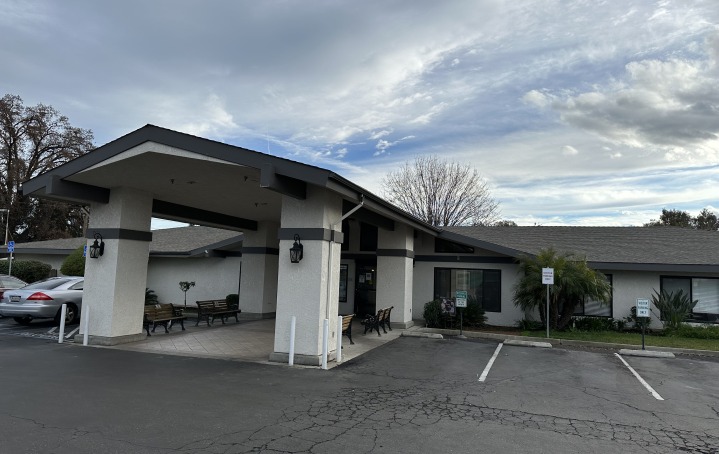
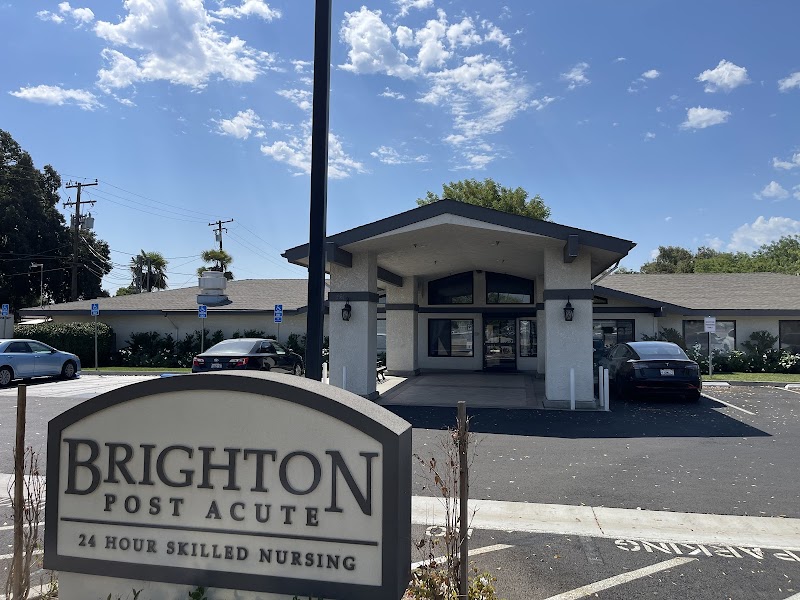

BRIGHTON POST ACUTE

361 E. GRANGEVILLE BLVD, HANFORD, CA 93230 (559) 582-9221
For profit - Partnership 133 Beds WEST HARBOR HEALTHCARE Data: November 2025
Trust Grade
48/100
#538 of 1155 in CA
Last Inspection: August 2024

Within standard 12-15 month inspection cycle. Federal law requires annual inspections.

Overview

Brighton Post Acute has received a Trust Grade of D, indicating below-average performance with some concerning issues. They rank #538 out of 1,155 nursing homes in California, placing them in the top half of the state, and #2 out of 3 in Kings County, meaning there is only one facility nearby that performs better. The facility is improving, with the number of issues decreasing from 5 in 2024 to 2 in 2025. However, staffing is a significant weakness, with a low rating of 1 out of 5 stars and a high turnover rate of 53%, which is concerning compared to the California average of 38%. Additionally, while the fines of $17,193 are average, the facility has less RN coverage than 97% of state facilities, meaning residents might not receive the level of supervision and care they need. Specific incidents include a resident experiencing multiple falls due to inadequate supervision, leading to a hip fracture, and another resident choking without immediate emergency care being provided by the nursing staff. While the health inspection and quality measures are rated higher, these serious deficiencies present significant weaknesses that families should consider.

Trust Score
D
48/100
In California
#538/1155
Top 46%
Safety Record
Moderate
Needs review
Inspections
Getting Better
5 → 2 violations
Staff Stability
⚠ Watch
53% turnover. Above average. Higher turnover means staff may not know residents' routines.
Penalties
✓ Good
$17,193 in fines. Lower than most California facilities. Relatively clean record.
Skilled Nurses
⚠ Watch
Each resident gets only 12 minutes of Registered Nurse (RN) attention daily — below average for California. Fewer RN minutes means fewer trained eyes watching for problems.
Violations
⚠ Watch
29 deficiencies on record. Higher than average. Multiple issues found across inspections.
★★★☆☆
3.0
Overall Rating
★☆☆☆☆
1.0
Staff Levels
★★★★☆
4.0
Care Quality
★★★★☆
4.0
Inspection Score
Stable
2024: 5 issues
2025: 2 issues

The Good

  • 4-Star Quality Measures · Strong clinical quality outcomes
  • Full Sprinkler Coverage · Fire safety systems throughout facility
  • No fines on record

Facility shows strength in quality measures, fire safety.

The Bad

3-Star Overall Rating

Near California average (3.1)

Meets federal standards, typical of most facilities

Staff Turnover: 53%

Near California avg (46%)

Higher turnover may affect care consistency

Federal Fines: $17,193

Below median ($33,413)

Minor penalties assessed

Chain: WEST HARBOR HEALTHCARE

Part of a multi-facility chain

Ask about local staffing decisions and management

The Ugly 29 deficiencies on record

2 actual harm
Apr 2025 2 deficiencies 1 Harm
SERIOUS (G) 📢 Someone Reported This

A family member, employee, or ombudsman was alarmed enough to file a formal complaint

Actual Harm - a resident was hurt due to facility failures

Accident Prevention (Tag F0689)

A resident was harmed · This affected 1 resident

**NOTE- TERMS IN BRACKETS HAVE BEEN EDITED TO PROTECT CONFIDENTIALITY** Based on observation, interview and record review, the facility failed to ensure residents received adequate supervision to prev...

Read full inspector narrative →
**NOTE- TERMS IN BRACKETS HAVE BEEN EDITED TO PROTECT CONFIDENTIALITY** Based on observation, interview and record review, the facility failed to ensure residents received adequate supervision to prevent falls for one of three sampled residents (Resident 1) when Resident 1 was assessed to be at risk for falls on 1/22/25, had impulsive behavior and staff were aware of Resident 1 not using the call light to request assistance to walk in his room and effective individualized interventions to prevent falls were not implemented. Resident 1 experienced an unwitnessed fall on 3/15/25, fall on 3/16/25 and a fall on 3/17/25. These failures resulted in Resident 1 ' s avoidable fall on 3/16/25 sustaining a fracture of the left greater trochanter (a type of hip fracture [broken bone] where the femur [upper thigh bone] meets the pelvis) causing pain and decreased mobility which required transportation to the emergency department (ED) for assessment and treatment of his injury and was readmitted to the facility. Resident 1 had a third fall on 3/17/25 which placed the resident at risk for further serious injury. Findings: During a concurrent observation and interview on 4/1/25 at 9:30 a.m., with Resident 1, Resident 1 was lying in bed, dressed and groomed. There was a wheelchair and four-wheeled walker observed near his bed. Resident 1 complained of pain to bilateral hips and stated he had fallen, and his left hip was swollen and painful. Resident 1 stated he fell about a week ago (on 3/15/25) when he rushed to the bathroom without his walker or wheelchair and at the same time, the resident from the adjoining room pushed the bathroom door open hitting him in the head causing him to fall on the ground. Resident 1 stated he was hit on his forehead, back of his head on the left side and landed on his left hip. Resident 1 stated, It hurt really bad. Resident 1 stated he had a portable X-ray done at the facility which did not show any fractures but was sent to the emergency room the next day where he was told he had a hip fracture. Resident 1 stated the fracture was not severe enough to require surgery, so he was sent from the ED back to the facility. Resident 1 stated he was independent to go to the bathroom and back, so he did not use his call light or walker. During a review of Resident 1 ' s CT scan (CT-specialized Xray machine to create detailed images of the body) results from the acute care hospital (ACH), dated 3/17/25, the CT scan results indicated, . Acute comminuted fracture [type of fracture where the bone breaks into three or more pieces] of the greater trochanter of the left femur with minimum displacement [broken ends of bone are relatively aligned] . During a review of Resident 1 ' s admission Record (AR), undated, the AR indicated Resident 1 was admitted to the facility on [DATE] with diagnoses that included left sided hemiplegia (weakness or paralysis of the arm, leg, and trunk on the same side of the body) and hemiparesis (weakness on one side of the body) following cerebral infarction (stroke-blood flow to the brain is disrupted), palliative care (specialized medical care focused on relieving symptoms of a serious illness), squamous cell carcinoma of skin (type of skin cancer), Type 2 diabetes mellitus (disorder characterized by difficulty in blood sugar control and poor wound healing), transient cerebral ischemic attack (temporary interruption of blood flow to the brain) and spinal stenosis (condition where the spinal canal becomes narrowed). During a review of Residents 1 ' s Minimum Data Set (MDS- a resident assessment tool used to identify resident cognitive and physical function) assessment dated [DATE], indicated Resident 1 ' s Brief Interview of Mental status assessment (BIMS - assessment of cognitive status for memory and judgement) scored 11 of 15 (a score of 13-15 indicates cognitively intact, 08-12 indicates moderately impaired, and 00-07 indicates severe impairment). The BIMS assessment indicated Resident 11 ' s cognition was moderately impaired. During an interview on 4/1/25 at 9:41 a.m. with Certified Nursing Assistant (CNA) 1, CNA 1 stated Resident 1 would not use his call light to call for help. CNA 1 stated Resident 1 would take himself to the bathroom without assistance. During an interview on 4/1/25 at 10:12 a.m. with CNA 2, CNA 2 stated Resident 1 would get out of bed and walk to the bathroom independently. CNA 2 stated Resident 1 used the call light when he needed pain medication but otherwise did not call for help. CNA 2 stated Resident 2 would hold onto items to walk to the bathroom such as the bedside table, footboard and walls to get to the bathroom. CNA 2 stated Resident 1 needed to have supervision and use his walker to ambulate safely. During a review of Resident 1 ' s fall care plan, dated 3/16/25, the care plan indicated, . unwitnessed fall on 3/15/25 and 3/16/25 . be free of complications r/t [related to] unwitnessed fall . Assess pain . Educate [Resident 1] to utilize call light and to wait for assistance . Medication adjustment/review . Notify MD [Medical Doctor] for any significant changes . X-ray to hip bilateral with pelvis . During a review of Resident 1 ' s fall care plan dated 3/17/25, the care plan indicated, . witnessed fall 3/17/25, no injury . will not have any delayed trauma . Monitor for any s/s [signs/symptoms] delayed trauma . Q [every] shift monitoring . Refer to [Name of Behavioral Health] . During a concurrent interview and record review on 4/1/25 at 10:29 a.m. with Licensed Vocational Nurse (LVN) 1, LVN 1 stated he was usually assigned to Resident 1. LVN 1 stated Resident 1 tended to get up to the bathroom and back to bed without supervision. Resident 1 ' s progress notes were reviewed, LVN 1 stated Resident 1 fell on 3/15/25, 3/16/25 and 3/17/25. Resident 1 ' s SBAR [situation, background, assessment, recommendation-a communication tool used by healthcare workers when there is a change of condition among the residents]-Change in Condition, dated 3/15/25, was reviewed. The SBAR indicated, . at 1840 (6:40 p.m.) I heard a commotion from resident ' s room. I entered to find resident lying on his back in the space between him and his roommates bed . Assessment . abras [abrasion-superficial scrape of the skin] on to L [left] hip and ST [skin tear] to L shin . resident stated he was trying to pull open the bathroom door and the resident from adjoining room, who was in the bathroom at that time, pushed the door from the inside striking the resident in the head which caused him to fall and land on back . LVN 1 stated two rooms shared the same bathroom. Resident 1 ' s SBAR-Change in Condition, dated 3/16/25, the SBAR indicated, . nurse heard resident calling for help in the room. Found resident lying in supine [lying face upward] position in between the bed spaces. He said he was getting pants in closet and fell backwards and blacked out for a bit before he became conscious again . Resident had a fall the day before . left hip pain with skin tear to left shin . contusion [bruise] and raised bump on left back of head . left hip in excessive pain . Called hospice [specialized care focused on end of life treatment] at 2120 [9:20 p.m.] to update on resident ' s situation and to tell them resident wants to go to the hospital . Transported on gurney [wheeled stretcher] . Resident 1 ' s SBAR-Change in Condition, dated 3/17/25, the SBAR indicated, . Resident in hallway standing writer immediately saw resident and told him why are you standing up? Resident turned around and fell on floor with arms out stretched . Resident continues to use bathroom unattended despite constant verbal reminders by staff that he ' s [sic] non wt [weight] bearing . no new injuries . I just want to prove to myself I can still do it [walk] . LVN 1 stated Resident 1 would walk from his bed to the bathroom and back by himself. LVN 1 stated Resident 1 would not use the call light and interventions to remind him or educate him to use it were not effective. Resident 1 ' s fall risk care plans were reviewed. LVN 1 stated the interventions were basic and would apply to most residents. LVN 1 stated the care plans did not address Resident 1 ' s specific needs, such as his noncompliance with the call light. LVN 1 stated Resident 1 needed more frequent supervision and to be put on a toileting schedule because he frequently ambulated to the bathroom by himself. During a review of Resident 1 ' s IDT [interdisciplinary team-involves team members from different disciplines working collaboratively, with a common purpose, to set goals, make decisions and share resources and responsibilities for the best interest of the resident] Review, dated 3/17/25, the IDT note indicated, . IDT meeting due to s/p [status post] 2 unwitnessed falls 03/15 and 03/16 [2025] . Fall #1 03/15/25 . Observation/Evaluation (LVN) . heard a commotion from resident ' s room . find resident lying on his back in the space between him and his roommate ' s bed . Resident was noted to have a slightly discolored area to the right side of his forehead as well as an abrasion to L hip and ST to L shin . Fall #2 03/16/25 . heard resident calling for help in the room . Found resident lying in supine position in between the bed spaces . Bump on forehead and left hip pain with skin tear to left shin . Left hip in excessive pain . Resident ' s appeared more confused than baseline, story changed multiple times . Root Cause . 1st fall, Resident attempted to ambulate independently to the bathroom, he grabbed knob to bathroom door and when he did, another resident was in the bathroom and pushed the door outward toward resident, causing the door to make contact . which caused him to fall to floor . 2nd fall, Resident attempted to ambulate in his room, went to the closet to get his pants and pulled on pants from hanger and stated, I was blacking out and I fell to the floor . Resident does not use call light or ask for assistance . even after education provided to use call light. Resident has a walker at bedside and refuses to use it with transfers or ambulation [act of walking] . Resident had an X-ray in facility on 03/16 after 1st fall . which resulted NEGATIVE . Resident was sent out to [name of acute Emergency Department] per resident ' s request and authorization from [Name] Hospice and a CT scan was ordered and resulted: Acute Comminuted fracture of the greater trochanter of the left femur with minimum displacement . During a review of Resident 1 ' s IDT Review, dated 3/18/25, the IDT note indicated, . Resident brought to IDT meeting due to s/p witnessed fall 03/17/25 . Frequent falls . Resident continues to use bathroom unattended despite constant verbal reminders by staff that he ' s non wt [weight] bearing . Resident interviewed: I just want to prove to myself that I can still do it . ROOT CAUSE: Resident is impulsive, resistant to redirection and does not follow any orders provided. After education provided to resident to not bear weight [act of supporting the weight of something] on left lower extremity [leg], resident got up from his bed and ambulated through his room to the door, causing him to fall to floor . Continue current POC [plan of care]. Refer to [name] Behavioral Health Specialist provided by [name] Hospice. Care Plan reviewed and updated . During a review of Resident 1 ' s Risk For Falls, dated 1/22/25, the fall risk indicated Resident 1 ' s score was 10 which placed him in the High fall risk category. During a concurrent interview and record review on 4/1/25 at 11:25 a.m. with the MDS Coordinator (MDSC), Resident 1 ' s MDS Assessment, Section GG-Functional Abilities, dated 2/11/25, was reviewed. The MDS Section GG indicated, .C. lying to sitting on side of bed . code 04 [Supervision or touching assistance (helper provides verbal cues and/or touching/steadying and/or contact guard assistance)] . D. sit to stand . code 04 . F. Toilet transfer . code 04 . Walk 10 feet . code 04 . The MDSC stated Resident 1 should have a CNA standing there watching him, ready to assist as needed when ambulating, including to the bathroom and back to bed. The MDSC stated Resident 1 was known to be a high fall risk, non-compliant and did not use his call light to call for assistance. Resident 1 ' s fall risk care plan dated 3/14/24, the care plan indicated, . resident is at risk for falls r/t [related to] Disease process: Hemiplegia and hemiparesis . resident will be free of falls . Anticipate and meet The resident ' s needs . Be sure The resident ' s call light is within reach and encourage the resident to use it . The resident needs prompt response to all requests for assistance . appropriate footwear . Medication adjustment . Medication Review . Non-Skid tape . FWW [front wheel walker] . Behavioral Health Specialist . safe environment . floor free from spills . Resident 1 ' s care plans were reviewed, the MDSC stated Resident 1 was known to be non-compliant and interventions of encourage call light, call light in reach, educate on risks versus benefits were not effective interventions. The MDSC stated the care plan interventions did not address the root cause of Resident 1 ' s falls which was poor safety awareness, impulsiveness and noncompliance with call light and assistive devices. The MDSC stated Resident 1 ' s care plans were not individualized for Resident 1 ' s needs. During a concurrent interview and record review on 4/1/25 at 12:13 p.m. with the Assistant Director of Nursing (ADON), the ADON stated Resident 1 had a fall on 3/15/25 when the adjoining neighbor opened the bathroom door as he tried to enter, causing him to hit his head and fall but the resident was not sent to the ED. The ADON stated he had an X-ray of his hip done at the facility with negative results. The ADON stated Resident 1 had an unwitnessed fall on 3/16/25 and was found on the floor by one of the charge nurses in between his bed and his neighbor ' s bed. The ADON stated he complained of pain and the nurse was given the authorization from hospice to send him to the ED. The ADON stated a CT scan was performed in the ED and Resident 1 had a comminuted fracture to his left trochanter and he was sent back to the facility on the morning of 3/17/25. The ADON stated Resident 1 had another fall on 3/17/25 after he was sent back to the facility with orders to be non-weight bearing on his left leg. The ADON stated the resident had ambulated to the doorway behind his wheelchair, turned around and fell on the floor in front of the charge nurse. The ADON stated Resident 1 rarely used his call light to ask for assistance to the bathroom and back. The ADON stated Resident 1 ' s fall risk assessment indicated he was at high risk for falls. Resident 1 ' s care plans were reviewed, the ADON stated the care plan was not updated after the falls on 3/15/25 and 3/16/25 because it happened on the weekend. The ADON stated the IDT met on 3/17/25 and the care plans were updated. The ADON stated care plans were a plan of care individualized to each resident to take care of their own specific needs. The ADON reviewed Resident 1 ' s fall care plan interventions and stated they were not specific and individualized to him and could apply to any resident. The ADON stated Resident 1 continued to fall despite the facility ' s routine two-hour checks for all residents. The ADON stated Resident 1 needed more frequent supervision to prevent his falls. The ADON stated Resident 1 ' s care plan did not address the amount of supervision Resident 1 required for safety. Resident 1 ' s MDS Section GG, was reviewed. The ADON stated the MDS indicated Resident 1 required supervision or touch assistance for toileting and ambulating short distances which meant somebody needed to be with him to go to the bathroom. The ADON stated Resident 1 should a gait belt (a strap worn around a person ' s waist, used by caregivers to assist with walking) on and a walker with him for safety. The ADON stated Resident 1 ' s fall care plans did not address caregivers helping him to the bathroom or use of a gait belt. During an interview and record review on 4/1/25 at 1:21 p.m. with the Director of Nursing (DON), the DON stated she was concerned because Resident 1 had three falls within three days. The DON stated she had discussed Resident 1 ' s falls with his hospice agency because they were also responsible to help prevent falls. Resident 1 ' s IDT notes were reviewed. The DON stated the root cause of Resident 1 ' s falls were his impulsive behaviors, poor safety awareness and non-compliance. The DON reviewed Resident 1 ' s fall care plan and stated the interventions to remind him to use the call light and education were not effective in preventing his falls because of his non-compliance. The DON stated Resident 1 ' s care plan interventions did not address the level of supervision and assistance needed for ADLs (activities of daily living-fundamental self-care tasks to maintain independence and well-being such as bathing, dressing, toileting and mobility) and to prevent falls. The DON stated, we could not do anything to prevent his falling. During a telephone interview on 4/2/25 at 7:51 AM with LVN 2, LVN 2 stated she had witnessed Resident 1 ' s fall on 3/17/25. LVN 2 stated she was standing across the hallway from his room at the medication cart and when she turned around, the resident was standing in his doorway without staff assistance. LVN 2 stated she talked to him, and he turned around quickly put his hands in front of him and fell onto the ground. LVN 2 stated she assessed the resident and put him into his wheelchair. LVN 2 stated she had discussed Resident 1 ' s non-weight bearing status with him earlier in the day and he told her he wanted to show himself that he could still get up and walk. LVN 2 stated before Resident 1 broke his hip, he would get up to the bathroom by himself and would not use a walker, steadying himself by grabbing on to furniture or the wall. LVN 2 stated Resident 1 was at high risk for falls because he was stubborn, non-compliant, impulsive and had poor safety awareness. During a review of the facility ' s policy and procedure (P&P) titled Falls and Fall Risk, Managing, dated 3/2018, the P&P indicated, . Based on previous evaluations and current data, the staff will identify interventions related to the resident ' s specific risks and causes to try to prevent the resident from falling and to try to minimize complications from falling . Fall Risk Factors . pain . functional impairments . balance and gait disorders . The staff . will implement a resident-centered fall prevention plan to reduce the specific risk factor(s) of falls for each resident at risk or with a history of falls . If falling recurs despite initial interventions, staff will implement additional or different interventions . staff will try various interventions, based on assessment of the nature or category of falling, until falling is reduced or stop . staff will identify and implement relevant interventions . to try to minimize serious consequences of falling . staff will monitor and document each resident ' s response to interventions intended to reduce falling . If the resident continues to fall, staff will re-evaluate the situation and whether it is appropriate to reconsider possible causes . Based on observation, interview and record review, the facility failed to ensure residents received adequate supervision to prevent falls for one of three sampled residents (Resident 1) when Resident 1 was assessed to be at risk for falls on 1/22/25, had impulsive behavior and staff were aware of Resident 1 not using the call light to request assistance to walk in his room and effective individualized interventions to prevent falls were not implemented. Resident 1 experienced an unwitnessed fall on 3/15/25, fall on 3/16/25 and a fall on 3/17/25. These failures resulted in Resident 1's avoidable fall on 3/16/25 sustaining a fracture of the left greater trochanter (a type of hip fracture [broken bone] where the femur [upper thigh bone] meets the pelvis) causing pain and decreased mobility which required transportation to the emergency department (ED) for assessment and treatment of his injury and was readmitted to the facility. Resident 1 had a third fall on 3/17/25 which placed the resident at risk for further serious injury. Findings: During a concurrent observation and interview on 4/1/25 at 9:30 a.m., with Resident 1, Resident 1 was lying in bed, dressed and groomed. There was a wheelchair and four-wheeled walker observed near his bed. Resident 1 complained of pain to bilateral hips and stated he had fallen, and his left hip was swollen and painful. Resident 1 stated he fell about a week ago (on 3/15/25) when he rushed to the bathroom without his walker or wheelchair and at the same time, the resident from the adjoining room pushed the bathroom door open hitting him in the head causing him to fall on the ground. Resident 1 stated he was hit on his forehead, back of his head on the left side and landed on his left hip. Resident 1 stated, It hurt really bad. Resident 1 stated he had a portable X-ray done at the facility which did not show any fractures but was sent to the emergency room the next day where he was told he had a hip fracture. Resident 1 stated the fracture was not severe enough to require surgery, so he was sent from the ED back to the facility. Resident 1 stated he was independent to go to the bathroom and back, so he did not use his call light or walker. During a review of Resident 1's CT scan (CT-specialized Xray machine to create detailed images of the body) results from the acute care hospital (ACH), dated 3/17/25, the CT scan results indicated, . Acute comminuted fracture [type of fracture where the bone breaks into three or more pieces] of the greater trochanter of the left femur with minimum displacement [broken ends of bone are relatively aligned] . During a review of Resident 1's admission Record (AR), undated, the AR indicated Resident 1 was admitted to the facility on [DATE] with diagnoses that included left sided hemiplegia (weakness or paralysis of the arm, leg, and trunk on the same side of the body) and hemiparesis (weakness on one side of the body) following cerebral infarction (stroke-blood flow to the brain is disrupted), palliative care (specialized medical care focused on relieving symptoms of a serious illness), squamous cell carcinoma of skin (type of skin cancer), Type 2 diabetes mellitus (disorder characterized by difficulty in blood sugar control and poor wound healing), transient cerebral ischemic attack (temporary interruption of blood flow to the brain) and spinal stenosis (condition where the spinal canal becomes narrowed). During a review of Residents 1's Minimum Data Set (MDS- a resident assessment tool used to identify resident cognitive and physical function) assessment dated [DATE], indicated Resident 1's Brief Interview of Mental status assessment (BIMS – assessment of cognitive status for memory and judgement) scored 11 of 15 (a score of 13-15 indicates cognitively intact, 08-12 indicates moderately impaired, and 00-07 indicates severe impairment). The BIMS assessment indicated Resident 11's cognition was moderately impaired. During an interview on 4/1/25 at 9:41 a.m. with Certified Nursing Assistant (CNA) 1, CNA 1 stated Resident 1 would not use his call light to call for help. CNA 1 stated Resident 1 would take himself to the bathroom without assistance. During an interview on 4/1/25 at 10:12 a.m. with CNA 2, CNA 2 stated Resident 1 would get out of bed and walk to the bathroom independently. CNA 2 stated Resident 1 used the call light when he needed pain medication but otherwise did not call for help. CNA 2 stated Resident 2 would hold onto items to walk to the bathroom such as the bedside table, footboard and walls to get to the bathroom. CNA 2 stated Resident 1 needed to have supervision and use his walker to ambulate safely. During a review of Resident 1's fall care plan, dated 3/16/25, the care plan indicated, . unwitnessed fall on 3/15/25 and 3/16/25 . be free of complications r/t [related to] unwitnessed fall . Assess pain . Educate [Resident 1] to utilize call light and to wait for assistance . Medication adjustment/review . Notify MD [Medical Doctor] for any significant changes . X-ray to hip bilateral with pelvis . During a review of Resident 1's fall care plan dated 3/17/25, the care plan indicated, . witnessed fall 3/17/25, no injury . will not have any delayed trauma . Monitor for any s/s [signs/symptoms] delayed trauma . Q [every] shift monitoring . Refer to [Name of Behavioral Health] . During a concurrent interview and record review on 4/1/25 at 10:29 a.m. with Licensed Vocational Nurse (LVN) 1, LVN 1 stated he was usually assigned to Resident 1. LVN 1 stated Resident 1 tended to get up to the bathroom and back to bed without supervision. Resident 1's progress notes were reviewed, LVN 1 stated Resident 1 fell on 3/15/25, 3/16/25 and 3/17/25. Resident 1's SBAR [situation, background, assessment, recommendation-a communication tool used by healthcare workers when there is a change of condition among the residents]-Change in Condition, dated 3/15/25, was reviewed. The SBAR indicated, . at 1840 (6:40 p.m.) I heard a commotion from resident's room. I entered to find resident lying on his back in the space between him and his roommates bed . Assessment . abras [abrasion-superficial scrape of the skin] on to L [left] hip and ST [skin tear] to L shin . resident stated he was trying to pull open the bathroom door and the resident from adjoining room, who was in the bathroom at that time, pushed the door from the inside striking the resident in the head which caused him to fall and land on back . LVN 1 stated two rooms shared the same bathroom. Resident 1's SBAR-Change in Condition, dated 3/16/25, the SBAR indicated, . nurse heard resident calling for help in the room. Found resident lying in supine [lying face upward] position in between the bed spaces. He said he was getting pants in closet and fell backwards and blacked out for a bit before he became conscious again . Resident had a fall the day before . left hip pain with skin tear to left shin . contusion [bruise] and raised bump on left back of head . left hip in excessive pain . Called hospice [specialized care focused on end of life treatment] at 2120 [9:20 p.m.] to update on resident's situation and to tell them resident wants to go to the hospital . Transported on gurney [wheeled stretcher] . Resident 1's SBAR-Change in Condition, dated 3/17/25, the SBAR indicated, . Resident in hallway standing writer immediately saw resident and told him why are you standing up? Resident turned around and fell on floor with arms out stretched . Resident continues to use bathroom unattended despite constant verbal reminders by staff that he's [sic] non wt [weight] bearing . no new injuries . I just want to prove to myself I can still do it [walk] . LVN 1 stated Resident 1 would walk from his bed to the bathroom and back by himself. LVN 1 stated Resident 1 would not use the call light and interventions to remind him or educate him to use it were not effective. Resident 1's fall risk care plans were reviewed. LVN 1 stated the interventions were basic and would apply to most residents. LVN 1 stated the care plans did not address Resident 1's specific needs, such as his noncompliance with the call light. LVN 1 stated Resident 1 needed more frequent supervision and to be put on a toileting schedule because he frequently ambulated to the bathroom by himself. During a review of Resident 1's IDT [interdisciplinary team-involves team members from different disciplines working collaboratively, with a common purpose, to set goals, make decisions and share resources and responsibilities for the best interest of the resident] Review, dated 3/17/25, the IDT note indicated, . IDT meeting due to s/p [status post] 2 unwitnessed falls 03/15 and 03/16 [2025] . Fall #1 03/15/25 . Observation/Evaluation (LVN) . heard a commotion from resident's room . find resident lying on his back in the space between him and his roommate's bed . Resident was noted to have a slightly discolored area to the right side of his forehead as well as an abrasion to L hip and ST to L shin . Fall #2 03/16/25 . heard resident calling for help in the room . Found resident lying in supine position in between the bed spaces . Bump on forehead and left hip pain with skin tear to left shin . Left hip in excessive pain . Resident's appeared more confused than baseline, story changed multiple times . Root Cause . 1st fall, Resident attempted to ambulate independently to the bathroom, he grabbed knob to bathroom door and when he did, another resident was in the bathroom and pushed the door outward toward resident, causing the door to make contact . which caused him to fall to floor . 2nd fall, Resident attempted to ambulate in his room, went to the closet to get his pants and pulled on pants from hanger and stated, I was blacking out and I fell to the floor . Resident does not use call light or ask for assistance . even after education provided to use call light. Resident has a walker at bedside and refuses to use it with transfers or ambulation [act of walking] . Resident had an X-ray in facility on 03/16 after 1st fall . which resulted NEGATIVE . Resident was sent out to [name of acute Emergency Department] per resident's request and authorization from [Name] Hospice and a CT scan was ordered and resulted: Acute Comminuted fracture of the greater trochanter of the left femur with minimum displacement . During a review of Resident 1's IDT Review, dated 3/18/25, the IDT note indicated, . Resident brought to IDT meeting due to s/p witnessed fall 03/17/25 . Frequent falls . Resident continues to use bathroom unattended despite constant verbal reminders by staff that he's non wt [weight] bearing . Resident interviewed: I just want to prove to myself that I can still do it . ROOT CAUSE: Resident is impulsive, resistant to redirection and does not follow any orders provided. After education provided to resident to not bear weight [act of supporting the weight of something] on left lower extremity [leg], resident got up from his bed and ambulated through his room to the door, causing him to fall to floor . Continue current POC [plan of care]. Refer to [name] Behavioral Health Specialist provided by [name] Hospice. Care Plan reviewed and updated . During a review of Resident 1's Risk For Falls, dated 1/22/25, the fall risk indicated Resident 1's score was 10 which placed him in the High fall risk category. During a concurrent interview and record review on 4/1/25 at 11:25 a.m. with the MDS Coordinator (MDSC), Resident 1's MDS Assessment, Section GG-Functional Abilities, dated 2/11/25, was reviewed. The MDS Section GG indicated, .C. lying to sitting on side of bed . code 04 [Supervision or touching assistance (helper provides verbal cues and/or touching/steadying and/or contact guard assistance)] . D. sit to stand . code 04 . F. Toilet transfer . code 04 . Walk 10 feet . code 04 . The MDSC stated Resident 1 should have a CNA standing there watching him, ready to assist as needed when ambulating, including to the bathroom and back to bed. The MDSC stated Resident 1 was known to be a high fall risk, non-compliant and did not use his call light to call for assistance. Resident 1's fall risk care plan dated 3/14/24, the care plan indicated, . resident is at [TRUNCATED]
CONCERN (D) 📢 Someone Reported This

A family member, employee, or ombudsman was alarmed enough to file a formal complaint

Potential for Harm - no one hurt, but risky conditions existed

Comprehensive Care Plan (Tag F0656)

Could have caused harm · This affected 1 resident

**NOTE- TERMS IN BRACKETS HAVE BEEN EDITED TO PROTECT CONFIDENTIALITY** Based on observation, interview, and record review, the facility failed to ensure a comprehensive, person-centered care plan was...

Read full inspector narrative →
**NOTE- TERMS IN BRACKETS HAVE BEEN EDITED TO PROTECT CONFIDENTIALITY** Based on observation, interview, and record review, the facility failed to ensure a comprehensive, person-centered care plan was developed and implemented to meet the identified needs for one of three sampled residents (Resident 1) when Resident 1 was assessed as being a high fall risk with poor safety awareness and a known behavior of not calling staff for assistance and the facility did not develop and implement effective care plan interventions including assistance and supervision to prevent falls. This failure resulted in Resident 1 ' s unwitnessed falls on 3/15/25 and 3/16/25 sustaining a fracture of the left greater trochanter (a type of hip fracture [broken bone] where the femur [upper thigh bone] meets the pelvis) causing pain and decreased mobility which required transportation to the emergency department (ED) for assessment and treatment of his injury. Resident 1 had a third fall on 3/17/25 which placed the resident at risk for further serious injury. (Cross reference F689) Findings: During a review of Resident 1 ' s CT scan (CT-medical imaging that uses X-rays [uses a type of radiation to create images inside the body] and computers to create detailed images of the body) results from the acute care hospital (ACH), dated 3/17/25, the CT results indicated, . Acute comminuted fracture [type of fracture where the bone breaks into three or more pieces] of the greater trochanter of the left femur with minimum displacement [broken ends of bone are relatively aligned] . During a review of Resident 1 ' s admission Record (AR), undated, the AR indicated Resident 1 was admitted to the facility on [DATE] with diagnoses that included hemiplegia (weakness or paralysis of the arm, leg, and trunk on the same side of the body) and hemiparesis (weakness on one side of the body) following cerebral infarction (stroke-blood flow to the brain is disrupted), palliative care (specialized medical care focused on relieving symptoms of a serious illness), squamous cell carcinoma of skin (type of skin cancer), Type 2 diabetes mellitus (disorder characterized by difficulty in blood sugar control and poor wound healing), transient cerebral ischemic attack (temporary interruption of blood flow to the brain) and spinal stenosis (condition where the spinal canal becomes narrowed). During a review of Residents 1 ' s Minimum Data Set (MDS- a resident assessment tool used to identify resident cognitive and physical function) assessment dated [DATE], indicated Resident 1 ' s Brief Interview of Mental status assessment (BIMS - assessment of cognitive status for memory and judgement) scored 11 of 15 (a score of 13-15 indicates cognitively intact, 08-12 indicates moderately impaired, and 00-07 indicates severe impairment). The BIMS assessment indicated Resident 11 ' s cognition was moderately impaired. During a concurrent observation and interview on 4/1/25 at 9:30 a.m., with Resident 1, Resident 1 was lying in bed, dressed and groomed. There was a wheelchair and four-wheeled walker observed near his bed. Resident 1 complained of pain to bilateral hips and stated he had fallen, and his left hip was swollen and painful. Resident 1 stated he fell about a week ago (on 3/15/25) when he rushed to the bathroom without an assistive device and the resident from the adjoining room pushed the bathroom door open hitting him in the head and causing him to fall on the ground. Resident 1 stated he was hit on his forehead, back of his head on the left side and landed on his left hip. Resident 1 stated, It hurt really bad. Resident 1 stated he had a portable X-ray done at the facility which did not show any fractures but was sent to the emergency room the next day where he was told he had a hip fracture. Resident 1 stated the fracture was not severe enough to require surgery, so he was sent from the ED back to the facility. Resident 1 stated he was independent to go to the bathroom and back, so he did not use his call light or walker. During an interview on 4/1/25 at 9:41 a.m. with Certified Nursing Assistant (CNA) 1, CNA 1 stated Resident 1 would not use his call light to call for help. CNA 1 stated Resident 1 would take himself to the bathroom without assistance. During an interview on 4/1/25 at 10:12 a.m. with CNA 2, CNA 2 stated Resident 1 would get out of bed and walk to the bathroom independently. CNA 2 stated Resident 1 used the call light when he needed pain medication but otherwise did not call for help. CNA 2 stated Resident 2 would hold onto items to walk to the bathroom such as the bedside table, footboard and walls to get to the bathroom. CNA 2 stated Resident 1 needed to have supervision and use his walker to ambulate safely. During a review of Resident 1 ' s fall care plan, dated 3/16/25, the care plan indicated, . unwitnessed fall on 3/15/25 and 3/16/25 . be free of complications r/t [related to] unwitnessed fall . Assess pain . Educate [Resident 1] to utilize call light and to wait for assistance . Medication adjustment/review . Notify MD for any significant changes . X-ray to hip bilateral with pelvis . During a review of Resident 1 ' s fall care plan dated 3/17/25, the care plan indicated, . witnessed fall 3/17/25, no injury . will not have any delayed trauma . Monitor for any s/s [signs/symptoms] delayed trauma . Q [every] shift monitoring . Refer to [Name of Behavioral Health] . During a review of Resident 1 ' s IDT [interdisciplinary team-involves team members from different disciplines working collaboratively, with a common purpose, to set goals, make decisions and share resources and responsibilities for the best interest of the resident] Review, dated 3/17/25, the IDT note indicated, . IDT meeting due to s/p [status post] 2 unwitnessed falls 03/15 and 03/16 [2025] . Fall #1 03/15/25 . Observation/Evaluation (LVN) . heard a commotion from resident ' s room . find resident lying on his back in the space between him and his roommate ' s bed . Resident was noted to have a slightly discolored area to the right side of his forehead as well as an abrasion to L hip and ST to L shin . Fall #2 03/16/25 . heard resident calling for help in the room . Found resident lying in supine position in between the bed spaces . Bump on forehead and left hip pain with skin tear to left shin . Left hip in excessive pain . Resident ' s appeared more confused than baseline, story changed multiple times . Root Cause . 1stfall, Resident attempted to ambulate independently to the bathroom, he grabbed knob to bathroom door and when he did, another resident was in the bathroom and pushed the door outward toward resident, causing the door to make contact . which caused him to fall to floor . 2nd fall, Resident attempted to ambulate in his room, went to the closet to get his pains and pulled on pants from hanger and stated, I was blacking out and I fell to the floor . Resident does not use call light or ask for assistance . even after education provided to use call light. Resident has a walker at bedside and refuses to use it with transfers or ambulation . Resident had an X-ray in facility on 03/16 after 1stfall . which resulted NEGATIVE . Resident was sent out to [Name of General Acute Care Hospital] . per resident ' s request and authorization from [Name] Hospice and a CT scan was ordered and resulted: Acute Comminuted fracture of the greater trochanter of the left femur with minimum displacement . During a review of Resident 1 ' s IDT Review, dated 3/18/25, the IDT note indicated, . Resident brought to IDT meeting due to s/p witnessed fall 03/17/25 . Frequent falls . Resident continues to use bathroom unattended despite constant verbal reminders by staff that hes non wt [weight] bearing . Resident interviewed: I just want to prove to myself that I can still do it . ROOT CAUSE: Resident is impulsive, resistant to redirection and does not follow any orders provided. After education provided to resident to not bear weight [act of supporting the weight of something] on left lower extremity [leg], resident got up from his bed and ambulated through his room to the door, causing him to fall to floor . Continue current POC [plan of care]. Refer to [name] Behavioral Health Specialist provided by [name] Hospice. Care Plan reviewed and updated . During a concurrent interview and record review on 4/1/25 at 10:29 a.m. with Licensed Vocational Nurse (LVN) 1, LVN 1 stated he was assigned to Resident 1. LVN 1 stated Resident 1 tended to get up to bathroom and back to bed without supervision. Resident 1 ' s progress notes were reviewed, LVN 1 stated Resident 1 fell on 3/15/25, 3/16/25 and 3/17/25. Resident 1 ' s fall risk care plans were reviewed. LVN 1 stated Resident 1 would not use the call light and interventions to remind him or educate him to use it were not effective. LVN 1 stated the interventions were basic and would apply to most residents. LVN 1 stated the care plans did not address Resident 1 ' s specific needs, such as his noncompliance with the call light. LVN 1 stated Resident 1 needed more frequent supervision and to be put on a toileting schedule because he frequently ambulated to the bathroom by himself. During a concurrent interview and record review on 4/1/25 at 11:25 a.m. with the MDS Coordinator (MDSC), Resident 1 ' s care plans were reviewed, the MDSC stated Resident 1 was known to be non-compliant and interventions of encourage call light, call light in reach, educate on risks versus benefits were not effective interventions. The MDSC stated the care plan interventions did not address the root cause of Resident 1 ' s falls which was poor safety awareness, impulsiveness and noncompliance with call light and assistive devices. The MDSC stated Resident 1 ' s care plans were not individualized for Resident 1 ' s needs. During a concurrent interview and record review on 4/1/25 at 12:13 p.m. with the Assistant Director of Nursing (ADON), the ADON stated Resident 1 had a fall on 3/15/25 when the adjoining neighbor opened the bathroom door as he tried to enter, causing him to hit his head and fall but the resident was not sent to the ED. The ADON stated he had an X-ray of his hip done at the facility with negative results. The ADON stated Resident 1 had an unwitnessed fall on 3/16/25 and was found on the floor by one of the charge nurses in between his bed and his neighbor ' s bed. The ADON stated he complained of pain and the nurse was given the authorization from hospice to send him to the ED. The ADON stated a CT scan was performed in the ED which indicated Resident 1 had a comminuted fracture to his left trochanter and he was sent back to the facility on the morning of 3/17/25. The ADON stated Resident 1 had another fall on 3/17/25 after he was sent back to the facility with orders to be non-weight bearing on his left leg. The ADON stated the resident had ambulated to the doorway behind his wheelchair, turned around and fell on the floor in front of the charge nurse. The ADON stated Resident 1 rarely used his call light to ask for assistance to the bathroom and back. The ADON stated Resident 1 ' s fall risk assessment indicated he was at high risk for falls. Resident 1 ' s care plans were reviewed, the ADON stated the care plan was not updated after the falls on 3/15/25 and 3/16/25 because it happened on the weekend. The ADON stated the IDT met on 3/17/25 and the care plans were updated. The ADON stated care plans were a plan of care individualized to each resident to take care of their own specific needs. The ADON reviewed Resident 1 ' s fall care plan interventions and stated they were not specific and individualized to him and could apply to any resident. The ADON stated Resident 1 continued to fall despite the facility ' s routine two-hour checks for all residents. The ADON stated Resident 1 needed more frequent supervision to prevent his falls. The ADON stated Resident 1 ' s care plan did not address the amount of supervision Resident 1 required for safety. Resident 1 ' s MDS Section GG, was reviewed. The ADON stated the MDS indicated Resident 1 required supervision or touch assistance for toileting and ambulating short distances which meant somebody needed to be with him to go to the bathroom. The ADON stated Resident 1 should a gait belt (a strap worn around a person ' s waist, used by caregivers to assist with walking) on and a walker with him for safety. The ADON stated Resident 1 ' s fall care plans did not address caregivers helping him to the bathroom or use of a gait belt. During an interview and record review on 4/1/25 at 1:21 p.m. with the Director of Nursing (DON), the DON stated she was concerned because Resident 1 had three falls within three days. The DON stated she had discussed Resident 1 ' s falls with his hospice agency because they were also responsible to help prevent falls. Resident 1 ' s IDT notes were reviewed. The DON stated the root cause of Resident 1 ' s falls were his impulsive behaviors, poor safety awareness and non-compliance. The DON reviewed Resident 1 ' s fall care plan and stated the interventions to remind him to use the call light and education were not effective in preventing his falls because of his non-compliance. The DON stated Resident 1 ' s care plan interventions did not address the level of supervision and assistance needed for ADLs (activities of daily living-fundamental self-care tasks to maintain independence and well-being such as bathing, dressing, toileting and mobility) and to prevent falls. The DON stated, we could not do anything to prevent his falling. During a review of the facility ' s policy and procedure (P&P) titled Care Plans, Comprehensive Person-Centered, dated 3/2022, the P&P indicated, . comprehensive, person-centered care plan that includes measurable objectives and timetables to meet the resident ' s physical, psychosocial and functional needs is developed and implemented for each resident . The comprehensive, person-centered care plan . includes measurable objectives and timeframes . describes the services that are to be furnished to attain or maintain the resident ' s highest practicable physical, mental, and psychosocial well-being . reflects currently recognized standards of practice for problem areas and conditions . interventions address the underlying source(s) of the problem area(s), not just the symptoms or triggers . Assessments of residents are ongoing and care plans are revised as information about the residents and the residents ' conditions change . interdisciplinary teat reviews and updates the care plan . when there has been a significant change in the resident ' s condition . During a review of the facility ' s policy and procedure (P&P) titled Falls and Fall Risk, Managing, dated 3/2018, the P&P indicated, . Based on previous evaluations and current data, the staff will identify interventions related to the resident ' s specific risks and causes to try to prevent the resident from falling and to try to minimize complications from falling . Fall Risk Factors . pain . functional impairments . balance and gait disorders . The staff . will implement a resident-centered fall prevention plan to reduce the specific risk factor(s) of falls for each resident at risk or with a history of falls . If falling recurs despite initial interventions, staff will implement additional or different interventions . staff will try various interventions, based on assessment of the nature or category of falling, until falling is reduced or stop . staff will identify and implement relevant interventions . to try to minimize serious consequences of falling . staff will monitor and document each resident ' s response to interventions intended to reduce falling . If the resident continues to fall, staff will re-evaluate the situation and whether it is appropriate to reconsider possible causes . Based on observation, interview, and record review, the facility failed to ensure a comprehensive, person-centered care plan was developed and implemented to meet the identified needs for one of three sampled residents (Resident 1) when Resident 1 was assessed as being a high fall risk with poor safety awareness and a known behavior of not calling staff for assistance and the facility did not develop and implement effective care plan interventions including assistance and supervision to prevent falls. This failure resulted in Resident 1 ' s unwitnessed falls on 3/15/25 and 3/16/25 sustaining a fracture of the left greater trochanter (a type of hip fracture [broken bone] where the femur [upper thigh bone] meets the pelvis) causing pain and decreased mobility which required transportation to the emergency department (ED) for assessment and treatment of his injury. Resident 1 had a third fall on 3/17/25 which placed the resident at risk for further serious injury. (Cross reference F689) Findings: During a review of Resident 1 ' s CT scan (CT-medical imaging that uses X-rays [uses a type of radiation to create images inside the body] and computers to create detailed images of the body) results from the acute care hospital (ACH), dated 3/17/25, the CT results indicated, . Acute comminuted fracture [type of fracture where the bone breaks into three or more pieces] of the greater trochanter of the left femur with minimum displacement [broken ends of bone are relatively aligned] . During a review of Resident 1 ' s admission Record (AR), undated, the AR indicated Resident 1 was admitted to the facility on [DATE] with diagnoses that included hemiplegia (weakness or paralysis of the arm, leg, and trunk on the same side of the body) and hemiparesis (weakness on one side of the body) following cerebral infarction (stroke-blood flow to the brain is disrupted), palliative care (specialized medical care focused on relieving symptoms of a serious illness), squamous cell carcinoma of skin (type of skin cancer), Type 2 diabetes mellitus (disorder characterized by difficulty in blood sugar control and poor wound healing), transient cerebral ischemic attack (temporary interruption of blood flow to the brain) and spinal stenosis (condition where the spinal canal becomes narrowed). During a review of Residents 1 ' s Minimum Data Set (MDS- a resident assessment tool used to identify resident cognitive and physical function) assessment dated [DATE], indicated Resident 1 ' s Brief Interview of Mental status assessment (BIMS - assessment of cognitive status for memory and judgement) scored 11 of 15 (a score of 13-15 indicates cognitively intact, 08-12 indicates moderately impaired, and 00-07 indicates severe impairment). The BIMS assessment indicated Resident 11 ' s cognition was moderately impaired. During a concurrent observation and interview on 4/1/25 at 9:30 a.m., with Resident 1, Resident 1 was lying in bed, dressed and groomed. There was a wheelchair and four-wheeled walker observed near his bed. Resident 1 complained of pain to bilateral hips and stated he had fallen, and his left hip was swollen and painful. Resident 1 stated he fell about a week ago (on 3/15/25) when he rushed to the bathroom without an assistive device and the resident from the adjoining room pushed the bathroom door open hitting him in the head and causing him to fall on the ground. Resident 1 stated he was hit on his forehead, back of his head on the left side and landed on his left hip. Resident 1 stated, It hurt really bad. Resident 1 stated he had a portable X-ray done at the facility which did not show any fractures but was sent to the emergency room the next day where he was told he had a hip fracture. Resident 1 stated the fracture was not severe enough to require surgery, so he was sent from the ED back to the facility. Resident 1 stated he was independent to go to the bathroom and back, so he did not use his call light or walker. During an interview on 4/1/25 at 9:41 a.m. with Certified Nursing Assistant (CNA) 1, CNA 1 stated Resident 1 would not use his call light to call for help. CNA 1 stated Resident 1 would take himself to the bathroom without assistance. During an interview on 4/1/25 at 10:12 a.m. with CNA 2, CNA 2 stated Resident 1 would get out of bed and walk to the bathroom independently. CNA 2 stated Resident 1 used the call light when he needed pain medication but otherwise did not call for help. CNA 2 stated Resident 2 would hold onto items to walk to the bathroom such as the bedside table, footboard and walls to get to the bathroom. CNA 2 stated Resident 1 needed to have supervision and use his walker to ambulate safely. During a review of Resident 1 ' s fall care plan, dated 3/16/25, the care plan indicated, . unwitnessed fall on 3/15/25 and 3/16/25 . be free of complications r/t [related to] unwitnessed fall . Assess pain . Educate [Resident 1] to utilize call light and to wait for assistance . Medication adjustment/review . Notify MD for any significant changes . X-ray to hip bilateral with pelvis . During a review of Resident 1 ' s fall care plan dated 3/17/25, the care plan indicated, . witnessed fall 3/17/25, no injury . will not have any delayed trauma . Monitor for any s/s [signs/symptoms] delayed trauma . Q [every] shift monitoring . Refer to [Name of Behavioral Health] . During a review of Resident 1 ' s IDT [interdisciplinary team-involves team members from different disciplines working collaboratively, with a common purpose, to set goals, make decisions and share resources and responsibilities for the best interest of the resident] Review, dated 3/17/25, the IDT note indicated, . IDT meeting due to s/p [status post] 2 unwitnessed falls 03/15 and 03/16 [2025] . Fall #1 03/15/25 . Observation/Evaluation (LVN) . heard a commotion from resident ' s room . find resident lying on his back in the space between him and his roommate ' s bed . Resident was noted to have a slightly discolored area to the right side of his forehead as well as an abrasion to L hip and ST to L shin . Fall #2 03/16/25 . heard resident calling for help in the room . Found resident lying in supine position in between the bed spaces . Bump on forehead and left hip pain with skin tear to left shin . Left hip in excessive pain . Resident ' s appeared more confused than baseline, story changed multiple times . Root Cause . 1stfall, Resident attempted to ambulate independently to the bathroom, he grabbed knob to bathroom door and when he did, another resident was in the bathroom and pushed the door outward toward resident, causing the door to make contact . which caused him to fall to floor . 2nd fall, Resident attempted to ambulate in his room, went to the closet to get his pains and pulled on pants from hanger and stated, I was blacking out and I fell to the floor . Resident does not use call light or ask for assistance . even after education provided to use call light. Resident has a walker at bedside and refuses to use it with transfers or ambulation . Resident had an X-ray in facility on 03/16 after 1stfall . which resulted NEGATIVE . Resident was sent out to [Name of General Acute Care Hospital] . per resident ' s request and authorization from [Name] Hospice and a CT scan was ordered and resulted: Acute Comminuted fracture of the greater trochanter of the left femur with minimum displacement . During a review of Resident 1 ' s IDT Review, dated 3/18/25, the IDT note indicated, . Resident brought to IDT meeting due to s/p witnessed fall 03/17/25 . Frequent falls . Resident continues to use bathroom unattended despite constant verbal reminders by staff that hes non wt [weight] bearing . Resident interviewed: I just want to prove to myself that I can still do it . ROOT CAUSE: Resident is impulsive, resistant to redirection and does not follow any orders provided. After education provided to resident to not bear weight [act of supporting the weight of something] on left lower extremity [leg], resident got up from his bed and ambulated through his room to the door, causing him to fall to floor . Continue current POC [plan of care]. Refer to [name] Behavioral Health Specialist provided by [name] Hospice. Care Plan reviewed and updated . During a concurrent interview and record review on 4/1/25 at 10:29 a.m. with Licensed Vocational Nurse (LVN) 1, LVN 1 stated he was assigned to Resident 1. LVN 1 stated Resident 1 tended to get up to bathroom and back to bed without supervision. Resident 1 ' s progress notes were reviewed, LVN 1 stated Resident 1 fell on 3/15/25, 3/16/25 and 3/17/25. Resident 1 ' s fall risk care plans were reviewed. LVN 1 stated Resident 1 would not use the call light and interventions to remind him or educate him to use it were not effective. LVN 1 stated the interventions were basic and would apply to most residents. LVN 1 stated the care plans did not address Resident 1 ' s specific needs, such as his noncompliance with the call light. LVN 1 stated Resident 1 needed more frequent supervision and to be put on a toileting schedule because he frequently ambulated to the bathroom by himself. During a concurrent interview and record review on 4/1/25 at 11:25 a.m. with the MDS Coordinator (MDSC), Resident 1 ' s care plans were reviewed, the MDSC stated Resident 1 was known to be non-compliant and interventions of encourage call light, call light in reach, educate on risks versus benefits were not effective interventions. The MDSC stated the care plan interventions did not address the root cause of Resident 1 ' s falls which was poor safety awareness, impulsiveness and noncompliance with call light and assistive devices. The MDSC stated Resident 1 ' s care plans were not individualized for Resident 1 ' s needs. During a concurrent interview and record review on 4/1/25 at 12:13 p.m. with the Assistant Director of Nursing (ADON), the ADON stated Resident 1 had a fall on 3/15/25 when the adjoining neighbor opened the bathroom door as he tried to enter, causing him to hit his head and fall but the resident was not sent to the ED. The ADON stated he had an X-ray of his hip done at the facility with negative results. The ADON stated Resident 1 had an unwitnessed fall on 3/16/25 and was found on the floor by one of the charge nurses in between his bed and his neighbor ' s bed. The ADON stated he complained of pain and the nurse was given the authorization from hospice to send him to the ED. The ADON stated a CT scan was performed in the ED which indicated Resident 1 had a comminuted fracture to his left trochanter and he was sent back to the facility on the morning of 3/17/25. The ADON stated Resident 1 had another fall on 3/17/25 after he was sent back to the facility with orders to be non-weight bearing on his left leg. The ADON stated the resident had ambulated to the doorway behind his wheelchair, turned around and fell on the floor in front of the charge nurse. The ADON stated Resident 1 rarely used his call light to ask for assistance to the bathroom and back. The ADON stated Resident 1 ' s fall risk assessment indicated he was at high risk for falls. Resident 1 ' s care plans were reviewed, the ADON stated the care plan was not updated after the falls on 3/15/25 and 3/16/25 because it happened on the weekend. The ADON stated the IDT met on 3/17/25 and the care plans were updated. The ADON stated care plans were a plan of care individualized to each resident to take care of their own specific needs. The ADON reviewed Resident 1 ' s fall care plan interventions and stated they were not specific and individualized to him and could apply to any resident. The ADON stated Resident 1 continued to fall despite the facility ' s routine two-hour checks for all residents. The ADON stated Resident 1 needed more frequent supervision to prevent his falls. The ADON stated Resident 1 ' s care plan did not address the amount of supervision Resident 1 required for safety. Resident 1 ' s MDS Section GG, was reviewed. The ADON stated the MDS indicated Resident 1 required supervision or touch assistance for toileting and ambulating short distances which meant somebody needed to be with him to go to the bathroom. The ADON stated Resident 1 should a gait belt (a strap worn around a person ' s waist, used by caregivers to assist with walking) on and a walker with him for safety. The ADON stated Resident 1 ' s fall care plans did not address caregivers helping him to the bathroom or use of a gait belt. During an interview and record review on 4/1/25 at 1:21 p.m. with the Director of Nursing (DON), the DON stated she was concerned because Resident 1 had three falls within three days. The DON stated she had discussed Resident 1 ' s falls with his hospice agency because they were also responsible to help prevent falls. Resident 1 ' s IDT notes were reviewed. The DON stated the root cause of Resident 1 ' s falls were his impulsive behaviors, poor safety awareness and non-compliance. The DON reviewed Resident 1 ' s fall care plan and stated the interventions to remind him to use the call light and education were not effective in preventing his falls because of his non-compliance. The DON stated Resident 1 ' s care plan interventions did not address the level of supervision and assistance needed for ADLs (activities of daily living-fundamental self-care tasks to maintain independence and well-being such as bathing, dressing, toileting and mobility) and to prevent falls. The DON stated, we could not do anything to prevent his falling. During a review of the facility ' s policy and procedure (P&P) titled Care Plans, Comprehensive Person-Centered, dated 3/2022, the P&P indicated, . comprehensive, person-centered care plan that includes measurable objectives and timetables to meet the resident ' s physical, psychosocial and functional needs is developed and implemented for each resident . The comprehensive, person-centered care plan . includes measurable objectives and timeframes . describes the services that are to be furnished to attain or maintain the resident ' s highest practicable physical, mental, and psychosocial well-being . reflects currently recognized standards of practice for problem areas and conditions . interventions address the underlying source(s) of the problem area(s), not just the symptoms or triggers . Assessments of residents are ongoing and care plans are revised as information about the residents and the residents ' conditions change . interdisciplinary teat reviews and updates the care plan . when there has been a significant change in the resident ' s condition . During a review of the facility ' s policy and procedure (P&P) titled Falls and Fall Risk, Managing, dated 3/2018, the P&P indicated, . Based on previous evaluations and current data, the staff will identify interventions related to the resident ' s specific risks and causes to try to prevent the resident from falling and to try to minimize complications from falling . Fall Risk Factors . pain . functional impairments . balance and gait disorders . The staff . will implement a resident-centered fall prevention plan to reduce the specific risk factor(s) of falls for each resident at risk or with a history of falls . If falling recurs despite initial interventions, staff will implement additional or different interventions . staff will try various interventions, based on assessment of the nature or category of falling, until falling is reduced or stop . staff will identify and implement relevant interventions . to try to minimize serious consequences of falling . staff will monitor and document each resident ' s response to interventions intended to reduce falling . If the resident continues to fall, staff will re-evaluate the situation and whether it is appropriate to reconsider possible causes .
Nov 2024 1 deficiency
CONCERN (D) 📢 Someone Reported This

A family member, employee, or ombudsman was alarmed enough to file a formal complaint

Potential for Harm - no one hurt, but risky conditions existed

Deficiency F0808 (Tag F0808)

Could have caused harm · This affected 1 resident

**NOTE- TERMS IN BRACKETS HAVE BEEN EDITED TO PROTECT CONFIDENTIALITY** Based on observation, interview, and record review, the facility failed to provide the physician-prescribed therapeutic diet (a ...

Read full inspector narrative →
**NOTE- TERMS IN BRACKETS HAVE BEEN EDITED TO PROTECT CONFIDENTIALITY** Based on observation, interview, and record review, the facility failed to provide the physician-prescribed therapeutic diet (a diet order as part of treatment for a disease or clinical condition to decrease or increase specific nutrients in the diet) for one of four sampled residents (Resident 1) when, during lunch on 11/1/24, Resident 1, who has physician prescribed No Added Salt (NAS) diet Mechanical Soft texture, was served a piece of uncut country-fried steak. This failure had the potential to result in a choking episode and further compromise the nutritional and medical status of Resident 1. Findings: During a review of Resident 1's admission Record (AR), dated 11/1/24, the AR indicated, Resident 1 was admitted to the facility on [DATE] and had a diagnosis which included Anemia (a condition where the body does not have enough healthy red blood cells), Muscle Weakness, Heart Failure (a heart disorder which causes the heart to not pump the blood efficiently, sometimes resulting in leg swelling), Hypertension (high blood pressure), Syncope (fainting), Hypothyroidism (a medical condition that can make someone feel tired, gain weight and be unable to tolerate cold temperatures) and Fracture of First Cervical Vertebra (bone that supports the skull at the base of the neck). During a review of the Resident 1 ' s Order Summary Report (OSR), dated 11/1/24, the OSR indicated, . No Added Salt (NAS) diet Mechanical Soft Texture, Regular Consistency . During a concurrent observation and interview on 11/1/24, at 1:100 p.m., with Resident 1, at Resident 1 ' s room, Resident 1 stated, They served me a whole country-fried steak for lunch. I cut it myself. It was tough cutting the meat. I only ate half of it. Resident stated she prefers soft and small pieces of meat. During a concurrent observation and interview on 11/1/24, at 1:06 p.m., with Licensed Vocational (LVN) 1, at Resident 1 ' s room, LVN 1 stated Resident 1 was served the wrong diet texture. LVN 1 stated Resident 1 was served a whole piece of country-fried steak and the diet order was mechanical soft texture. LVN 1 stated Resident 1 could have a choking episode from eating large pieces of meat. LVN 1 stated dietary and nursing staff were responsible in ensuring Resident 1 receive the appropriate meal texture and consistency and it was not done. During an interview on 11/1/24 at 1:25 p.m., with the Certified Dietary Manager (CDM), the CDM stated the facility failed to follow Resident 1 ' s physician ordered diet. The CDM stated Resident 1 could experience a choking episode from eating big pieces of meat. The CDM stated the correct diet should be prepared by the dietary staff and licensed nurses should verify the meal tray upon arrival to the unit. The CDM stated the dietary and nursing department failed to follow the Policy and Procedure (P&P) on Diet Orders. During an interview on 11/1/24 at 1:46 p.m., with the Director of Nursing (DON), the DON stated the standard of practice was for the dietary staff to verify the diet order during meal plating and for the licensed nurses to verify the contents of the meal tray upon arrival to the unit or prior to serving to the residents. The DON stated inappropriate food texture could potentially result to choking or aspiration pneumonia (a lung infection that occurs when food or liquid is inhaled into the lungs instead of swallowed). During a review of the facility ' s P&P titled, Tray-Cards/Diet Orders, undated, the P&P indicated, . 2. Tray cards should list the resident ' s preferred name, room number, diet order, location of meal service, food allergies, intolerances and preferences . 3. If permanent tray cards are used, before each meal service, Nutrition Services staff will check the tray cards against the physician prescribed diet orders . 5. The tray card should remain with resident ' s plate/tray until nursing staff has recorded the percentage of food consumed . Based on observation, interview, and record review, the facility failed to provide the physician-prescribed therapeutic diet (a diet order as part of treatment for a disease or clinical condition to decrease or increase specific nutrients in the diet) for one of four sampled residents (Resident 1) when, during lunch on 11/1/24, Resident 1, who has physician prescribed No Added Salt (NAS) diet Mechanical Soft texture, was served a piece of uncut country-fried steak. This failure had the potential to result in a choking episode and further compromise the nutritional and medical status of Resident 1. Findings: During a review of Resident 1's admission Record (AR), dated 11/1/24, the AR indicated, Resident 1 was admitted to the facility on [DATE] and had a diagnosis which included Anemia (a condition where the body does not have enough healthy red blood cells), Muscle Weakness, Heart Failure (a heart disorder which causes the heart to not pump the blood efficiently, sometimes resulting in leg swelling), Hypertension (high blood pressure), Syncope (fainting), Hypothyroidism (a medical condition that can make someone feel tired, gain weight and be unable to tolerate cold temperatures) and Fracture of First Cervical Vertebra (bone that supports the skull at the base of the neck). During a review of the Resident 1's Order Summary Report (OSR), dated 11/1/24, the OSR indicated, . No Added Salt (NAS) diet Mechanical Soft Texture, Regular Consistency . During a concurrent observation and interview on 11/1/24, at 1:100 p.m., with Resident 1, at Resident 1's room, Resident 1 stated, They served me a whole country-fried steak for lunch. I cut it myself. It was tough cutting the meat. I only ate half of it. Resident stated she prefers soft and small pieces of meat. During a concurrent observation and interview on 11/1/24, at 1:06 p.m., with Licensed Vocational (LVN) 1, at Resident 1's room, LVN 1 stated Resident 1 was served the wrong diet texture. LVN 1 stated Resident 1 was served a whole piece of country-fried steak and the diet order was mechanical soft texture. LVN 1 stated Resident 1 could have a choking episode from eating large pieces of meat. LVN 1 stated dietary and nursing staff were responsible in ensuring Resident 1 receive the appropriate meal texture and consistency and it was not done. During an interview on 11/1/24 at 1:25 p.m., with the Certified Dietary Manager (CDM), the CDM stated the facility failed to follow Resident 1's physician ordered diet. The CDM stated Resident 1 could experience a choking episode from eating big pieces of meat. The CDM stated the correct diet should be prepared by the dietary staff and licensed nurses should verify the meal tray upon arrival to the unit. The CDM stated the dietary and nursing department failed to follow the Policy and Procedure (P&P) on Diet Orders. During an interview on 11/1/24 at 1:46 p.m., with the Director of Nursing (DON), the DON stated the standard of practice was for the dietary staff to verify the diet order during meal plating and for the licensed nurses to verify the contents of the meal tray upon arrival to the unit or prior to serving to the residents. The DON stated inappropriate food texture could potentially result to choking or aspiration pneumonia (a lung infection that occurs when food or liquid is inhaled into the lungs instead of swallowed). During a review of the facility's P&P titled, Tray-Cards/Diet Orders, undated, the P&P indicated, . 2. Tray cards should list the resident's preferred name, room number, diet order, location of meal service, food allergies, intolerances and preferences . 3. If permanent tray cards are used, before each meal service, Nutrition Services staff will check the tray cards against the physician prescribed diet orders . 5. The tray card should remain with resident's plate/tray until nursing staff has recorded the percentage of food consumed .
Aug 2024 3 deficiencies
CONCERN (D)

Potential for Harm - no one hurt, but risky conditions existed

Report Alleged Abuse (Tag F0609)

Could have caused harm · This affected 1 resident

Based on interview, record review, and facility policy review, the facility failed to ensure staff reported an allegation of abuse for 1 (Resident #55) of 1 resident reviewed for abuse. Findings inclu...

Read full inspector narrative →
Based on interview, record review, and facility policy review, the facility failed to ensure staff reported an allegation of abuse for 1 (Resident #55) of 1 resident reviewed for abuse. Findings included: A facility policy titled, Abuse, Neglect, Exploitation or Misappropriation - Reporting and Investigating, revised in 2023, revealed, 1. If resident abuse, neglect, exploitation, misappropriation of resident property or injury of unknown source is suspected, the suspicion must be reported immediately to the administrator and to other officials according to state law. The policy revealed, 3. 'Immediately' is defined as: a. within two hours of an allegation involving abuse or result in serious bodily injury; or b. within 24 hours of an allegation that does not involve abuse or result in serious bodily injury. An admission Record revealed the facility admitted Resident #55 on 08/01/2023. According to the admission Record, the resident had a medical history that included diagnoses of palliative care, hemiplegia and hemiparesis (weakness on one side of the body) following a cerebral infarction (stroke) affecting the left non-dominant side, urinary incontinence, and the need for assistance with personal care. A quarterly Minimum Data Set (MDS), with an Assessment Reference Date (ARD) of 05/09/2024, revealed Resident #55 had a Brief Interview for Mental Status (BIMS) score of 15, which indicated the resident had intact cognition. The MDS revealed the resident was dependent on staff for toileting hygiene and showering/bathing. The MDS revealed the resident was always incontinent of bladder and bowel. Resident #55's care plan included a focus area initiated on 08/02/2023 that indicated the resident had an activity of daily living deficit and required extensive assistance. During an interview on 08/05/2024 at 11:40 AM, Resident #55 stated one aide had been rough during care the week prior. Resident #55 stated the aide had hurt them while providing care. Resident #55 stated they had informed Certified Nurse Aide (CNA) #3 about an aide being rough. Resident #55 did not know the name of the aide. An interview with the Administrator on 08/05/2024 at 1:56 PM revealed he was not aware of any reports of an aide being rough. The Administrator stated no staff had reported any concerns with Resident #55 reporting staff were being rough during care. During an interview on 08/05/2024 at 2:01 PM, CNA #3 stated Resident #55 had reported that an aide had been rough and hurt the resident during perineal care. CNA #3 stated the resident informed her on 08/04/2024, during morning rounds. CNA #3 stated she had not reported the allegations to the charge nurse or the Administrator. She stated she did inform CNA #4 about Resident #55's allegations. During an interview on 08/05/2024 at 2:07 PM, CNA #4 stated CNA #3 had informed her that Resident #55 had reported that an aide was rough and had hurt the resident. She stated she did not report the allegation to the charge nurse or the Administrator. During an interview on 08/07/2024 at 10:55 AM, the Social Service Director (SSD) stated he had received a report after surveyor inquiry that an aide had been rough with Resident #55. He stated he began the investigation and Resident #55 was interviewed. The SSD stated the resident stated they felt safe and there had not been any physical signs of abuse. The SSD stated Resident #55 reported they felt safe at the facility. During a follow up interview on 08/07/2024 at 2:38 PM, Resident #55 stated they felt safe and was not fearful of the staff. An interview with the Administrator on 08/08/2024 at 10:43 AM revealed he expected the facility staff to report any allegations of staff members being rough or hurting any of the residents. The Administrator stated the aide should have reported the allegation to the supervisors and the Abuse Coordinator immediately.
CONCERN (D)

Potential for Harm - no one hurt, but risky conditions existed

Unnecessary Medications (Tag F0759)

Could have caused harm · This affected 1 resident

Based on observation, record review, interview, and facility policy review, the facility failed to ensure the medication error rate was not greater than 5 percent (%). The facility had 2 medication er...

Read full inspector narrative →
Based on observation, record review, interview, and facility policy review, the facility failed to ensure the medication error rate was not greater than 5 percent (%). The facility had 2 medication errors out of 27 total opportunities, resulting in a medication error rate of 7.41%, affecting 2 (Resident #78 and Resident #43) of 5 residents observed during medication administration. Findings included: A facility policy titled, Medication Administration General Guidelines, dated 01/2021, revealed the section titled Medication Preparation: included 3. Prior to administration, review and confirm medication orders for each individual resident on the Medication Administration Record [MAR]. Compare the medication and dosage schedule on the resident's MAR with the medication label. If the label and MAR are different, and the container is not flagged indicating a change in directions, or if there is any other reason to question the dosage or directions, the prescriber's orders are checked for the correct dosage schedule. Apply a 'direction change' sticker to label if directions have changed from the current label. The policy further specified, Medication Administration: 1. Medications are administered in accordance with written orders of the prescriber. If a dose seems excessive considering the resident's age and condition, or a medication order seems to be unrelated to the resident's current diagnosis or condition, the nurse calls the provider pharmacy for clarification prior to the administration of the medication. If necessary, the nurse contacts the prescriber for clarification. This interaction with the pharmacy and the resulting order clarification are documented in the nursing notes and elsewhere in the medical record as appropriate. 1. An admission Record indicated the facility admitted Resident #78 on 06/26/2024. According to the admission Record, the resident had a medical history that included a diagnosis of generalized muscle weakness. Resident #78's Order Summary Report with active orders as of 08/06/2024, contained an order dated 06/26/2024 for a multiple vitamin tablet to be given one time per day as a supplement. During an observation of medication pass on 08/06/2024 at 8:21 AM, Licensed Vocational Nurse (LVN) #1 administered one multivitamin with minerals tablet to Resident #78. During an interview on 08/06/2024 at 12:38 PM, LVN #1 stated Resident #78's order did not say the multivitamin tablet should contain minerals. She stated the order was for a multivitamin tablet without minerals. LVN #1 stated that before she gave the tablet, she should have called the doctor to verify that she could give the multivitamin with minerals. LVN #1 stated she should have triple checked that it was the correct medication to give by reading the label again before she gave it. She stated she gave the wrong medication. 2. An admission Record indicated the facility admitted Resident #43 on 10/25/2017. According to the admission Record, the resident had a medical history that included diagnoses of unspecified dementia and diabetes mellitus type 2. Resident #43's Order Summary Report with active orders as of 08/06/2024, contained an order dated 07/15/2022 and reordered on 08/06/2024 for a multiple vitamin tablet to be given one time per day as a supplement. During an observation of medication pass on 08/06/2024 at 8:43 AM, Licensed Vocational Nurse (LVN) #2 administered one multivitamin with minerals tablet to Resident #43. During an interview on 08/06/2024 at 12:42 PM, LVN #2 stated the bottle in the cart of multivitamins with minerals was not the same medication as the order for multivitamins. She stated she should not have given Resident #43 the multivitamins with minerals, because it was not ordered, and she should have checked for a bottle of multivitamins without minerals or clarified the order before giving it. During an interview on 08/07/2024 at 10:24 AM, the Director of Nursing (DON) stated that during medication administration, she expected the nurses to match the physician's order with the label on the medication bottle to avoid errors. She stated the nurses should not have given the multivitamins with minerals until they clarified the order. During an interview on 08/07/2024 at 10:26 AM, the Administrator stated he expected the nurses to double check the medication label before giving a medication, and then give the medication according to the order.
MINOR (B)

Minor Issue - procedural, no safety impact

Deficiency F0912 (Tag F0912)

Minor procedural issue · This affected multiple residents

**NOTE- TERMS IN BRACKETS HAVE BEEN EDITED TO PROTECT CONFIDENTIALITY** Based on observation, interview, and record review, the facility failed to ensure resident rooms measured at least 80 square (sq...

Read full inspector narrative →
**NOTE- TERMS IN BRACKETS HAVE BEEN EDITED TO PROTECT CONFIDENTIALITY** Based on observation, interview, and record review, the facility failed to ensure resident rooms measured at least 80 square (sq.) feet (ft.) per resident in 26 (Rooms 100, 102, 104, 106, 108, 110, 112, 200, 204, 206, 208, 210, 212, 214, 300, 301, 302, 303, 304, 305, 404, 406, 408, 410, 412, and 414) of 40 resident rooms in the facility. Findings included: A Client Accommodation Analysis, undated, revealed documentation of room sizes indicated the following resident rooms and corresponding square footage (sq. ft.): - In room [ROOM NUMBER], the total floor area measured 212 sq. ft. and three beds occupied the room, which provided 70.7 sq. ft. of space per resident. - In room [ROOM NUMBER], the total floor area measured 213.9 sq. ft. and three beds occupied the room, which provided 71.3 sq. ft. of space per resident. - In room [ROOM NUMBER], the total floor area measured 200.5 sq. ft. and three beds occupied the room, which provided 66.8 sq. ft. of space per resident. - In room [ROOM NUMBER], the total floor area measured 214.5 sq. ft. and three beds occupied the room, which provided 71.5 sq. ft. of space per resident. - In room [ROOM NUMBER], the total floor area measured 224.6 sq. ft. and three beds occupied the room, which provided 74.9 sq. ft. of space per resident. - In room [ROOM NUMBER], the total floor area measured 210.9 sq. ft. and three beds occupied the room, which provided 70.3 sq. ft. of space per resident. - In room [ROOM NUMBER], the total floor area measured 292.5 sq. ft. and four beds occupied the room, which provided 73.1 sq. ft. of space per resident. - In room [ROOM NUMBER], the total floor area measured 222.6 sq. ft. and three beds occupied the room, which provided 74.2 sq. ft. of space per resident. - In room [ROOM NUMBER], the total floor area measured 220 sq. ft. and three beds occupied the room, which provided 73.3 sq. ft. of space per resident. - In room [ROOM NUMBER], the total floor area measured 222 sq. ft. and three beds occupied the room, which provided 74 sq. ft. of space per resident. - In room [ROOM NUMBER], the total floor area measured 224 sq. ft. and three beds occupied the room, which provided 74.7 sq. ft. of space per resident. - In room [ROOM NUMBER], the total floor area measured 222 sq. ft. and three beds occupied the room, which provided 74 sq. ft. of space per resident. - In room [ROOM NUMBER], the total floor area measured 224 sq. ft. and three beds occupied the room, which provided 74.7 sq. ft. of space per resident. - In room [ROOM NUMBER], the total floor area measured 224 sq. ft. and three beds occupied the room, which provided 74.7 sq. ft. of space per resident. - In room [ROOM NUMBER], the total floor area measured 209 sq. ft. and three beds occupied the room, which provided 69.7 sq. ft. of space per resident. - In room [ROOM NUMBER], the total floor area measured 214 sq. ft. and three beds occupied the room, which provided 71.3 sq. ft. of space per resident. - In room [ROOM NUMBER], the total floor area measured 220 sq. ft. and three beds occupied the room, which provided 73.3 sq. ft. of space per resident. - In room [ROOM NUMBER], the total floor area measured 224 sq. ft. and three beds occupied the room, which provided 74.7 sq. ft. of space per resident. - In room [ROOM NUMBER], the total floor area measured 220 sq. ft. and three beds occupied the room, which provided 73.3 sq. ft. of space per resident. - In room [ROOM NUMBER], the total floor area measured 297.6 sq. ft. and four beds occupied the room, which provided 74.4 sq. ft. of space per resident. - In room [ROOM NUMBER], the total floor area measured 236.3 sq. ft. and three beds occupied the room, which provided 78.8 sq. ft. of space per resident. - In room [ROOM NUMBER], the total floor area measured 234.3 sq. ft. and three beds occupied the room, which provided 78.1 sq. ft. of space per resident. - In room [ROOM NUMBER], the total floor area measured 234.3 sq. ft. and three beds occupied the room, which provided 78.1 sq. ft. of space per resident. - In room [ROOM NUMBER], the total floor area measured 234.3 sq. ft. and three beds occupied the room, which provided 78.1 sq. ft. of space per resident. - In room [ROOM NUMBER], the total floor area measured 234.3 sq. ft. and three beds occupied the room, which provided 78.1 sq. ft. of space per resident. - In room [ROOM NUMBER], the total floor area measured 236.4 sq. ft. and three beds occupied the room, which provided 78.8 sq. ft. of space per resident. During the initial pool process on 08/05/2024, 24 residents were interviewed. No residents expressed concerns with room size. During an interview on 08/07/2024 at 11:41 AM, the Maintenance Director stated there had not been any concerns voiced about the rooms not being large enough. The Maintenance Director confirmed the measurements provided were accurate for the room sizes. During an interview on 08/08/2024 at 10:45 AM, the Director of Nursing (DON) stated that the facility had a waiver for the rooms that did not meet the required 80 sq. ft. per resident. The DON stated her expectation was that resident care was provided in those rooms in a safe manner while maintaining resident privacy. The DON stated she was not aware of there being any issues providing care due to the size of the rooms. During an interview on 08/08/2024 at 11:04 AM, the Administrator stated there was no policy for room size. The Administrator stated his expectation was that there should not be any difference in care for those residents residing in the smaller rooms. The Administrator stated the current room sizes allowed for care and privacy. The Administrator stated he had never received any complaints of staff not being able to provide care due to the room size.
Apr 2024 1 deficiency
CONCERN (D) 📢 Someone Reported This

A family member, employee, or ombudsman was alarmed enough to file a formal complaint

Potential for Harm - no one hurt, but risky conditions existed

Transfer Notice (Tag F0623)

Could have caused harm · This affected 1 resident

**NOTE- TERMS IN BRACKETS HAVE BEEN EDITED TO PROTECT CONFIDENTIALITY** Based on interview and record review, the facility failed to notify the Long Term Care Ombudsman office (LTC-Ombudsman, a reside...

Read full inspector narrative →
**NOTE- TERMS IN BRACKETS HAVE BEEN EDITED TO PROTECT CONFIDENTIALITY** Based on interview and record review, the facility failed to notify the Long Term Care Ombudsman office (LTC-Ombudsman, a resident advocacy agency) of transfer to the hospital for one of three sampled residents (Resident 1) when the facility failed to send a copy of Resident 1's transfer and discharge notification to the local LTC-Ombudsman office. This failure resulted in the LTC-Ombudsman not aware of Resident 1's discharge circumstances should appeals be filed by the resident or his representative. Findings: During a review of Resident 1's admission Record (AR, documents containing resident demographic information and medical diagnosis), undated, the AR indicated Resident 1 was admitted to the facility on [DATE] with diagnoses which included Metabolic Encephalopathy (a disorder caused by a buildup of toxins in the brain that can happen with advanced liver disease), Pneumonia (lung infection caused by bacteria), Type 2 Diabetes Mellitus (a disorder in which blood sugar or glucose levels are abnormally high), Hypertension (high blood pressure), Congestive Heart Failure (the heart cannot pump blood or fill adequately), and End Stage Renal Diseases (inability of the kidney to function resulting to build up of toxins in the body and affecting major body organs). During a review of Resident 1's Minimum Data Set (MDS, an assessment tool which indicates physical, medical and cognitive abilities), dated 3/7/24, the MDS indicated Resident 1's Brief Interview for Mental Status (BIMS) score was 14 out of 15 which indicated Resident 1 had no cognitive impairment (0-7 indicated severe cognitive impairment - [memory loss, poor decision making-skills], 8-12 moderate cognitive impairment, 13-15 cognitively intact). During a concurrent interview and record review on 4/25/24, at 11:30 a.m., with the Director of Nursing (DON), Resident 1's Nursing Progress Note (NPN), dated 3/31/24 was reviewed. The NPN indicated, . Situation: edema to abdomen and scrotum. Resident requesting to be sent to [hospital] . Orders to send to [acute hospital] for eval and treatment. Resident owns Responsible Party . DON stated Resident 1 did not return to the facility after he was transferred to acute hospital on 3/31/24. During an interview on 4/25/24, at 11:40 a.m., with the Social Services Director (SSD), the SSD stated he did not notify the State LTC Ombudsman office when Resident 1 was transferred to acute hospital on 3/31/24. SSD stated he was not aware of the requirements to notify the local LTC-Ombudsman office when a resident was transferred and admitted to the hospital. The SSD stated, I send a notice of discharge to the Ombudsman office via fax for residents who went home after discharge from the facility, but not for residents transferred to the hospital. During a phone interview on 4/25/24, at 1:00 p.m., with LTC-Ombudsman, LTC-Ombudsman stated she did not receive a copy of Resident 1's transfer and discharge notification from the facility. LTC-Ombudsman stated without the transfer and discharge notification, she could not act promptly should appeals be filed by Resident 1 or his legal representative. LTC-Ombudsman stated she was not getting any transfer and discharge notification from the facility for any resident who went to the hospital. During a phone interview on 4/26/24, at 2:10 p.m., with the Assistant Director of Nursing (ADON), the ADON stated the facility failed to notify the LTC Ombudsman office of Resident 1's transfer to the hospital on 3/31/24. The ADON stated without the knowledge of Resident 1's discharge circumstances, the LTC- Ombudsman could not act promptly should appeals be filed by the resident or his representative. During a review of Professional reference titled, CMS Issues Clarification of Notice Requirements to Long-Term Care Ombudsman when Resident is transferred or discharged from Long-Term Care Facility dated 7/24/17, (found at https://www.hallrender.com/2017/07/24/cms-issues-clarification-of notice requirements) indicated . On May 12, 2017, the Survey and Certification Group at Centers for Medicare and Medicaid Services (CMS) issued a memorandum, Implementation Issues, Long-Term Care Regulatory Changes . Clarification of Notice before Transfer or Discharge Requirements clarifying the requirements of the Final Rule regarding the timing for providing notice to the State Long-Term Care Ombudsman in the event a resident is transferred or discharged from the long-term care facility. Facilities must immediately review and revise their discharge and transfer notice practices, policies and procedures . Emergency Transfers, when a resident is temporarily transferred on an emergency basis to an acute care facility, notice of the transfer may be provided to the resident and resident representative as soon as practicable . Copies of notices for emergency transfers must also still be sent to the Ombudsman .
Nov 2023 1 deficiency
CONCERN (D) 📢 Someone Reported This

A family member, employee, or ombudsman was alarmed enough to file a formal complaint

Potential for Harm - no one hurt, but risky conditions existed

Comprehensive Care Plan (Tag F0656)

Could have caused harm · This affected 1 resident

**NOTE- TERMS IN BRACKETS HAVE BEEN EDITED TO PROTECT CONFIDENTIALITY** Based on observation, interview, and record review, the facility failed to implement a comprehensive, person centered care plan ...

Read full inspector narrative →
**NOTE- TERMS IN BRACKETS HAVE BEEN EDITED TO PROTECT CONFIDENTIALITY** Based on observation, interview, and record review, the facility failed to implement a comprehensive, person centered care plan for one of three sampled residents (Residents 1) when Resident care plan intervention to have auto locks to wheelchair (device used to automatically lock the wheels whenever the person stands or sits) was not implemented to prevent falls. This failure placed Resident 1 at risk for falls. Findings: During an observation on 11/3/23, at 9:35 a.m., in Resident 1's room, a wheelchair with Resident 1's name on the back of the wheelchair was next to her bed. No auto lock device was attached to the wheelchair. During a review of Resident 1's admission Record (document containing resident demographic information and medical diagnosis) undated, the admission record indicated Resident 1 was admitted to the facility on [DATE] with diagnoses which included weakness and history of falling. During a concurrent interview and record review on 11/3/23 at 9:44 a.m., with Licensed Vocational Nurse (LVN) 1, Resident 1's Care Plan (CP), dated 10/23/23 was reviewed. The CP indicated, .[Resident 1] had an unwitnessed fall on 10/21/23 with injury .Auto-locks to wheelchair . LVN 1 stated Resident 1 had a fall from her wheelchair on 10/21/23 and the auto-lock to wheelchair was a new intervention. During a concurrent observation and interview on 11/3/23 at 10:39 a.m. with Physical Therapy Assistant (PTA) in Resident 1's room. PTA stated Resident 1's wheelchair did not have the auto-lock installed on her wheelchair. During a review of Resident 1's Interdisciplinary Team Note (IDT) , dated 10/23/23, the IDT indicated, .IDT Recommendations .Auto-lock brakes to wheelchair . During a concurrent interview and record review on 11/3/23, at 10:45 a.m., with the Director of Nursing (DON), the facility policy titled Falls and Fall Risk, Managing undated was reviewed. The policy indicated, .Based on previous evaluations and current data, the staff will identify interventions related to the resident's specific risks and causes to try to prevent the resident from falling and to try to minimize complications from falling .The staff, with the input of the attending physician, will implement a resident-centered fall prevention plan to reduce the specific risk factor (s) of fall for each resident at risk or with a history of falls .In conjunction with the attending physician, staff will identify and implement relevant interventions .to try to minimize serious consequences of falling . The DON stated it was the IDT's decision to implement the Auto-lock brakes to the wheelchair. The DON stated it was IDT's responsibility to implement the care planned intervention.
May 2023 1 deficiency 1 Harm
SERIOUS (G) 📢 Someone Reported This

A family member, employee, or ombudsman was alarmed enough to file a formal complaint

Actual Harm - a resident was hurt due to facility failures

Quality of Care (Tag F0684)

A resident was harmed · This affected 1 resident

**NOTE- TERMS IN BRACKETS HAVE BEEN EDITED TO PROTECT CONFIDENTIALITY** Based on observation, interview, and record review, the facility failed to ensure one of four sampled residents (Resident 1) rec...

Read full inspector narrative →
**NOTE- TERMS IN BRACKETS HAVE BEEN EDITED TO PROTECT CONFIDENTIALITY** Based on observation, interview, and record review, the facility failed to ensure one of four sampled residents (Resident 1) received treatment and care in accordance with professional standards of practice and the comprehensive person-centered care plan when: 1. Resident 1 experienced a choking episode and Licensed Vocational Nurse (LVN) 2 left Resident 1's room to call Emergency Services (EMS)/911 and did not recognize the need to immediately provide emergent care, such as oral suction (removal of mucus, phlegm (thick secretion in the airway), saliva from the oral cavity (mouth) or application of oxygen, consistent with nursing professional standards of practice. LVN 2 was unaware the facility had readily available and functional suction machines and provided no emergency nursing interventions until EMS staff arrived, who immediately provided suctioning and oxygen. The facility was unable to provide documentation of staff competency assessment and training for all Licensed Nurses on the use of the portable suctioning machine in the event of an emergency which required Licensed Nurses to perform oral suctioning to clear resident's airway. 2. Licensed Nurses did not assess and monitor Resident 1's Bowel Movement (BM) frequency and did not notify the physician of Resident 1's lack of bowel movement on the following dates: 3/3/2023, 3/4/2023, 3/5/2023, 3/6/2023, 3/22/2023, 3/24/2023, 3/25/2023, 3/27/2023, 3/28/2023, 3/29/2023. Licensed Nurses did not assess for signs and symptoms of constipation (a condition in which stool becomes hard, dry, and difficult to pass, and bowel movements don't happen very often) for each shift and did not administer physician prescribed medication for Resident 1's diagnosis of constipation. Licensed nurses did not initiate Medical Doctor (MD) orders, facility Bowel Regime policy and did not follow the Gastric Residual Volume (GRV) P&P. These failures resulted in Resident 1 experiencing an avoidable choking episode without appropriate and immediate emergency care that required oral suctioning and to be transferred to the General Acute Care Hospital (GACH) which was prolonged hospitalization from 4/1/2023 to 4/21/2023 due to his choking episode, lack of bowel movement for 10 of 31 days in March 2023 (3/3/2023, 3/4/2023, 3/5/2023, 3/6/2023, 3/22/2023, 3/24/2023, 3/25/2023, 3/27/2023, 3/28/2023, 3/29/2023) and as a result was diagnosed with severe fecal impaction and the potential harm of bowel obstruction (a partial or complete block of the small or large intestine that keeps food, liquid, gas, and stool from moving through the intestines in a normal way) and perforation (hole in the lining of the stomach). Findings: 1. An unannounced abbreviated survey was conducted on 4/6/2023 to investigate a complaint of a reported choking incident that required Resident 1 to be transported to the GACH due to the facility's delayed ability to perform timely oral suctioning of Resident 1's secretions. The complainant indicated the facility did not have oral suctioning machines. During a review of Resident 1's Face Sheet (FS- a document containing resident profile information), dated 11/2/2022, the FS indicated, Resident 1 was initially admitted to the facility on [DATE] and was re-admitted on [DATE] with diagnoses which included anoxic brain injury (harm to the brain due to lack of oxygen), cerebral palsy (CP- a group of disorders that affect a person's ability to move and maintain balance and posture), dysphagia, constipation, seizures (sudden, uncontrolled body movements and changes in behavior that occur because of abnormal electrical activity in the brain) and a surgical history of a tracheostomy (a procedure to help air and oxygen reach the lungs by creating an opening into the trachea (windpipe) from outside the neck) with removal and PEG placement. During a review of Resident 1's Minimum Data Set (MDS- a resident assessment tool used to identify cognitive (mental processes) and physical functional level) assessment, dated 3/1/2023, the MDS indicated, Resident 1's Brief Interview for Mental Status (BIMS - screening tool used to assess resident cognitive level) score was 0 of 15 points which indicated Resident 1 had severe cognitive impairment. During a concurrent observation and interview, on 4/6/2023 at 9:42 a.m., with Licensed Vocational Nurse (LVN) 1, at nurses' station 3 & 4 (combined nurses' station), LVN 1 stated she was aware there were no suction machines in the residents ' room but she was aware of the locations of the portable suction machines. LVN 1 stated she was aware of the choking incident of Resident 1 that occurred on 4/1/2023. LVN 1 stated on 4/3/2023, all Licensed Nurses were in-serviced by the Assistant Director of Nursing (ADON) on oral suction machines. LVN 1 stated resident rooms were not equipped with wall-suctioning. LVN 1 was able to demonstrate each nursing station had a portable suction machine stored in each unit's utility storage room. LVN 1 stated she had not received training on how to use the portable suction machines (they have 3) available at the facility. LVN 1 stated she was not completely comfortable using the portable suction machine but if needed to use it, even during an emergency, she could figure it out. During an interview on 4/6/2023, at 10:50 a.m., with LVN 2, LVN 2 stated she and CNA 1 responded to Resident 1's room on 4/1/2023 after a report from the Environmental Services (EVS) staff that white stuff was coming out from [Resident 1's] mouth, possibly choking. LVN 2 stated, I knew it must be from his Tube Feeding (TF).LVN 2 stated, I heard gurgling sounds coming from [Resident 1] deep in his chest and white fluid coming from his mouth. LVN 2 stated, I told [CNA 1] to lift the HOB and [Resident 1] looked like he was choking. He [Resident 1] looked like he needed deep suctioning, outside my scope of practice and all I could do is oral suction. LVN 2 stated she used nursing judgement when she determined Resident 1 needed deep suction instead of oral suction because she heard the gurgling deep in [Resident 1's] lungs. LVN 2 stated she called EMS or 911. LVN 2 stated she and CNA 1 sat Resident 1 up and while LVN 2 slapped his back, CNA 1 placed a pulse oximeter and blood pressure cuff on Resident 1 to check his blood pressure and oxygen level. LVN 2 stated, The CNA's have this equipment readily available while waiting for EMS to arrive. LVN 2 stated, The oxygen reading on the pulse oximeter was 91 or 92%. [documented in the Transfer document completed by LVN 2 and provided to EMS indicated Resident 1 ' s oxygen level was at 90%] (oxygen saturation- a measurement of how much oxygen your blood is carrying as a percentage of the maximum it could carry. For a healthy individual, the normal O2 should be between 96% to 99%). LVN 2 stated she did not apply oxygen to Resident 1 for decreased oxygen levels before EMS arrived. LVN 2 stated I was not sure if [Resident 1] routinely used oxygen. I did not see an oxygen tank in the room. LVN 2 stated the oral suction machine was not used or brought to Resident 1's bedside and she did not ask for help or assistance from any other staff or Licensed Nurses before the EMS staff arrived. LVN 2 stated the ambulance was located just around the corner and arrived within minutes of her placing the 911 call. LVN 2 stated she would have grabbed suction, but EMS showed up quickly. LVN 2 stated while providing EMS staff with a brief report of Resident 1's condition, two other EMS staff were attending to Resident 1 at his bedside. LVN 2 stated an EMS staff asked her if [the facility] had a suction machine. LVN 2 stated, I told the EMS worker, no we don't have one, I called you guys [EMS]. LVN 2 stated EMS staff suctioned Resident 1 until he was loaded to the ambulance. LVN 2 stated LVN 3 educated her on where the portable suction machines were kept in the facility. LVN 2 stated she never had to use the portable suction machine but feels comfortable using it. LVN 2 stated training on the use of the portable suction machine /set-up was done right after she was hired. LVN 2 stated another in-service was done after Resident 1 was sent to the hospital to make sure everyone knew where the suction cart is. During an interview on 4/6/2023, at 11:10 a.m., with LVN 3, LVN 3 stated she was the House Supervisor on 4/1/2023. LVN 3 stated she was told by another staff member, at around 11:30 a.m. that Resident 1 had been sent out and EMS was wanting to speak with her. LVN 3 stated EMS reported that LVN 2 stated We don't have suction machines. LVN 3 stated she notified the Director of Nursing (DON) via text message of this event and the statement made by LVN 2 regarding not knowing the location and how to use the oral suction machines. LVN 3 stated she showed LVN 2 the location of where the portable suction machine was kept at the facility at nurse's stations 3 and 4. LVN 3 stated, [LVN 2] said she didn't know about portable suction machine availability, sorry. During an interview on 4/6/2023, at 11:25 a.m., with CNA 1, CNA 1 stated she was the CNA assigned to Resident 1 on 4/1/2023. CNA 1 stated she entered Resident 1's room and saw Resident 1 laying in bed. CNA 1 stated LVN 2 told her to raise the HOB to 90 degrees. CNA 1 stated after raising the HOB, she noticed Resident 1 was trying to cough it up. CNA 1 stated LVN 2 told her Just let [Resident 1] try to finish coughing it out and she asked LVN 2 how she could help with the situation. CNA 1 stated LVN 2 did not ask her to bring the portable suction machine to Resident 1's room. CNA 1 stated she had brought the portable suction machine to a Licensed Nurse before and knew where the oral suction machines were located and what supplies are needed to provide oral suction. CNA 1 stated she did not suggest using the portable oral suction machine for Resident 1 to LVN 2 at the time of the emergency. During an interview on 4/6/2023, at 1:55 p.m., with the DON, the DON stated LVN 3 called her on 4/1/2023, to report Resident 1 was sent out to the GACH. The DON stated LVN 3 also informed her that the EMS staff notified LVN 3 that LVN 2 stated the facility did not have suction machines that were readily available for use in an emergent situation. The DON stated she directed LVN 3 to immediately educate LVN 2 about the location and the availability of the portable suction machines. The DON stated she and the ADON discussed the need for immediate training of all Licensed Nurses about the location of the portable oral suction machines, when and how to use it during an emergency such as when a resident was coughing up a lot of secretions. The DON stated the ADON immediately began training the nursing staff on 4/3/2023. The DON stated she was familiar with Resident 1 and his care needs and that her expectation of the Licensed Nurses regarding any report of resident distress would be immediate assessment, identification of cause for distress, and performance of nursing interventions (such as suction) based on the nurse's clinical assessment of the resident's condition (such as choking). The DON stated calling 911 was important, but it was her expectation that the Licensed Nurse would stay in the room with the resident during any emergency. The DON stated, [LVN 2] should have asked for help to call 911, manage resident symptoms, or for someone to get the suction machine. The DON stated it was her expectation LVN 2 would be able to provide oral suctioning as needed especially during an emergency. The DON stated she did not understand why LVN 2 would not have performed a physical assessment such as listening to Resident 1's lung sounds with a stethoscope, provide oral suction, or choking interventions to help clear Resident 1's airway while waiting for EMS staff to arrive. The DON stated she did not know why LVN 2 would state that the facility did not have portable oral suction machines because this was covered and discussed during the new hire orientation. The DON stated LVN 2 and all Licensed Nurses, including CNAs, were required to have a current Cardiopulmonary Resuscitation (CPR) training and certification card (choking interventions are part of this course) to be employed at the facility. During a review of the facility Progress Note (PN) dated 4/1/2023, at 2:28 p.m., the PN indicated, .Late Entry Effective Date 4/1/2023 .Writer and CNA entered room and observed [Resident 1] lying flat and choking. Writer instructed CNA to lift head of bed . Head of bed was raised, and resident began choking and was unable to clear his mouth or airway. Writer contacted EMS to transfer resident to ED. EMTs entered facility and began to suction resident and transfer him to gurney. EMT asked writer if she had a suction machine and writer stated she did not have the suction machine. It is outside the scope of practice for an LVN to suction so writer immediately contacted EMS [Emergency Medical Services] when resident was observed choking. EMT [Emergency Medical Technician] suctioned resident until they got him into the ambulance, and they turned on lights and sirens as they left. The PN indicated a correction to original PN dated 4/1/2023 at 2:28 p.m. An LVN can suction a resident but cannot deep suction. During a review of the Ambulance Report dated 4/1/2023, the Ambulance Report indicated that the dispatch center received the call for service at 11:02 a.m.ambulance enroute at 11:04 a.m., .at scene: 11:06 a.m., at patient: 11:08 a.m., Depart: 11:16 a.m.SpO2 83% . on .room air .effort labored ., .respirations 24 .Activities .Procedures, 11:11 a.m. Airway suctioning .11:14 a.m. oxygen application .SpO2 95% . on .effort normal ., .respirations 18 .Narrative .Choking, per nurse on scene . bed bound .male patient . in bed actively choking on phlegm .for a bit now .nurse was unable to tell time exactly when they noticed it and she could not give me an answer, I asked if they tried suctioning his airway and nurse stated we do not carry suction again I asked there is no suction in this facility and nurse stated No we don't.sent firefighter to get suction unit while preparing for transport .possible partial airway obstruction .suctioning airway consistently .vitals taken. O2 therapy @ 15 liters per minute and 6 liter per minute after airway was cleared .able to get pts airway cleared significant improvement . Depart: 11:16 a.m.Arrive Destination: 11:22 a.m. During a review of Resident 1's GACH History and Physical Examination (H&P) dated 4/1/2023 at 5:40 p.m., the H&P indicated .Chief Complaint Choking .History of Present Illness .There is no history provided other than ER [ED] physician notes noting that the patient had difficulty breathing and noticeable amount of secretions coming from his mouth. On arrival blood pressure 145/96, pulse rate 117, respiratory rate 21, 02 saturation 97% on oxygen, afebrile (no fever). Venous blood gas shows a pH 7.38, PC02 51, P02 52, HC03 30. CBC is unremarkable. Chemistry shows sodium 147, potassium 3.5, BUN 29, creatinine 0.6, .Twelve-lead EKG [An electrocardiogram (ECG or EKG) records the electrical signal from the heart to check for different heart conditions.] shows atrial flutter/tachycardia with RVR [rapid heart rate, greater than normal value of 60-100 bpm [beats per minute] 117 bpm. 1 view chest x-ray shows low lung volumes with pulmonary vascular crowding versus congestion. CT [Computed Tomography Scan- A procedure that uses a computer linked to an x-ray machine to make a series of detailed pictures of areas inside the body] of patient's abdomen and pelvis with contrast [a dye or other substance that helps show abnormal areas inside the body] shows pneumatosis [the abnormal presence of air or other gas within tissues] v. Localized bowel perforation [tear in the lining of the stomach] surrounding the ascending colon, significant fecal impaction [large, hard mass of stool that gets stuck so badly in your colon or rectum that you can't push it out], G-tube present .In the emergency room patient was given IV [brand name anti-seizure medication], IV antibiotics, IV fluids. General surgery was consulted, and patient will be consulted by general surgery, recommends at this time to keep n.p.o. [nothing by mouth] IV antibiotics .Impression and Plan .Active Diagnoses .Hypoxic episode (Hypoxemia- low level of oxygen in the blood]), Choking episode .Fecal impaction .Pneumatosis intestinalis of large intestine . #1 choking episode with hypoxemia Suction at bedside, okay to suction as needed [Antibiotic] pharmacy to dose for possible aspiration pneumonia as needed bronchodilators /As needed oxygen #2 Severe fecal Impaction with possible perforation n.p.o. IV fluids with D5 one half NS 75 m L/h IV Antibiotics with [name brand antibiotic] pharmacy to dose General surgery consult Repeat CT with contrast Bowel program per general surgery recommendations . #5 cerebral palsy/functional quadriplegia/chronic bedbound state/nonverbal Long-term resident of nursing home .Length of stay 3 to 4 days Disposition back to long-term care All available medications reconciled at time of encounter Course: Stable. Anticipated discharge location: Skilled nursing facility . During a review of Resident 1's GACH General Surgery Consultation, (GSC) dated 4/3/2023 at 1:54 p.m., the GSC indicated follow-up: The patient is best served by cleansing from above in hopes that we can get him to have some sort of clearance of the stool [poop] in his rectum. The patient's white count has already dropped into the normal range [a sign of improved infection status] and at some point he may be a candidate for a Gastrografin [a dye or other substance that helps show abnormal areas inside the body] enema. There is no role for surgery to relieve constipation [a condition in which stool becomes hard, dry, and difficult to pass, and bowel movements don't happen very often], obstipation [severe or complete constipation] without a clear-cut perforation [hole], evidence of peritonitis [infection in the abdominal cavity] or pneumoperitoneum [presence of air or gas in the abdominal (peritoneal) cavity] . During an interview on 4/6/2023, at 11:20 a.m., with CNA 1, CNA 1 stated she was getting ready to start resident showers (on 4/1/2023) and asked LVN 3 to unhook Resident 1 from his tube feeding at around 9 am. CNA 1 stated she and another CNA used a mechanical lift to transfer Resident 1 from his bed to a reclining shower chair while maintaining the HOB level at 36 degrees. CNA 1 stated Resident 1 was moved right away after the TF was disconnected by LVN 3. CNA 1 stated she could not recall if the tube feeding was running or not. CNA 1 stated Resident 1 did not show any signs or symptoms of pain, discomfort, nausea during his shower. CNA 1 stated, [Resident 1] was behaving normally. CNA 1 stated Resident 1 was returned to his room where he was transferred back to the bed, shaved, and dressed. CNA 1 stated Resident 1's HOB and feet were elevated prior to her leaving the room. CNA 1 stated it was approximately 9:30 a.m. when she left Resident 1's room. During an interview on 4/6/2023, at 11:25 a.m., with LVN 3, LVN 3 stated CNA 1 asked LVN 3 to unhook Resident 1's TF (so that Resident 1 could be showered) while she was passing medications to other residents. LVN 3 stated she estimated that she turned the tube feeding off between 8:30 a.m. and 9 a.m. LVN 3 stated when she entered Resident 1's room, the TF was connected to Resident 1's feeding tube and running. LVN 3 stated she went back to Resident 1's room after his shower at approximately 9:30 a.m. LVN 3 stated she was helping on the unit due to a nurse having called in sick that day. LVN 3 stated she was not the primary nurse and did not know why Resident 1's TF was still running after 8 a.m. LVN 3 stated the MD order was for Resident 1's TF to be off at 8 a.m. and turned on at 12 p.m. During a concurrent interview and record review, on 4/6/2023 at 2:10 p.m., with the DON, LVN 3 and the Administrator (ADM) in the conference room, the facility's Policy and Procedure (P&P) titled, Enteral Feedings- Safety Precautions dated 11/2018 was reviewed. The P&P indicated, .Purpose To ensure the safe administration and during enteral nutrition . Preventing aspiration: 1. Check enteral tube placement prior to feeding or administration of medication. 2. Check gastric residual volume as ordered. 3. Elevate the HOB at least 30 degrees during tube feeding and at least 1hour after feeding . 4. If a resident is on a enteral feeding while infusing ensure the HOB is elevated at least 30 degrees. If enteral feeding is infusing, pause enteral feeding to provide Activities of Daily Living (ADL) care to include pericare. 5. Monitor the resident for signs and symptoms of respiratory distress during enteral feedings and medication administration . Recognizing and reporting other complications 1. Symptoms of perforation of the stomach or small intestine/peritonitis . g. nausea .i. vomiting . LVN 3 stated when she went to Resident 1's room on 4/1/2023, to unhook Resident 1 from the tube feeding in preparation for his shower, it was between 8:30 a.m. and 9:00 a.m. LVN 3 stated she turned off the tube feeding at this time. LVN 3 and DON stated Resident 1 should not have been moved, repositioned, or showered before 9:30 a.m. to prevent Resident 1 from aspirating. The DON stated the P&P for enteral feedings was not followed by the staff which placed Resident 1 at an increased risk for aspiration. During a telephone interview on 4/6/2023 at 10:03 a.m., with the Director of Staff Development (DSD), the DSD stated that nurses received verbal discussion with the DON regarding the use of the suction machine during the new hire orientation and annual competency assessment. The DSD stated, I have not done any oral suction machine training to the [Licensed Nurses]. The DSD stated she had not received any staff concerns about the use of the suction machine. During an interview on 4/6/2023 at 11:25 a.m., with LVN 5, LVN 5 stated the expectation was to have the TF put on hold by the Licensed Nurse before starting peri-care (clean soiled private area) or laying the resident flat. LVN 5 stated she was always taught that it was okay to lay the resident flat while delivering peri care if the TF was turned off. LVN 5 stated she did not know and was not familiar with the facility P&P on enteral feedings indicated and what it meant for Resident 1's care. LVN 5 stated it was important to be aware of the P&P's in order to meet the residents' care needs. During a review of the facility's P&P titled, Checking Gastric Residual Volume (GRV), dated 11/2018, the P&P indicated .The purpose of this procedure is to assess tolerance of enteral feeding and minimize the potential for aspiration .2. Review the resident's care plan and provide for any special needs of the resident .2. Check GRV if clinical assessment reveals: a. the resident is not tolerating enteral feedings (nausea, vomiting, distention) .3. Evaluate residents who are receiving enteral nutrition for the risk of aspiration, including . b. supine position; c. improper position of the feeding tube; d. vomiting .4. Visually check the position of the feeding tube before the initiation of each feeding. 5. Keep the HOB elevated 30 degrees during feedings and for at least 1 hour after feedings .Steps in the Procedure .6a. If GRV is between 250-500 mL, take measures to reduce the risk of aspiration .b. If the GRV is greater than 500 mL, notify the physician. Assess resident for feeding intolerance. c. If the resident is on continuous tube feedings, the stomach should contain no more than the total intake from the last hour. If so, withhold feeding and notify the physician. d. If the resident is free of obvious symptoms of Gastro-Intestinal (GI) intolerance (distention, vomiting, and constipation) or respiratory distress, return aspirated GRV to the stomach (via the tube) . During a concurrent interview and record review, on 4/6/2023, at 1:55 p.m., with the DON and ADM, in the private living room, the DON stated it was important for Licensed Nurses and CNAs to be familiar with the P&P on enteral feedings in order to meet the needs of the residents' which required the use of TF. The DON stated the HOB should be elevated during TF to prevent aspiration and choking. The DON and ADM stated the facility P&P's were readily available and accessible to all staff and was located in the computer for easy access. The DON and ADM reviewed the facility documents titled, All Staff meeting agenda and CNA In-Service Attendance Record dated 3/31/2023 at 2:30 p.m., which indicated the Policy and Procedure Manuals was discussed by the ADM for those present (attendance sheet indicated 43 facility staff members were in attendance) to ensure all staff had the knowledge to locate the P&P to provide the care needs of all residents. During a concurrent interview on 4/6/2023 at 2:10 p.m., with LVN 3, the DON and ADM in the private living room, LVN 3 stated when Resident 1 experienced a choking episode on 4/1/2023, she educated LVN 2 to the location of the portable suction machine. The DON stated the ADON started nursing staff in-service on 4/3/2023. The DON stated that 11 of 20 Licensed Nurses had been in-serviced as of 4/6/2023. The DON stated she was not sure why LVN 1 said she was not comfortable using the portable suction when LVN 1's signature was on the in-service sign in sheet dated 4/3/23 acknowledging the ADON demonstrated the use of the portable suction for each Licensed Nurse on duty. The ADM stated, Employees such as CNAs aren't expected to go to a policy for guidance. They should go to a seasoned nurse for questions. During a concurrent observation, interview, and record review on 4/6/2023, at 4:34 p.m., with LVN 4, LVN 5 and the DON, in the private living room, LVN 4 did not completely demonstrate all steps (per facility P&P) for suctioning during the return demonstration, did not test the suction prior to using for patient suctioning. LVN 4 stated the ADON provided an in-service on 4/3/2023 and the ADON showed her where the portable suction machine was located, how to turn the machine on and how to use it. LVN 4 stated the ADON did not reference or provide her with a copy of the facility suctioning P&P. LVN 4 stated, I have not seen this P&P before today. LVN 5 was able to perform all steps of suctioning per facility P&P and stated she received the same type of in-service as LVN 4. The DON stated the facility has not completed a competency skill validation for its Licensed Nurses in the facility and it was important to train and ensure all Licensed Nurses had the competency and skills to perform oral suctioning in the event a resident experienced a choking or aspiration emergency. During a review of a Memorandum from the Executive Officer of the Board of Vocational Nursing and Psychiatric Technicians dated 12/9/2022, retrieved from https://www.bvnpt.ca.gov, the Memorandum indicated, .Basic respiratory assessment is within the scope of the LVN practice. The LVN learns how to perform these tasks during their basic pre-licensure training, both in the classroom setting and in clinical rotations. Respiratory assessment is a technical skill to assist with data collection. Specifically, chest auscultation, endotracheal or nasal suctioning, removal and replacement of inner cannula, and removal of external speaking valves are all within the LVN scope of practice and part of the basic respiratory assessment performed by LVNs. Moreover, patient assessment is essential to ensuring that the patient's conditions are not changing or worsening. Assessment does not entail an LVN changing the directed treatment without consultation and direction from the physician or RN supervising the LVN. It does entail basic tasks like suctioning to keep a patient safe and comfortable . During an interview on 4/28/23 with the DON, the DON stated Resident 1 returned to the facility from the GACH on 4/21/23. During a concurrent observation and interview, on 4/28/2023, at 10:15 a.m., in Resident 1's room, Resident 1 laid in bed with the HOB elevated greater than 30 degrees and did not appear to have signs of distress. Resident 1 was well groomed, and room was clean and free of clutter. LVN 7 stated she was the primary nurse assigned to care for Resident 1 today. During a review of Resident 1's History and Physical (H&P) dated 11/19/2022, the H&P indicated Mobility/Restraints . Bed Bound .DIAGNOSIS .6. Chronic Constipation . During a review of Resident 1's Care Plan dated 4/26/2023, the Care Plan indicated .Focus .Date initiated: 6/22/2017, Status Active .Description .Resident has an alteration in elimination of bowel and bladder. Resident is currently incontinent of bowel and bladder. Potential for Constipation secondary to Decreased Mobility and Medication Use 2. During a concurrent interview and record review, on 4/28/2023 at 10:40 a.m., with LVN 7 and the ADON, LVN 7 and the ADON reviewed Resident 1's UNTITLED [Care Plan] dated 11/18/22 which indicated Resident 1 gets his medication daily on a scheduled basis for constipation and there were also PRN (as needed) orders if Resident 1 does not have a BM. LVN 7 stated, The PRN orders are to be used beginning on day 2 of [Resident 1] not having a BM. LVN 7 stated Resident 1's plan of care indicated Resident 1 was to have at least one bowel movement every 3 days. LVN 7 stated she followed the MD orders and facility Bowel Regimen Policy PRN for her residents. During a record review, of Resident 1's Order Summary Report (OSR), dated 4/6/2023, the OSR indicated, Enteral Feed Order every shift Turn pump off at 0800 and start at 1200. Order Status Active Order Date 2/19/2023 .OSR, page 2 of 6 .MONITOR BOWL MOVEMENT Q SHIFT every shift .order status Active dated 3/30/2023 .OSR, page 4 of 6 .Bisacodyl Suppository 10 mg [(Name Brand)] Insert 1 suppository rectally as needed for CONSTIPATION ON 3RD DAY NO BM IF [Magnesium Hydroxide] NEFFECTIVE .Order Status Active dated 11/18/22 .OSR, page 5 of 6 .[Name Brand] Enema 7-19 GM (gram- a unit of measurement)/118ml (milliliter- a unit of measurement) 10 mg (milligram- a unit of measurement) [(Generic Name Brand)] Insert 1 applicatorful rectally as needed for Constipation on 3RD DAY NO BM IF [Name Brand] SUPP INEFFECTIVE .Order Status Active dated 11/18/22 .[Name Brand] Enema 7-19 GM/118ml 10 mg [(Generic Name Brand)] Insert 1 applicatorful rectally for Constipation. Give if no results from laxative suppository . Order Status Active dated 11/18/22 . page 5 of 6 . [Name Brand] Suspension1200 MG/15ML [(Generic Name Brand)] Give 20 ml via -Tube as needed for CONSTIPATION ON 2ND DAY NO BM .Order Status Active dated 2/3/2023 . During a concurrent interview and record review, on 4/28/2023 at 10:43 a.m., with LVN 7 and the ADON, LVN 7 and the ADON reviewed the facility's Bowel Regime Policy, dated 1/2023 which indicated, .Purpose: It is the policy of this facility to have individualized orders. No standing orders will be used. We will establish an individual bowel regime to meet the resident's needs. 1. BMs are monitored every shift a[TRUNCATED]
Jan 2023 1 deficiency
CONCERN (E)

Potential for Harm - no one hurt, but risky conditions existed

Infection Control (Tag F0880)

Could have caused harm · This affected multiple residents

**NOTE- TERMS IN BRACKETS HAVE BEEN EDITED TO PROTECT CONFIDENTIALITY** Based on observation, interview, and record review the facility failed to implement and maintain an effective infection preventi...

Read full inspector narrative →
**NOTE- TERMS IN BRACKETS HAVE BEEN EDITED TO PROTECT CONFIDENTIALITY** Based on observation, interview, and record review the facility failed to implement and maintain an effective infection prevention and control program to prevent the development and transmission of communicable disease (illnesses that spread from one person to another) when: 1. Two of two Housekeeping (HK) staff (HK 1 and 2) responsible for cleaning resident rooms did not know the wet, dwell, kill or contact time (the appropriate amount of time that a disinfectant [chemical used to kill germs] has to remain visibly moist on the surface being cleaned to effectively kill the germs) of the disinfectant solutions they used to sanitize (clean and disinfect) surfaces and were unable to locate the instructions and safety data information for the products used. HK 1 used a mislabeled disinfectant solution to clean high touch surfaces in a resident room and did not follow professional standards for glove changes during the cleaning process. 2. Three of three licensed nurses (LVN 1, 2 and 3) did not properly sanitize reusable glucometers (a device for measuring the concentration of glucose [sugar] in the blood, typically using a small drop of blood). 3. Two of six staff members incorrectly wore surgical masks with their nose exposed while in patient care areas of the facility. These failures had the potential to result in cross contamination (transfer of harmful bacteria [small organisms that may cause infection] from one person, object or place to another) and placed residents, staff and visitors at risk for infection. Findings: During a concurrent observation and interview on 1/18/23, at 9:44 a.m., with HK 1, HK 1 mopped room [ROOM NUMBER]'s floor with a wet mop head. HK 1 stated he used a peroxide based cleaner on the floor and showed a spray bottle labeled, Peroxide Multi Surface Cleaner and Disinfectant. HK 1 stated he also used the same disinfectant in a bucket for the floors. HK 1 stated he did not know how long the disinfectants wet, dwell, kill or contact time was and stated, the floor should only be wet 5-10 seconds, it shouldn't be wet longer than that. HK 1 stated he would leave the floor to airdry after mopping. HK 1 stated he was unsure of what wet, dwell, kill or contact time meant. HK 1 checked the disinfectant bottles on the cart and the dispensers in the closet and was unable to locate instructions, kill time and safety data information. During a concurrent observation and interview on 1/18/23, at 10:18 a.m., with HK 2, HK 2 entered room [ROOM NUMBER] and emptied the trash. HK 2 donned gloves and took cleaning supplies into the bathroom and proceeded to clean the bathroom. HK 2 returned to the cart and did not change her gloves. HK 2 took a bottle labeled Bio-Enzymatic Odor Eliminator, on a green label and a dry microfiber cloth into the room. HK 2 walked to the A bed, sprayed the solution onto the cloth and wiped the bedside table, siderails and call light. HK 2 placed the soiled cloth into a bag which hung on the side of the cart and with the same gloves took out a new cloth, walked to the B bed with the spray bottle of Bio-Enzymatic Odor Eliminator, and again wiped down bedside table, call light, side rails. HK 2 did not change gloves and did not perform hand hygiene between clean and dirty processes. HK 2 took a mop handle and moist mop head into the room and mopped the floor then let it airdry. HK 2 stated she was not sure how long the floor was supposed to stay wet kill germs, but the staff had to stay off the floor for 10 minutes. When asked if the odor eliminator HK 2 used on the high touch surfaces was a disinfectant, HK 2 went to the janitor closet and showed the three dispensers on the wall. HK 2 pointed to the dispenser with a yellow label marked Peroxide Multi Surface Cleaner and Disinfectant. The dispenser had the word disinfectant handwritten on it in black marker. HK 2 stated the disinfectant was what she used on the high touch surfaces in room [ROOM NUMBER]. HK 2 pulled the spray bottle she used on the high touch surfaces from her cart and read the label on the bottle, Bio-Enzymatic Odor Eliminator. HK 2 stated, Oh, I have the wrong label on the bottle. HK 2 held the spray bottle up and it was filled with a yellow solution. HK 2 stated the yellow solution was a disinfectant and pulled the green label off the bottle. HK 2 stated she should not have used mislabeled cleaning solutions because the odor eliminator was not a disinfectant and would not kill germs on surfaces. HK 2 stated she did not know what a wet, kill, contact or dwell time meant and did not know where to find the information for the cleaning solutions she used clean the rooms. During a professional reference review retrieved from https://www.ahrq.gov/hai/quality/tools/cauti-ltc/modules/resources/guides/infection-prevent.html titled A Unit Guide To Infection Prevention for Long-Term Care Staff, undated, the article indicated, .I. Infections and Infection Prevention in Long-Term Care . The aging process affects multiple organs and systems, causing a decline in overall health and the ability to fight infection . Infections cause pain, injury, disability, and sometimes even death . Many infections can be prevented with basic infection prevention and control steps, such as hand hygiene . healthcare-associated infection (HAI) is an infection that a resident can get when in an LTC facility . As residents age, they can become more vulnerable to infections due to changes in their bodies . Germs are tiny organisms that are capable of causing an infection once they enter the body . Germs can be found on the hands or gloves of health care workers, on surfaces in the facility, and on medical equipment. If these are not properly cleaned and disinfected, the germs may spread to other people and the environment . Health care workers can reduce the risk of infection by . Keeping the environment clean and properly disinfecting surfaces and medical equipment . II. Standard Precautions: Infection Prevention Basics . Change gloves frequently, and perform hand hygiene each time gloves are changed as dirty gloves can spread germs . Disinfecting and sanitizing, however, is removing or killing the germs that can cause disease. Surfaces in a room or equipment can harbor these germs . When cleaning, consider the contact time for the product. Contact time is the length of time a disinfectant needs to remain wet on a surface to be effective . Change gloves between rooms and when moving from a contaminated surface area to a clean one . Use the right product for the right surface . Make sure the product you are using stays wet on the surface for the time needed to kill germs . 2. During a concurrent observation and interview on 1/18/23, at 1:24 p.m., at the station 2 medication cart, LVN 2 pulled a glucometer from the top drawer. LVN 2 pulled out a packet of disinfecting wipes labeled, [brand name of wipes]. The label indicated a 3-minute kill time. LVN 2 stated the 3-minute kill time meant the glucometer needed to be wiped down, allowed to air-dry and not be used for a total of 3 minutes. LVN 2 took out a wipe and wiped the entire glucometer down. When finished LVN 2 placed the glucometer directly on top of the cart and allowed it to air-dry. LVN 2 stated the glucometer could not be used for 3 minutes because that was how long it took the active ingredients to kill the germs. The glucometer was timed and was dry within 2 minutes. LVN stated the glucometer dried quickly. After 3 minutes had passed, LVN 2 stated she could use the glucometer. LVN 2 stated she did not know if the kill time meant it had to stay wet for 3 minutes or not. LVN 2 stated disinfecting the glucometer correctly was extremely important because it would be dangerous to spread blood borne pathogens (microorganisms that cause disease and are present in human blood) from one resident to another. During a concurrent observation and interview on 1/18/23, at 1:50 p.m., with LVN 3, LVN 3 took gloves, disinfecting wipes and the glucometer out of the med cart. LVN 3 wiped all sides of the glucometer and placed it down on the med cart. LVN 3 stated checked the wipes package and stated the kill time was 3 minutes. LVN 3 checked the glucometer at 2 minutes and stated it was dry with a small damp area on the front and the backside. LVN 3 stated when finger sticks were done to check blood sugars it caused an opening in the skin and dirty glucometers increased the risk for blood contamination between multiple residents. During a concurrent observation and interview on 1/18/23, at 2:22 p.m., with LVN 1, LVN 1 took a glucometer, a small blue tray and the disinfecting wipes from the med cart. LVN 1 cleaned the glucometer with a wipe and placed it down on another wipe on top of the blue tray. LVN 1 stated she would let the glucometer airdry for 3 minutes according to kill time on the package. LVN 1 stated the kill time meant the product took 3 minutes to do what it is manufactured to do, sanitize. LVN 1 stated the glucometer would not be used for 3 minutes. LVN 1 stated if the glucometer was not disinfected correctly blood borne pathogens could be spread from one person to another. During an interview on 1/18/23, at 2:51 p.m., with the Infection Preventionist (IP), the IP stated kill time or wet time was how long an item needed to stay wet for disinfection. The IP stated the correct process to disinfect a glucometer was to wipe the glucometer down with a disinfectant wipe, keep it moist by wrapping it in a wipe for the length of time listed on the product and then let airdry. The IP stated it was very important to use correct process when cleaning a glucometer to prevent the transmission of germs from resident to resident because glucometers were shared between different people. During an interview 1/18/23, at 3:51 p.m., with the DON, the DON stated the correct way to clean a glucometer would be to prepare a wipe, paper towel and disinfectant wipe and make sure the glucometer was wet for 3 minutes. The DON stated the disinfecting process needed to be done correctly to kill blood borne pathogens. The DON reviewed the facility policy and procedure and stated the glucometer needed to stay wet for 3 minutes then air dry. During a review of the facility's Policy and Procedure (P&P), untitled, dated 11/17/2022, the P&P indicated, .Cleaning/Disinfection Instructions . The meter must be disinfected between patient uses by wiping it with an EPA (Environmental Protection Agency-United States government agency which protects human and environmental health)-registered disinfecting wipe in between test and be cleaned prior to disinfecting. The disinfection process reduces the risk of transmitting infectious diseases if it is performed properly . Materials needed: [brand name of disinfecting wipes] . Meter . Gloves . EPA-registered disinfecting wipe . Cleaning instructions . Cleaning instructions . prepare EPA-registered disinfecting wipe . follow instructions on the package . wipe the glucose meter thoroughly including the front, back and sides . Disinfection instructions . 1. Before disinfecting, clean the meter . 3. Prepare the EPA-registered disinfecting wipe . 4. Wipe the glucose meter thoroughly including the front, back and sides . Do not wrap the meter in a wipe . 5. For EPA-registered disinfecting wipes, allow the surface of the meter to remain wet for the contact time listed (3 minute) on the disinfecting wipe's instructions for use . Let air dray . If glucometer dries prior to 3 minute time, then use additional wipes as needed . During a review of a professional reference found at https://www.ahrq.gov/hai/quality/tools/cauti-ltc/modules/resources/guides/infection-prevent.html titled A Unit Guide To Infection Prevention for Long-Term Care Staff, undated, the article indicated, .I. Infections and Infection Prevention in Long-Term Care . As residents age, they can become more vulnerable to infections due to changes in their bodies . Germs can be found on . medical equipment. If these are not properly cleaned and disinfected, the germs may spread to other people . Older people . can become infected more easily . Health care workers can reduce the risk of infection by . Keeping the environment clean and properly disinfecting surfaces and medical equipment . II. Standard Precautions: Infection Prevention Basics . Cleaning typically refers to physically removing soil and dirt. Disinfecting and sanitizing, however, is removing or killing the germs that can cause disease . equipment can harbor these germs . All surfaces and equipment must be routinely cleaned and disinfected . When cleaning, consider the contact time for the product. Contact time is the length of time a disinfectant needs to remain wet on a surface to be effective . Make sure the product you are using stays wet on the surface for the time needed to kill germs . 3. During a concurrent observation and interview on 1/18/23, at 10:04 a.m., in the station 3 hallway, LVN 1 was observed at the med cart with a surgical mask below her nose and covering her mouth. LVN 1 prepared medication then entered and exited room [ROOM NUMBER] with her nose exposed. LVN 1 stated, This is not the proper way to wear a surgical mask, and pulled the mask up over her nose, covering her nose and mouth. LVN 1 stated when masks were not worn correctly there was a potential to expose herself, residents and other staff members to respiratory illnesses. During a concurrent observation and interview on 1/18/23, at 11:00 a.m., with CNA 2, CNA 2 was observed exiting a resident room with her surgical mask below her nose. CNA 2 pulled up her mask and pressed the nosepiece down and stated, that is how it should be worn. CNA 2 stated the mask needed to cover both her nose and mouth because the residents were susceptible to infections passed on by coughing or sneezing. During a review of the facility's P&P, titled Personal Protective Equipment-Using Face Masks, dated 9/2010, the P&P indicated, .Purpose . to guide the use of masks . Objectives . 1. To prevent transmission of infectious agents through the air . 2. To protect the wearer from inhaling droplets . 3. To prevention transmission of some infections that are spread by direct contact with mucous membranes . Equipment and Supplies . 1. High-efficiency disposable masks . Miscellaneous . 2. Be sure that face mask covers the nose and mouth . When to Use a Mask . 1. When providing treatment or services to a patient who has a communicable respiratory infection . 2. When providing treatment or services to a patient and the use of a mask is indicated .
Dec 2019 10 deficiencies
CONCERN (D)

Potential for Harm - no one hurt, but risky conditions existed

Deficiency F0558 (Tag F0558)

Could have caused harm · This affected 1 resident

**NOTE- TERMS IN BRACKETS HAVE BEEN EDITED TO PROTECT CONFIDENTIALITY** Based on observation, interview, and record review, the facility failed to provide reasonable accommodations to meet the needs a...

Read full inspector narrative →
**NOTE- TERMS IN BRACKETS HAVE BEEN EDITED TO PROTECT CONFIDENTIALITY** Based on observation, interview, and record review, the facility failed to provide reasonable accommodations to meet the needs and preferences for one of 23 sampled residents (Resident 59) when Resident 59 did not have the bedroom set up in a manner that provided sufficient space to easily and safely navigate to and from her restroom and to keep her wheelchair within easy reach. This failure had the potential to result in injury to Resident 59. Findings: During an observation on 12/3/19, at 10:15 a.m., Resident 59's room was a three-person room, with three beds in the room. Resident 59's bed was the first bed in the room and was located across from the restroom entrance adjacent to the bedroom. Resident 59's wheelchair was parked next to her bed, approximately two feet from the wall. Resident 59's bedroom door was opened wide and blocked access to and the ability to open the restroom door. Resident 59 was inside the restroom and struggled to open the restroom door which was blocked by the bedroom door. Resident 59 managed to push the bedroom door away from the restroom entrance in an effort to open the restroom door and exit the restroom. Resident 59 grunted as she ambulated hunched over without a walker. She maneuvered the two doors and grabbed the footboard of her bed and scooted sideways in between her wheelchair and her bed. She used her mattress for balance and support while she scooted between the bed and wheelchair. Resident 59 sighed as she finally sat in her wheelchair and breathed rapidly. During an interview on 12/3/19, at 2:35 p.m., with Resident 59 assisted in translation by the Social Service Assistant (SSA), Resident 59 stated her restroom door slammed shut and would not stay open. She stated this made it hard for her to get in and out of the restroom. Resident 59 stated, Whoever made that door with the bedroom door in front of it was not in their right mind. During an observation on 12/4/19, at 8:48 a.m., in Resident 59's room, Resident 59 came out of the restroom. Her bedroom door was wide open and covered the door to the restroom. Resident 59 managed to push the bedroom door away from the restroom exit in effort to open the restroom door and exited the restroom. Resident 59 became short of breath while she maneuvered without staff assistance in an effort to clear both doors. During a concurrent observation and interview on 12/4/19, at 9:56 a.m., with Certified Nursing Assistant (CNA) 2 and CNA 3, CNA 2 stated Resident 59 could ambulate and toilet herself as long as she held on to things. CNA 2 and 3 observed the doors to the restroom and bedroom and stated it would be very difficult for Resident 59 to get out of the bathroom and navigate to her bed unassisted. CNA 3 stated Resident 59 could fall and injure herself in this situation. During a concurrent observation and interview on 12/5/19, at 9 a.m., with the Administrator (ADM), the ADM observed Resident 59's attempt to get out of the restroom unassisted. The ADM stated she did not know Resident 59 could ambulate unassisted. The ADM stated she had previously spoken to Resident 59 and Resident 59 did not want to change rooms. The ADM listened to the previous interview with Resident 59 where Resident 59 stated it was hard to get in and out of her restroom and stated Resident 59 was confused. The ADM stated she did not think if was difficult for Resident 59 to navigate in and out of her restroom. During an interview on 12/5/19, at 9:13 a.m., with Licensed Nurse (LN) 3, LN 3 stated ninety percent of the time Resident 59's wheelchair was stored outside of the room in the hall way. LN 3 stated this was necessary in order to give the residents and staff more room inside the room. LN 3 stated Resident 59 would wheel her wheelchair into her room, transfer herself to her bed, and then staff would move the wheelchair into the hall. During a concurrent observation and interview with the Director of Nursing (DON), on 12/5/19, at 9:30 a.m., the DON observed Resident 59's room, and looked at the configuration of how the bedroom and bathroom door collided and impeded opening of both doors at the same time. The DON stated the doors were a problem and the facility should have put only non-ambulatory residents in that room. The DON stated Resident 59 did not want to move to a different room. The DON stated storing Resident 59's wheelchair in the hall was a fire hazard. She stated Resident 59 ambulated hunched over and it would be hard for Resident 59 to ambulate to the hall and retrieve the wheelchair by herself. The DON stated, It's a fall waiting to happen. During a review of the clinical record for Resident 59, the face sheet (a document containing resident profile information and medical diagnosis) indicated Resident 59 was admitted to the facility on [DATE]. The Minimum Data Set (MDS) (assessment of healthcare and functional needs) assessment dated [DATE], Section C, indicated Resident 59's cognitive status was moderately impaired with a Brief Interview for Mental Status (BIMS) score of 9 of 15 points (0-7 indicated severe impairment, 8-12 indicated moderately impaired, 13-15 indicated cognitively intact). The MDS assessment, Section G, indicated Resident 59's functional status required supervision and one-person physical assistance for bed mobility, transfers, walking in room, walking in corridor, locomotion on unit and toilet use. The Fall Risk assessment dated [DATE], indicated Resident 59 had a fall risk score of 12 and If the total score was 10 or greater, the resident should be considered at HIGH RISK for potential falls. A prevention protocol should be initiated. The Care Plan for At Risk for Falls [related to] Weakness, dated 1/9/18, indicated, Assist to toilet [every] 2 hours and [as needed], Assist with transfers, encourage safety precautions. The Care Plan for Potential for Rehabilitation of Mobility dated 4/12/18, indicated, Requires 1 person assist. The Clinical Physician Order dated 4/12/19, indicated, Nursing Rehab[ilitation] ambulate 200 [feet] using a [front wheel walker] 5 days a week. The Physician Order dated 1/8/18, indicated, Ambulate [with] assistance. During an interview on 12/6/19, at 10:36 a.m., with CNA 2, she stated there was no room in Resident 59's room to store Resident 59 and her roommates' wheelchairs. CNA 2 stated Resident 59's wheelchair was often stored in the hall outside of the room when Resident 59 was sleeping. CNA 2 stated Resident 59's wheelchair was not accessible to her the majority of the time.
CONCERN (D)

Potential for Harm - no one hurt, but risky conditions existed

Infection Control (Tag F0880)

Could have caused harm · This affected 1 resident

Based on observation, interview and record review, the facility failed to maintain an infection control program to prevent the transmission of infections for one of six sampled residents (Resident 11)...

Read full inspector narrative →
Based on observation, interview and record review, the facility failed to maintain an infection control program to prevent the transmission of infections for one of six sampled residents (Resident 11) when an oxygen humidifier (a device that introduced moisture to a gas) and a nasal cannula (NC) tubing were not replaced after five days and continued to be used for 13 days. This failure placed Resident 11 at risk for developing respiratory infections. Findings: During an observation on 12/3/19, at 10:32 a.m., in Resident 11's room, Resident 11 was resting in bed with her NC tubing attached to a humidifier next to the bed. There was no date on the NC tubing and the water bottle attached to the humidifier was dated 11/20/19. During a concurrent observation and interview on 12/3/19, at 10:44 a.m., with licensed nurse (LN) 4, LN 4 observed Resident 11's humidifier and NC tubing and stated there was no date on the NC tubing and the date on the humidifier was 11/20/19. LN 4 stated the facility's policy was to change the humidifier and NC tubing every five days to prevent respiratory infections caused by bacterial growth that could happen in the water. LN 4 stated it had been 13 days since the NC tubing and humidifier were changed for Resident 11. During an interview on 12/4/19, at 12:56 p.m., with the Director of Nursing (DON), she stated the NC tubing and bottles of water on the humidifiers needed to be changed every five days. The DON stated bacterial growth could happen in the water if left for more than five days and a resident could develop a respiratory infection if they inhaled contaminated water. During a review of the clinical record for Resident 11, the Order Summary Report dated 12/5/19, at 11:11 a.m., indicated Resident 11 had been on physician ordered oxygen at 2 liters (unit of measurement) (as needed) PRN since 2/27/19. During a review of the facility policy and procedure titled, Pre-filled oxygen humidifiers dated 8/94, indicated, Purpose .2. To prevent infection caused by oxygen use. Procedure .11. Change every 5 days.
CONCERN (E)

Potential for Harm - no one hurt, but risky conditions existed

Deficiency F0658 (Tag F0658)

Could have caused harm · This affected multiple residents

**NOTE- TERMS IN BRACKETS HAVE BEEN EDITED TO PROTECT CONFIDENTIALITY** Based on observation, interview and record review, the facility failed to ensure staff followed professional standards of practi...

Read full inspector narrative →
**NOTE- TERMS IN BRACKETS HAVE BEEN EDITED TO PROTECT CONFIDENTIALITY** Based on observation, interview and record review, the facility failed to ensure staff followed professional standards of practice for two of two sampled residents (Resident 22 and Resident 45) who used indwelling urinary catheters (a flexible tube inserted into the bladder to drain urine) when Resident 22's and Resident 45's urinary catheter tubing was not secured to prevent discomfort and accidental dislodgment of the catheter. This failure had the potential to cause discomfort, injury to the urethra (duct that leads from the bladder and transports urine out of the body) and accidental dislodgment of the indwelling catheter. Findings: 1. During a concurrent observation and interview on 12/3/19, at 10:09 a.m., with Resident 22, Resident 22 was in bed, her urinary catheter bag hung on the right side of her bed frame. Resident 22 pointed to the urinary catheter tubing after she removed her blanket. Resident 22's catheter tubing hung loose and was not secured to her leg. During a concurrent observation and interview on 12/3/19, at 11:01 a.m., with Licensed Nurse (LN) 1, in Resident 22's room, LN 1 uncovered Resident 22's blanket and stated the urinary catheter tubing on Resident 22 was not secured to prevent pulling. LN 1 stated the urinary catheter should have been secured with a band around Resident 22's thigh to prevent pulling. LN 1 stated not having a secured catheter tubing could cause irritation and potentially dislodge the catheter. Resident 22's urinary catheter tubing was hanging loose and was not secured to her leg. During a concurrent interview and record review on 12/4/19, at 12:59 p.m., with LN 2, LN 2 reviewed Resident 22's clinical record and stated Resident 22's urinary catheter was ordered on 10/4/19. LN 2 stated it was the responsibility of nursing staff to ensure the catheter tubing was secured on the resident's thigh to prevent accidental dislodgment of the catheter and to prevent injury. LN 2 reviewed the facility policy and procedure titled, Catheter Care, Urinary dated 9/14, and stated it was the standard of practice and the facility's policy to secure the catheter tubing to prevent dislodgement. During an interview on 12/4/19, at 1:25 p.m., with the Director of Nursing (DON), the DON stated it was the facility's policy to secure the catheter utilizing a leg band. The DON stated the catheter tubing should be secured to prevent dislodgement and trauma. The DON stated it was the nursing staff's responsibility to ensure the catheter tubing was secured to the resident. 2. During a concurrent observation and interview on 12/3/19, at 11:05 a.m., with Certified Nurse Assistant (CNA) 5, in Resident 45's room, Resident 45 laid in bed with her urinary catheter tubing laying across her thigh. CNA 5 stated Resident 45's catheter tubing was not secured on Resident 45's thigh. CNA 5 stated the urinary catheter tubing needed to be secured in place to prevent accidental dislodgment of the catheter. CNA 5 stated Resident 45 could suffer severe pain if the catheter was accidentally dislodged. During a concurrent observation and interview on 12/3/19, at 11:30 a.m., with LN 5, in Resident 45's room, LN 5 looked at Resident 45's urinary catheter tubing and stated the catheter tubing was not secured. LN 5 stated the tubing should be secured on Resident 45's thigh to prevent movement of tubing and damage to the urethra. LN 5 stated Resident 45 could also suffer pain, bleeding, and if the urinary tubing was accidentally dislodged it could lead to a urinary tract infection. LN 5 stated, I do not know why the tubing is not anchored correctly. During a concurrent observation and interview on 12/5/19, at 12 p.m., with LN 10, in Resident 45's room, LN 10 stated she was familiar with the care for Resident 45. LN 10 stated Resident 45 was admitted to the facility with a urinary catheter. Resident 45 was lying on her bed on her left side with pillows supporting her back and legs. Both of Resident 45's legs were contracted and supported by pillows. LN 10 stated Resident 45 had a catheter bag filled with 400 milliliters (ML-unit of measure) of amber colored urine. The tubing leading down to the urine bag was hanging loosely and not secured to Resident 45's leg. LN 10 stated the tubing was not anchored onto the resident using a leg strap to prevent dislodgment of the urinary catheter. LN 10 stated dislodgment of the catheter would cause great discomfort, bleeding, and tearing of the urethra. LN 10 stated Resident 45 would also need an unnecessary procedure to replace the catheter if it was accidentally dislodged. LN 10 stated the tubing should be secured with a leg band to prevent injury to Resident 45. During an interview on 12/6/19, at 8:21 a.m., with the DON, the DON stated Resident 45 was continuously using the catheter. Resident 45 was admitted to the facility on [DATE], with a catheter in place. The DON stated Resident 45 was bedridden and had a fracture (broken bone) to both legs. The DON stated Resident 45's catheter was not secured in order to prevent dislodgement of the urinary catheter. The DON stated dislodgement of the catheter could cause trauma to the resident's urethra causing bleeding, and pain and exposure to bacteria which could cause Resident 45 to contract an infection of the urinary tract. During a review of the facility policy and procedure titled, Catheter Care, Urinary dated 9/14, indicated, .The purpose of this procedure is to prevent catheter-associated urinary tract infections .Steps in the Procedure .Secure catheter utilizing a leg band . During review of the professional reference titled, GUIDELINE FOR PREVENTION OF CATHETER-ASSOCIATED URINARY TRACT INFECTIONS 2009 dated 6/6/19, retrieved from https://www.cdc.gov/infectioncontrol/pdf/guidelines/cauti-guidelines-H.pdf, indicated, . Properly secure indwelling catheters after insertion to prevent movement and urethral traction [pulling] .
CONCERN (E)

Potential for Harm - no one hurt, but risky conditions existed

Accident Prevention (Tag F0689)

Could have caused harm · This affected multiple residents

**NOTE- TERMS IN BRACKETS HAVE BEEN EDITED TO PROTECT CONFIDENTIALITY** Based on observation, interview and record review, the facility failed to establish an environment free from accidents and hazar...

Read full inspector narrative →
**NOTE- TERMS IN BRACKETS HAVE BEEN EDITED TO PROTECT CONFIDENTIALITY** Based on observation, interview and record review, the facility failed to establish an environment free from accidents and hazards for two of 27 sampled residents (Resident 13, 96) when: 1. Resident 13 and Resident 96 smoked in an area without smoking fire safety accommodations to ensure the residents remained safe while they smoked. This failure potentially placed Resident 13 and 96 at risk for smoking related injuries. 2. Resident 59 was not accommodated with staff assistance when ambulating to the restroom as indicated in her plan of care. This failure had the potential for Resident 59 to fall and sustain injuries from fall. Findings: 1. During an interview with Resident 96 on 12/3/19, at 8:42 a.m., Resident 96 stated he smoked every day. Resident 96 stated he smoked without supervision and he was able to access his cigarettes that he kept at his bed side. During an observation of Resident 96 on 12/3/19 at 8:47 a.m., Resident 96 announced to his nurse that he was going out to the patio area to smoke. Resident 96 smoked outside without a smoking apron and without supervision. During a review of the clinical record for Resident 96, the Minimum Data Set (MDS) assessment (an assessment of functional needs and memory function) dated 11/18/19, indicated Resident 96 had no memory impairment with a Brief Interview for Mental Status (BIMS) score of 15 of 15 points. During an interview on 12/4/19, at 2:57 p.m., with Resident 13, Resident 13 stated he had been a smoker for 54 years. Resident 13 stated he obtained his cigarette and lighter from the nurse's station each time he went out to smoke. Resident 13 stated the facility staff were not present when he smoked. Resident 13 stated he was not provided with a smoking apron to protect his clothes from falling ashes while he smoked. Resident 13 stated he would have to yell out for help if an emergency occurred. During an observation on 12/4/19, at 3:01 p.m., in the outside facility smoking patio area. The smoking patio area was not equipped with a fire extinguisher or a fire retardant blanket. During a review of Resident 13's face sheet (a document containing resident identifiable and personal information) dated 12/5/19, indicated Resident 13 was admitted to the facility with diagnoses which included nicotine dependence cigarette, dependence on wheelchair, muscle weakness, post-traumatic stress disorder, acquired absence of left leg, and acquired absence of right leg. During a review of the clinical record for Resident 13, the MDS assessment dated [DATE], indicated Resident 13 had no memory impairment with a BIMS score of 15 of 15 points. During a concurrent observation and interview on 12/4/19, at 3:57 p.m., with Resident 13, outside at the designated smoking area, Resident 13 was observed smoking unsupervised. Resident 13 stated he sustained a burn on his left hand four days ago while he disposed of his cigarette butt. Resident 13 stated he reported the cigarette burn to LN 2. Resident 13's left hand had a round dark brown scab the size of a pencil eraser. During a concurrent observation and interview on 12/4/19, at 4:02 p.m., with Licensed Nurse (LN) 14, outside at the designated smoking area, LN 14 stated she was familiar with the care for Resident 13. Resident 13 was observed smoking unsupervised. LN 14 stated Resident 13 had been a smoker for a long time, and was currently smoking unsupervised. LN 14 stated the residents that smoked at the facility smoked unsupervised. LN 14 stated she was unaware of how Resident 13 acquired the scab on his left hand. LN 14 stated there was no fire extinguisher nearby and there was no fire retardant blanket near the smoking area. LN 14 stated the residents who smoked were not given smoking aprons to protect their clothes when they smoked. During a concurrent observation and interview on 12/4/19, at 4:30 p.m., with the DON and Resident 13, the DON stated she was unaware Resident 13 had burned himself while smoking. The DON observed Resident 13 and stated he had a small circular scab on his left hand. Resident 13 stated he had burned himself four days ago while disposing the cigarette butt in the receptacle. During a review of the clinical record for Resident 13, the Progress note dated 12/5/19, indicated, .Res [resident] has a scab to top of left hand. Measurements: 0.2 [by] 02 [2 centimeter] .Dr. [name] notified, new orders to monitor [every] q shift until healed . During an interview on 12/4/19, at 4:01 p.m., with the DON, the DON stated supervision was needed when residents went out to smoke, but also the facility was not locked and residents could come and go as they pleased. During an interview on 12/4/19, at 3:59 p.m., with Administrator (ADM), the ADM stated residents smoked by themselves if the assessment indicated the ability to smoke independently. The ADM stated the facility didn't supply staff to observe residents while smoking. The ADM stated the facility was not going to supply staff to observe the residents while smoking and expose the employees to second hand smoke. The facility policy and procedure titled, Smoking Policy dated 3/02, indicated, .Provide maximum safety to all resident at all times. It is the intent of the facility to provide an environment to allow those residents who wish to smoke, the opportunity to do so in a safe environment, with optimal safety to themselves . During an interview on 12/4/19, at 3:59 p.m., with ADM), the ADM stated residents smoked by themselves if the assessment indicated the ability to smoke independently. The ADM stated the facility didn't supply staff to observe residents while smoking. The ADM stated the facility was not going to supply staff to observe the residents while smoking and expose the employees to second hand smoke. The facility policy and procedure titled, Smoking Policy dated 3/02, indicated, .Provide maximum safety to all resident at all times. It is the intent of the facility to provide an environment to allow those residents who wish to smoke, the opportunity to do so in a safe environment, with optimal safety to themselves . 2. During a concurrent observation and interview on 12/03/19, at 11:05 a.m., with Certified Nursing Assistant (CNA) 5, in Resident 45's room, Resident 45 laid in bed with her urinary catheter tubing laying across her thigh. CNA 5 stated Resident 45's catheter tubing was not secured on Resident 45's thigh. CNA 5 stated the urinary catheter tubing needed to be secured in place to prevent accidental dislodgement of the catheter. CNA 5 stated Resident 45 could suffer severe pain if the catheter was accidentally dislodged. During a concurrent observation and interview on 12/03/19, at 11:30 a.m., with LN 5 in Resident 45's room, LN 5 looked at Resident 45's urinary catheter tubing and stated the catheter tubing was not secured. LN 5 stated the tubing should be secured on Resident 45's thigh to prevent movement of tubing and damage to the urethra. LN 5 stated Resident 45 could also suffer pain, bleeding, and if the urinary tubing was accidentally dislodged it could lead to a urinary tract infection. LN 5 stated, I do not know why the tubing is not anchored correctly. During a concurrent observation and interview on 12/5/19 at 12 p.m., with LN 10, in Resident 45's room, LN 10 stated she was familiar with the care for Resident 45. LN 10 stated Resident 45 was admitted to the facility with a urinary catheter. Resident 45 was lying on her bed on her left side with pillows supporting her back and legs. Both of Resident 45's legs were contracted and supported by pillows. LN 10 stated Resident 45 had a catheter bag filled with 400 milliliters (ML) of amber colored urine. The tubing leading down to the urine bag was loosely hanging and not secured on Resident 45's leg. LN 10 stated the tubing was not anchored onto the resident using a leg strap to prevent dislodgement of the urinary catheter LN 10 stated dislodgement of the catheter would cause great discomfort, bleeding, and tearing of the urethra. LN 10 stated Resident 45 would also need an unnecessary procedure to replace the catheter if it was accidentally dislodged. LN 10 stated the tubing should be secured with a leg band to prevent injury to Resident 45. During an interview on 12/6/19 at 8:21 a.m., with the DON, the DON stated Resident 45 was on continuous use of the catheter. Resident 45 was admitted to the facility on [DATE], with a catheter in place. The DON stated Resident 45 was bedridden and had a fracture (broken bone) to both legs. The DON stated Resident 45's catheter was not secured to prevent dislodgement of the urinary catheter. The DON stated dislodgement of the catheter could cause trauma to the resident's urethra causing bleeding, and pain and expose Resident 45 to a possible urinary tract infection. During a review of the facility policy and procedure titled, Catheter Care, Urinary, dated 9/14, indicated, .The purpose of this procedure is to prevent catheter-associated urinary tract infections .Steps in the Procedure .Secure catheter utilizing a leg band . During a review of the professional reference titled, GUIDELINE FOR PREVENTION OF CATHETER-ASSOCIATED URINARY TRACT INFECTIONS 2009 dated 6/6/19, retrieved from https://www.cdc.gov/infectioncontrol/pdf/guidelines/cauti-guidelines-H.pdf, indicated, Properly secure indwelling catheters after insertion to prevent movement and urethral traction [pulling] .
CONCERN (E)

Potential for Harm - no one hurt, but risky conditions existed

Medical Records (Tag F0842)

Could have caused harm · This affected multiple residents

**NOTE- TERMS IN BRACKETS HAVE BEEN EDITED TO PROTECT CONFIDENTIALITY** Based on interview and record review the facility failed to maintain medical records that were complete and accurately documente...

Read full inspector narrative →
**NOTE- TERMS IN BRACKETS HAVE BEEN EDITED TO PROTECT CONFIDENTIALITY** Based on interview and record review the facility failed to maintain medical records that were complete and accurately documented for three of 27 sampled residents (Resident 110, Resident 43, and Resident 45) when: 1. The physician's visit and assessment of Resident 110 was not documented on the progress note for [DATE]; and the Physician Orders for Life-Sustaining Treatment (POLST-a summary of medical orders to be followed during a medical emergency and end of life wishes) dated [DATE], was not revised by the physician to reflect end of life wishes. This failure had the potential for end of life wishes not to be respected in the event of an emergency. 2. Minimum Data Set assessment (MDS - a standardized assessment and care screening tool) coding requirements were not followed for two of 27 sampled residents (Resident 43 and Resident 45) when aspirin medications were coded under the classification of anticoagulant (medication used to stop the formation of blood clots) and should not have been. This failure resulted in inaccurate information submittal to the MDS database. Findings: 1. During a concurrent interview and record review of Resident 110's POLST on [DATE], at 11:40 a.m., with Licensed Nurse (LN) 13, the POLST form dated [DATE], was reviewed. The POLST indicated Resident 110's Cardiopulmonary Resuscitation status (CPR- an emergency life-saving procedure performed when someone's breathing or heartbeat has stopped) indicated, Attempt Resuscitation/CPR. LN 13 stated, she spoke with Resident 110's family member (FM) 1 and FM 2 on [DATE], regarding Resident 110's CPR status and requested no CPR be performed. LN 13 stated, Resident 110's physician was notified about the family's request to change the CPR status to do not resuscitate (DNR) on [DATE]. LN 13 stated, a new POLST which reflected Resident 110's change in life sustaining treatment as requested by Resident 110's family was not signed by Resident 110's physician. LN 13 stated she e-mailed a new POLST to reflect the family's choice of DNR for Resident 110 to Resident 110's family who were to complete and return the updated POLST form by fax to the facility. During a concurrent interview and record review on [DATE], at 11:50 a.m., with the Director of Nursing (DON), Resident 110's POLST form in the clinical record was reviewed. The DON stated the POLST dated [DATE] was the only completed POLST in resident 110's clinical record. The POLST form from [DATE] indicated Resident 110's CPR status was Attempt Resuscitation/CPR. The DON stated she could not find a more current POLST in the chart. The DON stated resident 110's physician saw the Resident on [DATE], the day of Resident's death on [DATE]. The DON was unable to find documentation to reflect the visit conducted by Resident 110's physician on [DATE]. During an interview on [DATE], at 1:34 p.m., with the Administrator (ADM), the ADM stated Resident 110's family wanted to change the POLST orders from full treatment to DNR. The ADM stated Resident 110's physician was notified on [DATE] of Resident 110's family request for a change in the POLST orders. During a telephone interview on [DATE], at 2:26 p.m., with FM 2, FM 2 stated he and FM 1 spoke with a nurse on the phone about Resident 110's decline in health and POLST orders on [DATE]. He stated the family wanted Resident 110's POLST orders to be changed from full treatment status to DNR status. FM 2 stated he was e-mailed a blank POLST form to be completed and returned by fax to the facility, but Resident 110 passed away prior to the family completing the POLST form and faxing it back. During an interview on [DATE], at 3:04 p.m., with LN 12, LN 12 stated she was told at shift change report that Resident 110's family was requesting Resident 110 be a DNR status. LN 12 stated she also read a communication note from LN 13 which reflected the family's request for a change in the POLST order from CPR to DNR. During a concurrent interview and record review on [DATE], at 3:23 p.m., with the DON, the Medication Treatment Record (MAR) indicated Resident 110 was a full code. The DON stated the current code status for residents was located at the top of each resident's MAR. The DON stated when there was a change in POLST orders for a resident a new POLST was created and signed by the physician and resident/family. The DON stated the process for completing a new POLST if the family was not local to the area was for staff to e-mail or fax the POLST form to the family, the family would complete it and send it back to the facility, then the resident's physician would sign the new POLST form. During a review of the facility's policy and procedure titled, Advance Directives, dated 4/13, indicated, .11. The Resident's Attending Physician will clarify and present any relevant medical issues and decisions to the resident or legal representative as the resident's condition changes in an effort to clarify and adhere to the resident's wishes . 2. During a concurrent interview and record review on [DATE], at 10:14 a.m., with the MDS Coordinator (MDSC), the MDSC reviewed the clinical record for Resident 43 and stated section N was coded to indicate Resident 43 had received anticoagulant (AC-prevent blood clots) medication daily for the seven-day assessment observation period. The MDSC reviewed Resident 43's physician orders and medication administration record (MAR) and stated Resident 43 had a physician prescription for aspirin 325 milligram (mg - a unit of measurement). The MDSC stated Resident 43 did not have a physician order for AC medications and had not received AC medications during the MDS assessment review time frame [DATE]. The MDSC reviewed the MDS Resident Assessment Instrument (RAI) Version 3.0 assessment Manual, dated 10/2019 and stated the RAI manual indicated the medication aspirin should not be coded on the MDS assessment under AC medication. The MDSC stated the MDS assessment was incorrectly coded. The MDSC stated the MDS assessment was inaccurate because Resident 43 was not taking AC medications. During a review of the clinical record for Resident 43, the MDS assessment dated [DATE], indicated, Section N . Medications received .resident [43] received the following medications . during the last 7 days . Anticoagulant . During a review of the clinical record for Resident 43, the Order Summary Report dated 12/2019 indicated, Aspirin Tablet 325 MG give 1 tablet .[every] morning . During a concurrent interview and record review on [DATE], at 10:19 a.m., with the MDSC, the MDSC reviewed the clinical record for Resident 45 and stated section N was coded to indicate Resident 45 had received AC medication daily for the seven-day observation period. The MDSC reviewed Resident 45's physician orders and MAR and stated Resident 45 had a physician prescription for aspirin 81 mg and no AC medications. The MDSC stated she incorrectly coded aspirin as an AC medication on the MDS assessment. The MDSC reviewed the MDS RAI Version 3.0 Manual, dated 10/2019, and stated the RAI manual indicated aspirin should not be coded under AC medication. The MDSC stated the MDS assessment was inaccurate because Resident 45 was not taking AC medications. During a review of the clinical record for Resident 45, the MDS assessment dated [DATE], indicated, Section N . Medications received .resident [45] received the following medications . during the last 7 days . Anticoagulant . During a review of the clinical record for Resident 45, the Order Summary Report dated 12/2019 indicated, Aspirin Tablet 81 MG give 1 tablet . [every] morning . During a review of the MDS RAI Version 3.0 Manual, dated 10/2019, indicated, . N0410: Medications Received . Anticoagulant . record the number of days an anticoagulant medication was received by the resident at any time during the 7-day look-back period . do not code . medications such as aspirin .
CONCERN (E)

Potential for Harm - no one hurt, but risky conditions existed

Deficiency F0912 (Tag F0912)

Could have caused harm · This affected multiple residents

**NOTE- TERMS IN BRACKETS HAVE BEEN EDITED TO PROTECT CONFIDENTIALITY** Based on observation and interview and record review, the facility failed to ensure the minimum square footage was maintained fo...

Read full inspector narrative →
**NOTE- TERMS IN BRACKETS HAVE BEEN EDITED TO PROTECT CONFIDENTIALITY** Based on observation and interview and record review, the facility failed to ensure the minimum square footage was maintained for 25 of 47 resident rooms (100, 102, 104, 106, 108, 110, 112, 114, 116, 118, 120, 122, 200, 204, 206, 208, 210, 212, 214, 216, 304, 306, 308, 310, and 314), and three of 25 sampled resident rooms (104, 216, and 304) did not provide residents and staff with enough space to accommodate resident needs when: 1. Staff had limited space and difficulty providing resident care in room [ROOM NUMBER]. 2. Resident 96 was not able to exit or enter his room when care was being given to his roommates in room [ROOM NUMBER]. 3. Resident 59 was not able to easily and safely ambulate herself to and from the restroom or store her wheelchair in room [ROOM NUMBER]. This failure resulted in inadequate space for staff to deliver care and the potential to impact the residents' safety and quality of life. (Cross reference F588.) Findings: 1. During an observation on 12/5/19, at 2:10 p.m., in the facility, resident rooms were measured with the Housekeeping/Maintenance Supervisor (HMS) and Maintenance Assistant 1 (MA 1). The amount of usable living space of the residents' rooms that did not meet 80 square feet per resident were as follows: Rm # SQ. FT. Number of Beds 100 212.1 3 102 213.92 3 104 200.55 3 106 214.5 3 108 224 3 110 215.94 3 112 292.5 4 114 202.2 3 116 214.03 3 118 220 3 120 224 3 122 220 3 200 222.61 3 204 230 3 206 222 3 208 224 3 210 222 3 212 224 3 214 224 3 216 297.6 4 304 236.32 3 306 234.32 3 308 234.32 3 310 234.32 3 314 236.43 3 During a concurrent observation and interview on 12/5/19, at 2:10 p.m., with the Housekeeping, Maintenance Supervisor (HMS) and Maintenance Assistant (MA), the HMS and MA measured facility rooms. The HMS and MA stated room [ROOM NUMBER] had three residents occupying it and measured 236.32 square feet (s.f.) equaling 78.77 s.f. per resident. During an observation on 12/3/19, at 10:01 a.m., in room [ROOM NUMBER], room [ROOM NUMBER] was observed to have three occupied beds. All three occupied beds had resident equipment which reduced walking and moving space. Resident in bed A had an oxygen concentrator at the bedside and an electric wheelchair that occupied the adjacent space. An oxygen concentrator was placed between bed B and bed C. Resident in bed C utilized a wheelchair for locomotion. During an interview on 12/5/19, at 3:41 p.m., with Certified Nursing Assistant (CNA 6), CNA 6 stated she had been working at the facility over a year. CNA 6 stated the resident in room [ROOM NUMBER] bed B required the use of a reclining chair which made it difficult to transfer the resident to his reclining chair and had limited space to do so. 2. During a concurrent interview and observation on 12/5/19, at 2:10 p.m., with the HMS and MA, the HMS and MA measured facility rooms. The HMS and MA stated room [ROOM NUMBER] was a four person room occupied by three residents. The MS stated the room measured 297.6 s.f. equaling 74.4 s.f. per resident. During a concurrent observation and interview on 12/04/19, at 9:14 a.m., with Resident 96, Resident 96 stated that he was in a room with 4 beds and did not know why he had the bed farthest from the room entrance. Resident 96 stated Bed B was the second bed from the door and was not occupied. Resident 96 stated he was unable to exit his room when one of the other two roommates where being changed, fed, and/or cleaned. Resident 96 stated staff pulled the residents' beds into the small walkway blocking his ability to exit when they provided care to his roommates. He stated if he was outside of his room while his roommates were being attended to, he was unable to enter his room and access his bed. He stated that he had complained to staff but the situation had not changed. Resident 96 had a front wheel walker and a motorized wheel chair that he used to get around in the facility. 3. During a concurrent interview and observation on 12/5/19, at 2:10 p.m., with the HMS and MA, the HMS and MA measured facility rooms. The HMS and MA stated room [ROOM NUMBER] had three residents occupying it and measured 200.55 s.f. equaling 66.85 s.f. per resident. During an observation on 12/3/19, at 10:15 a.m., Resident 59's room was a three-person room, with three beds in the room. Resident 59's bed was the first bed in the room and was located across from the restroom entrance. Resident 59's wheelchair was parked next to her bed, approximately two feet from the wall. Resident 59's bedroom door was opened wide and blocked access and the ability to open the only restroom door. Resident 59 was inside the restroom and struggled to open the restroom door which was blocked by the bedroom door. Resident 59 managed to push the bedroom door away from the restroom entrance in an effort to open the restroom door and exit the restroom. Resident 59 grunted as she ambulated hunched over without a walker. She maneuvered the two doors and grabbed the footboard of her bed and scooted sideways in between her wheelchair and her bed. She used her mattress for balance and support while she scooted between the bed and wheelchair. Resident 59 sighed as she finally sat in her wheelchair and breathed rapidly. During an interview on 12/3/19, at 2:35 p.m., with Resident 59 and Social Service Assistant (SSA), SSA translated for Resident 59. Resident 59 stated her bathroom door slammed shut and would not stay open and it made it hard for her to get in and out of the bathroom. Resident 59 stated whoever made that door with the bedroom door in front of it was not in their right mind. During an observation on 12/4/19, at 8:48 a.m., in room [ROOM NUMBER], Resident 59 was coming out of the bathroom. The bedroom door was open, covering the bathroom door which was shut. Resident 59 pushed on the inside of the bathroom door trying to open it while closing the bedroom door. Resident 59 was huffing and out of breath. Resident finally maneuvered around both doors and sat on her bed to catch her breath. Resident 59's wheelchair was in the hallway outside of the bedroom. During a concurrent observation and interview on 12/4/19, at 9:56 a.m., with CNA 2 and CNA 3, they stated they had to move beds in room [ROOM NUMBER] to get a mechanical chair lift in to get Resident 59's roommates in and out of bed. CNA 2 and 3 observed the doors to the bathroom and bedroom and stated it would be very difficult for Resident 59 to get out of the bathroom and navigate to her bed on her own, especially if her wheelchair was in the room as well. CNA 3 stated the resident could fall and injure herself. During a concurrent observation and interview on 12/5/19, at 9 a.m., with the Administrator (ADM), in room [ROOM NUMBER], the ADM observed Resident 59 attempting to get out of her bathroom. The ADM stated she did not agree with the observation that it was difficult for Resident 59 to navigate in and out of her bathroom. During an interview on 12/5/19, at 9:13 a.m., with Licensed Nurse (LN) 3, she stated 90% of the time Resident 59's wheelchair was stored in the hall to give the residents and staff more room in room [ROOM NUMBER]. During a concurrent observation and interview on 12/5/19, at 9:30 a.m., with the Director of Nursing (DON), the DON observed the opening and shutting of the bedroom and bathroom doors in room [ROOM NUMBER]. The DON stated the doors were a problem and the facility probably should have put only non-ambulatory residents in that room. The DON stated storing Resident 59's wheelchair in the hall was a fire hazard. She stated Resident 59 ambulated hunched over and it would be hard for Resident 59 to ambulate to the hall and retrieve her wheelchair by herself. The DON stated it's a fall waiting to happen. During an interview on 12/6/19, at 10:36 a.m., with CNA 2, she stated staff needed to use a mechanical chair lift to transfer both of Resident 59's roommates. She stated staff had to move the beds in Resident 59's room in order to use the mechanical lift because there was not enough room. CNA 2 stated there was no room in Resident 59's room to store the residents' reclining chairs or wheelchairs and Resident 59's wheelchair was often stored in the hall outside of the room when Resident 59 was sleeping. During a review of the facility policy and procedure titled Physical Environment dated 2015, indicated, .Bedroom must .measure at least 80 square feet per resident in multiple resident bedrooms . Recommend Room Waiver Based upon an acceptable plan of correction. _____________________________________ Health Facilities Evaluator Nurse Date Request waiver. ______________________________________ Facility Administrator Date
CONCERN (F)

Potential for Harm - no one hurt, but risky conditions existed

Deficiency F0802 (Tag F0802)

Could have caused harm · This affected most or all residents

Based on interview and record review, the facility failed to ensure support personnel were competent to effectively carry out the function for food and nutrition services when two of two sampled Maint...

Read full inspector narrative →
Based on interview and record review, the facility failed to ensure support personnel were competent to effectively carry out the function for food and nutrition services when two of two sampled Maintenance Assistants (MA 1 and MA 2) did not clean and sanitize the facility ice machine in accordance to the manufacturer's recommendations. (Cross reference F908.) This failure had the potential for the ice machine to not function properly, cause contamination of the ice, and lead to resident illnesses. Findings: During a concurrent interview and record review on 12/4/19, at 8:18 a.m., with MA 1 and the Housekeeping & Maintenance Supervisor (HMS), MA 1 stated he had been cleaning and sanitizing the ice machine once a month since 9/2019. MA 1 stated he followed the manufacturer's guidelines located inside the ice machine binder. MA 1 stated he diluted a cleaner with two gallons of room temperature water, flushed the machine twice, and allowed the machine to make ice three times. MA 1 stated he would discard the ice three times and would consider the ice machine clean once these steps were followed. MA 1 stated he had been trained to clean and sanitize the ice machine by MA 2. MA 1 retrieved the binder for logging the cleaning and sanitizing of the ice machine with the manufacturer's guidelines and stated the binder contained the wrong manufacturer's guidelines. MA 1 stated the facility had the manufacturer's guidelines for the previous ice machine used in the facility. The HMS retrieved and reviewed the manufacturer's guidelines for the current ice machine titled, [Manufacturer's name] Instruction Manual dated 11/7/18, and stated it indicated to use [manufacturer's name] [name of product] cleaner 10.5 ounces diluted with two gallons of warm water and rinse four times, then sanitize with 5.25% Sodium Hypochlorite Solution (bleach) one ounce diluted with two gallons of warm water and rinse two times. The HMS stated the facility had only been using bleach (a 8.25% sodium hypochlorite germicidal concentration) to clean and sanitize the ice machine and was not using any cleaning solution. The HMS stated the bleach the facility was using was the wrong concentration according to the manufacturer's guidelines. The HMS stated the facility did not currently have the cleaner or sanitizer the manufacturer's guidelines indicated they should be using. During an interview on 12/6/19, at 10:51 a.m., with the Dietary Supervisor (DS), she stated no competencies had been checked on MA 1 or MA 2 on the cleaning of the ice machine. The facility policy and procedure from their Food Service Policy & Procedures Manual titled Sanitation and infection control dated 2011, indicated Policy: Ice machine will be cleaned and sanitized once a month .Procedures: 1. Follow manufacturer recommendations .5. Clean .rinse, sanitize with appropriate solution and air dry .7. If another department is responsible for cleaning the ice machine, make sure the process is being followed according to policy for technique and time frame.
CONCERN (F)

Potential for Harm - no one hurt, but risky conditions existed

Menu Adequacy (Tag F0803)

Could have caused harm · This affected most or all residents

Based on observation, interview and record review, the facility failed to ensure the nutritional needs of residents were being met in accordance with established dietary national guidelines when the R...

Read full inspector narrative →
Based on observation, interview and record review, the facility failed to ensure the nutritional needs of residents were being met in accordance with established dietary national guidelines when the Registered Dietitian Nutritionist (RDN) did not sign to demonstrate approval of the facility's food menus. This failure placed the residents at risk for not receiving adequate nutrition which could further compromise their medical status. Findings: During a review of the facility's menu titled, Week 3 [Sunday through Saturday] (01-05) Cycle 4 2019 Therapeutic Spreadsheets on 12/3/19, at 3:15 p.m., the signature line for all seven days was left blank with dates below the line for signatures to be obtained on 10/6/19, 11/3/19, 12/1/19, and 12/29/19. During an interview on 12/4/19, at 11:03 a.m., with the RDN, the RDN stated the facility used an outside contractor to provide the menus for the facility. The RDN stated it was her responsibility to make nutritional analysis of menu items and it was her responsibility to approve the menus. The RDN stated she had been working at the facility as the RDN since 11/19, and it was her belief that the previous RDN had approved the current menus but had not signed them. The RDN stated she had approved and signed the menus that morning, 12/4/19, but had not approved the menus before that date. During an interview on 12/4/19, at 11:28 a.m., with the Dietary Supervisor (DS), DS stated the RDN was supposed to approve the menus before the facility used them and the current RDN had approved the current menus that morning. The DS stated the menus had been in use and were approved by the previous RDN but he had not signed them. The DS stated, according to facility policy, the RDN was to sign the menus when he or she approved them. During a review of the facility policy and procedure titled, Menus dated 2018, indicated .3. Menus may be prepared by individuals other than a Registered Dietitian Nutritionist; however, approval for nutritional adequacy must be completed by a Registered Dietitian Nutritionist. Menus should be signed by the Registered Dietitian Nutritionist to verify menu review and approval . During a review of the contract between the facility and the contracted nutritional consulting company titled Agreement to Provide Consultant Services, dated 7/29/19, indicated .Responsibilities of the consultant .The RDN will provide consultation as follows. 1. Provides consultation to administration regarding planning, policy development, and priority-setting, based on initial and ongoing evaluations of the food service needs .7. Documents nutritional information in accordance with the policies of the facility and accepted professional practice .
CONCERN (F)

Potential for Harm - no one hurt, but risky conditions existed

Food Safety (Tag F0812)

Could have caused harm · This affected most or all residents

Based on observation, interview, and record review, the facility failed to store food in accordance with professional standards for food service safety when multiple food items available for resident ...

Read full inspector narrative →
Based on observation, interview, and record review, the facility failed to store food in accordance with professional standards for food service safety when multiple food items available for resident consumption were stored without being covered and without open dates inside Freezer 1, walk in refrigerator, kitchen dry food storage areas and inside refrigerators in nursing station 1 and 3. These findings had the potential to cause gastric upset from the consumption of improper stored food. Findings: During a concurrent observation and interview on 12/3/19, at 8:27 a.m., with the Dietary Supervisor (DS), in the Freezer 1, one large cardboard box was left open with multiple individual butter pats (squares). The DS stated the box of butter pats should have been closed or placed inside a sealed container to prevent freezer burn. During a concurrent interview and record review on 12/3/19, at 9:21 a.m., with the DS, the DS reviewed the facility policy and procedure titled, Sanitation and Infection Control Subject: Freezer Storage dated 2018, the DS stated the policy indicated all foods inside the freezer needed to be stored in an airtight, moisture-resistant wrapper. The DS stated the cardboard box the butter pats were stored in was not air tight or moisture-resistant. The facility policy and procedure titled, Sanitation and Infection Control Subject: Freezer Storage dated 2018, indicated, .5. All foods should be stored in an airtight moisture-resistant wrapper such as plastic bag or freezer paper to prevent freezer burn . During a concurrent observation and interview on 12/3/19, at 8:27 a.m., with the DS, in the walk in refrigerator, an opened and unsealed bag of powdered parmesan cheese with no open date, an opened bag of shredded cheddar cheese with no open date, an opened bag of sliced cheddar cheese with no open date, and an opened and unsealed bag of tortillas were found. The DS stated all opened items should have been dated and needed to be resealed to preserve and protect the food items. During a concurrent interview and record review on 12/3/19, at 9:21 a.m., with the DS, the DS reviewed the facility policy and procedure titled, Sanitation and Infection Control Subject: Refrigerated Storage dated 2018, and stated it indicated opened cheese should be discarded after 2-3 weeks. The DS stated opened cheese in the refrigerator needed to have the date it was opened on the package in order for staff to know how long the food item was opened for. During a review of the facility policy and procedure titled, Sanitation and Infection Control Subject: Refrigerated Storage dated 2018, indicated, .7. All refrigerated foods will be covered properly .9 .unused portions of packaged foods should be covered, labeled and dated .Suggested refrigerated storage guidelines .Dairy products (opened) .Cheese . 2-3 weeks During a concurrent observation and interview on 12/3/19, at 8:28 a.m., with the DS, in the dry storage, an opened bag of penne pasta was in a sealed plastic bag with no date. The DS stated the pasta needed to be dated when it was opened per facility policy. During a concurrent interview and record review on 12/3/19, at 9:21 a.m., with the DS, the DS reviewed the facility policy and procedure titled, Sanitation and Infection Control Subject: Canned and Dry Goods Storage dated 2018, and stated it indicated all opened food items in dry storage needed to have an open date. During a review of the facility policy and procedure titled Sanitation and Infection Control Subject: Canned and Dry Goods Storage dated 2018, indicated, .All open food items will have an open date .resalable plastic bags will be used for .opened packages of items such as pastas .Food items will be labeled and dated when placed into containers . During an interview on 12/3/19, at 8:45 a.m., with the DS, she stated per the facility's outside food policy, residents could store food brought into the facility from an outside source in a refrigerator or freezer at either Nurses' station 1 or 3. The DS stated it was the policy of the facility to ensure the resident's name and the date the food item was brought into the facility was written on the food container. During a concurrent observation and interview on 12/3/19, at 8:46 a.m., with the DS, the refrigerator at Nurses' Station 3 contained two Styrofoam containers of leftover food with no date, an unsealed box with a pre-cooked pumpkin pie with no name and no date, an opened glass jar of pickle chips with no name and no date, and one chocolate pudding cups with no name. The DS discarded the food items that were unsealed, had no name, and/or no date and stated all food items had to be sealed and have the resident's name and date written on the container. During a concurrent observation and interview on 12/3/19, at 8:46 a.m., with the DS, the freezer at Nurses' Station 1 contained a tamale in a plastic bag with no date, and the refrigerator contained three chocolate pudding cups with no name and an unsealed squeeze bottle of apple sauce. The DS stated the apple sauce was facility provided and should have been sealed or closed at the top. During a concurrent interview and record review on 12/3/19, at 9:21 a.m., with the DS, the DS reviewed the facility policy and procedure titled, Sanitation and Infection Control Subject: Food Brought in from Outside Sources dated 2018, and stated it indicated all food brought in from outside the facility needed to be dated, labeled, and discarded in a timely manner. During an interview on 12/4/19, at 8:13 a.m., with the Housekeeping and Maintenance Supervisor (HMS), she stated the housekeepers and staff monitored the food in the Nurses' station refrigerators and freezers and discarded food after three days of storage. The HMS stated if there was no date on the food item, staff would throw the item away because they wouldn't be able to know how long the item had been stored. HMS stated the staff were supposed to monitor the food twice a day when they monitored the temperatures of the refrigerators and freezers. The facility policy and procedure titled Sanitation and Infection Control Subject: Food Brought in from Outside Sources dated 2018, indicated, .Items will be dated, labeled and discarded in a timely manner .
CONCERN (F)

Potential for Harm - no one hurt, but risky conditions existed

Room Equipment (Tag F0908)

Could have caused harm · This affected most or all residents

Based on interview, and record review, the facility failed to maintain the ice machine in accordance with manufacturer's instructions for use when the ice machine was not cleaned and sanitized per man...

Read full inspector narrative →
Based on interview, and record review, the facility failed to maintain the ice machine in accordance with manufacturer's instructions for use when the ice machine was not cleaned and sanitized per manufacturer's guideline. (Cross reference F802.) This failure had the potential for the ice machine to not function properly, cause contamination of the ice, and lead to resident illness. Findings: During a concurrent interview and record review on 12/4/19, at 8:18 a.m., with Maintenance Assistant (MA) 1 and the Housekeeping & Maintenance Supervisor (HMS), MA 1 stated he had been cleaning and sanitizing the ice machine once a month since 9/2019 and followed the manufacturer's guidelines in the ice machine binder. MA 1 stated he diluted a cleaner with two gallons of room temperature water, flushed the machine twice, let the machine make ice three times and threw the ice away, then considered the ice machine clean and sanitized. MA 1 stated MA 2 trained him to clean and sanitize the ice machine. MA 1 retrieved the binder for logging the cleaning and sanitizing of the ice machine. MA stated the manufacturer's guidelines inside the binder belonged to the previous owned ice machine and were the wrong guidelines for the current ice machine. The HMS retrieved and reviewed the manufacturer's guidelines for the current ice machine titled, [Manufacturer's name] Instruction Manual dated 11/7/18, and stated it indicated to use [manufacturer's name] Scale Away cleaner 10.5 ounces diluted with two gallons of warm water and rinse four times, then sanitize with 5.25% Sodium Hypochlorite Solution (bleach) one ounce diluted with two gallons of warms water and rinse two times. The HMS stated the facility had only been using bleach (a 8.25% sodium hypochlorite germicidal concentration) to clean and sanitize the ice machine and was not using any cleaning solution. The HMS stated the bleach the facility was using was the wrong concentration of bleach according to the manufacturer's guidelines. The HMS stated the facility did not currently have the cleaner or sanitizer the manufacturer's guidelines indicated they should be using. During an interview on 12/4/19, at 8:51 a.m., with the Administrator (ADM), ADM stated the facility did not have the appropriate cleaner and sanitizer to clean and sanitize the ice machine according to manufacturer's guidelines. The ADM stated bacteria could grow in the ice machine and get the residents sick if not cleaned and sanitized properly. During an interview on 12/4/19, at 9:06 a.m., with the Dietary Supervisor (DS), DS stated an improperly cleaned and sanitized ice machine could cause gastrointestinal (stomach and intestine) illnesses in the residents. During a review of the facility policy and procedure titled, Sanitation and infection control dated 2011, indicated, Policy: Ice machine will be cleaned and sanitized once a month .Procedures: 1. Follow manufacturer recommendations .5. Clean .rinse, sanitize with appropriate solution and air dry .
Feb 2019 9 deficiencies
CONCERN (D)

Potential for Harm - no one hurt, but risky conditions existed

Safe Environment (Tag F0584)

Could have caused harm · This affected 1 resident

Based on observation, interview, and record review, the facility failed to maintain a safe, sanitary and homelike environment for one of 36 sampled residents (Resident 69), when: 1. A disposable urina...

Read full inspector narrative →
Based on observation, interview, and record review, the facility failed to maintain a safe, sanitary and homelike environment for one of 36 sampled residents (Resident 69), when: 1. A disposable urinal was in the Resident 69's restroom with the name of a resident who had been discharged , and 2. A hole approximately one inch in diameter was observed in a corner of the floorboard of Resident 69's room. These failures prevented Residents 69 from having a safe, sanitary and homelike environment. Findings: On 2/5/19 at 2:34 p.m., during a concurrent observation and interview, Resident 69 stated there was a urinal in his bathroom that was not his. A hand-held urinal was observed in the restroom with a name on it. The urinal had a brown substance around the lid and inside the handle. Resident 69 stated the urinal was not his. Resident 69 stated there was a hole in the wall in the corner of his room. Resident 69 stated he thought he saw mice coming through the hole. The hole was observed to be approximately one inch in diameter. Resident 69 stated he knows this is a facility, but the urinal and hole in the wall made him feel like he was not in a homelike environment. On 2/5/19 at 3:15 p.m., during a concurrent observation and interview in Resident 69's room, licensed vocational nurse (LVN) 1 observed the disposable urinal in the restroom had a name written in permanent marker. LVN 1 stated it belonged to a resident who was discharged about two weeks prior and should have been thrown away when the resident left. LVN 1 stated all staff should be checking the bathrooms for cleanliness, including the certified nursing assistant (CNAs) and the LVNs. LVN 1 stated, It is everyone's responsibility. We should have all been checking the bathrooms to be sure they were clean. LVN 1 observed the hole in the wall near the floor. LVN 1 stated the hole was large enough for a mouse to enter the room from behind the wall. On 2/8/19 at 9:27 a.m., during an interview, Housekeeper (HK) 1, stated the CNAs take care of the urinals. HK 1 stated when a resident leaves the facility they do a deep clean of the bed area and the restrooms. HK 1 stated, We don't do anything with the urinals because we don't know which residents use them. The CNAs take care of them. On 2/8/19 at 9:28 a.m., during an interview, CNA 1 stated when the urinals are dirty they are replaced. CNA 1 stated the CNAs should have disposed of the urinal when the resident was discharged . CNA 1 stated she was not aware the urinal was left in the resident bathroom for two weeks after a resident was discharged . The facility policy titled Internal Environmental Services dated 2015, indicated, Purpose: Ensure that the residence remains a pleasant place to live . Procedure: The residence will be kept clean and well-maintained. This will be accomplished through a regular cleaning schedule, a preventative maintenance program and repair or enhancement of existing structures, systems and fixtures .
CONCERN (D)

Potential for Harm - no one hurt, but risky conditions existed

Comprehensive Care Plan (Tag F0656)

Could have caused harm · This affected 1 resident

**NOTE- TERMS IN BRACKETS HAVE BEEN EDITED TO PROTECT CONFIDENTIALITY** Based on observation, interview and record review, the facility failed to develope and implement a comprehensive person-centered...

Read full inspector narrative →
**NOTE- TERMS IN BRACKETS HAVE BEEN EDITED TO PROTECT CONFIDENTIALITY** Based on observation, interview and record review, the facility failed to develope and implement a comprehensive person-centered care plan for each resident to meet resident's hearing needs for one of 36 sampled residents (Resident 99) when Resident 99 did not have a person-centered care plan that reflected his hearing difficulty. This failure placed Resident 99's hearing needs to go unmet and delayed hearing interventions that would improve the resident's hearing and quality of life. Findings: On 2/5/19 at 11:04 a.m., during a concurrent observation and interview in Resident 99's room, Resident 99 brought his head forward to the speaker, cupped his left ear and asked the questions to be repeated. Resident 99 stated, Yes, I have a problem hearing, and I heard 'garbled' sounds. Resident 99's minimum data set [MDS (standardized assessment for facilitating care management)] hearing comprehensive assessment dated [DATE] indicated, Minimal difficulty. Resident 99's care plan indicated, Focus: communication ability to hear adequate .INTERVENTION: allow time for response . hearing evaluation if indicated and ordered . On 2/6/19 at 10:30 a.m., during a concurrent interview and record review of Resident 99's care plan with the director of nursing and the administrator (ADM), indicated Resident 99's MDS hearing assessment dated [DATE] (5 days after admission) was coded Adequate. Resident 99's MDS hearing assessment dated [DATE] (14 day assessment) was coded Minimal difficulty. The ADM stated Resident 99's current care plan indicated Adequate hearing because the MDS coding indicate adequate hearing on 1/23/19. The ADM stated staff discussed the adequate hearing and the minimal difficulty hearing assessment in the interdisciplinary team (IDT) meeting and the care plan was not developed to reflect Resident 99's accurate hearing status. Review of the IDT notes dated 1/31/19 provided by the ADM did not include a discussion on the contradicting hearing assessment on Resident 99. On 2/6/19 at 11 a.m., during an interview, Resident 99's family member stated Resident 99 was hard of hearing and would bring his head towards the speaker and cupped his left ear to hear better. The facility's policy and procedure titled Care Planning - Interdisciplinary Team dated 9/13 indicated, Our facility's Care Planning/Interdisciplinary Team is responsible for the development of an individualized comprehensive care plan for each resident. The facility's policy and procedure titled, Care Plans, Comprehensive Person- Centered' dated 12/16 indicated, Policy Statement A comprehensive, person-centered care plan that includes measurable objectives and timetables to meet the resident's physical, psychosocial and functional needs is developed and implemented for each resident. Policy Interpretation and Implementation . 13. Assessments of residents are ongoing and care plans are revised as information about the resident and the resident's conditions change
CONCERN (D)

Potential for Harm - no one hurt, but risky conditions existed

Deficiency F0657 (Tag F0657)

Could have caused harm · This affected 1 resident

Based on observation, interview and record review, the facility failed to review and revise the fall care plan for one of 36 sampled residents (Resident 30). This failure placed Resident 30 at risk fo...

Read full inspector narrative →
Based on observation, interview and record review, the facility failed to review and revise the fall care plan for one of 36 sampled residents (Resident 30). This failure placed Resident 30 at risk for further falls when the care plan was not reviewed and revised to implement fall prevention intervention to meet Resident 30's needs. Findings: On 2/5/19 3:05 p.m., during a concurrent observation and interview in Resident 30's room, Resident 30 stated he had a previous fall at home prior to being admitted to the facility. Resident 30 stated he had a fall at the facility and was sent to the hospital. Resident 30 stated he had stitches on the back of his lower head and showed the scar at the base of his head. Resident 30 stated, I did not know what happened, but I knew I was trying to go to the bathroom. Review of Resident 30's Incident Report dated 9/23/18 indicated Resident 30 was found on the floor with a walker over him. Resident had a laceration (a deep cut or tear in skin) to the back of the head, and had temporary confusion. Review of Resident 30's Transfer to Hospital Summary dated 9/23/18 indicated, res was sent via (name) ambulance to an [acute hospital] for fall with laceration to the back of head; resident had momentary confusion, non-reactive pupils, bp [blood pressure (the pressure of the blood in the circulatory system)] 146/68, pulse (a rhythmical throbbing of the arteries as blood is propelled through them, typically as felt in the wrists or neck.) 68, rr [respiratory rate (number of breaths taken per minute)] sent via gurney accompanied by two EMTs (emergency medical technician). On 2/7/19 at 11:03 a.m., during a concurrent interview and record review, the licensed vocational nurse/minimum data set collector (LVN/MDSC) stated the resident experienced a fall on 9/23/18. LVN/MDSC stated only the date of the fall was added on Resident 30's fall care plan. The LVN/MDSC reviewed the fall care plan and was unable to find documented evidence of new fall prevention interventions on Resident 30's fall care plan. On 2/8/19 at 10:15 a.m., during an interview, the director of nursing stated there was no revision of fall prevention intervention on Resident 30's existing fall care plan because the facility felt the resident's care plan was appropriate for the interventions. The facility's policy and procedure titled, Care Plans, Comprehensive Person-Centered dated 12/16 indicated, Policy Statement A comprehensive, person-centered care plan that includes measurable objectives and timetables to meet the resident's physical, psychosocial and functional needs is developed and implemented for each resident. Policy Interpretation and Implementation . 13. Assessments of residents are ongoing and care plans are revised as information about the resident and the resident's conditions change .
CONCERN (D)

Potential for Harm - no one hurt, but risky conditions existed

Deficiency F0761 (Tag F0761)

Could have caused harm · This affected 1 resident

Based on observation, interview, and record review, the facility failed to store medications in accordance with accepted professional standards when there was one expired bottle of liquid vitamin in t...

Read full inspector narrative →
Based on observation, interview, and record review, the facility failed to store medications in accordance with accepted professional standards when there was one expired bottle of liquid vitamin in the medication room. This failure had the potential for residents to receive expired medications and experience adverse effects. Findings: On 2/8/19 at 10:15 a.m., during a concurrent observation and interview, in the medication room, there was one bottle of liquid vitamin with an expiration date of 12/18. The Central Supply clerk stated the liquid vitamin bottle was expired. On 2/8/19 at 10:20 a.m., during an interview, Licensed Vocational Nurse 2 stated it was not appropriate to have expired medications in stock. On 2/8/19 at 1:10 p.m., during an interview, the Administrator (ADM) stated expired medications are always discarded. The ADM stated expired medications were required to be destroyed and should not be administered to the residents. The ADM stated medications begin to denigrate and could no longer be given to the residents after the expired date. The facility policy and procedure titled Medication Storage In The Facility dated 2010, indicated, . Outdated . or deteriorated medications . are immediately removed from stock, disposed of according to procedures for medication disposal .
CONCERN (D)

Potential for Harm - no one hurt, but risky conditions existed

Food Safety (Tag F0812)

Could have caused harm · This affected 1 resident

Based on observation, interview and record review, the facility failed to distribute food in accordance with professional standards for food service safety when cook (C) 2's sweatshirt tassel touched ...

Read full inspector narrative →
Based on observation, interview and record review, the facility failed to distribute food in accordance with professional standards for food service safety when cook (C) 2's sweatshirt tassel touched food on a plate. This failure had the potential to cause the spread of foodborne illness. Findings: On 2/7/19 at 11:55 a.m., during a concurrent observation and interview, C 2 was wearing a sweatshirt while plating the lunch meal. C 2 leaned over a plate of food while plating, when the long tassel from C 2's sweatshirt touched food on a plate. C 2 stated he did not notice when the tassel touched the food. On 2/7/19 at 12:05 p.m., during an interview, the director of dietary services (DDS) stated the tassel touching the resident's food had the potential to cause foodborne illness by cross contamination. The facility policy and procedure titled, Sanitation and Infection Control dated 2011, indicated, 2. Clean uniforms, in good repair, free of stains or spots, will be worn daily. All rips and buttons should be mended and replaced as needed. Sweaters or jackets should not be worn during food preparation . Clean aprons should be worn at all times and and changed as needed (minimum daily). Aprons should be worn in the dietary department . Employee street clothing in the kitchen should be in a closed area separate from food or items used in food service.
CONCERN (E)

Potential for Harm - no one hurt, but risky conditions existed

Assessment Accuracy (Tag F0641)

Could have caused harm · This affected multiple residents

**NOTE- TERMS IN BRACKETS HAVE BEEN EDITED TO PROTECT CONFIDENTIALITY** Based on observation, interview and record review the facility failed to conduct an accurate, comprehensive Minimum Data Set (MD...

Read full inspector narrative →
**NOTE- TERMS IN BRACKETS HAVE BEEN EDITED TO PROTECT CONFIDENTIALITY** Based on observation, interview and record review the facility failed to conduct an accurate, comprehensive Minimum Data Set (MDS) assessment [an assessment tool for resident's functional and cognitive status] for three of 36 sampled residents (Resident 94, Resident 99, Resident 106) when: 1. Resident 106's smoking use was not coded accurately. 2. Resident 94's vision assessment was not coded accurately. 3. Resident 99's bowel and bladder continence assessment were not coded accurately. These failures had the potential to result in Resident 94, Resident 99, and Resident 106's identified care needs to go unmet. Findings: 1. On 2/5/19 at 11:13 a.m., during an interview, Resident 106 stated she smoked in the back patio. Resident 106 stated she was an independent smoker and did not require supervision from staff. Review of Resident 106's smoking assessment dated [DATE], indicated Resident 106 was an independent smoker. Review of Resident 106's care plan undated indicated resident was a smoker and could smoke unsupervised. Resident 106's MDS assessment dated [DATE], indicated Section J . Current Tobacco Use 0 [No Tobacco Use]. On 2/7/19 at 3:36 p.m., during a concurrent interview and record review, the licensed vocational nurse/Minimum Data Set collector (LVN/MDSC) stated the MDS assessment should have been marked yes under tobacco use because Resident 106 was a smoker and smoked independently. The LVN/MDSC stated when residents were admitted they were assessed by the director of social services (DSS). LVN/MDSC stated she coded the tobacco use based on the data collected by the DSS, then the director of nursing (DON) would review the MDS for completion, accuracy and then signed it. The LVN/MDSC stated it was her responsibility to code the MDS accurately and this time she missed it. The LVN/MDSC stated it is important to have an accurate assessment of Resident 106's smoking use in order to keep the residents safe. On 2/8/19 at 8:13 a.m., during an interview, the DON stated the MDS assessments should be accurate to properly assess residents who smoke. The DON stated the MDS section for tobacco use should have been assessed accurately for Resident 106. The facility policy and procedure titled, Smoking Policy undated, indicated, . the nursing staff will conduct an assessment upon admission to establish frequency and guidelines for each resident who wishes to smoke . The facility policy and procedure titled, Resident Assessment Instrument dated 9/10, indicated, . A comprehensive assessment of a resident's needs shall be made within fourteen (14) days of the resident's admission . The Assessment Coordinator is responsible for ensuring that the Interdisciplinary Assessment Team conduct timely resident assessments and reviews . Information derived from the comprehensive assessment helps the staff to plan care that allows the resident to reach his/her highest practicable level of functioning . 2. On 2/5/19 at 3:48 p.m., during a concurrent observation and interview in Resident 94's room, Resident 94 stated he could not see objects from a distance. Resident 94 pointed at the television and stated he could not read the caption on the television from his bed. Review of Resident 94's MDS dated [DATE] indicated, section B vision was coded 0. Adequate .Corrective Lenses .0. No . [reflected no use of corrective lenses]. Resident 94's MDS dated [DATE] indicated, section B vision was coded . 0. Adequate . Corrective Lenses .0. No . On 2/6/19 at 10:35 a.m., during an interview, the DSS stated he was the one who assessed Resident's 94's vision status. The DSS stated Resident's vision status should have been coded accurately. On 2/6/19 at 11:50 a.m., during a telephone interview, Resident 94's family member (FM) 1 stated Resident 94 had a problem with vision. FM 1 stated Resident 94 used a pair of eye glasses to see objects and read from a distance. 3. On 2/5/19 at 11:09 a.m., during an interview in Resident 99's room, Resident 99 stated he needed assistance from the staff to provide him with a urinal and a bedpan. Resident 99 stated, he was continent of bowel and bladder. Review of Resident 99's MDS dated [DATE] indicated, section H . Urinary Continence . 3. Always incontinent . Bowel Continence . 2. Frequently Incontinent . Resident 99's MDS dated [DATE] indicated, sections H . Urinary Continence . 3. Always incontinent .Bowel Continence . 3. Always Incontinent . On 2/7/19 at 11:10 a.m., during a concurrent interview and record review with the LVN/MDSC, Resident 99's activity of daily living bowel and bladder continence documentation on the 7 day look back from 1/30/19 to 1/24/19 indicated, Res 99 had one episode of urine continence on 1/27/19 and one bowel continence on 1/25/19. The LVN/MDSC stated Resident 99's bowel and bladder status should have been coded occasionally incontinent of bowel and bladder. The LVN/MDSC stated Resident' 99's bowel and bladder status was not coded accurately and should have been coded accurately. On 2/7/19 at 3:42 p.m., during an interview, the DON stated the expectation would be for Resident 94's assessment on vision and Resident 99's assessment on bowel and bladder function to be coded accurately. The facility's policy and procedure titled, Resident Assessment Instrument dated 2001 indicated, . Policy Interpretation and Implementation . 3. The purpose of the assessment is to describe the resident's capability to perform daily life functions and to identify significant impairments in functional capacity . The RAI Version 3.0 Manual, dated 10/18, indicated, . Code 1, occasionally incontinent: if during the 7-day look-back period the resident was incontinent less than 7 episodes . Code 3, always incontinent: if during the 7-day look back period, the resident had no continent voids .
CONCERN (E)

Potential for Harm - no one hurt, but risky conditions existed

Deficiency F0685 (Tag F0685)

Could have caused harm · This affected multiple residents

Based on observation, interview, and record review, the facility failed to assist residents and their representatives in locating and utilizing available resources for the provision of services and re...

Read full inspector narrative →
Based on observation, interview, and record review, the facility failed to assist residents and their representatives in locating and utilizing available resources for the provision of services and resident needs for three of 36 sampled residents (Resident 99, Resident 100, and Resident 94) when: 1. Resident 100 and Resident 94 were not assisted in gaining access to vision referrals/appointments. 2. Resident 99 was not assisted in gaining access to hearing referrals/appointments. These failures resulted in Resident 100's and Resident 94's vision needs and Resident 99's hearing and communication needs to go unmet. These failures resulted in the delay of vision and hearing services availablility that would improve the residents' visions and hearing communication and quality of life. Findings: 1. On 2/5/19 at 9:14 a.m., during a concurrent observation and interview in Resident 100's room, Resident 100 stated he had a pair of eyeglasses for reading but the eyeglasses would fall from his nose. Resident 100 stated his eyeglasses needed to be fixed. Resident 100 stated I mentioned this once or two times to the morning CNA whom I forgot the name, but nobody came to fix it. Resident 100 stated he was not able to get out of his bed and go outside. Resident 100 stated he used to read the newspapers and magazines brought in by his sister from home. Resident 100 stated he stopped reading because his eyeglasses had not been fixed. On 2/6/19 at 8:30 a.m., during an interview, the certified nurse assistant (CNA) 3 stated Resident 100 had a pair of eyeglasses but did not use them. CNA 3 stated she had not asked the resident why he was not using his eyeglasses. CNA 3 did not know the resident's eyeglasses needed to be fixed. On 2/6/19 at 8:40 a.m., during an interview, the licensed vocational nurse (LVN) 3 stated Resident 100 had worn his eyeglasses occasionally for reading. LVN 3 stated she did not know why the resident was using his eyeglasses occasionally. On 2/6/19 at 10:30 a.m., during an interview the director of social service (DSS) stated the resident's reading eyes glasses did not come from the facility's outside provider and the repair would not be covered. The DSS stated he had informed the responsible party for the ear piece of the eyeglasses to be fixed. The DSS stated if the eye glasses could not be fixed anymore, the resident should have been added to the list to their contracted advanced eye care for possible eye examination. On 2/5/19 at 3:48 p.m., during an interview in Resident 94's room, Resident 94's stated he wanted his eyes to be checked since he was diabetic. Resident 94 stated he did not have his eyes checks in four years. Resident 94 stated he told the facility all his life he had been wearing eyeglasses. Resident 94 stated he could not see objects from a distance and he could not read the caption on the television from his bed. Resident 94 stated he would like to have eyeglasses while watching television. On 2/6/19 at 10:35 a.m., during an interview the DSS stated the Resident 94 had not been seen by an eye doctor since his admission to the facility on 1/19/18 a year ago. The DSS stated Resident 94 should have been evaluated by an outside eye provider who would have referred Resident 94 to the appropriate eye doctor for his eye and vision consultations. DSS stated that did not occur. On 2/6/19 at 11:50 a.m., during a telephone interview, Resident 94's family member (FM) 2 stated Resident 94 had a problem with vision. FM 2 stated the resident used a pair of eyeglasses to see objects and read from a distance. FM 2 stated he used to remove the pair of eyeglasses when reading since he could read without it. FM 2 stated the resident was not assessed properly when he was admitted to the facility. FM 2 stated she would like the resident's vision to be assessed again. 2. On 2/05/19 at 11:04 a.m., during a concurrent observation and interview in Resident 99's room, Resident 99 brought his head forward to the speaker, cupped his left ear and asked the questions to be repeated. Resident 99 stated, Yes, I have a problem with hearing, and I hear garbled sounds and I want to be seen by a hearing doctor. On 2/6/19 at 8:52 a.m., during an interview, the licensed vocational nurse (LVN) 5 stated she did not know if Resident 99 had difficulty of hearing. LVN 5 stated the expectation would be for the CNAs to inform her if it was observed if the resident had difficulty hearing. LVN 5 stated she would inform the director of nursing (DON). On 2/6/19 at 8:58 a.m., during an interview, CNA 4 stated she had taken care of Resident 99 since his admission to the facility. CNA 4 was unable to state a reason for not reporting Resident 99's hearing difficulty to the licensed nurse. CNA 4 stated she was expected to inform the LVN about Resident 99's difficulty of hearing. On 2/6/19 at 9:20 a.m., during an interview, the DON stated the expectation would be for the CNA to report to the LVN the observation made on Resident 99's hearing difficulty. The DON stated the LVN would be expected to do an assessment, develop a care plan, obtain an order from the MD (medical doctor) for hearing evaluation and to forward it to the social service department for outside referral. On 2/6/19 at 9:35 a.m., during an interview, the DSS stated Resident 99's name should have been included in the ongoing list of residents who needed hearing assessments. The CNA's undated job Description indicated, FUNCTIONS: . 9. Observe and report any unusual symptoms . and any problems or incidents to Charge Nurse or Supervisors . The Registered Nurse/License Vocational Nurse's undated Job Description, indicated, FUNCTIONS: . 6. Report problems to nursing supervisor and initiate corrective actions . 25. Ability to listen to resident, family and physician concerns and initiate corrective action and reports concerns to the Director of Nursing . The facility's policy and procedure titled, Medically-Related Social Services dated 2015 indicated, Procedure: The facility must provide medically related social services to attain or maintain the highest practicable physical, mental and psychosocial well-being of each resident . Factors with a potentially negative effect on physical., mental and psychosocial well-being include an unmet need for . * Eye care * Hearing Services .
CONCERN (E)

Potential for Harm - no one hurt, but risky conditions existed

Infection Control (Tag F0880)

Could have caused harm · This affected multiple residents

**NOTE- TERMS IN BRACKETS HAVE BEEN EDITED TO PROTECT CONFIDENTIALITY** Based on observation, interview and record review, the facility failed to establish and maintain an infection prevention and con...

Read full inspector narrative →
**NOTE- TERMS IN BRACKETS HAVE BEEN EDITED TO PROTECT CONFIDENTIALITY** Based on observation, interview and record review, the facility failed to establish and maintain an infection prevention and control program when: 1. Certified nursing assistant (CNA) 2 did not perform hand hygiene between residents during a dining observation for 2 of 36 sampled residents (Resident 4, and Resident 26). 2. License vocational nurse (LVN) 3 and CNA 5 did not perform hand hygiene after handling soiled linen and before patient care. 3. CNA 6 did not perform hand hygiene after removing soiled gloves and providing resident care. These failures had the potential risk for cross contamination (process by which bacteria are unintentionally transferred from one substance or object to another) and spread of infections to residents staff and visitors. Findings: On 2/5/19 at 12:14 p.m., during an observation in the dining hall near Station 1, CNA 2 was assisting Resident 26 with his meal by feeding him with a fork. CNA 2 proceeded to stand up from her chair and walked to another table to assist Resident 4 with her meal. CNA 2 proceeded to touch Resident 4's spoon to assist her with meal. CNA 2 did not perform hand hygiene in between Resident 26's and Resident 4's assistance with meals. On 2/5/19 at 12:37 p.m., during an interview, CNA 2 stated she usually performed hand hygiene in between feeding residents. CNA 2 stated she used her hand sanitizer she kept in her pocket, but this particular time she forgot to use it. CNA 2 stated it was important to perform hand hygiene in between residents being fed because residents may get sick from cross contamination. On 2/6/19 at 2:41 p.m., during an interview, the director of nursing (DON) stated the facility's expectation was for all staff to perform hand hygiene between resident care. The DON stated CNAs should perform hand hygiene in between assisting residents with meals. The DON stated there was a risk for cross contamination if hand hygiene is not performed. On 2/7/10 at 2:46 p.m., during an interview, the Administrator (ADM) stated her expectation was for staff to have clean hands when feeding residents. The ADM stated if staff hands were not clean cross contamination could occur between residents. The facility's undated policy and procedure titled Procedure for Handwashing indicated, . When to Wash Hands . Before and after each resident contact . After touching a resident or handling his or her belongings . After handling any contaminated items . 2. On 2/7/19 at 8:25 a.m., during an observation in Station 1, LVN 3 washed her hands in Station 1 grabbed a pair of gloves and proceeded to walk to Resident 100's room. CNA 5 came out of Resident 100's room handling a bundle of soiled linen and bedding with her bare arms and hands. CNA 5 requested LVN 3 to open the lid of the soiled linen barrel. CNA 5 disposed of the soiled linens inside the barrel opened by LVN. LVN 3 closed the soiled linen barrel and proceeded to apply the pair of gloves without performing hand hygiene. LVN 3 then requested CNA 5 to assist her in turning Resident 100 in order to perform a skin assessment. CNA 5 assisted LVN 3 inside of Resident 100's room without performing hand hygiene. CNA 5 applied a pair of gloves and assisted LVN 3 with Resident 100. On 2/7/19 at 8:32 a.m., during an interview, CNA 5 stated she should have performed hand hygiene after the disposal of the soiled linens and before donning gloves to assist LVN 3 with Resident 100. On 2/7/19 at 8:40 a.m., during an interview, LVN 3 stated she should have performed hand hygiene after touching the lid of the soiled linen barrel and before applying clean gloves to provide resident care. On 2/7/19 at 3:25 p.m., during an interview, the director of nursing (DON) stated the expectation would be for LVN 3 to perform hand hygiene after their hands became contaminated and before donning gloves to provide resident care. The DON stated she expected CNA 5 to perform hand hygiene before applying gloves, after handling soiled linen and before providing resident care. The facility's undated policy and procedure titled, Procedure for Handwashing indicated, When to Wash Hands (at a minimum) . Before and after resident contact . After touching a resident or his belongings . After handling any contaminated items (linens . garbage, etc) . 3. On 2/8/19 at 9:15 a.m. during an observation in Station 2, CNA 6 was observed wearing a pair of gloves and fixing a resident's bed in room [ROOM NUMBER]. CNA 6 then discard her gloves and did not perform hand hygiene after disposing of gloves. On 2/8/19 at 9:18 a.m., during an interview, CNA 6 stated she should have performed hand hygiene after fixing the resident's bed. Professional reference review from the World Health Organization (WHO) dated 8/2009, titled Hand Hygiene: Why, How & When indicated, . Hand hygiene is therefore the most important measure to avoid transmission of harmful germs and prevent health care-associated infections . a) After an activity involving physical contact with the patient immediate environment: changing bed linen with the patient out of bed, holding a bed rail, clearing a bedside table . c) After other contacts with surfaces or inanimate objects . leaning against a bed, night table/bedside table .
MINOR (B)

Minor Issue - procedural, no safety impact

Deficiency F0912 (Tag F0912)

Minor procedural issue · This affected multiple residents

Based on observation and interview, the facility failed to provide and maintain a minimum of at least 80 square feet per resident in 30 of 47 resident rooms (100, 102, 104, 106, 108, 110, 112, 114, 11...

Read full inspector narrative →
Based on observation and interview, the facility failed to provide and maintain a minimum of at least 80 square feet per resident in 30 of 47 resident rooms (100, 102, 104, 106, 108, 110, 112, 114, 116, 118, 120, 122, 204, 206, 208, 210, 212, 214, 302, 304, 306, 308, 310, 312, 314, 316, 318, 320, 322 and 324) This practice failed to provide the residents in these rooms with 80 square feet of space and increased the risk for residents not to have enough space to accommodate their personal belongings. Findings: On 2/7/19 at 10:25 a.m., the following rooms failed to provide the minimum square footage as required by regulation. However, variations were in accordance with the particular needs of the residents. The residents had a reasonable amount of privacy. Closets and storage space was adequate. Bedside stands were available. There was sufficient room for nursing care and for resident ambulation. Wheelchairs and toilet facilities were accessible. The waiver will not adversely effect the health and safety of residents. The rooms were as follows: Rm # SQ. FT. Number of Residents 100 216.7 3 102 216.7 3 104 216.7 3 106 216.7 3 108 216.7 3 110 216.7 3 112 291.3 4 114 216.7 3 116 216.7 3 118 216.7 3 120 216.7 3 122 216.7 3 204 217.8 3 206 217.8 3 208 217.8 3 210 217.8 3 212 217.8 3 214 217.8 3 302 239.8 3 304 239.8 3 306 239.8 3 308 239.8 3 310 239.8 3 312 239.8 3 314 239.8 3 316 239.8 3 318 236.4 3 320 236.4 3 322 236.4 3 324 236.4 3 Recommend waiver. _____________________________________ Health Facilities Evaluator Nurse Date Request waiver. ______________________________________ Facility Administrator Date
Understanding Severity Codes (click to expand)
Life-Threatening (Immediate Jeopardy)
J - Isolated K - Pattern L - Widespread
Actual Harm
G - Isolated H - Pattern I - Widespread
Potential for Harm
D - Isolated E - Pattern F - Widespread
No Harm (Minor)
A - Isolated B - Pattern C - Widespread

Questions to Ask on Your Visit

  • "Can I speak with families of current residents?"
  • "What's your RN coverage like on weekends and overnight?"

Our Honest Assessment

Strengths
  • • Licensed and certified facility. Meets minimum state requirements.
Concerns
  • • Multiple safety concerns identified: 2 harm violation(s), Payment denial on record. Review inspection reports carefully.
  • • 29 deficiencies on record, including 2 serious (caused harm) violations. Ask about corrective actions taken.
  • • $17,193 in fines. Above average for California. Some compliance problems on record.
  • • Grade D (48/100). Below average facility with significant concerns.
Bottom line: Trust Score of 48/100 indicates significant concerns. Thoroughly evaluate alternatives.

About This Facility

What is Brighton Post Acute's CMS Rating?

CMS assigns BRIGHTON POST ACUTE an overall rating of 3 out of 5 stars, which is considered average nationally. Within California, this rating places the facility higher than 0% of the state's 100 nursing homes. This mid-range rating indicates the facility meets federal standards but may have areas for improvement.

How is Brighton Post Acute Staffed?

CMS rates BRIGHTON POST ACUTE's staffing level at 1 out of 5 stars, which is much below average compared to other nursing homes. Staff turnover is 53%, compared to the California average of 46%.

What Have Inspectors Found at Brighton Post Acute?

State health inspectors documented 29 deficiencies at BRIGHTON POST ACUTE during 2019 to 2025. These included: 2 that caused actual resident harm, 25 with potential for harm, and 2 minor or isolated issues. Deficiencies causing actual harm indicate documented cases where residents experienced negative health consequences.

Who Owns and Operates Brighton Post Acute?

BRIGHTON POST ACUTE is owned by a for-profit company. For-profit facilities operate as businesses with obligations to shareholders or private owners. The facility is operated by WEST HARBOR HEALTHCARE, a chain that manages multiple nursing homes. With 133 certified beds and approximately 107 residents (about 80% occupancy), it is a mid-sized facility located in HANFORD, California.

How Does Brighton Post Acute Compare to Other California Nursing Homes?

Compared to the 100 nursing homes in California, BRIGHTON POST ACUTE's overall rating (3 stars) is below the state average of 3.1, staff turnover (53%) is near the state average of 46%, and health inspection rating (4 stars) is above the national benchmark.

What Should Families Ask When Visiting Brighton Post Acute?

Based on this facility's data, families visiting should ask: "Can you walk me through typical staffing levels on day, evening, and night shifts?" "Can I visit during a mealtime to observe dining assistance and food quality?" "How do you handle medical emergencies, and what is your hospital transfer rate?" "Can I speak with family members of current residents about their experience?" These questions are particularly relevant given the below-average staffing rating.

Is Brighton Post Acute Safe?

Based on CMS inspection data, BRIGHTON POST ACUTE has a clean safety record: no substantiated abuse findings (meaning no confirmed cases of resident harm), no Immediate Jeopardy citations (the most serious violation level indicating risk of serious injury or death), and is not on the Special Focus Facility watch list (a federal program monitoring the lowest-performing 1% of nursing homes). The facility has a 3-star overall rating and ranks #100 of 100 nursing homes in California. While no facility is perfect, families should still ask about staff-to-resident ratios and recent inspection results during their visit.

Do Nurses at Brighton Post Acute Stick Around?

BRIGHTON POST ACUTE has a staff turnover rate of 53%, which is 7 percentage points above the California average of 46%. Moderate turnover is common in nursing homes, but families should still ask about staff tenure and how the facility maintains care continuity when employees leave.

Was Brighton Post Acute Ever Fined?

BRIGHTON POST ACUTE has been fined $17,193 across 2 penalty actions. This is below the California average of $33,251. While any fine indicates a compliance issue, fines under $50,000 are relatively common and typically reflect isolated problems that were subsequently corrected. Families should ask what specific issues led to these fines and confirm they've been resolved.

Is Brighton Post Acute on Any Federal Watch List?

BRIGHTON POST ACUTE is not on any federal watch list. The most significant is the Special Focus Facility (SFF) program, which identifies the bottom 1% of nursing homes nationally based on persistent, serious quality problems. Not being on this list means the facility has avoided the pattern of deficiencies that triggers enhanced federal oversight. This is a positive indicator, though families should still review the facility's inspection history directly.