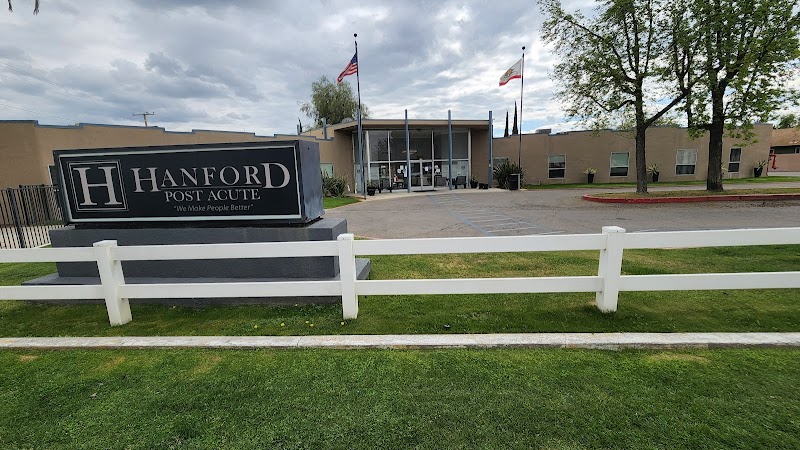
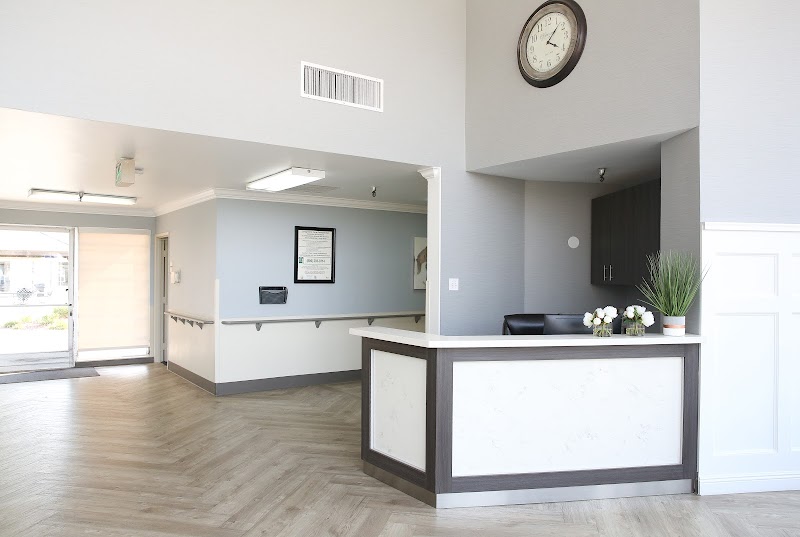
HANFORD POST ACUTE

1007 WEST LACEY BLVD, HANFORD, CA 93230 (559) 582-2871
For profit - Limited Liability company 124 Beds PACS GROUP Data: November 2025
Trust Grade
35/100
#819 of 1155 in CA
Last Inspection: January 2025

Within standard 12-15 month inspection cycle. Federal law requires annual inspections.

Overview

Hanford Post Acute has received a Trust Grade of F, indicating significant concerns about the quality of care provided, which places it in the bottom tier of nursing homes. It ranks #819 out of 1155 facilities in California and is the lowest ranked in Kings County, suggesting there are very few local options that are worse. The situation appears to be worsening, with the number of issues escalating from 1 in 2024 to 25 in 2025. Staffing is rated average with a 3/5 star rating, but the 55% turnover rate is concerning, as it is higher than the state average. While the facility has no fines on record, which is positive, there are serious concerns regarding RN coverage, which is less than 99% of other facilities in California, potentially impacting the quality of care. Specific incidents include failures to supervise residents adequately, leading to multiple unwitnessed falls and injuries, highlighting a lack of necessary interventions for residents with cognitive impairments. Another concern is the absence of a required water management program, which could pose health risks. Overall, while there are some strengths, such as no fines reported, the weaknesses in care and oversight make this facility a risky choice for families seeking quality nursing home care.

Trust Score
F
35/100
In California
#819/1155
Bottom 30%
Safety Record
Moderate
Needs review
Inspections
Getting Worse
1 → 25 violations
Staff Stability
⚠ Watch
55% turnover. Above average. Higher turnover means staff may not know residents' routines.
Penalties
✓ Good
No fines on record. Clean compliance history, better than most California facilities.
Skilled Nurses
⚠ Watch
Each resident gets only 6 minutes of Registered Nurse (RN) attention daily — below average for California. Fewer RN minutes means fewer trained eyes watching for problems.
Violations
⚠ Watch
43 deficiencies on record. Higher than average. Multiple issues found across inspections.
★★☆☆☆
2.0
Overall Rating
★★★☆☆
3.0
Staff Levels
★★★★☆
4.0
Care Quality
★★☆☆☆
2.0
Inspection Score
Stable
2024: 1 issues
2025: 25 issues

The Good

  • 4-Star Quality Measures · Strong clinical quality outcomes
  • Full Sprinkler Coverage · Fire safety systems throughout facility
  • No fines on record

Facility shows strength in quality measures, fire safety.

The Bad

2-Star Overall Rating

Below California average (3.1)

Below average - review inspection findings carefully

Staff Turnover: 55%

Near California avg (46%)

Frequent staff changes - ask about care continuity

Chain: PACS GROUP

Part of a multi-facility chain

Ask about local staffing decisions and management

Staff turnover is elevated (55%)

7 points above California average of 48%

The Ugly 43 deficiencies on record

2 actual harm
May 2025 2 deficiencies
CONCERN (D) 📢 Someone Reported This

A family member, employee, or ombudsman was alarmed enough to file a formal complaint

Potential for Harm - no one hurt, but risky conditions existed

Deficiency F0658 (Tag F0658)

Could have caused harm · This affected 1 resident

**NOTE- TERMS IN BRACKETS HAVE BEEN EDITED TO PROTECT CONFIDENTIALITY** Based on observation, interview and record review, the facility failed to ensure services provided met professional standards of...

Read full inspector narrative →
**NOTE- TERMS IN BRACKETS HAVE BEEN EDITED TO PROTECT CONFIDENTIALITY** Based on observation, interview and record review, the facility failed to ensure services provided met professional standards of quality for one of six sampled residents (Resident 4) when Resident 4 was administered 4.5 L/min (liters-unit of measurement)/min (minute) of oxygen via Nasal cannula (NC- plastic device used to deliver supplemental oxygen) instead of 2L/min of oxygen per physician's order. This failure had the potential to put Resident 4 at risk to oxygen toxicity (a lung damage that happens from breathing too much supplemental oxygen; it can cause coughing and trouble breathing; in severe cases it can even cause death). Findings: During a Review of Resident 4's admission Record, (AR- a document that provides resident contact details, a brief medical history, level of functioning, preferences, and wishes), dated 5/12/25, the AR indicated Resident 4 was admitted to the facility on [DATE], with diagnoses which included Congestive Heart Failure (CHF- weakness in the heart where fluid accumulates in the lungs), Hypertension (high blood pressure), Dyspnea (shortness of breath, difficulty breathing), and Asthma (a chronic lung condition making it difficult to breathe). During a concurrent observation and interview on 5/12/25 at 12:30 p.m., with the Infection Preventionist (IP), inside Resident 4's room, Resident 4 was lying in her bed, sleeping and with supplemental oxygen via nasal cannula receiving 4.5L/min. IP stated, she needs to check the physician order to verify if Resident 4 was supposed to receive 4.5L/min of supplemental oxygen. During a concurrent interview and record review on 5/12/25 at 12:45 p.m. with the IP, Resident 4's Physician Order Summary (POS) was reviewed. The POS indicated , . Oxygen 2LPM (liters per minute) via Nasal Cannula Continuously . Order Date 4/23/25 . The IP stated, Resident 4 current oxygen setting was incorrect and could potentially cause harm if not corrected immediately. The IP stated, the higher flow of oxygen could have a negative effect on Resident 4's overall health. The IP stated, she expect the licensed nurses to routinely check the oxygen setting during medication pass and as needed, and it was not done. During a concurrent interview and record review on 5/12/25 at 2:04 p.m. with the Minimum Data Set Nurse (MDSN), Resident 4's Progress Note (PN) was reviewed. The MDSN stated, she was unable to find any documentation indicating Resident 4 ' s oxygen level dropped below 90% (percent- unit of measurement) and a physician ' s order to increase the oxygen delivery from 2LPM to 4.5LPM. The MDSN stated, Resident 4 could get hurt from receiving too much oxygen. During an interview on 5/12/25, at 2:13 p.m., with the Director of Nursing (DON), the DON stated oxygen was considered a medication and physician's order should be followed to prevent oxygen toxicity for Resident 4. During a review of the facility's policy and procedures (P&P) titled, Oxygen Administration, dated October 2010, the P&P indicated, .Verify that there is a physician's order .review the physician's orders or facility protocol for oxygen administration .after completing the oxygen setup or adjustment, the following information should be recorded .the rate of oxygen flow, route and rationale . During a review of the facility ' s document titled, Job Description: Licensed Practical Nurse/Licensed Vocational Nurse, dated 11/2018, the document indicated, . Drug Administration Functions . Prepare and administer medications as ordered by the physician . Nursing Care Functions . Review the resident ' s chart for specific treatments, medication orders .
CONCERN (E) 📢 Someone Reported This

A family member, employee, or ombudsman was alarmed enough to file a formal complaint

Potential for Harm - no one hurt, but risky conditions existed

Infection Control (Tag F0880)

Could have caused harm · This affected multiple residents

Based on observation, interview, and record review, the facility failed to maintain an effective infection control program for three of six sampled residents (Residents 3, 5 and 6) when: 1. Resident 5...

Read full inspector narrative →
Based on observation, interview, and record review, the facility failed to maintain an effective infection control program for three of six sampled residents (Residents 3, 5 and 6) when: 1. Resident 5 ' s oxygen concentrator (a device that concentrates the oxygen from the ambient air) was being used without a filter. 2. Resident 3 and Resident 6 ' s oxygen concentrator filters were covered with dust and lint. These failures placed Residents 3, 5 and 6 at an increased risk to develop respiratory and healthcare-associated infections. Findings: 1. During a review of Resident 5's admission Record (AR, a document that provides resident contact details, a brief medical history, level of functioning, preferences, and wishes), dated 5/12/25, the AR indicated, Resident 5 was admitted from an acute care hospital on 4/27/25 to the facility, with diagnoses that included Congestive Heart Failure (CHF- weakness in the heart where fluid accumulates in the lungs), Hypertension (high blood pressure), Chronic Obstructive Pulmonary Disease (COPD- is a chronic inflammatory lung disease that causes obstructed airflow of the lungs), and Generalized Muscle Weakness. During a review of Resident 5's Order Summary Report (OSR), dated 5/12/25, the OSR indicated, . Order Summary . Oxygen at 2 LPM (liters per minute- unit of measurement) via nasal cannula (a device used to deliver supplemental oxygen) . Order Date 4/27/25 . During a review of Resident 5's Nursing Care Plan (CP), dated 5/8/25, the CP indicated, . [Resident 5] has COPD . Interventions/Tasks . Give oxygen therapy as ordered by the physician . Date Initiated: 4/27/25 . During an observation on 5/12/25, at 11:58 a.m., inside Resident 5 ' s room. Resident 5 was lying in bed, asleep and had an oxygen cannula connected to an oxygen concentrator. The oxygen was being given at 2L/min continuously. The oxygen concentrator filter was operating without the filter installed on the left side of the machine. During a concurrent observation and interview, on 5/12/25, at 12:35 p.m., inside Resident 5 ' s room with the Infection Preventionist (IP), the IP looked at Resident 5 ' s oxygen concentrator and stated the oxygen concentrator was operating without a dust filter and it should. The IP stated, Resident 5 ' s respiratory condition could worsen. The IP, stated maintaining the cleanliness of oxygen concentrator was the responsibility of the licensed nurses. During an interview on 5/12/25, at 2:13 p.m., with the Director of Nursing (DON), the DON stated using an oxygen concentrator without a filter was not acceptable and could potentially cause residents to become ill. The DON stated the purpose of the oxygen concentrator was to improve resident's oxygen level. The DON stated she expects the oxygen concentrator to be inspected and cleaned twice a week, and as needed for the safety and well-being of all residents receiving oxygen. The DON stated residents using dirty oxygen concentrators could have respiratory infection such as Pneumonia (lung infection caused by bacteria) and Bronchitis (inflammation of the airways). During a review of the facility ' s document titled, Job Description: Licensed Practical Nurse/Licensed Vocational Nurse, dated 11/2018, the document indicated, . Drug Administration Functions . Prepare and administer medications as ordered by the physician . Nursing Care Functions . Review the resident ' s chart for specific treatments, medication orders . Safety and Sanitation . Ensure that your unit ' s resident care rooms, treatment areas, etc., are maintained in a clean, safe, and sanitary manner . Participate in the development, implementation, and maintenance of infection control program . During a review of the facility's Policy and Procedure (P&P), titled, Oxygen Administration, dated 10/2010, the P&P stated, . Preparation . 3. Assemble the equipment and supplies as needed . Steps in the Procedure . Check the mask, tank, humidifier, etc., to be sure they are in good working order and are securely fastened . During a review of the facility's P&P titled, Infection Prevention and Control Program, dated 12/2018, the P&P indicated, . An infection prevention and control program (IPCP) is established and maintained to provide a safe, sanitary and comfortable environment and to help prevent the development and transmission of communicable diseases and infections . During a review of the oxygen concentrator manual titled, [Brand X] Oxygen Concentrator User Manual, dated 2009, the manual indicated, . Routine Maintenance. Cleaning the Cabinet Filter. CAUTION. DO NOT operate the concentrator without the filter installed . 1. Remove each filter and clean at least once a week depending on environmental conditions . 2. Clean the cabinet filters with a vacuum cleaner or wash in warm soapy water and rinse thoroughly. 3. Dry the filters thoroughly before installation . 2. During a review of Resident 6's AR, dated 5/12/25, the AR indicated, Resident 6 was admitted from an acute care hospital on 2/20/25 to the facility, with diagnoses that included COPD, Generalized Muscle Weakness, Hypertension, and Cerebral Infarction (stroke). During a review of Resident 5's OSR, dated 5/12/25, the OSR indicated, . Order Summary . Oxygen at 2 LPM via nasal cannula continuously . Order Date 2/20/25 . During a review of Resident 5's CP, dated 2/21/25, the CP indicated, . [Resident 6] has Oxygen Therapy r/t [related to] COPD . Interventions/Tasks . Oxygen 2LPM via nasal cannula continuously every shift . Date Initiated: 2/21/25 . During a review of Resident 3's AR, dated 5/12/25, the AR indicated, Resident 3 was admitted from an acute care hospital on 4/16/25 to the facility, with diagnoses that included COPD, Generalized Muscle Weakness, Hyperlipidemia (high cholesterol) and Morbid Obesity (overweight). During a review of Resident 3's OSR, dated 5/12/25, the OSR indicated, . Order Summary . Oxygen 2 LPM via nasal cannula every shift for SOB [shortness of breath] . Order Date 4/16/25 . During a review of Resident 3's CP, dated 2/21/25, the CP indicated, . [Resident 3] has COPD . Interventions/Tasks . Give oxygen therapy as ordered by the physician . Date Initiated: 4/17/25 . During a concurrent observation and interview, on 5/12/25, at 12:37 p.m., inside Resident 3 and Resident 6 ' s rooms, with the IP. Resident 3 and Resident 6 were in bed and being given oxygen through nasal cannulas connected to the oxygen concentrator. The IP looked at Resident 3 and Resident 6 ' s oxygen concentrators and stated the oxygen concentrator filters were covered with dust and lint. The IP stated, using a dirty oxygen concentrator was not acceptable. The IP stated, Resident 3 and Resident 6 were not getting the full benefit of supplemental oxygen and their respiratory condition could worsen. The IP stated, residents receiving supplemental oxygen from oxygen concentrator with dirty filter could cause respiratory infections. The IP stated, the oxygen concentrator filters should be cleaned once a week and as needed. During an interview on 5/12/25, at 2:18 p.m., with the DON, the DON stated using a dirty oxygen concentrator was not acceptable and could potentially cause residents to become ill. The DON stated, the purpose of the oxygen concentrator was to improve resident's oxygen level. The DON stated, residents using a dirty oxygen concentrator could have respiratory infection. The DON stated, she expects the oxygen concentrator to be cleaned twice a week and as needed by the licensed nurses for the safety and well-being of all residents receiving oxygen. During a review of the facility ' s document titled, Job Description: Licensed Practical Nurse/Licensed Vocational Nurse, dated 11/2018, the document indicated, . Drug Administration Functions . Prepare and administer medications as ordered by the physician . Nursing Care Functions . Review the resident ' s chart for specific treatments, medication orders . Safety and Sanitation . Ensure that your unit ' s resident care rooms, treatment areas, etc., are maintained in a clean, safe, and sanitary manner . Participate in the development, implementation, and maintenance of infection control program . During a review of the facility's P&P titled, Oxygen Administration, dated 10/2010, the P&P stated, . Preparation . 3. Assemble the equipment and supplies as needed . Steps in the Procedure . Check the mask, tank, humidifier, etc., to be sure they are in good working order and are securely fastened . During a review of the facility's P&P titled, Infection Prevention and Control Program, dated 12/2018, the P&P indicated, . An infection prevention and control program (IPCP) is established and maintained to provide a safe, sanitary and comfortable environment and to help prevent the development and transmission of communicable diseases and infections . During a review of the oxygen concentrator manual titled, [Brand X] Oxygen Concentrator User Manual, dated 2009, the manual indicated, . Routine Maintenance. Cleaning the Cabinet Filter. CAUTION. DO NOT operate the concentrator without the filter installed . 1. Remove each filter and clean at least once a week depending on environmental conditions . 2. Clean the cabinet filters with a vacuum cleaner or wash in warm soapy water and rinse thoroughly. 3. Dry the filters thoroughly before installation .
Apr 2025 6 deficiencies 2 Harm
SERIOUS (G) 📢 Someone Reported This

A family member, employee, or ombudsman was alarmed enough to file a formal complaint

Actual Harm - a resident was hurt due to facility failures

Quality of Care (Tag F0684)

A resident was harmed · This affected 1 resident

Deficiency Text Not Available

Read full inspector narrative →
Deficiency Text Not Available
SERIOUS (G) 📢 Someone Reported This

A family member, employee, or ombudsman was alarmed enough to file a formal complaint

Actual Harm - a resident was hurt due to facility failures

Accident Prevention (Tag F0689)

A resident was harmed · This affected 1 resident

**NOTE- TERMS IN BRACKETS HAVE BEEN EDITED TO PROTECT CONFIDENTIALITY** Based on observation, interview, and record review, the facility failed to ensure residents received adequate supervision and as...

Read full inspector narrative →
**NOTE- TERMS IN BRACKETS HAVE BEEN EDITED TO PROTECT CONFIDENTIALITY** Based on observation, interview, and record review, the facility failed to ensure residents received adequate supervision and assistance to prevent falls for two of six sampled residents (Residents 1 and 4) when: 1. Nursing staff were aware of Resident 1's cognitive impairment (difficulties with mental processes such as memory, attention, reasoning, and decision making), poor safety awareness, impulsive behaviors of getting up from bed without using the call light, history of falls, and did not implement effective interventions to prevent falls. These failures resulted in Resident 1 suffering avoidable falls on the following dates: 9/30/24, 11/5/24, 12/9/24, 12/16/24, 12/18/24, and 2/1/25. and placed the resident at risk for injury, pain. and suffering. These failures resulted in Resident 1's experiencing five unwitnessed falls prior to the avoidable fall on 2/1/25 with injury, sustaining a (laceration (cut in the skin caused by an injury) above the left eyebrow requiring transportation to the emergency department (ED) for sutures (a row of stitches holding together edges of a wound) and avoidable pain and suffering. Resident 1 had two additional avoidable falls. Resident 1 had a unwitnessed fall in his room on 3/11/25 sustaining a laceration to the forehead which required transportation to the emergency department for evaluation and a additional fall in his room on 3/12/25 opening the same area to his forehead and required transportation back to the emergency department for repair. Resident 1 was diagnosed with a subdural hematoma (pool of blood between the brain and its outermost covering) measuring up to 11 mm (millimeters) (unit of measure) in thickness. Resident 1 passed away on 3/17/25 at ACH from his injuries related to the fall on 3/12/25. 2. Resident 4 was assessed as being a fall risk, had poor safety awareness, impulsive behaviors of standing while unattended and multiple falls and the facility did not implement effective interventions to prevent falls, including adequate supervision consistent with the resident's needs, goals and care. This failure resulted in Resident 4 falling eight times in 30 days, placing him at risk for significant injuries and/or death. Findings: 1. During an observation on 2/13/25 at 8:15 a.m., in Resident 1's room, Resident 1 was lying in bed with eyes closed. Resident 1 had a sutured laceration above his left eye. Resident 1's bed was in low position, fall mat on the floor next to bed on left side, no fall mat on right side. Call light within reach. No staff present in the room. During a review of Resident 1's admission Record (AR- a document containing resident medical and personal information), undated, the AR indicated, Resident 1 was admitted to the facility on [DATE] with diagnoses that included dementia[CE2] (a group of symptoms that affect memory, thinking, and social abilities), abnormalities of gait and mobility, and osteoarthritis (a progressive disorder of the joints, caused by a gradual loss of cartilage). During a review of Residents 1's Minimum Data Set (MDS- a resident assessment tool used to identify resident cognitive and physical function) assessment dated [DATE], indicated Resident 1's Brief Interview of Mental status assessment (BIMS - assessment of cognitive status for memory and judgement) scored 10 of 15 (a score of 13-15 indicates cognitively intact, 08-12 indicates moderately impaired, and 00-07 indicates severe impairment). The BIMS assessment indicated Resident 1's cognition was moderately impaired. During a review of the Acute Care Hospital (ACH) document titled, Emergency Department Report, dated 2/1/25, the note indicated . patient is a 93 y.o. [year old] male . presents to the ED [emergency department] after fall. Per skilled nursing facility, patient had an unwitnessed ground level fall in his room between his bed and bathroom door .3-centimeter (unit of measure) (cm) linear (straight line) wound located on the face . Left eyebrow laceration was repaired . follow up for wound check and suture removal . During an interview on 2/13/25 at 9:35 a.m. with Certified Nurse Assistant, (CNA) 1 CNA 1 stated she had provided care for Resident 1 before and was familiar with him. CNA 1 stated Resident 1 was a high fall risk because he would get out of bed and stand without assistance. CNA 1 stated attempts to redirect Resident 1 or remind him to use the call light were not successful because the resident was disoriented and did not remember. CNA 1 stated, Resident 1 does not use his call light when getting out of bed and was not safe to get out of bed by himself. CNA 1 stated, Resident 1 was unsteady on his feet and needed supervision when standing. During an interview on 2/13/25 at 9:50 a.m. with CNA 2, CNA 2 stated she knew Resident 1 and had provided care for him before. CNA 2 stated, Resident 1 would wake up and try to get up out of bed without using the call light to ask for help. CNA 2 stated, Resident 1 was unsteady on his feet and needed supervision when walking. During an interview on 2/13/25 at 10 a.m., with Licensed Vocational Nurse (LVN), LVN stated, Resident 1 was confused and a high risk for falls. LVN stated, Resident 1 does not follow commands and would try to get out of bed without help all the time. LVN stated, Resident 1 would get out of bed without using his call light, stands and tries to walk without supervision or assistance. LVN stated, Resident 1 did not have supervision on 2/1/25 when he got out of bed and fell in his room. LVN stated, Resident 1 needs supervision and continuous monitoring for his safety and was not provided. During an interview on 2/13/25 at 10:20 a.m., with CNA 3, CNA 3 stated, she had provided care to Resident 1 before and was familiar with him. CNA 3 stated, Resident 1 did not use his call light to ask for help. CNA 3 stated, Resident 1 was wobbly and unsteady when standing up. CNA 3 stated Resident 1 was not safe to get out of bed on his own and needed supervision because he was unsteady on his feet. CNA 3 stated, Resident 1 was impulsive and needed one-on-one monitoring (refers to providing residents, focused attention and monitoring, ensuring their safety and wellbeing) to keep him safe and prevent falls. CNA 3 stated one-on one supervision was not provided. During a concurrent interview and record review on 2/13/25 at 10:40 a.m., with Minimum Data Set Coordinator (MDSC), Resident 1's Minimum Data Set (MDS- a standardized assessment tool used for all residents in a skilled in nursing home) dated 2/5/25 was reviewed. The MDS Section C indicated Resident 1 had a Brief Interview for Mental Status (BIMS- a tool that identifies cognitive impairment levels (0-7 Severe cognitive impairment, 8-12 Mild cognitive impairment and 13-15 Cognitive intact) score of 10, indicating Resident 1 had moderate cognitive impairment. The MDSC stated, Resident 1 would not remember to use the call light to ask for help. The MDSC stated, Resident 1 needed supervision when getting out of bed and when moving from sitting to standing. The MDSC stated, she knew Resident 1 fell in his room while getting out of bed and walking, and that no supervision was provided at the time of the fall on 2/1/25. The MDSC stated, Resident 1 needed supervision due to his cognitive impairment, impulsive behavior, and mobility issues. Resident 1 MDS Section GG (GG-focuses on residents' functional abilities), was reviewed. The MDS section GG indicated Resident 1 needed supervision for getting out of bed, standing, and walking. The MDSC stated, Resident 1's fall on 2/1/25 which resulted to a wound on his face and left eyebrow laceration which required a sutured could have been prevented had he been supervised when getting out of bed, moving from a sitting position to standing, and walking. The MDSC stated, it was the facility's responsibility to keep residents safe from falls resulting in injuries. The MSDC stated, Resident 1 was known to be impulsive, cognitively impaired, and had poor safety awareness. During an interview on 2/13/25 at 11:15 a.m. with CNA 4, CNA 4 stated, he was the CNA assigned to Resident 1 on 2/1/25. CNA 4 stated, Resident 1 was unsteady on his feet, impulsive, cognitively impaired, and had poor safety awareness. CNA 4 stated, Resident 1 would stand up and starts walking without asking for help. CNA 4 stated Resident 1 was wobbly and unstable when walking and was not safe on his own. CNA 4 stated Resident 1 does not recognize the risk of getting out of bed without help. Resident CNA 4 stated, he would walk by Resident 1's room and see him getting out of bed on his own, so he had to quickly enter the room to stop Resident 1 from falling. CNA 4 stated Resident 1 was a high fall risk and does not use his call light. CNA 4 stated, he had reminded Resident 1 to use his call light, but Resident 1 would still stand up and walk without assistance. During a concurrent interview and record review on 2/13/25 at 11:30 a.m. with the Assistant Director of Nursing (ADON), Resident 1's Medical Records (MR) was reviewed. The MR indicated Resident 1 had a fall on 2/1/25 in his room and suffered a laceration to his left brow with bleeding and bruising. The ADON stated, she knew Resident 1 was impulsive, cognitively impaired, and had poor safety awareness. The ADON stated Resident 1's fall on 2/1/25 could have been prevented if a one-on-one monitoring intervention had been put in place to keep him safe from falls. During an interview on 2/13/25 at 12 p.m. with Administrator (ADM), the ADM stated, we need to have the correct interventions in place to keep residents safe. The ADM stated it was our responsibility to keep residents safe. The ADM stated, we did not do enough fall interventions to keep Resident 1 safe from harm. During a concurrent interview and record review on 3/11/25 at 8:30 a.m. with the ADON, Resident 1's falls since 9/25/24 were reviewed. The falls were as follows: 9/30/24 at 12 a.m. Found on the floor next to bed 11/05/24 at 7:04 p.m. Found on the floor next to bed 12/09/24 at 4:00 p.m. Found on the floor next to bed 12/16/24 at 10:00 p.m. Found on the floor next to bed 12/18/24 at 9:09 a.m. Found on the floor next to bed 2/1/25 at 4:12 p.m. Found on the floor next to bed ADON stated, Resident 1's falls occurred while Resident 1 was in his room. ADON reviewed Resident 1's care plan dated 2/10/25, the care plan indicated, . resident is (high) risk for falls with injury r/t [related to] unsteady gait, poor balance . history of falls, poor safety awareness d/t [due to] DX [diagnosis] Dementia (a group of symptoms characterized by a decline in memory, thinking, and social abilities), hx [history of] multiple falls, non-compliance, impulsive behaviors . Interventions . Toileting scheduled . Anticipate and meet needs . Keep call light within reach . Educate remind resident to call for assistance with all transfers .encourage room change closer to the nurses station . Encourage to participate in activities that promote exercise, physical activity for strengthening and improved mobility .Falling Star Program [a program in nursing homes uses a visual cue, like a falling star graphic on resident's door, to flag high-risk fall residents] .Keep personal items frequently used within reach .Landing mat to left side of bed . IDT [Interdisciplinary Team- a group of healthcare professionals who collaborate to provide comprehensive, individualized care for residents] Recommends . Non-skid strips to left side of bed .Bowel and Bladder Program (a structured plan designed to help individual manage their bowel and bladder functions) every 2 hours .Room change closer to nurses station .Fall mats to both sides of bed .Falling Star Program .Educate remind resident to call for assistance with all transfers . The ADON stated Resident 1's falls occurred while he was in his room and the interventions of keeping call light within reach, and encouraging to use would not address the cause of the falls, which occurred when he was unsupervised in his room. During a concurrent observation and interview on 3/24/25 at 9:30 a.m. with LVN 2 in the hallway by Resident 1's room, the name tag listing name of residents in the room by the doorway was missing a name for Resident 1. LVN 2 stated, Resident 1 had a fall on 3/11/25 and 3/12/25. LVN stated, Resident 1 was sent to ACH on 3/12/25 and had not returned. During a telephone interview on 3/26/25 at 11:08 a.m. with CNA 5, CNA 5 stated, she was assigned to Resident 1on 3/12/25 at the time of his fall. CNA 5 stated, Resident 1 was confused and would get out of bed by himself to go to the bathroom. CNA 5 stated, we tried to keep an eye on him when passing by his room. CNA 5 stated, she walked by his room and saw Resident 1 lying on the floor at the foot of his bed and partially in the open bathroom door. CNA 5 stated, she did not witness the fall and found him on the floor. CNA 5 stated she ran into his room and saw a small puddle of blood by his head. CNA 5 stated, Resident 1 was groaning while on the floor. CNA 5 stated, Resident 1 was bleeding from his forehead and blood was running down his face when CNA 5 and LVN assisted him to a sitting position on the side of his bed. CNA 5 stated, staff member came into the room to assist her in changing Resident 1's shirt and jacket due to blood on his clothing. CNA 5 stated, she stayed with Resident 1 and assisted him back into bed. CNA 1 stated, Resident 1 vomited and she alerted the LVN. CNA 5 stated, she was not in the room at the time of the fall providing care to other residents in the room. During a telephone interview on 3/27 /25 at 10:27 a.m. with ADON, ADON stated, Resident 1 had an unwitnessed fall on 3/11/25 at 7:24 p.m. in his room. ADON stated, Resident 1 was found on the floor by his bed. ADON stated, Resident 1 was bleeding from his forehead and was sent to ACH. ADON stated, Resident 1 returned from ACH on 3/12/25 at 1:22 a.m. During a telephone interview on 3/27/25 at 1:00 p.m. with ADON, ADON stated, Resident 1 had a fall in his room on 3/12/25 at 7:03 p.m. ADON stated, Resident 1 was found lying on the floor and assisted back to bed by staff. ADON stated, Resident 1 was sent to ACH on 3/12/25 and has not returned. ADON stated, Resident 1 was taking [name of medication] to thin his blood which could cause excessive bleeding with any injuries from a fall. ADON stated, Resident 1 was a high fall risk due to the history of his falls and had the potential for life threatening outcomes. During a record review of the Resident 1's falls since 9/25/24 were reviewed. The falls were as follows: 9/30/24 at 12 a.m. Found on the floor next to bed 11/05/24 at 7:04 p.m. Found on the floor next to bed 12/09/24 at 4:00 p.m. Found on the floor next to bed 12/16/24 at 10:00 p.m. Found on the floor next to bed 12/18/24 at 9:09 a.m. Found on the floor next to bed 2/1/25 at 4:12 p.m. Found on the floor next to bed 3/11/25 at 7:24 p.m. Found on floor next to bed 3/12/25 at 7:03 p.m. Found on floor next to bed During a review of the Acute Care Hospital (ACH) document titled, ED Physicians Notes, dated 3/11/25, at 9:08 p.m. the note indicated ( . patient is a 93 y.o. [year old] male . presents to the ED [emergency department] after a fall out of bed and hit his forehead .2 cm (centimeter) (unit of measure) mid forehead superficial (occurring on the skin or immediately beneath it) abrasion (a area damaged by scrapping) .Diagnosis, Mechanical Fall, forehead abrasion, severe dementia . During a review of the Acute Care Hospital (ACH) document titled, ED Physicians Notes, dated 3/12/25, at 8:10 p.m. the note indicated ( . patient is a 93 y.o. [year old] male . presents to the ED [emergency department] after a fall out of bed and hit his forehead .CT scan of head was performed indicating Intracranial hemorrhage (life threatening medical emergency when blood leaks inside or between the brain and skull) of left frontal , subdural hematoma ( pool of blood between the brain and its outermost covering) measuring up to 11 mm (millimeters) (unit of measure) in thickness and small volume left parietal subarachnoid hemorrhage (a type of stroke where bleeding occurs in the space between the brain and the tissues covering it) . Patient presents after a fall with head trauma while on blood thinner medication placing him at high risk for intracranial hemorrhage .Intensive Care Unit (ICU) physician was consulted, who requested to transfer the patient to neuro [neurological] ICU .[Name of ACH] [Name of Neurosurgeon] was consulted who then spoke to family in regards to potential management for this patient .Eventually family decided that they do not want to pursue any neurological intervention and did not want him transferred to another facility .Prefer that the patient stays here at this hospital .Resident 1 passed away on 3/17/25 . During a record review of the Death Certificate for Resident 1, indicated . Cause of Death as Cardiopulmonary Arrest (Cardiac arrest-sudden loss of heart function) and Subdural Hematoma w/loc (loss of consciousness-unresponsive to stimuli) status . During a review of the facility's Policy and Procedure titled Falls and Fall Risk Managing, dated 3/2018, the P&P indicated, .Based on previous evaluations and current data, staff may identify interventions related to the resident's specific risks and causes in the attempt to reduce falls and minimize complications from falling .Resident centered fall prevention plans should be reviewed and revised as appropriate .If the resident continues to fall, the situation should be reevaluated to determine whether it would be appropriate to continue or change current interventions. During a review of the facility's P&P titled Safety and Supervision of Residents, dated 7/2017, the P&P indicated, . Our facility strives to make the environment as free from accident hazards as possible . Safety risks and environmental hazards are identified on an ongoing basis . When accident hazards are identified, the QAPI [Quality Assurance and Performance Improvement- is a data driven, proactive approach to improve the quality of care in nursing homes]/safety committee shall evaluate and analyze the cause(s) . Employees shall be trained on potential accident hazards and demonstrate competency . and try to prevent avoidable accidents . Our individualized, resident-centered approach to safety addresses safety and accident hazards for individual residents . care team shall target interventions to reduce individual risks related to hazards in the environment, including adequate supervision and assistive devices . ` During a review of the facility's P&P titled Fall Prevention Program/Falling Star, updated 2/3/25, the P & P indicated .Staff to assist resident to the bathroom before meals, after meals, at bedtime and as needed .Resident not to be left alone in room while out of bed . During a review of a professional reference located at https://www.ahrq.gov/patient-safety/settings/long-term-care/resource/facilities/ltc/mod3sess2.html titled Module 3: Falls Prevention and Management, dated 10/2014, the reference indicated, . An important job for licensed nurses is to assess residents' risk of falling. This is best done using a protocol or instrument that asks the licensed nurse to look at or test several features about the residents . Implement an individualized care plan . nursing should add an individualized approach for falls to the resident's care plan . An individualized care plan for falls is not a one-time solution. Licensed nurses and other staff must revisit the plan to make sure it is effective in preventing additional falls and injuries from falls . 2. During a review of Resident 4's admission Record, undated, the admission record indicated, Resident 4 was admitted to the facility on [DATE] with diagnoses which included fracture (break in bone) of the skull, muscle weakness, abnormalities of gait (pattern of walking) and mobility (ability to move freely), type 2 diabetes mellitus (a disorder characterized by difficulty in blood sugar control and poor wound healing), cognitive (relating to the mental process involved in knowing, learning, and understanding) communication deficit (communication difficulty caused by cognitive impairment), cerebral infarction (condition where blood flow to the brain is blocked, causing brain tissue damage), nontraumatic intracerebral hemorrhage (bleeding occurs within the brain tissue), traumatic subdural hemorrhage (collection of blood between the brain and inner layer of skull) and traumatic subarachnoid hemorrhage (type of stroke) with loss of consciousness (state of being awake). During a review of Residents 4's MDS assessment dated [DATE], indicated Resident 4's BIMS scored 09 of 15. The BIMS assessment indicated Resident 4's cognition was moderately impaired. During an interview on 4/3/25 at 2:56 p.m. with CNA 6, CNA 6 stated she was familiar with Resident 4 and had taken care of him prior to his discharge. CNA 6 stated Resident 4 was very confused, difficult to communicate with and impulsive. CNA 6 stated Resident 4 was very weak and unable to stand safely by himself but had behaviors of standing up suddenly and falling. CNA 6 stated Resident 4 was very confused and did not realize how weak he was and that it was not safe for him to stand on his own. CNA 6 stated at Resident 4 was on every 15-minute checks but still had falls. CNA 6 stated Resident 4 would have required one on one (1:1) supervision (constant staff supervision) to prevent him from falling. During a concurrent interview and record review on 4/3/25 at 3:29 p.m. with LVN 2 Resident 4's falls were reviewed. The falls were as follows: 1/19/25-Resident fell trying to get off bed 1/23/25-Resident fell getting out of wheelchair 1/28/25-8:45 a.m. Resident found on floor 1/28/25-3:17 p.m. Resident found on floor 2/2/25-Resident on floor, dragging self out of room asking staff to put him into wheelchair 2/4/25-Resident fell getting up from wheelchair across from nurses' station 2/10/25-Resident fell in dining room 2/14/25-Resident fell across from nurses' station LVN 2 stated Resident 4 was at high risk for falls because he had non-compliant behaviors, was constantly trying to get up unsupervised, had weak legs and poor balance. LVN 2 stated Resident 4's primary language was not English which caused some communication issues. LVN 2 stated she thought he could understand the reminders to call for help but could not retain it due to cognition. LVN 2 stated Resident 4 was stubborn and would continue to do what he wanted to do even if it was not safe. LVN 2 stated Resident 4 was never placed on 1:1 supervision, and the only way to prevent falls would have been for staff to always stay with the resident. LVN 2 stated she would keep the resident close to the nurse's station when she was sitting there, and he did not fall when she had him under constant supervision because she could redirect him quickly. Resident 4's fall risk scores (0-8 low risk, 9-15 moderate risk, 16-42 high risk) were reviewed. Resident 4's fall risk scores were reviewed as follows: 1/17/25 score 10, moderate risk for falls 1/23/25 score 14, moderate risk for falls 1/28/25 score 22, high risk for falls 1/28/25 score 20, high risk for falls 2/4/25 score 20, high risk for falls 2/10/25 score 20, high risk for falls 2/14/25 score 22, high risk for falls LVN 2 stated Resident 4 was a moderate risk for falls when he was admitted but his fall risk increased as he continued to have falls. Resident 4's care plans were reviewed, LVN 2 stated she was unable to locate any fall risk care plan interventions before his first fall on 1/19/25. LVN 2 stated there were no fall prevention interventions in the care plan until his fall on 2/4/25. LVN 2 stated Resident 4 was on hourly checks, but it was not documented on the care plan and should have been. LVN 2 stated care plans were important because they direct the resident's care. LVN 2 stated care plans were used to involve the residents in their care, indicate what interventions are needed to meet their needs, included details about the resident's life including the treatments provided and physician ordered interventions. During a telephone interview on 4/4/25 at 7:50 a.m., with Family Member (FM) 2, FM 2 stated he was Resident 4's responsible party. FM 2 stated Resident 4 had frequent falls while at the facility and he did not feel like the facility did enough to prevent the resident's falls. FM 2 stated Resident 4 was agitated which caused him to stand up frequently and then he would fall, but he did not feel like the facility addressed the issue and the resident kept falling. During a review of Resident 4's Nurse's Note, dated 1/19/25, the note indicated, . At around 0120 [1:20 a.m.], writer was sitting at nurses station charting . notified by resident roommate, that roommate had fell trying to get off bed . Upon entering the room, the resident was found on the floor on right side of his bed, facedown with head facility the head of the bed . resident stated was trying to go to the restroom. Resident stated to have a headache . During a review of Resident 4's Interdisciplinary Team (IDT-Interdisciplinary Team- involves team members from different disciplines working collaboratively, with a common purpose, to set goals, make decisions and share resources and responsibilities for the best interest of the resident) note dated 1/29/25 at 10:21 a.m., the IDT note indicated, . IDT met on 01/20/25 to discuss resident's fall on 01/19/25 . IDT intervention: Resident added to B&B program X4 hours . During a review of Resident 4's SBAR, dated 1/23/25, the SBAR indicated, . change in condition, symptoms, or signs observed and evaluated is/are: Falls . 01/23/25 . During a review of Resident 4's Alert Charting, dated 1/23/25 at 9:10 p.m., the note indicated, . Approximately 2110 [9:10 p.m.] . notified by staff member, resident fell trying to get out of wheelchair . resident was found on the floor on left side, face down . resident stated was trying to get to bed . During a review of Resident 4's IDT Note, dated 1/24/25, the note indicated, . IDT met to discuss resident's fall on 01/23/25 . IDT intervention: Non-skid material to wheelchair & Resident will be added to falling star program. Resident's last fall was 01/19/2025 . During a review of Resident 4's SBAR, dated 1/28/25 at 8:50 a.m., the SBAR indicated, . writer was called into resident room by residents roommate. Upon entering room, resident found on the floor on his bottom, his head against roommates' foot board . During a review of Resident 4's Nurses Notes, dated 1/28/25 at 3:25 p.m., the note indicated, . called into resident room by CNA and activity director stating that resident was on floor kneeling with back to bed and him facing the table. Writer went to go observe and noted resident was on floor on both knees with back to bed and him facing the table. Resident wheelchair was next to him . During a review of Resident 4's Nurse's Note, dated 2/4/25 at 2:00 p.m., the note indicated, . resident sitting across from nurses station, resident [resident] stood up and was very unsteady and week [weak] . This writer attempted to reach resident to sit him back in wheelchair and resident fell onto floor, fall witnessed and resident assisted back onto his feet and placed back in wheelchair . During a review of Resident 4's IDT Note, dated 2/5/25 at 9:54 a.m., the note indicated, . IDT met to discuss resident's fall on 02/04/2025 . IDT intervention: Resident placed on 1 hour checks. SSD [Social Services Director] scheduled a care conference for 02/14/2025 to discuss POC [plan of care] with family . During a review of Resident 4's Nurse's Note, dated 2/10/25 at 7:50 a.m., the note indicated, . On 2/10/25 at approx. [approximately] 0655 [6:55 a.m.] CNA called writer to dining room due to resident having unwitnessed fall. Upon entering dining room resident noted to be laying on floor on his bottom his wheelchair behind him . Resident was noted with no socks . During a review of Resident 4's IDT Note, dated 2/11/25 at 9:36 a.m., the note indicated, . IDT met to discuss [discuss] resident's fall on 02/10/2025 . IDT recommendations: Sensory pad to bed & wheel chair. Nursing to obtain consent . During a review of Resident 4's SBAR, dated 2/14/25, the SBAR indicated, . change in condition . Falls . 02/14/2025 . Writer approaching nurses station and CNA states resident had fallen. Resident noted to be sitting in wheelchair. CNA x2 had assisted resident back to chair without waiting for writer to asses resident . Resident continued to stand up being non compliant . Resident unable to give description . During a review of Resident 4's IDT note, dated 2/17/25 at 4:47 p.m., the IDT note indicated, . IDT met to discuss resident's fall on 02/14/2025 . Resident is currently out at acute care hospital. Upon his readmission resident will be placed on Q2 [every two] hour checks . During a concurrent interview and record review on 4/4/25 at 9:12 a.m. with the Assistant Director of Nursing (ADON), the ADON stated Resident 4 was a resident at the facility for one month. The ADON stated, he had a few falls. I'm not sure how many. Resident 4's fall risk care plan was reviewed. The care plan indicated, . Resident is at risk for falls with or without injury . unwitnessed fall on 1-19-25 . witnessed fall on 1-23-25 . witnessed fall 2/4/25 . Unwitnessed fall 2/10/25 . Unwitnessed fall 2/14/25 . Date initiated 1/17/2025 . Will minimize risk for falls to extent possible . Date initiated: 2/4/25 . Add sensor pad [a device used to monitor patients to ensure they do not rise from the bed or chair on their own to reduce falls] to bed and wheelchair . Date initiated: 2/04/25 . Add to B&B [bowel and bladder program-scheduled toileting] Q [every] 2 hours . Anticipate and meet needs . falling star program . Keep bed in low position with brakes locked . Keep call light within reach . Keep personal items frequently used within reach . Non skid material [flexible material used to prevent slipping] to w/c [wheelchair] . The ADON stated she was unable to find a fall risk care plan with interventions before 2/4/25. The ADON stated care plans were used to provide person-centered care for each resident and should have measurable objectives and the interventions reflecting the residents abilities to perform ADLs and transfers. The ADON stated the cause of Resident 4's falls was his need to get up. The ADON stated the facility did not place Resident 4 on 1:1 supervision, but he was placed on every hour checks. The ADON stated Resident 4 did continue to have falls while on every hour supervision. The ADON stated Resident 4 should not have stood up without staff assistance because he needed supervision for safety. Resident 4's Nurse's Note, dated 2/2/25 at 7:57 p.m. was reviewed. The note indicated, . Upon shift change, resident on the floor on his bottom dragging himself out of room asking staff to put him in his wheelchair . staff transferred resident from floor to w/c. Resident noncompliant with use of call light, and wheelchair . The ADON stated the note did not specify the resident fell and she was unsure what dragging himself out of room referred to. Resident 4's SBAR, dated 2/2/25 was reviewed and indicated, . lump to left forehead, No changes o[TRUNCATED]
CONCERN (D) 📢 Someone Reported This

A family member, employee, or ombudsman was alarmed enough to file a formal complaint

Potential for Harm - no one hurt, but risky conditions existed

Safe Transfer (Tag F0626)

Could have caused harm · This affected 1 resident

**NOTE- TERMS IN BRACKETS HAVE BEEN EDITED TO PROTECT CONFIDENTIALITY** Based on interview and record review the facility failed to ensure residents who were hospitalized were permitted to return to t...

Read full inspector narrative →
**NOTE- TERMS IN BRACKETS HAVE BEEN EDITED TO PROTECT CONFIDENTIALITY** Based on interview and record review the facility failed to ensure residents who were hospitalized were permitted to return to the skilled nursing facility (SNF-a healthcare facility that provides a higher level of care that what is typically offered in assisted living or residential care) for one of seven residents (Resident 5) when the facility refused to take Resident 5 back after Resident 5 was medically cleared (when a patient no longer needs to receive inpatient care) to return to the facility from the acute care hospital (ACH-is a healthcare facility that provides short-term, intensive treatment for patients with serious medical conditions). This failure placed Resident 5 at risk for psychosocial harm by not allowing the resident to return to the SNF and caused her to be transferred to a different SNF. This caused her emotional stress and repeated request to come back to the facility. Findings: During a review of Resident 5's admission Record (AR- a document containing resident medical and personal information), undated, the AR indicated, Resident 5 was admitted to the facility on [DATE] with diagnoses that included dysphagia (difficulty swallowing food and or liquids) Chronic Obstructive Pulmonary Disease (COPD-a chronic lung disease causing difficulty in breathing) Major Depressive disorder, (a mood disorder that causes a persistent feeling of sadness and loss of interest), abnormalities of gait and mobility, During a review of Residents 5's Minimum Data Set (MDS- a resident assessment tool used to identify resident cognitive and physical function) assessment dated [DATE], indicated Resident 5's Brief Interview of Mental status assessment (BIMS - assessment of cognitive status for memory and judgement) scored 15 of 15 (a score of 13-15 indicates cognitively intact, 08-12 indicates moderately impaired, and 00-07 indicates severe impairment). The BIMS assessment indicated Resident 5 was cognitively intact. During a telephone interview on 3/10/25 at 1:45 p.m. with the family member (FM), the FM stated, she was involved in Resident 5's care. The FM stated Resident 5 had been at a Skilled Nursing Facility (SNF) since 5/13/24. The FM stated, Resident 5 returned home and was admitted to SNF again on 10/23/24. The FM stated, Resident 5 was transferred to ACH on 1/30/25 from the SNF. The FM stated, she received a phone call from an ACH staff, who informed her the SNF said there were no female beds available for Resident 5 to return. The FM stated, Resident 5 was alert and oriented and able to express her needs. The FM stated, Resident 5 was very upset and crying because she wanted to return to the facility. FM stated, on 2/28/25 Resident 5 was discharged from acute care to a SNF in another city. During an interview on 3/11/25 at 9:50 a.m., with Admissions Director (AD), the AD stated, she was responsible for all documents related to new admissions and readmission. The AD stated, Resident 5 was admitted to the facility on [DATE] from ACH. The AD stated Resident 5 was sent to ACH on 1/30/25, and a bed hold (a resident's right to keep a bed vacant and available for seven days after their transfer to the hospital in anticipation of their return to the facility) was put in place from 1/30/25 -2/6/25. The AD stated, she received a call from ACH on 2/18/25, informing her Resident 5 was ready to return back to SNF with orders for radiation treatments. The AD stated, the facility does not accept residents with radiation or chemotherapy (cancer treatment that uses drugs to kill or slow growth of cancer cells) treatment orders because the facility would be responsible to pay for the treatment. During an interview on 3/11/25 at 11:45 a.m., with the AD, the AD stated on 2/20 /25 at 9:35 a.m. she received notification from ACH Resident 5 was ready to be discharge back to the facility. The AD stated, she spoke with a Licensed Nurse (LN) about the admission and the resident care needs. The LN told her the facility would not be able to provide the care Resident 5 needed. During a concurrent interview and record review on 3/11/25 at 12:10 p.m., with Business Office Manager (BOM) the document titled Name of Facility dated 2/20/25 was reviewed. The BOM stated, the documents were the daily census, which show the availability of open beds in the facility. The BOM provided documents for 2/20/25-2/27/25 which indicated the following: 02/20/25- three female bed available 02/21/25- three female bed available 02/22/25 -three female beds available 02/23/25-two female beds available 02/24/25- two female beds available 02/25/25-no female beds available 02/26/25- one female bed available 02/27/25-no female beds available During an interview on 3/11/25 at 12:30 p.m. with Administrator (ADM), the ADM stated, he was contacted by staff at ACH on 2/20/25 at 5:21, to inform him Resident 5 was ready to return back to the facility. The ADM stated, the facility had female beds available on 2/20/25. The ADM stated, he was not aware of the regulations that gives a long-term care resident the right to return to the facility when a bed is available. The ADM stated, the daily census document showed three female beds available on 2/20/25. The ADM refused to continue the interview or answer questions. During a review of the facility's Policy and Procedure titled Bed-Holds and Return, dated 10/2022, the P&P indicated, .Residents and /or representatives are informed (in writing) of the facility and state (if applicable bed-hold policies) All residents/representatives are provided written information regarding the facility and state bed-hold policies, which address holding or reserving a resident's bed during periods of absence (hospitalization or therapeutic leave) The requirements that residents be permitted to return to the facility applies to all residents regardless of payer source .Residents who seek to return to the facility within the bed hold period defined in the state plan are allowed to return to their previous room .Residents who seek to return to the facility after the state bed-hold period has expired ( or when state law does not provide for bed holds) are allowed to return to their previous room if available or immediately to the first available bed . Based on interview and record review the facility failed to ensure residents who were hospitalized were permitted to return to the skilled nursing facility (SNF-a healthcare facility that provides a higher level of care that what is typically offered in assisted living or residential care) for one of seven residents (Resident 5) when the facility refused to take Resident 5 back after Resident 5 was medically cleared (when a patient no longer needs to receive inpatient care) to return to the facility from the acute care hospital (ACH-is a healthcare facility that provides short-term, intensive treatment for patients with serious medical conditions). This failure placed Resident 5 at risk for psychosocial harm by not allowing the resident to return to the SNF and caused her to be transferred to a different SNF. This caused her emotional stress and repeated request to come back to the facility. Findings: During a review of Resident 5's admission Record (AR- a document containing resident medical and personal information), undated, the AR indicated, Resident 5 was admitted to the facility on [DATE] with diagnoses that included dysphagia (difficulty swallowing food and or liquids) Chronic Obstructive Pulmonary Disease (COPD-a chronic lung disease causing difficulty in breathing) Major Depressive disorder, (a mood disorder that causes a persistent feeling of sadness and loss of interest), abnormalities of gait and mobility, During a review of Residents 5's Minimum Data Set (MDS- a resident assessment tool used to identify resident cognitive and physical function) assessment dated [DATE], indicated Resident 5's Brief Interview of Mental status assessment (BIMS - assessment of cognitive status for memory and judgement) scored 15 of 15 (a score of 13-15 indicates cognitively intact, 08-12 indicates moderately impaired, and 00-07 indicates severe impairment). The BIMS assessment indicated Resident 5 was cognitively intact. During a telephone interview on 3/10/25 at 1:45 p.m. with the family member (FM), the FM stated, she was involved in Resident 5's care. The FM stated Resident 5 had been at a Skilled Nursing Facility (SNF) since 5/13/24. The FM stated, Resident 5 returned home and was admitted to SNF again on 10/23/24. The FM stated, Resident 5 was transferred to ACH on 1/30/25 from the SNF. The FM stated, she received a phone call from an ACH staff, who informed her the SNF said there were no female beds available for Resident 5 to return. The FM stated, Resident 5 was alert and oriented and able to express her needs. The FM stated, Resident 5 was very upset and crying because she wanted to return to the facility. FM stated, on 2/28/25 Resident 5 was discharged from acute care to a SNF in another city. During an interview on 3/11/25 at 9:50 a.m., with Admissions Director (AD), the AD stated, she was responsible for all documents related to new admissions and readmission. The AD stated, Resident 5 was admitted to the facility on [DATE] from ACH. The AD stated Resident 5 was sent to ACH on 1/30/25, and a bed hold (a resident's right to keep a bed vacant and available for seven days after their transfer to the hospital in anticipation of their return to the facility) was put in place from 1/30/25 -2/6/25. The AD stated, she received a call from ACH on 2/18/25, informing her Resident 5 was ready to return back to SNF with orders for radiation treatments. The AD stated, the facility does not accept residents with radiation or chemotherapy (cancer treatment that uses drugs to kill or slow growth of cancer cells) treatment orders because the facility would be responsible to pay for the treatment. During an interview on 3/11/25 at 11:45 a.m., with the AD, the AD stated on 2/20 /25 at 9:35 a.m. she received notification from ACH Resident 5 was ready to be discharge back to the facility. The AD stated, she spoke with a Licensed Nurse (LN) about the admission and the resident care needs. The LN told her the facility would not be able to provide the care Resident 5 needed. During a concurrent interview and record review on 3/11/25 at 12:10 p.m., with Business Office Manager (BOM) the document titled Name of Facility dated 2/20/25 was reviewed. The BOM stated, the documents were the daily census, which show the availability of open beds in the facility. The BOM provided documents for 2/20/25-2/27/25 which indicated the following: 02/20/25- three female bed available 02/21/25- three female bed available 02/22/25 -three female beds available 02/23/25-two female beds available 02/24/25- two female beds available 02/25/25-no female beds available 02/26/25- one female bed available 02/27/25-no female beds available During an interview on 3/11/25 at 12:30 p.m. with Administrator (ADM), the ADM stated, he was contacted by staff at ACH on 2/20/25 at 5:21, to inform him Resident 5 was ready to return back to the facility. The ADM stated, the facility had female beds available on 2/20/25. The ADM stated, he was not aware of the regulations that gives a long-term care resident the right to return to the facility when a bed is available. The ADM stated, the daily census document showed three female beds available on 2/20/25. The ADM refused to continue the interview or answer questions. During a review of the facility's Policy and Procedure titled Bed-Holds and Return, dated 10/2022, the P&P indicated, .Residents and /or representatives are informed (in writing) of the facility and state (if applicable bed-hold policies) All residents/representatives are provided written information regarding the facility and state bed-hold policies, which address holding or reserving a resident's bed during periods of absence (hospitalization or therapeutic leave) The requirements that residents be permitted to return to the facility applies to all residents regardless of payer source .Residents who seek to return to the facility within the bed hold period defined in the state plan are allowed to return to their previous room .Residents who seek to return to the facility after the state bed-hold period has expired ( or when state law does not provide for bed holds) are allowed to return to their previous room if available or immediately to the first available bed .
CONCERN (D) 📢 Someone Reported This

A family member, employee, or ombudsman was alarmed enough to file a formal complaint

Potential for Harm - no one hurt, but risky conditions existed

Comprehensive Care Plan (Tag F0656)

Could have caused harm · This affected 1 resident

**NOTE- TERMS IN BRACKETS HAVE BEEN EDITED TO PROTECT CONFIDENTIALITY** Based on interview and record review, the facility failed to ensure a comprehensive, person-centered care plan was developed and...

Read full inspector narrative →
**NOTE- TERMS IN BRACKETS HAVE BEEN EDITED TO PROTECT CONFIDENTIALITY** Based on interview and record review, the facility failed to ensure a comprehensive, person-centered care plan was developed and implemented to meet the identified needs for one of six sampled residents (Resident 4) when Resident 4 was assessed as being a fall risk, had known behaviors of standing up without staff supervision and the facility did not put a fall risk care plan with effective interventions into place to prevent falls. This failure resulted in Resident 4 falling eight times, on 1/19/25, 1/23/25, 1/28/25 at 8:45 a.m., 1/28/25 at 3:17 p.m., 2/2/25, 2/4/25, 2/10/25 and 2/14/25 placing the resident at risk for significant injuries. (Cross reference F689) Findings: During a review of Resident 4 ' s admission Record, undated, the admission record indicated, Resident 4 was admitted to the facility on [DATE] with diagnoses which included fracture (break in bone) of the skull, muscle weakness, abnormalities of gait (pattern of walking) and mobility (ability to move freely), type 2 diabetes mellitus (a disorder characterized by difficulty in blood sugar control and poor wound healing), cognitive (relating to the mental process involved in knowing, learning, and understanding) communication deficit (communication difficulty caused by cognitive impairment), cerebral infarction (condition where blood flow to the brain is blocked, causing brain tissue damage), nontraumatic intracerebral hemorrhage (bleeding occurs within the brain tissue), traumatic subdural hemorrhage (collection of blood between the brain and inner layer of skull) and traumatic subarachnoid hemorrhage (type of stroke) with loss of consciousness (state of being awake). During a review of Residents 4 ' s Minimum Data Set (MDS- a resident assessment tool used to identify resident cognitive and physical function) assessment dated [DATE], indicated Resident 4 ' s Brief Interview of Mental status assessment (BIMS - assessment of cognitive status for memory and judgement) scored 09 of 15 (a score of 13-15 indicates cognitively intact, 08-12 indicates moderately impaired, and 00-07 indicates severe impairment). The BIMS assessment indicated Resident 4 ' s cognition was moderately impaired. During an interview on 4/3/25 at 2:56 p.m. with CNA 6, CNA 6 stated she was familiar with Resident 4 and had taken care of him prior to his discharge. CNA 6 stated Resident 4 was very confused, difficult to communicate with and impulsive. CNA 6 stated Resident 4 was very weak and unable to stand safely by himself but had behaviors of standing up suddenly and falling. CNA 6 stated Resident 4 was very confused and did not realize how weak he was and that it was not safe for him to stand on his own. CNA 6 stated at Resident 4 was on every 15-minute checks but still had falls. CNA 6 stated Resident 4 would have required one on one (1:1) supervision (constant staff supervision) to prevent him from falling. During a concurrent interview and record review on 4/3/25 at 3:29 p.m. with LVN 2 Resident 4 ' s falls were reviewed. The falls were as follows: 1/19/25-Resident fell trying to get off bed 1/23/25-Resident fell getting out of wheelchair 1/28/25-8:45 a.m. Resident found on floor 1/28/25-3:17 p.m. Resident found on floor 2/2/25-Resident on floor, dragging self out of room asking staff to put him into wheelchair 2/4/25-Resident fell getting up from wheelchair across from nurses ' station 2/10/25-Resident fell in dining room 2/14/25-Resident fell across from nurses ' station LVN 2 stated Resident 4 was at high risk for falls because he had non-compliant behaviors, was constantly trying to get up unsupervised, had weak legs and poor balance. LVN 2 stated Resident 4 ' s primary language was not English which caused some communication issues. LVN 2 stated she thought he could understand the reminders to call for help but could not retain it due to cognition. LVN 2 stated Resident 4 was stubborn and would continue to do what he wanted to do even if it was not safe. LVN 2 stated Resident 4 was never placed on 1:1 supervision, and the only way to prevent falls would have been for staff to always stay with the resident. LVN 2 stated she would keep the resident close to the nurse ' s station when she was sitting there, and he did not fall when she had him under constant supervision because she could redirect him quickly. Resident 4 ' s fall risk scores (0-8 low risk, 9-15 moderate risk, 16-42 high risk) were reviewed. Resident 4 ' s fall risk scores were reviewed as follows: 1/17/25 score 10, moderate risk for falls 1/23/25 score 14, moderate risk for falls 1/28/25 score 22, high risk for falls 1/28/25 score 20, high risk for falls 2/4/25 score 20, high risk for falls 2/10/25 score 20, high risk for falls 2/14/25 score 22, high risk for falls LVN 2 stated Resident 4 was a moderate risk for falls when he was admitted but his fall risk increased as he continued to have falls. Resident 4 ' s care plans were reviewed, LVN 2 stated she was unable to locate any fall risk care plan interventions before his first fall on 1/19/25. LVN 2 stated there were no fall prevention interventions in the care plan until his fall on 2/4/25. LVN 2 stated Resident 4 was on hourly checks, but it was not documented on the care plan and should have been. LVN 2 stated care plans were important because they direct the resident ' s care. LVN 2 stated care plans were used to involve the residents in their care, indicate what interventions are needed to meet their needs, included details about the resident ' s life including the treatments provided and physician ordered interventions. During a telephone interview on 4/4/25 at 7:50 a.m., with Family Member (FM) 2, FM 2 stated he was Resident 4 ' s responsible party. FM 2 stated Resident 4 had frequent falls while at the facility and he did not feel like the facility did enough to prevent the resident ' s falls. FM 2 stated Resident 4 was agitated which caused him to stand up frequently and then he would fall, but he did not feel like the facility addressed the issue and the resident kept falling. During a concurrent interview and record review on 4/4/25 at 9:12 a.m. with the Assistant Director of Nursing (ADON), the ADON stated Resident 4 was a resident at the facility for one month. The ADON stated, he had a few falls. I ' m not sure how many. Resident 4 ' s fall risk care plan was reviewed. The care plan indicated, . Resident is at risk for falls with or without injury . unwitnessed fall on 1-19-25 . witnessed fall on 1-23-25 . witnessed fall 2/4/25 . Unwitnessed fall 2/10/25 . Unwitnessed fall 2/14/25 . Date initiated 1/17/2025 . Will minimize risk for falls to extent possible . Date initiated: 2/4/25 . Add sensor pad [a device used to monitor patients to ensure they do not rise from the bed or chair on their own to reduce falls] to bed and wheelchair . Date initiated: 2/04/25 . Add to B&B [bowel and bladder program-scheduled toileting] Q [every] 2 hours . Anticipate and meet needs . falling star program . Keep bed in low position with brakes locked . Keep call light within reach . Keep personal items frequently used within reach . Non skid material [flexible material used to prevent slipping] to w/c [wheelchair] . The ADON stated she was unable to find a fall risk care plan with interventions before 2/4/25. The ADON stated Resident 4 did not have a fall risk care plan started on admission. The ADON stated it was her expectation for a fall risk care plan to be implemented on admission to prevent resident falls. The ADON stated care plans were used to provide person-centered care for each resident and should have measurable objectives and the interventions reflecting the residents ' abilities to perform ADLs and transfers. The ADON stated the cause of Resident 4 ' s falls was his need to get up. The ADON stated Resident 4 ' s need for supervision was not addressed on the fall risk care plan. The ADON stated Resident 4 was not safe to stand up without assistance. During a review of the facility ' s policy and procedure (P&P) titled Care plans, Comprehensive Person-Centered, dated 3/2022, the P&P indicated, . A comprehensive, person-centered care plan should include measurable objectives and timetables to meet a resident ' s physical, psychosocial and functional needs . A comprehensive, person-centered care plan should be developed within the seven (7) days of the completion of the required MDS assessment . Describe the services that are to be furnished in an attempt to assist the resident attain or maintain that level of physical, mental, and psychosocial wellbeing . When possible, interventions should address the underlying source(s) of the problem . The interdisciplinary team should review and updates the care plan . The facility ' s policy and procedure (P&P) titled Falls and Fall Risk, Managing, dated 2/2018 was reviewed. The P&P indicated, . the staff will identify interventions related to the resident ' s specific risks and causes to try to prevent the resident from falling . Environmental factors that contribute to the risk of falls . footwear that is unsafe or absent . Resident conditions that may contribute to the risk of falls . cognitive impairment . lower extremity weakness . functional impairments . Medical factors that contribute to the risk of falls . neurological disorders . balance and gait disorders . implement a resident-centered fall prevention plan to reduce the specific risk factor(s) of falls for each resident at risk or with a history of falls . If falling recurs despite initial interventions, staff will implement additional or different interventions, or indicate why the current approach remains relevant . If underlying causes cannot be readily identified or corrected, staff will try various interventions, based on assessment of the nature or category of falling . or until the reason for the continuation of the falling is identified as unavoidable . staff will monitor and document each resident ' s response to interventions intended to reduce falling . If the resident continues to fall, staff will re-evaluate the situation . The facility ' s P&P titled Care Planning-Interdisciplinary Team, dated 3/2022, the P&P indicated, . interdisciplinary team is responsible for the development of resident care plans . Resident care plans are developed according to the timeframes and criteria established . Comprehensive, person-centered care plans are based on resident assessments and developed by an interdisciplinary team . The facility ' s P&P titled Falls and Fall Risk, Managing, dated 2/2018 was reviewed. The P&P indicated, . the staff will identify interventions related to the resident ' s specific risks and causes to try to prevent the resident from falling . Environmental factors that contribute to the risk of falls . footwear that is unsafe or absent . Resident conditions that may contribute to the risk of falls . cognitive impairment . lower extremity weakness . functional impairments . Medical factors that contribute to the risk of falls . neurological disorders . balance and gait disorders . implement a resident-centered fall prevention plan to reduce the specific risk factor(s) of falls for each resident at risk or with a history of falls . If falling recurs despite initial interventions, staff will implement additional or different interventions, or indicate why the current approach remains relevant . If underlying causes cannot be readily identified or corrected, staff will try various interventions, based on assessment of the nature or category of falling . or until the reason for the continuation of the falling is identified as unavoidable . staff will monitor and document each resident ' s response to interventions intended to reduce falling . If the resident continues to fall, staff will re-evaluate the situation .
CONCERN (D) 📢 Someone Reported This

A family member, employee, or ombudsman was alarmed enough to file a formal complaint

Potential for Harm - no one hurt, but risky conditions existed

Administration (Tag F0835)

Could have caused harm · This affected 1 resident

**NOTE- TERMS IN BRACKETS HAVE BEEN EDITED TO PROTECT CONFIDENTIALITY** Based on interview and record review, the Administrator (ADM) failed to provide consistent administrative oversight and resource...

Read full inspector narrative →
**NOTE- TERMS IN BRACKETS HAVE BEEN EDITED TO PROTECT CONFIDENTIALITY** Based on interview and record review, the Administrator (ADM) failed to provide consistent administrative oversight and resources to ensure residents received adequate supervision and care planning when the administrator was aware of multiple falls for one of six sampled residents (Resident 1) and did not ensure the Interdisciplinary Team implemented effective fall prevention interventions. These failures resulted in Resident 1 suffering avoidable falls on the following dates: 9/30/24, 11/5/24, 12/9/24, 12/16/24, 12/18/24, and 2/1/25. and placed the resident at risk for injury, pain. and suffering. These failures resulted in Resident 1 ' s experiencing five unwitnessed falls prior to the avoidable fall on 2/1/25 with injury, sustaining a (laceration (cut in the skin caused by an injury) above the left eyebrow requiring transportation to the emergency department (ED) for sutures (a row of stitches holding together edges of a wound) and avoidable pain and suffering. Resident 1 had two additional avoidable falls. Resident 1 had a unwitnessed fall in his room on 3/11/25 sustaining a laceration to the forehead which required transportation to the emergency department for evaluation and a additional fall in his room on 3/12/25 opening the same area to his forehead and required transportation back to the emergency department for repair. Resident 1 was diagnosed with a subdural hematoma (pool of blood between the brain and its outermost covering) measuring up to 11 mm (millimeters) (unit of measure) in thickness. Resident 1 passed away on 3/17/25 at ACH from his injuries related to the fall on 3/12/25. (Cross reference F689 and F865) Findings: During an observation on 2/13/25 at 8:15 a.m., in Resident 1 ' s room, Resident 1 was lying in bed with eyes closed. Resident 1 had a sutured laceration above his left eye. Resident 1 ' s bed was in low position, fall mat on the floor next to bed on left side, no fall mat on right side. Call light within reach. No staff present in the room. During a review of Resident 1 ' s admission Record (AR- a document containing resident medical and personal information), undated, the AR indicated, Resident 1 was admitted to the facility on [DATE] with diagnoses that included dementia (a group of symptoms that affect memory, thinking, and social abilities), abnormalities of gait and mobility, and osteoarthritis (a progressive disorder of the joints, caused by a gradual loss of cartilage). During a review of Residents 1 ' s Minimum Data Set (MDS- a resident assessment tool used to identify resident cognitive and physical function) assessment dated [DATE], indicated Resident 1 ' s Brief Interview of Mental status assessment (BIMS – assessment of cognitive status for memory and judgement) scored 10 of 15 (a score of 13-15 indicates cognitively intact, 08-12 indicates moderately impaired, and 00-07 indicates severe impairment). The BIMS assessment indicated Resident 1 ' s cognition was moderately impaired. During a review of the Acute Care Hospital (ACH) document titled, Emergency Department Report, dated 2/1/25, the note indicated . patient is a 93 y.o. [year old] male . presents to the ED [emergency department] after fall. Per skilled nursing facility, patient had an unwitnessed ground level fall in his room between his bed and bathroom door .3-centimeter (unit of measure) (cm) linear (straight line) wound located on the face . Left eyebrow laceration was repaired . follow up for wound check and suture removal . During an interview on 2/13/25 at 10 a.m., with Licensed Vocational Nurse (LVN), LVN stated, Resident 1 was confused and a high risk for falls. LVN stated, Resident 1 does not follow commands and would try to get out of bed without help all the time. LVN stated, Resident 1 would get out of bed without using his call light, stands and tries to walk without supervision or assistance. LVN stated, Resident 1 did not have supervision on 2/1/25 when he got out of bed and fell in his room. LVN stated, Resident 1 needs supervision and continuous monitoring for his safety and was not provided During an interview on 2/13/25 at 10:20 a.m., with CNA 3, CNA 3 stated, she had provided care to Resident 1 before and was familiar with him. CNA 3 stated, Resident 1 did not use his call light to ask for help. CNA 3 stated, Resident 1 was wobbly and unsteady when standing up. CNA 3 stated Resident 1 was not safe to get out of bed on his own and needed supervision because he was unsteady on his feet. CNA 3 stated, Resident 1 was impulsive and needed one-on-one monitoring (refers to providing residents, focused attention and monitoring, ensuring their safety and wellbeing) to keep him safe and prevent falls. CNA 3 stated one-on one supervision was not provided. During an interview on 2/13/25 at 12 p.m. with Administrator (ADM), the ADM stated, we need to have the correct interventions in place to keep residents safe. The ADM stated it was our responsibility to keep residents safe. The ADM stated, we did not do enough fall interventions to keep Resident 1 safe from harm. During a concurrent interview and record review on 3/11/25 at 8:30 a.m. with the ADON, Resident 1 ' s falls since 9/25/24 were reviewed. The falls were as follows: 9/30/24 at 12 a.m. Found on the floor next to bed 11/05/24 at 7:04 p.m. Found on the floor next to bed 12/09/24 at 4:00 p.m. Found on the floor next to bed 12/16/24 at 10:00 p.m. Found on the floor next to bed 12/18/24 at 9:09 a.m. Found on the floor next to bed 2/1/25 at 4:12 p.m. Found on the floor next to bed The ADON stated Resident 1 ' s falls occurred while he was in his room and the interventions of keeping call light within reach, and encouraging to use would not address the cause of the falls, which occurred when he was unsupervised in his room. During a concurrent observation and interview on 3/24/25 at 9:30 a.m. with LVN 2 in the hallway by Resident 1 ' s room, the name tag listing name of residents in the room by the doorway was missing a name for Resident 1. LVN 2 stated, Resident 1 had a fall on 3/11/25 and 3/12/25. LVN stated, Resident 1 was sent to ACH on 3/12/25 and had not returned. During a telephone interview on 3/27/25 at 10:27 a.m. with ADON, ADON stated, Resident 1 had an unwitnessed fall on 3/11/25 at 7:24 p.m. in his room. ADON stated, Resident 1 was found on the floor by his bed. ADON stated, Resident 1 was bleeding from his forehead and was sent to ACH. ADON stated, Resident 1 returned from ACH on 3/12/25 at 1:22 a.m. During a telephone interview on 3/27/25 at 1:00 p.m. with ADON, ADON stated, Resident 1 had a fall in his room on 3/12/25 at 7:03 p.m. ADON stated, Resident 1 was found lying on the floor and assisted back to bed by staff. ADON stated, Resident 1 was sent to ACH on 3/12/25 and has not returned. ADON stated, Resident 1 was taking [name of medication] to thin his blood which could cause excessive bleeding with any injuries from a fall. ADON stated, Resident 1 was a high fall risk due to the history of his falls and had the potential for life threatening outcomes. During a review of the Acute Care Hospital (ACH) document titled, ED Physicians Notes, dated 3/11/25, at 9:08 p.m. the note indicated ( . patient is a 93 y.o. [year old] male . presents to the ED [emergency department] after a fall out of bed and hit his forehead .2 cm (centimeter) (unit of measure) mid forehead superficial (occurring on the skin or immediately beneath it) abrasion (an area damaged by scrapping) .Diagnosis, Mechanical Fall, forehead abrasion, severe dementia . During a review of the Acute Care Hospital (ACH) document titled, ED Physicians Notes, dated 3/12/25, at 8:10 p.m. the note indicated ( . patient is a 93 y.o. [year old] male . presents to the ED [emergency department] after a fall out of bed and hit his forehead .CT scan of head was performed indicating Intracranial hemorrhage (life threatening medical emergency when blood leaks inside or between the brain and skull) of left frontal , subdural hematoma ( pool of blood between the brain and its outermost covering) measuring up to 11 mm (millimeters) (unit of measure) in thickness and small volume left parietal subarachnoid hemorrhage (a type of stroke where bleeding occurs in the space between the brain and the tissues covering it) . Patient presents after a fall with head trauma while on blood thinner medication placing him at high risk for intracranial hemorrhage .Intensive Care Unit (ICU) physician was consulted, who requested to transfer the patient to neuro [neurological] ICU .[Name of ACH] [Name of Neurosurgeon] was consulted who then spoke to family in regards to potential management for this patient .Eventually family decided that they do not want to pursue any neurological intervention and did not want him transferred to another facility .Prefer that the patient stays here at this hospital .Resident 1 passed away on 3/17/25 . During a record review of the Death Certificate for Resident 1, indicated . Cause of Death as Cardiopulmonary Arrest (Cardiac arrest-sudden loss of heart function) and Subdural Hematoma w/loc (loss of consciousness-unresponsive to stimuli) status . During a review of the facility ' s Policy and Procedure titled Falls and Fall Risk Managing, dated 3/2018, the P&P indicated, .Based on previous evaluations and current data, staff may identify interventions related to the resident ' s specific risks and causes in the attempt to reduce falls and minimize complications from falling .Resident centered fall prevention plans should be reviewed and revised as appropriate .If the resident continues to fall, the situation should be reevaluated to determine whether it would be appropriate to continue or change current interventions. During a review of the facility ' s job description titled Job Description: Administrator, undated, . Position Title . Administrator . primary purpose of your job position is to direct the day-to-day functions of the facility in accordance with current federal, state, and local standards, guidelines, and regulations that govern nursing facilities to assure that the highest degree of quality care can be provided to our residents at all times . Oversees Quality care and analyzes the entire operation of the nursing facility . Plan, develop, organize, implement, evaluate, and direct the facility ' s programs and activities in accordance with guidelines issued by the governing board . Supports Clinical efforts by understanding QA measures . Understand and reviews Quality Measures on a regular basis .
CONCERN (D) 📢 Someone Reported This

A family member, employee, or ombudsman was alarmed enough to file a formal complaint

Potential for Harm - no one hurt, but risky conditions existed

Deficiency F0865 (Tag F0865)

Could have caused harm · This affected 1 resident

Based on interview and record review the facility failed to identify and develop an effective QAPI (Quality Assurance and Performance Improvement-a systematic, comprehensive, and data-driven approach ...

Read full inspector narrative →
Based on interview and record review the facility failed to identify and develop an effective QAPI (Quality Assurance and Performance Improvement-a systematic, comprehensive, and data-driven approach to maintaining and improving safety and quality in nursing homes while involving all nursing home caregivers in practical and creative problem solving) program when the facility ' s QAPI failed to utilize resident fall data to establish an effective safety plan for fall prevention for one of six sampled residents (Residents 1). These failures resulted in Resident 1 suffering avoidable falls on the following dates: 9/30/24, 11/5/24, 12/9/24, 12/16/24, 12/18/24, and 2/1/25. and placed the resident at risk for injury, pain. and suffering. These failures resulted in Resident 1 ' s experiencing five unwitnessed falls prior to the avoidable fall on 2/1/25 with injury, sustaining a (laceration (cut in the skin caused by an injury) above the left eyebrow requiring transportation to the emergency department (ED) for sutures (a row of stitches holding together edges of a wound) and avoidable pain and suffering. Resident 1 had two additional avoidable falls. Resident 1 had a unwitnessed fall in his room on 3/11/25 sustaining a laceration to the forehead which required transportation to the emergency department for evaluation and a additional fall in his room on 3/12/25 opening the same area to his forehead and required transportation back to the emergency department for repair. Resident 1 was diagnosed with a subdural hematoma (pool of blood between the brain and its outermost covering) measuring up to 11 mm (millimeters) (unit of measure) in thickness. Resident 1 passed away on 3/17/25 at ACH from his injuries related to the fall on 3/12/25. (Cross reference F689 and F835) Findings: During an interview on 4/4/25 at 1:28 p.m. with the Administrator (ADM) and Administrator Consultant (ADMC), the ADM stated the facility held their last QAPI meeting on 3/25/25. The ADM stated the facility utilized the fall data to give the staff incentives to prevent falls. The ADM stated, We started doing a pizza party for staff if they go 7 days without resident falls. We have seen success [at decreasing falls]. The ADM stated the QAPI tracks the number of falls, and he used the information to present at the QAPI meeting but was unable to verbalize how the data was used to ensure the facility had an effective fall prevention program in place. During a review of the facility ' s job description titled Job Description: Administrator, undated, . Position Title . Administrator . primary purpose of your job position is to direct the day-to-day functions of the facility in accordance with current federal, state, and local standards, guidelines, and regulations that govern nursing facilities to assure that the highest degree of quality care can be provided to our residents at all times . Oversees Quality care and analyzes the entire operation of the nursing facility . Plan, develop, organize, implement, evaluate, and direct the facility ' s programs and activities in accordance with guidelines issued by the governing board . Supports Clinical efforts by understanding QA measures . Understand and reviews Quality Measures on a regular basis . During a review of the facility ' s policy and procedure (P&P) titled Quality Assurance and Performance Improvement (QAPI) Plan, dated 4/2014, The P&P indicated, . facility shall develop, implement and maintain an ongoing, facility-wide QAPI Plan designed to monitor and evaluate the quality and safety of resident care . objectives of the QAPI Plan are to . Provide a means to identify and resolve present and potential negative outcomes related to resident care and services . Provide structure and processes to correct identified quality and/or safety deficiencies . Establish and implement plans to correct deficiencies . committee shall meet monthly to review reports, evaluate the significance of data, and monitor quality-related activities .
Jan 2025 17 deficiencies
CONCERN (D)

Potential for Harm - no one hurt, but risky conditions existed

Transfer Notice (Tag F0623)

Could have caused harm · This affected 1 resident

**NOTE- TERMS IN BRACKETS HAVE BEEN EDITED TO PROTECT CONFIDENTIALITY** Based on interview and record review, the facility failed to send a copy of the resident's transfer or discharge notification to...

Read full inspector narrative →
**NOTE- TERMS IN BRACKETS HAVE BEEN EDITED TO PROTECT CONFIDENTIALITY** Based on interview and record review, the facility failed to send a copy of the resident's transfer or discharge notification to the state long term care Ombudsman (resident advocacy agency) office for one of 23 sampled residents (Resident 87) when Resident 87 was transferred to the General Acute Care Hospital (GACH). This failure resulted for the long-term care Ombudsman not being aware of Resident 87's transfer and discharge circumstances should appeals be filed by the residents or their representative. Findings: During a review of Resident 87's Face Sheet (a summary of important information regarding a patient which include patient identification, past medical history, insurance status, care providers, family contact information and other pertinent information), dated 1/24/25, the face sheet indicated, Resident 87 was admitted to the facility on [DATE] with a diagnosis of muscle weakness (loss of muscle strength), end stage renal disease (the final stage of kidney disease where the kidneys can no longer function adequately) and chronic obstructive pulmonary disease (a condition caused by damage to the lungs). During a concurrent interview and record review on 1/24/25 at 10:04 a.m., with the Director of Nursing (DON), Resident 87's Electronic Medical Record (EMR) dated 12/4/24 to 1/24/25 was reviewed. The EMR indicated Resident 87 was transferred out of the facility on 1/1/25 to a GACH for shortness of breath. The DON stated the Ombudsman was not notified by phone or in writing. During a concurrent interview and record review on 1/24/25 at 1:58 p.m., with the Social Services Director (SSD), Resident 87's Notice of Proposed Transfer/Discharge (NOPT), dated 1/1/25 was reviewed. The NOPT indicated, .Ombudsman Services . D. Ombudsman Notified of Transfer/Discharge Via: Fax [bubble empty], Phone [bubble empty], Email [bubble empty], Other [bubble empty] . The SSD stated the Ombudsman was not notified of Resident 87's transfer to GACH. The SSD stated the expectation was to notify the Ombudsman. The SSD stated it was important to notify the Ombudsman because the Ombudsman was the patient advocate. The SSD stated the policy and procedure (P&P) Transfer or Discharge was not followed. During a review of the facility's P&P titled, Transfer or Discharge, Facility Initiated, dated October 2022, indicated, . once admitted to the facility, residents have the right to remain in the facility. Facility initiated transfers and discharges, when necessary, must meet specific criteria and require resident/representative notification . documentation as specified in this policy . 1. Each resident will be permitted to remain in the facility cannot be transferred or discharged unless: a. The transfer or discharge is necessary for the resident's welfare and the resident's needs cannot be met in this facility . the health of individuals in the facility would otherwise be endangered . Transfer and Discharge includes movement of a resident . to a non-certified bed outside the facility . Notice of Transfer or Discharge (Emergent or Therapeutic Leave) . when residents are sent emergently to an acute care setting, these scenarios are considered facility-initiated transfers . Notice of Discharge after Transfer . if the facility does not permit a residence return to the facility based on inability to meet the residents needs the facility will notify the resident and/or his or her representative in writing of the discharge . The facility will send a copy of the discharge notice to a representative of the Office of the State Long Term Care Ombudsman . Notice of the Office of the State Long Term Care Ombudsman will occur at the same time the notice of discharge is provided to the resident and resident representative .
CONCERN (D)

Potential for Harm - no one hurt, but risky conditions existed

Deficiency F0625 (Tag F0625)

Could have caused harm · This affected 1 resident

Based on interview and record review the facility failed to provide written information to of the facility's bed hold policy for one of six sampled residents (Resident 16) when Resident 16 was not pro...

Read full inspector narrative →
Based on interview and record review the facility failed to provide written information to of the facility's bed hold policy for one of six sampled residents (Resident 16) when Resident 16 was not provided written information regarding the facility's bed hold policy upon his transfer to the hospital This failure violated the right of Resident 16 to be informed in writing of the facility's bed hold policy. Findings: During an interview on 1/24/25 at 9:21 a.m. with Licensed Vocational Nurse (LVN) 5, LVN 5 stated Resident 16 had not been notified in writing of the facility's bed hold policy. LVN 5 stated nurses only called him to notify him of the bed hold, no written policy was given to Resident 16. LVN 5 stated it was important to provide the bed hold policy so he could read it on his own time and ask questions. During an interview on 1/24/24 at 2:19 p.m. with the Business Office Manager, The BOM stated Resident 16 only received the bed hold policy in writing during his admission. The BOM stated since Resident 16 was a long-term resident business office staff did not feel the need to notify him of the bed hold policy when he got transferred to the hospital. The BOM stated notifying residents of the bed hold policy in writing upon transfer to the hospital was important because it ensured the residents were aware of the facility's policy and the possibility of paying out of pocket. During an interview on 1/24/25 at 4:36 p.m. with the Director of Nursing (DON), The DON stated notifications regarding bed holds were only made over the phone. The DON stated written notification of the bed hold policy was not given to Resident 16. During a review of the facility's Policy and procedure (P&P) titled, Bed-Holds and Returns, dated 10/22 indicated, . all residents/ representatives or provided written information regarding the facility and state bed-hold policies, which address holding or reserving a resident's bed during periods of absence (hospitalization or therapeutic leave). Residents, regardless of payer source, are provided written notice about these policies at least twice: a. notice 1: well in advance of any transfer (e.g., in the admission packet); and b. notice 2: at the time of transfer (or if the transfer was an emergency, within 24 hours) .
CONCERN (D)

Potential for Harm - no one hurt, but risky conditions existed

Deficiency F0658 (Tag F0658)

Could have caused harm · This affected 1 resident

Based on observation, interview, and record review, the facility failed to ensure services provided met professional standards of practice for one of six sampled residents (Resident 342) when Resident...

Read full inspector narrative →
Based on observation, interview, and record review, the facility failed to ensure services provided met professional standards of practice for one of six sampled residents (Resident 342) when Resident 342's Oxygen (O2) therapy (a colorless, odorless, tasteless gas essential to living organisms) was not administered per the physician order and the O2 tubing (a thin, flexible tube with two prongs that fit into the nostrils and deliver oxygen) was not labeled when it was put into use allowing for tracking when it needs to be replaced to prevent bacterial contamination. This failure resulted in Resident 342 not receiving her oxygen therapy on 1/21/25 which could led to shortness of breath, fatigue, and the potential to developed respiratory infection from the use of contaminated O2 tubing. Findings: During a concurrent observation and interview on 1/21/25 at 10:58 a.m. in Resident 342's room, Resident 342 was lying in bed, the O2 concentrator (medical device that helps residents/patients' breath) was turned off, and the nasal cannula O2 tubing was tucked underneath Resident 342's pillow. The O2 tubing did not have label which indicate when the O2 tubing was first used. Resident 342 stated she only used her O2 at night since she was admitted . During a review of Resident 342's admission Record (AR- document containing resident personal information), dated 1/14/25, the AR indicated, Resident 342 was admitted in the facility on 1/14/25, with diagnoses which included .Chronic Obstructive Pulmonary Disease (COPD- a progressive lung disease that makes it difficult to breathe) . During a review of Resident 342's Minimum Data Set (MDS- a resident assessment tool) assessment, dated 1/21/25, the MDS assessment indicated Resident 342's Brief Interview for Mental Status (BIMS-an assessment tool used by facilities to screen and identify memory, orientation, and judgement status of the resident) assessment score was 14 out of 15 which indicated R 342 had no cognitive deficit. During a review of Resident 342's Physician Orders (PO) dated 1/15/25, the PO indicated, .Oxygen 2 LPM (liters per minute-a unit of measurement for the flow rate of oxygen) Via Nasal Cannula Continuously . and .Oxygen humidifier bottle and tubing to be changed on Thursday NOC shift . During a concurrent observation and interview on 1/21/25 at 11:15 a.m. with Licensed Vocational Nurse (LVN) 3 in Resident 342's room, Resident 342 was lying in bed, the O2 concentrator was turned off and the nasal cannula was tucked underneath Resident 342's pillow. LVN 3 stated the O2 concentrator was turned off and Resident 342 nasal cannula was tucked underneath the pillow. LVN 3 stated Resident 342 did not received O2 therapy as ordered by the physician. LVN 3 stated the O2 tubing should have been labeled with a date when it was first use to track when it needs to be disposed. During a concurrent interview and record review on 1/22/25 at 9:03 a.m. with the Infection Preventionist (IP), Resident 342's PO, dated 1/15/25 was reviewed. The PO indicated, .Oxygen 2 LPM Via Nasal Cannula Continuously . The IP stated Resident 342 should have received oxygen 2 LPM via nasal cannula continuously. The IP stated all physician orders should be followed. The IP stated Resident 342 could experience respiratory distress if she did not receive her oxygen therapy as ordered. During an interview on 1/22/25 at 2:31 p.m. with Resident 342, Resident 342 stated she did not receive her oxygen therapy on 1/21/25 and was not instructed to wear the nasal cannula to receive oxygen. Resident 342 stated she felt tired and it was hard to breathe today . During an interview on 1/23/25 at 9:01 a.m. with Resident 342, Resident 342 stated she felt tired, fatigued, and short of breath. During a concurrent interview and record review on 1/23/25 at 9:30 a.m. with LVN 4, Resident 342's PO, dated 1/15/25 was reviewed. The PO indicated, Resident 342 had an order for .Oxygen 2 LPM Via Nasal Cannula Continuously . and Oxygen humidifier bottle and tubing to be changed on Thursday NOC [night] Shift . LVN 4 stated licensed nurses were responsible for administering oxygen therapy orders as prescribed by the physician. During an interview on 1/23/25 at 10:17 a.m. with Respiratory Therapist (RT) 1, RT 1 stated Resident 342 had an order for continuous oxygen therapy at 2 LPM via [by way] of nasal cannula. RT 1 stated the licensed nurses should have administer oxygen as ordered by the physician. RT 1 stated Resident 342 had increased work of breathing and felt tired today which could have been the result of not wearing oxygen as ordered by the physician. During an interview on 1/24/25 at 11:22 a.m. with RT 2, RT 2 stated licensed nurses should have labeled the O2 tubing with a date to be replace every Thursday as ordered by the physician to prevent bacterial contamination. During an interview on 1/24/25 at 3:03 p.m. with the Director of Nursing (DON), the DON stated it was the responsibility of licensed nurses to ensure oxygen was administered as ordered by the physician for every resident. The DON stated Resident 342 could experienced shortness of breath and fatigue without the use of O2. The DON stated the O2 tubing should have been labeled with a date when it was first use to know when it needs to be replace to prevent the growth of bacteria in the )2 tubing. During a review of the facility job description document titled, LPN LVN, dated 11/ 2018, the document indicated, .Prepare and administer medications as ordered by physician .Review the resident's chart for specific treatments, medications, orders . etc .Review care plans daily to ensure appropriate care is being rendered .Ensure nursing notes reflect the care plan is being followed when administering nursing care or treatment . During a review of the facility's P&P titled, Oxygen Administration, dated 10/2010, the P&P indicated, Review the physician's orders .for oxygen administration .the following information should be recorded .date . name and title of the individual who performed the procedure . During a review of the facility's lesson plan document titled, IC-O2 Supply Safe Handling & Storage, dated 1/21/25, the document indicated, At the conclusion of this course, the student will be able to .understand the proper techniques to ensure patient safety and comfort while maintaining oxygen equipment according to facility protocols . The document indicated, when and how to replace oxygen tubing. The document was signed by all staff. During a professional reference review retrieved from https://pubmed.ncbi.nlm.nih.gov/19377391/ titled, The use of medical orders in acute care oxygen therapy, dated 2009, the professional reference review indicated, . Oxygen is considered to be a drug requiring a medical prescription and is subject to any law that covers its use and prescription . authorized by a physician following legal written instruction to a qualified nurse .
CONCERN (D)

Potential for Harm - no one hurt, but risky conditions existed

Deficiency F0919 (Tag F0919)

Could have caused harm · This affected 1 resident

**NOTE- TERMS IN BRACKETS HAVE BEEN EDITED TO PROTECT CONFIDENTIALITY** Based on observation, interview, and record review the facility failed to ensure call lights were within reach for two of three ...

Read full inspector narrative →
**NOTE- TERMS IN BRACKETS HAVE BEEN EDITED TO PROTECT CONFIDENTIALITY** Based on observation, interview, and record review the facility failed to ensure call lights were within reach for two of three sampled residents (Resident 20 and 65) when call lights were observed clipped to privacy curtains and out of reach. This failure had the potential for Resident 20 and 65 not to receive help when in need or in the event of an emergency. Findings: During a review of Resident 20's admission Record (AR- a document that provides resident contact details, a brief medical history, level of functioning, preferences, and wishes) dated 7/13/23, the AR indicated Resident 20 was readmitted on [DATE] with the diagnosis of: generalized muscle weakness, gait, and mobility abnormalities (abnormal pattern of foot movement and muscle coordination), and history of falling. During a review of Resident 20's Minimum Data Set (MDS- resident assessment tool which indicated physical and cognitive abilities), dated 12/17/24, the MDS indicated a Brief Interview for Metal Status (BIMS- an assessment of cognitive function) score of five (0-7 severe cognitive impairment, 8-12 moderate cognitive impairment, 13-15 no cognitive impairment), which indicated Resident 20 had severe cognitive impairment. During a concurrent observation and interview on 1/21/24 at 9:30 a.m. in Resident 20's room, Resident 20 was observed lying in bed with their call light clipped to the privacy curtain, out of reach. Resident 20 stated she could not reach her call light. During a review of Resident 20's Care Plan (CP is a document that outlines the care and support a person will receive), initiated 7/14/24, the CP indicated Resident 20 was to have their call light within reach. During the review of Resident 65's AR, dated 8/17/22, the AR indicated Resident 65 was admitted on [DATE] with the diagnosis of: Hemiplegia (weakness of muscles on one side of the body that affected the arms, legs and facial muscles), history of falling, cognitive communication deficit (struggled with effective communication), and gait and mobility abnormalities (abnormal pattern of foot movement and muscle coordination). During a review of Resident 65's MDS, dated 11/1/24, the MDS indicated a BIMS score of thirteen, which indicated Resident 65 had no cognitive impairment. During a concurrent observation and interview on 1/21/24 at 10:47 a.m. in Resident 65'S room, Resident 65 was observed sitting up in bed with their call light clipped to the privacy curtain, out of reach. Resident 65 stated that he could not reach his call light and that the call light on his bed would be better. Resident 65 stated that he waited until staff came into his room to ask for assistance. During a review of Resident 65's MDS, dated 11/21/24, the MDS section GG indicated Resident 65 required maximum assistance with toileting and personal hygiene. During a review of Resident 65's CP, initiated 11/4/24, the CP indicated Resident 20 is to have their call light within reach. During an interview on 1/23/25 at 11:35 a.m. with Certified Nursing Assistant (CNA) 2, CNA 2 stated the call light should have been placed on Resident 20 and Resident 65's bed and not on a bedrail or privacy curtain. CNA 2 stated the call lights were clipped on Resident 20 and Resident 65's privacy curtain and were out of reached, preventing the residents from using them. CNA 2 stated it was important to have call lights within reach to avoid Resident 20 and Resident 65 from attempting to get up or move around without assistance, reducing the risk for falls. CNA 2 stated residents were at risk for falling if they attempted to get up by themselves. During an interview on 1/23/25 at 2:38 p.m. with License Vocational Nurse (LVN) 2, LVN 2 stated call lights should be placed next to the residents, ensuring they had access to assistance when needed. LVN 2 stated call lights were essential for residents to request help, get their questions answered, and have their needs met. LVN 2 stated Resident 20 and Resident 65' call lights should have been clipped to the bed within reach and not secured to the bed rail or curtain which were out of reach. LVN 2 stated Resident 20 and Resident 65 were not able to use their call lights to request for assistance and were at risk for falls. During an interview on 1/24/25 at 3:05 p.m. with the Director of Nursing (DON), the DON stated call lights should be clipped on the bed's fitted sheet within reach and not secured to the bed rail or privacy curtains which were out of reach. The DON stated it was her expectation of staff to ensure the residents' call lights were always within reach. During a review of the facilities policy and procedure (P&P) titled Answering the Call Light dated 10/2010, indicated, .when the resident is in bed, or confined to a chair be sure the call light is within easy reach of the resident .answer the resident's call as soon as possible .
CONCERN (E)

Potential for Harm - no one hurt, but risky conditions existed

Comprehensive Care Plan (Tag F0656)

Could have caused harm · This affected multiple residents

**NOTE- TERMS IN BRACKETS HAVE BEEN EDITED TO PROTECT CONFIDENTIALITY** Based on observations, interviews, and record reviews, the facility failed to develop and implement a comprehensive, person-cent...

Read full inspector narrative →
**NOTE- TERMS IN BRACKETS HAVE BEEN EDITED TO PROTECT CONFIDENTIALITY** Based on observations, interviews, and record reviews, the facility failed to develop and implement a comprehensive, person-centered care plan for five out of fourteen sampled residents (Resident 51, Resident 75, Resident 84, Resident 342, and Resident 343) when: 1. Resident 51's care plan was not developed and implemented to address the use of an assistive device transfer pole (an adjustable pole that is installed from ceiling to floor and used to assist in transfers). This failure had the potential to result in Resident 51 not receiving appropriate, consistent, and individualized care to ensure safe transfer needs are met to prevent injury. 2. Resident 75's care plan was not developed and implemented to address toenail assessment and condition. This failure resulted in Resident 75 not receiving appropriate, consistent, and individualized toenail treatment and monitoring which could lead to ingrown toenails, infection, or injury. 3. Resident 342's care plan was not developed and implemented to address oxygen therapy services or noncompliance with oxygen therapy services. This failure resulted in Resident 342 not receiving appropriate, consistent, and individualized care and monitoring interventions which led to the incorrect administration of oxygen therapy. 4. Resident 343's care plan was not developed and implemented to address noncompliance with low bed position. This failure resulted in Resident 343 not receiving appropriate, consistent, and individualized care interventions to ensure his safety which could lead to injury. 5. Resident 84's care plan was not developed and implemented to address oxygen therapy (a colorless, odorless, tasteless gas that is essential for the body to function properly and survive) services. This failure resulted in Resident 84 not receiving appropriate, consistent, and individualized care and monitoring interventions which led to the incorrect administration of oxygen therapy. Findings: 1. During a review of Resident 51's admission Record (AR- document containing resident personal information), dated 3/12/21, the AR indicated, Resident 51 was admitted in the facility on 3/12/21, with diagnoses which included, muscle weakness, and other abnormalities of gait and mobility (an abnormal walking condition). During a review of Resident 51's Minimum Data Set (MDS- a resident assessment tool) assessment, dated 1/13/25, the MDS assessment indicated Resident 51's Brief Interview for Mental Status (BIMS- an assessment tool used by facilities to screen and identify memory, orientation, and judgement status of the resident) assessment score was 12 out of 15 which indicated Resident 51 had moderate cognitive deficit. During a review of Resident 51's Occupational Therapy Treatment Encounter Note, dated 1/6/25, the Occupational Therapy Treatment Encounter Note indicated, Resident 51 was a fall risk and required a transfer pole to ensure safe bedside transfers. During a concurrent interview and record review on 1/23/25 at 3:08 p.m. with Licensed Vocational Nurse (LVN) 4, Resident 51's care plan was reviewed. LVN 4 stated Resident 51 required a transfer pole at bedside for safe transfers. LVN 4 stated Resident 51 did not have a care plan for the transfer pole. LVN 4 stated the transfer pole should be care planned to indicate Resident 51's transfer needs and ensure the transfer pole was used as instructed by Occupational Therapy. LVN 4 stated it was important to have an individualized care plan on the transfer pole to ensure Resident 51's progress was monitored. During an interview on 1/24/25 at 3:03 p.m. with the Director of Nursing (DON), the DON stated a transfer pole was an assistive device, and she expected all assistive devices to be care planned. The DON stated care plans provides resident specific instructions on how to provide care and monitor progress. The DON stated without a transfer pole care plan Resident 51 was at risk for injury from improper transfers and goals could not be measured. The DON stated it was expected all residents to have an individualized person-centered care plan to reflect the resident's condition, needs, and orders. During a review of the facility's Policy and Procedure (P&P) titled, Transfer Pole, undated, the P&P indicated, Therapist will work with the patient teaching them how to use the pole safely and correctly (E.g. wear non-skid shoes or socks, where to push up from and where to hold the pole) .therapist works with .staff in training them how to best assist the patient for positioning and transfers. Include the following in the training: where to position the chair for transfer, how to apply and use gait belt, how much assistance should be provided and to check the pole prior to transfer to ensure it is stable and has not become loose. During a review of the facility's P&P titled, Assistive Devices and Equipment, dated 1/ 2020, the P&P indicated, Recommendations for the use of devices and equipment are based on the comprehensive assessment and documented in the resident care plan. 2. During an interview on 1/21/25 at 9:41 a.m. with Resident 75, Resident 75 stated his toenails were long, falling off and painful. Resident 75 stated he told multiple CNAs about the pain and discomfort his toenails caused him. Resident 75 stated no CNA, LVN, or provider had assessed his toenails. During a review of Resident 75's AR, dated 9/26/24, the AR indicated, Resident 75 was admitted in the facility on 9/26/24, with diagnoses which included, Alzheimer's Disease (a brain disorder that causes memory loss and thinking difficulties, and eventually the inability to perform simple tasks), Type 2 Diabetes ( a medical condition in which the sugar level is high in the blood stream), Type 2 Diabetes Mellitus with Diabetic Neuropathy (a complication of type 2 diabetes that occurs when high blood sugar damages nerves throughout the body), and abnormalities of gait and mobility (an abnormal walking condition). During a review of Resident 75's MDS assessment, dated 12/31/24, the MDS assessment indicated Resident 75's BIMS assessment score was 12 out of 15 which indicated Resident 75 had moderate cognitive deficit. During a concurrent observation and interview on 1/22/25 at 11:21 a.m. with LVN 4 in Resident 75's room, Resident 75 was lying in bed, and had long, yellow, hard thick, curled toenails (all ten toenails). Resident 75's fourth toenail on his right foot, next to his pinky toe, was separated and lifted upward from the toe with blackness underneath the toenail at the base. LVN 4 stated Resident 75 was able to make his needs known and communicate with no deficits. LVN 4 stated CNAs were expected to report Resident 75's toenail pain, discomfort and toenail condition to the licensed nurse. LVN 4 stated Resident 75's toenail condition should have been identified in the daily head-to- toe assessment and documented in the medical record. During a concurrent interview and record review on 1/23/25 at 11:41 a.m. with LVN 4, Resident 75's Order Summary, dated 9/26/24 was reviewed. The Order Summary indicted, .Podiatry for hypertrophy toenails [a nail disorder that causes fingernails or toenails to grow abnormally thick, curl and discolor] or other foot problems as needed . LVN 4 stated Resident 75 was at risk for toenail and foot problems. LVN 4 stated Resident 75's toenails should have been identified as a concern by CNAs. LVN 4 stated nail and toenail conditions were included in the licensed nurse daily head- to-toe assessment and should have been identified. LVN 4 stated she could not locate a head-to-toe assessment, progress note, care plan or podiatry consult for Resident 75's toenails. During an interview on 1/24/25 at 3:03 p.m. with the DON, the DON stated she expected the licensed nurse to identify Resident 75's toenail as a concern during daily head-to-toe assessments, documented, and care planned for monitoring. The DON stated care plans provides resident specific instructions on how to provide care and monitor progress. The DON stated it was expected for the license nurses to initiate an individualized person-centered care plan to reflect the residents' condition and needs. During a review of the facility's job description titled, Certified Nursing Assistant, dated 2/2024, the job description indicated, Report all changes in the resident's condition to the Nurse Supervisor/Charge Nurse as soon as practical .Record all entries on flow sheets, notes, charts, ect. in a descriptive manner .Report all complaints and grievances made by the resident .Assist residents with daily functions ( .bath functions, dressing and undressing .) .Report injuries of an unknown source, including skin . During a review of the facility's P&P titled, Head-to Toe Assessment, dated 12/ 2023, the P&P indicated, Nurses are required to perform a thorough head-to-toe assessment on all residents under their care .a head-to-toe assessment will be conducted for each resident at least once per shift . During a review of the facility's P&P titled, Fingernails/Toenails, Care of, dated 2/2018, the P&P indicated, Review the resident's care plan to assess for any special needs of the resident. 3. During a concurrent observation and interview on 1/21/25 at 10:58 a.m. with Resident 342, Resident 342 was lying in bed, the oxygen concentrator (medical device that helps residents/patients' breath) was at the head of the bed turned off, and the nasal cannula oxygen tubing was tucked underneath her pillow. Resident 342 stated she only used her oxygen at night since she was admitted . During a review of Resident 342's AR, dated 1/14/25, the AR indicated, Resident 342 was admitted in the facility on 1/14/25, with diagnoses which included .Chronic Obstructive Pulmonary Disease (COPD- a progressive lung disease that makes it difficult to breathe) . During a review of Resident 342's MDS assessment, dated 1/21/25, the MDS assessment indicated Resident 342's BIMS assessment score was 14 out of 15 which indicated Resident 342 had no cognitive deficit. During a review of Resident 342's Physician Orders dated 1/15/25, the Physician Orders indicated, .Oxygen 2 LPM (liters per minute- a unit of measurement for the flow rate of oxygen) Via Nasal Cannula Continuously . and Oxygen humidifier bottle and tubing to be changed on Thursday NOC [night] shift . During a concurrent observation and interview on 1/21/25 at 11:15 a.m. with LVN 3 in Resident 342's room, LVN 3 stated Resident 342 did not receive oxygen from the oxygen concentrator because the oxygen concentrator was turned off and the nasal cannula oxygen tubing was tucked underneath Resident 342's pillow. During a concurrent interview and record review on 1/23/25 at 9:30 a.m. with LVN 4, Resident 342's Physician Orders, dated 1/15/25 was reviewed. The Physician Orders indicated, Resident 342 had an order for .Oxygen 2 LPM Via Nasal Cannula Continuously . and Oxygen humidifier bottle and tubing to be changed on Thursday NOC Shift . LVN 4 stated licensed nurses were responsible for administering oxygen therapy orders as prescribed by the physician. LVN 4 stated the oxygen concentrator should have been turned on and the nasal cannula placed on Resident 342. LVN 4 stated Resident 342 was non-compliant with oxygen therapy services and only wore her oxygen at night. LVN 4 could not locate a care plan for oxygen therapy services. LVN 4 stated Resident 342 should have a care plan to reflect the use of oxygen therapy services and non-compliance with oxygen therapy. During an interview on 1/23/25 at 10:17 a.m. with Respiratory Therapist (RT) 1, RT 1 stated Resident 342 had an order for continuous oxygen therapy at 2 LPM via nasal cannula. RT 1 stated continuous oxygen therapy meant oxygen must always be administered. RT 1 stated non-compliance with oxygen therapy should be documented and care planned by the licensed nurse. RT 1 stated it was important to document and care plan oxygen therapy and non-compliance with oxygen therapy to ensure oxygen was administered as ordered and monitoring instructions were followed. During an interview on 1/24/25 at 3:03 p.m. with the DON, the DON stated she expected all licensed nurses to follow physician orders and administer oxygen therapy as ordered and initiate a care plan. The DON stated Resident 342 used of oxygen should have been care plan to reflect Resident 342 condition, needs, physician orders, and non-compliance. The DON stated care plans provided resident specific instructions on how to provide care and monitor progress. 4. During a concurrent observation and interview on 1/22/25 at 8:51 a.m. with CNA 2 in Resident 343's room, Resident 343 was lying in bed and the bed in the highest position. CNA 2 stated Resident 343 preferred his bed in the highest position and would not let staff lower the bed. CNA 2 stated Resident 343 had a history of seizures and was at risk for injury if he fell from the bed. During a review of Resident 343's AR, dated 1/23/25, the AR indicated, Resident 343 was admitted in the facility on 1/14/25, with diagnoses which included .Hemiplegia and hemiparesis following cerebral infarction affecting right dominant side (a condition that occurs when the left side of the brain is damaged, resulting in weakness or paralysis on the right side of the body), generalized idiopathic epilepsy and epileptic syndromes, intractable, without status epilepticus (a type of epilepsy [a chronic brain disorder that causes seizures, which are episodes of abnormal electrical activity in the brain] that causes generalized seizures throughout the brain), other abnormalities of gait and mobility, and muscle weakness . During a review of Resident 343's MDS, dated 12/13/24, the MDS assessment indicated Resident 343 BIMS assessment score was 14 out of 15 which indicated Resident 343 had no cognitive deficit. During a review of Resident 343's Care Plan, dated 9/18/19, the Care Plan indicated, Resident 343 was at risk for falls. The Care Plan indicated, low bed position. During an observation on 1/23/25 at 9:10 a.m. in Resident 343's room, Resident 343 was lying in bed, and the bed raised in the highest position. During an interview on 1/23/25 at 9:15 a.m. with Resident 343, Resident 343 stated he preferred his bed raised to the highest position. Resident 343 stated when the bed was in the low position it made transfers difficult. During a concurrent observation and interview on 1/23/25 at 4:26 p.m. with LVN 2 in Resident 343's room, Resident 343 was lying in bed, and the bed raised to the highest position. LVN 2 stated Resident 343 was non-compliant with keeping his bed in the lowest position and preferred his bed in the highest position. LVN 2 stated Resident 343 was able to make his needs known and had the right to refuse care or treatment. LVN 2 stated non-compliance should be care planned to ensure ongoing education and reinforcement to prevent injury. LVN 2 stated Resident 343 was at risk for injury if he fell from the bed. During an interview on 1/24/25 at 3:03 p.m. with the DON, the DON stated Resident 343 had the right to make his own decisions and refuse to have his bed in the low position. The DON stated she expected Resident 343's non-compliance to be care planned. The DON stated Resident 343 was at risk for injury if he fell or had a seizure with the bed in the highest position. The DON stated care plans provided resident specific instructions on how to provide care and monitor progress. The DON stated the expectation was for license nurses to initiate an individualized person-centered care plan to reflect resident's condition, needs, physician orders, and non-compliance. During a review of the facility job description document titled, LPN LVN, dated 11/ 2018, the document indicated, .Prepare and administer medications as ordered by physician .Review the resident's chart for specific treatments, medications, orders . etc .Review care plans daily to ensure appropriate care is being rendered .Ensure nursing notes reflect the care plan is being followed when administering nursing care or treatment . During a review of the facility's P&P titled, Care Plans, Comprehensive Person-Centered, dated 3/2022, the P&P indicated, A comprehensive, person-centered care plan that includes measurable objectives and timetables to meet the resident's physical, psychosocial and functional needs is developed and implemented for each resident . The care plan interventions are derived from a thorough analysis of the information gathered as part of the comprehensive assessment .Assessments of residents are ongoing, and care plans are revised as information about the residents and the resident's condition change . The comprehensive, person-centered care plan: a. includes measurable objective and timeframes; b. describes the services that are to be furnished to attain or maintain the resident's highest practicable physical, mental and psychosocial well-being: (3) which professional services are responsible for each element of care .The resident has the right to refuse to participate in the development of his/her care plan and medical and nursing treatments. Such refusals are documented in the resident's clinical record in accordance with established policies . 5. During an observation on 1/21/25 at 10:15 a.m. Resident 84 was observed lying in bed with their nasal cannula (device that delivers additional oxygen through your nose) on the floor. During the review of Resident 84's admission Record (AR- a document that provides resident contact details, a brief medical history, level of functioning, preferences, and wishes) dated 1/3/25, the AR indicated Resident 84 was admitted on [DATE] with the diagnoses of: Acute (condition developed suddenly) and chronic (condition developed slowly overtime) respiratory failure ( lungs cannot get enough oxygen into the blood) and pneumonia (infection had caused inflammation and fluid buildup in the lungs, making it difficult to breath). During a review of Resident 84's Minimum Data Set (MDS- resident assessment tool which indicated physical and cognitive abilities), dated 1/9/25, the MDS indicated a Brief Interview for Metal Status (BIMS- an assessment of cognitive function) score of ten (0-7 severe cognitive impairment, 8-12 moderate cognitive impairment, 13-15 no cognitive impairment), which indicated Resident 84 had moderate cognitive impairment. During a concurrent observation and interview on 1/21/25 at 10:15 a.m. with CNA 3 in Resident 84's room, Resident 84's nasal cannula was on the floor under a chair. CNA 3 stated Resident 84 used of oxygen was as needed. During a concurrent interview and record review on 1/23/25 at 11:03 a.m. with LVN 2, Resident 84's physician orders, dated 1/23/25, was reviewed. LVN 2 stated Resident 84's oxygen physician order was continuous. LVN 2 stated Resident 84 did not have care plan for oxygen used. LVN 2 stated a care plan should have been initiated to ensure oxygen therapy physician's order was followed and to determine effectiveness. During an interview on 1/24/25 at 3:05 p.m. with the DON, the DON stated it was her expectation license nurse should follow physician order. The DON stated the license nurses should have initiated a care plan for Resident 84's oxygen used but did not. The DON stated care plans were important to ensure residents needs are met. During a review of the facilities policy and procedure (P&P) titled, Care plans, Comprehensive Person-Centered dated 3/2022, indicated, .the interdisciplinary team, in conjunction with the resident and his/her family or legal representative, developed and implemented a comprehensive, person-centered care plan for each resident .The care plan interventions are derived from a thorough analysis of the information gathered as part of the comprehensive assessment .The comprehensive, person-centered care plan: a. includes measurable objective and timeframes; b. describes the services that are to be furnished to attain or maintain the resident's highest practicable physical, mental and psychosocial well-being: (3) which professional services are responsible for each element of care . During a review of the facilities Registered Nurse (RN) Job Description, dated 2/2024, the document indicated .The RN monitored medication pass and treatment schedules to ensure medication is administered as ordered and treatment is provided as scheduled .Participate in the development of a written plan of care (preliminary and comprehensive) for each resident that identifies the problems/needs of the resident, indicates the care to be given, goals to be accomplished, and which professional service is responsible for each element of care .Ensure that all personnel involved in providing care to the resident are aware of the residents care plan . During a review of the facilities Licensed Vocational Nurse (LVN) Job Description, dated 11/2018, the document indicated .Prepare and administer medications as ordered by physician .Review the resident's chart for specific treatments, medications, orders, diet, etc .Review care plans daily to ensure appropriate care is being rendered .Ensure nursing notes reflect the care plan is being followed when administering nursing care or treatment .
CONCERN (E)

Potential for Harm - no one hurt, but risky conditions existed

Deficiency F0657 (Tag F0657)

Could have caused harm · This affected multiple residents

**NOTE- TERMS IN BRACKETS HAVE BEEN EDITED TO PROTECT CONFIDENTIALITY** Based on observation, interview and record review, the facility failed to timely revise and implement a person-centered comprehe...

Read full inspector narrative →
**NOTE- TERMS IN BRACKETS HAVE BEEN EDITED TO PROTECT CONFIDENTIALITY** Based on observation, interview and record review, the facility failed to timely revise and implement a person-centered comprehensive care plan for two of ten sampled residents (Resident 31 and 67) when: 1. Resident 31's CP was not revise for his non-compliance with the use oxygen (O2). This failure put Resident 31 at risk of not receiving the appropriate oxygen administration and not having his oxygen needs met. 2. Resident 67's CP was not reviewed and revised to reflect the need to use prescription glasses. This failure resulted Resident 67's ability to maintain adequate vision and had the potential to increase risk for falls and limit functional independence. These failures resulted for Resident 31 not receiving oxygen as prescribed by the physician and Resident 67 decreased ability to maintain adequate vision which had the potential risk for falls and limit functional independence. Findings: 1. During an observation on 1/21/25 at 9:43 a.m. in Resident 31's room, Resident 31 was sleeping in bed. Resident 31 oxygen (O2) concentrator (a medical device that supplies oxygen to people who have difficulty breathing) was turned on but the nasal cannula was not connected to Resident 31. During a review of Resident 31's admission Record (AR - a summary of information regarding a patient which includes patient identification, past medical history, insurance status, care providers, family contact information and other pertinent information), dated 1/23/25, the AR indicated Resident 31 was admitted to the facility on [DATE] with diagnoses of metabolic encephalopathy (a condition where brain function is disturbed due to different diseases or toxins [poisons] in the blood), pulmonary edema (a buildup of fluid in the lungs), shortness of breath, Type 2 Diabetes Mellitus (when the blood sugar levels in the body are too high), dementia (loss of memory, language, problem-solving and other thinking abilities that are severe enough to interfere with daily life), heart failure (a condition when the heart muscle doesn't pump enough blood to meet the body's needs which can cause fatigue and shortness of breath), and major depressive disorder (a mental health disorder characterized by persistently depressed mood or loss of interest in activities). During a review of Resident 31's Minimum Data Set (MDS - a resident assessment tool used to identify cognitive [mental processes] and physical functional level assessment), dated 12/31/24, the MDS section C indicated Resident 31 had a Brief Interview for Mental Status (BIMS - a test given by medical professionals to determine cognitive understanding on a scale of 1-15 ) score of 10 (a score of 0-7 suggests severe cognitive impairment, 8-12 suggests moderately impaired, 13-15 suggests cognitively intact), which suggested Resident 31 was moderately impaired. During a review of Resident 31's Clinical Physician Orders, dated 1/24/25, the Clinical Physician Orders indicated, . Oxygen at 2 LPM (Liters per minute - a unit of measurement) continuously via nasal cannula . every shift for SHORTNESS OF BREATH . start date . 9/25/24 . During a review of Resident 31's Care Plan, Dated 1/23/25, the Care Plan indicated, . (Resident 31) has shortness of breath . Date Initiated: 10/14/24 . Oxygen as ordered by MD (Medical Doctor) . Date Initiated: 10/14/24 . During a review of Resident 31's Medication Administration Record (MAR), dated 1/1/25-1/31/25, the MAR indicated, . Oxygen at 2 LPM continuously via nasal cannula every shift for SHORTNESS OF BREATH . Start Date . 09/25/24 0600 . During a concurrent observation and interview on 1/22/25 at 11:21 a.m. in Resident 31's room, Resident 31 was lying in bed not wearing his oxygen nasal cannula. Resident 31's O2 tubing was wrapped around the back of his wheelchair. During a concurrent observation and interview on 1/22/25 at 11:24 a.m. in Resident 31's room with Licensed Vocational Nurse (LVN) 7, Resident 31 was lying in bed not wearing his O2 nasal cannula and his oxygen machine turned off. LVN 7 stated Resident 31 had orders for continuous O2, but Resident 31 was non-compliant and would take off his oxygen nasal cannula. During a concurrent interview and record review on 1/24/25 at 1:50 p.m. with LVN 1, Resident 31's Care Plan, undated was reviewed. Resident 31 did not have a Care Plan for O2 non-compliance. LVN 1 stated Resident 31 was non-compliant with the use of O2. LVN 1 stated Resident 31's CP should have been revised to reflect current condition and interventions needed to meet Resident 31's needs. During an interview on 1/24/25 at 3:09 p.m. with the Director of Nursing (DON), the DON stated the expectation was for the license nurse to initiate or revise Resident 31's CP for the use of O2. The DON stated the CP should reflect Resident 31's non-compliant with O2 use and interventions to manage the non-compliance. During a review of the facility policy and procedure (P&P) titled, Oxygen Administration, dated 10/2010, the P&P indicated, . verify that there is a physician's order for this procedure . review the resident's care plan to assess for any special needs of the resident . adjust the oxygen delivery device so that it is comfortable for the resident . observe the resident upon setup and periodically thereafter to be sure oxygen is being tolerated . if the resident refused the procedure, the reason(s) why and the intervention taken . notify the supervisor if the resident refuses the procedure . During a review of the facility's P&P titled, Care Plans, Comprehensive Person-Centered, dated 3/2022 indicated, . a comprehensive, person-centered care plan that includes measurable objectives and timetables to meet the resident's physical, psychosocial and functional needs is developed and implemented for each resident . assessments of residents are ongoing and care plans are revised as information about the residents and the residents' conditions change . the interdisciplinary team reviews and updates the care plan . at least quarterly . the resident has the right to refuse to participate in the development of his/her care plan and medical and nursing treatments. Such refusals are documented in the resident's clinical record . During a review of the facility job description titled, LPN LVN, undated, indicated, . review care plans daily to ensure that appropriate care is being rendered . inform the Nurse Supervisor of any changes that need to be made on the care plan . review resident care plans for appropriate resident goals, problems, approaches, and revisions based on nursing needs . ensure that your assigned certified nursing assistants (CNAs) are aware of the resident care plans . 2. During a concurrent observation and interview on 1/21/25 at 3:25 p.m. Resident 67 was lying in bed. Resident 67's pair of glasses was placed on dresser located near the head of the bed out of the Resident 67's reach. Resident 67 was looking for her glasses and stated she did not know where her glasses was placed. During a record review of Resident 67's AR dated 1/24/25, the AR indicated, Resident 67 was admitted to the facility on [DATE] with diagnoses muscle weakness, dementia (the loss of thinking, remembering and reasoning that interferes with daily life and activities) and diabetes mellitus (a disease that occurs when your blood sugar level is too high which can cause damage to the heart, blood vessels, eyes, kidneys and nerves). During a review of Resident 67's Minimum Data Set (MDS-a federally mandated resident assessment tool), dated 12/11/24, the MDS section C indicated, Resident 67 had a Brief Interview for Mental Status (BIMS-an assessment tool used by facilities to screen and identify memory, orientation, and judgement status of the resident) score of 06, which indicated Resident 67 had severe cognitive impairment. During an interview on 1/21/25 at 3:32 p.m. with CNA 4 in Resident 67's room, CNA 4 stated, she has been employed at the facility for one month and did not know if Resident 67 needs to wear glasses. During a concurrent interview and record review on 1/23/25 at 2:41p.m., with the Minimum Data Set (MDSC) Nurse in her office, Advanced Eyecare, A Professional Optometric Group vision report dated 11/1/24, MDS section B-Hearing, Speech, and Vision B1200. Corrective Lens dated 12/11/24, and Care Plan dated 1/14/25 was reviewed. The Advanced Eyecare, A Professional Optometric Group vision report indicated, Resident 67 was prescribed new glasses. The MDS section B1200. Corrective Lenses indicated, 0. No the resident does not use corrective lenses (contacts, glasses or magnifying glass) . The MDS stated, she would like to verify Resident 67's new glasses prescription with the Social Services Director. The MDS Coordinator stated, she recorded 0. No on MDS section B1200. Corrective Lens, dated 12/11/24. The MDSC stated, stated Resident 67 did not have a CP for the use of prescription glasses. During a concurrent interview and record review on 1/23/25 at 3:52 p.m., with MDSC, Resident 67's Vision Report titled Advanced Eyecare, A professional Optometric Group dated 11/1/24 was reviewed. The Vision Report indicated, the provider diagnosed Resident 67's eyes with cataracts (clouding of the natural lens inside your eye causing blurry or hazy vision), pinguecula (yellowish bump on the white of the eye) and diabetic retinopathy (a type of nerve damage that can occur in the eye due to high blood sugar levels) and recommended new reading glasses to improve vision and quality of life. The MDSC stated, the resident's need for glasses should have been care planned to ensure Resident 67 wears glasses to improved vision and decrease the risk for falls. During an interview with the DON on 1/24/25 at 9:16 a.m., the DON stated CP are reviewed and should reflect Resident 67's need for assistive/adaptive devices such as glasses. The DON stated nursing staff should have been aware Resident 67 needs to wear glasses, without the glasses Resident 67 would have a difficult time performing activities of daily living such as reading, watching TV, eating and participating in facility activities. During a review of Resident 67's CP, revised on date 12/4/24, the Care Plan indicated, Resident 67 is at high fall risk with a goal to minimize the risk for falls by keeping personal items within reach. During a review of Resident 67's Order Summary Report dated 1/24/25, the Order Summary indicated an active order dated 6/3/24 for eye-health and vision consult with follow up treatment as indicated. During a review of Job Description: MDSC Nurse, dated 7/2018, the general purpose indicated a primary function of the MDS nurse is to assess resident care needs, direct and supervisor staff to meet the resident's needs, coordinate with other members of the Inter-Disciplinary Team (IDT) develop and implement a plan of care that meets the individual needs of each resident . During a review of the facility's policy and procedure titled, Care Plans, Comprehensive Person-Centered, dated 2001, indicated, 1. The interdisciplinary team (IDT) .develops and implements a comprehensive, person-centered care plan for each resident .7. The comprehensive, person-centered care plan: b. describes the services that are to be furnished to attain or maintain the resident's highest practicable physical, mental, and psychosocial well-being .11. Assessments of residents are ongoing and care plans are revised as information about the resident's and the residents' conditions change . During a review of Journal of the American Medical Directors Association Volume 24, Issue 1, dated January 2023, Pages 105-122, Risk Factors for Vision Lost among Nursing Home Residents: A Cross-Sectional Analysis indicated correcting vision impairments can improve resident function and independence.
CONCERN (E)

Potential for Harm - no one hurt, but risky conditions existed

Deficiency F0687 (Tag F0687)

Could have caused harm · This affected multiple residents

Based on observation, interview, and record review, the facility failed to ensure one of six sampled Residents (Resident 75) received toenail care consistent with professional standards of practice wh...

Read full inspector narrative →
Based on observation, interview, and record review, the facility failed to ensure one of six sampled Residents (Resident 75) received toenail care consistent with professional standards of practice when Resident 75's toenails were long, yellow, hard thick, curled, and separated from the nail bed. This failure resulted in Resident 75's toenails to become long, curled, and painful which had the potential to lead to ingrown toenails, infection, or injury. Findings: During an interview on 1/21/25 at 9:41 a.m. with Resident 75, Resident 75 stated his toenails were long, falling off and painful. Resident 75 stated he told multiple Certified Nursing Assistants (CNA) about the pain and discomfort his toenails caused him. Resident 75 stated no CNA, Licensed Vocational Nurse (LVN), or provider had assessed his toenails. During a review of Resident 75's admission Record (AR- document containing resident personal information), dated 9/26/24, the AR indicated, Resident 75 was admitted in the facility on 9/26/24, with diagnoses which included, Alzheimer's Disease (a brain disorder that causes memory loss and thinking difficulties, and eventually the inability to perform simple tasks), Type 2 Diabetes ( a medical condition in which the sugar level is high in the blood stream), Type 2 Diabetes Mellitus with Diabetic Neuropathy (a complication of type 2 diabetes that occurs when high blood sugar damages nerves throughout the body), and abnormalities of gait and mobility (an abnormal walking condition). During a review of Resident 75's Minimum Data Set (MDS- a resident assessment tool) assessment, dated 12/31/24, the MDS assessment indicated Resident 75's Brief Interview for Mental Status (BIMS- an assessment tool used by facilities to screen and identify memory, orientation, and judgement status of the resident) assessment score was 12 out of 15 which indicated Resident 75 had moderate cognitive deficit. During an interview on 1/22/25 at 8:51 a.m. with CNA 2, CNA 2 stated CNAs were expected to report resident complaints, pain, and discomfort to the licensed nurse for assessment. CNA 2 stated CNAs were expected to report and mark skin concerns, which included toenail concerns, on a shower sheet (a form CNA's use to document a resident's shower and any changes in resident condition) for licensed nurse review. During a concurrent observation and interview on 1/22/25 at 11:21 a.m. with LVN 4 in Resident 75's room, Resident 75 was observed lying in bed, observed to have long, yellow, hard thick, curled toenails (all ten toenails). Resident 75's fourth toenail on his right foot, next to his pinky toe, was separated and lifted upward from the toe with blackness underneath the toenail at the base. LVN 4 stated Resident 75 was able to make his needs known and communicate with no deficits. LVN 4 stated CNAs should have reported Resident 75's toenail pain and discomfort to the licensed nurse. LVN 4 stated CNAs should have identified Resident 75's toenails as a skin concern and reported to the licensed nurse for further assessment. LVN 4 stated Resident 75's toenail condition should have been identified by the licensed nurse during daily head- to- toe assessments and charted in the medical record. LVN 4 stated toenail concerns should have been reported to the Social Services Director (SSD) for referral to podiatry (foot doctor). During an interview on 1/23/25 at 11:12 a.m. with the Infection Preventionist (IP), the IP stated CNA's performed routine shower sheet forms on each resident and marked areas of concern for the licensed nurse to review. The IP stated CNAs should have identified Resident 75's toenails as an area of concern and reported to the licensed nurse for assessment. The IP stated Resident 75's toenails should have been identified as an area of concern during daily licensed nurse head-to-toe assessments, documented, care planned and reported to the SSD. The IP stated the SSD was responsible to refer residents to podiatry for toenail care and treatment. The IP stated toenails that were long, yellow, hard thick, curled, separated and lifted upward from the toe with blackness underneath the toenail at the base were at risk for infection, pain, and injury. During an interview on 1/23/25 at 11:26 a.m. with LVN 2, LVN 2 stated head- to- toe assessments were to be completed every shift, on each resident, by the licensed nurse. LVN 2 stated, all resident complaints of pain, including at the location of the toenail, should be reported, and assessed. LVN 2 stated Resident 75's toenails should have been identified as a concern, documented, care planned and reported to the SSD for podiatry services. LVN 2 stated it was important to document accurate assessments and care plans to ensure residents received treatment and monitoring of their condition. During a concurrent interview and record review on 1/23/25 at 11:41 a.m. with LVN 4, Resident 75's Order Summary, dated 9/26/24 was reviewed. The Order Summary indicted, .Podiatry for hypertrophy toenails [a nail disorder that causes fingernails or toenails to grow abnormally thick, curl and discolor] or other foot problems as needed . LVN 4 stated Resident 75's podiatry order was placed .as needed . which indicated a consult could be made if toenail or foot problems were identified, needed, or requested. LVN 4 stated Resident 75 was at risk for toenail and foot problems. LVN 4 stated Resident 75's toenails should have been identified as a problem by CNA's and marked on the shower sheet form for licensed nurse review. LVN 4 stated Resident 75's toenails should have been identified as a problem during the licensed nurse daily head-to-toe assessment. LVN 4 stated Resident 75's toenails should have been reported to the SSD for a podiatry consult. LVN 4 stated she could not locate a head-to-toe assessment, progress note, care plan or podiatry consult that reflected Resident 75's toenail condition. LVN 4 stated it was important to accurately document resident condition to ensure proper treatment and monitoring interventions were in place. During an interview on 1/23/25 at 12:00 p.m. with the SSD, the SSD stated podiatry had not been consulted or seen Resident 75 since his admission. During a concurrent observation and interview on 1/24/25 at 10:05 a.m. with LVN 5, LVN 5 stated Resident 75's toenails appeared long, yellow, hard thick, curled (all ten toenails) and his fourth toenail on his right foot, next to his pinky toe, was separated and lifted upward from the toe with blackness underneath the toenail at the base. LVN 5 stated Resident 75's toenails were an issue. LVN 5 stated Resident 75 had a diagnosis of diabetes (a medical condition in which the sugar level is high in the blood stream) and placed him at risk for toenail and foot problems. LVN 5 stated facility policy did not allow staff to perform toenail care on a resident with the diagnosis of diabetes. LVN 5 stated facility policy required residents with the diagnosis of diabetes and a toenail concern to be referred to podiatry. LVN 5 stated Resident 75's toenails should have been reported to the SSD for a podiatry consult. During a concurrent interview and record review on 1/24/25 at 3:03 p.m. with the Director of Nursing (DON), a photograph taken of Resident 75's toenails, was reviewed. The DON stated Resident 75's toenails were an issue. The DON stated it was facility policy for CNAs to identify a change in resident condition and report concerns to the licensed nurse. The DON stated she expected the licensed nurse to identify Resident 75's toenails as a problem during daily head-to-toe assessments. The DON stated a head-to-toe assessment included toenails. The DON stated Resident 75's toenails should have been reported to the SSD for a podiatry consult. The DON stated it was facility policy for residents with the diagnosis of diabetes to receive toenail care from the podiatrist. The DON stated she expected all staff to follow facility policy. The DON stated she expected Resident 75's toenail condition to be documented, and care planned for monitoring. The DON stated if toenail issues were not identified or documented it could lead to ingrown toenails, infection, pain, and difficulty completing activities of daily living. During a review on Resident 75's Shower Sheets dated 1/2/25, 1/9/25, 1/16/25, 1/20/25, the Shower Sheets indicated, Resident 75 had no skin, nail, or toenail issues by the CNA. The Shower Sheets were signed and cleared for accuracy by licensed nursing staff. During a review of Resident 75's Care Plan dated 11/20/24, the Care Plan indicated, .resident at risk for skin breakdown . The Care Plan did not include podiatry services, nail, or toenail issues. During a review of the facility's job description titled, LPN LVN, dated 11/2018, the job description indicated, Chart nurses' notes in an informative and descriptive manner that reflects the care provided to the resident, as well as the resident's response to the care . Review resident care plans for appropriate .problems . During a review of the facility's job description titled, Certified Nursing Assistant, dated 2/2024, the job description indicated, Report all changes in the resident's condition to the Nurse Supervisor/Charge Nurse as soon as practical .Record all entries on flow sheets, notes, charts, ect. in a descriptive manner .Report all complaints and grievances made by the resident .Assist residents with daily functions ( .bath functions, dressing and undressing .) .Report injuries of an unknown source, including skin . During a review of the facility's Policy and Procedure (P&P) titled, Head-to Toe Assessment, dated December 2023, the P&P indicated, Nurses are required to perform a thorough head-to-toe assessment on all residents under their care .a head-to-toe assessment will be conducted for each resident at least once per shift . During a review of the facility's P&P titled, Care Plans, Comprehensive Person-Centered, dated March 2022, the P&P indicated, A comprehensive, person-centered care plan that includes measurable objectives and timetables to meet the resident's physical, psychosocial and functional needs is developed and implemented for each resident . The care plan interventions are derived from a thorough analysis of the information gathered as part of the comprehensive assessment .Assessments of residents are ongoing, and care plans are revised as information about the residents and the resident's condition change. During a review of the facility's P&P titled, Fingernails/Toenails, Care of, dated February 2018, the P&P indicated, .report .if there is evidence of ingrown nails, infections, pain, or if the nails are .hard .or thick .the following information should be recorded in the resident's medical record .the condition of the resident's nails and nail bed, including .ingrown nails .pain . During a review of the facility's P&P titled, Foot Care, dated 10/2022, the P&P indicated, .residents receive appropriate care and treatment in order to maintain mobility and foot health .overall foot care includes the care and treatment of medical conditions to prevent foot complications from these conditions .(diabetes) .residents are provided with foot care and treatment in accordance with professional standards of practice .residents with foot disorders or medical conditions associated with foot complications are referred to qualified professionals .foot disorders include .nail disorders . During a review of the facility's P&P titled, Podiatry Services, dated 2/2023, the P&P indicated, .residents requiring foot care who have complicated disease process will be referred to qualified professionals such as a podiatrist .foot disorders which may require treatment include .nail disorders .employees should refer any identified need for foot care to the social worker or designer. During a review of the Nursing Times article titles, Foot Assessment and Care for Older People dated 12/9/14, the article indicated, .Foot care is a crucial part of nursing care, particularly for older patients, who may be unable to care for their own feet .Toenail disorders including hardened or ingrown nails .Toenails can thicken and become hard and brittle with age, which makes it difficult to cut them .Nails that become too long or thickened can damage the skin on adjacent toes .Ingrown toenails occur when a nail grows into the skin, and can cause pain, swelling, redness and infection .When older people can no longer manage their own foot care, an initial assessment is required to identify what help they need .Podiatrists assess all new nursing home residents .After an individual has been assessed, care may be provided by Podiatrists .Referrals should be made to podiatrists .if patients have .Medical complications that put feet at risk, such as diabetes toenails that are excessively thickened and caused pain, prevent mobility, or are a risk to surrounding skin .Patients with diabetes who have an increased risk must have an expert assessment carried out by health professionals with specialist experience in the management of the foot in diabetes .Nurses should know who to refer and should ensure a timely referral is made and response given .
CONCERN (E)

Potential for Harm - no one hurt, but risky conditions existed

Pharmacy Services (Tag F0755)

Could have caused harm · This affected multiple residents

Based on observations, interviews and record records, the facility failed to provide pharmaceutical services for all controlled medications (medications that have the potential for abuse or addiction)...

Read full inspector narrative →
Based on observations, interviews and record records, the facility failed to provide pharmaceutical services for all controlled medications (medications that have the potential for abuse or addiction) and non-control medications when periodic reconciliation (a process which validates that the controlled medication inventory amount on hand is what is expected) was not completed for all residents with standing and as needed orders for controlled medications. This failure resulted in inadequate record keeping ensuring accurate inventory of controlled medications, prompt identification or potential for diversion of controlled medications. Findings: During a concurrent observation and interview on 1/22/25 at 11:16 a.m., with the Assistant Director of Nursing (ADON) in the Director of Nursing (DON) office, the controlled medication log sheets stored in a locked cabinet was reviewed. The controlled medication log sheets did not have periodic reconciliation. The ADON stated she was unsure if there was a process for doing periodic reconciliation for controlled medications. During an interview on 1/22/25 at 11:45 a.m. with the DON, the DON stated periodic reconciliation was not something the DON and/or ADON are currently conducting. The DON stated it was important to have periodic reconciliation to prevent diversion and make sure the residents had their control medications in place and were getting the proper treatment. During an interview on 1/24/25 at 3:23 p.m. with the Pharmacy Consultant (PC), the PC stated, Periodic reconciliation is not in our policy and procedure. The PC stated it was important to do periodic reconciliation to prevent diversion. During a review of the facility's policy and procedure (P&P) titled Controlled Substances, dated 2001, the P&P indicated, .Dispensing and Reconciling Controlled Substances. 1. Controlled substance inventory is monitored and reconciled to identify loss or potential diversion in a manner that minimizes the time between loss/diversion and detection/follow-up .15. The consultant pharmacist or designee routinely monitors controlled substance storage records .
CONCERN (E)

Potential for Harm - no one hurt, but risky conditions existed

Drug Regimen Review (Tag F0756)

Could have caused harm · This affected multiple residents

Based on interview and record review, the Pharmacy Consultant (PC) failed to identify and report to the facility irregularities related to: 1. Resident 16 's Hemoglobin (Hgb - protein found in red blo...

Read full inspector narrative →
Based on interview and record review, the Pharmacy Consultant (PC) failed to identify and report to the facility irregularities related to: 1. Resident 16 's Hemoglobin (Hgb - protein found in red blood cells that is responsible for transporting oxygen throughout the body) levels was 8.1 to 8.3 gm/dL (grams per deciliter- unit of measure) for five months with no Hgb level goal. This failure had the potential risk for Resident 16 to experience tiredness and weakness with no intervention. 2. Resident 16, a kidney failure disease (-a long term disease that occurs when the kidneys are damaged and cannot filter blood properly) patient, was administered Ascorbic Acid (Vitamin C) 500 milligrams (mg- unit of measure) without Vitamin C blood monitoring. This failure had the potential risk for Resident 16 to result in toxicity from continued and unmonitored dose of Vitamin C administration. Findings: 1. During a record review of Resident 16's admission Record, dated 1/22/25, Resident 16' s' admission Record indicated, . Diagnosis information .Iron deficiency anemia (a condition where the body does not have enough iron to produce red blood cells) . During a record review of Resident 16's Order Listing Report dated 1/22/25, Resident 16's Order Listing Report indicated, Procrit [medication use to treat anemia- condition in which the body does not have enough healthy red blood cells or Hgb] Injection Solution 20,000 Unit/ML [milliliter-(unit of measurement)] Epoetin Alfa Inject 1 ml subcutaneously [under the skin] one time a day every 2 weeks on Wed [Wednesday] for Acute Kidney Failure, unspecified . Hold if Hgb > [greater than]11 and or HCT [hematocrit- measure of percentage of red blood cells in the blood] > 33 Order Status - Active. Start Date 11/27/2024. During a review of Resident 16's Hematology Lab Results (HLR- blood test), dated 9/06/24, Resident 16's HLR indicated Resident 16's Hgb level result on 9/06/24 was 8.3 gm/dL. During a review of Resident 16's HLR dated 10/23/24, Resident 16's HLR indicated Resident 16's Hgb level result on 10/23/24 was 8.3 mg/dL. During a review of Resident 16's HLR dated 12/23/24, Resident 16's HLR indicated Resident 16's Hgb level result on 12/23/2024 was 8.1 gm/dL. Resident HLR report indicated for Hgb the reference range is 13.5 - 17.5 gm/dL. During a review of Resident 16's HLR dated 1/6/25, Resident 16's HLR indicated Resident 16's Hgb level result on 1/6/25 was 8.1 gm/dL. During a concurrent interview and record review on 1/24/25 at 2:43 p.m. with the Director of Nursing (DON), the DON stated she was unable to locate a Hgb goal in the resident's medical record. The DON stated it was important to have a Hgb goal to determine if the medication use for Resident 16's iron deficiency anemia was effective or not. During an interview on 1/24/25 at 3:23 p.m. with the PC, the PC stated there should be a goal for Hgb and where the resident should be at. The PC stated if the Hgb gets below the goal level, will try something else or assess why the Hgb was low. The PC stated, Can kind of see from CBC [complete blood count - blood test that measures the number and types of various blood cells including Hgb] lab is a resident is anemic or not. 2. During a record review of Resident 16's admission Record dated 1/22/25, the admission Record indicated, . Diagnosis information . Unspecified Kidney Failure . Acute Kidney Failure unspecified . During a review of Resident 16's Order Listing Report dated 1/22/25, the Order Listing Report indicated, . Ascorbic Acid Tablet 500 MG [milligram] Give 1 tablet by mouth one time a day for renal insufficiency. Order Status - Active. Start Date - 11/23/2024 . During an interview on 1/24/25 at 2:43 p.m. with the DON, the DON stated it was important to monitor Vitamin C levels to know therapeutic levels. The DON stated too much of Vitamin C could lead to toxicity. During an interview on 1/24/25 at 3 p.m. with the Assistant Director of Nursing (ADON), the ADON stated she was unable to provide documentation for iron and Vitamin C labs for Resident 16 because they had not been done. During an interview on 1/24/25 at 3:23 p.m. with the PC, the PC stated, Usually for chronic kidney disease [long-term condition where the kidneys gradually lose their ability to filter waste products from the blood] residents I try to do 250 mg [milligram] of Vitamin C.According to National Kidney Foundation, a national reference for kidney disease, an online article titled, Vitamins and Minerals in Chronic Kidney Disease, accessed 2/3/25, indicated, Although some people may need to take a low dose of vitamin C, large doses may cause a buildup of oxalate in people with kidney disease. Oxalate (is a salt that can form crystals in urine, which can stick together and form kidney stones) may stay in the bones and soft tissue, which can cause pain and other issues over time.
CONCERN (E)

Potential for Harm - no one hurt, but risky conditions existed

Deficiency F0757 (Tag F0757)

Could have caused harm · This affected multiple residents

Based on observation, interview and record review the facility failed to perform adequate lab monitoring, order medications without adequate indications for use for Resident 16 when: 1. Resident 16's...

Read full inspector narrative →
Based on observation, interview and record review the facility failed to perform adequate lab monitoring, order medications without adequate indications for use for Resident 16 when: 1. Resident 16's Hemoglobin (Hgb - protein found in red blood cells that is responsible for transporting oxygen throughout the body) levels was 8.1 to 8.3 gm/dL (grams per deciliter- unit of measure) for five months with no Hgb level goal and Procrit [medication use to treat anemia- condition in which the body does not have enough healthy red blood cells or Hgb] medication was given to correct low Hgb levels without iron lab monitoring. This failure had the potential risk for Resident 16 to experience blood loss without adequate intervention. 2. Resident 16 received Ascorbic Acid (Vitamin C) without Vitamin C blood monitoring and dose. This failure had the potential risk for Resident 16 to result in toxicity from a continued and unmonitored dose of Vitamin C administration. Findings: 1. During a record review of the admission Record, dated 1/22/25, the admission Record indicated, . Diagnosis information .Iron deficiency anemia (a condition where the body does not have enough iron to produce red blood cells) . During a record review of Order Listing Report dated 1/22/25, the Order Listing Report indicated, Procrit Injection Solution 20,000 Unit/ML [milliliter] Epoetin Alfa Inject 1 ml subcutaneously [under the skin] one time a day every 2 weeks on Wed [Wednesday] for Acute Kidney Failure, unspecified . Hold if Hgb > [greater than]11 and or HCT [hematocrit- measure of percentage of red blood cells in the blood] > 33 Order Status - Active. Start Date 11/27/2024. During a review of Hematology, dated 9/06/24, the Hematology indicated Resident 16's Hgb level result on 9/06/24 was 8.3 gm/dL (grams per deciliter). During a review of Hematology, dated 10/23/24, the Hematology indicated Resident 16's Hgb level result on 10/23/24 was 8.3 mg/dL. During a review of Hematology, dated 12/23/24, the Hematology indicated Resident 16's Hgb level result on 12/23/2024 was 8.1 gm/dL. The Hematology report indicated for Hgb the reference range is 13.5 - 17.5 gm/dL. During a review of Hematology, dated 1/6/25, the Hematology indicated Resident 16's Hgb level result on 1/6/25 was 8.1 gm/dL. During a concurrent interview and record review on 1/24/25 at 2:43 p.m. with the Director of Nursing (DON), the DON stated she is unable to locate a Hgb goal in the resident's medical record. The DON stated it is important to have a Hgb goal because unable to determine if the medication the resident is receiving is effective or not. During an interview on 1/24/25 at 3 p.m. with the Assistant Director of Nursing (ADON), the ADON stated unable to provide documentation for iron and Vitamin C labs for Resident 16 because they have not been done. During an interview on 1/24/25 at 3:23 p.m. with the pharmacy consultant (PC), the PC stated there should be a goal for Hgb and where the resident should be at. The PC stated if the Hgb gets below the goal level, will try something else or assess why the Hgb is low. The PC stated, Can kind of see from CBC [complete blood count - blood test that measures the number and types of various blood cells including Hgb] lab is a resident is anemic or not. 2. During a record review of Resident 16's admission Record dated 1/22/25, the admission Record indicated, . Diagnosis information . Unspecified Kidney Failure . Acute Kidney Failure unspecified . During a review of Resident 16's Order Listing Report dated 1/22/25, the Order Listing Report indicated, . Ascorbic Acid Tablet 500 MG [milligram] Give 1 tablet by mouth one time a day for renal insufficiency. Order Status - Active. Start Date - 11/23/2024 . During an interview on 1/24/25 at 2:43 p.m. with the DON, the DON stated it is important to monitor Vitamin C levels to know therapeutic levels. The DON stated too much of Vitamin C can lead to toxicity. During an interview on 1/24/25 at 3:00 p.m. with the ADON, the ADON stated unable to provide documentation for iron and Vitamin C labs for Resident 16 because they have not been done. During an interview on 1/24/25 at 3:23 p.m. with the PC, the PC stated, Usually for chronic kidney disease [long-term condition where the kidneys gradually lose their ability to filter waste products from the blood] residents I try to do 250 mg [milligram] of Vitamin C.
CONCERN (E)

Potential for Harm - no one hurt, but risky conditions existed

Medication Errors (Tag F0758)

Could have caused harm · This affected multiple residents

Based on observations, interviews and record reviews the facility failed to ensure two of two residents (Resident 43 and Resident 67) were free from unnecessary psychotropic (drugs that affect brain a...

Read full inspector narrative →
Based on observations, interviews and record reviews the facility failed to ensure two of two residents (Resident 43 and Resident 67) were free from unnecessary psychotropic (drugs that affect brain activities with mental processes and behaviors) medications when: 1. Resident 43 was prescribed Aripiprazole (antipsychotic medication that helps treat mental health conditions) for behaviors of auditory hallucinations and delusions with no documentation of such behaviors; ineffective monitoring for behavior of sadness as evidence by no target goal for behavior care planned; ineffective monitoring for behaviors of distress; no non-pharmacological (behavioral) interventions were implemented for Bupropion (antidepressant medication). 2. Resident 67's Olanzapine (antipsychotic medication that alters brain chemistry to help reduce symptoms of the mind where there has been some loss of contact with reality) order was changed from as needed (prn) to routine on admission into the facility and no assessment was completed for a psychosis (a mental health condition characterized by a loss of contact with reality) diagnosis; no non-pharmacological interventions were attempted prior to the implementation of Olanzapine and Lorazepam (anti-anxiety medication); ineffective monitoring for behaviors as evidence by no target goal for Olanzapine and Lorazepam care planned; inadequate side effect monitoring for Olanzapine and Lorazepam, and no gradual dose reduction (GDR) were attempted for the use of Olanzapine. These failures resulted in the potential for unnecessary psychotropic medications for Resident 43 and Resident 67 which increased the potential for medical interactions, adverse reactions, and unidentified risks associated with the use psychotropic medications including, but not limited to, sedation, respiratory depression, memory loss and death. Findings: 1. During a record review of Resident 43's admission Record (AR) dated 1/24/25, Resident 43's AR indicated, . Diagnosis Information . Alzheimer's Disease [a disease characterized by a progressive decline in mental abilities], bipolar disorder [sometimes called manic-depressive disorder; mood swings that range from the lows of depression to elevated periods of emotional highs] . Unspecified Dementia [a progressive state of decline in mental abilities] . During a record review of Resident 43's Minimum Data Set (MDS) (a resident assessment tool) dated 12/28/20, the MDS indicated in Section E for behavior, under Potential Indicators of psychosis, none of the above box checked, indicating no hallucinations and delusions. The MDS indicated in Section I for active diagnosis, Psychiatric/Mood Disorder .Psychotic Disorder . During a record review of Resident 43's MDS dated 1/6/25, the MDS indicated in Section E for behavior, under Potential Indicators of psychosis, none of the above box checked, indicating no hallucinations and delusions. The MDS indicated in Section I for active diagnosis, Psychiatric/Mood Disorder .Psychotic Disorder . During a review of Psychologist Consultation/Follow Up dated 12/28/20, the Psychologist Consultation/Follow Up indicated, . Initial complaints/symptoms: depression, anxiety, hallucinations, delusions . During an observation on 1/23/25 at 1:47 p.m., Resident 43 was sitting in wheelchair and wheeling self throughout the hallway. During a review of Resident 43's Care Plan (CP), undated, Resident 43's CP indicated, Focus. [Resident 43] uses antidepressant medication (Bupropion) r/t [related to] Depression . Interventions . Monitor for episodes/behavior of Depression M/B [manifested by] sadness over loss of life roles causing resident distress/BUPROPION MEDICATION USE . Resident 43's CP did not indicate specific resident distresses to observe for. During a review of Resident 43's Electronic- Medication Administration Record (E-MAR) dated 1/2025, Resident 43's E-MAR indicated, Monitor for episodes/behavior of depression M/B by sadness over loss of life roles causing resident distress/BUPROPION MEDICATION USE every shift - Start date - 6/3/24 1800 . The E-MAR indicated one occurrence on 1/3/25, two occurrences on 1/4/25, two occurrences on 1/5/25, five occurrences on 1/17/25, five occurrences on 1/18/25, five occurrences on 1/19/25, two occurrences on 1/21/25, six occurrences on 1/22/25, and six occurrences on 1/23/25. Resident 43's E-MAR did not specify what type of distress Resident 43 showcased. During a review of Resident 43's E-MAR dated 1/2025, Resident 43's E-MAR indicated, Monitor for episodes/behavior of Psychosis M/B Auditory Hallucinations resident hears people that are not there causing resident distress/[brand name] MEDICATION USE every shift - Start date - 6/3/2024 1800 . Resident 43's E-MAR indicated three occurrences on 1/17/25, two occurrences on 1/18/25, two occurrences on 1/29/25, four occurrences on 1/22/25, and four occurrences on 1/23/25. Resident 43's E-MAR did not specify what type of distress Resident 43 showcased. During a concurrent interview and record review on 1/23/25 at 3:05 p.m. with License Vocational Nurse (LVN) 10, LVN 10 stated Resident 43's behaviors was dependent on the day. LVN 10 stated one minute Resident 43 could be happy and the next Resident 43 could be crying. LVN 10 stated, I have not heard resident talking to people [that aren't there] and no staff has told me anything. LVN 10 unable to find documentation for hallucinations and delusions. LVN 10 stated if the resident did have any behaviors, they would be documented in a progress note with monitoring behavior. LVN 10 stated there was no documentation for what non-pharmacological interventions done for Resident 43. During an interview and record review on 1/24/25 at 2:14 p.m. with the Director of Nursing (DON) the DON stated there was no documentation seen on hallucinations and delusions by staff for Resident 43 on admission and throughout Resident 43's stay. The DON stated it was important to have specific definitions of distresses for the resident seen on the MAR (Medication Administration Record) order, so the nurses know what to look for and what is specific to the resident. The DON stated there was no documentation for non-pharmacological interventions for Resident 43 in the care plan from admission and currently. The DON stated if staff witness the resident experience a side effect for [brand name], the expectation was for the nurse to document the specific side effect seen in progress not and let the provider know. During an interview on 1/24/25 at 3:23 p.m. with the pharmacy consultant (PC), the PC stated, .there should be documentation to suppose hallucinations and delusions for [Resident 43]. The PC stated doing non-pharmacological interventions was a better way to help minimize a resident's behaviors. The PC stated if a resident was responsive to non-pharmacological interventions, the use of antipsychotic medications can be decrease, therefore decreasing side effects. 2. During a review of Resident 67's AR dated 1/30/25, the AR indicated, .Diagnosis Information . muscle weakness .anxiety disorder . bipolar disorder . Unspecified Dementia, unspecified severity, without behavioral disturbance, psychotic disturbance, mood disturbance and anxiety .Unspecified Psychosis not due to a substance or known physiological condition . During a review of Resident 67's Order Listing Report (OSR) 1/2025, the OSR indicated the resident receives [brand name] 0.5 mg (milligram) daily for anxiety m/b repetitive health concerns causing resident distress. The E-MAR indicated the start date for [brand name] was 10/30/24 to present. The OSR indicated resident receives [brand name] 2.5 mg at bedtime for psychosis m/b verbal aggression towards staff. The OSR indicated [brand name] started on 6/3/24 to present. During review of hospital discharge records dated 10/10/23, Resident 67's hospital discharge records indicated resident on [brand name] 2.5 mg every six hours prn agitation and/or psychosis. During a review of Resident 67's MDS dated 12/11/24, the MDS indicated in Section E for behavior, the resident does not have hallucinations and delusions. Resident 67's MDS indicated in section I for active diagnosis, the resident had non-Alzheimer dementia, anxiety and psychotic diagnosis. During a review of Resident 67's CP dated 1/9/25, the CP indicated, .Attempt Non -pharmacological approaches prior to medication administration: provide quiet and dark environment, assess the presence of pain/discomfort, keep as comfortable as possible, provide back rubs as needed, offer warm beverages . The CP had no objective goal for the medication [brand name]. During a review of Resident 67's CP for [brand name], undated, the CP indicated, . [brand name] 0.5 mg once a day in the morning for anxiety manifested by repetitive health concerns causing resident distress Date Initiated: 10/08/2024 . Non-Pharmacological Interventions Anti-Psychotic: 1) re-direct to another area in the facility, 2) re-orient resident to current situation, 3) provide safe/secure environment, 4) psych f/u as needed, 5) Divert attention to activity of choice. Date Initiated: 10/10/2024 Notify MD of any adverse reactions or complications Date Initiated: 10/08/2024 . During a review of Resident 67's Psychotropic MAR dated 1/2025, the Psychotropic MAR indicated 54 episodes of the resident yelling at staff and 73 episodes of anxiety. During an interview 1/23/25 at 2:54 p.m. with LVN 11, LVN 11 stated Resident 67 was cooperative, outspoken and demanding. LVN 11 stated the resident would get agitated quickly when his request was not acknowledged quickly. During a concurrent interview and record review on 1/24/25 at 11:47 a.m. with LVN 6, LVN 6 stated hospital discharge orders for Resident 67 on 10/10/23 stated [brand name] 2.5 mg every six hours prn for agitation and/or psychosis. LVN 6 stated facility orders on 10/10/23 for [brand name] was 2.5 mg at bedtime for psychosis, manifested by verbal aggression towards staff. LVN 6 stated she was unable to find documentation for verbal aggression upon Resident 67's admission into the facility. LVN 6 stated she was unable to locate a target goal for number of behavior episodes in the care plan for [brand name] and [brand name]. LVN 6 stated it was important to have a target goal in the care plan to see if the medication Resident 67 was receiving was effective and to determine if the medication needed to be adjusted or discontinued. LVN 6 stated she was unable to find documentation for non-pharmacological interventions prior to the initiation of [brand name] and [brand name] for Resident 67. LVN 6 stated nursing staff was expected to do a tally and document every shift whether Resident 67 was experiencing side effects. LVN 6 stated she was unable to determine what side effects were documented in the charting if there is no note and no way to determine the type of side effect with the use of tallies. LVN 6 stated it was important to document the type of side effect Resident 67 experienced so the doctor would be aware of the side effect of the medication and make the appropriate intervention. During a concurrent interview and record review on 1/24/25 at 1:41 p.m. with the DON, the DON stated there was no documentation as to why [brand name] dose was changed from prn to routine on admission. The DON stated a note written on 10/13/24 indicated Resident 67 had several episodes of yelling at staff and staff able to redirect the resident. The DON started a resident yelling at staff was not a reason for a resident to be put on an antipsychotic medication. The DON stated there was no psychiatry documentation and no documentation for non-pharmacological intervention attempted for [brand name] for Resident 67. The DON stated it was important to have measurable goals in the care plan because it gave a target to reach and showed if the plan was effective and whether the medication could be continued or reduced. During a concurrent interview and record review on 1/24/25 at 1:56 p.m. with the DON, the DON stated the nurses' notes should document non-pharmacological interventions. The DON stated she was unable to locate non-pharmacological interventions for both [brand name] and [brand name] for Resident 67. The DON stated she was unable to locate documentation showing a GDR was attempted for Resident 67. The DON stated doing a GDR would help the resident; the goal was to have the resident on the lowest effective dose possible. During an interview on 1/24/25 at 3:24 p.m. with the PC, the PC stated there should be a clinical rationale documented if a medication was going to be changed from prn to routine. The PC stated a GDR was not done for Resident 67 because the resident was re-admitted . The PC stated a GDR was important to see if the resident needs to be on the medication.
CONCERN (E)

Potential for Harm - no one hurt, but risky conditions existed

Unnecessary Medications (Tag F0759)

Could have caused harm · This affected multiple residents

Based on observation, interview, and record review, the facility failed to ensure the medication error rate was less than five percent when the facility's medication error rate was 11.11 percent. Ther...

Read full inspector narrative →
Based on observation, interview, and record review, the facility failed to ensure the medication error rate was less than five percent when the facility's medication error rate was 11.11 percent. There were 27 opportunities for errors and three medication errors occurred for three of nine sampled residents (Resident 72, Resident 73, and Resident 70) when: 1. Resident 72's blood glucose (simple sugar - the body's primary source of energy from food) was assessed after Resident 72 began eating lunch. 2. Resident 73 was administered Olmesartan (medication used to lower blood pressure) and Resident 73's blood pressure was below ordered parameters. 3. Resident 70 was administered a medication not ordered by the physician. These failures in medication errors for Resident 72, Resident 73, and Resident 70, resulted in placing residents at risk for experiencing adverse side effects without adequate monitoring. Findings: 1. During a medication pass observation on 1/21/25 at 12:06 p.m., with Licensed Vocational Nurse (LVN) 3, LVN 3 was observed retrieving Resident 72 from the dining room and taking her back to her room to check her blood glucose. Resident 72 was observed eating lunch while in the dining room. In Resident 72's room, LVN 3 was observed performing blood glucose check on Resident 72, with a blood glucose reading of 158. LVN 3 informed Resident 72 no Insulin (a hormone that removes excess sugar from the blood, can be produced by the body or given artificially via medication) coverage was needed based on Resident 72's blood glucose reading of 158. During a review of Order Listing Report, (undated), the Order Listing Report indicated, Order Summary Insulin Regular Human Injection Solution [short-acting human made insulin helps to control blood sugar levels] (Insulin Regular (Human)) Inject as per sliding scale .give .subcutaneously [under the skin] before meals and at bedtime for DM 2 [Diabetes Mellitus type 2 - a chronic condition where the body does not use insulin effectively or does not produce enough insulin, leading to high blood sugar levels] if BS [blood sugar] < [less than] 60 or > [greater than] 400 notify MD [Doctor of Medicine]. During an interview on 1/21/25 at 3:49 p.m. with LVN 3, LVN 3 stated Resident 72 had started eating her lunch before her blood glucose was assessed. LVN 3 stated the Insulin order was to check blood glucose level before meals. LVN 3 stated blood glucose check done after eating would not be an accurate assessment of blood glucose per the order. 2. During a medication pass observation on 1/22/25 at 8:46 a.m. with LVN 4, LVN 4 entered Resident 73's room and assessed the resident's blood pressure with a result of 98/52. LVN 4 stated she will be holding and not administering the medications Chlorthalidone (a diuretic (water pill) that reduces the amount of water in the body by increasing the flow of urine, which helps to lower blood pressure) and Furosemide (a diuretic pill used to treat high blood pressure, heart failure (a condition where the heart muscle is weakened and cannot pump blood effectively) and a buildup of fluid in the body) due to Resident 73's blood pressure being below parameters as indicated in both medication orders. LVN 4 was observed administering Olmesartan (antihypertensive drug used to treat high blood pressure) to Resident 73. During a review of Resident 73's Electronic Medication Administration Record (E-MAR), dated 1/23/25, the E-MAR stated, Olmesartan Medoxomil Oral Tablet 5 mg . Give 1 tablet by mouth one time a day for HTN [hypertension - high blood pressure] Nurse to obtain B/P [blood pressure] SBP [systolic blood pressure - the pressure in the arteries when the heart beats and pumps blood throughout the body] < 100 hold medication and notify MD, If SBP >180 give medication and notify MD. - Start Date - 06/04/2024 0900. During an interview on 1/22/25 at 2:09 p.m. with LVN 4, LVN 4 stated MD was notified that she administered Olmesartan to Resident 73, with blood pressure outside of parameters. LVN 4 stated administering a medication outside of parameters could cause Resident 73's blood pressure to drop further. 3. During medication pass observation on 1/22/25 at 9:33 a.m. with LVN 4, LVN 4 was observed preparing Resident 70's medications. LVN 4 was observed preparing and administering one tablet of [brand name] to Resident 70. During a review of Resident 70's E-MAR, dated 1/23/25, the E-MAR stated, Senna-S Oral Tablet 8.6-50 MG (Sennosides-Docusate Sodium) Give 1 tablet by mouth two times a day for Constipation hold for loose stools. - Start date - 12/05/2024 0800. During a concurrent interview and record review on 1/22/25 at 2:05 p.m. with LVN 4, LVN 4 confirmed the active ingredient for [brand name] was sennosides, and did not contain docusate. LVN 4 stated a medication error did occur because she administered a Sennoside only tablet. LVN 4 stated it was important to give medication as ordered by the physician because of potential adverse reactions to the resident. During a review of the facility's policy and procedure (P&P) titled Administering Medications, dated 2001, the P&P indicated, . 4. Medications are administered in accordance with prescriber orders . 10. The individual administering the medication checks the label THREE (3) times to verify the right resident, right medication, right dosage, right time and right method (route) of administration before giving the medication .
CONCERN (E)

Potential for Harm - no one hurt, but risky conditions existed

Deficiency F0761 (Tag F0761)

Could have caused harm · This affected multiple residents

Based on observation, interview and record reviews, the facility failed to ensure drugs and biologicals used in the facility were labeled and stored in accordance with the facility policy and procedur...

Read full inspector narrative →
Based on observation, interview and record reviews, the facility failed to ensure drugs and biologicals used in the facility were labeled and stored in accordance with the facility policy and procedures when: 1. The room temperature for two of two medication storage rooms was not monitored. This failure had the potential risk for medications to be exposed in extreme temperatures which could alter the medication chemical composition and reduce shelf life. 2. Resident 40 and Resident 11 discontinued medications were stored in the west wing medication cart, and Resident 16's discontinued ointment medication was stored in the east wing treatment cart. This failure had the potential risk to result in a medication error. 3. Resident 27, Resident 36, Resident 343, Resident 9, Resident 59, Resident 62, Resident 42, Resident 20, Resident 5, Resident 54, and Resident 3's inhaler medications stored in the respiratory therapy (RT) cart did not have an open date label (the date when a medication was first open). This failure had the potential risk for license nurses to administer expired medications to residents which could result to medication adverse reactions and decreased medication efficacy. 4. Resident 57's medication stored in the west wing treatment cart did not have a change of direction sticker. This failure had the potential risk for the license nurses to administer the wrong amount and frequency of the medication. Findings: 1. During an observation on 1/21/25 at 9:33 a.m., in the east front east wing, the medication storage room did not have a room temperature log. During a concurrent observation and interview on 1/21/25 at 9:42 a.m. with the Director of Staff Development (DSD), the OTC (over the counter) medication storage room did not have a room temperature log. The DSD stated Central Supply (CS) was in charge of temperature monitoring and documentation of the medication storage room. During a concurrent observation and interview on 1/21/25 at 9:53 a.m. with the CS in the OTC medication storage room, the CS was unable to provide the room temperature log. The CS stated there was no room temperature log for the OTC medication storage room. The CS stated it was important to monitor and have a room temperature log to make sure temperature ranges are accurate for medications storage and not too hot or too cold. During a concurrent observation and interview on 1/21/25 at 10:17 a.m. with Licensed Vocational Nurse (LVN) 3, LVN 3 stated IV (intravenous) medication and emergency kit are stored in the east front wing medication storage room. LVN 3 was unable to locate room temperature log for the east front wing medication storage room. LVN 3 stated there was no temperature monitoring and documentation for the medication storage room. LVN 3 stated it was important to monitor room temperature for the medication storage room to ensure the room temperature was not too high and too cold to maintain the effectiveness of the stored medications. During an interview on 1/22/25 at 11:48 a.m. with the Assistant Director of Nursing (ADON), the ADON stated refrigerator temperatures logs are being done for medication rooms but not medication room temperature log because there are no medications in the room. The ADON stated the expectation was to monitor temperatures in both medication rooms and the OTC medication supply room. The ADON stated it was important to monitor room temperatures because medications stored in these rooms could become ineffective if they were stored in a temperature that was out of range. The ADON stated residents could have an adverse reaction from medications stored in a room that was too hot or too cold. During a review of the facility's policy and procedure (P&P) titled, Storage of Medications, dated 2001, the P&P indicated, .11. All drug storage areas will be temperature-controlled between 15? [degree Celsius] (59? [degree Fahrenheit]) and 30? (86?). The ambient temperature will be observed at least daily. If the temperature is noted to be outside of the required range the facility administrator will be notified, and corrective action will be taken to return the temperature to the specified range. 2. During an observation on 1/21/25 at 3:13 p.m. with LVN 6, the medication cart on the west wing stored Resident 40's two Pot-Cl (potassium chloride - a mineral supplement used to treat or prevent low amounts of potassium in the blood) 20 mEq (milliequivalents-unit of measurement) micro (small) tablets inside a bubble packet, and Resident 11's Vitamin D Cap (capsule) 5,000 inside a bubble packet. During a concurrent interview and record review on 1/21/25 at 3:33 p.m. with LVN 6, Residents 40 and Resident 11's physician orders were reviewed. Resident 40's physician order for potassium chloride had an end date of 1/18/25. Resident 11's physician order for Vitamin D had an end date of 1/7/25. LVN 6 stated Resident 40's potassium chloride order was for 15 days, and the order ended on 1/18/25. LVN 6 stated Resident 11's Vitamin D order ended 1/7/25. LVN 6 stated discontinued and completed medications for Resident 40 and Resident 11 should have been removed and discarded from the medication cart. LVN 6 stated the license nurse could mistakenly administered discontinued and completed medications stored in the medication cart which could lead to a medication error. During a concurrent observation and interview on 1/22/25 at 10:35 a.m. with LVN 9 in the east wing, the treatment cart stored Resident 16's one mupirocin ointment 22 grams. LVN 9 stated Resident 16's mupirocin ointment was discontinued on 11/23/24. LVN 9 stated discontinued medications should be remove from the medication cart. During an interview on 1/22/25 at 11:45 a.m. with the ADON, the ADON stated the expectation for discontinued medications was for the nurse to remove the medication from the medication cart and destroy it. The ADON stated when discontinued medications were not pulled from the medication cart, there was a potential for the license nurse to administer the medication which could lead to a medication error. During a review of Order Listing Report dated 1/22/25 for Resident 40, the Order Listing Review indicated, .Potassium Chloride ER [extended release] Oral Tablet Extended Release 20 MEQ (Potassium Chloride) Give 1 tablet by mouth one time a day for 15 days . Order Status - Completed . Potassium Chloride ER Oral Tablet Extended Release 20 MEQ (Potassium Chloride ) Give 1 tablet by mouth one time a day for 2 days . Order Status - Completed . During a review of Order Listing Report dated 1/24/25 for Resident 11, the Order Listing Review indicated, . Vitamin D (Ergocalciferol) Oral Capsule 50000 UNIT (Ergocalciferol) Give 50000 unit by mouth one time a day every Wed until 12/25/2024 23:59 weekly x(for) 13 weeks . Order Status - Completed. Start Date - 10/02/2024 . During a review of Order Listing Report dated 1/22/25 for Resident 16, the Order Listing Report indicated, Mupirocin External Ointment 2% (Mupirocin) Apply to diabetic ulcer to right topically three times a day for infection for 7 days . Order Status - Discontinued. Start Date - 11/22/2024. End Date - 11/29/2024 . During a review of the facility's policy and procedure (P&P) titled, Storage of Medications dated 2001, P&P indicated, . 4. The facility shall not use discontinued, expired or deteriorated drugs or biologicals. All such drugs shall be returned to the dispensing pharmacy or destroyed . During a review of the facility's P&P titled, Medication Labeling and Storage, dated 2001, the P&P indicated, . 3. If the facility has discontinued, outdated or deteriorated medications or biologicals, the dispensing pharmacy is contacted for instructions regarding returning or destroying these items . 3. During a concurrent observation and interview on 1/21/25 at 4:08 p.m. with RT 3 in the west wing, the RT medication cart stored Resident 27's two [brand name] inhalers (medication used to prevent airflow obstruction and reduce flare-ups for chronic obstructive pulmonary disease [COPD - a chronic lung disease causing difficulty in breathing] patients) 62.5 mcg (microgram-unit of measurement) removed from the manufacturer package without an open date label. Resident 36's two [brand name] inhaler 200-25 mcg (medication used long term to prevent and control symptoms of asthma - a chronic lung condition characterized by inflammation and narrowing of the airways in the lungs) removed from the manufacturer package without an open date label. Resident 343's one [brand name] Inhaler 200-25 mcg removed from the manufacturer package without an open date label. Resident 9's one [brand name] Inhaler 200 mcg (medication used to prevent and control symptoms of asthma for better breathing) removed from the manufacturer package without an open date label. Resident 59's one [brand name] inhaler 200-25 mcg removed from the manufacturer package without an open date label. Resident 62's one [brand name] inhaler 200-62.5-25 mcg inhaler mcg removed from the manufacturer package without an open date label. Resident 42's one [brand name] inhaler 100-50 mcg (medication used to treat asthma and COPD) removed from the manufacturer package without an open date label. Resident 20's one [brand name] 200-62.5-25 mcg removed from the manufacturer package without an open date label. Resident 5's one [brand name] 230-21 mcg removed from the manufacturer package without an open date label. Resident 54's box containing [brand name] single dose (combination of medication used to treat COPD) nebules 0.5mg (milligram-unit of measure)/3mg/3ml (milliliter- unit of measure) (inhaled solutions that are delivered to the lungs in the form of a fine mist) removed from the manufacturer package without an open date label. Resident 3' box containing 19 open vials of [brand name] nebules 0.5mg/3mg/3ml removed from the manufacturer package without an open date label. RT 3 stated Resident 27, Resident 36, Resident 343, Resident 9, Resident 59, Resident 62, Resident 42, Resident 20, Resident 5, Resident 54, and Resident 3's medication inhalers did not have an open date label. RT 3 stated it was important to label open inhaler medications with an open date to prevent license nurses from administering expired and ineffective medications to residents. During an interview on 1/22/25 at 11:47 p.m. with the ADON, the ADON stated the expectation was for license nurse to label medications with an open dates and expiration dates to prevent license nurse from administering expired medications. The ADON stated expired medications could result to medication adverse reactions and decreased medication efficacy. During a review of the facility's P&P titled Medication Labeling and Storage dated 2001, indicated, . Medication Labeling . 8. If medication containers have missing, incomplete, improper or incorrect labels, contact the dispensing pharmacy for instructions regarding returning or destroying these items . During a review of the manufacturer package instructions for [brand name] inhaler retrieved from, the manufacturer indicated, [brand name] should be stored inside the unopened moisture-protective foil tray and only 408 removed from the tray immediately before initial use. Discard [brand name] 6 weeks 409 after opening the foil tray . 4. During an observation on 1/22/25 at 10:21 a.m. with LVN 5, on east wing, the treatment cart stored Resident 57's three 15-gram tubes of clotrimazole-betamethasone cream (medications used to treat fungal infections) with an administration direction label to apply [brand name] 1-0.05% (Clotrimazole-Betamethasone) topically three times a day for itchiness to peri area. Resident 57's Order Listing Report (OLR), was reviewed. Resident 57's OLR indicated, [brand name] 1-0.05% (Clotrimazole-Betamethasone) Apply to per additional directions topically three times a day for itchiness to peri area Apply to affected area. Order Status - Discontinued. Start Date - 08/28/2024 . [brand name] 1-0.05% (Clotrimazole-Betamethasone) Apply to per additional directions topically as needed for Itchiness to peri area Apply to affected area. Order Status -Active. Start Date - 11/09/2024 . LVN 5 stated the medication administration direction label for Clotrimazole-Betamethasone did not match the Physician's order change of direction. LVN 5 stated the medication administration directions label should have been updated to ensure the physician's order was followed. During an interview on 1/22/25 at 11:48 a.m. with the ADON, the ADON stated the expectation was for the license nurses to place a change of direction label to a medication with a new physician order for administration. The ADON stated the medication label for administration should match the physician's order. During a review of the facility's P&P titled Medication Labeling and Storage dated 2001, indicated, . Medication Labeling . 10. Only the dispensing pharmacy may label or alter the label on a medication container or package . 12. The nursing staff must inform the pharmacy of any changes in physician orders for a medication.
CONCERN (E)

Potential for Harm - no one hurt, but risky conditions existed

Food Safety (Tag F0812)

Could have caused harm · This affected multiple residents

Based on observation, interview and record review, the facility failed to prepare food in accordance with professional standards for food service safety for 90 of 91 sampled residents when: 1. A towe...

Read full inspector narrative →
Based on observation, interview and record review, the facility failed to prepare food in accordance with professional standards for food service safety for 90 of 91 sampled residents when: 1. A towel and a pair of rubber gloves were found on the floor behind the 3-compartment wash station. 2. The stove top had caramel colored residue under the grill and pan supporter, dark shiny residue was on the grill, pan supporter and stove elements, and yellow particles sprinkled on the inner burners. 3. Four pieces of toasted bread were on the floor behind the toaster. 4. The resident refrigerator had food residue on the door shelving and ice buildup in the freezer. 5. The four tiles in front of the ice machine were cracked and broken with missing pieces which created an uneven surface and exposed a dark colored flooring. These failure had the potential to result in cross contamination (the unintentional transfer of bacteria from one substance or object with harmful effect) which could lead to food borne illness (a condition where a person becomes sick after consuming contaminated food) for 90 residents' who received food from the kitchen. Findings: 1. During a concurrent observation and interview on 1/21/25 at 9:21 a.m. with the Dietary Aide (DA) in the kitchen, a towel and pair of blue rubber gloves were laying on the flood behind the three-compartment wash station. The DA stated the towel and gloves are used by the cooks to wash pots and pans and should have not been on the floor behind the three-compartment wash station. The DA stated the towel and gloves on the floor had the potential risk for cross contamination. During an interview on 1/23/25 at 10:25 a.m. in CDM office in the kitchen, the CDM stated kitchen cleaning tasks are assigned daily and weekly. The CDM stated the kitchen should be cleaned daily to maintain a clean and sanitized environment to prevent the growth of microbes which could spread to residents who have compromised health and lead to food borne illness. During a review of Job Description: Dietary Aide, dated 2/24, the Essential Duties indicated .sweep and mop kitchen .to leave the kitchen in a clean and sanitary manner .clean work surfaces and refrigerators .sweep, mop and maintain floors . 2. During a concurrent observation and interview on 1/21/25 at 9:24 a.m. with the DA in the kitchen, the stove top had caramel colored residue under the grill and pan supporter, dark shiny residue was on the grill, pan supporter and stove elements, and yellow particles were sprinkled on the inner burners; and four pieces of toasted bread were on the floor behind the toaster. The DA stated the stove was dirty and did not look like it was cleaned the day before. The DA stated the stove should have been cleaned daily or more often if needed. The DA stated the dirty stove posed an increased risk of fire. During an interview on 1/23/25 at 10:25 a.m. in CDM office in the kitchen, the CDM stated kitchen cleaning tasks are assigned daily and weekly. The CDM stated the shift cook was assigned and responsible to clean the stove and grill. The CDM stated the stove and grill should be cleaned daily to maintain a clean and sanitized environment to prevent the growth of microbes which could spread to residents who have compromised health and lead to food borne illness. During a review of Job Description: Dietary Supervisor, dated 9/16, the Essential Duties indicated .maintain kitchen and food storage area in a safe, orderly, clean and sanitary manner .ensures continued compliance with all federal, state and local regulations . During a review of Job Description: Cook, dated 10/16, the Essential Duties indicated Maintain kitchen and cooking area in a safe, orderly, clean and sanitary manner .clean cooking area .to make sure all cleaning schedules are followed . 3. During a concurrent observation and interview on 1/21/25 at 9:27 a.m. with the [NAME] in the kitchen, four pieces of toasted bread were on the floor behind the toaster. The COOK stated the back of the toaster panel becomes dislodge and toasted bread would fall to the floor. The COOK stated toasted bread should not be on the floor as it may create a risk for cross contamination and pest infestation. During an interview on 1/23/25 at 10:25 a.m. in CDM office in the kitchen, the CDM stated kitchen cleaning tasks are assigned daily and weekly. The CDM stated the kitchen should be cleaned daily to maintain a clean and sanitized environment to prevent the growth of microbes which could spread to residents who have compromised health and lead to food borne illness. During a review of Job Description: Cook, dated 10/16, the Essential Duties indicated Maintain kitchen and cooking area in a safe, orderly, clean and sanitary manner .clean cooking area .to make sure all cleaning schedules are followed . During a review of Job Description: Dietary Aide, dated 2/24, the Essential Duties indicated .sweep and mop kitchen .to leave the kitchen in a clean and sanitary manner .clean work surfaces and refrigerators .sweep, mop and maintain floors . 4. During a concurrent observation and interview on 1/21/25 at 9:29 a.m. with the Certified Dietary Manager (CDM) in the kitchen, the resident refrigerator had a piece of a green leaf and orange/yellow dried liquid on the door storage compartment and the freezer had ice buildup along the left wall and ceiling of the freezer. The CDM stated the food residue was left over from a resident's food and should have been cleaned by staff upon identification. The CDM stated the resident refrigerator was scheduled to be cleaned on Tuesday or more often if needed but was not. The CDM stated the piece of green leaf and orange/yellow dried liquid left in the refrigerator could lead to food borne illness. During a review of Job Description: Dietary Supervisor, dated 9/16, the Essential Duties indicated .maintain kitchen and food storage area in a safe, orderly, clean and sanitary manner .ensures continued compliance with all federal, state and local regulations . During a review of Job Description: Dietary Aide, dated 2/24, the Essential Duties indicated .sweep and mop kitchen .to leave the kitchen in a clean and sanitary manner .clean work surfaces and refrigerators .sweep, mop and maintain floors . 5. During a concurrent observation and interview on 1/21/25 at 9:29 a.m. with the Certified Dietary Manager (CDM) in the kitchen, four tiles in front of the ice machine were cracked and broken with missing pieces that created an uneven surface and exposed dark colored flooring. CDM stated he was aware of the broken tiles and had notified the Director of Environmental Services (DES) to request repair. During an interview on 1/23/25 at 10:25 a.m. with the CDM, the CDM stated he notified the DES of the broken tiles needing repair one week ago. The CDM stated the DES informed him the facility would need to order the replacement tile and wax, upon receipt of both tile and wax the DES would prepare the tile with wax and then schedule installation/repair. The CDM stated the kitchen should be cleaned daily to maintain a clean and sanitary environment to prevent the growth of microbes (a microorganism which can cause disease) and food borne illness (a condition where a person becomes sick after consuming contaminated food) which could spread to residents who have compromised health. During an interview on 1/24/25 at 9:16 a.m. with the Director of Nurses (DON) in the DON office, the DON stated cracked or broken tiles were a safety hazard as staff and residents could trip or fall and posed an infection risk as it would be difficult to sanitize the broken surface. During an interview on 1/24/25 at 9:38 a.m. with the DES, the DES stated he was informed of the broken kitchen tile approximately 10-11 days prior. The DES stated he initially scheduled the replacement on Thursday 1/16/25 but identified the facility had to order wax to prepare the tile for installation. The DES stated if tiles were installed without wax an infection control issue would occur because the surface would not be smooth making it difficult to sanitize. During a review of Job Description: Dietary Supervisor, dated 9/16, the Essential Duties: .Maintain kitchen and food storage area in a safe, orderly, clean and sanitary manner .Ensures continued compliances with all federal, state and local regulations . During a review of Job Description: Maintenance Director, dated 9/18, the Essential Duties: .Coordinate maintenance services and activities with other related departments (i.e. dietary .), .Maintain and implement infection control and universal precaution policies and procedures to assure that a sanitary environment is maintained at all times .
CONCERN (E)

Potential for Harm - no one hurt, but risky conditions existed

Medical Records (Tag F0842)

Could have caused harm · This affected multiple residents

**NOTE- TERMS IN BRACKETS HAVE BEEN EDITED TO PROTECT CONFIDENTIALITY** Based on interview, and record review, the facility failed to ensure accurate and complete medical records in accordance with pr...

Read full inspector narrative →
**NOTE- TERMS IN BRACKETS HAVE BEEN EDITED TO PROTECT CONFIDENTIALITY** Based on interview, and record review, the facility failed to ensure accurate and complete medical records in accordance with professional standards of practices for three of five sampled residents (Residents 31, 43, and 54) when the Physician Orders for Life-Sustaining Treatment (POLST- a form that contains written medical orders for healthcare professionals regarding specific medical treatments that can or cannot be done at the end-of life) was not accurate and complete with section D - (physician/NP (Nurse Practitioner)/PA (Physician Assistant) License Number, NP Certificate Number, Physician/NP/PA Phone Number fields were not filled in, and the physician and the Resident or Resident Responsible Party (RP - legally recognized decision maker) signature and/or date fields were missing. These failure had the potential for Resident 31, 43, and 54's decisions regarding treatment options and end-of-life wishes to not be honored. Findings: During a review of Resident 31's admission Record (AR - a summary of information regarding a patient which includes patient identification, past medical history, insurance status, care providers, family contact information and other pertinent information), dated [DATE], the AR indicated Resident 31 was admitted to the facility on [DATE] with diagnoses of metabolic encephalopathy (a condition where brain function is disturbed due to different diseases or toxins [poisons] in the blood), pulmonary edema (a buildup of fluid in the lungs), Type 2 Diabetes Mellitus (when the blood sugar levels in the body are too high), dementia (loss of memory, language, problem-solving and other thinking abilities that are severe enough to interfere with daily life), heart failure (a condition when the heart muscle doesn't pump enough blood to meet the body's needs which can cause fatigue and shortness of breath), and major depressive disorder (a mental health disorder characterized by persistently depressed mood or loss of interest in activities). During a review of Resident 31's Minimum Data Set (MDS - a resident assessment tool used to identify cognitive [mental processes] and physical functional level assessment), dated [DATE], the MDS section C indicated Resident 31 had a Brief Interview for Mental Status (BIMS - a test given by medical professionals to determine cognitive understanding on a scale of 1-15 ) score of 10 (a score of 0-7 suggests severe cognitive impairment, 8-12 suggests moderately impaired, 13-15 suggests cognitively intact), which suggested Resident 31 was moderately impaired. During a review of Resident 31's POLST, dated [DATE], the POLST indicated Section D (physician/NP (Nurse Practitioner)/PA (Physician Assistant) License Number, NP Certificate Number, Physician/NP/PA Phone Number fields were not filled in, and the Resident or Resident Responsible Party (RP - legally recognized decision maker) signature and date fields were missing. During a review of Resident 31's Order Summary Report, dated [DATE], the Order Summary Report indicated . Do Not Attempt Resuscitation/DNR - Selective Treatment-No Artificial means of nutrition, including feeding tubes . During a concurrent interview and record review on [DATE] at 12:07 p.m. with the Medical Records (MR) Coordinator, Resident 31's POLST, dated [DATE] was reviewed. The POLST indicated section D had incomplete fields and the fields for Resident 31 and Resident 31's RP signature and date were missing. The MR stated a POLST informed staff and providers what the resident's wishes were for end-of-life care. The MR stated a POLST was a physician order. The MR stated physician orders needed to be signed and dated. The MR stated if there was an emergency with Resident 31 and Resident 31's POLST was not complete, staff would be expected to perform a full code (CPR - cardiopulmonary resuscitation [an emergency lifesaving procedure performed when the heart stops beating or breathing stops]) even if Resident 31 was a DNR (DNR - Do Not Resuscitate- a medical order written by a doctor to instruct health care providers NOT to do CPR). The MR stated all fields Resident 31's POLST should have been complete and filled in. The MR stated the time frame for POLST completion was upon admission. The MR stated the Medical Records department was responsible for making sure all fields of the resident's POLST were complete. The MR stated the physician phone number was important to be filled in so the receiving facility could call the physician if they had any questions regarding care. The MR stated the resident's POLST would go with the resident if they needed to be transferred out to another facility. During a concurrent interview and record review on [DATE] at 1:50 p.m. with Licensed Vocational Nurse (LVN) 1, Resident 31's POLST dated [DATE] was reviewed. LVN 1 stated Resident 31's signature and date sections of his POLST were cut off and fields of section D were not filled in. LVN 1 stated the signature section was important as it had the RP information and signature confirming Resident 31's wishes were discussed. LVN 1 stated Resident 31's POLST in the electronic medical record did not show a completed POLST. LVN 1 stated if Resident 31 was sent out of the facility, staff would print the POLST in system to send it with Resident 31. LVN 1 stated all areas in the POLST should have been complete. During a review of Resident 43's AR, dated [DATE], the AR indicated Resident 43 was admitted to the facility on [DATE] from the acute care hospital with diagnoses of cerebral ischemia (a condition in which a blockage in an artery restricts the delivery of oxygen-rich blood to the brain, resulting in damage to brain tissue), cognitive communication deficit (difficulty with thinking and how someone uses language), Type 2 Diabetes Mellitus (when the blood sugar levels in the body are too high), dementia (loss of memory, language, problem-solving and other thinking abilities that are severe enough to interfere with daily life), Alzheimer's disease (a brain disorder that slowly destroys memory and thinking skills, and eventually, the ability to carry out the simplest tasks), psychosis (a mental disorder characterized by a disconnection from reality), pneumonia (an infection that affects one or both lungs, causing the air sacs of the lungs to fill with fluid), major depressive disorder (a mental health disorder characterized by persistently depressed mood or loss of interest in activities), and repeated falls. During a review of Resident 43's MDS, dated [DATE], the MDS section C indicated Resident 43 had a BIMS score of six, which suggested Resident 43 was severely cognitively impaired. During a review of Resident 43's Order Summary Report, dated [DATE], the Order Summary Report indicated, . DNR, Comfort focused Treatment, No artificial means of nutrition including feeding tubes . During a concurrent interview and record review on [DATE] at 10:54 a.m. with LVN 2, Resident 43's POLST, dated [DATE] was reviewed. The POLST indicated section C had missing entries of Physician/NP/PA name, Physician/NP/PA phone number, Physician/PA license number and NP certification number. LVN 2 stated the POLST was a physician's order. LVN 2 stated the POLST informed staff if the resident was a DNR or if CPR was to be performed in an emergency. LVN 2 stated if the POLST was not complete, staff would perform CPR in an emergency and the resident's wishes would not be respected if he was a DNR. LVN 2 stated Resident 43's POLST should have had the physician phone number and license number areas filled in. During a concurrent interview and record review on [DATE] at 12:13 p.m. with the MR, Resident 43's POLST, dated [DATE] was reviewed. The POLST indicated section C had missing entries of Physician/NP/PA name, Physician/NP/PA phone number, Physician/PA license number and NP certification number. The MR stated not all fields of Resident 43's POLST were filled in. The MR stated the time frame to complete a resident's POLST was upon admission The MR stated the Medical Records Coordinator was responsible to be sure all fields were complete on the resident's POLST form. The MR stated the physician's phone number was important so the receiving facility could call the physician if they had any questions. The MR stated the POLST form would go with the resident if they needed to be transferred out of the facility. During a concurrent interview and record review on [DATE] at 2:02 p.m. with LVN 1, Resident 43's POLST, dated [DATE] was reviewed. The POLST indicated section C had missing entries of Physician/NP/PA name, Physician/NP/PA phone number, Physician/PA license number and NP certification number. LVN 1stated section D of resident's POLST was not complete. LVN 1 stated Resident 43's POLST was not a completed POLST. LVN 1 stated all sections should have been filled in. LVN 1 stated Resident 43's POLST was important so staff would know what treatment to give if Resident 43 were to get into distress. LVN 1 stated a POLST would let staff know if they were to provide or not provide CPR according to Resident 43 or his family's wishes. LVN 1 stated staff would not know exactly what to do for Resident 43 if his POLST were not complete. LVN 1 stated staff would do CPR even if Resident 43 or his family did not want CPR if Resident 43's POLST was not complete. During a review of Resident 54's AR, dated [DATE], the AR indicated Resident 54 was admitted to the facility on [DATE] from the acute care hospital with diagnoses of Parkinson's disease (a progressive disease of the nervous system marked by tremor, muscular rigidity, and slow, imprecise movements), dysphagia (difficulty swallowing), dysarthria (difficulty speaking due to weak speech muscles), chronic obstructive pulmonary disease (COPD-a chronic lung disease causing difficulty in breathing), Type 2 Diabetes Mellitus (when the blood sugar levels in the body are too high), major depressive disorder (a mental health disorder characterized by persistently depressed mood or loss of interest in activities), and repeated falls. During a review of Resident 54's MDS, dated [DATE], the MDS section C indicated Resident 54 had a BIMS score of s12, which suggested Resident 54 was moderately impaired. During a concurrent interview and records review on [DATE] at 11:05 a.m. with LVN 2, Resident 54's POLST, dated [DATE] was reviewed. The POLST indicated Section D was not complete with Physician/NP/PA name, Physician/NP/PA phone number, Physician/PA license number and NP certificate numbers were not filled in. The Physician Signature and Resident Signature fields were not dated. LVN 2 stated Resident 54's POLST should have had the physician phone number and license number filled in, and the physician signature on Resident 54's POLST should have been dated. LVN 2 stated a POLST was a physician's order. LVN 2 stated the resident's POLST informed staff if the resident was a DNR or if staff was to perform CPR during an emergency. LVN 2 stated if the physician's signature was not dated, the order would be invalid, and staff would perform CPR. LVN 2 stated Resident 54's wishes would not be respected if he had a DNR order. During a concurrent interview and record review on [DATE] at 12:07 p.m. with the MR, Resident 54's POLST, dated [DATE] was reviewed. The POLST indicated Section D was not complete with Physician/NP/PA name, Physician/NP/PA phone number, Physician/PA license number and NP certificate numbers were not filled in. The Physician Signature and Resident Signature fields were not dated. The MR stated a POLST was important so staff would know what Resident 54 wanted done in case of an emergency. The MR stated the POLST was a physician order and physician orders needed to be signed and dated. The MR stated staff would be expected to do a full code on a resident even if the resident was a DNR, due to the POLST not being dated. The MR stated the time frame for POLST completion was upon admission. The MR stated the Medical Records Department was responsible to be sure all fields of the POLST were complete. The MR stated the physician phone number was important so the receiving facility could call the physician if they had any questions. The MR stated a copy of the POLST would go with the resident if he needed to be transferred out to another facility. During an interview on [DATE] at 3:28 p.m. with the Director of Nursing (DON), the DON stated her expectation was for resident's POLST to be filled out completely and signed by the appropriate people. The DON stated all sections of the resident's POLST should have been filled out. The DON stated the resident's POLST indicated the resident's code status and how staff would treat the resident in case of an emergency. The DON stated if the resident's status was a DNR and the POLST was incomplete, the resident would have to be a full code with CPR performed. The DON stated the resident's wishes would not be met. The DON stated a POLST was considered a physician's order, and if the POLST was not dated it was considered incomplete. The DON stated her expectations would be for residents to have a legible, fully completed POLST to be in the resident's medical record and sent with the resident if they were transferred to another facility. During a review of the facility's job description document titled, Medical Records Staff, dated 10/2016, the document indicated, . the medical records department has the responsibility for the initiation, maintenance and filing of resident records . check new admissions for completion of required data to meet Licensing and Certification requirements . audit medical records .
CONCERN (E)

Potential for Harm - no one hurt, but risky conditions existed

Infection Control (Tag F0880)

Could have caused harm · This affected multiple residents

**NOTE- TERMS IN BRACKETS HAVE BEEN EDITED TO PROTECT CONFIDENTIALITY** Based on observation, interview and record review the facility failed to maintain an effective infection prevention and control ...

Read full inspector narrative →
**NOTE- TERMS IN BRACKETS HAVE BEEN EDITED TO PROTECT CONFIDENTIALITY** Based on observation, interview and record review the facility failed to maintain an effective infection prevention and control program for four of 14 sampled residents (Residents 29, 31, 73 and 84) when: 1. Resident 29's urinary catheter (a flexible tube that drains urine from the bladder into a bag) bag was dragging on the ground while being pushed in his wheelchair. This failure placed Resident 29 at potential risk for cross contamination (the process by which bacteria or other microorganisms are unintentionally transferred from one substance or object to another, with harmful effect). 2. Resident 29's urinary catheter bag was laying on the floor. This failure placed Resident 29 at potential risk for cross contamination. 3. Resident 31's oxygen nasal cannula (O2 nasal cannula - a small plastic tube, which fits into the person's nostrils for providing supplemental oxygen) tubing was wrapped around the handle of his wheelchair, and his oxygen humidifier bottle (a sealed bottle of water that infuses moisture to the flow of oxygen) was on the floor. This failure placed Resident 31 at potential risk for cross-contamination which could led to respiratory infection (an illness that inflames the respiratory system, which includes the throat, nose, airways, and lungs). 4. Resident 73's O2 nasal cannula tubing was placed on top of the oxygen concentrator (machine that delivers oxygen to a resident) and not stored in a bag. This failure placed Resident 73 at potential risk for cross-contamination which could led to respiratory infection. 5. Resident 84's O2 nasal cannula was on the floor. This failure placed Resident 84 at potential risk for cross-contamination which could led to respiratory infection. Findings: 1. During an observation on 1/24/25 at 1:45 p.m., in the south hallway, Resident 29's wheelchair was being pushed by Certified Nursing Assistant (CNA) and Resident 29's urinary catheter bag was dragging on the floor beneath his wheelchair. During a review of Resident 29's admission Record (AR - a summary of information regarding a patient which includes patient identification, past medical history, insurance status, care providers, family contact information and other pertinent information), dated 1/24/25, the AR indicated, Resident 29 was admitted to the facility on [DATE] with a diagnosis of muscle weakness (loss of muscle strength), muscle wasting (when your muscles shrink and lose strength), benign prostatic hyperplasia (prostate gland enlarges, which can make it difficult to urinate) and unsteadiness on his feet. During a review of Resident 29's Minimum Data Set (MDS - a resident assessment tool used to identify resident cognitive and physical function) assessment dated [DATE], Resident 29's MDS assessment indicated Resident 29's Brief Interview for Mental Status (BIMS -assessment of cognitive status for memory and judgment) assessment score was 8 out of 15 (a score of 13-15 indicates cognitively intact, 08-12 indicates moderately impaired, and 00-07 indicates severe impairment). The BIMS assessment indicated Resident 29 was moderately impaired. During an interview on 1/24/25 at 3:37 p.m., with the Infection Preventionist (IP), the IP stated Resident 29's bag should have never touched the floor. The IP stated Resident 29 could have acquired an infection from the urinary bag touching the floor. The IP stated the policy and procedure for urinary catheter care was not followed. During an interview on 1/24/25 at 4:36 p.m., with the Director of Nursing (DON), the DON stated Resident 29's urinary catheter should have never touched the floor and was unacceptable. The DON stated Resident 29 had the potential risk for an infection which could led to sepsis (a life-threatening condition that occurs when the body's immune system overreacts to an infection). The DON stated the policy and procedure for urinary catheter care was not followed. During a review of the policy and procedure (P&P) titled Catheter Care, Urinary, dated August 2022, the P&P indicated, .The purpose of this procedure is to prevent urinary catheter-associated complications, including urinary tract infections . Infection Control: . Be sure the catheter tubing and drainage bag are kept off the floor . During a professional reference review from the Centers for Disease Control and Prevention (CDC) titled, Guideline for Prevention of Catheter-Associated Urinary Tract Infections 2009, dated 6/6/2019, (retrieved from https://www.cdc.gov/infection-control/media/pdfs/Guideline-CAUTI-H.pdf) indicated, .Proper Techniques for Urinary Catheter Maintenance . 2. Keep the collecting bag below the level of the bladder at all times. Do not rest the bag on the floor . 2. During a concurrent observation and interview on 1/24/25 at 2:45 p.m. with Licensed Vocational Nurse (LVN) 8, in Resident 29's room, Resident 29's urinary catheter bag was on the floor. LVN 8 stated the urinary catheter bag should not have been on the floor because it could cause cross contamination. During an interview on 1/24/25 at 3:08 p.m. with the IP, the IP stated Resident 29's urinary catheter bag on the floor was unacceptable. The IP stated Resident 29 could develop an infection from the urinary catheter on the floor. During an interview on 1/24/24 at 4:46 p.m. with the DON, the DON stated Resident 29's urinary catheter should have not been on the floor. The DON stated because Resident 29 was elderly he could be more at risk to develop an infection from the urinary catheter and would have a hard time recovering from the infection. During a review of the facility's P&P titled, Catheter Care, Urinary, dated 10/22 indicated, . be sure the catheter tubing and drainage bag are kept off the floor . 3. During an observation on 1/21/25 at 9:43 a.m. in Resident 31's room, Resident 31 was observed sleeping in bed. Resident 31's O2 concentrator was turned on, the O2 nasal cannula was on the bed, and the O2 humidifier bottle was on the floor. During a review of Resident 31's AR, dated 1/23/25, the AR indicated Resident 31 was admitted to the facility on [DATE] with diagnoses of pulmonary edema (a buildup of fluid in the lungs), heart failure (a condition when the heart muscle doesn't pump enough blood to meet the body's needs which can cause fatigue and shortness of breath), and major depressive disorder (a mental health disorder characterized by persistently depressed mood or loss of interest in activities). During an interview on 1/23/25 at 10:39 a.m. with the IP, the IP stated Resident 31's cannula should have been placed inside a zip lock bag when not in used and not on the bed. The IP stated the O2 humidifier bottle should have never touched the floor. The IP stated Resident 31 was at risk for cross contamination which could result to a respiratory infection. During a review of the facility lesson plan document titled, IC - O2 Supply Safe Handling & Storage, undated, indicated, . store items not in use in bags when in resident care area . O2 supplies found to be contaminated or found on floor, discard and notify LN for replacement process . 4. During a concurrent observation and interview on 1/21/25 at 10:38 a.m. with Resident 73, Resident 73's nasal cannula was on top of the O2 concentrator. Resident 73 stated she had (COPD- condition in which the airways shrink making it harder to breath) and had trouble breathing which she needs extra oxygen. During an interview on 1/23/25 at 10:48 a.m. with CNA 5, CNA 5 stated O2 tubing when not in used should be placed inside a bag to prevent contamination. During a review of resident 73's AR, dated 1/23/25, the AR indicated, Resident 73 was admitted with COPD, acute and chronic respiratory failure (condition in which the lungs have a hard time loading the blood with oxygen) and shortness of breath (the feeling of not being able to breathe normally or deeply enough). During an interview on 1/23/25 at 4:23 p.m. with Respiratory Therapist (RT) 1, RT 1 stated Resident 73's nasal cannula should not have been placed on top of the O2 concentrator when not in use and should be inside a bag to prevent cross contamination. During an interview on 1/24/25 at 2:39 p.m. with the IP, the IP stated oxygen tubing needed to be placed inside a bag when not in use to prevent cross-contamination which could result to respiratory infection. During a professional reference review, retrieved from https://masvidahealth.com/oxygen-concentrators/maintenance-guide-how-to-clean-a-nasal-cannula-of-an-oxygen-concentrator titled, Maintenance Guide: How To Clean A Nasal Cannula Of An Oxygen Concentrator, undated, indicated, . Always store the nasal cannula in a clean, dry place .Use a dedicated storage container or bag that is also clean and free from contaminants . 5. During an observation on 1/21/25 at 10:15 a.m. Resident 84 was observed lying in bed with their nasal cannula (device that delivers additional oxygen through your nose) on the floor. During the review of Resident 84's AR dated 1/3/25, the AR indicated Resident 84 was admitted on [DATE] with the diagnoses of: Acute (condition developed suddenly) and chronic (condition developed slowly overtime) respiratory failure (lungs cannot get enough oxygen into the blood) and pneumonia (infection had caused inflammation and fluid buildup in the lungs, making it difficult to breath). During an interview on 1/23/25 at 11:07 a.m. with RT1, RT1 stated the O2 nasal cannula should be stored inside a bag when not used to prevent cross contamination. During an interview on 1/24/25 at 2:15p.m. with the IP, the IP stated nasal cannulas were considered contaminated if not stored inside a bag when not in use. The IP stated the expectation was for license nurses to store nasal cannulas inside a bag when not used. During a review of the facilities lesson plan titled 02 Supply Safe Handling and Storage dated 1/21/25, indicated, .when and how to replace oxygen tubing .storing tubing when not in use .store items not in use in bags .oxygen supplies found to be contaminated or found on floor, discard and notify of replacement process .
MINOR (B)

Minor Issue - procedural, no safety impact

Deficiency F0912 (Tag F0912)

Minor procedural issue · This affected multiple residents

**NOTE- TERMS IN BRACKETS HAVE BEEN EDITED TO PROTECT CONFIDENTIALITY** Based on observation and staff interview during the survey period from 1/21/25 through 1/24/25, the facility failed to ensure ea...

Read full inspector narrative →
**NOTE- TERMS IN BRACKETS HAVE BEEN EDITED TO PROTECT CONFIDENTIALITY** Based on observation and staff interview during the survey period from 1/21/25 through 1/24/25, the facility failed to ensure each bedroom had 80 square feet of usable living space for residents in four different rooms (room [ROOM NUMBER], room [ROOM NUMBER], room [ROOM NUMBER] and room [ROOM NUMBER]). Findings: Throughout the survey period from 1/21/25 through 1/24/25 four resident bedrooms had more than three residents in each bedroom. Rooms 106, room [ROOM NUMBER], room [ROOM NUMBER] and room [ROOM NUMBER] had four residents per room and had less than 80 square feet for each resident. Although the bedrooms accommodated less than 80 square feet for each resident, each room met the required needs of the residents. The residents had a reasonable amount of privacy, and closet and storage space was adequate. Bedside stands were available. There was sufficient room for nursing care and for the mobility of the residents. Wheelchairs, devices, and toilet facilities were accessible. The health and safety of the residents will not be adversely affected by the continuance of this waiver. Room Number: Number of Beds/Residents: Square Footage per Resident: 106 4 318.3 square feet (sq ft- unit of measurement: 79.5 square feet per resident) 108 4 295.1 sq ft (73.7 sq ft per resident) 110 4 300.2 sq ft (75 sq ft per resident) 119 4 317.0 sq ft (79.2 sq ft per resident) Recommend waiver continue in effect Don [NAME], HFES Health Facilities Evaluator Supervisor Date Request waiver continue in effect. ____________________________________ Administrator Date

Jul 2024 1 deficiency
CONCERN (D) 📢 Someone Reported This

A family member, employee, or ombudsman was alarmed enough to file a formal complaint

Potential for Harm - no one hurt, but risky conditions existed

Deficiency F0658 (Tag F0658)

Could have caused harm · This affected 1 resident

**NOTE- TERMS IN BRACKETS HAVE BEEN EDITED TO PROTECT CONFIDENTIALITY** Based on interview and record review, the facility failed to provide services which met professional standards of practice for o...

Read full inspector narrative →
**NOTE- TERMS IN BRACKETS HAVE BEEN EDITED TO PROTECT CONFIDENTIALITY** Based on interview and record review, the facility failed to provide services which met professional standards of practice for one of seven sampled residents (Resident 1) when license nurse did not administered Resident 1's physician's order for omeprazole (medication for gastroesophageal reflux disease [GERD]-a condition which causes stomach acid to flow back into the esophagus [tube between the mouth and stomach]) 20 milligrams (mg- unit of measurement) for seven consecutive days and the physician was notified of the missed doses. This failure resulted in Resident 1 not receiving the omeprazole on 5/1/24, 5/2/24, 5/4/24, 5/5/24, 5/6/24, 5/7/24, 5/8/24 and placed Resident 1 at potential risk to experience symptoms of GERD such as heartburn [burning sensation in the chest], sensation of a lump in the throat, chest pain, difficulty swallowing and nausea. Findings: During a review of Resident 1's admission Record (AR), undated, the AR indicated, Resident 1 was admitted to the facility on [DATE] with diagnosis including GERD, dysphagia (difficulty swallowing), type 2 diabetes mellitus (problem with the way the body regulates and uses sugar as fuel), and diverticulitis (inflammation of bulging pouches in the wall of the large intestine [long tube from the small intestine to the anus]. During a concurrent interview and record review on 7/10/24 at 10:48 a.m. with Licensed Vocational Nurse (LVN) 1, Resident 1's Medication Review Report (MRR), dated 5/2024 was reviewed. The MRR indicated, . Omeprazole Oral Tablet Delayed Release 20 MG . Give 1 tablet by mouth one time a day for GERD . Resident 1's Medication Administration Report (MAR), dated 5/2024 was reviewed. The MAR indicated, . Omeprazole 20 mg . [5/1/24 box blank] .[5/2/24 box marked code 5] . [5/3/24 box checked] . [5/4/24 box marked code 9] . [5/5/24 box marked code 9] . [5/6/24 box marked code 9] . [5/7/24 box marked code 9] . [5/8/24 box marked code 5] . LVN 1 stated a checkmark indicated the medication was administered, and codes 5 and 9 were used when a medication was not given. LVN 1 reviewed Resident 1's progress notes and stated she was unable to locate documentation indicating the reason why the medication was not given and if the physician was notified. LVN 1 stated Resident 1's physician should have been notified the medication was not given for seven consecutive days. LVN 1 stated Resident 1 had missed multiple doses of omeprazole which placed him at risk for increased heartburn, nausea, and vomiting. During a concurrent interview and record review with the Supervising Registered Nurse (SRN) and the Assistant Director of Nursing (ADON) Resident 1's MAR was reviewed. The ADON stated code 5 indicated hold/see nurses notes and code 9 indicated other/see nurses notes. The ADON reviewed Resident 1's progress notes and stated she was unable to find documentation indicating why the omeprazole was not given. The ADON stated when the nurses have difficulty getting the omeprazole from the pharmacy, the physician should have been notified for an alternative medication. The ADON stated she remembered Resident 1 had issues with nausea when he was first admitted and not receiving the omeprazole placed him at risk for increased nausea. During a review of the facility's policy and procedure (P&P) titled, Administering Medications, dated 12/2012, the P&P indicated . Medication shall be administered in a safe and timely manner, and as prescribed . Medications must be administered in accordance with the orders, including any required time frame . During a review of the facility's P&P titled, Documentation of Medication Administration, dated 11/2022, the P&P indicated, . A medication administration record is used to document all medications administered . Documentation of medication administration includes, as a minimum . reason(s) why a medication was withheld, not administered . During a review of the facility's Job Description: LPN [Licensed Practical Nurse]/LVN, dated 11/2018, the job description indicated, . primary purpose of your job position is to provide direct nursing care to the residents . Drug Administration Functions . Prepare and administer medications as ordered by the physician . Implement and maintain established nursing objectives and standards . During a review of professional reference from https://my.clevelandclinic.org/health/diseases/17019-acid-reflux-gerd titled Acid Reflux & GERD, dated 2024, the reference indicated, . What are the symptoms of acid reflux and GERD . Backwash . acid, food or liquids backwashing from your stomach into your throat after eating . A burning feeling . Noncardiac chest pain . Nausea . Sore throat . feel like there's a lump in your throat, or feel it's hard to swallow . Acid overflow or backwash may make you feel queasy . Sore throat . Management and Treatment for GERD . Proton pump inhibitors (PPIs) . stronger acid blockers that promote healing . During a review of professional reference from https://www.registerednursing.org/does-nurse-always-follow-doctors-orders/ titled, Does a Nurse Always Have to follow a Doctor's Orders? dated 1/30/24, the reference indicated, .nurses cannot just randomly decide which order to follow and which not to follow. Unless there is a safety concern or an order that conflicts with personal or religious beliefs, failing to carry out orders can be grounds for discipline by the employer as well as the board of nursing, as it could be deemed neglect. During a professional reference review of Lippincott Manual of Nursing Practice 10th Edition, dated 2014, pages 16-17, indicated, .Standards of Practice .General Principles .Common Departures from the Standards of Nursing Care .Legal claims most commonly made against professional nurses include the following departures from appropriate care .failure to .follow physician orders .adhere to facility policy or procedure .administer medications as ordered .
Dec 2023 5 deficiencies
CONCERN (D)

Potential for Harm - no one hurt, but risky conditions existed

Deficiency F0578 (Tag F0578)

Could have caused harm · This affected 1 resident

Based on record review, interviews, and facility policy review, the facility failed to ensure they periodically reassessed and documented a resident's mental capacity prior to allowing a resident to m...

Read full inspector narrative →
Based on record review, interviews, and facility policy review, the facility failed to ensure they periodically reassessed and documented a resident's mental capacity prior to allowing a resident to make life-sustaining treatment decisions for 1 (Resident #2) of 2 residents reviewed for advance directives. The facility also failed to identify or arrange for an appropriate representative when Resident #2 was assessed as being unable to make health care decisions. Findings included: A review of a facility policy titled Advance Directives, revised in September 2022, revealed, The resident has the right to formulate an advance directive, including the right to accept or refuse medical or surgical treatment. The policy revealed, If the resident is incapacitated and unable to receive information about his or her right to formulate an advance directive, the information may be provided to the residents [sic] legal representative. The policy revealed, The interdisciplinary team [IDT] assesses the residents [sic] decision-making capacity and identifies the primary decision-maker if the resident is determined to not have decision-making capacity. The interdisciplinary team conducts ongoing review of the residents [sic] decision-making capacity and invokes the resident representative or health care agent if the resident is determined not to have decision-making capacity. Changes are documented in the care plan and medical record. The policy revealed, If the resident or representative indicates that he or she has not established advance directives, the facility staff will offer assistance in establishing advance directives. Information about whether or not the resident has executed an advance directive is displayed prominently in the medical record in a section of the record that is retrievable by any staff. A review of Resident #2's admission Record revealed the facility admitted the resident on 12/06/2001 with diagnoses that included dysphagia (a condition with difficulty in swallowing food or liquid), aphasia (a communication disorder), and anoxic brain injury (injuries that completely cut off the oxygen supply to the brain). The admission Record did not include any contacts or family involved with the resident and listed the resident as the responsible party. A review of Resident #2's quarterly Minimum Data Set (MDS), with an Assessment Reference Date (ARD) of 09/06/2023, revealed the resident had a Brief Interview for Mental Status (BIMS) score of 99, which indicated the resident was unable to complete the interview. The MDS revealed the Staff Assessment for Mental Status (SAMS) indicated the resident had some difficulty in new situations related to their cognitive skills for daily decision-making. The MDS revealed the resident had a Physician Orders for Life-Sustaining Treatment (POLST) form in their medical records and revealed the POLST indicated Do not attempt resuscitation/DNR [do not resuscitate]. The MDS revealed the POLST was signed by a physician, nurse practitioner, or physician assistant and was signed by the resident or a legally recognized decision maker. The MDS revealed the resident did not have an advanced directive. A review of Resident #2's care plan revealed a focus statement, with an initiation date of 02/23/2016 and revised on 11/19/2020, that indicated the resident had impaired cognitive function or impaired thought processes. The care plan revealed interventions related to the resident's impaired cognitive function included instructions for staff to educate the resident/family/caregiver regarding the resident's capabilities and needs; engage the resident in simple, structured activities that avoid overly demanding tasks; observe the resident for and document/report to the physician as needed any changes in the resident' cognitive function; use consistent simple, directive sentences and provided the resident with necessary cues; and use task segmentation to support short-term memory deficits. The resident's care plan revealed a focus statement, with an initiation date of 08/07/2018 and revised on 11/19/2020 that indicated the resident had a potential for psycho-social well-being problems. The care plan revealed interventions that included instructions for staff to encourage participation from the resident and indicated the resident depended on others to make their own decisions. The care plan revealed a focus statement, with an initiation date of 01/26/2021, that revealed the resident had a POLST for a DNR status. The care plan revealed interventions included that the DNR POLST form would be in the medical records at all times; social services/nursing would discuss/change the resident's code status as indicated by the resident/family; instructions for staff to notify the hospital/clinic/ambulance of the resident's wishes as indicated within Health Insurance Portability and Accountability Act (HIPPA) policy and procedures; and instructions for staff to recognize the resident's wishes and to follow them as indicated. A review of Resident #2's Physician Orders for Life-Sustaining Treatment (POLST), dated 12/06/2001, revealed that if the resident was found with no pulse and/or breathing, the record indicated instructions for staff to attempt cardiopulmonary resuscitation (CPR). The record revealed if the resident was found with a pulse and/or breathing, the Medical Interventions indicated instructions for staff to provide Full Treatment- primary goal of prolonging life by all medically effective means. The POLST form was signed by a physician and the resident. The POLST did not show any indication that it had been voided. A review of Resident #2's Order Summary Report revealed an order dated 01/26/2021 that revealed, DNR- Comfort focused treatment, No artificial means of nutrition, including feeding tubes. The Order Summary Report revealed an order dated 12/16/2008 that revealed, Resident does not have capacity to make health care decisions, If not due to Asphsia [sic]. A review of the order details related to this order revealed it was revised on 10/09/2021, it did not require reassessment, and the order was indefinite. A review of Resident #2's Physician Orders for Life-Sustaining Treatment (POLST), dated 01/24/2021, revealed if the resident was found with no pulse and not breathing, the record revealed Do Not Attempt Resuscitation/DNR (Allow Natural Death). The form revealed if the resident was found with a pulse and/or breathing, the Medical Interventions indicated Comfort-Focused Treatment- primary goal of maximizing comfort. The record revealed two intersecting lines drawn on the resident's signature line. The record revealed the resident had no advance directive. The record revealed it had been signed by a physician and dated 01/24/2021. A review of Resident #2's BIMS, dated 03/15/2021, revealed the resident received a score of 4, which indicated the resident had severe cognitive impairment. A review of Resident #2's significant change in condition MDS, with an ARD of 11/16/2021, revealed the resident had a BIMS score of 4, which indicated the resident was severely cognitively impaired. The MDS revealed the resident had a POLST form in their medical records and indicated the resident wanted CPR. The MDS revealed the POLST was signed by a physician, nurse practitioner, or physician assistant and was signed by the resident or a legally recognized decision maker. The MDS revealed the resident did not have an advanced directive. During an interview on 12/04/2023 at 11:02 AM, the Social Services Director (SSD) stated Resident #2 had no family involved. She said the resident could spell out words on their communication board. The SSD said she did not feel she was qualified to answer if the resident was capable of answering the questions on the POLST form. She said the nursing staff and a resident's physician made changes to a POLST. During an interview on 12/04/2023 at 2:12 PM, Licensed Vocational Nurse (LVN) #7 stated she had worked at the facility for less than two years. She reported Resident #2 was their own responsible party. She reported the resident communicated through a communication board. LVN #7 stated she thought the resident would know what CPR, DNR, and tube feeding were. She reported that nursing staff completed the POLST form at the time of admission. She said Resident #2's profile on the electronic record she had access to indicated the resident's BIMS score was high enough to make decisions. During an interview on 12/04/2023 at 2:40 PM, the SSD stated a physician determined if a resident was not capable of making decisions, and it would be kept in the resident's medical record. She said if a physician determined a resident was not capable of making decisions, the IDT would meet, and the team would reach out to the family to see if they would be the resident's responsible party. She stated that if the resident had no family, they would reach out to the bioethics committee, which consisted of the IDT, two physicians, and the Ombudsman. She stated they would meet and discuss what was in the best interest of that resident. She said nursing staff would initiate the conversation related to a resident's capacity. She stated that, in the past, there had been a letter of capacity for Resident #2. During an interview on 12/04/2023 at 2:48 PM, the Assistant Director of Nursing (ADON) stated the MDS Coordinator (MDS-C) completed the BIMS interview to determine the scores. She stated a score of 99 would mean the resident was not capable of making decisions, and they would need to find a responsible party that would help with decisions for the resident. She stated if the resident did not have anyone, they would have to refer to the courts for a conservatorship. She stated Resident #2 was nonverbal. She stated staff could ask questions and, with the resident using their communication board, they could understand the resident's wants and needs. During an interview on 12/05/2023 at 8:52 AM, the Administrator stated the facility staff did not have a copy of the letter of capacity from 2021 when the order was entered. He said the medical director, who completed the POLST, said he felt like the resident was capable of making those decisions when he signed the POLST. The Administrator stated he expected the resident's medical record to be consistent. He stated he did not believe a resident with a BIMS score of 99 or 4 would be capable of making health care decisions. He stated Resident #2 had resided at the facility for a long time, and staff had indicated that their cognition level had improved. He stated he did not know for sure what the process was for having a resident deemed incapable of making healthcare decisions. He stated he understood the importance of having an accurate record and making sure the documentation matched the resident's cognition level.
CONCERN (D)

Potential for Harm - no one hurt, but risky conditions existed

Assessment Accuracy (Tag F0641)

Could have caused harm · This affected 1 resident

**NOTE- TERMS IN BRACKETS HAVE BEEN EDITED TO PROTECT CONFIDENTIALITY** Based on interviews, record review, and facility document and policy review, the facility failed to accurately assess and docume...

Read full inspector narrative →
**NOTE- TERMS IN BRACKETS HAVE BEEN EDITED TO PROTECT CONFIDENTIALITY** Based on interviews, record review, and facility document and policy review, the facility failed to accurately assess and document a resident's status in the Minimum Data Set (MDS), an assessment tool used to facilitate the management of care, for 1 (Resident #66) of 3 residents reviewed who received dialysis. Findings included: A review of a facility policy titled Certifying Accuracy of the Resident Assessment, revised in November 2019, revealed, Any person completing a portion of the Minimum Data Set/MDS (Resident Assessment Instrument) must sign and certify the accuracy of that portion of the assessment. Further review of the section titled Policy Interpretation and Implementation revealed, 3. The information captured on the assessment reflects the status of the resident during the observation ('look-back') period for that assessment. A review of a facility policy titled Resident Assessments, revised in March 2022, revealed, All members who have completed any portion of the MDS resident assessment form must sign the document attesting to the accuracy of such information. A review of a document titled Centers for Medicare & Medicaid Services [CMS] Long-Term Care Resident Assessment Instrument [RAI] 3.0 User's Manual, revised in October 2023, revealed that all treatments, procedures, and programs that the resident received or performed after admission/entry or reentry to the facility or within the last 14 days was to be checked in section O019: Special Treatments, Procedures, and Programs. This included hemodialysis. A review of Resident #66's admission Record revealed the facility initially admitted the resident on 08/01/2023 and readmitted the resident on 10/02/2023 with diagnoses that included end-stage renal disease and dependence on renal dialysis. A review of Resident #66's quarterly MDS, with an Assessment Reference Date (ARD) of 11/07/2023, revealed Resident #66 had a Brief Interview for Mental Status (BIMS) score of 10, which indicated the resident had moderate cognitive impairment. The MDS did not indicate the resident received dialysis. A review of Resident #66's care plan revealed a focus statement, with an initiation date of 10/02/2023, that indicated the resident required hemodialysis related to renal failure. Interventions directed staff to encourage Resident #66 to attend their scheduled dialysis appointments on Tuesdays and Saturdays. A review of Resident #66's Order Summary Report revealed a physician's order dated 10/05/2023 that indicated the resident was to receive hemodialysis on Tuesdays and Saturdays at a dialysis center. During an interview on 12/05/2023 at 7:55 AM, Registered Nurse Supervisor (RN-S) #2 stated Resident #66 received hemodialysis, and hemodialysis should be coded on the MDS to accurately reflect the resident's status. During an interview on 12/05/2023 at 9:45 AM, the Assistant Director of Nursing (ADON) stated Resident #66's quarterly MDS dated [DATE] should have been coded to reflect that the resident received hemodialysis. She stated the MDS Coordinator was responsible for accurately coding the MDS assessments to fully reflect a resident's status. During an interview on 12/05/2023 at 9:53 AM, the MDS Coordinator (MDS-C) stated Resident #66 had been receiving hemodialysis since 10/07/2023, and the resident's quarterly MDS should have been coded to reflect that the resident received hemodialysis. She stated she was responsible for completing MDS assessments. During an interview on 12/05/2023 at 10:01 AM, the Administrator stated hemodialysis should have been coded on the quarterly MDS to accurately reflect the resident's hemodialysis treatments. He stated the MDS coordinator was responsible for accurately coding MDS assessments. He said the MDS Coordinator probably missed coding Resident #66's quarterly MDS correctly.
CONCERN (D)

Potential for Harm - no one hurt, but risky conditions existed

Deficiency F0727 (Tag F0727)

Could have caused harm · This affected 1 resident

Based on interviews, record review, and facility document and policy review, the facility failed to ensure a registered nurse (RN) worked at least eight consecutive hours a day on two (11/10/2023 and ...

Read full inspector narrative →
Based on interviews, record review, and facility document and policy review, the facility failed to ensure a registered nurse (RN) worked at least eight consecutive hours a day on two (11/10/2023 and 11/11/2023) of the previous 30 days. Findings included: A review of a facility policy titled Departmental Supervision, Nursing, revised in August 2022, revealed, A registered nurse provides services at least eight (8) consecutive hours every 24 hours, seven (7) days a week. RNs may be scheduled more than eight (8) hours depending on the acuity needs of the resident. A review of a facility policy titled Staffing and Sufficient Nursing, revised in August 2022, revealed, A registered nurse provides services at least eight (8) consecutive hours every 24 hours, seven (7) days a week. RNs may be scheduled more than eight (8) hours depending on the acuity needs of the resident. A review of a document titled NHPPD [Nursing Hours Per Patient Day] Audit, for the timeframe from 11/05/2023 to 12/05/2023, revealed that RN Supervisor (RN-S) #2 clocked in at 6:52 AM on 11/10/2023 and clocked out at 9:32 AM on 11/10/2023 for a total of 2.67 hours worked. Further review of the audit revealed that RN-S #2 did not work on 11/11/2023. No other registered nurses, including the Director of Nursing (DON), worked on 11/10/2023 or 11/11/2023. During an interview on 12/05/2023 at 11:24 AM, the Assistant Director of Nursing (ADON), a licensed vocational nurse, stated the facility employed two registered nurses, RN-S #2 and the DON. The ADON said RN-S #2 was the weekend nursing supervisor, and the DON worked Monday through Friday. The ADON stated that if one of them could not work, the other usually stepped in and worked the shift. The ADON stated if neither RN-S #2 nor the DON were working, the corporate consultants were available by telephone. During an interview on 12/05/2023 at 11:32 AM, RN-S #2 stated she was the weekend nursing supervisor and provided RN coverage when the DON could not work. RN-S #2 stated there were days she did not work in November 2023. She stated she came in on Friday, 11/10/2023, then left early. RN-S #2 said on 11/10/2023 and 11/11/2023, no other RN worked in the facility. During an interview on 12/05/2023 at 1:11 PM, the Administrator stated the facility only had two RNs, the DON and RN-S #2, and if they were both absent from work, there was no RN coverage. The Administrator stated the facility had an RN job posting on an internet job website and hoped to hire an additional RN. The Administrator said there were nursing consultants who were always available if facility staff needed anything, but there were times when they did not have RN coverage.
MINOR (B)

Minor Issue - procedural, no safety impact

Deficiency F0912 (Tag F0912)

Minor procedural issue · This affected multiple residents

**NOTE- TERMS IN BRACKETS HAVE BEEN EDITED TO PROTECT CONFIDENTIALITY** Based on observations, interviews, and facility document review, the facility failed to provide at least 80 square feet per resi...

Read full inspector narrative →
**NOTE- TERMS IN BRACKETS HAVE BEEN EDITED TO PROTECT CONFIDENTIALITY** Based on observations, interviews, and facility document review, the facility failed to provide at least 80 square feet per resident in four of four multiple occupancy resident rooms (Rooms 106, 108, 110, and 119). This failure had the potential to decrease resident freedom of mobility and could compromise the provision of care. Findings included: Observations of resident rooms during the initial tour of the facility on 12/03/2023 and each day of the survey from 12/03/2023 to 12/05/2023 revealed there were four multiple occupancy resident rooms (Rooms 106, 108, 110, and 119) with four residents residing in each room. During an interview on 12/05/2023 at 10:00 AM, the Environmental Services Director (ESD) stated he measured the square footage in each room on 12/05/2023 at 9:45 AM. A review of a document provided by the ESD on 12/05/2023 revealed measurements of the square footage in each room were not at least 80 square feet per resident, as indicated below: - room [ROOM NUMBER] measured 318.3 square footage (79.5 square feet per resident) - room [ROOM NUMBER] measured 295.1 square footage (73.7 square feet per resident) - room [ROOM NUMBER] measured 300.2 square footage (75 square feet per resident) - room [ROOM NUMBER] measured 317.0 square footage (79.2 square feet per resident) During an interview on 12/05/2023 at 10:40 AM, the Administrator stated that he planned to request a state waiver for the square footage requirements in these rooms. We recommend a room waiver. ______________________________________ Health Facilities Evaluator Supervisor II Date We request a room waiver. ______________________________________ Administrator Date

MINOR (C)

Minor Issue - procedural, no safety impact

Staffing Information (Tag F0732)

Minor procedural issue · This affected most or all residents

Based on interviews and facility document and policy review, the facility failed to ensure daily staffing information postings contained all required information, including the total number and actual...

Read full inspector narrative →
Based on interviews and facility document and policy review, the facility failed to ensure daily staffing information postings contained all required information, including the total number and actual hours worked by registered nurses (RNs), licensed practical nurses (LPNs), or licensed vocational nurses (LVNs), and certified nursing assistants (CNAs), and the resident census for each shift. This was noted during the review of daily staff postings for the timeframe from 11/01/2023 through 12/04/2023 and had the potential to affect all residents in the facility. Findings included: A review of a facility policy titled Posting Direct Care Daily Staffing Numbers, revised in August 2022, revealed, Our facility will post on a daily basis for each shift nursing staffing data, including the number of nursing personnel responsible for providing direct care to residents. The section of the policy titled Policy Interpretation and Implementation specified, 1. Within (2) two hours of the beginning of each shift, the number of licensed nurses (RNs, LPNs, and LVNs) and the number of unlicensed nursing personnel (CNAs and NAs [nurse aides]) directly responsible for resident care is posted in a prominent location (accessible to residents and visitors) and in a clear and readable format. 2. Directly responsible for resident care means that individuals are responsible for residents' total care or some aspect of the residents' care including but not limited to: assisting with activities of daily living (ADLs), administering medications, supervising care provided by CNAs, and performing nursing assessments. Medication aides, feeding assistants, hospice staff, private duty aides and administrative staff are not calculated in direct care staffing numbers. Shift staffing information is recorded on a form for each shift. The information recorded on the form shall include the following: a. The name of the facility; b. The current date (the date for which the information is posted); c. The resident census at the beginning of the shift for which the information is posted; d. Twenty-four (24)-hour shift schedule operated by the facility; e. The shift for which the information is posted; f. The projected time worked during that shift for each category and type of nursing staff; and g. Total number of licensed and non-licensed nursing staff working for the posted shift. 3. Within two (2) hours of the beginning of each shift, the charge nurse of designee computes the number of direct care staff and completes the Nurse Staffing Information form. The charge nurse completes the form and posts the staffing information in the location(s) designated by the administrator. The policy further specified, 5. The previous shift's forms are maintained with the current shift form for a total of 24 hours of staffing information in a single location. Once the form is removed, it is forwarded to the office of the director of nursing services (DNS) and filed as a permanent record. A review of the facility's Staffing Information 2023 forms for the timeframe from 11/01/2023 through 12/04/2023 revealed the forms included the facility name, date, and daily census, along with staffing information. The forms did not include the census at the beginning of each shift, did not include the number of staff working as RNs, LPNs or LVNs, and CNAs, and reflected the number of actual hours worked per shift for the following categories: - morning (AM) shift: 12 Hour Licensed Staff-nurses, 8 Hour Licensed Staff-CNA, Restorative Nursing Assistants, and Orientee/Extra hours; - evening (PM) shift: 8 Hour Licensed Staff-CNA and Orientee/Extra hours; and - night shift (NOC): 12 Hour Licensed Staff-nurses and 8 Hour Licensed Staff-CNA. The column labeled # that reflected the actual hours worked for each listed category combined the hours for RNs and LVN/LPNs into one total. The forms were signed each day by the Administrator. During an interview on 12/05/2023 at 11:50 AM, the Administrator stated the facility's staffing forms combined the hours for RNs with LVNs/LPNs. During a follow-up interview on 12/05/2023 at 1:11 PM, the Administrator stated he expected the daily staff postings to follow State and Federal regulations.
Oct 2023 1 deficiency
CONCERN (D) 📢 Someone Reported This

A family member, employee, or ombudsman was alarmed enough to file a formal complaint

Potential for Harm - no one hurt, but risky conditions existed

Accident Prevention (Tag F0689)

Could have caused harm · This affected 1 resident

**NOTE- TERMS IN BRACKETS HAVE BEEN EDITED TO PROTECT CONFIDENTIALITY** F-689 S/S D Based on interview and record review, the facility failed to provide adequate supervision for one of three sampled r...

Read full inspector narrative →
**NOTE- TERMS IN BRACKETS HAVE BEEN EDITED TO PROTECT CONFIDENTIALITY** F-689 S/S D Based on interview and record review, the facility failed to provide adequate supervision for one of three sampled residents (Resident 1) who was a high risk for elopement (a patient who is incapable of adequately protecting himself, and who departs the healthcare facility unsupervised and undetected) when Resident 1 eloped from the facility on 9/6/23. This failure placed Resident 1's safety at risk for injuries when Resident 1 was found in a restaurant 8 miles away from the facility on 9/6/23. Findings: During a review of Resident 1's Face Sheet (FS-a document which contains patient medical history and contact details), dated 9/2023, the FS indicated, Resident 1 was admitted to the facility on [DATE] with diagnoses of Dementia (progressive or persistent loss of intellectual functioning), Adult failure to thrive (a decline in older adults that manifest as a downward spiral of health and ability), muscle weakness, and hypertension (high blood pressure). During a review of Resident 1's Nursing- Admission/readmission Evaluation/Assessment (NAREA), dated 9/1/23, the NAREA indicated, Resident 1 was alert and oriented only to person. During an interview on 9/21/23, at 9:45 a.m., with Certified Nurse Assistant (CNA 1), CNA 1 stated Resident 1 was assigned to her on 9/6/23 the day she eloped. CNA 1 stated Resident 1 was exit seeking and had a wanderguard on her right wrist. CNA 1 stated she last saw Resident 1 at 10 a.m. in the dining room for activities. CNA 1 stated Resident 1 eats her meals in the dining room. CNA 1 stated she noticed Resident 1's lunch tray was sitting on the tray cart in the hallway outside of the dining room. CNA 1 stated she took Resident 1's lunch tray to her room at 11:20 a.m. and was unable to locate Resident 1. During an interview on 9/21/23 at 10:20 a.m. with LVN 1, LVN 1 stated she was the licensed nurse assigned to Resident 1 on 9/6/23 the day she eloped. LVN 1 stated the last time she saw Resident 1 prior to the elopement was during medication pass when she checked Resident 1's wanderguard with a wanderguard tester if it was functioning. LVN 1 stated the wanderguard tester was placed to the wanderguard writs band and it lights up green indicating it was working. LVN 1 stated when Resident 1 returned to the facility the wandergurad was not on Resident 1. During an interview on 9/21/23, at 11:20 a.m. with the Director of Nursing (DON), the DON stated she was in the facility the day Resident 1 eloped. The DON stated during the search, she received a call from RP 1 indicating Resident 1 had been found. The DON stated when Resident 1 arrived at the facility she did not have her wanderguard. The DON stated we found the wanderguard two days later behind the toilet. The DON stated her, and the Administrator (ADM) investigated the elopement incident but did not know how Resident 1 eloped from the facility without the staff's knowledge. During a telephone interview on 10/4/23, at 2 p.m. with the DON, the DON stated she was unable to determine the time Resident 1 eloped from facility and did not know how long Resident 1 was missing from facility. The DON stated the incident placed Resident 1 at high risk for serious injuries which could have potentially affect her health and wellness. During a telephone interview on 10/4/23, at 2:25 p.m. with the ADM, the ADM stated Resident 1 eloped from the facility without staff's knowledge and placed Resident 1 in grave danger for serious injuries. During an interview on 10/25/23 at 9:45 a.m., with Responsible Party (RP) 1, RP 1 stated Resident 1 walked out the front door of the facility and went to a restaurant 8 miles away. RP 1 stated Resident 1 started talking to random people inside the restaurant and somebody recognized her and offered to take her home. RP 1 stated she did not know who the person was, just some random helpful person. RP 1 stated the person dropped off Resident 1 at her home and called the police to report the incident. RP 1 stated Resident 1 lives across the school where my niece goes to school. RP 1 stated my brother-in-law happened to be driving in front of Resident 1's house to pick up my niece and saw Resident 1 getting out of the car. RP 1 stated my brother-in-law called me and asked why is grandma home? And I'm like what are you talking about. RP 1 stated that's where we found out where she was, it was by complete chance. RP 1 stated it was by the grace of God the timing of it all. RP 1 stated by brother-in-law took Resident 1 back to the facility. During a review of Resident 1's Progress Notes, dated 9/5/23 at 1:01 a.m., the PN indicated, Writer notified by staff member that resident [Resident 1] became agitated and stated she was leaving and walked out the back door on East Wing to the smoking area. Staff member was in the room at the time and immediately followed behind resident and approximately 5 minutes was able to redirect resident back to the facility . Resident allowed writer to apply wanderguard (a device that helps monitor the movement of patients and prevent them from leaving the facility) to right wrist and is currently sitting at the nurse's station stating that she wants to leave and go home . During a review of Resident 1's PN dated 9/6/23 at 9:49 a.m., Resident is on alert charting for exit seeking behavior . During a review of Resident 1's PN dated 9/6/23 at 1:19 p.m., The PN indicated, At approximately 1145 [11:45 a.m.] CNA [certified nursing assistant 1] notified writer [Licensed Vocational Nurse (LVN) 1] that they could not find resident [Resident 1] Writer immediately notified staff and DON [Director of Nursing] . Staff noted to have last seen Resident 1 in the dining room [ROOM NUMBER] minutes prior to the search . During a review of the facility's policy and procedure (P&P) titled, Wandering and Elopements, dated March 2019, the P&P indicated, The facility will identify residents who are at risk of unsafe wandering and strive to prevent harm . During a review of the facility's document Section V Emergency Response Elopement, undated, indicated It is the policy of this facility to protect residents from wandering away from the facility .Purpose . To protect residents that are not capable of protecting themselves. To provide the techniques and equipment to minimized safety risk .
Jan 2023 1 deficiency
CONCERN (D) 📢 Someone Reported This

A family member, employee, or ombudsman was alarmed enough to file a formal complaint

Potential for Harm - no one hurt, but risky conditions existed

Resident Rights (Tag F0550)

Could have caused harm · This affected 1 resident

**NOTE- TERMS IN BRACKETS HAVE BEEN EDITED TO PROTECT CONFIDENTIALITY** Based on observation, interview and record review, the facility failed to ensure residents were treated with dignity and respect...

Read full inspector narrative →
**NOTE- TERMS IN BRACKETS HAVE BEEN EDITED TO PROTECT CONFIDENTIALITY** Based on observation, interview and record review, the facility failed to ensure residents were treated with dignity and respect for one of three sampled residents (Resident 1) when facility staff did not assist Resident 1 to the bedside commode (a portable toilet used for patients with limited mobility) timely. This failure resulted in Resident 1 having an episode of bowel incontinence and caused her emotional distress. Findings: During a review of Resident 1's clinical record titled, admission Record (document containing resident personal information), undated, the admission Record indicated Resident 1 was admitted to the facility on [DATE], with diagnoses which included, Multiple Sclerosis (MS-a potentially disabling disease of the brain and spinal cord (central nervous system), abnormalities of gait and mobility (when a person is unable to walk in the usual way), muscle weakness, syncope and collapse (fainting or passing out) and constipation (fewer than three bowel movements a week). During a review of the Resident 1 ' s Minimum Data Set (MDS- a resident assessment tool used to identify resident cognitive [pertaining to reasoning memory and judgement] and physical functional level) assessment, dated 6/13/22, the MDS indicated Resident 1 ' s Brief Interview for Mental Status (BIMS- screening tool used in nursing home to assess cognition) assessment score was 15 out of 15 (0-15 scale [0-6 severe cognitive deficit, 7-12 moderate cognitive deficit, 13-15 no cognitive deficit]) indicating Resident 1 was cognitively intact. During a concurrent observation and interview on 7/18/22, at 1:45 p.m., with Resident 1, Resident 1 was in a wheelchair and became uspet when she talked about the incident. Resident 1 stated on 6/18/22, She asked Certified Nursing Assistant (CNA) 1 to move her to the commode to have a bowel movement (BM) around 10:30 or 10:45 a.m. Resident 1 stated she was told by CNA 1 she had to clock out for lunch. Resident 1 stated CNA 2 and CNA 3 came into her room not long after CNA 1 declined to assist her to the commode. Resident 1 stated she asked CNA 2 to help her to the commode and CNA 2 walked away telling her she would have to wait for CNA 1 to return from lunch. Resident 1 stated CNA 2 brought her lunch tray and she told CNA 2 she was uncomfortable because she still needed to use the commode. Resident 1 stated she refused her lunch tray because she could not eat while holding in a BM. Resident 1 stated Restorative Nursing Assistant (RNA) 1 came by and noticed her crying and RNA 1 had asked what was wrong. Resident 1 stated RNA 1 left to ask for help and returned shortly after. Resident 1 stated she required two staff members to use a mechanical lift (patient lift used by caregivers to safely transfer patients) to move her onto the bed, remove briefs and again to move her to the commode. Resident 1 stated, I had a BM as soon as they lifted me, I evacuated completely in my brief so they put me back onto the bed to clean me up. Resident 1 stated she was dependent on staff for all toileting, removing pants, putting on her on the commode and was unable to clean herself. Resident 1 stated I felt I was nothing, I could easily be dismissed, I wasn ' t a human, I wasn ' t a priority at all. I was in pain. The pain was bad, I felt like lower intestines would explode. Resident 1 stated she was uncomfortable when she had asked CNA 1 to put her on the commode and she was worse when he had asked CNA 2. Resident 1 stated, The pain was at 6/10 high moderate pain, enough to bring me to tears. During an interview on 7/18/22, at 3:20 p.m., with CNA 5, CNA 5 stated she knew Resident 1 well. CNA 5 stated Resident 1 was usually continent but when she needed to have a BM she had to be put on the commode right away otherwise she would have an episode of incontinence. During a phone interview on 7/18/22, at 3:44 p.m., with RNA 1, RNA 1 stated she answered Resident 1 ' s call light sometime after lunch and she entered the room with another RNA and Resident 1 was crying. RNA 1 stated Resident 1 was upset and told her the CNAs had not helped her to the commode before lunch, and she still needed to have a BM. RNA 1 stated Resident 1 was up in her wheelchair and required a mechanical lift for mobility. RNA 1 stated Resident 1 had to be moved from her wheelchair to the bed, remove her briefs, placed into the lift and moved to the commode. RNA 1 stated when they had moved Resident 1 from the wheelchair to the bed she had a BM in her briefs. RNA 1 stated after they cleaned Resident 1 on the bed Resident 1 requested to be moved to the commode. RNA 1 stated Resident 1 had another BM on the commode. RNA 1 stated is did not matter who the residents were assigned to, everybody was responsible to assist residents with toileting as soon as possible. During an interview on 7/18/22, at 4:32 p.m., with the DSD, The DSD stated she was in the facility on 6/18/22. The DSD stated the ADM called her and requested she follow up with Resident 1 regarding the incident. The DSD stated she went to see Resident 1 and Resident 1 was upset because she needed to have a BM and the CNAs did not put her on the commode timely. The DSD stated her expectation was for staff to assist a resident with toileting as soon as possible. The DSD stated she thought the staff misunderstood not toileting residents when trays were out and there was no reason they could not assist the Resident 1 to the commode with the privacy curtain closed during lunch. The DSD stated when Resident 1 waited to use the commode it affected her dignity. The DSD stated the facility was Resident 1 ' s home and she should be treated with respect. The DSD stated she would not expect anyone to hold in a BM and eat lunch. During an interview on 7/18/22, at 4:53 p.m., with the DON, the DON stated, nobody should ever have to wait very long to go to the restroom. The DON stated the expectation was for the staff to get the resident to the bathroom or commode as soon as possible. During an interview on 7/18/22, at 5:05 p.m., with LVN 1, LVN 1 stated she was passing medication and she saw Resident 1 crying. LVN 1 stated Resident 1 told her what happened, and she had a lot of anxiety about using the commode. LVN 1 stated the staff had been instructed in the past when the meal trays were out, the staff could not change a brief or place residents on a commode because of cross contamination and odor. LVN 1 stated, She [Resident 1] refused to eat lunch because she was sitting in poop and lost her appetite. During an interview on 8/17/22, at 8:58 a.m., with CNA 1, CNA 1 stated she remembered day of incident with Resident 1. CNA 1 stated she had gotten Resident 1 up to the wheelchair. CNA 1 stated Resident 1 had asked to get up to the commode, but she had to go to lunch on time and told Resident 1 she would get her up to the commode as soon as she returned from lunch. CNA 1 stated when she returned from lunch the trays were already out. CNA 1 stated she helped pass trays and did not return to get Resident 1 up to the commode. CNA 1 stated Resident 1 had refused to eat and after lunch was crying. CNA 1 stated she could not take Resident 1 to the commode when the other residents in the room were eating. CNA 1 stated she had told Resident 1 she would pick her tray up first and take her to the commode when lunch was over. CNA 1 stated 2 RNAs helped with lunch and the RNAs assisted Resident 1 to the commode. CNA 1 stated she should have taken Resident 1 to the commode when she requested to make her comfortable. CNA 1 stated she went to lunch because the staff was told the day before they would be written up if they did not go to lunch on time. CNA 1 stated I am not trying to justify not getting her up. During a concurrent interview and record review on 1/12/23, at 12:48 p.m., with the Minimum Data Set Coordinator (MDSC), Resident 1 ' s MDS 3.0 Section H - Bladder and Bowel, dated was 6/13/22, was reviewed. The MDS indicated, .A. Bed mobility . code 3 [two+ persons physical assistance] . B. Transfer . code 4 [total dependence- full staff performance every time during entire 7-day period] . I. Toilet use- how resident uses the toilet room, commode, bedpan . The MDSC stated Resident 1 ' s MDS indicated she required extensive assistance to move in bed and for toileting and was totally dependent on staff to transfer between the bed, commode and wheelchair. During a review of Resident 1 ' s progress notes, titled Nurse ' s Note, dated 6/18/2022 at 12:37 p.m., the progress note indicated, .writer heard resident crying and went into room to speak with resident to find out why she was so upset, resident informed me she was crying because she needed to be placed on bedside commode and CNA ' s could not place her on commode at this time and then lunch trays came out resident was informed that they couldn ' t change her until all lunch trays were all picked up and returned to kitchen and resident was offered her lunch and she became very angry about food offered while she was having a bowl movement. Resident remains tearful, resident c/o pain and [name of pain medication] . one tablet for pain. Informed resident that after trays picked up she will be changed and then back to chair as requested. Resident remains tearful . Resident made false accusation about not get any care that staff avoids taking care of her daily . Resident asking for management to place a complaint, I told her it was Saturday and will be in on Monday. Resident and placed back in chair by RNA ' s . During a review of Resident 1 ' s ADL (activities of daily living) care plan, dated 12/22/22, the care plan indicated, .ADL/Mobility Deficit . Goal . [Resident 1] will Improve current level of function in Bed Mobility, Transfers, Eating, Dressing, Toilet Use and Personal Hygiene . Bed mobility: [Resident 1] requires staff participation to reposition and turn in bed . Dressing: [Resident 1] requires staff participation to dress . Encourage [Resident 1] to discuss feelings about self-care deficit . Mobility: [Resident 1] requires staff participation for mobility . Personal hygiene/Oral Care: [Resident 1] requires staff participation with personal hygiene . Toilet use: [Resident 1] requires staff participation to use toilet . Transfer: [Resident 1] requires staff participation with transfers with Hoyer lift . During a review of the facility ' s policy and procedure (P&P), titled Resident Rights, dated 12/2016, the P&P indicated, .Employees shall treat all residents with kindness, respect, and dignity . Federal and state laws guarantee certain basic rights to all residents of this facility. These rights include the right to . a. a dignified existence; b. be treated with respect, kindness and dignity . e. self-determination .
Mar 2019 10 deficiencies
CONCERN (D)

Potential for Harm - no one hurt, but risky conditions existed

Deficiency F0582 (Tag F0582)

Could have caused harm · This affected 1 resident

**NOTE- TERMS IN BRACKETS HAVE BEEN EDITED TO PROTECT CONFIDENTIALITY** Based on interview and record review, the facility failed to ensure eligible residents were provided with Skilled Nursing Facili...

Read full inspector narrative →
**NOTE- TERMS IN BRACKETS HAVE BEEN EDITED TO PROTECT CONFIDENTIALITY** Based on interview and record review, the facility failed to ensure eligible residents were provided with Skilled Nursing Facility (SNF) Advance Beneficiary Notice of Non-coverage (ABN) (a notice a provider gives after receiving services based on Medicare, Federal funded program that covers skilled nursing facility) in writing for one of three sampled residents (Resident 6). This deficient practice failed to provide Resident 6 with timely notice of non-coverage and an opportunity to appeal the denial of Medicare part A benefits. Findings: During a clinical record review for Resident 6, the Facesheet (a document which includes admission dates, contact details and a brief medical history) indicated Resident 6 was admitted on [DATE]. During a clinical record review for Resident 6, the start date for her Medicare part A stay was 8/22/18. The last covered day for Medicare benefits was on 10/2/19. The Notice of Medicare Non-Coverage (NOMNC) letter was signed on 10/1/19 by Resident 6. During a concurrent interview and record review with the business office manager (BOM) and the business office assistant (BOA), on 3/13/19, at 11:07 a.m., the BOA stated the facility did not issue notice of last covered day (NOMNC) to Resident 6 or RP in a timely manner. The BOA stated she usually gave the NOMNC letter three to four days before the last covered day. The BOM reviewed the NOMNC and stated the letter given to Resident 6 provided one day of notice and not three days. The BOA stated she spoke to Resident 6's sister about the last covered day, but did not document the conversation regarding the last covered day. The BOA stated the NOMNC should have been given three days before the last covered day of Medicare benefits. The BOA stated she should have issued the NOMNC on 9/28/18 and it was not. During a review of the facility document titled, MEDICARE DENIAL QUICK REFERENCE GUIDE 2017 dated 1/17, indicated, .When to Deliver the NOMNC .The NOMNC must be delivered at least two calendar days before Medicare covered services end or the second to the last day of service if care is not being provided daily .
CONCERN (D)

Potential for Harm - no one hurt, but risky conditions existed

Comprehensive Care Plan (Tag F0656)

Could have caused harm · This affected 1 resident

**NOTE- TERMS IN BRACKETS HAVE BEEN EDITED TO PROTECT CONFIDENTIALITY** Based on observation, interview, and record review, the facility failed to develop and implement a person centered care plan for...

Read full inspector narrative →
**NOTE- TERMS IN BRACKETS HAVE BEEN EDITED TO PROTECT CONFIDENTIALITY** Based on observation, interview, and record review, the facility failed to develop and implement a person centered care plan for one of six sampled residents (Resident 67) when there was no care plan to address Resident 67's refusal to accept laboratory blood draws ordered by the physician. This failure placed Resident 67 at risk of not receiving appropriate, consistent, and individualized care interventions to ensure his well-being. Findings: During an observation on 3/12/19, at 8:30 a.m., in the resident's room, Resident 67 was lying in bed on his back asleep. During a review of the clinical record for Resident 67, the admission Record (document containing resident's personal information) dated 3/14/19, indicated Resident 67 was readmitted to the facility on [DATE]. During a concurrent interview and record review with Licensed Vocational Nurse (LVN) 8, on 3/13/19, at 2:32 p.m., LVN 8 reviewed Resident 67's Medication Review Report, dated 3/14/19, and stated Resident 67 physician gave orders on 11/27/18 for monthly lab draw for CBC (complete blood count) (a test that measures the cells that make up blood) and CMP (comprehensive metabolic panel) (a panel of tests that gives a healthcare provider important information about the current status of a person's metabolism). LVN 8 stated Resident 67's physician also gave orders for Hgb (hemoglobin) A1C test (blood test used to measure the average level of glucose (sugar) in the blood over a period of three months) to be drawn every three months. During an interview with LVN 8, on 3/13/19, at 2:48 p.m., she stated Resident 67 refused his laboratory monthly blood tests since September 2018. LVN 8 stated there were no laboratory test results to review. During a concurrent interview and clinical record review with the Director of Nursing (DON), on 3/13/19, at 3:14 p.m., she stated Resident 67 refused all laboratory blood tests ordered by the physician. The DON reviewed the care plan and stated a care plan problem and interventions were not developed for Resident 67's refusal of laboratory blood tests. The DON stated the nurses should have developed a care plan. The facility policy and procedure titled, Care Plans, Comprehensive Person-Centered, dated 12/16, indicated, .The comprehensive, person-centered care plan will .g. incorporate identified problem areas .j. Reflect the resident's expressed wishes regarding care and treatment goals .13 .care plans are revised as information about the residents and the residents' condition change .
CONCERN (D)

Potential for Harm - no one hurt, but risky conditions existed

Quality of Care (Tag F0684)

Could have caused harm · This affected 1 resident

**NOTE- TERMS IN BRACKETS HAVE BEEN EDITED TO PROTECT CONFIDENTIALITY** Based on observation, interview, record review, the facility failed to provide services to attain or maintain the highest practi...

Read full inspector narrative →
**NOTE- TERMS IN BRACKETS HAVE BEEN EDITED TO PROTECT CONFIDENTIALITY** Based on observation, interview, record review, the facility failed to provide services to attain or maintain the highest practical well-being for one of six sampled residents (Resident 67) when the facility failed to notify the physician of Resident 67's refusal of laboratory blood tests. This failure had the potential risk of Resident 67 not receiving the appropriate care and possible adverse side effects to medications requiring routine laboratory monitoring. Findings: During on observation on 3/12/19, at 8:30 a.m., in the resident's room, Resident 67 was lying in bed on his back asleep. During a review of the clinical record for Resident 67, the admission Record, (document containing resident's personal information) indicated Resident 67 was readmitted to the facility on [DATE]. During a concurrent interview and record review with Licensed Vocational Nurse (LVN) 8, on 3/13/19, at 2:32 p.m., she reviewed Resident 67's Medication Review Report, dated 3/14/19, and stated Resident 67 had a physician's order dated 11/27/18 for CBC (complete blood count) (a test that measures the cells that make up blood) and CMP (comprehensive metabolic panel) (a panel of tests that gives a healthcare provider important information about the current status of a person's metabolism) monthly, and a HB (hemoglobin) A1C test (blood test used to measure the average level of glucose (sugar) in the blood over a period of three months) every three months. LVN 8 verified Resident 67 had a physician order dated 3/12/19 for CBC and CMP for one time. LVN 8 reviewed the clinical record and was unable to find documentation of the monthly lab results. During an interview with LVN 8, on 3/13/19, at 2:48 p.m., she stated Resident 67 refused his laboratory blood tests since September 2018 (past six months). During a concurrent interview and clinical record review with the Director of Nursing (DON), on 3/14/19, at 2:27 p.m., she stated Resident 67 was refusing laboratory blood tests. The DON reviewed the clinical record and was unable to find documentation the physician was notified of Resident 67's refusal of laboratory blood tests for the past six months. The DON stated the facility expectation was for the nurses to notify Resident 67's physician of blood test refusals and that did not occur. The facility policy and procedure titled, Change in Resident's Condition or Status dated 5/17, indicated, .1. the nurse will notify the resident's Attending Physician or physician on call when there has been a(an) .f. refusal of treatment or medications two or more consecutive times) .
CONCERN (D)

Potential for Harm - no one hurt, but risky conditions existed

Medical Records (Tag F0842)

Could have caused harm · This affected 1 resident

Based on observation, interview, and record review, the facility failed to provide accurate documentation for one of one sampled residents (Resident 74) when Licensed Vocational Nurses (LVNs) continue...

Read full inspector narrative →
Based on observation, interview, and record review, the facility failed to provide accurate documentation for one of one sampled residents (Resident 74) when Licensed Vocational Nurses (LVNs) continued to document hearing aids being used after the hearing aids were reported missing. This failure had the potential to delay the replacement of Resident 74's lost hearing aids and potential risk of Resident 74 to experience isolation and depression from not being able to adequately hear. Findings: During a concurrent observation and interview with Family Member (FM) 1, on 3/12/19, at 9:06 a.m., in Resident 74's room, FM 1 stated the facility had lost Resident 74's hearing aids. Resident 74 was observed sitting in her wheel chair without her hearing aids. During a concurrent interview and record review with the Social Service Director (SSD), on 03/14/19, at 10:39 a.m., in the SSD office, she stated Resident 74's hearing aids went missing on 2/8/19. The SSD stated Resident 74 had an audiology appointment on 2/25/19 and a follow-up appointment was scheduled for 3/25/19 for new hearing aids. A document review of Resident 74's Report of Lost Property dated 2/8/19, indicated, Left and right hearing aids last seen on 2/7/19 AM. During a review of the clinical record for Resident 74, the Medication Administration Records (MAR) dated February 2019 and March 2019, indicated seven nurses (LVN 2, LVN 3, LVN 4, LVN 5, LVN 6, LVN 7, and LVN 8) documented they had either put the hearing aids in and made sure they were functioning or took hearing aids out and put them away 44 times on the MAR from 2/9/19 through 3/15/19. During a concurrent interview and record review with LVN 2, on 3/15/19, at 9:59 a.m., on the [NAME] Hall, LVN 2 stated she was unaware Resident 74 did not have hearing aids and did not know who was responsible for documenting hearing aids in on the MAR. LVN 2 reviewed the MAR and stated licensed nurses were responsible for documenting hearing aids accurately. LVN 2 stated she documented Resident 74's hearing aids were put in on 3/2/19, 3/4/19, and 3/5/19, and that was incorrect. LVN 2 stated she should have documented in the MAR notes that the hearing aids were missing. During a concurrent interview and record review with LVN 1, on 3/15/19, at 10:08 a.m., on the [NAME] Hall, LVN 1 stated Resident 74 was missing hearing aids in the morning on 2/9/19. LVN 1 informed the SSD and documented on the MAR notes unable to locate hearing aids. During a concurrent interview and record review with LVN 3, on 3/15/19, at 10:16 a.m., on the East Hall, LVN 3 stated she was aware Resident 74's hearing aids had been missing for a while. LVN 3 validated she documented that the hearing aids were in on 3/3/19. LVN 3 stated she did not know why she documented the hearing aids were in. During a concurrent interview and record review with the Director of Nursing (DON), on 3/15/19, at 10:44 a.m., in the DON's office, the DON reviewed the MAR for February 2019 and March 2019 and confirmed that LVNs inaccurately documented Resident 74's hearing aids being put in in the AM shift and returned in the PM shift, 44 times. The DON confirmed Resident 74's hearing aids had been missing since 2/9/19. The facility policy and procedure titled Charting and Documentation dated July 2017, indicated, .Documentation in the medical record will be objective, complete, and accurate .
CONCERN (E)

Potential for Harm - no one hurt, but risky conditions existed

Deficiency F0761 (Tag F0761)

Could have caused harm · This affected multiple residents

Based on observation, interview, and record review, the facility failed to follow their Storage of Medication and Labeling of Medication Containers policy and procedure when three of three insulin sol...

Read full inspector narrative →
Based on observation, interview, and record review, the facility failed to follow their Storage of Medication and Labeling of Medication Containers policy and procedure when three of three insulin solution pens (medication used to treat high blood sugar) were found expired and one vial of tuberculin solution (a protein derivative to test for tuberculosis, a bacterial infection affecting the lungs) was found with no expiration date in the medication storage room refrigerator. These failures had the potential to place Resident 55, 74 and 30 at risk of receiving expired insulin which could lead to ineffective control of blood sugar and place residents at risk of receiving expired tuberculin solution and have adverse reactions from the expired medication. Findings: 1. During a concurrent observation and interview with Registered Nurse (RN) 1, on 3/13/19, at 2:45 p.m., the [NAME] Wing medication cart had insulin Basaglar injection flex pen (insulin with injection device) labeled with an open date of 2/9/19 and expiration date of 3/11/19. RN 1 stated the insulin had expired two days prior. During a concurrent observation and interview with Licensed Vocational Nurse (LVN) 9, on 3/13/19, at 3:50 p.m., the medication room refrigerator on the [NAME] Wing nurses' station had a vial of tuberculin solution with an opened date of 2/7/19. The vial of tuberculin solution was not labeled with an expiration date. LVN 9 stated, It [Tuberculin solution] is good for 30 days once it is opened. This medication expired on 3/8/19. LVN 9 stated the facility had not admitted new residents after 3/6/19 and that was the reason the expired vial of tuberculin solution had been missed. LVN 9 stated, It [tuberculin solution] could have been given to residents when it was already expired and would have had inaccurate result. During a concurrent interview and record review with LVN 12, on 3/14/19, at 8:20 a.m., she stated insulin pens had to be labeled with the date opened and the expiration date. LVN 12 stated, Expired medications could be given to residents if the insulin pens were not labeled with expiration dates. During an interview with LVN 9, on 3/14/19, at 8:55 a.m., she stated, When a new medication like an insulin is brought out of the refrigerator, the licensed nurse had to label the medication with the date opened and the expiration date. During an interview with the Director of Staff Development (DSD), on 3/14/19, at 9:40 a.m., the DSD stated insulin pens had to be labeled with the date it was opened and the expired date. DSD stated, It (expired insulin) could be given to residents past the expiration date and create a problem. During a concurrent medication cart observation and interview with RN 1, on 3/18/19, at 10 a.m., she stated I don't check the expiration dates of the insulin pens in the cart. I trust the nurses are labeling with the correct dates. RN 1 checked the insulin medication pens in the medication cart and noticed an insulin pen labeled Basaglar Inj [injection] . The insulin pen was labeled with a hand written open date of 3/14/19 and discard date of 4/12/19. RN 1 stated the medication was for Resident 55. The pharmacy label indicated, .Discard 28 days after opened. RN 1 stated the expiration date on the label was wrong. RN 1 stated the discard date should have been 4/11/19. During a concurrent medication cart observation and interview with LVN 8, on 3/18/19, at 10:05 a.m., LVN 8 stated she did not check the insulin medication in her cart to verify expiration dates. LVN 8 checked the insulin pens in the medication cart and noticed an insulin pen labeled Lantus [long acting medication used to treat high blood sugar] . with hand written open date of 3/11/19 and discard date 4/10/19. LVN 8 stated the insulin medication was for Resident 74. The pharmacy label indicated, .Discard 28 days after opened. LVN 8 stated the expiration date on the label was wrong. During a concurrent medication cart observation and interview with LVN 11 on 3/18/19, at 10:25 a.m., LVN 11 stated I did not check the insulin pens in my medication cart to verify the expiration dates. LVN 11 8 checked the insulin pens in the medication cart and noticed an insulin pen labeled Tresiba [long acting medication used to treat high blood sugar] . with hand written open date of 3/14/19 and discard date 4/10/19. LVN 11 stated the medication was for Resident 30. The pharmacy label indicated, Discard 56 days after opened. The cart contained an insulin medication labeled Novolin R [medication used to treat high blood sugar] . with hand written open date label of 3/5/19 and discard date 4/1/19. LVN 11 stated the medication was for Resident 30. LVN 11 stated, We follow the facility policy of 28 days. LN 11 stated if the pharmacy label was followed then the discard dates were wrong. During an interview with the Director of Nursing (DON), on 3/18/19, at 10:20 a.m., the DON stated the facility did not have a policy for insulin vial or pens. The DON stated the facility followed the pharmacy label indications (28 days) for expiration dates. The facility pharmacy policy and procedure titled Medication ordering and receiving from pharmacy dated 2015, indicated Procedures . B. Each prescription medication label includes . 8) Expiration date of the effectiveness of the medication dispensed . The facility policy and procedure titled Storage of Medication dated April 2007, indicated .4. The facility shall not use discontinued, outdated, or deteriorated drugs or biologicals . The facility policy and procedure titled Labeling of Medication Containers dated April 2007, indicated .3 .h. The expiration date when applicable .
CONCERN (E)

Potential for Harm - no one hurt, but risky conditions existed

Food Safety (Tag F0812)

Could have caused harm · This affected multiple residents

Based on observation, interview, and record review, the facility failed to prepare, distribute, and serve food in accordance with professional standards for food service safety when: 1. Dietary staff ...

Read full inspector narrative →
Based on observation, interview, and record review, the facility failed to prepare, distribute, and serve food in accordance with professional standards for food service safety when: 1. Dietary staff (DS) 1 failed to have a hair net covering which completely covered all hair while in the kitchen. 2. Certified Nurse Assistant (CNA) 3 touched the inside rim of a resident's cup while distributing a food tray. These failures had the potential to contaminate residents food and spread infection. Findings: 1. During a concurrent observation and interview with DS 1, on 3/13/19, at 8:55 a.m., in the kitchen, DS 1 had on a hair net which covered her hair bun and left approximately four inches of hair showing on all sides while working in the kitchen. DS 1 stated the facility did not have hair nets large enough to cover all her hair. DS 1 stated not having a hair net that covered all of her hair could lead to hair falling into residents' food and contaminating the food. During a concurrent observation and interview with the Certified Dietary Manager (CDM), on 3/13/19, at 8:55 a.m., in the kitchen, CDM confirmed DS 1 did not have on a hair net which covered all of her hair. CDM stated the facility did have larger hair nets. CDM provided DS 1 with a larger hair net and showed her where they were kept. CDM stated per facility policy, all hair must be covered by hair net. The facility food service policy and procedure titled Sanitation and Infection Control dated 2012, indicated, .A hair net and/or head covering which completely covers all hair should be worn during meal preparation and service . 2. During a concurrent dining observation and interview with CNA 3, on 3/12/19, at 12:31 p.m., CNA 3 touched the inside rim of a resident's cup with bare hands, poured milk into the cup, then gave the cup to the resident. CNA 3 admitted that she should have worn gloves or not touched the rim of the cup and could have spread infection. Food Code 2017 indicated, .Preventing Contamination by Employees .3-301.11 Preventing Contamination from Hands .FOOD EMPLOYEES may not contact exposed, READY-TO-EAT FOOD with their bare hands and shall use suitable UTENSILS such as deli tissue, spatulas, tongs, single-use gloves, or dispensing EQUIPMENT .
CONCERN (E)

Potential for Harm - no one hurt, but risky conditions existed

Antibiotic Stewardship (Tag F0881)

Could have caused harm · This affected multiple residents

**NOTE- TERMS IN BRACKETS HAVE BEEN EDITED TO PROTECT CONFIDENTIALITY** Based on interview and record review, the facility failed to effectively implement an antibiotic stewardship program when the In...

Read full inspector narrative →
**NOTE- TERMS IN BRACKETS HAVE BEEN EDITED TO PROTECT CONFIDENTIALITY** Based on interview and record review, the facility failed to effectively implement an antibiotic stewardship program when the Infection Preventionist (IP) failed to monitor and address the use of antibiotics when the resident's condition did not meet the facility McGeer Criteria (a program used to identify signs and symptoms with an aim to reduce unnecessary prescribing for the three infections where antibiotics are most frequently prescribed in nursing homes: urinary tract infections (UTIs), lower respiratory tract infections, and skin and soft tissue infections) and when the physician was not notified after the infection did not meet criteria for infection and use of antibiotic continued. This failure had the potential for antibiotics to be used when it was not indicated and the development of antibiotic-resistant bacteria. Findings: During a concurrent interview and record review with the Director of Staff Development (DSD), on 3/14/19, at 10 a.m., she reviewed the document titled, Infection Prevention and Control Surveillance Log dated 11/2018, and stated the document listed all facility residents who received physician ordered antibiotics for infections. The DSD stated the facility used McGeer's Criteria to evaluate if resident symptoms met the infection criteria for the use of prescribed antibiotics. The DSD stated licensed nurses and herself were educated on how to complete the McGeer's Criteria tool for infections. The DSD stated residents needed to meet McGeer's Criteria for infections to ensure antibiotic use was necessary. The DSD stated Mc Geer's Criteria was used to prevent the overutilization of antibiotics. During a review of the Infection Prevention and Surveillance Log dated 11/2018, the log indicated there were six residents who received antibiotics for a urinary tract infection (UTI) without meeting infection criteria. Two residents received antibiotics for pneumonia (infection of the lungs) without meeting criteria for infection. One resident received antibiotic for a respiratory tract infection without meeting criteria for infection. Three residents received antibiotics for cellulitis (infection beneath the skin) without meeting infection criteria. Three residents received antibiotics for wound infections without meeting criteria for infection. During a review of the Infection Prevention and Surveillance Log dated 12/2018, the log indicated 13 residents received antibiotics for UTI without meeting criteria for infection. Three residents received antibiotics for pneumonia without meeting criteria for infection. Four residents received antibiotics for wound infection without meeting criteria for infection. Two residents received antibiotics for eye infections without meeting criteria for infection. Two residents received antibiotics for cellulitis without meeting criteria for infection. One resident received antibiotic for dermatitis (infection of the skin) without meeting criteria for infection. One resident received antibiotic for respiratory infection without meeting criteria for infection. Six residents received antibiotics for Clostridium difficile (C.diff), UTI, eye infections, wound, and skin infections with or without evaluating if the use of the anitibiotic met the criteria for infection. During a review of the clinical record for Resident 283, the physician orders dated 11/18/18, indicated Resident 283 was prescribed an antibiotic, Macrobid 100 milligram (mg) (dry unit of measurement) by mouth (PO) twice a day (BID) for 10 days. Review of Resident 283's nursing notes from 11/15/18 to 11/18/18, indicated Resident 283 did not have a temperature, no hematuria (blood in the urine), no dysuria (difficulty urinating), and no suprapubic pain (lower abdomen). The DSD stated use of the antibiotic did not meet McGeer Criteria. During a concurrent interview and record review with the DSD, on 3/14/19, at 10:10 a.m., she reviewed the surveillance log for November 2018 and stated Resident 283 received antibiotics to treat a UTI on 11/18/18. The DSD stated Macrobid (antibiotic used to treat infections) was ordered for Resident 283 on 11/18/18. The DSD stated Resident 283's symptoms and lab results did not meet McGeer's Criteria. The DSD stated the licensed nurses should have notified the physician when the resident did not meet McGeer's Criteria for the use of the antibiotic. During a review of the Infection Prevention and Surveillance Log dated 11/2018, indicated Resident 281 was prescribed an antibiotic, Macrobid 100 mg PO BID for seven days. Review of Resident 281's nursing notes dated 11/3/18, indicated the order date for Macrobid was 11/3/18. Review of Resident 281's nursing notes from 10/20/18 to 11/3/18, Resident 281 did not have a temperature, no hematuria, no dysuria, and no suprapubic pain. Review of laboratory report dated 11/6/18, indicated the final report for the urine culture collected on 11/3/18 grew 50,000 cfu/ml (colony-forming units per milliliter) Enterococcus faecalis (bacteria). The antibiotic was to treat a positive urine culture. The use of the antibiotic did not meet McGeer Criteria. During a concurrent interview and record review on 3/14/19 at 10:30 a.m., the DSD reviewed the surveillance log for November 2018 and stated Resident 281 had received antibiotics for an UTI during November 2018. The DSD stated the onset date was documented on 11/3/18. The DSD stated Macrobid was ordered for Resident 281 on 11/3/18. The DSD stated Resident 281's symptoms and lab results did not meet the McGeer Criteria. The DSD reviewed the nursing notes for 11/3/18 and stated there was no communication documented regarding notification to the physician that Resident 281 did not meet McGeer Criteria. During an interview on 3/14/19, at 10:39 a.m., the DSD stated the licensed nurses should have notified the physician regarding residents who did not meet the McGeer Criteria. The DSD stated there was no McGeer Criteria form that was filled out for the determination. The DSD provided a copy of a documented she used for McGeer Criteria titled Revised McGeer Criteria for LTC [long term care]. During a concurrent interview and record review on 3/14/19, at 10:44 a.m., the DSD stated there were seven residents who received antibiotics for a UTI during December 2018. The DSD reviewed the surveillance log for December 2018 and the residents did not meet the McGeer Criteria. The DSD stated she became aware of antibiotics after the residents were ordered the antibiotic to treat a suspected infection. The DSD stated she had different job titles and infection control was not the main task she completed. The DSD stated infection prevention should be the facility priority. The DSD stated she understood the importance of utilizing the McGeer Criteria and by using the McGeer Criteria to help lower the use of the antibiotics. The DSD stated some antibiotics may not be needed for the residents. During a review of the Infection Prevention and Surveillance Log dated December 2018, indicated Resident 282 was prescribed an antibiotic, Rocephin 1 gram (unit of measurement) IM (intramuscular) for one day. Review of Resident 282's nursing notes dated 12/20/18 at 11:54 a.m., indicated continue to monitor Resident 282 for new order of Rocephin given in the right buttock. Review of Resident 282's nursing notes dated 12/20/18 at 9:53 p.m., indicated lab results were received for the urinalysis completed on 12/19/18. The antibiotic was given before the lab results were completed and reviewed by the physician. Review of Resident 282's nursing notes from 12/1218 to 12/15/18, Resident 282 did not have a temperature, no hematuria, no dysuria, no change in cognition, and no suprapubic pain. The use of the antibiotic did not meet McGeer Criteria. During a review of the Infection Prevention and Surveillance Log dated December 2018, indicated Resident 26 was prescribed an antibiotic, Augmentin 875-125 mg PO BID for seven days. Review of Resident 26's nursing notes dated 12/4/18, indicated the order date for Augmentin was 12/4/18. The physician's order was changed to discontinue Augmentin to Rocephin 1 gram for three days. Review of Resident 26's nursing notes from 11/30/18 to 12/3/18, Resident 26 did not have a temperature, no hematuria, no dysuria, no change in cognition, and no suprapubic pain. The antibiotic was ordered after readmission from the GACH on 12/4/18. The use of the antibiotic did not meet McGeer Criteria. During a concurrent interview and record review on 3/14/19 at 10:50 a.m., the DSD reviewed the surveillance log for December 2018 and stated Resident 26 had received antibiotics for an UTI during December 2018. The DSD stated the onset date was documented on 12/4/18. The DSD stated Resident 26 was readmitted on [DATE] with orders for Augmentin. The DSD stated the PA changed the order to Rocephin for diagnoses of pneumonia and UTI. The DSD stated Resident 26's did not meet the McGeer Criteria. During a review of the Infection Prevention and Surveillance Log dated December 2018, indicated Resident 21 was prescribed two antibiotics, Cipro and Rocephin. Review of Resident 21's nursing notes dated 12/10/18, indicated the order date for Macrobid was 12/10/18. Review of Resident 21's nursing notes from 12/1/18 to 12/9/18, Resident 21 did not have a temperature, no hematuria, no dysuria, and no suprapubic pain. The antibiotic was to treat a positive urine culture. The use of the antibiotic did not meet McGeer Criteria. During a concurrent interview and record review on 3/14/19 at 10:55 a.m., the DSD reviewed the surveillance log for December 2018 and stated Resident 21 had received antibiotics for an UTI during December 2018. The DSD stated the onset date was documented on 12/10/18. The DSD stated Resident 21 did not meet the McGeer Criteria. During a review of the Infection Prevention and Surveillance Log dated December 2018, indicated Resident 30 was prescribed three antibiotics, Cipro, Rocephin, and Bactrim. Review of Resident 30's nursing notes dated 12/10/18, indicated the order date for Cipro and Rocephin was 12/10/18. Review of Resident 30's nursing notes from 12/1/18 to 12/8/18, Resident 30 did not have a temperature, no hematuria, no dysuria, and no suprapubic pain. Review of nursing note dated 12/12/18, indicated Resident 30's culture and sensitivity results received and the PA changed to order to Bactrim DS for 10 days. The antibiotics of Cipro and Rocephin were ordered before the culture and sensitivity was received. The antibiotics were to treat a positive urine culture. The use of the antibiotics did not meet McGeer Criteria. During a concurrent interview and record review on 3/14/19 at 11:01 a.m., the DSD reviewed the surveillance log for December 2018 and stated Resident 30 had received antibiotics for an UTI during December 2018. The DSD stated the onset date was documented on 12/10/18. The DSD stated Resident 30 did not meet the McGeer Criteria. During a review of the Infection Prevention and Surveillance Log dated December 2018, indicated Resident 284 was prescribed an antibiotic, Rocephin 1 gram IM once. Review of Resident 284's nursing notes dated 12/13/18, indicated the order date for Rocephin was 12/13/18. Review of Resident 284's nursing notes from 12/1/18 to 12/13/18, Resident 284 did not have a temperature, no hematuria, no dysuria, and no suprapubic pain. The antibiotic was to treat a positive urine culture. The use of the antibiotic did not meet McGeer Criteria. During a concurrent interview and record review on 3/14/19 at 11:08 a.m., the DSD reviewed the surveillance log for December 2018 and stated Resident 284 had received antibiotics for an UTI during December 2018. The DSD stated the onset date was documented on 12/13/18. The DSD stated Resident 284 did not meet the McGeer Criteria. During an interview on 3/14/19, at 11:22 a.m., LVN 1 stated she had been working in the facility for six years. LVN 1 stated there was no standard tool used to monitor for signs and symptoms of UTI. LVN 1 stated the CNAs will notify the licensed nurses if there was something wrong with the residents. LVN 1 stated the licensed nurses then notify the physician of the change of condition. LVN 1 stated the physician will get new orders such as labs. LVN 1 stated she did not notify the physician if the resident did not meet any criteria for an infection. The facility policy and procedure titled Policy for Antibiotic Stewardship Program 2016 dated 10/1/16, indicated, Policy: It is the policy of [NAME] Post Acute to implement an Antibiotic Stewardship Program (ASP) which will promote appropriate use of antibiotics while optimizing the treatment of infections, at the same time reducing the possible adverse events associated with antibiotic use .Nursing home ASP activities should, at a minimum, include these basic elements: leadership, accountability, drug expertise, action to implement recommended policies or practices, tracking measures, reporting data, education for clinicians, nursing staff, residents and families about antibiotic resistance and opportunities for improvement .
CONCERN (F)

Potential for Harm - no one hurt, but risky conditions existed

Deficiency F0838 (Tag F0838)

Could have caused harm · This affected most or all residents

Based on interview and record review, the facility failed to create a facility assessment specific to the need of facility population and location as part of the required facility assessment, when the...

Read full inspector narrative →
Based on interview and record review, the facility failed to create a facility assessment specific to the need of facility population and location as part of the required facility assessment, when the facility assessment did not include the required water management program. This practice failed to establish an individualized facility assessment to meet the requirement for a water management program. Findings: During an interview with the Maintenance Supervisor (MS), on 3/14/19, at 2 p.m., he stated the facility did not have a water management program in place. The MS stated he only checked the water temperature daily and emergency water supplies monthly for presence of minerals. MS stated he did not test for Legionella (disease is a severe, often lethal, form of pneumonia [lung inflammation caused by bacterial, in which the lung air sacs fill with pus], caused by the bacterium Legionella pneumophila found in both potable and non-potable water systems [showers, sinks and water fountains]). The MS stated, I do not have an emergency plan in placed if a water test comes out positive [for Legionella]. The MS stated, we [the facility] have one water fountain in the outdoor courtyard. The MS stated he was unaware if the water fountain was tested for waterborne bacteria. During an interview with the Administrator in training (AIT), on 3/14/19 at 3 p.m., AIT stated he was not sure if a water management program was part of the facility assessment. The AIT stated If it is not in the facility assessment binder, then it was not done. The AIT stated he was not aware of the AFL (all facilities letter) 18-39 regarding Reducing Legionella Risks in Health Care Facility Water System. The facility policy and procedure titled, [Facility name] Facility Assessment dated 1/22/19, indicated .Services waste management, hazardous waste management, telephone, HVAC, dental, barber/beauty, pharmacy . The facility assessment did not have information regarding the facility's need for a water management program. The facility policy and procedure titled, Facility Assessment dated 7/17, indicated, .3 .includes detailed review of the resident population . 4 .detailed review of the resources available to meet the needs of the resident population .
CONCERN (F)

Potential for Harm - no one hurt, but risky conditions existed

Infection Control (Tag F0880)

Could have caused harm · This affected most or all residents

**NOTE- TERMS IN BRACKETS HAVE BEEN EDITED TO PROTECT CONFIDENTIALITY** Based on observation, interview and record review, the facility failed to follow their Policy and Procedure on infectious diseas...

Read full inspector narrative →
**NOTE- TERMS IN BRACKETS HAVE BEEN EDITED TO PROTECT CONFIDENTIALITY** Based on observation, interview and record review, the facility failed to follow their Policy and Procedure on infectious diseases when they failed to have an infection control program that was effective in identification of infections and communicable diseases when: 1. Twenty of 51 sampled residents (Resident 6, 16, 18, 21, 26, 27, 29, 30, 31, 50, 64, 67, 74, 282, 283, 287, 288, 289, 290, 291) received Tamiflu (an antiviral medication) prophylactically (preventive use) following one resident exhibiting symptoms of influenza (a highly contagious viral infection of the respiratory passages causing fever, severe aching) (flu) without documented surveillance and tracking. This resulted in the inadequate surveillance of 20 residents for flu like symptoms. 2. Nine of 9 sampled residents (Resident 18, 26, 31, 50, 286, 287, 288, 289 and 290) required hospitalization in a ten-day period for metapneumovirus (hMPV) (a respiratory virus that caused an upper respiratory infection and affected the nose, throat, and airways); there was no adequate survellance or tracking for infections. For Resident 286 and 289, this failure resulted in hospitalization with intubation (tube inserted through the nose or mouth into the trachea to help a person breathe) for respiratory failure and subsequent complications which led to their deaths. For Resident 18 and 31, this failure resulted in hospitalization for respiratory complications which subsequently lead to their deaths. For Resident 26, 50, 287, 288 and 290, this failure resulted in hospitalization for respiratory complications. 3. A facility water management plan was not created or implemented to reduce the risk of Legionella (a waterborne bacteria) and or other waterborne bacteria. This failure resulted in the facility not having a water management program which potentially exposed the vulnerable residents of the facility to Legionella and other harmful waterborne bacteria. Findings: 1. During an observation of Resident 64, on [DATE] at 8:07 a.m., Resident 64 was lying in bed and did not engage in conversation. During a review of the clinical record for Resident 64, the Nurses note dated [DATE], at 9:48 a.m., indicated, New order from [Medical Director] (MD) Tamiflu Capsule 75 mg [milligram, unit of measurement] .Give 1 capsule by mouth one time a day for Prophylaxis for 5 days . During a concurrent interview and record review of Resident 64's Nursing notes dated [DATE], with the assistant director of nursing (ADON), on [DATE], at 3:31 p.m., she stated there were residents who experienced flu like symptoms (fever, chills, muscle aches, cough, congestion, runny nose, headaches, and fatigue) in the facility in [DATE]. The ADON stated she could not recall which residents had flu like symptoms. The ADON stated the symptoms were suspected to be related to the flu, without laboratory confirmation. The ADON stated the medical director was notified regarding the residents who had flu like symptoms. The ADON stated the medical director ordered for all of the residents in the facility to receive Tamiflu prophylactically for five days. The ADON stated all the residents in the facility received Tamiflu on [DATE]. During a concurrent interview and facility document review of the infection control surveillance logs with the Director of Staff Development (DSD), on [DATE], at 3:47 p.m., she stated she was the infection control nurse. The DSD stated she did not have an infection control surveillance program to track residents with symptoms of influenza and was not aware of residents affected with flu like symptoms in [DATE]. The DSD stated she did not know if there were residents tested for influenza during the suspected outbreak. The DSD stated 86 residents received Tamiflu without any documented tracking of symptoms prior to and during the Tamiflu administration. During a review of the clinical record for Resident 64, the Nursing note dated [DATE], indicated, Resident received Tamiflu capsule 75 mg today. Resident tolerated well, no adverse reaction noted. The nursing notes did not reflect if Resident 64 experienced flu related symptoms prior to the start of the Tamiflu. During a concurrent interview with the Director of Nursing (DON) and facility document review the Physician Orders dated [DATE], indicated Resident's 6, 16, 18, 21, 26, 27, 29, 30, 31, 50, 64, 67, 74, 282, 283, 287, 288, 289, 290 and 291 received Tamiflu 75 mg 1 capsule by mouth. The DON stated the Tamiflu was given for 5 days to a total of 86 residents on [DATE]. During an interview with the DSD on [DATE], at 11:51 a.m., she stated, The [infection control for flu symptoms] surveillance log was not done [in [DATE]] because it was just one resident [Resident 291] who had symptoms [of influenza]. The DSD stated Tamiflu was given prophylactically for influenza. The DSD stated she was the infection control nurse. The DSD stated she did not complete the infection control surveillance, collect data or trend identification of residents who experienced coughs, fever, chills, body aches or other related flu like symptoms. The DSD stated the infection control surveillance consisted of listing residents who were on antibiotics for infections and the infection type. The DSD stated the information regarding the residents placed on antibiotics was collected after the antibiotic was ordered and did not have any type of monitoring prior to the initiation of antibiotic treatment. The DSD stated the infection control committee consisted of herself and the DON. The DSD stated a report of the number of residents placed on antibiotics and a report of the types of infections was presented on a quarterly basis to the quality assurance process improvement committee. The DSD stated she was not working on any current projects involving infection control. During a review of the clinical record for Resident 291, the Nursing notes dated [DATE] through [DATE] did not reflect monitoring of Resident 291's productive (expelling mucus) cough. During a review of the clinical record for Resident 291, the Nursing notes dated [DATE], indicated, Resident also on alert charting (a monitor placed to address any fever, cough or changes in condition) for a drop in her O2 sat (oxygen saturation) (level of oxygen carried by red blood cells through the arteries and delivered to internal organs) to 77 (A normal oxygen level is 95 to 100 percent oxygen) contacted doctor and obtained new order for (supplemental oxygen and chest x-ray) (photographic or digital image of the internal composition of a body part) .Resident has an occasional productive cough. During a review of the clinical record for Resident 291, the Nurses note dated [DATE], indicated, Received chest x ray results from [DATE] findings stated right hilar infiltrate (lung infection), edema (water or fluid collection), pneumonia .[doctor] made aware and notified and already ordered and administered the following Rocephin (antibiotic) solution .1 gram (gm) (unit of measure) .inject intramuscularly (injection into the muscle) one time only for pneumonia. Azithromycin tablet (antibiotic) 500 mg give 500 mg by mouth one time only for pneumonia. Azithromycin tablet 250 mg give 250 mg by mouth one time per day for pneumonia for five days . The facility policy and procedure titled, Infection Prevention and Control Program dated [DATE], indicated, .The primary goal is to establish, maintain, and provide a safe, sanitary, and comfortable environment and to help prevent the development and transmission of communicable diseases and infections .GOALS .2. The facility performs an ongoing assessment to identify its risks for the acquisition and transmission of infectious agents. 3. The facility uses an epidemiological approach that consist of surveillance, data collection and trend identification. 4. The facility effectively implements infection prevention and control processes . The facility document titled, Job Description: Infection Control Nurse dated 9/18, indicated, .The primary purpose of your job position is to plan, organize, develop, coordinate, and direct our infection control program .Essential Duties .Participate in surveys of possible carriers among residents and personnel, and in tracking possible sources of infection within the facility .Report all reportable diseases to the county and state health departments . 2. During an interview with the DSD, on [DATE], at 3:51 p.m., she stated there were five to six residents who were hospitalized from [DATE] through [DATE], and tested positive for hMPV in the hospital. The DSD stated she did not know who were the residents hospitalized . The DSD stated she had not tracked any symptoms of influenza or respiratory infections prior to the notification from the local county health department (LCHD) on [DATE]. The DSD stated the DON had the information regarding the residents who tested positive for hMPV. The DSD stated the monitoring of influenza symptoms began on [DATE] one day after the notification to the facility about the hMPV outbreak. During an interview with the DON, on [DATE], at 4:21 p.m., she stated the following residents tested positive for hMPV: Resident 287, Resident 26, Resident 290, Resident 289, and Resident 288. The DON stated the facility began to track and monitor residents with respiratory symptoms and elevated temperatures on [DATE], after being notified of the outbreak by the LCHD. The DON stated she did not know she had to notify the California Department of Public Health (CDPH) Licensing and Certification (L&C) of the outbreak. During a concurrent interview and record review of Resident 287's Nursing notes with the DON, on [DATE], at 8:11 a.m., the DON stated Resident 287 was transferred to the General Acute Care Hospital (GACH) on [DATE] for shortness of breath (SOB) and rhonchi (continuous low pitched, rattling lung sounds that often resemble snoring). The DON stated Resident 287 complained of a sore throat after her return from the hospital on [DATE]. The DON stated there was no surveillance tracking implemented on [DATE] of residents in the facility exhibiting sore throats. The DON stated there was no surveillance tracking implemented on [DATE] of residents in the facility exhibiting shortness of breath or rhonchi. During a concurrent interview and record review of Resident 26's Nursing notes with the DON and the DSD, on [DATE], at 8:32 a.m., the DSD stated Resident 26 was sent to the hospital on [DATE], for an intermittent productive cough. The DON stated Resident 26 had SOB on [DATE]. The physician's assistant ordered a nebulizer treatment (aerosol medication inhaled to make breathing easier) and chest x-ray the same day which was not effective. The DON stated Resident 26 had not returned to the facility since her transfer to the GACH on [DATE]. The DON stated there was no infection surveillance to track additional residents for cough symptoms on [DATE]. The DON stated she did not believe the residents [Resident 18, 26, 31, 50, 286, 287, 288, 289 and 290] were hospitalized for infections but instead were due to complications of their chronic health conditions. The DON did not identify a possible pattern to the resident's symptoms in order to address an infection control problem. The DON stated Resident 26, 290, 288, 287, 286, 31, 289, 50, and 18's care plans identified chronic health conditions of CHF (congestive heart failure) and renal failure (failure of the kidneys) contributed to their hospitalization rather than acute infections. During a concurrent interview and record review of Resident 290's Nursing notes with the DON and the DSD, on [DATE], at 8:45 a.m., the DSD stated Resident 290 was transferred to the GACH on [DATE], and readmitted to the facility on [DATE]. The DSD reviewed Resident 290's nursing progress notes dated [DATE], and stated Resident 290 complained of congestion on [DATE] and was transferred to the GACH due to labored breathing. The DON stated there was no surveillance to track residents in the facility who experienced chest congestion on [DATE]. During a concurrent interview and record review of Resident 289's Nursing notes with the DON, on [DATE], at 8:56 a.m., she stated Resident 289 experienced intermittent coughing episodes on [DATE]. The DON stated Resident 289 was transferred to the GACH on [DATE] and had not returned to the facility. The DON stated there was no cough prior to Resident 289's transfer to the GACH. The DON stated there was no surveillance to track residents in the facility who experienced a cough on [DATE]. During a concurrent interview and record review of Resident 288's Nursing notes with the DON on [DATE], at 9:22 a.m., she stated Resident 288 was transferred to the GACH on [DATE] for altered mental status, cough and tachycardia (elevated heart rate above 60 beats per minute). The DON stated Resident 288 was readmitted to the facility on [DATE]. The DON stated there was no surveillance to track residents in the facility who experienced altered mental status, cough and tachycardia on [DATE]. During a concurrent interview and facility document review of the infection control surveillance for February or [DATE], with the DSD, on [DATE], at 10:18 a.m., she stated she did not start surveillance nor monitor residents with flu like and respiratory symptoms in the facility until after the notification from the LCHD was made [Residents 18, 26, 31, 50, 286, 287, 288, 289 and 290]. The DSD stated the public health nurse instructed the facility to initiate a facility wide surveillance of residents who experienced cough or fever on [DATE]. The DSD stated the surveillance and monitoring started on [DATE]. The DSD stated she did not have the lists of residents who were positive for hMPV. The DSD explained her process of infection tracking was from a generated computerized report of the antibiotics ordered on the previous day given to her by a medical records staff. The DSD stated she reviewed the antibiotics after the residents were started on them. The DSD stated the hMPV outbreak of five initial residents [Residents 286, 287, 288, 289 and 290] should have been reported to CDPH. During a telephone interview with the public health nurse (PHN) from the LCHD, on [DATE] at 11:01 a.m., she stated the GACH alerted the LCHD on [DATE] about the number of residents who tested positive for hMPV. The PHN stated the facility needed to monitor using a line listing to document all the residents' respiratory symptoms. The PHN stated there were a total of nine residents transferred from the facility to the GACH on [DATE] through [DATE]. She stated Resident 289 was hospitalized on [DATE], Resident 290 was hospitalized on [DATE], Resident 288 was hospitalized on [DATE], Resident 286 was hospitalized on [DATE], Resident 287 was hospitalized on [DATE], Resident 31 was hospitalized on [DATE], Resident 26 was hospitalized on [DATE], Resident 50 was hospitalized on [DATE] and Resident 18 was hospitalized on [DATE]. During an interview with the DON, on [DATE], at 2:14 p.m., the DON stated she did not believe the facility experienced an infection outbreak in [DATE] until the facility was informed by the LCHD on [DATE]. The DON stated the surveillance and monitoring for symptoms of cough and fever in the residents of the facility began on [DATE]. During an interview with the DON, on [DATE], at 3:52 p.m., the DON stated Resident 18 and Resident 286 expired in the hospital. During a telephone interview with the PHN, on [DATE], at 9 a.m., she stated three residents expired in the GACH. The PHN stated Resident 286 expired on [DATE] from acute hypoxic (tissues without oxygen) respiratory failure and chronic obstructive pulmonary disease (COPD). The PHN stated Resident 289 expired on [DATE] without a documented cause of death. The PHN stated Resident 18 expired on [DATE] from acute respiratory failure and hMPV. During a review of the clinical record for Resident 289, the admission Record dated [DATE], indicated she was admitted to the facility on [DATE] with diagnoses of diabetes mellitus (abnormal metabolism of carbohydrates resulting in elevated blood sugar), heart failure, and end stage renal disease. Resident 289 was hospitalized on [DATE]. Review of the GACH clinical record for Resident 289, titled, History and Physical Examination dated [DATE], indicated, Chief Complaint Increasing shortness of breath increasing fluid retention for the past several days .Review of symptoms respiratory; shortness of breath, cough . Review of GACH clinical record for Resident 289, the Discharge Summary dated [DATE], indicated, Admit for observation for hemodialysis (a treatment to filter waste and water from blood the kidneys (vital organs) do not function), Nephrology (kidney specialist) consult .Patient developed a febrile illness after admission. Evaluation demonstrated a pneumonia primarily on the right. Microbiology (dealing with the structure and function of microscopic organisms) subsequently found metapneumo virus [hMPV], and blood cultures grew MRSA (methicillin resistant Staphylococcus aureus) (bacteria resistant to a type of antibiotic) from the blood. The patient developed increasing respiratory distress requiring intubation (tube placed into the airway to assist with or breathe for the patient) was transferred to the ICU (intensive care unit). In the ICU her pulmonary function continued to deteriorate requiring greater degrees of mechanical support, higher percentages of oxygen. She also developed frank hemoptysis (coughing up blood) .After discussion of the patient's condition and options [family] elected to withdraw care and initiate comfort care. Shortly after the patient was pulseless and apneic (stopped breathing) and was declared deceased at 4:40 p.m. During a review of the clinical record for Resident 290, the admission Record dated [DATE], indicated Resident 290 was admitted to the facility on [DATE] with diagnoses which included diabetes mellitus. During a review of the clinical record for Resident 290, the Nurses Note dated [DATE], indicated, Resident is sent out to the [Emergency Room] for labored [an abnormal respiration characterized by evidence of increased effort to breathe] breathing . Review of the GACH clinical record for Resident 290, the History and Physical Examination dated [DATE], indicated, CHIEF COMPLAINT: Shortness of breath and wheezing and productive cough. HISTORY OF PRESENT ILLNESS: .The patient was transferred from skilled nursing facility for shortness of breath, wheezing and productive cough for 3 days' duration. According to the son, the patient was noted to have significant bronchial wheezing and greenish phlegm with cough .PHYSICAL EXAMINATION .LUNGS: Diffuse bilateral wheezing and basal crackles .ASSESSMENT AND PLAN: 1. Acute bronchitis [Inflammation of the lining of bronchial tubes, which carry air to and from the lungs] with bronchospasm [the muscles that line the airways of the lungs constrict or tighten]. 2. Leukocytosis [high level of white blood cells in the blood], likely due to acute bronchitis . Review of the GACH clinical record for Resident 290, the Flowsheet Print Request dated [DATE]-[DATE], indicated, .Immunology Results [DATE] .Resp [respiratory] Human Metapneun [metapneumovirus] .Detected . Review of GACH clinical record for Resident 290, the Discharge Summary dated [DATE], indicated, .Discharge dx [diagnoses] .Leukocytosis .Human metapneumovirus infection .Hospital course: [Resident 290] was admitted to the hospital with acute bronchitis. He continued to have increasing shortness of breath or wheeze. Pulmonary .was consulted, and his respiratory treatments were adjusted. Patient was found to be human metapneumovirus positive. He was placed on isolation [separating]. He continues treatment for COPD-like exacerbation [flare up] . During a review of the clinical record for Resident 288, the admission Record dated [DATE], indicated Resident 288 was admitted on [DATE] with diagnoses which included, diabetes mellitus, arteriosclerosis of the heart (hardening of the arteries), atrial fibrillation (irregular heart rhythm). During a review of the clinical record for Resident 288, the Nurses Note dated [DATE], indicated, Transfer out to hospital .due to altered mental status, cough and tachycardia. Review of the GACH clinical record for Resident 288, the History and Physical Examination dated [DATE], indicated, .HISTORY OF PRESENT ILLNESS .He describes fever and chills, some nausea. He was spiking a fever of 101 degrees at the nursing home .PLAN: The patient's picture is one of an infectious process. This could be pneumonia. This might just be a bad viral syndrome. Patient was spiking fevers in the ER last night . Review of the GACH clinical record for Resident 288, titled, Flowsheet Print Request dated [DATE]-[DATE], indicated, .Immunology Results [DATE] .Resp Human Metap .Detected . Review of the GACH clinical record for Resident 288, the Discharge Summary dated [DATE], indicated, .BRIEF HOSPITAL STAY: .Our workup shows metapneumovirus . During a review of the clinical record for Resident 286, the admission Record dated [DATE], indicated Resident 286 was admitted on [DATE] with diagnoses which included Parkinson disease (a nervous system disorder causing tremors and affecting the ability to walk) and chronic obstructive pulmonary disease (COPD, long term disease affecting the lungs). Review of the GACH clinical record for Resident 286, the History and Physical Examination dated [DATE], indicated, Chief Complaint .Cough .On arrival to [emergency department] patient was tachycardic [a person with fast heart beat], tachypnic [rapid breathing] and febrile .work up revealed [left lower lobe] infiltrate [build of fluid in the lung] on [chest x ray]. Review of the GACH clinical record for Resident 286, the Consultation dated [DATE], indicated, REASON FOR CONSULTATION; COPD exacerbation. Human [metapneumovirus] She was intubated for hypercapnic respiratory failure .Respiratory, human [metapneumovirus] . Review of the GACH clinical record for Resident 286, the Discharge Summary dated [DATE], indicated, .female with .COPD presented with complaints of productive cough, wheezing and [shortness of breath]. Patient was a [Skilled Nursing Facility for rehab after being admitted with rib fracture and pneumonia five weeks ago .She was intubated and admitted to ICU [Intensive Care Unit] for COPD exacerbation and pneumonia. She was extubated (breathing tube removed) but continued to deteriorate after extubation .She continued to be in acute respiratory distress and was eventually started on comfort care on [DATE]. She passed away on [DATE] . During a review of the clinical record for Resident 287, the admission Record dated [DATE], indicated Resident was admitted to the facility on [DATE], with a diagnoses which included heart failure, end stage kidney disease, and diabetes. During a review of the clinical record for Resident 287, the Nurses Note dated [DATE], indicated, Resident complained of [shortness of breath] upon observation bilateral rhonchi present .sent to hospital for evaluation . Review of the GACH clinical record for Resident 287, the History and Physical Examination dated [DATE], indicated, .History of Present Illness . [Resident 287] with history of end-stage renal disease on dialysis who presented to the emergency department for palpitations and shortness of breath. The patient is now intubated .the patient presented with SVT (supraventricular tachycardia, faster than normal heart rate beginning above the heart's two lower chambers) of 180s [normal heart beat between 60 to 100 beats per minute] she converted with adenosine (medication to treat irregular heartbeats), became short of breath and desaturated (drop in oxygen saturation) into the 70s (normal blood oxygen saturation between 95 to 100 percent). At this time the emergency physician intubated the patient. Chest x-ray post intubation demonstrated a right lower lobe infiltrate consistent with pneumonia .Impression and Plan .respiratory failure: intubated for respiratory distress .pneumonia . Review of the GACH clinical record for Resident 287, the Flowsheet Print Request dated [DATE]-[DATE], indicated, .Immunology Results [DATE] .Resp Human Metapneum .Detected . Review of the GACH clinical record for Resident 287, the Discharge Summary dated [DATE], indicated, .Active Diagnoses .Healthcare-associated pneumonia .and human metapneumovirus pneumonia .Acute respiratory failure with hypoxia .requiring ventilator support .Summary: Patient admitted with shortness of breath and intubated in the emergency room due to hypoxia and respiratory distress .Infectious disease consultation was obtained and bio fire was positive for human parapneumo virus . During a review of the clinical record for Resident 31, the admission Record dated [DATE], indicated Resident 31 was admitted to the facility on [DATE] with diagnoses of COPD, atrial fibrillation and anxiety. During a review of the clinical record for Resident 31, the Nurses Note dated [DATE], indicated, Resident noted to have labored breathing .sent to [general acute care hospital] .for respiratory distress. Review of the GACH clinical record for Resident 31, the History and Physical Examination dated [DATE], indicated, .Chief Complaint Shortness of breath, COPD .History of Present Illness .sent from [facility] nursing home because of shortness of breath . She is on oxygen .She is on nebulizer treatments. Her chest x-ray showed chronic changes with small pleural effusion .She is tachypneic and currently mouth breathing .Impression and Plan .Acute resp failure, hypoxia .COPD, bronchitis . Review of the GACH clinical record for Resident 31, the Flowsheet Print Request dated [DATE]-[DATE], indicated, .Immunology Results [DATE] .Resp Human Metapneu .Detected . Review of the GACH clinical record for Resident 31, the Death Summary dated [DATE], indicated, .No: response to verbal or tactile stimuli, spontaneous respiration, heart sounds, pulses or pupillary response . During a review of the clinical record for Resident 26, titled, admission Record dated [DATE] indicated Resident 26 was admitted to the facility [DATE], with the diagnoses of COPD and end stage kidney disease. During a review of the clinical record for Resident 26, titled, Nurses Note dated [DATE], indicated, Sent to [general acute care hospital] for evaluation for [shortness of breath] . Review of GACH clinical record for Resident 26, the History and Physical Examination dated [DATE], indicated, .Chief Complaint: I couldn't get my breath .History of Present Illness .sent to the emergency room with shortness of breath and hypotension .chest x-ray in the emergency room showed diffuse interstitial processes. Patient is being admitted for acute exacerbation of chronic bronchitis . Review of GACH clinical record for Resident 26, titled, Flowsheet Print Request dated [DATE]-[DATE], indicated, .Immunology Results [DATE] .Resp Human Metap .Detected . During a review of the clinical record for Resident 50, the admission Record dated [DATE] indicated Resident 50 was admitted to the facility on [DATE] with diagnoses of diabetes and atrial fibrillation. During a review of the clinical record for Resident 50, the Nurses Note dated [DATE], indicated, Sent to [general acute care hospital] for evaluation for cough and [shortness of breath]. Review of the GACH clinical record for Resident 50, the History and Physical Examination dated [DATE], indicated, .Chief Complaint cough w expectoration History of Present Illness . [Resident 50] bought to [GACH] for severe SOB going on for the last 1 month, off and on .Reports being sick w flu off and on but it got worse yesterday w excessive sputum production. In the ED, he was noted to have bilateral lower lobe infiltrates w trace pleural effusion, also had leukocytosis .Impression and Plan .Bilateral lower lobe pneumonia . Review of the GACH clinical record for Resident 50, the Flowsheet Print Request dated [DATE]-[DATE], indicated, .Immunology Results [DATE] .Resp Human Metapneun .Detected . Review of the GACH clinical record for Resident 50, the Discharge Summary dated [DATE], indicated, .Discharge dx .Bilateral lower lobe pneumonia .Human metapneumovirus infection .Hospital course .found to have bilateral pneumonia. He was started on IV antibiotics. Respiratory biofire [a laboratory test of 20 possible respiratory viruses and bacteria's] was positive for human med Pneumovirus . During a review of the clinical record for Resident 18, the admission Record dated [DATE], indicated Resident 18 was admitted to the facility on [DATE], with the diagnoses of heart failure, atrial fibrillation, and diabetes. Review of the GACH clinical record for Resident 18, the History and Physical Examination dated [DATE], indicated, .Chief Complaint lethargy, weakness and shortness of breath x [for] 2 days .History of Present Illness .she was noted to be weak yesterday, and today she was more tired, she was breathing fast, cannot get comfortable and is restless, she has had similar presentation in the past and was diagnosed as pneumonia .patient work up in the ED shows tachycardia and tachypnea .[chest x-ray] shows pleural effusion, congestion . Review of the GACH clinical record for Resident 18, the Progress Note dated [DATE], indicated, .Basic Information Still very short of breath, with distended neck veins. She is positive for metapneumovirus .Review of Systems Respiratory: Shortness of breath . Review of the GACH clinical record for Resident 18, the Consultation dated [DATE], indicated, .REASON FOR CONSULTATION: Human metapneumovirus .Chest x-ray demonstrated bilateral pleural effusions .Respiratory .positive for human metapneumovirus. I am asked to follow up this patient due to a cluster of cases, presenting from the same facility . Review of the GACH clinical record for Resident 18, the Death Summary dated [DATE], indicated, .No: response to verbal or tactile stimuli, spontaneous respiration, heart sounds, pulses or pupillary response . The facility policy and procedure titled, INFECTION PREVENTION AND CONTROL PROGRAM dated [DATE], indicated, .The Infection Control plan shall include: education, prevention, screening, surveillance, investigation, tracking, trending, reporting and performance improvement. The plan is an ongoing process designed to objectively and systematically monitor and evaluate the effectiveness of the infection control plan and practice. The primary goal is to establish, maintain, and provide a safe, sanitary, and comfortable environment [TRUNCATED]
MINOR (B)

Minor Issue - procedural, no safety impact

Deficiency F0912 (Tag F0912)

Minor procedural issue · This affected multiple residents

Based on observation and interview the facility failed to provide the minimum square footage in four resident rooms (rooms 106, 108, 110 and 119) of at least 80 square feet per resident. This failure...

Read full inspector narrative →
Based on observation and interview the facility failed to provide the minimum square footage in four resident rooms (rooms 106, 108, 110 and 119) of at least 80 square feet per resident. This failure had the potential to decrease resident freedom of mobility and could compromise provision of care. Findings: During an observation of the room and review with Maintenance Supervisor (MS), on 3/14/19, at 10:49 a.m., the MS measured Rooms 106, 108, 109 and 119. The residents had a reasonable amount of privacy. Closets and storage space were adequate. Bedside stands were available. There was sufficient room for nursing care and resident to ambulate. Wheelchairs and toilet facilities were accessible. The health and safety of the residents would not be adversely affected by this waiver. Room Square Footage No. of Beds 106 318.3 sq. ft. 4 108 295.1 sq. ft. 4 110 300.2 sq. ft. 4 119 317.0 sq. ft. 4 We recommend a room waiver. ______________________________________ Health Facilities Evaluator Supervisor II Date We request a room waiver. ______________________________________ Administrator Date
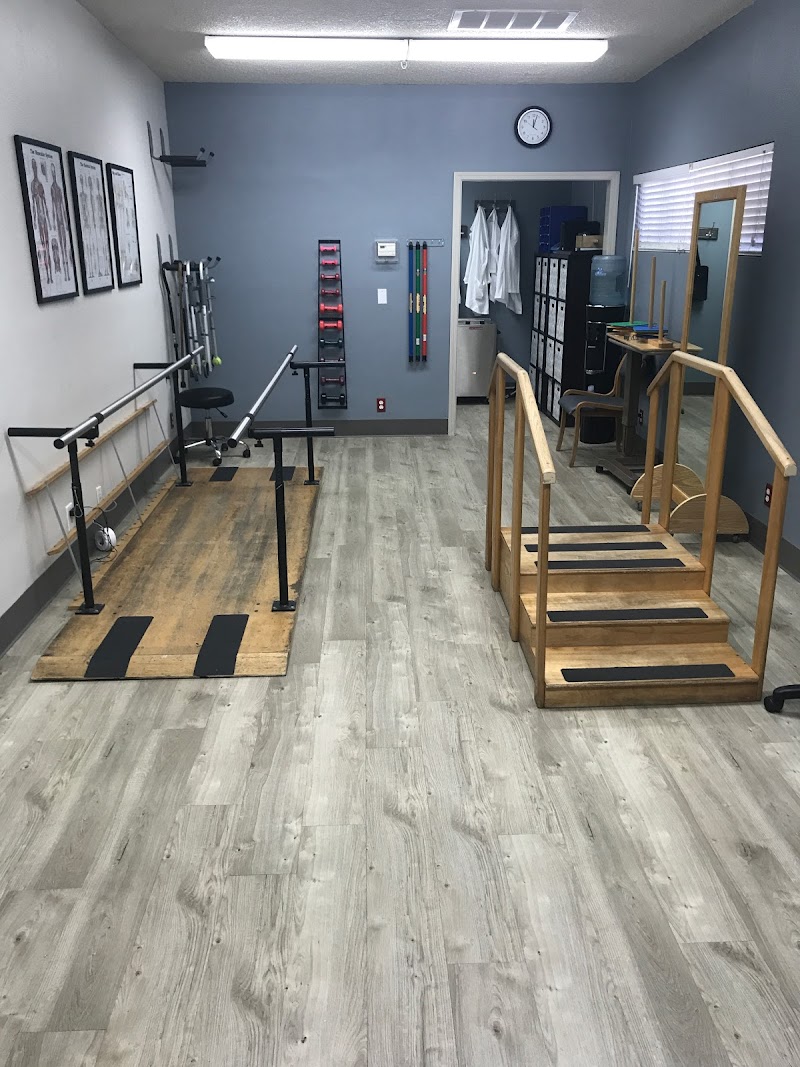
Understanding Severity Codes (click to expand)
Life-Threatening (Immediate Jeopardy)
J - Isolated K - Pattern L - Widespread
Actual Harm
G - Isolated H - Pattern I - Widespread
Potential for Harm
D - Isolated E - Pattern F - Widespread
No Harm (Minor)
A - Isolated B - Pattern C - Widespread

Questions to Ask on Your Visit

  • "Why is there high staff turnover? How do you retain staff?"
  • "Can I speak with families of current residents?"
  • "What's your RN coverage like on weekends and overnight?"

Our Honest Assessment

Strengths
  • • No fines on record. Clean compliance history, better than most California facilities.
Concerns
  • • 43 deficiencies on record, including 2 serious (caused harm) violations. Ask about corrective actions taken.
  • • Grade F (35/100). Below average facility with significant concerns.
  • • 55% turnover. Above average. Higher turnover means staff may not know residents' routines.
Bottom line: Trust Score of 35/100 indicates significant concerns. Thoroughly evaluate alternatives.

About This Facility

What is Hanford Post Acute's CMS Rating?

CMS assigns HANFORD POST ACUTE an overall rating of 2 out of 5 stars, which is considered below average nationally. Within California, this rating places the facility higher than 0% of the state's 100 nursing homes. A rating at this level reflects concerns identified through health inspections, staffing assessments, or quality measures that families should carefully consider.

How is Hanford Post Acute Staffed?

CMS rates HANFORD POST ACUTE's staffing level at 3 out of 5 stars, which is average compared to other nursing homes. Staff turnover is 55%, which is 9 percentage points above the California average of 46%. High turnover can affect care consistency as new staff learn residents' individual needs.

What Have Inspectors Found at Hanford Post Acute?

State health inspectors documented 43 deficiencies at HANFORD POST ACUTE during 2019 to 2025. These included: 2 that caused actual resident harm, 37 with potential for harm, and 4 minor or isolated issues. Deficiencies causing actual harm indicate documented cases where residents experienced negative health consequences.

Who Owns and Operates Hanford Post Acute?

HANFORD POST ACUTE is owned by a for-profit company. For-profit facilities operate as businesses with obligations to shareholders or private owners. The facility is operated by PACS GROUP, a chain that manages multiple nursing homes. With 124 certified beds and approximately 85 residents (about 69% occupancy), it is a mid-sized facility located in HANFORD, California.

How Does Hanford Post Acute Compare to Other California Nursing Homes?

Compared to the 100 nursing homes in California, HANFORD POST ACUTE's overall rating (2 stars) is below the state average of 3.1, staff turnover (55%) is near the state average of 46%, and health inspection rating (2 stars) is below the national benchmark.

What Should Families Ask When Visiting Hanford Post Acute?

Based on this facility's data, families visiting should ask: "How do you ensure continuity of care given staff turnover, and what is your staff retention strategy?" "Can I visit during a mealtime to observe dining assistance and food quality?" "How do you handle medical emergencies, and what is your hospital transfer rate?" "Can I speak with family members of current residents about their experience?" These questions are particularly relevant given the facility's high staff turnover rate.

Is Hanford Post Acute Safe?

Based on CMS inspection data, HANFORD POST ACUTE has a clean safety record: no substantiated abuse findings (meaning no confirmed cases of resident harm), no Immediate Jeopardy citations (the most serious violation level indicating risk of serious injury or death), and is not on the Special Focus Facility watch list (a federal program monitoring the lowest-performing 1% of nursing homes). The facility has a 2-star overall rating and ranks #100 of 100 nursing homes in California. While no facility is perfect, families should still ask about staff-to-resident ratios and recent inspection results during their visit.

Do Nurses at Hanford Post Acute Stick Around?

Staff turnover at HANFORD POST ACUTE is high. At 55%, the facility is 9 percentage points above the California average of 46%. High turnover means new staff may not know residents' individual needs, medications, or preferences. It can also be disorienting for residents, especially those with dementia who rely on familiar faces. Families should ask: What is causing the turnover? What retention programs are in place? How do you ensure care continuity during staff transitions?

Was Hanford Post Acute Ever Fined?

HANFORD POST ACUTE has no federal fines on record. CMS issues fines when nursing homes fail to meet care standards or don't correct problems found during inspections. The absence of fines suggests the facility has either maintained compliance or corrected any issues before penalties were assessed. This is a positive indicator, though families should still review recent inspection reports for the full picture.

Is Hanford Post Acute on Any Federal Watch List?

HANFORD POST ACUTE is not on any federal watch list. The most significant is the Special Focus Facility (SFF) program, which identifies the bottom 1% of nursing homes nationally based on persistent, serious quality problems. Not being on this list means the facility has avoided the pattern of deficiencies that triggers enhanced federal oversight. This is a positive indicator, though families should still review the facility's inspection history directly.