HEMET HILLS POST ACUTE
1717 WEST STETSON AVENUE, HEMET, CA 92545 (951) 925-9171
For profit - Limited Liability company 178 Beds PROMEDICA SENIOR CARE Data: November 2025 1 Immediate Jeopardy citation
Trust Grade
0/100
#1037 of 1155 in CA
Last Inspection: January 2025

Within standard 12-15 month inspection cycle. Federal law requires annual inspections.

Overview

Hemet Hills Post Acute has received a Trust Grade of F, indicating significant concerns about the quality of care provided. With a state rank of #1037 out of 1155 facilities in California, they are in the bottom half for nursing homes, and #49 out of 53 in Riverside County, suggesting limited local options for better care. The facility is improving, as issues decreased from 29 in 2024 to 19 in 2025, but still reported 89 total deficiencies, including one critical incident where a resident's severe oxygen deprivation was not promptly addressed, leading to a hospital transfer and eventual death. Staffing is average with a 3/5 rating and a turnover rate of 46%, which is concerning but not the worst in California. However, the facility has incurred $132,954 in fines, which is higher than 87% of other California facilities, indicating repeated compliance problems.

Trust Score
F
0/100
In California
#1037/1155
Bottom 11%
Safety Record
High Risk
Review needed
Inspections
Getting Better
29 → 19 violations
Staff Stability
⚠ Watch
46% turnover. Above average. Higher turnover means staff may not know residents' routines.
Penalties
○ Average
$132,954 in fines. Higher than 69% of California facilities. Some compliance issues.
Skilled Nurses
⚠ Watch
Each resident gets only 26 minutes of Registered Nurse (RN) attention daily — below average for California. Fewer RN minutes means fewer trained eyes watching for problems.
Violations
⚠ Watch
89 deficiencies on record. Higher than average. Multiple issues found across inspections.
★☆☆☆☆
1.0
Overall Rating
★★★☆☆
3.0
Staff Levels
★★★☆☆
3.0
Care Quality
★☆☆☆☆
1.0
Inspection Score
Stable
2024: 29 issues
2025: 19 issues

The Good

  • Full Sprinkler Coverage · Fire safety systems throughout facility
  • No fines on record

Facility shows strength in fire safety.

The Bad

1-Star Overall Rating

Below California average (3.1)

Significant quality concerns identified by CMS

Staff Turnover: 46%

Near California avg (46%)

Higher turnover may affect care consistency

Federal Fines: $132,954

Well above median ($33,413)

Significant penalties indicating serious issues

Chain: PROMEDICA SENIOR CARE

Part of a multi-facility chain

Ask about local staffing decisions and management

The Ugly 89 deficiencies on record

1 life-threatening 4 actual harm
Aug 2025 1 deficiency
CONCERN (D) 📢 Someone Reported This

A family member, employee, or ombudsman was alarmed enough to file a formal complaint

Potential for Harm - no one hurt, but risky conditions existed

Respiratory Care (Tag F0695)

Could have caused harm · This affected 1 resident

**NOTE- TERMS IN BRACKETS HAVE BEEN EDITED TO PROTECT CONFIDENTIALITY** Based on interview and record review, the facility failed to assess and verify the resident's history of obstructive sleep apnea...

Read full inspector narrative →
**NOTE- TERMS IN BRACKETS HAVE BEEN EDITED TO PROTECT CONFIDENTIALITY** Based on interview and record review, the facility failed to assess and verify the resident's history of obstructive sleep apnea (OSA - person's breathing repeatedly stops and starts during sleep due to a blocked airway) and coordinate necessary CPAP (Continuous positive airway pressure - a machined use to treat OSA) treatment with the physician, for one of five sampled residents (Resident A).This failure had the potential to result in untreated sleep apnea for Resident A, placing the resident at risk for respiratory complications, hypoxia (low oxygen), and sleep disruption. Findings:On July 7, 2025, at 10:18 a.m., an unannounced visit to the facility was conducted to investigate a quality-of-care issue.On July 7, 2025, at 4:28 p.m., during an interview with Resident A, Resident A stated she had been on CPAP for 20 years and last used it the day before she was admitted to the facility. Resident A stated she was not allowed to use her CPAP machine in the facility. Resident A stated she sleeps almost always in a sitting position and had told the social services and nurses about it.A review of Resident A's record indicated, Resident A was admitted to the facility on [DATE], with diagnoses which included chronic obstructive pulmonary disease (a long-term progressive disease that makes it hard to breathe) and atrial fibrillation (irregular heart rhythm).A review of Resident A's hospital records dated May 24, 2024, indicated, .Past medical history .Morbid obesity (extremely overweight), OSA on CPAP .Further review of Resident A's record indicated there was no documentation that a CPAP machine was provided, nor any documentation verifying the resident's continued need for CPAP therapy. On July 10, 2025, at 4:15 p.m., during an interview with the Director of Nursing (DON), the DON stated there was no documented diagnosis of sleep apnea, no care plan addressing sleep apnea, and Resident A was not placed on a CPAP machine. The DON further stated that according to the resident the CPAP machine was broken prior to admission.On July 22, 2025, at 5:50 a.m., during an interview with Licensed Vocational Nurse (LVN) 1, LVN 1 stated she worked the night shift from 10:30 pm to 6:30 a.m. and was familiar with Resident A. LVN 1 stated, she had observed Resident A sleeping at times lying on her side and at other times sitting up in bed. On July 22, 2025, at 8:56 a.m., during a concurrent interview and record review of Resident 1's hospital records dated May 24, 2024, with the MDS Nurse, the MDSN stated during assessment, he reviews a resident's hospital records, including clinical and past medical history. The MDSN stated, Resident A's diagnosis of OSA was missed during the comprehensive assessment. The MDSN stated whoever is involved in the care of the resident should be responsible for the medical history of the resident. The MDSN stated, the diagnoses of sleep apnea should have been verified with the physician to determine if the diagnoses was active and that the resident should have been asked about current CPAP use. The MDSN stated this had the potential to affect the resident's overall respiratory condition.On July 23, 2025, at 2:48 p.m., during an interview with the Assistant Director of Nursing (ADON), the ADON stated if there was a medical history of obstructive sleep apnea, it should have been included in the development of baseline care plan. The ADON stated, the licensed nurses should have contacted the physician to verify the diagnosis and communicated with the resident to verify prior CPAP use. The ADON further stated if the facility was informed that the CPAP machine was broken, the physician should have been notified, and an order for a replacement should have been obtained.A review of the facility's policy and procedures titled CPAP/BiPAP Support, dated March 2015 indicated, .CPAP.to improve arterial oxygen (PaO2) in resident with obstructive sleep apnea.
Jul 2025 1 deficiency
CONCERN (D) 📢 Someone Reported This

A family member, employee, or ombudsman was alarmed enough to file a formal complaint

Potential for Harm - no one hurt, but risky conditions existed

Accident Prevention (Tag F0689)

Could have caused harm · This affected 1 resident

**NOTE- TERMS IN BRACKETS HAVE BEEN EDITED TO PROTECT CONFIDENTIALITY** Based on observation, interview, and record review, the facility failed to ensure interventions for fall prevention were impleme...

Read full inspector narrative →
**NOTE- TERMS IN BRACKETS HAVE BEEN EDITED TO PROTECT CONFIDENTIALITY** Based on observation, interview, and record review, the facility failed to ensure interventions for fall prevention were implemented for two of seven residents, (Resident 1 and Resident 7).This failure had the potential for Resident 1 and Resident 7 to fall and sustain serious injuries. Findings:On July 30, 2025, at 11:07 a.m., an unannounced visit to the facility on a complaint investigation was initiated.1.A review of Resident 1's medical records indicated that resident was admitted on [DATE], with diagnoses of systemic lupus erythematosus, (SLE - a chronic autoimmune disease where the body's immune system mistakenly attacks its own healthy tissues and organs), chronic obstructive pulmonary disease, (COPD - a chronic inflammatory disease that causes obstructed airflow from the lungs), type 2 diabetes mellitus, (a chronic condition that affects the way the body uses sugar. The body either resists the effects of insulin - a hormone that regulates the movement of sugar into the cells - or doesn't produce enough insulin to maintain normal sugar levels), dementia, (a chronic or persistent disorder of mental processes caused by brain disease or injury and marked by memory disorders, personality changes, and impaired reasoning), muscle wasting and atrophy, (the loss of muscle mass and strength), and adult failure to thrive, (AFTT - a syndrome in older adults characterized by weight loss, decreased appetite, poor nutrition, and inactivity indicating a decline in physical and psychological health).A review of Resident 1's History and Physical dated July 17, 2025, indicated resident had intermittent capacity to make decisions.On July 30, 2025, at 12:20 p.m., an interview was conducted with Resident 1. Resident 1 stated she had been at the facility for a month. Resident 1 stated she recalled falling after tripping over her shoes. Resident 1 was unable to account for the date, or time of the incident. Resident 1 stated she did not have any injuries from the fall. Resident 1 stated she gets physical therapy every day and that she had been instructed to use the call light and call for assistance before getting out of bed. On July 30, 2025, at 3:10 p.m., an interview was conducted with Resident 1's Responsible Party, (RP). The RP stated that Resident 1 had been in the facility since March 2025 and had approximately four falls. The RP stated upon admission, he informed them that she was a fall risk. The RP stated in July 2025, Resident 1 slipped out of bed while reaching for her belongings placed on a wheeled table.On July 31, 2025, at 3:31 a.m., an interview was conducted with the Licensed Vocational Nurse, (LVN 1). LVN 1 stated, for all residents who are at high risk for fall, or who have had more than one fall, the interventions should include: bed in low position, call light within reach, all frequently used personal items should be within reach. On July 31, 2025, at 8:20 a.m., an interview was conducted with the Physical Therapist, (PT). The PT stated, on July 24, 2025, Resident 1 slipped out of bed while reaching for the over-bed table. The PT stated, personal items should have been kept within reach to prevent over-reaching and falling out of bed. A review of Resident 1's Care Plan initiated May 7, 2025, indicated Focus. Resident is at risk for falls with or without injury related to altered balance while standing and/or walking, altered mental status, antipsychotic medication, cardiovascular disease, diuretic medication, unsteady gait.Interventions. Keep personal items frequently used within reach.A review of Resident 1's Progress Notes dated July 24, 2025, at 07:25 a.m., indicated Resident was found on the floor on fall mat next to her bed by CNA. Resident was lying on her back on the fall mat. Resident denies hitting her head and denies any pain related to the fall. CNA immediately notified Nurse. RN and Nurse preformed a full body assessment, head-to-toe was completed. No skin tears, bruising or visible injuries were noted. Resident was able to move b/l [bilateral] upper extremities without difficulty. Resident reported that she was reaching for her bedside table when she accidentally slipped out of bed. Resident is A/Ox3 [alert and oriented to person, place, and time] cooperative, and denies any pain at this time.2. A review of Resident 7's medical records indicated Resident 7 was admitted to the facility on [DATE], with diagnoses of encounter for surgical aftercare following surgery on the digestive system, malignant neoplasm of colon, (a cancerous tumor that develops in the colon, which is part of the large intestine), secondary malignant neoplasm of liver and intrahepatic bile duct, (cancer that has spread to the liver and bile ducts from a primary cancer site elsewhere in the body), secondary malignant neoplasm of lung, (a cancerous tumor that has spread to the lung from a primary tumor located elsewhere in the body), metabolic encephalopathy, (a problem in the brain caused by a chemical imbalance in the blood), and muscle wasting and atrophy,A review of Resident 7's History and Physical dated June 17, 2025, indicated Resident 7 had the capacity to make decisions.On July 30, 2025, at 12:42 p.m., the Certified Nursing Assistant, (CNA 1) was interviewed. CNA 1 stated that fall-risk residents should always have the call light within reach. On July 31, 2025, at 3:31 a.m., an interview was conducted with the Licensed Vocational Nurse (LVN 1). LVN 1 stated, for all residents who are at high risk for falls, or who have had more than one fall, the interventions should include: bed in low position, call light within reach and all frequently used personal items should be within reach. On July 31, 2025, at 8:53 a.m., observed Resident 7 lying in bed, on her right side, with eyes closed, respirations even and unlabored. Resident 7's call light was observed on the right side of the bed on the floor. On July 31, 2025, at 8:58 a.m., a concurrent observation of Resident 7's call light on the right side of the bed on the floor and an interview was conducted with LVN 2. LVN 2 stated, Resident 7's call light was not within the residents' reach and it should be within reach at all times. A review of Resident 7's NURSING - FALL RISK OBSERVATION/ASSESSMENT dated June 19, 2025, at 8:30 a.m., indicated .Score of 14.Scoring: B. MODERATE RISK 9-15.A review of Resident 7's Care Plan initiated July 9, 2025, indicated Focus: Resident is at risk for falls with or without injury related to altered balance while standing and/or walking. disease, unsteady gait.Interventions. Keep call light within reach.A review of the facility's policy and procedure titled Falls - Clinical Protocol revised March 2018, indicated .Treatment/Management 1. Based on the preceding assessment, the staff and physician will identify pertinent interventions to try to prevent subsequent falls and to address the risks of clinically significant consequences of falling.A review of the facility's policy and procedure titled Care Plans, Comprehensive Person-Centered revised March 2022, indicated .9. Care plan interventions are chosen only after data gathering, proper sequencing of events, careful consideration of the relationship between the resident's problem areas and their causes, and relevant clinical decision making. 10. When possible, interventions address the underlying source(s) of the problem area(s), not just symptoms or triggers.
Jun 2025 2 deficiencies
CONCERN (D) 📢 Someone Reported This

A family member, employee, or ombudsman was alarmed enough to file a formal complaint

Potential for Harm - no one hurt, but risky conditions existed

Deficiency F0558 (Tag F0558)

Could have caused harm · This affected 1 resident

**NOTE- TERMS IN BRACKETS HAVE BEEN EDITED TO PROTECT CONFIDENTIALITY** Based on observation, interview, and record review, the facility failed for two of six sampled residents (Residents 1 and 2) to ...

Read full inspector narrative →
**NOTE- TERMS IN BRACKETS HAVE BEEN EDITED TO PROTECT CONFIDENTIALITY** Based on observation, interview, and record review, the facility failed for two of six sampled residents (Residents 1 and 2) to ensure: 1. The call light was placed within reach for Resident 1; and 2. The call light was answered timely for Resident 2. These failures had the potential to compromise the timely delivery of resident care. Findings: On June 10, 2025, at 10:48 a.m., during a concurrent observation and interview with Resident 1 in the resident ' s room, Resident 1 was observed to be unable to move her right arm. Resident 1 stated, she was cold and would like a blanket. Resident 1 stated, she could not reach her call light. Resident 1 ' s call light was observed to be placed on the right side of the bed rail, which was in the down position. On June 10, 2025, at 10:54 a.m., during a concurrent observation and interview with Certified Nursing Assistant (CNA) 1 in Resident 1's room, CNA 1 stated, Resident 1 had right-sided weakness and was able to use the call light only if it was placed on the left side. CNA 1 stated, the resident's call light was placed on the right side. CNA 1 stated, the resident would not be able to reach the call light as it was placed on the right side. On June 10, 2025, Resident 1 ' s admission Record was reviewed. Resident 1 was admitted to the facility on [DATE], with diagnosed which included cerebral infarction (a type of stroke) with right sided weakness. A review of Resident 1 ' s Care Plan dated September 27, 2024, indicated, .at risk for ADL (Activities of Daily Living)/mobility decline and requires assistance .Encourage to use call light for assistance . On June 27, 2025, at 2:35 p.m., the Director of Staff Development (DSD) was interviewed. The DSD stated, she was familiar with Resident 1. The DSD stated, Resident 1 ' s call light should be placed on the left side, as the resident has right sided weakness. The DSD stated, the resident would not be able to call for assistance if the call light was placed on the right side. 2. On June 12, 2025, at 12:50 p.m., during a concurrent observation and interview inside Resident 2 ' s room with Resident 2, Resident 2 stated, it took the staff 30 minutes or longer to answer her call lights. Resident 13 was heard yelling for help. Resident 13 ' s call light was observed turned on for about 17 minutes before CNA 2 responded. On June 12, 2025, Resident 2 ' s admission Record was reviewed. Resident 2 was admitted to the facility on [DATE], with diagnoses which included cerebral infarction (a type of stroke). A review of Resident 2 ' s care plan dated June 5, 2025, indicated, .ADL/Mobility .Resident .is at risk for ADL/mobility decline requires assistance .Will have needs anticipated and met by staff .Encourage to use call light for assistance . On June 12, 2025, at 1:12 p.m., CNA 2 was interviewed. CNA 2 stated, all staff should respond to call lights and the staff should respond when residents call out or yell for help. CNA 2 stated the call lights should be answered within 15 minutes. On June 27, 2025, at 2:35 p.m., the Director of Staff Development (DSD) was interviewed. The DSD stated, call lights should be answered right away. The DSD stated, if CNAs were not available to respond, other facility staff should answer the call light. The DSD stated, the facility practice is for call lights to be answered within seven minutes. A review of the facility policy and procedures titled, Answering the call light, dated October 2010, indicated, .The purpose of this procedure is to respond to the resident ' s requests and needs .When the resident is in bed or confined to a chair be sure the call light is within easy reach of the resident .Answer the resident ' s call as soon as possible .
CONCERN (D) 📢 Someone Reported This

A family member, employee, or ombudsman was alarmed enough to file a formal complaint

Potential for Harm - no one hurt, but risky conditions existed

Report Alleged Abuse (Tag F0609)

Could have caused harm · This affected 1 resident

**NOTE- TERMS IN BRACKETS HAVE BEEN EDITED TO PROTECT CONFIDENTIALITY** Based on interview and record review, the facility failed to ensure an allegation of abuse was reported to the California Depart...

Read full inspector narrative →
**NOTE- TERMS IN BRACKETS HAVE BEEN EDITED TO PROTECT CONFIDENTIALITY** Based on interview and record review, the facility failed to ensure an allegation of abuse was reported to the California Department of Public Health within two hours for one of five sampled residents (Resident 1). This failure had the potential to leave Resident 1 unprotected, result in further abuse, and delay the initiation of an investigation. Findings: On June 12, 2025, Resident 1's admission Record was reviewed. Resident 1 was admitted to the facility on [DATE], with diagnoses which included dementia (memory loss) and protein-calorie malnutrition (deficient intake of protein and calories to meet the body ' s energy and tissue-building needs). A further review of Resident 1's HISTORY AND PHYSICAL EXAMINATION, dated September 29, 2024, indicated Resident 1 does not have the capacity to understand and make decisions. A review of Resident 1's SBAR (Situation, Background, Appearance, Review), dated May 17, 2025, indicated, Resident 1 had increased confusion, making allegation of prior abuse. A review of Resident 1's Nurse ' s Note, dated May 17, 2025, at 7 p.m. as documented by Registered Nurse (RN) 1, indicated, .LN [licensed nurse] reported resident alleging sexual assault, patient had made prior claim previously out of confusion .she stated the alleged sexual assault happened 9 months ago . A review of Resident 1's IDT (Interdisciplinary Team) NOTE, dated May 20, 2025, at 10:44 a.m., documented by the Director of Nursing (DON) indicated, .Presented to IDT regarding this behavior of having a rapist roaming around at night .Investigation was made regarding this matter, and resident mentioned this again on 5/17/25, same name presented to the nurse and happened 9 months ago . A review of Resident 1's Behavior Note, dated February 10, 2025, at 1:52 p.m., documented by the DON, indicated, .Visited resident on Saturday around 9:30-10:00 am, interviewed resident regarding her concerns of a person to her ' territory ' .She stated that she thought to tell the staff regarding a guy that has been going to their territory for multiple times .and thought he was roaming around in the facility and touched her .The facility did not have an employee by that name andno [sic] male CNA [Certified Nursing Assistant] assigned to her, and she stated that the nights he was in the facility was not sure, last week, 2 weeks or last night . There was no documentation that the allegation of sexual abuse on May 17, 2025, was reported to the California Department of Public Health within two hours. On June 27, 2025, at 1:35 p.m., the Director of Nursing (DON) was interviewed. The DON stated, on February 8, 2025, Resident 1 reported she was touched by a man roaming the hallway, however the resident did not provide details and became irritated during the conversation. The DON stated, it was not considered an allegation of abuse so it was not reported. The DON stated, on May 17, 2025, Resident 1 reported being raped multiple times by a man. The DON stated, this incident was not reported to the local state agency or the California Department of Public health (CDPH) because it was not considered an allegation due to resident's history of confusion and allegations. The DON stated, according to protocol, any allegation of abuse should be reported to CDPH within two hours. The DON stated, in these instances, the facility determined that the reports did not constitute actual allegations and therefore were not reported. On June 27, 2025, at 2:56 p.m., during a concurrent interview and review of Resident 1's SBAR dated May 17, 2025, were conducted with LVN 1. She stated, she documented Resident 1's statements alleging prior abuse, that the resident had been raped in the past. LVN 1 stated, Resident 1's statements were very specific and consistent, but they were interpreted as behavioral in nature rather that an allegation of abuse. LVN 1 stated, she did not report the incident to the CDPH at that time. LVN 1 stated all allegations of abuse should be reported to CDPH within two hours. On June 27, 2025, at 3:12 p.m., during a concurrent interview and review of Resident 1's nurse notes dated May 17, 2025 with the RN, the RN stated, LVN 1 reported to her on May 17, 2025, that the resident had allegedly been sexually assaulted. RN 1 stated, she informed the Administrator and the DON, but the incident was not reported to CDPH. The RN stated, she is a mandated reported and is required to report any allegation of abuse to CDPH within two hours. RN 1 stated, the incident was not reported because it was not considered an allegation of abuse. A review of the facility policy and procedure titled Abuse, Neglect, Exploitation or Misappropriation - Reporting and investigating, dated September 2022, indicated, .Reporting allegations to the Administrator and Authorities .If resident abuse .is suspected, the suspicion must be reported immediately to the administrator and to other officials according to state law .The administrator or the individual making the allegation immediately reports his or her suspicion to the following persons or agencies .the state licensing/certification agency .The local/state ombudsman . ' Immediately ' is defined as .within two hours of an allegation involving abuse .
Apr 2025 3 deficiencies 1 Harm
SERIOUS (G) 📢 Someone Reported This

A family member, employee, or ombudsman was alarmed enough to file a formal complaint

Actual Harm - a resident was hurt due to facility failures

Notification of Changes (Tag F0580)

A resident was harmed · This affected 1 resident

**NOTE- TERMS IN BRACKETS HAVE BEEN EDITED TO PROTECT CONFIDENTIALITY** Based on interview and record review, the facility failed to notify the physician timely when one of eight sampled residents (Re...

Read full inspector narrative →
**NOTE- TERMS IN BRACKETS HAVE BEEN EDITED TO PROTECT CONFIDENTIALITY** Based on interview and record review, the facility failed to notify the physician timely when one of eight sampled residents (Resident 1) had an oxygen saturation (measures of how effectively the body is transporting oxygen from the lungs to the tissues) of 35%. This failure caused a delay in provision of appropriate interventions resulting in prolonged discomfort and hypoxemia (abnormally low concentration of oxygen in the blood) for Resident 1, requiring transfer to the general acute care hospital (GACH). Resident 1 had an emergency endotracheal intubation (insertion of a flexible plastic tube called an endotracheal tube (ET) into the mouth or nose and then into the airway to hold it open and provide oxygen) upon arrival at the GACH, where the resident expired. Findings: On [DATE], at 11:42 a.m., an unannounced visit was conducted to the facility to investigate quality care issues. A review of Resident 1's admission records indicated the resident was admitted on [DATE], with diagnoses of chronic obstructive pulmonary disease (COPD - a chronic inflammatory lung disease that causes obstructed airflow from the lungs), anxiety disorder (a chronic condition characterized by an excessive and persistent sense of apprehension), alcohol use disorder(impaired ability to stop or control alcohol use despite adverse social, occupational, or health consequences), and sepsis (occurs when chemicals released in the bloodstream to fight an infection trigger inflammation throughout the body, that can lead to death). A review of Resident 1's History and Physical, dated [DATE], indicated the resident had the capacity to make decisions. A review of Resident 1's Order Summary Report, indicated: - Dated [DATE], indicated, O2 (oxygen) @ 3 LPM [liters per minute] VIA NASAL CANNULA (a thin tube inserted into the body for oxygen delivery) CONTINUOUS PER CONCENTRATOR/TANK every shift for SOB [shortness of breath] - Dated [DATE], indicated Send to ED, [emergency department] for further treatment and evaluation . A review of Resident 1's Progress Notes, dated [DATE], at 06:18 a.m., indicated .Late Entry .CNA (Certified Nursing Assistant) reported patients O2 level at 35, patient was noted not having his nasal cannula on. O2 was placed and went up to 80. Nasal cannula was switched to non-rebreather mask and O2 levels went up to 87 . On [DATE], at 3:19 p.m., during an interview, the Registered Nurse (RN 1) stated on [DATE], at approximately 10 a.m., Resident 1 had removed his oxygen, and his oxygen levels were low. RN 1 stated that they placed a non-rebreather mask on at 10 liters to get the oxygen levels up. RN 1 stated they notified the resident's physician, and the physician ordered for Resident 1 to be transferred to the GACH. On [DATE], at 1:41 p.m., during an interview, RN 2 stated that if a resident had low oxygen saturation of 57%, they would place oxygen at high flow oxygen (form of non-invasive respiratory support that delivers high volumes of oxygen directly to the patient through nasal cannulas), contact the resident's physician, and would transfer the resident to the hospital. On [DATE], at 3:21 p.m., during an interview, Licensed Vocational Nurse (LVN) 1 stated that on [DATE], Resident 1 was removing his oxygen, and his oxygen saturation was at 57% before paramedics came. LVN 1 stated she was at the bedside with Resident 1 until the medics came to transport Resident 1 to the GACH. On [DATE], at 11:52 a.m., during a telephone interview, LVN 2 stated that normal oxygen saturation should be above 90%. LVN 2 stated that they should notify the physician if a resident's oxygen saturation is below 90%. LVN 2 stated that Resident 1 had an order for oxygen by nasal cannula at 3 liters, however, on [DATE], around midnight, she was alerted by the Certified Nursing Assistant that Resident 1's oxygen saturation was 35%, and he was removing his oxygen. LVN 2 stated that they should have contacted the physician to report Resident 1's low oxygen saturation. On [DATE], at 3:58 p.m., during a telephone interview with the Attending Physician (AP), the AP stated, he was not aware Resident 1 had an episode of low oxygen saturation level after midnight on [DATE], or that a non-rebreather mask was used. The AP stated he was informed by licensed staff at around 11 a.m. on [DATE]. The AP stated, he was not informed of the resident's earlier low oxygen saturation of 35%. The AP stated, if he had been informed of earlier episode of the low oxygen saturation level, he would have sent the resident to the hospital. On [DATE], at 4:26 p.m., during a telephone interview with the Director of Nursing (DON), she stated, Resident 1 had a change in condition around 1:37 a.m. on [DATE], due to low oxygen saturation, which dropped to 35. The DON stated, the resident should have been transferred to the hospital at that point. The DON stated that the licensed nurse should have closely monitored the resident, but there was no documentation that the resident was closely monitored. The DON stated, the physician was not notified until around 11 a.m. The DON stated the delay in notifying the physician could have affected the resident's treatment. A record review of Resident 1's eINTERACT SBAR [situation, background, assessment, recommendation], Summary for Providers, dated [DATE], at 11:57 a.m., indicated .At 11:20 AM, resident was noted not wearing his oxygen. Upon entering the room, resident's HOB [head of bed] was on fowlers (sic) position [a medical term for a body position in an upright in bed with head and back supported at an angle of 45 to 60 degrees]. Upon assessment, resident was pale, awake, alert but altered (thinking, awareness, or behavior is abnormal), skin was warm to touch, VS [vital sign] has significant O2 [oxygen] level of 56%, went up to 88-91% after we put him on non-rebreather (sic) mask on 5L [liters] oxygen. MD made aware with an order to send resident to ED for further treatment and management. A review of Resident 1's Emergency Department Records, dated [DATE], at 1:25 p.m., indicated XXX[AGE] year-old male patient (Resident 1) presents to the ER (Emergency Room) .for evaluation of difficulty in breathing. History is limited due to patient's altered level of consciousness. Patient is difficult to arouse and is unable to answer questions .Procedures in the Emergency Department .Procedure Narrative: Endotracheal Intubation . Intubation indications: respiratory failure and severe hypoxemia. It was felt the patient required emergency intubation . A review of Resident 1's hospital document titled, Discharge Summary, dated [DATE], indicated, Resident 1 was pronounced deceased following confirmation of asystole (complete absence of electrical activity in the heart), absent heart sounds, no spontaneous respirations, no pupillary or corneal reflex. Resident 1 was admitted with shortness of breath and lethargy (reduced alertness, slow response, or drowsiness). Resident 1's Plan of Care noted a diagnosis of Acute Hypercapnic Hypoxic Respiratory Failure (a serious medical condition where the lungs cannot provide enough oxygen to the body and cannot remove enough carbon dioxide [colorless and odorless gas]) likely secondary to Pneumonia (an infection of the lungs), Healthcare Associated Pneumonia (pneumonia that developed in a facility). The resident required reintubation and mechanical ventilation (a life-support technique that uses a machine to move air in and out of the lungs). The discharge diagnosis was cardiac arrest secondary to acute respiratory failure and pneumonia caused by ESBL (Extended-Spectrum Beta-Lactamase - bacteria resistant to many commonly used antibiotics). A review of the facility's policy and procedure titled Change in a Resident's Condition or Status revised February 2021, indicated .1. The nurse will notify the resident's attending physician or physician on call when there has been a(an) . d. significant change in the resident's physical/emotional/mental condition; e. need to alter the resident's medical treatment significantly . 2. A significant change of condition is a major decline or improvement in the resident's status that: a. will not normally resolve itself without intervention by staff or by implementing standard disease-related clinical interventions .
CONCERN (D) 📢 Someone Reported This

A family member, employee, or ombudsman was alarmed enough to file a formal complaint

Potential for Harm - no one hurt, but risky conditions existed

Quality of Care (Tag F0684)

Could have caused harm · This affected 1 resident

Deficiency Text Not Available

Read full inspector narrative →
Deficiency Text Not Available
CONCERN (D) 📢 Someone Reported This

A family member, employee, or ombudsman was alarmed enough to file a formal complaint

Potential for Harm - no one hurt, but risky conditions existed

Accident Prevention (Tag F0689)

Could have caused harm · This affected 1 resident

**NOTE- TERMS IN BRACKETS HAVE BEEN EDITED TO PROTECT CONFIDENTIALITY** Based on observation, interview, and record review, the facility failed to ensure one of eight residents, (Resident 3), was safe...

Read full inspector narrative →
**NOTE- TERMS IN BRACKETS HAVE BEEN EDITED TO PROTECT CONFIDENTIALITY** Based on observation, interview, and record review, the facility failed to ensure one of eight residents, (Resident 3), was safe from a fall, when the Certified Nursing Assistant, (CNA 1), repositioned Resident 3 away from her while changing Resident 3's briefs. This failure caused discoloration to the top of the head accompanied with 4/10 pain, discoloration to the left side of cheek, and skin tear to the left elbow. Resident 3 was transferred to the hospital for evaluation. Findings: On March 21, 2025, at 11:42 a.m., an unannounced visit to the facility on four complaints and a Facility Reported Incident was initiated. A review of Resident 3's medical records indicated he was originally admitted to the facility on [DATE], with diagnoses of chronic obstructive pulmonary disease, (COPD - a chronic inflammatory lung disease that causes obstructed airflow from the lungs), Alzheimer's disease, (progressive mental deterioration that can occur in middle or old age, due to generalized degeneration of the brain), acquired absence of left leg below knee, and legal blindness. A review of Resident 3's History and Physical dated October 25, 2024, indicated he did not have the capacity to make decisions. A review of Resident 3's Minimum Data Set (an assessment tool), dated January 26, 2025, indicated, Resident 3 required substantial/maximal assistance (helper does more than half the effort, helper lifts or holds trunk or limbs and provides more than half the effort) with bed mobility (the ability to roll from lying on back to left and right side, and return to lying on back on the bed). On March 21, 2025, at 3:44 p.m., a telephone interview was conducted with the Certified Nursing Assistant, (CNA 1). CNA 1 stated on March 16, 2025, between 8:30 p.m. to 9 p.m., she was changing Resident 3's brief. CNA 1 stated she was standing on the left side of the bed and Resident 3 was lying on his back. CNA 1 stated that she had instructed Resident 3 to turn to the right, and was preparing to walk to the right side, and Resident 1 turned and fell off the bed headfirst. CNA 1 stated, Resident 3 required moderate (the resident does more than half of the effort, but staff provided some physical help) to maximal assistance with bed mobility. On March 24, 2025, at 1:11 p.m., observed Resident 3 lying in bed on his back. There were no side rails in use, and he was on an air mattress. On March 24, 2025, at 1:11 p.m., an interview was conducted with Resident 3. Resident 3 stated on an unknown date, unknown persons pushed him out of bed, and he fell on his head. On March 24, 2025, at 3:37 p.m., an interview was conducted with CNA 2. CNA 2 stated she was familiar with Resident 3. CNA 2 stated that when repositioning Resident 3, she preferred having two person assistance to ensure a safe turn. CNA 2 stated, when repositioning residents alone, she would instruct the resident to turn towards her to prevent a fall from the bed. On March 25, 2025, at 1:47 p.m., an interview was conducted with the Assistant Director of Nursing, (ADON). The ADON stated that Resident 3 had experienced a fall on March 16, 2025. The ADON stated, it was determined CNA 1 had rolled Resident 3 away from her, which resulted in a fall. The ADON stated that Resident 3 was transferred to the hospital for evaluation and later returned to the facility. A review of Resident 3's eINTERACT SBAR, [situation, background, assessment, recommendation], Summary for Providers dated March 16, 2025, at 9:41 p.m., indicated .LN [licensed nurse] was notified by staff on shift that resident had a fall during patient care, LN rush to residents room, no cognitive changes, during skin assessment resident was noted with discoloration to the top of the head accompanied with 4/10 pain, discoloration to the left side of cheek, and skin tear to the left elbow. staff on shift safely assisted resident to bed. [name of doctor] was notified and order was receive (sic) to send patient to ER [emergency room] for CT scan of the head . A review of Resident 3's IDT [Interdisciplinary Team] – Fall dated March 17, 2025, at 2:35 p.m., indicated . At risk for falls due to impaired balance/poor coordination, left BKA, [below the knee amputation] non-ambulatory and prefers to be in bed most of the time, potential medication side effects, sensory (blindness) deficit , (sic) dementia, forgetfulness, and psychosis . Resident was transferred to ER for CT scan of head and further evaluation. Staff education on technique for rolling resident when providing care in bed . A review of Resident 3's Progress Notes dated March 19, 2025, at 10:01 p.m., indicated Resident returned from [name of hospital] via gurney . A review of Resident 3's Care Plan initiated March 16, 2025, indicated Focus .Falls: Resident had a witnessed fall 3/16/25 and is at risk for injury .Interventions . Staff education regarding turning resident towards staff when providing care in bed . A review of the facility's policy and procedure titled Falls -Clinical Protocol revised March 2018, indicated .1. For an individual who has fallen, the staff and practitioner will begin to try to identify possible causes within 24 hours of the fall . 5. Falls should be categorized as . c. Other circumstances such as sliding out of a chair or rolling from a low bed to the floor.
Jan 2025 12 deficiencies
CONCERN (D)

Potential for Harm - no one hurt, but risky conditions existed

Deficiency F0578 (Tag F0578)

Could have caused harm · This affected 1 resident

**NOTE- TERMS IN BRACKETS HAVE BEEN EDITED TO PROTECT CONFIDENTIALITY** Based on interview and record review, the facility failed to provide Advance Directive (AD-a written instruction related to the ...

Read full inspector narrative →
**NOTE- TERMS IN BRACKETS HAVE BEEN EDITED TO PROTECT CONFIDENTIALITY** Based on interview and record review, the facility failed to provide Advance Directive (AD-a written instruction related to the provision of health care when the resident is no longer able to make decisions) education, materials, and follow-up for two of three residents reviewed for AD (Residents 73 and 130) and/or their resident representatives (RP). This failure had the potential in Residents 73 and 130's medical preferences not being honored during critical healthcare decisions. Findings: 1. A review of Resident 73's admission Record, indicated Resident 73 was admitted to the facility on [DATE]. A review of Resident 73's History and Physical dated May 25, 2024, indicated Resident 73 had the capacity to understand and make decisions. A review of Resident 73's Advance Directive Acknowledgement Form, dated May 26, 2024, indicated Resident 73 has not executed an AD. A review of Resident 73's Social History Review (Quarterly), dated December 6, 2024, indicated, .Self-responsible .Advance Directive .None of the above . A review of Resident 73's IDT Conference Summary, dated December 10, 2024, indicated the formulation of AD was not discussed with Resident 73 or the RP. Further review of Resident 73's medical record indicated no documented evidence Resident 73 and or the RP was provided education and information about AD. On January 17, 2025, at 8:42 a.m., during a concurrent interview and review of Resident 73's medical record with the Social Service Director (SSD), she stated if a resident did not have an AD, she would offer resources and education to the resident or RP. The SSD further stated it was important for residents to be educated and have the opportunity to formulate an AD in the event the resident were unable to make decisions in the future. The SSD stated Resident 73 had no AD, was not provided education, and was not reviewed for AD. The SSD further stated she should have followed up and provided AD education to Resident 73 or the RP. 2. A review of Resident 130's admission Record, indicated Resident 130 was admitted to the facility on [DATE]. A review of Resident 130's History and Physical dated May 25, 2024, indicated Resident 130 had the capacity to understand and make decisions. A review of Resident 130's Advance Directive Acknowledgement Form, dated May 23, 2024, indicated Resident 130 has not executed an AD. A review of Resident 130's IDT Conference Summary, dated December 4, 2024, indicated .Informed resident on advance health care directive .Resident interested in completing form . A review of Resident 130's Social History Review (Quarterly), dated December 6, 2024, indicated the formulation of AD was not discussed with Resident 130 or the RP. Further review of Resident 130's medical record indicated no documented evidence Resident 130 was assisted and provided information about the formulation of an AD. On January 17, 2025, at 9 a.m., during a concurrent interview and review of Resident 130's medical record with the SSD, she stated Resident 130 had expressed interest in the formulation of an AD and was not assisted or provided materials to formulate an AD. The SSD further stated she should have followed up, assisted, and provided materials to Resident 130 or the RP. A review of the facility policy and procedure titled, Advance Directives, dated 2016, indicated, .Social service director or designee will inquires of the resident .about the existence of any written advance directive .If a resident indicates that he or she has not established advance directives, the facility staff will offer assistance in establishing advance directives .Staff will document in the medical record the offer to assist and the resident decision to accept of decline assistance .
CONCERN (D)

Potential for Harm - no one hurt, but risky conditions existed

Comprehensive Assessments (Tag F0636)

Could have caused harm · This affected 1 resident

**NOTE- TERMS IN BRACKETS HAVE BEEN EDITED TO PROTECT CONFIDENTIALITY** Based on interview and record review, the facility failed to ensure the annual comprehensive assessment for two of 27 residents ...

Read full inspector narrative →
**NOTE- TERMS IN BRACKETS HAVE BEEN EDITED TO PROTECT CONFIDENTIALITY** Based on interview and record review, the facility failed to ensure the annual comprehensive assessment for two of 27 residents reviewed for resident assessment (Residents 70 and 85) were completed within 14 calendar days, as required by the Center for Medicare and Medicaid Services (CMS - an agency that administers the nation's major healthcare programs). This failure had the potential for Residents 70 and 85 to not receive resident centered care (care focusing on the needs of individuals). Findings: 1a. A review of Resident 70's Minimum Data Set (MDS - an assessment tool) annual assessment dated [DATE], indicated the assessment was completed on January 11, 2025, 37 days after the assessment reference date (the final day of observation period during which the resident's status is assessed and documented). 1b. A review of Resident 85's Minimum Data Set annual assessment dated [DATE], indicated the assessment was completed on January 11, 2025, 35 days after the assessment reference date. On January 17, 2025, at 11:26 a.m. a concurrent interview and record review was conducted with the MDS Coordinator (MDSC). The MDSC stated the annual comprehensive assessments for both Residents 70 and 85 were completed late on January 11, 2025. The MDSC further stated it was important for annual comprehensive assessments to be completed and transmitted to CMS in a timely manner to ensure assessments and plan of care were accurate for the residents. On January 17, 2025, at 4:02 p.m., an interview was conducted with the Director of Nursing (DON). The DON stated the annual comprehensive assessments for Residents 70 and 85 should have been completed within 14 days to ensure accurate assessments and provide the residents centered care plans. The DON further stated the MDSC should have completed and submitted the annual assessment in a timely manner. A review of the facility document titled, RAI OBRA-required Assessment Summary dated October 2024, indicated, Assessment Type: Annual (Comprehensive) .MDS Completion Date (item Z0500B .No Later Than .ARD +14 calendar days . A review of the facility policy and procedure title, MDS Completion and Submission Timeframes, dated July 2017, indicated, .The assessment coordinator or designee is responsible for .resident assessments .submitted to CMS .in accordance with current federal and state guidelines .
CONCERN (D)

Potential for Harm - no one hurt, but risky conditions existed

Quality of Care (Tag F0684)

Could have caused harm · This affected 1 resident

**NOTE- TERMS IN BRACKETS HAVE BEEN EDITED TO PROTECT CONFIDENTIALITY** Based on observation, interview, and record review, the facility failed to notify the physician when the resident missed a follo...

Read full inspector narrative →
**NOTE- TERMS IN BRACKETS HAVE BEEN EDITED TO PROTECT CONFIDENTIALITY** Based on observation, interview, and record review, the facility failed to notify the physician when the resident missed a follow-up visit for a surgical wound to the spine for one of six residents reviewed for skin conditions (Resident 24). This failure had the potential to delay the care and treatment of Resident 24's skin condition which could result in skin infections and worsening of the wound. Findings: On January 14, 2025, at 2:08 p.m., a concurrent observation and interview were conducted with Resident 24. Resident 24 was alert and sitting up in a chair. Resident 24 stated he missed his follow-up visit with a physician for his wound, was dismissed by staff, and was unsure if he was rescheduled for a new follow-up visit. Resident 24's record was reviewed. Resident 24 was admitted to the facility on [DATE], with diagnoses which included disease of the spinal cord (a weakened portion of the spine), and pressure ulcer of unspecified site, unspecified stage (skin breakdown). A review of Resident 24's history and physical dated December 2, 2024, indicated Resident 24 has the capacity to understand and make decisions. A review of the Physicians Summary, indicated, .Neurosurgery Follow up .01/13/25 @ 0945am .(address and phone number of appointment designation) .no imaging needed .Transportation arranged with .Pick up @ 8:56am (authorization number) .one time only until 01/13/2025 23:59 . A review of Resident 24's progress note dated January 13, 2025 at 11:43 a.m., indicated, .Residents transportation arrived late .Dr. refused to see resident due to being late to appointment. Sent communication to reschedule appointment . Further review of Resident 24's record medical record indicated there was no documentation the physician was notified of Resident 24 missed neurosurgery follow-up visit. In addition, there was no documentation that the missed neurosurgery follow-up visit was rescheduled. On January 16, 2025, at 2:01 p.m., a concurrent interview and record review was conducted with LVN 6. LVN 6 stated missed follow-up visits should be communicated to the physician and the scheduler (Case Manager) so that the visit could be rescheduled. LVN 6 stated, Resident 24's missed neurosurgery follow-up visit was not communicated to the staff and the physician was not notified. LVN 6 further stated the physician should have been notified of Resident 24's missed follow-up visit to ensure Resident 24 received the necessary care and treatment. On January 16, 2025, at 2:20 p.m. an interview was conducted with the Case Manager (CM). CM stated she was not made aware that Resident 24 missed a physician's follow-up visit on January 13, 2025. The CM stated the nursing staff should have communicated with the CM to ensure missed follow-up visits were rescheduled. The CM further stated that it was important for residents attend their appointments to receive necessary care and treatment and there was a risk that they would not receive the necessary care and treatment if they missed follow-up visits. On January 16, 2025, at 3:24 p.m., a concurrent interview and record review were conducted with the Director of Nursing (DON). The DON stated it was the responsibility of the licensed nurses to communicate with the physician, nursing staff, and case manager when residents miss follow-up visits. The DON stated licensed nurses should communicate follow-up visits with CM for rescheduling immediately. The DON stated if the staff did not communicate missed appointments to the physician and the CM, there could be potential risks for residents not receiving the necessary care and treatment. The DON stated there was no documentation, the physician was notified and all staff should communicate using the appropriate electronic medical record and paper forms.
CONCERN (D)

Potential for Harm - no one hurt, but risky conditions existed

Pressure Ulcer Prevention (Tag F0686)

Could have caused harm · This affected 1 resident

**NOTE- TERMS IN BRACKETS HAVE BEEN EDITED TO PROTECT CONFIDENTIALITY** Based on observation, interview, and record review, the facility failed to ensure for one of six residents (Resident 104) review...

Read full inspector narrative →
**NOTE- TERMS IN BRACKETS HAVE BEEN EDITED TO PROTECT CONFIDENTIALITY** Based on observation, interview, and record review, the facility failed to ensure for one of six residents (Resident 104) reviewed for pressure injuries: 1. The care plan interventions for the right heel pressure injury (PI - localized damage to the skin and underlying soft tissue over a bony prominence or from a medical device) were implemented. 2. The Registered Dietitian (RD) nutritional recommendations for wound healing were communicated to the physician. These failures had the potential to result in Resident 104 not receiving the necessary nutrition and devices needed to heal and prevent the worsening of the pressure injury. Findings: A review of Resident 104's admission Record, indicated Resident 104 was admitted to the facility on [DATE], with diagnoses which included protein-calorie malnutrition (a condition where the body does not get enough protein and nutrients from food). A review of Resident 104's History and Physical dated December 22, 2024, indicated Resident 104 has the capacity to make decisions. A review of Resident 104's Minimum Data Set (an assessment tool) dated December 27, 2024, indicated, .Section M - Skin Conditions .Unhealed Pressure Ulcer/Injuries: Yes .Skin Ulcer/Injury Treatments: Pressure reducing device for bed (a special mattress designed to minimize pressure on a person's body while lying in bed) . 1. A review of Resident 104's Care Plan, indicated the following: - Dated December 24, 2024, indicated, .Focus: The resident has .impairment to skin integrity of the right heel .Pressure ulcer stage 4 (wound with deep tissue loss with exposed bone or muscle) .Interventions .Heel Elevation (offloading) . - Dated January 10, 2025, indicated, .Focus: Skin .Resident has pressure ulcer to (Right Heel) .Interventions .Pressure relieving device for heels (medical device specifically designed to reduce pressure on the heel area to treat the PI) . On January 17, 2025, at 10:51 a.m., during a concurrent interview and review of Resident 104's medical record with the Treatment Nurse (TN), she stated Resident 104 has a PI to the right heel with treatment interventions including heel elevation (offloading) and the use of pressure-relieving/reducing devices for Resident 104. On January 17, 2025, at 1:50 p.m., during a concurrent observation and interview inside Resident 104's room with the TN, it was observed that Resident 104's heels and bed had no pressure relieving/reducing devices. Further observation revealed that Resident 104's heels were not offloaded from the bed. The TN stated Resident 104's heels were not offloaded and had no pressure relieving device in place. The TN further stated Resident 104 did not have a pressure reducing mattress and was lying on a regular mattress. The TN stated Resident 104 should have been provided pressure relieving/reducing devices and had her heels offloaded to promote wound healing and prevent worsening of the PI. The TN stated the facility had not followed Resident 104's plan of care and treatment interventions. On January 17, 2025, at 2:38 p.m., during a concurrent interview and review of Resident 104's medical record with the Director of Nursing (DON), she stated when a resident has a pressure injury, the TN would assess the PI and provide recommendation and preventative measures, such as offloading, and pressure-relieving/reducing devices. The DON stated Resident 104 had a PI to the right heel and no pressure relieving devices were in place. The DON further stated the TN should have followed the care plan interventions, offloaded Resident 104's heels, and provided pressure relieving devices for the resident's heels and bed to promote wound healing. The DON stated it is the facility practice and expectation that all nurses implement and follow the plan of care. A review of the facility policy and procedure titled, Care Plans, Comprehensive Person Centered, dated December 2016, indicated, .A comprehensive, person -centered care plan that includes measureable objectives .to meet the resident physical .needs is developed and implemented .The Interdiciplinary Team, in conjuction with te resident .implements a .person centered care plan . 2. A review of Resident 104's Nutritional Risk Assessment, dated December 27, 2024, indicated, .Recommendations .Order Daily MVM (sic) (Multivitamin) w/ (with) minerals .CBC/CMP (Complete Blood Count/Comprehensive Metabolic Panel - laboratory blood test) . A review of Resident 104's Progress Notes, from December 2024 through January 2025, did not indicate the physician, and or the medical director was notified of the RD recommendations. On January 17, 2025, at 4:11 p.m., during an interview with RD 2, she stated when a resident is admitted with a PI, the RD assesses the resident's nutritional needs and provides recommendations for supplementation, vitamins, minerals, and laboratory testing to support wound healing. RD 2 further stated the recommendations are provided to nursing who are responsible for communicating the recommendations to the physician or the medical director for further instructions and orders. RD 2 stated on December 27, 2024, RD recommended that Resident 104 receive a daily MVM with minerals and laboratory blood test. RD 2 further stated the recommendations were not communicated to the physician or the medical director and were not implemented. On January 17, 2025, at 4:47 p.m., during a concurrent interview and review of Resident 104's medical record with the DON, she stated when the RD provides recommendations for supplementation, vitamins, minerals and or laboratory testing to address a PI, the licensed nurses (LN's) review the recommendations and communicate them with the resident's physician for further instructions. The DON further stated if the physician is unavailable, the medical director should be notified of the recommendations. The DON stated on December 27, 2024, the RD recommended ordering daily MVM with minerals and laboratory blood test for Resident 104's PI and the physician or the medical director was not notified. The DON further stated the LN's should have followed up, called, and notified the medical director of the RD recommendations when the physician was unreachable to ensure Resident 104 received the necessary nutrition for wound healing. The DON stated the facility did not have a specific policy regarding the communication of RD recommendations by nursing to physician or medical director, but further stated it was the facility practice and the expectation for all LN's. A review of the facility policy and procedure titled, Guidelines for Notifying Physicians of Clinical Problems, dated February 2014, indicated, .These guidelines are to help ensure that .medical care problems are communicated to the medical staff in a timely, efficient and effective manner .Other .Consultant reports .
CONCERN (D)

Potential for Harm - no one hurt, but risky conditions existed

Respiratory Care (Tag F0695)

Could have caused harm · This affected 1 resident

**NOTE- TERMS IN BRACKETS HAVE BEEN EDITED TO PROTECT CONFIDENTIALITY** Based on observation, interview, and record review, the facility failed to follow the physician's order for oxygen therapy, for ...

Read full inspector narrative →
**NOTE- TERMS IN BRACKETS HAVE BEEN EDITED TO PROTECT CONFIDENTIALITY** Based on observation, interview, and record review, the facility failed to follow the physician's order for oxygen therapy, for one of six residents reviewed for respiratory care (Residents 49). This failure had the potential to place Resident 49 at risk of respiratory distress and a decline in medical condition. Findings: On January 13, 2025, at 10:59 a.m., during a concurrent observation and interview with Resident 49, Resident 49 was observed sitting in bed with a nasal cannula (a device used to deliver oxygen) attached to his nose, with the oxygen set at zero liters per minute (LPM- unit of measurement). Resident 49 stated he used oxygen to help with his breathing. A review of Resident 49 admission Record, indicated, Resident 49 was admitted to the facility on [DATE], with multiple diagnoses that included pulmonary fibrosis (a chronic lung disease making it difficult to breathe) and anxiety (a feeling of fear, dread, and uneasiness). A review of Resident 49's Order Summary Report for the month of January 2025, indicated, .Oxygen at 2 LPM via Nasal Cannula as needed for SOB (shortness of breath)/ Sats (saturation - measure the percentage of oxygen in the blood) less than 90% . On January 13, 2025, at 11:05 a.m., during a concurrent observation and interview with Licensed Vocational Nurse (LVN 4) in Resident 49's room, LVN 4 stated Resident 49's oxygen level was set at 0 LPM. LVN 4 stated, Resident 49 should have been receiving oxygen at 2 LPM per physician's orders. LVN 4 further stated that it was the nurse's responsibility to ensure that the physician's order was followed. On January 16, 2025, at 3:12 p.m., during an interview with the Director of Nursing (DON), the DON stated, the oxygen order should be followed as prescribed by the physician to prevent distress, low oxygen saturation, or a change in the resident's condition. A review of the facility's policy and procedures titled, Oxygen Administration, dated 2001 indicated, .verify that there is a physician's order for this procedure. Review the physician's order or facility protocol for oxygen administration .adjust the oxygen delivery devise so that it is comfortable for the resident and the proper flow of oxygen is being administered .
CONCERN (D)

Potential for Harm - no one hurt, but risky conditions existed

Deficiency F0697 (Tag F0697)

Could have caused harm · This affected 1 resident

**NOTE- TERMS IN BRACKETS HAVE BEEN EDITED TO PROTECT CONFIDENTIALITY** Based on interview and record review the facility failed to ensure for one of six residents (Resident 152), a pain assessment an...

Read full inspector narrative →
**NOTE- TERMS IN BRACKETS HAVE BEEN EDITED TO PROTECT CONFIDENTIALITY** Based on interview and record review the facility failed to ensure for one of six residents (Resident 152), a pain assessment and evaluation was conducted before and after the administration of narcotic (controlled drug that induces stupor, coma, or insensibility to pain) pain medication from December 2024 through January 2025. This failure had the potential to result in unrelieved or ummanaged pain, which could lead to a decline in Resident 152's overall health and well-being. Findings: A review of Resident 152's admission Record, indicated Resident 152 was admitted to the facility on [DATE], with diagnoses which included rheumatoid arthritis (inflammation in the joints that causes pain and swelling). A review of Resident 152's History and Physical, dated December 6, 2024, indicated Resident 152 had the capacity to understand and make decisions. A review of Resident 152's Order Summary Report, dated December 2, 2024, indicated, .Norco (a narcotic) Oral Tablet 5-325 mg (milligram - unit of measurement) Hydrocodone-Acetaminophen (generic name for Norco) give 1 (one) tablet by mouth every 6 (six) hours as needed for pain 4-10 (moderate to severe pain level) . A review of Resident 152's Care Plan, dated December 23, 2024, indicated, .Focus: Pain: At risk for pain or discomfort due to arthritis (rheumatoid) .Interventions .Administer medications as ordered .Assess pain .as indicated . A review of Resident 152's Medication Administration Record (MAR), from December 2024 through January 2025, did not indicate the Licensed Nurse (LN) conducted pain assessment prior to administering Norco to Resident 152. In addition, there was no documented evidence the LN evaluated Resident 152 after the PRN (as needed) pain medication was administered. On January 15, 2025, at 3:21 p.m., during a concurrent interview and record review of Resident 152's MAR and controlled drug record with Registered Nurse (RN) 1, she stated when a resident asked for pain medication, the LN should assess the resident's pain level and location, sign out the pain medication on the Controlled Drug Record, administer the medications to the resident. RN 1 stated the licensed nurse should document the pain assessment and medication administration in the resident 's MAR. RN 1 stated the licensed nurse should conduct a pain reassessment after one hour to evaluate the effectiveness of the medication. RN 1 stated the pain assessments before and after administering Norco should have been documented in the MAR but were missing for Resident 152. RN 1 stated, Resident 152's Norco was signed out on the controlled drug record by a LN and Resident 152 was not assessed or re-assessed for pain prior and after medication administration on the following dates: - December 4, 2024 at 5:10 a.m. - December 8, 2024 at 8 a.m. - December 11, 2024 at 2:45 p.m. and 9 p.m. - December 13, 2024 at 9 p.m . - December 17, 2024 at 3:45p.m. and 8 p.m. - December 24, 2024 at 6 p.m. - December 31, 2024 at 7 p.m., and - January 11, 2025 at 10 p.m. On January 16, 2025, at 9:17 a.m., during an interview and review of Resident 152's MAR and controlled drug record with the Director of Nursing (DON), she stated the facility's process for administering PRN narcotic pain medications requires the LN to conduct a pain assessment before administration, sign out the narcotic from the Controlled Drug Record, administer the medication to the resident, document in the resident's MAR the date, time, pain location, and pain level at the time of administration, and evaluate and document the effectiveness of medication after administration. The DON stated Licensed Vocational Nurse (LVN) 5 signed out Resident 152's Norco on the dates reviewed but did not document or follow the facility's process for PRN narcotic pain medication administration. The DON further stated LVN 5 should have documented the pain assessment, medication administration, and reevaluation of the medication's effectiveness to ensure Resident 152's pain was managed properly and to prevent medication errors taht could lead to adverse outcomes (negative events such as injury, illness or fatality that are often linked to medication errors) and or death. On January 16, 2025, at 12:10 p.m., during an interview with LVN 5, she stated she was the licensed nurse who signed out Resident 152's Norco. LVN 5 stated, she did not document the medication administration in the MAR and did not assess Resident 152's pain level. LVN 5 further stated she should have documented, assessed, and re-evaluated Residents 152's pain to prevent unrelieved and unmanaged pain. A review of the facility policy and procedure titled, Administering Pain Medications, dated March 2020, indicated, .The purpose if this procedure is to provide guidelines for assessing the resident level of pain prior to administering .pain medications .Conduct pain assessment .Administer pain medication as ordered .Re-evaluate the resident level of pain .after administering .Document the following in the resident's medical record: Results of pain assessment .Medication .Dose .Route of administration; and Results of the medication .
CONCERN (D)

Potential for Harm - no one hurt, but risky conditions existed

Pharmacy Services (Tag F0755)

Could have caused harm · This affected 1 resident

**NOTE- TERMS IN BRACKETS HAVE BEEN EDITED TO PROTECT CONFIDENTIALITY** Based on observation, interview, and record review, the facility failed to ensure the PRN (as needed) narcotic (controlled drug ...

Read full inspector narrative →
**NOTE- TERMS IN BRACKETS HAVE BEEN EDITED TO PROTECT CONFIDENTIALITY** Based on observation, interview, and record review, the facility failed to ensure the PRN (as needed) narcotic (controlled drug that induces stupor, coma, or insensibility to pain) pain medications that were signed out were properly administered and recorded in the Medication Administration Record (MAR), for one of six residents (Resident 152). This failure resulted in delays in identifying medication discrepancies and increased the risk of controlled substance diversion. Findings: A review of Resident 152's admission Record, indicated Resident 152 was admitted to the facility on [DATE], with diagnoses which included rheumatoid arthritis (inflammation in the joints that causes pain and swelling). A review of Resident 152's History and Physical dated December 6, 2024, indicated Resident 152 has the capacity to understand and make decisions. A review of Resident 152's Order Summary Report, dated December 2, 2024, indicated, .Norco (a narcotic) Oral Tablet 5-325 mg (milligram - unit of measurement) Hydrocodone-Acetaminophen (generic name for Norco) give 1 (one) tablet by mouth every 6 (six) hours as needed for pain 4-10 (moderate to severe pain level) . A review of Resident 152's Controlled Drug Record, dated December 2024 through January 2025, indicated 10 doses of Hydrocodone-Acetamin (sic) (Acetaminophen) 5-325 mg were signed out by the LN on the following dates: - December 4, 2024 at 5:10 a.m. - December 8, 2024 at 8 a.m. - December 11, 2024 at 2:45 p.m. and 9 p.m. - December 13, 2024 at 9 p.m. - December 17, 2024 at 3:45 p.m. and 8 p.m. - December 24, 2024 at 6 p.m. - December 31, 2024 at 7 p.m., and - January 11, 2025 at 10 p.m. A review of Resident 152's Medication Administration Record (MAR), from December 2024 through January 2025, indicated there was no documented evidence Norco was administered to Resident 152. On January 15, 2025, at 3:21 p.m., during a concurrent interview and review of Resident 152's MAR and controlled drug record with Registered Nurse (RN) 1, she stated when a resident requests pain medication, the Licensed Nurse (LN) assesses the resident's pain level and location, signs out the medication on the controlled drug record, and administers the medication to the resident. RN 1 further stated the pain assessment and medication administration must be documented in the resident's MAR, and a pain reassessment should be conducted after one hour to evaluate the effectiveness of the pain medication. RN 1 stated Resident 152's Norco was signed out on the controlled drug record but was not documented as administered in the MAR. On January 16, 2025, at 9:17 a.m., during an interview and review of Resident 152's MAR and controlled drug record with the Director of Nursing (DON), she stated the LN should conduct a pain assessment, sign out the medication from the controlled drug record, administer the medication to the resident, document in the resident's MAR the date and time of administration, pain level and location of pain, and evaluate the effectiveness of the pain medication. The DON stated Licensed Vocational Nurse (LVN) 5 signed out Resident 152's Norco on the dates reviewed and did not document the administration of the medication in the resident's MAR. The DON stated, LVN 5 was not following the facility's process for PRN narcotic pain medication administration. The DON further stated LVN 5 should have documented the administration of the PRN pain medication in the MAR to ensure accountability for all narcotic medication and to prevent any medication diversion. On January 16, 2025, at 12:10 p.m., during an interview with LVN 5, she stated she signed out and administered Resident 152's Norco and did not document the medication administration in the resident's MAR. LVN 5 further stated she should have documented the Norco in the MAR to ensure narcotic accountability and maintain accurate medication records. A review of facility policy and procedure titled, Medication Administration Controlled Substances, dated 2007, indicated, .When a controlled medication is administered the license nurse administering the medication immediately enters the following information on the accountability record .Date and time of administration .Amount administered .Signature of the nurse administering the dose .Document the dose administration on the MAR . A review of facility policy and procedure titled, Medication Administration General Guidelines, dated 2007, indicated, .The individual who administers the medication dose, records the administration on the resident's MAR immediately following the medication being given .In no case should the individual who administered the medication report off-duty without first recording the administration of any medications .
CONCERN (D)

Potential for Harm - no one hurt, but risky conditions existed

Infection Control (Tag F0880)

Could have caused harm · This affected 1 resident

**NOTE- TERMS IN BRACKETS HAVE BEEN EDITED TO PROTECT CONFIDENTIALITY** Based on observation, interview, and record review, the facility failed to ensure proper infection control measures were impleme...

Read full inspector narrative →
**NOTE- TERMS IN BRACKETS HAVE BEEN EDITED TO PROTECT CONFIDENTIALITY** Based on observation, interview, and record review, the facility failed to ensure proper infection control measures were implemented when: 1. Resident 290's oxygen humidifier (a medical device used to humidify oxygen) was found on the floor. 2. Resident 291's nasal cannula (a device used to deliver oxygen) was found on the floor. These failures had the potential to result in cross-contamination, increasing the spread of infection to an already vulnerable population of residents in the facility. Findings: 1. On January 13, 2025, at 12:10 p.m., Resident 290 was observed sitting in bed with oxygen via nasal cannula attached to an oxygen concentrator with the oxygen humidifier on the floor. On January 13, 2025, at 12:15 p.m., during an observation and interview with Licensed Vocational Nurse (LVN 1) in Resident 290's room, LVN 1 stated Resident 290 had an order for oxygen at 3 LPM for sob (shortness of breath). LVN 1 further stated that the oxygen humidifier should be attached to the concentrator and not placed on the floor to maintain infection control standards. Resident 290's admission record was reviewed. Resident 290 was admitted to the facility on [DATE], with diagnoses which included chronic obstructive pulmonary disease (lung disease that makes it difficult to breathe). Resident 290 had a physician's order for oxygen use with a humidifier for shortness of breath. On January 16, 2025, at 3:12 p.m., during an interview with the Director of Nursing (DON), the DON stated, there is a designated place for the oxygen humidifier, and it should not be on the floor to prevent infection. A review of policy and procedure titled, Oxygen Administration, dated October 2010, indicated, .check the mask, tank, humidifying jar, etc.to be sure they are in good working order and are securely fastened . A review of the facility policy and procedure titled, Policies and Procedures- Infection Prevention and Control, dated December 2023, indicated, .the facility adopted infection prevention and control policies and procedures are intended to help maintain a safe, sanitary, and comfortable environment and to help prevent and manage transmission of diseases and infections . 2. On January 14, 2025, at 11:50 a.m., Resident 291 was observed lying in bed without oxygen. Resident 291's nasal cannula was observed on the floor. On January 14, 2025, at 11:55 a.m., during a concurrent observation and interview with the Certified Nursing Assistant (CNA 1) in Resident 291's room, CNA 1 was observed picking up the nasal cannula from the floor and placing it on Resident 291's nostrils. CNA 1 stated, she should have replaced the nasal cannula before placing it on Resident 291's nostrils, to prevent infection. Resident 291's admission record was reviewed. Resident 291 was admitted to the facility on [DATE], with diagnosis which included dyspnea (shortness of breath) and COVID- 19 (an infectious disease). Resident 291 had a physician's order for continuous oxygen at 2 LPM via nasal cannula. On January 16, 2025, at 3:12 p.m., during an interview with the Director of Nursing (DON), the DON stated, a nasal cannula found on the floor should be discarded and replaced with a new one to prevent the spread of infection. A review of the facility policy and procedure titled, Infection Prevention and Control, dated December 2023, indicated, .the facility adopted infection prevention and control policies and procedures are intended to help maintain a safe, sanitary, and comfortable environment and to help prevent and manage transmission of diseases and infections .
CONCERN (E)

Potential for Harm - no one hurt, but risky conditions existed

Deficiency F0638 (Tag F0638)

Could have caused harm · This affected multiple residents

**NOTE- TERMS IN BRACKETS HAVE BEEN EDITED TO PROTECT CONFIDENTIALITY** Based on interview and record review, the facility failed to ensure the Minimum Data Set (MDS - an assessment tool) quarterly as...

Read full inspector narrative →
**NOTE- TERMS IN BRACKETS HAVE BEEN EDITED TO PROTECT CONFIDENTIALITY** Based on interview and record review, the facility failed to ensure the Minimum Data Set (MDS - an assessment tool) quarterly assessments were completed within 14 calendar days, as required by Center for Medicare and Medicaid Services (CMS - an agency that administers the nation's major healthcare programs), for 19 of 27 residents reviewed for resident assessment (Residents 3, 14, 25, 30, 41, 45, 76, 81, 83, 86, 89, 106, 124, 127, 128, 129, 130, 131 and 141). This deficient practice resulted in late completion of quarterly assessments in Residents 3, 14, 25, 30, 41, 45, 76, 81, 83, 86, 89, 106, 124, 127, 128, 129, 130, 131 and 141, potentially resulting in delay in updating and creating residents' care plan affecting residents' quality of care. Findings: 1a. A record review of Resident 3's MDS Quarterly assessment dated [DATE], indicated Resident 3's assessment was completed on January 8, 2025, 53 calendar days after the assessment reference date (the final day of the observation period during which the resident's status is assessed and documented); 1b. A record review of Resident 14's MDS Quarterly assessment dated [DATE], indicated Resident 14's assessment was completed on January 8, 2025, 53 days after the assessment reference date; 1c. A record review of Resident 25's MDS Quarterly assessment dated [DATE], indicated Resident 25's assessment was completed on January 9, 2025, 46 days after the assessment reference date; 1d. A record review of Resident 30's MDS Quarterly assessment dated [DATE], indicated Resident 30's assessment was completed on January 5, 2025, 53 days after the assessment reference date; 1e. A record review of Resident 41's MDS Quarterly assessment dated [DATE], indicated Resident 41's assessment was completed on January 8, 2025, 52 days after the assessment reference date; 1f. A record review of Resident 45's MDS Quarterly assessment dated [DATE], indicated Resident 45's assessment was completed on January 7, 2025, 58 days after the assessment reference date; 1g. A record review of Resident 76's MDS Quarterly assessment dated [DATE], indicated Resident 76's assessment was completed on January 3, 2025, 54 days after the assessment reference date; 1h. A record review of Resident 81's MDS Quarterly assessment dated [DATE], indicated Resident 81's assessment was completed on January 10, 2025, 49 days after the assessment reference date; 1i. A record review of Resident 83's MDS Quarterly assessment dated [DATE], indicated Resident 83's assessment was completed on January 10, 2025, 35 days after the assessment reference date; 1j. A record review of Resident 86's MDS Quarterly assessment dated [DATE], indicated Resident 86's assessment was completed on January 9, 2025, 41 days after the assessment reference date; 1k. A record review of Resident 89's MDS Quarterly assessment dated [DATE], indicated Resident 89's assessment was completed on January 3, 2025, 56 days after the assessment reference date; 1l. A record review of Resident 106's MDS Quarterly assessment dated [DATE], indicated Resident 106's assessment was completed on January 11, 2025, 34 days after the assessment reference date; 1m. A record review of Resident 124's MDS Quarterly assessment dated [DATE], indicated Resident 124's assessment was completed on January 10, 2025, 49 days after the assessment reference date; 1n. A record review of Resident 127's MDS Quarterly assessment dated [DATE], indicated Resident 127's assessment was completed on January 5, 2025, 51 days after the assessment reference date; 1o. A record review of Resident 128's MDS Quarterly assessment dated [DATE], indicated Resident 128's assessment was completed on January 8, 2025, 51 days after the assessment reference date; 1p. A record review of Resident 129's MDS Quarterly assessment dated [DATE], indicated Resident 129's assessment was completed on January 9, 2025, 49 days after the assessment reference date; 1q. A record review of Resident 130's MDS Quarterly assessment dated [DATE], indicated Resident 130's assessment was completed on January 7, 2025, 45 days after the assessment reference date; 1r. A record review of Resident 131's MDS Quarterly assessment dated [DATE], indicated Resident 131's assessment was completed on January 7, 2025, 53 days after the assessment reference date; 1s. A record review of Resident 141's MDS Quarterly assessment dated [DATE], indicated, Resident 141's assessment was completed on January 11, 2025, 34 days after the assessment reference date. On January 17, 2025, at 11:26 a.m. a concurrent interview and record review was conducted with the MDS Coordinator (MDSC). The MDSC reviewed the quarterly assessments for Residents 3, 14, 25, 30, 41, 45, 76, 81, 83, 86, 89, 106, 124, 127, 128, 129, 130, 131 and 141 and stated all the resident's quarterly assessments were completed late, passed the 14 days requirement. The MDSC further stated it was important to complete the assessments on time to ensure accuracy and avoid delay in residents plan of care. On January 17, 2025, at 4:02 p.m., an interview was conducted with the Director of Nursing (DON). The DON stated the quarterly assessments for Residents 3, 14, 25, 30, 41, 45, 76, 81, 83, 86, 89, 106, 124, 127, 128, 129, 130, 131 and 141 should have been completed within 14 days to ensure each resident had individualized resident centered care plans. A review of the facility policy and procedure title, MDS Completion and Submission Timeframes, dated July 2017, indicated, .The assessment coordinator or designee is responsible for .resident assessments .submitted to CMS .in accordance with current federal and state guidelines. A review of the facility document titled, RAI OBRA-required Assessment Summary dated October 2024, indicated, Assessment Type: Quarterly (Non-Comprehensive) .MDS Completion Date (item Z0500B .No Later Than .ARD +14 calendar days .
CONCERN (E)

Potential for Harm - no one hurt, but risky conditions existed

MDS Data Transmission (Tag F0640)

Could have caused harm · This affected multiple residents

Based on interview and record review, the facility failed to ensure Minimum Data Set (MDS - an assessment tool) annual and quarterly assessments were transmitted timely for 21 of 27 residents (Residen...

Read full inspector narrative →
Based on interview and record review, the facility failed to ensure Minimum Data Set (MDS - an assessment tool) annual and quarterly assessments were transmitted timely for 21 of 27 residents (Residents 3, 14, 25, 30, 41, 45, 70, 76, 81, 83, 85, 86, 89, 106, 124, 127, 128, 129, 130, 131 and 141) reviewed for resident assessment. This failure had the potential to cause gaps in the development or implementation of the resident's care plan, potentially affecting the quality of care. Findings: On January 17, 2025, at 11:26 a.m., a concurrent interview and record review of Residents 3, 14, 25, 30, 41, 45, 70, 76, 81, 83, 85, 86, 89, 106, 124, 127, 128, 129, 130, 131 and 141's MDS assessments were conducted with the MDS Coordinator (MDSC). The resident assessments indicated the following: 1. Resident 3's MDS Quarterly assessment had an Assessment Reference Date (ARD - the final day of the observation period for the MDS assessment) of November 16, 2024, and was transmitted on January 8, 2025; 2. Resident 14's MDS Quarterly assessment had an ARD of November 16, 2024, and was transmitted on January 8, 2025; 3. Resident 25's MDS Quarterly assessment had an ARD of November 24, 2024, and was transmitted on January 10, 2025; 4. Resident 30's MDS Quarterly assessment had an ARD of November 13, 2024, and was transmitted on January 6, 2025; 5. Resident 41's MDS Quarterly assessment had an ARD of November 17, 2024, and was transmitted on January 9, 2025; 6. Resident 45's MDS Quarterly assessment had an ARD of November 10, 2024, and was transmitted on January 7, 2025; 7. Resident 70's MDS Annual assessment had an ARD of December 5, 2024, and was transmitted on January 12, 2025; 8. Resident 76's MDS Quarterly assessment had an ARD of November 10, 2024, and was transmitted on January 6, 2025; 9. Resident 81's MDS Quarterly assessment had an ARD of November 22, 2024, and was transmitted on January 11, 2025; 10. Resident 83's MDS Quarterly assessment had an ARD of December 6, 2024, and was transmitted on January 10, 2025; 11. Resident 85's MDS Annual assessment had an ARD of December 7, 2024, and was transmitted on January 12, 2025; 12. Resident 86's MDS Quarterly assessment had an ARD of November 29, 2024, and was transmitted on January 10, 2025; 13. Resident 89's MDS Quarterly assessment had an ARD of November 8, 2024, and was transmitted on January 6, 2025; 14. Resident 106's MDS Quarterly assessment had an ARD of December 8, 2024, and was transmitted on January 12, 2025; 15. Resident 124's MDS Quarterly assessment had an ARD of November 22, 2024, and was transmitted on January 11, 2025; 16. Resident 127's MDS Quarterly assessment had an ARD of November 15, 2024, and was transmitted on January 6, 2025; 17. Resident 128's MDS Quarterly assessment had an ARD of November 18, 2024, and was transmitted on January 9, 2025; 18. Resident 129's MDS Quarterly assessment had an ARD of November 21, 2024, and was transmitted on January 10, 2025; 19. Resident 130's MDS Quarterly assessment had an ARD of November 23, 2024, and was transmitted on January 8, 2025; 20. Resident 131's MDS Quarterly assessment had an ARD of November 15, 2024, and was transmitted on January 8, 2025; 21. Resident 141's MDS Quarterly assessment had an ARD of December 8, 2024, and was transmitted on January 12, 2025; The MDSC stated the annual assessments for Residents 70 and 85, and quarterly assessments for Residents 3, 14, 25, 30, 41, 45, 76, 81, 83, 86, 89, 106, 124, 127, 128, 129, 130, 131 and 141 were not completed within 14 days from the ARD and were transmitted late to CMS (Centers for Medicare and Medicaid Services - an agency that administers national health care programs). The MDSC further stated it was important to complete and transmit the assessments on time to ensure the plan of care for the residents were accurate and avoid delay in their care. On January 17, 2025, at 4:02 p.m., an interview was conducted with the Director of Nursing (DON). The DON stated the assessments for Residents 3, 14, 25, 30, 41, 45, 70, 76, 81, 83, 85, 86, 89, 106, 124, 127, 128, 129, 130, 131 and 141 should have been completed within 14 days and transmitted to CMS in a timely manner to ensure each resident had individualized resident centered care plans. A review of the facility policy and procedure title, MDS Completion and Submission Timeframes, dated July 2017, indicated, .The assessment coordinator or designee is responsible for .resident assessments .submitted to CMS .in accordance with current federal and state guidelines . A review of Resident Assessment Instrument Manual Version 3.0, indicated, .Transmitting MDS Data .Completion Timing .For all non-admission OBRA (Omnibus Budget Reconciliation Act) .assessments, the MDS completion date (Z0500B) must be no later than 14 days after the ARD (Assessment Reference Date) .Submission Time Frame for MDS Records .Assessments .submit by Z0500B + 14 days (14 days from the completion date) .
CONCERN (E)

Potential for Harm - no one hurt, but risky conditions existed

Deficiency F0804 (Tag F0804)

Could have caused harm · This affected multiple residents

Based on observation, interview, and record review, the facility failed to provide food with appetizing taste for 10 of 177 sampled residents (Residents 102, 104, 124, 130, 123, 6, 253, 140, 27 and 85...

Read full inspector narrative →
Based on observation, interview, and record review, the facility failed to provide food with appetizing taste for 10 of 177 sampled residents (Residents 102, 104, 124, 130, 123, 6, 253, 140, 27 and 85). This failure had the potential to decrease the nutritional intake and affect Residents 102, 104, 124, 130, 123, 6, 253, 140, 27 and 85's nutritional status. Findings: On January 13, 2025, the following interviews were conducted: - at 10:00 a.m., Resident 102 stated, the food is not good, it's a mess, noodles gummy. - at 11:10 a.m., Resident 104 stated, the food is too small and tiny, not good. - at 11:37 a.m., Resident 124 stated, the food taste awful, and they served overcooked and burnt eggs. - at 11:40 a.m., Resident 130 stated, the food does not taste good. - at 12:36 p.m., Resident 123 stated, the food was not good, too bland, and no taste. - at 4:09 p.m., Resident 6 stated, I do not like the food, the rice is hard. On January 14, 2025, the following interviews were conducted: - at 9:45 a.m., Resident 253 stated, the food was just okay, it was hospital food. - at 10:20 a.m., Resident 140 stated, the food was pathetic, has no appeal, and has no flavor. - at 11:10 a.m., Resident 27 stated, the food was so-so, the chicken was dry, the pork was pink, and the pasta was soggy. On January 15, 2025, at 10:02 a.m., Resident 85, stated, the food was not fresh, the vegetables were over-steamed and the pasta tasted like wet flour. On January 15, 2025, at 1:11 p.m., a concurrent observation and interview of a test tray (to evaluate the quality of a meal during a meal service and identify any areas for improvement) was conducted with the Dietary Services Supervisor (DSS). The DSS stated the pureed noodles, pureed peas, and pureed chicken were bland and lacked flavor. The DSS further stated the lack of flavor could result in residents not wanting to eat the food and could lead to unwanted weight loss. On January 15, 2025, at 3:40 p.m., an interview was conducted with the Registered Dietitian (RD) 1. RD 1 stated dietary staff should provide flavorful food to encourage residents to eat their served meals and prevent unintended weight loss. A review of the facility policy and procedure titled, Food Preparation, dated 2023, indicated, .food shall be prepared by methods that conserve nutritive value, flavor . A review of the facility policy and procedure titled, Food and Nutrition Services, dated 2023, indicated, .it is the policy of this facility to serve nourishing attractive meals to all residents .to meet the nutritional needs of each individual resident .
CONCERN (E)

Potential for Harm - no one hurt, but risky conditions existed

Food Safety (Tag F0812)

Could have caused harm · This affected multiple residents

Based on observation, interview and record review, the facility failed to ensure safe and sanitary food preparation and storage practices in the kitchen when: 1. Eight out of twelve storage shelves in...

Read full inspector narrative →
Based on observation, interview and record review, the facility failed to ensure safe and sanitary food preparation and storage practices in the kitchen when: 1. Eight out of twelve storage shelves in the dry storage room had brown grime, corrosion, and chipped coating. 2. Seven out of seven storage shelves in the walk-in refrigerator had white buildup, brown grime, and dirt. 3. Seven out of seven storage shelves in the freezer had brown grime and chipped coating. 4. Two electric fans mounted on the wall above the preparation sink and dishwashing area had white debris on the blades and covers. These failures had the potential to cause foodborne illness (stomach illness acquired from ingesting contaminated food) in a vulnerable population of 168 out of 177 residents who received food prepared in the kitchen. Findings: 1. On January 13, 2025, at 10:11 a.m., a concurrent observation and interview were conducted with the Dietary Services Supervisor (DSS) in the dry storage room. Eight out of twelve storage shelves had brown grime, corrosion, and chipped coating. Onions, potatoes, and canned goods were on these shelves. The DSS stated the shelves should have been cleaned more frequently. The DSS further stated, grime, corrosion, and chipping should not be present on the shelves to prevent cross contamination, which could lead to food borne illness to the residents. 2. On January 13, 2025, at 10:28 a.m., a concurrent observation and interview were conducted with the DSS in the walk-in refrigerator. Seven out of seven shelves had white buildup, brown grime, and dirt. Milk, eggs, vegetables, and fruits were stored on the shelves. The DSS stated the storage shelves should not have any white buildup, brown grime, or dirt and should be kept clean to prevent cross-contamination, which could lead to food borne illness to the residents. 3. On January 13, 2025, at 10:36 a.m., a concurrent observation and interview were conducted with the DSS in the walk-in freezer. Seven out of seven storage racks had brown grime and chipped coating. The DSS stated the storage racks should not have brown grime and chipped coating and should be kept clean to prevent cross-contamination, which could lead to food borne illness to the residents. 4a. On January 13, 2025, at 9:50 a.m., concurrent observation and interview were conducted with the DSS near the food preparation sink. A black fan mounted on the wall above the counter space of the sink was observed to have white debris on the blades and cover. The DSS stated the fan had dust buildup and should be cleaned more frequently to avoid cross-contamination of food which could cause food borne illness. 4b. On January 13, 2025, at 11:42 a.m., concurrent observation and interview were conducted with the DSS near the dishwashing area. A black fan mounted on the wall above the dishwashing sink had white debris on the blades and cover. The DSS stated the fan had dust buildup and should be cleaned more frequently to avoid cross contamination of food which could cause foodborne illness. On January 15, 2025, at 3:40 p.m., an interview was conducted with the Registered Dietitian (RD) 1. RD 1 stated the storage shelves in the dry storage room, walk-in refrigerator and freezer should not have any grime, white buildup, dirt, corrosion or chipping and should be kept clean to prevent cross-contamination which could cause food borne illness. RD 1 further stated the fans above the preparation sink and dishwashing area should not have dust buildup and should be kept clean to prevent cross-contamination, which could cause food borne illness. During a review of the facility's policy and procedure titled, Sanitization, dated 2008, indicated, .2 .All .shelves .shall be kept clean .maintained in good repair and shall be free from break, corrosions .chipped areas that may affect their use or proper cleaning .18 .The Food services staff will be trained to maintain cleanliness throughout their work areas during all tasks, and to clean after each task .
Nov 2024 4 deficiencies
CONCERN (D) 📢 Someone Reported This

A family member, employee, or ombudsman was alarmed enough to file a formal complaint

Potential for Harm - no one hurt, but risky conditions existed

Respiratory Care (Tag F0695)

Could have caused harm · This affected 1 resident

**NOTE- TERMS IN BRACKETS HAVE BEEN EDITED TO PROTECT CONFIDENTIALITY** Based on observation, interview, and record review, the facility failed to provide respiratory care and treatment in accordance ...

Read full inspector narrative →
**NOTE- TERMS IN BRACKETS HAVE BEEN EDITED TO PROTECT CONFIDENTIALITY** Based on observation, interview, and record review, the facility failed to provide respiratory care and treatment in accordance with the facility policy and procedures for one of two residents (Resident 2) reviewed for oxygen treatment. This failure had the potential to result in ineffective oxygen therapy, respiratory distress, and decline in the residents ' health condition. Findings: On September 26, 2024, at 7:30 am, an unannounced visit to the facility was conducted for the investigation of two complaints. During a concurrent observation and interview on September 26, 2024, at 2:17 p.m., in Resident 2 ' s room, Resident 2 had an oxygen concentrator set up next to the bed, oxygen set at three liters per minute (LPM). The humidification bottle was empty, and was completely dry. Resident 2 stated the water bottle on the oxygen machine had been empty since the previous day. Resident 2 said she said she forgot to tell the staff because she has a bad memory. During an interview on September 26, 2024, at 3:20 p.m., Certified Nurse Aide (CNA) 2 stated for residents using oxygen, she checks to make sure the oxygen is flowing and changes the nasal cannula tubing if it falls on the floor, for everything else she would notify the nurse. During an interview on September 26, 2024, at 3:26 p.m., Licensed Vocational Nurse (LVN) 2 stated she checks the oxygen concentrator at the beginning of her shift and changes the humidifier if needed. During an interview on September 26, 2024, at 3:53 p.m., the Director of Staff Development (DSD) stated the CNAs change the oxygen tubing; and the LVNs, Registered Nurses (RNs), or Respiratory Therapist (RT) would change the settings and the humidification bottle. The DSD stated the LVN should be checking the oxygen delivery system every shift to ensure it is working properly. During an interview on September 30, 2024, at 7:30 a.m., the Restorative Nurse Aide (RNA) stated the night shift CNAs would change the oxygen tubing. The RNA stated If there was something wrong with the oxygen concentrator, she would notify the LVN in charge immediately. During an interview on September 30, 2024, at 7:55 a.m., LVN 3 stated the oxygen concentrator is checked every shift by the nurse and the RT would check daily. LVN 3 stated the tubing and humidifier on the oxygen concentrator were changed weekly, every Thursday night. LVN 3 stated the tubing and the humidifier bottle were dated the day it was changed. LVN 3 stated that as needed oxygen orders should be updated as needed, based on the resident ' s condition. LVN 3 did not know if a care plan should be developed for a resident receiving an as needed oxygen. During an interview on September 30, 2024, at 8:03 a.m., LVN 1 stated she checks the oxygen concentrator every time she enters a resident room because some of the residents would change oxygen settings. She stated the LVNs would change the humidification bottles because they check the oxygen concentrator every shift. A review of Resident 2 's chart indicated Resident 2 was admitted to the facility on [DATE], with diagnoses which included chronic obstructive pulmonary disease (COPD, a lung disease causing restricted airflow or breathing problems), anxiety disorder (a disorder caused by excessive anxiety), and atrial fibrillation (an abnormal heart rhythm). A review of Resident 2's Physician's Orders, dated April 19, 2024, indicated .Oxygen at 3 LPM via nasal cannula, every shift for COPD .Monitor vital signs and oxygen levels every shift . A review of Resident 2 ' s Care Plans, dated July 8, 2024, indicated a focus on Respiratory, .goal oxygen saturation will remain above 92% on oxygen . A review of the facility's policy and procedure titled, Oxygen Administration , revised October 2010, indicated, .Review the resident ' s care plan to assess for any special needs of the resident .Be sure there is water in the humidifying jar and that the water level is high enough that the water bubbles as oxygen flows through .periodically re-check water level in humidifying jar .
CONCERN (E) 📢 Someone Reported This

A family member, employee, or ombudsman was alarmed enough to file a formal complaint

Potential for Harm - no one hurt, but risky conditions existed

ADL Care (Tag F0677)

Could have caused harm · This affected multiple residents

**NOTE- TERMS IN BRACKETS HAVE BEEN EDITED TO PROTECT CONFIDENTIALITY** Based on observation, interview, and record review, the facility failed to ensure consistent fingernail care to maintain groomin...

Read full inspector narrative →
**NOTE- TERMS IN BRACKETS HAVE BEEN EDITED TO PROTECT CONFIDENTIALITY** Based on observation, interview, and record review, the facility failed to ensure consistent fingernail care to maintain grooming was provided, for four of four sampled residents (Resident 1, Resident 2, Resident 3, and Resident 4). This failure resulted in poor hand hygiene and had the potential to result in infections and skin injury. Findings: On September 26, 2024, at 7:30 a.m., an unannounced visit was conducted at the facility to investigate one complaint. During an observation on [DATE], at 8:45 a.m., Resident 1 was sitting in bed, with a sheet covering the left arm. Resident 1 had her arm resting on her abdomen with the call light next to her hand. The right arm had limited movement, and no movement of the left arm. The fingernails on the right hand were medium length with uneven edges and discoloration, with dark debris under the fingernails. During an observation on September 26, 2024, at 12:45 p.m., a Certified Nursing Assistant (CNA) was at the bedside feeding Resident 1 lunch. The fingernails were not discolored, but still had some dark debris under them. During a concurrent observation and interview on September 26, 2024, at 2:17 p.m., with Resident 2, Resident 2 was laying in bed with hands folded across the abdomen. The fingernails were medium length and painted with red nail polish which had begun to chip and crack. Resident 2 stated staff paint fingernails and toenails and perform fingernail care. Resident 2 ' s toenails were painted purple, and the nail polish was chipped and cracked. The toenails were thick and long. Resident 2 stated the toenails have been bothering her, but staff have not helped with the toenails. During a concurrent observation and interview on September 26, 2024, at 2:47 p.m., with Resident 3, Resident 3 was sitting up in bed. The fingernails are long, some have red nail polish, which is chipped and cracked, and some have the polish almost worn off. The toenails are long, and have blue polish on them, which is chipped and cracking. Resident 3 stated the podiatrist (foot doctor) cuts her toenails. She stated staff paint fingernails and toenails and perform fingernail care. During an observation on September 26, 2024, at 3:04 p.m., Resident 4 was lying in bed with arms over the abdomen, watching tv. The fingernails were not discolored, but there was dark debris underneath the nails. During an interview on September 26, 2024, at 3:20 p.m., CNA 2 stated nail care is performed at least twice per week when the resident receives a shower. During an interview on September 26, 2024, at 3:26 p.m., Licensed Vocational Nurse (LVN) 2 stated CNAs perform most of the nail care and explained nail care should be performed by anyone who notices the nails need care. LVN 2 stated there are no set times or days when nail care is performed, it is ongoing care. During an interview on September 26, 2024, at 3:53 p.m., the Director of Staff Development (DSD) stated all residents in the facility are seen by the podiatrist, staff do not cut toenails. The DSD stated staff can perform nail care and can smooth rough edges as needed. The DSD explained that for chipped, cracking nail polish, the facility has nail polish remover wipes and staff have access to those anytime they notice nail polish that is chipped, cracking, or wearing off. When asked what the risks to the resident is with dirty fingernails or cracked and chipping nail polish, the DSD stated the resident is at risk for infection and with rough nails the resident is at risk for skin injury. A review of Resident 1 ' s chart indicated Resident 1 was admitted to the facility on [DATE], with diagnoses which included, amyotrophic lateral sclerosis (a progressive disease by gradual degeneration of nerve cells in the spinal cord that control voluntary muscle movement leading to paralysis), and chronic pain syndrome. A review of Resident 1 ' s Care Plan, dated May 23, 2023, indicated a focus of ADL (activities of daily living) self-care deficit, .Assist with daily hygiene, grooming, dressing, oral care and eating as needed . A review of Resident 2's chart indicated Resident 2 was admitted to the facility on [DATE], with diagnoses which included, diabetes mellitus type II (disorder of carbohydrate metabolism and insulin production), polyneuropathy (a disorder that damages the peripheral nerves), and muscle weakness. A review of resident 2 ' s Care Plan, dated April 22, 2024, indicated a focus of ADL/Mobility, .Resident at risk for ADL/Mobility decline and requires assistance . A review of Resident 3's chart indicated Resident 3 was admitted to the facility on [DATE], with diagnoses which included, Parkinson ' s disease (movement disorder of the nervous system that worsens over time), muscle wasting and atrophy, and reduced mobility. A review of Resident 3 ' s Care Plan, dated July 25, 2023, indicated a focus of ADL self-care deficit, .Assist with daily hygiene, grooming, dressing, oral care, and eating as needed . A review of Resident 4 ' s chart indicated Resident 4 was admitted to the facility on [DATE], with diagnoses which included, idiopathic neuropathy (nerve damage with no clear cause), dementia (a progressive decline in cognitive function), and legally blind. A review of Resident 4's Care Plan, dated September 6, 2024, indicated a focus of ADL/Mobility, Resident at risk for ADL/Mobility decline and requires assistance . A review of the facility's policy and procedure titled Fingernails/Toenails, Care of, dated February 2018, indicated, .Nail care includes daily cleaning and regular trimming .Trimmed and smooth nails prevent the resident from accidentally scratching and injuring his or her skin .
CONCERN (E) 📢 Someone Reported This

A family member, employee, or ombudsman was alarmed enough to file a formal complaint

Potential for Harm - no one hurt, but risky conditions existed

Incontinence Care (Tag F0690)

Could have caused harm · This affected multiple residents

**NOTE- TERMS IN BRACKETS HAVE BEEN EDITED TO PROTECT CONFIDENTIALITY** Based on interview and record review, the facility failed to provide appropriate care and services to prevent urinary tract infe...

Read full inspector narrative →
**NOTE- TERMS IN BRACKETS HAVE BEEN EDITED TO PROTECT CONFIDENTIALITY** Based on interview and record review, the facility failed to provide appropriate care and services to prevent urinary tract infection (a bacterial infection that affects the urinary tract, which includes the bladder, uretha, and kidneys) for one of six sampled residents, when: 1. Foley catheter (flexible tube that drains urine from the bladder into a collection bag) care was not consistently provided in accordance with the care plan. 2. Urinary output was not consistently monitored in accordance with the physician order. These failures could have contributed to the recurrent UTI which led for Resident 5 to be transferred to the general acute care hospital (GACH), where the resident was diagnosed with sepsis. Findings: On September 26, 2024, at 7:30 a.m., an unannounced visit to the facility was conducted to investigate quality care issues. A review of Resident 5's medical record indicated, Resident 5 was admitted to the facility on [DATE], with diagnoses which included benign prostate hyperplasia (BPH-prostate gland enlargement that can cause urination difficulty), urinary tract infection, and self-catheterization (insertion of a flexible, hollow tube into and out of the bladder to drain urine) for 20 years. A review of Resident 5's care plan dated August 6, 2024, indicated the following: - Focus: Bladder: At risk for complications with urinary system related to indwelling catheter - Goals: Will have no complications or infections r/t (related to) urinary device -Interventions: Administer medications as ordered. Change Foley catheter per facility policy and physician order. Keep anchored for security and to prevent trauma. Notify physician of signs and symptoms of UTI such as mental status changes, fouls smelling urine, color change in urine, hematuria, sedimentation, burning with urination, increased temperature. Observe for signs of urinary retention such as bladder distention or complaints of lower abdominal pain. A review of Resident 5's Order Summary Report dated August 2024, indicated the following: a. Indwelling foley catheter care q (every) shift; ordered on August 2, 2024. b. Monitor output every shift for foley catheter use, ordered on August 2, 2024. A review of Resident 5's Treatment Administration Record (TAR), for August, did not reflect whether the resident has a foley catheter and did not indicate the justification for a foley catheter use. A reiew of Resident 5's medical record titled, TAR, dated August 2024, indicated, .Indwelling Foley catheter care q (every) shift . was not performed on the following dates and shifts: August 6, 2024 - night shift August 8, 2024 - night shift August 9, 2024 - day shift August 10, 2024 - night shift August 12, 2024 - night shift August 13, 2024 - evening shift and night shift August 15, 2024 - evening shift August 17, 2024 - night shift August 18, 2024 - night shift August 24, 2024 - day shift August 25, 2024 - night shift August 27, 2024 - evening shift August 29, 2024 - day shift August 30, 2024 - day shift A review of Resident 5's medical record titled, TAR, dated September 2024, indicated, Indwelling Foley catheter care q shift . was not performed on the following dates and shifts: September 1, 2024 - evening shift September 2, 2024 - day shift and evening shift September 3, 2024 - day shift, evening shift, and night shift September 5, 2024 - day shift, evening shift, and night shift September 6, 2024 - evening shift and night shift September 8, 2024 - evening shift September 9, 2024 - evening shift September 13, 2024 - evening shift September 14, 2024 - evening shift and night shift September 16, 2024 - day shift September 18, 2024 - evening shift A review of Resident 5's TAR for September 2024, indicated monitoring of output was not signed as completed on September 6, 2024 (evening shift); and September 12, 2024, (day and evening shift). During an interview on September 30, 2024, at 1:55 p.m., with LVN 5, LVN 5 stated residents with foley catheter were being assessed for color of the urine, presence of odor, and the presence of sediments in the urine. She stated the Certified Nursing Assistant (CNA) performs catheter care every shift. During a concurrent interview and record review on October 1, 2024, at 1:30 p.m., with the Director of Nursing (DON), the DON stated the Licensed Nurses were supposed to keep track of the daily total of urine output. The DON, the documentation for Foley catheter care for the month of August 2024, and the month of September 2024, was reviewed, and the DON stated that if there was no documentation, this meant the care was not provided. The DON stated the resident is at further risk for complications and infections if foley catheter care was not conducted. During interview on November 8, 2024, at 1:20 p.m., the Director of Staff Development (DSD) stated there should be documentation in the physician order for the justification of Foley catheter use, and she also clarified that foley catheter care is being conducted by licensed nurses and not CNAs. A review of Resident 5's physician orders and progress notes from August 1 to September 19, 2024, indicated the resident had received treatment for UTI, multiple times during the facility adminission: a. Levaquin Oral tablet 500 mg, one tablet for UTI for three (3) days from August 6 to August 9, 2024. b. Levaquin Oral tablet 500 mg, one tablet for UTI for 10 days from August 27 to September 6, 2024. c. Macrobid Oral capsule 100 mg, 1 capsule two times day for UTI from August 31 to September 10, 2024. A review of Resident 5's medical record titled Progress Notes, dated September 12, 2024, indicated, Dr. [sic] .was notified patient continues to report urinary discomfort, lower back pain, and is noted to have episodes of confusion .Macrobid completed on 9/10/24 (September 10, 2024) .Order obtained for .UA w/ c+s [sic- urinalysis with culture and sensitivity] if indicated . A review of Resident 5's medical record titled, Lab Results Report, dated September 13, 2024, indicated the urinary tract infection was still present, with more abnormal lab values. The lab documented, .urine culture not indicated . A review of Resident 5's medical record titled Progress Notes, dated September 14, 2024, indicated .Resident had decreased urine output .with hematuria (blood in the urine) .MD [sic- medical doctor] made aware . There was no Progress Notes for the dates of September 15 and 16, 2024, to indicate the status of the decreased urine output with hematuria noted on September 14, 2024. A review of Resident 5's medical record titled, Change of Condition Evaluation, dated September 19, 2024, indicated, .Patient noted to not have had urinary output since 9/187/2024 while on continuous hydration .Patient .have abdominal distention and reports pain and increasing pressure. Patient noted to appear SOB [sic-short of breath], lung sounds .diminished .bilaterally, using accessory muscles, urinary catheter dislodged- clogged with purulent (pus) bloody discharge .transfer to ER . A review of the facility policy and procedure titled, Catheter Care, Urinary, revised September 2014, indicated, .Following aseptic insertion of the urinary catheter .Check the resident frequently .Maintain clean technique [hand hygiene and gloves] when handling .the catheter, tubing, or drainage bag .Routine hygiene is appropriate .empty the collection bag at least every eight (8) hours .Observe the resident for complications associated with urinary catheters .Observe for other signs and symptoms of urinary tract infection . A review of the Centers for Disease Control and Prevention (CDC) document titled, Guideline for Prevention of Catheter-Associated Urinary Tract Infections 2009, updated June 6, 2019, indicated in Summary of Recommendations, .Perform hand hygiene immediately before and after insertion or any manipulation of the device or site .Ensure that only properly trained persons .who know the correct technique of aseptic catheter insertion and maintenance are given this responsibility .use Standard Precautions, including the use of any gloves and gown as appropriate, during any manipulation of the catheter or collecting system .Ensure that healthcare personnel .are given periodic in-service training regarding techniques and procedures for urinary catheter insertion, maintenance, and removal. Provide education about CAUTI (Catheter Associated Urinary Tract Infections) .Consider surveillance for CAUTI when indicated by facility-based risk assessment .
CONCERN (E) 📢 Someone Reported This

A family member, employee, or ombudsman was alarmed enough to file a formal complaint

Potential for Harm - no one hurt, but risky conditions existed

Infection Control (Tag F0880)

Could have caused harm · This affected multiple residents

Based on observation, interview, and record review, the facility failed to ensure proper infection control measures were implemented when multiple staff did not perform hand hygiene during donning (pu...

Read full inspector narrative →
Based on observation, interview, and record review, the facility failed to ensure proper infection control measures were implemented when multiple staff did not perform hand hygiene during donning (putting on gloves and gown) of PPE (Personal Protective Equipment - mask, gown, gloves, face shield or goggles) and failed to don a face shield or goggles to go inside Droplet Isolation (droplets from coughing, sneezing, or talking may contain viruses or bacteria and generally travel no more than three feet from the patient) rooms when providing care. This failure had the potential to result in the transmission of infection to an already vulnerable population of residents in the facility. Findings: During an observation on September 26, 2024, at 8:22 a.m., a Certified Nurse Assistant (CNA) grabbed a box of gloves from one isolation cart in the hallway and moved it to another isolation cart. The CNA was observed wearing an N95 mask, as she donned a gown and gloves, without performing hand hygiene and the CNA did not put on a face shield or goggles prior to entering a resident's room on Droplet isolation. During an observation on September 26, 2024, at 9:03 a.m., a CNA donned a gown and gloves without performing hand hygiene and the CNA did not wear a face shield or goggles to assist a resident with breakfast. During an observation on September 26, 2024, at 10:00 a.m., an Licensed Vocational Nurse (LVN) and CNA were donning PPE. The CNA did not perform hand hygiene prior to donning a gown and gloves and did not wear a face shield or goggles into the droplet isolation room. During an observation on September 26, 2024, at 10:20 a.m., two CNAs were donning PPE and had supplies to perform incontinence care. The CNAs did not perform hand hygiene prior to donning PPE and did not wear face shield or goggles inside the Droplet isolation room. During an interview on September 26, 2024, at 1:53 p.m., with the Infection Preventionist (IP), the IP stated the last in-service for Covid and PPE use was on September 23, 2024. The IP stated that staff are expected to perform hand hygiene before donning PPE. The IP stated that the staff are expected to wear face shields in Droplet precaution rooms, when staff is providing care to residents and if the employee is in the room longer than 15 minutes, then staff need to change the N95 mask and wear a new mask. On April 27, 2021, at 3:20 p.m., the Director of Staff Development (DSD) was interviewed. The DSD stated the staff should perform hand hygiene before donning and doffing of the isolation gown and gloves. The DSD stated double gloving was not allowed when performing care to the resident. A review of the facility policy and procedure titled, Coronavirus Disease (COVID-19) - Using Personal Protective Equipment, dated May 2023, indicated, .When caring for a resident with suspected or confirmed SARS-CoV-2 infection, personnel who enter the room of the resident will adhere to standard precautions and use a NIOSH-approved N95 or equivalent or higher-level respirator, gown, gloves, and eye protection . A review of the facility ' s policy and procedure titled, Handwashing/Hand Hygiene, Revised August 2019, indicated, .Use an alcohol-based hand rub containing at least 62% alcohol; or, alternatively, soap .and water for the following situations .Before and after entering isolation precaution settings .
Nov 2024 4 deficiencies
CONCERN (D) 📢 Someone Reported This

A family member, employee, or ombudsman was alarmed enough to file a formal complaint

Potential for Harm - no one hurt, but risky conditions existed

Quality of Care (Tag F0684)

Could have caused harm · This affected 1 resident

**NOTE- TERMS IN BRACKETS HAVE BEEN EDITED TO PROTECT CONFIDENTIALITY** Based on interview and record review, facility staff failed for one of seven sampled residents (Resident 2) to follow-up on the ...

Read full inspector narrative →
**NOTE- TERMS IN BRACKETS HAVE BEEN EDITED TO PROTECT CONFIDENTIALITY** Based on interview and record review, facility staff failed for one of seven sampled residents (Resident 2) to follow-up on the resident's blood pressure (BP) to assess the effectiveness of the as needed (PRN) BP medication. This failure had the potential to result in not knowing whether the blood pressure medication effectively lowered the resident's blood pressure or if the blood pressure dropped too low after taking the medicatiion. Findings: On October 21, 2024, at 8:58 a.m., an unannounced visit was made to the facility for a quality-of-care issue. A review of Resident 2 ' s medical records, titled, Face sheet, undated, indicated, resident was admitted to the facility on [DATE], with a diagnosis of hypertension {HTN}-high blood pressure). A review of Resident 2 ' s care plan, dated September 15, 2024, indicated: - . complications related (r/t) (HTN) .Interventions . Administer medications as ordered. Observe, document and notify (physician) of adverse side effect . report abnormal findings to (physician) . A review of Resident 2's Minimum Data Set (an assessment tool) dated September 17, 2024, indicated, a Brief Interview for Mental Status ({BIMS}-cognitive assessment) score of 15 (cognitively intact). A review of Resident 2's physician orders, dated September 13, 2024, indicated, cloNIDine .0.1 MG (milligram) .give 0.1 mg by mouth every 8 hours as needed for HTN (hypertension) Give if sbp (systolic blood pressure - top number in a blood pressure reading) > (more than) 160 . A review of Resident 2 ' s BP on September 27, 2024, at 9:00 a.m., indicated, Resident 2's BP was 184/92 mmHg. A review of Resident 2 ' s MAR, on September 27, 2024, at 9:00 a.m., indicated, Clonidine 0.1 MG was administered to Resident 2 as per the physician's order. Further review of Resident 2's MAR indicated there was no documentation showing Resident 2's blood pressure was taken to assess the effectiveness of the Clonidine. A review of Resident 2 ' s progress notes, dated September 27, 2024, indicated LVN 2 documented Resident 2 ' s BP was 184/92 mmHg and administered PRN medication Clonidine 0.1 MG. Further review of Resident 2's progress notes indicated there was no documented follow-up assessment of the resident's BP or the effectiveness of PRN Clonidine one hour post administration. On October 21, 2024, at 4:34 p.m., a concurrent interview and review of Resident 2 's MAR and progress notes dated September 27, 2024, were conducted with the Director of Nursing (DON). The DON stated, the PRN Clonidine was administered by LVN 2 at 9 a.m., and Resident 2's BP should have been followed-up within an hour to assess for the effectiveness of Clonidine. The DON stated, it should have been documented. On October 22, 2024, at 9:47 a.m., a concurrent interview and review of Resident 2 's September MAR, BP, and progress notes were conducted with LVN 2. LVN 2 stated when giving a PRN BP medication, she would follow-up by rechecking the resident 's BP in 15 to 30 minutes, documenting the re-checked BP, and noting the effectiveness of the PRN medication on the MAR and in the progress note. LVN 2 further stated, she administered PRN Clonidine at 9 a.m. for Resident 2 ' s BP of 184/92, per physician orders. LVN 2 stated, she should have documented the follow-up BP and the effectiveness of the PRN medication per protocol. A facility policy & procedure titled, Medication Administration General Guidelines, dated, January 2024, indicated, .Medication Administration: 1. Medications are administered in accordance with written orders of the prescriber. 2. Obtain a record any vital signs as necessary prior to medication administration . Documentation: 2. If a dose of regularly scheduled medication is withheld . the space provided on front of the MAR for that dosage administration is initialed and circled. An explanatory note is entered . 5. When PRN medications are administered, the following documentation is provided: . c. Results achieved from giving the dose and the time results were noted. d. Signature or initials of person recording . effects . 7. Observe resident . and record in the nurse ' s notes as appropriate .
CONCERN (D) 📢 Someone Reported This

A family member, employee, or ombudsman was alarmed enough to file a formal complaint

Potential for Harm - no one hurt, but risky conditions existed

Medical Records (Tag F0842)

Could have caused harm · This affected 1 resident

**NOTE- TERMS IN BRACKETS HAVE BEEN EDITED TO PROTECT CONFIDENTIALITY** Based on interview and record review, the facility failed to verify accuracy of the prescribed parameters for a blood pressure (...

Read full inspector narrative →
**NOTE- TERMS IN BRACKETS HAVE BEEN EDITED TO PROTECT CONFIDENTIALITY** Based on interview and record review, the facility failed to verify accuracy of the prescribed parameters for a blood pressure (BP) medication, for one of seven sampled residents (Resident 2). This failure had the potentially to cause harmful side effects from the blood pressure medication for Resident 2. Findings: On October 21, 2024, at 8:58 a.m., an unannounced visit was made to the facility for a quality-of-care issue. A review of Resident 2's medical records, titled, Face sheet, undated, indicated, resident was admitted to the facility on [DATE], with a diagnosis of hypertension {HTN}-high blood pressure). A review of Resident 2's physician orders, dated September 13, 2024, indicated, . Metoprolol Succinate . 50MG ({Milligrams}-a unit of measure) . (daily) . for HTN hold if sbp ({SBP}-top number of blood pressure) < (below) 110 or Pulse > (above) 60 . A review of Resident 2's Medication Administration Record (MAR), dated September 2024, indicated, Metoprolol was administered outside of the prescribed parameters between September 14 and September 30, 2024. A review of Resident 2 's care plan, dated September 15, 2024, indicated, .Medication-antihypertensives (HTN) .Interventions . (Administer) Medications as ordered. Adhere to parameters . for holding medication as ordered . On October 25, 2024, at 11:00 a.m., a concurrent interview and review of Resident 2 ' s September 2024, MAR were conducted with the LVN. The LVN confirmed Metoprolol had been administered outside of the ordered parameters on 10 out of 17 days, on September 18, 19, 20, 23, 24, 25, 26, 28, 29 and 30, 2024. The LVN stated, the ordered parameters to Hold if Pulse above 60 were incorrect, explaining the order for Metoprolol is usually hold for pulse below 60 and not above. The LVN stated, she should have caught the ordered parameter and corrected it. The LVN further stated, she had to call the physician, verify the order, and then document the clarification in the order and a progress note. On October 25, 2024, at 1235 p.m., a concurrent interview and review of Resident 2 's September 2024 MAR were conducted with the Dirrector of Nursing ( DON). The DON stated the parameter for Metoprolol, appears wrong, as the medication normally has parameters to hold if pulse is below 60, not above. The DON stated, when an order, appears wrong, the nurse should call the physician to verify the order, document the correction in the order, and document in the progress note. The DON verified Metoprolol was administered daily outside the ordered parameter of hold if pulse above 60, and the medication should have been withheld, until the nurse verified the parameters. A review of the facilities policy & procedure, dated, January 2024, indicated, .Medications are administered as prescribed in accordance with manufacturers ' specifications, (&) good nursing principles and practices . If a dose seems excessive . or medication order seems to be unrelated to the resident ' s current diagnosis or conditions . the nurse contacts the prescriber for clarification . the resulting order clarification are documented in the nursing notes and elsewhere in the medical record as appropriate .
CONCERN (D) 📢 Someone Reported This

A family member, employee, or ombudsman was alarmed enough to file a formal complaint

Potential for Harm - no one hurt, but risky conditions existed

Infection Control (Tag F0880)

Could have caused harm · This affected 1 resident

**NOTE- TERMS IN BRACKETS HAVE BEEN EDITED TO PROTECT CONFIDENTIALITY** Based on observation, interview, and record review, the facility failed to ensure staff donned (put on) required Protective Pers...

Read full inspector narrative →
**NOTE- TERMS IN BRACKETS HAVE BEEN EDITED TO PROTECT CONFIDENTIALITY** Based on observation, interview, and record review, the facility failed to ensure staff donned (put on) required Protective Personal Equipment ({PPE}-equipment worn to protect against the spread of infection to self or others) when entering a contact precautions (Precautions for resident known or suspected to be infected with transmissible microbes) isolation room for Resident 1. This failure had the potential to spread harmful microbes (germs) to residents, staff and others within the facility. Findings: On October 21, 2024, at 8:58 a.m. an unannounced visit to the facility was made for a quality-of-care issue. On October 21, 2024, at 11:25 a.m., an observation of Resident 1's room door was made, which indicated, a sign stating resident was on contact precautions, requiring staff to wash their hands, and don PPE of a mask, gloves, and gown before entering Resident 1's room. A review of Resident 1's medical record, titled, Face Sheet, undated, indicated, resident was admitted to the facility on [DATE], with a diagnosis of peritoneal (Tissue that lines the abdominal wall) abscess (pus-filled pocket). A review of Resident 1's physician orders dated October 9, 2024, indicated . isolation with: contact .precautions related to . (infected) abdominal wounds . A review of Resident 1's care plan dated September 20, 2024, indicated .Isolation Precautions: Resident requires contact precautions .Interventions .Use of (PPE) as recommended for type of infection . On October 21, 2024, at 12:05 p.m., an observation of CNA 1, carrying a lunch tray, into Resident 1's room was conducted. It was observed that CNA 1 was wearing a surgical mask, and did not don the required PPE, including gloves and a gown, prior to entering Resident 1's room. On October 21, 2024, at 12:09 p.m., an interview was conducted with CNA 1, who stated, when a resident is on contact precautions, staff are required to don a mask, gown, and gloves prior to entering the resident's room. CNA 1 verified, Resident 1 is on contact precautions, and she entered resident's room without donning the proper PPE. CNA 1 stated, she should have donned the full PPE. On October 21, 2024, at 12:50 p.m., a concurrent observation of CNA 2 collecting Resident 1's lunch tray and interview were conducted. CNA 2 was observed entering Resident 1's room, who is on contact precautions, without wearing a gown. CNA 2 stated, when a resident is on contact precautions, staff should wear a surgical mask, gloves, and gown before entering the resident's room. CNA 2 stated, she did not don a gown prior to entering Resident 1's room, as she was only picking up resident ' s lunch tray, and not providing care or contact with the resident. On October 21, 2024, at 4:21 p.m., an interview was conducted with the Infection Prevention (IP) nurse, who stated, the process for staff to serve food trays to resident's on contact precautions, includes staff working in pairs, as one staff member dons PPE (mask, gloves and gown) prior to entering resident's room, then second staff member, hands the food tray to the first staff member, who then delivers to the resident. The IP further stated, the same process is followed when picking up food trays from a resident on contact precautions. The IP nurse further stated the process CNA's 1 and 2 used to deliver and pick-up Resident 1's lunch tray did not align with the facility's policy. The IP nurse stated a mask, gloves, and gown, should always be worn entering the room of a resident on contact precautions, no matter the reason. On October 21, 2024, at 4:27 p.m., an interview was conducted with the Director of Staff Development (DSD), who stated, staff are required to don a mask, gloves, and gown, anytime they enter a room with contact or droplet precautions, even if just to deliver a food tray. The DSD stated staff should work in pairs, when delivering or picking up food trays. The DSD stated, one staff member will don the full PPE inside the resident's room, while the second staff member hands the tray to the first staff member to deliver it to the resident. DSD stated the same process is followed, when picking up the food trays from a contact precaution room. The DSD further stated, the observation of CNA 1 not donning PPE before entering Resident 1's room, and CNA's not working in pairs to deliver and pick-up Resident 1's lunch tray, was not the appropriate process, and not the facility's policy. A review of the facility's policy and procedure, titled, Isolation - Transmission-Based Precautions & Enhanced Barrier Precautions, revised September 2022, indicated, . Transmission-based precautions are initiated when a resident develops signs and symptoms of a transmissible infections; arrives for admission with symptoms of an infection; or has a laboratory confirmed infection; and is at risk of transmitting the infection to other residents . Policy Interpretation and Implementation . 2. Transmission-based precautions are additional measures that protect staff, visitors and other residents from becoming infected . The three types of transmission-based precautions are contact, droplet and airborne . 4 . Transmission-based precautions are used only when the spread of infection cannot be reasonably prevented by less restrictive measures . 5. When a resident is placed on transmission-based precautions, appropriate notification is placed on the room entrance door . a. The signage informs the staff of the type of CDC precaution(s), instructions for use of PPE . Contact Precautions 1. Contact precautions are implemented for residents known or suspected to be infected with microorganisms that can be transmitted by direct contact with the resident or indirect contact with environmental surfaces or resident-care items in the resident ' s environment . 6. The individual on contact precautions is placed in a private room if possible . 7. Staff and visitors wear gloves . 8. Staff and visitors wear a disposable gown upon entering the room and remove before leaving the room and avoid touching potentially contaminated surfaces with clothing after gown is removed .
CONCERN (E) 📢 Someone Reported This

A family member, employee, or ombudsman was alarmed enough to file a formal complaint

Potential for Harm - no one hurt, but risky conditions existed

Deficiency F0760 (Tag F0760)

Could have caused harm · This affected multiple residents

**NOTE- TERMS IN BRACKETS HAVE BEEN EDITED TO PROTECT CONFIDENTIALITY** Based on interview and record review, the facility failed to prevent medication errors, as resident 's medications were administ...

Read full inspector narrative →
**NOTE- TERMS IN BRACKETS HAVE BEEN EDITED TO PROTECT CONFIDENTIALITY** Based on interview and record review, the facility failed to prevent medication errors, as resident 's medications were administered outside of the physician's ordered parameters, for two out of seven sampled residents (Residents 3 and 4). The failure had the potential to cause harm to residents, such as adverse reactions, side effects, or ineffective treatment. Findings: On October 21, 2024, at 8:58 a.m., an unannounced visit was made to the facility for a quality-of-care issue. On October 21, 2024, at 9:20 a.m., an interview was conducted with LVN 1, who stated, the process to administer medications includes, check (vital signs) first, verify physician's orders and ordered parameters (instructions to administer or hold medications depending on vital signs), administer or withhold medications. LVN 1 stated if medications were administered, the nurse would document in resident 's Medication Administration Record (MAR) by initialing under the date and time administered. LVN 1 stated, if medications were held, nurse would document the code 4 (medications outside of parameters) in resident 's MAR, notify the physician, and document in progress note the reason medications were held. 1a. A review of Resident 3's medical record, titled, Face sheet, undated, indicated, resident was admitted to the facility on [DATE], with a diagnosis of hypertension ({HTN}-high blood pressure), and atrial fibrillation ({a-fib}-irregular heat beat). Further review of Resident 3's Minimum Data Set (an assessment tool) indicated resident's Brief Interview for Mental Status (Cognitive assessment) score was 12 (cognitively intact). A review of Resident 3's physician's order, dated July 25, 2024, indicated . Amiodarone (a-fib medication) . 200 MG (milligram -a unit of measure) . hold if pulse < (is less than) 70 . A review of Resident 3 's Medication Administration Record (MAR) dated, October 2024, indicated, the medication Amiodarone 200MG was administered outside the ordered parameters of . hold if pulse < (is less than) 70 . between October 1, 2024 through October 22, 2024: - October 2, 2024, Pulse 63 - October 4, 2024, Pulse 62 - October 7, 2024, Pulse 69 - October 8, 9, 10, Pulse 64 - October 11, 2024, Pulse 62 - October 13, 2024, Pulse 69 - October 18, 2024, Pulse 60 - October 20, 2024, Pulse 62 - October 21, 2024, Pulse 68 On October 25, 2024, at 8:45 a.m., a concurrent interview and review of Resident 3 's October MAR were conducted with LVN 1. LVN 1 verified she had administered Resident 3's medication Amiodarone seven out of 11 times, when resident's pulse was less than 70, on the following dates, October 2, 4, 8, 9, 10, 20, and 21, 2024. LVN 1 stated, she was not sure why she had administered the medication outside the ordered parameters, which is to hold for pulse less than 70. LVN 1 stated, she should have withheld the medication Amiodarone, on the above specified dates, as resident's pulse were out of the ordered parameters. 1b. A review of Resident 3's care plan dated August 6, 2024, indicated .Resident has had episode of elevated (BP) (related to) . HTN . Interventions . Give (HTN) medications as ordered . A review of Resident 3 ' s physician's orders, dated July 25, 2024, indicated . Lisinopril (BP medication) 20 MG . hold if SBP {Systolic Blood Pressure}-top BP number) < 110 . Further review of Resident 3's MAR dated, October 2024, indicated that Lisinopril 20 mg was administered outside the ordered parameters (hold if SBP < 110) on October 3, 2024 when Resident 3's BP was 108/68. On October 25, 2024, at 8:45 a.m., a concurrent interview and review of Resident 3's October MAR were conducted with LVN 1. LVN 1 stated, she administered Lisinopril on October 3, 2024, when Resident 3's BP was outside the ordered parameters. LVN 1 stated, she was not sure why she had administered the medication, when the resident's SBP was less than 110. LVN 1 stated, she should have withheld the medication Lisinopril, on October 3, 2024, as the resident 's BP was out the ordered parameters. 2. A review of Resident 4's, Face sheet, undated, indicated, resident was admitted to the facility on [DATE], with a diagnosis of hypotension (low blood pressure). A review of Resident 3's physician's order, dated September 9, 2024, indicated, .Midodrine (medication to increase low blood pressure) 10GM (gram - unit of measurement) . for low BP . Hold if SBP > (above) 120 . A review of Resident 3's MAR for October 2024, indicated that Midodrine was administered outside the ordered parameters to hold if SBP > 120 on the following dates and times: -October 5, 2024, 8:00 a.m. BP 130/78 (SBP 130) -October 5, 2024, 12:00 p.m. BP 130/78 (SBP 130) -October 12, 2024, 8:00 a.m. BP 137/83 (SBP 137) On October 25, 2024, at 9 a.m., a concurrent interview and review of Resident 3 & 4's MAR dated October 2024, were conducted with the Director of Nursing (DON). The DON stated the process for nurses to administer medications with ordered parameters, includes the nurse verifying the order and parameters, checking the resident's vital signs (BP and Pulse) and then administering the medications if the vital signs are within the ordered parameters. The DON stated, the nurse must document in the MAR, by initialing the MAR under date and time, once the medication was administered. The DON stated, if the resident's vital signs are outside the ordered parameters, the nurse should document a code 4 or 5 on the MAR, under the date and time, notify the physician, and document a progress note explaining why the medication was held, and indicating the physician was notified. The DON verified both Residents 3 & 4 had been administered medications when their pulse or BP were outside the ordered parameters. The DON stated the licensed nurses were not following orders and should have read the orders closely prior to administering medications. A review of the facilities policy & procedure, dated, January 2024, indicated, . Policy: Medications are administered as prescribed in accordance with manufacturers ' specifications, (&) good nursing principles and practices . Procedures: 3. Prior to administration, review and confirm medication orders for each individual resident on the Medication Administration Record . Medication Administration: 1. Medications are administered in accordance with written orders of the prescriber. If a dose seems excessive . or medication order seems to be unrelated to the resident ' s current diagnosis or conditions . the nurse contacts the prescriber for clarification . the resulting order clarification are documented in the nursing notes and elsewhere in the medical record as appropriate . Obtain and record any vital signs as necessary prior to medication administration . Documentation: 1. The individual who administers the medication dose, records the administration on the resident ' s MAR immediately . 2. If a dose of regularly scheduled medication is withheld . the space provided on the front of the MAR for that dosage administration is initialed and circled. An explanatory note is entered on the reverse side of the record provided for PRN documentation . 4. The resident ' s MAR/TAR is initialed by the person administering the medications, in the space provided under the date, and on the line for that specific medication dose administration and time .
Oct 2024 1 deficiency
CONCERN (D) 📢 Someone Reported This

A family member, employee, or ombudsman was alarmed enough to file a formal complaint

Potential for Harm - no one hurt, but risky conditions existed

Quality of Care (Tag F0684)

Could have caused harm · This affected 1 resident

**NOTE- TERMS IN BRACKETS HAVE BEEN EDITED TO PROTECT CONFIDENTIALITY** Based on observation, interview, and record review, the facility failed to ensure that hospice services for two of three residen...

Read full inspector narrative →
**NOTE- TERMS IN BRACKETS HAVE BEEN EDITED TO PROTECT CONFIDENTIALITY** Based on observation, interview, and record review, the facility failed to ensure that hospice services for two of three residents, (Resident 1 and Resident 3) ' s were properly coordinated, as two hospice companies did not provide a monthly schedule indicating when hospice staff would be visiting. This failure had the potential to disrupt the continuity of coordinated, quality care. Findings: On October 29, 2024, at 10:47 a.m., an unannounced visit to the facility on a complaint investigation was initiated. 1. A review of Resident 1 ' s medical records indicated she was admitted on [DATE], with diagnoses of encounter for palliative care, (an interdisciplinary medical caregiving approach aimed at optimizing quality of life and mitigating suffering among people with serious, complex, and terminal illnesses) and end stage renal disease (ESRD - the final, permanent stage of chronic kidney disease, where kidney function has declined to the point that the kidneys can no longer function on their own). A review of Resident 1 ' s History and Physical dated September 25, 2024, indicated resident had capacity. A review of Resident 1 ' s Order Summary Report dated September 23, 2024, indicated Patient admitted to [name of hospice company] with terminal diagnosis of ESRD A review of Resident 1 ' s Care Plan initiated October 10, 2024, indicated Focus .End of Life: Resident requires hospice care .Interventions .Coordinate residents' needs with Hospice staff A review of Resident 1 ' s Hospice Binder indicated a blank calendar with no dates or months filled in. On October 29, 2024, at 12:26 p.m., observed Resident 1 lying in bed. She was unable to answer questions. On October 29, 2024, at 1:15 p.m., an interview and concurrent record review was conducted with the Licensed Vocational Nurse (LVN 1). LVN 1 stated that Resident 1 was on hospice. LVN 1 stated the Social Service (SS) would coordinate with the family and the hospice staff. LVN 1 stated that the hospice staff provides a binder with a schedule of when they will be coming in. LVN 1 stated that she was unsure of when the hospice staff would be providing care to Resident 1. LVN 1 stated Resident 1's calendar was blank. On October 29, 2024, at 2:22 p.m., a telephone interview was conducted with Resident 1 ' s hospice 1 Director of Nursing, (H1DON). The H1DON stated that they provide a binder to the facility which includes a calendar with the hopsice staff schedule and a sign in sheet. The H1DON stated that the calendar should have been filled out with the month, year, and dates when the staff would be coming in for the month. The H1DON stated that the LVN should be coming in Mondays and Tuesdays. The H1DON stated, the hospice aide services were cancelled by the family. On October 29, 2024, at 2:29 p.m., an interview was conducted with Social Services (SS). The SS stated that she was familiar with Resident 1, and that Resident 1 was on hospice services. The SS stated that she communicated with hospice staff on an as needed basis. The SS stated, hospice staff spoke directly with the facility staff. The SS stated that she was unaware that the family had canceled the hospice aide services. The SS stated, a calendar would be helpful in knowing when hospice staff would be coming in to provide care to Resident 1. On October 29, 2024, at 2:59 p.m., an interview was conducted with LVN 2. LVN 2 stated that she was caring for Resident 1. LVN 2 stated that she did not know when the hospice staff would be coming in. On October 29, 2024, at 3:03 p.m., an interview was conducted with the Certified Nursing Assistant (CNA). The CNA stated that Resident 1 was on hospice services. The CNA stated that she was unsure of the services provided by hospice or when hospice staff would be coming in. 2. A review of Resident 3 ' s medical record indicated she was admitted on [DATE], with diagnoses of heart failure, (occurs when the heart muscle doesn't pump blood as well as it should). A review of Resident 3 ' s History and Physical dated September 12, 2024, indicated she was alert, awake . oriented to self . A review of Resident 3 ' s Order Summary Report dated September 12, 2024, indicated Admit to [name of hospice company] under GIP [general in-patient] level of care . On October 29, 2024, at 3:12 p.m., during a concurrent observation and interview with Resident 3, she was observed lying in her bed, with her hair combed and wearing clean clothes. Resident 3 stated, she had been on hospice care since her admission. Resident 3 stated, hospice staff visits twice a week, on Tuesdays and Thursdays to provide showers, make her bed, and help organize her belongings. A review of Resident 3 ' s Hospice Binder indicated there was a form titled Monthly Calendar, but it was missing a schedule for the hospice staff who were to provide care for the resident. On October 29, 2024, at 3:30 p.m., an interview with a concurrent record review was conducted with LVN 3. LVN 3 stated she was taking care of Resident 3. LVN 3 stated Resident 3 was on hospice and the nurses only come when requested. LVN 3 stated the hospice aid comes once a week, although she was unsure. LVN 3 stated the schedule was blank and should have been filled out. On October 29, 2024, at 3:50 p.m., an interview was conducted with CNA 2. CNA 2 stated that she was assigned to care for Resident 3. CNA 2 stated that Resident 3 was on hospice. CNA 2 stated that she had no idea of the services provided by the hospice staff for Resident 3, and did not know when hospice staff would be coming in. On October 29, 2024, at 4:03 p.m., a telephone interview was conducted with Resident 3 ' s hospice Intake Coordinator, (H2IC). The H2IC stated that Resident 3 was receiving hospice services and that they provided a schedule in the binder so that facility staff would know when the hospice staff would be coming in to see Resident 3. A record review of the facility ' s policy and procedure titled Hospice Program revised July 2017, indicated .10. In general, it is the responsibility of the facility to meet the resident's personal care and nursing-needs in coordination with the hospice representative . Our facility . has designated [first and last name] (DON) - Director of Nursing to coordinate care provided to the resident by our facility staff and the hospice staff .
Aug 2024 6 deficiencies
CONCERN (D) 📢 Someone Reported This

A family member, employee, or ombudsman was alarmed enough to file a formal complaint

Potential for Harm - no one hurt, but risky conditions existed

Notification of Changes (Tag F0580)

Could have caused harm · This affected 1 resident

**NOTE- TERMS IN BRACKETS HAVE BEEN EDITED TO PROTECT CONFIDENTIALITY** Based on interview and record review, the facility failed to ensure the physician was notified, for one of six residents (Reside...

Read full inspector narrative →
**NOTE- TERMS IN BRACKETS HAVE BEEN EDITED TO PROTECT CONFIDENTIALITY** Based on interview and record review, the facility failed to ensure the physician was notified, for one of six residents (Resident 1), when Resident 1 refused to come back inside the facility and had an aggressive behavior including threatening to hurt himself on July 9, 2024. This failure had the potential for the physician to be unaware of Resident 1 ' s condition and delayed provision of possible treatment. Findings: On July 26, 2024, at 2:14 p.m., an unannounced visit to the facility on four complaints and two facility reported incidents were initiated. A review of Resident 1 ' s medical records indicated Resident 1 was admitted on [DATE], with diagnoses of parkinsonism, (a clinical syndrome characterized by tremor, progressive hesitation and halting of body movements, rigidity, and postural instability), dementia, (a chronic or persistent disorder of the mental processes caused by brain disease or injury and marked by memory disorders, personality changes, and impaired reasoning), dysarthria, (unclear articulation of speech), and anarthria, (total loss of speech). A review of Resident 1 ' s History and Physical, dated June 21, 2024, indicated he was alert and oriented. A review of Resident 1 ' s Order Summary Report, dated June 26, 2024, indicated .Resident is incapable of giving informed consent . A review of Resident 1 ' s Progress Notes dated July 9, 2024, at 1:34 a.m., indicated On my way to station 1, patient is found outside the facility hitting on staff/sitter who was encouraging patient to come back inside the facility. Licensed nurse walks to patient and encourages patient to come back into the facility and also (sic) stop hitting the sitter. Patient refuses to listen and start hitting Licensed nurse, Licensed nurse returns back to the room and brings patient w/c and wheels patient back to his room to ensure his safety. Patient continues to hit sitter and licensed nurse. In the room, patient gets upset and throwing (sic) water cups at staffs, (sic) pulling on the room curtains, stating he was going to hurt himself to get start (sic) in trouble, (sic) patient (sic) kept pacing back and forth in the room, grabbing equipment like remote control and sharps and throwing them at staffs (sic) or at himself, stating he was going to mess us up and himself also. Charge nurse notified of the situation. A review of Resident 1 ' s records indicated there was no documentation that the physician was notified on July 9, 2024. On July 29, 2024, at 2:39 p.m., an interview and concurrent record review was conducted with the Licensed Vocational Nurse (LVN 1). LVN 1 stated Resident 1 was admitted with behavioral issues. LVN 1 stated they had provided a sitter for Resident 1. LVN 1 stated that Resident 1 exhibited aggressive behavior and they were able to redirect his behavior. LVN 1 stated on July 9, 2024, at 1:34 a.m., when Resident 1 was observed outside the facility hitting the sitter, throwing water cups, and other equipment at the staff, the doctor should have been notified of the behavior. LVN 1 stated the doctor was not notified on July 9, 2024. A review of the facility ' s policy and procedure titled Charting and Documentation, revised December 2022, indicated .The following information are examples of documentation that may be included in the resident medical record .Changes in the resident's condition, if indicated .
CONCERN (D) 📢 Someone Reported This

A family member, employee, or ombudsman was alarmed enough to file a formal complaint

Potential for Harm - no one hurt, but risky conditions existed

Safe Environment (Tag F0584)

Could have caused harm · This affected 1 resident

**NOTE- TERMS IN BRACKETS HAVE BEEN EDITED TO PROTECT CONFIDENTIALITY** Based on observation, interview, and record review, the facility failed to ensure a home like environment was provided, for two ...

Read full inspector narrative →
**NOTE- TERMS IN BRACKETS HAVE BEEN EDITED TO PROTECT CONFIDENTIALITY** Based on observation, interview, and record review, the facility failed to ensure a home like environment was provided, for two of six residents (Resident 2 and Resident 4), when: 1. The wall on the left side of the entry door had horizontal black scuff marks along the whole surface of the wall inside Residents 2 and 4's rooms; 2. There was a one inch by one inch dent, with the wallpaper peeling away from the wall surface on the same wall adjacent from Resident 4 ' s bed (closest to the entry door), above the base board; and 3. There were 14 dried orange, brown droplet-like smudges on the wall, baseboard, and the edge of the floor; and approximately six-inch black vertical scuff mark on the same wall, adjacent from Resident 2 ' s bed, (furthest from the entry door). These failures placed the residents at risk for low self-esteem and living in an unkempt environment. Findings: On July 26, 2024, at 2:14 p.m., an unannounced visit to the facility on four complaints and two facility reported incidents were initiated. A review of Resident 2 ' s medical record indicated he was admitted on [DATE], with diagnoses of intervertebral disc degeneration (a condition of the discs between vertebrae with loss of cushioning muscle wasting and atrophy, dorsalgia, presents as localized pain or discomfort in the back), cardiac arrhythmia, (irregular heartbeat), and scoliosis, (a sideways curvature of the spine). A review of Resident 2 ' s History and Physical, dated July 19, 2024, indicated he had the capacity to understand and make decisions. A review of Resident 4 ' s medical record indicated he was originally admitted to the facility on [DATE], with diagnoses of sepsis, (occurs when chemicals released in the bloodstream to fight an infection trigger inflammation throughout the body, that can lead to death), type 2 diabetes mellitus, (a chronic condition that affects the way the body uses sugar. The body either resists the effects of insulin - a hormone that regulates the movement of sugar into the cells - or doesn't produce enough insulin to maintain normal sugar levels), with ketoacidosis, (a life-threatening problem that affects people with diabetes), methicillin resistant staphylococcus aureus infection, (MRSA - an antibiotic resistant organism), extended spectrum beta lactamase resistance, (ESBL - an antibiotic resistant organism), urinary tract infection, (infection in the bladder), benign prostatic hyperplasia, (BPH - enlargement of the prostate gland), and hypotension, (low blood pressure). A review of Resident 4 ' s History and Physical, dated June 14, 2024, indicated he had the capacity to understand and make decisions. On July 26, 2024, at 3:44 p.m., during observation of Resident 2 and 4 ' s room, there were horizontal black scuff marks along the whole surface of the wall the wall on the left side of the entry door. On the same wall adjacent from Resident 4 ' s bed (closest to the entry door), above the base board, there was a one inch by one inch dent, with the wallpaper peeling away from the wall surface. On the same wall, adjacent from Resident 2 ' s bed, (furthest from the entry door), there were 14 dried orange, brown droplet-like smudges on the wall, baseboard, and the edge of the floor; and approximately six-inch black vertical scuff mark. On July 26, 2024, at 3:51 p.m., an interview was conducted with Resident 4's visitor. Resident 4's visitor stated the dent in the wall and wallpaper peeling up has been there since Resident 4 was admitted . Resident 4's visitor stated she felt like the walls were dirty. On July 26, 2024, at 4:55 p.m., an interview was conducted with Resident 2. Resident 2 stated the dried brown stuff on the wall was gross. On July 26, 2024, at 5:54 p.m. an observation and concurrent interview was conducted with the Certified Nursing Assistant, (CNA 2). CNA 2 observed in Resident 2 and Resident 4 ' s room the wall on the left side of the entry door there were horizontal black scuff marks along the whole surface of the wall. On the same wall adjacent from Resident 4 ' s bed (closest to the entry door), above the base board, there was a one inch by one inch dent, with the wallpaper peeling away from the wall surface. On the same wall, adjacent from Resident 2 ' s bed, (furthest from the entry door), there were 14 dried orange, brown droplet-like smudges on the wall, baseboard, and the edge of the floor; and approximately six-inch black vertical scuff mark.CNA 2 stated that they would notify maintenance and document the dent in the maintenance log at the nurses ' station for repair. CNA 2 stated that housekeeping should be cleaning the rooms daily, and it appears that the wall needs to be cleaned. On July 29, 2024, at 4:05 p.m., observed in Resident 2 and Resident 4 ' s room the wall on the left side of the entry door there were horizontal black scuff marks along the whole surface of the wall. On the same wall adjacent from Resident 4 ' s bed (closest to the entry door), above the base board, there was a one inch by one inch dent, with the wallpaper peeling away from the wall surface. On the same wall, adjacent from Resident 2 ' s bed, (furthest from the entry door), there were 14 dried orange, brown droplet-like smudges on the wall, baseboard, and the edge of the floor; and approximately six-inch black vertical scuff mark. On July 29, 2024, at 5:54 p.m., Resident 2 and 4's room was observed with Certified Nursing Assistant (CNA) 2. CNA 2 observed the same environmental issues initially observed on July 29, 2024 at 4:05 p.m. CNA 2 stated the walls needed to be cleaned and the housekeepers should be cleaning the rooms daily. On July 30, 2024, at 12:37 p.m., an observation and concurrent interview was conducted with the Maintenance Assistant (MAS). Observed in Resident 2 and Resident 4 ' s room the wall on the left side of the entry door adjacent from Resident 4 ' s bed (closest to the entry door), above the base board, there was a one inch by one inch dent, with the wallpaper peeling away from the wall surface. The MAS stated that should have been reported by staff in the maintenance log. The MAS stated he would check the logs daily and documents the date of repair, usually within 24 hours. On July 30, 2024, at 12:37 p.m., a concurrent interview and record review was conducted with the MAS. The MAS reviewed the maintenance log and stated the request for repair had not been documented. On July 30, 2024, at 12:52 p.m., an interview was conducted with the Housekeeping Director (HD). The HD stated that resident rooms are cleaned daily. The HD stated that surfaces that are cleaned daily included the walls. On July 30, 2024, at 12:54 p.m., a concurrent observation and interview was conducted with the HD. The HD observed in Resident 2 and Resident 4 ' s room the wall on the left side of the entry door there were horizontal black scuff marks along the whole surface of the wall. On the same wall, adjacent from Resident 2 ' s bed, (furthest from the entry door), there were 14 dried orange, brown droplet-like smudges on the wall, baseboard, and the edge of the floor; and approximately six-inch black vertical scuff mark. The HD stated that the wall should have been cleaned up by now. A review of the facility ' s policy and procedure titled Quality of Life - Homelike Environment, revised May 2017, indicated, .Residents are provided with a safe, clean, comfortable and homelike environment .The facility staff and management shall maximize, to the extent possible, the characteristics of the facility that reflect a personalized, homelike setting. These characteristics include .Clean, sanitary and orderly environment . A review of the facility ' s policy and procedure titled Maintenance Service, revised December 2009, indicated, .Functions of maintenance personnel include, but are not limited to .Maintaining the building in good repair .This Center shall maintain a maintenance log of service visits, repairs and inspections of the fixtures, equipment, systems, and buildings .All staff members who encounter fixtures, equipment, systems or building areas that need repairs or inspections shall log the repair or need in the Maintenance Log .Maintenance Staff are to check the maintenance log daily. Maintenance staff shall initial and date repair/inspection once completed . A review of the facility ' s policy and procedure titled Cleaning and Disinfection of Environmental Surfaces, revised June 2009, indicated, .Housekeeping surfaces (e.g., floors, tabletops) will be cleaned on a regular basis, when spills occur, and when these surfaces are visibly soiled .Environmental surfaces will be disinfected (or cleaned) on a regular basis (e.g., daily, three times per week) and when surfaces are visibly soiled .
CONCERN (D) 📢 Someone Reported This

A family member, employee, or ombudsman was alarmed enough to file a formal complaint

Potential for Harm - no one hurt, but risky conditions existed

Comprehensive Care Plan (Tag F0656)

Could have caused harm · This affected 1 resident

**NOTE- TERMS IN BRACKETS HAVE BEEN EDITED TO PROTECT CONFIDENTIALITY** Based on interview, and record review, the facility failed to ensure a plan of care was developed and/or implemented, for one of...

Read full inspector narrative →
**NOTE- TERMS IN BRACKETS HAVE BEEN EDITED TO PROTECT CONFIDENTIALITY** Based on interview, and record review, the facility failed to ensure a plan of care was developed and/or implemented, for one of six residents (Resident 1) when Resident 1 had episodes of aggressive behavior. This failure had the potential to result in staff not providing care and interventions not being implemented that would affect the residents' highest practicable well-being. Findings: On July 26, 2024, at 2:14 p.m., an unannounced visit to the facility on four complaints and two facility reported incidents were initiated. A review of Resident 1 ' s medical records indicated he was admitted on [DATE], with diagnoses of parkinsonism, (a clinical syndrome characterized by tremor, progressive hesitation and halting of body movements, rigidity, and postural instability), dementia, (a chronic or persistent disorder of the mental processes caused by brain disease or injury and marked by memory disorders, personality changes, and impaired reasoning), dysarthria, (unclear articulation of speech), and anarthria, (total loss of speech). A review of Resident 1 ' s History and Physical, dated June 21, 2024, indicated he was alert and oriented. A review of Resident 1 ' s Order Summary Report, dated June 26, 2024, indicated, .Resident is incapable of giving informed consent . A review of Resident 1 ' s Care Plans indicated there was no documented evidence that a care plan had been implemented for Resident 1 ' s aggressive behaviors. On July 29, 2024, at 2:50 a.m., an interview and concurrent record review was conducted with the Registered Nurse (RN). The RN stated that she recalled Resident 1 having aggressive behavior. The RN stated there was no care plan for Resident 1 ' s aggressive behavior. The RN stated that Resident 1 should have had a care plan for his aggressive behavior. A review of the facility ' s policy and procedure titled Care Planning Interdisciplinary Team, revised September 2013, indicated, .Our facility ' s Care planning/Interdisciplinary Team is responsible for the development of an individualized comprehensive care plan for each resident .The care plan is based on the resident's comprehensive assessment and is developed by a Care Planning/Interdisciplinary Team .The resident the resident's family .
CONCERN (D) 📢 Someone Reported This

A family member, employee, or ombudsman was alarmed enough to file a formal complaint

Potential for Harm - no one hurt, but risky conditions existed

Deficiency F0676 (Tag F0676)

Could have caused harm · This affected 1 resident

**NOTE- TERMS IN BRACKETS HAVE BEEN EDITED TO PROTECT CONFIDENTIALITY** Based on interview and record review, the facility failed to provide care and services for activities of daily living (ADLs), fo...

Read full inspector narrative →
**NOTE- TERMS IN BRACKETS HAVE BEEN EDITED TO PROTECT CONFIDENTIALITY** Based on interview and record review, the facility failed to provide care and services for activities of daily living (ADLs), for one of six sampled residents (Resident 2), when the resident failed to receive showers as scheduled. This failure had the potential to negatively affect the resident's physical and psychosocial well-being. Findings: On July 26, 2024, at 2:14 p.m., an unannounced visit to the facility on four complaints and two Facility Reported Incidents were initiated. A review of Resident 2 ' s medical record indicated he was admitted on [DATE], with diagnoses of intervertebral disc degeneration (a condition of the discs between vertebrae with loss of cushioning muscle wasting and atrophy, dorsalgia, presents as localized pain or discomfort in the back), cardiac arrhythmia, (irregular heartbeat), and scoliosis, (a sideways curvature of the spine). A review of Resident 2 ' s History and Physical, dated July 19, 2024, indicated he had the capacity to understand and make decisions. A review of the facility ' s Shower Schedules, indicated Resident 2 ' s shower days were on Wednesday mornings, and Saturday evenings. On July 26, 2024, at 2:41 p.m., an interview was conducted with the Director of Nursing, (DON). The DON stated on July 21, 2024, Resident 2 ' s visitor came to the nurses ' station and was asking about the showers. The DON stated that Resident 2 should have had a shower every Wednesday and Saturday. The DON stated she was going to investigate why Resident 2 did not get a shower until Sunday, July 21, 2024. On July 26, 2024, at 3:41 p.m., an interview was conducted with the Certified Nursing Assistant, (CNA 1). CNA 1 stated that residents are to be offered showers or bed baths twice a week and as needed or requested. CNA 1 stated that they document the showers in the residents ' chart. On July 26, 2024, at 4:55 p.m., an interview was conducted with Resident 2. Resident 2 stated that he was admitted on Wednesday, July 21, 2024. Resident 2 stated he was not offered a shower until Sunday, July 21, 2024. Resident 2 stated he felt unclean without a shower. A review of Resident 2 ' s Bathing Task indicated: - On July 18th, 19th, 20th, 2024, indicated, NOT APPLICABLE - On July 21, 2024, at 9:10 p.m., indicated, SUPERVISION or TOUCH ASSIST A review of the facility ' s policy and procedure titled Bath, Shower, revised February 2018, indicated, .The purposes of this procedure are to promote cleanliness, provide comfort to the resident .Offer shower or bed bath at least twice a week or according to the preference of the resident or as tolerated .
CONCERN (D) 📢 Someone Reported This

A family member, employee, or ombudsman was alarmed enough to file a formal complaint

Potential for Harm - no one hurt, but risky conditions existed

Quality of Care (Tag F0684)

Could have caused harm · This affected 1 resident

**NOTE- TERMS IN BRACKETS HAVE BEEN EDITED TO PROTECT CONFIDENTIALITY** Based on interview, and record review, the facility failed to ensure physician order was followed, for one of six residents (Res...

Read full inspector narrative →
**NOTE- TERMS IN BRACKETS HAVE BEEN EDITED TO PROTECT CONFIDENTIALITY** Based on interview, and record review, the facility failed to ensure physician order was followed, for one of six residents (Resident 3), when Midodrine (a medication used to increase blood pressure) was not held when the systolic blood pressure, (SBP) was greater than 120. This failure had the potential for Resident 3 to have dangerously high blood pressure. Findings: On July 26, 2024, at 2:14 p.m., an unannounced visit to the facility on four complaints and two Facility Reported Incidents were initiated. A review of Resident 3 ' s medical records indicated he was admitted on [DATE], with diagnoses of stroke, acute kidney failure, (occurs when the kidneys suddenly become unable to filter waste products from the blood), diabetes mellitus type 2, (a chronic condition that affects the way the body uses sugar. The body either resists the effects of insulin - a hormone that regulates the movement of sugar into the cells - or doesn't produce enough insulin to maintain normal sugar levels), and orthostatic hypotension, (a sudden drop in blood pressure upon standing from a sitting or lying position). A review of Resident 3 ' s History and Physical, dated June 21, 2024, indicated he was alert and oriented. A review of Resident 3 ' s Physician Orders, dated May 14, 2024, at 1:12 a.m., indicated, Midodrine HCI (hydrochloride), Oral Tablet 5 MG, (miligrams) .Give 1 tablet by mouth three times a day for Orthostatic Hypotension Do not give If SBP is greater than 120, Do not give last dose or day after 6 PM, or within 4 hours of bedtime A review of Resident 3 ' s Medication Administration Record, dated May 2024, indicated Midodrine was administered on the following days when the SBP was above 120: for Orthostatic Hypotension Do not give if SBP is greater than 120, Do not give last dose of day after 6 PM, or within 4 hours of bedtime -Start Date 05/14/2024 0800 -Hold Date from 05/28/2024 0800 to 05/29/2024 1746 . Doses were documented as given on: - May 20, 2024, at 4 p.m., SBP 146; - May 21, 2024, at 9 a.m. SBP 127; - May 21, 2024, at 12 p.m., when SBP was 127; and - May 21, 2024, at 4 p.m., when SBP was 138. On July 29, 2024, at 2:39 p.m., an interview was conducted with the Licensed Vocational Nurse, (LVN 1). LVN 1 stated the Midodrine was to be given to increase the blood pressure. LVN 1 stated they should have held the Midodrine when Resident 3 ' s systolic blood pressure was greater than 120. A review of the facility ' s policy and procedure titled Medication Administration Schedule, revised November 2020, indicated, .Medications are administered according to the following routine schedule per protocol in facility based on the Physician Order .
CONCERN (D) 📢 Someone Reported This

A family member, employee, or ombudsman was alarmed enough to file a formal complaint

Potential for Harm - no one hurt, but risky conditions existed

Medication Errors (Tag F0758)

Could have caused harm · This affected 1 resident

**NOTE- TERMS IN BRACKETS HAVE BEEN EDITED TO PROTECT CONFIDENTIALITY** Based on interview, and record review, the facility failed to ensure, for one of six residents (Resident 1), was free from unnec...

Read full inspector narrative →
**NOTE- TERMS IN BRACKETS HAVE BEEN EDITED TO PROTECT CONFIDENTIALITY** Based on interview, and record review, the facility failed to ensure, for one of six residents (Resident 1), was free from unnecessary psychotropic medications (medications used to treat mental illness), when there was no appropriate indication for use for Ativan (medication used to treat anxiety) and Seroquel (medication to treat mental disorders). In addition, an informed consent was not obtained from Resident 1's responsible party for the use of Ativan and Seroquel. These failures had the potential for Resident 1 to receive unnecessary antipsychotic medications. Findings: On July 26, 2024, at 2:14 p.m., an unannounced visit to the facility on four complaints and two facility reported incidents were initiated. A review of Resident 1 ' s medical records indicated he was admitted on [DATE], with diagnoses of parkinsonism, (a clinical syndrome characterized by tremor, progressive hesitation and halting of body movements, rigidity, and postural instability), dementia, (a chronic or persistent disorder of the mental processes caused by brain disease or injury and marked by memory disorders, personality changes, and impaired reasoning), dysarthria, (unclear articulation of speech),and anarthria, (total loss of speech). A review of Resident 1 ' s History and Physical, dated June 21, 2024, indicated he was alert and oriented. A review of Resident 1 ' s Order Summary Report, dated June 26, 2024, indicated .Resident is incapable of giving informed consent . A record review of Resident 1 ' s Order Summary Report dated July 11, 2024, indicated: - Ativan Oral Tablet 2 MG (Lorazepam) Give 1 tablet by mouth one time only for pyschosis, (sic) m/b agitation until 07/11/2024 July 11, 2024 - SEROquel Oral Tablet 50 MG (Quetiapine Fumarate) Give 1 tablet by mouth two times a day for Psychosis m/b agitation, date ordered April 15, 2024 On July 30, 2024, at 5:15 p.m., an interview and concurrent record review was conducted with the Director of Nursing (DON). The DON stated the order for Ativan with an indication for use of psychosis was not correct. The DON stated Ativan should be used for anxiety. The DON stated the order should have been clarified with the doctor. The DON stated the order for Seroquel with an indication for use of psychosis should have been clarified with the doctor. The DON stated there was no documentation of informed consent for the use of Seroquel or Ativan. A review of the facility ' s undated policy and procedure titled Psychoactive/Psychotropic Medication Use, indicated, .The prescribing clinician will obtain informed consent from the resident (or, as appropriate. the resident representative) for use of a Psychotropic medication .General Guidelines .Psychotropic medication is any drug that affects brain activities associated with mental processes and behavior. These drugs include, but are not limited to, drugs in the following categories: Anti psychotic, Antidepressant, Antianxiety, Mood Stabilizer, and Sedative-Hypnotic .Residents will only receive Psychotropic medications when necessary to treat a specifically diagnosed condition that is documented in the medical record .Attending Physician and other staff will gather and document information to clarify, as possible, the resident's behavior, mood, function, medical condition, specific symptoms, and risks to the resident and others . Prior to administration of a Psychotropic medication, the prescribing clinician will obtain informed consent from the resident (or as appropriate, the resident representative), and document the consent in the medical record .Psychotropic Medication Management a. Psychotropic medication management for the resident will involve the facility interdisciplinary team consideration of the following: indication and clinical need for medication, dose, duration, and adequate monitoring for efficacy and adverse consequences .PRN Psychotropic medication will be used only if necessary to treat a diagnosed specific condition that is documented in the clinical record .A new informed consent must be obtained for dosage increases of Antlpsychotic (sic) medication as required by individual state regulations . A review of the facility ' s policy and procedure titled Physician Orders, revised July 2016, indicated, .Orders for medications must include .Number of doses, start and stop date, and/or specific duration of therapy .Clinical condition or symptoms for which the medication is prescribed .
Jun 2024 1 deficiency
CONCERN (D) 📢 Someone Reported This

A family member, employee, or ombudsman was alarmed enough to file a formal complaint

Potential for Harm - no one hurt, but risky conditions existed

Staffing Information (Tag F0732)

Could have caused harm · This affected 1 resident

Based on observation, interview, and record review, the facility failed to display direct care daily staffing information (DHPPD-Direct Care Service Hours Per Patient Day) in a prominent location, rea...

Read full inspector narrative →
Based on observation, interview, and record review, the facility failed to display direct care daily staffing information (DHPPD-Direct Care Service Hours Per Patient Day) in a prominent location, readily accessible to the residents and visitors. This failure had the potential to result in residents, visitors, and staff not being fully informed of staffing levels in the facility based on resident needs. Findings: On June 10, 2024, at 5:23 p.m., an unannounced visit to the facility was conducted to investigate quality care issues. On June 10, 2024, at 5:44 p.m., observed there was no posting of the daily staffing in any location within the facility. On June 10, 2024, at 6:05 p.m., an interview was conducted with the Licensed Vocational Nurse (LVN). The LVN stated that the facility daily staffing was not posted in a visible location, they were posted in a binder at the nurses ' station. On June 10, 2024, at 11:27 p.m., an interview was conducted with the facility ' s Director of Nursing, (DON). The DON stated that the staffing ratios were not posted in a public location. The DON stated she was not aware that the staffing ratios should be posted in a visible location. A review of the facility ' s policy and procedure titled Staffing, Sufficient and Competent Nursing revised August 2022, indicated .Competent Staff . 6. Direct care daily staffing numbers (the number of nursing personnel responsible for providing direct care to residents) are posted in the facility for every shift .
Jun 2024 3 deficiencies
CONCERN (D) 📢 Someone Reported This

A family member, employee, or ombudsman was alarmed enough to file a formal complaint

Potential for Harm - no one hurt, but risky conditions existed

Deficiency F0554 (Tag F0554)

Could have caused harm · This affected 1 resident

**NOTE- TERMS IN BRACKETS HAVE BEEN EDITED TO PROTECT CONFIDENTIALITY** Based on observation, interview, and record review, the facility failed to ensure an assessment for self-administration of medic...

Read full inspector narrative →
**NOTE- TERMS IN BRACKETS HAVE BEEN EDITED TO PROTECT CONFIDENTIALITY** Based on observation, interview, and record review, the facility failed to ensure an assessment for self-administration of medication was conducted, for one of eight residents (Resident 2). This failure had the potential to result in an unsafe self-administration of medication by Resident 2. Findings: On June 6, 2024, at 8 a.m., an unannounced visit was conducted at the facility to investigate a complaint intake. On June 6, 2024, at 08:25 a.m., Resident 2 was observed lying in bed. Two bottles of eye drops labeled brimonidine HCL 0.2% (eye drop medication to lower pressure in the eyes) and dorzolamide HCL 0.2 % (eye drop medication to treat increased pressure in the eyes) was observed in the resident's open bedside dresser. In a concurrent interview with Resident 2, he stated the eye drop medications were his and they were kept at his drawer. Resident 2 stated he administers his own eye drop medications by himself. On June 6, 2024, at 5:10 p.m., a concurrent interview and record review was conducted with the DON. The DON observed and confirmed the two bottles of eyedrop medications in Resident 2's drawer at bedside should be secured. Resident 2'd record was concurrently reviewed with the DON. The DON stated Resident 2 had a phsyician's order for brimonidine and dorzolamide eye drop medication. The DON stated there was no assessment for Resident 2 to self-administer. The DON stated an assessment for self-administration should be done prior to Resident 2 administerring the eye drop medications by himself. On June 10, 2024, at 11:08 a.m., an interview was conducted with the Licensed Vocational Nurse, (LVN 3). LVN 3 stated she was aware of Resident 2's medication at the bedside since his transfer from station 1 and Resident 2 would administer the eye drop medications himself. LVN 3 stated there was no evaluation or assessment completed regarding self-administration of medications. She stated she should have made sure an evaluation was done prior to administration. She stated there should be a physician's order, and then a self-administration evaluation completed by a licensed nurse. A review of Resident 2's clinical record indicated Resident 2 was admitted to the facility on [DATE], with diagnoses which included hypotension (low blood pressure), cerebral infarction (disrupted blood flow to the brain), and Parkinson Disease (a disorder of the central nervous system that affects movement). There was no documented evidence that Resident 2 was assessed for self-administration of medicine. A review of the facility's policy and procedure titled Administering Medications, revised April 2019, indicated, .Residents may self-administer their own medications only if the Attending Physician, in conjunction with the Interdisciplinary Care Planning Team, has determined that they have the decision-making capacity to do so safely . A review of facility's policy and procedure titled Self-Administration of Medications, revised February 2021, indicated, .Residents have the right to self-administer medications if the interdisciplinary team has determined that it is clinically appropriate to do so. As part of the evaluation comprehensive assessment, the IDT assesses each resident's cognitive and physical abilities to determine whether self-administering medications is safe and clinically appropriate for the resident .
CONCERN (D) 📢 Someone Reported This

A family member, employee, or ombudsman was alarmed enough to file a formal complaint

Potential for Harm - no one hurt, but risky conditions existed

Safe Environment (Tag F0584)

Could have caused harm · This affected 1 resident

**NOTE- TERMS IN BRACKETS HAVE BEEN EDITED TO PROTECT CONFIDENTIALITY** Based on observation, interview, and record review, the facility failed to ensure resident's equipment are kept clean and sanita...

Read full inspector narrative →
**NOTE- TERMS IN BRACKETS HAVE BEEN EDITED TO PROTECT CONFIDENTIALITY** Based on observation, interview, and record review, the facility failed to ensure resident's equipment are kept clean and sanitary, for one of eight residents reviewed (Resident 1), when Resident 1's wheelchair safety belts contained layers of dry crusted food. This failure has the potential for Resident 1 to continue to have an unclean environment and further develop infections. Findings: On June 6, 2024, at 8 a.m., an unannounced visit was conducted at the facility to investigate a facility reported incident and complaint intake. On June 6, 2024, at 09:20 a.m., Resident 1 was observed sitting in his wheelchair in front of the nurse's station. Resident 1's wheelchair safety belts was observed placed around his waist. The safety belts were noted dirty and contained layers of dry crusted food covering the belt straps. On June 6, 2024, at 9:38 a.m., Resident 1 was concurrently observed with Licensed Vocational Nurse (LVN) 1. LVN 1 observed Resident 1's wheelchair safety belts and stated the belts were dirty. LVN 1 further stated it could be dried food on the safety belts. LVN 1 stated the dried food on the wheelchair safety belts was totally unacceptable and should not be there. LVN 1 stated the wheelchair safety belts should be clean. On June 6, 2024, Resident 1's medical record was reviewed. Resident 1 was admitted to the facility on [DATE], with diagnoses which included, anoxic brain damage (condition where the brain is starved of oxygen), epilepsy (a disorder of the brain characterized by repeated seizures), quadriplegia (symptoms of paralysis that affects all a person's limbs and body from the neck down) and hypertension (high blood pressure). A review of Resident 1's care plan, dated April 15, 2024, indicated, Resident 1 has two seatbelts in the wheelchair to enable him for positioning and sit upright. The intervention indicated to ensure the device is clean and in good repair. A review of the facility's policy and procedure titled, . Assistive Devices and Equipment, revised January 2020 indicated, .Our facility maintains and supervises the use of assistive devices .
CONCERN (D) 📢 Someone Reported This

A family member, employee, or ombudsman was alarmed enough to file a formal complaint

Potential for Harm - no one hurt, but risky conditions existed

ADL Care (Tag F0677)

Could have caused harm · This affected 1 resident

**NOTE- TERMS IN BRACKETS HAVE BEEN EDITED TO PROTECT CONFIDENTIALITY** Based on observation, interview, and record review, the facility failed to ensure consistent oral care and personal grooming was...

Read full inspector narrative →
**NOTE- TERMS IN BRACKETS HAVE BEEN EDITED TO PROTECT CONFIDENTIALITY** Based on observation, interview, and record review, the facility failed to ensure consistent oral care and personal grooming was provided, for one of eight residents (Resident 1). This failure resulted in poor oral hygiene and had the potential to affect Resident 1's dignity and diminish his quality of life. Findings: On June 6, 2024, at 8 a.m., an unannounced visit was conducted at the facility to investigate a complaint intake on quality of life. On June 6, 2024, at 09:20 a.m., Resident 1 was observed sitting in his wheelchair in front of the nurse's station. Resident 1 was observed to have mucus draining from the resident's left nostril. In a concurrent interview with Resident 1, he was well and doing good. While the interview with Resident 1 was being conducted, a foul odor was noticeable coming out from the resident 's mouth. On June 6, 2024, at 09:38 a.m., a concurrent interview and observation with Licensed Vocational Nurse (LVN) 1 was conducted of Resident 1. LVN 1 stated there was fluid coming from Resident 1's left nostril and a strong foul odor coming from the resident's mouth. LVN 1 stated his breath has a foul odor and stated this is totally unacceptable. LVN 1 stated the Resident 1's mouth smelled unpleasant. On June 6, 2024, a record review of Resident 1's chart was conducted. Resident 1 was admitted to the facility on [DATE] with diagnoses which included, anoxic brain damage (condition where the brain is starved of oxygen), epilepsy (a disorder of the brain characterized by repeated seizures), quadriplegia (symptom of paralysis that affects all a person's limbs and body from the neck down), and hypertension (high blood pressure). A review of Resident 1's care plan, dated February 15, 2024, indicated a focus of ADL (Activities of Daily Living)/Mobility, .resident at risk for ADL/mobility decline and requires assistance. Indicated Resident 1's needs are to be anticipated by staff and oral care assistance given . A review of Resident 1's Documentation Survey Report, for the month of May 2024, indicated, there was no documentation oral hygiene was provided to Resident 1 on multiple dates (May 2, 5, 6, 7, 8, 12, 13, 14, 15, 16, 19, 20, 23, 24, 28, 29, and 30, 2024). A review of the facility's policy and procedure titled Activities of Daily Living (ADL), Supporting, dated 2001, indicated, .Residents will be provided with care, treatment and services as appropriate to maintain or improve their ability to carry out activities of daily living. Residents who are unable to carry out activities of daily living independently will receive the services necessary to maintain good nutrition, grooming and personal and oral hygiene .
May 2024 2 deficiencies
CONCERN (D) 📢 Someone Reported This

A family member, employee, or ombudsman was alarmed enough to file a formal complaint

Potential for Harm - no one hurt, but risky conditions existed

ADL Care (Tag F0677)

Could have caused harm · This affected 1 resident

**NOTE- TERMS IN BRACKETS HAVE BEEN EDITED TO PROTECT CONFIDENTIALITY** Based on observation, interview, and record review, the facility failed to provide showers twice per week for one of three resid...

Read full inspector narrative →
**NOTE- TERMS IN BRACKETS HAVE BEEN EDITED TO PROTECT CONFIDENTIALITY** Based on observation, interview, and record review, the facility failed to provide showers twice per week for one of three residents (Resident 1). This failure had the potential to result for Resident 1 to develop body odor, skin breakdown and had the potential to affect Resident 1 ' s overall wellbeing. Findings: On May 22, 2024, at 8:11 a.m., an unannounced visit was conducted at the facility to investigate quality care issues. On May 22, 2024, at 9:27 a.m., during a concurrent observation and interview with Resident 1 in his room, Resident 1 was sitting on his wheelchair, alert and conversant. Resident 1 stated he did not receive shower a couple of times. A review of Resident 1 ' s medical records indicated Resident 1 was admitted to the facility on [DATE], with diagnoses which included anoxic brain damage (complete lack of oxygen to the brain), legal blindness (complete loss of sight) and quadriplegia (a person ' s both arms and both legs stop working). Resident 1 ' s Minimum Data Set (MDS- an assessment tool) dated February 21, 2024, indicated Resident 1 ' s ability to understand and make decisions was intact. The MDS indicated, Resident 1 was incontinent to bladder and bowel habits. The MDS further indicated Resident 1 required substantial/maximal assistance helper lifts or holds trunk or limbs and provides more than half the effort) with toileting hygiene and personal hygiene; and was dependent (resident does none of the effort to complete the activity) with shower. On May 22, 2024, at 10:08 a.m., during an interview with Certified Nurse Assistant (CNA) 1, CNA 1 stated residents in the facility are scheduled to have two showers per week and as needed. On May 22, 2024, at 11:52 a.m., a concurrent interview with the Director of Staff Development (DSD) and record review of Resident 1 ' s medical record was conducted. The DSD stated Resident 1 ' s shower schedule was every Monday and Thursday evening. The DSD stated Resident 1 was scheduled to receive shower on the following dates: April 29, 2024, May 2, 6, 9, 13, 16 and 20, 2024. The DSD stated there was no documented evidence that Resident 1 received showers on the following dates: May 2, 6, 13, and 20, 2024. The DSD stated it was important for Resident 1 to receive shower to maintain good hygiene and good skin condition. The DSD further stated the CNAs should document when they provide showers to residents. On May 22, 2024, at 2:58 p.m., a concurrent interview with the Registered Nurse Supervisor (RNS), who was also covering for the Director of Nursing, and record review of Resident 1 ' s shower task documentation was conducted. The RNS stated residents in the facility received showers twice a week. The RNS stated Resident 1 did not receive showers as scheduled. The RNS stated the CNAs provided the shower but did not document. The RNS stated if the shower was not documented, then it was not provided. The RNS further stated skin breakdown can develop when showers are not provided. A review of the facility ' s policy and procedure titled, Bath, Shower, dated February 2018 was reviewed. The policy indicated .offer shower or bed bath at least twice a week . documentation .the date and time the shower was performed .the name and title of the individual(s) who assisted the resident with the shower . A review of the facility ' s policy and procedure title, Activities of Daily Living (ADL), Supporting, was reviewed. The policy indicated .residents who are unable to carry out activities of daily living independently will receive the services necessary to maintain . grooming and personal . hygiene . appropriate care and services will be provided for resident who are unable to carry out ADLs independently, with the consent of the resident an in accordance with the plan of care, including appropriate support and assistance with . hygiene (bathing .) .
CONCERN (D) 📢 Someone Reported This

A family member, employee, or ombudsman was alarmed enough to file a formal complaint

Potential for Harm - no one hurt, but risky conditions existed

Deficiency F0692 (Tag F0692)

Could have caused harm · This affected 1 resident

**NOTE- TERMS IN BRACKETS HAVE BEEN EDITED TO PROTECT CONFIDENTIALITY** Based on interview and record review, the facility failed to address one of three sampled residents' (Resident 2) multiple episo...

Read full inspector narrative →
**NOTE- TERMS IN BRACKETS HAVE BEEN EDITED TO PROTECT CONFIDENTIALITY** Based on interview and record review, the facility failed to address one of three sampled residents' (Resident 2) multiple episodes of poor meal intake and refusal of meals. In addition, Resident 2 was not consistently provided with food substitutes, during episodes of poor intake and refusals of meals. These failures increased Resident 2's risk for inadequate nutrition and hydration. Findings: On May 21, 2024, at 8:11 am, an unannounced visit was conducted at the facility to investigate quality care issues. A review of Resident 2 ' s medical record indicated, Resident 2 was admitted to the facility on [DATE], with diagnoses which included vascular dementia (impaired blood flow to the brain causing changes to memory, thinking and behavior), depression (mental illness), dysphagia (difficulty swallowing). A review of Resident 2 ' s Minimum Data Set (MDS- an assessment tool) dated April 10, 2024, indicated Resident 2 ' s cognition was moderately impaired, and Resident 2 required supervision with eating. A review of Resident 2 ' s meal intake indicated Resident had multiple episodes of poor meal intake and refusal of meals from April 22, 2024, up to May 15, 2024. A review of Resident 2 ' s care plan indicated Resident 2 had Nutritional Status as evidenced by actual weight loss . in 30 days 1/8/24 (sic) d/t (due to) . may refuse be weighed, refuses care and showers, refusing meals and supplements, need for appetite stimulant . The care plan had interventions which included .provide additional calories/protein at meals per patient preference . There was no documented evidence that food substitutes was offered to Resident 2 when Resident 2 had poor meal intake and refused meals. On May 21, 2024, at 10:08 a.m., an interview was conducted with Certified Nurse Assistant (CNA) 1. CNA 1 stated Resident 2 needed help with eating and often requested apple or cranberry juice and Ensure (a ready-to-drink shake) , which were provided. CNA 1 stated reporting Resident 2's eating difficulties to the charge nurse. On May 21, 2024, at 1:54 a.m., a concurrent interview with CNA 2 and record review of Resident 2's meal intake from April 22, 2024, to May 15, 2024, was conducted. CNA 2 stated they are responsible for monitoring residents ' meal intake every meal. CNA 2 stated if a resident did not finish the meal, she tried to find out the reason, offer a substitute and report to the charge nurse when meal intake was less than 50%. CNA 2 stated based on recorded meal intakes, Resident 2 had poor appetite and had refused meals. CNA 2 stated some CNAs did not document Resident 2 ' s meal intake every meal. CNA 2 stated Resident 2 liked to eat dessert, drink apple juice, cranberry juice and Ensure. CNA 2 stated it was important that every meal intakes are documented so that staff are in the same page. On May 21, 2024, at 2:24 p.m., an interview was conducted with Director of Staff Developer (DSD). The DSD stated CNAs were responsible for monitoring residents ' meal intakes every meal. The DSD stated if residents refused meals, the CNAs could offer substitutes to the residents. The DSD stated there was no documented evidence that Resident 2 was provided with food substitutes when he had poor oral intake and refused meals. The DSD stated when residents were not eating and were not drinking, these residents could develop weight loss, failure to thrive, dehydration, bladder infections, malnutrition, and skin breakdown. On May 21, 2024, at 2:58 p.m., a concurrent interview with the Registered Nurse Supervisor (RNS) and record review of Resident 2 ' s meal intake from April 22, 2024, to May 15, 2024, was conducted. The RNS stated Resident 2 had episodes of refusing meals and poor oral intake and that meal intakes were not being monitored every meal. The RNS stated Resident 2 was not receiving enough nutrition based on their documentation. The RNS stated when residents eat less than 50% of meals or refused meals, the CNAs should report to the licensed nurse. The RNS stated the licensed nurse should then inform the physician and the dietitian. The RNS further stated that substitutes should be offered to the residents as well. The RNS stated a CNA notified the charge nurse on May 3 and 9, 2024 about Resident 2 ' s poor meal intake. The RNS stated there was no documented evidence that the charge nurse followed up or notified the physician on May 3 and 9, 2024. On May 22, 2024, at 4:07 p.m., an interview was conducted with the Registered Dietitian (RD). The RD stated Resident 2 required set up with meals and liked foods that he can hold with his hand. The RD stated Resident 2 eats good and drinks well if everything was within his reach. The RD stated Resident 2 was resistant to being assisted with meals and got angry. The RD stated Resident 2 ' s oral intake / appetite varies depending on his mood. The RD stated when residents have poor meal intake, CNAs should inform the licensed nurse and the licensed nurse should reach out to her. The RD further stated no one has informed her about Resident 2 ' s poor oral intake and refusal of meals between April 22, 2024, to May 15, 2024. A review of the facility ' s policy and procedure titled, Nutrition and Hydration dated October 2010 was reviewed. The policy indicated, if intake continues to be inadequate, impractical, or impossible, nutritional support must be implemented according to the plan of care . encourage the resident to eat as many calories and as much as tolerated . provide small, frequent meals and/or between-meal snacks to reach caloric and protein goals .
May 2024 1 deficiency
CONCERN (D) 📢 Someone Reported This

A family member, employee, or ombudsman was alarmed enough to file a formal complaint

Potential for Harm - no one hurt, but risky conditions existed

Accident Prevention (Tag F0689)

Could have caused harm · This affected 1 resident

**NOTE- TERMS IN BRACKETS HAVE BEEN EDITED TO PROTECT CONFIDENTIALITY** Based on observation, interview, and record review the facility failed to ensure new interventions were initated to prevent fall...

Read full inspector narrative →
**NOTE- TERMS IN BRACKETS HAVE BEEN EDITED TO PROTECT CONFIDENTIALITY** Based on observation, interview, and record review the facility failed to ensure new interventions were initated to prevent fall incidents, for one of three residents (Resident C) when Resident C had fall episodes on March 6, 9, 15, 18, 20, and 26, 2024. This failure resulted to Resident C experiencing multiple falls and had the potential for further falls with injury and could compromise overall health condition. Findings: On April 22, 2024, at 12:00 p.m., an unannounced visit to the facility for the investigation of two complaints was conducted. On April 23, 2024, at 11:50 a.m., a review of Resident C's medical record was conducted. Resident C was admitted to the facility on [DATE], with diagnoses which included sarcopenia (age related progressive loss of muscle mass and strength), transient ischemic attack (TIA- a brief stroke-like attack resolving within minutes to hours), and multiple falls. Resident C's history and physical, dated December 22, 2023, indicated .received patient from [name] hospital after falling at home .safety/fall precautions . Resident C's progress notes titled SBAR (situation, background, assessment, and recommendation-a structured communication framework) Summary for Providers, dated March 26, 2024, at 8:25 p.m., indicated Fall , no further documentation regarding incident was found or assessment completed. Resident C's care plan, initiated March 6, 2024, indicated, .Falls: Resident had an unwitnessed fall and is at risk for change in neurological status, injury. recurring falls. Unwitnessed falls 3/6 (March 6), 3/9 (March 9), 3/15 (March 15), 3/18 (March 18), 3/20 (March 20), 3/26 (March 26) .Interventions .anticipate and meet needs (March 6, 2024) .educate/remind resident to call for assistance (March 6, 2024) .monitor needs for rest and assist back to bed as needed (initiated: 04/15/2024 [April 15, 2024]) . Further review of Resident C's care plan, did not indicate new interventions initiated to address each fall incident on March 9, 15, 18, 20, and 26, 2024. Further review of Resident C's progress notes, there was no no documented evidence the IDT (Interdisciplinary Team - a group of healthcare professionals) reviewed Resident C's each fall incidents and initiated new interventions to prevent future falls. On April 23, 2024, at 1:36 p.m., an interview was conducted with Resident C. Resident C stated he had vision issues and could barely see. Resident C stated he needed assistance in changing his adult briefs when he gets soiled but the staff would take a long time to respond to his call for assistance. On April 23, 2024, at 3:30 p.m., a concurrent interview and record review was conducted with the Director of Nursing (DON). The DON stated Resident C fell on March 6, 9, 15, 18, 20, and 26, 2024. The DON stated intervention to address Resident C's fall on March 6, 2024 was initiated. She stated there were no new interventions to address Resident C's fall on March 9, 15, 18, and 20, 2024. The DON stated there was no documentation the Interdisciplinary Team (IDT) met or reviewed Resident C's multiple falls during the month of March 2024. The DON stated Resident C's risks and vulnerabilities were not analyzed and interventions were not re-evaluated to see if additional interventions were needed to ensure Resident C's safety. Review of the facility's policy titled, Accidents and Incidents-Investigation and Reporting , dated July 2017, indicated .All accidents or incidents involving residents .occurring on our premises shall be investigated and reported .date and time the accident occurred .nature of the injury/illness .fall .where the accident or incident took place .injured person's account of the accident or incident .any corrective action taken .Incident/Accident reports will be reviewed .for trends related to accident or safety .analyze any individual resident vulnerabilities . Review of the facility's policy and procedure titled, Acute Condition Changes-Clinical Protocol , dated March 2018, indicated .nursing staff will review the details of any recent hospitalization and will identify any complications .or the risk of having additional complications .discuss possible causes of the condition change based on factors including resident/patient history .staff monitor a resident/patient with a recent acute change of condition until a problem or condition has resolved . Review of the facility's policy titled, Falls and Fall Risk, Managing , dated March 2018, indicated .the staff will identify interventions related to the resident's specific risks and causes to try to prevent the resident from falling .Fall risk factors, environmental factors .footwear that is unsafe or absent .conditions .infection . lower extremity weakness .functional impairments .visual deficits .incontinence .Medical factors .balance and gait disorders .implement a resident-centered fall prevention plan to reduce the specific risk factor(s) of falls for each resident at risk or with a history of falls .initial approaches might include exercise and balance .improving footwear .fall mats .if falling recurs .implement additional or different interventions, or indicate why the current approach remains relevant . staff will try various interventions .until falling is reduced or stopped .staff will monitor and document each resident's response to interventions .re-evaluate the situation and whether it is appropriate to continue or change current interventions . Review of the facility's policy titled Falls-Clinical Protocol, dated March 2018, indicated .a few individuals fall repeatedly. These individuals often have an identifying underlying cause .details on how fall occurred .IDT will identify medical conditions affecting fall risk .identify possible causes within 24 hours of the fall .IDT will review the situation and help further identify causes and contributing factors .Nursing interventions include visual checks .a sitter .staff will respond to alarms in a timely manner .monitor and document the individual's response to interventions intended to reduce falling .
May 2024 1 deficiency
CONCERN (E) 📢 Someone Reported This

A family member, employee, or ombudsman was alarmed enough to file a formal complaint

Potential for Harm - no one hurt, but risky conditions existed

Deficiency F0698 (Tag F0698)

Could have caused harm · This affected multiple residents

**NOTE- TERMS IN BRACKETS HAVE BEEN EDITED TO PROTECT CONFIDENTIALITY** Based on interview, and record review, the facility failed to ensure transportation services were provided timely for residents ...

Read full inspector narrative →
**NOTE- TERMS IN BRACKETS HAVE BEEN EDITED TO PROTECT CONFIDENTIALITY** Based on interview, and record review, the facility failed to ensure transportation services were provided timely for residents receiving dialysis (the process of removing waste products in the blood), for four of six residents reviewed (Resident A, B, C, and D). This failure resulted to Residents A, B, C, and D, to arrive late at the dialysis center and received incomplete dialysis run time. This failure had the potential for the dialysis residents to experience complications related to incomplete dialysis treatment. Findings: On May 2, 2024, at 9:15 a.m., an unannounced visit was conducted for the investigation of two complaints. 1. On May 2, 2024, Resident A's medical record was reviewed. Resident A's record indicated he was admitted to the facility on [DATE], with diagnoses which included sepsis (a life-threatening complication of an infection) and hemodialysis (a process of filtering the blood of a person whose kidneys are not working normally). Resident A's physician order, dated March 30, 2024, indicated, .Hemo dialysis Q (every) Mon (Monday), Wed (Wednesday) and Fri (Friday) at (name and address of dialysis center), (contact number), (name of transport) pick up on 4/1/24 (April 1, 2024) at 12:15 PM (p.m.), chair Time 1:15 - 4:15 PM (p.m.) . Resident A's Progress Notes, indicated the following: - April 15, 2024, at 3:40 p.m.; .Called (name of dialysis center) spoke with (name of dialysis staff) patient will have a make up hemodialysis on 04/16/2024 (April 16, 2024) chair time 0830 (8:30 a.m.) .Pick up time at 0745 (7:45 a.m.) .; - April 16, 2024, at 9:14 a.m.; .Dialysis called and states they will not be doing patient's dialysis today because he came in a wheelchair instead of a stretcher .explained to RN that patient is independent with transfers and ambulation. RN (Registered Nurse) states well he's not here, so we are sending him back .; - April 17, 2024, at 12:55 p.m., indicated, .Transport has not arrived to transport patient to dialysis .representative states driver will arrive in 5 (five) minutes .; - April 17, 2024, at 1:24 p.m., indicated, .Transportation still has not arrived to transport patient to dialysis .contacted (name of transport) .no one answered .LN (Licensed Nurse) left message requesting a call back ASAP (as soon as possible) .; - April 17, 2024, at 1:52 p.m., indicated .Transport still has not arrived to transport patient to dialysis .left several messages, no one is calling back .speak to RN regarding patient will not be arriving. Patient's dialysis rescheduled to April 18, 2024, chair time 12:15 pm (p.m.) -3:15 pm (p.m.) . On April 18, 2024, at 4:56 p.m., Resident A's Nurse's Note indicated .Transport came to facility and informed LN (licensed nurse) that patient was sent to ER (emergency room) from dialysis . On May 2, 2024, at 12:05 p.m., an interview was conducted with the Transportation Coordinator (TC). The TC stated when patients needing dialysis are discharged from the hospital, they come with orders to the facility and the hospital sets up transportation for the first one to two weeks. The TC stated she would call the resident's insurance company and check on transportation benefits, and if the resident did not have transportation benefits, she would ask for authorization for transport to the dialysis center from the case manager of the medical group. The TC stated if dates are changed, she had to update the forms and information when dates of appointment were changed to avoid delays or needed to reschedule. The TC stated Resident A's insurance usually arranged for his dialysis and transportation. She stated there was a time the transportation company came four hours late and the appointment had to be cancelled. Resident A went to his appointment on April 18, 2024, and then was transferred to the hospital after finishing dialysis due to a change in condition while at the dialysis center. 2. On May 2, 2024, at 3:45 p.m., an interview with Resident B was conducted. Resident B stated he did not like the transportation company assigned to him through his insurance company. He stated the transporters would be two hours late picking him up and would have to finish his hemodialysis early because of it. Resident B stated he had requested to have a different company to provide transportation through his insurance company because they were usually late. Resident B's medical record was reviewed. Resident B was admitted to the facility on [DATE], with diagnoses which included end stage renal disease (gradual loss of kidney function) and cirrhosis (damage causing scarring and failure) of the liver. Resident B's physician order, dated April 25, 2024, indicated .Hemodialysis Q (every) M-W-F . @ 12:20 p.m resident needs to be at dialysis between 12-12:15 p.m On May 7, 2024, at 11:15 a.m., an interview was conducted with the TC. The TC stated Resident B was being picked up late by the transportation company. She said she spoke with Resident B's insurance company and had them change to a different transportation provider because of how often the previous transportation company was late. The TC stated if a transportation company was more than 20 minutes late from the scheduled pick-up time, the facility would call the transport company to see when they will be at the facility to pick up the resident, we then call the dialysis center to see if they are able to accommodate our resident if they arrive late. The TC stated if the dialysis center cannot see them past their scheduled time, the licensed nurse or the coordinator will set up a new time, later the same day, or the following day, or on their next dialysis day, based on what the dialysis center says, and the resident's last set of labs. The TC stated if the resident's insurance company offers transportation services, it would take 24-72 hours to set up the new scheduled time. The TC stated our sister facility has a transportation van, but we could only use it if there was a problem or available to be used. 3. On May 2, 2024, at 4:10 p.m., an interview with Resident C was conducted Resident C stated his transportation for dialysis would come late, last week the transportation company took him to the hospital for his dialysis, then took him to the right place, and after dialysis, the transportation company took him to his home, he had to tell them he was staying at the facility and then brought him back to the facility. Resident C's medical record was reviewed. Resident C's transportation record indicated Resident C was to receive dialysis on Monday, Wednesday, and Friday, with a pickup time at 12:30 p.m. On May 7, 2024, at 11:15 a.m. an interview was conducted with the TC. The TC stated Resident C received dialysis every Monday, Wednesday, and Friday. Resident C's transportation was late picking him up, and he missed his dialysis appointment, on Friday, April 26, 2024, it was arranged through the hospital and he was to be picked up by (name of ambulance), but his insurance would only authorize the transportation through (name of ambulance), and it was rescheduled. 4. On May 2, 2024, at 4:15 p.m., an interview with Resident D and a family member (FM) was conducted. Resident D's FM stated Resident D was picked up late several times by the transportation company, and did not receive his dialysis as scheduled. Resident D's medical record was reviewed. Resident D was admitted to the facility on [DATE], with diagnoses which included chronic kidney disease (long standing disease of the kidneys leading to failure). Resident D's physician order, dated April 15, 2024, indicated .Hemodialysis M-W-F (Monday, Wednesday, Friday) .chair time 8:45 a.m.-12:15 p.m Resident D's Progress Notes, dated May 3, 2024, at 8:30 a.m., indicated .patient left for routine hemodialysis via wheelchair with transport provided by family . On May 7, 2024, at 11:15 a.m., an interview was conducted with the TC. The TC stated Resident D was receiving his dialysis in the early morning, and the transportation company was picking him up late, Resident D's family wanted his dialysis scheduled time to change, and there was a change in the transportation provider. A review of the facility's policy and procedure titled Transportation, dated December 2008, indicated, .facility will help arrange transportation for residents as needed .Transportation to Hemodialysis Centers will be arranged by the referring hospital for new admission and social services or designee will confirm the previously arranged transport and will assist resident or family as indicated and will assist the resident or family for any changes in transportation needs . A review of the facility's policy titled End-Stage Renal Disease, Care of a Resident with, dated September 2010, indicated, .Agreements between this facility and the contracted ESRD (End Stage Renal Dialysis) facility include all aspects of how the resident's care will be managed .The Resident's comprehensive care plan will reflect the resident's needs related to ESRD/Dialysis care .
Apr 2024 2 deficiencies
CONCERN (D) 📢 Someone Reported This

A family member, employee, or ombudsman was alarmed enough to file a formal complaint

Potential for Harm - no one hurt, but risky conditions existed

Quality of Care (Tag F0684)

Could have caused harm · This affected 1 resident

**NOTE- TERMS IN BRACKETS HAVE BEEN EDITED TO PROTECT CONFIDENTIALITY** Based on interview and record review, the facility failed to ensure a care plan was developed, for one of three residents (Resid...

Read full inspector narrative →
**NOTE- TERMS IN BRACKETS HAVE BEEN EDITED TO PROTECT CONFIDENTIALITY** Based on interview and record review, the facility failed to ensure a care plan was developed, for one of three residents (Resident C), when: 1. Resident C had an order for a brace (restricting movement and relieving pressure to promote healing) to be applied to the right arm due to fracture (broken bone); and 2. Resident C had a diagnosis of congenital deafness (hearing loss that is present at birth) and required the use of white board for communication. These failures had the potential to have a delay in treatment and services to maintain or improve the highest practicable physical, mental, psychosocial well-being of Resident C. Findings: On March 5, 2024, at 9:30 a.m., an unannounced visit to the facility was conducted to investigate a complaint regarding quality of care. On March 5, 2024, Resident A's record was reviewed. Resident C was admitted to the facility on [DATE], with diagnoses which included altered mental status (define), diabetes mellitus (high blood sugar), dementia (impaired ability to remember, think, or make decisions that interferes with doing everyday activities), heart disease, and chronic kidney disease (condition in which the kidneys [are two bean-shaped organs] are damaged and cannot filter blood as well as they should. A review of Resident C's Progress Notes, for the following dates indicated: - December 16, 2023, at 2:41 p.m. – .admitted a [AGE] years old male .primary diagnosis of .congenital deafness . - December 16, 2023, at 2:43 p.m. – .white board .marker left in room (sic) for pt (patient)/staff communication. Pt reads white board well . A review of Resident C's Order Summary Report, dated December 18, 2023, indicated, .Okay to wear brace for the right arm fracture . There was no documented evidence a care plan to include interventions to address Resident A's use of the brace for the right arm due to facture and/or the use of the white board for communication were developed. On April 3, 2024, at 2:15 p.m., an interview and record review were conducted with the Director of Nursing (DON). The DON stated there was a physician order on December 18, 2023, for Resident A to wear a brace to his right arm due to fracture. The DON stated a care plan to include specific interventions to address Resident A's use of the brace to his right arm for the fracture should have been developed. In addition, she stated Resident A was admitted with a diagnosis of congenital deafness and uses a white board for communication to the staff. The DON stated a care plan to include interventions to address Resident A's use of the white board for communication to the staff should have been developed. The facility's policy and procedure titled Care Plans- Baseline, dated December 2016, indicated, .To assure that the resident's immediate needs are met and maintained, a baseline care plan will be developed within forty-eight (48) hours of the resident's admission. The Interdisciplinary Team will review the healthcare practitioner's order .implement a baseline care plan to meet the resident's immediate care needs including but not limited to .initial goals based on admission orders .physician orders .social services .The baseline care plan will be used until the staff can conduct the comprehensive assessment and develop an interdisciplinary person-centered care plan .
CONCERN (D) 📢 Someone Reported This

A family member, employee, or ombudsman was alarmed enough to file a formal complaint

Potential for Harm - no one hurt, but risky conditions existed

Accident Prevention (Tag F0689)

Could have caused harm · This affected 1 resident

**NOTE- TERMS IN BRACKETS HAVE BEEN EDITED TO PROTECT CONFIDENTIALITY** Based on observation, interview, and record review, the facility failed to ensure adequate supervision was provided, for one of ...

Read full inspector narrative →
**NOTE- TERMS IN BRACKETS HAVE BEEN EDITED TO PROTECT CONFIDENTIALITY** Based on observation, interview, and record review, the facility failed to ensure adequate supervision was provided, for one of three residents (Resident A) who required close monitoring and supervision, when Resident A was left unsupervised during care. This failure resulted in Resident A to have wandered into Resident B's room and hit Resident B multiple times while she was lying in bed. Findings: On March 5, 2024, at 9:30 a.m., an unannounced visit to the facility was conducted to investigate a facility reported incident regarding resident-to-resident abuse. On March 5, 2024, at 9:50 a.m., an interview was conducted with the Director of Nursing (DON). The DON stated Resident A was found by staff standing over Resident B's bed in the room on February 19, 2024, at around 8:45 p.m. The DON stated Resident A wandered into Resident B's room, screamed, yelled at Resident B for unknown reason and hit Resident B in the head multiple times. The DON stated Residents A and B reside in different rooms and Resident A had wandered into Resident B's room without staff knowing. The DON stated Resident A was recently sent to the hospital for further evaluation and has not returned to the facility. The DON stated Resident B was discharged to home. On March 5, 2024, at 12:08 p.m., an interview was conducted with Registered Nurse (RN) 1. RN 1 stated resident A has history of being verbally aggressive towards staff by yelling, screaming, cursing, and spitting. RN 1 stated resident A required a sitter (an individual who provides close monitoring to patient to reduce risk and incident of harm). RN 1 also stated Resident A would wander around the hallway but must have a sitter or staff with her at all times. RN 1 further stated the staff liked to keep Resident A close to the Nursing Station so that they can closely monitor her. On March 5, 2024, Resident A's record was reviewed. Resident A was admitted to the facility on [DATE], with diagnoses which included dementia (impaired ability to remember, think, or make decisions that interferes with doing everyday activities). A review of Resident A's care plan, indicated the following: - October 16, 2023, indicated, .Verbal/physical agitation/aggression, Episodes of cursing and threatening staff/sitter r/t (related to) dementia .Will not be verbally aggressive towards others .will not harm self or others .; and - October 15, 2023, indicated, .At risk for falls due to .dementia .interventions .1:1 Companion . A review of Resident A's Minimum Data Set (MDS - an assessment tool), dated January 9, 2024, indicated Resident A had a BIMS (Brief Interview of Mental Status) of 8 (moderately impaired cognitive status). A review of Resident A's Progress Notes, indicated Resident A had 1:1 sitter on the following dates due to aggressive behavior: - October 15, 2023, at 9:22 p.m.; .1:1 companion at bedside . - October 17, 2023, at 5:47 p.m., .The sitter came out of the room and was poked by the patient in her left eye .send patient to ER (emergency room) for eval of aggressive behavior . - October 19, 2023, at 4:19 p.m., .patient continues to be combative and verbally abusive towards staff and sitters providing care to patient. Patient refuses to put on clothes and is always removing her gown, patient is closely monitored and staff/sitters continues to keep patient safe . - October 19, 2023, at 11:56 p.m., .Resident continues to have 1:1 companion present for poor impulse control .continuously getting up and down and walking . - November 8, 2023, at 5:46 p.m., .At approx. (approximately) 1445 (2:45 p.m.), companion reported that resident was agitated, become aggressive, attempted to strike companion, and then scratched herself. LN (licensed nurse) observed resident in room, pacing, crying then yellng, wringging her hands, and then flinging arms upright . - December 5, 2023, at 12:26 p.m., .Resident has a sitter today who has been hit several times by (name of resident) . - December 6, 2023, at 3:11 p.m., .Patient continues to be combative with staff and sitters, sitter notified staff that patient hit her and was aggressive towards her during her shift . - December 7, 2023, at 10:05 p.m., .LN was informed by sitter that resident slapped her across the face and struck her left cheek .Resident noted yelling at staff and sitter . - December 8, 2023, at 6:24 a.m., .Up all night talking with sitter and attempting to get out of bed . - January 14, 2023, at 11 p.m., .Resident noted with increased aggressio toawrds staff and sitter. Resident hitting, biting, and slapping staff/caregiver without provocation .overtly friendliness with attempts at kissing and hugging . - January 24, 2024, at 11 p.m., .CNA (Certified Nursing Assistant) informed LN that while staff was attempting to assist resident with toileting, resident struck CNA across the face with her open palm . - January 30, 2024, at 3:10 p.m., .Patient has a one-on-one sitter 24/7 . - February 15, 2024, at 3:04 p.m. – .Resident on behavior charting .Continues to need redirection and reorientation. Ineffective. Resident continuously comes out of her room and is yelling, cursing, hitting, and pacing back and forth . - February 19, 2024, at 1:16 a.m. – .Redirected most of the time. Ambulate with sitter in the hallway and started yelling out and getting restless . - February 19, 2024, at 11:31 p.m. – .Patient is confused, restless agitated (sic). Patient requires sitter at all times .Recommendations: Continue to monitor and assign a sitter at all time . On March 5, 2024, Resident B's record was reviewed. Resident B was admitted to the facility on [DATE], with diagnoses which included cellulitis (a type of skin infection) of the right upper limb. A review of Resident B's Minimum Data Set (MDS- an assessment tool), dated January 19, 2024, indicated Resident B had a BIMS (Brief Interview of Mental Status) score of 13 (cognitively intact). A review of Resident B's Progress Notes, dated February 19, 2024, at 9:45 p.m., .Spoke with patient and stated that around 8:45 p.m., she noticed someone came to her room and she thought she's a nurse. Per patient, she realized it's another patient and not a nurse. The female resident told her to sit up and realized the female resident did not have a shirt on. Then, the female patient kneeled on her bed and brought her face towards hers. Per patient, she immediately pulled her blanket up to cover her face, and that is when the female patient started hitting her on the right side of her head and said, I'm going to kiss you. On March 6, 2024, at 11:05 a.m., an interview was conducted with Certified Nursing Assistant (CNA) 1. CNA 1 stated on February 19, 2024, she was assigned to Resident A and Resident B. CNA 1 stated at around 8:45 p.m., she observed Resident A from the hallway, sleeping in bed in her room as she was watching her closely. CNA 1 stated that she had asked another CNA to watch over Resident A while she used the restroom. CNA 1 stated after she came back (seven minutes after) from the restroom, Resident A was not found in her bed. CNA 1 stated while her and another CNA went to look for Resident A, they heard noise coming from Resident B's room. CNA 1 stated when they entered Resident B's room, they found Resident A standing over Resident B's bed, yelling, screaming and with her shirt off. CNA 1 stated she immediately redirected Resident A back to her room. CNA 1 interviewed Resident A and stated that the women who came into her room yelled, screamed, and hit her on the head multiple times. CNA 1 stated Resident A required a sitter 24/7 (24 hours/ 7 days a week) due to her behavior of screaming, yelling, and hitting staff. CNA 1 stated on February 19, 2024, the sitter was only at the facility for four hours and she did not know why. CNA 1 further stated after speaking with the CNA who she had asked to watch over Resident A while she used the restroom, as to how Resident A wandered to Resident B's room if she was watching her. This CNA stated that she must have left Resident A unsupervised while she went to check on another resident. On March 6, 2024, at 3:53 p.m., an interview was conducted with the DON. The DON stated Resident A is confused and had behaviors of screaming, yelling, and hitting staff. The DON stated that they were also monitoring Resident A whereabouts to prevent accident due to history of fall. Therefore, the DON stated that Resident A required a sitter 24/7. The DON further stated when sitter is not available for Resident A, the regular staff would have to watch over her at all times. The DON stated the incident on February 19, 2024, involving Resident A and Resident B could have been avoided. The DON further stated the CNA who was asked to watch over Resident A, while CNA 1 went to the restroom, should have waited for CNA 1 to return or to have asked another staff to watch Resident A in her room before she went to care for another resident. The facility's policy and procedure titled Safety and Supervision of Residents, dated March 2019, was reviewed. The policy indicated, .Our facility services to make environment as free from accidents hazards a possible. Resident safety and supervision and assistance to prevent accidents are facility-wide priorities .Employee shall be trained on potential accidents hazards and demonstrate competency .try to prevent avoidable accidents .The care team shall target interventions to reduce individual risk related to hazards in the environment, including adequate supervision .assigning responsibility for carrying out interventions .Due to their complexity and scope, certain resident risk factors and environmental hazards are addressed in dedicated policies and procedures. These risks factors and environmental hazards include .Unsafe wandering .
Mar 2024 4 deficiencies
CONCERN (D) 📢 Someone Reported This

A family member, employee, or ombudsman was alarmed enough to file a formal complaint

Potential for Harm - no one hurt, but risky conditions existed

Report Alleged Abuse (Tag F0609)

Could have caused harm · This affected 1 resident

**NOTE- TERMS IN BRACKETS HAVE BEEN EDITED TO PROTECT CONFIDENTIALITY** Based on interview and record review, the facility failed to ensure the California Department of Health (CDPH) was notified of a...

Read full inspector narrative →
**NOTE- TERMS IN BRACKETS HAVE BEEN EDITED TO PROTECT CONFIDENTIALITY** Based on interview and record review, the facility failed to ensure the California Department of Health (CDPH) was notified of an allegation of financial abuse immediately or within two hours after knowledge of the allegation of abuse, for one of three residents reviewed (Resident 1). This failure had the potential in a delay in the investigation of abuse and could subject Resident 1 to further financial abuse by the alleged abuser. Findings: On February 06, 2024, at 8:35 a.m., an unannounced visit was made to the facility to investigate an allegation of financial abuse. On February 06, 2024, at 8:55 a.m., an interview was conducted with Resident 1 ' s Representative (RR). The RR stated Resident 1 had a private caregiver (CG) who assists Resident 1 with her needs and appointments. The RR stated Resident 1 informed her that she gave the debit card and food stamps card with their pin# to the CG. The RR stated she checked Resident 1 ' s bank accounts and noticed the spending had gone up significantly. The RR stated she was concerned the CG was stealing money from Resident 1 ' s bank account. She stated she spoke to Social Worker (SW) 1 and reported her concern regarding Resident 1's CG having access to the resident's bank account. On February 06, 2024, at 9:44 a.m., an interview was conducted with Resident 1. She stated the CG had access to her purse, which had her bank cards and food stamp cards in it, and that the CG had full access to all of those cards. She stated she check her bank statements which was a month late from actual amount and she had not check her statements lately. On February 6, 2024, Resident 1's record was reviewed. Resident 1 ' s admission records, indicated she was admitted to the facility on [DATE], with a diagnoses which included acute respiratory failure (lung failure), history of lung cancer, and history of stroke. A review of the Minimum Data Set (MDS - an assessment tool), dated January 19, 2024, indicated Resident 1 had a Brief Interview of Mental Status (BIMS - an interview to assess mental intactness) score of 15 (cognitively intact). There was no documented evidence the allegation of financial abuse by the CG toward Resident 1 was reported to CDPH within the required timeframe. On February 06, 2024, at 10:45 a.m., an interview was conducted with SW 1. SW 1 stated the RR had voiced concerns regarding the CG having access to Resident 1 ' s finances and there was some bank activity (drawing money out with ATM card), while the resident was in the hospital. She stated the RR had initiated a call to Adult Protective Services (APS), and APS had been in contact with both Resident 1 and the RR, and the APS was conducting the investigation. SW 1 further stated she did not report the RR concerns of financial abuse by the CG on Resident 1 to the Administrator (Admin) or the Director of Nursing (DON). SW 1 stated it is the facility ' s policy to report suspected abuse immediately the abuse coordinator. On February 06, 2024, at 11:29 a.m., an interview was conducted with SW 2. SW 2 stated the RR mentioned to her that there were suspicious charges on Resident 1 ' s bank account. SW 2 stated she gave the RR the number to APS (to report suspicion of financial abuse). SW 2 further stated I should have called APS to report the allegation of financial abuse. SW 2 stated the facility's protocol was to report suspected abuse immediately to supervisors. On February 06, 2024, at 3:24 p.m., an interview was conducted with the Director of Nursing (DON). She stated the facility's policy was to report suspicions of abuse immediately to the abuse coordinator, the Admin. The DON further stated SWs 1 and 2 did not report the RR's allegation of financial abuse by the CG towards Resident 1 to the Administrator. On February 06, 2024, at 3:29 p.m., an interview was conducted with the Admin. He stated SWs 1 and 2 did not report to him the RR's allegation of financial abuse by the CG towards Resident 1. The Admin stated the SW should have reported the incident to APS and to him so he could have thoroughly investigated the allegation. He stated the allegation of abuse should have been reported to CDPH within the required timeframe. A review of the facility ' s policy and procedure titled, Abuse, Neglect, Exploitation or Misappropriation – Reporting and Investigating, revised, April 2021, indicated, .All reports of resident abuse (including injuries of unknown origin), neglect, exploitations, or theft/misappropriation of resident property are reported to local, state, and federal agencies (as required by current regulations) and thoroughly investigated by facility management. Finding of all investigations are documented and reported .Reporting Allegations to the Administrator and Authorities .If resident abuse, neglect, exploitation, misappropriation of resident property or injury of unknown source is suspected, the suspicion must be reported immediately to the administrator and to other officials according to state law .Immediately is defined as: a. within two hours of an allegation involving abuse .
CONCERN (D) 📢 Someone Reported This

A family member, employee, or ombudsman was alarmed enough to file a formal complaint

Potential for Harm - no one hurt, but risky conditions existed

Quality of Care (Tag F0684)

Could have caused harm · This affected 1 resident

**NOTE- TERMS IN BRACKETS HAVE BEEN EDITED TO PROTECT CONFIDENTIALITY** Based on observation, interview, and record review, the facility failed to ensure care and treatment was provided, for one of th...

Read full inspector narrative →
**NOTE- TERMS IN BRACKETS HAVE BEEN EDITED TO PROTECT CONFIDENTIALITY** Based on observation, interview, and record review, the facility failed to ensure care and treatment was provided, for one of three residents reviewed (Resident 5), when there was no medication treatment initiated for Resident 5's rash on the groin. In addition, there was no follow up assessment to monitor the status of the rash on the groin. These failures had the potential for a delay in the care and treatment of Resident 5 rash on the groin and could potentially affect the overall condition of the resident. Findings: On February 27, 2024, at an unannounced visit was made to the facility for a quality of care issue. On February 27, 2024, Resident 5 ' s record was reviewed. Resident 5 was admitted to the facility on [DATE], with diagnoses which included dementia (memory loss). A review of Resident 4 ' s Progress Notes, dated January 19, 2024, at 4:23 p.m., indicated, .2nd admission skin evaluation .Resident noted with the following skin issues upon admission .Fungal rash to the groin skin with redness, swollen, and with raised bumps . There was no documented evidence the rash on Resident 5's groin was addressed for an appropriate care and treatment. In addition, there was no documented evidence Resident 5's rash on the groin was monitored and re-assessed of its condition. On February 28, 2024, at 3:34 p.m., a concurrent interview and record review was conducted with Treatment Nurse (TN) 2. TN 2 stated she admitted Resident 5 on January 19, 2024, and she assessed the resident ' s fungal rash on the groin and documented in Resident 5's progress notes. TN 2 stated there was no physician's orders to address Resident ' 2 fungal rash on the groin. TN 2 stated any skin condition noted on admission should be referred to the physician for appropriate orders. She stated she should have called the physician to get orders for Resident 5's rash on the groin. She stated there should be monitoring and re-assessment of Resident 5's rash on the groin. On March 19, 2024, at 12:51 p.m., a concurrent interview and record review was conducted with the Director of Nursing (DON). The DON stated there was no physician's order to address Resident 5's rash on the groin. The DON stated the licensed nurse should notify the physician of the skin condition of rash on the groin for Resident 5 for appropriate treatment orders. A review of the facility's policy and procedure titled, Acute Condition Changes - Clinical Protocol, dated March 2018, indicated, .Before contacting a physician about someone with an acute change of condition, the nursing staff will collect pertinent details to report to the physician .The nursing staff will contact the physician based on the urgency of the situation .The attending physician .will respond in a timely manner to notification of problems or changes in condition and status . A review of the facility ' s policy and procedure titled, Wound Care, revised in October 2010, indicated, .Purpose: The purpose of this procedure is to provide guidelines for the care of wounds to promote healing .Preparation .Verify that there is a physician's order for this procedure .Review the resident ' s care plan to assess for any special needs of the resident .Reporting .Report other information in accordance with facility policy and professional standards of practice .
CONCERN (E) 📢 Someone Reported This

A family member, employee, or ombudsman was alarmed enough to file a formal complaint

Potential for Harm - no one hurt, but risky conditions existed

ADL Care (Tag F0677)

Could have caused harm · This affected multiple residents

**NOTE- TERMS IN BRACKETS HAVE BEEN EDITED TO PROTECT CONFIDENTIALITY** Based on observation, interview, and record review, the facility failed to ensure showers and/or bed baths were provided, for th...

Read full inspector narrative →
**NOTE- TERMS IN BRACKETS HAVE BEEN EDITED TO PROTECT CONFIDENTIALITY** Based on observation, interview, and record review, the facility failed to ensure showers and/or bed baths were provided, for three of three residents reviewed (Residents 2, 3, and 4). This failure had the potential to decrease the quality of living for Residents 2, 3, and 4, and could potentially contribute to skin conditions. Findings: On February 27, 2024, at 8:45 a.m., an unannounced visit was made to the facility to investigate a quality of care issue. 1. On February 27, 2024, at 9:44 a.m., an interview was conducted with Resident 3. She stated the facility staff were to assist her in receiving a shower two times per week, on Mondays and Thursdays. She stated she did not received her shower on February 26, 2024 (Monday) as scheduled. On February 27, 2024, Resident 3 ' s admission medical records was reviewed. Resident 3 was admitted to the facility on [DATE], with a primary diagnosis of multiple sclerosis (progress disease involving damage to the nerve cells, resulting multiple impairments, including muscular coordination). A review of Resident 1 ' s Minimum Data Set - an assessment tool), dated January 26, 2024, indicated Resident 3 had a Brief Interview for Mental Status (BIMS – a test to assess mental cognition) indicated a score of 14 (cognitively intact). A review of the facility's shower schedule indicated Resident 3 was scheduled to receive a shower two times per week on day shift every Mondays and Thursdays. There was no documented evidence Resident 3 received a shower or bed bath on February 15, 19, 22, and 26, 2024. On February 27, 2024, at 9:55 a.m., a concurrent interview and record review was conducted with Licensed Vocational Nurse (LVN) 1. She stated there was no documentation Resident 1 received a shower or bed bath on February 26, 2024. She stated she was not sure why Resident 3 did not receive any shower last night. She further stated the Certified Nursing Assistant (CNA) was to complete a Shower sheet to indicate a shower was provided to a resident. She stated there was no shower sheet completed last night for Resident 3. On February 28, 2024, at 12:02 p.m., concurrent interview and record review was conducted with the Assistant Director of Nursing (ADON). She stated there were no shower sheets for Resident 3 for February 12, 15, 19, 22, and 26, 2024. The ADON verified there was no documentation a shower or bed bath was provided for Resident 3 on February 12, 15, 19, 22, and 26, 2024. 2. On February 27, 2024, at 10:10 a.m., an interview was conducted with Resident 4. She stated she did not receive a shower yesterday, February 26, 2024 (per shower schedule). On February 27, 2024, a review of Resident 4 ' s admission medical records indicated the resident was admitted to the facility on [DATE], with a primary diagnosis of Alzheimer ' s Disease (disease of the brain which affects memory, thought control and language). A review of Resident 4 ' s shower schedule indicated the resident was scheduled to receive showers two times per week, on day shift every Mondays and Thursdays. There was no documentation Resident 4 received a shower on February 19 and 26, 2024. On February 28, 2024, at 12:02 p.m., concurrent interview and record review was conducted with the ADON. She stated the CNA fills out a shower sheet every time the resident was provided a shower or bed bath. She stated there was no documentation Resident 4 was showered or given a bed bath on February 19 and 26, 2024. She stated Resident 4 should have received a shower on the days she was scheduled to receive one. 3. On February 27, 2024, Resident 2 ' s admission medical records, indicated the resident was admitted to the facility on [DATE], with a primary diagnosis of left ventricular failure (Left heart valve failure – insufficient blood delivery from left side of the heart) and end stage renal disease (kidney disease). Further review of Resident 3 ' s MDS, indicated a BIMS score of 15 (cognitively intact). A review of Resident 3 ' s shower schedule indicated, Resident 2 was scheduled to receive a shower two times per week on day shift every Mondays and Thursdays. On February 27, 2024, at 10:19 a.m., a concurrent interview and record review was conducted with Certified Nursing Assistant (CNA) 1. She stated there was no shower sheet completed for Resident 2 who was supposed to receive a shower or bed bath on February 26, 2024. On February 27, 2024, at 11:05 a.m., an interview was conducted with Resident 2. He stated he did not receive a shower yesterday (Monday, February 26, 2024). Resident 2, further stated, I haven ' t received a shower since I don ' t know when. On February 27, 2024, an interview was conducted with CNA 2. He stated he was Resident ' s CNA on February 26, 2024. He stated he offered a shower to Resident 2, but resident refused, he came back later, and offered another shower, and Resident 2 again refused. CNA 2 stated he would offer the resident a shower/bed bath, and if resident refused, should document on the shower sheet the resident refused and notify the charge nurse. CNA 2 verified he did not document Resident 2 refused shower on Monday, February 26, 2024. He stated he should have documented resident refused shower. On February 28, 2024, at 12:02 p.m., concurrent interview and record review was conducted with the ADON. She stated there was no documentation Resident 2 was provided shower or bed bath on February 12, 15, 19 and 26, 2024. She stated Resident 2 should have received a shower or bed bath on the days he was scheduled to receive one. A facility Policy & Procedure, titled, Bath, Shower/Tub, revised in February 2018, indicated, . Purpose: The purposes of this procedure are to promote cleanliness, provide comfort to the resident and to observe the conditions of the resident ' s skin .Steps in the Procedure: 20. Dry the resident from the head to the waist before assisting him or her form the tub or shower. Observe skin for any rashes, reddened areas, skin discoloration, etc .Documentation: 1. Date and time the shower/tub bath was performed. 2. The name and title of the individual(s) who assisted the resident with the shower/tub bath. 3. All assessment data (e.g., any reddened areas, sores, etc., on the resident ' s skin) obtained during the shower/tub bath. 5. If the resident refused the shower/tub bath, the reason(s) why and the intervention taken. 6. Signature and title of the person recording the data .
CONCERN (E) 📢 Someone Reported This

A family member, employee, or ombudsman was alarmed enough to file a formal complaint

Potential for Harm - no one hurt, but risky conditions existed

Pressure Ulcer Prevention (Tag F0686)

Could have caused harm · This affected multiple residents

**NOTE- TERMS IN BRACKETS HAVE BEEN EDITED TO PROTECT CONFIDENTIALITY** Based on observation, interview, and record review, the facility failed to ensure appropriate care and treatment was provided to...

Read full inspector narrative →
**NOTE- TERMS IN BRACKETS HAVE BEEN EDITED TO PROTECT CONFIDENTIALITY** Based on observation, interview, and record review, the facility failed to ensure appropriate care and treatment was provided to promote wound healing, for one of three residents reviewed (Resident 2), when: 1. The facility staff failed to consistently monitor and evaluate Resident 3 ' s pressure injuries (PI - Injury to skin and underlying tissue resulting from prolonged pressure on the skin); 2. The facility did not provide the low air loss (LAL - a type of mattress equipped with small air-filled cells that allow constantly circulating air flow to prevent and treat pressure injuries) as ordered by the physician; 3. The facility did not refer to the physician a new PI on Resident 2's sacrococyx area (sacrum an coccyx - tailbone) when the resident was re-admitted from the acute hospital on February 15, 2024, for appropriate treatment; and 4. The facility did not refer to the physician the wound consultant's treatment recommendations to address the PI on Resident 2's sacrococyx area. These failures had the potential for a delayed wound healing of Resident 2's PIs. In addition, these failures had the potential for Resident 2 to develop new PI. Findings: On February 27, 2024, at 8:45 a.m., an unannounced visit was made to the facility to investigate a quality of care issue. On February 27, 2024, at 11:05 a.m., a concurrent observation and interview was conducted with Resident 2. Resident 2 was observed laying in bed with head elevated at 15 degrees. In a concurrent interview, he stated I have a sore (PI) on my butt (buttocks). On February 27, 2024, at 12:35 p.m., a follow up observation and interview was conducted with Resident 2. Resident 2 was laying in an air mattress with a machine attached to the foot board. Resident 2 stated he was on a mattress for his sores. On February 27, 2024, Resident 2 ' s records were reviewed. Resident 2 was admitted to the facility on [DATE], with a diagnoses which included diabetes mellitus type 2 (abnormal blood sugar that can negatively affect the healing of pressure injury) and end stage renal disease (kidney disease). A review of Resident 2's Minimum Data Set (MDS - an assessment tool), indicated a Brief Interview for Mental Status (BIMS – test to assess cognitive intactness) score of 15 (cognitively intact). A review of Resident 2's Order Summary Report, included a physician's order, dated June 29, 2022, which indicated, .May have LAL (low air loss) mattress and trapeze for bed mobility . A review of Resident 2 ' s Progress Notes, dated January 5, 2024, at 11:28 a.m., indicated, .Resident noted with open area to right inner buttocks. MD (physician) made aware and received (treatment) order(s) . A review of Resident 2 ' s Pressure Ulcer, indicated the following assessment of the resident's skin condition. - January 5, 2024, at 4:38 p.m.; .Right buttock .Pressure injury stage 2 (red, to pink, shallow open wound bed, with loss of skin tissue) .measurements: 2.5 cm (centimeter - unit of measurement) x (by) 3.5cm .100% viable deep pink moist .Exudate (drainage): Scant serous (with clear liquid) .; and - January 12, 2024, at 11:25 a.m.; . Site Left buttock . measurements 1cm (by) 1.7 cm .100% viable deep pink moist epitheliazing tissue . A review of Resident 2's Progress Notes, indicated the following wound assessments: - January 19, 2024, at 4:40 p.m., Skin/Wound Note, . Wound #1: . Right inner buttock (correct location is the left buttock) . Pressure injury, Unstageable (Full thickness – fat layer is visible with the base of wound covered by dead tissue) .3cm x 2.5 cm . full thickness tissue loss (fat layer below skin layer may be visible) .Wound base: 100% thick yellow slough tissue (dead tissue). True base of the wound is not visible and obstructed by slough tissue .Wound has been previously documented as the right buttock when (it) is actually the left . - January 26, 2024, at 4:54 p.m., Skin/Wound note, .Wound#1 .pressure injury Unstageable .left buttock .Measurements: 3cm x 2.0 cm . Full thickness tissue loss .100% yellow slough tissue . Further review of Resident 2's record indicated there was no documented evidence a wound assessment was conducted on February 3 and 9, 2024, to monitor Resident 2's pressure injury on the left buttocks. A review of Resident 2's Progress Notes, dated February 13, 2024, at 3:53 p.m., indicated, .Case Manager informed LN (licensed nurse) that patient was admitted at (name of hospital) due to hypotension (low blood pressure) . A review of Resident 2's Nursing - Admission/readmission Evaluation/Assessment, dated February 15, 2024, at 9:30 p.m., indicated, .Return back from hospital .Skin Evaluation .patient has the open area on left buttock 3cmx2cm. Coccyx (tailbone) area 2cm x 1cm and sacrum 4cm x 3 cm . Further review of Resident 2's physician's orders indicated there was no physician's order to address the PI on the coccyx and sacrum identified on February 15, 2024 (13 days had passed). A review of the facility document titled, Wound Assessment, dated February 21, 2024, documented by the facility's wound consultant, indicated the following: - .wound location .sacrococcyx .wound type .pressure .3.8 x 2.7 .granulation (red bumpy tissue indicating healing stage) (%) .60 .Slough (%) .40 .light drainage .Treatment .Medihoney cover with dry dressing MWF (Monday, Wednesday, Friday) .LALM (Low Air Loss Mattress - a type of mattress to aid in offloading and relieving pressure) .; and - .Wound location .left buttocks .wound type .pressure .2.5 x 2.5 x 0.3 .granulation (%) .20 .slough (%) .10 .epithelial (large sheets of cells covering all surfaces of the body) (%) .70 .surgical debridement (surgical removal of dead tissue) . There was no documented evidence the treatment recommendation from the wound consultant documented on February 21, 2024 (seven days had passed without a treatment order) to address the PI on Resident 2's sacrococcyx area. On February 27, 2024, at 4:08 p.m., an interview was conducted with Treatment Nurse (TN) 1. TN 1 stated the facility would monitor the resident PIs by completing a weekly nursing skin assessment of the residents PI (including measurements, staging, description of wound), and document skin assessment into the resident ' s medical record. TN 1 stated the physician was to be notified of wound/PI assessment findings for appropriate treatment orders. TN 1 stated a wound consultant started on February 21, 2024, to assess and provide recommendation to treat the wound. Resident 2's record was concurrently reviewed with TN 1. TN 1 stated there was no documentation of an assessment of Resident 2's wounds on the left buttocks on February 9 and 16, 2024. On February 28, 2024, at 10:29 a.m., an interview was conducted with TN 3. She stated she had been assisting TN 1 during treatment administration for Resident 2. She stated she had observed TN 1 had been treating two sites of PI (left buttocks and sacrococcyx area) on Resident 2. She stated there was no treatment orders in Resident 2's record to address the sacrococcyx PI. A concurrent observation of wound treatment was conducted with TN 3. Resident 2's wound at left buttocks and sacrococyx area was observed to have pink wound base with small amount of bleeding. On February 28, 20224, at 1:14 p.m., a concurrent observation of Resident 2 and interview with the Director of Nursing (DON). Resident 2 was observed lying in bed. The DON stated Resident 2 had an order for LAL mattress and the resident had an APM (alternating pressure mattress). She stated Resident 2 should have a LAL mattress to aid in wound healing and pressure injury prevention. On February 28, 2024, at 3:34 p.m., during an interview with TN 2, she stated Resident 2 did not like to be repositioned and preferred to have pillows under his buttocks. On March 19, 2024, at 12:51 p.m., a concurrent interview and record review was conducted with the DON. The DON stated there was no skin assessment completed on Resident 2's left buttocks PI between the dates of February 1 to 14, 2024. She stated there should have been a complete skin assessment weekly to evaluate the status of Resident 2's PI. She stated there was no treatment order initiated to address Resident 2's PI on the sacrococcyx area when the resident was re-admitted on [DATE]. She stated the physician should have been notified of the new wound on the sacrococcyx area for appropriate treatment. She stated Resident 2's PIs were assessed by the wound consultant on February 21, 2024, and recommended for a treatment order for the sacrococcyx PI, but was not carried out by the licensed nurse. She stated the wound consultant recommendation should have been referred to the physician to be carried out to treat Resident 2's sacrococcyx wound on February 21, 2024. A review of the facility's policy and procedure titled, Wound Care, revised October 2010, indicated, .Purpose: The purpose of this procedure is to provide guidelines for the care of wounds to promote healing . Documentation: The following information should be recorded in the resident ' s medical record: 5. Any change in the resident ' s condition . 6. All assessment data (i.e., wound bed color, size, drainage, etc.) obtained when inspecting the wound . Reporting: 2. Report other information in accordance with facility policy and professional standards of practice . A review of the facility ' s policy and procedure titled, Pressure Relieving Devices, revised in September 2013, indicated, .Purpose: The purpose of this procedure is to provide guidelines for the assessment of appropriate pressure reducing and relieving devices for residents at risk of skin breakdown . Preparation: 1. Review the resident ' s care plan to assess for any special needs of the resident . General Guidelines: 1. Redistributing support surfaces are to promote comfort for all bed – or chairbound residents, prevent skin breakdown promote circulation and provide pressure relief or reduction .
Dec 2023 1 deficiency
CONCERN (D) 📢 Someone Reported This

A family member, employee, or ombudsman was alarmed enough to file a formal complaint

Potential for Harm - no one hurt, but risky conditions existed

Free from Abuse/Neglect (Tag F0600)

Could have caused harm · This affected 1 resident

Based on observation, interview, and record review, the facility failed to provide an environment free of verbal abuse, for one of four residents reviewed (Resident 1), when a Certified Nursing Assist...

Read full inspector narrative →
Based on observation, interview, and record review, the facility failed to provide an environment free of verbal abuse, for one of four residents reviewed (Resident 1), when a Certified Nursing Assistant (CNA) yelled at Resident 1. This failure resulted to Resident 1 being subjected to verbal abuse which could negatively affect the emotional and psychosocial wellbeing of Resident 1. Findings: On November 8, 2023, at 9:40 a.m., an unannounced visit to the facility was conducted to investigate an allegation of verbal abuse. On November 8, 2023, at 9:45 a.m., the Administrator (ADM) was interviewed. The ADM stated the alleged incident happened on October 30, 2023, at 5:15 p.m., when CNA 1 was verbally abusive to Resident 1. She stated LN 2 witnessed CNA 1 yelling at Resident 1 saying, If you throw that (referring to a cup of water) at me, I will throw you to the f .g shower, after Resident 1 was ready to throw a cup of water at CNA 1. The ADM stated CNA 1 should have talked to the administration or the charge nurse if she was having a bad day and request to not to work to prevent any incident of abuse. On November 8, 2023, at 10:10 a.m., Resident 1 was observed lying in bed, eyes open with blankets pulled up to her neck. During a concurrent interview with Resident 1, she shook her head and stated, No. Get out, and she did not want to talk to anyone when asked if there was an incident with CNA 1. Resident 1 stated, I ' ve never had any problem with staff, then said goodbye and closed her eyes. On November 8, 2023, at 11:45 a.m., the Director of Nursing (DON) was interviewed. The DON stated CNA 1 admitted that she had yelled at Resident 1 as she was having a bad day because of family matters. The DON stated she explained to CNA 1 her behavior of yelling at Resident 1 was unacceptable. On November 8, 2023, Resident 1 ' s record reviewed. Resident 1 was admitted to facility on July 12, 2021. Resident 1 ' s Minimum Data set (MDS - an assessment tool), completed on admission, indicated Resident 1 had a Brief Interview Mental Status (BIMS) score of 15 (cognitively intact). The Progress Notes, dated October 30, 2023, at 10:08 p.m., indicated, .Family reported hearing about incident between patient and a staff member. LN went to speak with resident, and she stated, I fired two girls from my hospital ., Resident 1 refused skin assessment and denied any pain assessment. On November 9, 2023, at 3:50 p.m., Licensed Nurse (LN) 1 was interviewed. LN 1 stated she heard yelling coming from Resident 1 ' s room on October 30, 2023, at 5:15 p.m. LN 1 stated she went to Resident 1's room and saw the resident sitting on the bed with a glass of water in her hand yelling at CNA 1. She stated CNA 1 yelled at Resident 1 that she would throw Resident 1 in the f .g shower if Resident 1 would throw the water at her. She stated she immediately removed CNA 1 from Resident 1's room and called the supervisor. The facility policy titled, Resident Protection, dated November 2021, indicated, .The resident has the right to be free from abuse .abuse includes all types of abuse . Employees are educated upon hire and annually on the abuse prevention program .
Dec 2023 1 deficiency 1 Harm
SERIOUS (G) 📢 Someone Reported This

A family member, employee, or ombudsman was alarmed enough to file a formal complaint

Actual Harm - a resident was hurt due to facility failures

Quality of Care (Tag F0684)

A resident was harmed · This affected 1 resident

**NOTE- TERMS IN BRACKETS HAVE BEEN EDITED TO PROTECT CONFIDENTIALITY** Based on interview, and record review, the facility failed to ensure Resident 1 ' s urinary catheter, (a hollow tube inserted in...

Read full inspector narrative →
**NOTE- TERMS IN BRACKETS HAVE BEEN EDITED TO PROTECT CONFIDENTIALITY** Based on interview, and record review, the facility failed to ensure Resident 1 ' s urinary catheter, (a hollow tube inserted into the bladder to drain or collect urine), was secured in place for one of four residents, (Resident 1). This deficient practice caused skin erosion on the penis and pressure injuries, (injury to skin and underlying tissue resulting from prolonged pressure on the skin), on the testicles. Findings: On December 13, 2023, at 1:32 p.m., an unannounced visit to the facility on a complaint investigation was initiated. A review of Resident 1 ' s medical records indicated he was admitted on [DATE], and discharged on November 9, 2023, with diagnoses of sepsis, (occurs when chemicals released in the bloodstream to fight an infection trigger inflammation throughout the body, that can lead to death), COVID-19, bacteremia, (the presence of bacteria in the bloodstream), type 2 diabetes mellitus, (a chronic condition that affects the way the body uses sugar. The body either resists the effects of insulin — a hormone that regulates the movement of sugar into the cells — or doesn't produce enough insulin to maintain normal sugar levels), obstructive and reflux uropathy, (a disorder of the urinary tract that occurs due to obstructed urinary flow), benign prostatic hyperplasia, (BPH - enlargement of the prostate gland), acute myocardial infarction, (heart attack), chronic kidney disease, subdural hemorrhage, (bleeding between the brain and the skull), urinary tract infection, (infection in the bladder), and hydronephrosis, (the back-up of urine into the kidneys). A record review of Resident 1 ' s History and Physical dated October 18, 2023, indicated he did not have decision making capacity. On December 13, 2023, at 3:10 p.m., an interview was conducted with the Treatment Nurse, (TN). The TN stated that Resident 1 had a urinary catheter in place. The TN stated Resident 1 was confused and would pull on the urinary catheter and would remove the securement device. The TN stated that on October 30, 2023, Resident 1 had a medical device related penile glans, (the head or tip of the penis), erosion, (the gradual wearing away of the skin causing a wound), and two pressure injuries underneath his scrotum. The TN stated the injuries could have been prevented if they checked on Resident 1 more frequently, and they should have known that he removed the securement device. On December 13, 2023, at 4:23 p.m., an interview was conducted with Licensed Vocational Nurse, (LVN 2). LVN 2 stated that it is important that the securement device is in place to prevent pulling of the catheter, which could be painful. A record review of Resident 1 ' s Order Summary Report indicated the following: dated October 17, 2023, Maintain foley catheter, (a hollow tube inserted into the bladder to drain or collect urine) with 18 F (French - size of the tube), 10 cc, (cubic centimeters), balloon, (tiny retention balloon which is filled with sterile water to prevent the catheter from slipping out of the bladder), (size) for obstructive uropathy and may reinsert for leaking, obstruction or dislodgement. every shiftdated October 17, 2023, Change catheter securement device q, (every), 7 days every day shift every 7 day(s) for Change catheter securement device q week. A review of Resident 1 ' s Care Plan dated October 18, 2023, indicated Use of indwelling urinary catheter needed due to obstructive uropathy . The care plan did not have any interventions regarding the securement device to prevent erosion. A review of Resident 1 ' s Progress Notes dated November 3, 2023, at 3:39 p.m., indicated Wound team completed wound evaluations on the following newly found wounds: WOUND#1 Wound Type: Penile erosion secondary to a medical device-related mucosal pressure injury-Foley Catheter, (pressure ulcers found on mucous membranes with a history of a medical device in use at the location of the ulcer),. Location: Glans penis Measurements: 2cm, (centimeter) x 2.5cm Partial thickness skin loss, (damage does not penetrate below the dermis and may be limited to the epidermal layers only), Wound base: Yellow sloughy, (dead tissue), and red beefy tissue. Exudate, fluid that leaks out of blood vessels into nearby tissues): Moist Edges: Irregular, defined, ragged Peri-wound, (tissue surrounding a wound): Moist, skin toned to ethnicity .Pain to site: Yes .WOUND#2 Wound Type: Pressure Injury stage 2, (open wound below the surface of the skin), secondary to a medical device-related pressure injury-Foley Catheter Location: Scrotum (superior - toward the head of the body) Measurements: 0.5cm x 1 cm Partial thickness skin loss Wound base: 100% viable, (skin tissue that is healing or capable of healing), deep pink moist epithelializing, (a process where epithelial cells migrate upwards and repair the wounded area), tissue Exudate: Moist Edges: Attached and defined Peri-wound: Moist, skin toned to ethnicity . WOUND#3 Wound Type: Pressure Injury stage 2 secondary to a medical device-related pressure injury-Foley Catheter Location: Scrotum (inferior - towards the bottom or away from the head-end of the body), Measurements: 0.7cm x 1cm Partial thickness skin loss Wound base: 100% viable deep pink moist epithelializing tissue Exudate: Moist Edges: Attached and defined Peri-wound: Moist, skin toned to ethnicity . Pt. tends to pull on catheter and remove adhesive anchor. Multiple anchors have been placed and pt. removes. Education provided although pt. has some confusion . A review of the facility ' s policy and procedure titled Indwelling urinary catheter (Foley) care and management revised: December 11, 2023, indicated . Make sure that the catheter is secured properly . Assess the securement device daily and only change it when clinically indicated and as recommended by the manufacturer . If a new securement device is necessary, connect it to the catheter before applying the device to the skin. If a securement device isn't available, use a piece of adhesive tape to secure the catheter. If you're using tape, retape the catheter on the opposite side of the body to where it was to prevent skin hypersensitivity and irritation . Provide enough slack before securing the catheter to prevent tension on the tubing, which could injure the urethral lumen, (a hollow tube positioned between the urinary bladder and opening at the tip of the penis which takes urine stored in the bladder out of the body), and bladder wall . Emphasize that the patient must leave slack in the catheter to minimize pressure on the bladder, urethra, and related structures. Excessive pressure or tension can lead to tissue breakdown . A review of the facility ' s policy and procedure titled Skin Management Guidelines dated March, 2022, indicated .Medical device related pressure Injury . Result from the use of devices designed and applied for diagnostic or therapeutic purposes .The resultant pressure injury generally conforms to the pattern or shape of the device .Staged as a pressure injury . A review of the Healthcare Infection Control Practices Advisory Committee guidelines titled Guideline for Prevention of Catheter-associated Urinary Tract Infections revised June 6, 2019, indicated .Category IB . A strong recommendation supported by low quality evidence suggesting net clinical benefits or harms or an accepted practice .E. Properly secure indwelling catheters after insertion to prevent movement .(Category IB) .
Oct 2023 1 deficiency
CONCERN (D) 📢 Someone Reported This

A family member, employee, or ombudsman was alarmed enough to file a formal complaint

Potential for Harm - no one hurt, but risky conditions existed

Deficiency F0578 (Tag F0578)

Could have caused harm · This affected 1 resident

**NOTE- TERMS IN BRACKETS HAVE BEEN EDITED TO PROTECT CONFIDENTIALITY** Based on interview and record review, the facility failed to ensure the Physician Orders for Life Sustaining Treatment (POLST), ...

Read full inspector narrative →
**NOTE- TERMS IN BRACKETS HAVE BEEN EDITED TO PROTECT CONFIDENTIALITY** Based on interview and record review, the facility failed to ensure the Physician Orders for Life Sustaining Treatment (POLST), for one of six residents (Resident 1) was signed by the physician to indicate the resident's request for a do not resuscitate measures (DNR - no code). This failure resulted in Resident 1 receiving an unwanted treatment. Findings: On [DATE], at 10:06 an unannounced visit was conducted at the facility for a death complaint. On [DATE], Resident 1's record was reviewed. Resident 1 was admitted to the facility on [DATE], with diagnoses which included muscle wasting and ovarian cancer (cancer of the female reproductive organs). Review of Resident 1's Physician Order Summary indicated .DNR . dated [DATE]. Review of Resident 1's POLST dated [DATE], indicated, .Do Not Attempt Resuscitation/DNR (Allow Natural Death) . the physician signature was missing on the document. Review of Resident 1's nursing progress note dated [DATE], at 6:30 a.m., indicated, .found unresponsive .call to 911 .Paramedics arrives (sic) requests a copy of the POLST .POLST was not signed by the MD (physician) .Son leaves .stating patient is DNR . Review of Resident 1's nursing progress note dated [DATE], at 6:45 a.m., indicated, .patient not breathing .no pulse .Checked patient's chart and saw patient signed a DNR on admission but this was not signed by MD. Decided to call 911 . On [DATE], at 12:42 p.m., an interview was conducted with Licensed Vocational Nurse (LVN) 1. LVN 1 stated the POLST was completed on admission and kept in the resident's chart. LVN 1 stated when the POLST was not signed by the physician it was not a valid document and the resident would be considered a ' full code' (all life saving measures attempted). On [DATE], at 12:51 p.m., an interview was conducted with LVN 2. LVN 2 stated the POLST was completed on admission and placed in the resident's chart. LVN 2 stated the physician needed to sign the POLST for it to be valid. LVN 2 stated when the POLST was not signed by the physician the resident would be considered a ' full code' and life saving measures would be done, even when there was a physician order for DNR. During a concurrent record review, LVN 2 stated Resident 1 had DNR orders and CPR (cardio-pulmonary resuscitation-medical procedure in which compressions and air are given to support life) was attempted, due to the POLST not being signed. LVN 2 stated the orders were confusing and Resident 1 had CPR started. On [DATE], at 1:08 p.m., a telephone interview was conducted with the Registered Nurse Supervisor (RNS). The RNS stated the POLST needed to be signed by the physician to be a valid order. The RNS stated Resident 1's POLST was not signed by the physician, and she started CPR on Resident 1 when she was found without a pulse. The RNS stated she was aware Resident 1's wishes to not have CPR done. The RNS stated she called 911 and started CPR, but only performed the CPR for a few minutes and did not continue. The RNS stated by not having the POLST signed caused Resident 1 to receive treatment she did not want and led to confusion in her care. On [DATE], at 1:28 p.m., an interview was conducted with the Social Service Director (SSD). The SSD stated the POLST was initiated by the nurse on admission and needed to be signed by the physician. On [DATE], at 1:55 p.m., an interview was conducted with the Director of Nursing (DON). The DON stated the POLST was done on admission after speaking with the resident and the resident's family. The DON stated the POLST needed to be signed by the physician to be valid. The DON stated an order for DNR and an unsigned POLST would cause confusion with care. The DON stated CPR needed to be initiated when the POLST was unsigned even when there was a DNR order. The DON stated the POSLT should have been signed to prevent the confusion in care and Resident 1 from receiving unwanted treatment. On [DATE], at 2 p.m., an interview was conducted with the Administrator (Adm). The Adm stated the POLST was done on admission and needed to be signed by the physician to be valid. The Adm stated Resident 1 was a DNR, but the POLST was not signed, and CPR was started and 911 called. On [DATE], at 2:15 p.m., a telephone interview was conducted with LVN 3. LVN 3 stated when the POLST was not signed by the physician it was not valid. LVN 3 stated Resident 1 did not have a pulse or respirations, and he notified the RNS. LVN 3 stated the RNS started CPR and called 911 because the POLST was not signed. LVN 3 stated Resident 1's family later brought a signed document to the facility indicating Resident 1 was a DNR. Review of the facility document titled, Advanced directives, long-term care revised [DATE], indicated, .The Patient Self-Determination Act of 1990 requires health care facilities to provide residents with information about their right to participate in their own health care decisions and complete advance directive (a legal document that the health care team can use as a guideline for providing life-sustaining medical care .) .the advance directive of a resident .should be included in the records .and review it with the resident on admission to ensure that the expressed wishes remain valid .If the resident has a portable medical order (often called a POLST or MOLST) for life-sustaining or scope of treatment, ensure that it's the correct form .
Aug 2023 1 deficiency
CONCERN (D) 📢 Someone Reported This

A family member, employee, or ombudsman was alarmed enough to file a formal complaint

Potential for Harm - no one hurt, but risky conditions existed

Accident Prevention (Tag F0689)

Could have caused harm · This affected 1 resident

**NOTE- TERMS IN BRACKETS HAVE BEEN EDITED TO PROTECT CONFIDENTIALITY** Based on observation, interview, and record review, the facility failed to ensure two-person physical assist was provided during...

Read full inspector narrative →
**NOTE- TERMS IN BRACKETS HAVE BEEN EDITED TO PROTECT CONFIDENTIALITY** Based on observation, interview, and record review, the facility failed to ensure two-person physical assist was provided during provision of care according to the plan of care, for one of three residents reviewed (Resident A). This failure had the potential to place Resident A at risk for accidents and injuries. Findings: On May 18, 2023, at 9:35 a.m., an unannounced visit to the facility was conducted to investigate a facility reported incident. On May 18, 2023, at 9:40 a.m., an interview was conducted with the Administrator (ADM). She stated an investigation of an alleged physical abuse involving an unknown Certified Nursing Assistant toward Resident A was initiated on May 14, 2023. On May 18, 2023, at 10:30 a.m., Resident A was observed in bed, awake, and alert. Resident A was able to answer with yes or no to basic questions using a communication board. Resident A appeared overweight and had contracture (occurs when your muscles, tendons, joints, or other tissues tighten or shorten causing a deformity) of the right hand. On May 18, 2023, Resident A's record was reviewed. Resident A was admitted to the facility on [DATE], with diagnoses which included cerebral infarction (caused by lack of adequate blood supply to brain cells), contracture of the right hand, hemiplegia (inability to move of one side of the body), hemiparesis (weakness of one side of the body), aphasia (difficulty speaking), and severe obesity (overweight). The care plan, dated July 31, 2020, indicated, .Focus .ADL (activity of daily living) self care deficit related to hemiplegia .Pt (patient) is not ambulatory and has weakness to right side of RUE (right upper extremities) and both lower extremities. Has contractures to right hand and right lower extremitie (sic) .interventions .Bed mobility- extensive 2 (2 person) assist .Transfer- total (total care) with two (2 person) assist .toileting- extensive x (times) 2 assist .bathing- total x 2 assist . The Minimum Data Set (MDS - an assessment tool), dated May 3, 2023, indicated Resident A required extensive assistance with two person physical assist for bed mobility and toilet use. The Visual/Bedside [NAME] Report, indicated, .SAFETY .Fall RISK .Patient to have 2 person assist with all transfers and ADL Care. Provide assist to transfer, toileting and re-positioning as needed (2 person assist) . On May 18, 2023, at 10:45 a.m., an interview was conducted with Registered Nurse (RN) 1. She stated Resident A required two to three person assist with transfer, incontinent care, and repositioning. On May 18, 2023, at 11:17 a.m., interview was conducted with Certified Nursing Assistant (CNA) 1. She stated Resident A required two person assist during incontinent care . On May 18, 2023, at 3:15 p.m., an interview was conducted with CNA 2. He described Resident A as a big person. He stated on May 13, 2023, during NOC shift (11 p.m. to 7 a.m.), he changed Resident A's adult brief by himself. He also stated he had changed Resident A's adult brief, repositioned her and transferred her without any assistance from any other CNAs. CNA 2 stated Resident A required two-person assist during transfer, repositioning, and/or incontinent care. On May 28, 2023, at 12:38 p.m., an interview was conducted with Licensed Vocational Nurse (LVN) 1. She stated Resident A has limited mobility of her upper and lower extremities and had contractures of her right hand. She further stated Resident A required total care of two-person physical assist with diaper change, repositioning and transfer for safety. On June 14, 2023, at 7:32 p.m. an interview was conducted with CNA 3. She stated she was one of the regular CNA assigned to Resident A during NOC (11 p.m. to 7 a.m.) shift. She stated Resident A was dead weight, had contracture of the right hand and weakness on one side of the body. She stated she changed Resident A's adult brief about three times during shift on May 13, 2023. She stated she was by herself when she changed Resident A's adult brief. CNA 3 stated she was not aware Resident A required two persons physical assist during care. She further stated she should have asked another CNA to help change Resident A's adult brief due to her conditions and to avoid potential accidents or injuries. On August 1, 2023, at 10:55 a.m., an interview with the Director of Nursing (DON) was conducted. She stated Resident A required two persons physical assist with incontinent care, repositioning and transfer. She stated Resident A's [NAME] (quick overview of patient's conditions and requirements) indicated two person assist at all times during care. She stated the staff was responsible to review the [NAME] prior to providing care for the resident. She further stated Resident A required two persons physical assist due to her conditions to avoid accidents or injuries. She stated CNA 3 did not follow the plan of care using two persons physical assist during care per facility's policy. The facility's undated policy and procedure titled, Bed Positioning, was reviewed. The policy indicated, .Each staff member is responsible for complying with the standard of care applicable to their practice .to provide general guidelines in positioning of patients in lying position either for procedures, repositioning or preparation for transfer .verify transfer assist needed per [NAME]. Obtained additional assistance as indicated .
Apr 2023 24 deficiencies 1 IJ (1 affecting multiple)
CRITICAL (K)

Immediate Jeopardy (IJ) - the most serious Medicare violation

Pressure Ulcer Prevention (Tag F0686)

Someone could have died · This affected multiple residents

**NOTE- TERMS IN BRACKETS HAVE BEEN EDITED TO PROTECT CONFIDENTIALITY** 3. On April 18, 2023, at 9:57 a.m., a concurrent observation and interview was conducted with Resident 18. Resident 18 was obser...

Read full inspector narrative →
**NOTE- TERMS IN BRACKETS HAVE BEEN EDITED TO PROTECT CONFIDENTIALITY** 3. On April 18, 2023, at 9:57 a.m., a concurrent observation and interview was conducted with Resident 18. Resident 18 was observed laying in bed using his computer. Resident 18 stated he had a wound on his bottom. On April 21, 2023, Resident 18's record was reviewed. Resident 18 was admitted on [DATE], with diagnoses of paraplegia (paralysis of legs and lower body) and sepsis (infection in the blood stream). A review of Resident 18's Medical History/Physical Examination, dated March 7, 2023, indicated Resident 18 was alert and oriented. A review of Resident 18's care plan titled, At risk for alteration in skin integrity, pressure ulcers, infection and slow healing related to: impaired mobility, contractures, history of pressure ulcers, weakness and paraplegia, dated March 6, 2023, indicated, .Goal .Skin will remain free of breakdown within limits of disease process .Interventions .Administer treatment per physician orders .observe skin condition with ADL (activities of daily living) care daily; report abnormalities .pressure redistributing device on bed .provide preventative skin care routinely and as needed . A review of Resident 18's Progress Notes, documented by LVN 8, dated March 20, 2023, at 2:33 p.m., indicated, .Charge nurse reported that cna reported open areas to right buttock upper, right lower buttock, and right lower fold of buttock. #1 wound right upper buttock 1.8x3.0x0.1, #2 Right lower buttock 2.0x1.0x0.1, and right lower fold of buttock 1.0x0.4x0.2 . There was no documented evidence a comprehensive evaluation of Resident 18's wounds on the right upper buttock, right lower buttock, and right lower fold of buttock were in place to indicate the status of the wounds (description of the wound bed, presence of drainage, odor, signs, and symptoms of infection). A review of Resident 18's physician's orders, dated March 20, 2023, indicated the following: - .Right buttock upper buttock stg (stage) 2 - cleanse with wound cleanser, pat dry, Apply Medihoney on wound bed and cover with optifoam dressing (a waterproof adhesive foam dressing which absorbs wound drainage) in AM shift .; - .Right lower buttock stg 2 - cleanse with wound cleanser, pat dry, Apply Medihoney on wound bed and cover with optifoam dressing in AM shift .; and - .Right buttock fold stg 2 - Apply Medihoney on wound bed and cover with optifoam dressing in AM shift .; A review of Resident 18's Progress Notes, documented by the RD, dated March 21, 2023, at 1:51 p.m., indicated, .treatment continues to wounds to buttock for aid in healing, labs reviewed, appetite good, meet/exceed established needs, recommend Multivitamin with minerals for aid in healing open wounds . A review of Resident 18's Progress Notes, documented by LVN 8, dated March 23, 2023, at 2:48 p.m., indicated, .#1 wound right upper buttock, 1.8X3.0X0.1, #2 wound right lower buttock, 2.0X1.0X0.1, and right lower fold of buttock, 1.0X0.4X0.1. Patient will be added to wound treatment list, no change to wounds, continue with current plan of care . There was no documented evidence a comprehensive evaluation of Resident 18's wounds on the right upper buttock, right lower buttock, and right lower fold of buttock were in place to indicate the status of the wounds (description of the wound bed, presence of drainage, odor, signs, and symptoms of infection). A review of Resident 18's Progress Notes, documented by LVN 8, dated March 30, 2023, at 2:51 p.m., indicated, .#1woundright upper buttock, 1.8X0.2X0.1 with 70% slough 30% red tissue, #2 right lower buttock 1.0X1.0X0.1, and right lower fold of buttocks resolved. Wounds showing improvement with current treatment, continue with current plan of care . A review of Resident 18's Progress Notes, documented by LVN 8, dated April 6, 2023, at 2:50 p.m., indicated, .#1 wound right upper buttock 2.0X0.2X3.1 with 100% slough tissue, #2 right lower buttock resolved, and right lower fold of buttock resolved. Wounds showing improvement with current treatment, continue with current plan of care, MD (medical doctor) aware of progress of wounds . The wound on Resident 18's right upper buttock increased in size from March 20 to April 6, 2023. The wound on the resident's right upper buttock worsened from stage 2 wound (March 20, 2023) to unstageable due to presence of slough on the wound bed (March 30, 2023). There was no documented evidence the treatment interventions were evaluated for the right upper buttock when the size increased and had presence of slough on the wound bed. A review of Resident 18's Progress Notes, documented LVN 8, dated April 13, 2023, at 3:48 p.m., indicated, .#1 wound right upper buttock 2.0X0.2X0.1 with 70% slough 30% Beefy red tissue . A review of Resident 18's Progress Notes, documented by LVN 8, dated April 19, 2023, at 2:20 p.m., indicated, .MD was made aware of 70% slough and 30% red tissue, that if we can change tx (treatment) to Santyl oint (ointment), d/c (discontinue) medi honey. Md gave phone order to d/c mediHoney and change to Santyl oint . On April 21, 2023, at 2:40 p.m., a group interview was conducted with the ADM, DON, Registered Nurse (RN) 1, LVN 1, the RD, RN 3, LVN 9, and LVN 6. The interviews were as follows: - LVN 1 stated the licensed nurse would take the measurements of the PI, evaluate/assess the wound bed, drainage, edges, and periwound appearance when a PI was identified. She stated the physician was to be notified for treatment orders, document in the resident's record and add the resident on the wound list. - LVN 1 stated wound evaluation were to be done weekly and documented in the resident's record. She stated the physician was involved when the wound started and when the wound worsens. - LVN 1 stated they should fill out a spreadsheet indicating residents with PI with the description of the wound and location. She stated the spreadsheet was not accurately filled out to describe the status of the resident's wounds. - LVN 1 stated she did not involve the RD with wound management of the residents with PI because she was more focused on the skin-physical interventions and not the nutrition component. - The DON stated the RD should be involved with the wound status to be able to give appropriate nutritional recommendations. - The RD stated she would recommend the following to residents with PI: MVI with minerals, check on the resident's laboratory values, liquid protein or nutritional supplement, ensure the resident was eating well, and update the diet order as needed. She further stated nutritional interventions should have been started earlier. The ADM stated they have not conducted IDT meetings to address wound management for more than three months as they had multiple interim DONs and confirmed wound management had fallen through the cracks. - The ADM, DON, RN 1, LVN 1, the RD, RN 3, LVN 9, and LVN 6 all agreed Resident 18's P/I should have been addressed and evaluated appropriately if IDT meetings were done weekly. On April 24, 2023, at 3:20 p.m., LVN 7 was observed to provide wound care to Resident 18. LVN 7 removed the soiled dressing on Resident 18's right upper buttock. In a concurrent interview with LVN 7, he stated the wound on the right upper buttock had mild serosanguinous drainage, measured at 2.7 cm X 1.7 cm X 1.2 cm, with undermining of 0.4 cm from 1 to 2 o'clock, wound bed 70% granulation, 20% necrosis, 10% slough, with macerated edges. 4. On April 17, 2023, at 11:45 a.m., an observation and interview were conducted with Resident 357. Resident 357 was observe lying in bed, with contracture (shortening/hardening of joints) on the right hand. In a concurrent interview with Resident 357, she stated the staff did not provide incontinent care often enough. On April 20, 2023, Resident 357's medical record was reviewed. Resident 357 was admitted to the facility on [DATE], with diagnoses of contractures of muscle, throat cancer, protein calorie malnutrition, and pressure ulcer of the sacrum (a triangular bone located at the base of the spine). A review of Resident 357's history and physical examination, dated April 19, 2023, indicated Resident 357 had limited ability to make decisions. A review of Resident 357's Progress Notes, documented by LVN 14, dated April 12, 2023, at 11:45 p.m., indicated, .Initial skin assessment completed .Non blanchable redness to coccyx and sacral area .Reddened around site . A review of Resident 357's Progress Notes, documented by LVN 8, dated April 13, 2023, at 3:33 p.m., indicated, .Skin assessment by wound team .Coccyx with UTD (unable to be determined - unstageable) 2.0x5.0 black eschar intact stable with surrounding tissue with discoloration . A review of Resident 357's physician's order, dated April 13, 2023, indicated, .Coccyx pressure injury UTD - cleanse with wound cleanser, pat dry. Apply Barrier cream and cover with foam dressing in AM (morning) shift and PRN if soiled or dislodge (sic) . A review of Resident 357's care plan titled, At risk for alteration in skin integrity related to: impaired mobility; incontinence, malnutrition, dated April1 13, 2023, indicated, .Goal .decrease/minimize skin breakdown risks .Interventions .Barrier cream to peri area/buttocks as needed .encourage to reposition as needed; use assistive devices as needed .observe skin condition with ADL (activity of daily living) care daily; report abnormalities . A review of Resident 357's Progress Notes, documented by the RD, dated April 18, 2023, at 10:23 a.m., indicated, .no pressure related skin issues . non blanchable redness to coccyx and sacral area .Recommend .Multivitamin with minerals due to inadequate intake and RD to f/u prn . The nutritional evaluation conducted by the RD on April 18, 2023, indicated Resident 357 had a non-blanchable redness (stage 1) on the coccyx which contradicted the progress note documented by LVN 8 which indicated an unstageable PI on Resident 357's coccyx. There was no documented evidence a weekly wound evaluation/assessment was conducted by the licensed nurse on April 20, 2023, in accordance with the facility's policy and procedure. On April 21, 2023, at 2:40 p.m., a group interview was conducted with the ADM, DON, Registered Nurse (RN) 1, LVN 1, the RD, RN 3, LVN 9, and LVN 6. The interviews were as follow: - LVN 1 stated the licensed nurse would take the measurements of the PI, evaluate/assess the wound bed, drainage, edges, and peri wound appearance when a PI was identified. She stated the physician was to be notified for treatment orders, document in the resident's record and add the resident on the wound list. - LVN 1 stated wound evaluation were to be done weekly and documented in the resident's record. She stated the physician was involved when the wound started and when the wound worsens. - LVN 1 stated they should fill out a spreadsheet indicating residents with PI with the description of the wound and location. She stated the spreadsheet was not accurately filled out to describe the status of the resident's wounds. - LVN 1 stated she did not involve the RD with wound management of the residents with PI because she was more focused on the skin-physical interventions and not the nutrition component. - The DON stated the RD should be involved with the wound status to be able to give appropriate nutritional recommendations. - The RD stated she would recommend the following to residents with PI: MVI with minerals, check on the resident's laboratory values, liquid protein or nutritional supplement, ensure the resident was eating well, and update the diet order as needed. She further stated nutritional interventions should have been started earlier. - The ADM stated they have not conducted IDT meetings to address wound management for more than three months as they had multiple interim DONs and confirmed wound management had fallen through the cracks. The ADM, DON, RN 1, LVN 1, the RD, RN 3, LVN 9, and LVN 6 all agreed the resident's P/I should have been addressed and evaluated appropriately if IDT meetings were done weekly. On April 24, 2023, at 3:23 p.m., a concurrent observation and interview were conducted with LVN 7. LVN 7 was observed to perform wound care on Resident 357. LVN 7 was observed to remove the dressing to the coccyx wound. In a concurrent interview with LVN 7, he stated Resident 357's coccyx wound had mild exudate of serous fluid, measured 5.3 cm x 5.7cm x 0.1cm (size increased from April 13, 2023, evaluation), with macerated edges, wound bed with approximately 30% granulation, 60% maceration, and 10% excoriation. LVN 7 stated the dressing with calazime zinc paste was not the best treatment plan for Resident 357's wound because the eschar tissue is gone and there is mild exudate from the wound. 5. On April 18, 2023, at 10:12 a.m., an observation and interview were conducted with Resident 49. Resident 49 was observed laying in bed. A trapeze device was observed placed above the resident's bed and a pressure relieving cushion in his wheelchair. Resident 49 stated he had a bed sore on his backside. Resident 49 stated he could sit on the side of the bed and needed assistance to stand up and transfer. On April 19, 2023, Resident 49's medical record was reviewed. Resident 49 was admitted to the facility on [DATE], with diagnoses which included diabetes mellitus (DM), peripheral vascular disease (a circulatory condition in which narrowed blood vessels reduce blood flow to the limbs), and sacral pressure ulcer (lower back/pelvis area, injury to skin and underlying tissue from prolonged pressure on skin). A review of Resident 49's history and physical, dated October 17, 2022, indicated Resident 49 had the capacity to understand and make decisions and the resident required maximum assistance with care and was unable to sit for prolonged periods. A review of Resident 49's Progress Notes, documented by LVN 8, dated March 8, 2023, at 3:07 p.m., indicated, .Pressure stage 2 1.0X0.8X0.5 .Exudate: scant, serous drainage Tissue: red granulation tissue, Edges attached to wound bed, Odor: no, S/Sx (Signs and Symptoms): no . Pressure injury reported by cna (Certified Nursing Assistant), that pt was complaining of discomfort. t (sic) was assessed by wound team and noted pressure injury to right upper gluteal (buttock) . A review of Resident 49's physician's order, dated March 8, 2023, indicated, .Right gluteal stg (stage) 2 - cleanse with wound cleanser, pat dry. apply Medihoney to wound and cover with Optifoam foam dressing in Am, and PRN if soiled or dislodge every day shift . A review of the NPIAP PI staging guidelines, indicated a wound with granulation tissue is stage 3. The wound assessment conducted on March 8, 2023, indicated presence of granulation tissue but was evaluated by LVN 8 as stage 2. A review of Resident 49's Progress Notes, documented by the RD, dated March 8, 2023, did not include presence of PI on Resident 49's right upper buttocks. There was no documented evidence a weekly wound assessment was conducted on Resident 49's wound on the right upper buttock on March 16 and 23, 2023, in accordance with the facility's policy and procedure. A review of Resident 49's Progress Notes, documented by LVN 8, dated March 30, 2023, at 2:22 p.m. indicated, .Pressure stage 2- 1.0X0.5x0.5 .Exudate: scant, serous drainage Tissue: red granulation, Edges attached to wound bed, Odor: no, S/Sx: no . Pressure injury improving and treatment effective, wound round in shape, wound bed with 100% red beefy red tissue without slough. Surrounding tissue pink/normal . A review of Resident 49's Progress Notes, documented by LVN 8, dated April 6, 2023, at 12:41p.m., indicated, .Pressure: stg 2- 1.3X1.5x0.5 .Exudate: scant, serous drainage .Tissue: red granulation tissue, without slough, Edges attached to wound bed, Odor: no, S/Sx: no .Pressure injury increase in size d/t (due to) patient staying up in wheelchair for long periods of time. Patient was instructed to minimize hours in wheelchair, plus MD (physician) has talked to patient as well to decrease time in wheelchair to improve healing of right buttock pressure injury. Wound round in shape, wound bed with 100% red beefy red tissue without slough. Surrounding tissue pink/normal. MD aware of progress of wounds, continue with current tx in place . A review of Resident 49's Progress Notes, documented by LVN 8, dated April 13,2023, at 3:51 p.m., indicated, .Pressure: stg 2- 1.3X1.5x0.5 .Exudate: scant, serous drainage, Tissue: red granulation tissue, without slough, Edges attached to wound bed, Odor: no, S/Sx: no . Pressure injury increase in size d/t patient staying up in wheelchair for long periods of time. Pt was instructed to minimize hours in wheelchair, plus MD has talked to patient as well to decrease time in wheelchair to improve healing of right buttock pressure injury. Wound round in shape wound bed with 100% red beefy red tissue without slough. Surrounding tissue pink/normal. MD aware of progress of wounds, continue with current tx in place . A further review of Resident 49's record indicated a follow up nutritional evaluation was conducted by the RD when the resident's wound on the right upper buttocks increased in size. On April 21, 2023, at 2:40 p.m., a group interview was conducted with the ADM, DON, Registered Nurse (RN) 1, LVN 1, the RD, RN 3, LVN 9, and LVN 6. The interviews were as follow: - LVN 1 stated the licensed nurse would take the measurements of the PI, evaluate/assess the wound bed, drainage, edges, and peri wound appearance when a PI was identified. She stated the physician was to be notified for treatment orders, document in the resident's record and add the resident on the wound list. - LVN 1 stated wound evaluation were to be done weekly and documented in the resident's record. She stated the physician was involved when the wound started and when the wound worsens. - LVN 1 stated they should fill out a spreadsheet indicating residents with PI with the description of the wound and location. She stated the spreadsheet was not accurately filled out to describe the status of the resident's wounds. - LVN 1 stated she did not involve the RD with wound management of the residents with PI because she was more focused on the skin-physical interventions and not the nutrition component. - The DON stated the RD should be involved with the wound status to be able to give appropriate nutritional recommendations. - The RD stated she would recommend the following to residents with PI: MVI with minerals, check on the resident's laboratory values, liquid protein or nutritional supplement, ensure the resident was eating well, and update the diet order as needed. She further stated nutritional interventions should have been started earlier. - The ADM stated they have not conducted IDT meetings to address wound management for more than three months as they had multiple interim DONs and confirmed wound management had fallen through the cracks. - The ADM, DON, RN 1, LVN 1, the RD, RN 3, LVN 9, and LVN 6 all agreed the resident's P/I should have been addressed and evaluated appropriately if IDT meetings were done weekly. The facility's policy and procedure titled, Skin Management Guidelines, dated March 2022, was reviewed. The policy indicated, .Purpose .to describe the process steps required for identification of patients at risk for the development of skin alterations, identify prevention techniques and interventions to assist with the management of pressure injuries .Pressure injury can present as intact skin or an open ulcer and may be painful .injury occurs because of intense and, or prolonged pressure .intrinsic factors that follow the patient regardless of care setting may increase the risk of skin alterations and pressure injuries include .immobility .incontinence .Diabetes Mellitus .previous history of pressure ulcer .Body audits are completed: By the licensed nurse daily for pressure injuries and documented on the eTAR; new findings are documented in a progress note .weekly for patients without pressure injuries .wound rounds are completed weekly .The wound team consists of the unit manager, licensed nurse, and nursing assistant. The director of nursing medical practitioners, rehabilitation team members and the registered dietitian may participate in wound rounds if available .Wound rounds should be held on a consistent day of the week and time of day to assure wounds are evaluated no less often than weekly. The role of the wound team is to provide assistance with ongoing management and monitoring of pressure injuries .selecting the most optimal treatment strategies and evaluation and revision of the patient specific plan of care .Documentation should include wound location .presence of exudate/odor, tissue type, measurements, presence of undermining and tunneling, description of periwound .indications of pain or infection, notifications to medical practitioner and patient/responsible party . Based on observation, interview, and record review, the facility failed to ensure care and treatment for pressure injuries (P/Is - localized damage to the skin and underlying soft tissue over a bony prominence or from a medical device) were provided, for five of five residents reviewed for pressure injuries (Residents 98, 92, 18, 357, and 49), when: 1. The facility staff did not assess or evaluate the staging of pressure injuries in accordance with standards of practice. In addition, there was a delay in providing further interventions/treatment of the P/Is; and 2. The facility did not have a process in the timely notification of the Interdisciplinary Team (IDT - a group of healthcare professionals), which included the Registered Dietitian (RD). The RD did not have a process to ensure accurate information of the P/Is were provided to apropriately assess and provide nutritional treatment and/or services to promote healing of the P/Is. On April 21, 2023, at 6:42 p.m., the Administrator (ADM) and the Director of Nursing (DON) were verbally notified of the Immediate Jeopardy (IJ- situation in which the provider's noncompliance with one or more requirements of participation has caused or likely to cause serious injury, harm, impairment, or death to a resident), due to the facility's failure to accurately and timely assess/evaluate and provide the appropriate interventions to address the P/Is for five residents (Residents 98, 92, 18, 357, and 49). These failures resulted in the delay and provision of additional care and treatment which led to the worsening condition of the P/Is for Residents 98, 92, 18, 357, and 49. On April 22, 2023, at 3:51 p.m., the ADM presented an acceptable plan of actions which included the following: - Identified residents (Residents 98, 92, 18, 357, and 49) and other residents identified with pressure ulcers were reassessed and evaluated by the Wound Certified Registered Nurse; - Comprehensive assessment and an updated interdisciplinary care plan were completed for the identified residents and other residents with P/I; - Pain evaluations were completed for the identified residents and other residents with PI; - The RD reviewed the record of the residents with P/I and provided an updated nutritional assessment; - The treatment plan for the residents with PI were reviewed to ensure proper treatment were provided; - Braden assessment (an assessment tool to identify resident at risk for developing pressure injury) was completed for residents with P/I; - The residents with P/I's family and the physician were notified; - A house-wide skin sweep was initiated by the licensed nurses on April 21, 2023, to observe and validate skin status of current residents; - The care plan for residents with P/Is were reviewed and updated as needed by the IDT; - The RD initiated an assessment of the nutritional needs of the residents P/I; - Newly admitted residents would have an accurate comprehensive assessment performed by a Registered Nurse (RN) or evaluated by a Licensed Nurse (LN), followed by a second skin check performed by the member of nursing management (DON, RN Unit Manager) within 24 hours; - Newly admitted residents would have a Braden scale completed upon admission and weekly for 3 weeks and current residents Braden Scale were initiated by the LN to identify risk. Residents identified with moderate to high risk on the Braden Scale assessment would be reviewed to ensure appropriate preventative measures, intervention, and treatment orders were implemented; - LN and the Center's Wound Team were to be reeducated beginning April 21, 2023, by the DON/Designee on the facility's Skin Management Guidelines and the Skin Quick Reference Guide which includes monitoring the effectiveness of the wound treatment; - Wound rounds would be completed at least weekly by the wound team. The RN would ensure accurate assessment was conducted and the appropriate treatment and interventions were in place. Communication to the IDT would be done through the IDT report. The IDT would review the care plan weekly; and - The facility conducted a QA (Quality Assurance) meeting on April 21, 2023, and the Medical Director was notified. On April 24, 2023, at 6:58 p.m., the immediate jeopardy was removed in the presence of the ADM during the onsite survey, upon verification of the implementation of the plan of actions. The facility was notified an extended survey would be conducted due to substandard quality of care issues. Findings: A review of an article published by the National Pressure Injury Advisory Panel (NPIAP) titled, NPIAP Pressure Injury Stages, - .Stage 1 Pressure Injury .intact skin with a localized area of non-blanchable erythema (discoloration of the skin which does not turn white when pressed) .; - Stage 2 Pressure Injury .Partial-thickness loss of skin with exposed dermis (middle layer of the skin containing blood vessels and nerve endings) .The wound bed is viable (living tissue), pink, or red, moist .; - Stage 3 Pressure Injury .Full-thickness loss of skin in which the adipose (fat) is visible in the ulcer and granulation tissue (type of tissue that fill in the wound that is healing) .Slough (dead tissue usually light yellow/cream colored) and/or eschar (dead tissue appearing black or brown dry, thick, and leathery) may be visible .; - Stage 4 Pressure Injury .Full thickness skin and tissue loss with exposed or palpable fascia (connective tissue), muscle .bone in the ulcer. Slough and /or eschar may be visible .; - Unstageable Pressure Injury .Full-thickness skin and tissue loss in which the extent of tissue damage within the ulcer cannot be confirmed because it is obscured by slough or eschar .; - Deep Tissue Pressure Injury .Intact or non-intact skin with localized area of persistent non-blanchable deep red, maroon, purple discoloration . 1. On April 17, 2023, at 3:58 p.m., Resident 98 was observed awake and lying on her left side in bed. Resident 98 was observed to have facial grimacing and moaning when she moved while lying in bed. In a concurrent interview with Resident 98, she stated she preferred to lay on the left side because she had a bed sore (pressure injury) on her buttocks. She stated it would hurt when she lay on her back. On April 20, 2023, Resident 98's record was reviewed. Resident 98 was admitted on [DATE], with diagnoses which included chronic obstructive pulmonary disease (COPD - type of lung disease). A review of Resident 98's Progress Note, dated March 2, 2023, at 10:30 p.m., indicated, .Patient's skin is warm, intact, no rashes noted. Plan of care is to prevent skin breakdown . A review of Resident 98's Medical History/Physical Examination, documented by the attending physician, dated March 7, 2023, indicated intact skin condition. A review of Resident 98's progress notes indicated the resident was sent out to acute hospital on March 10, 2023 and readmitted back to the facility on March 14, 2023. A review of Resident 98's Progress Notes, dated March 14, 2023, at 10:15 p.m., documented by the Licensed Vocational Nurse (LVN), indicated, .Head-to-toe skin assessment completed, dry skin noted to BLE (bilateral extremities) and open are (sic) noted to coccyx (tail bone). Open area is dry with pink wound bed . A review of Resident 98's physician's order, dated March 14, 2023, indicated, .Apply to Coccyx topically one time a day for Open wound clean with NS (normal saline - a solution used to clean wounds), apply calazime paste (a skin protectant to treat skin irritation), and cover with foam dressing . A review of Resident 98's ETAR (Electronic Treatment Administration Record), for the month of March to April 2023, indicated the calazime paste was administered to Resident 98 from March 15 to April 6, 2023. A review of Resident 98's Progress Notes, dated March 15, 2023, at 6:02 p.m., documented by the LVN, indicated, .Pt (patient) has a small open area on left buttock measuring 1 cm (centimeter - unit of measurement) x (by) 0.5 cm x (by) 0.1 epithelial (thin tissues covering all the exposed surfaces of the body) wound bed, no exudate (drainage) no odor, no infection . A review of Resident 98's physician's order, dated March 15, 2023, indicated, .Cleanse open area on left buttocks with NS (normal saline) and past (sic) dry, apply medihoney (medication to aid with healing for P/Is) and cover with a foam dressing every day shift . A review of Resident 98's Progress Notes, documented by the Registered Dietitian (RD), dated March 15, 2023, at 6:17 a.m., indicated, .Nutrition/Weight .Patient admitted with open area to coccyx. Recommend MVI (multivitamins) with minerals for aid in healing and RD assessment to follow . A review of Resident 98's care plan, dated March 15, 2023, indicated, .Resident has open wound to coccyx .Goal .Show s/s (signs and symptoms) of healing within normal limits of disease .Administer treatment per physician orders .Dietary consult . A review of Resident 98's Minimum Data Set (MDS - an assessment tool), dated March 21, 2023, indicated the following: - BIMS (Brief Mental Status) score of 15 (cognitively intact - with sufficient judgment and able to manage normal demands of the environment); - Required extensive assistance with bed mobility, transfers, and toilet use; and - Incontinent with bowels. A review of Resident 98's Progress Notes, documented by the RD, dated March 22, 2023, at 2:02 p.m., indicated, .RD readmission/wound note .Patient readmitted with COPD exacerbation .Treatment continues to open are (sic) noted to coccyx and small open area on left buttock .Albumin (protein level in the body) 2.6 low .Recommend .Ensure daily for increased protein d/t (due to) low albumin and RD to f/u (follow up) prn (as needed) . A review of Resident 98's Progress Notes, documented by the LVN 1, dated March 23, 2023, at 2:40 p.m., indicated, .weekly wound measurement, pt (patient) has an open area that now presents with slough and clinically appears as a stage 3. Measures 3.5cm x 3cm x 0.2c[TRUNCATED]
SERIOUS (H)

Actual Harm - a resident was hurt due to facility failures

Deficiency F0687 (Tag F0687)

A resident was harmed · This affected multiple residents

**NOTE- TERMS IN BRACKETS HAVE BEEN EDITED TO PROTECT CONFIDENTIALITY** Based on observation, interview, and record review, the facility failed to ensure appropriate foot care was provided, for five o...

Read full inspector narrative →
**NOTE- TERMS IN BRACKETS HAVE BEEN EDITED TO PROTECT CONFIDENTIALITY** Based on observation, interview, and record review, the facility failed to ensure appropriate foot care was provided, for five of 32 residents reviewed for foot care, (Residents 98, 47, 84, 14 and 26). The facility did not consistently trim the residents' toenails, kept the residents' toenails clean and initiate referral to podiatrist for evaluation and further care. This failure resulted in the residents developing long, yellowed, and hypertrophied (thickened) toenails causing pain and discomfort, and did not promote the maximum ADL (activities of daily living) potential for Residents 98, 47, 84, 14 and 26. Findings: 1. On April 17, 2023, at 3:58 p.m., a concurrent observation and interview was conducted with Resident 98. Resident 98 was observed lying in bed, awake and alert. Resident 98 was observed to have long, curled, and with jagged edges toenails (approximately five centimeters long from the tip of the toenails) with yellowish/brownish discolorations on all toenails for both feet. In addition, Resident 98's big toenails on both feet was observed to have black debris underneath the bednail. In a concurrent interview, she stated she had asked someone to cut her toenails many times, but nothing ever happened. She stated the doctor had not looked at her toes since she was admitted nor had received any treatment. She stated she could not wear closed-toe shoes since it would hurt, so she would wear slippers instead. On April 20, 2023, Resident 98's record was reviewed. Resident 98 was admitted on [DATE], with diagnoses which included chronic obstructive pulmonary disease (COPD - type of lung disease). A review of Resident 98's Progress Notes, documented by Registered Nurse (RN) 5, dated March 2, 2023, at 10:30 p.m., indicated, .Patient's skin is warm, intact, no rashes noted. Plan of care is to prevent skin breakdown . A review of Resident 98's Minimum Data Set (MDS - an assessment tool), dated March 21, 2023 indicated resident's BIMS (Brief Mental Status Score) of 15 (cognitively intact). Further review of Resident 98's records showed no documented evidence an assessment was conducted regarding Resident 98's foot and toenail conditions or a care plan was initiated to address Resident 98's foot and toenail conditions since admission on [DATE]. On April 20, 2023, at 10:13 a.m., an interview and concurrent record review was conducted with LVN 9. She stated a full head-to-toe skin assessment was to be conducted for all residents upon admission to include the condition of the resident's foot and toenails, and followed by a weekly skin assessment. In addition, any foot and toenails issues should be assessed during shower days by the CNAs (Certified Nursing Assistant). She stated any foot/toenails issue should be referred to the physician for appropriate care and treatment, including a referral to a podiatrist (a physician specializing in foot care). LVN 9 stated Resident 98 was assessed by one of the Registered Nurse (RN) upon admission on [DATE]. She stated there was no documentation an assessment was done for Resident 98's foot or toenails. She stated she was not sure as to why Resident 98's foot and toenails discolorations were not identified upon admission, during weekly skin assessment, and/or during shower days. She stated Resident 98's foot and toenail discolorations should have been assessed, monitored, and referred to the podiatrist for further treatment and evaluation. On April 20, 2023, at 10:25 a.m., during observation of Resident 98's foot and toenails with LVN 1, Resident 98's toenails was observed to have been trimmed (compared to last observation on April 17, 2023). LVN 1 stated Resident 98's toenails on both feet to have yellow/brown discolorations. She stated she should have conducted a thorough assessment of resident's toenails as part of her weekly assessment during her last treatment on April 17, 2023. She stated the resident toenails on both feet should have been referred to the physician for further treatment and evaluation from the podiatrist. On April 20, 2023, at 12:35 p.m., a follow up observation and interview was conducted with Resident 98. Resident 98 stated she continued to have pain on her feet because of her toenails. She stated it would hurt when she puts on her socks or shoes. Resident 98 was asked how her current condition with her feet and toes affected her daily activities, she stated I learned to work around it .it would be better if I didn't have these conditions. On April 20, 2023, at 12:42 p.m., an interview with CNA 8 was conducted. She stated she was assigned to Resident 98 today and on April 17, 2023. She stated the resident could walk on her own and use the restroom. She stated the resident had discomfort when she would put socks on the resident. She stated Resident 98's toenails were long and discolored on April 17, 2023 and she trimmed the resident's toenails on April 17, 2023. She stated she informed the licensed nurse about it but did not document it. On April 20, 2023, at 3:26 p.m., an interview with the Director of Nursing (DON) was conducted. She stated Resident 98's toenails condition should have been identified upon admission, during weekly assessment, and or during shower days. She further stated Resident 98's toenails required immediate attention for further treatment and evaluation from podiatry. The DON further stated Resident 98's toenails should not have been trimmed by the CNA and should have been referred to podiatry due to its current status. On April 20, 2023, at 5:18 p.m., CNA 9 was interviewed. She stated she was the assigned CNA during afternoon shift. She stated she would get the resident up to transfer to and from the wheelchair. She stated Resident 98 was able to make steps but had difficulty due to her nails touching the floor. She stated Resident 98 had long thick and curled nails, approximately more than an inch from the tip of the toes. She stated the resident would jerk when socks were put on as Resident 98's feet were sensitive because of the long thick nails. She stated she could not trim Resident 98's toenails as they were thick and long. 4. On April 24, 2023, at 9:40 a.m., Resident 84 was observed awake, alert, sitting upright in her wheelchair, and watching TV. In a concurrent interview with Resident 84, she stated she needed her toenails cut and the toenails on her right foot were really long. She further stated she had not seen anyone for her feet and toenails for about four to five months since she was admitted to the facility. She stated her feet would hurt sometimes. Resident 84's right foot was concurrently observed and the following were found: - The big toe toenail was yellow, thick, and was approximately 3/4 inch from the tip of the toe; - The second toenail was chipped, cracked, had jagged edges, and had brown and yellow discoloration; - The third toenail was yellow, thick, and was approximately half an inch from the tip of the toe; - The fourth toenail was yellow, thick, and was approximately 1/4 inch from the tip of the toe; and - The fifth toenail was yellow, chipped, cracked and had jagged edges. Resident 84's left foot was observed and the following were found: - The big toe toenail was yellow, thick, and was approximately half an inch from the tip of the toe; - The second toenail was chipped, cracked, had jagged edges, and had brown and yellow discoloration; - The third toenail was yellow, thick, and was approximately 1/4 inch from the tip of the toe; - The fourth toenail was yellow, chipped, cracked, thick, and had jagged edges; and - The fifth toenail was yellow, chipped, cracked and had jagged edges. On April 24, 2023, at 9:55 a.m., LVN 4 was interviewed. LVN 4 stated the CNAs and licensed nurses (LNs) would usually file the residents' toenails if they were not thick or diabetic (abnormal blood sugar). LVN 4 further stated when the LNs assessed the residents' toenails and podiatry services were indicated, they would make the referral for podiatry services. On April 24, 2023, at 10:34 a.m., Resident 84's record was reviewed. Resident 84 was admitted to the facility on [DATE], with diagnoses which included COPD (chronic obstructive pulmonary disease- condition characterized by difficulty breathing and constricted airways). A review of Resident 84's MDS, dated February 5, 2023, indicated Resident 84 had a Brief Interview Mini Mental Status (BIMS- a brief screening tool that aids in detecting cognitive status) score of 15 (cognitively intact). The MDS further indicated Resident 84 required extensive one-person assistance for personal hygiene. There was no documented evidence an assessment was conducted regarding Resident 84's foot and toenail conditions, a podiatry referral was made, or a care plan was developed to address Resident 84's foot and toenail conditions. On April 24, 2023, at 4:15 p.m., RN 1 was interviewed. RN 1 stated CNAs could identify residents' skin and toenail issues during showers or when randomly observed, and were expected to notify the LNs regarding any skin issues including the condition of the toenails. She stated LNs should assess the residents' toenails and determine if they are hypertrophic, long, and/or diabetic in nature, and therefore needing podiatry services. She stated the LNs would notify the physician to get an order for a podiatry referral, and a plan of care needed to be initiated. RN 1 stated Resident 84's toenail issues should have been identified promptly so a referral for podiatry services could be coordinated by the facility to ensure care and treatment be provided to the resident timely. 5. On April 24, 2023, at 10:04 a.m., Resident 47 was observed awake, alert, sitting upright in her wheelchair, with a private caregiver (CG) beside her. In a concurrent interview with Resident 47, she stated she did not know who cut her toenails. The CG was observe to remove Resident 47's socks and her feet were observed. The following were found on Resident 47's right foot: - The tip of the big toe was reddened and swollen, with a small dark scab to the outer side of the toe at the cuticle base; - The big toe toenail was yellow, thick, had jagged edges, was approximately half an inch from the tip of the toe, and had residual dark matter underneath the nail; - The second and third toes were slightly swollen, and the knuckles were irritated and red; - The second toenail was yellow, thick, chipped, cracked, had jagged edges, and was approximately 1/4 inch from the tip of the toe; - The third toenail was yellow, thick, chipped, cracked, was pointing upward, had jagged edges, and was approximately 1/4 inch from the tip of the toe; - The fourth toenail was yellow, had jagged edges, and was approximately 1/4 inch from the tip of the toe; and - The fifth toenail was yellow and approximately 1/4 inch from the tip of the toe. Resident 47's left foot was observed and the following were found: - The big toe was swollen and reddish, with dry, cracked skin towards the tip of the toe. The big toe toenail was stubbed, yellow, thick, and had jagged edges; - The tip of the second toe was swollen and thickened out. The second toenail was yellow, had jagged edges, and was approximately 1/4 inch from the tip of the toe; - The knuckles of the second, third and fourth toe were darkly discolored and the second knuckle was slightly scabbed; - The third toenail was yellow, thick, and was approximately 1/4 inch from the tip of the toe; - The fourth toenail was yellow, thick, had jagged edges and was approximately 1/4 inch from the tip of the toe; and - The fifth toenail was yellow, chipped, was pointing upward, had jagged edges. On April 24, 2023, at 10:10 a.m., Resident 47's family member (FM) arrived to visit the resident and was interviewed. The FM stated no one has provided nail care to Resident 47 since she was admitted to the facility. The FM further stated the facility did not disclose who provided nail care for the resident or if podiatry services were available in the facility. On April 24, 2023, at 10:34 a.m., Resident 47's record was reviewed. Resident 47 was admitted to the facility on [DATE], with diagnoses which included S/P (status post) femoral neck fracture (broken hip). A review of Resident 47's, Medical History/Physical Examination, dated March 14, 2023, indicated Resident 47 was alert and oriented. A review of Resident 47's MDS, dated March 15, 2023, indicated Resident 47 had severely impaired cognitive status. The MDS further indicated Resident 47 required extensive two-person assistance for personal hygiene. There was no documented evidence an assessment was conducted regarding Resident 47's foot and toenail conditions, a podiatry referral was made, or a care plan was developed to address Resident 84's foot and toenail conditions. On April 24, 2023, at 4:20 p.m., RN 1 was interviewed. RN 1 stated CNAs could identify residents' skin and toenail issues during showers or when randomly observed, and were expected to notify the LNs regarding any skin issues including toenail issues. She stated LNs should assess residents' toenails and determine if they are hypertrophic, long, and/or diabetic in nature, and therefore needing podiatry services. She stated the LNs should notify the physician to get an order for a podiatry referral, and a plan of care needed to be initiated. RN 1 stated Resident 47's feet and toenails issues should have been identified promptly so a referral for podiatry services could be coordinated by the facility to ensure care and treatment be provided to the resident timely . The facility's policy and procedure titled, Foot Care, dated May 20, 2022, was reviewed. The policy indicated, .Daily bathing of the feet and regular toenail trimming promotes cleanliness, prevents infection, stimulates peripheral circulation, and controls body odor by removing debris between toes and under toenails. It's particularly important for bedridden patients and those especially vulnerable to foot infection. Increased susceptibility to foot infection may result from peripheral vascular disease (decreased blood flow to the limbs), diabetes, poor nutritional status, arthritis, or any condition that impairs peripheral (away from the center) circulation .In patients at risk for foot infection, proper foot care should include meticulous cleanliness and regular observation for signs of skin breakdown .Unless it is performed by a practitioner or certified foot care nurse, toenail trimming may be contraindicated .Some facilities prohibit nurses from trimming toenails .While providing foot care, observe the color, shape and texture of the toenails. Notify the practitioner if you see redness, drying, cracking, blisters, discoloration, or other signs of traumatic injury, especially in a patient with impaired peripheral circulation. Because such patients are vulnerable to infection and gangrene, they need prompt treatment .Record and report any abnormal findings, any nursing interventions, and the patient's response . 2. On April 17, 2023, at 4:31 p.m., Resident 14's family member (FM) was interviewed. The FM stated she noticed Resident 14's toenails were long and she notified the staff. She stated the staff told her they could not do anything for the long toenails when the resident refused. On April 19, 2023, Resident 14's record was reviewed. Resident 14 was admitted to the facility on [DATE], with diagnoses which included dementia (memory loss). A review of Resident 14's physician's order, dated September 11, 2022, indicated, .Podiatry Consult for hypertrophic (hard and thick nails) . A review of Resident 14's Podiatric Evaluation & (and) Treatment, documented by the podiatrist, dated February 18, 2023, indicated the resident's toenails on both feet were long, discolored, thick, mycotic (presence of fungus), and painful. The document indicated manual debridement was performed by the podiatrist. There was no documented evidence Resident 14's hypertrophied toenails were assessed and monitored after the podiatry service was provided to the resident on February 18, 2023. There was no care plan developed to address Resident 14's hypertrophied toenails. On April 19, 2023, at 2:26 p. m., during a concurrent interview and observation of Resident 14's toenails with Registered Nurse (RN) 1, RN 1stated Resident 14's toenails were still long, hypertrophic, discolored, and painful. She stated there was no care plan to address Resident 14's long and hypertrophied nails. She stated there should have been a care plan developed to address Resident 14's foot/toenail problem. On April 19, 2023, at 3 p.m., the Social Service Director (SSD) and the DON were interviewed. The SSD stated the licensed nurse would notify her if a resident needed to be seen by the podiatrist then a referral would be made by the SSD. She stated the licensed nurse would be notified if a follow up with the podiatrist would be needed after evaluation was conducted by the podiatrist. On April 21, 2023, at 10:27 a.m., a follow up interview was conducted with RN 1. RN 1 stated the podiatrist would come to the facility every two months, and the podiatrist would check the residents. RN 1 stated the Certified Nurse Assistant (CNA) should check the resident's foot for any abnormal condition and would refer to the licensed nurse. RN 1 stated the physician should be notified of the resident's foot/toenail condition for appropriate referral for podiatry consult if needed. She stated the facility failed to assess Resident 14's toenails and make the appropriate referral to podiatry. On April 24, 2023, at 8:29 a.m., the DON was interviewed. She stated a head-to-toe assessment of the resident should be conducted on admision and weekly thereafter. She stated the podiatrist should be notified if a resident had thick toenails and needed trimming. She stated it should be documented and a plan of care be initiated if the resident refused podiatry care. On April 24, 2023, at 4:52 p.m., Medical Doctor (MD) 5 was interviewed. MD 5 stated the resident would tell him if they have issues with their toenails, and if they could not, the nurse would inform him the resident needed a podiatry consult. The AP stated for Resident 14, he was not aware of her issues on her toenails. He stated the FM and/or the licensed nurse did not notify him of the condition of Resident 14's toenails. 3. On April 21, 2023, at 9:28 a.m., Resident 26 was observed with thickened, deformed, discolored yellow, and long toenails. On April 21, 2023, Resident 26's records was reviewed. Resident 26 was readmitted to the facility on [DATE], with diagnoses which included heart failure (happens when the heart cannot pump enough blood and oxygen to support other organs in your body). A review of Resident 26's Medical History/Physical Examination, dated June 13, 2022, indicated the resident is alert and oriented. There was no documented evidence Resident 26's toenails were assessed, monitored, and referred to be seen by podiatry since readmission on [DATE]. On April 21, 2023, at 10:27 a.m., RN 1 was interviewed. She stated Certified Nursing Assistant (CNA) checked toenails of residents during shower and then would communicate with the licensed nurse regarding the status of the resident's toenails. RN 1 stated the licensed nurse would refer to social service for podiatry consult. RN 1 stated the podiatrist would come to the facility every two months. Resident 26's record was concurrently reviewed with RN 1. She stated Resident 26 refused podiatry care on December 15, 2021. She stated there was no documentation Resident 26 was re-offered podiatry care and treatment after December 15, 2021. On April 24, 2023, at 8:29 a.m., the DON was interviewed. She stated residents who had thick toenails should be trimmed by a podiatrist. She stated the facility should document if a resident refused podiatry services and develop a plan of care. She stated the facility should continue to re-offer podiatry consult to the resident. On April 24, 2023, at 9:47 a.m., during a concurrent observation of Resident 26 and interview with LVN 6, LVN 6 stated Resident 26's toe nails were thick and discolored, approximately one (1) cm from the tip of the toe. She stated Resident 26 should have been seen by a podiatrist. LVN 6 stated if the resident refused podiatry, the doctor should be notified. LVN 6 stated the family member should be notified and the podiatry consult should be rescheduled. Resident 26's record was concurrently reviewed with LVN 6. LVN 6 stated Resident 26 was not seen by a podiatrist. LVN 6 stated there was no documentation the resident was referred to a podiatrist. She stated there was no care plan initiated to address Resident 26's toenails.
CONCERN (D)

Potential for Harm - no one hurt, but risky conditions existed

Resident Rights (Tag F0550)

Could have caused harm · This affected 1 resident

**NOTE- TERMS IN BRACKETS HAVE BEEN EDITED TO PROTECT CONFIDENTIALITY** Based on observation, interview, and record review, the facility failed to ensure the resident was treated with dignity and resp...

Read full inspector narrative →
**NOTE- TERMS IN BRACKETS HAVE BEEN EDITED TO PROTECT CONFIDENTIALITY** Based on observation, interview, and record review, the facility failed to ensure the resident was treated with dignity and respect, for one of five residents reviewed for dignity (Resident 13), when the resident waited to be fed while the other resident seated at the same table (Resident 14) had been eating for 15 minutes, and Licensed Vocational Nurse (LVN) 1 was observed standing while feeding Resident 13. These failures had the potential for Resident 13 to not attain her highest practicable physical and psychosocial wellbeing. Findings: 1. On April 17, 2023, at 12:50 p.m., during meal observation in the main dining area, Residents 13 was observed seated at the same table with Resident 14. Certified Nurse Assistant (CNA) 1 was observed to serve Resident 14's tray first, then Resident 13's tray was served a minute later. CNA 1 was overheard stating that she would be back later to assist Resident 13 with feeding. On April 17, 2023, at 12:55 p.m., Resident 14 was observed to start eating by herself. Resident 13 was observed to have waited for staff to assist her with her meal and watched Resident 14 eating her meal in front of her. On April 17, 2023, at 1:11 p.m., Resident 13 was interviewed. Resident 13 stated she was starving because no sitter to feed her. On April 17, 2023, at 1:12 p.m., LVN 1 was observed to assist Resident 13 with her meals. LVN 1 was observed standing in front of Resident 13 while feeding the resident. On April 17, 2023, at 1:31 p.m., CNA 1 was interviewed. CNA 1 stated she should have fed Resident 13 after delivering her meal tray. CNA 1 stated Resident 13 would feel left out when the staff left her waiting to be fed. On April 17, 2023, at 1:38 p.m., LVN 1 was interviewed. LVN 1 stated she should have fed the resident sitting down at eye level. LVN 1 stated that was a dignity issue. On April 20, 2023, Resident 13's record was reviewed. Resident 13 was admitted to the facility on [DATE], with diagnoses which included Coronary Artery Disease (CAD-type of heart disease). A review of Resident 13's Minimum Data Set (MDS - an assessment tool,) dated November 21, 2022, indicated Resident 13's BIMS (Brief Interview of Mental Status) score was 14 (cognitively intact). The MDS, dated on March 30, 2023, indicated, Resident 13 needed one person extensive assistance with eating . On April 20, 2023, at 3:57 p.m., Registered Nurse (RN) 1 was interviewed. The RN 1 stated CNA should have not given Resident 13's tray until the resident was ready to be fed. RN 1 stated Resident 13 should have been fed with the staff sitting beside her at eye level. A review of the facility's policy and procedure titled, Feeding, long-term care, dated November 28, 2022, indicated .feeding the resident in a respectful and patient manner .Position a chair next to the resident's .if you need to provide maximal assistance with feeding .
CONCERN (D)

Potential for Harm - no one hurt, but risky conditions existed

Deficiency F0558 (Tag F0558)

Could have caused harm · This affected 1 resident

Based on observation, interview, and record review, the facility failed to ensure the residents needs were accommodated, for one of six residents reviewed for environment (Resident 4), when the call l...

Read full inspector narrative →
Based on observation, interview, and record review, the facility failed to ensure the residents needs were accommodated, for one of six residents reviewed for environment (Resident 4), when the call light was observed not within the resident's reach. This failure had the potential for Resident 4 not to be able to notify staff of necessary assistance she needed. Findings: 1. On April 17, 2023, at 11:18 a.m., Resident 4 was heard calling for assistance. In a concurrent observation of Resident 4's room, her call light was observed on the floor and not within the reach of the resident. On April 17, 2023, at 11:19 a.m., Licensed Vocational Nurse (LVN) 2 was seen walking towards another room and LVN was called to Resident 4's room. On April 17, 2023, at 11:20 a.m. LVN 2 was interviewed. LVN 2 stated the call light was on the floor and was not clipped within Resident 4's reach. LVN 2 stated the call light should have been clipped to the bed within Resident 4's reach On April 19, 2023, at 1:30 p.m., Registered Nurse (RN) 1 was interviewed. RN 1 stated the call light should have been within Resident 4's reach. On April 20, 2023, Resident 4's record was reviewed. Resident 4 was admitted to the facility with diagnoses which included generalized weakness and dementia (loss of memory). A review of Resident 4's Minimum Data Set (MDS - an assessment tool,) dated February 7, 2023, indicated Resident 4's BIMS (Brief Interview of Mental Status) score was 11 (moderate cognitive impairment). A review of Resident 4's care plan, dated November 7, 2022, indicated, .At risk for falls due to history of falls poor safety awareness .Have commonly used articles within easy reach . A review of the facility's undated policy and procedure titled, Call Light, indicated, .Position call light conveniently for use and within reach .
CONCERN (D)

Potential for Harm - no one hurt, but risky conditions existed

Notification of Changes (Tag F0580)

Could have caused harm · This affected 1 resident

**NOTE- TERMS IN BRACKETS HAVE BEEN EDITED TO PROTECT CONFIDENTIALITY** Based on interview and record review, the facility failed to ensure the Resident Representative (RR) was notified when the resid...

Read full inspector narrative →
**NOTE- TERMS IN BRACKETS HAVE BEEN EDITED TO PROTECT CONFIDENTIALITY** Based on interview and record review, the facility failed to ensure the Resident Representative (RR) was notified when the resident returned to the facility from the hospital, for one of one resident reviewed (Resident 17). This failure resulted for Resident 17's RR to not be notified of the resident's current status in the facility after coming back from the hospital. Findings: On April 18, 2023, at 2:30 p.m., Resident 17's RR was interviewed. The RR stated he called the facility two weeks ago, the facility staff informed him Resident 17 was hospitalized . He stated he tried to get hold of the facility the following day, but their phone was out of order. Resident 17's RR stated he was not given feedback as to what transpired in the hospital, and when Resident 17 returned to the facility. On April 18, 2023, Resident 17's record was reviewed. Resident 17 was originally admitted to the facility on [DATE], with diagnoses which included cerebral infarction (when a clot blocks a blood vessel in the brain) and aphasia (difficulty speaking). A review of Resident 13's, Progress Notes, documented by the Licensed Vocational Nurse (LVN), dated April 2, 2023, at 8:40 p.m., indicated, .at 2000 (8 p.m.) Certified Nurse Assistant (CNA) alerted the LN (licensed nurse) to go assess patient .LN noticed a large amount of blood on brief .LN spoke to (name of physician) .obtained order to send resident to ER (emergency room) for for further evaluation .LN spoke to resident (sic) DPOA (durable power of attorney) (name of DPOA) and made aware . A review of Resident 17's, Progress Notes, documented by the LVN, dated April 3, 2023, at 6:47 a.m., indicated, .Resident returned from ER .with new order for Cephalexin (antibiotic - medication to treat infection) 500 mg (milligram- unit of measurement) every eight hours for seven days . There was no documented evidence Resident 17's RR was notified when the resident returned from the hospital on April 3, 2023. On April 21, 2023, at 10:43 a.m., LVN 2 was interviewed. LVN 2 stated we should have notified Resident 17's RR when the resident came back to the facility. The facility's policy and procedure titled, Change in status, identifying and communicating, long-term care, dated August 19, 2022, indicated, .Notify the resident's family about the change in the resident's condition and the subsequent treatment plan .
CONCERN (D)

Potential for Harm - no one hurt, but risky conditions existed

Safe Environment (Tag F0584)

Could have caused harm · This affected 1 resident

**NOTE- TERMS IN BRACKETS HAVE BEEN EDITED TO PROTECT CONFIDENTIALITY** Based on observation, interview, and record review the facility failed to maintain a safe, clean, and homelike environment, for ...

Read full inspector narrative →
**NOTE- TERMS IN BRACKETS HAVE BEEN EDITED TO PROTECT CONFIDENTIALITY** Based on observation, interview, and record review the facility failed to maintain a safe, clean, and homelike environment, for three rooms (rooms [ROOM NUMBER]). These failures could potentially placed residents residing in rooms [ROOM NUMBER] at risk for accidents. Findings: 1. On April 17, 2023, at 10:30 a.m., an observation of room [ROOM NUMBER] was conducted. room [ROOM NUMBER] was observed to have a wallpaper above the cooling unit peeling away from the wall (at the seam, along the border of the cooling unit) and the wall underneath was exposed. 2. On April 17, 2023, at 12:30 p.m., room [ROOM NUMBER] was observed to have one of the nightstands to have a portion of the metal track sticking out from a drawer. 3. On April 17, 2023, at 4:40 p.m., a concurrent observation and interview was conducted with Resident 359 (room [ROOM NUMBER]). Resident 359 was observed sitting in a wheelchair beside her bed. In a concurrent interview with Resident 359, she stated the light in the bathroom was too dim and she could not see if the door was closed. Resident 359 stated she asked maintenance to fix the light in the bathroom when she was admitted to room [ROOM NUMBER] on April 15, 2023. Resident 359 stated when she needs to use the bathroom, she must leave the door open for light. Resident 359's bathroom was concurrently observed and noted one of the lights was out, the other light was dim, and it was difficult to see when the door was closed. On April 19, 2023, at 1:21 p.m., a follow up interview was conducted with Resident 359. Resident 359 stated she went four days without a working light in the bathroom. On April 20, 2023, at 12:18 p.m., a concurrent interview and record review was conducted with the Director of Maintenance (DM). The DM stated the items which needed to be fixed were written by the staff on the maintenance repair log which was located at each nursing station. The maintenance repair log was concurrently reviewed with the DM. He stated there was no documentation of the request to repair the light fixture in room [ROOM NUMBER]'s bathroom, the peeling wallpaper in room [ROOM NUMBER], and the exposed metal track at the nightstand in room [ROOM NUMBER]. The DM stated he did not have a process for keeping track of his maintenance repairs. The DM further stated he did not know the light fixture in Resident 359's bathroom was out for four days before he fixed it. He stated the wallpaper peeling off the wall in room [ROOM NUMBER] was from condensation of the air conditioner. The DM stated the metal track sticking out from the nightstand in room [ROOM NUMBER] was dangerous. On May 2, 2023, at 4:15 p.m., the Administrator (ADM) was not able to provide a policy and procedure for maintaining a safe, clean, and comfortable environment.
CONCERN (D)

Potential for Harm - no one hurt, but risky conditions existed

Deficiency F0655 (Tag F0655)

Could have caused harm · This affected 1 resident

**NOTE- TERMS IN BRACKETS HAVE BEEN EDITED TO PROTECT CONFIDENTIALITY** Based on observation, interview, and record review, the facility failed to ensure an individualized baseline care plan (specific...

Read full inspector narrative →
**NOTE- TERMS IN BRACKETS HAVE BEEN EDITED TO PROTECT CONFIDENTIALITY** Based on observation, interview, and record review, the facility failed to ensure an individualized baseline care plan (specific interventions to provide effective and person centered care to meet the resident's needs) was initiated within 48 hours after admission to address bowel and bladder needs, for one of eight newly admitted residents reviewed (Resident 359). This failure had the potential to cause inadequate management of Resident 359's toileting needs and could affect the overall condition of Resident 358 Findings: On April 17, 2023, at 3:03 p.m., an interview with Resident 359 was conducted. Resident 359 stated she would call for assistance to use the bathroom and it would take the staff about 45 minutes to get assistance. On April 18, 2023, Resident 359's record was reviewed. Resident 359 was admitted on [DATE], diagnoses which included diabetes mellitus (abnormal blood sugars) and history of falling. A review of Resident 359's Progress Notes, indicated the following: - April 14, 2023, at 11:00 p.m., .Patient is continent of bowel and bladder but needs total assistance with toileting .; - April 15, 2023, at 1:37 p.m., .Continent of B/B (bowel and bladder), assisted to the toilet .; - April 16, 2023, at 4:53 a.m., .Bed pan provided for continence care through the night. Resident states her legs are too weak to transfer . There was no documented evidence a baseline care plan was initiated to address toileting needs of Resident 359 within 48 hours after admission [DATE]). A review of Resident 359's Progress Notes, dated April 18, 2023. ay 10:21 a.m. (four days after admission), indicated, .Met w/ (with) pt (patient) to offer and inform of baseline careplan and resident accepted baseline careplan . On April 19, 2023, at 3:30 p.m., a concurrent interview and record review was conducted with Registered Nurse (RN) 1. RN 1 stated the baseline care plan with a focus on Resident 359's bowel and bladder needs should have been initiated within the first 48 hours after Resident 359's admission to the facility. A review of the facility's policy and procedure titled, Urinary Incontinence Management Practice Guide, dated March 2012, indicated, .Upon completion of the Patient Admission/readmission Screen, the initial plan of care is developed and individualized for the patient .Interventions are initiated .Underlying risk factors are identified .Interventions are monitored for effectiveness and modified as needed .
CONCERN (D)

Potential for Harm - no one hurt, but risky conditions existed

Deficiency F0658 (Tag F0658)

Could have caused harm · This affected 1 resident

**NOTE- TERMS IN BRACKETS HAVE BEEN EDITED TO PROTECT CONFIDENTIALITY** Based on observation, interview, and record review, the facility failed to ensure services provided meet professional standards ...

Read full inspector narrative →
**NOTE- TERMS IN BRACKETS HAVE BEEN EDITED TO PROTECT CONFIDENTIALITY** Based on observation, interview, and record review, the facility failed to ensure services provided meet professional standards of practice, for two of 25 sampled residents (Residents 457 and 85) when medications brought in by the residents were stored on top of the bedside table. In addition, Residents 457 and 85's medications did not have a physician's order. These failures had the potential for Residents 457 and 85 to receive medications unsafely. Findings: 1. On April 17, 2023, at 12:05 p.m., an observation with a concurrent interview was conducted with Resident 457. Resident 457 was observed sitting in bed, alert, and interviewable. The following were observed on top of Resident 457's bedside table: - A white pill organizer labeled with days of the week from Sunday to Saturday. One small purple oval tablet and 1 pink/blue capsule were observed inside the slot for Tuesday and one round white tablet inside the slot for Wednesday; - An open bottle of Goodsense Sterile eyedrops (a medication use to add moisture to the eyes). In a concurrent interview with Resident 457, he stated the pills inside the slot of Tuesday was levothyroxine (medication use to treat low thyroid hormones [helps control the body's energy levels and growth]) and omeprazole (medication used to treat indigestion and heartburn). Resident 457 stated he could not remember the name of the white round pill inside the Wednesday slot. Resident 457 stated he drank the levothyroxine and omeprazole this morning before breakfast. Resident 457 further stated he had been taking the medications from his pill container every morning while in the facility and he had one dose left in his pill container. He stated he would use the eyedrops as needed when his eyes were dry. He stated he did not know how he would get more of his medications. On April 20, 2023, Resident 457's records were reviewed. Resident 457 was recently admitted to the facility on [DATE], with diagnoses which included gastroesophageal reflux disease (heartburn). A review of Resident 457's Minimum Data Set (MDS - an assessment tool), dated April 18, 2023, indicated Resident 457 had a BIMS (Brief Interview for Mental Status) score of 15 (cognitively intact). A review of the physician's order, dated April 11, 2023, indicated. Levothyroxine Sodium Tablet 100 MCG (microgram - unit of measurement) Give 1 (one) tablet by mouth in the morning . A review of Resident 457's Medication Administration Record (MAR), dated April 1 to 19, 2023, indicated levothyroxine was administered by the licensed nurses (LN) to Resident 457 on April 13 to 19, 2023, at 6 a.m. There was no documented evidence of a physician's order for omeprazole and the Goodsense sterile eyedrops for Resident 457. On April 17, 2023, at 3:35 p.m., a concurrent observation, interview and record review was conducted inside Resident 457's room with Licensed Vocational Nurse (LVN) 3. LVN 3 saw the white pill organizer and the Goodsense Sterile eyedrops on top of the bedside table and stated it was not supposed to be there. LVN 3 further stated she could not identify the pills inside Resident 457's white pill organizer and she thought the pill organizer was empty. Resident 457's record was concurrently reviewed with LVN 3. She stated there was a physician order for levothyroxine and usually given by night shift LN. She stated there was no order for omeprazole and the eyedrops. LVN 3 further stated the omeprazole and Goodsense Sterile eyedrops should have a physician order prior to administration and the medications should not be kept or stored at Resident 457's bedside. 2. On April 18, 2023, at 8:50 a.m., an observation with a concurrent interview was conducted with Resident 85. Resident 85 was observed lying in bed, alert, and interviewable. Resident 85 was observed to have an open bottle of Equate Dry Eye Relief eyedrops (medication used to relieve dry eyes) on top of the bedside table. In a concurrent interview with Resident 85, she stated she brought the eyedrops from home and she used it twice a day while in the facility for dry eyes. Resident 85 further stated she did not know if the nurses were aware of the eyedrops. On April 18, 2023, at 9:15 a.m., a concurrent observation, interview, and record review was conducted inside Resident 85's room with LVN 4. The bottle of Equate Dry Eye Relief eyedrops was observed on top of the resident's bedside table. LVN 4 stated it's not supposed to be there. Resident 85's record was concurrently reviewed with LVN 4. LVN 4 stated there was no physician's order for the eyedrops. He stated there should be a physician's order prior to the administration of the medication and should not be kept or stored at Resident 85's bedside. On April 20, 2023, Resident 85's records were reviewed. Resident 85 was admitted to the facility on [DATE]. A review of Resident 85's MDS, dated February 25, 2023, indicated Resident 85 had a BIMS score of 15 (cognitively intact). A review of the facility's policy and procedure titled,Medication Brought to the Nursing Center by the Resident, Family, or Prescriber, dated August 2018, indicated, .Nursing center staff should not administer medications, including over the counter medications brought to the nursing center by a resident, a resident's family .Nursing Center staff should return to the resident's family any medications brought into the Nursing Center by a resident a resident's family . A review of the facility's policy and procedure titled, .Self Administering Medications ., revised May 15, 20, indicated, .Prescription medications to be self-administered and stored at the resident bedside are limited to sublingual and inhalation dosage forms only .Over-the-counter medication to be self-administered and stored at bedside must meet the following conditions .The manner of storage shall prevent access by other patients .The facility staff shall record in the patient health record the bedside medication used by patient .Facility should ensure the orders for self-administration, list the specific medications the resident may self-administer .Facility staff should document the self-administration of medications on the resident's MAR .Facility should document the self-administration of medication in the resident's care plan .
CONCERN (D)

Potential for Harm - no one hurt, but risky conditions existed

Deficiency F0685 (Tag F0685)

Could have caused harm · This affected 1 resident

**NOTE- TERMS IN BRACKETS HAVE BEEN EDITED TO PROTECT CONFIDENTIALITY** Based on observation, interview, and record review, the facility failed to provide the necessary care and services to maintain o...

Read full inspector narrative →
**NOTE- TERMS IN BRACKETS HAVE BEEN EDITED TO PROTECT CONFIDENTIALITY** Based on observation, interview, and record review, the facility failed to provide the necessary care and services to maintain or improve hearing difficulty, for one of one resident reviewed for communication-sensory (Resident 5). This failure had the potential for Resident 5 to not effectively communicate and express her needs. Findings: On April 18, 2023, at 10:59 a.m., an observation and attempted interview was conducted with Resident 5. Resident 5 was observed sitting in a wheelchair going into her room. During an attempt to interview Resident 5, Resident continuously stated What?, shook her head, and stated I can't hear you. On April 19, 2023, Resident 5's medical record was reviewed. Resident 5 was admitted on [DATE], with diagnoses which included syncope (a loss of consciousness for a short period of time) and fall. A review of Resident 5's Minimum Data Set (MDS - an assessment tool), dated January 29, 2023, indicated, Resident 5 had minimal difficulty in hearing and did not have a hearing aid. The MDS indicated Resident 5 had a BIMS (Brief Interview of Mental Status) score of 12 (moderately impaired cognitive status). A review of Resident 5's Physician's Progress Note, documented by the physician, dated April 4, 2023, indicated, .difficult eval (evaluation) due to severe hearing impairment . The document did not indicate plan of care to address the severe hearing impairment of Resident 5. There was no documented evidence to address Resident 5's hearing difficulty. On April 20, 2023, at 12:23 p.m., a concurrent interview and record review was conducted with Licensed Vocational Nurse (LVN). LVN 5 stated Resident 5 was assessed to have minimal hearing difficulty. She stated Resident 5 should have had an ENT (ear, nose, throat) consult ordered to have an evaluation for her hearing difficulty. A review of the facility's policy and procedure titled, Social Service Guidelines, dated August 2021, indicated .Another aspect of advocacy involves linking and coordinating patients with services and resources that may not be available within the center .may include .vision, auditory (hearing) .services.
CONCERN (D)

Potential for Harm - no one hurt, but risky conditions existed

Deficiency F0692 (Tag F0692)

Could have caused harm · This affected 1 resident

**NOTE- TERMS IN BRACKETS HAVE BEEN EDITED TO PROTECT CONFIDENTIALITY** Based on observation, interview, and record review, the facility failed to ensure nutritional care and services were provided, f...

Read full inspector narrative →
**NOTE- TERMS IN BRACKETS HAVE BEEN EDITED TO PROTECT CONFIDENTIALITY** Based on observation, interview, and record review, the facility failed to ensure nutritional care and services were provided, for one of seven residents reviewed for nutrition (Resident 83) when the Registered Dietician's (RD) recommendations were not referred to the physician to address Resident 83's significant weight loss of 12.30% in six months. This failure had the potential for a delay in the care and treatment which may result in further weight loss and worsening of Resident 83's overall condition. Findings: On April 17, 2023, at 11:59 a.m., Resident 83 was observed sitting in bed and not able to answer simple questions. Resident 83 was observed to have only eaten the soup and ice cream from her lunch tray. On April 19, 2023, Resident 83's record was reviewed. Resident 83 was admitted to the facility on [DATE], with diagnoses which included dysphagia (difficulty swallowing). A review of Resident 83's Minimum Data Set (MDS - an assessment tool), dated January 19, 2023, indicated Resident 83 had a BIMS (Brief Interview for Mental Status) score of 13 (cognitively intact). A review of Resident 83's Weight and Vitals Summary, indicated the following weights: - October 17, 2022 (admission weight); 122 lbs (pounds - unit of measurement); - April 3, 2023; 107.6 lbs (14.4 lbs/11.8 % weight loss in six months) The Care Plan, dated January 10, 2023, indicated, .Nutritional status as evidenced by actual weight loss .Interventions .Review weights and notify physician and responsible party of significant weight change . The Document Amount of Meal Taken, dated March 20, 2023 to April 19, 2023, indicated Resident 83 had an average meal intake of 25-50%. The Nutrition Supplement: Ensure Document, dated March 20, 2023 to April 19, 2023, indicated Resident 83 had refused the supplement seven times. The HS (bedtime) Snack Document, dated March 21, 2023 to April 19, 2023, indicated Resident 83 had only accepted the snack eight times. A review of Resident 83's Progress Notes, documented by the RD, dated April 4, 2023, at 10:44 a.m., indicated, .Current weight 107.6# (lbs) - 14.4# (11.8%) (weight loss) in 180 days (six months) .Loss may be form (sic) variable intakes and/or some refusal of supplements .PO (oral) intakes 25-50% most meals. Pt. (patient) receives Ensure (supplemental drink) x2 (twice) daily and pt said she drinks it consistently .Recommend .Appetite stimulant (medication to help increase appetite) for continued weight loss .RD to f/u (follow up) prn (as needed) . A review of Resident 83's care plan, dated April 4, 2023, indicated, .Nutritional status as evidenced by actual weight loss of 11.8% (14.4#) in 180 days .Interventions .Review weights and notify physician .of significant weight change . There was no documented evidence the RD's recommendation for appetite stimulant for Resident 83 was referred to the physician for implementation. On April 19, 2023, at 3:40 p.m., a concurrent interview and record review was conducted with Licensed Vocational Nurse (LVN) 12. She stated Resident 83, had a significant weight loss. She stated there was no documentation the RD's recommendation for appetite stimulant was referred to Resident 83's physician. She stated the physician should have been notified of the RD's recommendation to manage Resident 83's weight loss. On April 20, 2023, at 9:17 a.m., a concurrent interview and record review was conducted with the Director of Nursing (DON). The DON stated the RD would evaluate and make recommendations for residents with weight loss. The DON further stated the licensed nurses would follow up after the RD evaluation and would call the physician to notify of weight changes and refer any recommendations given by the RD. Resident 83's record was concurrently reviewed with the DON. She stated there was no documentation of the physician notification of Resident 83's weight loss. The DON further stated nursing should have notified the physician of Resident 83's weight loss and RD's recommendation to address it to prevent further complications on the resident. A review of the facility's policy and procedure titled, .Change in Status, Identifying and Communication, Long-term Care ., dated August 19, 2022, indicated, .A facility must inform the resident; consult with the resident's physician and notify resident representative when there is .A need to alter treatment significantly, that is, a need to discontinue or change an existing form of treatment due to adverse consequences, or to commence a new form of treatment .When a nurse recognizes a significant change in a resident status, the nurse must communicate with other healthcare providers to meet resident's needs .Notable Changes include .Weight gain or loss in excess of 5% of body weight .
CONCERN (D)

Potential for Harm - no one hurt, but risky conditions existed

Medication Errors (Tag F0758)

Could have caused harm · This affected 1 resident

**NOTE- TERMS IN BRACKETS HAVE BEEN EDITED TO PROTECT CONFIDENTIALITY** Based on interview and record review, the facility failed to ensure, for one of five residents reviewed for unnecessary medicati...

Read full inspector narrative →
**NOTE- TERMS IN BRACKETS HAVE BEEN EDITED TO PROTECT CONFIDENTIALITY** Based on interview and record review, the facility failed to ensure, for one of five residents reviewed for unnecessary medications (Resident 92), antipsychotic medications (for treatment of schizophrenia, mental illness characterized by disordered thinking, hallucinations, and/or delusions) were not started unless: 1. Non-pharmacological interventions were attempted and failed; 2. Documentation was made in the resident's record the targeted behaviors presented danger to themselves and others, and caused a significant distress; and 3. The resident's behaviors were monitored for responses to and effectiveness of the medications. This had the potential for Resident 92 to receive unnecessary psychotropic medication. Findings: On April 19, 2023, Resident 92's medical record was reviewed and it indicated the resident was admitted on [DATE] with the diagnoses that included expressive language disorder, dysphagia (difficulty swallowing), bipolar disorder (psychiatric illness characterized by both manic and depressive episodes), and psychosis (loss of contact with reality characterized by delusions and hallucinations). There was a physician order, dated February 9, 2023, for Seroquel (quetiapine - an antipsychotic medication) 25 mg to be given to the resident at bedtime via G-tube (gastrostomy tube - a surgically inserted tube into the abdomen to the stomach for feeding and medication administration) at bedtime for psychosis. There was a physician order on March 24, 2023, for Seroquel 25 mg to be given at bedtime via G-tube for bipolar disorder due to mood swing in place of the Seroquel 25 mg above. The resident's comprehensive care plan for changes in mood related to history of bipolar disorder with the initiated date of April 18, 2023, did not include targeted behavior(s) to monitor for effectiveness of interventions including prescribed medication, Seroquel. The electronic medication administration record (EMAR) for March and April 2023, did not show documentation of behavior monitoring associated with the prescribed Seroquel indicated for mood swing. The resident's medical record did not have documented evidence for non-pharmacological interventions tried prior to using an antipsychotic medication, Seroquel, for bipolar disorder. The resident's medical record did not have documented evidence the resident's behavioral symptom(s) presented danger to herself and/or others. On April 20, 2023, at 9:50 a.m., in an interview, Resident 92 was able to state her date of birth accurately. The resident was able to verbalize discomfort with her arms and tailbone to the surveyor. The resident stated she ate cream of wheat this morning for breakfast and that her husband visited her every day. On April 20, 2023, at 10:10 a.m., in an interview, Licensed Vocational Nurse (LVN) 3 stated, the resident would only be able to wink to communicate when she first came in after lithium (medication used for bipolar disorder) toxicity but was able to progress to using one to two words and to using full sentences now. LVN 3 stated she did not observe manic episodes or expression of feeling depressed or sad from the resident. On April 20, 2023, at 12:19 p.m., the Director of Nursing (DON) stated behavior monitoring for Seroquel was not present and not done. The DON was not able to provide documented evidence non-pharmacological intervention was tried prior to initiating an antipsychotic medication and the behaviors for which the medication was prescribed presented danger to the resident herself or others. The facility's policy and procedure titled, Psychotropic drug use, long-term care, with the revised date, May 20, 2022, indicated: .Long-term care residents with dementia commonly display behavioral and psychological symptoms of dementia (BPSD) .resulting in treatment with psychotropic drugs .include antipsychotic .drugs . Although some psychotropic drugs have been proven to manage BPSD effectively, others have been found to produce serious adverse reactions. They also may pose a health risk. A study sponsored by the Agency for healthcare Research and Quality found that although a few atypical antipsychotic drugs treat dementia-related behaviors effectively, they increase the risk of death . Implementation .Identify the date, time and location of the resident's specific behavior that's causing concern as well as any identified triggers .Describe the details of the resident's behavior objectively to monitor the effectiveness of therapy .Use a behavior monitoring tool to identify the frequency, intensity, duration, and impact of the resident's behavior. Include the location, surroundings, or situation in which the behavior occurred to help the multidisciplinary team identify individualized interventions or approaches necessary to prevent or address the behavior .Review the documentation to analyze the frequency and severity of the resident's behavior as well as the circumstances surrounding it to help you develop an appropriate care plan . Managing resident behavior using nonpharmacologic interventions .Use nonpharmacologic interventions to eliminate or minimize the factors or identified triggers that underlie the resident's expressions of distress .Review the behavior monitoring tool maintained for the resident to evaluate the resident's response to nonpharmacologic interventions . Managing resident behavior using psychotropic drugs .Confirm that the cause of the resident's behavior has undergone adequate evaluation and that nonpharmacologic interventions have been exhausted .Verify that a qualified practitioner has evaluated the resident, diagnosed a clinical condition that supports the use of a psychotropic drug, and determined the drug's safety for use in the resident .Review the resident's medical record to ensure that documentation reflects that the resident's behavior interferes with necessary care, causes persistent or inconsolable distress, or poses a danger to the resident or others .
CONCERN (D)

Potential for Harm - no one hurt, but risky conditions existed

Deficiency F0761 (Tag F0761)

Could have caused harm · This affected 1 resident

Based on observation, interview, and record review, the facility failed to ensure vials and pens of insulin (hormone used to control blood sugar) were stored in the medication refrigerator as specifie...

Read full inspector narrative →
Based on observation, interview, and record review, the facility failed to ensure vials and pens of insulin (hormone used to control blood sugar) were stored in the medication refrigerator as specified by the manufacturer's guidelines when the insulin vials and pens were stored in the medication cart at room temperature instead of refrigerated. This had the potential for less effective, expired medications to be administered to the residents. Findings: On April 18, 2023, at 2:39 p.m., during an inspection of the medication cart (Cart C) in Nursing Station 2 with Licensed Vocational Nurse (LVN) 10, there were insulin vials and pens stored at room temperature as follows: - One 10-ml vial of Humulin R Insulin, no open date; - Two 3-ml Insulin Lispro KwikPen, no open date; and - One 3-ml Insulin Glargine prefilled pen, no open date. They were labeled with the indication, Refrig til [sic.] open then room temp. Discard unused med aft (after) 28 days . In a concurrent with LVN 10, she stated according to the label, the insulin vials and pens should be refrigerated until opened then stored at room temperature. LVN 10 was not able to tell if they were opened because there was no open date. LVN 10 stated they should have been either dated or stored refrigerated. On April 18, 2023, at 3:27 p.m., during an inspection of the medication cart (Cart B) in Nursing Station 2 with LVN 11, there was one 3-ml Humulin N KwikPen and one 3-ml Insulin Glargine Pen with no open date. They were labeled with the indication, Refrig (refrigerate) til [sic.] open then room temp. Discard unused med aft 28 days. The manufacturer's prescribing information for Humulin N and R Insulin indicated: .All unopened vials .Store all unopened vials in the refrigerator at 36° to 46°F (Fahrenheit - unit of measure) .Unopened vials should be thrown away after 31 days if they are stored at room temperature . The manufacturer's prescribing information for Insulin Glargine prefilled pen indicated: .Storage conditions are summarized .Not in-use (unopened) Room Temperature .(below 86°F .28 days . The manufacturer's prescribing information for Insulin Lispro KwikPen indicated: .Store unused Pens in the refrigerator at 36°F to 46°F .Unused Pens may be used until the expiration date printed on the Label, if the Pen has been kept in the refrigerator. Unused Pens stored at room temperature, below 86°F .should be thrown away after 10 days . The facility's policy and procedure titled, Storage and Expiration Dating of Medications, Biologicals, Syringes and Needles, last revised, April 1, 2022, indicated: .Facility should ensure that medications and biologicals are stored at their appropriate temperatures .Refrigeration: 36° - 46° F .
CONCERN (D)

Potential for Harm - no one hurt, but risky conditions existed

Deficiency F0773 (Tag F0773)

Could have caused harm · This affected 1 resident

**NOTE- TERMS IN BRACKETS HAVE BEEN EDITED TO PROTECT CONFIDENTIALITY** Based on interview and record review, the facility failed to ensure the physician was notified timely, for one of 25 residents r...

Read full inspector narrative →
**NOTE- TERMS IN BRACKETS HAVE BEEN EDITED TO PROTECT CONFIDENTIALITY** Based on interview and record review, the facility failed to ensure the physician was notified timely, for one of 25 residents reviewed (Resident 78), when the resident had a low potassium (electrolyte for muscles and nerves) level. This failure resulted in Resident 78 not to receive appropriate treatment and evaluation to address the resident's low potassium level and placed the resident at risk for further health complications. Findings: On April 24, 2023, Resident 78's record was reviewed. Resident 78 was admitted on [DATE], with diagnoses which included atrial fibrillation (irregular heart beat) and heart failure (inability of the heart to pump blood efficiently). The physician's order, dated March 7, 2023, indicated, Lasix (diuretic medication which could cause electrolyte imbalance [including potassium]) Oral Tablet 40 MG (milligram - unit of measurement) by mouth one time a day . The care plan titled, Altered cardiovascular status, dated March 8, 2023, was reviewed. The document indicated, .Goals .the resident will be free from s/sx (signs and symptoms) of complications of cardiac (heart) problems .report abnormalities to MD (medical doctor) . The laboratory results, dated March 20, 2023, indicated Resident 78's potassium level was 3.1 mEq/L (milli-equivalent per liter- unit of measurement) (normal range 3.5 to 5.2 mEq/l). On April 24. 2023, at 11:45 a.m., a concurrent interview and record review was conducted with Registered Nurse (RN) 1. RN 1 stated Resident 78's laboratory results on March 20, 2023, indicated a low potassium level of 3.1 mEq/L. RN 1 stated the low potassium level of Resident 78 should have been referred to the doctor for further evaluation and treatment. The facility's policy and procedure titled, Change in Status, Identifying and Communicating, Long-Term Care, dated August 19, 2022, indicated, .a facility must inform the resident; consult with the resident's physician; and notify .the resident representative(s) when there is .a need to alter treatment .or commence a new form of treatment .any change from baseline in a resident's status must be identified and addressed. A resident is more likely to return to baseline status and avoid complications when a condition is recognized early so it can be treated .the nurse must communicate with other health care providers to meet the resident's needs .A chronic condition that affects long-term care residents .heart failure .associated risks .electrolyte imbalance .
CONCERN (D)

Potential for Harm - no one hurt, but risky conditions existed

Deficiency F0947 (Tag F0947)

Could have caused harm · This affected 1 resident

Based on interview and record review, the facility failed to ensure, for one of five Certified Nursing Assistants employee file reviewed (CNA 4), received the federally mandated annual trainings for C...

Read full inspector narrative →
Based on interview and record review, the facility failed to ensure, for one of five Certified Nursing Assistants employee file reviewed (CNA 4), received the federally mandated annual trainings for CNAs. This failure had the potential for residents to receive inadequate or unsafe care. Findings: On April 21, 2023, at 9:41 a.m., a concurrent interview and review of facility employee records was conducted with the Human Resources Director (HRD). CNA 4's record indicated she completed the mandatory training for abuse and neglect, and dementia training on January 7, 2022. In a concurrent interview with the HRD, she stated CNA 4 did not have a current annual mandatory training for abuse, neglect, and dementia training in January 2023. She stated CNA 4 should have completed the annual mandatory training by March 31, 2023. The undated facility document titled, (name of facility) University Mandatory In-Service Program,indicated, .What is it? .E-learning courses that address federally mandated annual training topics for all skilled nursing locations using the (name of facility) University courses .Why do we need this? .It creates consistency of content across the organization .provides automated tracking and monitoring of compliance .ensures consistent and reliable record of compliance .All staff will complete 2 to 4 mandatory online courses each quarter .Courses need to be completed by the end of each quarter .All employees (full-time, part-time and PRN [as needed]) are required to take the mandatory in-service courses that are assigned to them in the Learning Path on the University .
CONCERN (E)

Potential for Harm - no one hurt, but risky conditions existed

Deficiency F0578 (Tag F0578)

Could have caused harm · This affected multiple residents

**NOTE- TERMS IN BRACKETS HAVE BEEN EDITED TO PROTECT CONFIDENTIALITY** Based on interview and record review, the facility failed to ensure a copy of the Advance Directive (AD - written statement of a...

Read full inspector narrative →
**NOTE- TERMS IN BRACKETS HAVE BEEN EDITED TO PROTECT CONFIDENTIALITY** Based on interview and record review, the facility failed to ensure a copy of the Advance Directive (AD - written statement of a person's wishes regarding medical treatment) was available in the residents' records, for eight of 12 residents reviewed for AD (Residents 457, 83, 61, 99, 308, 54, 92, and 311.) This failure had the potential for Residents 457, 83, 61, 99, 308, 54, 92 and 311's AD to not be readily retrievable by the staff and the physician, making them unaware of, and unable to honor the residents' wishes regarding their medical treatment. Findings: 1. On April 18, 2023, Resident 457's record was reviewed. Resident 457 was admitted to the facility on [DATE]. The Social Services Assessment and History, dated April 13, 2023, indicated Resident 457 had a Power of Attorney (POA- a type of AD) for healthcare and finance. 2. On April 18, 2023, Resident 83's record was reviewed. Resident 83 was admitted to the facility on [DATE]. The Social Service Evaluation, dated October 21, 2022, indicated Resident 83 had a Durable Power of Attorney (DPOA - a type of AD) for healthcare. There was no documented evidence copies of the ADs were obtained from Residents 457 and 83 and/or their Resident Representatives (RR). On April 19, 2023, at 9:24 a.m., a concurrent interview and record review was conducted with the Social Services Coordinator (SSC). She stated the facility's process was to get information from the resident and/or RR if they have an AD. She stated if the resident has an AD, she did not require a copy of the AD from the resident and/or RR to be provided to the facility. The SSC stated Residents 457 and 83 had an AD but there was no copy of the AD available in the residents' records. She stated she was not required to document that she requested a copy of the residents' AD. 3. On April 18, 2023, Resident 61's record was reviewed. Resident 61 was admitted to the facility on [DATE]. The Social Service Evaluation Notes, dated March 8, 2023, indicated Resident 61 had a DPOA-HC (health care - a type of AD) and a Living Trust (a type of AD). 4. On April 18, 2023, Resident 99's record was reviewed. Resident 99 was admitted to the facility on [DATE]. The Social Service Evaluation, dated March 10, 2023, indicated Resident 99 had a DPOA-HC and a Living Will (a type of AD). 5. On April 18, 2023, Resident 308's record was reviewed. Resident 308 was admitted to the facility on [DATE]. The Social Service Evaluation Notes, dated April 14, 2023, indicated Resident 308 had a DPOA for healthcare and finance. 6. On April 18, 2023, Resident 54's record was reviewed. Resident 54 was admitted to the facility on [DATE]. The Social Service Evaluation, dated March 29, 2023, indicated Resident 54 had a DPOA for healthcare and finance. 7. On April 19, 2023, Resident 92's record was reviewed. Resident 92 was admitted to the facility on [DATE]. The Social Service Evaluation, dated February 16, 2023, indicated Resident 92 had a Living Will. 8. On April 19, 2023, Resident 311's record was reviewed. Resident 311 was admitted to the facility on [DATE]. The Social Service Evaluation, dated April 17, 2023, indicated Resident 308 had an AD. There was no documented evidence copies of the ADs were obtained from Residents 61, 99, 308, 54, 92, 311 and/or their Resident Representatives (RR). On April 19, 2023, at 10 a.m., an interview was conducted with the Social Services Director (SSD) and SSC. They stated they had requested a copy of the AD from Residents 61, 99, 308, 54, 92, 311 and/or their RR. However, they stated they don't pressure for the copy of the AD to be provided to the facility. They stated if they don't get the AD they are not worried about it. The facility's policy and procedure titled, Advanced directives, long-term care, dated May 20, 2022, was reviewed. The policy indicated, .If there is an Advance Directive(s) request a copy and review to verify it is signed, dated, and witnessed as required by state law .If the resident has an advanced directive .Review the advance directive with the resident, and confirm that it still reflects the resident's wishes .Determine whether the resident's health care agent has a copy of the advance directive .Notify the practitioner that the resident has an advanced directive so that it can (sic) used to guide care .Place the advance directive in the resident's medical records so that it's easily accessible to all health care providers .Document the presence of an advance directive and notification of the practitioner of its presence .Include the name of the practitioner and the date and time of notification .Document the name, address, and telephone number of the resident's health care agent .
CONCERN (E)

Potential for Harm - no one hurt, but risky conditions existed

Deficiency F0711 (Tag F0711)

Could have caused harm · This affected multiple residents

**NOTE- TERMS IN BRACKETS HAVE BEEN EDITED TO PROTECT CONFIDENTIALITY** Based on observation, interview and record review, the facility failed to ensure: 1. The physician evaluated the overall conditi...

Read full inspector narrative →
**NOTE- TERMS IN BRACKETS HAVE BEEN EDITED TO PROTECT CONFIDENTIALITY** Based on observation, interview and record review, the facility failed to ensure: 1. The physician evaluated the overall condition, for three of five residents reviewed for pressure injuries (Residents 92, 98, and 18). This failure resulted in Residents 92, 98, and 18 to not receive prompt and appropriate care and treatment for their pressure injuries; and 2. The physician evaluated the overall condition, for three of five residents reviewed for foot care (Residents 98, 84, and 47). This failure resulted in Residents 98, 84, and 47 not to receive prompt and appropriate foot care and necessary podiatry services (medical care and treatment of the human foot and their ailments). Findings: 1a. On April 18, 2023, at 12:24 p.m., Resident 92 was observed awake and sitting in her wheelchair. Resident 92 was observed to be slow to respond but able to answer simple instructions when a staff delivered her lunch tray. She was observed to be assisted by a staff with feeding. On April 21, 2023, Resident 92's record was reviewed. Resident 92 was admitted to the facility on [DATE], with diagnoses which included sepsis (severe infection) and diabetes mellitus (DM - abnormal blood sugar) A review of the Progress Notes, dated February 9, 2023, at 7:32 p.m., did not indicate presence of any skin issues or wounds. A review of the Progress Notes, dated February 10, 2023, at 1:53 p.m., indicated, .Pt (patient) also has an unstageable pressure ulcer on Coccyx (tailbone) with 100% slough (dead tissue) on the wound bed, macerated edges, some odor, no s/sx (signs and symptoms) of infection, measures 5cm (centimeter - unit of measurement) x (by) 3cm . A review of the care plan, dated February 10, 2023, indicated, .At risk for alteration in skin integrity related to limited mobility, incontinent .dependent on staff for bathing needs . There was no plan of care initiated for the unstageable pressure ulcer on Resident 92's coccyx. A review of the Order Summary Report, included a physician's order, dated February 12, 2023 (two days after the coccyx wound was identified), which indicated, .Cleanse coccyx stage 3 pressure ulcer with NS (normal saline), pat dry apply santyl and cover with DSD (dry sterile dressing), every day shift . A review of the Progress Note, dated February 25, 2023, at 1:56 p.m., indicated, .Texted (name of physician) requesting an order for Flagyl (antibiotic - medication to treat bacterial infection) to crush and put in the wound bed of the patients (sic) unstageable pressure ulcer to the coccyx. Awaiting for a response and will F/u (follow up) tomorrow . A review of the Progress Note, dated March 17, 2023, at 3:53 p.m., indicated, .unstageable pressure ulcer to coccyx .9cm x 6cm x 1cm (increased size from previous week) .wound bed is 75 percent (%) slough with 25 percent eschar in the middle .some odor present, no sign of infection . There was no documented evidence the physician was notified of the status of the pressure ulcer on Resident 92's coccyx when the size of the wound increased and still have 100% of dead tissue. A review of the Progress Note, dated March 30, 2023, at 2:16 p.m., indicated, .weekly wound note .stage 4 Coccyx measures 5.7 cm x 6.5 cm x 1cm, has 1cm undermining at 12 o'clock, and 1cm tunneling at 7'o clock .wound bed is granulated with 50% slough .Heavy serous exudate . There was no documented evidence the physician was notified when Resident 92's coccyx wound developed undermining and tunneling. On April 21, 2023, at 2:40 p.m., an interview with Licensed Vocational Nurse (LVN) 1 was conducted. LVN 1 stated physician conducted weekly visits of residents but did not always see all the residents under their care with pressure ulcers. She stated the physician would typically assess the residents with more complicated pressure ulcers. She further stated it would depend on the License Nurses (LN) to notify the physician if the resident required further evaluation and treatment. On April 24, 2023, a review of the Physician's Progress Notes, dated March 4, 2023 and April 19, 2023, were reviewed. There was no documented evidence an assessment and evaluation of Resident 92's current pressure ulcer injuries. On April 24, 2023, at 3:55 p.m., an interview with Medical Doctor (MD) 1 was conducted. MD 1 stated he visited the residents at the facility assigned to him at least once a week. He stated he would conduct a full assessment of the resident, including skin assessment and would note if there were any pressure related injuries and provide an order of the necessary treatment. He stated Resident 92 was recently just transferred under his care as she was under a different doctor prior to him. He was aware Resident 92 had pressure injuries but unable to answer when asked about the severity of the Resident 92's pressure injuries. 1b. On April 17, 2023, at 3:58 p.m., Resident 98 was observed awake and lying on her left side in bed. In a concurrent interview with Resident 98, she stated she preferred to lay on the left side because she had a bed sore (pressure injury) on her buttocks. She stated it would hurt when she lay on her back. Resident 98 was observed to have facial grimacing and moaning when she moved while lying in bed. On April 20, 2023, Resident 98's record was reviewed. Resident 98 was admitted on [DATE], with diagnoses which included chronic obstructive pulmonary disease (COPD - type of lung disease). A review of Resident 98's Progress Note, dated March 2, 2023, at 10:30 p.m., indicated, .Patient's skin is warm, intact, no rashes noted. Plan of care is to prevent skin breakdown . A review of Resident 98's Medical History/Physical Examination, documented by the attending physician, dated March 7, 2023, indicated intact skin condition. A review of Resident 98's Progress Notes, dated March 14, 2023, at 10:15 p.m., documented by the Licensed Vocational Nurse (LVN), indicated, .Head-to-toe skin assessment completed, dry skin noted to BLE (bilateral extremities) and open are (sic) noted to coccyx (tail bone). Open area is dry with pink wound bed . A review of Resident 98's Progress Notes, dated March 15, 2023, at 6:02 p.m., documented by the LVN, indicated, .Pt (patient) has a small open area on left buttock measuring 1 cm (centimeter - unit of measurement) x (by) 0.5 cm x 0.1 epithelial (thin tissues covering all the exposed surfaces of the body) wound bed, no exudate (drainage) no odor, no infection . A review of Resident 98's Order Summary Report, dated April 20, 2023, included a physician's order, dated March 15, 2023, which indicated, .Cleanse open area on left buttocks with NS (normal saline) and past (sic) dry, apply medihoney (medication to aid with healing for P/Is) and cover with a foam dressing every day shift . A review of Resident 98's Progress Notes, documented by the LVN, dated March 23, 2023, at 2:40 p.m., indicated, .weekly wound measurement, pt (patient) has an open area that now presents with slough and clinically appears as a stage 3. Measures 3.5cm x 3cm x 0.2cm, moderate amount of serous drainage (thin water fluid that is produced in response to inflammation) .wound bed has 100% slough, edges are slightly macerated (occurs when skin is in contact with moisture for extended period) . There was no documented evidence of any further interventions, treatment, and/or evaluations to address Resident 98's worsening P/I. In addition, there was no documentation the worsening condition of the P/I was referred to the physician and/or wound specialist for further evaluations and interventions. On April 20, 2023, at 12:35 p.m., a follow up observation and interview was conducted with Resident 98. Resident 98 was observed side lying in bed, awake, and alert. Resident 98 stated she continued to have pain when she would move in bed because of her bed sore in her buttocks. She stated her bed sore affected her ability to participate in activities. She further stated, I learned to work around it .It would be better if I didn't have these conditions. On April 20, 2023, at 3:26 p.m., an interview with the DON was conducted. The DON was informed that Resident 98 was reassessed today by LVN 6 and noted the resident pressure ulcer on her coccyx to have a deep tunneling with slough and macerated edges which appeared to have worsened since last wound assessment on April 11, 2023. The DON stated based on the current treatment order, Resident 98's pressure ulcer to coccyx should have been evaluated and referred to the physician for more aggressive treatment. She stated Resident 98's coccyx wound should have been referred to the physician sooner for further evaluation and treatment. She further stated the current treatment order for Resident 98's wound on the coccyx was not appropriate based on the current condition of the resident's pressure ulcer since it would require manual debridement. On April 20, 2023, at 5:20 p.m., an assessment of Resident 98's P/I was conducted with LVN 6. Resident 98 was observed to have a white dressing on her coccyx area. When the dressing was removed by LVN 6, the resident's coccyx P/I was observed to have deep tunneling (a wound which progressed to form passageways underneath the surface of the skin) on the wound bed with macerated edges and slough. In a concurrent interview with LVN 6, she stated Resident 98's wound on the coccyx was unstageable because of the slough and had tunneling. She stated the last skin assessment for the open area on the coccyx was on April 11, 2023. She stated she was not sure why there was no current wound assessment. She stated Resident 98's wound on the coccyx had gotten worst from the previous assessment. She stated she should have done a better assessment of Resident 98's P/I. She said Resident 98's P/I needed to be debrided and further evaluated by the physician. She further stated the current treatment order for Resident 98's P/I was not appropriate and required further treatment interventions. On April 21, 2023, at 6:25 p.m. the DON stated Resident 98's P/I to coccyx was reassessed today and provided measurement of 2.8 cm x 2.7 cm, depth 1.3 cm, tunneling at 1-3 o'clock at 1 cm. The DON stated Resident 98's P/I had worsen since last assessment. On April 24, 2023, a review of the Physician's Progress Notes, dated March 7, 2023 and April 14, 2023, were reviewed. There was no documented evidence an assessment and evaluation of Resident 98's pressure ulcer on her coccyx was conducted during the physician's visit on March 7 and April 14, 2023. On April 24, 2023, at 4:34 p.m., an interview with MD 2 was conducted. MD 2 stated she wound conduct a full head-to-toe assessment within 48 hours from admission for the residents under her care. Thereafter, she stated she would conduct weekly visits for her residents. She stated she assessed Resident 98 on April 14, 2023, as part of her weekly visit. She was not aware Resident 98 had pressure injury and the status of it . She further stated Resident 98's pressure injury was not communicated to her by the LN. She admitted she should have made better assessment and evaluation of Resident 98 overall health conditions to include any skin related issues. MD 2 acknowledged she was the primary doctor for Resident 98 and responsible for overseeing the entire care being provided for resident. 1c. On April 18, 2023, at 9:57 a.m., a concurrent observation and interview was conducted with Resident 18. Resident 18 was observed laying in bed using his computer. Resident 18 stated he did not get out of bed much as he would be playing games in his computer. Resident 18 he had a wound on his bottom. On April 21, 2023, Resident 18's record was reviewed. Resident 18 was admitted on [DATE], with diagnoses of paraplegia (paralysis of legs and lower body), and sepsis (infection in the blood stream). A review of the Progress Notes, documented by the LVN, dated March 20, 2023, at 2:33 p.m., indicated, .Charge nurse reported that cna rported open areas to right buttock upper, right lower buttock, and right lower fold of buttock. #1 wound right upper buttock 1.8x3.0x0.1, #2 Right lower buttock 2.0x1.0x0.1, and right lower fold of buttock 1.0x0.4x0.2 . A review of the Progress Notes, documented by the LVN, dated April 6, 2023, at 2:50 p.m., indicated, .#1 wound right upper buttock 2.0X0.2X3.1 with 100% slough tissue, #2 right lower buttock resolved, and right lower fold of buttock resolved. Wounds showing improvement with current treatment, continue with current plan of care, MD (physician) aware of progress of wounds . The wound on Resident 18's right upper buttock increased in size and was unstageable due to presence of 100% slough on the wound bed. There was no documented evidence the treatment interventions were evaluated for the right upper buttock when the size and presence of slough increased. A review of the Progress Notes, documented by the LVN, dated April 19, 2023, at 2:20 p.m., indicated, .MD was made aware of 70% slough 30% red tissue, #2 right lower buttock 1.0X1.0X0.1, and right lower fold of buttocks resolved. Wounds showing improvement with current treatment, continue with current plan of care . On April 24, 2023, at 4:34 p.m., MD 2 was interviewed. MD 2 stated a comprehensive assessment,which included an assessment of the skin, was to be conducted by the physician within 48 hours upon a resident's admission to the facility, MD 2 stated she was Resident 18's primary doctor. MD 2 stated the facility had MD 4 as the wound care physician who oversaw the resident's skin and wound related issues. MD 2 stated she would not document about the resident's wound as it should be the wound care doctor or the wound care nurse who should document. She stated she would document to refer to nursing progress notes in her physician progress notes regarding the status of the resident's wounds. MD 2 stated Resident 18 had chronic skin conditions. She stated she did not document the status of Resident 18's wounds because the wound care doctor and wound nurse were responsible to do it. She stated the condition of Resident 18's wounds were not communicated to her by the wound care team. She further stated the primary doctor should be aware. 2a. On April 17, 2023, at 3:58 p.m., a concurrent observation and interview was conducted with Resident 98. Resident 98 was observed lying in bed, awake and alert. Resident 98's feet were observed to be dry and scaly. Resident 98's toenails on both feet appeared to be long (approximately 5 cm long from the tip of the toenail), curled with jagged edges. In addition, Resident 98's toenails on both feet had yellowish/brownish discolorations with the big toenails appeared to have some black debris underneath the nail bed. She stated she had asked someone to cut her toenails many times, but nothing ever happened. She stated the doctor had not looked at her toes since she was admitted nor received any treatment. She stated she cannot wear closed-toe shoes since it would hurt, so she would wear slippers instead. On April 20, 2023, Resident 98's record was reviewed. Resident 98 was admitted on [DATE], with diagnoses which included chronic obstructive pulmonary disease (COPD - type of lung disease). A review of Resident 98's Minimum Data Set (MDS - an assessment tool), dated was reviewed and indicated resident's BIMS (Brief Mental Status Score) of 15 (no cognitive problems). A review of Resident 98's Progress Notes, documented by LVN, dated March 2, 2023, indicated, .Patient's skin is warm, intact, no rashes noted. Plan of care is to prevent skin breakdown . There was no documented evidence an assessment was conducted regarding Resident 98's foot and toenail conditions, a podiatry referral was made, or a care plan was formulated to address Resident 98's foot and toenail conditions since admission on [DATE]. On April 20, 2023, at 10:25 a.m., Resident 98's foot and toenails were assessed with LVN 1. LVN 1 noted resident's toenails on both feet to have yellow/brown discolorations. Resident toenails appeared to have been trimmed (compared to last observation on April 17, 2023). She stated resident toenails on both feet required further treatment and evaluation from the podiatry. She admitted that she should have conducted a thorough assessment resident's toenails as part of her weekly assessment during her last treatment on April 17, 2023. On April 20, 2023, at 12:35 p.m., a follow up observation and interview with Resident 98 was conducted. Resident stated she continues to have pain on her feet because of her toenails. She stated it hurts when she puts on her socks or shoes. Resident 98 was asked how her current condition with her feet and toes affected her daily activities, she stated I learned to work around it .it would be better if I didn't have these conditions. On April 20, 2023, at 3:26 p.m., an interview with the DON was conducted. She stated Resident 98's toenails condition should have been identified upon admission, during weekly assessment, and or during shower days. She further stated Resident 98's toenails require further treatment and evaluation from podiatry. On April 24, 2023, a review of the Physician's Progress Notes, dated March 7, 2023 and April 14, 2023, were reviewed. There was no documented evidence an assessment and evaluation of Resident 98's toenails. On April 24, 2023, at 4:34 p.m., an interview with MD 2 was conducted. MD 2 stated she would conduct a full head-to-toe assessment within 48 hours from admission for the residents under her care. She stated she would conduct weekly visits for her residents thereafter. She stated she assessed Resident 98 on April 14, 2023, as part of her weekly visit. She stated on April 14, 2023, she was informed by the LN that there was no order for podiatry consult. MD 2 stated she gave an order for podiatry consult but did not follow up. She stated the License Nurse did not communicate with her regarding the status of Resident 98's feet and toenails. She stated she did not assess Resident 98's feet when she conducted her physician visit on April 14, 2023. MD 2 stated she should have assessed Resident 98's feet for resident to receive the appropriate care and treatment. MD 2 acknowledged she is the primary doctor for Resident 98 and responsible for overseeing the entire care being provided for resident. 2b. On April 24, 2023, at 9:40 a.m., Resident 84 was observed awake, alert, sitting upright in her wheelchair, and watching TV. In a concurrent interview with Resident 84, she stated she needed her toenails cut, and the toenails on her right foot were really long. She further stated she had not seen anyone for her feet and toenails while in the facility for four to five months now. She stated her feet would hurt sometimes. Resident 84's feet and toenails were observed. Multiple toenails were observed chipped, cracked, thick, had jagged edges, had yellow and/or brown discoloration, and were approximately 1/4 inch to an inches in length from the tip of the toes. On April 24, 2023, at 9:55 a.m., Licensed Vocational Nurse (LVN) 4 was interviewed. LVN 4 stated the Licensed Nurses (LNs) assessed the residents' toenails and if podiatry services were indicated, they notified the physician, and would make the subsequent referrals for podiatry services once the orders were given by the physician. On April 24, 2023, at 10:34 a.m., Resident 84's record was reviewed. Resident 84 was admitted to the facility on [DATE], with diagnoses which included chronic obstructive pulmonary disease (lung disease). On April 24, 2023, at 3:49 p.m., a concurrent interview and record review was conducted with LVN 3. LVN 3 stated there was no documentation in the physician's progress notes regarding Resident 84's foot care or toenail issues. On April 24, 2023, at 4:15 p.m., Registered Nurse (RN) 1 was interviewed. RN 1 stated after the LNs assess residents' toenails and would notify the physician and obtain an order for a podiatry referral if the residents were diabetic (having abnormal blood sugars) and have hypertrophic and long toenails. Resident 84's record was concurrently reviewed with RN 1. RN 1 stated there was no podiatry order or referral for Resident 84. RN 1 further stated there should be documentation in the chart by the physician regarding Resident 84's foot care or toenail issues once they were made aware of the foot care and toenail issues. On April 24, 2023, at 6:13 p.m., MD 3 was interviewed. MD 3 stated he was not aware of Resident 84's foot care or toenail issues. MD 3 stated, I am aware now, now that you've told me. 2c. On April 24, 2023, at 10:04 a.m., Resident 47 was observed awake, alert, sitting upright in her wheelchair, with a private caregiver (CG) seated beside her. In a concurrent interview with Resident 47, she stated she did not know who cut her toenails. In a concurrent interview with Resident 47's CG, she stated she was not aware who cut Resident 84's toenails. After obtaining permission from the resident, the CG removed Resident 47's socks and her feet were observed. Multiple toenails of Resident 47 was observed chipped, cracked, thick, had jagged edges, had yellow and/or brown discoloration, and were approximately 1/4 inch to half an inch in length from the tip of the toes. On April 24, 2023, at 10:34 a.m., Resident 47's record was reviewed. Resident 47 was admitted to the facility on [DATE], with diagnoses which included S/P (status post) right femoral fracture (broken hip). There was no documented evidence an assessment was conducted regarding Resident 47's foot and toenail conditions, the physician was notified, or a podiatry referral was made. On April 24, 2023, at 3:49 p.m., a concurrent interview and review of Resident 47's record was conducted with LVN 3. LVN 3 stated there was no documentation in the physician's progress notes regarding Resident 47's foot care or toenail issues. On April 24, 2023, at 4:05 p.m., MD 4 was interviewed. MD 4 stated the facility would usually notify the physician of any specialty needs of the residents or she would conduct her own assessment of the resident, document the assessment in her progress notes, and write orders addressing the residents' specialty needs. MD 4 was unable to state if there was documentation regarding Residents 47's foot care or toenail issues in the resident's record. She stated she was not aware Resident 47 needed podiatry services. On April 24, 2023, at 4:15 p.m., RN 1 was interviewed. RN 1 stated after the LNs assessed the residents' toenails and would notify the physician and obtain an order for a podiatry referral if the resident was diabetic or had hypertrophic and long toenails. Resident 47's record was concurrently reviewed with RN 1. RN 1 stated there was no podiatry order or referral for Resident 47. RN 1 further stated there should be documentation in the chart by the physician regarding Resident 47's foot care or toenail issues once they were made aware of the foot care and toenail issues. A review of the facility's policy and procedure titled, Clinical Records Resource Manual, Documentation, dated March 2022, indicated, .A complete clinical record reports the actual experience of the individual and contains sufficient information to validate patient status and outcomes of care provided .Documentation in the clinical record is expected to be timely and to accurately reflect each patient's condition .Physician Visits and Progress Notes .The progress note includes an evaluation of the patient's condition, current treatment plan, identification of risk factors contributing to conditions, functional decline, deterioration or potential for deterioration, improvement or lack of improvement and whether conditions are avoidable or unavoidable .
CONCERN (E)

Potential for Harm - no one hurt, but risky conditions existed

Deficiency F0730 (Tag F0730)

Could have caused harm · This affected multiple residents

Based on interview and record review, the facility failed to ensure annual performance reviews were conducted, for three of five Certified Nursing Assistants (CNAs [CNAs 2, 3, and 4) employee file rev...

Read full inspector narrative →
Based on interview and record review, the facility failed to ensure annual performance reviews were conducted, for three of five Certified Nursing Assistants (CNAs [CNAs 2, 3, and 4) employee file reviewed for sufficient and competent staffing. This failure had the potential for facility staff to not develop and maintain the necessary skills and competencies in order to provide adequate and safe care and services to the residents. Findings: On April 21, 2023, at 9:41 a.m., a concurrent interview and review of facility employee records was conducted with the Human Resources Director (HRD). The HRD stated the facility staff's yearly performance evaluations included a skills competency assessment and was being conducted yearly in February. The HRD further stated direct care staff performance evaluation was important to evaluate the staff's need for further training or identify areas needed for them to improve. The records of five CNAs were concurrently reviewed with the HRD. She stated the following CNAs did not have an anuual performance review on the following years: - CNA 2; years 2020 and 2021; - CNA 3; year 2020; and - CNA 4; 2020 and 2021. The HRD stated the annual performance evaluations should have been conducted for CNAs 2, 3, and 4. The facility's policy and procedure titled, Performance Appraisals, dated September 1, 2021, was reviewed. The policy indicated, .The purpose of a performance appraisal (performance review) is to evaluate an employee's performance and to guide supervisors and employees toward maintaining or improving future job performance .A Skills and Techniques Evaluation for Nursing Assistants .is to be completed annually for all nursing assistants at the time of the annual performance appraisal .
CONCERN (E)

Potential for Harm - no one hurt, but risky conditions existed

Pharmacy Services (Tag F0755)

Could have caused harm · This affected multiple residents

Based on observation, interview, and record review, the facility failed to ensure provision of pharmacy services met the needs of the residents when: 1. Discontinued medications in the medication cart...

Read full inspector narrative →
Based on observation, interview, and record review, the facility failed to ensure provision of pharmacy services met the needs of the residents when: 1. Discontinued medications in the medication cart that were no longer used were stored along with active medications for resident use. This had the potential for residents to receive wrong, and ineffective medications; and 2. The thermometer in the medication refrigerator displayed 32 °F (degree Fahrenheit; unit of measurement). This had the potential for residents to receive ineffective medication therapy. Findings: 1. On April 18, 2023, at 11:56 a.m., during the medication room inspection in Nursing Station 1 with Registered Nurse (RN) 4, the following expired medications were observed stored in the medication refrigerator: - Three 0.5-ml (milliliter - unit of measurement) powdered vials of Shingrix (vaccine for shingles, a viral infection that causes painful skin rash) with the expiration date of October 15, 2022; - Two 0.5-ml powdered vials of Shingrix with the expiration date of January 27, 2023; and - One powdered injectable vial of Cathflo Activase (injectable drug for restoration of function to central vein access devices to facilitate blood draw) 2 mg (milligram - unit of measurement) with the expiration date of July 2022. In a concurrent interview with RN 4, she confirmed the medications were expired. On April 18, 2023, at 2:13 p.m., during the medication room inspection in Nursing Station 2 with Licensed Vocational Nurse (LVN) 10, the following expired medications were observed stored in the medication refrigerator: - One Resident 93's intravenous compounded sterile preparation (CSP) containing daptomycin (an injectable antibiotic for infection) 500 mg in 100 ml of normal saline as a diluent with the beyond use date (BUD - expiration date of CSP) of April 14, 2023; and - Two 360-ml bottles of Magic Mouthwash (mixture of medications to relieve pain from mouth and throat sores) for Resident 99, with the expiration date of March 20, 2023. In a concurrent interview with LVN 10, she confirmed the medications were expired. On April 18, 2023, at 3:27 p.m., during the medication cart (Cart B) inspection in Nursing Station 2 with LVN 10, the following expired medications were observed stored inside the medication cart: - One bottle of nystatin (medication to treat fungal infection) 100000 units per ml liquid suspension, with the therapy end date of April 10, 2023; and - One large volume intravenous normal saline 1000 ml with the direction to be infused for 48 hours with the dispensed date of January 26, 2023. In a concurrent interview with LVN 10, she confirmed the medications were no longer needed for the residents. A review of the facility's policy and procedure titled, Storage and Expiration Dating of Drugs, Biologicals, Syringes and Needles, revised date, April 1, 2022, indicated, .Facility should ensure that medications and biologicals that .have an expired date on the label; (2) have been retained longer than recommended by manufacturer or supplier guidelines; or (3) have been contaminated or deteriorated, are stored separate from other medications until destroyed or returned to the supplier .Once any medication or biological package is opened, Facility should follow manufacturer/supplier guidelines with respect to expiration dates for opened medications . The facility's policy and procedure titled, Medication Disposal/Destruction, dated, August 2018, indicated, .The Nursing Center will place all discontinued medications in a designated, secure location which is solely for discontinued medications or marked to identify the medications are discontinued and subject to destruction . 2. On April 18, 2023, at 11:56 a.m., during the medication room inspection in Nursing Station 1 with the RN 4, it was noted there was a thermometer in the medication refrigerator displaying 32 °F. The medication refrigerator contained eight boxes of FLUAD (injectable flu vaccine) 0.5 ml, and various residents' 3-ml insulin pens and vials in blue bins. The medication refrigerator also contained a box of emergency medication supplies (E-Kit) with injectable vials of insulin. The facility's document titled, Medication/Vaccine Refrigerator Temperature Log - California, used to record daily temperature of the medication refrigerator twice a day, indicated: .Vaccine Refrigerator temp range: 36 °F to 46°F .Store medication in accordance with manufacturer's specifications .If storing vaccines in refrigerator, take temperature two times each day in a.m. and p.m . The temperature log above for April 2023 indicated the temperature of the medication refrigerator was below the lower limit of the range on April 15, 16, 17, and 18. In a concurrent interview with RN 4, she confirmed the temperature of the medication refrigerator was below the normal range. The manufacturer's prescribing information for insulins indicated, .should be stored in a refrigerator .36 °F to 46 °F .but not in the freezer . The manufacturer's prescribing information for FLUAD indicated, .Store FLUAD QUADRIVALENT refrigerated at 2°C to 8°C (36°F to 46°F). Protect from light. Do not freeze. Discard if the vaccine has been frozen . The facility's policy and procedure titled, Storage and Expiration Dating of Medications, Biologicals, Syringes and Needles, dated April 1, 2022, indicated, .Facility should ensure that medications and biologicals are stored at their appropriate temperatures according to the United States Pharmacopeia guidelines for temperature ranges .Refrigeration: 36° - 46° F .
CONCERN (E)

Potential for Harm - no one hurt, but risky conditions existed

Deficiency F0757 (Tag F0757)

Could have caused harm · This affected multiple residents

**NOTE- TERMS IN BRACKETS HAVE BEEN EDITED TO PROTECT CONFIDENTIALITY** Based on interview and record review, the facility failed to ensure residents were receiving pain medications according to the p...

Read full inspector narrative →
**NOTE- TERMS IN BRACKETS HAVE BEEN EDITED TO PROTECT CONFIDENTIALITY** Based on interview and record review, the facility failed to ensure residents were receiving pain medications according to the physician orders with adequate indications, for two of five residents reviewed for unnecessary medications (Residents 92 and 311), when the residents received oxycodone/acetaminophen (potent Schedule II narcotic pain medication combined with Tylenol) with documented pain level below 3 (mild pain in pain rating scale). This resulted in the two residents unnecessarily receiving narcotic pain medications. Findings: 1. On April 19, 2023, Resident 92's medical record was reviewed, and it indicated the resident was admitted on [DATE] with diagnoses which included bipolar disorder (mental illness), dementia (memory loss), seizures (epilepsy), sarcopenia (gradual loss of muscle strength), diabetes mellitus (abnormal blood sugar), and history of falling. There was a physician order, dated February 10, 2023, for acetaminophen (Tylenol - over-the-counter medication for mild pain or fever) 325 mg (milligram - unit of measure) with the direction to give to the resident two tablets (650 mg) via G-Tube every six hours as needed for mild pain. There was a physician order on March 14, 2023 for Percocet (oxycodone/acetaminophen) 5-325 mg with the direction to give one tablet to the resident via G-Tube every six hours as needed for pain. The resident's April electronic medication administration record (EMAR) indicated one dose of Percocet was given to the resident for pain level of 2 (on a scale of 0-10) on April 1, 2023 and for pain level of 1 on April 9, 2023. The resident's April EMAR also indicated one dose of acetaminophen 650 mg was administered to the resident on April 17, 2023 for pain level of 7. 2. On April 19, 2023, Resident 311's medication was reviewed, and it indicated the resident was admitted on [DATE] with diagnoses that included muscle wasting and atrophy, weakness, and opioid abuse. There was a physician order on April 11, 2023 for acetaminophen (Tylenol) with the direction to give to the resident 650 mg by mouth every six hours as needed for pain. There was a physician order on April 12, 2023 for Percocet 10-325 mg with the direction to give to the resident one tablet by mouth every six hours as needed for moderate pain. The resident's April EMAR indicated Percocet was administered to Resident 311 when the pain level was mild pain (pain level of 1 to 3) on the following dates: - April 12, 2023, at 11 a.m.; pain level of 3; - April 13, 2023, at 8:49 a.m. and 4:53 p.m.; pain level of 3; - April 15, 2023, at 7:37 p.m.; pain level of 1; - April 18, 2023, at 1:54 p.m.; pain level of 3; and - April 19, 2023, at 8:22 a.m.; pain level of 3. The resident's April EMAR also indicated one dose of acetaminophen 650 mg was administered to the resident on April 13, 2023 for pain level of 5 and on April 14 for pain level of 4. On April 20, 2023, at 11:26 a.m., in an interview, the Director of Nursing (DON) and Licensed Vocational Nurse (LVN) 11 confirmed the narcotic pain medication, Percocet, was administered for pain level of 1. The DON and LVN 11 was not able to explain the reason for the resident receiving stronger pain medication for mild, minimal pain and agreed it did not make sense to provide Percocet for pain level of 1 over Tylenol. The facility's policy and procedure titled, Pain Management Guidelines, dated November 2021, indicated, .Pain is evaluated and documented .Before and after the administration PRN (as needed) pain medication .Pain is evaluated and documented using one of three (3) pain scales .Patients are asked to choose a number from 0 (indicating no pain) to 10 (indicating worst pain imaginable) . According to publication by the Department of Health & Human Services titled, Pain Management Best Practices, dated, May 9, 2019, .Acetaminophen can be effective for mild to moderate pain .Opioids (such as oxycodone) .Although effective for moderate to severe acute pain .
CONCERN (E)

Potential for Harm - no one hurt, but risky conditions existed

Food Safety (Tag F0812)

Could have caused harm · This affected multiple residents

Based on observation, interview, and record review, the facility failed to ensure food items were stored, prepared, and served under sanitary conditions, when two containers of sour cream were found i...

Read full inspector narrative →
Based on observation, interview, and record review, the facility failed to ensure food items were stored, prepared, and served under sanitary conditions, when two containers of sour cream were found inside the walk-in refrigerator past the used by date (the last date recommended for the use of the product while at peak quality). This failure had the potential to result in food borne illnesses to medically vulnerable residents who are on oral feeding in the facility. Findings: On April 17, 2023, at 10:30 a.m., during a brief tour of the kitchen with the Food Service Director (FSD), two five pounds containers of sour cream were observed stored in the walk-in refrigerator, with used-by date of March 5, 2023. On April 17, 2023, at 10:40 a.m., in an interview with the FSD, the FSD stated the containers of sour cream should had been discarded by the used by date. On April 21, 2023, at 8:08 p.m., the Registered Dietician (RD) was interviewed. The RD stated to prevent food borne illness the food should have been discarded by the used by by date. The facility's policy and procedure titled, LABELING FOOD AND DATE MARKING, dated November 2020, indicated, .Foods are labeled following delivery, preparation or opening to identify the item and to provide date, time and, or temperature information. The identification of the date of preparation and the date by which the food is to be used or consumed is often referred to as date marking .used-by date is the last date recommended for the use of the product while at peak quality .The day the original container is opened is counted as day 1 and the day or date marked for consumption or discarding may not exceed a manufacturer's use-by date. If not specified, seven days is used .Refrigerators and storage areas are routinely checked for temperatures, labeling and dating of food items with food being discarded when beyond the use-by date .
CONCERN (E)

Potential for Harm - no one hurt, but risky conditions existed

Infection Control (Tag F0880)

Could have caused harm · This affected multiple residents

**NOTE- TERMS IN BRACKETS HAVE BEEN EDITED TO PROTECT CONFIDENTIALITY** Based on observation, interview, and record review, the facility failed to ensure infection control measures were implemented wh...

Read full inspector narrative →
**NOTE- TERMS IN BRACKETS HAVE BEEN EDITED TO PROTECT CONFIDENTIALITY** Based on observation, interview, and record review, the facility failed to ensure infection control measures were implemented when: 1. Multiple staff who provided resident care were observed to not perform hand hygiene; and 2. One resident (Resident 78) was not placed on Enhanced Barrier Precautions (EBP - infection control intervention designed to reduce transmission of resistant organisms that required use of gown and glove during high contact resident care activities) when the resident had VRE (Vancomycin Resistant Enterococcus [MDRO - multi-drug resistant organism; a type of infection which is resistant to more than one antibiotic]) in the urine. These failures had the potential to increase the spread of pathogens (germs) and infections by staff to residents. Findings: 1. On April 17, 2023, at 12:33 p.m., an observation was conducted inside room [ROOM NUMBER]. Certified Nursing Assistant (CNA) 6 was observed feeding Resident 310, while wearing gloves. CNA 6 was observed to then feed Resident 92 after. CNA 6 was observed to not perform hand hygiene and did not change gloves in between feeding Residents 310 and 92. On April 17, 2023, at 12:33 p.m., the Speech Language Pathologist (SLP) was observed evaluating Resident 310 and touched the resident's meal tray. The SLP left Resident 310's room and went to assist the resident in room [ROOM NUMBER] with her lunch. The SLP was observed to not perform hand hygiene after he assisted Resident 310 and the resident in room [ROOM NUMBER]. On April 17, 2023, at 1:02 p.m., an interview was conducted with the SLP. The SLP stated he should have performed hand hygiene in between taking care of Resident 310 and the resident in room [ROOM NUMBER]. On April 18, 2023, at 11:50 a.m., an observation was conducted inside Resident 459's room. CNA 7 was observed entering Resident 459's room with with the lunch tray. CNA 7 was observed to not perform hand hygiene prior to putting on and taking off gloves, cutting the fish on the resident's lunch plate, putting on the resident's dentures, and after resident care. On April 18, 2023, at 12 p.m., an interview was conducted with CNA 7. CNA 7 stated he did not wash his hands prior to putting on and taking off gloves, cutting the resident's food, and putting on the resident's dentures. CNA 7 stated he should have washed his hands prior to handling Resident 459's food, putting her denture, and putting on and taking off the gloves. CNA 7 further stated he should have also washed his hands after caring for Resident 459. CNA 7 stated the facility process was to wash hands before and after caring for residents to prevent the spread of microorganisms and for infection control. On April 20, 2023, at 11:04 a.m., an interview was conducted with the Infection Preventionist (IP). The IP stated hand hygiene should be done when staff enters and exits a resident's room, when putting on and taking off Personal Protective Equipment (PPE - equipments used by staff to protect themselves from infection), and when there is close contact with the resident during provision of care, or close contact with bodily fluids. The IP stated hand hygiene was important to prevent the spread of pathogens that could cause diseases. A review of the facility's policy and procedure titled, .Practice Guidelines Hand Hygiene, dated July 2021, .Hand hygiene is the most important measure for reducing the risk of the spread of infection .Hand hygiene is part of the standard precautions .It can reduce the transmission of healthcare associated infections to patient and staff .The following are list of situations that require hand hygiene .Before and after direct patient contact .Before and after assisting a patient with meals .Before and after assisting patient with personal care .After touching items or surfaces in the immediate care area even if the patient wasn't touched .After removing personal protective equipment . 2. On April 17, 2023, at 11:40 a.m., an observation and attempted interview with Resident 78 was conducted. Resident 78 was lying in bed and refused to be interviewed. Resident 78 shared a room with Residents 5 and 357. Resident 5 was able to transfer to a wheelchair and was in and out of the shared room. Resident 357 was observed lying in bed. On April 18, 2023, Resident 78's medical record was reviewed. Resident 78 was admitted on [DATE], with diagnoses which included atrial fibrillation (an irregular, often rapid heart rate, causing poor blood flow) and congestive heart failure (a condition when the heart does not pump blood well). A review of Resident 78's Medical History/Physical Examination, dated May 20, 2022, indicated Resident 78 was alert and oriented to person, time, and place. A review of Resident 78's Progress Notes,, dated February 27, 2023, at 8:56 p.m., indicated Resident 78's urinalysis results were faxed to the physician and received the following order: Bactrim DS (double strength) Oral Tablet 800-160 MG (milligram- a unit of measurement), two times a day for UTI (urinary tract infection) for 14 Days. A review of Resident 78's Lab (laboratory) Results Report, dated February 28, 2023, indicate a urinalysis with culture and sensitivity result of many bacteria and presence of VRE in the urine. A review of Resident 78's Progress Note, dated March 1, 2023, at 12:02 p.m., was reviewed. The document indicated the physician ordered for antibiotic for UTI (urinary tract infection) but Resident 78 was refusing her medications. The document indicated the physician ordered for Resident 78 to be sent out to the acute hospital. A review of Resident 78's Progress Notes, dated March 7, 2023, at 8:39 p.m., indicated, .readmitted .with primary diagnosis of UTI/VRE from urine .Contact isolation precaution started for VRE . A review of Resident 78's care plan titled, History of Infection of Urinary Tract/VRE Urine (contained), dated March 8, 2023, indicated .Interventions .Enhanced barrier precautions (EBP) .maintain precautions as indicated . On April 24, 2023, at 12:15 p.m., an interview with the IP was conducted. The IP stated residents with MDRO, such as VRE, required enhanced barrier precautions. She stated the staff should wear gloves, mask, and gown when providing care to residents requiring EBP. The IP stated Resident 78 had VRE of the urine which required EBP. She stated Resident 78 was not placed on enhanced barrier precautions. The IP stated a resident with a MDRO, such as VRE, should not be sharing a room with an other residents which were immunocompromised (low immune defenses, affecting its ability to fight off infections and diseases). On April 24, 2023, at 3:25 p.m., a concurrent observation and interview were conducted with CNA 5. CNA 5 was observed providing incontinent care (cleaning the resident and changing brief) to Resident 78 without wearing gown and gloves. CNA 5 stated she should wear gloves and a mask when caring for Resident 78. CNA 5 stated no gown was required when providing care to Resident 78 as the resident was not on any infection control precautions. A review of the IP staff development program plan titled, Enhanced Barrier Precautions, dated March 24, 2023, indicated .purpose: teaching what kind of situations to use EBP (enhanced barrier precautions) and how it is different from standard precautions and transmission based precautions .program objectives .understand the reason for EBP and benefits to patients .what PPE to use and when .understand the spread of MDROs in nursing homes .residents who have MDRO can develop serious infection, remain colonized (presence of germs on or in the body but is not causing infection) for long time periods, and spread MDROs to others .healthcare personnel can spread MDROs through contaminated hands and clothing .Enhanced barrier precautions .use of gown and gloves during high-contact resident care activities . A review of the article published by Centers for Disease Control and Prevention (CDC) titled, Implementation of Personal Protective Equipment (PPE) Use in Nursing Homes to Prevent Spread of Multidrug-resistant Organisms (MDROs), dated January 25, 2023, indicated, .Enhanced Barrier Precautions (EBP) are an infection control intervention designed to reduce transmission of resistant organisms that employs targeted gown and glove use during high contact resident care activities .EBP may be indicated .for residents with .Infection or colonization with an MDRO .VRE .Enhanced Barrier Precautions expand the use of PPE and refer to the use of gown and gloves during high-contact resident care activities that provide opportunities for tansfer of MDROs to staff hands and clothing .MDROs may be indirectly transferred from resident-to-resident during these high-contact care activities .Examples of high-contact resident care activities requiring gown and glove use .Changing linens .Changing briefs or assisting with toileting .
CONCERN (E)

Potential for Harm - no one hurt, but risky conditions existed

Deficiency F0940 (Tag F0940)

Could have caused harm · This affected multiple residents

Based on interview and record review, the facility failed to provide initial and ongoing wound care training, for five of five Licensed Nurses (LNs) (Licensed Vocational Nurse [LVN]s 1, 7, 8, 6, and R...

Read full inspector narrative →
Based on interview and record review, the facility failed to provide initial and ongoing wound care training, for five of five Licensed Nurses (LNs) (Licensed Vocational Nurse [LVN]s 1, 7, 8, 6, and Registered Nurse [RN] 2), who provided wound care to residents with pressure injuries (PI - localized damage to the skin and underlying soft tissue over a bony prominence or from a medical device). This failure resulted in inaccurate assessment and a delay in the care and treatment for the residents who had pressure injuries. Findings: On April 21, 2023, at 2:40 p.m., a concurrent interview was conducted with the Administrator (Adm), Director of Nursing (DON), RN 1, Registered Dietitian (RD), LVN 1, and LVN 6 regarding pressure related injuries (PIs - bedsore) and wound care trainings to address PIs. The following staff interviews were conducted: - LVN 1 stated the Treatment Team was put together in April 2022. LVN 1 stated she took an eight hour online class on wound management trainings. LVN 1 further stated the facility had a wound care protocol, and had paperwork printed and placed in a binder, but we didn't read through all them. She stated she did not know there were other interventions (like referral to the RD) they could have done or asked for to address the residents' PI. She stated she lacked the training required to take care of the residents' wounds; and - RN 1 stated aside from the previous DON, the Director of Staff Development also provided training using pictures and books, company provided resources and Google-searched materials for wound staging. On April 24, 2023, at 5:09 p.m., a concurrent interview and review of the LNs training records was conducted with the Human Resources Director (HRD). The records of five LNs who were involved in providing care to the residents with PI were reviewed with the following information: - LVN 1 did not have a record of an online wound care training; there was no certificate for wound care training, and received only 0.25 hours of training on Skin Management on May 8, 2022; - LVN 7 did not have a record of any skin management training, no certificate of any wound training, and had online wound care training for 0.5 hours on July 27, 2018; - LVN 8 and RN 2 did not have record of any skin management or wound care trainings; and - LVN 6 did not have certificate for wound care training; took had online wound care training for 0.18 hours on January 29, 2016; and 0.5 hours on June 7, 2021. The undated facility document titled, (name of facility) University Mandatory In-Service Program, indicated, .E-learning (electronic) courses that address federally mandated annual training topics for all skilled nursing locations using the (name of facility) University .All staff will complete 2 to 4 mandatory online courses each quarter using the (name of facility) University . All employees (full-time, part-time and PRN [as needed]) are required to take the mandatory in-service courses that are assigned to them in the Learning Path on the University. If there are additional courses required for certain employees only, those courses will only be assigned to employees who need to take them .
CONCERN (F)

Potential for Harm - no one hurt, but risky conditions existed

Garbage Disposal (Tag F0814)

Could have caused harm · This affected most or all residents

Based on observation, interview, and record review, the facility failed to ensure the garbage bin lid was securely closed. This failure had increased the potential to attract rodents and spread infec...

Read full inspector narrative →
Based on observation, interview, and record review, the facility failed to ensure the garbage bin lid was securely closed. This failure had increased the potential to attract rodents and spread infection affecting 121 medically compromised residents. Findings: On April 17, 2023, at 11:15 a.m., during the initial tour of the kitchen with the Food Service Director (FSD), the garbage bin located outside the building was observed to be over-filled and the lid was not securely closed. The garbage bin was observed opened approximately one and a half feet-high. In a concurent interview with the FSD, he stated the garbage bin lid should be closed at all times, to prevent rodents being attracted and preventing spread of infection. On April 21, 2023, at 8:08 p.m., the Registered Dietician (RD) was interviewed. The RD stated the garbage bin lid must be securely closed and not overflowing. A review of the facility's policy and procedure titled , SANITATION ROUNDS QUICK CHECKLIST, dated November 2020, indicated, .Dumpster .closed no trash laying around .
CONCERN (F)

Potential for Harm - no one hurt, but risky conditions existed

QAPI Program (Tag F0867)

Could have caused harm · This affected most or all residents

Based on interview and facility record review, the facility failed to have a written Quality Assurance Performance Improvement (QAPI - a systematic, interdisciplinary, comprehensive, and data-driven a...

Read full inspector narrative →
Based on interview and facility record review, the facility failed to have a written Quality Assurance Performance Improvement (QAPI - a systematic, interdisciplinary, comprehensive, and data-driven approach to maintain and improve safety, quality of care, and quality of life of the residents) plan in place to address the facility's systemic process issues related to pressure injuries (PIs) and foot care. These failures resulted in multiple residents to not receive appropriate care and treatment for pressure injuries and foot care. In addition, these failures had the potential to place other residents residing at the facility to be at risk for not achieving their highest physical, mental, psychosocial well-being. Findings: On April 21, 2023, at 6:42 p.m., the Administrator (ADM) and the Director of Nursing (DON) were verbally notified of the Immediate Jeopardy (IJ- situation in which the provider's noncompliance with one or more requirements of participation has caused or likely to cause serious injury, harm, impairment, or death to a resident), due to the facility's failure to assess/evaluate according to standards of practice and provide the appropriate interventions to address the P/Is for five residents. A substandard quality of care (SQC) was identified related to the facility's failure regarding pressure injuries for five residents. See findings under F686. On April 21, 2023, a SQC was identified related to facility's failure to ensure appropriate foot care was provided for five residents. See findings under F687. On April 24, 2023, at 6:30 p.m., an interview with the ADM was conducted to discuss facility's QAPI program. The ADM stated the QAPI committee consists of the ADM, DON, Medical Director, Infection Preventionist, Medical Records Designee, Activities Director, Food Services Director/Registered Dietitian, Social Services Director, Unit Managers, Human Resources Director, and Rehabilitation Director. The ADM stated the facility did not have a QAPI program which identified, corrected, and improved the issues related to pressure injuries and/or foot care for their residents. She stated she was not aware the facility had a systemic process issues with pressure injuries and foot care until it was brought to their attention. A review of the facility document titled, QAPI Quality Assurance and Performance Improvement, dated October 2022, indicated, .Quality Assurance (QA) is a process of meeting quality standards and assuring that care reaches an acceptable level .Performance Improvement (PI) is a proactive, continuous process intending to prevent or decrease the likelihood of problems by identifying areas of opportunity and testing new approaches to fix underlying causes of persistent or systemic problems .The purpose of QAPI is to take a pro-active approach to continually improve the quality of care we provide, the quality of life our patient experience .The center QAPI Committee is responsible for .Identifying potential and actual quality concerns .Collecting and analyzing data on quality metrics .Reviewing, recommending and prioritizing performance improvement project development .
Feb 2020 13 deficiencies 1 Harm
SERIOUS (G)

Actual Harm - a resident was hurt due to facility failures

Accident Prevention (Tag F0689)

A resident was harmed · This affected 1 resident

**NOTE- TERMS IN BRACKETS HAVE BEEN EDITED TO PROTECT CONFIDENTIALITY** 2. On February 25, 2020, at 9:23 a.m., Resident 357 was observed awake and lying in bed. A clear plastic medicine cup containing...

Read full inspector narrative →
**NOTE- TERMS IN BRACKETS HAVE BEEN EDITED TO PROTECT CONFIDENTIALITY** 2. On February 25, 2020, at 9:23 a.m., Resident 357 was observed awake and lying in bed. A clear plastic medicine cup containing a round orange-pink colored tablet was observed on the over bed table by the right side of her bed. There was no score (groove), symbol, or label observed on either surface of the tablet. In a concurrent interview, Resident 357 stated she was not aware there was a medication by her bedside. She stated she did not recall who placed it there or if she was offered this medication to take. She stated she did not know what kind of medication it was. On February 25, 2020, at 9:27 a.m., Resident 357 and the items at her bedside were observed with LVN 4. LVN 4 stated the tablet looked like a vitamin. She stated she did not give this medication to the resident. She stated she gave two medications to Resident 357 for the morning medication pass. She stated Resident 357 took an antibiotic, which she described as an oblong white tablet, and a multivitamin, which she described as identical in size, shape, and color as the tablet by Resident 357's bedside. She stated she did not notice there was a tablet left on the resident's over bed table. LVN 4 stated according to facility policy and procedure, the licensed staff were not allowed to leave any medication at the resident's bedside for the safety of the residents. On February 25, 2020, at 10:08 a.m., the Director of Nursing (DON) was interviewed. She stated the facility did not have a policy specifically for not leaving medications at residents' bedside, but the licensed nurses were expected to follow the standards of practice for safe medication administration and should not leave medications at a resident's bedside. She stated the medication should not have been left at Resident 357's bedside. A review of the facility policy titled, Medication and Treatment Administration Guidelines, updated March 2018, was conducted. The policy indicated, .Medications are administered in accordance with standards of practice and state specific and federal guidelines .MEDICATION STORAGE AND SECURITY .Medications and biologicals are securely stored in a locked cabinet, cart, or medication room, accessible to only licensed nursing staff and pharmacist or authorized pharmacy staff, and maintained under a lock system when not actively utilized and attended to by nursing staff for medication administration . Based on observation, interview, and record review, the facility failed to ensure an environment free of accident hazards, for two of 28 residents reviewed (Residents 6 and 357), when: 1. For Resident 6, appropriate interventions were not identified and implemented to reduce the risk of further falls. This failure resulted in Resident 6's third fall which resulted in a laceration at the back of his head and subsequent admission to the general acute hospital with admitting diagnoses which included subdural hematoma (collection of blood outside the brain usually caused by head injuries). This failure resulted in Resident 6's subsequent fourth fall. This failure increased the potential for Resident 6 to sustain further falls. 2. For Resident 357, one unidentified medication was left at her bedside. This failure placed Resident 357 at risk for adverse effects of ingestion of a wrong medication. Findings: 1. On February 25, 2020, at 9:42 a.m., Resident 6 was observed to be in a semi-sitting position in bed and leaning more on his right side while watching TV. His bed was observed to be at regular height. There were no grab bars observed at the side of his bed. On February 26, 2020, at 9:23 a.m., Resident 6 was observed sitting up in bed and watching TV. His bed was observed to be at a regular height and there were no grab bars observed at the side of his bed. His bed was observed to be close to the bathroom. On February 26, 2020, Resident 6's record was reviewed, and indicated the following: a. Resident 6 was admitted to the facility on [DATE], with diagnoses which included heart failure (condition when the heart could not pump as it should), diabetes mellitus (abnormal blood sugar), and history of myocardial infarction (heart attack); b. The Minimum Data Set (MDS - assessment tool), dated November 13, 2019, indicated Resident 6 was continent (able to control urine and feces) in bowel and bladder function; c. The untitled document, revised December 31, 2019, indicated, .(Residents 6's name) is always continent of bowel and bladder but is at risk for incontinent (sic) due to limited assist with adl's (activities of daily living) .; d. The Progress Notes, dated January 20, 2020, at 9:01 p.m., indicated, .Patient found on floor sitting on his buttocks next to his bed. Patient will not verbalize what happened or why he was on the floor, he just kept saying hurry up and get me up .noted with skin tear to LT (left) elbw (sic) .LT hand skin tear .LT buttocks shearing (a break in the skin) .with moderate drainage r/t (related to) coumadin (medication to treat blood clots) use .During assessment patient stated Come on hurry up and get my brief on. Speech was clear .; e. The Progress Notes, dated January 21, 2020, at 9:18 p.m., indicated, IDT (Interdisciplinary Team - a group of healthcare professionals who work together for the common goal of the resident) NOTE: Reported to IDT today the fall that happened on 1/20/2020 (January 20, 2020) at 9:00 pm (p.m.). Resident was found sitting on his buttocks next to his bed .Resident is alert and oriented .able to communicate his needs to the staff .He continues to be high risk for fall related to weakness and transfers without calling for assistance IDT recommends .bed in low position. Staff to frequently check resident if he needed assist with transfers or toilet use. Reinforce to call for assistance using the call light .; f. The Progress Notes, dated January 22, 2020, at 10:01 a.m., indicated, .At 9:39 am (a.m.) SS (social service) staff came to this nurse and stated pt. (patient) was on the floor. Upon entering room pt. was laying on his right side next to room door and bathroom door .Pt. stated he wanted to go to the bathroom .Pt. educated on call light use .; g. The MDS, dated [DATE], indicated Resident 6 was frequently incontinent (unable to control urine and feces) in bowel and bladder function; h. The Progress Notes, dated January 23, 2020, at 12:09 p.m., indicated, .At 11:40am (sic) CNA (Certified Nurse Assistant) notified LN (licensed nurse) that pt was on the floor in room. Upon entering room pt. was laying on his back in between bed and bathroom door. Upon assessment pt. noted to be bleeding from back of his head .MD (physician) was called and orders to send pt. out to ER for evaluation .; i. The untitled document, dated January 23, 2020, included a physician's order, which indicated to discontinue .Coumadin Tablet 5 MG (milligram) .Give 5 mg by mouth at bedtime for DVT (deep vein thrombosis - blood clot) Prophylaxis .Sent to ER (emergency room) .; j. The acute hospital records, dated January 24, 2020, indicated, .s/p (status post) GLF (ground level fall) w/ (with) L (left) frontal (located near the forehead) SDH (subdural hematoma) .CT (computer tomography - an imaging procedure which used computer to produce cross-sectional images of organs or body parts) Head w/o (without) Contrast (dye) Result Date: 1/23/2020 (January 23, 2020) .There is a small subdural hematoma within the left frontal region measuring 5 (five) mm (millimeter). This has mildly increased in size since the prior CT scan .; k. The Progress Notes, dated January 24, 2020, at 5:56 p.m., indicated, .Presenting to IDT regarding fall incidents and with sustained injury 1/23/20 (January 23, 2020) Resident is able to communicate needs, however, choose to have minimal response to questions .Resident was placed on frequently monitoring him (sic), offer toileting, although he usually goes to bathroom independently .uses urinal .Resident stood up from bed, lost balance and fell that look like he fell backward when found with bleeding on the back of his head .; l. The Progress Notes, dated January 30, 2020, at 7:21 p.m., indicated, .readmitted .with diagnosis of subdural hematoma .; m. The Progress Notes, dated February 9, 2020, at 11:37 a.m., indicated, .At 10:10 (a.m.) pt was found by staff on floor lying side with his back under bed. His left side of back was red .He was sitting on the bed pan so staff thinks he was trying to get up from the bed pan after he had a medium BM (bowel movement) and slid on the floor. He was not wearing non skid sock at the time of fall .He was covered up and put in bed in low position .; n. The Progress Notes, dated February 10, 2020, at 4:24 p.m., indicated, .IDT NOTE:Reported to IDT the fall that happened on 2/9/2020 (February 9, 2020) at 10:10 am .Upo (sic) interview of the resident about the fall,stated he was trying to get out of bed by himself and slid from bed to floor .Resident continues to be high risk for falls related to weakness,transfer without calling for assistance, history of fall and poor safety awareness .IDT recommends .Apply non skid socks/footwear.Reinforce the need to call for assistance using the call light. Report development of .change in mental status, ADL (activities of daily living) function .More frequent checks by staff than the norm. Frequent monitoring while in bed assist with turning, repositioning or toilet use .; and o. The untitled document, revised on February 10, 2020, indicated, .(Resident 6's name) is high risk for fall related to weakness, transfers without calling for assistance, history of falls, poor safety awareness .Minimize risk for falls .Minimize risk for injury r/t (related to) falls .Staff to frequently check resident more than the norm (normal) .Staff to frequently check resident,ask if he needed assist with transfer or toilet use . There was no documented evidence appropriate interventions were put in place after the January 20, 2020, fall to address the identified possible causes of fall to prevent succeeding falls. There was no documented evidence the care plan was revised to address Resident 6's identified risk factors. There was no documented evidence the intervention to place Resident 6 on a bed in the lowest position, as identified by the IDT, was included in the care plan. On February 27, 2020, at 3:38 p.m., Resident 6's record was reviewed with Registered Nurse (RN) 2. In a concurrent interview with RN 2, she stated a resident was assessed for risk for falls upon admission to the facility. She stated the facility should place a resident who was high risk for falls on a bed in a low position. She stated she had not observed Resident 6 to be on a bed in the lowest position. She stated Resident 6 should have been placed on a bed in the lowest position. She stated the IDT recommendation to place Resident 6 on a bed in the lowest position was not included in the care plan. She stated the intervention to place Resident 6 on a low bed should have been included in the care plan. She stated the facility reviewed fall incidents and initiated recommendations to minimize further falls. She stated Resident 6 had four episodes of fall and had IDT recommendations on the following dates: - January 20, 2020, at 9 p.m., when Resident 6 fell off the bed and sustained skin tears, the IDT recommended placing Resident 6 on a bed in low position, staff should frequently check resident's need for assistance during transfer or toilet use, and to educate Resident 6 to use the call light to call for assistance; - January 22, 2020, at 9:30 a.m., when the resident was found lying on the right side between the bed and the bathroom door, there were no new interventions put in place; - January 23, 2020, at 11:40 a.m., when Resident 6 fell off the bed when he got up from the bed and lost balance, sustained bleeding at the back of his head, was sent out to the acute hospital, was readmitted to the facility on [DATE], with diagnoses of subdural hematoma, there were no new IDT recommendations; and - February 9, 2020, at 10:10 a.m., when Resident 6 was found on the floor sitting on the bed pan, the IDT recommended to put Resident 6's bed placed in low position, apply non-skid socks, reinforce the use the call light for assistance, frequent checks by staff more than the normal, and frequent monitoring while in bed to assist for toilet use. On February 27, 2020, at 5:23 p.m., Resident 6's record was reviewed with the Director of Nursing (DON) and MDS Coordinator (MDSC) 1. In a concurrent interview with MDSC 1, she stated Resident 6 was continent with bowel and bladder function upon admission. She stated based on the ADL documentation, Resident 6 had episodes of incontinence with bowel and bladder function starting January 2020. In a concurrent interview with the DON, she stated Resident 6's fall incidents on January 22 and 23, and February 9, 2020, were related to bowel and bladder needs. She stated there was no documentation of new interventions to address the recurrent falls. She stated there was no documentation Resident 6 was assessed for changes in his bowel and bladder function. She stated there was no documentation interventions were implemented to address the decline in Resident 6's bowel and bladder function. She stated the facility should have further reviewed the risk factors involved in Resident 6's recurrent falls and should have implemented appropriate interventions accordingly. A review of the web article titled, .TRAUMATIC BRAIN INJURY AND INCREASED INTRACRANIAL PRESSURE, dated February 2017, published by Neuropathology, was conducted. The article indicated, .Traumatic brain injury (TBI) is caused by two mechanisms, impact, and movement of the brain inside the skull. Impact, (a blow to the head, a fall in which the head hits the ground) can cause a fracture (broken bone) or a sudden deformation of the skull without fracture .mechanical forces transmitted to the underlying brain, compress or lacerate its surface and cause ripples of shock waves that travel through it and injure parts remote from the impact .When the statutory head is suddenly accelerated from a blow .the brain goes into a violent, mostly sagittal (dividing left and right), but also side-to-side and swirling motion. This motion .tears blood vessels .TBI may involve any part of the brain .subdural hematoma .are caused by movement of the brain . The facility policy and procedure titled, Falls Practice Guide, dated December 2011, was reviewed. The policy indicated, .The purpose of the Falls Practice Guide is to describe the process steps for identification of patient fall risk factors and interventions and systems that may be used to manage falls. Fall management focuses on minimizing fall risk factors and fall related injuries while continuing to promote the patient's quality of life .The approaches for fall interventions are clear, specific and individualized for the patient's need .Additional fall management interventions may include .rehabilitation programs .toileting programs .On the basis of the information obtained and analysis performed in the assessment and planning phases, the next step is to implement an organized approach for the management of the patient's falls or fall risk factors .Some risk factor management interventions that can be reviewed and considered as ongoing potential fall prevention strategies include .provision of therapies for balance, gait, strength training .incontinence management .It is recommended that a member of the Interdisciplinary team conduct a bedside evaluation after a fall occurs .The bedside evaluation may include .identification of any changes in patient's risk factors, condition and functional status .revision of the care plan to address the patient's current risk factors and needs .
CONCERN (D)

Potential for Harm - no one hurt, but risky conditions existed

Deficiency F0685 (Tag F0685)

Could have caused harm · This affected 1 resident

**NOTE- TERMS IN BRACKETS HAVE BEEN EDITED TO PROTECT CONFIDENTIALITY** Based on observation, interview, and record review, the facility failed to ensure a scheduled eye appointment was followed up, f...

Read full inspector narrative →
**NOTE- TERMS IN BRACKETS HAVE BEEN EDITED TO PROTECT CONFIDENTIALITY** Based on observation, interview, and record review, the facility failed to ensure a scheduled eye appointment was followed up, for one of two residents (Resident 154) reviewed for vision. This failure had the potential for Resident 154 to not receive the necessary treatment timely to maintain effective vision. Findings: On February 24, 2020, at 11:28 a.m., Resident 154 was observed lying in bed and watching TV. In a concurrent interview, Resident 154 stated she needed glasses to be able to read. She stated she had not had an eye check up while she was in the facility. On February 26, 2020, at 9:08 a.m., Resident 154 was observed lying in bed and watching TV. In a concurrent interview, she stated she could not see the TV clearly and could only see colors and some movements. She stated she would like to have new glasses so she can see the TV program better. On February 26, 2020, Resident 154's record was reviewed. Resident 154 was admitted to the facility on [DATE], with diagnoses which included rheumatoid arthritis (inflammation of the joints). The History and Physical, dated December 30, 2019, indicated Resident 154 had the capacity to make decisions. The untitled document, dated January 6, 2020, included a physician's order which indicated, .Appointment on 2/5/2020 (February 5, 2020) with (name of physician) at 10:00 AM (a.m.) . The After Visit Summary, dated January 8, 2020, indicated an ophthalmology (specialty medicine for the treatment of eye disorders) appointment was scheduled for February 5, 2020, at 10 a.m. The Minimum Data Set (MDS - an assessment tool), dated January 31, 2020, indicated Resident 154 had moderately impaired vision (limited vision; not able to see newspaper headlines but can identify objects). There was no documented evidence Resident 154 went to the scheduled eye appointment on February 5, 2020. There was no documented evidence a follow up was made to address Resident 154's need to be seen by an opthalmology consultant. On February 27, 2020, at 2:21 p.m., Resident 154's record was reviewed with the Director of Nursing (DON). The DON stated Resident 154 had a scheduled appointment on February 5, 2020, for an eye monitoring program related to the use of Plaquenil (medication used to treat rheumatoid arthritis). She stated there was no documentation Resident 154 went to the scheduled eye appointment on February 5, 2020. She stated the facility should have followed up with the eye clinic if Resident 154 still needed the physician visit. On February 27, 2020, at 4:30 p.m., the Administrator stated the facility did not have a policy and procedure regarding appointments outside of the facility.
CONCERN (D)

Potential for Harm - no one hurt, but risky conditions existed

Incontinence Care (Tag F0690)

Could have caused harm · This affected 1 resident

**NOTE- TERMS IN BRACKETS HAVE BEEN EDITED TO PROTECT CONFIDENTIALITY** Based on observation, interview, and record review, the facility failed to ensure an assessment was conducted and care and treat...

Read full inspector narrative →
**NOTE- TERMS IN BRACKETS HAVE BEEN EDITED TO PROTECT CONFIDENTIALITY** Based on observation, interview, and record review, the facility failed to ensure an assessment was conducted and care and treatment were provided, when a resident had a decline in bowel and bladder status, for one of 28 residents reviewed (Resident 6). This failure had the potential for a delay of treatment to restore Resident 6's bowel and bladder function. Findings: On February 25, 2020, at 9:42 a.m., Resident 6 was observed awake and in a semi-sitting position in bed. On February 26, 2020, Resident 6's record was reviewed. He was admitted to the facility on [DATE], with diagnoses which included prostate (part of the male reproductive organ that produces semen) cancer. The Minimum Data Set (MDS - assessment tool), dated November 13, 2019, indicated Resident 6 required limited assistance with toileting. The MDS indicated he was continent of bowel and bladder (able to voluntarily control retention of urine or feces in the body) status. The MDS indicated Resident 6 was independent in daily decision making. The untitled document, dated November 18, 2019, indicated, .always continent of bowel and bladder but is at risk for incontinent due to limited assist with adls (activities of daily living) .Provide assistance with toileting . The MDS, dated [DATE], indicated Resident 6 required extensive assistance with toileting. The MDS indicated he was frequently incontinent of bowel (two or more episodes of bowel incontinence, but at least one continent bowel movement) and frequently inncontinent of bladder (seven or more episodes of urinary incontinence, but at least one episode of continent voiding). On February 27, 2020, at 5:45 p.m., Resident 6's record was reviewed with MDS Coordinator (MDSC) 1 and the Director of Nursing (DON). In a concurrent interview with MDSC 1, she stated Resident 6 was continent of bowel and bladder when he was admitted to the facility. She stated the ADL charting starting January 2020, indicated Resident 6 was having incontinent episodes of bowel and bladder. She stated there was no documentation Resident 6 was further assessed for bowel and bladder status after there was a decline from always continent to frequently incontinent. She stated there was no documentation interventions were developed to address the decline in Resident 6's bowel and bladder function. In a concurrent interview with the DON, she stated there was no documentation of a reevaluation of Resident 6's bowel and bladder status when he declined from always continent to frequently incontinent. She stated the facility should have further assessed Resident 6's bowel and bladder status. She stated the facility should have developed a plan of care to address the decline in Resident 6's bowel and bladder function when he became frequently incontinent in January 2020. The facility policy and procedure titled, Urinary Incontinence Management Practice Guide, dated March 2012, was reviewed. The policy indicated, .The purpose of the Urinary Incontinence Management Practice Guide is to describe the process steps for the identification, treatment, and management of incontinence .Phase 1: Assess .Complete Patient Admission/readmission Screen .Does patient have history/episodes of incontinence .Yes .Initiate Bladder Diary .Complete Urinary Incontinence Evaluation .Upon completion of the Patient Admission/readmission Screen, the initial plan of care is developed and individualized for the patient. Interventions are initiated with the goal of being able to identify patients who are already having or are at some degree of risk for UI (urinary incontinence) .Interventions are monitored for effectiveness and modified as needed .Interventions may include .initiation of a bladder diary .a toileting program .
CONCERN (D)

Potential for Harm - no one hurt, but risky conditions existed

Deficiency F0698 (Tag F0698)

Could have caused harm · This affected 1 resident

**NOTE- TERMS IN BRACKETS HAVE BEEN EDITED TO PROTECT CONFIDENTIALITY** 2. On February 24, 2020, at 9:10 a.m., Resident 140 was observed sitting in a wheelchair and was coming out of her room accompan...

Read full inspector narrative →
**NOTE- TERMS IN BRACKETS HAVE BEEN EDITED TO PROTECT CONFIDENTIALITY** 2. On February 24, 2020, at 9:10 a.m., Resident 140 was observed sitting in a wheelchair and was coming out of her room accompanied by a facility staff. In a concurrent interview, the facility staff stated Resident 140 was going to dialysis. Resident 140's room was observed to have a styrofoam cup, approximately 480 ml, filled halfway with water on top of the over bed table. On February 25, 2020, at 8:58 a.m., Resident 140 was observed sitting in a wheelchair and was eating breakfast in her room. Her meal tray was observed to have a glass filled with approximately eight oz (240 ml) of fluid. On February 25, 2020, at 11:05 a.m., Resident 140 was observed sitting in the wheelchair beside her bed. A styrofoam cup filled with water was observed on top of the nightstand. On February 25, 2020, Resident 140's record was reviewed. Resident 140 was admitted to the facility on [DATE], with diagnoses which included end stage renal disease and dependence on renal dialysis. The untitled document, dated November 1, 2019, indicated, .Nutritional status as evidenced by potential weight fluctuations .related to .fluid restriction .Fluid restrictions as ordered .No styrofoam cups at bedside . The Fluid Restriction Worksheet ., dated January 16, 2020, included a fluid restriction breakdown. The document indicated the following amount of fluid Resident 140 was allowed to take: - Nursing, 280 ml, 120 ml day shift, 100 ml evening shift, 60 ml night shift; and - Dietary, 720 ml. The Order Summary Report, for February 2020, included a physician's order, dated January 29, 2020, which indicated, .Fluid restriction 1.0 L (liter)/(per) day . On February 27, 2020, at 2:09 p.m., Resident 140's record was reviewed with Licensed Vocational Nurse (LVN) 5 and Registered Nurse (RN) 2. In a concurrent interview with LVN 5, she stated the Certified Nurse Assistants (CNAs) monitor the intake and output for residents on fluid restriction. LVN 5 stated the facility did not have a form where they documented Resident 140's fluid intake, and stated, they (CNAs) just know. LVN 5 stated she could not tell how much fluid Resident 140 consumed on her shift. RN 2 and LVN 5 were not able to show any documentation of how much fluid Resident 140 consumed in a day. On February 27, 2020, at 2:59 p.m., the Director of Nursing (DON) was interviewed. She stated there was no documentation of how much fluid Resident 140 had consumed in a day. She stated residents on fluid restriction were being monitored by dietary and the licensed nurse should know how much fluid they should give the resident during their shift. She stated a resident on fluid restriction should not have pitchers or styrofoam cups with fluids at bedside. The facility policy and procedure titled, Dialysis Guidelines, dated November 2017, was reviewed. The policy indicated, .Both the center and the dialysis facility are responsible for shared communication regarding patients receiving dialysis services .nutritional/fluid management including documentation of weights, patient compliance with food/fluid restrictions .monitoring intake and output measurements as ordered . The facility policy and procedure titled, Fluid Restrictions, dated August 2019, was reviewed. The policy indicated, .Fluid restrictions are sometimes used for patients with renal failure .Specific total fluid restrictions are ordered by the physician and communicated to the dietary department .The Fluid Restriction Worksheet .is used to plan the fluids to be given. This worksheet is completed by the registered dietitian or designee .confer with the licensed nurse to determine the estimated amount of fluid needed for administration of medications . Based on observation, interview, and record review, the facility failed to ensure the residents' fluid intake were being monitored while on fluid restrictions, for two of two residents reviewed (Residents 55 and 140). This failure had the potential for the residents to have fluid overload and complications. Findings: 1. On February 27, 2020, the record of Resident 55 was reviewed. He was admitted to the facility on [DATE], with diagnoses which included end stage renal disease (damage to the kidneys and loss of normal function) with hemodialysis (a treatment to filter waste and water from the blood). The Order Summary Report, included a physician order, dated June 19, 2019, which indicated, .1.5 liters (unit of measurement) daily fluids (sic) restrictions . On February 27, 2020, at 4:05 p.m., Resident 55 was observed lying in bed. An unopened 236 ml (milliliter) bottled water and an opened bottled with approximately 450 ml of water left in the bottle were observed on top of Resident 55's over bed table. During a concurrent interview with Resident 55, he stated the facility provided the small size bottled water when he went to dialysis on February 26, 2020. He was unable to remember who provided the bigger size of bottled water. He stated he was on fluid restriction of one liter per day. On February 27, 2020, at 4:10 p.m., Resident 55's record was reviewed with Registered Nurses (RN) 1 and 3. In a concurrent interview with RN 3, she stated there was no documentation Resident 55's fluid intake was monitored. In a concurrent interview with RN 1, she stated the facility did not have documentation of Resident 55's fluid intake since the facility did not monitor the fluid intake of residents who were on fluid restriction. On February 27, 2020, at 4:15 p.m., RN's 1 and 3 were observed inside Resident 55's room. There were ten bottles of water inside a plastic bag labeled 24 bottles observed on a chair by Resident 55's bed. This was in addition to an unopened small size bottled water of 236 ml and an opened bigger size bottled water with approximately 450 ml of water left in the bottle. In a concurrent interview with RN 1, RN 1 stated Resident 55 should not have had the bottled water at bedside. RN 1 stated the staff should have reminded Resident 55 of his fluid restriction and should have taken the bottled water away.
CONCERN (D)

Potential for Harm - no one hurt, but risky conditions existed

Deficiency F0757 (Tag F0757)

Could have caused harm · This affected 1 resident

**NOTE- TERMS IN BRACKETS HAVE BEEN EDITED TO PROTECT CONFIDENTIALITY** Based on observation, interview, and record review, the facility failed to ensure the use of Lasix (medication to treat edema [s...

Read full inspector narrative →
**NOTE- TERMS IN BRACKETS HAVE BEEN EDITED TO PROTECT CONFIDENTIALITY** Based on observation, interview, and record review, the facility failed to ensure the use of Lasix (medication to treat edema [swelling]) was monitored related to the indication of edema, for one of five residents reviewed for unnecessary medications (Resident 18). This failure had the potential for Resident 18 to receive unnecessary medication. Findings: On February 25, 2020, at 3:53 p.m., Resident 18's record was reviewed. Resident 18 was admitted to the facility on [DATE], with diagnoses which included peripheral vascular disease (circulatory condition in which narrowed blood vessels reduced blood flow to the limbs). The untitled document, dated February 28, 2019, indicated, .The resident has Peripheral Vascular Disease .History of edema .(Resident 18's name) extremities will be free from .edema .Monitor for edema and encourage resident to elevate legs . The Progress Notes, dated March 14, 2019, at 10:41 a.m., indicated, .Spoke with MD (physician) regarding patient's LLE (left lower extremity) edema. New order given. Lasix Tablet 40 MG .Give 1 tablet by mouth one time a day for edema . The untitled document, dated June 11, 2019, indicated, .Resident is on diuretic therapy to treat edema and at risk for adverse effects .History of weight gain due to edema on both lower extremities .monitor for increasing edema . The Order Summary Report, dated February 26, 2020, included a physician's order, dated March 14, 2019, which indicated, .Lasix Tablet 40 MG (milligram) .Give 1 (one) tablet by mouth one time a day for edema . There was no documented evidence Resident 18's edema was monitored related to the use of Lasix. On February 26, 2020, at 2:32 p.m., Resident 18 was observed with Certified Nurse Assistant (CNA) 3. She was observed lying in bed. CNA 3 was observed to remove the blanket and socks off her. She was observed to have slight swelling on the top of the right foot and left ankle. On February 26, 2020, at 2:48 p.m., a concurrent interview and review of Resident 18's record was conducted with the Director of Nursing (DON). The DON stated the facility monitored residents for edema when a medication was indicated for edema. She stated the licensed nurses documented on the body audit weekly for any skin condition including the status of edema. She stated if a resident's edema was improving, the physician should be notified for reevaluation of the medication. She stated there was no documentation of Resident 18's edema since the initial onset on March 14, 2019. She stated Resident 18's edema should have been monitored because Lasix was indicated for edema. She stated the physician should have been notified if there was an improvement in the status of Resident 18's edema. The policy and procedure on edema monitoring was requested from the DON. She stated the facility did not have a policy on edema monitoring.
CONCERN (D)

Potential for Harm - no one hurt, but risky conditions existed

Laboratory Services (Tag F0770)

Could have caused harm · This affected 1 resident

**NOTE- TERMS IN BRACKETS HAVE BEEN EDITED TO PROTECT CONFIDENTIALITY** Based on interview and record review, the facility failed to ensure the physician's order for comprehensive metabolic panel (CMP...

Read full inspector narrative →
**NOTE- TERMS IN BRACKETS HAVE BEEN EDITED TO PROTECT CONFIDENTIALITY** Based on interview and record review, the facility failed to ensure the physician's order for comprehensive metabolic panel (CMP - blood test that measured the levels of sugar and electrolytes in the body and kidney function) and lipid panel (blood test to monitor the fatty substances in the blood) were completed as ordered by the physician, for one of 27 residents reviewed (Resident 18). These failures had the potential for medical condition/s to not be identified timely and/or a delay in the care and treatment for Resident 18. Findings: On February 25, 2020, Resident 18's record was reviewed. Resident 18 was admitted to the facility on [DATE], with diagnoses which included hypertension (elevated blood pressure) and peripheral vascular disease (circulatory condition in which narrowed blood vessels reduced blood flow to the limbs). The Consultation Report, dated September 5, 2019, included recommendation to monitor fasting lipid panel on the next convenient lab day. The report indicated the physician agreed on the recommendations on September 14, 2019, and added CMP with the other lab recommendations. The untitled document, dated September 15, 2019, indicated, .CMP, Lipids .one time only until 09/15/2019 (September 15, 2019) . The eTAR (Electronic Treatment Administration), for September 1 to 30, 2019, indicated CMP and lipid panel were signed as completed by the licensed nurse on September 15, 2019. The laboratory requisition form, dated September 16, 2019, did not include CMP and lipid panel. There was no documented evidence the CMP and lipid panel were completed on September 16, 2019, as ordered by the physician. On February 27, 2020, at 9 a.m., Resident 18's record was reviewed with the Director of Nursing (DON). In a concurrent interview with the DON, she stated the physician's order for CMP and lipid panel for Resident 18 were not completed. She stated the laboratory orders of CMP and lipid panel for Resident 18 should have been done timely. The facility policy and procedure titled, Laboratory Tracking Guidelines, revised August 2014, was reviewed. The policy indicated, .To establish guidelines to track the completion, reporting and monitoring of laboratory (lab) tests and results .Lab tests and, or services are provided .specifies what services are provided by the center staff and what services are provided by the laboratory staff; and within what timeframe those services are provided .the licensed nurse will validate when labs are drawn by signing the eTAR .
CONCERN (E)

Potential for Harm - no one hurt, but risky conditions existed

Deficiency F0657 (Tag F0657)

Could have caused harm · This affected multiple residents

**NOTE- TERMS IN BRACKETS HAVE BEEN EDITED TO PROTECT CONFIDENTIALITY** Based on observation, interview, and record review, the facility failed to ensure the plan of care (POC) was updated, for two of...

Read full inspector narrative →
**NOTE- TERMS IN BRACKETS HAVE BEEN EDITED TO PROTECT CONFIDENTIALITY** Based on observation, interview, and record review, the facility failed to ensure the plan of care (POC) was updated, for two of 27 residents reviewed (Residents 6 and 255), when: 1. For Resident 6, the IDT (Interdisciplinary Team) recommendation for the bed height and the decline in bowel and bladder status were not addressed in the POC; and 2. For Resident 255, the POC did not address the resident's preference to not be woken up for blood sugar (BS) checks before breakfast. These failures had the potential to result in a delay of the implementation of appropriate interventions to address the care and treatment for Residents 6 and 255. Findings: 1a. On February 25, 2020, at 9:42 a.m., Resident 6 was observed awake and was in a semi-sitting position in bed. He was observed leaning towards the right side of the bed. His bed was observed to be in a regular height position. On February 26, 2020, at 9:43 a.m., Resident 6 was observed in bed, in a semi-sitting position, and was watching TV. His bed was observed to be in a regular height position. On February 26, 2020, Resident 6's record was reviewed. He was admitted to the facility on [DATE], with diagnoses which included heart failure and prostate (part of the male reproductive organ that produced semen) cancer. The untitled document, dated November 6, 2019, indicated, .high risk for fall related to weakness, transfers without calling for assistance, history of falls, poor safety awareness .Minimize risk for falls .Interventions .Apply non skid socks/footwear .Encourage to transfer and change position slowly .Have commonly used articles within easy reach .Reinforce need to call for assistance by using the call light .Staff to frequently check resident more than the norm .Staff to frequently check resident,ask if he needed assist with transfer or toilet use . The Progress Notes, dated January 21, 2020, at 9:18 p.m., indicated, .IDT NOTE: Reported to IDT today the fall that happened on 1/20/2020 (January 20, 2020) at 9:00 pm (p.m.) Resident was found sitting on his buttocks next to his bed .IDT recommends the following intervention:Bed in low position (bed almost touching the floor) . The Progress Notes, dated February 9, 2020, at 11:37 a.m., indicated, .At 10:10 pt (patient) was found by staff on floor lying side with his back under bed .He was covered up and put in bed in low position . There was no documented evidence the POC addressed the low bed intervention as recommended by the IDT to minimize the risk for falls. On February 27, 2020, at 3:38 p.m., Resident 6's record was reviewed with Registered Nurse (RN) 2. In a concurrent interview with RN 2, she stated when a resident was assessed as high risk for falls, the resident was to be placed on a bed in the lowest position which would almost touch the floor as an intervention to minimize the risk for falls. She stated Resident 6 was assessed on admission as high risk for falls. She stated she had not observed Resident 6 on a bed in the low position. She stated Resident 6's care plan did not include putting the bed in a low position as an intervention to minimize falls. She stated Resident 6's care plan should include putting the bed in a low position as an intervention to minimize the risk for falls for Resident 6. b. On February 26, 2020, Resident 6's record was reviewed. He was admitted to the facility on [DATE]. The Minimum Data Set (MDS - an assessment tool), dated November 13, 2019, indicated Resident 6 required limited assistance with toileting and was continent of bowel and bladder (able to voluntarily control the retention of urine or feces in the body) status. The MDS indicated Resident 6 was independent in daily decision making. The untitled document, dated November 18, 2019, indicated, .always continent of bowel and bladder but is at risk for incontinent (sic) due to limited assist with adls (activities of daily living) .Provide assistance with toileting . The MDS, dated [DATE], indicated Resident 6 required extensive assistance with toileting. The MDS indicated he was frequently incontinent of bowel (two or more episodes of bowel incontinence, but at least one continent bowel movement) and frequently incontinent of bladder (seven or more episodes of urinary incontinence, but at least one episode of continent voiding). There was no documented evidence Resident 6's POC regarding bowel and bladder function was updated to address the decline in bowel and bladder function. On February 27, 2020, at 5:45 p.m., Resident 6's record was reviewed with MDS Coordinator (MDSC) 1 and the Director of Nursing (DON). In a concurrent interview with MDSC 1, she stated Resident 6 was continent of bowel and bladder when he was admitted to the facility. She stated the ADL charting starting January 2020, indicated Resident 6 was having incontinent episodes of bowel and bladder. She stated there was no documentation Resident 6 was further assessed for bowel and bladder status after there was a decline from always continent to frequently incontinent. She stated there were no interventions developed to address the decline in Resident 6's bowel and bladder status. In a concurrent interview with the DON, she stated there was no documentation of a reevaluation of Resident 6's bowel and bladder status when he declined from always continent to frequently incontinent. She stated the facility should have further assessed Resident 6's bowel and bladder status. She stated the facility should have developed a plan of care to address the decline in Resident 6's bowel and bladder status when he became frequently incontinent in January 2020. 2. On February 26, 2020, at 8:47 a.m., a medication pass observation was conducted with LVN 3. LVN 3 was observed to check the BS of Resident 255. On February 26, 2020, at 9:45 a.m., Resident 255 was interviewed. He stated the nurse checked his BS this morning after he had eaten breakfast. On February 26, 2020, at 2:53 p.m., LVN 3 was interviewed. She stated he did not check the BS of Resident 255 before breakfast since the resident was asleep. She stated Resident 255 did not want to be bothered when he was sleeping. She stated the BS he obtained that morning was not accurate since the resident had already eaten breakfast. She stated the dose of insulin he administered to Resident 255 was based on an inaccurate BS reading. On February 26, 2020, the record of Resident 255 was reviewed. He was admitted to the facility on [DATE], with diagnoses which included diabetes mellitus (abnormal BS). The Order Summary Report, dated February 11, 2020, included a physician's order which indicated, .Humulin R (Insulin) .Inject as per sliding scale (amount of insulin based on BS results taken before meals and at bedtime) .subcutaneously before meals . There was no documented evidence the POC for Resident 255 was updated with his preference to not be woken up to have his BS checked. On February 26, 2020, at 2:53 p.m., LVN 3 was interviewed. He stated the POC should have been updated when Resident 255 refused to have his BS checked when he was sleeping. The facility policy titled, INTERDISCIPLINARY CARE PLANNING, updated March 2018, was reviewed. The policy indicated, .The patient's care plan is a communication tool that guides members of the interdisciplinary healthcare team in how to meet each individual patient's needs. It also identifies the types and methods of care that the patient should receive . The care plan should focus on .managing patient risk factors .patient's goals and individualized preferences, evaluating care and progress toward goals, respecting the patient's right to decline treatment . involving the patient and family, planning for care to meet the patient's needs, and involving direct care staff . The care plan should .include patient-specific measurable objectives and time frames .describe the services that the facility is to provide, and describe any services that the patient should have, but refused .
CONCERN (E)

Potential for Harm - no one hurt, but risky conditions existed

ADL Care (Tag F0677)

Could have caused harm · This affected multiple residents

**NOTE- TERMS IN BRACKETS HAVE BEEN EDITED TO PROTECT CONFIDENTIALITY** 3. On February 24, 2020, at 1:42 p.m., Resident 8 was observed lying in bed. She was observed to have both arms flexed at the el...

Read full inspector narrative →
**NOTE- TERMS IN BRACKETS HAVE BEEN EDITED TO PROTECT CONFIDENTIALITY** 3. On February 24, 2020, at 1:42 p.m., Resident 8 was observed lying in bed. She was observed to have both arms flexed at the elbows on top of her chest with closed hands. The thumb of the left hand was observed to be inwardly flexed underneath the second and third fingers. The nail of the third finger of the right hand was observed to be jagged and approximately two mm past her fingertip. The nails of the first, fourth, and fifth fingers of the right hand were observed to be approximately three mm past her fingertips. The nails of the fourth and fifth fingers of her left hand were observed to be approximately five mm past her fingertips. In a concurrent interview, Resident 8 stated she was unable to open her hands and extend her fingers. On February 25, 2020, at 9:55 a.m., Resident 8 was observed lying in bed. There was no change observed in the length and characteristic of her fingernails. Certified Nursing Assistant (CNA)1 was observed at Resident 8's bedside. In a concurrent interview, CNA 1 stated when bathing residents, staff should do a skin assessment and should notify the charge nurse if a resident's fingernails were long. CNA 1 stated Resident 8's fingernails were long and could cause injury. On February 25, 2020, at 10:17 a.m., LVN 2 was interviewed. LVN 2 stated Resident 8 let her know a couple of days ago that her nails needed clipping. She stated it was important for Resident 8's fingernails to be kept short because of the contractures (limited movement of a joint) in her hands. She stated the long fingernails could cause injury to Resident 8's skin. She stated Resident 8's fingernails should have been clipped before they got that long. On February 25, 2020, the record of Resident 8 was reviewed. Resident 8 was admitted to the facility on [DATE], with diagnoses which included multiple sclerosis (MS - a disease of the immune system causing nerve damage), contracture, and quadriplegia (paralysis of all four limbs). The untitled document, revised November 8, 2019, indicated, .Alteration in musculoskeletal status r/t (related to) impaired ROM (range of motion) to bilateral upper and lower extremities with contractures of bilateral hands .Staff to keep hands clean and dry. Monitor for any abnormalities . The untitled document also indicated, .(Resident 8's name) has ADL (activities of daily living) deficit as evidenced by impaired mobility related to MS/quadriplegia .Assist with daily hygiene, grooming . The MDS, dated [DATE], indicated .Personal hygiene .Two + (plus) persons physical assist . Based on observation, interview, and record review, the facility failed to ensure the residents' fingernails were cleaned and trimmed, for six of eight residents reviewed for activities of daily living (Residents 33, 105, 8, 80, 42, and 154). These failures had the potential to result in injury and infection. Findings: 1. On February 25, 2020, at 10:01 a.m., Resident 33 was observed sitting up in bed, awake, and watching TV. The nails on all her fingers were observed to be approximately 0.5 cm (one half centimeter [a unit of measurement]) long from the tips of her fingers. There were opaque, yellowish material underneath the nails of all ten fingers. On February 26, 2020, at 11 a.m., Resident 33 was observed awake and lying in bed. There were no changes observed in the length and characteristics of her fingernails. During a concurrent interview, she stated her fingernails were dirty. On February 26, 2020, at 11:25 a.m, Resident 33 was observed with Licensed Vocational Nurse (LVN) 1. During a concurrent interview with LVN 1, he stated Resident 33's fingernails were dirty and long. He stated her fingernails should have been cut and cleaned. During a concurrent interview with Resident 33, she stated she wanted her nails cleaned and cut because she did not want to get an infection. On February 27, 2020, at 9:11 a.m., Resident 33 was observed awake and lying in bed. There were no changes observed in the length and characteristics of her fingernails. On February 27, 2020, Resident 33's record was reviewed. The record indicated Resident 33 was admitted to the facility on [DATE], with diagnoses which included abdominal distension (enlargement), sarcopenia (age related muscle loss), and dementia (memory loss). The Minimum Data Set (MDS- an assessment tool), dated December 13, 2019, indicated Resident 33 required extensive physical assistance of another person for personal hygiene. The untitled document, revised January 18, 2020, included a care plan which indicated, (Resident 33's name) has .ADL Self care deficit .Will receive assistance necessary to meet ADL needs .Assist with daily hygiene, grooming .as needed . The POC Response History .Task: PERSONAL HYGIENE ., for the time period of January 29, 2020 to February 27, 2020, indicated Resident 33 required extensive to total dependence on staff for hygiene needs. 2. On February 25, 2020, at 10:28 a.m., Resident 105 was observed awake and lying in bed. The nails on all his fingers were approximately three mm (millimeters- unit of measurement) from the tips of his fingers. Dark brown, caked matter was observed underneath the nails of the third, fourth, and fifth fingers of his right hand. In a concurrent interview, Resident 105 stated the dark brown caked matter underneath his fingernails was poop. He stated nobody had helped clean or wash his hands, nor offered to cut his fingernails. On February 26, 2020, at 10:44 a.m., Resident 105 was observed awake and lying in bed. The nails on all his fingers were observed to be approximately 3 mm from the tips of his fingers. Dark brown, caked matter was observed underneath the nails of the second, third, fourth, and fifth fingers of his right hand. In a concurrent interview, Resident 105 stated nobody has helped clean or trim his fingernails yet. He stated the dark brown, caked matter underneath his fingernails was poop. On February 26, 2020, at 10:54 a.m., Resident 105 was observed with Registered Nurse (RN) 1. There was no change observed in the length and characterisitics of Resident 105's right hand fingernails. In a concurrent interview, RN 1 stated Resident 105's fingernails on both hands were long. She stated that the fingernails on his right hand were dirty. She stated the resident needed nail and general hygiene care. She stated nail care should have been done for Resident 105. During a concurrent interview with Resident 105, he stated the dark brown, caked matter underneath his fingernails was **it and was underneath his fingernails coz I was wiping my ass. On February 26, 2020, Resident 105's record was reviewed. The record indicated Resident 105 was admitted to the facility on [DATE], with diagnoses which included sepsis (an infection in the blood) and muscle weakness. The Medical History/Physical Examination, dated January 19, 2020, indicated Resident 105 was awake and o (oriented) x 2 (two - person and place). The untitled document, revised January 19, 2020, included a care plan which indicated, .(Resident 105's name) has ADL Self care deficit .Will receive assistance necessary to meet ADL needs .Assist with daily hygiene, grooming .as needed . The MDS, dated [DATE], indicated Resident 105 required extensive physical assistance of two persons for personal hygiene. The POC Response History .Task: PERSONAL HYGIENE ., for the time period of January 28, 2020 to February 26, 2020, indicated Resident 105 required extensive to total dependence on staff for hygiene needs. 4. On February 24, 2020, at 8:33 a.m., Resident 80 was observed awake and sitting in bed. She was observed to have her hands on top of the over bed table. She was observed to have fingernails approximately more than one half cm past the fingertips and with chipped nail polish and black matter underneath the fingernails of both hands. On February 24, 2020, 9:02 a.m., Resident 80 was observed sitting up in bed eating breakfast. She was observed to use her right hand to get food off the plate and to lick her fingers at times while eating. On February 25, 2020, at 9:09 a.m., Resident 80 was observed sitting in her wheelchair in the dining room and was having breakfast. There was no change observed in the length and characterisitc of her fingernails. She was observed to pick up the toast with her right hand. On February 25, 2020, Resident 80's record was reviewed. She was admitted to the facility on [DATE], with diagnoses which included dementia. The MDS, dated [DATE], indicated Resident 80 required extensive assistance in personal hygiene. The untitled document, revised January 21, 2020, indicated, .has ADL Self care deficit as evidence by decreased mobility related to weakness/Falls/Dementia. Requires extensive assist .Will receive assistance necessary to meet ADL needs . On February 26, 2020, at 10:10 a.m., Resident 80 was observed with RN 2. There were no changes in the length and characteristics of Resident 80's fingernails. In a concurrent interview with RN 2, she stated Resident 80's fingernails were long and had dirt underneath the nails. She stated Resident 80's fingernails should be trimmed and cleaned to prevent infection and injury. 5. On February 24, 2020, at 10:09 a.m., Resident 42 was observed in bed lying in a semi-sitting position. Resident 42's left hand was observed to be in a fist, with fingernails approximately more than one half cm past the fingertips and pressing on his palm. In a concurrent interview with Resident 42, he stated he could not open his left hand. On February 26, 2020, Resident 42's record was reviewed. The Medical History/Physical Examination, dated April 17, 2019, indicated Resident 42 was alert and oriented. He was readmitted to the facility on [DATE], with diagnoses which included cerebrovascular accident (CVA - stroke) with left sided weakness. The untitled document, dated November 18, 2019, indicated, .ADL Self care defit related to Decrease Mobility .impaired mobility 2/2 (secondary to) hx (history) of CVA .Will receive assistance necessary to meet ADL needs .personal hygiene-extensive x (times) 1 (one) assist . The MDS assessment, dated December 13, 2019, indicated Resident 42 required extensive assistance in personal hygiene. On February 26, 2020, at 10:06 a.m., Resident 42 was observed with RN 2. There were no observed changes in the length and characteristics of the nails of Resident 42's left hand. In a concurrent interview with RN 2, she stated Resident 42's long fingernails should have been cut short to prevent infection and injury. 6. On February 24, 2020, at 11:28 a.m., Resident 154 was observed awake and lying in bed. She was observed to have both arms flexed inward by the elbow. She was observed to have both hands flexed at about 90 degrees at the wrist. The fingernails of both hands were observed to be approximately half a cm long. The nail of the third finger of Resident 154's left hand was observed to be jagged. In a concurrent interview with Resident 154, she stated she would have liked to have her nails short. She stated the facility staff had trimmed her fingernails only once since she was admitted to the facility. On February 26, 2020, at 9:23 a.m., Resident 154 was observed awake and lying in bed. She gave her permission for her fingernails to be measured. The following were the measurements of her fingernails when measured from the fingertips: - Left hand, fifth finger, 0.4 cm; - Left hand, second finger, 0.5 cm; - Left hand, first, third, and fourth fingers, 0.6 cm; - Right hand, first finger, 0.7 cm; and - Right hand, fifth finger, 0.6 cm. The nail of the third finger of the left hand was observed to be jagged. On February 26, 2020, at 9:48 a.m., Resident 154 was observed with CNA 2. In a concurrent interview with CNA 2, she stated Resident 154's fingernails needed to be trimmed short to prevent any injury or infection. On February 26, 2020, at 9:56 a.m., RN 2 stated CNAs should trim or file a resident's fingernails if a resident did not have a diagnosis of diabetes (abnormal blood sugar). She stated the licensed nurse should trim or file the resident's fingernails if a resident had a diagnosis of diabetes. She stated a resident's fingernails should be short and clean to prevent infection and injury as they could scratch themselves. She was observed to go inside Resident 154's room and assessed the resident. When she came out of Resident 154's room, she stated Resident 154's fingernails should be trimmed short. The facility policy and procedure titled, Nail Care, revised January 2014, was reviewed. The policy indicated, .To provide for personal hygiene needs and prevent infection .Trim nails and file for smoothness, as needed .
CONCERN (E)

Potential for Harm - no one hurt, but risky conditions existed

Quality of Care (Tag F0684)

Could have caused harm · This affected multiple residents

**NOTE- TERMS IN BRACKETS HAVE BEEN EDITED TO PROTECT CONFIDENTIALITY** 2. On February 24, 2020, at 1:58 p.m., Resident 22 was observed lying in bed. In a concurrent interview, she stated she had mult...

Read full inspector narrative →
**NOTE- TERMS IN BRACKETS HAVE BEEN EDITED TO PROTECT CONFIDENTIALITY** 2. On February 24, 2020, at 1:58 p.m., Resident 22 was observed lying in bed. In a concurrent interview, she stated she had multiple episodes of diarrhea (loose stools) a few nights ago and told the nurse she wanted the physician to be called for some medication. She further stated she did not get any medication for her diarrhea until late morning the next day. On February 26, 2020, the record of Resident 22 was reviewed. Resident 22 was admitted to the facility on [DATE]. The Progress Notes, dated February 23, 2020, at 5:45 a.m., indicated, .Change of Condition .CNA reported resident noted with loose stool x4 (times four) throughout the shift. Resident has current order in place for Colace 100mg (milligrams, unit of measurement) (stool softner [sic]) bid (two times a day) routine . The Orders, dated February 23, 2020, at 12:15 p.m., indicated, .Loperamide HCL (an anti-diarrhea medication) 2 (two) MG Give 1 (one) tablet by mouth every 4 hours as needed for diarrhea . There was no documented evidence the physician was notified of Resident 22's multiple episodes of diarrhea during the night shift of February 22, 2020. On February 27, 2020, at 9:53 a.m., RN 2 was observed to call on the telephone and talked to the CNA on duty the night of February 22, 2020. In a concurrent interview with RN 2, she stated the CNA told her Resident 22 had four episodes of large watery loose stools which required complete bed linen changes with each episode, between 11 p.m. and 4 a.m. on February 22, 2020. She stated the CNA told her Resident 22 was very upset and wanted the physician notified. She stated the physician should have been notified regarding Resident 22's diarrhea before the end of the night shift and they should not have waited to notify him. On February 27, 2020, at 9:55 a.m., an interview was conducted with LVN 2. She stated she received report from the night shift on February 23, 2020, and was told Resident 22 had diarrhea throughout the night. She stated night shift did not contact the physician regarding Resident 22's diarrhea. LVN 2 stated she notified the physician around 10:30 a.m. to 11 a.m. of the following shift, after Resident 22 had another episode of loose stool. The facility policy titled, Change in Condition, dated November 2016, was reviewed. The policy indicated, .A facility must immediately .consult with the resident's physician .when there is .any symptom, sign or apparent discomfort that is acute or sudden in onset and a marked change in relation to usual symptoms and signs . Based on observation, interview, and record review, the facility failed to ensure the necessary care and treatment were provided, for four of 28 residents reviewed (Residents 33, 22, 255, and 21), when: 1. For Resident 33, the facility failed to identify, assess, and monitor the wound on her left forearm; 2. For Resident 22, the facility failed to notify the physician after she had five episodes of diarrhea (loose stool) in one shift; 3. For Resident 255, the facility failed to ensure the resident's blood sugar (BS) was checked before breakfast as ordered by the physician; and 4. For Resident 21, the facility failed to monitor the edema (swelling caused by excess fluid) on both her lower extremities. These failures had the potential to result in a delay of care and treatment for Residents 33, 22, 255, and 21. Findings: 1. On February 25, 2020, at 10:01 a.m., Resident 33 was observed lying in bed, awake, and watching TV. Resident 33's left forearm was observed to have a blackish lesion with reddish edges, approximately four inches (unit of measurement) in length by two inches in width. On February 25, 2020, Resident 33's record was reviewed. The untitled document, revised January 18, 2020, indicated, .At risk for alteration in skin integrity .Decrease/minimize skin breakdown risks .Observe skin condition with ADL care daily, report abnormalities . There was no documented evidence the left wound on her left forearm was identified, assessed, or monitored by the facility. There was no documented evidence the physician was notified of the blackish lesion on Resident 33's left forearm. On February 26, 2020, at 11:12 a.m., Resident 33's record was reviewed with Licensed Vocational Nurse (LVN) 1. During a concurrent interview, he stated he was not aware of the blackish lesion on Resident 33's left forearm. He stated there was no documentation regarding the blackish lesion on Resident 33's left forearm. On February 26, 2020, at 11:25 a.m., Resident 33 was observed with LVN 1. In a concurrent interview, LVN 1 stated he had seen the blackish lesion on Resident 33's left forearm, but had not reported it to the physician. He stated that he could not determine where or how the blackish lesion was acquired. He stated the blackish lesion on Resident 33's left forearm should have been identified, assessed, and monitored, and should have been reported to the physician. 4. On February 24, 2020, at 2:13 p.m., Resident 21 was observed awake and sitting up in bed. She was observed to have swelling on both lower extremities from the knees to the toes. She was observed to have multiple fluid filled blisters and redness on both lower legs. In a concurrent interview, she stated her legs started to swell back in June 2019. She stated the swelling on both of the legs had gotten worse after Lasix (medication to treat edema) was discontinued. On February 25, 2020, Resident 21's record was reviewed. She was admitted to the facility on [DATE], with diagnoses which included heart failure (inability of the heart to pump blood effectively). The Order Listing Report, included a physician's order, dated June 3, 2019, which indicated, .Lasix Tablet 40 MG .one time a day for fluid retention . The Progress Notes, dated June 3, 2019, at 11:43 p.m., indicated, .Pt (patient) has non-pitting (no identation in the skin when pressed with a finger) edema to extremities . The Minimum Data Set (MDS - an assessment tool), dated November 27, 2019, indicated Resident 21 had a Brief Interview for Mental Status (BIMS) score of 15 (cognitively intact). The untitled document, dated December 10, 2019, included a care plan which indicated, .Edema on lower extremities and at risk for side effects and fluctuating weight changes .Administer diuretic medication per physician orders . The Physician's Telephone Orders, dated January 16, 2020, indicated, .Lasix 40 mg QD (one time a day) x (times) 2 (two) weeks . The Physician's Telephone Orders, dated January 29, 2020, indicated, .Decrease lasix 20mg daily . The untitled document, included a physician's order, dated January 30, 2020, to discontinue Lasix 20 mg daily. There was no documented evidence Resident 21's edema on both lower extremities was monitored after Lasix was discontinued on January 30, 2020. On February 27, 2020, at 9:52 a.m., Resident 21's record was reviewed with the Director of Nursing (DON). In a concurrent interview with the DON, she stated Resident 21 started to develop edema on both lower extremities in June 2019. She stated the physician ordered for Resident 21 to be on Lasix 40 mg daily to address the edema on both lower extremities. She stated the physician discontinued the Lasix on January 30, 2020. She stated there was no documentation Resident 21's edema on both lower extremities was monitored after Lasix was discontinued on January 30, 2020. She stated Resident 21's edema on both lower extremities should have been monitored to be able to evaluate if the resident's treatment plan needed to be updated. The facility policy and procedure for edema management was requested from the DON. She stated the facility did not have a specific policy on edema management. 3. On February 26, 2020, at 8:47 a.m., a medication pass observation was conducted with LVN 3. LVN 3 was observed to check the BS of Resident 255. On February 26, 2020, at 9:45 a.m., Resident 255 was interviewed. He stated the nurse checked his BS this morning after he had eaten breakfast. On February 26, 2020, at 2:53 p.m., LVN 3 was interviewed. LVN 3 stated he did not check the BS of Resident 255 before breakfast since the resident was asleep. Resident 255 did not want to be bothered. LVN 3 stated the BS was not accurate since the resident have eaten breakfast. LVN 3 stated the dose of insulin he administered to Resident 55 was based on inaccurate BS reading. On February 26, 2020, the record of Resident 255 was reviewed. He was admitted to the facility on [DATE], with diagnoses which included diabetes mellitus (abnormal BS). The Order Summary Report, of Resident 255 included a physician order, dated February 11, 2020, which indicated, .Humulin R (Insulin) .Inject as per sliding scale (amount of insulin based on BS results taken before meals and at bedtime) .subcutaneously before meals . The facility policy titled, GLUCOSE BLOOD MONITORING (FINGER STICK BLOOD SUGAR, updated February 2011, was reviewed. The policy indicated, .To monitor blood sugar levels .Verify physician's order .
CONCERN (E)

Potential for Harm - no one hurt, but risky conditions existed

Drug Regimen Review (Tag F0756)

Could have caused harm · This affected multiple residents

**NOTE- TERMS IN BRACKETS HAVE BEEN EDITED TO PROTECT CONFIDENTIALITY** Based on interview and record review, the facility failed to ensure the Medication Regimen Review (MRR, process by which a consu...

Read full inspector narrative →
**NOTE- TERMS IN BRACKETS HAVE BEEN EDITED TO PROTECT CONFIDENTIALITY** Based on interview and record review, the facility failed to ensure the Medication Regimen Review (MRR, process by which a consultant pharmacist reviewed a resident's medications) recommendations were acted upon timely, for two of five residents reviewed for unnecessary medications (Residents 80 and 18). This failure had the potential to resulted in a delay in the provision of treatment for Resident 80 and the monitoring for the effectiveness of Atorvastatin (medication to treat high cholesterol level) for Resident 18. Findings: 1. On February 25, 2020, Resident 80's record was reviewed. Resident 80 was admitted to the facility on [DATE], with diagnoses which included osteoarthritis (inflammation of the joints). The Lab Results Report, dated October 14, 2019, included Vitamin D, 25-Hydroxy level (blood test to measure Vitamin D [vitamin needed to make bones strong] level in the body). Resident 80's Vitamin D, 25-Hydroxy level was 7 (seven; normal range was 30 -100). The Order Summary Report, included a physician's order, dated January 17, 2020, which indicated, .Vitamin D3 Tablet 1000 UNIT .Give 5000 unit by mouth one time a day . On February 27, 2020, at 9:15 a.m., Resident 80's record was reviewed with the Director of Nursing (DON). The record indicated the pharmacy consultant conducted Resident 80's MRR on November 5, 2019. The MRR, dated November 5, 2019, included a recommendation for Resident 80 to start on Vitamin D3 5,000 units daily. The document indicated the physician agreed on the MRR recommendation to start Resident 80 on Vitamin D3 5,000 units daily on December 15, 2019. There was no documented evidence the facility acted upon the physician's recommendation to start Vitamin D3 to Resident 80 on December 15, 2019, until January 17, 2020. In a concurrent interview with the DON, she stated there was no documentation Resident 80's MRR recommendation on November 5, 2019, for Resident 80 to start on Vitamin D3, and as agreed upon by the physician on December 15, 2019, was acted upon by the facility, until January 17, 2020 (72 days after the MRR was completed by the pharmacy consultant and 32 days after the physician agreed on the MRR). She stated the order for Vitamin D3 on January 17, 2020, was carried out late. She stated Resident 80's MRR should have been acted upon as soon as possible for the resident's needed care and treatment. 2. On February 25, 2020, Resident 18's record was reviewed. Resident 18 was admitted to the facility on [DATE], with diagnoses which included hypertension (elevated blood pressure) and peripheral vascular disease (circulatory condition in which narrowed blood vessels and reduced blood flow to the limbs). The Order Summary Report, included a physician's order, dated November 22, 2018, which indicated, .Atorvastatin Calcium Tablet 20 MG (milligram - unit of measurement) Give 1 (one) tablet by mouth at bedtime . On February 27, 2020, at 9 a.m., Resident 18's record was reviewed with the DON. In a concurrent interview with the DON, she stated the MRR recommendation, dated December 4, 2019, indicated a recommendation to monitor fasting lipid panel (blood test to monitor fatty substance in the body) related to the use of Atorvastatin and was faxed (telephonic transmission) to the physician. She stated there was no documentation the physician responded to the MRR recommendation, dated December 4, 2019 (81 days before the start of survey). She stated the physician should have responded to the MRR within five to 10 days. The facility policy and procedure titled, Drug Regimen Review (DRR) and Medication Regimen Review (MRR) ., dated November 2018, was reviewed. The policy indicated, .The intent of the drug regimen review items is to document whether a drug regimen review was conducted on admission and throughout the stay and whether any clinically significant medication issues identified were addressed in a timely manner .MRR is a thorough evaluation of the medication regimen of a resident, with the goal of promoting positive outcomes and minimizing adverse consequences and potential risks associated with medication. A Consultant Pharmacist completes MRR at least monthly .Consultant Pharmacists generate hardcopy reports with any recommendations or noted irregularities to be acted upon in a timely manner .
CONCERN (E)

Potential for Harm - no one hurt, but risky conditions existed

Menu Adequacy (Tag F0803)

Could have caused harm · This affected multiple residents

**NOTE- TERMS IN BRACKETS HAVE BEEN EDITED TO PROTECT CONFIDENTIALITY** Based on observation, interview, and record review, the facility failed to ensure the menu was followed, when the appropriate po...

Read full inspector narrative →
**NOTE- TERMS IN BRACKETS HAVE BEEN EDITED TO PROTECT CONFIDENTIALITY** Based on observation, interview, and record review, the facility failed to ensure the menu was followed, when the appropriate portion size was not served, for 34 of 34 residents with a diet order of cardiac (diet for residents with heart related diseases) and cardiac/controlled carbohydrate (CCHO [diet for residents with heart related disease and abnormal blood sugar]). In addition, spiral pasta was not served as indicated in the menu, for nine of nine residents with renal (kidney) diet. These failures had the potential for 41 residents to not receive adequate nutrition which could further compromise their medical status. Findings: On February 26, 2020, the Diet Spreadsheet, for the lunch meal to be served on February 26, 2020, was reviewed. The document indicated the following menu to be followed for specific diet orders: - Cardiac and CCHO cardiac diets, 2 oz (ounces) bkd (baked) chicken; and - Renal and CCHO renal diets, spiral pasta. On February 26, 2020, at 10:44 a.m., the Dietary Supervisor (DS) was interviewed regarding the diet orders and the diet spreadsheet for the lunch meal to be served on February 26, 2020. She stated for residents on special diet orders, the facility should follow the diet spreadsheet as follows: - Low sodium (salt) cardiac diet, follow cardiac menu; - CCHO/low sodium cardiac diet, follow CCHO cardiac menu; - High protein renal diet, follow renal menu; and - CCHO/High protein renal diet, follow CCHO renal menu. On February 26, 2020, at 11:15 a.m., an observation of the tray line service (the serving of food onto plates) for lunch was conducted with the Cook. On February 26, 2020, at 11:25 a.m., the [NAME] was observed to place one piece of baked chicken onto the plate for Resident 152. Resident 152's diet ticket was concurrently reviewed and indicated, .LOW SODIUM CARDIAC. On February 26, 2020, at 11:25 a.m., the [NAME] was observed to place one piece of baked chicken onto the plate for Resident 215. Resident 215's diet ticket was concurrently reviewed and indicated, .CHO Controlled (CCHO)/LOW SODIUM CARDIAC. On February 26, 2020, at 11:35 a.m., the [NAME] was observed to place one scoop of mashed potatoes onto the plate for Resident 128. Resident 128's diet ticket was concurrently reviewed and indicated, .CHO CONTROLLED (CCHO)/HI PRO (High Protein) RENAL. On February 26, 2020, at 12:04 p.m., the [NAME] was observed to place one scoop of mashed potatoes onto the plate for Resident 213. Resident 213's diet ticket was concurrently reviewed and indicated, .HIGH PROTEIN RENAL. On February 26, 2020, at 12:05 p.m., the [NAME] was observed to place one scoop of mashed potatoes onto the plate for Resident 305. Resident 305's diet ticket was concurrently reviewed and indicated, .HIGH PROTEIN RENAL. On February 26, 2020, at 12:09 p.m., the [NAME] was observed to place one scoop of mashed potatoes onto the plate for Resident 82. Resident 82's diet ticket was concurrently reviewed and indicated, .CHO CONTROLLED (CCHO)/HI PRO RENAL . The steam table (where the food to be served was placed) was observed to not have spiral pasta. On February 26, 2020, at 12:26 p.m., the [NAME] was interviewed. The [NAME] stated each piece of the baked chicken was two oz. She stated she gave one piece of chicken for renal, renal CCHO, cardiac, and CCHO cardiac diets. She stated she gave mashed potatoes on all the renal and renal CCHO diets. The diet spreadsheet was concurrently reviewed with the Cook. She stated the diet spreadsheet for renal and renal CCHO diets indicated the residents were to receive four oz of baked chicken and spiral pasta. She stated residents with renal and renal CCHO diets should have received two pieces of baked chicken to equal four oz and spiral pasta instead of mashed potatoes as indicated in the diet spreadsheet. She stated she should have followed the menu on the diet spreadsheet. On February 26, 2020, at 12:32 p.m., a concurrent interview and review of the diet spreadsheet was conducted with the DS. She stated the diet spreadsheet indicated residents with low sodium cardiac and CCHO/low sodium cardiac diet should have received two oz of baked chicken. She stated residents with high protein renal and CCHO/ high protein diet should have received spiral pasta instead of the mashed potatoes based on the diet spreadsheet. She stated each piece of the baked chicken measured four oz. She stated residents with cardiac and CCHO cardiac diet should have received half of the baked chicken to equal two oz. She stated residents with high protein renal and CCHO/high protein renal should have received spiral pasta instead of the mashed potatoes. On February 26, 2020, Resident 152's record was reviewed. He was admitted to the facility on [DATE], with diagnoses which included hypertension (elevated blood pressure) and chronic ischemic heart diease (heart condition). The Order Summary Report, included a physician's order, dated February 7, 2020, which indicated, .Low Sodium Cardiac diet . On February 26, 2020, Resident 215's record was reviewed. She was admitted to the facility on [DATE], with diagnoses which included hypertension. The Order Listing Report, included a physician's order, dated February 17, 2020, which indicated, .CHO Controlled Lo (Low) Sodium Cardiac diet . On February 26, 2020, Resident 128's record was reviewed. He was admitted to the facility on [DATE], with diagnoses which included diabetes (abnormal blood sugar) and hypertension. The untitled document, included a physician's order, dated February 24, 2020, which indicated, .CHO Controlled Hi (high) Pro (protein) Renal diet . On February 26, 2020, Resident 213's record was reviewed. She was admitted to the facility on [DATE], with diagnoses which included hypertension and diabetes. The untitled document, included a physician's order, dated February 15, 2020, which indicated, .High Protein Renal diet . On February 26, 2020, Resident 305's record was reviewed. She was admitted to the facility on [DATE], with diagnoses which included end stage renal disease (kidney disease). The untitled document included a physician's order, dated February 25, 2020, which indicated, .High Protein Renal diet . On February 26, 2020, Resident 82's record was reviewed. He was admitted to the facility on [DATE], with diagnoses which included chronic kidney disease. The Order Summary Report, included a physician's order, dated February 11, 2020, which indicated, .CHO Controlled Hi Pro renal diet . On February 27, 2020, at 12:19 p.m., the diet spreadsheet for February 26, 2020, lunch meal was reviewed with the Registered Dietitian (RD). In a concurrent interview with the RD, she stated the cardiac and CCHO/cardiac menu indicated residents were to receive two oz of baked chicken. She stated each piece of the baked chicken was four oz. She stated residents with cardiac and CCHO/cardiac diets should have received half of the baked chicken which was equivalent to two oz. She stated renal and CCHO/renal menu indicated residents were to receive spiral pasta instead of mashed potatoes. She stated residents with renal and CCHO/renal diets should have received spiral pasta instead of mashed potatoes. She stated the [NAME] should have followed the diet spreadsheet. The facility policy and procedure titled, RECIPES - STANDARDIZED, dated September 2014, was reviewed. The policy indicated, .Standardized recipes help to provide consistent quality, yield, nutritional content and cost .
CONCERN (E)

Potential for Harm - no one hurt, but risky conditions existed

Deficiency F0808 (Tag F0808)

Could have caused harm · This affected multiple residents

**NOTE- TERMS IN BRACKETS HAVE BEEN EDITED TO PROTECT CONFIDENTIALITY** Based on observation, interview, and record review, the facility failed to ensure the therapeutic diet was served to residents a...

Read full inspector narrative →
**NOTE- TERMS IN BRACKETS HAVE BEEN EDITED TO PROTECT CONFIDENTIALITY** Based on observation, interview, and record review, the facility failed to ensure the therapeutic diet was served to residents as ordered by the physician when the appropriate portion size was not served, for 34 of 34 residents with a diet order of cardiac (diet for residents with heart related diseases) and cardiac/controlled carbohydrate (CCHO [diet for residents with heart related disease and abnormal blood sugar]). In addition, spiral pasta was not served as indicated in the menu, for nine of nine residents with renal (kidney) diet. These failures had the potential for 41 residents to not receive adequate nutrition which could further compromise their medical status. Findings: On February 26, 2020, the Diet Spreadsheet, for the lunch meal to be served on February 26, 2020, was reviewed. The document indicated the following menu to be followed for specific diet orders: - Cardiac and CCHO cardiac diets, 2 oz (ounces) bkd (baked) chicken; and - Renal and CCHO renal diets, spiral pasta. On February 26, 2020, at 10:44 a.m., the Dietary Supervisor (DS) was interviewed regarding the diet orders and the diet spreadsheet for the lunch meal to be served on February 26, 2020. She stated for residents on special diet orders, the facility should follow the diet spreadsheet as follows: - Low sodium (salt) cardiac diet, follow cardiac menu; - CCHO/low sodium cardiac diet, follow CCHO cardiac menu; - High protein renal diet, follow renal menu; and - CCHO/High protein renal diet, follow CCHO renal menu. On February 26, 2020, at 11:15 a.m., an observation of the tray line service (the serving of food onto plates) for lunch was conducted with the Cook. On February 26, 2020, at 11:25 a.m., the [NAME] was observed to place one piece of baked chicken onto the plate for Resident 152. Resident 152's diet ticket was concurrently reviewed and indicated, .LOW SODIUM CARDIAC. On February 26, 2020, at 11:25 a.m., the [NAME] was observed to place one piece of baked chicken onto the plate for Resident 215. Resident 215's diet ticket was concurrently reviewed and indicated, .CHO Controlled (CCHO)/LOW SODIUM CARDIAC. On February 26, 2020, at 11:35 a.m., the [NAME] was observed to place one scoop of mashed potatoes onto the plate for Resident 128. Resident 128's diet ticket was concurrently reviewed and indicated, .CHO CONTROLLED (CCHO)/HI PRO (High Protein) RENAL. On February 26, 2020, at 12:04 p.m., the [NAME] was observed to place one scoop of mashed potatoes onto the plate for Resident 213. Resident 213's diet ticket was concurrently reviewed and indicated, .HIGH PROTEIN RENAL. On February 26, 2020, at 12:05 p.m., the [NAME] was observed to place one scoop of mashed potatoes onto the plate for Resident 305. Resident 305's diet ticket was concurrently reviewed and indicated, .HIGH PROTEIN RENAL. On February 26, 2020, at 12:09 p.m., the [NAME] was observed to place one scoop of mashed potatoes onto the plate for Resident 82. Resident 82's diet ticket was concurrently reviewed and indicated, .CHO CONTROLLED (CCHO)/HI PRO RENAL . The steam table (where the food to be served was placed) was observed to not have spiral pasta. On February 26, 2020, at 12:26 p.m., the [NAME] was interviewed. The [NAME] stated each piece of the baked chicken was two oz. She stated she gave one piece of chicken for renal, renal CCHO, cardiac, and CCHO cardiac diets. She stated she gave mashed potatoes on all the renal and renal CCHO diets. The diet spreadsheet was concurrently reviewed with the Cook. She stated the diet spreadsheet for renal and renal CCHO diets indicated the residents were to receive four oz of baked chicken and spiral pasta. She stated residents with renal and renal CCHO diets should have received two pieces of baked chicken to equal four oz and spiral pasta instead of mashed potatoes as indicated in the diet spreadsheet. She stated she should have followed the menu on the diet spreadsheet. On February 26, 2020, at 12:32 p.m., a concurrent interview and review of the diet spreadsheet was conducted with the DS. She stated the diet spreadsheet indicated residents with low sodium cardiac and CCHO/low sodium cardiac diet should have received two oz of baked chicken. She stated residents with high protein renal and CCHO/ high protein diet should have received spiral pasta instead of the mashed potatoes based on the diet spreadsheet. She stated each piece of the baked chicken was measured four oz. She stated residents with cardiac and CCHO cardiac diet should have received half of the baked chicken to equal two oz. She stated residents with high protein renal and CCHO/high protein renal should have received spiral pasta instead of the mashed potatoes. On February 26, 2020, Resident 152's record was reviewed. He was admitted to the facility on [DATE], with diagnoses which included hypertension (elevated blood pressure) and chronic ischemic heart diease (heart condition). The Order Summary Report, included a physician's order, dated February 7, 2020, which indicated, .Low Sodium Cardiac diet . On February 26, 2020, Resident 215's record was reviewed. She was admitted to the facility on [DATE], with diagnoses which included hypertension. The Order Listing Report, included a physician's order, dated February 17, 2020, which indicated, .CHO Controlled Lo (Low) Sodium Cardiac diet . On February 26, 2020, Resident 128's record was reviewed. He was admitted to the facility on [DATE], with diagnoses which included diabetes (abnormal blood sugar) and hypertension. The untitled document, included a physician's order, dated February 24, 2020, which indicated, .CHO Controlled Hi (high) Pro (protein) Renal diet . On February 26, 2020, Resident 213's record was reviewed. She was admitted to the facility on [DATE], with diagnoses which included hypertension and diabetes. The untitled document, included a physician's order, dated February 15, 2020, which indicated, .High Protein Renal diet . On February 26, 2020, Resident 305's record was reviewed. She was admitted to the facility on [DATE], with diagnoses which included end stage renal disease (kidney disease). The untitled document included a physician's order, dated February 25, 2020, which indicated, .High Protein Renal diet . On February 26, 2020, Resident 82's record was reviewed. He was admitted to the facility on [DATE], with diagnoses which included chronic kidney disease. The Order Summary Report, included a physician's order, dated February 11, 2020, which indicated, .CHO Controlled Hi Pro renal diet . On February 27, 2020, at 12:19 p.m., the diet spreadsheet for February 26, 2020, lunch meal, was reviewed with the Registered Dietitian (RD). In a concurrent interview with the RD, she stated the cardiac and CCHO/cardiac menu indicated residents were to receive two oz of baked chicken. She stated each piece of the baked chicken was four oz. She stated residents with cardiac and CCHO/cardiac diets should have received half of the baked chicken which was equivalent to two oz. She stated renal and CCHO/renal menu indicated residents were to receive spiral pasta instead of mashed potatoes. She stated residents with renal and CCHO/renal diets should have received spiral pasta instead of mashed potatoes. She stated the [NAME] should have followed the diet spreadsheet. She stated residents with cardiac, CCHO cardiac, renal, and CCHO renal diet should have received the therapeutic diet as ordered by the physician. The facility policy and procedure titled, RECIPES - STANDARDIZED, dated September 2014, was reviewed. The policy indicated, .Standardized recipes help to provide consistent quality, yield, nutritional content and cost .
CONCERN (E)

Potential for Harm - no one hurt, but risky conditions existed

Infection Control (Tag F0880)

Could have caused harm · This affected multiple residents

Based on observation, interview, and record review, the facility failed to ensure infection control was implemented when multiple staff who provided patient care were observed to have long and/or arti...

Read full inspector narrative →
Based on observation, interview, and record review, the facility failed to ensure infection control was implemented when multiple staff who provided patient care were observed to have long and/or artificial fingernails. This failure had the potential for the residents to acquire infections due to harmful bacteria harbored underneath the artificial fingernails, and for resident/s to acquire injury due to the length of staff's fingernails. Findings: On February 26, 2020, at 2:34 p.m., Registered Nurse (RN) 4 was observed in Unit 1. RN 4 was observed to have hot pink fingernail polish on and her fingernails were observed to be approximately two to three millimeters ([mm] a unit of measurement) past the fingertips. In a concurrent interview with RN 4, she stated her nails were gel (a manicure product that can be used like nail polish). She stated it was important to not have long nails for sanitary issues and to not injure the residents. She further stated there was no facility policy on gel nails, but the fingernails were not to be longer than the fingertips. On February 26, 2020, at 2:41 p.m., Licensed Vocational Nurse (LVN) 6 was observed in Unit 2. LVN 6 was observed to have red fingernail polish on and her fingernails were observed to be approximately three to four mm past the fingertips. In a concurrent interview with LVN 6, she stated her fingernails were gel. She further stated she was unsure of the facility's policy on employee fingernails. On February 26, 2020, at 2:43 p.m., Certified Nursing Assistant (CNA) 4 was observed in Unit 2. CNA 4's fingernails were observed to have red fingernail polish on and the fourth fingernail was painted white with a design. Her fingernails were observed to be approximately four to five mm past the fingertips. In a concurrent interview with CNA 4, she stated she provided resident care and her fingernails were about one-inch long. She stated her fingernails were acrylic (artificial) and were too long. She stated fingernails should be short to prevent bacteria and for infection control. She further stated fingernails should be short to prevent scratching the residents. On February 26, 2020, at 2:50 p.m., LVN 2 was observed in Unit 3. LVN 2's fingernails were observed to have red glittery nail polish on and her fingernails were observed to be approximately three to four mm past the fingertips. In a concurrent interview with LVN 2, she stated her fingernails were acrylic, and long. She further stated her fingernails should have been cut down to the fingertips. On February 26, 2020, at 2:52 p.m., the employee handbook was reviewed. The document titled, Professional Appearance and Dress Code Guidelines for Employees, revised June, 2016, indicated, .Nails Fingernails must be kept clean and neatly trimmed so as not to interfere with work performance .Employees providing direct care must keep fingernails short . On February 26, 2020, at 2:54 p.m., a review of the employee handbook and follow-up interview were conducted with LVN 6. She stated the employee handbook was the only reference regarding employee fingernails. She stated there was no facility policy regarding employee fingernails. On February 27, 2020, at 11:03 a.m., an interview was conducted with the Director of Nursing (DON). She stated staff should not have long fingernails due to the risk for resident injury. She further stated staff should not have acrylic and/or gel fingernails because of the risk of transmitting infection to the residents. On February 27, 2020, at 2:34 p.m., an interview was conducted with the Infection Control Preventionist (ICP). The ICP stated bacteria can be harbored under long fingernails and was a safety hazard for residents. She stated nail polish, gel, and acrylic nails can also harbor bacteria. She stated direct care staff should have short fingernails. According to the web article titled, Guideline for Hand Hygiene in Health-care Settings (MMWR 2002, volume 51) published by the Centers for Disease Control and Prevention (CDC - a leading national public health institute in the United States), .even after careful handwashing, HCWs (health care workers) often harbor substantial numbers of potential pathogens (disease causing viruses, fungi, and bacteria) in the subungual (under the nails) spaces .HCWs who wear artificial nails are more likely to harbor gram-negative pathogens on their fingertips than those who have natural nails, both before and after handwashing . According to the web article titled, WHO (World Health Organization) Guidelines on Hand Hygiene in Health Care, published by the World Health Organization, .Long, sharp fingernails, either natural or artificial, can puncture gloves easily .Each health-care facility should develop policies on the wearing of .artificial fingernails or nail polish by HCWs. These policies should take into account the risks of transmission of infection to patients .recommendations are that HCWs do not wear artificial fingernails or extenders when having direct contact with patients .
Understanding Severity Codes (click to expand)
Life-Threatening (Immediate Jeopardy)
J - Isolated K - Pattern L - Widespread
Actual Harm
G - Isolated H - Pattern I - Widespread
Potential for Harm
D - Isolated E - Pattern F - Widespread
No Harm (Minor)
A - Isolated B - Pattern C - Widespread

Questions to Ask on Your Visit

  • "What changes have you made since the serious inspection findings?"
  • "Can I speak with families of current residents?"
  • "What's your RN coverage like on weekends and overnight?"

Our Honest Assessment

Strengths
  • • Licensed and certified facility. Meets minimum state requirements.
Concerns
  • • Multiple safety concerns identified: 1 life-threatening violation(s), 4 harm violation(s), $132,954 in fines, Payment denial on record. Review inspection reports carefully.
  • • 89 deficiencies on record, including 1 critical (life-threatening) violation. These warrant careful review before choosing this facility.
  • • $132,954 in fines. Extremely high, among the most fined facilities in California. Major compliance failures.
  • • Grade F (0/100). Below average facility with significant concerns.
Bottom line: Trust Score of 0/100 indicates significant concerns. Thoroughly evaluate alternatives.

About This Facility

What is Hemet Hills Post Acute's CMS Rating?

CMS assigns HEMET HILLS POST ACUTE an overall rating of 1 out of 5 stars, which is considered much below average nationally. Within California, this rating places the facility higher than 0% of the state's 100 nursing homes. A rating at this level reflects concerns identified through health inspections, staffing assessments, or quality measures that families should carefully consider.
How is Hemet Hills Post Acute Staffed?

CMS rates HEMET HILLS POST ACUTE's staffing level at 3 out of 5 stars, which is average compared to other nursing homes. Staff turnover is 46%, compared to the California average of 46%. This relatively stable workforce can support continuity of care.

What Have Inspectors Found at Hemet Hills Post Acute?

State health inspectors documented 89 deficiencies at HEMET HILLS POST ACUTE during 2020 to 2025. These included: 1 Immediate Jeopardy (the most serious level, indicating potential for serious harm or death), 4 that caused actual resident harm, and 84 with potential for harm. Immediate Jeopardy findings are rare and represent the most serious regulatory concerns. They require immediate corrective action.
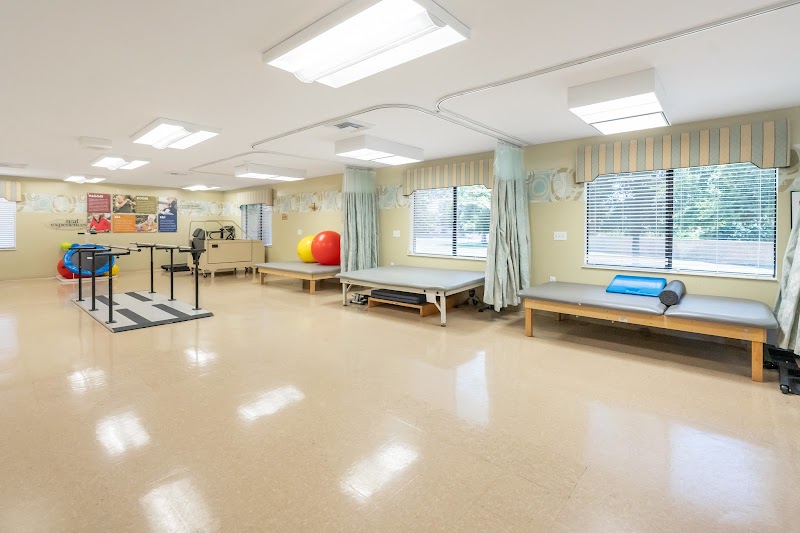
Who Owns and Operates Hemet Hills Post Acute?

HEMET HILLS POST ACUTE is owned by a for-profit company. For-profit facilities operate as businesses with obligations to shareholders or private owners. The facility is operated by PROMEDICA SENIOR CARE, a chain that manages multiple nursing homes. With 178 certified beds and approximately 168 residents (about 94% occupancy), it is a mid-sized facility located in HEMET, California.
How Does Hemet Hills Post Acute Compare to Other California Nursing Homes?

Compared to the 100 nursing homes in California, HEMET HILLS POST ACUTE's overall rating (1 stars) is below the state average of 3.1, staff turnover (46%) is near the state average of 46%, and health inspection rating (1 stars) is much below the national benchmark.

What Should Families Ask When Visiting Hemet Hills Post Acute?

Based on this facility's data, families visiting should ask: "What changes have been made since the serious inspection findings, and how are you preventing similar issues?" "Can I visit during a mealtime to observe dining assistance and food quality?" "How do you handle medical emergencies, and what is your hospital transfer rate?" "Can I speak with family members of current residents about their experience?" These questions are particularly relevant given the facility's Immediate Jeopardy citations.

Is Hemet Hills Post Acute Safe?

Based on CMS inspection data, HEMET HILLS POST ACUTE has documented safety concerns. Inspectors have issued 1 Immediate Jeopardy citation (the most serious violation level indicating risk of serious injury or death). The facility has a 1-star overall rating and ranks #100 of 100 nursing homes in California. Families considering this facility should ask detailed questions about what corrective actions have been taken since these incidents.

Do Nurses at Hemet Hills Post Acute Stick Around?

HEMET HILLS POST ACUTE has a staff turnover rate of 46%, which is about average for California nursing homes (state average: 46%). Moderate turnover is common in nursing homes, but families should still ask about staff tenure and how the facility maintains care continuity when employees leave.

Was Hemet Hills Post Acute Ever Fined?

HEMET HILLS POST ACUTE has been fined $132,954 across 2 penalty actions. This is 3.9x the California average of $34,408. Fines at this level are uncommon and typically indicate a pattern of serious deficiencies, repeated violations, or failure to correct problems promptly. CMS reserves penalties of this magnitude for facilities that pose significant, documented risk to resident health or safety. Families should request specific documentation of what issues led to these fines and what systemic changes have been implemented.

Is Hemet Hills Post Acute on Any Federal Watch List?

HEMET HILLS POST ACUTE is not on any federal watch list. The most significant is the Special Focus Facility (SFF) program, which identifies the bottom 1% of nursing homes nationally based on persistent, serious quality problems. Not being on this list means the facility has avoided the pattern of deficiencies that triggers enhanced federal oversight. This is a positive indicator, though families should still review the facility's inspection history directly.