RAMONA REHABILITATION AND POST ACUTE CARE CENTER
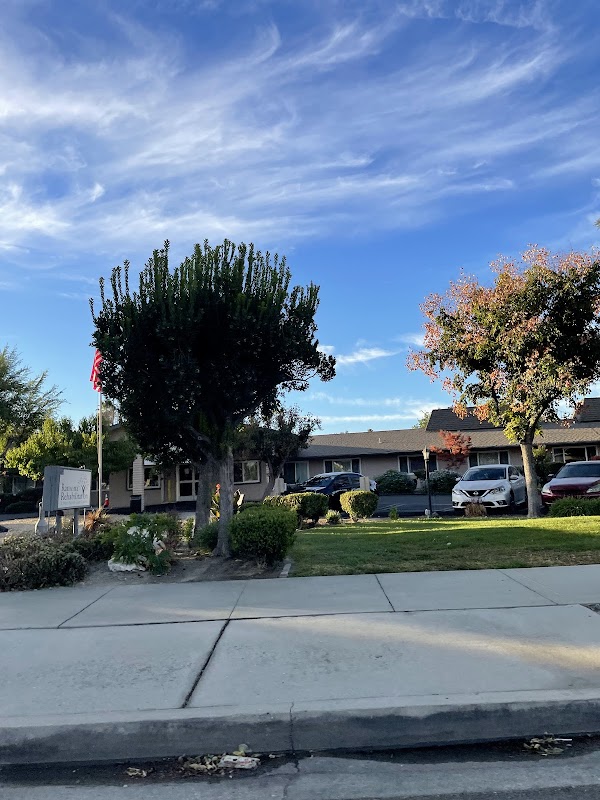
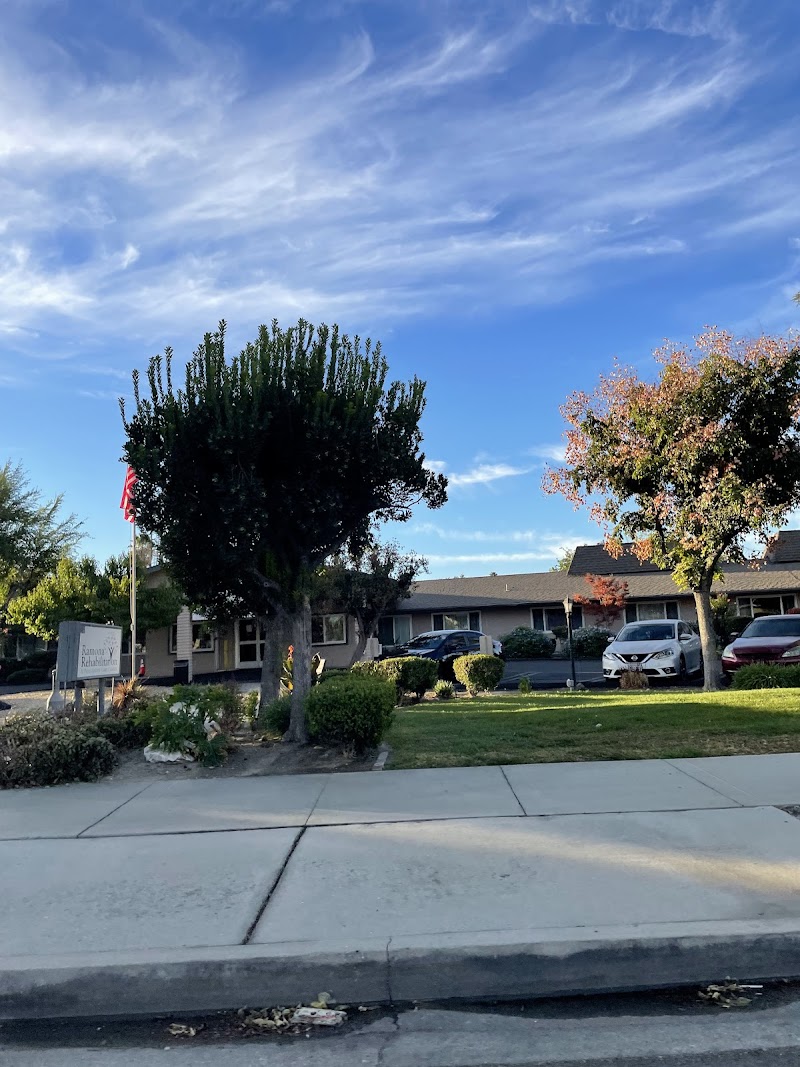
485 W. JOHNSTON AVENUE, HEMET, CA 92543 (951) 652-0011
For profit - Corporation 104 Beds Independent Data: November 2025
Trust Grade
55/100
#661 of 1155 in CA
Last Inspection: October 2024

Within standard 12-15 month inspection cycle. Federal law requires annual inspections.

Overview

Ramona Rehabilitation and Post Acute Care Center has a Trust Grade of C, which means it is average-neither great nor terrible. It ranks #661 out of 1155 nursing homes in California, placing it in the bottom half of facilities statewide, and #26 out of 53 in Riverside County, indicating that there are better local options available. The facility is showing improvement, with issues decreasing from 17 in 2024 to just 2 in 2025. Staffing rated average with a turnover rate of 48%, which is concerning as it is higher than the California average of 38%. While there have been no fines recorded, which is a positive sign, there have been serious incidents, such as a resident developing pressure ulcers due to inadequate positioning on a bedpan, and concerns about unsafe self-administration of medications for multiple residents, highlighting areas that need attention despite overall improvements.

Trust Score
C
55/100
In California
#661/1155
Bottom 43%
Safety Record
Moderate
Needs review
Inspections
Getting Better
17 → 2 violations
Staff Stability
⚠ Watch
48% turnover. Above average. Higher turnover means staff may not know residents' routines.
Penalties
✓ Good
No fines on record. Clean compliance history, better than most California facilities.
Skilled Nurses
⚠ Watch
Each resident gets only 25 minutes of Registered Nurse (RN) attention daily — below average for California. Fewer RN minutes means fewer trained eyes watching for problems.
Violations
⚠ Watch
33 deficiencies on record. Higher than average. Multiple issues found across inspections.
★★★☆☆
3.0
Overall Rating
★★★☆☆
3.0
Staff Levels
★★★★☆
4.0
Care Quality
★★★☆☆
3.0
Inspection Score
Stable
2024: 17 issues
2025: 2 issues

The Good

  • 4-Star Quality Measures · Strong clinical quality outcomes
  • Full Sprinkler Coverage · Fire safety systems throughout facility
  • No fines on record

Facility shows strength in quality measures, fire safety.

The Bad

3-Star Overall Rating

Near California average (3.1)

Meets federal standards, typical of most facilities

Staff Turnover: 48%

Near California avg (46%)

Higher turnover may affect care consistency

The Ugly 33 deficiencies on record

1 actual harm
Jul 2025 1 deficiency
CONCERN (D) 📢 Someone Reported This

A family member, employee, or ombudsman was alarmed enough to file a formal complaint

Potential for Harm - no one hurt, but risky conditions existed

Accident Prevention (Tag F0689)

Could have caused harm · This affected 1 resident

**NOTE- TERMS IN BRACKETS HAVE BEEN EDITED TO PROTECT CONFIDENTIALITY** Based on interview and record review, the facility failed to evaluate and develop new interventions for one of three sampled res...

Read full inspector narrative →
**NOTE- TERMS IN BRACKETS HAVE BEEN EDITED TO PROTECT CONFIDENTIALITY** Based on interview and record review, the facility failed to evaluate and develop new interventions for one of three sampled residents (Resident 1), who has poor decision making, high risk for fall, and had fall incidents on June 16 and June 22, 2025. This failure placed Resident 1 at risk for further falls which could result in serious injury while at the facility. On July 10, 2025, at 9:05 a.m., an unannounced visit was conducted at the facility to investigate a complaint on quality-of-care issues. On July 10, 2025, Resident 1's record was reviewed. Resident 1's admission Record, indicated Resident 1 was admitted on [DATE], with diagnoses which included prosthetic aortic valve replacement (surgery to restore proper blood flow through the heart), acute kidney disease (a condition the kidneys cannot filter waste from the blood) and dementia (impaired thinking abilities, forgetfulness).A review of Resident 1's Minimum Data Set (MDS - a resident assessment tool), dated June 13, 2025, indicated Resident 1 had a Brief Interview for Mental Status (BIMS) score of 13 (cognition intact).A review of Resident 1's Progress Notes, indicated the following:- June 13, 2025, at 4:10 p.m., indicated, .Pt (patient) showing S/S (signs and symptoms) of increased confusion .Pt stating that ‘The air conditioner man is coming to pick me up.' ‘I need to go to the front of the building so the truck can take me to buy things.;-June 14, 2025, at 10:01 p.m., indicated, .CNA (Certified Nursing Assistant) Entered room and found patient kneeling . Patient stated she was Trying to turn off her call light .;-June 15, 2025, at 10:16 p.m., indicated, .Resident Continues with increase Confusion and stating I'm being Held hostage and nobody wants to release me .-June 17, 2025, at 2:17 p.m., indicated, .Alert and responsive .Able to let needs known with confusion and forgetfulness .-June 22, 2025, at 10:24 a.m., indicated, .pt found sitting next to bed with back against bed, states she was coming from the restroom to go back to bed, resident states she was attempting to sit down on the bed when she slid down onto the floor, wheels locked, footwear on .neurochecks initiated .;-June 23, 2025, at 12:57 p.m., indicated, Fall IDT Meeting .Pt found sitting next to bed with back against bed .no bruising, redness, or swelling noted .IDT recommends to continue current intervention .;During further review of the IDT notes, the recommendations on June 23, 2025, were the same recommendations on June 16, 2025. There were no additional interventions recommended by the IDT after the second fall on June 22, 2025.-June 23, 2025, at 11:21 p.m., indicated, .Black eye to bilateral eye and discoloration to fore head .Resident had an unwitnessed fall on 06/22/25 (June 22, 2025) and was noted with [NAME] (sic) eye to bilateral eye and discoloration to forehead .date and time of MD (physician) notification: 06/24/2025 (June 24, 2025) 10:52 PM (p.m.) .Per MD to Observe and if Symptoms changes to send patient to ER .;-June 24, 2025, at 7:52 a.m., indicated, .pt do tried to get up x 3 (times three) on shift, pt always re direct to get some rest .;-June 26, 2025, at 2:26 a.m., indicated, .Resident alert with confusion. Resident noted to be taking brief and non-skid socks off and attempting self-transfer to BR (bathroom) .;-June 26, 2025, at 2:52 p.m., indicated, .Resident Had (sic) an unwitness (sic) Fall .If this has occurred before: Yes, resident had a fall on 6/14/25 & 6/22/25 . Resident found on floor on buttocks.resident no complaint of pain.MD notified 8:02 a.m no new orders.;-June 27, 2025, at 2:01 a.m., indicated, .increased confusion and bruising eyes and forehead. Physician notified and sent resident to ER via 911 ambulance. (family member) was notified on June 27, 2025, at 2 a.m .On July 10, 2025, at 10:30 a.m., an interview with Licensed Vocational Nurse (LVN)/charge nurse was conducted; and stated the following: a. The resident was found in the room at the side of the bed leaning against the bed with legs on to the side. b. The resident was alert and responded appropriately and stated she had not hit her head.c. There was no redness or bruise that she noticed during her shift. d. The resident explained she was trying to go to the rest room and did not use the call bell.e. She reported the resident's fall to the supervisor and did not recall a registered nurse assessing the resident after the fall.On July 10, 2025, at 10:40 a.m., during an interview with CNA 1, CNA 1 stated a resident is on close monitoring if considered high risk for fall. CNA 1 stated the staff would have to conduct rounds on the residents every 10-15 minutes to make sure the residents are safe, would offer drinks, and aid the bathroom.On July 11, 2025, at 11:02 a.m., during an interview, the Director of Nursing (DON) stated the process in managing falls follows the facility policy and procedure. The DON stated when a resident falls, the Administrator or the DON would be notified. She stated the IDT team would meet and review the incident usually a day after the fall. The IDT would look at the contributing factors resulting in a fall, which could be staffing issues, poor lighting, medications and diagnoses of the residents. The DON stated Resident 1's fall incident on June 14, 2025, was related to the resident's dementia and the resident underestimated her abilities. The DON stated the supervisor should be notified when a resident falls, and the supervisor would only go and assess the resident for a serious fall with injury. The DON stated her expectation is for the CNAs to conduct rounding every 15 minutes and if unable to do rounds, the CNAs should notify the charge nurse. The DON stated a 1:1 observation is used for residents with frequent falls and stated the DON should have considered this intervention when the intervention for Resident 1 was not working. A review of the facility's policy and procedure titled, Fall Prevention, dated May 2025, indicated, .to implement and maintain a comprehensive fall program.the goal to minimize the risk of falls and fall-related injuries.through consistent assessment, intervention.monitoring.some individuals fall repeatedly.Interventions need to be evaluated for effectiveness.
Apr 2025 1 deficiency
CONCERN (D) 📢 Someone Reported This

A family member, employee, or ombudsman was alarmed enough to file a formal complaint

Potential for Harm - no one hurt, but risky conditions existed

Quality of Care (Tag F0684)

Could have caused harm · This affected 1 resident

**NOTE- TERMS IN BRACKETS HAVE BEEN EDITED TO PROTECT CONFIDENTIALITY** Based on interview and record review, the facility failed to ensure intravenous (IV - fluids/medication given directly into the ...

Read full inspector narrative →
**NOTE- TERMS IN BRACKETS HAVE BEEN EDITED TO PROTECT CONFIDENTIALITY** Based on interview and record review, the facility failed to ensure intravenous (IV - fluids/medication given directly into the bloodstream) antibiotic medications was provided according to the physician's orders upon discharge from the General Acute Hospital (GACH), for one of five residents (Resident A). This failure resulted in Resident A not receiving the IV antibiotics as prescribed, and needed to extend the IV medication to address Resident A's infection. Findings: On March 6, 2025, at 10:30 a.m., an unannounced visit was conducted for the investigation of a complaint for quality of care. On March 6, 2025, at 11:15 a.m., a review of Resident A's medical record was conducted. Resident A's admission Record, indicated Resident A was admitted to the facility on [DATE], with diagnoses which included sepsis (a life-threatening blood infection), bacteremia (bacteria in the blood stream), and xenogenic heart valve (a type of tissue from another species - a pig or a cow). A review of Resident A's Extended Care Facility admission Orders and Transfer (Discharge) Summary, dated December 8, 2024, at 1:20 p.m., indicated, .will continue with prolonged IV ampicillin (medication to treat infection) 2 G (gram - a unit of measurement) q (every) 6 (six) hours and IV Ceftriaxone (medication to treat infection) 2 g (gram) q (every)12 hours until 1/11/25 (January 11, 2025) via PICC (peripherally inserted central catheter - a thin flexible tube inserted into a vein in the upper arm and threaded into a larger vein near the heart). Close follow up with infectious disease . A review of Resident A's Physician's Progress Notes, dated December 20, 2024, by [name of physician], indicated, .continue Ampicillin 2G (gram) IV q (every) 4 hrs (hours) .Continue Ceftriaxone 2G (gram) IV q(every)12 hrs (hours)-Continue both for 6 (six) weeks from 11/30/24 (November 30, 2024) . A review of Resident A's Order Summary Report, included the following physician's orders: - .Ampicillin Sodium Injection Solution Reconstituted 1 GM .Use 2 gram intravenously every 6 (six) hours for BACTEREMIA until 1/13/2025 (January 13, 2025) ., date ordered December 8, 2024; - .Ampicillin Sodium Injection Solution Reconstituted 1 GM .Use 2 gram intravenously every 6 (six) hours for BACTEREMIA for 4 (four) days ., date ordered December 9, 2024; - .Ampicillin Sodium Injection Solution Reconstituted 1 GM .Use 2 gram intravenously every 6 (six) hours for Bacteremia until 01/11/2025 (January 11, 2025) ., date ordered December 30, 2024; - .Ampicillin Sodium Injection Solution Reconstituted 1 GM .Use 2 gram intravenously every 6 (six) hours for Bacteremia until 01/31/2025 (January 31, 2025) ., date ordered January 14, 2025; - .Ampicillin Sodium Injection Solution Reconstituted 1 GM .Use 2 gram intravenously every 6 (six) hours for Bacteremia until 02/01/2025 (February 1, 2025) ., date ordered January 19, 2025; and - .Ceftriaxone Sodium Intravenous Solution Reconstituted 2 GM .Use 2 gram intravenously every 12 hours for bacteremia unitl January 13, 2025 .for 34 days , date ordered December 8, 2024. A review of Resident A's Medication Administration Record (MAR), for the month of December 2024 and January 2025, indicated Ceftriaxone IV was not documented as administered on the following dates and times: - December 11, 2024, at 9:00 p.m.; - December 16, 2024, at 9:00 p.m.; - December 31, 2024, at 9:00 p.m.; - January 9, 2024, at 9 a.m. A review of Resident A's MAR, for the month of December 2024, and January 2025, indicated Ampicillin IV was not documented as administered on the following dates and times: - December 14, 2024, starting 6 p.m. to December 30, 2024, at 6 a.m. (total of 64 doses); - December 30, 2024, at 6 p.m.; - January 9, 2025, at 12 p.m.; - January 19, 2025, at 12 p.m.; and - January 22, 2025, at 12 p.m. A review of Resident A's care plans indicated the following: - IV therapy for severe sepsis, dated December 10, 2024, Interventions: Ampicillin as ordered, Ceftriaxone as ordered, monitor the site for edema, redness-report abnormal to medical doctor; and - Risk for infection related to Diagnosis, severe sepsis, dated December 10, 2024, Interventions: administer antibiotics therapy as ordered. A review of Resident A's Progress Notes/ Discharge Summary, dated February 1, 2025 (by primary provider) indicated, .pt (patient) finished 6 (six) weeks if IV Rocephin (Ceftriaxone) as recommended. Her IV Ampicillin was cut short prematurely but restarted so that she completed 6 weeks of IV Ampicillin .significant development that occurred during SNF (skilled nursing facility) stay: Interruption of IV Ampicillin before the end of 6 weeks of treatment so restarted . On March 6, 2025, at 2:05 p.m., an interview and concurrent record review was conducted with the Assistant Director of Nursing (ADON). The ADON stated IV orders were given to the Registered Nurse (RN) and placed on a white board at station one with the times the medication was due and stop dates. The ADON stated to keep the IV antibiotics on time, when a resident is admitted , the hospital records were reviewed to ensure IV therapy would be continued. The ADON stated the RN supervisor was responsible for adding new residents to the board if admissions or new orders were received. The ADON reviewed Resident A's IV antibiotic orders and stated, a registry night shift RN reviewed Resident A's orders upon admission and did not know why the Ampicillin was changed from 34 days to 4 days the following day. The ADON stated the progress notes from Resident A's doctor, written on December 20, 2024, indicated to continue Ampicillin 2 gm (gram) and the Ceftriaxone 2gm (gram) for 6 (six) weeks, but did not know why the Ampicillin was not restarted until December 30, 2024, and for every 6 hours. On March 6, 2025, at 4:55 p.m., an interview and record review were conducted with the Director of Nursing (DON). The DON stated she reviewed Resident A's notes and did not understand why the Ampicillin was stopped and restarted multiple times; it should have been given consistently for the 34 days it was originally ordered. A review of the undated facility ' s policy and procedure titled, Administering IV Antibiotics, indicated, .safe and effective administration of intravenous (IV) antibiotics in compliance with state and federal regulations .only licensed nurses may administer IV antibiotics .before administration .verify the physician's order in the resident's medical record .document all administration details, including date, time, medication name, dosage, route, infusion rate, and any observed reactions. Assess IV site regularly for signs of infection, extravasation, or complications .report medication errors immediately to the supervisor and physician, document the incident .
Nov 2024 1 deficiency
CONCERN (D) 📢 Someone Reported This

A family member, employee, or ombudsman was alarmed enough to file a formal complaint

Potential for Harm - no one hurt, but risky conditions existed

Report Alleged Abuse (Tag F0609)

Could have caused harm · This affected 1 resident

**NOTE- TERMS IN BRACKETS HAVE BEEN EDITED TO PROTECT CONFIDENTIALITY** Based on interview and record review, the facility failed to ensure an allegation of physical abuse was reported to California D...

Read full inspector narrative →
**NOTE- TERMS IN BRACKETS HAVE BEEN EDITED TO PROTECT CONFIDENTIALITY** Based on interview and record review, the facility failed to ensure an allegation of physical abuse was reported to California Department of Public Health (CDPH) immediately, but not later than two (2) hours after the allegation was made. The facility was made aware of the alleged physical abuse of a facility staff (Certified Nursing Assistant [CNA] 1) to a resident (Resident 1) on October 28, 2024. This failure had the potential to cause a delay in the investigation of the alleged abuse and to expose residents in the facility to further abuse. Findings: On November 18, 2024, at 10:15 a.m., an unannounced visit was conducted at the facility to investigate an abuse allegation. On November 18, 2024, Resident 1's medical record was reviewed. Resident 1 was admitted to the facility on [DATE], with diagnoses which include pulmonary fibrosis (scar tissue in the lungs), chronic respiratory failure (difficulty breathing on your own), and anxiety (excessive and persistent worry). Resident 1's Minimum Data Set (MDS - an assessment tool), dated September 2, 2024, had a Brief Interview for Mental Status (BIMs - assessment to monitor cognitive status) score of 11, which indicated mild impairment. On November 18, 2024, at 12:07 p.m., during an interview with CNA 2, he stated he was at the nurse ' s station across Resident 1 ' s room, when he saw CNA 1 come out of the room with food and fluid on the front of her clothes. CNA 2 stated he heard Resident 1 screaming that CNA 1 was hitting her and choking her. CNA 2 stated she assisted another CNA to clean up Resident 1 and did not observed any scratch marks or discoloration on the resident's neck or body area, and there was little food on the resident's bed. On November 18, 2024, at 1:57 p.m., during an interview with the Administrator (ADM), the ADM stated the allegation of abuse by CNA 1 to Resident 1 was first reported to him by the Assistant Director of Nursing (ADON) on October 28, 2024, at 1:00 p.m. The ADM also stated he reported the allegation of abuse to CDPH on October 31, 2024. The ADM further stated he did not report to the state and should have reported it within the required time frame. A review of the facility ' s policy and procedure titled, Resident Abuse-Preventing, Reporting, and Investigating, dated October 2022, indicated .All alleged violations of abuse .shall be reported to the Administrator of the facility .in accordance with State and Federal law through the following procedures: Upon any allegation of abuse the facility will-WITHIN 2 HOURS OF THE ALLEGATION: *Phone call to the Dept. of Public Health/Licensing .
Oct 2024 8 deficiencies
CONCERN (D)

Potential for Harm - no one hurt, but risky conditions existed

Resident Rights (Tag F0550)

Could have caused harm · This affected 1 resident

**NOTE- TERMS IN BRACKETS HAVE BEEN EDITED TO PROTECT CONFIDENTIALITY** Based on observation, interview, and record review, the facility failed to treat resident with respect and dignity when the staf...

Read full inspector narrative →
**NOTE- TERMS IN BRACKETS HAVE BEEN EDITED TO PROTECT CONFIDENTIALITY** Based on observation, interview, and record review, the facility failed to treat resident with respect and dignity when the staff failed to cover the urinary bag, for one of one resident reviewed for dignity (Resident 53). This failure increased the potential to negatively affect Resident 53's psychosocial wellbeing. Findings: On October 21, 2024, at 3:30 p.m., Resident 53 was observed with Licensed Vocational Nurse (LVN) 1. Resident 53's urinary bag was observed attached to the resident and was filled with 300 ml (millimeter-unit of measurement) yellow liquid. The urinary bag was observed hanging below the level of Resident 53's bed. In a concurrent interview with LVN 1, she stated the staff did not cover the urinary bag with a dignity bag (used to cover urine collection bag) and was exposed. She further stated, it should have been covered, I will feel embarrassed if that bag was mine and not covered. On October 23, 2024, Resident 53's record was reviewed. Resident 53 was admitted to the facility on [DATE], with diagnoses which included obstructive uropathy (blockage in urinary tract). A review of Resident 53's History and Physical, dated March 15, 2024, indicated Resident 53 had no capacity to understand and make decisions. A review of Resident 53's Order Summary, dated July 31, 2024, indicated, .Foley catheter (tube that drains urine) 16fr/10ml (french-unit of measurement), to closed drainage system for Obstructive uropathy . On October 24, 2024, at 12:20 p.m., during an interview with the Assistant Director of Nursing (ADON), she stated residents should be treated with respect and dignity all the time. The ADON further stated leaving the urinary bag uncovered will cause psychosocial effect to resident. She stated, it should have been covered with dignity bag. A review of the facility's policy and procedure titled, Dignity, dated February 2021, indicated, .Residents are treated with dignity and respect at all times .The facility culture supports dignity and respect for residents by honoring resident goals, choices, preferences, values and beliefs .Staff are expected to promote dignity and assists residents .keep urinary catheter bags covered . A review of the facility's policy and procedure titled, Resident [NAME] Of Rights, dated December 2012, indicated, .Dignity .The facility must promote care for residents in a manner and in an environment that maintains or enhances each resident's dignity and respect in full recognition of his or her individuality .
CONCERN (D)

Potential for Harm - no one hurt, but risky conditions existed

Deficiency F0558 (Tag F0558)

Could have caused harm · This affected 1 resident

**NOTE- TERMS IN BRACKETS HAVE BEEN EDITED TO PROTECT CONFIDENTIALITY** Based on interview and facility policy review the facility failed to answer the call light within a reasonable time, for one of ...

Read full inspector narrative →
**NOTE- TERMS IN BRACKETS HAVE BEEN EDITED TO PROTECT CONFIDENTIALITY** Based on interview and facility policy review the facility failed to answer the call light within a reasonable time, for one of 95 residents (Resident 34). This failure had the potential to not meet the resident's needs. Findings: On October 21, 2024, at 10:05 a.m., an interview with Resident 34 was conducted. Resident 34 stated on the he could not get help for up to an hour usually during the morning shift. A review of Resident 34's electronic medical record indicated Resident 34 was admitted to the facility on [DATE], with diagnoses which include fusion of the spine (surgical process that joins vertebrae in the spine), wedge compression fracture (fracture when the front of a vertebrae collapses) of T7-T8 vertebrae, and ankylosing spondylitis (inflammatory arthritis) of thoracic region. A review of Resident 34's History and Physical, dated September 28, 2024, indicated Resident 34 was mentally capable of understanding. On October 24, 2024, 12:40 p.m., an interview with the Assistant Director of Nursing (ADON) was conducted. The ADON stated everyone was responsible for answering the call lights and they should not be ignored. The ADON further stated the resident could fall if basic needs such as bowel movement, transferring, or reaching out for something were not met if call light was not answered in a timely manner. On October 23, 2024, at 12:50 p.m., an interview with the family representative (FR) was conducted. The FR stated Resident 34 was transferred to the facility on September 27, 2024, with a fractured back, a punctured lung and was there for rehab. The FR stated Resident 34 called her and complained that the nurses do not come when he would call. The FR stated the only time the staff responded to Resident 34 was when she would call the nurse's station from home. The FR stated the husband calls for assistance with using the restroom and repositioning. The FR stated this had frustrated him. On October 24, 2024, at 3:10 p.m. observed call light in room [ROOM NUMBER] on while several staff were talking at the nurse station and Certified Nursing Assistant (CNA) 1 was walking from room to room looking in and out and did not answer the call light in room [ROOM NUMBER]. On October 24, 2024, at 3:17 p.m., an interview with CNA 1 was conducted. CNA 1 stated call lights should be answered as soon as possible, and it was everyone's responsibility to answer the call lights. CNA 1 further stated it is important to answer the call lights as soon as possible to prevent accidents. The CNA stated she heard the call light going off and she should have answered it. A review of the facility's policy and procedure titled, Call System, dated December 2016, indicated, .It is the policy of this facility to provide each resident with a call system to enable them to request assistance .Answer all call bells promptly .
CONCERN (D)

Potential for Harm - no one hurt, but risky conditions existed

Deficiency F0697 (Tag F0697)

Could have caused harm · This affected 1 resident

**NOTE- TERMS IN BRACKETS HAVE BEEN EDITED TO PROTECT CONFIDENTIALITY** Based on observation, interview, and medical record review, the facility failed to manage the pain, for one of three residents r...

Read full inspector narrative →
**NOTE- TERMS IN BRACKETS HAVE BEEN EDITED TO PROTECT CONFIDENTIALITY** Based on observation, interview, and medical record review, the facility failed to manage the pain, for one of three residents reviewed for pain (Resident 137), when the pain medication was not administered according to the physician's order. This failure resulted in Resident 137 not receiving the pain medication as ordered by the physician and had the potential for Resident 137 to experience pain not to be managed appropriately and affect overall health condition. Findings: On October 21, 2024, at 9:22 a.m., a concurrent observation and interview was conducted with Resident 137. Resident 137 was observed wearing a neck brace sitting at bedside and grimacing while repositioning himself. Resident 137 stated he arrived at the facility on October 16, 2024, around 5 p.m., and did not receive pain medication until the next day around 7 a.m. Resident 137 further stated he asked for pain medicine at 2 a.m., in the morning of October 17, 2024, and the nurse replied, We don't have your doctor's orders and the pain medication was not available. On October 22, 2024, at 6 p.m., during a follow up interview with Resident 137, he stated he had a pain level of nine out of 10 the previous night and was given Norco (medicine to relieve pain) 7.5-325 mg (milligram - unit of measurement) instead of Norco 10-325 mg. Resident 137 further stated the nurse told him Norco 10-325 mg was not yet delivered to the facility, and he could not get any more from the Cubix (smart cabinet holds and dispense medication) reserve. Resident 137 stated he felt his needs were not being met. On October 23, 2024, at 8:45 a.m., in a follow up interview with Resident 137, he stated his pain was not managed through the night. Resident 137 stated his order for Norco 10-325 mg for severe pain was not available to him. Resident 137 stated the night nurse told him the doctor would sign the order today. A review of Resident 137's electronic record indicated Resident 137 was admitted to the facility on [DATE], with diagnoses which included displaced fracture of second cervical vertebra (a break in the bones of the neck), contusion (injury to the skin and underlying tissue of an area of the body) left hand, fibromyalgia (widespread musculoskeletal pain), and pain in the left shoulder and left upper arm. A review of Resident 137's physician's order indicated the following orders dated October 17, 2024: - Norco 7.5-325 mg one tab by mouth every four hours as needed for moderate pain (rate of 4 to 6); and - Norco 10-325 mg one tab by mouth every four hours as needed for severe pain (rate of 7 to 10). A review of Resident 137's care plan, dated October 17, 2024, indicated, .at risk for pain and discomfort r/t (related to) DX (diagnosis) .cervical fracture .fibromyalgia .Evaluate and document severity of pain and response to interventions .Medications per MD (physician) order . A review of Resident 137's Medication Administration Record, for the month of October 2024, indicated Norco 7.5-325 mg was administered to Resident 137 with a pain rating of severe pain on the following dates and times: - October 20, 2024, at 2:05 p.m.; pain rate of 8; - October 20, 2024, at 11:53 p.m.; pain rate of 9; - October 21, 2024, at 4:25 p.m.; pain rate of 7; - October 21, 2024, at 8:25 p.m.; pain rate of 7; - October 22, 2024, at 9:57 a.m.; pain rate of 9; and - October 22, 2024, at 10:20 p.m.; pain rate of 10. A review of the pharmacy document indicating the times Norco 10-325 mg was pulled out from the Cubix reserve for Resident 137 did not indicate Norco 10-325 mg was taken from the Cubix on the above dates when the resident's pain level was severe (7 to 10 pain rate). On October 23, 2024, at 8:37 a.m., LVN 2 was interviewed. LVN 2 stated Resident 137 had stated to her that his pain was not being managed effectively in the facility, and he did want to experience severe pain while in the facility. LVN 2 stated she did not offer any alternative pain management measures and was not able to administer any Norco 10-325 mg to the resident throughout her shift on October 22, 2024, since the resident's medication supply had not yet been delivered. LVN 2 stated the medication should have been available, and the resident not having his pain medication could prevent him from resting and being comfortable. On October 23, 2024, at 3:35 p.m., an interview with Licensed Vocational Nurse (LVN) 3 was conducted. LVN 3 stated she cared for Resident 137 since October 21, 2024. After assessing Resident 137, she gave him Norco 10-325 mg around 8:30 a.m. LVN 3 stated at the end of the shift, she endorsed to the oncoming night nurse that there was one Norco 10-325 mg available for the resident, and she had submitted an electronic refill order to the pharmacy for the medication. LVN 3 stated she returned to work on the morning of October 22, 2024, and at the change of shift, the outgoing night nurse endorsed to her that there was no more Norco 10-325 mg available for Resident 137. LVN 3 stated Registered Nurse (RN) 1 was able to request a code from the pharmacy to pull the Norco 10-325 mg from the Cubix at the end of the shift, which LVN 3 used to remove the medication and administer to Resident 137. LVN 3 stated she passed on the code to the next shift because there was still one dose available for the resident. When asked about the facility's process for pain management, LVN 3 stated staff would assess the resident's pain level and offer medication according to the physician's order, then re-assess within the hour to see if the medication was effective. LVN 3 stated she would contact the physician if the pain medication was ineffective. LVN 3 stated Resident 137 had mentioned to her that the Norco 7.5-325 mg was ineffective and required the Norco 10-325 mg dose instead for better pain control. LVN 3 stated Resident 137's pain should be managed, but it was not currently being managed appropriately. On October 23, 2024, at 4:19 p.m., a concurrent review of Resident 137's MAR was conducted with RN 1. RN 1 stated Norco 7.5-325 mg (moderate pain) was administered to Resident 137 for severe pain instead of administering Norco 10-325 mg. RN 1 stated Resident 137 should have received Norco 10-325 mg for severe pain. RN 1 stated residents with orders for narcotics were entered into the electronic system and the orders faxed to the pharmacy. RN 1 stated the pharmacy would then verify with the physician and obtain the physician's signature to authorize the pharmacy to dispense the narcotic medication. RN 1 stated medications were usually filled within six to eight hours and if the medication was not delivered within 24 hours, the licensed staff would follow up with the pharmacy. RN1 stated further stated the pharmacy could also provide a code for the licensed staff to access the Cubix and remove the narcotic medication from the reserve storage when the medication is still not available. RN 1 stated she did not know why Resident 137 was not medicated with the Norco 10-325 mg when it was available in the Cubix. RN 1 further stated Resident 137's pain should have been managed. A review of the facility's policy and procedure titled, Administering Medications, revised April 2019, indicated, .Medications are administered in accordance with the prescriber orders, including any required time frames . A review of facility's policy and procedure titled, Pain Assessment and Management, revised dated March 2020 indicated, . the pain management program is based on a facility-wide commitment to appropriate assessment and treatment of plan, based on professional standards of practice, the comprehensive care plan and the resident's choices related to pain management .Implementing Pain Management Strategies .Implement the medication regimen as ordered, carefully documenting the results of the interventions
CONCERN (D)

Potential for Harm - no one hurt, but risky conditions existed

Deficiency F0757 (Tag F0757)

Could have caused harm · This affected 1 resident

**NOTE- TERMS IN BRACKETS HAVE BEEN EDITED TO PROTECT CONFIDENTIALITY** Based on observation, concurrent interview, and record review, the facility failed to monitor for anticoagulant (medication that...

Read full inspector narrative →
**NOTE- TERMS IN BRACKETS HAVE BEEN EDITED TO PROTECT CONFIDENTIALITY** Based on observation, concurrent interview, and record review, the facility failed to monitor for anticoagulant (medication that treats blood clots) use, for one of two residents reviewed (Resident 138), when Resident 138 was observed to have multiple bruises on both arms. This failure resulted in Resident 138 not being monitored for potential harmful side effects of anticoagulants. Findings: On October 22, 2024, at 2:45 p.m., a concurrent observation and interview with Resident 138 was conducted. Resident 138 was observed with multiple scattered purple and red discolorations on both arms. Resident 138 stated he was on blood thinner and was not given instructions or teaching on monitoring for signs and symptoms of bleeding. On October 22, 2024, a review of Resident 138 electronic medical record indicated Resident 138 was admitted to the facility on [DATE], with diagnoses which included acute embolism and thrombosis of deep veins (condition blocking blood flow in veins and arteries) of the left lower extremity, and history of long term use of anticoagulants. A record review of Resident 138's Order Summary Report, included a physician's order, dated October 17, 2024, which indicated Resident 138 was on apixaban (blood thinner) 5 (five) mg (milligram - unit of measurement) 1 (one) tablet by mouth 2 (two) times a day. A record review of Resident 138's Nursing admission Screening/History, dated October 17, 2024, indicated no skin issues. A record review of Resident 138's care plan, initiated on October 18, 2024, indicated Resident 138's skin integrity was at risk related to anticoagulant use. A record review of Resident 138's Progress Notes, dated October 18, 2024, indicated Licensed Vocational Nurse (LVN) 7 did a follow up skin assessment. LVN 1 documented Resident 138 had purple discoloration to left inner arm, right elbow, redness to the abdominal fold and both wrist. On October 24, 2024, at 8:45 a.m. an observation, concurrent interview, and record review with LVN 8 was conducted. LVN 8 stated Resident 138 was on apixaban 5mg. Stated she did not notice the bruising on Resident 138's arms. LVN 8 further stated there was no monitoring of Resident 138 for anticoagulant use. LVN 8 stated there should be monitoring for adverse affects from anticoagulant use. October 24, 2024, at 9:05 a.m., an observation, concurrent interview, and record review with Registered Nurse (RN) 1 was conducted. Observed Resident 138's right upper arm with purple and red discolorations on both lower arms. RN 1 stated Resident 138 did not have an order to monitor for signs and symptoms of bleeding nor was baseline labs ordered. RN 1 further stated Resident 138 should be monitored for signs and symptoms of bleeding or bruising. Stated nursing should monitor residents on anticoagulants because they need to know if they were experiencing any signs or symptoms of bleeding such as nose bleeds or bruising. RN 1 stated the licensed nurse who identifies the change in skin condition would be responsible for initiating a change of condition and notifying the physician. RN 1 stated there was no change of condition documented. RN 1 stated the Certified Nursing Assistant (CNAs) and licensed nurses are responsible for daily assessing the residents. On October 24, 2024, at 12:01 p.m. an interview with the Assistant Director of Nursing (ADON) was conducted. The ADON stated the facility's process was to identify patient with anticoagulant therapy and verify the order. The ADON stated licensed nurses make sure there is a care plan regarding the order and the importance and reason for the care plan was if a patient is at risk; skin discoloration could be from bleeding if on anticoagulants. The ADON further stated the CNA was responsible for monitoring all patient for change in skin condition when doing Activities of Daily Living (ADL) and showers by looking for skin discolorations, any breakdown, or any tears. The CNA must notify the licensed nurse of any skin changes. The ADON stated the licensed nurse must assess and do an SBAR if it was a new issue. The ADON stated the licensed nurse must notify the doctor for further orders. On October 24, 2024, at 12:18 p.m. a follow up interview with Resident 138 was conducted. Resident 138 stated no one has reassessed his skin. On October 24, 2024, at 12:18 p.m. a follow up interview with the ADON was conducted. The ADON stated there was no new skin changes documented on shower days since October 18, 2024 for Resident 138. The ADON stated there was no documented information of new bruising was noted for Resident 138. The ADON stated no prior labs was ordered and there were no current orders. The ADON stated Resident 138 should have been monitored for any adverse effects of anticoagulant use. A review of the facility's policy and procedure titled, Anticoagulation - Clinical Protocol, revised and dated November 2018, indicated, .As a part of the initial assessment, the physician and staff will identify individuals who are currently anticoagulant; for example, those with recent history of deep vein thrombosis (DVT), .Assess for any signs or symptoms related to adverse drug reactions due to the medication alone or in combination with other medications .The staff .will monitor for possible complications in individuals who are being anticoagulated and will manage related problems .If an individual on anticoagulant therapy shows signs of excessive bruising, hematuria, hemoptysis (blood mixed with sputum), or other evidence of bleeding, the nurse will discuss the situation with the physician before giving the next schedule dose of anticoagulant .
CONCERN (E)

Potential for Harm - no one hurt, but risky conditions existed

Deficiency F0554 (Tag F0554)

Could have caused harm · This affected multiple residents

**NOTE- TERMS IN BRACKETS HAVE BEEN EDITED TO PROTECT CONFIDENTIALITY** Based on observation, interview, and record review, the facility failed to ensure an assessment was conducted, for three of six ...

Read full inspector narrative →
**NOTE- TERMS IN BRACKETS HAVE BEEN EDITED TO PROTECT CONFIDENTIALITY** Based on observation, interview, and record review, the facility failed to ensure an assessment was conducted, for three of six residents (Resident 20, 30, and 33) reviewed for safe self-administration of medication when: 1. One 30 ml (milliliters - unit of measurement) cup of powder medication was found on the bedside table of Resident 20; 2. One opened tube of Desitin (brand of ointment used to prevent and treat rash) 57 GM (gram-unit of measurement) ointment was found on bedside table of Resident 30; and 3. One opened bottle of 15 ml eyedrops (medication that relieves eye irritation) was found on the overbed table of Resident 33. These failures had the potential for Residents 20, 30, and 33 to receive multiple doses of medication without proper monitoring, which could lead to harmful effects. Findings: 1. On October 21, 2024, at 9:13 a.m., during a concurrent observation and interview with Resident 20 in her room, one 30 ml cup of powder medication was observed on top of her bedside table. In a concurrent interview with Resident 20, she stated the nurse placed the medication on her bedside table this morning and then left the room. Resident 20 further stated, she put it on my bedside so I can apply it later. On October 24, 2024, Resident 20's admission RECORD, was reviewed. Resident 20 was admitted on [DATE], with diagnoses which included cerebrovascular disease (brain disease), and dysphagia (difficulty in swallowing). A review of Resident 20's Order Summary, dated August 8, 2024, indicated, Nystatin External Powder 100000 UNIT/GM (medicine used to treat skin infection), for under breast redness A review of Resident 20's Minimum Data Set (MDS - a resident assessment tool), dated August 26, 2024, indicated Resident 20 had a BIMS (Brief Interview of Mental Status) score of 14 (cognitively intact). Further review of Resident 20's medical record indicated there was no documented evidence that a self-administration assessment was conducted. On October 21, 2024, at 9:20 a.m., during a concurrent observation and interview with Licensed Vocational Nurse (LVN) 2, she stated the powder medication was Nystatin External Powder and stated, it should not be left on bed side table. LVN 2 further stated Resident 20 should have had an assessment for self-administration of Nystatin External Powder. On October 23, 2024, at 9:07 a.m., Registered Nurse (RN) 2 was interviewed. RN 2 stated there was no assessment for self-administration of medications for Resident 20. RN 2 stated there was no physician order for Resident 20 to self-administer medications. RN 2 further stated if Resident 20 will continue to self-medicate, then it could lead to further issues like skin irritation or adverse effect of the medication. 2. On October 21, 2024, at 10:22 a.m., during a concurrent observation and interview with Resident 30 in his room, one opened tube of Desitin 57 GM was on bedside table. In a concurrent interview with Resident 30, he stated he administered the medication himself when he wanted to be relieved from rash. On October 24, 2024, Resident 30's admission RECORD, was reviewed. Resident 30 was admitted on [DATE], with diagnoses which included chronic kidney disease (long -term kidney damage). A review of Resident 30's History and Physical, dated May 9, 2024, indicated Resident 30 was mentally capable of understanding. Further review of Resident 30's medical record indicated there was no documented evidence that a self-administration assessment was conducted. In addition, there was no physician order for the use of the Desitin ointment. On October 21, 2024, at 10:40 a.m., during a concurrent interview and review of Resident 30's medical records with LVN 2, she stated Resident 30 had an one open tube of Desitin 57 GM at the bedside without a physician order. LVN 2 stated medication should not be kept at the bedside. LVN 2 further stated the Desitin ointment should not be applied without a physician's order and a self-administration assessment should have been made. 3. On October 21, 2024, at 10:15 a.m., during a concurrent observation and interview with Resident 33 in her room, one opened bottle of 15 ml eyedrops was found on the overbed table. Resident 33 stated she administered the medication herself when she wanted to relief from her eye irritation and itching. On October 24, 2024, Resident 33's admission RECORD was reviewed. Resident 33 was admitted on [DATE], with diagnoses which included hypertension (elevated blood pressure). A review of Resident 33's History and Physical, dated July 23, 2024, indicated Resident 33 was mentally capable of understanding. Further review of Resident 33's medical record indicated, there was no documented evidence that a self-administration assessment was conducted. In addition, there was no physician order for the use of the eyedrops. On October 21, 2024, at 10:25 a.m., during a concurrent interview and review of Resident 33's medical records with LVN 2, she stated Resident 33 did not have a physician's order for the eyedrop solution. LVN 2 further stated the eyedrop solution should have had a physician's order, and a self-administration assessment should have been completed. On October 23, 2024, at 12:28 p.m. during an interview with the Assistant Director of Nursing (ADON), she stated her expectation for licensed nurses was to follow the policy and procedure regarding self-administration assessment and administration of medications for all residents. The ADON further stated if the policy and procedures were not followed, there was a potential for residents to not receive medications according to the physician's order, and to not be monitored for any adverse (negative) effects. A review of the facility's policy and procedure titled, Administering Medications, dated April 2019, indicated, .Residents may self-administer their own medications per Self Administration Policy and Procedure . A review of the facility's policy and procedure titled, Self Administration of Medications, dated February 2021, indicated, .Residents have the right to self-administration .The resident is able to safely and securely store the medication .Any medications found at the bedside that are not authorized for self-administration are turned over to the nurse in charge .The nursing staff routinely checks self-administered medications .
CONCERN (E)

Potential for Harm - no one hurt, but risky conditions existed

Deficiency F0761 (Tag F0761)

Could have caused harm · This affected multiple residents

2a. On October 24, 2024, at 11:30 a.m., an inspection of the Station 1 Medication Storage Room was conducted with Registered Nurse (RN) 1. The following was found: - One bag of 1000 ml (milliliter- un...

Read full inspector narrative →
2a. On October 24, 2024, at 11:30 a.m., an inspection of the Station 1 Medication Storage Room was conducted with Registered Nurse (RN) 1. The following was found: - One bag of 1000 ml (milliliter- unit of measurement) of Dextrose (a sterile solution used to provide your body with extra water and calories from sugar)10% IV was unlabeled and readily available for use. In a concurrent interview, RN 1 stated there should be a label on the IV bag. 2b. On October 24, 2024, at 11:39 a.m., an inspection of the Station 2 Medication Storage Room was conducted with Registered Nurse (RN) 1. The following was found: - One multi-dose vial of Tubersol injection (aids in the diagnosis of tuberculosis [a bacterial infection that affects the lungs]), with an open date of September 20, 2024, was found stored in the small medication refrigerator, four days over the expiration date, readily available for use. In a concurrent interview with RN 1, RN 1 stated medication multi-dose vials were to be disposed of 30 days after opening. RN 1 further stated the medication vial of Tubersol was labeled with an open date of September 20, 2024, and should not have been in the refrigerator for continued use, since it was over the 30 day timeframe. A review of the facility's policy and procedure titled, Storage of Medication revised November 2020, indicated, .Drug containers that have missing, incomplete, improper, or incorrect labels are returned to the pharmacy for prober labeling before storing . A review of the policy and procedure titled, Administering Medications, revised April 2019, indicated, .The expiration beyond use date on the medication label is checked prior to administering. When opening a mulit-dose container, the date opened is recorded on the container .the medication nurse will remove expired medications from the drug storage areas so that they are not administered to residents .the facility staff will remove expired medications from the medication storage areas on a regular schedule and when encountered . According to the webarticle published by DailyMed, indicated, .STORAGE .A vial of TUBERSOL which has been entered and in use for 30 days should be discarded . Based on observation, interview, and record review, the facility failed to ensure expired, discontinued, and unlabeled medications and intravenous (IV- into the vein) fluids were not readily available for use. These failures have the potential for the residents to receive wrong, contaminated, expired, or ineffective medication therapy. Findings: 1a. On October 23, 2024, beginning at 3:27 p.m., an inspection of the Station 4 Medication Cart (Med Cart) was conducted with Licensed Vocational Nurse (LVN) 9. The following medications were found expired and kept stored in the second left drawer of Med Cart 4: - One tablet ondansetron (medication for nausea/vomiting) 4 mg (milligrams- unit of measurement) tab (tablet), labeled for Resident 31, with an expiration date of March 18, 2024; - Eight tablets of Clonidine (a blood pressure medication) 0.1 mg tab, labeled for Resident 12, with an expiration date of October 2, 2024; - 25 tablets of ondansetron tab 4 mg, labeled for Resident 19, with an expiration date of October 1, 2024; - Three tablets hyoscyamine (medication that reduces secretions) 0.125 tab SL (sublingual- under the tongue), labeled for Resident 19, with an expiration date of October 10, 2024; - 29 tablets of Chest Conges Tab (medication for nasal drip) 400 mg, labeled for Resident 3, with an expiration date of April 26, 2024; and - Four tablets ondansetron tab 4 mg, labeled for Resident 1, with an expiration date of September 17, 2024. In a concurrent interview, LVN 9 stated the medications were expired and should have already been removed from the cart, to prevent the medications from being incorrectly given to residents and cause potential harm to them. LVN 9 stated expired medications have decreased efficacy after their expiration dates. LVN 9 further stated it was the nurses' responsibility to ensure all expired medications were removed from the Med Cart, and discarded in the incinerator bin following facility protocol. 1b. On October 23, 2024, beginning at 4:57 p.m., an inspection of the Station 3 Med Cart was conducted with LVN 10. The following medications were found expired and kept stored in the second left drawer of Med Cart 3: - Two capsules dicyclomine (medications for stomach cramps) 10 mg, labeled for Resident 2, with an expiration date of August 20, 2024; and - Nine tablets ondansetron tab 4 mg, labeled for Resident 2, with an expiration date of October 6, 2024. In a concurrent interview and review of Resident 2's electronic health record, LVN 10 stated she thought Resident 2 was not receiving dicyclomine anymore. LVN 10 verified the medication was expired and discontinued, and stated the medication should have been taken out of the Med Cart. LVN 10 verified ondansetron was expired, had also been discontinued, therefore the medication should not have been in the Med Cart. LVN 9 further stated expired and discontinued medications got wasted (discarded) in the medication storage room. LVN 10 stated the medication stickers are to be removed and pasted on the medication disposition form in the binders, and all these medication got popped out, and put in the incinerator box to be wasted. On October 24, 2024, the Assistant Director of Nursing (ADON) was interviewed. The ADON stated it was her expectation that anything expired should be removed from the Med Carts and the nurses were responsible for checking their own carts to make sure there were no expired medications available in the carts. The ADON stated expired and discontinued medications should not have been in the Med Carts and should have been removed from the carts and destroyed (discarded). A review of the facility's undated policy and procedure titled, FACILITY AUDITING AND REMOVAL OF EXPIRED AND DISCONTINUED MEDICATIONS, indicated, .The medication nurses will remove expired medications from the drug storage areas so that they are not administered to residents .The facility staff will remove expired medications from the medication storage areas on a regular schedule and when encountered .At least once monthly the nurse responsible for the medication cart for each station will inspect the medication cart and medication room for expiring medications . A review of the facility's policy and procedure titled, Storage of Medications, dated November 2020, indicated, .Discontinued, outdated, or deteriorated drugs or biologicals are returned to the dispensing pharmacy or destroyed .
CONCERN (E)

Potential for Harm - no one hurt, but risky conditions existed

Food Safety (Tag F0812)

Could have caused harm · This affected multiple residents

Based on observation, interview, and record review, the facility failed to ensure safe storage practices were followed in the kitchen when: - One seven-pound (lb- unit of measurement) can of cranberry...

Read full inspector narrative →
Based on observation, interview, and record review, the facility failed to ensure safe storage practices were followed in the kitchen when: - One seven-pound (lb- unit of measurement) can of cranberry jelly was found in the dry storage area undated; - Two stalks of celery in a plastic bag were found in the walk-in refrigerator with the bag open exposing the celery to air; and - Five three-lb bars of chopped spinach were found in the freezer not dated. These failures had the potential to cause food-borne illnesses in a highly susceptible resident population. Findings: On October 21, 2024, at 9:00 a.m., an initial kitchen tour was conducted with the Dietary Manager (DM). The following were observed: - One seven-lb can of cranberry jelly was found in the dry storage area undated; - Two stalks of celery in a plastic bag were found in the walk-in refrigerator with the bag open exposing the celery to air; and - Five three-lb bars of chopped spinach were found in the freezer not dated. On October 21, 2024, at 9:22 a.m., a concurrent interview was conducted with the DM. The DM stated all food items should be dated prior to placing the items in the pantry or other storage areas. The DM stated no food should be open to air, and all food items should be dated when received. A review of the facility's policy and procedure titled, Labeling and Dating of Food, revised 2023, indicated, .food delivered to the facility needs to be marked with a received date .Newly opened food items will need to be closed and labeled with an open date and use by the date .Produce is to be dated with received date .
CONCERN (E)

Potential for Harm - no one hurt, but risky conditions existed

Infection Control (Tag F0880)

Could have caused harm · This affected multiple residents

**NOTE- TERMS IN BRACKETS HAVE BEEN EDITED TO PROTECT CONFIDENTIALITY** Based on observation, interview, and record review, the facility failed to ensure infection control practices were implemented w...

Read full inspector narrative →
**NOTE- TERMS IN BRACKETS HAVE BEEN EDITED TO PROTECT CONFIDENTIALITY** Based on observation, interview, and record review, the facility failed to ensure infection control practices were implemented when: 1. Certified Nursing Assistant (CNA) 2 did not use personal protective equipment (PPE - equipment use to protect against infection or illness) when providing care to a resident requiring enhanced barrier precautions (EBP-an infection control intervention to reduce transmission of multidrug-resistant organisms [MDRO- bacteria that have become resistant to multiple antibiotics]); 2. The Laundry Staff (LS) failed to follow proper handling and storage of clean linens; 3. The Certified Occupational Therapy Assistant (COTA - healthcare provider who performs physical movement) did not conduct proper handwashing before and after providing therapy treatment to a resident; 4. The facility staff failed to ensure the nebulizer treatment tube (a plastic device that delivers air and medicine through a tube for breathing treatment) was changed according to the physician's order; and 5. Two direct care staff were observed wearing long artificial nails while providing care to the residents. These failures increased the potential for the spread of infection to an already medically compromised resident population of 95 residents. Findings: 1. On October 21, 2024, at 3:45 p.m., a resident's room was observed to have a sign by the door indicating instructions to wear appropriate PPE (gown and gloves) before entering the resident's room (Resident 76). CNA 2 was observed to enter Resident 76's room and provided care to the resident who was in the bathroom without wearing gown and gloves. In a concurrent interview with CNA 2, she stated she forgot to wear PPE. CNA 2 further stated she should have worn PPE when she provided care to Resident 76 to prevent the spread of germs and protect the residents from infection. On October 21, 2024, at 3:57 p.m., during an interview with Licensed Vocational Nurse (LVN) 1, she stated the staff should wear gown and gloves when providing direct care to Resident 76. LVN 1 stated appropriate PPE should be worn to prevent the spread of germs and protect the residents from infection. LVN 1 further stated a sign was to be posted by the wall to remind staff to wear proper PPE while doing direct care such as changing briefs, assisting in the bathroom. On October 22, 2024, at 10:07 a.m., during an interview with the Infection Prevention (IP) nurse, she stated Resident 76 had an indwelling catheter and was on enhance barrier precaution. The IP further stated CNA 2 should have worn PPE before providing care to Resident 76 to prevent the spread of infection to other residents. On October 23, 2024, Resident 76's record was reviewed. Resident 76 was admitted to the facility on [DATE], with diagnoses which included obstructive uropathy (urinary tract disorder) and pressure-induced deep tissue damage of sacral region (wound at the back area). A review of Resident 76's Order Summary, dated September 21, 2024, indicated, .Enhanced Barrier Precautions (a type of Transmission Base Precautions [TBP] - measures use to prevent the spread of infections) .staff to wear gloves and gown for high contact resident care activities . On October 24, 2024, at 12:39 p.m., during an interview with the Assistant Director of Nursing (ADON), she stated the expectation was for the staff to follow the facility infection control policy and procedure. The ADON further stated CNA 2 should have worn PPE to prevent the spread of infection to the residents. A review of the facility's undated policy and procedure titled, Enhanced Barrier Precautions, indicated, .focuses on preventing transmission of multidrug-resistant organism (MDRO) infections via staff hands and clothing .staff need to use gloves and gown with certain residents during high-contact resident care activities .when .transferring .providing hygiene .assisting with toileting . 2. On October 23, 2024, at 10:30 a.m., during a concurrent observation and interview with the Laundry Staff (LS), the LS was observed taking out clean linens from the clothes dryer and stacking them in the rolling carts, using his body without gown to prevent the linen falling out of the cart. The LS proceeded to push the cart against the wall, allowing the linen to come in contact with the wall. In a concurrent interview, the LS stated there were no extra carts to use so he stacked the rolling cart high with the linens. The LS further stated it could spread infections if the clean linens were not handled and stored properly. On October 23, 2024, at 10:55 a.m., the Housekeeping/Laundry Supervisor (HS) was interviewed. The HS stated the clean linens should not touch surfaces on the wall and should be kept in a clean storage bin. The LS further stated, it could spread infections. On October 23, 2024, at 11:41 a.m., the IP was interviewed. The IP stated laundry staff should practice proper handling and storage of clean linens. The IP further stated if laundry staff did not follow infection control policies, and practiced improper handling and storage of clean linens, it could cause cross contamination and spread of infection. On October 23, 2024, at 12:15 p.m., during an interview with the ADON, she stated clean linens should be kept in a clean environment and not touching or leaning to the walls. The ADON stated the wall was considered dirty and the contaminated linen could transmit the infection to the residents. A review of the facility's policy and procedure titled, Departmental (Environmental Services)-Laundry and Linen, dated January 2014, indicated, .the purpose of this procedure is to provide a process for the safe and aseptic handling, washing and storage of linen .clean linen will remain hygienically clean (free of pathogens [infectious agents]) .to cause human illness .designed to protect it from environmental contamination, such as covering clean linen carts . 3. On October 22, 2024, at 11:27 a.m., during a concurrent observation and interview with the Certified Occupational Therapy Assistant (COTA), the COTA was observed providing therapy to a resident and brought the resident back to the room. The COTA was then observed to assist another resident in the therapy room and did not perform hand washing or hand hygiene before and after therapy treatment in between residents. The COTA stated, I forgot to wash my hands. The COTA further stated he should have washed his hands before and after providing therapy to prevent spread of infection to other residents. On October 22, 2024, at 12:20 p.m., the Director of Rehab (DOR) was interviewed. The DOR stated the COTA should have washed his hands before touching the resident, otherwise the COTA could spread the infection to other residents. On October 22, 2024, at 2:21 p.m., the IP was interviewed. The IP stated, Staff should wash their hands before and after therapy procedures. The IP further stated if staff did not wash their hands, it could lead to the spread of infections. On September 23, 2024, at 12:04 p.m., the ADON was interviewed. The ADON stated staff members were supposed to perform hand washing before and after therapy procedures. The ADON further stated unwashed hands could transmit and spread infection to other residents. A review of the facility's policy and procedure titled, Departmental-Therapy/Rehabilitation-Prevention of Infection, dated September 2010, indicated, .Wash hands or use hand sanitizer before direct resident care .Therapist must wash their hands between residents . A review of the facility's policy and procedure titled, Handwashing/Hand Hygiene, dated August 2019, indicated, .This facility considers hand hygiene the primary means to prevent the spread of infections .All personnel shall follow the handwashing/hand hygiene procedures to help prevent the spread of infections to other personnel, residents and visitors . 4. On October 23, 2024, at 8:27 a.m., during a concurrent observation and interview with Registered Nurse (RN) 2, the nebulizer tubing of Resident 50 was observed with white colored build up at the edge of the nebulizer mask. The nebulizer tubing was dated and labeled 10/17/24 (October 17, 2024) .CHANGED TUESDAY . In a concurrent interview with Registered Nurse (RN) 2, she stated the nebulizer tubing was soiled, and it should have been changed yesterday. A review of Resident 50's admission RECORD, indicated Resident 50 was admitted to the facility on [DATE], with diagnoses which included pneumonia (respiratory infection). A review of Resident 50's Order Summary, dated September 10, 2024, indicated, .Change and date O2 (oxygen) and nebulizer tubing .every Tue (Tuesday) . On October 23, 2024, at 11:07 a.m., during an interview with the IP, the IP stated the licensed nurses should change the soiled nebulizer tubing and should follow the schedule of the facility to change tubings every Tuesday. The IP further stated if the nebulizer tubing was not changed, it could lead to bacterial (germ) growth, the resident might inhale it and cause respiratory illness. On October 23, 2024, at 12:24 p.m., an interview was conducted with the ADON. The ADON stated her expectation for licensed nurses were to follow the standard of practice for infection control. She further stated if the nebulizer tubing was soiled, it should had been changed, and the schedule to change it every Tuesday should have been followed. A review of the facility's policy and procedure titled, Oxygen Administration, dated October 2010, indicated, .to provide guidelines for safe oxygen administration .change tubing per manufacturer guidelines . A review of the facility's policy and procedure titled, Specific Medication Administration Procedures, dated October 2012, indicated, .Rinse and disinfect the nebulizer equipment .change equipment and tubing every seven days . 5a. On October 22, 2024, at 1:57 p.m., an observation was conducted with LVN 11. LVN 11 was observed to have long artificial nails (approximately 1/2 inch from tip of fingers) when providing care to residents. On October 22, 2024, at 2:20 p.m., an interview was conducted with LVN 11. LVN 11 stated she was involved in the care of residents and I am considered as direct care staff handling residents. LVN 11 stated she was capable of helping residents in their care, passing food trays in residents' rooms, and helping to feed residents. LVN 11 stated that she had artificial nails made of gel, that was attached and extended to her natural fingernails. LVN 11 further stated she was not aware of the facility's policy for employees' nails. On October 22, 2024, at 2:27 p.m., an interview was conducted with the IP. The IP stated the facility's policy indicated nails must have appropriate length, and the nails should not be too long specially for direct care staff. The IP further stated if staff had long nails, these could potentially scratch the skin of the residents, which could lead to skin breakdown and cause infection. On October 23, 2024, at 12:07 p.m., an interview was conducted with the ADON. She stated long artificial nails could accumulate germs underneath the nails. The ADON further stated, Direct care staff should follow facility's policy regarding infection control, and staff should not have artificial long nails. 5b. On October 23, 2024, beginning at 8:50 a.m., a medication administration observation was conducted with LVN 2. LVN 2 was observed wearing gel nails (a type of artificial fingernails similar to acrylic nails) while providing direct care to the residents. On October 23, 2024, at 3:20 p.m., LVN 2 was interviewed. LVN 2 stated she was wearing gel nails and the facility's policy regarding use of artificial nails was not clarified with staff, and so was not sure if it was prohibited. When asked about the length of her nails, LVN 2 stated as long as it was not too long, as she currently had it (LVN 2's nails were measured to be approximately ¼ inch in length from the tip of the fingers), then she stated it was ok to have it. When asked what was considered too long, LVN 2 stated it was up to her judgement, since the facility had not clarified with staff what an acceptable nail length was for direct care staff to wear. On October 24, 2024, at 3:59 p.m., the IP was interviewed. The IP stated the use of gel nails was a preference, but asked to confer with the Administrator (Adm) regarding the facility's policy regarding artificial nails. After consulting with the Adm, the IP stated the facility policy indicated nails should be neat and clean, and the employee handbook indicated a length of ¼ inch. The IP further stated neither mentioned about the use of nail polish or gel nails. On October 24, 2024, at 4:46 p.m., the Adm was interviewed. The Adm stated the facility's Hand Hygiene policy at number 11 indicated nails should be clean and tidy and strongly recommended no acrylic for direct care staff. The Adm further stated in the employee handbook there is a mention of ¼ inch length for the nails. The Adm stated he expected direct care staff to adhere to facility policy. According to the web article titled, Guideline for Hand Hygiene in Health-care Settings (MMWR 2002, volume 51) published by the Centers for Disease Control and Prevention (CDC - a leading national public health institute in the United States), .even after careful handwashing, HCWs (health care workers) often harbor substantial numbers of potential pathogens (disease causing viruses, fungi, and bacteria) in the subungual (under the nails) spaces .HCWs who wear artificial nails are more likely to harbor gram-negative pathogens on their fingertips than those who have natural nails, both before and after handwashing . According to the web article titled, WHO (World Health Organization) Guidelines on Hand Hygiene in Health Care, published by the World Health Organization, .Long, sharp fingernails, either natural or artificial, can puncture gloves easily .Each health-care facility should develop policies on the wearing of .artificial fingernails or nail polish by HCWs. These policies should take into account the risks of transmission of infection to patients .recommendations are that HCWs do not wear artificial fingernails or extenders when having direct contact with patients . A review of the facility's policy and procedure titled, Handwashing/Hand Hygiene, dated August 2019, indicated, .Wearing artificial fingernails is strongly discouraged among staff members with direct resident-care responsibilities, and is prohibited among those caring for severely ill or immunocompromised residents .The infection preventionist maintains the right to request the removal of artificial fingernails at any time if he or she determines that they present an unusual infection control risk . A review of the facility's employee handbook titled, Personal Appearance, dated 2024, indicated, .natural nail tips should be kept to ¼ inch in length .A growing body of evidence suggests that wearing artificial nails may contribute to transmission of certain healthcare-associated pathogens (germs that cause disease) .
Oct 2024 1 deficiency
CONCERN (D) 📢 Someone Reported This

A family member, employee, or ombudsman was alarmed enough to file a formal complaint

Potential for Harm - no one hurt, but risky conditions existed

Infection Control (Tag F0880)

Could have caused harm · This affected 1 resident

**NOTE- TERMS IN BRACKETS HAVE BEEN EDITED TO PROTECT CONFIDENTIALITY** Based on observation, interview, and record review, the facility failed to follow orders for enhanced barrier precautions, (EBP ...

Read full inspector narrative →
**NOTE- TERMS IN BRACKETS HAVE BEEN EDITED TO PROTECT CONFIDENTIALITY** Based on observation, interview, and record review, the facility failed to follow orders for enhanced barrier precautions, (EBP - the use of gown and gloves for residents that have chronic wounds, or indwelling devices during high-contact procedures to prevent the spread of multi-drug resistant organisms in nursing homes) for one of three residents (Resident 7), during wound care. This failure had the potential for the spread of multi-drug resistant organisms. Findings: On September 5, 2024, at 10:26 a.m., an unannounced visit to the facility on a complaint investigation was initiated. On September 5, 2024, at 2:22 p.m., observed a sign on the outside of Resident 7's room indicating Enhanced Barrier Precautions. The Treatment Nurse (TN) was observed preparing for Resident 7's dressing change and wound observation. While the TN donned gloves, she was not observed wearing a gown during wound care for Resident 7. On September 5, 2024, at 2:47 p.m., an interview was conducted with the TN. The TN stated that she should have worn a gown while providing wound care to Resident 7. A review of Resident 7's medical records indicated he was admitted on [DATE], with diagnoses of ORTHOSTATIC hypotension, (a sudden drop in blood pressure upon standing from a sitting or lying position), chronic kidney disease, (the gradual loss of kidney ' s ability to filter wastes and excess fluids from the blood), Parkinson's disease, (a progressive disease of the nervous system marked by tremor, muscular rigidity, and slow, imprecise movement), malignant neoplasm of colon, (a cancerous tumor), encounter for palliative care, (an interdisciplinary medical caregiving approach aimed at optimizing quality of life and mitigating suffering among people with serious, complex, and terminal illnesses), and type 2 diabetes mellitus, (a chronic condition that affects the way the body uses sugar. The body either resists the effects of insulin - a hormone that regulates the movement of sugar into the cells - or doesn't produce enough insulin to maintain normal sugar levels). .A review of Resident 7's History and Physical dated March 17, 2024, indicated he was capable of making decisions. A review of Resident 7's Order Summary Report dated July 1, 2024, indicated .Enhanced Barrier Precautions (EBP) - staff to wear gloves and a gown for high-contact resident care activities. Ensure signage at door. every shift . A review of the facility's policy and procedure titled Enhanced Barrier Precautions (EBP) undated indicated .Specifies that staff need to use gloves and gown with certain residents during high-contact resident care activities .Applies to residents with open wounds .When .During high-contact resident care activities .wound care .
Jun 2024 2 deficiencies
CONCERN (D) 📢 Someone Reported This

A family member, employee, or ombudsman was alarmed enough to file a formal complaint

Potential for Harm - no one hurt, but risky conditions existed

Deficiency F0558 (Tag F0558)

Could have caused harm · This affected 1 resident

**NOTE- TERMS IN BRACKETS HAVE BEEN EDITED TO PROTECT CONFIDENTIALITY** Based on observation, interview, and record review, the facility failed to ensure the call light was within reach for one of thr...

Read full inspector narrative →
**NOTE- TERMS IN BRACKETS HAVE BEEN EDITED TO PROTECT CONFIDENTIALITY** Based on observation, interview, and record review, the facility failed to ensure the call light was within reach for one of three sampled residents, (Resident 2). This failure had the potential to result for Resident 2's needs being unmet, and the inability to call for help. Findings: On June 25, 2024, at 10:36 a.m., an unannounced visit to the facility was conducted to investigate a complaint regarding quality of care issue On June 25, 2024, at 12:59 p.m., observed Resident 2 lying in bed on his back, with eyes closed, respirations even and unlabored. Resident 2's call light was observed on the left side of his bed on the ground, not within resident's reach. On June 25, 2024, at 1:05 p.m., a concurrent observation and interview were conducted with the Certified Nursing Assistant (CNA). The CNA observed Resident 2's call light on the floor, on the left side of the bed. The CNA picked up the call light up and placed it on the left side of Resident 2's bed. The CNA stated that call lights should be within reach and Resident 2's call light was not within reach, when it was on the floor. A review of Resident 2's medical records indicated he was admitted to the facility on [DATE], with diagnoses of encounter for surgical aftercare following surgery on the genitourinary system, chronic kidney disease, stage four, (the kidneys are severely damaged and unable to filter waste), atrial fibrillation, (irregular heart beat), pressure ulcer of sacral region, stage 2, bilateral primary osteoarthritis, (a progressive disorder of the joints caused by gradual loss of cartilage and resulting in the development of bony spurs and cysts at the margins of the joints) of knee, Alzheimer's disease, (progressive mental deterioration that can occur in middle or old age, due to generalized degeneration of the brain), and vascular dementia, (a decline in thinking skills caused by conditions that block or reduce blood flow to various regions of the brain). Resident 2's History and Physical dated June 9, 2024, indicated he did not have the capacity to understand and make decisions. A review of Resident 2's Care Plan dated June 9, 2024, indicated Focus .has an alteration in musculoskeletal status r/t (related to) .OA, (osteoarthritis), of knees Be sure call light is within reach and respond promptly . A review of the facility's policy and procedure titled Call System revised November 2022, indicated .2. Make sure call cords are placed within the resident's reach at all times .
CONCERN (D) 📢 Someone Reported This

A family member, employee, or ombudsman was alarmed enough to file a formal complaint

Potential for Harm - no one hurt, but risky conditions existed

Infection Control (Tag F0880)

Could have caused harm · This affected 1 resident

**NOTE- TERMS IN BRACKETS HAVE BEEN EDITED TO PROTECT CONFIDENTIALITY** Based on observation, interview, and record review, the facility failed to ensure the Treatment Nurse (TN), followed infection c...

Read full inspector narrative →
**NOTE- TERMS IN BRACKETS HAVE BEEN EDITED TO PROTECT CONFIDENTIALITY** Based on observation, interview, and record review, the facility failed to ensure the Treatment Nurse (TN), followed infection control guidelines when she did not perform hand hygiene after removing contaminated gloves and prior to donning clean gloves for during wound care for one of three residents, (Resident 5). This failure had the potential to contaminate the TN's hands and the resident's wounds. Findings: On June 25, 2024, at 2:18 p.m., the Treatment Nurse, (TN) was observed providing skin care to Resident 5. The TN placed a sterile drape with Triamcinolone Acetonide External Cream 0.1% (a topical steroid that helps lessen skin rash and irritations) in a medicine cup on Resident 5's overbed table, located on the left side of Resident 5's bed. The TN donned clean gloves, removed Resident 5's socks, used a body wipe to clean under Resident 5's breasts, groin, and abdominal fold, changing gloves between each area. The TN applied the cream to these areas and to Resident 5's buttocks and sacral area after assisting the resident to turn. The TN removed her gloves, discarded the sterile drape, and lef the room. The TN was not observed performing hand hygiene in between glove changes. On June 25, 2024, at 2:26 p.m., an interview was conducted with the TN. The TN stated that she should have performed hand hygiene after removing her gloves and before donning clean gloves. On June 25, 2024, at 2:45 p.m., an interview was conducted with the Infection Preventionist, (IP). The IP stated that the TN should have performed hand hygiene with alcohol-based hand rub before donning clean gloves. A review of Resident 5's medical record indicated she was admitted to the facility on [DATE], with diagnoses cellulitis, (infection of the skin and the tissues beneath the skin),of right and left lower limb, fracture, (broken bone) of second and third lumbar (lower back) vertebra, and chronic obstructive pulmonary disease, (COPD - a chronic inflammatory lung disease that causes obstructed airflow from the lungs). A review of Resident 5's History and Physical dated June 7, 2024, indicated she had the capacity to make decisions. A review of Resident 5's Order Summary Report dated June 6, 2024, indicated: Cleanse redness with Normal Saline, pat dry. Apply Triamcinolone Acetonide External Cream 0.1% every shift for Left Groin. AND every shift for Right Groin. AND every shift for Peri area. AND every shift for Left inner Thigh. AND every shift for Right inner Thigh Cleanse MASD, (Moisture-associated skin damage - occurs when skin is repeatedly exposed to various sources of bodily secretions), with Normal Saline, pat dry. Apply Triamcinolone Acetonide External Cream 0.1 %., every shift for Sacrococcyx. (tail bone) AND every shift for Left Buttock. AND every shift for Right Buttock. A review of the facility's policy and procedure titled Dressings, Dry/Clean revised September 2013, indicated .6. Put on clean gloves. Loosen tape and remove soiled dressing .7. Pull glove over dressing and discard into plastic or biohazard bag . 8. Wash and dry your hands thoroughly .9. Open dry, clean dressing(s) by pulling comers of the exterior wrapping outward, touching only the exterior surface . 12. Wash and dry your hands thoroughly. 13. Put on clean gloves. 14. Assess the wound and surrounding skin for edema, redness, drainage, tissue healing progress and wound stage. 15. Cleanse the wound with ordered cleanser. If using gauze, use clean gauze for each cleansing stroke. Clean from the least contaminated area to the most contaminated area (usually, from the center outward). 16. Use dry gauze to pat the wound dry. 17. Apply the ordered dressing and secure with tape or bordered dressing per order. (Note: Use non-allergenic tape as indicated.) Label with crate and initials to top of dressing. 18. Discard disposable items into the designated container. 19. Remove disposable gloves and discard into designated container. Wash and dry your hands thoroughly . A review of the Centers for Disease Control and Prevention's guidelines titled Clinical Safety: Hand Hygiene for Healthcare Workers updated FEBRUARY 27, 2024, indicated . If your task requires gloves, perform hand hygiene before donning gloves and touching the patient or the patient's surroundings. Always clean your hands after removing gloves . When to change gloves and clean hands . If moving from work on a soiled body site to a clean body site on the same patient or if a clinical indication for hand hygiene occurs .
Jun 2024 1 deficiency
CONCERN (D) 📢 Someone Reported This

A family member, employee, or ombudsman was alarmed enough to file a formal complaint

Potential for Harm - no one hurt, but risky conditions existed

Abuse Prevention Policies (Tag F0607)

Could have caused harm · This affected 1 resident

**NOTE- TERMS IN BRACKETS HAVE BEEN EDITED TO PROTECT CONFIDENTIALITY** Based on interview and record review, the facility failed to ensure, for one of three sampled residents (Resident A), the staff ...

Read full inspector narrative →
**NOTE- TERMS IN BRACKETS HAVE BEEN EDITED TO PROTECT CONFIDENTIALITY** Based on interview and record review, the facility failed to ensure, for one of three sampled residents (Resident A), the staff removed the Certified Nursing Assistant (CNA 2) after the resident made an allegation of sexual abuse against the CNA. This failure resulted in Resident A seeing CNA 2, causing the resident to become upset and angry. Findings: On May 7, 2024, at 10:20 a.m., an unannounced visit to the facility was conducted to investigate an allegation of sexual abuse. During an interview on May 7, 2024, at 1:40 p.m., with CNA 1, CNA 1 stated on May 5, 2024, around lunch time, at 12:30 p.m., she was in the dining room preparing residents for lunch. CNA 1 stated she heard Resident A yelling at CNA 2 to go away, and get him away. CNA 1 stated she intervened and removed CNA 2 from the dining room. CNA 1 stated she asked Resident A, why she was upset. CNA 1 stated the resident reported that CNA 2 licked her and looked down at her private area. CNA 1 stated CNA 2 returned to the dining room to assist another resident who was seated in front of Resident A. CNA 1 stated while she was assisting Resident A during lunch, the resident stared at CNA 2 and refused to eat. CNA 1 stated she reported the incident to the RN Supervisor, an hour and a half later. CNA 1 stated, CNA 2 continued working after the allegation of abuse because he had to cover the RNA who went home early. A review of Resident A's admission record indicated, Resident A was admitted to the facility on [DATE], with diagnoses which included depression (feeling of sadness). A review of Resident A's Minimum Data Set (an assessment tool) dated March 29, 2024, indicated a Brief Interview for Mental Status (a tool used to screen and identify the cognitive condition of resident) score of 3 (cognitively impaired). A review of Resident A's Progress Notes, titled IDT (Interdisciplinary Team) Note, dated May 26, 2024, indicated, .regarding resident's allegation of inappropriate touching by a male staff member . During an interview on May 7, 2024, at 2:40 p.m., with the Registered Nurse Supervisor (RNS), the RNS stated CNA 1 informed her about Resident A's allegation against CNA 2 at around 2:15 p.m., on May 5, 2024. The RNS stated the staff should report an allegation of abuse to the administrator immediately. The RNS stated she removed CNA on the floor after the CNA reported to her, which was two hours after the allegation was made. During an interview on May 8, 2024, at 10:35 a.m., with CNA 1, CNA 1 stated she should have reported the allegation immediately after she was informed. CNA 1 further stated she should have separated CNA 2 from Resident A immediately after the allegation of abuse to protect Resident A. During an interview on May 8, 2024, at 3:12 p.m., with the Director of Nursing (DON), the DON stated the staff should have reported the incident between Resident A and CNA 2 to her within 2 hours. The DON stated, the staff should have separated CNA 2 from Resident A immediately for safety reasons. During a review of the facility's policy and procedure titled, RESIDENT ABUSE PREVENTING, REPORTING AND INVESTIGATING, dated October 2022, indicated .PROTECTION .If an incident is reported, discovered or suspected, where the health, welfare or safety of the residents is involved, the facility will take the following steps to prevent further potential abuse .If the suspected perpetrator is an employee: Remove employee immediately from the care of the resident .Suspend the employee during the investigation .
Apr 2024 1 deficiency
CONCERN (E) 📢 Someone Reported This

A family member, employee, or ombudsman was alarmed enough to file a formal complaint

Potential for Harm - no one hurt, but risky conditions existed

Quality of Care (Tag F0684)

Could have caused harm · This affected multiple residents

**NOTE- TERMS IN BRACKETS HAVE BEEN EDITED TO PROTECT CONFIDENTIALITY** Based on observation, interview, and record review the facility failed to ensure physician orders were followed for one of three...

Read full inspector narrative →
**NOTE- TERMS IN BRACKETS HAVE BEEN EDITED TO PROTECT CONFIDENTIALITY** Based on observation, interview, and record review the facility failed to ensure physician orders were followed for one of three sampled residents. This failure had the potential to cause further complications for Resident A's heart rates and blood pressures. Findings: On April 10, 2024, at 10:15 a.m., an unannounced visit was made to the facility to investigate quality care issues. A review of Resident A's medical record indicated Resident A was admitted to the facility on [DATE], with diagnoses which included COPD (Chronic Obstructive Pulmonary Disorder-causes airflow blockage and breathing related problems), hypertension (blood pressure higher than 130/80), diabetes mellitus (disease with too much sugar in the blood), and atrial fibrillation (irregular, often fast heart rate, causes poor blood flow). A review of Resident A's physician orders indicated the following: -Clonidine tablet 0.1mg (milligram-a unit of measurement), give 1 (one) tablet via PEG (percutaneous endoscopic gastrostomy-a feeding tube placed into the stomach) tube every 8 (eight) hours, PRN (as needed) for HTN (hypertension-high blood pressure) if SBP (Systolic Blood Pressure-top number of a blood pressure) > (greater than)160, ordered March 7, 2024. -Metoprolol tablet 75 mg, give via PEG tube every 12 hours for HTN, hold if SBP (less than) <100 or Pulse <70, ordered March 7, 2024. -Diltiazem tablet 60mg, give 1(one) tablet via PEG tube every 8 hours for HTN/Tachycardia (fast heart rate more than 100 beats per minute) hold for SBP <100 or Pulse <70, ordered March 7, 2024. A review of Resident A's Medication Administration Record (MAR), dated March 2024, indicated the following: a. Clonidine is to be given every 8 hours as needed for HTN GIVE if SBP >160, and to monitor blood pressure every 8 hours for Clonidine use. The MAR indicated the blood pressure (BP) on March 12, 2024, at 6:00 a.m. was 182/90, and on March 13, 2024, at 10:00 p.m. was 172/88. There was no documentation Clonidine was given on March 12, 2024, at 6 a.m. and on March 13, 2024, at 10 p.m. b. Metoprolol tablet 75mg, give one tablet via PEG-tube every 12 hours for HTN hold if SBP <100 or Pulse <70, medication was given on: -March 18, 2024, at 9:00 p.m., with a pulse rate of 65, -March 19, 2024, at 9:00 a.m., with a pulse rate of 65, -March 25, 2024, at 9:00 a.m., with a pulse rate of 66, -March 27, 2024, at 9:00 p.m., with a pulse rate of 69, -March 28, 2024, at 9:00 p.m., with a pulse rate of 61, -March 29, 2024, at 9:00 p.m., with a pulse rate of 67. c. Diltiazem tablet 60mg, give 1 tablet via PEG-Tube every 8 hours for HTN/Tachycardia, hold if SBP <100 or Pulse <70, medication was given on: -March 10, 2024, at 6:00 a.m., with a pulse rate of 68, -March 14, 2024, at 6:00 a.m., with a pulse rate of 68, -March 15, 2024, at 6:00 a.m., with a pulse rate of 63 and at 2:00 p.m. with a rate of 64, -March 16, 2024, at 2:00 p.m., with a pulse rate of 68, -March 17, 2024, at 9:00 a.m., with a pulse rate of 64, -March 18, 2024, at 10:00 p.m., with a pulse rate of 65, -March 19, 2024, at 2:00 p.m., with a pulse rate of 64, -March 21, 2024, at 10:00 p.m., with a pulse rate of 68, -March 23, 2024, at 10:00 p.m., with a pulse rate of 68, -March 25, 2024, at 2:00 p.m., with a pulse rate of 66, -March 27, 2024, at 6:00 a.m., with a pulse rate of 45 and at 10:00 p.m., a rate of 69, -March 28, 2024, at 10:00 p.m., with a pulse rate of 61, -March 29, 2024, at 10:00 p.m., with a pulse rate of 67, -March 31,2023, at 6:00 a.m., with a pulse rate of 49. On April 10, 2024, at 4:25 p.m., an interview with the Licensed Vocational Nurse (LVN) was conducted. The LVN stated it is important to follow the physician orders when giving medications. The LVN stated if medication was ordered with parameters and was ordered to be given at a specific time, then the medication should be given in accordance with the physician orders. In addition, the LVN stated if the medication was held, there should be documentation on why the medication was not administered. A concurrent interview and record review was conducted on April 10, 2024, at 5:05 p.m., with the Director of Nursing (DON). The DON reviewed Resident A's MAR for the blood pressure medications, dated March 2024. The DON stated, multiple times the blood pressure medications were documented as given when the pulse rate was out of the parameters set by the physician, and was not held as ordered. The DON stated the medication was given with a pulse rate of less than 70. The DON stated the medication should not have been given, the staff did not read the physician's order carefully, and this should not have occurred. The DON stated the staff probably thought it stated <60 which many of the physician's write, but the order indicated to hold for HR < 70, and it was given and not held. The DON stated this can be unsafe for a resident who has heart problems. A review of the facility's policy titled Administration Procedures for all Medications , dated October 2012, indicated .administer medications in a safe and effective manner .Review 5 Rights .Check for vital signs .prior to medication administration .Due to the complexity and length/amount of instructions, some medications may be labeled ' use as directed' Refer to the MAR for instruction details .Obtain and record any vital signs or other monitoring parameters ordered and deemed necessary prior to medication administration .Notification of Physician/Prescriber .Held medications for pulse, blood pressure, low or high blood sugar, or other abnormal test results, vital signs, resulting in medication being held . A review of the facility's procedure titled Oral Medication Administration , dated October 2012, indicated .Review and confirm medication orders for each individual resident. Review medication administration record for any tests or vital signs that need to be determined prior to preparing the medications .
Mar 2024 1 deficiency
CONCERN (D) 📢 Someone Reported This

A family member, employee, or ombudsman was alarmed enough to file a formal complaint

Potential for Harm - no one hurt, but risky conditions existed

Quality of Care (Tag F0684)

Could have caused harm · This affected 1 resident

**NOTE- TERMS IN BRACKETS HAVE BEEN EDITED TO PROTECT CONFIDENTIALITY** Based on interview and record review the facility failed to weigh one (Resident A) out of three residents, on admission and ever...

Read full inspector narrative →
**NOTE- TERMS IN BRACKETS HAVE BEEN EDITED TO PROTECT CONFIDENTIALITY** Based on interview and record review the facility failed to weigh one (Resident A) out of three residents, on admission and every week for the first four weeks, in accordance with the policy and procedure. This failure had the potential for Resident A to not receive treatment and care in accordance with professional standards of practice. Findings: On January 24, 2024, at 11:45 a.m., an unannounced visit was made to the facility for an allegation of quality of care and treatment. A review of Resident A ' s medical record indicated, Resident A was admitted to the facility on [DATE], with diagnoses which included Type II diabetes mellitus (a long-term condition in which the body has trouble controlling blood sugar), atrial fibrillation (irregular, often rapid heart rate that causes poor blood flow), and cirrhosis of the liver (liver damage leading to scarring and liver failure). Resident A has the capacity to understand and make medical decisions. A review of Resident A ' s weights, indicated the following: a. On September 8, 2024, 170 lbs. (pounds). b. On September 18, 2023, 169 lbs. There was no documented weight for the month of August 2023, upon admission. A review of Resident A's Notice of Transfer/Discharge, dated September 11, 2023, indicated the resident was transferred to the general acute care hospital (GACH). On January 24, 2024, at 5:00 p.m., during an interview with the Licensed Vocational Nurse (LVN), the LVN stated resident's weights would be taken on admission and weekly for the first four weeks, then changed to monthly unless the physician ordered to continue weighing the resident weekly. The LVN stated weights would be taken by the Rehabilitation Nursing Assistants (RNA), written down for the RNA Supervisor (RNAS), and the residents' weight would be turned in every Monday to the RNA supervisor. The LVN stated if there was a weight variance of three to five pounds (lbs.), the licensed nurse would be notified, and the resident would be followed up by the physician and dietary. On January 25, 2024, at 8:39 a.m., an interview and concurrent record review was conducted with the RNA supervisor. The RNA supervisor stated the RNAs would be responsible in taking the weights of the facility residents and the weights would be reported to her, which she documents in Point Click Care (PCC) every Mondays. The RNA supervisor stated if the weight would be needed sooner, the nurse or kitchen supervisor (KS) would document the weights into PCC. The RNA supervisor reviewed the weights for Resident A, and she verified Resident A was admitted on [DATE], and was transferred out of the facility on September 11, 2023. The RNA supervisor stated the weights and dates for Resident A, were entered in error. She stated it is important to ensure all weights were accurate and entered for the date the weight was taken. The RNA supervisor stated if weights were not accurate this might cause health issues for the resident. The RNA supervisor stated, Resident A should have a weight on admission. A review of the facility ' s policy titled Resident Weight Measurement, Recording and Analysis, dated 01/2012, indicated .Policy of this facility to monitor and record the weight of each resident on admission to the facility, monthly thereafter .All new admissions will be weighed weekly for 4 weeks .RNA shall keep records of the admission, monthly, and weekly weights due .Assistant Director of Nursing will ensure that the resident weights are recorded on the appropriate form in the resident ' s medical record .
Jan 2024 2 deficiencies
CONCERN (D) 📢 Someone Reported This

A family member, employee, or ombudsman was alarmed enough to file a formal complaint

Potential for Harm - no one hurt, but risky conditions existed

Deficiency F0883 (Tag F0883)

Could have caused harm · This affected 1 resident

**NOTE- TERMS IN BRACKETS HAVE BEEN EDITED TO PROTECT CONFIDENTIALITY** Based on interview and record review, the facility failed to follow facility policy and procedure in assessing the need for a pn...

Read full inspector narrative →
**NOTE- TERMS IN BRACKETS HAVE BEEN EDITED TO PROTECT CONFIDENTIALITY** Based on interview and record review, the facility failed to follow facility policy and procedure in assessing the need for a pneumococcal vaccine within five working days of admission, for one of five residents (Resident 1). This failure had resulted for the resident not to be afforded the benefit of receiving a pneumococcal vaccine, placing the resident at risk for pneumococcal infection. Findings: On January 9, 2024, at 12:30 p.m., an unannounced visit to the facility was conducted to investigate infection control issue. A review of Resident 1 ' s medical records indicated he was admitted on [DATE], with diagnoses of atrial flutter (an irregular heartbeat), type 2 diabetes mellitus (a chronic condition that affects the way the body uses sugar. The body either resists the effects of insulin — a hormone that regulates the movement of sugar into the cells — or doesn't produce enough insulin to maintain normal sugar levels), rheumatoid arthritis (a chronic progressive disease-causing inflammation in the joints and resulting in painful deformity and immobility), and major depressive disorder (a mood disorder that causes a persistent feeling of sadness and loss of interest). A review of Resident 1 ' s History and Physical dated December2, 2023, indicated he was mentally capable of understanding his medical condition. On January 9, 2024, at 4:11 p.m., an interview was conducted with the Registered Nurse, (RN). The RN stated that all residents are offered the pneumococcal vaccine upon admission. On January 9, 2024, at 4:41 p.m., an interview and concurrent record review was conducted with the Infection Preventionist, (IP). The IP stated Resident 1 ' s immunization history indicated that he was not offered the pneumococcal vaccine. The IP stated that Resident 1 should have been offered the vaccine upon admission, or the documentation of refusals should have been documented. A review of Resident 1 ' s medical records indicated the resident was discharged to the hospital on December 10, 2023. On January 10, 2024, at 4 p.m., a telephone interview was conducted with Resident 1. Resident 1 stated that he had not been offered the pneumococcal vaccination while at the facility. A review of Resident 1 ' s Progress Notes dated December 1, 2023, at 5:18 p.m., indicated .The patient declines to receive the recommended dose of seasonal influenza vaccine . Has the patient received the COVID-19 vaccine? .Yes . A review of Resident 1 ' s Order Summary Report indicated there were no orders for the pneumococcal vaccine. A review of Resident 1 ' s medical records indicated he was discharged to the hospital on December 10, 2023. A review of the facility ' s policy and procedure titled Pneumococcal Vaccine revised August 2016, indicated 1. Prior to or upon admission, residents will be assessed for eligibility to receive the pneumococcal vaccine series, and when indicated, will be offered the vaccine series within thirty (30) days of admission to the facility unless medically contraindicated or the resident has already been vaccinated 2.Assessments of pneumococcal vaccination status will be conducted within five (5) working days of the resident's admission if not conducted prior to admission . 4. Pneumococcal vaccines will be administered to residents (unless medically contraindicated, already given, or refused) per our facility's physician-approved pneumococcal vaccination protocol .5. Residents/representatives have the right to refuse vaccination. If refused, appropriate entries will be documented in each resident's medical record indicating the date of the refusal of the pneumococcal vaccination .6. For residents who receive the vaccines, the date of vaccination, lot number, expiration date, person administering, and the site of vaccination will be documented in the resident's medical record .
CONCERN (E) 📢 Someone Reported This

A family member, employee, or ombudsman was alarmed enough to file a formal complaint

Potential for Harm - no one hurt, but risky conditions existed

Infection Control (Tag F0880)

Could have caused harm · This affected multiple residents

Based on interview, and record review, the facility failed to ensure that a COVID-19 outbreak was reported to California Department of Public Health (CDPH). This failure had the potential for CDPH no...

Read full inspector narrative →
Based on interview, and record review, the facility failed to ensure that a COVID-19 outbreak was reported to California Department of Public Health (CDPH). This failure had the potential for CDPH not to be aware of the facility needs related to staffing, protective equipments, and technical assistance during the outbreak situation at the facility. Findings: On January 9, 2024, at 12:30 p.m., an unannounced visit to the facility on a complaint investigation was initiated. On January 9, 2024, at 12:56 p.m., an interview was conducted with the Infection Preventionist, (IP). The IP stated that on December 1, 2023, they had more than one resident test positive for COVID-19. The IP stated that CDPH was not notified and was unsure if they were required to notify the state survey agency. On January 9, 2024, at 1:45 p.m., an interview was conducted with the facility Administrator (Admin). The Admin stated that he did not notify CDPH of the COVID-19 outbreak that started on December 1, 2023. A record review of the facility ' s document titled COVID 19 Surveillance Information Log dated December 2023, indicated the following: On December 1, 2023, there were a total of six residents who tested positive for COVID-19. On December 2, 2023, there were a total of three residents that tested positive for COVID-19. On December 3, 2023, there was a total of three residents that tested positive for COVID-19. On December 6, 2023, there was one resident that tested positive for COVID-19. On December 8, 2023, there was one resident that tested positive for COVID-19. On December 9, 2023, there was a total of four residents that tested positive for COVID-19. Between December 10, 2023, and January 1, 2024, 19 more residents tested positive for COVID-19. A record review of the facility ' s document titled COVID-19 Positive Result Log – Employees dated December 2023, indicated between December 3, 2023, and December 30, 2023, there were a total of seven employees who tested positive for COVID-19. A review of the facility ' s policy and procedure titled COVID 19 Mitigation Plan dated May 29, 2020, indicated .3.1 Testing Residents .Facility will report any positive tests in accordance with current LHD, (local health department), and CDPH, (California Department of Public Health), guidance .
Nov 2023 1 deficiency
CONCERN (D) 📢 Someone Reported This

A family member, employee, or ombudsman was alarmed enough to file a formal complaint

Potential for Harm - no one hurt, but risky conditions existed

Quality of Care (Tag F0684)

Could have caused harm · This affected 1 resident

**NOTE- TERMS IN BRACKETS HAVE BEEN EDITED TO PROTECT CONFIDENTIALITY** Based on observation, interview, and record review, the facility failed to ensure for one of three sampled residents (Resident 1...

Read full inspector narrative →
**NOTE- TERMS IN BRACKETS HAVE BEEN EDITED TO PROTECT CONFIDENTIALITY** Based on observation, interview, and record review, the facility failed to ensure for one of three sampled residents (Resident 1): A. Resident 1's third toe discoloration on the right foot identified by staff on September 16, 2023, was addressed and referred to the physician for appropriate care and treatment. In addition, Resident 1's third toe discoloration on the right foot had an ongoing assessment and evaluation . B. Resident 1's new skin discoloration to the third and fourth toes observed by the Certified Nursing Assistant (CNA) on September 27 2023, was reported to the licensed nurse. These failures had the potential for the delay in necessary care and treatment of the right third and fourth toe and possible complication like amputation. Findings: On October 13, 2023, at 10:30 a.m., an unannounced visit was conducted at the facility for an investigation of an allegation of neglect. On October 13, 2023, a record review was conducted on Resident 1. Resident 23 was admitted to the facility on [DATE], with diagnoses that included peripheral vascular disease (circulation disorder narrowing, blockage, or spasms in a blood vessel) and peripheral angioplasty status (surgical procedure to open a narrowed or blocked artery in your extremities, like your arms or legs.) A review of Resident 1's nursing care plan, created on September 17, 2023, indicated, .Focus . Resident has current skin concerns m/b (manifested by) .3rd right toe .black scab 2 cm (centimeter unit of measure) x (by) 1cm (centimeter unit of measure) .Goal .Resident areas will heal without complications through next review .Interventions .Assess for possible reasons for skin concerns, report findings to M.D. (medical doctor) if needed .Keep M.D. and R.P. (resident representative) informed of residents progress .Monitor areas for increase breakdown, s/s of infection, report to M.D .Monitor for pain, give med per order, monitor for relief .Perform treatments per order, if no improvement x 2 weeks, report to M.D . A review of Resident 1's document titled, SKIN NOTE, initiated on September 17, 2023, indicated Resident 1 had a third right toe black scab 2cm (centimeter unit of measure) in width x 1cm (centimeter unit of measure.) A review of the Resident 1's nursing daily skilled charting indicated: - Dated September 25, 2023, .SKIN .No new changes to skin integrity. Resident has treatable wounds. (Right front knee scabs with TX (treatment) in place. Right front lower leg scabs with TX in place . - From the period of September 26, 2023, to September 30, 2023, . SKIN .notation (No new changes to skin integrity) . A review of Resident 1's Order Summary Report, for September 2023, did not indicate an order for treatment on Resident 1's right third toe or right foot. A review of Resident 1's shower log from the period of September 27, 2023, to September 30, 2023, indicated, Resident 1 received a shower from the CNA during the evening. There was no documented skin log filed for Resident 1 indicating any skin changes were acknowledge by the CNA or made known to the LVN. During further review of Resident 1's record, indicated, there was no documented evidence Resident 1's right third toe identified on September 17, 2023, was addressed by the licensed nurses or certified nursing assistants during showers provided and during a head to toe assessment. There was no documentation Resident 1's right third and fourth toe discoloration was referred to the physician for treatment orders. In addition, there was no documented evidence Resident 1 was monitored and assessed for signs and symptoms of complications related to the right third toe of the right foot. A review of Resident 1's eINTERACT Change in Condition Evaluation, dated September 30, 2023, indicated .after shower, sister visiting patient who complained of right foot pain and reported to the LVN. Noted right black foot .notified M.D., right away and received order to send patient to acute hospital for further evaluation, vascular surgeon . On October 13, 2023, at 3:28 p.m., an interview was conducted with the Director of Nursing (DON). The DON stated the treatment nurses should document and confirm all skin findings for residents with skin concerns. The DON stated all changes in skin should be reported to the nurses, immediately to the MD, and resident representatives. The DON stated the CNAs should document the skin conditions and provide the sheet to the licensed nurses. On October 17, 2023, at 2:08 p.m., an interview was conducted with the Certified Nursing Assistant (CNA) 2. CNA 2 stated, she provided Resident 1 on September 30, 2023, with a shower. CNA 2 stated, she noticed the three black toes of Resident 1's right foot. CNA 2 stated, the family member visiting informed the charge nurse that Resident 1 had three black toes. CNA 2 stated she should have informed the LVN about the black toes immediately after the shower was completed. On October 18, 2023, at 10:00 a.m., an interview was conducted with the Certified Nursing Assistant (CNA) 4. CNA 4 stated, she provided shower to Resident 1 on September 27, 2023 and she noticed Resident 1's three toes were black on the right foot. CNA 4 stated, she did not report Resident 1's three black toes to the licensed nurse. CNA 4 stated, she should have notified the licensed nurse. On October 18, 2023, at 10:17 a.m., an interview was conducted with the Licensed Vocational Nurse (LVN) 4. LVN 4 stated, she was assigned to Resident 1 for the periods of September 28, 2023, to September 30, 2023. LVN 4 stated, she performed a head to toe assessment for Resident 1 on September 29, 2023. LVN 4 stated she did not remove the socks for Resident 1 to assess his toes. LVN 4 stated, she was not made aware of any concerns related to Resident 1 toes on the right foot from the periods of September 28, 2023, to September 30, 2023. On October 19, 2023, at 1:31 p.m., a concurrent interview and record review was conducted with the Treatment Nurse (TN) 2. TN 2 stated, a skin assessment was conducted on September 17, 2023, where the third toe of Resident 1's right foot had a black scab with some discoloration. TN 2 stated, all skin findings should be documented. TN 2 stated, there was no treatment order implemented and no monitoring for Resident 1's black scab on the third toe of the right foot. TN 2 stated, there should have a treatment order and monitoring of Resident 1's black scab with discoloration on the right foot. A review of the facility's policy and procedure titled, Skin Assessment, dated December 2011, indicated, .It is the policy of this facility to monitor the resident's skin condition daily, implement interventions when needed to prevent complications, and provide documented licensed nurse assessments on an as-needed basis .body assessments will be completed upon admission of the resident by the licensed nurse .Nursing assistants will check resident's skin every shift and shall report any skin integrity impairment to the licensed nurse for follow-up .the licensed nurse will observe the reported impairment .the licensed nurse will notify the physician for orders and follow-up treatment. The resident or family will also be notified of changes in the resident's skin status .
Jun 2023 1 deficiency
CONCERN (D) 📢 Someone Reported This

A family member, employee, or ombudsman was alarmed enough to file a formal complaint

Potential for Harm - no one hurt, but risky conditions existed

Resident Rights (Tag F0550)

Could have caused harm · This affected 1 resident

**NOTE- TERMS IN BRACKETS HAVE BEEN EDITED TO PROTECT CONFIDENTIALITY** Based on interview and record review, the facility failed to ensure one of three residents (Resident1) was treated with respect ...

Read full inspector narrative →
**NOTE- TERMS IN BRACKETS HAVE BEEN EDITED TO PROTECT CONFIDENTIALITY** Based on interview and record review, the facility failed to ensure one of three residents (Resident1) was treated with respect and dignity and cared for in a manner that promoted quality of life, when two Licensed Vocational Nurses (LVN 1 and LVN 2) were yelling in the hallway where residents could hear them. In addition, the staff heard LVN 1 yelling at a resident. This failure had the potential to negatively affect the residents psychosocial and emotional well-being. Findings: On February 17, 2023, at 2:55 p.m., an unannounced visit was conducted at the facility, for the investigation of a facility reported incident. A review of Resident 1's record indicated, Resident 1 was admitted on [DATE], with diagnoses which included diabetes mellitus (abnormal blood sugar level). A review of Resident 1's progress notes titled, SBAR Progress Note, dated February 5, 2023, at 11:34 p.m., indicated .inappropriate interaction with a staff member . A review of Resident 1's care plan, dated January 6, 2023, indicated Resident 1 was having episodes of unwanted behavior manifested by cursing at staff, yelling, and anger outbursts. The interventions included approach in a calm unhurried manner, explain all procedures, risk and benefits as needed, monitor for early warning signs of behavior, and re-direct Resident 1's behavior. A review of Resident 2's record indicated Resident 1 was admitted to the facility on [DATE], with diagnoses which included malignant neoplasm (cancerous tumor) and seizures (a suddent uncontrolled burst of activity in the brain). On February 17, 2023, at 4:30 p.m., an interview with Resident 2 was conducted. Resident 2 stated, on February 5, 2023, her roommate (Resident 1) and Licensed Vocational Nurse (LVN) 1 were having a verbal conflict, both were screaming at each other. Resident 2 stated Resident 1 and the licensed nurse seemed upset and angry with each other. On February 24, 2023, at 10:50 a.m., Registered Nurse Supervisor (RNS) was interviewed. She stated on February 5, 2023, she heard both licensed nurses (LVN 1 and LVN 2) yelling at each other and she told them to stop. The RNS stated LVN 2 was yelling at LVN 1 and was using foul language. On February 24, 2023, at 12:20 p.m., an interview via telephone was conducted with LVN 2. LVN 2 stated, Resident 1 was on the phone with her daughter, on the evening of February 5, 2023, when LVN 1 was being inappropriate with Resident 1. LVN 1 was treating Resident 1 like a child, scolding her, and LVN 1 was wagging her finger at Resident 1. On February 24, 2023, at 1:00 p.m., an interview via telephone was conducted with Certified Nursing Assistant (CNA) 1. CNA 1 stated, she worked the night of February 5, 2023, and there was a lot of yelling. CNA 1 stated LVN 1 was yelling at Resident 1 telling her to mind her business and worry about her care. CNA 1 further stated, LVN 2 was yelling at LVN 1. CNA 1 stated LVN 2 approached Resident 1 and informed the resident that she had seen LVN 1 yelling at her. CNA 1 stated she observed Resident 1's roommate (Resident 2) was upset, red-faced, and crying after the incident. On June 8, 2023, at 2:30 p.m., an interview was conducted with the Director of Nursing (DON). The DON stated, if a resident and a Licensed Nurse begin to argue over care, the Licensed Nurse should not continue the discussion with the resident. The DON stated the licensed nurses should avoid a conflict and go to their supervisor. A review of the facility's policy titled RESIDENT BILL OF RIGHTS, dated Decenber 12, 2012, indicated .The State of the California Department of Public Health (CDPH) has prepared the comprehensive Resident [NAME] of Rights for people who are receiving cae in skilled nursing .California Code of Regulations Title 22 .Patients shall have the right .To be treated with consideration, respect and full recognition of dignity and individuality .Part 483 Requirements for States and Long Term Care Facilities .Dignity .the facility must promote care for residents in a manner and in an environment that maintains or enhances each resident's dignity and respect in full recognition of his or her individuality . The facility's policy and procedure, titled Resident Abuse Preventing, Reporting, and Investigating , dated April 2018, indicated, .understanding behavioral symptoms of residents that may increase the risk of abuse .how to respond .appropriate interventions to aggressive reactions of resident .
Apr 2023 1 deficiency
CONCERN (E) 📢 Someone Reported This

A family member, employee, or ombudsman was alarmed enough to file a formal complaint

Potential for Harm - no one hurt, but risky conditions existed

Deficiency F0757 (Tag F0757)

Could have caused harm · This affected multiple residents

**NOTE- TERMS IN BRACKETS HAVE BEEN EDITED TO PROTECT CONFIDENTIALITY** Based on interview, and record review, the facility failed to ensure Colace (a medication used for constipation) was held in acc...

Read full inspector narrative →
**NOTE- TERMS IN BRACKETS HAVE BEEN EDITED TO PROTECT CONFIDENTIALITY** Based on interview, and record review, the facility failed to ensure Colace (a medication used for constipation) was held in accordance with the physician order for one of two residents (Resident 1) reviewed. Resident 1has episodes of diarrhea and has Clostridioides difficile (C-diff - a germ that causes diarrhea and inflammation of the colon). This failure had the potential to increase the diarrhea stool. Findings: On March 21, 2023, at 12:11 p.m., an unannounced visit was conducted at the facility to investigate a quality care issue. A review of Resident 1's medical records indicated Resident 1 was admitted on [DATE], with diagnoses of pneumonia (infection in the lungs), acute gastritis (a group of conditions with one thing in common: inflammation of the lining of the stomach), Clostridioides difficile (C-diff - a germ that causes diarrhea and inflammation of the colon). Resident 1's History and Physical dated February 19, 2023, indicated the resident was not mentally capable of understanding. A review of Resident 1's Order Summary Report dated February 13, 2023, indicated Colace capsule 100 mg .Give one capsule by mouth two times a day for bowel management Hold for loose stools A review of Resident 1's Orders - Administration Note dated February 17, 2023, at 09:10 a.m., indicated Colace Capsule 100 MG Give 1 capsule by mouth two times a day for bowel management Hold for loose stools HOLD loose stool . A review of Resident 1's SBAR Progress note dated February 19, 2023, at 07:06 a.m., indicated Resident with hypotension and diarrhea reported by CNA .BP 88/50 . A review of Resident 1's Laboratory Note dated February 24, 2023, at 5:24 p.m., indicated Results report received for positive C.Diff . A record of Resident 1's Task B&B Bowel Elimination Consistency of BM look back 30 days indicated loose/diarrhea on the following dates: a. February 20, 2023, at 5:42 a.m., and 2:45 p.m., b. February 21, 2023, at 6:59 a.m., c. February 22, 2023, at 8:59 a.m., and 10:41 p.m., d. February 23, 2023, at 8:58 a.m., and 1:43 p.m., e. February 24, 2023, at 6:03 a.m., and 11:57 a.m., 10:17 p.m., f. February 25, 2023, at 1:09 p.m., g. February 26, 2023, at 8:23 a.m., 11:45 a.m., and 10:18 p.m., h. February 27, 2023, at 6:17 a.m., i. February 28, 2023, at 6:03 a.m., 10:32 a.m., and 10:21 p.m., A review of Resident 1's Medication Administration Records dated February 2023, indicated Colace 100 mg Give one capsule by mouth two times a day for bowel management (Hold for loose stool) start date February 14, 2023. The MAR indicated the following: 1. The medication was held on the following dates: February 20, 2023, at 4:25 p.m. to February 21, 2023, at 7:25 a.m.; and from February 22, 2023, 7:44 a.m. to February 27, 2023, 7:43 a.m. 2. The medication was given on the following dates and time: February 17th at 5 p.m., February 18th at 9 a.m., and 5 p.m., February 19th at 9 a.m., and 5 p.m., February 20th at 9 a.m., February 27th at 9 a.m., and 5 p.m., February 28th at 9 a.m., and 5 p.m. A review of Resident 1's Medication Administration Records dated March 2023, indicated Colace 100 mg Give one capsule by mouth two times a day for bowel management (Hold for loose stool) start date February 14, 2023, at 9 a.m., and discontinue date was March 6, 2023, at 9:01 a.m The MAR indicated doses were given on following dates and time: March 1st 9 a.m., March 2nd at 5 p.m., March 3rd at 9 a.m. and 5 p.m., March 4th at 9 a.m., March 5th at 9 a.m. and 5 p.m. A record review of Resident 1's Task B&B Bowel Elimination Consistency of BM look back 30 days indicated loose/diarrhea on the following dates: a. March 1, 2023, at 6:37 a.m., and 1:46 p.m., b. March 2, 2023, at 2:11 p.m., and 10:35 p.m., c. March 5, 2023, at 6:59 a.m., and 9:31 p.m., d. March 6, 2023, at 8:54 p.m. On March 21, 2023, at 1:47 p.m., an interview was conducted with the Licensed Vocational Nurse, (LVN 1). LVN 1 stated that Resident 1 had diarrhea occasionally. LVN 1 stated that Colace should have been held if Resident 1 was having diarrhea. On March 21, 2023, at 2:21 p.m., an interview was conducted with LVN 2. LVN 2 stated that on February 17, 2023, she held Resident 1's Colace because of loose stools. LVN 2 stated that the Colace should have been held because Resident 1 had C-diff. On March 21, 2023, at 3:05 p.m., an interview was conducted with the Director of Nursing, (DON). The DON stated that if Resident 1 was diagnosed with c-diff and had diarrhea, then the Colace should have been held.
Mar 2023 6 deficiencies
CONCERN (D)

Potential for Harm - no one hurt, but risky conditions existed

Pharmacy Services (Tag F0755)

Could have caused harm · This affected 1 resident

**NOTE- TERMS IN BRACKETS HAVE BEEN EDITED TO PROTECT CONFIDENTIALITY** Based on observation, interview, and record review, the facility failed to ensure provision of pharmacy services met the needs o...

Read full inspector narrative →
**NOTE- TERMS IN BRACKETS HAVE BEEN EDITED TO PROTECT CONFIDENTIALITY** Based on observation, interview, and record review, the facility failed to ensure provision of pharmacy services met the needs of the residents when: 1. One medication order was duplicated in the medical record of Resident 28. This had the potential to increase the side effects from receiving more than the prescribed dose by the physician; and, 2. Discontinued medications were left in the medication cart for resident use. This had the potential for residents to receive wrong medications. Findings: 1. Review of Resident 28's medical record indicated the resident was admitted on [DATE], with diagnoses which included pancytopenia (low levels of red blood cells, white blood cells, and platelets in blood). There was a physician order on January 26, 2023 for Procrit (epoetin alfa - injectable drug to treat low red blood cells) 40,000 units (unit of measure) to be given under the skin one time every 30 days for pancytopenia. There was a physician order on February 28, 2023 for epoetin alfa 40,000 units to be given once the first day of each month for pancytopenia. The electronic medication administration record (EMAR) indicated both physician orders were active in March 2023. On March 8, 2023, at 3:09 p.m., the Director of Nursing (DON) stated the two medications looked the same and agreed they were duplicates. On March 9, 2023, at 1:50 p.m., the DON stated the second order for epoetin alfa was entered in the resident's medical record by the nursing staff without the first order of epoetin alfa being discontinued. The facility's policy and procedure titled, Provider Pharmacy Requirements, with the effective date, October 2012, indicated: .The provider pharmacy agrees to perform the following pharmaceutical services, including but not limited to .Screening each new medication order for an appropriate indication or diagnosis; for medication interactions; for duplication of therapy with other drugs in the same therapeutic class ordered for the resident . 2. On March 7, 2023, at 1:47 p.m., during an inspection of the medication cart located at Nursing Station 3 with Licensed Vocational Nurse (LVN) 2, the following discontinued medications were stored in the cart with other active medications: One blister pack of ondansetron (drug used for nausea/vomiting) 4 mg (milligram - a unit of measure) for Resident 15; and One blister pack of the hydrocodone/acetaminophen (Scheduled II controlled substance used for pain) 10/325 mg and one blister pack of lorazepam (Scheduled IV controlled substance used for anxiety) 0.5 mg for a resident who was discharged on February 27, 2023. Review of the medical record indicated Resident 15's medication was discontinued on November 17, 2022. In a concurrent interview with the Licensed Vocational Nurse (LVN) 2 stated she did not see the ondansetron order anymore in the resident's electronic medical record. LVN 2 stated the medication order was no longer active. LVN 2 stated hydrocodone/acetaminophen and lorazepam blister packs were placed in the back of the narcotic drawer of the medication cart to be given to the DON, but she did not have the chance to do so. On March 8, 2023, at 3:34 p.m., the DON stated the discontinued controlled substances should have been removed and given to her. The DON stated non-controlled substances should have been removed and placed in the box located in the medication room for destruction. The facility's policy and procedure titled, Controlled Substance Storage, with the effective date, October 2012, indicated: .Controlled substances remaining in the facility after the order has been discontinued or the resident has been discharged are retained in the facility in a securely locked area with restricted access until destroyed . The facility's policy and procedure titled, Discontinued Medications, with the effective date, October 2012, indicated: .If a prescriber discontinues a medication .the medication container is marked with discontinued, and the date of discontinuation is indicated along with the name of the nurse .Medications are removed from the medication cart or active supply immediately upon receipt of an order to discontinue (to avoid inadvertent administration). Medications awaiting disposal or return are stored in a locked secure area designated for that purpose until destroyed or picked up by pharmacy . The facility's policy and procedure titled, Medication Destruction, with the effective date, October 2012, indicated: .Unused, unwanted and non-returnable medications should be removed from their storage area and secured until destroyed .
CONCERN (D)

Potential for Harm - no one hurt, but risky conditions existed

Deficiency F0761 (Tag F0761)

Could have caused harm · This affected 1 resident

**NOTE- TERMS IN BRACKETS HAVE BEEN EDITED TO PROTECT CONFIDENTIALITY** Based on observation, interview and record review, the facility failed to ensure services provided meet the storage of medicatio...

Read full inspector narrative →
**NOTE- TERMS IN BRACKETS HAVE BEEN EDITED TO PROTECT CONFIDENTIALITY** Based on observation, interview and record review, the facility failed to ensure services provided meet the storage of medications at the bedside, for one of 24 residents (Resident 10) reviewed, when the medication Afrin (nasal spray to relieve congestion) was observed at the bedside. This failure had the potential for Resident 10 to experience side effects after receiving a medication without a physician's order. Findings: On March 6, 2023, at 3:26 p.m., Resident 10 was observed lying in bed. An unlabeled bottle of Afrin nasal spray was observed at the bedside. In a concurrent interview with Resident 10, she stated a visitor brought the medication from home. On March 6, 2023, at 3:39 p.m., a concurrent interview and record review was conducted with Licensed Vocational Nurse 1 (LVN). LVN 1 stated there was no order for Afrin found at the bedside. She stated all medications brought from home should be made known to the nursing staff and should have a physician order. On March 8, 2023, at 10:25 am., the Assistant Director of Nursing (ADON) was interviewed. The ADON stated the resident's home medications should have been reconciled and the physician should have been notified. She stated a medication should not be given without a physician's order. Resident 10's record was reviewed. Resident 10 was admitted to the facility on [DATE], with diagnoses which included dementia (loss of memory) and glaucoma (an eye condition that can cause blindness). The facility policy and procedure titled, MISCELLANEOUS SPECIAL SITUATIONS, MEDICATIONS BROUGHT TO THE FACILITY BY PHYSICIANS OR RESIDENTS/FAMILY MEMBERS, dated October 2012, indicated, .All medication supplies dispensed by a physician or brought in by the resident or family member are labeled, packaged and stored in accordance with product requirements, state and/or federal regulations and facility policies Medications brought into the facility by resident family members are reported to the provider pharmacy and added to the resident profile to maintain a complete and accurate drug profile .The attending physician must approve the use of the medication supply and write an order for the medication .If approved and ordered, the nurse may write the name of the resident on the medication label and list the order on the medication administration record .
CONCERN (E)

Potential for Harm - no one hurt, but risky conditions existed

Deficiency F0757 (Tag F0757)

Could have caused harm · This affected multiple residents

**NOTE- TERMS IN BRACKETS HAVE BEEN EDITED TO PROTECT CONFIDENTIALITY** Based on interview and record review, the facility failed to ensure residents were free from potentially dangerous drug-drug int...

Read full inspector narrative →
**NOTE- TERMS IN BRACKETS HAVE BEEN EDITED TO PROTECT CONFIDENTIALITY** Based on interview and record review, the facility failed to ensure residents were free from potentially dangerous drug-drug interactions and duplication of therapy when two similar medications for COPD (congestive obstructive pulmonary disease - chronic lung disease that causes obstructed airflow from the lungs) were ordered and administered to one of five residents reviewed (Resident 288). This had the potential to cause harm to the resident from the side effects after receiving more than what was recommended by drug manufacturers. Findings: Review of Resident 288's medical record indicated the resident was admitted on [DATE], with diagnoses that included COPD. There was a physician order on February 23, 2023, for Bevespi (glycopyrrolate-formoterol - combination of an anticholinergic drug and a long-acting beta2-agonist used to increase airway to help breathe better in patients with COPD) with the direction for the resident to inhale two puffs by mouth two times a day for COPD. There was a physician order on February 23, 2023 for Trelegy (fluticasone-umeclidinium-vilanterol; combination of a steroid, an anticholinergic drug, and a long-acting beta2-agonist used to increase airway to help breathe better in patients with COPD) with the direction for the resident to inhale one puff by mouth one time a day for COPD. According to Lexicomp, the nationally recognized pharmacy drug reference, anticholinergics ( block and inhibit acetylcholine in smooth muscles and relax the windpipe to help breathing) in COPD patients and include glycopyrrolate and umeclidinium. These drugs can cause dry mouth, constipation, blurred vision, retaining of urine, agitation, confusion, hallucinations and cognitive impairment. Long-acting beta2-agonists ([NAME]) are inhaled medications for COPD and include formoterol and vilanterol . These medications relax the airway for easier breathing. The resident's electronic medication administration record (EMAR) indicated these two medications were actively administered daily since February 24, 2023 to the resident. On March 8, 2023, at 3:35 p.m., in an interview with the Consultant Pharmacist (CP), he stated the resident was recently admitted to the facility and had not had the opportunity to review the resident's medication regimen. The CP stated Bevespi and Trelegy, both, had anticholinergic properties and had he seen it he would have made a recommendation to re-evaluate the use of both inhalers and to discontinue one or the other. The CP also acknowledged both medications contained long-acting beta2-agonist. On March 9, 2023, at 2:46 p.m., in an interview, the Pharmacist-in-Charge (PIC) stated the resident's medications from the hospital at the time of admission to the facility included Bevespi and Trelegy. The PIC stated the verifying pharmacist who processed the order in the pharmacy did not leave any note pertaining to the major drug interaction between Bevespi and Trelegy. The manufacturer's prescribing information for Bevespi Aerosphere indicated: .Avoid Excessive Use of BEVESPI and Avoid Use with Other Long-Acting Beta2-Agonists As with other inhaled medicines containing beta2-agonists, BEVESPI AEROSPHERE should not be used more often than recommended, at higher doses than recommended, or in conjunction with other medications containing [NAME] (long-acting beta2-agonists), as an overdose may result. Clinically significant cardiovascular effects and fatalities have been reported in association with excessive use of inhaled sympathomimetic medicines. Patients using BEVESPI AEROSPHERE should not use another medicine containing a [NAME] for any reason . Anticholinergics There is a potential for an additive interaction with concomitantly used anticholinergic medications. Therefore, avoid coadministration of BEVESPI AEROSPHERE with other anticholinergic-containing drugs as this may lead to an increase in anticholinergic adverse effects . The manufacturer's prescribing information for Trelegy Ellipta indicated: Avoid Excessive Use of TRELEGY ELLIPTA and Avoid Use with Other Long-acting Beta2-agonists TRELEGY ELLIPTA should not be used more often than recommended, at higher doses than recommended, or in conjunction with other therapies containing [NAME], as an overdose may result. Clinically significant cardiovascular effects and fatalities have been reported in association with excessive use of inhaled sympathomimetic drugs. Patients using TRELEGY ELLIPTA should not use another therapy containing a [NAME] (e.g., salmeterol, formoterol fumarate, arformoterol tartrate, indacaterol) for any reason . Anticholinergics There is potential for an additive interaction with concomitantly used anticholinergic medicines. Therefore, avoid coadministration of TRELEGY ELLIPTA with other anticholinergic-containing drugs as this may lead to an increase in anticholinergic adverse effects . Lexicomp indicated there was a drug-drug interaction in the category X (avoid combination) existed between Bevespi and Trelegy with the following warning: .Avoid concurrent use of umeclidinium with any other drugs that have anticholinergic properties. If such combinations cannot be avoided, monitor patients closely for evidence of anticholinergic-related toxicities . Avoid concurrent use of inhaled glycopyrrolate with any other drugs that have anticholinergic properties. If such combinations cannot be avoided, monitor patients closely for evidence of anticholinergic-related toxicities . The Lexicomp also identified these two drugs to be a therapeutic duplication. The facility's policy and procedure titled, Provider Pharmacy Requirements, with the effective date, October 2012, indicated: .The provider pharmacy agrees to perform the following pharmaceutical services, including but not limited to .Screening each new medication order for an appropriate indication or diagnosis; for medication interactions; for duplication of therapy with other drugs in the same therapeutic class ordered for the resident .
CONCERN (E)

Potential for Harm - no one hurt, but risky conditions existed

Food Safety (Tag F0812)

Could have caused harm · This affected multiple residents

Based on observation, interview, and record review, the facility failed to ensure sanitary conditions were maintained and food was stored in accordance with professional standards for food service saf...

Read full inspector narrative →
Based on observation, interview, and record review, the facility failed to ensure sanitary conditions were maintained and food was stored in accordance with professional standards for food service safety when: 1. Food items were not appropriately labeled with the use by date; 2. An open plumbing fixture under the kitchen sink had aluminum foil in the vacant hole and needed to be replaced and repaired; 3. One expired plastic container of ground turmeric was found in the dry storage area and readily available for use; 4. Two air gaps (space between the water outlet and the flood level of a fixture) required cleaning and/or repair; 5. The ice machine was found to have a light brown residue around the inner rim of the door; and 6. One cook did not perform hand hygiene during the lunch tray line observation when touching the plates and plate covers after using two oven mittens. These failures had the potential for the growth of harmful bacteria and cross contamination that could lead to food borne illnesses for a medically compromised population of 88 residents who ate orally and received food from the kitchen out of a facility census of 90 residents. Findings: 1. On March 6, 2023, at 9:44 a.m., during an initial tour of the kitchen with the Food and Nutrition Service Manager (FNSM), the refrigerator area was observed to have one plastic container with parsley and a preparation date of March 5, 2023, labeled on the container, but the use by date was left blank. During a concurrent interview with the FNSM, he stated according to the facility's policy the use by date would be seven to ten days (the use by date would be March 12, 2023, to March 15, 2023) and should be listed on the outside of the plastic container of the food item. He stated the use by date should be written on a label and placed on the outside of the plastic container. On March 6, 2023, at 10:13 a.m., the following were observed: - One container of potatoes at room temperature; - One container of onions at room temperature; and - One container of oranges at room temperature, were observed by the back door of the kitchen with a preparation date of March 1, 2023, and the use by date on the label was left blank. During a concurrent interview with the FNSM, he stated the potatoes and oranges were to be used within two weeks (the use by date would be March 15, 2023) and the onions were to be used in two to three months (the use by date would be May 1, 2023, to June 1, 2023). He stated the use by date should be listed on the label. The facility's policy and procedure titled, Produce Storage Guidelines, dated 2018, was reviewed. The policy indicated, .oranges .refrigerator .2 weeks .Onions .2 to 3 months at room temperature-preferably cool .Parsley .refrigerator .7-10 days .Potatoes .2 to 3 weeks at room temperature-preferably cool/dark room . The facility's policy and procedure titled, Labeling and Dating of Foods, dated 2020, was reviewed. The policy indicated, .All food items in the storeroom, refrigerator, and freezer need to be labeled and dated .Newly opened food items will need to be closed and labeled with an open date and used by the date that follows guidelines on pages 6.6, 6.7, 6.8, 6.13, 6.15, and 6.17 . According to the 2022 FDA (Food and Drug Administration) Food Code, in section 3-501.17 (B) (2), titled, Ready-to-Eat, Time/Temperature Control for Safety Food, Date Marking, indicated, .The day or date marked by the FOOD ESTABLISHMENT may not exceed a manufacturer's use-by date if the manufacturer determined the use-by date based on FOOD safety . 2. On March 6, 2023, at 9:49 a.m., during an initial kitchen tour with the FNSM, an observation was made under the kitchen sink of a vacant hole containing aluminum foil inside the hole. During a concurrent interview with the FNSM, he stated there should not be a hole covered with the aluminum foil and he will notify the Maintenance Supervisor (MS) to replace and repair the hole. On March 6, 2023, at 3:25 p.m., an interview with the MS was conducted. She stated she would repair the hole underneath the sink that had the aluminum foil and replace it with an end pipe fixture. The facility's policy and procedure titled, Maintenance Service, dated August 2008, was reviewed. The policy indicated, .Maintenance service shall be provided to all areas of the building, grounds, and equipment .Maintaining the .plumbing fixtures .in good working order . 3. On March 6, 2023, at 9:58 a.m., during an initial kitchen tour with the FNSM, an observation was made of one plastic container of ground turmeric, located in the dry storage area and available for use. The plastic container listed the ordered date of February 3, 2021, the received date of January 15, 2021, and the use by (UB) date of December 3, 2022. (The ordered date of February 3, 2021, was 19 days after the received date of January 15, 2021, and was written incorrectly. The use by date was 93 days prior to the survey date). During a concurrent interview with the FNSM, he stated the ground turmeric should have been discarded and no longer remain on the shelf to be used. The facility's policy and procedure titled, Dry Goods Storage Guidelines, dated 2018, was reviewed. The policy indicated, .Spices, ground (Turmeric) .Opened on Shelf .1 year . 4. On March 6, 2023, at 10:27 a.m., during an initial kitchen tour with the FNSM, the air gap below the dishwasher was observed to have chipped white paint and the air gap below the refrigerator was observed to have a thick build-up of a dark brown substance. On March 6, 2023, at 3:25 p.m., an interview with the MS was conducted. She stated the air gaps should be cleaned and repaired. The facility's policy and procedure titled, BACKFLOW PREVENTION/AIR GAPS, dated 2018, indicated, .An air gap is the most reliable backflow prevention device .ice machines .espresso machines and other equipment that discharge liquid waste or condensate shall be drained through an air gap into an open floor sink . According to the Food Code 2022, published by the U.S. Food & Drug Administration, .Improper repair or maintenance of any portion of the plumbing system may result in potential health hazards such as cross connections, backflow, or leakage. These conditions may result in the contamination of food, equipment, utensils .A PLUMBING SYSTEM shall be installed to preclude backflow of a solid, liquid, or gas contaminant into the water supply system at each point of use .backflow prevention is required by LAW, by .Providing an air gap as specified . 5. On March 5, 2023, at 10:33 a.m., during an initial kitchen tour with the FNSM, an observation was made of the inner rim of the ice machine. There was a light brown residue observed on the outer edges near the entrance door to the ice machine. During a concurrent interview with the FNSM, he stated the MS cleaned the ice machine every month, with the last cleaning on February 28, 2023, according to the cleaning log. On March 6, 2023, at 3:25 p.m., an interview was conducted with the MS who stated she sanitized the ice machine October 2022 and superficially cleaned the ice machine monthly. She stated there should not be a brown residue on the inside of the ice machine. The facility's policy and procedure titled, Ice Machine Cleaning Procedures, dated 2020, was reviewed. The policy indicated, .The ice machine needs to be cleaned and sanitized monthly. The internal components cleaned monthly or per manufacture recommendation's, and the date recorded when cleaned. The maintenance supervisor can keep this record .Clean inside of ice machine with a sanitizing agent per manufacturer's instructions . According to the 2022 Food and Drug Administration (FDA) Food Code, .equipment contacting food .such as .ice makers, and ice bins must be cleaned on a routine basis to prevent the development of slime, mold . 6. On March 8, 2023, at 12:34 p.m., an observation was made during the lunch tray line distribution. [NAME] 1 was observed using two oven mittens to remove a tray of turkey from the oven. [NAME] 1 was observed to return to the lunch tray line distribution without washing his hands prior to touching the plates and plate covers after removal of his oven mittens. During a concurrent interview with the FNSM, he stated [NAME] 1 should have washed his hands after using his oven mittens and returning to the tray line to serve the lunch from the tray line and before touching the plates and covers with his unwashed hands, after taking off his oven mittens. The facility's policy and procedure titled, Hand Washing Procedure, dated 2020, was reviewed. The policy indicated, .Hand washing is important to prevent the spread of infection .Before and after handling food with the hands . According to the 2022 FDA Food Code, .Because handwashing is such an important intervention in the control of foodborne illness .This suggests that improving food worker hand hygiene requires more than food safety education .
CONCERN (E)

Potential for Harm - no one hurt, but risky conditions existed

Garbage Disposal (Tag F0814)

Could have caused harm · This affected multiple residents

Based on observation, interview, and record review, the facility failed to ensure the trash containers were not overfilled and the lids were kept securely closed to prevent the potential attraction of...

Read full inspector narrative →
Based on observation, interview, and record review, the facility failed to ensure the trash containers were not overfilled and the lids were kept securely closed to prevent the potential attraction of pests and vermin (nuisance animals that could spread diseases). This facility failure increased the potential for attracting insects and vermin, which could result in food-borne illnesses in a highly susceptible population of 90 residents. Findings: During the initial kitchen tour on March 6, 2023, at 10:01 a.m., an observation of the trash bin recycle container was conducted with the Food and Nutrition Service Manager (FNSM). The trash bin recycle container was observed to have two open inlets on top of the lids where the recycled trash was placed. The trash bin recycle container was observed to be overfilled and the lids were not able to be securely closed. The three regular trash containers were observed to be overfilled with their lids not securely closed. In a concurrent interview, the FNSM stated the recycle container lids and the regular trash containers should be completely closed and secured. The recycled trash should have been collected on Monday morning at 7:00 a.m. He further stated the regular trash containers are collected Mondays, Wednesdays, Fridays, and Saturdays, but was unsure of the time of the pickup. On March 6, 2023, at 3:08 p.m., the recycle trash container and three regular trash bin containers were observed to have overflowing cardboard boxes and trash bags and the lids were not securely closed. On March 6, 2023, at 3:25 p.m., an interview was conducted with the Maintenance Supervisor (MS). She stated the trash containers were scheduled to be picked up every other day between the hours of 8:00 a.m. and 5:00 p.m. She stated the recycled trash containers and regular trash containers should not be opened and overfilled. There was an observation made of small birds flying into the trash containers during our interview. On March 7, 2023, at 11:58 a.m., an observation was made of one recycle trash container and two regular trash containers with four lids which were unsecured and unable to be closed with overflowing trash contents inside both trash containers. The recycle trash container had been observed to have cardboard items protruding from the inlet spaces on the top of the container. On March 7, 2023, at 3:27 p.m., an interview was conducted with the MS who stated she was aware the one recycle trash container and two regular trash containers were overfilled with their lids not closing securely. She stated she contacted the trash container company and felt she might need to obtain a 44-yard trash container to prevent overflow of the existing trash containers. On March 7, 2023, at 5:54 p.m., an interview with the Administrator (ADM) was conducted. He stated he was aware of the overfilled recycle and regular trash containers. The undated facility policy and procedure titled, Waste Management, was reviewed. The policy indicated, .Our facility is committed to the disposal of trash and recycling in order to maintain a sanitary environment .The facility will contract with a waste disposal company to remove waste and recycling .Facility will determine the number and size of dumpsters necessary to ensure space to dispose of waste .Facility will determine the frequency of pick ups needed In the event of an emergency where trash cannot be picked up in (sic) reasonable period of time and the facility cannot maintain sanitary conditions the facility will use an alternate means to dispose of the waste . According to the 2022 FDA (Food and Drug Administration) Food Code, in section 5-501.113, part A (2) and B, titled, Covering Receptacles, indicated, Receptacles and waste handling units for refuse, recyclables, and returnables shall be kept covered: (2) After they are filled; and (B) With tight-fitting lids or doors if kept outside the food establishment.
CONCERN (E)

Potential for Harm - no one hurt, but risky conditions existed

Infection Control (Tag F0880)

Could have caused harm · This affected multiple residents

Based on observation, interview, and record review, the facility failed to perform proper hand hygiene after providing care for one of three residents reviewed (Resident 51) on contact transmission-ba...

Read full inspector narrative →
Based on observation, interview, and record review, the facility failed to perform proper hand hygiene after providing care for one of three residents reviewed (Resident 51) on contact transmission-based isolation precautions. This failure had the potential to result in transmission of infectious illnesses to the vulnerable population of the facility. Findings: A record review of Resident 51 indicated, an admission to the facility, dated February 13, 2023, with a diagnoses of pneumonia (an infection in the lungs), gastritis (inflammation of the stomach, and enterocolitis due to Clostridium Difficile (inflammation of the colon caused by a bacteria). A review of Resident 51's progress notes indicated, a positive result for C.diff, dated February 24, 2023, and Resident 51 had been put on contact isolation on February 23, 2023, due to loose stools and a possible diagnosis of C.diff. On March 6, 2023, at 11:45 a.m., during an observation, Certified Nursing Assistant (CNA) 1 removed her Personal Protective Equipment (PPE) (gloves, gowns, face shields) and placed used cloth gown in a plastic container with a lid, gloves in the trash bin, and used alcohol-based hand rub (ABHR) before exiting Resident 51's room on contact based precautions for Clostridium difficile (C.diff) (bacterial spores that can cause swelling of the colon). CNA 1 was not observed to wash hands with soap and water after providing direct care to Resident 51and before CNA 1 entered Resident 330 and Resident 333's room. On March 6, 2023, at 11:55 a.m., during an interview with CNA 1, she stated the process for removing PPE, after caring for a resident in contact isolation, is to remove gloves, gown, and use an ABHR or use the hand wipes. On March 6, 2023, at 12:15 p.m., during an observation at lunchtime tray pass, CNA 1, came out of Resident 337's room with a plate lid and plastic wrap from the top of drinks in her hands, placed them on top of the meal cart and picked up another meal tray and took into Resident 331 and Resident 332's room. Hand hygiene was not performed in between care of Residents 331, 332, and 337. On March 6, 2023, at 1:15 p.m., during a concurrent observation and interview with CNA 3, she took the finished meal tray (without gloves) from the family member, wearing gloves, of Resident 51on contact precautions for C.diff, placed tray in meal cart, and touched the binder where meal intake is documented prior to performing hand hygiene. CNA 3, confirmed hand hygiene was not performed. On March 7, 2023, at 11:02 a.m., during an interview with the Infection Preventionist (IP), she stated she reviewed C.diff isolation and protocols with staff when Resident 51 tested positive. IP stated PPE includes gown, gloves, mask, and a face shield if splashing is expected, and after removal of PPE use an ABHR. Asked if hand washing was also needed, IP stated, only need to wash hands if visibly soiled, and most staff wash hands in utility room. Asked about taking finished meal tray from resident who was on contact isolation for C.diff, IP stated gloves are not required to take the tray and staff can use an ABHR after touching the item. The facility's policy and procedure titled, Handwashing/Hand Hygiene, revised August 2019, indicated, .wash hands with soap and water for the following situations: when hands are visibly soiled; and after contact with a resident with infectious diarrhea including .C.difficile . The policy further indicated, .Use an alcohol-based hand rub containing at least 62% alcohol; or, alternatively, soap and water for the following situations .before and after assisting a resident with meals . The facility's policy and procedure titled, Isolation-Categories of Transmission-Based Precautions, revised April 2006, indicated, Implement Contact Precautions for residents known or suspected to be infected .with microorganisms that can be transmitted by direct contact with the resident or indirect contact with environmental surfaces or resident-care items in the resident's environment .Examples of Infections Requiring Contact Precautions, include .Diarrhea associated with Clostridium difficile .
Jul 2019 5 deficiencies 1 Harm
SERIOUS (G)

Actual Harm - a resident was hurt due to facility failures

Pressure Ulcer Prevention (Tag F0686)

A resident was harmed · This affected 1 resident

**NOTE- TERMS IN BRACKETS HAVE BEEN EDITED TO PROTECT CONFIDENTIALITY** Based on observation, interview, and record review, the facility failed to ensure one of five residents (Resident 279) did not d...

Read full inspector narrative →
**NOTE- TERMS IN BRACKETS HAVE BEEN EDITED TO PROTECT CONFIDENTIALITY** Based on observation, interview, and record review, the facility failed to ensure one of five residents (Resident 279) did not develop a pressure ulcer (bedsores) when he was positioned on a bedpan for forty-five minutes. This failure resulted in Resident 279 developing pressure ulcers on both buttocks. Findings: On July 22, 2019, at 11:03 a.m., Resident 279 was observed lying in bed and alert. During a concurrent interview with Resident 279, Resident 279 was able to state his full name, the time, the place, and the reason why he was admitted to the facility. Resident 279 stated he was admitted to the facility for rehabilitation after a hip fracture (broken bone). Resident 279 stated he was given the wrong bedpan and he developed a bedsore on his tailbone. On July 22, 2019, starting at 11:50 a.m., wound care observation was conducted in Resident 279's room with Licensed Vocational Nurse (LVN) 1. Resident 279's right buttocks was observed to have an area which was purplish in color and had no open skin area. Resident 279's left buttocks was observed to be purplish in color with a partially open area which was reddish in color. During a concurrent interview with LVN 1, she stated, it's facility acquired wounds on both buttocks and staged as unstageable ulcers (skin loss with slough [product of dead tissue] and/or eschar [scab] at the base of the wound; the color of the surrounding area may be different from the wound bed). On July 23, 2019, at 3:09 p.m., Resident 279 was interviewed. Resident 279 stated he was given a fleets enema (liquid laxative [medication for constipation] administered through the anus) last week after lunch at approximately between 12 p.m. to 3 p.m. Resident 279 stated he was given a fracture bedpan (a bedpan smaller than a regular bedpan and used for someone with hip fracture). Resident 279 stated he was told by the facility staff he was given the fracture bedpan just in case I have bowel movement. Resident 279 stated he was on the bedpan for approximately 45 minutes. Resident 279 stated he felt uncomfortable when he was on the bedpan so he turned his call light button on. Resident 279 stated nobody checked on him while he was on the bedpan until he put his call light on. Resident 279 stated when the facility staff went into his room to remove the fracture bedpan, he was told by the facility staff he had red marks on his buttocks. Resident 279 stated he was not happy that he got the wounds. On July 23, 2019, at 4 p.m., Certified Nursing Assistant (CNA)1 was interviewed. CNA 1 stated he would check the resident every five to ten minutes if the resident was put on a bedpan. On July 23, 2019, at 4:01 p.m., CNA 2 was interviewed. CNA 2 stated she would check the resident every 30 to 45 minutes if the resident was put on a bedpan. On July 24, 2019, CNA 3 was interviewed. CNA 3 stated she would check the resident five minutes after she put the resident on a bedpan. On July 24, 2019, at 10:15 a.m., LVN 2 was interviewed. LVN 2 stated the CNA assigned on the afternoon shift (3 p.m. to 11 p.m.) on July 18, 2019, placed Resident 279 on a fracture bedpan. LVN 2 stated she did not know how long Resident 279 was on the bedpan. LVN 2 stated Resident 279's pressure ulcers should have been prevented if the CNA went to check the resident sooner. On July 24, 2019, at 10:25 a.m., CNA 2 was interviewed. CNA 2 stated on July 18, 2019, she worked the afternoon shift. CNA 2 stated at approximately 3:30 p.m. on July 18, 2019, she went to answer the call light of Resident 279. CNA 2 stated Resident 279 told her, he was on the bedpan, he was given a laxative, and he felt uncomfortable on the bedpan. CNA 2 stated she checked Resident 279 and she noticed he was leaning towards his side and she saw the fracture bedpan was placed crooked so she repositioned the fracture bedpan. CNA 2 stated the fracture bedpan was too small for Resident 279 so she told Resident 279 she would get him a bigger bedpan. CNA 2 stated she returned to Resident 279 and replaced the fracture bedpan with a regular bedpan. CNA 2 stated she went to check Resident 279 ten minutes after she placed him on the regular bedpan. CNA 2 stated she did not check Resident 279's buttocks before she replaced the fracture bedpan with a regular bedpan. CNA 2 stated when she removed the regular bedpan, she noticed red marks on Resident 279's buttocks. On July 24, 2019, at 12:09 p.m., the Director of Nursing (DON) was interviewed. The DON stated she was aware of Resident 279's pressure ulcers caused by the extended use of a bedpan. The DON stated Resident 279's pressure ulcers could have been prevented if the CNA checked Resident 279's skin when she replaced the fracture bedpan and if the resident was not left on the bedpan for an extended time. On July 24, 2019, at 4:44 p.m., Resident 279 was interviewed. Resident 279 stated he could not recall which facility staff put him on the bedpan. Resident 279 stated that he was almost positive he was put on the bed pan by the first shift (7 a.m. to 3 p.m.). Resident 279 stated the shift ended and nobody went back to check him or they forgot about him. Resident 279 stated he was in excrutiating pain from the skin contact with the bedpan. On July 24, 2019, at 5:13 p.m., a follow up interview was conducted with LVN 2. LVN 2 stated she worked the morning shift on July 18, 2019. She stated she administered a fleets enema to Resident 279 on July 18, 2019, at 2:45 p.m. LVN 2 stated she put Resident 279 on a fracture bedpan at approximately 2:55 p.m. on July 18, 2019 (inconsistent with her own statement during the interview on July 24, 2019, at 10:15 a.m.). LVN 2 stated she reported she administered a fleets enema and put Resident 279 on the bedpan to LVN 4. LVN 2 stated she did not report to a CNA that Resident 279 was on the bedpan. LVN 2 stated Resident 279 did not have any skin condition before she administered the fleets enema to him. On July 24, 2019, at 5:37 p.m., a follow up interview was conducted with CNA 2. CNA 2 stated she could not recall if there were red marks on Resident 279's buttocks when she replaced the fracture bedpan with a regular bedpan on July 18, 2019. On July 24, 2019, at 6:40 p.m., LVN 3 was interviewed. LVN 3 stated she worked double shifts (7 a.m. to 11 p.m.) on July 18, 2019. LVN 3 stated the report she received from LVN 4 did not include Resident 279 was on a bedpan. LVN 3 further stated she did not receive a change of shift report from LVN 2. LVN 3 stated CNA 2 notified her Resident 279 had red marks on his buttocks. LVN 3 stated she went to assess Resident 279's buttocks and noticed red and burgundy discoloration which appeared to be bedpan marks on Resident 279's buttocks. On July 25, 2019, at 9:38 a.m., LVN 4 was interviewed. LVN 4 stated she worked the 3 p.m. to 11 p.m. shift on July 18, 2019. LVN 4 stated she received report from LVN 2 (outgoing nurse) on July 18, 2019. LVN 4 stated she received report a fleets enema was administered on Resident 279 by LVN 2. LVN 4 stated she did not receive report Resident 279 was placed on a bedpan. On July 25, 2019, at 10:30 a.m., wound care observation was conducted with LVN 1 in Resident 279's room. Resident 279's left and right buttocks wounds were observed to have open areas. The wound on the left buttock measured approximately nine centimeter [cm- a unit of measurement]) by one cm, with the open area measuring approximately six cm by one cm. The wound on the right buttock measured approximately five cm by one cm, with an open area measuring three cm by one cm. During a concurrent interview, LVN 1 described both left and right buttocks wounds as deep tissue injury (DTI- purple or maroon localized area of intact skin or blister due to pressure on the underlying tissue). Resident 279's record was reviewed. Resident 279's admission RECORD, indicated Resident 279 was admitted to the facility on [DATE], with diagnoses which included displaced fracture of the neck of left femur (broken bone of the upper leg) and morbid obesity (overweight). Resident 279's Nursing admission Screening/History, dated July 12, 2019, indicated Resident 279 did not have pressure ulcers upon admission. Resident 279's HISTORY AND PHYSICAL, dated July 16, 2019, indicated .PATIENT MENTALLY CAPABLE OF UNDERSTANDING? YES . Resident 279's Medication Administration Record (MAR), dated July 2019, indicated a fleets enema was administered to Resident 279 on July 18, 2019, at 2:45 p.m. The facility document, SBAR (Situation, Background, Assessment, Request) Communication Form and progress note, dated July 18, 2019, at 6:27 p.m. was reviewed. The document indicated, (Resident 279's name) .discoloration to bilateral (both) buttock (sic) . Resident 279's Minimum Data Set (MDS- an assessment tool), dated July 19, 2019, indicated Resident 279 had a Brief Interview for Mental Status score of 15 (a score of 13- 15 meant Resident 279's cognition [thinking] was intact). The facility document titled, Weekly Wound Report, dated July 19, 2019, was reviewed. The document indicated, (Resident 279's name) .Location: right buttock .Indicate whether this site was acquired during the residents stay .Acquired .Date acquired: 07/18/2019 (July 18, 2019) .Comments 100% (percent) intact maroon discolored skin .COMMENTS DTI pressure ulcer/injury caused by patient laying on a fractured (sic) bedpan for an extensive period of time . The facility document, Weekly Wound Report, dated July 19, 2019, was reviewed. The document indicated, .(Resident 279's name) .Location: left buttock .Indicate whether this site was acquired during the residents stay .Acquired .Date acquired: 07/18/2019 (July 18, 2019) .Comments: 100% intact maroon discolored skin .COMMENTS DTI pressure ulcer/injury caused by patient laying a fractured (sic) on a bedpan for an extensive period of time . The facility policy titled, CHANGE OF SHIFT REPORT, revised March 1998, was reviewed. The policy indicated, .It is the policy of this facility that a verbal report on resident status will be given by the on-duty nurses to the on-coming nurses at each change of shift, in order to provide communication and continuity of resident care regarding .change of condition .any unusual occurence or event . The facility policy titled, PRESSURE ULCER MANAGEMENT PROGRAM, revised December 11, 2011, was reviewed. The policy indicated, .It is the policy of this facility to have a system of evaluation, assessment and monitoring of residents for pressure sore management and/or prevention .
CONCERN (D)

Potential for Harm - no one hurt, but risky conditions existed

Transfer Notice (Tag F0623)

Could have caused harm · This affected 1 resident

**NOTE- TERMS IN BRACKETS HAVE BEEN EDITED TO PROTECT CONFIDENTIALITY** Based on interview and record review, the facility failed to provide written notification to the resident or her responsible par...

Read full inspector narrative →
**NOTE- TERMS IN BRACKETS HAVE BEEN EDITED TO PROTECT CONFIDENTIALITY** Based on interview and record review, the facility failed to provide written notification to the resident or her responsible party (RP), and the Office of the State Long Term Care (LTC) Ombudsman, of the plan to transfer a resident to a general acute care hospital (GACH), for one of three residents reviewed for hospitalization (Resident 3). These failures resulted in Resident 3 or her RP to not be aware of Resident 3's right to appeal and have access to an advocate at the Office of the State LTC Ombudsman. Findings: On July 25, 2019, Resident 3's record was reviewed. The facesheet indicated Resident 3 was originally admitted to the facility on [DATE], with diagnoses including Alzheimer's dementia (memory loss). The document titled, Progress Notes, dated April 17, 2019, at 2:45 p.m., indicated, .cardiology (Resident 3's heart doctor) sent (Resident 3) to hospital due to abnormal findings . There was no documented evidence the facility provided Resident 3 or her RP, and the Office of the State LTC Ombudsman, a written notification of Resident 3's transfer to the GACH on April 17, 2019. On July 25, 2019, at 11:10 a.m., an interview was conducted with the Director of Behavioral Health (DBH). The DBH confirmed Resident 3's physician sent her to a GACH on April 17, 2019. The DBH stated she and the nursing staff were responsible for providing written notifications of proposed transfers or discharges to the residents or their RP's. The DBH stated she did not do the form (written notification of proposed transfer/discharge) when Resident 3 was transferred to the GACH on April 17, 2019. When asked if written notification regarding Resident 3's transfer to the GACH was provided to Resident 3 or her RP, the DBH stated she would look into it. The DBH stated the Receptionist was responsible for faxing a copy of the written notification to the Office of the State LTC Ombudsman. On July 25, 2019, at 1:30 p.m., an interview was conducted with the DBH. The DBH stated she did not find Resident 3's form on written notification of proposed transfer/ discharge. The DBH stated she did not know of any documentation the facility provided Resident 3 or her RP a written notification of her transfer to a GACH on April 17, 2019, including her rights to appeal and contact information for the Office of the State LTC Ombudsman. On July 25, 2019, at 3:09 p.m., an interview was conducted with the Receptionist. The Receptionist stated she was responsible for faxing a copy of the written notifications of a resident's proposed transfers/discharges to the Office of the State LTC Ombudsman. The Receptionist stated the Office of the State LTC Ombudsman was not notified of Resident 3's transfer to a GACH on April 17, 2019, On July 25, 2019, the facility policy and procedure titled, TRANSFER AND DISCHARGE NOTICE, dated November 2017, was reviewed. The policy indicated, .A written notice of transfer or discharge shall be provided to the resident and resident's representative(s) .When a resident is temporarily transferred on an emergency basis to an acute care facility, the written notice is to be provided as soon as practicable. Copies of these notices are to be sent to the State LTC Ombudsman Office .
CONCERN (D)

Potential for Harm - no one hurt, but risky conditions existed

Deficiency F0697 (Tag F0697)

Could have caused harm · This affected 1 resident

**NOTE- TERMS IN BRACKETS HAVE BEEN EDITED TO PROTECT CONFIDENTIALITY** Based on observation, interview, and record review, the facility failed to ensure pain medication was administered timely when a...

Read full inspector narrative →
**NOTE- TERMS IN BRACKETS HAVE BEEN EDITED TO PROTECT CONFIDENTIALITY** Based on observation, interview, and record review, the facility failed to ensure pain medication was administered timely when a resident complained of pain for one of four residents reviewed for pain (Resident 3). This failure resulted in Resident 3 experiencing pain for longer than necessary. Findings: On July 22, 2019, Resident 3's record was reviewed. The record indicated Resident 3 was readmitted to the facility on [DATE], with diagnoses including chronic obstructive pulmonary disease (a disease of the lungs). On July 23, 2019, at 10:14 a.m., Resident 3 was observed to have facial grimacing and was groaning while lying in bed in her room. During a concurrent interview with Resident 3, Resident 3 stated she had pain. When asked to rate her pain on a scale of zero to ten in which zero was no pain and ten was the worst pain, Resident 3 stated her pain was a nine. Resident 3 showed the area at her left lower rib cage and stated it was hard and it hurts. Resident 3 was observed crying at times during the interview. Certified Nurse Assistant (CNA) 4 entered Resident 3's room while Resident 3 was being interviewed. In a concurrent interview with CNA 4, CNA 4 stated she had told Licensed Vocational Nurse (LVN) 5 Resident 3 was in pain. On July 23, 2019, at 10:41 a.m., an interview with Resident 3 was attempted. Resident 3 stated she was in pain and was unable to continue the interview. Resident 3 was observed to be crying intermittently. On July 23, 2019, a review of Resident 3's record was conducted. The Order Summary Report, dated July 23, 2019, included a physician's order which indicated, .HYDROcodone-Acetaminophen (Norco - a pain medication) Tablet .Give 1 (one) tablet by mouth every 4 (four) hours as needed for PAIN start .04/08/2019 (April 8, 2019). The document titled, Progress Notes, dated July 23, 2019, included an entry by LVN 5 at 10:12 a.m. The documentation indicated, .Resident continues to c/o (complain of) left rib cage pain .States when she takes a deep breath or moves around her rib cage hurts. Tender to touch . The document titled, PRN (as needed) PAIN ASSESSMENT, dated July 2019, was reviewed. The document indicated Resident 3's pain level on July 23, 2019, at 12 p.m. was Moderate (4 - 6). The document titled, Medication Administration Record (MAR), dated July 2019, was reviewed. The document indicated Resident 3 received a dose of Norco at 12 p.m., on July 23, 2019. On July 23, 2019, at 3:20 p.m., an interview was conducted with LVN 5. LVN 5 stated she first became aware Resident 3 was in pain at about 10 a.m. on July 23, 2019. LVN 5 stated Resident 3 had a pain of seven (on a scale of 0 - 10, in which 7 - 10 was severe pain). LVN 5 stated she did not give Resident 3 a dose of Norco at that time. LVN 5 stated she gave a dose of Norco later. LVN 5 confirmed she gave a dose of Norco at 12 p.m. (two hours after first becoming aware Resident 3 was in pain). On July 25, 2019, at 1:48 p.m., an interview was conducted with Assistant Director of Nurses (ADON) 1. When asked when LVN 5 should have given a dose of Norco to Resident 3 after the licensed nurse first become aware Resident 3 was in pain at 10 a.m., on July 23, 2019, ADON 1 did not answer. ADON 1 stated she would have given Resident 3 a dose of Norco when she first became aware Resident 3 was in pain. The facility policy and procedure titled, PAIN MANAGEMENT, dated December 11, 2011, was reviewed. The policy indicated, .Our facility philosophy of pain management is not only the relief of pain, but also the maintenance of quality of life. The goal of pain management is to reduce the pain to the lowest possible level as determined by the resident .
CONCERN (E)

Potential for Harm - no one hurt, but risky conditions existed

Deficiency F0804 (Tag F0804)

Could have caused harm · This affected multiple residents

Based on observation and interview, the facility failed to provide food that was palatable when seven of 82 residents (Residents 24, 67, 64, 478, 15, 41, and 18) who eat food from the kitchen complain...

Read full inspector narrative →
Based on observation and interview, the facility failed to provide food that was palatable when seven of 82 residents (Residents 24, 67, 64, 478, 15, 41, and 18) who eat food from the kitchen complained the food was bland. These failures increased the potential for Residents 24, 67, 64, 478, 15, 41, and 18 to not have adequate nutritional intake. Findings: On July 22, 2019, at 10:56 a.m., Resident 24 was interviewed. Resident 24 stated the facility food was bland. On July 22, 2019, at 11:28 a.m., Resident 67 was interviewed. Resident 67 stated the facility food was very bland. On July 22, 2019, at 4:01 p.m., Resident 64 was interviewed. Resident 64 stated, The food was tasteless. On July 24, 2019, at 1 p.m., during tray line observation, a test tray (a meal tray ordered to sample the food served to the residents) with a regular diet meal was requested. The test tray included beef stroganoff, cooked zucchini, and ice cream. On July 24, 2019, at 1:24 p.m., the Food and Nutrition Service Director (FNSD) sampled the food items. During a concurrent interview, the FNSD stated, The beef stroganoff could use salt. On July 24, 2019, at 1:35 p.m., Resident 478 was interviewed. Resident 478 stated the beef stroganoff was a little bland. On July 24, 2019, at 1:40 p.m., Resident 15 and Resident 41 were concurrently interviewed. Resident 15 and Resident 41 both stated the beef stroganoff was a little bland. On July 24, 2019, at 1:42 p.m., Resident 18 was interviewed. Resident 18 stated, The beef stroganoff was lousy. The facility document titled, Diet Type Report, dated July 22, 2019, was reviewed. The document indicated Resident 24 was on a regular diet. The document also indicated Residents 67 and 64 were on no added salt and consistent carbohydrate diet (diet containing the same amount of carbohydrates in each meal to help to control blood sugar). The facility document titled, Daily Cook's Menu, dated Summer 2019, was reviewed. The document indicated, .NO ADDED SALT DIET: follow Regular Diet and omit salt packets at all meals .
CONCERN (E)

Potential for Harm - no one hurt, but risky conditions existed

Food Safety (Tag F0812)

Could have caused harm · This affected multiple residents

Based on observation, interview, and record review, the facility failed to ensure sanitary conditions were maintained when: 1. The ice machine had yellow gelatinous debris in the ice chute; 2. One di...

Read full inspector narrative →
Based on observation, interview, and record review, the facility failed to ensure sanitary conditions were maintained when: 1. The ice machine had yellow gelatinous debris in the ice chute; 2. One dietary staff did not have facial hair covering while in the food preparation area; and 3. The quaternary ammonium (Quat- a sanitizing agent) test strip used to test the chemical concentration of the sanitizing solution was labeled with an expiration date of May 2018. These failures had the potential to result in cross contamination and food borne illness in a highly susceptible resident population of 82 who ate food prepared in the facility kitchen. Findings: 1. On July 22, 2019, at 9:45 a.m., during an inspection of the facility's ice machine, conducted with the Food and Nutrition Service Director (FNSD), yellow gelatinous debris substances was observed inside the ice chute. In a concurrent interview with FNSD, she stated, The yellow gelatinous debris should not be in the ice chute. On July 22, 2019, at 9:49 a.m., an interview was conducted with the Maintenance (Maint). The Maint stated the ice machine was serviced for cleaning every six months. The Maint stated, in June 2019, the service technician recommended increasing the frequency of cleaning service for the ice machine to more often than every six months. According to the 2017 Food and Drug Administration (FDA) Food Code, .equipment contacting food such as . ice makers, and ice bins must be cleaned on a routine basis to prevent the development of slime, mold . 2. On July 22, 2019, at 10:05 a.m., during the initial kitchen tour conducted with the FNSD, [NAME] 1 was observed with facial hair on the chin that appeared to be ¼ inch with some hair observed to be longer. [NAME] 1 was observed not wearing a covering on his beard. On July 22, 2019 at 10:30 a.m., the FNSD was interviewed. The FNSD stated, It did not matter the length of the facial hair. It should be covered. According to the 2017 FDA Food Code, . FOOD EMPLOYEES shall wear hair restraints such as hats, hair coverings or nets, beard restraints, and clothing that covers body hair, that are designed and worn to effectively keep their hair from contacting exposed FOOD . 3. On July 24, 2019, at 9:15 a.m., a follow-up kitchen observation was conducted with the FNSD and Dietary Aide (DA) 1. DA 1 was asked to demonstrate the sanitation process. DA 1 was observed to remove a Quat test strip from an unbranded container and dipped the test strip into a bucket filled with water and quaternary ammonium solution. DA 1 was observed to compare the color of the strip with the color legend on the bottle. DA 1 stated the test strip was currently being used. The Quat test strip was observed with an expiration date of May 2018. On July 24, 2019, at 9:19 a.m., a follow up interview was conducted with the FNSD. The FNSD stated the Quat test strips with an expiration date of May 2018, should not have been used.
Understanding Severity Codes (click to expand)
Life-Threatening (Immediate Jeopardy)
J - Isolated K - Pattern L - Widespread
Actual Harm
G - Isolated H - Pattern I - Widespread
Potential for Harm
D - Isolated E - Pattern F - Widespread
No Harm (Minor)
A - Isolated B - Pattern C - Widespread

Questions to Ask on Your Visit

  • "Can I speak with families of current residents?"
  • "What's your RN coverage like on weekends and overnight?"

Our Honest Assessment

Strengths
  • • No fines on record. Clean compliance history, better than most California facilities.
Concerns
  • • 33 deficiencies on record, including 1 serious (caused harm) violation. Ask about corrective actions taken.
  • • Grade C (55/100). Below average facility with significant concerns.
Bottom line: Mixed indicators with Trust Score of 55/100. Visit in person and ask pointed questions.

About This Facility

What is Ramona Rehabilitation And Post Acute's CMS Rating?

CMS assigns RAMONA REHABILITATION AND POST ACUTE CARE CENTER an overall rating of 3 out of 5 stars, which is considered average nationally. Within California, this rating places the facility higher than 0% of the state's 100 nursing homes. This mid-range rating indicates the facility meets federal standards but may have areas for improvement.
How is Ramona Rehabilitation And Post Acute Staffed?

CMS rates RAMONA REHABILITATION AND POST ACUTE CARE CENTER's staffing level at 3 out of 5 stars, which is average compared to other nursing homes. Staff turnover is 48%, compared to the California average of 46%. RN turnover specifically is 58%, which is notably high. RNs provide skilled clinical oversight, so turnover in this role can affect medical care quality.

What Have Inspectors Found at Ramona Rehabilitation And Post Acute?

State health inspectors documented 33 deficiencies at RAMONA REHABILITATION AND POST ACUTE CARE CENTER during 2019 to 2025. These included: 1 that caused actual resident harm and 32 with potential for harm. Deficiencies causing actual harm indicate documented cases where residents experienced negative health consequences.
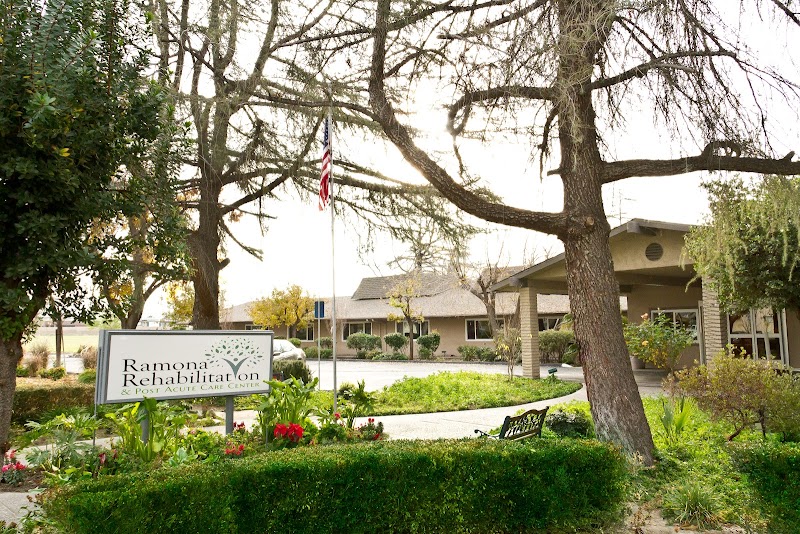
Who Owns and Operates Ramona Rehabilitation And Post Acute?

RAMONA REHABILITATION AND POST ACUTE CARE CENTER is owned by a for-profit company. For-profit facilities operate as businesses with obligations to shareholders or private owners. The facility operates independently rather than as part of a larger chain. With 104 certified beds and approximately 96 residents (about 92% occupancy), it is a mid-sized facility located in HEMET, California.
How Does Ramona Rehabilitation And Post Acute Compare to Other California Nursing Homes?

Compared to the 100 nursing homes in California, RAMONA REHABILITATION AND POST ACUTE CARE CENTER's overall rating (3 stars) is below the state average of 3.1, staff turnover (48%) is near the state average of 46%, and health inspection rating (3 stars) is at the national benchmark.

What Should Families Ask When Visiting Ramona Rehabilitation And Post Acute?

Based on this facility's data, families visiting should ask: "Can I visit during a mealtime to observe dining assistance and food quality?" "How do you handle medical emergencies, and what is your hospital transfer rate?" "Can I speak with family members of current residents about their experience?"

Is Ramona Rehabilitation And Post Acute Safe?

Based on CMS inspection data, RAMONA REHABILITATION AND POST ACUTE CARE CENTER has a clean safety record: no substantiated abuse findings (meaning no confirmed cases of resident harm), no Immediate Jeopardy citations (the most serious violation level indicating risk of serious injury or death), and is not on the Special Focus Facility watch list (a federal program monitoring the lowest-performing 1% of nursing homes). The facility has a 3-star overall rating and ranks #100 of 100 nursing homes in California. While no facility is perfect, families should still ask about staff-to-resident ratios and recent inspection results during their visit.

Do Nurses at Ramona Rehabilitation And Post Acute Stick Around?

RAMONA REHABILITATION AND POST ACUTE CARE CENTER has a staff turnover rate of 48%, which is about average for California nursing homes (state average: 46%). Moderate turnover is common in nursing homes, but families should still ask about staff tenure and how the facility maintains care continuity when employees leave.

Was Ramona Rehabilitation And Post Acute Ever Fined?

RAMONA REHABILITATION AND POST ACUTE CARE CENTER has no federal fines on record. CMS issues fines when nursing homes fail to meet care standards or don't correct problems found during inspections. The absence of fines suggests the facility has either maintained compliance or corrected any issues before penalties were assessed. This is a positive indicator, though families should still review recent inspection reports for the full picture.

Is Ramona Rehabilitation And Post Acute on Any Federal Watch List?

RAMONA REHABILITATION AND POST ACUTE CARE CENTER is not on any federal watch list. The most significant is the Special Focus Facility (SFF) program, which identifies the bottom 1% of nursing homes nationally based on persistent, serious quality problems. Not being on this list means the facility has avoided the pattern of deficiencies that triggers enhanced federal oversight. This is a positive indicator, though families should still review the facility's inspection history directly.