THE VILLAGE HEALTHCARE CENTER
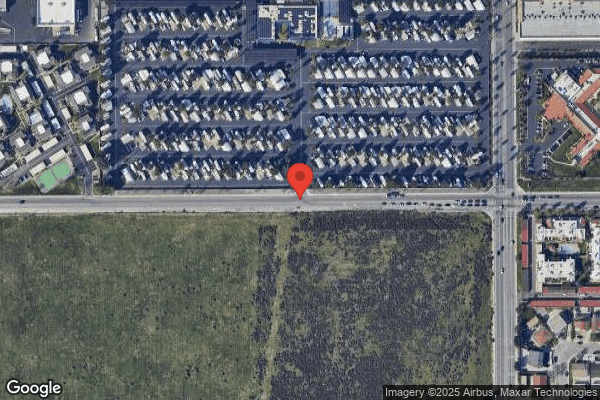

2400 WEST ACACIA AVENUE, HEMET, CA 92545 (951) 766-5116
For profit - Limited Liability company 54 Beds FREEDOM MANAGEMENT COMPANY Data: November 2025
Trust Grade
38/100
#929 of 1155 in CA
Last Inspection: June 2025

Inspected within the last 6 months. Data reflects current conditions.

Overview

The Village Healthcare Center in Hemet, California has received a Trust Grade of F, indicating significant concerns about its overall quality of care. Ranking #929 out of 1155 facilities in California means it is in the bottom half, and at #46 out of 53 in Riverside County, it has only a few local options that are rated worse. While the facility is showing improvement in addressing issues, going from 17 problems in 2024 to 13 in 2025, it still faces serious shortcomings, including two serious incidents related to inadequate nutritional care that resulted in significant weight loss for residents. Staffing is a relative strength with a 4 out of 5 rating, but a high turnover rate of 53% raises concerns about continuity of care. The facility has incurred fines totaling $20,046, which is higher than 76% of California facilities, suggesting ongoing compliance problems.

Trust Score
F
38/100
In California
#929/1155
Bottom 20%
Safety Record
Moderate
Needs review
Inspections
Getting Better
17 → 13 violations
Staff Stability
⚠ Watch
53% turnover. Above average. Higher turnover means staff may not know residents' routines.
Penalties
⚠ Watch
$20,046 in fines. Higher than 77% of California facilities, suggesting repeated compliance issues.
Skilled Nurses
○ Average
Each resident gets 34 minutes of Registered Nurse (RN) attention daily — about average for California. RNs are the most trained staff who monitor for health changes.
Violations
⚠ Watch
41 deficiencies on record. Higher than average. Multiple issues found across inspections.
★★☆☆☆
2.0
Overall Rating
★★★★☆
4.0
Staff Levels
★★☆☆☆
2.0
Care Quality
★★☆☆☆
2.0
Inspection Score
Stable
2024: 17 issues
2025: 13 issues

The Good

  • 4-Star Staffing Rating · Above-average nurse staffing levels
  • Full Sprinkler Coverage · Fire safety systems throughout facility
  • No fines on record

Facility shows strength in staffing levels, fire safety.

The Bad

2-Star Overall Rating

Below California average (3.1)

Below average - review inspection findings carefully

Staff Turnover: 53%

Near California avg (46%)

Higher turnover may affect care consistency

Federal Fines: $20,046

Below median ($33,413)

Minor penalties assessed

Chain: FREEDOM MANAGEMENT COMPANY

Part of a multi-facility chain

Ask about local staffing decisions and management

The Ugly 41 deficiencies on record

2 actual harm
Jun 2025 8 deficiencies
CONCERN (E)

Potential for Harm - no one hurt, but risky conditions existed

Deficiency F0578 (Tag F0578)

Could have caused harm · This affected multiple residents

**NOTE- TERMS IN BRACKETS HAVE BEEN EDITED TO PROTECT CONFIDENTIALITY** Based on interview and record review, the facility failed to ensure accurate documentation of the residents' wishes regarding th...

Read full inspector narrative →
**NOTE- TERMS IN BRACKETS HAVE BEEN EDITED TO PROTECT CONFIDENTIALITY** Based on interview and record review, the facility failed to ensure accurate documentation of the residents' wishes regarding their care were maintained, for four of six residents reviewed for Advance Directives (AD - a written instruction relating to the provision of health care when the individual is incapacitated) (Residents 3, 13, 93 , and 26) , when: 1. Resident 3, 13, and 93's ADs were not readily available in their charts; and 2. For Resident 26, there was no documented evidence information was provided to the resident regarding AD formulation. These failures had the potential for the resident's decisions regarding their healthcare and treatment to not be honored. Findings: 1a. A review of Resident 3's record indicated Resident 3 was admitted to the facility on [DATE], with diagnoses which included dementia (memory loss), mild protein calorie malnutrition, and depression. Resident 3's History and Physical Examination, dated [DATE], indicated Resident 3 did not have the capacity to understand and make decisions. Resident 3's Minimum Data Set (MDS - a clinical assessment tool), dated [DATE], indicated Resident 3 had a Brief Interview for Mental Status (BIMS) score of 2 (severe cognitive impairment). Resident 3's Advance Directive Acknowledgement Form, signed by the resident's representative, dated [DATE], indicated Resident 3 had an AD. Further review of Resident 3's record indicated the AD was not available. 1b. A review of Resident 13's record indicated Resident 13 was admitted to the facility on [DATE], with diagnoses which included atrial fibrillation (irregular heart rhythm), hemiplegia (paralysis or loss of voluntary movement on one side of the body) and hemiparesis (weakness on one side of the body) following a stroke, and seizures. Resident 13's History and Physical Examination, dated [DATE], did not indicate if Resident 93 had or did not have the capacity to understand and make decisions. Resident 13's MDS, dated [DATE], indicated Resident 13 had a BIMS score of 8 (moderate cognitive impairment). Resident 13's Advance Directive Acknowledgement Form, signed by the resident's representative, dated [DATE], indicated Resident 13 had a Durable Power of Attorney for Health Care (DPOA-HC- legal document that allows you to appoint someone to make healthcare decisions for you if you are unable to do so yourself). Further review of Resident 13'2 record indicated the DPOA-HC was not available in Resident 13's physical or electronic record. 1c. A review of Resident 93's record indicated Resident 13 was admitted to the facility on [DATE], with diagnoses which included compression fracture of third lumbar vertebra (a break in the bone of the lower spine due to collapse or compression due to pressure), and acute myeloblastic leukemia (a rapidly progressing cancer of the blood and bone marrow), not having achieved remission (reduction or disappearance of cancer signs and symptoms following treatment). Resident 93's History and Physical Examination, dated [DATE], indicated Resident 93 had the capacity to understand and make decisions. Resident 93's MDS, dated [DATE], indicated Resident 93 had a BIMS score of 15 (cognitively intact). Resident 93's Advance Directive Acknowledgement Form, dated [DATE], indicated Resident 93 had an AD. Further review of Resident 93's record indicated the AD was not available in Resident 13's physical or electronic record. On [DATE], at 2:45 p.m., a concurrent interview and record review was conducted with the Director of Nursing (DON). The DON confirmed absence of copies of Residents 3 and 93's AD in their physical and electronic records, as well as the absence of Resident 13's DPOA-HC in the physical and electronic record. The DON stated these documents should have been in the resident's chart. The DON further stated, We may not follow what the AD says on there as the resident wishes, if we do not have them in the chart. A review of the facility's policy and procedure titled, Advance Directives, dated [DATE], indicated .Advance directives are honored in accordance with the state law and facility policy .If the resident or residents representative has executed one or more advance directive(s) .copies of these documents are obtained and maintained in the same section of the residents medical record and are readily retrievable by any facility staff .The residents wishes are communicated to the residents direct care staff and physician by placing the advance directive documents in a prominent, accessible location in the medical record and discussing the residents wishes in care planning meetings . 2. A review of Resident 26's record indicated Resident 26 was admitted on [DATE], with diagnoses which included metabolic encephalopathy (brain function impairment leading to changes in mental status). Resident 26's MDS, dated [DATE], indicated Resident 26 had a BIMS score of 15 (cognitively intact). Resident 26's AD or Advance Directive Acknowledgement Form, was not found in the resident's physical and electronic record. On [DATE], at 2:55 p.m., an interview with the DON was conducted. The DON stated the expectation was if no AD was obtained on admission, a follow up should have been conducted with Resident 26 regarding the AD Acknowledgement Form, and education should be provided to the resident regarding formulation of an AD. If Resident 26 had an AD, a copy should have been obtained and placed in the chart. The DON further stated failure to keep an AD easily available to staff could lead to inappropriate medical actions for the resident such as life saving CPR when not requested. A review of the facility's policy and procedure titled, Advance Directives, dated [DATE], indicated, .The resident has the right to formulate an advance directive, including the right to accept or refuse medical treatment or surgical treatment .The resident or representative is provided with written information concerning the right to refuse or accept medical or surgical treatment and to formulate an advance directive if he or she chooses to do so .Written information about the right to accept or refuse medical or surgical treatment, and the right to formulate an advance directive is provided in a manner that is easily understood by the resident or representative .Written information includes a description of the facility's policies to implement advance directives and applicable state laws .
CONCERN (E)

Potential for Harm - no one hurt, but risky conditions existed

Deficiency F0761 (Tag F0761)

Could have caused harm · This affected multiple residents

**NOTE- TERMS IN BRACKETS HAVE BEEN EDITED TO PROTECT CONFIDENTIALITY** Based on observation, interview, and record review, the facility failed to ensure proper labeling and storage of medical supplie...

Read full inspector narrative →
**NOTE- TERMS IN BRACKETS HAVE BEEN EDITED TO PROTECT CONFIDENTIALITY** Based on observation, interview, and record review, the facility failed to ensure proper labeling and storage of medical supplies and medication conformed to national standards and the facility policy and procedure when: 1. During medication administration observation, Resident 95's furosemide (medication used to help the body get rid of extra fluid and salt) bubble pack label did not include the blood pressure holding parameters (instructions for when the medication should not be given). This failure had the potential for the medication to be administered outside of holding parameters. 2. During medication storage inspection, the following were observed: a. Three bottles of iron tablets, with expiration dates of April 2025, were stored in the medication cabinet readily available for use; b. One opened container of Metamucil (used to treat constipation), labeled for a discharged resident and with an expiration date of November 2024, was stored in the medication cabinet readily available for use; and c. One open 30-ounce (oz- unit of measurement) bottle of ProStat (a ready-to-drink concentrated liquid protein medical food) was observed stored in the medication cabinet, covered with dried liquid, which had oozed from the top of the bottle. These failures had the potential for the outdated and potentially contaminated medications to be administered to the vulnerable residents of the facility, which could lead to adverse effects from use of these outdated or compromised medications. Findings: 1. On June 12, 2025, at 9:25 a.m., a medication administration observation was conducted with Licensed Vocational Nurse (LVN) 1. LVN 1 prepared medications for Resident 95, including the medication Furosemide 20 mg (milligrams- a unit of measurement), which LVN 1 stated was to be given by mouth two times a day, based on the orders on the electronic medication administration record. LVN 1 further stated the medication was to be held if Resident 95's systolic (upper number) blood pressure (SBP) was less than 110 mmHg (millimeters of mercury- unit of measurement for pressure). The LVN did not administer the medication to Resident 95. A review of Resident the medication's label indicated Furosemide 20MG TAB TAKE 1 TABLET BY MOUTH TWICE DAILY. The medication label did not include the holding parameter on the label, and there was no direction change sticker to indicate any change in the administration of the medication. A review of Resident 95's record indicated Resident 95 was admitted to the facility on [DATE], with diagnoses which included systolic congestive heart failure (heart's left ventricle is too weak to contract effectively, preventing it from pumping enough blood to the body), and atrial fibrillation (irregular heart rhythm). Resident 95's Order Summary Report, included the physician's order, dated June 10, 2025, which indicated, Furosemide Oral Tablet 20 MG .Give 1 tablet by mouth two times a day for CHF (congestive heart failure) HOLD for SBP less than 100. On June 13, 2025, at 9:14 a.m., the Director of Nursing (DON) was interviewed. The DON stated a direction change sticker should have been placed on the Furosemide bubble pack to indicate a change in medication administration instructions. The DON stated she expected the pharmacy to place the correct medication instructions on the label according to the physician's orders. A review of the facility's policy and procedure titled, Medication Labeling and Storage, dated February 2023, indicated, .Labeling of medications and biologicals dispensed by the pharmacy is consistent with applicable federal and state requirements and currently accepted pharmaceutical practices .The medication label includes, at a minimum .appropriate instructions and precautions .Only the dispensing pharmacy may label or alter the label on a medication container or package . 2. On June 12, 2025, at 1:27 p.m., an inspection of the Medication Room was conducted with the DON. The following were found: a. One 30-oz bottle of Prostat was observed in the upper shelf of a five-tier wooden medicine cabinet. Brownish-orange liquid, which had oozed from the top of the bottle, had dried and crusted along one side of the bottle from top to bottom. In a concurrent interview, the DON stated it should not have been in the medication cabinet. Inspection of the medication room was continued with the Infection Preventionist (IP). b. One bottle of Metamucil, which was labeled for Resident 96, had an expiration date of November 2024, was observed in the upper shelf of the five-tier wooden medicine cabinet. A review of Resident 96's record indicated Resident 96 was admitted to the facility on [DATE], and was discharged from the facility on July 4, 2024. c. A built in cabinet was against the back wall of the medication room. On the bottom shelf of the upper cabinets were three bottles of Gericare Iron 27 mg (100 tablets per bottle), with expiration dates of April 2025. On June 12, 2025, at 2:45 p.m., a concurrent observation and interview was conducted with the DON. The DON confirmed the expired status of the Metamucil and iron tablets. The DON stated the medications should not have been kept stored in the medication cabinet. The DON further stated the expired medications could be given to the residents in error and cause adverse reactions. A review of the facility's policy and procedure titled, Medication Labeling and Storage, dated February 2023, indicated .If the facility has discontinued, outdated or deteriorated medications or biologicals (drugs made from living organisms or their components, like proteins or cells), the dispensing pharmacy is contacted for instructions regarding returning or destroying these items .
CONCERN (E)

Potential for Harm - no one hurt, but risky conditions existed

Deficiency F0802 (Tag F0802)

Could have caused harm · This affected multiple residents

Based on observation, interview, and record review the facility failed to ensure Food and Nutrition Services associates were trained and competent to carry out the functions of the department safely a...

Read full inspector narrative →
Based on observation, interview, and record review the facility failed to ensure Food and Nutrition Services associates were trained and competent to carry out the functions of the department safely and effectively when: 1. Food Service (FS) staff did not use three separate steps (wash, rinse and sanitize) to clean and sanitize work surfaces and soiled equipment, according to the facility's policy and procedure; and 2. FS staff did not follow the manufacturer's guidelines for the length of time required for dipping the test strip into the sanitizer (sanitizing solution used for sanitizing food contact surfaces) when testing the concentration of the sanitizer. These failures had the potential for food utensils and dishes to be improperly sanitized, and may result in food-borne illnesses in the vulnerable resident population. Findings: 1. On June 10, 2025, at 2:11 p.m., during a concurrent observation and interview with FS 1, FS 1 was observed cleaning a dirty meal cart. FS 1 stated she used a blue bucket with soap and water solution to clean the work surfaces of the kitchen or soiled equipment, and then used a red bucket to sanitize them. FS1 further stated she already washed and sanitized them. FS 1 did not mention rinsing the soap and water solution before sanitizing. On June 10, 2025, at 2:16 p.m., during an interview with FS 2, FS 2 stated she cleaned the soiled counter top surfaces using soap and water solution, then the sanitizer solution would be used. FS 2 did not mention rinsing the soap and water solution before sanitizing. On June 10, 2025, at 3:34 p.m., an interview was conducted with the Registered Dietitian (RD). The RD stated the proper steps for dishwashing were: removal of food debris, wash with detergent solution, rinse with water, and lastly, sanitize with sanitizer. The RD further stated if staff did not follow the proper dish cleaning and disinfecting procedures, kitchen equipment surfaces would not be cleaned properly. A review of the facility's policy and procedure titled, Tools for Effective Cleaning, dated 2023, indicated, .Cleaning involves the removal of soil. Water is the main cleaning agent .chemical cleaning compound .The purpose of detergents is to loosen the soil or dirt .The soil must be rinsed off .and sanitized . A review of the U.S. FDA (Food and Drug Administration) Food Code 2022, Annex 3 Section 4-501.18 Warewashing Equipment, Clean Solutions, the Food Code indicated, Failure to maintain clean wash, rinse, and sanitizing solutions adversely affects the warewashing operation. Equipment and utensils may not be sanitized, resulting in subsequent contamination of food .Warewashing means the cleaning and SANITIZING of UTENSILS and FOOD-CONTACT SURFACES of EQUIPMENT . 2. On June 10, 2025, at 10:11 a.m., during a concurrent observation and interview with Kitchen Supervisor (KS), KS was asked to demonstrate how to check the concentration of the sanitizer. KS was observed dipping the test strip into the sanitizer for 10 seconds. KS stated he needed to dip the test strip for 10 seconds to check the concentration of sanitizer. On June 10, 2025, at 2:11 p.m., during a concurrent observation and interview with FS 1, FS 1 was observed dipping the test strip into the sanitizer for 15 seconds to check the concentration of the sanitizer. FS 1 stated she needed to dip the test strip into the sanitizer for 15-20 seconds, and confirmed she dipped the test strip into sanitizer for 15 seconds to check the concentration of sanitizer. A review of the sanitizer manufacturer's guidelines, dated January 2025, indicated, .Procedure .Immerse the strip in sample for 5 (five) seconds . On June 10, 2025, at 3:34 p.m., an interview was conducted with the RD. The RD stated the staff should have followed the manufacturer's guideline for the length of time required for dipping of the test strip into the sanitizer solution. The RD further stated if the test strip was dipped for too long, it would lead to False reading result. A review of the facility's policy and procedure titled, Cleaning and Sanitizing - Basics, dated 2023, indicated, .When cleaning and sanitizing any food contact surface, it is extremely important that: Always refer to manufacturer's recommendation of dilution strength and current Federal/ or a State Food code (using stricter of the two standards) .
CONCERN (E)

Potential for Harm - no one hurt, but risky conditions existed

Menu Adequacy (Tag F0803)

Could have caused harm · This affected multiple residents

**NOTE- TERMS IN BRACKETS HAVE BEEN EDITED TO PROTECT CONFIDENTIALITY** Based on observation, interview, and record review, the facility failed to ensure Food and Nutrition Services staff followed the...

Read full inspector narrative →
**NOTE- TERMS IN BRACKETS HAVE BEEN EDITED TO PROTECT CONFIDENTIALITY** Based on observation, interview, and record review, the facility failed to ensure Food and Nutrition Services staff followed the Cook's spreadsheet when: 1. For Residents 14 and Resident 25, the appropriate dessert was not served during lunch on June 9, 2025; and 2. For Residents 14, 18, and 25, the pot roast meat was not served with gravy during lunch on June 9, 2025. These failures had the potential for residents on oral diets to not receive the adequate nutrition which can further compromise their medical status. Findings: 1. On June 9, 2025, at 12:33 p.m., a concurrent observation of the lunch meal trays of Residents 14 and 25 was conducted with the Director of Staff Development (DSD) in the dining room. The food trays were observed to each contain a cup of cherry crisp. In a concurrent interview, the DSD stated Residents 14 and 25 received a cherry crisp each as dessert. The DSD further stated both Residents 14 and 25 were on CCHO (controlled carbohydrate- less sugar) diet because they were diabetics (with abnormal blood sugar). a. During lunch meal observation on June 9, 2025, Resident 14's tray contained the following: - egg salad sandwich; - chopped/soft fried potatoes; - chopped seasoned red cabbage; - minestrone soup; - soft chopped cherry crisp; - decaf hot tea; - iced tea; and - whole milk/beverage. On June 9, 2025, Resident 14's record was reviewed. Resident 14 was admitted to the facility on [DATE], with diagnoses which included diabetes mellitus type 2 (DM2 - abnormal blood sugar). A review of Resident 14's Physicians Order, dated June 6, 2025, indicated Resident 14 was on a CCHO diet. b. During a lunch meal observation on June 9, 2025, Resident 25's tray contained the following: - pureed Honey Pot roast with gravy; - applesauce; - pureed fried potatoes; -pureed seasoned red cabbage; - pureed seasoned red; - pureed cherry crisp; - diet lemonade-honey thick; and - whole milk. On June 9, 2025, Resident 25's record was reviewed. Resident 25 was admitted to the facility on [DATE], with diagnoses which included DM2. A review of Resident 25's Physicians Order, dated June 6, 2025, indicated Resident 25 was on a CCHO diet. A review of the facility's Diet Spreadsheet, dated Week 2, Day 9-Monday, indicated CCHO residents would receive fruit in place of cherry crisp. The facility was not able to provide a documentation or a logbook regarding changes in the diet menu. There was no posting on the menu board or consumer board regarding the changes in the planned menu for the day. On June 10, 2025, at 3:54 p.m., during an interview with the RD, the RD stated the meal diets of Residents 14 and 25 should have coincided with the cook's spreadsheet. The RD stated Residents 14 and 25 should have received fruits for dessert, according to the cook's spreadsheet. The RD further stated Residents 14 and 15 would be at risk for uncontrolled sugar levels, which could lead to kidney failure and possible hospitalization. 2. On June 9, 2025, at 12:33 p.m., a concurrent dining observation was conducted with the DSD in the dining room. The food items for Residents 14, 18, and 25 were observed to not have gravy on their pot roast meat. In a concurrent interview, the DSD stated there was no gravy on pot roast meats served to Residents 14, 18, and 25. The DSD further stated kitchen did not follow the order listed on the meal tickets, and the list should have been followed. A review of facility's Diet Spreadsheet, dated Week 2, Day 9-Monday, indicated mechanical soft diet residents would receive ground honey pot roast with gravy, and residents receiving pureed texture would receive pureed honey pot roast with gravy. On June 10, 2025, at 3:54 p.m., during an interview with the RD, the RD stated the meal diets of Residents 14, 18, and 25 should have coincided with the cook's spreadsheet. The RD stated the pot roast meats should have been served with gravy. The RD further stated, the gravy would help moisten to the food, thereby preventing choking and aspiration. The RD further stated the absence of gravy could lead to undernourishment and weight loss. A review of the facility's policy and procedure titled, Menu Diet Spreadsheets/Portion Serving Communication Tool, dated 2020, indicated, .Diet spreadsheets are based on the planned menu and reflect serving .for regular and therapeutic diet orders .Therapeutic diets reflected on the spreadsheet correspond to the diet guidelines found in the community's approved diet manual .
CONCERN (E)

Potential for Harm - no one hurt, but risky conditions existed

Deficiency F0805 (Tag F0805)

Could have caused harm · This affected multiple residents

Based on observation, interview, and record review, the facility failed to ensure the appropriate food texture was provided, for nine of nine residents reviewed (Residents 14, 142, 2, 3, 93, 20, 241, ...

Read full inspector narrative →
Based on observation, interview, and record review, the facility failed to ensure the appropriate food texture was provided, for nine of nine residents reviewed (Residents 14, 142, 2, 3, 93, 20, 241, 18, and 17), when: 1. Residents on mechanical soft diet did not receive ground pork and chopped vegetables according to the cook's spreadsheet during lunch on June 9, 2025; and 2. Residents on mechanical soft diet were served with potatoes skin during lunch on June 9, 2025. These failures had the potential for the residents to choke on the food. Findings: 1. A review of the facility's menu spreadsheet for lunch on June 9, 2025, indicated residents on mechanical soft diet were to receive ground pork and chopped vegetables as the main entrée. On June 9, 2025, at 12:18 p.m., during meal tray distribution observation, the pot roast meat was observed to have whole coarse strands of meat which measured approximately one inch in size. There was no ground meat for the pot roast in the trayline. The vegetables were observed to have large chunks similar to vegetables intended for residents on regular diets. In a concurrent interview with the Registered Dietician (RD), the RD confirmed the pot roast meat for the residents on mechanical soft diet was not ground, and was the same texture as the meat for those with regular diet. The RD stated the texture and consistency of meat for mechanical soft diet should be chopped or bite size, and should be smaller than half an inch. The RD stated the vegetables should be in small chunks. The RD further stated if the texture for mechanical soft diet was not followed, residents could choke, which could potentially lead to death. A review of the facility's Diet Type Report, dated June 9, 2025, indicated Residents 14, 142, 2, 3, 93, 20, 241, 18, and 17, had a diet order of mechanical soft ground. A review of the facility's undated diet manual section titled, Dental Soft (Mechanical Soft) Diet, indicated, .Meat is ground or chopped into bite-size pieces (1/2 inch or smaller) .Vegetables are cooked soft .with no large chunks or pieces . 2. A review of the facility's menu spreadsheet for lunch on June 9, 2025, indicated residents on mechanical soft diet were to receive chopped potatoes. On June 9, 2025, at 12:18 p.m., during meal tray distribution observation, residents on mechanical soft texture diet received potatoes with skin. In a concurrent interview with the RD, the RD confirmed the potatoes that were served for residents on mechanical soft diet had potatoes with skin. The RD stated there was no other type of potatoes prepared for lunch and the potatoes should have been served without the skin on. The RD further stated potato skins could cause residents to choke or aspirate (inhale food or liquid in to the lungs), which could potentially lead to death. The undated facility diet manual section titled, LIST OF DIETS AVAILABLE IN THE COMMUNITY, indicated, .MECHANICAL SOFT-GROUND .Cannot have potato skins .
CONCERN (E)

Potential for Harm - no one hurt, but risky conditions existed

Infection Control (Tag F0880)

Could have caused harm · This affected multiple residents

Based on observation, interview, and record review, the facility failed to ensure infection prevention and control practices were implemented, when Licensed Vocational Nurse (LVN) 1 was observed remov...

Read full inspector narrative →
Based on observation, interview, and record review, the facility failed to ensure infection prevention and control practices were implemented, when Licensed Vocational Nurse (LVN) 1 was observed removing one tablet of Metoprolol (a blood pressure medication) from the medicine cup using bare forefinger, during medication administration observation. In addition, LVN 1 was observed not disinfecting the blood pressure (BP) apparatus before and after resident use. These failures had the potential to spread infection among the vulnerable residents of the facility. Findings: On June 12, 2025, at 9:16 a.m., a medication administration observation was conducted with LVN 1. The following were observed: - LVN 1 poured Resident 94's medications, including one tablet Metoprolol 25 mg (milligram- unit of measurement) into one medicine cup on top of the medication cart (med cart). LVN 1 stated the medication was not to be administered if Resident 94's systolic (upper number) blood pressure was less than 110 mmHg (millimeters mercury- unit of measurement for pressure). LVN 1 stated Resident 94's blood pressure, which was taken earlier, was 110/60 mmHg, so he would recheck Resident 94's blood pressure when in the room and before administering the medication; - LVN 1 brought out the BP apparatus from the bottom drawer of the med cart and placed it on top of the med cart. LVN 1 then picked up the medicine cup, picked up the BP apparatus, and proceeded to Resident 94's room. LVN 1 obtained Resident 94's blood pressure using the BP apparatus and a stethoscope which he removed from around his neck. After obtaining Resident 94's blood pressure, the LVN looped the stethoscope back around his neck without disinfecting the stethoscope; - LVN 1 stated Resident 94's BP was 100/59 and the Metoprolol was not going to be administered. LVN 1 returned to the medication cart with the medicine cup and the BP apparatus. LVN 1 identified the Metoprolol tablet and proceeded to remove the medication from inside the medicine cup using his bare right forefinger. The BP apparatus was left on top of the medication cart; and - After administering the medications to Resident 94, LVN 1 was observed to return the BP apparatus to the bottom drawer of the med cart without disinfecting the medical equipment. In a concurrent interview with LVN 1, LVN 1 stated he should not have used his bare forefinger in removing the medication from the medicine cup, and he should have disinfected the stethoscope and BP apparatus before and after use on Resident 94. On June 13, 2025, at 9:03 a.m., the Infection Preventionist (IP) was interviewed. The IP stated LVN 1 should not have removed the medication from the medicine cup using his bare forefinger, and should have disinfected the stethoscope and BP apparatus after use on Resident 94, to avoid the risk of contamination or cross-contamination. On June 13, 2025, at 9:14 a.m., the Director of Nursing (DON) was interviewed. The DON stated LVN 1 should not have used bare hands in handling the medication, and should have sanitized the medical equipment before and after use. A review of the facility's policy and procedure titled, Cleaning and Disinfection of Resident-Care Items and Equipment, dated September 2022, indicated .Resident-Care equipment, including reusable items .will be cleaned and disinfected according to current CDC (Centers for Disease Control) recommendations for disinfection .Non-critical items are those that come in contact with intact skin .items include bedpans, blood pressure cuffs .items require cleaning followed by either low- or intermediate-level disinfection following manufacturers' instructions .performed with an EPA (Environmental Protection Agency)-registered disinfectant labeled for use in healthcare settings .Reusable items are cleaned and disinfected or sterilized between residents (e.g., stethoscopes, durable medical equipment) .
CONCERN (E)

Potential for Harm - no one hurt, but risky conditions existed

Room Equipment (Tag F0908)

Could have caused harm · This affected multiple residents

Based on observation, interview, and record review, the facility failed to ensure the proper maintenance of essential equipment, when water was found dripping from the condenser unit (removes heat fro...

Read full inspector narrative →
Based on observation, interview, and record review, the facility failed to ensure the proper maintenance of essential equipment, when water was found dripping from the condenser unit (removes heat from the refrigerator and cooling it down to a liquid state) of Refrigerator (Ref) #3 . This failure had the potential to place residents at risk for food-borne diseases (illness that result from ingestion of contaminated food) that can cause sickness and/or death. Findings: On June 9, 2025, at 10:10 a.m., during the initial kitchen tour, an observation of Ref #3 was conducted. Inside Ref#3, the condenser unit was located at the top back wall of Ref#3. Water was observed dripping down from the condenser unit into a 1/8 6-inch deep metal pan, which was below the condenser unit and resting on the top shelf of the refrigerator. The metal pan was full to the brim with water, with water overflowing and dripping onto some food items on the lower shelves. In a concurrent interview with the Food Server Director (FSD), the FSD stated the water leak came from the condenser unit, and maintenance should have fixed it. The FSD further stated the water was leaking down towards the shelves and dripped onto the food, so it was not safe due to possible cross-contamination of the food. On June 9, 2025, at 10:14 a.m., during a concurrent observation and interview with the Maintenance Supervisor (MS) inside the kitchen, the MS stated Ref #3's condenser unit had a leak, so the water dripped down to the shelves. The MS further stated, It should have been fixed as soon as possible. On June 10, 2025, at 4 p.m., during an interview with the Registered Dietician (RD), the RD stated any damaged kitchen equipment should have been prioritized and repaired for safe and operable use. The RD further stated water that leaked and dripped on to the food would cause cross-contamination, which could cause residents to have food-borne illnesses. A review of the facility's policy and procedure titled, Maintenance Service, dated December 2009, indicated, .Maintenance service shall be provided to all areas of the building, grounds, and equipment .The maintenance department is responsible for maintaining the buildings, grounds and equipment in a safe and operable manner at all times .
CONCERN (F)

Potential for Harm - no one hurt, but risky conditions existed

Food Safety (Tag F0812)

Could have caused harm · This affected most or all residents

**NOTE- TERMS IN BRACKETS HAVE BEEN EDITED TO PROTECT CONFIDENTIALITY** Based on observation, interview, and record review, the facility failed to ensure safe and sanitary food preparation and storage...

Read full inspector narrative →
**NOTE- TERMS IN BRACKETS HAVE BEEN EDITED TO PROTECT CONFIDENTIALITY** Based on observation, interview, and record review, the facility failed to ensure safe and sanitary food preparation and storage practices in the kitchen were observed, when: 1. Dust was found in multiple areas of the kitchen and on several kitchen equipment; 2. Grime buildup was found on the bottom of the cold storage shelves and on the walk in Refrigerator's (Ref) # (number) 1 inner door; and 3. Multiple residents' food items were stored in the nurses' station refrigerator undated and out of date. These failures had the potential to place residents at risk for food-borne diseases (illness that result from ingestion of contaminated food) that can cause sickness and/or death. Findings: 1. On June 9, 2025, at 9:05 a.m., a concurrent observation and interview was conducted with the Food Server Director (FSD) in the kitchen area. The FSD confirmed Ref #4's fan surface was dusty. On June 9, 2025, at 9:07 a.m., a concurrent observation and interview was conducted with the FSD in the kitchen area. The FSD confirmed the black debris on the fan surface of Ref #3 was dust. On June 9, 2025, at 9:08 a.m., a concurrent observation and interview was conducted with Food Server (FS) 2 in the work server area. FS 2 stated the wall above Ref #2 was dusty, and maintenance should have cleaned it. On June 9, 2025, at 9:17 a.m., a concurrent observation and interview with the Dietary Supervisor (DS) was conducted in the kitchen. The DS confirmed the black material in the door frame leading to the assisted living dining room was dusty. On June 9, 2025, at 9:26 a.m., a concurrent observation and interview with the DS was conducted in the kitchen. The DS confirmed the walk in Ref #1s' fan cover was dusty and needed to be cleaned. On June 9, 2025, at 9:29 a.m., a concurrent observation and interview with the DS was conducted in the kitchen. The DS confirmed the inner wall of walk in Ref #1's wall above the door was dusty. On June 10, 2025, at 4:10 p.m., during an interview with the Registered Dietitian (RD), the RD stated the kitchen area should have been cleaned and free from dust, because dust would potentially cause cross contamination. A review of the U.S. Food and Drug Administration's (FDA) Food Code 2022, Section 4-602.13 Nonfood-Contact Surfaces, the Food Code indicated, .The presence of food debris or dirt on nonfood contact surfaces may provide a suitable environment for the growth of microorganisms which employees may inadvertently transfer to food. If these areas are not kept clean, they may also provide harborage for insects, rodents, and other pests . 2. On June 9, 2025, at 8:15 a.m., during a concurrent walk-through observation and interview inside the kitchen with the DS, white grime build up was found on the bottom cold storage shelf inside walk in Ref #1. In addition, there was black grime build up along the rubber gasket in the left upper corner (L-shaped) of the inner surface of the door. In a concurrent interview with the DS, the DS stated the white grime build up was food residue, and the black grime build up in the walk in Ref #1's inner door was dirt and was missed during cleaning by the staff. The DS stated the grime build up found on the bottom shelves, as well as the dirt on walk in Ref #1's inner door should have been cleaned. The DS further stated the grime could cross-contaminate food and cause food-borne illness in the residents. On June 10, 2025, at 4:10 p.m., during an interview with the RD, the RD stated the kitchen area and storage equipment should been cleaned and free from grime, because dirt and grime could potentially could cause cross-contamination and illness. A review of Food code 2022. Annex 3: 4-402.12 Fixed Equipment, Elevation or Sealing indicated, .The inability to adequately or effectively clean areas under equipment could create a situation that may attract insects and rodents and accumulate pathogenic (disease causing) microorganisms that are transmissible through food . A review of the facility's undated policy and procedure titled, What is Food Sanitation? indicated, .The term sanitation means sound and health or clean and whole. It is largely concerned with the removal and effective control of micro-organisms (germs, bacteria, yeasts, mold, etc.) in food and everything that touches food .Sanitation is therefore a way of life and must be practiced around the clock, every day and all year round . 3. On June 10, 2025, beginning at 3 p.m., the nurse's station refrigerator, which contained residents' food, was inspected with the Infection Preventionist (IP). The following were observed: a. One unopened Stringles Organic string cheese seven g (grams-unit of measurement) serving was labeled with room [ROOM NUMBER]A, undated, and with best-by date of February 9, 2025. In a concurrent interview, the IP stated the food item should have been dated when it was received, should not have been in the fridge anymore, and should have been taken out; b. One opened 20-oz (ounce-unit of measurement) plastic bottle of strawberry fruit spread, and with a date of March 6, 2025. In a concurrent interview, the IP stated the strawberry fruit spread was past its storage date and should have been taken out of the fridge; c. One unopened 1.6 oz plastic container of celery sticks was unlabeled and had a best used by date of May 1, 2025. In a concurrent interview, the IP stated the pack of celery sticks was past its storage date, should have been labeled, and should have been taken out of the fridge; and d. One open 16-oz plastic bottle of salad dressing was unlabeled with a best used by date of January 16, 2024. In a concurrent interview, the IP stated the plastic bottle of salad dressing was open, unlabeled, and should have been taken out of the fridge. The IP further stated that for open food items, they could be stored in the fridge for 72 hours, after which they were supposed to be discarded. On June 10, 2025, at 4:10 p.m., during an interview with the RD, the RD stated expired food that were found in the residents' refrigerator should have been tossed to maintain the sanitary condition of the fridge. The RD further stated if food was expired and not monitored, it could cause food-borne illness in the residents. A review of the facility's undated policy and procedure titled, Food from Family, Visitors, Community, indicated, .Food stored for resident should be labeled and dated appropriately and discarded per safe food storage guidelines .
Feb 2025 5 deficiencies
CONCERN (D) 📢 Someone Reported This

A family member, employee, or ombudsman was alarmed enough to file a formal complaint

Potential for Harm - no one hurt, but risky conditions existed

Report Alleged Abuse (Tag F0609)

Could have caused harm · This affected 1 resident

**NOTE- TERMS IN BRACKETS HAVE BEEN EDITED TO PROTECT CONFIDENTIALITY** Based on interview and record review, the facility failed to ensure an allegation of physical abuse, for one of three residents ...

Read full inspector narrative →
**NOTE- TERMS IN BRACKETS HAVE BEEN EDITED TO PROTECT CONFIDENTIALITY** Based on interview and record review, the facility failed to ensure an allegation of physical abuse, for one of three residents (Resident G), was reported to the California Department of Public Health (CDPH - State Agency) immediately or within two hours after the facility was made aware of the alleged abuse. This failure resulted in a delayed investigation by CDPH and had the potential to expose the resident to further abuse. Findings: On January 27, 2025, at 9:45 a.m., an unannounced visit to the facility was conducted to investigate an allegation of abuse. On January 28, 2025, at 10 a.m., an interview was conducted with the Infection Preventionist (IP). The IP stated an allegation of abuse was discussed during a stand up meeting on January 24, 2025, that Resident G reported to the licensed nurse at around 9 p.m., on January 23, 2025, a Certified Nursing Assistant (CNA) pushed her. The IP stated the facility decided not to report to CDPH Resident G's allegation of abuse as it was decided as a false allegation. On January 28, 2025, at 4:15 p.m., an interview was conducted with the Director of Medical records (DOMR). The DOMR stated stand-up meetings with all department heads were being conducted daily. The DOMR stated during the stand up meeting on January 24, 2025, Resident G was discussed regarding a change of condition indicating allegations made by the resident, such as no food, and a CNA pushed her. The DOMR stated it was decided not to report to CDPH Resident G's allegation of abuse. On January 28, 2025, at 4:40 p.m., a review of Resident G's medical record was conducted. Resident G was admitted to the facility on [DATE], with diagnoses which included cerebral atherosclerosis (condition where plaque builds up in the arteries in the brain, narrowing them and reducing blood flow) and depressive disorder (a mental health condition with low moods, loss of interest or pleasure in activities, with symptoms that interfere with daily functioning). A review of Resident G's Minimum Data Set (MDS - a resident assessment tool), dated November 23, 2024, indicated Resident G had a Brief Interview of Mental Status (BIMS) score of 13 (cognitively intact). A review of Resident G's SBAR (situation, background, assessment, recommendation-a communication tool used by healthcare workers when there is a change of condition among residents) Communication Form, dated January 23, 2025, at 9:55 p.m., indicated .behavioral symptoms .false allegations about staff .resident making false allegations, told daughter that she is being locked up, has no food and that the CNA pushed her .recommendation of primary .hospice nurse . A review of Resident G's care plan indicated Resident has been making false accusations toward staff: locking up all the food, not feeding her, not answering call light for over an hour, leaving her in the bathroom for hours, dated January 24, 2025. There was no care plan indicating Resident G's accusation that a CNA pushed her. On January 29, 2025, at 2:10 p.m., an interview was conducted with Resident G and her family member (FM). Resident G stated she received a shower from the hospice nurse last week, and two people she had not met before came in and grabbed her under each arm and pulled her out of bed to take a shower, and she was telling them to stop. On January 29, 2025, at 4:30 p.m., during an interview with the Directof Nursing (DON) and Administrator (ADM), the DON and the ADM stated they were not aware about the allegation of physical abuse by Resident G. The ADM and the DON stated they should have reported the allegation of abuse if they had known about it. A review of the facility's policy titled Abuse, Neglect, Exploitation or Misappropriation-Reporting and Investigating, dated September 2022, indicated, .All reports of resident abuse .are reported to local, state, and federal agencies (as required by current regulations) and are thoroughly investigated by facility management. Findings .are documented and reported .if resident abuse .is suspected, the suspicion must be reported immediately to the administrator and to other officials according to state law .The administrator or the individual making the allegation immediately reports .suspicion to the following persons or agencies .the state licensing/certification agency .the local/state ombudsman .adult protective services .law enforcement officials .notices include .the type of abuse that is alleged .date and time the alleged incident occurred .the name(s) of all persons involved in the alleged incident .what immediate action was taken by the facility . upon receiving an allegation of abuse .the administrator is responsible for determining what actions (if any) are needed for the protection of residents .All allegations are thoroughly investigated .the investigator notifies the ombudsman that an abuse investigation is being conducted .the ombudsman is notified of the results of the investigation .within 5 business days of the incident, the administrator will provide a follow-up investigation report .
CONCERN (D) 📢 Someone Reported This

A family member, employee, or ombudsman was alarmed enough to file a formal complaint

Potential for Harm - no one hurt, but risky conditions existed

Investigate Abuse (Tag F0610)

Could have caused harm · This affected 1 resident

**NOTE- TERMS IN BRACKETS HAVE BEEN EDITED TO PROTECT CONFIDENTIALITY** Based on interview and record review, the facility failed to ensure a thorough investigation of an allegation of physical abuse ...

Read full inspector narrative →
**NOTE- TERMS IN BRACKETS HAVE BEEN EDITED TO PROTECT CONFIDENTIALITY** Based on interview and record review, the facility failed to ensure a thorough investigation of an allegation of physical abuse was conducted, for one of three residents (Resident G), after the facility was made aware of the allegation of abuse. This failure had the potential to result in further abuse for Resident G, which could affect the resident's emotional and psychosocial well-being. Findings: On January 27, 2025, at 9:45 a.m., an unannounced visit to the facility was conducted to investigate an allegation of abuse. On January 28, 2025, at 10 a.m., an interview was conducted with the Infection Preventionist (IP). The IP stated an allegation of abuse was discussed during a stand up meeting on January 24, 2025, that Resident G reported to the licensed nurse at around 9 p.m., on January 23, 2025, a Certified Nursing Assistant (CNA) pushed her. On January 28, 2025, at 4:15 p.m., an interview was conducted with the Director of Medical records (DOMR). The DOMR stated stand-up meetings with all department heads were being conducted daily. The DOMR stated during the stand up meeting on January 24, 2025, Resident G was discussed regarding a change of condition indicating allegations made by the resident, such as no food, and a CNA pushed her. On January 28, 2025, at 4:40 p.m., a review of Resident G's medical record was conducted. Resident G was admitted to the facility on [DATE], with diagnoses which included cerebral atherosclerosis (condition where plaque builds up in the arteries in the brain, narrowing them and reducing blood flow) and depressive disorder (a mental health condition with low moods, loss of interest or pleasure in activities, with symptoms that interfere with daily functioning). A review of Resident G's Minimum Data Set (MDS - a resident assessment tool), dated November 23, 2024, indicated Resident G had a Brief Interview of Mental Status (BIMS) score of 13 (cognitively intact). A review of Resident G's SBAR (situation, background, assessment, recommendation-a communication tool used by healthcare workers when there is a change of condition among residents) Communication Form, dated January 23, 2025, at 9:55 p.m., indicated .behavioral symptoms .false allegations about staff .resident making false allegations, told daughter that she is being locked up, has no food and that the CNA pushed her .recommendation of primary .hospice nurse . A review of Resident G's care plan indicated Resident has been making false accusations toward staff: locking up all the food, not feeding her, not answering call light for over an hour, leaving her in the bathroom for hours, dated January 24, 2025. There was no care plan indicating Resident G's accusation that a CNA pushed her. On January 29, 2025, at 10:15 a.m., an interview was conducted with the MDS Coordinator (MDSC). The MDSC stated she spoke with Resident G on January 27, 2025, to do a follow up about the alleged abuse that she had heard about during the stand-up meeting on January 24, 2025. The MDSC stated Resident G's allegations regarding no food, she was locked up, and was pushed by a CNA, were discussed during the stand up meeting. The MDSC stated she did not agree Resident G's allegation of being pushed by a CNA was a false allegation. The MDSC stated how would the facility know it was a false allegation of being pushed by a CNA unless an investigation was conducted. On January 29, 2025, at 2:10 p.m., an interview was conducted with Resident G and her family member (FM). Resident G stated she received a shower from the hospice nurse last week, and two people she had not met before came in and grabbed her under each arm and pulled her out of bed to take a shower, and she was telling them to stop. On January 29, 2025, at 4:30 p.m., during an interview with the Directof Nursing (DON) and Administrator (ADM), the DON and the ADM stated they were not aware about the allegation of physical abuse by Resident G. The ADM and the DON stated they would have investigated the allegation of abuse by Resident G if they would have known about it. A review of the facility's policy titled Abuse, Neglect, Exploitation or Misappropriation-Reporting and Investigating, dated September 2022, indicated, .All reports of resident abuse .are reported to local, state, and federal agencies (as required by current regulations) and are thoroughly investigated by facility management. Findings .are documented and reported .if resident abuse .is suspected, the suspicion must be reported immediately to the administrator and to other officials according to state law .The administrator or the individual making the allegation immediately reports .suspicion to the following persons or agencies .the state licensing/certification agency .the local/state ombudsman .adult protective services .law enforcement officials .notices include .the type of abuse that is alleged .date and time the alleged incident occurred .the name(s) of all persons involved in the alleged incident .what immediate action was taken by the facility . upon receiving an allegation of abuse .the administrator is responsible for determining what actions (if any) are needed for the protection of residents .All allegations are thoroughly investigated .the investigator notifies the ombudsman that an abuse investigation is being conducted .the ombudsman is notified of the results of the investigation .within 5 business days of the incident, the administrator will provide a follow-up investigation report .
CONCERN (E) 📢 Someone Reported This

A family member, employee, or ombudsman was alarmed enough to file a formal complaint

Potential for Harm - no one hurt, but risky conditions existed

Quality of Care (Tag F0684)

Could have caused harm · This affected multiple residents

**NOTE- TERMS IN BRACKETS HAVE BEEN EDITED TO PROTECT CONFIDENTIALITY** Based on interview and record review the facility failed to ensure three (Resident D, E, and F) of 13 residents (Residents D, E,...

Read full inspector narrative →
**NOTE- TERMS IN BRACKETS HAVE BEEN EDITED TO PROTECT CONFIDENTIALITY** Based on interview and record review the facility failed to ensure three (Resident D, E, and F) of 13 residents (Residents D, E, and F), received treatment and care in accordance with professional standards of practice to meet each resident's highest practicable physical, mental, and psychosocial well-being, when: 1. Resident D did not receive antibiotic (used to treat infection) medication as ordered by the physician. In addition, the topical treatments for Resident D's moisture associated skin damage (MASD - skin inflammation that occurs when the skin is exposed to moisture for a long time); 2. Resident E's neurocheck (a series of tests to check the brain, spinal cord, and nerve function) was not conducted according to the physician's order after the resident fell; and 3. Resident F was not administered medication to address constipation according to the physician's order. These failures have the potential to result in a delay in the care and treatment for Resident D, E, and F, and could have affect their overall health condition. Findings: On January 27, 2025, at 9:45 a.m., an unannounced visit was conducted for complaints of quality of care. 1. January 30, 2025, at 10:15 a.m., a review of Resident D's medical record was conducted. Resident D was admitted on [DATE], with diagnoses which include benign prostatic hyperplasia (prostate gland enlargement that can cause urination difficulty) with urinary tract infections. A review of Resident D's Treatment Administration Record (TAR) for December 2024 and January 2025 indicated the following treatments for Resident D's MASD were not documented as completed: - Triad Hydrophilic (a type of medication for wounds) wound dress external paste, apply to bilateral (both) buttocks every day shift for MASD and fungal; no documentation treatment was completed on the day shift of December 8, and December 13, 2024. - Ciclopirox External Gel 0.77%, apply to sacrococcyx (area below the spine to the tailbone)/buttocks every shift for MASD with fungal dermatitis (inflammation of skin); no documentation treatment was completed on December 8, and December 13, 2024. - Sacral (triangle shaped bone under spine) coccyx (tailbone) and bilateral buttocks MASD: clean with NS (normal saline), pat dry, apply barrier cream, leave open to air every shift, no documentation treatment was completed on January 19, and January 24, 2025. A review of Resident D's Medication Administration Record (MAR) dated December 2024, indicated the following: - Bactrim DS (an antibiotic used to treat an infection) 800-160mg (milligram-a unit of measurement) every 12 hours for a urinary tract infection was ordered to start December 2, 2024. The MAR indicated the dose for Bactrim on December 2, 2024, 9 p.m. dose was not administered as not available; - Bactrim DS 800-160mg every 12 hours, ordered to start December 24, 2024, at 8:00 a.m.; the dose was not given as the medication was unavailable. On January 30, 2025, at 4:15 p.m., an interview and concurrent record review was conducted with the Director of Nursing (DON). The DON stated Resident D has several treatments that were not documented as provided, the DON confirmed they were not completed. The DON stated the treatments should not have been missed and the Bactrim was in the medication room available in the emergency kit and should be given timely. 2. On January 30, 2025, at 11:50 a.m., a review of Resident E's medical record was conducted. Resident E was admitted on [DATE], with diagnoses which included metabolic encephalopathy (a condition where the brain does not function properly due to an underlying metabolic balance) and dementia (a group of thinking and social symptoms that interfere with daily functioning). A review of Resident E's Progress Notes, indicated the following: - dated January 1, 2025, at 10:35 a.m.; .resident is AO (alert, oriented) X 2-3 (2-3 indicates oriented to person, place and time) with forgetfulness & (and) episodes of confusion. Resident was observed laying on the floor in supine (on back) position between her bed and the bathroom, her head was positioned underneath the bed next to a bedside table .resident noted with a knot to the back of her head .resident states she was trying to get into her wheelchair .and grab food from her bedside table and she slipped and fell . - dated January 2, 2025, at 10:27 a.m.; .IDT (Interdisciplinary Team - a group of healthcare professionals) me on 1/2/25 (January 2, 2025) to discuss fall on 1/1/25 (January 1, 2025) .Bump noted at the back of bed (sic) .continue neuro checks per facility protocol . A review of Resident E's Change of Condition Evaluation, dated January 1, 2025, at 10:26 a.m., indicated, .noted resident not in bed .observed resident on floor .resident laying on back on the left side of the bed, head under roommates [sic] wheelchair, naked .brief off .resident stated she was trying to get up for breakfast but unable to answer how she got onto the floor . Further review of Resident E's record indicated there was no documented evidence a neuro check log was completed for Resident E's after the fall on January 1, 2025. On February 4, 2025, at 10:15 a.m., conducted an interview with the DON. The DON stated neuro checks were ordered for Resident E on January 1, 2025, but no documentation of the neurocheck completed could be found. 3. On January 31, 2025, at 3:30 p.m., an interview with Resident F was conducted. Resident F stated she wants to have normal bowel movements; she has been constipated for a long time. On January 31, 2025, a review of Resident F's medical record was conducted. Resident F was admitted to the facility on [DATE], with diagnoses which included Parkinson's dementia (a change in thinking and problems with memory) and psychosis (a mental disorder characterized by a disconnection from reality) with hallucinations (perceiving things that are not actually present, hearing voices, seeing objects). A review of Resident F's Order Sunnary Report, included the following physician's orders to address constipation: - .Milk of Magnesia Oral Suspension (MOM) .Give 30 ml (milliliter - unit of measurement) by mouth as needed .Give if no BM (bowel movement) x (times) 3 (three) days .; date ordered January 1, 2025; - Bisacodyl Rectal Suppository (administered via the rectum/anus) .Insert 1 suppository rectally as needed for Bowel Management if MOM (Milk of Magnesia) is ineffective after 8 (eight) hours give suppository .; date ordered January 1, 2025; and - Fleet Enema Rectal Enema (a [NAME] pe of rectal enema used to relieve constipation and prepare the bowels for medical procedures) .Insert 1 applicator rectally as needed .if suppository is ineffective after 8 hours administer Enema .; date ordered January 1, 2025. A review of Resident F's Care Plans indicated the following: - Alteration in comfort, dated January 2, 2025, Interventions included Hospice nurse to assess resident's bowel movement pattern each visit. - At risk for constipation, dated January 3, 2025, Goal: will have BM (bowel movement) every 2-3 days, interventions: Medication as ordered [Milk of Magnesia, Bisacodyl Rectal suppository, fleet enema]. Monitor for effectiveness of medication. Inform MD (medical doctor) promptly if ineffective. Monitor bowel movements for frequency, amount, and consistency. Monitor for signs of complications related to constipation. Monitor medications to see if causing constipation. A review of Resident F's Tasks: Bowel Continence, dated January 1, to January 31, 2025, indicated no bowel movement documented on January 15, 16, 17, 18, 19, 20, 21, 23, 24, 25, and 26, 2025. A review of Resident F's Medication Administration Record (MAR), for January 2025, indicated MOM, bisacodyl, dulcolax suppository, and fleet enema were not documented as administered to Resident F when the resident did not have BM on several days in January 2025. On January 31, 2025, at 4 p.m., an interview was conducted with the DON. The DON stated Resident F should be having bowel movements every two to three days. The DON stated if Resident F would not have BM for three or more days, the nursing staff should be medicating the resident with milk of magnesia, rectal suppositories or be given an enema. A review of the facility's policy titled Change in a Resident's Condition or Status, dated February 2021, indicated, .changes in the resident's medical/mental condition and/or status .accident or incident involving the resident .significant changes in the resident's physical/emotional/mental condition .specific instruction to notify the physician of change in the resident's condition .impacts more than one area of the resident's health status .requires interdisciplinary review and/or revision to the care plan . A review of the facility's policy titled Administering Medications, dated April 2019, indicated, .medications are administered in accordance with prescriber orders, including any time frame. Medication administration times are determined by resident needs and benefit, not staff convenience. Factors that are considered include .enhancing optimal therapeutic effect of the medication .medication errors are documented, reported, and reviewed by the QAPI committee to inform process changes and or the need for additional staff training .as required or indicated for a medication .the date and time the medication was administered .topical medications used in treatment are recorded on the resident's treatment record (TAR) . A review of the facility's protocol titled Bowel .Disorders-Clinical Protocol, dated September 2017, indicated, .lower gastrointestinal tract conditions .alteration in bowel movements .the nurse shall assess and document/report .presence of fecal impaction .digital rectal examination .all current medications .staff and physician will identify risk factors related to bowel dysfunction .taking medications that are used to treat, or may cause or contribute to dysmotility .identify current medications that are associated with gastrointestinal side effects .antipsychotics and antidepressants .institute a regimen to prevent constipation .monitor the individual's response to interventions .frequency and consistency of bowel movements . A review of the facility's policy titled Wound Care, dated October 2010, indicated, .to provide guidelines for the care of wounds to promote healing .documentation .type of wound care given, the date and time wound care was given .all assessment data .wound bed color, size, drainage .notify supervisor if the resident refuses the wound care .
CONCERN (E) 📢 Someone Reported This

A family member, employee, or ombudsman was alarmed enough to file a formal complaint

Potential for Harm - no one hurt, but risky conditions existed

Pressure Ulcer Prevention (Tag F0686)

Could have caused harm · This affected multiple residents

**NOTE- TERMS IN BRACKETS HAVE BEEN EDITED TO PROTECT CONFIDENTIALITY** Based on interviews and record reviews, the facility failed to ensure accurate skin assessments and wound care treatment were pr...

Read full inspector narrative →
**NOTE- TERMS IN BRACKETS HAVE BEEN EDITED TO PROTECT CONFIDENTIALITY** Based on interviews and record reviews, the facility failed to ensure accurate skin assessments and wound care treatment were provided to promote the healing and prevention of new pressure injuries from developing, for three of 13 residents (Residents A, B, and C). These failures have the potential to result in delayed wound healing. Findings: On January 27, 2025, at 9:45 a.m., an unannounced visit to the facility was conducted to investigate quality of care and treatment complaints. On January 28, 2025, at 2 p.m. an interview was conducted with the Treatment Nurse (TN). The TN stated if a resident develops a pressure ulcer/injury (localized, pressure-related damage to the skin and/or underlying tissue usually over a bony prominence), the Certified Nursing Assistants (CNA) are usually the first ones to notice and would report their findings of the wound to her. The TN stated she would conduct the following procedures when a resident was identified with a pressure ulcer/injury: - Evaluate the resident's skin; - Measure the wound; - Write a description of the wound (color, drainage, odor); - Call the provider to let them know there is a change in the resident and get an order for treatment; - Fill out a change of condition (COC) form, write the change in the communication book for the other licensed nurses to monitor the resident for 72 hours; and - Initiate or revise a care plan for the wound with interventions. The TN stated the admitting nurse does the initial skin assessment when a resident is admitted and then she would perform a secondary skin assessment as a follow up. 1. On January 28, 2025, at 2:45 p.m., a review of Resident A's medical record was conducted. Resident A was admitted on [DATE], with diagnoses which included metabolic encephalopathy (a condition where the brain does not function properly due to an imbalance in the body's metabolism) and septic shock (a widespread infection causing organ failure). A review of Resident A's Skilled Nursing admission Assessment, dated January 2, 2025, at 6:50 p.m., indicated, .skin .bilateral (both) heels discoloration .bilateral buttocks Pressure stage 1 (one) .coccyx (tailbone) pressure stage 1(one) . A review of Resident A's admission Summary, dated January 2, 2025, at 9:42 p.m., indicated, .skin assessment .non blanchable (does not fade when pressure is applied) redness to bilateral buttocks and coccyx .RT (right) heel red, maroon and mushy, zero open .Lt (left) heel, red, [NAME] [sic] and mushy, zero open . A review of Resident A's Treatment New admission Risk Assessment, dated January 3, 2025, at 1:10 p.m., indicated, .pressure ulcer #1 .Coccyx pressure ulcer . stage 1 (one) .treatment repositioning .pressure ulcer #2 .buttocks .stage 1 (one) .treatment repositioning .non blanchable redness noted to bilateral buttocks and coccyx. Redness to bilateral heels also noted. Discussed the importance of repositioning often while in bed . A review of Resident A's Change of Condition Evaluation, dated January 5, 2025, at 5:46 p.m., indicated, .skin wound or ulcer .requires extensive assistance for repositioning .open area .left gluteal (buttocks) fold .right gluteal fold . A review of Resident A's Health Status Note, dated January 5, 2025, at 6:20 p.m., indicated, .asked by CNA (Certified Nursing Assistant) to look at patients [sic] coccyx during AM (morning) shift .redness to coccyx area noted, open areas noted. Triad (a type of ointment for wound care) applie . A review of Resident A's Treatment Nurse Weekly Skin Assessment, indicated the following: - dated January 10, 2025, at 10:52 a.m., indicated, .seen by wound consultant .bilateral buttocks MASD (moisture-associated skin damage-a condition causing skin damage due to prolonged exposure to moisture, such as urine, sweat, or wound drainage) with open areas: has scant serous (clear watery fluid) drainage .clean with NS (normal saline-a fluid containing sodium chloride, used to irrigate wounds), apply barrier cream (a cream applied to the skin to create a protective layer) . - dated January 17, 2025, at 10:48 a.m., indicated, .seen by wound consultant .bilateral buttocks MASD and open areas: 50% slough (a type of dead tissue that forms in wounds) is present in open areas. Has light serous drainage .continue with treatment .clean with NS (normal saline), apply with barrier cream to surrounding area and Santyl (an ointment used to remove damaged tissue from skin ulcers) to open area . - dated January 24, 2025, at 12:16 p.m., indicated, .Coccyx PI (pressure injury), grade 2 (two), 0.5cm x 0.4cm x 0.1cm (centimeter-a unit of measurement) .Right buttock PI grade 3 (three), 0.5cm x 0.6cm x 0.1cm .Sacrum (triangle shaped bone at the base of the spine) PI grade 3 (three), 1.0cm x 0.4cm x 0.2cm .Left Inferior (lower) buttock PI grade 3 (three), 0.7cm x 0.6cm x 0.1cm .Left Superior (upper) buttock PI grade 3 (three), 2.0cm x 2.0cm x 0.2cm . On January 29, 2025, at 3:15 p.m., a concurrent interview and record review was conducted with the Registered Nurse (RN). The RN was the treatment nurse until January 23, 2025. A review of Resident A's treatment note, dated January 9, 2024, indicating non blanchable redness to bilateral buttocks, the RN stated it should have been documented as a stage one pressure injury. The RN stated she put in an order to monitor Resident A's skin, she cannot find documentation of monitoring in the progress notes or the treatment administration record (TAR). 2. On January 29, 2025, at 12 p.m., a review of Resident B's medical record was conducted. Resident B was admitted to the facility on [DATE]. 2024, with diagnoses which included cardiac pacemaker and urinary tract infection. A review of Resident B's Treatment Nurse New admission Risk Assessment, dated January 9, 2025, at 10 a.m., indicated, .is there a pressure ulcer on admission .No .narrative .non-blanchable redness noted to bilateral buttocks . A review of Resident B's Treatment Administration Record (TAR), dated January 2025, indicated the following: - Bilateral buttocks non blanchable redness; cleanse with NS (normal saline), pat dry, apply triad, leave open to air, start date January 16, 2025. - Sacrococcyx pressure injury unstageable: cleanse with NS, pat dry, apply barrier cream to peri wound (area around the outside), and on open area apply collagen alginate and dry dressing, start date January 18, 2025. - Sacrococcyx unstageable: cleanse with NS, pat dry, apply barrier cream to peri wound and on open area apply Santyl, and dry dressing, start date January 25, 2025. A review of Resident B's Treatment Nurse Weekly Skin Assessment, indicated the following: - dated January 17, 2025, at 2:35 p.m., indicated, .open ulcer .yes .seen by wound consultant .sacrococcyx unstageable measuring 4.9cm x 4.0cm x unstageable with 90% granulation, 10% purple. Moderate serosanguinous drainage, treatment order to cleanse with NS, pat dry, apply barrier cream to peri wound and on open area apply collagen, alginate, and dry dressing . - dated January 24, 2025, at 1:24 p.m., sacrococcyx pressure area 4.5cm x 6.2cm x UTD (undetermined) with 70% granulation, 30% slough. Light Serosanguinous drainage. Treatment orders to cleanse with NS, pat dry, apply barrier cream to peri wound and on open area apply Santyl ointment, and dry dressing. On January 29, 2025, at 3:15 p.m., the RN stated Resident B's admission note for January 9. 2025, indicated there was non-blanchable redness to his bilateral buttocks, this should have been noted as a stage one pressure injury, treatment should have been started when it was initially identified (January 9, 2025), and a care plan should have been created. The RN stated there was still notable non-blanchable redness to Resident B's sacrococcyx area and a treatment was ordered on January 16, 2025 (seven days after it was initially identified). On January 31, 2025, at 2:30 p.m., an interview was conducted with the TN. The TN stated open areas to the buttocks or other pressure areas, changes the classification of a pressure injury. The TN stated open areas need to be measured, and a description, and appropriate treatment orders should be obtained. The TN stated pressure areas with non-blanchable redness is a stage one pressure injury, appropriate treatment includes repositioning, in addition to monitoring closely, to only reposition a resident is not a standard of practice. The TN stated if a stage one pressure injury has an open area, the wound needs to be recategorized to a stage two pressure injury. The TN stated once a skin concern is noted it needs to be addressed in the weekly skin notes and a wound with slough needs to be recategorized as a stage three pressure injury as a standard of practice. The TN stated when using Santyl on a wound, it must be cover with dressing to work as an autolytic (breakdown of cells and tissue by enzymes) for debridement (involved removing dead, infected, damaged tissue from a wound or ulcer), it cannot be left open to air, the medication would not be able to work properly. 3. On January 31, 2025, at 9:00 a.m., a review of Resident C's medical record was conducted. Resident C was admitted to the facility on [DATE], with diagnoses which included quadriplegia (partial or complete paralysis of all four limbs) and pressure injury to his left buttock, stage 4 (four). A review of Resident C's Order Summary Report, indicated: - Foley Catheter (a thin flexible tube inserted into the bladder to drain urine) care every shift with Chlorhexidine Gluconate (a special soap used to clean skin and protect against germs) 2% cloth, cleanse tube from urethral meatus (the external opening where urine comes out) to inner thigh, clean downward every shift, ordered November 23, 2024. - Left buttock, skin bridge wound: cleanse with NS, pat dry, apply dry dressing every day shift, ordered November 1, 2024. - Scrotum cleanse with normal saline, pat dry, apply Nystatin (antifungal medication) cream every shift for redness, ordered December 20, 2024. A review of Resident B's Treatment Administration Record (TAR), for December 2024 and January 2025, indicated no documentation treatments were completed for: - Left buttock pressure injury stage 4 (four), clean with NS, apply triple ABT ointment with collogen powder to wound bed, pack with calcium alginate including the tunneling area, cover with dry dressing, on December 9, 2024. - Foley Catheter care every shift with chlorhexidine gluconate 2% cloth cleanse tube from urethral meatus to inner thigh, on night shift December 7, 2024, January 19, and January 24, 2025. - Scrotum cleanse with normal saline, pat dry, apply zinc cream twice daily and as needed for redness, on December 7, 2024. - Scrotum cleanse with normal saline, pat dry, apply nystatin cream, every shift for redness, started on December 20, 2024, on night shift January 19 and January 24, 2025. -Left buttocks stage 4 (four), skin graft in place, followed by xeroform, gauze, Tegaderm, then border dressing, replace outer dressing if soiled, every shift, started on January 17, 2025, on night shift January 19/2025, night shift. On January 31, 2025, at 4 p.m., the DON stated Resident B is very particular about who he allows to perform his urinary catheter care, his catheter care is important because he gets urinary tract infections often, and it is important to make sure he is receiving wound care consistently. There was no documentation in the TAR that the treatment orders were done. The DON stated the treatments need to be completed as ordered. A review of the facility's Job Description-LVN Treatment Nurse, indicated, .daily assesses the total needs of the resident and develops nursing care plans .prepares, administers, and charts medications according to the physician's order .responsible for interpretation and execution of the physician's orders .accurate observations, evaluations and reporting of resident's symptoms . A review of the facility's policy titled Pressure Ulcers/Skin Breakdown-Clinical Protocol, dated April 2018, indicated, .the nurse shall describe and document/report the following .Full assessment of pressure sore including location, stage, length, width and depth, presence of exudates or necrotic tissue .examine the skin of newly admitted residents for evidence of existing pressure ulcers or other skin conditions .Guide the care plan .especially when wounds are not healing .or new wounds develop despite existing interventions .
CONCERN (F) 📢 Someone Reported This

A family member, employee, or ombudsman was alarmed enough to file a formal complaint

Potential for Harm - no one hurt, but risky conditions existed

Food Safety (Tag F0812)

Could have caused harm · This affected most or all residents

Based on observation, interview, and record review, the facility failed to store, prepare, and serve food in a sanitary manner, in accordance with professional standards for food service safety, when:...

Read full inspector narrative →
Based on observation, interview, and record review, the facility failed to store, prepare, and serve food in a sanitary manner, in accordance with professional standards for food service safety, when: 1. Stacks of dirty pots, pans, and dishes in the three-sections sink area, several with food on them and more dirty dishes noted on a metal shelf across from the three-section sink, one filled with an egg like mixture. 2. Food particles, crumbs, a cookie, broken eggshells, a plastic bowl, and various wrappers were under the stoves and ovens. This failure had the potential to attract further rodents in the kitchen who could transmit disease to 43 of 44 medically compromised residents by contaminating food and food contact surfaces. Findings: On January 27, 2025, at 9:45 a.m., an unannounced visit to the facility was conducted to investigate a complaint regarding dietary services. On January 27, 2025, at 11:30 a.m., an observation and concurrent interview was conducted with the Dietary Supervisor (DS). The DS stated the kitchen crew cleans the kitchen three times a day, after each meal is completed. During the kitchen tour with the DS, the following were observed: - Stacks of dirty pots, pans, and dishes were observed in the three-compartment sink area, several with food still on them; - Multiple dirty dishes were observed on a metal shelf across the three-compartment sink; - Food particles, crumbs, a whole cookie, broken eggshells, a plastic bowl, and various wrappers were observed under the stoves and ovens. The DS looked under the ovens and stoves, and stated it was very dirty. The DS stated the kitchen staff did not have time to clean up after breakfast. The DS stated the breakfast dishes in the three-comparetment sink would be cleaned up after lunch is served as they were not able to wash the dishes yet. On January 27, 2025, at 12:30 p.m., a review of the pest control service report for the facility, dated November 2024 - January 2025 indicated the following: - November 22, 2024, .mice caught in interior traps in kitchen near exit doors. Doors need to be closed at all times. Rodent activity present .Observation .dead .mice .flies .grease build-up present under cooking stations .Recommendation clean and sanitize area .debris under shelves dry shelves, cooking stations .recommendation remove debris-customer .Trash issue food under employee locker .trash under dry storage in kitchen area .recommendation clean and sanitize area . - December 18, 2024, .Rodent activity present .earwig (nocturnal insects that often hide in small, moist crevices during the day, and are active at night, feeding on a wide variety of insects and plants) activity present .observation .dead .earwigs .kitchen . grease build-up present under cooking stations .Recommendation clean and sanitize area .debris under shelves dry shelves, cooking stations .recommendation remove debris-customer .Trash issue food under employee locker .trash under dry storage in kitchen area .recommendation clean and sanitize area . - January 24, 2025, .Rodent activity present .gnat (a very small flying insect that bites animals and people) and earwig activity present .observation .dead .fungus gnats .kitchen .open actions .grease build-up present under cooking stations .Recommendation clean and sanitize area .debris under shelves .recommendation remove debris-customer .Trash issue food under employee locker .trash under dry storage in kitchen area .recommendation clean and sanitize area . A review of the facility document titled, Cooks Weekly Cleaning List, indicated no documentation cleaning was performed on December 8, 9, 10, 18, 19, 27, 28, and 29, 2024. A review of the facility document titled, Cooks Weekly Cleaning List, dated January 13 to 19, 2025, indicated, the following areas were cleaned on January 25, 2025 (six days after the dates indicated to clean): - .both plate and pellet warmers and floors underneath .; - .convection oven .; and - .Fryers inside, outside, and underneath . A review of the facility document titled, Servers Cleaning List, indicated no documentation cleaning was performed on December 12, 13, 22, 23, 24, and 25, 2024. A review of the facility document titled, Servers Cleaning List, dated January 16 to January 22, 2025, indicated no documentation the following tasks were completed: - .wash dirty plastic containers in dry storage room. (may run containers that fit in dish machine .please make sure you are checking .any loose items on the shelves the containers are on.) .; - .clean black/brown condiment containers that hold the salad dressing & jelly/butter. (run thru dish machine) make sure to put dates . ; - .clean shelf area where blue lids container sit, brown sugar container sits and under tray line shelves. Clean inside and outside of bread warmers. Clean shelves where servers' gloves are under tray line .; - .scrub servers sink, clean walls in sink area, clean trash can, wipe down paper towel and soup (sic-soap) dispenser and clean tan drain box under sink .; - .sweep and mop under cold, dry, juice machine, movable units .; and - .clean and defrost ice cream freezer inside, bottom, sides and run ice cream freezer covers in the dish machine . A review of the facility document titled, Dishwasher and Pot Washer Weekly Cleaning List, indicated no documentation cleaning was performed on December 10, 18, 19, 27, 28, 29, 2024. A review of the facility document titlted, Dishwasher and Pot Washer Weekly Cleaning List, indicated no documentation the following tasks were completed on the following dates: - dated December 30, 2024, to January 5, 2025, .plastic storage/sheet pan and cup rack (with wheels) the wall behind and the floor underneath .garbage disposals . - dated January 6 to 12, 2025, .garbage disposals .all trash cans large and small, take out back and use soap, scrubbie [sic] and hose to clean theses thoroughly . On January 27, 2025, at 4:00 p.m., an interview was conducted with the DS. The DS stated the cleaning lists should represent seven (7) to ten (10) days at a time, if it states daily , it means the cleaning task should be completed every day during the week, the initials or name meant it was done every day. The DS stated she did not know why there were tasks with no names, dates, or initials on them, or if the date listed indicated it was done outside of the weekly cleaning tasks. The DS stated she understands if there was no documentation on the weekly cleaning lists, it looks as if the cleaning was not done, and daily cleaning tasks should contain initials with a date for each day the area was cleaned. The DS stated it could be confusing when looking at the cleaning lists which tasks were supposed to be done weekly and which ones were supposed to be done daily. The DS stated if the kitchen was not being cleaned on a daily and weekly basis it could increase the possibilities of rodents and insects, and may lead to food borne illnesses. A review of the facility's policy titled Sanitization, dated November 2022, indicated, .the food service area is maintained in a clean and sanitary manner .kitchens, kitchen areas .are kept clean, free from garbage and debris, and protected from rodents and insects .manual washing and sanitizing is a three-step process .scrape food particles and wash using hot water and detergent .waste is properly contained in a dumpster/compactor with lids .areas used for garbage disposal are free from odors and waste fats, and maintained to prevent pests .
Oct 2024 1 deficiency
CONCERN (E) 📢 Someone Reported This

A family member, employee, or ombudsman was alarmed enough to file a formal complaint

Potential for Harm - no one hurt, but risky conditions existed

Pressure Ulcer Prevention (Tag F0686)

Could have caused harm · This affected multiple residents

**NOTE- TERMS IN BRACKETS HAVE BEEN EDITED TO PROTECT CONFIDENTIALITY** Based on observation, interviews, and record reviews the facility failed to ensure, for four of six residents reviewed (Resident...

Read full inspector narrative →
**NOTE- TERMS IN BRACKETS HAVE BEEN EDITED TO PROTECT CONFIDENTIALITY** Based on observation, interviews, and record reviews the facility failed to ensure, for four of six residents reviewed (Residents A, B, C, and D), wound management to treat pressure ulcers (localized area of skin and tissue damage caused by prolonged pressure on the skin) was provided according to the plan of care, when: 1. For Resident A, there was no comprehensive assessment (indicating measurement, color, tissue appearance, presence of drainage, odor, appearance of surrounding tissue) of the re-opened sacral wound; 2. For Resident B, there was no comprehensive assessment of the wound on the bilateral buttocks upon admission. In addition, there was no weekly re-evaluation of the bilateral buttocks wound the week of September 18 to 20, 2024; 3. For Resident C, there was no treatment provided to the left buttock pressure ulcer. In addition, there was no comprehensive assessment of the left buttocks wound upon admission; and 4. For Resident D, there was no comprehensive assessment of the left buttocks pressure ulcer upon admission. In addition, there was no re-evaluation of the left buttock pressure ulcer on September 25, 2024. These failures had the potential to result in the identification of the resident ' s pressure ulcer condition and could delay appropriate care and treatment. Findings: On October 22, 2024, at 8:45 a.m., an unannounced visit to the facility was conducted to investigate two complaints of quality of care. On October 22, 2024, at 10:38 a.m., an interview was conducted with the treatment nurse (TN). The TN stated there were six residents being provided treatment for skin conditions. 1.On October 22, 2024, at 1:35 p.m., an observation and concurrent interview were conducted with the Treatment Nurse during provision of wound treatment to Resident A. The TN was observed to provide treatment to Resident A ' s necrotic wound on the right foot. The TN stated the treatment for the wound on the coccyx area was also provided earlier in the day. On October 22, 2024, a review of Resident A ' s medical record was conducted. Resident A was admitted on [DATE], with diagnoses which included ischemic infarction (mini stroke-a blood clot, blocks blood supply and oxygen) of muscle, right lower leg, peripheral vascular disease (PVD-a condition in the body in which narrowed blood vessels decrease blood flow to the limbs), and cellulitis (infection to the skin) of right lower leg. A review of Resident A's care plans, dated October 9, 2024, indicated Resident A has a pressure ulcer noted to coccyx, interventions included to measure wound upon admission or wound development and regularly thereafter, observe for compliance with turning and repositioning and inform MD (medical doctor) and document when non-compliance (failure to act in accordance with a wish/commend) is present, perform wound care as ordered, re-evaluate every 7-10 days and PRN (as needed). A review of Resident A's Treatment Nurse New admission Risk Assessment, dated October 9, 2024, at 4:21 p.m., indicated .right foot .right dorsal foot all toes, diabetic ulcer with necrosis Right lateral knee diabetic ulcer Coccyx old/healed wound . There was no documentation to indicate measurements, a description of the wounds, drainage, or odor on the different wound sites. A review of Resident A's Treatment Nurse Weekly Skin Assessment, dated October 16, 2024, at 11:00 a.m., indicated, .Recurrent stage 4 (four) to sacrococcxy 3 x 2.6 x 0.4 (cm) (centimeter- unit of measurement) . No documentation of Resident A's skin re-opening and the development of a sacrococcyx stage four ulcer was found from Resident A's admission dated October 9, 2024, until October 18, 2024. A review of Resident A's Wound Consultant Progress Note, dated October 18, 2024, indicated, .sacrococcyx, sacral region .pressure ulcer stage 4 (four) .40% slough (dead tissue) .40% granulation/20% epithelial (healthy) tissue .exudate amount (minimal) .erythema (redness to skin) (mild); macerated (softening and break down of skin) (mild) .fat layer exposed .excisional debridement .full thickness .3.0 x 2.6 x 0.4 cm . On October 22, 2024, at 4:25 p.m., an interview was conducted with the TN. The TN stated she knows she should have measured Resident A's wounds on admission and monitor the wounds to track progression of the wounds to determine if it is healing or getting worse. On October 24, 2024, at 9:30 a.m., an interview and concurrent record review was conducted with the TN, regarding Resident A. The TN stated she did not know when Resident A's healed sacrococcyx ulcer re-opened and became a stage four pressure ulcer, she stated she did not measure the wounds when the residents were admitted , and she would wait until the wound consultant sees the residents. The TN stated she did not re-assess Resident A's coccyx area prior to the wound consultant's visit on October 18, 2024, nor write a note or fill out a Change of Condition form after the stage four pressure ulcer to Resident A's coccyx area was discovered. The TN stated she based her weekly skin notes from the wound consultant notes. The TN stated she did not measure the wounds of Resident A on October 16, 2024. The TN stated she did not include a description of the wound bed, odor, amount of exudate or type in the weekly skin notes. The TN stated she did not complete the weekly skin note indicating the measurement or location of the wounds because it was too difficult. The TN stated the assessment of Resident A's sacrococcyx wound was conducted on October 18, 2024, but was documented as October 16, 2024, because it was the date the weekly skin note was due. The TN stated she did not complete a weekly skin note for Resident A on October 23, 2024, as indicated. The TN stated the scarred tissue on the sacrococcyx area was not monitored since admission on [DATE], until October 18, 2024 (date the open wound at the sacrococcyx area was identified). 2. On October 22, 2024, at 11:50 a.m., a review of Resident B's medical record was conducted. Resident B was rea-admitted to the facility on [DATE], with diagnoses which included sepsis (infection in the blood) and diabetes mellitus (abnormal blood sugar). A review of Resident B's undated History and Physical Examination, indicated Resident B had the capacity to understand and make decisions. A review of Resident B's Treatment Nurse New admission Risk Assessment, dated August 21, 2024, indicated, .incontinent of bowel and bladder .abdominal fold MASD (moisture associated skin damage-caused by prolonged exposure to moisture). Bilateral (both) buttocks MASD . The document did not include description (appearance, size, presence of drainange) of Resident B's MASD on the abdominal fold and bilateral buttocks. A review of Resident B's care plan, dated August 21, 2024, indicated, .At risk for further skin breakdown r/t (related to) Impaired bed mobility .Incontinence .Interventions .Apply barrier (provides the skin protection from irritants) cream as needed .observe for skin improvement or deterioration frequently .Provide prompt and thorough peri-care as needed and especially following episodes of incontinence .Provide treatment per MD (medical doctor) orders . A review of Resident B's Minimum Data Set (MDS - a resident assessment tool), dated October 18, 2024, indicated Resident B was always incontinent (unable to control) of bladder and bowel. A review of Resident B's Treatment Nurse Weekly Skin Assessment, dated August 28, 2024, indicated, .This form should be completed weekly on all residents per facility policy. Any areas of Skin requiring treatment should have a thorough record of documentation .Noted with MASD to bilateral buttock and abdominal folds . The document did not include description of Resident B's MASD on the bilateral buttocks. A review of Resident B's Wound Consultant Progress Note, dated August 29, 2024, indicated, .Left, Buttock .irritant contact dermatitis due to .dual incontinence (MASD) .No Wound Assessment .Superficial .Right, Buttock .No wound Assessment .Superficial . A review of Resident B's Treatment Nurse Weekly Skin Assessment, dated September 4, 2024, indicated, .The MASD to bilateral buttock ongoing . The document did not include description of Resident B's MASD on the bilateral buttocks. A review of Resident B's Wound Consultant Progress Note, dated September 6, 2024, indicated, .left, buttock .irritant contact dermatitis (rash) due to .dual incontinence (MASD) .4.0 x 2.0 x 0.2 cm .100% epithelial tissue .exudate (drainage) amount (minimal) .serosanguinous (blood and fluid) .non selective debridement (surgical removal of dead tissue) .Site 002 .right, buttocks .irritant contact dermatitis due to .dual incontinence (MASD) .2.0 x 2.0 x 0.2 cm (centimeters) .100% epithelial tissue .exudate amount (minimal) . serosanguinous .non selective debridement . A review of Resident B's Treatment Nurse Weekly Skin Assessment, did not include description of Resident B's MASD on the bilateral buttocks, on the following dates: - September 11, 2024; - September 18, 2024; - September 25, 2024; and - October 2, 2024; There was no documented evidence the TN conducted an assessment of the MASD on bilateral buttocks on October 9, 2024. Further review of Resident B's wound consultant progress note, indicated there was no documented assessment conducted by the wound consultant on September 20, 2024. There was no documented evidence a wound assessment of the MASD for Resident B's bilateral buttocks was conducted on the week of September 18 to 20, 2024, either from the treatment nurse or the wound consultant. On October 22, 2024, at 4:25 p.m., an interview was conducted with the TN. The TN stated she did not complete a Treatment Nurse Weekly Skin Assessment for Resident B's MASD on bilateral buttocks, dated October 9, 2024. The TN stated she should have measured the wounds of the residents on admission and weekly to track progress of the wound and to determine if it was healing or getting worst. 3. On October 24, 2024, a review of Resident C's medical record was conducted. Resident C was admitted to the facility October 9, 2024, with diagnoses which include altered mental status and pressure ulcer of left buttock, stage three. A review of Resident C's Treatment Administration Record (TAR), dated October 2024: - .Left buttocks stage III (three), clean with NS, apply triple ATB (antibiotic) ointment, pack with collogen [sic] powder followed by calcium alginate, cover with dry dressing every day shift, start date 10/10/2024 (October 10, 2024) . There was no documentation for treatments were completed on October 10, 2024, October 11, 2024, and October 18, 2024. - .Left buttocks stage III (three), clean with NS, pack with collogen [sic] powder followed by calcium alginate, cover with dry dressing. Zinc to peri-wound every day shift ., start date October 19, 2024, no documentation for treatment were completed on October 23, 2024. A review of Resident C's care plans: - dated October 9, 2024, indicated Resident C was at risk for impaired skin integrity-presence of ulcer stage three, interventions included monitor for signs or symptoms of redness, drainage, fever, foul odor, or purulent (infected discharge from wound) drainage and inform MD if noted, observe for skin improvement or deterioration, provide prompt and thorough peri-care as needed; - dated October 17, 2024, indicated Resident C was at risk for skin breakdown r/t impaired bed mobility, incontinence, admitted with stage 3 pressure ulcer to left buttocks, interventions included observe for skin improvement or deterioration frequently, teach resident about risk factors for developing a pressure ulcer and the healing process once one develops. A review of Resident C's Treatment Nurse New admission Risk Assessment, dated October 10, 2024, at 3:45 p.m., indicated, .pressure ulcer upon admission .how many pressure ulcers .1 (one) .left buttocks .clean with NS, apply triple ATB (antibiotic) ointment, pack with collogen [sic] powder followed by calcium alginate, cover with dry dressing . The document did not indicate description of the pressure ulcer on the left buttocks which includes measurement, appearance, drainage, odor, and appearance of surrounding tissue. A review of Resident C's Wound Consultant Progress Note, dated October 17, 2024, indicated, .Left, Buttock .pressure ulcer stage 3 (three) .measurement 1.0 x 1.0 x 0.4 cm .wound bed .100% granulation .exudate amount (minimal) .skin erythema (mild); macerated (mild) .non selective debridement .full thickness . A review of Resident C's Treatment Nurse New admission Risk Assessment, dated October 18, 2024, did not indicate description of the left buttocks stage 3 pressure injury. On October 24, 2024, at 9:45 a.m., an interview and concurrent record review was conducted with the TN. The TN stated she did not measure Resident C ' s wound when assessed on October 10, 2024, measurements we not completed until the wound consultant saw the resident on October 17, 2024. The TN stated she did not measure the stage three ulcer to Resident C's left buttocks within the first seven days the resident was at the facility. The TN stated she changed Resident C's dressing to her wound and did not know why there was no documentation on October 10, 2024, October 11, 2024, or October 18, 2024, she was working those days but did not remember. 4. On October 23, 2024, Resident D's record was reviewed. Resident D was admitted on [DATE], with diagnoses which included quadriplegia (partial or total loss of function in all four limbs), and pressure ulcer stage 4 (four) at left buttock. A review of Resident D's care plan, dated September 20, 2024, indicated, .At risk for further skin breakdown .interventions .Monitor skin for signs and symptoms of redness, drainage, fever, foul odor or purulent drainage .Observe for skin improvement or deterioration frequently . A review of Resident D's Treatment Nurse New admission Risk Assessment, dated September 18, 2024, indicated, .Left buttocks St4 (stage 4) . The document did not include description of the wound on the left buttocks. A review of Resident D's wound consultant notes, indicated the following assessment for the stage 4 pressure ulcer on the left buttocks on the following dates: - October 2, 2024, .left buttocks .pressure ulcer stage 4 .5.8 cm x 6.7 cm x 1.2 cm .drainage moderate .slough 20%, granulation tissue 80% .; - October 9, 2024, .5.6 cm x 6.3 cm x 1.4 cm .drainage light .slough 20%, granulation tissue 80% .; - October 16, 2024, .6.5 cm x 6.1 cm x 1.7 cm .drainage light .slough 30% granulation tissue 70% . - October 23, 2024, .6.1 cm x 6.3 cm x 1.3 cm . There was no documented evidence Resident D's stage 4 pressure ulcer at left buttocks was re-evaluated on September 25, 2024. On October 24, 2024, at 11:30 a.m., a concurrent interview and record review was conducted with the TN. The TN stated she did not conduct a comprehensive wound assessment of Resident D's pressure injury on the left buttocks on September 17, 2024 (readmission). The TN stated she did not conduct a wound assessment for Resident D's stage 4 at the left buttocks on the following dates: - September 25, 2024; - October 2, 2024; - October 9, 2024; - October 16, 2024; and - October 24, 2024. The TN stated she would rely on the weekly assessment to be conducted by the wound consultant and should have conducted her own assessment weekly thereafter according to the plan of care. On October 24, 2024, at 2:20 p.m., the Administrator (ADM) was interviewed. The ADM stated the wound consultants were independent consultants and do not work for the facility. The ADM stated the wound consultants would see a resident if the facility request them to. The ADM stte they did not know if the TN was truly assessing the resident's skin condition completely. A review of the facility's policy titled, Change in a Resident's Condition or Status, dated February 2021, indicated, .A 'Significant Change' of condition is a major decline or improvement in the resident's status that: will not normally resolve itself without intervention by staff or by implementing .clinical interventions .requires .revision of the care plan .the nurse will make detailed observations and gather relevant and pertinent information .prompted by the Interact SBAR Communication Form . A review of the facility's policy titled, Pressure Injuries Overview, dated March 2020, indicated, .general definitions are derived from the State Operation Manual, Appendix PP: 483.25(b)(1) pressure ulcers (F686) .purposes of staging reference the National Pressure Injury Advisory Panel Classification System .pressure ulcers/injuries occur as a result of intense and/or prolonged pressure or pressure in combination with shear .of soft tissue .may also be affected by skin temperature and moisture, nutrition, perfusion, co-morbidities and condition of soft tissue .'Avoidable' means that the resident developed a pressure ulcer/injury and that one or more of the following was not completed: evaluation of the resident's clinical condition and risk factors .implementation of interventions that are consistent with resident needs, resident goals, and professional standards of practice; monitoring or evaluation of the impact of the interventions .revision of the interventions as appropriate .stage 2 pressure injury: partial thickness skin loss with exposed dermis .granulation tissue, slough and eschar are not present .this stage should not be used to describe moisture-associated skin damage including continence-associated dermatitis, intertriginous dermatitis . A review of the facility's procedure titled Wound Care, dated October 2010, indicated, .provide guidelines for the care of wounds to promote healing .verify that there is a physician's order .review the resident's care plan to assess for any special needs of the resident .dressing material, as indicated .place disposable cloth next to resident (under the wound) to serve as a barrier to protect the bed linen and other body sites .wear sterile gloves when physically touching the wound or holding a moist surface over the wound .the following information should be recorded in the resident's medical record .type of wound care given .date and time wound care was given .position in which the resident was placed .any changes in the resident's condition .all assessment data (i.e., wound bed color, size, drainage, etc.) .how the resident tolerated the procedure .problems or complaints made by the resident related to the procedure . A review of the facility's job description titled Treatment/Quality Assurance Nurse, dated October 2020, indicated, .primary purpose of this position is to assist the Director of Nursing in planning, organizing, developing and directing the day-to-day functions of the using service department in accordance with current federal, state and local standards, guidelines and regulations that govern the facility .ensuring that residents obtain their highest practical physical, mental and psychosocial well-being .meet the current standards of nursing practice, comply with state and federal regulations .perform administrative duties such as completing medical forms, reports, evaluations, studies, charting .participate in regularly scheduled reviews of weights, wounds, clinical updates .participate in Care Plan Committee meetings .make rounds with physicians and wound consultants .treatments are provided as scheduled .provide direct nursing care, including treatments and assessments .perform and teach proper documentation strategies for recording of nursing services .participate in the preliminary and comprehensive assessments of the nursing needs of each resident .participate in the development of a written person-centered treatment and medical care plan for each resident that identifies the problems/needs of the resident, indicates the care to be given, goals to be accomplished and which professional service is responsible for each element of care .make daily rounds of the nursing services department to ensure that all nursing services personnel are performing their work assignments in accordance with acceptable nursing standards .prioritize and schedule tasks to be on a daily/weekly/monthly basis .must be knowledgeable of nursing and medical practices and procedures as well as laws, regulations and guidelines that pertain to nursing care facilities .must possess the ability to plan, organize, develop, implement and interpret the programs, goals, objectives, policies, procedures .for providing quality care .
May 2024 14 deficiencies 1 Harm
SERIOUS (G)

Actual Harm - a resident was hurt due to facility failures

Deficiency F0692 (Tag F0692)

A resident was harmed · This affected 1 resident

**NOTE- TERMS IN BRACKETS HAVE BEEN EDITED TO PROTECT CONFIDENTIALITY** Based on observation, interview, and record review, the facility failed to implement a comprehensive systemic approach, to ensur...

Read full inspector narrative →
**NOTE- TERMS IN BRACKETS HAVE BEEN EDITED TO PROTECT CONFIDENTIALITY** Based on observation, interview, and record review, the facility failed to implement a comprehensive systemic approach, to ensure effective monitoring and systems to maintain acceptable parameters of nutritional status, for two of three sampled residents (Resident 17 and 28), when: 1.The facility's Registered Dietitian (RD) failed to: a. Follow the facility's policy titled, Nutritional Assessment, to assess Resident 17's nutritional status; and monitor the effectiveness of nutritional interventions for Resident 17; and b. Follow the facility's policy titled, Weight Assessment and Intervention, to identify an unplanned severe weight loss in a timely manner for Resident 17. These failures resulted in Resident 17 to experience a severe weight loss of seven (7) pounds (lbs - unit of measurement) (6.3%) in three (3) weeks, and 10 pounds (8.8%) in 1 month which placed the resident at risk for further decline in health. 2. The facility's Registered Dietitian failed to follow the facility's policy titled, Nutrition Assessment, to assess Resident 28's nutritional status. This failure resulted in Resident 28 to experience a severe weight loss of nine (9) pounds (4.5%) in (one) 1 week and 17 pounds (8.5%), a severe weight loss, within 3 weeks which placed the resident at risk for further decline in health. Findings: According to a review of the web article titled American Academy of Family Physicians, published on February 15, 2002, .Involuntary weight loss can lead to muscle wasting (thinning or loss of muscle tissue) .depression (mood disorder) and an increased rate of disease complications. Various studies demonstrated a strong correlation between weight loss and morbidity (having a disease or a symptom of disease) and mortality (death). One study showed that nursing home patients had a significantly higher mortality rate in the six months after losing 10 percent of their body weight, irrespective of diagnoses or cause of death. In another study, institutionalized elderly patients who lost 5 (five) percent of their body weight in one month were found to be four times more likely to die within one year . According to a review of the web article titled Journal of the American Dietetic Association (currently called the Academy of Nutrition and Dietetics), published October 2010, .Unintended weight loss is defined as a gradual, unplanned weight loss that may occur slowly over time or have a rapid onset. In older adults, a 5% or more unplanned weight loss in 30 days often results in protein-energy undernutrition as critical lean body mass is lost . 1. On May 20, 2022, at 4:02 p.m., an interview was conducted with Resident 17. Resident 17 stated the food was always salty and she had not been eating. Resident 17 stated she had lost weight since she was admitted to the facility a month ago. During a review of the Resident 17's admission Record, indicated Resident 17 was admitted to the facility on [DATE], for rehabilitation with a diagnosis of status post open reduction and internal fixation (ORIF- puts pieces of a broken bone into place using surgery) left and right patella fracture (a break of the knee cap). During a review of Resident 17's Minimum Data Set (MDS - a standardized assessment tool), dated April 30, 2024, the MDS indicated Resident 17 had a BIMS (Brief Interview for Mental Status) score of 14 which indicated cognitively (thought process) intact. The MDS indicated Resident 17 actively participated in the assessment process and goal setting. During a review of Resident 17's weights, the following indicated: - April 24, 2024; 112 lbs; - April 30, 2024; 108 lbs (4 lbs weight loss; 3.57% weight loss in a week from April 24, 2024); - May 9, 2024; 107 lbs (1 lb weight loss in a week from April 30, 2024; 5 lbs weight loss [4.46% weight loss in 2 weeks from April 24, 2024]); - May 14, 2024; 105 lbs (2 lbs weight loss in a week from May 9, 2024; 7 lbs weight loss [6.25% weight loss in 3 weeks from April 24, 2024]); and - May 21, 2024; 102 lbs (3 lbs weight loss in a week from May 14, 2024; 10 lbs [8.93% weight loss in a month from April 24, 2024]). During a review of Resident 17's physician's orders, dated May 22, 2024, it indicated the following dieet orders: - Diet: No added salt (no salt package with meals), order dated April 23, 2024; and - Snack of resident's choice two times a day (BID) for supplement, order dated May 4, 2024. During a review of Resident 17's snack intake for the past 30 days (April 24, 2024 to May 22, 2024), there was no documented amount of intake for the snacks at 10 a.m. and 2:00 p.m. During a review of Resident 17's Initial Nutrition Assessment, dated April 25, 2024, completed by the Registered Dietitian (RD), indicated, .admission weight (wt.) 112# (lbs), Current wt. 108#, Diet order: NAS (no added salt - no salt packet in the meal tray) .intake 51 -100% .Snacks between meal two times per day, Skin: integrity: skin tear, no edema (swelling) .Comments: left hand 4th finger skin tear, scabs to right hand .and 4th finger, right hand middle finger, scabs to left thumb and middle finger .Assessment: Resident new admit, s/p (status post) ORIF patella (knee bone) .Current diet ordered meets estimate needs, intake fair to good. -4# (4 lbs weight loss) since admission; note on Lasix (diuretic - medication to treat fluid retention), likes to snack. Snacks added BID (twice a day) .weight monitored weekly x (times) 4 (four) weeks .Will continue to monitor and consult IDT (Interdisciplinary team - a group of health care professionals all working toward a common goal), as needed. Goal: Maintain stable weight with no significant changes, maintain intake average >/ (more than or equal to) 75 % . During a review of Resident 17's IDT weight variance progress note, dated May 3, 2024, completed by the RD, indicated, .Resident reviewed with IDT with current wt. 108#, -4 # (4 lbs weight loss) this week .Current diet: NAS (no added salt - no salt packet in meal tray), intake: 26 -100 %. Meds: on Lasix 20 mg (milligram - unit of measurement). Contributing Factors: Resident admitted with some edema (swelling), which is resolving. Resident likes to snack. RECOMMENDATIONS: Provide snacks BID (twice a day) between meals. Continue weekly weights . On May 22, 2024, at 9:19 a.m., a follow up interview was conducted with Resident 17 at Resident 17's bedside. Resident 17 stated she had poor appetite due to a dislike of the provided foods as she did not like the herb, spices, and the food was too salty. Resident 17 stated she reported her food dislikes to the facility staff. Resident 17 stated sometimes she did not touch any of her meals. Resident 17 stated nobody from the facility visited her and discussed her usual weight, poor appetite, unplanned weight loss, goal weight, nutritional interventions (i.e. snacks between meals two times per day) for her weight loss or plan of nutrition care. Resident 17 stated she was unaware of the physician's order for snacks between meals BID. Resident 17 stated sometimes she received snacks, sometimes she did not. She stated she ate the snacks and sometimes she disliked them. Resident 17 stated I do not know how I am going to obtain my goal weight of 125 lbs. On May 22, 2024, at 10:13 a.m., a concurrent interview and medical record review with the Registered Dietitian of Resident 17's Initial Nutrition Assessment, dated April 25, 2024, IDT Weight Variance Progress Note, dated May 3, 2024, and Resident 17's weight history review was conducted. The RD stated residents who triggered at IDT weight variance were those residents who experienced weight loss of 3 lbs for 1 week, 5% for 1 month, 7.5% for 3 months and 10 % for 6 months. The RD stated she focused on Resident 17's weekly weights which did not trigger for weight loss. The RD stated Resident 17 triggered for severe weight loss from admission weight on April 24, 2024. The RD admitted she should have an IDT weight assessment after May 14, 2024, when Resident 17 had a weight loss of 6.25% in 3 weeks. On May 22, 2024, at 10:25 a.m., a follow-up interview and concurrent medical record review for Resident 17 with the RD was conducted. The RD stated she could not locate documentation of a discussion with Resident 17 regarding her usual body weight (UBW), a description reviewing Resident 17's meal intake and appetite, discussion of weight loss interventions by providing snacks two times per day. The RD stated she placed a general goal of Maintain stable weight with no significant changes, without asking Resident 17's weight goal. The RD stated she was unaware of what kind of snacks Resident 17 received, and she stated she did not observe Resident 17's meal or snack intake. The RD stated she relied on nursing staff to gather meal intake information. The RD stated she was unable to locate the documentation of snacks intake in Resident 17's medical record. The RD admitted she was unable to determine whether the snacks given to Resident 17 was effective without monitoring the snacks intake. The RD admitted it was important to get Resident 17's UBW as a baseline and asked what was Resident 17's weight goal so she could have personalized the nutrition care plans to assist Resident 17 toward her weight goal. On May 23, 2024, at 8:24 a.m., a concurrent observation of meal intake and interview was conducted with Resident 17 at bedside. Resident 17 stated she received 2 sausage links, 2 pieces of waffle, half banana and 8 ounce (oz- a unit of measurement) 2% milk. Resident 17 only consumed 1 piece waffle (10 %) and 8 oz 2% milk (15 %) with total 25 % food intake which indicated poor oral intake. On May 23, 2024, at 10:00 a.m., a concurrent interview and record review with the Director of Nurses (DON) was conducted. The DON stated per the facility's policy on Weight Assessment and Intervention, Resident 17 was triggered for a severe weight loss. The DON stated the RD should have completed a weight loss assessment, evaluation, and intervention for Resident 17 after May 14, 2024, for severe weight loss. The DON could not locate any additional documentation to reflect the severe weight loss on May 14, 2024. The DON stated the RD did not follow the Weight Assessment and Intervention policy to monitor the weight loss. On May 23, 2024, at 11:36 a.m., a concurrent interview and record review of Resident 17's Initial Nutrition Assessment, dated April 25, 2024, and IDT weight variance, on May 3, 2024, and Nutrition Assessment policy was conducted with the Director of Nursing (DON). The DON stated the RD only interpreted the information from Resident 17's electronic medical record instead of visiting Resident 17 to collect nutritional information. The DON stated she could not find Resident 17's UBW, weight goal, food preference for nutritional intervention. The DON reviewed Resident 17's meal intake was 26 -100 % in the IDT weight variance progress notes and stated the broad amount intake range did not reflect the real appetite (the amount of Resident 17's meal intake) of Resident 17 which could not reflect whether Resident 17 consumed sufficient nutrition she needed. The DON stated Resident 17's weight loss may be due to not liking the food and not eating enough. The DON stated Resident 17's weight loss could have been preventable if the RD visited Resident 17, obtained the resident's UBW, Resident 17's appetite, and interventions of the food Resident 17 wanted to eat, and monitored the effectiveness of the snacks as a nutritional intervention. On May 23, 2024, at 5:57 p.m., an observation was conducted with Resident 17's finished meal tray. Resident 17 received Shepherd's pie, chicken noodle soup, spinach, and caramel pear pudding. Resident 17 only consumed 5% Shepherd's pie, 5% spinach, 5% caramel pear pudding which indicated poor food intake . 2. During a review of Resident 28's admission Record, Resident 28 was admitted to the facility on [DATE], for rehabilitation with a diagnosis right proximal femur fracture (refers to a type of fracture that occurs in the hip region) status post ORIF. During a review of Resident 28's Minimum Data Set (MDS), dated May 3, 2024, indicated Resident 28 had a BIMS score of 13 which indicated cognitively intact. The MDS indicated Resident 28 actively participated in the assessment process and goal setting. During a review of Resident 28's Weight and Vitals Record, indicated the following weights: - April 29, 2024; 201 lbs; - May 7, 2024; 199 lbs (2 lbs weight loss in a week from April 29, 2024); - May 14, 2024, 190 lbs (9 lbs [4.5%] weight loss in a week from May 7, 2024; 11 lbs [5.4%] weight loss in 2 weeks from April 29, 2024); and - May 21, 2024; 184 lbs (6 lbs [3.15%] weight loss in a week from May 14, 2024; 17 lbs [8.45%] severe weight loss in 3 weeks from Aptil 29, 2024). During a review of the Resident 28's physician's orders, revised May 17, 2024, indicated, Fortified (Regular food items with foods added to boost the calories and protein content of meals) No added salt diet; During a review of Resident 28's Initial Nutrition Assessment, dated April 29, 2024, completed by the RD, indicated, .admission weight wt. 201#, Current wt. 201#, Diet order: NAS .intake 26 -100% Skin: Integrity: No edema (swelling) documents. Surgical incision. Skin tear to right arm .Surgical incision present on left hip .3 separate surgical incisions .Calories Needs: Based on current wt. 201 # 2250 -2500 calories .Assessment: Resident new admit, s/p fall .Current diet order meets estimate needs, intake fair to good .weight monitored weekly x 4 weeks .Recommend to continue current POC (Plan of Care) for now. Will continue to monitor and consult IDT, as needed. Goal: Maintain stable weight with no significant changes, maintain intake average >/ 75 % . During a review of Resident 28's IDT weight variance progress note, dated May 17, 2024, completed by the RD, indicated, .Resident reviewed by IDT, with current wt. of 190 #, -9 # (9 lbs weight loss) this week .Current diet: NAS, intake: 0-100 % .Contributing Factors: Variable intake. Resident adjusting to facility. RECOMMENDATIONS: Fortify current diet order. Continue weekly weights . On May 21, 2024, at 12:48 p.m., an interview was conducted with Resident 28. Resident 28 stated his usual body weight was 200 lbs and he lost his appetite since hospitalization 27 days ago. Resident 28 stated c urrently most foods taste terrible for me, and he did not know how much weight he lost. Resident 28 stated nobody from the facility visited him and discussed with him regarding his usual weight, his poor appetite, unplanned weight loss, goal weight and nutrition intervention (fortified diet) for his weight loss and get him involved in his nutrition care plan. Resident 28 was happy he received health shake (nutrition drinks with high calories used by facility as fortified food item) with his lunch meal. Resident 28 stated t his is my first time get shake and it taste so good. Resident 28's finished meal intake was concurrently observed with the following food consumed: 10 % chicken (~ [approximate] 20 calories), 5 % dessert (~ 5 calories); finished 8 oz 2 % milk (~ 120 calories); and finished 8 oz shake (~ 240 calories). Surveyor did an estimation calories Resident 28 was observed to consume total of ~ 385 calories . On May 22, 2024, at 11:06 a.m., a concurrent interview and record review of Resident 28's Initial Nutrition assessment, dated on April 29, 2024, and IDT wt. variance note, dated May 17, 2024 was conducted with the RD. The RD stated she could not locate documentation discussed with Resident 28 regarding his usual body weight (UBW), a description of visiting Resident 28 regarding his meal intake and appetite. The RD admitted she relied on nursing information regarding Resident 28's meal intake. The RD admitted she never observed Resident 28 during dining and was unaware Resident 28 had poor an appetite. The RD recommended to a fortified diet as an intervention for Resident 28's unplanned weight loss of 9 lbs on May 17, 2024. The RD stated she was unaware of the type of fortified food items the Food and Nutrition Services sent to Resident 28. The RD admitted she did not observe the acceptance and intake of fortified food items for Resident 28. The RD stated she just put a general goal or statement for Resident 28 as indicated, Goal: Maintain stable weight with no significant changes in the Initial Nutrition Assessment, on April 29, 2024, without asking Resident 28 what was his goal weight. The RD admitted she needed to obtain the UBW as baseline for nutrition care and asking Resident 28 what his weight goal so there would be a personalized nutrition interventions worked toward his goal. The RD admitted without monitoring the fortified food items intake, there was no way to evaluate the effectiveness of the intervention. On May 23, 2024, at 8:59 a.m., an interview was conducted with Certified Nursing Assistant (CNA) 2. CNA 2 stated Resident 28 did not have good appetite and his usual meal intake were 30 -45 % with breakfast and lunch. Each food items Resident 28 consumed was discussed with CNA 2. There were two sausage links served. CNA 2 stated Resident 28 only consumed ½ sausage link and the other sausage link was untouched (5% ~ 50 calories), 10 % waffle (~10 calories), finish half banana (~ 60 calories), and finished 8 oz whole milk (~ 150 calories), for a total estimated calories Resident 28 consumed ~ 270 calories with his breakfast. On May 23, 2024, at 11:36 a.m., a concurrent interview and review of Resident 28's Initial Nutrition Assessment, on April 29, 2024, and IDT weight variance on May 17, 2024, and facility's policy of Nutrition Assessment was conducted with the DON. The DON stated the RD only interpreted the information from Resident 28's electronic medical record instead of visiting Resident 28 to collect nutritional information. The DON reviewed the meal intake on IDT Weight variance progress note on May 17, 2024, the amount intake range: 0 -100 % and stated this meal intake range was so broad that it would not reflect the appetite of the Resident 28 and unable to interpret whether the Resident consumed sufficient nutrition. The DON stated it was important for the RD to visit Resident 28 got a baseline of UBW, know Resident 28, catering Residents 28 with his preference nutrition interventions and created a personalized nutrition care plan for Resident 28 worked toward his goal. The DON stated Resident 28's weight loss could have been preventable if the RD went to visit Resident 28, obtained UBW, weight goal, be aware of the poor appetite, catering the nutritional interventions Resident 28 wanted . On May 23, 2024, at 5:46 p.m., an observation was conducted with Resident 28's finished meal tray inside Resident 28's room. Resident 28 only consumed 50 % caramel pear pudding (~ 50 calories), finished 8 oz while milk (~ 150 calories), and finished 8 oz health shake (~ 240 calories). Surveyor did an estimate calories Resident 28 ate ~ 440 calories. During a review of Resident 28's Initial Nutrition Assessment, dated April 26, 2024, completed by the RD, indicated, Resident 28 needs 2250 -2500 calories. Resident 28 consumed the following food intake with estimated calories observed on the following dates: - May 21, 2024: Lunch: 385 calories; - May 23, 2024: Breakfast: 270 calories; - May 23, 2024: Dinner: 440 calories. - Total calories: 1095 calories. Resident 28 only consumed 46 % estimated nutrition needs based on 2375 calories. During a review of the facility's policy and procedure titled, Nutritional Assessment, revised October 2017, indicated, .Policy Statement: As part of the comprehensive assessment, a nutrition assessment, including current nutritional status and risk factors for impaired nutrition, shall be conducted for each resident .Policy interpretation and Implementation .As part of the comprehensive assessment, the nutrition assessment will be a systematic, multidisciplinary process that includes gathering and interpreting data and using that data to help define meaningful interventions for the resident at risk for or with impaired nutrition .The nutritional assessment will be conducted by the multidisciplinary team and shall identify at least the following components .Usual body weight .A description of the resident's usual intake and appetite .Usual meal and snack patterns .Food preferences and dislike (including flavors .Dietitian .whether the resident's current intake is adequate to meet his or her nutritional needs .Sources of information for the resident nutritional assessment may include the following .Observation .Resident and family interviews .Once current conditions and risk factors for impaired nutrition are assessed and analyzed, individual care plans will be developed that address or minimize to the extent possible the resident's risks for nutritional complications. Such interventions will be developed within the context of the resident's prognosis and personal preferences .Individualized care plans shall address to the extent possible .The identified causes of impaired nutrition .The president's personal preferences .Goals and benchmarks for improvement .Time frames and parameters for monitoring and reassessment . During a review of the facility's policy and procedure titled, Therapeutic Diets, revised October 2017, indicated, .Policy Statement .Therapeutic diets are prescribed by the physician to support the resident's treatment and plan of care and in accordance with his or her goals and preferences .Policy Interpretation and Implementation .Diet will be determined in accordance with the resident's informed choices, preferences, treatment goals and wishes .The dietitian, nursing staff, and attending physician will regularly review the need for, and resident acceptance of, prescribed therapeutic diet .The dietitian and nursing staff will document significant information relating to the resident's response to his/her therapeutic diet in the resident's medical record .Snacks will be compatible with the therapeutic diet . During a review of the facility's policy and procedure titled, Weight Assessment and Intervention, revised March 2022, indicated, .Policy Statement: Resident weights are monitored for undesirable or unintended weight loss or gain .Policy Interpretation and Implementation Weight Assessment .The threshold for significant unplanned and undesired weight loss will be based on the following criteria .One month - 5% significant loss, greater than 5% severe loss .Three month - 7.5% significant loss, greater than 7.5% severe loss .Six months - 10% significant loss, greater than 10% severe loss .
CONCERN (D)

Potential for Harm - no one hurt, but risky conditions existed

Comprehensive Care Plan (Tag F0656)

Could have caused harm · This affected 1 resident

**NOTE- TERMS IN BRACKETS HAVE BEEN EDITED TO PROTECT CONFIDENTIALITY** Based on interview and record review, the facility failed to ensure a comprehensive care plan (specific interventions to provide...

Read full inspector narrative →
**NOTE- TERMS IN BRACKETS HAVE BEEN EDITED TO PROTECT CONFIDENTIALITY** Based on interview and record review, the facility failed to ensure a comprehensive care plan (specific interventions to provide effective and person-centered care to meet the resident's needs) was initiated for the use of apixaban (medication that helps prevent blood clots), for two of five residents (Residents 8 and 12). This failure had the potential to result in the delay in treatment and care for Residents 8 and 12. Findings: On May 22, 2024, Resident 8's record was reviewed. Resident 8 was admitted on [DATE], with diagnosis which included atrial fibrillation (a condition which causes the heart to beat faster than normal). A review of the Resident 8's Order Summary, dated April 29, 2024, indicated, .Eliquis (another name for apixaban) Oral Tablet 5 mg (milligram- unit of measurement) Give 5 mg by mouth two times a day for AFIB (atrial fibrillation). On May 22, 2024, Resident 12's record was reviewed. Resident 12 was admitted on [DATE], with diagnosis which included acute embolism (a sudden blocking of an artery) and thrombosis (a formation of blood clot). A review of Resident 12's Order Summary, dated April 29, 2024, indicated, .Apixaban Oral Tablet 2.5 mg .Give 1 tablet by mouth two times a day for DVT (deep vein thrombosis [type of blood clot that forms in one or more of the deep veins in the body, usually in the legs) prophylaxis (action taken to prevent disease]). In further review of Resident 8 and 12's record, there was no documented evidence a care plan was developed to address Resident 8 and 12's risk for bleeding regarding the use of apixaban medication. On May 22,2024, at 3:33 p.m., an interview with the Director of Nursing (DON) was conducted. The DON stated when a resident was admitted with an order of a medication to prevent blood clot, there should be a care plan to monitor resident for bleeding. The DON was not able to provide documentation a care plan was developed to monitor Resident 8 and 12 for bleeding when residents were on apixaban. The DON further stated the physician's orders should have a care plan so the staff would know what is the plan of care related to use of certain medications. The facility's policy and procedure titled Care Plans, Comprehensive Person-Centered, dated December 2016, was reviewed. The policy indicated, .A comprehensive, person-centered care plan that includes measurable objectives and timetables to meet the resident's physical, psychosocial and functional needs is developed and implemented for each resident .
CONCERN (D)

Potential for Harm - no one hurt, but risky conditions existed

Drug Regimen Review (Tag F0756)

Could have caused harm · This affected 1 resident

**NOTE- TERMS IN BRACKETS HAVE BEEN EDITED TO PROTECT CONFIDENTIALITY** Based on interview and record review, the facility failed to ensure the Consultant Pharmacist (CP) identified and reported irreg...

Read full inspector narrative →
**NOTE- TERMS IN BRACKETS HAVE BEEN EDITED TO PROTECT CONFIDENTIALITY** Based on interview and record review, the facility failed to ensure the Consultant Pharmacist (CP) identified and reported irregularities during the monthly medication regimen review (MRR), for one of five sampled residents (Resident 19), when: 1. Zoloft (another name for sertraline [a psychotropic medication for depression]) was administered without adequate behavioral and manufacturer's specified monitoring documented during use; and 2. Escitalopram (a psychotropic medication for depression) was administered without adequate behavioral monitoring documented during use. These failures had the potential for the medication to not be optimized for best possible health outcome, and had the potential for unnecessary or prolonged use of the medication which could lead to adverse effects and unidentified risks associated with the use of psychotropic medications that included but not limited to sedation, respiratory depression, constipation, anxiety, agitation, and memory loss. Findings: During a review of Resident 19's admission Record, dated May 20, 2024, indicated, Resident 19 was admitted to the facility on [DATE], with diagnoses which included anxiety (feeling of restlessness). A review of Resident 19's physician's orders indicated the following: - February 2, 2024- .Escitalopram Oral Tablet 10 mg Give 1 tablet by mouth one time a day for depression m/b verbalizations of sadness .; and - March 21, 2024; .Zoloft Oral Tablet 50 milligram (mg, unit of measurement) by mouth one time a day for depression m/b (manifested by) verbalization of sadness . On May 22, 2024, at 2:44 p.m., during a concurrent interview and record review with the Director of Nursing (DON), the DON acknowledged Resident 19 was not monitored for manufacturer specified side effects and behavior manifestations during Zoloft use. The DON stated it should have been monitored. Additionally, the DON stated Resident 19 was not monitored for behavior manifestations during escitalopram use and stated it should have been monitored. On May 23, 2024, at 3:34 p.m., during a follow-up concurrent interview and record review with the DON, the DON stated the monthly MRR reports from the Consultant Pharmacist (CP) should include identified medication irregularities such as no side effect or behavioral monitoring for psychotropic medications. The DON acknowledged there were no recommendations from the CP during the monthly MRR in March 2024 and April 2024 related to the need for monitoring of manufacturer specified side effects or behavioral during use of Zoloft and there were no recommendations related to the need for monitoring behaviors during use of escitalopram. A review of the CP's monthly MRRs for Resident 19 dated March 2024 and April 2024 indicated there were no recommendations from the CP related to the need for monitoring of manufacturer specified side effects or behavioral during use of Zoloft and there were no recommendations related to the need for monitoring behaviors during use of escitalopram. A review of the Prescribing Information (PI [detailed description of a drug's uses, dosage range, side effects, drug-drug interactions, and contraindications that is available to clinicians]) for Zoloft tablets, dated August 2007, retrieved from DailyMed (website for drug resources) indicated, .All patients being treated with antidepressants for any indication should be monitored appropriately and observed closely for clinical worsening, suicidality, and unusual changes in behavior .monitor patients for the emergence of agitation, irritability .abnormal bleeding .Hyponatremia (when the level of sodium in the blood is lower than normal) . During a review of the facility's policy and procedures (P&P), titled Medication Regimen Reviews, dated May 2019, indicated, .The MRR involves a thorough review of the resident's medical record to prevent, identify, report and resolve medication related problems, medication errors and other irregularities, for example .inadequate monitoring for adverse consequences .other medication errors, including those related to documentation .
CONCERN (D)

Potential for Harm - no one hurt, but risky conditions existed

Deficiency F0757 (Tag F0757)

Could have caused harm · This affected 1 resident

**NOTE- TERMS IN BRACKETS HAVE BEEN EDITED TO PROTECT CONFIDENTIALITY** Based on interview and record review, the facility failed to ensure two of four residents (Residents 8 and 12) who were receivin...

Read full inspector narrative →
**NOTE- TERMS IN BRACKETS HAVE BEEN EDITED TO PROTECT CONFIDENTIALITY** Based on interview and record review, the facility failed to ensure two of four residents (Residents 8 and 12) who were receiving Eliquis (another name for apixaban [medication to prevent clots]) were free from unnecessary medications when the nursing staff did not monitor for signs and symptoms of side effects related to the use Eliquis. This failure had the potential for the side effects of Eliquis (such as bleeding, excessive bruising, and others) medication to be undetected or unrecognized for timely intervention. Findings: 1. During a review of Resident 8's admission Record, dated May 22, 2024, it indicated Resident 8 was admitted to the facility on [DATE] with diagnoses which included atrial fibrillation (an irregular heartbeat). A review of Resident 8's physician's orders indicated the following: - April 29, 2024 - .Eliquis Oral Tablet 5 milligram (mg, unit of measurement) Give 5 mg by mouth two times a day for AFIB (atrial fibrillation) .; and - May 12, 2024- .Eliquis .Monitor for s/sx (signs and symptoms) of bleeding (ie. [example] nose bleed, bruising, bleeding gums, etc.) and notify MD (medical doctor) promptly if symptoms occur every Shift . On May 22, 2024 at 2:31 p.m., an interview with the Director of Nursing (DON) was conducted. The DON stated when a resident is admitted to the facility on an anticoagulant (blood thining medication) such as Eliquis, a assessment or care plan for anticoagulation and monitoring for bleeding should have been completed. On May 22, 2024 at 3:33 p.m., a concurrent interview and record review of Resident 8's physician orders and Medication Administration Record (MAR) with the DON was conducted. The DON acknowledged there was no documentation of monitoring of Eliquis medication on the MAR for bleeding for April and May of 2024. 2. During a review of Resident 12's admission Record, dated May 22, 2024, it indicated Resident 12 admitted to the facility on [DATE] with diagnoses which included embolism (blood clot) and deep vein thrombosis (DVT, a blood clot in a vein located deep inside the body) of lower extremity. A review of Resident 12's physician's orders indicated the following: - April 29, 2024- .Apixaban Oral Tablet 2.5 mg Give 1 tablet by mouth two times a day for DVT prophylaxis (prevention) .; and - May 2, 2024- .Apixaban: Monitor for s/sx of bleeding (ie. [example] nose bleed, bruising, bleeding gums, etc.) and notify MD promptly if symptoms occur. every shift . On May 22, 2024 at 3:45 p.m., a concurrent interview and record review of Resident 12's physician orders and MAR with the DON was conducted. The DON acknowledged there were no documentation of monitoring of Apixaban medication for bleeding on the MAR for April and May of 2024. A review of the Prescribing Information (PI [detailed description of a drug's uses, dosage range, side effects, drug-drug interactions, and contraindications that is available to clinicians]) for apixaban tablets, dated June 2021, retrieved from DailyMed (a website for drug resorces) indicated, .Warnings and precautions .Apixaban can cause serious, potentially fatal, bleeding. Promptly evaluate signs and symptoms of blood loss . A review of Lexicomp online (a nationally recognized drug information resource) indicated, .apixaban .Monitor for bleeding (from nose, mouth, gums), bruising, hematoma (a bruise, a black and blue mark), changes in menstrual cycle with increased bleeding, spotting, or bleeding between cycles, nausea, vomit that is bloody or looks like coffee grounds, hematuria (blood in urine), bowel movements that are red or black, hemorrhage . During a review of the facility's policy and procedures (P&P) titled Anticoagulation - Clinical Protocol, dated November 2018, indicated, .Assess for any signs or symptoms related to adverse drug reactions due to the medication .The staff and physician will monitor for possible complications in individuals who are being anticoagulated .if an individual on anticoagulation therapy shows signs of excessive bruising, hematuria (blood in urine), hemoptysis (coughing or spitting up blood from the respiratory tract), or other evidence of bleeding, the nurse will discuss the situation when the physician before giving the next scheduled dose of anticoagulant .
CONCERN (D)

Potential for Harm - no one hurt, but risky conditions existed

Medication Errors (Tag F0758)

Could have caused harm · This affected 1 resident

**NOTE- TERMS IN BRACKETS HAVE BEEN EDITED TO PROTECT CONFIDENTIALITY** Based on interview and record review, the facility failed to ensure for one of five sampled residents (Resident 19) was free fro...

Read full inspector narrative →
**NOTE- TERMS IN BRACKETS HAVE BEEN EDITED TO PROTECT CONFIDENTIALITY** Based on interview and record review, the facility failed to ensure for one of five sampled residents (Resident 19) was free from unnecessary psychotropic (affects brain activities associated with mental processes and behavior) medications when: 1. Resident 19 was receiving Zoloft (another name for sertraline [a psychotropic medication for depression - mood disorder]) and was administered without adequate behavioral and manufacturer specified monitoring documented; 2. Resident 19 was receiving Escitalopram (medication for depression) and was administered without adequate behavioral monitoring documented; and 3. Resident 19 was receiving PRN (as-needed) Xanax (another name for alprazolam (medication for anxiety [feeling of restlessness) and was administered without prescriber-documented rationale and specified duration for extended use beyond 14 days. These failures had the potential to result in unnecessary use of medications for Resident 19, which increased the potential for medication interactions, adverse reactions, and unidentified risks associated with the use of psychotropic medications that included but not limited to sedation, respiratory depression (slow or shallow breathing), constipation, anxiety, agitation, and memory loss. Findings: During a review of Resident 19's admission Record, dated May 20, 2024, it indicated Resident 19 was admitted to the facility on [DATE], with diagnoses which included anxiety. A review of Resident 19's physician orders and indicated the following: - March 21, 2024 - .Zoloft Oral Tablet 50 milligram (mg, unit of measurement) by mouth one time a day for depression m/b (manifested by) verbalization of sadness .; - February 2, 2024 - .Escitalopram Oral Tablet 10 mg Give 1 tablet by mouth one time a day for depression m/b verbalizations of sadness .; and - April 12, 2024 - .Xanax Oral Tablet 0.5 mg Give 0.5 mg by mouth every 8 hours as needed for anxiety m/b feeling anxious . On May 22, 2024, at 2:44 p.m., during a concurrent interview and record review with the Director of Nursing (DON), the DON acknowledged Resident 19 was not monitored for manufacturer specified side effects and behavior manifestations during Zoloft use. The DON stated it should have been monitored. Additionally, the DON acknowledged Resident 19 was not monitored for behavior manifestations during escitalopram use and stated it should have been monitored. In further review of Resident 19's medical record, there was no documented evidence the physician documented the rationale why the resident needed the PRN Xanax beyond 14 days. In addition, the end date for the PRN Xanax on the physician order indicated indefinite (no end date). On May 23, 2024 at 3:26 p.m., during a follow-up concurrent interview and record review, with the DON was conducted, the DON confirmed the end date was indefinite on the PRN Xanax order, dated April 12, 2024. The DON acknowledged the end date should have been April 26, 2024, which would have been 14 days from when the PRN Xanax was ordered. The DON stated if the resident needed more than 14 days the doctor should have been contacted. The DON verified no documentation by prescriber for rationale to extend the PRN Xanax beyond 14 days and she stated, there should have been documentation. A review of the Prescribing Information for Zoloft tablets dated August 2007 retrieved from DailyMed indicated, .All patients being treated with antidepressants for any indication should be monitored appropriately and observed closely for clinical worsening, suicidality, and unusual changes in behavior .monitor patients for the emergence of agitation, irritability .abnormal bleeding .Hyponatremia (low sodium in the blood) . During a review of the facility's policy and procedures (P&P), titled Psychotropic Use, dated July 2022, indicated, .Drugs in the following categories are considered psychotropic medications .Anti-depressants .Psychotropic medication management includes .adequate monitoring for efficacy and adverse consequences .preventing, identifying and responding to adverse consequences .
CONCERN (D)

Potential for Harm - no one hurt, but risky conditions existed

Unnecessary Medications (Tag F0759)

Could have caused harm · This affected 1 resident

Based on observation, interview, and record review, the facility failed to ensure medication error rates are below 5 percent, for two of ten residents (Residents 131 & 138), observed during medication...

Read full inspector narrative →
Based on observation, interview, and record review, the facility failed to ensure medication error rates are below 5 percent, for two of ten residents (Residents 131 & 138), observed during medication administration. These failures resulted in medication error rate of 19.23 percent in which resulted in medications not to be given according to the physician orders. In addition, these failures had the potential for the residents to not receive the full therapeutic (relating to the healing of disease) effects of the medications. Findings: 1. On May 21, 2024, at 8:58 a.m., during a medication pass observation with Licensed Vocational Nurse (LVN) 1, LVN 1 was observed to have prepared and administered four medications to Resident 138. The medications included one aspirin (used to prevent blood clots) enteric-coated (EC [tablet designed to pass through the stomach and get absorbed into the bloodstream by the small intestine]) tablet, one sennosides (another name for Geri-Kot [used for constipation]) tablet, and one Trelegy Ellipta (used for chronic obstructive pulmonary disease [COPD], a lung disease causing breathing problems) inhaler. During the same medication pass observation at 9:09 a.m., LVN 1 was observed to have handed the Trelegy Ellipta inhaler to Resident 138. Then, Resident 138 was observed to have inhaled one puff by mouth of the Trelegy Ellipta inhaler and was not observed to have rinsed her mouth afterwards. A review of Resident 138's physician's orders indicated the following: - May 3, 2024 - .Aspirin Oral Tablet Chewable 81 milligram (mg, unit of measurement) Give 1 tablet by mouth two times a day for DVT (deep vein thrombosis, a blood clot in a vein located deep inside the body) PPX (prevention) .; - May 3, 2024- .Sennosides - Docusate Oral Tablet 8.6-50 mg Give 1 tablet by mouth two times a day for Bowel Management hold for loose stools . - May 3, 2024- .Trelegy Ellipta Inhalation Aerosol Powder Breath Activated 200-62.5-25 micrograms (mcg, unit of measurement) 1 puff inhale orally one time a day for COPD rinse mouth after each use . During a concurrent interview and record review on May 21, 2024, at 11:21 a.m. with LVN 1, Resident 138's medication administration record (MAR) dated May 2024 and physician's orders as listed above were reviewed. LVN 1 confirmed she administered one enteric-coated aspirin tablet instead of one chewable aspirin tablet. LVN 1 confirmed she administered one sennoside (Geri-Kot) tablet instead of the combination sennoside-docusate tablet. Additionally, LVN 1 confirmed Resident 138 did not rinse her mouth after they took one puff from the Trelegy Ellipta inhaler. LVN 1 verified the medications were not administered as ordered. On May 21, 2024, at 4:20 p.m., during an interview with the Director of Nursing (DON), regarding Resident 138's medications for aspirin, sennoside-docusate, and Trelegy inhaler, the DON stated medications should be given as ordered by the physician. 2. During a medication pass observation on May 21, 2024, at 9:21 a.m., LVN 1 was observed to have prepared and administered six medications to Resident 131, including one aspirin enteric-coated 81 mg tablet and one folic acid (a nutrient in the vitamin B complex the body needs to function) 1 mg tablet. A review of Resident 13's physician's orders indicated the following: - May 2, 2024- .Aspirin Oral Tablet Give 1 tablet by mouth two times a day for DVT prophylaxis (prevention) . - May 2, 2024- .Folic Acid Oral Tablet Give 1 tablet by mouth one time a day for Supplement . On May 21, 2024, at 11:27 a.m., during a concurrent interview and record review with LVN 1, LVN 1 confirmed she administered one enteric-coated aspirin 81 mg tablet and one folic Acid 1 mg tablet. LVN 1 verified that the physician's orders for Aspirin tablet and folic acid tablet, both dated May 2, 2024, as listed above were missing the dose and strength. LVN 1 acknowledged the orders should have been clarified with the physician. On May 21, 2024, at 4:24 p.m., during a concurrent interview and record review with the DON, the DON verified the physician's orders for aspirin tablet and folic acid tablet, both dated May 2, 2024, were missing the dose and strength for Resident 131. The DON acknowledged the orders should have been clarified by nursing staff and stated, Can't assume. During a review of the facility's Policy and Procedure (P&P) titled Administering Medications, dated April 2019, indicated, .Medications are administered in a safe and timely manner, and as prescribed .Medications are administered in accordance with prescriber orders . During a review of the facility's P&P titled Medication Orders, dated November 2014, indicated, .Recording Orders .when recording orders for medication, specify the type, route, dosage, frequency, and strength of the medication ordered . During a review of the facility's P&P titled Physician Orders, dated July 2016, indicated, .Licensed nurses are to carry out Healthcare Provider orders as written .Licensed nurses will notify Healthcare Providers if clarification orders are indicated based on clinical judgement .
CONCERN (D)

Potential for Harm - no one hurt, but risky conditions existed

Deficiency F0805 (Tag F0805)

Could have caused harm · This affected 1 resident

Based on observation, interview, and record review, the facility failed to ensure the appropriate food texture was provided, for two of two residents (Resident 135 and 281) who had a physician-prescri...

Read full inspector narrative →
Based on observation, interview, and record review, the facility failed to ensure the appropriate food texture was provided, for two of two residents (Resident 135 and 281) who had a physician-prescribed pureed diet (food that has been grounded, pressed and/or strained to a soft smooth consistency like pudding). This failure had the potential to place the residents at risk of aspiration (accidentally inhaling food or liquid into the lungs), choking, and decreased meal intake. Findings: (Cross referred 802) On May 21, 2024, at 11:39 a.m., a concurrent noon prep pureed meal observation and interview was conducted with [NAME] (CK) 1. CK 1 placed five scoops of broccoli in the mixer and gradually added 2.5 cups milk to make pureed broccoli. End product of pureed broccoli was observed to have some fiber. On May 21, 2024, at 1:23 p.m., a test tray (to evaluate the quality of a meal during a meal service and identify any areas for improvement) of pureed foods was conducted with the Food Service Director (CDM). One teaspoon of the pureed broccoli was tasted and the pureed broccoli had grainy strands of broccoli and did not have a smooth consistency. The CDM stated the pureed broccoli was not smooth and contained small pieces of broccoli. On May 23, 2024, at 10:00 a.m., an interview was conducted with the Director of Nursing (DON). The DON stated pureed diet should be smooth, otherwise the residents on pureed diet would experience risk of choking, aspiration and decrease meal intake due to split out foods. On May 23, 2024, at 4:57 p.m., an interview was conducted with the CDM. The CDM stated the residents on pureed diet who consumed the grainy broccoli were at risk for choking, aspiration, and/or spit up the grainy (rough texture) broccoli which could lead to decrease meal intake. The CDM expectation was for the [NAME] to follow the recipe and menu to make the food smooth pureed diet. During a review of Residents 135 and 281's physician's orders, included pureed diet. During a review of the undated recipe Pureed Broccoli, indicated, . Puree should achieve a smooth, pudding or soft mashed potato consistency . During a review of the facility document titled Therapeutic Diets, revised dated October 2017, indicated, .Therapeutic diets are prescribed by the attending physician to support the resident's treatment and plan of care .A therapeutic diet is considered a diet ordered by a physician .as part of treatment for a disease or clinical condition .to alter the texture of a diet . During a review of the facility document titled Pureed diet, dated 2022, indicated Pureed diet is designed for those individuals who have difficulty swallowing or cannot chew foods of the dental soft consistency .
CONCERN (D)

Potential for Harm - no one hurt, but risky conditions existed

Deficiency F0808 (Tag F0808)

Could have caused harm · This affected 1 resident

Based on observation, interview, and record review, the facility failed to ensure the diet order was followed according to the physician's order, for two out of nine sampled residents (Residents 12 an...

Read full inspector narrative →
Based on observation, interview, and record review, the facility failed to ensure the diet order was followed according to the physician's order, for two out of nine sampled residents (Residents 12 and 15) when: 1. Resident 12, did not receive large portions on May 21,2024 lunch meal tray according to the diet ordered by the physician; and 2. Resident 15, did not receive fortified food items (food items enriched with high calories to help gain weight) on May 21, 2024 lunch meal tray according to the diet ordered by the physician. These failures had the potential to result in not improving Resident 12 and 15's weight, further compromising Resident 12 and 15's nutritional and medical overall condition. Findings: 1. During a review of the facility provided document titled, Diet Type Report (which consist residents' name and physician diet ordered), dated May 20, 2024, indicated, Resident 12 is on large portions. A review of the Resident 12's Physician Diet Order, dated May 9, 2024, indicated, .Large portions . A review of Resident 12's Meal Tray Ticket (menu based on the resident's diet physician order), dated May 21, 2024, indicated, .Regular . On May 21, 2024, at 12:43 p.m., a concurrent meal observation, interview, and review of Resident 12's Meal Tray Ticket, dated May 21, 2024, were conducted with Resident 12 at Resident 12 bedside. Resident 12 was observed being served with regular portions and the meal tray ticket did not indicate large portion. Resident 12 stated he was supposed to have large portions. On May 22, 2024, at 4:09 p.m., a concurrent interview and review of Resident 12's diet order was conducted with the Food Service Director (CDM). The CDM stated the physician ordered large portion for Resident 12 on May 19, 2024, due to weight loss. After reviewing the picture food items being served for Resident 12 on May 21, 2024, and the meal tray ticket, the CDM admitted Resident 12 did not receive large portion on the lunch meal tray served on May 21, 2024. The CDM stated this placed Resident 32 at risk to not gain weight. On May 23, 2024, at 9:58 a.m., a concurrent interview and record review of Resident 12's physician diet order was conducted with the Director of Nursing (DON). The DON stated Resident 12 had a diet order large portions. After reviewing the picture food items being served for Resident 12 on May 21, 2024, and the meal tray ticket, the DON stated Resident 12 did not receive large portion during lunch on May 21, 2024, as ordered by the physician. The DON further stated the physician ordered large portion for Resident 12 due to unplanned weight loss. The DON stated this placed Resident 12 at risk to not gain weight. During a review of the facility policy and procedure (P&P) titled Physician Orders, revised July 2016, the P&P indicated, .Policy Overview: Physician's orders provide to the healthcare team regarding .and nutrition. The order established the medical necessity for the services provided . During a review of the facility policy and procedure (P&P) titled Therapeutic Diets, revised October 2017, the P&P indicated, .Policy Statement Therapeutic diets are prescribed by the physician to support the resident's treatment and plan of care . 2. During a review of the facility provided document titled, Diet Type Report, dated May 20, 2024, the report indicated, Resident 15 is on Fortified diet. On May 20, 2024, at 9:55 a.m., an interview was conducted with [NAME] (CK) 1. He stated he did not prepare fortified food items because there was no resident on fortified diet. CK 1 stated the last time he prepared fortified items was six months ago. A review of the Resident 15's Physician Diet Order, dated August 3, 2023, indicated, .Fortification diet . A review of Resident 15's Meal Tray Ticket, dated May 21, 2024, indicated, .Regular . On May 21, 2024, at 1:07 p.m., a concurrent meal observation, interview, and review of Resident 15's Meal Tray Ticket, dated May 21, 2024, were conducted with Certified Nurse Aide (CNA) 1 at Resident 15's bedside. Resident 15 was observed being served with regular diet and meal ticket indicated regular diet. CNA 1 confirmed the Meal Tray Ticket indicated Regular diet and no fortified food items were served. On May 22, 2024, at 3:57 p.m., a concurrent interview and physician diet ordered review was conducted with the CDM. She stated the physician ordered fortified diet for Resident 15 on August 3, 2023. The CDM stated Resident who on fortified diet would receive 2 fortified food items daily like fortified hot cereal with breakfast, fortified mashed potatoes with lunch or health shake with meal. After reviewing the picture food items being served for Resident 15 on May 21, 2024, and the meal ticket, the CDM admitted Resident 15 did not receive fortified food items on the lunch meal tray on May 21, 2024. On May 23, 2024, at 10:20 a.m., a concurrent interview and Resident 15'a physician diet ordered review were conducted with the DON. She stated physician ordered fortified diet for Resident 15 on August 3, 2023. After reviewing the picture food items being served for Resident 15 on May 21, 2024, and the meal ticket, the DON stated Resident 15 did not receive fortified food items on May 21, 2024, lunch. The DON further explained fortified diet was a meal plan with food items enriched with high calories to help improve weight. Since Resident 15 did not receive fortified food items so he did not get extra calories. During a review of the facility policy and procedure (P&P) titled Physician Orders, revised July 2016, the P&P indicated, .Policy Overview: Physician's orders provide to the healthcare team regarding .and nutrition. The order established the medical necessity for the services provided . During a review of the facility policy and procedure (P&P) titled Therapeutic Diets, revised October 2017, the P&P indicated, .Policy Statement Therapeutic diets are prescribed by the physician to support the resident's treatment and plan of care . During a review of the facility provided document titled, Fortified Enhanced Power Foods Protocol (FEP), dated 2022, the document indicated, .The FEP Protocol is based on the Regular diet, with foods added to boost the calories and protein content of meals . During a review of the facility provided document titled, Diet Spreadsheet - the document used to guide food service employees on food items, portions, and therapeutic diet, dated 2024, indicated .Fortified Enhanced Foods .offer a minimum of one fortified food item per meal .
CONCERN (D)

Potential for Harm - no one hurt, but risky conditions existed

Infection Control (Tag F0880)

Could have caused harm · This affected 1 resident

**NOTE- TERMS IN BRACKETS HAVE BEEN EDITED TO PROTECT CONFIDENTIALITY** Based on observation, interview, and record review, the facility did not implement and maintain infection control procedures whe...

Read full inspector narrative →
**NOTE- TERMS IN BRACKETS HAVE BEEN EDITED TO PROTECT CONFIDENTIALITY** Based on observation, interview, and record review, the facility did not implement and maintain infection control procedures when the licensed nurse did not disinfect a shared stethoscope between each resident use. This failure had the potential to spread infection that could risk the health and well - being of 2 of 37 medically compromised residents (Residents 138 and 181). Finding: On May 21, 2024, at 9:01 a.m., Licensed Vocational Nurse (LVN 1) was observed using a stethoscope and checked Resident 181's blood pressure without cleaning the stethoscope in between residents. On May 21, 2024, at 9:37 a.m. an interview was conducted with LVN 1 regarding the process for cleaning a shared stethoscope between resident. LVN 1 stated I know I didn't clean it. LVN 1 added, It (stethoscope) should be cleaned each time before and after use. A review of Resident 181's admission Record, (summary of patient information), dated May 21, 2024, indicated Resdient 181 was initially admitted to the facility on [DATE], with a diagnosis of Fracture (broken bone) to Left Femur (long bone of the leg). A review of Resdient 138's admission Record, dated May 21, 2024, indicated Resident 138 was initially admitted to the facilty on May 3, 2024, with a diagnosis of right artifical hip joint (a surgical procedure to address hip pain). On May 21, 2024, at 12:26 p.m. an interview was conducted with the Infection Preventionist (IP). The IP stated there is a process for cleaning shared devices/equipment. The items need to be disinfected with purple wipes, Sani-Cloth (brand odf disinfectant wipes). The stethoscope should have been cleaned after each use. On May 21, 2024, at 3:46 p.m. an interview was conducted with the Director of Nursing (DON). The DON stated, the policy says to clean a stethoscope in between use, before going to the next resident. The facility's policy and procedure titled, Cleaning and Disinfection of Resident-Care Items and Equipment, revised 2022, indicated .Policy - Resident - care equipment, including reusable items and durable medical equipment will be cleaned and disinfected according to CDC recommendations .Reusable Items are cleaned and disinfected or sterilized between residents ([example] e.g., stethoscopes) .
CONCERN (E)

Potential for Harm - no one hurt, but risky conditions existed

Deficiency F0552 (Tag F0552)

Could have caused harm · This affected multiple residents

**NOTE- TERMS IN BRACKETS HAVE BEEN EDITED TO PROTECT CONFIDENTIALITY** Based on interview and record review, the facility failed to ensure informed consent was obtained from the resident or resident ...

Read full inspector narrative →
**NOTE- TERMS IN BRACKETS HAVE BEEN EDITED TO PROTECT CONFIDENTIALITY** Based on interview and record review, the facility failed to ensure informed consent was obtained from the resident or resident representative for the use of psychotropic (medications that affect the mind, emotions, and behavior) medications, for four of five residents reviewed for unnecessary medications (Residents 12, 15, 17, and 19),when the facility's informed consent forms were not properly completed and signed by the resident or resident representative and the physician who obtained the informed consent. This failure resulted in the resident and/or resident's representative to not be informed of the risk and benefits of the proposed care and treatment regarding the use of the psychotropic medications. Findings: 1. During a review of Resident 12's admission Record, indicated Resident 12 was admitted to the facility on [DATE], with diagnoses of depression (a mental health disorder). During a review of Resident 12's Minimum Data Set (MDS - an assessment tool), dated May 3, 2024, indicated a BIMs (Brief Interview for Mental Status) score of 15 (cognitively intact). A review of Resident 12's physician orders indicated the following: - Venlafaxine (medication to treat depression) Oral Tablet 37.5 mg (milligram - unit of measurement) Give 1 (one) tablet by mouth two times a day for depression m/b (mainfested by) irritability (a feeling of agitation), dated April 30, 2024; and - Bupropion ER (XL) (medication to treat depression) Oral Tablet Extended Release 24-hour 150 mg .Give 1 tablet by mouth one time a day for depression m/b verbalization of sadness, dated May 2, 2024. During a review of Resident 12's medical record, the facility form titled Informed Consent (IC - the process in which the health care provider educates a patient about the risks, benefits, and alternatives of a given procedure or intervention), for venlafaxine did not indicate the dose and frequency of the medication. Resident 12's IC form did not include a signature from the physician who obtained the informed consent for the use of venlafaxine. During a review of Resident 12's medical record, there was no documented evidence an informed consent was obtained from Resident 12 with the use of of bupropion 150 mg daily. 2. During a review of Resident 15's admission Record, indicated Resident 15 was readmitted to the facility on [DATE], with a diagnosis of major depressive disorder (mood disorder). During a review of Resident 15's Minimum Data Set, dated May 16, 2023, indicated a BIMs score of 12 (moderately impaired cognitively). A review of Resident 15's physician orders indicated the following: - Sertraline Oral Tablet 100 mg Give 1 tablet by mouth one time a day for mood disorder ( a major health condition taht primarily affects your emotional dstatus) m/b self isolation (the act of separating oneself from others), dated May 16, 2023. During a review of Resident 15's document titled Informed Consent, the documentation did not include the frequency of the medication and the date Resident 15 signed the informed consent form. 3. During a review of Resident 17's admission Record, indicated Resident 17 was admitted to the facility on [DATE], with a diagnosis of depression. During a review of Resident 17's Minimuim Data Set, dated April 24, 2024, indicated a BIMs score of 14 (cognitively intatct). A review of Resident 17's physician orders indicated the following: - Sertraline HCL (medication to treat depression) Tablet 50 MG Give 1 tablet by mouth one time a day for Depression NOS (not otherwise specified) m/b verbalization of sadness. During a review of Resident 17's Informed Consent, did not indicate the dose and frequency for sertaline. The document did not indicate the physician's signature to indicate the physician obtained the informed consent from the resident with the use of sertraline. 4. During a review of Resident 19's admission Record, dated May 22, 2024, indicated Resident 19 was admitted to the facility on [DATE], with a diagnosis of anxiety disorder (a mental heatlh disorder characterized by feelings of worry or fear that interferes with ones daily activities). During a review of Resident 19's Minimum Data Set, dated May 22, 2024, indicated a BIMs score of 15 (cognitively intact). A review of Resident 19's physician orders indicated the following: - Escitalopram Oxalate (medication to treat depression) Oral Tablet 10 mg, Give 1 tablet by mouth one time a day for Depression m/b verbalizations of sadness, dated February 12, 2024. - Zoloft Oral (medication to treat depression) Tablet 50 mg .Give 50mg by mouth one time a day for Depression m/b verbalization of sadness. - Xanax (medication to treat anxiety)Oral Tablet 0.5 mg (Alprazolam), Give 0.5 mg by mouth every 8 hours as needed for anxiety m/b verbalization of feeling anxious. During a review of Resident 19's medical record, there was no documented evidence an informed consent was obtained from Resident 19 for the use of escitalopram, Zoloft, and Xanax (new dose). During an interview on May 22, 2024, at 3:19 p.m., with the Director of Nursing (DON). The DON stated the Resident should be aware of the psychotropic medicatons being administered and the Resident should be infomred of the use of psychotropic medications. During an interview on May 22, 2024, at 3:40 p.m., with the DON, she stated the informed consent form for Residents 15. 17, and 19 were incomplete for the use of psychotropic medications. The DON stated the informed consent form should have been completed so the residents would know what medications they are consenting to. During an interview on May 23, 2024, at 10:20 a.m., an interview and concurrent record review was conducred with the Director of Staff Development (DSD). The DSD stated the informed consent form for the use of venlafaxine for Resident 12 was incomplete and there was no documented ICF obtained from Resident 12 for the use of bupropion. The facility policy and procedure titled, Requesting, Refusing and/or Discontinuing Care or Treatment, revised 2021, indicated, .Policy .Residents/representatives are inforomed (in advance) of .the care that will be furnished .the risks and benefits of the proposed care, treatment .
CONCERN (E)

Potential for Harm - no one hurt, but risky conditions existed

Pharmacy Services (Tag F0755)

Could have caused harm · This affected multiple residents

Based on interview and record review, the facility failed to ensure: 1. Three of five emergency kits (e-kit; a kit/box containing medications and supplies for immediate use during a medical emergency...

Read full inspector narrative →
Based on interview and record review, the facility failed to ensure: 1. Three of five emergency kits (e-kit; a kit/box containing medications and supplies for immediate use during a medical emergency) were not replaced timely after being opened. This failure had the potential for emergency medication to be unavailable when needed. 2. Controlled substance medications (medication with a high potential for abuse and addiction) were accurately accounted for on the Medication Administration Record (MAR) and the Drug Control Receipt Record/Disposition Form (count sheet - an inventory sheet that keeps record of the usage of controlled medications), for two of four residents reviewed (Residents 17 and 19). This failure had the potential to not have an accurate accountability of controlled medications and the potential for abuse or misuse of these medications. In addition, both failures had the potential for not meeting the residents' therapeutic (related to healing of a disease) needs or worsening of their medical conditions. Findings: 1. On May 20, 2024, at 9:46 a.m., during an inspection of the Medication Storage room with Registered Nurse (RN 1), the oral medication e-kit and the intramuscular (IM, a technique used to deliver a medication deep into the muscles) medication e-kit were observed to be sealed with yellow locks. RN 1 confirmed the yellow lock indicated the e-kits had been opened by the nursing staff. RN 1 described the e-kit process and the expectation from the nursing staff to do the following when the e-kit was open - Should fill out the medication slip; - Leave one copy of the slip in the log book and one copy of the slip inside the e-kit; - Reseal the e-kit with a yellow lock; - The nursing staff should immediately call the pharmacy to reorder the e-kit; and - The pharmacy should replace the e-kit on the same day/evening or within 72 hours. During an inspection of the opened oral medication e-kit, two slips of paper were observed inside. The slips of paper indicated the oral medication e-kit was opened two times as follows: - On May 15, 2024, two amoxicillin (antibiotic to treat infections) 250 mg (milligram - a unit of measurement) tablets were removed and; - On May 16, 2024, one Augmentin (antibiotic to treat infections) 500 mg tablet was removed. In a concurrent interview with RN 1, RN 1 confirmed the oral medication e-kit had not been replaced since May 15, 2024, and acknowledged it should have been replaced. During an inspection of the IM e-kit, two slips of paper were observed inside. The slips of paper indicated the IM e-kit was opened two times as follows: - On April 4, 2024, one Toradol (medication used for pain) 30 mg one milliliter (ml - unit of measurement) vial was removed and; - On April 10, 2024, one Glucagon kit (used for low blood sugar) was removed. In a concurrent interview with RN 1, RN 1 confirmed the IM e-kit had not been replaced since April 4, 2024, and acknowledged it should have been replaced. On May 20, 2024, at 10:25 a.m., during an inspection of Medication Cart A with RN 1, the narcotic e-kit inside Medication Cart A was observed to be sealed with a yellow lock, which indicated it had been opened by the nursing staff. During an inspection of the narcotic e-kit, three slips of paper were observed inside. The slips of paper indicated the narcotic e-kit was opened three times as follows: - On May 15, 2024, one hydrocodone-acetaminophen (a potent controlled medication for pain) 10-325 mg tablet was removed; - On May 17, 2024, one hydrocodone-acetaminophen (a potent controlled medication for pain) 5-325 mg tablet was removed at 5 p.m. and another tablet was removed at 10:06 p.m. for two different residents. In a concurrent interview with RN 1, RN 1 confirmed the narcotic e-kit had not been replaced since May 15, 2024, and acknowledged it should have been replaced. On May 21, 2024, at 9:37 a.m., during an interview with Licensed Vocational Nurse (LVN) 1, regarding the e-kit process, LVN 1 stated she would have called the pharmacy for a replacement of the e-kit immediately after it was opened and the e-kit would have been replaced by pharmacy on the same night or by the following morning. On May 21, 2024, at 3:46 p.m., during an interview with the Director of Nursing (DON), the DON stated the nursing staff were expected to call the pharmacy for a replacement as soon an e-kit was opened and the pharmacy was expected to replace opened e-kits within 72 hours. During a review of the facility's policy and procedure (P&P), titled Emergency Medications, dated November 2022, indicated, .The facility shall maintain a supply of medications typically used in emergencies . 2. The count sheets for controlled medications for four random residents receiving PRN (as-needed) controlled medications were requested for review during the survey and indicated the following: a. Resident 17 had a physician's order, dated May 9, 2024, for Norco (hydrocodone-acetaminophen) 10/325 milligram tablet, 1 tablet by mouth every 6 hours as needed for moderate to severe pain 6 - 10. On May 20, 2024, at 10:55 a.m., during a concurrent interview and record review with RN 1. Resident 17's Drug Control Receipt Record ., for Norco 10/325 mg indicated, one tablet was signed out on May 17, 2024, at 8 p.m. The MAR did not indicate the nursing staff's initials to demonstrate the hydrocodone - acetaminophen 10/325 mg was administered to Resident 17 on May 17, 2024. RN 1 stated the licensed nurses were expected sign the narcotic count sheet and document on the MAR immediately after administration. RN 1 acknowledged the nursing staff signed out one hydrocodone - acetaminophen 10/325 mg tablet on the count sheet for Resident 17, but did not document the medication administration on the MAR for May 17, 2024, at 8 p.m. On May 21, 2024, at 3:36 p.m., during an interview with the DON, regarding the administration of narcotics, the DON stated the nursing staff should have removed the medication from the bubble pack, signed the count sheet and documented in the MAR at the same time. The DON stated the documentation on the count sheet should match the MAR. On May 21, 2024, at 4:03 p.m., during a concurrent interview and record review with the DON, the DON reviewed the discrepancy between the count sheet for Resident 17's hydrocodone - acetaminophen 10/325 mg tablet and the MAR dated May 2024. The DON confirmed the discrepancy and acknowledged the lack of documentation. b. Resident 19 had a physician's order, dated April 8, 2024, for Percocet (oxycodone-acetaminophen - a potent controlled medication for pain) 10/325 mg tablet, 1 tablet by mouth every 6 hours as needed for moderate to severe pain 4 - 10. On May 20, 2024, at 3:19 p.m., during a concurrent interview and record review with LVN 2, LVN 2 stated Resident 19's count sheet for oxycodone-acetaminophen 10/325mg tablet and the MAR dated May 2024, indicated, one tablet was signed out on the narcotic count sheet but was not signed in the MAR on the following dates and times : - May 7, 2024, at 1 a.m.; - May 8, 2024, at 10:58 p.m.; - May 9, 2024, at 8:07 p.m.; - May 10, 2024, at 1:40 a.m.; - May 10, 2024, at 6:07 a.m.; - May 10, 2024, at 8:55 p.m.; - May 11, 2024, at 9 p.m.; - May 12, 2024, (time illegible); - May 13, 2024, at 8 p.m.; - May 14, 2024, at 8 p.m.; - May 15, 2024, at 9 p.m.; - May 16, 2024, at 8:16 p.m.; - May 17, 2024, at 8 p.m.; - May 18, 2024, at 9 p.m.; and - May 19, 2024, at 9 a.m. LVN 2 described the controlled medication administration process and stated nurses should have signed the narcotic out on the count sheet and documented the administration in the MAR immediately after administration. LVN 2 acknowledged the nursing staff signed out one oxycodone - acetaminophen 10/325mg tablet on the count sheet, but did not document the medication administration on the MAR on the dates and times listed above. On May 21, 2024, at 4:07 p.m., during a concurrent interview and record review with the DON, the DON reviewed the lack of documentation between the count sheet for Resident 19's oxycodone - acetaminophen 10/325 mg tablet and the MAR dated May 2024. The DON confirmed the discrepancies and acknowledged the missing documentations in the MAR for the dates and times as listed above. During a review of the facility's P&P titled Administering Medications, dated April 2019, indicated, .The individual administering the medication initials the resident's MAR on the appropriate line after giving each medication .the individual administering the medication records in the resident's medical record .the date and time the medication was administered; the dosage; the route of administration .the signature and title of the person administering the drug . During a review of the facility's P&P, titled Controlled Substances, dated November 2022, indicated, An individual resident controlled substance record is made for each resident who will be receiving a controlled substance .The record contains: name of the resident; name and strength of the medication .time of administration; method of administration .signature of nurse administering the medication .
CONCERN (E)

Potential for Harm - no one hurt, but risky conditions existed

Deficiency F0761 (Tag F0761)

Could have caused harm · This affected multiple residents

Based on observation, interview, and record review, the facility failed to ensure the temperature in the medication refrigerator was monitored twice daily, according to the facility's protocol. This ...

Read full inspector narrative →
Based on observation, interview, and record review, the facility failed to ensure the temperature in the medication refrigerator was monitored twice daily, according to the facility's protocol. This failure had the potential for the medications stored in the medication refrigerator to not be stored in a proper temperature to maintain its efficacy and/or full therapeutic effects in which can lead to unsafe administration of medications to residents. Findings: On May 20, 2024, at 9:46 a.m., during a concurrent interview and inspection of the facility's medication room with Registered Nurse (RN) 1, the medication refrigerator was observed to have contained vaccines, insulin products, a refrigerated emergency kit (medications for use in the emergency), and other refrigerated medications. RN 1 stated the medication refrigerator temperatures were expected to be checked and documented on the Temperature Log by the licensed nurse twice daily at each shift. A review of the medication refrigerator temperature logs from September 2023 to May 2024, indicated they were incomplete and/or inconsistently monitored twice daily, and as follows: - For October 2023, there were 3 missing temperature recordings (October 23, 27, and 30, 2023); - For November 2023, temperature log was missing; - For December 2023, there were 41 missing temperature recordings; 17 days without any recordings; - For January 2024, there were 4 missing temperature recordings; - For February 2024, there were 12 missing temperature recordings; and - For March 2024, there were 31 missing temperature recordings; 31 days without any morning shift recordings. On May 21, 2024, at 3:46 p.m., during an interview with the Director of Nursing (DON), the DON stated licensed nurse were expected to check and document the medication refrigerator temperature on the temperature log twice daily at each shift. On May 22, 2024, at 2:14 p.m., during a follow-up concurrent interview and record review with the DON, the medication refrigerator temperature logs from September 2023 to May 2024 were reviewed. The DON verified the temperature logs were incomplete and were not monitored consistently twice a day for October 2023, December 2023, January 2024, February 2024, and March 2024. The DON verified the temperature log was missing for November 2023. During a review of the facility's policy and procedures (P&P), titled Medication Labeling and Storage, dated February 2023, indicated, .The facility stores all medications and biologicals in locked compartments under proper temperature .The nursing staff is responsible for maintaining medication storage and preparation areas in clean, safe, and sanitary manner .
CONCERN (E)

Potential for Harm - no one hurt, but risky conditions existed

Deficiency F0802 (Tag F0802)

Could have caused harm · This affected multiple residents

Based on observation, interview, and record review, the facility failed to ensure the food service employees were able to carry out the functions of food and nutrition services safely and effectively ...

Read full inspector narrative →
Based on observation, interview, and record review, the facility failed to ensure the food service employees were able to carry out the functions of food and nutrition services safely and effectively when: 1. Prep [NAME] did not document the cooling process for tuna salad made on May 20, 2024; 2. Prep [NAME] and [NAME] 2 were unable to demonstrate the cooling process for tuna salad; 3. [NAME] 2 did not know how to calibrate thermometer; 4. Dishwasher 2 did not know how long kitchenware need to immerse into sanitizer; 5. Dishwasher 1 and Dishwasher 2 did not follow manufacturer guideline instruction time length for dipping test strip in sanitizer to check the concentration of sanitizer; 6. [NAME] 1 prepared grainy broccoli for two Residents (Resident 135 and 281) who had physician prescribed pureed diet texture (the food texture should be smooth for residents who have difficulty chewing and/ or swallowing ability) during lunch on May 21, 2024. (Cross referred F 805). These failures had the potential to cause foodborne illness for 37 out of 37 sampled residents who received foods from the kitchen and aspiration (accidentally inhaling food or liquid into the lungs) and choking for 2 Residents (Resident 135 and 281). Findings: 1. On May 20, 2024, at 3:46 p.m., an observation was conducted at walk-in refrigerator. There was a container of tuna salad labeled with prep (prepared) date: 5/20/24 (May 20, 2024) and used by date: 5/27/24 (May 27, 2024). Checked the temperature of the tuna salad indicated 56.7 degrees Fahrenheit. On May 20, 2024, at 3:50 p.m., the cooling log record review was conducted in the kitchen. Tuna salad made on May 20, 2024, was not documented in the cooling log. On May 21, 2024, at 10:14 a.m., an interview was conducted with the Prep Cook. She stated the tuna salad was made yesterday around 10 a.m. and she forgot to document in the cooling log. On May 21, 2024, at 10:34 a.m., an interview was conducted with the Food Service Director (CDM). Reviewed the temperature taken for the tuna salad on May 20, 2024, at 3:46 p.m. at 56.7 degrees Fahrenheit with the CDM. The CDM confirmed the tuna salad temperature was in the danger zone (more than 41 degrees F) for more than 4 hours. On May 23, 2024, at 4:57 p.m., an interview was conducted with the CDM. She stated her expectation was food service employees need to follow policy and procedure and documenting cooling process for potential hazard foods in cooling log for food safety handling practices. During a review of the job description Prep Cook, indicated, Responsibilities .Consistently follows policies and procedures .within the individual department . During a review of the facility's policy and procedure (P&P) titled, Rapid Cooling of Food, revised dated November 2022, the P&P indicated, Policy Statement: Food and nutrition services employees prepare, distribute, and serve food in a manner that complies with safe food handling practices .Policy Interpretation and Implementation: General Guidelines: - The danger zone for food temperature is above 41 degrees Fahrenheit (a unit of measurement) and below 135 degrees Fahrenheit. This temperature range promotes the rapid growth of pathogenic microorganisms that cause foodborne illness. - Potentially hazardous foods (PHF) include meats, poultry, seafood, cut melon, egg, milk, yogurt, and cottage cheese. - The longer foods remain in the dangerous zone the greater the risk for growth of harmful pathogens. Therefore PHF must be maintained at below 41 degrees Fahrenheit or at above 135 degrees Fahrenheit. - Potentially hazardous foods held in the danger zone for more than 4 hours (if being prepared from ingredients at room temperature) .may cause foodborne illness . Rapid Cooling . - Facility staff may utilize a Cooling Log for documentation of temperature measurements/times. 2. On May 21, 2024, at 10:06 a.m., an interview was conducted with the Prep Cook. She was asked to demonstrate the monitoring cooling process for tuna salad. She stated tuna salad needed to reach below 41 degrees Fahrenheit between 4 to 6 hours. On May 21, 2024, at 11:19 a.m., an interview was conducted with the CK 2. He was asked to demonstrate the monitoring cooling process for tuna salad. He stated tuna salad need to reach below 41 degrees Fahrenheit within 5 hours. On May 21, 2024, at 4:44 p.m., an interview was conducted with the CDM. She stated food service employees needed to cool down tuna salad below 41 degrees Fahrenheit within 4 hours. On May 23, 2024, at 4:57 p.m., an interview was conducted with the CDM. She stated her expectation was food service employees needed to follow policy and procedure cooling process for potential hazard foods for food safety handling practices. During a review of the job description Prep Cook, indicated, Responsibilities: .Consistently follows policies and procedures .within the individual department. During a review of the job description Cook, indicated, Responsibilities: .Consistently follows policies and procedures .within the individual department . During a review of the facility's policy and procedure (P&P) titled, Rapid Cooling of Food, revised dated November 2022, the P&P indicated, Policy Statement: Food and nutrition services employees prepare, distribute, and serve food in a manner that complies with safe food handling practices .Policy Interpretation and Implementation General Guidelines . - Potentially hazardous foods ( .seafood .) held in the danger zone for more than 4 hours (if being prepared from ingredients at room temperature) .may cause foodborne illness . 3. On May 21, 2024, at 11:19 a.m., an interview was conducted with CK 2. He was asked to demonstrate how to calibrate thermometer. He placed the digital thermometer into a bowl of ice cube cold water and stated he needed to calibrate the thermometer at 36 degrees Fahrenheit. On May 21, 2024, at 4:44 p.m., an interview was conducted with the CDM. She stated the digital thermometer needed to be calibrated at 32 degrees Fahrenheit. The CDM stated it was important the cook know how to calibrate the thermometer, so the cook could get the accurate temperature when they checked the food temperature. The CDM stated her expectation was for the cook to follow policy and procedure to calibrate thermometer. During a review of the facility's policy and procedure (P&P) titled, Thermometer Calibration, dated 2020, the P&P indicated, Guideline: All temperatures of food will be recorded using a bimetallic stem type or digital thermometer . Procedure: 2 .hold and adjust thermometer head with an appropriate tool and turn head so pointer reads 32 degrees Fahrenheit . During a review of the job description Cook, indicated, Responsibilities: .Consistently follows policies and procedures .within the individual department . 4. Reviewed the manufacturer guideline directions for sanitizer poster posted above 3 compartment sink indicated, . immersion until thoroughly wet for at least 60 seconds . On May 20, 2024, at 3:02 p.m., an interview was conducted with Dishwasher (DS) 2 and the CDM in front of the 3 compartment sink. The DS 2 stated she need to submerge kitchenware into the sanitizer for 30 seconds. The CDM stated the kitchenware need to be submerged into the sanitizer for 1 minute (60 seconds). During a review of the job description Dish Washer, indicated, Responsibilities .Consistently follows policies and procedures .within the individual department . 5. Reviewed the manufacturer guideline directions for sanitizer poster posted above 3 compartment sink indicated, .Dip test strip for 5 seconds in test solution . On May 21, 2024, at 9:54 a.m., an interview was conducted with Dishwasher (DS) 2 in front of the 3-compartment sink. She stated she needed to dip the test strip for 10 seconds in the test solution (sanitizer) to check the concentration of the sanitizer. On May 21, 2024, at 9:56 a.m., an interview was conducted with DS 1 in front of the 3-compartment sink. He stated he needed to dip the test strip for 10 to 15 seconds in the sanitizer to check the concentration of sanitizer. On May 23, 2024, at 4:57 p.m., an interview was conducted with the CDM. She stated the dishwashers needed to follow the manufacture's guideline time length to dip test strip for 5 second to check the concentration of sanitizer. The CDM explained dishwashers did not follow the manufacturer's guideline time length testing sanitizer and could lead to inaccurate reading of the sanitizer concentration. 6. On May 21, 2024, at 11:39 a. m., a noon prep pureed meal observation was conducted with [NAME] (CK) 1. [NAME] 1 prepared grainy broccoli for two Residents (Resident 135 and 281) who had physician prescribed pureed diet. On May 21, 2024, at 1:25 p.m., a test tray (to evaluate the quality of a meal during a meal service and identify any areas for improvement) of pureed foods was conducted with the CDM. She stated the pureed broccoli was not smooth and contained small pieces broccoli. On May 23, 2024, at 4:57 p.m., an interview was conducted with the CDM. She stated her expectation was for the cooks to follow the puree diet menu and recipes. During a review of the job description Cook, indicated, Responsibilities: Prepares all foods according to the menu and the standardized recipes in a safe efficient .Ensures the proper preparation .and serving of foods as indicated on .the recipes .
CONCERN (E)

Potential for Harm - no one hurt, but risky conditions existed

Food Safety (Tag F0812)

Could have caused harm · This affected multiple residents

Based on observation, interview, and record review, the facility failed to ensure safe and sanitary food preparation and storage practices were implemented when: 1. Prep [NAME] did not monitor the co...

Read full inspector narrative →
Based on observation, interview, and record review, the facility failed to ensure safe and sanitary food preparation and storage practices were implemented when: 1. Prep [NAME] did not monitor the cooling process for tuna salad prepared on May 20, 2024; (Cross reference 802) 2. Dishwasher 1 did not cover his mustache; 3. Can opener base had residue buildup; 4. Rusted shelves were found in the kitchen; 5. Dust was found in the kitchen; 6. Trash were found on the walk-in freezer floor; 7. The ice machine's deflector (a piece of plastic cover inside ice bin to prevent harvested ice from filling up in the front of the storage bin) had residue buildup; 8. [NAME] shelves' plastic coating in refrigerator number (#) 4 was worn off; 9. The vent above the stove was covered with grease and dust; 10. Opened food items exposed to air in the walk-in freezer; 11. There was condensation on the ventilation above the dish machine; 12. Two microwaves in the dining room had residue buildup. These failures had the potential to increase the risk of cross-contamination and exposure to microorganisms that harbor foodborne pathogens, resulting in foodborne illness (stomach illness acquired from ingesting contaminated food), for 37 out of 37 residents who received food from the kitchen and were medically compromised. Findings: 1. On May 20, 2024, at 3:46 p.m., an observation was conducted at walk-in refrigerator. There was a container of Tuna Salad labeled with Preparate dated: 5/20/24 and used by date: 5/27/24. Checked the temperature of the Tuna salad indicated 56.7 degrees Fahrenheit. On May 20, 2024, at 3:50 p.m., the cooling log record review was conducted in kitchen. Tuna salad made on May 20, 2024, was not documented in the cooling log. On May 21, 2024, at 10:14 a.m., an interview was conducted with the Prep Cook. She stated the Tuna salad was made yesterday around 10 a.m. and she forget to document in the cooling log. On May 21, 2024, at 10:34 a.m., an interview was conducted with the Food Service Director (CDM). By showing the picture of the Tuna Salad took by yesterday at 3:46 p.m. at 56.7 degrees Fahrenheit, she confirmed the Tuna Salad held in the danger zone for more than 4 hours and needed to discard. On May 23, 2024, at 4:57 p.m., an interview was conducted with the CDM. She stated her expectation was food service employees need to follow policy and procedure and documenting cooling process for potential hazard foods in cooling log for food safety handling practices. During a review of the facility's policy and procedure (P&P) titled, Rapid Cooling of Food, revised November 2022, the P&P indicated, .Policy Statement: Food and nutrition services employees prepare, distribute, and serve food in a manner that complies with safe food handling practices. Policy Interpretation and Implementation .General Guidelines: - The danger zone for food temperature is above 41 degrees Fahrenheit (a unit of measurement) and below 135 degrees Fahrenheit. This temperature range promotes the rapid growth of pathogenic microorganisms that cause foodborne illness; - Potentially hazardous foods (PHF) include meats, poultry, seafood, cut melon, egg, milk, yogurt, and cottage cheese; - The longer foods remain in the dangerous zone the greater the risk for growth of harmful pathogens. Therefore PHF must be maintained at below 41 degrees Fahrenheit or at above 135 degrees Fahrenheit; - Potentially hazardous foods held in the danger zone for more than 4 hours (if being prepared from ingredients at room temperature) .may cause foodborne illness . Rapid Cooling . - Facility staff may utilize a Cooling Log for documentation of temperature measurements/times. 2. On May 21, 2024, at 11:28 a.m., an observation was conducted with the Dishwasher (DS) 1. The DS 1 was observed to have mustache and was not covered while working in the dish washing area. On May 21, 2024, at 4:44 p.m., an interview was conducted with the CDM. The CDM confirmed DS 1's mustache was not covered and stated DS 1 needed to cover his facial hair otherwise there was a potential risk for hair to fall in any food or clean dishes. The CDM stated her expectation was any food service workers who had facial hair needed to cover facial hair while working in the kitchen. During a review of the facility's Guideline & Procedure Manual (G&P) titled, Hair Restraints, dated 2020, the G&P indicated, .Guideline: Hair restraints shall be worn by all Dining Service staff when in food production areas, dishwashing areas, or when serving foods. Procedure .Hair restraints, hats, and beard guards shall be used to prevent hair from contacting exposed food. Facial hair is discouraged. Any facial hair that is longer that the eyebrow shall require coverage with a beard guard in the production and dishwashing areas. 3. On May 20, 2024, at 9:47 a.m., a concurrent observation and interview was conducted with the CDM. The can opener base was observed to have black grime buildup. The CDM confirmed the can opener base was dirty. The CDM stated the food service employees were supposed to clean the can opener base after they used it. The CDM explained old particles (black grime) on the base could get into foods when the food service employees used the can opener. The CDM expectation was to keep the can opener base clean. During a review of the facility's Policy & Procedure Manual (P&P) titled, Sanitization, revised November 2022, the P&P indicated, .The food service area is maintained in a clean and sanitary manner .All .equipment are kept clean .All equipment, food contact surface .are cleaned . 4. On May 20, 2024, at 9:22 a.m., a concurrent observation and interview was conducted in the kitchen with the CDM. The silver shelve used as drying rack had brown grime buildup. The CDM confirmed brown grime was rust. On May 20, 2024, at 9:36 a.m., a concurrent observation and interview was conducted with the CDM at the pot storage area. The silver shelves used to store clean kitchenware had brown grime. The CDM confirmed brown grime on the silver shelves was rust. The CDM stated shelves should not have rust because rust could get into clean kitchenware. The CDM stated her expectation was to keep kitchen equipment free from rust. During a review of the facility's Policy & Procedure Manual (P&P) titled, Sanitization, revised dated November 2022, the P&P indicated, The food service area is maintained in a clean and sanitary manner .All .shelves are kept clean, maintained in good repair and are free from .corrosions .that may affect their use or proper cleaning . 5. On May 20, 2024, at 9:18 a.m., a concurrent general initial kitchen tour observation and interview was conducted with the CDM. Brown/ black debris was found in the kitchen in the following areas: - Wall above exit door to dining room; - Wall around ice machine: - Wall next to exit door to back; - Blower above exit door to back; - Fans in Refrigerator number (#) 3 and # 4; - Shelves in dry storage; and - Two grey color housing for vent system in walk-in refrigerator; The CDM confirmed brown/black debris was dust found in the above areas. The CDM stated the kitchen should be kept free of dust because dust could cause cross contamination. During a review of the facility's Policy & Procedure Manual (P&P) titled, Sanitization, revised November 2022, the P&P indicated, .The food service area is maintained in a clean and sanitary manner. All kitchen, kitchen areas .are kept clean, free from .debris . 6. On May 20, 2024, at 3:15 p.m., a concurrent observation and interview was conducted with the CDM at the walk-in freezer. There was a pen, a highlighter, plastic wraps, debris and trash found on floor. The CDM verified a pen, a highlighter, plastic wraps, debris and trash were found on the floor. The CDM stated the floor should be kept clean. During a review of the facility's Policy & Procedure Manual (P&P) titled, Kitchen Floors, revised December 2009, the P&P indicated, Floors shall be maintained in a clean .and sanitary manner . During a review of the facility's Policy & Procedure Manual (P&P) titled, Sanitization, dated November 2022, the P&P indicated, The food service area is maintained in a clean and sanitary manner. All kitchen, kitchen areas .are kept clean, free from garbage and debris . 7. On May 20, 2024, at10:38 a.m., a concurrent observation and interview was conducted with the CDM. Surveyor A white napkin was used to to check for residue buildup inside the ice bin, and the white napkin came out with black grime. The CDM stated the food service employee must have missed to clean the deflector inside the ice bin. The CDM stated there was a potential risk of cross contamination since the ice in the ice bin could touch the deflector. The CDM stated her expectation was to keep the deflector clean. During a review of the facility's Policy & Procedure Manual (P&P) titled, Sanitization, revised November 2022, the P&P indicated, The food service area is maintained in a clean and sanitary manner .All .equipment are kept clean . 8. On May 20, 2024, at 11:12 a.m., a concurrent observation and interview was conducted with the CDM in front of Refrigerator # 4. There were five out of five white shelves with worn off plastic coating inside Refrigerator # 4. The CDM verified the plastic coating on all the white shelves were worn off. The CDM explained exposed metal of the white shelves could turn to rust. The CDM expectation for the kitchen equipment to be in good repair and free from breaks or cracks. During a review of the facility's Policy & Procedure Manual (P&P) titled, Sanitization, revised November 2022, the P&P indicated, The food service area is maintained in a clean and sanitary manner .All .equipment are kept clean, maintained in a good repair and are free from breaks .cracks and chipped areas that may affect their use or proper cleaning . 9. On May 20, 2024, at 3:12 p.m., a concurrent observation and interview was conducted with the CDM at main cook area. The vent above the stove was observed covered with grease and dust. The CDM confirmed the vent above stove was observed covered with grease and dust and stated it should keep clean. During a review of the facility's Policy & Procedure Manual (P&P) titled, Sanitization, revised November 2022, the P&P indicated, The food service area is maintained in a clean and sanitary manner .All .equipment are kept clean . 10. On May 20, 2024, at 3:37 p.m., a concurrent observation and interview was conducted with the CDM at the walk-in freezer. There were several food items (fish fillet, beef patties and bacon) that were open and exposed to air in the walk- in freezer. The CDM stated having the opened food items (fish fillet, steal patties and bacon) exposed to the air in the freezer could potentially cause freezer burn and affect the quality of the foods. The CDM stated her expectation was for the food service employees to seal the opened food items. During a review of the facility's Policy & Procedure Manual (P&P) titled, Freezer Storage, revised November 2022, the P&P indicated, Foods shall be received and stored in a manner that complies with safe food handling practice .All foods stored in the .freezer are covered .Wrappers of frozen foods must stay intact until thawing . 11. During a review of the U.S. FDA (Food and Drug Administration) Food Code 2022, Section 4-204.11: Ventilation Hood System, Drip Prevention, the Food Code indicated, Exhaust ventilation hood systems in FOOD preparation and WAREWASHING areas including components such as hoods, fans, guards, and ducting shall be designed to prevent grease or condensation from draining or dripping onto FOOD, EQUIPMENT . On May 20, 2024, at 10:47 a.m., a concurrent observation and interview was conducted with the dishwasher (DS) 1 and the CDM. There was condensation above the dish machine on the ventilation. DS 1 stated the steam from the dish machine cause the condensation on the ventilation. DS 1 stated he used to wipe down the condensation on the ventilation. The CDM stated the ventilation above the dish machine was not functioning. On May 21, 2024, at 10:58 a.m., an observation was conducted. There was condensation above the dish machine on the ventilation. 12. On May 20, 2024, at 12:51 p.m., a concurrent observation and interview was conducted with the CDM at the dining room. There were two microwaves in the dining room with a label indicating for resident's use and had yellow grime buildup inside the microwaves. The CDM verified the buildup inside the microwaves and stated the microwaves needed to be kept clean. During a review of the facility's Policy & Procedure Manual (P&P) titled, Sanitization, revised November 2022, the P&P indicated, .All .equipment are kept clean .
Mar 2024 2 deficiencies
CONCERN (D) 📢 Someone Reported This

A family member, employee, or ombudsman was alarmed enough to file a formal complaint

Potential for Harm - no one hurt, but risky conditions existed

Infection Control (Tag F0880)

Could have caused harm · This affected 1 resident

**NOTE- TERMS IN BRACKETS HAVE BEEN EDITED TO PROTECT CONFIDENTIALITY** Based on interview and record review, the facility failed to do a dressing change on a peripherally inserted central catheter (P...

Read full inspector narrative →
**NOTE- TERMS IN BRACKETS HAVE BEEN EDITED TO PROTECT CONFIDENTIALITY** Based on interview and record review, the facility failed to do a dressing change on a peripherally inserted central catheter (PICC-is a thin flexible tube that is inserted into a vein in the upper arm and used to give intravenous fluids and other drugs) as ordered by the physician, for one of six sample residents (Resident 4). This failure increased the potential for Resident 4 to acquire an infection to the area where the catheter was placed which can spread to the resident's blood and other parts of the body. Findings: On March 7, 2024, at 10:04 a.m., an unannounced visit was conducted at the facility to investigate a complaint for quality-of-care issue. On March 7, 2024, a review of Resident 4's admission record, indicated Resident 4 was admitted to the facility on [DATE]. Resident 4's diagnosis included osteomyelitis (inflammation of bone caused by infection, generally in legs, arm or spine) of right ankle and foot, Type 2 diabetes (condition in which body has trouble controlling blood sugar), hyperlipidemia (imbalance of cholesterol) and hypertension (force of blood against the artery wall is too high). A review of Resident 4's Physician orders, dated February 28, 2024, indicated an order for Registered Nurse (RN) to change the PICC line dressing weekly every night shift on Wednesday. A review of Resident 4's medical record titled, Medication Administration Record (MAR), for PICC line dressing change dated February 22 and 29, 2024, noted no dressing change was done according to the physician order. On March 14, 2024, at 4:19 p.m., during a concurrent interview and record review with RN 1, she confirmed PICC line dressing change was not done. RN 1 stated if the dressing change was not done per order there could be signs of infection that could be missed, or the dressing could be soiled leading to an infection. On March 15, 2024, at 11:13 a.m., during an interview with RN 2, she stated a PICC line dressing change should be done as ordered by the RN and documented in the MAR. RN 2 stated if the dressing change was not done the resident could have an infection. A review of the facility policy and procedure titled, Central Venous Catheter Dressing Changes, revised April 2016, indicated, .the purpose of this procedure is to prevent catheter-related infections that are associated with contaminated, loosened, soiled, or wet dressings .documentation .should be recorded in the resident's medical record, date and time dressing was changed .
CONCERN (E) 📢 Someone Reported This

A family member, employee, or ombudsman was alarmed enough to file a formal complaint

Potential for Harm - no one hurt, but risky conditions existed

Quality of Care (Tag F0684)

Could have caused harm · This affected multiple residents

**NOTE- TERMS IN BRACKETS HAVE BEEN EDITED TO PROTECT CONFIDENTIALITY** Based on interview and record review, the facility failed to ensure care and treatment was provided for three of the six residen...

Read full inspector narrative →
**NOTE- TERMS IN BRACKETS HAVE BEEN EDITED TO PROTECT CONFIDENTIALITY** Based on interview and record review, the facility failed to ensure care and treatment was provided for three of the six residents (Residents 2, 4 and 5) as evidenced by the following: 1. For Residents 4 and 5, intravenous (IV - given through the veins) medication was not administered in accordance with the physician order. This failure had the potential to result in infection not resolving and could lead to hospitalization; and 2. For Residents 2 and 4, wound treatment was not provided as ordered by the physician. This failure had the potential to result in delayed wound healing for the resident's skin condition to achieve their highest practicable level of physical and mental well-being. Findings: On March 7, 2024, at 10:04 a.m., an unannounced visit was conducted at the facility to investigate a complaint for quality-of-care issue. 1a. On March 7, 2024, a review of Resident 4's admission record, indicated Resident 4 was admitted to the facility on [DATE], with diagnoses which included osteomyelitis (inflammation of bone caused by infection, generally in legs, arm or spine) of right ankle and foot, Type 2 diabetes (condition in which body has trouble controlling blood sugar), hyperlipidemia (imbalance of cholesterol) and hypertension (force of blood against the artery wall is too high). A review of Resident 4's Physician orders, dated March 5, 2024, indicated, Vancomycin HCL (hydrochloride) (medication to treat infection) intravenous solution Vancomycin HCL use 2000 mg (milligrams) intravenously every 12 hours for diabetic foot ulcer (wound that occurs to patients with diabetes, commonly on the bottom of the foot). A review of Resident 4's medical record titled, Electronic Medication Administration Record (EMAR), for the month of February 2024, indicated multiple blanks (no entries) for Vancomycin HCL on February 11 at 9 a.m., February 12 at 9 a.m., February 13 at 9 p.m., February 20 at 9 a.m., and February 27 at 9 a.m. (five doses) A review of Resident 4's Physician orders, dated February 7, 2024, indicated, Cefepime HCL (medication to treat infection) solution reconstituted 2 GM (grams). Use 2 gram intravenously every 12 hours for diabetic foot ulcer wound infection until 3/19/2024 (March 19, 2024). A review of Resident 4's medical record titled, Electronic Medication Administration Record (EMAR), for the month of February 2024, indicated multiple blanks (no entries) for Cefepime HCL on February 10 at 9 a.m., February 11 at 9 a.m., and February 13 at 9 p.m. (three doses). On March 7, 2024, at 3:44 p.m., during an interview with Resident 4 stated, he was receiving IV medications and had missed some doses. 1b. On March 7, 2024, a review of Resident 5's admission record indicated Resident 5 was admitted to the facility on [DATE], and discharged on March 3, 2024. Resident 5's diagnoses included wound to right hip, hypertension ((force of blood against the artery wall is too high), hyperlipidemia (imbalance of cholesterol), Type 2 diabetes (condition in which body has trouble controlling blood sugar) and chronic kidney disease (long standing disease of the kidneys). A review of Resident 5's Physician orders dated February 5, 2024, indicated, Ceftriaxone sodium (medication to treat infection) injection solution 1 gm (gram) use 1 gram intravenously one time a day for VRE (Vancomycin-resistant Enterococcus - an infection resistant to vancomycin) surgical site until 3/19/2024 (March 19, 2024). A review of Resident 5's medical record titled, Electronic Medication Administration Record (EMAR), for the month of February 2024, indicated multiple blanks (no entires) for Ceftriaxone HCL on February 8 at 9 a.m., February 10 at 9 a.m., and February 11 at 9 a.m. (three doses). A review of Resident 5's Physician orders, dated March 5, 2024, indicated, Vancomycin HCL Intravenous solution use 1000 mg (milligram) one time a day for VRE surgical site until 3/1/2024 (March 1, 2024). A review of Resident 5's medical record titled, Electronic Medication Administration Record (EMAR), for the month of February 2024, indicated no entry for Vancomycin HCL on February 20 at 9 a.m. (one dose). On March 14, 2024, at 4:19 p.m., during a concurrent interview and record review of Residents 4 and 5's record with Registered Nurse (RN) 1, she stated a blank on the EMAR means the medication was not given or it was not documented. RN 1 stated the reason for not administering the medication should be documented in the progress notes. On March 18. 2024, at 11:13 a.m., during a concurrent interview and record review of Residents 4 and 5's record with RN 2, she stated it was the RNs responsibility to document after an IV medication was administered or document the reason for not administering the medication. She confirmed the blank entries for the IV medications in the EMAR of Residents 4 and 5. On March 14, 2024, at 10:56 a.m., during an interview with RN 3, she stated there was a general EMAR where all medications were documented and licensed vocational nurse (LVN) left it blank under IV medications as they are not supposed to administer IV medications. They had another medication administration record just for IV medications which created confusion in documentation. A review of the facility policy and procedure titled, Administering Medications, revised April 2019, indicated .medications are administered in a safe and timely manner, and as prescribed .medications are administered in accordance with prescriber orders, including any required time frame .factors that are considered include: enhancing optimal therapeutic effect of the medication .if a drug is withheld, refused, or given at a time other than the scheduled time, the individual administering the medication shall indicate in EMAR or initial and circle the MAR space provided for that drug and dose. The individual administering the medication initials the resident's MAR on the appropriate line after giving each medication . 2a. On March 7, 2024, a review of Resident 2's admission record, indicated Resident 2 was admitted to the facility on [DATE]. Resident 2's diagnoses included multiple sclerosis (disease in which the immune system eats away at the protective covering of the nerves), hyperlipidemia (imbalance of cholesterol), scoliosis (a sideways curvature of the spine) and depressive disorder (depressed mood or loss of pleasure or interest in activities for long periods of time). A review of Resident 2's Physician Orders, dated March 3, 2024, indicated, L (left) gluteal (buttock) ulcer secondary to fungal rash-clean w/NS (with normal saline), pat dry and apply collagen then cover with dressing everyday shift. A review of Resident 2's medical record titled, Treatment Administration Record(TAR), dated March 5, 2024, indicated no dressing change was done to the left gluteal as ordered by the physician. On March 7, 2024, at 11:10 a.m., during an interview with Resident 2, he stated he missed wound treatment once this month. 2b. A review of Resident 4's admission record, indicated Resident 4 was admitted to the facility on [DATE]. Resident 4's diagnoses included osteomyelitis (inflammation of bone caused by infection, generally in legs, arm or spine) of right ankle and foot, Type 2 diabetes (condition in which body has trouble controlling blood sugar), hyperlipidemia (imbalance of cholesterol) and hypertension (force of blood against the artery wall is too high). A review of Resident 4's Physician orders, dated February 17, 2024, indicated, Cleanse right foot plantar (relating to the sole of the foot) with normal saline pat dry applied Medi honey (used to clean and debride acute and chronic wounds) and calcium alginate (dressing used on moderate to heavy draining wounds) cover with dry dressing .everyday day shift. A review of Resident 4's medical record titled, Treatment Administration Record (TAR), dated March 1, 2024, indicated no dressing change was done to the right foot plantar as ordered by the physician. On March 7, 2024, at 3:44 p.m., during an interview with Resident 4 stated, he stated had missed a wound treatment this month. On March 7, 2024, at 10:53 a.m., during an interview with LVN 1, she stated the wound treatment was done by the charge nurses if there was no treatment nurse available and would document in the TAR. LVN 1 stated if wound treatment was not provided as ordered, they could miss change in wound status, would delay wound healing and cause discomfort to the resident. On March 7, 2024, at 12:16 p.m., during an interview with LVN 2, she stated when there was no designated treatment nurse, the charge nurse was responsible to do dressing change. LVN 2 stated dressing change was important for wound healing and to prevent further infection. A review of the facility policy and procedure titled, Wound Care revised October 2010 indicated, .purpose of this procedure is to provide guidelines for the care of wounds to promote healing .documentation .type pf wound care given, the date and time the wound care was given .the name and title of the individual performing the wound care .
Sept 2023 1 deficiency
CONCERN (D) 📢 Someone Reported This

A family member, employee, or ombudsman was alarmed enough to file a formal complaint

Potential for Harm - no one hurt, but risky conditions existed

Deficiency F0620 (Tag F0620)

Could have caused harm · This affected 1 resident

**NOTE- TERMS IN BRACKETS HAVE BEEN EDITED TO PROTECT CONFIDENTIALITY** Based on observation, interview, and record review, for one (Resident 1) of three residents, the facility failed to admit Reside...

Read full inspector narrative →
**NOTE- TERMS IN BRACKETS HAVE BEEN EDITED TO PROTECT CONFIDENTIALITY** Based on observation, interview, and record review, for one (Resident 1) of three residents, the facility failed to admit Resident 1 to the facility when a bed was not made readily available for an arranged admission on [DATE]. The facility's failure to make a bed readily available for a pre-arranged admission resulted in a denial of Resident 1's entry and admission on [DATE]. Findings: On August 9, 2023, at 9:30 a.m., an unannounced visit was conducted to investigate an issue regarding Admission, Transfer and Discharge Rights. On August 9, 2023, at 9:30 a.m., the Director of Nursing (DON) and Administrator (ADM) were interviewed. The DON indicated that Resident 1was denied admission into the facility on July 20, 2023, when he showed up positive for COVID -19 infection on a spot testing conducted upon arrival to the facility. The DON indicated they do not have a bed available to quarantine (isolation precaution purposes) the resident to prevent spread of infection. DON was unable to provide for documented evidence the hospital was informed of the need for COVID testing prior to Resident 1's entry in the facility. On August 22, 2023, at 12:30 p.m., a concurrent interview and record review was conducted with the Infection Preventionist Nurse (IPN). IPN stated that on July 20, 2023, they have not given the hospital prior notice to do COVID Testing on the resident before he was sent to the facility. IPN stated positive COVID -19 infection does not disqualify a resident for admission into the facility. IPN stated she made the call that day to send the resident back to the hospital because she did not believe they have a room available for isolation in the facility. IPN stated bed capacity was 54, and census that day was 40. IPN stated there should be 14 beds readily available for incoming resident admission that day but she was not aware that rooms [ROOM NUMBER] were not officially suspended for resident use. IPN stated the staff in the facility were trained and are capable to handle COVID -19 positive residents. The IPN indicated they should have made bed available for immediate occupancy on July 20, 2023. On August 22, 2023, at 1 p.m., the ADM was interviewed. The ADM verified they have 54 certified beds in the facility for occupancy. DON verified the bed capacity for resident use was 54 bed and they have not requested that bed be suspended for any other purposes than patient use. DON verified they are capable of handling residents with COVID -19 infections and that they should have made a bed readily available for use on July 20, 2023, when they pre-approved Resident 1's admission and transfer to the facility. A review of the facility's COVID Mitigation Plan , indicated, .Testing Residents .Procedures .The Village Healthcare will test all new admissions for COVID 19 on admission, and if negative, symptom based testing PRN, No isolation of new admission. AFL 22-13.1. If resident is positive on admission resident will be placed on contact/droplet isolation for 5 days and no fever reducing medication has been given for 24 hours . A review of the facility policy, Admissions, Transfers and Discharges - Admissions .Policy Statement. Residents .whose medical and nursing needs can be adequately met may be admitted to this facility .
Jun 2023 1 deficiency
CONCERN (D) 📢 Someone Reported This

A family member, employee, or ombudsman was alarmed enough to file a formal complaint

Potential for Harm - no one hurt, but risky conditions existed

Accident Prevention (Tag F0689)

Could have caused harm · This affected 1 resident

**NOTE- TERMS IN BRACKETS HAVE BEEN EDITED TO PROTECT CONFIDENTIALITY** Based on observation, interview, and record review, the facility failed to ensure floor mats were in place, in accordance with t...

Read full inspector narrative →
**NOTE- TERMS IN BRACKETS HAVE BEEN EDITED TO PROTECT CONFIDENTIALITY** Based on observation, interview, and record review, the facility failed to ensure floor mats were in place, in accordance with the physician order, for one of four residents reviewed (Resident 2). Resident 2 had a history of fall and at risk for falls. This failure had the potential to increase the risk for injury during an incident of fall for Resident 2. Findings: On May 24, 2023, at 11:50 a.m., an unannounced visit to the facility was conducted to investigate a quality care issue. On May 24, 2023, at 1:40 p.m., during observation, Resident 2 was in bed, with bed at this lowest position. There was one floor mat on the left side of the resident's bed. On May 24, 2023, at 1:51 p.m., an interview was conducted with the Certified Nursing Assistant (CNA). The CNA stated that there should be a floor mat on each side of Resident 2's bed. On May 24, 2023, at 2:25 p.m., an interview was conducted with the Director of Nursing, (DON). The DON stated Resident 2 should have had bilateral floor mats if there were orders for bilateral floor mats. A record review of Resident 2's medical records indicated she was admitted to the facility on [DATE], with diagnoses of surgical aftercare after digestive tract surgery, malignant neoplasm, (a cancerous tumor), of colon, diverticulitis, (an inflammation or infection in one or more small pouches in the digestive tract), hiatal hernia, (the protrusion of an organ, typically the stomach, through the esophageal opening in the diaphragm), and difficulty walking. Resident 2's History and Physical dated April 26, 2023, indicated she had the capacity to understand and make decisions. Order Summary Report dated April 21, 2023, indicated .Fall mats at both sides bed every shift . Care Plan initiated April 24, 2023, indicated Focus .Resident had an unwitnessed fall April 22nd .Interventions .Bedside mats in place .
May 2023 1 deficiency
CONCERN (D) 📢 Someone Reported This

A family member, employee, or ombudsman was alarmed enough to file a formal complaint

Potential for Harm - no one hurt, but risky conditions existed

Report Alleged Abuse (Tag F0609)

Could have caused harm · This affected 1 resident

**NOTE- TERMS IN BRACKETS HAVE BEEN EDITED TO PROTECT CONFIDENTIALITY** Based on observation, interview, and record review, the facility failed to report allegations of verbal abuse for one of nine sa...

Read full inspector narrative →
**NOTE- TERMS IN BRACKETS HAVE BEEN EDITED TO PROTECT CONFIDENTIALITY** Based on observation, interview, and record review, the facility failed to report allegations of verbal abuse for one of nine sampled residents (Resident 1), to the State Survey Agency (CDPH-California Department of Public Health) immediately but no later than two hours after the facility was aware of the allegations when: 1.The Case Manager (CM) indicated she would kick Resident 1 out of the facility for calling 911 (emergency response); and 2.The CM told Resident 1 she was only at the facility because she had nowhere else to go causing Resident 1 emotional distress. This failure increased the potential to result in delayed protection of Resident 1 and implementation of corrective actions. Findings: On March 30, 2023, at 10:18, an unannounced investigation was conducted at the facility for an abuse complaint. 1. On March 30, 2023, at 11 a.m., Resident 1 was observed dressed sitting in a wheelchair, during a concurrent interview, Resident 1 stated the CM threatened to kick her out of the facility if she called 911. Resident 1 stated she called 911 anyways. Resident 1 stated the CM was condescending and always spoke rudely to her. Resident 1 stated she did not like the CM's tone and did not deserve to be spoken to that way. On March 30, 2023, at 11:13 a.m., an interview was conducted with Certified Nursing Assistant (CNA) 1. CNA 1 stated Resident 1 claimed she was told by the CM that she would throw her out of the facility if she called 911. CNA 1 stated she informed Resident 1 to notify the charge nurse. CNA 1 stated she did not notify the Director of Nursing (DON) or the charge nurse about Resident 1's complaint. On March 30, 2023, at 11:32 a.m., an interview was conducted with CNA 2. CNA 2 stated Resident 1 indicated to her that the CM was rude to Resident 1 and told Resident 1 that she would kick her out of the facility if Resident 1 called 911. CNA 2 stated verbal abuse should be reported to the charge nurse or supervisor. On March 30, 2023, Resident 1's record was reviewed. Resident 1 was admitted to the facility on [DATE], with diagnoses which included urinary tract infection (UTI-bladder infection), anxiety, and chronic pain. Review of Resident 1's nursing progress note dated March 25, 2023, at 4:41 p.m., indicated, .Throughout the day, Resident presented frequent intermitted episodes of anxiety .Physician was notified .Resident called 911 around 3pm to go to hospital . Review of Resident 1's nursing progress note dated March 26, 2023, at 3:27 p.m., indicated, .Resident called 911 .Resident called 911 again . On March 30, 2023, at 12:10 p.m., an interview was conducted with CNA 3. CNA 3 stated the CM could be rude and disrespectful to residents and had threatened to discharge Residents. CNA 3 stated the CM told Resident 1 that no one wanted her. CNA 3 stated the CM also told Resident 1 she would be kicked out if she called 911. CNA 3 stated staff were aware of the CM's behavior of threatening to discharge residents and being disrespectful. On March 30, 2023, at 12:23 p.m., an interview was conducted with Licensed Vocational Nurse (LVN) 1. LVN 1 stated the CM was disrespectful to residents and had threatened to discharge residents. LVN 1 stated threatening to discharge residents, would be a verbal abuse and need to be reported within 2 hours. LVN 1 stated all employees were mandated reporters of abuse and when the DON did not notify the authorities and CDPH she should have, and she did not. On March 30, 2023, at 2:13 p.m., an interview was conducted with the CM. The CM stated complaints of abuse should be reported within 2 hours to the proper authorities and CDPH. The CM stated threatening to discharge a resident would be verbal abuse and need to be reported. The CM stated all staff are aware they were mandated reporters and should report verbal abuse. The CM stated when staff thought she threatened to discharge a resident, staff should have removed her from the situation and reported the verbal abuse right away. On March 30, 2023, at 3:15 p.m., an interview was conducted with the DON. The DON stated all abuse including allegations of verbal abuse need to be reported within 2 hours to CDPH and a full investigation completed. The DON stated she was unaware of any complaints of verbal abuse against the CM. The DON stated if staff heard the CM threaten to discharge a resident, staff should have reported the verbal abuse to the DON. The DON stated no staff reported to her that the CM was verbally abusing residents. The DON stated all staff were mandated reporters. 2. On May 10, 2023, at 9:40 a.m., an interview was conducted with LVN 2. LVN 2 stated a while ago , Resident 1 came to the nursing station to request pain medication. LVN 2 stated while Resident 1 was in front of the nursing station, the CM told Resident 1 that she was only there because she had nowhere else to go. LVN 2 stated other staff where around and heard the CM's remark. LVN 2 stated Resident 1 became very upset and started to cry after the CM made the remark. LVN 2 stated she went to Resident 1's room to comfort Resident 1. LVN 2 stated what the CM said to Resident 1 would be considered verbal abuse since it made Resident 1 cry and become upset. LVN 2 stated Resident 1 did not deserve to be spoken to that way. LVN 2 stated she did not report the verbal abuse and she should have. LVN 2 stated she was a mandated reporter and did not report the verbal abuse to Resident 1. Review of the facility policy titled Abuse & Investigation revised July 2019, indicated, .It is the policy of The Village Healthcare Center to maintain an environment free of abuse and neglect. Residents have the right to be free from verbal abuse .Reasonable attempts will be made to protect residents from abuse perpetrated by anyone including, but not limited to, facility staff .Verbal Abuse .The use of oral, written, or gestured language that willfully includes disparaging .terms to residents .within their hearing distance, regardless of their age, and ability to comprehend .Staff are instructed to report knowledge or suspicion of abuse to facility abuse coordinator .
Mar 2023 1 deficiency
CONCERN (D) 📢 Someone Reported This

A family member, employee, or ombudsman was alarmed enough to file a formal complaint

Potential for Harm - no one hurt, but risky conditions existed

Quality of Care (Tag F0684)

Could have caused harm · This affected 1 resident

**NOTE- TERMS IN BRACKETS HAVE BEEN EDITED TO PROTECT CONFIDENTIALITY** Based on observation, interview, and record review, the facility failed to ensure appropriate assessments were done, for two of ...

Read full inspector narrative →
**NOTE- TERMS IN BRACKETS HAVE BEEN EDITED TO PROTECT CONFIDENTIALITY** Based on observation, interview, and record review, the facility failed to ensure appropriate assessments were done, for two of five residents reviewed (Residents 1 and 2), when the residents developed nausea, vomiting, and diarrhea (loose watery stools). In addition, the facility failed to investigate the cause of the gastrointestinal symptoms of Residents 1 and 2 when the residents complained the symptoms were from something they had eaten in the facility. These failures had the potential to result in the delay of the necessary care and treatment needed for Resident 1 and 2, and delayed the investigation of identifying the other vulnerable residents who could also have been affected. Findings: On January 31, 2023, at 10:22 a.m., an unannounced visit was conducted at the facility for a complaint investigation. On January 31, 2023, at 10:41 a.m., Resident 2 was observed lying in bed, an emesis basin (a basin used to collect vomit) was observed on the over bed table. During a concurrent interview with Resident 2, she stated she had been not been feeling well since Saturday (January 28, 2023). She stated she had nausea and vomiting along with diarrhea since January 28, 2023. Resident 2 stated she thought it was related to something she ate. On January 31, 2023, at 11:02 a.m., an interview was conducted with Certified Nursing Assistant (CNA) 1. CNA 1 stated when a resident complained of nausea/vomiting or diarrhea, the charge nurse was to be notified right away. She stated Resident 2 was complaining of nausea, but had no vomiting recently. CNA 1 stated Resident 1 was already discharged but she was having loose stools on Sunday (January 29, 2023). CNA 1 stated when the residents reported that food made them sick, staff should have reported it right away so that other residents could be assessed as well. On January 31, 2023, at 11:10 a.m., a tour of the kitchen was conducted with the Executive Chef/ Assistant Supervisor (EC/AS). During a concurrent interview, the EC/AS stated the kitchen had not received any complaints from residents or staff regarding the food causing nausea, vomiting, or diarrhea. She stated when a resident complained the food made them sick, the kitchen should be notified so an investigation could be started. On January 31, 2023, Resident 1's record was reviewed. Resident 1 was admitted to the facility on [DATE], with diagnoses which included fracture of the first lumbar vertebra (broken bone in the lower back), subdural hemorrhage (a head injury strong enough to break blood vessels) and history of falls. Resident 1 was discharged on January 30, 2023. Review of Resident 1's nursing progress note, dated January 28, 2023, at 1:51 a.m., indicated, .Resident Refused Meal. Resident endorses nausea and was administered Zofran (anti-nausea medication) with effectiveness. Resident offered substitute snacks and refused. Resident states, I must have ate (sic) something awful for lunch and that may be why I feel like this . Review of Resident 1's COC (Change of Condition) Report, dated January 28, 2023, at 2:26 a.m., indicated, .Conditions observed .Change in appetite .Nausea .Vomiting .Resident complained of nausea after lunch and was administered Zofran .Resident has had 3 small episodes of emesis (vomiting) since shift change .Resident refused dinner, alternate snacks were offered and refused . Review of Resident 1's 72hr Next Shift Follow-Up, dated January 29, 2023, at 1:33 p.m., indicated, .nausea noted today and Zofran administered . Review of Resident 1's 72hr Next Shift Follow-Up, dated January 30, 2023, at 12:28 a.m., indicated, .Zofran administered for nausea .Resident continues to have poor appetite d/y (due to) nausea . On January 31, 2023, Resident 2's record was reviewed. Resident 2 was admitted to the facility on [DATE], with diagnoses which included hemiplegia/hemiparesis (paralysis on one side of the body), and chronic obstructive pulmonary disease (COPD-a lung condition that makes breathing difficult). Review of Resident 2's nursing progress note, dated January 28, 2023, at 7 a.m., indicated, .Resident had an episode of nausea, emesis, and diarrhea. Resident states, It might have been something I ate . Review of Resident 2's Initial COC Report - Copy, dated January 30, 2023, at 1:38 a.m., indicated, .Nausea, vomiting and loose stools .Resident has complaints of Nausea, noted to have loose stool and emesis. Resident states, It might have been something I ate a couple days ago. Resident noted to have a poor appetite . On January 31, 2023, at 2:13 p.m., an interview was conducted with Restorative Nursing Assistant (RNA) - (CNA who assists with range of motion and joint mobility) 1. RNA 1 stated when a resident reported that something they ate made them sick, staff would need to report to the charge nurse for investigation. She stated Resident 2 had been complaining of an upset stomach and loose stools but did not say it was from food. On January 31, 2023, at 2:23 p.m., a concurrent interview and record review was conducted with the Director of Nursing (DON). The DON stated if the resident complains nausea and vomiting needed to be reported to the physician. She stated staff needed to investigate when 2 or more residents complained of nausea and vomiting. The DON stated when residents indicated something they ate made them sick, needed to be investigated right away to see if they ate the same food, and if other residents were involved. During a concurrent record review, the DON stated the progress notes on January 28, 2023, indicated both Residents 1 and 2 complained they ate something that made them sick. The DON stated she and/or the Infection Preventionist (IP) should have been notified, so an investigation could have been started to see if there was any correlation between the residents. She stated all the residents should have been interviewed and assessed to see if anyone else was affected. The DON stated the same nurse provided care to Residents 1 and 2 on January 28, 2023, and should have reported both resident's complaints of nausea due to something they ate. On January 31, 2023, at 2:55 p.m., an interview was conducted with the IP. The IP stated when 2 or more residents complained of nausea and vomiting, with diarrhea, she should be notified. The IP stated 2 or more cases of nausea, vomiting and diarrhea needed to be tracked and other residents interviewed and assessed for a pattern. She stated she was unaware of any residents with nausea, vomiting or diarrhea concerns recently. During a concurrent record review with the IP, she stated both Residents 1 and 2 complained about nausea, vomiting, and diarrhea after eating something on January 28, 2023. The IP stated she should have been notified of the incidents of gastrointestinal symptoms so she could have investigated the cause of the symptoms. The IP stated if she had been aware of Resident 1 and 2's complaints of gastrointestinal symptoms, she could have spoken to the residents and tried to determine if they were ill from food or another cause. The IP stated all the facility residents should have been interviewed and assessed to see if others were involved or if Residents 1 and 2 were isolated cases. On January 31, 2023, at 3:11 p.m., an interview was conducted with Licensed Vocational Nurse (LVN) 1. LVN 1 stated when residents complained of nausea and vomiting, the physician was notified and a COC was created. She stated when 2 or more resident complained of nausea and vomiting on the same day the IP needed to be notified. LVN 1 stated when residents indicated they were sick from something they ate, the IP should be notified. LVN 1 stated the IP would investigate, and to try to figure out the cause of the sickness and if there were any similarities. LVN 1 stated the IP would also need to interview other residents to see if there was a pattern. LVN 1 stated the IP and the DON were available by telephone, and they could be notified at any time. Review of the facility's policy and procedure titled, .Infection Control Program revised April 2021, indicated, .It is the policy of the facility to investigate the cause of infections .and the manner of spread .Gastrointestinal Tract (digestive system) .Criteria .Three or more loose or watery stools above what is normal for the resident within a 24-hour period or three or more episodes of vomiting with in a 24-hour period .
Jan 2022 7 deficiencies 1 Harm
SERIOUS (G)

Actual Harm - a resident was hurt due to facility failures

Deficiency F0692 (Tag F0692)

A resident was harmed · This affected 1 resident

**NOTE- TERMS IN BRACKETS HAVE BEEN EDITED TO PROTECT CONFIDENTIALITY** Based on observation, interview, and record review, the facility failed to ensure nutritional care and services were provided, f...

Read full inspector narrative →
**NOTE- TERMS IN BRACKETS HAVE BEEN EDITED TO PROTECT CONFIDENTIALITY** Based on observation, interview, and record review, the facility failed to ensure nutritional care and services were provided, for one of three residents reviewed for nutrition (Resident 22), when: 1. Weekly weights monitoring were not completed as ordered by the physician; and 2. There was no assessment and interventions initiated to address Resident 22's continued poor food intake and weight loss. In addition, there was no follow up assessment conducted by the Registered Dietitian (RD) to address Resident 22's poor food intake and weight loss. These failures resulted in Resident 22 to have a weight loss of 16.1 pounds (lbs.)/10% (percent) from December 16, 2021 to January 12, 2022 (27 days), which could subsesquently cause further decline in the health status of Resident 22. Findings: On January 10, 2022, at 1:01 p.m., Resident 22 was observed lying in bed. Resident 22's lunch meal was observed on top of the bedside table, untouched. In a concurrent interview with Resident 22, she stated ,I did not eat my lunch because I don't have an appetite. On January 12, 2022, Resident 22's medical record was reviewed. Resident 22 was admitted to the facility on [DATE], with diagnoses which included metabolic encephalopathy, respiratory failure (lung failure), protein-calorie malnutrition (low protein in the body), disorder of thyroid (thyroid problem [thyroid- a hormone that helps the body to function normally]) and pressure ulcer of sacral (tailbone) area. A review of the untitled facility document , dated December 16, 2021, indicated a physician's order of weekly weights for four weeks, then monthly. The facility document titled, Weights and Vital Summary, indicated the following weights for Resident 22: - December 16, 2021; 161 lbs.; - December 29, 2021; 154.8 lbs; weight loss of 6.2 lbs/3.85% in 13 days; and - January 12, 2022; 144.9 lbs; weight loss of 9.9 lbs/6.4% in 13 days and 16.1 lbs/10% (severe weight loss) in 27 days. There was no documented evidence Resident 22 was weighed weekly on December 22, 2021 and January 5, 2022. (The physician ordered for a weekly weight). The facility document titled, Nutrition Assessment, dated December 16, 2021, indicated, .Some weight fluctuation (changes) anticipated r/t (related) resolving hyponatremia (a condition in the body having low salt), resolving edema (swelling due to fluid in the body) BLE (bilateral [both] lower extremities) and diuretic (medication to treat water retention) Tx (treatment). Patient newly admitted . No labs for review. Excoriated (damage to the skin surface) coccyx (tailbone) .Current nutrition POC (plan of care) seems appropriate at this time . There was no documented evidence a follow up nutrition assessment was conducted by the RD for Resident 22 after December 16, 2021. A review of Resident 22's food intake record dated December 16, 2021 to January 13, 2022, indicated an average of 25 % food during breakfast, lunch, and dinner. The record indicated the resident had 24 episodes of refusing meals, in various mealtimes. A review of the care plan titled, At risk for altered nutrition, dated December 16, 2021, indicated, .Goal .Will maintain hydration and nutrition to resident's comfort and tolerance .Interventions .Encourage resident to eat 75% of meals and snacks .RD assessment/review PRN (as needed) . The Progress Notes, indicated the NP was informed of Resident 22's poor food intake on December 29, 2021, January 1, 2022, and January 5, 2022. The record indicated the NP did not have new orders. There was no documented evidence the facility initiated further interventions to address continued poor food intake including referral to the RD for further recommendations, after December 16, 2021. A review of the laboratory results indicated the following: - December 19, 2021; protein (nutrient that is essential to building body mass); 4.7 (low; normal range 6.4 to 8.9), and albumin (main protein in the body); 2.6 (low; normal range 3.5 to 5.7); - December 30, 2021; protein level at 4.0 (low) and albumin level at 2.4 (low); and - January 13, 2022; protein level at 3.8 (low), and albumin level at 2.3 (low). The laboratory results indicated Resident 22's protein and albumin level progressively decreased from December 19, 2021 to January 13, 2022. There was no documented evidence the low levels of protein and albumin were referred to the RD. The Progress Notes, dated December 18, 2021, at 11:49 a.m., indicated, .resident having nausea with vomiting . The Progress Notes, dated December 18, 2021, indicated the Nurse Practioner (NP) ordered for Zofran (medication to treat nausea). The Medication Administration Record (MAR), for December 2021, indicated Resident 22 was administered the medication for nausea one to two times daily from December 18 to 24, 2021 (seven days). The Progress Notes, dated December 24, 2021, at 1:26 p.m., indicated, .call out to dr (physician) due to zofran not helping resident with nausea, resident continues to report nausea stating that her stomach is very upset and because she is so nauseated she does not wish to eat . The document indicated the NP ordered to change zofran to compazine (another medication to treat nausea). The Progress Notes, dated January 1, 2022, at 9:18 p.m., indicated, .(Family Member) (name of family member) called wanting update on (resident). Requesting thyroid tests because methimazole (medication to treat hyperthyroidism [overactive thyroid gland]) was started 3 (three) days before hospitalization so resident did not see endocrinologist (a doctor that deals with the endocrine system, which controls the hormones in your body) .Also requesting endoscope (procedure to view the inside of a person's body) to see if hospital missed something because of her being nauseated and gagging every time they talk to her .Left message for (name of NP) for Dr. [NAME] . A review of the record indicated Resident 22 was administered medication to treat nausea from December 18, 2021 to January 11, 2022 (25 days) and continued to complain of nausea despite of the medication. There were no documented evidence further interventions were initiated by the facility staff to address Resident 22's continued complaints of nausea despite medication not until Resident 22's family member requested for it to be re-evaluated on January 1, 2022. On January 12, 2022, at 9:10 a.m., Licensed Vocational Nurse (LVN) was interviewed. The LVN stated Resident 22 did not have an appetite to eat and had been consuming 25% of her meals on average for about two weeks. She stated Resident 22 had episodes of refusing her meals. She also stated Resident 22 had episodes of nausea and currently had medication when she needed it. She stated the doctor was aware of Resident 22's nausea and poor food intake. She stated there were no other recommendations from the doctor other than her medication for nausea. On January 12, 2022, at 9:50 a.m., the Food Service Director (FSD) was interviewed. The FSD stated if a resident had weight issues, it should be discussed during the Nutrition at Risk (NAR) Committee meeting on a weekly basis. She stated, the RD would coordinate the meeting along with another LVN. She stated the RD usually would come to the facility every Thursday and would conduct the NAR meeting. She was not sure if RD came to the facility for the past weeks. On January 12, 2022, at 10:13 a.m., the Administrator (ADM) was interviewed. She stated she was not sure if the RD came to the facility recently to address Resident 22's weight loss issue. She agreed that if RD came to the facility that she would have identified Resident 22's weight loss. On January 12, 2022, at 11:05 a.m., the RD was interviewed. She stated Resident 22's last weight was recorded on December 29, 2021 and did not trigger on the report for weight loss. The RD stated she was not aware of Resident 22's poor food intake. The RD stated she should have been informed of the resident's poor food intake. The RD stated if a resident had a 2% weight loss in a week, it would trigger in the report. She stated the report did not trigger a weight loss because there were some weekly weights missing. She stated she should have evaluated the weight loss if it was trending down even though not considered significant. She stated she was not notified of Resident 22's weight loss on December 29, 2021. On January 12, 2022, at 2:56 p.m., Certified Nurse Assistant (CNA) 1 was interviewed. She stated Resident 22 did not eat breakfast or lunch today. She stated Resident 22 was like this since admission. On January 13, 2021, at 3:46 p.m., an interview with the Director of Nursing was conducted. She stated the residents should be weighed upon admission and weekly for one month. She stated Resident 22 was noy weighed as ordered by the physician, on December 22, 2021 and January 5, 2022. The DON stated the RD evaluated Resident 22 on December 16, 2021. However, she stated there were no other follow up evaluation conducted by the RD on Resident 22. She stated the RD should have evaluated Resident 22's nutritional needs on a weekly basis after December 16, 2021, since Resident 22 had poor food intake and weight loss of 6.2 lbs/3.85% on December 29, 2021. The DON stated Resident 22 had poor food intake (average 25%) for several weeks. She stated no other interventions were done other than to continue to monitor. She stated the RD should have been consulted on December 29, 2021, to address Resident 22's nutritional needs, due to continued poor food intake, and the low protein and albumin levels. On January 14, 2021, at 2:06 p.m., an interview with the NP was conducted. He stated he was aware of Resident 22's poor food intake and complaint of nausea. He stated Resident 22 was given medications but continued to be nauseated. The NP stated Resident 22 should have been referred to the RD, to assess the nutritional needs, prior to initiating medications for poor food intake. The facility's policy and procedure titled, Weight Assessment and Intervention, dated September 2008, was reviewed. The policy indicated, .Weight Assessment .The nursing staff will measure resident weights on admission, the next day and weekly for two weeks thereafter .Any weight change of 5% or more since the last weight assessment .nursing will immediately notify dietician in writing .The dietitian will respond within 24 hours of receipt of written notification .Negative trends will be evaluated by the treatment team whether or not the criteria for significant weight changes has been met .1 month - 5% weight loss is significant; greater than 5% is severe .Assessment information shall be analyzed by the weight committee team and conclusion shall be made regarding .the approximate calorie, protein, and other nutrient needs compared with resident's current intake; the relationship between current medical condition or clinical situation and recent fluctuations in weight; and whether and to what extent weight stabilization or improvement can be anticipated .The physician and the weight committee team will identify conditions and medications that may be causing .weight loss or increasing the risk of weight loss .Individualized care plans shall address .the identified causes of weight loss .Interventions for undesirable weight loss shall be based on careful consideration of the following .Resident choice and preference .Nutrition and hydration needs of the resident .The use of supplementation and/or feeding tubes .
CONCERN (D)

Potential for Harm - no one hurt, but risky conditions existed

Deficiency F0578 (Tag F0578)

Could have caused harm · This affected 1 resident

**NOTE- TERMS IN BRACKETS HAVE BEEN EDITED TO PROTECT CONFIDENTIALITY** Based on interview and record review, the facility failed to ensure information regarding formulating an Advance Directive (AD -...

Read full inspector narrative →
**NOTE- TERMS IN BRACKETS HAVE BEEN EDITED TO PROTECT CONFIDENTIALITY** Based on interview and record review, the facility failed to ensure information regarding formulating an Advance Directive (AD - written instruction related to the provision of health care when the resident is no longer able to make decisions) was provided to the resident, for one of nine residents reviewed for AD (Resident 20). This failure had the potential for Resident 20, to not be able to exercise their rights to formulate an Advance Directive. Findings: On January 11, 2022, Resident 20's record was reviewed. Resident 20 was admitted to the facility on [DATE]. The History and Physical, dated September 16, 2021, indicated Resident 20 was mentally capable of understanding. There was no documented evidence the facility provided information to Resident 20 regarding the right to formulate an advance directive since admission on [DATE]. On January 12, 2022, at 2:24 p.m., the Director of Nursing (DON) was interviewed. The DON stated the Advance Directive should be offered to Resident 20 upon admission and during resident care plan meeting. On January 14, 2022, at 9:31 a.m., a concurrent interview and record review was conducted with the Social Service Designee (SSD). The SSD stated there was no documentation the facility provided information to Resident 20 regarding formulating an advance directive not until January 11, 2022 (date of survey). The SSD stated an advance directive should have been discussed and offered to Resident 20 upon admission and during resident care plan meeting. The facility's policy and procedure titled, Advance Directives, dated December 2016, was reviewed. The policy indicated, .Upon admission, the resident will be provided with written information concerning the right to refuse or accept medical or surgical treatment and to formulate an advance directive if he or she chooses to do so .If the resident indicate that he or she has not established advance directives, the facility staff will offer assistance in establishing advance directives .
CONCERN (E)

Potential for Harm - no one hurt, but risky conditions existed

Deficiency F0688 (Tag F0688)

Could have caused harm · This affected multiple residents

**NOTE- TERMS IN BRACKETS HAVE BEEN EDITED TO PROTECT CONFIDENTIALITY** Based on observation, interview, and rcord review, the facility failed to ensure range of motion (ROM) exercises were provided a...

Read full inspector narrative →
**NOTE- TERMS IN BRACKETS HAVE BEEN EDITED TO PROTECT CONFIDENTIALITY** Based on observation, interview, and rcord review, the facility failed to ensure range of motion (ROM) exercises were provided according to the physician's orders, for three of four residents reviewed for limited ROM (Residents 2, 8, and 12). This failure had the potential to result in a decline in the residents' ROM and could affect the residents' activities of daily living for Resident 2, 8, and 12. Findings: 1. On January 10, 2022, at 11:40 a.m., a concurrent observation and interview was conducted with Resident 2. Resident 2 was observed lying in bed, alert, and conversant. In a concurrent interview with Resident 2, she stated she did not receive any restorative therapy since last week. On January 11, 2022, Resident 2's record was reviewed. Resident 2 was admitted to the facility on [DATE], with diagnoses which included generalized muscle weakness and intracerebral hemorrhage (stroke - bleeding into the brain tissue) with hemiplegia (weakness of one side of the body) and hemiparesis (paralysis of one side of the body) affecting right dominant side. The Order Summary Report, dated January 14, 2022, included the following physician's orders: - RNA (Restorative Nursing Assistant) to ambulate resident with FWW (Front Wheeled Walker) with R (right) knee brace QD (once a day) 5x (times)/wk (week) as tolerated, date ordered on August 26, 2021; and - RNA to perform RLE (right lower extremity) PROM (passive range of motion) exercises QD 5x/wk as tolerated, date ordered June 18, 2021. The document titled, POC (Point of Care - documentation of treatment record) Response History, indicated the following: - RNA order to ambulate Resident 2 was not provided on January 3, 5, 6, 7, 10, and 11, 2022 (six days); and - RNA to perform PROM exercises to Resident 2 was not provided on January 3, 5, 6, 7, and 10, 2022 (five days). On January 11, 2022, at 4:02 p.m., the Director of Nursing (DON) was interviewed. The DON confirmed the RNA orders were not done on January 3, 4, 5, 6, 7, 10, and 11, 2022. The DON stated the RNA orders should have been provided to Resident 2. 2. On January 10, 2022, at 10:56 a.m., a concurrent observation and interview was conducted with Resident 8. Resident 8 was observed lying in bed, alert, and conversant. In a concurrent interview with Resident 8, he stated he did not receive RNA services since last week. On January 11, 2022, Resident 8's record was reviewed. Resident 8 was admitted to the facility on [DATE], with diagnoses which included generalized muscle weakness and unsteadiness on feet. The Order Summary Report, dated January 13, 2022, included a physician's order, dated September 22, 2021, which indicated, RNA: Ambulation with FWW QD 5x/wk s tolerated. The document titled, POC Response History, indicated RNA ambulation exercises were not provided to Resident 8 on January 3, 5, and 7, 2022 (three days) as ordered by the physician. On January 13, 2022, at 11:45 a.m., the DON was interviewed. The DON stated the RNA order for Resident 8 was not completely done as ordered by the physician. She stated all RNA treatment orders should be provided to residents as ordered by the physician. 3. On January 10, 2022, at 11:50 a.m., a concurrent observation and interview was conducted with Resident 12. Resident 12 was observed lying in bed, alert, and able to communicate using a writing pad. In a concurrent interview with Resident 12, he wrote on the notepad he did not receive any physical therapy for a week. On January 11, 2022, Resident 12's record was reviewed. Resident 12 was admitted to the facility on [DATE], with diagnoses which included generalized muscle weakness and cerebral infarction (stroke) with hemiplegia (weakness of one side of the body) and hemiparesis (paralysis of one side of the body) affecting left non-dominant side. The Order Summary Report, dated January 14, 2022, included a physician's order, dated January 7, 2022, which indicated, RNA to perform AAROM (active assisted range of motion) exercises of RLE (right lower extremity), AROM (active range of motion) exercises of LLE (left lower extremity), and assisted supine (lying) to sit EOB (edge of bed) QD: 5x/week or as tolerated. The document titled, POC Response History, indicated RNA exercices were not provided to Resident 12 on January 10, 2022, as ordered by the physician. On January 11, 2022, at 3:35 p.m., the DON was interviewed. The DON confirmed the RNA order for Resident 12 was not provided. The DON stated the RNA should have been started for Resident 12 on January 10, 2022. On January 13, 2022, at 11:14 a.m., the Restorative Nursing Assistant (RNA) was interviewed. The RNA stated RNA services were usually being provided to residents on Monday through Friday (five times per week). She stated if the RNA services were not provided as scheduled during the morning shift, the RNA services should be provided either during the afternoon shift or during the weekend. The RNA stated the missed RNA exercises for Residents 2, 8, and 12, were not done on other make up schedules. The facility's policy and procedure titled, Restorative Nursing Service, dated July 2017, was reviewed. The policy indicated, .Residents will receive restorative nursing care as needed to help promote safety and independence .
CONCERN (E)

Potential for Harm - no one hurt, but risky conditions existed

Menu Adequacy (Tag F0803)

Could have caused harm · This affected multiple residents

Based on observation, interview, and record review, the facility failed to ensure the menu was followed during the lunch meal on January 10, 2022, when the menu item, zucchini, was substituted by the ...

Read full inspector narrative →
Based on observation, interview, and record review, the facility failed to ensure the menu was followed during the lunch meal on January 10, 2022, when the menu item, zucchini, was substituted by the yellow squash without notifying the Food Service Director or facility Registered Dietitian (RD). This failure had potential to compromise residents' intake when the planned menu was not followed. There were 20 out of 21 residents received meals from the kitchen. Findings: During lunch meal service observation on January 11, 2022, at 11:30 a.m., a tray of cooked yellow squashes was observed on the trayline (a system of food preparation in which food trays move along an assembly line). A concurrent review of facility document, titled Menu-Daily Spreadsheet: Tuesday-Day 24, dated 2021, it indicated seasoned zucchini should be served. A concurrent interview with the [NAME] (Cook 2), he stated he used the yellow squashes to substitute the zucchinis because there were not enough zucchinis in the refrigerator. He stated he did not notify the Food Service Director (FSD) for the substitution. A concurrent interview with the FSD, she stated she was not aware the yellow squashes were substituted for the zucchinis and she did not get any notification from the cook. She stated the yellow squashes had not been documented as the substitution for the zucchinis on the substitution list (a written document for the change of food item with approval). She stated the RD should be notified of any substitution on the menu before implementing the change in the menu. The FSD stated [NAME] 2 did not go through the procedure for the change of food item for the menu and should have notified her or the RD before implementing the change. A review of facility policy and procedure, titled Cycle Menus, dated 2017, indicated, .Menu changes are made on the menu for regular and therapeutic diets before the meal is served and noted on the Substitution List .Menu changes are reviewed and approved in advance of serving by the Dietary Manager .Menus must be followed as written .
CONCERN (E)

Potential for Harm - no one hurt, but risky conditions existed

Infection Control (Tag F0880)

Could have caused harm · This affected multiple residents

**NOTE- TERMS IN BRACKETS HAVE BEEN EDITED TO PROTECT CONFIDENTIALITY** Based on observation, interview, and record review, the facility failed to ensure proper infection control measures were impleme...

Read full inspector narrative →
**NOTE- TERMS IN BRACKETS HAVE BEEN EDITED TO PROTECT CONFIDENTIALITY** Based on observation, interview, and record review, the facility failed to ensure proper infection control measures were implemented when multiple facility staff did not wear proper PPE (Personal Protective Equipment - mask, gown, gloves, face shield or goggles) when surgical mask was placed on top of the N95 mask (a mask to filter airborne particles) while providing care to the residents inside the PUI Unit (Person Under Investigation - a resident suspected of having or exposed to COVID-19 [coronavirus-an illness caused by a virus that can spread from person to person]). This failures had the potential to result in the transmission of infection to an already vulnerable population of residents in the facility. Findings: On January 10, 2022, at 12:45 p.m., a concurrent observation and interview was conducted with Certified Nursing Assistant (CNA) 1. CNA 1 was observed to place a surgical mask over the N95 respirator mask before entering room [ROOM NUMBER] (PUI unit). CNA 1 was observed to assist Resident 7 with feeding. In a concurrent interview with CNA 1, she stated she received instructions from the Infection Preventionist (IP) to wear double mask when entering resident's room in the PUI unit. On January 12, 2022, at 9:40 a.m., a concurrent observation and interview was conducted with the Housekeeper (HK). The HK was observed cleaning room [ROOM NUMBER] (PUI unit). The HK was observed wearing a surgical mask on top of the N95 respirator mask. In a concurrent interview with the HK, she stated the charge nurse told her to wear double mask. On January 12, 2022, at 9:45 a.m., a concurrent observation and interview was conducted with the Director of Staff Development (DSD) and the IP. The DSD and the IP were observed inside room [ROOM NUMBER] (PUI unit) assisting Resident 13 to the bathroom. The DSD and the IP were observed wearing a surgical mask on top of the N95 respirator mask. In a concurrent interview with the IP, she stated, It's ok to wear a double mask. On January 12, 2022, at 10:20 a.m., a concurrent observation and interview was conducted with CNA 2. CNA 2 was observed wearing a surgical mask on top of the N95 respirator mask, then proceeded inside room [ROOM NUMBER] (PUI unit) to provide care to the resident. In a concurrent interview with CNA 2, she stated the DSD provided an inservice to wear double mask when entering a resident's room in the PUI unit. On January 12, 2022, at 10:25 a.m., the IP was interviewed. The IP stated, the facility staff should not be wearing a surgical mask on top of the N95 respirator mask according to the current CDC (Centers for Disease Control and Prevention) guidance. According to the web article published by the U.S. Department of Health and Human Services on Centers for Disease Control and Prevention (CDC) titled, Interim Infection Prevention and Control Recommendations to Prevent SARS-CoV-2 (a virus that causes COVID-19), dated March 29, 2021, indicated, .Provide Supplies Necessary to Adhere to Recommended Infection Prevention and Control Practices .Implement a respiratory protection program that is compliant with the OSHA (Occupational Safety and Health Administration) respiratory protection standard for employees .The program should include medical evaluations, training, and fit testing . According to guidance by the U.S. Department of Health and Human Services on Centers for Disease Control and Prevention (CDC) titled, Types of Mask and Respirators, dated September 23, 2021, (latest update January 14, 2022), indicated, .NIOSH (National Institute for Occupational Safety and Health - a government agency for the prevention of work-related injury and illness)-Approved Respirators .NIOSH approves many types of filtering respirators. The most widely available are N95 respirators .Do NOT wear NIOSH approved respirators .With other masks or respirators .
CONCERN (F)

Potential for Harm - no one hurt, but risky conditions existed

Food Safety (Tag F0812)

Could have caused harm · This affected most or all residents

Based on observation, interview, and record review, the facility failed to store, prepare, and distribute food in accordance with professional standards for food service safety when: 1. The food servi...

Read full inspector narrative →
Based on observation, interview, and record review, the facility failed to store, prepare, and distribute food in accordance with professional standards for food service safety when: 1. The food service department had no system for ambient food (food that can be safely stored at room temperature in a sealed container, for example, canned tuna fish) cooling down process; 2. Improper labeling for thawing meat; and 3. A tray of diced chicken was found in the walk-in refrigerator, and was passed the used-by-date and not discarded. These failures had the potential to cause foodborne illnesses in a medically vulnerable population of 20 out of total census of 21 residents who received food from the kitchen. Findings: 1. During the kitchen initial tour on January 10, 2022, at 11:24 a.m., an interview was conducted with the Kitchen Supervisor/Cook (KS). The KS stated the temperature of the tuna salad was not monitored before storing it in the refrigerator. He added they did not record any temperature for the cooling down process of any ambient food that they made and there was no cooling log for the ambient food. A concurrent interview with the Food Service Director (FSD) was conducted. She stated she was not aware of how the KS made the tuna salad without checking the temperature. She stated the temperature of the ambient food needed to be monitored before storing in the refrigerator. She stated recording of the temperatures for cooling down process of ambient food on the cooling log was necessary to avoid foodborne illnesses. During an interview with the Registered Dietitian (RD) on January 12, 2022, at 11:05 a.m., the RD stated cooling down process of the ambient food, such as tuna salad, should be monitored, and temperature should be logged on the cooling down sheet. A review of departmental policy and procedure titled, Cooling Monitor For Hazardous Foods, revised 2016, indicated the dietary staff should follow the food handling rules for cooling hazardous food, such as mayo mixed salad, and the food temperature should be monitored and recorded on the cooling monitor form. 2. During the initial tour in the kitchen, an observation and concurrent interview with the [NAME] (Cook 1) on January 10, 2022, at 10:42 a.m. was conducted. Found an opened box of bacon on the bottom self of the rack without labeling and dating in the walk-in refrigerator. [NAME] 1 stated he took the box of bacon out thawing in the morning for breakfast from the freezer. He stated he supposed to label and date the pull-out date and used by date for the thawing meat, but he agreed he did not follow the procedure for thawing meat. A concurrent interview with the Food Service Director (FSD), and she acknowledged [NAME] 1 did not put the pull-out date and used by date for the thawing bacon. She stated all Cooks were trained and they should know for procedure when they thaw the meat. The FSD verified that the thawing meat should label with pull-out date and used by date when pulled out from the freezer. During an interview with the Registered Dietitian on January 12, 2022, at 11:05 a.m., she stated the staff should follow the policy and procedure for the thawing meat. The RD stated the staff should label the thawing meat with pull-out date and used by date when pulled out from the freezer. A review of departmental policy and procedure titled, Meat Cookery and Storage, revised 2015, it indicated the meat should be dated when pulled for thawing. 3. On January 10, 2022, at 10:47 a.m., an initial tour of the kitchen was conducted with [NAME] 1. A tray of raw diced chicken covered with clear food wrap, with a label dated January 9, 2022 was observed stored on the rack for thawing meats in the walk-in refrigerator. [NAME] 1 stated the date on the clear food wrap indicated the used-by-date, and he verified the tray of raw diced chicken should be used by January 9, 2022 for cooking the soup and it should be discarded if not used. In a concurrent interview with the Food Service Director (FSD), she verified the raw diced chicken should be used by January 9, 2022 and it should be discarded past the used-by-date. During the interview with the RD on January 12, 2022, at 11:05 a.m., she stated the food item was outdated and should not be used. A review of departmental policy and procedure titled, Food Storage, revised 2017, indicated, .Use use-by-dates on all food stored in refrigerators and use dates according to the timetable .Any expired or outdated food products should be discarded.
CONCERN (F)

Potential for Harm - no one hurt, but risky conditions existed

Garbage Disposal (Tag F0814)

Could have caused harm · This affected most or all residents

Based on observation and interview, the facility failed to provide a clean environment for the residents and visitors when one garbage disposal bin located outside by the kitchen was overflowing and w...

Read full inspector narrative →
Based on observation and interview, the facility failed to provide a clean environment for the residents and visitors when one garbage disposal bin located outside by the kitchen was overflowing and was not securely closed with the dumpster lid. This failure had the potential for an unsafe environment for the residents and visitors due to possible pest infestation and spread of diseases in the facility. Findings: During the kitchen initial tour observation on January 10, 2022, at 10:35 a.m., one dumpster located outside nearby facility kitchen was observed not securely closed by the lid, and the bags of trash were overflowing on top of the dumpster. A concurrent interview with the Food Service Director (FSD), she confirmed the dumpster was not securely closed with lid. The FSD stated the facility only had one dumpster for the trash and the trash pick up date was every Monday. She agreed it was not acceptable and the dumpster lid should be close tightly to prevent rodent infestation. During a follow up interview with the FSD on January 11, 2022, at 3:30 p.m., she stated the food service department could not provide the policy and procedure for the maintenance of dumpster because they did not have one. During an interview with the Administrator (ADM) on January 12, 2022, at 10:34 a.m., she acknowledged the dumpster was not securely closed with the lid and stated the facility could not provide any policy and procedure for the maintenance of dumpster because they did not have one. During an interview with the RD on January 12, 2022, at 11:05 a.m., she stated the dumpster lid should be closed tightly at all time to prevent rodent infestation. According to Federal Food Code 2017, .Proper storage and disposal of garbage and refuse are necessary to minimize the development of odors, prevent such waste from becoming an attractant and harborage or breeding place for insects and rodents, and prevent the soiling of food preparation and food service areas .Outside receptacles must be constructed with tight-fitting lids or covers to prevent scattering of the garbage or refuse by birds, the breeding of flies, or the entry of rodents .
Understanding Severity Codes (click to expand)
Life-Threatening (Immediate Jeopardy)
J - Isolated K - Pattern L - Widespread
Actual Harm
G - Isolated H - Pattern I - Widespread
Potential for Harm
D - Isolated E - Pattern F - Widespread
No Harm (Minor)
A - Isolated B - Pattern C - Widespread

Questions to Ask on Your Visit

  • "Can I speak with families of current residents?"
  • "What's your RN coverage like on weekends and overnight?"

Our Honest Assessment

Strengths
  • • Licensed and certified facility. Meets minimum state requirements.
Concerns
  • • 41 deficiencies on record, including 2 serious (caused harm) violations. Ask about corrective actions taken.
  • • $20,046 in fines. Higher than 94% of California facilities, suggesting repeated compliance issues.
  • • Grade F (38/100). Below average facility with significant concerns.
Bottom line: Trust Score of 38/100 indicates significant concerns. Thoroughly evaluate alternatives.

About This Facility

What is The Village Healthcare Center's CMS Rating?

CMS assigns THE VILLAGE HEALTHCARE CENTER an overall rating of 2 out of 5 stars, which is considered below average nationally. Within California, this rating places the facility higher than 0% of the state's 100 nursing homes. A rating at this level reflects concerns identified through health inspections, staffing assessments, or quality measures that families should carefully consider.

How is The Village Healthcare Center Staffed?

CMS rates THE VILLAGE HEALTHCARE CENTER's staffing level at 4 out of 5 stars, which is above average compared to other nursing homes. Staff turnover is 53%, compared to the California average of 46%.

What Have Inspectors Found at The Village Healthcare Center?

State health inspectors documented 41 deficiencies at THE VILLAGE HEALTHCARE CENTER during 2022 to 2025. These included: 2 that caused actual resident harm and 39 with potential for harm. Deficiencies causing actual harm indicate documented cases where residents experienced negative health consequences.

Who Owns and Operates The Village Healthcare Center?

THE VILLAGE HEALTHCARE CENTER is owned by a for-profit company. For-profit facilities operate as businesses with obligations to shareholders or private owners. The facility is operated by FREEDOM MANAGEMENT COMPANY, a chain that manages multiple nursing homes. With 54 certified beds and approximately 45 residents (about 83% occupancy), it is a smaller facility located in HEMET, California.
How Does The Village Healthcare Center Compare to Other California Nursing Homes?

Compared to the 100 nursing homes in California, THE VILLAGE HEALTHCARE CENTER's overall rating (2 stars) is below the state average of 3.1, staff turnover (53%) is near the state average of 46%, and health inspection rating (2 stars) is below the national benchmark.

What Should Families Ask When Visiting The Village Healthcare Center?

Based on this facility's data, families visiting should ask: "Can I visit during a mealtime to observe dining assistance and food quality?" "How do you handle medical emergencies, and what is your hospital transfer rate?" "Can I speak with family members of current residents about their experience?"

Is The Village Healthcare Center Safe?

Based on CMS inspection data, THE VILLAGE HEALTHCARE CENTER has a clean safety record: no substantiated abuse findings (meaning no confirmed cases of resident harm), no Immediate Jeopardy citations (the most serious violation level indicating risk of serious injury or death), and is not on the Special Focus Facility watch list (a federal program monitoring the lowest-performing 1% of nursing homes). The facility has a 2-star overall rating and ranks #100 of 100 nursing homes in California. While no facility is perfect, families should still ask about staff-to-resident ratios and recent inspection results during their visit.

Do Nurses at The Village Healthcare Center Stick Around?

THE VILLAGE HEALTHCARE CENTER has a staff turnover rate of 53%, which is 7 percentage points above the California average of 46%. Moderate turnover is common in nursing homes, but families should still ask about staff tenure and how the facility maintains care continuity when employees leave.

Was The Village Healthcare Center Ever Fined?

THE VILLAGE HEALTHCARE CENTER has been fined $20,046 across 1 penalty action. This is below the California average of $33,279. While any fine indicates a compliance issue, fines under $50,000 are relatively common and typically reflect isolated problems that were subsequently corrected. Families should ask what specific issues led to these fines and confirm they've been resolved.

Is The Village Healthcare Center on Any Federal Watch List?

THE VILLAGE HEALTHCARE CENTER is not on any federal watch list. The most significant is the Special Focus Facility (SFF) program, which identifies the bottom 1% of nursing homes nationally based on persistent, serious quality problems. Not being on this list means the facility has avoided the pattern of deficiencies that triggers enhanced federal oversight. This is a positive indicator, though families should still review the facility's inspection history directly.