DESERT SPRINGS HEALTHCARE & WELLNESS CENTRE
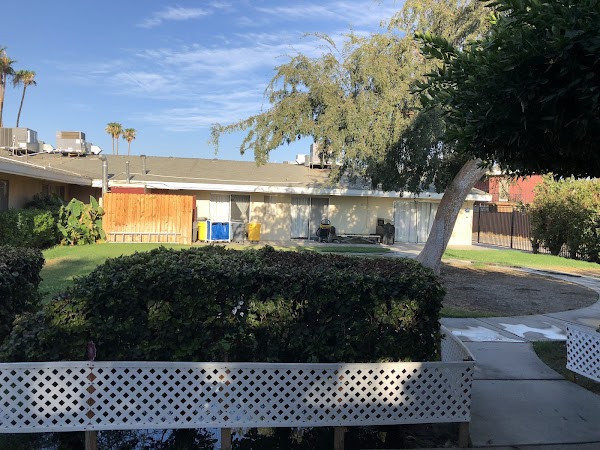
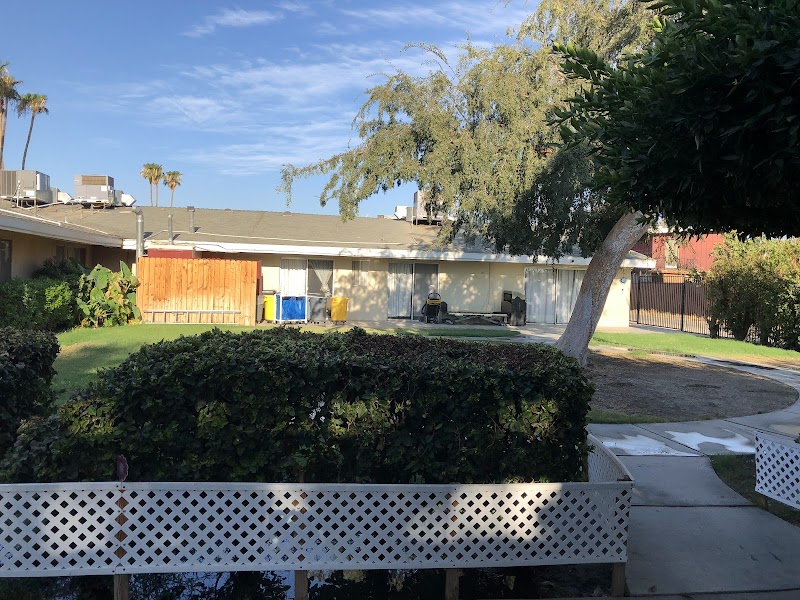
82262 VALENCIA AVENUE, INDIO, CA 92201 (760) 347-6000
For profit - Limited Liability company 68 Beds Independent Data: November 2025
Trust Grade
30/100
#568 of 1155 in CA
Last Inspection: July 2024

Within standard 12-15 month inspection cycle. Federal law requires annual inspections.

Overview

Desert Springs Healthcare & Wellness Centre has received a Trust Grade of F, indicating significant concerns about the quality of care provided. Ranked #568 out of 1,155 facilities in California and #22 out of 53 in Riverside County, they are in the top half of the state but still have notable issues to address. The facility is showing improvement, with the number of reported issues decreasing from 20 in 2024 to 4 in 2025. Staffing is relatively stable, with a 33% turnover rate that is below the state average, though RN coverage is concerning, as it is less than 95% of California facilities. However, the facility has faced serious incidents, including a failure to manage a resident's pain effectively after surgery, an incident of physical abuse by a staff member, and a lack of proper assistance during care that led to a resident's fall and subsequent fracture. Families should weigh these strengths and weaknesses carefully when considering this facility for their loved ones.

Trust Score
F
30/100
In California
#568/1155
Top 49%
Safety Record
High Risk
Review needed
Inspections
Getting Better
20 → 4 violations
Staff Stability
○ Average
33% turnover. Near California's 48% average. Typical for the industry.
Penalties
○ Average
$73,594 in fines. Higher than 59% of California facilities. Some compliance issues.
Skilled Nurses
⚠ Watch
Each resident gets only 13 minutes of Registered Nurse (RN) attention daily — below average for California. Fewer RN minutes means fewer trained eyes watching for problems.
Violations
⚠ Watch
51 deficiencies on record. Higher than average. Multiple issues found across inspections.
★★★☆☆
3.0
Overall Rating
★★★☆☆
3.0
Staff Levels
★★★★★
5.0
Care Quality
★★☆☆☆
2.0
Inspection Score
Stable
2024: 20 issues
2025: 4 issues

The Good

  • 5-Star Quality Measures · Strong clinical quality outcomes
  • Full Sprinkler Coverage · Fire safety systems throughout facility
  • No fines on record
  • Staff turnover below average (33%)

    15 points below California average of 48%

Facility shows strength in quality measures, fire safety.

The Bad

3-Star Overall Rating

Near California average (3.1)

Meets federal standards, typical of most facilities

Staff Turnover: 33%

13pts below California avg (46%)

Typical for the industry

Federal Fines: $73,594

Well above median ($33,413)

Moderate penalties - review what triggered them

The Ugly 51 deficiencies on record

4 actual harm
Jul 2025 1 deficiency
CONCERN (D) 📢 Someone Reported This

A family member, employee, or ombudsman was alarmed enough to file a formal complaint

Potential for Harm - no one hurt, but risky conditions existed

Deficiency F0569 (Tag F0569)

Could have caused harm · This affected 1 resident

**NOTE- TERMS IN BRACKETS HAVE BEEN EDITED TO PROTECT CONFIDENTIALITY** Based on interview and record review, the facility failed to ensure the personal funds of a deceased resident was provided to th...

Read full inspector narrative →
**NOTE- TERMS IN BRACKETS HAVE BEEN EDITED TO PROTECT CONFIDENTIALITY** Based on interview and record review, the facility failed to ensure the personal funds of a deceased resident was provided to the resident's legal representative with the required timeframe, for one of three residents reviewed (Resident 1). In addition, the facility failed to provide the final financial statement and invoices of the breakdown of personal funds after multiple requests from Resident 1's legal representative.This deficient practice had the potential for loss and misuse of Resident 1's personal funds.Findings:On [DATE], at 10:30 a.m., an unannounced visit was conducted to investigate a complaint. On [DATE], Resident 1's record was reviewed. Resident 1 was admitted on [DATE], and expired on [DATE], with diagnoses which included dementia (memory loss). Resident 1's legal representative was her family member (FM)A review of Resident 1's Minimum Data Set (MDS - a resident assessment tool), dated [DATE], indicated Resident 1 was severely impaired in cognition. On [DATE], at 11 a.m., during an interview with Resident 1 legal representative (LR), she indicated Resident 1 expired on [DATE]. Resident 1's LR stated she called the facility and spoke with the previous Business Office Manager (BOM) on [DATE], and was informed Resident 1 had over $2000 on the resident's account. Resident 1's LR stated the following after Resident expired on [DATE]:-Called the facility on [DATE], to follow up regarding Resident 1's remaining money with no call back from facility;-Called the facility on [DATE], talked to previous BOM and informed Resident 1's LR that the supervisor had to release the funds;-Called the facility on [DATE], and was told the funds would be released and check would follow, but the previous BOM was not able to tell the LR the amount due to be disbursed;-Spoke with the previous Administrator (ADM) on [DATE], and was told the a check would be issued to the LR representing closed account of Resident 1, but the ADM was not able to tell the amount;-LR received a check amounting to $1,024 on [DATE] (two months after Resident 1 expired), but the facility was not able to provide her an itemized account for the refund;-LR received an invoice from the facility requesting payment from the LR in the amount of $1,311, with no breakdown of the amount due to be paid; and-LR received a check in the amount of $5,458.23, on [DATE], without itemized breakdown of the amount.On [DATE], at 11:30 a.m., an interview and concurrent record review was conducted with the Director of Nursing (DON). The DON stated the Business Office Manager (BOM) were involved in ensuring the resident's personal funds were to be accounted for when a resident gets discharged from the facility. The DON stated resident legal representative follow up calls should be returned within 24 to 48 hours. The DON further stated if a resident or legal representative request for itemized invoice from the facility, the request should have been sent immediately upon request.On [DATE], at 11:58 a.m., an interview with the Social Services Director (SSD) was conducted. The SSD stated Resident 1 had a trust fund money coming to the facility to cover share of cost or anything else the resident might need. The SSD stated the process was for the BOM to process the remaining money left by a resident upon discharge or upon death, then the corporate staff would process it thereafter. The SSD stated if the resident legal representative requested final financial statements and invoices, it should be sent on request per policy.On [DATE], at 12:10 p.m., an interview and record review with the Business Office Manager (BOM) was conducted. the BOM stated she had just started in the facility about two months. The BOM stated she reviewed Resident 1's record and conferred with the corporate supervisor and indicated the first check Resident 1's legal representative received on [DATE], was a refund, and the second check was from the trust account. The BOM stated any refund or money due to the resident who expired should be sent to the legal representative within 30 days from the death of the resident. The BOM stated any call should be returned to the resident or legal representative immediately and the request for itemized invoice should have been sent immediately upon request.A review of the facility's policy and procedure titled,BO-OP-14A-Refunds-Private, dated [DATE], indicated, .refunds will be processed within 30 days or within state guidelines.A review of the facility's policy and procedure titled, Resident Funds - Transactions, dated [DATE], indicated, .Objectives.provide for an individual and confidential accounting of funds received and disbursed on the resident's behalf.upon notification of a resident's death.business office reviews the resident's records and determines the resident trust account balance.the business office makes a final accounting.administering the resident's estate within 30 days of the death of the resident.A review of the facility's policy and procedure titled, Resident Funds-General, dated [DATE], indicated, .provide for the an individual and confidential accounting of funds received and disbursed on the resident's behalf.provide the resident with.statement .upon request. Statements are printed from the Residential Trust software system.
Apr 2025 1 deficiency
CONCERN (D) 📢 Someone Reported This

A family member, employee, or ombudsman was alarmed enough to file a formal complaint

Potential for Harm - no one hurt, but risky conditions existed

Deficiency F0676 (Tag F0676)

Could have caused harm · This affected 1 resident

**NOTE- TERMS IN BRACKETS HAVE BEEN EDITED TO PROTECT CONFIDENTIALITY** Based on observation, interview, and record review, the facility failed to ensure an alternative option was offered when a bed b...

Read full inspector narrative →
**NOTE- TERMS IN BRACKETS HAVE BEEN EDITED TO PROTECT CONFIDENTIALITY** Based on observation, interview, and record review, the facility failed to ensure an alternative option was offered when a bed bath was refused, for one of five residents reviewed (Resident 1). This failure had the potential for the resident to not receive proper hygiene, feel unclean, and may result to skin irritation and/or skin breakdown. Finding: On April 17, 2025, at 8:50 a.m., an unannounced visit was conducted at the facility to investigate a complaint on quality of care. On April 17, 2025, at 9:10 a.m., an observation with a concurrent interview was conducted with Resident 1. Resident 1 was in his room, alert and conversant. Resident 1 stated he gets a shower every Monday and Thursday and due to a recent plumbing issue in the shower room, regular showers were not provided to the residents as scheduled. Resident 1 stated he was offered a bed bath as an alternative to a complete shower. Resident 1 stated he tried the bed bath at first and then he refused the second time it was offered. Resident 1 further stated he was afraid the soap will not be rinsed off well from his body in the bed bath provided. Resident 1 stated if the soap will not be rinsed off well from his body, this could trigger his eczema (a chronic inflammatory skin condition that causes dry, itchy, often inflamed patches of skin). Resident 1 stated he was not given any other alternative options when he refused the bed bath offered. Resident the facility staff should have options or alternatives other than bed bath. On April 17, 2025, a record review was conducted on Resident 1. Resident 1 was admitted to the facility on [DATE]. The History and Physical dated May 19, 2024, indicated Resident 1 had the capacity to make own medical decision. The April Order Summary Report indicated Resident 1 had a current physician ' s order to apply Triamcinolone Acetonide Cream 0.1% (type of topical cream used to relieve redness, itching, swelling, or other discomfort caused by skin condition) to be applied to both lower extremities every day shift for dryness and scabs, date ordered March 25, 2025. The facility document titled, POC Response History, dated April 5 to 12, 2025, indicated Resident 1 refused a bed/towel bath on April 12, 2025, at 2:59 p.m. There was no documented evidence an alternative option was offered to Resident 1 when he refused the bed bath. The facility document titled, Documentation Survey Report, dated April 1 to 30, 2025, indicated Resident 1 refused a shower on April 12, 2025, at 2:59 p.m. There was no other documented evidence an alternative option was offered to Resident 1 when he refused the shower. On April 17, 2025, at 9:45 a.m., Certified Nursing Assistant (CNA) 1 was interviewed. CNA 1 stated if a resident refused a bed bath, she was not aware of the next thing to do. CNA 1 stated she has no idea and she will just notify the licensed nurses. CNA 1 stated she was not aware of any alternative option if a resident refused a bed bath. CNA 1 stated if a resident will not receive a bed bath or a shower, the resident will smell bad and could have a body odor. CNA 1 further stated the resident would be dirty and not feel fresh. On April 17, 2025, at 9:49 a.m., an interview was conducted with CNA 2. CNA 2 stated they used the same soap and shampoo in the shower or bed baths provided to the residents unless the resident had a skin condition, then they should use a special soap. CNA 2 stated if a resident had a skin condition, a bed bath was not applicable for them if the soap could not be rinsed off the body properly. CNA 2 stated this could cause skin itching and irritation. CNA 2 stated Resident 1 refused a bed bath on April 12, 2025, and she was not sure if other alternative options were offered to the resident. CNA 1 stated she did not have an idea or did not know what to do when a resident refused a bed bath. On April 17, 2025, at 12:20 p.m., an interview was conducted with the Director of Nursing (DON). The DON stated during the time the facility had plumbing issues in the shower room, she expected the staff to offer bed baths to all residents. The DON stated if a resident refused a bath for some reason, then another option should have been offered. The DON stated if a resident refused a bed bath, the staff should re-offer other alternatives such as calling the family to accommodate the resident for a shower. If the family agreed, the facility can facilitate or coordinate the transportation so the resident could go home for a shower and them come back to the facility. The DON further stated if a resident refused a bed bath and was not given an option to shower, then they will stink will not receive proper good hygiene, and they will become dirty and unhygienic. The DON stated Resident 1 refused bed bath on April 12, 2025, as documented by the CNA. The DON stated the staff did not ask Resident 1 why he refused. The DON stated Resident 1 should have been given an option or offered a shower. The DON stated the staff should have notified the family and offered to accommodate shower at home and would come back to the facility. The facility ' s policy and procedure titled, Resident Rights-Quality of Life, dated March 2017, was reviewed. The policy indicated, .Each resident shall be cared for in a manner that promotes and enhances the quality of life, dignity, respect, individuality and receives services in a person-centered manner, as well as those that support the resident in attaining or maintaining his/her highest practicable well-being .Resident are groomed as they wish, including- bathing, dressing .
Mar 2025 1 deficiency
CONCERN (D) 📢 Someone Reported This

A family member, employee, or ombudsman was alarmed enough to file a formal complaint

Potential for Harm - no one hurt, but risky conditions existed

Quality of Care (Tag F0684)

Could have caused harm · This affected 1 resident

**NOTE- TERMS IN BRACKETS HAVE BEEN EDITED TO PROTECT CONFIDENTIALITY** Based on interview and record review, the facility failed to ensure an appropriate orthostatic (standing upright) blood pressure...

Read full inspector narrative →
**NOTE- TERMS IN BRACKETS HAVE BEEN EDITED TO PROTECT CONFIDENTIALITY** Based on interview and record review, the facility failed to ensure an appropriate orthostatic (standing upright) blood pressure (BP - measurement of the force of blood pushing against the blood walls) monitoring were conducted, for one of three residents reviewed (Resident 6). This failure had the potential for Resident 6 to experience complications related to orthostatic blood pressure. Findings: On March 6, 2025, at 8:50 a.m., an unannounced visit was conducted at the facility to investigate a quality care issue. On March 6, 2025, Resident 6's record was reviewed. Resident 6 was admitted to the facility on [DATE], with diagnoses which included Alzheimer ' s disease (memory loss) and osteoporosis (bone disease). A review of Resident 6 ' s Minimum Data Set (MDS - a tool for assessment), dated January 18, 2025, indicated Resident 6 had a moderately impaired and poor decisions regarding tasks of daily life. A review of Resident 6 ' s care plan goal, dated February 3, 2025, indicated Resident 6 will be free of falls and an intervention which included monitor orthostatic blood pressure every Thursday due to use of Escitalopram (brand of medicine) per pharmacist recommendation. A review of Resident 6's CNA (Certified Nursing Assistant) Task, indicated Resident 6 could stand and able to walk at least 10 feet inside the room. A review of Resident 6 ' s Order Summary, dated February 5, 2025, indicated Residents 6 ' s was monitored for orthostatic blood pressure for lying and sitting every Thursday of the week. A review of Resident 6 ' s Medication Administration Record (MAR), for the month of February 2025, indicated the following orthostatic blood pressure for laying blood pressure (LBP) and sitting blood pressure (SIT): - February 13, 2025, Thursday, LBP 130/60, SIT 128/60, no standing BP was recorded; - February 20, 2025, Thursday, LBP 128/66, SIT 124/64, no standing BP was recorded, and; - February 27, 2025, Thursday, LBP 130/66, SIT 128/64, no standing BP was recorded. There was no evidence of standing blood pressure was taken from Resident 6 for orthostatic blood pressure monitoring. On March 6, 2025, at 12:10 p.m., a concurrent interview and record review was conducted with Licensed Vocational Nurse (LVN) 1. LVN 1 stated Resident 6 had history of multiple falls and was monitored for orthostatic blood pressure to evaluate if Resident 6 would have a sudden drop of blood pressure and would cause a possible repeated fall. LVN 1 stated Resident 6 was ambulatory with supervision and minimal assist in activity of daily living (ADL) and had a tendency to stand up and walk abruptly. LVN 1 stated Resident 6 had an order to obtain blood pressure while laying on bed position and sitting position. LVN 1 further stated the licensed nurses did not obtain standing blood pressure for Resident 6. LVN 1 stated the licensed nurses should have taken Resident 6's BP from laying to standing as the resident was ambulatory. On March 6, 2025, at 12:25 p.m., an interview was conducted with LVN 2. LVN 2 stated Resident 6 had an unwitnessed fall at night shift on March 5, 2025, and was sent out to the hospital for further management. LVN 2 stated the common cause of Resident 6 ' s fall last night was probably loss of balance due to sudden drop of blood pressure when she was laying on bed then abrupt standing to walk. LVN 2 stated the facility identified that resident was on orthostatic blood pressure monitoring, but nurses was taking BP in sitting blood pressure instead of standing blood pressure. LVN 2 further stated standing blood pressure should have been taken instead of sitting position. On March 6, 2025, at 4:30 p.m., an interview was conducted with the Director of Nursing (DON). The DON stated she expected the nurses to follow policy and procedure in obtaining orthostatic blood pressure. The DON stated it would be more accurate if nurses would take standing blood pressure instead of sitting position to monitor the orthostatic blood pressure for ambulatory residents at risk for repeated fall. The DON further stated, I admit it, facility failed to identify the appropriate position to obtain orthostatic blood pressure. A review of the facility ' s policy and procedure titled, Orthostatic Hypotension, dated January 1, 2012, indicated, .To ensure that if a resident is experiencing orthostatic hypotension, there is development of an individualized care plan to address any issues related to orthostatic hypotension .Orthostatic vital signs will be taken and recorded when ordered by the position, and when a sudden drop in blood pressure is suspected as the cause of residents falls .feelings of dizziness and similar occurrences .Orthostatic hypotension is a .drop in .blood pressure within three minutes of standing up .The procedure for taking orthostatic blood pressure is as follows .In lying down position, use the appropriate size of blood pressure cuff of the residents arm .Have the resident stand up, taking precautions to ensure he/she does not fall .If the resident is unable to stand, this reading may be taken while he/she is sitting .
Jan 2025 1 deficiency
CONCERN (D) 📢 Someone Reported This

A family member, employee, or ombudsman was alarmed enough to file a formal complaint

Potential for Harm - no one hurt, but risky conditions existed

Accident Prevention (Tag F0689)

Could have caused harm · This affected 1 resident

**NOTE- TERMS IN BRACKETS HAVE BEEN EDITED TO PROTECT CONFIDENTIALITY** Based on interview and record review, the facility failed to assess the interventions for revisions to address multiple incident...

Read full inspector narrative →
**NOTE- TERMS IN BRACKETS HAVE BEEN EDITED TO PROTECT CONFIDENTIALITY** Based on interview and record review, the facility failed to assess the interventions for revisions to address multiple incidents of falls for two of three sampled residents (Residents 7 and 8). This failure had the potential to result in unmet needs and a potential for falls with possible injury. Findings: On December 26, 2024, at 9:13 a.m., an unannounced visit was conducted at the facility to investigate nursing services and accidents issue. A review of Resident 7's admission record indicated Resident 7 was admitted to the facility on [DATE]. Resident 7 was admitted with diagnoses which included cellulitis (bacterial skin infection) of left lower limb, hypertension (force of blood against the artery walls is too high), anxiety disorder (a mental health disorder of worry, or fear that are strong enough to interfere with one's daily activities), difficultly walking and dementia (a group of conditions with impairment of at least two brain functions, such as memory loss and judgement). A review of Resident 7's Minimum Data Set (MDS- a standardized comprehensive assessment and care planning tool), dated December 28, 2024, indicated the following: - Resident 7 had a Brief interview for Mental Status (BIMS -a tool used to screen and identify cognitive condition of residents) score of 8 (moderate cognitive impairment); and - Resident 7 was maximum assistance to dependent with ADL's (activities of daily living includes bathing or showering, dressing, getting in and out of bed or a chair, walking, using the toilet and eating). A review of Resident 7's Progress Notes titled Fall Risk Evaluation, dated November 21, 2024, indicated a score of 12 (a score of 10 or greater, considered at high risk for potential falls). A review of the care plan, developed on November 21, 2024, indicated, The resident is at high risk for falls r/t (related to) left bka (below knee amputation), decreased mobility pad .Goal .will be free of falls through the review date .Interventions/Tasks .Anticipate and meet the resident's needs .The resident's call light is within reach and encourage the resident to use it for assistance as needed .The resident needs prompt response to all requests for assistance .Encourage the resident to participate in activities that promote exercise, physical activity for strengthening and improved mobility .Follow facility protocol .PT (physical therapy) evaluate and treat as ordered or PRN (as needed). Further review of Resident 7's medical records indicated resident had multiple falls dated November 23, 2024, December 7, 2024, and December 17, 2024. A review of the care plans after the actual falls on December 7 and 17, 2024, did not indicate new interventions were added to the care plan. A review of Resident 7's Interdisciplinary Team (IDT-staff from different health care disciplines discuss to help people receive the care they need) Notes, dated December 9, 2024, for fall on December 7, 2024, indicated, to attend activities as needed, which was not included in the care plan post fall. A review of Resident 8's admission record indicated Resident 8 was admitted to the facility on [DATE], with diagnoses which included atrial fibrillation (a rapid heart rate that can cause poor blood flow), repeated falls, hydrocephalous (a build up of fluid in the cavities within the brain), hypertension ((force of blood against the artery walls is too high), diabetes (long term condition in which the body has trouble controlling blood sugar and using it for energy), chronic kidney disease (long standing disease of kidneys leading to renal failure), and chronic obstructive pulmonary disease (a group pf lung diseases that block airflow and make it difficult to breathe). A review of Resident 8's Minimum Data Set (MDS- a standardized comprehensive assessment and care planning tool), dated November 20, 2024, indicated the following: - Reside 8 had a Brief interview for Mental Status (BIMS -a tool used to screen and identify cognitive condition of residents) score of 9 (moderate cognitive impairment); and - Resident 8 required moderate to maximum assistance to dependent with ADL's (activities of daily living includes bathing or showering, dressing, getting in and out of bed or a chair, walking, using the toilet and eating). A review of Resident 8's Progress Notes titled Fall Risk Evaluation, dated November 11, 2024, indicated a score of 17 (a score of 10 or greater, considered at high risk for potential falls). A review of the care plan, developed on November 11, 2024, indicated, The resident is at high risk for falls r/t (related to) Gait/balance problems, increased weakness, hx (history) of multiple falls at home and fall with left hip fracture .Goal .Will be free of falls through the review date .Interventions .Be sure the resident's call light is within reach and encourage the resident to use it for assistance as needed. The resident needs prompt response to all requests for assistance .encourage the resident to participate in activities that promote exercise, physical activity fir strengthening and improved mobility .Ensure that the resident is wearing appropriate footwear when ambulating or mobilizing in w/c (wheelchair) .PT (physical therapy) evaluate and trat as ordered or PRN .The resident needs a safe environment with even floors free from spills and/or clutter, adequate, glare-free light; a working and reachable call light, the bed in low position; personal items within reach .The resident needs to be evaluated and supplied appropriate adaptive equipment or LPN (licensed practical nurse) devices as needed. Further review of Resident 8's medical records indicated resident had multiple falls December 7, 2024, December 16, 2024, and December 18, 2024. A review of the care plan after the actual fall on December 7, 2024, indicated no new interventions were added to the care plan after the fall. A review of Resident 8's Interdisciplinary Team (IDT-staff from different health care disciplines discuss to help people receive the care they need) Notes, dated December 24, 2024, for fall on December 18, 2024, recommended every one-hour check, which was not included in the care plan post fall. On December 26, 2024, at 2:05 p.m., during a concurrent interview and record review the Registered Nurse (RN) stated for Resident 7 the initial fall risk score was 12. The RN stated there were no new interventions added to the care plan after the falls on December 7 and December 17, 2024. The RN stated an IDT meeting was held on December 9, 2024, for the fall that occurred on December 7, 2024, and it was recommended for resident to attend activities as needed but that was not added to the care plan post fall. The RN further stated interventions should have been updated and discussed to evaluate the need for 1:1 monitoring or to send resident to activities to prevent further falls. The RN stated for Resident 8 there was no change in intervention from the initial care plan after the fall on December 7, 2024. The RN stated an IDT meeting was held on December 24, 2024, for fall on December 18, 2024, and was recommended for every one-hour check, which was not added to the care plan post fall. The RN stated it was important to update interventions to see if that could help a resident and prevent recurring falls. A review of facility's policy and procedure titled, Fall Management Program with a revision date of March 13, 2021, indicated, .if a fall risk factor is identified, document interventions on the Resident's care plan. Document interventions for every Resident regardless of fall risk evaluation score .The Interdisciplinary Team (IDT) and/or the licensed nurse will develop a care plan according to the identified risk factors and root cause(s) per Care Area Assessment (CAA) guidelines. The IDT will initiate, review and update the Resident's fall risk status and care plan at the following intervals: on admission .upon significant change of condition, post fall and as needed. The licensed nurse will evaluate the Resident's response to the interventions on the Weekly Summary and update the Resident's care plan as necessary .Once the Post-FALL Huddle is completed the licensed nurse will immediately update the care plan with recommendations .The Resident's care plans will be updated with the IDT recommendations.
Sept 2024 4 deficiencies 1 Harm
SERIOUS (G) 📢 Someone Reported This

A family member, employee, or ombudsman was alarmed enough to file a formal complaint

Actual Harm - a resident was hurt due to facility failures

Deficiency F0697 (Tag F0697)

A resident was harmed · This affected 1 resident

**NOTE- TERMS IN BRACKETS HAVE BEEN EDITED TO PROTECT CONFIDENTIALITY** Based on observation, interview, and record review, for one of five residents reviewed (Resident A), the facility failed to ensu...

Read full inspector narrative →
**NOTE- TERMS IN BRACKETS HAVE BEEN EDITED TO PROTECT CONFIDENTIALITY** Based on observation, interview, and record review, for one of five residents reviewed (Resident A), the facility failed to ensure effective pain management was provided when the pain medications were not administered as ordered by the physician after spine surgery. This failure resulted in Resident A to experience severe pain which affected her quality of life and psychosocial well-being. Resident A was eventually transferred to acute hospital for pain management. Findings: On August 16, 2024, at 8:30 a.m., an unannounced visit to the facility was conducted to investigate a complaint of quality of care. On August 16, 2024, at 9:15 a.m., an interview was conducted with the Director of Nursing (DON). The DON stated Resident A was admitted to the facility on [DATE], after 3 p.m. The DON stated Resident A had a spinal compression surgery (a procedure that treats compressed nerves in the spine), and was taking pain medications. The DON stated Resident A started asking for her pain medications by 5 p.m. on the day she was admitted . The DON stated she spoke with Resident A and the resident requested to go to another facility. The DON stated Resident A wanted her pain medications, and the facility did not have the pain medications in the facility as the doctor had to approve the medications before the pharmacy would send them to the facility. The DON stated they offered to Resident A if she wanted to go back to the hospital. On August 16, 2024, at 10:30 a.m., a concurrent observation and interview was conducted with Resident A, inside the resident's room. Resident A was observed lying in bed on her right side facing the wall. Resident A stated she was not doing okay and wanted out of the facility. Resident A stated she was in pain, and the nurses were not giving her the medication she needed. Resident A stated by the morning of August 15, 2024, she was upset and wanted to leave the facility. Resident A stated she waited for hours to get a pain pill when she asked for it, around 4 a.m. the following day after her admission. Resident A was observed crying, and her voice was raised as she spoke. Resident A stated that she wanted to feel better and her legs were having spasms (sudden involuntary muscular contractions) which was causing so much pain. Resident A was observed to wincing as she grabbed her leg and continued to cry. On August 16, 2024, Resident A ' s medical record was reviewed. Resident A's admission Record, indicated Resident A was admitted on [DATE], with diagnoses which included orthopedic (branch of medicine deals with bones) aftercare, opioid (medication to reduce moderate to severe pain) dependence, spondylosis (abnormal wear on the neck), and spinal stenosis (narrowing of the spinal area causing pressure on the spinal cord, where spinal nerves leave the spinal column) cervical (neck), lumbar (back), lumbosacral (lower back and pelvic) regions. A review of Resident A's History and Physical, dated August 16, 2024, indicated, .associated symptoms include lumbar decompression (reduce pressure) fracture (broken bone) here for management of pain and physical therapy .plan continue her usual pain meds .problem list .opioid (medication to treat pain) dependence with uncomplicated intoxication .Impression .Lumbar compression fracture (occurs when one or more bones in the spine weaken and crumple) .Pain Management . A review of Resident A's care plan, dated August 14, 2024, indicated, .The resident has pain r/t (related to) OA (osteoarthritis-tissue at the end of bones wears down), recurrent stenosis L (lumbar)5 (five) - S (sacral)1 (one), spondylolisthesis (bones in the back slip and pinch nerves causing severe pain), radiculopathy (a condition that occurs when nerve roots in the spine are damaged or injured), lumbar region (spine) .Interventions. Administer analgesia (pain medicine) as per orders. Give ½ hour before treatments or care .Anticipate the resident's need for pain relief and respond immediately to any complaint of pain .(sign/symptoms) of non-verbal pain .vocalization (grunting, moans, yelling out, silence); mood/behavior (changes, more irritable, restless, aggressive, squirmy, constant motion); Eyes (wide open .tearing, no focus); face (sad, crying, worried, scared, clenched teeth, grimacing) Body (tense, ridged, rocking .) .Monitor/record/report to nurse resident complaints of pain or requests for pain treatment .Observe and report .withdrawal or resistance to care . A review of Resident A's care plan, dated August 15, 2024, indicated, .The resident is on pain medication therapy r/t (related to) disease process of RADICULOPATHY, LUMBAR REGION, CHRONIC (long time) PAIN, SPINAL STENOSIS (the spaces inside the bones of the spine get too small), SPONDYLOSIS (age-related degenerative conditions that affect the spine) .Goal .The resident will be free of any discomfort .Interventions .Administer ANALGESIC (pain medicine) medications as ordered by physician . A review of Resident A's Order Summary Report, included the following physician's order related to pain, dated August 14, 2024: - Assess for pain every shift and chart intensity of pain using 1-10 numeric pain scale; 1-4 = mild pain, 5-7 = moderate pain, 8-9 = severe pain, 10 = excruciating pain .; - Baclofen (medication to treat spasms) Oral Tablet 10 MG (milligram - unit of measurement) Give 1 (one) tablet by mouth three times a day for Muscle spasm .; - Diclofenac Sodium (used to treat pain and inflammation) External Gel 1 % .Apply to right Hip topically (onto skin) three time a day for Pain .; - Diclofenac Sodium External Gel 1 % .Apply to right thigh topically three time a day for Pain .; - Diclofenac Sodium Tablet Delayed Release 75 MG Give 1 (one) tablet by mouth one time a day for pain .; - fentaNYL Transdermal Patch (narcotic pain medication) 72 Hour 50 MCG/HR (microgram [unit of measurement]/HR [hour]) Apply 1 (one) patch transdermally (apply on the skin) in the morning every 3 (three) day(s) for pain management .; - Gabapentin (pain medication) Oral Capsule 300 MG .Give 3 (three) capsule by mouth three times a day for Neuropathy (nerve pain) .; - Lidoderm External Patch (used to relieve the pain) .Apply to lower back topically every 12 hours as needed .; - Methadone HCl (narcotic pain medication) Oral Tablet 10 MG .Give 1 (one) tablet by mouth two times a day for pain .; and - Percocet (narcotic pain medication) Oral Tablet 10-325 MG .Give 1 (one) tablet by mouth every 4 (four) hours as needed for Breakthrough pain . A review of Resident A' s Medication Administration Record (MAR), dated August 2024, indicated the following: - Fentanyl transdermal patch was ordered to start August 15, 2024, at 9:00 a.m., was not applied, medication unavailable; - Methadone 10 mg tablet was not administered to Resident on August 15, 2024, at 9 a.m. and 5 p.m., and August 16, 2024, at 9 a.m. (3 doses) medication unavailable; - Baclofen tablet 10mg was not administered on August 14, 2024, at 10 p.m., and August 15, 2024, at 10 p.m. (two doses); - Diclofenac Sodium gel 1% to be applied to right hip and thigh was not administered to Resident A on August 14, 2024, at 10 p.m., August 15, 2024, at 6 a.m., 2 p.m., 10 p.m., and August 16, 2024, at 6 a.m. (five doses); - Gabapentin capsule 300 mg (3 capsules) was not administered to Resident A on August 14, 2024, at 10 p.m., and August 15, 2024, at 10 p.m. (two doses); - Lidoderm external patch 5% was not applied as needed to Resident A from August 14 to 16, 2024; - Percocet 10/325 mg was administered to Resident A on August 15, 2024, at 4:10 a.m., at 9:34 a.m., on August 16, 2024, at 12:51 a.m., and 11:47 a.m., with pain scale of 6 to 8 out of 10 pain. A review of Resident A's Progress Notes, indicated the following: - August 14, 2024, at 4:01 p.m., .Clinical admission .Pain issue .New Location: Cervical region (the neck region of the spine). Pain score: 10 (severe pain). Spasm. Frequency: constant .chronic pain related to compression of cervical spine . Further review of Resident A's MAR, for the month of August 2024, indicated Resident A received Percocet for pain on August 15, 2024 at 4:10 a.m. (12 hours after initial pain assessment on admission). - August 15, 2024, at 9:05 p.m., indicated, .Diclofenac Sodium External Gel .awaiting delivery to facility . - August 15, 2024, at 9:05 p.m., indicated, .Baclofen .awaiting delivery to facility . - August 15, 2024, at 9:06 p.m., indicated, .Gabapentin .awaiting delivery to facility . - August 16, 2024, at 9:54 a.m., indicated, Methadone .awaiting pharmacy delivery . - August 16, 2024, at 10:17a.m., indicated, .called pharmacy to follow up on resident narcotics (medications) with narcotic department stating they spoke with (name of physician) on 08/14/2024 (August 14, 2024) .Per pharmacy (name of physician) stated she would clarify order with facility then call pharmacy back. Pharmacy stated that they have not received a return call from (name of physician). The case manager requested to reach back out to (name of physician) . - August 16, 2024, at 10:30 a.m.: indicated, .fentanyl Transdermal Patch .pending pharmacy delivery . - August 16, 2024, at 10:34 a.m., indicated, .Late entry for 8/14/24 (August 14, 2024 at 1915 (7:15 p.m.) .Resident upset her medications were not available upon arrival to facility, expressed wanting to leave facility AMA (Against Medical Advice). This nurse informed resident her medications would be delivered by our contracted pharmacy, after MD (physician) authorized .Medication details were not discussed with resident . - August 16, 2024, at 12:45 p.m., indicated, .Resident is stating that her pain is 10/10 throughout her entire body .given pain medication per order at 1147 (11:47 a.m.) with results ineffective .n/o (new order) received to send to ER for further evaluation . - August 16, 2024, at 12:49 p.m., indicated, .MD notified of resident complain of back pain, Md did a video call with resident to see if we can offer an extra Percocet but resident stated she wants her pain to be managed. Md notified resident that her Methadone and fentanyl was authorized and will be waiting for delivery .The resident opted to go back to hospital for pain management . - August 16, 2024, at 1:28 p.m., indicated .Pt sent out to ER per MD for c/o (complain of) excruciating 10/10 unmanageable pain . On August 16, 2024, at 10:45 a.m., a concurrent interview and review of Resident A's record was conducted with Licensed Vocational Nurse (LVN) 1. LVN 1 reviewed Resident A's MAR and stated some of Resident A's medications were delivered. However, LVN 1 stated Resident A's Fentanyl patch and Methadone, had not been received from the pharmacy yet after the medications were ordered on August 14, 2024. LVN 1 stated Resident A's Percocet was taken out of the E-kit (emergency medication kit). Resident A did not receive any pain medications this morning and had not received any Lidocaine 5% patches for her back pain. LVN 1 stated the doctor was supposed to authorize the medications still needing to be delivered from the pharmacy. On August 16, 2024, at 12:10 p.m., an interview was conducted with the DON. The DON stated Resident A's medications (Methadone, Fentanyl patch, and Percocet) had not been received from the pharmacy. The DON stated the pharmacy needed authorization from the doctor, the doctor needed to verify the medications, and call the pharmacy to authorize them. The DON stated she has not heard from the pharmacy or the doctor since August 14, 2024. The DON stated once medications were faxed to the pharmacy it generally takes four to six hours to receive them in the facility, and if faxed after 4:00 p.m., the medications are to be received the next morning. The DON stated we called the pharmacy this morning, August 16, 2024, at 10:17 a.m., to find out where the medications are and the pharmacy told them the medications are supposed to be delivered this afternoon (two days after admission). The DON stated the nursing staff would assess the resident's pain every shift, and when passing medications, the nursing staff would document the pain level assessment in the MAR, the nursing staff should have asked Resident A during morning medication pass if she was having any pain. The DON stated Resident A was here for pain management and rehabilitation therapy, and it was not acceptable for Resident A who had been in the facility for almost 48 hours and has not received her medications and may be experiencing some withdrawal symptoms. The DON stated we offered to send Resident A back to the hospital on August 14, 2024, and Resident A stated she would wait until the morning to receive her pain medicines, and on August 15, 2024, we did not offer to send Resident A back to the hospital, her pain was being controlled. On August 16, 2024, at 12:34 p.m., an interview was conducted with Resident A together with the DON. The Ombudsman was observed to be at beside with Resident A. Resident A stated she received some Percocet, but her pain was off the chart since admission, on August 14, 2024. Resident A stated she had been in excruciating pain, she just wanted her medications. Resident A began crying and stated she was hurting and wanted to end her life. Resident A stated she did not want to feel this way anymore. On August 16, 2024, at 1:20 p.m., Resident A was observed to be sent out to the hospital for pain management. A review of the facility's policy and procedure titled Pain Management, dated November 2016, indicated, .To ensure the assessment and management of the resident's pain to the extent possible when such services are required .staff will help the resident attain or maintain their highest level of well-being while working to prevent or manage the resident's pain to the extent possible .Pain Assessment Flow Sheet .will be initiate for residents who require pain management .Licensed Nurse will administer pain medication as ordered and document .Licensed Nurse will assess the resident for pain and document results on the MAR each shift using the 0-10 pain scale. The shift pain score will indicate the highest pain level that occurred on that shift .the pain has not been relieved with current medication, the Licensed Nurse will notify the attending physician .audit and assess the success of the pain management program .
CONCERN (D) 📢 Someone Reported This

A family member, employee, or ombudsman was alarmed enough to file a formal complaint

Potential for Harm - no one hurt, but risky conditions existed

Resident Rights (Tag F0550)

Could have caused harm · This affected 1 resident

**NOTE- TERMS IN BRACKETS HAVE BEEN EDITED TO PROTECT CONFIDENTIALITY** Based on interview and record review, the facility failed to ensure residents' mail or packages were not opened without prior co...

Read full inspector narrative →
**NOTE- TERMS IN BRACKETS HAVE BEEN EDITED TO PROTECT CONFIDENTIALITY** Based on interview and record review, the facility failed to ensure residents' mail or packages were not opened without prior consent from the resident, for two of five residents sampled (Residents B and C). This failure resulted in Resident B and C's rights not being respected. Findings: On August 16, 2024, at 8:30 a.m., an announced visit to the facility was conducted to investigate a complaint of quality of care. On August 16, 2024, Resident B's medical record was reviewed. Resident B was admitted to the facility on [DATE], with diagnoses which included heart failure and prostate (a male reproductive gland) cancer. A review of Resident B's Minimum Data Set (MDS - an assessment tool), dated April 24, 2024, indicated Resident B had a BIMS (Brief Interview of Mental Status) score of 13 (cognitively intact). On August 20, 2024, at 11:30 a.m., during an interview with Resident B, Resident B stated he did not like when the staff opened his packages, he thought it was a violation of his rights, and he did not give them permission to do so. On August 20, 2024, at 12:00 p.m., during an interview with Resident C. Resident C stated he did not like when the staff opened his packages, including his health plan letters, and supply catalog. Resident C stated he would get the package after it has been opened and the staff have removed items he ordered. Resident C stated he did not remember giving the facility permission to open up any of his mail or packages. On August 20, 2024, Resident C s medical record was reviewed. Resident C was admitted to the facility on [DATE], with diagnoses which included bimalleolar fracture (broken ankle) and left tibial fracture (broken lower leg bone). Resident C's Minimum Data Set, July 8, 2024, indicated Resident C had a BIMS score of 14 (cognitively intact). On August 20, 2024, at 2:10 p.m., an interview was conducted with the Director of Staff Development (DSD). The DSD stated the protocol for resident's mail or packages include, all mail and packages being received at the nurse's station, taken to the business office first, then the mail and packages would go to Social Services, and items were to be divided between the case manager and the activities department. The DSD stated the mail and packages were then to be delivered to the residents and staff would open all packages in front of the resident, to do inventory with them. A review of the facility's policy and procedure titled Resident Rights-Mail, dated January 1, 2012, indicated, .Residents are allowed to communicate privately with individuals of their choice and may send and receive personal mail unopened .Mail is delivered to the resident unopened. Facility staff will not open mail for the resident unless the resident requests them to do so . A review of the facility's undated document titled Resident Rights, indicated, .Personal privacy .including the right to send and promptly receive unopened mail and other letters, packages and other materials delivered to the facility .
CONCERN (D) 📢 Someone Reported This

A family member, employee, or ombudsman was alarmed enough to file a formal complaint

Potential for Harm - no one hurt, but risky conditions existed

Pharmacy Services (Tag F0755)

Could have caused harm · This affected 1 resident

**NOTE- TERMS IN BRACKETS HAVE BEEN EDITED TO PROTECT CONFIDENTIALITY** Based on interview and record review, the facility failed to ensure pharmaceutical services were provided to meet the needs of a...

Read full inspector narrative →
**NOTE- TERMS IN BRACKETS HAVE BEEN EDITED TO PROTECT CONFIDENTIALITY** Based on interview and record review, the facility failed to ensure pharmaceutical services were provided to meet the needs of a resident, for one of five residents reviewed (Resident A), when medications (pain medications and Nictoine patch [medication for smoking cessation]) were not acquired by the facility timely. This failure resulted in a delay in the care and treatment of Resident A's overall health condition. In addition, this failure had the potential for other residents to have a delay in the care and treatment. Findings: On Augsut 16, 2024, at 8:45 a.m., an unannounced visit was conducted at the facility to investigate an allegation of quality of care. On August 16, 2024, at 9:15 a.m., during an interview with the Director of Nursing (DON), the DON stated Resident A was admitted to the facility on [DATE], after 3 p.m., after a spine surgery. The DON stated Resident A was prescribed pain medications such as Fentanly (narcotic pain medication), Methadone (narcotic pain medication), and Percocet (narcotic pain medication), and Nicotine patch. The DON stated at around 5 p.m. on August 14, 2024, Resident A was asking for her pain medications. The DON stated she explained to Resident A that the facility did not have the prescribed medications. On August 16, 2024, at 10:30 a.m., a concurrent observation and interview was conducted with Resident A. Resident A was observed lying in bed on her right side facing the wall. Resident A stated she was not doing okay and wanted out of the facility. Resident A stated she was in pain, and the nurses were not giving her the medication she needed. Resident A stated by the morning of August 15, 2024, she was upset and wanted to leave the facility. Resident A stated she waited for hours to get a pain pill when she asked for it, around 4 a.m. the following day after her admission [DATE]). Resident A was observed crying, and her voice was raised as she spoke. Resident A stated that she wanted to feel better and her legs were having spasms (sudden involuntary muscular contractions) which was causing so much pain. Resident A was observed wincing as she grabbed her leg and continued to cry. On August 16, 2024, Resident A's record was reviewed. Resident A's admission Record, indicated Resident A was admitted on [DATE], with diagnoses which included orthopedic (branch of medicine deals with bones) aftercare, opioid (medication to reduce moderate to severe pain) dependence, spondylosis (abnormal wear on the neck), and spinal stenosis (narrowing of the spinal area causing pressure on the spinal cord, where spinal nerves leave the spinal column) cervical (neck), lumbar (back), lumbosacral (lower back and pelvic) regions. A review of Resident A's Order Summary Report, included the following physician ' s order, dated August 14, 2024: - Baclofen (medication to treat spasms) Oral Tablet 10 MG (milligram - unit of measurement) Give 1 (one) tablet by mouth three times a day for Muscle spasm .; - Diclofenac Sodium (used to treat pain and inflammation) External Gel 1 % .Apply to right Hip topically (on skin) three time a day for Pain .; -- Diclofenac Sodium External Gel 1 % .Apply to right thigh topically three time a day for Pain .; - Diclofenac Sodium Tablet Delayed Release 75 MG Give 1 (one) tablet by mouth one time a day for pain .; - fentanyl Transdermal Patch (narcotic pain medication) 72 Hour 50 MCG/HR (microgram [unit of measurement]/HR [hour]) Apply 1 (one) patch transdermally (apply on the skin) in the morning every 3 (three) day(s) for pain management .; - Gabapentin (pain medication) Oral Capsule 300 MG .Give 3 (three) capsule by mouth three times a day for Neuropathy (nerve pain) .; - Lidoderm External Patch (used to relieve the pain) .Apply to lower back topically every 12 hours as needed .; - Methadone HCI (hydrochloride-salt used to stabilize a medication) (narcotic pain medication) Oral Tablet 10 MG .Give 1 (one) tablet by mouth two times a day for pain .; and - Percocet (narcotic pain medication) Oral Tablet 10-325 MG .Give 1 (one) tablet by mouth every 4 (four) hours as needed for Breakthrough pain . - Nicotine Transdermal (on the skin) Patch (medication for smoking cessation) 24 hour 7 MG/24HR (Nicotine) Apply 1 (one) patch transdermally in the morning for Smoking Cessation . A review of Resident A's Medication Administration Record (MAR), for the month of August 2024, indicated the following medications were not administered timely as ordered by the physician: - Gabapentin 300 mg (three capsules); August 14 and 15, 2024 at 10 p.m. (two doses); - Diclofenac sodium External Gel 1% (to be applied to right hip and right thigh); August 14, 2024, at 10 p.m.; August 15, 2024, at 6 a.m., 2 p.m., and 10 p.m. (four doses); - Baclofen 10 mg; August 14 and 15, 2024 at 10 p.m. (two doses); - Methadone 10 mg; August 15, 2024, at 9 a.m. and 5 p.m.; August 16, 2024, at 9 a.m. (three doses); - Nicotine 7 mg/hr patch; August 15 and 16, 2024 (two doses); and - Fentanyl Transdermal Patch (to be applied every three days); August 15, 2024. A review of Resident A ' s Progress Notes, indicated the following: - August 14, 2024, at 6:19 p.m., indicated, .Methadone .Awaiting pharmacy delivery . - August 15, 2024, at 5:47 a.m., indicated, .Diclofenac Sodium External Gel .Pending pharmacy arrival . - August 15, 2024, at 10:09 a.m., indicated, .pending from pharmacy awaiting MD (physician) signature . - August 15, 2024, at 1:41 p.m., indicated, .Diclofenac Sodium External Gel .pending pharmacy delivery . - August 15, 2024, at 9:05 p.m., indicated, .Diclofenac Sodium External Gel .awaiting delivery to facility . - August 15, 2024, at 9:05 p.m., indicated, .Baclofen .awaiting delivery to facility . - August 15, 2024, at 9:06 p.m., indicated, .Gabapentin .awaiting delivery to facility . - August 15, 2024, at 9:07 p.m., indicated, .Methadone .awaiting delivery to facility . - August 16, 2024, at 9:28 a.m., indicated, .Nicotine Transdermal patch .awaiting pharmacy delivery . - August 16, 2024, at 9:54 a.m., indicated, .Methadone .awaiting pharmacy delivery . - August 16, 2024, at 10:17a.m., indicated, .called pharmacy to follow up on resident narcotics (medications) with narcotic department stating they spoke with (name of physician) on 08/14/2024 (August 14, 2024) .Per pharmacy (name of physician) stated she would clarify order with facility then call pharmacy back. Pharmacy stated that they have not received a return call from (name of physician). The case manager requested to reach back out to (name of physician) . - August 16, 2024, at 10:30 a.m.: indicated, .fentanyl Transdermal Patch .pending pharmacy delivery . On August 16, 2024, at 10:45 a.m., a concurrent interview and review of Resident A's record was conducted with Licensed Vocational Nurse (LVN) 1. LVN 1 reviewed Resident A's MAR and stated some of Resident A's medications were delivered. LVN 1 stated, Resident A's Fentanyl patch, Methadone,and Nicotine patch had not been received from the pharmacy yet, the medications were ordered on August 14, 2024. LVN 1 stated Resident A did not receive any pain medications this morning and had not received any Lidocaine 5% patches for her back pain. LVN 1 stated the doctor was supposed to authorize the medications still needing to be delivered from the pharmacy. On August 16, 2024, at 12:10 p.m., an interview was conducted with the DON. The DON stated Resident A's medications (Methadone, Fentanyl patch, and Percocet) had not been received from the pharmacy. The DON stated the pharmacy needed authorization from the doctor, the doctor needed to verify the medications, and call the pharmacy to authorize them. The DON stated she has not heard from the pharmacy or the doctor since August 14, 2024. The DON stated once medications were faxed to the pharmacy it generally takes four to six hours to receive them in the facility, and if faxed after 4:00 p.m., the medications are received the next morning. The DON stated we called the pharmacy this morning, August 16, 2024, at 10:17 a.m., to find out where the medications are, the medications are supposed to be delivered this afternoon (two days after admission). The DON stated Resident A was here for pain management and rehabilitation therapy, and it was not acceptable for Resident A who had been in the facility for almost 48 hours and has not received her medications and may be experiencing some withdrawal symptoms. On August 16, 2024, at 4 p.m., a follow up interview and review of the pharmacy delivery receipt was conducted with the DON. The DON stated the pharmacy receipt, dated August 15, 2024, indicated some of Resident A's medications were received, which included Baclofen, Diclofenac tablet, Gabapentin, and Lidociane patch. A review of the facility's policy and procedure titled, Medication Ordering and Receiving from Pharmacy, dated October 2012, indicated, .A pharmacy provides a method of confirmation of receipt of medications by the driver for each delivery that leaves the dispensing pharmacy .
CONCERN (D) 📢 Someone Reported This

A family member, employee, or ombudsman was alarmed enough to file a formal complaint

Potential for Harm - no one hurt, but risky conditions existed

Room Equipment (Tag F0908)

Could have caused harm · This affected 1 resident

**NOTE- TERMS IN BRACKETS HAVE BEEN EDITED TO PROTECT CONFIDENTIALITY** Based on observation, interview, and record review, the facility failed to ensure, for one of five residents sampled (Resident A...

Read full inspector narrative →
**NOTE- TERMS IN BRACKETS HAVE BEEN EDITED TO PROTECT CONFIDENTIALITY** Based on observation, interview, and record review, the facility failed to ensure, for one of five residents sampled (Resident A) had equipment to use was being maintained in a safe and operable condition when the left brakes of the wheelchair was not working. This failure had the potential to cause injury to Resident A when she was using a wheelchair. Findings: On August 16, 2024, at 8:30 a.m., an announced visit to the facility was conducted to investigate a complaint of quality of care. On August 16, 2024, at 10:30 a.m., an observation and concurrent interview was conducted with Resident A. Resident A was lying in bed on her right side facing the wall. Resident A stated she was not doing okay and wants out of the facility. Resident A stated when she wants to get up and go to the bathroom, she presses her call light, but the staff do not show up, and she had to try to take herself to the bathroom. Resident A stated the wheelchair was broken, and it was difficult for her to transfer herself to the wheelchair to go to the bathroom. Resident A stated the brake on her wheelchair was broken. The left brake of the wheelchair was observed would not lock when attempted to apply both hand brakes to the wheelchair. On August 16, 2024, at 11:05 a.m., an interview was conducted with the Physical Therapist (PT). The PT stated there were several wheelchairs in the facility residents may use if a resident does not have a personal wheelchair. The PT stated the facility would provide wheelchairs for the residents to use, usually one per room when appropriate. The PT stated all wheelchairs were expected to be cleaned, without rips or tears in them, arms of the wheelchairs should also not contain holes or tears, maintenance should be ensuring all wheelchairs are in a safe and working order. The PT stated if the brakes were not working on a wheelchair, the wheelchair should not be used, it should be tagged and a maintenance request put in to have the wheelchair fixed. On August 16, 2024, at 4:00 p.m., an interview was conducted with the Director of Nursing (DON). The DON stated normally we make sure equipment was within working order before a resident is assigned to a room upon admission. The DON stated we did not know when Resident A was coming to the facility, and if Resident A had a wheelchair with a brake not working, Resident A could have told us. The DON stated all equipment should be in working order prior to a resident being admitted to a room. On August 16, 2024, Resident A's medical record was reviewed. Resident A was admitted on [DATE], with diagnoses which included orthopedic (branch of medicine deals with bones) aftercare, opioid (controlled class of pain medication) dependence, spondylosis (abnormal wear on the neck), and spinal stenosis (narrowing of the spinal area causing pressure on the spinal cord, where spinal nerves leave the spinal column) cervical (neck), lumbar (back), lumbosacral (lower back and pelvic) regions. On August 20, 2024, at 4:45 p.m., an interview was conducted with the DON. The DON stated any equipment found to not be working properly or broken in the facility, should not be use, it should be put aside, a request placed in the maintenance log, explaining what is wrong with the equipment, and the item should be taken outside, and fixed. A review of the facility's policy and procedure titled Maintenance Service, dated January 1, 2012, indicated, .The maintenance department maintains all areas of the building, grounds, and equipment .equipment in a safe and operable manner at all times .in compliance with current federal, state, and local laws, regulations, and guidelines .establishing priorities in providing repair service .maintaining a schedule of maintenance service .a copy of the maintenance schedule .
Sept 2024 2 deficiencies
CONCERN (D) 📢 Someone Reported This

A family member, employee, or ombudsman was alarmed enough to file a formal complaint

Potential for Harm - no one hurt, but risky conditions existed

Quality of Care (Tag F0684)

Could have caused harm · This affected 1 resident

**NOTE- TERMS IN BRACKETS HAVE BEEN EDITED TO PROTECT CONFIDENTIALITY** Based on interview and record review the facility failed to ensure one (Resident A) of six sampled residents was consistently as...

Read full inspector narrative →
**NOTE- TERMS IN BRACKETS HAVE BEEN EDITED TO PROTECT CONFIDENTIALITY** Based on interview and record review the facility failed to ensure one (Resident A) of six sampled residents was consistently assessed and was provided treatment and care in accordance with the professional standards of practice, when Resident A had a fall and her vital signs became abnormal after the fall incident. These failures increased the risk for the current health condition of the resident to worsen due to delayed assessment and delayed provision of appropriate care. Findings: On September 11, 2024, at 12:30 p.m., an announced visit to the facility was conducted to investigate a complaint for quality of care. On September 16, 2024, at 11:00 a.m., Resident A ' s admission Record was reviewed. Resident A was admitted to the facility on [DATE], with diagnoses which included cerebral infarction (stroke-loss of blood flow to a part of the brain), epilepsy (a disorder in which nerve cells in the brain are disturbed, causing seizures), and aphasia (a disorder that makes it difficult to speak). A review of Resident A ' s Order Summary Report indicated: - July 15, 2024, Observe for discolored urine, black tarry stools, sudden severe headache, n/v (nausea, vomiting), diarrhea, muscle joint pain, lethargy (lack of energy), bruising, sudden changes in mental status and/or VS (vital signs-reflect body functions-heart rate, blood pressure, temperature, breathing rate), SOB (shortness of breath), nosebleed every shift, for use of Apixaban (Eliquis- blood thinner), if symptoms exist, document Y for yes or N for no. If yes, document findings in a progress note or a change of condition. -August 7, 2024, Monitor left side of face discoloration and edema (buildup of fluid in the body ' s tissue) everyday shift for s/p (status post-after) fall injury. -Observe for discolored urine, black tarry stools, sudden severe headache, n/v, diarrhea, muscle joint pain, lethargy, bruising, sudden changes in mental status, and/or VS (vital signs), SOB (shortness of breath), nosebleed every shift for use of Apixaban. A review of Resident A ' s document titled,SBAR (Situation, background, assessment, recommendation-a communication tool used by healthcare workers when there is a change of condition among a patient) Communication Form,indicated the following: -dated August 6, 2024, . Resident was found on the floor by staff on left side of the body noted, no other injuries noted .Recommendations of Primary Clinicians (doctor) .monitor continue neuro (neurological) checks X ray of area . -dated August 7,2024, .Altered level of consciousness .8/6/24 (August 6, 2024) pt had fall .Skin evaluation .no changes observed .patient noted to have edema to left side of face and purple discoloration to left, no response to verbal stimuli, pt opened eyes with sternal rub .vitals are abnormal temperature 102, respiratory rate 24, Pulse rate 142, blood pressure 167/100 . A review of Resident A ' s document titled Weights and Vitals Exceptions indicated: -On August 6, 2024, at 3:20 p.m., BP 140/99, Pulse 122 (regular-Rhythm of heart rate) -On August 7, 2024, at 5:21 a.m., BP 176/114, Pulse 141 (irregular-new onset) -On August 7, 2024, at 9:06 a.m., BP 167/100, Pulse 142 (irregular-new onset) -On August 7, 2024, at 11:29 a.m., BP 160/90, Pulse rate 105 (regular) A review of Resident A ' s Care Plans indicated: - .had an actual fall with injury r/t (related to) poor balance, seizure, Type 2 (two) DM (Diabetes Mellitus-characterized by high sugar levels in the blood), HX (history) of stroke ., dated August 6, 2024, .Interventions .monitor x (times) 72 hours for coc (change of condition), Neuro-checks x (times) as schedule, notify MD of any changes . - .COC (change of condition) .Patient with ALOC (altered level of consciousness), abnormal vitals . dated August 7, 2024, .Interventions . monitor left side of face discoloration and edema, notify MD/RP (resident representative) . - .Resident is on anticoagulant (blood thinner) therapy Apixaban r/t (related to) stroke . dated March 13, 2024, .Interventions .monitor/document/report PRN (as needed) adverse reactions (undesired harmful effect resulting from a medication) of Anticoagulant therapy .bruising .sudden change in mental status, significant or sudden change in v/s (vital signs), review medication list for adverse reactions. Avoid use of aspirin or NSAIDS (non-steroidal anti-inflammatory drugs-used to relieve pain, reduce swelling) . A review of Resident A ' s Neurological Flow Sheet, indicated the following: -On August 6, 2024, was reviewed, neuro check at 3:00 p.m. indicated BP increased to 140/99, and pulse rate 122, at 7:00 p.m. pulse rate 110, and at 11:00 p.m. pulse rate 108. -On August 7, 2024, at 3:00 a.m. BP elevated 170/90, pulse rate 110, at 7:00 a.m. BP 169/100, pulse rate 136. Further review of Resident A ' s record did not indicate any documentation that the elevated blood pressure and elevated pulse rate was addressed on August 6, 2024 (at 3 p.m., at 7 p.m.; and 11 p.m.) and on August 7, 2024 (at 3 a.m. and 7 p.m.). On September 16, 2024, at 2:30 p.m., an interview was conducted with Certified Nursing Assistant (CNA) 1. CNA 1 stated she came in at 6:45 a.m., on August 6, 2024, and Resident A was already in her bed, with a bruise on her check. CNA 1 stated if the heart rate is 50 bpm or less or 100 bpm or more, it is important to tell the charge nurse. CNA-1 stated if a pulse rate is 120 bpm or more, she would tell the charge nurse immediately, fill out a stop and watch form, and give it to the licensed nurse, and the licensed nurse would fill out a COC. On September 16, 2024, at 3:15 p.m., an interview was conducted with CNA-3. CNA-3 stated Resident A ' s heart rate was 122 bpm, and her Blood Pressure was 140/99 at the beginning of the shift, around 3:00 p.m., onAugust 6, 2024. CNA 3 stated it was reported to the licensed nurse. CNA-3 stated when she takes a resident ' s vital signs, and if they are abnormal, she may need to adjust the blood pressure cuff or reposition the resident and try again, if the vital signs are still abnormal, would let the licensed nurse know and write it on a Stop & Watch form. CNA-3 stated if a resident had a heart rate of 142 bpm, and it was an irregular rhythm, she would check the radial (wrist) or apical (bottom tip of the heart-area over the left chest wall below the nipple line, need a stethoscope to hear the heartbeat) pulse to confirm, and go straight to the licensed nurse and tell them immediately. On September 16, 2024, at 4:05 p.m., an interview was conducted with CNA-4. CNA-4 stated she was the CNA working the night shift and she stated the CNAs normally take vital signs at the beginning of their shift, working nights, she would try to get vital signs on her patients between 11:00 pm and 12:00 a.m. to not disturb them. CNA-4 stated she does not remember when she took Resident A ' s vital signs, Resident A ' s heart rate was 142 bpm and blood pressure was 176/111, she should have told the charge nurse right away and she did not. CNA-4 stated she manually put the vital signs into the electronic medical record at 5:00 a.m. but forgot to let the charge nurse know, if she had told the charge nurse about Resident A ' s vital signs being out of range and irregular, the charge nurse would have called the Director of Nursing (DON), and Resident A ' s blood pressure and pulse would have been re-checked, she failed to tell the nurse. CNA-4 stated she thought Resident A ' s heart rate and blood pressure were high because of her falling, Resident A looked beat up, Resident A ' s face was swollen, CNA-4 was surprised Resident A had not been sent to the emergency room. On September 16, 2024, at 5:25 p.m. an interview was conducted with Licensed Vocational Nurse (LVN) 1. LVN 1 stated he was the charge nurse on the evening shift August 6, 2024, after Resident A fell. LVN-1 stated CNA-3 had told him, Resident A ' s heart rate was 122 bpm, and the blood pressure was 140/99, he asked Resident A if she was in pain. LVN-1 stated he does not remember giving Resident A any additional medication to help with her heart rate or blood pressure and does not remember if Resident A ' s heart rate and blood pressure were lower as the shift progressed. On September 17, 2024, at 4:45 p.m., an interview was conducted with the Director of Staff Development (DSD). The DSD stated the CNAs and the licensed nurses have been in-serviced on needing to be aware of abnormal vital signs, and when to complete a change of condition form. The DSD stated the licensed nurses should have called the DON or the physician when Resident A ' s vital signs were abnormal. A review of Resident A ' s record indicated the resident was transferred to the hospital on August 7, 2024, at approximately 9:30 a.m. A review of Resident A ' s hospital records indicated the resident had a sinus tachycardia (fast heart rate) with PVC (pre-ventricular contractions-extra heart beats that begin in the lower portion of the heart-disrupts a regular rhythm), Incomplete Right Bundle Branch Block (a partial interruption in the flow of electrical impulses in the heart to beat regularly). A review of a document used for training titled Anticoagulant (blood thinner-a medication used to prevent the blood from clotting) and Antiplatelet (medication used to prevent blood clots from forming) Use: Indications and Monitoring, no date, indicated .intense monitoring for unspecified or uncomplicated ' bruising ' is not recommended or required .UNUSUAL bruising (i.e. bruises that develop without known cause or grow in size) should be regularly monitored and reported .to the physicians a change of condition (COC) . A review of the facility ' s policy and procedure titled, Fall Management Program, dated March 13, 2021, indicated .provide residents a safe environment that minimizes complications associated with falls .following every resident fall, the licensed nurse will perform a post-fall evaluation .for an unwitnessed fall .with suspected or known head injury, the licensed nurse will complete neurological checks for 72 hours following the fall incident .the Attending physician will be informed if there is a deviation (abnormal) from the Resident ' s baseline (normal) status for further instructions . A review of the facility ' s policy and procedure titled, Change of Condition Notification, dated April 1, 2015, indicated .ensure residents, family, legal representatives, and physicians are informed of changes in the resident ' s condition in a timely manner .The facility will promptly inform the resident, consult with the resident ' s attending physician .when the resident endures a significant change in their condition caused by, but not limited to .an accident .a significant change in the resident ' s physical, mental status . ' Change of Condition ' related to Attending Physician notification is defined as when the Attending Physician must be notified when any sudden and marked adverse change in the resident ' s condition which is manifested by signs and symptoms different than usual denote (indicate) a new problem .and require a medical assessment, coordination and consultation with the attending physician and a change in the treatment plan .It is the responsibility of the person who observes the change to report the change to the licensed nurse .the Licensed Nurse must observe and assess the overall condition utilizing a physical assessment and chart review .Licensed Nurse will notify the resident ' s Attending Physician . when there is an .accident involving the resident which results in injury .deterioration in health .clinical complications .Emergency Situations .
CONCERN (E) 📢 Someone Reported This

A family member, employee, or ombudsman was alarmed enough to file a formal complaint

Potential for Harm - no one hurt, but risky conditions existed

Deficiency F0726 (Tag F0726)

Could have caused harm · This affected multiple residents

**NOTE- TERMS IN BRACKETS HAVE BEEN EDITED TO PROTECT CONFIDENTIALITY** Based on interview and record review the facility failed to ensure sufficient licensed nurses with the appropriate competencies ...

Read full inspector narrative →
**NOTE- TERMS IN BRACKETS HAVE BEEN EDITED TO PROTECT CONFIDENTIALITY** Based on interview and record review the facility failed to ensure sufficient licensed nurses with the appropriate competencies and skill sets necessary to care for one (Resident A) of six sampled residents' needs, as identified through resident assessments, and described in the plan of care. This failure has the potential to affect the provision of care for Resident A and other residents at the facility. Findings: On September 11, 2024, at 12:30 p.m., an announced visit to the facility was conducted to investigate a complaint for quality of care. On September 16, 2024, at 11 a.m., Resident A ' s admission Record was reviewed. Resident A was admitted to the facility on [DATE], with diagnoses which included cerebral infarction (stroke-loss of blood flow to a part of the brain), epilepsy (a disorder in which nerve cells in the brain are disturbed, causing seizures), and aphasia (a disorder that makes it difficult to speak). A review of Resident A ' s Order Summary Report indicated: - July 15, 2024, Observe for discolored urine, black tarry stools, sudden severe headache, n/v (nausea, vomiting), diarrhea, muscle joint pain, lethargy (lack of energy), bruising, sudden changes in mental status and/or VS (vital signs-reflect body functions-heart rate, blood pressure, temperature, breathing rate), SOB (shortness of breath), nosebleed every shift, for use of Apixaban (Eliquis- blood thinner), if symptoms exist, document Y for yes or N for no. If yes, document findings in a progress note or a change of condition. -August 7, 2024, Monitor left side of face discoloration and edema (buildup of fluid in the body ' s tissue) everyday shift for s/p (status post-after) fall injury. -Observe for discolored urine, black tarry stools, sudden severe headache, n/v, diarrhea, muscle joint pain, lethargy, bruising, sudden changes in mental status, and/or VS (vital signs), SOB (shortness of breath), nosebleed every shift for use of Apixaban. A review of Resident A ' s document titled,SBAR (Situation, background, assessment, recommendation-a communication tool used by healthcare workers when there is a change of condition among a patient) Communication Form,indicated the following: -dated August 6, 2024, . Resident was found on the floor by staff on left side of the body noted, no other injuries noted .Recommendations of Primary Clinicians (doctor) .monitor continue neuro (neurological) checks X ray of area . -dated August 7,2024, .Altered level of consciousness .8/6/24 (August 6, 2024) pt had fall .Skin evaluation .no changes observed .patient noted to have edema to left side of face and purple discoloration to left, no response to verbal stimuli, pt opened eyes with sternal rub .vitals are abnormal temperature 102, respiratory rate 24, Pulse rate 142, blood pressure 167/100 . A review of Resident A ' s document titled Weights and Vitals Exceptions indicated: -On August 6, 2024, at 3:20 p.m., BP 140/99, Pulse 122 (regular-Rhythm of heart rate) -On August 7, 2024, at 5:21 a.m., BP 176/114, Pulse 141 (irregular-new onset) -On August 7, 2024, at 9:06 a.m., BP 167/100, Pulse 142 (irregular-new onset) -On August 7, 2024, at 11:29 a.m., BP 160/90, Pulse rate 105 (regular) A review of Resident A ' s Care Plans indicated: - .Resident is on anticoagulant (blood thinner) therapy Apixaban r/t (related to) stroke . dated March 13, 2024, .Interventions .monitor/document/report PRN (as needed) adverse reactions (undesired harmful effect resulting from a medication) of Anticoagulant therapy .bruising .sudden change in mental status, significant or sudden change in v/s (vital signs), review medication list for adverse reactions. Avoid use of aspirin or NSAIDS (non-steroidal anti-inflammatory drugs-used to relieve pain, reduce swelling) . - .had an actual fall with injury r/t (related to) poor balance, seizure, Type 2 (two) DM (Diabetes Mellitus-characterized by high sugar levels in the blood), HX (history) of stroke ., dated August 6, 2024, .Interventions .monitor x (times) 72 hours for coc (change of condition), Neuro-checks x (times) as schedule, notify MD of any changes . - .COC (change of condition) .Patient with ALOC (altered level of consciousness), abnormal vitals . dated August 7, 2024, .Interventions . monitor left side of face discoloration and edema, notify MD/RP (resident representative) . A review of Resident A ' s Neurological Flow Sheet, indicated the following: -On August 6, 2024, was reviewed, neuro check at 3:00 p.m. indicated BP increased to 140/99, and pulse rate 122, at 7:00 p.m. pulse rate 110, and at 11:00 p.m. pulse rate 108. -On August 7, 2024, at 3:00 a.m. BP elevated 170/90, pulse rate 110, at 7:00 a.m. BP 169/100, pulse rate 136. Further review of Resident A ' s record did not indicate any documentation that the elevated blood pressure and elevated pulse rate was addressed on August 6, 2024 (at 3 p.m., at 7 p.m.; and 11 p.m.) and on August 7, 2024 (at 3 a.m. and 7 p.m.). On September 16, 2024, at 2:30 p.m., an interview was conducted with Certified Nursing Assistant (CNA) 1. CNA 1 stated she came in at 6:45 a.m., on August 6, 2024, and Resident A was already in her bed, with a bruise on her check. CNA 1 stated if the heart rate is 50 bpm or less or 100 bpm or more, it is important to tell the charge nurse. CNA-1 stated if a pulse rate is 120 bpm or more, she would tell the charge nurse immediately, fill out a stop and watch form, and give it to the licensed nurse, and the licensed nurse would fill out a COC. On September 16, 2024, at 3:15 p.m., an interview was conducted with CNA 3. CNA 3 stated Resident A ' s heart rate was 122 bpm, and her Blood Pressure was 140/99 at the beginning of the shift, around 3:00 p.m., onAugust 6, 2024. CNA 3 stated it was reported to the licensed nurse. CNA-3 stated when she takes a resident ' s vital signs, and if they are abnormal, she may need to adjust the blood pressure cuff or reposition the resident and try again, if the vital signs are still abnormal, would let the licensed nurse know and write it on a Stop & Watch form. CNA-3 stated if a resident had a heart rate of 142 bpm, and it was an irregular rhythm, she would check the radial (wrist) or apical (bottom tip of the heart-area over the left chest wall below the nipple line, need a stethoscope to hear the heartbeat) pulse to confirm, and go straight to the licensed nurse and tell them immediately. On September 16, 2024, at 4:05 p.m., an interview was conducted with CNA 4. CNA 4 stated she was the CNA working the night shift and she stated the CNAs normally take vital signs at the beginning of their shift, working nights, she would try to get vital signs on her patients between 11:00 pm and 12:00 a.m. to not disturb them. CNA 4 stated she does not remember when she took Resident A ' s vital signs, Resident A ' s heart rate was 142 bpm and blood pressure was 176/111, she should have told the charge nurse right away and she did not. CNA-4 stated she manually put the vital signs into the electronic medical record at 5:00 a.m. but forgot to let the charge nurse know, if she had told the charge nurse about Resident A ' s vital signs being out of range and irregular, the charge nurse would have called the Director of Nursing (DON), and Resident A ' s blood pressure and pulse would have been re-checked, she failed to tell the nurse. CNA 4 stated she thought Resident A ' s heart rate and blood pressure were high because of her falling, Resident A looked beat up, Resident A ' s face was swollen, CNA-4 was surprised Resident A had not been sent to the emergency room. On September 16, 2024, at 5:25 p.m. an interview was conducted with Licensed Vocational Nurse (LVN) 1. LVN 1 stated he was the charge nurse on the evening shift August 6, 2024, after Resident A fell. LVN 1 stated CNA 3 had told him, Resident A ' s heart rate was 122 bpm, and the blood pressure was 140/99, he asked Resident A if she was in pain. LVN 1 stated he does not remember giving Resident A any additional medication to help with her heart rate or blood pressure and does not remember if Resident A ' s heart rate and blood pressure were lower as the shift progressed. On September 17, 2024, at 12 p.m., an interview was conducted with LVN 2. LVN 2 stated she was the charge nurse who took care of Resident A on the night shift, of August 6th through August 7, 2024. LVN 2 stated she did not know about Resident A ' s high heart rate or blood pressure until after Resident A went to the hospital. LVN 2 stated she was monitoring Resident A ' s vital signs and neurological checks every four hours. LVN 2 stated she did not know Resident A had an irregular heart rate of 142, or high blood pressure of 176/114. She stated if she had known, she would have assessed Resident A, asked the other licensed nurse in the facility to also assess Resident A and recheck the vital signs, then she would have checked Resident A ' s code status, and let the Director of Nursing (DON) know she was calling 911, and call the doctor and Resident A ' s family. On September 17, 2024, at 4:45 p.m., an interview was conducted with the Director of Staff Development (DSD). The DSD stated the CNAs and the licensed nurses have been in-serviced on needing to be aware of abnormal vital signs, and when to complete a change of condition form. The DSD stated the licensed nurses should have called the DON or the physician when Resident A ' s vital signs were abnormal. A review of Resident A ' s record indicated the resident was transferred to the hospital on August 7, 2024, at approximately 9:30 a.m. A review of Resident A ' s hospital records indicated the resident had a sinus tachycardia (fast heart rate) with PVC (pre-ventricular contractions-extra heart beats that begin in the lower portion of the heart-disrupts a regular rhythm), Incomplete Right Bundle Branch Block (a partial interruption in the flow of electrical impulses in the heart to beat regularly). A review of a document used for training titled Anticoagulant (blood thinner-a medication used to prevent the blood from clotting) and Antiplatelet (medication used to prevent blood clots from forming) Use: Indications and Monitoring, no date, indicated .intense monitoring for unspecified or uncomplicated ' bruising ' is not recommended or required .UNUSUAL bruising (i.e. bruises that develop without known cause or grow in size) should be regularly monitored and reported .to the physicians a change of condition (COC) . A review of the facility ' s policy and procedure titled, Fall Management Program, dated March 13, 2021, indicated .provide residents a safe environment that minimizes complications associated with falls .following every resident fall, the licensed nurse will perform a post-fall evaluation .for an unwitnessed fall .with suspected or known head injury, the licensed nurse will complete neurological checks for 72 hours following the fall incident .the Attending physician will be informed if there is a deviation (abnormal) from the Resident ' s baseline (normal) status for further instructions . A review of the facility ' s policy and procedure titled, Change of Condition Notification, dated April 1, 2015, indicated .ensure residents, family, legal representatives, and physicians are informed of changes in the resident ' s condition in a timely manner .The facility will promptly inform the resident, consult with the resident ' s attending physician .when the resident endures a significant change in their condition caused by, but not limited to .an accident .a significant change in the resident ' s physical, mental status . ' Change of Condition ' related to Attending Physician notification is defined as when the Attending Physician must be notified when any sudden and marked adverse change in the resident ' s condition which is manifested by signs and symptoms different than usual denote (indicate) a new problem .and require a medical assessment, coordination and consultation with the attending physician and a change in the treatment plan .It is the responsibility of the person who observes the change to report the change to the licensed nurse .the Licensed Nurse must observe and assess the overall condition utilizing a physical assessment and chart review .Licensed Nurse will notify the resident ' s Attending Physician . when there is an .accident involving the resident which results in injury .deterioration in health .clinical complications .Emergency Situations .
Aug 2024 1 deficiency
CONCERN (D) 📢 Someone Reported This

A family member, employee, or ombudsman was alarmed enough to file a formal complaint

Potential for Harm - no one hurt, but risky conditions existed

Accident Prevention (Tag F0689)

Could have caused harm · This affected 1 resident

**NOTE- TERMS IN BRACKETS HAVE BEEN EDITED TO PROTECT CONFIDENTIALITY** Based on interview and record review, the facility failed to ensure a safe environment was provided, for one of three resients r...

Read full inspector narrative →
**NOTE- TERMS IN BRACKETS HAVE BEEN EDITED TO PROTECT CONFIDENTIALITY** Based on interview and record review, the facility failed to ensure a safe environment was provided, for one of three resients reviewed (Resident 1), when the otuside patio had an open sunken area of dirt, approximately 2 inches below the level of surrounding concrete pavement. This failure resulted in Resident 1 being stuck in the dirt between a tree and the edge of the concrete pavement. Findings: On August 7, 2024, at 1:37 p.m. an unannounced visit was conducted at the facility to investigate two complaints. A request for facility policies and procedures, including those regarding Accidents and/or Accident Prevention was made. The Director of Nursing (DON) stated per her consultant, the facility did not have any, unless it pertained to a specific incident or condition that involved an accident. Resident 1' s record was reviewed. The resident was admitted to the facility on [DATE], with diagnoses which included right femur fracture, history of falling, high blood pressure, and muscle wasting and atrophy (decrease in muscle mass and strength). A review of Resident 1's History and Physical Examination, dated April 9, 2024, indicated Resident 1 had the capacity to understand and make decisions. A review of Resident 1's Minimum Data Set (MDS- an assessment tool), dated July 12, 2024, indicated Resident 1 had a BIMS score of six (Brief Interview for Mental Status- a score of zero to seven meant severe cognitive impairment); but had the ability to wheel at least 50 feet and make two turns using a manual wheelchair, as well as wheel at least 150 feet in a corridor or similar space using the same. A review of Resident 1's Progress Notes, dated July 20, 2024, at 2 p.m., written by the Licensed Vocational Nurse (LVN), included a change in condition report indicating unresponsiveness but with stable vital signs (clinical measures including pulse, respiratory rate, blood pressure, and temperature). The narrative notes indicated, .resident was found unresponsive outside on patio. resident sitting on w/c (wheelchair) with right side of head and right shoulder leaning on gate .had eyes closed and not responding to verbal or painful stimuli. resident was wheeled inside therapy room, while this nurse called 911 another nurse was at bedside. resident stared (sic) talking and answering questions. resident was sent out via 911 . The LVN followed up later with the hospital and was informed Resident 1 was admitted there due to syncope (brief loss of consciousness when blood flow to the brain suddenly changes, people who experience syncope usually go limp and then quickly recover) and elevated d-dimer levels (protein in the blood that is released when blood clots break down). On August 9, 2024, at 11:05 a.m., a follow up onsite visit was conducted at the facility. On August 9, 2024, at 12:22 p.m., a concurrent observation and interview was conducted with the LVN. The LVN showed the outside patio where Resident 1 was found on July 20, 2024. The LVN stated Resident 1 finished his lunch meal at the dining room around 1:10 p.m. on July 20, 2024, and was brought to his room by a Certified Nursing Assistant (CNA), and Resident 1 asked for his hat indicating he wanted to go about the facility in his wheelchair. The LVN stated at around 1:30 p.m., another resident who was in the rehabilitation therapy gym, saw Resident 1 through the glass door (which was facing the outside patio), struggling with his wheelchair and appeared stuck. The LVN stated the other resident walked from the therapy gym via the hallway inside the building, past the nurses ' station, through another hallway to the side door beside the Medical Records room. This door led to the outside patio. The LVN stated upon opening the door, the other resident saw Resident 1 slumped in his wheelchair and appeared unresponsive, so he returned quickly to the nurse ' s station and notified the LVN about what he saw. The LVN stated she immediately made her way to the outside patio, and upon opening the side door, the LVN saw Resident 1 slumped in his wheelchair facing the tree trunk and away from her, and his wheelchair was back towards her and the door. The LVN stated Resident 1 ' s head was leaning to his right and resting on the fence. The LVN stated the wheelchair was on the dirt where a tree was planted, which was approximately two inches lower than the concrete pavement. The LVN stated all four wheels of the wheelchair were in the space between the trunk and roots of the tree and the edge of the concrete pavement. The LVN stated she was assisted by another staff member in bringing Resident 1 past the expanse of the patio and through the glass doors, into the rehabilitation therapy gym (which was across his previous location). The LVN stated she conducted a head to toe assessment and found bruising on a finger of Resident 1 ' s right hand, as well as redness on the right ear. The LVN stated Resident 1 was sent out to the hospital for further evaluation, and was later on admitted to the hospital due to syncope and elevated D-dimer levels. No other details were provided to them by the hospital. On August 9, 2024, at 1:25 p.m., a concurrent interview with the Administrator (ADM) and DON was conducted. The ADM stated the area where Resident 1 was found stuck, was frequented by other residents as well. The ADM further stated, it was the first incident of that nature to have happened, it was unfortunate that it happened to Resident 1, and they did not anticipate that it would happen.
Jul 2024 13 deficiencies
CONCERN (D)

Potential for Harm - no one hurt, but risky conditions existed

Resident Rights (Tag F0550)

Could have caused harm · This affected 1 resident

**NOTE- TERMS IN BRACKETS HAVE BEEN EDITED TO PROTECT CONFIDENTIALITY** Based on observation, interview, and record review, the facility failed to treat two of four sampled residents, with dignity and...

Read full inspector narrative →
**NOTE- TERMS IN BRACKETS HAVE BEEN EDITED TO PROTECT CONFIDENTIALITY** Based on observation, interview, and record review, the facility failed to treat two of four sampled residents, with dignity and respect when the Certified Nursing Assistants (CNA) did not sit at eye level while feeding the residents (Residents 40 and 43). This failure did not promote resident's dignity, did not allow social interaction, and had the potential promote more serious negative outcomes. Findings: On July 15, 2024, at 12:16 p.m., CNA 1 was observed wearing gloves, gown, and mask, and feeding Resident 40 while standing up. In a concurrent interview, CNA 1 stated he should be sitting down while feeding Resident 40. On July 15, 2024, at 12:23 p.m., during an interview with the Director of Staff Development (DSD), the DSD stated the CNA should been sitting down while feeding the resident. On July 15, 2024, at 12:34 p.m., the Restorative Nurse Assistant (RNA) was observed wearing a gown and gloves, and feeding Resident 43 while standing up. In a concurrent interview, the RNA stated she should be sitting down while feeding Resident 43 to have eye contact and communicate with the resident. On July 15, 2024, Resident 40's record was reviewed. Resident 40 was admitted on [DATE], with diagnoses which included, fracture of the lower left radius (a break in the long bones in the forearm), unspecified abnormality of gait and mobility (unusual walking pattern), and metabolic encephalopathy (problem in the brain caused by a chemical imbalance in the blood). A review of Resident 40's Minimum Data Set (MDS - an assessment tool), dated April 19, 2024, indicated Resident 40 was severely impaired and needed extensive assistance with feeding. On July 15, 2024, Resident 43's record was reviewed. Resident 43 was admitted on [DATE], with diagnoses which included, hemiplegia (paralysis that affects only one side of the body), hemiparesis (one sided muscle weakness), cerebral infarction (disrupted blood flow to the brain), and dysphagia (difficulty swallowing). A review of Resident 43's Minimum Data Set, dated June 17, 2024, indicated a BIMS (Brief Mental Status) score of 6 (severe cognitive impairment) and needed set up/limited assistance during meals. A review of the facility's policy and procedures titled, Resident Rights - Quality of Life, dated March 2017, indicated, .Each resident shall be cared for in a manner that promotes and enhance the quality of life, dignity, respect, individuality and receives services in a person-centered manner, as well as those that support the resident in attaining or maintaining his/her highest practicable well-being . A review of the facility's undated document titled, Feeding a Resident Competency Validation, indicated, .To protect resident's dignity and ensure that during assisting and/or feeding meals that you are seated at eye level of resident .Procedure .Sit down next to the resident .
CONCERN (D)

Potential for Harm - no one hurt, but risky conditions existed

Deficiency F0676 (Tag F0676)

Could have caused harm · This affected 1 resident

**NOTE- TERMS IN BRACKETS HAVE BEEN EDITED TO PROTECT CONFIDENTIALITY** Based on observation, interview, and record review, the facility failed to ensure were provided the necessary level of assistanc...

Read full inspector narrative →
**NOTE- TERMS IN BRACKETS HAVE BEEN EDITED TO PROTECT CONFIDENTIALITY** Based on observation, interview, and record review, the facility failed to ensure were provided the necessary level of assistance to meet their activities of daily living needs, for two of two sampled residents (Residents 30 and 29), when: 1. Resident 30 was observed with lunch meal tray set up incomplete, with plastic covering/seal on food items and the milk carton was left unopened. Resident 30 was unable to remove the plastic covering nor able to open the milk carton; and 2. Resident 29 was observed with lunch meal tray set up incomplete, with plastic covering/seal on plated food items. Resident 29 was unable to remove the plastic covering on the plated food or reach her drinking cup. These failures resulted in the residents not receiving direct necessary care and services needed at mealtime and had the potential to compromise the health and wellbeing of the residents. Findings: 1. On July 15, 2024, at 12:14 p.m., Resident 30 was observed with lunch meal tray set up incomplete, with plastic covering/seal on food items and the milk carton was left unopened. Resident 30 was unable to remove the plastic covering nor able to open the milk carton. On July 15, 2024, at 12:14 p.m., during an interview with the Director of Staff Development, (DSD), the DSD stated it is the CNA's responsibility to open the food and set it up for the residents to eat. Resident's 30's record was reviewed and indicated the Resident was admitted on [DATE], with diagnoses which include chronic obstructive pulmonary disease (a group of lung diseases that block the airflow and make it difficult to breathe), dysphagia (difficulty swallowing), muscle weakness (decrease strength in muscles), and dementia (a group of conditions characterized by impairment of at least two brain functions, such as memory loss and judgement). A review of Resident 30's Minimum Data Set (MDS - a standardized assessment and screening tool), dated May 27, 2024, indicated the resident had Brief Interview for Mental Status (BIMS - a mandatory tool used to screen and identify the cognitive condition of residents upon admission into a long -term care facility) with a score of 3 (severe cognitive impairment). A review of Resident 30's care plan indicated, the resident needed set-up or clean-up assistance. The helper sets up or cleans up prior to or following activity. 2. On July 15, 2024, at 12:59 p.m., observed Resident 29's meal tray set up in the room in front of the resident. Resident 29's plated food had a seal/plastic covering food items in the bowls and the drink was not placed within her reach. In a concurrent interview, Resident 29 stated she needed help to get her drink. On July 15, 2024, at 1:02 p.m., an interview with Certified Nursing Assistant (CNA) 2. CNA 2 stated the plastic/seal should have been removed from the resident's plated food. On July 15, 2024, 1:07 p.m., CNA 3 was interviewed. CNA 3 stated the facility's process was the food was prepared, and the plastic seal removed and set up for the resident to eat. CNA 3 stated the plastic and set up the resident's food tray should have been removed. A review of Resident 29's record indicated the resident was admitted to the facility on [DATE], with diagnoses which included end stage heart failure (final severe stage of heart failure), dysphagia (difficulty swallowing), and dementia (a group of conditions characterized by impairment of at least two brain functions, such as memory loss and judgement. A review of Resident 29's History and Physical, dated September 10, 2023, indicated the resident had muscular dystrophy, and severe arthritis of the wrist. A review of the facility's policy and procedure titled, .Feeding - Preparing Residents-Nursing Manual - Dietary & Dining, dated January 1, 2012, indicated, . Residents receiving feeding assistance will be properly prepared to eat before a meal . A review of the facility's policy and procedure titled, Dining Program- Nursing Manual - Dietary & Dining, dated January 12, 2012, indicated, .the facility's purpose is to provide residents with adequate supervision and/or assistance during mealtime .RNAs (restorative nurse assistant) /CNAs will work to provide assistance as needed to those residents who have difficulty or are unable to feed themselves and residents will be monitored by the RNAs/CNAs throughout their meal to ensure assistance is provided .
CONCERN (D)

Potential for Harm - no one hurt, but risky conditions existed

Quality of Care (Tag F0684)

Could have caused harm · This affected 1 resident

**NOTE- TERMS IN BRACKETS HAVE BEEN EDITED TO PROTECT CONFIDENTIALITY** Based on interview and record review, the facility failed to ensure the abnormal results of the chest x-ray (radiology procedure...

Read full inspector narrative →
**NOTE- TERMS IN BRACKETS HAVE BEEN EDITED TO PROTECT CONFIDENTIALITY** Based on interview and record review, the facility failed to ensure the abnormal results of the chest x-ray (radiology procedure of the chest) was addressed by the physician timely, for one of three closed record reviewed (Resident 22). In addition, the physician's order for antibiotic to treat the abnormal chest x-ray was not administered timely. These failures resulted in a delay in the care and treatment for Resident 22. Findings: On July 17, 2024, Resident 22's record was reviewed. Resident 22 was admitted to the facility on [DATE], with diagnoses which included aftercare for right femur (hip) fracture (broken bone) and malnutrition. A review of Resident 22's Progress Notes, indicated the following: - May 10,2024, at 3:34 p.m., indicated, .reported to (name of physician) pt (patient) VS (vital signs) 132/70 (blood pressure) 99.8 (temperature) .102HR (heart rate) 40resp (respiratory rate) a minute .refusing to open her eyes and moans to painful stimuli .waiting for advice .; - May 10, 2024, at 4:38 p.m., indicated, .pt is ALOC (altered level of consciousness), hard to arouse. Does not respond verbally back to verbal stimuli, moans, responds to verbal stimuli by moaning .; - May 10, 2024, at 5:01 p.m., indicated, .CHEM PANEL (chemistry panel - laboratory test), CBC (complete blood count - laboratory test) AND CHEST X-RAY ORDERED . A review of Resident 22's physician's notes, dated May 10, 2024, indicated, .Labs (laboratory) 5-8 (May 8, 2024) .u/a (urinalysis) with many wbcs (white blood cell count) .recheck cbc, cmp (complete metabolic panel - laboratory test to check electrolytes), u/a, u/c (urine culture). Will start on macrobid (medication to treat urinary tract infection) 100 bid (twice a day) . A review of Resident 22's Radiology Report, dated May 13, 2024, indicated, .Bilateral Infiltrates (a substance denser than air, such as pus, blood, or protein, which lingers within the lungs associated with pneumonia [lung infection]) . A review of Resident 22's Progress Notes, dated May 13, 2024, at 12:51 p.m., indicated, .pt is had to arouse, does not open eyes .Patient is not opening her mouth at meals, sleeping, moans at times .Recommendations: MD (physician) will come to facility to assess patient . A review of Resident 22's physician notes, dated May 13, 2024, indicated, .Pt seen groaning. Not communicating. Pt was confused on admission, continues to be confused. Started on abx (antibiotic) for possible uti (urinary tract infection) .xrays showed some patchy infiltrates .Will d/c (discontinue) macrobid and place on avelox (medication to treat lung infection) 400 daily x (times) 7 (seven) days . A review of Resident 22's Progress Notes, dated May 15, 2024, at 8:07 a.m., indicated, .The patient's caregiver (name of caregiver) in facility and Patients (sic) son (name of son) is on the phone. The family asked what was ordered by the MD for the chest xray bilateral (both) infiltates. The (sic) are aware no orders have been placed .Writer to follow up with MD . A review of Resident 22's Progress Notes, dated May 15, 2024, at 8:48 a.m., indicated, .spoke with MD (name of physician) to follow up with chest xray results bilateral infiltrates and he ordered atb (antibiotic) .Recommendation: MD ordered Moxifloxacin (avelox - brand name) 400 MG (milligram - unit of measurement) Give 1 (one) tablet by mouth one time a day for bilateral infiltrates on chest xray for 7 (seven) days . A review of Resident 22's Medication Administration Record (MAR), for May 2024, indicated moxifloxacin was signed out 9 on May 17 and 18, 2024. There was no documented evidence moxifloxacin was administered on May 15 and 16, 2024, as ordered by the physician on May 15, 2024. On July 17, 2024, at 4:06 p.m., a concurrent interview and record review was conducted with the Director of Nursing (DON). The DON stated the chest xray result of bilateral infiltrates was received on May 13, 2024. The DON stated the bilateral infiltrates was referred to the physician on May 15, 2024 (2 days after the chest xray result was received) and the physician ordered for avelox. The DON stated there was a physician's progress notes dated May 13, 2024, which indicated to give avelox one time a day for seven days and discontinue the macrobid. The DON stated the licensed nurse should notify the physician for appropriate treatment within the day after a laboratory or xray result had come in. The DON stated the avelox was not signed out as 9 in the MAR on May 17 and 18, 2024. She stated 9 meant a progress note was created for the administration of the medication. She stated the progress notes indicated Resident 22 spit out avelox on May 17, 2024, and was unable to swallow the avelox on May 18, 2024. On July 17, 2024, at 4:49 p.m., a follow up concurrent interview and record review was conducted with the Infection Preventionist (IP). The IP stated the physician ordered for laboratory test and chest xray to be done on May 13, 2024. The IP stated the chest xray results of bilateral infiltrates was received on May 13, 2024, but was referred to the physician on May 15, 2024. The IP stated the physician's note dated May 13, 2024, indicated the physician assessed Resident 22 and ordered to discontinue Macrobid and change to Avelox. The IP stated the physician's order to d/c Macrobid and start on Avelox was not given by the physician on May 13, 2024, after he visited Resident 22. The IP stated the facility's process was for the physician to give the order to the licensed nurse during their visit in the facility. She stated this process was not done. The IP stated the licensed nurse should have followed up with the physician before he left the facility for any new orders. The IP stated avelox was not started not until May 17, 2024 (four days after the physician's visit). She stated the order for avelox should have been started on May 13, 2024, unless it was not available from the emergency medication supply. On July 18, 2024, at 9:31 a.m., a follow up interview was conducted with the DON. The DON stated when the physician comes in to assess the resident, the physician would either give a verbal order to the licensed nurse or would write down in a telephone order. The DON stated Resident 22's physician would either inform the licensed nurse or the DON or send the order electronically. The DON was unable to explain why the physician's order to d/c macrobid and change to avelox on May 13, 2024, was not communicated to the licensed nurse or to her. On July 18, 2024, at 9:40 a.m., an interview was conducted with the Resident 22's MD (physician). The MD stated he assessed the resident during his visit in the facility and would communicate only to the DON for any new orders either verbally or through text message. The MD stated he would not give any orders to the licensed nurse because they are not always in the facility not like the DON who is on call 24/7 (24 hours/ 7 days a week) and knows the residents very well than the licensed nurses. He stated he would input his notes when he gets home and uploads it in the resident's record. The MD stated he saw Resident 22 on May 13, 2024 and uploaded his notes on May 15, 2024. The MD stated he could not remember if he informed the DON about the order for avelox on May 13, 2024 after his visit or why he uploaded his notes on May 15, 2024, and not on May 13, 2024. The MD stated he gave the order for avelox after the licensed nurse called him on May 15, 2024. He stated the medication avelox should have been administered within the day when it was ordered on May 15, 2024. The MD stated he should have given to the DON the order for the Avelox on May 13, 2024, when he visit Resident 22, or the licensed nurse should have called him on May 14, 2024 to follow up if there's any order for the bilateral infiltrates. On July 18, 2024, at 2:23 p.m., a follow up interview and record review was conducted with the DON. The DON stated the physician should have been notified of any abnormal laboratory or radiology result as within the day of receipt of results. The DON stated the order for the Avelox was placed on Resident 22's record the morning of May 15, 2024, and was discontinued by the physician electronically in the afternoon May 15, 2024. The DON stated she confirmed the order for canceled the order for Avelox on May 15, 2024 without indication of the reason for d/c. She stated the order was renewed on May 17, 2024, and that was the date it was first attempted to be administered. The DON stated the physician should indicate the reason for removing the order so the licensed nurse know why. A review of the facility's policy and procedure titled, Change of Condition Notification, dated April 1, 2015, indicated, .To ensure residents, family, legal representatives, and physicians are informed of changes in the resident's condition in a timely manner .A Licensed Nurse will notify the resident's Attending Physician .when there is .A need to alter treatment significantly (e.g. based on lab/x-ray results .) .A Licensed Nurse will communicate critical test results and information pertinent to an emergency or significant change in condition to the Attending Physician immediately by telephone .
CONCERN (D)

Potential for Harm - no one hurt, but risky conditions existed

Accident Prevention (Tag F0689)

Could have caused harm · This affected 1 resident

**NOTE- TERMS IN BRACKETS HAVE BEEN EDITED TO PROTECT CONFIDENTIALITY** Based on observation, interview and record review, the facility failed to ensure interventions to prevent falls were implemented...

Read full inspector narrative →
**NOTE- TERMS IN BRACKETS HAVE BEEN EDITED TO PROTECT CONFIDENTIALITY** Based on observation, interview and record review, the facility failed to ensure interventions to prevent falls were implemented, for one of two residents (Resident 40) when 1:1 sitter was not provided to address impulsive behavior and falls. This failure had a potential to result in Resident 40 to have falls and sustain injury. Findings: On July 15, 2024, at 11:42 a.m., a concurrent observation and interview was conducted with Resident 40. Resident 40 was observed lying in bed awake. Two bumps were observed on Resident 40's forehead. The right side of her forehead had a nickel-size bump with a dark scab and the left side had a quarter size bump with red bruising. The Resident 40 stated she fell a couple of days ago and could not remember how. Resident 40 stated staff helped her to eat as she was blind. On July 15, 2024, at 3:42 p.m., observed Resident 40 in her room alone, sitting at the edge of her wheelchair trying to get up, Resident 40 almost slipped out of the chair. A Certified Nursing Assistant (CNA) was called to assist resident. A review of Resident 40's record was conducted. Resident 40 was admitted to the facility on [DATE], with diagnoses which include fracture of the left radius (one of the two long bones in the forearm - breaks close to the wrist), unspecified abnormality of gait and mobility (unusual walking pattern), and metabolic encephalopathy (problem in the brain, caused by a chemical imbalance in the blood). A review of Resident 40's History and Physical, dated April 13, 2024, indicated the resident would benefit in the future for FWW (front wheel walker) or wheelchair for assistance at home. A review of Resident 40's Minimum Data Set (MDS - a standardized assessment and screening tool), dated April 19, 2024, indicated the resident had severely impaired cognitive status. The care plan initiated on April 12, 2024, indicated, .The resident is high risk for falls related to confusion, gait/balance problems, incontinence, unaware of safety needs, and Alzheimer's dementia .Review information on past falls and attempt to determine cause of falls. Record possible root causes . The care plan initiated on April 13, 2024, indicated, .The resident has had an actual fall with no injury r/t (related to) impulsive behavior, confusion, Unsteady gait . A review of Resident 40's Progress Notes, dated June 26, 2024, at 10 a.m., indicated, .Res (resident) found slouched forward to the left side at EOB (edge of bed) with face touching floor .Res positioned back in bed noted with raised area to left forehead .states she bumped her head on floor as she slouched forward to left side .Bed kept in lowest position . A review of Resident 40's Progress Notes, dated July 7, 2024, at 4:08 a.m., indicated, .This nurse is at the nurse station across from the resident room when I heard a loud noise, upon entering the room the resident was naked and standing on the corner holding on the bedside drawer. I turn the headlight on and while talking to the resident I notice a raised area on left forehead with small amt (amount) of blood and bluish discoloration to right forehead, resident gets aggressive to the staff and wanted to open the door . A review of Resident 40's care plan, revised on July 15, 2024, indicated, The resident has had an actual fall with raised area to left forehead r/t impulsive behavior .Does not want to follow instructions from the staff, blind .Interventions .1:1 sitter (date initiated: 07/15/2024 July 15, 2024) . On July 18, 2024, a review of Resident 40's progress notes dated July 15, 2024, at 5:12 p.m., titled, IDT Progress Notes-Falls indicated, . Resident will have a 1:1 sitter . On July 18, 2024, at 10:42 a.m., a concurrent interview and record review was conducted with the Licensed Vocational Nurse (LVN) 1. LVN 1 created a risk management on June 26, 2024, at 10:00 a. m. because she found resident slouched over to her left side and observed a raised light red quarter size bump on the resident's left forehead. The LVN stated Resident 40 had another fall on July 7, 2024, with injury. Stated resident is visually impaired. LVN 1 further stated the resident did not have a 1:1 sitter in June or July 2024, and was not scheduled for frequent checks. LVN 1 stated Resident 40 should have been on frequent monitoring and should probably have had a bed alarm. On July 18, 2024, at 11:46 a. m., a concurrent interview and record review with the Director of Nursing (DON) was conducted. The DON stated on April 13, 2024, there was an unwitnessed fall at 7:30 p.m. in Resident 40's room. The DON stated she found Resident 40 on the floor. The DON stated the resident was blind and was not listed in the frequent check logbook because Resident 40's room is close to the nurse station. The DON acknowledge that Resident 40 was not visible from the nurse's station. The DON stated the Resident had another fall on July 7, 2024, at 3:15 a.m. Stated she heard a loud noise from Resident 40's room and the resident was found standing at the door naked. Resident 40 stated said she fell. The DON observed a raised area to the left forehead with minimum amount of blood. Stated she cleaned the area, put the resident to bed, and notified the doctor. The DON stated previous interventions were not effective and Resident 40's plan of care should have been re-evaluated to reflect the needs of the resident. The DON stated the current plan of care was also, ineffective. Stated a care plan for 1:1 sitter was created for behavior. A concurrent observation of Resident 40 was conducted with the DON. Resident 40 was lying down asleep, call light hanging on a hook behind the resident's bed, not within reach. There was currently no 1:1 sitter in the room. The DON stated the call light should be within the resident reach and acknowledged there was not a 1:1 sitter present and there should have been a 1:1 sitter. A review of the facility policy and procedures titled, Fall Management Program-Nursing Manual-Falls, dated March 13, 2021, indicated, .The facility will implement a Fall Management Program that supports providing an environment free from fall hazards .The licensed nurse will evaluate the Resident's response to the interventions on the Weekly summary and update the Resident's care plan as necessary .
CONCERN (D)

Potential for Harm - no one hurt, but risky conditions existed

Pharmacy Services (Tag F0755)

Could have caused harm · This affected 1 resident

Based on interview and record review, the facility failed to ensure accurate accountability of controlled medications (those with high potential for abuse and addiction) for one of four residents (Res...

Read full inspector narrative →
Based on interview and record review, the facility failed to ensure accurate accountability of controlled medications (those with high potential for abuse and addiction) for one of four residents (Resident 62) when a random controlled medication audit did not reconcile. The controlled medication was signed out of the Individual Narcotic Record (a controlled drug record, an inventory sheet that keeps record of the usage of controlled medications) but not documented on the Medication Administration Records (MAR) to indicate it was administered to Resident 62. This failure resulted in inaccurate accountability of controlled medications, which had the potential for misuse or diversion. Findings: The Individual Narcotic Record for controlled medications for four random residents receiving controlled medications were requested for review during the survey and indicated the following: A review of Resident 62's facility medical record indicated Resident 62 had a physician's order, dated June 19, 2024, for .Norco (hydrocodone-acetaminophen, a potent controlled medication for pain) 5/325 milligram (mg - unit of measurement) tablet, 1 tablet by mouth every 6 hours. Entered as needed for pain . On July 15, 2024, at 3:52 p.m., during a concurrent interview and record review with Licensed Vocational Nurse (LVN) 2, a review of Resident 62's Individual Narcotic Record for May, June, and July 2024, indicated the nursing staff signed out one tablet of Norco 5/325 mg on the following dates and times but did not document the administration on the MAR of Resident 62: - June 24, 2024, at 2300 (11 p.m.); and - July 1, 2024, at 1700 (5:00 p.m.). In a concurrent interview, LVN 2 acknowledged one Norco 5/325 mg tablet for Resident 62 was unaccounted in June 2024 and one Norco 5/325 mg tablet was unaccounted in July 2024. LVN 2 stated both Norco 5/325 mg tablets should have been documented in the MAR at the dates and times listed above. On July 16, 2024, at 2:50 p.m., during an interview with the Director of Nursing (DON), the DON stated the facility's process of controlled medication administration as follows: - When a controlled medication is received from the pharmacy, the medication is logged in the facility's individual narcotic record book; - Nursing staff complete assessment of the resident's pain; - The controlled medication is pulled from the medication cart and administered to the resident; and - The administration of the medication documented in the resident's chart on the MAR immediately. The DON acknowledged the discrepancies and the missing documentation in the MAR for June 24, 2024, and July 1, 2024, at the times listed above for Resident 62. During a review of the facility's policy and procedure titled Medication Administration, dated January 1, 2012, indicated, .The Licensed Nurse will chart the drug, time administered and his/her name with each medication administration and signed full name and title on each page of the Medication Administration Record (MAR) . The policy also indicated .The time and dose of the drug or treatment administered to the patient will be recorded in the patient's individual medication record by the person who administers the drug or treatment .Recording the date, time and the dosage of the medication or type of treatment . During a review of the facility's policy and procedure titled Medication Storage In The Facility .Controlled Substance Storage, revised June 2016 indicated .A controlled substance accountability record is prepared by the pharmacy/facility .current controlled substance accountability records are kept in the MAR .
CONCERN (D)

Potential for Harm - no one hurt, but risky conditions existed

Medication Errors (Tag F0758)

Could have caused harm · This affected 1 resident

**NOTE- TERMS IN BRACKETS HAVE BEEN EDITED TO PROTECT CONFIDENTIALITY** Based on interview and record review, the facility failed to ensure was free from unnecessary psychotropic (drugs that affects b...

Read full inspector narrative →
**NOTE- TERMS IN BRACKETS HAVE BEEN EDITED TO PROTECT CONFIDENTIALITY** Based on interview and record review, the facility failed to ensure was free from unnecessary psychotropic (drugs that affects brain activities associated with mental processes and behavior) medications, for one of five residents reviewed for unnecessary medications (Resident 9), when Resident 9 was administered aripiprazole (brand name Abilify, an anti-psychotic medication for schizophrenia and bipolar disorder) without adequate behavioral monitoring documented during use of aripiprazole. This failure had the potential to result in unnecessary use of medications for Resident 9, which increased the potential for medication interactions, adverse reactions, and unidentified risks associated with the use of psychotropic medications that included but not limited to sedation, respiratory depression, constipation, anxiety, agitation, and memory loss. Findings: During a review of Resident 9's admission Record indicated, Resident 9 was originally admitted to the facility on [DATE], and readmitted to the facility on [DATE], with diagnoses that included schizoaffective disorder (a mental health condition that is marked by a mix of schizophrenia symptoms, such as hallucinations and delusions). A review of Resident 9's MDS (Minimum Data Set - an assessment tool) dated July 11, 2024, indicated Resident 9 had a BIMS (brief interview for mental status) score of 5, which indicates Resident 9 had severe cognitive impairment. A review of Resident 9's facility medical record indicated Resident 9 had a physician's order, dated July 19, 2023, which indicated, .Aripiprazole Oral Tablet 5 milligram (mg, a unit of measurement) .Give 1 tablet by mouth in the morning for Schizoaffective disorder M/B (manifested by) hallucinations . On July 17, 2024, at 1 p.m., during a concurrent interview and record review with the Director of Nursing (DON), Resident 9's medical records were reviewed including the physician's order list above and the Medication Administration Records (MARs) dated July 2023 through July 2024. The DON acknowledged the facility was not monitoring for target behavior of visual hallucinations while Resident 9 was receiving aripiprazole since July 19, 2023, to July 16, 2024, and stated it should have been monitored. On July 17, 2024, at 5:32 p.m., during a follow-up interview with the DON, the DON confirmed, no additional information was found in Resident 9's medical records related to target behavior monitoring for visual hallucinations while taking aripiprazole from July 19, 2023, to July 16, 2024 (approximately one year). A review of the facility's policy and procedure titled, Behavior/Psychoactive Drug Management, dated November 2018, was reviewed. The facility's policy and procedure did not mention behavioral monitoring.
CONCERN (D)

Potential for Harm - no one hurt, but risky conditions existed

Antibiotic Stewardship (Tag F0881)

Could have caused harm · This affected 1 resident

**NOTE- TERMS IN BRACKETS HAVE BEEN EDITED TO PROTECT CONFIDENTIALITY** Based on interview and record review, the facility failed to ensure the antibiotics were prescribed and administered to the resi...

Read full inspector narrative →
**NOTE- TERMS IN BRACKETS HAVE BEEN EDITED TO PROTECT CONFIDENTIALITY** Based on interview and record review, the facility failed to ensure the antibiotics were prescribed and administered to the residents under the guidance of their antibiotic stewardship program, for one of three residents reviewed for closed record (Resident 22), when: - Resident 22's condition did not meet the McGeer's criteria (a set of specific definitions to identify true infections in long term nursing facilities) for the use of antibiotic for UTI (Urinary Tract Infection); and - The physician's order to discontinue Macrobid (a medication to treat UTI) was not carried out as ordered. These failures had the potential for antibiotics to be used when it was not indicated and the development of antibiotic-resistant bacteria. Findings: On July 17, 2024, Resident 22's record was reviewed. Resident 22 was admitted to the facility on [DATE], with diagnoses which included aftercare for right femur (hip) fracture (broken bone) and malnutrition. A review of Resident 22's Progress Notes, indicated the following: - May 10,2024, at 3:34 p.m., indicated, .reported to (name of physician) pt (patient) VS (vital signs) 132/70 (blood pressure) 99.8 (temperature) .102HR (heart rate) 40resp (respiratory rate) a minute .refusing to open her eyes and moans to painful stimuli .waiting for advice .; - May 10, 2024, at 4:38 p.m., indicated, .pt is ALOC (altered level of consciousness), hard to arouse. Does not respond verbally back to verbal stimuli, moans, responds to verbal stimuli by moaning .; - May 10, 2024, at 5:01 p.m., indicated, .CHEM PANEL (chemistry panel - laboratory test), CBC (complete blood count - laboratory test) AND CHEST X-RAY ORDERED . A review of Resident 22's physician's notes, dated May 10, 2024, indicated, .Labs (laboratory) 5-8 (May 8, 2024) .u/a (urinalysis) with many wbcs (white blood cell count) .recheck cbc, cmp (complete metabolic panel - laboratory test to check electrolytes), u/a, u/c (urine culture). Will start on macrobid (medication to treat urinary tract infection) 100 bid (twice a day) . A review of Resident 22's Order Summary Report, included a physician's order which indicated, .Macrobid Oral Capsule 100 MG (milligram - unit of measurement) .Give 1 (one) capsule by mouth tow times a day for Possible UTI until 05/17/2024 (May 17, 2024) . A review of Resident 22's urinalysis and urine culture results, dated May 13, 2024, indicated > (more than) 100,000 Escherlichia coli (a bacteria that is commonly found in the lower intestine of warm-blooded organisms). A review of Resident 22's Progress Notes, dated May 13, 2024, at 12:51 p.m., indicated, .pt is had to arouse, does not open eyes .Patient is not opening her mouth at meals, sleeping, moans at times .Recommendations: MD (physician) will come to facility to assess patient . A review of Resident 22's physician notes, dated May 13, 2024, indicated, .Pt seen groaning. Not communicating. Pt was confused on admission, continues to be confused. Started on abx (antibiotic) for possible uti (urinary tract infection) .xrays showed some patchy infiltrates .Will d/c (discontinue) macrobid and place on avelox (medication to treat lung infection) 400 daily x (times) 7 (seven) days . A review of Resident 22's Medication Administration Record (MAR), for May 2024, indicated Macrobid was administered on May 11, 2024, until May 17, 2024, with episodes of Resident 22's refusal. A review of facility document titled,Surveillance Data Collection Form, Attachment C, dated May 20, 2024, indicated, Resident 22's use of Macrobid did not meet the criteria for UTI as Resident 22 did not have symptoms of UTI. On July 17, 2024, at 4:49 p.m., a concurrent interview and record review was conducted with the Infection Preventionist (IP). The IP stated she would check the dashboard to check which resident was ordered for antibiotic. The IP stated she would assess the resident if she meets the McGeer's criteria for a specific infection. She stated if the criteria of an infection was not met, she would notify the physician. The IP stated the facility implements a 3-day antibiotic time out where the resident is being monitored for side effects while the resident continues to get the antibiotic. The IP stated Resident 22's condition did not meet the criteria for UTI and the physician should have been notified when the resident did not meet the criteria for UTI and should have the Macrobid use be reevaluated. The IP stated the physician notes dated May 13, 2024, indicated a physician's recommendation to discontinue Macrobid and change to Avelox. The IP stated the physician's order was not carried out as ordered and Macrobid was administered to Resident 22 from May 11 to 17, 2024, even though Resident 22 did not meet the criteria for UTI. A review of the facility's policy and procedure titled, Antibiotic Stewardship, dated May 20, 2021, indicated, .To optimize use of antibiotics by improving prescribing practices and reduce inappropriate antibiotic use .The Facility will implement an Antibiotic Stewardship Program (ASP) to promote appropriate use of antibiotics optimizing the treatment of infection, reducing the threat of antibiotic resistance, reducing adverse events associated with antibiotic use and improve outcomes for Residents .The Facility has chosen to use Revisited McGeer's Criteria (2012) for surveillance .Antibiotic time-outs (ATO) will be utilized when appropriate .An antibiotic time-out (ATO) is a review process for all antibiotics prescribed in the Facility. ATOs prompt clinicians to reassess the ongoing need for an antibiotic after culture results are available .The IP is responsible for tracking the following antibiotic stewardship processes .Whether or not the Resident's condition met McGeer's Criteria when the antibiotic was ordered .
CONCERN (E)

Potential for Harm - no one hurt, but risky conditions existed

Deficiency F0578 (Tag F0578)

Could have caused harm · This affected multiple residents

**NOTE- TERMS IN BRACKETS HAVE BEEN EDITED TO PROTECT CONFIDENTIALITY** Based on interview and record review, the facility failed to ensure information regarding formulating an Advance Directives (AD-...

Read full inspector narrative →
**NOTE- TERMS IN BRACKETS HAVE BEEN EDITED TO PROTECT CONFIDENTIALITY** Based on interview and record review, the facility failed to ensure information regarding formulating an Advance Directives (AD- a written document that indicates a resident's medical wishes,) was provided to the resident or resident representative (RR), for three of six residents reviewed for AD, (Residents 6, 29, and 52). This failure had the potential for the resident/resident representative's current wishes for medical care not to be honored. Findings: 1. On July 15, 2024, Resident 29's record was reviewed. Resident 29 was initially admitted to the facility on [DATE], with diagnoses which included end stage renal failure (a condition in which the kidneys lose the ability to remove waste and balance fluids), cognitive communications deficit (problems with a person's ability to think, learn, remember, use judgement, and make decisions), and dementia (condition characterized by progressive or persistent loss of intellectual functioning especially with impairment of memory and abstract thinking). A review of Resident 29's Advance Healthcare Directive (AHCD) Acknowledgement Form, dated June 2022, indicated Resident 29 signed that she received information regarding a right to make an AD. A review of Resident 29's Minimum Data Set (MDS - an assessment tool), dated July 10, 2023, indicated the resident had a Brief Interview for Mental Status (BIMS - a mandatory tool used to screen and identify the cognitive condition of residents upon admission into a long -term care facility) score of 6, indicating severe cognitive impairment. A review of Resident 29's History and Physical, dated September 10, 2023, indicated the resident was demented and did not have the capacity to make healthcare decisions. There was no documented evidence information regarding formulating an AD was provided to the resident representative (Family Member) when Resident 29 was not able to make healthcare decisions based on the MDS dated [DATE]. A review of Resident 29's Minimum Data Set (MDS - an assessment tool), dated June 25, 2024, indicated the resident had a Brief Interview for Mental Status (BIMS - a mandatory tool used to screen and identify the cognitive condition of residents upon admission into a long -term care facility) score of 7, indicating severe cognitive impairment. The Social Service History and Initial assessment dated [DATE], indicated the resident did not have an AD, and did not have the capacity to make one. On July 17, 2024, at 6:08 p.m., a concurrent interview and review of resident's record was conducted with the Activities Director (ACD). The ACD stated if a resident was not able to sign AD, the facility contacts the RR to review and sign the document. If the RR was not available, the facility would contact the Ombudsman. The ACD stated if the resident did not have the capacity to sign, then the RR should have been contacted. The ACD further stated Resident 29 should not have signed the AD. On July 18, 2024, 3:50 p.m., a concurrent interview and record review with the ACD was conducted. The ACD stated Resident 29 was not capable of making healthcare decisions and the RR was the family member who lived out of state. The ACD stated the AD form should have been acknowledged by the RR because Resident 29 was not capable of make decisions. On July 18, 2024, at 4:11 p.m., a concurrent interview and record review was conducted with the Case Manager (CM). The CM stated there was no documented evidence information was provided to the RR regarding formulating and AD. The CM stated the family representative should have been provided information regarding formulating an AD. On July 18, 2024, at 6:18 p. m., a concurrent interview and record review was conducted with the CM. The CM stated, the Annual Social Service Assessment, dated March 27, 2024, indicated there was no AD and there was no documented evidence information was provided to the RR regarding formulating an AD. The CM stated the RR should have been provided information regarding formulating and AD during the annual review in March 2024. 2. On July 18, 2024, at 3:50 p.m., a concurrent interview and review of Resident 52's record was conducted with the ACD. Resident 52 was initially admitted on [DATE], with diagnoses which included hepatic encephalopathy (loss of brain function when the liver does not remove toxins from the blood), chronic kidney disease (gradual loss of kidney function), and diabetes mellitus (abnormal blood sugar). The ACD stated upon admission, it was her responsibility to interview the resident, ask if they had an AD, and give the information about formulating an AD to the resident. The ACD stated in order to determine if the resident was capable to make decision, they must have a BIMS score of 13-15. If the score was below 13, the representative would decide, and if there was not a representative, the Interdisciplinary Team (IDT - group of professionals all working together toward a common goal for the patient) would determine the care for the resident. The ACD stated Resident 52 had a BIMS score of 13 (cognitively intact) in the Minimum Data Set), dated May 24, 2024. The ACD stated The AD form was signed by Resident 52 on July 16, 2024 (two days into survey), when the ACD provided a copy of the AD information. The ACD was not able to find information that Resident 52 was provided information on how to formulate an AD upon admission. The ACD stated she should have provided information to the resident regarding formulating an AD upon admission. 3. On July 16, 2024, at 12:13 p.m., Resident 6's record was reviewed. Resident 6 was admitted to the facility on [DATE]. The SNF HNP (Skilled Nursing Facility History and Physical), dated June 28, 2024, indicated Resident 6 had the capacity to make medical decisions. A review of Resident 6's Advanced Healthcare Directive (AHCD) Acknowledgment Form, dated June 25, 2024, indicated an X mark on the line item indicating Resident 6 did not have an Advanced Directive. There was no documented evidence information on formulating an advance directive was provided to or received by Resident 6. On July 18, 2024, at 3:52 p.m., a concurrent interview and review of Resident 6's record was conducted with the Director of Nursing (DON). The DON stated the AHCD Acknowledgment Form was completed by the licensed nurses upon admission. The X mark on the form indicated the licensed nurse would have asked Resident 6 if there was an Advanced Directive in place, and Resident 6 would have answered there was none. The facility process was, the Activities Director (ACD), who currently performs some Social Service functions, would follow up with the residents to provide information on AHCD and assist in the formulation of one, if the resident desired. The DON stated the absence of a mark on the line item indicating resident receipt of the information meant the ACD had not followed up with Resident 6, and should have. Further review of Resident 6's record indicated no documentation in the Social Services Assessment information regarding AD formulation was provided, as evidenced by the absence of a check mark regarding Advanced Directive item .Interested in Initiating Advance Directive/Information Provided ., or .Declined to formulate/reformulate . The .DNR (Do Not Resuscitate) . line item was checked. On July 18, 2024, at 4:49 p.m., a concurrent interview and review of Resident 6's record was conducted with the ACD. The ACD stated if she did not mark or sign Resident 6's AHCD Acknowledgment Form, then she did not provide information regarding AD formulation to Resident 6. The ACD further stated she marked the DNR on the Social Services Assessment after asking Resident 6 about her wishes, no information was given to Resident 6 due to items c and d not marked, and information should have been provided to Resident 6 regarding AD formulation. A review of the facility's policy and procedure titled, Advanced Directives, dated July 2018, indicated, .If a resident does not have an Advance Directive, the Facility will provide the resident and/or resident's next of kin with information about Advance Directives upon request .Upon admission, the Admissions Staff or designee will provide written information to the resident concerning his or her right to make decisions concerning medical care, including the right to accept or refuse medical or surgical treatment, and the right to formulate advance directives .During the Social Services Assessment process, the Director of Social Services or designee will also ask the resident whether he or she has a written advance directive .If the resident does not have an Advance Directive the Admissions Staff or designee will inform the resident that the Facility can provide the resident with a copy of the Advance Directive form .The Interdisciplinary Team will annually review the Advance Directives still reflects the wishes of the resident .
CONCERN (E)

Potential for Harm - no one hurt, but risky conditions existed

Comprehensive Care Plan (Tag F0656)

Could have caused harm · This affected multiple residents

**NOTE- TERMS IN BRACKETS HAVE BEEN EDITED TO PROTECT CONFIDENTIALITY** Based on interview and record review, the facility failed to ensure a comprehensive care plan (specific interventions to provide...

Read full inspector narrative →
**NOTE- TERMS IN BRACKETS HAVE BEEN EDITED TO PROTECT CONFIDENTIALITY** Based on interview and record review, the facility failed to ensure a comprehensive care plan (specific interventions to provide effective and person-centered care to meet the resident's needs) was initiated for the use of apixaban (brand name Eliquis, an anti-coagulant, or blood thinning medication), for one of five residents reviewed for unnecessary medications (Resident 6). This failure had the potential to result in the delay in the care and treatment for Resident 6. Findings: On July 17, 2024, Resident 6's record was reviewed. Resident 6 was admitted on [DATE], with diagnoses which included atrial fibrillation (an irregular and often very rapid heart rhythm). A review of the Resident 6's telephone order, dated June 25, 2024, indicated, .Apixaban Oral Tablet 2.5 mg (mg - milligram, a unit of measurement) Give 1 (one) tablet by mouth two times a day for atrial fibrillation. In further review of Resident 6's record, there was no documented evidence a care plan was developed to address Resident 6's risk for bleeding regarding the use of apixaban medication. On July 17, 2024, at 5:38 p.m., an interview with the Director of Nursing (DON) was conducted. The DON stated there should be a care plan to monitor for the signs and symptoms of bleeding when Resident 6 was admitted with apixaban. The DON further stated the care plan needed to be completed within seven days of admission and the purpose of a care plan was to determine what care and monitoring would be needed for the resident. The DON acknowledged the care plan was not done within seven days and stated, it should have been completed. The facility's policy and procedure titled, Comprehensive Person-Centered Care Planning, revised November 2018, was reviewed. The policy indicated, .To ensure that a comprehensive person-centered care plan is developed for each resident .It is the policy of this Facility to provide-person-centered, comprehensive and interdisciplinary care that reflects the best practices for meeting health, safety .needs of residents in order to maintain the highest physical .wellbeing. The policy also indicated .within 7 days from the completion of the comprehensive .assessment, the comprehensive care plan will be developed .
CONCERN (E)

Potential for Harm - no one hurt, but risky conditions existed

Drug Regimen Review (Tag F0756)

Could have caused harm · This affected multiple residents

**NOTE- TERMS IN BRACKETS HAVE BEEN EDITED TO PROTECT CONFIDENTIALITY** Based on interview, and record review, the facility failed to ensure the Consultant Pharmacist (CP) identified and reported irre...

Read full inspector narrative →
**NOTE- TERMS IN BRACKETS HAVE BEEN EDITED TO PROTECT CONFIDENTIALITY** Based on interview, and record review, the facility failed to ensure the Consultant Pharmacist (CP) identified and reported irregularities during monthly medication regimen review (MRR), four of five residents reviewed for unnecessary medications (Residents 9, 6, 40, and 52), when: and three residents (Resident 6, 40, 52) on anticoagulation (medications also referred to as blood thinners) did not have monitoring for signs of bleeding: 1. Resident 9 was administered aripiprazole (an anti-psychotic medication for schizophrenia and bipolar depression) without adequate behavioral monitoring documented during use of aripiprazole; and 2. Residents 6, 40, and 52 were not monitored for signs and symptoms of adverse effects related to the use of anti-coagulants (blood thinners). These failures had the potential for medications not being optimized for the best possible health outcome, and unnecessary or prolonged use of medications which could lead to medication adverse effects for the residents. Findings 1. During a review of Resident 9's facility medical record, the facility's admission Record (a document in the resident's medical record that summarizes important details about the resident's admission), indicated Resident 9 was originally admitted to the facility on [DATE], and readmitted to the facility on [DATE], with diagnoses which included schizoaffective disorder (a mental health condition that is marked by a mix of schizophrenia symptoms, such as hallucinations and delusions). A review of Resident 9's facility medical record indicated Resident 9 had a physician's order, dated July 25, 2023, .Aripiprazole Oral Tablet 5mg (mg - milligram, a unit of measurement) .Give 1 tablet by mouth in the morning for Schizoaffective disorder M/B (manifested by) hallucinations . There was no documented evidence the target behavior of hallucinations related to the use of aripiprazole was being monitored. On July 17, 2024, at 1 p.m., during a concurrent interview and record review with the Director of Nursing (DON), the DON acknowledged the facility was not monitoring for target behavior of visual hallucinations while Resident 9 was receiving aripiprazole since July 2023 (approximately one year) and should have been monitored. On July 17, 2024, at 5:32 p.m., during a follow-up interview with the DON, the DON confirmed Resident 9's records confirmed no additional information was found in the chart or records related to target behavior monitoring for visual hallucinations while taking aripiprazole. On July 17, 2024, at 6:07 p.m., during an interview with the DON, the MMR reports for resident 40 were reviewed from July 1, 2023, to June 30, 2024, and no CP recommendations were indicated in the records. The DON was asked if the CP should have identified the need for monitoring the resident while taking aripiprazole, the DON stated it should have been identified. A review of the Prescribing Information (PI, detailed description of a drug's uses, dosage range, side effects, drug-drug interactions, and contraindications that is available to clinicians) for aripiprazole tablets, dated February 2024, retrieved from DailyMed (a website operated by the U.S. National Library of Medicine to publish up-to-date and accurate drug labels to health care providers and the general public) was reviewed. The contents of DailyMed is provided and updated daily by the U.S. Food and Drug Administration. The aripiprazole tablet PI indicated, Most common adverse reactions . nausea, vomiting, constipation, headache, dizziness, akathisia (an inability to remain still), anxiety, insomnia, and restlessness . During a review of the facility's policy and procedure, titled Behavior/Psychoactive Drug Management, dated November 2018, the facility's policy and procedure did not mention behavioral monitoring. 2a. A review of Resident 6's admission Record indicated Resident 6 was admitted to the facility on [DATE], with diagnoses including diabetes (abnormal blood sugars), hypertension (high blood pressure), and atrial fibrillation (an irregular, often rapid heart rate that commonly causes poor blood flow). A review of Resident 6's facility medical record indicated Resident 6 had a physician's order, dated June 25, 2024, indicated, .Apixaban Oral Tablet 2.5 MG (mg - milligram, a unit of measurement) .Give 1 tablet by mouth two times per day for Atrial Fibrillation . On July 17, 2024, at 5:38 p.m., during a concurrent interview and record review with the DON, the DON acknowledged Resident 6 was not monitored for signs and symptoms of bleeding during apixaban use from June 25, 2024, to July 15, 2024. The DON further stated there was no CP recommendations on the monthly MRR for the monitoring for adverse effects while Resident 6 was taking apixaban. 2b. A review of Resident 40's admission Record indicated, Resident 40 was admitted to the facility on [DATE], with diagnoses including atrial fibrillation. A review of Resident 40's facility medical record indicated Resident 40 had a physician's order, dated April 12, 2024, which indicated, .Apixaban Oral Tablet 2.5 MG (mg - milligram, a unit of measurement) .Give 1 tablet by mouth two times per day for Atrial Fibrillation . On July 17, 2024, at 5:38 p.m.,during a concurrent interview and record review with the DON, the DON stated the purpose of a care plan is to determine what care is needed and what monitoring is needed for the resident. The DON acknowledged potential adverse effects were not monitored during apixaban use. The DON verified that there was no monitoring for signs and symptoms of bleeding while Resident 40 was on apixaban and stated, adverse effects should have been monitored. On July 17, 2024, at 6:11 p.m., during an interview with the DON, the DON was asked if the CP should have identified the need for monitoring the resident while taking apixaban, the DON stated it should have been identified. A review of the PI for apixaban tablets, dated June 2021, retrieved from DailyMed, the apixaban tablet PI indicated, .Indications and usage .to reduce the risk of stroke .in patients with nonvalvular [not related to heart valve] atrial fibrillation [irregular heart rhythm], for the prophylaxis [prevention] of deep vein thrombosis (DVT) for the treatment of DVT and PE .Warnings and precautions .Apixaban tablets increases the risk of bleeding and can cause serious, potentially fatal, bleeding . 2c. A review of Resident 52's admission Record indicated, Resident 52 was admitted to the facility on [DATE], with diagnosis which included diabetes (abnormal blood sugar), hypertension (elevated blood pressure) and a history of falling. A review of Resident 52's facility medical record indicated Resident 52 had a physician's order, dated May 8, 2024, which indicated, .Lovenox (blood thinner) Injection Solution Prefilled Syringe 40 MG/0.4ml (ml - milliliter, a unit of measurement) .Inject 1 syringe subcutaneously (beneath the skin) at bedtime . On July 17, 2024, at 5:55 p.m., during a concurrent interview and record review with the DON, the DON stated the purpose of a care plan is to determine what care and monitoring is needed for the resident. The DON acknowledged potential adverse effects were not monitored during Lovenox use. The DON verified that there was no monitoring for signs and symptoms of bleeding while Resident 52 was on Lovenox and stated, adverse effects should have been monitored. On July 17, 2024, at 6:11 p.m., during an interview with the DON, the DON was asked if the consultant pharmacist should have identified the need for monitoring the resident while taking Lovenox, the DON stated it should have been identified. A review of PI for Lovenox injection, dated January 2022, retrieved from DailyMed, the Lovenox injection PI indicated, .Indications and usage .for the prophylaxis of deep vein thrombosis (DVT), which may lead to pulmonary embolism (PE). PI also indicated Adverse Reactions .spinal/epidural (the space between the wall of the spinal canal and the covering of the spinal cord) hematomas (an abnormal collection of blood outside of a blood vessel) .Increased Risk of Hemorrhage (an acute loss of blood from a damaged blood vessel) and Thrombocytopenia (a deficiency of platelets in the blood . A review of the CP's monthly MRRs for Residents 6 and 40 from April 1, 2024, to June 30, 2024, indicated there were no recommendations from the CP related to the need for monitoring adverse effects for Residents 6 and 40 during apixaban use. A review of the CP's monthly MRRs for Resident 52 from May 1, 2024, to June 30, 2024, indicated there were no recommendations from the CP related to the need for monitoring adverse effects for Resident 52 during Lovenox use. On July 17, 2024, at 6:54 p.m., during an interview and concurrent record review with the facility Administrator (ADM), the ADM stated the facility did not have a policy and procedure for anticoagulant medications and verified the facility's policy and procedure titled Medication Monitoring and Management, dated October 2012 did not mention medications apixaban or Lovenox. During a review of the facility's policy and procedures, titled Consultant Pharmacist Reports, dated October 2012, indicated, The consultant pharmacist performs a comprehensive review of each resident's medication regimen (MRR) at least monthly .The consultant pharmacist identifies irregularities .The consultant pharmacist's evaluation includes, but is not limited to reviewing and/or evaluating the following .Resident is monitored for adverse consequences .Side effects, adverse reactions, interactions .are evaluated and modifications or alternatives are considered . The policy and procedure also indicated .Resident-specific irregularities and/or clinically significant risk resulting from or associated with medications are documented in the residents [active record] .
CONCERN (E)

Potential for Harm - no one hurt, but risky conditions existed

Deficiency F0757 (Tag F0757)

Could have caused harm · This affected multiple residents

**NOTE- TERMS IN BRACKETS HAVE BEEN EDITED TO PROTECT CONFIDENTIALITY** Based on interview and record review, the facility failed to ensure three of four sampled residents (Residents 6, 40 and 52) wer...

Read full inspector narrative →
**NOTE- TERMS IN BRACKETS HAVE BEEN EDITED TO PROTECT CONFIDENTIALITY** Based on interview and record review, the facility failed to ensure three of four sampled residents (Residents 6, 40 and 52) were free from unnecessary medications when: 1. Resident 6 received apixaban (brand name Eliquis, an anti-coagulant, or blood thinning medication) without monitoring for signs and symptoms of adverse effects related to the use of apixaban; 2. Resident 40 received apixaban without monitoring for signs and symptoms of adverse effects related to the use of apixaban; and 3. Resident 52 received enoxaparin (brand name Lovenox, an anti-coagulant, or blood thinning medication) without monitoring for signs and symptoms of adverse effects related to the use of enoxaparin. These failures had the potential to result in unnecessary use of medications for Residents 6, 40 and 52 and had the potential for side effects of this medication (such as bleeding, excessive bruising, etc.) to go undetected or recognized for timely intervention. Findings 1. During a review of Resident 6's admission Record, it indicated Resident 6 was admitted to the facility on [DATE], with diagnoses including atrial fibrillation (an irregular, often rapid heart rate that commonly causes poor blood flow). During a review of Resident 6's facility medical record it indicated Resident 6 had a physician's order, dated June 25, 2024, which indicated, .Apixaban Oral Tablet 2.5 mg (mg - milligram, a unit of measurement) .Give 1 tablet by mount two times per day for Atrial Fibrillation . On July 17, 2024, at 5:38 p.m., during a concurrent interview and record review with the Director of Nursing (DON), the DON acknowledged Resident 6 was not monitored for signs and symptoms of bleeding during apixaban use from June 25, 2024, to July 15, 2024. The DON stated Resident 6 should have been monitored for bleeding while being on apixaban. A review of the PI (PI, detailed description of a drug's uses, dosage range, side effects, drug-drug interactions, and contraindications that is available to clinicians) for apixaban tablets, dated June 2021, retrieved from DailyMed (a website operated by the U.S. National Library of Medicine to publish up-to-date and accurate drug labels to health care providers and the general public), the apixaban tablet PI indicated, Warnings and precautions .Apixaban tablets increases the risk of bleeding and can cause serious, potentially fatal, bleeding . 2. A review of Resident 40's admission Record indicated, Resident 40 was admitted to the facility on [DATE], with diagnoses including atrial fibrillation. A review of Resident 40's facility medical record indicated Resident 40 had a physician's order, dated April 12, 2024, at 6:17 p.m., for apixaban. The order indicated, .Apixaban Oral Tablet 2.5 mg .Give 1 tablet by mouth two times per day for Atrial Fibrillation . On July 17, 2024, at 5:55 p.m., during a concurrent interview and record review with the DON, the DON confirmed there was no monitoring for signs and symptoms of bleeding while Resident 40 was on apixaban from April 13, 2024, to July 17, 2024 and stated, adverse effects should have been monitored. 3. A review of Resident 52's admission Record indicated, Resident 52 was admitted to the facility on [DATE], with diagnosis which included diabetes (abnormal blood sugar), hypertension (elevated blood sugar), and a history of falling. A review of Resident 52's facility medical record indicated Resident 52 had a physician's order, dated April 30, 2024, which indicated, .Lovenox Injection Solution Prefilled Syringe 40 mg/0.4 milliliter (ml, a unit of measurement) .Inject 1 syringe subcutaneously (beneath the skin) at bedtime . On July 17, 2024, at 5:46 p.m., during a concurrent interview and record review with the DON, the DON verified there was no monitoring for signs and symptoms of bleeding while Resident 52 was on Lovenox and stated, adverse effects should have been monitored. A review of PI for Lovenox injection, dated January 2022, retrieved from DailyMed. the Lovenox injection PI indicated, Adverse Reactions . hematomas (an abnormal collection of blood outside of a blood vessel) .Increased Risk of Hemorrhage (an acute loss of blood from a damaged blood vessel) and Thrombocytopenia (a deficiency of platelets in the blood) . On July 17, 2024, at 6:54 p.m., during an interview and concurrent record review with the facility Administrator (ADM), the ADM stated the facility did not have a policy and procedure for anticoagulant medications and verified the facility's policy and procedure titled Medication Monitoring and Management, dated October 2012, did not mention apixaban or Lovenox. During a review the facility's policy and procedure titled Medication Monitoring and Management, dated October 2012, indicated .Facility staff monitor the resident for possible medication-related adverse consequences .
CONCERN (E)

Potential for Harm - no one hurt, but risky conditions existed

Menu Adequacy (Tag F0803)

Could have caused harm · This affected multiple residents

**NOTE- TERMS IN BRACKETS HAVE BEEN EDITED TO PROTECT CONFIDENTIALITY** Based on observation, interview, and record review, the facility failed to follow the menu during tray line (food preparation an...

Read full inspector narrative →
**NOTE- TERMS IN BRACKETS HAVE BEEN EDITED TO PROTECT CONFIDENTIALITY** Based on observation, interview, and record review, the facility failed to follow the menu during tray line (food preparation and assembly at the steam table) observation on July 17, 2024, for three of 68 residents who consumed food in the facility (Residents 9, 45 and 35). This failure had the potential to negatively impact the residents' nutritional status and further compromise the residents' medical status. Findings: On July 17, 2024, at 9:15 a.m., the facility's Summer Menu for Week 3, Wednesday, was reviewed. The document indicated the lunch menu for the day included: - Taco Casserole - Seasoned Fresh Zucchini - Fiesta Salad; and - Tangy Glazed Fresh Fruit. On July 17, 2024, beginning at 11:35 a.m., a tray line observation was conducted. The following were observed: a. Resident 9's tray was assembled first due to a dialysis (removal of waste products and excess body fluids from the body via the blood due to kidney failure) appointment after lunch. Resident 9's diet, as written on the Order Listing Report (Physician's Order), indicated a Renal Diet (a special diet for patients with kidney disease) -80 gram (gm- unit of measurement) protein diet . The [NAME] placed one soft taco on the plate, scooped one oz. (ounce- unit of measurement) of ground meat onto the taco, folded the taco, poured one cup of regular zucchini in a small bowl and placed it on the plate, covered the plate, and placed the covered plate on Resident 9's meal tray. The menu spreadsheet (which contained the portion sizes for the food items) was reviewed with the Dietary Supervisor (DS). The DS stated for Resident 9, there should be two tacos with one and a half oz. ground meat in each taco, so there should be two tacos on the plate. The DS proceeded to obtain a red scoop and stated the [NAME] should have used this red scoop, which was equivalent to the one and a half oz portion of ground meat, instead of the yellow ladle which measured only one oz., to measure the ground meat for each taco. On July 18, 2024, beginning at 6:09 p.m., Resident 9's record was reviewed. Resident 9 was admitted to the facility on [DATE], with diagnoses which included end stage renal disease, dependence on dialysis, diabetes mellitus (abnormal blood sugar), protein-calorie malnutrition, and dementia (a brain disease characterized by progressive memory loss). Resident 9's Care Plans included a care plan with a .Focus .potential nutritional problem ., initiated July 17, 2023, which included the intervention, .Provide, serve diet as ordered .80 g (gram- a unit of measurement) Pro (protein) . b. Resident 45's diet, as written on the Order Listing Report, indicated renal diet, large portion. The menu spreadsheet was reviewed with the DS, who stated they followed the 60 gm protein Renal diet (two soft tacos which required one oz ground meat for each soft taco) for Resident 45. The [NAME] assembled two soft tacos with one oz. ground meat for each taco, scooped one cup of regular zucchini in a small bowl, placed it on the plate, covered the plate, and placed the plate on Resident 45's meal tray. The menu spreadsheet was reviewed with the DS, and when asked what the portion size was for a large portion for renal diet, the DS stated she would ask the Registered Dietitian (RD) who was currently in the kitchen, since the spreadsheet did not provide the information for a large portion renal diet. After consulting with the RD, the KS stated she was advised to serve the 2 tacos and ask Resident 45 later if he wanted more (Resident 45 was served only a regular portion for lunch). On July 17, 2024, beginning at 5:30 p.m., Resident 45's record was reviewed. Resident 45 was admitted to the facility on [DATE], with diagnoses which included end-stage renal disease, dependence on dialysis, diabetes mellitus, and protein-calorie malnutrition. The Minimum Data Set (MDS- an assessment tool), dated June 25, 2024, indicated Resident 45 had a weight loss of five % (percent- a unit of measurement) in the past month or loss of 10 % in the last six months. Resident 45's Care Plans included a care plan with a .Focus .risk for malnutrition ., initiated December 29, 2023, which included the intervention, .Provide and serve diet as ordered . c. Resident 35's diet, as written on the Order Listing report, indicated a regular large portion diet, pureed texture (very smooth, crushed or blended food resembling applesauce or mashed potatoes) The [NAME] portioned one #6 scoop (number 6- green scoop equivalent to a two-third cup portion) pureed tuna casserole onto a plate, then portioned a level #12 scoop (green scoop equivalent to one-third cup) of pureed zucchini onto the plate, covered the plate, and placed the plate on Resident 35's meal tray. The menu spreadsheet was reviewed with the DS, who stated the large portion of pureed taco casserole required a one cup portion size. The DS proceed to take a grey scoop and stated the [NAME] should have used this scoop, since it was equivalent to a one cup portion size, to measure the pureed tuna casserole. On July 18, 2024, beginning at 6:09 p.m., Resident 35's record was reviewed. Resident 35 was admitted to the facility on [DATE], with diagnoses which included Alzheimer's dementia (a type of dementia), and dysphagia (difficulty swallowing). The MDS, dated [DATE], indicated Resident 35 had severe cognitive impairment, and had weight loss of five % or more in the last month or 10% or more in the last 6 months. Resident 35's Care Plans included a care plan with a .Focus .risk for malnutrition/significant weight change ., initiated January 14, 2022, which included the intervention, .Provide and serve diet as ordered . On July 18, 2024, at 10:45 a.m., the RD was interviewed. The RD stated serving less than the required portions will lead to weight loss and it starts off at tray line sometimes, errors have to be caught to avoid low calories going out from the kitchen to the residents. The RD stated she expected the kitchen staff to follow the menu, and that the menu should have been followed. A review of the facility policy and procedure titled, Menus, dated April 14, 2014, indicated, .Purpose .To ensure that the Facility provides meals to residents that meet the requirements of the Food and nutrition Board of the National Research Council of the National Academy of Sciences .Food served should adhere to the written menu .
CONCERN (E)

Potential for Harm - no one hurt, but risky conditions existed

Infection Control (Tag F0880)

Could have caused harm · This affected multiple residents

**NOTE- TERMS IN BRACKETS HAVE BEEN EDITED TO PROTECT CONFIDENTIALITY** Based on observation, interview, and record review, the facility failed to ensure Infection Prevention and Control practices wer...

Read full inspector narrative →
**NOTE- TERMS IN BRACKETS HAVE BEEN EDITED TO PROTECT CONFIDENTIALITY** Based on observation, interview, and record review, the facility failed to ensure Infection Prevention and Control practices were properly implemented when: 1. The direct care staff were not aware which patients were on Enhanced Barrier Precautions (EBP- a type of infection prevention measure requiring the use of gowns and gloves during high contact resident care); 2. Certified Nursing Assistant (CNA) 1 observed EBP while feeding Resident 40. Resident 40 was not on the list for EBP; 3. Cohorting (placing residents in the same room) guidelines for EBP were not observed for Residents 6 and 117. These failures had the potential to spread infection throughout the facility. Findings: 1. On July 16, 2024, at 10:22 a.m., signs for EBP were observed posted on the door of room [ROOM NUMBER], where Residents 117 and 6 were roomed. On July 16, 2024, at 10:32 a.m., Certified Nursing Assistant (CNA) 1 was interviewed and stated the EBP was for Resident 117 when she had her IV (intravenous- access through the vein for delivering fluids or medication) the prior week. On July 16, 2024, at 11:10 a.m., CNA 2 was interviewed and stated the EBP was for Resident 117, due to the resident having an IV central line catheter (a longer intravenous tube that goes all the way up to a vein near the heart or just inside the heart) and was on IV antibiotics (medication to treat an infection) on admission, but has since been discontinued. On July 16, 2024, at 11:32 a.m., Licensed Vocational Nurse (LVN) 3 was interviewed and stated the EBP was for both residents in room [ROOM NUMBER], as listed on the huddle sheet that was at the nurses' station, for which she also had a copy. The document was concurrently reviewed with LVN 3, LVN 3 stated Resident 117 was on EBP for ESBL (extended spectrum beta lactamase- enzymes produced by some bacteria that make them resistant to some antibiotics) in the urine, as well as for the presence of a dialysis catheter. LVN 3 stated Resident 6 was on EBP due to C. diff (Clostridium Difficile - highly contagious spore forming bacteria causing diarrhea and/or inflammation of the large intestines), and was on vancomycin (a type of antibiotic used against resistant strains of bacteria). The direct care staff responses regarding the reason for the observance of EBP for room [ROOM NUMBER] were discussed with LVN 1. LVN 1 stated she was not sure why they did not know the right reasons for EBP for room [ROOM NUMBER]. When asked if it was important for the direct care staff to know the exact reason for the EBP for both residents, LVN 1 stated it was important for them to know the reasons for EBP for both residents, so that they can observe proper precautions for each resident. LVN 1 further stated it was more concerning for her that EBP should be observed more strictly for Resident 117 due to C. Diff. On July 16, 2024, at 3:20 p.m., Resident 6's record was reviewed. Resident 6 was admitted to the facility on [DATE], with diagnoses including enterocolitis (inflammation of the small and large intestines) due to C. diff, and kidney disease. A review of Resident 6's care plan titled, .The resident has C. Difficile ., initiated on June 25, 2024, included an intervention for EBP. On July 16, 2204, Resident 117's record was reviewed. Resident 117 was admitted to the facility on [DATE], with diagnoses which included urinary tract infection, end stage renal disease (ESRD), dependence on dialysis and diabetes mellitus (abnormal blood sugar). A review of Resident 117's care plan titled, .The resident needs Hemo dialysis r/t (related to) renal failure. Resident has Dialysis Catheter at Right Subclavian (right upper chest) and AV Fistula (abnormal connection between artery and vein, surgically created for dialysis patients for use during dialysis treatments) to left wrist (Non-use) ., initiated July 9, 2024, included an intervention for EBP. On July 16, 2024, at 3:37 p.m., a concurrent interview and record review was conducted with the Director of Nursing (DON) and Infection Preventionist (IP). The above observation and interviews were discussed and the IP stated it was unfortunate that the staff did not know the reasons for EBP for Residents 6 and 117, since the EBP was in place weeks before Resident 117 was admitted to room [ROOM NUMBER]. The IP stated they should have known, in order for proper precautions to be observed for both residents. 2. On July 15, 2024, at 12:16 p.m.; CNA 1 was observed wearing gloves, gown, and mask, while feeding Resident 40. On July 15, 2020, at 12:20 p.m., during an interview with the Infection Preventionist (IP), she stated Residents 30 and 25 were to be placed on EBP. The IP stated Resident 40 did not require EBP, and CNA 1 should not need to wear PPE while providing direct care. 3. On July 16, 2024, at 3:37 p.m., a concurrent interview and record review was conducted with the DON and the IP. The IP stated Resident 6 was admitted to the facility on [DATE], due to C. Diff but was colonized (infectious organism exists in the body but does not make you sick), had no active diarrhea, was already on oral vancomycin, and was placed on EBP. The IP stated Resident 117 was admitted on [DATE], with diagnosis of ESRD, requiring hemodialysis (removal of toxins and excess fluids from the blood due to inability of the kidney to do its function). When asked why Resident 117 was placed in the same room as Resident 6 who had a diagnosis of C. Diff, although colonized, the DON and IP were not able to provide an answer. On July 16, 2024, at 6:30 p.m., a concurrent follow up interview was conducted with the DON and the IP in the presence of the Administrator (ADM). The IP stated Resident 117 was considered a high risk patient due to ESRD requiring hemodialysis, and the presence of a dialysis catheter. A high risk patient may be prone to acquiring other infections. The IP stated Resident 117 was admitted in the afternoon, she did not know Resident 117 had a dialysis catheter, and the facility had a full census at that time. The IP stated she should have looked at the documentation from the hospital, and should have placed Resident 117 in a different room. The facility's policy and procedure titled, .Enhanced Barrier Precautions, revised June 7, 2024, was reviewed. The policy indicated, .Purpose .to reduce the risk of transmission of epidemiologically (pertaining to the study of diseases) important microorganisms by direct or indirect contact .Multidrug-resistant organism (MDRO) transmission is common in long term care (LTC) facilities (i.e., nursing homes), contributing to substantial resident morbidity and mortality and increased healthcare costs .Many residents at nursing homes are at increased risk of becoming colonized and developing infections with MDROs .Perform risk assessment to determine need for Enhanced Barrier vs. Transmission based Precautions with a targeted MDRO resident .When cohorting residents with the same MDRO is not possible, place MDRO residents in rooms with other residents who are at low risk for acquisitions of MDROs and associated adverse outcomes from infection .Implementing strategies to help minimize transmission between roommates including .Choosing roommate candidates who are at low risk of acquisition .
Dec 2023 1 deficiency
CONCERN (E) 📢 Someone Reported This

A family member, employee, or ombudsman was alarmed enough to file a formal complaint

Potential for Harm - no one hurt, but risky conditions existed

Quality of Care (Tag F0684)

Could have caused harm · This affected multiple residents

**NOTE- TERMS IN BRACKETS HAVE BEEN EDITED TO PROTECT CONFIDENTIALITY** Based on interview and record review, the facility failed to ensure the accurate administration of treatments, as ordered by the...

Read full inspector narrative →
**NOTE- TERMS IN BRACKETS HAVE BEEN EDITED TO PROTECT CONFIDENTIALITY** Based on interview and record review, the facility failed to ensure the accurate administration of treatments, as ordered by the physician for Residents 1 & 2. This failure had the potential to delay Resident 1 & 2 ' s wound healing. Findings: On November 20, 2023, at 8:30 a.m., and unannounce visit was made to the facility to investigate a Quality-of-Care issue. 1) Review of Resident 1 ' s admission records, indicated, Resident 1 was admitted to the facility on [DATE], with a diagnosis of surgical aftercare following surgery on the skin and fatty tissue, cutaneous abcess (collection of puss in the skin) of the abdominal wall. Further review indicated Resident 1 had a BIMS (Brief Interview for Mental Status) score of 12 (Moderate cognitive impairment). Review of Resident 1 ' s Physician ' s (Dr ' s) orders, indicated the following: A) October 24, 2023, . Cleanse abdominal wound with normal saline, pat dry apply Cacium alginate with silver to wound bed, apply zinc oxide ointment to peri wound cover . secure . every day and evening shift for abdomen wound . for 14 days . every day and evening shift for abdomen wound . B) November 21, 2023, . HyEspt External Solution (Sodium Hypocholrite) Apply to abdomen wound topically every day and everning shift for abdominal wound . Review of Resident 1 ' s, November 2023, Treatment Administration Record (TAR) (A report detailing the administration of resident treatments, by a healthcare professional), indicated the following: a) Treatment to . Cleanse abdomnial wound with normal saline and Calcium aiginate . every day and evening shift . was not documented on Resident 1 ' s TAR by a licensed nurse on November 2, 3, 6 & 13, 2023, evening shift, as ordered by the physician. b) . HyEspt External Solution (Sodium Hypocholrite) . every day and everning shift for abdominal wound . was not documented by a licensed nurse on November 26, 28 & 29, 2023, evening shift, as ordered by the physician. 2) Review of Resident 2 ' s admission records, indicated, Resident 2 was admitted to the facility on [DATE], with a diagnosis of right tibia (Lower leg bone) closed fracture with routine healing. Further review indicated Resident 2 had a BIMS score of 14 (Cognitive intactness). Reiew of Resident 2 ' s Dr ' s orders, indicated orders for the following: a) November 20, 2023, .Monitor and cleanse . Collagenase (santyl) ointment or medhoney . topically daily . everyday shift for Inferior left lateral leg ulcer for 14 days . b) November 20, 2023, .Monitor and cleanse . Collagenase (santyl) ointment or medhoney . topically daily . everyday shift for Superior left lateral leg ulcer for 14 days . Review of Resident 2 ' s Treatment Administration Record (TAR) for November 2023, indicated the following: a) Treatment to .Monitor and cleanse . Collagenase (santyl) ointment or medhoney . topically daily . everyday shift for Inferior & Superior left lateral leg ulcer for 14 days . was not documented by a licensed nurse on November 17, 2023, evening shift, as ordered by the physician. On November 20, 2023, at 4:21 p.m., and inteveiw, and concurrent record review of Resident 1 & 2 ' s Dr ' s orders, and November 2023 TARs was conducted with the Director of Nursing (DON), who stated, when a licensed nurse completes an ordered treatment on a resident, the nurse is expected to initial the resident ' s TAR, under the date and time performed. The DON verified, Residents 1 & 2 ' s November 2023 TARs were missing nursing initials on the treatment and dates of November 2, 3, 6 & 13, 2023, evening shift, as ordered by the physician for Resident 1 and November 17, 2023, evening shift, as ordered by the physician for Resident 2, stating, When the nurse ' s initials are missing (on resident TARs) it means the treatments have not been completed. DON further stated, (Resident 1 & 2 ' s TARs) should have been initialed (by the Nurse after treatment was completed), per facility policy. A review of the facility ' s Policy and Procedure, titled, Pressure injury and skin integrity Treatment, revised on August 12, 2016, indicated, .Policy: Treatments to pressure injuries and other skin integrity problems will be provided as ordered by the physician . Guidelines: f. Treatments administered will be documented on the Treatment Administration Record (TAR) .
Dec 2023 1 deficiency
CONCERN (D) 📢 Someone Reported This

A family member, employee, or ombudsman was alarmed enough to file a formal complaint

Potential for Harm - no one hurt, but risky conditions existed

Free from Abuse/Neglect (Tag F0600)

Could have caused harm · This affected 1 resident

**NOTE- TERMS IN BRACKETS HAVE BEEN EDITED TO PROTECT CONFIDENTIALITY** Based on observation, interview, and record review, the facility failed to provide an environment free from verbal abuse, for on...

Read full inspector narrative →
**NOTE- TERMS IN BRACKETS HAVE BEEN EDITED TO PROTECT CONFIDENTIALITY** Based on observation, interview, and record review, the facility failed to provide an environment free from verbal abuse, for one of three residents reviewed (Resident 1), when Certified Nursing Assistant (CNA) 1 was heard threatening Resident 1 that she was going to be thrown on the floor during Resident 1's shower if she would not stop yelling. This failure resulted in Resident 1 being subjected to verbal abuse, which could result in emotional and psychological distress. Findings: On November 2, 2023, at 10:57 a.m., an unannounced visit was conducted at the facility to investigate an allegation of abuse. On November 2, 2023, at 11:02 a.m., the Administrator (ADM) was interviewed. The ADM stated an allegation of verbal abuse was reported from the student CNAs and their instructor who witnessed the incident. He stated the student CNAs and the instructor heard CNA 1 telling Resident 1 that she was going to be thrown to the floor during her shower if she would not stop yelling. On November 2, 2023, at 11:12 a.m. student CNA (SCNA) 1 was interviewed. SCNA 1 stated she was in the hallway outside of the shower room standing by to answer any call lights that could go off, when she heard yelling coming from the shower room. She stated there was a lot of yelling coming from CNA 1, talking back and forth in Spanish with CNA 2, making jokes about Resident 1, and telling Resident 1 she was going to drop her on the floor. SCNA 1 stated Resident 1 started screaming, and asked CNA 1 in English, Are you really gonna throw me on the floor? CNA 1 stated, Yeah, I'm really gonna throw you on the floor right now. SCNA 1 further stated she immediately went to the nurses' station and reported to her instructor what she had witnessed. She stated she and the instructor returned to the shower room and both heard CNA 1 still yelling the same statements to Resident 1. SCNA1 also stated SCNA 2 was in the shower room and witnessed the incident as well. On November 2, 2023, at 11:38 a.m., SCNA 2 was interviewed. SCNA 2 stated she was in the shower room supervising another resident in the shower. SCNA 2 stated she heard Resident 1 telling them, Please don't hurt me, I just ask that you just don't hurt me. CNA 1 and CNA 2 were talking to each other and were not fully attentive to Resident 1, and Resident 1 was saying, Don't hurt me, repetitively. SCNA 2 stated CNA 1 appeared to be getting frustrated and told Resident 1, You're a skinny girl, you're not gonna fall, and subsequently stated, Be quiet, or I'm gonna drop you on the floor. SCNA 2 stated that's when SCNA 1 heard CNA 1's statement. SCNA 2 stated she told her instructor about what she heard. SCNA 2 further stated the Director of Staff Development (DSD) was notified. On November 2, 2023, at 12:01 p.m., the Nursing Instructor (NI) was interviewed. The NI stated SCNA1 made her aware of what she had heard, and as she and SCNA1 approached the shower room, observed that CNA 1 was fussing at the resident, while Resident 1 was saying and told the resident to Stop. Stop. The NI stated she also saw SCNA 2 inside the shower room and verified she heard the same thing as SCNA 1. The NI stated they reported the incident to the DSD. On November 2, 2023, at 12:40 p.m. the ADM was interviewed. The ADM stated Resident 1 could not remember anything about the incident. The ADM stated CNA 1 should have not said those statements of dropping Resident 1 on the floor. He stated the residents deserved to be treated with dignity and respect. On November 2, 2023, at 3:51 p.m., Resident 1's record was reviewed. Resident was admitted to the facility on [DATE], with diagnoses which included cerebral palsy (a group of disorders that affect a person's ability to move and maintain balance and posture), anxiety disorder (feeling of nervousness), schizophrenia (mental illness) and osteoporosis (brittle bones). Resident 1's Minimum Data Set (MDS - an assessment tool), dated October 27, 2023, indicated Resident 1 was dependent on staff for bathing. The facility's policy and procedure titled, Resident Rights-Quality of Life, dated March 2017, was reviewed. The policy indicated, .Purpose .To ensure that each resident receives the necessary care and services to attain or maintain the highest practicable physical, mental and psychosocial well-being .Each resident shall be cared for in a manner that promotes and enhances the quality of life, dignity, respect, individuality and receives services in a person-centered manner .Facility Staff speaks respectfully to residents at all times .Facility Staff treats cognitively impaired residents with dignity and sensitivity .
Oct 2023 2 deficiencies 1 Harm
SERIOUS (G) 📢 Someone Reported This

A family member, employee, or ombudsman was alarmed enough to file a formal complaint

Actual Harm - a resident was hurt due to facility failures

Free from Abuse/Neglect (Tag F0600)

A resident was harmed · This affected 1 resident

**NOTE- TERMS IN BRACKETS HAVE BEEN EDITED TO PROTECT CONFIDENTIALITY** Based on observation, interview, and record review, the facility failed to ensure, for one of three residents reviewed (Resident...

Read full inspector narrative →
**NOTE- TERMS IN BRACKETS HAVE BEEN EDITED TO PROTECT CONFIDENTIALITY** Based on observation, interview, and record review, the facility failed to ensure, for one of three residents reviewed (Resident A), was free from physical abuse when the Certified Nursing Assistant (CNA) grabbed both Resident A's arms and hands and continued with care while the resident was being combative during provision of care. This failure resulted in Resident A to have discolorations on both arms, hands, left side of the cheek, and neck area. In addition, Resident A was not able to tell the CNA to stop as she was afraid and felt threatened by CNA 1. Findings: On August 7, 2023, at 9:40 a.m., an unannounced visit to the facility was conducted to investigate an allegation of abuse. On August 7, 2023, at 9:46 a.m., an interview was conducted with the Director of Nursing (DON). The DON stated Licensed Vocational Nurse (LVN) 1 noted Resident A with some discolorations on her upper extremities and left side of the face on July 23, 2023, at around 9 a.m. The DON stated LVN 1 indicated the discolorations were not there when she cared for her on July 22, 2023. The DON stated LVN 1 interviewed Resident A and the resident indicated a CNA who provided care for her from the previous night during NOC shift (11 a.m. to 7 a.m.) was rough with her. Resident A further stated the CNA hit her on the face and grabbed both her wrist together while she was turned to her side in the bed. The DON stated the alleged CNA (CNA 1) was interviewed and stated that when she came to change the resident's brief, Resident A was yelling, screaming, scratching her, and was being uncooperative with care. The DON stated CNA 1 continued to provide care for Resident A despite the resident resisting care. On August 7, 2023, at 10:47 a.m., Resident A was observed awake, alert, and sitting down in her wheelchair in the hallway. Resident A was observed to have multiple scattered red, pink, and purple discolorations on her right forearm approximately measuring 10 cm (centimeters- unit of measurement) by 10 cm, and dark red discolorations measuring 2 cm by 2 cm on her left posterior (back) hand. In a concurrent interview with Resident A, she stated she had discolorations on her left side of the face after the incident but it went away. Resident A stated a CNA from the night shift was rough with her. She stated she needed her brief to be changed, but CNA 1 took a long time to get to her. She stated when CNA 1 came into her room to change her brief, CNA 1 told her to shut up and grabbed both of her hands (while both hands crossed together close to her chest) and jabbed it to her chest several times. Resident A further stated she did not tell the CNA to stop because she was afraid and felt threatened by her. On August 7, 2023, Resident A's clinical record was reviewed. Resident A was admitted to the facility on [DATE], with diagnoses which included calorie malnutrition (imbalance of nutrients in the body), muscle weakness, anxiety, and dementia (cognitive impairment). A review of Resident A's Order Summary Report, dated August 11, 2023, indicated Resident A was on aspirin (medication used to prevent blood clot) to be given once a day for cerebrovascular accident (CVA - stroke) prophylaxis (prevention), with order date of February 27, 2023. A review of Resident A's Minimum Data Set (MDS- an assessment tool), dated July 10, 2023, indicated Resident A required two-person physical assist with toileting. A review of Resident A's Weekly Skin/Wound Assessment, dated July 22, 2023, indicated Resident A's skin was intact with no identified skin impairment and skin was fragile. A review of Resident A's Progress Notes, dated July 23, 2023, indicated, .Resident has bluish discoloration or bruises to the right forearm and bluish-purple discoloration to the left hand. There was also pinkish blue skin discoloration about the size of a penny to the left side of the face, one by the chin and other area by end of the mandible (chin bone) . On August 7, 2023, at 12 p.m., an interview was conducted with Administrator (ADM). The ADM stated Resident A was screaming and yelling at CNA 1 while CNA 1 was changing the resident's brief during the NOC shift of July 22, 2023. The ADM stated CNA 1 continued with the provision of care despite Resident A being uncooperative. He stated CNA 1 should have asked for assistance from another staff to help with brief change and/or have waited to do the brief change later when Resident A was calm. The ADM further stated, CNA 1 had poor judgement and probably just wanted to get her work done. The ADM further stated if CNA 1 would have asked for help, the incident or discolorations could have been avoided. The ADM stated CNA 1 did not follow protocol when providing care for Resident A who was exhibiting resistive behavior on July 22, 2023. On August 11, 2023, at 1:40 p.m., an interview was conducted with Licensed Vocational Nurse (LVN) 1. She stated she observed Resident A with multiple discolorations on her body in which she stated the multiple discolorations were not present before when she cared for the resident the previous day on July 22, 2023. She stated Resident A had discolorations which covered her entire hand, bluish discoloration on her right forearm from the wrist to the elbow, and bluish discolorations approximately size of a penny on her left side of the face near the chin bone. She stated Resident A's skin was very fragile and the resident was on a blood thinner medication which would make the resident at risk for bruising. She stated the staff should need to be very gentle with Resident A during care. LVN 1 stated it was possible for Resident A to have the multiple discolorations if someone held her too tight. On August 14, 2023, at 11:08 a.m., a follow up interview was conducted with the DON. The DON stated when she interviewed CNA 1 on July 24, 2023, CNA 1 stated Resident A was screaming and scratching her while she was changing her diaper and had to hold Resident A's arms to prevent the resident from scratching her . The DON further stated Resident A was on aspirin (medication used to thin the blood to prevent blood clots) which could make her bruise easily and the staff should need to be very gentle with her when providing care. She stated CNA 1 did not follow protocol and should have asked for assistance when Resident A was being uncooperative during diaper change. The facility's policy and procedure titled Dementia Care, dated October 2017, was reviewed. The policy indicated, .To optimize the quality of life for individuals living with a diagnosis of dementia at the facility .it is the policy of this facility to provide person-centered, comprehensive and interdisciplinary care that reflects best practice standards of meeting health, psychological, and behavioral needs of residents living with dementia .The facility will provide a supportive environment that promotes comfort and recognizes individual needs and preferences by focusing on consistent staffing, empowering nurse aides, promoting team involvement, and building relationships .Individualized approaches to care are utilized to address BSBP (Behavioral or Psychological Symptoms of Dementia), such that behaviors can be understood and behavioral expressions of distress can be reduced .The IDT (Interdisciplinary Team - a group of healthcare professionals) will develop plans of care and interventions in an attempt to understand and address behaviors as a form of communication and modify the environment and daily routines to meet the resident's needs/preferences .The resident's plan of care will be communicated across shifts and among caregivers . The facility's policy and procedure titled Behavior Management, dated January 16, 2020, was reviewed. The policy indicated, .To ensure the facility provides the necessary behavioral healthcare and services to residents in accordance with their comprehensive assessment and person-centered plan of care .The facility will ensure that when resident displays a mental disorder, psychosocial adjustment difficulties (e.g. crying yelling, hitting, etc.) .they will receive appropriate treatment to address the problem or attain the highest practicable mental and psychosocial wellbeing .In an effort to manage the behavioral problem(s) the IDT will .Work with the resident to develop strategies to address the root cause of the problem when possible and appropriate .Work to build a positive, trusting relationship with the resident .Avoid arguing or debating with the resident .Communication strategies .touch the resident in a comforting manner if appropriate .determine the cause of frustration and address concern .
CONCERN (D) 📢 Someone Reported This

A family member, employee, or ombudsman was alarmed enough to file a formal complaint

Potential for Harm - no one hurt, but risky conditions existed

Deficiency F0744 (Tag F0744)

Could have caused harm · This affected 1 resident

**NOTE- TERMS IN BRACKETS HAVE BEEN EDITED TO PROTECT CONFIDENTIALITY** Based on observation, interview, and record review, the facility failed to ensure a person-centered care plan for dementia (memo...

Read full inspector narrative →
**NOTE- TERMS IN BRACKETS HAVE BEEN EDITED TO PROTECT CONFIDENTIALITY** Based on observation, interview, and record review, the facility failed to ensure a person-centered care plan for dementia (memory loss) was developed, for one of three residents (Resident A) reviewed for dementia care. This failure had the potential for Resident A not to receive the appropriate interventions to manage symptoms of dementia. Findings: On August 7, 2023, at 9:40 a.m., an unannounced visit to the facility was conducted to investigate an allegation of abuse. On August 7, 2023, at 9:46 a.m., an interview was conducted with the Director of Nursing (DON). She stated Resident A was observed to have discolorations on her body on July 23, 2023, at around 9 a.m. The DON stated Resident A claimed that a Certified Nursing Assistant (CNA) from the previous night was rough during care. The DON stated Resident A was screaming and scratching at the CNA while care was being provided. She stated the CNA then grabbed Resident A's both arms and hands to prevent the resident from scratching her. The DON stated the CNA should not have continued with the care while Resident A was being combative. On August 7, 2023, at 10:47 a.m., Resident A was observed in the hallway, sitting down in her wheelchair, awake and alert. On August 7, 2023, Resident A's record was reviewed. Resident A was admitted to the facility on [DATE], with diagnoses which included dementia. A review of Resident A's Minimum Data Set (MDS - an assessment tool), dated July 10, 2023, indicated Resident A had a BIMS (Brief Interview of Mental Status) score of 6 (severe mental status). Resident A's care plan was reviewed and there was no documented evidence a care plan was initiated to address Resident A's behavior or her diagnosis of dementia. On October 16, 2023, at 4:06 p.m., an interview was conducted with the DON. She stated Resident A had a diagnosis of dementia and was being monitored for her behavior of screaming and yelling at staff. The DON stated a care plan was initiated to address resident's behavior of being resistive to care and paranoia on July 24, 2023 and her impaired cognitive status process related to dementia on October 4, 2023, which were after the abuse incident on July 22, 2023. She stated a care plan to address behavioral management and dementia care should have been initiated prior to July 23, 2023. The facility's policy and procedure titled, Dementia Care, dated October 2017, was reviewed. The policy indicated, .To optimize the quality of life for individuals living with a diagnosis of dementia at the facility .it is the policy of this facility to provide person-centered, comprehensive, and interdisciplinary care that reflects best practice standards of meeting health, psychological, and behavioral needs of residents living with dementia .Individualized approaches to care utilized to address BDSD (Behavioral or Psychological Symptoms of Dementia) such that behaviors can be understood and behavioral expressions of distress can be reduced .The resident's plan of care will reflect a baseline of common behaviors (target behaviors) exhibited by the resident, interventions and specific goals .The IDT will develop plans of care and interventions in an attempt to understand and address behaviors as a form of communication and modify the environment and daily routines to meet the resident's needs/preferences . The resident's plan of care will be communicated across shifts and among caregivers . The facility's policy and procedure titled Behavior Management, dated January 16, 2020, was reviewed. The policy indicated, .To ensure the facility provides the necessary behavioral healthcare and services to residents in accordance with their comprehensive assessment and person-centered plan of care .The facility will ensure that when resident displays a mental disorder, psychosocial adjustment difficulties (e.g. crying yelling, hitting, etc.) .they will receive appropriate treatment to address the problem or attain the highest practicable mental and psychosocial wellbeing .when a resident exhibits mood/behavioral symptoms, the IDT will assess the resident's mood and behavior status and document in the medical record .The IDT will convene to discuss care plan interventions and document the IDT recommendations and interventions in the medical record .
Sept 2023 1 deficiency 1 Harm
SERIOUS (G) 📢 Someone Reported This

A family member, employee, or ombudsman was alarmed enough to file a formal complaint

Actual Harm - a resident was hurt due to facility failures

Accident Prevention (Tag F0689)

A resident was harmed · This affected 1 resident

**NOTE- TERMS IN BRACKETS HAVE BEEN EDITED TO PROTECT CONFIDENTIALITY** Based on observation, interview, and record review, the facility failed to provide two person-assist during incontinent care (cl...

Read full inspector narrative →
**NOTE- TERMS IN BRACKETS HAVE BEEN EDITED TO PROTECT CONFIDENTIALITY** Based on observation, interview, and record review, the facility failed to provide two person-assist during incontinent care (cleaning the resident while in bed after periods of urination or bowel elimination) in accordance with the plan of care, for one of four residents reviewed (Resident 1). This failure resulted in Resident 1's fall from the bed and was sent out to the acute care hospital for further management. Resident 1 sustained a fracture (broken bone) to the right arm and required to have surgical repair of the fracture. Findings: On April 10, 2023, at 9:45 a.m., an unannounced visit to the facility was conducted to investigate a facility reported incident. On April 10, 2023, at 9:55 a.m., an interview was conducted with the Director of Nursing (DON). She stated Resident 1 fell from the bed on March 26, 2023, at 3:46 a.m. She stated Certified Nursing Assistant (CNA) 1 was providing incontinent care to Resident 1 and CNA 1 turned the resident away from her towards Resident 1's left side and Resident 1 rolled over and fell off the bed. She stated Resident 1 complained of pain on the right shoulder, was referred to the physician, and the physician ordered for x-ray (radiologic procedure - digital picture of the body) of the right shoulder. She stated Resident 1 refused the x-ray and was transferred to the acute hospital for further evaluation on March 27, 2023. The DON stated Resident 1 returned to the facility on March 27, 2023, with diagnosis of right humerus fracture (broken right arm). She stated the acute hospital placed an arm splint on Resident 1's right arm and recommended to have orthopedic (specializes on bone disorders) consult. She stated Resident 1 had an orthopedic appointment on March 31, 2023, and was recommended to schedule for surgery to the right arm fracture. The DON stated Resident 1 was dead weight (heavy), dependent on staff for all activities of daily living (ADL's), and required two-to-three-person assistance when turning and repositioning to prevent falls and injury. On April 10, 2023, at 10:17 a.m., an observation with concurrent interview with Resident 1 was conducted. Resident 1 was observed to be alert and awake, and had a right arm splint. When Resident 1 was asked about the fall incident, Resident 1 was not able to provide further detail. On April 10, 2023, Resident 1's records were reviewed. Resident 1 was admitted to the facility on [DATE], with diagnoses which included right hemiplegia (paralysis of one side of the body). A review of Resident 1's History and Physical Examination, dated March 7, 2023, indicated Resident 1 did not have capacity to understand and make decisions. A review of Resident 1's Minimum Data Set (MDS - an assessment tool), dated March 10, 2023, indicated Resident 1 needed extensive to total assistance with bed mobility and toilet use and with functional limitations to one side of the upper and lower extremities (limbs). A review of Resident 1's care plan, indicated the following: - .The resident is at risk for falls .Interventions .Anticipate and meet The (sic) resident's needs ., dated March 4, 2022; - .The resident has a decreased ability to perform self-care related to Decreased ROM (range of motion), Impaired activity intolerance, Impaired balance/safety, Weakness .Interventions .2-person assistance with Adls (ADL - activities of daily living) ., dated March 5, 2022. A review of Resident 1's Weights and Vitals Summary, dated March 1, 2023, indicated Resident 1 weighed 235 pounds (lbs - unit of measurement). A review of the Resident 1's Fall Risk Evaluation, dated March 6, 2023, indicated, .Chair bound - requires .assist with elimination .predisposing disease .1-2 present . A review of Resident 1's Progress Notes, indicated the following: - March 26, 2023, at 4 a.m.; .Patient was being changed when she lost her balance and fell to floor. Assessed, pain noted to right shoulder and hand . - March 27, 2023, at 2:57 p.m.; .Transfer to Hospital Summary .pt (patient) to be transferred to (name of hospital) .for further eval (evaluation) r/t (related to) pain to RUE (right upper extremity [an end part of a limb in the body, for example hand or foot]) . A review of Resident 1's acute hospital records titled Emergency/Urgent Care, dated March 27, 2023, at 10:11 p.m., indicated Resident 1 sustained a fracture of the right arm and treated with immobilization (application of splint). The document included instruction to follow up with orthopedic surgery within three to five days. A review of Resident 1's Progress Notes, dated March 27, 2023, at 11:35 p.m., indicated, .Arrived from (name of hospital) .Arrived in sling to R (right) arm, Dx (diagnosis) Fx (fracture) to R (right) humerus (upper arm). Referral to orthopedic surgeon (bone specialist) . A review of Resident 1's orthopedic appointment notes, dated March 31, 2023, indicated recommendation to schedule surgical repair of Resident 1's broken arm. On April 10, 2023, at 10:32 a.m., an interview was conducted with CNA 2. CNA 2 stated Resident 1 was dependent on staff for all ADL's including repositioning and required two-person assistance for safety and to prevent falls. On April 10, 2023, at 11 a.m., an interview was conducted with Licensed Vocational Nurse (LVN) 1. LVN 1 stated Resident 1 had a fall on March 26, 2023, and sustained a right arm fracture. LVN 1 further stated Resident 1 was dependent on staff for all ADL's and required two-person assistance to prevent falls when turning and providing care. On April 10, 2023, at 11:15 a.m., an interview was conducted with RNA 1. RNA 1 stated Resident 1 was dependent on staff for all ADL's and needs two to three persons to assist in turning. RNA 1 further stated it is not safe if only one CNA will assist Resident 1. On April 10, 2023, at 11:40 a.m., an interview was conducted with LVN 2. She stated Resident 1 was dependent on staff and required two-person assistance on all her ADLs for safety to prevent falls. On April 10, 2023, at 12:50 p.m., an interview was conducted with the Administrator (ADM) and the DON. The ADM stated he was aware of Resident 1's fall incident. The ADM and the DON further stated Resident 1 had right hemiplegia and CNA 1 should have turned Resident 1 towards her and CNA 1 should have called another nurse for assistance when turning and providing care to Resident 1 to prevent falls and injuries. On April 10, 2023, at 5:02 p.m., a telephone interview was conducted with CNA 1. CNA 1 stated Resident 1 had right side weakness and was dependent to staff on all ADL's including turning and repositioning. CNA 1 stated Resident 1 rolled over and fell on the floor after she turned Resident 1 away from her while providing care. CNA 1 stated she was aware Resident 1 required two-person assistance with ADL's and she did not ask for help as she had provided care to Resident 1 by herself many times with no incident. CNA 1 further stated she did not follow Resident 1's plan of care and she should have asked for help when providing care and turning Resident 1 to prevent the fall. On April 13, 2023, at 12 p.m., a telephone interview was conducted with the DON. The DON stated there was no policy regarding the use of two-person assistance during provision of care. The DON further stated the facility's general practice to prevent falls was to have a two-person assistance for heavy and or dependent residents. A review of the facility's skills evaluation checklist titled Turning and Repositioning a Resident, indicated, .When resident cannot assist .Two CNAs perform this procedure positioned on opposite sides of the bed . A review of the facility's policy and procedure titled Comprehensive Person-Centered Care Planning, dated November 2018, indicated, .It is the policy of this Facility to provide person-centered, comprehensive and interdisciplinary care that reflects best practice standards for meeting health, safety, psychosocial, behavioral, and environmental needs of residents in order to obtain or maintain the highest physical, mental, and psychosocial well-being .the comprehensive care plan will be developed. All goals, objectives, interventions, etc. from the current baseline care plan will be included in the resident's comprehensive care plan .Additional changes or updates to the resident's comprehensive care plan will be made based on the assessed needs of the resident . A review of the facility's policy and procedure titled Falls Management Program, dated March 13, 2021, indicated, .The Facility will implement a Fall management Program that supports providing an environment free from fall hazards .If a fall risk factor is identified, document interventions on the Resident's care plan. Document interventions for every Resident regardless of fall risk evaluation score .The Interdisciplinary Team (IDT - a group of healthcare professionals) and/or the licensed nurse will develop a care plan according to the identified risk factors and root cause(s) .
Sept 2023 1 deficiency
CONCERN (D) 📢 Someone Reported This

A family member, employee, or ombudsman was alarmed enough to file a formal complaint

Potential for Harm - no one hurt, but risky conditions existed

Quality of Care (Tag F0684)

Could have caused harm · This affected 1 resident

**NOTE- TERMS IN BRACKETS HAVE BEEN EDITED TO PROTECT CONFIDENTIALITY** Based on interview and record review the facility failed to notify the physician for one of three sampled residents' (Resident 1...

Read full inspector narrative →
**NOTE- TERMS IN BRACKETS HAVE BEEN EDITED TO PROTECT CONFIDENTIALITY** Based on interview and record review the facility failed to notify the physician for one of three sampled residents' (Resident 1) episode of hypoglycemia (low blood sugar) in accordance with the facility's policy and procedure. This failure had the potential for delayed treatment of hypoglycemia for Resident 1. Findings: A review of Resident 1's admission record indicated the resident was admitted to the facility on [DATE], with diagnoses which included diabetes mellitus (inability to regulate blood sugar) and hypertension (blood pressure that is higher than normal). The document indicated the resident was her own representative. A review of Resident 1's physician orders indicated the following: a.HumaLOG Kwikpen subcutaneous Solution Pen-injector 100 unit/ml (milliliter- a unit of measure) (insulin Lispro) inject as per sliding scale: if 61-150=0 units; 151-200=0 units; 201-250=2 units; 251-300=4 units; 301-350=8 units; 351-400=10 units; > (greater than) 400 md/dl notify MD (Medical Doctor), subcutaneously two times a day for DM (diabetes mellitus) dated June 14, 2023 b. Novolin 70/30 Flexpen Subcutaneous Suspension Pen- Injector (70-30) 100 units/ml (insulin NPH isophane & Reg (regular) (Human)) inject 20 unit subcutaneously every 12 hours for Diabetes dated June 15, 2023 c. 4 oz (ounce- a unit of measure) health shake with all meals dated June 27, 2023 d. Fortified cereal for breakfast, fortified mild with all meals dated June 27, 2023 e. May send to emergency room (ER)-+ for evaluation dated July 4, 2023 A review of Resident 1's Nutrition Note dated June 29, 2023, by the Registered Dietitian (RD) indicated the resident had lost 13 pounds (6.1%) in one week. The note further indicated the resident's intake varied from 25 to 100% on a regular diet with fortified milk and fortified cereal, & health shake TID (three times a day) with a plan to monitor due to new interventions. A review of Resident 1's system notes dated June 29, 2023, at 1:56 pm by Licensed Vocational Nurse (LVN) 1, indicated, resp (respirations) even non labored. resident is alert forgetful and at times confused. Makes basic needs know .resident is being monitored for weight loss. res at less than 50% of her breakfast and lunch. alternatives offered. fam at time brings food from home . A review of Resident 1's system notes dated June 30, 2023, at 7:45 am by LVN 2 indicated, .confused at times. on charting for 3lb wt loss/1week. Encouraged pt to consume all meals. Pt in bed at the moment consuming breakfast . A review of Resident 1's July 2023 Medication Administration Record (MAR) indicated Novolin 70/30 Flexpen was refused by Resident 1 on July 1, 2023, at 6:00 pm. The medication was administered through July 4, 2023, twice daily as ordered but held on July 4, 2023, at 6:00 pm. The record further indicated Novolin 70/30 Flexpen was administered on July 4, 2023, at 6:17 a.m. by Licensed Vocational Nurse (LVN 4). A review of Resident 1 ' s July 2023 blood sugars indicated the following: July 1 @ 6:30 am= 175 July 1 @5:30 pm= 113 July 2 @6:30 am= 163 July 2@5:30pm= 189 July 3@6:30 am= 115 July 3@5:30pm= 100 July 4@6:30 am= 66 July 4@5:30 pm= 68 July 4 @ 8:00 pm=20 A review of Resident 1's change in condition assessment dated [DATE], at 4:42 pm by LVN 3 indicated the assessment was for weight loss. The assessment further indicated the resident had a 21 lb weight loss in one month (9.6%). The assessment indicated the resident was on diuretics (medications that result in urination) for seven days and that the resident had various intakes for meals and refusals. The assessment indicated the physician was notified with no new orders. A review of Resident 1's system notes dated July 4, 2023, at 11:50 am by LVN 1 indicated, res at 98% on 2 lpm (liters per minute- a unit of measure) via n/c (nasal cannula- oxygen delivery device). resident noted to be removing her oxygen redirected multiple times. resident noted to continue with increased weakness and continues to look tired. (Family member) at bedside. res also being monitored for weight loss. res for breakfast had 40% refused alternatives x3. risk explained. will continue to monitor and encourage res to eat her meals and assist as needed. A review of Resident 1's Nutrition- Amount Eaten indicated the resident consumed 26% to 50% of her meals from July 1, 2023, through July 3, 2023. No intake noted for July 4, 2023, in the morning. A review of Resident 1's change in condition assessment dated [DATE], at 8:49 pm by LVN 2 indicated the resident had a blood sugar of 20 and was unresponsive to stimuli. The assessment further indicated the MD, the EMS (Emergency Medical Services), and the DON (Director of Nursing) were notified. The assessment indicated the MD informed staff to call emergency services. On August 30, 2023, at 2:04 p.m., during an interview with LVN 1, she stated she performed blood sugar measurements and administered insulin to residents. She stated there were orders to notify the physician regarding blood sugars. She stated the typical order would be to notify the physician for blood sugars less than 60 or greater than 400. She stated for an insulin such as 70/30, the insulin is short-acting, and she would be concerned for a blood sugar of 80. She stated the timing of meals may affect her decision with a blood sugar of 66 and there was no indication of a standing order to notify the physician. She stated she would notify the physician prior to giving 70/30 insulin to confirm administration of the medication. On September 1, 2023, at 12:00 p.m. during an interview with LVN 4, she stated insulin administration is part of her job. She stated she would follow the physician order for administering insulin and notification to physician of blood sugars. She stated the orders typically would have parameters. She stated she would notify the physician if a resident was not at their baseline, which she clarified as the resident not alert, confused, or not arousable. She stated she would administer insulin to a resident with a blood sugar of 66. She stated she would not notify the physician for a blood sugar of 66 unless the order specifies. A review of Lexicomp, a nationally recognized reference, updated August 14, 2023, indicated NovoLIN 70/30 Subcutaneous Flex-Pen has an onset of action: 0.5 hours; Peak effect: 2 to 12 hours; Duration: 18 to 24 hours. On September 1, 2023, at 3:50 p.m., during a concurrent interview and record review with the DON, she stated the facility's practice is for blood sugars 60 or less and responsive, staff are to provide orange juice to the resident. She stated if the resident is lethargic, call the physician and get an order for glucagon. She stated it is the facility protocol, but there should be an order. She stated orders typically have parameters. She stated blood sugars of 60 to 100 are normal. She stated if the blood sugar is less than 60, insulin should be held. She stated if the resident is not stable with a blood sugar less than 60 the physician should be called. She stated Resident 1's insulin should have been held until the breakfast tray. She confirmed the facility's policy indicated the physician should have been notified for blood sugars less than 70. A review of the facility's policy and procedure titled, Diabetic Care dated January 2012 indicated, In any case where the resident's blood sugar is less than 70 or greater than 350, the Attending Physician must be notified; unless otherwise noted on the Physician order.
Jul 2023 1 deficiency
CONCERN (D) 📢 Someone Reported This

A family member, employee, or ombudsman was alarmed enough to file a formal complaint

Potential for Harm - no one hurt, but risky conditions existed

Deficiency F0692 (Tag F0692)

Could have caused harm · This affected 1 resident

**NOTE- TERMS IN BRACKETS HAVE BEEN EDITED TO PROTECT CONFIDENTIALITY** Based on interview and record review, the facility failed to maintain an acceptable parameters of nutritional status for one of ...

Read full inspector narrative →
**NOTE- TERMS IN BRACKETS HAVE BEEN EDITED TO PROTECT CONFIDENTIALITY** Based on interview and record review, the facility failed to maintain an acceptable parameters of nutritional status for one of three sampled residents (Resident 1), when Resident 1's continuous poor oral intake and weight loss of 25 lbs. (pounds) was not referred to the registered dietitian for evaluation and assessment. This failure had the potential for the resident to continue having poor intake and to continue losing weight, which could result in further decline of health status of Resident 1. Findings: On June 1, 2023, at 9:45 a.m., an unannounced visit was made to the facility to investigate a quality-of-care issue. A review of Resident 1's face sheet, dated June 1, 2023, indicated Resident 1 was re-admitted to the facility on [DATE], with diagnoses which included surgery of the digestive system; mild protein-calorie malnutrition (the state of inadequate intake of food ); GERD (Gastro-Esophageal Reflux Disease –backflow of stomach acids into the throat); and colostomy (an operation that creates an opening for the colon, or large intestine, through the abdomen). A review of Resident 1's physician's orders indicated the following: a. On April 16, 2023, . Regular – standard portion diet . Regular texture . Thin consistency . Monitor weight weekly (for) 4 weeks . , b. On April 26, 2023, . Fortified cereal at breakfast, fortified milk with all meals . A review of Resident 1's Treatment Administration Record (TAR), from April 2023, and May 2023, indicated Resident 1 ate less than 75% (percent) of their meals on April 20, 21, 24, 25, 26, 27, 28, 29, 2023; and May 1, 2, 3, 2023. A review of Resident 1's care plan dated April 17, 2023, titled, Nutritional Status, indicated, .Goal: Resident (1) will consume 75% of ordered diet each day . with interventions, which included, .Educate regarding nutritional needs and requirements . Modify diet as appropriate according to resident's food tolerances and preferences . A review of Resident 1's Nutritional Risk Assessment, dated April 24, 2023, by the Registered Dietician (RD), indicated, BMI 35.9 . Weight Status: Obesity .Nutritional Goal: Weight maintenance or progressive loss towards IBW (Ideal Body Weight) range . Nutritional intervention: Recommend giving fortified food at all meals due to variable intake. Give (Multivitamin) with minerals daily . A review or Resident 1's weight trends, indicated the following: a. On April 17, 2023, 173 lbs. b. On April 24, 2023, 148 lbs. A review of the weights indicated Resident 1 had a 25 lbs. weight loss from April 17 to April 24, 2023. A review of Resident 1's Progress note, dated 4/24/2023, indicated, . Resident is noted to have multiple episodes of loose stools. Resident had recent n/o (new order) for loperamide (A medication that treats diarrhea) . every 6 hours for bowel management. Resident noted to be refusing medication (Loperamide) . Resident has c/o (Complaints of) GERD with episodes of nausea and vomiting. Resident has recent order for Pantoprazole (A medication that treats GERD) . every 6 hours as needed for nausea/vomiting .(name of physician) notified with n/o (New order) received (for) Zofran (A medication that relieves nausea and vomiting) .every 6 hours as needed . for 14 days (From April 24, 2023, to May 7, 2023) .Resident aware and agrees with plan of care . A review of the change of condition (COC)documentation, dated April 24, 2023, at 1:42 p.m., indicated, .Change in conditions reported . Weight loss .weight 148 (lbs.) at 9:25 (a.m.) scale .Resident had a weight loss of 25 lbs. in one week, which is a loss of 14.4%. Resident is given all meals per order. Resident has poor intake for meals. Resident offers alternative and assistance as needed. Resident has episodes of nausea and vomiting with medications ordered. Resident noted to have multiple episodes of watery stools with medications ordered .(name of physician) notified with (Zero new orders) at this time . Resident will continue to be followed by the dietician . A review of the Skilled/Covid evaluation progress note dated April 27, 2023, indicated, .Resident continues to refuse Loperamide tablet for loose bowels. (Resident 1) states she feels nauseated with (medications), offered (as needed) Zofran but (Resident 1) refused as well . Appetite fair 50% consumed for breakfast and at this time eating lunch. Educated on importance of adequate nutrition and fluid intake. Educated on alternative meal options if needed (related to) significant (weight) loss within a week. Will notify (Doctor) if (weight) continues to decline . A review of Resident 1's weight on May 1, 2023, indicated Resident 1 weighed 140 lbs., an additional 8 lb. weight loss was noted. A review of the COC progress notes dated May 1, 2023, at 4:13 p.m., indicated, .Resident had weight taken with a result of 140 lbs. a weight loss of 8 lbs. in one week which is a loss of 5.4%. Resident had a weight loss of 33 lbs. in one-month which is a loss of 19% Total body weight . Resident is given all meals per order. Resident has episodes of poor . intake. Resident is offered alternatives and assistance as needed. (Doctor) notified with (zero new orders) at this time. Resident will continue to be followed by (RD) . A review of Resident 1's records indicated there was no RD assessment addressing the resident's weight loss on April 24, 2023 and May 1, 2023. On June 1, 2023, at 3:05 p.m., an interview, was conducted with the Director of Nursing (DON). The DON stated after Resident 1's 25 lbs. weight loss was reported, she asked staff to re-weigh Resident 1 on a different scale (Hoyer lift). Resident 1's weight on the Hoyer lift, resulted in the same weight of 148 lbs. The DON further stated Resident 1 was refusing meals, and had loose watery stools, and this could have contributed to the weight loss. The DON stated, Resident 1's doctor was aware of the weight loss, with no additional orders. The DON further stated, she was not aware the RD was not notified of Resident 1's weight loss between the dates of April 24, 2023, and May 1, 2023. On June 28, 2023, at 1:29 p.m., a concurrent record review, and interview was conducted with the facility Registered Dietician Supervisor (RDS), who stated, A 33 lbs. weight loss in two weeks, is considered Significant, and, the facility, Did not report Resident 1's 33 lbs. total weight loss, discovered between the dates of April 24, 2023, and May 1, 2023, to the Registered Dietician (RD). The RDS further stated, the physician's orders, written on April 26, 2023, for Fortified cereal at breakfast, fortified milk with all meal . , was recommended by the Registered Dietician (RD) on, April 24, 2023, at 8:43 a.m., on the Nutritional Risk Assessment, prior to Resident 1's 25 lbs. weight loss discovery, that same morning, at 9:20 a.m. On July 11, 2023, at 11:42 a.m., an additional interview was conducted with the facility DON. The DON stated, Resident 1, Was encouraged by staff to eat 75% of her meals, but (Resident 1) would decline. Staff would offer Resident 1 supplements and snacks, when less than 75% of (Resident 1's) meals were eaten, but Resident 1 continued to decline supplements and snacks. The DON further stated, on April 28, 2023, Resident 1 was sent to the GACH, and diagnosed with an abdominal abscess, and this may have contributed to Resident 1's decreased appetite. The DON stated, when Resident 1's, weight loss of 25 lbs. was discovered, she spoke to Resident 1, and asked why she was not eating. Resident 1 told the DON, The facility food, is not the kind of food (Resident 1) usually eats, The DON further stated, she then asked the kitchen supervisor to ask Resident 1, What (Resident 1) likes to eat, then the facility could have asked the RD if Resident 1's food preferences, were appropriate for the doctor to order. The DON further stated, The conversation with the facilities kitchen supervisor, Was not documented, and no follow up regarding Resident 1's weight loss was done with the RD between the dates of April 24, 2023, and May 1, 2023. The facility's Policy and Procedure (P&P), titled Evaluation of Weight & Nutritional Status, revised, April 21, 2022, indicated, . Purpose: To ensure that residents maintain acceptable parameters of nutritional status through evaluation of weight and diet . II. C. Avoidable – 3. Monitor and evaluate the impact of interventions; or (4) Revise the interventions as appropriate .
May 2023 1 deficiency 1 Harm
SERIOUS (G) 📢 Someone Reported This

A family member, employee, or ombudsman was alarmed enough to file a formal complaint

Actual Harm - a resident was hurt due to facility failures

Accident Prevention (Tag F0689)

A resident was harmed · This affected 1 resident

**NOTE- TERMS IN BRACKETS HAVE BEEN EDITED TO PROTECT CONFIDENTIALITY** Based on interview and record review, for one of three sampled residents reviewed for falls (Resident A), the facility failed to...

Read full inspector narrative →
**NOTE- TERMS IN BRACKETS HAVE BEEN EDITED TO PROTECT CONFIDENTIALITY** Based on interview and record review, for one of three sampled residents reviewed for falls (Resident A), the facility failed to ensure the following: 1. Adequate supervision and close monitoring were provided when Resident A did not have a sitter at bedside consistently as recommended by the Interdisciplinary Team (IDT - a group of healthcare professionals); and 2. The effectiveness of the initial interventions were evaluated, and new interventions were developed to address the resident's falls on December 18, 21, and 29, 2022. These failures resulted to Resident A to have three falls on December 18, 21, and 29 of 2022, while at the facility. Resident A's third incident of fall on December 29, 2022, resulted in a left wrist fracture (broken bone). Findings: On January 5, 2023, at 10:15 a.m., an announced visit to the facility to investigate a quality care issue. On January 5, 2023, at 10:20 a.m., during an interview with the Administrator (ADM), he stated Resident A was found by a staff member on the floor at bedside on December 29, 2022, at around 2 p.m. He stated Resident A was noted with bruising swelling on her left wrist and complained of pain on December 30, 2023, at 10 a.m. The ADM stated an X-ray (imaging procedure that creates pictures of the inside of the body) was done at the facility on December 30, 2023, at around 4 p.m., and result was received on December 31, 2022, which indicated Resident A sustained a left wrist fracture. On January 5, 2023, during a review of Resident A's record, indicated Resident A was admitted to the facility on [DATE], with diagnoses which included fracture of right pubis (part of the hip bone), history of fall, muscle weakness, and abnormal gait and mobility (walking pattern). A review of Resident A's care plan, dated December 11, 2022, indicated, .Resident has had an actual fall with .Poor Balance .Unsteady gait .Interventions .Continue interventions on the at-risk plan . The care plan initiated on admission did not indicate specific interventions to prevent future falls for Resident A. Further review of Resident A's record did not indicate a care plan was developed to address at risk for further falls. A review of Resident A's History and Physical, dated December 12, 2022, indicated, XXX[AGE] year old female present to SNF (Skilled Nursing Facility) admission .Fall 2 (two) days prior resulting in fracture of multiple pubic rami (group of bones which makes part of pelvis [bone at the base of the spine]) .pain .of left hip noted and unable to ambulate (walk) .associated with weakness in both hips and legs . A review of Resident A's Minimum Data Set (MDS - an assessment tool), dated December 18, 2022, indicated the following: - Required extensive assistance of two - person assist during transfer; and - Not steady and only able to stabilize with staff assistance when moving from sitting to standing position, and when transferring between bed and wheelchair. A review of Resident A's Progress Notes, dated December 18, 2022, at 8:35 p.m., indicated, .Resident attempted to get out of her bed to reach her wheelchair. She fell to the floor and ended in a prone position. She got a hematoma (blood clot) on the back of her head . A review of Resident A's care plan, initiated on December 19, 2022, indicated, .The Resident has had an actual fall with injury .Goal .The resident will resume usual activities without further incident through the review date .Continue interventions on the at-risk plan . Further review of the care plan initiated on December 19, 2022, did not include specific interventions to prevent further falls and minimize injuries for Resident A. A review of Resident A's Progress Notes - Interdisciplinary Team (IDT) Minutes, dated December 20, 2022, at 2:07 p.m., indicated Resident A had a fall trying to get out of bed. The document indicated interventions to prevent further falls included frequent checks of Resident A. A review of the facility document titled, Interdisciplinary Team, dated December 20, 2022, indicated for the staff to conduct frequent checks and requested for a sitter for Resident A to address her fall incident. A review of Resident A's Progress Notes, indicated Resident A had a sitter at bedside on the following days: - December 19, 2022, at 9:58 p.m.; - December 20, 2022, at 4 a.m.; and - December 21, 2022, at 1:15 a.m.; A review of Resident A's Progress Notes, dated December 21, 2022, at 9 p.m., indicated, .Date/Time of Fall: 12/21/2022 (December 21, 2022) 9:00 PM (9 p.m.) Fall not witnessed. Fall occurred in the Resident's room .hematoma on the back of her head .Did fall result in an ER (emergency room) visit/hospitalization: Yes .Additional Needs Note: Needs 1-1 (one on one) caregiver specially at night . A review of the progress note, dated December 21, 2022, at 9 p.m., did not indicate a sitter was at Resident A's bedside as recommended in the IDT notes on December 20, 2022. Further review of Resident A's record indicated there was no documented evidence an IDT meeting was conducted to address Resident A's repeated falls after December 21, 2022. A review of Resident A's Progress Notes, dated December 23, 2022, at 10:09 p.m. and December 24, 2022, at 12:43 a.m. indicated, .Sitter at bedside . A review of Resident A's Progress Notes, dated December 25, 2022, at 5:14 p.m., indicated Resident A tested positive for COVID-19 (corona virus - an infectious disease) and was placed on isolation precautions (measures to prevent spread of a disease). A review of Resident A ' s Progress Notes, dated December 29, 2022, at 2:30 p.m., indicated, .Date/Time of Fall: 12/29/2022 (December 29, 2022) 2:30 PM (2:30 p.m.) Fall was not witnessed. Fall occurred in the Resident's room .tired of being in bed, TV (television) not functioning .Fall Details Note: CNA (Certified Nursing Assistant) heard a loud noise coming from room .(sic) when entered pt (patient) found on the floor .pt has hematoma to back of head (sic) and arm bruising from previous fall . Further review of the progress note, documented on December 29, 2022, did not indicate Resident A had a sitter at bedside. A review of Resident A's Progress Notes, dated December 30, 2022, at 10 a.m., indicated Resident A complained of pain and was noted with bruising and swelling at the left wrist. The document indicated the physician ordered for x-ray to be done on Resident A's left wrist. A review of Resident A's Radiology Results Report, dated December 30, 2022, indicated, Examination: (LT- left) WRIST .Findings: Distal (away from the body) Radius (wrist) fracture . The document titled Interdisciplinary Team (IDT) Minutes, dated December 30, 2022, indicated the following: - Resident A fell on December 29, 2022; - Resident A had history of falls on December 18 and 22, 2022, while at facility; - Resident A was noted with swelling and bruising on left wrist; and - Resident A's sitter was discontinued due to the resident had COVID-19. A review of the IDT meeting notes, dated December 30, 2022, did not indicate specific interventions or preventative measures to prevent repeated falls for Resident A. In addition, there was no further evaluation of the cause why Resident trying to get out of bed after the second fall (December 18, 2022) and third fall (December 29, 2022). Further review of Resident A's record did not indicate the care plan was updated with new interventions to address repeated falls for Resident A, after the last fall incident on December 19, 2022. On February 7, 2023, at 1:05 p.m., an interview with CNA 1 was conducted. She stated she was assigned to Resident A when the resident fell in her room on December 29, 2022. She said she was sitting outside of Resident A's room, while the resident's door was closed due to COVID, when the resident had a fall incident on December 29, 2022. She stated she heard a loud noise, went in Resident A's room and found her on the floor near her bed. She stated Resident A was at risk for falls and the resident was being closely monitored because the resident had a tendency to get up on her own without asking for assistance. CNA 1 stated she could not be in the resident's room to watch her since she had four other residents under her care. CNA 1 was unable to answer when asked how she could monitor the resident if the door was closed. She stated Resident A used to have a sitter at bedside but did not know why the resident did not have a sitter on December 29, 2022 (date of fall incident). She stated Resident would benefit from having a sitter at all times. On February 8, 2023, at 4:29 p.m., an interview with Licensed Vocational Nurse (LVN) 1 was conducted. She stated Resident A was closely being monitored due to her history of falls at home and in the facility. She stated Resident A has tendency to get out of bed unassisted and or without asking for help. On February 16, 2023, at 12:50 p.m., during an interview with the ADM, he stated Resident A had three fall incidents on December 18, 21, and 29, 2022, since Resident A was admitted to the facility on [DATE]. He stated Resident A tried getting out of bed unassisted and had sustained injuries from the three fall incidents. He stated the last fall incident on December 29, 2022, resulted in Resident A sustaining a left wrist fracture. He stated Resident A was being closely monitored due to her history of falls at home and in the facility. He stated Resident A kept falling despite the frequent visual checks for Resident A. The ADM further stated the only interventions that kept Resident A from falling was having a sitter in her room. He stated Resident A had a sitter in her room but was inconsistent. He stated after the first fall on December 18, 2022, at 10 p.m., the sitter was initiated. He stated there was no sitter from 2 p.m. to 10 p.m. on December 20, 2022, and the sitter was resumed at 10 p.m. on December 20, 2022, until 8 a.m. on December 21, 2022. He stated Resident A fell on December 21, 2022, at around 9 p.m., and there was no sitter at bedside. He stated the sitter was resumed on December 22, 2022, at 7 p.m. to December 25, 2022, at 2:20 p.m. He stated Resident a had a fall every time the sitter was not present at the resident's bedside. The ADM stated IDT meeting was conducted to address the repeated falls for Resident A. However, the ADM stated there was no further evaluation of what caused Resident A to frequently attempt of getting out of bed unassisted. He stated there was no new interventions developed to address Resident A's repeat falls. The ADM stated there should have been interventions to identify Resident's behavior for getting out of bed after the 2nd fall. He stated the care plan to address Resident A's fall should have been developed specifically to address the resident's behavior of getting out of bed. The ADM stated there should have been more aggressive interventions implemented to prevent the second and third fall incidents. He further stated they were responsible to keep the resident safe and free from any accidents at all cost while under the facility care. A review of the facility's policy and procedure titled, Fall Management Program, dated March 13, 2021, indicated, .To provide residents a safe environment that minimizes complication associated with falls .The facility will implement a Fall Prevention and Management Program that supports providing an environment free from hazards .The Interdisciplinary Team (IDT) and/or the licensed nurse will develop a care plan according to the identified risk factors and root cause .The IDT will initiate, review, and update the Resident's fall risk status and care plan .upon significant change of condition identification, post fall .The IDT will investigate the fall including a review of the Resident's medical record, post-fall huddle and review of the Incident and Accident Report .The IDT will review the circumstances surrounding the fall then summarize their conclusions on an IDT note. In an effort to prevent more falls, the IDT will review and revised the care plan as necessary .A Resident who endures more than one fall in a day, week or month, will be considered at high risk for falls .Monthly, for those identified as high risk for falls, the IDT will meet to review the fall risk interventions for appropriateness and effectiveness until the frequency of their falls diminishes .The Residents' care plans will be updated with IDT's recommendations .
Jan 2023 1 deficiency
CONCERN (D) 📢 Someone Reported This

A family member, employee, or ombudsman was alarmed enough to file a formal complaint

Potential for Harm - no one hurt, but risky conditions existed

Pressure Ulcer Prevention (Tag F0686)

Could have caused harm · This affected 1 resident

**NOTE- TERMS IN BRACKETS HAVE BEEN EDITED TO PROTECT CONFIDENTIALITY** Based on interview, and record review, the facility failed to provide consistent wound treatment to one of three residents' (Res...

Read full inspector narrative →
**NOTE- TERMS IN BRACKETS HAVE BEEN EDITED TO PROTECT CONFIDENTIALITY** Based on interview, and record review, the facility failed to provide consistent wound treatment to one of three residents' (Resident A) right and left foot pressure injuries(the breakdown of skin integrity due to pressure), as ordered by the physician. This failure increased the risk for the existing pressure injury to worsen and for the resident to develop new pressure injuries. Findings: On November 22, 2022, 10:05 a.m., an unannounced visit was conducted at the facility to investigate one complaint allegation. On November 22, 2022, Resident A's record was reviewed. Resident A was admitted to the facility on [DATE], with diagnoses that included diabetes mellitus (high blood sugar). Resident A was alert and oriented, and able to make needs known. Resident A required total dependence, with one to two person physical assist in most of his activities of daily living (ADLs). The Braden Scale for Predicting Pressure Ulcer Risk (an assessment tool), dated July 27, 2022, indicated a score of 8 (very high risk). The Skin Only Evaluation (a clinical evaluation), dated July 27, 2022, indicated Resident A had multiple skin issues, including a left heel pressure ulcer, Stage 3 (full thickness skin loss), 1 cm (centimeter- a unit of measurement), no wound exudate, and no odor. The (name of a diagnostic imaging service) Lower Bilateral Arterial Doppler Ultrasound (a diagnostic test used to check the circulation in the blood vessel) result, dated October 10, 2022, indicated, .Mild bilateral lower extremity arterial disease. The Face Sheet (a document that gives a patient's information) indicated, on October 12, 2022, Resident A was diagnosed with peripheral vascular disease (narrowing, blockage, or spasms in a blood vessel outside of the heart). The Treatment Administration Records (TARs) for August to November 2022, were reviewed. The TARs indicated there were multiple days with charting gaps (blank spaces or no documentation entered) from August to October 2022. The TAR for August 2022 was reviewed, and indicated the following: -Left heel cleanse with normal saline (a cleansing solution for wounds) pat dry swab with skin prep (preparation) place foam dressing to heel and wrap in place with kerlix (a type of dressing) qd (daily) X (for) 14 days, start date 08/02/2022 . The TAR did not indicate if treatments were provided on August 2, and 3, 2022; and -Cleanse left heel wound with NS (normal saline) pat dry. Skin prep peri (around) wound. Apply MediHoney (a type of wound dressing) to wound bed cover with Calcium Alginate (a type of wound dressing) cover with foam dressing secure with Kerlix every day shift .Start date 08/08/2022 . The TAR did not indicate if treatments were provided on August 8, 14, 26, 27, 28, and 29, 2022. The TAR for September 2022, was reviewed, and indicated the following: -Continue to cleanse left heel PI (pressure injury) with NS, pat dry. Skin prep peri wound. Apply Medihoney to wound bed cover with Calcium alginate then with foam dressing then wrap with kerlix every day shift for 21 days Start Date 08/23/2022. The TAR did not indicate if treatment was performed on September 2, 5, 10, and 12, 2022; and -cleanse left heel with ns pat dry apply skin prep, apply dry dressing the wrap with kerlix every day shift for diabetic wound for 21 days Start Date 09/22/22 . The TAR did not indicate if treatment was performed on September 24, 25, 27, and 18, 2022. The Wound Assessment and Plan of the wound specialist (a doctor who specializes in wound care), dated October 6, 2022, was reviewed. The assessment indicated new skin issues developed in Resident A's left and right foot: -Left Foot, Lateral .DTPI (deep tendon pressure injury) .Wound Onset Date: 10/05/22 .1 cm, X 2 cm .Returned from hospital with DTPI; -Left Great Toe .DTPI .Wound Onset Date: 10/05/2022 . 2 cm x 2.5 cm .Returned from hospital with DTPI; -Right Great Toe .DTPI .Wound Onset Date: 10/05/22 . 2 cm x 2 cm .Returned from hospital with DTPI; -Right Second Toe .DTPI, Wound Onset Date: 10/05/2022 .1 cm x 1 cm .Returned from hospital with DTPI; and -Left Heel .UNSTAGEABLE (Depth Obscured) Healing Status: Declined .4 cm x 4 cm .Related to Wound Status .Infection .Sent to hospital yesterday .started on clindamycin (an antibiotic medication) for infection of left heel pressure injury . The TAR for October 2022, was reviewed, and indicated the following: -Cleanse left great toe DTPI with NS pat dry paint with betadine (a solution used for wound care) .every day shift for 21 days Start Date 10/06/2022 . The TAR did not indicate if treatments were performed on October 7, 10, 12, 14, 15, 17, 18, 19, and 22, 2022; -Cleanse left lateral foot DTPI with NS pat dry paint with betadine, cover with gauze, and wrap with Kerlix every day shift for 14 days Start Date 10/06/2022 . The TAR did not indicate if treatments were performed on October 7, 10, 14, 15, 17, 18, and 19, 2022; -Cleanse right 2nd (second) toe DTPI with NS pat dry paint with betadine .every day shift Start Date 10/06/22 . The TAR did not indicate if treatments were performed on October 7, 10, 12, 14, 15, 17, 18, 19, and 22, 2022; -Cleanse right great toe DTPI with NS pat dry paint with betadine .every day shift .Start Date 10/07/22 . The TAR did not indicate if treatments were performed on October 10, 12, 14, 15, 17, 18, 19, and 22, 2022; and -Collagenase Ointment (a type of dressing) 250 UNIT/GM (gram- a unit of measurement) Apply to left heel topically (on the skin) every day shift for wound .Cleanse with NS pat dry. Apply oint. (ointment) Cover with gauze and kerlix Start Date 09/30/3033 . The TAR did not indicate if treatments were performed on October 1, 7, 10, and 12, 2022. The Nurses Progress Notes were reviewed, and indicated the following: a. On November 8, 2022, Resident A was transferred to the acute care hospital due to abnormal vital signs. Resident A was subsequently admitted for urinary tract infection, hypotension (low blood pressure), and hyponatremia (low sodium in the blood); b. On November 15, 2022, Resident A underwent surgery on his left heel and came back to the facility with a wound vacuum (a type of therapy to help wounds heal) to the left lower extremity; and c. On November 17, 2022, Resident A developed altered level of consciousness, with low oxygen saturation (a measurement of oxygen in the blood) of 84% (percent- a unit of measurement) at 5 LPM (liters per minute- a unit of measurement) of oxygen. Paramedics were called and Resident A was transferred to the hospital. On November 22, 2022, at 1:10 p.m., an interview and concurrent record review was conducted with the Director of Nursing (DON). The TARs for August to October 2022, were reviewed, and indicated there were multiple charting gaps during multiple days. The DON stated the treatment nurse should have documented the wound care if it was performed on that day. If the licensed nurse forgot to document the procedure, they will have 48 hours to make the corrections in the PCC (Point Click Care- an electronic medical record system). The DON acknowledged that if the procedure was not documented in the chart, that would mean the procedure had not been done. On January 9, 2023, at 4:07 p.m., a telephone interview was conducted with the Licensed Vocational Nurse/Treatment Nurse (LVN/TN). The LVN/TN stated she had performed wound care on Resident A whenever the primary treatment nurse was not working on that day. The LVN/TN stated if a wound care had been performed, it should be documented in the chart, even if the resident had refused the wound care treatment for that day. The LVN/TN stated the charting gaps in the TAR would mean that if it was not documented, the procedure had not been performed. The facility policy and procedure titled, Skin and Wound Management, dated January 1, 2012, was reviewed. The policy indicated, To maintain and/or improve resident's tissue tolerance in order to prevent injury and/or infection, skin breakdown, the potential for skin breakdown, and the risk for the development of pressure ulcers and/or other skin conditions. Facility staff will take appropriate measures to prevent and reduce the likelihood that residents will develop pressure ulcers and other skin conditions .Treatments for skin problems, wounds, and non-pressure ulcers will be assessed and documented by the licensed nurse .Licensed nurses will document effectiveness of current treatment for wounds .in the resident's medical record .
Dec 2022 10 deficiencies
CONCERN (D)

Potential for Harm - no one hurt, but risky conditions existed

Deficiency F0625 (Tag F0625)

Could have caused harm · This affected 1 resident

**NOTE- TERMS IN BRACKETS HAVE BEEN EDITED TO PROTECT CONFIDENTIALITY** Based on interview and record review, the facility failed to ensure a written notification regarding the facility's bed hold pol...

Read full inspector narrative →
**NOTE- TERMS IN BRACKETS HAVE BEEN EDITED TO PROTECT CONFIDENTIALITY** Based on interview and record review, the facility failed to ensure a written notification regarding the facility's bed hold policy (holding a bed for up to seven [7] days if a resident is transferred to a general acute hospital or goes on therapeutic leave), was provided to the resident or resident representative, for one of three residents reviewed for hospitalization (Resident 37) when Resident 37 was transferred to the acute care hospital on September 9, 2022, September 16, 2022, and September 27, 2022. This failure had the potential to result in the resident or resident representative losing the opportunity to secure the right to reside in the facility past the bed hold duration policy time frame. Findings: On December 5, 2022, at 12:03 p.m., Resident 37 was interviewed. She stated her recent readmission was her third time back to the facility after she was sent to the acute care hospital. On December 12, 2022, Resident 37's record was reviewed. Resident 37 was initially admitted on [DATE] and readmitted on [DATE], with diagnoses which included sepsis (infection), hypertensive heart disease (high blood pressure), and protein-calorie malnutrition (muscle wasting). The History and Physical Examination, dated September 14, 2022, indicated Resident 37 did not have the capacity to understand and make decisions. The admission Record, indicated Resident 37's Family Member (FM) as the emergency contact. The Progress Notes, indicated Resident 37 was transferred to the acute care hospital on the following dates: - September 9, 2022, at 2:32 p.m.; .Pt (patient - resident) transferred to (name of hospital) ER (emergency room) for possible g-tube (gastric tube-surgically placed device through the stomach) placement .; - September 16, 2022, at :219 p.m.; .Resident noted to have formula from peg tube stoma (opening through the stomach) site leaking, redness noted in the stoma site .Send to ER for eval (evaluation) .; and - September 27, 2022, at 6:30 p.m.; .Resident was unresponsive when the nurse went in the room to give her medications .send to ER . There was no documented evidence a written information regarding the bed hold policy was provided to Resident 37's FM. On December 12, 2022, at 7:30 p.m., an interview was conducted with the Administrator (ADM). The ADM stated the facility had a Bed Hold Agreement, indicating the facility would hold the resident's bed for seven (7) days, when the resident were to be transferred to the acute care hospital. The ADM stated they were not able to find documentation Resident 37 or Resident 37's representative was provided with the information regarding the bed hold policy. On December 12, 2022, the facility's Bed Hold Agreement form was reviewed. The form indicated, .The Facility has a bed hold policy and will hold the bed for up to seven (7) days if a resident is transferred to a general acute care hospital or goes on a therapeutic leave . On December 12, 2022, at 7:45 p.m., the ADM stated Resident 37 nor the resident's representative received a bed hold agreement when Resident 37 was transferred to the acute care hospital on September 9, 16, and 27, 2022. The facility's policy and procedure titled, Bed Hold, revised July 2017 was reviewed. The policy indicated, .To ensure that the resident and/or his/her representative is aware of the Facility's bed-hold policy, and that such policy complies with state and federal law and regulations .The facility notifies the resident and/or representative, in writing, of the bed hold, option, any time the resident is transferred to an acute care hospital or requests therapeutic leave .
CONCERN (D)

Potential for Harm - no one hurt, but risky conditions existed

Assessment Accuracy (Tag F0641)

Could have caused harm · This affected 1 resident

**NOTE- TERMS IN BRACKETS HAVE BEEN EDITED TO PROTECT CONFIDENTIALITY** Based on observation, interview, and record review, the facility failed to ensure the Minimum Data Set (MDS - an assessment tool...

Read full inspector narrative →
**NOTE- TERMS IN BRACKETS HAVE BEEN EDITED TO PROTECT CONFIDENTIALITY** Based on observation, interview, and record review, the facility failed to ensure the Minimum Data Set (MDS - an assessment tool) was completed accurately, for one of one resident reviewed for smoking (Resident 12). This failure had the potential for not identifying the resident as a safety risk to self and other residents in the facility and implement appropriate interventions. Findings: On December 4, 2022, at 3:19 p.m., Resident 12 was observed lying in bed. During a concurrent interview, Resident 12 stated she would smoke once a day at around 1:30 p.m. She stated she was the only smoker at the facility. On December 7, 2022, Resident 12's record was reviewed. Resident 12 was admitted to the facility on [DATE], with diagnoses which included diabetes (abnormal blood sugar). The Minimum Data Set (MDS), dated August 22, 2022, indicated Resident 12 did not use tobacco. On December 7, 2022, at 3:50 p.m., Resident 12's record was reviewed with the MDS Coordinator. She stated she made a mistake by not indicating the resident was a smoker on the MDS. She stated the MDS should be marked accurately to reflect the status of the resident related to tobacco use. The facility's policy and procedure titled, Smoking by Residents, revised January 2017, was reviewed. The policy indicated, .It is the policy of this facility to accommodate residents who desire to smoke by taking reasonable precautions, providing a safe environment for them, and protecting the non-smoking residents .IDT (Interdisciplinary Team - a group of healthcare professionals) consisting of, but not limited to .MDS Nurse .will review the resident assessment .for safety at minimum at the following intervals: when a resident initially expresses a desire to smoke, upon admission, quarterly, annually and upon significant change of condition identification . The facility's policy and procedure titled, RAI Process, dated April 7, 2017, was reviewed. The policy indicated, .To provide resident assessments that accurately depict and identify resident-specific needs and strengths to enhance resident-focused care planning .The Facility will utilize the Resident Assessment Instrument (RAI) process as the basis for the accurate assessment of each resident's functional capacity and health status .
CONCERN (D)

Potential for Harm - no one hurt, but risky conditions existed

Quality of Care (Tag F0684)

Could have caused harm · This affected 1 resident

**NOTE- TERMS IN BRACKETS HAVE BEEN EDITED TO PROTECT CONFIDENTIALITY** Based on interview and record review, the facility failed to conduct a comprehensive assessment regarding a resident's change of...

Read full inspector narrative →
**NOTE- TERMS IN BRACKETS HAVE BEEN EDITED TO PROTECT CONFIDENTIALITY** Based on interview and record review, the facility failed to conduct a comprehensive assessment regarding a resident's change of condition, for one of three residents reviewed for closed record (Resident 167). In addition, the facility failed to implement the physician's order for IV (intravenous - through the vein) hydration. This failure resulted in a rapid decline in Resident 167's condition and may have potentially contributed to Resident 167's demise. Findings: On [DATE], at 3:56 p.m., Resident 167's record was reviewed. Resident 167 was admitted to the facility on [DATE] with diagnoses which included fracture of the sacrum (triangular bone in the lower back), falls, anemias (lack of healthy red blood cells), and high blood pressure. The History and Physical, dated [DATE], indicated Resident 167 had the capacity to understand and make decisions. The Physician's Orders for Life-Sustaining Treatment (POLST-a document honoring a resident's wishes for care and treatment), dated [DATE], indicated, .Attempt Resuscitation/CPR (cardiopulmonary resuscitation - a life-saving technique) .Trial Period of Full Treatment . The California Advance Health Care Directive (a legal document that states a person's wishes about receiving medical care if tht person is no longer able to make medical decisions), dated [DATE], indicated Resident 167's Family Member (FM) as the Power of Attorney for Health Care. The document also indicated, .Choice Not to Prolong Life .Relief from pain .Comfort measures . The Order Summary Report, included physician's active orders as of [DATE], which indicated, .CPR .order date [DATE] .,DNR (do not resuscitate) .order date XXX[DATE] ., and .IV hydration NS (normal saline) 75ml/hour (milliliters per hour- unit of measurement) times 24 hours one time only until [DATE] 23:59 (11:59 p.m.) .order date XXX[DATE] .Lab [DATE] CBC (complete blood count), CMP (complete metabolic panel), UCA C&S (urinalysis with culture and sensitivity), stool for occult blood (a test that checks hidden blood in the stool) .order date [DATE] . The eINTERACT SBAR (Situation, Background, Assessment and Recommendation- a communication tool between nurses and prescribers) Summary for Providers, by Licensed Vocational Nurse (LVN) 1, dated [DATE] at 12:10 p.m., indicated Resident 167 had a change of condition of having black loose stools and was referred to the Physician Assistant (PA). The document indicated the PA made rounds and noted Resident 167 was slow to respond and difficult to understand when asked questions and the resident appeared weak. The document included an assessment showing Resident 167 had black loose stool, and abdominal distention (bloating) during the PA visit. The PA ordered for diagnostic labwork for [DATE] (including stool for occult blood - test to check presence of blood in stool), IV hydration at 75 ml/hr (milliter/hour - unit of measurement) for 24 hours, and behavioral health referral. Code status was CPR. The Alert Note, dated [DATE], at 2:48 p.m., by Registered Nurse (RN) 1, indicated, .unable to start peripheral (away from the center) line x 3 (three). No blood return possibly very dehydrated. Advised to drink fluids but refused. We will try again at a later time . The Alert Note, dated [DATE], at 8:06 p.m., by LVN 2, indicated Resident 167 was alert, slow to respond, skin was cold and with discolored fingers, and oxygen saturation (level of oxygen in the blood) was unobtainable. Oxygen was applied by the charge nurse but the oxygen saturation was still unobtainable. Resident 167 was unable to swallow, the nurse offered fluids by mouth but the resident refused. The document further indicated .RN was unable to insert IV line on multiple attempts (by this time approximately eight hours had passed since the order for IV hydration was given by the PA) . The on-call physician was called and the physician preferred not to send the resident to the hospital, staff were to monitor oxygen saturation and keep the oxygen in place, labs and possible send out for IV line insertion. Resident 167's FM was notified and deferred to the physician's decision. The Alert Note, dated [DATE], at 1:35 a.m., by LVN 3, indicated Resident 167 was absent of vital signs, no BP, no pulse, no respirations. The on-call physician was notified and an order to release the body to the mortuary was obtained. Messages were left via telephone to Resident 167's daughter and son, with the daughter returning the call and giving permission to release Resident 167's body to the mortuary. Resident 167's remains were released to the mortuary on [DATE], at 3:50 a.m. On [DATE], at 7:27 p.m., a concurrent interview and record review was conducted with the Director of Nursing (DON). The DON stated she was working that day but the incident was not reported to her. The DON stated black stool usually indicated GI (gastrointestinal- referring to the stomach and intestines) bleeding and she would have sent the resident out to the hospital. On [DATE], at 7:52 p.m., LVN 1 was interviewed. LVN 1 stated she was present with the PA and the case manager from (name of medical group) when they did their visit to Resident 167. She stated during the visit, Resident 167 was observed to be slow to respond and was difficult to understand. She stated Resident 167 would usually respond immediately. She stated Resident 167 was observed to have black pudding-like stools on her brief. LVN 1 stated the PA ordered labs, urinalysis (urine test), IV hydration, to try hydration and see if she responds before sending her out. LVN 1 stated she carried out the order for IV hydration and notified the RN for IV insertion. LVN 1 stated she was aware the RN made several attempts to insert an IV line, and heard that another RN tried, but the attempts were unsuccessful. On [DATE], at 8:14 p.m., a concurrent interview and record review was conducted with LVN 2. LVN 2 stated she was checking on the residents on [DATE], at around 8 p.m. She stated her progress notes for Resident 167 indicated her observations of the resident at that time. She stated she notified the on-call physician about Resident 167 being very slow and kinda weakish, whereas she would usually smiled, waved, and talked to her. She stated Resident 167 had her oxygen on but was not able to get a reading for her oxygen saturation. LVN 2 stated the on-call physician ordered to keep the oxygen and follow up in the morning. She stated she was not aware Resident 167 had black loose stools in the morning and did not inform the on-call physician about it. LVN 2 further stated she discussed the issue with Resident 167's charge nurse and was uncomfortable about the on-call doctor's instructions, and stated, I also thought to send her out too, but . LVN 2 stated she would most likely have sent Resident 167 out to the hospital if she knew more about the history of her change of condition. On [DATE], at 9:20 p.m., the DON was interviewed. The DON stated LVN 2 should have called the on-call doctor again with information regarding Resident 167's previous changes of condition so the physician can make a better decision regarding Resident 167's care. The DON stated she was not made aware of Resident 167's decline in condition. The DON stated the staff could have called her, called the on-call doctor again, or called the Medical Director if they were uncomfortable with the instructions to not send the resident to the hospital, but the resident is under (name of medical group), so . The facility's policy and procedure titled, Change of Condition, dated [DATE], was reviewed. The document indicated, .Purpose: To ensure residents, family, legal representatives, and physicians are informed of changes in the resident's condition in a timely manner .The Licensed Nurse will assess the change of condition and determine what nursing interventions area appropriate .Before notifying the Attending Physician, the Licensed Nurse must observe and assess the overall condition utilizing a physical assessment and chart review .Notification to the Attending Physician will include a summary of the condition change and an assessment of the resident's vital signs and system review focusing on the condition and/or signs and symptoms for which the notification is required .In emergency situations .the Licensed Nurse will: .Call the Attending Physician STAT .If there is no response by the attending physician, the Licensed Nurse will call again .If the Licensed Nurse is unable to reach the Attending Physician or the Physician on call during emergency situations, he/she will notify the Facility's Medical Director .If the resident deteriorates, the symptoms are serious, and the most rapid interventions available by a physician would place the resident in great jeopardy, call 911 for transport to the hospital .Notify the Nursing Supervisor of emergency situation; and .Notify the Attending Physician and the resident's responsible party of the resident's status and note on the Twenty-Four Hour Report Log .Documentation .A Licensed Nurse will document the following .Date, time, and pertinent details of the incident and the subsequent assessment in the Nursing Notes .
CONCERN (D)

Potential for Harm - no one hurt, but risky conditions existed

Deficiency F0685 (Tag F0685)

Could have caused harm · This affected 1 resident

**NOTE- TERMS IN BRACKETS HAVE BEEN EDITED TO PROTECT CONFIDENTIALITY** Based on interview and record review, the facility failed to ensure a referral to an eye specialist was scheduled, for one of on...

Read full inspector narrative →
**NOTE- TERMS IN BRACKETS HAVE BEEN EDITED TO PROTECT CONFIDENTIALITY** Based on interview and record review, the facility failed to ensure a referral to an eye specialist was scheduled, for one of one resident reviewed for vision/hearing (Resident 24). This failure resulted in Resident 24 not receiving the proper evaluation to determine other contributing factors for her vision loss, and had the potential to have a delay in receiving the proper treatment to maintain and/or preserve her remaining vision. Findings: On December 5, 2022, at 10:35 a.m., Resident 24's Significant Other (SO) was interviewed via telephone. The SO stated he was aware that Resident 24 had vision loss but was not sure if the facility addressed the problem with her eyesight. On December 5, 2022, Resident 24's record was reviewed. Resident 24 was admitted to the facility on [DATE] with diagnoses which included diabetes (abnormal blood sugar), hypertension (elevated blood pressure), and legal blindness (occurs when a person has vision that allows them to see straight ahead of them of 20/200 [a person can see at 20 feet, what a person with 20/20 vision sees at 200 feet] or less in the better eye with correction). The Order Summary Report, included a physician's order, dated March 2, 2021, which indicated, .MAY HAVE THE FOLLOWING CONSULTS AND FOLLOW UP WHEN NEEDED: .OPHTHALMOLOGY .OPTOMETRY . The care plan, dated December 12, 2021, indicated, .Focus .The resident has impaired visual function r/t (related to) Blindness .Goal .The Resident will show no decline in visual function through the review date . The SUMMARY OF OPTOMETRIC AND OPHTHALMOLOGICAL CONSULTATION, dated January 12, 2022, indicated the diagnoses, Senile Cataract (age-related progressive clouding and thickening of the lens of the eye) .Glaucoma (increased pressure within the eyeball) Suspect .Legal Blindness .Refer to specialist for: .Cortical Blindness (loss of vision due to damage to the occipital cortex [seat of vision in the brain], in most cases the complete loss of vision is not permanent and the patient may recover some of their vision). The Minimum Data Set (MDS- an assessment tool), dated October 12, 2022, indicated Resident 24's vision was highly impaired (object identification in question, but eyes appear to follow objects). On December 12, 2022, at 3:52 p.m., a concurrent interview and record review was conducted with the Social Services Director (SSD). The SSD stated Resident 24 was seen by the optometrist on January 12, 2022. The SSD stated the facility practice was for the licensed nurse to carry out the recommendation of the optometrist (licensed professional who examines the eyes for defects in vision and eye disorders) after examining the resident. She stated the licensed nurse was to notify the SSD if there was a recommendation for a referral to an eye specialist. The SSD stated, As soon as optometrist sees the patient (resident), we follow up because we're here for the patient. She stated she would then facilitate the referral to the eye specialist. The SSD confirmed there was no documentation Resident 24 was referred to an eye specialist according to the optometrist's recommendation on January 12, 2022. The SSD further stated the referral to the eye specialist should have been made for Resident 24. On December 12, 2022, at 4:27 p.m., a concurrent interview and record review was conducted with the Director of Nursing (DON). The DON confirmed the optometrist recommended to refer Resident 24 to an eye specialist on January 12, 2022. The DON stated the referral should have been followed through. The DON stated the referral to the eye specialist should have been made as soon as the recommendation was made by the optometrist. The facility's policy and procedure titled, Referral to Outside Services, dated December 1, 2013, was reviewed. The policy indicated, .Purpose: To provide residents with outside services as required by the physician's orders or the Care Plan .The Director of Social Services coordinates the referral of residents to outside agencies/programs to fulfill resident needs for services not offered by the Facility .The Director of Social Services or his or her designee will coordinate with Nursing Staff to ensure that the Attending Physician's order and referral to outside provider is documented in the resident's medical record .
CONCERN (E)

Potential for Harm - no one hurt, but risky conditions existed

Deficiency F0692 (Tag F0692)

Could have caused harm · This affected multiple residents

**NOTE- TERMS IN BRACKETS HAVE BEEN EDITED TO PROTECT CONFIDENTIALITY** Based on observation, interview, and record review, the facility failed to ensure nutritional care and services were provided, f...

Read full inspector narrative →
**NOTE- TERMS IN BRACKETS HAVE BEEN EDITED TO PROTECT CONFIDENTIALITY** Based on observation, interview, and record review, the facility failed to ensure nutritional care and services were provided, for four of 14 residents reviewed (Residents 3, 5, 27, and 48) for nutrition, when: 1. For Resident 3, there was no follow up evaluations and interventions to address the resident's nutritional status after she had a 3.3% weight loss in a week on September 1, 2022, and continued to refuse to be weighed. In addition, Resident 3's low albumin and Vitamin D level were not referred to the Registered Dietitian (RD) for further evaluation and recommendation. This failure resulted in Resident 3's weight loss of 30 lbs. (pounds)/10% from September 1, 2022 to December 7, 2022 (three months). 2. For Resident 5, there was no follow up evaluation and recommendation by the RD to address Resident 5's weight loss of 14 lbs/7.3% in a month (August 18, 2022 to September 20, 2022). In addition, the RD's recommendation on November 10, 2022, to refer to the physician Resident 5's significant weight loss despite nutritional intervention was implemented when Resident 5 had a weight loss of 10 lbs in a month and 24 lbs in three months. 3. For Resident 27, the IDT (Interdisciplinary Team - group of healthcare professionals) or the RD did not address timely Resident 27's weight loss of 20 lbs/14.9% on October 1, 2022, not until October 28, 2022 (27 days after the significant weight loss was identified). 4. For Resident 48, the IDT or the RD did not address Resident 48's significant weight losses on October 17, 2022, November 21, 2022, and December 1, 2022. These failures had the potential for Residents 3, 5, 27, and 48 to have further weight loss and affect overall health condition. Findings: 1. On December 04, 2022, at 11:25 a.m., Resident 3 was observed lying in bed, awake and alert. In a concurrent interview with Resident 3, she stated she never get snacks when she asked for it from the staff. On December 6, 2022, Resident 3's medical record was reviewed. Resident 3 was admitted to the facility on [DATE], with diagnoses which included neoplasm of the right kidney (abnormal tissue growth in the kidney), morbid obesity (severe overweight), mild protein-calorie malnutrition (muscle wasting), diabetes mellitus (high blood sugar in the body), and bipolar (mood disorder). The undated history and physical, indicated Resident 3 had the capacity to make own medical decisions. The facility document titled, Weights and Vital Summary, indicated the following weights for Resident 3: - August 23, 2022; 300 pounds (lbs.) and - September 1, 2022; 290 lbs. (weight loss of 10 lbs./3.33% in 8 days). There was no weight taken on October, November, and December 2022. The facility document titled, Nutrition Assessment, dated September 8, 2022, indicated, .Rate of unplanned weight gain/loss .< (less than) 10% in 6 months .10 # (lbs.) loss since admission .Nutritional Goal .Weight maintenance or progressive loss towards IBW (ideal body weight) range. No negative outcome associated with recent weight loss. Nutritional Intervention no changes recommended at this time. Current intake is meeting estimated needs .continue with current plan and monitor. The care plan titled, The resident has unplanned/unexpected weight loss r/t (related to) Poor food intake weight loss 10 lbs. in one month, dated September 2, 2022, indicated, Goal .The Resident's weight will return to baseline .Interventions .Give the resident supplements as ordered. Alert nurse/dietitian if not consuming on a routine basis .if weight decline persists, contact physician and dietitian immediately .Lab as ordered. Report results to physician and ensure dietitian is aware .Monitor and evaluate any weight loss. Determine percentage lost and follow facility protocol for weight loss . The Progress Notes, indicated Resident 3 refused weekly weights on September 12, September 28, October, 4, and December 1, of 2022. There was no documented evidence Resident 3's refusal for weights was addressed and other alternative interventions to monitor and evaluate nutritional status. There was no documented evidence a plan of care was initiated to address Resident 3's refusal to be weighed. In addition, there was no documented evidence a follow up evaluation from the registered dietitian (RD) was conducted to address Resident 3's nutritional status. The laboratory results dated [DATE], indicated the following: - Albumin (main protein in the body); 3.1 (normal range 3.5-5.3) and - Vitamin D (A nutrient that the body needs to function and stay healthy); 10 (normal range above 30). There was no documented evidence a follow up evaluation was conducted by the RD to address Resident 3's low albumin and Vitamin D level. The document titled, eInteract SBAR Summary for Providers, dated October 25, 2022,was reviewed. The document indicated the following: - On October 25, 2022, .Resident on oral antibiotic Levaquin 500 mg (milligram-unit of measurement) qd (every day) x (times) 7 days for UTI (urinary tract infection) . - On November 22, 2022, .Resident was tested for covid (type of respiratory infection) with results received with resident positive for covid . On December 7, 2022, a follow review of Resident 3's record was conducted. The Weights and Vital Summary, dated December 7, 2022, indicated Resident 3's weight was at 270 lbs. (30 lbs./ 10% weight loss since admission on [DATE]). On December 7, 2022, at 4:44 p.m., the Director of Nursing was interviewed. She stated the IDT (Interdisciplinary Team - a group of healthcare professionals) discussed the resident's weight changes. She stated follow up should be done tomonitor the resident's continued weight loss. She stated if the resident had weight loss, it should be discussed with the resident or resident's representative. On December 8, 2022, at 11:21 a.m., an interview with Resident 3 was conducted. She stated her weight was taken yesterday (December 7, 2022) and found out she lost 30 lbs. since admission. She also stated she was not aware that she lost weight back on September 1, 2022. She stated nobody informed her about her weight loss until yesterday. She further stated, she never intended to lose weight nor had any discussion with any of the staff about it. On December 8, 2022, at 12:30 p.m. an interview with the Regional Registered Dietitian (RRD) was conducted. He stated the RD attended the weight variance meeting conducted monthly and weekly to address the resident's overall nutritional status. He said a nutritional assessment was done by the RD on September 8, 2022, and addressed the weight loss of 10 lbs./3.33 % in a week. He stated there was no nutritional assessment conducted by the RD for Resident 3 after September 8, 2022, as there was no weights taken after September 1, 2022. The RRD stated Resident 3's nutritional status should have been monitored weekly and be placed on the radar for continued weight loss after Resident 3 had a weight loss of 3.33% in a week on September 1, 2022. The RRD stated the RD was not able to follow up Resident 3's nutritional status as there was no recorded weight in Resident 3's record. He stated since resident showed a decline in her weight of 3.33% in a week on September 1, 2022, Resident 3 should have been monitored and assessed for nutritional status weekly for continued weight loss. He stated the clinical staff should have communicated to the RD of Resident 3's continued refusal to be weighed. In addition, he stated abnormal laboratory results should be referred to the RD for further follow up and assessments. On December 8, 2022, at 12:55 p.m., an interview with the DON was conducted. She stated she was aware of the initial weight loss for Resident 3 on September 1, 2022. She stated there were no weights taken after September 1, 2022, because Resident 3 refused to be weighed. She stated Resident 3 was evaluated on September 8, 2022, by the dietician with no recommendations. She stated there were no further follow up from the dietitian thereafter. She stated the weight loss was unplanned nor discussed with the Resident 3. In addition, she stated there were no IDT meeting to discuss Resident 3's refusal to be weighed nor further follow up with the dietician or the physician to determine underlying cause of the weight loss after September 8, 2022. She stated there should have been more follow up interventions to be done to address Resident 3's weight loss on September 1, 2022, and continued refusal to be weighed. The DON stated Resident 3 had multiple medical conditions such as COVID-19 (respiratory infection) and a UTI (urinary tract infection) since admission. She was also aware of Resident 3's low albumin and Vitamin D level but not sure if the abnormal lab results were referred to the RD. The DON stated the low albumin and Vitamin D level should have been referred to the the RD for further evaluation and recommendation. The DON stated Resident 3 had history of behavioral issues such as refusal of care. The DON was not able to provide a reason why no follow up psychiatric evaluation was done related to the behavioral issues of Resident 3. The DON stated Resident 3 had a weight loss of 30 lbs in three months. She stated fhe facility was not able to monitor if Resident 3 would have had significant weight loss after she lost weight on September 1, 2022, because Resident 3 was refusing weight. She stated the facility should have initiated other interventions to determine Resident 3's nutritional status if she would continue to lose more weight. 4. On December 8, 2022, Resident 48's record was reviewed. Resident 48 was admitted to the facility on [DATE], with diagnoses which included abscess of right lower limb, bacteremia (infection in the blood), diabetes (abnormal blood sugar), and generalized muscle weakness. The Weights and Vitals Summary, indicated the following weights of Resident 48: - September 16, 2022; 148 lbs (admission weight); - September 19, 2022; 141 lbs (weight loss of seven [7] lbs in three [3] days); - September 26, 2022; 135 lbs (weight loss 13 lbs/8.78% in 10 days); - October 1, 2022; 135 lbs; - October 10, 2022; 134 lbs; - October 17, 2022; 132 lbs ( weight loss of 16 lbs/10.81% weight loss in 1 month); - November 1, 2022; 129 lbs; - November 14, 2022; 128 lbs; - November 21, 2022; 124 lbs (weight loss of 8 lbs/6% in a month; 24 lbs/16.21% weight loss in 2 months); - November 28, 2022; 121 lbs; and - December 1, 2022; 121 lbs (weight loss of 8 lbs/6.2% weight loss in 1 month). The Nutritional Risk Assessment, by the RD, dated September 20, 2022, indicated, .Most Recent Weight .141 .Goal Weight .maintenance .Usual weight .unknown .7# weight loss in 3 days. Rapid weight loss likely related to fluid loss s/p (status post-after) acute care. Noted with excellent intake. No negative outcomes associated with weight loss. Will monitor weekly weights . There were no documented evidence Resident 48's significant weight losses on October 17, 2022, November 21, 2022, and December 1, 2022 were addressed by the IDT or the RD. The Nutritional Status General care plan, dated September 28, 2022, indicated, Goal .Resident Will Consume 75% of Ordered Diet Each Day . The care plan, dated October 25, 2022, indicated, .Focus .Resident noted with poor PO intake .Goal .Resident will increase her PO intake within the next review period . The Follow Up Question Reports, included percentage of meals eaten by Resident 48 which indicated the following: - October 1 to 31, 2022; mostly 26 - 50% with episodes of refusals; - November 1 to 30, 2022; mostly 26 - 50%; and - December 1 to 11, 2022; mostly 51 - 75%. On December 12, 2022 at 6:35 p.m., a concurrent interview and review of Resident 48's record was conducted with the DON. She stated the The Dietary Recommendations, spreadsheets submitted by the dietitian to her indicated the RD recommended dietary changes for Resident 48 on September 28, 2022, and November 7 to 8, 2022. The DON stated the document did not include Resident 48 to be evaluated by the RD on the following dates: - October 7 to 8, 2022 and October 12, 2022; - October 31, 2022; - November 16 and 21, 2022; and - December 5 to 6, 2022. The DON stated residents who had a weight variance would be included in the weight variance meeting weekly. She stated the documentation for the weekly weight variance meeting would be documented under Progress Notes. The DON was unable to provide documentation a weekly weight variance meeting was conducted for Resident 48 to address her significant and progressive weight loss on October 17, 2022, November 21, 2022, and December 1, 2022. The DON further stated more interventions could have been implemented for Resident 48 to address her weight loss. The facility's policy and procedure titled, Evaluation of Weight & Nutritional Status, dated January 2019, was reviewed. The policy indicated, .To ensure that residents maintain acceptable parameters of nutritional status through evaluation of weight and diet .The Facility will work to maintain an acceptable nutritional status for residents by .Assessing the resident's nutritional status and the factors that put the resident at risk of not maintaining acceptable parameters of nutritional status .Analyzing the assessment information to identify the medical conditions, causes and/or problems related to the resident's condition and needs .Defining and implementing interventions for maintaining, or improving nutritional status that are consistent with resident needs, goals, and recognized standards of practice Monitoring and evaluating there resident's response, or the lack of response to the interventions .Revising or discontinuing the approaches as appropriate, or justifying the continuation of current approaches .Weight loss .Significant weight loss 2% in one week, 5% &/or 5lb in one month, 7.5% in three months, or 10% in six months .The registered dietitian and the IDT will further assess nutritional needs and goals of the resident within the context of his/her overall condition, including the following: .any desired changes in weight, nutrition prescription/macronutrients .affective and behavioral disorders .abnormal labs .Factors which contribute to the possibility of unavoidable weight loss in the resident .Any resident weight that varies from the previous reporting period by 5% in 30 days, 7.5% in 90 days, 10% in 180 days, will be evaluated by the IDT - Nutrition & Weight Variance Committee to determine the cause of weight loss/gain and the intervention(s) required . 2. On December 4, 2022, at 3:48 p.m., Resident 5 was interviewed. He stated he lost weight from 200 lbs (August 16, 2022) to about 174 lbs. (26 lbs in three and a 1/2 months). On December 5, 2022, Resident 5's record was reviewed. Resident 5 was admitted to the facility on [DATE], with diagnoses which included diabetes mellitus (abnormal blood sugar). The History and Physical Examination, dated August 17, 2022, indicated Resident 5 had the capacity to understand and make decisions. The facility document titled, Weights and Vitals Summary, indicated the following weights for Resident 5: - August 18, 2022; 190 lbs; - September 20, 2022; 176 lbs (weight loss of 14 lbs/7.3% in a month); - October 1, 2022; 176 lbs; - October 24, 2022; 168 lbs (weight loss of eight lbs in a month); - November 1, 2022; 166 lbs (weight loss of 10 lbs/5.6% in a month); - November 21, 2022; 164 Lbs (weight loss of 26 lbs/13.6% in three months); - December 1, 2022; 162 Lbs. (weight loss of 28 lbs./14.7% weight loss since August 18, 2022). The Nutritional Risk Assessment, dated August 22, 2022, RD 1 indicated, .Most Recent Weight .190 .Current food and fluid intake .30-100 .Albumin 2.4 (normal 3.5 to 5) .multiple wounds .Nutritional Goal .Weight maintenance and improving skin . The Progress Notes, dated September 20, 2022, at 11:22 a.m., indicated, N/o (new order) received to continue weekly weights until further notice. Resident weight taken with result of 176 noted. Resident had a weight gain of 1 (one) lb in one week . There was no documented evidence the RD made follow up evaluation and recommendation to address Resident 5's weight loss of 14 lbs/7.3% in a month (August 18, 2022 to September 20, 2022). The Progress Notes, dated November 3, 2022, at 6:02 p.m., indicated, Resident had monthly weight taken with result of 166 noted. Resident had a weight loss of 10 lbs. in one month. Resident has episodes of poor PO (by mouth) intake noted .Resident has multiple episodes of refusing snacks and heath shakes .Resident will continue to be followed byt he dietitian . The Nutrition/Dietary Note,, dated November 7, 2022, at 12:15 p.m., indicated, .November monthly weight of 166# (lbs) is a 10# loss in one month and a 24#/12.6% loss in 3 months. loss unplanned .Noted with episodes of refusing snacks and health shakes as well as episodes of poor PO intake. Estimated needs likely not met .Recommend to refer to MD due to continued weight gain (sic) despite aggressive nutritional interventions. Monitor weekly weights. Goal is for weight maintenance and healing skin. Plan .Refer to MD (physician) .Weekly weights x 4 . The IDT Progress Notes - Weight Variance & Nutritional Condition, dated November 10, 2022, at 12:14 p.m., indicated, .IDT meeting for resident w (with) 10# weight loss in a month and 24# loss in 3 months. per investigation resident refused supplements. Dietitian recommended weekly weights x 4 weeks and to refer to Md (physician) for continuous weight decline . There was no documented evidence the RD's recommendation to refer to the physician Resident 5's significant weight loss despite nutritional intervention was implemented when Resident 5 had a weight loss of 10 lbs in a month and 24 lbs in three months. On December 12, 2022, at 5:44 p.m., the DON was interviewed. She stated Resident 5 was very picky with wanting chips and snacks from home. She stated the facility should have addressed Resident 5's significant weight loss on September 20, 2022. She stated the RD recommendation on November 7, 2022, to refer to the physician regarding the significant weight loss on November 1, 2022, should have been implemented. 3. On December 5, 2022, at 10:20 a.m., Resident 27 was observed to receive a snack from a staff. In a concurrent interview, she stated she had difficulty chewing her food. On December 5, 2022, Resident 27's record was reviewed. Resident 27 was admitted to the facility on [DATE], with diagnoses that included diverticulitis of intestine (small, bulging sacs or pouches that form on the inner wall of the intestine). The facility document titled, Weights and Vital Summary, indicated the following weights for Resident 27: - July 11, 2022; 134 lbs; - July 15, 2022; 130 lbs; - July 22, 2022; 119 lbs (weight loss of 15 lbs /11.2% in 10 days); - July 29, 2022; 115 lbs; - August 1, 2022; 115 lbs; - August 12, 2022; 116 lbs (weight loss of 18 lbs/13.43% in a month); - September 1, 2022; 116 lbs; - October 1, 2022; 114 lbs (weight loss of 20 lbs/14.9% in three months); - November 1, 2022; 110 lbs; and - December 1, 2022; 108 lbs. (weight loss of 26 lbs./-19.4% weight loss since July 11, 2022). The Nutritional Risk Assessment, dated July 19, 2022, RD 1 indicated, .Most Recent Weight .130 .Goal Weight .Weight maintenance .Weight Status .4# (pounds) loss from 7/11 - 7/15 (July 11 to 15, 2022) .Current food and fluid intake .20-50% with multiple meal refusals . The IDT (Interdisciplinary Team) Progress Notes - Weight Variance & Nutritional Condition, dated July 26, 2022, indicated, .Resident has gone from 130 lbs to 119 lbs (7-22-22) which is a loss of 11 lbs or 8.5% within a week. Recently reweighed to 122 lbs (7-26-22) which is certainly improved but is still a significant loss . The Nutrition/Dietary Note, dated August 4, 2022, indicated, .August monthly weight of 115# is a 19# loss in one month. Weight loss is unplanned and undesired Variable intake with most meals above 50% .Needs possibly not met with current plan. Recommend giving fortified foods with all meals and continue to monitor weekly weights . The IDT Progress Notes - Weight Variance & Nutritional Condition, dated October 28. 2022, indicated, .IDT weight meeting. Dietician recommended for resident to have 4 (four) oz (ounce) house supplement TID with meals. We will continue to monitor . There was no documented evidence the IDT or the RD addressed timely Resident 27's weight loss of 20 lbs/14.9% on October 1, 2022, not until October 28, 2022 (27 days after the significant weight loss was identified). Resident 27 lost four lbs more from October 1, 2022 to November 1, 2022. On December 12, 2022, at 5:41 p.m., the Director of Nursing (DON) was interviewed. She stated the resident was on a change of condition for multiple weight loss.
CONCERN (E)

Potential for Harm - no one hurt, but risky conditions existed

Deficiency F0761 (Tag F0761)

Could have caused harm · This affected multiple residents

**NOTE- TERMS IN BRACKETS HAVE BEEN EDITED TO PROTECT CONFIDENTIALITY** Based on observation, interview, and record review, the facility failed to ensure: 1. The intravenous (IV - given through a vein...

Read full inspector narrative →
**NOTE- TERMS IN BRACKETS HAVE BEEN EDITED TO PROTECT CONFIDENTIALITY** Based on observation, interview, and record review, the facility failed to ensure: 1. The intravenous (IV - given through a vein) medication cart was locked when not in use. This failure had the potential for the IV medication cart to be accessible to residents, unlicensed staff, and visitors; 2. Expired IV medication were removed from the medication cart. This failure had the potential for the residents to receive expired medications with less potency and/or experience serious adverse outcomes; and 3. Three (3) bags of IV medications were removed from the medication cart after the order was completed. This failure had the potential for the medication to be available for use to other residents. Findings: On December 4, 2022, at 9:20 a.m., an unlocked IV medication cart was observed in station one hallway. In a concurrent interview with Licensed Vocational Nurse (LVN) 4, she stated the IV medication cart was left unlocked. She stated it should always be locked when not in use. The IV medication cart was concurrently inspected with LVN 4. The cart was found to contain the following: - Three (3) 100 milliliter (ml) of IV fluid bags containing the medication ceftriaxone 2 grams (gram - a unit of measurement), labeled for Resident 59, with an order date of November 3, 2022, to be administered every day for three days; - One (1) 100 ml of IV fluid bag with a label which included ceftriaxone 1 gram with an expiration date of December 3, 2022. In a concurrent interview with LVN 4, she stated the expired IV medication should be removed and not be available for use. On December 4, 2022, at 9:25 a.m., during an interview with Registered Nurse (RN) 1 she stated she should have locked the cart after she used it. On December 4, 2022, at 10 a.m., during an interview with The Director of Nursing (DON), she stated that the IV medication cart should have been locked and the expired and unused IV medications should have been discarded. On December 4, 2022, Resident 59's record was reviewed. Resident 59 was admitted [DATE], with diagnoses including urinary tract infection (bacteria in the urine). The Medication Administration Record (MAR), for the month of November 2022, included, a physician's order for ceftriaxone 2 grams to be given once a day for three days starting November 3 to 5, 2022. The MAR indicated Resident 59 refused ceftriaxone for three days. On December 12, 2022, at 10:38 a.m., RN 1 was interviewed, she stated the IV medication for Resident 59 should have been discarded from the IV medication cart when he refused it. On December 12, 2022, at 10:45 a.m., the DON was interviewed. She stated Resident 59's IV medication should have been removed from the cart and disposed of after he refused it. The facility's policy and procedure titled, MEDICATION STORAGE IN THE FACILITY, dated February 23, 2015, was reviewed. The policy indicated, .Medications and biologicals are stored safely, securely, and properly, following manufacturer's recommendations or those of the supplier. The medication supply is accessible only to licensed nursing personnel, pharmacy personnel, or staff members lawfully authorized to administer medications Outdated, contaminated, or deteriorated medications and those that are cracked, soiled, or without secure closures are immediately removed from stock, disposed of according to procedures for medication disposal .and reordered from Pharmacy, if a current order exists .
CONCERN (E)

Potential for Harm - no one hurt, but risky conditions existed

Food Safety (Tag F0812)

Could have caused harm · This affected multiple residents

**NOTE- TERMS IN BRACKETS HAVE BEEN EDITED TO PROTECT CONFIDENTIALITY** Based on observation, interview, and record review, the facility failed to store food in accordance with professional standards ...

Read full inspector narrative →
**NOTE- TERMS IN BRACKETS HAVE BEEN EDITED TO PROTECT CONFIDENTIALITY** Based on observation, interview, and record review, the facility failed to store food in accordance with professional standards for food service safety, when several food items were undated or stored beyond their use by dates, readily available for use. This failure had the potential to cause foodborne illnesses in a medically vulnerable resident population who consumed food in the facility. The facility census was 68. Findings: On December 4, 2022, beginning at 10:14 a.m., a concurrent kitchen inspection and interview was conducted with the Dietary Supervisor (DS - [NAME]). The following were found in the dry storage area, readily available for use: - Three packs (12 pieces per pack = 36 pieces) and seven pieces of hotdog rolls labeled with a use by date of November 12, 2022. The DS stated bread can be on the shelves for seven days from the delivery date and to be discarded after the use by date. The DS acknowledged the hotdog rolls had been on the shelf more than two weeks beyond the use by date and should have been discarded; - Two packs of opened custard mix inside one undated gallon ziplock bag. The DS stated the opened custard mix packs should have been labeled with the use by date; - One gallon of pure sesame oil with an open date of September 1,2022, and use by date of December 1, 2022. The DS stated the sesame oil could be on the shelf for three months after it was opened, and discarded after the use by date. The sesame oil was already beyond the use by date of December 1, 2022, and should have been discarded; - One gallon of Sysco Classic Red Wine Vinegar with an open date of August 2, 2022, and a use by date of December 2, 2022. The DS stated the red wine vinegar could be on the shelf for three months after it was opened, and discarded after the use by date. The red wine vinegar was beyond the use by date of December 2, 2022 and should have been discarded; and - One gallon of Wright's Liquid Smoke with an open date of August 11, 2022, and a use by date of November 11, 2022. The DS stated the Liquid Smoke could be on the shelf for three months after it was opened, and discarded after the use by date. The Liquid Smoke was beyond the use by date of November 11, 2022 and should have been discarded. The facility document titled, DRY GOODS STORAGE GUIDELINES, dated 2018, was reviewed. The document indicated, .This storage length is to be followed .Bread .unopened on shelf .5-7 days, opened on shelf .5-7 days .Oil, vegetable (includes sesame oil) .3 months . The facility policy and procedure titled, Food Storage, revised July 25, 2019, was reviewed. The policy indicated, .Food items will be stored .in accordance with good sanitary practice. All items will be correctly labeled and dated .Label and date all storage products .
CONCERN (E)

Potential for Harm - no one hurt, but risky conditions existed

Deficiency F0865 (Tag F0865)

Could have caused harm · This affected multiple residents

Based on interview and record review, the facility failed to conduct and implement a Quality Assurance Performance Improvement (QAPI) program to address the residents' weight loss. This failure had t...

Read full inspector narrative →
Based on interview and record review, the facility failed to conduct and implement a Quality Assurance Performance Improvement (QAPI) program to address the residents' weight loss. This failure had the potential for the facility to not take preventative measures for weight loss. Findings: On December 8, 2022, at 4:03 p.m., the Administrator (ADM) was interviewed. He stated the QAPI programs were initiated and discussed by the QAPI committee monthly. The QAPI committee included but not limited to the ADM, the Director of Nursing (DON), the Medical Director (MD), and the department directors and supervisors. The ADM stated weight management was not included in their monthly QAPI meetings. He stated the QAPI committee was not able to identify resident care issues such as weight loss. Therefore, the QAPI committee was not able to initiate measures to improve weight loss. He stated the facility initiated a QAPI program to address the weight loss on December 8, 2022, after the survey team identified the weight loss at the start of the survey on December 4, 2022. The ADM presented the QAPI program conducted on December 8, 2022, to address weight loss, which indicated the following: - Significant Weight Changes are not addressed; - No Change in Condition Documentation; - No MD (physician) or RP (responsible party) Notification; - No Care Plan Update; - No IDT (interdisciplinary team) Care Conference; - Lack of training for Licensed Nurses and IDT (Interdisciplinary Team - a group of healthcare professionals) Members regarding Nutrition/Hydration Policies and Procedures; and - Goal: To ensure that residents receive care that is up to professional standards by providing nutrition/hydration needs required. On December 12, 2022, at 6:05 p.m., a follow up interview was conducted with the ADM. He stated the facility was working on Nutrition/Hydration Management beginning on December 8, 2022. The Nutrition/Hydration Management document was reviewed with the ADM. The Nutrition/Hydration Management document on December 8, 2022, was a QAPI implemented after the issue and concern on weight loss was identified during the survey. The facility's policy and procedure titled, Quality Assurance and Performance Improvement (QAPI) Program, revised September 19, 2019, was reviewed. The policy indicated, .This facility implements and maintains an ongoing, facility-wide Quality Assurance and Performance Improvement (QAPI) Program designed to monitor and evaluate the quality of resident care, pursue methods to improve quality of care and resolve identified problems .
CONCERN (E)

Potential for Harm - no one hurt, but risky conditions existed

Infection Control (Tag F0880)

Could have caused harm · This affected multiple residents

**NOTE- TERMS IN BRACKETS HAVE BEEN EDITED TO PROTECT CONFIDENTIALITY** Based on observation, interview, and record review, three Certified Nursing Assistants (CNA) failed to implement appropriate han...

Read full inspector narrative →
**NOTE- TERMS IN BRACKETS HAVE BEEN EDITED TO PROTECT CONFIDENTIALITY** Based on observation, interview, and record review, three Certified Nursing Assistants (CNA) failed to implement appropriate hand hygiene during passing of meal trays and feeding the residents. This failure had the potential to result in the spread of communicable diseases and infections to residents and other staff members. Findings: On December 4, 2022, at 12:32 p.m., CNA 1 was observed placing a lunch meal tray in front of Resident 6, in room [ROOM NUMBER]. CNA 1 was observed to set up resident's meal tray, removed the lid on the plate, and opened other items for resident to eat and drink. CNA 1 left the resident's room and did not perform hand hygiene. Then CNA 1 proceeded to pour two (2) cups of coffee from the coffee cart and brought them to the resident in another room. On December 4, 2022, at 12:35 p.m., CNA 2 was observed to have picked up meal tray from a resident in room [ROOM NUMBER], after feeding the resident. CNA 2 left the room and placed meal tray onto the meal cart in the hallway. Then CNA 2 picked up a new tray from the cart and placed it on the bedside table for a resident in room [ROOM NUMBER]. CNA 2 was observed not performing hand hygiene in between these tasks. On December 4, 2022, at 12:40 p.m., CNA 3 was observed feeding a resident in room [ROOM NUMBER], then removed the meal tray from the resident's table, and placed it on the meal cart. CNA 3 then walked into room [ROOM NUMBER] and did not perform hand hygiene, after feeding and picking up meal tray from resident in room [ROOM NUMBER]. On December 4, 2022, at 12:55 p.m., an interview with CNA 2 was conducted. CNA 2 stated she forgot to perform hand hygiene when she picked up and delivered new meal trays to the residents. She stated she did not follow the facility's policy and procedure for hand hygiene. On December 4, 2022, at 1:04 p.m., CNA 1 was observed placing finished meal tray in the meal cart and entered room [ROOM NUMBER] without performing hand hygiene between tasks. On December 4,2022, at 1:06 p.m., CNA 1 was observed coming out of room [ROOM NUMBER] and placed dirty tray on the meal cart, and then entered room [ROOM NUMBER] and touched the bedside table of the resident. CNA 1 was not observed performing hand hygiene between residents or tasks. On December 4, 2022, at 1:13 p.m., CNA 3 was observed to have walked out of room [ROOM NUMBER] carrying a meal tray and placed it on the meal cart, and pushed cart through the glass door to the kitchen. CNA 3 came back through the glass door with coffee in her hand for resident in room [ROOM NUMBER] and placed it on the bedside table. CNA 3 was not observed to have performed hand hygiene in between picking up the tray and delivering the coffee to the resident. On December 4, 2022, at 1:20 p.m., an interviewed with CNA 3 was conducted. CNA 3 stated hand hygiene is required before and after care of a resident. policy for the facility. CNA 3 stated before and after care for a resident. On December 4, 2022, at 1:21 p.m., an interview with CNA 1 was conducted. CNA 1 stated hand hygiene should be performed before and after care of a resident. CNA 1 stated she forgot to perform hand hygiene when she provided care to the residents in rooms [ROOM NUMBER]. On December 12. 2022, at 3:42 p.m., an interview with the Director of Staff Development (DSD) was conducted. Explained to DSD three staff members were observed not performing hand hygiene when entering and exiting resident's rooms or in between resident care. The DSD stated, these staff members did not follow the facility's policy for infection control and prevention and should have performed hand hygiene when providing care for residents. The facility's policy and procedure titled, Hand Hygiene, revised September 1, 2020, was reviewed. The policy indicated, To establish the use of appropriate hand hygiene for all facility staff, health care personnel (HCP), Residents, volunteers, and visitors while at the facility .staff follow the hand hygiene procedures to help prevent the spread of infections to other staff, Residents, volunteers, and visitors .The following situations require appropriate hand hygiene .Before and after assisting a Resident with dining if direct contact with food is anticipated or occurs .Immediately upon entering and exiting a resident's room . According to the web article titled, Hand Hygiene Guidance, published by the Centers for Disease Control and Prevention (CDC), dated January 30, 2020, indicated, .Healthcare personnel should use an alcohol-based hand rub or wash with soap and water for the following clinical indications .Immediately before touching a patient .After touching a patient or the patient's immediate environment .After contact with blood, body fluids, or contaminated surfaces .
CONCERN (F)

Potential for Harm - no one hurt, but risky conditions existed

Garbage Disposal (Tag F0814)

Could have caused harm · This affected most or all residents

Based on observation, interview, and record review, the facility failed to ensure the trash containers were not overfilled and the lids kept securely closed to prevent the potential attraction of pest...

Read full inspector narrative →
Based on observation, interview, and record review, the facility failed to ensure the trash containers were not overfilled and the lids kept securely closed to prevent the potential attraction of pests and vermin (nuisance animals that could spread diseases). This facility failure increased the potential for attracting insects and vermin, which could result in food-borne illnesses in a highly susceptible population of 68 residents. Findings: During an initial kitchen tour on December 4, 2022, at 11:34 a.m., a concurrent observation and interview was conducted with the Dietary Supervisor (DS). There were three garbage bins located outside the kitchen approximately 40 feet away in the alley, by the iron fence in front of the back yard. One extra large white metal bin, identified by the DS as the recycle bin, was uncovered and contained multiple boxes that overfilled the bin. In addition, one of the two lids intended to cover the trash bin, was missing. Approximately 6 feet to the side of the recycle bin was one extra large dark gray Burrtec metal bin, identified by the DS as a receptacle for regular trash (refuse), was uncovered and contained multiple trash bags that overfilled the bin. The DS stated, It should not be like this, they have to be covered and not overflowing. The DS further stated everything should have been covered, the trash bins should have lids, and the lids should be able to be closed. On December 4, 2022, at 3:45 p.m., a concurrent observation and interview was conducted with the Environmental Director (ED). The garbage bins were observed to be closed, however one of the two recycle bin lids was still missing. The ED acknowledged the observations made in the morning with the DS. The ED stated the DS discussed the issues with him when he arrived at the facility and stated I acknowledge that. The ED further stated the garbage bins were supposed to be closed and not overfilled. On December 6, 2022 at 11:27 a.m., the recycle bin was observed to be uncovered, containing boxes that overfilled the bin, and one lid remained missing. The facility's policy and procedure titled, Waste Management, dated April 21, 2022, was reviewed. The policy indicated, .Purpose: To reduce risk of contamination from regulated waste and maintain appropriate handling and disposable (sic) of all waste .Food waste will be placed in covered garbage and trash cans . According to the 2017 FDA (Food and Drug Administration) Food Code, in section 5-501.113, part A (2) and B, titled, Covering Receptacles, indicated, Receptacles and waste handling units for refuse, recyclables, and returnables shall be kept covered: (2) After they are filled; and (B) With tight-fitting lids or doors if kept outside the food establishment.
Nov 2022 1 deficiency
CONCERN (D) 📢 Someone Reported This

A family member, employee, or ombudsman was alarmed enough to file a formal complaint

Potential for Harm - no one hurt, but risky conditions existed

Report Alleged Abuse (Tag F0609)

Could have caused harm · This affected 1 resident

**NOTE- TERMS IN BRACKETS HAVE BEEN EDITED TO PROTECT CONFIDENTIALITY** Based on interview and record review, the facility failed to ensure an allegation of physical abuse by a resident (Resident A) t...

Read full inspector narrative →
**NOTE- TERMS IN BRACKETS HAVE BEEN EDITED TO PROTECT CONFIDENTIALITY** Based on interview and record review, the facility failed to ensure an allegation of physical abuse by a resident (Resident A) towards another resident (Resident B) was reported to the California Department of Public Health (CDPH) immediately, or not later than two hours after the allegation was made. This failure had the potential to result in a delay of the implementation of appropriate actions, provisions, and protections to the residents and placed the residents at risk for further abuse. Findings: On August 10, 2022, at 9:30 a.m., an unannounced visit to the facility was conducted to investigate an allegation of abuse. On August 10, 2022, at 9:35 a.m., an interview with the Director of Nursing (DON) was conducted. She stated Licensed Vocational Nurse (LVN) 1 notified her on August 2, 2022, at around 7 a.m., regarding an altercation incident between Residents A and B. She stated the incident happened on August 2, 2022, at around 4 a.m. when Certified Nursing Assistant (CNA) 1 heard screaming and yelling from Residents A and B's room. She stated when CNA1 went to the resident's room, she found Resident A at the foot of Resident B's bed and saw Resident A tapped Resident B's foot with the TV remote. She stated CNA1 notified LVN 1 who further interviewed and assessed residents for injury. The DON stated the facility staff was aware of Resident A hitting Resident B on the foot with a TV remote which happened on August 2, 2022, at around 4 a.m. She stated the facility staff should have reported the altercation incident between Residents A and B within two hours from the time it was observed or noted. On August 10, 2022, at 11:30 a.m., Resident B was observed laying inside her room, awake and alert. In a concurrent interview with Resident B, she stated at around 3 or 4 a.m., she turned on the TV (television) so she can have light in her room to look for the call light. She stated Resident A got upset and hit her leg with the TV remote control. She stated staff was present at the time Resident A hit her leg. She further stated a staff member came afterwards to follow up with her to find out exactly what happened. On August 10, 2022, Resident B's record was reviewed. Resident B was admitted to the facility on [DATE], with diagnoses which included dementia (loss of mental status) and depressive disorder (mood disorder). Resident had the capacity to understand and make decisions. The Progress Notes, dated August 2, 2022, at 4 a.m. (documented by LVN 1) indicated, .CNA reported hearing yelling down the hall, entered patient's room to find peer standing at patient's foot end of her bed, yelling and striking patient's left foot with her hand x 1 (times one) .This nurse arrived to assess the situation, peer was laying in her bed, patient (Resident B) stated she couldn't find her call light, she turned on her TV to see better. [She started yelling at me, then came over here yelling at me and hit my foot.] . On August 12, 2022, at 1:40 a.m., an interview with the Administrator (ADM) was conducted. He stated according to the documentation of LVN 1 on August 2, 2022, at 4 a.m., it was clear the incident between Residents A and B involved physical abuse. He stated the facility did not report the allegation of abuse immediately to the state agency within 2 hours from the time they were made aware of the allegation. He stated the allegation of abuse between Residents A and B should have been reported to CDPH within two hours from the knowledge of abuse. The facility's policy and procedure titled, Resident-to-Resident Altercation, and Abuse-Protection, Reporting & Investigations, dated November 1, 2015, was reviewed. The policy indicated, .To protect the health and safety of residents by ensuring that altercation between residents are promptly reported, investigated, and addressed by the facility .[physical abuse is defined as, but not limited to, hitting, slapping, punching, and/or kicking .] .Administrator or designated representative will notify local law enforcement and the local state survey and the local long-term ombudsman immediately, but no later than 2 hours after the allegation/suspicion .
Jan 2020 7 deficiencies
CONCERN (D)

Potential for Harm - no one hurt, but risky conditions existed

Deficiency F0558 (Tag F0558)

Could have caused harm · This affected 1 resident

**NOTE- TERMS IN BRACKETS HAVE BEEN EDITED TO PROTECT CONFIDENTIALITY** Based on observation, interview, and record review, the facility failed to ensure needs and preferences were accommodated for on...

Read full inspector narrative →
**NOTE- TERMS IN BRACKETS HAVE BEEN EDITED TO PROTECT CONFIDENTIALITY** Based on observation, interview, and record review, the facility failed to ensure needs and preferences were accommodated for one resident (Resident 23), when Resident 23's request to use her electric wheelchair was not honored. This failure had a potential to cause Resident 23 to not feel valued and to not experience the highest level of well-being. Findings: On January 6, 2020, at 10:04 a.m., an observation and concurrent interview were conducted with Resident 23. Resident 23 was observed in her room lying in bed, awake and alert. Resident 23 stated the facility did not allow her to use an electric wheelchair. Resident 23 stated an electric wheelchair was delivered to the facility but the facility did not accept her electric wheelchair. Resident 23 stated she observed another resident in the facility who used an electric wheelchair. Resident 23 further stated, It's not fair. On January 7, 2020, at 9:41 a.m., an interview was conducted with the Administrator (ADM). The ADM confirmed he did not allow Resident 23 to have an electric wheelchair. On January 8, 2019, Resident 23's record was reviewed. Resident 23 was admitted to the facility on [DATE], with diagnoses that included muscle weakness and paraplegia (paralysis of lower limbs). The physician's history and physical dated September 30, 2019, indicated Resident 23 had the capacity to understand and make decisions. A review of the MDS (Minimum Data Set - an assessment tool), dated November 7, 2019, was conducted. The MDS indicated Resident 23 had a BIMS (Brief Interview for Mental Status - an assessment for cognitive status) score of 15 (15 indicated the resident was cognitively intact). A review of the document titled, Social Service Assessment notes dated January 9, 2020, indicated, Late entry for 11-27-19 (November 27, 2019) she (Resident 23) also wanted to know if she can use a electric w/c (wheelchair) I told she needed a safety Eval (evaluation) . On January 9, 2020, at 2:10 p.m., an interview was conducted with the Social Service Director (SSD). The SSD stated she had communicated Resident 23's request to use an electric wheelchair to the Administrator. On January 9, 2020, a review of the facility document titled, Interdisciplinary Team Conference (IDT - a group of staff working together for the benefit of the resident) Record, dated December 12, 2019, was conducted. The record did not indicate Resident 23's request to use an electric wheelchair was discussed by the IDT. A review of the Physical Therapy evaluation notes and Occupational Therapy evaluation notes, dated December 2, 2019, did not indicate an assessment, or safety evaluation for Resident 23 to use an electric wheelchair were conducted. The facility's policy and procedure titled, Resident Rights - Accommodation of Needs, revised January 1, 2012, was reviewed. The policy indicated, .To ensure that the Facility provides an environment and services that meet resident's needs .The facility environment is designed to assist the resident in achieving independent functioning and maintaining the resident's dignity and well being. The Facility Staff will assist residents in achieving these goals .Resident's individual needs and preference, including the need for adaptive devices and modification of physical environment .
CONCERN (D)

Potential for Harm - no one hurt, but risky conditions existed

Notification of Changes (Tag F0580)

Could have caused harm · This affected 1 resident

**NOTE- TERMS IN BRACKETS HAVE BEEN EDITED TO PROTECT CONFIDENTIALITY** Based on observation, interview, and record review, the facility failed to ensure the Responsible Party (RP) was notified of a c...

Read full inspector narrative →
**NOTE- TERMS IN BRACKETS HAVE BEEN EDITED TO PROTECT CONFIDENTIALITY** Based on observation, interview, and record review, the facility failed to ensure the Responsible Party (RP) was notified of a change in condition for one resident reviewed for notification of changes (Resident 12), when Resident 12 developed lung congestion with a cough, and a skin tear. These failures caused Resident 12's RP to not be included in planning Resident 12's care. Findings: On January 6, 2020, at 12:56 p.m., an observation of Resident 12 and a concurrent interview with her RP were conducted. Resident 12 was in her room, lying in bed and her RP was feeding her lunch. Resident 12's RP stated the facility did not always notify her when Resident 12 experienced changes in her condition. On January 8, 2020, at 12:32 p.m., Resident 12's record was reviewed. Resident 12 was admitted to the facility on [DATE], with diagnoses including Alzheimer's disease (degeneration of the brain causing memory loss and decline in thinking skills). The document titled, FACESHEET, indicated Resident 12's family members were responsible for her care. The document titled, Change in Condition, dated August 25, 2019, was reviewed. The document indicated, SITUATION .congestion/cough . The section indicating, .Name of responsible party notified . was blank. The document titled, Change in Condition, dated August 28, 2019, was reviewed. The document indicated, SITUATION .Skin tear to R (right) upper arm . The section indicating, .Name of responsible party notified . was blank. On January 8, 2020, at 3:39 p.m., an interview and concurrent review of Resident 12's record were conducted with Licensed Vocational Nurse (LVN) 1. LVN 1 reviewed Resident 12's record, including the forms titled, Change in Condition, dated August 25, 2019, and August 28, 2019. LVN 1 stated there was no documentation indicating Resident 12's RP was notified of Resident 12's changes in condition on August 25, 2019, and August 28, 2019. LVN 1 stated Resident 12's RP should have been notified of Resident 12's changes in condition. The facility policy and procedure titled, Alert Charting Documentation, revised January 1, 2012, was reviewed. The policy indicated, .The Licensed Nurse must note the change of condition .and .Notify the .responsible party .
CONCERN (D)

Potential for Harm - no one hurt, but risky conditions existed

Deficiency F0645 (Tag F0645)

Could have caused harm · This affected 1 resident

**NOTE- TERMS IN BRACKETS HAVE BEEN EDITED TO PROTECT CONFIDENTIALITY** Based on observation, interview, and record review, the facility failed to ensure the Preadmission Screening and Resident Review...

Read full inspector narrative →
**NOTE- TERMS IN BRACKETS HAVE BEEN EDITED TO PROTECT CONFIDENTIALITY** Based on observation, interview, and record review, the facility failed to ensure the Preadmission Screening and Resident Review (PASARR) Level I was accurate for one resident reviewed for PASARR (Resident 24) when the diagnosis of schizophrenia (mental disorder causing disconnection from reality) was not included in the screening. This failure had the potential to cause Resident 24 to not be placed in the most appropriate health care setting or to not receive available services for an individual with a diagnosis of schizophrenia. Findings: On January 6, 2020, at 10:30 a.m., Resident 24 was observed in her room, awake and alert. On January 7, 2020, Resident 24's record was reviewed. Resident 24 was admitted to the facility on [DATE], with diagnoses including schizophrenia. The document titled, HISTORY AND PHYSICAL EXAMINATION, dated October 9, 2019, was reviewed. The document indicated, .HISTORY .schizophrenia . The document titled, Preadmission Screening and Resident Review (PASRR) Level I Screening Document, dated October 8, 2019, was reviewed. The section indicating, .Does the resident have a diagnosed mental disorder such as Schizophrenia . was marked, No. On January 8, 2020, at 8:29 a.m., an interview and concurrent review of Resident 24's record were conducted with the Admissions Coordinator (AC). The AC reviewed Resident 24's PASSAR Level I, dated October 8, 2019. The AC stated Resident 24's PASSAR Level 1 was not accurate. The AC stated Resident 24's PASSAR Level I should have indicated a diagnosis of schizophrenia. The facility policy and procedure titled, Pre-admission Screening Resident Review (PASRR), revised July 2018, was reviewed. The policy indicated, Purpose .To ensure that all Facility applicants are screened for mental illness .
CONCERN (D)

Potential for Harm - no one hurt, but risky conditions existed

Comprehensive Care Plan (Tag F0656)

Could have caused harm · This affected 1 resident

**NOTE- TERMS IN BRACKETS HAVE BEEN EDITED TO PROTECT CONFIDENTIALITY** Based on observation, interview, and record review, the facility failed to ensure the comprehensive care plan was accurate, for ...

Read full inspector narrative →
**NOTE- TERMS IN BRACKETS HAVE BEEN EDITED TO PROTECT CONFIDENTIALITY** Based on observation, interview, and record review, the facility failed to ensure the comprehensive care plan was accurate, for one of 19 residents (Resident 29) reviewed for comprehensive care plan, when the care plan did not include interventions for the care of the hemodialysis (a process that removes toxins from the blood by a machine) shunt (a vein and artery connected surgically used for the removal of toxins from the blood stream), as ordered by the physician. This failure had the potential to cause Resident 29 to receive an injury to his hemodialysis shunt. Findings: On January 6, 2020, at 3:36 p.m., Resident 29 was observed awake, alert, and oriented. On January 7, 2020, Resident 29's record was reviewed. Resident 29 was admitted to the facility on [DATE], with diagnoses which included, diabetes (increase in blood sugar), severe morbid obesity (weighing over the ideal weight), and hemodialysis. Review of the physician's orders for the month of January 2020, indicated the following: .11/26/19 DIALYSIS ACCESS SITE: LEFT ARM FISTULA (a connection between an artery and a vein) . NO BLOOD PRESSURE TAKING OR BLOOD DRAW ON LEFT ARM . The care plan titled, Dialysis Care, dated November 26, 2011, was reviewed. The care plan did not include interventions not to take Resident 29's blood pressure or draw blood from left arm. On January 8, 2020, at 2:31 p.m., Registered Nurse (RN) 1 was interviewed. RN 1 confirmed there were no interventions in the care plan indicating: - Where Resident 29's dialysis fistula was located; - Not to take Resident 29's blood pressure on the left arm; and - Not to draw blood from Resident 29's left arm. On January 8, 2020, at 2:40 p.m., Resident 29 was interviewed. Resident 29 stated at times he had to remind staff to take his blood pressure in his right arm. Resident 29 stated when he was admitted to the facility, staff did not know where to take his blood pressure. Resident 29 further stated to be sure, he offered his right arm when staff took his blood pressure. The facility's policy and procedure titled, DIALYSIS CARE, dated January 1, 2012, was reviewed. The policy indicated, will ensure that the resident's Care Plan includes documentation .and necessary precautions (e.g. shunt site . no B/P on affected side, lab draws, IV, injection on arm with shunt, observe for signs and symptoms of infection .)
CONCERN (D)

Potential for Harm - no one hurt, but risky conditions existed

Accident Prevention (Tag F0689)

Could have caused harm · This affected 1 resident

**NOTE- TERMS IN BRACKETS HAVE BEEN EDITED TO PROTECT CONFIDENTIALITY** Based on observation, interview, and record review, the facility failed to provide an environment that was free from accident ha...

Read full inspector narrative →
**NOTE- TERMS IN BRACKETS HAVE BEEN EDITED TO PROTECT CONFIDENTIALITY** Based on observation, interview, and record review, the facility failed to provide an environment that was free from accident hazards for one resident (Resident 29) reviewed for accident hazards, when Resident 29 fell while being transferred on a gurney (wheeled stretcher) to the transport van. This failure resulted in abrasions on Resident 29's right and left elbows. Findings: On January 6, 2020, at 3:36 p.m., Resident 29 was interviewed. Resident 29 stated he fell while being transported on a gurney to a transport van accompanied by two staff members. On January 6, 2019, Resident 29's record was reviewed. Resident 29 was admitted to the facility on [DATE], with diagnoses which included, diabetes (increase in blood sugar), morbid obesity (more than ideal body weight), and dialysis (removal of toxins from the blood by a machine). Resident 29's progress notes dated December 26, 2019, at 3 p.m., were reviewed. The progress notes indicated, . Resident (Resident 29) went to dialysis and after dialysis he went to (name of hospital) for c/o (complaint of) pain R/T (related to) S/P (status post = after) fall . On January 6, 2020, at 5:10 p.m., the Administrator (ADM) was interviewed. The ADM stated Resident 29 fell in the facility parking lot, when the wheel of the gurney he was on went into a pot hole. The ADM stated the pot holes in the parking lot sank repeatedly and needed to be filled about every six weeks. The ADM stated he did not know the last time the pot holes were filled. On January 6, 2020, at 4:26 p.m., multiple pot holes were observed in the front parking lot. On January 7, 2020, at 11:25 a.m., the Director of Maintenance (DM) was interviewed. The DM stated he did not have a chance to repair the pot hole prior to Resident 29's fall. On January 8, 2020, the facility incident report was reviewed. The report indicated, .12/26/19 0545 (5:45 A.M.) .Location of incident .outside parking lot .Patient was being transported by gurney to go to dialysis when his gurney hit a pothole and patient fell .Assessed abrasion on right forearm noted and covered with .dressing . On January 8, 2020, at 9 a.m., Certified Nursing Assistant (CNA) 3 was interviewed. CNA 3 stated she saw Resident 29 on the pavement of the parking lot. On January 9, 2020, at 7:49 a.m., Licensed Vocational Nurse (LVN) 3 was interviewed. LVN 3 stated he had seen the potholes in the parking lot prior to Resident 29's fall. LVN 3 confirmed Resident 29 had an incident of fall on December 26, 2019. The facility's policy and procedure titled, Maintenance Service, dated January 1, 2012, was reviewed. The policy indicated, .To protect the health and safety of residents .The maintenance Department is responsible for maintaining the .grounds .Functions of the Maintenance Department .Maintaining the grounds, sidewalks, parking lots .in good order .
CONCERN (D)

Potential for Harm - no one hurt, but risky conditions existed

Drug Regimen Review (Tag F0756)

Could have caused harm · This affected 1 resident

**NOTE- TERMS IN BRACKETS HAVE BEEN EDITED TO PROTECT CONFIDENTIALITY** Based on observation, interview, and record review, the facility failed to ensure the Medication Regimen Review (MRR-a review of...

Read full inspector narrative →
**NOTE- TERMS IN BRACKETS HAVE BEEN EDITED TO PROTECT CONFIDENTIALITY** Based on observation, interview, and record review, the facility failed to ensure the Medication Regimen Review (MRR-a review of all medications the patient is currently using) recommendations by the pharmacist to the physician, were acted upon, for one of five residents (Resident 4) reviewed for unnecessary medications. This failure increased the potential for Resident 4 to receive unnecessary medications and be placed at risk for adverse reactions. Findings: On January 6, 2020, at 4:35 p.m., Resident 4 was observed inside her room, awake and alert, while sitting in her wheelchair watching television. On January 8, 2020, Resident 4's record was reviewed. Resident 4 was admitted to the facility on [DATE], with diagnoses that included dementia (memory loss), depression, and bipolar disorder (a mental health condition that causes extreme mood swings that include emotional highs and lows). The history and physical dated July 30, 2019, indicated Resident 4 did not have the capacity to understand and make decisions. Resident 4's family member was the responsible party for her care. The recapitulated (summarized) physician's orders for January 2020, were reviewed. The physician's order, dated January 17, 2018, indicated, .ABILIFY (aripiprazole- a medication used to treat bipolar disorder) 5MG (milligrams- a unit of measurement) 1 TAB (tablet) PO (by mouth) QD (once daily) FOR SCHIZOAFFECTIVE (a mental disorder characterized by abnormal thought process and unstable mood) D/O (disorder)-BIPOLAR TYPE M/B (manifested by) DELUSIONAL (a behavior that is not realistic) THOUGHTS . The monthly MRR summary conducted by the pharmacist for December 31, 2019, was reviewed. The MRR summary indicated, .Abilify (aripiprazole) 5 mg Daily .10/28/2019 - Pharmacist note to physician for GDR (gradual dose reduction) . There was no documented evidence in Resident 4's record, a separate written report of the pharmacist's recommendation for a GDR, was sent to Resident 4's physician for the use of Abilify. On January 8, 2020, at 4:11 p.m., Licensed Vocational Nurse (LVN) 1 was interviewed. LVN 1 stated she could not find in Resident 4's record, the written report of the pharmacist to Resident 4's physician for the GDR recommendation for the use of Abilify. On January 8, 2020, at 5:01 p.m., the Director of Nursing (DON) was interviewed. The DON stated there was no written documentation indicating the physician had acted upon the pharmacist's recommendation for a GDR for the use of Abilify for Resident 4. The DON stated the pharmacist's recommendation to the physician for a GDR of Abilify should have been acted upon. The facility's policy and procedure titled, Drug Regimen Review, dated December 2016, was reviewed. The policy indicated, .the pharmacist reviews each resident's medical chart every month and performs a drug regimen review .provide a copy of their drug regimen report .Any irregularities noted by the pharmacist during this review will be documented on a separate, written report that is sent to the attending physician .The attending physician will document in the resident's medical record that the identified irregularity has been reviewed and, if any, action has been taken to address it. If there is to be no change in the medication, the attending physician will document his or her rationale in the resident's medical record.
CONCERN (E)

Potential for Harm - no one hurt, but risky conditions existed

Dental Services (Tag F0791)

Could have caused harm · This affected multiple residents

**NOTE- TERMS IN BRACKETS HAVE BEEN EDITED TO PROTECT CONFIDENTIALITY** Based on observation, interview, and record review, the facility failed to provide dental consultation services for four of six ...

Read full inspector narrative →
**NOTE- TERMS IN BRACKETS HAVE BEEN EDITED TO PROTECT CONFIDENTIALITY** Based on observation, interview, and record review, the facility failed to provide dental consultation services for four of six residents reviewed for dental services (Residents 27, 15, 4, and 42), when the residents needed dentures, replacement of their broken or missing dentures, and/or services for broken/missing teeth. These failures had the potential Residents 27, 15, 4, and 42, not to receive necessary dental services to meet their dental needs and placed them at risk for weight loss. Findings: 1. On January 6, 2020, at 10:20 a.m., Resident 27 was observed lying in bed, awake and alert. Resident 27 was observed with multiple missing upper teeth and multiple decayed natural teeth. During a concurrent interview, Resident 27 stated he had requested to be seen by a dentist, but the dentist had not seen him yet. On January 8, 2020, Resident 27's record was reviewed. Resident 27 was admitted to the facility on [DATE], with diagnoses that included left above-knee amputation (removal of a body part) and cancer of the prostate (a small gland in men). The history and physical dated July 3, 2019, indicated Resident 27 had the capacity to understand and make decisions. The recapitulated (summarized) physician's orders for January 2020, were reviewed. There was no physician's order for a dental consult for Resident 27. Resident 27's care plan titled, Dental Care, dated April 9, 2019, was reviewed. The care plan indicated, .pt (patient) noted with missing/broken teeth .Dental consult as indicated . The quarterly social services progress notes, dated July 8, 2019, October 7, 2019, and December 3, 2019, were reviewed. The progress notes indicated, .Ancillary needs addressed .( .dental .) None needed this quarter . On January 8, 2020, at 11:25 a.m., Registered Nurse (RN) 1 was interviewed. RN 1 stated a dental consult should have been included in the physician's orders for Resident 27. RN 1 stated since the dental care plan indicated Resident 27 had missing/broken teeth, a dental consult should have been conducted to address the resident's dental needs. On January 8, 2020, at 11:32 a.m., the Social Services Director (SSD) was interviewed. The SSD stated she was not aware the physician's orders did not include a dental consult. The SSD stated there should have been a physician's order for a dental consult, as indicated in Resident 27's dental care plan. 2. On January 7, 2020, at 8:58 a.m., Resident 15 was observed lying in bed, awake, and alert. Resident 15 was observed with multiple missing upper teeth. During a concurrent interview with Resident 15, she stated she had a denture, but it was missing. Resident 15 stated she had not been seen by a dentist for a long time and she wanted to have another denture. On January 8, 2020, Resident 15's record was reviewed. Resident 15 was admitted to the facility on [DATE], with diagnoses that included multiple sclerosis (a potentially disabling disease of the brain and the spinal cord). The history and physical dated February 7, 2019, indicated Resident 15 did not have the capacity to understand and make decisions. A family member was the responsible party for her care. The recapitulated physician's orders for January 2020, were reviewed. A physician's order, dated October 21, 2011, indicated, .DENTAL CONSULT AND F/U (follow-up) AS INDICATED . Resident 15's care plan titled, Dental Care, dated August 1, 2019, indicated, .missing teeth .Dental consult as indicated PRN (as needed) . The annual social services progress notes, dated July 24, 2019, and the quarterly social services progress notes, dated October 23, 2019, were reviewed. The progress notes indicated, .Ancillary needs addressed .( .dental .) None needed this quarter . On January 8, 2020, at 9:24 a.m., the SSD was interviewed. The SSD stated Resident 15 was last seen by a dentist in 2012. The SSD stated she was not aware Resident 15's denture was missing. The SSD stated she should have checked with Resident 15 regarding her dental needs. 3. On January 6, 2020, at 4:35 p.m., Resident 4 was observed inside her room, awake and alert, while sitting in her wheelchair. Resident 4 was observed with multiple missing teeth. During a concurrent interview, Resident 4 stated she had dentures, but they were missing. Resident 4 stated she had not been seen by a dentist for a long time. Resident 4 stated she wanted to have dentures. On January 8, 2020, Resident 4's record was reviewed. Resident 4 was admitted to the facility on [DATE], with diagnoses that included dementia (memory loss). The history and physical dated July 30, 2019, indicated Resident 4 did not have not have the capacity to understand and make decisions. Resident 4's family member was the responsible party. The recapitulated physician's orders for January 2020, was reviewed. A physician's order, dated April 29, 2008, indicated, .DENTAL CONSULT AND F/U (follow-up) TX (treatment) AS INDICATED . The social services progress notes, dated April 2, 2019, July 1, 2019, and September 30, 2019, were reviewed. The progress notes indicated, .Ancillary needs addressed .( .dental .) none needed this quarter . On January 8, 2020, at 4:20 p.m., the SSD was interviewed. The SSD stated Resident 4 was last seen by a dentist on March 6, 2017. The SSD stated she was not aware Resident 4 wanted to have dentures for her missing teeth. The SSD stated she should have checked with Resident 4 regarding her dental needs. 4. On January 6, 2020, at 4:19 p.m., Resident 42 was observed inside her room sitting in a wheelchair awake and alert. Resident 42 was observed with no teeth and no dentures. During a concurrent interview, Resident 42 stated he had dentures before he was admitted to the facility. Resident 42 stated he had not been seen by a dentist since he was admitted to the facility. Resident 42 stated he wanted to have dentures. On January 8, 2020, at 8:10 a.m., Resident 42's record was reviewed. Resident 42 was admitted to the facility on [DATE]. The history and physical indicated Resident 42 had the capacity to understand and make decisions. The physician's order dated March 8, 2019, indicated, .DENTAL CONSULT AND F/U (follow-up) TX (treatment) AS INDICATED . The social services progress notes, dated April 2, 2019, July 1, 2019, and September 30, 2019, were reviewed. The section indicating, .Ancillary needs addressed . ( .dental .). were blank. On January 8, 2020, at 11:05 a.m., the SSD was interviewed. The SSD stated Resident 42 had not been seen by a dentist since admission. The SSD stated she was not aware Resident 42 wanted dentures. The SSD stated she should have checked with Resident 42 regarding his dental needs. The facility's policy and procedure titled, Referrals to Outside Services, revised December 1, 2013, was reviewed. The policy indicated, .The Director of Social Service coordinates the referral of residents to outside agencies/programs to fulfill resident needs for services not offered by the facility . The facility's policy and procedure titled, Oral Healthcare & Dental Services, revised July 14, 2017, was reviewed. The policy indicated, .To provide both routine and emergency dental care to residents at the Facility .Residents with lost or damaged dentures are referred to a dentist within 3 business days .The Social Service Staff/designee is responsible for assisting with arranging necessary dental appointments .
Understanding Severity Codes (click to expand)
Life-Threatening (Immediate Jeopardy)
J - Isolated K - Pattern L - Widespread
Actual Harm
G - Isolated H - Pattern I - Widespread
Potential for Harm
D - Isolated E - Pattern F - Widespread
No Harm (Minor)
A - Isolated B - Pattern C - Widespread

Questions to Ask on Your Visit

  • "Can I speak with families of current residents?"
  • "What's your RN coverage like on weekends and overnight?"

Our Honest Assessment

Strengths
  • • 33% turnover. Below California's 48% average. Good staff retention means consistent care.
Concerns
  • • Multiple safety concerns identified: 4 harm violation(s), $73,594 in fines, Payment denial on record. Review inspection reports carefully.
  • • 51 deficiencies on record, including 4 serious (caused harm) violations. Ask about corrective actions taken.
  • • $73,594 in fines. Extremely high, among the most fined facilities in California. Major compliance failures.
  • • Grade F (30/100). Below average facility with significant concerns.
Bottom line: Trust Score of 30/100 indicates significant concerns. Thoroughly evaluate alternatives.

About This Facility

What is Desert Springs Healthcare & Wellness Centre's CMS Rating?

CMS assigns DESERT SPRINGS HEALTHCARE & WELLNESS CENTRE an overall rating of 3 out of 5 stars, which is considered average nationally. Within California, this rating places the facility higher than 0% of the state's 100 nursing homes. This mid-range rating indicates the facility meets federal standards but may have areas for improvement.
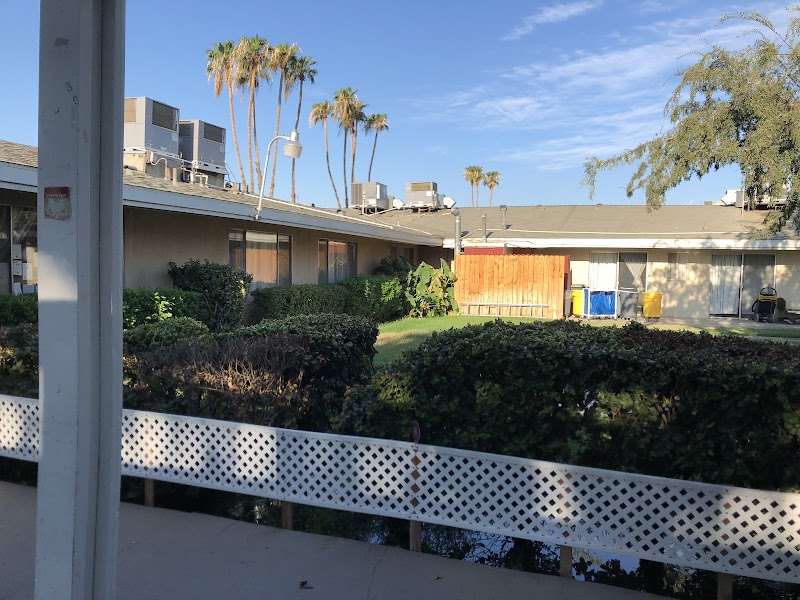
How is Desert Springs Healthcare & Wellness Centre Staffed?

CMS rates DESERT SPRINGS HEALTHCARE & WELLNESS CENTRE's staffing level at 3 out of 5 stars, which is average compared to other nursing homes. Staff turnover is 33%, compared to the California average of 46%. This relatively stable workforce can support continuity of care.

What Have Inspectors Found at Desert Springs Healthcare & Wellness Centre?

State health inspectors documented 51 deficiencies at DESERT SPRINGS HEALTHCARE & WELLNESS CENTRE during 2020 to 2025. These included: 4 that caused actual resident harm and 47 with potential for harm. Deficiencies causing actual harm indicate documented cases where residents experienced negative health consequences.

Who Owns and Operates Desert Springs Healthcare & Wellness Centre?

DESERT SPRINGS HEALTHCARE & WELLNESS CENTRE is owned by a for-profit company. For-profit facilities operate as businesses with obligations to shareholders or private owners. The facility operates independently rather than as part of a larger chain. With 68 certified beds and approximately 61 residents (about 90% occupancy), it is a smaller facility located in INDIO, California.

How Does Desert Springs Healthcare & Wellness Centre Compare to Other California Nursing Homes?

Compared to the 100 nursing homes in California, DESERT SPRINGS HEALTHCARE & WELLNESS CENTRE's overall rating (3 stars) is below the state average of 3.1, staff turnover (33%) is significantly lower than the state average of 46%, and health inspection rating (2 stars) is below the national benchmark.

What Should Families Ask When Visiting Desert Springs Healthcare & Wellness Centre?

Based on this facility's data, families visiting should ask: "Can I visit during a mealtime to observe dining assistance and food quality?" "How do you handle medical emergencies, and what is your hospital transfer rate?" "Can I speak with family members of current residents about their experience?"

Is Desert Springs Healthcare & Wellness Centre Safe?

Based on CMS inspection data, DESERT SPRINGS HEALTHCARE & WELLNESS CENTRE has a clean safety record: no substantiated abuse findings (meaning no confirmed cases of resident harm), no Immediate Jeopardy citations (the most serious violation level indicating risk of serious injury or death), and is not on the Special Focus Facility watch list (a federal program monitoring the lowest-performing 1% of nursing homes). The facility has a 3-star overall rating and ranks #100 of 100 nursing homes in California. While no facility is perfect, families should still ask about staff-to-resident ratios and recent inspection results during their visit.

Do Nurses at Desert Springs Healthcare & Wellness Centre Stick Around?

DESERT SPRINGS HEALTHCARE & WELLNESS CENTRE has a staff turnover rate of 33%, which is about average for California nursing homes (state average: 46%). Moderate turnover is common in nursing homes, but families should still ask about staff tenure and how the facility maintains care continuity when employees leave.

Was Desert Springs Healthcare & Wellness Centre Ever Fined?

DESERT SPRINGS HEALTHCARE & WELLNESS CENTRE has been fined $73,594 across 2 penalty actions. This is above the California average of $33,815. Fines in this range indicate compliance issues significant enough for CMS to impose meaningful financial consequences. Common causes include delayed correction of deficiencies, repeat violations, or care failures affecting resident safety. Families should ask facility leadership what changes have been made since these penalties.

Is Desert Springs Healthcare & Wellness Centre on Any Federal Watch List?

DESERT SPRINGS HEALTHCARE & WELLNESS CENTRE is not on any federal watch list. The most significant is the Special Focus Facility (SFF) program, which identifies the bottom 1% of nursing homes nationally based on persistent, serious quality problems. Not being on this list means the facility has avoided the pattern of deficiencies that triggers enhanced federal oversight. This is a positive indicator, though families should still review the facility's inspection history directly.