PARK REGENCY CARE CENTER
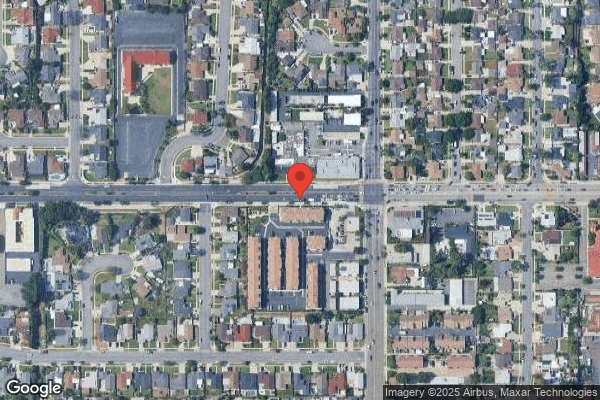
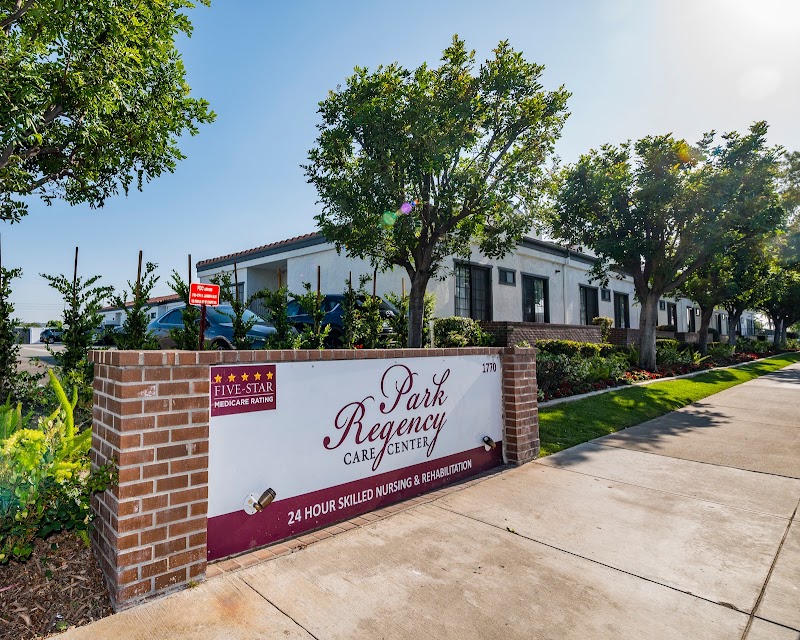
1770 W. LA HABRA BLVD., LA HABRA, CA 90631 (714) 773-0750
For profit - Limited Liability company 99 Beds DAVID & FRANK JOHNSON Data: November 2025
Trust Grade
63/100
#651 of 1155 in CA
Last Inspection: October 2024

Within standard 12-15 month inspection cycle. Federal law requires annual inspections.

Overview

Park Regency Care Center in La Habra, California, has a Trust Grade of C+, which indicates it is slightly above average but not exceptional. It ranks #651 out of 1155 facilities statewide, placing it in the bottom half of California nursing homes, and #47 out of 72 in Orange County, meaning there are a few better local options. The facility's trend is improving, with issues decreasing from 23 in 2024 to just 4 in 2025. Staffing is a relative strength, rated 3 out of 5 stars with a turnover rate of 27%, which is below the state average, but there is concerning RN coverage that ranks lower than 76% of California facilities. While the center has no fines on record, recent inspections revealed serious concerns, such as failure to maintain sanitary conditions in the kitchen, which could lead to foodborne illnesses, and incomplete entrapment assessments for residents, posing risks of serious injury. Families should weigh these strengths and weaknesses when considering Park Regency Care Center.

Trust Score
C+
63/100
In California
#651/1155
Bottom 44%
Safety Record
Low Risk
No red flags
Inspections
Getting Better
23 → 4 violations
Staff Stability
✓ Good
27% annual turnover. Excellent stability, 21 points below California's 48% average. Staff who stay learn residents' needs.
Penalties
✓ Good
No fines on record. Clean compliance history, better than most California facilities.
Skilled Nurses
⚠ Watch
Each resident gets only 20 minutes of Registered Nurse (RN) attention daily — below average for California. Fewer RN minutes means fewer trained eyes watching for problems.
Violations
⚠ Watch
52 deficiencies on record. Higher than average. Multiple issues found across inspections.
★★★☆☆
3.0
Overall Rating
★★★☆☆
3.0
Staff Levels
★★★★☆
4.0
Care Quality
★★★☆☆
3.0
Inspection Score
Stable
2024: 23 issues
2025: 4 issues

The Good

  • 4-Star Quality Measures · Strong clinical quality outcomes
  • Low Staff Turnover (27%) · Staff stability means consistent care
  • Full Sprinkler Coverage · Fire safety systems throughout facility
  • No fines on record
  • Staff turnover is low (27%)

    21 points below California average of 48%

Facility shows strength in quality measures, staff retention, fire safety.

The Bad

3-Star Overall Rating

Near California average (3.1)

Meets federal standards, typical of most facilities

Chain: DAVID & FRANK JOHNSON

Part of a multi-facility chain

Ask about local staffing decisions and management

The Ugly 52 deficiencies on record

Aug 2025 2 deficiencies
CONCERN (D) 📢 Someone Reported This

A family member, employee, or ombudsman was alarmed enough to file a formal complaint

Potential for Harm - no one hurt, but risky conditions existed

Comprehensive Care Plan (Tag F0656)

Could have caused harm · This affected 1 resident

**NOTE- TERMS IN BRACKETS HAVE BEEN EDITED TO PROTECT CONFIDENTIALITY** Based on interview, medical record review, and facility P&P review, the facility failed to develop a plan of care to reflect the...

Read full inspector narrative →
**NOTE- TERMS IN BRACKETS HAVE BEEN EDITED TO PROTECT CONFIDENTIALITY** Based on interview, medical record review, and facility P&P review, the facility failed to develop a plan of care to reflect the individual care needs for two of three sampled residents (Residents 1 and 2). * The facility failed to develop a care plan to address Resident 1's wandering behavior by attempting to enter to other female rooms. * The facility failed to develop a care plan to address Resident 2's elopement risk. These failures posed the risk of the residents not receiving the appropriate treatment and services.Findings: Review of the facility's P&P titled Comprehensive Care Plans reviewed/revised 12/2022 showed it is the policy of this facility to develop and implement a comprehensive person-centered care plan for each resident, consistent with resident rights, that includes measurable objectives and timeframes to meet a resident's medical, nursing, and mental and psychosocial needs that are identified in the resident's comprehensive assessment. According to the Fundamentals of Nursing 10th edition, Communicating and Recording the Nursing Care Plan, a well written care plan is prepared by the nurse who best knows the patient and is recorded on the day the patient presents for treatment and care, according to facility policy, with modifications to the initial plan signed and dated. 1. Closed medical record review for Resident 1 was initiated on 8/26/25. Resident 1 was admitted to the facility on [DATE], and discharged on 8/24/25. Review of Resident 1's MDS assessment dated [DATE], showed the resident had severe cognitive impairment. Review of Resident 1's eINTERACT Change in Condition Evaluation - V 5.1 dated 8/13/25, showed the resident attempted to enter other female rooms. Further review of Resident 1's medical record failed to show documented evidence the care plan for the wandering behavior of attempting to enter to other female rooms was developed before the resident eloped on 8/17/25. On 8/27/25 at 1401 hours, an interview and concurrent closed medical record review for Resident 1 was conducted with RN 2. RN 2 verified Resident 1 had wandering behavior by attempting to enter to other female rooms on 8/13/25, and the care plan was not initiated until 8/17/25, when the resident eloped. RN 2 stated the licensed nurse should have started the care plan on 8/13/25. On 8/27/25 at 1632 hours, an interview and concurrent closed medical record review for Resident 1 was conducted with the DON. The DON acknowledged the above findings. The DON stated the licensed nurse should have initiated the care plan as soon as Resident 1's wandering behavior was observed. 2. Medical record review for Resident 2 was initiated on 8/26/25. Resident 2 was admitted to the facility on [DATE]. Review of Resident 2's Elopement Risk - V 3 assessment dated [DATE], showed the resident was at risk for elopement. Review of Resident 2's MDS assessment dated [DATE], showed the resident's cognition was moderately impaired. Further review of Resident 2's medical record failed to show documented evidence a care plan was developed to address the resident's elopement risk before 8/18/25. The care plan for Resident 2's elopement risk was created on 8/18/25. On 8/27/25 at 1340 hours, an interview and concurrent medical record review was conducted with RN 2. RN 2 verified Resident 2's Elopement Risk - V 3 assessment dated [DATE], showed the resident was at risk for elopement and there was no care plan to address the resident's elopement risk before 8/18/25. RN 2 acknowledged the care plan for Resident 2's elopement risk was created on 8/18/25. RN 2 stated Resident 2's care plan should have been initiated right away. On 8/27/25 at 1625 hours, an interview and concurrent medical record review was conducted with the DON. The DON acknowledged the above findings. The DON stated Resident 2's care plan should have been created as soon as the resident was identified as an elopement risk. On 8/27/25 at 1644 hours, the Administrator and DON were informed and acknowledged the above findings.
MINOR (B) 📢 Someone Reported This

A family member, employee, or ombudsman was alarmed enough to file a formal complaint

Minor Issue - procedural, no safety impact

Accident Prevention (Tag F0689)

Minor procedural issue · This affected multiple residents

**NOTE- TERMS IN BRACKETS HAVE BEEN EDITED TO PROTECT CONFIDENTIALITY** Based on interview, closed medical record review, and facility P&P review, the facility failed to provide the necessary care and...

Read full inspector narrative →
**NOTE- TERMS IN BRACKETS HAVE BEEN EDITED TO PROTECT CONFIDENTIALITY** Based on interview, closed medical record review, and facility P&P review, the facility failed to provide the necessary care and services to prevent accident hazards for one of three sampled residents (Resident 1). * The facility failed to ensure Resident 1 did not eloped from the facility. This failure had the potential to place Resident 1 at risk of serious injury.Findings: Review of the facility's P&P titled Elopements and Wandering Residents reviewed/revised 12/2022 showed this facility ensures that residents who exhibit wandering behavior and/or are at risk for elopement receive adequate supervision to prevent accidents and receive care in accordance with their person-centered plan of care addressing the unique factors contributing to wandering or elopement risk. The Policy Explanation and Compliance Guidelines section showed alarms are not a replacement for necessary supervision. Staff are to be vigilant in responding to alarms in a timely manner. 1. Closed medical record review for Resident 1 was initiated on 8/26/25. Resident 1 was admitted to the facility on [DATE], and discharged on 8/24/25. Review of Resident 1's MDS assessment dated [DATE], showed the resident had severe cognitive impairment. Review of Resident 1's eINTERACT Change in Condition Evaluation - V 5.1 dated 8/13/25, showed the resident attempted to enter other female rooms. Further review of Resident 1's medical record failed to show documented evidence the Elopement Risk - V 3 assessment was done on 8/13/25. The elopement risk assessment included the question does the resident wander? Review of Resident 1's eINTERACT Change in Condition Evaluation - V 5.1 dated 8/17/25, showed elopement and wanderer. In addition, the evaluation showed Resident 1's body assessment was done and noted with skin discoloration 3 cm (length) x 4 cm (width) at the left forearm. On 8/26/25 at 1315 hours, an interview was conducted with CNA 1. CNA 1 verified Resident 1 eloped from the facility on 8/17/25. CNA 1 stated the elopement occurred on 8/17/25 at around 0930 hours. CNA 1 stated Resident 1 was in his wheelchair at 0830 hours and could move himself. CNA 1 further stated she was busy and did not hear the door alarm. CNA 1 stated she told the supervisor she did not see Resident 1 leaving the facility. On 8/26/25 at 1340 hours, an interview and concurrent closed medical record review was conducted with RN 2. RN 2 verified Resident 1 eloped from the facility on 8/17/25. RN 2 stated the CNA reported to him Resident 1 eloped at 0930 hours. RN 2 stated when the CNA reported she could not find Resident 1, the facility staff started looking for Resident 1 in every room. RN 2 further stated Resident 1 had a history of attempting to enter female rooms. RN 2 stated he initiated the elopement protocol when the facility staff could not find Resident 1. RN 2 stated the police found Resident 1 by the [NAME] church at 1000 hours. On 8/27/25 at 1051 hours, an interview was conducted with the Laundry Staff. The Laundry Staff stated she was having her lunch break when she heard the door alarm. The Laundry staff stated she did not get up and checked the door because she was on her lunch break and assumed somebody else would check the door alarm. On 8/27/25 at 1555 hours, a follow-up interview and concurrent medical record review was conducted with RN 2. RN 2 acknowledged Resident 1 had change in condition evaluation dated 8/13/25, for wandering by attempting to enter other female rooms. RN 2 verified the Elopement Risk - V 3 assessment was not done on 8/13/25. RN 2 stated the licensed nurse should have done the elopement risk assessment for Resident 1 to prevent episode of elopement. On 8/27/25 at 1632 hours, an interview and concurrent medical record review was conducted with the DON. The DON acknowledged the above findings. The DON stated the licensed nurse should have initiated an elopement assessment to identify Resident 1 was an elopement risk. The DON stated the facility staff should have attended to the door alarm immediately. On 8/27/25 at 1644 hours, the Administrator and DON were informed and acknowledged the above findings.
Aug 2025 1 deficiency
CONCERN (D) 📢 Someone Reported This

A family member, employee, or ombudsman was alarmed enough to file a formal complaint

Potential for Harm - no one hurt, but risky conditions existed

Pressure Ulcer Prevention (Tag F0686)

Could have caused harm · This affected 1 resident

**NOTE- TERMS IN BRACKETS HAVE BEEN EDITED TO PROTECT CONFIDENTIALITY** Based on observation, interview, medical record review, and facility P&P review, the facility failed to ensure the necessary car...

Read full inspector narrative →
**NOTE- TERMS IN BRACKETS HAVE BEEN EDITED TO PROTECT CONFIDENTIALITY** Based on observation, interview, medical record review, and facility P&P review, the facility failed to ensure the necessary care and services were provided to promote the healing of a pressure injury for one of three sampled residents (Resident 3). * The facility failed to provide a LAL mattress for Resident 3 who had a Stage 3 pressure injury (characterized by full-thickness skin loss, where the damage extends into the subcutaneous tissue (fat). While adipose tissue (fat) is visible, bone, tendon, or muscle are not exposed. The wound may have a crater-like appearance, and slough (dead tissue) or eschar (a scab) may be present, but they do not obscure the depth of the wound. Undermining and tunneling (where the wound extends under the skin's surface) can also occur). This failure had the potential to cause and delay the healing of resident's pressure injury. Findings: Review of the facility's P&P titled Pressure Injury Prevention and Management revised 9/12/23, showed in part, this facility is committed to the prevention of avoidable pressure injuries, unless clinically unavoidable, and to provide treatment and services to heal the pressure injury, prevent infection and the development of additional pressure injury. Under Policy Explanation and Compliance Guidelines: the facility shall establish and utilize a systematic approach for pressure injury prevention and management, including prompt assessment and treatment, intervening to stabilize, reduce or remove underlying risk factors; monitoring the impact of the interventions; and modifying the interventions as appropriate. Interventions will be documented in the care plan and communicated to all relevant staff. According to the NPIAP guidelines for pressure injury dated 2/2025, the goal of this international collaboration is to develop evidenced-based recommendations for the prevention and treatment of pressure injuries that can be used by health professionals throughout the world. The NPIAP staging system is a widely used classification for pressure injuries, which are skin damage caused by prolonged pressure. The NPIAP defines the Stage 3 pressure injury - as full thickness skin loss exposing subcutaneous tissue (deepest layer of the skin primarily consist of fat tissues, connective tissue blood vessels and nerves). On 8/7/25 at 1520 hours, an observation was conducted of Resident 3's wound care treatment with LVN 1. Resident 3's bed did not have a LAL mattress. On 8/7/25 at 1600 hours, an observation and concurrent interview was conducted with LVN 3 for Resident 3. LVN 3 stated Resident 3 was using a regular mattress and verified there was no LAL mattress on her bed. LVN 3 further stated Resident 3 should have a LAL mattress because she had a Stage 3 pressure injury. LVN 3 stated a LAL mattress would help relieve pressure on Resident 3's wound and promote healing. Medical record review for Resident 3 was initiated on 8/7/25. Resident 3 was admitted to the facility on [DATE], with diagnoses including a Stage 3 pressure injury measuring 3 cm (length) x 2 cm (width) x 0 cm (depth). Review of Resident 3's physician orders failed to show an order for a LAL mattress when she was admitted to facility. Review of Resident 3's care plan for the Stage 3 sacrococcyx (fused area at the spine and tailbone) pressure injury initiated 7/30/25, showed an intervention to have low air loss mattress for wound management. On 8/7/25 at 1610 hours, an interview was conducted with LVN 1. LVN 1 verified Resident 3 did not have a LAL mattress upon admission to the facility and had no physician's order for a LAL mattress. LVN 1 further stated Resident 3 should have had a LAL mattress because the resident had a Stage 3 pressure injury and it was the facility's protocol. On 8/12/25 at 1030 hours, an interview was conducted with RN 1. RN 1 stated it was facility's protocol for the residents with a Stage 3 pressure injury to have a LAL mattress.
Mar 2025 1 deficiency
CONCERN (D) 📢 Someone Reported This

A family member, employee, or ombudsman was alarmed enough to file a formal complaint

Potential for Harm - no one hurt, but risky conditions existed

Accident Prevention (Tag F0689)

Could have caused harm · This affected 1 resident

**NOTE- TERMS IN BRACKETS HAVE BEEN EDITED TO PROTECT CONFIDENTIALITY** Based on observation, interview, medical record review, and facility P&P review, the facility failed to ensure the necessary car...

Read full inspector narrative →
**NOTE- TERMS IN BRACKETS HAVE BEEN EDITED TO PROTECT CONFIDENTIALITY** Based on observation, interview, medical record review, and facility P&P review, the facility failed to ensure the necessary care and services were provided for three of three sampled residents (Residents 1, 2, and 3). * Residents 1 and 2's care plan failed to properly address the use of floor mats for safety. * Residents 2 and 3's post fall neurological assessments were incomplete. These failures had the potential for adverse events related to falls to happen. Findings: 1. Review of the facility's P&P titled Fall Prevention Program dated 12/28/23, showed the nurse and/or interdisciplinary team will initiate interventions on the resident's care plan. a. Medical record review for Resident 1 was initiated on 3/27/25. Resident 1 was admitted to the facility on [DATE], and readmitted on [DATE]. On 3/27/25 at 0817 hours, there were bilateral floor mats observed by Resident 1's bed. On 3/27/25 at 1215 hours, Resident 1 was observed in bed. The resident's bed was in the lowest position and the bilateral floor mats were still beside the resident's bed. Review of Resident 1's eINTERACT SBAR Summary for Providers dated 3/12/25 at 1630 hours, showed the resident had an unwitnessed fall and was sent to the hospital for evaluation. Review of Resident 1's care plan last revised 3/27/25, failed to show the floor mats were included as part of the resident's care. An interview with LVN 2 was conducted on 3/27/25 at 1358 hours. LVN 2 stated the bilateral floor mats were ordered by a physician for fall risk residents. LVN 2 stated Resident 1's bilateral floor mats were placed when the resident was readmitted to the facility. b. Medical record review for Resident 2 was initiated on 3/27/25. Resident 2 was admitted to the facility on [DATE]. On 3/27/25 at 0944 hours, one floor mat was observed by Resident 2's bed. Resident 2 was lying in bedand the bed was at the lowest position. Review of Resident 2's eINTERACT SBAR Summary for Providers dated 3/15/25 at 0540 hours, showed the resident had an unwitnessed fall and was sent to the acute care hospital for evaluation. Review of Resident 2's nurses progress note dated 3/16/25 at 0313 hours, showed the resident was transferred back to the facility. Review of Resident 2's care plan dated 3/15/25, failed to include the information for the staff to identify which side of the bed the floor mat should be placed. On 3/27/25 at 1358 hours, an interview with LVN 2 was conducted. LVN 2 stated the bilateral floor mats were ordered by a physicianfor fall risk residents. On 3/27/25 at 1421 hours, an interview and concurrent medical record review was conducted with the DON. The DON stated a physician's order was not needed for the floor mats because it was considered a nursing intervention for the residents. The DON further stated during a post-fall IDT meeting, the members would discuss and decide if the floor mats were needed and would update the resident's care plan. The DON stated Residents 1 and 2's floor mats were placed when the residents were readmitted to the facility. The DON reviewed Residents 1 and 2's care plans and verified the care plan did not address the use of the floor mat. 2. Review of the facility's P&P titled, Fall Prevention Program dated 12/28/23, showed to monitor the vital signs in accordance with facility policy, monitor for changes in resident cognition, and when any resident experiences a fall, the facility will document all assessments and actions. a. Medical record review for Resident 2 was initiated on 3/27/25. Resident 2 was admitted to the facility on [DATE]. Review of Resident 2's neurological flowsheet dated 3/15/25, showed the neurological assessment for item number 17 was missing. Review of Resident 2's eINTERACT SBAR Summary for Providers dated 3/15/25 at 0540 hours, showed the resident had an unwitnessed fall and was sent to the acute care hospital for evaluation. Review of Resident 2's Nurse Progress Note dated 3/16/25, showed at 0313 hours, the resident was transferred back at the facility. An interview and concurrent medical record review was conducted with the DON on 3/27/25 at 1421 hours. The DON stated the neurological assessments should be done for the residents with unwitnessed falls and should be documented on the neurological flowsheets. The DON reviewed Resident 2's neurological flowsheets and verified neurological assessment, Item Number: 17 was not completed. b. Medical record review for Resident 3 was initiated on 3/27/25. Resident 3 was admitted to the facility on [DATE]. Review of Resident 3's eINTERACT SBAR Summary for Providers dated 3/2/25 at 2051 hours, showed the resident had an unwitnessed fall. The primary care provider's recommendation was to conduct the neurological checks. Review of Resident 3's neurological flowsheet dated 3/2/25, showed the neurological assessment, Item Numbers: 6, 7, 12, 14, 15, and 18 were missing. On 3/27/25 at 1421 hours, an interview and concurrent medical record review was conducted with the DON. The DON stated the neurological assessments should be done for the residents with unwitnessed falls and should be documented on the neurological flowsheets. The DON reviewed Residents 2 and 3's neurological flowsheets and verified the neurological assessments were incomplete.
Dec 2024 1 deficiency
CONCERN (D) 📢 Someone Reported This

A family member, employee, or ombudsman was alarmed enough to file a formal complaint

Potential for Harm - no one hurt, but risky conditions existed

Accident Prevention (Tag F0689)

Could have caused harm · This affected 1 resident

**NOTE- TERMS IN BRACKETS HAVE BEEN EDITED TO PROTECT CONFIDENTIALITY** Based on interview, medical record review, and facility P&P review, the facility failed to ensure two of three sampled residents...

Read full inspector narrative →
**NOTE- TERMS IN BRACKETS HAVE BEEN EDITED TO PROTECT CONFIDENTIALITY** Based on interview, medical record review, and facility P&P review, the facility failed to ensure two of three sampled residents (Residents 1 and 3) remained free from accident hazards. * The facility failed to assess Residents 1 and 3's ability to handle containers and consume the hot beverages as per the facility's P&P. In addition, Resident 1 spilled a cup of hot chocolate on her left shoulder extending down to the posterior back causing redness and blisters to Resident 1's left shoulder and left upper back. These failures posed the risk of injury to the other residents who were consuming hot liquids in the facility. Findings: Review of the facility's P&P titled Hot Liquid Safety revised 12/19/22, showed all the residents are assessed for their ability to handle containers and consume hot liquids. Residents with difficulties will receive appropriate supervision and use of assistive devices to drink hot liquids. Interventions will be individualized and noted on the resident's plan of care. Interventions include, but are not limited to: a. Wide based cups; b. Cups with lids and handles; c. Aprons; and d. Disallow hot liquids while lying in bed. General safety precautions when serving hot liquids include, but are not limited to: a. Make sure resident is alert and in proper positioning to consume hot liquids; b. Use cups, mugs, or other containers that are appropriate for hot beverages; c. Do not overfill containers; d. Regulate temperature of hot liquids to which residents have direct access; e. Place filled containers directly on table. Do not hand them directly to residents; f. Keep hot liquids away from the edges of the table; and g. Do not refill containers while the resident is holding the container. Review of the facility's P&P titled Accidents and Supervision revised 12/19/22, showed the resident's environment will remain as free of accident hazards as possible. Each resident will receive adequate supervision and assistive devices to prevent accidents. This includes identifying hazards and risks and implementing interventions to reduce hazards and risks. Supervision is an intervention and a means of mitigating accident risk. The facility will provide adequate supervision to prevent accidents. Adequacy of supervision is based on the individual resident's needs. 1. Review of the facility's letter to CDPH, L&C Program dated 11/19/24, showed an incident when Resident 1 spilled the hot chocolate on her left shoulder which extended down to the resident's posterior back. The letter showed Resident 1 experienced discomfort to the site and Resident 1 had developed blisters on her left shoulder and left upper back. Medical record review for Resident 1 was initiated on 12/4/24. Resident 1 was admitted to the facility on [DATE], and readmitted on [DATE]. Review of Resident 1's H&P examination dated 9/6/24, showed Resident 1 had the capacity to understand and make decisions. Review of Resident 1's MDS dated [DATE], under the section for Functional Limitation in Range of Motion, showed Resident 1 had impairment on both upper extremities (shoulder, elbow, wrist, and hand). The section for Functional Abilities and Goals showed Resident 1 needed partial/moderate assistance (helper does less than half the effort, helper lifts, holds, or supports trunk or limbs, but provides less than half he effort.) for eating (the ability to use suitable utensils to bring food and/or liquid to the mouth and swallow food and/or liquid once the meal is placed before the resident). Review of Resident 1's plan of care revised 10/26/23, showed a care plan problem addressing Resident 1's potential for cognitive loss related to episodes of forgetfulness. The interventions included to cue, reorient, and supervise as needed. Review of Resident 1's plan of care revised on 4/5/24, showed a care plan problem addressing Resident 1's ADL self-care performance deficits related to chronic osteoarthritis, hypertension, hyperlipidemia, polyneuropathy, morbid obesity, and gastroesophageal reflux. The interventions showed Resident 1 required assistance from the staff for eating. Review of Resident 1's Progress Note dated 11/15/24 at 0715 hours, showed Resident 1 was heard screaming for pain because she spilled hot cacao on herself and was noted with redness to her left shoulder,extending to the back. Further review of Resident 1's medical record failed to show documented evidence the assessment was completed for Resident 1's ability to handle containers and consume hot liquids. On 12/5/24 at 1130 hours, a concurrent observation and interview was conducted with Resident 1. Resident 1 was observed awake and lying in bed with the head of the bed elevated at 45 degrees. Resident 1 was asked to describe her spillage incident on 11/15/24. Resident 1 stated she would only have the hot chocolate or coffee in the morning, and on 11/15/24, she was offered with the hot chocolate that morning. Resident 1 stated she had just woken up and she was in the same position as she was now. Resident 1 stated she was not sitting in an upright position in bed. Resident 1 stated when she received thehot chocolate, she tried sipping the hot drink with the straw maybe twice. Resident 1 then placed the cup on the table in front of her after trying to sip it twice. Resident 1 further stated the next thing she remembered was screaming in pain because she spilled the hot chocolate on herself but could not remember if she fell asleep. On 12/5/24 at 1330 hours, an interview was conducted with CNA 2. CNA 2 stated Resident 1 was assigned to her most of the times. CNA 2 stated Resident 1 was alert but confused at times. CNA 2 was asked to describe Resident 1's hot beverage spillage incident on 11/15/24. CNA 2 stated when she gave Resident 1 the hot chocolate, Resident 1 was awake and started drinking the hot chocolate. CNA 2 then went to see another resident. CNA 2 stated 15 minutes after she left Resident 1, she heard Resident 1 screaming so she went to see Resident 1 right away. CNA 2 stated she found the hot chocolate was spilled on Resident 1's left shoulder and her back. CNA 2 stated she observed Resident 1 crying because she was in pain. CNA 2 stated she started wiping Resident 1's body and called the nurse. CNA 2 further stated Resident 1 could eat by herself but would fall asleep at times and needed cuing. CNA 2 stated when she was not busy, she would sit with Resident 1 for the whole meal. On 12/5/24 at 1400 hours, an interview was conducted with LVN 1. LVN 1 stated Resident 1 was assigned to him when Resident 1 had the hot liquid spillage incident. LVN 1 stated Resident 1 sustained redness on the left shoulder and back, and eventually developed blisters on those body parts. LVN 1 stated Resident 1 needed partial to moderate assistance with eating. LVN 1 stated Resident 1 needed to be cued multiple times and at times Resident 1 would fall asleep during meals. LVN 1 further stated Resident 1 should have a helper throughout the meal. LVN 1 stated there was no assessment done for Resident 1 regarding her ability to consume hot liquids. On 12/5/24 at 1620 hours, an interview and concurrent medical record review was conducted with RN 1. RN 1 stated the nurses assessed the residents' ability to eat by themselves but did not perform an assessment specifically regarding the residents ' ability to handle a container and consume hot liquids. RN 1 verified Resident 1's medical record failed to show documented evidence the assessment was completed to determine Resident 1's ability to handle containers and consume hot liquids. On 12/5/24 at 1645 hours, an interview and concurrent medical record review was conducted with the OT 1. OT 1 stated the OT evaluation dated 9/6/24, showed Resident 1 had impairment in both upper extremities due to the resident's shoulder pain and the section under Self-Feeding showed Resident 1 was independent. OT 1 stated he only assessed in general how Resident 1 ate, handled the utensils and the cup. OT 1 stated the OT did not do a specific assessment of the residents' ability to handle and consume hot liquids. 2. Medical record review for Resident 3 was initiated on 12/5/24. Resident 3 was admitted in the facility on 3/30/22 and was readmitted on [DATE]. Review of Resident 3's H&P examination dated 11/18/23, showed Resident 3 had the capacity to understand and make decisions. Further review of Resident 3's medical record showed no evidence Resident 3 was assessed for her ability to handle containers and consume hot liquid. On 12/5/24 at 1620 hours, an interview and concurrent medical record review was conducted with RN 1. RN 1 verified there was no assessment performed to assess Resident 3's ability to handle containers and consume hot liquids as per the facility's P&P.
Oct 2024 19 deficiencies
CONCERN (D)

Potential for Harm - no one hurt, but risky conditions existed

Deficiency F0558 (Tag F0558)

Could have caused harm · This affected 1 resident

**NOTE- TERMS IN BRACKETS HAVE BEEN EDITED TO PROTECT CONFIDENTIALITY** Based on observation, interview, medical record review, and facility P&P review, the facility failed to provide the reasonable a...

Read full inspector narrative →
**NOTE- TERMS IN BRACKETS HAVE BEEN EDITED TO PROTECT CONFIDENTIALITY** Based on observation, interview, medical record review, and facility P&P review, the facility failed to provide the reasonable accommodations to meet the needs for one of 19 final sampled residents (Resident 540) and four nonsampled residents (Residents 9, 17, 81, and 740). * The facility failed to ensure the call lights were within reach and accessible for Residents 9, 17, and 740. * The facility failed to ensure the bed control was within reach and accessible for Resident 81. * Resident 540's call light button was observed not working. These failures had the potential to negatively impact the resident's psychosocial well-being or result in a delay to receive care. Findings: Review of the facility's P&P titled Call Lights Accessibility and Timely Response revised on 12/19/22, showed the following: -The purpose of this policy is to assure the facility is adequately equipped with a call light; -Staff will ensure the call light is within reach of resident and secured, as needed; -The call system will be accessible to residents while in their bed or other sleeping accommodations within resident's room. 1. On 10/07/24 at 0846 hours, an observation and concurrent interview was conducted with the DSD. Resident 9's call light was observed on the floor and not within reach of the resident. The DSD verified Resident 9's call light was on the floor. Medical record review for Resident 9 was initiated on 10/8/24. Resident 9 was readmitted to the facility on [DATE]. Review of Resident 9's H&P examination dated on 9/16/24, showed Resident 9 had no capacity to make medical decisions. 2. On 10/7/24 at 0928 hours, an observation and concurrent interview was conducted with CNA 5. Resident 17's call light was observed on the floor mat and not within reach of the resident. CNA 5 verified Resident 17's call light was on the floor mat. Medical record review for Resident 9 was initiated on 10/8/24. Resident 17 was readmitted to the facility on [DATE]. Review of Resident 17's H&P examination dated on 12/14/23, showed Resident 17 had no capacity to make medical decisions. 3. On 10/7/24 at 0908 hours, an observation and concurrent interview was conducted with LVN 8. Resident 740's call light was observed clipped to the right side of Resident 740's wall, above the head of the bed and not within reach of the resident. LVN 8 verified Resident 740's call light was clipped to the right side of Resident 740's wall, above the head of the bed. Medical record review for Resident 740 was initiated on 10/8/24. Resident 740 was readmitted to the facility on [DATE]. Review of Resident 740's H&P examination dated on 1/21/24, showed Resident 740 had no capacity to make medical decisions. 4. On 10/7/24 at 0908 hours, an observation and concurrent interview was conducted with the DSD. Resident 81 was observed lying in bed and looking for her bed control. Resident stated, control para [NAME], which translated to bed control in English. Resident 81's bed control was observed on the floor. The DSD verified Resident 81's bed control was on the floor. Medical record review for Resident 81 was initiated on 10/8/24. Resident 81 was admitted to the facility on [DATE]. Review of Resident 81's MDS dated [DATE], showed Resident 81's BIMS score of 8 (meaning moderate cognitive impairment). On 10/8/24 at 1521 hours, an interview was conducted with the DON regarding Residents 9, 17, and 740's call lights and Resident 81's bed control. When the DON was asked the expectation for the residents' call light and bed control, the DON stated, Staff should place the call light and bed control within the residents' reach. If the resident is contracted or has paralysis, we would assess the resident and provide soft touch call light if appropriate and place it within reach. 5. Review of the facility's P&P titled Call Lights: Accessibility and Timely Response revised 12/19/22, showed the call system must be acessisble to the residents while in their bed or other sleeping accomodations within the resident's room. During an initial tour of the facility on 10/7/24 at 0847 hours, an observation and concurrent interview was conducted with Resident 540 in his room. Resident 540 stated he used the call light button to call the staff if he needed help. Resident 540 stated his call light button did not work and proceeded to press the call light button. The SSD then walked into Resident 540's room and verified Resident 540's call light button was not working. The SSD stated the call light cord was out of the socket and not plugged in right; and proceeded to fix the call light cord. Resident 540 stated his call light was not working the night before for the whole night and every time he pressed it, it did not work. Medical record review for Resident 540 was initiated on 10/7/24. Resident 540 was admitted to the facility on [DATE]. Review of Resident 540's H&P examination dated 10/4/24, showed Resident 540 had the capacity to understand and make decisions. Review of Resident 540's MDS dated [DATE], showed Resident 540 required substantial/maximal assistance for bed mobility and transfers. On 10/10/24 at 0908 hours, an interview was conducted with the DON. The DON was informed and acknowledged the above findings.
CONCERN (D) 📢 Someone Reported This

A family member, employee, or ombudsman was alarmed enough to file a formal complaint

Potential for Harm - no one hurt, but risky conditions existed

Deficiency F0578 (Tag F0578)

Could have caused harm · This affected 1 resident

**NOTE- TERMS IN BRACKETS HAVE BEEN EDITED TO PROTECT CONFIDENTIALITY** 2. Medical record review for Resident 87 was initiated on 10/7/24. Resident 87 was admitted to the facility on [DATE]. Review o...

Read full inspector narrative →
**NOTE- TERMS IN BRACKETS HAVE BEEN EDITED TO PROTECT CONFIDENTIALITY** 2. Medical record review for Resident 87 was initiated on 10/7/24. Resident 87 was admitted to the facility on [DATE]. Review of Resident 87's H&P examination dated 9/11/24, showed Resident 87 had the capacity to understand and make decisions. Review of Resident 87's the Physician Orders for Life-Sustaining Treatment (POLST) undated and signed by the physician showed Section D Information and Signatures was blank. Review of Resident 87's Advance Directive Acknowledgement dated 9/16/24, showed Resident 87 had executed an advance directive. Review of Resident 87's medical record failed to show a copy of Resident 87's advance directive. On 10/8/24 at 1428 hours, an interview and concurrent medical record review for Resident 87 was conducted with the SSD. The SSD stated on admission, the admission Coordinator would inquire if the residents had an advance directive. If the resident had an advance directive, the Admissions Coordinator would request a copy of the advance directive. The SSD further stated if the Admissions Coordinator had requested a copy and a copy was not provided, the Admissions Coordinator would inform the Social Services Department to follow-up. When asked about the timeframe to follow-up to obtain a copy of the advance directive from the resident's family or RP, the SSD stated as soon as possible to ensure the resident's wishes were honored. The SSD was asked if Resident 87 had an advance directive. The SSD stated upon Resident 87's admission to the facility, Resident 87's RP stated they would fax his advance directive to the facility. When asked whether the facility had followed-up to obtain a copy of the advance directive, the SSD stated an advance directive was not uploaded in Resident 87's medical record. The SSD further stated she was unable to find the documentation to show the facility had followed-up to obtain a copy of Resident 87's advance directive. On 10/10/24 at 1056 hours, an interview and concurrent medical record review for Resident 87 was conducted with the DON. The DON verified the above findings. On 10/10/24 at 1556 hours, the Administrator, DON, and Medical Records Assistant were informed and acknowledged the above findings. 3. Medical record review for Resident 23 was initiated on 10/7/24. Resident 23 was admitted to the facility on [DATE]. Review of Resident 23's Physician Orders for Life-Sustaining Treatment (POLST) dated 9/14/24, failed to show documented evidence as to whether Resident 23 had an advance directive or not. Review of Resident 23's Advance Directive Acknowledgement form signed 9/29/24, showed Resident 23 had executed an advance directive and a POLST. Further review of Resident 23's medical record failed to show a copy of the advance directive was maintained in the resident's medical record. On 10/8/24 at 1428 hours, a concurrent interview and medical record review was conducted with the SSD. The SSD stated the admissions coordinator, upon the resident's admission, would assess if the resident had an advance directive. The SSD stated the resident was reassessed if they have an advance directive during admission and during their care plan meeting. The SSD verified Resident 23's POLST was incomplete and did not show the advance directive information. The SSD additionally verified there was no follow up regarding whether Resident 23 did or did not have an advance directive available. On 10/8/24 at 1535 hours, a concurrent interview and medical record review was conducted with RN 1. RN 1 verified Resident 23's AHCD (Advance Health Care Directive) was not maintained in Resident 23's medical record. Based on interview, medical record review, and facility P&P review, the facility failed to ensure the information on how to formulate an advance directive was provided to one of 19 final sampled residents (Resident 33). In addtion, the facility failed to ensure the POLST form was complete and copy of advance direction was obtained and maintained the medical record for two of 19 final sampled residents( Resident 23 and 87). These failures had the potential for the facility to provide treatment and services against the resident's wishes. Findings: 1. Review of the facility's P&P titled Residents' Rights Regarding Treatment and Advance Directives revised date 12/19/22, showed it is the policy of the facility to support and facilitate a resident's right to request, refuse, and/or discontinue medical or surgical treatment and to formulate an advance directive. On admission, the facility will determine if the resident has executed an advance directive, and if not, determine whether the resident, if cognitively able to, would like to formulate an advance directive. Upon admission, should the resident have an advance directive, copies will be made and placed on the chart as well as communicated to the staff. Review of Resident 33's medical record was initiated on 10/7/24. Resident 33 was admitted to the facility on [DATE], and readmitted on [DATE]. Review of the Physician's H&P examination dated 11/18/23, showed Resident 33 had the capacity to understand and make decisions. Review of the Quarterly MDS dated [DATE], showed Resident 33 had a BIMS of 14 (scores of 13-15 suggests intact cognition). Review of the Physician Orders for Life Sustaining Treatment (POLST) dated 3/30/22, showed under Section D for Information and Signatures, Resident 33 had no advance directive. However, review of the Advance Directive Acknowledgment form dated 12/7/20, showed Resident 33 had executed an advance directive. On 10/8/24 at 1113 hours, an interview was conducted with Resident 33. Resident 33 stated she did not have an advance directive and did not remember being provided with any information on how to formulate an advance directive. On 10/8/24 at 1523 hours, an interview with concurrent record review was conducted the SSA. The SSA acknowledged the Social Services assessment and notes did not show information on how to formulate an advance directive was provided to Resident 33. On 10/8/24 at 1544 hours, an interview with concurrent medical record review was conducted with the DON. The DON verified the findings and stated the POLST and Advance Directive Acknowledgement form had conflicting information. On 10/9/24 at 1417 hours, a follow up interview was conducted with the DON. The DON acknowledged the above findings and stated Resident 33 did not have an advance directive in the medical record and overflow.
CONCERN (D)

Potential for Harm - no one hurt, but risky conditions existed

Safe Environment (Tag F0584)

Could have caused harm · This affected 1 resident

Based on observation and interview, the facility failed to maintain a clean and homelike environment for two of 19 final sampled residents (Residents 33 and 49) and two nonsampled residents (Residents...

Read full inspector narrative →
Based on observation and interview, the facility failed to maintain a clean and homelike environment for two of 19 final sampled residents (Residents 33 and 49) and two nonsampled residents (Residents 27 and 86). * Resident 86 was observed walking into resident Shower Room A to take a shower. Shower Room A was observed with a soiled towel on the bathroom floor and several unpackaged clean adult briefs lying on the floor and shower chair. * Resident 49 resided in Room C. Room C was observed with scratches and unpainted areas on the walls and bathroom door frame. The Room C curtains were observed with stains and discoloration. * Resident 27 resided in Room B. Room B was observed with scratches and unpainted areas on several areas of the walls. * Resident 33 resided in Room A. Room A was observed with scratches and chipped paint on several areas of the walls. These failures posed the risk for unsanitary conditions and had the potential to negatively impact the residents' quality of life. Findings: 1. On 10/9/24 at 0918 hours, an observation and concurrent interview was conducted with RN 2. Resident 86 was observed walking into resident Shower Room A to take a shower. Shower Room A was observed with a soiled towel on the bathroom floor and several unpackaged clean adult briefs lying on the floor and shower chair. RN 2 verified the findings and stated the soiled towel was an infection control concern. RN 2 stated the adult briefs should be kept in clean packaging for infection control. 2. On 10/9/24 at 0911 hours, an observation and concurrent interview was conducted with Resident 49. Resident 49 was observed lying in his bed in Room C. Room C was observed with scratches and unpainted areas on the walls and bathroom door frame. The Room C curtains were observed with stains and discoloration. Resident 49 stated he spent the majority of his time in his bed. Resident 49 stated he was unhappy with the condition of his room and his expectation was for his room to be kept clean and in good condition. 3. On 10/8/24 at 1105 hours, an observation and concurrent interview was conducted with Resident 27. Resident 27 was observed lying in her bed in Room B. Room B was observed with scratches and unpainted areas on several areas of the walls. Resident 27 stated it would make her room more livable if the walls were painted. 4. On 10/8/24 at 1056 hours, an observation and concurrent interview was conducted with Resident 33. Resident 33 resided in Room A. Room A was observed with scratches and chipped paint on several areas of the walls. Resident 33 stated she was comfortable in her room; however, she felt her room needed to be maintained.
CONCERN (D)

Potential for Harm - no one hurt, but risky conditions existed

Deficiency F0645 (Tag F0645)

Could have caused harm · This affected 1 resident

**NOTE- TERMS IN BRACKETS HAVE BEEN EDITED TO PROTECT CONFIDENTIALITY** Based on interview, medical record review, and facility P&P review, the facility failed to ensure the Level 1 PASRR contained ac...

Read full inspector narrative →
**NOTE- TERMS IN BRACKETS HAVE BEEN EDITED TO PROTECT CONFIDENTIALITY** Based on interview, medical record review, and facility P&P review, the facility failed to ensure the Level 1 PASRR contained accurate information for two of 19 final sampled residents (Residents 53 and 77). * Resident 77 had a diagnosis of unspecified psychosis and major depressive disorder and was prescribed Seroquel (an antipsychotic); however the Level I PASRR showed Resident 77 had no diagnosed mental illness and was not prescribed psychotropic medications. * Resident 53 had a diagnosis of depressive disorder; however, the Level 1 PASRR screening showed Resident 53 had no diagnosed mental illness. These failures posed the risk for the residents' inappropriate placement in a long-term care nursing home when a PASRR Level II evaluation was not done. Findings: Review of the facility's P&P titled Resident Assessment-Coordination with PASRR Program revised 12/18/23, showed the facility coordinated assessments with the preadmission screening and resident review (PASRR) program under Medicaid to ensure that individuals with a mental disorder, intellectual disability, or a related condition receives care and services in the most integrated setting appropriate to their needs. Further review of the facility's P&P showed all applicants (residents) to the facility would be screened for serious mental disorders or intellectual disabilities and related conditions in accordance with the State's Medicaid rules for screening. For the PASRR Level I screen, the initial pre-screening completed prior to admission: - a negative Level I screen would permit admission to proceed and ends the PASRR process unless a possible serous mental disorder or intellectual disability arises later. - a positive Level I screen necessitates a PASRR Level II evaluation prior to admission. 1. Medical record review for Resident 77 was initiated on 10/7/24. Resident 77 was admitted to the facility on [DATE], and readmitted on [DATE], with the diagnosis of unspecified psychosis and major depressive disorder. Review of Resident 77's H&P examination dated 9/20/24, showed Resident 77 had no capacity to understand and make decisions. Review of Resident 77's Preadmission Screening and Resident Review (PASRR) Level I Screening dated 9/18/24, showed Resident 77 had no diagnosis of serious mental illness and had not been prescribed psychotropic medications. The form showed the Level I screening was negative and a Level II evaluation was not required. Review of Resident 77's Order Summary Report dated 10/8/24, showed a physician's order dated 9/20/24, to administer Seroquel (antipsychotic) 25 mg one tablet by mouth at bedtime for psychosis manifested by unprovoked striking and yelling. On 10/9/24 at 0836 hours, an interview and concurrent medical record review for Resident 77 was conducted with the MDS Coordinator. The MDS Coordinator stated prior to admission to the facility, a PASRR screening would be conducted for the resident at the acute hospital. The results of the screening would be sent to the facility and reviewed by the MDS Coordinator for accuracy. The MDS Coordinator stated upon review of the PASRR Level I Screening, if the screening was inaccurate, she would amend the Level I Screening and determine if a Level II would be triggered or required for the resident. The MDS Coordinator stated the purpose of the PASRR screening was to determine supportive services for the residents with serious mental illnesses while residing at the nursing facility. The MDS Coordinator reviewed Resident 77's medical record and verified the above findings. The MDS Coordinator stated the Level I PASRR Screening was inaccurate, and Resident 77 could have potentially required a Level II PASRR evaluation, which was not conducted. On 10/10/24 at 1056 hours, an interview was conducted with the DON. The DON stated the licensed nurses were responsible for reviewing for accuracy of the PASRR Level I screening results. The DON further stated upon the review of the PASRR Level I Screening results, if the screening was inaccurate, she expected the licensed nurses to revise or conduct a new screening. On 10/10/24 at 1556 hours, the Administrator, DON, and Medical Records Assistant were informed and acknowledged the above findings. 2. Medical record review for Resident 53 was initiated on 10/7/24. Resident 53 was admitted to the facility on [DATE], and readmitted on [DATE]. Review of Resident 53's Level I PASRR screening dated 9/30/24, showed Resident 53 had no diagnosis of serious mental illness. The Level I PASRR screening showed the Level I screening was negative for suspected mental illness, therefore, a level 2 evaluation was not required. Review of Resident 53's H&P examination dated 8/30/24, showed Resident 53 had a diagnosis of depressive disorder. On 10/10/24 at 1156 hours, an interview and concurrent medical record review was conducted with the MDS Coordinator. The MDS Coordinator stated Resident 53 was readmitted to the facility from the acute care hospital on 9/29/24. The MDS Coordinator verified Resident 53's Level I PASRR screening dated 9/30/24, showed Resident 53 had no diagnosis of serious mental illness. The MDS Coordinator stated Resident 53's Level I PASRR screening was completed at the acute care hospital before Resident 53 was readmitted to the facility. The MDS Coordinator verified Resident 53's H&P examination dated 8/30/24, showed Resident 53 had a diagnosis of depressive disorder. The MDS Coordinator stated Resident 53 had a diagnosis of depressive disorder and required a PASRR resident review submission in order to inform the Department of Health Care Services of Resident 53's diagnosis of depressive disorder. The MDS Coordinator stated the purpose of informing the Department of Health Care Services of Resident 53's diagnosis was to ensure Resident 53 received a Level II mental health evaluation referral if necessary. The MDS Coordinator stated a Level II mental health evaluation was conducted to ensure the residents who resided in the long term care facilities would receive care and services specific to mental illness.
CONCERN (D)

Potential for Harm - no one hurt, but risky conditions existed

Accident Prevention (Tag F0689)

Could have caused harm · This affected 1 resident

**NOTE- TERMS IN BRACKETS HAVE BEEN EDITED TO PROTECT CONFIDENTIALITY** Based on observation, interview, medical record review, and facility P&P review, the facility failed to ensure one of 19 final s...

Read full inspector narrative →
**NOTE- TERMS IN BRACKETS HAVE BEEN EDITED TO PROTECT CONFIDENTIALITY** Based on observation, interview, medical record review, and facility P&P review, the facility failed to ensure one of 19 final sampled residents (Resident 62) was free from the accident hazards. * The facility failed to place the floor mattresses on both sides of Resdient 62's bed as ordered by the physician and resident's care plan for Resident 62. This failure had the potential for serious injury to the resident. Findings: Review of the facility's P&P titled Fall Prevention Program revised date 12/28/23, showed each resident will be assessed for fall risk and will receive care and services in accordance with their individualized level of risk to minimize the likelihood of falls. Upon admission, the nurse will complete a fall risk assessment along with the admission assessment to determine the resident's level of fall risk. The nurse and/or interdisciplinary team will initiate interventions on the resident's care plan, in accordance with the resident's level of risk. On 10/7/24 at 1026 hours, during an initial tour, Resident 62 was observed lying in a low bed and no floor mattress was in place. On 10/8/24 at 1055 hours, Resident 62 was observed resting in a low bed with no floor mattress in place. Medical record review for Resident 62 was initiated on 10/7/24. Resident 62 was admitted to the facility on [DATE], and readmitted on [DATE]. Review of Resident 62's Fall Risk assessment dated [DATE], showed Resident 62 was at risk for falling. Review of Resident 62's plan of care showed a care plan focus dated 7/13/22, and revised 5/5/23, addressing the risk for falls related to confusion, psychoactive drug use, psychosis, and dementia with behavioral disturbances. The interventions included low bed and application of floor mattresses to both sides of the bed. Review of Resident 62's Quarterly MDS dated [DATE], showed Resident 62 had severe cognitive impairment. Section GG showed Resident 62 had impairment to both lower extremities. Review of Resident 62's Order Summary Report dated 10/8/24, showed a physician's order dated 2/3/23, for fall risk precautions with low bed and floor mattresses to both sides of the bed. On 10/8/24 at 1510 hours, an interview with concurrent record review was conducted with LVN 6. LVN 6 stated she recalled Resident 62 had an order for the floor mats and verified a physician's order dated 2/3/23, for floor mattresses to both sides of the bed. LVN 6 acknowledged there was no floor mattress in place and stated it was an extra layer of protection. On 10/8/24 at 1537 hours, an observation with concurrent interview was conducted with the DON. The DON acknowledged there were no floor mattresses in place and stated the floor mattresses should have been used and the physician's order should have been followed.
CONCERN (D)

Potential for Harm - no one hurt, but risky conditions existed

Deficiency F0694 (Tag F0694)

Could have caused harm · This affected 1 resident

**NOTE- TERMS IN BRACKETS HAVE BEEN EDITED TO PROTECT CONFIDENTIALITY** Based on observation, interview, medical record review, and facility P&P review, the facility failed to provide the necessary ca...

Read full inspector narrative →
**NOTE- TERMS IN BRACKETS HAVE BEEN EDITED TO PROTECT CONFIDENTIALITY** Based on observation, interview, medical record review, and facility P&P review, the facility failed to provide the necessary care and services to maintain the IV accesses for two of two residents (one final sampled resident, Resident 77 and one nonsampled resident, Resident 63) reviewed for IV care. * The facility failed to ensure the PICC line external catheter and arm circumference measurements were completed and documented in the residents' medical records for Residents 63 and 77 upon admission to the facility. In addition, the facility failed to obtain a physician's order for the care and maintenance of the PICC line for Resident 77, failed to develop a plan of care for the use of PICC, and failed to ensure the PICC dressings were changed weekly as per the facility's P&P for Residents 63 and 77. These failures had the potential to delay the identification of catheter related complications for Residents 63 and 77. Findings: Review of the facility's P&P titled PICC/Midline/CVAD Dressing Change revised 12/19/22, showed it is the policy of this facility to change peripherally inserted central catheter (PICC), midline, and central venous access device (CVAD) dressing, weekly or if soiled, in a manner to decrease potential for infection and/or cross contamination. Further review of the P&P showed the following: - to use sterile measuring tape to measure the external length of the catheter from the hub to the skin entry to ensure that it has not migrated, - to apply a transparent permeable dressing to the insertion site after cleaning the site with an antiseptic, - to label the dressing with the date, time, and initials, and - to document the procedure. Review of the facility's P&P titled Comprehensive Care Plans revised 12/19/22, showed the comprehensive care plan will describe at a minimum, the services that are to be furnished to attain or maintain the resident's highest practicable physical, mental, and psychosocial well-being. 1. On 10/7/24 at 1238 hours, an observation was conducted of Resident 63. Resident 63 was observed to have a double lumen PICC line on the left upper arm with a transparent dressing dated 9/26/24. Medical record review for Resident 63 was initiated on 10/7/24. Resident 63 was admitted to the facility on [DATE], and readmitted on [DATE]. Review of Resident 63's Order Summary Report dated 10/9/24, showed the following physician's orders: - dated 9/20/24, to measure the external catheter length of the PICC line and arm circumference upon admission and every seven days during the day shift and as needed for site maintenance. - dated 9/20/24, to change the PICC lline transparent dressing per sterile technique upon admission and every seven days and as needed for site maintenance. Review of Resident 63's IV Administration Report for September 2024 showed Resident 63 was administered the following IV medications: - ceftriaxone (antibiotic medication) 2 gm intravenously one time a day for sepsis from 9/20/24 to 9/29/24 at 0900 hours, - micafungin (antifungal medication) 100 mg intravenously one time a day for fungal prophylaxis from 9/20/24 to 9/27/24 at 1700 hours. Further review of Resident 63's IV Administration Report for September 2024 failed to show documentation of the measurements for the external catheter length of the PICC line and arm circumference upon admission and failed to show documentation Resident 63's PICC line dressing was changed upon admission as per the physician's order. The IV Administration Report showed Resident 63's PICC line dressing was changed and the arm circumference and PICC line external catheter length were measured on 9/26/24. Review of Resident 63's IV Administration Report for October 2024 showed documentation Resident 63's PICC line dressing was changed and the external catheter length of Resident 63's PICC line and arm circumference were measured on 10/3/24. * Review of Resident 63's Clinical admission assessment dated [DATE], showed documentation Resident 63 had a PICC line to the left upper arm. The insertion date was documented as 9/19/24, and the length of the PICC line was left blank. Further review of the admission assessment failed to show documentation the external catheter length of the PICC line and arm circumference were measured upon admission. * Review of Resident 63's medical record failed to show documentation the external catheter length of the PICC line and arm circumference were measured upon admission. *Review of Resident 63's plan of care failed to show a care plan problem addressing Resident 63's PICC line on the left upper arm. On 10/8/24 at 0920 hours, an observation and concurrent interview for Resident 63 was conducted with RN 1. RN 1 verified Resident 63's PICC line on the left upper arm. RN 1 stated she changed Resident 63's PICC line dressing this morning. The old PICC line dressing was observed in the trash can, dated 9/26/24. RN 1 verified this finding. On 10/8/24 at 0930 hours, an interview and concurrent medical record review for Resident 63 was conducted with RN 1. RN 1 stated for the residents admitted to the facility with a PICC line, the PICC line dressing would be changed the following day and weekly thereafter. RN 1 stated upon admission, the licensed nurses were responsible for measuring the arm circumference and external catheter length of the PICC line, extending from the insertion site to the port. RN 1 further stated the licensed nurse should document the measurements in the resident's medical record. RN 1 reviewed Resident 63's medical record and verified the above findings. RN 1 also verified she signed the IV Administration Report on 10/3/24, that she changed and measured the PICC line external catheter length and arm circumference for Resident 63. When asked about the date of 9/26/24, on the old PICC line dressing, RN 1 stated she worked on 10/3/24, and did not have time to change the PICC line dressing for Resident 63 and had endorsed the task. When asked about the facility practice for documentation, RN 1 stated the facility practice was to sign after the procedure had been rendered. RN 1 further stated she should not have signed in the IV Administration Report if she had not completed the task. 2. On 10/7/24 at 0923 hours, an observation was conducted of Resident 77. Resident 77 was observed in bed, with vancomycin (antibiotic) 750 mg infusing at 100 ml/hr to Resident 77's right upper arm PICC. Resident 77's PICC was observed with two lumens and a transparent dressing dated 9/24/24. Medical record review for Resident 77 was initiated on 10/7/24. Resident 77 was admitted to the facility on [DATE] and readmitted on [DATE]. Review of Resident 77's H&P examination dated 9/20/24, showed Resident 77 had no capacity to understand and make decisions. Review of Resident 77's Order Summary Report dated 10/8/24 showed the following physician's orders: - dated 10/8/24, to measure the external catheter length of the PICC line and arm circumference upon admission and every seven days during the day shift and as needed for site maintenance. - dated 10/8/24, to change the PICC/midline transparent dressing per sterile technique upon admission and every seven days and as needed for site maintenance. Review of Resident 77's IV Administration Report for September and October 2024 showed Resident 77 was administered the following IV medications: - piperacillin-tazobactam (antibiotic) in dextrose intravenous solution 3-0.375 gm/50 ml at 12.5 ml/hr intravenously every eight hours for leukocytosis and pneumonia from 9/19/24 to 9/24/24 at 0600, 1400, and 2200 hours. - vancomycin hcl 1 gm intravenously one time daily for pneumonia on 9/19/24 at 0900 hours, - vancomycin hcl, 500 mg intravenously one time daily for pneumonia from 9/20/24 to 9/22/24 at 0900 hours, - vancomycin hcl 750 mg intravenously one time daily for pneumonia from 9/23/24 to 10/8/24 at 0900 hours. * Further review of Resident 77's IV Administration Report for September 2024 failed to show documentation the length of the external catheter of the PICC line and arm circumference were obtained upon admission and seven days thereafter, and failed to show documentation Resident 77's PICC line dressing was changed upon admission and every seven days thereafter. * Review of Resident 77's N Adv - Skilled Evaluation- V17 dated 9/19/24, showed documentation Resident 77 had a PICC line on admission. However, the sections for IV location, insertion date, and length of the PICC line were left blank. Further review of the document failed to show documentation Resident 77's external catheter length of PICC line and arm circumference were measured upon admission. * Review of Resident 77's medical record failed to show documentation the external catheter length of the PICC line and arm circumference were measured upon admission. * Review of Resident 77's plan of care failed to show a care plan problem addressing Resident 77's PICC line on the right upper arm. On 10/8/24 at 0943 hours, an interview and concurrent medical record review for Resident 77 was conducted with RN 1. RN 1 stated Resident 77 was readmitted to the facility with a right upper arm PICC line. When asked about Resident 77's last PICC line dressing change, RN 1 stated she had changed Resident 77's PICC line dressing that morning. When asked when the last PICC line dressing was changed, RN 1 stated Resident 77 did not have an order to change the PICC line dressing since her admission to the facility. RN 1 verified the above findings. On 10/8/24 at 0953 hours, an interview and concurrent observation was conducted in Resident 77's room with RN 1. The old PICC line dressing was observed in Resident 77's trash can. The old PICC line dressing was observed labeled with the date of 9/24/24. RN 1 verified the findings and stated the PICC line dressing should be changed weekly. On 10/10/24 at 1056 hours, an interview and concurrent medical record review for Residents 63 and 77 was conducted with the DON. The DON stated for the residents admitted to the facility with a PICC line, the RN was responsible for obtaining measurements of the external catheter length of the PICC line and arm circumference and should document in the resident's medical record. The DON stated the PICC line dressing should be changed weekly and as needed, and each resident should have a care plan to address the PICC line. The DON reviewed the medical record for Residents 63 and 77 and verified the above findings. On 10/10/24 at 1556 hours, the Administrator, DON, and Medical Records Assistant were informed and acknowledged the above findings.
CONCERN (D)

Potential for Harm - no one hurt, but risky conditions existed

Deficiency F0697 (Tag F0697)

Could have caused harm · This affected 1 resident

**NOTE- TERMS IN BRACKETS HAVE BEEN EDITED TO PROTECT CONFIDENTIALITY** Based on interview, medical record review, and facility P&P review, the facility failed to ensure the appropriate pain managemen...

Read full inspector narrative →
**NOTE- TERMS IN BRACKETS HAVE BEEN EDITED TO PROTECT CONFIDENTIALITY** Based on interview, medical record review, and facility P&P review, the facility failed to ensure the appropriate pain management for one of one final sampled resident (Resident 87) reviewed for pain management. * The facility failed to administer pain medication according to the physician's order for Resident 87. This failure had the potential for ineffective pain management for Resident 87. Findings: Review of the facility's P&P titled Pain Management revised 12/19/22, showed in order to help the resident attain or maintain his/her highest practicable level of physical, mental, and psychosocial well-being and to prevent or manage pain, the facility will manage or prevent pain, consistent with the comprehensive assessment and plan of care, current professional standards of practice, and the resident's goals and preferences. Review of the facility's P&P titled Medication Administration revised 12/19/22, showed the medications are administered by licensed nurses, or other staff who are legally authorized to do so, as ordered by the physician and in accordance with professional standards of practice. Medical record review for Resident 87 was initiated on 10/7/24. Resident 87 was admitted to the facility on [DATE]. Review of Resident 87's H&P examination dated 9/11/24, showed Resident 87 had the capacity to understand and make decisions. Review of Resident 87's Order Summary Report dated 10/9/24, showed the following physician's orders dated 9/26/24: - to administer oxycodone hcl (opioid, narcotic pain medication) 5 mg one tablet by mouth every four hours as needed for moderate pain (pain levels of 5-7, on a 0 to 10 pain scale, 0 = no pain and 10 = worst pain), - to administer oxycodone hcl 5 mg two tablets by mouth every four hours as needed for severe pain (pain levels of 8-10). Review of Resident 87's MAR for October 2024 showed Resident 87 was administered oxycodone hcl 5 mg one tablet by mouth every four hours as needed for moderate pain (pain levels of 5-7) for the following pain levels on the following dates and times: - on 10/2/24 at 1100 hours, a pain level of 8. - on 10/8/24 at 1100 hours, a pain level of 8; and at 1515 hours, a pain level of 8. Review of Resident 87's plan of care showed a care plan problem dated 9/10/24, addressing Resident 87's risk for acute/chronic pain related to central cord syndrome C1 (the most common form of cervical spinal cord injury, characterized by loss of power and sensation in arms and hand), wedge compression fracture of the first lumbar vertebra (a type of vertebral compression fracture that occurs when the front of the vertebra collapses, giving it a wedge shape), multiple fractures of the left ribs, status post laminectomy with fusion (spine surgery used to reduce or entirely remove pressure being put on the lumbar area of the spinal cord or spinal nerves by making the spinal canal larger, and then adding spinal stability with fusion) and malignant neoplasm of the prostate. The interventions showed to administer analgesia medication as per the orders and to administer oxycodone hcl as ordered. On 10/9/24 at 1257 hours, an interview and concurrent medical record review for Resident 87 was conducted with LVN 7. LVN 7 verified the above findings and stated per Resident 87's pain level, Resident 87 should have been administered with oxycodone hcl 5 mg two tablets. When asked about the potential risk of administering pain medication outside of the ordered parameters, LVN 6 stated there may be the potential for insufficient pain relief for the resident. On 10/10/24 at 1056 hours, an interview was conducted with the DON. The DON stated for the administration of pain medications, the licensed nurses were expected to assess the resident's pain and administer the pain medication as ordered by the physician, for the indicated pain level reported by the resident. On 10/10/24 at 1556 hours, the Administrator, DON, and Medical Records Assistant were informed and acknowledged the above findings.
CONCERN (D)

Potential for Harm - no one hurt, but risky conditions existed

Deficiency F0698 (Tag F0698)

Could have caused harm · This affected 1 resident

**NOTE- TERMS IN BRACKETS HAVE BEEN EDITED TO PROTECT CONFIDENTIALITY** Based on interview, medical record review, and facility P&P review, the facility failed to provide the necessary care and servic...

Read full inspector narrative →
**NOTE- TERMS IN BRACKETS HAVE BEEN EDITED TO PROTECT CONFIDENTIALITY** Based on interview, medical record review, and facility P&P review, the facility failed to provide the necessary care and services to attain and maintain the highest physical well-being for one of one final sampled resident (Resident 23) reviewed for dialysis. * The facility failed to ensure the intake and output for Resident 23 were monitored and documented as ordered. This failure had the potential for Resident 23 having an excess of fluids, which could affect other vital organs in the body due to the resident's impaired kidney function. Findings: Review of the facility's P&P titled Fluid Restriction revised 12/2022 showed it is the policy of this facility to ensure that fluid restrictions will be followed in accordance to physician's orders. Medical record review for Resident 23 was initiated on 10/7/24. Resident 23 was admitted to the facility on [DATE], with diagnoses including end stage renal disease requiring dialysis three days a week. Review of Resident 23's Order Summary Report dated 10/7/24, showed a physician's order dated: - 9/19/24, for dialysis every Monday, Wednesday, and Friday at 0830 - 1230 hours. - 9/26/24, for fluid restriction of 1000 ml/ 24 hours: dietary, breakfast - 240 ml, lunch 120 ml, dinner - 120 ml nursing: 120 ml (11 - 7 hours shift), 200 ml (7 - 3 hours shift), and 200 ml (3 - 11 hours shift). The order showed 480 ml/day for dietary and 520 ml/day for nursing. Review of Resident 23's Monitor Record dated September and October 2024 showed the following documentation for Resident 23's ordered fluid restriction: - From 9/26 - 9/30/24: X was recorded in the areas marked for CC. - From 10/1 - 10/7/24: X was recorded in the areas marked for CC. On 10/8/24 at 1109 hours, a concurrent interview and medical record review was conducted with RN 1. RN 1 stated Resident 23 was on a fluid restriction and the facility gave the resident how much he needed to drink, and he was supposed to have the intakes and outputs recorded. RN 1 verified they were not documenting the fluid restriction and the documentation did not show how much Resident 23 was taking during the nurses' shifts. On 10/10/24 at 0859 hours, a concurrent interview and medical record review was conducted with the DON. The DON verified the above findings and verified there was no documented evidence from the nurses showing how much fluid Resident 23 had taken during their shift.
CONCERN (D)

Potential for Harm - no one hurt, but risky conditions existed

Deficiency F0700 (Tag F0700)

Could have caused harm · This affected 1 resident

**NOTE- TERMS IN BRACKETS HAVE BEEN EDITED TO PROTECT CONFIDENTIALITY** 4. On 10/7/24 at 1000 hours, an observation and concurrent interview was conducted with Resident 24. Resident 24 was observed ly...

Read full inspector narrative →
**NOTE- TERMS IN BRACKETS HAVE BEEN EDITED TO PROTECT CONFIDENTIALITY** 4. On 10/7/24 at 1000 hours, an observation and concurrent interview was conducted with Resident 24. Resident 24 was observed lying in bed holding both elevated side rails. Resident 24 stated he used the side rails to assist with turning, positioning and exercising. On 10/9/24, at 0800 hours, an observation and concurrent interview was conducted with CNA 7. CNA 7 verified Resident 24's use of bilateral side rails and stated the resident was using the rails to move around. Medical record review for Resident 24 was initiated on 10/9/24. Resident 24 was admitted to the facility on [DATE]. Review of Resident 24's MDS dated [DATE], showed Resident 24's BIMS score was 7 (meaning severe cognitive impairment). Review of Resident 24's Order Summary Report dated 9/30/24, showed a physician's order dated 9/23/23, for the use of bilateral half side rails for bed mobility and transfer. Review of Resident 24's Facility Verification of Informed Consent dated 9/27/23, showed the prolonged use of the bilateral half side rails for mobility and transfers. The form showed the verification of informed consent was obtained from the Resident's wife via phone with two staff signatures. Review of Resident 24's Physician Documentation of Informed Consent showed the prolonged use the bilateral half side rails for mobility and transfer. The Physician Documentation of Informed Consent did not show the signature of the physician as indicated but was dated 9/27/23. At 10/10/24 at 1518 hours, an interview was conducted with the Administrator and DON. The Administrator and DON acknowledged and verified the above finding. 2. On 10/7/24 at 0923 hours, 10/8/24 at 1001 hours, and 10/9/24 at 0750 hours, Resident 77 was observed in bed with the bilateral half side rails elevated. Medical record review for Resident 77 was initiated on 10/7/24. Resident 77 was admitted to the facility on [DATE] and readmitted on [DATE]. Review of Resident 77's H&P examination dated 9/20/24, showed Resident 77 had no capacity to understand and make decisions Review of Resident 77's Order Summary Report dated 10/8/24, failed to show the physician's order for Resident 77's bilateral half side rail use. Review of the facility's document titled Restrictive Measures- Risks/Benefits for Resident 77 dated 9/18/24, showed half bilateral side rails were indicated for bed mobility and transfer. Review of Resident 77's plan of care failed to show a care plan problem addressing Resident 77's bilateral half side rails use. On 10/8/24 at 1213 hours, an interview was conducted with CNA 9. CNA 9 stated Resident 77 used the side rails during incontinent care for assistance with the turning. On 10/9/24 at 1035 hours, an interview and concurrent medical record review for Resident 77 was conducted with LVN 7. LVN 7 stated Resident 77 used the side rails for repositioning and turning in bed. LVN 7 verified the above findings. On 10/10/24 at 1056 hours, an interview was conducted with the DON. The DON stated there should always be a physician's order for the use of side rails and a care plan problem should be initiated to address the residents use of the side rails. The DON was informed and acknowledged the above findings. 3. On 10/7/24 at 0941 hours and 10/8/24 at 0908 hours, Resident 80 was observed in bed with the bilateral half side rails elevated. Medical record review for Resident 80 was initiated on 10/7/24. Resident 80 was admitted to the facility on [DATE]. Review of Resident 80's H&P examination dated 7/1/24, showed Resident 80 had the capacity to understand and make decisions. Review of Resident 80's quarterly MDS dated [DATE], showed Resident 80 required substantial/maximal assistance for rolling from the lying position to the left and right. Review of Resident 80's Order Summary Report dated 10/9/24, failed to show the physician's order for Resident 80's bilateral half side rail use. Review of Resident 80's plan of care failed to show a care plan problem addressing Resident 80's bilateral half side rail use. On 10/7/24 at 0941 hours, an interview was conducted with Resident 80. Resident 80 stated she used the bed side rails to grab onto during care and for repositioning in bed. On 10/8/24 at 1220 hours, an interview was conducted with CNA 9. CNA 9 stated Resident 80 used the side rails during incontinent care for assistance with turning. On 10/10/24 at 1056 hours, an interview and concurrent medical record review for Resident 80 was conducted with the DON. The DON verified the above findings. The DON stated there should always be a physician's order for the use of side rails and a care plan problem should be initiated to address the residents' use of side rails. On 10/10/24 at 1556 hours, the Administrator, DON, and Medical Records Assistant were informed and acknowledged the above findings. Based on observation, interview, medical record review, and facility P&P review, the facility failed to ensure four of 19 final sampled residents (Residents 53, 77, 80, and 83) and one nonsampled resident (Resident 24) remained free from the accident hazards due to the use of side rails. * The facility failed to ensure the Physician's Documentation of Informed Consent for Resident 83 was accurately completed, had missing physician's signature, and was undated. * The facility failed to ensure the physician's order was obtained and care plan was initiated for the use of side rails for Residents 77 and 80. * The facility failed to obtain the physician's order and initiate a care plan problem for the use of the bilateral half side rails for Residents 77 and 80. * The facility failed to ensure the Physician's Documentation of Informed Consent for Resident 83 was signed by the physician prior to Resident 83 using the bilateral side rails. * The facility failed to obtain informed consent prior to the use of elevated side rails for Resident 53. These failures had the potential risk for injury to the residents. Findings: The FDA issued a Safety Alert entitled Entrapment Hazards with Hospital Bed Side Rails. Residents most at risk for entrapment are those who are frail or elderly or those who have conditions such as agitation, delirium, confusion, pain, uncontrolled body movement, hypoxia, fecal impaction, acute urinary retention, etc., that may cause them to move about the bed or try to exit from the bed. Entrapment may occur when a resident is caught between the mattress and bed rail or in the bed rail itself. Inappropriate positioning or other care related activities could contribute to the risk of entrapment. Review of the facility's P&P titled Informed Consent revised date 3/25/24, showed it is the policy of the facility to uphold the rights of residents to participate in the planning and decision-making process concerning their care and treatment. When situations arise that involve complex decisions, the facility will verify that informed consent has been obtained prior to any medical intervention or treatment is initiated, including, but not limited to, administration of psychotherapeutic medications, application of a physical restraint or the prolonged use of a device that may lead to the inability to regain use of a normal body function and for transfer and discharge. Until such time as devices are identified by statue or regulation that lead to the inability to regain use of a normal bodily function are defined, this portion of the policy will not be enacted. 1. Medical record review for Resident 83 was initiated on 10/7/24. Resident 83 was admitted to the facility on [DATE]. Review of the Physician's H&P examination dated 8/6/24, showed Resident 83 had a diagnosis of Alzheimer's disease and had no capacity to understand and make decisions. Review of Resident 83's Order Summary Report dated 10/8/24, showed a physician's order dated 8/3/24, for the bilateral half side rails as an enabler and for mobility. Review of Resident 83's plan of care showed a care plan focus dated 8/9/24, for the bilateral half side rails management. Risk for entrapment and impairment in skin discoloration related to enabler use to assist with mobility and transfer. The interventions included obtained informed consent. Review of Resident 83's Physician's Documentation of Informed Consent showed a missing physician's signature and was undated. On 10/7/24 at 1012 hours, during an initial tour, Resident 83's bed was observed with bilateral half side rails elevated at the head of the bed. Resident 83 was lying in bed, asleep with eyes closed. On 10/8/24 at 1501 hours, an observation with concurrent interview was conducted with LVN 5. LVN 5 acknowledged there was the bilateral half side rails in place and stated there should be an informed consent. On 10/9/24 at 1632 hours, an interview with concurrent record review was conducted with the DON. The DON acknowledged the informed consent had missing physician's signature and was undated. The DON stated it should have been signed by the provider. 5. Medical record review for Resident 53 was initiated on 10/7/24. Resident 53 was admitted to the facility on [DATE], and readmitted on [DATE]. Review of the physician's order dated 9/29/24, showed an order for the bilateral side rails for bed mobility and enabler use. Review of Resident 53's Bed Rails re-admission assessment dated [DATE], showed Resident 53 had bed mobility issues due to cognitive loss and difficulty moving to a sitting position from the bed. Further review of the document showed the RN had left a voice message for Resident 53's representative (in an attempt to obtain informed consent for the use of side rails). On 10/7/24 at 1005 hours, an observation and concurrent interviw was conducted with Resident 53. Resident 53 was observed lying in bed with the bilateral side rails elevated at the head of the bed. Resident 53 stated he utilized the side rails for repositioning. On 10/10/24 at 0856 hours, an additional observation was conducted of Resident 53. Resident 53 was observed lying in bed with the bilateral side rails elevated at the head of the bed. Review of Resident 53's medical record failed to show documentation for an informed consent for the use of the side rails was obtained. On 10/10/24 at 0922 hours, an interview and concurrent medical record review was conducted with RN 1. RN 1 verified the facility failed to obtain an informed consent for Resident 53's elevated side rails (for Resident 53's re-admission to the facility on 9/29/24).
CONCERN (D) 📢 Someone Reported This

A family member, employee, or ombudsman was alarmed enough to file a formal complaint

Potential for Harm - no one hurt, but risky conditions existed

Pharmacy Services (Tag F0755)

Could have caused harm · This affected 1 resident

**NOTE- TERMS IN BRACKETS HAVE BEEN EDITED TO PROTECT CONFIDENTIALITY** Based on observation, interview, medical record review, facility document review, and facility P&P review, the facility failed t...

Read full inspector narrative →
**NOTE- TERMS IN BRACKETS HAVE BEEN EDITED TO PROTECT CONFIDENTIALITY** Based on observation, interview, medical record review, facility document review, and facility P&P review, the facility failed to provide the pharmaceutical services to ensure accurate reconciliation for the controlled medications for one of 19 final sampled residents (Resident 541) and three nonsampled residents (Residents 48, 741, and 742). * The facility failed to ensure the administration of the controlled medications for Residents 54, 741, and 742 were accurately reconciled and documented in the MAR. * The facility failed to ensure the administration of the controlled medication for Resident 48 was documented in the controlled drug record and MAR. * The facility failed to ensure the Controlled Substance Shift Count Log for Medication Cart C was completed every shift. These failures posed the risk for diversion of medications. Findings: Review of the facility's P&P titled, Medication Administration revised on [DATE], showed the following: - Keep medication cart clean, organized, and stocked with adequate supplies; - Identify expiration date. If expired, notify nurse manager; - Sign MAR after administered; - If medication is a controlled substance, sign narcotic book; - Correct any discrepancies and report to nurse manager. Review of the facility's P&P titled, Controlled Substance Administration and Accountability revised [DATE], showed the following: - Safeguards in place to prevent loss, diversion, or accidental exposure. - All controlled substance obtained from a non-automated medication cart or cabinet are recorded on the designated usage form. Written documentation must be clearly legible with all applicable information provided. - All specially compounded or non-stock Schedule II controlled substances dispensed from the pharmacy for a specific patient are recorded on the Controlled Drug Record supplied with the medication or other designated forms as per facility policy. - In all cases, the dose noted on the usage form or entered into the automated dispensing system must match the dose recorded on the Medication Administration Record (MAR), Controlled Drug Record, or other facility specified form and placed in the patient's medical record. - The Controlled Drug Record (or other specified form) serves the dual purpose of recording both narcotic disposition and patient information. - The Controlled Drug Record is a permanent medical record document and in conjunction with the MAR is the source for documenting any patient-specific narcotic dispensed from the pharmacy. 1.a. Medical record review for Resident 54 was initiated on [DATE]. Resident 54 was readmitted to the facility on [DATE]. Review of Resident 54's H&P examination dated [DATE], showed Resident 54 had no capacity to understand and make decisions. Review of Resident 54's Order Summary Report showed a physician's order dated [DATE], to administer hydrocodone/apap (a narcotic medication to treat pain) 5-325 mg one tablet by mouth every four hours as needed for severe pain. On [DATE] at 1458 hours, a controlled medication reconciliation for Residents 54 was conducted with LVN 7. Review of Resident 54's Antibiotic or Controlled Drug Record showed hydrocodone/apap 5-325 mg was signed out on [DATE] at 1200 hours. However, review of Resident 54's electronic MAR for [DATE] failed to show documented evidence hydrocodone/apap 5-325 mg was administered to Resident 54 on [DATE] at 1200 hours, as shown in the Antibiotic or Controlled drug Record. LVN 7 verified the above finding. b. Medical record review for Resident 741 was initiated on [DATE]. Resident 741 was admitted to the facility on [DATE]. Review of Resident 741's H&P examination dated [DATE], showed Resident 741 had the capacity to understand and make decisions. Review of Resident 741's Order Summary Report showed a physician's order dated [DATE], to administer hydrocodone/apap 5-325 mg one tablet by mouth every four hours as needed for moderate to severe pain. On [DATE] at 1458 hours, a controlled medication reconciliation for Residents 741 was conducted with LVN 7. Review of Resident 741's Antibiotic or Controlled Drug Record showed hydrocodone/apap 5-325 mg was signed out on [DATE] at 0900 hours, and [DATE] at 1000 hours. However, review of Resident 741's electronic MAR for [DATE] failed to show documented evidence hydrocodone/apap 5-325 mg was administered to Resident 741 on [DATE] at 0900 hours, and [DATE] at 1000 hours, as shown in the Antibiotic or Controlled drug Record. LVN 7 verified the above finding and stated she was supposed to sign the MAR after administering the hydrocodone/apap medication to Resident 741. c. Medical record review for Resident 742 was initiated on [DATE]. Resident 742 was admitted to the facility on [DATE]. Review of Resident 54's H&P examination dated [DATE], showed Resident 54 had the capacity to understand and make decisions. Review of Resident 742's Order Summary Report showed a physician's order dated [DATE], to administer zolpidem (Ambien) (a controlled medication to treat insomnia/difficulty sleeping) 5 mg by mouth every 24 hours as needed for insomnia. On [DATE] at 1458 hours, a controlled medication reconciliation for Residents 742 was conducted with LVN 7. Review of Resident 742's Antibiotic or Controlled Drug Record showed zolpidem 5 mg was signed out on [DATE] at 2100 hours. However, review of Resident 741's electronic MAR for [DATE] failed to show documented evidence zolpidem 5 mg was administered to Resident 742 on [DATE] at 2100 hours, as shown in the Antibiotic or Controlled drug Record. LVN 7 verified the above finding. On [DATE] at 1447 hours, an interview was conducted with RN 3. RN 3 verified he worked on [DATE], and was assigned to administer the medications to Resident 742 at 2100 hours. RN 3 stated he recalled administering the zolpidem medication to Resident 742 but did not document in the MAR after administering the medication. RN 3 stated he was supposed to document in the the MAR right after administering the medication. 2. Medical record review for Resident 48 was initiated on [DATE]. Resident 48 was readmitted to the facility on [DATE]. Review of Resident 48's H&P examination dated [DATE], showed Resident 48 had no capacity to understand and make decisions. Review of Resident 48's Order Summary Report showed a physician's order dated [DATE], to administer hydrocodone/apap 5-325 mg one tablet by mouth one time a day for pain management. On [DATE] at 1033 hours, a controlled medication reconciliation for Resident 48 was conducted with LVN 5. Review of Resident 48's MAR for [DATE] showed the hydrocodone/apap medication was administered on [DATE] at 0900 hours. Resident 48's medication bubble pack (a package used to dispense medications) for hydrocodone/apap showed two tablets remaining. However, review of Resident 48's Antibiotic or Controlled Drug Record showed three tablets remaining and there was no documented evidence to show the hydrocodone/apap medication was signed out on [DATE] at 0900 hours. LVN 5 verified the above finding. LVN 5 stated he forgot to sign off the hydrocodone medication after administering the morning dose. LVN 5 stated the protocol for administering medication was to pour pass, and sign. 3. On [DATE] at 1051 hours, a controlled medication reconciliation for Medication Cart C was conducted with LVN 5. Medication Cart C's Controlled Substance Shift Count Log was observed with two missing signatures from the licensed nurses for the following dates and shifts: - dated [DATE], off-going nurse for 3-11 shift (1500-2300 hours); and - dated [DATE], on-coming nurse for 7-3 shift (0700-1500 hours). LVN 5 verified the above findings. On [DATE] at 1540 hours, an interview was conducted with the DON. The DON was informed and acknowledged the above findings.
CONCERN (D)

Potential for Harm - no one hurt, but risky conditions existed

Medication Errors (Tag F0758)

Could have caused harm · This affected 1 resident

**NOTE- TERMS IN BRACKETS HAVE BEEN EDITED TO PROTECT CONFIDENTIALITY** 4. Medical record review for Resident 77 was initiated on 10/7/24. Resident 77 was admitted to the facility on [DATE], and readm...

Read full inspector narrative →
**NOTE- TERMS IN BRACKETS HAVE BEEN EDITED TO PROTECT CONFIDENTIALITY** 4. Medical record review for Resident 77 was initiated on 10/7/24. Resident 77 was admitted to the facility on [DATE], and readmitted on [DATE], with the diagnosis of unspecified psychosis and major depressive disorder. Review of Resident 77's H&P examination dated 9/20/24, showed Resident 77 had no capacity to understand and make decisions. Review of Resident 77's Order Summary Report dated 10/8/24, showed the following physician's orders: - dated 9/19/24, to monitor psychosis manifested by unprovoked striking and yelling and record the number of times the behavior was manifested every shift. - dated 9/20/24, to administer Seroquel 25 mg one tablet by mouth at bedtime for psychosis manifested by unprovoked striking and yelling. Further review of Resident 77's Order Summary Report failed to show a physician's order to monitor Resident 77 for side effects/adverse effects related to the use of Seroquel medication and failed to show the physician's order to monitor Resident 77 for orthostatic hypotension related to the use of Seroquel medication. Review of Resident 77's MAR for September and October 2024 showed Resident 77 was administered Seroquel 25 mg one tablet by mouth at bedtime from 9/20/24 to 10/8/24 at 2100 hours. Review of Resident 77's plan of care showed a care plan problem dated 9/18/24, addressing Resident 77's use of psychotropic medication for psychosis manifested by unprovoked striking and yelling. The interventions showed to observe for the adverse reactions: sedation, dizziness, headache, tremors, salivation, sweating, dry mouth, tachycardia (high heart rate), hypotension (low blood pressure), constipation, nausea, fever, and agranulocytosis (that weakens the immune system); to monitor TCAP (Tardive dyskinesia, cognitive changes, akathisia, and parkinsonism) every shift, and to monitor orthostatic blood pressure weekly when sitting and lying. Review of Resident 77's Monitor Record for September 2024 and October 2024 failed to show Resident 77 was monitored for orthostatic hypotension or monitored for the adverse effects related to the use of Seroquel medication. On 10/9/24 at 1049 hours, an interview and concurrent medical record review for Resident 77 was conducted with LVN 7. LVN 7 verified the above findings. On 10/10/24 at 1056 hours, an interview and concurrent medical record review for Resident 77 was conducted with the DON. The DON stated for the residents on antipsychotics, the residents should be monitored for the side effects and orthostatic hypotension related to the use of antipsychotics. The DON reviewed Resident 77's medical record and verified there were no monitoring for the side effects or orthostatic hypotension for Resident 77 related to the use of Seroquel medication. On 10/10/24 at 1556 hours, the Administrator, DON, and Medical Records Assistant were informed and acknowledged the above findings. 5. Medical record review for Resident 23 was initiated on 10/7/24. Resident 23 was admitted to the facility on [DATE]. Review of Resident 23's H&P examination dated 9/15/24, showed Resident 23 had a diagnosis of dementia and had the capacity to understand and make decisions. Review of Resident 23's Physician Documentation of Informed Consent undated showed a proposed treatment for Resident 23 for Seroquel 25 mg one tablet by mouth BID for psychosis. The document failed to show the physician's signature or date. Review of Resident 23's Order Summary Report dated 10/7/24, showed the following physician's orders dated: - 9/14/24, for Seroquel oral tablet 25 mg one table by mouth at bedtime for psychosis manifested by yelling for no apparent reason. This order was discontinued on 9/23/24, - 9/14/24, to monitor for side effects related to use of psychotropic medications every shift. - 9/23/24, for Seroquel oral tablet 25 mg one tablet by mouth two times a day for psychosis manifested by yelling for no apparent reason. Review of Resident 23's Order Summary Reports failed to show an order for the behavioral monitoring for Resident 23's psychosis and non-pharmacological interventions related to the use of psychotropic medication. Review of Resident 23's plan of care showed a care plan focus initiated 9/14/24, for the use of psychotropic medication for psychosis manifested by yelling for no apparent reason. The interventions included to monitor orthostatic blood pressure every week when sitting and lying. Further review of Resident 23's medical record failed to show Resident 23's orthostatic blood pressure was monitored as per Resident 23's plan of care. On 10/9/24 at 1625 hours, a concurrent interview and medical record review was conducted with RN 3. RN 3 stated Resident 23 was very impulsive and tried to get up without assistance. RN 3 stated Resident 23 was taking Seroquel medication and should be monitored for the behavior manifestation. RN 3 verified there was no documented evidence the behavioral monitoring was being completed for Resident 23's use of Seroquel and stated there should be a separate monitoring order to tally the behaviors. On 10/10/24 at 0808 hours, a concurrent interview and medical record review was conducted with the DON. The DON was informed of the above findings. The DON stated Resident 23 was started on Seroquel on 9/14/24, and the staff should be monitoring the behaviors for the medication. The DON verified there was no documented evidence of the monitoring for Resident 23's yelling behaviors for no apparent reason, no documented evidence of the monitoring for orthostatic hypotension as per Resident 23's care plan; and verified there was no documented evidence of the non-pharmacological interventions implemented as per the facility's P&P. On 10/10/24 at 1357 hours, a follow-up concurrent interview and medical record review was conducted with the DON. The DON verified the physicians should be signing the informed consent when they were in the facility and Resident 23's Physician Documentation of Informed Consent was missing a physician's signature and date. Based on interview, medical record review, and facility P&P review, the facility failed to ensure five of five final sampled residents (Residents 13, 23, 77, 83, and 541) reviewed for unnecessary medications were free from the unnecessary psychotropic drugs. * The facility failed to ensure Resident 13's consent for Seroquel (antipsychotic medication) was signed and dated by the physician. * The facility failed to ensure Resident 83's consent for Risperdal (antipsychotic medication) was signed and dated by the physician. * The facility failed to ensure Resident 541 with prescribed Seroquel was monitored for orthostatic hypotension and number of behavior episodes; and provided non-pharmacological interventions. In addition, the facility failed to ensure the physician obtained a consent for the prescribed Seroquel medication and failed to ensure the behavior manifestation in the orders was accurate . * The facility failed to ensure Resident 77 was monitored for adverse side effects including orthostatic hypotension related to the use of Seroquel medication. * Resident 23 who had a diagnosis including dementia (a disorder which causes a progressive decline in memory and behavior that affects the ability to perform everyday activities) was prescribed Seroquel, an antipsychotic medication for psychosis manifested by yelling for no apparent reason. The facility failed to ensure the physician had signed and dated the informed consent for Resident 23's Seroquel. Additionally, the facility failed to ensure the episodes of behavior manifestations were accurately documented, non-pharmacological interventions were implemented prior to administering the Seroquel medication, and monitoring for orthostatic hypotension was completed per Resident 23's plan of care. These failures had the potential to negatively impact the resident's well-being. Findings: Review of the facility's P&P titled Use of Psychotropic Medications revised 12/2022 showed the residents are not given psychotropic drugs unless the medication is necessary to treat a specific condition, as diagnosed and documented in the clinical record, and the medications is beneficial to the resident, as demonstrated by monitoring and documentation of the resident's response to the medications(s). The P&P further showed a psychotropic drug is any drug that affects brain activities associated with mental processes and behavior. Psychotropic drugs include but are not limited to the following categories: antipsychotics, antidepressants, antianxiety, and hypnotics. The indications for use of any psychotropic drug will be documented in the medical record. Moreover, the P&P showed residents who use psychotropic drugs shall also receive non-pharmacological interventions to facility reduction or discontinuation of the psychotropic drugs and the resident's response to the medication(s), including progress towards goals and presence/absence of adverse consequences, shall be documented in the resident's medical record. The effects of the psychotropic medications on a resident's physical, mental, and psychosocial well-being will be evaluated on an ongoing basis, such as in accordance with nurse assessments and medication monitoring parameters consistent with clinical standards of practice manifactuer's specifications, and the resident's comprehensive plan of care. Review of the facility's P&P titled Informed Consent revised on 12/2022 showed prior to initiating the administration of a psychotherapeutic medication or physical restraint or a device, licensed nursing staff shall verify with the resident or surrogate decision maker that he/she has given informed consent for the proposed psychotherapeutic medication or physical restraint or device to the prescriber. Psychotherapeutic medications may not be administered until informed consent has been verified. 1. Medical record review for Resident 13 was initiated on 10/8/24. Resident 13 was admitted to the facility on [DATE], and readmitted back to the facility on 4/18/23. Review of Resident 13's Orders Summary Report dated October 2024 showed the following: - an order dated 4/19/23 to 6/23/23, for Seroquel 25 mg ½ (half) tablet by mouth two times a day for acute psychotic disorder m/b unprovoked striking out. Review of Resident 13's Physician Documentation of Informed Consent for Seroquel 25 mg ½ tablet by mouth twice daily for acute psychotic disorder m/b unprovoked striking out, undated, showed no documented evidence of the physician's signature or date. On 10/10/24 at 0950 hours, an interview and concurrent medical record review for Resident 13 was conducted with LVN 2. LVN 2 verified the above findings and stated the consent form for the use of Seroquel medication should have been signed and dated by the physician. On 10/10/24 at 1620 hours, an interview was conducted with the Administrator and DON. The Administrator and DON acknowledged above findings. 2. Medical record review for Resident 83 was initiated on 10/8/24. Resident 83 was admitted to the facility on [DATE]. Review of Resident 83's H&P examination dated 8/6/24, showed Resident 83 had no capacity to understand and make decisions. Review of Resident 83's Orders Summary Report dated October 2024 showed the following: - an order dated 8/3/24, Risperidal (antipsychotic) 0.5 mg one tablet via GT three times a day for psychosis m/b striking out for no apparent reason. Review of Resident 13's Physician Documentation of Informed Consent for Risperidal 0.5 mg three times daily for psychosis m/b striking out at staff showed no documented evidence of the physician's signature or date. On 10/10/24 at 0940 hours, an interview and concurrent medical record review for Resident 83 was conducted with LVN 2. LVN 2 verified the above findings and stated the consent form for the use of Risperidal medication was not signed and dated by the physician but should be. On 10/10/24 at 1620 hours, an interview was conducted with the Administrator and DON. The Administrator and DON acknowledged the above findings. 3. Medical record review for Resident 541 was initiated on 10/8/24. Resident 541 was admitted to the facility on [DATE], and readmitted back to the facility on 9/24/24. Review of Resident 541's H&P examination dated 9/30/24, showed Resident 541 had no mental capacity to make medical decisions. Review of Resident 541's Orders Summary Report dated October 2024 showed the following: - an order dated 9/25/24, to monitor for acute psychotic disorder m/b unprovoked striking out every shift for Seroquel use - an order dated 10/2/24, to administer Seroquel 25 mg one tablet by mouth two times a day for acute psychotic disorder m/b uncontrollable crying. * However, Resident 541's physician's orders for the use of Seroquel medication and the monitoring of the Seroquel did not match regarding the behaviors manifestation. The Seroquel medication order showed the manifestation behavior was uncontrollable crying; however, the behavior monitoring order showed the manifestation behavior was unprovoked striking out. * Review of Resident 541's consent for the Seroquel 25 mg ½ tablet by mouth BID for acute psychotic disorder showed no documented evidence the physician obtained the consent from the resident or responsible party. Further review of Resident 541's medical record showed no documented evidence an updated consent form for Seroquel 25 mg one tablet was obtained and signed by the physician. * In addition, review of Resident 541's Orders Summary Report dated October 2024 showed no documented evidence Resident 541 was monitored for orthostatic hypotension and episodes of behavior exhibited. There was no documented evidence the non-pharmacological interventions were implemented. On 10/10/24 at 1150 hours, an interview and concurrent medical record review for Resident 541 was conducted with LVN 3. LVN 3 verified the consent for Seroquel 25 mg ½ tablet by mouth BID was not signed or dated by the physician. LVN 3 also verified the order for Seroquel was changed from Seroquel 25 mg ½ tablet to Seroquel 25 mg one tablet on 10/3/24, and acknowledged the facility should have obtained a new consent form for the new Seroquel order. LVN 3 verified there was no documented evidence a consent for Seroquel 25 mg one tablet by mouth BID. LVN 3 sated there should have been a new consent form completed. On 10/10/24 at 1430 hours, an interview and concurrent medical record review for Resident 541 was conducted with LVN 1. LVN 1 verified there were no documented evidence of the resident's orthostatic hypotension monitoring, non-pharmacological interventions, and number of episode behavior monitoring. LVN 1 further verified the m/b noted on the behavior monitoring order and physician's orders did not match. LVN 1 stated assessing the number of episodes of the behavior would show if the medications were effective and provides the physician information if the medications need to be changed or doseage adjusted based on the effectiveness of the medication. Moreover, LVN 1 stated the resident's orthostatic hypotension should be monitored due to the side effects of the psychotropic medications which could affect the blood pressure and non-pharmacological interventions should have also been monitored for Resident 541. On 10/10/24 at 1620 hours, an interview was conducted with the Administrator and DON. The Administrator and DON acknowledged the above findings.
CONCERN (D) 📢 Someone Reported This

A family member, employee, or ombudsman was alarmed enough to file a formal complaint

Potential for Harm - no one hurt, but risky conditions existed

Deficiency F0760 (Tag F0760)

Could have caused harm · This affected 1 resident

**NOTE- TERMS IN BRACKETS HAVE BEEN EDITED TO PROTECT CONFIDENTIALITY** Based on observation, interview, medical record review, and facility P&P review, the facility failed to ensure one nonsampled re...

Read full inspector narrative →
**NOTE- TERMS IN BRACKETS HAVE BEEN EDITED TO PROTECT CONFIDENTIALITY** Based on observation, interview, medical record review, and facility P&P review, the facility failed to ensure one nonsampled resident (Resident 76) was free from the significant medication errors. * The facility failed to ensure Resident 76 received Keppra (anticonvulsant medication) and metformin (antidiabetic medication) due to leakage from medication cup. This failure had the potential to cause Resident 76 to have convulsion (a medical condition that causes the body to shake uncontrollably), high blood glucose and negatively affect the resident's health. Findings: Review of the facility's P&P titled Medication Administration via Enteral Tube revised 12/19/22, showed the following: - To ensure the safe and effective administration of medications via enteral feeding tubes by utilizing best practices guidelines; - Each medication will be administered separately, not combined, or added to an enteral feeding formula. On 10/8/24 at 0832 hours, medication administration observation and concurrent interview was conducted with LVN 6. LVN 6 was observed preparing Resident 76's medications in each medication cup, unlabeled. LVN 6 was observed administering the morning medications to Resident 76 via the enteral feeding tube. When LVN 6 attempted to pour the liquid medication cup, no clear liquid came out of the medication cup. The clear liquid medication was observed in the medication tray. LVN 6 verified a 5 ml clear liquid medication was not given due to it leaked to the medication tray. LVN 6 was asked if she could identify which medication leaked out to the medication tray and she stated, I don't know which clear liquid medication. It is one of the 5 ml clear medication. LVN 6 stated, I will inform the RN and doctor about one of the medications not given due to it leaked out into the medication tray. I will investigate which medication. Medical record review for Resident 76 was initiated on 10/8/24. Resident 76 was admitted to the facility on [DATE]. Review of Resident 76's H&P examination dated on 3/27/24, showed Resident 76 had no capacity to make medical decisions. Review of Resident 76's Order Summary Report showed the physician's orders as follows: - Keppra (anticonvulsant) Oral Solution 100 mg/ml 5 ml via enteral three times a day for seizures; and - metformin HCI (antidiabetic) Oral Solution 500 mg/5 ml 5 ml via enteral two times a day for Diabetes Mellitus. On 10/8/24 at 1034 hours, an interview was conducted with the DON. The DON stated, I confirmed that the medication cup leaked. We will change all the medication cups right away. I informed the PA on call for Resident 76's physician regarding one of the medications not given either Keppra or Metformin. The PA ordered for Keppra x 1 dose and to monitor blood glucose. The DON verified one of the medications was not given either Keppra or metformin; however, the DON was unable to identify. The DON was asked if she needed to get an order for laboratory values to check Resident 76 and she replied, I will call again the PA if he can order labs. On 10/10/24 at 1540 hours, an interview was conducted with the DON. The DON was informed and acknowledged the above findings.
CONCERN (D)

Potential for Harm - no one hurt, but risky conditions existed

Deficiency F0761 (Tag F0761)

Could have caused harm · This affected 1 resident

**NOTE- TERMS IN BRACKETS HAVE BEEN EDITED TO PROTECT CONFIDENTIALITY** Based on observation, interview, medical record review, facility document review, and facility P&P review, the facility failed t...

Read full inspector narrative →
**NOTE- TERMS IN BRACKETS HAVE BEEN EDITED TO PROTECT CONFIDENTIALITY** Based on observation, interview, medical record review, facility document review, and facility P&P review, the facility failed to provide the necessary pharmacy services to ensure proper storage, labeling, and disposal of medications. * The facility failed to ensure the expired medications for one nonsampled resident (Resident 740) in Medication Room A's refrigerator were discarded. * The facility failed to ensure the expired medications were removed from the current treatment supply in Treatment Cart A. * The facility failed to ensure the orally administered medications were stored separate from externally used medications and supplies in Medication Cart A. * The facility failed to ensure the medication bottles and medication tray were kept clean and free of sticky residue in Medication Cart A. * The facility failed to properly label the opened medications with the open date in Medication Cart A. * The facility failed to ensure the orally administered medications were stored separate from externally used medications in Medication Cart C. * The facility failed to ensure the medications for two of 19 final sampled residents (Resident 12 and 291) in Medication Cart C was labeled with an open date. These failures had the potential to negatively impact the residents' well-being, and the potential for the medications to lose the stability and effectiveness. Findings: Review of the facility's P&P titled Medication storage revised on 12/19/22, showed the following: - External Products: Disinfectants and drugs for external use are stored separately from internal and injectable medications; - Internal Products: Medications to be administered by mouth are stored separately from other formulations (i.e. eye drops, ear drops, injectables); - Unused Medications: The pharmacy and all medication rooms are routinely inspected by the consultant pharmacist for discontinued, outdated, defective, or deteriorated medications with worn, illegible, or missing labels. These medications are destroyed in accordance with facility policy. Review of the facility's P&P titled Medication Administration revised on 12/19/22, showed the following: - Keep medication cart clean, organized, and stocked with adequate supplies; - Identify expiration date. If expired, notify nurse manager; - Sign MAR after administered; - If medication is a controlled substance, sign narcotic book; and - Correct any discrepancies and report to nurse manager. 1. On 10/9/24 at 0827 hours, a medication room inspection for Medication Room A was conducted with LVN 1. The following was observed: - Two bags of ertapenem (antibiotic medication) 500 mg/NS (normal saline) intravenous for Resident 740 inside the refrigerator, with expiration dates of 10/3 and 10/4/24. LVN 1 verified the above findings. 2. On 10/9/24 at 0900 hours, a medication cart inspection for Treatment Cart A was conducted with LVN 4. The following was observed: - 125 packets of Bacitracin Zinc (used to prevent skin infections caused by small cuts, scrapes or burns) ointment with an expiration date of 8/2024. - 42 packets of hydrocortisone (used to relieve skin itching and redness) cream with an expiration date of 10/2024. - one packet of triple antibiotic (used to prevent skin infections caused by small cuts, scrapes or burns) ointment with an expiration date of 9/2024. LVN 4 verified the above findings. LVN 4 stated the expired medications should not be administered due to the possible adverse effects. 3. On 10/9/24 at 1433 hours, a medication cart inspection for Medication Cart A was conducted with LVN 7. The following was observed: - two containers of nitroglycerin (used to treat and prevent chest pain) tablets were stored with three boxes of artificial tears. - a bottle of extra strength of stool softener (used to prevent constipation) 250 mg tablets was stored with five tubes of diclofenac (used for pain relief) topical cream. - a tube of muscle rub cream (used to treat muscle pain) and psyllium husk powder (laxative medication) were stored with a box of bisacodyl suppository (laxative) and a box Restasis (used to treat chronic dry eyes) eye drops. - a box of Lovenox (anticoagulant medication) injection and Lidocaine (local anesthetic medication) patches stored with a box of Arginaid powder (amino acid supplement). - a box of Heparin (anticoagulant medication) injection stored with two boxes of alendronate (used to prevent bone fractures) tablets and one box of Imodium (antidiarrheal medication). - one container of Airoma linen breeze air freshener was stored with liquid medications. - a bottle of Geri-Tussin DM (cough medication) and a bottle of docusate sodium (stool softener medication) with pinkish-white sticky residue outside the bottle; and one blue medication tray with pinkish sticky residue. - an opened box of loperamide hcl (antidiarrheal medication) 2 mg tablet with no open date was stored with four boxes of ipratropium (medication used to help open the airways in the lungs) and naloxone HCI (used to treat narcotic overdose). - a bottle of tobramycin (antibiotic medication) and dexamethasone ophthalmic (used to treat swelling, redness and irritation in the eyes) suspension 0.3%/0.1% with no open date. LVN 7 verified the above findings. 4. On 10/9/24 at 1034 hours, a medication cart inspection for Medication Cart C was conducted with LVN 5. The following was observed: - One bottle of [NAME] shell calcium (supplement) 500 mg tablets was stored with one opened box of bisacodyl suppository containing seven suppositories and two tubes of diclofenac cream. - One opened box of budesonide-formoterol fumarate (medication used to help open the airways in the lungs) inhalation aerosol 160 mcg/4.5 mcg for Resident 291 was observed without an open date. - One bottle of morphine sulfate (opiate analgesic medication) oral solution 5 mg/0.25 ml of Resident 12 was observed without an open date. LVN 5 verified the above findings. LVN 5 stated the medications with different routes should not be stored together. On 10/10/24 at 1540 hours, an interview was conducted with the DON. The DON was informed and acknowledged the above findings.
CONCERN (D)

Potential for Harm - no one hurt, but risky conditions existed

Deficiency F0813 (Tag F0813)

Could have caused harm · This affected 1 resident

Based on observation, interview, facility document review, and facility P&P review, the facility failed to ensure the use and storage of food brought to the facility by the family members or visitors....

Read full inspector narrative →
Based on observation, interview, facility document review, and facility P&P review, the facility failed to ensure the use and storage of food brought to the facility by the family members or visitors. This failure had the potential to cause foodborne illnesses to the medically vulnerable resident population who consume food brought from outside sources. Findings: Review of the CMS S&C-09-39 dated 5/29/09, showed the residents have the rights to choose to accept food from visitors, family, friends, or other guests according to their rights to make choices. Review of the State regulations dated 2/3/23, showed the facility must have a policy regarding use and storage of foods brought to the residents by family and other visitors to ensure safe and sanitary storage, handling, and consumption. Review of the facility's P&P titled Use and Storage of Food Brought in by Family or Visitors revised 1/25/24, showed it is the right of the residents of this facility to have food brought in by family or other visitors, however, the food must be handled in a way to ensure the safety of the resident. The P&P further showed all food items that are already prepared by the family or visitor brought in must be approved per Nursing to ensure is in accordance with the Diet Order and eaten within two hours of receiving and all remaining food must be discarded. On 10/7/24 at 0908 hours, an interview with the DSS was conducted. The DSS stated the facility did not have a resident's refrigerator. The DSS further stated the food brought from outside were for immediate consumption within two hours and leftovers were discarded. On 10/9/24 at 1443 hours, an interview was conducted with the RD. The RD acknowledged the above findings and stated the facility did not have a refrigerator designated for the residents. On 10/9/24 at 1420 hours, an interview was conducted with the DON. The DON acknowledged the above findings and stated food brought from outside were for immediate consumption within two hours and the facility did not have a refrigerator designated for the residents. The DON further stated they discouraged family from bringing in perishable food due to molds and it attracts insects. The DON acknowledged the facility P&P did not address if the resident or the responsible party prefer to eat the food in the later time or more than two hours, where the food will be stored.
CONCERN (D)

Potential for Harm - no one hurt, but risky conditions existed

Medical Records (Tag F0842)

Could have caused harm · This affected 1 resident

**NOTE- TERMS IN BRACKETS HAVE BEEN EDITED TO PROTECT CONFIDENTIALITY** 5. Medical record review for Resident 12 was initiated on 10/8/24. Resident 12 was readmitted to the facility on [DATE]. Review ...

Read full inspector narrative →
**NOTE- TERMS IN BRACKETS HAVE BEEN EDITED TO PROTECT CONFIDENTIALITY** 5. Medical record review for Resident 12 was initiated on 10/8/24. Resident 12 was readmitted to the facility on [DATE]. Review of Resident 12's H&P examination dated 2/29/24, showed Resident 12 had the capacity to understand and make decisions. Review of Resident 12's Order Summary Report showed a physician's order dated 8/7/24, for bilateral half side rails for bed mobility and enabler. Review of Resident 12's Physician Documentation Informed Consent for the bilateral half side rails showed the physician obtained and signed the informed consent form. However, the section to show whether the resident or the responsible party consented to the order was left unchecked. On 10/9/24 at 1322 hours, an interview and concurrent facility document review was conducted with LVN 3. LVN 3 verified the above finding. LVN 3 stated the informed consent form needed to be complete, to show who the consent was obtained from. On 10/10/24 at 1540 hours, an interview was conducted with the DON. The DON stated the Physician Documentation Informed Consent must be completed upon receiving a physician's order for the side rails. The DON was informed and acknowledged the above findings. 6. Medical record review for Resident 13 was initiated on 10/8/24. Resident 13 was readmitted to the facility on [DATE]. Review of Resident 13's MDS dated [DATE], showed Resident 13's BIMS score was 11 (meaning moderate cognitive impairment). Review of Resident 13's Order Summary Report showed a physician's order dated 6/4/24, for bilateral half side rails for bed mobility and transfer. Review of Resident 13's Physician Documentation Informed Consent for the bilateral half side rails did not show the physician's signature and date. On 10/9/24 at 1322 hours, an interview and concurrent facility document review was conducted with LVN 3. LVN 3 verified the above finding. LVN 3 stated the physician needed to be informed by the facility staff to sign the informed consent form. 7. Medical record review for Resident 62 was initiated on 10/9/24. Resident 62 was readmitted to the facility on [DATE]. Review of Resident 62's H&P examination dated 3/28/24, showed Resident 62 had no capacity to make decisions. Review of Resident 62's Order Summary Report showed the following physician's orders: - dated 11/6/23, to administer Ativan (antianxiety medication) 0.5 mg one tablet by mouth every six hours for anxiety (intense, excessive, and persistent worry and fear about everyday situations) m/b inability to relax. - dated 11/6/23, to administer trazodone HCl (antidepressant) 100 mg one tablet by mouth at bedtime for insomia m/b inability to sleep. - dated 7/14/24, to administer depakote (used to treat seizures and bipolar disorder- mood swings ranging from depressive lows to manic highs) 125 mg one capsule by mouth one time a day for bipolar disorder m/b screaming. - dated 7/30/24, to administer mirtazapine (antidepressant) 7.5 mg one tablet by mouth at bedtime for depression m/b withdrawal from activities. Review of Resident 62's Facility Verification of Informed Consent dated 7/17/24, showed the facility staff verified the physician obtained the informed consent from the responsible party for the Ativan, trazodone, depakote and mirtazapine medications. However, review of Resident 62's Physician Documentation Informed Consents for the Ativan, trazodone, depakote and mirtazapine medications did not show the physician's signature. On 10/10/24 at 1415 hours, an interview was conducted with the DON. The DON verified the above findings for Residents 13 and 62. The DON stated the medical record staff would prepare all the residents' charts for the physician to sign on their next visit and placed a sign here tab for to indicate where the physician needed to sign. The DON stated if the physician did not sign the consent after the first visit, the Medical Record Director (MRD) would follow up or call the physician. The DON also stated the expectation for the physicians was to sign the informed consents as soon as possible. On 10/10/24 at 1540 hours, an interview was conducted with the DON. The DON was informed and acknowledged the above findings. 4. Medical record review for Resident 87 was initiated on 10/7/24. Resident 87 was admitted to the facility on [DATE]. Review of Resident 87's H&P examination dated 9/11/24, showed Resident 87 had the capacity to understand and make decisions. Review of Resident 87's Order Summary Report dated 10/9/24, showed the following physician's orders dated 10/3/24: - Stage 1 pressure injury (intact skin with non-blanchable redness of a localized area usually over a bony prominence) to the left heel, to cleanse with normal saline, pat dry, apply swab with skin prep and leave open to air, every day for 21 days. - Stage 1 pressure injury to the right heel, to cleanse with normal saline, pat dry, apply swab with skin prep and leave open to air, every day for 21 days. Review of Resident 87's TAR for October 2024 showed the treatment was provided to Resident 87's left and right heels from 10/8/24 to 10/10/24, during the 0700 to 1500-hour shift. However, there were no documentation the wound treatments for the left and right heels were administered from 10/3/24 to 10/7/24, for the 0700 to 1500 hours shift. On 10/10/24 at 1034 hours, an interview and concurrent medical record review for Resident 87 was conducted with LVN 4. LVN 4 stated for the residents with wounds, the physician ordered the treatment orders and carried out by the treatment nurses. LVN 4 stated after the wound care were administered to the resident, she would sign on the TAR that the treatment was administered. LVN 4 further stated when the treatments were not signed, there should be documentation in the progress notes to indicate the reason the treatment was not provided. When asked about Resident 87, LVN 4 stated Resident 87 was compliant and did not refuse treatments. Concurrent review of Resident 87's TAR for October 2024 was conducted with LVN 4. LVN 4 verified the above findings. LVN 4 stated she worked from 10/3 to 10/7/24,and the treatments were administered to Resident 87's left and right heels as ordered. LVN 4 further stated the treatments should have been signed off after the treatments were administered. On 10/10/24 at 1556 hours, the Administrator, DON, and Medical Records Assistant were informed and acknowledged the above findings. Based on interview and medical record review, the facility failed to ensure the complete and accurate medical records for seven of 19 final sampled residents (Residents 12, 13, 49, 62, 87, 291, and 541). * Resident 541's POLST was incomplete and did not show for an advance directive information. * Resident 291's medical record contained conflicting information as to whether Resident 291 had formulated an advance directive. * Resident 49's medical record contained conflicting information as to whether Resident 49 had formulated an advance directive. * The facility failed to ensure Resident 87's TAR for October 2024 was accurate. * The facility failed to ensure Resident 12's consent for side rails use was complete. * The facility failed to ensure Resident 13's consent for the bilateral half side rails had the physician's signature and date. * The facility failed to ensure Resident 62's consents for the Ativan, trazodone, depakote and mirtazapine medications had the physician's signature. These failures resulted in incomplete and inaccurate medical records. Findings: 1. Medical record review for Resident 541 was initiated on 10/7/24. Resident 541 was readmitted to the facility on [DATE]. Review of Resident 541's Physician Orders for Life-Sustaining Treatment (POLST) dated 10/3/24, under Section D - Information and Signatures showed the advance directive information was left blank. On 10/8/24 at 1428 hours, a concurrent interview and medical record review was conducted with the SSD. The SSD verified Resident 541's POLST was incomplete and did not show the advance directive information. On 10/8/24 at 1544 hours, a concurrent interview and medical record review was conducted with RN 1. RN 1 verified Resident 541's POLST was incomplete and did not state if the resident did or did not have an advance directive available. 2. Medical record review for Resident 291 was initiated on 10/7/24. Resident 291 was admitted to the facility on [DATE]. Review of Resident 291's Physician Orders for Life-Sustaining Treatment (POLST) dated 9/25/24, showed Resident 291's advance directive was not available. However, review of Resident 291's Advance Directive Acknowledgment form dated 9/29/24, showed Resident 291 had not executed an advance directive. On 10/8/24 at 1439 hours, an interview and concurrent medical record review was conducted with the SSD. The SSD verified the discrepancy specific to if Resident 291 had formulated an advance directive. The SSD stated the information documented on Resident 291's POLST dated 9/25/24, specific to whether Resident 291 had formulated an advance directive was inaccurate. 3. Medical record review for Resident 49 was initiated on 10/7/24. Resident 49 was admitted to the facility on [DATE]. Review of Resident 49's POLST dated 8/26/19, showed Resident 49's advance directive was not available. However, review of Resident 49's Advance Directive Acknowledgement form dated 1/16/24, showed Resident 49 had not executed an advance directive. On 10/8/24 at 1439 hours, an interview and concurrent medical record review was conducted with the SSD. The SSD verified the discrepancy specific to if Resident 49 had formulated an advance directive. The SSD stated the information documented on Resident 49's POLST dated 8/26/19, specific to whether Resident 40 had formulated an Advance Directive was inaccurate and documented in error.
CONCERN (D) 📢 Someone Reported This

A family member, employee, or ombudsman was alarmed enough to file a formal complaint

Potential for Harm - no one hurt, but risky conditions existed

Deficiency F0887 (Tag F0887)

Could have caused harm · This affected 1 resident

**NOTE- TERMS IN BRACKETS HAVE BEEN EDITED TO PROTECT CONFIDENTIALITY** Based on interview, medical record review, and facility P&P review, the facility failed to ensure two of five final sampled resi...

Read full inspector narrative →
**NOTE- TERMS IN BRACKETS HAVE BEEN EDITED TO PROTECT CONFIDENTIALITY** Based on interview, medical record review, and facility P&P review, the facility failed to ensure two of five final sampled residents (Residents 23 and 80) reviewed for vaccinations were assessed for the COVID-19 vaccination status or offered the COVID-19 vaccine. This failure put the residents at risk for increased risk of infection and transmission of COVID-19. Findings: Review of the facility's P&P titled COVID-19 Vaccination revised 6/9/23, showed it is the policy of the facility to minimize the risk of acquiring, transmitting, or experiencing complications from COVID-19 by educating and offering the residents and staff the COVID-19 vaccine. The COVID-19 vaccinations will be offered to the residents when the supplies are available, as per CDC and/or FDA guidelines unless such immunization is medically contraindicated, the individual has already been immunized during this time period or refuses to receive the vaccine. 1. Medical record review for Resident 23 was initiated on 10/7/24. Resident 23 was admitted to the facility on [DATE]. Review of Resident 23's medical record failed to show the COVID-19 vaccination status of the resident or if the facility had offered the COVID-19 vaccine. 2. Medical record review for Resident 80 was initiated on 10/7/24. Resident 80 was admitted to the facility on [DATE]. Review of Resident 80's Immunization record (undated) showed the informed consent was obtained from the resident by the IP on 7/1/24, for the COVID-19 vaccination. The notes section showed Resident 80 was currently on antibiotics and wanted to wait to receive the vaccine after the antibiotic was completed. Review of Resident 80's medical record failed to show documented evidence Resident 80 was re-offered and received the COVID-19 vaccine after the anitbiotic treatment was completed. On 10/9/24 at 1318 hours, a concurrent interview and medical record review was conducted with the IP. The IP verified the above findings.
CONCERN (D) 📢 Someone Reported This

A family member, employee, or ombudsman was alarmed enough to file a formal complaint

Potential for Harm - no one hurt, but risky conditions existed

Room Equipment (Tag F0908)

Could have caused harm · This affected 1 resident

Based on observation, interview, and facility document review, the facility failed to ensure the essential equipment was maintained in safe operating condition. * The facility failed to ensure the glu...

Read full inspector narrative →
Based on observation, interview, and facility document review, the facility failed to ensure the essential equipment was maintained in safe operating condition. * The facility failed to ensure the glucometer quality control test was done and the results were accurately documented for two of two glucometer devices reviewed. This failure had the potential for the residents requiring glucose checks to have inaccurate readings. Findings: 1. On 10/9/24 at 1433 hours, a review of the Assure Platinum Glucose Monitoring System: Quality Control Record for October 2024 for Medication Cart A was conducted with LVN 7. The log showed the following: - on 10/8/24, the normal control result was 88 mg/dL and the high control result was 230 mg/dL. - on 10/9/24, the normal control result was 87 mg/dL and the high control result was 226 mg/dL. However, the above normal control and high control results were not observed on the glucometer device. LVN 7 verified the above findings. LVN 7 stated the 11-7 shift licensed nurses were responsible to perform and document the glucometer quality control test every night shift. 2. On 10/10/24 at 0740 hours, a review of the Assure Platinum Glucose Monitoring System: Quality Control Record for October 2024 for Medication Cart C was conducted with LVN 5. The log showed following: - on 10/2/24, the normal control result was 96 mg/dL and the high control result was 241 mg/dL. - on 10/3/24, the normal control result was 97 mg/dL and the high control result was 238 mg/dL. - on 10/4/24, the normal control result was 96 mg/dL and the high control result was 224 mg/dL. - on 10/5/24, the normal control result was 90 mg/dL and the high control result was 199 mg/dL. - on 10/6/24, the normal control result was 100 mg/dL and the high control result was 224 mg/dL. - on 10/9/24, the normal control result was 95 mg/dL and the high control result was 235 mg/dL. However, the above normal control and high control results were not observed on the glucometer device. LVN 5 verified the above findings. LVN 5 stated the 11-7 shift licensed nurses were responsible to perform and document the glucometer quality control every night shift. On 10/10/24 at 1430 hours, an interview was conducted with the DON. When asked how often the licensed nurses were to perform and document the glucometer quality control test, the DON stated the facility's expectation was for the licensed nurses to complete every night shift. On 10/10/24 at 1540 hours, a follow-up interview was conducted with the DON. The DON was informed and acknowledged the above findings.
CONCERN (E) 📢 Someone Reported This

A family member, employee, or ombudsman was alarmed enough to file a formal complaint

Potential for Harm - no one hurt, but risky conditions existed

Food Safety (Tag F0812)

Could have caused harm · This affected multiple residents

Based on observation, interview, facility document review, and facility P&P review, the facility failed to ensure the sanitary requirements were met in the kitchen as evidenced by: * The facility fai...

Read full inspector narrative →
Based on observation, interview, facility document review, and facility P&P review, the facility failed to ensure the sanitary requirements were met in the kitchen as evidenced by: * The facility failed to ensure the kitchen utensils had a smooth cleanable surface and in good condition. * The facility failed to ensure the kitchen utensils were clean and free of food particle or residue. * The facility failed to ensure the heavy-duty blenders used for puree preparation were air dried prior to storing. * The facility failed to ensure the sanitary condition of the hood over the stove was maintained. These failures had the potential for cross contamination and foodborne illnesses to the residents consuming the foods prepared in the facility's kitchen. Findings: Review of the facility's Diet Type Report dated 10/8/24, showed 87 of 95 residents consumed the foods prepared in the kitchen. 1. Review of the facility's P&P titled Dish and Utensil Procedure revised date 3/3/20, showed chipped or cracked dishes, trays shall be discarded. According to the USDA Food Code 2022 Section 4-502.11 Good Repair and Calibration, (A) Utensils shall be maintained in a state of repair and condition that complies with the requirements specified under Parts 4-1 and 4-2 or shall be discarded. According to the USDA Food Code 2022, Section 4-101.11, Multiuse, Characteristics, materials that are used in the construction of utensils and food contact surfaces of equipment may not allow the migration of deleterious substances or impart colors, odors, or tastes to food and under normal use conditions shall be durable, corrosion-resistant, nonabsorbent, finished to have a smooth, easily cleanable surface, and resistant to pitting, chipping, crazing, scratching, scoring, distortion, and decomposition. On 10/7/24 at 0808 hours, during the initial kitchen tour, a concurrent observation and interview was conducted with the DSS. The following was observed: - One white plastic spatula was chipped, discolored, and worn. - Two white plastic spoons were chipped and discolored with burnt marks and partially melted on the edges. - One red rubber spatula was chipped with a partially melted handle. - One black peeler had yellowish/orange discoloration on the metal part which resembled rust. - One stainless serving scoop with green handle was dry with crusted residue, and the handle was discolored and partially melted. The DSS verified the above findings and stated the spatulas, peeler, and serving scoop should not be used because it was a hazard and could be mixed with food. 2. Review of the facility's P&P titled Dish and Utensil Procedure revised date 3/3/20, showed any dish, tray or utensil with debris should not be used. Send back to the dish room to be properly washed and sanitized. Dishes, trays, and utensils shall be routinely checked for stains or spots. According to the USDA Food Code 2022, 4-601.11 Equipment, Food - Contact Surfaces, Nonfood Contact Surface, and Utensils, the equipment food-contact surfaces and utensils shall be clean to sight and touch, the food-contact surfaces of cooking equipment and pans shall be kept free of encrusted grease deposits and other soil accumulations; and the nonfood- contact surface of equipment shall be kept free of an accumulation of dust, dirt, food residue, and other debris. According to the USDA Food Code 2017, 4-602.13, Non- Contact Surfaces, nonfood-contact surfaces of equipment shall be cleaned at a frequency necessary to preclude accumulation of soil residues. On 10/7/24 at 0808 hours, during the initial kitchen tour, a concurrent observation and interview was conducted with the DSS, the following was observed: - Two stainless tongs had dry and crusted residue. - One stainless measuring cup had dry and crusted residue. - Three stainless slotted serving spoons had dry and crusted residue. - Two stainless serving spoons had dry and crusted residue. - One stainless serving scoop with green handle had dry and crusted residue. - One scoop with green handle used for food portioning had dry and crusted residue. - One scoop with white handle used for food portioning had orange discoloration on the bottom part of the handle. The DSS acknowledged the above findings and stated all should not be used, it should be cleaned and washed to prevent cross contamination. 3. Review of the facility's P&P titled Dish and Utensil Procedure revised date 3/3/20, showed dishes, trays, and utensils shall be air dried before storage. Do not towel dry. According to the USDA Food Code 2022, 4-901.11, Equipment and Utensils, Air-Drying Required, that after cleaning and sanitizing, equipment, and utensils shall be air-dried or used after adequate draining before getting in contact with food. According to the USDA Food Code 2022, 4-903.11 Equipment, Utensils, Linens, and Single-Service and Single-Use Articles, cleaned equipment and utensils shall be stored in a self-draining position that allows air drying. On 10/7/24 at 0808 hours, during the initial kitchen tour, a concurrent observation and interview was conducted with the DSS. Two heavy-duty blenders stored on the counter shelves were still wet with visible water inside. The DSS verified the above findings and stated it was supposed to be air dried. 4. According to the USDA Food Code 2022 Section 4-204.11 Ventilation Hood Systems, Drip Prevention. The dripping of grease or condensation onto food constitutes adulteration and may involve contamination of the food with pathogenic organisms. Equipment, utensils, linens, and single service and single use articles that are subjected to such drippage are no longer clean. On 10/7/24 at 0808 hours, during the initial kitchen tour, a concurrent observation and interview was conducted with the DSS. The kitchen hood had black, dirt residue. The DSS acknowledged the above finding and stated the dietary staff cleaned the hood twice a month and an outside company performed service for the kitchen hood last 9/24. The DSS further stated the dust or grease should not be found on the kitchen hood to prevent fire hazards.
CONCERN (E) 📢 Someone Reported This

A family member, employee, or ombudsman was alarmed enough to file a formal complaint

Potential for Harm - no one hurt, but risky conditions existed

Deficiency F0909 (Tag F0909)

Could have caused harm · This affected multiple residents

**NOTE- TERMS IN BRACKETS HAVE BEEN EDITED TO PROTECT CONFIDENTIALITY** Based on observation, interview, medical record review, facility document review, and facility P&P review, the facility failed t...

Read full inspector narrative →
**NOTE- TERMS IN BRACKETS HAVE BEEN EDITED TO PROTECT CONFIDENTIALITY** Based on observation, interview, medical record review, facility document review, and facility P&P review, the facility failed to ensure the residents' entrapment assessments were accurate and complete for 15 of 15 residents (14 final sampled residents, Residents 12, 13, 23, 33, 44, 47, 49, 77, 80, 83, 85, 87, 540, and 541 and one nonsampled resident, Resident 24) reviewed for side rail use. This failure had the potential to negatively impact the residents resulting in possible entrapment, serious injury, and death. Findings: According to the Hospital Bed System Dimensional and Assessment Guidance to Reduce Entrapment, the term entrapment describes an event in which a patient/resident is caught, trapped, or entangled in the space in or about the bed rail, mattress, or hospital bed frame. Patient entrapments may result in deaths and serious injuries. These entrapment events have occurred in openings within the bed rails, between the bed rails and mattresses, under bed rails, between split rails, and between the bed rails and head or foot boards. The population most vulnerable to entrapment are elderly patients and residents, especially those who are frail, confused, restless, or who have uncontrolled body movement. The seven areas in the bed system where there is a potential for entrapment are: - Zone 1: within the rail; - Zone 2: under the rail, between the rail supports or next to a single rail support; - Zone 3: between the rail and the mattress; - Zone 4: under the rail, at the ends of the rail; - Zone 5: between split bed rails; - Zone 6: between the end of the rail and the side edge of the head or foot board; and - Zone 7: between the head or foot board and the mattress end. Review of the facility's P&P titled Proper Use of Bed Rails dated on 12/19/22, showed the facility to utilize a person-centered approach when determining the use of side rails. Appropriate alternative approaches are attempted prior to installing or using bed rails. If bed rails are used, the facility ensures correct installation, use and maintenance of the rails. The resident assessment must also assess the resident's risk from using bed rails. Example of potential risks with the use of side rails include accident hazards like entrapment. The resident assessment should Assess the resident's risk of entrapment between the mattress and the bed rail or in bed rail itself. The facility will assure the correct installation and maintenance of bed rails, prior to use. Ensuring that the bed's dimensions are appropriate for the resident by inspecting and regularly checking the mattress and bed rails for areas of possible entrapment. Enduring bed frame, bed rail and mattress do not leave a gap wide enough to entrap a resident's head or body, regardless of mattress width, length, and/or depth. The Maintenance Director or designee is responsible for adhering to a routine maintenance and inspection schedule for all bed frames, mattresses, and bed rails. Review of the facility's Bed System Measurement Device Test Result Worksheet did not show Zones 1, 6, and 7 for entrapment assessment. 1. On 10/7/24 at 0908 hours, an observation and concurrent interview was conducted with LVN 8. Resident 12 was observed sitting up in the wheelchair. Resident 12's bilateral half side rails were elevated. LVN 8 verified Resident 12's bilateral half side rails were elevated. LVN 8 stated Resident 12 used the bilateral half side rails to assist with turning during care. Medical record review for Resident 12 was initiated on 10/8/24. Resident 12 was admitted to the facility on [DATE] and readmitted on [DATE]. Review of Resident 12's H&P examination dated 2/29/24, showed Resident 12 had the capacity to understand and make decisions. Review of Resident 12's Order Summary Report showed a physician's order dated 8/7/24, for bilateral half side rails for bed mobility and enabler. Review of the Resident 12's Bed System Measurement Device Test Result Worksheet dated 8/7/24, showed Zone 3 was checked and P was encircled for Pass. However, the worksheet did not show if Zones 1, 6, and 7 were assessed for the risk of entrapment. 2. On 10/7/24 at 0826 hours, an observation and concurrent interview was conducted with CNA 8 and Resident 13. Resident 13 was lying in bed with the bilateral half side rails elevated. CNA 8 verified Resident 13's bilateral half side rails were elevated. Resident 13 stated he used the side rails to assist with repositioning and transfer from bed to his wheelchair. Medical record review for Resident 13 was initiated on 10/8/24. Resident 13 was admitted to the facility on [DATE] and readmitted on [DATE]. Review of Resident 13's H&P examination dated 10/1/24, did not show if Resident 13 had the capacity to understand and make decisions. Review of Resident 13's MDS dated [DATE], the Section C showed a BIMS score of 11 (moderate cognitive impairment). Review of Resident 13's Order Summary Report showed a physician's order dated 6/4/24, for bilateral half side rails for bed mobility and transfer. Review of Resident 13's Bed System Measurement Device Test Result Worksheet dated 6/4/24, showed Zone 3 was checked and P was encircled for Pass. However, the worksheet did not show if Zones 1, 6, and 7 were assessed for the risk for entrapment. 3. On 10/8/24 at 1143 hours, an observation and concurrent interview was conducted with CNA 7. Resident 47 was observed lying in bed with the bilateral half side rails elevated. CNA 7 verified Resident 47's bilateral half side rails were elevated. CNA 7 stated Resident 47 used the bilateral half side rails to assist with turning during care. Medical record review for Resident 47 was initiated on 10/8/24. Resident 47 was admitted to the facility on [DATE], and readmitted on [DATE]. Review of Resident 47's H&P examination dated 11/6/23, did not show if Resident 47 had the capacity to understand and make decisions. Review of Resident 47's MDS dated [DATE], the Section C, showed an interview cannot be conducted. Review of Resident 47's Order Summary Report showed a physician's order dated 7/31/24, for bilateral half side rails for bed mobility and transfer. Review of Resident 47's Bed System Measurement Device Test Result Worksheet dated 7/31/24, showed Zone 3 was checked and P was encircled for Pass. However, the worksheet did not show if Zones 1, 6, and 7 were assessed for the risk for entrapment. On 10/9/24 at 0944 hours, an interview and concurrent facility document review was conducted with the Maintenance Director. The Maintenance Director verified he did not document the Zones 1, 6, and 7 on the Bed System Measurement Device Test Result Worksheet. The Maintenance Director verified the worksheet did not show Zones 1, 6, and 7. On 10/10/24 at 1540 hours, an interview was conducted with the DON. The DON was informed and acknowledged the above findings. 4. On 10/7/24 at 1000 hours, Resident 24 was observed lying in bed holding to both elevated side rails. Resident 24 stated he used the rails to assist in his turning, positioning, and exercising. On 10/9/24 at 0800 hours, an interview was conducted with CNA 7. CNA 7 stated Resident 24 used the side rails to move around. Medical record review for Resident 24 was initiated on 10/9/24. Resident 24 was admitted to the facility on [DATE]. Review of Resident 24's Quarterly MDS dated [DATE], showed Resident 24's BIMS score was 7 (severe cognitive impairment). Review of Resident 24's Order Summary Report dated 9/30/24 showed a physician's order dated 9/23/23, for the use of bilateral half side rails for bed mobility and transfer use. Review of Resident 24's Bed Rails Annual assessment dated [DATE], showed the indications for the side rail use was for mobility/transfer purposes and Resident 24 demonstrated the ability to use the equipment as an enabler. Review of Resident 24's Restrictive Measures- Risk/Benefits dated 9/27/23, showed the bilateral half side rails for mobility and transfer. Review of Resident 24's Bed System Measurement Device Test Results Worksheet dated 9/29/24, showed Zones 2, 3, and 4 were checked and indicated P (Pass), however, the worksheet did not show if Zones 1, 6, and 7 were assessed for the risk for entrapment. On 10/9/24 at 0920 hours, an interview was conducted with the Maintenance Director. The Maintenance Director stated a measuring tape was used to measure the side rails and bed frame for the risk of entrapment and for the half side rails, Zones 1, 3, 6 and 7 are measured. The Maintenance Director verified the completed Bed System Measurement Device Test form only showed the Zones 2, 3, and 4 and did not show the Zones 1, 6, and 7. On 10/10/24 at 1518 hours, the Administrator and DON were made aware and verified the above findings. 5. On 10/07/24 at 0949 hours, an observation and concurrent interview was conducted with Resident 44. Resident 44 was observed lying in bed with bilateral side rails elevated. Resident 44 stated he used the rails when assisted to the side lying position. Medical record review for Resident 44 was initiated on 10/8/24. Resident 44 was admitted to the facility on [DATE]. Review of Resident 44's Quarterly MDS dated [DATE], showed Resident 44's BIMS score was 5 (severe cognitive impairment). Review of Resident 44's Order Summary Report dated 9/30/24, showed physician's order date of 9/8/23, for the use of the bilateral half side rails for bed mobility and transfer. Review of Resident 44's Restrictive Measures- Risk/Benefits dated 8/17/24, showed bilateral half side rails for mobility and transfer. Review of Resident 44's Bed Rails Annual assessment dated [DATE], showed the indications for the side rail use was for mobility/transfer purposes and Resident 44 demonstrates the ability to use equipment as an enabler. Review of Resident 44's Bed System Measurement Device Test Results Worksheet dated 9/8/24, showed the Zones 2, 3, and 4 were checked and indicated P (Pass). However, the worksheet did not show if the Zones 1, 6, and 7 were assessed for the risk for entrapment. On 10/9/24 at 0920 hours, an interview was conducted with the Maintenance Director. The Maintenance Director stated a measuring tape was used to measure the side rails and bed frame for the risk of entrapment and for the half side rails, Zones 1, 3, 6 and 7 are measured. The Maintenance Director verified the completed Bed System Measurement Device Test form only showed the Zones 2, 3, and 4 and did not show Zones 1, 6, and 7. On 10/10/24 at 1518 hours, the Administrator and DON were made aware and verified the above findings. 6. On 10/7/24 at 1500 hours, Resident 85 was observed lying in bed with bilateral side rails elevated. On 10/9/24 at 1323 hours, an interview was conducted with CNA 10. CNA 10 verified Resident 85 used the bilateral side rails. Medical record review for Resident 85 was initiated on 10/8/24. Resident 85 was admitted to the facility on [DATE]. Review of the Resident 85's Quarterly MDS dated [DATE], showed Resident 85's BIMS score was 11 (moderate cognitive impairment). Review of Resident 85's Order Summary Report dated 10/9/24, showed a physician's order dated 9/8/24, for bilateral half siderails for mobility and transfer use. Review of Resident 85's Bed Rails assessment dated [DATE], showed the side rail indications are for mobility/transfer and Resident 85 demonstrated the ability to use as an enabler Review of Resident 85's Bed System Measurement Device Test Result Worksheet dated 9/29/24, showed the Zones 2, 3, and 4 were checked and indicated P (Pass). However, the worksheet did not show if Zones 1, 6, and 7 were assessed for the risk for entrapment. On 10/9/24 at 0920 hours, an interview was conducted with the Maintenance Director. The Maintenance Director stated a measuring tape was used to measure the side rails and bed frame for the risk of entrapment and for the half side rails, Zones 1, 3, 6 and 7 are measured. The Maintenance Director verified the completed Bed System Measurement Device Test form only showed the Zones 2, 3, and 4 and did not show the Zones 1, 6, and 7. On 10/10/24 at 1518 hours, the Administrator and DON were made aware and verified the above findings. 12. On 10/7/24 at 0923 hours, 10/8/24 at 1001 hours, and 10/9/24 at 0750 hours, Resident 77 was observed in bed with the bilateral half side rails elevated. Medical record review for Resident 77 was initiated on 10/7/24. Resident 77 was admitted to the facility on [DATE], and readmitted on [DATE]. Review of Resident 77's H&P examination dated 9/20/24, showed Resident 77 had no capacity to understand and make decisions. Review of Resident 77's Order Summary Report dated 10/8/24, failed to show the physician's order for Resident 77's bilateral half side rail use. Review of the Resident 77's facility document titled Restrictive Measures- Risks/Benefits dated 9/18/24, showed the half bilateral side rail were indicated for bed mobility and transfer. Review of Resident 77's plan of care failed to show a care plan problem addressing Resident 77's bilateral half side rail use. Review of Resident 77's medical record showed a facility document titled Bed System Measurement Device Test Results Worksheet, undated, for the use of bilateral half side rail for bed mobility and transfer. However, further review of the facility document failed to show evidence the side rail entrapment assessment was completed and documented. On 10/8/24 at 1213 hours, an interview was conducted with CNA 9. CNA 9 stated Resident 77 used the side rails during incontinent care for assistance with turning. On 10/9/24 at 1035 hours, an interview and concurrent medical record review for Resident 77 was conducted with LVN 7. LVN 7 stated Resident 77 used the side rails for repositioning and turning in bed. LVN 7 verified the above findings. 13. On 10/7/24 at 0941 hours and 10/8/24 at 0908 hours, Resident 80 was observed in bed with the bilateral half side rails elevated. Medical record review for Resident 80 was initiated on 10/7/24. Resident 80 was admitted to the facility on [DATE]. Review of Resident 80's H&P examination dated 7/1/24, showed Resident 80 had the capacity to understand and make decisions. Review of Resident 80's quarterly MDS dated [DATE], showed Resident 80 required substantial/maximal assistance for rolling from the lying position to the left and right. Review of Resident 80's Order Summary Report dated 10/9/24, failed to show the physician's order for Resident 80's bilateral half side rails use. Review of Resident 80's plan of care failed to show a care plan problem addressing Resident 80's bilateral half side rails use. Review of Resident 80's medical record showed a facility document titled Bed System Measurement Device Test Results Worksheet, undated, for the use of bilateral half side rails for bed mobility. However, further review of the facility document failed to show evidence the side rail entrapment assessment was completed and documented. On 10/7/24 at 0941 hours, an interview was conducted with Resident 80. Resident 80 stated she used the bed side rails to grab onto during care and for repositioning in bed. On 10/8/24 at 1220 hours, an interview was conducted with CNA 9. CNA 9 stated Resident 80 used the side rails during incontinent care for assistance with turning. On 10/10/24 at 1056 hours, an interview and concurrent medical record review for Resident 80 was conducted with the DON. The DON verified the above findings. 14. On 10/7/24 at 0916 hours, and 10/9/24 at 0746 hours, Resident 87 was observed in bed with bilateral half side rails elevated. Medical record review for Resident 87 was initiated on 10/7/24. Resident 87 was admitted to the facility on [DATE]. Review of Resident 87's H&P examination dated 9/11/24, showed Resident 87 had the capacity to understand and make decisions. Review of Resident 87's Order Summary Report dated 10/9/24, showed a physician's order dated 9/10/24, for the use of bilateral half side rails for bed mobility and enabler use. Review of Resident 87's plan of care showed a care plan problem initiated on 9/10/24, addressing Resident 87's use of side rails and risk for entrapment. The interventions showed to check for proper positioning while in bed for the risk of entrapment every shift, and to provide visual checks of the bed, mattress, and rail for appropriateness of the resident's dimensions. Review of Resident 87's facility document titled Bed System Measurement Device Test Results Worksheet dated 9/10/24, for the use of bilateral half side rails showed only zones 2, 3, and 4 were assessed for entrapment and documented as P for pass. The document failed to show Zones 1, 6, and 7 were assessed for entrapment. On 10/8/24 at 1225 hours, an interview was conducted with CNA 9. CNA 9 stated Resident 87 used the side rails during the incontinent care and during wound treatments. On 10/9/24 at 1035 hours, an interview and concurrent medical record review for Resident 87 was conducted with LVN 7. LVN 7 verified the above findings. On 10/9/24 at 0941 hours, an interview and concurrent facility document review was conducted with the Maintenance Director. The Maintenance Director stated he checked the beds quarterly and when the nursing staff informed him of new residents with side rail orders. Upon notification of a new side rail order, the Maintenance Director stated he would be responsible for installing the side rails onto the resident's bed and conducting the entrapment assessment. The Maintenance Director stated he documented the entrapment assessment on the facility document titled, Bed System Measurement Device Test Results Worksheet and he kept the forms in his binder. Concurrent document review was conducted with the Maintenance Director. The Maintenance Director verified the facility's entrapment assessment only assessed for entrapment for Zones 2, 3, and 4. The Maintenance Director verified no other zones were listed on the entrapment assessment. Further review of the Maintenance Director's binder failed to show documentation of the entrapment assessment for Residents 77, 80, or 87. On 10/10/24 at 1030 hours, during a follow-up interview with the Maintenance Director. The Maintenance Director stated he could not find the entrapment assessments for Residents 77 and 80. The Maintenance Director also verified Resident 87's Bed System Measurement Device Test Results Worksheet dated 9/10/24, only assessed for Zones 2, 3, and 4. The Maintenance Director further stated entrapment assessment for Zones 1, 6, and 7 were not documented. On 10/10/24 at 1556 hours, the Administrator, DON, and Medical Records Assistant were informed and acknowledged the above findings. 7. On 10/7/24 at 0830 hours, Resident 23's bed was observed with bilateral half side rails elevated. Medical record review for Resident 23 was initiated on 10/7/24. Resident 23 was admitted to the facility on [DATE]. Review of Resident 23's H&P examination dated 9/15/24, showed Resident 23 had a diagnosis of dementia and had the capacity to understand and make decisions. Review of Resident 23's Order Summary Report dated 10/7/24, showed a physician's order dated 9/24/24 for half bilateral side rails for mobility and enabler. Review of Resident 23's MDS dated [DATE], showed Resident 23's BIMS score was 3, indicating severe cognitive impairment. Review of Resident 23's Restrictive Measures- Risks/Benefits dated 9/14/24, showed the half bilateral side rails were indicated for bed mobility and transfer. Review of Resident 23's Bed System Measurement Device Test Result Worksheet dated 9/14/24, showed Zones 2, 3, and 4 were checked and P was circled for Pass. However, the worksheet did not show if Zones 1, 6, and 7 were assessed for the entrapment risk. On 10/8/24 at 1027 hours, a concurrent observation and interview was conducted with CNA 3. CNA stated Resident 23 required supervision and used the side rails for mobility. On 10/9/24 at 1625 hours, an interview was conducted with RN 3. RN 3 stated Resident 23 was very impulsive and tries to get out of bed without assistance. RN 3 stated Resident 23 used the side rails for bed mobility, to help with transfer, and as an enabler. 8. On 10/7/24 at 0840 hours, Resident 541's bed was observed with bilateral half side rails elevated. Medical record review for Resident 541 was initiated on 10/7/24. Resident 541 was readmitted to the facility on [DATE]. Review of Resident 541's H&P examination dated 9/27/24, showed Resident 541 did not have the mental capacity to make medical decisions. Review of Resident 541's Order Summary Report dated 10/8/24, showed a physician's order dated 9/24/24, for half bilateral side rails for bed mobility and enabler. Review of Resident 541's Restrictive Measures- Risks/Benefits dated 9/17/24, showed the half bilateral side rails were indicated for bed mobility and enabler use. Review of Resident 541's Bed System Measurement Device Test Result Worksheet dated 9/24/24, showed Zones 2, 3, and 4 were checked and P was circled for Pass. However, the worksheet did not show if Zones 1, 6, and 7 were assessed for the entrapment risk. On 10/8/24 at 1006 hours, a concurrent observation and interview was conducted with CNA 3. CNA 3 stated Resident 541 used the bilateral side rails for repositioning. On 10/8/24 at 1051 hours, a concurrent observation, interview, and medical record review was conducted with RN 1. RN 1 stated Resident 541 used the side rails for transfer and mobility and the Maintenance assessed for risk of entrapment. 9. On 10/7/24 at 0847 hours, Resident 540's bed was observed with bilateral one fourth side rails elevated. Medical record review for Resident 540 was initiated on 10/7/24. Resident 540 was admitted to the facility on [DATE]. Review of Resident 540's H&P examination dated 10/4/24, showed Resident 540 had the capacity to understand and make decisions. Review of Resident 540's Order Summary Report dated 10/7/24, showed a physician's order dated 10/2/24 for half bilateral side rails for mobility and transfer. Review of Resident 540's Restrictive Measures- Risks/Benefits dated 10/2/24, showed the half bilateral side rails were indicated for bed mobility and transfer. Review of Resident 540's Bed System Measurement Device Test Result Worksheet dated 10/2/24, showed Zones 2, 3, and 4 were checked and P was circled for Pass. However, the worksheet did not show if Zones 1, 6, and 7 were assessed for the entrapment risk. On 10/8/24 at 1043 hours, an interview was conducted with CNA 3. CNA 3 stated Resident 540 used the side rails for repositioning. On 10/9/24 at 0941 hours, an interview and concurrent facility document review was conducted with the Maintenance Director. The Maintenance Director stated he checked the beds quarterly. The Maintenance Director stated he would need an order from the nurse in order to place side rails and would document the entrapment assessment on the facility document titled, Bed System Measurement Device Test Results Worksheet. The Maintenance Director verified the facility document only assessed for the entrapment zones 2, 3, and 4 and verified there were no measurements for Zones 1, 6 and 7 on the entrapment assessment. On 10/10/24 at 1506 hours, the DON and Administrator were informed and acknowledged the above findings. 10. Medical record review for Resident 33 was initiated on 10/7/24. Resident 33 was admitted to the facility on [DATE] and readmitted on [DATE]. Review of Resident 33's H&P examination dated 11/18/23, showed Resident 33 had the capacity to understand and make decisions. Review of Resident 33's Quarterly MDS dated [DATE], showed Resident 33 had a BIMS score of 14 (13-15 suggests intact cognition). Review of Resident 33's Order Summary Report showed a physician's order dated 12/21/23, for bilateral half side rails for mobility use. On 10/7/24 at 1026 hours, an observation was conducted with Resident 33. Resident 33 was observed lying in bed with bilateral half side rails elevated. On 10/8/24 at 1113 hours, an observation and concurrent interview was conducted with Resident 33. Resident 33 was observed sitting up in the wheelchair. Resident 33 stated she utilized the side rails to reposition and pull herself up in bed. On 10/9/24 at 0941 hours, an interview and concurrent record review was conducted with the Maintenance Director. The Maintenance Director stated when side rails were ordered for a resident, he then conducted a bed/side rail inspection, which included obtaining measurements to identify the potential areas of entrapment, within the seven zones. The Maintenance Director stated the measurements obtained from each zone were documented on the facility's Bed System Measurement Device Test Results Worksheet. Review of Resident 33's Bed System Measurement Device Test Results Worksheet dated 12/21/23, failed to show measurements for Zones 1, 6, and 7. The Maintenance Director verified the findings. On 10/9/24 at 1647 hours, the Administrator and DON were informed and acknowledged the above findings. 11. Medical record review for Resident 83 was initiated on 10/7/24. Resident 83 was admitted to the facility on [DATE]. Review of the Resident 83's H&P examination dated 8/6/24, showed Resident 83 had a diagnosis of Alzheimer's disease and had no capacity to understand and make decisions. Review of Resident 83's Order Summary Report dated 10/8/24, showed a physician's order dated 8/3/24, for bilateral half side rails as an enabler and for mobility. On 10/7/24 at 1012 hours, an observation was conducted with Resident 83. Resident 83 was observed lying in bed with the bilateral half side rails elevated. On 10/9/24 at 0941 hours, an interview and concurrent record review was conducted with the Maintenance Director. The Maintenance Director stated when the side rails were ordered for a resident, he then conducted a bed/side rail inspection, which included obtaining measurements to identify the potential areas of entrapment, within the seven zones. The Maintenance Director stated the measurements obtained from each zone were documented on the facility's Bed System Measurement Device Test Results Worksheet. Review of Resident 83's Bed System Measurement Device Test Results Worksheet dated 8/3/24, failed to show the measurements for Zones 1, 6, and 7. The Maintenance Director verified the findings. On 10/9/24 at 1647 hours, the Administrator and DON were informed and acknowledged the above findings. 15. Medical record review for Resident 49 was initiated on 10/7/24. Resident 49 was admitted to the facility on [DATE]. Review of Resident 49's Order Summary Report showed an order dated 1/15/24, for the bilateral side rails for bed mobility and for use as an enabler. On 10/7/24 at 0830 hours, an observation and concurrent interview was conducted with Resident 49. Resident 49 was observed lying in bed with the bilateral side rails elevated. Resident 49 stated he utilized the side rails to repositioning himself in bed. On 10/10/24 at 1305 hours, an interview and concurrent record review was conducted with the Maintenance Director. The Maintenance Director stated when the side rails were ordered for a resident, he then conducted a bed/side rail inspection, which included obtaining measurements to identify potential areas of entrapment, within seven zones. The Maintenance Director stated the measurements obtained from each zone were documented on the facility's Bed System Measurement Device Test Results Worksheet. Review of Resident 49's Bed System Measurement Device Test Results Worksheet dated 1/15/24, failed to show the measurements for Zone 1, 6, and 7. The Maintenance Director verified the findings.
Sept 2024 2 deficiencies
MINOR (B) 📢 Someone Reported This

A family member, employee, or ombudsman was alarmed enough to file a formal complaint

Minor Issue - procedural, no safety impact

Deficiency F0583 (Tag F0583)

Minor procedural issue · This affected multiple residents

Based on observation, interview, medical record review, and facility P&P review, the facility failed to ensure the privacy was provided during care for one of five sampled residents (Resident 3). * Pr...

Read full inspector narrative →
Based on observation, interview, medical record review, and facility P&P review, the facility failed to ensure the privacy was provided during care for one of five sampled residents (Resident 3). * Privacy was not provided for Resident 3 during the ADL care. * Resident 3's medical information was left exposed twice on a computer monitor screen at the nurses' station. These failures had the potential to violate the resident's right to privacy. Findings: Review of the facility's P&P titled Patient Privacy revised on 12/19/22, showed the facility will protect the resident's privacy and confidentiality of all medical records. The P&P also showed to protect the resident's physical privacy during transport and skilled therapy treatment. Review of the facility's P&P titled Promoting/Maintaining Resident Dignity revised on 12/19/22, showed it is the practice of this facility to protect and promote resident rights and treat each resident with respect and dignity as well as care for each resident in a manner and in an environment, that maintains or enhances resident's quality of life by recognizing each resident's individuality. Compliance guidelines include: maintain resident privacy. 1. On 9/13/24 at 0915 hours, an observation was conducted outside of Room A along the hallway. Room A's door was wide open. CNA 1 was observed providing ADL care to Resident 3. Resident 3 was seated on a shower chair in the middle of Room A and covered with blanket from the neck to the waist and genitals. However, Resident 3's bilateral legs and buttocks were exposed to other residents, staff and/or visitors walking down the hallway of Room A. On 9/13/24 at 0925 hours, an interview was conducted with the QA RN. The QA RN verified CNA 1 should have closed Resident 3's privacy curtain all the way and closed the door. On 9/13/24 at 0939 hours, an interview was conducted with CNA 1. CNA 1 acknowledged she did not close the privacy curtain or the door to protect Resident 3's privacy and verified Resident 3 was exposed. On 9/13/24 at 1548 hours, an interview was conducted with the DON. The DON verified CNA 1 should have closed the door and closed the privacy curtain to secure Resident 3's privacy while being prepared for shower. 2. On 9/13/24 at 1510 hours, an observation was conducted of LVN 1 at a nurses' station. LVN 1 was using the computer monitor, and then stood up from his seat. LVN 1 walked to the linen storage to get extra linen for a resident, then proceeded to go to the resident's room to give extra linen. LVN 1 left the monitor on showing Resident 3's personal medical information. LVN 1 returned to the station to the monitor, touched the keypad of the computer, then walked away leaving Resident 3's personal medical information still exposed. On 9/13/24 at 1512 hours, LVN 1 acknowledged he left the computer monitor screen on exposing Resident 3's personal medical information.
MINOR (B) 📢 Someone Reported This

A family member, employee, or ombudsman was alarmed enough to file a formal complaint

Minor Issue - procedural, no safety impact

Deficiency F0925 (Tag F0925)

Minor procedural issue · This affected multiple residents

Based on observation, interview, and facility document review, the facility failed to ensure the environment was free of pests. * Cockroaches were found in the conference room. This failure had the p...

Read full inspector narrative →
Based on observation, interview, and facility document review, the facility failed to ensure the environment was free of pests. * Cockroaches were found in the conference room. This failure had the potential for spread infections. Findings: Review of the facility's P&P titled Pest Control Program revised 12/19/22, showed it is the policy of this facility to maintain an effective pest control program that eradicates and contains common household pests and rodents. On 9/13/24 at 0816 hours, an observation and concurrent interview was conducted with the QA RN. A cockroach was observed crawling towards a trash bin in the conference room. The QA RN saw the cockroach and verified there was a potential risk of spread of infection with presence of cockroaches. On 9/13/24 at 1111 hours, an observation and concurrent interview was conducted with the Social Services Director. Another cockroach was seen crawling across the conference room. The Social Services Director acknowledged there was another cockroach in the conference room. On 9/13/24 at 1129 hours, an interview was conducted with the Maintenance Director. Maintenance Director acknowledged there were presence of cockroaches in the conference room and stated it would have a risk of spreading infection.
Mar 2024 1 deficiency
CONCERN (D) 📢 Someone Reported This

A family member, employee, or ombudsman was alarmed enough to file a formal complaint

Potential for Harm - no one hurt, but risky conditions existed

Quality of Care (Tag F0684)

Could have caused harm · This affected 1 resident

**NOTE- TERMS IN BRACKETS HAVE BEEN EDITED TO PROTECT CONFIDENTIALITY** Based on observation, interview, medical record review, and facility P&P review, the facility failed to provide the necessary ca...

Read full inspector narrative →
**NOTE- TERMS IN BRACKETS HAVE BEEN EDITED TO PROTECT CONFIDENTIALITY** Based on observation, interview, medical record review, and facility P&P review, the facility failed to provide the necessary care and services for one of three sampled residents (Resident 2). * The facility failed to ensure the Bactroban (antibiotic ointment) ointment was applied during the wound care treatment as ordered by the physician for Resident 2. In addition, the facility failed to provide treatment in the sacrococyx (fusion between sacrum and coccyx) area as ordered by the physician for Resident 2. * The facility failed to ensure the Bactroban ointment was ordered and available for wound care as ordered for Resident 2. These failures had the potential for Resident 2 not to receive appropriate care and treatment. Findings: Review of the facility's P&P titled Wound Care revised July 2022 showed the purpose of the P&P is to provide guidelines for the care of wounds to promote healing. Under the section for procedure showed to verify the physician's order for the procedure. Medical record review for Resident 2 was initiated on 3/20/24. Resident 2 was admitted to the facility on [DATE]. Review of Resident 2's History and Physical examination dated 9/29/23, showed Resident 2 had nocapacity to understand and make decision. Review of the Resident 2's Physician Order Summary showed the following physician's orders: - dated 3/13/24, showed to perform treatment to the GT (gastrostomy tube surgically inserted through the abdomen that brings nutrition directly to the stomach) site as follows: cleanse with normal saline, pat dry, apply a T-drain dressing (pre-cut T-slit gauze), and secure with a tape. - dated 3/13/24, showed to perform treatment to the left upper chest scattered scratches as follows: cleanse with normal saline, pat dry, apply hydrocortisone (steroid) 1% cream, leave open to air every day shift (every shift) for 14 days. - dated 3/13/24, showed to perform treatment to the sacrococcyx pressure injury Stage II (partial-thickness loss of the dermis, presenting as a shallow, open ulcer with a red-pink wound bed) as follows: cleanse with normal saline, pat dry apply medihoney (medical honey which hastens the healing of wounds through its anti-inflammatory effects), cover with a foam dressing, every day shift (every shift) for 21 days. - dated 3/15/24, showed to perform treatment to the scattered abdominal open wounds as follows: cleanse with normal saline, pat dry, apply Bactroban ointment, apply an abdominal pad, cover with a dry dressing every day shift (every shift) for skin irritation due to recent GTinsertion for 21 days. On 3/20/24 at 1324 hours, a wound care observation for Resident 2 was conducted with LVN 1. Resident 2 was observed being awake in bed. LVN 1 was observed washing her hands with soap and water and donning a clean pair of gloves. LVN 1 was observed removing the dressing from Resident 2's GT site. LVN 1 was observed changing her gloves and performing hand hygiene, and donning a clean pair of gloves. LVN 1 then proceeded to cleanse the GT site with normal saline and patted it dry with the gauze, applied a T-drain dressing and secured with the tape. LVN 1 then was observed changing her gloves and performing hand hygiene and donning a clean pair of gloves. LVN 1 proceeded to cleanse scattered abdominal open wounds with normal saline, patted dry, applied an abdominal pad and covered the wound with the dry dressing. LVN 1 was not observed applying Bactroban ointment on the scattered abdominal open wounds. LVN 1 then was observed changing her gloves and performing hand hygiene and donning a clean pair of gloves. LVN 1 then proceeded to cleanse left upper chest scattered scratches with normal saline, patted it dry, applied hydrocortisone ointment (medicated ointment) and left it open to dry. LVN 1 was not observed to perform wound care on the sacrococcyx Stage 2 pressure injury for Resident 2. Review of Resident 2's TAR dated 3/1/24 to 3/21/24, showed the following: - Treatment for scattered abdominal open wounds, cleanse with normal saline, pat dry, apply Bactroban ointment, apply anabdominal pad and cover with a dry dressing showed the signature of LVN 1 on 3/20/24. - Treatment for sacrococcyx Stage 2 pressure injury, cleanse with normal saline, pat dry, apply medihoney (medical-grade honey used for wound care), cover with a foam dressing, showed the signature of LVN 1 on 3/20/24. On 3/20/24 at 1520 hours, an interview and concurrent medical record review for Resident 2 was conducted with LVN 1. LVN 1 verified the above findings. LVN 1 verified she did not apply Bactroban ointment on the scattered open abdominal wound and did not perform wound care treatment on the sacrococcyx Stage 2 pressure injury during wound care treatment on 3/20/24 at 1324 hours, for Resident 2. However, LVN 1 verified she signed the TAR showing she applied the Bactroban ointment on scattered open abdominal wound and provided treatment to the sacrococcyx Stage 2pressure injury for Resident 2 on 3/20/24. LVN 1 stated the Bactroban ointment for Resident 2 was not available in the facility, so she did not apply the medication during the wound care. LVN 1 acknowledged she should have notified the resident's physician or had followed up with the pharmacy before she provided wound care treatment for Resident 2. LVN 1 further stated she needed another staff assistance to provide treatment to the sacrococcyx Stage 2 pressure injury for Resident 2, so she was not able to provide the treatment during wound care observation on 3/20/24 at1324 hours. LVN 1 acknowledged she should not have signed the TAR for the treatment to the sacrococcyx Stage 2 pressure injury on 3/20/21, when she did not provide the treatment. On 3/20/24 at 1539 hours, an interview and concurrent medical record review for Resident 2 was conducted with the DON. The DON verified and acknowledged the above findings. The DON stated when the Bactroban medication was not available, the LVN should have followed up with the pharmacy and/or physician before providing treatment to the Resident 2. The DON stated LVN should not have signed the TAR when she did not provide treatment on the sacrococcyx Stage 2 pressure injury for Resident 2. 2. During the wound care observation and concurrent interview on 3/20/24 at 1520 hours, LVN 1 stated the Bactroban ointment for Resident 2 was not available in the facility, so she did not apply the medication during the wound care. However, review of Resident 2's TAR dated 3/1/24 to 3/21/24, showed a treatment entry with a start date of 3/16/24, for the resident's scattered abdominal open wounds, to cleanse with normal saline, pat dry, apply Bactroban ointment, apply an abdominal pad, and cover with a dry dressing every day shift (every shift) for skin irritation due to recent GT insertion for 21 days. Further review of the TAR showed the above treatment was performed on 3/16, 17, 18, and 3/19/24. On 3/21/24 at 1159 hours, a concurrent interview and medical record review for Resident 2 was conducted with the DON. The DON verified the physician's order for Resident 2' scattered abdominal open wounds showed to apply Bactroban ointment. When asked the DON to show when the Bactroban medication was delivered from the pharmacy for Resident 2, the DON was not able to show the documentation if the Bactroban ointment was delivered by the pharmacy for Resident 2, and if the medication was available for the wound care on 3/16, 17, 18, and 3/19/24. The DON further stated there was an error in the system while submitting an order to the pharmacy for the Bactroban ointment for Resident 2. The DON acknowledged she was not able to verify if the Bactroban ointment was applied during wound care for Resident 2 on 3/16, 17, 18, and 3/19/24, when the Bactroban ointment was not delivered by the pharmacy. The DON stated the licensed nurses should have followed up with the pharmacy or the physician when the ointment was not available on the above dates for Resident 2. On 3/21/24 at 1217 hours, a telephone interview was conducted with the Pharmacy Technician. The Pharmacy Technician stated the Bactroban ointment for Resident 2 was not ordered and delivered by the pharmacy before 3/21/24.
Oct 2023 1 deficiency
CONCERN (D) 📢 Someone Reported This

A family member, employee, or ombudsman was alarmed enough to file a formal complaint

Potential for Harm - no one hurt, but risky conditions existed

Medical Records (Tag F0842)

Could have caused harm · This affected 1 resident

**NOTE- TERMS IN BRACKETS HAVE BEEN EDITED TO PROTECT CONFIDENTIALITY** Based on interview, medical record review, and facility P&P review, the facility failed to ensure the accuracy of the medical re...

Read full inspector narrative →
**NOTE- TERMS IN BRACKETS HAVE BEEN EDITED TO PROTECT CONFIDENTIALITY** Based on interview, medical record review, and facility P&P review, the facility failed to ensure the accuracy of the medical record for one of two sampled residents (Resident 1). This had the potential for the resident's care needs not being met as the clinical information was not accurate. Findings: Review of the facility's P&P on Fall Prevention Program showed eachresident will be assessed for fall risk and will receive care and services in accordance with their individualized level of risk to minimize the likelihood of falls. Review of the facility's P&P titled Statement Charting and Documentation showed all services provided to the resident, or any changes in the resident's medical or mental condition, shall be documented in the resident's medical record, all observations, medications administered, services performed, etc., must be documented in the resident's clinical records, all incidents, accidents, or changes in the resident's condition must be recorded in the clinical record, 72 hour charting will be completed if there are any changes related to accidents/incidents or alleged abuse. Medical record review for Resident 1 was initiated on 10/18/23. Resident 1 was admitted to the facility on [DATE], and readmitted on [DATE]. Review of Resident 1's SBAR Communication Form and Progress Note for RNs/LPN/LVNs dated 10/10/23,showed Resident 1 sustained a fall on 10/10/23, when she was found on the floor outside the bathroom door in her room during breakfast time. Review of Resident 1's Fall Risk assessment dated [DATE]at 0800 hours, showed Resident 1 was at risk for falls; however, the document failed to show Resident 1 had any history of falls in the past 3 months although Resident 1 just had a fall the same morning. Review of Resident 1's SBAR Communication Form and Progress Note for RNs/LPN/LVNs dated 10/12/23, showed Resident 1 sustained an unwitnessed fall when Resident 1 was found lying on the floor. Resident 1 was noted with a golf ball sized hematoma to the right side of her head and complained of right hip pain. The document further showed the facility contacted the emergency services who transferred Resident 1 to an acute care hospital to get further evaluated. Further review of Resident 1's Fall Risk assessment dated [DATE] at 1940 hours, showed Resident 1 was at risk for falls; however, the document failed to show Resident 1 had any history of falls in the past 3 months although Resident 1 had two falls in the past three days, including a fall that had recently occurred the same day when the form was filled out. On 10/18/23 at 1341 hours, an interview and concurrent medical record review was conducted with RN 1. RN 1 verified the Fall Risk Assessments on 10/10 and 10/12/23, showed Resident 1 had no falls in the past three months. RN 1 further verified Resident 1 had an unwitnessed fall on 10/10 and 10/12/23. RN 1 stated documentation should indicate 1-2 falls in past 3 months. RN 1 stated, this is an inaccurate assessment on fall risk. On 10/19/23 at 0832 hours, an interview and concurrent medical record review was conducted with the DON. The DON verified inaccurate fall risk assessment on 10/10 and 10/12/23, because the previous falls were not captured in these assessments.
Feb 2022 11 deficiencies
CONCERN (D)

Potential for Harm - no one hurt, but risky conditions existed

Pressure Ulcer Prevention (Tag F0686)

Could have caused harm · This affected 1 resident

**NOTE- TERMS IN BRACKETS HAVE BEEN EDITED TO PROTECT CONFIDENTIALITY** Based on observation, interview, medical record review, and document review, the facility failed to accurately assess a deterior...

Read full inspector narrative →
**NOTE- TERMS IN BRACKETS HAVE BEEN EDITED TO PROTECT CONFIDENTIALITY** Based on observation, interview, medical record review, and document review, the facility failed to accurately assess a deteriorating pressure ulcer for one of 19 sampled residents (Resident 75). * Resident 75's pressure ulcer was evaluated as a Stage 2 pressure ulcer when the wound had deteriorated to an unstageable pressure ulcer. This failure posed the risk for the resident to not receive the proper care and develop complications from a pressure ulcer. Findings: According to the The National Pressure Injury Advisory Panel (NPIAP) document titled, NPIAP Pressure Injury stages defined Pressure Injury as a localized damage to the skin and underlying soft tissue usually over a bony prominence or related to a medical or other device. - Stage 1 pressure ulcer is intact skin with a localized area of non-blanchable erythema (skin redness that does not turn white when pressed). - Stage 2 pressure ulcer is a partial-thickness loss of skin with exposed dermis. The wound bed is viable, pink, or red, moist and may also present as an intact or ruptured serum-filled blister. Adipose (fat) is not visible and deeper tissues are not visible. Granulation (tissue filling a healing wound), slough (dead tissue separating from living tissue), or eschar (dead, dark tissue) are not present. - Unstageable pressure ulcer is a full thickness tissue loss in which the extent of tissue damage within the ulcer cannot be confirmed because it is obscured by slough or eschar. Medical record review was initiated for Resident 75. Resident 75 was admitted to the facility on [DATE]. On 2/8/22 at 0854 hours, Resident 75 was observed lying in bed with a wound dressing on the left hip. Review of the MDS dated [DATE], showed Resident 75 had severe cognitive impairment. Resident 75 was at risk for developing pressure injuries. Resident 75 had no pressure ulcers or other skin issues upon admission. Review of the Skin Only Evaluation dated 1/13/22 at 1431 hours, showed Resident 75 had a Stage 2 pressure ulcer to the left hip, measuring 4 cm (width) x 4 cm (Length) x 0.2 cm (depth) with a slough on the wound bed and serosanguinous discharge (bloody drainage). On 2/10/22 at 1059 hours and 1531 hours, an interview and concurrent medical record review was conducted with LVN 4. LVN 4 stated she was responsible in taking care of Resident 75's pressure ulcer. LVN 4 stated Resident 75's pressure ulcer was started as a Stage 1 on 1/7/22, which she described as redness on the left hip. LVN 4 stated on 1/13/21, Resident 75's left hip Stage 1 pressure ulcer was assessed to be a Stage 2 pressure ulcer. LVN 4 verified Resident 75's wound measured 4 cm x 4 cm x 0.2 cm with a slough on the wound bed. When asked to describe what a slough was, LVN 4 stated a yellowish white material which covers the wound. When asked if a slough was found on Stage 2 pressure ulcers, LVN 4 stated no. When asked how Resident 75's pressure ulcer was staged when it was covered with slough, LVN 4 stated the presence of a slough would make it difficult to stage a pressure ulcer since there would be difficulty in determining what was under the slough. LVN 4 acknowledged the presence of a slough could not be considered as a Stage 2 and stated it should have been assessed as an unstageable pressure ulcer requiring more treatment. On 2/11/22 at 0823 hours, an interview and concurrent medical record review was conducted with the MDS Coordinator. The MDS Coordinator verified the findings. The MDS Coordinator acknowledged that based on the description of the pressure ulcer, she would question the wound staging and that it would have to be rechecked.
CONCERN (D)

Potential for Harm - no one hurt, but risky conditions existed

Tube Feeding (Tag F0693)

Could have caused harm · This affected 1 resident

**NOTE- TERMS IN BRACKETS HAVE BEEN EDITED TO PROTECT CONFIDENTIALITY** 2. Review of the facility's P&P titled Enteral Tube Medication Administration dated January 2017 showed t the facility assures t...

Read full inspector narrative →
**NOTE- TERMS IN BRACKETS HAVE BEEN EDITED TO PROTECT CONFIDENTIALITY** 2. Review of the facility's P&P titled Enteral Tube Medication Administration dated January 2017 showed t the facility assures the safe and effective administration of enteral formulas and medications via enteral tubes. Under the section Procedures, showed to wash hands and wear gloves, prior to administering GT medications. Elevate head of bed to 30-45 degrees. Review of Resident 35's medical record was initiated on 2/8/22. Resident 35 was admitted to the facility on [DATE]. Review of the MDS dated [DATE],showed Resident 35 had severe cognitive impairment and received GT feeding. Review of Resident 35's MAR dated February 2022 showed an order to flush the GT with 5 ml of water between each medication. a. On 2/8/22 at 0929 hours, during medication administration observation for Resident 35 with LVN 3, LVN 3 prepared Resident 35 medications. LVN 3 was observed pulling Resident 35's medications from the medication cart, placed each medication individually in a medication cup, crushed each medication using a pill crushing device and returned to each medications own administration cup. LVN 3 donned a pair of gloves, entered Resident 35's room, and pulled the curtain to provide privacy. LVN 3 with her gloved hand put on a stethoscope and checked Resident 35's GT placement and residual. LVN 3 still donning the same pair of gloves administered Resident 35's medication via GT. LVN 3 did not perform hand hygiene prior to donning gloves and administering Resident 35's medications via GT. b. On 2/8/22 at 0931 hours, during the medication administration observation for Resident 35 with LVN 3, LVN 3 was observed administering Resident 35's medication via GT while the resident was slouched in bed. Resident 35's head of bed was observed elevated between 30-45 degrees during the procedure; however, Resident 35's upper body was observed sliding down from the bed. LVN 3 continued to administer Resident 35's medications without attempting to reposition the resident. After administering all of Resident 35's medications, LVN 3 flushed 350 ml of water via GT while Resident 35 continued to slide down from the bed. Resident 35 then started to cough and retch (make the sound and movement of vomiting). When asked about the proper positioning of the residents with GT during medication administration, LVN 3 acknowledged Resident 35 should have been positioned properly prior to medication administration to prevent her from aspirating (breathing in a foreign object into the airway). On 2/11/22 at 0855 hours, an interview was conducted with the Speech Therapist. The Speech Therapist acknowledged Resident 35 was at increased risk for aspiration and should be positioned at a 30-45 degree angle when administering medications via GT. Based on observation, interview, medical record review, and facility P&P review, the facility failed to provide the necessary GT care and services for one of 19 final sampled residents (Resident 39) and one nonsampled resident (Resident 35). * The facility failed to ensure Resident 39 was administered the total amount of enteral feeding as ordered by the physician. Furthermore, the facility failed to notify Resident 39's primary physician of Resident 39's multiple refusals of GT feeding due to possible feeding intolerance. * The facility failed to ensure Resident 35 was positioned safely at 30-45 degrees during medication administration via GT. In addition, LVN 3 failed to perform hand hygiene before donning gloves and before administering the medications via GT. These failures posed the risk for developing complications related GT. Findings: 1. Review of the facility's P&P titled Enteral Nutrition revised November 2009 showed adequate nutritional support through enteral feeding will be provided to residents unable to consume adequate nutritional intake by mouth. Medical record review for Resident 39 was initiated on 2/8/22. Resident 39 was admitted to the facility on [DATE]. Review of Resident 39's Order Summary Report dated 2/11/22, showed a physician's order dated 1/4/22, to give Isosource 1.5 (a nutritionally complete, calorically-dense tube feeding formula contains fiber to help support digestive health and bowel function) with a rate of 70 ml/hr via GT for 16 hours until 1120 cc or 1680 kcal infused. On 2/9/22 at 1115 hours, Resident 39 was observed in bed asleep with her head of the bed elevated at 30 degrees. Resident 39's GT feeding was observed infusing via a feeding pump at 70 ml/hr. The feeding formula was labeled Isosource 1.5 calories (a full bag had a total of 1500 ml) and was dated as administered from 2/7/22 at 1345 hours with 100 ml of formula left in the bag. The observed Isosource feeding bag was from 2 days ago and yet still had 100 ml of formula in the bag. On 2/9/22 at 1132 hours, an observation and concurrent interview was conducted with RN 1. RN 1 verified the above findings and stated she would talk to Resident 39's nurse (LVN 5). Review of Resident 39's nursing Progress Notes dated 2/8/22, showed Resident 39 demanded to turn off her GT feeding at 2100 hours, and did not want to turn it back on. However, review of Resident 39's medical record did not show Resident 39 refusing her GT feeding on 2/7/22 or 2/9/22. Review of Resident 39's MAR for February 2022 did not show any episodes of refusal for the infusion of GT feeding from Resident 39. The document also did not show an accurate time when the GT feedings were held and administered. Resident 39 was only received a total of 1400 ml of GT feeding in two days (2/7 to 2/9/22) instead of the 2240 ml in two days (1120 ml per day x 2 days) as ordered by the physician. Furthermore, there was no documentation to show Resident 39's primary physician or the facility's RD was informed of Resident 39 not receiving her GT feeding as ordered by the physician. On 2/9/22 at 1211 hours, an interview and concurrent medical record review was conducted with LVN 5. LVN 5 verified the above findings. LVN 5 stated Resident 39 would refuse her GT feeding due to complaints of feeling bloated and full. LVN 5 stated Resident 39 would often refuse her GT feeding. When asked if Resident 39's physician was informed regarding Resident 39's refusal and her complaints of feeling bloated during the infusion of her GT feeding, LVN 5 stated he did not know. On 2/10/22 at 1105 hours, Resident 39 was observed in bed with her head of the bed elevated at approximately 30 degrees. Resident 39 was seen vomiting a moderate amount of tan colored liquid. On 2/10/22 at 1108 hours, an observation and concurrent interview was conducted with RN 2. RN 2 verified the above findings and stated looked like she vomited her GT feeding. RN 2 held Resident 39's feeding and stated Resident 39 had previously complained of stomach pain and feeling of fullness during the GT feeding. On 2/10/22 at 1319 hours, an interview and concurrent medical record review was conducted with RN 1. RN 1 verified there was no documentation Resident 39's physician was made aware of the resident's refusal or complaints of feeling bloated and full during the GT feeding. RN 1 also verified Resident 39's GT feeding dated 2/7/22 at 1345 hours, should have been completely infused and changed to a new bag when it was discovered on 2/9/22. On 2/10/22 at 1340 hours, an interview was conducted with Resident 39. Resident 39 stated she had been reporting to the nurses that she did not feel well during the GT feedings for a long time. Resident 39 stated she would feel very full and bloated and would refuse the continued administration of the GT feeding. Resident 39 stated she only refused her GT feeding due to the pain she was having during the infusion. On 2/11/22 at 0918 hours, an interview was conducted with the RD. The RD verified he was not made aware of Resident 39's complaints of feeling bloated or full prior to Resident 39's episode of vomiting on 2/10/22. The RD stated Resident 39 should have received the full amount of GT feeding if she was not refusing the infusion. The RD verified Resident 39 did not receive GT feedings between 2/7 and 2/9/22, as ordered by the physician. The RD also added Resident 39's complaints of feeling bloated and full during GT feeding could have been a sign of feeding intolerance and required a change in the administration rate or feeding formula type.
CONCERN (D)

Potential for Harm - no one hurt, but risky conditions existed

Respiratory Care (Tag F0695)

Could have caused harm · This affected 1 resident

**NOTE- TERMS IN BRACKETS HAVE BEEN EDITED TO PROTECT CONFIDENTIALITY** 3. Review of Resident 9's medical record was initiated on 2/7/22. Resident 9 was admitted to the facility on [DATE]. Review of t...

Read full inspector narrative →
**NOTE- TERMS IN BRACKETS HAVE BEEN EDITED TO PROTECT CONFIDENTIALITY** 3. Review of Resident 9's medical record was initiated on 2/7/22. Resident 9 was admitted to the facility on [DATE]. Review of the Order Summary Report dated 1/29/22, showed a physician's order dated 1/23/22, to administer ipatropium-albuterol solution (medication to open up the airway) 0.5-2.5 mg/3 ml inhale orally every four hours as needed for shortness of breath and wheezing (a whistling sound you make when the airway is partially blocked). Review of the MAR dated 2/2022, showed Resident 9 last received ipatropium albuterol nebulizing treatment on 2/2/22. On 2/7/22 at 0808 hours, a concurrent observation and interview was conducted with Resident 9. A nebulizer machine (a device that turns liquid medication into a mist so a person can inhale it into their lungs) was observed sitting on top of Resident 9's trash can. When asked when she last received treatment using the nebulizer, Resident 9 stated she received a nebulizer treatment the night before. On 2/7/22 at 0900 hours, an interview and concurrent observations was conducted with RN 1. RN 1 verified Resident 9's nebulizer was placed on top of the trash can. On 2/10/22 at 1000 hours an interview was conducted with the IP. The IP acknowledged Residents 9's nebulizer should not have been placed on top of the trash can. 2. Medical record review for Resident 17 was initiated on 2/7/19. Resident 17 was admitted to the facility on [DATE]. On 2/7/22 at 1148 hours, 2/8/22 at 1033 hours, and 2/9/22 at 0905 hours, Resident 17 was observed receiving oxygen at three liters per minute via nasal cannula. Review of Resident 17's Order Summary Report showed a physicians order dated 1/11/22, for oxygen via nasal cannula at one to five liters per minute, may titrate (continuously measure and adjust the balance) oxygen to maintain peripheral oxygen saturation level (SpO2 or percentage of oxygen in a person's blood) greater or equal to 92 % every shift. Review of Resident 17's care plan showed the following: - a care plan problem addressing Resident 17's cardiovascular (blood circulation) status revised on 9/4/21, showed an intervention to administer oxygen via nasal prongs at two liters per minute. - a care plan problem addressing Resident 17's respiratory illness revised on 9/4/21, showed an intervention for oxygen via nasal prongs at two liters per minute and may titrate oxygen to maintain SpO2 greater than 94 %. On 2/10/22 at 1415 hours, an observation for Resident 17 and concurrent medical record review and interview was conducted with LVN 1. Resident 17 was observed receiving oxygen via nasal cannula. LVN 1 was observed checking the oxygen concentrator (a medical device that gives extra oxygen) and stated Resident 17 received oxygen at three liters per minute. LVN 1 was observed checking the pulse oximeter (an electronic device that measures the oxygen levels in the blood) stated Resident 17's oxygen saturation level was at 97 %. When asked to show the physician's order for the oxygen, LVN 1 verified there was an order for oxygen via nasal cannula at one to five liters per minute, may titrate oxygen to maintain peripheral oxygen saturation level greater or equal to 92 % every shift. When asked to show what was on Resident 17's care plan, LVN 1 verified the oxygen settings was for two liters per minute. When asked how to determine which flow rate to use when the physician's order was one to five liters per minute and Resident 17's care plan showed oxygen two liters per minute, LVN 1 verified the discrepancy between the physician's order and Resident 17's care plan. On 2/10/22 at 1548 hours, an interview was conducted with RN 1. RN 1 acknowledged the above findings and stated the physician's order should have a specific flow rate instead of a range. Based on observation, interview, medical record review, and facility P&P review, the facility failed to provide the necessary respiratory care and services for three of 19 final sampled residents (Residents 9, 17, and 379). * The facility failed to ensure a physician's order for oxygen was obtained for Resident 379 prior to oxygen administration. This failure had the potential for Resident 379 receiving unnecessary oxygen. * Resident 17's physician's order for the oxygen therapy settings did not match the oxygen settings included in the care plan. This failure posed the risk for the resident to not receive the appropriate amount of oxygen which may result in negative physical outcome. * Resident 9's nebulizer was placed on top of the trash can. This failure posed the risk for contamination of oxygen equipment and increasing the residents' risk for acquiring infection. Findings: 1. Review of the facility's P&P titled Oxygen Therapy revised 7/2018 showed oxygen will be administered as ordered by the physician or as an emergency measure until a physician's order can be obtained. Medical record review for Resident 379 was initiated on 2/7/19. Resident 379 was admitted to the facility on [DATE]. Review of Resident 379's H&P Note dated 2/7/22, showed Resident 379 was able to make her own medical decisions. On 2/9/22 at 0842 hours, Resident 379 was observed receiving oxygen at five liters per minute via nasal cannula (medical device to provide supplemental oxygen therapy). On 2/9/22 at 1458 hours, a concurrent observation and interview was conducted with Resident 379. Resident 379 was observed receiving oxygen at five liters per minute via nasal cannula. Resident 379 stated she had been receiving oxygen continuously since she was admitted to the facility. Review of Resident 379's Order Summary Report did not show a physician's order for oxygen administration. Review of the Medication Administration Record for February 2022 did not show documentation of the oxygen administration for Resident 379. On 2/9/22 at 1521 hours, an observation for Resident 379 and concurrent interview and medical record review was conducted with RN 1. Resident 379 was observed receiving oxygen via nasal cannula. RN 1 was observed checking the oxygen concentrator and stated Resident 379 received oxygen at six liters per minute. When asked to show the physician's order for the oxygen, RN 1 verified there was no physician's order for oxygen. When asked where the staff should document Resident 379's oxygen therapy, RN 1 stated the licensed staff documented in the Medication Administration Record. RN 1 was unable to find documentation of oxygen therapy in Resident 379's Medication Administration Record .
CONCERN (D)

Potential for Harm - no one hurt, but risky conditions existed

Deficiency F0698 (Tag F0698)

Could have caused harm · This affected 1 resident

**NOTE- TERMS IN BRACKETS HAVE BEEN EDITED TO PROTECT CONFIDENTIALITY** Based on interview and medical record review, the facility failed to provide the necessary care and services to attain and maint...

Read full inspector narrative →
**NOTE- TERMS IN BRACKETS HAVE BEEN EDITED TO PROTECT CONFIDENTIALITY** Based on interview and medical record review, the facility failed to provide the necessary care and services to attain and maintain the highest practicable physical well-being for one of 19 final sampled residents (Resident 48). * The facility failed to consistently complete Resident 48's post dialysis (the clinical purification of blood as a substitute for the normal function of the kidney) assessments when the resident returned to the facility from dialysis center. This failure had the potential to compromise the facility's ability to identify and address potential complications after dialysis. Findings: Review of the facility's P&P titled Renal Dialysis, Care of Residents reviewed 11/2017, under the section for Standard, showed access site care is checked for condition and patency every shift except on return from the dialysis unit. Under post dialysis care showed to take vital signs upon return from dialysis and every four hours for the first eight hours and to perform and document complete body check upon return from dialysis. Medical record review for Resident 48 was initiated on 2/7/22. Resident 48 was admitted to the facility on [DATE]. Review of the Order Summary Report showed a physician's order dated 12/16/21, for Resident 48 to undergo dialysis every Monday, Wednesday, and Friday at a dialysis center. Another order dated 12/16/21, showed to monitor Resident 48's dialysis access site every shift for signs and symptoms of infection. Review of Resident 48's care plan dated 12/25/21, showed a care plan problem addressing Resident 48's dialysis needs. Interventions included to monitor vital signs pre-dialysis and every four hours after dialysis for eight hours. Review of Resident 48's Dialysis Communication Records showed the following: - The Dialysis Communication Records dated 1/18 and 1/21/22, showed Resident 48's Post Dialysis Assessment were left blank, which included the time when Resident 48 returned to the facility, vital signs, dialysis access site assessment, lung sounds and body check findings, four hours assessment after the initial assessment, and second assessments. - The Dialysis Communication Records dated 1/31 and 2/2/22, showed Resident 48's post dialysis assessment were not completed. Resident 48 was not assessed four hours after the initial assessment and four hours after second assessment. On 2/10/22 at 1334 hours, an interview and concurrent medical record review was conducted with LVN 5. When asked who was responsible in completing the Dialysis Communication Record, LVN 5 stated the charge nurses were responsible and the record was completed prior to Resident 48's dialysis, upon arrival after dialysis, then every four hours for eight hours. When asked about the blank assessment sections in the Dialysis Communication Record, LVN stated he was not sure why they were missing. On 2/10/22 at 1401 hours, an interview and concurrent medical record review was conducted with RN 2. RN 2 verified Resident 48 was not assessed upon arrival after dialysis and every four hours for the first eight hours on 1/18 and 1/21/22. RN 2 also verified Resident 48 was not assessed every four hours for the first eight hours on 1/31 and 2/2/22. RN 2 acknowledged the licensed nurses should have assessed and completed the Dialysis Communication Record when Resident 48 returned from dialysis.
CONCERN (D)

Potential for Harm - no one hurt, but risky conditions existed

Pharmacy Services (Tag F0755)

Could have caused harm · This affected 1 resident

**NOTE- TERMS IN BRACKETS HAVE BEEN EDITED TO PROTECT CONFIDENTIALITY** 3. Review of the facility's P &P titled Administering Medication revised April 2008, under Policy Interpretation and Implementat...

Read full inspector narrative →
**NOTE- TERMS IN BRACKETS HAVE BEEN EDITED TO PROTECT CONFIDENTIALITY** 3. Review of the facility's P &P titled Administering Medication revised April 2008, under Policy Interpretation and Implementation, showed the Director of Nursing and attending physician must be notified when two consecutive doses of medication are refused or withheld. Review of Resident 75's medical record was initiated on 2/8/22. Resident 75 was admitted to the facility on [DATE]. Review of the MDS dated [DATE] showed Resident 75 had severe cognitive impairment. Review of the Order Summary Report dated 1/28/22, showed a physician's order dated 1/17/22, to administer Marinol capsule 2.5 mg one capsule by mouth two time a day. On 2/8/22 at 1300 hours, a review of Resident 75's MAR dated February 2022 showed on 2/3, 2/4, 2/5, and 2/6/22, Marinol 2.5mg was not available and would follow up with the pharmacy. On 2/8/22 at 1500 hours, a concurrent interview and medical record review was conducted with LVN 3. LVN 3 verified Resident 75's Marinol was not administered since the medication was not available. 2. Review of Resident 69's medical record was initiated on 2/9/22. Resident 69 was admitted to the facility on [DATE]. Review of the Order Summary Report dated 2/10/22, showed a physician's order for Norco (hydrocodone/APAP-narcotic pain medication) 5-325 mg one tablet by mouth every eight hours as needed for severe pain. Review of Resident 69's Controlled Medication Count Sheet for hydrocodone/APAP 5-325 mg showed the medication was administered on the following dates: 2/4 at 0600 hours, 2/5 at 0945 hours, 2/6 at 0930 hours, 2/7 at 0700 hours, and 2/9 at 0600 hours. A total of five doses were signed out from Resident 69's Controlled Medication Count Sheet. Review of the MAR dated 2/22, showed Norco was administered to Resident 69 on the following dates: 2/5, and 2/6. A total of two doses were signed on the MAR as given by the nurses. Review of Resident 69's Pain Assessment Flowsheet showed Norco was administered on the following date: 2/5/22 at 0945 hours. A total of one dose was signed on the Pain Assessment Flowsheet. The number of tablets administered documented on Resident 69's MAR and Pain Assessment Flowsheet did not match the number of tablets signed out from the Controlled Medication Count Sheet. On 2/9/22 at 1101 hours, a concurrent interview and medical record review was conducted with LVN 1. LVN 1 verified the findings and stated the administration of Norco should matched between the MAR, Pain Assessment Flowsheet, and Controlled Medication Count Sheet to prevent diversion of controlled medications. Based on interview, medical record review, facility document review, and facility P&P review, the facility failed to provide the necessary pharmacy services and ensure accurate reconciliation of controlled medications for three of 19 final sampled residents (Residents 55, 69, and 75). * The facility failed to ensure administration of the controlled medications for Resident 55 was accurately documented to ensure accurate reconciliation and prevent the medication administration errors. In addition, several medications were not documented as administered to Resident 55 in the MAR on 1/28, 1/29, and 1/31/22. These failures created the risk for diversion of controlled medications and medication administration errors. * The facility failed to ensure administration of the controlled medications for Resident 69 was accurately documented to ensure accurate reconciliation and prevent the medication administration errors. This failure created the risk for loss or diversion of controlled medications. * The facility failed to ensure Resident 75's Marinol (appetite stimulant) was administered as ordered by the physician. This failure had the potential of not meeting the residents' needs. Findings: 1. Review of the facility's P&P titled Administering Medications revised 4/2008 showed the individual administering the medication must initial the resident's MAR (medication administration record) on the appropriate line and date for that specific day before administering the next resident's medication. Medical record review for Resident 55 was initiated on 2/7/22. Resident 55 was admitted to the facility on [DATE]. Review of the MDS dated [DATE], showed Resident 55 had impaired cognition. On 2/8/22 at 0920 hours, an interview was conducted with Resident 55. Resident 55 stated she had been experiencing a lot of generalized pain. Review of the Order Summary Report showed the following physician's orders: - on 6/18/21, to administer Lyrica (medication for nerve pain) 75 mg three times a day for a medical condition related to generalized body pain, - on 7/21/21, to administer morphine sulfate (narcotic pain medication) 30 mg one tablet every eight hours for pain management; and - on 9/2/21, to administer hydromorphone HCL (narcotic pain medication) 4 mg one tablet every 12 hours as needed for severe pain. a. Review of Resident 55's Controlled Medication Count Sheet for morphine sulfate 30 mg showed the medication was signed out on 1/28/22 at 0600 and 1400 hours, and 1/31/22 at 1400 and 2200 hours (a total of four doses); Review of Resident 55's MAR for January 2022 did not show morphine sulfate 30 mg was not documented as administered on 1/28/22 at 0600 and 1400 hours, and 1/31/22 at 1400 and 2200 hours. The number of doses signed out in Resident 55's Controlled Medication Sheet for morphine sulfate did not match the doses administered to Resident 55 as documented in the MAR. b. Review of Resident 55's Controlled Medication Count Sheet for Lyrica 75 mg showed the medications were signed out on 1/28 and 1/31/22 at 0900, 1300, and 1700 hours, for a total of six doses. Review of Resident 55's MAR for January 2022 did not show Lyrica 75 mg documented as administered on 1/28 and 1/31/22 at 0900, 1300, and 1700 hours, for a total of six doses. The number of doses signed out in Resident 55's Controlled Medication Sheet for Lyrica did not match the doses administered to Resident 55 as documented in the MAR. c. Review of Resident 55's Controlled Medication Count Sheet for hydromorphone 4 mg showed a dose was signed out on 1/31/22 at 2300 hours. Review of Resident 55's MAR for January 2022 showed hydromorphone 4 mg was not documented as administered on 1/31/22 at 2300 hours. d. Further review of Resident 55's MAR for January 2022 showed the following: - duloxetine (medication for depression) 60 mg, estradiol (female hormone medication) 0.5 mg, furosemide (diuretic medication) 40 mg, hydroxychloroquine sulfate (medication used to treat symptoms of rheumatoid arthritis) 200 mg two tablets, metolazone (diuretic medication), 2.5 mg, potassium chloride (supplement) 20 meq/15 ml 30 ml, midodrine (antihypotensive medication, used to increase blood pressure) 2.5 three tablets, prednisone (corticosteroid medication) 7 mg, and Pro-Stat liquid (protein supplement) 30 ml were not documented as administered on 1/28 and 131/22 at 0900 hours; - docusate sodium (stool softener medication) 100 mg two tablets, levetiracetam (anticonvulsant medication) 100 mg/ml 5 ml, and senna (laxative) 8.5 mg were not documented as administered on 1/11, 1/12, 1/25/22 at 1630 hours, and 1/28 and 1/31/22 at 0900 and 1630 hours; - Protonix (medication used to decrease amount of acid in the stomach) 40 mg was not documented as administered on 1/11, 1/12, 1/25/22 at 1700 hours, and 1/28 and 1/31/22 at 0900 and 1700 hours; - gabapentin (anticonvulsant) 300 mg and Lyrica 75 mg were not documented as administered on 1/11, 1/12, and 1/17/22 at 1700 hours, and 1/28 and 1/31/22 at 0900, 1300, and 1700 hours; - vitamin C (supplement) 500 mg was not documented as administered on 1/28, 1/29, and 1/31/22 at 0900 hours; - Provigil 100 mg (stimulant medication, used to treat symptoms of excessive sleepiness) was not documented as administered on 1/28, and 1/31/22 at 0900 and 1400 hours; - UTI stat 30 ml (supplement) was not documented as administered on 1/11, 1/12, 1/25, 1/29, and 1/31/22 at 1800 hours; and - insulin latrine 32 units (long-acting insulin, used to treat diabetes) was not documented as administered on 1/27 and 1/28/22 at 0900 hours, and 1/31/22 at 2100 hours. On 2/11/22 at 0958 hours, an interview and concurrent medical record review for Resident 55 was conducted with LVN 2. When asked what the facility's policy was regarding the administration of controlled medications, LVN 2 stated the licensed nurses removed the medication from the bubble pack, wrote the date and time, and initialed the controlled medication count sheet. Then the licensed nurse administered the medication to the resident and documented on the MAR. LVN 2 verified the morphine sulfate, Lyrica, and hydromorphone medications signed out in the controlled medication count sheet were not documented as administered in the MAR. When asked about the medications not documented as administered in the MAR, LVN 2 stated she worked on 1/28/22, and forgot to sign the MAR. On 2/11/22 at 1009 hours, an interview and concurrent medical record review was conducted with RN 1. RN 1 verified the above findings.
CONCERN (D)

Potential for Harm - no one hurt, but risky conditions existed

Deficiency F0757 (Tag F0757)

Could have caused harm · This affected 1 resident

**NOTE- TERMS IN BRACKETS HAVE BEEN EDITED TO PROTECT CONFIDENTIALITY** Based on observation, interview, and medical record review, the facility failed to provide adequate monitoring of medications fo...

Read full inspector narrative →
**NOTE- TERMS IN BRACKETS HAVE BEEN EDITED TO PROTECT CONFIDENTIALITY** Based on observation, interview, and medical record review, the facility failed to provide adequate monitoring of medications for one of 19 final sampled residents (Resident 64). *Resident 64 was receiving apixaban (blood thinner) and was not monitored for the adverse effect of bleeding. This failure had the potential to negatively impact the resident's well-being. Findings: According to the Highlights of Prescribing Information for apixaban, the medication increases the risk of bleeding and can cause serious, potentially fatal bleeding. Bleeding events in patients may include intracranial ( brain bleed), intraspinal (spinal bleed), intraocular ( bleeding in the eyes), pericardial (bleeding in the hear), intraarticular (bleeding in the joints), intramuscular (bleeding in the muscles), and gastrointestinal bleeding. Review of Resident 64's medical record was initiated on 2/9/22. Resident 64 was readmitted to the facility on [DATE]. Review of Resident 64's Order Summary Report showed a physician's order dated 2/5/21, for apixaban (anticoagulant medication) 5 mg orally twice a day for a heart condition. Review of the plan of care showed a care plan problem dated 10/15/22, addressing Resident 64's anticoagulant therapy. Interventions included to monitor/document/report PRN (as needed) adverse reactions of anticoagulant therapy: blood tinged or red blood in urine, black tarry stools, dark or bright red blood in stools, sudden severe headaches, nausea, vomiting, diarrhea, muscle joint pain, lethargy, bruising, blurred vision, SOB, loss of appetite, sudden changes in mental status, significant or sudden changes in vital signs Review of Resident 64's MAR dated February 2022 showed apixaban was administered. There was no documentation to show Resident 64 was monitored for adverse effects of apixaban. Further Review of Resident 64's medical records did not show the monitoring for the adverse effects related to apixaban use. On 2/10/22 at 1517 hours, a concurrent interview and medical record review was conducted with LVN 5. LVN 5 verified the findings. LVN 5 stated the side effects of apixaban should have been monitored and documented on the MAR. On 2/10/22 at 1644 hours, a concurrent interview and medical record review was conducted with RN 1. RN 1 acknowledged Resident 64's plan of care included interventions to monitor and document the adverse effects of apixaban. RN 1 verified there was no documentation to show Resident 64 was monitored for signs and symptoms of bleeding related to apixaban use.
CONCERN (D)

Potential for Harm - no one hurt, but risky conditions existed

Medication Errors (Tag F0758)

Could have caused harm · This affected 1 resident

**NOTE- TERMS IN BRACKETS HAVE BEEN EDITED TO PROTECT CONFIDENTIALITY** 2. Review of Resident 64's medical record was initiated on 2/9/22. Resident 64 was readmitted to the facility on [DATE]. Review ...

Read full inspector narrative →
**NOTE- TERMS IN BRACKETS HAVE BEEN EDITED TO PROTECT CONFIDENTIALITY** 2. Review of Resident 64's medical record was initiated on 2/9/22. Resident 64 was readmitted to the facility on [DATE]. Review of Resident 64's Order Summary Report showed a physician's order dated 2/5/21, for Prozac 60 mg orally daily for depression manifested by making negative comments. Review of Resident 64's February 2022 MAR showed to monitor for depression manifested by making negative comments and record the number of times the behavior was manifested related to Prozac use every shift. On 2/10/22 at 1517 hours, a concurrent interview and medical record review was conducted with LVN 5. When asked what behavior was monitored for Resident 64's use of Prozac, LVN 5 stated it was for negative comments. When asked what negative comments meant, LVN 5 stated Resident 64 had the habit of making smart comments. LVN 5 stated Resident 64 also had episodes of being sarcastic. On 2/10/22 at 1546 hours, a concurrent interview and medical record review was conducted with LVN 6. When asked what behavior was monitored for Resident 64's use of Prozac, LVN 6 stated negative comments made by Resident 64, might included sarcastic comments. LVN 6 stated it might also included behaviors such as being rude. LVN 6 stated Resident 64 had a habit of saying bad words. When asked what specific behavior what being monitored for Resident 64, LVN 6 stated it could be anything negative. On 2/10/22 at 1644 hours, a concurrent interview and medical record review was conducted with RN 1. RN 1 stated the manifestation for negative comments was so broad and could include a lot of negative behaviors. RN 1 acknowledged the licensed nurse may be monitored different types of negative behaviors for the use of Prozac. RN 1 acknowledged the behavior monitoring was not specific and could be any type of negative behaviors. Based on interview, medical record review, and facility P&P review, the facility failed to ensure two of five unnecessary medication sampled residents' (Residents 55 and 64) psychotropic medications were monitored for its use. * The facility failed to ensure informed consents were obtained for Resident 55's use of Ambien (medication used to treat sleep problem) and duloxetine (antidepressant medication) medications. In addition, the facility failed to ensure Resident 55's behavior for the use of duloxetine medication was monitored as per the physician's order. * The facility failed to ensure Resident 64's behavior for the use of Prozac (medication for depression) was accurately monitored. These failures had the potential to negatively impact the residents' well-being. Findings: 1. Review of the facility's P&P titled General Guidelines for the Use of Psychoactive Medications revised 10/2017 showed informed consent for the psychoactive medication will be obtained from the resident or resident's representative. Potential negative outcomes and benefits will be discussed with the resident and/or resident's representative. Each resident's drug regimen must be free from unnecessary drugs. Unnecessary drugs are any drugs when used: (c) without adequate monitoring. Review of Resident 55's medical record was initiated on 2/7/22. Resident 55 was admitted to the facility on [DATE]. a. Review of Resident 55's Order Summary Report showed the following: - The physician's order dated 6/18/21, to monitor depression manifested by lack of energy and record the number of times the behavior was manifested. - The physician's order dated 10/11/21, to administer duloxetine 60 mg one time a day for depression manifest by verbalization of feeling depressed. Review of Resident 55's MARs for December 2021 and January and February 2022 showed the following: - Resident 55 received duloxetine 60 mg daily from 12/1 to 12/31/21; - Resident 55 received duloxetine 60 mg from 1/1 to 1/27, and 1/28 to 1/31/22; and - Resident 55 received duloxetine 60 mg from 2/1 to 2/2/22. The MARs also showed Resident 55 was monitored daily for depression manifested by lack of energy. However, the physician's order dated 10/11/21, for the use of duloxetine was to monitor Resident 55 for verbalization of feeling depressed. Further review of Resident 55's medical record did not show an informed consent was obtained for the use of duloxetine. b. Review of Resident 55's Order Summary Report showed a physician's order dated 9/10/21, to administer Ambien 5 mg at bedtime for insomnia manifested by inability to sleep. Review of Resident 55's Medication Administration Records for December 2021 and January and February 2022 showed the following: - Resident 55 received Ambien 5 mg daily from 12/1 to 12/31/21; - Resident 55 received Ambien 5 mg from 1/1 to 1/20, 1/24 to 1/31/22. - Resident 55 received Ambien 5 mg from 2/1 to 2/9/22. Further review of Resident 55's medical record did not show an informed consent was obtained for the use of Ambien. On 2/10/22 at 1015 hours, an interview and concurrent medical record review for Resident 55 was conducted with LVN 2. When asked about the administration of duloxetine, LVN 2 stated Resident 55 was administered duloxetine for depression. LVN 2 stated Resident 55 was monitored for verbalization of sadness and mood changes. LVN 2 stated Resident 55's behaviors were documented in the MAR. LVN 2 verified the behavior monitoring documented in Resident 55's MARs was to monitor for depression manifested by lack of energy. LVN 2 also reviewed the physician's order for duloxetine and stated the behavior being monitored and documented Resident 55's MARs did not match the physician's order for duloxetine. On 2/10/22 at 1434 hours, an interview and concurrent medical record review for Resident 55 was conducted with RN 1. When asked about the informed consents for the Ambien and duloxetine medications, RN 1 was unable to find any documentation for informed consents obtained prior to administering the Ambien and duloxetine medications. When asked about the behavior monitoring for the duloxetine medication, RN 1 verified the behavior monitoring for duloxetine documented in Resident 55's MARs did not match the physician's order for duloxetine.
CONCERN (D)

Potential for Harm - no one hurt, but risky conditions existed

Unnecessary Medications (Tag F0759)

Could have caused harm · This affected 1 resident

Based on observation and interview, the facility failed to ensure the medication error rate was below 5%. The facility's medication error rate was 18.52%. * LVN 3 failed to administer Resident 35's m...

Read full inspector narrative →
Based on observation and interview, the facility failed to ensure the medication error rate was below 5%. The facility's medication error rate was 18.52%. * LVN 3 failed to administer Resident 35's medications as ordered by the physician. Resident 35's eye drops was not administered as ordered because it was unavailable. Significant amounts of amlodipine (medication to control blood pressure, docusate sodium (stool softener), vitamin C (supplement and multivitamins with minerals (supplements) were left in the medication cups during medication administration via GT. In addition, LVN 3 failed to administer free water flushed in between the administration of four medications. These failures created the risk of complications and ineffective therapeutic effects of the medications. Findings: 1. Review of the facility's P&P titled Enteral Tube Medication Administration dated January 2017 showed if administering more than one medication, flush with 5 ml of water or prescribed amount, between each medication. On 2/8/22 at 0929 hours, a medication pass observation was conducted with LVN 3 for Resident 35. LVN 3 prepared the following medications: - one tablet of amlodipine 5 mg, - one tablet of Vitamin C 500 mg, - one tablet of Multi-vitamins with minerals, and - two tablets of Docusate sodium 100 mg. LVN 3 crushed each of the medications and placed them in individual medication cups. LVN 3 diluted each medication with water. LVN 3 administered the medications to Resident 35 via GT. LVN 3 administered amlodipine 5 mg diluted in water via GT. LVN 3 added water to the medication cup to dilute the left over amlodipine and administered thru the GT. A white residue from the amlodipine tablet was observed in medication cup after administration. LVN 3 administered vitamin C 500 mg via GT, then added water to the medication cup to dilute the left over vitamin C and administered via GT. A yellow residue from the Vitamin C was observed left in the medication cup. LVN 3 administered multi-vitamins with minerals diluted in water via GT. LVN 3 added water to the left over multivitamin with mineral tablet and administered it via GT. A residue of the multi-vitamin with minerals tablet was observed left in the medication cup. LVN 3 administered two tablets of crushed docusate sodium 100 mg via GT, then LVN 3 added water to the left over docusate sodium tablets and administered it via GT. A whitish powder from docusate sodium was left in the medication cup. LVN 3 did not provide free water flushes in between the four medications. Significant amount of left over medications were observed in the medication cups containing amlodipine, vitamin C, multivitamins with minerals, and docusate sodium. LVN 3 did not administer brimonidine 0.2% eye drops (eye drops used to lower the pressure in the eye). LVN 3 stated the medication was not available On 2/8/22 at 1500 hours, a concurrent observation and interview was conducted with LVN 3. LVN 3 acknowledged the left over powdered medications for amlodipine, vitamin C, multivitamin with mineral, and docusate sodium . LVN 3 stated Resident 35 did not receive the four medications as prescribed by the entire physician . LVN 3 acknowledged she did not provide a free water flush in between the four medications. When asked what the free water flush was for, LVN 3 did not respond. LVN 3 also acknowledged Resident 35's brimonidine 0.2% eye drops was not administered because it was not available and had to be reordered from the pharmacy. -On 2/8/22 at 1515 hours, a concurrent observation and interview was conducted with the Nurse Consultant. The Nurse Consultant acknowledged the significant amount of left over amlodipine,vitamin C, multi-vitamins with minerals and docusate sodium in the medication cups for Resident 35. The Nurse Consultant acknowledged Resident 35 did not receive their entire prescribed medication doses.
CONCERN (D)

Potential for Harm - no one hurt, but risky conditions existed

Deficiency F0761 (Tag F0761)

Could have caused harm · This affected 1 resident

**NOTE- TERMS IN BRACKETS HAVE BEEN EDITED TO PROTECT CONFIDENTIALITY** Based on observation and interview, the facility failed to store the drugs and biologicals in a safe manner. * An expired bottl...

Read full inspector narrative →
**NOTE- TERMS IN BRACKETS HAVE BEEN EDITED TO PROTECT CONFIDENTIALITY** Based on observation and interview, the facility failed to store the drugs and biologicals in a safe manner. * An expired bottle of povidone iodine (medication used for skin disinfection) was observed in Medication Cart 1. * Multiple expired Covid-19 Antigen tests (a test used to check for the presence of the Covid-19 virus ) were stored in Medication room [ROOM NUMBER]. These failures had the potential to result in unsafe administration of medications. Findings: 1. On [DATE] at 1414 hours, an inspection of Medication Cart 1 was conducted with LVN 2. A bottle of povidone iodine prep solution had an expiration date of 1/22. LVN 2 verified the findings and stated it should have been discarded. 2. On [DATE] at 14:40 hours, an inspection of Medication room [ROOM NUMBER] was conducted with LVN 2. The following were observed: - one Covid-19 Antigen tests with an expiration date of [DATE], and - 10 Covid-19 Antigen tests with an expiration date of [DATE]. LVN 2 verified the findings and acknowledged the Covid-19 antigen tests had expired and should have been discarded. On [DATE] at 1019 hours, an interview was conducted with the IP. The IP verified that the the Covid-19 antigen test had expired and should have been discarded.
CONCERN (E)

Potential for Harm - no one hurt, but risky conditions existed

Food Safety (Tag F0812)

Could have caused harm · This affected multiple residents

Based on observation, interview, and facility P&P review, the facility failed to ensure the sanitary requirements were met in the kitchen. * The facility failed to implement their P&P to ensure prope...

Read full inspector narrative →
Based on observation, interview, and facility P&P review, the facility failed to ensure the sanitary requirements were met in the kitchen. * The facility failed to implement their P&P to ensure proper storage of food items in the residents' refrigerator. The facility failed to ensure proper labeling and dating of food items in the refrigerator used for the residents' food brought in by the visitors. * The facility failed to ensure the kitchen equipment and utensils were clean. * The facility failed to air dry food storage containers used for food portioning. These failures had the potential to cause foodborne illnesses in a medically vulnerable resident population consuming food prepared in the kitchen. Findings: Review of the CMS 672 Resident Census and Conditions of Residents completed by the facility dated 2/11/22, showed 79 of 88 residents in the facility received food prepared in the kitchen. According to the facility's P&P titled Food: Safe Handling for Foods from Visitors (undated), when the food items are intended for later consumption, the responsible staff member will label foods with the resident name and the current date. On 2/9/22 at 0802 hours, during an inspection of the residents' refrigerator and concurrent interview with RN 2. The following food items observed: - an opened bottle of Asian toasted sesame dressing with no resident's name and no open date; - an opened bottle of thousand island dressing with no open date; - an opened container of olive mayonnaise dressing with no open date; - an opened container of kosher dill with no open date; and - an opened container of pineapple salsa with no open date. RN 2 verified the above findings and stated the food items should have been properly labeled and dated with the received and open dates. RN 2 stated the food items inside the residents' refrigerators were from their family members who brought the food items from outside the facility. When asked how the staff stored the food items in the refrigerator, RN 2 stated if the food was home cooked and in a container, the nursing staff were to label the food items with the resident's name and received date, then discard after three days. RN 2 stated if the food was store-bought and unopened, the nursing staff was to label with the resident's name and would go by the use by date. RN 2 stated if the store-bought items and opened, the nursing staff were to label with the resident's name and opened date, and go by the use by date. RN 2 stated the nursing staff monitored the temperature of the refrigerator twice a day, and the housekeeping and maintenance staff cleaned the refrigerator. 2. According to the USDA Food Code 2017, 4-601.11 Equipment, Food- Contact Surfaces, Nonfood Contact Surface, and Utensils, the food-contact surfaces of cooking equipment and pans shall be kept free of encrusted grease deposits and other soil accumulations; Nonfood- contact surface of equipment shall be kept free of an accumulation of dust, dirt, food residue, and other debris. According to the USDA Food Code 2017, 4-602.13, Non- Contact Surfaces, nonfood-contact surfaces of equipment shall be cleaned at a frequency necessary to preclude accumulation of soil residues. Review of the facility's P&P titled Dish Washing dated 2018 showed gross food particles shall be removed by careful scraping and pre-rinsing in running water. On 2/10/22 at 1320 hours, an observation and concurrent interview was conducted with the DSS. Six pitchers were observed with black particles stored under the prep table. The DSS stated the pitchers were used to serve coffee and just washed in the dishwashing machine. The DSS verified the findings. On 2/10/22 at 1346 hours, an observation and concurrent interview was conducted with the DSS. A spatula stored with other clean kitchen utensils was observed with dried food particle. The DSS verified the findings. 3. According to the USDA Food Code 2017, 4-901.11, Equipment and Utensils, Air- Drying Required, items must be allowed to drain and air dry before being stacked or stored. Stacking wet items such as pans prevents them from drying and may allow an environment where microorganism can begin to grow. Cloth drying of equipment and utensils is prohibited to prevent the possible transfer of microorganisms. Review of the facility's P&P titled Dish Washing dated 2018 showed dishes are to be air dried in racks before stacking and storing. On 2/10/22 at 1346 hours, an observation and concurrent interview was conducted with the DSS. Three clear food storage containers were stacked together and two of the food storage containers were wet. The DSS stated these food storage containers were used for food portioning during meal preparation and should not be stored wet.
MINOR (B)

Minor Issue - procedural, no safety impact

Garbage Disposal (Tag F0814)

Minor procedural issue · This affected multiple residents

Based on observation and interview, the facility failed to ensure the garbage and refuse were properly stored in two of four dumpsters. The garbage dumpsters were overflowing with garbage, which preve...

Read full inspector narrative →
Based on observation and interview, the facility failed to ensure the garbage and refuse were properly stored in two of four dumpsters. The garbage dumpsters were overflowing with garbage, which prevented the lid from fully closing. This failure had the potential to attract pests/rodents that carried diseases. Findings: On 2/9/22 at 1002 hours, an observation and concurrent interview was conducted with the Maintenance Director. Four dumpsters were observed outside adjacent to the facility. The Maintenance Director stated two dumpsters were used for trash and two dumpsters were for recycling. The two dumpsters used for trash were observed with the lid propped open by trash bags full of garbage, preventing the lid from fully closing. The Maintenance Director verified the findings.
Aug 2019 13 deficiencies
CONCERN (D)

Potential for Harm - no one hurt, but risky conditions existed

Resident Rights (Tag F0550)

Could have caused harm · This affected 1 resident

**NOTE- TERMS IN BRACKETS HAVE BEEN EDITED TO PROTECT CONFIDENTIALITY** Based on observation, interview, and medical record review, the facility failed to ensure one nonsampled resident (Resident 80) ...

Read full inspector narrative →
**NOTE- TERMS IN BRACKETS HAVE BEEN EDITED TO PROTECT CONFIDENTIALITY** Based on observation, interview, and medical record review, the facility failed to ensure one nonsampled resident (Resident 80) was provided care in a manner that promoted dignity and respect. The facility failed to ensure the staff asked Resident 80's permission when the resident's medications were taken from the resident's room. This resulted in Resident 80 feeling upset. Findings: On 8/27/19 at 0915 hours, an observation and concurrent interview was conducted with Resident 80. A bottle of maximum strength stomach relief bismuth (Pepto-bismol, antacid medication) and a bottle of antifungal powder were observed on Resident 80's bedside stand. Resident 80 stated they were her personal medications and she had the medications since she came to the facility. Medical record review for Resident 80 was initiated on 8/27/19. Resident 80 was readmitted to the facility on [DATE]. Review of Resident 80's MDS dated [DATE] showed Resident 80 was cognitively intact. On 8/27/19 at 1240 hours, an interview was conducted with Resident 80. Resident 80 stated she did not eat her soup because it made her feel gassy, and she wanted to take her Pepto-bismol medication, but she could not find her Pepto-bismol medication. On 8/27/19 at 1424 hours, an interview was conducted with Resident 80. Resident 80 stated she told the nurse she was missing her Pepto-bismol and the antifungal medication, but the resident stated she did not hear anything back from the nurse. Resident 80 stated she felt upset someone took her medications without her permission. On 8/27/19 at 1429 hours, an interview was conducted with LVN 1. LVN 1 stated Resident 80 informed her about the missing medications. When asked if she looked for the medications, LVN 1 stated she did not have the time to look for the medications. LVN 1 stated Resident 80 did not tell her she needed the medications at that time. When asked if she went back to Resident 80, LVN 1 stated no. On 8/27/19 at 1634 hours, an interview was conducted with LVN 2. When asked about Resident 80's medications, LVN 2 stated CNA 1 told her she found the Pepto-bismol medication on Resident 80's bedside table, and CNA 1 gave the Pepto-bismol medication to her. When asked if she informed Resident 80 about the medications found on the resident's bedside table, LVN 2 stated no. Cross reference to F554.
CONCERN (D)

Potential for Harm - no one hurt, but risky conditions existed

Deficiency F0554 (Tag F0554)

Could have caused harm · This affected 1 resident

**NOTE- TERMS IN BRACKETS HAVE BEEN EDITED TO PROTECT CONFIDENTIALITY** Based on observation, interview, and medical record review, the facility failed to determine if it was safe for one nonsampled r...

Read full inspector narrative →
**NOTE- TERMS IN BRACKETS HAVE BEEN EDITED TO PROTECT CONFIDENTIALITY** Based on observation, interview, and medical record review, the facility failed to determine if it was safe for one nonsampled resident (Resident 80) to self-administer the medications. This had the potential for Resident 80 to administer medications inaccurately. Findings: On 8/27/19 at 0915 hours, an observation and concurrent interview was conducted with Resident 80. A bottle of maximum strength stomach relief bismuth (Pepto-bismol, antacid medication) and a bottle of antifungal powder were observed on Resident 80's bedside stand. Resident 80 stated they were her personal medications and she had the medications since she came to the facility. When asked about the bismuth medication, Resident 80 stated she had been administering the bismuth medication by herself. When asked about the antifungal powder, Resident 80 stated the CNAs administered the antifungal powder to her perineal rash. Medical record review for Resident 80 was initiated on 8/27/19. Resident 80 was admitted to the facility on [DATE], and readmitted on [DATE]. Review of Resident 80's MDS dated [DATE] showed Resident 80 was cognitively intact. Review of Resident 80's physician's orders failed to show orders for the administration of Pepto-bismol, and the administration of antifungal powder. Review of Resident 80's care plan failed to show a care plan problem was developed to address the resident's self-administration of Pepto-bismol and the administration of the antifungal powder. Review of the medical record failed to show Resident 80 was assessed by the IDT for the ability to self-administer medication. On 8/27/19 at 1634 hours, an interview and concurrent medical record review was conducted with LVN 2. LVN 2 verified the above findings. LVN 2 verified Resident 80 did not have a physician's order or a care plan problem addressing the self-administration of medications. Cross reference to F550.
CONCERN (D)

Potential for Harm - no one hurt, but risky conditions existed

Deficiency F0688 (Tag F0688)

Could have caused harm · This affected 1 resident

**NOTE- TERMS IN BRACKETS HAVE BEEN EDITED TO PROTECT CONFIDENTIALITY** Based on interview and medical record review, the facility failed to provide the necessary interventions and services for one of...

Read full inspector narrative →
**NOTE- TERMS IN BRACKETS HAVE BEEN EDITED TO PROTECT CONFIDENTIALITY** Based on interview and medical record review, the facility failed to provide the necessary interventions and services for one of 18 final sampled residents (Resident 21) to prevent further decline in the resident's ROM. Resident 21 had not been provided RNA services for the bilateral lower extremities since it was recommended by the PT on 7/9/19, to maintain ROM functions. This deficient practice had the potential to result in decline in ROM for Resident 21. Findings: Medical record review for Resident 21 was initiated on 8/29/19. Resident 21 was readmitted to the facility on [DATE]. Review of Quarterly MDS dated [DATE], under Functional Limitation in Range of Motion showed Resident 21 had impairment on both sides to the upper and lower extremities. Review of the PT- Therapist Progress & Discharge summary dated [DATE], showed under Discharge Plans & Instructions, RNA for PROM exercises to the bilateral lower extremity joints to maintain joint integrity. Review of Resident 21's care plan showed a care plan problem dated 6/27/19, to address the risk for decline in ROM to the upper and lower extremities. The approaches included PROM to the bilateral upper extremities every day five times per week. However, it did not address the PROM to the bilateral lower extremities. Review of Resident 21's Restorative-Charting Record for August 2019 showed Resident 21's RNA for PROM to the right and left upper extremities as tolerated, every day, five times a week as tolerated. However, the flowsheet did not show PROM to the bilateral lower extremities. On 8/30/19 at 1006 hours, an interview and medical record review was conducted with RNA 1. RNA 1 was asked if she provided bilateral lower extremities ROM. RNA 1 stated there was no order to give ROM to the lower extremities. When asked why there was no RNA program for the lower extremities, RNA 1 was unable to answer. On 8/30/19 at 1016 hours, an interview and medical record review was conducted with the PT. The PT was asked why there was no order for RNA services to the lower extremities for Resident 21. The PT stated when she saw the resident's muscle tone was normal and the ROM of her joints was within normal range. The PT stated, when the CNAs provided ADL care to the residents they also provided ROM to the lower extremities and if there were any contractures there would be quarterly assessments for ROM and PT would be informed. The PT was asked about the PT recommendation on 7/0/19, for RNA services to provide PROM to Resident 21's bilateral lower extremities to maintain joint integrity and it was not followed up. The PT did not answer. When asked what services or treatment was provided for Resident 21's lower extremities to maintain ROM, the PT acknowledged Resident 21 was admitted with limited ROM and they failed to provide services to maintain Resident 21's ROM to the lower extremities. On 8/30/19 at 1048 hours, an interview and medical record review was conducted with CNA 4. CNA 4 stated Resident 21 required total care. CNA 4 stated she did not provide ROM to Resident 21 because the RNA was doing it.
CONCERN (D)

Potential for Harm - no one hurt, but risky conditions existed

Accident Prevention (Tag F0689)

Could have caused harm · This affected 1 resident

**NOTE- TERMS IN BRACKETS HAVE BEEN EDITED TO PROTECT CONFIDENTIALITY** 2. Medical record review for Resident 46 was initiated on 8/27/19. Resident 46 was admitted to the facility on [DATE]. Review of...

Read full inspector narrative →
**NOTE- TERMS IN BRACKETS HAVE BEEN EDITED TO PROTECT CONFIDENTIALITY** 2. Medical record review for Resident 46 was initiated on 8/27/19. Resident 46 was admitted to the facility on [DATE]. Review of Resident 46's plan of care showed a care plan problem dated 8/9/19, to address the risk for falls. One of the interventions included to position the bed in its lowest height. On 8/27/19 at 0845 hours, 8/28/19 at 0800 and 1610 hours, and 8/29/19 at 0748 hours, Resident 46 was observed awake, lying in bed. The bed was approximately two feet high. On 8/29/19 at 0816 hours, an observation and interview was conducted with CNA 2. CNA 2 verified Resident 46's bed was in a high position. CNA 2 stated the bed was probably high because the bedside table was in front of him. When asked if the bed's height was in the lowest position, CNA 2 stated no. On 8/29/19 at 0822 hours, an interview and concurrent medical record review was conducted with RN 4. RN 4 verified Resident 46's care plan problem to address the risk for falls had an intervention to position the bed in the lowest position. RN 4 stated if the bed was approximately two feet in height, the bed's position was not considered low. RN 4 stated they should have followed the care plan to keep the bed in the lowest position, even if the bedside table was in front of Resident 80. Based on observation, interview, and medical record review, the facility failed to provide the necessary care and services to ensure two of 18 final sampled residents (Residents 46 and 51) were free from accident hazards. * The facility failed to implement the fall prevention interventions for Residents 46 and 51 to keep the beds in the lowest position. This failure had the potential for the residents to sustain falls and possible injuries. Findings: 1. On 8/27/19 at 0957 hours, Resident 51 was observed in bed with two side rails elevated and the bed was in the high position. Medical record review for Resident 51 was initiated on 8/27/19. Resident 51 was admitted to the facility on [DATE], with diagnoses including difficulty walking. Review of Resident 51's H&P Note dated 7/17/19, showed Resident 51 was wheelchair bound and had generalized muscle weakness, The plan included fall precautions. Review of Resident 51's care plan showed a care plan problem dated 7/14/19. addressing Falls. The interventions included to position the bed at its lowest height and surround the bed with floor mats. On 8/27/19 at 0957 hours, Resident 51 was observed in bed with two side rails elevated. The bed was in the high position. On 8/28/19 at 0845 hours, Resident 51 was observed lying in bed with the bed in the high position. Resident 51 was observed watching TV. On 8/28/19 at 1415 hours, Resident 51 was observed lying in bed with her eyes closed. The bed was in the high position. On 8/29/19 at 0910 hours, an interview was conducted with CNA 3. CNA 3 acknowledged the bed was in the high position. CNA 3 used the remote and was able to position the bed at the lowest height. Resident 51 was asked how she felt with the bed in the low position. Resident 51 stated it was fine. CNA 3 stated the bed should have been in the low position. CNA 3 verified the finding. On 8/29/19 at 1019 hours, an interview and concurrent review of Resident 51's care plan problem for falls was conducted with RN 1. RN 1 verified the interventions for Resident 51's risk for falls included for the height of the bed to be in the lowest position.
CONCERN (D)

Potential for Harm - no one hurt, but risky conditions existed

Tube Feeding (Tag F0693)

Could have caused harm · This affected 1 resident

**NOTE- TERMS IN BRACKETS HAVE BEEN EDITED TO PROTECT CONFIDENTIALITY** Based on observation, interview, and medical record review, the facility failed to provide the necessary care and services for G...

Read full inspector narrative →
**NOTE- TERMS IN BRACKETS HAVE BEEN EDITED TO PROTECT CONFIDENTIALITY** Based on observation, interview, and medical record review, the facility failed to provide the necessary care and services for GT feedings for one of 18 final sampled residents (Resident 32). The facility failed to ensure the accurate amount of flush for the GT was implemented as ordered by the physician. This failure posed the risk for complications related to the GT. Findings: Medical record review for Resident 32 was initiated on 8/27/19. Resident 32 was readmitted to the facility on [DATE]. Review of Resident 32's Physician Orders showed an order dated 3/12/19, to flush the feeding tube with 200 ml of water every four hours. On 8/29/19 at 0750 hours, a 60 ml GT syringe with 60 ml of clear liquid was observed on Resident 32's bedside table. On 8/29/19 at 0754 hours, an observation and concurrent interview and medical record review was conducted with LVN 3. LVN 3 verified the 60 ml GT syringe was on Resident 32's bedside table filled with water. When asked about the water flushes for Resident 32, LVN 3 stated she administered one syringe full (60 ml) of water at 0615 hours and was supposed to give an extra 50 ml of water to Resident 32's GT, but forgot about it. When asked about the extra 50 ml of water, LVN 3 stated she flushed Resident 32's GT with 120 ml of water every night between 12 (midnight) and 0200 hours, and between 0500 and 0600 hours. LVN 3 stated she was supposed to flush with an extra 50 ml of water but must have gotten called away and forgot about the extra 50 ml of water this morning. LVN 3 reviewed Resident 32's physician's order and verified the order was to give 200 ml every four hours.
CONCERN (D)

Potential for Harm - no one hurt, but risky conditions existed

Respiratory Care (Tag F0695)

Could have caused harm · This affected 1 resident

**NOTE- TERMS IN BRACKETS HAVE BEEN EDITED TO PROTECT CONFIDENTIALITY** Based on observation, interview, medical record review, and facility P&P review, the facility failed to ensure a humidifier bott...

Read full inspector narrative →
**NOTE- TERMS IN BRACKETS HAVE BEEN EDITED TO PROTECT CONFIDENTIALITY** Based on observation, interview, medical record review, and facility P&P review, the facility failed to ensure a humidifier bottle (provides moisture for resident comfort during oxygen therapy) was dated or labeled and the oxygen tubing was off the floor for one nonsampled (Resident 27). These failures had the potential to increase the risk for bacterial contamination of the oxygen equipment, increasing the resident's risk for infection. Findings: According to the facility's P&P titled Oxygen Therapy dated July 2018, under section Steps in the Procedure, showed to label and date the humidifier bottle. On 8/27/19 at 0732 hours, an observation of Resident 27's room was conducted. An oxygen concentrator (provides a continuous flow of oxygen) was observed running at 2 liters per minute with an attached humidifier bottle. The humidifier bottle which contained sterile water had two inches of clear liquid inside; however, the bottle was not labeled or dated. The nasal cannula (thin flexible tube with small prongs inserted into the nostrils) attached to the humidifier was observed on the floor. On 8/27/19 at 0856 hours, an interview was conducted with RN 5. RN 5 verified the above findings and stated the tubing and the aerosol bottle needed to be changed. RN 5 stated the aerosol bottle should have been dated. Medical record review for Resident 27 was initiated on 8/29/19. Resident 27 was readmitted to the facility on [DATE]. Review of the Physician Orders dated 8/1/19 to 8/31/19, showed an order dated 6/6/19, to monitor Resident 27's oxygen saturation (the amount of oxygen in the blood) and record every shift; if below 90%, give oxygen at 2 liters per minute via nasal cannula for shortness of breath or wheezing.
CONCERN (D)

Potential for Harm - no one hurt, but risky conditions existed

Unnecessary Medications (Tag F0759)

Could have caused harm · This affected 1 resident

Based on observation, interview, and medical record review, the facility failed to ensure the medication error rate was below 5%. The facility's medication error rate was 6.67%. Two of the three nurse...

Read full inspector narrative →
Based on observation, interview, and medical record review, the facility failed to ensure the medication error rate was below 5%. The facility's medication error rate was 6.67%. Two of the three nurses (LVN 1 and LVN 5) observed administering medications was observed to have errors while administering the medications to one of 18 final sampled resident (Resident 74) and one nonsampled resident (Resident 38). This created the risk of complications and ineffective therapeutic effects of the medications. Findings: 1. On 8/27/19 at 0829 hours, a medication pass observation was conducted with LVN 5 for Resident 74. LVN 5 was observed administering 12 medications to Resident 74. LVN 5 was observed administering DSS 100 mg, one tablet via GT to Resident 74. Review of Resident 74's Physician Orders for August 2019 showed an order dated 12/13/18, for Colace (docusate sodium ) 100 mg, two tablets via GT twice a day for bowel management. On 8/27/19 1443 hours, an interview and concurrent medical record review was conducted with LVN 5. LVN 5 verified she had given Resident 74 DSS (Colace) 100 mg, one tablet and the order was for two tablets. 2. On 8/27/19 at 0920 hours, LVN 1 was observed administering 10 medications to Resident 38. The medications did not include an iron supplement. Review of Resident 38's Physician Orders for August 2019 showed an order dated on 1/31/17, to administer FeSo4,(iron supplement) 330 mg (7.5 ml) via GT every day for anemia. On 8/27/19 at 1426 hours, an interview and concurrent medical record review was conducted with LVN 1. LVN 1 stated she missed the dose of FeSo4 at 0900 hours. LVN 1 verified the finding.
CONCERN (D)

Potential for Harm - no one hurt, but risky conditions existed

Room Equipment (Tag F0908)

Could have caused harm · This affected 1 resident

Based on observation and interview, the facility failed to ensure the freezer compartment inside the residents' refrigerator was free of ice buildup. This had the potential for the refrigerators not b...

Read full inspector narrative →
Based on observation and interview, the facility failed to ensure the freezer compartment inside the residents' refrigerator was free of ice buildup. This had the potential for the refrigerators not being maintained in safe operating condition. Findings: On 8/27/19 at 0810 hours, an inspection of Residents' Refrigerator 1 was conducted with RN 2 present. The surrounding of the freezer compartment of Residents' Refrigerator 1 was observed with a buildup of ice. RN 2 verified the above findings. On 8/30/19 at 1025 hours, an inspection of Residents' Refrigerator 1 was conducted with the Housekeeping Manager. The freezer compartment was surrounded with a buildup of ice. The Housekeeping Manager verified the above findings. The Housekeeping Manager stated the facility was equipped with two residents' refrigerators, and acknowledged she was in charge of cleaning the residents' refrigerators. The Housekeeping Manager stated she did not defrost the freezer when cleaning the residents' refrigerators. The Housekeeping Manager stated there was something wrong with Residents' Refrigerator 1 because the other residents' refrigerator did not have a buildup of ice around the freezer compartment.
CONCERN (E)

Potential for Harm - no one hurt, but risky conditions existed

Food Safety (Tag F0812)

Could have caused harm · This affected multiple residents

Based on observation, interview, and facility P&P review, the facility failed to ensure the sanitary requirements were met in the kitchen. * The facility failed to ensure the food brought in by visit...

Read full inspector narrative →
Based on observation, interview, and facility P&P review, the facility failed to ensure the sanitary requirements were met in the kitchen. * The facility failed to ensure the food brought in by visitors was properly stored and the expired food items were properly disposed. * The facility failed to ensure the hair restraints were used. These failures had the potential to cause foodborne illnesses in a medically vulnerable resident population who consumed food prepared in the kitchen. Findings: Review of the Form CMS-672 titled Resident Census and Conditions of Residents completed by the facility dated 8/27/19, showed 76 of 93 residents residing in the facility received food prepared in the kitchen. 1. Review of the facility's P&P titled Food: Safe Handling for Foods from Visitors (undated) showed when food items are intended for alter consumption, the responsible staff member will label foods with the resident name and the current date. Refrigerator/freezers for storage of foods brought in by visitors will be properly maintained and daily monitoring for refrigerated storage duration and discard of any food items that have been stored for more than seven days. Storage of frozen foods and shelf stable items may be retained for 30 days. a. On 8/27/19 at 0745 hours, during the initial tour with the DSS, the following food items were observed in Freezer 20: - A box of Portobello mushrooms with a use by date of 6/5/19; - A box of turkey breasts and stuffing with a use by date of 3/19/19; - A box of beef knockwurst with a use by date of 3/9/19; - A box of crispy chicken breast strips with a use by date of 7/19/19; and - A box of popsicle ice pops with a use by date of 5/22/19. The DSS verified the above findings. The DSS stated the above food items belonged to a resident. The DSS stated the food items had expired and should have been discarded. b. On 8/27/19 at 0805 hours, an inspection of the residents' refrigerator in Station 2 was conducted with RN 5 present. The following food items were observed: - Two unopened and unlabeled bottles of water; - An opened and unlabeled bottle of water; and - An opened and undated container of frozen dairy dessert snack. RN 5 verified the above findings. RN 5 stated the bottles of water were probably from the employees. RN 5 stated it was okay for the employees to store their water bottles in the residents' refrigerator. c. On 8/27/19 at 0810 hours, an inspection of the residents' refrigerator in Station 2 was conducted with RN 2 present. The following food items were observed: - Two unopened containers of ice cream with illegible labels; - Two unopened and unlabeled containers of yogurt; - An unopened and unlabeled container of tea ice cream; - An unopened and unlabeled bottle of grapefruit soda; - An opened and unlabeled box of frozen Swedish meatballs; - An opened and unlabeled box of frozen rigatoni - An opened and unlabeled bottle of Tapatio hot sauce; - An opened and unlabeled bottle of orange ginger marinade sauce; - An opened and undated box of frozen cheese burgers; - An opened and undated bottle of water; - An opened and undated bottle of nutritional drink; - An opened and undated ice cream bar; - An opened and undated bottle of zesty lime dressing; - An opened bottle of cream soda with a use by date of 2/19/19; - An opened bottle of cucumber dressing with a use by date of 8/16/19; and - An opened container of sour cream with a use by date of 8/25/19. RN 2 verified the above findings. When asked how the staff stored food brought in from outside the facility, RN 2 stated when the family members or residents brought the food items to the facility, the staff was to label the food with the room number and date, and store the food items in the residents' refrigerator. RN 2 stated the food items were to be discarded after a week. 2. According to the USDA Food Code 2017, Section 2-402.11, Hair Restraints, food employees shall wear hair restraints such as hats, hair coverings or nets, beard restraints, and clothing that covers body hair, that are designed and worn to effectively keep them from contacting exposed food, clean equipment, utensils, and linens; and unwrapped single-service and single-use articles. On 8/27/19 at 1210 hours, the Dietary Aide was observed preparing beverages. The Dietary Aide's bangs were not covered. On 8/27/19 at 1225 hours, an interview was conducted with the DSS. The DSS verified the Dietary Aide's hair was not fully covered with the hair restraint. The DSS stated the hair should be fully covered with the hair restraint.
MINOR (B)

Minor Issue - procedural, no safety impact

Deficiency F0655 (Tag F0655)

Minor procedural issue · This affected multiple residents

**NOTE- TERMS IN BRACKETS HAVE BEEN EDITED TO PROTECT CONFIDENTIALITY** Based on observation, interview, and medical record review, the facility failed to develop a baseline care plan for one of 18 fi...

Read full inspector narrative →
**NOTE- TERMS IN BRACKETS HAVE BEEN EDITED TO PROTECT CONFIDENTIALITY** Based on observation, interview, and medical record review, the facility failed to develop a baseline care plan for one of 18 final sampled residents (Resident 282). The facility failed to develop a care plan problem to address the use of a hand mitten. This posed the risk of the staff having a lack of knowledge in providing care to the resident. Findings: On 8/27/19 at 1100 hours, Resident 282 was observed lying in bed with a right hand mitten and two side rails elevated. Medical Record review for Resident 282 was initiated on 8/27/19. Resident 282 was admitted to the facility on [DATE]. Review of the admission Orders Record Continuation dated 8/26/19, showed the physician's order: may use right wrist soft restraint to prevent the resident from scratching the surgical wound. Review of Resident 282's medical record showed the physician's order dated 8/27/19, to use a right hand mitten to prevent Resident 282 from scratching the surgical site on the right side of the head. Review of Resident 282's baseline care plan failed to show a care plan problem to address the use of the right hand mitten. On 8/29/19 at 1445 hours, an interview and concurrent medical record review was conducted with RNs 2 and 3. RNs 2 and 3 verified the physician's order dated 8/27/19, to use the right hand mitten for Resident 282. RNs 2 and 3 failed to locate a baseline care plan to address the use of the right hand mitten.
MINOR (B)

Minor Issue - procedural, no safety impact

Deficiency F0657 (Tag F0657)

Minor procedural issue · This affected multiple residents

**NOTE- TERMS IN BRACKETS HAVE BEEN EDITED TO PROTECT CONFIDENTIALITY** Based on observation, interview, and medical record review, the facility failed to review and revise the care plan problems to a...

Read full inspector narrative →
**NOTE- TERMS IN BRACKETS HAVE BEEN EDITED TO PROTECT CONFIDENTIALITY** Based on observation, interview, and medical record review, the facility failed to review and revise the care plan problems to address the necessary care and services needed for one of 18 final sampled residents (Resident 3). The facility failed to revise Resident 3's care plan problem when Resident 3 was removed from contact isolation. This failure had the potential of the resident not receiving adequate and individualized care to support safety and well-being. Findings: On 8/27/19 at 0852 hours, an observation was conducted of Resident 3. Resident 3 was observed in a shared room with other residents. No isolation precautions were observed. Medical record review for Resident 3 was initiated on 8/27/19. Resident 3 was readmitted to the facility on [DATE]. Review of Resident 3's medical record showed a physician's order dated 6/19/19, to place Resident 3 in contact isolation. Further review of Resident 3's medical record failed to show a physician's order to discontinue Resident 3's contact isolation. Review of Resident 3's care plan showed a care plan problem dated 6/19/19, addressing Resident 3 being on isolation precautions. The interventions included to maintain isolation for Resident 3. On 8/28/19 at 1359 hours, an interview and concurrent medical record review was conducted with RN 1. RN 1 stated Resident 3 was in contact isolation for scabies in June 2019 and was transferred to a regular room at the end of July 2019 when a laboratory result came back negative. RN 1 verified there was no physician's order to discontinue the isolation for Resident 3. RN 1 verified Resident 3's care plan should have been revised to show Resident 3 did not need to be placed in contact isolation. RN 1 stated the care plan should have been revised as soon as the order to discontinue the isolation was received.
MINOR (B)

Minor Issue - procedural, no safety impact

Deficiency F0761 (Tag F0761)

Minor procedural issue · This affected multiple residents

Based on observation, interview, and facility P&P review, the facility failed to store the drugs and biologicals in a safe manner. The facility failed to ensure the orally administered medications wer...

Read full inspector narrative →
Based on observation, interview, and facility P&P review, the facility failed to store the drugs and biologicals in a safe manner. The facility failed to ensure the orally administered medications were stored separate from externally used medications and failed to ensure the bleach wipes were stored separately from medications. This posed the risk for cross-contamination of the medications. Findings: Review of the facility's P&P Storage of Medications updated 1/2017 showed the orally administered medications are kept separate from externally used medications, such as suppositories, liquids, and lotions. Potentially harmful substances (such as urine reagent tablets, household poisons, cleaning supplies, disinfectants) are clearly identified and stored in a locked area separately from medications. On 8/14/19 at 0934 hours, an inspection of Station 1's medication cart was conducted with LVN 4. The following was observed: a. Hemorrhoid suppositories and bisacodyl (laxative) suppositories were stored in the same compartment with Gavilax (laxative) oral solution. b. A container of bleach wipes was observed stored in the same compartment with residents' oral medications in bubble packs (pre-formed plastic blister packaging). LVN 4 verified the above findings.
MINOR (B)

Minor Issue - procedural, no safety impact

Garbage Disposal (Tag F0814)

Minor procedural issue · This affected multiple residents

Based on observation and interview, the facility failed to ensure the garbage and refuse were properly stored in one of four dumpsters. Failure of the facility to keep the garbage covered posed the ri...

Read full inspector narrative →
Based on observation and interview, the facility failed to ensure the garbage and refuse were properly stored in one of four dumpsters. Failure of the facility to keep the garbage covered posed the risk of attracting pests/rodents. Findings: On 8/27/19 at 0730 hours, one of two dumpsters located outside the facility was observed with the lid propped open by garbage, preventing the lid from fully closing. On 8/27/19 at 1440 hours, an observation and concurrent interview was conducted with the Maintenance Director. When asked to show the facility garbage disposal, the Maintenance Director showed two dumpsters. One of the two dumpsters located outside of the facility was observed with the lid propped open with a pole. The Maintenance Director verified the findings and stated the staff used the pole to open the lid and forgot to remove the pole.
Understanding Severity Codes (click to expand)
Life-Threatening (Immediate Jeopardy)
J - Isolated K - Pattern L - Widespread
Actual Harm
G - Isolated H - Pattern I - Widespread
Potential for Harm
D - Isolated E - Pattern F - Widespread
No Harm (Minor)
A - Isolated B - Pattern C - Widespread

Questions to Ask on Your Visit

  • "Can I speak with families of current residents?"
  • "What's your RN coverage like on weekends and overnight?"

Our Honest Assessment

Strengths
  • • No major safety red flags. No abuse findings, life-threatening violations, or SFF status.
  • • No fines on record. Clean compliance history, better than most California facilities.
  • • 27% annual turnover. Excellent stability, 21 points below California's 48% average. Staff who stay learn residents' needs.
Concerns
  • • 52 deficiencies on record. Higher than average. Multiple issues found across inspections.
Bottom line: Mixed indicators with Trust Score of 63/100. Visit in person and ask pointed questions.

About This Facility

What is Park Regency's CMS Rating?

CMS assigns PARK REGENCY CARE CENTER an overall rating of 3 out of 5 stars, which is considered average nationally. Within California, this rating places the facility higher than 0% of the state's 100 nursing homes. This mid-range rating indicates the facility meets federal standards but may have areas for improvement.
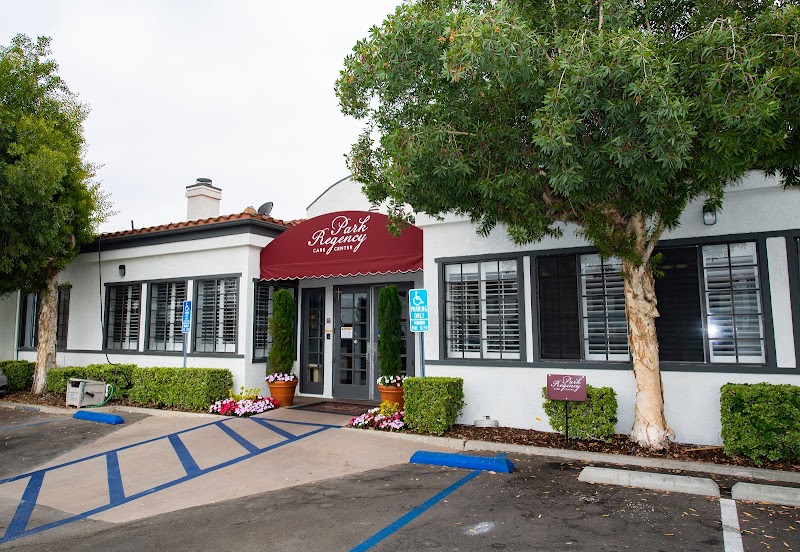
How is Park Regency Staffed?

CMS rates PARK REGENCY CARE CENTER's staffing level at 3 out of 5 stars, which is average compared to other nursing homes. Staff turnover is 27%, compared to the California average of 46%. This relatively stable workforce can support continuity of care.

What Have Inspectors Found at Park Regency?

State health inspectors documented 52 deficiencies at PARK REGENCY CARE CENTER during 2019 to 2025. These included: 44 with potential for harm and 8 minor or isolated issues. While no single deficiency reached the most serious levels, the total volume warrants attention from prospective families.
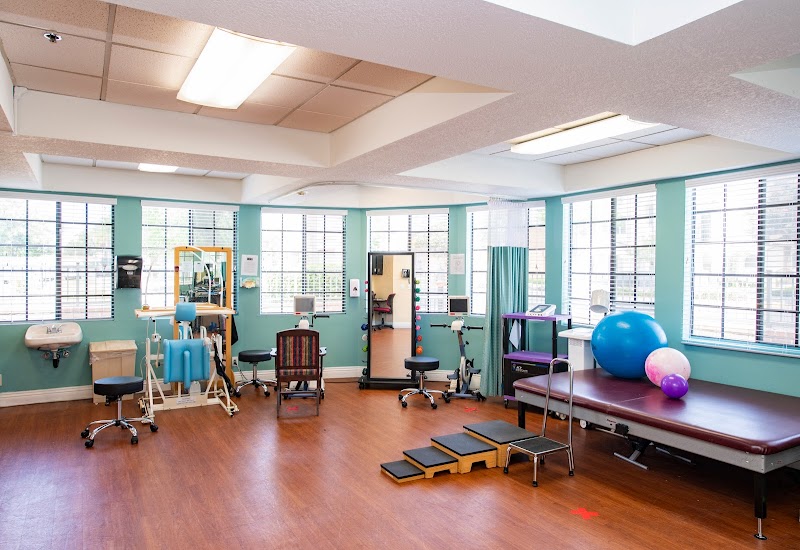
Who Owns and Operates Park Regency?

PARK REGENCY CARE CENTER is owned by a for-profit company. For-profit facilities operate as businesses with obligations to shareholders or private owners. The facility is operated by DAVID & FRANK JOHNSON, a chain that manages multiple nursing homes. With 99 certified beds and approximately 94 residents (about 95% occupancy), it is a smaller facility located in LA HABRA, California.
How Does Park Regency Compare to Other California Nursing Homes?

Compared to the 100 nursing homes in California, PARK REGENCY CARE CENTER's overall rating (3 stars) is below the state average of 3.1, staff turnover (27%) is significantly lower than the state average of 46%, and health inspection rating (3 stars) is at the national benchmark.

What Should Families Ask When Visiting Park Regency?

Based on this facility's data, families visiting should ask: "Can I visit during a mealtime to observe dining assistance and food quality?" "How do you handle medical emergencies, and what is your hospital transfer rate?" "Can I speak with family members of current residents about their experience?"

Is Park Regency Safe?

Based on CMS inspection data, PARK REGENCY CARE CENTER has a clean safety record: no substantiated abuse findings (meaning no confirmed cases of resident harm), no Immediate Jeopardy citations (the most serious violation level indicating risk of serious injury or death), and is not on the Special Focus Facility watch list (a federal program monitoring the lowest-performing 1% of nursing homes). The facility has a 3-star overall rating and ranks #100 of 100 nursing homes in California. While no facility is perfect, families should still ask about staff-to-resident ratios and recent inspection results during their visit.

Do Nurses at Park Regency Stick Around?

Staff at PARK REGENCY CARE CENTER tend to stick around. With a turnover rate of 27%, the facility is 19 percentage points below the California average of 46%. Low turnover is a positive sign. It means caregivers have time to learn each resident's needs, medications, and personal preferences. Consistent staff also notice subtle changes in a resident's condition more quickly.

Was Park Regency Ever Fined?

PARK REGENCY CARE CENTER has no federal fines on record. CMS issues fines when nursing homes fail to meet care standards or don't correct problems found during inspections. The absence of fines suggests the facility has either maintained compliance or corrected any issues before penalties were assessed. This is a positive indicator, though families should still review recent inspection reports for the full picture.

Is Park Regency on Any Federal Watch List?

PARK REGENCY CARE CENTER is not on any federal watch list. The most significant is the Special Focus Facility (SFF) program, which identifies the bottom 1% of nursing homes nationally based on persistent, serious quality problems. Not being on this list means the facility has avoided the pattern of deficiencies that triggers enhanced federal oversight. This is a positive indicator, though families should still review the facility's inspection history directly.