LA MESA HEALTHCARE CENTER


3780 MASSACHUSETTS AVENUE, LA MESA, CA 91941 (619) 465-1313
For profit - Limited Liability company 94 Beds PACS GROUP Data: November 2025
Trust Grade
80/100
#110 of 1155 in CA
Last Inspection: March 2025

Within standard 12-15 month inspection cycle. Federal law requires annual inspections.

Overview

La Mesa Healthcare Center has received a Trust Grade of B+, indicating it is above average and recommended for families considering care options. It ranks #110 out of 1,155 facilities in California, placing it in the top half overall, and #16 out of 81 in San Diego County, suggesting only 15 local facilities are better. However, the facility is showing a concerning trend, with issues increasing from 6 in 2023 to 11 in 2025. Staffing ratings are below average at 2 out of 5 stars, although turnover is relatively good at 37%, which is slightly below the state average. Importantly, the facility has no fines on record, indicating compliance with regulations. On the downside, there have been specific concerns noted, such as staff not consistently monitoring and documenting urine output for residents with catheters, which could lead to health risks like urinary infections. Additionally, there were sanitation issues in the kitchen, including outdated food items and personal clothing near food containers, raising potential health risks for residents. Despite these weaknesses, the facility has an excellent overall rating for quality measures, suggesting that when care is provided, it is of high quality.

Trust Score
B+
80/100
In California
#110/1155
Top 9%
Safety Record
Low Risk
No red flags
Inspections
Getting Worse
6 → 11 violations
Staff Stability
○ Average
37% turnover. Near California's 48% average. Typical for the industry.
Penalties
✓ Good
No fines on record. Clean compliance history, better than most California facilities.
Skilled Nurses
⚠ Watch
Each resident gets only 25 minutes of Registered Nurse (RN) attention daily — below average for California. Fewer RN minutes means fewer trained eyes watching for problems.
Violations
⚠ Watch
40 deficiencies on record. Higher than average. Multiple issues found across inspections.
★★★★★
5.0
Overall Rating
★★☆☆☆
2.0
Staff Levels
★★★★★
5.0
Care Quality
★★★★☆
4.0
Inspection Score
Stable
2023: 6 issues
2025: 11 issues

The Good

  • 5-Star Quality Measures · Strong clinical quality outcomes
  • Full Sprinkler Coverage · Fire safety systems throughout facility
  • No fines on record
  • Staff turnover below average (37%)

    11 points below California average of 48%

Facility shows strength in quality measures, fire safety.

The Bad

Staff Turnover: 37%

Near California avg (46%)

Typical for the industry

Chain: PACS GROUP

Part of a multi-facility chain

Ask about local staffing decisions and management

The Ugly 40 deficiencies on record

Sept 2025 1 deficiency
CONCERN (D) 📢 Someone Reported This

A family member, employee, or ombudsman was alarmed enough to file a formal complaint

Potential for Harm - no one hurt, but risky conditions existed

Report Alleged Abuse (Tag F0609)

Could have caused harm · This affected 1 resident

**NOTE- TERMS IN BRACKETS HAVE BEEN EDITED TO PROTECT CONFIDENTIALITY** Deficient Practice StatementBased on observation, interview, and record review, the facility failed to ensure staff report an al...

Read full inspector narrative →
**NOTE- TERMS IN BRACKETS HAVE BEEN EDITED TO PROTECT CONFIDENTIALITY** Deficient Practice StatementBased on observation, interview, and record review, the facility failed to ensure staff report an allegation of financial abuse one of two residents (Resident 1) reviewed for abuse. As a result, Resident 1's report of stolen money was not reported to the Department in a timely manner, which delayed the investigation. Findings:On 8/15/25 at 11:52 A.M., The department received a complaint regarding Resident 1's money for the amount of $ 4700 dollars stolen by an unknown certified nursing assistant (CNA) and that the facility Administrator (ADM) told Resident 1 the facility was not responsible.On 8/15/25 a review of the Facility's admission Record (AR) was conducted. The facility AR indicated Resident 1 was admitted to the facility on [DATE] with diagnoses which included Aftercare following Joint Replacement.On 8/21/25 at 12 noon, an interview with Resident 1 was conducted. Resident 1 stated he took out his $ 3200 dollars total in large $100 bills from the business office on 5/30/25 and signed the document. Resident 1 stated it was his lifelong money from social security and that he wanted it back. Resident 1 stated he told the Administrator (ADM) on 8/7/25 that the money was missing from his room. Resident 1 stated he wondered why the investigation on the missing money was just started on 8/21/25 when Resident 1 had reported the money missing on 8/7/25. Resident 1 stated when he came back to his room, he found his bedding and everything on his bed, all tossed away.On 8/21/25, A review of Resident 1's Minimum Data Set (MDS - a federally mandated assessment tool) dated 6/2/25, indicated a brief interview for mental status (BIMS) score of 11, which indicated Resident 1's cognition (thought process) was mildly impaired. A cognitively intact has a score of 13-15.On 8/21/25 at 1:20 P.M., an interview with the Administrator (ADM) was conducted. The ADM stated, I did not know that we had to report the incident since no one was accused of stealing the money until the surveyor came to the facility and started to investigate, including interviewing Resident 1. The ADM could not provide evidence that the incident was reported to the Department. On 8/21/25 at 1:30 P.M., an interview with the Director of Nursing (DON) was conducted. The DON stated the facility should have reported any forms of abuse, in a timely manner as required by state laws. On 8/21/25 at 2:18 P.M., a second interview with the DON was conducted. The DON confirmed that the facility reported the incident on 8/21/25. This was 14 days later after Resident 1 had informed the ADM of the allegation. On 8/22/25, A review of the facility's record titled, Investigating Incidents of Theft and/ or Misappropriation of Resident Property dated April 2021, indicated .6. If an alleged or suspected case of theft , exploitation or misappropriation of resident property is reported, the facility administrator , or his designee, notifies the following person or agencies within twenty-four (24 ) hours of such incident as appropriate: a. State licensing & certification agency. A review of the facility's policy dated January 2011 indicated, .2. within 5 working days of the alleged incident, the facility will give the resident, resident representative, the ombudsman, the state survey and certification agency. written report of the findings of the investigation and summary of corrective action.
Mar 2025 10 deficiencies
CONCERN (D)

Potential for Harm - no one hurt, but risky conditions existed

Deficiency F0558 (Tag F0558)

Could have caused harm · This affected 1 resident

**NOTE- TERMS IN BRACKETS HAVE BEEN EDITED TO PROTECT CONFIDENTIALITY** Based on observation, interview, and record review, the facility failed to address resident's needs for one of three sampled res...

Read full inspector narrative →
**NOTE- TERMS IN BRACKETS HAVE BEEN EDITED TO PROTECT CONFIDENTIALITY** Based on observation, interview, and record review, the facility failed to address resident's needs for one of three sampled residents (Resident 2) when Resident 2's lower denture was not applied during meals. This failure had the potential to affect Resident 2's well-being, comfort, and safety while dining. Findings: Resident 2 was admitted to the facility on [DATE] with diagnoses which included a history of dementia (loss of memory), muscle weakness, and communication deficit, per the admission Record. A review of Resident 2's nursing care plan (NCP; document that outlines the nursing care required for a specific patient) dated 12/21/21, indicated that Resident 2 had upper and lower dentures that needed to be worn during meals, and removed at night. An observation was conducted on 3/24/25 at 9:34 A.M. inside Resident 2's room. Resident 2 was eating without her dentures in place. A lower denture was observed inside a denture cup placed on the table. A follow-up observation and interview was conducted with licensed nurse (LN) 2 on 3/25/25 at 9:01 A.M. Resident 2 was eating breakfast without a denture on. LN 2 stated that Resident 2's lower denture was inside the denture cup that was on the bedside table. LN 2 further stated that a nursing staff should have applied the denture inside Resident 2's mouth so that Resident 2 may chew and eat properly. An interview was conducted with the Director of Nursing (DON) on 3/26/25 at 4:05 P.M. The DON stated that NCPs should be implemented by the health care team. The DON acknowledged that Resident 2's dentures should have been applied during meals, as instructed on the care plan. The facility's policy titled Dentures, Cleaning and Storing revised 3/2018, indicated, .Preparation .2.1. Review the resident's care plan to assess for any special needs of the resident General Guidelines 4' Encourage the resident to keep dentures in his or her mouth .
CONCERN (D)

Potential for Harm - no one hurt, but risky conditions existed

Deficiency F0658 (Tag F0658)

Could have caused harm · This affected 1 resident

**NOTE- TERMS IN BRACKETS HAVE BEEN EDITED TO PROTECT CONFIDENTIALITY** Based on observation, interview, and record review, the facility failed to ensure the central venous catheter (a tube inserted i...

Read full inspector narrative →
**NOTE- TERMS IN BRACKETS HAVE BEEN EDITED TO PROTECT CONFIDENTIALITY** Based on observation, interview, and record review, the facility failed to ensure the central venous catheter (a tube inserted into a large vein near the heart to allow for long-term access to the bloodstream for medications, fluids, blood draws, and other treatments) was changed and monitored for two of two sampled residents (292 and 297). This failure had the potential for complications related to intravenous (IV - method of delivering fluids, medications, or nutrients directly into the bloodstream through a vein) therapy. Findings: Per the facility's admission record, Resident 292 was admitted on [DATE] with diagnoses that included right ankle and right foot osteomyelitis (infection of the bone). A review of Resident 292's physician's orders indicated, on 3/20/25 an order was made to change IV dressing every day every Sunday. On 3/24/25 at 10:45 A.M., an observation and interview were conducted with Resident 292 in her room. Resident 292 had an IV line on the right upper arm. Resident 292 stated a nurse changed the dressing yesterday. Resident 292 could not recall if the nurse measured her arm or the IV catheter. On 3/24/25 at 11:15 A.M., an observation and interview were conducted with Resident 297 in his room. Resident 297 had an IV line on the right upper arm. Resident 297 stated a nurse changed the dressing yesterday and he could not recall if the nurse measured his arm or the IV catheter. On 3/26/25 at 8:38 A.M., a concurrent interview and record review was conducted with LN 3. A review of the Peripherally Inserted Central Catheter (PICC) line dressing change documentation dated 3/23/25 in the IV Medication Administration Record (MAR) for both Residents 292 and 297 indicated, measurements of arm circumference and catheter length were not done. LN 3 stated the importance of measuring arm circumference and the catheter length for a central venous catheter was to ensure proper placement and prevent complications. On 3/27/25 at 2:25 P.M., an interview with the Director of Nursing (DON) was conducted. The DON stated that measuring arm circumference and the catheter length for a central venous catheter during the dressing change was a standard of practice and should have been done. A review of the facility's policy titled Central Venous Catheter Care and Dressing Changes, dated 2001, indicated .6. Measure the length of the external central vascular access device with each dressing .measure arm circumference .
CONCERN (D)

Potential for Harm - no one hurt, but risky conditions existed

Pressure Ulcer Prevention (Tag F0686)

Could have caused harm · This affected 1 resident

**NOTE- TERMS IN BRACKETS HAVE BEEN EDITED TO PROTECT CONFIDENTIALITY** Based on observation, interview and record review, the facility failed to provide interventions to prevent the redevelopment of ...

Read full inspector narrative →
**NOTE- TERMS IN BRACKETS HAVE BEEN EDITED TO PROTECT CONFIDENTIALITY** Based on observation, interview and record review, the facility failed to provide interventions to prevent the redevelopment of pressure injuries (skin damaged by lack of movement for staying in a position for too long) and accurately assessed residents for skin injury for two of three residents reviewed for pressure injuries (Resident 16 and Resident 20). As a result, Resident 16 redeveloped a pressure injury on her left buttock and Resident 20 developed a new pressure injury on her left buttock. Findings: 1. A review of Resident 16's admission Record indicated Resident 16 was readmitted to the facility on [DATE], with diagnoses which included generalized muscle weakness. Resident 16's attending physician completed Resident 16's history and physical (H&P) dated 6/14/24. The H & P indicated Resident 16 was able to make own decisions. Resident 16's minimum data set (MDS - a federally mandated resident assessment tool), completed on 1/30/25, indicated Resident 16's brief interview for mental status (BIMS, ability to recall) score was 13/15 (a score of 13 to 15 suggests the patient is cognitively intact, 8 to 12 suggests moderately impaired and 0 to 7 suggests severe impairment). Resident 16's MDS for functional abilities from lying on back to roll to left and right side indicated Resident 16 needed moderate staff assistance which meant the helper (staff) lifts, holds or supports resident's trunk or limbs. During an observation and an interview of Resident 16 in her room on 3/24/25 at 10:22 A.M., Resident 16 laid in bed, with low air loss mattress (designed to distribute the patient's body weight over a broad surface area and help prevent skin breakdown). Resident 16 stated she had no concerns. A review of the facility's matrix (used to identify pertinent care categories) indicated, Resident 16 had a stage 3 (extend through the skin into deeper tissue and fat but do not reach muscle, tendon, or bone) facility acquired pressure injury on her left buttock. A review of Licensed Nurses (LN) progress notes dated 3/7/25, 3/8/25, 3/9/25, and 3/10/25 indicated, Resident 16 had a small open wound at the buttock and was placed on alert charting. There was no physician order and no documentation from the treatment nurse. A review of LN's weekly summary notes completed by LN 22, dated 3/13/25 and 3/20/25 indicated, Resident 16 had no skin injury. A review of Resident 16's skin assessment completed by the wound care nurse (WCN) on 3/17/25, indicated, Resident 16 had stage 3 pressure injury on her left buttock and measured as follows: - Area 0.7 centimeter (cm, metric of measurement), - Length 0.9 cm. - Width 1.1 cm. - Depth 0.2 cm. The WCN's skin assessment notes for Resident 16 indicated, Resident 16's onset of her pressure injury was unknown. The skin assessment notes indicated, the pressure injury had moderate serosanguinous (type of wound drainage) exudate. During an observation and an interview of Resident 16 in her room on 3/25/25 at 3:58 P.M., Resident 16 was slightly lying on her right side. Resident 16 stated she had open wound on her buttocks. During a record review of Resident 16's clinical record and a joint interview with the Wound Care Nurse (WCN) on 3/26/25 at 2:20 P.M., the WCN stated she was familiar with Resident 16. The WCN stated Resident 16 needed some help from the staff when turning or repositioning herself in the bed. The WCN stated Resident 16 had history of stage 3 pressure injury on her left buttock and was resolved. The WCN stated night shift CNAs notified her about Resident 16's open wound on her left buttock on 3/17/25. The WCN stated, It was already stage 3. The WCN stated she was not aware Resident 16 had an open wound from 3/7/25 and she was notified on 3/17/25. The WCN stated there was no documentation that Resident 16 was receiving treatment on her open wound on her left buttock. The WCN stated the nurses should have informed her or the doctor so treatment could have been started for Resident 16's open wound. The WCN stated it can be preventable. During an interview with the Director of Nursing (DON) on 3/26/25 at 3:24 P.M., the DON stated the LNs should have done the treatment, it was not only monitoring and alert charting. The DON stated the LNs should have followed it up with the physician and informed the wound care nurse so treatment should have been started. The DON further stated the staff should have repositioned the resident every two hours especially Resident 16 had history of open wounds on her left buttock. The DON stated, This is preventable. A review of the facility's policy, titled Prevention of Pressure Injuries, revised 4/2020, indicated, The purpose of this procedure is to provide information regarding identification of pressure injury risk factors and interventions for specific risk factors .Skin Assessment, 1. Conduct a comprehensive skin assessment .with each risk assessment, as identified according to the resident's risk factors .3. Inspect the skin on a daily basis when performing or assisting with personal care .Monitoring, 1. Evaluate, report .potential changes in the skin . 2. Resident 20 was admitted to the facility on [DATE] with diagnoses which included a history of muscle weakness, abnormal mobility, and fracture of the vertebra (spine), per the admission Record. A review of Resident 20's nursing care plan (NCP- document that outlines the nursing care required for a specific patient) dated 11/10/23, indicated that Resident 20 was at risk for skin breakdown. A wound observation and interview was conducted with the Wound Care Nurse (WCN) on 3/25/25 at 9:55 A.M. inside Resident 20's room. Resident 20's left buttock was purple in color. The WCN stated that a deep tissue injury (DTI- skin breakdown caused by prolonged pressure) was identified on Resident 20's left buttock when Resident 20 was assessed on 1/6/25. The WCN stated that Resident 20's left buttock DTI would have been prevented with accurate skin assessment and appropriate skin treatment. A concurrent interview and record review was conducted with Licensed Nurse (LN 3) on 3/25/25 at 2:30 P.M. Resident 20's nursing weekly summary (NWS- detailed nursing documentation completed by the LN every week; included a summary of assessment and comprehensive care that was provided to the resident) dated: 12/26/24 included documentation that Resident 20 had no skin breakdown. 1/1/25 included documentation that Resident 20 had no skin breakdown. 1/8/25 included documentation that Resident 20 had skin breakdown that was discovered on 1/6/25. LN 3 stated that Resident 20's DTI on the left buttock would have first appeared as a stage 1 (skin redness). LN 3 acknowledged that Resident 20's DTI would have been prevented with accurate nursing assessment, prompt communication, and skin treatment. An interview was conducted with the DON on 3/26/25 at 4:09 P.M. The DON acknowledged that LNs should accurately assess and document a resident skin condition to prevent further skin breakdown. The facility's policy titled Pressure Ulcers/Skin Breakdown - Clinical Protocol dated 3/2014 indicated, Assessment and Recognition .2.In addition, the nurse shall describe and document/report the following: a. Full assessment of pressure sore including location, stage, length
CONCERN (D)

Potential for Harm - no one hurt, but risky conditions existed

Accident Prevention (Tag F0689)

Could have caused harm · This affected 1 resident

**NOTE- TERMS IN BRACKETS HAVE BEEN EDITED TO PROTECT CONFIDENTIALITY** Based on observation, interview and record review, the facility failed to provide a safe environment related to activity of dail...

Read full inspector narrative →
**NOTE- TERMS IN BRACKETS HAVE BEEN EDITED TO PROTECT CONFIDENTIALITY** Based on observation, interview and record review, the facility failed to provide a safe environment related to activity of daily Living (ADL - everyday task) for one of three sampled residents (Resident 59) when Resident 59 used a disposable razor while unsupervised. This failure had the potential to affect Resident 59's safety and well- being. Findings: Resident 59 was admitted to the facility on [DATE] with diagnoses which included right eye vision loss and heart failure. A review of Resident 59's physician order dated 4/17/24 indicated, Aspirin (ASA- medication that can cause bleeding) one tablet by mouth, every day for cerebrovascular accident (CVA-blockage of the brain) prophylaxis (prevention). A concurrent observation and interview was conducted on 3/24/25 at 9:23 A.M with Resident 59. Resident 59 was observed shaving her chin with a disposable razor. Resident 59 stated that she shaved her chin everyday by herself. An interview and record review was conducted with licensed nurse (LN) 1 on 3/25/25 at 3:53 P.M. LN 1 stated that per Resident 59's physician order for ASA, Resident 59 was at risk for bleeding. LN 1 further stated that Resident 59 should had been supervised or assisted by staff while she shaved her chin. An interview was conducted with the Director of Nursing (DON) on 3/26/25 at 4:07 P.M. The DON stated that staff should assist residents to prevent accidents. The DON acknowledged that Resident 59 had right eye vision loss and was on ASA. The DON stated that Resident 59 should have not shaved her chin by herself to prevent accidental cut and bleeding. The facility's policy titled Shaving the Resident revised 2018, indicated, .Preparation 1. Review the resident's care plan to assess for any special needs of the resident
CONCERN (D)

Potential for Harm - no one hurt, but risky conditions existed

Respiratory Care (Tag F0695)

Could have caused harm · This affected 1 resident

**NOTE- TERMS IN BRACKETS HAVE BEEN EDITED TO PROTECT CONFIDENTIALITY** Based on observation, interview, and record review the facility failed to ensure oxygen (O2) was administered per physician's or...

Read full inspector narrative →
**NOTE- TERMS IN BRACKETS HAVE BEEN EDITED TO PROTECT CONFIDENTIALITY** Based on observation, interview, and record review the facility failed to ensure oxygen (O2) was administered per physician's order for one of three sampled residents (Resident 19) reviewed for O2 therapy. This failure had the potential to affect Resident 11's respiratory health. Findings: A review of Resident 19's admission Record indicated Resident 19 was readmitted to the facility on [DATE], with diagnoses which included chronic obstructive pulmonary disease (COPD, respiratory illness that limits airflow into and out of the lungs). A review of Resident 19's history and physical (H &P) dated 6/19/24 was conducted. Resident 19's attending physician documented Resident 19 had severe COPD and required to continue O2 therapy. Per the H&P, Resident 19 had history of cognitive impairment. A review of Resident 19's physician order dated 2/14/25 indicated the following order: Continuous O2 at 2 liters per minute (LPM) via nasal cannula (NC, a tubing that delivers O2 connected to the O2 tank or O2 concentrator through the resident's nose). During an observation and an interview of Resident 19 in her room, on 3/24/25 at 10:45 A.M., Resident 19 laid in bed, with O2 at 4 LPM/ NC connected to the O2 concentrator. Resident 19 stated she was fine. During an observation and an interview of Resident 19 in her room on 3/25/25 at 3:52 P.M., Resident 19 laid in her right side, with O2 at 4 LPM/ NC connected to the O2 concentrator. Resident 19 did not respond when her name was called. During an interview with Certified Nursing Assistant (CNA) 22 on 3/26/25 at 10:10 A.M., CNA 22 stated Resident 19 had her O2 therapy all the time and the Licensed Nurses (LNs) were responsible for Resident 19's O2 therapy. During a record review of Resident 19's clinical record, a photo taken of O2 administered to Resident 19, and an interview with LN 21 on 3/26/25 at 11:57 A.M., LN 21 stated Resident 19 had a physician order that indicated Resident 19's O2 therapy was at 2 LPM/NC. LN 21 stated the LNs were supposed to follow the physician's order to make sure Resident 19 would not develop O2 toxicity (lung damage that happens from breathing in too much extra [supplemental] oxygen, also called O2 poisoning). During an interview with the Director of Nursing (DON) on 3/26/25 at 3:24 P.M., the DON stated LNs should have followed the physician order to prevent Resident 19 from developing O2 toxicity. A review of the facility's policy titled, Medication and Treatment Orders, revised 7/2016, indicated, Orders for medications and treatments will be consistent with principles of safe and effective order . A review of the facility's policy titled, Oxygen Administration, revised 10/2010, indicated, The purpose of this procedure is to provide guidelines for safe oxygen administration .Review the physician's order .for oxygen administration .
CONCERN (D)

Potential for Harm - no one hurt, but risky conditions existed

Medication Errors (Tag F0758)

Could have caused harm · This affected 1 resident

**NOTE- TERMS IN BRACKETS HAVE BEEN EDITED TO PROTECT CONFIDENTIALITY** Based on observation, interview, and record review, the facility failed to indicate the appropriate and measurable target behavi...

Read full inspector narrative →
**NOTE- TERMS IN BRACKETS HAVE BEEN EDITED TO PROTECT CONFIDENTIALITY** Based on observation, interview, and record review, the facility failed to indicate the appropriate and measurable target behavior of antidepressant (medication used to treat depression, sad mood and lack of interest) for one of five sampled residents reviewed for unnecessary psychotropic (mind-altering medications) medication use (Resident 11). This failure had the potential for unnecessary psychotropic medication use, its side effects, and a decline for residents psychological and mental well-being. Findings: A review of Resident 11's admission Record indicated Resident 11 was readmitted to the facility on [DATE], with diagnoses which included major depressive disorder (a mood disorder that causes a persistent feeling of sadness and loss of interest). A review of Resident 11's physician order dated 9/27/24 indicated the following order: Venlafaxine (antidepressant) tablet for depression. AEB [sic, as evidenced by]: teary eyes. During an observation and an interview with Resident 11 in his room, on 3/25/25 at 3:43 P.M., Resident 11 was in a geri chair (padded chair that is designed to help residents with limited mobility). Resident 11 stated he was in pain and asked for medication. During an interview with Certified Nursing Assistant (CNA) 21, on 3/26/25 at 9:56 A.M., CNA 21 stated Resident 11 was alert, oriented and knew what was going on. CNA 21 stated she was not sure what behavior was monitored on Resident 11. During a review of Resident 11's clinical record and an interview with Licensed Nurse (LN) 21 on 3/26/25 at 11:35 A.M., LN 21 stated Resident 11 received Venlafaxine for depression and the target behavior for the use of Venlafaxine was for teary eyes. LN 21 stated Resident 11's target behavior of teary eyes was not measurable and We should have the appropriate target behavior to know if the medication was right and was working for the resident. During an interview with the Director of Nursing (DON) on 3/26/25 at 3:24 P.M., the DON stated LNs should have verified the target behavior for Resident 11 for the use of Venlafaxine. The DON stated the target behavior should be measurable to know when to gradually reduce the psychotropic medication to prevent unnecessary psychotropic medication use. A review of the facility's policy titled, Psychotropic Medication Use, revised 7/2022, indicated, Residents will not receive medications that are not clinically indicated to treat a specific condition .1. A psychotropic medication is any medication that affects brain activity associated with mental processes and behavior, 2. Drugs in the following categories are considered psychotropic medications and are subject to .monitoring, and review requirements specific to psychotropic medications .b. Anti-depressants .
CONCERN (D)

Potential for Harm - no one hurt, but risky conditions existed

Deficiency F0761 (Tag F0761)

Could have caused harm · This affected 1 resident

**NOTE- TERMS IN BRACKETS HAVE BEEN EDITED TO PROTECT CONFIDENTIALITY** Based on observation, interview, and record review, the facility failed to ensure an inhaler was labeled after it was opened and...

Read full inspector narrative →
**NOTE- TERMS IN BRACKETS HAVE BEEN EDITED TO PROTECT CONFIDENTIALITY** Based on observation, interview, and record review, the facility failed to ensure an inhaler was labeled after it was opened and used for one resident (300). This failure had the potential for the resident to receive an ineffective medication. Findings: Per the facility's admission record, Resident 300 was admitted to the facility on [DATE] with diagnoses that included chronic respiratory failure (chronic lung disease). A review of Resident 300's medication orders indicated on 3/5/2025, the physician ordered, Fluticasone Furoate Vilanterol Inhalation (medication used to treat respiratory disease) - 1 puff inhale orally one time a day for shortness of breath (SOB)/wheezing . On 3/27/25 at 9:49 A.M., a joint observation and interview was conducted with LN 11 of the medication (med) cart. In the med cart, an opened box of Fluticasone furoate inhaler was found with no open date. LN 1 stated she opened the box yesterday and forgot to label it. LN 1 stated it should have been labeled with the opened date. On 3/27/25 at 2:30 P.M., an interview with the Director of Nursing (DON) was conducted. The DON stated it was their expectation that all opened multidose medications need to be dated with the opened date. A review of the facility's policy titled, Mediation Labeling and Storage, dated 2001, indicated, The facility stores all medications .5. Multi-dose vials that have been opened or accessed .are dated and discarded within 28 days .
CONCERN (D)

Potential for Harm - no one hurt, but risky conditions existed

Infection Control (Tag F0880)

Could have caused harm · This affected 1 resident

**NOTE- TERMS IN BRACKETS HAVE BEEN EDITED TO PROTECT CONFIDENTIALITY** Based on observation, interview, and record review, the facility failed to provide proper resident cohorting (the grouping of in...

Read full inspector narrative →
**NOTE- TERMS IN BRACKETS HAVE BEEN EDITED TO PROTECT CONFIDENTIALITY** Based on observation, interview, and record review, the facility failed to provide proper resident cohorting (the grouping of individuals with the same condition in the same location) for one resident (298) when Resident 298 was admitted into a room that was on isolation transmission-based precautions related to Resident 54's exposure to Influenza A (flu-respiratory infectious disease). This failure had the potential for Resident 298 to be exposed to an infectious disease. Findings: Per the facility's admission record, Resident 54 was admitted on [DATE] with diagnoses that included a left femur (the long bone located in the thigh) fracture. Per the facility's admission records, Resident 298 was admitted on [DATE] with diagnoses that included mild intermittent asthma (a respiratory disease). On 3/24/25 at 8:36 A.M., an observation was conducted of room [ROOM NUMBER] with a with a signage posted outside of the room isolation contact precautions. On 3/24/25 at 9:25 A.M., an interview and record review were conducted with LN 13. LN 13 stated Patient 54 was placed on isolation precautions due to exposure of Influenza A on 3/21/25. LN 13 stated on 3/22/25, Resident 298 was admitted into the isolation precaution room on 3/22/25. On 3/26/25 at 2:30 P.M., an interview was conducted with the Infection Preventionist Nurse (IPN). The IPN stated that Resident 54 should not have been admitted into the same room as Resident 298. The IPN stated Resident 298 was tested for Influenza A, but the results were still pending. On 3/27/25 at 2:20 P.M., an interview was conducted with the Director of Nursing. The DON stated resident 54 should not have been admitted into the same room as Resident 298. The DON stated it was her expectation that room cohorting of type of contact precautions need to be coordinated by the staff to ensure residents are not exposed to infectious diseases. A review of the facility policy titled Influenza, Prevention and Control of Seasonal, dated 2001, indicated 1. The prevention of seasonal influenza outbreaks is a coordinated effort .
CONCERN (E)

Potential for Harm - no one hurt, but risky conditions existed

Incontinence Care (Tag F0690)

Could have caused harm · This affected multiple residents

**NOTE- TERMS IN BRACKETS HAVE BEEN EDITED TO PROTECT CONFIDENTIALITY** Based on observation, interview, and record review, the facility staff failed to consistently monitor and document urine output ...

Read full inspector narrative →
**NOTE- TERMS IN BRACKETS HAVE BEEN EDITED TO PROTECT CONFIDENTIALITY** Based on observation, interview, and record review, the facility staff failed to consistently monitor and document urine output (UO) per the facility's policy, for four of six sampled residents (7, 10, 11 and 12) with a urinary catheter (a tube inserted into the bladder to aid in urine flow). In addition, there was no urinary catheter care order for Residents 7, and 12. These failures had the potential for residents 7, 10, 11 and 12 to have urinary retention and develop urinary tract infection (UTI). Findings: 1a. Resident 7 was readmitted to the facility on [DATE], with diagnoses which included sepsis (a serious condition in which the body responds improperly to an infection), per the facility's admission Record. Resident 7's attending physician completed Resident 7's history and physical (H & P) dated 2/13/25. The H & P indicated, Resident 7 was not able to make own decisions. On 3/24/25 at 9:32 A.M., an observation and an interview of Resident 7 was conducted in her room. A urinary catheter was attached to Resident 7's wheelchair. Resident 7 stated she was in pain and will go to the nurse's station. A review of the physician's order dated 2/12/25, indicated for the staff to measure Resident 7's urine output for 30 days. On 3/26/25 at 9:53 A.M., an interview was conducted with Certified Nursing Assistant (CNA) 21. CNA 21 stated Resident 7 had a urinary catheter, and one responsibility of the CNAs was to measure residents' urine output. CNA 21 stated the measurement would be in milliliter (ml, metric of measurement) and should be documented in the resident's clinical record. On 3/26/25 at 11:15 A.M., a review of Resident 7's clinical record and an interview was conducted with Licensed Nurse (LN) 23. LN 23 stated Resident 7 was alert with moments of confusion. LN 23 stated Resident 7 had a urinary catheter and Resident 7's urine output should be monitored every shift and documented in her clinical record. LN 23 stated there were missed documentation of urine output for Resident 7 in March 2025: 3/9, 3/14, 3/17 through 3/19, 3/21, and 3/23/25 in the evening shifts. LN 23 stated Resident 7's urine output should have been monitored and documented consistently to ensure she was not retaining urine and prevent UTI. On 3/26/25 at 3:24 P.M., an interview was conducted with the Director of Nursing (DON). The DON stated the expectation for residents with urinary catheter was, the nurses should have consistently measured the residents' urine output and documented in the residents' clinical record. The DON stated it was important to identify if the resident was retaining any fluid to prevent resident from acquiring UTI. A review of the facility's policy, titled Catheter Care, Urinary, revised 8/2022, indicated, The purpose of this procedure is to prevent urinary catheter associated complications, including urinary tract infections .Input/ Output, 1. Observe the resident's urine level for noticeable increases or decreases .2. Follow the facility procedure for measuring and documenting .output . A review of the facility's policy, titled Output, Measuring and Recording, revised 10/2010, indicated, The purpose of this procedure is to accurately determine the amount of urine that a resident excretes in a 24-hour period .Steps in the Procedure .8. Record the amount noted on the output side of the .output record. Record in mls . 1b. On 3/24/25 at 9:32 A.M., an observation and an interview of Resident 7 was conducted in her room. A urinary catheter was attached to Resident 7's wheelchair. Resident 7 stated she was in pain and will go to the nurse's station. On 3/26/25 at 9:53 A.M., an interview was conducted with Certified Nursing Assistant (CNA) 21. CNA 21 stated Resident 7 had a urinary catheter, and the responsibility of the CNA was to empty the urine bag. On 3/26/25 at 11:15 A.M., a review of Resident 7's clinical record and an interview was conducted with Licensed Nurse (LN) 23. LN 23 stated Resident 7 was alert with moments of confusion. LN 23 stated Resident 7 had a urinary catheter. LN 23 stated the physician's order indicated to change and irrigate the urinary catheter. There was no catheter care order for Resident 7. On 3/26/25 at 3:24 P.M., an interview was conducted with the Director of Nursing (DON). The DON stated the expectation for the residents with urinary catheter was, the nurses should have verified the residents' physician for urinary catheter care order. The DON stated there should be a documentation that catheter care was provided to residents with urinary catheter to prevent infection. The DON stated the expectation was the LNs were responsible to clean the insertion site. A review of the facility's policy, titled Catheter Care, Urinary, revised 8/2022, indicated, The purpose of this procedure is to prevent urinary catheter associated complications, including urinary tract infections .Perineal care, 1. Use soap and water or bathing wipes for routine daily hygiene .Documentation, The following information should be recorded in the resident's medical record, 1. The date and time that catheter care was given . 2. Resident 10 was readmitted to the facility on [DATE], with diagnoses which included UTI, per the facility's admission Record. Resident 10's attending physician completed Resident 10's history and physical (H & P) dated 2/12/25. The H & P indicated, Resident 10 did not have the capacity to understand and make decisions. On 3/24/25 at 9:36 A.M., an observation of Resident 10 was conducted in her room. Resident 10 laid in bed with eyes closed and did not respond to her name. There was a urinary catheter hanged at Resident 10's bed rails. A review of the physician's order dated 3/4/25, indicated for the staff to measure Resident 10's urine output in mls (milliliter, metric of measurement) every shift for 30 days. On 3/26/25 at 9:41 A.M., an interview was conducted with Certified Nursing Assistant (CNA) 21. CNA 21 stated Resident 10 was confused, had a urinary catheter, and one responsibility of the CNAs was to measure residents' urine output. CNA 21 stated the measurement would be in mls and documented in the resident's clinical record. On 3/26/25 at 11:10 A.M., a review of Resident 10's clinical record and an interview was conducted with Licensed Nurse (LN) 23. LN 23 stated Resident 10 was alert with moments of confusion. LN 23 stated Resident 10 had a urinary catheter and Resident 10's urine output should be monitored every shift and documented in her clinical record. LN 23 stated there were missed documentation of urine output for Resident 10 in March 2025: 3/13, 3/14, 3/18 through 3/21, and 3/24/25 for the whole 24-hour shift. LN 23 stated, in addition, there were missed monitoring and documentation of urine output for Resident 10 in the following dates and shifts. 3/15/25 night shift, 3/16/25 night and morning shifts, 3/17/25 morning and evening shifts, 3/22/25 night and morning shifts, 3/23/25 morning shift, 3/25/25 night and morning shifts, and 3/26/25 night shift. LN 23 stated Resident 10's urine output should have been monitored and documented to ensure she was not retaining urine and prevent UTI. On 3/26/25 at 3:24 P.M., an interview was conducted with the Director of Nursing (DON). The DON stated the expectation for residents with urinary catheter was, the nurses should have consistently measured the residents' urine output and documented in the residents' clinical record. The DON stated it was important to identify if the resident was retaining any fluid to prevent resident from acquiring UTI. A review of the facility's policy, titled Catheter Care, Urinary, revised 8/2022, indicated, The purpose of this procedure is to prevent urinary catheter associated complications, including urinary tract infections .Input/ Output, 1. Observe the resident's urine level for noticeable increases or decreases .2. Follow the facility procedure for measuring and documenting .output . A review of the facility's policy, titled Output, Measuring and Recording, revised 10/2010, indicated, The purpose of this procedure is to accurately determine the amount of urine that a resident excretes in a 24-hour period .Steps in the Procedure .8. Record the amount noted on the output side of the .output record. Record in mls . 3. Resident 11 was readmitted to the facility on [DATE], with diagnoses which included sepsis (a serious condition in which the body responds improperly to an infection), per the facility's admission Record. Resident 11's attending physician completed Resident 11's history and physical (H & P) dated 9/30/24. The H & P indicated Resident 11 was able to make own decisions. On 3/24/25 at 10:13 A.M., an observation and an interview of Resident 11 was conducted in his room. Resident 11 laid in bed watching TV. There was a urinary catheter hanged at Resident 11's bed rails. Resident 11 stated he did not have concerns at the moment. A review of the physician's order dated 3/4/25, indicated for the staff to measure Resident 11's urine output in mls (milliliter, metric of measurement) every shift for 30 days. On 3/26/25 at 9:56 A.M., an interview was conducted with Certified Nursing Assistant (CNA) 21. CNA 21 stated Resident 11 knew what was going on and oriented, had a urinary catheter, and one responsibility of the CNAs was to measure residents' urine output. CNA 21 stated the measurement would be in mls and documented in the resident's clinical record. On 3/26/25 at 11:35 A.M., a review of Resident 11's clinical record and an interview was conducted with Licensed Nurse (LN) 21. LN 21 stated Resident 11 was alert, oriented and knew what was going on. LN 21 stated Resident 11 had a suprapubic catheter (a urinary catheter that is inserted into the bladder from a small cut in your tummy, just above your pubic bone). LN 21 stated Resident 11's urine output should be monitored every shift and documented in his clinical record. LN 21 stated there were missed documentation of urine output for Resident 11 in the following dates and shifts: 2/28/25, 3/2/25, 3/7/25, 3/8/25, 3/12/25, 3/24/25 night shifts, and 3/3/25 evening shift. LN 21 stated the purpose of monitoring the urine output for the resident with urinary catheter was to make ensure the resident did not retain fluids to prevent UTI. LN 21 further stated it was important to know if the catheter was patent. On 3/26/25 at 3:24 P.M., an interview was conducted with the Director of Nursing (DON). The DON stated the expectation for residents with urinary catheter was, the nurses should have consistently measured the residents' urine output and documented in the residents' clinical record. The DON stated it was important to identify if the resident was retaining any fluid to prevent resident from acquiring UTI. A review of the facility's policy, titled Catheter Care, Urinary, revised 8/2022, indicated, The purpose of this procedure is to prevent urinary catheter associated complications, including urinary tract infections .Input/ Output, 1. Observe the resident's urine level for noticeable increases or decreases .2. Follow the facility procedure for measuring and documenting .output . A review of the facility's policy, titled Output, Measuring and Recording, revised 10/2010, indicated, The purpose of this procedure is to accurately determine the amount of urine that a resident excretes in a 24-hour period .Steps in the Procedure .8. Record the amount noted on the output side of the .output record. Record in mls . 4a. Resident 12 was readmitted to the facility on [DATE], with diagnoses which included UTI, per the facility's admission Record. Resident 12's attending physician completed Resident 12's history and physical (H & P) dated 3/5/25. The H & P indicated, Resident 12 can make needs known but could not make medical decisions. On 3/24/25 at 9:27 A.M., an observation and an interview of Resident 12 was conducted in her room. Resident 12 laid in bed watching TV. A urinary catheter was hanged at Resident 12's bed rails. Resident 12 stated she felt good. A review of the physician's order dated 3/3/25, indicated for the staff to measure Resident 12's urine output in mls (milliliter, metric of measurement) every shift for 30 days. On 3/26/25 at 9:34 A.M., an interview was conducted with Certified Nursing Assistant (CNA) 21. CNA 21 stated Resident 12 was alert with period of confusion, had a urinary catheter, and one responsibility of the CNAs was to measure residents' urine output. CNA 21 stated the measurement would be in mls and documented in the resident's clinical record. On 3/26/25 at 11:04 A.M., a review of Resident 12's clinical record and an interview was conducted with Licensed Nurse (LN) 23. LN 23 stated Resident 12 was able to make her needs known. LN 23 stated Resident 12 had a urinary catheter and Resident 12's urine output should be monitored every shift and documented in her clinical record. LN 23 stated there were missed documentation of urine output for Resident 12 in March 2025: 3/3 through 3/7, 3/10 through 3/12, 3/13 through 3/24, 3/17 through 3/21, and 3/24/25 for the whole 24-hour shift. LN 23 stated, in addition, there were missed monitoring and documentation of urine output for Resident 12 in the following dates and shifts. 3/8, and 3/9 night and evening shifts, 3/15, 3/16, 3/22, and 3/25 night and morning shifts, and 3/23 morning shift. LN 23 stated Resident 12's urine output should have been monitored and documented to ensure she was not retaining urine and prevent UTI. On 3/26/25 at 3:24 P.M., an interview was conducted with the Director of Nursing (DON). The DON stated the expectation for residents with urinary catheter was, the nurses should have consistently measured the residents' urine output and documented in the residents' clinical record. The DON stated it was important to identify if the resident was retaining any fluid to prevent resident from acquiring UTI. A review of the facility's policy, titled Catheter Care, Urinary, revised 8/2022, indicated, The purpose of this procedure is to prevent urinary catheter associated complications, including urinary tract infections .Input/ Output, 1. Observe the resident's urine level for noticeable increases or decreases .2. Follow the facility procedure for measuring and documenting .output . A review of the facility's policy, titled Output, Measuring and Recording, revised 10/2010, indicated, The purpose of this procedure is to accurately determine the amount of urine that a resident excretes in a 24-hour period .Steps in the Procedure .8. Record the amount noted on the output side of the .output record. Record in mls . 4b. On 3/24/25 at 9:27 A.M., an observation and an interview of Resident 12 was conducted in her room. Resident 12 laid in bed watching TV. A urinary catheter was hanged at Resident 12's bed rails. Resident 12 stated she felt good. On 3/26/25 at 9:34 A.M., an interview was conducted with Certified Nursing Assistant (CNA) 21. CNA 21 stated Resident 12 was alert with period of confusion, had a urinary catheter, and the responsibility of the CNA was to empty the urine bag. On 3/26/25 at 11:04 A.M., a review of Resident 12's clinical record and an interview was conducted with Licensed Nurse (LN) 23. LN 23 stated Resident 12 was able to make her needs known. LN 23 stated Resident 12 had a urinary catheter. LN 23 stated there was no urinary catheter care order for Resident 12. LN 23 stated the wound care nurse (WCN) was responsible for providing the catheter care to the residents with catheter. LN 23 further stated, I don't know how to do that foley (urinary catheter) care. On 3/26/25 at 2:20 P.M., an interview was conducted with the WCN. The WCN stated the LNs who passed medications were responsible in providing catheter care to residents with urinary catheter. On 3/26/25 at 3:24 P.M., an interview was conducted with the Director of Nursing (DON). The DON stated the expectation for the residents with urinary catheter was, the nurses should have verified the residents' physician for urinary catheter care order. The DON stated there should be a documentation that catheter care was provided to residents with urinary catheter to prevent infection. The DON stated the expectation was the LNs were responsible to clean the insertion site. A review of the facility's policy, titled Catheter Care, Urinary, revised 8/2022, indicated, The purpose of this procedure is to prevent urinary catheter associated complications, including urinary tract infections .Perineal care, 1. Use soap and water or bathing wipes for routine daily hygiene .Documentation, The following information should be recorded in the resident's medical record, 1. The date and time that catheter care was given . 4b. On 3/24/25 at 9:27 A.M., an observation and an interview of Resident 12 was conducted in her room. Resident 12 laid in bed watching TV. A urinary catheter was hanged at Resident 12's bed rails. Resident 12 stated she felt good. On 3/26/25 at 9:34 A.M., an interview was conducted with Certified Nursing Assistant (CNA) 21. CNA 21 stated Resident 12 was alert with period of confusion, had a urinary catheter, and the responsibility of the CNA was to empty the urine bag. On 3/26/25 at 11:04 A.M., a review of Resident 12's clinical record and an interview was conducted with Licensed Nurse (LN) 23. LN 23 stated Resident 12 was able to make her needs known. LN 23 stated Resident 12 had a urinary catheter. LN 23 stated there was no urinary catheter care order for Resident 12. LN 23 stated the wound care nurse (WCN) was responsible for providing the catheter care to the residents with catheter. LN 23 further stated, I don't know how to do that foley (urinary catheter) care. On 3/26/25 at 2:20 P.M., an interview was conducted with the wound care nurse (WCN). The WCN stated the LNs who passed medications were responsible in providing catheter care to residents with urinary catheter. On 3/26/25 at 3:24 P.M., an interview was conducted with the Director of Nursing (DON). The DON stated the expectation for the residents with urinary catheter was, the nurses should have verified the residents' physician for urinary catheter care order. The DON stated there should be a documentation that catheter care was provided to residents with urinary catheter to prevent infection. The DON stated the expectation was the LNs were responsible to clean the insertion site. A review of the facility's policy, titled Catheter Care, Urinary, revised 8/2022, indicated, The purpose of this procedure is to prevent urinary catheter associated complications, including urinary tract infections .Perineal care, 1. Use soap and water or bathing wipes for routine daily hygiene .Documentation, The following information should be recorded in the resident's medical record, 1. The date and time that catheter care was given .
CONCERN (E)

Potential for Harm - no one hurt, but risky conditions existed

Food Safety (Tag F0812)

Could have caused harm · This affected multiple residents

Based on observation, interview, and record review, the facility failed to ensure safe and sanitary measures were met in the kitchen during dietary operations, according to standards of practice when:...

Read full inspector narrative →
Based on observation, interview, and record review, the facility failed to ensure safe and sanitary measures were met in the kitchen during dietary operations, according to standards of practice when: 1. One outdated container of sour cream was not discarded and still stored for use and consumption. 2. Personal clothing items that belonged to staff were hanging on the food container carts. These failures had the potential to expose residents to unsafe and unsanitary food practices that could lead to widespread foodborne illnesses. Findings: 1. On 3/24/25 at 8:19 A.M., a concurrent observation and interview was conducted with the Certified Dietary Manager (CDM). One container of sour cream was labeled with a use by date (when food should be consumed) of 3/22/25. The CDM stated the sour cream container should have been thrown away on or before the use by date to prevent residents from developing any foodborne illness if they consumed food items past the use by date. On 3/25/25 at 10:01 A.M., an interview was conducted with the Registered Dietitian (RD). The RD acknowledged that the sour cream container should have been discarded per label, to avoid using outdated food items. A review of the Food and Drug Administration (FDA; United States (US) government agency that ensures safety of food) 2022 indicated 3-501.18 Ready to Eat, Disposition (A) A food shall be discarded if it . (3) Is inappropriately marked with a date or exceeds a temperature and time 2. On 3/24/25 at 8:28 A.M., a concurrent observation and interview was conducted with the Certified Dietary Manager (CDM). Personal clothing items were observed hanging on the food storage container carts. The CDM stated that personal clothes should have been kept inside the lockers to maintain food safety in the kitchen. An interview was conducted with the Registered Dietitian (RD) on 3/25/25 at 10:07 A.M. The RD acknowledged that all kitchen staff's personal belongings should be kept away from food items and equipment. The facility's policy titled Employee Personal Items dated 2023, indicated, Policy: Personal items brought in by staff from outside will not be kept in the kitchen.
Oct 2023 2 deficiencies
CONCERN (D) 📢 Someone Reported This

A family member, employee, or ombudsman was alarmed enough to file a formal complaint

Potential for Harm - no one hurt, but risky conditions existed

Deficiency F0657 (Tag F0657)

Could have caused harm · This affected 1 resident

**NOTE- TERMS IN BRACKETS HAVE BEEN EDITED TO PROTECT CONFIDENTIALITY** Based on interview and record review, the facility failed to ensure one of three residents ' (Resident 1) written care plan for ...

Read full inspector narrative →
**NOTE- TERMS IN BRACKETS HAVE BEEN EDITED TO PROTECT CONFIDENTIALITY** Based on interview and record review, the facility failed to ensure one of three residents ' (Resident 1) written care plan for activities of daily living (ADL, self-care activities such as moving in bed and toileting) was completed within seven days of the Minimum Data Set Assessment (a comprehensive assessment). As a result, Resident 1 ' s ADL care plan did not match the comprehensive assessment and there was the potential for the resident to receive care that was not individualized to meet her needs. Findings: A review of Resident 1 ' s admission Record indicated the resident was admitted to the facility on [DATE] with diagnoses to include hemiparesis and hemiplegia (weakness and paralysis) affecting the left side of the body following a stroke. A review of Resident 1 ' s MDS assessment dated [DATE], indicated the resident required: -Extensive assistance (resident involved in activity, staff providing weight bearing support) provided by two or more staff for bed mobility (how resident moves from lying position, turns side to side, and positions body while in bed) -Extensive assistance provided by two staff for transfers (how resident moves between surfaces) -Extensive assistance provided by one staff for locomotion (how a resident moves including in the wheelchair) -Extensive assistance provided by one staff for dressing -Extensive assistance provided by one staff for toileting -Extensive assistance provided by one staff for personal hygiene -Limited assistance (resident highly involved, staff providing guided maneuvering) provided by one staff for eating -Total assistance (full staff performance) provided by one staff for bathing. A review of Resident 1 ' s ADL care plan dated 9/11/23, indicated, .Interventions/Tasks . Encourage to participate in ADLs to promote independence. Encourage to use call light for assistance. Notify physician of declines in ADLs as needed. Observe for declines and refer to therapy services as indicated. Occupational therapy referral and treatment as indicated. Physical therapy referral and treatment as indicated. On 10/12/23 at 12:35 P.M., a joint interview and record review was conducted with the director of staff development (DSD). The DSD reviewed Resident 1 ' s MDS assessment dated [DATE] and ADL care plan dated 9/11/23 and stated the ADL care plan should have been updated after the MDS assessment was completed. The DSD stated Resident 1 ' s ADL care plan should have been individualized to indicate how much assistance was needed for each ADL and how many staff were required to provide the ADL care. On 10/12/23 at 1:55 P.M., an interview was conducted with the director of nursing (DON). The DON stated Resident 1 ' s ADL care plan should have been updated after the completion of the MDS Assessment. The DON stated Resident 1 ' s MDS Assessment should have been reflected in the ADL care plan. The DON stated Resident 1 ' s ADL care plan should have been customized to address all the resident ' s ADL needs. A review of the facility ' s policy titled Care Plans, Comprehensive Person-Centered revised March 2022, indicated, .2. The comprehensive person-centered care plan should be developed within the seven (7) days of the completion of the required MDS assessment (admission, annual, or significant change in status), and should be completed within 21 days of admission
CONCERN (D) 📢 Someone Reported This

A family member, employee, or ombudsman was alarmed enough to file a formal complaint

Potential for Harm - no one hurt, but risky conditions existed

Quality of Care (Tag F0684)

Could have caused harm · This affected 1 resident

**NOTE- TERMS IN BRACKETS HAVE BEEN EDITED TO PROTECT CONFIDENTIALITY** Based on observation, interview, and record review, the facility failed to ensure care was provided in a safe and comfortable ma...

Read full inspector narrative →
**NOTE- TERMS IN BRACKETS HAVE BEEN EDITED TO PROTECT CONFIDENTIALITY** Based on observation, interview, and record review, the facility failed to ensure care was provided in a safe and comfortable manner for one of three residents (Resident 1) when activities of daily living (ADL, self-care activities such as moving in bed) were preformed by one staff instead of two staff as was required on the resident ' s Minimum Data Set Assessment (MDS, a comprehensive assessment). As a result of this deficient practice, Resident 1 experienced discomfort and felt the care provided to her was rough. Findings: A review of Resident 1 ' s admission Record indicated the resident was admitted to the facility on [DATE] with diagnoses to include hemiparesis and hemiplegia (weakness and paralysis) affecting the left side of the body following a stroke. A review of Resident 1 ' s MDS assessment dated [DATE], indicated the resident required extensive assistance (resident involved in activity, staff providing weight bearing support) provided by two or more staff for bed mobility (how resident moves from lying position, turns side to side, and positions body while in bed). A review of Resident 1 ' s progress notes dated 10/2/23 indicated, [Resident 1] reported that she was handled roughly by the CNA [certified nursing assistant] On 10/12/23 at 10:25 A.M., an observation and interview was conducted with Resident 1 while inside the resident ' s room. Resident 1 was sitting in bed, her lower extremities supported with a pillow. Resident 1 moved her right arm, while her left arm appeared flaccid. Resident 1 stated she was unhappy with the ADL care she received from CNA 2. Resident 1 stated, [CNA 2] was rough and I had pain in my leg. On 10/12/23 at 11:10 A.M., a telephone interview was conducted with CNA 2. CNA 2 stated she had provided care to Resident 1 on 10/1/23 around 6:45 A.M. CNA 2 stated Resident 1 had a bowel movement that required cleaning the resident and changing the bed linens. CNA 2 stated she performed the ADL care while the resident laid in bed and did not have another staff present to assist. CNA 2 stated after she had provided care to Resident 1, the resident suddenly said, You ' re hurting me. CNA 2 stated, I ' m careful, and had not meant to cause the resident any pain or discomfort. On 10/12/23 at 12:30 P.M., an interview was conducted with CNA 3. CNA 3 stated Resident 1 required two staff to assist with big care such as a bed linen change, turning in bed, and when toileting in bed. CNA 3 stated Resident 1 could not fully participate in turning from side to side and that another staff had to hold the resident to maintain a side-lying position, or the resident would roll backward. CNA 3 stated if one staff performed Resident 1 ' s ADL care in bed, the resident may perceive the care as being rough. CNA 3 further stated that may be stressful to the resident. On 10/12/23 at 12:32 P.M., an interview was conducted with licensed nurse (LN) 4. LN 4 stated Resident 1 had left-sided paralysis and required two staff to turn in bed. LN 4 stated a brief change in bed would also require two staff since the resident needed to turn side to side to be changed. LN 4 stated it was safer and more comfortable for two staff to provide care to Resident 1 when in bed. On 10/12/23 at 12:35 P.M., a joint interview and record review was conducted with the director of staff development (DSD). The DSD stated Resident 1 had left-sided weakness and pain and relied on staff for turning in bed. The DSD stated CNA 2 should have asked for another staff to assist when performing bed mobility related tasks with Resident 1. The DSD stated staff would have to apply more pressure when turning a full-sized adult on their own. The DSD stated a resident dependent on staff for bed mobility could perceive that the care delivered by one staff was rough even if that was not the intention of the staff. The DSD reviewed Resident 1 ' s MDS assessment dated [DATE] and stated the assessment should have been followed and bed mobility should have been provided to Resident 1 by two staff. The DSD stated two-person assistance would have been safer and more comfortable for Resident 1. On 10/12/23 at 1:55 P.M., an interview was conducted with the director of nursing (DON). The DON stated Resident 1 should have been provided bed mobility with two staff. The DON stated it was their expectation for the resident ' s MDS Assessment to be followed when providing ADL care. The DON stated two-person assistance would have been more comfortable and safer. A review of the facility ' s policy titled Activities of Daily Living (ADLs), supporting revised March 2018, indicated, .Residents will provided [sic] with care, treatment and services as appropriate to maintain or improve their ability to carry out activities of daily living
Jun 2023 2 deficiencies
CONCERN (D) 📢 Someone Reported This

A family member, employee, or ombudsman was alarmed enough to file a formal complaint

Potential for Harm - no one hurt, but risky conditions existed

Deficiency F0635 (Tag F0635)

Could have caused harm · This affected 1 resident

**NOTE- TERMS IN BRACKETS HAVE BEEN EDITED TO PROTECT CONFIDENTIALITY** Based on interview and record review, the facility failed to ensure a physician order for a urinary catheter (a flexible tube us...

Read full inspector narrative →
**NOTE- TERMS IN BRACKETS HAVE BEEN EDITED TO PROTECT CONFIDENTIALITY** Based on interview and record review, the facility failed to ensure a physician order for a urinary catheter (a flexible tube used to empty the bladder and collect urine in a drainage bag) was written for one of nine residents (Resident 3). This failure had the potential for Resident 3 to not receive the required urinary catheter care. Findings: A review of Resident 3 ' s face sheet, (a summary of resident name, birth date, prior address, insurance information, diagnosis, etc.) dated 6/2/23, indicated Resident 3 was admitted to the facility on [DATE] with diagnoses that included: Paraplegia (the loss of muscle function in the lower half of the body, including both legs) and Urinary Tract Infection. A review of Resident 3 ' s Physician Order Sheet, dated 6/2/23, indicated no physician order was written for Resident 3 ' s urinary catheter. A review of Resident 3 ' s Physician Progress Note, dated 5/18/23, indicated that Resident 3 had a urinary catheter. A concurrent interview and record review was conducted with the Director of Nursing (DON) and the Director of Staff Development (DSD) on 6/5/23 at 2:40 P.M. The DON and DSD stated the physician orders for Resident 3 ' s urinary catheter was not written, and that it should have been because the physician order determines care provided for each resident in general, and without specific physician orders, care could be given incorrectly, missed, or when it should not be done. A review of the facility undated policy and procedure, titled Indwelling (Foley) Catheter Insertion indicated, . 2. Verify that there is a physician ' s order for this procedure .
CONCERN (D) 📢 Someone Reported This

A family member, employee, or ombudsman was alarmed enough to file a formal complaint

Potential for Harm - no one hurt, but risky conditions existed

Comprehensive Care Plan (Tag F0656)

Could have caused harm · This affected 1 resident

**NOTE- TERMS IN BRACKETS HAVE BEEN EDITED TO PROTECT CONFIDENTIALITY** Based on observation, interview, and record review, the facility failed to ensure care plans related to urinary catheter (a flex...

Read full inspector narrative →
**NOTE- TERMS IN BRACKETS HAVE BEEN EDITED TO PROTECT CONFIDENTIALITY** Based on observation, interview, and record review, the facility failed to ensure care plans related to urinary catheter (a flexible tube used to empty the bladder and collect urine in a drainage bag) and refusal of care were developed for two of nine residents (Resident 3 and Resident 8). This failure had the potential for Resident 3 ' s catheter care and needs, as well as Resident 8 ' s refusal of care, to not be communicated to all healthcare providers which could result in delay in treatment or lack of treatment. Findings: 1. A review of Resident 3 ' s face sheet, (a summary of resident name, birth date, prior address, insurance information, diagnosis, etc.), dated 6/2/23 indicated, Resident 3 was admitted to the facility on [DATE] with diagnoses that included: Paraplegia (the loss of muscle function in the lower half of the body, including both legs) and Urinary Tract Infection. A concurrent interview and record review was conducted with the Director of Nursing (DON) and the Director of Staff Development (DSD) on 6/5/23 at 2:40 P.M. The DON and DSD stated Resident 3 had a urinary catheter but were unable to locate a care plan for Resident 3's urinary catheter care. The DON and DSD stated it was important to develop a care plan related to Resident 3's urinary catheter to ensure care was provided. The facility ' s undated policy and procedure titled Urinary Catheter Care was reviewed with the DON and DSD. The policy indicated, Review the resident ' s care plan to assess for any special needs of the resident . 2. Resident 8 was admitted to the facility on [DATE] with diagnosis including: Multiple Sclerosis (a disabling disease of the brain and spinal cord); Neuromuscular Dysfunction of the Bladder (a lack of bladder control due to brain, spinal cord or nerve problems); Urinary Tract Infection. A record review of Resident 8 ' s physician orders indicated the following orders: · Urinary Suprapubic (SP) catheter (a hollow flexible tube that is inserted into the bladder through an opening in the abdomen that allows urine to drain from the bladder into a collection bag); 16 fr (standard designation of size of catheter), 10 milliliters (ml) balloon (a part of the catheter to keep it in place in the bladder), dated 4/18/23. · May irrigate (flush fluids through) the SP catheter with Sterile Water as needed if clogged, order dated 4/3/23. · Flush (irrigate) the SP catheter with 60 ml of NS (Normal Saline-a medical fluid with many uses, including treating dehydration, cleansing wounds, drops for dry eyes, and contact lens storage) BID (twice daily), dated 5/20/23. · Urology (physician office specializing in the care of problems of the urinary tract) follow up (every) month for SP catheter exchange, dated 4/4/23. A record review of Resident 8 ' s nursing notes from 5/28/23 through 6/4/23 indicated, numerous refusals of Resident 8 to have his SP catheter irrigated/flushed twice daily as ordered by the physician. A concurrent interview and record review was conducted with the Director of Nursing (DON) and the Director of Staff Development (DSD) on 6/5/23 at 2:40 P.M. Resident 8 ' s care plan for the SP catheter was reviewed. The DON and the DSD acknowledged that a care plan was not developed related to Resident 8 ' s refusal for catheter care. The DON and the DSD stated it was important to have a care plan developed related to Resident 8 ' s refusal for catheter care to ensure the resident's needs were met. The facility ' s undated policy and procedure titled Urinary Catheter Care was reviewed with the DON and DSD. The policy indicated, Review the resident ' s care plan to assess for any special needs of the resident .
Jan 2023 2 deficiencies
CONCERN (D) 📢 Someone Reported This

A family member, employee, or ombudsman was alarmed enough to file a formal complaint

Potential for Harm - no one hurt, but risky conditions existed

Transfer Requirements (Tag F0622)

Could have caused harm · This affected 1 resident

**NOTE- TERMS IN BRACKETS HAVE BEEN EDITED TO PROTECT CONFIDENTIALITY** Based on interview and record review, the facility failed to complete the required transfer documentation in the clinical record...

Read full inspector narrative →
**NOTE- TERMS IN BRACKETS HAVE BEEN EDITED TO PROTECT CONFIDENTIALITY** Based on interview and record review, the facility failed to complete the required transfer documentation in the clinical record, indicating the reason for transfer and a transfer communication form, for one of three residents (Resident 1), reviewed for transfer requirements As a result, Resident 1's transfer was disorganized and had the potential for miscommunication among health care providers. Findings: Resident 1 was admitted to the facility on [DATE], with diagnoses which included influenza (the flu) with respiratory manifestations (difficulty breathing). On 12/7/22, Resident 1's clinical record was reviewed: The 5-day Minimum Data Set (MDS-a clinical assessment tool) dated 12/2/22, listed a cognitive score of 15, indicating cognition was intact. According to the facility's Progress Notes, dated 12/5/22 at 5:17 P.M., Licensed Nurse 1 (LN 1) documented, left facility .paramedics to update if resident going to {name of hospital). There was no documented evidence of the reason Resident 1 was being sent to the hospital, if the physician or family was notified, and if a transfer form had been completed for the receiving hospital. On 12/7/22 at 12:33 P.M., an interview and record review was conducted with the Director of Nursing (DON). The DON reviewed Resident 1's progress notes and stated there was no documentation of the reason the resident was being sent out to the hospital and there should be a nurse's summary of events, along with a change of condition and transfer form. The DON continued, stated he was in the building that day and he recalls the resident was having respiratory distress and was sent out. The DON stated the nurse's notes, should indicate what happened and what was done by staff to stabilize the resident and it was not. According to the policy and procedure titled Transfer or Discharge, Emergency, dated August 2018, .4. Should it become necessary to make an emergency transfer or discharge to a hospital or other related institute, our facility will implement the following procedure: a. Notify the resident's Attending Physician; b. Notify the receiving facility .d. Prepare a transfer form to send with the resident; e. Notify the representative (sponsor) or other family member .
CONCERN (D) 📢 Someone Reported This

A family member, employee, or ombudsman was alarmed enough to file a formal complaint

Potential for Harm - no one hurt, but risky conditions existed

Deficiency F0697 (Tag F0697)

Could have caused harm · This affected 1 resident

**NOTE- TERMS IN BRACKETS HAVE BEEN EDITED TO PROTECT CONFIDENTIALITY** Based on interview and record review, the facility failed to follow professional standards of pain management when nurses did no...

Read full inspector narrative →
**NOTE- TERMS IN BRACKETS HAVE BEEN EDITED TO PROTECT CONFIDENTIALITY** Based on interview and record review, the facility failed to follow professional standards of pain management when nurses did not follow the physician's pain level guidelines for one of three residents (Resident 1), reviewed for pan management. As a result, there was the potential for Resident 1's pain to be not controlled and to not receive pain medication as ordered by the physician. Findings: Resident 1 was admitted to the facility on [DATE], with diagnoses which included influenza (the flu) with respiratory manifestations (difficulty breathing). On 12/7/22, Resident 1's clinical record was reviewed: According to the facility's Pain Observation Assessment tool, dated 11/28/22, Resident 1 reported moderate pain with any physical movement due to lung infection. According to the physician's orders dated 11/28/22, .Pain assessment every shift 0-10 scale 0=no pain, 1-3=mild pan, 4-5= moderate pain, 6-9=severe pain, 10=excruciating pain .Give oxycodone (a medication used to control moderate to severe pain) .One tablet every 4 hours as needed to moderate pain AND give two tablets by mouth every 4 hours for severe pain . The 5-day Minimum Data Set (MDS-a clinical assessment tool) dated 12/2/22, listed a cognitive score of 15, indicating cognition was intact. The Health Assessment Section J documented occasional pain, with the pain scale being 5 out of 10 (0- indicating no pain, 10- being the worst pain). On 12/7/22, Resident 1's Medication Administration Record (MAR) was reviewed from 11/28/22 through 12/6/22. The pain assessment score was not documented 11 times out of 22 opportunities. One tablet of oxycodone was administered 7 times, for a pain scale of 6-9 when two tablets should have been administered per the physician's order. On 12/7/22 at 11:58 A.M., an interview was conducted with Licensed Nurse 2 (LN 2). LN 2 stated if a resident rated their pain a 7 out of 10, it was considered severe pain. LN 2 stated physicians always listed a pain scale in their orders. The physician's orders and the pain scale should be followed when administering pain medication. LN 2 stated to control a resident's pain was important to decrease anxiety and to assist in the healing process. On 12/7/22 at 12:16 P.M., an interview was conducted with LN 3. LN 3 stated pain assessments were important to learn what made the pain better and what made the pain worse. Pain medication should be administered prior to resident's pain becoming severe, so the pain could be controlled. LN 3 stated if the physician ordered one tablet for mild pain and two tablets for severe pain, then the nurses should be administering the medication according to the resident's pain level score. LN 3 stated if pain levels were not assessed, the healing process was hindered. On 2/7/22 at 12:33 P.M., an interview and record review were conducted with the Director of Nursing (DON). The DON reviewed Resident 1's MAR for pain assessments and acknowledged missing entries, so the resident's pain was noy routinely being assessed. The DON stated Resident 1's nurse did not administer two tablets of oxycodone, when Resident 1 reported a pain level of 6 or above. The DON stated, by not following the physicians orders the resident's pain was not controlled. The DON stated the expectation was for the nurses to follow the physician's order regarding pain medication administration. According to the facility's policy titled Pain Assessment and Management, dated March 2020, .Assessing Pain: 2. Assess pain using a consistent approach and a standardized pain assessment instrument appropriate to the resident's cognitive level .Implementing Pain Management Strategies: .5. Implement the medication regimen as ordered, carefully documenting the results of the intervention .
Dec 2021 5 deficiencies
CONCERN (D)

Potential for Harm - no one hurt, but risky conditions existed

Deficiency F0554 (Tag F0554)

Could have caused harm · This affected 1 resident

**NOTE- TERMS IN BRACKETS HAVE BEEN EDITED TO PROTECT CONFIDENTIALITY** Based on observation, interview and record review, the facility failed to ensure three of three residents (14, 36, and 47) were ...

Read full inspector narrative →
**NOTE- TERMS IN BRACKETS HAVE BEEN EDITED TO PROTECT CONFIDENTIALITY** Based on observation, interview and record review, the facility failed to ensure three of three residents (14, 36, and 47) were assessed for self-administration of medication when medications were left unattended at the bedside. As a result, Residents 14, 36, and 47 were at risk for unsafe medication administration. Findings: 1. Resident 14 was re-admitted to the facility on [DATE] with diagnoses which included rheumatoid arthritis and osteoarthritis (joint inflammation), per the facility's Resident Face Sheet. On 11/29/21 at 10:07 A.M., an observation and interview was conducted with Resident 14. Resident 14 was on the bed with the bedside table in front of her. On top of the bedside table, there were two medicine cups which contained an opaque white cream. There was no staff observed in the room. Resident 14 stated the licensed nurse (LN) left the creams so she can apply it any time. Resident 14 further stated she applied the cream to her hands, elbows and knees where it hurts. A review of Resident 14's medical record was conducted. There was no record of assessment for Resident 14 to self-administer medication, or had a physician's order for self-administration of medications. The Physician Order, dated 11/1/21 through 11/30/21 indicated, apply Diclofenac Sodium gel (an NSAIDs [nonsteroidal anti-inflammatory drugs] - used to relieve osteoarthritis pain in the knees) two grams twice a day to left and right knee. 2. Resident 47 was admitted to the facility on [DATE] with diagnoses which included diabetes (abnormal blood sugar level), per the facility's Resident Face Sheet. On 11/29/21 at 10:04 A.M., an observation and interview was conducted with Resident 47. Resident 47 was on the bed with the bedside table in front of her. On top of the bedside table was a medicine cup containing a round pink pill. Resident 47 stated she did not know what the pill was and unable to identify the staff who left the medication on the table. Resident 47 further stated she had a problem with her vision and unable to see everything on the table. No staff were observed in the room. A review of Resident 47's medical record was conducted. There was no record of assessment for Resident 47 to self-administer medication, or had a physician's order for self-administration of medications. 3. Resident 36 was admitted to the facility on [DATE] with diagnoses which included dysphagia (difficulty swallowing), per the facility's Resident Face Sheet. On 11/29/21 at 12:01 P.M., an observation and interview was conducted with Resident 36. Resident 36 was on the bed with the bedside table to the left side of his bed. On top of the bedside table was a medicine cup containing seven and a half pills. Next to the pills were two bottles labeled with multivitamin and fish oil. Resident 36 stated the two bottles were supplements provided to him by a family member months ago, and was unaware that there was a medicine cup containing medications next to the bottles. Resident 36 was unable to identify the staff who left the medication on the table and no staff were observed in the room. A review of Resident 36's medical record was conducted. There was no record of assessment for Resident 36 to self-administer medication or had a physician's order for self-administration of medications. On 11/29/21 at 4:20 P.M., an interview was conducted with the Minimum Data Set Coordinator (MDSC). The MDSC stated no residents in the facility had assessment for self-administration, therefore medications should not be left unattended at the bedside. On 11/30/21 at 3:30 P.M., an interview was conducted with LN 1. LN 1 stated he administered medications to Resident 14, 36, and 47 yesterday morning (11/28/21). LN 1 further Resident 14, 36, and 47 do not have assessment or physician's order for self-administration. LN 1 stated the process when administering medication was to ensure resident consume the pills before leaving the room, and not to leave the medication unattended. LN 1 stated he left the medications for Resident 14 and 47 and should not have left the medications unattended. LN 1 stated the pills on Resident 36's table were medications from the evening shift. LN 1 further stated the medications should have been disposed. On 12/1/21 at 10:28 A.M., an interview and joint record review was conducted with the Director of Nursing (DON). The DON stated her expectation was for the LNs to give the medications to the residents, and to ensure the medications were swallowed or for the LNs to apply the topical creams/gel to resident's skin. The DON further stated the medications should have not been left unattended. Resident 14, 36 and 47 did not have a self-administration assessment and physician's order for self-administrations. On 12/1/21 at 1:47 P.M., an interview was conducted with LN 2. LN 2 stated he gave the medication to Resident 36 the evening of 11/28/21. LN 2 stated Resident 36 asked him to leave the medications on the table. LN 2 further stated he forgot to return to Resident 36's room to check if Resident 36 had consumed the medications. LN 2 stated he should have not left the medications unattended because Resident 36 could had choked on pills. Per the facility's policy and procedure, revised 4/19, titled Medication Administration, .Residents may self-administer their own medications only if the Attending Physician, in conjunction with the Interdisciplinary Care Planning Team, has determined that they have the decision-making capacity to do so safely. Medications will not be left unattended unless resident has been determined as capable to self-administer medication safely .
CONCERN (D)

Potential for Harm - no one hurt, but risky conditions existed

Deficiency F0578 (Tag F0578)

Could have caused harm · This affected 1 resident

**NOTE- TERMS IN BRACKETS HAVE BEEN EDITED TO PROTECT CONFIDENTIALITY** Based on interview and record review, the facility failed to ensure Physician's Orders for Life Sustaining Treatment (POLST- an ...

Read full inspector narrative →
**NOTE- TERMS IN BRACKETS HAVE BEEN EDITED TO PROTECT CONFIDENTIALITY** Based on interview and record review, the facility failed to ensure Physician's Orders for Life Sustaining Treatment (POLST- an Advanced Directive legal document that indicated a person's wishes about end-of-life treatment) was current for one of 22 residents sampled for Advanced Directives (189). This failure had the potential to provide care contrary to the resident's preferences. Findings: On [DATE] at 1:29 P.M., Resident 189's health record was reviewed. Resident 189 was admitted to the facility on [DATE] with diagnoses to include Parkinson's Disease (a brain disorder that affects movement) according to the Resident Face Sheet. An assessment conducted on [DATE] indicated Resident 189 had the ability to communicate needs and understood others. The Brief Interview for Mental Status (BIMS-a screening test used to assess cognitive function) indicated mild cognitive impairment. Resident 189 required limited assistance from staff with most activities of daily living, and extensive assist with ambulation and transfers. The physician's order report dated, [DATE] - [DATE] indicated, Resident 189 was a Full Code, and should be provided all life-saving measures including cardiopulmonary resuscitation (CPR) to restore heartbeat and breathing. The POLST, created on [DATE], signed and dated by the physician on [DATE], indicated, Resident 189 wanted comfort measures only, allowing natural death. The code status on Resident 189's face sheet continued to be listed as Full Code. On [DATE] at 1:40 P.M., a concurrent interview and record review of Resident 189's health record (HR) was conducted with Licensed Nurse (LN) 3. LN 3 stated the full code status listed in the HR did not match with the Do Not Resuscitate (DNR) status directed by the POLST. LN 3 stated the code status should match on all documents. LN 3 further stated if orders do not match, there would be an issue if the resident became unresponsive, because staff or emergency personnel would not know which order to follow. On [DATE] at 9:31 A.M., Resident 189's Responsible Party (RP) was interviewed via telephone. The RP stated Resident 189's preferred end-of-life treatment was for comfort measures only. On [DATE] at 1:45 P.M., the Director of Nursing (DON) was interviewed. The DON stated when Resident 189 was admitted , the POLST had not been signed by the physician. Resident 189 was considered a full code. Once the signed POLST was received by medical records, it should have been given to the LN to transcribe the order, and to update Resident 189's health record to reflect the change to DNR. On [DATE] at 2:43 P.M., the MRD was interviewed. The MRD stated Resident 189's signed POLST was filed directly in the resident's chart because it was received [via fax] late in the day. The MRD stated it should have been given to the nurse because it was a doctor's order. According to the facility's policy, Advance Directives, revised 12/16, . 10. The plan of care for each resident will be consistent with his or her documented treatment preferences and/or advance directive.
CONCERN (D)

Potential for Harm - no one hurt, but risky conditions existed

Comprehensive Care Plan (Tag F0656)

Could have caused harm · This affected 1 resident

**NOTE- TERMS IN BRACKETS HAVE BEEN EDITED TO PROTECT CONFIDENTIALITY** 2. Resident 82 was admitted to the facility on [DATE] with diagnoses which included right femur fracture (broken bone), per faci...

Read full inspector narrative →
**NOTE- TERMS IN BRACKETS HAVE BEEN EDITED TO PROTECT CONFIDENTIALITY** 2. Resident 82 was admitted to the facility on [DATE] with diagnoses which included right femur fracture (broken bone), per facility's Resident Face Sheet. A review of Resident 82's MDS (minimum data set- an assessment tool) indicated, Resident 82 had a BIMS (Brief Interview for Mental Status- cognitive assessment) score of 7 which indicated severe cognitive impairment. Section G (functional status), indicated Resident 82 was totally dependent on staff for activities of daily living. On 11/29/21 at 8:40 A.M., Resident 82 was observed laying on a LAL mattress. The LAL relieving mattress was set for the body weight of 375 to 450 lbs. (pounds). On 11/29/21 at 8:45 A.M., a concurrent observation and interview with CNA (Certified Nursing Assistant) 6 was conducted. CNA 6 confirmed Resident 82's LAL relieving mattress was set for the body weight of 375 to 450 lbs. CNA 6 stated the LAL relieving mattress should have been set according to the resident's weight. On 12/1/21 at 7:40 A.M., a second observation was conducted. Resident 82 was observed laying on a LAL relieving mattress. The LAL relieving mattress was set for the body weight of 375 to 450 lbs. A record review of the Resident 82's weight dated 11/27/21 indicated, Resident 82 was 147 lbs. According to the Skin Care Plan, dated 11/5/21, Pressure Relieving Devices on Chair & Bed As Indicated. On 12/1/21 at 7:52 A.M., a concurrent observation and interview with the DSD (Director of Staff Development) was conducted. The DSD confirmed Resident 82's LAL relieving mattress was set for the body weight of 375 to 450 lbs. The DSD stated the LAL relieving mattress should have been set according to the resident's weight to prevent further skin breakdown and to promote healing on the existing wound. The DSD proceeded to change the setting of the LAL relieving mattress to 85 - 150 lbs. On 12/1/21 at 1 P.M., an interview with the DON was conducted. The DON stated the importance of adjusting the settings of the LAL relieving mattress according to the Resident's weight was to help reduce pressure, provide comfort, maintain the integrity of the skin, and prevention of pressure ulcer from worsening. The DON stated nurses were expected to check the settings frequently and adjust the settings of the LAL relieving mattress according to resident's weight. On 12/2/21 at 10 A.M., an interview with Resident 82 was conducted. Resident 82 stated, My bed is more comfortable since yesterday, it is softer, and I was able to sleep more. A review of the (Device) Operation Manual, version 3 dated 6/09, introduction, general .specifically designed for prevention of bedsores . Based on observation, interview and record review, the facility failed to implement a comprehensive care plan for two of three residents (36 and 82) reviewed for Low-Air-Loss (LAL- pressure relieving air mattress) when their air matress were not programmed based on resident's weight. As a result, Resident 36's level of comfort and positioning was negatively impacted when the mattress was hard and shortened, and Resident 82 had the potential for skin breakdown to worsen. Findings: 1. Resident 36 was admitted to the facility on [DATE] with diagnoses that included infection and inflammatory reaction due to internal fixation device of spine, per the facility's Resident Face Sheet. On 11/29/21 at 12:01 P.M., an observation and interview was conducted with Resident 36. Resident 36 was laying in bed on a LAL mattress with the head of the bed slightly elevated. Resident 36's was under a blanket with a silhouette of his heels together and knees bent outward. Resident 36 stated he was six feet and four inches tall, and his bed was too short. Resident stated he could not straighten his legs or they would hang over the foot board. Resident also stated the staff can not lift him higher in the bed or else his head would be off the mattress. Resident 36 described his bed as hard and uncomfortable. Resident 36 further stated he had mentioned his concern to the staff but no one addressed his concerns. Upon further observation, Resident 36's LAL mattress had eight air pressure settings based on weight, less than 250, 300, 350, 400, 450, 500, 550, and [PHONE NUMBER] pounds. All the indicators in the panel were illuminated in green which meant the mattress was inflated for a resident that weighed more than 600 pounds. Per the Vitals Report, dated 7/5/21 through 12/1/21. Resident 36's latest weight was 297 pounds, and six feet five inches tall. A review of Resident 36's medical record was conducted. The Physician Order Report, dated 9/2/21 indicated an order for a LAL mattress. Per the Care Plan History, dated 7/5/21, under approach, .pressure relieving device for bed as indicated . On 11/30/21 at 9:30 A.M., an observation and interview was conducted with Certified Nursing Assistant (CNA) 1. CNA 1 stated the mattress was set to 600 pounds and Resident 36 was not that heavy. CNA 1 further stated only the licensed nurses can adjust the mattress setting. On 11/30/21 at 3:30 P.M., an interview was conducted with Licensed Nurse (LN) 1. LN 1 stated the LAL mattress should have been programmed to Resident 36's weight. LN 1 stated he had not checked if Resident 36's LAL setting was correct and had not noticed that the bed was too small. On 12/01/21 at 10:28 A.M., an interview was conducted with the Director of Nursing (DON). The DON stated her expectation was for the LNs to ensure that the LAL mattress should have been on the correct setting according to the resident's weight every shift. The DON further stated it was important for the setting to be correct for resident's comfort. In addition, the DON stated with the correct setting, the mattress surface area would be evenly distributed and Resident 36 was able to fit on the mattress. Per the (Device's) Manufacturers Guidelines, dated 2016, .(devices) are designed and constructed to reduce the incidence of pressure ulcers while optimizing patient comfort The WEIGHT SETTING Button (+) and (-) can be used to adjust the pressure of the inflated cells based on the patient's weight .
CONCERN (D)

Potential for Harm - no one hurt, but risky conditions existed

Unnecessary Medications (Tag F0759)

Could have caused harm · This affected 1 resident

Based on observation, interview, and record review, the facility failed to ensure the medication error rate was less than 5 % (percent) or greater. Two (2) medication errors out of 28 opportunities we...

Read full inspector narrative →
Based on observation, interview, and record review, the facility failed to ensure the medication error rate was less than 5 % (percent) or greater. Two (2) medication errors out of 28 opportunities were identified during medication (med) administration for three randomly observed residents (78, 79, 139). The medication error rate was 7.14 %. As a result, the facility failed to ensure medications were administered according to the manufacturer's instructions and physician's orders. Findings: 1a. On 11/30/21 at 8:00 A.M., a medication pass observation was conducted. Licensed Nurse (LN) 6 prepared ten oral medications and inhalers for Resident 139 for administration which included: 1. Amlodepine 2.5mg (milligram), 1 tablet 2. Austedo 12mg, 1 tablet 3. Divalproex 500mg, 1 tablet 4. Metformin ER 500mg, 1 tablet 5. Naproxen 500 mg, 1 tablet 6. Quetiapine Fumarate 200 mg, 1 tablet 7. Ropinirole 2mg, 1 tablet 8. Senna plus 8.5mg/50mg 2 capsules 9. Symbicort 4.5 mcg (microgram)/puff, 2 puffs 10. Combivent Respimat 20-100 mcg/actuation, 1 puff LN 6 put the tablets and capsules on separate medication cups and handed each cup to Resident 139 for oral intake with sips of water in-between. LN 6 handed the Symbicort 4.5 mcg/puff without shaking the cartridge to Resident 139 for oral inhalation. A visual inspection of the Symbicort 4.5 mcg/puff cartridge label indicated the cartridge should be shaken before inhalation. 1b. On 11/30/21 at 8:30 A.M., a medication pass observation was conducted for Resident 78. Licensed Nurse (LN) 6 prepared 11 medications for Resident 78 for oral administration and topical solution application which included: 1. Calcium citrate with vitamin D 500mg, 1/2 tablet 2. Cyclobenzapine 5mg, 1 tablet 3. Flucticasone 50 mcg, 2 spray 4. Folic acid, 1tablet 5. Gabapentine 100mg, capsule 6. Lactulose 10mg/15ml (milliliters), 15ml 7. Miralax 1 cup, dissolve 4-8 ounces water 8. Multivitamin with minerals 1 tablet 9. prednisone 5mg, 1 tablet 10. Senna ,2 capsules 11. Diclofenac topical solution 2 gms., applied to a paper administration scale. LN 6 put the tablets, capsules, liquids on separate medication cups and handed each cup to Resident 78 for oral intake with sips of water in-between. LN 6 applied the Diclofenac topical solution on the right knee. A review of the physician's orders on Diclofenac topical solution for arthritis pain was conducted. The physician's orders indicated special instructions to apply the solution on bilateral (both) lower legs. On 11/30/21 at 9:21 A.M., an interview with LN 6 was conducted. LN 6 stated Symbicort was supposed to be shaken before giving the cartridge to Resident 139 for inhalation. LN 6 stated the importance of shaking the cartridge was to disperse the medication evenly when inhaled. In addition, LN 6 stated the topical solution should have been applied to Resident 78's both lower legs as per physician's special instructions. LN 6 stated the importance of following the physician's special instructions was to meet the needs of the resident. On 12/1/21 at 9:35 A.M., an interview with the DON (Director of Nursing) was conducted. The DON stated the importance of shaking the Symbicort inhaler was to disperse equal amount of medication on aerosol to the resident. The DON further stated the importance of administering a medication according to the physician's orders/instruction was to benefit and address the resident's needs. The DON stated nursing staff were expected to verify the physician's orders/instructions and labels before administering a medication. A review of the facility's Administering Medication policy, revised 4/19 was conducted. The policy indicated, . 3. Medications are administered in accordance with prescriber orders . 10. The individual administering the medication checks the label THREE (3) times to verify the right resident, right medication, right dosage, right time, and right method (route) of administration before giving the medication .
CONCERN (E)

Potential for Harm - no one hurt, but risky conditions existed

Infection Control (Tag F0880)

Could have caused harm · This affected multiple residents

**NOTE- TERMS IN BRACKETS HAVE BEEN EDITED TO PROTECT CONFIDENTIALITY** 2. On 12/1/21, Resident 21's health record was reviewed. Resident 21 was admitted to the facility on [DATE] with diagnoses to in...

Read full inspector narrative →
**NOTE- TERMS IN BRACKETS HAVE BEEN EDITED TO PROTECT CONFIDENTIALITY** 2. On 12/1/21, Resident 21's health record was reviewed. Resident 21 was admitted to the facility on [DATE] with diagnoses to include surgical aftercare following lumbar laminectomy (surgery on the lower spine). A skin assessment upon admission indicated Resident 21's surgical incision had dehisced (surgical complication where the edges of the incision separate), requiring treatment of the open wound. On 11/30/21 at 10:50 A.M., a concurrent observation of Resident 21's wound care and dressing change was conducted with LN 4. With gloved hands, LN 4 proceeded to set up the workspace, and placed a protective towel on Resident 21's bed. LN 4 removed unpackaged, purple-handled bandage scissors from the front scrub pocket and placed them on the towel. After removing and discarding the old dressing, LN 4 doffed (removed) the gloves and put on new gloves. After cleansing the wound, LN 4 used the scissors that had been placed on the bed to cut a specialized dressing into a strip to pack into the wound. LN 4 covered the wound with a clean dressing. On 11/30/21 at 1:20 P.M., the Infection Control Nurse (IPN) was interviewed. The IPN stated hand hygiene should be performed using soap and water or hand gel before and after glove use, and between glove changes. On 11/30/21 at 2:30 P.M. LN 4 was interviewed. LN 4 stated I did not perform hand hygiene between the glove change after I removed the old dressing. LN 4 stated the facility's policy was to perform hand hygiene before and after donning (putting on) and doffing gloves. LN 4 also stated the scissors used [to cut the wound packing] were not cleaned at the bedside prior to use, and was unable to prove when the scissors had last been cleaned. On 12/1/21 at 1:45 P.M., the DON was interviewed. The DON stated the expectation was for staff to perform hand hygiene before donning and after doffing gloves, and between glove changes. The DON stated any equipment or supplies used to perform dressing changes should be cleaned prior to use. The DON further stated they were unable to determine the cleanliness of the scissors because they were unpackaged when removed from the LN's pocket and were not cleaned at the bedside before being used to cut the dressing packing. According to the facility's policy, Handwashing/Hand Hygiene, revised 8/15, . 7. Use an alcohol-based hand rub . or, alternatively soap . and water for the following situations: . m. After removing gloves. According to the facility's policy, Wound Care, revised 10/10, . 4. Put on gloves. remove dressing. 5. Pull glove over dressing and discard Wash and dry your hands thoroughly. 6. Put on gloves. Based on observation, interview and record review, the facility failed to ensure infection control policies were followed when: 1. Oxygen tubing was not changed weekly for three of three residents reviewed for oxygen therapy (17, 52, and 53), 2. A Licensed Nurse (LN) did not perform hand hygiene between glove changes and did not ensure scissors were clean and sanitized before use during a dressing change for one sampled resident (21). These deficient practices had the potential for cross-contamination, and placed the residents, staff, and visitors at risk for facility acquired infections. Findings: 1a. On 11/29/21 at 10:42 A.M., an observation was conducted with Resident 53. Resident 53 was on the bed and actively receiving oxygen therapy. Resident 53 had nasal cannula placed in her nostrils and the oxygen tubing had a label dated, 11/15/21. In addition, the oxygen tubing was attached to the empty humidifier bottle. 1b. On 11/29/21 at 10:54 A.M., an observation of Resident 17 was conducted. Resident 17 was sitting on the wheelchair. The oxygen concentrator was located by the corner of Resident 17's room with cloudy (not clear) oxygen tubing and had a label dated 11/15/21. 1c. On 11/29/21 at 12:16 P.M., an observation was conducted with the Resident 52. Resident 52 was on the bed and actively receiving oxygen therapy. Resident 52 had nasal cannula placed in her nostrils, the oxygen tubing was cloudy, and had a label dated, 11/15/21. In addition, the oxygen tubing was attached to the empty humidifier bottle. On 11/30/21 at 2:06 P.M., an interview was conducted with Licensed Nurse (LN) 1. LN 1 stated the oxygen tubing was scheduled to be changed weekly and dated by the night shift nurse. LN 1 stated he had not noticed that the oxygen tubings were not changed. On 11/30/21 at 3:30 P.M., an interview was conducted with the Director of Staff Development (DSD). The DSD stated the oxygen tubing should have been change every week on Sunday by the night shift. The DSD further stated the LNs should be checking resident's oxygen therapy every shift and change the oxygen tubing when due or soiled, and replaced the humidifier when it was empty. The DSD stated Resident 17, 52 and 53's oxygen tubing should have been changed on 11/22/21 and 11/29/21 for infection control purposes. On 12/1/21 at 10:28 A.M., an interview was conducted with the Director of Nursing (DON). The DON stated her expectation was for the LNs to change the oxygen tubing and the humidifier every seven days or as needed. Per the facility's policy and procedure, revised 2/18, titled Oxygen Administration, .Change and date the oxygen tubing every seven days and as needed .Be sure there is water in the humidifying bottle .the water level is high enough that the water bubbles as oxygen flows through .Observe the resident upon setup and periodically thereafter .Humidifier bottle changed every seven days .
May 2019 18 deficiencies
CONCERN (D)

Potential for Harm - no one hurt, but risky conditions existed

Deficiency F0554 (Tag F0554)

Could have caused harm · This affected 1 resident

**NOTE- TERMS IN BRACKETS HAVE BEEN EDITED TO PROTECT CONFIDENTIALITY** 3. Resident 22 was admitted to the facility on [DATE] with diagnoses which included gastrostomy (surgical opening created into t...

Read full inspector narrative →
**NOTE- TERMS IN BRACKETS HAVE BEEN EDITED TO PROTECT CONFIDENTIALITY** 3. Resident 22 was admitted to the facility on [DATE] with diagnoses which included gastrostomy (surgical opening created into the stomach from the abdominal wall, for the introduction of food), per the facility's Resident Face Sheet. On 5/6/19 at 10:34 A.M., an interview was conducted with Resident 22. Resident 22 stated he self-administered his own g-tube feedings (food formula administered through a tube that goes into the stomach) and medications through his g-tube. Resident 22 stated he had been self-administering medications for months. A record review was conducted on 5/6/19. Resident 22's physician's orders, dated 2/19/19, indicated, Able to self administer medication through g-tube . On 5/9/19 at 10:08 A.M., a joint interview and record review was conducted with LN 52. LN 52 stated residents who had a physician's order to self-administer medications were required to be educated and then assessed as competent and capable to self-administer. LN 52 stated the assessment and education had to be conducted and documented prior to the resident starting self-administration of medications. LN 52 reviewed Resident 22's clinical record and stated there was no documentation a self-administration assessment had been performed. On 5/9/19 at 10:19 A.M., an interview was conducted with LN 53. LN 53 stated Resident 22 had self-administered his own medication for the past couple of months. On 5/9/19 at 1:36 P.M., a joint interview and record review was conducted with LN 51. LN 51 stated she reviewed Resident 22's medical record and found no documentation the resident had been assessed capable to self-administer his own medications prior to beginning self-administration. LN 51 stated it was important for residents who planned to self-administer medication through a g-tube to be thoroughly assessed as the procedure was complicated. LN 51 stated there was no documentation Resident 22 did a return demonstration, or was deemed safe to self-administer medications through his g-tube prior to starting self-administration of medications. LN 51 stated a return demonstration and assessment documentation should have been completed prior to Resident 22 self-administration of medications. On 5/9/19 at 2:07 P.M., an interview was conducted with the DON. The DON stated residents who wanted to self-administer medications had to be assessed and determined safe and competent prior to starting self-administration. The DON stated residents were required to do a return demonstration of self-administration and the results of the demonstration should be documented. The DON stated there was no documentation Resident 22 was fully assessed prior to starting self-administration. The DON stated a complete assessment should have been done prior to Resident 22 self-administration of medications. Per the facility's policy titled Self-Administration of Medications, revised December 2016, .1. As part of their overall evaluation, the staff and practitioner will assess each resident's mental and physical capabilities to determine whether self-administering medications is clinically appropriate for the resident. 2. In addition to general evaluation of decision-making capacity, the staff and practitioner will perform a more specific skill assessment . 5. The staff and practitioner will document their findings . Based on observation, interview and record review, the facility did not ensure 3 out of 3 residents were clinically appropriate for self-administration of medications. This deficient practice put Residents 22, 54 and 74 at risk for unsafe medication administration. Findings: 1) Per the facility's Resident Face Sheet, Resident 54 was admitted on [DATE] with diagnoses including dementia (a decline in memory or other thinking skills severe enough to reduce a person's ability to perform everyday activities). On 5/6/19 at 9 A.M., Resident 54 was observed sitting on the side of her bed. Resident 54's bedside table was in front of her. On the bedside table, there was a medicine cup containing 5 pills, another medicine cup with applesauce, and a cup of apple juice. Resident 54 was observed scooping the applesauce with a spoon into the cup with the pills. She put the spoon of pills and applesauce in her mouth and sipped apple juice to swallow them. There were no staff observed in the room or outside of the room. On 5/6/19 at 9:08 A.M., during an interview, Resident 54 stated, they let me take my own meds (medicine). When Resident 54 was asked if she knew what each pill was for, she stated, I have so many, I forgot what they are. On 5/6/19 at 9:10 A.M., an observation of the medication nurse assigned to Resident 54 was conducted. LN 47 was assigned to Resident 54, and was observed four rooms down the hall from Resident 54's room. LN 47 was attending to another resident. On 5/6/19 Resident 54's medical records were reviewed. There was no record of an IDT meeting regarding an assessment to determine if Resident 54 was appropriate to self-administer medications. In addition, there was no order for self-administration of medications. On 5/8/19 at 3 P.M., during an interview with the DON. The DON stated LN 47 should not have allowed Resident 54 to take her own medications. 2) Per the facility's Resident Face Sheet, Resident 74 was admitted on [DATE] with diagnoses which included, history of falling and cognitive impairment. On 5/6/19 at 10:50 A.M., an observation was conducted at Resident 74's bedside. On Resident 74's bedside table, there was a tube labeled, Max Strength [brand name] pain cream (skin ointment) and a bottle labeled, [brand name] with Lidocaine (a medicated skin ointment). During an interview on 5/6/19 at 10:50 A.M., Resident 74 stated, I have bad knees, my son brought me the pain medications for my knees. I put the medication my son brings in on my knees whenever I need it and it helps with the pain. On 5/6/19 Resident 74's records were reviewed. There were no records of an IDT meeting regarding an assessment to determine if Resident 74 was appropriate to self-administer medications. In addition, there was no order for self-administration of medications. On 5/8/19 at 7:45 A.M., a joint observation and interview was conducted with LN 52 at Resident 74's bedside. LN 52 was observed picking up the tube of pain cream (skin ointment) and the bottle of medicated skin ointment from Resident 74's bedside table. LN 52 stated, He has pain meds at his bedside. I'll have to check for an order. On 5/8/19 at 8 A.M. LN 2 said, This should not be at his bedside without a doctor's order.
CONCERN (D)

Potential for Harm - no one hurt, but risky conditions existed

Deficiency F0561 (Tag F0561)

Could have caused harm · This affected 1 resident

**NOTE- TERMS IN BRACKETS HAVE BEEN EDITED TO PROTECT CONFIDENTIALITY** Based on observation, interview, and record review, the facility failed to accommodate and support the residents right for self-...

Read full inspector narrative →
**NOTE- TERMS IN BRACKETS HAVE BEEN EDITED TO PROTECT CONFIDENTIALITY** Based on observation, interview, and record review, the facility failed to accommodate and support the residents right for self-determination for one of 18 residents reviewed for choices (175). The facility failed to promote Resident 175's right to choose their pain medication. Findings: Per the Resident Face Sheet, Resident 175 was admitted to the facility on [DATE] with a diagnosis which included muscle weakness and difficulty in walking. On 5/6/19 during an interview at 10:10 A.M., Resident 175 stated he was admitted to the facility for physical therapy after having undergone a hip replacement. Resident 175 stated, I'm getting better but I would like to stop taking the Oxycodone (narcotic pain medication) and just take Tylenol (acetaminophen) for pain. Resident 175 further stated, I would like to go home with just Tylenol and not the strong pain medications. On 5/7/19 at 12:55 P.M., LN 53 and Resident 175 were observed during Medication administration. LN 53 was observed entering Resident 175's room. LN 53 asked Resident 175, What is your pain level? Resident 175 stated, My pain level is 6 (moderate pain), but I want to stop taking the narcotic. I'd like to take Tylenol for my pain. LN 53 stated, You don't have an order for Tylenol, I'll give you the narcotic, that's what you had last time. On 5/7/19 at 1 P.M., LN 53 was observed administering 1 tablet of Oxycodone to Resident 175. Review of Resident 175's Physician Order Report indicated, Acetaminophen tablet; 500mg; amt: 2 tabs; oral Special Instructions: pain management .Ordered on 5/5/19. On 5/7/19 at 3:30 P.M. LN 53 stated she reviewed Resident 175's orders and saw that he had an order for acetaminophen. LN 53 stated she should have given Resident 175 acetaminophen instead of the Oxycodone. According to the facility's policy titled, Resident Rights, revised August 2009, . 1. Federal and state laws guarantee certain basic rights to all residents of this facility. These rights include the resident's right to .c. Choose a physician and treatment and participate in decisions and care planning.
CONCERN (D)

Potential for Harm - no one hurt, but risky conditions existed

Safe Environment (Tag F0584)

Could have caused harm · This affected 1 resident

Based on observation, interview and record review, the facility did not provide a clean, comfortable and homelike environment when a resident bathroom sink was clogged. This deficient practice created...

Read full inspector narrative →
Based on observation, interview and record review, the facility did not provide a clean, comfortable and homelike environment when a resident bathroom sink was clogged. This deficient practice created unsanitary conditions for 5 residents (17, 34, 58, 65, 68) who used the sink. Findings: On 5/6/19 at 9:30 A.M., Resident 65's family members (FM 1 and FM 2) were interviewed. FM 1 stated, My mom's sink has been clogged for a long time. It drains very slowly and sometimes the sink is filled with dirty water and we can't wash our hands or wet a wash cloth because we're afraid it will overflow. FM 2 stated, We've been having problems with the sink for about 4 months now. On 5/6/19 at 9:35 A.M., The sink in Resident 65's room was observed. The sink had about 3 inches of standing water in the bowl. Upon observation, there was no plug or any other object blocking the drain in the bowl of the sink. There was a clear glass vase which contained 2 inches of gray water positioned under the sink's drain pipe below the sink's counter. On 5/06/19 at 10 A.M., a concurrent observation and interview was conducted with CNA 1. CNA 1 stated, I am usually assigned to these residents and I work four days a week, the sink has been clogged off and on for a long time. CNA 1 further stated, . this bathroom is connected to 2 rooms. CNA 1 stated she used the sink to care for five dependent residents (17, 34, 58, 65, 68). CNA 1 stated it was difficult when the sink was clogged because no one can use the sink until the water has drained. CNA 1 stated she had to leave the patient care area and wash her hands at the nurse's station. On 5/6/19 at 10:20 A.M., an interview was conducted with the charge nurse. LN 50 stated, I had not heard anything about a clogged sink in Resident 65's room, when something needs fixing, we call the maintenance supervisor (MS) and write the problem in the log book. On 5/6/19 at 10:30 A.M., MS was observed in Resident 65's bathroom, under the sink. MS stated, I've known about the problem with the sink for a long time, it gets fixed then it gets clogged again. On 5/6/19, a joint record review was conducted with LN 50. The maintenance log book was reviewed, LN 50 stated there was no record the clogged sink was reported to MS. Per the facility's policy, titled Quality of Life- Homelike Environment, revised May 2017, . 2. The facility staff and management shall maximize to the extent possible, the characteristics of the facility that reflect a personalized, homelike setting. These characteristics include: a. Clean, sanitary and orderly environment.
CONCERN (D)

Potential for Harm - no one hurt, but risky conditions existed

Deficiency F0625 (Tag F0625)

Could have caused harm · This affected 1 resident

**NOTE- TERMS IN BRACKETS HAVE BEEN EDITED TO PROTECT CONFIDENTIALITY** Based on interview and record review, the facility failed to provide a written notice of the facility's bed hold policy (a polic...

Read full inspector narrative →
**NOTE- TERMS IN BRACKETS HAVE BEEN EDITED TO PROTECT CONFIDENTIALITY** Based on interview and record review, the facility failed to provide a written notice of the facility's bed hold policy (a policy of reserving a resident's bed while a resident was out of the facility for hospitalization or therapeutic leave) prior to, or within 24 hours of the resident's transfer to the acute hospital for one of three residents (276) reviewed for bed hold notices. This failure resulted in the potential for Resident 276 and/or the resident's responsible party to be unaware of their right to reserve a bed in the facility during the resident's first seven days of being admitted to the acute hospital. Findings: On 5/9/19, Resident 276's medical record was reviewed. Resident 276 was admitted to the facility on [DATE] with the diagnoses of hepatic (liver) failure and diabetes (body's ability to produce or respond to the hormone insulin), per the Resident Face Sheet. A nurses note, dated 3/12/19 at 8:50 P.M., indicated Resident 276 was transferred to the acute care hospital emergency room. There was no documentation in Resident 276's record that the facility provided Resident 276, or Resident 276's responsible party written information regarding the facility's bed hold policies at the time of transfer or within 24 hours. The Bed Hold Policy and Notification form was not signed by Resident 276 or Resident 276's representative. On 5/9/19 at 10:55 A.M., an interview and record review was conducted with the MR assistant. The MR assistant noted Resident 276's record did not contain the Bed Hold Policy and Notification form signed. The MR assistant stated the form should have been signed so the resident was aware of her right to hold her bed. Per the facility's policy titled, Bed-holds and Returns, dated March 2017, .Prior to transfers and therapeutic leaves, residents or resident representatives will be informed in writing of the bed-hold and return policy.
CONCERN (D)

Potential for Harm - no one hurt, but risky conditions existed

Comprehensive Assessments (Tag F0636)

Could have caused harm · This affected 1 resident

**NOTE- TERMS IN BRACKETS HAVE BEEN EDITED TO PROTECT CONFIDENTIALITY** Based on interview and record review, the facility failed to ensure the MDS assessment section for nutrition was accurately code...

Read full inspector narrative →
**NOTE- TERMS IN BRACKETS HAVE BEEN EDITED TO PROTECT CONFIDENTIALITY** Based on interview and record review, the facility failed to ensure the MDS assessment section for nutrition was accurately coded for one of four tube fed residents (Resident 38) reviewed for tube feeding. This failure had the potential to affect the nutritional plan of care and ultimately the overall quality of life for Resident 38. Findings: Resident 38 was readmitted to the facility on [DATE] with the diagnoses of dysphagia (difficulty swallowing) and new gastrostomy (GT a tube inserted through the abdomen that delivers liquid nutrition directly to the stomach) site per the registered nurse (RN) admission note. On 5/7/19 at 9:26 A.M., an interview was conducted with the SLT. The SLT stated when Resident 38 came back from the hospital in August of 2018, she was dependent on tube feeding for nutrition because of her dysphagia. The SLT stated Resident 38 had failed several swallowing evaluation attempts and she had provided treatments to Resident 38 off and on between August of 2018 and March 2019. On 5/7/19, Resident 38's medical record was reviewed. The Speech Therapy notes indicated Resident 38 was treated for dysphagia and food trials by mouth in August and September of 2018 and again in November 2018, December 2018 and February 2019. An SLT note, dated 8/8/19, indicated Resident 38's ability to swallow was absent with little to no attempts to initiate/participate. The SLT long term goal for Resident 38 was to improve swallow abilities .to safely and efficiently swallow least restrictive diet . A review of Resident 38's MDS (a tool to assess functional ability) assessments, Section K Swallowing/Nutritional Status, from August 2018 through March 2019 indicated Resident 38 had no difficulty with swallowing and was dependant more than 51% of overall nutrition from the tube feeding. On 5/8/19 at 9:05 A.M., an interview was conducted with the SLT. The SLT stated she could not understand how MDS assessments were coded as no difficulty with swallowing as Resident 38 definitely had dysphagia. On 5/8/19 at 9:45 A.M., an interview and record review of Resident 38, was conducted with the MDS nurse. The MDS nurse noted Resident 38 had been NPO (nothing by mouth), tube fed, had a diagnosis of dysphagia and had been treated by the SLT for dysphagia. The MDS nurse stated she had coded the assessments incorrectly. The MDS nurse stated proper coding in the MDS was important as it generated the plan of care. The MDS nurse also stated the care plan dictates the care delivered to the patient. Per the facility's policy titled Resident Assessment Instrument, dated September 2010 .3. The purpose of the assessment is to describe the resident's capability to perform daily life functions and to identify significant impairments in functional capacity. 4. Information derived from the comprehensive assessment helps the staff to plan care .
CONCERN (D)

Potential for Harm - no one hurt, but risky conditions existed

Comprehensive Care Plan (Tag F0656)

Could have caused harm · This affected 1 resident

**NOTE- TERMS IN BRACKETS HAVE BEEN EDITED TO PROTECT CONFIDENTIALITY** Based on observation, interview, and record review, the facility failed to ensure written care plans were developed timely or co...

Read full inspector narrative →
**NOTE- TERMS IN BRACKETS HAVE BEEN EDITED TO PROTECT CONFIDENTIALITY** Based on observation, interview, and record review, the facility failed to ensure written care plans were developed timely or consistently implemented for two of 18 residents (22 and 47) reviewed for care plans. These failures had the potential to put residents at risk by not providing appropriate, consistent, and individualized care. Findings: 1. Resident 22 was admitted to the facility on [DATE] with diagnoses which included gastrostomy (opening into the stomach from the abdominal wall, made surgically for the introduction of food), per the facility's Resident Face Sheet. On 5/6/19 at 10:34 A.M., an interview was conducted with Resident 22. Resident 22 stated he self-administered his own g-tube feedings (food formula administered through a tube that goes into the stomach) and medications through his g-tube. Resident 22 stated he has been self-administering for months. A record review was conducted on 5/6/19. Resident 22's physician's orders, dated 2/19/19, indicated, Able to self administer medication through g-tube . On 5/9/19 at 10:19 A.M., an interview was conducted with LN 53. LN 53 stated Resident 22 had been self-administering his own medication for the past couple of months. Resident 22's written care plan titled Self Admin (administration) Med (medications) Care Plan, dated 4/10/19, was reviewed. On 5/9/19 at 1:36 P.M., a joint interview and record review was conducted with LN 51. LN 51 stated she reviewed Resident 22's written care plan for self-administration of medications created on 4/10/19 and the care plan was not developed timely. LN 51 stated Resident 22 had started to self-administer his own medications on or around 2/19/19 when the physician's order was written. LN 51 stated the written care plan should have been created prior to Resident 22 starting to self-administer medications. On 5/9/19 at 2:07 P.M., an interview was conducted with the DON. The DON stated written care plans guided the care given to a resident. The DON stated a written care plan should have been developed back when Resident 22 started to self-administer his own medications. The DON stated Resident 22's written care plan for self-administering medication was not created in a timely manner. The facility's policy titled Goals and Objectives, Care Plans, revised April 2009, did not provide guidance on care plan development. 2. Resident 47 was admitted to the facility on [DATE], per the facility's Resident Face Sheet. On 5/8/19 at 6:03 A.M., an observation was conducted of the outside patio across from the conference room. Resident 47 was alone outside with no other staff or residents present. On 5/8/19 at 6:08 A.M., the human resources director (HRD) was observed going outside to the resident. On 5/8/19 at 6:15 A.M., an interview was conducted with the HRD. The HRD stated Resident 47 was on a 1:1 supervision (staff constantly monitored a resident by remaining in close proximity to the resident). A record review was conducted on 5/8/19. Resident 47's written care plan titled Smoking Care Plan, revised 5/8/19, indicated, .Resident continues to be non compliant with non smoking policy at facility and will be monitored one to one due to potential harm to other residents and self . On 5/8/19 at 7:16 A.M., a joint interview and record review was conducted with LN 48. LN 48 stated Resident 47 should not have been alone outside for any length of time. LN 48 stated 1:1 supervision required a constant staff present with the resident at all times. LN 48 reviewed Resident 47's written care plan for smoking and stated the care plan had not been consistently implemented when the resident was left unattended. On 5/8/19 at 11:03 A.M., an interview was conducted with LN 50. LN 50 stated Resident 47's intervention of 1:1 supervision had not been implemented when the resident was observed unattended outside. LN 50 stated Resident 47's smoking care plan should have been consistently implemented. On 5/9/19 at 7:34 A.M., an interview was conducted with the HRD. The HRD stated Resident 47 was left outside unattended on 5/8/19 when he was supposed to be on 1:1 supervision. The HRD stated the attendant left without waiting for their replacement. The HRD stated this should not have happened. The HRD stated Resident 47 should not have been unattended for any length of time while on 1:1 supervision. On 5/9/19 at 8:19 A.M., an interview was conducted with the DON. The DON stated Resident 47 was not consistently on 1:1 supervision when observed unattended on 5/8/19. The DON stated it was her expectation for staff to be in very close proximity to a resident during 1:1 supervision. The DON stated Resident 47 should not have been left alone at any time. The DON stated Resident 47's written care plan for smoking was not consistently implemented when the resident was outside unattended. The DON stated written care plans should be consistently implemented. Per the facility's policy titled Safety and Supervision of Residents, revised December 2007, .5. Monitoring the effectiveness of interventions shall include the following: a. ensuring that interventions are implemented correctly and consistently; . The facility's policy titled Goals and Objectives, Care Plans, revised April 2009, did not provide guidance on care plan implementation.
CONCERN (D)

Potential for Harm - no one hurt, but risky conditions existed

Pressure Ulcer Prevention (Tag F0686)

Could have caused harm · This affected 1 resident

**NOTE- TERMS IN BRACKETS HAVE BEEN EDITED TO PROTECT CONFIDENTIALITY** Based on observation, interview, and record review, the facility failed to ensure nursing staff completely and thoroughly assess...

Read full inspector narrative →
**NOTE- TERMS IN BRACKETS HAVE BEEN EDITED TO PROTECT CONFIDENTIALITY** Based on observation, interview, and record review, the facility failed to ensure nursing staff completely and thoroughly assessed pressure injuries (localized damage to the skin and/or underlying tissue that occurs over a bony prominence as a result of prolonged pressure) according to professional standards for one of two residents (275) reviewed for pressure injuries. In addition, Resident 275 was not provided a low air loss mattress (LAL, uses alternating pressure to prevent and treat pressure injuries). These failures had the potential for Resident 275's pressure injuries to be misidentified and mistreated, and for wounds to deteriorate. Findings: Resident 275 was admitted to the facility on [DATE] with diagnoses to include displaced fracture of neck of left femur (hip fracture), per the facility's Resident Face Sheet. On 5/6/19 at 11:17 A.M., an interview was conducted with Resident 275 via an interpreter. Resident 275 stated she had wounds on both heels, and her heels felt sore when they touched the mattress. On 5/6/19 at 11:34 A.M., an interview was conducted with LN 47. LN 47 stated he first noticed Resident 275 had SDTI (suspected deep tissue injury, a pressure-related injury to subcutaneous tissues under intact skin that looks like a deep bruise) on both heels about a week ago. On 5/7/19 at 10:19 A.M., a wound treatment observation was conducted with LN 47 of Resident 275's bilateral heels. The back of Resident 275's right heel had an intact, dark maroon area the size of a silver quarter. The back of Resident 275's left heel had a dark maroon area the size of two silver quarters, and the wound was beginning to open. Resident 275 was not on a LAL mattress. On 5/7/19 at 12:16 P.M., a joint interview and record review was conducted with LN 47. LN 47 reviewed Resident 275's Resident Progress Note, dated 5/6/19, Resident wound current measurement is 2.5 x (by) 2.7 cm with skin currently intact. No bleeding noted . LN 47 stated he was the author of the note. LN 47 stated the note on 5/6/19 was his weekly wound assessment for Resident 275's pressure injuries. LN 47 stated his assessment did not describe the type or quality of the wound or the location of the wound. LN 47 stated both heels should have been assessed since the resident had two pressure injuries. LN 47 stated the weekly wound assessment indicated one wound was assessed, and he could not say whether it was the right or left heel. LN 47 stated his weekly wound assessment on 5/6/19 was not thorough or complete. LN 47 stated it was very important to thoroughly assess pressure injuries to make sure they were not getting worse. LN 47 further stated weekly wound assessments had to be thoroughly documented on a paper record that was sent to the DON. LN 47 stated he had not thoroughly documented for his weekly wound assessment on 5/6/19. LN 47 further stated Resident 275 should have had a LAL mattress due to the severity of tissue injury on both heels. LN 47 stated Resident 275 was in bed for most of the day and did not comply with frequent turning and repositioning. LN 47 stated a LAL mattress would help heal Resident 275 pressure injuries and prevent new ones from developing. LN 47 stated when she considered Resident 275's wounds, mobility issues, and lack of turning, the resident would have benefited from a LAL mattress. On 5/7/19 at 3:03 P.M., a joint interview and record review was conducted with LN 54. LN 54 reviewed Resident 275's weekly wound assessment dated [DATE]. LN 54 stated the weekly wound assessment lacked clear wound identification, if treatment was effective, or if there was pain. LN 54 stated the weekly wound assessment was not descriptive enough and did not indicate a measurement of depth. LN 54 stated the weekly wound assessment dated [DATE] was not a thorough or a complete assessment of a pressure injury. On 5/7/19 at 3:19 P.M., a joint interview and record review was conducted with the DON. The DON reviewed Resident 275's weekly wound assessment dated [DATE] and stated the assessment was not done to her expectation as it was not thorough or complete. The DON further stated Resident 275 should have had a LAL mattress in place. The facility's policy titled, Pressure Ulcer/Injury Risk Assessment, revised July 2017, did not provide guidance on conducting an assessment of a pressure injury.
CONCERN (D)

Potential for Harm - no one hurt, but risky conditions existed

Deficiency F0688 (Tag F0688)

Could have caused harm · This affected 1 resident

**NOTE- TERMS IN BRACKETS HAVE BEEN EDITED TO PROTECT CONFIDENTIALITY** Based on observation, interview, and record review, the facility failed to provide a medical device (hand roll) for one of three...

Read full inspector narrative →
**NOTE- TERMS IN BRACKETS HAVE BEEN EDITED TO PROTECT CONFIDENTIALITY** Based on observation, interview, and record review, the facility failed to provide a medical device (hand roll) for one of three residents (Resident 5) reviewed for limited range of motion. This failure had the potential to result in Resident 5 to have further decreased range of motion (ROM) in her left contracted hand. Findings: During a record review for Resident 5, the Resident Face Sheet, indicated Resident 5 was admitted on [DATE] with diagnoses to include hemiplegia (weakness of one entire side of body) following cerebrovascular disease (condition where blood vessels of the brain are damaged affecting the supply of oxygen to the brain). During an observation in Resident 5's room on 5/6/19 at 10:12 A.M., Resident 5 was seen lying in bed. Resident 5's left hand was in a fist, and there was no hand roll. During an observation in Resident 5's room and concurrent interview with Resident 5's family member on 5/6/19 at 2:55 P.M., Resident 5 was observed sitting in a wheelchair, without a hand roll in the left hand. Family member stated she had to buy Resident 5's hand rolls. Family member stated she did not know where staff had placed the hand roll she had purchased. During an observation in Resident 5's room, on 5/7/19 at 9:50 A.M., Resident 5 was observed lying in bed. Resident 5's left hand was seen without a hand roll in place. During an interview with RNA 1 on 5/7/19 at 3:44 P.M., RNA 1 stated Resident 5 had RNA exercises on Mondays, Wednesdays, Fridays, and Saturdays. RNA 1 stated she stretched Resident 5's hands, especially the left side. RNA 1 stated Resident 5 was unable to move the left hand on her own. During an observation in Resident 5's room, on 5/8/19 at 6:18 A.M., Resident 5 was observed lying in bed. Resident 5's left hand was seen without a hand roll in place. During a record review for Resident 5, the care plan dated 5/4/18, indicated Resident 5 was at risk for further decline in ROM. The care plan indicated to place hand-roll in Resident 5's left hand when in bed and in chair every shift. During an interview and concurrent record review with COTA on 5/8/19 at 12:03 P.M., COTA stated the family member was correct and Resident 5 should have had a hand roll placed in left hand. During an interview with LN 42 on 5/8/19 at 3:53 P.M., LN 42 stated she had seen Resident 5 with a hand roll placed in left hand in the past, but did not currently know where the hand roll was. LN 42 stated I don't know if we have it. LN 42 stated the hand roll (medical device) was to help correct or prevent contractures (permanent shortening of muscles) in Resident 5's left hand. During an interview with the DON on 5/9/19 at 3:05 P.M., the DON stated Resident 5 should have had the hand roll in place. Per the facility's policy titled, Quality of Life - Accommodation of Needs, revised August 2009, indicated 1. The resident's individual needs .shall be accommodated to the extent possible .2. including the need for adaptive devices . to assist the resident in maintaining and/or achieving independent functioning, dignity, and well-being.
CONCERN (D)

Potential for Harm - no one hurt, but risky conditions existed

Accident Prevention (Tag F0689)

Could have caused harm · This affected 1 resident

**NOTE- TERMS IN BRACKETS HAVE BEEN EDITED TO PROTECT CONFIDENTIALITY** Based on observation, interview, and record review, the facility did not supervise a resident (47) while smoking cigarettes. Thi...

Read full inspector narrative →
**NOTE- TERMS IN BRACKETS HAVE BEEN EDITED TO PROTECT CONFIDENTIALITY** Based on observation, interview, and record review, the facility did not supervise a resident (47) while smoking cigarettes. This failure put all residents at risk for potential fires and burns due to Resident 47's unsupervised smoking. Findings: Resident 47 was admitted to the facility on [DATE], per the facility's Resident Face Sheet. On 5/6/19 at 4:35 P.M., an observation was conducted. Resident 47 was entered the facility by self-propelled wheelchair from the back patio which was adjacent to the resident's room. Resident 47 smelled strongly of fresh cigarette smoke. On 5/7/19 at 7:45 A.M., an interview was conducted with Resident 47 in the resident's room. Resident 47 stated he did not smoke cigarettes because smoking was not allowed at the facility. Resident 47's room smelled strongly of cigarette smoke. On 5/7/19 at 7:52 A.M., an interview was conducted with CNA 51. CNA 51 stated Resident 47 sneaks smoking, even though he is not allowed. CNA 51 stated Resident 47 kept cigarettes in his room and smoked whenever he wanted to. CNA 51 stated Resident 47 did not comply with the facility's non-smoking policy. On 5/7/19 at 4:20 P.M., an observation was conducted on the back patio by Resident 47's room. Resident 47 was on the back patio, and was observed with smoke exiting his mouth upon exhale. Resident 47 appeared startled and made a flicking motion of the cigarette butt toward the tall, dry grass surrounding the patio. Resident 47 self-propelled his wheelchair back inside the facility. On 5/7/19 at 4:23 P.M., an interview was conducted with Resident 47. Resident 47 stated he was not smoking on the back patio. Resident 47 had a pack of cigarettes hanging out of his right coat pocket and had a cigarette lighter in his left hand. On 5/7/19 at 4:33 P.M., an interview was conducted with CNA 47. CNA 47 stated she occasionally smelled the odor of a freshly lit cigarette around Resident 47, but had not directly observed him smoking while at the facility. CNA 47 stated it was dangerous for any resident to smoke unsupervised as they could get burned or start a fire. On 5/7/19 at 4:41 P.M., the DON and ADM were informed Resident 47 was observed smoking out on the back patio. The DON and ADM both stated the facility was non-smoking. The DON and ADM stated they were not aware Resident 47 smoked cigarettes on the facility's property. A record review was conducted on 5/8/19. Resident 47's progress notes indicated the following: 9/12/15 . found 2 packs of cigarette [sic] in his drawer . made aware this is non smoking facility . 3/22/16 . entered the facility . smelling like cigarettes . reminded pt (patient) that smoking is not allowed . 10/6/17 . noted strong cigarette [sic] scent coming from resident . noted cigarette [sic] butts outside . 12/5/17 .Resident refused to hand over cigarettes and lighter. No manager attempted to take paraphernalia or tried to stop resident . 2/9/18 saw smoking . resident stated 'Okay that's what you want, report me' raising right hand showing lighted cigarette . 3/13/18 Resident was on back west patio smoking when educated on the policy of no smoking pt. being [sic] to raise his voice and say 'you want to pick a fight and you go tell who you want on me if you like, nothing will happen.' 5/28/18 resident smoked on the west back patio . another resident complained . 6/1/18 .Episodes of smoking to designated west wing patio noted reminded of facility policy . 6/7/18 .strong odor of cigarettes noted, and resident aware of non-smoking policy but non-compliant . 8/3/18 Resident not seen smoking but smelled smoke x2 (twice) this shift . 9/28/18 .smoking lit cig (cigarette) re-educated on no smoking policy . 3/8/19 Resident continues to be non compliant with non smoking policy at facility . On 5/8/19 at 7:16 A.M., an interview was conducted with LN 48. LN 48 stated Resident 47 would often smell strongly of fresh cigarette smoke and she was suspicious of him smoking unsupervised on facility property. LN 48 stated she did not report her suspicions to management because she did not actually observe the resident smoking. LN 48 stated she should have reported her suspicions because unsupervised smoking could have started a fire. On 5/8/19 at 8:42 A.M., an interview was conducted with CNA 50. CNA 50 stated she had observed Resident 47 go outside and smoke a cigarette. CNA 50 stated she reported the incident to LN 49. CNA 50 stated she felt she had to report the smoking incident because she only knew of one resident who had supervised smoking (an electronic cigarette), and that resident was not Resident 47. CNA 50 stated unsupervised smoking was considered a fire safety risk. On 5/8/19 at 10:29 A.M., an interview was conducted with LN 49. LN 49 stated she often smelled fresh cigarette smoke and suspected Resident 47 was smoking unsupervised while on facility property. LN 49 stated CNA 50 did tell her of a witnessed incident which she reported to the charge nurse and SSD. LN 49 stated she would educate Resident 47 on the non-smoking policy and he would tell her he had the right to smoke. LN 49 stated she did not report or document each incident because this was the resident's behavior and he would do it so often. LN 49 stated Resident 47's unsupervised smoking put everyone in the facility at risk for fire, and something should have been done about it. On 5/8/19 at 11:52 A.M., an interview was conducted with the SSD. The SSD stated she was aware staff suspected Resident 47 smoked cigarettes unsupervised on facility property. The SSD stated she had been informed a staff member observed Resident 47 smoking a cigarette unsupervised. The SSD stated the facility had one IDT meeting about Resident 47's noncompliance with the facility's non-smoking policy. The SSD stated there should have been other IDT meetings for each incident of unsupervised smoking, since that posed safety concerns. The SSD stated the facility was allowing Resident 47's noncompliance with the non-smoking policy by not having a solid action plan to address the resident's unsupervised smoking. On 5/9/19 at 8:19 A.M., a joint interview was conducted with the DON and ADM. The DON and ADM stated Resident 47's unsupervised smoking posed a safety risk to all residents. The DON and ADM stated Resident 47 had not been effectively monitored since he was smoking without staff present. The DON and ADM stated there had been one IDT meeting about Resident 47's unsupervised smoking. The DON and ADM stated there should have been more IDT meetings to address the resident's ongoing violations of the facility's non-smoking policy. The ADM stated there should have been a smoking action plan developed to keep everyone safe. The ADM stated when Resident 47's room was searched on 5/7/19, there were several cigarette butts and a lighter found. The ADM stated Resident 47's unsupervised smoking was not brought to the facility's QAA Committee's attention and it should have been. A review of the facility's policy titled, Facility Smoking Policy/ Smoke Free Facility -Policy & Procedures, effective July 2015, and signed by Resident 47 on 8/30/15 indicated, .It is the policy of the facility that it has been designated a smoke-free facility . 1. Smoking is not permitted anywhere on healthcare center property. This includes all buildings, grounds, and parking areas controlled by the health care center. 2. No lighting materials (matches, lighters), tobacco products, or smoking devices will be allowed to remain in the possession of the residents, either on their person or in the facility . C. If non-compliance persists, the Interdisciplinary Team will determine if further actions are necessary .
CONCERN (D)

Potential for Harm - no one hurt, but risky conditions existed

Deficiency F0697 (Tag F0697)

Could have caused harm · This affected 1 resident

**NOTE- TERMS IN BRACKETS HAVE BEEN EDITED TO PROTECT CONFIDENTIALITY** Based on observation, interview, and record review, the facility failed to assess and manage pain for one of three residents rev...

Read full inspector narrative →
**NOTE- TERMS IN BRACKETS HAVE BEEN EDITED TO PROTECT CONFIDENTIALITY** Based on observation, interview, and record review, the facility failed to assess and manage pain for one of three residents reviewed for pain management (Resident 56). This failure resulted in Resident 56 not receiving prescribed medication for pain. Findings: During a record review for Resident 56, the Resident Face Sheet, indicated Resident 56 was admitted to the facility on [DATE] with diagnoses to include muscle weakness. During a record review for Resident 56, the MDS assessment (an assessment tool), Section C, dated 3/29/19, indicated Resident 56's BIMS Summary Score was 13 out of 15 (attention, level of orientation, and ability to recall information was intact). During an observation and concurrent interview with Resident 56 on 5/6/19 at 9:46 A.M., Resident 56 stated he was having pain in his right knee. Resident 56 pointed to his right knee, and stated the pain is right here. During an observation on 5/6/19 at 9:47 A.M., in Resident 56's room, Resident 56 used his call light to request pain medication. CNA 43 came into Resident 56's room and informed Resident 56 she was going to update Resident 56's LN about his pain. CNA 43 immediately returned to Resident 56's room and informed him LN 42 stated he had already received aspirin. During a record review for Resident 56, a physician order dated 11/26/18, indicated aspirin 81 mg was ordered for stroke prophylaxis (prevent the supply of blood to the brain from becoming reduced or blocked) and to be given once a day. A physician order dated 9/23/18, indicated Tylenol 325 mg was ordered for mild pain/Generalized Body, and may be given every four hours as needed. During a record review for Resident 56, the Pain Care Plan dated 9/23/18, indicated, Administer pain medication as ordered & assess the effectiveness of the medication as indicated. Monitor and record any complaints of pain: location, duration, quantity, quality, alleviating factors, aggravating factors. During an interview with CNA 43 on 5/7/19 at 12:18 P.M., CNA 43 stated on 5/6/19, when she asked LN 42 for pain medication for Resident 56, LN 42 stated Resident 56 had been given aspirin in the morning. During a record review for Resident 56, the PRN Medications Administration History dated 5/1/19-5/9/19, indicated aspirin was given by LN 42 on 5/6/19 at 8:22 A.M. During an interview and concurrent record review with LN 42 on 5/8/19 at 3:53 P.M., LN 42 stated she was working 5/6/19. LN 42 stated Resident 56 did have episodes of pain in legs. LN 42 stated when Resident 56 was given Tylenol, it did help Resident 56's pain. LN 42 stated CNA 43 had informed her that Resident 56 was in pain and requested pain medication. LN 42 stated she did tell CNA 43 to tell Resident 56 that aspirin had been given. During review of the clinical record, LN 42 stated aspirin was ordered for stroke prophylaxis. LN 42 stated I should have offered the Tylenol. LN 42 further stated she should have assessed Resident 56's pain. During an interview with the DON on 5/9/19 at 3:20 P.M., the DON stated LN 42 should have gone in to Resident 56's room and assessed his pain. The DON further stated LN 42 should have offered pain medication as ordered for pain.
CONCERN (D)

Potential for Harm - no one hurt, but risky conditions existed

Deficiency F0761 (Tag F0761)

Could have caused harm · This affected 1 resident

**NOTE- TERMS IN BRACKETS HAVE BEEN EDITED TO PROTECT CONFIDENTIALITY** Based on observation and interview the facility failed to ensure one of four carts containing medications was not left unattende...

Read full inspector narrative →
**NOTE- TERMS IN BRACKETS HAVE BEEN EDITED TO PROTECT CONFIDENTIALITY** Based on observation and interview the facility failed to ensure one of four carts containing medications was not left unattended or unlocked when reviewed for drug storage. In addition, medications were kept at the bedside for one resident (74). As a result, the medications were not safely stored and were easily accessible to residents, staff, and visitors. Findings: 1. On 5/8/19 at 10:05 A.M., a treatment cart on the west unit, was observed to be unlocked and unattended in the hallway outside the DSD's office. There were several residents in the area at that time. There were multiple medicated creams, powders and sprays, scissors and various treatment supplies in the cart. The cart was unlocked and unattended for seven minutes. On 5/8/19 at 10:12 A.M., an observation and interview was conducted with LN 16. LN 16 observed the unlocked treatment cart. LN 16 stated the treatment cart should have been locked. LN 16 stated there were many residents with dementia that could have gotten into it. On 5/8/19 at 10:17 A.M., an interview was conducted with the DSD. The DSD stated a cart containing medications should never be left unlocked and unattended. The DSD stated there were many residents with dementia, who could have gotten into the cart and taken the medications out. The DSD stated an unlocked, unattended cart containing medications was a safety issue. 2. Per the facility's Resident Face Sheet, Resident 74 was admitted on [DATE] with diagnoses which included, history of falling and cognitive impairment. On 5/6/19 at 10:50 A.M., during an interview with Resident 74, two medications were observed on his bedside table. There was a tube labeled, [Brand name] Maximum Strength pain relieving cream (skin ointment) and a bottle labeled, [Brand name] with 4% Lidocaine (medicated skin ointment) both laying on one end of his bedside table. On 5/6/19 at 10:51 A.M., Resident 74 stated, I have bad knees so my son brought me these pain medications for my knee. I've been putting them on myself whenever I need it. It helps with the pain in my knees. On 5/6/19 a review of Resident 74's medical record was conducted. Resident 74's records indicated there was no careplan for storing medications at the resident's bedside. On 5/8/19 at 7:45 A.M. a concurrent observation, interview and record review was conducted with the nurse in charge, LN 52. LN 52 stated, He has pain meds at his bedside, I'll have to check for an order. Review of Resident 74's physician's orders, indicated there was no order allowing the pain medications to be at the bedside. LN 52 stated, This (pain medication) should not be stored at his bedside without a doctor's order. Per the facility's policy titled Storage of Medications, revised April 2007, .7. Compartments (including but not limited to drawers, cabinets, rooms, .carts) containing drugs and biologicals shall be locked when not in use .shall not be left unattended if open or otherwise potentially available to others.
CONCERN (D)

Potential for Harm - no one hurt, but risky conditions existed

Deficiency F0802 (Tag F0802)

Could have caused harm · This affected 1 resident

Based on observation, interview and document review, the facility failed to ensure Dietary Services department staff effectively performed kitchen tasks safely, competently, and in a sanitary manner w...

Read full inspector narrative →
Based on observation, interview and document review, the facility failed to ensure Dietary Services department staff effectively performed kitchen tasks safely, competently, and in a sanitary manner when: 1. A staff member was unable to accurately describe the correct method for thermometer calibration. 2. A staff member incorrectly washed produce in a 3-compartment sink used for washing, rinsing and sanitizing dishware. 3. A staff member was unable to verbalize and demonstrate the correct techniques related to testing sanitizer solution in the red buckets. These practices had the potential for residents to be exposed to food borne illness due to unsanitary practices related to lack of knowledge of kitchen tasks demonstrated by staff. Findings: On 5/6/19 at 9:05 A.M., the initial facility kitchen tour was conducted with the RD/DSS. 1. On 5/6/19 at 9:15 A.M., an interview was conducted with the [NAME] (CK 1) on thermometer calibration. CK 1 was unable to verbalize what the correct reading on the thermometer should be when calibrating or how often the thermometer should be calibrated. A review of the thermometer calibration log indicated the thermometer was not being calibrated weekly, per the policy. Per the calibration log, the last date of calibration prior to 5/6/19 was 4/8/19. The calibration log was signed and dated but no thermometer calibration readings were documented. Per the facility's Food and Nutrition Services policy, titled THERMOMETER USE AND CALIBRATION, dated 2018, .Food thermometers are to be calibrated each week .3. If the thermometer does not read 32 degrees, then the thermometer must be .discarded. 2. On 5/6/19 at P.M. an observation and interview was conducted with DA 1 and the RD/DSS. DA 1 was preparing a green salad. DA 1 was cutting cucumbers and stated she washed the cucumbers and tomatoes by hand in the wash side of the 3-compartment sink. DA 1 continued to prepare salad with green leaf lettuce being rinsed off in the wash side of the 3-compartment sink. The RD/DSS stated the produce should not have been rinsed in the wash section of the 3-compartment sink. According to the 2017 Federal Food Code, the standard of practice for washing fruits and vegetables, in section 3-302.1.5 titled Washing Fruits and Vegetables .Scrubbing with a clean brush .for produce with a tough rind or peel .removes pathogenic organisms, such as salmonella, and chemicals such as pesticides, which may be present on the exterior surfaces of raw fruits and vegetable . 3. On 5/6/19 at 3:20 P.M., an observation and interview was conducted with DA 2. DA 2 was testing the Quaternary Ammonium (disinfecting) solution in the sanitizing bucket and stated, it is changed every 2 hours. DA 2 changed and tested the solution in the sanitizer bucket 3 times without holding the test strip in the sanitizing solution for 10 seconds. On the fourth attempt the test strip reached an appropriate sanitizing level of 200 ppm (parts per million) after being held in the solution for 10 seconds. DA 2 stated she was not aware the test strip was to remain in the sanitizing solution for 10 seconds each time she tested the sanitizing solution. DA 2 acknowledged test strips submerged for 10 seconds in the sanitizer solution was in accordance with the test strip packaging guidelines, accurate reading. In addition, when rinsing and changing the sanitizing bucket solution, DA 2 used the wash side of the 3-compartment sink which held a colander full of green leaf lettuce. The RD/DSS stated the vegetables should not have been left in the sink. On 5/8/19 at 11:13 A.M., a document review of the kitchen department in-services was conducted with the RD/DSS. There was no evidence an in-service had been conducted with dietary staff regarding calibrating the thermometer, sanitizer strength testing or washing produce in a 3-compartment sink. Per the facility's Food and Nutrition Services policy titled, Sanitation, dated 2018, Section 8 .21. The FNS (Food and Nutritional Services) Director is responsible for instructing .personnel in the use of equipment. Each employee shall know how to operate and clean all equipment in his specific work area .
CONCERN (D)

Potential for Harm - no one hurt, but risky conditions existed

Menu Adequacy (Tag F0803)

Could have caused harm · This affected 1 resident

Based on observation, interviews and document review, the facility failed to ensure menus were followed to meet the needs of four of four residents on renal therapeutic diets. This failure negatively ...

Read full inspector narrative →
Based on observation, interviews and document review, the facility failed to ensure menus were followed to meet the needs of four of four residents on renal therapeutic diets. This failure negatively affected resident's nutritional needs and had the potential to further compromise their health status. Findings: On 5/6/19, a review of the therapeutic lunch menu spreadsheet for 5/6/19 was conducted. The lunch menu for the renal therapeutic diet indicated chicken with parmesan cheese, brown rice, seasoned broccoli and a wheat roll. On 5/6/19 at 11:30 A.M., a lunch tray line observation and interview with the [NAME] (CK 1) was conducted in the kitchen. On the steamtable, there were pans with: chicken with parmesan cheese, scalloped potatoes, spinach and wheat rolls. On the stovetop there were pots with carrots and brown rice. There were no pans with broccoli on the steam table or being prepared. CK 1 was asked if he had prepared all the food on the menu and he stated yes, he had everything prepared for the lunch menu that day. On 5/6/19 at 11:50 A.M., an observation was conducted in the resident dining room. Residents with renal diet meal trays revealed no broccoli was served on their plates, but rather carrots. On 5/6/19 at 2:35 P.M., an interview was conducted with CK 1 and the RD/DSS. CK 1 stated he did not prepare broccoli because it was not available in the kitchen, even though it was on the menu, so he stated he prepared carrots instead. CK 1 stated he did not get the vegetable substitution to serve carrots approved by the RD/DSS. CK 1 stated the change in vegetables had not been documented on a menu spreadsheet, a log book or the posted menu. The RD/DSS stated she was unaware broccoli had not been available and that CK 1 had made the decision to substitute carrots to replace the broccoli. Per the facility's Food and Nutrition Services policy titled MENU PLANNING, dated 2018, SECTION 3 .3. All Daily menu changes, with the reason for the change, are to be noted on the back of the kitchen spreadsheet or a log book may be kept. Only the Dietician .can make these changes .Menu changes should also be noted on menus .which may be posted.
CONCERN (D)

Potential for Harm - no one hurt, but risky conditions existed

Deficiency F0806 (Tag F0806)

Could have caused harm · This affected 1 resident

Based on observation, interview and record review, the facility failed to ensure an appropriate alternative meal option of similar nutritive value was provided to one resident (17). This failure had t...

Read full inspector narrative →
Based on observation, interview and record review, the facility failed to ensure an appropriate alternative meal option of similar nutritive value was provided to one resident (17). This failure had the potential to affect this resident's meal intake and ultimately nutritional and health status. Findings: On 5/7/19 at 3:20 P.M., an observation and interview was conducted with Resident 17 regarding food choices and her lunch meal. The lunch meal for 5/7/19 on the menu indicated: zesty lasagna, Italian green beans, garlic bread and a peanut butter cookie. Resident 17 stated she had been served a peanut butter and jelly sandwich for lunch that day because she did not like cheese. Resident 17 stated the food was horrible and mistakes were typically made with her meals. Resident 17 also stated the alternate food choices had been the same for years and were undesirable. A document review of the facility's Alternate Meal Options indicated alternative entrées such as hamburger, tuna or egg salad sandwich, grilled chicken sandwich, ham or turkey sandwich and chef salad. A peanut butter and jelly sandwich was not listed as an alternate meal option. Per the facility's Food and Nutrition Services policy titled FOOD SUBSTITUTIONS DURING TRAYLINE, dated 2018, .The cook will provide a food substitute at each meal for a food item that a resident may dislike . Per the facility's Food and Nutrition Services policy titled FOOD SUBSTITUTIONS for RESIDENTS WHO REFUSE THE MEAL, dated 2018, .Residents will be provided a suitable nourishing alternate meal after the planned, served meal has been refused.
CONCERN (D)

Potential for Harm - no one hurt, but risky conditions existed

Food Safety (Tag F0812)

Could have caused harm · This affected 1 resident

Based on observation, interview and document review, the facility failed to ensure safe and sanitary conditions were met in the kitchen when: 1. A serving scoop for mashed potato flakes had hard, brow...

Read full inspector narrative →
Based on observation, interview and document review, the facility failed to ensure safe and sanitary conditions were met in the kitchen when: 1. A serving scoop for mashed potato flakes had hard, brown dried crusted substances on it. 2. A microwave, used to reheat resident food, was not maintained in a sanitary manner. 3. An ice machine, providing ice to residents, was not maintained in a sanitary manner. 4. Expired cheese sticks were found in a reach-in refrigerator. 5. Dirty and wet utensils were stored in a drawer, with a broken handle, containing crumbs and black grime. 6. Several utensils with burned and broken handles were used to prepare residents meal trays on the tray line. 7. Dirty light fixtures were above the food production and meal tray line areas. 8. A dirty floor area had trash, black and brown grime, and other particles under the dish sink area. These failures had the potential to cause food-borne illness in 78 of 81 residents who consumed food from the kitchen. Cross Reference Tags 802 and 925 Findings: On 5/6/19 at 9:05 A.M., during the initial facility kitchen tour with the RD/DSS, several observations and interviews were conducted regarding food safety and sanitation. 1. On 5/6/19 at 9:15 A.M., an observation and interview of the dry food storage area was conducted with the RD/DSS. A food scoop, crusted with a hard, brown dried substance, was noted on top of a bin containing mashed potato flakes. The RD/DSS stated the food scoop was dirty and should not have been sitting on top of the bin. 2. On 5/6/19 at 9:25 A.M., an observation of the microwave used to reheat resident's food was conducted. The microwave had dried food on the outside handle and also on the inside. The RD/DSS stated it was used to reheat resident's food and acknowledged it was dirty. 3. On 5/6/19 at 9:40 A.M., an observation and interview of the facility's ice machine was conducted with the RD/DSS and the MS. The ice machine had brown and black grease and grime around the connectors on the bin door. The RD/DSS stated the ice machine cleaning was completed by the MS. The MS stated he deep cleaned the inside of the ice bin every four months. The MS stated he cleaned the outside of the machine and the back coils monthly. The MS and RD/DSS acknowledged the brown and black grime on the connectors of the bin door. The MS stated he had not noticed the grime on the connectors of the machines door, he did not know they needed to be wiped clean. The RD/DSS stated the ice machine was the only one in the facility and was used to obtain ice for the residents. Per the facility's Food and Nutrition Services policy, titled SANITATION, dated 2018, Section 8 .9. All utensils .and equipment shall be kept clean .12. Ice which is used in connection with food or drink shall be from a sanitary source . Per the facility's policy titled Maintenance Service, dated December 2009, .5. Maintenance personnel shall follow the manufacturer's recommended maintenance schedule. Per the ice machine's manufacturers guide .CLEANING/SANITIZING PROCEDURE: This procedure must be performed a minimum of once every six months. The ice machine and bin must be disassembled cleaned and sanitized . PREVENTATIVE MAINTENANCE CLEANING PROCEDURE: This procedure cleans all components in the water flow path, and is used to clean the ice machine between the bi-yearly cleaning/sanitizing procedure. 4. On 5/6/19 at 10:15 A.M., an observation and interview was conducted with the RD/DSS. Refrigerator # 4 contained a small bin with four string cheese packages. The use by date on the packages of cheese was 3/25/19. The RD/DSS stated they were expired and should not have been in the refrigerator. 5. On 5/6/19 at 11:15 A.M., the following observations and interviews were conducted with the RD/DSS: A food preparation table was noted to have a drawer underneath a food preparation counter containing kitchen utensils, with broken and melted rubber grip handles. The inside of the drawer had crumbs and black grime. Several scoops in the drawer were still wet and a spatula had dried food particles on it. The RD/DSS stated they should not have been in the drawer. 6. On 5/6/19 at 11:30 A.M.,during an observation of the lunch trayline, CK 1 was noted to be using a scoop with a burned handle to serve the main entrée. There were several scoops with broken handles, used to place food on the resident's plates. The RD/DSS stated she knew they should not be used. 7. On 5/6/19 at 11:40 A.M., also during the lunch trayline observation, light fixtures above the food production and meal tray line areas, were noted to have a dirty, brown film. The RD/DSS stated it was the MS's responsibility to clean them. Per the facility's Food and Nutrition Services policy, titled SANITATION, dated 2018, Section 8: .6. The maintenance department will assist Food & Nutrition Services as necessary in .doing janitorial duties .9. All utensils .and equipment shall be kept clean, maintained in good repair and shall be free from breaks .cracks and chipped areas. Per the facility's Food and Nutrition Services policy titled GENERAL APPEARANCE OF FOOD &NUTRITION DEPARTMENT, dated 2018 .6. Clean all light fixtures. 8. On 5/7/19 at 10:55 A.M., an observation and interview was conducted with the dishwasher (DW) in the dishwashing area of the kitchen. The floor surrounding the dishwasher and under the sink had been littered with pieces of trash, food particles and black and brown grime was noted on the floor. The DW stated he was supposed to clean the floor every day after breakfast. The DW stated he had not cleaned the floor that morning. Per the facility's Food and Nutrition Services policy, titled SANITATION, dated 2018, Section 8 .14. The kitchen staff is responsible for all the cleaning with the exception of ceiling vents, light fixtures and the hood over the stove . On 5/8/19 at 11:13 A.M., an interview was conducted with the RD/DSS. The RD/DSS stated with both roles, RD and DSS, she is able to only spend 25% of her time in kitchen/food service which includes weekly kitchen sanitation. The RD/DSS stated a kitchen audit had been conducted by the CDM in the beginning of May, 2019. The auditor noted dust accumulation on light fixtures, fans and a pipe above the clean side of the dishwasher. Per the facility's Food and Nutrition Services policy, titled SANITATION, dated 2018, Section 8 .21. The FNS (Food and Nutritional Services) Director is responsible for instructing employees in the fundamentals of sanitation in food service .
CONCERN (D)

Potential for Harm - no one hurt, but risky conditions existed

QAPI Program (Tag F0867)

Could have caused harm · This affected 1 resident

Based on observation, interview, and record review, the facility's QAA committee failed to identify, develop, and implement action plans related to Resident 47's unsupervised cigarette smoking and fac...

Read full inspector narrative →
Based on observation, interview, and record review, the facility's QAA committee failed to identify, develop, and implement action plans related to Resident 47's unsupervised cigarette smoking and facility's staff awareness of ongoing non-compliance with the facility's non-smoking policy. (see F689) Findings: On 5/9/19 at 3:21 P.M., an interview was conducted with the ADM and DON regarding the facility's QAA committee. The ADM stated Resident 47's unsupervised smoking should have been brought to the QAA committee and addressed because it was an immediate safety concern that affected the entire facility. Per the facility's undated policy titled Quality Assurance and Performance Improvement (QAPI), . Purpose to ensure that a proactive approach is provided in the Quality Plan and Performance Improvement process is applicable to the resident's needs .
CONCERN (D)

Potential for Harm - no one hurt, but risky conditions existed

Deficiency F0925 (Tag F0925)

Could have caused harm · This affected 1 resident

Based on observation, interview and record review, the facility failed to ensure pest control recommendations and concerns were addressed. This failure had the potential to contaminate food stored in ...

Read full inspector narrative →
Based on observation, interview and record review, the facility failed to ensure pest control recommendations and concerns were addressed. This failure had the potential to contaminate food stored in the kitchen and dining areas which could lead to widespread foodborne illness. The facility census was 81. Findings: On 5/6/19 at 2:35 P.M., an observation and interview was conducted with the RD/DSS of the kitchen. There were two dirty food carts outside the back screen door of the kitchen. Each cart contained 16 dirty food trays. There was also a coffee cart which contained a dirty food tray and six dirty plate lids outside the back screen door of the kitchen. The RD/DSS stated the CNAs left them there but should not have. The RD/DSS acknowledged the flies and stated flies get into the kitchen because the back door was not always closed. On 5/7/19 at 10:32 A.M., a fly was observed flying around the food preparation area where [NAME] 2 prepared pureed food. [NAME] 2 acknowledged the fly flying around the food preperation area. A review of the pest company invoice records from January 2019 through March 2019 was conducted. The March 2019 invoice indicated .Interior ILT some fly activity found .; 6/26/18: subarea access vent needs to be replaced. Rodents can easily enter . The January through March 2019 invoices indicated .Need fly curtain on back door leading into kitchen. Action: Install air curtain and add fly service to current service . On 5/8/19 at 8:15 A.M., an interview was conducted with the MS. The MS stated the pest control company sprayed in the kitchen every month in 2018. The MS stated he did not know of any recommendations, made by the pest company, to prevent rodents. The MS viewed the pest control documents from January 2019 through March 2019. The MS stated none of the recommendations had been followed up on. According to the 2017 Federal Food Code, section 6-501.111, .Controlling Pests .The premises shall be maintained free from insects, rodents and other pests .by .routinely inspecting the premises for evidence of pests .
CONCERN (E)

Potential for Harm - no one hurt, but risky conditions existed

Resident Rights (Tag F0550)

Could have caused harm · This affected multiple residents

**NOTE- TERMS IN BRACKETS HAVE BEEN EDITED TO PROTECT CONFIDENTIALITY** Based on interview, and record review, the facility failed to treat six of six residents with respect and dignity (Resident 15, ...

Read full inspector narrative →
**NOTE- TERMS IN BRACKETS HAVE BEEN EDITED TO PROTECT CONFIDENTIALITY** Based on interview, and record review, the facility failed to treat six of six residents with respect and dignity (Resident 15, Confidential Resident 1, Confidential Resident 2, Confidential Resident 3, Confidential Resident 4, Confidential Resident 5). These failures had the potential to result in psychosocial harm for Resident 15 and Confidential Residents 1, 2, 3, 4, and 5. Findings: During a record review of Resident 15, the Resident Face Sheet indicated Resident 15 was admitted to the facility on [DATE] with diagnoses to include reduced mobility, and muscle weakness. Resident 15's MDS, Section C, dated 4/26/19, indicated Resident 15's BIMS Summary Score was 15 out of 15 (attention, level of orientation, and ability to recall information is intact). During an interview with Resident 15 on 5/6/19 at 9:56 A.M., Resident 15 stated CNA 35 was often assigned to her room during the night shift. Resident 15 stated CNA 35 was rude, and unprofessional. Resident 15 stated when CNA 35 entered her room, CNA 35 would not knock on the door. Resident 15 stated CNA 35 would not assist her with turning but would tell her to turn herself in bed. Resident 15 stated she spoke to LN 48 and asked for CNA 35 not to be assigned to her room. Resident 15 stated LN 48 did not make an effort to reassign CNA 35. Interviews with confidential residents were conducted. Confidential Resident 1 stated CNA 35 was not friendly. Confidential Residents 2, 3, 4, and 5 stated CNA 35 was rude. During an interview with LN 48 on 5/8/19 at 6:29 A.M., LN 48 stated she supervised the CNAs on the night shift. LN 48 stated Resident 15 did tell her CNA 35 was rude. LN 48 stated she should have told the DSD and DON about Resident 15's complaint. During an interview with CNA 35 on 5/8/19 at 11:24 A.M., CNA 35 stated LN 48 had never spoken with her regarding Resident 15's complaint. During an interview with the DSD on 5/9/19 at 10 A.M., the DSD stated LN 48 never spoke to her regarding CNA 35. The DSD further stated all LNs and CNAs are to treat residents with a lot of patience, dignity, respect, and knowledge. During an interview with the DON on 5/9/19 at 2:52 P.M., the DON stated LN 48 should have notified her regarding the incident. The DON stated I expect staff to treat residents with kindness, consideration, and appropriateness. Per the facility's policy titled, Quality of Life - Dignity, revised August 2009, .Each resident shall be cared for in a manner that promotes and enhances quality of life, dignity, respect, and individuality .2.resident will be assisted in maintaining and enhancing his or her self-esteem and self-worth. 7. Staff shall speak respectfully to residents at all times .
Understanding Severity Codes (click to expand)
Life-Threatening (Immediate Jeopardy)
J - Isolated K - Pattern L - Widespread
Actual Harm
G - Isolated H - Pattern I - Widespread
Potential for Harm
D - Isolated E - Pattern F - Widespread
No Harm (Minor)
A - Isolated B - Pattern C - Widespread

Questions to Ask on Your Visit

  • "Can I speak with families of current residents?"
  • "What's your RN coverage like on weekends and overnight?"

Our Honest Assessment

Strengths
  • • Grade B+ (80/100). Above average facility, better than most options in California.
  • • No major safety red flags. No abuse findings, life-threatening violations, or SFF status.
  • • No fines on record. Clean compliance history, better than most California facilities.
  • • 37% turnover. Below California's 48% average. Good staff retention means consistent care.
Concerns
  • • 40 deficiencies on record. Higher than average. Multiple issues found across inspections.
Bottom line: Generally positive indicators. Standard due diligence and a personal visit recommended.

About This Facility

What is La Mesa Healthcare Center's CMS Rating?

CMS assigns LA MESA HEALTHCARE CENTER an overall rating of 5 out of 5 stars, which is considered much above average nationally. Within California, this rating places the facility higher than 99% of the state's 100 nursing homes. This rating reflects solid performance across the metrics CMS uses to evaluate nursing home quality.
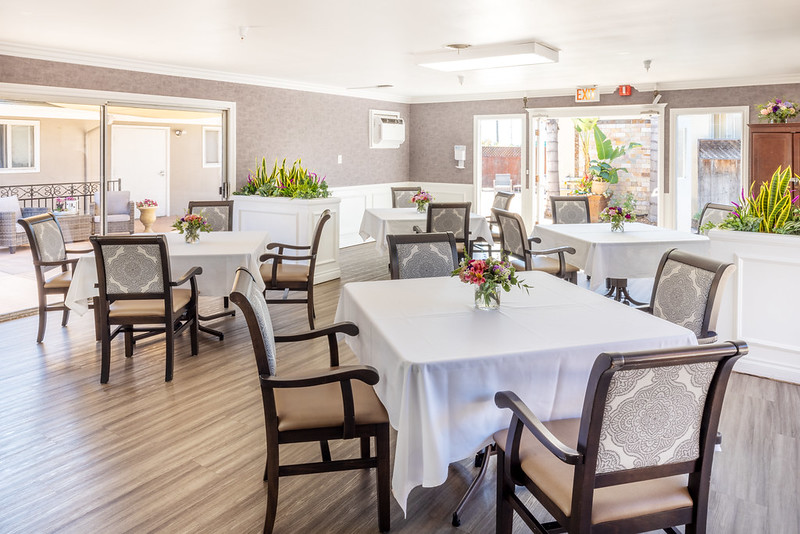
How is La Mesa Healthcare Center Staffed?

CMS rates LA MESA HEALTHCARE CENTER's staffing level at 2 out of 5 stars, which is below average compared to other nursing homes. Staff turnover is 37%, compared to the California average of 46%. This relatively stable workforce can support continuity of care.

What Have Inspectors Found at La Mesa Healthcare Center?

State health inspectors documented 40 deficiencies at LA MESA HEALTHCARE CENTER during 2019 to 2025. These included: 40 with potential for harm.
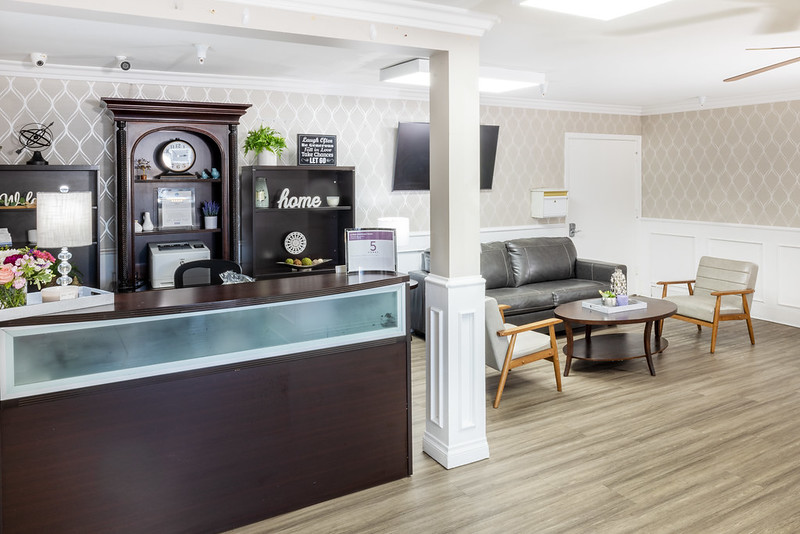
Who Owns and Operates La Mesa Healthcare Center?

LA MESA HEALTHCARE CENTER is owned by a for-profit company. For-profit facilities operate as businesses with obligations to shareholders or private owners. The facility is operated by PACS GROUP, a chain that manages multiple nursing homes. With 94 certified beds and approximately 90 residents (about 96% occupancy), it is a smaller facility located in LA MESA, California.
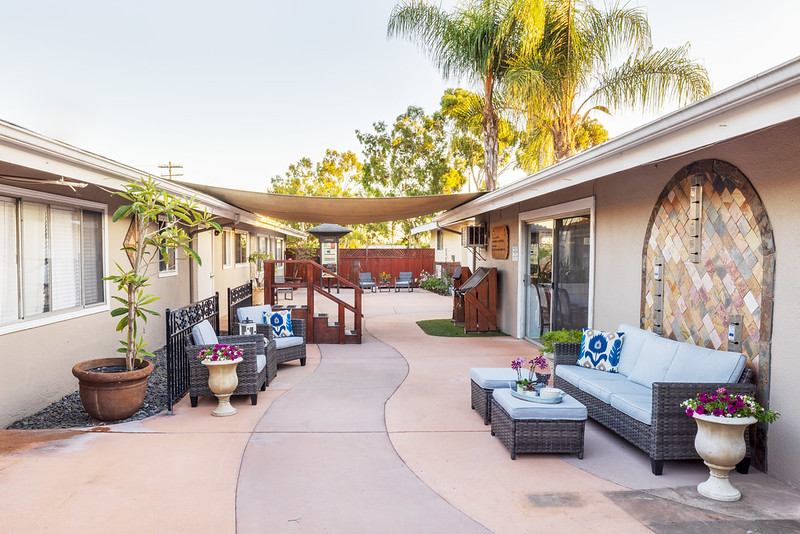
How Does La Mesa Healthcare Center Compare to Other California Nursing Homes?

Compared to the 100 nursing homes in California, LA MESA HEALTHCARE CENTER's overall rating (5 stars) is above the state average of 3.2, staff turnover (37%) is near the state average of 46%, and health inspection rating (4 stars) is above the national benchmark.

What Should Families Ask When Visiting La Mesa Healthcare Center?

Based on this facility's data, families visiting should ask: "Can you walk me through typical staffing levels on day, evening, and night shifts?" "Can I visit during a mealtime to observe dining assistance and food quality?" "How do you handle medical emergencies, and what is your hospital transfer rate?" "Can I speak with family members of current residents about their experience?" These questions are particularly relevant given the below-average staffing rating.

Is La Mesa Healthcare Center Safe?

Based on CMS inspection data, LA MESA HEALTHCARE CENTER has a clean safety record: no substantiated abuse findings (meaning no confirmed cases of resident harm), no Immediate Jeopardy citations (the most serious violation level indicating risk of serious injury or death), and is not on the Special Focus Facility watch list (a federal program monitoring the lowest-performing 1% of nursing homes). The facility has a 5-star overall rating and ranks #1 of 100 nursing homes in California. While no facility is perfect, families should still ask about staff-to-resident ratios and recent inspection results during their visit.

Do Nurses at La Mesa Healthcare Center Stick Around?

LA MESA HEALTHCARE CENTER has a staff turnover rate of 37%, which is about average for California nursing homes (state average: 46%). Moderate turnover is common in nursing homes, but families should still ask about staff tenure and how the facility maintains care continuity when employees leave.

Was La Mesa Healthcare Center Ever Fined?

LA MESA HEALTHCARE CENTER has no federal fines on record. CMS issues fines when nursing homes fail to meet care standards or don't correct problems found during inspections. The absence of fines suggests the facility has either maintained compliance or corrected any issues before penalties were assessed. This is a positive indicator, though families should still review recent inspection reports for the full picture.

Is La Mesa Healthcare Center on Any Federal Watch List?

LA MESA HEALTHCARE CENTER is not on any federal watch list. The most significant is the Special Focus Facility (SFF) program, which identifies the bottom 1% of nursing homes nationally based on persistent, serious quality problems. Not being on this list means the facility has avoided the pattern of deficiencies that triggers enhanced federal oversight. This is a positive indicator, though families should still review the facility's inspection history directly.