Palm Terrace Healthcare & Rehabilitation Center
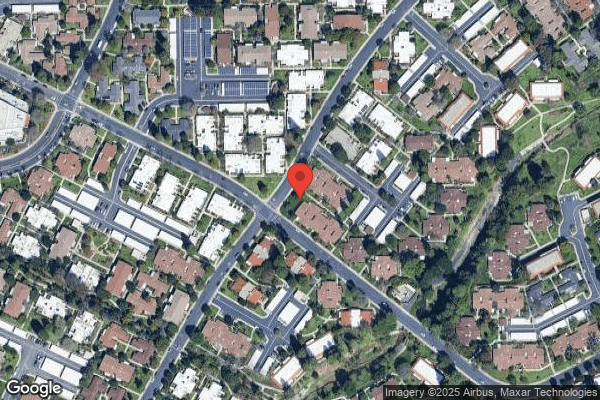
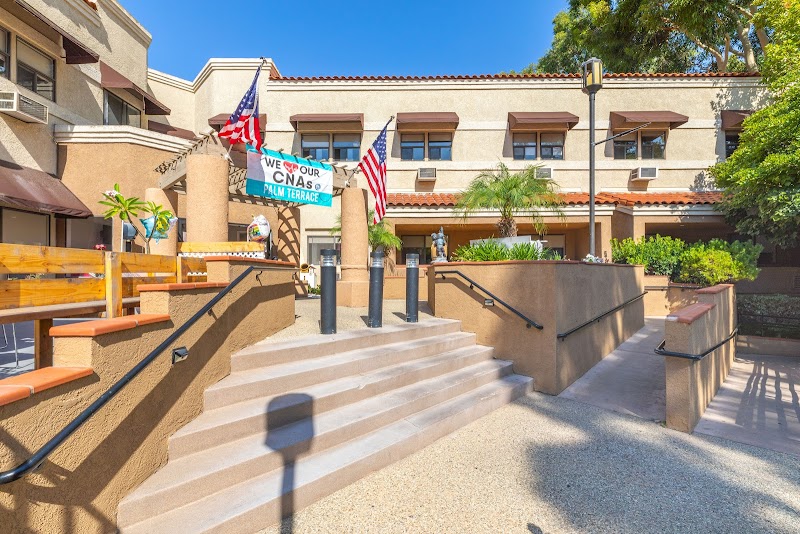
24962 CALLE ARAGON, LAGUNA HILLS, CA 92637 (949) 587-9000
For profit - Corporation 99 Beds THE ENSIGN GROUP Data: November 2025
Trust Grade
70/100
#440 of 1155 in CA
Last Inspection: February 2025

Within standard 12-15 month inspection cycle. Federal law requires annual inspections.

Overview

Palm Terrace Healthcare & Rehabilitation Center has a Trust Grade of B, indicating it is a good choice, falling in the 70-79 range on the grading scale. It ranks #440 out of 1,155 facilities in California, placing it in the top half, and #32 out of 72 in Orange County, meaning there are only 31 local options that are better. Unfortunately, the facility's trend is worsening, with reported issues increasing from 3 in 2024 to 10 in 2025. Staffing is a concern, rated at 2 out of 5 stars, with a turnover rate of 45%, which is about average for California. On a positive note, the facility has not incurred any fines, which is a good sign, and it offers more RN coverage than 78% of California facilities, indicating that registered nurses are available to catch potential issues. However, specific incidents have raised concerns, such as the presence of fruit flies in the kitchen and a failure to follow proper food sanitation practices, which could pose health risks to residents. Additionally, the facility was found lacking in maintaining a pest-free environment, which could lead to cross-contamination and infections. Overall, while there are strengths in the nursing coverage and absence of fines, the facility has significant weaknesses in food safety and sanitation practices that families should consider.
Trust Score
B
70/100
In California
#440/1155
Top 38%
Safety Record
Low Risk
No red flags
Inspections
Getting Worse
3 → 10 violations
Staff Stability
○ Average
45% turnover. Near California's 48% average. Typical for the industry.
Penalties
✓ Good
No fines on record. Clean compliance history, better than most California facilities.
Skilled Nurses
⚠ Watch
Each resident gets only 20 minutes of Registered Nurse (RN) attention daily — below average for California. Fewer RN minutes means fewer trained eyes watching for problems.
Violations
⚠ Watch
57 deficiencies on record. Higher than average. Multiple issues found across inspections.
★★★★☆
4.0
Overall Rating
★★☆☆☆
2.0
Staff Levels
★★★★☆
4.0
Care Quality
★★★★☆
4.0
Inspection Score
Stable
2024: 3 issues
2025: 10 issues

The Good

  • 4-Star Quality Measures · Strong clinical quality outcomes
  • Full Sprinkler Coverage · Fire safety systems throughout facility
  • No fines on record
  • Staff turnover below average (45%)

    3 points below California average of 48%

Facility shows strength in quality measures, fire safety.

The Bad

Staff Turnover: 45%

Near California avg (46%)

Typical for the industry

Chain: THE ENSIGN GROUP

Part of a multi-facility chain

Ask about local staffing decisions and management

The Ugly 57 deficiencies on record

Aug 2025 1 deficiency
CONCERN (D) 📢 Someone Reported This

A family member, employee, or ombudsman was alarmed enough to file a formal complaint

Potential for Harm - no one hurt, but risky conditions existed

Pharmacy Services (Tag F0755)

Could have caused harm · This affected 1 resident

**NOTE- TERMS IN BRACKETS HAVE BEEN EDITED TO PROTECT CONFIDENTIALITY** Based on observation, interview, medical record review, facility document review, and facility P&P review, the facility failed t...

Read full inspector narrative →
**NOTE- TERMS IN BRACKETS HAVE BEEN EDITED TO PROTECT CONFIDENTIALITY** Based on observation, interview, medical record review, facility document review, and facility P&P review, the facility failed to provide the necessary pharmaceutical services to two of three sampled residents (Residents 1 and 2). * The facility failed to ensure Resident 1's medication was administered timely as ordered by the physician. * The facility failed to ensure Resident 2's medication was administered as ordered by the physician and accurately documented in the MAR. These failures had the potential for the residents to not receive the medications and posed the risk to negatively affect the residents' well-being.Findings: Review of the facility's P&P titled Medication Administration dated 1/2019 showed the following:- Medications are administered in accordance with the written orders of the attending physician;- Medications are to be administered at the time they are prepared;- Medications are administered within 60 minutes of schedule time; and- The individual who administers the medication dose records the administration on the resident's MAR directly after the medication is given. Pour-Pass-Chart is the acceptable method for medication preparation, administration, and documentation. 1. Medical record review for Resident 1 was initiated on 8/12/25. Resident 1 was admitted to the facility on [DATE]. Review of Resident 1's H&P examination dated 7/25/25, showed Resident 1 had the capacity to understand and make decisions. Review of Resident 1's MDS assessment dated [DATE], showed Resident 1's BIMS score was 12 (moderate cognitive impairment). Review of Resident 1's Order Summary Report dated 7/24/25, showed a physician's order dated 7/24/25, for tacrolimus (immunosuppressant medication) 0.5 mg one capsule by mouth one time a day for renal transplant. Review of Resident 1's Medication Administration Audit Report dated 8/13/25, showed for the tacrolimus 0.5 mg one capsule by mouth one time a day was scheduled to be given at 0830 hours. However, the tacrolimus medication was administered and documented on the following dates and times:- dated 7/25/25, administered at 1029 hours and documented at 1041 hours;- dated 7/26/25, administered at 1037 hours and documented at 1039 hours; and- dated 7/27/25, administered at 0950 hours and documented at 1051 hours. On 8/13/25 at 1020 hours, an interview and concurrent medical record review was conducted with RN 1. RN 1 stated the licensed nurses must prepare the medications while checking the physician's orders, administer the medications, and document in the MAR right after the medication was administered. RN 1 verified the above findings and stated Resident 1's tacrolimus 0.5 mg morning dose scheduled at 0830 hours were administered late and outside of the one-hour medication pass parameter time. RN 1 further stated it was a medication error since the licensed nurse failed to administer the medication as per the physician's order and could have an adverse effect on Resident 1's health. 2. On 8/12/25 at 0835 hours, a medication administration observation was conducted with LVN 1. LVN 1 was observed preparing the following morning medications for Resident 2:- cholecalciferol oral (supplement) 50 mcg one tablet; and- ipratropium bromide 0.5mg/albuterol sulfate (anticholinergic/bronchodilator) one unit dose. During the medication administration observation, LVN 1 stated Resident 2's calcium (supplement) 600 mg medication was not available. LVN 1 stated he would not administer the calcium 600 mg medication until he clarified the order with the physician. LVN 1 was observed administering Resident 2's morning medications except the calcium 600 mg medication. Medical record review for Resident 2 was initiated on 8/13/25. Resident 2 was admitted to the facility on [DATE]. Review of Resident 2's MDS assessment dated [DATE], showed Resident 2's BIMS score was 12 (moderate cognitive impairment). Review of Resident 2's H&P examination dated 8/10/25, showed Resident 2 had the capacity to understand and make decisions. Review of Resident 2's Order Summary Report dated 8/13/25, showed physician's order dated 8/5/25, for calcium 600 mg oral tablet, give one tablet by mouth one time a day for supplement. Review of Resident 2's MAR for August 2025 showed the following:- dated 8/12/25, the calcium 600 mg to be administered at 0900 hours had a documentation code 7 (other/see nurse notes). Review of the Resident 2' MAR note on 8/12/25 at 0850 hours, for the calcium medication showed need clarification from MD, and- dated 8/13/25, the calcium 600 mg to be administered at 0900 hours had a check mark to indicate it was given. Review of Resident 2's medical record failed to show the staff had clarified the calcium 600 mg medication order to the resident's physician on 8/12/25, as documented in the MAR. Additionally, review of Resident 2's MAR for August 2025 failed to show the calcium 600 mg medication was administered on 8/12/25. On 8/13/25 at 1150 hours, an interview and concurrent medical record review was conducted with RN 1. RN 1 verified there was no new order for Resident 2's calcium nor a documentation to show the calcium medication was clarified with the physician on 8/12/25. RN 1 verified LVN 1 administered the calcium medication on 8/13/25 at 0900 hours. RN 1 stated LVN 1 failed to administer Resident 2's calcium 600 mg on 8/12/25, and it would be considered a medication error. RN 1 stated the licensed nurses must follow the physician's orders and when the medications were not available, the physician must be notified and to obtain an order. On 8/13/25 at 1210 hours, an observation and concurrent interview was conducted with LVN 1. When asked if he administered Resident 2's calcium medication scheduled at 0900 hours, LVN 1 showed the calcium 600 mg scheduled for 0900 hours was checked marked in the MAR to indicate administered. LVN 1 was asked to show the supply of the calcium 600 mg medication administered. LVN 1 opened the medication cart and showed a bottle of the calcium medication. However, the bottle showed calcium 600 mg with vitamin D. LVN 1 acknowledged the calcium 600 mg medication had vitamin D in it and stated it was the supply of the calcium 600 mg medication the facility currently have. LVN 1 was asked what he had administered to Resident 2 if the facility did not have the calcium 600 mg available. LVN 1 stated he did not administer Resident 2's calcium 600 mg since it was not available. LVN 1 acknowledged he had documented the calcium medication was administered even when Resident 2 did not receive the medication. In addition, LVN 1 was asked if the calcium medication was provided to Resident 2 or if he had clarified the calcium medication with the physician on 8/12/25. LVN 1 stated the calcium 600 mg medication was not administered on 8/12/25. LVN 1 further stated when he called the physician, the physician did not reply. LVN 1 acknowledged there was no documentation to show he attempted to call the physician or had endorsed to the next charge nurse to follow up. LVN 1 stated the medications not given as ordered by the physician could be detrimental to residents' health, the resident was taking the medications for a reason. On 8/13/25 1240 at hours, an interview was conducted with RN 1. RN 1 stated the licensed nurses must not document in the EMAR when the medication was not available and not administered. RN 1 stated the process for the medication administrations must be pour, pass, and sign. Furthermore, RN 1 stated it was unacceptable to document the medication was administered when the resident did not receive the medication. On 8/13/25 at 1250 hours, an interview was conducted with the DON. The DON stated the medication administration process must be pour, pass, and sign the EMAR immediately for safe and accurate documentation. When asked if an advance documentation on any resident's EHR for care and services including the medication administration is acceptable, the DON stated it was not acceptable. Furthermore, the DON stated any missed medication could greatly affect the resident's health especially depending on the indication of the medication. On 8/13/25 at 1300 hours, an interview was conducted with the Administrator and DON. The Administrator and DON were informed and acknowledged the above findings.
Feb 2025 9 deficiencies
CONCERN (D)

Potential for Harm - no one hurt, but risky conditions existed

Deficiency F0694 (Tag F0694)

Could have caused harm · This affected 1 resident

**NOTE- TERMS IN BRACKETS HAVE BEEN EDITED TO PROTECT CONFIDENTIALITY** Based on observation, interview, medical record review, and facility P&P review, the facility failed to ensure two of two final ...

Read full inspector narrative →
**NOTE- TERMS IN BRACKETS HAVE BEEN EDITED TO PROTECT CONFIDENTIALITY** Based on observation, interview, medical record review, and facility P&P review, the facility failed to ensure two of two final sampled residents (Resident 38 and 587) observed for medication administration were free from the medication errors. * The facility failed to ensure Resident 38's IV medication was dated and documented time of administration. * The facility failed to ensure Resident 587's PIV was dated and labeled. These failures posed the risk for the residents to develop complications related to the IV therapy. Findings: Review of the facility's P&P titled Nursing Clinical undated showed to label the IV container with the resident's name, medication, dose initials of nurse, time, date, document additives on resident record and dispose of needles and syringes properly. 1. During the initial tour of the facility on 1/29/25 at 1029 hours, Resident 38 was observed in bed awake, receiving an IV antibiotic medication Vancomycin one gram. However, Resident 38's IV medication bag label was undated, no time it was hanged and no signature of the nurse who administered the antibiotic medication. On 1/29/25 at 1137 hours, an observation and concurrent interview for Resident 38 was conducted with RN 1. The RN 1 verified the above findings. Medical record review for Resident 38 was initiated on 1/29/25. Resident 38 was admitted to the facility on [DATE]. Review of Resident 38's MDS dated [DATE], showed a BIMS score of 14 (meaning cognitively intact). Review of Resident 38's Order Summary Report showed the following physician's order dated 1/9/25: - for Vancomycin one gram intravenously every 12 hours for abdominal abscess, to remain on IV antibiotic until at least 2/27/25. On 2/3/35 at 1430 hours, an interview was conducted with the Administrator and Interim DON. The Administrator and Interim DON was informed and acknowledged the above findings. 2. Medical record review for Resident 587was initiated on 1/29/25. Resident 587 was admitted to the facility on [DATE] and readmitted on [DATE]. Review of Resident 587's H&P examination dated 1/27/25, showed Resident 587 had the capacity to understand and make decisions. Review of Resident 587's Order Summary Report for February 2025 showed a physician's order dated 1/26/25, for ceftriaxone (a medication used to treat infection) 2 gm IV once daily for UTI until 1/30/25. Further review of the physician's orders showed to start a PIV line (peripheral intravenous) and change the site every 72 hours and PRN for infiltration or soiling. On 1/29/25 at 1111 hours, an observation of Resident 587 was conducted in the resident's room. Resident 587 was observed with a single-lumen PIV line to the right hand with undated and unlabeled dressing. On 1/29/25 at 1119 hours, a concurrent observation and interview was conducted with RN 1 in Resident 587's room. RN 1 verified Resident 587's PIV line dressing was not dated or labeled. RN 1 stated the PIV sites should be dated and labeled to ensure the PIV lines were changed as ordered by the physician and for the staff member to know how long the resident had the PIV line. On 2/4/25 at 1430 hours, an interview with the Administrator and DON was conducted. All of the above findings were acknowledged and verified.
CONCERN (D)

Potential for Harm - no one hurt, but risky conditions existed

Respiratory Care (Tag F0695)

Could have caused harm · This affected 1 resident

**NOTE- TERMS IN BRACKETS HAVE BEEN EDITED TO PROTECT CONFIDENTIALITY** 2. Medical record review for Resident 28 was initiated on 1/29/24. Resident 28 was readmitted to the facility on [DATE]. Review ...

Read full inspector narrative →
**NOTE- TERMS IN BRACKETS HAVE BEEN EDITED TO PROTECT CONFIDENTIALITY** 2. Medical record review for Resident 28 was initiated on 1/29/24. Resident 28 was readmitted to the facility on [DATE]. Review of Resident 28's Order Summary Report showed a physician's order dated 3/26/24, for continuous oxygen at a rate 2 lpm via nasal cannula. On 1/29/25 at 0851 hours, Resident 28 was observed lying in bed with the supplemental oxygen being administered at a rate of 2 lpm via nasal cannula. On 1/29/25 at 1020 hours, an interview was conducted with LVN 1. LVN 1 stated the oxygen tubing should be changed weekly and as needed. LVN 1 stated the date when it was changed should be written on the tubing. On 1/29/25 at 1219 hours, an interview was conducted with the Central Supply. The Central Supply stated the oxygen tubing was changed every Friday. The Central Supply stated Resident 28's nasal cannula tubing was dated 1/13/25, when she changed out the tubing that morning. 3. Medical record review for Resident 438 was initiated on 1/29/24. Resident 438 was admitted to the facility on [DATE]. Review of Resident 438's Order Summary Report showed a physician's order dated 1/23/25, for continuous oxygen at a rate of 3 lpm via nasal cannula. Review of Resident 438's Plan of Care failed to show if Resident 438 was receiving a supplemental oxygen. On 1/29/25 at 0904 hours, Resident 438 was observed lying in bed with supplemental oxygen being administered at a rate of 3 lpm via nasal cannula. The nasal cannula tubing was undated. On 1/29/25 at 1020 hours, an interview was conducted with LVN 1. LVN 1 stated the oxygen tubing should be changed weekly and as needed. LVN 1 stated the date when it was changed should be written on the tubing. On 1/29/25 at 1024 hours, an observation and concurrent interview was conducted with LVN 1 at Resident 438's bedside. LVN 1 verified Resident 438's nasal cannula tubing was undated. 4. Medical record review for resident 436 was initiated on 1/29/24. Resident 436 was admitted to the facility on [DATE]. Review of Resident 436's Order Summary Report showed a physician's order dated 1/28/25, for ipratropium-albuterol solution (medication to control symptoms of lung disease) 0.5-2.5 mg/ml. Inhale 3 ml orally three times a day via nebulizer (a device that turns the liquid medicine into a mist which is then inhaled through a mouthpiece or a mask). On 1/29/25 at 1020 hours, an interview was conducted with LVN 1. LVN 1 stated the oxygen tubing should be changed weekly and as needed. LVN 1 stated there should be a date written on the tubing when it was changed or when it was intiated. On 1/29/25 at 1021 hours, an observation and concurrent interview was conducted with LVN 1 at Resident 436's bedside. LVN 1 verified the Resident 436's nebulizer tubing was undated. Based on observation, interview, medical record review, and facility P&P review, the facility failed to provide the necessary respiratory care for two of 20 final sampled residents (Residents 686 and 438) reviewed for respiratory care and two nonsampled residents (Residents 28 and 436). * The facility failed to follow the physician's order for the administration of the oxygen for Resident 686. The facility administered continuous oxygen to Resident 686 at a higher rate than what was ordered by the physician. * The facility failed to ensure the oxygen tubing was labeled with the date when it was changed for Residents 28 and 438. * The facility failed to ensure the nebulizer tubing for Resident 436 was dated. These failures had the potential to negatively impact the residents' medical conditions. Findings: Review of the facility's P&P titled Use of Oxygen (undated) showed it is the policy of this facility to promote resident safety in administering oxygen. 1. Medical Record review for Resident 686 was initiated on 1/29/25. Resident 686 was admitted to the facility on [DATE]. Review of Resident 686's H&P examination dated 1/27/25, showed Resident 686 was status post diagnosis of acute respiratory failure, secondary to congestive heart failure. Review of Resident 686's Order Summary Report showed a physician's order dated 1/25/25, to administer the oxygen at a rate of 3 liters per minute via nasal cannula. On 1/29/25 at 1211 hours, an observation was conducted for Resident 686. Resident 686 was observed with continuous oxygen being administered through an oxygen concentrator at a rate of 5 liters per minute via nasal cannula. On 1/30/25 at 0903 hours, an observation, interview, and concurrent medical record review was conducted with LVN 6. Resident 686 was observed lying in bed with continuous oxygen being administered through an oxygen concentrator, at a rate of 4 liters per minute via nasal cannula. Resident 686 stated he utilized the oxygen for shortness of breath. LVN 6 verified Resident 686's physician order dated 1/25/25, showed to administer the oxygen at a rate of 3 liters per minute via nasal cannula, however, Resident 686 was receiving oxygen at a rate of 4 liters per minute. On 1/30/25 at 0926 hours, an observation, interview, and concurrent medical record review was conducted with LVN 6. Resident 686 was observed lying in bed. LVN 6 was observed lowering Resident 686's continuous oxygen from a rate of 4 liters per minute to a rate of 3 liters per minute (in accordance with the physician's order). LVN 6 stated she was unsure who increased Resident 686's rate of oxygen above the physician's ordered rate of 3 liters per minute. LVN 6 then obtained Resident 686's oxygen saturation (on 3 liters per minute) which was measured at 87%. Resident 686 complained of difficulty breathing during inspiration. LVN 6 stated she would notify the physician of Resident 686's complaint of difficulty breathing and the decreased of the resident's oxygen saturation. Review of Resident 686's medical record failed to show documented evidence of a staff member entry when the resident's continous oxygen was increased from a rate of 3 liters per minute to 4 litters per minute and the reason for the increase. There was no documented evidence the physician was notified prior to the increase on 1/30/24 at 0926 hours.
CONCERN (D)

Potential for Harm - no one hurt, but risky conditions existed

Deficiency F0760 (Tag F0760)

Could have caused harm · This affected 1 resident

**NOTE- TERMS IN BRACKETS HAVE BEEN EDITED TO PROTECT CONFIDENTIALITY** Based on observation, interview, medical record review, and facility P&P review, the facility failed to ensure one of four resid...

Read full inspector narrative →
**NOTE- TERMS IN BRACKETS HAVE BEEN EDITED TO PROTECT CONFIDENTIALITY** Based on observation, interview, medical record review, and facility P&P review, the facility failed to ensure one of four residents (nonsampled resident, Resident 736) observed for medication administration was free from the significant medication errors. This failure had the potential to negatively impact the resident's health outcomes. Findings: Review of the facility's P&P titled Medication Administration revised 8/2021 showed it is the policy of this facility that medications shall be administered as prescribed by the attending physician. Medications must be administered in accordance with written orders of the attending physician. On 1/31/25 at 0845 hours 0836 hours, a medication administration observation for Resident 736 was conducted with LVN 3. LVN 3 prepared the following medications for Resident 736: - hydralazine (medication to treat high blood pressure) 25 mg one tablet. The medication bubble pack showed the directions to hold the medication if the SBP less than 110 mmHg or pulse rate less than 60 beats per minute. LVN 3 was observed checking Resident 736's blood pressure prior; however, LVN 3 was observed not checking Resident 736's pulse rate. On 1/31/25 at 0909 hours, LVN 3 stated she was ready to administer the medication to Resident 736. LVN 7 was asked to stop from administering the hydralazine medication to Resident 736 because the resident's pulse rate was not checked and there was a parameter to hold if the pulse rate was less than 60 beats per minute. On 1/31/25 at 0911 hours, LVN 3 went inside Resident 736's room to check the resident's pulse rate which was 69 beats per minutes. LVN 3 administered the hydralazine medication. Medical record review for Resident 736 was initiated on 1/31/25. Resident 736 was admitted to the facility on [DATE]. Review of Resident 736's Order Summary Report showed the following physician's order dated 1/25/25: - hydralazine 25 mg one tablet by mouth two times a day for hypertension. Hold medication if the SBP < (less than)110 mmHg or PR < (less than) 60 beats per minute. On 1/31/25 at 1301 hours, an interview was conducted with LVN 3. The LVN 3 verified and acknowledged the above findings. On 2/3/35 at 1430 hours, an interview was conducted with the Administrator and Interim DON. The Administrator and Interim DON was informed and acknowledged the above findings.
CONCERN (D)

Potential for Harm - no one hurt, but risky conditions existed

Menu Adequacy (Tag F0803)

Could have caused harm · This affected 1 resident

Based on observation, interview, facility document review, and facility P&P review, the facility failed to ensure eight of eight residents who received pureed food from the kitchen received the proper...

Read full inspector narrative →
Based on observation, interview, facility document review, and facility P&P review, the facility failed to ensure eight of eight residents who received pureed food from the kitchen received the proper diets when the facility's puree recipes and menu were not followed as evidenced by: * The facility failed to ensure the puree recipe for potatoes and menu for pureed wheat rolls were followed. This failure had the potential to negatively impact the residents' well-being. Findings: Review of the facility's census on 1/29/25, showed 95 of 98 residents received food from the kitchen. The facility's document titled Diet Type Report dated January 2025 showed the kitchen provided puree diets to eight residents in the facility. Review of the facility's P&P titled Regular Pureed Diet/IDDSI Level #4 dated 2024 showed the pureed diet is a regular diet that has been designed for residents who have difficulty chewing and/or swallowing. The texture of the prepared food items included on this diet should be smooth and free of lumps, hold their shape, while not being too firm or sticky, and should not weep. Portions given will account for the addition of fluids to be specified on the spreadsheet. Review of the facility's P&P titled Menu Planning dated 2023 showed the menus are planned to meet nutritional needs of residents in accordance with established national guidelines, physician's orders and, to the extent medically possible, in accordance with the most recent recommended dietary allowances of the Food and Nutrition Board of the National Research Council National Academy of Sciences. The menus provide a variety of foods in adequate amount each meal. Menus are planned to consider: D. Skills of the Food and Nutrition Services employees in preparing food. E. Time necessary for food preparation and serving of food. The facility's P&P further showed the facility's diet manual and the diets ordered by the physician should mirror the nutritional care provided by the facility. Menus are written for regular and therapeutic diets in compliance with the diet manual. Furthermore, the P&P showed standardized recipes adjusted to appropriate yield shall be maintained and used in food preparation. 1. Review of the facility's document titled Recipe: Pureed (IDDSI Level 4) Starch (Rice, Pasta, Polenta, Potatoes, etc.), dated 2024, showed to measure out the total number of portions needed for pureed diets. Puree on low speed to a paste consistency before adding any liquid and to gradually add warm milk. On 1/30/25 at 1100 hours, a concurrent observation and interview with [NAME] 1 was conducted during the puree preparation for the pureed red potatoes. [NAME] 1 was observed blending the red potatoes and then adding cold milk and vegetable broth. [NAME] 1 verified she added a total of ½ (half) cup of cold milk and one cup of vegetable broth to the blended red potatoes. [NAME] 1 further verified the pureed recipe for starch such as potatoes showed to add warm milk; however, [NAME] 1 stated she used cold milk and vegetable broth instead. Dietary Resource 1 was present and acknowledged the findings, the pureed starch for the red potatoes were not followed as ordered. 2. Review of the facility's document titled Winter Menus - Week 1 dated for 1/30/25, showed to use the Scoop #16, which is equivalent to 1/4 cup when serving pureed wheat roll. Review of the facility's document titled Scoop Chart, undated, showed the Scoop # 12 (scoop with a green handle) is equivalent to 1/3 cup and Scoop #16 (scoop with a blue handle) is equivalent to 1/4 (one forth) cup. On 1/30/25 at 1240 hours, a concurrent observation and interview with the Dietary Supervisor Assistant during tray line observation was conducted. The Scoop # 12 with a green handle was observed used to serve the pureed wheat roll. The Dietary Supervisor Assistant verified Scoop # 12 was used as the serving scoop for the pureed wheat roll. The Dietary Supervisor Assistant further verified the menu for pureed wheat roll showed to use Scoop #16 and stated the Scoop #12 should be changed to the Scoop # 16 as shown on the menu. On 2/4/25 at 1430 hours, an interview with the Administrator, DON, and CDM was conducted. All of the above findings were acknowledged and verified.
CONCERN (D)

Potential for Harm - no one hurt, but risky conditions existed

Food Safety (Tag F0812)

Could have caused harm · This affected 1 resident

Based on observation, interview, facility P&P review, and facility document review, the facility failed to ensure the food safety and sanitary requirements were met in the kitchen. * The facility fail...

Read full inspector narrative →
Based on observation, interview, facility P&P review, and facility document review, the facility failed to ensure the food safety and sanitary requirements were met in the kitchen. * The facility failed to ensure the food preparation utensils and equipment were in good, sanitary, and cleanable working conditions. * The facility failed to ensure the food items were dated and labeled. * The facility failed to ensure the kitchen staff wore hair restraint. These failures had the potential to cause foodborne illnesses to the medically vulnerable resident population who consumed food prepared in the kitchen. Findings: Review of the facility's census on 1/29/25, showed 95 of 98 residents received food from the kitchen. 1. According to the USDA Food Code 2022, Section 4-601.11, Equipment, Food-Contact Surfaces, Nonfood-Contact Surfaces, and Utensils: (A) Equipment food-contact surfaces and utensils shall be clean to sight and touch. (B) The food-contact surfaces of cooking equipment and pans shall be kept free of encrusted grease deposits and other soil accumulations. (C) Nonfood-contact surfaces of equipment shall be kept free of an accumulation of dust, dirt, food residue, and other debris. On 1/29/25 at 0821 hours, a concurrent observation and interview with the CDM was conducted. One large pot was observed heavily marred with black discoloration. The CDM verified the findings and stated it should be changed out. On 1/29/25 at 0839 hours, a concurrent observation and interview with [NAME] 1 was conducted. The following were observed: - one green cutting board observed heavily marred; - one white cutting board heavily marred with black and orange discoloration and; - one can opener with brown discoloration Cook 1 verified the above findings. [NAME] 1 stated there was a risk of food contamination and they will change the cutting boards and will wash the can opener. On 1/29/15 at 0900 hours, a concurrent observation and interview with Dietary Resource 1 was conducted. The following were observed: - one 1/2 cup measuring cup with oil-like substance; - one spatula strainer with white residue; and - two ice cream scoopers with chipped handles. Dietary Resource 1 verified the above findings. Dietary Resource 1 stated the kitchen equipments should be cleaned and acknowledged the chipped handles have the potential to go in the prepared foods. 2. Review of the facility's P&P titled Labeling and Dating of Foods dated 2023 showed all the food items in the storeroom, refrigerator, and freezer need to be labeled and dated based on established procedures for either food safety or product rotation (FIFO - First In, First Out). The P&P further showed the individual opening or preparing a food shall be responsible for date marking at the time of processing and/or storage. Frozen foods are dated with a delivery (received) date. a. On 1/29/25 at 0800 hours, during the intial tour of the kitchen, a concurrent observation and interview with the CDM was conducted. An unidentified food item in a clear, unlabeled, and undated plastic bag was observed in Freezer 1. The CDM verified the findings and stated he did not know why the food item was not stored in the original box. b. On 1/29/25 at 0826 hours, a concurrent observation and interview with the CDM was conducted in the kitchen. Several food items in Refrigerator 2 observed not labeled or dated: - 14 containers of white solid food substance with no date or label; - six containers of yellow diced food substance with no date or label; and - several cups of water, milk, and juices with no date or label. The CDM verified above findings. On 1/29/25 at 0930 hours, an interview with Dietary Resource 1 was conducted. Dietary Resource 1 stated the food items should be labeled and dated to ensure the kitchen staff were aware of how long the food item has been prepared. 3. According to the USDA Food Code 2022, Section 2-402.11, Hair Restraints - Effectiveness showed consumers are particularly sensitive to food contaminated by hair. Hair can be both a direct and indirect vehicle of contamination. Food employees may contaminate their hands when they touch their hair. A hair restraint keeps dislodged hair from ending up in the food and may deter employees from touching their hair. The USDA Food Code 2022 further showed food employees shall wear hair restraints such as hats, hair coverings or nets, beard restraints, and clothing that covers body hair, that are designed and worn to effectively keep hear from contacting exposed food; clean equipment, utensils, and linens; and unwrapped single-service and single-use articles. On 1/30/25 at 0925 hours, a concurrent observation and interview with the Dietary Supervisor Assistant was conducted in the kitchen. The Dietary Supervisor Assistant was observed with no hair restraint. The Dietary Supervisor Assistant verified the findings and stated he should have a hair restraint. Dietary Resource 1 was present and verified the observation. Dietary Resource 1 acknowledged the hair restraints should be worn in the kitchen. On 2/4/25 at 1430 hours, an interview with the Administrator, DON, and Certified Dietary Manager was conducted. All of the above findings were acknowledged and verified.
MINOR (B)

Minor Issue - procedural, no safety impact

Deficiency F0655 (Tag F0655)

Minor procedural issue · This affected multiple residents

**NOTE- TERMS IN BRACKETS HAVE BEEN EDITED TO PROTECT CONFIDENTIALITY** Based on interview and medical record review, the facility failed to ensure the baseline care plans were developed to reflect th...

Read full inspector narrative →
**NOTE- TERMS IN BRACKETS HAVE BEEN EDITED TO PROTECT CONFIDENTIALITY** Based on interview and medical record review, the facility failed to ensure the baseline care plans were developed to reflect the specific care needs for two of 20 final sampled residents (Residents 686 and 438). * The facility failed to ensure a baseline care plan was developed to address the administration of oxygen for Residents 686 and 438. This failure had the potential for the residents' care needs not being met. Findings: 1. Medical Record review for Resident 686 was initiated on 1/29/25. Resident 686 was admitted to the facility on [DATE]. Review of Resident 686's H&P examination dated 1/27/25, showed Resident 686 was status post diagnosis of acute respiratory failure secondary to congestive heart failure. Review of Resident 686's Order Summary Report showed a physician's order dated 1/25/25, showed to administer the oxygen at a rate of 3 liters per minute via nasal cannula. On 1/30/25 at 0903 hours, an observation, interview, and concurrent medical record review was conducted with LVN 6. Resident 686 was observed lying in bed with continuous oxygen being administered through an oxygen concentrator, at a rate of 4 liters per minute via nasal cannula. Resident 686 stated he utilized the oxygen for shortness of breath. LVN 6 verified Resident 686's physician order dated 1/25/25, showed to administer oxygen at a rate of 3 liters per minute via nasal cannula; however, Resident 686 was receiving oxygen at a rate of 4 liters per minute. Review of Resident 686's baseline care plans failed to show a baseline care plan was developed to address the administration of oxygen to Resident 686. On 1/30/25 at 1005 hours, an interview and concurrent medical record review was conducted with RN 1. RN 1 reviewed Resident 686's plan of care and verified the facility failed to initiate a care plan for the administration of the the resident's oxygen. Cross reference to F695, example #1. 2. Medical record review for Resident 438 was initiated on 1/29/24. Resident 438 was admitted to the facility on [DATE]. Review of Resident 438's Order Summary Report showed a physician's order dated 1/23/25, for continuous oxygen at 3 liters per minute via nasal cannula. Review of Resident 438's Plan of Care failed to show Resident 348 was receiving the supplemental oxygen. On 1/29/25 at 0904 hours, Resident 438 was observed lying in bed with the supplemental oxygen being administered at 3 liters per minute via nasal cannula. On 1/30/25 at 1227 hours, an interview and concurrent medical record review was conducted with the IP. The IP stated the oxygen administration should be documented in the resident's plan of care. The IP verified and stated Resident 438's care plan for oxygen use should have been initated.
MINOR (B)

Minor Issue - procedural, no safety impact

Pharmacy Services (Tag F0755)

Minor procedural issue · This affected multiple residents

Based on interview, facility document review, and facility P&P review, the facility failed to ensure the proper accounting and safeguarding of the controlled medications to prevent loss, diversion, or...

Read full inspector narrative →
Based on interview, facility document review, and facility P&P review, the facility failed to ensure the proper accounting and safeguarding of the controlled medications to prevent loss, diversion, or accidental exposure. * The facility failed to ensure the Narcotic Count Sheet log was signed by the incoming and outgoing licensed nurses assigned to Medication Cart B. This failure posed the risk for loss or diversion of the controlled medications in the facility. Findings: Review of the facility's P&P titled Pharmacy Services Controlled Medications revised 12/2019 under the section for Policy showed it is the policy of the facility to provide separate locked, permanently affixed compartments for storage of controlled drugs listed in Schedule II of the comprehensive Drug Abuse Prevention and Control Act of 1976 and other drugs subject to abuse, except when the facility uses single unit package drug distribution systems in which the quantity stored is minimal and a missing dose can be readily detected. The Procedures section showed at each shift change, a physical inventory of all controlled medications is conducted by two licensed nurses and is documented on an audit record. Alternatively, the shift change audit may be recorded on the accountability record if there is a designated column for the audit. Review of Medication Cart B's Narcotic Count Sheet showed multiple missing incoming and/or outgoing nurses' signatures for the following dates: - on 1/11/25, for the 7-3 shift; - on 1/25/25, for the 3-11 shift; and - on 1/29/25, for the 11-7 shift. On 1/30/25 at 1242 hours, an interview and concurrent facility document review was conducted with LVN 4. LVN 4 verified multiple licensed nurses' signatures were missing in the Narcotic Count Sheet log. When asked what the Narcotic Count Sheet log was for, LVN 4 stated the incoming and outgoing nurses counted the medications at the end of each shift to ensure the narcotic medication counts were reconciled and accounted for. On 1/30/25 at 1255 hours, an interview and concurrent facility document review was conducted with the Interim DON. The Interim DON verified the missing licensed nurses' signatures on Medication Cart B's Narcotic Count Sheet. When asked what was the possible risk of not signing the Narcotic Count Sheet, the Interim DON stated when the controlled medications were not accounted for, it posed a risk for narcotic diversion.
MINOR (B)

Minor Issue - procedural, no safety impact

Deficiency F0761 (Tag F0761)

Minor procedural issue · This affected multiple residents

2. Review of the facility's P&P titled Care and Treatment, Subject: Medication Access and Storage dated 2/2019 showed the orally administered medications are kept separate from externally used medicat...

Read full inspector narrative →
2. Review of the facility's P&P titled Care and Treatment, Subject: Medication Access and Storage dated 2/2019 showed the orally administered medications are kept separate from externally used medications, e.g., suppositories, liquids, lotions and tablets. The eye medications are kept separate from ear medications. On 1/30/25 at 1005 hours, an observation of Medication Room A and concurrent interview was conducted with the IP. The following were observed: a. inside the refrigerator, one bottle of Latanoprost eye drop solution 0.0054 % ( medication to treat glaucoma-increase pressure in the eye) and nitroglycerin 0.4 mg tablets (a medication for chest pain) were stored in one rectangular gray plastic tray. b. in the middle shelft attached to the wall, the following over-the-counter medications/house supply medications were store together side by side without a separator: - one box of Clearcanal Earwax softener Drops, - one box of naloxone hydrochloride nasal spray 4 mg (medication to temporarily reverse the effects of an opioid medicine), - one bottle of Calamine Lotion (topical skin protectant), - one bottle of artificial tears (eye lubricant drops), - three boxes of Nicotine Transdermal System Patch (applied on the skin to help people quit smoking), and - and two boxes of Salonpas Lidocaine 4% patches (pain reliever patch) The IP verified the above findings, removed the medications, and stated they should be stored separately. On 2/3/25 at 1325 hours, an interview was conducted with the Interim DON. The Interim DON was notified of the above findings and acknowledged the external and internal medications should be stored separately. Based on observation, interview, and facility P&P review, the facility failed to provide the necessary pharmacy services to ensure proper medication storage. * The facility failed to ensure the open packages of wound care supplies were removed from the medication cart. * The facility failed to ensure the orally used medications were stored separately from the externally used medications. These failures had the potential for medication errors and negatively impact the residents' well-being. Findings: Review of the facility's P&P titled Medication Access and Storage revised 2/2019 showed the following: - The provider pharmacy dispenses medications in containers that meet legal requirements, including requirements of good manufacturing practices where applicable. - Medication are kept and stored in these containers. - Transfer of medications from one container to another is done only by a pharmacist. 1. On 1/30/25 at 1215 hours, an inspection for Medication Cart A was conducted with LVN 2. During the inspection of Medication Cart A, the following was observed: - two open individual packages of Skin Closure Strip cut in half; and - one open individual package of calcium alginate dressing (a non-toxic, absorbent wound dressing made from seaweed) with cut portion. On 1/30/25 at 1245 hours, an interview was conducted with LVN 2. LVN 2 verified and acknowledged the above findings. LVN 2 stated all individual packs of the wound care supplies needed to be single use to make sure it was sterile. On 2/3/35 at 1430 hours, an interview was conducted with the Administrator and Interim DON. The Administrator and Interim DON was informed and acknowledged the above findings.
MINOR (B)

Minor Issue - procedural, no safety impact

Medical Records (Tag F0842)

Minor procedural issue · This affected multiple residents

**NOTE- TERMS IN BRACKETS HAVE BEEN EDITED TO PROTECT CONFIDENTIALITY** Based on interview, medical record review, and the facility's P&P review, the facility failed to ensure the medical records were...

Read full inspector narrative →
**NOTE- TERMS IN BRACKETS HAVE BEEN EDITED TO PROTECT CONFIDENTIALITY** Based on interview, medical record review, and the facility's P&P review, the facility failed to ensure the medical records were accurate for one of three residents (Resident 85) reviewed for closed medical records and one of two residents (final sampled resident, Resident 44) investigated for dialysis. * Resident 85's medical record had documentation for the vital signs results and urinary output after his discharge from the facility. * The facility failed to ensure Resident 44's blood pressure access site was accurately documented in the resident's medical record. * The facility failed to ensure Resident 44's blood pressure access site was accurately documented in the resident's medical record. * These failures had the potential for the residents' care needs not being met as their medical information was inaccurate. Findings: Review of the facility's P&P titled Charting and Documentation revised February 2022 showed it is the policy of the facility to ensure the resident record is concise and reflective of the current care provided to the resident. 1. Closed medical record review for Resident 85 was initiated on 1/31/25. Resident 85 was admitted to the facility on [DATE]. Review of Resident 85's Nursing Note dated 12/9/24 at 1136 hours, showed Resident 85 was transferred to the acute hospital. Review of Resident 85's Weights And Vitals Summary showed the following: - On 12/9/24 at 1924 hours, Resident 85's BP was 130/88 mmHg, pulse rate was 76, respiratory rate was 19, and temperature was 97 degrees F. - On 12/10/24 at 0216 hours, Resident 85's BP was 132/68 mmHg, pulse rate was 68, respiratory rate was 18, and temperature was 97.8 degrees F. Review of Resident 85's Documentation Survey Report showed the following: - On 12/10/24 at 0216 hours, Resident 85 had a 240 ml of urinary output. - On 12/10/24 at 1212 hours, Resident 85 had a 240 ml of oral intake. On 2/3/25 at 0934 hours, an interview and concurrent medical record review was conducted with the Interim DON. The Interim DON reviewed Resident 85's above records and verified the records showed the vital signs and fluid intake and output were documented after Resident 85 was transferred out of the facility. The DON stated there should be no documentation of vital signs and fluid intake and output when the resident was no longer at the facility. 2. Review of the facility's P&P titled Dialysis (Renal), Pre- and Post-Care revised 12/2023, showed assess resident's blood pressure (in non-fistula arm) prior to being transported to the dialysis units. Medical record review for Resident 44 was initiated on 1/29/25. Resident 44 was admitted to the facility on [DATE], and readmitted on [DATE]. Review of Residents 44's MDS dated [DATE], showed a BIMS score of 3 (meaning severe cognitive impairment). Review of Resident 44's Plan of Care showed a care plan problem dated 8/23/24, addressing the resident's hemodialysis related to Renal Failure/End Stage Renal Disease. The care plan interventions included no BP, no IV, no blood draw, no fingerstick on left upper extremity with AV shunt. Review of Resident 44's Order Summary Report dated 1/31/25, showed an order dated 8/23/24, for no blood pressure check, no IV, no blood draw, no fingerstick on the left upper extremity with AV shunt. Review of Resident 44's Weights and Vitals Summary from 1/15 to 1/31/25, showed documentation the BP readings were obtained from the left arm one to times each day. For example: - on 1/16/25 at 2343 hours, a BP reading of 123/67 mmHg on the left arm - on 1/17/25 at 1727 hours, a BP reading of 122/70 mmHg on the left arm - on 1/19/25 at 1051 hours, a BP reading of 138/64 mmHg on the left arm - on 1/20/25 at 0804 hours, a BP reading of 128/67 mmHg on the left arm - on 1/21/25 at 1832 hours, a BP reading of 124/70 mmHg on the left arm - on 1/23/25 at 1101 hours, a BP reading of 128/70 mmHg on the left arm - on 1/24/25 at 0905 hours, a BP reading of 142/70 mmHg on the left arm - on 1/25/25 at 0635 hours, a BP reading of 126/64 mmHg on the left arm - on 1/25/25 at 2007 hours, a BP reading of 144/82 mmHg on the left arm - on 1/27/25 at 1035 hours, a BP reading of 132/64 mmHg on the left arm - on 1/28/25 at 0839 hours, a BP reading of 142/70 mmHg on the left arm On 1/31/25 at 0956 hours, an interview, and concurrent medical record review for Resident 44 was conducted with the MDS Coordinator. The MDS Coordinator verified the licensed nurses' documentation of the BP monitoring showed Resident 44's blood pressures were obtained from the resident's left upper extremity. On 2/3/35 at 1430 hours, an interview was conducted with the Administrator and Interim DON. The Administrator and Interim DON was informed and acknowledged the above findings.
Oct 2024 1 deficiency
CONCERN (D) 📢 Someone Reported This

A family member, employee, or ombudsman was alarmed enough to file a formal complaint

Potential for Harm - no one hurt, but risky conditions existed

Deficiency F0760 (Tag F0760)

Could have caused harm · This affected 1 resident

**NOTE- TERMS IN BRACKETS HAVE BEEN EDITED TO PROTECT CONFIDENTIALITY** Based on interview and medical record review the facility failed to ensure one of nine sampled residents (Resident 2) was free f...

Read full inspector narrative →
**NOTE- TERMS IN BRACKETS HAVE BEEN EDITED TO PROTECT CONFIDENTIALITY** Based on interview and medical record review the facility failed to ensure one of nine sampled residents (Resident 2) was free from the significant medication errors. * The facility failed to ensure the licensed nurse properly checked and identified the resident prior to administering the medication. This failure had the potential to negatively affect Resident 2's health outcomes. Findings: Review of the facility's P&P titled Medication Administration dated 1/2019 showed the residents are identified before the medication is administered using at least two identifiers. Methods of identification may include checking identification band, checking photograph attached to medical record and if necessary, verify resident identification with other care center personnel. Review of Resident 2's medical record was initiated on 9/30/24. Resident 2 was admitted to the facility on [DATE]. Review of Resident 2's H&P examination dated 9/7/24, showed Resident 2 had capacity to make decisions. Review of Resident 2's MDS assessment dated [DATE], showed the resident was able to make self-understood and understand others. The resident's BIMS summary score was 14. Review of Resident 2's Change of Condition initiated on 9/25/24, showed the medication error occurred on 9/25/25 at 0500 hours. Resident 2 erroneously received levothyroxine (medication used to treat hypothyroidism) 25 mcg. Resident 2 did not have a history of hypothyroidism. During an interview with Resident 2 on 09/30/24 at 1254 hours, Resident 2 stated on 9/30/24, in the middle of the night (unable to recall specific time), a staff member (LVN 6) had tapped her shoulder and informed her to take a medication. Resident 2 informed LVN 6 that she did not take medications in the early morning. LVN 6 did not respond, continued to administer the medication, and walked away. Resident 2 stated LVN 6 came back after few minutes and told her that she had given her the wrong medication. On 10/03/24 at 0730 hours, an interview was conducted via phone with LVN 6. LVN 6 stated she was assigned to Resident 2 on 9/25/24. LVN 6 confirmed she erroneously administered levothyroxine 25 mcg to Resident 2 on 9/25/24 at 0500 hours. LVN 6 acknowledged she did not take time to properly check and identify the resident prior to administering the medication. On 10/08/24 at 1545 hours, an interview was conducted with the DON. The DON verified Resident 2 was given the wrong medication, levothyroxine 25 mcg on 9/25/24 at 0500 hours. The DON was asked about the facility's P&P regarding the medications administration. The DON stated the residents were identified before the medication administration using at least two resident identifiers. The DON verified the facility failed to ensure Resident 2 was free from the significant medication errors.
Sept 2024 2 deficiencies
CONCERN (D) 📢 Someone Reported This

A family member, employee, or ombudsman was alarmed enough to file a formal complaint

Potential for Harm - no one hurt, but risky conditions existed

Pharmacy Services (Tag F0755)

Could have caused harm · This affected 1 resident

**NOTE- TERMS IN BRACKETS HAVE BEEN EDITED TO PROTECT CONFIDENTIALITY** Based on interview, medical record review, and facility P&P review, the facility failed to ensure the necessary pharmacy service...

Read full inspector narrative →
**NOTE- TERMS IN BRACKETS HAVE BEEN EDITED TO PROTECT CONFIDENTIALITY** Based on interview, medical record review, and facility P&P review, the facility failed to ensure the necessary pharmacy services were provided to two of two sampled residents (Residents 1 and 2) when the medications were not provided within their prescribed time. This failure had the potential for negative health outcomes for Residents 1 and 2. Findings: Review of the facility's P&P titled Medication Administration - General Guidelines dated 1/2019 showed medications are administered within 60 minutes of scheduled time, except before or after meal orders, which are administered based on mealtimes. Unless otherwise specified by the prescriber, routine medications are administered according to the established medication administration schedule for the care center. Review of the facility's document titled Medication Administration Times, (undated), showed the medications are scheduled to be administered as follows: - daily, administer at 0800 hours; - twice a day, administer at 0800 and 1600 hours; - three times a day, administer at 0800, 1200, and 1600 hours; - four times a day, administer at 0800, 1200, 1600, and 2000 hours; - before meals, administer at 0630, 1130, and 1630 hours (approximately); - after meals, administer at 0900 and 1700 hours; - bedtime, administer at 2200 hours for sedative and hypnotics and 2000 hours for all other medications; - every six hours, administer at 0600, 1200, 1800, and 0000 hours; and - every 12 hours, administer at 0800 and 2000 hours. a. On 8/29/24 at 1550 hours, an interview with Resident 1 was conducted. Resident 1 stated medications were usually received late. On 9/3/24 at 0947 hours, an observation and concurrent interview with LVN 2 was conducted. LVN 2 was observed administering the medications to Resident 1. When LVN 2 was done administering the medications, LVN 2 was asked about the medications administered to Resident 1. LVN 2 confirmed the medications given to Resident 1 were due at 0800 hours. LVN 2 stated he just started the medication administration at 0830 hours because the nurse assigned to administer the medications did not show up today. LVN 2 further stated he still needed to administer the medications scheduled for 0800 hours to other residents at this time. On 9/3/24 at 0954 hours, an observation and concurrent interview with LVN 3 was conducted. LVN 3 was observed wheeling the medication cart back towards Nurses Station A. LVN 3 confirmed she just finished passing the medications scheduled to be administered at 0800 hours. b. Medical record review for Resident 2 was initiated on 9/3/24. Resident 2 was admitted to the facility on [DATE]. Review of Resident 2's Order Summary Report dated 09/05/24, showed a physician's order to administer the following: - atenolol-chlorthalidone (a medication used to control high blood pressure) 50-25 mg one-half tablet one time a day for hypertension. Hold for systolic blood pressure (SBP) less than 110 mmHg or heart rate less than 55 beats per minute ordered on 8/23/24. - fish oil (omega-3 fatty acids, a supplement) 1000 mg one capsule by mouth one time a day ordered on 3/23/24. - gabapentin (a medication to treat and prevent seizures or treat nerve pain) 600 mg one tablet by mouth three times a day, ordered on 6/26/24. - Prozac (fluoxetine, a medication used for depression) 40 mg by mouth one time a day, ordered on 1/26/24. - Tylenol (a medication used for mild pain and fever) 325 mg two tablets by mouth every four hours as needed for moderate pain, levels 4-6 (on a 0-10 pain scale with 0 = no pain and 10 = worst pain) not to exceed three grams per day of acetaminophen from all sources ordered on 11/14/23. Review of Resident 2's MAR for September 2024 showed the following medications were to be administered at the following times: - atenolol-chlorthalidone 50-25 mg, give half tablet one time a day and to hold for systolic blood pressure (SBP) less than 110 mmHg or heart rate less than 55 beats per minute, administer at 0800 hours. - Fish oil 1000 mg give one capsule by mouth one time a day medication, administer at 0800 hours. - gabapentin 600 mg one tablet by mouth three times a day medication, administer at 0800, 1200, and 1600 hours. - Prozac 40 mg by mouth one time a day medication, administer at 0800 hours. - Tylenol 325 mg give two tablets by mouth every four hours as needed for moderate pain (4-6) not to exceed 3 grams per day of acetaminophen from all sources. On 9/3/24 at 1006 hours, a concurrent medication administration observation and interview was conducted with LVN 4. During the medication administration observation, LVN 4 prepared and administered the following medications to Resident 2: - atenolol-chlorthalidone 50-25 mg one-half tablet - fish oil 1000 mg one capsule - gabapentin 600 mg one capsule - fluoxetine 40 mg one capsule - Tylenol 325 mg two caplets for complain of pain After the medication administration observation, LVN 4 was asked about the medications administered to Resident 2, LVN 4 confirmed she gave Resident 2 the medications that were supposed to be given at 0800 hours. LVN 4 stated one of her residents had a change of condition and needed to take care of the resident first. LVN 4 further stated she still needed to administer the medications scheduled for 0800 hours, to other residents at this time. c. On 9/3/24 at 0954 hours, an observation and concurrent interview with LVN 3 was conducted. LVN 3 was observed wheeling the medication cart back towards Nurses Station A. LVN 3 confirmed she just finished passing the medications scheduled to be administered at 0800 hours. On 9/3/24 at 1040 hours, a follow-up interview was conducted with LVN 3. LVN 3 confirmed she finished administering the medications scheduled for 0800 hours at 0954 hours. LVN 3 stated she usually finishes the 0800 hours medication administration by a little before 1000 hours most of the time because she made sure the residents swallowed the medications she gave to the residents. On 9/3/24 at 1410 hours, an interview with the DON was conducted. The DON stated the medication administration should not be interrupted. The DON expected the RN supervisor, or the desk nurse to take care of residents with change in condition and should start the medication administration when a licensed nurse scheduled to give the medications did not show up.
CONCERN (D) 📢 Someone Reported This

A family member, employee, or ombudsman was alarmed enough to file a formal complaint

Potential for Harm - no one hurt, but risky conditions existed

Deficiency F0804 (Tag F0804)

Could have caused harm · This affected 1 resident

**NOTE- TERMS IN BRACKETS HAVE BEEN EDITED TO PROTECT CONFIDENTIALITY** Based on observation, and interview, the facility failed to ensure resident's meals were served at the desired temperatures. Thi...

Read full inspector narrative →
**NOTE- TERMS IN BRACKETS HAVE BEEN EDITED TO PROTECT CONFIDENTIALITY** Based on observation, and interview, the facility failed to ensure resident's meals were served at the desired temperatures. This failure had the potential for the undesirable food temperatures to result in decreased oral meal intake and undesirable weight loss for the residents. Findings: a. Medical record review for Resident 3 was initiated on 9/3/24. Resident 3 was admitted to the facility on [DATE]. Review of Resident 3's H&P examination dated 8/30/24, showed Resident 3 had the capacity to make decisions. On 8/29/24 at 1505 hours, an interview was conducted with Resident 3. Resident 3 stated the hot food items on the meal tray were not hot enough. Resident 3 stated he would like to at least eat the warm food. b. Medical record review for Resident 4 was initiated on 9/3/24. Resident was admitted to the facility on [DATE]. Review of Resident 4's MDS assessment dated [DATE], showed Resident 4 was able to make to make self-understood and understand others. Resident 4's BIMS summary score showed 15 (cognitively intact). On 9/3/24 at 0908 hours, an interview with Resident 4 was conducted. Resident 4 stated the food could be improved. Resident 4 further stated, most of the time the food is already cold. On 9/3/24 at 0748 hours, a test tray was requested to be added to Station 1's meal tray cart. On 9/3/24 at 0806 hours, a meal tray cart with doors containing the test tray and meal trays for the residents was parked by Nurses' Station 1. On 9/3/24 at 0810 hours, the resident's meals trays were passed except for the test tray. The CNAs were observed to close the doors after getting resident's meal trays. The DSS brought the covered test tray in the conference room located across the Nurses' Station 1. On 9/23/24 at 0811 hours, a test tray inspection was conducted with the DSS. The temperatures of the following food items were checked and showed the following readings: - egg omelet was at 105.6 degrees Fahrenheit, - bacon was at 86.1 degrees Fahrenheit, - oatmeal was at 108.6 degrees Fahrenheit, - milk was at 51.2 degrees Fahrenheit. A taste test of the food served on the test tray was also conducted with the DSS. The egg omelet, oatmeal, and bacon were cold. The DSS verified the egg, oatmeal, and bacon temperature went down and were cold.
Nov 2023 2 deficiencies
CONCERN (D) 📢 Someone Reported This

A family member, employee, or ombudsman was alarmed enough to file a formal complaint

Potential for Harm - no one hurt, but risky conditions existed

Notification of Changes (Tag F0580)

Could have caused harm · This affected 1 resident

**NOTE- TERMS IN BRACKETS HAVE BEEN EDITED TO PROTECT CONFIDENTIALITY** Based on interview and medical record review, the facility failed to ensure the responsible party and physician for one of 26 sa...

Read full inspector narrative →
**NOTE- TERMS IN BRACKETS HAVE BEEN EDITED TO PROTECT CONFIDENTIALITY** Based on interview and medical record review, the facility failed to ensure the responsible party and physician for one of 26 sampled residents (Resident 5) were notified when Resident 5 refused to receive the COVID-19 vaccine. This failure resulted in Resident 5's physician and responsible party not being aware of change in the care of Resident 5, which had the potential to negatively affect the resident's well-being. Findings. Medical record review for Resident 5 was initiated on 11/27/23. Resident 5 was admitted to the facility on [DATE]. Review of Resident 5's History and Physical examination dated 10/15/23, showed Resident 5 did not have the capacity to understand and make medical decisions. Review of Residents 5's MDS dated [DATE], showed mild cognitive impairment. Review of Resident 5's vaccination record showed on 9/19/22, a family member (Family Member 1) gave verbal consent for Resident 5 to receive the vaccination. Review of Resident 5's Medication Administration Record for October 2022 showed a physician's order dated 10/7/22, to administer Pfizer-BioNTech COVID-19 0.3 ml intramuscular one time to Resident 5. Further review of the record showed Resident 5 refused the vaccine. Further review of Resident 5's medical record failed to show documentation Resident 5's physician and family member were notified of Resident 5 refusing the COVID-19 vaccine. On 11/22/23 at 0828 hours, a telephone interview was conducted with Resident 5's Family Member 1. Family Member 1 stated he had given the facility permission to administer the COVID vaccine to Resident 5, but he was not informed that Resident 5 had refused the vaccine until the staff called him on 11/20/23, to inform him that Resident 5 was positive for COVID-19. Family Member 1 stated if he had known Resident 5 had refused the vaccine, he would have gone to the facility and made sure Resident 5 received it. On 11/27/23 at 1330 hours, an interview and concurrent medical record review was conducted with the IP. The IP verified the above findings and stated Resident 5's vaccination record showed Resident 5 refused the vaccine on 10/7/22. The IP stated both the family and the physician should have been notified.
CONCERN (D) 📢 Someone Reported This

A family member, employee, or ombudsman was alarmed enough to file a formal complaint

Potential for Harm - no one hurt, but risky conditions existed

Accident Prevention (Tag F0689)

Could have caused harm · This affected 1 resident

**NOTE- TERMS IN BRACKETS HAVE BEEN EDITED TO PROTECT CONFIDENTIALITY** Based on interview, medical record review, and facility P&P review, the facility failed to ensure two of 26 sampled residents (R...

Read full inspector narrative →
**NOTE- TERMS IN BRACKETS HAVE BEEN EDITED TO PROTECT CONFIDENTIALITY** Based on interview, medical record review, and facility P&P review, the facility failed to ensure two of 26 sampled residents (Residents 2 and 4) were monitored every shift for at least 72 hours following the fall incidents. This failure had the potential to not provide the necessary care and services timely for the residents. Findings: Review of the facility's P&P titled Change of Condition Reporting revised 2/2023 showed the licensed nurse responsible for the resident will continue assessment and documentation every shift for at least seventy-two (72) hours or until condition has stable. Review of the facility's P&P titled Fall Management System (undated) showed when a resident sustains a fall, a physical assessment will be completed by a licensed nurse with the results documented in the medical record. Follow-up documentation will be completed for a minimum of 72 hours following the incident. 1. Medical record review for Resident 2 was initiated on 11/20/23. Resident 2 was originally admitted to the facility on [DATE], and readmitted on [DATE]. Review of Resident 2's MDS dated [DATE], showed Resident 2 was cognitively intact. Review of Resident 2's Progress Notes dated 10/30/23, showed Resident 2 went to a medical appointment outside the facility and reportedly slid out of her wheelchair. Review of Resident 2's Change in Condition dated 10/30/23, showed Resident 2 reportedly had an unwitnessed fall while out for her appointment. Review of Resident 2's plan of care failed to show a care plan problem to address Resident 2's unwitnessed fall that occurred on 10/30/23. Further review of Resident 2's medical record failed to show Resident 2 was continuously monitored every shift for at least 72 hours after the unwitnessed fall had occurred. On 11/20/23 at 1412 hours, an interview and concurrent medical record review was conducted with LVN 4. When asked, LVN 4 defined a change of condition as a skin change or a fall occurrence. LVN 4 was asked what she did when a resident fell. LVN 4 stated when a resident had a fall, LVN 4 would provide immediate interventions, including updating the resident's care plan to include new interventions for the resident. LVN 4 reviewed Resident 2's medical record and verified Resident 2 did not have an updated plan of care to address Resident 2's recent unwitnessed fall. On 11/20/23 at 1457 hours, an interview and concurrent medical record review was conducted with the DON. The DON verified the above findings and stated the licensed nurses were expected to document for 72 hours after the fall incident. 2. Medical Record review for Resident 4 was initiated on 11/22/23. Resident 4 was admitted to the facility on [DATE]. Review of the progress notes showed Resident 4 had an unwitnessed fall in the bathroom on 11/2/23 at around 0425 hours. The progress notes showed the physician was notified and Resident 4 was sent to the acute care hospital. Further review of the progress notes showed Resident 4 suffered an L4 compression fracture (a fracture of one of the bones in the lower back region). Further review of Resident 2's medical record failed to show Resident 2 was continuously monitored every shift for at least 72 hours after the unwitnessed fall incident. On 11/22/23 at 1300 hours, an interview and concurrent medical record review was conducted with the DON. The DON stated the nursing staff were required to document every shift for 72 hours regarding a resident's change of condition such as a fall. The DON confirmed the nursing documentation regarding Resident 4's fall was missing for the night shift from 2300 hours on 11/2/23, to 0630 hours on 11/3/23; and the day shift on 11/3/23, from 0630 to 1430 hours. The DON also confirmed the findings.
Sept 2023 1 deficiency
MINOR (B) 📢 Someone Reported This

A family member, employee, or ombudsman was alarmed enough to file a formal complaint

Minor Issue - procedural, no safety impact

Medical Records (Tag F0842)

Minor procedural issue · This affected multiple residents

**NOTE- TERMS IN BRACKETS HAVE BEEN EDITED TO PROTECT CONFIDENTIALITY** Based on interview and medical record review, the facility failed to ensure the medical records were accurately documented for t...

Read full inspector narrative →
**NOTE- TERMS IN BRACKETS HAVE BEEN EDITED TO PROTECT CONFIDENTIALITY** Based on interview and medical record review, the facility failed to ensure the medical records were accurately documented for two of two sampled residents (Residents 1 and 2). * When Resident 1 experienced a fall in the facility, LVN 2 inaccurately documented in the medical record that Resident 1 had no falls, thus placing her as a low risk for falls. * Resident 2's plan of care erroneously showed she experienced an actual fall in the facility. These failures had the potential the residents to not receive appropriate interventions to prevent falls. Findings: 1. On 9/8/23 at 1224 hours, an interview and concurrent medical record review was conducted with LVN 4. LVN 4 was asked about Resident 1. LVN 4 stated Resident 1 was in her normal assignment for the 0700 to 1500 hours shift. LVN 4 reviewed the medical record and stated Resident 1 experienced a fall on 8/26/23. LVN 4 reviewed the Fall Risk Evaluation dated 8/26/23, and stated it showed Resident 1 was at a low risk for falls. Under Section B: history of falls, review of the document showed no falls in the past 3 months. LVN 4 was unable to explain why Resident 1 was noted as having no falls. Medical record review for Resident 1 was initiated on 9/8/23. Resident 1 was admitted to the facility on [DATE], and readmitted on [DATE]. Review of the Fall Risk Evaluation dated 8/10/23, showed Resident 1 was at a high risk for falls. Review of the Fall Risk Evaluation dated 8/26/23, showed Resident 1 was at a low risk for falls, and showed Resident 1 did not experience any falls in the prior 3 months. On 9/8/23 at 1343 hours, a telephone interview was conducted with CNA 1. CNA 1 was asked about Resident 1. CNA 1 stated on 8/26/23 during the 1430 to 2230 hours shift, she entered Resident 1's room and found Resident 1 sitting on the floor next to the bed. CNA 1 stated Resident 1 stated she was trying to get to the bathroom when she fell. CNA 1 stated she asked for assistance of other staff to assist Resident 1 back to bed. On 9/8/23 at 1540 hours, a telephone interview and concurrent medical record review was conducted with LVN 2. LVN 2 was asked about Resident 1. LVN 2 stated she was working when Resident 1 reported she experienced a fall. LVN 2 stated she assessed the resident, notified the physician, and completed a Fall Risk Assessment. When asked why falls within prior 3 months were marked as none on the Fall Risk assessment dated [DATE], LVN 2 stated she misunderstood, and stated the form should have included Resident's 1 fall on 8/26/23. 2. On 9/8/23 at 1158 hours, an observation and concurrent interview was conducted with Resident 2 at the bedside. Resident 2 was observed in bed with bilateral floor mats. Resident 2 was asked if she experienced a fall in the facility. Resident 2 stated no, she did not. Medical record review for Resident 2 was initiated on 9/8/23. Resident 2 was admitted to the facility on [DATE]. Review of Resident 2's MDS dated [DATE], showed Resident 2 was cognitively intact. Review of Resident 2's plan of care showed a care plan problem dated 9/8/23, addressing the resident's actual fall with poor balance and unsteady gait. The interventions included to perform the neuro-checks as ordered and assign the room close to the nurses' station. On 9/12/23 at 1407 hours, a telephone interview and concurrent medical record review was conducted with the DON. The DON was asked if Resident 2 experienced an actual fall. The DON reviewed the medical record and stated Resident 2 did not experience a fall within the facility. The DON was asked to review the plan of care. The DON verified Resident 2 had a care plan problem addressing an actual fall and stated it must have been a mistake.
Jun 2023 1 deficiency
CONCERN (D) 📢 Someone Reported This

A family member, employee, or ombudsman was alarmed enough to file a formal complaint

Potential for Harm - no one hurt, but risky conditions existed

Accident Prevention (Tag F0689)

Could have caused harm · This affected 1 resident

**NOTE- TERMS IN BRACKETS HAVE BEEN EDITED TO PROTECT CONFIDENTIALITY** Based on observation, interview, and medical record review, the facility failed to ensure the bed for one of two sampled residen...

Read full inspector narrative →
**NOTE- TERMS IN BRACKETS HAVE BEEN EDITED TO PROTECT CONFIDENTIALITY** Based on observation, interview, and medical record review, the facility failed to ensure the bed for one of two sampled residents (Resident 2) with high fall risk was placed in a low position as care planned. This failure had the potential for the resident to sustain an injury in the event of a fall. Findings: On 6/20/23 at 1423 hours, Resident 2 was observed on his bed with the bed approximately at 1.5 feet (equal to 18 inches) above the floor. On 6/21/23 at 1126, 1153, 1356, and 1415 hours, Resident 2 was observed lying in his bed with the bed approximately 1.5 feet above the floor. On 6/21/23 at 1455 hours, a concurrent observation and interview was conducted with CNA 2. CNA 2 verified Resident 2's bed was not in the lowest position. When CNA 2 lowered Resident 2's bed to its lowest position, the resident's bed was at six inches from the floor. CNA 2 stated Resident 2 had a bed alarm in place to alert the staff when Resident 2 attempted to get out of bed unassisted. Review of Resident 2's medical record showed Resident 2 was admitted to the facility on [DATE]. Resident 2 had a history of falls. Resident 2's fall risk assessments showed Resident 2 was at high risk for falls. Review of Resident 2's History & Physical examination dated 5/30/23,showed Resident 2 was admitted to the facility with diagnoses including dementia. Review of Resident 2's plan of care included a care plan problem addressing Resident 2's risk for falls with interventions including to place Resident 2's bed in the low position. On 6/22/23 at 1410 hours, a concurrent interview and medical record review was conducted with the Operations Manager and DON. TheDON stated the interventions for the residents with history of falls included placing the resident's bed to its lowest position.
May 2023 1 deficiency
CONCERN (D) 📢 Someone Reported This

A family member, employee, or ombudsman was alarmed enough to file a formal complaint

Potential for Harm - no one hurt, but risky conditions existed

Quality of Care (Tag F0684)

Could have caused harm · This affected 1 resident

**NOTE- TERMS IN BRACKETS HAVE BEEN EDITED TO PROTECT CONFIDENTIALITY** Based on interview, medical record review, and facility P&P review, the facility failed to ensure monitoring for the neurologica...

Read full inspector narrative →
**NOTE- TERMS IN BRACKETS HAVE BEEN EDITED TO PROTECT CONFIDENTIALITY** Based on interview, medical record review, and facility P&P review, the facility failed to ensure monitoring for the neurological status was conducted in a timely manner after an unwitnessed fall for one of two sampled residents (Resident 1). This failure had the potential for delayed identification of head injury for Resident 1. Findings: Review of the facility's P&P titled Neurological Evaluation revised 3/2023 showed the residents who had an injury involving the head or an unobserved fall shall have neuro checks and vital signs taken at least every eight hours. Further review of the P&P showed a comprehensive neurological assessment to be done on the following frequencies: - Every 30 minutes times (x) 2; - Every 1 hour x3; - Every 2 hours x2; - Every 4 hours x4; and, - Every 8 hours x6. Closed medical record review was initiated for Resident 1 on 4/26/23. Resident 1 was admitted to the facility on [DATE],and discharged on 4/19/23. Review of Resident 1's Progress Note dated 4/19/23 at 0945 hours, showed on 4/18/23 approximately 2000 hours, Resident 1 was observed on the floor in her room. Further review of the progress note showed the IDT interventions included to conduct the neuro checks. Review of Resident 1's Neurological Assessment showed theneuro checks were initiated on 4/19/23 at 0900 hours (approximately 13 hours after the fall incident). On 4/27/23 at 1015 hours, an interview and concurrent closed record review was conducted with RN 1. RN 1 verified the above findings. RN 1 stated theneuro checks should have been completed immediately after the fall incident. On 4/27/23 at 1415 hours, an interview with the DON was conducted. The DON verified and acknowledged the above findings. The DON stated the neuro checks for Resident 1 should have been started immediately after the fall to monitor Resident 1 for signs and symptoms of head injury.
Apr 2023 3 deficiencies
CONCERN (D) 📢 Someone Reported This

A family member, employee, or ombudsman was alarmed enough to file a formal complaint

Potential for Harm - no one hurt, but risky conditions existed

Resident Rights (Tag F0550)

Could have caused harm · This affected 1 resident

**NOTE- TERMS IN BRACKETS HAVE BEEN EDITED TO PROTECT CONFIDENTIALITY** Based on observation, interview, medical record review, and facility document review, the facility failed to ensure four of six ...

Read full inspector narrative →
**NOTE- TERMS IN BRACKETS HAVE BEEN EDITED TO PROTECT CONFIDENTIALITY** Based on observation, interview, medical record review, and facility document review, the facility failed to ensure four of six sampled residents (Residents 1, 2, 3, and 5) were provided care in a manner that promoted dignity and respect. * Resident 1 had to wait 50 minutes to have his soiled diaper changed by the facility staff. This failure resulted in Resident 1 feeling uncomfortable and dirty, which had the potential of not maintaining or enhancing the resident's self-esteem and self-worth. * The facility failed to ensure the staff responded to Resident 2's call light in a timely manner. This failure resulted in Resident 2 lying on her soiled diaper for an extended period of time, feeling uncomfortable, and not being treated with dignity and respect, which had the potential to negatively impact the resident's well-being. * The facility failed to ensure the staff responded to Residents' 3 and 5 call lights in a timely manner to meet their care needs. This resulted in Resident 3 feeling useless and Resident 5 feeling uncomfortable and not respected by the staff, which had the potential of not maintaining or enhancing the residents' self-esteem and self-worth. Findings: Review of the facility's Residents Rights dated October 2014 showed a resident hasthe right to be treated with respect and dignity, including the right to receive services in the facility with reasonable accommodation of their needs and preferences. 1. On 4/26/23 at 0907 hours, an observation and concurrent interview was conducted with Resident 1. Resident 1 was observed asking LVN 1 to help get a CNA to change his urine and feces soiled diaper. Resident 1 stated he was dependent on the facility staff for his toileting needs because of his recent surgery on both of shoulders. On 4/26/23 at 0933 hours, an observation and concurrent interview was conducted with Resident 1. Resident 1 stated he was still waiting for a CNA or any other facility staff to help change his soiled diaper. Resident 1 was observed turning side to side on his bed and stated he felt uncomfortable and dirty. On 4/26/23 at 0947 hours, a follow-up interview was conducted with Resident 1. Resident 1 stated his diaper was still soiled and needed help to get cleaned. Resident 1 stated the soiled diaper was causing his wounds on his lower back and buttock area to be very uncomfortable. Resident 1 stated he pressed the call light around 0940 hours, and told another facility staff he needed his CNA. Resident 1 stated he kept track of the time by checking the clock in his cell phone. On 4/26/23 at 0958 hours (approximately 50 minutes after Resident 1 had made a request to LVN 1), an observation was conducted with CNA 1. CNA 1 was observed entering Resident 1's room and helping the resident to change his soiled diaper. Medical record review for Resident 1 was initiated on 4/26/23. Resident was admitted to the facility on [DATE]. Review of Resident 1's LTC/SNF admission History and Physical examination dated 3/30/23, showed Resident 1 had the capacity to make decisions. The document showed Resident 1 had a deep tissue injury (purple or maroon localize area of discolored intact skin or blood-filled blister due to damage of underlying soft tissue from pressure and/or shear) on his left and right buttock. Review of Resident 1's MDS dated [DATE], showed Resident 1 had occasional urinary incontinence and frequent bowelincontinence. The documentshowed Resident 1 required extensive assistance from one staff member for toileting (including how the resident cleanses their self after elimination, changes pad, manages ostomy or catheter, and adjusts clothes), and had upper extremity impairment to both sides. Review of Resident 1's plan of care showed a care plan problem dated 4/7/23, addressing bowel and bladder incontinence. The interventions included Resident 1 to use the disposable briefs and change the briefs after any incontinent episodes and as needed. On 4/26/23 at 1318 hours, an interview was conducted with LVN 1. LVN 1 stated she was a registry staff and not familiar with Resident 1's required level of assistance. LVN 1 stated she was not aware Resident 1 waited for 50 minutes to get his soiled diaper changed. LVN 1 stated after Resident 1 asked her to get a CNA to help change his soiled diaper, she told a CNA and thought a CNA went to change Resident 1's diaper. On 4/26/23 at 1346 hours, an interview was conducted with CNA 1. CNA 1 stated she was passing by Resident 1's hallway and saw the call light above the door was illuminated. CNA 1 stated she answered the call light and changed his diaper as requested by the resident. CNA 1 stated she was not Resident 1's assigned CNA. 2. On 4/26/23 at 0837 hours, an interview was conducted with Resident 2. Resident 2 stated she had a hard time getting out of bed or using the bedpan and used a diaper for her toileting needs. Resident 2 stated she urinated into her diaper around midnight over the weekend and had to remain in her soiled diaper for four hours before she was changed. Resident 2 stated when she pressed the call light multiple times, a staff member turned off the call light each time but did not provide help. Resident 2 stated she knew she waited that long because she saw the time on her cell phone when she was on the phone with her son. Resident 2 stated she felt uncomfortable from the burning sensation around her anus (the opening where solid bodily wastes come out of the body) caused by the urine, and she felt she was not treated with respect. Medical record review for Resident 2 was initiated on 4/26/23. Resident 2 was admitted to the facility on [DATE]. Review of Resident 2's MDS dated [DATE], showed Resident 2 needed extensive assistance from two staff members for bed mobility (how resident moves to and from lying position, turns side to side, and positions body while in bed) and needed the physical assistance of one person with toileting. Review of Resident 2's Bowel and Bladder Evaluation dated 4/21/23, showed Resident 2 was incontinent of bowel and had occasional bladder incontinence. Review of Resident 2's plan of care showed a care problem dated 4/22/23, addressing an actual impairment to skin integrity related to perianal MASD. The interventions included to identify/document potential causative factors and eliminate or resolve where possible. 3. On 4/26/23 at 0850 hours, an interview was conducted with Resident 3. When asked about the response time for the call lights, Resident 3 stated there were times she pressed the call light and had waited up to an hour for assistance. When asked for further details, Resident 2 stated the slow response time occurred on all shifts. Resident 3 stated she kept track of time by checking the clock hung on the wall across from her bed. Resident 3 described a time when she pressed the call light at night for the staff to close the blinds on the window to block the harsh light coming in from the outside light post. Resident 3 stated she waited over 30 minutes for the staff to turn off the call light and leave without providing help. Then she pressed the call light again and waited for another 30 minutes for another staff to close the blinds. Resident 3 stated she could not recall when it happened or who the staff members were. Resident 3 stated waiting for long periods of time for assistance made her feel useless. Medical record review for Resident 3 was initiated on 4/26/23. Resident 3 was admitted to the facility on [DATE]. Review of the MDS dated [DATE], showed Resident 3 was cognitively intact and required extensive assistance from two staff members for bed mobility and transfers (how resident moves between surfaces including to or from: bed, chair, wheelchair, and standing position). 4. On 4/26/23 at 1028 hours, an interview was conducted with Resident 5. Resident 5 stated when she pressed the call light, she waited up to an hour for assistance to help her reposition in bed or transfer to her wheelchair. Resident 5 stated there were times she pressed the call light and waited for 15 minutes just for the staff to turn off the call light and tell her that another staff would come in to help; however, after another 30 minutes of waiting, the staff had not come in to help. She then pressed the call light again and waited up to an hour for help from the staff. Resident 5 stated she kept track of the time by checking the clock hung on the wall in front of her. Resident 5 stated waiting for a long time for help made her feel uncomfortable and not respected by the staff. Medical record review for Resident 5 was initiated on 4/26/23. Resident 5 was admitted to the facility on [DATE], and readmitted on [DATE]. Review of the MDS dated [DATE], showed Resident 5 had moderately impaired cognition and required extensive assistance from one staff member for bed mobility, transfers, and toileting. The MDS showed Resident 5 was not steady and only able to stabilize herself with staff assistance when moving from a seated to standing position, walking, turning around and when moving on and off the toilet. On 4/27/23 at 1420 hours, an interview was conducted with the DON. The DON was informed and verified the findings.
CONCERN (D) 📢 Someone Reported This

A family member, employee, or ombudsman was alarmed enough to file a formal complaint

Potential for Harm - no one hurt, but risky conditions existed

Quality of Care (Tag F0684)

Could have caused harm · This affected 1 resident

**NOTE- TERMS IN BRACKETS HAVE BEEN EDITED TO PROTECT CONFIDENTIALITY** Based on interview, medical record review, and facility P&P review, the facility failed to provide services to attain or maintai...

Read full inspector narrative →
**NOTE- TERMS IN BRACKETS HAVE BEEN EDITED TO PROTECT CONFIDENTIALITY** Based on interview, medical record review, and facility P&P review, the facility failed to provide services to attain or maintain the highest practicable well-being for one of six sampled residents (Resident 6). * Resident 6 sustained a fall on 4/8/23. The facility failed to assess the resident for signs of injury, notify the physician, notify the resident's responsible party, and document the resident's condition in her medical record timely when the resident had an unwitnessed fall. Resident 6 was assessed on 4/10/23, for injuries and changes related to her fall on 4/8/23. Resident 6's primary care physician and responsible party were also notified on 4/10/23. This failure posed the risk of the resident not receiving appropriate care and monitoring for development of complications related to the fall. Findings: Review of the facility's P&P titled Fall Management System revised on 6/2018showed when a resident sustains a fall, a physical assessment will be completed by a licensed nurse, with results documented in the medical record. The Attending Physician and Resident Representative shall be notified of the fall and the resident status. Medical record review for Resident 6 was initiated on 4/27/23. Resident 6 was admitted to the facility on [DATE]. Review of Resident 6's LN-Fall Risk Evaluation dated 4/2/23, showed Resident 6 was at high risk for falls. Review of Resident 6's MDS dated [DATE], showed Resident 6 had moderately impaired cognition and required extensive assistance from one staff member for bed mobility and transfers. The documentshowed Resident 6 was not steady and only able to stabilize herself with staff assistance when moving from a seated to standing position, walking, turning around and surface to surface transfer (transfer between bed and chair or wheelchair). Review of Resident 6's eInteract Change of Condition Evaluation V4.2 dated 4/10/23 at 1211 hours, showed a CNA (CNA 2)reported Resident 6 had a fall that occurred on 4/8/23 at approximately 0745 hours. Resident 6 was assessed to have no pain, neurological, functional status, or skin changes. The entry showed Resident 6's primary care physician and family representative were notified on 4/10/23, two days after the fall incident occurred. Review of Resident 6's IDT Progress Notes dated 4/11/23 at 1925 hours, showed on 4/10/23, CNA 2 reported Resident 6 had a fall that occurred on 4/8/23 approximately at 0745 hours. According to CNA 2, Resident 6 was observed laying on the floor mat next to the right side of her bed. Resident 6 was assessed by the nurse (LVN 2) and assisted back to bed by the CNA. On 4/27/23 at 0904 hours, an interview was conducted with RN 1. When asked why Resident 6's fall on 4/8/23, was documented on 4/10/23, RN 1 stated the fall was reported to her by CNA 2 on 4/10/23. RN 1 stated she was not working at the facility on 4/8/23. RN 1 stated the fall was reported to LVN 2 by CNA 1; however, LVN 2 failed to follow the facility's fall protocol and document the incident. According to RN 1, LVN 2 was a registry staff and had been blocked from returning to the facility through the registry agency. On 4/27/23 at 0928 hours, an interview was conducted with CNA 2. CNA 2 stated he did not witness Resident 6's fall on 4/8/23; however, he helped CNA 1 assisting Resident 6 transfer onto her wheelchair after she was assessed by the LVN. CNA 2 did not recall the name of the LVN; however, he described the LVN as a female registry staff. On 4/27/23 at 1002 hours, an interview was conducted with CNA 1. CNA 1 stated she was ambulating another resident in front of Resident 6's room. CNA 1 stated she heard Resident 6's bed alarm beeping and saw Resident 6 on her hands and knees on the floor by her bed. CNA 1 stated she reported Resident 6's fall to LVN 2. CNA 1 stated CNA 2 helped her transfer Resident 6 onto the wheelchair after the resident was assessed by LVN 2. On 4/28/23 at 1121 hours, a telephone interview was conducted with LVN 2. LVN 2 confirmed she worked at the facility on 4/8/23, during the morning shift and was assigned to Resident 6. LVN 2 stated she was unaware of Resident 6's fall on 4/8/23, and denied a facility staff reported the incident to her. On 4/27/23 at 1420 hours, an interview was conducted with the DON. The DON verified the findings and stated the licensed nurses are expected to assess the resident, document, and notify the primary care physician and responsible party immediately after afall had occurred. The DON was asked why Resident 6's fall on 4/8/23, was documented on 4/10/23. The DON stated the LVN 2 failed to document the incident.
CONCERN (D) 📢 Someone Reported This

A family member, employee, or ombudsman was alarmed enough to file a formal complaint

Potential for Harm - no one hurt, but risky conditions existed

Accident Prevention (Tag F0689)

Could have caused harm · This affected 1 resident

**NOTE- TERMS IN BRACKETS HAVE BEEN EDITED TO PROTECT CONFIDENTIALITY** Based on observation, interview, and medical record review, the facility failed to ensure one of six sampled residents (Resident...

Read full inspector narrative →
**NOTE- TERMS IN BRACKETS HAVE BEEN EDITED TO PROTECT CONFIDENTIALITY** Based on observation, interview, and medical record review, the facility failed to ensure one of six sampled residents (Resident 4) remained free from accident hazards. * The facility failed to respond to Resident 4's bed alarm, resulting in Resident 4 getting out of bed and walking to the bathroom by himself. Additionally, the facility failed to ensure Resident 4's floor mat was placed on the right side of the bed as per the physician's order and the resident's call light was within the resident's reach. These failures had the potential for the resident to sustain a fall with possible injury. Findings: a. On 4/27/23 at 1013 hours, an observation was conducted with ST 1. Resident 4's bed alarm was observed beeping and the resident was not on his bed. ST 1 was observed entering Resident 4's room and turning off the bed alarm. ST 1 then stated she was not the CNA and left the room without looking for Resident 4. On 4/27/23 at 1015 hours, an observation and concurrent interview was conducted with Resident 4. Resident 4 was observed walking out of the bathroom by himself and grabbing his roommate's bed for support while walking towards his own bed. Resident 4 was observed leaning forward while walking. Resident 4 was then observed lying back on his bed. Resident 4 stated he needed to urinate. Medical record review for Resident 4 was initiated on 4/26/23. Resident 4 was admitted to the facility on [DATE], and readmitted on [DATE]. Review of Resident 4's MDS dated [DATE], showed Resident 4 had moderately impaired cognition and used an alarm on the bed and chair. The documentshowed Resident 4 was not steady and only able to stabilize himself with staff assistance when moving from a seated to standing position, walking, turning around and surface to surface transfer (transfer between bed and chair or wheelchair). Review of Resident 4's Fall Risk Evaluation dated 4/2/23, showed Resident 4 was at high risk for falls. Review of Resident 4's eInteract Change in Condition Evaluation V4.2 dated 3/27 and 4/2/23, showed Resident 4 sustained a fall on both dates. On 3/27/23 at 1100 hours, Resident 4 was observed on the floor next to his bed. On 4/2/23 at 1421 hours, Resident 4 had an unwitnessed fall and sustained a laceration to his right posterior arm. On 4/27/23 at 1020 hours, an interview was conducted with ST 1. ST 1 verified she heard Resident 4's bed alarm beeping, responded to the alarm, and observed the resident was not in his bed. She then turned off the bed alarm and left the room without checking for Resident 4. ST 1 stated she was not familiar with Resident 4 and did not know if Resident 4 was a fall risk because he was not on her caseload. On 4/27/23 at 1125 hours, an interview was conducted with LVN 3. LVN 3 stated everyone, including the rehabilitation staff and administration were all responsible for responding to the bed and/or chair alarms. LVN 3 stated the staff was to make sure the resident was back in bed or wheelchair safely after responding to the alarm. b. On 4/26/23 at 1005 hours, an observation was conducted with Resident 4. Resident 4 was observed lying in bed, with the bed in alow position. One floor mat was observed on the left side of Resident 4's bed; however, no floor mats were observed on the right side of Resident 4's bed. Resident 4's call light was observed attached and hung on the wall above his head and not within reach of Resident 4. Review of Resident 4's Order Summary Report showed a physician's order dated 3/27/23, to place floor mats to the right side of bed for safety precaution every shift. Review of Resident 4's plan of care showed a care plan problem dated 3/27/23, addressing Resident 4's fall on 3/27/23. The interventions included to have a floor mat to the right side of Resident 4's bed. Further review of Resident 4's plan of care showed a care plan problem titled At Risk for falls related to limited mobility, need for physical assistance with ADL care, and generalized weakness revised on 3/22/23. The interventions included to ensure Resident 4's call light was within reach. On 4/26/23 at 1014 hours, an observation and concurrent interview was conducted with LVN 3. LVN 3 stated Resident 4 was at high risk for falls. LVN 3 verified Resident 4's floor mat was on the left side of his bed and the call light was hanging on the wall above the resident's head, not within Resident 4'sreach. LVN 3 was observed placing Resident 4's call light within reach and moving the floor mat to the right side of his bed. On 4/27/23 at 1420 hours, an interview was conducted with the DON. The DON was informed and verified the findings. The DON verified all the staff, including the rehabilitation staff and other departments were responsible to stop and check/locate the resident when responding to an alarm. The DON added if the staff was unable to locate the resident, they would be responsible to inform the licensed nurse. When asked about the placement of the resident's call light, the DON stated the call light should be within the reach of the resident.
Mar 2023 6 deficiencies
CONCERN (D) 📢 Someone Reported This

A family member, employee, or ombudsman was alarmed enough to file a formal complaint

Potential for Harm - no one hurt, but risky conditions existed

Quality of Care (Tag F0684)

Could have caused harm · This affected 1 resident

**NOTE- TERMS IN BRACKETS HAVE BEEN EDITED TO PROTECT CONFIDENTIALITY** Based on observation, interview, and medical record review, the facility failed to provide the necessary care and services to en...

Read full inspector narrative →
**NOTE- TERMS IN BRACKETS HAVE BEEN EDITED TO PROTECT CONFIDENTIALITY** Based on observation, interview, and medical record review, the facility failed to provide the necessary care and services to ensure two of two sampled residents (Residents 1 and 2) on hospice services attained and maintained their highest practicable well-being. * The facility failed to ensure the hospice agency provided SN and CHHA visits as ordered for Residents 1 and 2 and the correct visit calendars to reflect the actual visits provided to these residents. This had the potential of a delay in hospice care regarding changes in the residents' health conditions. Findings: 1. Medical record review for Resident 1 was initiated on 2/21/23. Resident 1 was readmitted to the facility on [DATE]. Review of Resident 1's Order Summary Report showed a physician's order dated 12/1/22, to admit Resident 1 for routine level of care hospice services provided by Hospice Provider A, with SN visits twice per week and CHHA visits twice per week. Review of Resident 1's IDT – Care Plan Review – V2 dated 2/8/23, under additional comments section, showed, family preferred showering by hospice once weekly and no showers from the facility. The facility requests hospice visits increased to twice weekly . a. Review of the hospice Master Calendar for December 2022 and January 2023 showed the planned visits for the RN/LVN and CHHA. * However, there was no hospice master calendar for February 2023. Review of Resident 1's Proposed Calendar Visit Schedule showed the SN visit frequency was twice per week and the CHHA visit frequency was twice per week. Review of Resident 1's hospice calendars for December 2022, January 2023, and February 2023 showed the RN/LVN visits and CHHA visits were not conducted as ordered as follows: - The RN had visited Resident 1 on 12/1, 12/8, 12/15, 12/20, 12/28/22, 1/4, 1/11, and 1/25/23; and no RN visits documented for February 2023. - The LVN had visited Resident 1 on 12/6/22, 1/18, 2/1, 2/14, and 2/15/23; and - No CHHA visits documented for December 2022 and January 2023; and the CHHA had visited Resident 1 on 2/7/23. Review of Resident 1's hospice Flowsheets showed the date, time, vital signs taken, clinician name and initials, and notes by the RN/LVN. The Flowsheet also showed documentation dated 12/1, 12/2, 12/6, 12/8, 12/15, 12/20, 12/28/22, 1/4, 1/11, 1/18, 1/25, 2/1, 2/22, and 2/25/23. Review of Resident 1's hospice Interdisciplinary Notes showed the RN/LVN notes dated 12/1, 12/2, 12/6, 12/8, 12/15, 12/20, 12/28/22, 1/4, 1/11, and 1/18/23. There were no flowsheets or interdisciplinary notes to show theRN/ LVN visits were made on the week of 2/5 to 2/11/23. * The hospice RNs/LVNs had conducted one visit a week instead of two visits a week as ordered for the weeks of 12/11-12/17/22, 12/18 to 12/24/22, 1/1 to 1/7/23, 1/8 to 1/14/23, 1/22 to 1/28/23, and 1/29 to 2/4/23. In addition, the CHHA visits were not conducted as ordered December 2022, January 2023, and February 2023. On 2/21/23 at 1355 hours, an interview and concurrent medical record review was conducted with the DSD. The DSD verified the above findings. The DSD verified the physician's order, and the hospice calendar showed the SN and CHHA visits frequencies were twice per week. When asked why there were missing RN/LVN and CHHA visits, the DSD stated because Resident 1's family member only wanted one CHHA visit per week. When asked for the documentation of Resident 1's family member's request, the DSD could not find documentation and stated she would have to call HospiceProvider A. b. Further review of Resident 1's hospice calendars showed there were two hospice calendars provided by Hospice Provider A. Hospice Provider A provided another hospice calendar (the 2nd calendar) which was different from the hospice calendar that was initially reviewed and verified by the DSD on 2/21/23. For example, review of the 2nd calendar showed Resident 1's Proposed Calendar Visit Schedule showing the SN visit frequency was twice per week and the [NAME] visit frequency was twice per week. A handwritten note showing 1x a week as dtr (daughter) request was added for CHHA visit frequency. However, there was no documented evidence when the change of CHHA visit from two times a week to one time a week was made. In addition, the 2nd calendar included the hospice calendar for December 2022, January 2023, and February 2023 which showed the RN/LVN visits were not conducted twice a week as ordered and the CHHA visits were not conducted as ordered as follows: - The RN/LVN visited Resident 1 once a week during the weeks of 12/11/22 – 12/17/22, 12/18/22 – 12/24/22, and 12/25/22 – 12/31/22; in January 2023; and during the weeks of 1/29/23 – 2/4/23, 2/5/23 - 2/11/23. - The CHHA visited once a week in December 2022 on 12/7, 12/14, 12/21, and 12/28/23; two times in January 2023 on 1/11 and 1/18/23; and one time in February on 2/7/23. 2. Medical record review for Resident 2 was initiated on 2/21/23. Resident 2 was admitted to the facility on [DATE]. Review of Resident 2's Order Summary Report showed a physician's order dated 10/14/22, to admit Resident 2 for routine level of care hospice services provided by Hospice Provider A. The physician's order did not show the frequency of visit for skilled nursing and CHHA. a. Review of the hospice Master Calendar for December 2022 and January 2023 showed the planned visits for the RN/LVN and CHHA. However, the hospice Master Calendar for January 2023 was cut off at 1/11/23, and there was no hospice master calendar for February 2023. Review of Resident 2's hospice Interdisciplinary Notes showed theRN/LVN notes dated 12/1, 12/7, 12/7, 12/9, 12/14, 12/16, 12/19, 12/21, 12/26, 12/30/22, 1/3, 1/6, 1/10, 1/11, 1/17, 1/18, 1/24, 1/26, 1/31, and 2/2/23. The interdisciplinary notes also showed, CHHA bedbath completed on 1/13 and 2/22/23. Review of Resident 2's hospice Flowsheet showed the date, time, vital signs taken, clinician name and initials, and notes by the RN/ LVN. The Flowsheet also showed documentation by the RN/LVN showing the RN/LVN visited Resident 2 twice per week for December 2022 and January 2023; however, there were only two entries for the CHHA visits which was on 1/13 and 2/22/23. Review of Resident 2's Proposed Calendar Visit Schedule showed the SN visit frequency was twice per week and CHHA visit frequency was twice per week. However, review of the hospice calendar for December 2022, January and February 2023 showed the SN and CHHA visits were conducted as follows: - The RN/LVN visited Resident 2 on 12/1, 12/7, 12/21/22, 1/3, 1/11, 1/17, 1/19, 1/26, 1/31, 2/6, 2/8, 2/14, and 2/17/23. - No CHHA visits were documented for December 2022 and February 2023, and the CHHA visited Resident 2 in January 2023 on 1/4, 1/6, 1/11, and 1/13/23. On 2/21/23 at 1355 hours, an interview and concurrent medical record review for Resident 2 was conducted with the DSD. The DSD verified the above findings. The DSD verified the physician's order did not show the SN and CHHA visit frequencies, but the Proposed Calendar Visit Schedule showed the SN visit frequency was twice per week and the CHHA visit frequency was twice per week. When asked about the missing RN/LVN and CHHA visits, the DSD did not know why there were missing RN/ LVN and CHHA visits and stated she would have to call Hospice Provider A. b. Further review of Resident 2's hospice calendars showed there were two hospice calendars provided by Hospice Provider A instead of one hospice calendar to reflect the actual visits conducted for Resident 2. Hospice Provider A provided another hospice calendar (the 2ndcalendar) which was different from the hospice calendar that was initially reviewed and verified by the DSD on 2/21/23. For example, review of the 2nd calendar showed the hospice calendar for December 2022, January, and February 2023 which showed the following: - The RN/LVN visited Resident 2 on 12/1, 12/7, 12/21/22, 1/3, 1/11, 1/17, 1/19, 1/26, 1/31, 2/6, 2/8, 2/14, and 2/17/23. - The CHHA visited Resident 2 on 1/4, 1/6, 1/11, 1/13, 1/18, 1/20, 1/25, 1/27, 2/3, 2/10, 2/11, 2/17, and 2/18/23. No CHHA visits were documented for December 2022. On 3/15/23 at 1428 hours, an interview and concurrent medical record review for Residents 1 and 2 was conducted with the SSD. The SSD verified the above findings. The SSD stated she called Hospice Provider A and the hospice agency sent in a hospice nurse to provide Residents 1 and 2's written recertification, plan of care, and calendars to file in the residents' medical records. When asked about the hospice master calendars, the SSD stated she had not looked at the master calendars before. The SSD stated maybe the master calendars showed the expected visits from the hospice RN, LVN and CHHA. When asked about the hospice proposed calendar visits, the SSD acknowledged there were two different proposed calendars provided by Hospice Provider A for Residents 1 and 2. When asked why there were two different proposed calendars provided by Hospice Provider A for Residents 1 and 2, the SSD stated it was the nurse from Hospice Provider A who came in and placed the calendars in the residents' medical records. When asked who was responsible to check and verify the SN and CHHA visits, the SSD stated she only visually checked the calendar and verified that the information was in the medical records. The SSD stated she did not dissect to see that there were two different calendars in the medical records and there were missing RN/LVN and CHHA visits. When asked why there were missing the RN/LVN and CHHA visits, the SSD stated Resident 1's family member requested for only one CHHA visit per week. When asked for documentation when Resident 1's family member requested for one CHHA visit per week, the SSD verified it was only during the IDT care plan review on 2/8/23. The SSD verified she was only made aware of the request by Resident 1's family member to reduce CHHA visit to one time per week during the care plan review on 2/8/23, and she was not aware of any communication between Hospice Provider A and Resident 1's family member. The SSD verified the RN/LVN should still have visited Resident 1 twice per week. The SSD stated she did not know why there were missing RN/ LVN and CHHA visits for Resident 2. Cross reference to F842, examples #2 and #3.
CONCERN (D) 📢 Someone Reported This

A family member, employee, or ombudsman was alarmed enough to file a formal complaint

Potential for Harm - no one hurt, but risky conditions existed

Accident Prevention (Tag F0689)

Could have caused harm · This affected 1 resident

**NOTE- TERMS IN BRACKETS HAVE BEEN EDITED TO PROTECT CONFIDENTIALITY** Based on interview, medical record review, and facility P&P review, the facility failed to provide the necessary care and servic...

Read full inspector narrative →
**NOTE- TERMS IN BRACKETS HAVE BEEN EDITED TO PROTECT CONFIDENTIALITY** Based on interview, medical record review, and facility P&P review, the facility failed to provide the necessary care and services to prevent accidents for one of two sampled residents (Resident 1) after multiple unwitnessed and witnessed falls in the facility. * The facility failed to complete the neurological assessments following the unwitnessed falls for Resident 1 on 12/30/22, 1/19/23, and 1/25/23. In addition, the facility failed to complete the neurological assessmentsfollowing a witness fall with injury to the right upper eyelid and right upper shin on 2/14/23. These failures had the potential to delay the detection and response to changes in neurological status post fall for the resident. Findings: Review of the facility's P&P titled Fall Management System revised date 6/2018 showed it is the policy of this facility to provide each resident with appropriate assessment and intervention to prevent falls and to minimize complications if a fall occurs. When a resident sustains a fall, a physical assessment will be completed by a licensed nurse, with results documented in the medical record. The Attending Physician and Resident Representative shall be notified of the fall and the resident status. Follow-up documentation will be completed for a minimum of 72 hours following the incident. A Fall Risk Evaluation will be completed post fall. Review of the facility's P&P titled Neurological Evaluation (undated), showed a neurological assessment flowsheet will be utilized for all residents sustaining head trauma due to fall or other incidents (Neurological Assessment Form). It is the policy of this facility that neurological evaluation will be completed by a licensed nurse. The first examination of the resident is important to establish a baseline for future assessments. Any resident having an injury involving the head or an unobserved fall will have neuro checks and vital signs taken at least every eight (8) hours for twenty-four (24) hours or per specific facility, policy or physician's order. A comprehensive neurological assessment will be done as follows: - Every 15 minutes x 4 (one hour); - Every 30 minutes x 4 (two hours); - Every hour x 4 (four hours); and - Every shift x 72 hours. Review of the facility's Neurological Assessment form showed theneurological assessments are to be completed every 30 minutes x 2, every hour x 3, every two hours x 2, every four hours x 4, and every eight hours x 6. The neurological assessment included the following: - Vital signs (blood pressure, temperature, pulse, and respirations); - Pupil size and reaction to light of the right and left eyes; - Ability to move upper and lower extremities; - Consciousness (oriented, disoriented, restless, or drowsy); - Speech (clear or garbled); - Response to name, pain, environment or unresponsive; and - Others such as seizure, headache, or vomiting. Medical record review for Resident 1 was initiated on 2/21/23. Resident 1 was readmitted to the facility on [DATE]. Review of the Resident 1's MDS 12/8/22, showed Resident 1 had severely impaired cognition and required extensive assistance from two or more persons. a. Review of Resident 1's Progress Notes showed the following notes: - dated 12/30/22 at 0648 hours, showed at 0600 hours, the assigned CNA informed LVN that Resident 1 was on the floor and crawling towards the door. Per the assigned CNA, Resident 1 had a brief changed about 15 minutes prior to the incident. The nursing note showed, Aide stated the tab alarm did not sound. Nurse noted the alarm was not attached to the resident. - dated 12/30/22 at 1815 hours, showed the IDT interventions following the fall included to continue with bed in a low position, floor mats, and alarm. The note also showed therapy to screen, neuro checks, and notify the physician with any adverse reaction. Review of Resident 1's LN-Fall Risk Evaluation dated 12/30/22, showed a score of 15 which meant Resident 1 was a high-risk for fall. Review of Resident 1's plan of care showed a care plan problem addressing the actual fall on 12/30/22. One of interventions included neuro checks as ordered. However, review of Resident 1's Neurological assessment dated [DATE], showed the neurological assessment was incomplete. The neurological assessment was initiated on 12/30/22 at 0600 hours, and ended on 12/31/22 at 0530 hours. b. Review of Resident 1's Progress Notes showed the following notes: - dated 1/19/23 at 0710 hours, showed Resident 1 was found on the floor, in a sitting position, close to the door. The note showed Resident 1 could not state what happened. - dated 1/19/23 at 1551 hours, showed Resident 1 was found on the floor in a sitting position, close to the door. The note showed Resident 1 could not state what happened. - dated 1/20/23 at 1234 hours, showed the IDT reviewed the fall and did not identify new concerns. Review of Resident 1's LN-Fall Risk Evaluation dated 1/19/23, showed a score of 15 which meant Resident 1 was a high-risk for fall. Review of Resident 1's plan of care showed a care plan problem addressing the actual fall on 1/19/23. However, review of Resident 1's Neurological assessment dated [DATE], showed the neurological assessment was incomplete. There were no neurological assessments completed on 1/20/23 at 1810 and 2210 hours, and on 1/21/23, for 7-3 shift. c. Review of Resident 1's Progress Notes showed the following notes: - dated 1/25/23 at 0406 hours, showed Resident 1 was found on the mat beside the bed. - dated 1/25/23 at 1815 hours, showed the IDT interventions following the fall included to continue with bed in a low position and floor mats. The note also showed therapy to screen, neuro checks, and notify the physician with any adverse reaction. Review of Resident 1's LN-Fall Risk Evaluation dated 1/24/23, showed a score of 18 which meant Resident 1 was a high-risk for fall. Review of Resident 1's plan of care showed a care plan problem addressing the actual fall on 1/25/23. One of interventions included neuro checks as ordered. However, further review of Resident 1's medical record did not show a neurological assessment was completed for Resident 1 following the fall on 1/25/23. d. Review of Resident 1's Progress Notes showed the following notes: - dated 2/14/23 at 1445 hours, showed a change in condition note showing Resident 1 had a fall outside. - dated 2/15/23 at 1208 hours, showed the IDT met and followed up with Resident 1 related to a fall on 2/14/23. The IDT note showed on 2/14/23 at approximately 1445 hours, Resident 1's family member reported that Resident 1 had a fall while under her care. The family member stated Resident 1 slid from the wheelchair to the ground and sustained an abrasion to the right eyelid and right upper shin. Review of Resident 1's LN-Fall Risk Evaluation dated 2/14/23, showed a score of 15 which meant Resident 1 was a high risk for falls. Review of Resident 1's plan of care showed a care plan problem addressing the actual fall with abrasion to the right upper eyelid and right upper shin on 2/14/23. One of interventions included neuro checks as ordered. Review of Resident 1's Neurological Assessments for the 2/14/23 fall showed the neurological assessment was incomplete. There were no neurological assessments completed on 2/15/23 at 0215 and 0615 hours. On 2/21/23 at 1326 hours, an interview and concurrent medical record review for Resident 1 was conducted with RN 1. RN 1 verified the above findings. RN 1 stated the neuro checks should be completed whether a resident had an unwitnessed or witnessed fall. On 3/14/23 at 1404 hours, an interview and concurrent medical record review for Resident 1 was conducted with the DON. When asked about the facility's fall protocol, the DON stated when there was a fall, this would trigger a change of condition, care plan, and neuro checks that would be initiated by the nurse; and a fall risk evaluation would have to completed by the assigned nurse. Then, the IDT would review the fall and go over the interventions. The IDT would have to make sure the change of condition, care plan, fall risk evaluation were completed. The DON verified the neurological assessments for Resident 1 were not completed. The DON was not able to explain why the licensed staff did not complete the neurological assessments for Resident 1. The DON stated the nurses would have to make sure the neuro checks were completed during their shift, and the medical record staff would have to ensure the neuro checks were completed once filed.
CONCERN (D) 📢 Someone Reported This

A family member, employee, or ombudsman was alarmed enough to file a formal complaint

Potential for Harm - no one hurt, but risky conditions existed

Respiratory Care (Tag F0695)

Could have caused harm · This affected 1 resident

**NOTE- TERMS IN BRACKETS HAVE BEEN EDITED TO PROTECT CONFIDENTIALITY** Based on observation, interview, medical record review, and facility P&P review, the facility failed to ensure the equipment for...

Read full inspector narrative →
**NOTE- TERMS IN BRACKETS HAVE BEEN EDITED TO PROTECT CONFIDENTIALITY** Based on observation, interview, medical record review, and facility P&P review, the facility failed to ensure the equipment for respiratory care for one sampled resident (Resident 2) was labeled and stored in accordance with the facility's P&P. * The facility failed to ensure Resident 2's Yankauer suction was stored in a bag when not in use, and the suction canister were changed when it was 3/4 full. In addition, the facility failed to ensure Resident 2's plan of care address the use of suction. These failures posed the risk for resident's equipment to become contaminated, and at risk of not having their care needs met which had the potential to negatively affect the resident's medical condition. Findings: Review of the facility's P&P titled Disposition of Respiratory Equipment Disposables revised 8/2019 showed each facility will stock disposable supplies adequate to provide safe respiratory care to respiratory patients. Supplies will be clearly dated when initially set-up or changed. Under Disposables Change Out Schedule, the time frame to change suction tubing was monthly and as needed, and the time frame to change suction canister was when it was full and as needed. On 2/21/23 at 0953 hours, an observation was conducted with Resident 2. Resident 2 was in bed receiving oxygen via nasal cannula. The suction canister was observed about 3/4 full of yellowish fluid. A Yankauer suction connected to the suction machine was observed on the floor. There was no date on the suction and no set-up bag observed. On 2/24/23 at 1221 hours, an observation for Resident 2 and concurrent interview was conducted with LVN 1. LVN 1 verified the above findings. LVN 1 stated Resident 2 used the suction as needed. LVN 1 stated the suction canister should have been changed, and the Yankauer suction should have been placed in the bag. LVN 1 verified there was no bag for the Yankauer suction. On 2/24/23 at 1326 hours, an interview was conducted with the IP. When asked who was responsible to change the suction and the suction canister, the IP answered the nursing staffshould initiate to change the suction and suction canister. The IP stated the suction canister should be emptied or replaced when it was full. Medical record review for Resident 2 was initiated on 2/21/23. Resident 2 was admitted to the facility on [DATE]. Review of Resident 2's Order Summary Report showed the following physician's orders dated: - 11/3/22, may suction orally every four hours as needed for excessive secretion; - 9/29/22, to change oral suction container as needed; - 2/21/23, to change oral suction container every day shift; - 2/21/23, for oral suction, to change Yankauer suction and tubing daily every day shift and store in a respiratory bag when not in use. - 2/21/23, for oral suction, to empty canister and rinse after each use everyday shift; and - 2/21/23, for oral suction, to change Yankauer suction and tubing daily as needed. * Review of Resident 2's plan of care did not show a care plan problem to address the use of suction. On 3/14/23 at 1534 hours, an interview and concurrent medical record review for Resident 2 was conducted with the DON. The DON verified the above findings. When asked when the suction and suction canister should be changed, the DON stated the suction tip, tubing, and suction canister should be changed by the day shift nurse weekly, every Sunday. The DON stated the suction canister should also be changed when full, or as needed. When asked to show a care plan problem addressing Resident 2's use of suction, the DON could not find any in Resident 2's plan of care.
CONCERN (D) 📢 Someone Reported This

A family member, employee, or ombudsman was alarmed enough to file a formal complaint

Potential for Harm - no one hurt, but risky conditions existed

Deficiency F0761 (Tag F0761)

Could have caused harm · This affected 1 resident

**NOTE- TERMS IN BRACKETS HAVE BEEN EDITED TO PROTECT CONFIDENTIALITY** Based on observation, interview, medical record review, and facility P&P review, the facility failed to ensure the medications w...

Read full inspector narrative →
**NOTE- TERMS IN BRACKETS HAVE BEEN EDITED TO PROTECT CONFIDENTIALITY** Based on observation, interview, medical record review, and facility P&P review, the facility failed to ensure the medications were stored inside a locked medication cart and were not left unattended by the licensed nurse for one nonsampled resident (Resident A). * The facility failed to store the Resident A ' s securely and inaccessible by unauthorized persons. This resulted to a visitor having unauthorized access to the medications. Findings: Review of facility ' s P&P titled Medication Access and Storage revised date 2/2019 showed only licensed nurses, the consultant pharmacist and those lawfully authorized to administer medications (such as medication aides) are allowed access to medications. Medication rooms, carts, and medication supplies are locked or attended by persons with authorized access. On 2/21/23 at 1621 hours, Visitor 1 was observed in front of a medication cart. Visitor 1 was observed holding medication cups containing several medications. On 2/21/23 at 1623 hours, an observation and concurrent interview was conducted with Visitor 1. Visitor 1 verified she was holding medication cups containing several medications. Visitor 1 stated those were Resident A ' s medications. Visitor 1 stated LVN 3 left the medication cups containing medications because wanted to help LVN 3 double check Resident A ' medications because she was concern there were missing medications. On 2/21/23 at 1627 hours, an interview was conducted with LVN 3. LVN 3 verified the above findings. LVN 3 stated Visitor 1 insisted to help check Resident A ' s medications, and to see if there were missing medications. LVN 3 stated she told Visitor 1 she would have to lock medications inside the medication cart when LVN 3 left to go to the medication room, but Visitor 1 insisted to check the medications. LVN 3 acknowledged she should not have left the medication cups containing medications and permitted Visitor A accessed it. Medical record review was initiated on 2/21/23. Resident A was readmitted to the facility on [DATE]. Review of Resident A ' s Order Summary Report showed the following physician ' s orders dated: -2/27/23, amlodipine (used to treat high blood pressure and chest pain) 5 mg by mouth in the evening; -10/10/22, CoQ10 (antioxidant supplement) capsule 100 mg by mouth in the evening; -1/25/22, Colace (stool softener) 100 mg by mouth twice a day; -12/12/21, Namenda (used to treat dementia) 10 mg by mouth twice a day; -6/30/22, Protonix (used to treat acid reflux) 40 mg by mouth twice a day; -10/14/22, Renvela (used to control phosphorus level in the blood) 800 mg two tablets by mouth twice a day; and -2/21/21, saccharomyces boulardi (probiotic) capsule 250 mg one capsule by mouth twice a day. Review of Resident A ' s Medication Administration Record for February 2023 showed Resident A was documented to have been given the following medications on 2/21/23: -Colace, Namenda and saccharomyces boulardi at 1600 hours; -amlodipine, CoQ10, Protonix medications on at 1700 hours; and -Renvela medication at 1715 hours. On 3/14/23 at 1404 hours, an interview and concurrent medical record review was conducted with the DON. The DON verified the above findings. When asked who should have access to the medications, the DON stated only licensed nurses had access to the medications. Cross-reference to F842, example #1.
CONCERN (D) 📢 Someone Reported This

A family member, employee, or ombudsman was alarmed enough to file a formal complaint

Potential for Harm - no one hurt, but risky conditions existed

Medical Records (Tag F0842)

Could have caused harm · This affected 1 resident

**NOTE- TERMS IN BRACKETS HAVE BEEN EDITED TO PROTECT CONFIDENTIALITY** Based on observation and interview, the facility failed to ensure the resident-identifiable information and medical record infor...

Read full inspector narrative →
**NOTE- TERMS IN BRACKETS HAVE BEEN EDITED TO PROTECT CONFIDENTIALITY** Based on observation and interview, the facility failed to ensure the resident-identifiable information and medical record information were safeguarded for one nonsampled resident (Resident A). In addition, the facility to ensure the accuracy of the hospice calendars provided by Hospice Provider A for two sampled residents (Residents 1 and 2). * The facility failed to ensure a laptop displaying the residents' medical record information were safeguarded when left unattended. Visitor 1 was observed accessing Resident A's medical record information. This created the risk for a visitor having unauthorized access to the residents' confidential medical or personal information. * The facility failed to ensure the accuracy of the hospice calendars when Hospice Provider A provided two different calendars showing theRN/LVN and CHHA visits for two sampled residents (Residents 1 and 2). These posed the risk of the residents not receiving appropriate interventions as the medical record information was not complete and/or accurate. Findings: 1. On 2/21/23 at 1621 hours, the laptop on top of medication cart was left open and unattended in the hallway, displaying the residents' information. Visitor 1 was observed standing in front of the medication cart, moving the computer mouse, and looking at the resident's information displayed on the laptop. Another resident and a staff were also observed passing by. On 2/21/23 at 1623 hours, an interview was conducted with Visitor 1. Visitor 1 verified she was looking at the resident information displayed on the laptop. Visitor 1 stated LVN 3 left the laptop open showing Resident A's information because she wanted to help LVN 3 double check Resident A' medication. On 2/21/23 at 1627 hours, an interview was conducted with LVN 3. LVN 3verified the above findings. LVN 3 stated Visitor 1 insisted to help check Resident A's medications and to see if there were missing medications. LVN 3acknowledged she should not have left the laptop open displaying the residents' information and permitted Visitor A to access it. Cross reference to F761. 2. Medical record review for Resident 1 was initiated on 2/21/23. Resident 1 was readmitted to the facility on [DATE]. Review of Resident 1's Order Summary Report showed a physician's order dated 12/1/22, to admit Resident 1 for routine level of care hospice services provided by Hospice Provider A, with skilled nursing visits twice per week and CHHA visits twice per week. Further review of the medical record showed two hospice calendars provided Hospice Provider A instead of one calendar to reflect the actual frequencies and visits provided to Resident 1. These two hospice calendars showed different visits made by the RN/LVN and CHHA, and different CHHA visit frequency. For example, - The 1stcalendar showed the SN visit frequency was twice per week and the [NAME] visit frequency was twice per week. However, the 2nd calendar showed the SN visit frequency was twice per week and the [NAME] visit frequency was twice per week. A handwritten note showing 1x a week as dtr (daughter) request was added for CHHA visit frequency. - The 1stcalendar showed no CHHA visits documented for December 2022 and January 2023. However, the 2nd calendar showed the CHHA visited once a week in December 2022 on 12/7, 12/14, 12/21, and 12/28/23; two times in January 2023 on 1/11 and 1/18/23. 3. Medical record review for Resident 2 was initiated on 2/21/23. Resident 1 was admitted to the facility on [DATE]. Review of Resident 2's Order Summary Report showed a physician's order dated 10/14/22, to admit Resident 2 for routine level of care hospice services provided by Hospice Provider A. The physician's order did not show the frequency of visit for skilled nursing and CHHA. Review of Resident 2's Proposed Calendar Visit Schedule showed the SN visit frequency was twice per week and CHHA visit frequency was twice per week. Further review of Resident 2's hospice calendars showed there were two hospice calendars provided by Hospice Provider A instead of one hospice calendar to reflect the actual visits conducted for Resident 2. These two hospice calendars showed different visits made by the CHHA as follows: - For the 1st calendar, there were CHHA visits documented for December 2022 and February 2023, and the CHHA visited Resident 2 in January 2023 on 1/4, 1/6, 1/11, and 1/13/23. - For the 2nd calendar, the CHHA visited Resident 2 on 1/4, 1/6, 1/11, 1/13, 1/18, 1/20, 1/25, 1/27, 2/3, 2/10, 2/11, 2/17, and 2/18/23. No CHHA visits were documented for December 2022. On 3/15/23 at 1428 hours, an interview and concurrent medical record review for Residents 1 and 2 was conducted with the SSD. The SSD verified the above findings and stated she called Hospice Provider A and the hospice agency sent in a hospice nurse to provide Resident 1 and 2's calendars to file in the residents' medical records. When asked about the hospice calendar visits, the SSD acknowledged there were two different calendars provided by Hospice Provider A for Residents 1 and 2. When asked why there were two different calendars provided by Hospice Provider A for Residents 1 and 2, the SSD stated it was the nurse from Hospice Provider A who came in and placed the calendars in the residents' charts. Cross reference to F684, examples #1 and #2.
CONCERN (D) 📢 Someone Reported This

A family member, employee, or ombudsman was alarmed enough to file a formal complaint

Potential for Harm - no one hurt, but risky conditions existed

Deficiency F0849 (Tag F0849)

Could have caused harm · This affected 1 resident

**NOTE- TERMS IN BRACKETS HAVE BEEN EDITED TO PROTECT CONFIDENTIALITY** Based on interview, medical record review, facility document review, and facility P&P review, the facility failed to provide the...

Read full inspector narrative →
**NOTE- TERMS IN BRACKETS HAVE BEEN EDITED TO PROTECT CONFIDENTIALITY** Based on interview, medical record review, facility document review, and facility P&P review, the facility failed to provide the necessary hospice services to two of two sampled residents (Residents 1 and 2). * The facility failed to ensure the hospice plan of care was integrated in Residents 1 and 2's care. In addition, there were no currentphysician certification for hospice services in the medical records for these residents. These failures had the potential to put the residents at risk for uncoordinated medical care between the facility and hospice agency. Findings: Review of the facility's P&P titled End of Life, Hospice and/or Palliative Care (undated) showed hospice services will be offered as appropriate and as ordered by the physician. These services will be integrated into the overall individualized, interdisciplinary care plan. Review of the Hospice Services Agreement between the facility and Hospice Provider A signed [DATE], showed the following: - Under Coordination of Responsibilities, subsection Development, Implementation and Modification of Plan of Care (POC), showed when a resident is admitted to the hospice program, hospice shall develop a POC. Hospice shall retain responsibility for directing the implementation of each POC. Hospice shall modify the POC at intervals required by federal and state regulation, taking into account changes in the hospice resident's condition and the effectiveness of pain management and symptom control. The facility and hospice each shall designate a RN responsible for coordinating the implementation of the POC for each hospice resident; and - Under Provision of Hospice Services, showed for those hospice residents receiving hospice inpatient services from the facility as arranged by hospice, Hospice Provider A shall provide the facility with a copy of each hospice resident's POC and shall specify the hospice inpatient services to be provided. 1. Medical record review for Resident 1 was initiated on [DATE]. Resident 1 was readmitted to the facility on [DATE]. Review of Resident 1's Order Summary Report showed a physician's order dated [DATE], to admit Resident 1 for hospice services provided by Hospice Provider A. Review of Resident 1's medical record failed to show documented evidence of the hospice recertification and hospice plan of care for Resident 1 while Resident 1 was receiving hospice services. 2. Medical record review for Resident 2 was initiated on [DATE]. Resident 2 was admitted to the facility on [DATE]. Review of Resident 2's Order Summary Report showed a physician's order dated [DATE], to admit Resident 2 for hospice services provided by Hospice Provider A. Review of Resident 2's medical records showed a plan of care and written certification from Hospice Provider A for the certification period from [DATE] to [DATE]. Review of Resident 2's medical record failed to show thecurrent hospice recertification and updated hospice plan of care while Resident 1 was receiving hospice services. On [DATE] at 1355 hours, an interview and concurrent medical record review for Residents 1 and 2 were conducted with the DSD. The DSD verified the above findings. The DSD acknowledged the written recertification and hospice plan of care for Residents 1 and 2 were not available in the residents' medical records. On [DATE] at 1700 hours, an interview and concurrent medical record review for Residents 1 and 2 were conducted with the ADON and RN 1. The ADON and RN 1 verified the above findings. The ADON and RN 1 stated they would have to call Hospice Provider A for the missing written recertification and plan of care for Residents 1 and 2. On [DATE] at 1428 hours, an interview and concurrent medical record review was conducted with the SSD. The SSD verified the above findings. The SSD verified it was the social services department who was responsible to coordinate care between the facility and Hospice Provider A for Residents 1 and 2. The SSD acknowledged she checked Resident 1's medical records and did not see the resident's written recertification and plan of care, while Resident 2's medical records only showed the expired written recertification and plan of care. The SSD stated she called Hospice Provider A and the hospice agency sent in their nurse to provide Resident 1 and 2's written recertification, plan of care, and calendars to file in the residents' medical records. Cross reference to F684, examples #1 and #2.
Jan 2023 1 deficiency
CONCERN (D) 📢 Someone Reported This

A family member, employee, or ombudsman was alarmed enough to file a formal complaint

Potential for Harm - no one hurt, but risky conditions existed

Grievances (Tag F0585)

Could have caused harm · This affected 1 resident

**NOTE- TERMS IN BRACKETS HAVE BEEN EDITED TO PROTECT CONFIDENTIALITY** Based on interview, medical record review, facility record review, and the facility P&P review, the facility failed to document,...

Read full inspector narrative →
**NOTE- TERMS IN BRACKETS HAVE BEEN EDITED TO PROTECT CONFIDENTIALITY** Based on interview, medical record review, facility record review, and the facility P&P review, the facility failed to document, communicate to the Administrator or designee, and investigate the resident's missing clothes as per the facility's P&P for one of two sampled residents (Resident 1). This failure had the potential to impact Resident 1's well-being and the risk of violating the resident's rights. Findings: Review of the facility's P&P titled Theft and Loss revised date 2013 showed the facility to provide a theft and loss program which safeguards resident property. The loss or theft of resident property worth $25 or more would be documented and reported to the administrator (or designee) for investigation. Documentation of the lost or stolen should include the description of the lost or stolen article, if determinable, the date and time the loss or theft occurred, and action taken. Completed theft and loss investigation report would be filed in a binder which will be retained in the social service department for at least 12 months. If the facility fails to make reasonable effort to safeguard resident property and valuables the facility, at its option, either replace the lost stolen property or reimburse a resident for its current value. On 1/3/2023 at 1431 hours, an interview with Resident 1's representative was conducted. She stated the resident's clothing leopard pant and black shirt was lost in the facility. Medical record review for Resident 1 was conducted on 1/4/23. Resident 1 was admitted to the facility on [DATE], and discharged from the facility on 12/23/22. Review of Resident 1's progress note titled Inventory of Personal Effects dated 12/24/23 at 0002 hours, showed Resident 1's representative stated Resident 1's leopard stretch pant- gray black and round cervical pillow were missing. The nurse assisted in searching for the items. The nurse assured Resident 1's representative that he would follow up with the laundry personnel in the morning. On 1/25/23 at 1320 hours, an interview was conducted with the House Keeping Supervisor. When asked if Resident 1's missing clothes were reported to him, the House Keeping Supervisor stated he was not aware of Resident 1's missing clothes, leopard stretch pant- gray black and round cervical pillow. Review of the facility document titled December 2022 Grievance Log did not have an entry of Resident 1's missing clothes. On 1/25/23 at 1632 hours, a concurrent interview and record review was conducted with the SSD. The SSD stated she was not notified of Resident 1's missing clothes. The SSD stated no grievance was filed for Resident 1's missing clothes. The SSD stated there was no documented evidence of Resident 1's missing clothes were followed up. On 1/27/23 at 1045 hours, an interview was conducted with the Operational Manager. The Operational Manager verified and acknowledged the above findings.
Dec 2022 2 deficiencies
CONCERN (D) 📢 Someone Reported This

A family member, employee, or ombudsman was alarmed enough to file a formal complaint

Potential for Harm - no one hurt, but risky conditions existed

Notification of Changes (Tag F0580)

Could have caused harm · This affected 1 resident

**NOTE- TERMS IN BRACKETS HAVE BEEN EDITED TO PROTECT CONFIDENTIALITY** Based on interview, medical record review, and facility P&P review, the facility failed to notify the physician of Resident 1's ...

Read full inspector narrative →
**NOTE- TERMS IN BRACKETS HAVE BEEN EDITED TO PROTECT CONFIDENTIALITY** Based on interview, medical record review, and facility P&P review, the facility failed to notify the physician of Resident 1's fall on 11/6/22, in a timely manner. This failure had the potential to delay the necessary care and treatment needed for Resident 1. Findings: Review of the facility's P&P tilted Change of Condition (undated) showed all changes in resident condition will be communicated to the physician. The nurse in charge is responsible for notification of physician prior to the end of their assigned shift when a significant change in resident's condition is noted. Medical record review was initiated for Resident 1 on 11/17/22. Resident 1 was admitted to the facility on [DATE], with diagnoses including Parkinson's disease, dementia, and osteoporosis. Review of Resident 1's Nurse Progress Note dated 11/6/22at 1500 hours, showed Resident 1 was observed having redness and swelling on left knee. An x-ray was taken on 11/6/22, showed a left patellar (kneecap) fracture. Resident 1 was transferred to the acute hospital emergency room. Review of Resident 1's Change of Condition Note dated11/7/22, showed Resident 1 fell and was found sitting on the floor mat next to the bed around 2 pm on 11/6/22; however, Resident 1's physician was notified on 11/7/22, a day later. On 11/18/22at 1500 hours, an interview was conducted with the DON. The DON stated Resident 1 fell on [DATE], and the licensed nurse did not notify Resident 1's physician and initiate a change of condition documentation timely. The DON stated the licensed nurse should have known better to notify the physician and document the change of condition when Resident 1 fell before the end of shift.
CONCERN (D) 📢 Someone Reported This

A family member, employee, or ombudsman was alarmed enough to file a formal complaint

Potential for Harm - no one hurt, but risky conditions existed

Accident Prevention (Tag F0689)

Could have caused harm · This affected 1 resident

**NOTE- TERMS IN BRACKETS HAVE BEEN EDITED TO PROTECT CONFIDENTIALITY** Based on observation, interview, medical record review, and facility P&P review, the facility failed to provide adequate supervi...

Read full inspector narrative →
**NOTE- TERMS IN BRACKETS HAVE BEEN EDITED TO PROTECT CONFIDENTIALITY** Based on observation, interview, medical record review, and facility P&P review, the facility failed to provide adequate supervision to prevent falls for one of three sampled residents (Resident 1). The failure had the potential to negatively impact the resident's well-being. Findings: Review of the facility's P&P tilted Fall Management System revised 2/2021 showed to provide each resident with the appropriate assessments and interventions to prevent falls and minimize complications if a fall occurs. Medical record review was initiated for Resident 1 on 11/17/22. Resident 1 was admitted to the facility on [DATE], with diagnoses including Parkinson's disease, dementia, and osteoporosis. Review of Resident 1's Annual History and Physical examination dated 9/28/22, showed Resident 1 did not have capability to make decisions. Review of Resident 1's MDS significant change assessment from 7/7/22 to 10/5/22, showed Resident 1's BIMS (Brief Interview of Mental Status) was 6 out of 15, indicating moderate cognitive impairment. Resident 1's MDS assessment also showed Resident 1 had 2 or more falls with no injury. Review of Resident 1's fall risk evaluation dated 11/11/22, showed the resident had a high risk for falls. Resident 1's history of falls was 3 or more falls in the past 3 months. Resident 1 had balance problem while standing and walking. On 11/17/22 at 0955 hours, an interview was conducted with HA 1. HA 1 stated Resident 1 did not have the strength to stand up long and walk independently. HA 1 stated Resident 1 did not use the call light to ask for assistance. HA 1 stated her responsibilities were to answer call lights, provide supervision to the assigned residents, and notify the CNAs and licensed nurses if the assigned residents needed assistance. On 11/17/22 at 1002 hours, Resident 1 was observed in her room sitting in her wheelchair and wearing an immobilizer on her left knee. Resident 1 tried to remove the immobilizer and figure out how to get up. On 11/17/22 at 1015 hours, a concurrent observation and interview was conducted with Resident 1. Resident 1 stated, I don't fall. I go to bathroom by myself. Resident 1 was observed constantly moving her upper body. On 11/17/22 at 1245 hours, Resident 1 was observed sitting in the wheelchair next to HA 1 and trying to stand up. On 11/17/22 at 1250 hours, Resident 1 was observed sitting in the wheelchair in her room by herself and trying to stand up. On 11/17/22 at 1445 hours, Resident 1 was observed sitting in the wheelchair in the hallway supervised by HA 3. HA 3 was observed monitoring four other residents at the same time. Resident 1 was trying to stand up. On 11/17/22 at 1550 hours, an interview was conducted with LVN 1. LVN 1 stated the HAs were assigned to certain hallways to provide extra supervision as a part of the fall prevention for Resident 1. LVN 1 further stated Resident 1 still fell even though a HA was assigned to Resident 1. On 11/18/22 at 0900 hours, an interview was conducted with the CNA. The CNA stated on 11/5/22, she was called to Resident 1's room because the assigned HA informed her of Resident 1's fall. The CNA stated Resident 1 had already been transferred to her wheelchair, and there was some bleeding noted on her left knee. On 11/18/22 at 0920 hours, an interview was conducted with LVN 2. LVN 2 stated she was aware Resident 1 fell even though there was extra supervision from the HA. LVN 2 stated Resident 1's attention span was very short and needed constant supervision. On 11/18/22 at 1000 hours, an interview was conducted with the SSD. The SSD stated the HA program provided extra supervision for Resident 1, but it was not the same as a 1:1 supervision. The SSD further stated without supervision, Resident 1 would continue to try and get up independently and then might fall. On 11/18/22 at 1300 hours, a follow-up interview was conducted with the CNA. The CNA stated Resident 1 did not have a HA assigned to provide extra supervision on 11/6/22. The CNA said Resident 1 was last seen in bed before she went to assist with another resident. Resident 1 had a sensor alarm placed in bed. The CNA further stated she heard the sensor alarm ringand went to Resident 1's room. Resident 1 had gotten out of bed and was observed sitting on the floor mat next to her bed. On 11/18/22 at 1400 hours, an interview was conducted with HA 2. HA 2 stated he was assigned to five residents, including Resident 1 on 11/5/22. HA 2 stated Resident 1 was sitting in the wheelchair in her room when he went to check on another resident. HA 2 stated someone told him Resident 1 tried to get up from her wheelchair. HA 2 stated Resident 1 fell and was observed kneeling on the bathroom floor. HA 2 stated the HAs were not assigned to provide 1:1 supervision. Review of Resident 1's Progress Notes showed Resident 1 experienced falls on the following days: - On 9/29/22 at 0717 hours, Resident 1 was found by the sitter and CNA sitting on the floor next to her wheelchair. Resident 1 complained of mild pain to her right shoulder. Resident 1 was not able to verbalize how she had fallen. - On 10/2/22 at 1734 hours,Resident 1 had an unwitnessed fall. Resident 1 was attempting to walk without the sitter present. A small laceration to her scalp was noted with bleeding. Resident 1 was transported to the hospital for further evaluation. - On 10/11/22 at 2105 hours,Resident 1 had an unwitnessed fall in her room. - On 10/27/22at 2119 hours, Resident 1 had a fall in the bathroom where she was kneeling in front of the wheelchair. - On 10/31/22 at 1400 hours, Resident 1 was found sitting on the floor by the closet. - On11/5/22 at 1502 hours, Resident 1 had an unwitnessed fall in the bathroom and sustained a skin tear on her left knee. Review of Resident 1's IDT (Interdisciplinary Team) Notes dated 11/7/22 at 1618 hours, showed Resident 1 experienced a fall on 11/6/22 at approximately 1400 hours. Resident was observed sitting on the floor in front of the bed. An X ray was taken on 11/6/22, indicating a left patellar (kneecap) fracture. Resident 1 was transferred to the acute hospital ER (emergency room). Review of Resident 1's x-ray results on 11/6/22, showed a left patella fracture on Resident 1's right knee. Review of Resident 1's care plan showed the following: - A care plan initiated on 10/11/22, showed Resident 1 had an actual fall in the room and was found in the sitting position with no injury. The interventions included to place the bed in the lowest position and have the floor mat. - A care plan initiated on 10/28/22, showed Resident 1 had an actual fall with no injury related to poor balance, unsteady gait, poor safety awareness, and request for privacy in bathroom. The interventions included to have female staff to assist during toileting, have a therapy consult for strength and mobility, check the range of motion, and place the bed in the lowest position. - A care plan initiated on 11/1/22, showed Resident 1 had an actual fall with no injury. The interventions included to provide activities that promoted exercise and strength building where possible, have the floor mat on the right side, encourage to attend activity program, have a therapy consult for strength and mobility, check the range of motion, and place the bed in the lowest position. - A care plan initiated on 11/7/22, showed Resident 1 had an actual fall with abrasion and fracture to the left knee. The interventions included to have a left knee brace as tolerated, place a sensor alarm to the couch in the room, have a therapy consult for strength and mobility, have a pharmacy consult to evaluate medications, have the floor mat , and place the bed in the lowest position. On 11/18/22 at 1600 hours, an interview was conducted with the OM. The OM was asked if Resident 1's current fall interventions were effective in preventing Resident 1 from falling. The OM stated the HA program provided the extra supervision to prevent Resident 1 from falling. The OM was told Resident 1 continued to keep falling despite what the OM said about the hospitality program for the extra supervision and staff being helpful. The OM did not respond further.
May 2022 11 deficiencies
CONCERN (D)

Potential for Harm - no one hurt, but risky conditions existed

Deficiency F0578 (Tag F0578)

Could have caused harm · This affected 1 resident

**NOTE- TERMS IN BRACKETS HAVE BEEN EDITED TO PROTECT CONFIDENTIALITY** Based on interview, medical record review, and facility P&P review, the facility failed to obtain and maintain a copy of advance...

Read full inspector narrative →
**NOTE- TERMS IN BRACKETS HAVE BEEN EDITED TO PROTECT CONFIDENTIALITY** Based on interview, medical record review, and facility P&P review, the facility failed to obtain and maintain a copy of advance directives in the medical records for two of 19 final sampled residents (Residents 21 and 66) and one nonsampled resident (Resident 30). This failure had the potential for the residents' decisions regarding health care and treatment options not being honored. Findings: 1. Medical record review for Resident 21 was initiated on 5/17/22. Resident 21 was admitted to the facility on [DATE], and readmitted on [DATE]. Review of Resident 21's POLST dated 3/11/22, showed the section for advance directive was not completed. Review of the History and Physical examination dated 3/12/22, showed Resident 21 had the capacity to understand and make decisions. Review of Resident 21's IDT Care Plan Review dated 3/20/22, showed Resident 21 confirmed his advance directive had been formulated. However, Resident 21's medical record failed to show a copy of Resident 21's advance directive. On 5/17/22 at 1305 hours, an interview was conducted with Resident 21 about the advance directive. Resident 21 stated he had an advance directive at home. Resident 21 stated none of the staff had asked for his advance directive to be kept in his medical record. 2. Medical record review for Resident 30 was initiated on 5/17/22. Resident 30 was admitted to the facility on [DATE]. Review of Resident 30's POLST dated 3/15/22, showed the section for advance directive was not completed. Review of the MDS dated [DATE], showed Resident 30 was cognitively intact. Review of the IDT Care Plan Review dated 3/29/22, showed Resident 30 confirmed his advance directive had been formulated. Review of Resident 30's medical record failed to show a copy of Resident 30's advance directive. On 5/17/22 at 1315 hours, an interview was conducted with Resident 30 about the advance directive. Resident 30 stated he had an advance directive at home, and the facility's staff did not discuss the advance directive with him. On 5/19/22 at 1415 hours, an interview and concurrent medical record review was conducted with the SSD regarding the advance directives for Residents 21 and 30. The SSD stated she usually asked the residents if they had executed an advance directive during the IDT Care Plan Review meeting on admission. The SSD stated information was offered to formulate an advance directive if the residents did not have one. The SSD stated if the residents already had an advance directive, she would document it in the medical record. The SSD acknowledged but she did not ask the residents to bring a copy of the advance directive to be maintained in their medical record. 3. Medical record review for Resident 66 was initiated on 5/17/22. Resident 66 was admitted to the facility on [DATE]. Review of the MDS dated [DATE], showed Resident 66 had severe cognitive impairment. Section S for POLST showed an advance directive was not completed. Review of Resident 66's POLST dated 10/16/21, showed the section for advance directive was not completed. Review of the medical record failed to show a copy of the advance directive was maintained in Resident 66's medical record. There was no documentation if Resident 66 had formulated an advance directive nor was offered to formulate one when she was able to. On 5/18/22 at 1033 hours, an interview was conducted with the SSA. The SSA stated she believed Resident 66 had an advance directive. The SSA stated she would follow-up with Resident 66's family member to provide a copy of the advance directive. The SSA verified the above findings.
CONCERN (D)

Potential for Harm - no one hurt, but risky conditions existed

Deficiency F0679 (Tag F0679)

Could have caused harm · This affected 1 resident

**NOTE- TERMS IN BRACKETS HAVE BEEN EDITED TO PROTECT CONFIDENTIALITY** Based on observation, interview, and medical record review, the facility failed to provide an ongoing activity program to meet t...

Read full inspector narrative →
**NOTE- TERMS IN BRACKETS HAVE BEEN EDITED TO PROTECT CONFIDENTIALITY** Based on observation, interview, and medical record review, the facility failed to provide an ongoing activity program to meet the needs and interests of two of 19 final sampled residents (Residents 2 and 77). * The facility failed to provide Resident 77 with an individualized activity program which met her identified preference of listening to music. * The facility failed to provide Resident 2 with an individualized activity program which met her identified preference of watching television. These failures had the potential to negatively impact the residents' well-being. Findings: 1. On 5/17/22 at 0840 hours, Resident 77 was observed in the hallway self-propelling her wheelchair. On 5/17/22 at 1020 hours, Resident 77 was observed sitting in her wheelchair inside her room. The television was observed to be turned off. There was no in-room sensory stimulation observed. On 5/17/22 at 1121 hours, Resident 77 was observed in the hallway self-propelling her wheelchair. On 5/17/22 at 1242 hours, an observation of Resident 77 and concurrent interview with her family member was conducted. Resident 77's family member stated Resident 77 loved to sing and watch movies in their language. However, the facility's television did not have the channel in their language. Resident 77's family member stated she brought an Ipad ( tablet computer) and downloaded music and shows in their language so Resident 77 could listen to them. The family member stated Resident 77 did not know how to turn the Ipad on, the facility staff should do it for her. Resident 77's family member showed the Ipad which was sitting on top of Resident 77's night stand. When the family member turned the Ipad on, Resident 77 was observed singing and smiling. Resident 77 was observed clapping her hands while singing along with the music. Resident 77's family member stated the resident loved to sing and hoped the staff would turn the ipad on for the resident so she did not have to roam around in the hallways. Medical record review for Resident 77 was initiated on 5/17/22. Resident 77 was readmitted to the facility on [DATE]. Review of the MDS dated [DATE], showed Resident 77 had severe cognitive impairment. On 5/18/22 at 0849 hours, Resident 77 was observed sitting in her wheelchair inside her room. The tablet computer was observed sitting on top of the night stand. There was no in-room stimulation observed. On 5/18/22 at 0924 hours, Resident 77 was observed in the hallway sitting in her wheelchair. Review of the annual MDS dated [DATE], showed Section F0500 (Interview for Activity Preference) for how important it was for the resident to listen to the music they like, very important was coded. Review of the Activity - Quarterly Evaluation dated 6/5/19, showed Resident 76 enjoyed listening to music. Review of the Activity - Quarterly Evaluation dated 4/28/22, showed Resident 77 enjoyed listening to videos on her ipad in her language. Resident 77 sang and clapped along with her videos. Review of the plan of care showed a care plan problem dated 10/27/19, addressing Resident 77's dependence on staff for activities and social interaction related to cognitive deficits and physical limitation. The interventions included for Resident 77 to do simple structured activities such as listening to videos in her Ipad. Resident 77 enjoyed watching a video and listening to the bible in her language on her Ipad On 5/18/22 at 1004 hours, an interview was conducted with CNA 5. CNA 5 stated Resident 77 liked to sing songs in her language. When asked if Resident 77 participated in the activities, CNA 5 stated Resident 77 moved around the facility and could not be redirected. On 5/19/22 at 0831 hours, an interview and concurrent medical record review was conducted with the Activities Director. The Activities Director stated she was aware of Resident 77's identified activity preference. The Activities Director stated Resident 77 had a little tablet (Ipad) with videos in her language, which the family member downloaded for her. When asked if they had a television channel on Resident 77's language, the Activities Director stated she would check. When asked where they document the activities provided for Resident 77, the Activities Director stated she needed to excuse herself from the interview as she was not feeling well. On 5/23/22 at 0940 hours, a follow-up interview and concurrent medical record review was conducted with the Activities Director. The Activities Director stated she had not followed up if the facility had a television channel on Resident 77's language. Review of the progress notes and activities flow sheet showed Resident 77 was not consistently provided with activities. For example, there was no documentation of any activities provided from 5/7 to 5/17/22. The Activities Director verified the findings. The Activities Director stated the CNAs should take the resident to activities or turn her Ipad on so she could listen to music. The Activities Director verified the above findings. 2. On 5/17/22 at 0918, 0948, 1116, and 1216 hours, Resident 2 was observed lying flat in bed, with eyes open. The television was observed to be turned off. There was no in-room stimulation observed. Medical record review for Resident 2 was initiated on 5/17/22. Resident 2 was admitted to the facility on [DATE]. Review of the MDS dated [DATE], showed Resident 2 had severe cognitive impairment. Review of the Activity - Quarterly Evaluation dated 2/2/22, showed Resident 2 liked 1:1 independent in-room visits. Resident 2 liked to have 1:1 conversations and watch television. Review of the plan of care showed a care plan problem dated 1/27/21, addressing Resident 2's dependency on staff for activities, cognitive stimulation, and social interaction related to physical limitations. The interventions included to provide room visits. Resident 2 enjoyed reading books and magazines and liked to watch television. On 5/18/22 at 0910 hours, an interview was conducted with CNA 6. CNA 6 stated Resident 2 did not want to go out of the room. Resident 2 liked to watch television. Review of the Activities Progress Notes from January to May 2022, showed Resident 2 received in-room visits on 1/3, 1/6, 1/15, 1/18, 4/19, and 4/27/22. Review of the Documentation Survey Report from January to May 2022 showed Resident 2 was not consistently provided with activities to meet her identified preference. For example, for May 2022, there were no activities documented from 5/3 to 5/13/22. For the month of March, Resident 2 was provided activities for four of 31 days on 3/6, 3/16, 3/20, and 3/27/22. On 5/23/22 at 0927 hours, an interview and concurrent medical record review was conducted with the Activities Director. The Activities Director verified the above findings. The Activities Director stated the activities staff should document when in-room visits were provided to the resident. The Activities Director stated the CNAs should turn the resident's television on as she liked watching television. On 5/23/22 at 0935 hours, an observation of Resident 2 was conducted with the Activities Director. Resident 2 was observed awake, lying in bed; and the television was turned off. There was no in-room sensory stimulation observed.
CONCERN (D)

Potential for Harm - no one hurt, but risky conditions existed

Deficiency F0692 (Tag F0692)

Could have caused harm · This affected 1 resident

**NOTE- TERMS IN BRACKETS HAVE BEEN EDITED TO PROTECT CONFIDENTIALITY** Based on observation, interview, medical record review, and facility P&P review, the facility failed to provide the necessary ca...

Read full inspector narrative →
**NOTE- TERMS IN BRACKETS HAVE BEEN EDITED TO PROTECT CONFIDENTIALITY** Based on observation, interview, medical record review, and facility P&P review, the facility failed to provide the necessary care and services for four of 19 final sampled residents (Residents 10, 21, 66, and 77). * The facility failed to ensure a comprehensive and effective systematic approach was implemented to monitor and maintain acceptable parameters of nutritional status for Resident 10 as evidenced by: - The facility failed to ensure Resident 10 with several unplanned weight loss was monitored effectively as per the facility's P&P and standard of care. - The facility failed to ensure Resident 10's weight goal range was established with the involvement of the resident and/or resident's legal representative, and in accordance with standards of practice. - The facility failed to monitor the effectiveness of Resident 10's nutrition interventions as per the facility's P&P and standard of care. As a result, the facility's system was not effective at ensuring the RD had evaluated unplanned severe weight loss. These failures resulted in Resident 10 experiencing an unplanned severe weight loss of 26 pounds (13.5%) in six months, which put Resident 10 at risk for further decline in health and continued undesirable weight loss. * The facility failed to follow their weight loss protocol by not monitoring weekly weights when Resident 66 met the criteria for weight loss on 1/28/22. The RD's recommendation for appetite stimulant was not carried out. In addition, there was no follow-up assessment conducted to evaluate if the interventions were effective. This failure resulted in Resident 66 triggering for a 10% weight loss in six months and a potential for further weight loss. * Resident 77 was ordered a renal diet and refused to eat foods served at the facility due to cultural preference. The facility failed to discuss the refusal and provide education to the resident's family member who brought food from outside every day. In addition, the facility failed to accurately document Resident 77's intake of the dietary supplement. These failures posed the risk of not knowing if the resident was following the prescribed renal diet, not being able to evaluate if the interventions were effective, and had the potential to place the resident at risk for weight loss. * The facility failed to ensure the RD's recommended interventions were discussed with Resident 21, and failed to monitor and evaluate the effectiveness of the interventions. This failure had the potential to place Resident 21 at risk for further unplanned weight loss. Findings: 1. Review of the facility's P&P titled Weight Change Protocol dated 7/27/21, showed in part, Early identification of the weight problem and possible cause(s) can minimize complications. Assessment of residents experiencing weight change should be completed in a timely manner . Resident who experience significant changes in weight or insidious (proceeding in a gradual ) weight loss will be assessed by the RD. The following criteria define significant or insidious weight changes: Unplanned weight loss trend that has occurred 2 times or more. This can refer to weekly or monthly weights. +/- 3# in 1 week, +/ - 5# in 1 month, +/- 5% in 1 month, +/- 7.5 % in 3 months, +/- 10% in 6 months The RD will assess, nutritionally diagnosis, suggest interventions, monitor, and evaluate the success of the interventions Review of the facility's P&P titled Care and Treatment, Subject: Nutrition dated 7/27/21, showed in part, .This facility to ensure that all residents maintain acceptable parameters of nutritional status, . Purpose: To provide care and service including: A) Assessing the resident's nutrition status and factors that put the resident at risk of not maintaining acceptable parameters of nutritional status. B) Analyzing the assessment information to identify the medical conditions, causes, and/or problems related to the resident's condition and needs; C) Defining and implementing interventions for maintaining or improving nutritional status that are consistent with resident needs, goals, and recognized standard of practice, or explaining adequately in the medical record why the facility could not or should not do so, and D) Monitoring and evaluation the resident's response or lack of response to the interventions; and revising or discontinuing the approaches as appropriate, or justifying the continuation of current approaches .Clinical Evaluation: .2. Any resident weight that varies from the previous reporting period by 5% in 30 days, 7.5 % in 90 days and 10 % in 180 days will be evaluated by the ID team to determine the cause of weight loss/gain and intervention required. Family member/ responsible party and attending physician will be notified.4. The Licensed Nurse will notify physician, family and /or resident of weight loss/gain with interventions. Review of the American Academy of Family Physician journal showed, Involuntary weight loss can lead to muscle wasting, .depression and an increased rate of disease complications. Elderly patients with unintentional weight loss are at higher risk for infection, depression and death. (February 15, 2002/Volume 65, Number 4 www.aafp.org/afp American Family Physician) a. Review of Resident 10's medical record was initiated on 5/18/22. Resident 10 was readmitted to the facility on [DATE], with a diagnoses of anemia, depression, and at risk for malnutrition. Review of Resident 10's MDS dated [DATE], showed Resident 10 had cognitive impairment and poor appetite. Resident 10 needed supervision and physical assist from a staff when eating. Resident 10 had a weight loss of 5% or more in the last month or loss of 10% or more in the last 6 months. Resident 10 did not have a physician prescribed weight loss regimen. In addition, review the MDS dated on 11/9, 11/12/21, 1/12, 2/7, and 2/18/22, showed Resident 10 had a weight loss of 5 percent or more in the last month or loss of 10 percent or more in last 6 months and was not on the physician-prescribed weight loss regimen. Review of Resident 10 's Physician's order showed the following orders: - 2/12/22, 1:1 assist with feeding - 2/15/22, multiple vitamin-mineral - 2/28/22, magic cup one time a day - 2/28/22, high protein nourishment two times a day for supplement; to give 4 oz - 3/4/22, NAS (No Added Salt) diet Review of Resident 10's weights summary showed the resident's weights as follows: - 11/7/21, 192 lbs. - 12/6/21, 192 lbs. - 1/12/22, 188 lbs. - 2/7/21, 182 lbs. - 2/13/22, 170 lbs. (readmitted weight) - 3/6/22, 168 lbs. - 3/13/22, 167 lbs - 3/20/22, 164 lbs. - 4/3/22, 169 lbs. - 4/10/22, 169 lbs. - 5/5/22, 166 lbs. Based on the weight history from 11/7/21-5/5/22, Resident 10 had a 26-pound (lb.) or 13.5 percent (%) weight loss in six months from November 2021- May 2022. Resident 10 had a 16 lb or 8.8 % weight loss in 3 months from February - May 2022. Review of Resident 10's Nutrition Evaluation readmission assessment dated [DATE], showed in part, the RD indicated Height: 71 inches, 11/7/2021: weight: 192 lb., Ideal body weight range: 172 lb. +/- 10 %, Usual body weight range (UBWR) 182 -214 lb . 12 lb., (5.9 %) weight loss for 1 month. Meal intake: 50-100% . readmitted to facility .On No added salt (NAS) diet with reported good- excellent oral intake. At risk for malnutrition secondary to diagnosis . Patient with history of significant weight changes. Pt with significant weight loss for 1 month related to fluid shift. Pt status post Intravenous antibiotic for Urinary tract infection. Will continue to monitor and will make changes/recommendations (recs) as needed . * There was no indication the facility's RD recommended intervention(s) for several weight loss for 1 month. Review of Resident 10's Interdisciplinary Team (IDT) weight progress notes dated 12/1/21, showed in part, the RD indicated, .11/27/2021: 190 lb., .Pt with 12 # (5.9%) weight loss x 1 month (10/7/21-11/7/21). Diet: NAS diet, regular texture. PO intake: 25-100%, mostly 50 -100% .Patient with hx significant weight fluctuations. Attempted to visit with patient, sleeping during visit. Will monitor weight trends and will monitor for need of Oral Nutrition Supplement (Nutrition drinks that has high calories and protein, ONS)/Snacks. * However, there was no documented evidence the facility's RD had determined the cause of significant weight loss and recommended intervention(s) for several weight loss for one month per the facility's Care and Treatment Nutrition policy. Review of Resident 10's Nutrition - Quarterly Evaluation dated 2/7/22, showed in part, the RD indicated, Current body weight (CBW): 182 lb. (2/7/22). NAS diet, regular texture chopped meats, thin liquids 25 -100%, 0-100% PO for meal alternatives (meal substitutions) .6 lb. weight loss x 1 month with hx weight fluctuations. With trending weight loss since 7/6/2021 Will recommend supplements . Review of Resident 10's Nutrition Evaluation readmission assessment dated [DATE], showed in part, the RD indicated, .2/13/22: weight: 170 lb., UBWR ~191 -214 lb. over past year .12 lb. weight loss for 1 week (on readmission), .Meal intake: 0-50%, Supplements: Multiple vitamin and Mineral, . Skin: Right lower abdominal Surgical Wound, +3 pitting edema (swelling) to Bilateral Upper Extremities (both upper limb, including the shoulder, arm, forearm, wrist, and hand ), +2 generalized edema (swelling caused due to excess fluid accumulation in the body tissues), .readmitted . On minced and moist texture (Minced & Moist texture foods only need a small amount of chewing and for the tongue to 'collect' the food into a ball and bring it to the back of the mouth for swallowing and nectar thick (People who have trouble swallowing thin liquids often thicken their liquids easily pourable and comparable to apricot nectar to help prevent choking and stop fluids from entering the lungs) with poor po intake. Malnourished per Mini Nutrition assessment (MNA) screening tool assessment, however, no official diagnosis. Recommend ONS to supplement Oral (PO) intake. At risk for weight loss secondary to inadequate PO intake . Anticipate weight changes as edema resolve. Patient with significant weight loss on readmission which may be secondary to fluid status/poor po intake. At risk for dehydration secondary to thickened liquid. Recommend . 8-ounce water three times per day (TID) at Medpass (the process of dispensing medicine to resident) for hydration. 3. Medpass 2.0 (oral nutrition supplement) 90 ml TID and record % intake in Medication Administration Record (MAR). 4. Multiple Vitamin and Mineral PO daily. Review of Resident 10's Nutrition progress note dated 2/25/22, showed, 2/13/2022 Readmit weight:170 lb., 2/20/2022: 167 lb. Pt with 3 lb. weight loss for 1 week s/p hospital admission. Weight loss is undesired and ONS is in place to supplement PO intake. Pt with variable PO intake 25- 75%. 1:1 assist with meal is in place. Recommend Magic cup (frozen nutrition supplement with high calories and high protein) and shake (Nutrition drinks that has high calories and protein) to help prevent further weight loss. Remains at risk for weight loss secondary to variable PO intake. Will continue to monitor. 1. Magic cup daily, 2. 4 oz High Protein Shake two times per day (BID). Review of Resident 10's Nutrition progress note dated 3/10/22, showed in part, the RD indicated, .Recommend continue with weekly weights for 4 to monitor weight trends. Review of Resident 10's Nutrition progress note dated 3/23/22, showed the RD indicated, Weight: 3/13/2022: 167 lb, 3/20/2022: 164 lb. Pt with 3 lb. weight loss x 1 week. Pt with variable po intake 25 - 100 %. Pt with improving Right upper extremity edema +2 (swelling right upper limb), likely contributing to weight loss. Multiple ONS in place to supplement Po (oral) intake. No new recs for now. Will monitor weight trends. Review of Resident 10's Nutrition progress note dated 4/6/22, showed the RD indicated, Weight: 3/20/2022: 164 lb., 4/3/2022: 169 lb. Pt with 5 # weight gain for 2 weeks. With recent history significant weight changes. Feel weight maintained at 170 lb. +/- 5 lb. for pt is desirable. Multiple ONS in place for variable PO intake. Pt's PO has improved. Recommend to discontinue (d/c) Medpass 2.0. Shakes/Magic cup will remain in place. Will continue to monitor weight trends. 1. Discontinue Medpass 2.0 90 ml TID. Review of Resident 10's Nutrition-Quarterly Evaluation dated 5/5/22, showed in part, the RD indicated, .Height: 71 inches, Ideal weight range: 172 lb. +/- 10 %, Current body weight: 166 lb. (5/5/22). UBWR x 3 months 164 - 182 lb. NAS diet, regular texture, thin liquids; 1:1 assist with feeding 25 -100%; 0-100% PO for meal alternatives (if resident dislike provided meal, direct care staff offer different kind of foods that resident could choose) .Magic cup one a day, 4 fluid ounce High Protein Nourishment two times per day .No significant weight changes x 2 months. ONS in place to supplement PO intake. No new recs at this time. Will monitor. However, there was no mention of the 16 lbs. (8.8%) weight loss that occurred in the previous three months or 26 lbs. (13.5%) weight loss in the previous 6 months. There was no timely follow up for the resident's weight loss. Review of the RD's nutrition documentations for the past 6 months, showed no documented evidence the RD compared weights for 3 and 6 months to evaluate whether the resident had a weight issue. It reached the threshold of weight loss for 3 and 6 months in accordance with the Nutrition Care and treatment policy. There was no indication the facility evaluated these weight losses. On 5/18/22 at 1036 hours, a concurrent nutrition clinical record and care plan review and interview was conducted with the RD. The RD stated she had IDT weight variance meetings every week with the DON and ADON. The RD stated the DON, ADON and herself decided which residents needed to be discussed in the IDT weight variance meetings based on the weight variance policy of four lbs per week, 5% per one month, 7.5 % for three months, and 10 % for six months. The RD stated it depended if the resident's weight change was planned, desired, expected, and unexpected. The RD stated Resident 10 was not discussed in the IDT weight variance because the resident was readmitted on [DATE], with edema, and 12 pounds of weight loss was expected. The RD stated she reviewed Resident 10's weight based on his readmission on [DATE]. The RD acknowledged she did not review Resident 10's weights for the past six months. The RD further stated it was the nursing's responsibility to notify Resident 10's representative when the weight loss occurred. On 5/19/22 at 1000 hours, a concurrent weight record review and interview was conducted with the ADON. The ADON stated the IDT weight variance meeting was held every Wednesday and Thursday. After the weights were received, the IDT weight variance members which included the DON, ADON, and RD would decide which residents needed to be discussed based on three pounds weight loss for one week, +/- 5 lbs. for one month, and 5% for one month. The ADON could not recall if Resident 10 was discussed in the IDT weight variance which triggered for the three (3) and six (6)month weight loss. The ADON further stated the RD usually discussed 3 and 6 months significant weight loss in the IDT weight variance meeting. The ADON stated the nursing staff was to notify the doctor and resident's responsible party when weight loss occurred. The ADON further stated the charge nurse was responsible to notify the doctor regarding weight loss and obtain any further recommendations from the doctor. The ADON acknowledged she could not find any nursing documentation showing Resident 10's physician and responsible party were notified when Resident 10 triggered for weight loss at 3 and 6 months. On 5/19/22 at 1130 hours, a concurrent clinical record review (weight and care plan) and interview was conducted with the DON. The DON stated the RD, ADON, and herself decided which residents needed to be discussed in the IDT weight variance based on weight triggered in the policy. The DON stated she reviewed Resident 10's weight history and it had already stopped at the 160 lbs range, so the IDT weight variance members decided the resident's weight would be maintained at 165 - 175 lb. The DON stated, the facility absolutely needed to involve the resident and resident's representative for the weight goal to be maintained at 165 -175 lb. The DON stated Resident 10 was not discussed for significant weight loss for 6 months in weight variance because Resident 10's weight was maintained at 165 - 175 lb. The DON stated the physician and Resident 10's representative were not notified for significant weight loss at 6 months because Resident 10's current weight was at this goal weight range. b. Review of the facility's P&P titled Comprehensive Person-Centered Care Planning revised dated 8/2017 showed in part, .The IDT team will also develop and implement care plan for each resident that include minimum healthcare information necessary to properly care for each resident and instructions needed to provide effective and person centered care that meet professional standard of quality care 5. The facility IDT includes, but is not limited to the following professionals: .E. To the extent practicable, resident and/or resident representative; . Review of Resident 10 's care plan dated 5/18/22, showed, Goal: The resident will maintain adequate nutritional status as evidenced by weight maintained at 165 - 175 pounds. UBWR - 181 -214 pounds over past year. On 5/18/22 at 1036 hours, a concurrent nutrition progress notes and care plan review and interview with the RD, the RD stated Resident 10's weight was maintained between 165 -175 lb. The RD stated she would determine a weight goal from a combination of Resident 10's weight history and his ideal body weight which was 170 lb. +/- 10 %. The RD further stated she felt the weight maintained at 165 to 175 lb. was clinically good for Resident 10 considering all of the clinical factors. The RD acknowledged she did not involve Resident 10 or Resident 10's representative in establishing the weight-maintenance goal range. c. Review of the facility's P&P titled Care and Treatment. Subject: Nutrition dated 7/27/21, showed in part, .This facility to ensure that all resident maintain acceptable parameters of nutritional status, . Purpose: To provide care and service including: .A) Assessing the resident's nutrition status and factors that put the resident at risk of not maintaining acceptable parameters of nutritional status. B) Analyzing the assessment information to identify the medical conditions, causes, and/or problems related to the resident's condition and needs; C) Defining and implementing interventions for maintaining or improving nutritional status that are consistent with resident needs, goals, and recognized standard of practice, or explaining adequately in the medical record why the facility could not or should not do so, and D) Monitoring and evaluation the resident's response or lack of response to the interventions; and revising or discontinuing the approaches as appropriate, or justifying the continuation of current approaches . Review of Resident 10's MAR for March and April 2022 showed, Medpass 2.0 three times a day for supplement give 90 ml only had a check mark. Review the facility's Resident 10's MAR dated 5/1/22 - 5/31/22, showed, Magic cup (ice cream which has high calories) and High protein Nourishment (Shake) two times a day for supplement given 4 ounce only had check mark. Cross reference to F806. Review of Resident 10's Nutrition Report for weekly meal intake dated 5/19/22, showed Resident 10's following average meal intake %: - 4/27/22, 61%, - 5/4/22, 78 % - 5/11/22, 67 % - 5/18/22, 28 %. On 5/18/22 at 1036 hours, a concurrent nutrition clinical record review and interview was conducted with the RD, the RD stated she recommended Medpass 2.0 90 ml three times a day for Resident 10 and record % intake in the MAR on 2/11/22, for poor po intake; and Magic cup at lunch, 4-ounce, high protein shake two time a day (breakfast and dinner) for variable appetite. The RD stated she did not recommend recording the percentage intake for the shake and Magic cup in MAR. On 5/19/22 at 0834 hours, an interview was conducted with CNA 4. CNA 4 stated he recorded the total amount of all liquid Resident 10 drank. CNA 4 stated he did not record the amount of shake Resident 10 drank. CNA 4 stated he only included the Magic cup in the total amount of meal intake and not recording the amount of Magic cup intake for Resident 10. On 5/19/22 at 0856 hours, an interview was conducted with LVN 2. LVN 2 stated there was no recorded amount in the MAR for the Shake and Magic cup. The check marked in the MAR for the shake and Magic cup meant Resident 10 received the shake and Magic cup. On 5/19/22 at 1130 hours, a concurrent record review and care plan and interview was conducted with the DON. The DON stated the nursing staff did not document the oral intake for the shake and Magic cup. 4. Review of the facility's P&P titled Weight Change Protocol dated 2018 showed the residents who experience significant changes in weight or insidious weight loss will be assessed by the RD. The following criteria define significant or insidious weight changes: five pounds weight loss or gain in one month. The RD will assess, nutritional diagnosis, suggest interventions, monitor, and evaluate the success of the interventions. Medical record review for Resident 21 was initiated on 5/17/22. Resident 21 was admitted to the facility on [DATE], and readmitted on [DATE]. Review of the History and Physical examination dated 3/12/22, showed Resident 21 had the capacity to understand and make decisions and had a diagnosis of end stage renal disease. Review of Resident 21's Order Summary Report showed an order dated 3/7/22, to provide Nepro (a liquid protein based supplement) one time a day for supplement. Review of Resident 21's Order Summary Report showed an order dated 4/26/22, to provide Pro-Stat (a liquid protein based supplement) 30 ml one time a day for supplement. Review of the Weights and Vitals Summary showed the following: On 3/12/2022, Resident 21 weighed 164 pounds; On 3/19/2022, Resident 21 weighed 161 pounds; On 3/26/2022, Resident 21 weighed 164 pounds; On 4/2/2022, Resident 21 weighed 165 pounds; On 4/9/2022, Resident 21 weighed 167 pounds; and On 5/5/2022, Resident 21 weighed 161 pounds (6 pounds weight loss in a month). Review of the care plan showed a care plan problem dated 3/12/22, to address Resident 21's nutritional problem. Resident 21 was malnourished according to MNA screening tool assessment, and at risk for weight changes secondary to CHF, diuretic use, and ESRD on hemodialysis. The goal was for Resident 21 to maintain adequate nutritional status as evidenced by maintaining weight with no signs and symptoms of malnutrition. The goal for weight range was 160 to 175 pounds. The interventions included to honor the resident's right to make personal dietary choices, and monitor and report to the physician for any signs and symptoms of decreased appetite, nausea, vomiting, and significant weight loss. Review of the Progress Notes dated 5/25/22, showed the entries dated 4/26, 4/28, 4/30, 5/1, and from 5/12 to 5/21/22, showed Resident 21 refused the Pro-Stat. Review of Resident 21's Nutrition Quarterly Evaluation dated 5/3/22, showed Resident 21 remained at risk for weight changes. Resident 21 had Nepro and Pro-Stat daily. The RD did not recommend new interventions. On 5/17/22 at 0843 hours, an observation and concurrent interview was conducted with Resident 21. Resident 21 was observed eating his breakfast slowly and had a trash can next to him. Resident 21 stated he lost weight, lost his taste, and the renal diet was bland. Resident 21 stated he understood he needed the renal diet, but having bland food every day was too much. Resident 21 stated he might vomit if he ate. On 05/17/22 at 1230 hours, further observation and concurrent interview was conducted with Resident 21. Resident 21 was observed having three cups of ice cream shake (ice cream mixed with Nepro). Resident 21 stated he did not like the shake and he did not touch it. Resident 21 was asked about other supplements the facility provided to him. Resident stated the Pro-stat and Nepro were too sweet for him. On 5/19/22 at 1127 hours, an interview and medical record review was conducted with the RD. When asked if she was aware of Resident 21 six pounds weight loss for the month, the RD stated she was aware of Resident 21's weight loss. The RD stated the RNA did the monthly weight and notified her, but Resident 21's weight loss was not significant. The RD stated when the weight loss was not more than 5%, no interventions needed to be done, and Resident 21's weight had fluctuated. When asked if she discussed with Resident 21 regarding giving him Pro-Stat, the RD stated she recommended the Pro-stat because Resident 21's blood albumin ( protein in the blood) level was low, and she was not aware of Resident 21 refusing the Pro-Stat. The RD confirmed she did not ask Resident 21's preference before recommending Pro-Stat and Nepro as a nutritional supplement. The RD stated she was not aware of Resident 21's refusal of the Pro-Stat was documented in the nurse notes. 2. Review of the facility's P&P titled Policy/Procedure - Nursing Administration revised 1/2021 showed any resident's weight that varies from the previous reporting period by 5% in 30 days, 7.5% in 90 days, and 10% in 180 days will be evaluated by the IDT to determine the cause of weight loss/gain and intervention required. The dietitian will be notified by the licensed nursing staff for further evaluation and appropriate nutritional recommendations. Any resident meeting the criteria for weight loss and any resident at risk will be weighed weekly with the weight entered in the weekly weight progress notes. Weekly weight will be discontinued when the resident's weight has been stable for a period of four (4) weeks. Monthly evaluation will continue as per protocol for all residents. Review of the facility's P&P titled RDs for Healthcare Weight Change Protocol dated 2018 showed the RD will assess, nutritionally diagnosis, suggest interventions, monitor and evaluate the success of the interventions. Assessment includes the resident's usual body weight and weight goal based upon the information from the resident or decision-maker. Medical record review for Resident 66 was initiated on 5/17/22. Resident 66 was admitted to the facility on [DATE]. Review of the quarterly MDS dated [DATE], showed Resident 66 had severe cognitive impairment. Review of the Weights and Vitals Summary showed the following weights: - 10/17/21, 123 pounds - 10/24/21, 124 pounds - 10/31/21, 123 pounds - 11/7/21, 121 pounds - 1/28/22, 111 pounds (triggered for 9.8% or 12 pound weight loss in three months) - 2/4/22, 113 pounds - 2/11/22, 114 pounds - 3/7/22, 114 pounds - 4/7/22, 111 pounds (triggered for 10% or 13 pound weight loss in six months) - 5/5/22, 111 pounds Review of the Registered Dietitian Note dated 1/28/22, showed Resident 66's current weight was 111 pounds (four pound weight loss in two weeks; 12 pounds or 9.8% weight loss in three months). The documentation showed the RD spoke with Resident 66's family member regarding bringing foods from outside whenever they could. Resident 66's family member stated the resident's usual body weight at home was 125 pounds and the family member would like the resident to be at 120 to 125 pounds. The documentation showed the family member stated Resident 66's appetite decreased since she came to the facility. The RD discussed the possibility of appetite stimulant to which the family member agreed to. Review of the LN - Nutrition Interdisciplinary Team Update dated 1/28/22, showed the nutrition IDT meeting was conducted for Resident 66 with the presence of the DON and RD. The IDT recommendations included for the physician to evaluate for an appetite stimulant due to gradual weight loss and the family member's request. Review of the RD recommendation dated 1/31/22, showed a recommendation for the physician to evaluate for the need of an appetite stimulant due to gradual weight loss and the family member's request. Review of the Progress Notes failed to show documentation the nursing staff had relayed or communicated the RD's recommendation to Resident 66's physician to evaluate the need for appetite stimulant. Review of the physician's progress notes from 1/31 to 5/22/22, failed to show an evaluation for appetite stimulant as recommended by the RD. There was no documentation from the physician as to whether Resident 66 would benefit from the appetite stimulant or not. Review of the Order Summary Report failed to show an order for appetite stimulant for Resident 66. On 5/19/22 at 1048 hours, an interview and concurrent medical record review was conducted with the RD. The RD stated she made the recommendation for the physician to evaluate Resident 66 for appetite stimulant because the resident was losing weight. The RD stated she was not aware that her recommendation was not carried out. When asked if she was supposed to follow-up with the resident's weekly weights and whether her recommendations were carried out and/or effective, the RD stated the nursing staff could answer for that. The RD verified the weekly weights were not obtained as per the facility's policy on weight loss management. There was no follow-up assessment conducted from 1/28/22 until Resident 66 triggered for 10% weight loss in six months in April 2022. The RD stated she did not conduct a follow-up assessment because in her perspective, Resident 66's weight was stable. The RD stated she spoke with Resident 66's family member on 4/28/22, and the family member requested small portions for meals. Review of the Nutrition - Quarterly Evaluation dated 4/21/22, showed the RD documented the resident's usual body weight was 111 to 115 pounds. The desirable weight range was 105 pounds, plus/minus 10%. On 5/19/22 at 1127 hours, a follow-up interview and concurrent medical record review was conducted with the RD. When asked what the resident's usual body weight was, the RD stated it was 125 pounds. The RD stated she was following the desirable body weight which was 110 to 120 pounds, not the usual body weight reported by the daughter. On 5/19/22 at 1144 hours, an interview and concurrent medical record review was conducted with LVN 3. LVN 3 stated she could not find a documentation showing Resident 66's physician was called to evaluate the need for appetite stimulant as recommended by the RD. LVN 3 stated the licensed nurses would document if the activity had occurred. If the physician said no to appetite stimulant, the licensed nurses would document that as well. On 5/23/22 at 0846 hours, a telephone interview was conducted with Resident 66's family member. The family member stated she was aware Resident 66 was losing weight at the facility due to poor appetite. The family member stated she was told by the facility staff that Resident 66 was receiving an appetite stimula[TRUNCATED]
CONCERN (D)

Potential for Harm - no one hurt, but risky conditions existed

Deficiency F0698 (Tag F0698)

Could have caused harm · This affected 1 resident

**NOTE- TERMS IN BRACKETS HAVE BEEN EDITED TO PROTECT CONFIDENTIALITY** Based on interview and medical record review, the facility failed to provided the necessary care and services for one of 19 fina...

Read full inspector narrative →
**NOTE- TERMS IN BRACKETS HAVE BEEN EDITED TO PROTECT CONFIDENTIALITY** Based on interview and medical record review, the facility failed to provided the necessary care and services for one of 19 final sampled residents (Resident 77) who was on dialysis. * The facility failed to ensure Resident 77's medication was administered as ordered by the physician on the days she was out for dialysis. This failure posed the risk to negatively impact the resident's medical condition. Findings: Medical record review for Resident 77 was initiated on 5/17/22. Resident 77 was admitted to the facility on [DATE], with diagnoses including end stage renal disease requiring hemodialysis. Review of the Order Summary Report showed a physician's order dated 3/11/22, for Resident 77 to receive dialysis every Monday, Wednesday, and Friday at a dialysis center. Resident 77's transportation pick up time was scheduled at 1130 hours. Another physician's order dated 12/11/21, showed an order for isosorbide mononitrate extended release (blood pressure medication) 60 mg one-half tablet by mouth every 12 hours. Review of the MAR for April and May 2022 showed Resident 77's isosorbide mononitrate extended release tablet was scheduled to be administered daily at 0800 and 2000 hours. However, the medication was not administered as scheduled at 0800 hours on 4/1, 4/6, 4/8, 4/11, 4/18, 4/29, 5/2, 5/6, 5/11, 5/13, and 5/18/22, because Resident 77 was out for dialysis. Review of the medical record failed to show a physician's order to hold Resident 77's isosorbide mononitrate extended release tablet during dialysis days. On 5/18/22 at 1129 hours, an interview and concurrent medical record review was conducted with LVN 2. LVN 2 stated he held the isosorbide mononitrate dose scheduled at 0800 hours, when Resident 77 was scheduled to be out for dialysis on Monday, Wednesday, and Friday. When asked if there was a physician's order to hold the medication on dialysis days, LVN 2 stated he thought there was a physician's order. LVN 2 stated Resident 77's dialysis transport pick up time was at 1245 hours. LVN 2 verified the above findings.
CONCERN (D)

Potential for Harm - no one hurt, but risky conditions existed

Deficiency F0726 (Tag F0726)

Could have caused harm · This affected 1 resident

Based on observation and interview, the facility failed to ensure the competency of the licensed nurses in the calibration of medical equipment. * RN 1, and LVNs 1 and 2 were unable to demonstrate co...

Read full inspector narrative →
Based on observation and interview, the facility failed to ensure the competency of the licensed nurses in the calibration of medical equipment. * RN 1, and LVNs 1 and 2 were unable to demonstrate competency in the calibration of glucometer (a device to measure BS levels). This failure had the potential to put residents at risk for care not provided in a safe and competent manner. Findings: 1. On 5/19/22 at 1104 hours, a medication cart observation and interview was conducted with LVN 1. LVN 1 was asked to demonstrate the calibration of a glucometer. LVN 1 stated the glucometers were calibrated on the night shift and she had not calibrated a glucometer in a while. When prompted to calibrate the glucometer, LVN 1 stated she did not know how to calibrate the glucometer. On 5/19/22 at 1428 hours, a concurrent interview was conducted with the DON. The DON was informed of the observation. The DON stated the staff were trained on the glucometer calibration upon hire and every year. The DON stated the night shift nurses were assigned to do routine glucometer calibration; however, all licensed nurses in every shift should know how to calibrate the glucometer. The DON stated if the night shift nurses did not perform glucometer calibration, then the licensed nurses working on the day shift had to perform the glucometer calibration. 2. According to the Assure Platinum Blood Glucose Monitoring System instruction manual, all quality control checks had to be done before using the glucometer. The glucometer dose control solutions were to be used to check if the meter and test strips are working correctly as a system and if testing is correct. There are two levels of control solution: normal and high. The maximum normal result for the high control test was 267 mg/dl. The instruction manual also showed the following steps to perform a control solution test: 1. Insert a test strip into the meter. 2. Press the back or forward button one time to enter the control solution mode. If you do not enter the control solution mode, the control solution result will not be valid. On 5/19/22 at 0804 hours, a glucometer high control solution test observation was conducted with LVN 2. LVN 2 pressed the main button instead of the back or forward button. The result was 363 mg/dl. When asked about the out-of-range results, LVN 2 stated he would use a new glucometer machine and start a new log. On 5/19/22 at 0821 hours, another glucometer control solution test observation was conducted with LVN 2 and RN 1. RN 1 instructed LVN 2 to push the main button on the glucometer. The result for this test was 324 mg/dl, higher than the normal range for high control test. On 5/19/22 at 0841 hours, after reading the instructions on how to perform the glucometer solution tests, RN 1 verified she and LVN 1 were not performing the test correctly as per the glucometer's user instruction manual.
CONCERN (D)

Potential for Harm - no one hurt, but risky conditions existed

Deficiency F0761 (Tag F0761)

Could have caused harm · This affected 1 resident

2. On 5/19 2022 at 0828 hours, during the inspection of Treatment Cart 2 with LVN 4, the following was observed: - one bottle of Aquaphor ointment (skin medication) with an expiration date of 3/22, -...

Read full inspector narrative →
2. On 5/19 2022 at 0828 hours, during the inspection of Treatment Cart 2 with LVN 4, the following was observed: - one bottle of Aquaphor ointment (skin medication) with an expiration date of 3/22, - one bottle of 5% acetic acid solution (ear medication) with an expiration date of 3/23/22. LVN 4 verified the observation and stated the expired medication should have been disposed. On 5/19/21 at 1428 hours, an interview was conducted with the DON. The DON acknowledged and verified the findings. The DON stated expired medications should have been disposed. Based on observation, interview, and medical record review, the facility failed to ensure safe storage of medications. * The facility failed to ensure Resident 77's medications were not left unattended in the resident's room. This failure had the potential to result in unsafe administration of medications. * Expired medications were observed in one of seven medication carts (Treatment Cart 2). This failure had the potential for the residents to be administered the expired medications. Findings: 1. On 5/17/22 at 1249 hours, a medication cup containing several pills and a clear plastic cup containing white powdered medication were observed on top of the overbed table in Resident 77's room. Resident 77 was observed sitting in her wheelchair next to the overbed table. Resident 77's family member was in the room. Resident 77's roommate was observed self propelling her wheelchair inside the room. There was no licensed staff inside the room. A concurrent interview was conducted with Resident 77's family member. Resident 77's family member stated the medications were left by the licensed nurse so the family member could give the medications to Resident 77. On 5/17/22 at 1252 hours, LVN 2 was observed to be at the nurse's station. LVN 2 was called to Resident 77's room and verified the above findings. LVN 2 stated he should have not left the medications at the bedside.
CONCERN (D)

Potential for Harm - no one hurt, but risky conditions existed

Menu Adequacy (Tag F0803)

Could have caused harm · This affected 1 resident

Based on observation, interview, facility P&P review, and facility document review, the facility failed to ensure the menu was followed for two nonsampled residents (Residents 24 and 41). * The facili...

Read full inspector narrative →
Based on observation, interview, facility P&P review, and facility document review, the facility failed to ensure the menu was followed for two nonsampled residents (Residents 24 and 41). * The facility failed to provide diet gelatin for Residents 41 and 24, both of whom had the physician's orders for CCHO (controlled carbohydrate/diabetic) diets. This failure had the potential for the 22 residents receiving a CCHO diets at risk for nutritionally related health complications. Findings: Review of the CMS 672 Resident Census and Conditions of Residents, a document completed by the facility dated 5/17/22, showed 22 of 91 residents in the facility had the physicians' orders for a CCHO diet. Review of the facility's P&P titled Menus Planning dated 7/27/21, showed the food served should adhere to the written menu. Review of the planned lunch menu dated 5/18/22, showed for CCHO diet, dessert: diet version. Review of the facility's P&P titled Tray Card System dated 7/27/21, showed each meal tray at breakfast, lunch, and dinner will have a tray card which designates the resident's name and diet. Review of Resident 41's lunch meal tray card dated 5/18/22, showed the meal tray card indicated, CCHO. Review of Resident 24's lunch meal tray card dated 5/18/22, showed the meal tray card indicated, No added salt, CCHO. On 5/18/22 at 1228 hours, a concurrent observation and interview was conducted with the Diet Aide and DSS 2. During tray line (plating of resident meals) observation, the Diet Aide placed Residents 41 and 24's lunch meal trays onto the meal delivery cart. It was noted all residents were receiving a yellow-colored gelatin dessert. In a concurrent interview, the Diet Aide stated the CCHO diet was supposed to get an orange colored diet gelatin. DSS 2 stated, I do not know orange color gelatin is diet dessert.
CONCERN (D)

Potential for Harm - no one hurt, but risky conditions existed

Deficiency F0804 (Tag F0804)

Could have caused harm · This affected 1 resident

Based on observation, interview, and facility P&P review, the facility failed to follow to provide the appetizing food at appropriate temperatures for three of 19 final sampled residents (Residents 8,...

Read full inspector narrative →
Based on observation, interview, and facility P&P review, the facility failed to follow to provide the appetizing food at appropriate temperatures for three of 19 final sampled residents (Residents 8, 31, and 51) and one nonsampled residents (Resident 23). This failure placed the residents at potential risk for decrease nutritional intake which may affect the resident's overall nutrition status. Finding: Review of the facility's P&P titled Meal Service dated 7/27/21, showed in part, . 7. Temperature of the food when the resident receive it is based on palatability. The goal is to serve cold food cold and hot food hot . Recommended Temperature at Delivery to resident .Hot entrée equal or greater 120 degrees Fahrenheit, Starch equal or greater 120 degrees Fahrenheit, Vegetable equal or greater 120 degrees Fahrenheit . On 5/17/22 at 0919 hours, an interview was conducted with Resident 8. Resident 8 claimed his food was always cold. On 5/17/22 at 1007 hours, an interview was conducted with Resident 31. Resident 31 stated food had a bad texture. On 5/18/22 at 1030 hours, during the resident council meeting, two of four residents (Residents 23 and 51) stated they received cold foods. According to one of the residents, the residents who usually received cold foods were those whose rooms were further away from the kitchen. Resident 51 also stated the food was gooey, mushy. During an observation on 5/18/22 at 1158 hours, olive color green beans were observed in the steam table. A test tray was conducted in the presence of DSS 1 on 5/18/22 at 1247 hours, with Meal Cart #4 which served the furthest rooms from the kitchen. On 5/18/22 at 1257 hours, the last resident meal was served. An evaluation for temperature and palatability of a regular and pureed meal was performed, in the presence of DSS 1, at Nursing Station 2 on 5/18/22 at 1259 hours, and showed the following: Regular diet - Fish: 118 degrees Fahrenheit ( unit of measurement) and green beans: 120 degrees Fahrenheit. The above temperature findings were verified with DSS 1. It was noted the regular fish was not served at the recommended temperatures as per the facility's P&P. DSS 1 also acknowledged the green beans were overcooked.
CONCERN (D)

Potential for Harm - no one hurt, but risky conditions existed

Medical Records (Tag F0842)

Could have caused harm · This affected 1 resident

**NOTE- TERMS IN BRACKETS HAVE BEEN EDITED TO PROTECT CONFIDENTIALITY** Based on observation, interview, medical record review and facility P&P review, the facility failed to ensure the medical record...

Read full inspector narrative →
**NOTE- TERMS IN BRACKETS HAVE BEEN EDITED TO PROTECT CONFIDENTIALITY** Based on observation, interview, medical record review and facility P&P review, the facility failed to ensure the medical records were accurate for two of 19 final sampled residents (Residents 10 and 77). * Resident 10 was not provided one on one assistance during meals as ordered by the physician. However, the Medication Administration Record for May 2022 showed one to one feeding assistance was provided. * The facility failed to accurately document Resident 77's fluid intake. These failures posed the risk of the residents not receiving appropriate intervention as the medical record information was not accurate. Findings: Review of the facility's P&P titled Charting and Documentation revised 5/2007 showed the resident's clinical record is the concise account of treatment, care, response to care, signs, symptoms, and progress of the resident condition. 1. On 5/17/2022 at 1321 hours, and on 5/18/2022 at 0830 hours during a dining observation, CNA 3 was observed passing a tray to Resident 10. CNA 3 was observed elevating head of the bed and setting up the meal tray for the Resident 10. Then, CNA 3 was observed leaving the room. CNA 3 was not observed providing one to one feeding assistance to the resident. On 5/19/22 at 0847 hours, an interview was conducted with CNA 3. CNA 3 verified the above observation of not proving one to one feeding assistance for Resident 10. CNA 3 stated she was not informed about Resident 10 needing the one to one feeding assistance. Review of the Physician Order Summary Report dated 5/19/22, showed to provide one to one assist with feeding for Resident 10, aspiration precaution with head of bed upright for all per oral intake. Review of the MAR for May 2022 showed Resident 10 was provided one to one feeding assistance every shift (morning, evening, and night shifts) from 5/1/22 to 5/18/22. On 5/19/22 at 1535 hours, an interview was conducted with LVN 2. LVN 2 stated Resident 10 was not receiving one to one feeding assistance since February 2022. LVN 2 verified he documented Resident 10 was receiving feeding assistance from the staff even though he was not. LVN 2 stated it was a mistake. On 5/24/22, at 0736 hours, an interview was conducted with the DON. The DON acknowledged and verified above findings. Cross reference to F677. 2. Medical record review for Resident 77 was initiated on 5/17/22. Resident 77 was readmitted to the facility on [DATE]. Review of the MDS dated [DATE], showed Resident 77 had severe cognitive impairment. Resident 77 required supervision of one person for meals. Review of the Order Summary Report showed the following physician's order dated: - 12/11/21, total fluid restriction of 1,200 ml per day: dietary to provide 720 ml and nursing to provide 480 ml. - 5/12/22, fluid restriction total of 1,500 ml: nursing to provide 480 ml per day and dietary to provide 720 ml per day. Review of Resident 77's MAR for May 2022 showed two conflicting fluid intake documentation by the nursing staff. For example, for the fluid restriction of 1,500 ml per day, the licensed nurses documented 80 ml on 5/17 and 5/18/22, for the day shift; however, another entry for the fluid restriction of 1,200 ml per day showed a fluid intake of 210 ml was documented for the same dates and shift. Further review of the MAR for May 2022 showed Resident 77 was provided 240 ml of fluids from dietary per shift from 5/1 to 5/18/22. However, review of Resident 77's Documentation Survey Report (ADL flowsheet) for May 2022 showed the CNA's documentation of the resident's fluid intake did not match the documentation of the licensed nurses in the MAR. For example, on 5/11/22, fluid intake of 400 ml for the 0630 to 1430 hours shift, 100 ml for the 1430 to 2230 hours shift, and 120 ml for 2230 to 0630 hours shift. On 5/19/22 at 1504 hours, an interview and concurrent medical record review was conducted with LVN 2. LVN 2 verified the two different fluid intakes documented by the nursing for Resident 77. LVN 2 stated the CNAs were documenting the fluid intake from dietary. LVN 2 verified the licensed nurses' documentation of fluid intake from the dietary did not match the documentation of the CNAs.
CONCERN (F)

Potential for Harm - no one hurt, but risky conditions existed

Food Safety (Tag F0812)

Could have caused harm · This affected most or all residents

Based on observation, interviews, facility P&P review, and facility document review, the facility failed to ensure the safe and sanitary food preparation and storage practices in the kitchen as eviden...

Read full inspector narrative →
Based on observation, interviews, facility P&P review, and facility document review, the facility failed to ensure the safe and sanitary food preparation and storage practices in the kitchen as evidenced by: * Fruit flies were observed in the kitchen . * Multiple areas in the kitchen, kitchen equipment, and food storage areas were not cleaned. * The sanitizer red bucket was stored above the clean sheet pans. * Three opened food items (corn kernel, diced carrot, and hot dog) were found in the reach-in freezer. * The dietary staff stored the personal items (drinks) in the kitchen. * Several resident beverages brought in by families were not labeled. These failures had the potential to cause food borne illnesses for the medically vulnerable residents who consumed food prepared in the kitchen. Findings: Review of the CMS 672 Resident Census and Conditions of Residents completed by the facility dated 5/17/22, showed 90 of 91 residents in the facility received food prepared in the kitchen. 1. Review of the Food and Drug Administration Federal Food Code 2017 showed, Insects and other pests are capable of transmitting disease to humans by contaminating food and food-contact surfaces. Effective measures must be taken to eliminate their presence in food establishments. On 5/17/22 from 0853 until 0858 hours, during an initial kitchen tour, fruit flies were observed flying in the dry storage room, on top of the clean yellow cutting board, on the ceiling above 3 compartment sinks. On 5/17/22 at 0901 hours, an interview was conducted with the Diet Aide. The Diet Aide acknowledged there were fruit flies in kitchen for the past two weeks. On 5/18/22 at 0724 hours, two fruit flies were observed flying by the sink. On 5/18/22 at 0731 hours, an interview was conducted with DSS 1. DSS 1 stated two weeks ago, around May 3, he noticed 2-3 fruit flies in kitchen after received food delivery. Cross reference to F925. 2. Review of the Food and Drug Administration Federal Food Code 2017 showed in part, (C) Non-food contact surfaces of equipment shall be kept free of accumulation of dust, dirt, food residue, and other debris. The presence of food debris or dirt on nonfood contact surfaces may provide a suitable environment for the growth of microorganisms which employees may inadvertently transfer to food. If these areas are not kept clean, they may also provide harborage for insects, rodents and other pests. Review of the facility's P&P titled Sanitation dated July 27, 2021, showed in part, .All utensils, counters, shelves and equipment shall be kept clean . During a concurrent observations and interview with DSS 1 on 5/17/22, from 0748 to 0828 hours, the following areas/equipment were observed: - The silver shelves used to store clean sippy cups and silverware were covered with a brown material resembling rust. - The drying dome rack was covered with a brown material resembling rust. - The exhaust fan above dish machine was covered with a brown material resembling rust. - The walk-in refrigerator, reach-in refrigerator and reach-in freezer gaskets had black grime. - The reach-in freezer bottom shelf had food crumb. - Three covers for the plastic containers used to store rice, oatmeal, and flour had a sticky material resembling dust. On 5/17/22 at 0829 hours, a concurrent observation and interview with DSS 1. DSS 1 verified the silver shelves, drying dome rack and exhaust fun above dish machine were covered with a brown material that was rust. DSS 1 verified all the gaskets in the walk-in refrigerator, reach-in freezer, and reach-in refrigerator had black grime, and there was tear and torn gasket on the bottom of left door of the reach-in freezer. DSS 1 acknowledged the reach-in freezer bottom shelf had food crumb and needed daily cleaning. DSS 1 stated the covers of the three plastic containers for rice, oatmeal and flour were sticky due to splashing from the juice dispenser and should be cleaned daily. On 5/17/22 at 1142 hours, a concurrent observation and interview was conducted with DSS 1. A black debris was observed on the walk-in refrigerator's ceiling near the entrance and the light cover above the entrance door. DSS 1 stated the black debris on the walk-in refrigerator's ceiling was dust from the ventilation fan. DSS 1 also stated the dietary staff had missed both spots on the ceiling and light cover. 3. Review of the facility's P&P titled Sanitation dated July 27, 2021, showed in part, .23. Do not use .sanitizer in the food preparation .in any way that could result in contamination of exposed food items . During the general kitchen observation on 5/17/22 at 0825 hour, a red bucket containing a chemical sanitizer was observed stored above the clean sheet pans and next to a clean blender. On 5/17/22 at 1145 hours, an interview was conducted with DSS 1. DSS 1 acknowledged the sanitizer should be stored away from the clean sheet pans due to a potential for cross contamination with dirty sanitizer. 4. Review of the facility's P&P titled Procedure For Freezer Storage dated on July 27, 2021, showed in part, .5. Store frozen foods in an airtight moisture-resistant wrapper such as a plastic bag or freezer paper to prevent freezer burn . On 5/17/22 at 0829 hours, a concurrent observation of the reach-in refrigerator and interview was conducted with DSS 1. The following items were observed: - An opened, unsealed bag of carrots and corn kernels were observed inside the 20-pound diced carrot box in the reach-in freezer. - An opened, exposed package of hot dogs as well as 4 individual, unwrapped frozen hot dogs were observed inside a 10 pound box of hot dogs. DSS 1 verified the dice carrots, corn kernels and hot dogs were not properly sealed. DSS 1 stated, opened foods items need to be sealed properly otherwise they will get freeze burn. 5. Review of the facility's P&P titled Employee Personal Items dated on July 27, 2021, showed in part, .Employees bringing in personal items from outside . will not be kept in the kitchen area . On 5/17/22 at 0759 hours, a concurrent observation and interview was conducted with [NAME] A. A can of unopened 12 fluid ounce energy drink was found in the produce refrigerator. [NAME] A stated, it belongs to me, let me throw it away. On 5/17/22 at 0858 hours, a bottle of 16.9 fluid ounce sugar free strawberry lemon personal drink was stored next to the clean cups on top of a stainless shelf in the dish washing area. On 5/17/22 at 1154 hours, a concurrent observation and interview was conducted with DSS 1. A partially consumed bottle of water was found in the dry storage room. DSS 1 stated he did not know who the water belonged to, but no personal items allowed in the kitchen. 6. Review of the facility's P&P titled Food Brought by Family or Visitors dated on 11/17/16, showed in part, .Foods that must be kept refrigerated need to be: labeled with resident's name and room number, date it was brought into the facility. Refrigerated food must be thrown out within 72 hours of date it was brought to the facility . On 5/19/22 at 1408 hours, a concurrent observation in the dining room and interview was conducted with LVN 2. LVN 2 stated when the family brought in foods required the refrigerated storage should be dated and labeled with the resident's name. LVN 2 verified the chicken strips in the ziplock bag dated 1/15/22, as well as the beverages (1 bottle of 6.08 fluid ounce Sparking Pink Grapefruit, 2 cans of 11.05 fluid ounce Tomatoes juice, 2 cans of 5.5 fluid ounce Tomatoes juice, 1 can of 5.5 fluid ounce vegetable juice, and 1 can of 7.5 fluid ounce soda) were not properly labeled in accordance with the facility's policy. LVN 2 stated she did not know to whom the beverages belonged to; however, the staff member who received the beverages from the resident's family should have properly labeled and dated the items.
CONCERN (F)

Potential for Harm - no one hurt, but risky conditions existed

Deficiency F0925 (Tag F0925)

Could have caused harm · This affected most or all residents

Based on observation, interview, and facility P&P review, the facility failed to maintain an environment free of pests. * Fruit flies were observed on multiple days in the food storage and food produc...

Read full inspector narrative →
Based on observation, interview, and facility P&P review, the facility failed to maintain an environment free of pests. * Fruit flies were observed on multiple days in the food storage and food production areas. This failure had the potential to cause cross contamination of food and food production surfaces as well as the spread of infections in the facility. Findings: Review of the CMS 672 Resident Census and Conditions of Residents completed by the facility dated 5/17/22, showed 90 of 91 residents in the facility received food prepared in the kitchen. Review of the Food and Drug Administration Federal Food Code 2017 showed Insects and other pests are capable of transmitting disease to humans by contaminating food and food-contact surfaces. Effective measures must be taken to eliminate their presence in food establishments. Review of the facility's P&P titled Pest Control dated 7/27/21, showed an expectation the facility maintain an ongoing pest control program to provide an environment free of pests and pest control and that problems will be reported promptly. During the initial kitchen tour observation on 5/17/22 beginning at 0853 hours, a fruit fly was flying above a box of ripe bananas in the dry storage room. In the food production area, there were also two fruit flies lying on top of a clean and sanitized yellow cutting board and another two fruit flies on the ceiling above the three compartment sink. On 5/17/22 at 0901 hours, an interview was conducted with the Diet Aide. The Diet Aide verified seeing fruit flies in kitchen. The Diet Aide stated two weeks ago, the food supplier sent a box of spoiled bananas which attracted the fruit flies. On 5/17/22 at 1139 hours, an interview was conducted with the Maintenance Supervisor. The Maintenance Supervisor stated on 5/11/22, DSS 1 reported the fruit fly issue. The Maintenance Supervisor called the pest control company who provided service the next day. The Maintenance Supervisor stated he had no idea what kind of service the pest control did for fruit flies on 5/12/22. The Maintenance Supervisor only received the instruction from the pest control technician to keep the drain clean. On 5/18/22 at 0724 hours, two fruit flies were observed near the hand washing sink. On 5/18/22 at 0731 hours, an interview was conducted with DSS 1. DSS 1 stated two weeks ago, around May 3, he noticed 2-3 fruit flies in kitchen after receiving a food delivery. DSS 1 stated he continued to routinely see 2-3 fruit flies in the kitchen since then. DSS 1 stated during the past 10 days, the pest control company was called in twice because of the presence of the fruit flies. DSS 1 further stated the pest control company did not report any treatment for fruit flies to him. On 5/18/22 at 0744 hours, there were two fruit flies were lying on the bread rack. On 5/18/22 at 0816 hours, an interview was conducted with the Infection Control Preventionist. The Infection Control Preventionist stated she did not see any fruit flies when she did the monthly kitchen round in April and stated she was not aware of the fruit flies in the kitchen. The Infection Control Preventionist stated the residents could potentially get sick because the flies could spread infection. On 5/18/22 at 1022 hours, an interview was conducted with the RD. The RD stated she was unaware of the fruit fly issue in kitchen. The RD stated her expectation was the absence of pests in kitchen because it could cause a potential infection issue. On 5/18/22 at 1211 hours, two fruit flies were observed on a clean cooking pan hanging above the three compartment sink. On 5/18/22 at 1346 hours, an interview was conducted with a new pest control's representative who stated the flies found in kitchen were the fruit flies. He reported he found approximately 8-9 fruit flies in the kitchen yesterday. On 5/19/22 at 1325 hours, an interview was conducted with Administrator who stated he was unaware of the pest issue in kitchen. Cross reference to F812, example #1.
Nov 2019 16 deficiencies
CONCERN (D)

Potential for Harm - no one hurt, but risky conditions existed

Deficiency F0578 (Tag F0578)

Could have caused harm · This affected 1 resident

**NOTE- TERMS IN BRACKETS HAVE BEEN EDITED TO PROTECT CONFIDENTIALITY** Based on interview and medical record review, the facility failed to ensure the POLST form for one of 19 final sampled residents...

Read full inspector narrative →
**NOTE- TERMS IN BRACKETS HAVE BEEN EDITED TO PROTECT CONFIDENTIALITY** Based on interview and medical record review, the facility failed to ensure the POLST form for one of 19 final sampled residents (Resident 6) clearly communicated the resident's treatment wishes. This had the potential to cause a delay in receiving or being incorrectly administered the life-sustaining treatments. Findings: Medical record review for Resident 6 was initiated on [DATE]. Resident 6 was admitted to the facility on [DATE]. Review of Resident 6's MDS dated [DATE] showed the resident had no cognitive impairment and was capable of communicating their needs. Review of Resident 6's History and Physical Examination dated [DATE] showed the resident did not have an advanced directive but showed the resident's CPR status was no CPR and DNR. Resident 6's Order Summary Report showed a physician's order dated [DATE], for POLST: Full Code. Review of the resident's medical record showed two POLST forms, one POLST was signed and dated [DATE], by a physician and Resident 6, which identified Resident 6 to be a full code with resuscitation and CPR. However, the word void was written across the one page document. A second POLST with a preparation date of [DATE], was signed by the physician on [DATE], and signed by Resident 6 on [DATE]. This POLST identified Resident 6 did not want any resuscitation and was a DNR. On [DATE] at 1115 hours, an interview was conducted with Resident 6. Resident 6 stated he was a DNR and did not want to have CPR performed on him. Resident 6 stated he had completed and signed the paperwork for DNR. On [DATE] at 1120 hours, an interview and concurrent medical record review for Resident 6 was conducted with LVN 4. LVN 4 reviewed Resident 6's physicians' orders and stated the resident had an order for full code. LVN 4 stated full code meant CPR would be attempted on a resident. LVN 4 reviewed the resident's POLST forms and verified the resident had two forms in the chart, both dated [DATE]. LVN 4 stated the one that matched the current physician's order had void written across it. LVN 4 stated the two different POLSTs and conflicting physician's orders were confusing.
CONCERN (D)

Potential for Harm - no one hurt, but risky conditions existed

Comprehensive Care Plan (Tag F0656)

Could have caused harm · This affected 1 resident

**NOTE- TERMS IN BRACKETS HAVE BEEN EDITED TO PROTECT CONFIDENTIALITY** Based on observation, interview, and medical record review, the facility failed to develop a comprehensive person-centered plan ...

Read full inspector narrative →
**NOTE- TERMS IN BRACKETS HAVE BEEN EDITED TO PROTECT CONFIDENTIALITY** Based on observation, interview, and medical record review, the facility failed to develop a comprehensive person-centered plan of care for two of 19 final sampled residents (Residents 17 and 370). * Resident 17 had an order to use CPAP at night. However, there was no plan of care for the use of the CPAP or refusal of it. * Resident 370 had an order for hemodialysis three times per week. Review of the plan of care failed to show a care plan problem addressing the location of the dialysis center, days of treatment, transportation arrangements, or pre and post dialysis weight monitoring. These failures had the potential for the residents to not receive necessary care and services. Findings: 1. On 10/30/19 at 1425 hours, Resident 17 was observed sitting in a wheelchair at their bedside. A CPAP machine was observed on the resident's bedside table. Medical record review for Resident 17 was initiated on 10/30/19. Resident 17 was admitted to the facility on [DATE], with diagnoses including obstructive sleep apnea (a condition in which breathing stops involuntarily for brief periods during sleep). Review of Resident 17's Order Summary Report showed a physician's order dated 8/29/19, for CPAP with a pressure of 4 cmh2o every evening and night shift. On 10/31/19 at 1206 hours, an interview and concurrent medical record review was conducted with LVN 4. LVN 4 was asked about Resident 17's CPAP use. LVN 4 verified Resident 17 had an order for the CPAP every evening and nightly; however, Resident 17 always refused to use the CPAP. Review of Resident 17's plan of care failed to show a care plan problem addressing Resident 17's refusal to use the CPAP as ordered. On 10/31/19 at 1242 hours, an interview and concurrent medical record review was conducted with RN 3. RN 3 verified Resident 17's plan of care did not include the CPAP or the refusal of care. RN 3 stated the use of CPAP and refusals should be addressed in the plan of care. Cross reference to F695. 2. Medical record review for Resident 370 was initiated on 10/30/19. Resident 370 was admitted to the facility on [DATE], with diagnoses including ESRD requiring hemodialysis. Review of Resident 370's Order Summary Report showed the following orders dated 10/18/19: * Dialysis every Tuesday, Thursday, and Saturday. * Epoetin (medication used to stimulate the production of red blood cells) 20,000 unit/ml give 5,000 units every Tuesday, Thursday, and Saturday at the dialysis center. Review of Resident 370's plan of care showed a care plan problem dated 10/21/19, to address the need for hemodialysis due to ESRD. Review of the plan of care failed to show any documentation where the resident's dialysis was done, the days and times dialysis was scheduled, any contact information for the dialysis center, or transportation arrangements. Further review of Resident 370's plan of care failed to show a care plan problem addressing Resident 370's administration of Epoetin at the dialysis center and the necessary monitoring for adverse affects. On 10/30/19 at 1144 hours, an interview and concurrent medical record review for resident 370 was conducted with LVN 4. LVN 4 was asked about Resident 370's dialysis treatment. LVN 4 verified there was no care plan problem specifying the days and times of Resident 370's dialysis; or the administration of Epoetin at the dialysis center and what to monitor for. On 10/30/19 at 1201 hours, an interview and concurrent medical record review was conducted with RN 3. RN 3 reviewed Resident 370's physician's orders and plan of care and stated there should be a plan of care addressing Epoetin administration, monitoring of adverse effects, and specifying the location and days of dialysis treatments. Cross reference to F698, Example #1.
CONCERN (D)

Potential for Harm - no one hurt, but risky conditions existed

Deficiency F0676 (Tag F0676)

Could have caused harm · This affected 1 resident

**NOTE- TERMS IN BRACKETS HAVE BEEN EDITED TO PROTECT CONFIDENTIALITY** Based on observation, interview, medical record review, and facility P&P review, the facility failed to ensure a communication t...

Read full inspector narrative →
**NOTE- TERMS IN BRACKETS HAVE BEEN EDITED TO PROTECT CONFIDENTIALITY** Based on observation, interview, medical record review, and facility P&P review, the facility failed to ensure a communication tool was provided to one of 19 final sampled residents (Resident 420) who did not speak English. The facility failed to ensure a communication board (a board with symbols or pictures and words in the resident's native language used to communicate basic care needs between nonverbal or non-English speaking residents and the staff) was provided in a language understood by Resident 420. This failure resulted in Resident 420 not being able to understand and communicate her basic care needs to the staff. Findings: Review of the facility's P&P titled Communication for Non-English & Aphasic Residents revised 10/2007 showed it is the policy of this facility that all residents who are cognitively intact will be able to communicate their needs to facility staff, other residents, and other persons as desired by the resident. The Activity Director or designee will supply residents and/or family members with the use of a communication board that has universally known drawings. The tool will be kept at the resident's bedside for use. On 10/29/19 at 1206 hours, during the initial tour of the facility, an interview was conducted with Family Member 1. Resident 420 was observed seated in a wheelchair and a communication board was observed posted on the wall by the head of the resident's bed. Family Member 1 stated Resident 420 did not speak English and she was concerned about the language barrier between Resident 420 and the staff. Family Member 1 stated Resident 420 recently had hip surgery and experienced a lot of pain. Family Member 1 stated she was worried Resident 420 could not communicate if she was in pain to the staff because of the language barrier. Family Member 1 was asked about the communication board. Family Member 1 stated the communication board was provided today (the day of the interview with Family Member 1 and six days after Resident 420 was admitted to the facility). However, Family Member 1 stated the communication board was in Mandarin. Family Member 1 stated Mandarin was not Resident 420's native language, but Resident 420 could speak and read a little Mandarin. Family Member 1 stated she reviewed each symbol/picture and the corresponding words on the communication board with Resident 420, but Resident 420 could not understand all of the communication board as it was not in her native language. Family Member 1 stated she felt like she had to always be present at the facility to help translate. When asked if Resident 420 could verbalize her needs, Family Member 1 replied yes. Medical record review for Resident 420 was initiated on 10/29/19. Resident 420 was admitted to the facility on [DATE]. Review of Resident 420's Activity - admission Evaluation dated 10/23/19, showed Resident 420 could sometimes make herself understood (ability is limited to making concrete requests). The evaluation further showed Resident 420 spoke her native language (not Mandarin) and did not understand English. Review of Resident 420's plan of care showed a care plan problem dated 10/29/19, to address a communication problem related to the language barrier. The interventions included for Resident 420 to be able to communicate by using the communication board, gestures, and translators. On 10/30/19 at 1039 hours, an interview was conducted with CNA 4. CNA 4 was asked how she communicated with Resident 420. CNA 4 stated Family Member 1 usually translated, but she was not always at the facility. CNA 4 stated she would also use the communication board to communicate with the residents who did not speak English. When asked, CNA 4 stated she was not aware of the telephone translation service. On 10/30/19 at 1104 hours, an interview and concurrent medical record review was conducted with Activity Director 1. Activity Director 1 stated the communication board was used so nonverbal or non-English speaking residents could communicate their needs and should be in place as soon as possible or after the initial assessment. Activity Director 1 verified Mandarin was not Resident 420's native language and the communication needed to be changed. On 10/31/19 at 1133 hours, Resident 420 was observed being wheeled back from activities to her room by Activity Director 2. Resident 420 was observed with facial grimacing and moaning. LVN 6 was observed repeatedly asking Resident 420 in English to rate her pain on a scale of one to ten. Resident 420 was observed motioning with her right hand to LVN 6 and touching her right hip while loudly groaning. LVN 6 stated he thought Resident 420 had back pain rated as a five out of ten (moderate pain) and he would medicate her with Tylenol (a non-prescription pain medication). LVN 6 asked Activity Director 2 to bring Resident 420 back to her room. On 10/31/19 at 1141 hours, while in Resident 420's room, LVN 6 stated he was going to call Family Member 1 on the telephone to have her translate. LVN 6 called Family Member 1 and handed the telephone to Resident 420. Family Member 1 informed LVN 6 that Resident 420 had really bad pain at the right hip rated as an eight out of ten (severe pain). LVN 6 stated he was going to administer Tramadol (a prescription pain medication) to Resident 420 instead. On 10/31/19 at 1159 hours, an interview was conducted with the DON. The DON stated the staff should use the telephone translation service to accurately communicate with Resident 420. The DON acknowledged a system or tool needed to be developed to help Resident 420 communicate and help the staff accurately identify and assess Resident 420's pain. Cross reference to F697
CONCERN (D)

Potential for Harm - no one hurt, but risky conditions existed

Quality of Care (Tag F0684)

Could have caused harm · This affected 1 resident

**NOTE- TERMS IN BRACKETS HAVE BEEN EDITED TO PROTECT CONFIDENTIALITY** 2. Medical record review for Resident 6 was initiated on 11/1/19. Resident 6 was admitted to the facility on [DATE]. Review of R...

Read full inspector narrative →
**NOTE- TERMS IN BRACKETS HAVE BEEN EDITED TO PROTECT CONFIDENTIALITY** 2. Medical record review for Resident 6 was initiated on 11/1/19. Resident 6 was admitted to the facility on [DATE]. Review of Resident 6's MDS dated [DATE], showed the resident had no cognitive impairment. Review of the History and Physical Examination dated 4/10/19, showed the Resident had a diagnosis of acute kidney injury/acute renal failure, urinary retention with a urinary drainage catheter in place, and urinary tract infection. Review of the Resident 6's physician's orders showed a physician's order dated 9/11/19, for staff to provide routine bladder irrigation around the clock four times a day. Review of the current Order Summary Report for dated 11/1/19, showed physician's orders dated: * 4/23/19, staff may irrigate the reisdent's indwelling urinary drainage catheter as needed for clotting until urine is clear. * 9/11/19, routine bladder irrigation around the clock (all three shifts) 4 times a day for irrigation. Review of Resident 6's MAR for October 2019 failed to show documentation the staff was performing bladder irrigation four times a day or as needed as the physician ordered. On 11/1/19 at 1106 hours, an interview and concurrent medical record review was conducted with LVN 6 regarding Resident 6. LVN 6 reviewed the current Order Summary Report and stated he was unaware of the physician's order for routine bladder irrigation. LVN 6 stated the physician's order for bladder irrigation was not transcribed onto the resident's MAR and not done. On 11/1/19 at 1124 hours, an interview and concurrent medical record review was conducted with RN 3. RN 3 stated by not following the physician's orders Resident 6 could become distended and have bladder discomfort and pain. RN 3 stated she was uncertain which physician's order to follow; bladder irrigation four times a day round the clock or as needed. RN 3 stated the staff needed to clarify the orders with Resident 6's physician. RN 3 verified the physician's order had not been transcribed onto the MAR and therefore, not done. On 11/1/19 at 1132 hours, an telephone interview was conducted with Resident 6's physician. Physician 1 stated Resident 6 needed bladder irrigation to prevent mucous from clogging his indwelling urinary catheter. Physician 1 stated Resident 6 was at risk for bladder distension, urinary retention and urinary tract infection. Physician 1 stated his expectation was to have both orders followed; bladder irrigation every four hours around the clock and as needed. Based on observation, interview, and medical record review, the facility failed to provide the necessary care and services to ensure two of 19 final sampled residents (Residents 19 and 6) attained and maintained their highest practicable well-being. * The facility failed to ensure a lidocaine patch applied to Resident 19 was removed after 12 hours as ordered by the physician (the lidocaine patch was left on for 24 hours). In addition, the facility failed to follow the physician's order for Resident 19 to have no straws available for the resident's use when drinking due to aspiration precautions. These failures had the potential for Resident 19 to receive excessive dosing of the medication and to experience adverse effects, and aspiration. * The facility failed to follow Resident 6's physician's order for routine bladder irrigation around the clock, four times a day for indwelling urinary drainage bladder catheter. This failure had the potential to increase Resident 6's risk for urinary retention, urinary tract infections and clotting. Findings: 1. Medical record review for Resident 19 was initiated on 10/30/19. Resident 19 was admitted to the facility on [DATE], and was readmitted on [DATE]. a. Review of the medication package insert (document included in the package of a medication that provides information about the drug and its use) for lidocaine 5% showed to apply the prescribed number of patches, only once for up to 12 hours within a 24 hour period. Excessive dosing by applying the lidocaine patch for longer than the recommended wearing time could result in increased absorption of lidocaine and high blood concentrations, leading to serious adverse effects. Longer duration of application may contribute to increasing the blood concentration of lidocaine. The adverse reactions included central nervous system excitation and/or depression (light-headedness, nervousness, apprehension, euphoria, confusion, dizziness, drowsiness, ringing in the ears, blurred or double vision, vomiting, cold or numbness, twitching, tremors, convulsions, unconsciousness, respiratory depression and cardiovascular manifestations of abnormally low heart rate, abnormally low blood pressure and cardiovascular collapse leading to arrest. Review of the Order Summary Report showed a physician's order dated 10/24/19, for lidocaine patch (5%), apply one patch transdermally to posterior neck once a day, 12 hours on and 12 hours off, and remove per schedule. Review of the MAR for October 2019 showed a Lidocaine patch 5% was scheduled to be applied daily at 0800 hours and to be removed 12 hours later at 0759 hours, On 10/30/19 at 1149 hours, an interview was conducted with LVN 3. LVN 3 stated she removed the old Lidocaine patch right before applying a new one to Resident 19. On 10/30/19 at 1157 hours, an interview and concurrent medical record review for Resident 19 was conducted with RN 2. RN 2 reviewed the medical record and verified the Lidocaine patch was applied for 24 hours, not 12 hours as ordered to Resident 19. RN 2 stated the Lidocaine patch should be removed after 12 hours of application as ordered by the physician. b. Review of the Order Summary Report showed a physician's order dated 10/24/19, for Resident 19 to be on aspiration precautions with one to one feeding assistance. The head of bed should be upright for all oral intake. No straws. On 10/30/19 at 1137 hours, Resident 19 was observed being assisted for breakfast by Case Manager 2. Case Manager 2 was observed placing a straw on Resident 19's cup and gave to the resident to drink. On 10/30/19 at 1440 hours, Resident 19 was observed lying in bed. The head of the bed was elevated approximately 30 degrees (not upright as ordered). Five individual drinks in a clear plastic cup were observed on top of the resident's overbed table within Resident 19's reach. Each drink had a plastic straw in the cup and six extra unused straws observed on the overbed table. On 10/30/19 an observation, interview and concurrent medical record review for Resident 19 was conducted with RN 2. RN 2 stated the resident should not drink from a straw because he was at risk for aspiration. RN 2 went to Resident 19's room and observed the drinks with the straws. Resident 19 was then observed reaching for one cup and drank from the straw with the head of the bed not in upright position. RN 2 verified the above findings and stated Resident 19 needed to be reevaluated by the Speech Therapist.
CONCERN (D)

Potential for Harm - no one hurt, but risky conditions existed

Accident Prevention (Tag F0689)

Could have caused harm · This affected 1 resident

**NOTE- TERMS IN BRACKETS HAVE BEEN EDITED TO PROTECT CONFIDENTIALITY** Based on observation, interview, and medical record review, the facility failed to ensure two of 19 final sampled residents (Res...

Read full inspector narrative →
**NOTE- TERMS IN BRACKETS HAVE BEEN EDITED TO PROTECT CONFIDENTIALITY** Based on observation, interview, and medical record review, the facility failed to ensure two of 19 final sampled residents (Residents 18 and 33) remained free from accident hazards. The facility failed to implement the physician's order and care planned interventions to prevent falls and reduce fall injuries after Residents 18 and 33 sustained falls while at the facility. * The facility failed to implement a working bed alarm for Resident 18 as ordered by the physician after Resident 18 sustained a fall. * The facility failed to implement a bed alarm for Resident 33 as ordered by the physician after Resident 33 sustained a fall. These failures posed the risk for additional falls and injury to the residents. Findings: 1. Medical record review for Resident 18 was initiated on 10/29/19. Resident 18 was admitted to the facility on [DATE]. Review of Resident 18's Order Summary Report showed a physician's order dated 8/16/18, to implement a bed and chair alarm at all times to alert the staff of Resident 18's attempts of getting out of bed and the chair unassisted. Review of Resident 18's plan of care showed a care plan problem dated 8/22/19, to address Resident 18's risk for recurrent falls and risk for injury related to cerebrovascular accidents or stroke, weakness, impaired cognition, possible side effects from medications, an actual fall, and an unsteady gait and balance. The interventions included to implement a bed and chair alarm at all times. Review of Resident 18's Fall Risk Evaluation dated 9/20/19, showed Resident 18 was at high risk for falls, had one to two incidents of falling within the past three months, and had a balance problem while standing and walking. Review of Resident 18's Progress Notes showed an entry by the IDT dated 9/23/19, to address the resident's fall incident that occurred on 9/20/19, at 0620 hours. The Progress Notes entry showed Resident 18 was confused, impulsive, and required limited assistance with ADLs. The staff responded to the sound of an alarm and found Resident 18 on her knees on top of the floor mat. Resident 18 stated she was trying to get up to transfer to the wheelchair and lost her balance. Resident 18 was assessed and had redness to her left knee. On 10/29/19 at 1554 hours, Resident 18 was observed lying in bed and then observed getting out of bed and ambulated to her wheelchair with an unsteady and shuffling gait (appears as if the person is dragging their feet as they walk and steps may also be shorter in stride). Resident 18 ambulated to the doorway of her room while pushing her wheelchair. No audible bed alarm was heard. On 10/29/19 at 1556 hours, LVN 2, who was in the hallway and across from Resident 18's room, was asked if Resident 18 could ambulate unassisted. LVN 2 stated Resident 18 was not supposed to be ambulating by herself because of her unsteady gait. On 10/30/19 at 1408 and 1611 hours, Resident 18 was observed seated on the edge of her bed. No audible bed alarm was heard both times Resident 18 was observed seated on the edge of her bed. At 1611 hours, LVN 2 was asked to come to Resident 18's room. LVN 2 verified Resident 18 needed to have a bed alarm in place. LVN 2 stated the bed alarm was a small device that was placed under Resident 18's body or pillow and alarmed when the resident moved her body off of the device. An observation of Resident 18's bed alarm showed it had no batteries. LVN 2 acknowledged the bed alarm was supposed to have batteries and should be set so it is audible. 2. Medical record review for Resident 33 was initiated on 10/30/19. Resident 33 was readmitted to the facility on [DATE]. Review of the Significant Change MDS dated [DATE], showed Resident 33 had severe cognitive impairment. Review of the post fall IDT meeting notes dated 7/17/19, showed Resident 33 sustained an unwitnessed fall in the facility on 7/16/19. The IDT recommended to continue the use of the sensor alarm in bed and wheelchair. Review of the Order Summary Report showed a physician's order dated 7/15/19, for bed or chair alarm to be worn at all times to alert staff of attempts of unassisted transfer. On 10/30/19 at 1556 hours, an interview and concurrent observation was conducted with CNA 3. CNA 3 stated Resident 33 was a high risk for falls due to history of falls in the facility. CNA 3 stated Resident 33 had a bed alarm. However, when CNA 3 went to Resident 33's room, there was no bed alarm in place. CNA 3 stated she did not know why. On 10/30/19 at 1638 hours, an observation of Resident 33 and concurrent interview was conducted with RN 2. Resident 33 was observed lying in bed and there was no bed alarm. A wheelchair with sensor alarm was observed in Resident 33's room. RN 2 verified the findings and stated the bed alarm was one of the interventions after Resident 33 sustained a fall in the facility.
CONCERN (D)

Potential for Harm - no one hurt, but risky conditions existed

Respiratory Care (Tag F0695)

Could have caused harm · This affected 1 resident

**NOTE- TERMS IN BRACKETS HAVE BEEN EDITED TO PROTECT CONFIDENTIALITY** Based on observation, interview, and medical record review, the facility failed to provide respiratory services consistent with ...

Read full inspector narrative →
**NOTE- TERMS IN BRACKETS HAVE BEEN EDITED TO PROTECT CONFIDENTIALITY** Based on observation, interview, and medical record review, the facility failed to provide respiratory services consistent with professional standards of practice for one of 19 final sampled residents (Resident 17). Resident 17 had a physician's order for CPAP use and had multiple episodes of refusal. The facility failed to accurately document Resident 17's refusals, explanation of the risks and benefits of the refusal to Resident 17, and failed to notify Resident 17's physician of the refusals to use the CPAP as ordered. These failures put Resident 17 at risk for not receiving appropriate care. Findings: On 10/31/19 at 1205 hours, an observation and concurrent interview was conducted with Resident 17. Resident 17 was observed sitting in a wheelchair at their bedside. A CPAP machine was observed on Resident 17's bedside table. Resident 17 stated he never used the CPAP because it was uncomfortable. Resident 17 stated he has repeatedly told his nurses he did not want to use the CPAP. Medical record review for Resident 17 was initiated on 10/30/19. Resident 17 was admitted to the facility on [DATE], with diagnoses including obstructive sleep apnea. Review of Resident 17's Order Summary Report showed an order dated 8/29/19, for CPAP with pressure of 4 cmh2o every evening and night shift. Review of Resident 17's MAR for August 2019 showed Resident 17 refused the CPAP on two occasions. Review of Resident 17's MAR for September 2019 showed Resident 17 refused the CPAP on 13 occasions. Review of Resident 17's MAR for September 2019 showed Resident 17 refused the CPAP on eight occasions. On 10/31/19 at 1206 hours, an interview was conducted with LVN 4. LVN 4 was asked about Resident 17's using CPAP machine. LVN 4 stated Resident 17 had an order for CPAP nightly but always refused to use it. When asked if the resident's refusals were documented and the physician was notified, LVN 4 stated she did not document the resident's refusals, nor had she notified the resident's physician. LVN 4 stated she would need to review the resident's medical record to see if the physician had ever been notified. On 10/31/19 at 1229 hours, an interview and concurrent medical record review for Resident 17' was conducted with RN 3. RN 3 stated if a resident refused to use CPAP three times or more, the physician should be notified. RN 3 stated the risks and benefits of refusing care should be explained each time care was refused. RN 3 was unable to find documentation the physician was notified when Resident 17 refused care, nor the risks and benefits were explained with each refusal.
CONCERN (D)

Potential for Harm - no one hurt, but risky conditions existed

Deficiency F0697 (Tag F0697)

Could have caused harm · This affected 1 resident

**NOTE- TERMS IN BRACKETS HAVE BEEN EDITED TO PROTECT CONFIDENTIALITY** Based on observation, interview, medical record review, and facility P&P review, the facility failed to ensure one of 19 final s...

Read full inspector narrative →
**NOTE- TERMS IN BRACKETS HAVE BEEN EDITED TO PROTECT CONFIDENTIALITY** Based on observation, interview, medical record review, and facility P&P review, the facility failed to ensure one of 19 final sampled residents (Resident 420) was provided with pain management. The facility failed to ensure Resident 420's Pain Management Review conducted on admission was accurate and failed to ensure Resident 420 was assessed and treated for pain before, during, and after receiving wound care treatment. These failures had the potential to result in the resident experiencing unnecessary pain. Findings: Review of the facility's P&P titled Recognition and Management of Pain revised date 7/2017 showed it is the policy of the facility to ensure that pain management is provided to residents who require such services, consistent with professional standards of practice, the comprehensive person-centered care plan, and the residents' goals and preferences. The facility assists each resident with pain management by interviewing or observing the resident to determine if pain is present and identifying circumstances when pain can be anticipated. The resident will be evaluated for pain upon admission. 1a. On 10/29/19 at 1206 hours, during the initial tour of the facility, an interview was conducted with Family Member 1. Family Member 1 stated Resident 420 recently had hip surgery and experienced a lot of pain. Family Member 1 stated Resident 420 had pain when being moved or turned. When asked if Resident 420 could verbalize her needs, Family Member 1 replied yes. Medical record review for Resident 420 was initiated on 10/29/19. Resident 420 was admitted to the facility on [DATE]. Review of Resident 420's plan of care showed a care plan problem dated 10/23/19, to address the resident's acute and chronic pain related to mechanical falls with a right hip fracture and status post-surgery. The interventions included to anticipate the resident's need for pain relief and respond immediately to any complaints of pain, follow the pain scale to medicate the resident as ordered by the physician, monitor and document for probable cause of each pain episode, and monitor and report to the nurse any resident complaints of pain or requests for pain treatment. On 10/31/19 at 1010 hours, Resident 420 was heard groaning and moaning from the hallway by the entrance of her room. Resident 420 was in bed with the privacy curtains closed. LVN 7 was at Resident 420's bedside and stated she was providing wound care treatment to Resident 420. LVN 7 continued providing wound care treatment to Resident 420 and was not observed leaving the room to notify the charge nurse Resident 420 was in pain. On 10/31/19 at 1124 hours, an interview was conducted with LVN 6. LVN 6 stated he was the charge nurse assigned to Resident 420 that day. LVN 6 stated he last assessed Resident 420 for pain around 0800 hours when he administered the resident her morning medications. LVN 6 stated the wound care nurse was supposed to assess the resident for pain before and during wound care treatment and notify the charge nurse to administer pain medication to the resident if they were in pain. LVN 6 stated LVN 7 did not notify him Resident 420 was in pain and did not ask him to administer pain medication to Resident 420 before, during, or after wound care treatment. When asked what were the signs and symptoms of pain, LVN 6 stated facial grimacing, groaning, and moaning. On 10/31/19 at 1133 hours, while in the hallway interviewing LVN 6, Resident 420 was observed being wheeled back from activities to her room by Activity Director 2. Resident 420 was observed with facial grimacing and moaning. Resident 420 was observed motioning with her right hand to LVN 6 and touching her right hip while loudly groaning. On 10/31/19 at 1149 hours, an interview was conducted with LVN 7. LVN 7 was asked about pain management related to wound care treatment. LVN 7 stated she was supposed to assess for pain before and during wound care treatment. When asked if the pain assessment was documented, LVN 7 stated the pain assessment was supposed to be documented in the progress notes. LVN 7 was asked what were the signs and symptoms of pain. LVN 7 stated the signs and symptoms of pain included facial grimacing, groaning, and moaning. When asked if Resident 420 was in pain during the wound care treatment, LVN 7 stated Resident 420 was groaning and moaning when being turned for wound care treatment. LVN 7 stated Resident 420 refused pain mediation, but verified there was no documentation to show Resident 420 was assessed for pain and had refused pain medication. On 10/31/19 at 1159 hours, an interview was conducted with the DON. The DON stated a pain assessment was supposed to be conducted prior to and during the wound care treatment and if the resident had pain, the wound care nurse was supposed to stop the treatment and ask the charge nurse to administer pain medication. The DON stated the pain assessment and the refusal of pain medication should be documented. b. Review of Resident 420's Pain Management Review dated 10/23/19, incorrectly assessed Resident 420 as not being able to be interviewed (if comatose or non-verbal). Under section II Pain Interview, showed the staff must attempt the interview questions with the resident, if the Resident is not able to be interviewed then proceed to section III. Due to incorrectly assessing Resident 420 as not being able to be interviewed, a comprehensive assessment of Resident 420's pain history (including identifying a history of and existing pain, pain location, pain intensity, duration/length of pain, location of pain, description of pain, and aggravating and alleviating factors of pain) were not identified and obtained. On 11/1/19 at 1134 hours, an interview and concurrent medical record review was conducted with RN 2. RN 2 stated the Pain Management Review was used to identify existing pain and what factors relieved or worsened the resident's pain. RN 2 verified Resident 420's Pain Management Review was inaccurate. RN 2 verified Resident 420 was able to verbalize her needs, just not in English, and the staff should have used the telephone translation service or the resident's family member to help translate. Cross reference to F676.
CONCERN (D)

Potential for Harm - no one hurt, but risky conditions existed

Deficiency F0698 (Tag F0698)

Could have caused harm · This affected 1 resident

**NOTE- TERMS IN BRACKETS HAVE BEEN EDITED TO PROTECT CONFIDENTIALITY** 2. On 10/29/19 at 1206 hours, Family Member 1 stated Resident 420 had dialysis treatment every Monday, Wednesday, and Friday. Me...

Read full inspector narrative →
**NOTE- TERMS IN BRACKETS HAVE BEEN EDITED TO PROTECT CONFIDENTIALITY** 2. On 10/29/19 at 1206 hours, Family Member 1 stated Resident 420 had dialysis treatment every Monday, Wednesday, and Friday. Medical record review for Resident 420 was initiated on 10/29/19. Resident 420 was admitted to the facility on [DATE]. Review of the Order Summary Report showed the following physician's orders dated: -10/25/19, dialysis treatment every Monday, Wednesday, and Friday at 1400 hours, -10/23/19, administer Advair Diskus (asthma medication) aerosol powder breath activated 100-50 mcg/dose one puff via inhalation two times a day at 0800 and 1600 hours, -10/23/19, administer one capsule of Colace (stool softener) 100 mg two times a day at 0800 and 1600 hours, -10/23/19, administer Dymista Suspension (allergy medication) 137-50 mcg/act one puff in each nostril two times a day at 0800 and 1600 hours, -10/23/19, administer one tablet of Namenda (dementia medication) 10 mg two times a day at 0800 and 1600 hours, -10/23/19, administer two tablets of Renvela (a phosphate binder to help prevent low levels of calcium in the body) 800 mg with meals at 0715, 1215, and 1715 hours, and -10/28/19, instill one drop of Restasis (medication to treat dry eyes) 0.05% into each eye two times a day at 0800 and 1600 hours. Review of the Order Summary Report did not show a physician's order to hold Resident 420's medications on dialysis days or to administer the medications when Resident 420 returned from dialysis treatment. On 10/31/19 at 0915 hours, an interview and concurrent medical record review was conducted with RN 2. RN 2 stated Resident 420 had dialysis treatment every Monday, Wednesday, and Friday and was picked up around 1300 hours. RN 2 stated Resident 420 returned to the facility after dialysis treatment around 1930 hours. RN 2 stated medications could not be held or administered late without a physician's order. Review of Resident 420's Medication Administration Record dated October 2019 and review of the Administration Details (tab in the electronic health record) with RN 2 showed the above medications (Advair, Colace, Dymista, Namenda, Renvela, and Restasis) were held or were administered up to four hours late on the days Resident 420 had dialysis treatment. RN 2 verified there was no physician's order to hold Resident 420's medications on dialysis days or to administer the medications late when Resident 420 returned from dialysis treatment. RN 2 verified there was no documentation to show the physician was notified Resident 420 was routinely out of the facility three days a week when the medications were ordered to be administered. RN 2 stated she needed to clarify with the physician to determine whether Resident 420's medications needed to be held during the dialysis appointments or be rescheduled. Based on interview, and medical record review, the facility failed to ensure two of 19 final sampled residents (Residents 370 and 420) were provided with care consistent with professional standards of practice for care relating to dialysis. * For Resident 370, the facility failed to ensure communication was maintained between the facility and dialysis center. The facility failed to accurately monitor and restrict Resident 370's fluid intake as ordered and failed to ensure Resident 370 had a physician's order to hold or adjust medications on dialysis days. * Resident 420's medications were held or administered up to four hours late on the days the resident had dialysis treatments. The facility failed to ensure the medications scheduled to be administered to Resident 420 on the days the resident had dialysis treatments had a physician's order to be held or were rescheduled. These failures had the potential for the residents to not receive necessary care and services and to experience adverse effects. Findings: 1. Medical record review for Resident 370 was initiated on 10/30/19. Resident 370 was admitted to the facility on [DATE], with diagnoses including ESRD requiring hemodialysis. Review of Resident 370's Order Summary Report showed the following physician's orders: - 10/18/19, hemodialysis every Tuesdays, Thursdays, and Saturdays. - 10/23/19, fluid restriction of 1000 ml per day. Nursing was to give 230 ml on day shift (0700 to 1500 hours), 230 ml on afternoon shift (1500-2300 hours), and 60 ml on night shift (2300-0700 hours), for a total of 520 ml per day. The following physician's orders for medication showed the following: - 10/29/19, administer apixaban (medication used to prevent blood clots) 2.5 mg one tablet two times daily at 0800 and 1600 hours. - 10/29/19, administer aspirin 81 mg one time a day at 0900 hours. - 10/19/19, administer cinacalcet (medication used to treat increased amounts of the hormone parathyroid) 60 mg one time at day at 0800. - 10/19/19, administer colace (stool softener) 100 mg two times a daily at 0800 and 1600 hours. - 10/19/19, administer florastor (probiotic) 250 mg two capsules daily at 0800 hours. - 10/25/19, administer gabapentin (medication used to treat neuropathy) 100 mg one capsule daily at 0800 hours. - 10/18/19, administer isosorbide mononitrate (medication used to treat high blood pressure) 30 mg one tablet daily at 0800 hours. - 10/18/19, administer Rena Vite (supplement) one tablet daily at 0800 hours. - 10/23/19, administer zinc sulfate (supplement) 220 mg one capsule daily at 0800 hours. Review of Resident 370's Nurse's Dialysis Communication Records showed: - On 10/19/19, Resident 370's post-dialysis weight was not documented. - On 10/26/19, the section to be completed by the dialysis nurses was blank. Review of Resident 370's MAR showed on 10/28/19, Resident 370 received 120 ml of fluid during the day shift, 1000 ml of fluid during the evening shift, and 60 ml of fluid during the night shift from nursing. The total fluid given from nursing on 10/28/19, was 1180 ml, which was 660 ml more than the amount ordered by the physician. On 10/30/19, Resident 370 received 1000 ml during both the morning and evening shifts, and 60 ml during the night shift from nursing. The total fluid given by nursing on 10/30/19 totaled 1540 ml more than the amount ordered by the physician. Further review of Resident 370's MAR failed to show the medications scheduled for 0800 administration were given. On 10/31/19 at 0803 hours, an interview and concurrent medical record review for Resident 370 was conducted with LVN 4. LVN 4 was asked about Resident 370's medications administration on the days the resident had hemodialysis. LVN 4 stated Resident 370 was currently at dialysis and she did not give him any medications before he left. LVN 4 stated she would give Resident 370's morning medications when the resident returned from dialysis which was usually around 1200 hours. LVN 4 was asked if Resident 370 had a physician's order to hold medications or administer them late on the days of his dialysis treatments. LVN 4 stated no. LVN 4 stated the documented fluid intake was incorrect, however she was unable to state the amount of fluid Resident 370 actually received on the above days. On 10/30/19 at 1111 hours, an interview and concurrent medical record review was conducted with RN 3. RN 3 verified the dialysis communication records were incomplete and the facility should have contacted the dialysis center to request the missing information. RN 3 stated Resident 370's morning medications should have been given before dialysis and a physician's order was needed to hold medication or administer late.
CONCERN (D)

Potential for Harm - no one hurt, but risky conditions existed

Deficiency F0757 (Tag F0757)

Could have caused harm · This affected 1 resident

**NOTE- TERMS IN BRACKETS HAVE BEEN EDITED TO PROTECT CONFIDENTIALITY** 3. Medical record review for Resident 4 was initiated on 10/30/19. Resident 4 was readmitted to the facility on [DATE]. Review o...

Read full inspector narrative →
**NOTE- TERMS IN BRACKETS HAVE BEEN EDITED TO PROTECT CONFIDENTIALITY** 3. Medical record review for Resident 4 was initiated on 10/30/19. Resident 4 was readmitted to the facility on [DATE]. Review of Resident 4's Order Summary Report showed a physician's order dated 4/5/18, administer non-pharmacological interventions prior to administration of hypnotic. Another physician's order dated 4/6/18, showed to administer melatonin (hypnotic) 3 mg at bedtime. Review of Resident 4's MARs for July, August, and September 2019 showed Resident 4 received 3 mg of melatonin nightly; however there was no documented evidence any non-pharmacological interventions were offered prior to the administration of melatonin. On 11/1/19 at 1406 hours, an interview and concurrent medical record review was conducted with RN 3. RN 3 verified the above and stated the the facility should be providing non-pharmacological interventions prior to the administration of melatonin. Based on observation, interview, and medical record review, the facility failed to ensure three of 19 final sampled residents (Residents 19, 4, and 271) were free from unnecessary medications. * The facility failed to discontinue the heparin injections when Resident 271 was able to ambulate as ordered by the physician. * Resident 29 was administered an antibiotic eye ointment since 9/16/19, without a stop date, nor documented symptoms and appropriate indication for use. * For Resident 4, the facility failed to offer non-pharmacological interventions prior to administration of a hypnotic medication. These failures posed the risk of providing the residents with unnecessary medications and the potential for development of significant side effects such as bleeding. Findings: 1. Medical record review for Resident 271 was initiated on 10/30/19. Resident 271 was admitted to the facility on [DATE]. Review of the Order Summary Report showed a physician's order dated 10/19/19, to administer heparin sodium solution 5,000 units/ml, inject one dose subcutaneously (under the skin) every eight hours for DVT (deep vein thrombosis, a blood clot within a deep vein) prophylaxis, stop when able to ambulate. Review of the Physical Therapy Treatment Encounter Notes showed Resident 271 was able to ambulate in the hallway with the following distance: - on 10/21/19, 50 feet; - on 10/25/19, 30 feet; - on 10/28/19, 100 feet; - on 10/29/19, 150 feet; and - on 10/30/19, 50 feet. Review of the Medication Administration Record for October 2019 showed Resident 271 was administered the heparin subcutaneous injections three times a day at 0600, 1400 and 2200 hours from 10/19 to 10/31/19. On 10/31/19 at 1222 hours, an interview and concurrent medical record review was conducted with the Director of Rehabilitation. The Director of Rehabilitation verified Resident 271 was able to ambulate the hallway using a front wheeled walker. The Director stated the physical therapy staff should inform nursing when the residents were able to ambulate and nursing staff also had access to the physical therapy notes. On 10/31/19 at 1249 hours, an interview was conducted with Physician 1. Physician 1 stated the heparin injection should have been discontinued when Resident 271 was able to ambulate at least 100 to 150 feet. On 10/31/19 at 1519 hours, an interview and concurrent medical record review was conducted with LVN 5. LVN 5 stated she administered the heparin subcutaneous injection to Resident 271 today as ordered. When asked if Resident 271 was able to ambulate, LVN 5 reviewed the physical therapy notes and stated yes, Resident 271 was able to ambulate. LVN 5 stated she should have checked the physical therapy notes before administering the medication. 2. Medical record review for Resident 19 was initiated on 10/30/19. Resident 19 was admitted to the facility on [DATE]. Review of a physician's order dated 9/16/19, showed an order for ciprofloxacin hydrochloride (antibiotic) ointment 0.3%, instill one application in the left eye two times a day for dry eyes. Review of the Medication Administration Record for September and October 2019 showed Resident 19 was administered the ciprofloxacin ointment two times a day at 0800 and 1600 hours from 9/17 to 10/21/19 for dry eyes. Resident 19 was transferred to the general acute care hospital on [DATE], and was readmitted to the facility on [DATE]. Review of the Order Summary Report showed a physician's order dated 10/24/19, for ciprofloxacin hydrochloride ointment 0.3%, instill one application in left eye two times a day for conjunctivitis (pinkeye). The order had no stop date. Review of the medical record failed to show documentation Resident 19 had symptoms of conjunctivitis. On 10/31/19 at 0941 hours, an interview was conducted with Resident 19. Resident 19 stated he refused the eye ointment because there was nothing wrong with his eyes and .it burns my eyes. Resident 19's left eye was observed with no swelling, no drainage, no crusting, and the sclera was white. On 10/31/19 at 1158 hours, an interview was conducted with Physician 1. Physician 1 stated the ciprofloxacin eye ointment was indicated for conjunctivitis and the duration of treatment was five to seven days, and should not be given to a resident without symptoms of eye infection. On 10/31/19 at 1513 hours, an interview and concurrent medical record review was conducted with LVN 5. LVN 5 verified the above findings and stated the order needed to be clarified with the physician. On 10/31/19 at 1633 hours, a telephone interview was conducted with Physician 2, Resident 19's primary care physician. When asked what the maximum duration of treatment for ciprofloxacin eye ointment, Physician 2 stated 10 days. Physician 2 stated she saw Resident 19 on 10/29/19, and had erythema (redness) in the sclera and yellowish discharge. However, review of the History and Physical dated 10/29/19 failed to show documentation of any symptom of eye infection for Resident 19.
CONCERN (D)

Potential for Harm - no one hurt, but risky conditions existed

Medication Errors (Tag F0758)

Could have caused harm · This affected 1 resident

**NOTE- TERMS IN BRACKETS HAVE BEEN EDITED TO PROTECT CONFIDENTIALITY** Based on interview and medical record review. the facility failed to ensure one of 19 final sampled residents (Resident 33) and ...

Read full inspector narrative →
**NOTE- TERMS IN BRACKETS HAVE BEEN EDITED TO PROTECT CONFIDENTIALITY** Based on interview and medical record review. the facility failed to ensure one of 19 final sampled residents (Resident 33) and one of five unnecessary medication sampled residents (Resident 21) were free from unnecessary psychotropic medications. * The facility failed to ensure Residents 21 and 33's orthostatic blood pressure (measure the blood pressure while laying down. sitting and again upon standing up) were monitored as ordered by the physicians related to the use of antipsychotic medications. These failures had the potential for the residents to experience adverse consequences from the psychotropic medications. Findings: 1. Medical record review for Resident 33 was initiated on 10/30/19. Resident 35 was readmitted to the facility on [DATE]. Review of the Order Summary Report showed a physician's order dated 9/27/19, to monitor for orthostatic hypotension every Saturday while laying and sitting with three minutes interval. Call the physician of 20 mmHg difference in the SBP (systolic blood pressure, the top number of the blood pressure reading) and 10 mmHg for diastolic blood pressure (the bottom number of the blood pressure reading) related to the use of risperidone (antipsychotic medication). Review of the MAR for October 2019 showed the orthostatic blood pressure was scheduled to be monitored during the day shift (0700 to 1500 hours) every Saturday (on 10/5, 10/12, 10/19, and 10/26/19) while the resident was lying down and sitting. The following blood pressure readings were recorded: - 10/5/19, 126 for sitting and lying; - 10/12/19, 130 for sitting, and 128 for lying; and - 10/19/19, 126 for sitting, and 128 for lying. Review of the Weights and Vitals Summary showed there were no blood pressure readings recorded for the day shifts on 10/5, 10/12, and 10/19/19. On 10/30/19 at 1053 hours, an interview and concurrent medical record review for Resident 35 was conducted with RN 2. RN 2 reviewed the medical record and verified the above findings. RN 2 stated, based on the figures recorded on 10/5, 10/12 and 10/19, were an incomplete blood pressure reading. The RN stated she assumed they were the systolic blood pressure readings only. RN 2 stated both systolic and diastolic blood pressure measurements should have been obtained and recorded. RN 2 verified the orthostatic blood pressure was not monitored for Resident 33 according to the physician's order. 2. Medical record review for Resident 21 was initiated on 11/1/19. Resident 21 was admitted to the facility on [DATE]. Review of the Order Summary Report showed a physician's order dated 10/30/19, to monitor for orthostatic hypotension every Sunday while lying, sitting, and standing with three minutes interval. Call the physician of 20 mmHg difference in the SBP and 10 mmHg for diastolic blood pressure related to the use of Seroquel (antipsychotic medication). Review of the MAR for the month of October 2019 showed the orthostatic blood pressure was scheduled to be monitored on day shift (0700 to 1500 hours) every Sunday on 10/6, 10/13, 10/20, and 10/27/19, for lying, sitting, and standing. The following blood pressure readings were recorded dated: - 10/6/19, 132 for sitting, 134 for lying, and 135 for standing; - 10/13/19, 120 for sitting and lying, and 110 for standing; - 10/20/19, 124/7 for sitting, 120/7 for lying, and 118/7 for standing; and - 10/27/19, 120/7 for sitting and standing, and 120 for lying. Review of the Weights and Vitals Summary showed there were no blood pressure readings recorded on 10/6, 10/13, 10/20, and 10/27/19 for Resident 21. On 11/1/19 at 0849 hours, an interview and concurrent medical record review for Resident 21 was conducted with RN 3. RN 3 reviewed the medical record and verified the above findings. RN 3 stated both systolic and diastolic blood pressure measurements should have been obtained and recorded. RN 3 verified the orthostatic blood pressure was not monitored for Resident 21 according to the physician's order.
CONCERN (D)

Potential for Harm - no one hurt, but risky conditions existed

Unnecessary Medications (Tag F0759)

Could have caused harm · This affected 1 resident

**NOTE- TERMS IN BRACKETS HAVE BEEN EDITED TO PROTECT CONFIDENTIALITY** Based on observation, interview, and medical record review, the facility failed to ensure the medication error rate was less tha...

Read full inspector narrative →
**NOTE- TERMS IN BRACKETS HAVE BEEN EDITED TO PROTECT CONFIDENTIALITY** Based on observation, interview, and medical record review, the facility failed to ensure the medication error rate was less than 5%. The medication error rate was 7.41%. Findings: 1. On 10/31/19 at 0807 hours, a medication administration observation was conducted with LVN 4. LVN 4 took Resident 42's blood pressure and then prepared and administered four medications including one 2.5 mg tablet of amlodipine (a medication used to treat high blood pressure) to Resident 42. After administering the resident's medications, LVN 4 was documenting the medications she had given in Resident 42's medical record. LVN 4 stated she forgot to check Resident 42's heart rate prior to the administration of the amlodipine. LVN 4 stated she should have checked the heart rate prior to administration. Medical record review for Resident 42 was initiated on 10/31/19. Resident 42 was admitted to the facility on [DATE]. Review of Resident 42's Order Summary Report showed an order dated 12/20/17, to administer amlodipine 2.5 mg one tablet daily for high blood pressure with instructions to hold if the heart rate was less than 60 beats per minute. 2. On 10/31/19 at 0825 hours, LVN 4 prepared nine oral medications and administered them to Resident 2. LVN 4 stated Resident 2 also had an order for eye drops but was unable to find the medication in the medication cart. LVN 4 stated she would need to call the pharmacy regarding the missing eye drops. Medical record review for Resident 2 was initiated on 10/31/19. Resident 2 was admitted to the facility on [DATE], with diagnoses including dry eye syndrome. Review of Resident 2's MDS dated [DATE], showed Resident 2 was alert and could make their needs known. Review of Resident 2's Order Summary Report showed an order dated 7/11/19, to administer two drops of Refresh Plus Solution in both eyes one time a day for dry eyes. On 10/31/19 at 1453, an interview and concurrent medical record review for Resident 2 was conducted with RN 3. RN 3 stated the LVN in charge was responsible for reordering residents' medication when the supply is low. RN 3 called the pharmacy and asked when the Refresh Plus Solution was ordered for Resident 2. RN 3 stated the pharmacy informed her the medication had never been ordered. RN 3 stated the medication may have come from the facility's Central Supply over the counter medications. On 11/1/19 at 1204 hours, an interview was conducted with the Central Supply Supervisor. The Central Supply Supervisor stated the facility did not keep Refresh Plus Solution on hand. On 11/1/19 at 1214 hours, an interview was conducted with Resident 2. Resident 2 was asked about her eye drops. Resident 2 stated she has very dry eyes. Resident 2 stated she used to receive eye drops at the facility, but had not received them in a long time. Resident 2 stated she only received her eye drops in the past couple of days. Resident 2 stated without her eye drops, her eyes get very dry and they itch and burn, making her very uncomfortable.
CONCERN (D)

Potential for Harm - no one hurt, but risky conditions existed

Deficiency F0761 (Tag F0761)

Could have caused harm · This affected 1 resident

**NOTE- TERMS IN BRACKETS HAVE BEEN EDITED TO PROTECT CONFIDENTIALITY** 2. Medical record review for Resident 6 was initiated on 10/30/19. Resident 6 was admitted to the facility on [DATE]. Review of ...

Read full inspector narrative →
**NOTE- TERMS IN BRACKETS HAVE BEEN EDITED TO PROTECT CONFIDENTIALITY** 2. Medical record review for Resident 6 was initiated on 10/30/19. Resident 6 was admitted to the facility on [DATE]. Review of Resident 6's History and Physical dated 4/10/19 and MDS dated [DATE], showed Resident 6 had the capacity to make decisions. Review of the Order Summary Report dated 11/01/19, showed a physician's order dated 6/4/19, for Miralax powder, give 17 grams mixed with 8 ounces of water by mouth daily for bowel management, hold for loose stools. On 10/30/19 at 0941 hours, during an interview with Resident 6, LVN 4 was observed to bring in a medication cup containing of multiple medications and a full glass of Miralax to Resident 6. Resident 6 questioned the medications. LVN 4 was observed to place the glass of Miralax and medication on the resident's over bed table, which was in front of him and left the room. LVN 4 did not verify if the resident consumed the Miralax or took the medications. On 10/30/19 at 0942 hours, an interview was conducted with Resident 6. Resident 6 stated he had never been instructed on administering his own medications and did not want to. Resident 6 stated his preference was for the nursing staff to bring him his medications and explain each medication in case he he had questions. On 10/30/19 at 0951 hours, an interview was conducted with LVN 4. LVN 4 stated she had not returned to Resident 6 room after she left the Miralax and other medications at his bedside. LVN 4 confirmed the Resident had not asked to leave the medications so he could take them on his own. LVN 4 stated residents were not permitted to administer their own medications unless they had been assessed to be safe to do so. LVN 4 stated Resident 6 had not been assessed to self-administer his own medications. Based on observation, interview, medical record review, and facility P&P review, the facility failed to ensure safe storage of the medications. * A tube of Preparation-H ointment (medication for hemorrhoid) was observed on top of the over bed table of Resident 271's room. * An observation of a full glass of Miralax (a laxative medication) brought into Resident 6's room and left in front of the Resident at bedside. These failures had the potential to result in unsafe administration of the medications or accidentally consumed by a confused resident. Findings: Review of the facility's P&P titled Medications Storage in the Facility (undated) showed the facility should ensure all medications and biologicals, are stored securely and accessible only to licensed nursing personnel. Bedside medication storage is permitted for residents who are able to self-administer medication with written order of the prescriber and when it is deemed appropriate in the judgement of the facilities interdisciplinary resident assessment team. 1. On 10/30/19 at 1509 hours, a tube of Preparation-H ointment was observed on top of Resident 271's over bed table. Resident 271's family member who was in the room stated the licensed nurse was aware Resident 271 had this ointment in the room and the family member will apply it to Resident 271 later. Review of a telephone order dated 10/30/19, showed Preparation-H ointment to be applied rectally two times a day for hemorrhoid times seven days. On 10/30/19 at 1510 hours, an observation and interview was conducted with RN 2. RN 2 went to Resident 271's room and verified the above findings. RN 2 stated the Preparation-H ointment should be kept in the medication cart and not at the bedside, and only the licensed nurses could apply the medication.
CONCERN (D)

Potential for Harm - no one hurt, but risky conditions existed

Deficiency F0806 (Tag F0806)

Could have caused harm · This affected 1 resident

Based on observation and interview, the facility failed to accommodate the food preferences for one nonsampled resident (Resident 422). Resident 422 was a vegetarian, but was consistently served fish....

Read full inspector narrative →
Based on observation and interview, the facility failed to accommodate the food preferences for one nonsampled resident (Resident 422). Resident 422 was a vegetarian, but was consistently served fish. This had the potential to affect the resident's meal intake and nutritional status. Findings: On 10/29/19 at 1250 hours, Resident 422 was observed seated in her wheelchair in her room with a lunch tray in front of her. The plate, which consisted of battered fish, pasta, and vegetables, was observed pushed aside and untouched. When asked about her lunch, Resident 422 stated she did not want to eat her lunch because she did not like fish. Resident 422 stated she was served fish almost daily, and had told staff two or three times she did not like fish. Review of Resident 422's meal ticket (used to identify the resident's diet and food preferences for meal service) showed the resident was a vegetarian but liked fish. However, Resident 422 stated this was inaccurate, and she had notified the staff she did not like fish. On 10/29/19 at 1304 hours, the RD was asked to interview Resident 422. Resident 422 told the RD she was served fish almost daily, but she did not like fish, did not eat fish at home, and did not want to eat fish while at the facility. The RD stated she needed to update Resident 422's meal ticket and preferences.
CONCERN (D)

Potential for Harm - no one hurt, but risky conditions existed

Deficiency F0810 (Tag F0810)

Could have caused harm · This affected 1 resident

**NOTE- TERMS IN BRACKETS HAVE BEEN EDITED TO PROTECT CONFIDENTIALITY** Based on observation, interview, and medical record review, the facility failed to ensure one nonsampled resident (Resident 52) ...

Read full inspector narrative →
**NOTE- TERMS IN BRACKETS HAVE BEEN EDITED TO PROTECT CONFIDENTIALITY** Based on observation, interview, and medical record review, the facility failed to ensure one nonsampled resident (Resident 52) was served liquids without the required assistive devices (mugs with handles) and failed to ensure (Resident 32) was provided with special eating utensils and equipment during mealtimes. The failure to provide assistive devices to Residents 52 and 32 had the potential to negatively impact their nutritional status. Findings: 1. On 10/29/19 at 1302 hours, Resident 52 was observed eating lunch but not her drinks. Review of Resident 52's menu card showed the resident was to have a mug for all liquids. There were no mugs for the resident's milk or juice observed on Resident 52's lunch tray. The juice and milk were served in regular glasses without handles. Medical record review for Resident 52 was initiated on 10/30/19. Resident 52 was admitted to the facility on [DATE]. On 10/29/19 at 1304 hours, an interview was conducted with Resident 52 . Resident 52 stated she needed a mug to drink her fluids due to the handles which she gave her the ability to safely grasp it. Resident 52 stated she was worried she would spill her drinks when they were not in a mug with a handle. On 10/29/19 at 1306 hours, an observation and concurrent interview with the DSD of Resident 52's meal tray. The DSD stated the Resident 52 preferred to use a mug verse a glass to drink both hot and cold liquids from. The DSD stated she would notify the DSS. On 10/29/19 at 1309 hours, an observation of Resident 52's meal tray with the DSS. The DSS stated the tray line staff were expected to provide adaptive equipment as needed to residents and follow their tray card. The DSS verified the above findings. 2. On 10/29/19 at 1242 hours, Resident 32 was observed for lunch in her room. Resident 32 was sitting on a wheelchair next to her bed. Her lunch tray was observed untouched. Resident 32 stated she could not eat with a regular spoon. Review of the lunch tray showed Resident 32 was provided regular utensils from the kitchen. However, review of the meal ticket showed Resident 32 should have been provided weighted utensils. CNA 5 entered the room and assisted Resident 32 by handing her the regular spoon. On 10/29/19 at 1250 hours, LVN 3 was called to the room and verified the above findings. Resident 32's right hand was observed shaking while trying to scoop out ice cream from the cup. Resident 32 stated she used weighted utensils when eating. Medical record review of Resident 32 was initiated on 10/30/19. Resident 32 was admitted to the facility on [DATE]. Review of the Order Summary Report showed a physician's order dated 7/19/19, for Resident 32 to use divided scoop plate, built-up weighted utensils, and wrist weight for all meals secondary to tremors and difficulty feeding herself. On 10/30/19 at 0810 hours, Resident 32 was observed for breakfast in her room. Resident 32 was using a weighted spoon; however, there was no wrist weight observed. On 11/1/19 at 0749 hours, Resident 32 was observed for breakfast in her room. Review of Resident 32's breakfast tray showed a weighted spoon and regular fork and knife. Resident 32 was not observed wearing a wrist weight. On 11/1/19 at 0753 hours, an observation and concurrent interview was conducted with the Director of Rehabilitation. The Director went to Resident 32's room and verified the above findings, stating the staff should assist Resident 32 in wearing the wrist weight for utensils all meals.
CONCERN (D)

Potential for Harm - no one hurt, but risky conditions existed

Deficiency F0849 (Tag F0849)

Could have caused harm · This affected 1 resident

**NOTE- TERMS IN BRACKETS HAVE BEEN EDITED TO PROTECT CONFIDENTIALITY** Based on interview, medical record review, and facility document review, the facility failed to develop a written agreement with...

Read full inspector narrative →
**NOTE- TERMS IN BRACKETS HAVE BEEN EDITED TO PROTECT CONFIDENTIALITY** Based on interview, medical record review, and facility document review, the facility failed to develop a written agreement with the hospice agency, which included the description of the services furnished by the long term care (LTC) facility, designate a member of the facility's interdisciplinary team who is responsible for working with hospice representatives to coordinate care to the resident provided by the LTC facility staff and hospice staff, and delineate the responsibilities of the hospice and the LTC facility to provide bereavement services to LTC facility staff, prior to the provision of hospice services for one of 19 final sampled residents (Resident 33). This failure had the potential to put the residents on hospice services at risk of uncoordinated medical care between the facility and the hospice agency. Findings: Medical record review for Resident 33 was initiated on 10/30/19. Resident 33 was admitted to the facility on [DATE], and was receiving hospice care from 9/5/19 to present. Review of the documents provided by the facility during the entrance conference failed to show a written agreement was developed with the hospice agency, which included the description of the services furnished by facility, designate a member of the facility's interdisciplinary team who is responsible for working with hospice representatives to coordinate care to the resident provided by the LTC facility staff and hospice staff, and delineate the responsibilities of the hospice and the LTC facility to provide bereavement services to LTC facility staff, prior to the provision of hospice services to Resident 33. On 10/30/19 at 1623 hours, the DON was informed and verified the above findings.
CONCERN (E)

Potential for Harm - no one hurt, but risky conditions existed

Food Safety (Tag F0812)

Could have caused harm · This affected multiple residents

Based on observation, interview, facility P&P review, and USDA food code review, the facility failed to follow proper sanitation and food storage practices as evidenced by: * The facility failed to en...

Read full inspector narrative →
Based on observation, interview, facility P&P review, and USDA food code review, the facility failed to follow proper sanitation and food storage practices as evidenced by: * The facility failed to ensure the kitchen equipment (stove hood) was clean. * The facility failed to ensure the kitchenware was stored so only the handles were touched by the dietary staff. * The facility failed to air dry the food trays for tray line before use. * The facility failed to ensure a dented number 10 can was removed from the regular stock number 10 cans. * The facility failed to ensure the dietary staff used proper hand hygiene. These failures had the potential to result in foodborne illnesses in the highly susceptible resident population. Findings: 1. Review of the Form CMS-672, Resident Census and Conditions of Residents, completed by the facility and dated 10/30/19, showed 93 of the 93 residents received food prepared in the facility dietary department. According to the USDA Food Code 2017, 4-602.13, Non-Contact Surfaces, nonfood-contact surfaces of equipment shall be cleaned at a frequency necessary to preclude accumulation of soil residues. Review of the facility's P&P titled Sanitation by RD's for Healthcare, Inc, 2018 showed all utensils, counters, shelves and equipment shall be kept clean and maintained in good repair. On 10/29/19 1151 hours, during the initial tour with the Dietary Manager, two white paper towels were wiped along the ledge of the stove hood. A brown, oily substance was observed on each paper towel. The Dietary Manager stated cleaning the oven hood, including the ledge was to be done monthly. The Dietary Manager stated he did not know when the oven hood ledge was last cleaned. The Dietary Manager verified the above findings. 2. According the USDA Food Code 2017, 4-904.11, Kitchenware and tableware, knives, forks, and spoons that are not pre-wrapped shall be presented so only the handles are touched by employees. Review of the facility's P&P titled Sanitation by RD's for Healthcare, Inc, 2018 showed the utensils and silverware must always be held by the handles, the eating portion which comes into contact with food must never be touched. On 10/31/19 at 1000 hours, one clear plastic bin was observed with multiple utensils sticking out in different directions without any uniformity to the handles. The Dietary Manager stated the utensil handles should all be facing one uniform direction to prevent the dietary staff from touching the portion of the utensils which touched the food. 3. According to the USDA Food Code 2017, 4-901.11, Equipment and Utensils, Air-Drying Required, the items must be allowed to drain and to air-dry before being stacked or stored. Stacking wet items such as pans prevents them from drying and may allow an environment where microorganism can begin to grow. Review of the facility's P&P titled Dishwashing by RD's for Healthcare, Inc, dated 2018 showed the dishes are to be air dried in racks before sacking and storing. On 10/31/19 at 1123 hours, a dietary aide was observed taking four wet trays and stacking them to be used for the upcoming tray line service. The Dietary Manager was present and verified the four trays were still wet. The top tray was observed to have standing water on it. The stack of trays brought over for tray line and remained wet. The Dietary Manager stated all the trays needed time to air dry before staking them and putting them into use for tray line. The Dietary Manager verified this finding. 4. According to the USDA Food Code 2017, 3-1-1.11, and 3-101.11 (Annex) - Food is to be safe and unadulterated. Dented, pitted, and rusted cans can potentially be a serious hazard. Review of the facility's P&P titled Storage of Food and Supplies, Procedures for dry storage by RD's for Healthcare, Inc, 2018 showed dented cans with side seam dents, rim dents or swells shall not be removed from use. On 10/29/19 1151 hours, during a tour with the Dietary Manager, a dented number 10 can was observed on the shelf with the other non-dented number 10 cans for staffs' use. The Dietary Manager stated dented cans were to be removed from rotation so staff did not accidentally use them due to the potential of food illness issue. 5. Review of the facility's P&P titled Hand washing Procedure by RD's for Healthcare, Inc, 2018 showed handwashing is important to prevent the spread of infection. On 10/31/19 at 1245 hours, Dietary Aide 1 was observed leaving the kitchen with a tray cart and return to the kitchen. He was observed pulling up his trousers twice but did not attempt to wash his hands. The Dietary Manager was informed of the observation and instructed the Dietary Aide to wash his hands. On 10/31/19 at 1250 hours, an interview was conducted with the Dietary Manager. The Dietary Manager stated handwashing needed to be done when a staff member left the kitchen and returned and if they touch their clothes. The Dietary Manager verified the above findings.
Understanding Severity Codes (click to expand)
Life-Threatening (Immediate Jeopardy)
J - Isolated K - Pattern L - Widespread
Actual Harm
G - Isolated H - Pattern I - Widespread
Potential for Harm
D - Isolated E - Pattern F - Widespread
No Harm (Minor)
A - Isolated B - Pattern C - Widespread

Questions to Ask on Your Visit

  • "Can I speak with families of current residents?"
  • "What's your RN coverage like on weekends and overnight?"

Our Honest Assessment

Strengths
  • • No major safety red flags. No abuse findings, life-threatening violations, or SFF status.
  • • No fines on record. Clean compliance history, better than most California facilities.
  • • 45% turnover. Below California's 48% average. Good staff retention means consistent care.
Concerns
  • • 57 deficiencies on record. Higher than average. Multiple issues found across inspections.
Bottom line: Mixed indicators with Trust Score of 70/100. Visit in person and ask pointed questions.

About This Facility

What is Palm Terrace Healthcare & Rehabilitation Center's CMS Rating?

CMS assigns Palm Terrace Healthcare & Rehabilitation Center an overall rating of 4 out of 5 stars, which is considered above average nationally. Within California, this rating places the facility higher than 99% of the state's 100 nursing homes. This rating reflects solid performance across the metrics CMS uses to evaluate nursing home quality.
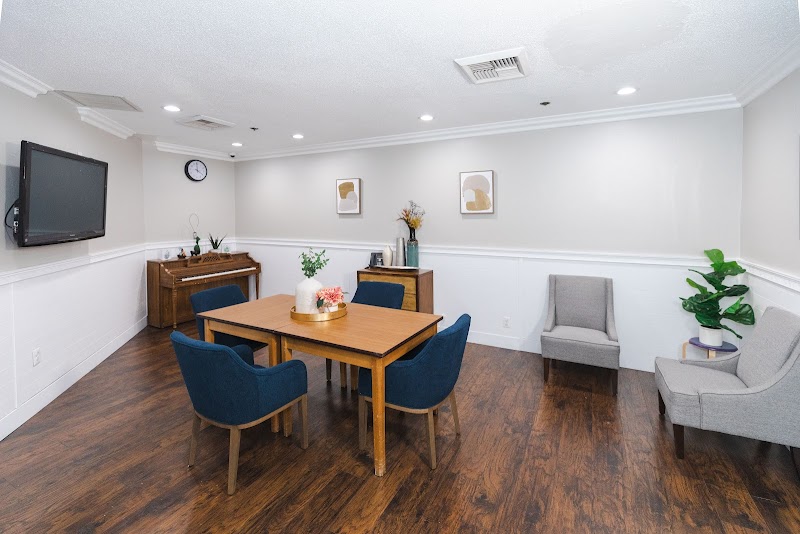
How is Palm Terrace Healthcare & Rehabilitation Center Staffed?
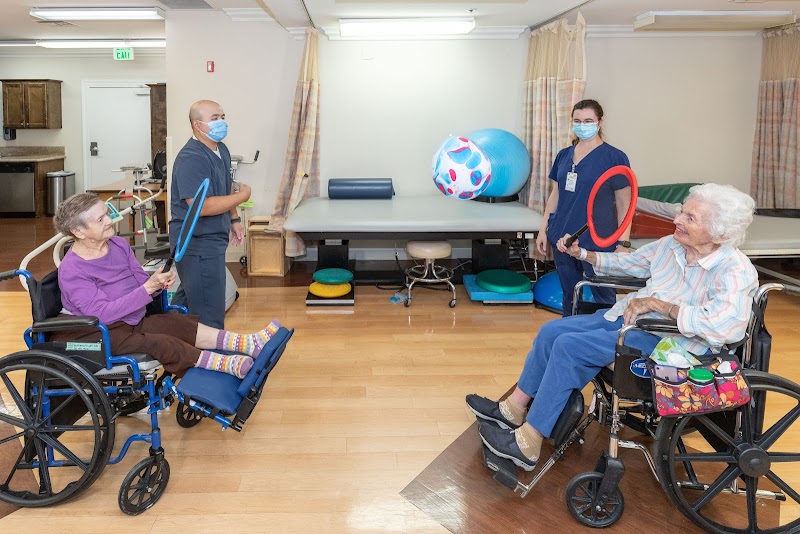
CMS rates Palm Terrace Healthcare & Rehabilitation Center's staffing level at 2 out of 5 stars, which is below average compared to other nursing homes. Staff turnover is 45%, compared to the California average of 46%. This relatively stable workforce can support continuity of care. RN turnover specifically is 57%, which is notably high. RNs provide skilled clinical oversight, so turnover in this role can affect medical care quality.

What Have Inspectors Found at Palm Terrace Healthcare & Rehabilitation Center?

State health inspectors documented 57 deficiencies at Palm Terrace Healthcare & Rehabilitation Center during 2019 to 2025. These included: 52 with potential for harm and 5 minor or isolated issues. While no single deficiency reached the most serious levels, the total volume warrants attention from prospective families.

Who Owns and Operates Palm Terrace Healthcare & Rehabilitation Center?

Palm Terrace Healthcare & Rehabilitation Center is owned by a for-profit company. For-profit facilities operate as businesses with obligations to shareholders or private owners. The facility is operated by THE ENSIGN GROUP, a chain that manages multiple nursing homes. With 99 certified beds and approximately 93 residents (about 94% occupancy), it is a smaller facility located in LAGUNA HILLS, California.

How Does Palm Terrace Healthcare & Rehabilitation Center Compare to Other California Nursing Homes?

Compared to the 100 nursing homes in California, Palm Terrace Healthcare & Rehabilitation Center's overall rating (4 stars) is above the state average of 3.2, staff turnover (45%) is near the state average of 46%, and health inspection rating (4 stars) is above the national benchmark.

What Should Families Ask When Visiting Palm Terrace Healthcare & Rehabilitation Center?

Based on this facility's data, families visiting should ask: "Can you walk me through typical staffing levels on day, evening, and night shifts?" "Can I visit during a mealtime to observe dining assistance and food quality?" "How do you handle medical emergencies, and what is your hospital transfer rate?" "Can I speak with family members of current residents about their experience?" These questions are particularly relevant given the below-average staffing rating.

Is Palm Terrace Healthcare & Rehabilitation Center Safe?

Based on CMS inspection data, Palm Terrace Healthcare & Rehabilitation Center has a clean safety record: no substantiated abuse findings (meaning no confirmed cases of resident harm), no Immediate Jeopardy citations (the most serious violation level indicating risk of serious injury or death), and is not on the Special Focus Facility watch list (a federal program monitoring the lowest-performing 1% of nursing homes). The facility has a 4-star overall rating and ranks #1 of 100 nursing homes in California. While no facility is perfect, families should still ask about staff-to-resident ratios and recent inspection results during their visit.

Do Nurses at Palm Terrace Healthcare & Rehabilitation Center Stick Around?

Palm Terrace Healthcare & Rehabilitation Center has a staff turnover rate of 45%, which is about average for California nursing homes (state average: 46%). Moderate turnover is common in nursing homes, but families should still ask about staff tenure and how the facility maintains care continuity when employees leave.

Was Palm Terrace Healthcare & Rehabilitation Center Ever Fined?

Palm Terrace Healthcare & Rehabilitation Center has no federal fines on record. CMS issues fines when nursing homes fail to meet care standards or don't correct problems found during inspections. The absence of fines suggests the facility has either maintained compliance or corrected any issues before penalties were assessed. This is a positive indicator, though families should still review recent inspection reports for the full picture.

Is Palm Terrace Healthcare & Rehabilitation Center on Any Federal Watch List?

Palm Terrace Healthcare & Rehabilitation Center is not on any federal watch list. The most significant is the Special Focus Facility (SFF) program, which identifies the bottom 1% of nursing homes nationally based on persistent, serious quality problems. Not being on this list means the facility has avoided the pattern of deficiencies that triggers enhanced federal oversight. This is a positive indicator, though families should still review the facility's inspection history directly.