LEMON GROVE CARE AND REHABILITATION CENTER
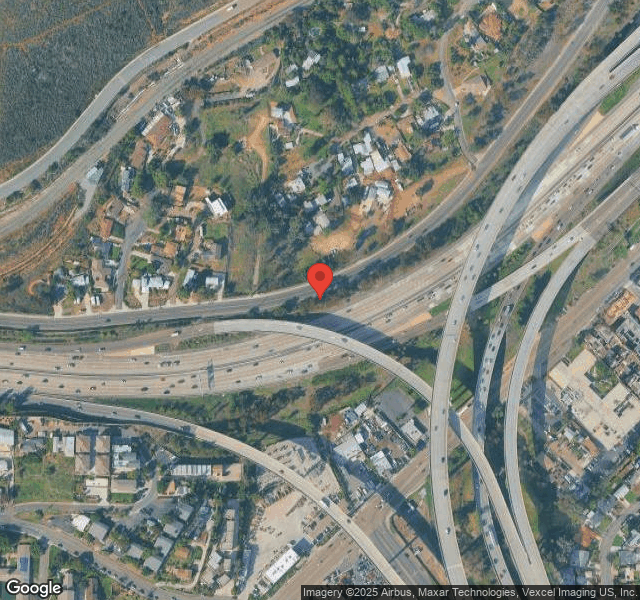
8351 BROADWAY, LEMON GROVE, CA 91945 (619) 463-0294
For profit - Corporation 158 Beds THE ENSIGN GROUP Data: November 2025
Trust Grade
63/100
#388 of 1155 in CA
Last Inspection: August 2024

Within standard 12-15 month inspection cycle. Federal law requires annual inspections.

Overview

Lemon Grove Care and Rehabilitation Center has a Trust Grade of C+, which indicates that it is slightly above average, but there are some concerns to consider. It ranks #388 out of 1,155 facilities in California, placing it in the top half of the state, and #46 out of 81 in San Diego County, meaning only a few local options are better. The facility is improving, with a reduction in issues from 21 to 20 over the past year. Staffing is average with a 3/5 star rating and a turnover rate of 44%, which is about the state average, suggesting some staff retention but room for improvement. However, there have been serious incidents, such as a resident's death linked to drug access, and concerns regarding food safety and sanitation practices that need addressing. Overall, while the center has some strengths, families should weigh these significant weaknesses carefully.

Trust Score
C+
63/100
In California
#388/1155
Top 33%
Safety Record
Moderate
Needs review
Inspections
Getting Better
21 → 20 violations
Staff Stability
○ Average
44% turnover. Near California's 48% average. Typical for the industry.
Penalties
✓ Good
$7,443 in fines. Lower than most California facilities. Relatively clean record.
Skilled Nurses
⚠ Watch
Each resident gets only 22 minutes of Registered Nurse (RN) attention daily — below average for California. Fewer RN minutes means fewer trained eyes watching for problems.
Violations
⚠ Watch
67 deficiencies on record. Higher than average. Multiple issues found across inspections.
★★★★☆
4.0
Overall Rating
★★★☆☆
3.0
Staff Levels
★★★★★
5.0
Care Quality
★★★☆☆
3.0
Inspection Score
Stable
2023: 21 issues
2024: 20 issues

The Good

  • 5-Star Quality Measures · Strong clinical quality outcomes
  • Full Sprinkler Coverage · Fire safety systems throughout facility
  • No fines on record
  • Staff turnover below average (44%)

    4 points below California average of 48%

Facility shows strength in quality measures, fire safety.

The Bad

Staff Turnover: 44%

Near California avg (46%)

Typical for the industry

Federal Fines: $7,443

Below median ($33,413)

Minor penalties assessed

Chain: THE ENSIGN GROUP

Part of a multi-facility chain

Ask about local staffing decisions and management

The Ugly 67 deficiencies on record

1 actual harm
Dec 2024 1 deficiency
CONCERN (D) 📢 Someone Reported This

A family member, employee, or ombudsman was alarmed enough to file a formal complaint

Potential for Harm - no one hurt, but risky conditions existed

Assessment Accuracy (Tag F0641)

Could have caused harm · This affected 1 resident

**NOTE- TERMS IN BRACKETS HAVE BEEN EDITED TO PROTECT CONFIDENTIALITY** Based on interview and record review, the facility failed to accurately code the required resident assessment for 1 resident rev...

Read full inspector narrative →
**NOTE- TERMS IN BRACKETS HAVE BEEN EDITED TO PROTECT CONFIDENTIALITY** Based on interview and record review, the facility failed to accurately code the required resident assessment for 1 resident reviewed for accuracy of assessments. This failure had the potential for not identifing Resident 1's needs. Findings: An unanounced visit was made to the facility on [DATE] in response to a report of a fall. Record review was initiatied on 12/10/24. Resident 1 was admitted to the facility on [DATE] with health conditions which ncluded need for assistance with personal care and unspecified hearing loss according to the admission Record. On 12/10/24 at 11:38 A.M., Licensed Nurse (LN) 3 was interviewed. LN 3 stated Resident 1 was deaf, and preferred to have staff write questions to her, and she would answer verbally. On 12/10/24 at 11:40 A.M., Resident 1 was interviewed. The questions were written and answered verbally by Resident 1. Resident 1 laughed when asked if one ear was better than another. Resident 1 stated both ears are crap. On 12/10/24 at 2:10 P.M., an interview and joint review of Resident 1's clinical records was conducted with the Case manager (CM). The History & Physical note dated, 3/20/24 indicated, Resident 1 was deaf and verbally responds to written communication, and does not use sign language. Resident 1 is alert and oriented, (thinking ability and general memory is intact) and able to make her own decisions. A hospital Social Worker note dated, 2/28/24 indicated, Resident 1 was deaf, and an interview was conducted with the social worker writing, and Resident 1 responding verbally. The facility Nursing admission assessment dated , 3/18/24 indicated, Resident 1's ability to hear was Highly Impaired (Absence of useful hearing); and was alert and oriented (thinking and memory intact). The MDS (minimum data set- a required facility assessment for all residents) dated, 3/24/24 (admission), 6/18/24 (quarterly) and 9/12/24 (quarterly) assessments indicated, Resident 1's hearing was Adequate -no difficulty in normal conversation, social interaction, listening to TV. The CM stated the expectation was, all MDS assessments were to be completed in person. After reviewing the records, the CM stated the Social Worker (SW 1) who completed the 9/12/24 assessment for Resident 1's hearing made a mistake. The CM also stated she did not know how this would have been done. SW 1 was not available for interview. On 12/10/24 at 2:15 P.M., an interview and review of the same records was conducted with the MDS Coordinator Nurse (LN 1). LN 1 stated all interviews and assessments were completed face to face with the residents. LN 1 verified she had signed the MDS hearing assessments dated 3/24/24 and 6/18/24 for Resident 1. LN 1 stated she did not remember why she coded the assessments as Adequate for Resident 1.
Dec 2024 2 deficiencies
CONCERN (D) 📢 Someone Reported This

A family member, employee, or ombudsman was alarmed enough to file a formal complaint

Potential for Harm - no one hurt, but risky conditions existed

Deficiency F0620 (Tag F0620)

Could have caused harm · This affected 1 resident

**NOTE- TERMS IN BRACKETS HAVE BEEN EDITED TO PROTECT CONFIDENTIALITY** Based on interview and record review, the facility failed to implement their admission policy when one of three residents (Resid...

Read full inspector narrative →
**NOTE- TERMS IN BRACKETS HAVE BEEN EDITED TO PROTECT CONFIDENTIALITY** Based on interview and record review, the facility failed to implement their admission policy when one of three residents (Resident 1) was admitted to the facility without sufficient information to determine if appropriate care and services could be provided to the resident. As a result of this deficient practice, the facility sent Resident 1 back to the hospital which had the potential to cause the resident distress. Findings: A review of Resident 1's admission Record indicated the resident was admitted to the facility on [DATE] and was discharged on 6/19/24. On 11/14/24 at 4:24 P.M., a telephone interview was conducted with Resident 1. Resident 1 stated he met with the facility's admissions marketer (AM) while he was at the hospital. Resident 1 stated he had disclosed his parole status to the AM and that he wore an ankle monitor as a condition of his parole. Resident 1 stated he was admitted to the facility, given a room and bed, and was provided dinner. Resident 1 stated everything was fine until the next morning when an administrative staff member came into his room and asked about his parole status and ankle monitor. Resident 1 stated the administrative staff member told him, We can't have you here, and that he would have to go back to the hospital. Resident 1 stated, It wasn't right , but he did not want to cause trouble. Resident 1 stated, If I mess up in any way, I go back to prison Resident 1 stated a transport came and took him back to the hospital and he stayed overnight in the emergency room. Resident 1 stated he did not do anything inappropriate while at the facility. Resident 1 stated he did not have a medical need that required treatment at the hospital. Resident 1 stated, They just didn't want me there [at the facility]. On 11/15/24 at 9:15 A.M., an interview was conducted with the facility's admissions coordinator (AC). The AC stated he reviewed the hospital referrals and a potential resident's clinical record to see if the facility could meet their needs. The AC was asked what admission criteria the facility followed to determine who could be admitted at the facility. The AC stated, We don't have admission criteria. We want to say yes to everyone. The AC stated the facility did not screen potential residents for parole status or if they had a criminal background. The AC stated the facility had admitted a resident before with an ankle monitor and that there was communication between the facility and the resident's parole officer. The AC stated, We take residents with criminal backgrounds. They're no different than anyone else A review of Resident 1's admission Note dated 6/18/24, indicated, the resident was admitted to the facility at 3:46 P.M., and that the resident was pleasant and cooperative. There was no mention of Resident 1's ankle monitor in the admission note. A review of Resident 1's Progress Note dated 6/19/24 at 9:35 A.M., indicated, Placed call to [nurse practitioner] regarding resident history and also informed about resident ankle monitor, [hospital] did not disclose this information and resident history, received new order to send out resident to hospital for further eval A review of Resident 1's Progress Note dated 6/19/24 at 10 A.M., indicated, .With ankle monitor. Noted new order from [physician] to send resident back to [hospital], re: no disclosure to resident's history. Resident has been picked up by [transport] at 11 A.M On 11/15/24 at 10:47 A.M., a joint interview and record review was conducted with licensed nurse (LN). LN 1 reviewed Resident 1's clinical record and stated there was no documentation the resident had presented as a danger to self or others while at the facility. LN 1 stated there was no documentation Resident 1 had a medical situation that required evaluation at the hospital. LN 1 stated, The only reason [Resident 1] was sent back was because the hospital didn't disclose the monitor. On 11/15/24 at 11:08 A.M., a joint interview and record review was conducted with the director of nursing (DON). The DON stated the facility did not have sufficient information about Resident 1 and that the hospital did not tell the facility about the resident's parole status. The DON stated Resident 1 had slipped through the facility's admission process and, We need to tighten our admission screening process. The DON reviewed the facility's admission criteria on an undated document titled Admissions Decision Tree. The DON stated there was no criteria on the document to screen for residents with criminal history or those on parole. The DON stated that should be included on the Admissions Decision Tree so the facility could adequately determine if a resident was appropriate for admission. The DON reviewed the facility's Facility Assessment (document that evaluated the facility's ability to provide care to residents and the resources that were needed to provide care/treatment) dated 8/2/24. The DON stated there was no mention of residents with criminal background or those on parole because, We aren't able to provide care to them. The DON acknowledged the facility had admitted Resident 1 and without properly screening the resident. The DON stated they were not comfortable providing care to him. A review of the facility's policy titled Admission, General revised 1/2024, indicated, .Assessment of Need .All aspects of an individual's care are carefully considered during admission .The decision to admit the resident is based on knowledge that the facility can meet the medical and psychosocial needs of the resident adequately. If the facility does not receive sufficient information to make an informed decision as to whether the facility can provide adequate care for the resident, the facility will not admit the resident
CONCERN (D) 📢 Someone Reported This

A family member, employee, or ombudsman was alarmed enough to file a formal complaint

Potential for Harm - no one hurt, but risky conditions existed

Transfer Requirements (Tag F0622)

Could have caused harm · This affected 1 resident

**NOTE- TERMS IN BRACKETS HAVE BEEN EDITED TO PROTECT CONFIDENTIALITY** Based on interview and record review, the facility failed to ensure one of three residents (Resident 1) was permitted to remain ...

Read full inspector narrative →
**NOTE- TERMS IN BRACKETS HAVE BEEN EDITED TO PROTECT CONFIDENTIALITY** Based on interview and record review, the facility failed to ensure one of three residents (Resident 1) was permitted to remain in the facility when the resident was discharged to the hospital without a valid clinical reason. This deficient practice had to potential to cause Resident 1 to experience psychosocial and emotional distress. Findings: A review of Resident 1's admission Record indicated the resident was admitted to the facility on [DATE] and was discharged on 6/19/24. On 11/14/24 at 4:24 P.M., a telephone interview was conducted with Resident 1. Resident 1 stated he met with the facility's admissions marketer (AM) while he was at the hospital. Resident 1 stated he had disclosed his parole status to the AM and that he wore an ankle monitor as a condition of his parole. Resident 1 stated he was admitted to the facility, given a room and bed, and was provided dinner. Resident 1 stated everything was fine until the next morning when an administrative staff member came into his room and asked about his parole status and ankle monitor. Resident 1 stated the administrative staff member told him, We can't have you here, and that he would have to go back to the hospital. Resident 1 stated, It wasn't right , but he did not want to cause trouble. Resident 1 stated, If I mess up in any way, I go back to prison Resident 1 stated a transport came and took him back to the hospital and he stayed overnight in the emergency room. Resident 1 stated he did not do anything inappropriate while at the facility. Resident 1 stated he did not have a medical need that required treatment at the hospital. Resident 1 stated, They just didn't want me there [at the facility]. On 11/15/24 at 9:15 A.M., an interview was conducted with the facility's admissions coordinator (AC). The AC stated once the facility admitted a resident they're ours. The AC stated the facility, Can't send [residents] back to the hospital if we change our minds. It doesn't work like that. The AC further stated, We take residents with criminal backgrounds. They're no different than anyone else .everyone deserves the same respect and treatment A review of Resident 1's admission Note dated 6/18/24, indicated, the resident was admitted to the facility at 3:46 P.M., and that the resident was pleasant and cooperative. There was no mention of Resident 1's ankle monitor in the admission note. A review of Resident 1's Progress Note dated 6/19/24 at 9:35 A.M., indicated, Placed call to [nurse practitioner] regarding resident history and also informed about resident ankle monitor, [hospital] did not disclose this information and resident history, received new order to send out resident to hospital for further eval A review of Resident 1's Progress Note dated 6/19/24 at 10 A.M., indicated, .With ankle monitor. Noted new order from [physician] to send resident back to [hospital], re: no disclosure to resident's history. Resident has been picked up by [transport] at 11 A.M On 11/15/24 at 10:47 A.M., a joint interview and record review was conducted with licensed nurse (LN). LN 1 reviewed Resident 1's clinical record and stated there was no documentation the resident had presented as a danger to self or others while at the facility. LN 1 stated there was no documentation Resident 1 had a medical situation that required evaluation at the hospital. LN 1 stated, The only reason [Resident 1] was sent back was because the hospital didn't disclose the monitor. LN 1 further stated, We can't send [residents] back to the hospital because we don't want them. LN 1 stated there was a reason Resident 1 was admitted and it was the resident's right to stay until it was appropriate to discharge to a lower level of care (home). On 11/15/24 at 11:08 A.M., a joint interview and record review was conducted with the director of nursing (DON). The DON was asked about a resident's right to remain in the facility until it was appropriate to discharge to a lower level of care. The DON stated, Yes, they're ours once we take them. He [Resident 1] slipped through, and we need to tighten our admission screening process. The DON reviewed Resident 1's clinical record and stated there was no documentation the resident had any behavior that endangered self or others and had no medical need that required hospital care and/or evaluation. The DON acknowledged the facility had admitted Resident 1 and without properly screening the resident. The DON stated they were not comfortable providing care to him and sent the resident back to the hospital. A review of the facility's policy titled Admission, General revised 1/2024, indicated, .This facility shall not transfer or discharge the resident from the facility unless: Transfer or discharge is necessary for the resident's welfare and the resident's needs cannot be met in the facility. Transfer or discharge is appropriate because the resident's health has sufficiently improved and the resident no longer needs the services provided by the facility. The safety of individuals in the facility are endangered . The health of individuals in the facility would otherwise be endangered
Oct 2024 1 deficiency
CONCERN (D) 📢 Someone Reported This

A family member, employee, or ombudsman was alarmed enough to file a formal complaint

Potential for Harm - no one hurt, but risky conditions existed

Deficiency F0657 (Tag F0657)

Could have caused harm · This affected 1 resident

**NOTE- TERMS IN BRACKETS HAVE BEEN EDITED TO PROTECT CONFIDENTIALITY** Based on interview and record review, the facility failed to update the care plan with resident-specific interventions for one o...

Read full inspector narrative →
**NOTE- TERMS IN BRACKETS HAVE BEEN EDITED TO PROTECT CONFIDENTIALITY** Based on interview and record review, the facility failed to update the care plan with resident-specific interventions for one of one resident reviewed for falls (Resident 1). This failure had the potential for Resident 1 to sustain further falls. Findings: According to the admission Record, Resident 1 was admitted to the facility on [DATE] with diagnoses that included muscle weakness, cognitive communication deficit (difficulty with memory and communicating needs) , and early onset Alzheimer ' s disease (a disease which affects memory). A review of Resident 1's MDS (Minimum Data Set, an assessment tool) indicated for showering, Resident 1 was dependent on staff. The MDS indicated, Dependent- Helper does ALL of the effort. Resident does none of the effort to complete the activity. Or, the assistance of 2 or more helpers is required for the resident to complete the activity. On 9/27/24 at 9:17 A.M., an interview was conducted with Resident 1. Resident 1 stated she had a fall in the shower, while sitting in a shower chair. Resident 1 stated Certified Nursing Assistant (CNA) 1 was standing next to her in the shower. Resident 1 stated, I think they should have two people showering me from now on so it doesn ' t happen again. On 9/27/24 at 10:07 A.M., an interview was conducted with Licensed Nurse (LN) 1. LN 1 stated Resident 1 was .alert, but can get forgetful and confused sometimes. LN 1 stated prior to the fall on 9/12/24, Resident 1 required the assistance of one staff member for activities of daily living (ADL ' s). LN 1 stated after the fall on 9/12/24, Resident 1 required two staff members for assistance. On 10/15/24 at 3:02 P.M., an interview was conducted with the Director of Nursing (DON). The DON stated the root cause of Resident 1 ' s fall was determined as .a sudden movement . by Resident 1. The DON stated interventions to prevent further falls included giving Resident 1 a bed bath instead of showers, and .educate the resident and staff . A review of Resident 1 ' s records indicated Resident 1 ' s care plan dated 9/16/24, was not updated with the interventions that addressed the root cause of the fall. A review of the facility ' s policy titled Falls Prevention dated 1/24 indicated, It is the policy of this facility to: .identify residents at risk for falls and determine appropriate interventions .Care plans will be revised and/or updated to reflect changes in intervention .
Sept 2024 1 deficiency
CONCERN (D) 📢 Someone Reported This

A family member, employee, or ombudsman was alarmed enough to file a formal complaint

Potential for Harm - no one hurt, but risky conditions existed

Medical Records (Tag F0842)

Could have caused harm · This affected 1 resident

**NOTE- TERMS IN BRACKETS HAVE BEEN EDITED TO PROTECT CONFIDENTIALITY** Based on interview and record review, the facility failed to ensure documentation in the clinical record was accurate for one of...

Read full inspector narrative →
**NOTE- TERMS IN BRACKETS HAVE BEEN EDITED TO PROTECT CONFIDENTIALITY** Based on interview and record review, the facility failed to ensure documentation in the clinical record was accurate for one of two residents (Resident 1) when: 1. Licensed nurses (LN) documented Lithium (a mood stabilizing medication) as having been administered to the Resident 1 when the medication was unavailable. 2. Resident 1 ' s documented behavior monitoring did not reflect accurate observations of the resident ' s behavior. As a result, Resident 1 ' s clinical record did not accurately reflect the care and treatment that was provided. Findings: A review of Resident 1 ' s admission Record indicated, the resident was admitted to the facility on [DATE] and readmitted on [DATE] with diagnoses to include schizophrenia (mental illness characterized by paranoia, hallucinations, and/or delusions) and acquired absence of left upper limb above the elbow. 1. On 9/5/24, a record review was conducted. Resident 1 ' s readmitting orders from [hospital name] dated 8/19/24, indicated the resident was to take Lithium 300 milligrams (mg) twice a day. A review of Resident 1 ' s medication administration record (MAR) for August 2024 indicated, Lithium 300 mg was given in the morning and evening on 8/20/24, and in the morning on 8/21, 8/23, 8/24, 8/25, 8/26, and 8/27/24. A review of Resident 1 ' s progress notes dated 8/26/24 indicated, Call pharmacy and spoke to [name omitted] regarding medication Lithium Carbonate oral tablet 300 mg. She stated that she doesn ' t see this medication on her side . The progress note further indicated the pharmacy had not dispensed Resident 1 ' s Lithium 300mg as they believed the resident was allergic to Lithium. A review of Resident 1 ' s progress notes dated 8/27/24 at 11:57 A.M., indicated the pharmacy was notified that the nurse practitioner had discontinued the resident ' s allergy to Lithium. The pharmacy was asked again to dispense and send Resident 1 ' s Lithium to the facility. On 9/5/24 at 1:36 P.M., a joint interview and record review was conducted with LN 3. LN 3 reviewed Resident 1 ' s August 2024 MAR and stated he was assigned as the resident ' s medication nurse on 8/25/24. LN 3 stated Resident 1 ' s Lithium was not dispensed from the pharmacy when the resident was readmitted on [DATE] because they thought the resident was allergic to it. LN 3 stated he documented that he gave Resident 1 the Lithium 300 mg at 9 A.M. on 8/25/24. LN 3 stated that documentation was in error. LN 3 stated it was not possible to give Lithium to Resident 1 as the medication had not been dispensed by the pharmacy until 8/27/24. LN 3 removed Resident 1 ' s Lithium 300 mg medication card (individual pills on a card for daily administration) from the medication cart. Resident 1 ' s Lithium medication card was dated 8/27/24 and one dose was empty on the card (#14). LN 3 stated the date of 8/27/24 on the card meant the pharmacy dispensed the medication on that day and that the medication would have been brought to the facility sometime in the evening on 8/27/24. LN 3 further reviewed Resident 1 ' s August 2024 MAR for Lithium 300 mg and stated when LNs documented they gave Lithium in the morning and evening on 8/20/24, and in the morning on 8/21, 8/23, 8/24, 8/25, 8/26, and 8/27/24, that was all in error. LN 3 stated Resident 1 ' s Lithium was not available to give until evening on 8/27/24 or the next day (8/28/24). LN 3 stated the documentation in Resident 1 ' s MAR should have been accurate. On 9/5/24 at 2:23 P.M., a joint interview and record review was conducted with LN 4. LN 4 reviewed Resident 1 ' s August 2024 MAR and acknowledged her documentation on 8/26/24 as having administered Lithium to the resident at 9 A.M. LN 4 stated she could not recall anything about Resident 1 ' s Lithium. LN 4 stated documentation in the residents ' clinical records should accurately reflect care and/or treatment that was rendered. 2. A review of Resident 1 ' s August 2024 medication administration record (MAR) was conducted. Resident 1 was receiving Risperidone (antipsychotic medication to treat psychosis) and had behavior monitoring associated with the medication. The MAR indicated, .Monitor episodes of psychotic behavior AEB [as evidenced by]: striking out toward others (Risperidone) Review of Resident 1 ' s MAR indicated the resident manifested the behavior striking out toward others twice on 8/23/24, five times on 8/24/24, six times on 8/25/24, six times on 8/27/24, and three times on 8/28/24. On 9/5/24 at 1:36 P.M., a joint interview and record review was conducted with LN 3. LN 3 stated he was familiar with Resident 1 and had been the resident ' s assigned nurse on 8/25/24. LN 3 reviewed Resident 1 ' s clinical record and his documentation on the resident ' s MAR on 8/25/24 for Risperidone behavior monitoring. LN 3 stated striking out toward others meant the resident had hit someone or attempted to hit someone. LN 3 stated he had documented this behavior as having occurred 3 times on 8/25/24 and that this documentation had been in error. LN 3 stated he had never seen Resident 1 strike or hit another person, nor attempt to do so. LN 3 stated by inaccurately documenting the resident striking out three times, it appeared there was an issue with this behavior. LN 3 stated if Resident 1 struck or hit someone, this would have needed to be reported to the physician. LN 3 stated the documented observations of Resident 1 ' s behavior should have been accurate. On 9/5/24 at 1:50 P.M., a joint interview and record review was conducted with LN 5. LN 5 reviewed Resident 1 ' s clinical record and stated striking out toward others meant attempting to or actually hitting another person. LN 5 stated she never saw Resident 1 strike another person. LN 5 stated Resident 1 would swing his amputated arm when walking in a manner that was taunting. LN 5 reviewed her documentation on Resident 1 ' s MAR on 8/23, 8/24, and 8/27/24 and acknowledged she had documented episodes where Resident 1 was observed striking out toward others (twice on 8/23, twice on 8/24, and three times on 8/27/24). LN 5 stated she documented those episodes when Resident 1 moved his amputated arm in a taunting manner. LN 5 stated she did not have a place to document those observations and recorded them as striking out toward others. LN 5 stated she should have clarified the behavior monitoring order. LN 5 stated her documentation should have been accurate and that inaccurately documenting Resident 1 ' s behavior, Gives the wrong idea of the resident ' s behavior. On 9/5/24 at 2:23 P.M., a joint interview and record review was conducted with LN 4. LN 4 stated she saw Resident 1 swing his amputated arm at the corner of his room, but not at anyone. LN 4 reviewed Resident 1 ' s August 2024 MAR and stated she documented Resident 1 as striking out at others three times on 8/26 and three times on 8/28/24. LN 4 stated she did not observe the resident striking at anyone only swinging his amputated arm. LN 4 stated she should not have documented observing Resident 1 swing his amputated arm as striking out at others and that her documentation had not been accurate. On 9/5/24 at 3:11 P.M., an interview was conducted with the director of nursing (DON). The DON stated the LN documentation in Resident 1 ' s MAR should have been accurate. The DON acknowledged Resident 1 ' s Lithium was not dispensed from the pharmacy until 8/27/24. The DON stated LNs should not have been documenting that they gave a medication that they did not give. A review of the facility ' s policy titled Charting and Documentation revised 1/2023, did not provide guidance related to the accuracy of documentation.
Aug 2024 11 deficiencies
CONCERN (D)

Potential for Harm - no one hurt, but risky conditions existed

Resident Rights (Tag F0550)

Could have caused harm · This affected 1 resident

**NOTE- TERMS IN BRACKETS HAVE BEEN EDITED TO PROTECT CONFIDENTIALITY** Based on observation, interview, and record review, the facility failed to ensure one of three residents (Resident 106) was assi...

Read full inspector narrative →
**NOTE- TERMS IN BRACKETS HAVE BEEN EDITED TO PROTECT CONFIDENTIALITY** Based on observation, interview, and record review, the facility failed to ensure one of three residents (Resident 106) was assisted with a meal in a dignified manner. This failure had the potential for Resident 106 to experience a diminished self-worth. Findings: Resident 106 was re-admitted to the facility on [DATE], with diagnoses which included epilepsy (seizures), per the facility's admission Record. An observation was conducted from the hallway on 8/12/24 at 12:23 P.M. of a staff member feeding Resident 106 in her room. Resident 1 was sitting up in bed and slightly slumped to the right. A staff member was standing on the right side of the bed, feeding the resident a pureed diet (food that has a soft pudding-like consistency). The staff member was standing approximately two feet above the resident's head, looking downward. On 8/12/24 at 12:24 P.M., the staff member was called out from the room. The staff member identified herself as Speech Therapist 1 (ST 1). ST 1 stated she was feeding Resident 106, to assess her swallowing skills. ST 1 stated she was never informed it was proper to feed a resident at eye-to eye level. ST 1 stated sitting at eye level made sense and no one had ever informed her of that. An interview was conducted with Licensed Nurse 31 (LN 31) on 8/12/24 at 12:28 P.M. LN 31 stated all staff should sit while feeding a resident, to promote the resident's dignity. LN 31 stated if staff did not maintain eye level while feeding a resident, the resident could feel intimated and unimportant. An interview was conducted with physical therapy assistant 1 (PTA 1) on 8/12/24 at 3:01 P.M., since the Director of Rehabilitation was unavailable. The PTA 1 stated all residents should be fed at an eye-to-eye level, to promote their dignity. PTA 1 stated ST 1 was currently in her clinical fellowship, a 36-week training period for speech therapy certification. The PTA 1 stated she was unaware if ST 1 received training on proper feeding of residents when hired and PTA 1 will look for any documentation of facility training. On 8/13/24, the PTA 1 was unable to locate any documented evidence ST 1 had facility training related to feeding residents in a dignified manner. On 8/14/24, Resident 106's clinical record was reviewed. According to the 5-day Minimum Data Set (MDS-a clinical assessment tool), dated 7/19/24, Resident 106's cognitive assessment score was 13, indicating cognition was intact. The functional ability's assessment indicated Resident 106 required supervision and assistance while eating. An interview was conducted with the Director of Nursing (DON) on 8/14/24 at 11:05 A.M. The DON stated she expected all staff to maintain eye level with the residents while assisting with meals, because it was a dignity issue. According to the facility's policy titled Dignity and Privacy, dated November 2021, It is the policy of this facility that all residents be treated with kindness, dignity, and respect. 1. The staff shall display respect for Resident's when .caring for .
CONCERN (D)

Potential for Harm - no one hurt, but risky conditions existed

Deficiency F0583 (Tag F0583)

Could have caused harm · This affected 1 resident

**NOTE- TERMS IN BRACKETS HAVE BEEN EDITED TO PROTECT CONFIDENTIALITY** Based on observation, interview, and record review, the facility failed to ensure privacy was provided to one of 29 residents (R...

Read full inspector narrative →
**NOTE- TERMS IN BRACKETS HAVE BEEN EDITED TO PROTECT CONFIDENTIALITY** Based on observation, interview, and record review, the facility failed to ensure privacy was provided to one of 29 residents (Resident 32) during personal care. As a result, there was the potential for Resident 32 to feel embarrassed and distressed. Findings: A review of Resident 32's admission Record indicated that the resident was admitted to the facility on [DATE] with diagnoses to include Alzheimer's disease (a progressive disease that destroys memory and other important mental functions). A review of Resident 32's Minimum Data Set Assessment (MDS, a comprehensive assessment tool) dated 7/16/24, indicated the resident scored 03 on the brief interview of mental status (a score of 03 meant the resident was severely cognitively impaired). On 8/12/24 at 9:40 A.M., an observation was conducted from the hallway outside of Resident 32's room. The door opened to Resident 32's room, and certified nursing assistant (CNA) 50 left the room carrying a bag of soiled items. Resident 32 was visible from the hallway while laying in bed with his knees bent and wearing only a brief (adult diaper) and socks on the lower half of his body. Resident 32 wore a shirt and jacket on his upper body. Resident 32's blankets and sheets were rolled up in a ball at the foot of the bed. On 8/12/24 at 9:47 A.M., licensed nurse (LN) 51 was observed walking to Resident 32's room carrying a pair of jeans. LN 51 went inside Resident 32's room and closed the door. On 8/12/24 at 9:49 A.M., the door to Resident 32's room opened and LN 51 left the room. Resident 32 was observed laying in bed wearing the pair of jeans. On 8/13/24 at 12:07 P.M., an interview was conducted with LN 51. LN 51 stated Resident 32 should have been provided privacy with his curtain drawn so he was not visible from the hallway wearing a brief. LN 51 stated Resident 32 was confused and was not able to verbalize his feelings. LN 51 stated if it had been her, I wouldn't have appreciated that. It's not dignified. On 8/13/24 at 12:23 P.M., an interview was conducted with CNA 50. CNA 50 stated she should have pulled the curtain when leaving Resident 32's room so his brief was not visible to others who were walking in the hallway. CNA 50 stated, I wouldn't have liked that. On 8/14/24 at 3:25 P.M., an interview was conducted with the director of nursing (DON). The assistant director of nursing was also present. The DON stated privacy should have been provided to Resident 32 when he was being changed and dressed. The DON stated the resident's curtain should have been drawn and the door closed. A review of the facility's undated policy titled Resident Rights Subject: Dignity and Privacy, . 3. Residents shall be examined and treated in a manner that maintains privacy of their bodies. A closed door or drawn curtain shields the Resident from passers-by . 4. Privacy of a Resident's body shall be maintained during toileting, bathing and other activities of personal hygiene
CONCERN (D)

Potential for Harm - no one hurt, but risky conditions existed

Deficiency F0679 (Tag F0679)

Could have caused harm · This affected 1 resident

**NOTE- TERMS IN BRACKETS HAVE BEEN EDITED TO PROTECT CONFIDENTIALITY** Based on observation, interview and record review, the facility failed to provide activities of interest for one of one resident...

Read full inspector narrative →
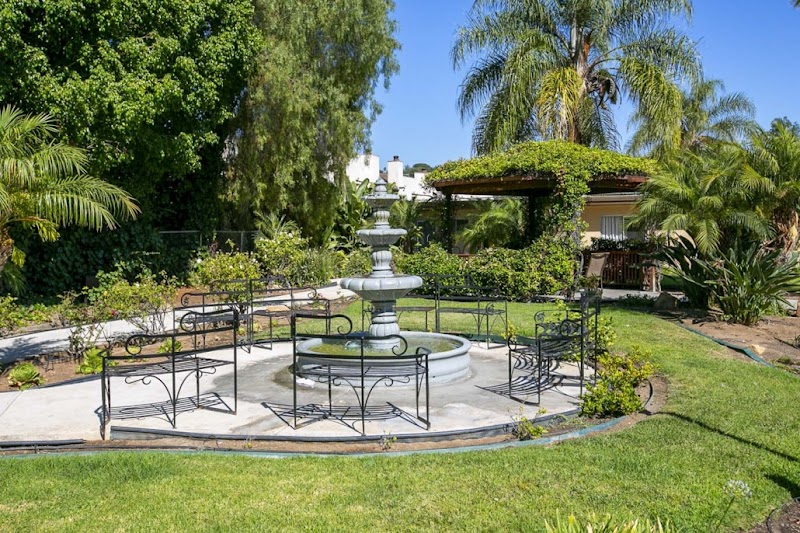
**NOTE- TERMS IN BRACKETS HAVE BEEN EDITED TO PROTECT CONFIDENTIALITY** Based on observation, interview and record review, the facility failed to provide activities of interest for one of one residents (47) reviewed for activities. This failure had the potential to not maintain or improve Resident 47's physical, mental and psychosocial well-being and independence. Findings: Resident 47 was admitted to the facility on [DATE] with diagnoses that included fracture of thoracic vertebra (bones of the spine). A concurrent observation and interview was conducted on 8/12/24 at 11:49 A.M. with Resident 47. Resident 47 was observed sitting in her wheelchair in her room, looking out at the garden and fountain. Resident 47 stated she was bored and did not attend activities because, The games were for 2 year olds. An interview was conducted on 8/14/24 at 9:20 A.M. with the Activity Director (AD). The AD stated, This resident does not want to do activities. An activity/interest assessment was never completed and should have been within five days after admission. A review of Resident 47's activities care plan indicated, Resident has little to no involvement in activities .Resident wishes to not participate in any activities . An interview was conducted on 8/15/25 at 11:25 A.M. with the administrator (ADM) and the Consultant. The consultant stated, Our activities program needs enrichment and we should have assessed her more thoroughly. A review of the facility's policy, dated 3/2019, titled, Activities Program, indicated, Policy .It is the policy of this facility to implement an ongoing resident centered activities program that incorporated the resident's interests, hobbies and cultural preferences which is integral to maintaining and/or improving a resident's physical, mental and psychosocial well-being and independence .Procedures:1. Activities are planned according to the residents' preferences,needs and abilities. Every resident will be interviewed for preferences .
CONCERN (D)

Potential for Harm - no one hurt, but risky conditions existed

Deficiency F0699 (Tag F0699)

Could have caused harm · This affected 1 resident

**NOTE- TERMS IN BRACKETS HAVE BEEN EDITED TO PROTECT CONFIDENTIALITY** Based on observation, interview, and record review, the facility did not ensure a resident with a past trauma received trauma in...

Read full inspector narrative →
**NOTE- TERMS IN BRACKETS HAVE BEEN EDITED TO PROTECT CONFIDENTIALITY** Based on observation, interview, and record review, the facility did not ensure a resident with a past trauma received trauma informed care in accordance with professional standards of practice in order to eliminate or mitigate triggers that may cause re-traumatization of the resident for one of one residents (42 ) reviewed for trauma informed care. As a result, there was the potential for the resident to not have a sense of emotional and physical safety. Findings: Resident 42 was admitted to the facility on [DATE] with diagnoses that included Post-Traumatic Stress Disorder (PTSD- a condition in which a person has difficulty recovering after witnessing or experiencing a terrifying event) according to the facility's admission Record. A concurrent observation and interview was conducted on 8/12/24 at 3 P.M. with Resident 42. Resident 42 was reclining in his bed, watching TV. Resident 42 only wanted to discuss the weather. A review of Resident 42's care plan was reviewed on 8/13/24 at 8:30 A.M. The care plan, titled PTSD, indicated, .Resident is at risk for re-traumatization R/T diagnosis of Post Traumatic Stress Disorder (PTSD); Resident is unable to identify triggers . An interview was conducted on 8/13/24 at 3:24 P.M. with the Assistant Director of Nursing (ADON). The ADON stated, We have been unable to identify his triggers. An interview was conducted on 8/14/24 at 8:40 A.M. with certified nursing assistant (CNA) 21. CNA 21 stated, I don't know his (Resident 42) triggers. An interview was conducted on 8/14/24 at 8:43 A.M. with Registered Nurse (RN) 22. RN 22 stated, I don't know his (Resident 42) triggers, but we should know so we can help avoid them or deal with them. An interview was conducted on 8/14/24 at 8: 50 A.M. with the Director of Staff Development (DSD). The DSD stated, His (Resident 42) triggers are not known to us, but we should try to find out. An interview was conducted on 8/15/24 at 11:41 A.M. with the Administrator (Adm) and the consultant. The consultant stated, The resident and his family can't tell us his triggers, so we should have explored the diagnosis and the triggers more; the care plan is inadequate. A review of the facility's policy, dated 12/2023, titled Behavioral Health Services, indicated, .Policy: It is the policy of this facility to provide residents with necessary behavioral care and services to attain or maintain the highest practicable physical, mental, and psychosocial well-being .trauma survivors will receive culturally competent, trauma-informed cared in accordance with professional standards of practice and accounting for residents experiences and preferences in order to eliminate triggers that may cause re-traumatization of the resident .
CONCERN (D)

Potential for Harm - no one hurt, but risky conditions existed

Deficiency F0726 (Tag F0726)

Could have caused harm · This affected 1 resident

**NOTE- TERMS IN BRACKETS HAVE BEEN EDITED TO PROTECT CONFIDENTIALITY** Based on observation, interview, and record review, the facility failed to ensure one of four licensed nurses (LN) 10 was compet...

Read full inspector narrative →
**NOTE- TERMS IN BRACKETS HAVE BEEN EDITED TO PROTECT CONFIDENTIALITY** Based on observation, interview, and record review, the facility failed to ensure one of four licensed nurses (LN) 10 was competent (a measurable pattern of knowledge, skills, abilities, behaviors, and other characteristics that an individual needs to perform work roles or occupational functions successfully) to perform medication administration. As result, the medications LN 10 administered to Resident 43 did not consistently adhere to the physician's order, were incompletely given, had hold parameters that were not verified, medications were left unattended, acceptable infection control standards were not implemented, and documentation in the medication administration record (MAR) was inaccurate. These deficiencies had the potential to effect resident safety and the efficacy of treatment. Cross reference F759, F761, F842, and F880. Findings: A review of Resident 43's admission Record indicated the resident was admitted to the facility on [DATE] with diagnoses to include hemiplegia and hemiparesis (paralysis and weakness) affecting right side following a stroke, hypertension, dementia (memory loss), and gastrostomy (opening into the abdominal wall for insertion of a feeding tube [g-tube]). On 8/14/24 at 9:03 A.M., a medication administration was observed with LN 10 while at the LN's medication cart located outside of Resident 43's room. LN 10 stated he needed to go find a disinfecting wipe and proceeded to walk down the hallway and out of sight. LN 10 left the medication cart unlocked and unattended. LN 10 returned to the medication cart at 9:05 A.M., and acknowledged the medication cart was unlocked. LN 10 stated he should have locked the medication cart before he left. LN 10 began to dispense Resident 43's medications into individual, unlabeled medication cups (30 milliliters/ml size) as followed: 1. Amlodipine 2.5 milligrams (mg- a unit of measurement) (controls blood pressure [LN 10 crushed the tablet into a powder]) 2. Apixaban 5 mg (anticoagulant [LN 10 crushed the tablet into a powder]) 3. Lactulose 25 ml (promotes bowel movement) 4. Keppra 5 ml (controls seizures) 5. Polyethylene glycol 17 grams (promotes bowel movement [LN 10 mixed it with approximately 4 ounces of water]) 6. Multivitamins 5 ml 7. Vitamin D 50 mcg (LN 10 crushed the tablets into a powder). At 9:12 A.M., LN 10 donned personal protective equipment (PPE, gown and gloves) and entered Resident 43's room to administer the medications. LN 10 checked the placement of Resident 43's g-tube. While at the resident's bedside, LN 10 poured cold water into the clear plastic medication cups with powered (crushed) tablet/s. The powdered tablet/s in the medication cups did not fully dissolve in the cold water and adhered to the bottom and/or sides of the medication cups. LN 10 administered the medications to the resident. LN 10 threw away one medication cup with a heavy amount of chalky, white substance into the resident's bedside trash can. The medication cup laid on its side in the trash can on top of the used PPE. LN 10 administered the remaining medications and did not flush the medication cups with water to ensure all the residual medication had been administered. All medication cups had visible residue in them. LN 10 stated he was finished administering Resident 43's medications and disconnected and closed the resident's g-tube. LN 10 retrieved the medication cup that was thrown in the trash can with heavy, white substance and observed it. LN 10 acknowledged that nearly a full dose of medication had remained in the medication cup. LN 10 then stated he would try to administer it again to Resident 43. LN 10 began to reassemble his supplies and to access the resident's g-tube. LN 10 was requested by this surveyor to stop the administration and to not give the resident the medication that had been in the trash can. LN 10 then stated he would not want to be given a medication that had been in the trash can if he were the resident. LN 10 stated it was an infection control concern. LN 10 stated he would go get another dose of medication to give to the resident. LN 10 stated the medication was Amlodipine. LN 10 was asked how he had determined the medication was Amlodipine when there were two medications that had also been crushed into a white powder and placed in unlabeled medication cups. LN 10 stated he knew it was Amlodipine due to the way he had arranged the medication cups. LN 10 went back to the medication cart in the hallway and redispensed Amlodipine 2.5 mg and returned to Resident 43's bedside at 9:30 A.M. The medication mostly dissolved when the cold water was added to the medication cup and became a cloudy mixture. LN 10 observed the mixture in the medication cup and then stated it did not look the same as the chalky, white substance in the previously discarded medication cup. LN 10 then stated the chalky, white substance had been Vitamin D. LN 10 left the cup with the Amlodipine mixture at Resident 43's bedside and returned to the medication cart in the hallway. Resident 43's privacy curtain was drawn and the resident along with the Amlodipine could not be seen by LN 10. LN 10 redispensed Vitamin D 50 mcg and returned to the bedside. At 9:35 A.M., LN 10 administered the Vitamin D to Resident 43. LN 10 was asked if the Amlodipine in the medication cup should have been left unattended at the resident's bedside. LN 10 stated he should not have done that. LN 10 stated the other two residents in Resident 43's room were cognitively impaired and one of them could get out of bed. On 8/14/24 at 9:52 A.M., a joint interview and record review was conducted with LN 10. Resident 43's clinical record was reviewed. Resident 43's physician order for Amlodipine 2.5 mg indicated a hold parameter if the resident's systolic blood pressure was less than 110 mm/Hg (millimeters of mercury, how blood pressure was measured) and/or the resident's heart rate was less than 60 beats per minute. LN 10 was asked how he had verified Resident 43's systolic blood pressure and heart rate when dispensing and administering the resident's Amlodipine. LN 10 stated the certified nursing assistants took the residents' vital signs earlier and wrote them down on a piece of paper and gave it to the charge nurse. LN 10 stated the charge nurse then imputed all the resident's vitals signs into the electronic medical record (EMR). LN 10 navigated the EMR to the vitals record. Resident 43 had a recorded blood pressure of 154/87 mm/Hg and heart rate of 98 beats per minute. This data had an electronic timestamp: 8/14/24 at 9:13 A.M. LN 10 was asked how he knew it was safe to administer Resident 43's Amlodipine when the resident's blood pressure and heart rate were not entered until 9:13 A.M. LN 10 was informed he was already in the process of administering the resident's medications before 9:13 A.M. LN 10 did not provide an answer. LN 10 stated he did not recall receiving any training related to administering medications via g-tube. LN 10 stated he did not recall being evaluated for competency in administering medications via g-tube. On 8/14/24 at 10:05 A.M., an interview was conducted with the director of nursing (DON). The observed medication administration with LN 10 was discussed. The DON stated the medication cart should have been locked when unattended by the LN. The DON stated medications should not have been left unattended at any resident's bedside. The DON was informed that LN 10 had been stopped from giving medication that had been put in the trash can. The DON stated it was unacceptable to administer medication that had been in the trash can. The DON stated LN 10 should have verified the hold parameter for Amlodipine and Resident 43's vital signs before dispensing and administering the medication. The DON stated LN 10 did not administer Resident 43's medications in a competent manner. On 8/14/24 at 11 A.M., a joint interview and record review was conducted with the director of staff development (DSD). The DSD stated she sometimes conducted LN competency evaluations. LN 10's observed medication administration was discussed with the DSD. The DSD stated since LN 10 did not label the medication cups and there was more than one medication crushed into white powder form, he should have stopped and called the physician and informed them of the error. The DSD stated it was not safe to attempt to readminister the unknown medication. The DSD stated it there was the possibility Resident 43 would receive a double dose of medication which could effect the resident negatively. The DSD stated LN 10's medication administration had not been competently done. A review of LN 10's [facility name] Orientation and Annual Skills Checklist Licensed Nurses, dated 3/14/24, indicated, .g. Medication Administration via feeding tube It had an evaluator's initial next to it and a check mark. The DSD stated the initials on LN 10's Orientation and Annual Skills Checklist Licensed Nurses belonged to the DON. On 8/14/24, Resident 43's physician's orders were reviewed, and the resident was ordered to receive 30 ml of Lactulose. Resident 43's medication administration record (MAR) indicated a lactobacillus capsule had been documented as given to the resident during the medication administration observation. This had not been observed. On 8/14/24 at 2:40 P. M., an interview was conducted with LN 10. LN 10 stated Resident 43's Lactulose should have been 30 ml and not 25 ml. LN 10 stated he did not administer Lactobacillus to Resident 43 and had charted in error. LN 10 then stated it had been discussed in the morning meeting that the order for Resident 43's Lactobacillus was going to be discontinued. LN 10 acknowledged the order was still active and that he should have administered the Lactobacillus to Resident 43. A review of the facility's policy titled Nursing Staff Competency, revised 2/2019, indicated, .The competency in skills and techniques necessary to care for residents' needs include but not limited to . G. Medication management .I. Infection Control A review of the facility's undated policy titled Administering Medications, indicated, Medications shall be administered in a safe and timely manner, and as prescribed .6. The following information must be checked/verified for each resident prior to administering medications .b. Vital signs, if necessary . 14. During administration of medications, the medication cart will be kept closed and locked when out of sight of the medication nurse A review of the facility's policy titled Medication Administration- Enteral, dated 1/2024, indicated, It is the policy of this facility to accurately prepare, administer, and document medications . 5. Dilute crushed meds with water
CONCERN (D)

Potential for Harm - no one hurt, but risky conditions existed

Unnecessary Medications (Tag F0759)

Could have caused harm · This affected 1 resident

Based on observation, interview, and record review, the facility failed to ensure the medication error rate was less than five percent. The facility's medication error rate was 8.33 percent. Three (3)...

Read full inspector narrative →
Based on observation, interview, and record review, the facility failed to ensure the medication error rate was less than five percent. The facility's medication error rate was 8.33 percent. Three (3) medication errors were observed, a total of 36 opportunities, during the medication administration process for two (2) of five randomly observed residents (Residents 10 and 43). As a result, the facility could not ensure medications were correctly administered to all residents. Cross reference F726. Findings: On 8/14/24 at 9:05 A.M., a medication administration was observed with LN 10. LN 10 began to dispense Resident 43's medications into individual, unlabeled medication cups (30 milliliters/ml size), including but not limited to: Lactulose 25 ml (promotes bowel movement) Vitamin D 50 micrograms (mcg) (LN 10 crushed the tablets into a powder). At 9:12 A.M., LN 10 donned personal protective equipment (PPE, gown and gloves) and entered Resident 43's room to administer the medications. LN 10 checked the placement of Resident 43's g-tube (tube surgically inserted through the abdominal wall for medications and liquid feeding). While at the resident's bedside, LN 10 poured cold water into the clear plastic medication cups with powered (crushed) tablet/s. The powdered tablet/s in the medication cups did not fully dissolve in the cold water and adhered to the bottom and/or sides of the medication cups. LN 10 administered the medications to the resident. LN 10 threw away one medication cup with a heavy amount of chalky, white substance into the resident's bedside trash can. LN 10 stated he was finished administering Resident 43's medications and disconnected and closed the resident's g-tube. LN 10 retrieved the medication cup that was thrown in the trash can with heavy, white substance and observed it. LN 10 acknowledged that nearly a full dose of medication had remained in the medication cup. LN 10 stated the chalky, white substance had been Vitamin D. On 8/14/24 at 9:47 A.M., a medication administration was observed with LN 10. LN 10 began to dispense Resident 10's medications, including but not limited to: Calcium 600 mg plus D 400 International Units (IU- a unit of measurement). Resident 43's physician's orders were reviewed, and the resident was ordered to receive 30 ml of Lactulose and 50 mcg of vitamin D every morning. Resident 10's physician's orders were reviewed and the resident was ordered to receive Calcium 600 mg plus D 200 IU every morning. On 8/14/24 at 2:40 P. M., an interview was conducted with LN 10. LN 10 stated Resident 43's Lactulose should have been 30 ml and not 25 ml. LN 10 stated he used the facility supply of Calcium 600 mg plus D 400 IU. LN 10 stated the facility supply contained 200 IU more vitamin D than was ordered for Resident 10. LN 10 stated the physician's orders had not been followed. On 8/14/24 at 10:05 A.M., an interview was conducted with the director of nursing (DON). The observed medication administrations with LN 10 were discussed. The DON stated it was her expectation for the physician's orders to be followed when medications were administered to residents. A review of the facility's undated policy titled Administering Medications, indicated, Medications shall be administered in a safe and timely manner, and as prescribed
CONCERN (D)

Potential for Harm - no one hurt, but risky conditions existed

Deficiency F0804 (Tag F0804)

Could have caused harm · This affected 1 resident

**NOTE- TERMS IN BRACKETS HAVE BEEN EDITED TO PROTECT CONFIDENTIALITY** Based on observation, interview, and record review, the facility failed to ensure one of 29 sampled residents (Resident 122) rec...

Read full inspector narrative →
**NOTE- TERMS IN BRACKETS HAVE BEEN EDITED TO PROTECT CONFIDENTIALITY** Based on observation, interview, and record review, the facility failed to ensure one of 29 sampled residents (Resident 122) received food and drink that was palatable, appetizing, and attractive, when the resident was served nectar thick beverages (liquids that had a thickener added to make the consistency like nectar) and some pureed food items (food blended to a pudding-like texture) without a physician's order or clear indication. As a result, Resident 122 stated she did not want to eat the food which put the resident at risk for unintended weight loss and malnutrition. Findings: A review of Resident 122's admission Record indicated the resident was admitted to the facility on [DATE]. On 8/12/24 at 11:18 A.M., an observation and interview was conducted with Resident 122 while inside the resident's room. Resident 122 stated she did not have teeth and that her teeth had got stolen on the street. Resident 122 was observed with missing teeth. Resident 122 stated she had to eat a pureed diet since being here and it was terrible. Resident 122 stated her food often resembled cat food. Resident 122 stated she was still hungry after food had been served. On 8/12/24 at 1 P.M., an observation of Resident 122's lunch was conducted with the resident. Resident 122 was served an approximately six inch long sandwich resembling a sub with ground meat in it, there was a pureed item on the plate with an orange tinge to it, and a pureed white item that was in a cup. There was a glass of thickened light, brown liquid and a glass of thickened orange liquid. Resident 122 stated she could not tell what the pureed foods were but they tasted bland. Resident 122 stated she could chew the sandwich and was going to cut it into smaller pieces first. Resident 122 stated the drinks served were too thick and she was going to water them down with the water from her pitcher. Resident 122 was observed to have a pitcher of water at her bedside that contained normal, thin water. A review of Resident 122's physician orders dated 7/18/24, indicated, Fortified diet mechanical soft-ground texture, thin liquids consistency for malnutrition. A review of the facility's Summer Menus dated 8/12/24, indicated a resident on the mechanical soft diet was to receive: French Dip-Roast Beef on a Soft Sandwich Roll ground and moistened with broth, soft sweet potato fries, and corn coleslaw chopped to 1/2 inch pieces. On 8/13/24 at 12:57 P.M., an observation of Resident 122's lunch meal was conducted. Resident 122 was served: Peas and onions, garlic rice, two slices of bread, ground meat with gravy covering it. There was a glass of thickened light brown liquid and a glass of thickened white liquid. Resident 122's meal ticket on the food tray indicated, .Fortified .M/S [mechanical soft] ground, thin liquids .Beverages: Nectar thick 4 oz milk, 8 oz juice A review of the facility's Summer Menus dated 8/13/24, indicated a resident on the mechanical soft diet was to receive: Ground curry lemon chicken with sauce, garlic rice, peas with onions, and wheat roll. On 8/15/24 at 9:35 A.M., a joint interview and record review was conducted with the facility's registered dietitian (RD). The RD reviewed Resident 122's clinical record and stated the resident had no diagnosis of dysphagia (difficulty swallowing) or any other swallowing issues. The RD stated she did not understand why Resident 122 had received pureed food items and nectar thick beverages and that this was confusing. The RD stated Resident 122's nutritional assessment done on 7/17/24 did not review food texture or beverage consistency as that would have been done by the speech therapist. On 8/15/24 at 10:17 A.M., a joint interview and record review was conducted with the RD and the speech therapist (ST). The ST reviewed Resident 122's clinical record and stated the resident was not being seen by therapy and had not been evaluated by ST. The ST stated the director of rehab did an initial screening of the resident on 7/17/24, but the screening did not focus on speech-related issues or diet textures. On 8/15/24 at 11:07 A.M., an interview was conducted with the RD and ST. Both the RD and ST stated Resident 122 should have been receiving a mechanical soft diet, not pureed or with nectar thick beverages. Both stated a resident assessment would need to be conducted. On 8/15/24 at 12:25 P.M., an interview was conducted with the director of nursing (DON). The DON stated Resident 122's diet texture and fluid consistency should have been clearly understood. The DON stated the resident should not have received pureed food and nectar thick beverages, which the resident did not like, without a clear indication. The DON stated Resident 122 should have received food and beverages that were palatable. A review of the facility's policy titled 483.60 Food and Nutrition Services revised 12/2023, did not provide guidance related to food palatability, food texture, or beverage consistency.
CONCERN (D)

Potential for Harm - no one hurt, but risky conditions existed

Medical Records (Tag F0842)

Could have caused harm · This affected 1 resident

**NOTE- TERMS IN BRACKETS HAVE BEEN EDITED TO PROTECT CONFIDENTIALITY** Based on observation, interview, and record review, the facility failed to ensure documentation of medication administration was...

Read full inspector narrative →
**NOTE- TERMS IN BRACKETS HAVE BEEN EDITED TO PROTECT CONFIDENTIALITY** Based on observation, interview, and record review, the facility failed to ensure documentation of medication administration was accurate in one of five residents' (Resident 43) medication administration record (MAR). This failure had the potential to not accurately reflect the treatments provided to residents. Findings: A review of Resident 43's admission Record indicated the resident was admitted to the facility on [DATE] with diagnoses to include hemiplegia and hemiparesis (paralysis and weakness) affecting right side following a stroke, hypertension, dementia (memory loss), and gastrostomy (opening into the abdominal wall for insertion of a feeding tube [g-tube]). On 8/14/24 at 9:03 A.M., a medication administration was observed with LN 10. LN 10 began to dispense Resident 43's medications into individual, unlabeled medication cups (30 milliliters/ml size) as followed: 1. Amlodipine 2.5 mg (controls blood pressure [LN 10 crushed the tablet into a powder]) 2. Apixaban 5 mg (anticoagulant [LN 10 crushed the tablet into a powder]) 3. Lactulose 25 ml (promotes bowel movement) 4. Keppra 5 ml (controls seizures) 5. Polyethylene glycol 17 grams (promotes bowel movement [LN 10 mixed it with approximately 4 ounces of water]) 6. Multivitamins 5 ml 7. Vitamin D 50 micrograms (mcg) (LN 10 crushed the tablets into a powder). At 9:12 A.M., LN 10 administered Resident 43's medications and then stated he was finished administering Resident 43's medications and disconnected and closed the resident's g-tube. On 8/14/24, Resident 43's physician's orders were reviewed, and the resident was ordered to receive a Lactobacillus capsule in the morning. Resident 43's medication administration record (MAR) indicated a lactobacillus capsule had been documented as given to the resident during the medication administration observation. This had not been observed. On 8/14/24 at 2:40 P. M., an interview was conducted with LN 10. LN 10 stated he did not administer Lactobacillus to Resident 43 and had charted in error. LN 10 then stated it had been discussed in the morning meeting that the order for Resident 43's Lactobacillus was going to be discontinued. LN 10 acknowledged the order was still active and that he should have administered the Lactobacillus to Resident 43. On 8/14/24 at 3:25 P.M., an interview was conducted with the director of nursing. The DON stated it was her expectation that documentation in the clinical record accurately reflect the care and/or treatment that was provided. A review of the facility's policy titled Medication Administration- Enteral, dated 1/2024, indicated, It is the policy of this facility to accurately prepare, administer, and document medications
CONCERN (D)

Potential for Harm - no one hurt, but risky conditions existed

Infection Control (Tag F0880)

Could have caused harm · This affected 1 resident

**NOTE- TERMS IN BRACKETS HAVE BEEN EDITED TO PROTECT CONFIDENTIALITY** Based on observation, interview, and record review, the facility failed to ensure one of five residents' (Resident 43) medicatio...

Read full inspector narrative →
**NOTE- TERMS IN BRACKETS HAVE BEEN EDITED TO PROTECT CONFIDENTIALITY** Based on observation, interview, and record review, the facility failed to ensure one of five residents' (Resident 43) medication administration followed acceptable infection control practices when licensed nurse (LN) 10 attempted to administer a medication that had been disposed of in the trash can. This deficient practice had the potential to expose Resident 43 to infection via the resident's g-tube (a tube surgically placed through the abdominal wall for medication administration and liquid feeding). Cross reference F726. Findings: A review of Resident 43's admission Record indicated the resident was admitted to the facility on [DATE] with diagnoses to include hemiplegia and hemiparesis (paralysis and weakness) affecting right side following a stroke, hypertension, dementia (memory loss), and gastrostomy (opening into the abdominal wall for insertion of a feeding tube [g-tube]). A review of Resident 43's physician orders dated 4/11/24, indicated, Enhanced Barrier Precautions: [interventions used to control transmission of microorganisms resistant to antibiotics] PPE [personal protection equipment such as gowns and gloves] required for high resident contact care activities. Indication: Implanted feeding device [g-tube]. On 8/14/24 at 9:03 A.M., a medication administration was observed with LN 10. LN 10 began to dispense Resident 43's medications. At 9:12 A.M., LN 10 donned PPE and entered Resident 43's room to administer the medications. LN 10 checked the placement of Resident 43's g-tube. While at the resident's bedside, LN 10 poured cold water into the clear plastic medication cups with powdered (crushed) tablet/s. The powdered tablet/s in the medication cups did not fully dissolve in the cold water and adhered to the bottom and/or sides of the medication cups. LN 10 administered the medications to the resident. LN 10 threw away one medication cup with a heavy amount of chalky, white substance into the resident's bedside trash can. The medication cup laid on its side in the trash can on top of the used PPE. LN 10 stated he was finished administering Resident 43's medications and disconnected and closed the resident's g-tube. LN 10 retrieved the medication cup that was thrown in the trash can with heavy, white substance and observed it. LN 10 acknowledged that nearly a full dose of medication had remained in the medication cup. LN 10 then stated he would try to administer it again to Resident 43. LN 10 began to reassemble his supplies and to access the resident's g-tube. LN 10 was requested by this surveyor to stop the administration and to not give the resident the medication that had been in the trash can. LN 10 then stated he would not want to be given a medication that had been in the trash can if he were the resident. LN 10 stated it was an infection control concern. LN 10 stated he would go get another dose of medication to give to the resident. On 8/14/24 at 10:05 A.M., an interview was conducted with the director of nursing (DON). The observed medication administration with LN 10 was discussed. The DON was informed that LN 10 had been stopped from giving medication that had been put in the trash can. The DON stated it was unacceptable to administer medication that had been in the trash can. On 8/14/24 at 4 P.M., an interview was conducted with the infection prevention nurse (IPN). The observed medication administration with LN 10 was discussed. The IPN stated attempting to administer a medication that had been in the trash can was not following acceptable infection control practices. The IPN stated no one should ever give a resident a medication that had been in the trash can. The IPN stated Resident 43 also had a g-tube and infection could be spread through the resident's g-tube. A review of the facility's undated policy titled Administering Medications, indicated, Medications shall be administered in a safe and timely manner
CONCERN (E)

Potential for Harm - no one hurt, but risky conditions existed

Comprehensive Care Plan (Tag F0656)

Could have caused harm · This affected multiple residents

**NOTE- TERMS IN BRACKETS HAVE BEEN EDITED TO PROTECT CONFIDENTIALITY** 4. A review of Resident 43's admission Record indicated that Resident 43 was admitted to the facility on [DATE] with diagnoses t...

Read full inspector narrative →
**NOTE- TERMS IN BRACKETS HAVE BEEN EDITED TO PROTECT CONFIDENTIALITY** 4. A review of Resident 43's admission Record indicated that Resident 43 was admitted to the facility on [DATE] with diagnoses that included Hemiplegia (complete paralysis of one side of the body) and Hemiparesis (muscle weakness) and Contractures (shortening of muscles) right and left hand, right and left ankle. A review of Resident 43's undated care plan titled At Risk for skin breakdown, indicated, Turn and reposition every 2 hours. During an observation on 8/14/24 at 7:30 A.M, 10A.M, and 12:15 P.M.,Resident 43 was lying in bed on her right side facing the door. A concurrent observation and interview was conducted on 8/14/24 at 2:15 P.M., with licensed nurse (LN). LN12 stated the staff changed Resident 43 due to Resident 43 was soiled and was repositioned to her right. An interview on 8/14/24 at 4 P.M., with LN 11 was conducted. LN 11 stated Resident 43 should have been turned every 2 hours as indicated in the care plan to ensure the needs of the resident were met. LN 11 stated Resident 43's care plan of turning every 2 hours should have been implemented. An interview was conducted on 8/15/24 at 9:11 A.M.,with the medical records director (MRD). MRD stated the facility did not have a policy on turning and repositioning residents. A record review of the facility's Policy and Procedure on Care Planning/Care Conference revised 9/13/23 did not provide guidance related to implementation of care plans. 3. A review of Resident 32's admission Record indicated the resident was admitted to the facility on [DATE] and readmitted on [DATE] with diagnoses to include end stage renal disease (kidney failure), dependence on renal dialysis (a machine that removes toxins from the blood) per the facility's admission Record. A review of Resident 32's Renal Dialysis care plan dated 2/13/24 and revised 8/3/24, indicated, Interventions .Check and change dressing daily at access site .Check arteriovenous [AV] fistula [surgical connection of a vein and artery for dialysis] every day for bruit and thrill [a sound and pulsating sensation over a fistula site] . A review of Resident 32's admission note dated 1/19/23, indicated the resident had a tunneled catheter (tube inserted under skin and into a large vein) on the left upper chest for dialysis. There was no mention in the note of the resident having an AV fistula. A review of Resident 32's medication administration record (MAR) for August 2024 indicated, Monitor permacath [implanted catheter for dialysis access] to [NAME] [left upper chest] to ensure site is intact daily. Dialysis center to maintain catheter. The same MAR indicated, Post dialysis: ([NAME]) check bleeding -Remove pressure dressing [used for a fistula not a catheter] to access site after 4 hours on dialysis days . Refrain from keeping pressure more than 6 hours to minimize risk for access clotting and/or malfunction. The MAR further indicated licensed nurses (LN) were documenting they checked for bleeding and removed a pressure dressing on the resident's dialysis days. On 8/13/24 at 2:45 P.M., a joint interview and record review was conducted with LN 9. LN 9 stated Resident 32 had a permacath in his [NAME] and it did not make sense that someone would apply a pressure dressing to that. LN 9 reviewed Resident 32's August 2024 MAR and stated the LN can check for bleeding but they should not document about removing the pressure dressing because the resident did not have one. LN 9 further stated Resident 32's dialysis care plan was not accurate related to AV fistula and monitoring bruit and thrill. LN 9 stated she did not think Resident 32 had a fistula. On 8/13/24 at 3 P.M., a joint interview and record review was conducted with LN 8. LN 8 reviewed Resident 32's clinical record and stated the resident had a permacath. LN 8 stated the resident's written care plan for dialysis was not resident-specific as the resident did not have an AV fistula and dressing changes were being done at the dialysis center and not in the facility. LN 8 stated it was important for Resident 32's care plan to be resident-specific and accurate to ensure the resident received the right care and treatment. LN 8 stated when care plans were inaccurate, miscommunication of care and errors could occur. On 8/14/24 at 3:25 P.M., an interview was conducted with the director of nursing (DON). The DON stated Resident 32 did not have an AV fistula and the written care plan for dialysis was inaccurate. The DON stated pressure dressings were not applied to a permacath site. The DON stated dressing changes were not done daily in the facility but done at the dialysis clinic. The DON stated resident care plans should accurately reflect the care provided to the resident and be resident-specific. A review of the facility's policy titled Care Planning/Care Conference reviewed 9/13/23, did not provide guidance related to development of resident-centered care plans. Based on observation, interview, and record review, the facility failed to develop and implement resident-centered care plans related to: 1. Resident 47 was not assessed for activities. 2. Resident 42 was not assessed for triggers related to Post-Traumatic Stress Disorder (PTSD- a condition in which a person has difficulty recovering after witnessing or experiencing a terrifying event). 3. The central port (a line used for dialysis access) was not identified or did not provide direction of care for Resident 32. 4. In addition, turning and repositioning was not implemented for Resident 43. As a result, there was not a consistent approach by staff to address residents' care needs. Findings: 1. Resident 47 was admitted to the facility on [DATE] with diagnoses that included fracture of thoracic vertebra (bones of the spine). A concurrent observation and interview was conducted on 8/12/24 at 11:49 A.M. with Resident 47. Resident 47 was observed sitting in her wheelchair in her room, looking out at the garden and fountain. Resident 47 stated she was bored and did not attend activities because the games were for 2 year olds. An interview was conducted on 8/14/24 at 9:20 A.M. with the Activity Director (AD). The AD stated, This resident does not want to do activities. An activity/interest assessment was never completed and should have been within five days after admission. A review of Resident 47's activities care plan indicated, Resident has little to no involvement in activities .Resident wishes to not participate in any activities . This care plan does not indicate what the facility will do to provide activities the resident does prefer. An interview was conducted on 8/15/25 at 11:25 A.M. with the administrator (ADM) and the Consultant. The consultant stated, Our activities program needs enrichment and we should have assessed her more thoroughly. A review of the facility's policy, dated, 9/13/2023, titled, Care Planning/Care Conference, indicated, Policy: it is the policy of this facility that the interdisciplinary team (IDT) shall develop a comprehensive care plan for each resident .Procedures: 2. The care plan is developed by the IDT which includes .D. The activity staff member responsible for the resident . 2. Resident 42 was admitted to the facility on [DATE] with diagnoses that included Post-Traumatic Stress Disorder according to the facility's admission Record. A concurrent observation and interview was conducted on 8/12/24 at 3 P.M. with Resident 42. Resident 42 was reclining in his bed, watching TV. Resident 42 only wanted to discuss the weather. A review of Resident 42's care plan was conducted on 8/13/24 at 8:30 A.M. The care plan dated 8/21/23, titled PTSD, indicated, .Resident is at risk for re-traumatization R/T diagnosis of Post Traumatic Stress Disorder (PTSD); Resident is unable to identify triggers . The care plan does not identify Resident 42's PTSD triggers. An interview was conducted on 8/13/24 at 3:24 P.M. with the Assistant Director of Nursing (ADON). The ADON stated, We have been unable to identify his triggers. An interview was conducted on 8/14/24 at 8:40 A.M. with certified nursing assistant (CNA) 21. CNA 21 stated, I don't know his (Resident 42) triggers. An interview was conducted on 8/14/24 at 8:43 A.M. with Registered Nurse (RN) 22. RN 22 stated, I don't know his (Resident 42) triggers, but we should know so we can help avoid them or deal with them. An interview was conducted on 8/14/24 at 8:50 A.M. with the Director of Staff Development (DSD). The DSD stated, His (Resident 42) triggers are not known to us, but we should try to find out. An interview was conducted on 8/15/24 at 11:41 A.M. with the Administrator (Adm) and the consultant. The consultant stated, The resident and his family can't tell us his triggers, so we should have explored the diagnosis and the triggers more; the care plan is inadequate. A review of the facility's policy, dated, 9/13/2023, titled, Care Planning/Care Conference, indicated, Policy: it is the policy of this facility that the interdisciplinary team (IDT) shall develop a comprehensive care plan for each resident .
CONCERN (E)

Potential for Harm - no one hurt, but risky conditions existed

Deficiency F0761 (Tag F0761)

Could have caused harm · This affected multiple residents

Based on observation, interview and record review, the facility failed to ensure medications were safely stored when: 1. The medication refrigerator temperature log was incomplete. 2. A food product ...

Read full inspector narrative →
Based on observation, interview and record review, the facility failed to ensure medications were safely stored when: 1. The medication refrigerator temperature log was incomplete. 2. A food product was found stored in a medication cart. 3. A discontinued medication was not discarded from a medication cart. 4. A medication cart was not locked and unsecured. 5. A medication was left unattended at a resident's bedside. As a result, refrigerator medications could have been ineffective if not stored at the correct temperature, food could cause cross contamination to medications, discontinued medication could have been accidentally been administered, and unauthorized residents, visitors and staff could have access to medications, which could be harmful. Findings: 1. An observation, interview, and record review of the facility's medication room was conducted with the Assistant Director of Nursing (ADON) on 8/15/24 at 8:21 A.M. The refrigerator daily temperature log had missing entries for the day shift (7 A.M. to 3:30 P.M.) on 8/13/24 and 8/14/24. The ADON stated with no documentation of the temperature on those days, the medications inside the refrigerator might not have been stored properly and the medication could be ineffective. An interview was conducted with the Nurse Clinical Consultant 1 (NCC 1) on 8/15/24 at 11:16 A.M., since the Director of Nursing was unavailable. The NCC 1 stated medication refrigerator temperature logs were important to guarantee medications were being stored at the proper temperature. The NCC 1 stated she expected the licensed nurses to check and complete the temperature logs daily. According to the facility's policy, titled Medication Access and Storage, undated, .9. Medications requiring refrigeration or temperatures between 2 degrees Celsius (36 degrees Fahrenheit) and 8 degrees Celsius (46 degrees Fahrenheit) are kept in the refrigerator with a thermometer to allow temperature monitoring . 2. An observation and interview was conducted with LN 32 on 8/15/24 at 8:36 A.M., of Station 2's, medication cart #B. During an inspection of medication cart B, a food item was found in the top right medication drawer, located in the front right corner. The food item was brown, caramel-like and wrapped in clear plastic wrapper and twisted at both ends. The size of the food item was approximately 1 inch by 3 inches in size. The wrapper was labeled J Honey, which LN 32 identified as Mexican candy. LN 32 stated she saw the candy there when she took over the cart and should have removed it, but she did not. LN 32 did not know who the candy belonged to or how long it had been stored in the medication cart. An interview was conducted with LN 33 on 8/15/24 at 9 A.M. LN 33 stated candy or food should never be left in a medication cart, because the food and medication could become cross contaminated. An interview was conducted with the Nurse Clinical Consultant 1 (NCC 1) on 8/15/24 at 11:16 A.M., since the Director of Nursing was unavailable. The NCC 1 stated food should never be stored in the medication carts, because of the possibility of cross contamination. According to the facility's policy, titled Medication Access and Storage, undated, .12. Medication storage areas are kept clean, well lit, and free of clutter. 3. An observation and interview was conducted with LN 33 on 8/15/24 at 8:57 A.M., of Station 3's medication cart #B. Inside the top right drawer, an opened medication bottle for Resident 106 labeled Biktavy 30 milligrams (mg)/120 mg/15 mg (a medication used to treat human immunodeficiency virus-HIV) was found. Next to that bottle, was an additional opened medication for Resident 106, labeled Biktavy 50 mg/200 mg/25 mg. LN 33 stated when Resident 106 returned from the hospital, the Biktavy medication dose was increased. LN 33 stated the old bottle of Biktavy 30 mg/120 mg/15 mg, should have been removed from the medication cart when the new medication dose was added. LN 33 stated the patient could have been administered the incorrect, lower dose by accident. On 8/15/24, Resident 106's clinical record was reviewed. According to the physician's order the new Biktavy dose of 50 mg/200 mg/25 mg was added on 8/7/24, and the previous dose of Biktavy 30 mg/120 mg/15 mg was discontinued on 8/7/24. An interview was conducted with the Nurse Clinical Consultant 1 (NCC 1) on 8/15/24 at 11:16 A.M., since the Director of Nursing was unavailable. The NCC 1 stated all discontinued medication should be removed from the medication cart, because it could be administered accidentally. The facility's policy titled Medication Access and Storage, undated, did not give direction to staff for medications discontinued. 4. On 8/14/24 at 9:03 A.M., a medication administration was observed with LN 10 while at the LN's medication cart located outside of a resident's room. LN 10 stated he needed to go find a disinfecting wipe and proceeded to walk down the hallway and out of sight. LN 10 left the medication cart unlocked and unattended. LN 10 returned to the medication cart at 9:05 A.M., and acknowledged the medication cart was unlocked. LN 10 stated he should have locked the medication cart before he left. On 8/14/24 at 10:05 A.M., an interview was conducted with the director of nursing (DON). The observed medication administration with LN 10 was discussed. The DON stated the medication cart should have been locked when unattended by the LN. A review of the facility's undated policy titled Administering Medications, indicated, .14. During administration of medications, the medication cart will be kept closed and locked when out of sight of the medication nurse 5. On 8/14/24 at 9:03 A.M., a medication administration was observed with LN 10. LN 10 was to administer medications to Resident 43. After LN 10 administered Resident 43's medications via g-tube (a tube surgically inserted through the abdominal wall for purposed of medication administration and liquid feeding), LN 10 went back to the medications cart in the hallway and redispensed Amlodipine 2.5 mg (blood pressure medication), crushed the tablet, and mixed it with water in a small medication cup. LN 10 returned to Resident 43's bedside at 9:30 A.M. LN 10 determined Amlodipine was the incorrect medication to readminister. LN 10 left the Amlodipine mixture in the medication cup at Resident 43's bedside and returned to the medication cart in the hallway. Resident 43's privacy curtain was drawn and the resident along with the Amlodipine could not be seen by LN 10. LN 10 redispensed Vitamin D 50 mcg and returned to the bedside. At 9:35 A.M., LN 10 administered the Vitamin D to Resident 43. LN 10 was asked if the Amlodipine in the medication cup should have been left unattended at the resident's bedside. LN 10 stated he should not have done that. LN 10 stated the other two residents in Resident 43's room were cognitively impaired and one of them could get out of bed. On 8/14/24 at 10:05 A.M., an interview was conducted with the director of nursing (DON). The observed medication administration with LN 10 was discussed. The DON stated medications should not have been left unattended at any resident's bedside. A review of the facility's undated policy titled Medication Access and Storage, indicated, It is the policy of this facility to store all drugs and biologicals in locked compartments under proper temperature controls. The medication supply is accessible only to licensed nurse personnel
Feb 2024 4 deficiencies
CONCERN (D) 📢 Someone Reported This

A family member, employee, or ombudsman was alarmed enough to file a formal complaint

Potential for Harm - no one hurt, but risky conditions existed

Report Alleged Abuse (Tag F0609)

Could have caused harm · This affected 1 resident

**NOTE- TERMS IN BRACKETS HAVE BEEN EDITED TO PROTECT CONFIDENTIALITY** Based on interview and record review, the facility failed to ensure its abuse policies were implemented when certified nursing a...

Read full inspector narrative →
**NOTE- TERMS IN BRACKETS HAVE BEEN EDITED TO PROTECT CONFIDENTIALITY** Based on interview and record review, the facility failed to ensure its abuse policies were implemented when certified nursing assistant (CNA) 4 did not report Resident 1 ' s allegation of physical abuse. In addition, the facility did not report the allegation of abuse within 24 hours to the California Department of Public Health (CDPH, state survey agency that regulates nursing homes) and law enforcement entity as was mandated by law. As a result of this deficient practice, investigation into the allegation of abuse was delayed and placed residents at risk for further abuse. Cross reference F600. Findings: A review of Resident 1 ' s admission Record indicated the resident was admitted to the facility on [DATE] with diagnoses to include paralysis and weakness affecting the right side of the body following a stroke. A review of Resident 1 ' s Minimum Data Set Assessment (MDS, a comprehensive assessment) dated 12/15/23, indicated the resident scored 15 on the brief interview of mental status (a score of 13-15 meant the resident was cognitively intact). A review of Resident 1 ' s interdisciplinary (IDT) note dated 1/17/24, indicated on 1/15/24, .[Resident 1] stated that approximately two days ago [1/13/24], another resident [Resident 3] came into her room and verbally threatened her and then grabbed a remote control and struck her on her left forearm, leaving a purple discoloration .Victim stated she spoke with [CNA 4] and said ' call the police ' On 1/24/24 at 8:45 A.M., an interview was conducted with Resident 1 while inside the resident ' s room. Resident 1 stated on 1/13/24, Resident 3 went into her room and came to her bed and threatened to pull off her glasses. Resident 1 stated Resident 3 took the remote control off her bed and started hitting her on the arms with it. Resident 1 stated she then grabbed a hold on Resident 3 ' s wrists to stop her from continuing to hit her. Resident 1 stated she yelled for help and CNA 4 came in and removed Resident 3 from her room. Resident 1 stated she told CNA 4 what had happened and that she wanted the police to be called. On 1/25/24 at 10:41 A.M., a telephone interview was conducted with CNA 4. CNA 4 stated she had been working on the evening of 1/13/24 and had heard Resident 1 yelling Help! and Get out! CNA 4 stated she responded to Resident 1 ' s room and found Resident 3 in there standing over Resident 1 and taking the resident ' s stuffed toy. CNA 4 stated she gave Resident 1 her stuffed toy back and removed Resident 3 from the room. CNA 4 stated Resident 1 had told her, [Resident 3] hit me, and had asked her to call the police. CNA 4 stated she did not report that Resident 1 told her Resident 3 had hit her because she did not witness it herself. CNA 4 stated hitting was considered abuse. CNA 4 then stated, It ' s my fault. I should have reported what [Resident 1] said. On 1/25/24 at 11 A.M., an interview was conducted with CNA 9. CNA 9 stated all allegations of abuse had to be reported. CNA 9 stated abuse did not have to be witnessed to be reported. CNA 9 stated allegations of abuse had to be reported immediately to the charge nurse, director of nursing (DON), and administrator (ADM). On 1/25/24 at 11:05 A.M., an interview was conducted with CNA 10. CNA 10 stated, You have to listen to your patient. If they tell you, they were abused you have to report it immediately. [NAME] ' t wait. CNA 10 further stated, You don ' t have to witness it to report it. Just report it. It ' s not your job to investigate or believe it. On 1/25/24 at 11:10 A.M., an interview was conducted with the DON. The DON stated CNA 4 should have immediately reported Resident 1 ' s allegation that Resident 3 had hit her. The DON stated the incident and allegation between Resident 1 and Resident 3 occurred on 1/13/24, and it should have been reported the day it happened. The DON acknowledged Resident 1 had to again report the incident to staff on 1/15/24. The DON stated the facility ' s reporting of Resident 1 ' s allegation of abuse on 1/15/24 was not timely. On 2/2/24 at 7:05 A.M., a telephone interview was conducted with licensed nurse (LN) 8. LN 8 stated he had gone in to assess Resident 1 on 1/15/24 around 11 P.M., and saw the resident had a small bruise on her arm. LN 8 stated he asked Resident 1 what had happened, and the resident told him two days ago Resident 3 came into her room. LN 8 stated Resident 1 told him she told Resident 3 to get out and then Resident 3 had grabbed her remote and started hitting her arms and that they tussled over it. LN 8 stated he reported Resident 1 ' s allegation on 1/15/24 when the resident told him about it because it was an allegation of abuse. LN 8 stated he asked CNA 4 what had happened on 1/13/24. LN 8 stated CNA 4 did not tell him that Resident 1 had alleged she was hit. LN 8 stated CNA 4 should reported Resident 1 ' s allegation of abuse on 1/13/24 when she first had knowledge of it. LN 8 stated, You don ' t have to see it to report the resident ' s allegation. On 2/8/24 at 8:50 A.M., an interview was conducted with the ADM. The ADM stated staff had to report all allegations of abuse immediately to their supervisor or the ADM. The ADM stated staff did not have to witness the abuse to report it. The ADM stated Resident 1 ' s allegation of abuse had not been reported timely and this was not done according to her expectations. On 2/8/24 at 10:10 A.M., a joint interview and record review was conducted with the ADM. CNA 4 ' s employee training titled Abuse, Neglect, and Exploitation in the Elder Care Setting completed on 10/12/23, was reviewed. The ADM stated this training included reporting of abuse allegations and was assessed with a post test. On 2/8/24 at 12:55 P.M., a telephone interview was conducted with LN 11. LN 11 stated she was working on 1/13/24 and had been assigned to provide care to Resident 1 and Resident 3. LN 11 stated CNA 4 had not informed her of any altercation between the residents, nor of any allegation of abuse. LN 11 stated CNA 4 should have told her of Resident 1 ' s allegation of abuse so she could have reported it on 1/13/24 when it happened. On 2/8/24 at 1:47 P.M., a joint interview was conducted with the facility ' s ADM, DON, and corporate clinical consultant (CCC). The ADM and CCC both stated the facility ' s abuse policies had not been implemented related to abuse reporting. The CCC stated Resident 1 ' s allegation of abuse had not been reported to CDPH timely. A review of the facility ' s policy titled Abuse, Resident-to-Resident revised 5/2007, indicated, .5. Immediately notify the administrator and the director of nursing . 7. Notify the family/guardian, physician, and state agency(ies) as required A review of the facility ' s policy titled Abuse: Prevention of and Prohibition Against revised 1/2021, indicated, .H. Reporting/Response 1. All allegations of abuse .should be reported immediately to the administrator. 2. Allegations of abuse . will be reported outside the facility and to the appropriate State or Federal agencies in the applicable timeframes, as per this policy and applicable regulations
CONCERN (D) 📢 Someone Reported This

A family member, employee, or ombudsman was alarmed enough to file a formal complaint

Potential for Harm - no one hurt, but risky conditions existed

Comprehensive Care Plan (Tag F0656)

Could have caused harm · This affected 1 resident

**NOTE- TERMS IN BRACKETS HAVE BEEN EDITED TO PROTECT CONFIDENTIALITY** Based on interview and record review, the facility failed to ensure one resident ' s (Resident 3) written care plan for wanderin...

Read full inspector narrative →
**NOTE- TERMS IN BRACKETS HAVE BEEN EDITED TO PROTECT CONFIDENTIALITY** Based on interview and record review, the facility failed to ensure one resident ' s (Resident 3) written care plan for wandering behavior was implemented when incidents of wandering and what diversional activity was attempted were not consistently documented. As a result, the facility could not track Resident 3 ' s incidents of wandering and what diversional activity may or may not have been effective. Cross reference F600 and F609. Findings: A review of Resident 3 ' s admission Record indicated the resident was admitted on [DATE] and readmitted to the facility on [DATE] with diagnoses to include bipolar disorder (a mood disorder characterized by depression and mania) and dementia (characterized by memory loss and lack of judgement serious enough to affect daily activities) with behavioral disturbance and psychotic (abnormal thinking and perception) disturbance. A review of Resident 3 ' s written care plan for Wanderer: Resident self-propelling wheelchair into the hallway and going into other residents ' rooms, dated 3/6/23 and revised 1/24/23 indicated, .Document wandering behavior and attempted diversional interventions . On 1/24/24 at 8:45 A.M., an interview was conducted with Resident 1 while inside the resident ' s room. Resident 1 stated Resident 3 often came into her room and would open her closets and touch her personal items. Resident 1 stated there were times Resident 3 would come over to her bed and hit her when she tried to stop the resident from taking her things. Resident 1 stated she would yell for staff to help and sometimes staff came and removed Resident 3 from her room. Resident 1 stated there were other times staff did not come when she called for help. Resident 1 stated this had been going on with Resident 3 for months and it was not the first time Resident 3 had hit her. Resident 1 stated on 1/13/24, Resident 3 again went into her room and came to her bed and threatened to pull off her glasses. Resident 1 stated Resident 3 took the remote control off her bed and started hitting her on the arms with it. Resident 1 stated she then grabbed a hold on Resident 3 ' s wrists to stop her from continuing to hit her. Resident 1 stated she yelled for help and certified nursing assistant (CNA) 4 came in and removed Resident 3 from her room. A review of Resident 1 ' s interdisciplinary (IDT) note dated 1/17/24, indicated on 1/15/24, .[Resident 1] stated that approximately two days ago [1/13/24], another resident [Resident 3] came into her room and verbally threatened her and then grabbed a remote control and struck her on her left forearm, leaving a purple discoloration .Victim stated she spoke with [CNA 4] and said ' call the police ' .[Resident 1] stated, ' sometimes [Resident 3] comes into my room, and I ' ll start screaming for help and she leaves. ' On 1/24/24 at 12:45 P.M., an interview was conducted with LN 7. LN 7 stated Resident 3 wandered into other resident ' s rooms. LN 7 stated she was not working during the 1/13/24 incident with Resident 3 and Resident 1. LN 7 stated days prior to the incident, she had heard Resident 1 yelling, Help! Get her out of here! and she had responded to the resident ' s room. LN 7 stated Resident 3 had been inside Resident 1 ' s room and she removed Resident 3 from the room. LN 7 stated it had not been the first time Resident 3 went into Resident 1 ' s room. On 1/25/24 at 8:25 A.M., a joint interview and record review was conducted with LN 7. LN 7 stated she did not know the exact dates when she found or was aware Resident 3 had wandered into Resident 1 ' s room or other resident rooms. LN 7 stated she had not documented when this had happened or what diversional interventions were attempted. LN 7 reviewed Resident 3 ' s written care plan for Wanderer: Resident self-propelling wheelchair into the hallway and going into other residents ' rooms, dated 3/6/23 and revised 1/24/23, .Document wandering behavior and attempted diversional interventions . LN 7 stated the care plan had not been implemented and should have been. LN 7 further stated the monitoring of that intervention was not in the medication administration record, which would prompt the LN to document that behavior. On 1/25/24 at 11:10 A.M., an interview was conducted with the director of nursing (DON). The DON stated Resident 3 ' s written care plan for Wanderer: Resident self-propelling wheelchair into the hallway and going into other residents ' rooms, dated 3/6/23 and revised 1/24/23 with intervention, .Document wandering behavior and attempted diversional interventions . had been in place since 3/6/23 despite a revision date of 1/24/23. The DON stated licensed nurses should have been consistently documenting each episodes Resident 3 had of wandering and what diversional activities were attempted. On 2/8/24 at 12:55 P.M., a telephone interview was conducted with LN 11. LN 11 stated she was working on 1/13/24 and had been assigned to provide care to Resident 1 and Resident 3. LN 11 stated CNA 4 had not informed her of any altercation between the residents, nor of any allegation of abuse. LN 11 stated CNA 4 should have told her of Resident 1 ' s allegation of abuse so she could have reported it and documented the incident. A review of the facility ' s policy titled Care Planning/ Care Conference reviewed 9/13/23 did not provide guidance related to care plan implementation.
CONCERN (D) 📢 Someone Reported This

A family member, employee, or ombudsman was alarmed enough to file a formal complaint

Potential for Harm - no one hurt, but risky conditions existed

Deficiency F0657 (Tag F0657)

Could have caused harm · This affected 1 resident

**NOTE- TERMS IN BRACKETS HAVE BEEN EDITED TO PROTECT CONFIDENTIALITY** Based on interview and record review, the facility failed to revise/update Resident 3 ' s written care plan to provide close sup...

Read full inspector narrative →
**NOTE- TERMS IN BRACKETS HAVE BEEN EDITED TO PROTECT CONFIDENTIALITY** Based on interview and record review, the facility failed to revise/update Resident 3 ' s written care plan to provide close supervision when the resident was wandering around the facility after Resident 3 had incidents of entering other residents ' rooms that resulted in resident-to-resident altercations. As a result of this deficiency, Resident 3 continued to wander into other residents ' rooms and those residents experienced abuse or were at risk for experiencing abuse. Cross reference F600. Findings: A review of Resident 3 ' s admission Record indicated the resident was admitted on [DATE] and readmitted to the facility on [DATE] with diagnoses to include bipolar disorder (a mood disorder characterized by depression and mania) and dementia (characterized by memory loss and lack of judgement serious enough to affect daily activities) with behavioral disturbance and psychotic (abnormal thinking and perception) disturbance. A review of Resident 3 ' s interdisciplinary team (IDT) note dated 12/27/22, indicated on 12/26/22 at 4:40 P.M., .The LN [licensed nurse] heard screams coming from room [A], upon arrival found [Resident 3] standing over top of [resident in room A] hitting her while she was in her wheelchair screaming, [Resident 3] removed from the situation via staff assist placed back in her w/c [wheelchair] and taken to her room [Resident 3 ' s room]. She was yelling profanities toward LN and [Resident in room A] the whole time A review of Resident 3 ' s change of condition note dated 1/26/23, indicated at 9 P.M., . Resident in Bed C was shouting from room. Writer entered room with CNA [certified nursing assistant] in between [Resident 3 and resident in Bed C]. Separated [Resident 3] to nurses station. [Resident in Bed C] stated: [Resident 3] was mad that victim did not help her pick up an item she dropped. [Resident 3] became agitated leading to both yelling at each other resulting in [Resident 3] slapping her twice A review of Resident 3 ' s IDT note dated 2/20/23, indicated on 2/17/23 at 7:29 P.M., . [Resident 3] entered another room that was not her assigned room. The other patient [Room F] told [Resident 3] that this was not her room and to leave. [Resident 3] became agitated and began to use profanity while talking to [Resident in Room F], [Resident 3] then stood up from her wheelchair and slapped [Resident in Room F] and then began to pull her hair . While LN was speaking to law enforcement [Resident 3] was sitting in front of the nurses station, [Resident 3] stood up from her wheelchair suddenly and hit another patient [Resident in Room G] with a closed fist on the left side of the face. Residents were immediately separated. This incident was immediately reported as well According to the same IDT note dated 2/20/23, the assistant director of nursing (ADON) interviewed the resident in Room G and that resident made the statement, ' [Resident 3] is the same patient who hit me before, I was just sitting in the nurses station and [Resident 3] suddenly stood up and hit me in my face, [Resident 3] needs to go, she cannot hit other people here, it ' s dangerous [Resident in Room G] added that she did not provoke [Resident 3] to anything A review of Resident 3 ' s IDT note dated 3/15/23, indicated on 3/13/23 at 11:15 P.M., Resident 1 stated .that at 9 P.M., [Resident 3] entered her room in a wheelchair and told her ' why are you sleeping in my bed ' [Resident 1] responded, ' Get out of my room you [expletive]. ' At that time [Resident 3] approached the right side of [Resident 1 ' s] bed, stood up, and began attempting to hit her and hit her right arm A review of Resident 3 ' s IDT note dated 1/17/24, indicated on 1/15/24 at 11:35 P.M., per LN statement of event, .[Resident 1] stated that approximately two days ago [1/13/24], another resident [Resident 3] came into her room and verbally threatened her and then grabbed a remote control and struck her several times on her left forearm, leaving a purple discoloration . Victim stated she spoke with [CNA 4] and said, ' call the police. ' .[Resident 1] stated, ' sometimes [Resident 3] comes into my room, and I ' ll start screaming for help and she leaves. ' On 1/24/24 at 8:45 A.M., an interview was conducted with Resident 1 while inside the resident ' s room. Resident 1 stated she shared her room with Resident 2. Resident 1 stated Resident 3 often came into their room and would open their closets and touch their personal items. Resident 1 stated there were times Resident 3 would come over to her bed and hit her when she tried to stop the resident from taking her things. Resident 1 stated she would yell for staff to help and sometimes staff came and removed Resident 3 from her room. Resident 1 stated there were other times staff did not come when she called for help. Resident 1 stated this had been going on with Resident 3 for months and it was not the first time Resident 3 had hit her. Resident 1 stated on 1/13/24, Resident 3 again went into her room and came to her bed and threatened to pull off her glasses. Resident 1 stated Resident 3 took the remote control off her bed and started hitting her on the arms with it. Resident 1 stated she then grabbed a hold on Resident 3 ' s wrists to stop her from continuing to hit her. Resident 1 stated she yelled for help and CNA 4 came in and removed Resident 3 from her room. On 1/24/24 at 10:07 A.M., an interview was conducted with CNA 5. CNA 5 stated Resident 3 seemed confused and often wandered into other residents ' rooms. CNA 5 stated, Everyone knows [Resident 3] does this. CNA 5 stated other residents did not like Resident 3 going into their rooms and would yell for Resident 3 to get out. CNA 5 stated when that happened, she would remove Resident 3 from the room. CNA 5 was asked how staff prevented Resident 3 from going into other residents ' rooms, and she stated they redirected her. CNA 5 stated Resident 3 responded to redirection. CNA 5 stated if staff were not watching the resident at the time, then redirection did not prevent the resident from going into other residents ' rooms. On 1/24/24 at 10:54 A.M., an interview was conducted with CNA 6. CNA 6 stated when Resident 3 started getting active, the wandering began. CNA 6 stated Resident 3 could get agitated during those times of being more active and did not like to be told what to do. CNA 6 stated Resident 3 would wander into other residents ' rooms and bothers people. CNA 6 stated Resident 3 needed close supervision when she was up and wandering around to prevent her from entering other residents ' rooms and so she doesn ' t get into trouble. On 1/24/24 at 12:45 P.M., an interview was conducted with LN 7. LN 7 stated Resident 3 was confused and sundowned (sundowning, a state of confusion occurring in the evening characterized by anxiety or ignoring directions and can lead to pacing or wandering) in the afternoon. LN 7 stated Resident 3 wandered into other resident ' s rooms. LN 7 stated she was not working during the 1/13/24 incident with Resident 3 and Resident 1. LN 7 stated days prior to the incident, she had heard Resident 1 yelling, Help! Get her out of here! and she had responded to the resident ' s room. LN 7 stated Resident 3 had been inside Resident 1 ' s room and she removed Resident 3 from the room. LN 7 stated it had not been the first time Resident 3 went into Resident 1 ' s room. LN 7 stated redirecting Resident 3 was not enough to prevent altercations when the resident was already inside another resident ' s room. LN 7 stated when Resident 3 was actively wandering, she needed 1:1 supervision (one staff to remain with the resident) or eyes on her so she Can ' t have the opportunity to get into someone else ' s room. LN 7 stated Resident 3 ' s wandering into other residents ' rooms could lead to resident altercations and abuse. LN 7 further stated Resident 3 ' s increased supervision needs to prevent wandering into other residents ' rooms should have been included in the resident ' s written care plan. A review of Resident 3 ' s written care plans: 1) Resident Altercation dated 1/16/24; 2) Potential to demonstrate physical behaviors related to anger, history of harm to others, poor impulse control as evidenced by hitting others, verbal aggression cussing at others, dated 12/2/22 and revised 3/17/23; and 3) Wanderer: Resident self-propelling her wheelchair into the hallway and going inside other residents ' rooms dated 3/6/23, did not address the supervision needs of the resident when wandering. On 1/24/24 at 1:45 P.M., an interview was conducted with the social services director (SSD). The SSD stated Resident 3 had a behavior of wandering into other residents ' rooms. The SSD stated this behavior could lead to resident-to-resident altercations and abuse. The SSD stated this was a safety concern. The SSD stated redirection would not consistently prevent Resident 3 from going into other residents ' rooms and closer supervision was needed to prevent this behavior from reoccurring. The SSD stated more should have been done to prevent Resident 3 ' s altercation with Resident 1. The SSD further stated increased supervision when Resident 3 was wandering should have been included on the resident ' s care plan. On 1/24/24 at 2:35 P.M., a joint interview and record review was conducted with the ADON. The ADON stated Resident 3 wandered into other residents ' rooms but was redirectable. The ADON reviewed Resident 3 ' s clinical record and written care plans and stated the interventions of redirection and distraction were effective in preventing the resident from wandering into other residents ' rooms. The ADON was informed that direct care staff who were interviewed had stated close supervision, eyes on the resident, and 1:1 supervision was needed when Resident 3 was actively wandering to prevent this behavior. The ADON stated, We can ' t do that. The ADON then acknowledged the facility had the responsibility of meeting all the resident ' s needs including supervision needs. The ADON acknowledged that redirection and distraction were not effective in preventing altercations and abuse if staff did not see the resident entering another resident ' s room. On 1/25/24 at 11:10 A.M, an interview was conducted with the director of nursing (DON). The DON stated if her nurses stated that Resident 3 needed more supervision when out of bed to prevent wandering into other residents ' rooms, then that should have been provided. The DON acknowledged that redirection and distraction when Resident 3 was already inside another resident ' s room was too late and would not prevent altercations from occurring. A review of the facility ' s policy titled Care Planning/ Care Conference reviewed 9/13/23, indicated, .4. Revision and update of care plan should transpire to accommodate resident needs A review of the facility ' s undated policy titled Dementia Care, .3. Develop individualized interventions related to the resident ' s symptomology and rate of progression A review of the facility ' s policy titled Abuse: Prevention of and Prohibition Against revised 1/2021, indicated, . Identifying, assessing, care planning for appropriate interventions, and monitoring of residents with needs and behaviors which might lead to conflict or neglect, such as: Verbally aggressive behavior, such as screaming, cursing . Physically aggressive behavior, such as hitting, kicking, grabbing . Taking, touching, or rummaging through other ' s property; Wandering into other ' s rooms/space . G. Protection .Increase supervision
CONCERN (E) 📢 Someone Reported This

A family member, employee, or ombudsman was alarmed enough to file a formal complaint

Potential for Harm - no one hurt, but risky conditions existed

Free from Abuse/Neglect (Tag F0600)

Could have caused harm · This affected multiple residents

**NOTE- TERMS IN BRACKETS HAVE BEEN EDITED TO PROTECT CONFIDENTIALITY** Based on observation, interview, and record review, the facility failed to ensure: 1. Residents were free from physical and verb...

Read full inspector narrative →
**NOTE- TERMS IN BRACKETS HAVE BEEN EDITED TO PROTECT CONFIDENTIALITY** Based on observation, interview, and record review, the facility failed to ensure: 1. Residents were free from physical and verbal abuse when Resident 3, who had a history of hitting others and wandering, wandered around the facility, entered other resident rooms, and start altercations while unsupervised. On five separate occasions (12/26/22, 1/26/23, 2/17/23, 3/13/23, and 9/12/23) Resident 3 entered other residents ' rooms/personal space wherein she yelled and cussed at, pulled hair, slapped, and hit other residents. 2. After Resident 3 had repeatedly verbally and physically abused other residents, the facility failed to implement close supervision of the resident when wandering to prevent further incidents from occurring. 3. This continued failure to provide close supervision when Resident 3 wandered lead to a sixth incident of physical abuse on 1/13/24, when Resident 3 entered Resident 1 ' s room and started an altercation by hitting the resident ' s arms and taking the resident ' s personal items. As a result of this deficient practice, Resident 1 and other residents had the potential to experience psychosocial distress, trauma, and physical injuries. In addition, Resident 3 ' s lack of supervision while wandering placed the 58 residents on the unit at risk for further abuse. Cross reference F609 and F657. Findings: A review of the facility ' s policy titled Abuse: Prevention of and Prohibition Against revised 1/2021, defined the following: Physical Abuse includes but is not limited to hitting, slapping, pinching, and kicking . Verbal abuse includes the use of oral, written, or gestured language that willfully includes disparaging and derogatory terms to residents or their representatives, or within their hearing distance, regardless of their age, ability to comprehend, or disability. A review of Resident 1 ' s admission Record indicated, the resident was admitted to the facility on [DATE] with diagnoses to include paralysis and weakness affecting the right side of the body following a stroke. A review of Resident 1 ' s Minimum Data Set Assessment (MDS, a comprehensive assessment) dated 12/15/23, indicated, the resident scored 15 on the brief interview of mental status (a score of 13-15 meant the resident was cognitively intact). A review of Resident 2 ' s admission Record indicated the resident was admitted to the facility on [DATE]. A review of Resident 2 ' s MDS assessment dated [DATE], indicated the resident scored 13 on the brief interview of mental status. A review of Resident 3 ' s admission Record indicated the resident was admitted on [DATE] and readmitted to the facility on [DATE] with diagnoses to include bipolar disorder (a mood disorder characterized by depression and mania) and dementia (characterized by memory loss and lack of judgement serious enough to affect daily activities) with behavioral disturbance and psychotic (abnormal thinking and perception) disturbance. A review of the facility ' s census dated 1/23/24, indicated there were 58 residents on Resident 1, 2, and 3 ' s residential unit. A review of Resident 3 ' s interdisciplinary team (IDT) note dated 12/27/22, indicated on 12/26/22 at 4:40 P.M., .The LN [licensed nurse] heard screams coming from room [A], upon arrival found [Resident 3] standing over top of [resident in room A] hitting her while she was in her wheelchair screaming, [Resident 3] removed from the situation via staff assist placed back in her w/c [wheelchair] and taken to her room [Resident 3 ' s room]. She was yelling profanities toward LN and [Resident in room A] the whole time A review of Resident 3 ' s change of condition note dated,1/26/23, indicated at 9 P.M., . Resident in Bed C was shouting from room. Writer entered room with CNA [certified nursing assistant] in between [Resident 3 and resident in Bed C]. Separated [Resident 3] to nurses station. [Resident in Bed C] stated: [Resident 3] was mad that victim did not help her pick up an item she dropped. [Resident 3] became agitated leading to both yelling at each other resulting in [Resident 3] slapping her twice A review of Resident 3 ' s IDT note dated 2/20/23, indicated, on 2/17/23 at 7:29 P.M., . [Resident 3] entered another room that was not her assigned room. The other patient [Room F] told [Resident 3] that this was not her room and to leave. [Resident 3] became agitated and began to use profanity while talking to [Resident in Room F], [Resident 3] then stood up from her wheelchair and slapped [Resident in Room F] and then began to pull her hair . While LN was speaking to law enforcement [Resident 3] was sitting in front of the nurses station, [Resident 3] stood up from her wheelchair suddenly and hit another patient [Resident in Room G] with a closed fist on the left side of the face. Residents were immediately separated. This incident was immediately reported as well According to the same IDT note dated 2/20/23, the assistant director of nursing (ADON) interviewed the resident in Room G and that resident made the statement, ' [Resident 3] is the same patient who hit me before, I was just sitting in the nurses station and [Resident 3] suddenly stood up and hit me in my face, [Resident 3] needs to go, she cannot hit other people here, it ' s dangerous [Resident in Room G] added that she did not provoke [Resident 3] to anything A review of Resident 3 ' s IDT note dated 3/15/23, indicated on 3/13/23 at 11:15 P.M., Resident 1 stated .that at 9 P.M., [Resident 3] entered [Resident 1's] room in a wheelchair and told her ' why are you sleeping in my bed ' [Resident 1] responded, ' Get out of my room you [expletive]. ' At that time [Resident 3] approached the right side of [Resident 1 ' s] bed, stood up, and began attempting to hit her and hit her right arm A review of Resident 3 ' s IDT note dated 9/13/23, indicated on 9/12/23, .Victim reported to the LN/CN [charge nurse] that her roommate [Resident 3] physically touched her, [Resident 3] noted to have some confusion, agitation, and while staff attempted to assist [Resident 3], [Resident 3] began to strike out at staff. [Resident 3] was asked what happened, stated that victim called her a vulgar name, [Resident 3] was informed that victim in non-verbal, when asked if [Resident 3] touched your roommate, [Resident 3] stated yes ' I did ' . victim was noted with redness to the right side of the chest. Redness to the left side of the face near the ear A review of Resident 3 ' s IDT note dated 1/17/24, indicated on 1/15/24 at 11:35 P.M., per LN statement of event, .[Resident 1] stated that approximately two days ago, another resident [Resident 3] came into her room and verbally threatened her and then grabbed a remote control and struck her several times on her left forearm, leaving a purple discoloration . Victim stated she spoke with [CNA 4] and said, ' call the police. ' .[Resident 1] stated, ' sometimes [Resident 3] comes into my room, and I ' ll start screaming for help and she leaves. ' On 1/24/24 at 8:45 A.M., an observation and interview was conducted with Resident 1 while inside the resident ' s room. Resident 1 was in bed wearing eyeglasses and a gown. Resident 1 stated she shared her room with Resident 2. Resident 1 stated Resident 3 often came into their room and would open their closets and touch their personal items. Resident 1 stated there were times Resident 3 would come over to her bed and hit her when she tried to stop the resident from taking her things. Resident 1 stated she would yell for staff to help and sometimes staff came and removed Resident 3 from her room. Resident 1 stated there were other times staff did not come when she called for help. Resident 1 stated this had been going on with Resident 3 for months and it was not the first time Resident 3 had hit her. Resident 1 stated on 1/13/24, Resident 3 again went into her room and came to her bed and threatened to pull off her glasses. Resident 1 stated Resident 3 took the remote control off her bed and started hitting her on the arms with it. Resident 1 stated she then grabbed a hold on Resident 3 ' s wrists to stop her from continuing to hit her. Resident 1 stated she yelled for help and CNA 4 came in and removed Resident 3 from her room. Resident 1 stated she told CNA 4 what had happened and that she wanted the police to be called. Resident 1 stated after the incident, a CN came and spoke to her (she did not recall the CN ' s name) and offered her a room change. Resident 1 stated she liked her room and did not think she should have to move. Resident 1 stated the CN told her if she did not want to change her room then she would have to deal with Resident 3 ' s behavior of going into her room. On 1/24/24 at 8:55 A.M., an interview was conducted with Resident 2 while inside the resident ' s room (shared with Resident 1). Resident 2 stated Resident 3 frequently came into their room and touched their things. Resident 2 stated Resident 3 usually would go directly to Resident 1 ' s bed and fights with [Resident 1]. Resident 2 stated Resident 1 was lying in bed and minding her own business when Resident 3 would come into their room. Resident 2 stated she did not always see what happened with her curtain closed. Resident 2 stated when Resident 3 entered their room and Resident 1 yelled for help, she would then hear slapping sounds. Resident 2 stated, I was afraid of [Resident 3] because she comes in and hits [Resident 1] and runs her wheelchair into my bed. Resident 2 stated sometimes staff came in and got Resident 3 out of their room, and other times they did not come, and they would have to wait for Resident 3 to leave on her own. On 1/24/24 at 10:07 A.M., an interview was conducted with CNA 5. CNA 5 stated Resident 3 seemed confused and often wandered into other residents ' rooms. CNA 5 stated, Everyone knows [Resident 3] does this. CNA 5 stated other residents did not like Resident 3 going into their rooms and would yell for Resident 3 to get out. CNA 5 stated when that happened, she would remove Resident 3 from the room. CNA 5 was asked how staff prevented Resident 3 from going into other residents ' rooms, and she stated they redirected her. CNA 5 stated Resident 3 responded to redirection. CNA 5 stated if staff were not watching the resident at the time, then redirection did not prevent the resident from going into other residents ' rooms. CNA 5 stated Resident 3 ' s behavior of wandering into other residents ' rooms could cause resident altercations. On 1/24/24 at 10:20 A.M., an observation and interview was conducted with Resident 3 while inside the resident ' s room. Resident 3 was sitting in bed staring at the corner of the room with wide eyes. Resident 3 was asked about the 1/13/24 incident. Resident 3 stated, A lady called me a [expletive] and I hit her. Resident 3 then resumed staring at the corner of the room and did not participate further with the interview. On 1/24/24 at 10:54 A.M., an interview was conducted with CNA 6. CNA 6 stated when Resident 3 started getting active, the wandering began. CNA 6 stated Resident 3 could get agitated during those times of being more active and did not like to be told what to do. CNA 6 stated Resident 3 would wander into other residents ' rooms and bothers people. CNA 6 stated Resident 3 needed close supervision when she was up and wandering around to prevent her from entering other residents ' rooms and so she doesn ' t get into trouble. On 1/24/24 at 12:40 P.M., another interview was conducted with Resident 1 while inside the resident ' s room. Resident 1 was lying in bed with a stuffed toy next to her pillow. Resident 1 stated when Resident 3 kept coming into her room it felt like harassment, and when Resident 3 would hit her it felt abusive. Resident 1 stated she was okay just did not want to see Resident 3 in her room again. On 1/24/24 at 12:45 P.M., an interview was conducted with LN 7. LN 7 stated Resident 3 was confused and sundowned in the afternoon (sundowning, a state of confusion occurring in the evening characterized by anxiety or ignoring directions and can lead to pacing or wandering). LN 7 stated Resident 3 wandered into other residents ' rooms. LN 7 stated she was not working during the 1/13/24 incident with Resident 3 and Resident 1. LN 7 stated days prior to the incident, she had heard Resident 1 yelling, Help! Get her out of here! and she had responded to the resident ' s room. LN 7 stated Resident 3 had been inside Resident 1 ' s room and she had to remove Resident 3 from the room. LN 7 stated it had not been the first time Resident 3 went into Resident 1 ' s room. LN 7 stated redirecting Resident 3 was not enough to prevent altercations when the resident was already inside another resident ' s room. LN 7 stated when Resident 3 was actively wandering, she needed 1:1 supervision (one staff to remain with the resident) or eyes on her so she Can ' t have the opportunity to get into someone else ' s room. LN 7 stated Resident 3 ' s wandering into other residents ' rooms could lead to resident altercations and abuse. On 1/24/24 at 1:45 P.M., an interview was conducted with the social services director (SSD). The SSD stated Resident 3 had a behavior of wandering into other residents ' rooms. The SSD stated this behavior could lead to resident-to-resident altercations and abuse. The SSD stated this was a safety concern. The SSD stated redirection would not consistently prevent Resident 3 from going into other residents ' rooms and closer supervision was needed to prevent this behavior from reoccurring. The SSD stated more should have been done to prevent Resident 3 ' s altercation with Resident 1. A review of Resident 3 ' s written care plans: 1) Resident Altercation dated 1/16/24; 2) Potential to demonstrate physical behaviors related to anger, history of harm to others, poor impulse control as evidenced by hitting others, verbal aggression cussing at others, dated 12/2/22 and revised 3/17/23; and 3) Wanderer: Resident self-propelling her wheelchair into the hallway and going inside other residents ' rooms dated 3/6/23, did not address the supervision needs of the resident when wandering. On 1/24/24 at 2:35 P.M., a joint interview and record review was conducted with the ADON. The ADON stated Resident 3 wandered into other residents ' rooms but was redirectable. The ADON reviewed Resident 3 ' s clinical record and written care plans and stated the interventions of redirection and distraction were effective in preventing the resident from wandering into other residents ' rooms. The ADON was informed that direct care staff who were interviewed had stated close supervision, eyes on the resident, and 1:1 supervision was needed when Resident 3 was actively wandering to prevent this behavior. The ADON stated, We can ' t do that. The ADON then acknowledged the facility had the responsibility of meeting all the resident ' s needs including supervision needs. The ADON acknowledged that redirection and distraction were not effective in preventing altercations and abuse if staff did not see the resident entering another resident ' s room. On 1/25/24 at 10:41 A.M., a telephone interview was conducted with CNA 4. CNA 4 stated she had been working on the evening of 1/13/24 and had heard Resident 1 yelling Help! and Get out! CNA 4 stated she responded to Resident 1 ' s room and found Resident 3 in there standing over Resident 1 and taking the resident ' s stuffed toy. CNA 4 stated she gave Resident 1 her stuffed toy back and removed Resident 3 from the room. CNA 4 stated Resident 1 had told her, [Resident 3] hit me, and had asked her to call the police. CNA 4 stated Resident 3 would wander into other residents ' rooms all the time and that other residents did not like it. CNA 4 further stated, As soon as you turn your back, [Resident 3] is in someone else ' s room. CNA 4 stated more supervision was needed when Resident 3 was out of bed and wandering around. On 1/25/24 at 11:10 A.M, an interview was conducted with the director of nursing (DON). The DON stated if her nurses stated that Resident 3 needed more supervision when out of bed to prevent wandering into other residents ' rooms, then that should have been provided. The DON acknowledged that redirection and distraction when Resident 3 was already inside another resident ' s room was too late and would not prevent altercations from occurring. On 2/2/24 at 7:05 A.M., a telephone interview and record review was conducted with LN 8. LN 8 stated he had gone in to assess Resident 1 on 1/15/24 around 11 P.M., and saw the resident had a small bruise on her arm. LN 8 stated he asked Resident 1 what had happened, and the resident told him two days ago Resident 3 came into her room. LN 8 stated Resident 1 told him she told Resident 3 to get out and then Resident 3 had grabbed her remote and started hitting her arms and that they tussled over it. LN 8 stated Resident 3 was known to wander into other residents ' room. LN 8 ' s documentation dated 1/16/24 at 4:24 A.M., was reviewed and indicated Resident 3, .found entering the room [Room H] across from her ' s [sic] pushing her wheelchair when one resident in room began yelling at her to get out . [Resident 3] escorted back to her bed and asked not to enter other ' s rooms. Resident calm at the time, remains on q [every] 15 minute monitoring [observing the resident ' s whereabouts every 15 minutes]. LN 8 stated after Resident 1 told him of the incident with Resident 3, he had placed Resident 3 on q 15 monitoring. LN 8 stated, But it wasn ' t enough. She ' s fast and went into [Room H]. They yelled for help and to get [Resident 3] out. LN 8 stated Resident 3 needed closer supervision when she was wandering around because she bothers other residents. LN 8 then stated Resident 3 needed 1:1 supervision when wandering around but We can ' t provide that. LN 8 stated the level of supervision Resident 3 needed was an action that had to be made by facility leadership. LN 8 stated Resident 3 ' s unsupervised wandering could lead to incidents of resident-to-resident abuse. On 2/8/24 at 1:47 P.M., a joint interview was conducted with the facility ' s administrator (ADM), DON, and corporate clinical consultant (CCC). Resident 3 ' s incidents of verbal and physical abuse were reviewed with the ADM, DON, and CCC that occurred on 12/26/22, 1/26/23, 2/17/23, 3/13/23, 9/12/23, and 1/13/24. The ADM, DON, CCC all acknowledged the pattern of repeated abuse incidents. The ADM, DON, and CCC all stated that more should have been done to prevent Resident 3 ' s unsupervised wandering as it led to residents ' experiencing abuse. A review of the facility ' s policy titled Abuse, Resident-to-Resident revised 5/2007, indicated, It is the policy of this facility to protect residents from harm at all times. This includes protection from physical and verbal abuse from other residents A review of the facility ' s policy titled Abuse: Prevention of and Prohibition Against revised 1/2021, indicated, It is the policy of this facility that each resident has the right to be free from abuse . B. Screening (Prospective Residents) 1. Prior to admission, all prospective residents will be screened to determine whether the facility has the capability and capacity to provide the necessary care and services for each resident admitted to the facility. This screening will include, but not limited to: Reviewing the prospective resident ' s functional, mood and behavioral status . h. Understanding behavioral symptoms of residents that may increase the risk of abuse and neglect and how to respond. These symptoms include, but are not limited to .ii. Wandering or elopement-type behaviors . D. Prevention .The facility will take action to protect and prevent abuse and neglect from occurring within the facility by .Assuring that residents are free from neglect by having structures and processes to provide the needed care and services to all residents, which includes, but is not limited to . Identifying, assessing, care planning for appropriate interventions, and monitoring of residents with needs and behaviors which might lead to conflict or neglect, such as: Verbally aggressive behavior, such as screaming, cursing . Physically aggressive behavior, such as hitting, kicking, grabbing . Taking, touching, or rummaging through other ' s property; Wandering into other ' s rooms/space . G. Protection .Increase supervision
Aug 2023 1 deficiency
CONCERN (D) 📢 Someone Reported This

A family member, employee, or ombudsman was alarmed enough to file a formal complaint

Potential for Harm - no one hurt, but risky conditions existed

Medical Records (Tag F0842)

Could have caused harm · This affected 1 resident

Based on interview and record review, the facility failed to ensure for one of three residents (Resident 1) that: 1. Certified nursing assistants (CNA) completed the required documentation of Resident...

Read full inspector narrative →
Based on interview and record review, the facility failed to ensure for one of three residents (Resident 1) that: 1. Certified nursing assistants (CNA) completed the required documentation of Resident 1's bowel movements each shift, and 2. Licensed nurses (LNs) followed up on the accuracy and completeness of CNA documentation for Resident 1's bowel movements to determine if bowel protocol (systematic interventions to prevent/address constipation) needed to be initiated. As a result, there was the potential for documentation that was incomplete and not followed up on to affect the residents' health and well-being. Findings: A review of Resident 1's admission Record indicated the resident was admitted to the facility 6/16/23. A review of CNA documentation titled Documentation Survey Report v2, for Resident 1's July 2023 bowel movements indicated, CNAs were required to document each shift (AM shift 7 A.M. to 3 P.M., PM shift 3 P.M. to 11 P.M., and Night shift 11 P.M. to 7 A.M.). The CNA documentation were incomplete with blank entries on: 7/2, 7/8, 7/9, 7/10, 7/14, 7/15, 7/16, 7/19 and 7/20/23. The CNA documentation further indicated, Resident 1 did not have bowel movements for seven days (7/10 through 7/16/23). Resident 1's clinical record was reviewed. There was no documentation the LN responded to and followed up on the CNA's incomplete bowel movement documentation. There was no documentation the LN assessed if Resident 1 had required bowel protocol. There was no documentation bowel protocol had been initiated for Resident 1. On 8/15/23 at 8:50 A.M., a joint interview and record review was conducted with CNA 2. CNA 2 stated CNAs were required to document the residents' bowel activity every shift. CNA 2 reviewed Resident 1's Documentation Survey Report v2, dated July 2023, and stated the documentation that were left blank meant the CNA did not do their documentation. On 8/15/23 at 8:58 A.M., a joint interview and record review was conducted with CNA 3. CNA 3 stated documentation of the residents' activities of daily living (ADLs, self-care activities such as toileting) was mandatory and had to be completed every shift by the CNA assigned to each resident. CNA 3 reviewed Resident 1's Documentation Survey Report v2, dated July 2023, and stated, There shouldn't be blanks. CNA 3 further stated when residents did not have a recorded bowel movement in three consecutive days, the LN had to act upon it. On 8/15/23 at 9:10 A.M., a joint interview and record review was conducted with LN 2. LN 2 stated the LN was responsible to review the CNA's documentation for accuracy and completeness. LN 2 stated the LN had to follow up when a resident was documented as not having a bowel movement after three days. LN 2 stated the LN had to determine if the bowel protocol needed to be implemented. LN 2 stated bowel protocol included giving a resident magnesium hydroxide (laxative), and if still no bowel movement after the shift, then give a suppository or enema (medications to promote a bowel movement). LN 2 stated the proper implementation of bowel protocol was important to prevent constipation and other complications. LN 2 reviewed Resident 1's Documentation Survey Report v2, dated July 2023, and stated incomplete CNA documentation was not acceptable. LN 2 reviewed Resident 1's clinical record and stated there was no documentation the LN had followed up on the CNA's incomplete documentation or had determined whether or not the bowel protocol should have been initiated. LN 2 stated the LN should have followed up on this. On 8/15/23 at 11:30 A.M., a joint interview and record review was conducted with the assistant director of nursing (ADON). The ADON reviewed Resident 1's Documentation Survey Report v2, dated July 2023, and stated the CNA documentation should not have been incomplete. The ADON stated it was her expectation for the LN to follow up on the CNA documentation and verify if Resident 1 had a bowel movement or not and to determine if bowel protocol was required. The ADON stated the LN follow up should have been documented in Resident 1's clinical record. On 8/15/23 at 2:40 P.M., an interview was conducted with the director of nursing (DON). The DON stated CNAs were required to document on each resident's ADLs each shift with no blanks. The DON stated LNs providing care to Resident 1 should have followed up on the CNA documentation and if the bowel protocol was required or not. A review of the facility's undated policy titled ADL Care, indicated, . 3. Nursing staff will document ADL functions and assistance provided as indicated The facility did not have a policy to guide bowel protocol.
Jul 2023 6 deficiencies 1 Harm
SERIOUS (G) 📢 Someone Reported This

A family member, employee, or ombudsman was alarmed enough to file a formal complaint

Actual Harm - a resident was hurt due to facility failures

Accident Prevention (Tag F0689)

A resident was harmed · This affected 1 resident

**NOTE- TERMS IN BRACKETS HAVE BEEN EDITED TO PROTECT CONFIDENTIALITY** Based on interview, and record review, the facility failed to ensure one of three residents (Resident 1) did not gain access to ...

Read full inspector narrative →
**NOTE- TERMS IN BRACKETS HAVE BEEN EDITED TO PROTECT CONFIDENTIALITY** Based on interview, and record review, the facility failed to ensure one of three residents (Resident 1) did not gain access to illegal substances. As a result, Resident 1 died at the facility. The Medical Examiner's report indicated Resident 1 had fentanyl (a potent synthetic opioid drug) and methamphetamine (a potent central nervous system stimulant) in his system. Findings: A record review of Resident 1's undated admission Record indicated the resident was admitted to the facility on [DATE] with diagnoses that included low back pain, other psychoactive substance abuse (a drug or other substance that affects how the brain works and causes changes in mood, awareness, thoughts, feelings, or behavior), insomnia (the presence of an individual's report of difficulty with sleep), and depression (a serious medical illness that negatively affects how you feel, the way you think and how you act). A record review of Resident 1's Elopement Assessment, dated [DATE], indicated Resident 1 scored 31 of 55, which according to the record, indicated a high risk for elopement. A record review of Resident 1's care plans were conducted. One of Resident 1's care plans dated [DATE], indicated, I am at risk for adverse reaction r/t (related to) potential IV (intravenous - a way of giving a drug or other substance through a needle or tube inserted into a vein) drug use while here at (name of facility). One of Resident 1's care plans dated [DATE], indicated, (Resident 1's name) went out unnoticed with a PICC line (peripherally inserted central line - a flexible tube that is inserted into a vein in the upper arm and guided into a large vein above the right side of the heart) resulting in potential for injury. A record review of the Resident 1's nursing Progress Note written by Licensed Nurse (LN) 1 dated [DATE] was conducted. This record indicated, .noticed resident present with droopy eyes, slurred speech and sluggish like movement with a flush syringe connected to his PICC line, resident has a history of IV drug use and writer called RN (registered nurse) supervisor and charge nurse to assess patient as patient appeared high. When RN's [sic] went to assess resident, resident then got up and started exercising and exhibiting erratic (unpredictable) behavior that is not within baseline (a starting point used for comparison), resident MD (medical doctor) made aware and a N.O. (new order) for a toxicology screen (the scientific study of adverse effects that occur in living organisms due to chemicals) ordered; lab (laboratory) called and made aware. A record review of Resident 1's physician's order dated [DATE] indicated, toxicology lab R/T (related to) potential substance abuse. A record review of Resident 1's Test Request Form dated [DATE] indicated that Resident 1 refused to provide a sample for the ordered toxicology screening. A record review of Resident 1's Test Request Form dated [DATE] indicated that a urine specimen was obtained for toxicology screening. On [DATE] an email was received from medical records at the facility which indicated the lab ran a culture and sensitivity (a culture is a test to find germs that can cause an infection. A sensitivity test checks to see what kind of medicine, such as an antibiotic, will work best to treat the illness or infection) instead of a toxicology screen. A record review of Resident 1's nursing Progress Note written by LN 1 dated [DATE] was conducted. This record indicated, Resident was found coming into the building by station one staff from outside the facility; resident has a PICC line for IV abt (antibiotic); st (station) 1 nurses called st 2 and notified staff here; resident approached by charge nurse and writer to ask why the resident was outside, resident replied to get cell service. Resident made aware that due to the PICC line and current drug abuse history, resident should not be stepping out outside [sic] without an order or someone to supervise to prevent injury; resident stated ok . A record review of Resident 1's nursing Progress Note written by LN 4 dated [DATE] was conducted. This record indicated that on [DATE] at 12:55 A.M., Resident found moaning and saying I' m in pain and IV line disconnected from PICC line port and PICC line clamped (had been connected earlier). 103a (1:03 A.M.) resident found gasping for air and nonresponsive. Placed on oxygen 10 liters via non-rebreather mask (a medical device that helps deliver oxygen in emergency situations). 104am (1:04 A.M.) no pulse palpable (capable of being felt) CPR (cardio-pulmonary resuscitation - an emergency life-saving procedure that is done when someone's breathing or heartbeat has stopped) begun and paramedics called. 110 (1:10 A.M.). Narcan (used for the treatment of life-threatening opioid overdose or suspected opioid overdose) 4 mg (milligrams) given x2 (two times) nasally. CPR continues and paramedics arrive at 112 (1:12 A.M.). 140am (1:40 A.M.) CPR ceased and paramedics pronounced resident deceased . A record review of Death Certificate Amendment Worksheet from the Medical Examiner's Office dated [DATE] at 4:39 P.M. was conducted. The cause of death was listed as complications of acute (something with a sudden onset) and chronic (something that continues over a period of time) substance use disorder. Manner of death: accident. Place of injury: (address of facility). Date and time: [DATE] time unk (unknown). How occurred: self-administered methamphetamine (a potent nervous system stimulant) and recently fentanyl (a potent synthetic opioid pain reliever). The report indicated that central blood (blood near the center of the body, often near the heart) was positive for fentanyl, methamphetamine, oxycodone (an opioid pain reliever), nor fentanyl (substance the body makes as it breaks down fentanyl) and 4-ANPP (an impurity found in fentanyl preparations). The report indicated that peripheral blood (blood away from the center of the body, such as the arms or legs) was positive for oxycodone and nor fentanyl. On [DATE] at 10:39 A.M., An interview and concurrent record review of the nursing Progress Note dated [DATE] was conducted with the Nurse Practitioner (NP). The NP stated Resident 1 had a history of leaving facilities against medical advice. The NP stated, The resident was a big risk for overdose. The NP reviewed Resident 1's nursing Progress Note dated [DATE]. The nursing Progress Note indicated, .noticed resident present with droopy eyes, slurred speech and sluggish like movement with a flush syringe connected to his PICC line, resident has a history of IV drug use and writer called RN supervisor and charge nurse to assess patient as patient appeared high. When RNs went to assess resident, resident then got up and started exercising and exhibiting erratic behavior that is not within baseline, resident MD made aware and a new order for toxicology was ordered. Lab called and made aware. The NP stated a urinalysis for toxicology was ordered on [DATE]. The NP stated, The staff thought the resident was high on drugs. The NP stated no other orders were written in response to Resident 1's change of condition on [DATE]. The NP stated no one to one monitoring was ordered. The NP stated the resident was not transferred to a higher level of care. A concurrent record review of the Social Services note dated [DATE] was conducted. The Social Services note indicated, There had been concerns mentioned due to patient having IVs and PICC line. NP expressed concerns with patient going out on pass while on IV medications . The NP stated he did not feel comfortable granting Resident 1 a one-time pass to leave the facility for a family wedding. The NP stated it was approved by (physician's name, MD 1). On [DATE] at 3:10 P.M., an interview was conducted with Medical Doctor (MD) 1. MD 1 stated, I saw the resident fiddling around with something and he put it in his pockets. I expressed concern about his behavior and SUD (Substance Use Disorder - a disease that affects a person's brain and behavior and leads to an inability to control the use of a legal or illegal drug or medicine). He said I'm not using. If I was you guys wouldn't know. He had vials of white powder or a bag and a needle. He was here for treatment of infection, there was nothing else to treat. This is what drug addicts do. He's not in prison. We can't control everything he did. Just read my notes. He's only here for treatment of IV antibiotics for infection. Someone could have brought him something. He could have gone out and gotten something. We know he left the building once. On [DATE] at 12:02 P.M., an interview with the Director of Nursing (DON) was conducted. The DON stated there were no measures put in place to prevent Resident 1 from leaving the facility without the knowledge of the staff. The DON stated Resident 1 leaving the facility put the resident at risk for harm. On [DATE] at 2:45 P.M., an interview was conducted with the DON. The DON stated the resident should not have had access to a syringe. The DON stated there was a duty to keep the resident safe. The DON stated the facility did not do one on one monitoring. The DON stated there was a toxicology lab related to potential substance abuse ordered by MD 1 on [DATE]. The DON stated the resident refused to give a urine sample on [DATE] so the test was reordered. The DON stated there were no notes in the record that the resident refused to provide a urine sample for the toxicology lab. The DON stated there was no facility investigation of the death. Another toxicology lab was ordered on [DATE] which was collected. A record review of the nursing Progress Note written by LN 2 dated [DATE] at 9:03 P.M. was conducted. The record indicated, Resident's (Resident 1) PICC line was noted to be clogged when RN attempted to do initial flushing. RN stopped and notified the MD immediately. A record review of the nursing Progress Note written by LN 3, dated [DATE] at 12:30 P.M. was conducted. The record indicated, Resident's (Resident 1) PICC line was noted clogged when to do [sic] initial flushing prior to the IV medication. Stopped immediately and notified NP. A record review of the Physical Medicine Rehabilitation Consultation/ Initial Evaluation dated [DATE] was conducted. The record indicated, Date of Service [DATE]. (physician's name, MD 2) .Nursing staff notably expressing concerns for possible active drug use given his (Resident 1) PICC line being clogged on numerous occasions. On [DATE] at 8:51 A.M., an interview and joint record review of Resident 1's nursing note dated [DATE] was conducted with LN 1. LN 1 stated she called the RN into the room to show her a flush syringe attached to (Resident 1's name) left arm PICC. LN 1 stated The resident wasn't presenting how he usually presented. LN 1 stated that when the RN came into the room the resident started exercising and his behavior was erratic. LN 1 stated she called the charge nurse and RN supervisor in so they could assess him. LN 1 stated she called the NP and received an order for toxicology. LN 1 stated there were no notes showing increased monitoring or transfer to a higher level of care. LN 1 reviewed Resident 1's nursing note dated [DATE] at 2:17 P.M. LN 1 stated Resident 1 was seen coming back into the facility. LN 1 stated no one knew how long the resident was gone. LN 1 stated there was a potential for injury because Resident 1 had a PICC line. LN 1 stated, That was the only time Resident 1 left on my shift. LN 1 stated she notified the NP and got an order for toxicology. LN 1 stated Resident 1 requested pain medication as soon as he could have it. LN 1 stated Resident 1 could not have been gone more than 4-5 hours based on the medication administration time. LN 1 stated Resident 1 received a medication between 9 A.M and 10 A.M. on [DATE] and returned to the facility at 2:17 P.M. LN 1 stated she wrote a care plan on [DATE] after Resident 1 returned to the building regarding (resident name) went out unnoticed with PICC line resulting in potential for injury. LN 1 stated that interventions that addressed Resident 1's behavior of leaving the building unattended were not initiated until [DATE]. On [DATE] at 10:00 A.M., an interview was conducted with LN 4. LN 4 stated, .nurses would find his IV disconnected, they would find paraphernalia (equipment used for taking illicit drugs) at the bedside such as syringes. There was a comment made to the nurses not to leave any syringes because we believe he might be using his PICC line to shoot up drugs through, at one point an order for a drug screen was made to look for street drugs. I don't know the results of that test. I found a plastic syringe near the bedside the night of the code, it was one of our 10 cc (cubic centimeter - a unit of measurement) normal saline (sterile salt water for injection) syringes, empty, it appeared to have a white residue in a scant amount. He could get syringes if a nurse carelessly threw the syringe into the trash by his bedside. I dispose of syringes in the sharps container depending on if there's blood or wound irrigation (the steady flow of a solution across an open wound surface to achieve wound hydration, to remove deeper debris, and to assist with the visual examination) it can be thrown in the trash. He'd been there quite a while so it's conceivable that he may have had a surplus of the 10 cc saline syringes . On [DATE] at 11:05 A.M., an interview was conducted with the Medical Director. The Medical Director stated, People come and go all the time, I imagine if he (Resident 1) had any visitors he could have gotten something brought in .There's no indication for methamphetamine so that had to come from an outside source. Fentanyl patches are in the facility, but you can't convert that to another delivery system. I would imagine the methamphetamine was laced with fentanyl. On [DATE] at 12:43 P.M., an interview was conducted with the Administrator (Adm), the DON, and the Clinical Market Leader (CML). A verbal summary of the incident involving Resident 1 was provided to the Adm, the DON, and CML. The CML stated the facility did not do everything they could to keep Resident 1 safe while in the facility. A record review of the undated policy titled Care and Treatment - Medication Access and Storage was conducted. The policy stated, It is the policy of this facility to store all drugs and biological in locked compartments under proper temperature controls. The medication supply is accessible only to licensed nursing personnel, pharmacy personnel, or staff members lawfully authorized to administer medications .2 .Medication rooms, carts, and medication supplies are locked or attended by persons with authorized access. A policy related to the care of a resident with substance use disorder was requested from the DON on [DATE]. The DON stated the facility did not have a policy related to the care of a resident with substance use disorder. A policy related to disposal of facility syringes was requested from the DON on [DATE]. The DON stated the facility did not have a policy related to disposal of facility syringes.
CONCERN (D) 📢 Someone Reported This

A family member, employee, or ombudsman was alarmed enough to file a formal complaint

Potential for Harm - no one hurt, but risky conditions existed

Comprehensive Care Plan (Tag F0656)

Could have caused harm · This affected 1 resident

**NOTE- TERMS IN BRACKETS HAVE BEEN EDITED TO PROTECT CONFIDENTIALITY** Based on observation, interview, and record review, the facility failed to create a comprehensive person-centered care plan for ...

Read full inspector narrative →
**NOTE- TERMS IN BRACKETS HAVE BEEN EDITED TO PROTECT CONFIDENTIALITY** Based on observation, interview, and record review, the facility failed to create a comprehensive person-centered care plan for three of three residents (1, 2, 3) reviewed for substance abuse disorder care plan. This failure had the potential to not identify and meet the needs of three residents (1, 2, 3). Findings: 1. A review of Resident 1's admission Record indicated the resident was admitted to the facility on [DATE] with diagnoses that included other psychoactive substance abuse (a drug or other substance that affects how the brain works and causes changes in mood, awareness, thoughts, feelings, or behavior). A record review of Resident 1's Elopement Assessment, dated 9/16/22, indicated Resident 1 scored 31 of 55, which according to the record, indicated a high risk for elopement. On 5/30/23 a record review of Resident 1's care plan was conducted. There was no care plan for substance use disorder in Resident 1's medical record. On 7/5/23 at 8:51 A.M, an interview and concurrent record review was conducted with Licensed Nurse (LN) 1. LN 1 stated there was no care plan written for substance use disorder for Resident 1 upon admission. LN 1 also stated she created an IV (an intravenous line- is a soft flexible tube placed inside a vein, usually in the hand or arm) drug use care plan only after Resident 1 eloped on 9/21/22. LN 1 stated the goals and interventions were template selections and were not individualized. LN 1 stated a second care plan was written on 9/22/22 regarding potential for injury. LN 1 stated the interventions documented for wandering behavior, attempt diversional interventions, walking inside and outside, reorientation strategies including signs, pictures and memory boxes were part of the template selection. LN 1 stated the interventions did not fit Resident 1 and should have been more individualized regarding his age and interests. On 7/6/23 at 11:41 A.M., an interview and concurrent record review was conducted with the Director of Nursing (DON). The DON stated there was no care plan for substance use disorder created for Resident 1. 2. A review of Resident 2's admission Record indicated, the resident was admitted to the facility on [DATE] with diagnoses that included other psychoactive substance abuse (a drug or other substance that affects how the brain works and causes changes in mood, awareness, thoughts, feelings, or behavior). On 6/28/23 a record review of Resident 2's care plan was conducted. There was no care plan for substance use disorder in Resident 2's medical record. On 7/6/23 at 11:41 A.M., an interview and concurrent record review was conducted with the DON. The DON stated there was no substance use disorder care plan created for Resident 2. 3. A review of Resident 3's admission Record indicated, the resident was admitted to the facility on [DATE] with diagnoses that included other psychoactive substance abuse (a drug or other substance that affects how the brain works and causes changes in mood, awareness, thoughts, feelings, or behavior) and opioid dependence (a reluctance to or an inability to discontinue a class of drug used to reduce moderate to severe pain). On 6/28/23 a record review of Resident 3's care plan was conducted. There was no care plan for substance use disorder in Resident 3's medical record. On 7/6/23 at 11:41 A.M., an interview and concurrent record review was conducted with the DON. The DON stated there was no substance use disorder care plan created for Resident 3. A review of an undated policy titled Care Planning/Care Conference was conducted. The policy indicated, It is the policy of this facility that the interdisciplinary team (IDT) shall develop a comprehensive care plan for each resident. 1. A comprehensive care plan is developed within seven (14) [sic] days of resident admission.
CONCERN (D) 📢 Someone Reported This

A family member, employee, or ombudsman was alarmed enough to file a formal complaint

Potential for Harm - no one hurt, but risky conditions existed

Deficiency F0740 (Tag F0740)

Could have caused harm · This affected 1 resident

**NOTE- TERMS IN BRACKETS HAVE BEEN EDITED TO PROTECT CONFIDENTIALITY** Based on observation, interview, and record review, the facility failed to provide services and treatment of substance use disor...

Read full inspector narrative →
**NOTE- TERMS IN BRACKETS HAVE BEEN EDITED TO PROTECT CONFIDENTIALITY** Based on observation, interview, and record review, the facility failed to provide services and treatment of substance use disorders for two of three residents, (Residents 2 and Resident 3), reviewed for behavioral health services. This failure had the potential for two residents needs to be unmet. Findings: 1. A review of Resident 2's admission Record indicated, the resident was admitted to the facility on [DATE] with diagnoses that included schizoaffective disorder (a mental health problem that causes inability to recognize reality as well as mood symptoms), unspecified psychosis (A severe mental disorder in which a person loses the ability to recognize reality or relate to others) not due to a substance or known physiological condition, and other psychoactive substance abuse (a drug or other substance that affects how the brain works and causes changes in mood, awareness, thoughts, feelings, or behavior). On 6/28/23 at 11:05 A.M. an interview was conducted with Resident 2 who stated she had not received any services for substance use disorder while at the facility and that she would like information. On 6/29/23 at 9:53 A.M an interview and concurrent record review with the Director of Social Services (DSS) was conducted. The DSS stated Resident 2 had a diagnosis of substance abuse (a disease that affects a person's brain and behavior and leads to an inability to control the use of a legal or illegal drug or medicine) on the transfer documents from the hospital dated 9/16/22. The DSS stated the first note by social services was written by an employee in the social work department on 1/12/23 who was not available for interview. The DSS stated that Resident 2 was in the facility for nearly two months before a social service note was written. The DSS stated he did not know if the facility had a policy and procedure regarding the time from admission to the start of services by social services. The DSS stated he looked at all the social services notes for Resident 2 and there was no mention of psychoactive substance abuse except for his note dated 6/9/23. The DSS stated, My single note on 6/9/23 was not enough to demonstrate the needs of Resident 2 were met during the full time of admission, one note is not enough. A concurrent review of the social services notes indicated, there were no psychoactive substance abuse services provided by Social Services for Resident 2. 2. A review of Resident 3's admission Record indicated, the resident was admitted to the facility on [DATE] with diagnoses that included schizophrenia (a mental disorder characterized by disruptions in thought processes, perceptions, emotional responsiveness, and social interactions), borderline personality disorder (a mental illness that severely impacts a person's ability to manage their emotions), other psychoactive substance abuse (a drug or other substance that affects how the brain works and causes changes in mood, awareness, thoughts, feelings, or behavior), opioid dependence (a reluctance to or an inability to discontinue A class of drug used to reduce moderate to severe pain), nicotine dependence (an addiction to tobacco products caused by the drug nicotine) and unspecified psychosis (A severe mental disorder in which a person loses the ability to recognize reality or relate to others) not due to a substance or known physiological condition. On 6/28/23 at 11:20 A.M. an interview was conducted with Resident 3 who stated she had not received any services for substance use disorder while at the facility and she would like to know about a support group. On 6/29/23 at 9:53 A.M an interview and concurrent record review of Resident 3's social services notes dated 2/21, 2/23, 3/17, 4/18, 4/19, 5/22, 5/24, 5/30, 6/9, and 6/16/23 was conducted with the DSS. The DSS stated Resident 3 was admitted on [DATE] for long term services. The DSS stated Resident 3 was diagnosed with polysubstance abuse (a disease in which more than one substance leads to an inability to control the use of a legal or illegal drug or medicine) on the hospital transfer documents. The DSS stated the first note from social services was dated 2/21/23. The DSS stated services were not initiated upon admission. The DSS stated there were no social services notes about polysubstance abuse interventions. The DSS stated, As the social services director the review of these notes do not show the needs of these two residents were met. The DSS stated there should be individualized approaches to the resident needs reflected in the social services notes, but there were not. Further review of Resident 3's record indicated there was no documentation related to providing assistive care and services on polysubstance abuse disorder for Resident 3. A review of the job description titled, Social Services Manager dated 11/2021 was reviewed. The document indicated, .to assure that the medically related emotional and social needs of the resident are met/ maintained on an individiual basis.
CONCERN (D) 📢 Someone Reported This

A family member, employee, or ombudsman was alarmed enough to file a formal complaint

Potential for Harm - no one hurt, but risky conditions existed

Deficiency F0836 (Tag F0836)

Could have caused harm · This affected 1 resident

**NOTE- TERMS IN BRACKETS HAVE BEEN EDITED TO PROTECT CONFIDENTIALITY** Based on interview and record review, the facility failed to report two incidents of unusual occurrences to the California Depar...

Read full inspector narrative →
**NOTE- TERMS IN BRACKETS HAVE BEEN EDITED TO PROTECT CONFIDENTIALITY** Based on interview and record review, the facility failed to report two incidents of unusual occurrences to the California Department of Public Health (CDPH) in a timely manner, when: 1. Resident 1 eloped (left the facility without the knowledge of staff), and 2. Resident 1 died unexpectedly in the facility. These failures delayed the investigation process of CDPH. Findings: A review of Resident 1's admission Record indicated, the resident was admitted to the facility on [DATE] with diagnoses that included other psychoactive substance abuse (a drug or other substance that affects how the brain works and causes changes in mood, awareness, thoughts, feelings, or behavior), insomnia (the presence of an individual's report of difficulty with sleep), and depression (a serious medical illness that negatively affects how you feel, the way you think and how you act). A record review of Resident 1's nursing Progress Note written by licensed nurse (LN) 1 dated [DATE] was conducted. This record indicated, Resident was found coming into the building by station one staff from outside the facility; resident has a PICC (peripherally inserted central line - a flexible tube that is inserted into a vein in the upper arm and guided into a large vein above the right side of the heart) line for IV abt (antibiotic - a medication that kills germs or makes it difficult for them to multiply in the body). The note indicated, the Nurse Practitioner (NP), Director of Nursing (DON), and Administrator (Adm) were made aware. The note indicated, the Social Services was asked to explain policies to Resident 1 to prevent any miscommunication and injury. The note indicated, a toxicology (the scientific study of adverse effects that occur in living organisms due to chemicals) screen would be completed. A record review of Resident 1's nursing Progress Note written by LN 4 dated [DATE] was conducted. This record indicated that on [DATE] at 12:55 A.M., Resident found moaning and saying I' m in pain and IV line disconnected from PICC line port and PICC line clamped (had been connected earlier). 103a (1:03 A.M.) resident found gasping for air and nonresponsive. Placed on oxygen 10 liters via non-rebreather mask (a medical device that helps deliver oxygen in emergency situations). 104am (1:04 A.M.) no pulse palpable (capable of being felt) CPR (cardio-pulmonary resuscitation - an emergency life-saving procedure that is done when someone's breathing or heartbeat has stopped) begun and paramedics called. 110 (1:10 A.M.). Narcan (used for the treatment of life-threatening opioid overdose or suspected opioid overdose) 4 mg (milligrams) given x2 (two times) nasally. CPR continues and paramedics arrive at 112 (1:12 A.M.). 140am (1:40 A.M.) CPR ceased and paramedics pronounced resident deceased . On [DATE] at 1:32 P.M., an Interview with the facility Administrator was conducted. The Administrator stated that no reports to the San Diego District Office of CDPH were made. A record review of the policy dated 1/2021 titled Unusual Occurrence - CA was conducted. The policy indicated, It is the policy of this facility, that an unusual occurrence will be reported accurately and completely on a timely basis reported [sic]. 1. Unusual occurrences shall be reported by the facility within twenty-four (24) hours either by telephone (and confirmed in writing) or telegraph to the local health officer and the Department. 2. An incident report shall be retained on file by the facility for one year .Definitions: Unusual Occurrences - Occurrences such as .death from unnatural causes .or unusual occurrences which threaten the welfare, safety or health of patients . On [DATE] at 3:30 P.M., an interview was conducted with LN 2 and the Administrator (Adm). The Adm stated the resident going outside to the parking lot was not an elopement and did not require a report. A review of the facility policy titled Elopement/ Unsafe Wandering dated 6/2018 indicated, It is the policy of this facility to provide a safe environment for all residents through approrpirate assessment and interventions to prevent accidents related to unsafe wandering or elopement. A review of the facility policy titled Unusual Occurrence dated 1/2021 indicated, It is the policy of this facility, that an unusual occurrence will be reported accurately and completely on a timely basis reported. [sic]
CONCERN (D) 📢 Someone Reported This

A family member, employee, or ombudsman was alarmed enough to file a formal complaint

Potential for Harm - no one hurt, but risky conditions existed

Social Worker (Tag F0850)

Could have caused harm · This affected 1 resident

**NOTE- TERMS IN BRACKETS HAVE BEEN EDITED TO PROTECT CONFIDENTIALITY** Based on interview and record review, the facility failed to employ a qualified Director of Social Services. This failure cause...

Read full inspector narrative →
**NOTE- TERMS IN BRACKETS HAVE BEEN EDITED TO PROTECT CONFIDENTIALITY** Based on interview and record review, the facility failed to employ a qualified Director of Social Services. This failure caused three of three residents, (Resident 1, Resident 2, Resident 3) to not be properly assessed for and receive needed services. Findings: 1. A review of Resident 1's admission Record indicated, the resident was admitted to the facility on [DATE] with diagnoses that included psychoactive substance abuse (a drug or other substance that affects how the brain works and causes changes in mood, awareness, thoughts, feelings, or behavior), insomnia (the presence of an individual's report of difficulty with sleep), and depression (a serious medical illness that negatively affects how you feel, the way you think and how you act). 2. A review of Resident 2's admission Record indicated, the resident was admitted to the facility on [DATE] with diagnoses that included schizoaffective disorder (a mental health problem that causes inability to recognize reality as well as mood symptoms), unspecified psychosis (A severe mental disorder in which a person loses the ability to recognize reality or relate to others) not due to a substance or known physiological condition; other psychoactive substance abuse (a drug or other substance that affects how the brain works and causes changes in mood, awareness, thoughts, feelings, or behavior). 3. A review of Resident 3's admission Record indicated, the resident was admitted to the facility on [DATE] with diagnoses that included schizophrenia (a mental disorder characterized by disruptions in thought processes, perceptions, emotional responsiveness, and social interactions), borderline personality disorder (a mental illness that severely impacts a person's ability to manage their emotions); other psychoactive substance abuse (a drug or other substance that affects how the brain works and causes changes in mood, awareness, thoughts, feelings, or behavior), opioid dependence (a reluctance to or an inability to discontinue a class of drug used to reduce moderate to severe pain), nicotine dependence (an addiction to tobacco products caused by the drug nicotine), and unspecified psychosis (A severe mental disorder in which a person loses the ability to recognize reality or relate to others) not due to a substance or known physiological condition. On 7/6/23 at 3:20 P.M., an interview was conducted with the Administrator (Adm) who stated the Director of Social Services (DSS) had not provided the required documents and evidence of his bachelor's degree. On 7/7/23 at 5:16 P.M., an email was received from the Administrator which indicated, (The DSS resigned effective immediately . A record review of the Director of Social Services (DSS) employee file was conducted. There was no transcript or diploma found in the DSS's file demonstrating a bachelor's degree in a human services field.
CONCERN (D) 📢 Someone Reported This

A family member, employee, or ombudsman was alarmed enough to file a formal complaint

Potential for Harm - no one hurt, but risky conditions existed

Antibiotic Stewardship (Tag F0881)

Could have caused harm · This affected 1 resident

**NOTE- TERMS IN BRACKETS HAVE BEEN EDITED TO PROTECT CONFIDENTIALITY** Based on interview, and record review, the facility failed to perform appropriate antibiotic monitoring for three of three resid...

Read full inspector narrative →
**NOTE- TERMS IN BRACKETS HAVE BEEN EDITED TO PROTECT CONFIDENTIALITY** Based on interview, and record review, the facility failed to perform appropriate antibiotic monitoring for three of three residents, (Residents 1, 4, 5). This failure had the potential for three residents to not receive appropriate care and treatment, which may have caused them to suffer harm. Findings: 1. A review of Resident 1's admission Record indicated, the resident was admitted to the facility on [DATE] with diagnoses that included osteomyelitis (Inflammation of the bone caused by an infection) and staphylococcal arthritis (a painful infection in a joint) vertebrae. 2. A review of Resident 4's admission Record indicated, the resident was admitted to the facility on [DATE] with diagnoses that included cellulitis (spreading infection of the deep tissues of the skin and muscle) of left lower limb. 3. A review of Resident 5's admission Record indicated the resident was admitted to the facility on [DATE] with diagnoses that included coccidiomycosis meningitis (a fungal infection affecting the protective membranes covering the brain and spinal cord). On 6/29/23 at 1:00 P.M., an interview and concurrent review of the Infection Prevention and Control Logs (IPCSL), dated 9/22 and 10/22, was conducted with the Infection Preventionist (IP). The IP stated he was responsible to monitor the use of antibiotics (medications that fight infections caused by bacteria or fungus by either killing the bacteria or making it difficult for the bacteria to grow and multiply), the length of time of use, the frequency of prescription, to ensure the antibiotic was still needed, to follow up on laboratory results, and ensure complete documentation of the antibiotic program. The IPCSL reports indicated there was no monitoring of response to treatment. The IP stated he did not have any information from the infection control committee meetings for September and October 2022. The Quality Assurance and Performance Improvement (QAPI) binder was concurrently reviewed. There were no antibiotic stewardship topics for 2022. A record review of Job Description - Infection Preventionist dated 12/17/21 was conducted. The document indicated, Essential duties and responsibilities: Prepare monthly summaries of all resident/ personnel infections, corrective action taken, and the results of the corrective action. A record review of the undated policy titled Infection Prevention and Control Plan was conducted. The policy begins on page 3 which indicated, 2. Antibiotic stewardship program that includes antibiotic use protocols and a system to monitor antibiotic use . Section II.B. Some examples of committee reviews may include: whether physician management of infections is optimal, whether antibiotic usage patterns need to be changed because of the development of resistant strains, whether information about culture results or antibiotic resistance is transmitted accurately and in a timely fashion and whether there is appropriate follow-up of acute infections. Section III. a. Resident infection cases are monitored by the IP. The IP stated he did not have any information from the infection control committee meetings for September and October 2022. The QAPI binder was concurrently reviewed. There were no antibiotic stewardship topics for 2022. On 7/12/23 at 11:34 A.M., an interview was conducted with the Medical Director. The Medical Director stated, .At the last QA meeting we were talking about UTI (urinary tract infection) and treatment. I recommended that we avoid using antibiotics, only if they're symptomatic and not just for smelly, dirty, cloudy urine. Patients can be started empirically just as long as we're sure there's a real infection .We discussed this at QA (quality assurance) and we won't be using antibiotics randomly.
May 2023 3 deficiencies
CONCERN (D) 📢 Someone Reported This

A family member, employee, or ombudsman was alarmed enough to file a formal complaint

Potential for Harm - no one hurt, but risky conditions existed

Deficiency F0657 (Tag F0657)

Could have caused harm · This affected 1 resident

**NOTE- TERMS IN BRACKETS HAVE BEEN EDITED TO PROTECT CONFIDENTIALITY** Based on observation, interview, and record review, the facility failed to ensure care plan related to supervision was updated a...

Read full inspector narrative →
**NOTE- TERMS IN BRACKETS HAVE BEEN EDITED TO PROTECT CONFIDENTIALITY** Based on observation, interview, and record review, the facility failed to ensure care plan related to supervision was updated and revised for one of three residents (Resident 1) reviewed for revision of care plan. This failure had the potential for Resident 1 ' s specific care needs and interventions to not be communicated to all healthcare providers and addressed. Findings. A review of Resident 1 ' s undated admission Record indicated, was admitted to the facility on [DATE] with diagnoses that included schizoaffective disorder. (A severe mental disorder in which a person loses the ability to recognize reality or relate to others) and mild cognitive impairment/ dementia. A review of Residents 1 ' s nursing progress notes dated 5/14/2023 indicated, Resident 1 was involved in an altercation with his roommate, Resident 2. Further review of the nursing progress notes dated 5/15/2023 indicated, the interdisciplinary team (IDT-healthcare team members from different disciplines working collaboratively with a common purpose, to set goals, make decisions, and share resources and responsibilities) met and recommended to place Resident 1 in a 1:1 monitoring. A review of the Resident 1 ' s care plan titled resident to resident altercation, dated 5/15/2023 indicated, Resident 1 was to be placed on 1:1 monitoring. During an observation on 5/30/2023, at 9: 00 A.M., Resident 1 was sitting on a chair watching television in the dining room with other residents in the secured unit. During an observation and interview of certified nursing assistant (CNA 1) on 5/30/2023 at 9: A.M., CNA 1 who was assigned to Resident 1, was observed in the hallway, not with Resident 1. CNA 1 stated Resident 1 was placed on 1: 1 monitoring for 72 hours after the altercation with Resident 2. CNA 1 stated, after the 72 hours, Resident 1 was being monitored every 30 minutes. During a concurrent interview and record review with the licensed nurse (LN) 1 at 9:00 A.M., Resident 1 ' s care plan titled resident to resident altercation, dated 5/14/2023 was reviewed. Per the care plan, one of the interventions included 1:1 monitoring. LN 1 stated the facility protocol was to place the resident on 1:1 monitoring only for 72 hours after an altercation. LN 1 stated that 1:1 monitoring was no longer the care provided to Resident 1 and should have been revised and updated. During an interview with the Director of nursing (DON) on 5/31/2023 at 4:25 P.M., the DON stated care plan interventions related to 1:1 monitoring for Resident 1 was no longer applicable and should have been revised and updated. A record review of the undated facility Policy and Procedure titled Care Planning /Care Conference indicated, . 4.Revision and update of care plan should transpire to accommodate resident needs .
CONCERN (D) 📢 Someone Reported This

A family member, employee, or ombudsman was alarmed enough to file a formal complaint

Potential for Harm - no one hurt, but risky conditions existed

Medication Errors (Tag F0758)

Could have caused harm · This affected 1 resident

**NOTE- TERMS IN BRACKETS HAVE BEEN EDITED TO PROTECT CONFIDENTIALITY** Based on observation, interview, and record review, the facility failed to ensure one of five residents (Resident 1) reviewed fo...

Read full inspector narrative →
**NOTE- TERMS IN BRACKETS HAVE BEEN EDITED TO PROTECT CONFIDENTIALITY** Based on observation, interview, and record review, the facility failed to ensure one of five residents (Resident 1) reviewed for psychotropic (a drug or other substance that affects how the brain works and causes changes in mood, awareness, thoughts, feelings, or behavior) had proper indication for the use of an anti-psychotic medication (a type of psychiatric medication which are available on prescription to treat psychosis, principally in schizophrenia but also in a range of other psychotic disorders). This failure resulted in Resident 1 continued use of an antipsychotic medication without proper indication and possible exposure to the medication ' s side effects. Findings. A review of Resident 1 ' s undated admission Record indicated that the resident was admitted to the facility on [DATE] with diagnoses that included schizophrenia (A mental disorder that affects a person ' s ability to think, feel, and behave clearly) and mild cognitive impairment/ Dementia. During a record review of Resident 1 ' s physicians order, dated 5/2023 indicated an order for Haldol (a first-generation antipsychotic used to manage positive symptoms of schizophrenia, such as hallucinations and delusions.) 2 milligram (mg) every morning and 5 mg at bedtime for schizophrenia. The physician order also indicated, Resident 1 was placed on Haldol due to constant yelling. A review of Resident 1 ' s medication administration record for the month of May 2023 indicated, Resident 1 did not exhibit constant yelling behavior from 5/1/23-5/31/23, on all shifts. During an observation and interview of Resident 1 on 5/30/2023 at 9:10 A.M., Resident 1 walked to his room with minimal assistance from certified nursing assistant (CNA 1). Resident 1 stated I am supposed to go home today, but my mom owns([NAME], Vons, taco bell), not sure who is picking me up. During an interview with CNA 1, on 5/30/2023 at 9:30 A.M., CNA 1 stated Resident 1 was cooperative with care and did not have episodes of constant yelling. An interview was conducted with licensed nurse (LN 1) on 5/30/2023 at 9:35 A.M., LN 1 stated Resident 1 was cooperative with taking of his medications and had no episodes of constant yelling. During an interview and joint record review with the social service director (SSD) on 5/30/2023 at 3:00 P.M., the SSD stated him, and another staff were involved in the review of psychotropic medication usage in the facility. The SSD reviewed Resident 1 ' s order for Haldol and its indication. The SSD stated he was familiar with Resident 1 and was not aware of any behavior of constant yelling. The SSD stated the indication for the use of Resident 1 ' s order for Haldol was incorrect. The SSD stated constant yelling was not an indication for the use of an antipsychotic medication. During an interview with the director of nursing (DON), the DON acknowledged that the indication for Resident 1 ' s Haldol was incorrect. A review of the facility policy titled Policy/ Procedure, psychotropic drug use, revised on 8/2017, indicated, policy: it is the policy of this facility to ensure that residents who have not used psychotropic drugs are not given these drugs unless the medication is necessary to treat a specific condition as diagnosed and documented in the clinical record .The policy did not provide specific guidance related to proper indication for the use of psychotropic medication.
CONCERN (D) 📢 Someone Reported This

A family member, employee, or ombudsman was alarmed enough to file a formal complaint

Potential for Harm - no one hurt, but risky conditions existed

Medical Records (Tag F0842)

Could have caused harm · This affected 1 resident

**NOTE- TERMS IN BRACKETS HAVE BEEN EDITED TO PROTECT CONFIDENTIALITY** Based on observation, interview, and record review, the facility failed to ensure a room change was documented in the medical re...

Read full inspector narrative →
**NOTE- TERMS IN BRACKETS HAVE BEEN EDITED TO PROTECT CONFIDENTIALITY** Based on observation, interview, and record review, the facility failed to ensure a room change was documented in the medical record for one of five residents (Resident 1) reviewed for complete and accurate medical record. The failure had the potential to cause confusion amongst the healthcare providers which could affect the coordination of care for Resident 1. Findings. A review of Resident 1 ' s undated admission record indicated, the resident was admitted to the facility on [DATE] with diagnoses that included schizophrenia (A serious mental condition of a type involving a breakdown in the relation between thought, emotion, and behavior, leading to a faulty perception, inappropriate actions and feelings, withdrawal from reality and personal relationships into fantasy and delusion and a sense of mental fragmentation). A review of Residents 1 ' s nursing progress notes dated 5/14/2023 indicated, Resident 1 was involved in an altercation with his roommate Resident 2. Further review of the nursing progress notes dated 5/15/2023 indicated, the interdisciplinary team (IDT – healthcare team members from different disciplines working collaboratively with a common purpose, to set goals, make decisions, and share resources and responsibilities) met and recommended to place resident 1 in a 1:1 monitoring. Further review of the progress notes, Resident 1 was moved to room [ROOM NUMBER] following the altercation with his roommate Resident 2. During an observation on 5/30/2023 at 9:00 A.M., room [ROOM NUMBER] had a sign outside of the room indicating Resident 1 ' s room was 168 bed B. During an interview with certified nursing assistant (CNA 1) on 5/30/2023 at 9:45 A.M., CNA 1 stated Resident 1 ' s assigned room was 168 bed B. During an interview with the medical records director (MRD) on 5/30/2023 at 3:00 P.M., the MRD stated Resident 1 was moved to room [ROOM NUMBER] after an altercation with a roommate. The MRD stated that the resident was moved to room [ROOM NUMBER] the following day. During an interview with the discharge planner on 5/30/2023 at 3:30 P.M., the discharge planner stated Resident 1 was moved to room [ROOM NUMBER] after an altercation with his roommate. The discharge planner stated Resident 1 was moved to room [ROOM NUMBER] the following day due to roommate incompatibility. The discharge planner stated Resident 1s ' room change from 169 to 168 should have been documented in the resident ' s medical record to avoid confusion amongst healthcare providers. A review of the facility policy and procedure titled Electronic Medical Records, dated 3/2014, was conducted. The policy did not provide guidance related to accurate and complete medical records.
Apr 2023 4 deficiencies
CONCERN (D) 📢 Someone Reported This

A family member, employee, or ombudsman was alarmed enough to file a formal complaint

Potential for Harm - no one hurt, but risky conditions existed

Safe Transfer (Tag F0626)

Could have caused harm · This affected 1 resident

**NOTE- TERMS IN BRACKETS HAVE BEEN EDITED TO PROTECT CONFIDENTIALITY** Based on interview and record review, the facility failed to permit one of three residents (Resident 1) to return to the facilit...

Read full inspector narrative →
**NOTE- TERMS IN BRACKETS HAVE BEEN EDITED TO PROTECT CONFIDENTIALITY** Based on interview and record review, the facility failed to permit one of three residents (Resident 1) to return to the facility after being transferred to the hospital for evaluation when the admissions coordinator (AC) made a clinical decision that the resident was not medically/psychiatrically appropriate to return. In addition, the facility did not have a written policy that guided the readmission process and/or permitting residents to return to the facility. As a result, Resident 1 was not permitted to return to the facility and there was a potential for the resident to experience emotional distress due to displacement. Findings: A review of Resident 1 ' s progress notes indicated, the resident was readmitted to the facility on [DATE] with diagnoses to include head injury and major depressive disorder (persistently low or depressed mood, or decreased interest in pleasurable activities). On 3/23/23 at 9:46 A.M., a telephone interview was conducted with hospital social worker (HSW). The HSW stated Resident 1 was sent to the hospital on 3/16/23 and was medically and psychiatrically cleared to return to the facility the same day. The HSW stated the facility would not readmit their resident and gave multiple reasons as to why they would not. The HSW stated the hospital had to readmit back Resident 1 because he had nowhere to go. The HSW stated at the time of this interview, Resident 1 was still in the hospital awaiting discharge placement. A review of Resident 1 ' s hospital documents titled BH [behavioral health] Preadmission dated 3/16/23, indicated, .Spoke with [AC] at [facility name]. They are refusing to take him [Resident 1] back . They were told he is psychiatrically cleared here and those behaviors [were] because he feels he is not being taken care of there. They said ' He is always good at the hospital and bad when he gets back. ' They said that ' He still cannot come back ' . Plan [Resident 1] continues to be psych cleared pending placement A review of Resident 1 ' s hospital documents titled Social Work Progress Notes dated 3/17/23, indicated the hospital contacted the facility two additional times and received no return calls to readmit Resident 1, and .Due to no safe discharge placement at this time, the patient will remain in the ER [emergency room]/admit until safe placement is located On 4/27/23 at 8:10 A.M., an interview was conducted with licensed nurse (LN) 1. LN 1 stated residents did not discharge to the hospital, they were transferred there to treat acute conditions then returned to facility when the hospital deemed them medically or psychiatrically cleared. LN 1 stated the charge nurse followed up within 24 hours with the hospital after a resident ' s transfer to see if they were admitted or would be coming back. LN 1 stated this was required because, It ' s important to make sure our residents are okay, and that the follow up had to be documented in the resident ' s medical record. LN 1 stated if there were clinical concerns about the appropriateness of a resident ' s readmission, there should be an emergency interdisciplinary team meeting held with the director of nursing (DON) and medical director involvement. On 4/27/23 at 8:23 A.M., an interview was conducted with LN 2. LN 2 stated when the hospital deemed a resident medically cleared to return to the facility, We have to take them back. They live here. LN 2 stated, Residents have the right to return. LN 2 stated if there were clinical concerns with readmitting a resident, the DON and medical director should be involved in the decision making. LN 2 stated the charge nurse followed up on resident transfers with the hospital, within 24 hours and documented the follow up in the resident ' s medical record. LN 2 stated this was done so the facility could anticipate when the resident would return. A review of Resident 1 ' s clinical record indicated there was no documented follow up with the hospital related to the resident ' s transfer on 3/16/23 and potential for readmission to the facility. On 4/27/23 at 9:36 A.M., an interview was conducted with the AC. The AC stated she was a nursing assistant prior to helping out with admissions. The AC stated the DON or administrator made the decision to readmit residents. The AC stated, I ' m the messenger not the decision maker for readmissions. On 4/27/23 at 11 A.M., another interview was conducted with the AC. The AC stated the hospital staff called on 3/16/23 and spoke to her about sending Resident 1 back. The AC stated the facility sent Resident 1 to the hospital on 3/16/23 for suicidal ideation (thoughts or ideas about suicide). The AC stated the hospital staff wanted to send Resident 1 back the same day and that she did not believe Resident 1 was medically or psychiatrically cleared yet. The AC stated she thought it was too soon for Resident 1 to return. The AC stated she did not notify the DON that the hospital staff was trying to send Resident 1 back and that she should have. The AC stated the hospital staff kept calling to have us readmit Resident 1, and that she made the decision not to take the resident back. The AC stated, It wasn ' t within my scope of practice to make that decision. The AC stated she did not document the hospital ' s attempts or discussions about readmitting Resident 1. On 4/27/23 at 11:30 A.M., an interview was conducted with the DON and clinical consultant (CC). The DON stated she was supposed to be notified when a hospital staff was attempting to readmit a resident. The DON stated she was not notified when the hospital staff was contacting the facility to discharge Resident 1 back to the facility on 3/16/23 and she should have been made aware of that. The DON stated determining Resident 1 ' s clinical appropriateness to be readmitted was her decision to make. The CC stated it was not appropriate for the AC to decide if or when Resident 1 could be readmitted to the facility. Both the DON and CC acknowledged there was no documentation in Resident 1 ' s clinical record of the charge nurse following up within 24 hours with the hospital related to Resident 1 ' s medical status. After the interview, the facility ' s policy for readmissions and permitting residents to return to the facility was requested. A review of the AC ' s job description was conducted. The document titled Admissions Coordinator indicated, hire date 7/6/22, did not list admission or readmission clinical determination or decision making as being within the functions of the admissions coordinator. On 4/27/23 at 3:08 P.M., an interview was conducted with the DON and CC. The DON and CC both stated clinical determination and readmission decision making were not part of the AC ' s job description. The CC further stated the facility did not have a policy specifically for the readmission process and did not have a policy for permitting residents to return to the facility. The CC stated the expectation was for the facility to follow federal and state regulations. A review of the facility ' s undated policy titled Admission, General, did not provide guidance related to readmitting residents or permitting residents to return to the facility.
CONCERN (D) 📢 Someone Reported This

A family member, employee, or ombudsman was alarmed enough to file a formal complaint

Potential for Harm - no one hurt, but risky conditions existed

Assessment Accuracy (Tag F0641)

Could have caused harm · This affected 1 resident

**NOTE- TERMS IN BRACKETS HAVE BEEN EDITED TO PROTECT CONFIDENTIALITY** Based on interview and record review, the facility failed to accurately complete a Minimum Data Set (MDS) Assessment (an assessm...

Read full inspector narrative →
**NOTE- TERMS IN BRACKETS HAVE BEEN EDITED TO PROTECT CONFIDENTIALITY** Based on interview and record review, the facility failed to accurately complete a Minimum Data Set (MDS) Assessment (an assessment tool) for two of three residents (Resident 2 and 3). As a result, the assessments did not accurately reflect the residents ' status. Findings: 1. A review of Resident 2 ' s admission Record indicated the resident was admitted to the facility on [DATE]. A review of Resident 2 ' s progress notes dated 3/18/23, indicated the resident sustained a fall with a laceration to the right side of his forehead that required a visit to the emergency room and the placement of stitches over the resident ' s right eyebrow. A review of Resident 2 ' s MDS assessment Section J, dated 4/1/23, indicated the resident had no injury related to his fall on 3/18/23. On 4/27/23 at 12:30 P.M., a joint interview and record review was conducted with the MDS nurse (MDS) 1. MDS 1 reviewed Resident 2 ' s MDS dated [DATE] Section J, and stated it had been coded incorrectly. MDS 1 stated Resident 2 did have an injury to his forehead related to the fall. MDS 1 stated Resident 2 ' s MDS assessment should have been accurate. 2. A review of Resident 3 ' s admission Record indicated the resident was readmitted to the facility on [DATE]. A review of Resident 3 ' s progress notes dated 3/30/23, indicated the resident sustained a fall and was sent to the hospital for evaluation and treatment. A review of Resident 3 ' s MDS assessment Section J, dated 3/30/23, indicated the resident had a fall during the prior two to six month timeframe. There was no documentation a fall occurred during the prior two to six month timeframe. On 4/27/23 at 12:30 P.M., a joint interview and record review was conducted with MDS 1. MDS 1 reviewed Resident 3 ' s MDS assessment Section J, dated 3/30/23, and stated it had been coded incorrectly. MDS 1 stated Resident 3 only fell on 3/30/23 and did not have any falls during the two to six month timeframe specified in the MDS. MDS 1 stated Resident 3 ' s MDS assessment should have been accurate. On 4/27/23 at 3:08 P.M., an interview was conducted with the director of nursing (DON) and clinical consultant (CC). The DON and CC both stated MDS assessments should be coded accurately. A review of the facility ' s undated policy titled Accuracy of Assessment (MDS 3.0) indicated, .It is the policy of this facility to ensure that the assessment accurately reflects the resident ' s status
CONCERN (D) 📢 Someone Reported This

A family member, employee, or ombudsman was alarmed enough to file a formal complaint

Potential for Harm - no one hurt, but risky conditions existed

Deficiency F0657 (Tag F0657)

Could have caused harm · This affected 1 resident

**NOTE- TERMS IN BRACKETS HAVE BEEN EDITED TO PROTECT CONFIDENTIALITY** Based on interview and record review, the facility failed to ensure one of three resident ' s (Resident 2) written care plan was...

Read full inspector narrative →
**NOTE- TERMS IN BRACKETS HAVE BEEN EDITED TO PROTECT CONFIDENTIALITY** Based on interview and record review, the facility failed to ensure one of three resident ' s (Resident 2) written care plan was revised after a fall to include the post fall screening/assessment recommendation to use the mechanical lift during transfers (how a resident is moved from one surface to another). As a result, Resident 2 had a second fall incident and was at risk for further falls. Cross reference F689. Findings: A review of Resident 2 ' s admission Record indicated, the resident was admitted to the facility on [DATE] with diagnoses to include cervical spinal cord injury (involve permanent complete or partial loss of sensory function). A review of Resident 2 ' s progress notes dated 3/18/23, indicated the resident sustained a fall with a laceration to the right side of his forehead that required a visit to the emergency room and the placement of stitches over the resident ' s right eyebrow. A review of Resident 2 ' s Fall Committee IDT [interdisciplinary team] notes dated, 3/20/23 indicated, Date of event:3/18/23 .ADON [assistant director of nursing] spoke to DOR [director of rehab] to get description of fall incident .As per DOR, resident will benefit from a [brand name] lift [mechanical lift] transfer than the sliding board [device to transfer a resident who can participate in transfers] transfer .New interventions implemented: .Rehab post fall screen and assessment . On 4/27/23 at 10:35 A.M., a telephone interview was conducted with the DOR. The DOR stated she was an occupational therapist and was the director of the facility ' s rehabilitation department (physical, occupational, speech therapy services). The DOR stated on 3/18/23, a certified nursing assistant (CNA) asked her for assistance transferring Resident 2. The DOR stated she tried to transfer Resident 2 using the slide board and determined he was not safe to transfer using that method. The DOR stated Resident 2 was brought to the hallway in a wheelchair to use the handrail while she assessed the resident ' s ability to stand. The DOR stated Resident 2 suddenly pitched forward in the wheelchair landing on the floor headfirst. The DOR stated there was no explanation for it and believed the resident was attempting to stand up on his own. The DOR stated Resident 2 would tell staff that he was able to stand and walk with a walker. The DOR stated based on her assessment, the resident was not able to stand or walk and his statements confused staff. The DOR stated after witnessing Resident 2 ' s fall and assessing his abilities to stand and transfer, she recommended the [brand name] mechanical lift be used to safely transfer the resident. The DOR stated she made this determination because Resident 2 was not able to stand or walk. The DOR stated after Resident 2 ' s fall on 3/18/23, it was her expectation for all of Resident 2 ' s transfers to be conducted with the [brand name] mechanical lift. The DOR further stated she documented Resident 2 ' s need to transfer with the [brand name] mechanical lift on the resident ' s post fall screening. A review of Resident 2 ' s Rehabilitation Services Screening Tool dated 3/20/23, completed by the DOR indicated, .Reason for screen/consult .fall . Transfers-change in status .yes . Comments- (indicate plan for areas of identified needs) decline using slide board .recommend continuing with RNA [restorative nursing assistant] program Also-recommend for staff to transfer patient using [brand name] lift [mechanical lift] On 4/27/23 at 12:15 P.M., a joint interview and record review was conducted with CNA 6. CNA 6 stated she was providing care to Resident 2 today and was not sure how the resident transferred. CNA 6 stated that information would be found in Resident 2 ' s POC (electronic documentation system for non-licensed staff, also where non-licensed staff receive resident care instructions). CNA 6 reviewed Resident 2 ' s POC and stated it did not indicate how the resident transfers or if the use of the [brand name] mechanical lift was required. On 4/27/23 at 12:20 P.M., a joint interview and record review was conducted with licensed nurse (LN) 7. LN 7 reviewed Resident 2's clinical record and stated she did not see any mention of [brand name] mechanical lift to be utilized for the resident's transfers in the resident's written care plans. On 4/27/23 at 12:30 P.M., a joint interview and record review was conducted with the minimum data set assessment nurse (MDS) 1. MDS 1 reviewed Resident 2 ' s 3/20/23 Fall Committee IDT note and Rehabilitation Services Screening Tool dated 3/20/23, and stated the DOR had made the recommendation for the [name brand] mechanical lift to be used when staff transferred the resident. MDS 1 stated the DOR was considered a subject matter expert on resident transfers and that her recommendation should have been followed. MDS 1 further stated the DOR ' s recommendation should have been carried through onto Resident 2 ' s written care plans for ADL (activities of daily living, self-care activities such as toileting) and fall prevention. MDS 1 stated Resident 2's ADL care plan indicated staff participation with transfers. MDS 1 stated that was not clear enough and one could not conclude that it meant to use [brand name] mechanical lift. MDS 1 reviewed Resident 2 ' s written care plans and stated the use of the mechanical lift was not on any of the resident ' s written care plans. A review of Resident 2 ' s progress notes authored by RNA 5 dated 3/31/23, indicated, Attempted to get resident wt [weight]. Asked if he can transfer from bed to chair, resident said he can with help. With walker and gait belt and with another CNA we tried to weigh the patient by chair. But upon standing up pt [patient] slid down and said he can ' t, so we assisted pt to the floor and have him lay down on his side On 4/27/23 at 2:18 P.M., an interview was conducted with RNA 5. RNA 5 stated prior to the incident on 3/31/23, she had provided care to Resident 2 while he was in bed, and that she did not know how the resident transferred. RNA 5 stated she had checked Resident 2 ' s POC and saw the resident required full staff assistance which was why she got another CNA (CNA 4) for help. RNA 5 stated when she and CNA 4 had Resident 2 standing up with the gait belt, he could not remain standing. RNA 5 stated they were not able to support Resident 2 ' s weight and could not get him back on the bed. RNA 5 stated they had to assist his fall to the floor. RNA 5 stated when she reviewed Resident 2 ' s POC before transferring the resident, she did not see any instruction to use [brand name] mechanical lift. RNA 5 stated if she had known the DOR recommended to use [brand name] mechanical lift when transferring Resident 2, she would have used one. RNA 5 stated the DOR ' s recommendations had to be followed. RNA 5 stated Resident 2 would not have had an assisted fall if the [brand name] mechanical lift had been used to transfer Resident 2 on 3/31/23. On 4/27/23 at 2:50 P.M., an interview was conducted with LN 2. LN 2 stated the DOR ' s recommendations for transferring a resident should be followed, She ' s the expert in that field. LN 2 stated the DOR ' s recommendation to use [brand name] mechanical lift to transfer Resident 2 should have been in the resident ' s written care plan so it was clear to everyone. LN 2 further stated if interventions were part of a resident ' s written care plan, those interventions would be visible in the POC for CNA/RNA to follow. A review of Resident 2 ' s Fall Committee IDT note dated 4/7/23 for the fall incident on 3/31/22, also did not include the DOR ' s recommendation to use the [brand name] mechanical lift. On 4/27/23 at 3:08 P.M., a joint interview and record review was conducted with the director of nursing (DON) and clinical consultant (CC). The DON reviewed Resident 2 ' s clinical record and stated the DOR ' s recommendation to use [brand name] mechanical lift to transfer the resident after his fall on 3/18/23 had been disagreed upon by the IDT. The DON was asked what was the purpose of having the DOR conduct a post fall screening/assessment if their recommendation was not going to be followed. The DON stated, Well she [DOR] was there [at the IDT]. The DON reviewed the Fall Committee IDT note dated 3/20/23 and acknowledge that it was not documented that the IDT had disagreed with the DOR ' s recommendation. The DON further stated the use of [brand name] mechanical lift did not need to be part of Resident 2 ' s written care plans after the 3/18/23 fall incident since the IDT had disagreed with the DOR. The DON stated the use of the [brand name] mechanical lift should have been used and part of the written care plan after Resident 2 ' s second fall on 3/31/23. A review of the facility ' s undated policy titled Care Planning/Care Conference indicated, .Revision and update of care plan should transpire to accommodate resident needs
CONCERN (D) 📢 Someone Reported This

A family member, employee, or ombudsman was alarmed enough to file a formal complaint

Potential for Harm - no one hurt, but risky conditions existed

Accident Prevention (Tag F0689)

Could have caused harm · This affected 1 resident

**NOTE- TERMS IN BRACKETS HAVE BEEN EDITED TO PROTECT CONFIDENTIALITY** Based on observation, interview, and record review, the facility failed to follow the recommendation of the Director of Physical...

Read full inspector narrative →
**NOTE- TERMS IN BRACKETS HAVE BEEN EDITED TO PROTECT CONFIDENTIALITY** Based on observation, interview, and record review, the facility failed to follow the recommendation of the Director of Physical Therapy for the use of the hoyer mechanical lift based on the resident's assessment and needs after a fall, for one of three residents (Resident 2) reviewed for falls. As a result, Resident 2 sustained another fall on 3/31/23 when staff attempted to manually transfer the resident from bed to chair using a gait belt (device used to assist with resident transfers when a resident can participate in standing and walking). Cross reference F657. Findings: A review of Resident 2 ' s admission Record indicated the resident was admitted to the facility on [DATE] with diagnoses to include cervical spinal cord injury. A review of Resident 2 ' s progress notes dated, 3/18/23 indicated, the resident sustained a fall with a laceration to the right side of his forehead that required a visit to the emergency room and the placement of stitches over the resident ' s right eyebrow. On 4/26/23 at 2:30 P.M., an observation and interview was conducted with Resident 2 while inside the resident ' s room. Resident 2 stated he fell twice in the facility. Resident 2 stated during the first fall, he was working with the therapist and fell out of the wheelchair and hit his forehead on the floor. Resident 2 was observed with an approximate two-inch scar above his right eyebrow. Resident 2 stated the second fall occurred when the RNA (restorative nursing assistant) was transferring him from bed to the chair using the gait belt. Resident 2 stated the RNA dropped him during the transfer when he could not stand and fell hard on his knees. Resident 2 stated, I ' m a big man, around 260 pounds. Resident 2 stated he did not think staff lifting him with the gait belt could support a man his size. A review of Resident 2 ' s progress notes dated 3/13/23 and authored by the DOR (director of rehabilitation- manages the physical, occupational, and speech therapy department) indicated, IDT [interdisciplinary team] met to discuss patient ' s functional levels and goals .Pt [patient] believes he is able to stand and walk, however pt ext/dep [extensive/dependent] in all ADLs [activities of daily living, self-care tasks such as bathing or toileting]/mobility. MD [medical doctor] recommended RNA ambulation, however order DC [discontinued] as not appropriate for this patient at this time secondary to patient being unable to stand. PT continues to .verbalize unrealistic expectations on functional status. A review of Resident 2 ' s Fall Committee IDT notes dated 3/20/23, indicated, Date of event: 3/18/23 .ADON [assistant director of nursing] spoke to DOR to get description of fall incident .As per DOR, resident will benefit from a [brand name] lift [mechanical lift] transfer than the sliding board [device to transfer a resident who can participate in transfers] transfer .New interventions implemented : .Rehab post fall screen and assessment On 4/27/23 at 10:35 A.M., a telephone interview was conducted with the DOR. The DOR stated she was an occupational therapist and was the director of the facility ' s rehabilitation department. The DOR stated on 3/18/23, a certified nursing assistant (CNA) asked her for assistance transferring Resident 2. The DOR stated she tried to transfer Resident 2 using the slide board and determined he was not safe to transfer using that method. The DOR stated Resident 2 was brought to the hallway in a wheelchair to use the handrail while she assessed the resident ' s ability to stand. The DOR stated Resident 2 suddenly pitched forward in the wheelchair landing on the floor headfirst. The DOR stated there was no explanation for it and believed the resident was attempting to stand up on his own. The DOR stated Resident 2 would tell staff that he was able to stand and walk with a walker. The DOR stated the resident was not able to stand or walk and his statements confused staff. The DOR stated after witnessing Resident 2 ' s fall and assessing his abilities to stand and transfer, she recommended the [brand name] mechanical lift be used to safely transfer the resident. The DOR stated she made this determination because Resident 2 was not able to stand or walk. The DOR stated after Resident 2 ' s fall on 3/18/23, it was her expectation for all of Resident 2 ' s transfers to be conducted with the [brand name] mechanical lift. The DOR further stated she documented Resident 2 ' s need to transfer with the [brand name] mechanical lift on the resident ' s post fall screening. A review of Resident 2 ' s Rehabilitation Services Screening Tool completed by the DOR dated, 3/20/23 indicated, .Reason for screen/consult .fall . Transfers-change in status .yes . Comments- (indicate plan for areas of identified needs) decline using slide board .recommend continuing with RNA program Also-recommend for staff to transfer patient using [brand name] lift [mechanical lift] On 4/27/23 at 12:15 P.M., a joint interview and record review was conducted with CNA 6. CNA 6 stated she was providing care to Resident 2 today and was not sure how the resident transferred. CNA 6 stated that information would be found in Resident 2 ' s POC (electronic documentation system for non-licensed staff, also where non-licensed staff receive resident care instructions). CNA 6 reviewed Resident 2 ' s POC and stated it did not indicate how the resident transfers or if the use of the [brand name] mechanical lift was required. On 4/27/23 at 12:30 P.M., a joint interview and record review was conducted with the minimum data set assessment nurse (MDS) 1. MDS 1 reviewed Resident 2 ' s 3/20/23 Fall Committee IDT note and Rehabilitation Services Screening Tool dated 3/20/23, and stated the DOR had made the recommendation for the [name brand] mechanical lift to be used when staff transferred the resident. MDS 1 stated the DOR was considered a subject matter expert on resident transfers and that her recommendation should have been followed. MDS 1 further stated the DOR ' s recommendation should have been carried through onto Resident 2 ' s written care plans for activities of daily living and fall prevention. A review of Resident 2 ' s progress notes authored by RNA 5 dated 3/31/23, indicated, Attempted to get resident wt [weight]. Asked if he can transfer from bed to chair, resident said he can with help. With walker and gait belt and with another CNA we tried to weigh the patient by chair. But upon standing up pt [patient] slid down and said he can ' t, so we assisted pt to the floor and have him lay down on his side On 4/27/23 at 2:04 P.M., an interview was conducted with CNA 4. CNA 4 stated on 3/31/23, RNA 5 had asked for his assistance manually transferring Resident 2 and that he followed her guidance on how to transfer the resident. CNA 4 stated together with RNA 5 and a gait belt, they assisted Resident 2 to a standing position and then the resident began to fall. CNA 4 stated they had to assist Resident 2 ' s fall to the floor. CNA 4 stated it did not look like Resident 2 could support his own weight while standing. On 4/27/23 at 2:18 P.M., an interview was conducted with RNA 5. RNA 5 stated prior to the incident on 3/31/23, she had provided care to Resident 2 while he was in bed, and that she did not know how the resident transferred. RNA 5 stated she had checked Resident 2 ' s POC and saw the resident required full staff assistance which was why she got another CNA for help. RNA 5 stated when she and CNA 4 had Resident 2 standing up with the gait belt, he could not remain standing. RNA 5 stated they were not able to support Resident 2 ' s weight and could not get him back on the bed. RNA 5 stated they had to assist his fall to the floor. RNA 5 stated when she reviewed Resident 2 ' s POC before transferring the resident, she did not see any instruction to use [brand name] mechanical lift. RNA 5 stated if she had known the DOR recommended to use [brand name] mechanical lift when transferring Resident 2, she would have used one. RNA 5 stated the DOR ' s recommendations had to be followed. RNA 5 stated Resident 2 would not have had an assisted fall if the [brand name] mechanical lift had been used to transfer Resident 2 on 3/31/23. On 4/27/23 at 2:50 P.M., an interview was conducted with licensed nurse (LN) 2. LN 2 stated the DOR ' s recommendations for transferring a resident should be followed, She ' s the expert in that field. LN 2 stated the DOR ' s recommendation to use [brand name] mechanical lift to transfer Resident 2 should have been in the resident ' s written care plan so it was clear to everyone. LN 2 further stated if interventions were part of a resident ' s written care plan, those interventions would be visible in the POC for CNA/RNA to follow. On 4/27/23 at 3:08 P.M., a joint interview and record review was conducted with the director of nursing (DON) and clinical consultant (CC). The DON reviewed Resident 2 ' s clinical record and stated the DOR ' s recommendation to use [brand name] mechanical lift to transfer the resident after his fall on 3/18/23 had been disagreed upon by the IDT. The DON was asked what was the purpose of having the DOR conduct a post fall screening/assessment if their recommendation was not going to be followed. The DON stated, Well she [DOR] was there [at the IDT]. The DON reviewed the Fall Committee IDT note dated 3/20/23 and acknowledged it was not documented that the IDT had disagreed with the DOR ' s recommendation. The DON further stated the use of [brand name] mechanical lift did not need to be part of Resident 2 ' s written care plans after the 3/18/23 fall incident since the IDT had disagreed with the DOR. The DON stated the use of the [brand name] mechanical lift should have been used and part of the written care plan after Resident 2 ' s second fall on 3/31/23. A review of the facility ' s undated policy titled Fall Prevention indicated, .It is the policy of this facility to investigate the circumstances surrounding each resident fall and implement actions to reduce the incidence of additional falls and minimize potential for injury
Mar 2023 4 deficiencies
CONCERN (D) 📢 Someone Reported This

A family member, employee, or ombudsman was alarmed enough to file a formal complaint

Potential for Harm - no one hurt, but risky conditions existed

Free from Abuse/Neglect (Tag F0600)

Could have caused harm · This affected 1 resident

**NOTE- TERMS IN BRACKETS HAVE BEEN EDITED TO PROTECT CONFIDENTIALITY** Based on observation, interview, and record review, the facility failed to protect Resident 1 from being hit by Resident 2 (Resi...

Read full inspector narrative →
**NOTE- TERMS IN BRACKETS HAVE BEEN EDITED TO PROTECT CONFIDENTIALITY** Based on observation, interview, and record review, the facility failed to protect Resident 1 from being hit by Resident 2 (Resident 1 and Resident 2 were roommates) and did not protect Resident 3 from another potential abuse when: 1. Resident 2 was moved (after the incident with Resident 1) into a shared room, that was the last room on the east side of the hall, furthest from the nursing station, with Resident 3 who preferred to keep the room door closed. 2. Resident 2 ' s history of physical assault was not care planned upon admission to the facility. 3. Resident 2 physically attacked certified nursing assistant (CNA) 2 and this change of condition in the resident ' s behavior was not evaluated by the interdisciplinary team (IDT) and the resident ' s care plan was not accelerated to try and prevent further attacks. These failures could lead to further altercations that could compromise the safety of three residents by not providing proper interventions and to protect their residents well-being. In addition, Resident 3 had the potential to experience futher abuse when Resident 2 was moved to Resident 3 ' s room with decreased supervision. Findings: A review of Resident 1 ' s admission Record indicated the resident was admitted to the facility on [DATE] with diagnoses to include schizoaffective disorder (cycles of symptoms characterized by hallucinations, delusions, periods of depression, and mania). The resident was on county conservatorship (resident deemed gravely disabled and decision making done by the county appointed conservator). A review of Resident 2 ' s admission Record indicated, the resident was admitted to the facility on [DATE] with diagnoses to include schizoaffective disorder and anxiety disorder. The resident was on County conservatorship. A review of Resident 3 ' s admission Record indicted the resident was admitted to the facility on [DATE] with diagnoses to include paranoid schizophrenia (mental illness characterized by losing touch with reality, hallucinations, and delusions). The resident was on County conservatorship. On 2/28/23 at 11 A.M., an onsite visit and interview of the facility ' s administrator (ADM) was conducted in response to a facility reported incident of an alleged abuse (verbal and physical altercation) between Resident 1 and Resident 2 that occurred on 2/16/23. The ADM stated the facility ' s investigation of the allegation had concluded and that abuse was substantiated when Resident 2 had hit Resident 1. A review of Resident 2 ' s hospital documentation prior to admission to the facility dated 11/16/22, indicated, .Reason for admission [to the hospital] .status post unprovoked assault on others at the locked skilled nursing facility A review of Resident 2 ' s facility progress notes indicated: 2/13/23 .All of a sudden resident came to the nursing station by the hallway and grabbed one of the staff ' s [CNA 2] hair from her back and pulled her hair. Staff immediately act and grab the resident [sic] but she kept pulling her hair and kept screaming. Finally by the help of so many staffs [sic] she [Resident 2] let go of her hair Resident 2 was sent out to the hospital for evaluation and returned to the facility on 2/14/23. 2/14/23 [Resident 2] . with moments of yelling 2/15/23 [Resident 2] .remains yelling out her hallucinations in bed 2/16/23 [Resident 2] . with episodes of yelling and screaming delusional thoughts 2/16/23 [Resident 2] admitted the following statement . ' Yes I assaulted my roommate [Resident 1]. I hate [Resident 1]! I used my call light remote to hit her. I hate her she is a [expletive]! I want to hurt everyone else here! Resident 2 was sent out for evaluation at the hospital and returned on 2/17/23. 2/17/23 Late entry for 2/16/23 .Male CNA [CNA 3] responded to noise in [Resident 2 ' s room shared with Resident 1]. [Resident 2] was seen hitting roommate [Resident 1] in the head and arm repeatedly and assaulting the resident [Resident 1] in the arm and head On 2/28/23 at 11:30 A.M., an observation of the facility was conducted. Station 3 required secure access via a code entered on a key pad to access the unit. On 2/28/23 at 11:33 A.M., an interview was conducted with Resident 1 inside the resident ' s room in the secured unit. Resident 1 stated she had been attacked by Resident 2 for no reason. Resident 1 stated Resident 2 had hit her with the bed remote on her head and arm. On 2/28/23 at 11:46 A.M., an observation was conducted outside of Resident 2 and Resident 3 ' s shared room in the secured unit. The door was observed closed. On 2/28/23 at 12:10 P.M., an observation interview was conducted with CNA 1. CNA 1 stated, [Resident 2 ' s] not in her right mind, and that the resident had persistent beliefs that she was pregnant with a celebrity ' s baby and that CNA 2 had killed her English teacher. CNA 1 stated Resident 2 was in a new room with Resident 3, and that Resident 3 preferred to keep her door closed. Resident 2 and Resident 3 ' s door was observed closed. CNA 1 stated he was not sure what sets [Resident 2] off. On 2/28/23 at 12:20 P.M., an interview was conducted with CNA 2. CNA 2 stated Resident 1 ' s mood was calm, and the resident was bedbound (unable to leave the bed without staff assistance). CNA 2 stated Resident 2 had very rough behavior. CNA 2 stated, I ' m the CNA [Resident 2] doesn ' t like. CNA 2 stated Resident 2 thought that she killed her English teacher, and that belief persists even though she was not born yet when Resident 2 was in school. CNA 2 stated there was an incident where Resident 2 had grabbed her by the hair from behind before she could get away. CNA 2 also stated she was working on the day of the incident between Resident 1 and Resident 2 (2/16/23). CNA 2 stated before the incident, Resident 2 had a horrible day with bouts of yelling and screaming. CNA 2 stated she had observed Resident 1 with red marks on her head and arm after being hit by Resident 2. CNA 2 stated Resident 2 should be placed on one to one supervision when the resident started yelling and screaming because the resident ' s behavior would escalate when she began yelling. CNA 2 stated she thought Resident 2 was too unpredictable to have a roommate. CNA 2 stated after the incident with Resident 1, Resident 2 was placed in the room with Resident 3. CNA 2 stated Resident 3 preferred to keep the door to the room closed. CNA 2 stated Resident 2 should not be in a room with another resident with the door kept closed because we can ' t see what ' s going on in there. CNA 2 stated if there was something going on in there with Resident 3, we would not see or hear it with the door closed. CNA 2 stated she thought Resident 2 sharing a room with Resident 3 was a safety concern. CNA 2 stated she shared that concern with the licensed nurse (LN) at the time but did not recall who the LN was. On 2/28/23 at 12:42 P.M., an observation was conducted outside of Resident 2 and Resident 3 ' s shared room. The door was open and Resident 3 was in the bed by the door and Resident 2 was in the bed next to Resident 3. On 2/28/23 at 12:46 P.M., an interview was attempted with Resident 2 in the presence of LN 1. Resident 2 did not verbally respond to the interview attempt. Resident 2 stared, then had an angry facial expression, and turned her back. On 2/28/23 at 2:07 P.M., an interview was conducted with Resident 3. Resident 3 stated Resident 2 screamed a lot. Resident 3 stated she liked to keep the door to her room closed because it bothered her eyes when the door was open. On 2/28/23 at 2:15 P.M., an interview was conducted with CNA 3. CNA 3 stated he was there on the day of the incident (2/16/23) with Resident 1 and Resident 2. CNA 3 stated he had heard someone screaming, and was able to locate where the screaming came from because the door to the room was opened. CNA 3 stated he had seen Resident 2 standing over Resident 1 by the head of the bed with the remote in her hand. CNA 3 stated he was present when Resident 2 admitted to hitting Resident 1. CNA 3 stated Resident 2 was moved after the incident to Resident 3 ' s room. CNA 3 stated Resident 3 preferred to keep the door to the room closed. CNA 3 stated he was concerned about Resident 2 ' s placement in Resident 3 ' s room, and I ' ve said it ' s not a good match and not safe keeping the door closed. CNA 3 stated it was also concerning that Resident 2 was in the farthest room from the nurses ' station. CNA 3 stated, If there was another assault going on in there [Resident 2 and 3's room], that far down [from the nurses ' station] with the door closed, he wouldn ' t see or hear it. CNA 3 stated it was difficult to supervise Resident 2 with the door closed. CNA 3 stated Resident 2 needed to be watched for when she was having a bad day and yelling. CNA 3 stated when Resident 2 started yelling, she needed close monitoring like one to one supervision until she calmed down. On 2/28/23 at 2:50 P.M., a joint interview and record review was conducted with LN 1. LN 1 stated Resident 2 had mood swings and her behaviors were out of the blue. LN 1 stated, No one knows what triggers her [Resident 2] behavior. LN 1 stated Resident 2 was roommate to Resident 3. LN 1 stated Resident 3 preferred to keep the door to the room close most of the time, but sometimes would open the door. LN 1 stated, With [Resident 2 ' s] behavior, it was not a good idea for her to be in the last room so far away from the nurses ' station and behind a closed door. LN 1 acknowledged supervision of Resident 2 was limited by the location of the resident ' s room and with the door mostly closed. LN 1 reviewed Resident 2 ' s written care plan for Resident to Resident Altercation dated 2/16/23, .The facility will have an aggressive effort to ensure that safety and welfare of the residents and others are monitored LN 1 stated she was not sure what that meant or how it was to be implemented for Resident 2. LN 1 stated Resident 2 ' s written care plans did not include behavioral interventions related to: one to one supervision while the resident was agitated, room located closer to the nurses ' station, keeping the door to the resident ' s room open, or frequency of monitoring. LN 1 further stated she had witnessed the incident on 2/13/23 when Resident 2 grabbed CNA 2 by the hair. LN 1 reviewed Resident 2 ' s clinical record and stated after the incident with CNA 2, the resident ' s written care plan had not been accelerated with interventions to prevent further physical altercations. On 2/28/23 at 3:48 P.M., an interview was conducted with the director of staff development (DSD). The DSD stated with Resident 2 ' s history of physically attacking CNA 2 and then Resident 1, the resident should not have been placed furthest from the nurses ' station with another resident who preferred to keep the door closed. The DSD stated, This was not a safe placement. On 3/1/23 at 1:41 P.M., a joint interview and record review was conducted with the assistant director of nursing (ADON). The ADON stated a change of condition (COC) was something out of baseline for a resident, or when a resident was stable and then something happened to change that. The ADON stated a resident ' s COC required the interdisciplinary (IDT) team to meet and discuss the event causing a COC and to provide recommendations to try and prevent a reoccurrence of the COC. The ADON stated the IDT meeting would be documented and the IDT ' s recommendations accelerated in the resident ' s written care plan. The ADON reviewed Resident 2 ' s clinical record and hospital documentation prior to admission to the facility dated 11/16/22. The ADON stated Resident 2 had a previous assault at another facility and that this history should have been on the resident ' s written behavioral care plan for angry outbursts from admission [DATE]). The ADON stated this should have been done so everyone was aware Resident 2's behavior could escalate to physical assault. The ADON stated since Resident 2 ' s admission to the facility(11/18/22) until the incident with CNA 2 (2/13/23), the resident ' s behavior had been stable with no incidents of physical altercations. The ADON stated when Resident 2 grabbed CNA 2 by the hair, this was a COC in the resident ' s behavior. The ADON stated the incident with CNA 2 should have been discussed with the IDT and the resident ' s written care plan should have been accelerated to try and prevent further physical attacks. The ADON stated Resident 2 ' s written care plan should have been accelerated for a new safety concern. The ADON stated Resident 2 ' s behavior upon returning from the hospital (on 2/14/23) did not return to baseline stability, but that the resident was noted with yelling and delusional behavior leading up to the incident on 2/16/23 with Resident 1 being attacked by Resident 2. The ADON stated after the incident with CNA 2, there was no documentation of an IDT and written care plan acceleration with interventions in place to try and prevent what had happened with Resident 1. The ADON stated this should have been done. On 3/1/23 at 4:25 P.M., an interview was conducted with LN 2. LN 2 stated a COC was something unusual and not part of the resident ' s norm. LN 2 stated a COC could be abnormal labs or new aggression. LN 2 stated he was familiar with Resident 2 and had known the resident as a mental health patient. LN 2 stated when Resident 2 had stable behavior and then attacked CNA 2, this was a COC. LN 2 stated Resident 2 ' s COC in behavior (2/13/23) should have been investigated by the IDT with recommendations made and the written care plan accelerated. LN 2 stated this should have been done to try and a prevent the behavior from happening again and for safety. LN 2 stated to effectively manage Resident 2 ' s behavior, staff had to immediately stop the resident from yelling by distracting her. LN 2 stated when Resident 2 started yelling, staff needed to remove her from the situation. LN 2 stated Resident 2 responded better to male staff and seemed to attack females. LN 2 stated Resident 2 could benefit from one to one supervision when she was agitated, but did not need it all times. LN 2 stated Resident 2 needed more supervision than other residents and that having Resident 2 behind a closed door alone with another resident for any length of time was not a good idea. On 3/1/23 at 4:45 P.M., a joint interview and record review was conducted with the director of nursing (DON). The DON stated when Resident 2 attacked CNA 2, it did not require an IDT meeting to discuss the resident ' s behavior and the resident ' s written care plan did not need to be accelerated. The DON stated Resident 2 was on the secured unit and has psych issues in which getting physical could happen. The DON was informed her statements did not align with the statements of her nursing staff. The DON stated that she would educate her nursing staff. A review of the facility ' s policy titled Abuse, Resident-to-Resident revised 5/2007, indicated, It is the policy of this facility to protect the residents from harm at all times. This includes protection from physical and verbal abuse from other residents A review of the facility ' s policy titled Behavioral Assessment, Intervention and Monitoring revised December 2016, indicated, .The interdisciplinary team will thoroughly evaluate new or changing behavioral symptoms in order to identify underlying causes and address any modifiable factors that may have contributed to the resident ' s change in condition .The interdisciplinary team will evaluate behavioral symptoms in residents to determine the degree of severity, distress and potential safety risk to the resident, and develop a plan of care accordingly. Safety strategies will be implemented immediately if necessary to protect the resident and others from harm
CONCERN (D) 📢 Someone Reported This

A family member, employee, or ombudsman was alarmed enough to file a formal complaint

Potential for Harm - no one hurt, but risky conditions existed

Comprehensive Care Plan (Tag F0656)

Could have caused harm · This affected 1 resident

**NOTE- TERMS IN BRACKETS HAVE BEEN EDITED TO PROTECT CONFIDENTIALITY** Based on interview and record review, the facility failed to ensure a resident ' s (Resident 2) written plan of care was acceler...

Read full inspector narrative →
**NOTE- TERMS IN BRACKETS HAVE BEEN EDITED TO PROTECT CONFIDENTIALITY** Based on interview and record review, the facility failed to ensure a resident ' s (Resident 2) written plan of care was accelerated after the resident physically attacked a staff member. I addition, Resident 2 physically attacked her roommate (Resident 1) three days after attacking the staff member. As a result, resident specific interventions were not developed on the care plan to prevent further physical attacks. Cross reference F600. Findings: A review of Resident 1 ' s admission Record indicted the resident was admitted to the facility on [DATE] with diagnoses to include schizoaffective disorder (cycles of symptoms characterized by hallucinations, delusions, periods of depression, and mania). The resident was on County conservatorship (resident deemed gravely disabled and decision making done by the county appointed conservator). A review of Resident 2 ' s admission Record indicted the resident was admitted to the facility on [DATE] with diagnoses which included schizoaffective disorder (mental health problem) and anxiety disorder. The resident was on county conservatorship On 2/28/23 at 11 A.M., an onsite visit and interview with the facility ' s administrator (ADM) was conducted in response to a facility reported incident of an alleged abuse (verbal and physical altercation) between Resident 1 and Resident 2, that occurred on 2/16/23. The ADM stated the facility ' s investigation of the allegation had concluded and that abuse was substantiated when Resident 2 had hit Resident 1. A review of Resident 2 ' s hospital documentation prior to admission to the facility dated 11/16/22, indicated, .Reason for admission [to the hospital] .status post unprovoked assault on others at the locked skilled nursing facility A review of Resident 2 ' s facility progress notes indicated: 2/13/23 .All of a sudden resident came to the nursing station by the hallway and grabbed one of the staff ' s [CNA 2] hair from her back and pulled her hair. Staff immediately act and grab the resident [sic] but she kept pulling her hair and kept screaming. Finally by the help of so many staffs [sic] she [Resident 2] let go of her hair Resident 2 was sent out to the hospital for evaluation and returned to the facility on 2/14/23. 2/14/23 [Resident 2] . with moments of yelling 2/15/23 [Resident 2] .remains yelling out her hallucinations in bed 2/16/23 [Resident 2] . with episodes of yelling and screaming delusional thoughts 2/16/23 [Resident 2] admitted the following statement . ' Yes I assaulted my roommate [Resident 1]. I hate [Resident 1]! I used my call light remote to hit her. I hate her she is a [expletive]! I want to hurt everyone else here! Resident 2 was sent out for evaluation at the hospital and returned on 2/17/23. 2/17/23 Late entry for 2/16/23 .Male CNA [CNA 3] responded to noise in [Resident 2 ' s room shared with Resident 1]. [Resident 2] was seen hitting roommate [Resident 1] in the head and arm repeatedly and assaulting the resident [Resident 1] in the arm and head On 2/28/23 at 11:33 A.M., an interview was conducted with Resident 1 inside the resident ' s room in the secured unit. Resident 1 stated she had been attacked by Resident 2 for no reason. Resident 1 stated Resident 2 had hit her with the bed remote on her head and arm. On 2/28/23 at 12:20 P.M., an interview was conducted with CNA 2. CNA 2 stated Resident 1 ' s mood was calm, and the resident was bedbound (unable to leave the bed without staff assistance). CNA 2 stated Resident 2 had very rough behavior. CNA 2 stated, I ' m the CNA [Resident 2] doesn ' t like. CNA 2 stated Resident 2 thought that she killed her English teacher, and that belief persists even though she was not born yet when Resident 2 was in school. CNA 2 stated there was an incident where Resident 2 had grabbed her by the hair from behind before she could get away. CNA 2 also stated she was working on the day of the incident between Resident 1 and Resident 2 (2/16/23). CNA 2 stated before the incident, Resident 2 had a horrible day with bouts of yelling and screaming. CNA 2 stated she had observed Resident 1 with red marks on her head and arm after being hit by Resident 2. On 2/28/23 at 2:50 P.M., a joint interview and record review was conducted with LN 1. LN 1 stated Resident 2 had mood swings and her behaviors were out of the blue. LN 1 stated, No one knows what triggers her [Resident 2] behavior. LN 1 stated she had witnessed the incident on 2/13/23 when Resident 2 grabbed CNA 2 by the hair. LN 1 reviewed Resident 2 ' s clinical record. LN 1 stated after the incident with CNA 2, the resident ' s written care plan had not been accelerated with interventions to prevent further physical altercations. On 3/1/23 at 1:41 P.M., a joint interview and record review was conducted with the assistant director of nursing (ADON). The ADON stated a change of condition (COC) was something out of baseline for a resident, or when a resident was stable and then something happened to change that. The ADON stated a resident ' s COC required the interdisciplinary (IDT) team to meet and discuss the event causing a COC and to provide recommendations to try and prevent a reoccurrence of the COC. The ADON stated the IDT meeting would be documented and the IDT ' s recommendations would be accelerated in the resident ' s written care plan. The ADON reviewed Resident 2 ' s clinical record and hospital documentation prior to admission to the facility dated 11/16/22. The ADON stated Resident 2 had a previous assault at another facility and that this history should have been on the resident ' s written behavioral care plan for angry outbursts from admission [DATE]). The ADON stated this should have been done so everyone was aware Resident 2's behavior could escalate to physical assault. The ADON stated since Resident 2 ' s admission to the facility(11/18/22) until the incident with CNA 2 (2/13/23), the resident ' s behavior had been stable with no incidents of physical altercations. The ADON stated when Resident 2 grabbed CNA 2 by the hair, this was a COC in the resident ' s behavior. The ADON stated the incident with CNA 2 should have been discussed with the IDT and the resident ' s written care plan should have been accelerated to try and prevent further physical attacks. The ADON stated Resident 2 ' s written care plan should have been accelerated for a new safety concern. The ADON stated Resident 2 ' s behavior upon returning from the hospital (on 2/14/23) did not return to baseline stability, but that the resident was noted with yelling and delusional behavior leading up to the incident on 2/16/23 with Resident 1 being attacked by Resident 2. The ADON stated after the incident with CNA 2, there was no documentation of an IDT and written care plan acceleration with interventions in place to try and prevent what had happened with Resident 1. The ADON stated this should have been done. On 3/1/23 at 4:25 P.M., an interview was conducted with LN 2. LN 2 stated a COC was something unusual and not part of the resident ' s norm. LN 2 stated a COC could be abnormal labs or new aggression. LN 2 stated when Resident 2 had stable behavior and then attacked CNA 2, this was a COC. LN 2 stated Resident 2 ' s COC in behavior (2/13/23) should have been investigated by the IDT with recommendations made and the written care plan accelerated. LN 2 stated this should have been done to try and prevent the behavior from happening again and for safety. On 3/1/23 at 4:45 P.M., a joint interview and record review was conducted with the director of nursing (DON). The DON stated when Resident 2 attacked CNA 2, it did not require an IDT meeting to discuss the resident ' s behavior, and the resident ' s written care plan did not need to be accelerated. The DON stated Resident 2 was in the secured unit and has psych issues in which getting physical could happen. The DON was informed her statements did not align with the statements of her nursing staff. The DON stated that she would educate her nursing staff. A review of the facility ' s policy titled Behavioral Assessment, Intervention and Monitoring revised December 2016, indicated, .The interdisciplinary team will thoroughly evaluate new or changing behavioral symptoms in order to identify underlying causes and address any modifiable factors that may have contributed to the resident ' s change in condition .The interdisciplinary team will evaluate behavioral symptoms in residents to determine the degree of severity, distress and potential safety risk to the resident, and develop a plan of care accordingly. Safety strategies will be implemented immediately if necessary to protect the resident and others from harm
CONCERN (E) 📢 Someone Reported This

A family member, employee, or ombudsman was alarmed enough to file a formal complaint

Potential for Harm - no one hurt, but risky conditions existed

Deficiency F0741 (Tag F0741)

Could have caused harm · This affected multiple residents

Based on observation, interview and record review, the facility failed to ensure all nursing staff who worked on the facility ' s secured unit (unit designated for residents with behavioral and/or men...

Read full inspector narrative →
Based on observation, interview and record review, the facility failed to ensure all nursing staff who worked on the facility ' s secured unit (unit designated for residents with behavioral and/or mental health diagnoses) had the necessary training and competencies (measurable pattern of knowledge, skills, abilities, and behaviors, and other characteristics to perform occupational functions successfully) to care for residents with mental, behavioral, and/or psychosocial issues. As a result, there was a potential for residents ' behaviors in the secured unit to not be adequately managed and/or supervised which may affect the residents ' safety and their ability to achieve their highest practicable physical, mental, and psychosocial well-being. Cross reference F600 and F838. Findings: On 2/28/23 at 11 A.M., an onsite visit to the facility and interview with the facility administrator (ADM) was conducted in response to a facility reported incident of an alleged abuse (verbal and physical altercation) between Resident 1 and Resident 2 that occurred on 2/16/23. The ADM stated the facility ' s investigation of the allegation had concluded and that abuse was substantiated when Resident 2 had hit Resident 1. On 2/28/23, a record review indicated Resident 2 had attacked a staff on 2/13/23, three days prior to Resident 2 ' s attack on Resident 1. On 2/28/23 at 11:30 A.M., an observation of the facility was conducted. Station 3 required secure access via a code entered on a keypad to access the unit. On 2/28/23 at 12:10 P.M., an interview was conducted with the assigned certified nursing assistant (CNA) 1 in the secured unit. CNA 1 stated this was a secured unit for residents with behaviors. CNA 1 stated he had not received training to work in this unit. On 2/28/23 at 12:20 P.M., an interview was conducted with CNA 2 who worked in the secured unit. CNA 2 stated the secured unit was like a psych ward as she had previously worked with psychiatric patients. CNA 2 stated she did not remember training being provided at this facility related to managing resident behaviors, or training specifically for working in the secured unit.CNA 2 stated she had received training to address resident behaviors at another facility. On 2/28/23 at 2:15 P.M., an interview was conducted with CNA 3 who worked in the secured unit. CNA 3 stated there were a lot of residents with behaviors in the secured unit and that he thought the facility had a special program for that, but he was not sure what the program was. CNA 3 stated he had not received training to work in the secured unit. CNA 3 stated he thought training would help to have all staff working in the secured unit on the same page and would help manage the residents ' behaviors. On 2/28/23 at 2:50 P.M., an interview was conducted with licensed nurse (LN) 1 who worked in the secured unit. LN 1 stated she received an in-service informing staff the facility would open a secured unit. LN 1 stated she did not recall receiving any training for managing residents with behavioral, mental, or psychosocial issues. On 2/28/23 at 3:48 P.M., an interview was conducted with the director of staff development (DSD). The DSD stated the secured unit was set up to accept residents with behavioral and mental health diagnoses. The DSD stated there was training required for staff working in the secured unit. The facility ' s training records for staff working in the secured unit were requested to be available for review the morning of 3/1/23. On 2/28/23 at 5:05 P.M., an interview was conducted with the director of nursing (DON). The DON stated the facility ' s secured unit was created in December 2022 and that the facility was designated to accept residents with mental and behavioral diagnoses by County referral. The DON stated staff that worked in the secured unit were required to have specialized training for providing care to residents with behavior and mental health diagnoses prior to working in the unit. The DON was informed that the training records of staff who work in the secured unit had been requested from the DSD to be reviewed the next morning on 3/1/23. On 3/1/23 at 9:25 A.M., an interview was conducted with the facility ' s ADM. The ADM stated the facility created the 51-bed secured unit in December 2022 and started accepting referrals from the County and admitting residents with mental and behavioral health diagnoses to the secured unit. On 3/1/23 at 9:51 A.M., a joint interview and record review was conducted with the DON and the DSD. The DSD provided three staff in-services: two titled Secure Unit dated 8/25/22 and 10/31/22 and one in-service titled Managing behaviors for Cognitively Impaired Clients [company name] dated 1/19/23. The DON and DSD stated staff were required to attend one of these three in-services before staff could work in the secured unit. The three in-services attendance sheets were reviewed. The DSD and DON confirmed that CNA 1 and CNA 3 were not on the attendance sheets and had not attended the in-services before working in the secured unit. The DSD further confirmed there were no night shift nursing staff on the attendance sheets. The DSD and DON confirmed that CNA 2 was on the attendance sheet for the 1/19/23 training, and LN 1 was on the attendance sheet for 1/19/23 and 10/31/22 tainings. The DSD stated a verbal knowledge check was done after the in-services, but he did not check for individual staff competency, and this should have been done. The DSD stated competencies should have been assessed to ensure learning objectives were achieved and that staff had retained and could recalled their trainings. The DSD stated the learning objectives should be standardized for all staff working in the secured unit. On 3/1/23 at 4:45 P.M., an interview was conducted with the DON. The DON stated the facility did not have a policy to guide staff training.
CONCERN (E) 📢 Someone Reported This

A family member, employee, or ombudsman was alarmed enough to file a formal complaint

Potential for Harm - no one hurt, but risky conditions existed

Deficiency F0838 (Tag F0838)

Could have caused harm · This affected multiple residents

Based on interview and record review, the facility failed to address the specific training and competencies (measurable pattern of knowledge, skills, abilities, and behaviors, and other characteristic...

Read full inspector narrative →
Based on interview and record review, the facility failed to address the specific training and competencies (measurable pattern of knowledge, skills, abilities, and behaviors, and other characteristics in order to perform occupational functions successfully) of the nursing staff assigned to work on the secured unit (area designated for residents with mental and behavioral health issues) in their revised Facility Assessment (determines the resources necessary to care for residents competently during the day-to-day operations) in order to properly care for the residents. This deficient practice had the potential to compromise resident safety in the secured unit by not having their mental, behavioral, and/or psychosocial needs adequately managed by the nursing staff. Cross reference F600 and F741. Findings: On 2/28/23 at 11 A.M., an onsite visit and interview with the facility adminitrator (ADM) was conducted in response to a facility reported incident of an alleged abuse (verbal and physical altercation) between Resident 1 and Resident 2 in the secured unit on 2/16/23. The ADM stated the facility investigation of the allegation had concluded and that abuse was substantiated when Resident 2 had hit Resident 1. On 2/28/23, a review of Resident 2's record indicated, Resident 2 had attacked a staff on 2/13/23, three days prior to Resident 2 ' s attack on Resident 1. On 2/28/23 at 5:05 P.M., an interview was conducted with the director of nursing (DON). The DON stated the facility ' s secured unit was created in December 2022 and that, the facility was designated to accept residents with mental and behavioral health needs upon County referral. The DON stated staff that worked on the secured unit were required to have specialized training for providing care to residents with behavior and mental health diagnoses prior to working in the unit. On 3/1/23 at 9:25 A.M., an interview was conducted with the facility ADM. The ADM stated the facility created the 51-bed secured unit in December 2022 and started accepting referrals from the County and admitting residents with mental and behavioral health diagnoses to the secured unit. On 3/1/23 at 4:45 P.M., a joint interview and record review was conducted with the DON. The DON reviewed the facility ' s Facility Assessment updated 11/1/22. The DON acknowledged the facility assessment did not assess the staff training needs and competencies required to work in the secured unit. On 3/10/23 at 11:03 A.M., a telephone interview was conducted with the DON. The DON stated the facility did not have a policy related to facility assessment.
Feb 2023 2 deficiencies
CONCERN (D) 📢 Someone Reported This

A family member, employee, or ombudsman was alarmed enough to file a formal complaint

Potential for Harm - no one hurt, but risky conditions existed

Grievances (Tag F0585)

Could have caused harm · This affected 1 resident

**NOTE- TERMS IN BRACKETS HAVE BEEN EDITED TO PROTECT CONFIDENTIALITY** Based on interview and record review, the facility failed to follow-up on a grievance related to missing belongings for one resi...

Read full inspector narrative →
**NOTE- TERMS IN BRACKETS HAVE BEEN EDITED TO PROTECT CONFIDENTIALITY** Based on interview and record review, the facility failed to follow-up on a grievance related to missing belongings for one resident (1). As a result, there was no communication with Resident 1's family member (FM), that addressed the grievance. Findings: Resident 1 was admitted to the facility on [DATE], and discharged (bed hold expired) from the facility on [DATE], per the facility's admission Record. An unannounced visit was made to the facility on [DATE], to investigate a complaint regarding missing belongings that have not yet been reimbursed. An interview was conducted with the Director of Nursing (DON) on [DATE] at 1:40 P.M. The DON stated she just received a phone call (from [Resident 1's] family member (FM)) who was asking about reimbursement for missing belongings. The DON stated the social worker was not currently at the facility, and this was the first time she had heard of missing belongings for Resident 1. The DON stated she would need to follow-up on . and talk to the social worker about this concern. Resident 1's record was received for review on [DATE]. A progress note dated [DATE], included documentation that Resident 1's FM called the facility .to inquire about missing clothing reimbursement . that she spoke with multiple people including previous Administrator regarding missing belongings . also spoke with current Administrator and SSD (Social Services Director) . will relay message to Administrator and will follow-up. Resident 1's record did not include any further documentation related to the FM's grievance about Resident 1's missing belongings. Additional records for Resident 1 were requested and received for review on [DATE]. Resident 1's record did not include documentation of follow-up, communication, or reimbursement related to the FM's grievance regarding Resident 1's missing belongings. An interview was conducted with the Administrator (ADM) on [DATE] at 3:42 P.M. The ADM stated she did not know the status of the grievance related to Resident 1's missing belongings, and acknowledged that grievance concerns should have been addressed.
CONCERN (D) 📢 Someone Reported This

A family member, employee, or ombudsman was alarmed enough to file a formal complaint

Potential for Harm - no one hurt, but risky conditions existed

Medical Records (Tag F0842)

Could have caused harm · This affected 1 resident

**NOTE- TERMS IN BRACKETS HAVE BEEN EDITED TO PROTECT CONFIDENTIALITY** Based on interview and record review, the facility failed to ensure one of three medical records was complete and readily access...

Read full inspector narrative →
**NOTE- TERMS IN BRACKETS HAVE BEEN EDITED TO PROTECT CONFIDENTIALITY** Based on interview and record review, the facility failed to ensure one of three medical records was complete and readily accessible to the State agency (Department of Public Health) for review. As a result, documentation of communication and follow-up related to a grievance was not included and available in the medical record for one resident (1). Findings: An unannounced visit was made to the facility on [DATE], to investigate a complaint regarding missing belongings that have not yet been reimbursed. An interview was conducted with the Director of Nursing (DON) on [DATE] at 1:40 P.M. The DON stated she just received a phone call (from [Resident 1's] family member(FM)) who was asking about reimbursement for missing belongings. The DON stated the Social Worker was not currently at the facility, and that this was the first time she had heard of missing belongings for Resident 1. The DON stated she would need to follow-up on . and talk to the Social Worker about this concern. Resident 1's record was received for review on [DATE]. Per the Nursing Home to Hospital Transfer Form record dated [DATE], Resident 1 was transferred to the hospital on [DATE]. Per the facility's face sheet record, Resident 1 was discharged (bed hold expired) from the facility on [DATE]. A record titled, Resident Inventory of Personal Effects included a list of Resident 1's personal belongings. In the section titled, Certification of Receipt on Discharge there were no signatures that indicated Resident 1 received the personal belongings when he was discharged from the facility. An interview was conducted with the DON on [DATE] at 4:12 P.M. The DON stated that when a resident discharged from the facility, the resident was supposed to sign the inventory form (Resident Inventory of Personal Effects) when they leave with all of their belongings. The DON stated that sometimes a resident .is not able to sign because they refuse .AMA (against medical advice) . or because they left because they were transferred to the hospital . A progress note dated [DATE], included documentation that Resident 1's family member called the facility .to inquire about missing clothing reimbursement . that she spoke with multiple people including previous administrator regarding missing belongings . also spoke with current Administrator and SSD (social services director) . will relay message to Administrator and will follow-up. Resident 1's record did not include any further documentation related to Resident 1's missing belongings. Additional records for Resident 1 were requested and received for review on [DATE]. Resident 1's record did not include documentation of follow-up, communication, or reimbursement related to Resident 1's missing belongings. An interview was conducted with the Administrator (ADM) on [DATE] at 3:42 P.M. The ADM stated she did not know the status of Resident 1's missing belongings, and that she would need to look for documentation in Resident 1's record, or call the Social Worker, who no longer worked at the facility, to find more information. The ADM acknowledged that Resident 1's record should have included documentation related to the follow-up, communication, and status of the missing belongings. The ADM acknowledged Resident 1's record should be complete and accessible for review by the State agency, but was not.
Feb 2023 1 deficiency
CONCERN (D) 📢 Someone Reported This

A family member, employee, or ombudsman was alarmed enough to file a formal complaint

Potential for Harm - no one hurt, but risky conditions existed

Incontinence Care (Tag F0690)

Could have caused harm · This affected 1 resident

**NOTE- TERMS IN BRACKETS HAVE BEEN EDITED TO PROTECT CONFIDENTIALITY** Based on observation, interview, and record review, the facility failed to consistently provide catheter (tube inserted into the...

Read full inspector narrative →
**NOTE- TERMS IN BRACKETS HAVE BEEN EDITED TO PROTECT CONFIDENTIALITY** Based on observation, interview, and record review, the facility failed to consistently provide catheter (tube inserted into the bladder) care for one of three sampled residents (6). This failure had the potential to increase the risk of urine infection for Resident 6. Findings: On 1/23/23, the Department received a complaint related to a resident's catheter not being cleaned and developed urinary tract infection (UTI). On 1/25/23, an unannounced visit to the facility was conducted. Resident 6 was readmitted to the facility on [DATE], with diagnoses that included neuromuscular dysfunction of the bladder (lacks bladder control due to brain, spinal cord or nerve problems), per the facility's admission Record. According to the Minimum Data Set (MDS, assessment tool) dated 12/19/22, Resident 6 had a Brief Interview of Mental Status (BIMS, an assessment of the residents' ability to remember and reason) score of four which indicated Resident 6's cognition was severely impaired. The same MDS assessment indicated, Resident 6 had an indwelling (urinary) catheter. On 1/25/23 at 3:18 P.M., an observation and interview with Resident 6 was conducted. Resident 6 was lying in bed, with a catheter attached to the bed. Resident 6 stated he was admitted to the acute care hospital due to urine infection and returned to the facility last night (1/24/23). Resident 6 stated he did not know if staff were providing catheter care. On 1/25/23 at 3:49 P.M., an interview was conducted with Certified Nursing Assistant (CNA) 1. CNA 1 stated Resident 6 had been on a catheter from the time he started working at the facility. CNA 1 stated Resident 6 just came back from the hospital due to urine infection. CNA 1 stated the Licensed Nurse (LN) taught him how to provide catheter care by cleaning the resident's penis and CNAs were responsible to provide catheter care to residents. On 1/25/23 at 4:24 P.M., an interview was conducted with CNA 2. CNA 2 stated CNAs were responsible to empty residents' urinary catheter and check the urine output. CNA 2 stated the LNs were responsible for providing catheter care to residents with urinary catheter. On 1/25/22 at 4:50 P.M., a joint review of Resident 6's health record was conducted and an interview with the Director of Nursing (DON) and the Assistant Director of Nursing (ADON). The physicians orders dated, 10/12/22 indicated, catheter care every shift. The DON stated the LNs were responsible for providing catheter care to the residents. A joint review of Resident 6's treatment administration record (TAR - a report that records the treatment provided to a resident by a healthcare professional) indicated, there were missing documentation/entries for Resident 6's catheter care on the following dates: Afternoon shift: 11/3/22, 11/23, 11/24, 11/30, 12/5, 12/6, 12/12/22. Night shift: 11/10/22, 11/11, 11/16, 11/17, 11/23, 11/28, 12/4, 12/5, 12/10, 12/17, 12/22, 12/23, 12/28 and 12/29/22. The DON acknowledged there were missing documentation/entries for Resident 6's catheter care. The DON stated the expectation was for the LNs to provide catheter care to residents with catheter, to prevent from having UTI and document in the TAR after the care. A review of the facility's policy titled, Catheter Care reviewed on 12/2019 indicated, It is the policy of this facility that each resident with an indwelling catheter will receive catheter care daily and PRN for soiling .To promote hygiene, comfort and decrease risk of infection for catheterized residents .
Nov 2022 1 deficiency
CONCERN (D) 📢 Someone Reported This

A family member, employee, or ombudsman was alarmed enough to file a formal complaint

Potential for Harm - no one hurt, but risky conditions existed

Deficiency F0698 (Tag F0698)

Could have caused harm · This affected 1 resident

**NOTE- TERMS IN BRACKETS HAVE BEEN EDITED TO PROTECT CONFIDENTIALITY** Based on interview and record review, the facility failed to ensure ongoing communication for dialysis (cleaning of wastes and t...

Read full inspector narrative →
**NOTE- TERMS IN BRACKETS HAVE BEEN EDITED TO PROTECT CONFIDENTIALITY** Based on interview and record review, the facility failed to ensure ongoing communication for dialysis (cleaning of wastes and toxins from the blood) services was provided for one of three sampled residents (Resident 1) when Resident 1 was not able to go to her dialysis treatments on two occasions due to transportation issues. As a result, there was a potential for complications of missed dialysis treatments. Findings: Resident 1 was admitted to the facility on [DATE] with diagnoses which included dependence on renal dialysis per the facility ' s admission Record. On 6/29/22, a review of Resident 1 ' s records was conducted. The physician order dated 3/22/22 indicated Resident 1 had a dialysis schedule every Tuesday, Thursday and Saturday. Per the Appointment/Procedure Note dated 4/5/22 at 1:23 P.M., Resident 1 missed this day ' s dialysis due to transportation issue. The staff was not available for interview, thus unable to verify what the transportation issue was. Per the Progress Note dated 4/9/22 at 10:10 A.M., Resident 1 ' s dialysis was re-scheduled for 4/11/22. The Progress Note dated 4/11/22 at 5:50 A.M. indicated the transportation driver brought Resident 1 back to the facility without having dialysis because no one called to confirm the appointment. On 6/29/22 at 11:43 A.M., an interview with LN 3 was conducted. LN 3 stated if the resident transportation did not arrive, the staff should have called them. On 6/29/22 at 1:10 P.M., an interview with the Director of Nursing (DON) 1 was conducted. The DON 1 stated ever since she became the DON this year, the resident transportation has been a problem. The DON 1 stated even if the resident had transportation services, it was still the responsibility of the facility to make sure residents were able to get to their dialysis treatments. The facility was not able to provide a policy and procedure on dialysis.
Mar 2022 9 deficiencies
CONCERN (D)

Potential for Harm - no one hurt, but risky conditions existed

Deficiency F0561 (Tag F0561)

Could have caused harm · This affected 1 resident

Based on observation, interview, and record review, the facility failed to support one of 29 resident's (81) choice for medical treatment. As a result, Resident 81 was given medication without her co...

Read full inspector narrative →
Based on observation, interview, and record review, the facility failed to support one of 29 resident's (81) choice for medical treatment. As a result, Resident 81 was given medication without her consent. Findings: A review of Resident 81's admission record, indicated the facility admitted Resident 81 on 4/26/21 with a diagnosis that included Atrial Fibrillation, a heartbeat that is irregular. A review of Resident 81's Minimum Data Set (MDS - a standardized assessment and care-screening tool), dated 1/31/22, indicated Resident 81 had the capacity to make her own decisions. During a concurrent observation and interview on 3/16/22 at 1:49 P.M., Resident 81 stated she was able to care for herself and could tell the nurses what she needed. Resident 81 stated she knew what she needed. A review of Resident 81's physicians active orders for March 2022, indicated she received a medication called Digoxin to treat her irregular heartbeat, Atrial Fibrillation. During a concurrent interview and record review with LN 11 on 03/17/22 at 8:23 A.M., LN 11 stated Resident 81 refused her Digoxin. LN 11 stated, I put her Digoxin in her coffee and she drank it. Per the electronic medication administration record (eMAR), Resident 81 received Digoxin even though she refused it. During an interview with the Director of Nursing (DON) on 03/17/22 at 9:58 A.M., the DON stated Resident 81 had the right to refuse her treatment. Per the facility policy, dated 11/23/16, titled Resident's Rights, the resident was informed of her right to refuse medications or treatment.
CONCERN (D)

Potential for Harm - no one hurt, but risky conditions existed

Deficiency F0624 (Tag F0624)

Could have caused harm · This affected 1 resident

**NOTE- TERMS IN BRACKETS HAVE BEEN EDITED TO PROTECT CONFIDENTIALITY** Based on interview and record review, the facility failed to ensure a safe discharge for one of three sampled residents (146). ...

Read full inspector narrative →
**NOTE- TERMS IN BRACKETS HAVE BEEN EDITED TO PROTECT CONFIDENTIALITY** Based on interview and record review, the facility failed to ensure a safe discharge for one of three sampled residents (146). As a result, Resident 146 was discharged to a homeless shelter where her medical and daily needs could not be met. Findings: Per the facility's admission Record, Resident 146 was admitted on [DATE], with diagnoses which included major neurocognitive disorder (bipolar disorder) and increased need for assistance with personal care. On 3/15/22, a review of Resident 146's records from the acute hospital titled, Discharge Summary Notes, dated, 3/19/21 indicated, .Psychiatry . with history of cancer and major neurocognitive disorder thought to be secondary to chronic alcohol . On 3/15/22, a review of the facility's psychiatrist notes dated 4/23/21, indicated, .Lacks decision making capacity . On 3/15/22 at 10:28 A.M., the Social Services Director (SSD) was interviewed. The SSD stated, Resident 146 was discharged to a homeless shelter on 3/8/22. On 3/16/22 at 10:40 A.M., LN 21 was interviewed. LN 21 stated, I remember Resident 146. She was very forgetful. She would ask about where she was and what she should be doing. She needed to be redirected frequently. On 3/16/22 at 10:50 A.M., CNA 22 was interviewed. CNA 22 stated, I took care of Resident 146 from the time she was admitted . CNA 22 stated, Resident 146 was confused. She would ask the same questions over and over again all day. She needed constant reassurance and redirection. CNA 22 further stated, Resident 146 was able to do simple things like change her shirt but was not able to put on pants or socks. CNA 22 continued to state, Resident 16 would not be able to bathe, wash herself, and would not be able to care for herself. On 3/16/22 at 1:20 P.M., CNA 23 was interviewed. CNA 23 stated, Resident 146 would walk up and down the halls. She was confused. She would always ask, Where am I? and How long will I be here? On 3/16/22 at 1:30 P.M., LN 24 was interviewed. LN 24 stated, Resident 146 was alert and sometimes confused. She would always go to the nurse's station asking, why am I here? It was more like she had dementia. She (Resident 16) was being seen by a psychiatrist. Resident 146 was on Depakote (neurocognitive medication). LN 24 further stated, If a resident doesn't have a place to go we put them in the shelter. I wasn't here when she was discharged . I don't know if she was a candidate for the shelter. If they don't have a medication nurse in the homeless shelter, I don't think she could manage her medications. On 3/16/22, review of the physician's progress note dated 2/16/22 indicated, D/C plan to return to family in Wyoming .cont .Divalproex (used to treat seizures and Bipolar disorder) cont. Propranolol (treats high blood pressure and chest pain) .cont. Gabapentin (treats seizures) .cont. Aricept (treats Alzheimer's disease) .cont.Tylenol (treats pain) . On 3/16/22, a review of the Social Services (SS) progress note, dated 12/24/21, indicated .The Resident's target symptoms returned or worsened after the most recent attempt at a GDR (Gradual Dose Reduction) within the facility and any additional attempted dose reduction would impair the Resident's function or cause psychiatric instability by exacerbating an underlying medical or psychiatric disorder. On 3/16/22 at 2:45 P.M., a concurrent record review and interview with the minimum data set (MDS- an assessment tool) nurse was conducted. The MDS nurse stated, the facility's records indicated Resident 146's mental status throughout her stay in the facility, fluctuated from severely impaired to moderately impaired. On 3/16/22, further review of the resident's admission Record indicated, Resident 146 had a Resident Representative (RP) under Contacts. Resident 146's RP's relationship was Case Worker (CW). On 3/16/22 at 3:02 P.M., a telephone interview with the CW was conducted. During the interview, the CW stated she was working with Resident 146 for placement. CW stated she was surprised that no one called her to let her know ahead of time that the resident was going to be discharged to a homeless shelter. CW further stated Resident 146 was not able to make her own medical decisions. On 3/16/22, a review of SSD's progress note indicated, Patient discharged today to (homeless shelter) via uber transportation .Patient provided all her belongings and medications. Home Health services unable to be set up due to her discharge location, patient made aware and states she doesn't need it . On 3/16/22 at 5 P.M, the Director of Nursing (DON) was interviewed. The DON stated, Our process for safe discharge planning starts at admission. The Case Worker should have been called. We should not have made shortcuts on this one. This was not a safe discharge. Per the facility's poloicy titled, Admission, Transfer and Discharge, Criteria for Transfer and Discharge dated, 11/2016, .The facility shall permit each resident to remain in the facility, and not transfer or discharge the resident from the Facility unless: A. The transfer or discharge is necessary for the welfare and the resident's needs cannot be met in the Facility. B. The transfer or discharge is appropriate because the resident's health has improved sufficiently so the resident no longer needs the services provided by the Facility .
CONCERN (D)

Potential for Harm - no one hurt, but risky conditions existed

Comprehensive Care Plan (Tag F0656)

Could have caused harm · This affected 1 resident

**NOTE- TERMS IN BRACKETS HAVE BEEN EDITED TO PROTECT CONFIDENTIALITY** Based on observation, interview and record review, the facility failed to ensure a comprehensive care plan was developed related...

Read full inspector narrative →
**NOTE- TERMS IN BRACKETS HAVE BEEN EDITED TO PROTECT CONFIDENTIALITY** Based on observation, interview and record review, the facility failed to ensure a comprehensive care plan was developed related to suprapubic catheter (tubing inserted to the bladder through a small hole in the belly to drain urine) care for one of four residents (61) reviewed for catheter care. As a result, Resident 61 was at risk for developing an infection. Findings: Resident 61 was admitted to the facility on [DATE] with diagnoses which included acute kidney failure (when kidneys lost their filtering ability), per the facility's admission Record. According to Resident 61's History and Physical (H & P) dated 11/8/21, the wound physician indicated Resident 61 was self- responsible, alert, and oriented to person and situation. On 3/14/22 at 3:40 P.M., an observation and interview of Resident 61 in his room was conducted. Resident 61 was awake in bed, with catheter bag connected to the bed rail. Resident 61 stated he did not know if the staff were cleaning his catheter. On 3/16/22 at 10:10 A.M., an interview with Certified Nursing Assistant (CNA) 1 was conducted. CNA 1 stated Resident 61 had a suprapubic catheter. CNA 1 stated the CNAs were not to touch Resident 61's suprapubic catheter, and only LNs could do the catheter care and it should have been documented in the resident's electronic record. On 3/16/22 at 2:51 P.M., an interview with Licensed Nurse (LN) 1 was conducted. LN 1 stated catheter care was provided to residents with catheter. LN 1 stated CNAs could provide catheter care to the residents with catheter and LNs assessed by monitoring intake and output, checked the drainage for consistency, color and to make sure it was below the bladder. LN 1 stated it should have been documented for catheter care. On 3/16/22 at 2:25 P.M., a record review of Resident 61's care plan and an interview with LN 2 was conducted. LN 2 stated the care plan interventions for catheter care, indicated Resident 61 had an indwelling catheter (a flexible tube to drain urine from the bladder by way of the urethra) instead of a suprapubic catheter. LN 2 stated the difference of indwelling catheter care and suprapubic catheter care was that LNs were only allowed to do the treatment and care to residents with suprapubic catheters. LN 2 stated care plan for suprapubic catheter should have been developed to personalized the care for Resident 61. LN 2 stated the care plan should have reflected the physician's order. On 3/17/22 at 2:22 P.M., a joint interview and record review with the Director of Nursing (DON) was conducted. The DON stated the care plan for Resident 61 should have been comprehensive and personalized to deliver suprapubic catheter care to the resident. A review of the facility's policy titled, Comprehensive Person- Centered Care Planning, revised 8/2017, indicated, .It is the policy of this facility that the interdisciplinary team (IDT) shall develop a comprehensive person-centered care plan for each resident that includes measurable objectives and time frames to meet a resident's medical, nursing . needs that are identified in the comprehensive assessment .
CONCERN (D)

Potential for Harm - no one hurt, but risky conditions existed

Deficiency F0658 (Tag F0658)

Could have caused harm · This affected 1 resident

Based on observation, interview, and record review, the facility did not provide adequate monitoring for one of 29 resident's (81) medical condition. This created the potential for Resident 81 to hav...

Read full inspector narrative →
Based on observation, interview, and record review, the facility did not provide adequate monitoring for one of 29 resident's (81) medical condition. This created the potential for Resident 81 to have higher amounts of drugs in her system and increase the likelihood of side-effects related to her medication orders. Findings: A review of Resident 81's admission record, indicated the facility admitted Resident 81 on 4/26/21, with a chronic kidney disease which impaired her ability to adequately excrete certain medications. A record review of Resident 81's lab values on 12/21/21 showed her chronic kidney disease had progressed to stage four. In stage 4 chronic kidney disease Resident 81 has had severely damaged kidneys with decreased ability to metabolize and excrete certain medications. This increased the accumulation of active drugs in her system and increased her risk for adverse effects, such as mental confusion, from the drugs. A record review of Resident 81's physician's orders for March of 2022 indicated she received Digoxin for her irregular heartbeat. During an interview on 3/16/22 at 9:59 A.M., CNA 11 stated that the resident had periods of mental confusion, but she was alert and oriented. During an interview on 3/16/22 at 10:07 A.M., LN 11 stated that the resident had periods of mental confusion, but she was able to care for herself and verbalized her needs. During a concurrent record review and interview with the PharmD on 3/17/22 at 9:13 A.M., he stated the standard of care when giving digoxin is to get a lab value for the digoxin level. The PharmD stated digoxin is primarily excreted by the kidneys and when people have chronic kidney disease we need to decrease their dose. He went on to say otherwise they could have toxic side effects, such as mental confusion, from the drug. Per the medical chart, no digoxin level had been obtained. Per the eMAR (electronic medication administration record), Resident 81 had not been monitored for early symptoms of digoxin toxicity such as mental confusion, gastrointestinal upset, and loss of appetite. During an interview with the DON on 3/17/22 at 12:13 P.M., the DON stated it was the standard of care to obtain a digoxin level every six months and monitor for medication side-effects. Per the facility policy, revised 8/2017, titled Care and Treatment, It is the policy of this facility that the interdisciplinary team (IDT) shall develop a comprehensive person-centered care plan for each resident that includes measurable objectives and timeframes to meet a resident's medical .needs .
CONCERN (D)

Potential for Harm - no one hurt, but risky conditions existed

Tube Feeding (Tag F0693)

Could have caused harm · This affected 1 resident

**NOTE- TERMS IN BRACKETS HAVE BEEN EDITED TO PROTECT CONFIDENTIALITY** Based on observation, interview and record review, the facility failed to ensure the Licensed Nurse (LN) followed the physician'...

Read full inspector narrative →
**NOTE- TERMS IN BRACKETS HAVE BEEN EDITED TO PROTECT CONFIDENTIALITY** Based on observation, interview and record review, the facility failed to ensure the Licensed Nurse (LN) followed the physician's order and the facility's policy and procedure prior to administration of medication through a tube feeding (tube surgically inserted into stomach to provide medications and nutrition) for one of one residents (85). This failure had the potential for Resident 85 to not receive the full dose of medications administered. Findings: Resident 85 was admitted to the facility on [DATE], with diagnoses to include hemiplegia (paralysis on one side of the body and gastrostomy (a tube feeding inserted directly into the stomach), per the facility admission Record. On 3/16/22 at 9:22 A.M., an observation of medication administration was conducted with LN 31 in Resident 85's room. LN 31 flushed the gastrostomy tube with 30 cc (30 cubic centimeters) of water before, then administered each medication separately through the tube then flushed the tube with 40 cc of water. On 3/16/22, a record review was conducted. Resident 85's Physician's order indicated flush tube with 50 cc (50 cubic centimeters) water before and after medication administration via tube. On 3/16/22 at 2:56 P.M., a concurrent interview and record review was conducted with LN 31. LN 31 stated he gave 30 cc of water before and 40 cc after medication administration. LN 31 stated he did not follow the physician's order. On 3/17/22 at 9: 27 A.M., an interview was conducted with the Director of Nursing (DON). The DON stated gastrostomy tube flushing should be based on policy and procedures of medication administration. The DON stated LN 31 did not follow the physician order for Resident 85's gastrostomy tube in regard to amount of water used to flush the tube before and after medications. Per the undated policy, titled Physician Orders, .shall be administered only upon the written order of a person duly licensed and authorized to prescribed .
CONCERN (D)

Potential for Harm - no one hurt, but risky conditions existed

Unnecessary Medications (Tag F0759)

Could have caused harm · This affected 1 resident

Based on observation, interview and record review, the facility failed to ensure the medication error rate was less than five percent. The facility's medication error rate was 6.25 %. Two medications ...

Read full inspector narrative →
Based on observation, interview and record review, the facility failed to ensure the medication error rate was less than five percent. The facility's medication error rate was 6.25 %. Two medications errors were observed out of 32 opportunities, during the medication administration process for two of 5 randomly observed residents (Resident 62, 69, 84, 85 and 86). As a result, the facility could not ensure medications were correctly administered to all residents. Findings: 1. On 3/16/22 at 9:08 A.M., an observation of medication administration was conducted with Licensed Nurse (LN) 31. LN 31 prepared and administered medication to Resident 62. On 3/16/22 at 2:49 P.M., a concurrent interview and record review was conducted with LN 31. LN 31 stated he administered Cranberry 425 mg to Resident 62. LN 31 stated he did not call the doctor to change or clarify the order. On 3/16/22 a record review was conducted. Resident 62 had a Physician's Order for Cranberry tablet 450 mg (450 milligrams) by mouth one time a day. On 3/17/22 at 8:54 A.M., an interview was conducted with the Director of Nursing (DON). The DON stated the LN should have double checked the order against the medication container to make sure the medication matched the physician's order. The DON stated LN 31 did not follow the physician's order. The DON stated medications should be dispensed based on the physician's order. Per the undated policy, titled Physician Orders, .shall be administered only upon the written order of a person duly licensed and authorized to prescribed . Per the undated policy, entitled Medication Administration, .It is the policy of this facility to accurately prepare. Administer and document medications .Read the label on the bottle or medication cards .check label with the order .Read the label again prior to pouring the drug . 2. On 3/16/22 at 9:22 A.M., an observation of medication administration was conducted with Licensed Nurse (LN) 31. LN 31 prepared and administered medications to Resident 85. LN 31 was observed pouring 1 capful of powder. LN 31 stated the medication bottle indicated one capful of powder was 17 grams. On 3/16/22, a record review of Resident 85's Physician's Order was conducted. Polyethylene Glycol (medication used to treat occasional constipation) 3350 powder 17 grams/dose, was ordered as give 34 grams via G-tube one time a day. On 3/16/22 at 2:52 P.M., a concurrent interview and record review was conducted with LN 31. LN 31 stated he misread the physician's order. LN 31 stated he should have given 34 grams of Polyethylene Glycol per the physician's order. On 3/17/22 at 8:54 A.M., an interview was conducted with the Director of Nursing (DON). The DON stated 17 grams of Polyethylene Glycol was given instead of 34 grams of Polyethylene Glycol. The DON stated the LN should have double checked the order with the medication container to make sure the medication matched the physician's order. The DON stated LN 31 did not follow the physician's order. The DON stated medications should be dispensed based on the physician's order. Per the undated policy, titled Physicians Orders, .shall be administered only upon the written order of a person duly licensed and authorized to prescribed . Per the undated policy, titled Medication Administration, .It is the policy of this facility to accurately prepare. Administer and document medications .Read the label on the bottle or medication cards .check label with the order .Read the label again prior to pouring the drug .
CONCERN (D)

Potential for Harm - no one hurt, but risky conditions existed

Food Safety (Tag F0812)

Could have caused harm · This affected 1 resident

Based on observation, interview and record review, the facility failed to identify and discard potentially hazardous food. As a result, all residents were at risk for food borne illness. Findings: On...

Read full inspector narrative →
Based on observation, interview and record review, the facility failed to identify and discard potentially hazardous food. As a result, all residents were at risk for food borne illness. Findings: On 3/14/22 at 8 A.M., a concurrent observation of the kitchen and interview with the Dietary Supervisor (DS) was conducted. The dairy/ snacks refrigerator had a tray with 12 containers filled with lime-colored jello and nine containers filled with yellow-colored jello. The label on the tray indicated, Prep date 3/10/22, Use by 3/12/22. The DS stated, The jello should have been thrown out. On 3/14/22 at 8 A.M., in the same refrigerator, a tray of sandwiches was observed. All sandwiches were wrapped in cellophane and marked with a black marker indicating what kind of sandwich it was and a label with a date. One sandwich was marked HC and the label indicated, 3/9. DS stated, The HC means ham and cheese and the date on the label is the date it was prepared. The DS further stated, The sandwiches are good for 3-4 days, the ham and cheese sandwich should have been thrown out. On 3/14/22 at 8 A.M., observed in the same refrigerator was a small bowl covered in cellophane. In the bowel was chopped unidentified red fruit or vegetable, it had a label indicating, 3/10. There was no label indicating what it was and no use by date. DS stated, 3/10 is the date it was prepared. On 3/14/22 at 8 A.M., observed in the walk in freezer a small bowl of diced watermelon/pineapple was covered with cellophane labeled with the date 3/10/22 and no use by date. The DS stated, This should be thrown out. On 3/17/22 at 1:30 P.M., the Registered Dietician (RD) was interviewed. RD stated foods such as sandwiches are only good for 72 hours then must be thrown out. All food should be labeled with the date it was prepared and the use by date. Per the Policy titled, Labeling and Dating of Foods dated, 2022 .For foods that are commercially processed, ready to eat and intended to be stored cold greater than 24 hours will be marked with a Use by date. TheUse by date will incorporate the open date for TCS (Time and Control for Safety Foods) foods as defined by the Federal Food Code. The Use by date signifies the date in which food must be consumed or discarded .
CONCERN (D)

Potential for Harm - no one hurt, but risky conditions existed

Deficiency F0911 (Tag F0911)

Could have caused harm · This affected 1 resident

**NOTE- TERMS IN BRACKETS HAVE BEEN EDITED TO PROTECT CONFIDENTIALITY** Based on observation, interview, and record review, the facility failed to meet the requirement for the accommodation of no more...

Read full inspector narrative →
**NOTE- TERMS IN BRACKETS HAVE BEEN EDITED TO PROTECT CONFIDENTIALITY** Based on observation, interview, and record review, the facility failed to meet the requirement for the accommodation of no more than four residents per resident room. This affected two of 65 resident rooms (room [ROOM NUMBER] and 112). rooms [ROOM NUMBERS] were occupied by five resident beds in each room. Findings: On 3/14/22 through 3/17/22, multiple observations were conducted of the five residents who occupied room [ROOM NUMBER] and the five resident beds for room [ROOM NUMBER]. room [ROOM NUMBER] had four residents at the time of this survey. There were no observed problems with the provision of care for the residents on the mornings of 3/14/22 through 3/17/22. Residents were using wheelchairs and Certified Nursing Assistant (CNAs) were able to wheel the residents out of the rooms without difficulty. On 3/14/22 at 3:35 P.M., an interview was conducted with an unsampled resident (105) in room [ROOM NUMBER]. There were no complaints from the resident regarding the number of residents occupying the room. Resident 105 stated there were no problems when using a wheelchair in room [ROOM NUMBER]. Resident 105 stated there were no issues encountered during the provision of daily cares. On 3/14/22 at 11 A.M., an interview was conducted with unsampled resident (57) in room [ROOM NUMBER]. Resident 57 stated there were no issues with the room and the provision of care in room [ROOM NUMBER]. On 3/14/22 at 3:45 P.M., a joint interview was conducted with unsampled residents (128, 354, 99, 112) in room [ROOM NUMBER]. Residents 128, 354, 99 and 112 stated there were no problems with the number of residents occupying room [ROOM NUMBER]. On 3/14/22 at 8:35 A.M., an interview was conducted with the Administrator (ADM). The ADM verified resident rooms [ROOM NUMBERS] were equipped to occupy and currently occupied five residents in each room. There were no plans to reduce the number of residents in the two rooms. The facility requested a continuation of the current waiver. The ADM provided the square footage for room [ROOM NUMBER] and room [ROOM NUMBER] in the Analysis of Client Accommodations, dated 6/7/96. room [ROOM NUMBER] contained 419.33 total square feet and five beds. The square footage per resident was 83.87 square feet. room [ROOM NUMBER] contained 419.33 total square feet and five beds. The square footage per resident was 83.87 square feet. There were no indications of adverse effects on the quality of care, the quality of life, or health and safety of the residents. rooms [ROOM NUMBERS] were found to be in accordance with the special needs of the residents occupying the two rooms
CONCERN (E)

Potential for Harm - no one hurt, but risky conditions existed

Incontinence Care (Tag F0690)

Could have caused harm · This affected multiple residents

**NOTE- TERMS IN BRACKETS HAVE BEEN EDITED TO PROTECT CONFIDENTIALITY** Based on observation, interview, and record review, the facility failed to consistently provide catheter (tube inserted into the...

Read full inspector narrative →
**NOTE- TERMS IN BRACKETS HAVE BEEN EDITED TO PROTECT CONFIDENTIALITY** Based on observation, interview, and record review, the facility failed to consistently provide catheter (tube inserted into the bladder) care for four of four residents (19, 61, 123 and 126). This failure had the potential to increase the risk of infection for residents. Findings: 1. Resident 19 was admitted to the facility on [DATE], with diagnoses that included paraplegia (partial or complete paralysis of lower half of the body), per the facility's admission Record. According to the Minimum Data Set (MDS, assessment tool), dated 12/14/21, Resident 19 had a Brief Interview of Mental Status (BIMS, an assessment of the resident's ability to remember and reason) score of 13 (13-15 meant cognitively intact) which indicated, the resident was cognitively intact. On 3/14/22 at 3:42 P.M., an observation and interview with Resident 19 was conducted. Resident 19 was seated with a catheter attached to the bed. Resident 19 stated the staff did nothing to clean his catheter. Resident 19 stated the staff did not assist with catheter care. On 3/15/22, a review of Resident 19's health record was conducted. The physicians order dated 3/30/21 indicated catheter care every shift. On 3/16/22 at 10:07 A.M., an interview with Certified Nursing Assistant (CNA) 1 was conducted. CNA 1 stated Resident 19 was new to the facility. CNA 1 stated CNAs provided catheter care to residents by measuring the urine output, cleaning the tubings and Licensed Nurses (LNs) document in the resident's electronic record. On 3/16/22 at 2:51 P.M., an interview with Licensed Nurse (LN) 1 was conducted. LN 1 stated catheter care was provided to residents with catheters. LN 1 stated CNAs and LNs provided catheter care to the residents with catheters. LNs assessed when intake and output was monitored, checked the drainage for consistency, color and to make sure the catheter tubing hung below the bladder. LN 1 stated catheter care should have been documented. On 3/16/22 at 2:25 P.M., a record review of Resident 19's treatment administration record (TAR - a report that records the treatment provided to a resident by a healthcare professional), and an interview with LN 2 was conducted. LN 2 stated there were three missed entries for catheter care in January for Resident 19, six missed documentation entries for February and one missed documentation entry for March 2022. Dates were as follows: - 1/3/22 (morning shift), 1/8/22 (afternoon shift), 1/27/22 (afternoon shift); - 2/2/22 (afternoon shift), 2/14/22 (night shift), 2/17/22 (night shift), 2/26/22 (afternoon and night shift), 2/28/22 (night shift), and; - 3/13/22 (afternoon shift). LN 2 stated she was not sure if Resident 19 was provided catheter care on those missed entries. LN 2 stated if CNAs or LNs provided care, they should have documented that they provided catheter care to the residents. LN 2 further stated, If it was not documented, it was not done. On 3/17/22 at 2:15 P.M., an interview with the Director of Nursing (DON) was conducted. The DON stated the staff who provided catheter care to residents should have documented in the resident's electronic record. The DON stated she could not state otherwise because the TAR indicated the missed entries as not done. The DON stated catheter care should have been provided to residents with catheters to prevent infection because the facility's urinary tract infection rate had increased. A review of the facility's undated policy, titled, Catheter Care, indicated, It is the policy of this facility that each resident with an indwelling catheter . will receive catheter care daily and as needed for soiling to promote hygiene, comfort and decrease risk of infection for catheterized residents . 2. Resident 61 was admitted to the facility on [DATE] with diagnoses which included acute kidney failure (when kidneys lost their filtering ability), per the facility's admission Record. According to Resident 61's History and Physical (H & P) dated 11/8/21, the wound physician indicated Resident 61 was self- responsible, alert, and oriented to person and situation. On 3/14/22 at 3:40 P.M., an observation and interview of Resident 61 in his room was conducted. Resident 61 was awake in bed, with catheter bag connected to the bed rail. Resident 61 stated he did not know if the staff were cleaning his catheter. On 3/15/22, a review of Resident 61's health record was conducted. The physicians order dated 10/27/21 indicated suprapubic catheter care every shift and as needed. On 3/16/22 at 10:10 A.M., an interview with Certified Nursing Assistant (CNA) 1 was conducted. CNA 1 stated Resident 61 had a suprapubic catheter. CNA 1 stated the CNAs were not to touch Resident 61's suprapubic catheter. Only LNs could provide the catheter care and the care should have been documented in the resident's electronic record. On 3/16/22 at 2:51 P.M., an interview with Licensed Nurse (LN) 1 was conducted. LN 1 stated catheter care was provided to residents with catheters. LN 1 stated CNAs and LNs provided catheter care to the residents with catheters. LNs assessed by monitoring intake and output, checked the drainage for consistency, color and to make sure the tubing was below the bladder. LN 1 stated nurses should have documented catheter care. On 3/16/22 at 2:25 P.M., a record review of Resident 61's treatment administration record (TAR - a report that records the treatment provided to a resident by a healthcare professional) and an interview with LN 2 was conducted. LN 2 stated there were four missed entries for catheter care in January for Resident 61, six missed documentation for February and one missed documentation for March 2022. Dates were as follows: - 1/4/22, 1/5/22, 1/6/22, 1/27/22 (afternoon shift); - 2/2/22 (afternoon shift), 2/14/22 (night shift), 2/17/22 (night shift), 2/26/22 (afternoon and night shift), 2/28/22 (night shift), and; - 3/13/22 (afternoon shift). LN 2 stated she was not sure if Resident 61 was provided the catheter care on those missed entries. LN 2 stated if CNAs or LNs provided care, they should have documented catheter care was provided to the residents. LN 2 further stated, If it was not documented, it was not done. On 3/17/22 at 2:15 P.M., an interview with the Director of Nursing (DON) was conducted. The DON stated the staff who provided catheter care to residents should have documented in the resident's electronic record. The DON stated she could not state otherwise because the TAR indicated the missed entries as not done. The DON stated catheter care should have been provided to residents who had catheters to prevent infection because the facility's urinary tract infection rate had increased. A review of the facility's undated policy, titled, Catheter Care, indicated, It is the policy of this facility that each resident with an indwelling catheter/ suprapubic catheter . will receive catheter care daily and as needed for soiling to promote hygiene, comfort and decrease risk of infection for catheterized residents . 3. Resident 123 was admitted to the facility on [DATE] with diagnoses which included end stage renal disease (ESRD- lost of kidney functions), per the facility's admission Record. According to Resident 123's History and Physical (H & P) dated 10/27/21, the wound physician indicated Resident 123 was alert, and oriented to person and situation, and Resident 123's responsible party was his wife. On 3/14/22 at 12:46 P.M., an observation and interview of Resident 123 in his room was conducted. Resident 123 was being helped by a staff from a wheelchair to the bed. Resident 123 had a catheter bag connected to the bed rail. Resident 123 stated he wanted to sleep. On 3/15/22, a review of Resident 123's health record was conducted. The physicians order dated 10/20/21 indicated catheter care every shift. On 3/16/22 at 9:44 A.M., an interview with Certified Nursing Assistant (CNA) 1 was conducted. CNA 1 stated Resident 123 was new to the facility. CNA 1 stated CNAs provided catheter care to residents by measuring the urine output, cleaning the tubings and Licensed Nurses (LNs) documented in the resident's electronic record. On 3/16/22 at 2:51 P.M., an interview with Licensed Nurse (LN) 1 was conducted. LN 1 stated catheter care was provided to residents with catheters. LN 1 stated CNAs and LNs provided catheter care to the residents with catheters. LNs assessed catheters by monitoring intake and output, checked the drainage for consistency, color and to make sure the tubing of the catheter was below the bladder. LN 1 stated it should have been documented for catheter care. On 3/16/22 at 2:29 P.M., a record review of Resident 123's treatment administration record (TAR - a report that records the treatment provided to a resident by a healthcare professional) and an interview with LN 2 was conducted. LN 2 stated there were 19 missed entries for catheter care in January for Resident 123, 14 missed documentation for February and one missed documentation for March 2022. Dates were as follows: - 1/2 through 1/10/22, 1/13 through 1/16/22, 1/20 through 1/22/22, 1/25 through 1/27/22 (afternoon shift); - 2/2 through 2/4/22, 2/6 through 2/9/22, 2/13 through 2/16/22 (afternoon shift), 2/26/22 (afternoon and night shift), 2/28/22 (night shift), and; - 3/13/22 (afternoon shift). LN 2 stated she was not sure if Resident 123 was provided catheter care on those missed entries. LN 2 stated if CNAs or LNs provided care, they should have documented that they provided catheter care to the residents. LN 2 further stated, If it was not documented, it was not done. On 3/17/22 at 2:15 P.M., an interview with the Director of Nursing (DON) was conducted. The DON stated the staff who provided catheter care to residents should have documented in the resident's electronic record. The DON stated she could not state otherwise because the TAR indicated the missed entries as not done. The DON stated catheter care should have been provided to residents with catheter to prevent infection because the facility's urinary tract infection rate had increased. A review of the facility's undated policy, titled, Catheter Care, indicated, It is the policy of this facility that each resident with an indwelling catheter . will receive catheter care daily and as needed for soiling to promote hygiene, comfort and decrease risk of infection for catheterized residents . 4. Resident 126 was admitted to the facility on [DATE] with diagnoses which included bacteremia (bloodstream infection) and pyuria (condition where white blood cells or pus was present in the urine), per the facility's admission Record. According to Resident 126's History and Physical (H & P) dated 2/21/22, the attending physician indicated Resident 126 had the capacity to understand and make decisions. On 3/14/22 at 4:14 P.M., an observation of Resident 126 was conducted in her room. Resident 126 was lying in bed and had a catheter bag connected to the bed rail. On 3/15/22, a review of Resident 126's health record was conducted. The physicians order dated 3/7/22 indicated catheter care every shift. On 3/15/22 at 5:12 P.M., an interview with Certified Nursing Assistant (CNA) 2 was conducted. CNA 2 stated Resident 126 was new to the facility. CNA 2 stated catheter care was to make sure the tubings were not kinked, checked for sediments and informed the licensed nurse (LN) if there were sediments. CNA 2 stated the urine bag should be below the bladder, and was emptied at the end of every shift. On 3/16/22 at 2:08 P.M., a record review of Resident 126's treatment administration record (TAR - a report that records the treatment provided to a resident by a healthcare professional) and an interview with LN 2 was conducted. LN 2 stated there were three missed entries for catheter care in February for Resident 126, and three missed documentation for March 2022. LN 2 stated Resident 126 just had the catheter placed in February 2022. Dates were as follows: - 2/26/22 (afternoon and night shift), 2/28/22 (night shift), and; - 3/5 through 3/7/22 (afternoon shift). LN 2 stated she was not sure if Resident 126 was provided catheter care to on those missed entries. LN 2 stated if CNAs or LNs provided care, they should have documented that they provided catheter care to the residents. LN 2 further stated, If it was not documented, it was not done. On 3/17/22 at 2:15 P.M., an interview with the Director of Nursing (DON) was conducted. The DON stated the staff who provided catheter care to residents should have documented in the resident's electronic record. The DON stated she could not state otherwise because the TAR indicated the missed entries as not done. The DON stated catheter care should have been provided to residents who had catheters to prevent infection because the facility's urinary tract infection rate had increased. A review of the facility's undated policy, titled, Catheter Care, indicated, It is the policy of this facility that each resident with an indwelling catheter . will receive catheter care daily and as needed for soiling to promote hygiene, comfort and decrease risk of infection for catheterized residents .
Aug 2019 16 deficiencies
CONCERN (D)

Potential for Harm - no one hurt, but risky conditions existed

Safe Environment (Tag F0584)

Could have caused harm · This affected 1 resident

**NOTE- TERMS IN BRACKETS HAVE BEEN EDITED TO PROTECT CONFIDENTIALITY** Based on observation, interview, and record review, the facility failed to ensure a toilet in a sampled resident's (16) shared b...

Read full inspector narrative →
**NOTE- TERMS IN BRACKETS HAVE BEEN EDITED TO PROTECT CONFIDENTIALITY** Based on observation, interview, and record review, the facility failed to ensure a toilet in a sampled resident's (16) shared bathroom was functioning correctly. This failure did not provide a clean, comfortable, and homelike environment for the four residents who shared the bathroom. Resident 16 was upset because the toilet would not flush properly after use. Findings: Resident 16 was admitted to the facility on [DATE]. A review of Resident 16's MDS assessment, dated 5/22/19, was conducted. Resident 16 had a BIMS Score of 14. A BIMS Score of 12-15 indicated a person was cognitively intact. On 8/12/19 at 10:42 A.M., an observation was conducted in room [ROOM NUMBER]'s bathroom. The bathroom was shared between two bedrooms (room [ROOM NUMBER] and room [ROOM NUMBER]). Each bedroom was occupied by two residents. At 10:50 A.M., an attempt was made to flush the toilet in room [ROOM NUMBER]/136. The toilet did not flush. At 10:52 A.M., an interview was conducted with Resident 16. Resident 16 stated the toilet for this bedroom would not flush. Resident 16 stated the toilet had been like this for some time. Resident 16 stated the toilet had to be flushed three times before it would empty. Resident 16 stated, No one listened when I told them the toilet was not working. At 11:04 A.M., the toilet would not flush. At 11:07 A.M., the toilet would not flush. On 8/14/19 at 11:10 A.M., an observation of the toilet in room [ROOM NUMBER]/136 was conducted with HSK 1. The toilet would not flush. On 8/14/19 at 11:15 A.M., a record review was conducted with the MS. The Maintenance Repair Log had no record of any maintenance or repair to the toilet in room [ROOM NUMBER]/136. At 11:55 A.M., an interview was conducted with the MS. The MS stated he had just flushed the pipes in the toilet of room [ROOM NUMBER]/136, and a large wad of toilet paper and other matter was removed from the pipe. The facility's policy titled Physical Environment, dated May 2016, included, .5. Routine inspections and maintenance will be recorded in the Preventive Maintenance Log .
CONCERN (D)

Potential for Harm - no one hurt, but risky conditions existed

Report Alleged Abuse (Tag F0609)

Could have caused harm · This affected 1 resident

**NOTE- TERMS IN BRACKETS HAVE BEEN EDITED TO PROTECT CONFIDENTIALITY** Based on observation, interview, and record review, the facility failed to report an allegation of resident to resident abuse to...

Read full inspector narrative →
**NOTE- TERMS IN BRACKETS HAVE BEEN EDITED TO PROTECT CONFIDENTIALITY** Based on observation, interview, and record review, the facility failed to report an allegation of resident to resident abuse to the Department as required when Resident 72 reported a resident in the facility tried to attack her. As a result, this had the potential risk for physical and psychological harm to Resident 72 and other residents living in the facility. Findings: According to the facility's admission Record, Resident 72 was admitted to the facility on [DATE], with diagnoses that included chronic obstructive pulmonary disease COPD - lung disease [breathing problem]). The MDS (an assessment tool) quarterly assessment, dated 6/24/19, indicated, Resident 72 had a BIMS score of 14 (13 -15 a person was cognitively intact). On 8/12/19 at 8:52 A.M., an initial tour of the facility was conducted. Resident 72 was inside her bedroom, seated on the bed and she reported, There was a resident who tried to attack me. Resident 72 stated, the incident happened inside her bedroom. Resident 72 was unable to remember the date of the incident or the resident's name. On 8/15/19 at 8:29 A.M., a concurrent interview and record review was conducted with LN 2 regarding the alleged incident. The electronic report of the alleged incident was documented under the LN progress notes dated 7/29/19 at 14:06 (2:06 P.M.). The report indicated, Resident 72 was very agitated and reported to the LN that a resident entered her room and spat on her. The LN reported to the ADM and Social Services. The LN who received the report from the resident on 7/29/19, was not available for an interview on 8/15/19. On 8/15/19 at 9:57 A.M., an interview with the ADM and the DON was conducted. The ADM and the DON stated they were both aware of the incident. The ADM and DON stated, The incident was not a reportable incident to the State Agency, because there was no injury to Resident 72. The ADM stated the alleged incident had been investigated and provided copies of the investigation. On 8/15/19 at 10:30 A.M., an interview was conducted with the facility's NC. The NC stated the incident was a reportable case and should have been reported to the State Agency. A review of the facility's policy and procedure (P & P) titled, Resident Rights - Reporting Alleged Violations of Abuse, dated November 2017, indicated, .It is the policy of this Facility that each resident has the right to be free from abuse .and mistreatment .Resident must not be subjected to abuse by anyone, including, but not limited to, .other residents . Procedures: In response to allegations of abuse .the facility will: Ensure that all alleged violations involving abuse .or mistreatment .are reported immediately .Not later than twenty four hours (24 hours) .are reported to: The Administrator of the Facility, The State Survey Agency, Adult Protective Services (as appropriate) .
CONCERN (D)

Potential for Harm - no one hurt, but risky conditions existed

Comprehensive Care Plan (Tag F0656)

Could have caused harm · This affected 1 resident

**NOTE- TERMS IN BRACKETS HAVE BEEN EDITED TO PROTECT CONFIDENTIALITY** Based on observation, interview, and record review, the facility failed to ensure the use of a communication board was implement...

Read full inspector narrative →
**NOTE- TERMS IN BRACKETS HAVE BEEN EDITED TO PROTECT CONFIDENTIALITY** Based on observation, interview, and record review, the facility failed to ensure the use of a communication board was implemented for one sampled resident (47), reviewed for the ability to communicate with staff. As a result, the staff who worked with Resident 47 could only respond to the resident with hand gestures because Resident 47 did not understand English. Failure to utilize the communication device had the potential to cause frustration to Resident 47 because the needs and preferences of the resident were not met. Findings: Resident 47 was re-admitted to the facility on [DATE], with diagnoses that included anxiety disorder (persistent and excessive anxiety and worry) per the facility's admission Record. On 8/12/19 at 12:55 P.M., an observation and interview was conducted. Resident 47 was wheeled to her room by CNA 3, and was assisted from the wheelchair to the bed. LN 6 and the AA were present inside the resident's room. Resident 47 started to speak in a foreign language. CNA 3 responded to the resident by using hand gestures. Resident 47 screamed and shook her head from side to side (which meant no). The AA stated Resident 47 was a non-English speaking resident, and only spoke her native language. The AA stated none of the staff spoke the resident's native language, nor understood what the resident was trying to say. The AA stated, Resident 47's son and daughter regularly visited the resident on weekends. The AA stated facility staff would call the family to interpret for Resident 47 when needed. The AA also stated the facility provided Resident 47 with a communication board to communicate with staff. The AA was asked to provide a copy of the communication board, or to indicate where the communication board was located. The AA left the resident's room, and returned without a communication board. At the same time, neither LN 6 or CNA 3 could locate the communication board. On 8/12/19 at 4:35 P.M., a concurrent observation and interview was conducted with the AD. The AD identified Resident 47 to be non-English speaking. The AD stated the resident was provided with a communication board which was posted on the wall inside the resident's room, next to the calendar. There was no communication board on Resident 47's wall. The communication board was found taped to the top of Resident 47's night stand, underneath her personal belongings. The AD stated the communication board should have been posted on the wall, visible for the resident's use. The AD stated staff should have utilized the communication board when communicating with the resident. On 8/13/19 at 2:25 P.M., an interview was conducted with CNA 3. CNA 3 acknowledged the communication board should have been posted on the wall, visible for Resident 47's use. On 8/14/19 at 3:23 P.M., a telephone interview was conducted with Resident 47's family member (FM). The FM stated Resident 47 only spoke their native language. The FM stated the facility called the family for questions about Resident 47's care. On 8/19/19 at 8:40 A.M., an interview was conducted with LN 2. LN 2 stated a communication board was included in Resident 47's care plan, and should have been provided to communicate with Resident 47. A review of Resident 47's care plan was conducted. One of the problems identified was communication problems related to the language barrier. Interventions included, Resident prefers to communicate in .[native language] .communication board .
CONCERN (D)

Potential for Harm - no one hurt, but risky conditions existed

Deficiency F0658 (Tag F0658)

Could have caused harm · This affected 1 resident

**NOTE- TERMS IN BRACKETS HAVE BEEN EDITED TO PROTECT CONFIDENTIALITY** Based on observation, interview, and record review, the facility failed to ensure accepted standards of quality were provided, w...

Read full inspector narrative →
**NOTE- TERMS IN BRACKETS HAVE BEEN EDITED TO PROTECT CONFIDENTIALITY** Based on observation, interview, and record review, the facility failed to ensure accepted standards of quality were provided, when: 1. Results from a STAT (meaning immediately) laboratory order for one of 33 residents (43), reviewed for laboratory results, were faxed to the physician and there was no documentation the physician responded to nursing in a timely manner, or that nursing continued attempts to call the physician until contacting the physician, and 2. Abnormal blood test results were not communicated to the physician in a timely manner, for one of 33 residents (155) reviewed for laboratory results. This failure had the potential to cause confusion among nursing staff related to Resident 43 and Resident 155's laboratory results and further treatment. Findings: 1. Resident 43 was re-admitted to the facility on [DATE], with diagnoses which included fever, per the facility's admission Record. The clinical record for Resident 43 was reviewed. The Nursing Progress Notes indicated: a) On 6/24/19 at 13:58 (1:58 P.M.) Resident 43 had a fever of 101.8 degrees F. and the MD was informed. b) On 6/24/19 at 14:32 (2:32 P.M.) the MD ordered a STAT lab (laboratory) blood draw for analysis. The Laboratory Report of findings for the blood draw on 6/24/19 were documented as faxed to the MD on 6/25/19, and indicated several lab values exceeded the reference range (range of what is considered normal). Further the Nursing Progress Notes indicated: c) On 6/26/19 at 11:52 (11:52 A.M.) .Still waiting for response from the MD regarding the lab result . d) On 6/26/19 at 23:06 (11:06 P.M.) .Lab result sent to MD, awaiting response . e) On 6/27/19 at 02:07 (2:07 A.M.) .still waiting for MD to follow up with labs . No further progress notes were found to indicate the MD contacted nursing regarding the STAT blood draw on 6/24/19. A note indicated, on 7/1/19 at 14:06 (2:06 P.M.) the MD sent Resident 43 to the hospital with a fever of 103.6 degrees F. An interview was conducted with LN 2 on 8/15/19 at 8:34 A.M. LN 2 stated, if the LN did not hear back from the attending MD or the MDIR after faxing STAT labs with out of range results, the LN had to keep calling and documenting each time the LN called the MD or MDIR. LN 2 stated there was no documentation of phone calls to show follow up with the physician on labs for Resident 43. LN 2 stated, There should have been aggressive attempts to call and notify the MDIR. LN 2 stated this practice was not according to professional nursing standards. An interview was conducted with the MDIR on 8/19/19 at 9:15 A.M. The MDIR confirmed he was Resident 43's attending physician during the time in question. The MDIR stated he could not recall if he called nursing regarding the STAT labs drawn on 6/24/19. The MDIR stated he did not see any changes of significance when reviewing the labs, and stated, If I don't respond, the nurses know I'm not concerned. An interview was conducted with LN 1 on 8/19/19 at 5:05 P.M. LN 1 stated most of the time the MD or MDIR called us and gave us orders or stated no new orders. LN 1 stated nursing was always contacted by a doctor for a STAT lab. Each shift should have documented the continued with attempts to contact the doctor regarding the lab results. An interview was conducted with the DON on 8/19/19 at 5:10 P.M. The DON stated there was a problem with the communication between the physician and nurses concerning Resident 43's STAT labs. The DON stated we will in-service the nurses and start a policy that if the nurses cannot contact the doctor they should call the DON. The DON stated the facility did not have a specific policy concerning notifications and orders to and from the doctor, in a timely manner. 2. Resident 155 was re-admitted to the facility on [DATE] per the facility's admission Record. The History and Physical (H & P) assessment, dated 7/26/19, indicated, Resident 155's present illness included, progressive osteomyelitis (infection in a bone) on left second metacarpal and left second proximal phalanx (bones in the hand), cellulitis (bacterial skin infection) on left second finger, and s/p (status post) I & D (incision and drainage) and debridement (a procedure for treating a wound in the skin). On 8/12/19 at 10:08 A.M., an observation was conducted of Resident 155. Resident 155 had a PICC (a thin, soft, long catheter (tube) inserted into a vein) line access to his right upper arm for IV (intravenous) ABT (antibiotic) treatments. On 8/13/19 at 8:43 A.M., a concurrent interview & electronic record review was conducted with LN 2. The Order Summary Report dated 7/25/19, indicated, weekly CBC (complete blood count - a blood test used to evaluate your overall health and detect a range of disorders, including anemia, infection and leukemia), creatinine (a blood test to measure kidney function), and CRP (C-reactive protein - a blood test that measured increased inflammation in the body) while on IV antibiotic . A review of the blood test results for CRP and CBC, dated 8/9/19, indicated, Abnormal Summary for two blood test results. The CRP Quantity result was 0.5 H mg/dl (milligrams per deciliter)and the reference range was < 0.4. The basophils (tests to help diagnose certain health problems) result was 1.0 H %. The reference range was 0.9 - 0.8. The laboratory form had a note, MD (medical doctor) Notified, date, Nurse Signature, and time. The laboratory results were not signed and dated by the physician to reflect the blood test results had been reviewed. LN 2 stated, LNs were responsible to call and notify the physician of the laboratory results. In addition, there was no documentation found in the Progress Notes that the physician was notified or laboratory test results were reviewed by the physician. LN 2 stated the abnormal blood test results should have been communicated to the physician in a timely manner. On 8/15/19 at 10:40 A.M., a telephone interview was conducted with Resident 155's attending physician. The physician stated he was not notified of the abnormal blood test results. The physician stated his expectation was to be notified of abnormal blood test results immediately.
CONCERN (D)

Potential for Harm - no one hurt, but risky conditions existed

Deficiency F0687 (Tag F0687)

Could have caused harm · This affected 1 resident

**NOTE- TERMS IN BRACKETS HAVE BEEN EDITED TO PROTECT CONFIDENTIALITY** Based on observation, interview, and record review, the facility failed to provide podiatry care for one unsampled resident (101...

Read full inspector narrative →
**NOTE- TERMS IN BRACKETS HAVE BEEN EDITED TO PROTECT CONFIDENTIALITY** Based on observation, interview, and record review, the facility failed to provide podiatry care for one unsampled resident (101) reviewed for foot care. This failure caused the resident discomfort due to overgrown toenails that prevented him from wearing socks and closed-toed shoes. Findings: Resident 101 was admitted to the facility on [DATE], with diagnoses that included the need for assistance with personal care and difficulty in walking, per the facility's admission Record. A review of Resident 101's MDS assessment, dated 7/12/19, was conducted. Resident 101 had a BIMS Score of 15. A BIMS Score of 12-15 indicated a person was cognitively intact. On 8/12/19 at 3:15 P.M., an observation and interview was conducted with Resident 101. Resident 101 wore a hospital gown that exposed his lower legs and feet. Resident 101 wore open toed sandals and no socks. All ten toenails on Resident 101's feet were approximately ¾ inch long. The toenails were yellowed and had started to curve over the ends of his toes. Resident 101 stated he felt terrible that his toenails were so long. Resident 101 stated the long toenails made holes in his socks and he could not wear covered shoes because it was too painful. On 8/12/19 at 4:20 P.M., an observation and interview was conducted with CNA 1. CNA 1 stated, Oh My God. CNA 1 stated Resident 101's toenails were really long. On 8/14/19 at 4:15 P.M., an interview was conducted with LN 4. LN 4 stated residents' toenails should have been clipped when they were approximately ¼ inch in length. LN 4 stated long toenails could snag or damage a resident's skin. LN 4 further stated long toenails could partially break and cause pain. LN 4 stated CNA's reported residents grooming needs to the LN because the CNA's performed the daily cares of showering and grooming. On 8/15/19 at 8:15 A.M., an interview was conducted with LN 5. LN 5 stated if residents needed their toenails trimmed we would give a list of those residents to the DSS. On 8/15/19 at 11 A.M., an interview was conducted with the DSS. The DSS stated a referral sheet was sent to the podiatrist with a list of residents who needed podiatry services. The DSS stated the podiatrist came to the facility regularly, and was last here a couple of weeks ago. On 8/15/19 a record review was conducted. The Podiatry Care Schedule, dated 7/23/19, included Resident 101 as scheduled to be seen by the podiatrist. However, Resident 101 was out of the facility at the time of the podiatrist's visit. The Podiatry Care Schedule, dated 8/16/19, did not include Resident 101 on the list of residents scheduled to be seen by the podiatrist. On 8/19/19 at 5:59 P.M., an interview was conducted with the DON. The DON stated residents should be provided with podiatry care when needed. The facility's policy titled ADL, Services to carry out, dated November 2007, included, .2. Residents who are unable to carry out activities of daily living (ADL) will receive necessary services to maintain: . Grooming, Personal hygiene .
CONCERN (D)

Potential for Harm - no one hurt, but risky conditions existed

Deficiency F0692 (Tag F0692)

Could have caused harm · This affected 1 resident

**NOTE- TERMS IN BRACKETS HAVE BEEN EDITED TO PROTECT CONFIDENTIALITY** Based on observations, interviews, and record review the facility failed to ensure hydration needs were accurately provided as o...

Read full inspector narrative →
**NOTE- TERMS IN BRACKETS HAVE BEEN EDITED TO PROTECT CONFIDENTIALITY** Based on observations, interviews, and record review the facility failed to ensure hydration needs were accurately provided as ordered, for one of seven tube fed residents (Resident 43) at risk for dehydration which led to: 1) Failure to implement a change of condition care plan after the resident experienced a fever, 2) Failure to prevent a 12.6% significant unintentional weight loss in six months, 3) Failure to ensure the adequacy of the Registered Dietitian's fluid recommendations, and 4) Failure to monitor nursing care provided to this tube fed resident. As a result, Resident 43 was admitted to the hospital on [DATE] for severe dehydration (a significant loss of body water that impairs normal body functions), pneumonia (infection that affects the lungs), among other conditions, and had impaired nutrition status. Cross reference 658 and 801 Findings: Resident 43, a [AGE] year old female, was admitted to the facility on [DATE] with diagnoses including dysphagia (difficulty swallowing); and readmitted on [DATE] with diagnoses to include hypoxemia (an abnormally low level of oxygen in the blood), muscle wasting and atrophy (loss of muscle mass), and adult failure to thrive (a decline in health status caused by factors including functional impairment) according to the RD-Nutrition Risk Review dated 1/9/17 and Facility face sheet dated 7/16/19. At admission on [DATE], Resident 43 was NPO (nothing by mouth) and received 100% of nutrition including fluids, from enteral (nourishment given through a tube directly passing the gastrointestinal tract) tube feeding (TF) from Jevity 1.2 formula (a concentrated, nutrient dense formula with 83.3 percent free water), as per the 1/9/17 Registered Dietitian's Nutrition Risk Review Assessment. According to the 2006 Edition of the Academy of Nutrition and Dietetics', Nutrition Diagnosis: A Critical Step in the Nutrition Care Process, a nutrition assessment is a systematic process for obtaining, verifying, and interpreting data that includes signs and symptoms in order to make decisions about the nature and cause of nutrition-related problems. Within the Diagnosis step, potential indicators of inadequate fluid intake diagnoses include: elevated BUN (blood urea nitrogen- an amount of urea nitrogen in the blood that measures kidney function) and elevated Sodium levels from baseline (a minimum starting point for comparison), acute weight loss, and observation of insufficient fluid intake when compared to nutrition requirements. Other conditions such as fever (elevated body temperature greater than 100 degrees), may lead to fluid loss and require additional fluids. In addition, most individual's total body weight is comprised of 60% of water. 1. Lab Values and Fever Review of Resident 43's baseline lab reports dated 5/6/19, and prior to hospital admission dated 6/24/19, were conducted. Resident 43 had elevated Sodium, BUN, and BUN: Creatinine ratio (a measure of blood flow in the kidneys) lab values, which indicated the resident may have been mildly dehydrated (not enough water or fluids in the body for normal functioning). The 5/6/19 lab report indicated all lab values were within normal range except glucose (an amount of sugar in the blood). a. 5/6/19 Lab values (Baseline): Glucose = 151 mg/dL - High (normal level 65-99) Sodium = 139 mEq/L - (normal level 135-145) Chloride =104 mEq/L - (normal level 96-106) BUN = 17 mg/dL - (normal level 7-21) BUN: Crea ratio = 34:1 - (normal level 10:1-20:1) b. 6/24/19 Lab values (Elevated): Glucose = 122 mg/dL - High Sodium = 147 mEq/L - High Chloride =112 mEq/L - High BUN = 39 mg/dL - High BUN: Crea ratio = 65:1 - High On 8/15/19 at 9:09 AM, an interview and concurrent record review was conducted with a facility charge nurse, LN 32. LN 32 stated nursing should have addressed the abnormal labs prior to Resident 43's 7/1/19 hospital admission. LN 32 stated the resident the labs on 6/24/19 were ordered as 'stat' labs, which meant the physician needed to be contacted immediately because the lab values were abnormal. LN 32 stated for Resident 43 had a fever, and a patient with a fever may be dehydrated and needs more fluids. LN 32 stated nursing should have asked the physician to add more water flushing to handle the resident's need. LN 32 stated sometimes the physician states to call the RD then call the physician back. LN 32 stated there should have been a change of condition care plan for the fever on 6/24/19. LN 32 reviewed Resident 43's care plans documents dated 6/2019-8/2019 and acknowledged there was no care plan for fever in the chart. On 8/19/19 at 9:15 AM, an interview was conducted with Resident 43's physician at the facility, the Medical Director (MDir), at the time of her hospital admission on [DATE]. The MDir stated he was the resident's physician until she returned from hospital on 7/11/19. MDir stated he ordered the stat labs for Resident 43 because she had a change of condition due to fever on 6/24/19. MDir stated the fever on 6/24/19 subsided and the resident developed another fever a few days later. The MDir stated on 7/1/19, he was informed of another change of condition due to fever and shortness of breath so the resident was admitted to the hospital. The MDir acknowledged the resident's hospital diagnosis was dehydration and hypernatremia (a high sodium concentration in the blood caused by water intake being less than water loss). MDir stated you need more fluids when you have a fever. MDir stated the resident did not have any fluid restrictions, so the resident could have received more fluids because more fluids are needed with a fever. On 8/19/19 at 5:05 PM, during a joint interview with the DON and ADM, the DON stated there should be follow through on change of condition within 24 hours from administration to make sure the medical issue is resolved. Review of facility policy dated 05/2007, titled Nursing Clinical Section: Routine Procedures; Subject: Hydration, indicated .It is the policy of this facility to .maintain the resident's hydration .; To ensure that each resident is .to consume adequate fluids .to maintain proper hydration for optimum functioning of .body systems . A facility policy on 1) change of condition and 2) communication with the physician regarding abnormal lab values was requested on 8/19/19 but not provided. Review of Resident 43's medical chart from hospital admission on [DATE] indicated the resident had a diagnosis of fever and temperature of 103 degrees upon admission. On 8/14/19 at 3:50 PM, an interview was conducted with facility LN 41. LN 41 stated if a resident had a fever, the protocol was to check if Tylenol was ordered and if so, give as ordered, notify the physician, and implement cooling measures such as applying a cool washcloth to the forehead. LN 41 also stated the protocol was to push fluids like offer and encourage more fluids if they could drink by mouth, stated more fluids were needed for a resident with a fever. LN 41 stated if the resident was on tube feed, they also needed more fluids, provided they were not on a restriction. LN 41 stated she would call the physician to see if the TF resident could have more fluids because this would be best practice. LN 41 stated you could not give more fluids to a TF resident without permission from the physician. Review of facility policy dated 5/2007, titled Nursing Clinical: Licensed Nurse Procedures- Temperatures, Abnormal, indicated .To provide optimum resident assessment consistent with good nursing practice . 2. Weight Loss Review of Resident 43's weight record titled, Weight and Vitals Summary, was conducted. Resident 43 experienced a significant unintentional weight loss of 12.5% (16.4 pounds) in six months. a. 1/6/19 -147.8 pounds (lbs.) b. 2/3/19 -149.4 lbs. c. 3/3/19 -147.8 lbs. d. 4/7/19 -148.2 lbs. e. 5/11/19 -141 lbs. f. 6/2/19 - 137 lbs. g. 6/24/19- 134 lbs. h. 6/30/19 -131.4 lbs. During an interview on 8/14/19 at 1:22 PM with the current facility RD, the RD stated residents on tube feeds with significant weight loss required more monitoring and may need adjustments to their formula, fluids, or other changes to meet their estimated needs. The current facility RD stated the former RDs' nutrition assessments were unclear and did not seem to focus on preventing significant long term weight loss. Weight loss is a strong indicator of malnutrition and poor nutrition status, which could be a sign of dehydration. A Kobriger, Dehydration in the Elderly, 2011. Review of facility policy dated 7/2010, titled Nursing Administration: Care and Treatment; Nutrition, indicated .It is the policy of this facility to ensure that all residents maintain acceptable parameters of nutritional status such as body weight . 3. Facility Dietitian Nutrition/Hydration Assessments At admission on [DATE], Resident 43 was NPO (nothing by mouth) and received 100% of nutrition from enteral (nourishment given through a tube directly passing the gastrointestinal tract) tube feeding (TF) from Jevity 1.2 formula (a concentrated, nutrient dense formula with 83.3 percent free water), as documented on the 1/9/17 Registered Dietitian's Nutrition Risk Review Assessment. a) The Dietitian's assessment dated [DATE]: Estimated Hydration (fluid) needs =1675 milliliters (ml)/day; Fluid from Tube feed formula (866.7 ml) + Free water (720 ml) = 1586.7 ml; Resident daily Fluid Deficit =1675 -1586.7 ml = 88.3 ml b) The Dietitian's assessment dated [DATE]: Estimated Hydration needs = 2028 ml/day; Fluid from Tube feed formula (1280 ml) + Free water (710 ml) =1990 ml; Resident's daily Fluid Deficit = 2028 -1990 ml= 38 ml c) Dietitian's assessment dated [DATE]: Estimated Hydration needs = 2037 ml/day; Fluid from Tube feed formula (1280 ml) + Free water (710ml) = 1990 ml; Resident's daily Fluid Deficit = 2037-1990= 47 ml d) Dietitian's assessment dated [DATE]: No Estimated Hydration needs calculated; Fluid from Tube feed formula (839 ml) + Free water (720ml) = 1559 ml; Resident's daily Fluid Deficit= 1868 -1559 ml = 309 ml According to the 2004 Dietary Reference Intakes (DRI) Adequate Intake (AI) for water, adult females aged 50 years or older require 2.7 liters (2700 ml) per day. To calculate hydration needs for adults aged 55-75 years or older, the standard is to use 30 ml/kg BW per day. Resident 43's nutrition assessments indicated multiple weight methods were used to calculate hydration/fluid needs including use of methods not recommended as standards of practice for older adults aged 55-[AGE] years of age, which included the fluid calculation method of 25 ml/kg BW. Use of this method to calculate hydration needs, as well as, calculating adequate daily water flushes by the former facility RDs resulted in fluid miscalculations and a fluid deficit that ranged from 47 ml to 309 ml (approximately 1-10 ounces) per day from January 2019-June 2019. a. Review of the nutrition assessment titled RD Nutrition Risk Review, dated 1/6/19 indicated the daily hydration needs were estimated using a factor of 25 ml/kg BW, which calculated to be 1675 ml/day. A review of the physician's tube feed order on 1/3/19 indicated the tube feed and free water flushes were to provide a total of 1586.7 ml of fluid. The tube feed and hydration order provided 88.3 ml less fluid each day than the estimated needs and met 94% of Resident 43's estimated fluid needs. Furthermore, the RD's recommendations did not provide a rationale to explain the reason the tube feed and water flush order did not meet Resident 43's estimated fluid needs. b. Review of the nutrition assessment titled Monthly Enteral Support Review, Registered Dietitian Note, dated 1/28/19 was conducted. The assessment indicated Resident 43's estimated hydration/fluid needs were calculated using a 30 ml/kg BW, which totaled 2028 ml/day of fluid. A review of the RD's tube feed and water flush recommendations on 1/28/19 indicated it provided 1990 ml/day of fluid. The recommended hydration was 38 ml less fluid/day than the resident's estimated needs. The RD's recommendations indicated .enteral .will meet .98% of fluid needs . but did not provide a rationale for why the tube feed with water flush did not meet 100% of Resident 43's estimated fluid needs. c. Review of the nutrition assessment titled Monthly Enteral Support Review, Registered Dietitian Note, dated 3/1/19, completed by the RD was conducted. The assessment indicated the resident's estimated hydration/fluid needs were calculated using a factor of 30 ml/kg BW, which totaled 2037 ml of fluid/day. A review of the tube feed and water flush order indicated it provided 1990 ml/day of fluids, which was 47 ml less fluid per day. The RD's recommendations indicated .continue current enteral. Meets .98% of fluid needs . but did not provide a rationale to explain why the tube feed with water flush order did not meet 100% of Resident 43's estimated fluid needs. d. Review of the nutrition assessment titled Nutrition- Quarterly Evaluation, dated 6/7/19, completed by the DSS, indicated Resident 43's weight was 137 lbs. (62 kg). A review of the tube feed and water flush in the RD Qtrly Note dated 6/11/19, indicated it was to provide 1559 mls of fluids per day. The resident's estimated hydration needs were not calculated or provided in the Dietitian's note. The tube feed and water flushes provided 309 ml (10.4 ounces) less fluid per day for Resident 43, based on estimated hydration needs calculated at 1868 ml/day. The RD's note did not provide a rationale for the recommended fluid amounts. On 8/19/19 at 12:32 PM, an interview was conducted with the RD. The RD stated her expectation was nursing was responsible for ensuring the correct tube feed and water flush amounts were accurately delivered to the residents. And the RD was responsible for making accurate nutrition and tube feed recommendations for the residents, based on standards of practice. After the current facility RD reviewed the former facility RD's nutrition assessment dated [DATE], the RD acknowledged the hydration calculation in the Dietitian's assessment did not meet 100% of the resident's estimated hydration needs and further stated it doesn't make sense. The RD stated I would be more clear about what method I used to calculate the estimated nutrition needs. The RD stated the assessment was very vague and ambiguous. The RD stated you always aim to meet 100% of their needs in the recommended nutrition plan. The RD also stated, the 1/3/2019 nutrition assessment appeared to estimate resident's needs for weight loss. The RD stated but you still need water if you're going to estimate their needs less than 100%, which would be for people on fluid restrictions due to renal disease, congestive heart failure, or have edema. The RD further stated you have to explain why the recommendation meets 94% and not 100% of the resident's needs. 4. Nurse's Tube Feed and Water flush delivery error During an observation on 8/14/19 at 7:35 AM, Resident 43 was lying in bed, non-verbal connected to tube and kangaroo pump (an automatic pump feeding tube system) receiving formula, Jevity 1.2 and water bag, each dated 8/13/19, 4:00 PM (written on the bottle) and hung on a pole next to the bed. The tube feed pump read 75 milliliters(ml)/hour (hr), flush 66 ml/2 hrs of water ., which indicated it would provide 66 mls of water to the resident through flushes of water, every 2 hours. On 8/14/19 at 4:00 PM, a subsequent observation of Resident 43's tube feed was conducted. The formula, Jevity 1.2, and water bag hung on a pole connected to Resident 43. The feeding pump machine was programmed to run at a rate of 75 ml/hr and water flushes of 66 ml every 4 hours. The formula rate 75 ml/hr was written on the formula bottle and 66 ml every 4 hours was written on the water bag for water flushes. On 8/14/19 at 4:31 PM, a joint observation and concurrent interview was conducted with LN 42 regarding Resident 43's bedside tube feed pump, formula, and water flush bag. LN 42 stated she began her shift at 3 pm and confirmed she programmed Resident 43's tube feed pump to run at 75 ml/hr and provide water flushes at 66 ml per 4 hours. LN 42 acknowledged she also wrote the tube feed rate and water flush rate on the formula bottle and water bag that hung next to Resident 43's bed. LN 42 reviewed the physician's tube feed order and stated the resident should be receiving water flushes at 66ml every 2 hrs. LN 42 further acknowledged she incorrectly programmed the water flushes on the pump and stated Oh, I made a mistake. LN 42 stated she has taken care of Resident 43 for probably 11 months. LN 42 stated running the water flush at less than what was ordered meant the resident would not get enough fluid and could become dehydrated. LN 42 stated all nursing shifts were supposed to record the resident's intake of both water flushes and TF at the end of their shift, and check the machine to ensure accuracy. Review of Resident 43's Medication Administration Record summary report dated 7/17/2019-8/14/19, indicated .Enteral Feed Order every shift starts at 1600 (4:00 PM) and end at 1000 (10:00 AM), Jevity 1.2 formula at 75 cc/hr x 16 hours to provide 1200 cc, 1440 calories, 67 grams of protein; 968 mls of water in 24 hours. Free water flush 66 cc/2 hours for 16 hours for total of 528 cc of water . During the interview with the RD on 8/19/19 at 12:32 PM, the RD stated not following physician's orders for hydration and water needs for a tube fed resident could be harmful because they are at risk for dehydration. During a joint interview on 8/19/19 at 5:05 PM with the DON and ADM, the DON stated the expectation is for nursing to carry out medication and tube feed orders as written and ordered in the resident's chart. Symptoms of a 6% water loss in body weight can lead to weakness and severe loss of body temperature and an 11% loss of water could result in death. Nutrition for Cyclists, [NAME] & Ruud, Clinics in Sports Med. Vol 13(1); 235-246. [DATE]. Review of Resident 43's hospital admission and discharge report dated 7/11/19, indicated the resident's admission diagnoses included fever (Resident's temperature was 103.9 degrees at admission), pneumonia, hypernatremia (high sodium level in blood), Resident's sodium was 162 mEq/L), and had about a 5 L water deficit. Resident 43 was started on hypotonic (a solution with fewer dissolved particles than found in blood given to avoid dehydration) IV fluids, in addition to, free water flushes with TF (tube feed) which took 10 days for the sodium level to improve to 146 mEq/L at discharge. Electrolyte (nutrients in blood important for fluid balance functioning) disturbances including hypomagnesemia (low magnesium blood level), hypophosphatemia (low phosphorus blood level), and hypokalemia (low potassium blood level) were all replaced continuously. Review of Resident 43's hospital discharge report dated 7/11/19, indicated Discharge Diagnoses of .Hypokalemia, Hypophosphatemia, Hypercalcemia (low blood calcium levels) d/t (due to) dehydration, Lactic acidosis (buildup of lactic acid in liver and kidneys as a result of low oxygen in cells) d/t pneumonia, Hypernatremia d/t dehydration and free water deficit (free water deficit was treated with 250 cc of water every 6 hours between tube feeding), and Chronic dysphagia. Discharge diet: Continue tube feeding, free water 300 cc every 6 hours. Review of the undated facility document titled Registered Dietitian Job description, indicated the essential functions of the dietitian included: .Ensure .charted dietary .notes are informative and descriptive .of the resident's response to the service; .Review therapeutic .diet plans .to ensure they are in compliance with the physician's orders . Review of facility policy dated 6/2007, titled Infection Control: Resident Care; Tube Feeding- .Gastrostomy indicated .It is the policy of this facility to assure safe practice in providing tube feedings .
CONCERN (D)

Potential for Harm - no one hurt, but risky conditions existed

Deficiency F0697 (Tag F0697)

Could have caused harm · This affected 1 resident

**NOTE- TERMS IN BRACKETS HAVE BEEN EDITED TO PROTECT CONFIDENTIALITY** Based on observation, interview, and record review, the facility failed to ensure pain medication was accurately administered ac...

Read full inspector narrative →
**NOTE- TERMS IN BRACKETS HAVE BEEN EDITED TO PROTECT CONFIDENTIALITY** Based on observation, interview, and record review, the facility failed to ensure pain medication was accurately administered according to the level of pain as ordered for one sampled resident (155) reviewed for pain management. This failure caused Resident 155 to suffer unnecessary pain due to inaccurate pain assessments, which resulted in Resident 155 receiving ineffective pain relief. Findings: Resident 155 was re-admitted to the facility on [DATE], according to the facility's admission Record. The History and Physical (H & P) assessment, dated 7/26/19, indicated, Resident 155's present illness included, progressive osteomyelitis (infection in a bone) on left second metacarpal and left second proximal phalanx (bones in the hands), cellulitis (bacterial skin infection) on the left second finger, and s/p (status post) I & D (incision and drainage) and debridement (a procedure for treating a wound in the skin). On 8/12/19 at 10:08 A.M., an observation and interview was conducted with Resident 155. Resident 155 was lying in bed, with a PICC (a thin, soft, long catheter (tube) inserted into a vein) line access to right upper arm for IV (intravenous) ABT (antibiotic) treatments. Resident 155 stated he was still having pain in his left arm and finger. On 8/13/19 at 8:43 A.M., a concurrent interview & electronic record review was conducted with LN 2. The Order Summary Report, dated 7/25/19, indicated, .Monitor pain level using the following scale: 0 = no pain, 1-3 = mild, 4-6 = moderate, and 7-10 = severe pain every shift .Norco tablet 10 -325 mg give 1 tablet by mouth every 6 hours as needed for severe pain 7-10, tramadol HCL (hydrochloride) tablet 50 mg give 1 tablet orally every 6 hours as needed for moderate pain 5-6, ibuprofen (Motrin) 600 mg give 1 tablet by mouth every 6 hours as needed for mild pain 1- 4 . Review of the eMAR (electronic medication administration record), dated 7/20/19, at 2040 (8:40 P.M.), indicated, Resident 155 was given motrin 600 mg for pain level of 5. On 7/27/19 at 1825 (6:25 P.M.), Resident 155 was given motrin 600 mg for pain level of 6. LN 2 stated on 7/20/19 and 7/27/19, Resident 155's pain level was moderate and Resident 155 should have been given tramadol 50 mg according to the physician's order. LN 2 stated the physician's order was not followed according to the level of pain. On 8/14/19 at 3 P.M., a concurrent interview and record review of the eMAR was conducted with LN 7. LN 7 acknowledged motrin 600 mg was given on 7/20/19 at 2040 (8:40 P.M.) for a pain level of 5 and on 7/27/19 1845 (6:45 P.M.) for a pain level of 6. LN 7 also acknowledged pain levels of 5 - 6 were moderate, and Resident 155 should have received tramadol 50 mg as ordered by the physician. On 8/15/19 at 10:20 A.M., a telephone interview was conducted with Resident 155's attending physician. The physician stated pain medications were prescribed according to the resident's level of pain. The physician stated the resident was on tramadol 50 mg for moderate pain. The physician stated his expectation from the LNs was to follow the physician's order according to the resident's pain level. The policy and procedure for Following Physicians Orders was requested. The DMR stated there was no policy for Following Physicians Orders.
CONCERN (D)

Potential for Harm - no one hurt, but risky conditions existed

Deficiency F0725 (Tag F0725)

Could have caused harm · This affected 1 resident

**NOTE- TERMS IN BRACKETS HAVE BEEN EDITED TO PROTECT CONFIDENTIALITY** Based on interview and record review, the facility failed to ensure call lights were answered in a timely manner for four of 33 ...

Read full inspector narrative →
**NOTE- TERMS IN BRACKETS HAVE BEEN EDITED TO PROTECT CONFIDENTIALITY** Based on interview and record review, the facility failed to ensure call lights were answered in a timely manner for four of 33 sampled residents (45, 64, 84, and 150), one unsampled resident (38), and three confidential residents (CR 1, CR 2, and CR 3). This failure resulted in residents' needs not being met in a timely manner, which had the potential to result in physical and psychosocial harm. Findings: 1. Resident 45 was re-admitted to the facility on [DATE], with diagnoses which included, quadriplegia (paralysis of both arms and legs), per the facility's admission Record. On 08/12/19 at 9:01 A.M., an observation and interview with Resident 45 was conducted. Resident 45 was in bed watching TV. Resident 45 stated he recalled recently when he activated the call light and waited for a response, but nothing happened. Resident 45 stated, it happened on the NOC shift. Resident 45 stated he was waiting for assistance with his urinary incontinence, but fell asleep while waiting for staff to respond. Resident 45 stated when he woke up a couple of hours later, he was still lying in a wet bed. Resident 45 stated he felt the staff did not care to check on him. A review of Resident 45's MDS was conducted. The MDS, dated [DATE], indicated, Resident 45's BIMS Score was 15 (13-15 is considered cognitively intact). The MDS also indicated, Resident 45 required extensive assistance and two-person physical assist with ADLs. 2. On 8/12/19 at 9:03 A.M., an interview with Resident 84 was conducted. Resident 84 stated many times, more than half the time, on the PM shift, call lights took an hour to be answered. 3. On 8/12/19 at 9:21 A.M., an interview with Resident 38 was conducted. Resident 38 stated call light response was very slow on the PM shift. 4. Resident 150 was admitted to the facility on [DATE], with diagnoses which included fracture of the right thigh bone and difficulty in walking, per the facility's admission Record. On 8/12/19 at 10:22 A.M., an observation and interview with Resident 150 was conducted. Resident 150 was observed sitting at the edge of his bed, with his wheel chair within reach. Resident 150 stated there was a lag time of 30 minutes with staff response to call lights, mostly on the PM shift. Resident 150 stated he recalled recently when he activated his call light to request pain medication, no one responded. Resident 150 stated he waited 35 to 40 minutes for staff to respond. Resident 150 stated recently when he activated his call light to request a blanket, it took 35 minutes for staff to respond. Resident 150 stated he was cold while he waited, he got up into his wheel chair, and peeped into the hallway, looking for a staff member. No one was there. Resident 150 stated the call light meant he needed somebody. He felt the staff did not understand what he was going through, especially during the time he was unable to get out of bed. Resident 150 stated he depended on staff to meet his needs. A review of Resident 150's MDS was conducted. The MDS, dated [DATE], indicated, Resident 150's BIMS Score was 15 (13-15 is considered cognitively intact). The MDS also indicated Resident 150 required extensive assistance and one-person physical assist with ADLs. 5. Resident 64 was admitted to the facility on [DATE], per the facility's admission Record. On 8/12/19 at 4:10 P.M., an observation and interview with Resident 64 was conducted. Resident 64 was lying in bed. Resident 64 stated she waited eight to ten minutes for staff to respond to her call light, which felt like a long time, and hoped someone would answer. A review of Resident 64's MDS was conducted. The MDS, dated [DATE], indicated, Resident 64's BIMS Score was 11 (13-15 is considered cognitively intact). In addition, Resident 45 required extensive assistance and one-person physical assist with ADLs. 6. On 8/12/19 and 8/13/19, an interview with four CRs (1, 2, 3, and 4) were conducted. CR 1 stated the wait time for staff to respond to call lights took hours. CR 1 further stated, nobody came when the call light was on. CR 2 stated sometimes the NOC shift took a long time to answer the call light, and sometimes they did not answer the call light at all. CR 3 stated sometimes it took more than five minutes for the PM shift to answer the call lights. On 8/14/19 at 10:25 A.M., an interview with CNA 4 was conducted. CNA 4 stated call lights should be answered as soon as possible. CNA 4 stated 6 minutes would be considered too long in answering call lights. CNA 4 stated on the PM shift, there were only four CNAs, which made it difficult to answer call lights in a timely manner. CNA 4 stated she normally worked the PM shift and having one more CNA would be more helpful. On 8/19/19 at 6 P.M., an interview with the DON was conducted. The DON stated if it took more than five to seven minutes for staff to answer a call light, then that is a long time. The DON stated she expected call lights to be answered, by anybody, as soon as the call light was identified to be on, and within one to two minutes. A review of the facility's policy titled, . Call Light/Bell, revised May 2007, indicated, . Answer the light/bell within a reasonable time (3-5 minutes) .
CONCERN (D)

Potential for Harm - no one hurt, but risky conditions existed

Deficiency F0726 (Tag F0726)

Could have caused harm · This affected 1 resident

**NOTE- TERMS IN BRACKETS HAVE BEEN EDITED TO PROTECT CONFIDENTIALITY** Based on observation, interview, and record review, the facility failed to ensure one of two sampled residents (305) reviewed fo...

Read full inspector narrative →
**NOTE- TERMS IN BRACKETS HAVE BEEN EDITED TO PROTECT CONFIDENTIALITY** Based on observation, interview, and record review, the facility failed to ensure one of two sampled residents (305) reviewed for dialysis (a process of removing excess water and toxins from the blood in people whose kidneys can no longer function normally) was assessed competently by nursing. The nurse could not distinguish between the physician ordered assessment of a bruit (a rumbling sound heard through a stethoscope generated by turbulent blood flow) in a dialysis fistula (a surgical connection between an artery and a vein) and the thrill (a rumbling vibration caused by rushing blood at the fistula that can be felt by touching the site). This failure to assess the dialysis site competently placed Resident 305 at risk for partial or complete blockage of the fistula, which may have required medical intervention and/or surgery. Findings: Resident 305 was admitted to the facility on [DATE], with diagnoses which included end stage renal (kidney) disease and dependence on renal dialysis, per the facility's admission Record. The clinical record for Resident 305 was reviewed on 8/12/19. The Order Summary Report indicated an order for Dialysis site: LUE (left upper extremity) shunt (fistula) check for bruit and thrill Q (each) shift. Document and call MD for absence of bruit and thrill . The order was written on 6/19/19 and was active. The eMAR, dated 8/1/19 through 8/31/19, indicated an LN had initialed that bruit and thrill had been checked for the PM shift on 8/12/19. The LN's initials were documented on the eMAR. An interview was conducted with LN 1 on 8/12/19 at 3:53 P.M. LN 1 stated, When I remove the dressing of a dialysis resident I palpate (feel) the site to feel for the bruit. LN 1 stated, If I can feel it I don't use the stethoscope. When asked what a thrill was LN 1 stated, Can I get back to you on that? A concurrent observation and interview was conducted of LN 1 performing the dialysis site assessment of Resident 305. LN 1 was observed to remove the fistula dressing, feel the fistula and LN 1 stated she could feel the blood flow. LN 1 stated she was done with her assessment and left Resident 305's room. An interview was conducted with LN 1 on 8/19/19 at 5 P.M. LN 1 stated her initials were documented on the eMAR and she had charted the bruit and thrill assessment for the afternoon shift on 8/12/19 for Resident 305. An interview was conducted with the DON on 8/19/19 at 2:21 P.M. Regarding the dialysis assessment of Resident 305, the DON stated, You had to check with a stethoscope to know whether the blood was flowing. The DON stated there was no specific facility policy that addressed assessing bruit and thrill at a dialysis site, but it was a physician ordered assessment, necessary for dialysis residents. The DON stated that the facility's policy regarding a non-functioning site addressed the bruit and thrill assessment. The facility's policy titled Dialysis (Renal), Pre and Post Care, revised May 2007, indicated .Any problems with a resident's access should be addressed IMMEDIATELY. Excessive bleeding from graft (fistula) site, redness, swelling, pain, or a non-functional graft requires medical attention
CONCERN (D)

Potential for Harm - no one hurt, but risky conditions existed

Deficiency F0757 (Tag F0757)

Could have caused harm · This affected 1 resident

**NOTE- TERMS IN BRACKETS HAVE BEEN EDITED TO PROTECT CONFIDENTIALITY** Based on observation, interview, and record review, the facility failed to consistently monitor the hours of sleep for one sampl...

Read full inspector narrative →
**NOTE- TERMS IN BRACKETS HAVE BEEN EDITED TO PROTECT CONFIDENTIALITY** Based on observation, interview, and record review, the facility failed to consistently monitor the hours of sleep for one sampled resident (28), reviewed for the use of unnecessary psychoactive medication. This failure had the potential for Resident 28 to receive unnecessary psychoactive medication. Findings: Resident 28 was admitted to the facility on [DATE], with diagnoses that included dementia (impaired memory) per the facility's admission Record. The MDS (an assessment tool) annual assessment, dated 5/21/19, indicated, Resident 28's BIMS score was 3 (a score of 0 -7 indicated severe impairment). On 8/12/19 at 8:31 A.M., an initial tour of the facility and observation was conducted. Resident 28 was lying in bed, eyes closed. On 8/15/19 at 7:20 A.M., a concurrent interview and record review of Resident 28's Summary Order Report was conducted with LN 8. The Summary Order Report indicated, 6/25/19 .Depression (feeling sad or depressed including feeling helpless, hopeless, and worthless) AEB (as evidenced by) poor sleep pattern. Monitor hours of sleep every shift for trazadone .Trazadone HCL tablet 50 mg., give 1 tablet by mouth at bedtime for depression AEB poor sleep pattern . A review of the eMAR dated 7/1/19 - 8/15/19 was conducted. Monitoring of the number of hours of sleep from 7/1/19 to 8/5/19 indicated no entry for the number of hours of sleep. LN 8 stated from 7/1/19 through 8/15/19 the number of hours of sleep was not consistently documented. LN 8 stated it was important to monitor the number of hours of sleep to determine if the medication should be continued or changed. On 8/15/19 at 9:59 A.M., an interview was conducted with the DON and the ADM. The DON stated Resident 28's sleeping hours should have been consistently monitored and documented to ensure accurate information was provided to the MD. The MD could then determine if an adjustment of medication was required. On 8/19/19 at 10:42 A.M., a concurrent interview and record review was conducted with LN 3. LN 3 was unable to find documentation for the number of hours of sleep for all shifts. LN 3 stated there was no monitoring of hours of sleep. LN 3 stated it was important to monitor and document the number of hours of sleep every shift to evaluate the effectiveness of the medication and determine if the resident would need a medication adjustment. The policy and procedure (P & P) for monitoring of psychoactive medication was requested from the DON and DMR. The DMR acknowledged there was no P & P for monitoring of psychoactive medication use.
CONCERN (E)

Potential for Harm - no one hurt, but risky conditions existed

Deficiency F0802 (Tag F0802)

Could have caused harm · This affected multiple residents

Based on observation, interview, and record review, the facility failed to ensure one cook (Cook 1) was competent on the cool down process for potentially hazardous foods and the use of a cool down lo...

Read full inspector narrative →
Based on observation, interview, and record review, the facility failed to ensure one cook (Cook 1) was competent on the cool down process for potentially hazardous foods and the use of a cool down log. In addition, kitchen staff were not knowledgeable regarding washing and cleaning food preparation surfaces and the proper use of the sanitizing solution. These failures placed the residents at risk for food borne illness, and health complications due to the vulnerable nature of the population. The census at the time of survey was 145. Findings: 1. On 8/12/19 at 2:40 P.M., an observation and interview was conducted with the DDS and [NAME] 1. [NAME] 1 stated he prepared approximately 14 tuna sandwiches and placed them in the reach-in refrigerator about 25 minutes ago. [NAME] 1 stated the canned tuna was not put into the refrigerator timely, and he tried to cool it quickly by placing it in the freezer prior to making the sandwiches. [NAME] 1 was unable to fully explain the facility's cool down process for ambient temperature food. [NAME] 1 stated the facility did not keep any cool down logs. The DDS stated the facility did not keep cool down logs and this should have been done. The DDS further stated without a cool down log, dietary staff would not know with certainty if the food reached a safe temperature of 41 degrees F or less within 4 hours. On 8/13/19 a record review was conducted. The Dietary In-Service, dated 5/21/19, was reviewed. The in-service did not include the cool down of ambient temperature food. On 8/14/19 at 1:20 P.M., an interview was conducted with the facility's RD. The RD stated dietary staff should have been aware of how to appropriately do a cool down for the tuna sandwiches. The RD stated it was her expectation there be a cool down log kept for ambient time/temperature controlled foods. Per the facility's policy titled Cooling and reheating Potentially Hazardous Foods (PHT) also called Time/Temperature Control for Safety (TCS), dated 2018, Potentially hazardous foods shall be cooled within 4 hours to 41 degrees F or less if prepared from ingredients at ambient temperature, such as reconstituted foods and canned tuna. Use cool down log in section 7, for ambient temperature foods. 2. On 8/12/19 at 8:25 A.M., an inspection of the facility's kitchen was conducted. Dietary department staff were observed wiping the soiled food preparation surfaces with a solution from a red bucket. On 8/13/19 at 9:23 A.M., an observation and interview was conducted with [NAME] 2. [NAME] 2 was observed wiping down the food preparation counter with a solution from a red bucket. [NAME] 2 was also observed removing food debris and a white liquid substance from the food preparation counter with the solution from the red bucket. [NAME] 2 stated she regularly cleaned the counters with the solution in the red bucket. [NAME] 2 stated the procedure was to clean the kitchen surfaces every hour or as needed with the solution from the red bucket. [NAME] 2 was unable to verbalize the washing and cleaning process used prior to applying the sanitizing solution. On 8/13/19 at 9:30 A.M., an interview was conducted with the DDS. The DDS stated the solution in the red bucket was a sanitizer solution. The DDS stated the kitchen surfaces should be cleaned and washed with a solution containing a detergent prior to wiping surfaces down with the sanitizer. The DDS stated, We're missing a step in the cleaning process. On 8/14/19 at 1:20 P.M., an interview was conducted with the facility's RD. The RD stated Sanitizing the (kitchen) surfaces is not cleaning them. The RD stated a detergent should be used to wash and clean the kitchen surfaces before applying the sanitizer. According to the Food and Drug Administration (FDA) Food Code 2017, Section 4-601.11 Equipment, Food-Contact Surfaces, Nonfood-Contact Surfaces, and Utensils, The objective of cleaning focuses on the need to remove organic matter from food contact surfaces so that sanitization can occur and to remove soil from nonfood contact surfaces so that pathogenic microorganisms will not be allowed to accumulate and insects and rodents will not be attracted.
CONCERN (E)

Potential for Harm - no one hurt, but risky conditions existed

Deficiency F0813 (Tag F0813)

Could have caused harm · This affected multiple residents

Based on observation, interview, and record review, the facility failed to ensure all staff were knowledgeable on food safety when residents brought food into the facility from outside sources. This ...

Read full inspector narrative →
Based on observation, interview, and record review, the facility failed to ensure all staff were knowledgeable on food safety when residents brought food into the facility from outside sources. This failure had the potential for vulnerable residents to consume food that supported bacterial growth associated with foodborne illness. Findings: On 8/12/19 at 10:51 A.M., an interview was conducted with the DDS. The DDS stated he was responsible for monitoring and cleaning the resident refrigerator and for removing food opened after 72 hours. On 8/12/19 at 11:05 A.M., an interview was conducted with LN 3. LN 3 stated residents were permitted to bring in food from outside sources and the residents' food would be dated by nursing and stored in the resident refrigerator. LN 3 stated the resident refrigerator was cleaned every Friday and the opened food or sealed expired food, was discarded every Friday by housekeeping. On 8/14/19 at 8 A.M., an interview was conducted with CNA 3. CNA 3 stated when visitors brought in food for residents she was required to put the resident's name, room number, and date on the item and put it in the residents' refrigerator. CNA 3 stated she would also retrieve the food from the resident refrigerator and give it to the resident when they requested it. CNA 3 further stated she did not know how long food could remain available for residents to consume once opened. CNA 3 stated she did not know when the refrigerator was cleaned and when the opened or expired food was to be removed and discarded. On 8/14/19 at 8:05 A.M., a joint observation and interview was conducted with HSK 1. HSK 1 stated the resident refrigerator was cleaned every Friday by housekeeping. HSK 1 stated on Fridays when the refrigerator was cleaned, all resident food items would be removed and discarded. HSK 1 stated the resident refrigerator should have the food items checked and discarded more frequently than Friday. HSK 1 observed the resident refrigerator and stated the sign posted on the door was new and indicated the refrigerator was to be cleaned and the food checked for removal on Monday, Wednesday, and Friday. HSK 1 stated according to the newly posted sign, she would have to clean the refrigerator and check the residents' food more often. On 8/19/19 at 4:17 P.M., an interview was conducted with the DON. The DON stated it was her expectation that residents' opened food brought into the facility from the outside, was removed from the resident refrigerator and discarded after three days. The DON acknowledge there was confusion and not all staff were aware of her expectation.
CONCERN (E)

Potential for Harm - no one hurt, but risky conditions existed

Room Equipment (Tag F0908)

Could have caused harm · This affected multiple residents

Based on observation, interview, and record review, the facility failed to ensure kitchen equipment was maintained in a safe, operating, and fully functioning manner, when: 1. The double stove used to...

Read full inspector narrative →
Based on observation, interview, and record review, the facility failed to ensure kitchen equipment was maintained in a safe, operating, and fully functioning manner, when: 1. The double stove used to prepare resident meals had missing vent covers exposing electrical wires and gas pipes. 2. The plate warmers did not accommodate the capacity of dinner plates to service all residents where approximately 40 plates were stacked above the surface of the two compartment plate warmer and the warmer covers were missing handles. 3. The milk refrigerator gasket was bent and hanging out of the door. These failures had the potential to impact the ability of dietary staff to prepare, store, and serve food in a safe and sanitary manner. Resident census at the time of survey was 145. Findings: 1. On 8/12/19 at 8:25 A.M., a joint inspection of the facility's kitchen was conducted with the DDS. The double stove was observed to be missing the bottom vent covers, and electrical wires and gas pipes were exposed. The DDS stated the vent covers had been missing for some time and gas was shut off to the stove's two ovens. The DDS stated staff were unable to use the two ovens. The DDS acknowledged the exposed electrical wires and gas pipes could pose a safety hazard to staff working around the stove. On 8/13/19 at 10:51 A.M., a joint interview and record review was conducted with the MS. The MS reviewed the Maintenance Repair Log and stated the missing vent covers to the double stove had been an ongoing issue since the year 2015. The MS stated he would need to order new vent covers. The MS stated this should have been done. 2. On 8/12/19 at 8:33 A.M., a joint inspection of the facility's kitchen was conducted with the DSS. The plate warmer stations were observed. Both plate warmer covers were missing handles. The DDS acknowledged missing handles could have posed a safety hazard to staff when using the plate warmers. On 8/12/19 at 11:05 A.M., an observation was conducted in the facility's kitchen. Two stacks of dinner plates totaling approximately 50 plates were being stored and warmed in the convection oven. On 8/13/19 at 9:55 A.M., a joint observation of the kitchen's plate warmers was conducted with the DDS. The two plate warmers each had stacks of dinner plates in them. The plate warmers were full and each stack had approximately 20 dinner plates that exceeded the plate warmers' capacity and were exposed to room air. The DDS stated the plate warmers were not large enough to accommodate all the dinner plates required for food service. On 8/14/19 at 1:20 P.M., an interview was conducted with the facility's RD. The RD stated using the convection oven as a plate warmer was not the intended use of the oven. The RD stated the facility should have had plate warmers large enough to service all residents requiring meal service. 3. On 8/12/19 at 8:25 A.M., a joint inspection of the facility's kitchen was conducted with the DDS. The milk refrigerator's gasket (seal) was bent and protruded out from the refrigerator. The DDS acknowledged a bent gasket could affect the temperature of the milk inside the refrigerator. On 8/12/19, a record review was conducted. The Maintenance Repair Log dated 11/11/18 and 11/12/18 indicated, .Description of problem/concern . Seals on all fridges . and . milk cooler door hinges/seals . On 8/13/19 at 10:38 A.M., a joint observation and interview of the milk refrigerator was conducted with the MS. The MS stated the gasket had been an issue and had been on the maintenance log previously. The MS stated he thought it had been fixed. The MS stated it needed to be repaired now. Per the facility's policy titled Physical Environment Equipment Maintenance, revised May 2016, .It is the policy of this facility .to ensure that equipment remains in good working order for resident and staff safety .8. If equipment requires repair other than routine maintenance or servicing, the vendor through which the equipment was purchased will be contacted and arrangements made for repair/replacement. According to the Food and Drug Administration (FDA) Food Code 2017, Equipment, section 4-501.11, titled Good Repair and Proper Adjustment, .Proper maintenance of equipment .ensure that it will continue to operate as designed. Failure to properly maintain equipment could lead to violations of the associated requirements of the Code that place the health of the consumer at risk. For example, refrigeration units in disrepair may no longer be capable of properly cooling or holding time/temperature control for safety foods at safe temperatures.
CONCERN (F)

Potential for Harm - no one hurt, but risky conditions existed

Deficiency F0801 (Tag F0801)

Could have caused harm · This affected most or all residents

**NOTE- TERMS IN BRACKETS HAVE BEEN EDITED TO PROTECT CONFIDENTIALITY** Based on dietetic services observations, dietary staff interview, administrative and departmental document review, the facility ...

Read full inspector narrative →
**NOTE- TERMS IN BRACKETS HAVE BEEN EDITED TO PROTECT CONFIDENTIALITY** Based on dietetic services observations, dietary staff interview, administrative and departmental document review, the facility failed to ensure effective oversight by the registered dietitian as evidenced by findings associated with staff competency, food safety, sanitation, and equipment maintenance. Failure to ensure effective dietetic and food service operational oversight puts residents at risk for foodborne illness, nutritional deficiencies, and further compromise medical status. The facility census at the time of survey was 145. Cross reference 692, 802, 812, 813, and 908 Findings: During a review of dietetic services operations, multiple deficient practices were identified and not carried out by the Registered Dietitian (RD), including: 1) Accurate, timely nutrition and hydration assessments for vulnerable tube fed residents as per facility policy; 2) Regular, monthly kitchen sanitation audit inspections, as per facility policy; 3) Evaluation of essential kitchen equipment as per standards of practice; 4) Staff in-services on concepts such as cool down method for potentially-hazardous foods (PHF), and proper cleaning and sanitizing of the food preparation surfaces; and 5) the facility's menus and Diet manual were not signed by the facility's Registered Dietitian, as per state Title 22 regulations. On 8/13/19, a review of the facility RDs' nutrition assessments for a sampled resident (43) on tube feeding was conducted. Resident 43 had miscalculations in the estimated hydration needs on 1/3/19, 1/28/19, and 3/1/19 that resulted in fluid deficits of up to 309 milliliters (mls) per day. Concomitantly, Resident 43 had a 12.5% significant weight loss in six months and was admitted to the hospital on [DATE] for severe dehydration and fever, among other conditions. (see F692) Furthermore, there was inconsistent Dietitian coverage and oversight of kitchen operations identified from July 2018-June 2019. On 8/14/19 at 1:20 P.M., a joint interview and record review was conducted with the facility's RD about dietetic services oversight. The RD stated she was on-site two to three days a week averaging about 16 hours a week. The RD stated she spent 98% of her time at the facility assessing new residents, reviewing resident charts, assessing current residents, charting on residents, giving her resident recommendations to the DSS, answering any of the DSS's questions, and attending weight variance and weight IDT meetings. The RD stated she had not performed any kitchen tasks and was not informed to do so. The RD stated when she started in mid July 2019, she was given a quick tour of the kitchen that consisted of a gesture and, Here's the kitchen. The RD stated, I have not done any kitchen stuff. I walked through it once. The RD reviewed the facility's therapeutic diet manual and stated it had not been reviewed and approved by anyone. The RD acknowledged the therapeutic diet manual's Approval page had not been signed and was blank. The RD stated she was unaware the facility's diet manual was not up to date or signed by a dietitian. Additionally, the RD reviewed the therapeutic menus and acknowledged they were not signed by the facility's dietitian. The RD stated she was unaware the facility's menus should be signed by the RD further stated I have not reviewed the menus since I've worked here. The RD further stated she was generally unclear as to her role as the dietitian in the facility. On 8/19/19 at 10:56 AM, a joint interview and record review was conducted with the facility RD about tube fed resident nutrition assessments. The RD stated she typically used a resident's current body weight and the goal weight when estimated nutrition needs were calculated. The RD stated she typically used a standard factor of 25-30 milliliters multiplied by kilogram (kg) body weight (BW) (25-30 ml/kg BW) when calculating fluid needs. The RD stated previous RD assessments for Resident 43 were difficult to follow so she started from scratch with her assessment of the resident's needs. The RD stated she would not estimate fluid needs less than 100% in a resident unless they had edema (swelling) or on a fluid restriction due to renal failure or congestive heart failure (chf). The RD stated this explanation should be mentioned in the assessment. The RD stated not following physician's orders for hydration and water needs for a tube fed resident could be harmful because they are at risk for dehydration. On 8/19/19 at 12:32 PM, a joint interview and record review was conducted with the RD of the prior Dietitian's assessments for Resident 43. The RD stated previous RD assessments for tube fed residents were difficult to follow so she started from scratch and reassessed the resident's needs. The RD stated nutrition assessment dated 1/2019, doesn't make sense and stated I would be more clear about fluid recommendations, and the assessment is very vague and ambiguous. The RD stated you always aim to meet 100% of their needs. The RD reviewed Resident 43's nutrition assessment dated 9/2018 and stated the estimated needs looked like she (the resident) was supposed to lose weight but you still need water if you're going to estimate their needs less than 100%, and you have to explain why. The RD stated this was not done. The RD further stated she had not attended any facility QAA (quality assessment and assurance) meetings, was unaware of any food and nutrition services QAA issues, and had not conducted any kitchen sanitation inspection audits or given in-services to kitchen staff since she worked there. Review of the facility's undated job description and duties title Dietician, indicated The primary purpose of your job position is to plan, organize, develop, and direct the overall operation of the Dietary Department . to assure that quality nutritional services are provided on a daily basis and that the dietary department is maintained in a clean, safe, and sanitary manner . Assume administrative authority, responsibility, and accountability of directing the Dietary Department . Develop and participate in the planning, conducting, and scheduling of timely in-service training classes that provide instructions on 'how to do the job,' and that ensure a well-educated dietary services department .Make periodic rounds to check equipment and to assure that necessary equipment is available and working properly . Make weekly inspections of all dietary functions to assure that quality control measures are continually maintained . Review of the monthly kitchen sanitation audits completed for July 2018-July 2019 by the facility RD, indicated the audits were not conducted in December 2018, January 2019, February 2019, and May 2019. Additionally, no kitchen safety and sanitation issues pertaining to cool down procedures, cleaning and sanitation of work surfaces, or equipment repair issues were identified. On 8/19/19 at 4:17 P.M., an interview and joint record review was conducted with the ADM. The ADM stated the facility has had difficulty finding and retaining a qualified RD. The ADM stated there had been periods of time when RD coverage was less than ideal. The ADM stated a good RD is hard to find. Especially with such high acuity of residents. They come for a few months, find it is a hard job and then decide to go back to the acute hospital. The ADM reviewed the Kitchen Sanitation Audits and stated the expectation was for the facility's RD to conducted a monthly kitchen audit. The ADM confirmed the Kitchen Sanitation Audits were not conducted in December 2018, January, February, April, May, and July 2019. The ADM stated they should have been done. The ADM further stated she was unaware of the many food safety and sanitation concerns, along equipment issues that were identified during the survey period. The ADM stated everyone needed to be on the same page so kitchen staff in-service was needed. The ADM acknowledged monthly Kitchen Sanitation Audits conducted regularly by the RD could have helped detect and address issues with the food and nutrition services department. The ADM acknowledged the facility's menus had not been approved or signed by the facility's dietitian. The ADM stated the Dietary department had been working on the following QA projects since January 2019: labelling and dating foods, updating kitchen staff competencies, and improving fortified diets. The ADM stated she did not regularly meet with the RD about nutrition care or tube feed calculations and was not aware there were concerns. The ADM stated the corporate RD had frequent communication with the facility RDs. The ADM and DON stated they were unaware miscalculations and errors were made in fluids provided to Resident 43, where the resident received nearly half the fluids her body needed over several months, that was physician ordered. The DON stated she gave three different in- services on the tube feeding and recently had a skill fair on the topic but will need to do more. assessment was calculated. The ADM and DON stated the expectation is consistency with the Dietitians' calculations in the nutrition assessments including a rationale for how the recommendations meet the estimated needs. Review of the facility's policy dated 2018, titled Menu Planning, . Menus are to be approved by the facility registered Dietitian . Review of the facility undated Registered Dietitian Job description, indicated the essential functions of the dietitian included: Ensure .charted dietary .notes are informative and descriptive .of the resident's response to the service; .Review therapeutic .diet plans .to ensure they are in compliance with the physician's orders . Review of facility policy dated 7/2010, titled Nursing Administration: Care and Treatment; Nutrition, indicated .It is the policy of this facility to ensure that all residents maintain acceptable parameters of nutritional status such as body weight . Review of facility policy dated 6/2007, titled Infection Control: Resident Care; Tube Feeding- .Gastrostomy indicated .It is the policy of this facility to assure safe practice in providing tube feedings . Review of facility policy dated 05/2007, titled Nursing Clinical Section: Routine Procedures; Subject: Hydration, indicated .It is the policy of this facility to .maintain the resident's hydration .; Purpose: To ensure that each resident is .to consume adequate fluids .to maintain proper hydration for optimum functioning of body systems .
CONCERN (F)

Potential for Harm - no one hurt, but risky conditions existed

Food Safety (Tag F0812)

Could have caused harm · This affected most or all residents

Based on observation, interview, and record review, the facility failed to ensure practices that mitigated the risk of resident food contamination were followed when: 1. Prepared tuna sandwiches were ...

Read full inspector narrative →
Based on observation, interview, and record review, the facility failed to ensure practices that mitigated the risk of resident food contamination were followed when: 1. Prepared tuna sandwiches were not accurately cooled down to ensure food safety. 2. Food preparation surfaces were not washed and cleaned prior to being sanitized. 3. Approximately 30 utensils used for food preparation were stored in an unclean container and seven utensils were visibly soiled. 4. Two plate bases and three food trays were discolored, cracked, and peeling rubber. 5. The residents' refrigerator on Nurses Station 2 was not maintained in a sanitary condition. These failures to mitigate potential food contamination may result in food borne illness. The resident census at the time of survey was 145. Findings: 1. On 8/12/19 at 2:40 P.M., an observation and interview was conducted with the DDS and [NAME] 1. [NAME] 1 stated he prepared approximately 14 tuna sandwiches and placed them in the reach-in refrigerator about 25 minutes ago. [NAME] 1 stated they did not put the canned tuna into the refrigerator timely, and he tried to cool it quickly in the freezer prior to making the sandwiches. A randomly selected tuna sandwich was removed from the reach-in refrigerator and tested for temperature. The tuna sandwich was 56.8 degrees F. [NAME] 1 was unable to fully explain the facility's cool down process for ambient temperature food. [NAME] 1 stated the facility did not keep any cool down logs. The DDS stated the facility did not keep cool down logs and this should have been done. The DDS further stated without a cool down log, dietary staff would not know with certainty if the food reached a safe temperature of 41 degrees F or less within 4 hours. On 8/14/19 at 1:20 P.M., an interview was conducted with the facility's RD. The RD stated dietary staff should have been aware of how to appropriately do a cool down for the tuna sandwiches. The RD stated it was her expectation there be a cool down log kept for ambient time/temperature controlled foods. Review of the facility's policy dated 2018, titled Cooling and reheating Potentially Hazardous Foods (PHT) also called Time/Temperature Control for Safety (TCS), indicated .Potentially hazardous foods shall be cooled within 4 hours to 41 degree F or less if prepared from ingredients at ambient temperature, such as reconstituted foods and canned tuna. Use cool down log in section 7, for ambient temperature foods. According to the Food and Drug Administration (FDA) Food Code 2017, Section 3-501.14 Cooling, Time/Temperature control for Safety Food shall be cooled within 4 hours to 5 degrees C (41 degrees F) or less if prepared from ingredients at ambient temperature, such as .canned tuna. 2. On 8/12/19 at 8:25 A.M., an inspection of the facility's kitchen was conducted. Dietary staff were observed wiping the soiled food preparation surfaces with a solution from a red bucket. On 8/13/19 at 9:23 A.M., an observation and interview was conducted with [NAME] 2. [NAME] 2 was observed wiping down the food preparation counter with a solution from a red bucket. [NAME] 2 was also observed removing food debris and a white liquid substance from the food preparation counter with the solution from the red bucket. [NAME] 2 stated she regularly cleaned the counters with the solution in the red bucket. [NAME] 2 stated the procedure was to clean the kitchen surfaces every hour or as needed with the solution from the red bucket. On 8/13/19 at 9:30 A.M., an interview was conducted with the DDS. The DDS stated the solution in the red bucket was a sanitizer solution. The DDS stated the kitchen surfaces should be cleaned and washed with a solution containing a detergent prior to wiping surfaces down with the sanitizer. The DDS stated, We're missing a step in the cleaning process. On 8/14/19 at 1:20 P.M., an interview was conducted with the facility's RD. The RD stated Sanitizing the (kitchen) surfaces is not cleaning them. The RD stated a detergent should be used to wash and clean the kitchen surfaces before applying the sanitizer. According to the Food and Drug Administration (FDA) Food Code 2017, Section 4-601.11 Equipment, Food-Contact Surfaces, Nonfood-Contact Surfaces, and Utensils, The objective of cleaning focuses on the need to remove organic matter from food contact surfaces so that sanitization can occur and to remove soil from nonfood contact surfaces so that pathogenic microorganisms will not be allowed to accumulate and insects and rodents will not be attracted. 3. On 8/12/19 at 7:41 A.M., an inspection of the facility's kitchen was conducted with the DDS. The utensils used for food preparation and food service were kept in two large bins located underneath the steam table. Each bin contained approximately 30 utensils and both bins had food debris and pieces of plastic wrap in the bottom of the bins. There were two spoodles, one perforated spoodle, two # 10 scoops, and one eight ounce scoop with a blue handle with brown stains on them. A set of tongs had dried brown debris caked inside one handle. The DDS stated the utensils and the bins they were stored in were not clean. The DSS stated the clean utensils should not have been stored in that condition. A review of the facility's policy titled Sanitation, dated 2018, included, . All equipment shall be maintained as necessary and kept in working order . 9. All utensils, counters, shelves and equipment shall be kept clean, maintained in good repair and shall be free from breaks, corrosions, open seam, cracks, and chipped areas. 10. Plastic ware . that becomes unsightly, unsanitary or hazardous because of chips, cracks or loss of glaze shall be discarded . According to the Food and Drug Administration (FDA) Food Code 2017, Cleaning of Equipment and Utensils, section 4-601.11, titled Equipment, Food-Contact Surfaces, Nonfood Contact Surfaces, and Utensils, .Equipment food-contact surfaces and utensils shall be clean to sight and touch . 4. On 8/12/19 at 8:33 A.M., a joint inspection of the facility's kitchen was conducted with the DSS. Two purple plate bases were cracked, discolored, and peeling. The DDS stated damaged food service equipment should not be in circulation for resident use. On 8/12/19 at 11:05 A.M., a joint observation of the kitchen was conducted with the DDS. Three resident food trays located under the steam table and one tray above the preparation sink were observed to be heavily stained, peeling, and frayed. The DDS stated food service equipment in disrepair could harbor dangerous microorganisms and should not be in circulation for resident use. A review of the facility's policy titled Sanitation, dated 2018, included, . All equipment shall be maintained as necessary and kept in working order . 9. All utensils, counters, shelves and equipment shall be kept clean, maintained in good repair and shall be free from breaks, corrosions, open seam, cracks, and chipped areas. 10. Plastic ware . that becomes unsightly, unsanitary or hazardous because of chips, cracks or loss of glaze shall be discarded . According to the Food and Drug Administration (FDA) 2017 Food Code, Section 4-202.11 Nonfood Contact Surfaces, Nonfood contact surfaces shall be smooth and free of unnecessary ledges, projections, and crevices, and designed and constructed to allow easy cleaning and to facilitate maintenance. 5. On 8/12/19 at 10:39 A.M., a joint inspection of the resident refrigerator in Station 2 was conducted with LN 4. LN 4 stated the refrigerator was for staff use, but they also used it for resident food items. The refrigerator had a plastic container of frozen 1% milk, opened cream cheese spread with a resident's name on it, a frozen half full carton of milk, an opened 2% milk container, a med pass pitcher with orange liquid in it, dated 8/11/19, a vanilla supplemental shake, and one sandwich dated 8/7/19. The bottom of the refrigerator was covered with food debris and long strands of hair. The freezer compartment was encased in three to four inches of ice. The freezer compartment had approximately a four inch open space and held a small frozen container of milk. LN 4 stated the NOC shift was responsible for cleaning and checking the food items in the refrigerator. LN 4 stated the refrigerator did not appear to have been cleaned for a while. LN 4 stated the resident refrigerator on Station 2 was dirty and should have been kept clean. On 8/12/19 at 10:51 A.M., a joint observation and interview was conducted with the DDS. The DDS stated he was responsible for the resident refrigerator on Station 2. The DSS stated the refrigerator should have been kept clean. The DDS went to observe the resident refrigerator on Station 2. The refrigerator was removed from the station, and the DDS was unable to observe it. On 8/12/19 at 11 A.M., an interview was conducted with the MS. The MS stated the refrigerator on Station 2 was for resident use and should have been kept clean. The MS stated due to the refrigerator's unsanitary condition, it had been removed from the station. According to the Food and Drug Administration (FDA) Food Code 2017, section 4-602.12, title Equipment Food-Contact Surfaces and Utensils, .equipment contacting food .must be cleaned on a routine basis to prevent the development of slime, mold, or soil residues that may contribute to an accumulation of micro-organisms .
MINOR (B)

Minor Issue - procedural, no safety impact

Deficiency F0911 (Tag F0911)

Minor procedural issue · This affected multiple residents

**NOTE- TERMS IN BRACKETS HAVE BEEN EDITED TO PROTECT CONFIDENTIALITY** Based on observation, interview, and record review, the facility failed to meet the requirement for the accommodation of no more...

Read full inspector narrative →
**NOTE- TERMS IN BRACKETS HAVE BEEN EDITED TO PROTECT CONFIDENTIALITY** Based on observation, interview, and record review, the facility failed to meet the requirement for the accommodation of no more than four residents per resident room. This affected two of 65 resident rooms (room [ROOM NUMBER] and 112). rooms [ROOM NUMBERS] were occupied by five residents in each room. Findings: On 8/12/19 through 8/15/19, multiple observations were conducted of the five residents who occupied room [ROOM NUMBER] and the five residents who occupied room [ROOM NUMBER]. There were no observed problems with the provision of care for the residents on the mornings of 8/12/19 through 8/15/19. Residents were using wheelchairs and CNAs were able to wheel the residents out of the rooms without difficulty. On 8/12/19 at 8:20 A.M., an interview was conducted with an unsampled resident (146) in room [ROOM NUMBER]. There were no complaints from the resident regarding the number of residents occupying the room. Resident 146 stated there were no problems when using a wheelchair in room [ROOM NUMBER]. Resident 146 stated there were no issues encountered during the provision of her daily cares. On 8/12/19 at 8:30 A.M. an interview and record review was conducted with the ADM. The ADM verified resident rooms [ROOM NUMBERS] were equipped to occupy and currently occupied five residents in each room. There were no plans to reduce the number of residents in the two rooms. The facility requested a further waiver. The ADM provided the square footage for room [ROOM NUMBER] and room [ROOM NUMBER] in the Square Footage Study, dated 11/7/18. room [ROOM NUMBER] contained 504 total square feet and five beds. The square footage per resident was 100.8 square feet. room [ROOM NUMBER] contained 504 total square feet and five beds. The square footage per resident was 100.8 square feet. There were no indications of adverse effects on the quality of care, the quality of life, or health and safety of the residents. rooms [ROOM NUMBERS] were found to be in accordance with the special needs of the residents occupying the two rooms.
Understanding Severity Codes (click to expand)
Life-Threatening (Immediate Jeopardy)
J - Isolated K - Pattern L - Widespread
Actual Harm
G - Isolated H - Pattern I - Widespread
Potential for Harm
D - Isolated E - Pattern F - Widespread
No Harm (Minor)
A - Isolated B - Pattern C - Widespread

Questions to Ask on Your Visit

  • "Can I speak with families of current residents?"
  • "What's your RN coverage like on weekends and overnight?"

Our Honest Assessment

Strengths
  • • 44% turnover. Below California's 48% average. Good staff retention means consistent care.
Concerns
  • • 67 deficiencies on record, including 1 serious (caused harm) violation. Ask about corrective actions taken.
Bottom line: Mixed indicators with Trust Score of 63/100. Visit in person and ask pointed questions.

About This Facility

What is Lemon Grove Care And Rehabilitation Center's CMS Rating?

CMS assigns LEMON GROVE CARE AND REHABILITATION CENTER an overall rating of 4 out of 5 stars, which is considered above average nationally. Within California, this rating places the facility higher than 99% of the state's 100 nursing homes. This rating reflects solid performance across the metrics CMS uses to evaluate nursing home quality.
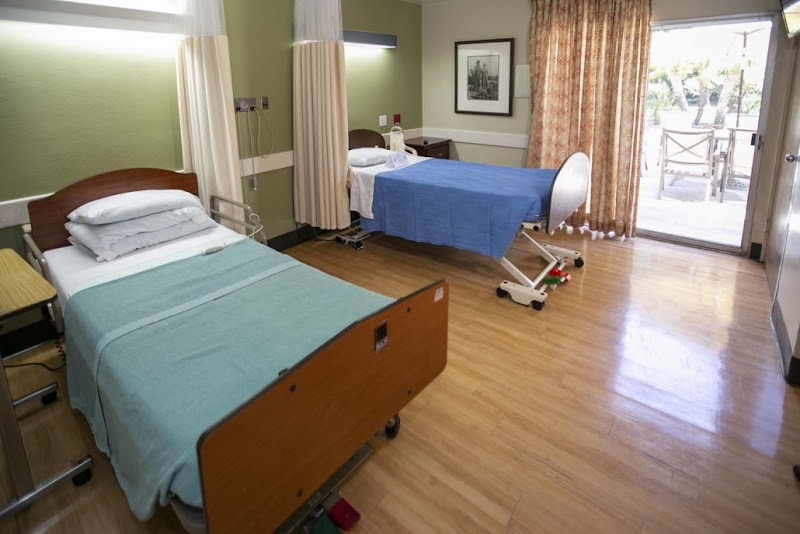
How is Lemon Grove Care And Rehabilitation Center Staffed?

CMS rates LEMON GROVE CARE AND REHABILITATION CENTER's staffing level at 3 out of 5 stars, which is average compared to other nursing homes. Staff turnover is 44%, compared to the California average of 46%. This relatively stable workforce can support continuity of care. RN turnover specifically is 56%, which is notably high. RNs provide skilled clinical oversight, so turnover in this role can affect medical care quality.

What Have Inspectors Found at Lemon Grove Care And Rehabilitation Center?

State health inspectors documented 67 deficiencies at LEMON GROVE CARE AND REHABILITATION CENTER during 2019 to 2024. These included: 1 that caused actual resident harm, 65 with potential for harm, and 1 minor or isolated issues. Deficiencies causing actual harm indicate documented cases where residents experienced negative health consequences.
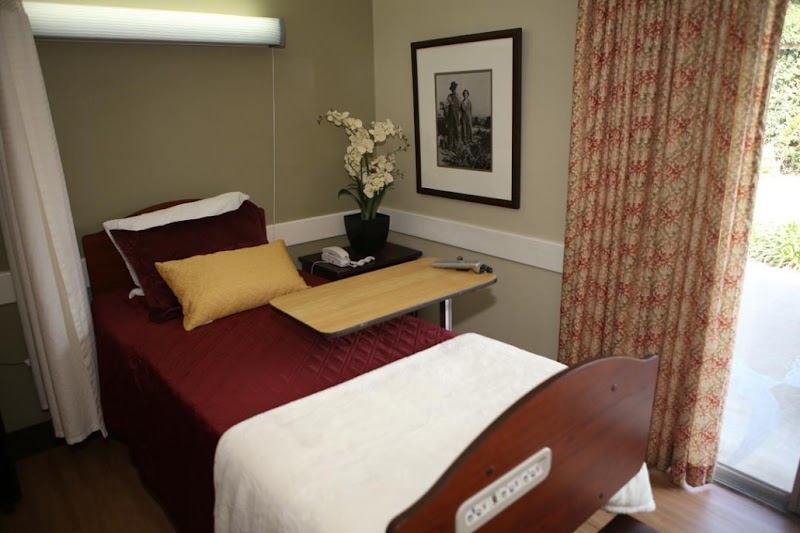
Who Owns and Operates Lemon Grove Care And Rehabilitation Center?

LEMON GROVE CARE AND REHABILITATION CENTER is owned by a for-profit company. For-profit facilities operate as businesses with obligations to shareholders or private owners. The facility is operated by THE ENSIGN GROUP, a chain that manages multiple nursing homes. With 158 certified beds and approximately 143 residents (about 91% occupancy), it is a mid-sized facility located in LEMON GROVE, California.
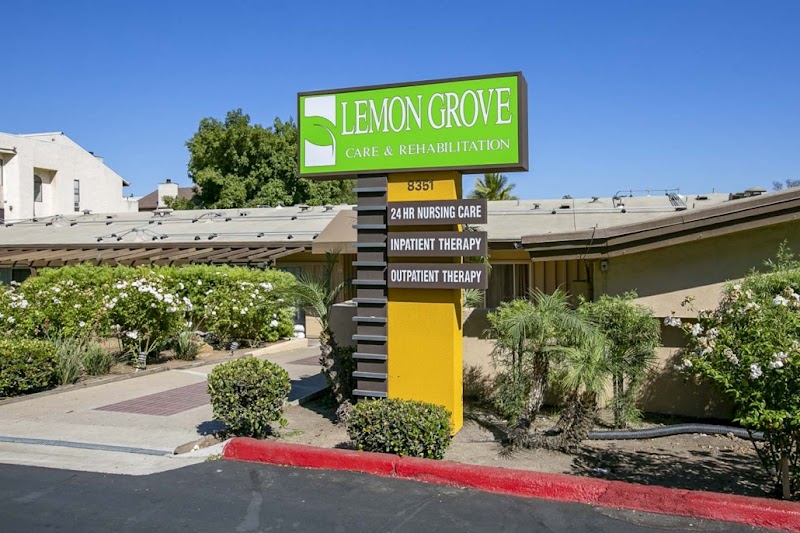
How Does Lemon Grove Care And Rehabilitation Center Compare to Other California Nursing Homes?

Compared to the 100 nursing homes in California, LEMON GROVE CARE AND REHABILITATION CENTER's overall rating (4 stars) is above the state average of 3.2, staff turnover (44%) is near the state average of 46%, and health inspection rating (3 stars) is at the national benchmark.

What Should Families Ask When Visiting Lemon Grove Care And Rehabilitation Center?

Based on this facility's data, families visiting should ask: "Can I visit during a mealtime to observe dining assistance and food quality?" "How do you handle medical emergencies, and what is your hospital transfer rate?" "Can I speak with family members of current residents about their experience?"

Is Lemon Grove Care And Rehabilitation Center Safe?

Based on CMS inspection data, LEMON GROVE CARE AND REHABILITATION CENTER has a clean safety record: no substantiated abuse findings (meaning no confirmed cases of resident harm), no Immediate Jeopardy citations (the most serious violation level indicating risk of serious injury or death), and is not on the Special Focus Facility watch list (a federal program monitoring the lowest-performing 1% of nursing homes). The facility has a 4-star overall rating and ranks #1 of 100 nursing homes in California. While no facility is perfect, families should still ask about staff-to-resident ratios and recent inspection results during their visit.

Do Nurses at Lemon Grove Care And Rehabilitation Center Stick Around?

LEMON GROVE CARE AND REHABILITATION CENTER has a staff turnover rate of 44%, which is about average for California nursing homes (state average: 46%). Moderate turnover is common in nursing homes, but families should still ask about staff tenure and how the facility maintains care continuity when employees leave.

Was Lemon Grove Care And Rehabilitation Center Ever Fined?

LEMON GROVE CARE AND REHABILITATION CENTER has been fined $7,443 across 1 penalty action. This is below the California average of $33,153. While any fine indicates a compliance issue, fines under $50,000 are relatively common and typically reflect isolated problems that were subsequently corrected. Families should ask what specific issues led to these fines and confirm they've been resolved.

Is Lemon Grove Care And Rehabilitation Center on Any Federal Watch List?

LEMON GROVE CARE AND REHABILITATION CENTER is not on any federal watch list. The most significant is the Special Focus Facility (SFF) program, which identifies the bottom 1% of nursing homes nationally based on persistent, serious quality problems. Not being on this list means the facility has avoided the pattern of deficiencies that triggers enhanced federal oversight. This is a positive indicator, though families should still review the facility's inspection history directly.