FAIRMONT REHABILITATION HOSPITAL
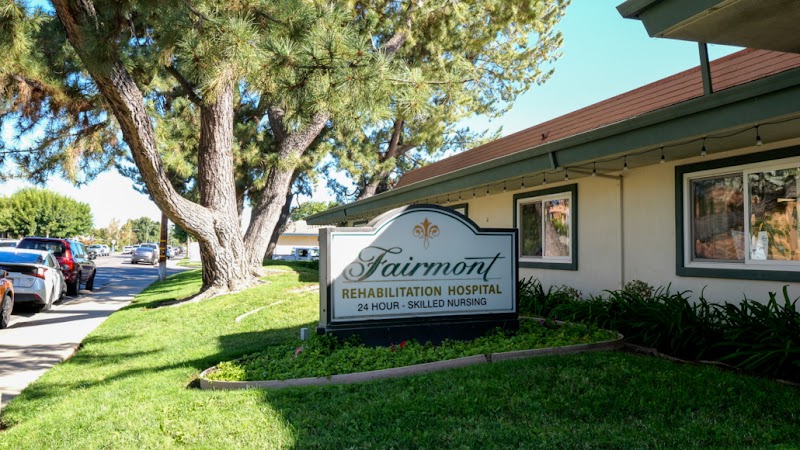
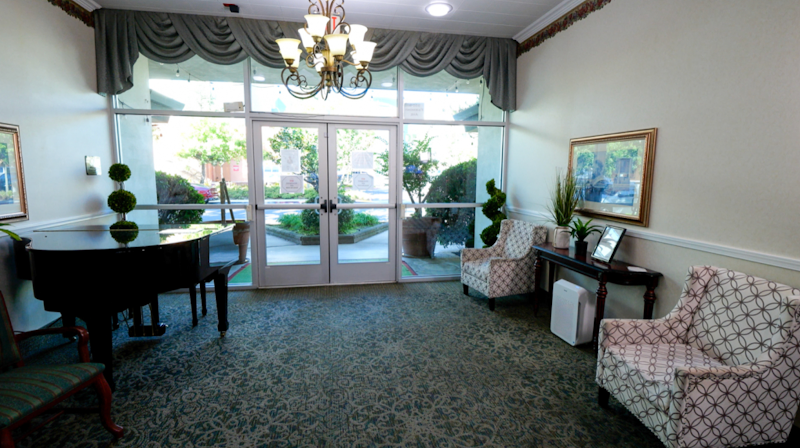
950 S. FAIRMONT AVENUE, LODI, CA 95240 (209) 368-0693
For profit - Corporation 59 Beds THE ENSIGN GROUP Data: November 2025
Trust Grade
73/100
#347 of 1155 in CA
Last Inspection: January 2025

Within standard 12-15 month inspection cycle. Federal law requires annual inspections.

Overview

Fairmont Rehabilitation Hospital has received a Trust Grade of B, indicating it is a solid choice for families seeking care, as it ranks in the top half of California facilities at #347 out of 1155. In San Joaquin County, it holds the #4 position out of 24, meaning only three local facilities are rated higher. However, the facility’s trend is concerning as the number of issues has worsened from 6 in 2024 to 13 in 2025. Staffing is a positive aspect here, with a 4 out of 5 stars rating and a turnover rate of 25%, which is better than the state average. There have been no fines reported, but there are areas of concern, including a failure to implement proper water safety measures to mitigate risks from bacteria, and inadequate food safety practices that could expose residents to foodborne illnesses. Overall, while there are strengths in staffing and ratings, families should be aware of the recent increase in safety concerns.

Trust Score
B
73/100
In California
#347/1155
Top 30%
Safety Record
Low Risk
No red flags
Inspections
Getting Worse
6 → 13 violations
Staff Stability
✓ Good
25% annual turnover. Excellent stability, 23 points below California's 48% average. Staff who stay learn residents' needs.
Penalties
✓ Good
No fines on record. Clean compliance history, better than most California facilities.
Skilled Nurses
○ Average
Each resident gets 31 minutes of Registered Nurse (RN) attention daily — about average for California. RNs are the most trained staff who monitor for health changes.
Violations
⚠ Watch
24 deficiencies on record. Higher than average. Multiple issues found across inspections.
★★★★☆
4.0
Overall Rating
★★★★☆
4.0
Staff Levels
★★★★★
5.0
Care Quality
★★★☆☆
3.0
Inspection Score
Stable
2024: 6 issues
2025: 13 issues

The Good

  • 4-Star Staffing Rating · Above-average nurse staffing levels
  • 5-Star Quality Measures · Strong clinical quality outcomes
  • Low Staff Turnover (25%) · Staff stability means consistent care
  • Full Sprinkler Coverage · Fire safety systems throughout facility
  • No fines on record
  • Staff turnover is low (25%)

    23 points below California average of 48%

Facility shows strength in staffing levels, quality measures, staff retention, fire safety.

The Bad

Chain: THE ENSIGN GROUP

Part of a multi-facility chain

Ask about local staffing decisions and management

The Ugly 24 deficiencies on record

Jul 2025 1 deficiency
CONCERN (F) 📢 Someone Reported This

A family member, employee, or ombudsman was alarmed enough to file a formal complaint

Potential for Harm - no one hurt, but risky conditions existed

Infection Control (Tag F0880)

Could have caused harm · This affected most or all residents

**NOTE- TERMS IN BRACKETS HAVE BEEN EDITED TO PROTECT CONFIDENTIALITY** Based on observation, interview, and record review, the facility failed to implement a comprehensive water safety management pro...

Read full inspector narrative →
**NOTE- TERMS IN BRACKETS HAVE BEEN EDITED TO PROTECT CONFIDENTIALITY** Based on observation, interview, and record review, the facility failed to implement a comprehensive water safety management program based on nationally accepted standards to minimize the risk of Legionella (a serious lung infection) and other opportunistic waterborne pathogens (a microorganism [bacteria] that exists in water sources or plumbing [pipes required for the water supply, heating and sanitation in a building] systems that can cause serious illness in people over [AGE] years of age and have weakened immune systems) for a census of 54 when: a. The facility did not complete and document a facility-wide assessment of potential Legionella growth areas to include flow chart, b. The facility did not implement adequate control measures, c. The facility did not establish sufficient monitoring protocols; and, d. The facility did not create an intervention plan for when control limits are not met. These failures put the residents and staff at risk of potential Legionella and other opportunistic waterborne pathogen exposure, threatening their health and well-being. Findings: During a joint interview on 7/2/25, at 9:30 AM, with the Director of Nursing (DON) and the Administrator (ADM), the DON stated the facility was notified by a local general acute care hospital (GACH) on 5/6/25 that a resident who was sent to them from the facility tested positive for Legionella pneumophila (a severe form of pneumonia -a lung infection caused by Legionella bacteria). The DON further stated the facility contacted the local Public Health Department (PHD) for guidance on how to handle the results. The DON explained the PHD told them to test residents with respiratory symptoms (signs that like runny nose, cough, and difficulty breathing that indicate a problem with your breathing or lungs) and to test their water for Legionella. The DON stated they tested all the residents in the facility with respiratory symptoms and the roommate of the resident who tested positive. The DON further stated all results were negative. The ADM explained the PHD asked the facility to test their water and when they did, the PHD stated the sample was inadequate and needed to be done by a company certified to collect water samples. The DON explained the PHD also wanted the facility to be contracted with a company to provide certified testing and facility water maintenance in case of a positive result. The ADM stated they did not have a contracted provider at the time and requested a list of certified companies from the PHD. The ADM explained they contacted a company who came out on 7/1/25 and collected 15 different water samples from different sources and sent them to the lab for processing. The DON added the results would be available in 10-14 days. During a concurrent interview and record review on 7/2/25, at 9:37 AM, with the Infection Preventionist (IP), the facility policy and procedure (P&P) titled, Water Safety Management Program (Legionella), revised on 12/2023, was reviewed. The IP stated the P&P was based on the Centers for Disease and Prevention's (CDC) Legionella Toolkit (an actionable, detailed guide to assist facilities in developing a water safety program). The IP further stated the local PHDs, Public Health Officer (PHO) told her the facility's P&P for water safety management was not detailed enough because it lacked a full facility water supply system analysis, graphs that included the inlets and outlets of the water sources, and locations of all the water sources inside and outside of the building. The IP confirmed the P&P did not include a certified testing company contract and how to handle the water supply in the building in case of water borne pathogen outbreak. The IP further explained the PHO recommended the facility conduct a full risk assessment. When asked if the facility had previously conducted a facility risk assessment; the IP stated, I don't think so. During a concurrent observation (tour of facility's water sources) and interview on 7/2/25, at 12:25 PM, the Maintenance Director (MTD) showed the boiler room and explained the two water storage tanks held 103 gallons of water each, and they supplied all the water to the building. The cooling tower was observed outside of the facility near the boiler room. The MTD showed the shower rooms that the residents use in the facility. The MTD stated he was in the process of replacing the showerheads and the eye washing station with specialized filters on the recommendation of the certified water management company. The MTD stated preventative maintenance was important to prevent downtime and for the residents' health and safety. The MTD explained the special filters on the showerheads and eye wash station help filter opportunistic pathogens like Legionella from the water. The MTD stated it was important to test the water to prevent lung infections like pneumonia which can harm the residents and cause death. The MTD was not able to explain the facility's process for decontaminating the building water systems if necessary. The MTD confirmed they did not have an outside source contracted to decontaminate the water system, prior to notification of a positive Legionella resident on 5/6/25. During a follow-up interview on 7/2/25, at 3:46 PM, the DON stated her expectation for a water safety management plan was to have one in place. The DON further stated the facility did have one in place but confirmed it was not as detailed as the PHD stated it should be and it needed to include a flow chart of the water in and out of the building, where it goes, and to which water outlets, and added it needed to have their water system mapped out. The DON confirmed they did not have their water system mapped out with points of possible Legionella risk documented. The DON explained Legionella could grow and spread in water pipes and can be inhaled via steam, like in the showers. The DON further explained it was important to have a detailed water safety management program and plan in place to prevent the residents from getting Legionella pneumonia. The DON stated the risk to the residents was respiratory distress and even death. During an interview on 7/3/25, at 11:51 AM, with the local PHO, the PHO confirmed she asked the facility to develop a water management plan. The PHO stated the facility did not have a plan or policy in place based on nationally accepted standards to minimize the risk of Legionella contamination. The PHO further stated when she reviewed the Water Safety Management Program (Legionella) P&P, she stated their plan was just a copy and paste of the CDC toolkit on how to develop and implement a water safety plan with some added text. The PHO explained the CDC's Toolkit was designed to be used as a tool to help facilities develop a water safety program, not to be used as one. The PHO added the facility did not have a diagram of their water system with a flow chart of the inlets and outlets of water as it moved through pipes in the buildings and where each source of water comes from. The PHO further explained that the facility needed to have all this information as part of their water management program, and it had to be mapped out with an action plan, including who they would contact and work with to chlorinate and flush lines in case of a Legionella outbreak. A review of the facility's P&P titled, Water Safety Management Program (Legionella), revised 12/2024, indicated, .It is the policy of this facility to provide facility maintenance protocol guidelines for plant operations related to water safety management to ensure the reduction in potential for growth of Legionella .This policy will follow and reference recommended guidelines .by the Centers for Disease Control and Prevention (CDC) for program implementation referenced . A review of the CDC's online guide titled, Overview of Water Management Programs, published March 15, 2024, indicated, .Key Points .Many buildings need a water management program (WMP) for their building water system .WMPs identify hazardous conditions and outline steps to minimize the health impact of waterborne pathogens .Developing and maintaining a WMP is a multi-step process that requires continuous review .Seven steps of a Legionella WMP are to: 1. Establish a WMP team 2. Describe the building water systems 3. Identify areas where Legionella could grow and spread 4. Decide where to apply and how to monitor control measures 5. Establish interventions when control limits aren't met 6. Ensure the program runs as designed and is effective 7. Document and communicate all activities .the principle of effective water management include: Ensuring adequate disinfection .Maintaining devices to prevent .Sediment, Scale, Corrosion, Biofilm .Maintaining water temperatures to limit Legionella growth, preventing water stagnation .Once established, WMPs require regular monitoring of key areas for potentially hazardous conditions. The programs use predetermined responses to respond when control measures aren't met .Each program has to be tailored for each building at a particular point in time .In some settings, the entire building needs a WMP: Hospitals and long-term care facilities . https://www.cdc.gov/control-legionella/php/wmp/index.html
Jun 2025 1 deficiency
CONCERN (D) 📢 Someone Reported This

A family member, employee, or ombudsman was alarmed enough to file a formal complaint

Potential for Harm - no one hurt, but risky conditions existed

Accident Prevention (Tag F0689)

Could have caused harm · This affected 1 resident

Based on observation, interview, and record review, the facility failed to ensure an environment free of accidents or hazards for one of four residents (Resident 2) when Resident 2, who was at high ri...

Read full inspector narrative →
Based on observation, interview, and record review, the facility failed to ensure an environment free of accidents or hazards for one of four residents (Resident 2) when Resident 2, who was at high risk for falls, fell when she was left in the bathroom unattended on 8/5/24. This failure had the potential to result in Resident 2 sustaining injury including fractures (broken bones) and decreased well-being.Findings:A review of Resident 2's admission RECORD, indicated that Resident 2 was admitted to the facility in 2024 with diagnoses which included surgical repair of left hip fracture.A review of Resident 2's Care Plan Report, dated 7/27/24, indicated .Focus.At risk for falls.Goal.Will not sustain serious injury.Interventions.Anticipate and meet needs.A review of Resident 2's Progress Notes, dated 8/5/24, indicated, .writer was called by attending CNA (Certified Nursing Assistant) to pull up resident @ 0600 [6AM].upon entering room, resident was found sitting down inside the bathroom.resident transferred back to wc [wheelchair] by 3 person assist.resident stated that she needed to use the bathroom and received help doing so, but attending CNA had left her unattended while using the bathroom.informed attending CNA to be with resident at all times while using the bathroom.A review of Resident 2's Fall Risk Evaluation, dated 7/24/24, indicated .Score: 12.Category: High Risk. A. Mental Status: Alert/Oriented x 3 (time, place, person) .B. History of Falls. 3 or more falls in past 3 months.C. Elimination Status.Requires regular assist with elimination.A review of Resident 2's MDS (Minimum Data Set, a comprehensive care assessment tool) - Section GG-Functional Abilities and Goals, dated 8/1/24, indicated, Self-Care.Safety and Quality of Performance - If helper assistance is required because resident's performance is unsafe or of poor quality, score according to amount of assistance provided.Toileting/hygiene: The ability to maintain perineal hygiene, adjust clothes before or after voiding or having a bowel movement.02. Substantial/maximal assistance - Helper does MORE THAN HALF the effort.Toilet transfer: the ability to get on or off a toilet or commode.01. Dependent - Helper does ALL of the effort. Resident does none of the effort to complete the activity. Or, the assistance of 2 or more helpers is required for the resident to complete the activity.During a phone interview on 6/19/25, at 10:14 a.m., with the Responsible Party (RP) of Resident 2, the RP stated that she was concerned about the care Resident 2 received at the facility. The RP further stated Resident 2 was assisted to the bathroom and left alone by staff, resulting in a fall. The RP stated that she was notified by phone after the fall. The RP further stated that Resident 2 was not injured.During an interview on 6/20/25, at 12:20 p.m., with Certified Nursing Assistant (CNA) 1, CNA 1 stated the facility's fall protocol for residents at risk for falls was to have the call light within reach, bed in low position with wheels locked, wheelchair locks on when a resident was not mobile in the wheelchair, ambulate (walk) with assistance with gait belt if needed, stand outside the bathroom door to give the resident privacy and wait to assist the resident when done.During an interview on 6/20/25, at 12:21 p.m., with Licensed Nurse (LN) 1, LN 1 stated residents were assessed for fall risk on admission, quarterly, and after a fall incident. LN 1 stated that when residents who were at risk for falls were assisted to the bathroom; the CNAs stayed with the residents. LN 1 further stated the CNAs stayed outside the bathroom door so that the residents could have privacy. LN 1 stated the residents were instructed to call for assistance when they were finished using the bathroom.During a phone interview on 6/20/25, at 3:50 p.m., CNA 2 stated that she remembered Resident 2. CNA 2 confirmed that she remembered taking Resident 2 to the bathroom on 8/5/24. CNA 2 further confirmed that she left Resident 2's room after she helped her to the bathroom. During a phone interview on 6/20/25, at 3:55 p.m., with LN 2, LN 2 stated she remembered Resident 2. LN 2 further stated that CNA 2 assisted Resident 2 to the bathroom, then CNA 2 left Resident 2's room while Resident 2 was still in the bathroom. LN 2 confirmed that Resident 2 fell in the bathroom. LN 2 stated that she advised CNA 2 to remain with the residents with high risk for falls while they used the bathroom. LN 2 stated that staff waited outside the bathroom door so that they could give the residents privacy but be close by to assist the residents after they were finished. LN 2 stated that Resident 2 had a high fall risk and had fallen before.During a concurrent interview and record review on 6/20/25, at 3:30 p.m., with the Director of Nursing (DON), Resident 2's Electronic Medical Record (EMR) was reviewed. The DON stated residents were assessed for fall risk upon admission to the facility, quarterly, and after a fall incident. The DON further stated that if a resident that was assessed to be at high risk for falls was assisted to the bathroom, the resident was instructed to use the call light for assistance when finished. The DON explained that the staff usually waited outside the bathroom door to give the resident privacy. The DON acknowledged that leaving a resident at risk for falls in the bathroom and not waiting outside the bathroom door to assist the resident could increase the resident's risk of falling. The DON stated that Resident 2 was instructed to use the call light when she was finished in the bathroom on 8/5/24. The DON confirmed that the CNA did not wait outside the bathroom door while Resident 2 was in the bathroom. The DON further confirmed that the facility policy was not followed. A review of an undated facility policy and procedure (P&P) titled, Resident Examination and Assessment, indicated, .Purpose.The purpose of this procedure is to examine and assess the resident for any abnormalities in health status, which provides a basis for the care plan.9. Activity level: a. able to perform ADLs (Activities of daily living, tasks of everyday life including eating, dressing, bathing, or showering, and using the bathroom); and b. degree of assistance required. A review of an undated P&P titled, Fall Risk Assessment, indicated, .The nursing staff, in conjunction with the attending physician, consultant pharmacist, therapy staff, and others will seek to identify and document risk factors for falls and establish a resident-centered falls prevention plan based on relevant assessment information.Policy Interpretation and Implementation.1. Upon admission, the nursing staff and the physician will review a resident's record for a history of falls, especially falls in the last 90 days.7. The staff, with the support of the attending physician, will evaluate functional and psychological factors that may increase fall risk, including.mobility.activities of daily living (ADL) capabilities.continence [control or lack of control of the bowel and bladder]. A review of an undated facility P&P titled, Fall, indicated, .General Guidelines.1. Falls area leading cause of morbidity and mortality [death] among the elderly in nursing homes.4. Residents must be assessed upon admission and regularly afterward for potential risk of falls. Relevant risk factors must be addressed promptly.
May 2025 1 deficiency
CONCERN (D) 📢 Someone Reported This

A family member, employee, or ombudsman was alarmed enough to file a formal complaint

Potential for Harm - no one hurt, but risky conditions existed

Deficiency F0808 (Tag F0808)

Could have caused harm · This affected 1 resident

Based on observation, interview, and record review, the facility failed to ensure dietary staff served the correct meal portions for two of four sampled residents (Resident 2 and Resident 3) when, 1. ...

Read full inspector narrative →
Based on observation, interview, and record review, the facility failed to ensure dietary staff served the correct meal portions for two of four sampled residents (Resident 2 and Resident 3) when, 1. Resident 2 did not receive their prescribed small portion diet during the lunch meal on 5/7/25. 2. Resident 3 did not receive their prescribed small portion diet during the lunch meal on 5/7/25. This failure had the potential to contribute to unplanned weight gain which could negatively impact the health and wellbeing of Resident 2 and Resident 3. Findings: 1. During a review of Resident 2 ' s admission RECORD, the document indicated Resident 2 was admitted to the facility in early 2020. A review of Resident 2 ' s BIMS [Brief Interview for Mental Status; a screening tool used to assess for cognitive impairment], dated 3/18/25, indicated Resident 2 had a BIMS score of 15 (a score of 13 to 15 points suggested that cognition was intact). A review of Resident 2 ' s Order Listing Report, dated 1/19/24, indicated, .NAS [No Added Salt] diet .***Small Portions on all meals*** . A review of Resident 2 ' s Care Plan Report (a report that indicated Resident 2's problems, goals, and interventions), dated 7/2/24, indicated, .Goal .160-170 lbs. [pounds – unit of measurement] . Will comply with recommended diet for weight reduction daily .Will not develop complications related to obesity, including skin breakdown, ineffective breathing pattern .impaired mobility .Intervention/Tasks .Assist with developing a support system to aid in wt. [weight] loss efforts . A review of Resident 2 ' s Weight Summary, indicated, .5/5/2025 .213 Lbs [pounds] . During a concurrent observation, interview, and record review in Resident 2 ' s room, on 5/7/25, at 12:17 p.m., Resident 2 ' s meal tray was compared with Resident 4 ' s meal tray . Resident 2 ' s diet card indicated, .Small Portions . Resident 2 stated the plate did not look like it contained small portions, it looked like a lot of food. Resident 4 ' s diet card did not indicate small portions and appeared to contain the same amount of food as Resident 2 ' s tray. 2.A review of Resident 3 ' s admission RECORD, the record indicated Resident 3 was admitted to the facility with a diagnoses of major depressive disorder ( a mood disorder that causes a persistent feeling of sadness and loss of interest). A review of Resident 3 ' s BIMS, dated 3/5/25, indicated a score of 15. During an interview on 5/7/25, at 11:03 a.m., Resident 3 stated she requested small portions, but her plate was always full of food. A review of Resident 3 ' s Order Listing Report, dated 4/3/24, indicated, REGULAR diet .**SMALL PORTIONS** . A review of Resident 3 ' s Care Plan Report, dated 1/12/25, indicated, .Goal .will comply with recommended diet for weight reduction .Weight goal 145-155 lbs . Intervention/Tasks .Assist with developing a support system to aid in wt loss efforts .small portions as resident requested . A review of Resident 3 ' s Weight Summary, indicated, .2/2/2023 .159.0 Lbs . + 5.0 % [plus 5 percent weight gain] change .1/4/2023 .149.0 Lbs . During a concurrent observation, interview, and record review in Resident 2 ' s room, on 5/7/25, at 12:20 p.m., Resident 3 ' s meal tray was observed with a full serving of food. Resident 3's diet card indicated, .1/2 [half] portion only . Resident 3 stated she was never given small portions. Resident 3 further stated she declined to have her weight assessed because it depressed her when she did not lose weight. During a concurrent interview and record review on 5/7/25, at 12:35 p.m., [NAME] 2 viewed photos of Resident 2, Resident 3, and Resident 4 ' s lunch meal trays and confirmed the portion size was the same for all three. [NAME] 2 stated when she served the food, another staff member called out the portion size. [NAME] 2 further stated staff must not have called out the correct portion size for Resident 2 and Resident 3 ' s meals. During an interview on 5/7/25, at 12:39 p.m., the Food and Nutrition Services (FNS) director stated it was her expectation that the correct food portions would be served to Resident 2 and Resident 3. The FNS further stated too much food could be overwhelming and could interfere with Resident 2 and Resident 3 ' s weight loss goals. The FNS stated unintentional weight gain could have a negative health effect. A review of a facility document titled Job Description, dated 2023, indicated, .POSITION: FNS Director .Ability to follow prepared menus and portion control guidelines .Ability to train staff how to properly prepare and serve food .Check trays to ensure diets are served as ordered . A review of a facility policy and procedure titled, PORTION SIZES, dated 2023, indicated, .Various portion sizes of the food served will be available to better meet the needs of the residents .The small and large portion servings will be served as printed on the cook ' s spreadsheet for every meal .1/2 size portions are to be given to those residents who request smaller portions than the small portion diet provides .The food server is to give the ½ size portion of the diet for the food on the main plate-entrée, vegetable , and starch .
Jan 2025 10 deficiencies
CONCERN (D)

Potential for Harm - no one hurt, but risky conditions existed

Deficiency F0554 (Tag F0554)

Could have caused harm · This affected 1 resident

Based on observation, interview, and record review, the facility failed to ensure safety of bed side medication storage and use for 1 out of 10 residents (Resident 24) observed for medication administ...

Read full inspector narrative →
Based on observation, interview, and record review, the facility failed to ensure safety of bed side medication storage and use for 1 out of 10 residents (Resident 24) observed for medication administration based on facility's policy and medical doctor's orders. This failed practice resulted in unauthorize use of medications without a doctor's order in the facility, unsafe handling, and storage of medications in a room shared with another resident. Findings: During a medication administration observation for Resident 24, at facility's station 2 hallway, accompanied by Licensed Nurse (LN) 3, on 1/13/25, at 9:35 AM, LN 3 administered the morning medications and later at 9:56 AM measured the Blood Pressure (BP) and gave the two blood pressure medications. Resident 24 was sitting in a wheelchair and was hard of hearing. Further observation, inside Resident 24's room, there were three medications with no labels stored on top of Resident 24's bed-side table During a concurrent observation and interview with LN 3, in Resident 24's room, on 1/13/25, at 1:22 PM, the bed side unlabeled medications were brought to the attention of LN 3. The medications at bed side included an inhaler called Foracort 200 (a brand name for combination of two drugs for treatment of the asthma) indicating 100 out of total 120 puffs had been already used, a nose spray called Aller-FLO (or Fluticasone, a medication spray into the nose), and a second nose spray called Saline Nasal Mist (a nose spray with salt solution to moisturizer the nasal lining). LN 3 stated she did not notice the medications were stored at Resident 24's bedside and had to check if there was an order from the doctor to use the medications. LN 3 stated it was not safe to keep resident medications at the bed side without proper assessment. During a concurrent interview and record review on 1/13/25, at 1:35 PM, with LN 3, Resident 24's Medication Administration Record (MAR), dated 1/25, was reviewed. LN 3 confirmed Resident 24's MAR record did not contain any orders for the 3 medications stored at Resident 24's bedside. During an interview with Resident 24, in her room, on 1/14/25, at 8:35 AM, Resident 24 stated the medication at her bedside were her own and was prescribed by her allergy doctor and had been using them for years. Resident 24 did not know if the facility was aware of her use since she was admitted in November of 2024 and no one from the facility had explained to her the process of her using her own inhaler at the facility. During an interview on 1/15/25, at 4:52 PM, the Director of Nursing (DON) stated the residents could use their own medications with a doctor's order, and an assessment of safe storage and the resident's mental status. The DON stated the risk of having medication at bed side and self-use could pose safety risk and/or medication interaction and use by another resident. Review of the facility's policy titled Nursing Administration: Continuum of Care, dated 2/23, in section 10 titled Nurse Assistant Procedure, indicated, .If the resident brought in any medication, give them to the charge nurse . Review of the facility's undated policy titled Self-Administration of Medications, the policy indicated, .Residents have the right to self-administer medications if the interdisciplinary team (team of health care professionals caring for the resident) has determined that it is clinically appropriate and safe for the residents to do so . Section 8 of the policy indicated, .Self-administered medications are stored in a safe and secure place, which is not accessible by other residents . Section 9 of the policy indicated, .Any medications found at the bedside that are not authorized for self-administration are turned over to the nurse in charge for return to the family or responsible party . Review of the facility's undated policy titled Medications brought to the facility by the Resident/Family, the policy indicated, .The facility shall ordinarily not permit residents and families to bring medications into the facility . The policy further indicated, .Resident and families must report to the nursing staff any medications that they want to bring or have brought into the facility .
CONCERN (D)

Potential for Harm - no one hurt, but risky conditions existed

Deficiency F0658 (Tag F0658)

Could have caused harm · This affected 1 resident

Based on observation, interview, and record review the facility failed to ensure safe cleaning and sanitization of shared glucometer (a device used to measure blood sugar) in-between resident care for...

Read full inspector narrative →
Based on observation, interview, and record review the facility failed to ensure safe cleaning and sanitization of shared glucometer (a device used to measure blood sugar) in-between resident care for two residents out of nine residents observed for medication administration (Resident 39 and Resident 10) based on facility's policy and manufacturer specifications. This failure had potential to spread infection among residents and compromise resident's well-being. Findings: During a medication administration observation with Licensed Nurse 2 (LN 2), at Station 2 hallway, on 1/14/25, at 12:08 PM, LN 2 with gloved hand took the glucometer and supplies in the Resident 39's room to measure the blood sugar. LN 2 placed the glucometer on the bedside table then poked Resident 39's right middle finger with a lancet (small, sharp needles used to obtain a small amount of blood from the finger for blood sugar testing) to get the blood and soaked the test strip (a plastic strip contains chemicals to help with blood sugar measurement) with blood to measure the blood sugar. LN 2 used one Sani-Cloth-Bleach wipe (brand name for a wipe with chemicals to disinfect and kill germs on the surfaces) quickly (less than 10 seconds) to clean the glucometer outer surface once out of the Resident 39's room. During the subsequent medication administration observation, with LN 2, at Station 2 hallway, on 1/14/25, at 12:18 PM, LN 2 with gloved hand took the same glucometer used on previous resident and supplies into the Resident 10's room to measure the blood sugar. Resident 10 had a lunch tray in front of her while sitting on a wheelchair and was eating her food. LN 2 placed the glucometer on the bedside table then poked Resident 10's right thumb finger with lancet to get the blood and soaked the test strip with blood to measure the blood sugar. LN 2 was not able to get a result from the glucometer machine and stated she had to repeat the test. LN 2 went back to cart with new supplies and this time after putting the glucometer on bedside table, she poked Resident 10's index finger to get blood for testing. LN 2 then used one Sani-Cloth-Bleach wipe quickly (less than 10 seconds) to clean the glucometer outer surface once out of the Resident 10's room and placed it in a plastic cup. In an interview with LN 2 on 1/14/25, at 2:11 PM, LN 2 stated she stated she used one wipe to clean the glucometer. LN 2 stated the wipe bottle indicated 4 minutes wet time (the time for surface of glucometer remained wet to kill possible bugs on the surface) to disinfect and then allow to dry. In an interview with Infection Prevention nurse (IP), on 1/15/24 3:01 PM, the IP stated the nursing staff were educated to clean and disinfect the shared glucometer in-between resident use. The IP stated she had trained the nursing staff during the staff meetings and the last time was in November of 2024. The IP stated for new nurses the facility's DSD (Director of Staff Development) had been doing the initial orientation and training on infection control and glucometer care in addition to following a senior nurse. The IP stated the cleaning and sanitization of shared glucometer was a two-step process to use one wipe to clean and remove surface contaminations and then a second wipe used to sanitize and keep the outer surface wet so you can see the wetness with eye for minimum of 4 minutes per Sani-Wipe instruction to kill the germs that could not be seen with eye. During a concurrent interview with IP on 1/15/25, at 3:05 PM, and review of facility's disinfecting wipe document, titled General Guidelines For Use, the document indicated Use a wipe to remove visible soil prior to disinfecting . Unfold a clean wipe and thoroughly wet surface . Allow surface to remain visibly wet for Four (4) minutes. In an interview with Director of Nursing (DON), in her office, on 1/15/25, at 4:19 PM, the DON stated the facility used bleach wipes and it needed to stay wet for 4 minutes to kill germs. The DON stated it was important to clean the share devices per instruction to prevent spread of the infections. The DON did not provide further detail on how the process of cleaning and sanitization should be done by the nursing staff. Review of the facility's policy, titled 483.80 Infection Control, dated 3/2024, the policy indicated It is the policy of this facility to implement infection control measures to prevent the spread of communicable diseases (infections that spread easily) and conditions. The policy on section 2 indicated . Patient care equipment: . It is preferred dedicated or disposable patient care equipment be used. If common use of equipment for multiple patients is unavoidable, clean and disinfect such equipment before use on another patient. Review of the facility provided instruction sheet by manufacturer of Assure Platinum glucometer (a brand name by ARKRAY, the manufacturer of glucometer), titled ARKRAY Technical Brief: Cleaning and Disinfecting the Assure Platinum Blood Glucose Monitoring System , dated 9/2024, the documents under Cleaning and Disinfecting FAQ (Frequently Asked Questions) indicated Can cleaning and disinfecting be accomplished with one wipe? No, Each time the cleaning and disinfecting procedure is performed, two wipes are needed. One wipe to clean the meter and the second wipe to disinfect the meter. What will happen if a blood glucose meter is not clean and disinfected after use? . It is important that long term care facility establish a program for infection control . Program include addressing the cleaning and disinfecting of blood glucose meters along with other equipment and environmental surfaces . It is also important to provide education on infection control and the proper use of products. A review of the Center for Disease Control (A federal agency responsible for the health and safety of people) guideline, titled Considerations for Blood Glucose Monitoring and Insulin Administration, last accessed on 1/24/25 via https://www.cdc.gov/injection-safety/hcp/infection-control/index.html, the guideline indicated Blood glucose meters can easily become contaminated during use. When used in healthcare or other group settings, germs and infections can spread if preventive measures are not in place. The guideline further indicated Dedicated meters should be cleaned and disinfected per the manufacturer's instructions and, at a minimum, anytime the device is reassigned to a different person . If blood glucose meters must be shared, the device should be cleaned and disinfected after every use, per the manufacturer's instructions, to prevent the spread of blood and infectious agents. If the manufacturer does not specify how the device should be cleaned and disinfected, it should not be shared. Review of the facility's undated policy, titled Glucometer Cleaning/Disinfecting, the one-page policy indicated It is the policy of this facility to ensure the glucometers are cleaned and disinfected accurately. The Procedures section indicated After each use with gloves on glucometer will be cleaned/disinfected with PDI Sani-Cloth Germicidal Disposable Bleach Wipes (brand name of wipes used at the facility). Ensure there is no dried blood spot on the glucometer. Lay the glucometer flat on a paper towel and leave open to air for four minutes until it is ready to use.
CONCERN (D)

Potential for Harm - no one hurt, but risky conditions existed

Pharmacy Services (Tag F0755)

Could have caused harm · This affected 1 resident

Based on observation, interview, and record review, the facility failed to ensure the prescription medication delivery manifests (delivery manifest, also known as a shipping manifest, is a legal docum...

Read full inspector narrative →
Based on observation, interview, and record review, the facility failed to ensure the prescription medication delivery manifests (delivery manifest, also known as a shipping manifest, is a legal document that listed all items being transported in a shipment) which included narcotic controlled medications (medication with risk of abuse including opioids) were signed by licensed staff upon delivery from the provider pharmacy for a census of 56 residents. This failed practice may contribute to unsafe medication handling and risk of drug diversion (unlawful use or abuse of medication). Findings: During a medication area inspection, at facility's Station 1, on 1/13/25, at 10:36 AM, accompanied by Licensed Nurse (LN) 6, a binder which contained the delivery sheets for prescription and narcotic medications delivery, were not consistently signed by nursing staff upon receipt from the provider pharmacy delivery driver. The individual sheets titled Packing Slip, at the bottom on each page, indicated .By signing below you acknowledge that you have received this pharmacy shipment. Please fax the signed packing slip to the pharmacy .Please notify the pharmacy within 24 hours of any discrepancy .Signature . Date . LN 6 stated they signed the paper from from the delivery driver, but was not sure why some sheets were signed, and the majority of the sheets were not signed. In an interview with Director of Nursing (DON), in her office, on 1/14/25, at 2:23 PM, the DON stated the staff signed a copy of the delivery sheet for the driver and were not required to sign the facility copy. Review of the facility's undated policy titled Controlled Substances, the policy indicated, .The facility complies with all laws, regulations, and other requirements related to handling, storage, disposal, and documentation of controlled medications. Section 8 of the policy indicated, .Controlled substances are reconciled upon receipt . Section 9 of the policy indicated, .Upon receipt: the Nurse receiving the medication and the individual delivering the medication verify the name, dose, and quantity of each controlled substance being delivered. Both individuals sign the controlled substance record of receipt . Review of the facility's undated policy titled Accepting Delivery of Medications, the policy indicated, .All staff shall follow a consistent procedure in accepting medications .Before signing to accept the delivery, the nurse must reconcile the medication in the package with the delivery ticket/order receipt . Section 4 of the policy indicated, .A Nurse shall sign the delivery ticket, indicating review and acceptance of the delivery, and shall keep copy of the delivery ticket. Both the receiving nurse and the delivery agent must sign any notation about errors .
CONCERN (D)

Potential for Harm - no one hurt, but risky conditions existed

Medication Errors (Tag F0758)

Could have caused harm · This affected 1 resident

Based on interview, observation, and record review, the facility failed to ensure the safe use of psychotropic medications (mind altering drugs) for one of five residents (Resident 44) selected for un...

Read full inspector narrative →
Based on interview, observation, and record review, the facility failed to ensure the safe use of psychotropic medications (mind altering drugs) for one of five residents (Resident 44) selected for unnecessary medication use when: 1. Resident 44's documented diagnosis of bipolar disorder (a chronic mood disorder which causes intense shifts in mood, energy levels and behavior) in the medical record for use of aripiprazole (a drug used to treat mental health issues) was not reflected in the medical doctor's progress notes, History and Physical (H&P), and previous hospitalization record; and 2. Resident 44's mental health consult and mental health medication adjustments were not carried out, nor communicated to the primary Medical Doctor (MD) 1, the Director of Nursing (DON), the licensed nursing (LN) staff, and the Resident Representative (RP, individual responsible for maing healthcare decisions on behalf of resident). These failures could contribute to unsafe use of mind-altering medications and the inaccurate diagnosis could lead to unnecessary use of medications with adverse consequences. Findings: 1. Review of Resident 44's electronic medical record, titled admission RECORD, indicated, Resident 44 was admitted to the facility with diagnosis including but not limited to: Parkinson's disease (a movement disorder of the nervous system which worsens over time), dementia (a brain disorder which causes memory loss, confusion, problems with language, and changes in behavior), encephalopathy (a change in brain function due to injury or disease), psychosis (disruptions to a person's thoughts and perceptions that make it difficult for them to recognize what is real and what is not), anxiety disorder (excessive fear or worry about a specific situation), major depressive disorder (affects how you feel, think and behave and can lead to a variety of emotional and physical problems), and bipolar disorder (mental health condition which causes extreme mood swings). Review of Resident 44's electronic medical record, titled Medication Administration Record (MAR, where nurses document what and when ordered medications were administered), dated 9/24 and 1/25, indicated the following orders for mind altering medication as follow: ARIPiprazole Oral Tablet 2 MG [a psychotropic mind-altering medication, MG is milligram, a unit of measure] Give 1 tablet by mouth at bedtime related to BIPOLAR DISORDER .; Start date 8/28/24 . Mirtazapine Oral Tablet 15 MG [a drug used to treat depression] Give 1 tablet by mouth at bedtime for M/B [manifested by] POOR FOOD ORAL INTAKE related to MAJOR DEPRESSIVE DISORDER; Start Date 8/28/24 . Sertraline HCl Oral Tablet 50 MG [drug used to treat depression] Give 1 tablet by mouth in the morning related to MAJOR DEPRESSIVE DISORDER, . m/b verbalization of sadness; Start date 8/28/24 . The September 2024 MAR document indicated the medications listed above were ordered on 8/27/24 and the 1/2025 MAR indicated aripiprazole order start date changed to 9/30/24. Review of Resident 44's Physician Physical and History, dated 8/29/24, written by MD 1, the record indicated the past medical history for Parkinson disease, depression, and high blood pressure among others. The record further indicated, .The resident .Has the capacity to understand and make decisions [checked] . MD 1's H&P did not include diagnosis of bipolar disorder for the use of the mind-altering drug aripiprazole. Phone call and message left for MD 1, on 1/16/25, at 12:32 p.m., during the Department visit was not answered or returned. During a review of Resident 44's medical record, titled History and Physical (H&P), from Hospital A, dated 8/22/24, written by MD 8, the record indicated Parkinson's disease, anxiety, and depression as the only mental health diagnosis. MD 8 did not include a diagnosis of bipolar disorder as current or past medical history. Review of Resident 44's paper chart titled Physician Progress Notes, written by MD 3 who admitted the resident at a previous facility for one day, dated 8/26/24, the record under medication list indicated, .Medications .aripiprazole 2 mg tablet .Give 1 tablet by mouth at bedtime for Bipolar/Depression/Psychosis . The Resident 44's record under Assessment and Plan (final diagnosis and plan for care moving forward) indicated, Parkinson disease, hypertension (high blood pressure), anxiety, and depression as the main diagnosis. The Assessment and Plan section further indicated, .Major Depressive Disorder, recurrent .continue mirtazapine 45 mg [antidepressant, mg stands for milligram] and aripiprazole 2 mg [mood altering drug] at bedtime. Assess mood daily using standard scale . The MD 3's assessment did not include a diagnosis of bipolar disorder for use of aripiprazole. During a concurrent interview and record review on 1/16/25, at 10:40 a.m., Resident 44's medical record was reviewed with the MDS Coordinator (MDS stands for Minimum Data Set, which is a federally mandated tool used in skilled nursing facilities for comprehensive assessment of a resident's health, diagnosis, and care needs; MDS coordinator is a nurse that compile data for transmitting to the federal government). The MDS Coordinator stated she used admission records including doctor's H&P, previous hospitalization, and MD's progress notes to input the diagnosis in the MDS database. The MDS Coordinator stated she did not have access to any mental health visit or progress notes as the social services staff were protecting them. The MDS Coordinator acknowledged the bipolar diagnosis, which was documented in the MDS records, was not listed, or addressed by MD 1's H&P, hospital's records, and the previous facility's assessment of Resident 44's final diagnosis. Review of Resident 44's Psychiatric Visit Progress Report, dated 9/10/24, written by the telehealth (a way to receive healthcare remotely using technology like the internet, computers, and video conferencing) Nurse Practitioner (NP), the Assessment section indicated the following: .Diagnostic Impression: DEMENTIA .Per Facility Records .ANXIETY DISORDER .Per Facility Records .MAJOR DEPRESSIVE DISORDER .Per Facility Records .PSYCHOSIS .Per Facility Records .BIPOLAR DISORDER .Per Facility Records . Further review of Resident 44's Psychiatric Visit Progress Report did not include independent mental health diagnosis and the NP used the facility provided records to obtain patients history and diagnosis. During an observation and interview on 1/16/25, at 11:49 a.m., Resident 44 was observed sitting in her wheelchair in her room. Resident 44 stated she had been living at the facility for five months. Resident 44 stated her mental health diagnosis' included Parkinson disease and memory loss. When asked if she had a psychiatrist (a medical doctor who specializes in mental health and can diagnose and treat), Resident 44 stated she did but had not seen him for three or four months. When asked if she had ever been diagnosed with bipolar disorder, Resident 44 stated no. During a phone interview with NP on 1/16/25, at 12:38 p.m., the NP stated she used the facility documents to obtain the patients history and diagnosis. The NP stated the bipolar diagnosis was a core psychiatric diagnosis which required a comprehensive review of resident's history and other clinical factors. The NP stated she would have referred the patient out to a neuropsychiatrist (a medical professional who treats mental disorders and conditions that are caused by psychiatric factors) for further examination. The NP stated clinically her expectation was that the facility did their due process and based their diagnosis on the patient's clinical record. During a phone interview, with MD 2, on 1/17/25, at 12:07 p.m., MD 2 stated Resident 44 was a patient of his and he was her psychiatrist for the last few years. MD 2 stated he had a visit with Resident 44 on 10/21/24 and stated she was diagnosed with major depressive disorder and anxiety. MD 2 stated he had never diagnosed Resident 44 with bipolar disorder. MD 2 stated it was best practice for a patient not to have two separate psychiatrists treating them at the same time. MD 2 stated this was due to the risk of adjusting a patient's medications and the psychiatrists not being aware of what the other doctor was prescribing or treating the patient with. MD 2 stated a patient having two separate psychiatrists treating them could have the potential for the psychiatrists to contradict each other and lead to problems with their doses of medications, including increases and decreases of medication doses. In a phone interview with Resident 44's Representative (RP), on 1/21/25, at 11 AM, the RP stated her mother (Resident 44) was never diagnosed with Bipolar or Psychosis mental health diagnosis. 2. Review of Resident 44's electronic medical record titled Medication Administration Record, dated 9/24 and 1/25, indicated the following orders for mind altering medication as follow: ARIPiprazole Oral Tablet 2 MG .Give 1 tablet by mouth at bedtime related to BIPOLAR DISORDER .; Start date 8/28/24. Mirtazapine Oral Tablet 15 MG .Give 1 tablet by mouth at bedtime for M/B POOR FOOD ORAL INTAKE related to MAJOR DEPRESSIVE DISORDER; Start Date 8/28/24. Sertraline HCl Oral Tablet 50 MG .Give 1 tablet by mouth in the morning related to MAJOR DEPRESSIVE DISORDER . m/b verbalization of sadness; Start date 8/28/24. Further review of the record indicated these medications had continued up to 1/16/25. During a concurrent interview and record review on 1/16/25, at 10:40 a.m., with the MDS coordinator and the SSD (Social Services Director), in the SSD's office, the SSD stated the facility used psychiatric (mental health) services through telehealth. The SSD stated the mental health progress notes written by telehealth doctors were emailed to the SSD and the facility's Administrator (ADM). The SSD stated the mental health progress notes and records did not go into the resident's medical record chart (paper or electronic) due to confidentiality of mental health records. The SSD stated if the mental health progress notes and consults contained medication orders or required actions by the attending physician, the SSD would provide them with a copy of the mental health consult. The SSD stated the clinical staff, medical records, MDS Coordinator, and Licensed Nurses (LN) did not have access to these records, and they needed to contact him to look at the records if needed. The SSD stated he was available every day around the clock to provide the document which resided in his email. The SSD acknowledged records not being in the resident's electronic or paper chart could have posed a barrier to the attending physician's timely care and accessibility of the health record to front line licensed staff providing care. During a concurrent interview, with the MDS Coordinator and the SSD, on 1/16/25, at 10:57 a.m., and record review of Resident 44's mental health consult, dated 9/10/24, in the SSD's office, the SSD printed the mental health consult from his email. The SSD confirmed the psychiatric consult notes for Resident 44 were not documented or stored in the electronic or paper medical chart. During review of Resident 44's psychiatric consult notes, written by NP, it was confirmed the psychiatric progress notes listed two recommendations of reducing Mirtazapine 15 mg to 7.5 mg and reducing Sertraline 100 mg to 50 mg. The SSD confirmed and acknowledged the NP's recommendations were not carried out or reflected in the resident's medical record including, Resident 44's progress notes or the MAR. The SSD confirmed the mental health consult was not shared with medical doctor or the Director of Nursing. The MDS Coordinator stated she did not have access to resident's psychiatric progress notes unless she asked the SSD to see them. The SSD stated he only provided the mental health progress notes for the Licensed Nurses or doctor to review if there were new orders or an action needed to be taken. The SSD acknowledged if the records were not in the resident's chart it could affect the continuity of care. The SSD acknowledged the risk to the resident if the information was not shared with the LN or attending physician was new orders would not be carried out and information was not shared. Further review of Resident 44's medical record, the SSD confirmed Resident 44 had a primary psychiatrist (MD 2) and was seen by him on 9/23/24. The SSD stated he had never contacted MD 2 and did not inform the telehealth psychiatric provider that Resident 44 was under MD 2's care. The SSD stated coordination of care among health care providers would have helped optimized care for Resident 44. During a concurrent interview and record review on 1/16/25, at 11:37 a.m., with the Medical Record Director (MRD) and Medical Record Assistant (MRA), the MRD stated since 2023 all medical records were uploaded into the resident's electronic health record (EHR). The MRD stated psychiatric consults stayed with the social worker due to confidentiality reasons and medical records does not get a copy. During an interview on 1/16/25, at 1:24 p.m., LN 4 stated she had heard about residents receiving psychiatric telehealth in the facility. LN 4 stated she had not seen progress notes in any residents' chart. LN 4 stated doctors ask the LNs about their patients psychiatric or mental health status regularly. LN 4 stated it would be helpful to know what the doctor's plan was for residents, residents medication use, and having the (mental) health progress notes would be helpful. During a concurrent interview with DON and record review, on 1/16/25, at 1:35 p.m., the DON stated the facility used telehealth mental health services for residents needing psychiatric care. The DON stated patients were welcomed to use their own mental health provider because they would know the resident's history and know what medications they were taking. The DON stated if a resident had an order for a psychiatric consult the SSD would communicate with telehealth services, and once the resident was seen, an email containing the telehealth progress notes was sent to the SSD. The DON stated the SSD will then forward the emails to her. The DON stated if the psychiatric progress notes contained orders the SSD would give it to the admissions Case Manager (CM), who was a LN, and the CM would inform the Attending Physician (AP). The DON stated the AP will notify the resident representative (RR) and put the psychiatric progress note in the resident's medical record. The DON stated it was her expectation the SSD was printing the psychiatric progress notes to be uploaded into the resident's electronic health record by medical records. The DON stated it was her understanding psychiatric progress notes were being uploaded to the electronic medical record and stated it was important for LN's to have access to these records. The DON stated all the attending physician and LN's should have access to psychiatric progress notes which would provide awareness of the residents condition. The DON stated having access to all medical records was important for continuity of care. The DON confirmed she did not receive Resident 44's psychiatric progress note, dated 9/10/24, from the telehealth mental health provider and the SSD did not forward the email with telehealth consult notes to her. The DON stated the SSD should not be reviewing psychiatric physician progress notes or making clinical decisions regarding residents. The DON stated the SSD had no clinical license and the CM should be doing this. The DON stated confidentiality of mental health documents applies to all medical documents and stated keeping the mental health documents out of the resident's chart would be a failure to disseminate information to the clinical team. The DON stated Resident 44's bipolar diagnosis was based on her transfer from another assisted living facility and her expectation was for the diagnosis to be verified by the attending physician. Review of the facility's policy titled Content of Medical Records, dated 2/23, the policy indicated, .List of content of the medical record .Current Diagnosis, Statement that the patient was informed of his/her medical condition, Physician Progress Notes .Consultation Reports . Review of the facility's policy titled Medication (Drug) Regimen Review (MRR), dated 12/24, indicated, . Definitions . Definitions are provided to clarify terminology related to pharmaceutical services and management of each resident's medication regimen for effectiveness and safety . Irregularity refers to the use of medication that is inconsistent with accepted standards of practice for providing pharmaceutical services, not supported by medical evidence, and/or that impedes or interferes with the intended outcomes of pharmaceutical services. An irregularity also includes, but is not limited to, use of medications without adequate indication, without adequate monitoring, and excessive doses, and/or in the presence of adverse consequences as well as the identification of conditions that may warrant initiation of medication therapy .Unnecessary drug is defined as medications ordered .In excessive dosage .Without adequate indications for its use . Review of the facility's document, titled Job Description Social Services Manager, dated 11/2021, indicated, .Maintain a quality working relationship with the medical profession and other health related facilities and organizations .Delegate authority, responsibility, and accountability to other responsible department personal . Coordinate social services activities with other departments as necessary .Assure that social service progress notes are informative and descriptive of the services provided and of the resident's response to the service .Qualifications .Must have, as a minimum, a bachelor's degree in social work or a bachelor's degree in a human services field including but not limited to sociology, special education, rehabilitation counseling, and psychology . Review of the facility's document, titled Job Description Licensed Vocational Nurse/Licensed Practical Nurse, dated 12/17/21, indicated, . the primary purpose of your job position is to provide primary care to specific residents under the medical direction and supervision of the resident's attending physicians or the Medical Director of the facility, with an emphasis on assessment, illness prevention and health care management. You will assist in modifying the treatment regimen to meet the physical and psychosocial needs of the resident, in accordance with established medical practices and the requirements of the state and the policies and goals of this facility .Consult with the physician concerning resident evaluation and assist the Director of Nursing Services in planning and developing the nursing services to be performed for the resident .Initiate requests for consultation or referral. Respond to requests from the resident physician or nursing staff .Examine the resident and his her records and charts to distinguish between normal and abnormal findings in order to recognize early stages of serious physical, emotional or mental problems . Determine when to refer the resident to a physician for evaluation, supervision, or directions Prepare and administer medications as ordered by the physician . Review medication cards for completeness of information, accuracy and the transcription of the physicians order . Chart all communications with the resident's attending physician regarding the resident, the resident's treatment or the response that treatment .
CONCERN (D)

Potential for Harm - no one hurt, but risky conditions existed

Unnecessary Medications (Tag F0759)

Could have caused harm · This affected 1 resident

Based on observation, interview, and record review, the facility failed to ensure safe medication administration practices when medication error rate was more than 5% (% or percentage- number or ratio...

Read full inspector narrative →
Based on observation, interview, and record review, the facility failed to ensure safe medication administration practices when medication error rate was more than 5% (% or percentage- number or ratio that expressed as a fraction of 100) with the census of 56 residents. Medication administration observations were conducted over multiple days, at varied times, in random locations throughout the facility. The facility had a total of 2 errors out of 30 opportunities which resulted in a facility wide medication error rate of 6.67% in two out of 10 residents (Resident 5 and Resident 10) during medication administration observation. These failures could contribute to unsafe medications use, medication error, and not following the doctor's orders. Findings: 1. During a medication pass observation, with Licensed Nurse 1 (LN 1), at facility's Station 2 hallway, on 1/13/25, at 8:49 AM, LN 1 offered Resident 5 the morning pills including 7 medications along with nutritional supplement. Resident 5 chose to take only 4 of her medications with her own coffee already on her side table. Resident 5 refused to take 3 of the pills including a laxative called Docusate, Vitamin C and her Multivitamin pills. When out of room, LN 1 discarded the 3 pills into a small medication disposal bottle. Review of Resident 5's electronic medical record, titled Medication Administration Review (or MAR, a legal document for medications ordered by the doctor and administered by nursing staff to a resident), for January 2025, the MAR record was accessed, on 1/13/25 at 4:18 PM, indicated the 3 refused pills were documented as given. The MAR record for docusate (a laxative), multivitamin w/ minerals, and Vitamin C all had a checkmark sign above nurses' initials indicating it was administered. There were no nursing notes in Resident 5's records on medication refusal. In a concurrent interview with LN 1, at the nursing Station 2, the next day on 1/14/25, at 1:54 PM, and review of Resident 5's medical record, LN 1 stated that he had forgotten to document refusal. LN 1 stated he documented the administration in computer when he popped the pills into a cup prior to going into resident's room. LN 1 stated the standard procedure was to ask the resident three times before documenting refusal. LN 1 confirmed he documented docusate was administered, when Resident 5 refused the medication on 1/13/24. LN 1 stated he will make correction to the chart for refusal of docusate administration after the Department surveyor interview. 2. During a medication administration observation, with Licensed Nurse 2 (LN 2), on 1/14/25, at 12:02 PM, LN 2 went to Resident 10's room to measure the blood sugar level. Resident10 was in bathroom and LN 2 moved on to go to Resident 39's room. LN 2 measured Resident 39's blood sugar and medications were administered, at 12:08 PM on 1/14/25. LN 2 then moved on to Resident 28's room, at 12:13 PM, on 1/14/25, to administer two medications. LN 2 next went to Resident 10's room, at 12:18 PM on 1/14/25, to measure her blood sugar. Resident 10 was observed eating her lunch which was pasta spaghetti. LN 2 proceeded to measure the blood sugar by poking right thumb finger to get blood which gave her an error message. LN 2 then repeated the procedure by poking Resident 10's right index finger to get blood sugar measurement. LN 2 further proceeded to give Resident 10 insulin (a drug injected under the skin and used to treat high blood sugar) injection per doctor's dosing scale. During review of Resident 10's MAR record, dated 1/2025, the record indicated the insulin order as follow: Insulin Aspart (short acting insulin) . Inject as per sliding scale: . subcutaneously (inject under the skin) three times a day . ***GIVE 5-10 mins BEFORE MEALS*** -Order Date11/04/24 Further review of blood sugar measurement and insulin administration indicated the insulin was not administered 5-10 minutes before lunch. In an interview with the Director of Nursing (DON), in her office, on 1/15/25, at 4:52 PM, the DON stated the blood sugar measurement and insulin administration should follow doctor's order. The DON stated the staff that delivered the food tray should have worked with the nurse for coordination. The DON stated the blood sugar measurement could have been adversely affected if resident already consumed a meal. Review of the facility's policy, titled Medication Administration, dated 1/2020, indicated It is the policy of this facility to accurately prepare, administer and document oral medications. The policy did not address medication refusal and the nursing responsibility. During review of the facility's undated policy, titled Insulin Administration, the policy under purpose indicated To provide guidelines for the safe administration of insulin to residents with diabetes. The policy in section 3 indicated The type of insulin, dosage requirements, strength, and method of administration must be verified before administration, to assure that it corresponds with the order on the medication sheet and the physician's order.
CONCERN (D) 📢 Someone Reported This

A family member, employee, or ombudsman was alarmed enough to file a formal complaint

Potential for Harm - no one hurt, but risky conditions existed

Deficiency F0760 (Tag F0760)

Could have caused harm · This affected 1 resident

Based on interview and record review, the facility failed to ensure one of 16 sampled residents (Resident 412) was free from significant medication errors when vitamin D3 (supplement for low vitamin D...

Read full inspector narrative →
Based on interview and record review, the facility failed to ensure one of 16 sampled residents (Resident 412) was free from significant medication errors when vitamin D3 (supplement for low vitamin D levels in the blood) oral capsule 50,000 UT (UT-units is a unit of measurement) was administered daily from 10/26/24 to 12/26/24. This deficient practice placed Resident 412 at risk of vitamin D toxicity. Findings: During a review of Resident 412's physician order dated 10/25/2024, the order indicated, Vitamin D3 Oral Capsule 50,000 UT .Give one capsule by mouth one time a day .Every day. During a concurrent interview and record review on 1/15/25 at 1:17 PM with the pharmacy consultant (PC), the PC confirmed that a medication regimen review (MRR, reviewing medications of residents for effectiveness and safety) was done in October, November, and December 2024 for Resident 412. The PC further stated, If I had caught this in real time my recommendation would have been to reduce the dose and request labs for Vitamin D levels. The PC stated excess Vitamin D3 could cause nausea, vomiting, and potentially kidney issues. During an interview on 1/15/25 at 1:55 PM with the Medical Doctor (MD) of Resident 412, the MD stated that he was not aware the order for Vitamin D3 50,000 UT was for daily. The MD further stated, If taken daily potentially could experience nausea, vomiting, and hypercalcemia. I typically follow discharge orders from the hospital and review on admission. When vitamin D deficiency is indicated I would normally give vitamin D2 or D3 depending on the facility once a week and would recheck vitamin D levels and taper off once levels are within a normal range. During a concurrent interview and record review with the Director of Nursing (DON) on 1/15/25 at 3 PM, the DON reviewed Resident 412's Medication Administration Record (MAR) for October 2024 through December 2024. The DON confirmed Resident 412 received Vitamin D3 50,000 UT daily. The DON Stated it was her expectation of pharmacy to perform MRR for efficacy and safety of medications to the residents. The DON further stated that Vitamin D3 50,000 UT put Resident 412 at risk for hypercalcemia. During a review of Resident 412's record, admission Order Clarification & Drug Regimen Review dated 10/24/24 under section, Medication Clarification Vitamin D3 50,000 UT daily was listed; the document was signed by the MD. Review of the facility's policy and procedure titled, Physician Services revised December 2024, indicated.Review of orders for care and treatment . During a review of the facility's policy and procedure titled, Medication (Drug) Regimen Review (MRR) revised December 2024, the MRR indicated.the pharmacist reviews each resident's medication regimen .to identify irregularities and to identify clinically significant risks and/or adverse consequences resulting from or associated with medications .
CONCERN (D)

Potential for Harm - no one hurt, but risky conditions existed

Infection Control (Tag F0880)

Could have caused harm · This affected 1 resident

Based on observation, interview, and record review, the facility failed to ensure nursing staff followed infection prevention practices and the required Enhanced Barrier Precaution (or EBP, an infecti...

Read full inspector narrative →
Based on observation, interview, and record review, the facility failed to ensure nursing staff followed infection prevention practices and the required Enhanced Barrier Precaution (or EBP, an infection control strategy used in healthcare settings, particularly nursing homes, to reduce the spread of infection by requiring healthcare workers to wear gowns and gloves during high-contact resident care activities) guideline when the Intravenous (or IV, Into the Vein) line was used to administer IV antibiotic in one out of 10 residents observed for medication administration (Resident 47). This failed practice could contribute to unsafe medication use and spread of infection into Resident 47's blood stream. Findings: During a medication administration observation, with Licensed Nurse 5 (LN 5), at Station 2 hallway, on 1/13/25, at 11:51 AM, LN 5 gathered Resident 47's IV antibiotic and supplies in a plastic bin and entered the room with gloved hand, no gown and her mask was worn below her nose. Resident 47's room was marked by a posted sign, at the wall next to the door, indicating Enhanced Barrier Precaution or EBT room, which had written instruction and specification on what to do before entering the room. LN 5 placed the plastic bin at Resident 47's bed sheet, prepared the antibiotic bag by attaching tubing to the bag and hanged it to a pole. LN 5 then accessed the IV line (means open the covering cap for injection), which she stated it was a Mid-Line (a type of IV line that is used to administer IV medication), by flushing it with saline (sterile salt water). LN 5 then connected the antibiotic tubing to the mid-line and set up the pump to flow the medication inside the Resident 47's blood. In an interview with LN 5, at the nursing Station 2, on 1/13/25, at 1 PM, LN 5 stated she was aware of EBT sign, the requirements and forgot to wear gown prior to entering the room. LN 5 stated not wearing gown could have exposed the resident to unwanted infection when accessing the blood line for IV medication administration. During a concurrent interview with LN 5 and record review of Resident 47 electronic medical record orders, on 1/14/25, at 11:22 AM, the record indicated the Mid-line was inserted on 1/12/25 at 12 noon and EBP orders were initiated in the computer the next day on 1/13/25. LN 5 stated EBT precaution was necessary to prevent infection in the IV line and blood stream. In an interview with Infection Prevention nurse (IP), on 1/15/24 3:01 PM, the IP stated the nursing staff were educated on importance of following EBP to prevent spread of infection during staff meetings and last training was in December of 2024. The IP stated the door sign required staff to wear gown and gloves when performing high contact resident care activities such as accessing IV line and Mid Line. In an interview with the Director of Nursing (DON), in her office, on 1/15/25, at 4:19 PM, the DON stated she expected the nursing staff to follow the EBT precautions when entering a room. The DON started the nursing staff should put on both gloves and gown before entering the room for high-risk contact such as accessing IV line for medication administration. Review of the facility's Enhanced Barrier Precaution sign posted on Resident 47's room, on 1/13/25, at 1:05 PM, indicated Enhance barrier Precautions require staff to wear a gown and gloves while performing high contact care activities with all residents who are at a higher risk of acquiring or spreading a Multi Drug Resistant Organism (or MDRO, when a germ became resistant to antibiotic and hard to cure). These include the following residents: . Resident with an indwelling medical device (means when an external device connected to inside of the body), including Central venous catheter (or CVC an IV line connected to blood stream and used for IV medication administration) . This is based on new recommendation from Central Center for Disease Control (or CDC, a government agency responsible for people's health) to protect our residents and staff . These germs can be transferred from one resident to another on staff hands if they aren't cleaned . A gown and glove can keep the germs from getting on staff clothing . and can prevent transfer to other residents. Review of the facility's policy, titled 483.80 Infection Control, last revised on 3/2024, indicated Enhance Barrier Protection (EBT): used in conjunction with standard precautions and expand the use of PPE ( or Personal Protective Equipment such as gloves, mask or gown) through the use of gown and gloves during high contact resident care activities that provide opportunities for indirect transfer of MDRO to staff hands and clothing then indirectly transferred to residents or from resident to resident . The use of gown and gloves for high contact resident care activities is indicated when contact precautions do not otherwise apply for nursing home residents with: . Indwelling medical devices include, but not limited to, central line, peripherally inserted central catheter (IV lines that inserted and extended from arm to near the heart veins) .
CONCERN (E)

Potential for Harm - no one hurt, but risky conditions existed

Deficiency F0583 (Tag F0583)

Could have caused harm · This affected multiple residents

**NOTE- TERMS IN BRACKETS HAVE BEEN EDITED TO PROTECT CONFIDENTIALITY** Based on observation, interview, and record review, the facility failed to ensure safe use of facility owned smart phones (also ...

Read full inspector narrative →
**NOTE- TERMS IN BRACKETS HAVE BEEN EDITED TO PROTECT CONFIDENTIALITY** Based on observation, interview, and record review, the facility failed to ensure safe use of facility owned smart phones (also known as cell phones) for communication with medical providers regarding resident's Protected Health Information (or PHI, refers to any individually identifiable health information about a resident) with a census of 56 residents. This unsafe practice could compromise residents' private medical information and violate residents' health information privacy and confidentiality. Findings: During a concurrent inspection of the facility's Station 2 medication storage areas and interview with Licensed Nurse (LN) 7, on 1/13/25, at 10:26 AM, a smart phone marked with Nurse Station 2, 209-3 . [phone number]) was noticed sitting unattended next to a computer at the station. LN 7 stated the phone was used to communicate with medical providers. When LN 7 unlocked the screen, the review of text messages communicated with different doctors and nursing staff, indicated the staff sent resident's health updates including their name, medical condition, or photos of laboratory test results, and the providers responded back with orders for medications or medical tests. The review of the photo section of the smart phone, indicated the smart phone stored 3,166 items including pictures of body parts, laboratory tests, and resident's demographic information such as names, date of birth , and medical diagnosis. Further review of the select text format communication via smart phone with medical doctors were as follow: 1.Text communication with Medical Doctor 5 (MD) via smart phone: Text to MD 5 On Saturday 12/28/24 : good evening Doctor sorry to bother. I hope its not that late yet, I just want to let you know your patient [Resident 9] is back in the facility .with the following diagnosis. A copy of demographic information with a list of diagnosis was attached. MD 5's response: Ok Thx [thanks] . Text to MD 5 on Sunday 12/29/24, at 10:39 AM: Good morning [MD 5] .your [Resident 14] fell facing the floor while trying to unlocked his WC [Wheel chair] & sustained ABRASIONS to his forehead and bilateral knees. TX [treatment] nurse does the first aide tx [treatment] to affected areas. Can we req [request] Xray [creates pictures of the inside of your body] please. Thank you MD 5's response (no time stamp): Ok to do facial Xray. Do knees look swollen enough for Xray Nurses' response: It doesn't look like it Dr. but can we have the order to make please Dr thank you MD 5's response (no time stamp): Yes Ok Knee X-ray Text to MD 5 on Sunday 12/19/24 at 3:01 PM: Hi Dr [doctor] your [Resident 9] . req [request] an order for Pepcid PRN [as needed] for reflux please advise thank you. MD 5's response (no time stamp): Ok to give Pepcid . PRN reflux Text to MD 5 on Sunday 12/29/24, at 10:53 PM: Doc here's the X-ray results for Resident 14 Two pages of knee and facial x-ray results dated 12/29/24 was attached. MD 5 response on Monday 12/30/24 at 7:47 AM: no acute finding. Ok to start amoxicillin [an antibiotic .for 10days for sinusitis [infection of sinus, or areas connected to nose] 2.Text Communication with Medical Doctor 6 (MD) via smart phone: Text to MD 6 with a copy of urine test on 1/7/25: Patient [Resident 43] UA results [UA is Urinalysis- test of urine for infection] obtained. UA collection r/t [related to] to foul smelling urine. MD 6's text on 1/7/25: Can you please give her Rocephin [an antibiotic] . daily for 3 days .Please call the family we are treating it . Text to MD 6 on 1/9/25 at 10:13 AM; Good morning, Doc, your [Resident 43's] family is concerned about resident has episodes of head dropping when up in WC [Wheelchair]. Please advise thanks you. MD 6's response: I am not sure how to help that. Are they suggesting we not put her in the wheelchair. Nurse's response: They are actually request her to be up in WC every meal . MD 6's response: I have no idea how to stop her from flexing her head forward unless you use a band, and I don't think you should do that Nurse's response at 1/9/25 at 1:26 PM: Unfortunately we cannot. Also, on weekends they want her up multiple times a day which I don't think is beneficial for the patient. She is always sleepy. The family is more concerned about her multiple and frequent head dropping even at rest. MD 6's response: Spoke with her son. Please Stop Seroquel [mood altering drug]. You can use Xanax [anxiety pill] . once at night if agitated you can use it PRN 90 pills one refill Nurse's response on 1/9/25, at 4:24 PM: Noted thank you During a concurrent record review and interview with LN 5 and LN 1 on 1/14/25, at 11:45 AM, Resident 47's medical record was reviewed. LN 5 could not find the electronic or paper version of the chest x-ray (imaging test that used a small amount of radiation to create pictures of the organs and structures in the chest) taken prior to starting intravenous (or IV, Into Vein) antibiotics on Resident 47. LN 5 stated the result of the chest X-ray was communicated to MD 4. LN 1 stated Resident 47's results was texted to MD 4 via the facility's smart phone. LN 1 located the smart phone sitting at station 2 desk, marked as 209 . (phone number) Nurse Station 2 on the back. LN 1 was able to find the text communication with a picture of the Xray result in the smart phone addressed to MD 4 on 1/11/25 at 5:18 PM. The communication in addition to a copy of the X-ray results, included Resident 47's name and comments on his weight loss, allergy, and the name of the prescribed antibiotic. The following summary of random text communication between nursing staff and MD 4 from 1/11/25 to 1/12/25 as follows: 1. Text communication with MD 4 Nursing text to MD 4, 1/11/25 at 5:18 PM: Results for Chest X-ray for [Resident 47] Nursing Text to MD 4 on 1/11/25 at 5:36 PM: Quoted earlier text to MD 4 requesting prescription for an opioid drug called Norco for Resident 410 F/U [follow up] Pharmacy stating E-script [electronic prescription] still hasn't been received for [Resident 410] Nursing Text to MD 4, on 1/11/54, at 9:35 PM: Doc, May we have follow-up CXR [chest xray] for [Resident 8] She still have persistent cough. May we also order Tessalon Perls [Tessalon [NAME], or Benzonatate, is cough medicine in pill form] for her? MD 4's response on 1/11/25 at 9:46 PM: Ok CXr 1 tab q 6 hrs prn [every 6 hours as needed] Nurse's response on 1/11/25 at 10:18 PM: [Resident 47] also has wt loss [weight loss] of 16.2 lbs [pounds] x 3 weeks, started on Med pass 2.0 [a nutritional supplement] .TID [three times daily] MD 4's response on 1/11/25, at 10:30 PM: Ty [thank you] Quoted chest xray results for Resident 47 and asked allergy? MD's response on 1/11/25 at 11:33 PM: Levaquin [an antibiotic] . daily x7 days; Flagyl [antimicrobial antibiotic X7 days . Nurse's response on 1/11/25, at 11:38 PM: He is on full liquid diet because of the consistent emesis [vomiting] and diarrhea. He's failed his barium swallow [a test that assess if resident can swallow solid food safely] as well . MD 4 later changed the antibiotic to IV form. Text from nurse to MD 4, on 1/12/25, at 8:56 AM: Good morning, Dr your [Resident 410] been complaining of pain 10/10 [pain severity 1 out of 10 with 10 being the most severe] but his Norco .was not delivered yet. Can you please give us a script because he was saying that he will file a complaint already for not getting it thank you MD 4's response on 1/12/25: Please call the Pharmacy Nurse's text to MD 4, on 1/12/25, at 11:45 AM: Hi Doc. RD [Registered Dietitian] had recommendations for your patients The text included the names of three residents with request to prescribe vitamin supplements and fluid restriction (restricting amount of fluid resident can take). Md 4's response on 1/12/25: ok During a concurrent interview with Licensed Nurse 7 (LN 7) and review of text message documentation between nursing staff and MD 7, on 1/13/25, at 11:49 AM, the smart phone text message with MD 7 were as follow: Nurse text message to MD 7 on 1/5/25 at 2 PM: Text Message RCS (Rich Communication Services, a type of text communication) Sun [DATE] at 2:00 PM (in green color text); Hi doctor your [Resident 409]. She is currently on a routine regimen for lorazepam [anxiety pill and controlled medication] 1-tab 2x/day. Patient and son .would like her PRN tramadol [pain medication] to be on the same regimen as lorazepam if possible. Please advise. Thank you No response from MD Nurse Text message to MD 7 on 1/18/25 at 6:49 AM: Good Morning Doc, These are [Resident 409's] lab results. Please advise sent in green color text as SMS (or Short Message Service) and included pages of test results. During review of text messages between the Director of Nursing (DON) and nursing staff at facility's Station 1, on 1/13/25, at 11:42 AM, accompanied by LN 7, the smart phone text message with DON were as follow: Text from nurse to DON on 1/13/25: Hi [DON's first name], have been trying to get E-script from [MD 4] since this morning & [Resident 410] keeps asking for his Norco [pain medication] but pharmacy keeps saying E-script isn't in yet DON's response: Is this a new admit? Give me Dx [Diagnosis] and DOB [DATE of birth ] please Nurse's response: [Resident 410], DX: cellulitis of LLE [skin infection of left lower extremity; leg] [DOB] DON's response: When did this patient came in and from what hospital? Nurse response: came in yesterday from [redacted hospital name] DON response okay just texted him LN 7 stated the nursing staff were allowed to text the doctors with resident information and medical request via the facility provided smart phone. In an interview with the DON, in her office, on 1/15/25, at 4:52 PM, the DON stated the medical providers wanted text messages and it was easier for them to address and responsed to the requests. The DON stated the orders from text messages were written as a telephone order. The DON stated the smart phone had a 7-digit code to open it. The DON stated the facility did not have a special software for secure messaging. The DON stated the facility can use the messaging option from its computer system and it was not an easy option for the doctors to access or use. The DON was not sure about the details of the facility's policy on use of smart phones with confidential health information of the residents. In a concurrent interview with facility's Administrator (Admin), in his office, on 1/16/25, at 2:20 PM, and review of the facility's policy on use of smart phones, the Admin stated the facility provided the smart phone for each nursing station to help with communication. The Admin stated the use should be limited to situations such as urgent change in condition of a resident. The Admin stated he was not sure if anyone in management were monitoring the smart phone use, or the messages or pictures communicated. The Admin stated he had not looked at the policy recently on how smart phones should be handled. The Admin stated the health care information was vulnerable to hacking (unauthorized access to a computer system or smart phones) and no one was immune to it. Review of the facility's policy titled Use of facility-Designated Cell Phone (or Smart Phone) for Physician Communication, with revision date of 4/24, the policy indicated, .To establish guideline for the use of facility designated cell phones for text-based communication with physicians while ensuring compliance with HIPAA (Health Insurance Portability and Accountability Act; [federal law that protects patients' health information]) requirements and safeguarding the privacy and security of patient information. The policy in the scope section indicated, .This policy applies to all employees' contractors and affiliated healthcare providers . The policy further indicated, .The use of facility designated cell phones for texting physician is permitted only when the following guidelines are adhered to. All text-based communication involving protected health information (PHI) must occur through iMessage the facility approved secure messaging application to ensure compliance with HIPAA regulations. The policy on Content Guidelines section indicated, .Limit text messages to the minimum necessary information required for effective communication. Avoid including highly sensitive details in text messages. If extensive information is required, communicate via a secure phone call or in person discussion. The policy on Storage and Retention section indicated, .PHI (or Private Health Information) should not be stored on facility designated cell phones beyond what is necessary for the communication .Any messages containing PHI must be deleted from the device once the information is transferred to the EHR or the purpose of the message is fulfilled . The facility owned smart phone or cell phone stored 3,166 items including pictures of body part, documents containing resident name, and test results. Review of an online article posted by The HIPPA Journal titled Is iMessage HIPAA Compliant?, dated 9/30/24, last accessed on 1/28/25, indicated, .iMessage is not HIPAA compliant and should not be used to communicate Protected Health Information (PHI) .[Smart phone brand] does not have any control over how devices are configured, so does not take any responsibility for the privacy and security of PHI however it is created, received, stored, or transmitted by [Smart phone brand] devices. [smart phone brand] will not enter into Business Associate Agreements with covered entities and business associates and specifically states in its terms of service .the fact that [smart phone brand] will not take responsibility for the privacy and security of PHI - and will not enter into a Business Associate Agreement with covered entities and business associates - means it is not possible to use iMessages to communicate PHI . (https://www.hipaajournal.com/is-imessage-hipaa-compliant/#:~:text=iMessage%20is%20not%20HIPAA%20compliant,in%20its%20Terms%20of%20Servicethe)
CONCERN (E)

Potential for Harm - no one hurt, but risky conditions existed

Deficiency F0761 (Tag F0761)

Could have caused harm · This affected multiple residents

**NOTE- TERMS IN BRACKETS HAVE BEEN EDITED TO PROTECT CONFIDENTIALITY** Based on interview, observation, and record review, the facility failed to ensure safe medication storage practices in the medic...

Read full inspector narrative →
**NOTE- TERMS IN BRACKETS HAVE BEEN EDITED TO PROTECT CONFIDENTIALITY** Based on interview, observation, and record review, the facility failed to ensure safe medication storage practices in the medication room (a locked room used to store medications and supplies) and one out of six medication carts (a mobile cart stored medication and supplies for immediate use), and medication refrigerator when: 1. Medication Cart 2 in Station 2 stored undated inhalation medication called Ipratropium/Albuterol (or DuoNeb, an inhalation solution used to treat breathing problems); 2. Medication Closet 1 in Station 1, in the active storage areas, stored expired test tubes (A blood test tube is a sterile, vacuum-sealed tube used to collect and store blood samples for medical testing); and 3. Medication refrigerator in Station 2 contained an opened and undated vial of Aplisol (or Tuberculin Purified Protein Derivative [PPD] a testing agent used to diagnose Tuberculosis or [TB], a serious lung disease) and an expired container of Golytely liquid (a solution used to prepare the colon for medical procedures) bottle for a resident that never used it. These failed practices could contribute to unsafe and spoiled medication use in the facility. Findings: 1. During a concurrent observation and interview with Licensed Nurse (LN) 3, on [DATE], at 9:35 a.m., in the facility's Station 2 unit, the Medication Cart 2 stored an inhalation medication called DuoNeb out of its foiled wrap and was undated. The product label on the foil box indicated .Protect from light. Unit-dose vials should remain stored in the protective foil pouch at all times. Once removed from the foil pouch, the individual vials should be used within one week . The packets did not have resident name, date, and time it was opened. LN 2 acknowledged the findings. 2. During a concurrent observation and interview LN 6, on [DATE], at 10:04 a.m., the facility's medication room (closet) 1 at Station 1, stored one unopened package of blue top test tube. It was observed the expiration on the test tubes was [DATE]. LN 6 acknowledged the finding. 3. During a concurrent observation and interview with LN 7, on [DATE], at 11:19 a.m., in facility's Station 2 unit, the Medication Refrigerator stored one vial of Aplisol. The manufacture specification on the packaging indicated, .Once entered [opened], vial should be discarded after 30 days . It was observed the vial was opened and undated. LN 7 acknowledged the finding. During a concurrent observation and interview with LN 7, on [DATE], at 11:19 a.m., in facility's Station 2 unit, the Medication Refrigerator stored one expired and unused container of Golytely liquid bottle for a resident that never used it. The label on the container was dated [DATE]. The manufacturer label on the container indicated Throw away (discard) unused Golytely solution within 48 hours (2 days). LN 7 confirmed the finding. During an interview on [DATE], at 4:19 p.m., the Director of Nurses (DON) stated the vials with the blue top stored in medication room Closet 1 in Station 1 were used for labs to test blood for coumadin levels in residents. The DON stated they were sent to the facility by the laboratory and explained they were sent the wrong test tubes. The DON stated the risk for the residents if the expired test tubes were to be used during blood collection, would be they might not work, and the test results might not be accurate. The DON stated in terms of the Tuberculin, the expectation was for the nurse to write the date the medication was opened on the vial and stated the medication was only good for a certain number of days after opening. The DON stated the risk to the resident would be the Tuberculin would not be effective. The DON stated in regard to the inhaler solution DuoNeb, the medication was packaged in foil, and when first opened, the medication must be dated by the LN. The DON stated the risk to the resident if this was not done was the medication might not be as effective. Review of a facility policy and procedure (P&P) titled, Storage of Medications, undated, indicated, .The facility stores all drugs and biologicals in a safe, secure, and orderly manner .Drugs and biologicals used in the facility are stored in locked compartments under proper temperature, light and humidity controls. Only persons authorized to prepare and administer medications have access to locked medications .Drug containers that have missing, incomplete, improper, or incorrect labels are returned to the pharmacy for proper labeling before storing. Discontinued, outdated, or deteriorated drugs or biologicals are returned to the dispensing pharmacy or destroyed .
CONCERN (F)

Potential for Harm - no one hurt, but risky conditions existed

Food Safety (Tag F0812)

Could have caused harm · This affected most or all residents

Based on observation, interview, and record review, the facility failed to ensure safe food storage and production in accordance with professional standards of food safety for the 56 residents who rec...

Read full inspector narrative →
Based on observation, interview, and record review, the facility failed to ensure safe food storage and production in accordance with professional standards of food safety for the 56 residents who received prepared food from the kitchen when: 1. Open food packages (one bag of bran cereal, one bag of biscuit mix, and a five-gallon storage bin with about two-gallons of rice) were not labeled with a use by date; and, 2. Wet plate covers were stacked together. These failures had the potential to expose residents to food borne illnesses (refers to illness caused by the ingestion of contaminated food or beverages). Findings: During a concurrent observation and interview on 1/13/25, at 8:47 a.m., in the kitchen accompanied by the Dietary Manager (DM), the following findings were observed: 1. a. An opened clear plastic bag containing bran cereal was not labeled with a use by date. The DM stated the bag should have been labeled with a use by date. 1.b. A five-gallon storage bin with about two-gallons of rice was not labeled with a use by date. The DM confirmed the rice was not in the original packaging and there was no use by date. 1.c. An opened clear plastic bag containing biscuit mix was not labeled with a use by date. The DM further stated it should have been labeled with a use by date once the box was opened by kitchen staff. The DM explained the risk was not knowing how old the food was. 2. During an observation on 1/13/25, at 1:01 p.m., the Dietary Aid (DA) was observed pulling two clean loads of plate covers out of the dishwasher and stacked the wet plate covers on the table countertop. During an interview on 1/13/25, at 1:33 p.m., with the DA, the DA stated dishes should be dried before being stacked and put away. The DA further stated the plate covers were stacked wet upside down to make more room for more washed dishes. During an interview on 1/14/25, at 2:38 p.m., the DM stated staff should wait until dishes were air dried before putting them away. The DM confirmed that plate covers were stacked while wet and stated it posed a risk of contaminating the food and causing bacterial growth. The DM further stated when food was transferred from its original container or package to another bag or bin for storage, it should be labeled with the name of the product, date it was opened, and a use by date. The DM stated the risk for staff not putting a use by date was the product being used passed its used by date therefore affecting the products quality and nutritional value. The DM added this could have posed a risk to the residents of receiving food that was of low quality, nutritional value, and taste. The DM confirmed wet, stacked plate covers could have caused sickness to the residents. During an interview on 1/14/25, at 4:18 p.m., the Director of Nursing (DON) stated staff should not be stacking and overlapping dishes before drying. The DON added if dishes were still wet it could grow bacteria in the moist warm environment which can cause illness to the residents. The DON further stated staff should put an open date, expiration date, and name of the food item if it was removed from the original package and stored in another container or package. The DON further stated staff could have used expired food which could have caused illness in the residents of the facility. During a review of an undated facility policy titled, DISHWASHING, the policy indicated, . Dishes are to be air dried in racks before stacking and storing . Review of the facility policy titled, LABELING AND DATING OF FOODS, dated 2023, indicated, .All food items in the storeroom need to be labeled and dated .The Use By date signifies the date in which food must be consumed or discarded .
Jan 2024 6 deficiencies
CONCERN (D)

Potential for Harm - no one hurt, but risky conditions existed

Assessment Accuracy (Tag F0641)

Could have caused harm · This affected 1 resident

**NOTE- TERMS IN BRACKETS HAVE BEEN EDITED TO PROTECT CONFIDENTIALITY** Based on observation, interview, and record review, the facility failed to ensure one of 16 sampled residents (Resident 25) rece...

Read full inspector narrative →
**NOTE- TERMS IN BRACKETS HAVE BEEN EDITED TO PROTECT CONFIDENTIALITY** Based on observation, interview, and record review, the facility failed to ensure one of 16 sampled residents (Resident 25) received an accurate assessment, reflective of the resident's status at the time of the assessment, including hearing assessment. Resident 25 had hearing loss and used hearing aids, however, the Minimum Data Set (MDS, an assessment and care screening tool) did not code the use of hearing aids. This failure contributed to facility's inability to develop and implement an individualized care plan related to Resident 25's use of hearing aids, which could negatively affect the resident's communication with staff and impact her quality of life. Findings: A review of the admission Record indicated Resident 25 was admitted to the facility in 2023 with multiple diagnoses which included generalized muscle weakness and pneumonia. A review of Resident 25's hearing assessment documented in the 'Initial admission Record' dated 11/15/23, indicated the resident had hearing aids. A review of Resident 25's physician order dated 11/15/23 indicated the following: Monitor hearing aid(s) to left and right ears, every shift .Apply .hearing aids; to left and right ears, apply in am & remove in pm every day shift. A review of Resident 25's MDS assessment dated [DATE] indicated the resident was able to express her ideas and wants without difficulties. According to the MDS assessment, Resident 25 did not use hearing aids or other appliances to help with hearing. A review of Resident 25's clinical record indicated there was no personalized care plan developed addressing the resident's hearing aids, monitoring if they worked properly and assisting the resident to place and remove them. During an interview on 1/10/24, at 2:20 p.m., Certified Nursing Assistant (CNA 1) stated Resident 25 was hard of hearing and used hearing aids every day to help with hearing. During an interview on 1/10/24 at 2:30 p.m., Licensed Nurse (LN 1) confirmed that Resident 25 had difficulties with hearing what was said and had used hearing aids in both ears. During a concurrent interview and record review on 1/11/24, at 1:30 p.m., the Social Services Director (SSD) stated he was responsible for the MDS assessment addressing the resident's hearing, speech, and vision. The SSD stated Resident 25 was hard of hearing and used hearing aids. Upon reviewing the MDS assessment dated [DATE], the SSD acknowledged that the assessment was not coded correctly and was not accurate. During a concurrent interview and record review on 1/12/24, at 10:40 a.m., the MDS Coordinator (MDSC) confirmed Resident 25's comprehensive MDS assessment dated [DATE] did not indicate the resident used hearing aids. The MDSC stated Resident 25 was not properly assessed during the MDS assessment because the hearing aids were not reflected on the MDS. The MDSC stated an inaccurate MDS coding of hearing aids had a potential to contribute to Resident 25 having hearing care assessment not being triggered for initiation of a comprehensive care plan and as a result the resident had no care plan addressing the use of hearing aids. The MDSC stated it was important to accurately assess the resident because it could affect the resident's communication. During an interview on 1/12/24, at 11:29 a.m., the Director of Nursing (DON) stated an accurate MDS assessment is necessary to help identify issues and promptly recommend services to correct the problem. The DON acknowledged that not having a care plan addressing resident's hearing aids could impact the resident's communication with staff as well as her quality of life. A review of the facility's policy and procedure titled, Resident Assessment. Accuracy of Assessment (MDS 3.0) dated 10/2020, indicated, It is the policy of this facility to ensure that the assessment accurately reflects the resident's status. A review of the facility's policy and procedure titled, Resident Assessment and Associated Processes, revised 12/2023, indicated that comprehensive and accurate assessments will be done for each resident and each resident's . functional and health status, and strengths and needs will be identified. The policy explained that comprehensive assessment included the completion of the MDS as well as the CAA (Care Area Assessment) process, followed by development .of the comprehensive care plan .The assessment information will be used to develop .the resident's comprehensive care plan. The policy indicated that each individual who completed the assessment will sign and certify the accuracy of the assessment.
CONCERN (D)

Potential for Harm - no one hurt, but risky conditions existed

Deficiency F0658 (Tag F0658)

Could have caused harm · This affected 1 resident

Based on observation, interview, and record review, the facility failed to observe professional standards of nursing practice for one of 16 sampled residents (Resident 25) when the use of hearing aids...

Read full inspector narrative →
Based on observation, interview, and record review, the facility failed to observe professional standards of nursing practice for one of 16 sampled residents (Resident 25) when the use of hearing aids was not monitored as directed by the physician. This failure had the potential to affect Resident 25's ability to communicate with staff and negatively impact the resident's quality of life. Findings: A review of the admission Record indicated Resident 25 was admitted to the facility in 2023 with multiple diagnoses which included generalized muscle weakness and pneumonia. A review of Resident 25's Minimum Data Set (MDS, a standardized assessment and care planning tool), dated 11/21/23 indicated the resident was able to express her ideas and wants without difficulties. A review of Resident 25's hearing assessment documented in 'Initial admission Record' dated 11/15/23, indicated that the resident had hearing aids. A review of Resident 25's physician order dated 11/15/23 indicated the following: Monitor hearing aid(s) to left and right ears, every shift .Apply .hearing aids; to left and right ears, apply in am & remove in pm every shift. During an observation and interview on 1/9/24, at 9:49 a.m., Resident 25 was sitting in wheelchair in her room. Resident 25 stated she could not hear well. The resident leaned forward, turned her head to the side and signaled that she was having difficulty hearing when asked questions. Resident 25 stated one of her hearing aids was broken and pointed to a small box in her nightstand drawer. The resident explained she accidentally dropped one of her hearing aids on the floor a week ago, and the tip fell off. The resident stated she has not been able to use her hearing aid since then. During an observation on 1/9/24, at 2:15 p.m., Resident 25 was sitting in wheelchair in her room and did not have her hearing aids on. During an observation and interview on 1/10/24, at 9:55 a.m., Resident 25 was in the wheelchair in her room and was not wearing hearing aids. Resident 25 pointed to her ears when the Department attempted to talk to her and stated she could not hear what was said. When Resident 25 was asked if the staff checked on her and asked her why she was not wearing the hearing aids, the resident stated, Nobody checked and nobody asked me why I don't have them on. Resident 25 stated it was difficult for her to communicate with staff without hearing aids. A review of the electronic Medication Administration Record (eMAR) indicated Licensed Nurse 1 (LN 1) had documented she monitored and placed Resident 25's left and right hearing aids in the morning on 1/9/24 and 1/10/24. The MAR indicated the nursing staff removed Resident 25's hearing aids in the evening of 1/9/24 and 1/10/24. During an observation and interview in Resident 25's room on 1/10/24, at 2:20 p.m., a Certified Nursing Assistant (CNA 1) stated Resident 25 was hard of hearing and used hearing aids every day to help with hearing. CNA 1 stated she checked on the resident every morning to make sure the resident had her hearing aids and if the resident needed help placing them, she would help her. CNA 1 stated the last time she checked on Resident 25's hearing aids was several days ago. The CNA asked the resident why she was not wearing her hearing aids and the resident replied she could not use them because one of them had been broken for a week. During an interview and record review on 1/10/24, at 2:30 p.m., LN 1 stated Resident 25 had difficulties in hearing what was said and had hearing aids in both ears. LN 1 explained the nurses were to monitor and apply Resident 25's left and right hearing aids every morning and remove them in the evening per physician order. LN 1 stated she did not apply Resident 25's hearing aids this morning. LN 1 was asked if she applied Resident 25's hearing aids yesterday and she stated, No, [I] didn't, didn't check yesterday .Not aware they were broken. Upon reviewing Resident 25's MAR for 1/9/24 and 1/10/24, LN 1 verified that she documented she monitored and applied left and right hearing aids on both days. LN 1 acknowledged that the documentation was not accurate. A review of the undated facility's policy titled, Charting and Documentation, indicated, All services provided to the resident .or any changes in the resident's medical, physical, functional .condition, shall be documented in the resident's medical chart .Documentation in the medical record will be objective (not opiniated or speculative), complete, and accurate. During an interview and record review on 1/10/24, at 4:20 p.m., the Director of Nursing (DON) stated that being able to hear well was an important aspect of a resident's quality of life. Upon reviewing Resident 25's MAR for 1/9/24 and 1/10/24, the DON confirmed the nursing staff had documented they applied hearing aids in the morning and removed them in the evening on both days. The DON stated the documentation was not accurate. The DON stated she expected the nurses to check if the hearing aids were working and Resident 25 was wearing them before signing the MAR. A review of the 'Nursing Practice Act Rules and Regulations' issued by the Board of Registered Nursing, indicated, Article 2. Scope of Regulations 2725(b). The practice of nursing within the meaning of this chapter means those functions .that help people cope with difficulties in daily living that are associated with their actual or potential health or illness .and that require a substantial amount of .knowledge or technical skill, including .(2) Direct and indirect patient care services, including, but not limited to, the administration of .therapeutic agents, necessary to implement a treatment, disease prevention, or rehabilitative regimen ordered by .physician .as defined by Section 1316.5 of the Health and Safety Code. (State of California Department of Consumer Affairs).
CONCERN (D)

Potential for Harm - no one hurt, but risky conditions existed

ADL Care (Tag F0677)

Could have caused harm · This affected 1 resident

Based on observation, interview, and record review, the facility failed to ensure that two of 16 sampled residents (Resident 36 and Resident 462) who were dependent on staff for maintaining activities...

Read full inspector narrative →
Based on observation, interview, and record review, the facility failed to ensure that two of 16 sampled residents (Resident 36 and Resident 462) who were dependent on staff for maintaining activities of daily living (ADLs, activities done every day such as eating, personal hygiene, bathing, dressing, and toileting), received the necessary services to maintain good nail care. These failures had the potential to negatively impact Resident 36's psychosocial well-being and had the potential for Resident 36 and Resident 462 to acquire self-inflicted skin injuries due to long fingernails. Findings: 1. A review of the admission Record indicated the facility readmitted Resident 36 in 2023 with multiple diagnoses which included rheumatoid arthritis (an inflammatory and disabling disease of the joints) and fibromyalgia (a disorder that causes fatigue, pain, and tenderness throughout the body). A review of the Minimum Data Set (MDS, standardized assessment and care planning tool), dated 12/20/23, indicated Resident 36 was cognitively intact and did not have behaviors of rejection of ADL care. A review of Resident 36's ADLs care plan initiated on 3/19/23 indicated the resident had self-care performance deficit related to multiple diseases. The nursing measures indicated the resident was dependent on staff for bathing, personal hygiene, and toileting. One of the care plan interventions directed staff to check the resident's nail length, trim, and clean on bath days and as necessary. During an observation and interview on 1/9/24, at 10:26 a.m., Resident 36 was observed in bed, awake, and conversant. Resident 36's fingernails were observed about one centimeter (unit of measurement) long and had jagged edges. Resident 36 looked at her long fingernails and stated, look like claws. Resident 36 stated she would like her fingernails trimmed and had asked one of the staff to trim them about a week ago, but the staff never came back. A review of Resident 36's 'Nail Care' flowsheet dated 12/10/23 through 1/10/24 indicated the resident's nail care was not provided during the 30-days period. During an interview and concurrent observation with a Certified Nursing Assistant (CNA 1) in Resident 36's room on 1/10/24, at 8:55 a.m., CNA 1 acknowledged Resident 36's fingernails were long, sharp, and with jagged edges. CNA 1 stated Resident 36's fingernails needed to be cut because she could scratch herself and cause skin injury. CNA 1 stated the CNA's usually inspected the resident's fingernails when giving bed bath and trimmed the nails if needed. CNA 1 stated she had given a bed bath to Resident 36 earlier that day and missed to check on the resident's nails. During an interview and record review on 1/10/24, at 2:35 p.m., the Director of Staff Development (DSD) reviewed Resident 36's Nail Care flowsheet history and validated there was no documented evidence the resident's nail care was provided in the last 30 days. During a continued interview and record review on 1/10/24, at 3:42 p.m., the DSD stated beside the nail care done by CNAs, residents also received nail care as part of the activities program. Upon reviewing the 'Activities' progress notes from 12/1/23 through 1/10/24, the DSD acknowledged Resident 36's clinical records contained no documentation her fingernails were trimmed. The DSD stated there was no documented evidence the resident was offered and refused nail care from 12/1/23 through 1/10/24. During an interview on 1/10/24, at 4:20 p.m., the Director of Nursing (DON) stated that maintaining residents personal hygiene and grooming was everybody's responsibility. The DON stated it was her expectation the resident's nails were checked every time the resident had a shower or bed bath and fingernail care was done as needed. The DON added that nail care was a part of the daily activities of living provided by CNAs. During an interview and record review on 1/12/24, at 10:30 a.m., the DON stated that nail care was a part of daily activities of living provided by CNAs and activities staff. The DON provided a paper document dated 12/22/23 and timed at 11:30 (not identified a.m. or p.m.) where activities staff documented Resident 36 was offered nail care but she refused. A review of Resident 36's electronic progress notes by 'Activities' dated 12/22/23 at 4:29 p.m., contained no documented evidence the resident was offered nail care and she refused. 2. A review of the clinical record indicated Resident 462 had diagnoses including dementia (characterized by loss of memory and judgement that interferes with daily function) without behavioral disturbance. The Brief Interview for Mental Status (BIMS, a tool used for cognitive screening) dated 1/8/24 indicated Resident 462 was cognitively impaired with a score of 4. Further review of Resident 462's clinical record reflected a care plan dated 1/5/24 for ADL Self Care Performance Deficit related to a diagnosis of Dementia. The care plan interventions included to monitor/document any changes or reasons for self-care deficit. A concurrent observation and interview was conducted on 1/11/24, at 9:01 a.m. Resident 462 was lying in bed, her fingernails were long with blackish substance underneath her nails. Resident 462 stated whatever when she was asked if she preferred to have long fingernails. A follow up observation and interview was conducted on 1/11/24, at 4:16 p.m. inside Resident 462's room with CNA 2. The CNA stated Resident 462's fingernails were long and dirty and needed a little trim. Resident 462 stated, it would be nice when she was asked if she wanted CNA 2 to trim her fingernails. A review of Resident 462's 'Nail Care' flowsheet from 1/5/24 to 1/12/24 indicated resident had no nail care provided. A concurrent interview and record review was conducted with the DSD on 1/12/24, at 8:56 a.m. The DSD stated, the CNAs were allowed to trim the fingernails if a resident was not diabetic. The DSD further stated if a resident refused nail care from the CNA, the licensed nurse would document the resident's refusal in the progress notes. The DSD confirmed Resident 462 was not diabetic. The DSD further confirmed there was no documented evidence the CNA offered nail care to Resident 462 and there was no documented evidence Resident 462 refused for her fingernails to be trimmed. A review of the undated facility policy titled, Activities of Daily Living (ADLs), Supporting indicated, .Appropriate care and services will be provided for residents who are unable to carry out ADLs independently, with the consent of the resident and in accordance with the plan of care, including appropriate support and assistance with . hygiene .finger . nail care . If residents with cognitive impairment or dementia resist care, staff will attempt to identify the underlying cause of the problem and not just assume the resident is refusing or declining care. Approaching the resident in a different way or at a different time, or having another staff member speak with the resident may be appropriate.
CONCERN (E)

Potential for Harm - no one hurt, but risky conditions existed

Deficiency F0694 (Tag F0694)

Could have caused harm · This affected multiple residents

Based on observation, interview, and record review, the facility failed to perform and document baseline and follow-up measurements of a PICC Line (peripherally inserted central catheter: a long, flex...

Read full inspector narrative →
Based on observation, interview, and record review, the facility failed to perform and document baseline and follow-up measurements of a PICC Line (peripherally inserted central catheter: a long, flexible tube inserted into one of the veins in the upper arm and used to deliver medication) external length and right upper arm circumference (distance around upper arm) for one of 16 sampled residents (Resident 54). This failure had the potential to result in Resident 54 having unidentified complications of right arm swelling and, dislodgement, occlusion, and leakage of the PICC line when it was not monitored. Findings: During a review of Resident 54's admission records, the records indicated Resident 54 was admitted to the facility in 2023 with diagnoses including sepsis (body's overactive and extreme response to an infection), bacteremia (bacteria in the blood), and Methicillin Resistant Staphylococcus Aureus Infection (MRSA, a bacteria that causes infections in different parts of the body). During a review of Residents 54's clinical records, there was no documented evidence of the PICC line monitoring. There were no documented measurements of the external catheter and right upper arm circumference since admission. During a review of Resident 54's record titled, Hospital Discharge Summary, dated 12/8/23, the record indicated that on 12/7/23, the PICC line initial length measured two centimeters (cm, a unit of measurement), upper arm circumference of 29 cm, and total catheter length of 42 cm. During a record review of Resident 54's Minimum Data Set (MDS, an assessment tool), dated 12/14/23, the MDS indicated Resident 54 had IV access but did not specify it was a PICC line. During a review of Resident 54's physician's order dated 12/8/23, the order indicated, PICC line to RUA [Right Upper Arm] measurement: Measure and Document Length of Exposed PICC Line Lumen [opening]. During review of Resident 54's Treatment Administration Record (TAR) dated 12/8/23 to 1/12/24, the TAR indicated there was no documentation for the measurement of Resident 54's PICC line length and arm circumference. During a concurrent interview and record review on 1/11/24, at 2:10 p.m. with the Director of Nursing (DON), the DON stated PICC line dressing is changed once a week, but she has to double check on how often they measure the arm circumference and external catheter. The DON confirmed the measurements from the Resident 54's hospital discharge notes. During an interview on 1/11/24, at 2:15 p.m. with the Assistant Director of Nursing (ADON), the ADON stated dressing change was performed weekly along with the measurements. She added that both were documented on the patient MAR. During a concurrent observation and interview on 1/11/24, at 2:20 p.m., the ADON assessed and confirmed the PICC line measured 14.2 cm for the external catheter and 35 cm for the upper arm circumference. The ADON stated there was no documentation on PICC line measurement in the electronic health record (EHR). The ADON stated, there are no orders to measure and there are no documentations by the license nurse (LN). During a review of the undated facility's policy and procedure (P&P) titled, Infusion Therapy Manual for Skilled Nursing Facility - 7. Central Access Guidelines and Procedures, the P&P indicated, Documentation 3. Any amount of the catheter out of the skin before the insertion site shall be verified with the insertion report and document on the treatment record. NOTE: If there are any amount of the catheter out of the skin prior to the insertion site, verify that exact amount with the insertion report at the time of the chest x-ray; if you cannot, notify the MD [Medical Doctor] and anticipate an order for a new chest x-ray [to verify proper PICC placement] 5. Arm circumference shall be monitored and documented on the treatment record.
CONCERN (E)

Potential for Harm - no one hurt, but risky conditions existed

Pharmacy Services (Tag F0755)

Could have caused harm · This affected multiple residents

Based on observation, interview, and record review, the facility failed to ensure E-kits (emergency medications) were replaced in a timely manner when medications were removed for a census of 55. Thi...

Read full inspector narrative →
Based on observation, interview, and record review, the facility failed to ensure E-kits (emergency medications) were replaced in a timely manner when medications were removed for a census of 55. This failure had the potential risk for residents not to receive medications in a timely manner and worsen their medical conditions. Findings: During a concurrent observation and interview on 1/9/24 at 1:18 a.m., with Director of Nursing (DON) at Nursing Station One Medication Closet One, an Oral E-kit was identified sealed with a red plastic tie, indicating it had been opened by nursing staff. Inside the oral E-kit were three E-kit logs (a document completed by nursing staff whenever a medication is removed from the emergency supply), with entries into the kit documented on 1/4/24 at 7:30 a.m., 1/5/24 at 8 a.m., and 1/5/24 at 7:30 p.m. DON stated once a medication was removed from the E-kit, nursing staff were expected to notify the pharmacy and have it replaced within 24 to 48 hours. During a concurrent observation and interview on 1/9/24 at 11:54 a.m., with DON at Nursing Station Two Medication Refrigerator, a Refrigerator E-kit was identified with a red plastic tie. Inside was one E-kit log, dated 1/5/24. DON confirmed the E-kit should have been replaced with a new one. During a concurrent observation and interview on 1/9/24 at 12:01 p.m., with DON at Nursing Station Two Medication Closet Two, an Intravenous (IV, into the vein) E-kit was identified sealed with a red plastic tie. Inside the IV E-kit was one log, with entry into the kit documented on 1/3/24. The DON confirmed the finding and stated she would have expected nursing staff to have replaced it. During a concurrent observation and interview on 1/9/24 at 12:14 p.m. with DON at Nursing Station One Medication Refrigerator, two Refrigerator E-kits with identical medications were identified. One E-kit was sealed with a red plastic tie, indicating it had been opened, and one was sealed with a green plastic tie indicating it was unopened. DON confirmed the finding and stated nursing staff were expected to exchange the opened E-kit with the sealed E-kit upon delivery from the pharmacy. During a review of the facility's policy and procedure (P&P) titled, Medication Ordering and Receiving from Pharmacy, updated September 2019, the P&P indicated, I. If exchanging kits, when the replacement kit arrives, the receiving nurse gives that kit to the pharmacy personnel for the return to pharmacy . J. If exchanging kits, opened kits are replaced with sealed kits within (72 hours) of opening.
CONCERN (E)

Potential for Harm - no one hurt, but risky conditions existed

Deficiency F0790 (Tag F0790)

Could have caused harm · This affected multiple residents

Based on observation, interview, and record review the facility failed to ensure dental services were provided for one of 16 sampled residents (Resident 3) in a timely manner, when there was no follow...

Read full inspector narrative →
Based on observation, interview, and record review the facility failed to ensure dental services were provided for one of 16 sampled residents (Resident 3) in a timely manner, when there was no follow up regarding Resident 3's authorization for a set of dentures for over four (4) months. This failure resulted in delay of dental services for Resident 3 and placed the resident at risk for oral pain related to inability to effectively chew foods and had the potential risk for unintended weight loss. Findings: A review of the admission Record indicated the facility admitted Resident 3 in 2022 with multiple diagnoses including depression and anxiety disorder (intense, excessive, and persistent worry and fear about everyday situation). A review of Resident 3's Minimum Data Set (MDS, a standardized assessment and screening tool) dated 10/10/23, indicated Resident 3 was cognitively intact. The MDS assessment indicated Resident 3 had no natural teeth or tooth fragments (edentulous). A review of Resident 3's physician order dated 10/4/22 indicated, May have dental consult with follow up treatment as needed. During a concurrent observation and interview on 1/9/24 at 10:12 a.m., Resident 3 was lying in bed, head of bed at 45 degree angle. The breakfast tray was noted on the bedside table in front of the resident and the food was barely eaten. Resident 3 stated, Eating slowly. Have trouble chewing my food. [My] gums hurt. The resident opened her mouth and showed that there were no teeth or dentures. Resident 3 stated, Have been waiting for dentures Dentist came and told I'll get my dentures .Nobody tells when and why do not have them yet. I've asked several people. A review of Resident 3's 'Patient is edentulous' care plan initiated 7/28/23 indicated the resident's goal was to be free from pain in the oral cavity. The nursing interventions indicated, Monitor/document/report to MD [Medical Doctor] as needed s/sx [signs and symptoms] of oral/dental problems needing attention: pain(gums .palate) . Coordinate arrangements for dental care, transportation as needed. A review of Resident 3's clinical records contained a dental evaluation dated 5/17/23. The document indicated, TAR [Treatment Evaluation Request] for new [dentures] set. A review of the quarterly Social Services Assessment/Evaluation, dated 10/5/23 did not address Resident 3's needs for dentures or follow up with dental office regarding dentures as 'Additional Assessed Needs.' A review of Resident 3's electronic clinical records including social services progress notes and paper chart, had no documented evidence the facility addressed resident's dentures and followed up regarding the authorization for dentures. During a concurrent interview and record review with Social Services Director (SSD) on 1/11/24, at 1:10 p.m., the SSD stated the social services department was responsible for arranging dental services and outside consults. The SSD stated he was familiar with Resident 3 and was aware that the resident had been having difficulties with chewing and needed dentures. The SSD stated the resident was evaluated by the dentist on 5/17/23. The SSD stated after 5/17/23, he had followed up with the dental company via email once on 8/24/23 and was informed the next day that the authorization for dentures was not received yet. When the SSD was asked if there was any follow up regarding Resident 3's dentures with the dental office in the last 5 months, the SSD stated, No further requests were made. If resident had checked with me, I'd contact them again. The resident did not ask, and I did not contact dental office and no follow up. The SSD did not provide any answer when asked what the reasonable time would be to make a follow up with the dental office. During a concurrent interview and record review on 1/11/24, at 2:30 p.m., Resident 3's issues with dentures were discussed with Director of Nursing (DON). The DON reviewed the dental record dated 5/17/23 regarding pending authorization and acknowledged that there was no follow up addressing the resident's dentures. The DON stated, Valid complaint. Poor follow up regarding dentures .not acceptable practice. A review of the facility's 'Dental Services' policy revised 1/2022 indicated, It is a policy of this facility to ensure that if residents who require dental services .have access to such services without barrier.
Jan 2023 1 deficiency
CONCERN (D) 📢 Someone Reported This

A family member, employee, or ombudsman was alarmed enough to file a formal complaint

Potential for Harm - no one hurt, but risky conditions existed

Report Alleged Abuse (Tag F0609)

Could have caused harm · This affected 1 resident

**NOTE- TERMS IN BRACKETS HAVE BEEN EDITED TO PROTECT CONFIDENTIALITY** Based on interview and record review, the facility failed to report immediately to officials an alleged violation involving phys...

Read full inspector narrative →
**NOTE- TERMS IN BRACKETS HAVE BEEN EDITED TO PROTECT CONFIDENTIALITY** Based on interview and record review, the facility failed to report immediately to officials an alleged violation involving physical/sexual abuse between two residents (Resident 1 and Resident 2) of three sampled residents, when the Department received the report of alleged violation after two hours of the incident's occurrence. This failure decreased the facility's potential to protect vulnerable residents and provide a safe environment. Findings: A review of an admission record indicated Resident 1 was admitted to the facility on [DATE] with diagnoses including depression, anxiety, and schizoaffective disorder (symptoms of both psychotic and mood disorders). A review of Resident 1's Minimum Data Set (MDS; an assessment tool), dated 11/30/22, indicated BIMS (Brief Interview of Mental Status) score was 12 with some memory problems. A review of an admission record indicated Resident 2 was admitted to the facility on [DATE] with diagnoses including dementia (impaired ability to remember, think, or make decisions that interferes with doing everyday activities) with behavioral and mood disturbance. A review of Resident 2's MDS, dated [DATE], indicated BIMS score was 9 with memory problems. A review of Resident 2's care plan, dated 1/8/23, indicated Resident 2 .had an episode of physical/sexual assault [to] a female patient . A review of Resident 1's care plan, dated 1/8/23, indicated Resident 1 to be monitor[ed] for any mood-behavior change relating to sexual assault incident from male resident. A review of Resident 1's communication form and progress note, dated 1/8/23, indicated Resident 1 was physically assaulted on 1/8/23 .by male resident while she was in the hallway in her wheelchair. CNA [Certified Nursing Assistant 2] .was alerted while passing out lunch trays when she heard female patient scream what are you doing? Get away from me! CNA [2] saw male resident assaulting female patient as he grabbed her breast forcefully from underneath her shirt. CNA [2] told male resident to get away and leave her alone, male resident then proceeded to pull his hands out her shirt and proceeded to grab her groin area over her clothing. CNA [2] then walked over and wheeled male resident away from the female resident being assaulted . During an interview on 1/12/23, at 8:30 a.m., with CNA 2, CNA 2 stated, the abuse incident happened on Sunday 1/8/23 at 12:00 p.m., while picking up the residents' lunch trays, when CNA 2 heard Resident 1 saying What are you doing? Get out. CNA 2 saw Resident 2's hand inside Resident 1's shirt touching her breast. While CNA 2 was wheeling Resident 2 away from Resident 1, Resident 2 grabbed Resident 1 almost at lower part of her private area. CNA 2 separated both residents and reported the incident to the charge nurse right away. CNA 2 further stated the abuse incident should be reported to officials .immediately within two hours . [CNA 2 doesn't] know if . [the charge nurse] reported it within two hours. During an interview on 1/11/23, at 11:28 a.m., with the Social Services Director (SSD), SSD stated, the abuse incident happened on Sunday 1/8/23 around lunchtime. On Monday 1/9/23, SSD entered the facility, received the report, initiated the full process, submitted the SOC-341 [Report of Suspected Dependent Adult/Elder Abuse], got the residents' statements, and started monitoring them. SSD further stated, I understand that it's supposed for the abuse incident to be reported immediately or within two hours like as soon as possible .the nursing assistant [CNA 2] did verbalize it to one of the nurses and the nurse was aware, however I was not aware until the following morning, so they did fail to do the immediate report .So, we reported on Monday [1/9/23]. During a concurrent interview and record review on 1/11/23, at 11:44 a.m., with the Director of Nursing (DON), the Report of Suspected Dependent Adult/Elder Abuse, dated 1/9/23, was reviewed. DON stated the abuse incident happened On Sunday [1/8/23] around lunchtime when staff were putting back the trays and the abuse incident was reported to officials the next day on Monday 1/9/23 around 2:30 p.m. in the afternoon. During an interview on 1/11/23, at 11:08 a.m., with the Licensed Nurse (LN 2), LN 2 stated the time frame to report an abuse incident to officials is as soon as possible within two hours. During an interview on 1/11/23, at 12:27 p.m., with the administrator (ADM), ADM stated, the time frame to report an abuse incident to officials is within two hours if there is an injury and within 24 hours if there is no injury. ADM further stated, I don't recall if it's a state or federal requirement .I would have to get back to you [the Department] on that. I'm sure our policy aligns with the federal requirement. A review of the facility's undated Policy and Procedure, titled Resident-to-Resident Abuse and Reporting, indicated All alleged violations involving abuse .will be reported by the facility Administrator, or his/her designee, to .the State licensing/certification agency responsible for surveying/licensing the facility .An alleged violation of abuse .will be reported immediately, but not later than: Two (2) hours if the alleged violation involves abuse .
Apr 2022 4 deficiencies
CONCERN (D)

Potential for Harm - no one hurt, but risky conditions existed

Deficiency F0804 (Tag F0804)

Could have caused harm · This affected 1 resident

Based on observation, interview, and record review, the facility failed to prepare meals that conserved flavor when one of 14 sampled residents (Resident 43) complained about the texture of the food. ...

Read full inspector narrative →
Based on observation, interview, and record review, the facility failed to prepare meals that conserved flavor when one of 14 sampled residents (Resident 43) complained about the texture of the food. This failure had the potential for residents to lose their appetite, not be able to enjoy meals and had the potential for Resident 43 to lose weight. Findings: In an interview on 4/5/22 at 10:20 a.m., Resident 43 stated that she did not enjoy the food, vegetables are all soggy . On 4/6/22 at 3:57 p.m., observed carrots boiling in water on low heat. Thirty four minutes later, at 4:31 p.m., the carrots were observed still boiling in water on low heat. In an observation and concurrent interview on 4/6/22 at 4:35 p.m., observed Dietary Aide 2 (DA 2) adding a cup of water into the carrots and stated . it is running out of water and doesn't want it to burn . In an observation and concurrent interview with RD on 4/6/22 at 4:40 p.m., the RD looked at the carrots boiling in water and stated that .this is unacceptable, carrots have lost their nutritive value. The RD told DA 2 to throw the carrots away. In a concurrent interview on 4/6/22 at 4:42 p.m., [NAME] 2 stated that .these are 100% frozen carrots, there is no recipe to boil carrots . In a concurrent interview on 4/7/22 at 2:55 p.m., Resident 43 stated that she .did not enjoy the food, vegetables are mushy and soggy . A test tray was requested on 4/7/22 at 1:00 p.m., 4 surveyors from the Department stated that they found the vegetables mushy. RD who tasted the vegetables from the test tray stated, For this type of population this is perfect. In a concurrent interview on 4/8/22 at 2:52 p.m., Registered Dietician Consultant (RDC) stated there was a recipe. The RDC retrieved a recipe from a binder titled, Recipe: Fresh Carrots .cooking time: about 10-20 minutes, temperature: steam or boil .directions: cook carrots until tender, drain . The RDC stated that, The carrots need to be fork tender. The carrots taken from freezer should not take longer to get to the right texture. A review of the facility's policy titled, Food Preparation, Section 7.1, dated 2018, .Food shall be prepared by methods that conserve nutritive value, flavor and appearance .Recipes are specific as to portion yield, method of preparation, amounts of ingredients, and time and temperature guide .Prepare foods as close as possible to serving time to preserve nutrition, freshness and to prevent overcooking . A review of the facility's policy titled, Food Preparation, Section 7.3, dated 2018, .Cook vegetables in small amount of water for a short amount of time .
CONCERN (E)

Potential for Harm - no one hurt, but risky conditions existed

Accident Prevention (Tag F0689)

Could have caused harm · This affected multiple residents

**NOTE- TERMS IN BRACKETS HAVE BEEN EDITED TO PROTECT CONFIDENTIALITY** Based on observation, interview, and record review, the facility failed to ensure one of 14 sampled residents (Resident 17), who...

Read full inspector narrative →
**NOTE- TERMS IN BRACKETS HAVE BEEN EDITED TO PROTECT CONFIDENTIALITY** Based on observation, interview, and record review, the facility failed to ensure one of 14 sampled residents (Resident 17), who had a history of depressed mood and suicidal ideation (thoughts about intentionally hurting self or causing own death) was adequately assessed, monitored, and followed up as indicated in the facility's policy and procedure. This failure placed Resident 17 at risk for self-injury. Findings: According to the admission Record Resident 17 was admitted to the facility in the summer of 2021 with multiple diagnoses including adjustment disorder (an emotional or behavioral reaction to a stressful event or change in a person's life) with depressed mood. Review of Resident 17's Minimum Data Set (MDS, an assessment tool) dated 1/30/22, indicated resident had clear speech, was able to express his ideas and wants and was cognitively intact. Review of Resident 17's mood assessment indicated resident verbalized that in the last 14 days he was feeling down, depressed, or hopeless and nearly every day he had thoughts that he would be better off dead, or hurting yourself in some way. A review of Resident 17's MDS mood assessment, dated 10/30/21, indicated that the resident verbalized in the last 14 days he felt bad about himself or that he was a failure. In addition, Resident 17 verbalized that he was depressed or hopeless, and had thoughts that he would be better off dead, or hurting yourself in some way. A review of the SBAR (Situation, Background, Assessment, and Recommendation, amethod of charting), dated 9/13/21, at 3 p.m., indicated Resident 17 experienced suicidal ideation and verbalized he will kill himself. The SBAR documentation indicated Resident 17 was sent to the emergency room (ER) for evaluation. A review of Resident 17's clinical records indicated a Psychiatric Consultation was done on 9/16/21. The psychiatrist documented that per nursing, Resident 17 expressed he wants to kill himself .said he wants to die . The psychiatrist outlined a Treatment Plan for Resident 17 and directed the facility to Continue . monitoring [resident] of [sic] behavioral symptoms .Continue to monitor statements and remove dangerous items if any specific statements are made such as removing ligature (cords), bags, sharp objects, and ensure patient does not hoard meds [medications] .Follow -up: Arrange in 3-4 months or sooner as indicated. A review of the clinical records indicated there was no documented evidence the facility arranged for Resident 17's follow up with the psychiatrist as indicated in his recommendation. A review of Resident 17's SBAR, dated 4/1/22 at 7 p.m., indicated Resident 17 had a change of condition manifested by increased confusion, agitation, and suicidal ideation. The document indicated Resident 17 verbalized thoughts of harming/killing himself. The document indicated the facility notified resident's caregiver and the caregiver stated, this is not the very first time this happened. According to the document, Resident 17's physician was notified and the resident was sent to ER for evaluation. According to nurse's progress notes, dated 4/2/22 at 2:55 a.m., Resident 17 returned to facility without any new orders. The nurse documented that the resident was to be monitored for suicidal ideation every 15 minutes for 72 hours, all cords from resident's room were removed, and he had to have plastic utensils for 72 hours. A review of Resident 17's clinical records, including electronic records, failed to reveal hospital records, including physician's evaluation regarding resident's verbalization of suicidal ideation and that resident was safe to return. During an interview on 4/6/22 at 2:50 p.m., Medical Records Staff (MRS) stated she was aware of the resident's visit to the ER on [DATE]. The MRS stated she was not able to find hospital records sent with the resident. The MRS stated she did not follow up and did not request resident's records from ER yet. A review of Resident 17's clinical records failed to reveal documented evidence the facility followed up with the resident's verbalization of hopelessness and suicidal ideation from 9/13/21 to 4/6/22. There was no documented evidence social services followed up on the resident's depressed mood and suicidal ideation and assessed the resident from 9/13/21 until 4/6/22. There was no documented evidence of a care plan with the interventions for each episode of resident's suicidal ideation to guide the resident's care and to ensure the resident's safety. A review of Resident 17's Medication Administration Records (MARs) from September 13, 2021 until April 6, 2022, indicated that there was no documented evidence that the facility was monitoring the number of episodes of Resident 17's verbalization of hopelessness and suicidal ideation and behavioral symptoms of depressed mood. During a concurrent observation and interview on 4/6/22, at 2:25 p.m., Resident 17 was observed alone in a wheelchair in his room. Resident 17's TV was off and the room was dark. The window curtain was closed and the curtain separating resident's bed from another bed was pulled over. Resident 17 stated, I'm very upset . I need to go home and they won't let me go. Resident 17 explained that his wife was sick and he wanted to go home to be with her. Resident 17 continued, If they don't allow me, in a few days they will need to bring a box here . to take my body if I don't go home .It's my secret how I'm going to do it .I'm trained, I served in special air force .Nobody seems to care. That's ok, I'll take care of this. During an interview on 4/6/22 at 3:20 p.m., a Certified Nursing Assistant 2 (CNA 2) stated he took care of Resident 17 frequently and was familiar with the resident. CNA 2 stated, He [Resident 17] is very alert and oriented, he knows what he wants, when he wants, and how he wants. CNA 2 stated he observed Resident 17 to be sad and [he] told me he was sad and depressed because he couldn't go home. During an interview on 4/6/22, at 3:25 p.m., Licensed Nurse 2 (LN 2 ) stated she was assigned to Resident 17 on 4/2/22, the same day resident came back from ER. LN 2 stated during the shift change she was informed that the resident was sent to ER because he was suicidal. LN 2 stated she was not aware Resident 17 had a psychiatric evaluation for suicidal ideation at the ER or if there were any records pertaining to his visit to the ER. LN 2 stated when she assessed Resident 17, the resident told her, I'm okay, I feel better. I didn't mean to do it. I just want to go home. LN 2 was asked what was implemented to ensure that the resident's safety was maintained while in the facility. LN 2 stated that for 72 hours after the incident, the facility monitored Resident 17 frequently, removed all the cords from his room, and ensured that he did not have sharp objects in his room. LN 2 stated that for the last two days she was assigned to Resident 17, he did not verbalize any thoughts that he wanted to hurt or kill himself. LN 2 stated the facility did not monitor the number of episodes of Resident 17's depressed mood, or verbalization of hopelessness and/or suicidal ideation. During a concurrent interview and record review on 4/6/22, at 3:35 p.m., the Social Services Director (SSD) stated he was aware of Resident 17's suicidal ideation and ER visit on 4/1/22. The SSD stated Resident 17 had episodes of verbalizing thoughts of killing himself in September and November of 2021, and had been evaluated by a psychiatrist in the past. Upon reviewing the psychiatrist's progress notes, dated 9/16/21, the SSD confirmed the psychiatrist recommended to follow up with him in 3-4 months. The SSD stated he did not arrange for Resident 17 to follow up with a psychiatrist as he recommended. The SSD stated, Not done. Not sure why. In our stand up meeting we discuss resident's needs for follow up, but I can't recall if we discussed his. The SSD stated, I have not followed up with him, haven't interviewed and have not assessed him .Generally I would follow up with him regarding his intentions to hurt himself immediately or within 72 hours, but I did not follow up. The SSD was asked if it was arranged for Resident 17 to be evaluated by a psychiatrist after 4/1/22 incident. The SSD stated, I believe there was an order for psychiatry referral, but I did not contact a psychiatrist. During an interview on 4/6/22, at 4:05 p.m., The Director of Nursing (DON) stated Resident 17 denied he was going to hurt himself when she interviewed him the following day. The DON stated there was no Interdisciplinary Team Meeting (IDT -members from different disciplines who get together to assess, coordinate, and manage resident's care) regarding Resident 17's suicidal ideation, but his behaviors and care needs were discussed in the facility's stand up meeting. The DON stated she expected the SSD's follow up and resident's assessment to be done as soon as possible, but it was not done. The DON stated Resident 17 should have a care plan for suicide precautions, but was not able to locate it. During a follow up interview and record review on 4/6/22, at 4:30 p.m., the DON provided Resident 17's care plan initiated on 9/30/21. The care plan indicated the focus: Resident at risk for psychosocial wellbeing r/t [related to] x 1 episode of experiencing suicidal ideation. 11/5/21 Resident had talked about hurting himself after finding his wife was moving to [out of state] with family. The documentation revealed the care plan was resolved on 11/13/21, 8 days after Resident 17 verbalized suicidal ideation and made a statement of hurting himself. The DON was unable to explain why the care plan was resolved and stated that Resident 17 should have a current care plan with interventions to ensure the resident was safe. During a follow up interview and record review with the SSD on 4/8/22, at 10:20 a.m., Resident 17's MDS mood assessments, dated 10/30/21 and 1/30/22, were discussed. The SSD stated on 1/30/22 Resident 17's depression score was 6 which indicated a mild depression. The SSD stated the assessment was performed by the Social Services Assistant. The SSD continued, My assistant did the assessment and I signed the MDS. I don't recall if I had noticed that resident verbalized he had thoughts of hurting himself nearly every day. The SSD indicated that by signing the MDS, it verified that he had reviewed the mood assessment. The SSD further stated the care area should be prompted and the resident should be followed up immediately for his statements of wanting to hurt himself. The SSD stated, I did not follow up with him. A review of the facility's undated policy titled, Depression, indicated, Staff will evaluate residents/patients (especially, those with a high-risk history .signs and symptoms may include .depressed mood .almost every day .thoughts of death or suicide, feelings of helplessness, worthlessness or hopelessness .the physician will identify the need for additional testing and/or consultation (psychiatric, psychological, etc) .the staff .will monitor .will document approaches, timetables, and goals of treatment in the interdisciplinary care plan. During an interview with the DON on 4/8/22, at 10:30 a.m., the DON stated that she was not aware that Resident 17 verbalized he had thoughts of hurting himself nearly every day. The DON stated Resident 17's statements of suicidal ideation should have been discussed during the IDT meeting and the care plan with measurable interventions and suicidal precautions to guide resident's care should have been initiated. A review of the facility's undated policy titled, Suicide Threats, indicated, Resident suicide threats shall be taken seriously and addressed appropriately .A psychiatric consultation or transfer for emergency psychiatric evaluation may be initiated .staff will monitor the resident's mood and behavior and update care plans accordingly.
CONCERN (E)

Potential for Harm - no one hurt, but risky conditions existed

Infection Control (Tag F0880)

Could have caused harm · This affected multiple residents

2. In an observation and concurrent interview with Certified Nursing Assistant (CNA) 1 on 4/7/22 at 5:00 a.m., Department arrived at the facility and knocked at the door. CNA 1 opened the facility doo...

Read full inspector narrative →
2. In an observation and concurrent interview with Certified Nursing Assistant (CNA) 1 on 4/7/22 at 5:00 a.m., Department arrived at the facility and knocked at the door. CNA 1 opened the facility door after the Department introduced themselves. CNA 1 did not ask the Department to check their temperature, or ask any screening questions, and did not document visitor entry. In a concurrent interview on 4/7/22 at 5:10 a.m., CNA 1 stated. I did not check your temperature, there is a book there to write down everything, Covid screening questions. In a concurrent interview on 4/7/22 at 5:14 a.m., Licensed Nurse (LN) 1 stated, that we do not have visitors at this time. If we have a visitor, we check their temperature, ask them Covid screening questions, what are they are here for. LN1 further stated that she did not check department's temperature, did not ask any screening questions. In a concurrent interview on 4/7/22 at 3:28 pm, the Director of Nursing (DON) stated that every person who comes in the facility had to be screened, their temperature needs to be checked, questions need to be asked. A review of the facility policy titled, Facility visitation guidance- Covid-19-PHE, revised dated 03/08/21, indicated, .Screening of all who enter the facility for Signs and Symptoms of Covid-19 (e.g., temperature checks, questions or observations about signs and symptoms), and denial of entry of those with signs and symptoms. Based on observation, interview, and record review, the facility failed to ensure proper infection control practices were followed for a census of 50, when: 1. A staff person did not perform hand hygiene after glove removal; and 2. A Covid-19 screening was not conducted upon entrance to the facility. These failures increased the potential for the spread of communicable diseases or infections. Findings: 1. In an observation conducted on 4/7/22 at 10:06 a.m., the Nursing Assistant (NA) removed her gloves after putting the dirty linen inside the laundry bin and then proceeded to get clean linens. The NA did not perform hand hygiene after glove removal. In an interview on 4/7/22 at 10:20 a.m., the NA confirmed she did not perform hand hygiene after removing her gloves and/or prior to handling the clean linens. In an interview on 4/7/22 at 11:45 a.m., the Director of Staff Development (DSD) stated her expectation was for staff to perform hand hygiene in between glove use. A review of an undated facility's policy and procedure titled, Handwashing/Hand Hygiene indicated, .Use an alcohol-based hand rub containing at least 62% alcohol; or, alternatively, soap .and water for the following situations: .After removing gloves .Hand hygiene is the final step after removing and disposing of personal protective equipment [equipment worn to minimize exposure to a variety of hazards, this include gloves].
CONCERN (F)

Potential for Harm - no one hurt, but risky conditions existed

Food Safety (Tag F0812)

Could have caused harm · This affected most or all residents

Based on observation, interview, and record review, the facility failed to identify and prevent hazards at specific points of food handling when: 1. Ice was built up in the freezer; 2. Four cans had ...

Read full inspector narrative →
Based on observation, interview, and record review, the facility failed to identify and prevent hazards at specific points of food handling when: 1. Ice was built up in the freezer; 2. Four cans had dents; 3. The Dietary Aide did not wear a beard net while handling food; and 4. The [NAME] did not follow the recipe. These failures had the potential to put 50 vulnerable residents receiving food from the kitchen at risk for foodborne illnesses. Findings: 1. During the initial tour of the kitchen on 4/5/22, starting at 8:48 a.m., accompanied by the [NAME] 1 and Dietary Services Supervisor (DSS), an ice buildup was observed on top of an aluminum surface of a food tray in the refrigerator and ice was observed on a rack in the freezer. In a concurrent interview with DSS on 4/5/22 at 8:48 a.m., the DSS stated that he . did not catch it earlier, I will have the maintenance to look at it. The ice on the food tray is not good, if someone tries to wipe the ice off the food tray, they can rip the aluminum foil and contaminate the food. In a concurrent interview on 4/7/22 at 7:29 a.m., Registered Dietician (RD) stated that, .ice on the aluminum foil of the food tray could cause food burn and is unacceptable. Ice buildup in the freezer is due to condensation, is not good, will ruin the food . A review of the facility's policy titled, Sanitation, section 8.1 dated 2018, indicated, .All equipment shall be maintained as necessary and kept in working order .Employees are to alert the Food & Nutrition Services (FNS) Director immediately to any equipment needing repair to the maintenance man. The FNS Director (and/or [NAME] in his absence) will report any equipment needing repair to the maintenance man. The maintenance department will assist Food & Nutrition Services as necessary in maintaining equipment . According to the 2017 Federal Food and Drug Administration (FDA) Food Code 4-501.11 Good Repair and Proper Adjustment indicates, (A) EQUIPMENT shall be maintained in a state of repair and condition that meets the requirements . 2. During the initial tour of the kitchen on 4/5/22, starting at 8:48 a.m., accompanied by [NAME] 1 and Dietary Services Supervisor (DSS) it was observed that 4 dented cans were on the shelf in the dry storage room. [NAME] 1 stated that dented cans are no good for cooking. In a concurrent interview on 4/5/22, at 9:05 a.m., the DSS stated that foods from dented cans cannot be used and must be set aside to return to the food service company. In a concurrent interview on 4/7/22 at 7:29 a.m., RD stated that dented cans should be identified and put away to be returned. A review of the facility's policy titled, Storage of Food and Supplies dated 2017, indicated, . Food in unlabeled rusty, leaking, broken containers or cans with side seam dents, rim dents or swells shall not be retained or used. 3. During observation of tray line on 4/7/22, starting at 11:50 a.m., Dietary Aide 2 (DA 2) was observed without a beard net. In a concurrent interview, DA 2 stated that he forgot to wear the beard net. DA 2 stated that it is important to wear a beard net to protect the hair from falling into the food, if hair falls into the food, it had the potential to make residents sick. In a concurrent interview on 4/7/22 at 11:50 p.m., RD stated that, . I expect kitchen staff to wear hair and beard covering because it is an infection control issue. A review of the facility's policy titled, Dress Code for women and men dated 2018, indicated, . Personal Hygiene and appropriate dress are a very important part of the total appearance of the Food & Nutrition Services Department. All clothing should be in good repair. Appearance is a very important in maintaining a high standard of food service .Beards and mustaches (any facial hair) must wear beard restraints . 4. During a visit to the kitchen on 4/6/22, starting at 3:57 p.m., [NAME] 2 was observed adding a liquid mixture from a mixing container into a grinder. [NAME] 2 stated that he was preparing an alternative to pasta salad. [NAME] 2 stated that he added a mixture to the grinder that had pasta salad, he made the mixture with honey, mustard, some oil, vinegar, and salt. After testing the consistency with a spatula [NAME] 2 stated it is not turning out the way I like. He further stated that he is now preparing a new mixture. Without the use of measuring device, [NAME] 2 poured vinegar in a mixing container, added salt, oil, mustard and honey and used whisk to mix the mixture and then poured some mixture from the mixing container into the grinder. [NAME] 2 then used a spatula and put the content from the grinder into the container. In a concurrent interview, [NAME] 2 stated that .did not really have a recipe for alternatives. I just look at the recipe online and make it . In a concurrent interview on 4/6/22 at 4:40 p.m., RD stated, .food needs to be prepared by following a recipe, if someone says they prepare food without following a recipe that is wrong . A review of the facility's policy titled, Food Preparation Section 7.1, dated 2018, indicated, .The facility will use prepared recipes, standardized to meet the residents census .The facility will use approved recipes, standardized to meet the resident census. This count is to be kept current so that an accurate amount of food is prepared. Recipes are specific as to portion yield, method of preparation, amount of ingredients, and time and temperature guide. A review of the undated facility's policy titled, Standardized Recipes, indicated, .Standardized recipes will be used to prepare foods .
Understanding Severity Codes (click to expand)
Life-Threatening (Immediate Jeopardy)
J - Isolated K - Pattern L - Widespread
Actual Harm
G - Isolated H - Pattern I - Widespread
Potential for Harm
D - Isolated E - Pattern F - Widespread
No Harm (Minor)
A - Isolated B - Pattern C - Widespread

Questions to Ask on Your Visit

  • "Can I speak with families of current residents?"
  • "What's your RN coverage like on weekends and overnight?"

Our Honest Assessment

Strengths
  • • No major safety red flags. No abuse findings, life-threatening violations, or SFF status.
  • • No fines on record. Clean compliance history, better than most California facilities.
  • • 25% annual turnover. Excellent stability, 23 points below California's 48% average. Staff who stay learn residents' needs.
Concerns
  • • 24 deficiencies on record. Higher than average. Multiple issues found across inspections.
Bottom line: Mixed indicators with Trust Score of 73/100. Visit in person and ask pointed questions.

About This Facility

What is Fairmont Rehabilitation Hospital's CMS Rating?

CMS assigns FAIRMONT REHABILITATION HOSPITAL an overall rating of 4 out of 5 stars, which is considered above average nationally. Within California, this rating places the facility higher than 99% of the state's 100 nursing homes. This rating reflects solid performance across the metrics CMS uses to evaluate nursing home quality.
How is Fairmont Rehabilitation Hospital Staffed?

CMS rates FAIRMONT REHABILITATION HOSPITAL's staffing level at 4 out of 5 stars, which is above average compared to other nursing homes. Staff turnover is 25%, compared to the California average of 46%. This relatively stable workforce can support continuity of care.

What Have Inspectors Found at Fairmont Rehabilitation Hospital?

State health inspectors documented 24 deficiencies at FAIRMONT REHABILITATION HOSPITAL during 2022 to 2025. These included: 24 with potential for harm.
Who Owns and Operates Fairmont Rehabilitation Hospital?

FAIRMONT REHABILITATION HOSPITAL is owned by a for-profit company. For-profit facilities operate as businesses with obligations to shareholders or private owners. The facility is operated by THE ENSIGN GROUP, a chain that manages multiple nursing homes. With 59 certified beds and approximately 55 residents (about 93% occupancy), it is a smaller facility located in LODI, California.
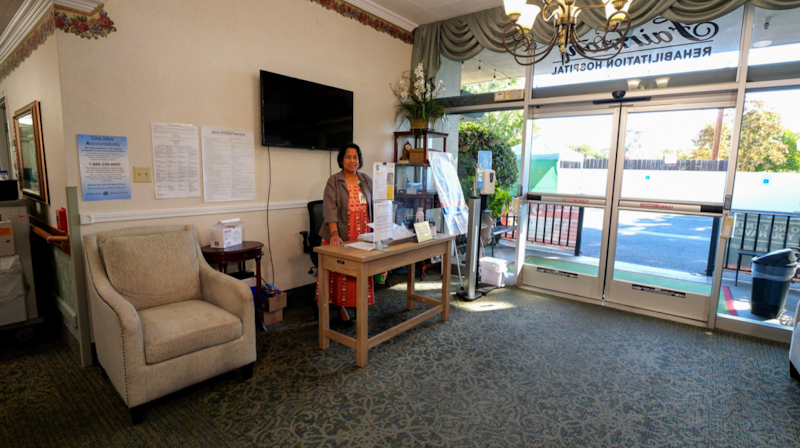
How Does Fairmont Rehabilitation Hospital Compare to Other California Nursing Homes?

Compared to the 100 nursing homes in California, FAIRMONT REHABILITATION HOSPITAL's overall rating (4 stars) is above the state average of 3.2, staff turnover (25%) is significantly lower than the state average of 46%, and health inspection rating (3 stars) is at the national benchmark.

What Should Families Ask When Visiting Fairmont Rehabilitation Hospital?

Based on this facility's data, families visiting should ask: "Can I visit during a mealtime to observe dining assistance and food quality?" "How do you handle medical emergencies, and what is your hospital transfer rate?" "Can I speak with family members of current residents about their experience?"

Is Fairmont Rehabilitation Hospital Safe?

Based on CMS inspection data, FAIRMONT REHABILITATION HOSPITAL has a clean safety record: no substantiated abuse findings (meaning no confirmed cases of resident harm), no Immediate Jeopardy citations (the most serious violation level indicating risk of serious injury or death), and is not on the Special Focus Facility watch list (a federal program monitoring the lowest-performing 1% of nursing homes). The facility has a 4-star overall rating and ranks #1 of 100 nursing homes in California. While no facility is perfect, families should still ask about staff-to-resident ratios and recent inspection results during their visit.

Do Nurses at Fairmont Rehabilitation Hospital Stick Around?

Staff at FAIRMONT REHABILITATION HOSPITAL tend to stick around. With a turnover rate of 25%, the facility is 20 percentage points below the California average of 46%. Low turnover is a positive sign. It means caregivers have time to learn each resident's needs, medications, and personal preferences. Consistent staff also notice subtle changes in a resident's condition more quickly.

Was Fairmont Rehabilitation Hospital Ever Fined?

FAIRMONT REHABILITATION HOSPITAL has no federal fines on record. CMS issues fines when nursing homes fail to meet care standards or don't correct problems found during inspections. The absence of fines suggests the facility has either maintained compliance or corrected any issues before penalties were assessed. This is a positive indicator, though families should still review recent inspection reports for the full picture.

Is Fairmont Rehabilitation Hospital on Any Federal Watch List?

FAIRMONT REHABILITATION HOSPITAL is not on any federal watch list. The most significant is the Special Focus Facility (SFF) program, which identifies the bottom 1% of nursing homes nationally based on persistent, serious quality problems. Not being on this list means the facility has avoided the pattern of deficiencies that triggers enhanced federal oversight. This is a positive indicator, though families should still review the facility's inspection history directly.